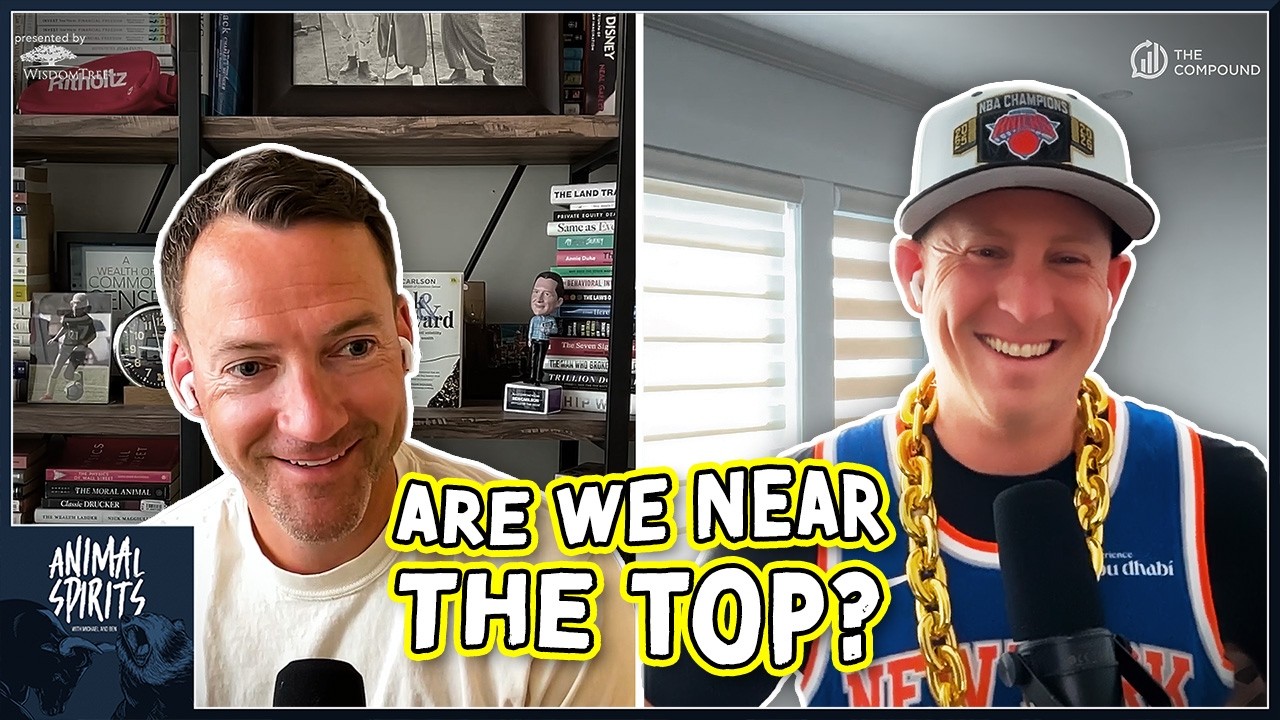
Low public float and hyper-speculation drove record-breaking volume in SpaceX's public debut, but structural market shifts and earnings growth indicate broader equity resilience beyond megacap tech.
## Background
Published by The Compound on YouTube on June 17, 2026, episode 469 of Animal Spirits features hosts Michael Batnick and Ben Carlson. According to the page description, the episode covers topics including the market's desire to call an AI top, the SpaceX IPO frenzy, taking profits, value versus growth dynamics, international market performance, agentic trading, inflation and mortgage dynamics, the politics of AI, the Rule of 55, and the New York Knicks winning a championship.
## TL;DR
In this episode of Animal Spirits, Michael Batnick and Ben Carlson examine the market reaction to the massive SpaceX IPO, arguing that tech market cycles often end in an 'unsatisfying conclusion' rather than immediate doom or hyper-growth. They analyze the ongoing shift toward value stocks and emerging markets driven by strong corporate earnings in South Korea and Taiwan, while exploring the implications of Robinhood's new AI-powered agentic trading. Shifting to broader economic data, they discuss how sub-3% fixed mortgages shield consumers from 4% inflation, debate the impact of AI on job markets, highlight the IRS Rule of 55 for early retirement, and celebrate the New York Knicks' NBA championship before concluding with film and television recommendations.
## Atmosphere & style
The episode has a relaxed, conversational, and energetic tone that combines institutional market commentary with informal banter. As long-time colleagues, Michael and Ben share a candid, peer-to-peer dynamic filled with witty exchanges, self-deprecating humor, and playful teasing—especially over Michael's oversized Knicks championship gear. The discussion seamlessly transitions between serious financial analysis, real-world consumer anecdotes, studio bloopers, and pop culture recommendations, creating an engaging and approachable listening experience.
## Key takeaways
- [00:47](https://www.youtube.com/watch?v=jrq_Gf1sHiw&t=47s) The long-awaited AI market cycle or tech bubble may end in an "unsatisfying conclusion"—a typical 25%–30% market pullback that clears excess valuation while adoption continues—rather than an immediate boom or total crash.
- [06:52](https://www.youtube.com/watch?v=jrq_Gf1sHiw&t=412s) Modern information symmetry renders classic sentiment indicators obsolete; the massive retail demand for the SpaceX IPO was driven by extreme structural supply constraints rather than fundamental valuation logic.
- [15:26](https://www.youtube.com/watch?v=jrq_Gf1sHiw&t=926s) A major global market rotation is underway: the remaining S&P 493 stocks are outperforming Big Tech, while Emerging Markets have surged 26% YTD through May 2026 driven by strong corporate earnings rather than currency fluctuations.
- [17:38](https://www.youtube.com/watch?v=jrq_Gf1sHiw&t=1058s) Structural shifts in the Emerging Markets index—specifically China's weight halving while South Korea and Taiwan grew—illustrate that portfolio diversification functions as an aggressive strategy to capture unexpected regional winners.
- [19:51](https://www.youtube.com/watch?v=jrq_Gf1sHiw&t=1191s) The energy market demonstrates strong macro efficiency, quickly brushing aside headline panic and pricing down crude oil to ~$80 per barrel as geopolitical risks normalized.
- [27:44](https://www.youtube.com/watch?v=jrq_Gf1sHiw&t=1664s) Despite near-record stock market highs, retail investor sentiment remains surprisingly fragile, leading to record downside hedging and heavy volume in volatile single-stock leveraged ETFs.
- [37:05](https://www.youtube.com/watch?v=jrq_Gf1sHiw&t=2225s) U.S. consumer spending has remained remarkably resilient against inflation because millions of homeowners locked in sub-3% fixed mortgages, effectively capping their largest monthly expenditure.
- [46:26](https://www.youtube.com/watch?v=jrq_Gf1sHiw&t=2786s) While general U.S. inflation has increased prices sixfold since 1973, major expense categories like college tuition and healthcare have far outpaced wage growth and headline inflation.
- [49:54](https://www.youtube.com/watch?v=jrq_Gf1sHiw&t=2994s) Economists overwhelmingly view AI as a complementary tool for workers rather than a source of net job destruction, drawing parallels to historical technological shifts.
- [53:27](https://www.youtube.com/watch?v=jrq_Gf1sHiw&t=3207s) The IRS "Rule of 55" offers a little-known avenue for penalty-free 401(k) withdrawals for individuals who leave their employers at age 55 or later.
- [58:43](https://www.youtube.com/watch?v=jrq_Gf1sHiw&t=3523s) Capitalism and high-profile public listings drive broad wealth creation, evidenced by thousands of early employees and investors becoming millionaires alongside founders.
The episode opens with a sponsor message from WisdomTree, drawing parallels between the current landscape of quantum computing and the early days of artificial intelligence. Both fields are characterized by massive transformational potential coupled with high technological uncertainty. The host highlights recent U.S. government investments into several quantum-focused companies as a key catalyst adding momentum to the space. For investors looking for targeted exposure, WisdomTree offers the WisdomTree Quantum Computing Fund (ticker: **WQTM**), designed to provide pure-play access to companies driving innovation across the broader quantum ecosystem.
[00:47](https://www.youtube.com/watch?v=jrq_Gf1sHiw&t=47s) Seeking "Satisfying Conclusions" in an Unsatisfying Market
Ben starts the discussion by addressing the market's constant desire for a "satisfying conclusion"—a definitive narrative event that gives absolute closure to an investment thesis. Reflecting on market cycles since the Great Financial Crisis, Ben notes that investors rarely get these clear-cut endings. The 2020 COVID crash was violent but temporary, the 2022 bear market was painful but non-definitive, and both times the market simply digested the shock and moved on. Turning to current events, he points to the recent SpaceX initial public offering (IPO), where many market participants craved a dramatic, dot-com-style 500% day-one pop or an instant structural crash. Instead, the market received something far messier.
This dynamic leads Ben to propose a broader framework for how the AI trade might play out. While bear market prophets expect a catastrophic, world-ending crash and tech bulls predict immediate 14% annual GDP growth, the most probable outcome is an "unsatisfying conclusion." The market could experience a typical 25% to 30% washout or bear market that cleanses excess valuation without destroying the financial system. AI technology would continue its adoption curve, the world would move forward, and the pullback would ultimately prove to be a standard buying opportunity—leaving both hyper-bulls and doom-sayers thoroughly unsatisfied. Michael quips that such an ending reminds him of the film *Road to Perdition*, prompting an aside from Ben about part of the movie being filmed on the coast of Lake Michigan.
```
+-----------------------------------------------------------------------+
| THE AI RANGE OF OUTCOMES |
+-----------------------------------------------------------------------+
| [Hyper-Bull Case] -> 14%+ annual GDP growth forever |
| [Doom-Sayer Case] -> Total structural financial crash |
| [Unsatisfying Middle] -> 25-30% washout, technology stays, market |
| recovers and moves on |
+-----------------------------------------------------------------------+
```
[03:00](https://www.youtube.com/watch?v=jrq_Gf1sHiw&t=180s) Human Nature, Historical Parallels, and the Urge to Call the Top
Michael revisits a conversation from two weeks prior where Ben argued that the market's current trajectory "has to end badly." Michael counters that while basic human psychology—driven by fear and greed—remains invariant whether in 1923, 1946, or today, market dynamics can fundamental shift in ways that break historical rules. To illustrate, he cites a famous observation by the late economist Peter Bernstein. When Bernstein entered the finance industry in the 1950s, veteran investors were still deeply scarred by the 1929 stock market crash. Because stocks were viewed as inherently riskier than bonds, dividend yields were required to stay consistently higher than bond yields to attract capital. When stock yields eventually fell below bond yields, old-timers warned that a crash was imminent—yet the market regime changed permanently, and yields never looked back.
Pre-1950s Normal Post-1950s Regime Shift
+------------------------+ +------------------------+
| Stock Dividend Yield | | Bond Yield (Coupon) |
| > | ==> | > |
| Bond Yield (Coupon) | | Stock Dividend Yield |
+------------------------+ +------------------------+
"Stocks are too risky, "Growth and total return become
must pay higher yield" the dominant investment thesis"
```
Ben agrees and argues that individual investors do not need to try to time or call the top of tech cycles. He critiques high-profile market commentators and hedge fund figures like Jim Grant, Ray Dalio, and Jim Chanos—noting that predicting tops and calling bubbles is essentially their core business model. Pointing to articles from 2015, 2016, and 2017 asking "when will the tech bubble burst," Ben points out that anyone who eventually calls the top correctly after 12 years of false alarms is simply benefiting from timing luck.
[06:52](https://www.youtube.com/watch?v=jrq_Gf1sHiw&t=412s) The SpaceX IPO: "Explainable Lunacy" and the End of Shoeshine Indicators
Michael brings up the classic Wall Street adage of Joseph Kennedy getting out of the stock market in 1929 after receiving stock tips from a shoeshine boy. He argues that in the modern information age, the "shoeshine boy indicator" is completely dead because access to financial data is ubiquitous. To highlight this, he shares an anecdote about sitting outside a Starbucks on the morning of the SpaceX IPO and overhearing a man telling his family that he had managed to get 75 shares despite wanting 250.
Turning to the mechanics of the SpaceX IPO, Michael describes the market action as "explainable lunacy." On its first day of trading, the stock saw $85 billion in trading volume, making it the largest IPO volume day in history and placing it in the top 10 highest volume days for any stock ever. The company quickly surged to a market capitalization within striking distance of Amazon. Michael explains that this behavior is driven by extreme structural supply constraints rather than fundamental valuation logic:
- **Low Float:** A very small percentage of total shares was made available to the public, creating extreme imbalance relative to demand.
- **Short-Term Speculation:** Most day-one buyers were not making a fundamental calculation on whether SpaceX is worth more than Amazon; they were trading for a 20% gain within 24 hours.
- **Record Gains:** SpaceX added the most market cap in a single day of any company in history outside of Nvidia.
- **Outrageous Claims:** Elon Musk posted on X (formerly Twitter) that SpaceX could reach $1 trillion in annual revenue by 2030, raising questions about modern disclosure and securities standards.
[10:56](https://www.youtube.com/watch?v=jrq_Gf1sHiw&t=656s) What Does "Taking Profits" Actually Mean?
Ben recounts a recent interview request from *Marketplace* following a Bank of America research note by Savita Subramanian. The note warned investors that it was time to take profits due to multiplying "red flags" and bear market signposts in tech. The producer asked Ben a practical question: What does "taking profits" actually mean for a normal, everyday retail investor? Does it mean liquidating the entire portfolio, selling 10%, holding cash, or reallocating into other sectors?
Michael and Ben dissect the advice:
- **Trimming Concentration:** If an investor was fortunate enough to hold high-flying semiconductor, memory, or AI-adjacent stocks that are up 800%, selling a portion (e.g., 20%) to rebalance into safer assets or cash is simple, prudent risk management.
- **Pundit Hypocrisy:** Michael notes his frustration with perma-bears who preach "taking profits" despite having missed the entire rally, stating that analysts who weren't long have no standing to tell others how to manage their gains.
- **Dispersion vs. Concentration:** Bank of America highlighted that the performance spread between top-performing and bottom-performing tech stocks now rivals the dot-com era. While Wall Street treats this dispersion as a warning indicator, Ben argues that dispersion is healthy—it means the market is actively picking winners and losers rather than blindly lifting every tech ticker.
- **AI vs. Software:** Michael emphasizes that the dispersion isn't happening across random sectors, but is specifically a performance split between hardware/AI infrastructure names (like Micron) and traditional software companies (like Salesforce).
- The SpaceX IPO generated $85 billion in trading volume on its opening day, breaking all historical IPO records.
- SpaceX briefly achieved a market capitalization rivaling Amazon shortly after listing.
- Elon Musk claimed on X that SpaceX could achieve $1 trillion in revenue by 2030.
- Vanguard Value (VTV) has outperformed Vanguard Growth (VUG) by 7% to 8% year-to-date, driven in part by low-valuation memory and hardware stocks.
<ElicitationsGroup message="Where would you like to go next with this transcript analysis?">
<Elicitation label="Summarize the next transcript section" query="Please provide the walkthrough for part 2 of the transcript."/>
<Elicitation label="Analyze the SpaceX IPO trading mechanics" query="Can you break down the market mechanics of how low float and high demand create extreme initial price action during major IPOs?"/>
</ElicitationsGroup>
[15:26](https://www.youtube.com/watch?v=jrq_Gf1sHiw&t=926s) The Narrative Shift on Value, Earnings, and Emerging Markets
Michael Batnick and Ben Carlson push back against critics who constantly shift the goalposts regarding stock market fundamentals. Initially, skeptics argued that value stocks were underperforming due to a complete lack of underlying earnings power. However, as certain legacy and cyclical names have rallied, critics now dismiss these gains as a mere byproduct of the artificial intelligence boom rather than genuine fundamental strength.
```
Global Equity Performance Shift (2026 YTD through May)
┌───────────────────────────┬──────────────────────────────────────────┐
│ Market Region │ Primary Return Driver │
├───────────────────────────┼──────────────────────────────────────────┤
│ Emerging Markets (EM) │ Up 26% (Massive earnings explosion) │
│ US S&P 493 │ Outperforming Big Tech "Mag 7" │
│ Europe │ Underweight Tech / Defensive value play │
└───────────────────────────┴──────────────────────────────────────────┘
```
The conversation highlights a major structural rotation taking place across both domestic and international markets:
* **S&P 493 Outperformance:** Beyond the top hyper-scalers, the remaining 493 stocks in the S&P 500 are significantly outperforming the "Magnificent Seven," proving that market breadth is expanding well beyond a handful of giant tech companies.
* **Micron's Heavy Weight:** Micron Technology has become a massive force within semiconductor and value-oriented indexes, holding nearly a 5% weight—far outpacing the second-largest holding at around 2%.
* **Emerging Markets Boom:** Citing a 100-slide Schroders global investment presentation shared by Meb Faber on *The Idea Farm*, Ben notes that Emerging Market (EM) equities surged **26% year-to-date through May 2026**.
* **Earnings Over Currency:** Unlike prior international rallies that relied heavily on a weakening US dollar, the current EM surge is driven almost entirely by explosive corporate earnings that dwarf growth rates seen in the US, Japan, or China.
* **The Big Exception Argument:** Skeptics attempt to discount EM strength by claiming it relies entirely on memory chip giants SK Hynix and Samsung. However, Ben and Michael emphasize that having tech giants in the index is simply how index composition works.
---
[17:38](https://www.youtube.com/watch?v=jrq_Gf1sHiw&t=1058s) Structural Shifts in EM Indexes and the Power of Diversification
The structural makeup of the Emerging Markets index has undergone a historic transformation over the past five years. In 2021, China dominated the EM index with an almost 40% weight, while South Korea and Taiwan combined for roughly 12% to 15%. By 2026, China's weight has essentially been cut in half, while South Korea and Taiwan have surged ahead to become larger combined components than China.
This sudden shift illustrates the core ethos of global portfolio diversification:
> "Diversification, yes, it's a risk management strategy, but it's also an aggressive strategy because sometimes you don't know where those big winners are going to come from." — *Ben Carlson (paraphrasing Peter Bernstein)*
* **Casting a Wide Net:** Nobody predicted when ChatGPT launched that South Korea and Taiwan would become the ultimate structural beneficiaries and primary winners of the broader AI trade.
* **European Stocks as a Defensive Buffer:** Citing Jason Zweig's column in *The Wall Street Journal* (referencing Fidelity's Jurrien Timmer), the hosts note that European stocks serve as an "old economy" market. Outside of Dutch semiconductor manufacturing giant **ASML**, European equities are heavily underweight tech. While they may not "shoot the lights out" in a bull market, they offer a protective "port in the storm" if US tech valuations de-rate.
---
[19:51](https://www.youtube.com/watch?v=jrq_Gf1sHiw&t=1191s) Geopolitics, Oil Prices, and Market Efficiency
Turning to the commodities market, the hosts marvel at the stock market's uncanny ability to look past geopolitical headlines and correctly price macro risks. Despite energy analysts warning for weeks that a closure of the Strait of Hormuz could send crude oil skyrocketing to $150, $175, or even $200 per barrel, crude prices quickly dropped back down to around **$80 per barrel** following news of potential diplomatic progress with Iran.
Ben and Michael discuss how the market functions as its own collective form of artificial intelligence:
* **Smarter Average Investors:** The broader market is reacting with far less panic to headline events than it did twenty years ago, largely because investors digest information faster and recognize transitory shocks.
* **Speed of Modern Sell-Offs:** Because markets process data instantly, any future unwinding of the AI trade or macro crisis will likely happen in a flash—potentially dropping 20% to 25% in as little as three weeks rather than dragging out over months.
* **Inevitability of Bear Markets:** Michael reiterates that despite current resilience, an extended 4-year bear market or a "lost decade" is a mathematical certainty at some point in their lifetime, likely triggered by millennial demographic shifts or systemic financial crises.
---
[22:52](https://www.youtube.com/watch?v=jrq_Gf1sHiw&t=1372s) SpaceX IPO Frenzy, Leveraged Products, and ARK's Underperformance
The discussion pivots to the explosive retail and institutional demand surrounding space technology and private tech offerings, highlighted by a chart from ETF analyst Todd Sohn showing a massive spike in rolling 65-day inflows into thematic ETFs. While thematic ETF flows previously peaked during the 2020–2021 ARK Invest mania, new thematic surges in space, nuclear energy, and AI are approaching similar territory.
```
ARK Innovation ETF (ARKK) vs. QQQ
┌───────────────────────────┬──────────────────────────────────────────┐
│ Metric / Asset │ 5-Year Performance / Exposure │
├───────────────────────────┼──────────────────────────────────────────┤
│ ARKK 5-Year Return │ -30% Total Return │
│ Invesco QQQ 5-Year Return │ +124% Total Return │
│ ARKK SpaceX Position │ $325 Million (Largest holding in fund) │
└───────────────────────────┴──────────────────────────────────────────┘
```
Key highlights from the thematic trading mania include:
* **Wild Leveraged ETF Volume:** On a single trading day, single-stock leveraged ETFs tied to SpaceX saw insane volume—**$282 million traded in the 2x leveraged long fund** and **$219 million in the leverage short fund**. Ben predicts these single-stock leveraged vehicles will easily cross $5 billion in assets under management almost overnight.
* **ARK's Massive SpaceX Stake:** Cathie Wood’s flagship ARK Innovation ETF (ARKK) holds over **$325 million in SpaceX stock**, participating directly through both private allocations and secondary markets.
* **The AI Miss:** Over the past five years, ARKK is down 30% compared to a +124% gain for the Nasdaq 100 (QQQ). The primary driver of this stunning underperformance wasn't just the collapse of COVID-era darlings like DocuSign or Teladoc, but the fact that an innovation-focused fund largely missed out on the early stages of the generative AI mega-cap rally.
---
[27:44](https://www.youtube.com/watch?v=jrq_Gf1sHiw&t=1664s) Market Sentiment and Agentic Trading on Robinhood
Despite near-record stock highs, investor sentiment remains surprisingly fragile. Quoting sentiment data from Jason Goepfert at SentimentTrader, Michael notes that small options traders exhibited one of the **highest proportions of downside hedging activity in 25 years** during a mild market dip. High-flying memory and hardware stocks experienced severe short-term volatility, with Micron dropping 20% over a 3-day stretch—mirroring a similar 30% drop over 3 weeks in March despite reporting blowout earnings.
The conversation concludes with a discussion of Robinhood launching **Agentic Trading** powered by its MCP server integration, allowing retail users to deploy autonomous AI agents to research, execute orders, and rebalance portfolios.
While the technology offers advanced custom rule-making—such as automatically creating baskets of stocks connected to top private companies or setting algorithmic stop-losses—Ben warns that it fundamentally renames automated back-testing and formulaic trading. The primary downside for retail investors is the temptation to constantly over-trade and tweak their parameters, leading to behavioral errors rather than long-term compounding.
[30:57](https://www.youtube.com/watch?v=jrq_Gf1sHiw&t=1857s) Backtesting and the Temptation to Tweak Rules
The discussion kicks off with a look at human behavior when implementing systematic investment rules versus utilizing AI. Michael Batnick and Ben Carlson discuss how hard it is for investors to keep their "fingers off the keyboard" when a quantitative model or backtested strategy faces a rough patch. In a true backtest, the core principle is that you must stick to the rules unconditionally rather than changing them every time a draw-down occurs. However, with AI-driven trading assistants or agentic strategies, investors will inevitably give in to the constant urge to tweak their criteria mid-game.
They joke about how an AI assistant will react to a user’s fickle impulses: *"Oh, great idea. Really? You used to buy small-cap growth stocks? Now you don't want them anymore? Good for you."* The hosts agree that these constant micro-adjustments will be rampant, defeating the foundational purpose of backtested discipline.
[31:30](https://www.youtube.com/watch?v=jrq_Gf1sHiw&t=1890s) SpaceX IPO Dynamics and Retail Craze
Checking live market prices as the trading day opens, the hosts observe SpaceX trading at around $212 a share, placing its market capitalization within striking distance of passing Amazon. Michael and Ben express amazement at the sheer magnitude of the numbers, acknowledging that while some valuation metrics feel like "funny baloney," the public listing represents a massive market event driven heavily by retail investor demand.
The conversation turns to the structural mechanics of the listing and whether restricting the initial share float was truly beneficial or merely a tactical maneuver by company insiders. Ben notes that companies structure these offerings with price escalation triggers: if the share price surges by a designated percentage, it unlocks additional tranches of shares that insiders can sell directly into the market.
- Michael points out that this structural design is precisely why many individual market participants express frustration, viewing it as gaming the system to dump liquidity onto retail buyers.
- Ben counters that because retail traders are willingly buying with "eyes wide open," they can't complain too much given that the listing terms and unlock conditions were laid out transparently beforehand.
[32:43](https://www.youtube.com/watch?v=jrq_Gf1sHiw&t=1963s) Economic Resilience and Capital One's Consumer Outlook
Shifting to the broader economy, Michael reiterates his ongoing theme regarding the surprising resilience of the US consumer in the face of continuous macro shocks. He highlights a recent quote from Blackstone President Jonathan Gray, who noted that the economy has successfully absorbed a rapid succession of major disruptions: the initial COVID-19 shock, the Russia-Ukraine invasion and its resulting energy price spike, the Silicon Valley Bank failure, and stubborn inflationary pressures.
To illustrate how grounded this strength remains, Michael reads a direct commentary from the CEO of Capital One: *"I would say if we didn't read any news, and all we did was just really look at the data that we see in the economy, and the data that we see on our portfolio, we have a really quite positive view. I think the consumer is really the strong shoulders the economy stands on. Unemployment continues to be very strong."* Michael promises that the moment major mainstream lenders indicate consumer credit default or spending fatigue, he will share it, but for now, the underlying corporate data remains robust.
- Capital One stock remains in a ~23% drawdown, yet management refuses to scapegoat broader economic factors like inflation or gas prices.
- The hosts note the stark contrast between market price drawdowns and the underlying health reported directly by consumer credit providers.
[35:12](https://www.youtube.com/watch?v=jrq_Gf1sHiw&t=2112s) CPI Surprises, Volatility, and Fast-Moving Market Narratives
Michael reflects on how rapidly market narratives flip week to week, using recent volatility around Consumer Price Index (CPI) releases as a primary example. Just two weeks prior, the market suffered its worst single-day selloff of the year, with small-cap tech stocks plummeting 6%. When CPI data arrived the following Wednesday, the market initially popped pre-market, then reversed dramatically to sell off into the closing bell, ending down over 1%.
Michael recounts standing on the trading floor with his colleagues—"Chart Kid, Mad, and Shawn"—watching the intraday drop and asking them to imagine how much worse the selloff would have been had the inflation data come in hotter than expected rather than in-line. Yet, merely a week later, equity indexes rallied roughly 4% higher from those lows, erasing the entire narrative panic.
- Overall CPI escalated sharply from 2.4% in February up to 4.2% by the end of May.
- Ben expresses mild surprise that broader equity markets didn't panic more aggressive over a 4.2% inflation print, attributing the calm to investors treating energy-driven spikes as temporary fluctuations rather than structural regime shifts.
[37:05](https://www.youtube.com/watch?v=jrq_Gf1sHiw&t=2225s) The 3% Mortgage Hedge and Personal Inflation Realities
Ben offers a deep structural explanation for why consumer spending has remained so durable despite high headline inflation: the housing locked-in effect. Housing accounts for approximately 35% of the typical household budget. Millions of Americans locked in sub-3% fixed mortgage rates alongside lower home valuations prior to rate hikes, effectively capping their largest monthly expenditure and giving themselves an ongoing real-income buffer.
With headline inflation rising to 4.2% while fixed mortgage payments stay locked at 3%, homeowners with sub-3% rates are effectively borrowing money for free on a real basis. Ben compares this to getting an annual raise, noting that if every low-rate homeowner were forced to re-rate their mortgage to 5.5% or 6% at today's home prices, consumer discretionary spending would instantly evaporate.
On a personal note, Ben shares a recent "inflation eye-opener" when fueling up his boat for the summer season:
- Filling up his pontoon boat's 30-gallon tank cost approximately $220, a significant increase over prior seasons.
- Marina attendants reported widespread complaints from boat owners over soaring marine fuel prices.
- Despite the sticker shock, Ben admits it won't alter his behavior in the slightest: *"Is that going to change my behavior? Absolutely not. Kids got to tube."*
[39:45](https://www.youtube.com/watch?v=jrq_Gf1sHiw&t=2385s) The Knicks Championship: A Cathartic Franchise Turnaround
The conversation transitions to sports as Ben brings up Michael's outfit and calls for a temporary moratorium on New York Knicks talk following their NBA Championship victory over the San Antonio Spurs. Michael describes attending Game 5 in San Antonio, recalling that with 10 minutes left in the game and the Spurs leading by 12 points, he knew the Knicks were either going to lose by double digits or pull off a dramatic comeback—which they did.
Michael offers a candid admission of how wrong he was regarding the roster construction. He confesses to being the leading skeptic who claimed the Knicks could never win a championship with a defensive liability backcourt/frontcourt pairing of Jalen Brunson and Karl-Anthony Towns. However, mid-season defensive scheme adjustments completely flipped the team's trajectory. Michael reflects on how sweet the victory feels after enduring decades of misery under a parade of head coaches: Don Chaney, Derek Fisher, Jeff Hornacek, Mike D'Antoni, Isiah Thomas, Larry Brown, Kurt Rambis, Herb Williams, and David Fizdale.
> "Winning is really hard... It's nothing but misery punctuated hopefully by a few brief moments of euphoria which I am currently living through."
- Since joining the Knicks four years ago, Jalen Brunson ranks 2nd in playoff wins, 2nd in playoff points per game, and 1st in 30-point, 35-point, and 40-point playoff games across the entire NBA.
- Michael admits Brunson officially supplanted Eli Manning as his favorite athlete of all time.
- Despite the post-game chaos in New York and unsettling reports of violent altercations on the San Antonio Riverwalk between opposing fans, Michael highlights the overwhelming outpouring of support and congratulatory messages he received from listeners and colleagues. He concludes by confirming he is taking his wife, Robin, and his sons to the championship parade on Thursday.
Here is a detailed, faithful walkthrough of the transcript excerpt covering the discussion on inflation history, the politics and economic impact of AI, residential real estate trends, retirement rules, podcast outtakes, and wealth distribution.
---
[46:26](https://www.youtube.com/watch?v=jrq_Gf1sHiw&t=2786s) Long-Term Inflation and Consumer Price Distortions
Michael Batnick shares data generated with the help of his AI assistant, Claude, detailing nominal and real price changes across various economic sectors since 1973. While overall inflation has compounded at roughly $3.5\%$ annually—rising sixfold over that timeframe—individual consumer categories have diverged dramatically. Higher education and healthcare have ballooned at rates far outpacing general inflation, whereas grocery costs stand out as the primary staple that has grown slower than the baseline rate of inflation.
Ben Carlson and Michael pivot to comparing these historical price movements against wage growth and ticket prices for sports events. While overall wages have grown eightfold since 1973—slightly outpacing general inflation—key living expenses like housing, medical care, and college tuition have outpaced average income gains. Reflecting on sports entertainment, Michael reminisces about his own 1999 and 2004 NBA playoff tickets for the New York Knicks (such as Fourth-row Section 119 seats in 2004 costing just $96), contrasting the modest cost of past fan experiences with modern luxury ticket prices.
- **General Inflation (since 1973):** Up $6\times$ (compounding at $\approx 3.5\%$).
- **Wage Growth (since 1973):** Up $8\times$.
- **Groceries:** Up $4\times$ (the only major category growing slower than general inflation).
- **New Cars:** Up $12\times$.
- **Housing / Real Estate:** Up $15\times$.
- **College Costs:** Up $24\times$.
- **Health Insurance:** Up $50\times$.
---
[48:02](https://www.youtube.com/watch?v=jrq_Gf1sHiw&t=2882s) Knicks Championship Gear and the Politics of AI Regulation
After wrapping up the sports price reflection, Ben teases Michael about his championship outfit, noting that Michael looks like "Turtle from Entourage" while wearing a massive 12-gallon-style commemorative championship hat and oversized team chains. Michael admits he bought the fan gear for his kids and feels ridiculous wearing the oversized hat, promising it will sit permanently on a display shelf after the episode.
The conversation transitions into the political and regulatory landscape surrounding artificial intelligence. Ben highlights Anthropic’s recent disclosure that the U.S. government issued export control directives under national security authorities, suspending foreign access to its latest models (such as Fable 5 and Mythos 5). Ben expresses skepticism that politicians will design smart or helpful regulations, but he argues AI laboratory leaders "deserve whatever is coming to them." He criticizes executives like Anthropic's Dario Amodei for repeatedly sounding public alarms—warning that AI could eliminate 50% of white-collar jobs or enable biological weapons—while abdicating responsibility by asking government officials to figure out the rules.
> "If you've been saying we're going to destroy 50% of white-collar jobs, and like, this could ruin the world because of biological weapons... you don't get to complain about whatever the government does. They've made their bed, now they have to lay in it."
---
[49:54](https://www.youtube.com/watch?v=jrq_Gf1sHiw&t=2994s) AI’s Impact on the Labor Market: Doomer Predictions vs. Economic History
Michael reads an email from an AI implementation consultant describing a grim corporate environment. The sender claims that businesses are rushing to hire developers and advisors to implement AI specifically to reduce headcount, minimize future hiring, and stay ahead of competitors attempting the same strategy. The correspondent warns that corporate boardrooms are fixated on how many workers can be replaced, predicting an initial wave of AI-related hiring followed by severe structural job destruction during the next economic downturn.
Michael flatly rejects this "doomer" perspective, arguing that tech-centric cutbacks do not represent the broader economy. Ben supports Michael's skepticism by referencing a *Wall Street Journal* survey of prominent economists regarding the future of work:
- **Net Job Impact:** The majority of surveyed economists anticipated "no net change" in overall job levels, while five predicted net losses and two foresaw net growth.
- **Replacement vs. Complement:** Economists overwhelmingly concluded (by roughly a $2:1$ margin) that AI will **complement** human workers rather than replace them.
- **Hiring Practices:** Economists were split between AI having a "major impact" or "some impact" on hiring practices over the next 5 years, with Justin Wolfers offering a hot take that impact would be "minimal."
Ben highlights a quote from Harvard Professor David Deming, who noted that when mechanical switching eliminated telephone operators overnight, workers transitioned into becoming stenographers, administrative assistants, and waitresses, proving that *"people are the ultimate general-purpose technology."* They also quote University of Toronto Professor Joshua Gans, who explained that persistent technological unemployment only occurs when an innovation destroys a localized industry without geographic labor mobility.
---
[53:27](https://www.youtube.com/watch?v=jrq_Gf1sHiw&t=3207s) Residential Real Estate and the "Rule of 55"
Turning to the housing market, Michael reviews recent U.S. residential real estate data showing existing home sales accelerating in May to an annualized pace of 4.17 million closed contracts, alongside median national sales prices reaching all-time highs of $429,000 (up 1.3% year-over-year). Michael admits to turning bullish on residential real estate stocks, reasoning that despite brutal affordability metrics and rising mortgage rates, buyers are undergoing a multi-year psychological shift toward accepting higher prices as the new baseline.
Ben counters with a dose of caution, pointing out that existing home transaction volume remains near cyclical lows despite demographic tailwinds from the massive Millennial cohort reaching prime home-buying age.
They then address the **Rule of 55**, a widely overlooked IRS tax provision recently featured in *The Wall Street Journal*. Under this rule, workers who leave or lose their job in or after the calendar year they turn 55 can take penalty-free withdrawals from their current employer's 401(k).
- Over **80% of readers** failed a *Wall Street Journal* quiz regarding the earliest age for penalty-free 401(k) access.
- Ben critiques the overly complex U.S. retirement system, calling for the consolidation of siloed accounts (IRAs, Roth IRAs, 401(k)s, 529s, HSAs, SEP IRAs) into one single tax-advantaged annual contribution bucket.
---
[56:22](https://www.youtube.com/watch?v=jrq_Gf1sHiw&t=3382s) Behind the Scenes: Studio Bloopers
Michael plays a clip of promotional outtakes recorded in *The Compound* studio for Ben’s book, *Risk and Reward*. The segment captures the humor and natural awkwardness of recording scripted social media promotional videos, showing Ben stumbling over lines, laughing at his own takes, and arguing playfully with the production crew over how to deliver the call to action.
> **Ben Carlson:** "The stock market is volatile. It's a roller coaster. Shut up."
> **Production Crew:** "Cut that, Ben. Breathe."
> **Ben Carlson:** "I go into these details even more in my new book *Risk and Reward*, out now wherever you find your books... No."
> **Michael Batnick:** "Don't do 'out now.' Just say 'in my new book.'"
> **Ben Carlson:** "I detail this and more in my new book *Risk and Reward*. It's available now anywhere you find books... All right."
The hosts share a laugh over how polished produced podcasts sound compared to raw studio recordings, noting that heavy editing usually masks the constant vocal pauses and errors inherent in human speech.
---
[58:43](https://www.youtube.com/watch?v=jrq_Gf1sHiw&t=3523s) Visualizing $1 Trillion and the Ethics of Massive Wealth Creation
Michael brings up a *Wall Street Journal* article by Ben Cohen and Andrew Mollica that illustrates the extreme scale of $1 trillion using spatial and temporal analogies:
- **Seconds:** $1\text{ million}$ seconds is about 2 weeks; $1\text{ billion}$ seconds goes back to 1994 (when *Pulp Fiction* hit theaters); $1\text{ trillion}$ seconds stretches back to the Ice Age ($\approx 31,700\text{ years}$).
- **Pennies:** A line of $1\text{ billion}$ pennies stretches from New York City to Cape Canaveral, Florida; a line of $1\text{ trillion}$ pennies extends to the Moon and back **twice**.
Michael uses Elon Musk's status as the world's first trillionaire—whose wealth matches the combined net worth of Larry Page, Jeff Bezos, Mark Zuckerberg, Jensen Huang, Warren Buffett, and Rob Walton—to address the surrounding political discourse. While acknowledging legitimate human concerns about poverty and economic fairness, Michael emphasizes the broader societal wealth created by capitalistic ventures.
Michael points out that beyond making its founder ultra-wealthy, the SpaceX IPO created an estimated **4,400 new millionaires** among early employees and investors who took significant risks. He concludes that market capitalism remains the single most effective vehicle for broad-based wealth generation, arguing that widespread financial success should be celebrated rather than vilified.
<ElicitationsGroup message="Where would you like to go next?">
{/* Reason: Follow-up options to explore topics touched on in this section. */}
<Elicitation label="Break down the Rule of 55 and its tax implications" query="Explain how the Rule of 55 works for early retirement, including its requirements, pitfalls, and comparisons to 72(t) SEPP withdrawals."/>
<Elicitation label="Analyze current US residential housing market metrics" query="Provide a detailed breakdown of current U.S. residential real estate metrics, including existing home sales, median home prices, inventory levels, and mortgage rate impacts."/>
</ElicitationsGroup>
[01:02:16](https://www.youtube.com/watch?v=jrq_Gf1sHiw&t=3736s) Media Recommendations: TV Shows & Apple TV Hits
Ben Carlson and Michael Batnick transition into their popular entertainment recommendation segment, beginning with a discussion on current television series. Ben kicks things off by asking if Michael has watched *Widow's Bay* on Apple TV+. Michael shares that he loves the lead actor, Matthew Rhys, referencing his acclaimed role in *The Americans*—a show Michael calls "one of the most unheralded shows of this century." While the first episode started off lighthearted and mysterious, leaving him wondering what kind of show it was, it quickly took a dark, Stephen King-esque turn. Despite not usually being a fan of the horror genre, Michael finds himself thoroughly enjoying it, noting that his wife reacts to jump scares by looking away and asking him to explain what's happening, whereas he remains completely unfazed by scary tropes.
Ben clarifies that while it falls under the horror umbrella, he considers *Widow's Bay* to be more of a suspenseful "comedy-horror" rather than a genuinely terrifying watch. Both hosts agree that while Apple TV+ has renewed it for a second season, the narrative feels so contained that a single season would have sufficed. The conversation then shifts to Apple TV+'s overall impressive track record, with Michael mentioning he is watching the *Cape Fear* series starring Amy Adams, Patrick Wilson, and Javier Bardem. Michael highlights its production history, noting it is executive produced by Steven Spielberg and Martin Scorsese, who famously swapped directing projects (*Cape Fear* for *Schindler's List*). Ben expresses hesitation about watching it because he dislikes stories where bad things relentlessly happen to people, to which Michael jokingly replies, "I revel in the darkness."
- **Show Highlighted**: *Widow's Bay* (Apple TV+) starring Matthew Rhys.
- **Key Cast in *Cape Fear***: Amy Adams, Patrick Wilson, and Javier Bardem.
- **Historical Trivia**: Steven Spielberg and Martin Scorsese famously swapped projects (*Cape Fear* and *Schindler's List*).
---
[01:04:47](https://www.youtube.com/watch?v=jrq_Gf1sHiw&t=3887s) Airplane Movies and Rewatching '90s Classics
The hosts then swap stories about recent film experiences, starting with Michael's bizarre viewing experience on a flight watching *Is This Thing On?*. Michael admits that after watching the first 15 minutes, he fell asleep for a 40-minute chunk—something he has never done before—and then simply woke up and watched the rest. While acknowledging it was hard to properly review a movie after missing almost an hour of it, both hosts agree that the film took itself far too seriously for a movie about a stand-up comedian. Ben questions how a film centered around a comedian could lack humor entirely, though Michael confesses he has a soft spot for divorce dramas, ultimately deeming it an "airplane movie at best."
Ben counters with a classic rewatch: the 1993 political comedy *Dave*, starring Kevin Kline as a presidential look-alike who takes over the White House after the actual president falls ill. Ben marvels at the stacked ensemble cast—including Kevin Kline, Sigourney Weaver, Frank Langella, Ving Rhames, Ben Kingsley, Charles Grodin, Laura Linney, and Bonnie Hunt—and notes that the movie's earnest, sweet depiction of politics could never be made today because modern audiences would find it unbelievable. He places *Dave* alongside *The American President* as one of the two best presidential movies ever made, while Michael playfully interjects with Harrison Ford's iconic line from *Air Force One*: "Get off my plane!"
- ***Dave* (1993) Ensemble**: Kevin Kline, Sigourney Weaver, Frank Langella, Ving Rhames, Ben Kingsley, Charles Grodin, Laura Linney, and Bonnie Hunt.
- **Genre Favorite**: Ben ranks *Dave* and *The American President* as the peak 1990s White House films.
---
[01:06:52](https://www.youtube.com/watch?v=jrq_Gf1sHiw&t=4012s) Show Wrap-Up and Fan Outreach
The episode concludes with lighthearted banter regarding Michael's outfit. Ben teases Michael for coming onto the show looking "like a guy from the Bronx" following a championship win. Michael good-naturedly admits he is wearing the championship gear ironically and knows he looks ridiculous, while Ben jokes that Michael's disposable income is single-handedly keeping the sports merchandise industry in business.
- **Contact Email**: listeners can reach out to the show at `animalspirits@thecompoundnews.com` for personal responses.
## Notable quotes
> [17:38](https://www.youtube.com/watch?v=jrq_Gf1sHiw&t=1058s) Diversification, yes, it's a risk management strategy, but it's also an aggressive strategy because sometimes you don't know where those big winners are going to come from. — Ben Carlson
> [32:43](https://www.youtube.com/watch?v=jrq_Gf1sHiw&t=1963s) I would say if we didn't read any news, and all we did was just really look at the data that we see in the economy, and the data that we see on our portfolio, we have a really quite positive view. I think the consumer is really the strong shoulders the economy stands on. — Capital One CEO
> [37:05](https://www.youtube.com/watch?v=jrq_Gf1sHiw&t=2225s) Is that going to change my behavior? Absolutely not. Kids got to tube. — Ben Carlson
> [39:45](https://www.youtube.com/watch?v=jrq_Gf1sHiw&t=2385s) Winning is really hard... It's nothing but misery punctuated hopefully by a few brief moments of euphoria which I am currently living through. — Michael Batnick
> [48:02](https://www.youtube.com/watch?v=jrq_Gf1sHiw&t=2882s) If you've been saying we're going to destroy 50% of white-collar jobs, and like, this could ruin the world because of biological weapons... you don't get to complain about whatever the government does. They've made their bed, now they have to lay in it. — Ben Carlson
> [51:54](https://www.youtube.com/watch?v=jrq_Gf1sHiw&t=3114s) people are the ultimate general-purpose technology. — David Deming
> [56:22](https://www.youtube.com/watch?v=jrq_Gf1sHiw&t=3382s) The stock market is volatile. It's a roller coaster. Shut up. — Ben Carlson
> [56:40](https://www.youtube.com/watch?v=jrq_Gf1sHiw&t=3400s) I go into these details even more in my new book Risk and Reward, out now wherever you find your books... — Ben Carlson
> [56:48](https://www.youtube.com/watch?v=jrq_Gf1sHiw&t=3408s) Don't do 'out now.' Just say 'in my new book.' — Michael Batnick
> [01:04:35](https://www.youtube.com/watch?v=jrq_Gf1sHiw&t=3875s) I revel in the darkness. — Michael Batnick
> [01:06:45](https://www.youtube.com/watch?v=jrq_Gf1sHiw&t=4005s) Get off my plane! — Michael Batnick
## Mentioned
Michael Batnick, Ben Carlson, WisdomTree, WisdomTree Quantum Computing Fund, WQTM, SpaceX, Road to Perdition, Peter Bernstein, Jim Grant, Ray Dalio, Jim Chanos, Joseph Kennedy, Starbucks, Amazon, Nvidia, Elon Musk, X, Marketplace, Bank of America, Savita Subramanian, Micron Technology, Salesforce, Vanguard Value, VTV, Vanguard Growth, VUG, S&P 500, S&P 493, Magnificent Seven, Schroders, Meb Faber, The Idea Farm, SK Hynix, Samsung, Jason Zweig, The Wall Street Journal, Fidelity, Jurrien Timmer, ASML, Todd Sohn, ARK Invest, ARK Innovation ETF, ARKK, Invesco QQQ, QQQ, Cathie Wood, DocuSign, Teladoc, Jason Goepfert, SentimentTrader, Robinhood, MCP server, Jonathan Gray, Blackstone, Capital One, Chart Kid, Mad, Shawn, Consumer Price Index, New York Knicks, San Antonio Spurs, Jalen Brunson, Karl-Anthony Towns, Don Chaney, Derek Fisher, Jeff Hornacek, Mike D'Antoni, Isiah Thomas, Larry Brown, Kurt Rambis, Herb Williams, David Fizdale, Eli Manning, Robin Batnick, Claude, Turtle, Entourage, Anthropic, Fable 5, Mythos 5, Dario Amodei, Justin Wolfers, David Deming, Joshua Gans, University of Toronto, Harvard University, Rule of 55, IRS, Risk and Reward, Ben Cohen, Andrew Mollica, Pulp Fiction, Larry Page, Jeff Bezos, Mark Zuckerberg, Jensen Huang, Warren Buffett, Rob Walton, Widow's Bay, Apple TV+, Matthew Rhys, The Americans, Stephen King, Cape Fear, Amy Adams, Patrick Wilson, Javier Bardem, Steven Spielberg, Martin Scorsese, Schindler's List, Is This Thing On?, Dave, Kevin Kline, Sigourney Weaver, Frank Langella, Ving Rhames, Ben Kingsley, Charles Grodin, Laura Linney, Bonnie Hunt, The American President, Harrison Ford, Air Force One, The Compound
Ben Carlson and Michael Batnick argue that financial markets rarely deliver definitive narrative conclusions, suggesting the artificial intelligence boom is more likely to experience a routine valuation washout than a catastrophic crash. They emphasize that broadening market breadth, corporate earnings strength, and fixed consumer debt continue to anchor broader economic resilience.
The AI Cycle and the Unsatisfying Middle (0:47)
Ben Carlson observes that investors constantly seek clean narrative closure, yet historical market cycles show shocks are typically digested without definitive endings. Rejecting extreme scenarios—such as perpetual 14% annual GDP growth or total structural collapse—Ben outlines a probable "unsatisfying middle": a standard 25% to 30% valuation washout that tempers speculative excess while leaving technology adoption intact, ultimately leaving both hyper-bulls and doom-sayers unsatisfied.
Addressing analyst calls to take profits, such as Bank of America's warning on tech dispersion, Michael Batnick and Ben argue that selling portions of concentrated winners is basic risk management, not a market-timing mandate. While Wall Street views performance divergence between hardware infrastructure names and software as a dot-com warning sign, Ben contends that dispersion reflects healthy differentiation between winners and losers. Michael adds that historical precedents, such as Peter Bernstein's account of stock yields permanently dropping below bond yields in the 1950s, demonstrate that relying on rigid historical rules can cause investors to misread permanent regime shifts.
Speculative Mechanics in the SpaceX Public Offering (6:52)
Michael characterizes the trading action surrounding the SpaceX initial public offering as "explainable lunacy" driven by structural supply imbalances. Because only a small float was made publicly available, high demand generated $85 billion in first-day trading volume—a historical IPO record that briefly lifted the company's market capitalization near Amazon. Michael attributes this sharp rise to short-term speculation rather than intrinsic valuation, exacerbated by Elon Musk's claim on X that SpaceX could achieve $1 trillion in annual revenue by 2030.
This speculative appetite spilled directly into secondary instruments. Single-stock leveraged ETFs tied to SpaceX recorded $282 million in daily volume on the 2x long product and $219 million on the short fund. Concurrently, Cathie Wood’s ARK Innovation ETF (ARKK) held $325 million in SpaceX as its largest holding; however, ARKK remained down 30% over five years compared to a 124% gain for the Invesco QQQ trust, largely because it missed early generative AI leaders. Despite concerns over extreme wealth concentration, Michael points out that the offering created an estimated 4,400 new millionaires among early employees and risk-taking investors.
Expanding Market Breadth and Global Equity Rotations (15:26)
Pushing back against assertions that equity gains remain exclusively confined to mega-cap tech, the hosts highlight widening market breadth. The S&P 493 has outperformed the "Magnificent Seven," while Vanguard Value (VTV) has outpaced Vanguard Growth (VUG) by 7% to 8% year-to-date. Internationally, Emerging Market (EM) equities gained 26% year-to-date through May 2026, driven primarily by explosive corporate earnings rather than foreign exchange fluctuations.
This performance highlights a structural realignment in international benchmarks. In 2021, China accounted for nearly 40% of the EM index, while South Korea and Taiwan represented 12% to 15%; by 2026, China's share fell to roughly 20%, surpassed by South Korea and Taiwan due to semiconductor giants like Samsung and SK Hynix powering the AI supply chain. Ben cites Peter Bernstein to emphasize that broad diversification functions as an aggressive strategy to capture unexpected regional winners, while European equities offer defensive, tech-underweight stability.
Macro Resilience, Fixed Mortgages, and AI Labor (32:43)
Addressing macroeconomic health, Michael points out that the US consumer has absorbed a sequence of major disruptions, including regional bank failures and headline CPI climbing from 2.4% in February to 4.2% in May. Lending data from Capital One confirms that underlying consumer spending and loan performance remain solid. Ben explains that the housing market provides a powerful structural cushion: with housing comprising roughly 35% of average household budgets, millions of homeowners locked into sub-3% fixed mortgages effectively hold a real-income hedge that preserves discretionary spending.
Regarding artificial intelligence and employment, the hosts reject corporate "doomer" predictions of mass white-collar unemployment. Referencing a Wall Street Journal survey, Ben notes that economists overwhelmingly anticipate AI will complement workers rather than replace them, projecting no net change in aggregate employment. Citing Harvard Professor David Deming, Ben emphasizes that labor markets historically adapt to technological displacement because human workers function as adaptable, general-purpose economic assets.
The hosts conclude that financial discourse frequently conflates short-term speculative anomalies with systemic economic risk. While low-float IPOs and leveraged trading vehicles produce extreme volatility, underlying market stability remains anchored by broadening earnings growth, consumer debt insulated by low fixed borrowing rates, and historical labor adaptability.
精炼阅读摘要
Ben Carlson 与 Michael Batnick 认为,当前的科技周期与宏观经济大概率不会迎来极端的大崩盘或无限增长,而是走向一个由正常回调、技术持续渗透构成的“非决定性结局”。面对高估值狂热与市场分化,散户投资者应依靠资产配置与审慎再平衡,而非执着于精准预测周期顶部。
AI周期的折中走向与打破历史的范式转移 (0:47)
市场常常渴求具有绝对叙事性的结局,但历史危机表明,市场往往在剧烈消化冲击后继续前行。针对当前的人工智能浪潮,Ben 提出其最可能的结果既非空头预测的金融系统性崩溃,也非多头鼓吹的两位数经济增速,而是一场跌幅约25%至30%的标准熊市清洗。这种调整能够出清过剩估值,却不至于摧毁科技采纳曲线,最终呈现出让极端多空双方都感到意犹未尽的“折中结局”。
针对“本轮周期注定惨淡收场”的论点,Michael 援引经济学家 Peter Bernstein 提及的1950年代股息收益率低于债券收益率的历史转折指出,人类贪婪与恐惧的人性固然不变,但市场底层范式确实会发生永久性变迁。Ben 进一步补充,长期以来华尔街部分大空头将预测泡沫见顶视作商业模式,但在长达十余年的误判后偶尔蒙对只是择时运气,普通投资者无需跟风预测顶部。
SpaceX上市狂热与流动性驱动的非理性交易 (6:52)
SpaceX 的首次公开募股展现了典型由供给受限驱动的投机狂热。该股上市首日成交量达到850亿美元,创下美股IPO首日交易量历史新高,市值一度逼近 Amazon,其单日新增市值在美股历史上仅次于 Nvidia。Michael 将其定性为“可解释的疯狂”,指出暴涨的核心并非基本面估值逻辑,而是极低的流通股比例与散户急于寻求隔夜暴利的短期博弈。
针对 Elon Musk 在社交平台提出 SpaceX 到2030年营收或达1万亿美元的言论,主持人对其合规性与披露规范提出质疑。伴随个股双向杠杆ETF交易量激增以及主题型基金对该标的的重仓,Ben 指出企业条款中普遍设有价格触发解锁机制,高估值飙升为内部人士套现铺平了道路,而跟风追高的散户则承担了极大的流动性溢价风险。
市场结构性分化与获利了结的资产配置逻辑 (10:56)
针对华尔街机构在科技股发出见顶警告时建议的“获利了结”,Ben 与 Michael 强调其实际内涵应当是审慎的风险再平衡,例如对飙升数倍的半导体或算力硬件仓位适度减持20%并配置至稳健资产,而非全盘清仓离场。美银提示的极端业绩分化并不意味着市场崩盘,反而是市场从普涨演化为主动甄别软硬件基本面赢家与输家的健康机制。
这一广度拓宽的趋势在整体市场表现中尤为明显。标普500指数中剔除科技巨头的493只股票正在跑赢“七巨头”,价值风格ETF年内也跑赢成长风格7%至8%。在新兴市场方面,受韩国与台湾半导体巨头盈利超预期推动,截至2026年5月新兴市场指数年内上涨达26%,其指数结构中韩台占比已超越中国。这种轮动印证了全球分散配置的防御与进取价值。
消费者韧性背后的低息房贷缓冲与通胀现实 (32:43)
尽管近期CPI同比攀升至4.2%,且原油等大宗商品在早前担忧中剧烈波动,但美国宏观消费依然保持了惊人的吸收能力。Michael 引用 Capital One 与 Blackstone 高管的表态说明,剔除媒体叙事噪音后,实际信用违约与就业数据仍然强劲,企业端尚未看到全面疲软。
Ben 深入分析了消费者支出的结构性护城河:35%的家庭支出集中在住房,而数以百万计的家庭锁定在加息前的3%以下固定房贷利率。在4.2%的通胀环境下,低息借贷实际上为居民提供了稳定的实际购买力红利。若将这部分群体的房贷利率重置为当下的市场利率,可选消费才会遭遇断崖式下跌。
AI劳动力市场争议与过度干预的监管反噬
针对 Anthropic 面临的海外访问出口管制,Ben 指出科技企业高管此前频频渲染 AI 将消灭50%白领岗位或制造安全危机,其主动引入监管的行为最终必将自食其果。Michael 与 Ben 反驳了技术扩散必然导致大规模永久性失业的悲观预期。根据《华尔街日报》对经济学家的调查,大部分专业学者预测 AI 的净就业影响为零或将长期充当人类劳动力的补充,劳动力在历史转型中始终展现出极强的再适应弹性。
技术在散户投资领域的运用同样引发关注。随着交易平台推出自主 AI 交易代理,散户可以自动构建策略并调整仓位。但 Ben 警告,这类工具本质上是对历史回测的再包装,极易诱使投资者在策略遭遇回撤时频繁人为篡改参数,从而破坏长期复利的量化纪律。
本期节目梳理了从万亿美元估值狂热到宏观经济指标的复杂现实。节目表明,无论面对AI带来的生产力争议还是个股IPO的投机热潮,资本市场的底层结构由真实盈利与资产负债表决定,试图用历史剧本精准择时或单向押注崩盘往往徒劳无功。
Detailed notes — zh
## Background
本期内容由 YouTube 频道 The Compound 于 2026 年 7 月 13 日发布,属于《Animal Spirits》播客第 469 期,由 Michael Batnick 与 Ben Carlson 主持。节目简介重点聚焦于市场上对 AI 见顶的争论、SpaceX 的上市热潮、投资者获利了结与价值股跑赢成长股的现象,并探讨了智能体交易、通胀与 3% 房贷锁定效应、马斯克跻身万亿富翁,以及迈克尔心心念念的纽约尼克斯队夺冠等丰富议题。
## TL;DR
节目围绕当前科技牛市的狂热与分化展开,探讨了 SpaceX 上市引爆的流动性疯狗浪以及华尔街名宿频频“喊顶”背后的心理与生计机制。主持人指出 AI 浪潮未必会以末日崩盘收场,反而可能通过健康的出清与轮动回归理性,同时新兴市场和价值股正凭借真实盈利表现亮眼。此外,两人深入拆解了美国消费者依托低固定房贷展现的经济韧性、Robinhood 智能体交易的人性陷阱、退休规划中的 55 岁法则,并在畅聊尼克斯夺冠狂喜与影视八卦中兼顾了宏观分析与生活趣味。
## Atmosphere & style
整期节目洋溢着轻松幽默且极具穿透力的话匣子氛围,两位老搭档在严谨的市场分析与毫不留情的互相拆台之间切换自如。迈克尔因尼克斯夺冠而狂喜自嘲的浮夸打扮与本沉稳敏锐的调侃构成了绝妙的化学反应,既有对万亿财富和宏观周期的冷峻思辨,也有录制 NG 花絮和影视怀旧的市井烟火气。听众能真切感受到一种在疯狂牛市喧嚣中保持清醒自持的理性乐观,既专业深刻又充满欢声笑语。
## Bulletin
- [06:52](https://www.youtube.com/watch?v=jrq_Gf1sHiw&t=412s) SpaceX 上市首日成交额高达 850 亿美元,创下美股历史上所有 IPO 的首日交易纪录,其极低的流通盘结构直接引爆了狂热的杠杆交易与投机狂潮。
- [15:09](https://www.youtube.com/watch?v=jrq_Gf1sHiw&t=909s) 全球股市风格正在发生深刻转变,施罗德数据显示新兴市场股票在台积电、SK 海力士等半导体盈利带动下暴涨 26%,同时美股价值股指数年初至今跑赢成长股约 7% 至 8%。
- [37:38](https://www.youtube.com/watch?v=jrq_Gf1sHiw&t=2258s) 美国当前通胀率维持在 4.2% 左右,但大量家庭锁定的 3% 超低固定房贷利率构筑了坚固的消费护城河,相当于享受着实际负利率借贷的红利。
- [29:33](https://www.youtube.com/watch?v=jrq_Gf1sHiw&t=1773s) Robinhood 推出基于 AI Agent 的智能体交易(Agentic Trading),但主持人警告投资者的天性弱点在于亏损时频繁篡改规则,将使系统性量化策略彻底失效。
## Key takeaways
- [00:47](https://www.youtube.com/watch?v=jrq_Gf1sHiw&t=47s) 市场往往以平淡且不尽人意的方式收场,当前的 AI 浪潮最可能的结局既非永久泡沫也非末日崩盘,而是经历一次常规的市场出清与健康轮动。
- [05:25](https://www.youtube.com/watch?v=jrq_Gf1sHiw&t=325s) 华尔街名宿频繁喊顶多是出于业务模式和生计名誉的考量,普通长期投资者无需跟随这种喊顶噪音起舞,应专注自身资产配置。
- [06:52](https://www.youtube.com/watch?v=jrq_Gf1sHiw&t=412s) 移动互联时代让信息高度普及,经典的“擦鞋童指标”已经失效,非金融从业者讨论热门标的不再必然构成见顶信号。
- [10:56](https://www.youtube.com/watch?v=jrq_Gf1sHiw&t=656s) 获利了结并不意味着全仓清空,针对涨幅巨大的半导体与 AI 核心持仓,适度分批减持或兑现本金是理性的去风险操作。
- [12:41](https://www.youtube.com/watch?v=jrq_Gf1sHiw&t=761s) 科技股内部领跑者与垫底者的巨大分化反映了 AI 硬件与传统 SaaS 软件的业绩对决,市场广度正从七巨头向其余成分股扩散。
- [16:20](https://www.youtube.com/watch?v=jrq_Gf1sHiw&t=980s) 新兴市场指数格局发生质变,韩国与台湾地区科技龙头的权重已正式超越中国,印证了分散投资捕捉黑马的“进攻性价值”。
- [18:31](https://www.youtube.com/watch?v=jrq_Gf1sHiw&t=1111s) 欧洲股市虽然缺乏爆发式科技红利,但因估值偏低且严重低配科技股,在美股动荡期能发挥出色的防御与避风港效应。
- [19:51](https://www.youtube.com/watch?v=jrq_Gf1sHiw&t=1191s) 地缘冲突下油价不升反降,证明现代金融市场像群体智能一样高效,能迅速看穿短期噪音并不再为极端恐慌过度定价。
- [25:33](https://www.youtube.com/watch?v=jrq_Gf1sHiw&t=1533s) ARK 旗舰基金过去五年录得 -30% 收益,惨败于纳斯达克 100 指数的翻倍表现,成为本轮颠覆性创新基金错失 AI 红利的惨痛教训。
- [27:59](https://www.youtube.com/watch?v=jrq_Gf1sHiw&t=1679s) 散户期权对冲比例飙升至 25 年来极端高位,市场的浓厚怀疑情绪反而成为行情进一步反弹的潜在燃料。
- [32:43](https://www.youtube.com/watch?v=jrq_Gf1sHiw&t=1963s) Capital One 等底层消费信贷数据依然稳健,结合住房固定支出被超低利率锁死,美国宏观经济消费韧性远超悲观预期。
- [48:34](https://www.youtube.com/watch?v=jrq_Gf1sHiw&t=2914s) AI 公司高管频繁贩卖末日危机并主动呼吁监管,如今若面临政府笨拙粗暴的政策干预,属于缺乏自律下的自食其果。
- [49:54](https://www.youtube.com/watch?v=jrq_Gf1sHiw&t=2994s) 主流经济学家共识倾向于将 AI 视为劳动者的互补工具而非彻底替代者,人类作为终极通用技术具备跨岗位转型的灵活性。
- [53:27](https://www.youtube.com/watch?v=jrq_Gf1sHiw&t=3207s) 美国住宅成交量虽处底部,但买家在高利率下已完成心理脱敏,千禧一代庞大的成家立业刚需将长期支撑住宅资产价值。
- [55:29](https://www.youtube.com/watch?v=jrq_Gf1sHiw&t=3329s) 美国现行退休与储蓄账户体系过度破碎碎片化,冷门的“55岁规则”反映出公众在复杂理财法规面前普遍存在认知盲区。
- [58:41](https://www.youtube.com/watch?v=jrq_Gf1sHiw&t=3521s) 马斯克身家逼近万亿美元门槛,SpaceX 等颠覆性企业通过公开资本市场在造就巨额个人财富的同时也创造了大量社会价值。
## Detailed walkthrough
### [00:04](https://www.youtube.com/watch?v=jrq_Gf1sHiw&t=4s) WisdomTree 量子计算基金赞助与开场
本期节目由 WisdomTree 赞助播出。市场经常将当前的量子计算与早期的 AI 进行类比:拥有巨大的颠覆潜力,伴随着极高的不确定性,但这项技术可能从底层改变多个行业的运作方式。值得关注的是,美国政府近期直接向多家专注于量子计算的公司注资,为这一新兴技术领域注入了强劲动力。针对看好该赛道的投资者,WisdomTree 推出了纯度极高的量子计算基金(WisdomTree Quantum Computing Fund,代码:WQTM),旨在网罗推动量子生态系统创新的核心企业。
### [00:47](https://www.youtube.com/watch?v=jrq_Gf1sHiw&t=47s) 市场中那些“不尽人意的结局”与 AI 见顶争论
节目正式开场,Ben Carlson 抛出了一个核心探讨概念——市场中“不尽人意的结局”(unsatisfying conclusions)。Ben 指出,自 2008 年大金融危机以来,市场参与者心理上始终在渴求某种具有决定性、彻底画上句号的终局时刻,但现实从未成全过这种执念:2020 年新冠疫情造成的暴跌转瞬即逝,2022 年经历的熊市也并未带来世界末日般的清算,行情在跌完后便直接步入下一阶段。最近市场对 SpaceX 的 IPO 寄予厚望,不少人渴望看到类似互联网泡沫时期的单日暴涨 500% 或是随即暴跌崩塌的“标志性大结局”,然而现实中股价虽然冲高拉升,却没有给出一个确定性的历史注脚。
Ben 认为,当下的整个 AI 浪潮最终也很可能以一种“不尽人意的平淡方式”收场。多空两方往往极端分化:空头期盼着它像 2000 年互联网泡沫那样彻底崩裂,而多头则坚信它能以年化 14% 的增速重塑整个全球经济。然而最可能的结局既不是末日崩盘,也不是无休止的神话,而是经历一次 25% 到 30% 左右的常规市场出清(washout)或熊市;随后世界照常运转,具备真实技术生产力的 AI 催生出极佳的抄底买入机会,市场在一年半或两年内完成修复——这足以让那些嘶吼着“泡沫终结”的人大失所望,感叹一句:“就这?”
- 2020 年因疫情引发的流动性暴跌与 2022 年加息周期的熊市,均未成为传统意义上的定局性拐点。
- 绝大多数理性的投资者都希望避开“极度泡沫化”或“灾难性崩盘”这两个极端。
- 期间穿插了对电影《毁灭之路》(Road to Perdition)结局的闲聊,Ben 顺带提到该片部分镜头正是在密歇根湖畔取景拍摄。
### [03:00](https://www.youtube.com/watch?v=jrq_Gf1sHiw&t=180s) 人性周期与彼得·伯恩斯坦的红利启示
Michael Batnick 回应了 Ben 两周前关于“这一切注定会以悲剧收场”的论断。Michael 坦言,依照人类投资史的一切经验以及由贪婪和恐惧主导的永恒人性规律,投资者大脑本能深处总会坚信“泡沫破裂是唯一归宿”。毕竟不论身处 1923 年、1946 年,还是 100 年前或 500 年后,人类的非理性行为本质并无二致。
但 Michael 强调,历史往往也会出现打破数十年共识的结构性转变。他引用了投资界传奇彼得·伯恩斯坦(Peter Bernstein)在 1950 年代入行时的经典案例:在经历 1929 年大崩盘创伤后的几十年里,由于股票被认为风险极高,其股息率(dividend yield)一直稳定高于债券的票息收益率,当时的市场根本没有“资本增值”或“总回报”的现代概念,单纯是两者现金流收益的直接对比。然而当股票股息率首次跌破债券利率时,老一辈资深投资人纷纷告诫伯恩斯坦这预示着股市见顶崩盘,结果此后的 75 年间市场逻辑被彻底颠覆再未回头。因此,面对 AI 与科技狂潮,投资者需要对“它可能不会完全照搬 2000 年崩盘剧本”的可能性保持开放心态。
### [05:25](https://www.youtube.com/watch?v=jrq_Gf1sHiw&t=325s) 喊顶者的生计与普通投资者的误区
Ben 剖析了华尔街名宿频频“预言见顶”的根本原因。近期主流媒体与金融大佬的看空论调层出不穷:《纽约时报》发文警告“超级 IPO 狂热或为股市泡沫前兆”;Jim Grant 在 Meb Faber 的节目中称“AI 是史上最大泡沫之一”;空头大师 Jim Chanos 也在最新视频中直言“当前的资本开支泡沫规模超越互联网时期”。
```mermaid
flowchart TD
accTitle: 华尔街喊顶生态与散户投资逻辑对比
accDescr: 展示对冲基金经理通过喊顶获取生计与普通投资者长期资产配置逻辑的分歧
subgraph Pundits["知名空头与权威名宿"]
A["业务模式与名誉绑定"] --> B["频繁公开发出崩盘警告"]
B --> C["哪怕连猜错十几年,猜对一次即封神"]
end
subgraph Investors["普通长期投资者"]
D["无需扮演市场预言家"] --> E["管理自身资产配置与风险暴露"]
E --> F["关注概率分布与多元化持有"]
end
C -.->|"噪音干扰"| D
```
Ben 尖锐地指出,对于 Jim Grant、Ray Dalio 或 Jim Chanos 而言,研判并高呼市场顶部本身就是他们的生计和名誉来源所在;但普通投资者完全没有必要强行把自己扮演成市场预言家或对冲基金经理。回顾历史,金融媒体自 2015、2016 及 2017 年就接连登出“科技泡沫何时破灭”的耸动头条。持续喊了十几年之后终于蒙对一次的人,本质上只是撞上了概率的轮盘,长期投资者根本无需跟随这种预测起舞。
### [06:52](https://www.youtube.com/watch?v=jrq_Gf1sHiw&t=412s) “擦鞋童指标”的消亡与 SpaceX 的流动性疯狗浪
在探讨见顶信号时,两人聊到了 2014 年开播的美剧《硅谷》(Silicon Valley),笑称如果真有“见顶敲钟”的文化标志,这部剧当年就该为科技牛市敲钟,然而科技股随后又迎来了一轮十年狂飙。《华尔街日报》专栏作家 Spencer Jakab 近期向读者征集见顶轶事,重提 1929 年肯尼迪老爹(Joseph Kennedy)靠“擦鞋童荐股”果断离场的故事。Michael 提到自己在 SpaceX 上市当天早晨路过星巴克,隔壁桌的普通路人正向妻儿炫耀自己中了 75 股 SpaceX(原本想要 250 股)。
Michael 认为,在移动互联时代,“擦鞋童指标”(shoeshine boy indicator)已经彻底失效失效:1920 年代大部分普通人既不了解市场也不碰股票,而今天人人都能通过各种渠道获悉最新动态,“每个人都知道所有事情”。不能因为身边非金融行业的人在讨论某只标的,就武断地将其视为见顶先兆。
当然,若投资者选择将 SpaceX 的 IPO 视为削减个人投资组合中 AI 集中度的信号也无可厚非。Michael 援引 Eric Balchunas 的数据指出,SpaceX 上市首日成交额高达 850 亿美元,不仅打破了所有 IPO 的历史首日交易纪录,还跻身美股历史单只股票单日成交量的前十名,其市值在短短数日内已直逼亚马逊(Amazon)。这种盘面的疯涨并非无迹可寻,从交易结构机制来看,根本原因在于市场流通股极其稀缺(tight float),从而引发了极端而合乎逻辑的投机狂热。
### [09:48](https://www.youtube.com/watch?v=jrq_Gf1sHiw&t=588s) SpaceX 狂热与马斯克的“万亿营收”暴言
当前推动市场交易的力量早已脱离了传统的估值逻辑。买入像 SpaceX 这种资产的人,根本不在乎它的估值是否合理、或者其体量是否该超过亚马逊,大多数参与者纯粹是想在 24 小时内斩获 20% 的短期暴利,而现实中他们确实做到了。前一天 SpaceX 创造了除英伟达之外单日市值增长最高纪录,即便体量如此庞大,在海量资金的集中推动下撬动股价依然显得轻而易举。
更令人咋舌的是,埃隆·马斯克在社交平台 X 上公开声称,SpaceX 的年营收有望在 2030 年达到 1 万亿美元。两人调侃这种重大前瞻性陈述在过去早就会招致监管严查,但现在的市场环境就像《回到未来》里布朗博士的名言一样:“路?我们要去的地方根本不需要路”,证券监管法规和 SEC 似乎早已被抛到了九霄云外。
- **SpaceX 暴涨纪录**:除英伟达外,录得美股历史上所有公司中单日市值增加的最大纪录。
- **马斯克预言**:在 X 上公开宣称 SpaceX 到 2030 年可实现 1 万亿美元年营收。
---
### [10:56](https://www.youtube.com/watch?v=jrq_Gf1sHiw&t=656s) 美银警告“获利了结”:普通投资者该如何应对?
针对当下市场的极度狂热,美银(Bank of America)策略主管萨维塔·苏布拉马尼安(Savita Subramanian)发布报告指出“红旗信号倍增,是时候获利了结了”。这引发了媒体和大众的广泛疑问:对普通投资者而言,所谓的“获利了结”究竟意味着什么?是全部清仓、卖出一部分,还是将资金换成现金或其他资产?
两位主持人指出,如果你在这一轮周期中有幸押中了存储芯片、半导体或 AI 概念股并收获了 800% 的涨幅,落袋为安或卖出 20% 锁定本金绝对是极其审慎明智的操作。令人反感的是互联网上那些在整个牛市过程中一路踏空看跌、如今却跳出来居高临下指责投资者贪婪的说教者。只有真正赚到钱的人,才有资格谈论该如何管理头寸。
```mermaid
flowchart TD
accTitle: 获利了结决策路径
accDescr: 针对前期重仓暴赚 AI 及半导体股票投资者的获利了结操作路径
subgraph Gains["持仓状态"]
A["AI / 存储 / 半导体股票大幅盈利<br/>(例如涨幅超 800%)"]
end
subgraph Actions["获利了结建议操作"]
B["审慎去风险<br/>(分批减持 / 兑现 20% 本金)"]
C["避免全仓离场或跟风踏空者言论"]
end
subgraph Allocation["资金再配置"]
D["现金储备 / 避险仓位"]
E["再平衡至其他被低估的多元化资产"]
end
A --> B
A -.-> C
B --> D
B --> E
```
---
### [12:41](https://www.youtube.com/watch?v=jrq_Gf1sHiw&t=761s) 科技股分化加剧:泡沫征兆还是健康轮动?
萨维塔提出的主要看跌论据之一是:目前科技股中领跑者与垫底者之间的收益差距(即离散度,Dispersion)已经达到了互联网泡沫时期的极端水平。过去几年市场一直在担忧“集中度过高”,如今却开始反过来担忧“集中度下降”。然而,这种历史类比的样本量极小(N=1),说服力存疑。
深入分析可以发现,当前的离散度本质上是“AI 硬件与传统软件之间的对决”——排名靠前的是以美光(Micron)为代表的 AI 与存储芯片股,而排名垫底的则是赛富时(Salesforce)等传统 SaaS 软件公司。牛市中出现资金挑选赢家、抛弃输家的分化,并非坏事,这说明市场正逐渐摆脱由“美股七巨头”(Magnificent Seven)独领风骚的狭隘格局,逐渐走向百花齐放。
- **历史重现争议**:科技板块内部头尾收益差距触及 2000 年互联网泡沫高点。
- **分化本质**:AI/存储概念股(赢家,如美光)对决传统企业软件股(输家,如赛富时)。
- **市场广度改善**:除七巨头以外的 S&P 493 表现已经开始大幅跑赢七巨头。
---
### [15:09](https://www.youtube.com/watch?v=jrq_Gf1sHiw&t=909s) 价值股跑赢成长股:叙事的两面派
今年市场的另一大意外是价值风格正在碾压成长风格。先锋价值指数 ETF(VTV)年初至今跑赢了先锋成长指数 ETF(VUG)约 7% 到 8%。尽管批评者质疑这是因为美光等存储芯片股估值过低被划入了价值指数(美光在价值指数中的权重高达约 4% 到 5%),但无论如何,这些股票凭借扎实的基本面盈利撑起了估值,本就是合格的价值股。
批评家们总是在不断变相设立门槛:最初他们嘲讽价值股没有基本面,现在价值股有了强劲的基本面和盈利支撑,他们又改口称“这全靠蹭了 AI 的光”。事实上,标普 500 指数中排除七巨头的其余 493 只成分股(S&P 493)正以显著优势跑赢七巨头,这足以证明上涨行情已不再局限于几家超大规模的超大规模云服务商(Hyperscalers)。
---
### [16:20](https://www.youtube.com/watch?v=jrq_Gf1sHiw&t=980s) 新兴市场的爆发与分散投资的攻击性
施罗德投资(Schroders)发布的全球投资展望报告显示,2026 年(截至 5 月底)全球股市的涨幅完全由基本面盈利驱动,其中新兴市场(EM)股票的表现尤为惊人,年初至今暴涨了 26%,其盈利增长几乎让美国、日本和欧洲等市场相形见绌。
新兴市场指数的构成已经发生翻天覆地的转变:2021 年中国在新兴市场指数中的权重曾接近 40%,而韩国和台湾地区合计仅占 12% 至 15%;如今中国在指数中的权重近乎腰斩,而拥有台积电、SK 海力士和三星的韩国与台湾地区的权重已经全面超越中国。这正是彼得·伯恩斯坦(Peter Bernstein)关于分散投资的经典论断——分散投资不仅是一种风险管理手段,更是一种“激进的进攻策略”,因为你永远无法提前预知下一个超级赢家会从哪里诞生,如果撒网足够广,就能意外捕获这些谁也未曾预料到的时代红利。
| 指标 / 市场维度 | 历史状态(2021 年) | 当前格局(2026 年) |
|:--- |:--- |:--- |
| **新兴市场指数权重** | 中国占比近 40% | 中国权重近乎腰斩,降至约 20% 以下 |
| **科技驱动地区权重** | 韩国与台湾地区合计占比约 12% - 15% | 韩国与台湾地区合计权重已正式超越中国 |
| **新兴市场资产表现** | 因缺乏高精尖科技板块曾被市场弃置 | 年初至 5 月底暴涨 26%,盈利增速全面领跑全球 |
| **核心驱动因素** | 过去依赖美元周期与大宗商品 | 如今由 AI 半导体产业链(SK 海力士、台积电等)盈利直接驱动 |
### [18:31](https://www.youtube.com/watch?v=jrq_Gf1sHiw&t=1111s) 规避“单一交易”风险与欧洲股市的防御价值
自 ChatGPT 问世以来,市场面临的一个核心疑问是:投资者是否过度押注在“同一笔大型交易”(one big trade)中?整个美股市场仿佛变成了一个巨大的资金池,所有的资金与赌注都被装在里面。如果投资者对此感到担忧,究竟该如何应对?
针对这种集中度风险,《华尔街日报》的 Jason Zweig 曾撰文探讨低波动性股票(这类标的往往极度低配科技股)。富达投资(Fidelity)的 Jurrien Timmer 在受访时给出了一个极具代表性的思路:“欧洲股票或许不会带来惊人的爆发式回报(shoot the lights out),但如果标普 500 指数下跌,它们的跌幅可能会更小,因为它们先前没有积累过多的估值泡沫需要消化,因此完全可以充当暴风雨中的避风港。”
主持人指出,除了荷兰半导体设备巨头 ASML 之外,欧洲股市整体严重低配科技行业,本质上是一个以“旧经济”为主导的股票市场。这一评价听上去虽然像是一记明褒暗贬的委婉批评(backhanded compliment),但在资产配置层面,它确实提供了实打实的分散化价值。欧洲股市在前一年表现出色,尽管次年表现略显逊色,但在科技巨头估值高企的当下,寻找这类低关联度的避风港已变得越来越困难。
### [19:51](https://www.youtube.com/watch?v=jrq_Gf1sHiw&t=1191s) 油价暴跌与日益聪明的现代市场
原油市场的走势再次证明了“市场终究是对的”这一过去十年反复出现的核心主题。随着中东地缘局势传出第 56 次可能达成协议的消息(市场戏谑称“这次可是动真格的”),原油价格迅速崩跌并重新回落至每桶 80 美元附近。此前,大量能源分析师在数周内焦虑得直揪头发,警告霍尔木兹海峡面临封锁风险、供应链正在遭受重大冲击,并信誓旦旦地预测油价理应飙升至每桶 150 美元、175 美元甚至 200 美元。
然而,油价不仅从未接近过这些天价预测,反而以迅雷不及掩耳之势重归平稳。能源分析师们固然紧盯了所有传统的基本面和供应链指标,困惑于市场为何不按常理出牌,但现代市场给出的回答却非常冷酷且高效:市场深知这类冲突不会长期持续,因此根本没有必要提前定价至极端水平。
现代金融市场本身正在进化为一种独特的“群体人工智能”(AI)。随着普通投资者整体认知能力的提升,散户与机构面对突发头条事件时的恐慌程度已远低于过去 20 年前。现代市场的信息消化速度极快,如果未来 AI 领域真出现估值崩塌,这种消化机制很可能会以极其惨烈且高效的方式发生——市场不会阴跌数年,而是会在三周内快速暴跌 20% 到 25%,“直接撕下创口贴,把药一口喝光”。
尽管当前市场展现出极高的韧性,主持人依然强调,这绝不意味着股市会永远单边上涨。
- 整个金融体系终究不可避免地会迎来一次长达四年的长期熊市(multi-year bear market)。
- 千禧一代(Millennials)未来迟早会引发属于他们这一代人的某种金融危机。
- 在当前长期牛市的狂热氛围中,仅仅提出“未来必将出现熊市”这一常识,竟然都被视作一种大胆而出格的非共识观点。
```mermaid
flowchart TD
accTitle: 现代市场地缘风险定价机制
accDescr: 对比传统能源分析师的指标逻辑与现代市场基于信息消化速度的实际定价逻辑
subgraph Analysts["传统分析师视角"]
A["中东地缘事件 / 海峡封锁担忧"] --> B["供应链严重扰动模型"]
B --> C["预测油价将冲向 $150 - $200"]
end
subgraph ModernMarket["现代市场高效定价"]
D["极速消化头条新闻"] --> E["预期地缘冲突短期内必有缓和"]
E --> F["拒绝过度定价风险 / 价格迅速重挫"]
F --> G["油价重回 $80 关口"]
end
Analysts -.->|市场无视极端预测| ModernMarket
```
### [22:52](https://www.youtube.com/watch?v=jrq_Gf1sHiw&t=1372s) 题材 ETF 卷土重来与 SpaceX 狂欢
策略师 Todd Sohn 的研究图表显示,题材型 ETF(Thematic ETFs)的 65 天滚动资金流入量正在出现惊人的爆发式反弹。虽然 2020 年 Cathie Wood 执掌的 ARK 投资旗舰(ARKK)所掀起的投机狂潮堪称历史罕见的极端异常值,但如今太空、核能等概念题材正在卷土重来,投机热情再度升温。
在这场如疾驰烈马般的牛市中,投资者面临的最大考验就是如何“不被甩下马背”(bucking bronco)。市场上充斥着各种让人想要卖出离场的杂音与诱惑,其中最典型的一种心理障碍便是看着满场投机赌徒(degens)的狂热行为而焦虑大喊“泡沫来了”。
这种投机狂热在 SpaceX 上市相关的杠杆 ETF 交易中表现得淋漓尽致:
| 标的类别 | 单日成交额 (亿美元) | 市场观察与资金动向 |
|:--- |:--- |:--- |
| **SpaceX 杠杆多头 ETF** | **$2.82** | 创下单日成交量历史记录,极速汇聚巨额杠杆赌注 |
| **SpaceX 杠杆空头 ETF** | **$2.19** | 同样迎来庞大交易量,两类产品体量预计极短时间内即达 50 亿美元 |
### [25:33](https://www.youtube.com/watch?v=jrq_Gf1sHiw&t=1533s) ARK 的业绩泥潭与错失 AI 的教训
与此同时,Cathie Wood 的 ARK 投资管理公司在 SpaceX 上投入了巨资。仅旗舰基金 ARKK 就持有高达 3.25 亿美元的 SpaceX 股票(相关公开报道显示其大部分筹码系在 IPO 当天买入,而非通过此前一级市场私募渠道建仓)。
然而,这种对颠覆性创新的激进押注并未能挽救其长期的惨淡业绩:
- **过去五年回报率对比**:ARKK 的累计回报率为 **-30%**,而同期纳斯达克 100 指数 ETF(QQQ)的回报率高达 **+124%**。
- **泡沫破裂遗留代价**:尽管近年来业绩有所修复,但 2021 年疫情泡沫期间高位追入的视频会议、在线问诊等居家概念股(如 DocuSign、Teladoc 等)彻底崩盘,导致整体业绩基数被严重拉低。
如果单纯看到 ARK 出现如此惨痛的亏损,人们通常会推测是整个科技行业遭遇了毁灭性打击;但事实恰恰相反——市场刚刚迎来了本世纪最波澜壮阔的科技创新浪潮(AI),而一家标榜投资“颠覆性创新”的先锋基金却几乎全盘踏空了这笔世纪交易。这种对 AI 趋势的误判以及给投资者设定的过高预期,成为了本轮牛市中最令人扼腕的投资反思。每当市场稍有回调,惊魂未定的投资者心中的恐慌情绪便会以极快的速度反扑。
### [27:59](https://www.youtube.com/watch?v=jrq_Gf1sHiw&t=1679s) 投资者的怀疑情绪与剧烈的回调风险
市场在反弹时回补速度极快,这种怀疑情绪本身就是股市上行的“燃料”。在目前的市场交谈中(例如与 Anchor Crawford 录制节目时),投资者普遍关心的不再是“我还应该买什么”,而是焦虑地询问“这轮行情到底什么时候才会结束”。Sentiment Trader 的 Jason Goepfert 发推文指出,小型期权交易者近期受到了极大惊慌,期权对冲活动的比例达到了 25 年来的最高水平之一,然而大盘在此期间实际上几乎没有下跌。
不过,在高位获利了结的压力下,个股的剧烈抛售随处可见。例如美光科技(Micron),在仅仅三天的回调中就跌去了近 20%。投资者往往收益越大、出清的手速就越快,许多获利 500% 的人会直接挂上 10% 或 20% 的止损单,稍有风吹草动便“一只脚已经迈出门外”。事实上,美光在 3 月份发布亮眼的重磅财报后,也曾在短短三周内暴跌 30%,但市场在后续的上涨中往往会选择性遗忘这些惊心动魄的回撤。
- **期权对冲比例**:达到过去 25 年来最高极端水平之一,散户对冲情绪极为浓烈。
- **美光科技历史回撤**:3 月公布亮眼业绩后三周内深跌 30%;近期再度在 3 天内急跌约 20%。
---
### [29:33](https://www.youtube.com/watch?v=jrq_Gf1sHiw&t=1773s) Robinhood Agentic Trading 与量化回测的人性弱点
投资者频繁改变主意的天性,在新型 AI 交易工具普及后可能会被成倍放大。Robinhood 近期宣布面向所有客户推出“Agentic Trading”(智能体交易),允许用户通过 Robinhood MCP 服务器连接任意 AI Agent,开设专属智能体账户,让 AI 按照用户设定的规则自主进行研究、交易和再平衡。演示视频中展示了诸如“挑选 10 只与头部未上市私有公司相关的股票”、“如果某只股票下跌 10% 则自动卖出”等 Prompts。虽然系统设有审核机制,通常需要用户二次确认才执行,但本质上这只是将传统的“策略回测”(Backtesting)和规则化交易包装成了自然语言交互。
这种模式最大的隐患在于投资者无法忍住“不去乱动键盘”。量化回测的核心原则在于:即使短期策略失效,也必须严格执行、不轻易篡改;而在现实中,一旦策略连续亏损,散户便会立刻修改提示词让 AI 推倒重来。AI 只会盲目迎合用户的冲动:“哦,好主意!你之前买小型成长股,现在不想要了?行,听你的。”这种频繁干预最终会导致系统性策略的彻底崩塌。
```mermaid
flowchart TD
accTitle: Agentic Trading Workflow and Pitfall
accDescr: 展现从用户设置提示词到AI执行交易,再到因短期亏损导致人工干预破坏策略的完整闭环。
subgraph Setup["设定与执行阶段"]
A["用户自然语言提示<br/>(规则设定/回测逻辑)"] --> B["AI Agent 自主研究<br/>与标的筛选"]
B --> C["用户审核确认 / 风控拦截"]
C --> D["自动执行交易与再平衡"]
end
subgraph Pitfall["人性弱点干扰"]
D --> E["市场短期逆风 / 策略回撤"]
E --> F["用户恐慌并频繁改动规则<br/>('手忙脚乱改键盘')"]
F --> G["AI盲目迎合更改<br/>导致策略彻底失效"]
G -.->|推倒重来| A
end
```
---
### [31:30](https://www.youtube.com/watch?v=jrq_Gf1sHiw&t=1890s) SpaceX 开盘狂飙与浮动筹码争议
正当讨论进行时,美股盘中开盘,SpaceX 的股价直接冲到了每股 212 美元,其总市值甚至有望在当天超越亚马逊(Amazon)。尽管主持人调侃这些估值数据多少带有点“数字游戏”(funny baloney)的成分,但这无疑是一个震撼市场的历史性时刻。
针对 SpaceX 上市首日的巨大涨幅,市场也出现诸多质疑:采用极低流通盘(Small Float)制造暴涨之后如果回吐涨幅,对公司究竟是否有实质意义?事实上,这类结构往往设计了触发条款(Triggers & Escalations),即股价一旦涨幅达到特定阈值,公司便有权解锁更多股份并向市场抛售变现。许多投资者对此感到不满,认为这是“利用制度规则炒高股价,然后再向散户倾倒流动性”。然而,鉴于相关规则在上市前均已公开披露,散户依然蜂拥而入,可以说是“愿打愿挨”。
- **SpaceX 交易数据**:开盘交易价格达到 212 美元/股,市值逼近并挑战亚马逊。
- **锁定期触发机制**:股价上涨达到特定百分比后,自动允许解锁并增发更多股份套现。
---
### [32:43](https://www.youtube.com/watch?v=jrq_Gf1sHiw&t=1963s) 强韧的宏观经济与 Capital One 的一线视角
回顾过去数年,美国经济展现出了不可思议的韧性。黑石集团总裁 Jonathan Gray 在近期的发言中也回顾了这一连串的宏观冲击:从 COVID-19 疫情及政府的巨额救助、俄乌冲突爆发引发的原油与汽油价格飙升,到硅谷银行(Silicon Valley Bank)骤然倒闭引发的银行业危机,以及数十年不遇的高通胀。
Capital One 首席执行官的最新表态直接印证了底层的健康状况。作为服务大众阶层的典型金融机构(不同于面向高端人群的运通),其 CEO 指出:“如果我们不看任何新闻头条,仅仅审视经济数据和我们资产负债表上的实际资产组合,整体前景相当积极。消费者依然是支撑美国经济的坚实臂膀,失业率也保持在非常强劲的区间。”即便 Capital One 的股价自高点回撤了约 23%,管理层也完全没有借通胀或油价等宏观借口来掩盖经营,依然客观强调底层消费活力的坚韧。
---
### [35:12](https://www.youtube.com/watch?v=jrq_Gf1sHiw&t=2112s) CPI 叙事闪变与 3% 房贷的定海神针效应
市场的宏观叙事切换极其迅速。两周前的周五曾是全年表现最惨烈的一天,小型科技股狂跌 6%;紧接着随后公布 CPI 数据当天,美股开盘冲高后便一路遭砸盘至收盘低点,标普 500 指数下跌约 1%。当时团队还在办公室感叹,如果通胀数据超预期爆表,市场恐怕会暴跌 3%。然而仅过了一周,市场叙事便彻底反转,标普指数直接从低点反弹了 4%。
事实上,通胀率从 2 月份的 2.4% 一路攀升至 5 月底的 4.2%,但美股并未陷入长期恐慌,市场普遍将其归因于原油与大宗商品价格的短期扰动。美国消费者之所以能在高通胀下保持不可思议的韧性,其核心支柱在于**房地产与锁定利率**:
1. **家庭预算占比**:住房支出在全美家庭综合预算中平均占比高达 35%,是最大的一笔固定开销。
2. **锁定超低成本**:大量居民在疫情期间不仅锁定了历史低位的房价,更锁定了 3% 以下的 30 年期超低房贷利率。即便房贷利率后续飙升至 8%、随后回落并长期徘徊在 6%,存量业主的每月刚性支出早已完全锁死,构筑起抵御高通胀冲击的最强护城河。
### [37:38](https://www.youtube.com/watch?v=jrq_Gf1sHiw&t=2258s) 房贷锁定效应、通胀与消费韧性
Ben Carlson 与 Michael Batnick 继续探讨房地产对美国消费者支出的深刻支撑。Ben 指出,许多家庭在过去数年里享受着极低的固定房贷利率,这相当于每年都在给自己“涨薪”,因为住房开支完全没有随着物价膨胀而增加,从而释放出巨额的可支配收入。尽管像 Michael 这样置换了新房、换成了更高月供的人将这笔隐形红利让渡了出去,但从宏观上看,当前美国通胀率处于 4.2% 左右,而大量屋主仍锁定在 3% 的固定房贷利率上——按实际利率计算,这无异于“免费借钱”。两人一致认为,这种极度宽松的锁定效应如果被打破、全美家庭都被迫以当前 5.5% 甚至更高的利率重新定价房贷,消费支出势必会受到重创;现实中许多人如果按当前市价和利率买回自己正在居住的房子,根本无法承受。
Ben 随后分享了自己近期亲身体验的通胀震撼。他强调,尽管像他们这样收入状况良好的人在面对通胀时不该抱怨(毕竟许多低收入群体正深受物价上涨之苦),但现实中的数字依然令人咋舌。本周他今年第一次去给家里的驳船(pontoon boat)加油,30 加仑左右的油箱加满花了他约 220 美元,远超往年开销。码头加油的员工向他透露,近期几乎所有船主都在抱怨油价暴涨,船用燃油的涨幅似乎比普通汽车汽油还要夸张。然而,即便大家嘴上抱怨连连,高昂的开销却丝毫没有改变实际行为——“孩子们还是得坐充气漂流圈”,开着巨型游艇的富人们也依然在猛踩油门,消费韧性可见一斑。
- **实际负利率借贷**:在通胀处于 4.2% 的背景下,3% 的固定房贷在剔除物价因素后实际属于“负成本借贷”,成为稳固消费能力的关键防线。
- **重新定价假想**:如果要求现有房主按目前的房价与市场利率重新申请房贷,大批人群将彻底失去买下自己现居房屋的支付能力。
- **高昂休闲通胀**:Ben 为 30 加仑驳船加满燃油花费约 220 美元,但并未削减其水上活动的消费意愿。
---
### [39:48](https://www.youtube.com/watch?v=jrq_Gf1sHiw&t=2388s) 纽约尼克斯夺冠:从常年摆烂到圣安东尼奥封顶
谈话随即转向 Michael 今天的装扮与过去几天的体育狂欢。Ben 宣布在接下来一个月内必须对“尼克斯话题”实施禁言,但前提是让 Michael 在本期好好倾倒一番夺冠感受。在总决赛第 5 场比赛中,Michael 亲赴圣安东尼奥客场见证了纽约尼克斯夺得 NBA 总冠军的历史性时刻。比赛仅剩 10 分钟时马刺队还领先 12 分,但尼克斯最终上演惊天逆转。Ben 戏谑道,幸亏冠军是在圣安东尼奥客场锁定的,如果是在麦迪逊广场花园本土加冕,“整个纽约城可能都会被狂热的球迷彻底点着烧成灰烬”。
Michael 借由投资与预测的哲学,坦陈了自己作为铁杆球迷的认错心路。他直言,预测金融市场、票房走势、天气还是美联储的点阵图(Dot Plots)本质上都极易犯错,而他在赛季初曾是“这支球队防守端靠 Jalen Brunson 外线和 Karl-Anthony Towns 内线绝对不可能夺冠”论调的最大鼓吹者,甚至不久前还盼着把 Towns 交易去换字母哥(Giannis Antetokounmpo)。然而季后赛中球队防守端却发生了脱胎换骨的蜕变,他也从未因自己被残酷打脸而如此欣喜若狂。
```mermaid
flowchart TD
accTitle: 尼克斯夺冠历程与球迷心路
accDescr: 展现尼克斯队从漫长低谷期到Brunson领衔夺冠的历程,以及球迷从质疑到狂欢的心理转变。
subgraph "漫长黑暗岁月 (数十载沉沦)"
A["传奇主帅与摆烂期<br/>Don Chaney / Derek Fisher / Fizdale / Hornacek<br/>D'Antoni / Isiah Thomas / Larry Brown 等走马灯换帅"]
B["铁杆球迷的情感代价<br/>多年看常规赛鱼腩战役<br/>充斥心碎与绝望"]
end
subgraph "关键拼图与认知转折"
C["核心 Jalen Brunson 加盟<br/>4 年季后赛统治级数据<br/>胜场/得分/高分场次名列前茅"]
D["认知打破:Towns 防守蜕变<br/>打脸防守端无法夺冠论调"]
end
subgraph "狂喜时刻与客场隐患"
E["总决赛 Game 5 客场逆转夺冠<br/>圣安东尼奥 Riverwalk 暴力隐患"]
F["夺冠游行庆典<br/>带妻儿全家狂欢与疲惫落幕"]
end
A --> B
B --> C
C --> D
D --> E
E --> F
```
- **认知被颠覆的快感**:Michael 曾坚信 Brunson 与 Towns 的内外线防守漏洞注定无法登顶,如今承认这是自己预测生涯中错得最开心的一次。
- **真假球迷的分水岭**:Ben 提到 Michael 曾在两个赛季前拉着他去看尼克斯对阵夏洛特黄蜂的无意义常规赛,证明其绝非顺风倒的“冠军粉”(Bandwagon fan)。
- **漫长的换帅泥潭**:从 Jeff Van Gundy 离任后的 Don Chaney 开始,尼克斯历经 Derek Fisher、David Fizdale、Jeff Hornacek、Mike D'Antoni、Isiah Thomas、Larry Brown、Kurt Rambis 到 Herb Williams,经历了长达数十年的暗黑岁月。
---
### [43:09](https://www.youtube.com/watch?v=jrq_Gf1sHiw&t=2589s) Jalen Brunson 的传奇地位与狂欢背后的沉重代价
谈到核心球员 Jalen Brunson,Michael 激动地表示,这位球风质朴、没有庞大巨星架子且不爱向裁判抱怨的领袖,已经彻底超越了纽约巨人队传奇四分卫 Eli Manning,成为他个人历史上的最爱运动员。加盟尼克斯的四年间,Brunson 在季后赛的数据堪称神级:胜场数排联盟第二、场均得分排第二,30+ 分、35+ 分以及 40+ 分的场次更是位列联盟第一。对于狂热的体育迷而言,支持一支球队常年意味着漫长的痛苦,唯一的慰藉便是这极少数破茧成蝶的狂喜高光。
然而狂欢背后亦有令人唏嘘的阴暗面。Michael 提到,夺冠后纽约街头出现了一些围殴客场马刺球迷、甚至纵火焚烧公交车的恶性暴力事件;而在圣安东尼奥客场,他在当地也感受到了极大的紧张情绪,甚至有朋友发短信告知圣安东尼奥河滨步道(Riverwalk)上发生了客场球迷被严重殴打致脑出血的暴力冲突。Michael 坦承,身穿客队球衣身处异乡让他心有余悸,自己甚至曾险些卷入冲突,这让他下定决心以后再也不轻易跟队客场出征。长达两个月的季后赛征程让他在心理与情感上精疲力竭,本周四他将带妻子 Robin 和儿子们参加冠军游行,为这场波澜壮阔的赛季画上句号。Ben 也不忘调侃,全家最辛苦、最值得休假的人绝不是 Michael,而是一直在包容他狂热情绪的妻子 Robin。
- **Brunson 季后赛统治数据**:加盟尼克斯 4 年间,季后赛总胜场历史第二、场均得分第二,30 分、35 分及 40 分以上的比赛场次均高居全联盟第一。
- **客场与主场的治安阴影**:纽约街头出现打砸与焚烧公车现象;圣安东尼奥 Riverwalk 发生父子遭殴打致脑出血惨剧,让客场观战的高风险暴露无遗。
- **精神虚脱的体育迷**:历经两个月的高压季后赛,全城沉浸在祝福与宣泄中,家庭全面动员参加周四的曼哈顿冠军游行。
### [46:24](https://www.youtube.com/watch?v=jrq_Gf1sHiw&t=2784s) 1973 年以来的通胀与物价对比:从尼克斯上次夺冠说起
节目开场借着纽约尼克斯队(New York Knicks)的话题展开。迈克尔·巴特尼克(Michael Batnick)提到尼克斯上一次夺冠是在 1973 年,本·卡尔森(Ben Carlson)打趣说那次夺冠仿佛给美股精准“摸顶”,因为随后市场就迎来了惨烈的大熊市。本让自己的 AI 助手 Claude(他开玩笑称之为“Claude Wembanyama”)拉了一组以尼克斯主题色呈现的物价通胀数据,对比自 1973 年以来的名义与实际涨幅:
- **整体通胀**:自 1973 年以来上涨了约 6 倍。折算下来,年化复合增长率大约在 3% 到 3.5% 之间。
- **各项核心支出**:
- 房价上涨了 15 倍。
- 新车价格上涨了 12 倍。
- 大学学费暴涨了 24 倍。
- 医疗保险费更是飙升了 50 倍。
- **食品杂货(Groceries)**:仅仅上涨了 4 倍,成为自 20 世纪 70 年代以来唯一涨幅显著低于整体通胀率的核心大类。
- **工资与门票**:Claude 的数据还显示,同期工资水平大约上涨了 8 倍(虽然跑赢了 6 倍的整体通胀,但大幅落后于住房、教育和医疗的飙升)。两人顺带回忆起当年的票价,推测 70 年代球票大概只要 5 到 10 美元;迈克尔翻出自己 2004 年季后赛首轮第 4 排(Section 119, Row D)的门票,当时价格仅为 96 美元。
随后两人互相调侃迈克尔的夺冠庆祝行头:迈克尔特意给孩子们买了纪念链条和决赛球衣(Josh Hart 与 Jalen Brunson 的球衣),还戴着一顶大号冠军帽。本笑称迈克尔现在的造型宛如美剧《明星伙伴》(Entourage)里的“海龟”(Turtle),头上顶着个“12 加仑的巨大牛仔帽”;迈克尔也自嘲帽子大得离谱,戴着像个傻子,录完就打算搁架子上吃灰。
---
### [48:34](https://www.youtube.com/watch?v=jrq_Gf1sHiw&t=2914s) AI 的政治监管与从业者的自食其果
话题转入 AI 领域的政策与监管风波。Anthropic 近期表示,美国政府援引国家安全权力发布了出口管制指令,暂停任何外国公民(无论位于美国境内还是境外)访问其前沿模型。针对 AI 监管趋势,本给出了相当尖锐的剖析:
本认为,政客们根本不真正理解 AI 技术,因此未来出台的任何监管方案大概率既笨拙又无效。但从另一个角度来看,“这些 AI 公司完全是咎由自取”(they deserve it)。包括 Anthropic 首席执行官达里奥·阿莫代伊(Dario Amodei)在内的行业高管,在各大播客和公开场合反复贩卖末日焦虑,声称 AI 可能会毁灭世界、制造生物武器、摧毁 50% 的白领工作岗位,并高呼“我们需要政府监管”;然而当被问及具体该如何监管时,他们又推脱说“这得由政府官员决定”。既然这些公司自己不进行自律,还整天主动大肆宣扬 AI 的毁灭性危害,“自己铺好的床,现在只能自己躺上去”(They've made their bed, now they have to lay in it),他们未来完全没有资格去抱怨政府监管的粗暴与不讲理。
---
### [49:54](https://www.youtube.com/watch?v=jrq_Gf1sHiw&t=2994s) AI 会否吞噬就业?末日论调与经济学家的真实共识
迈克尔分享了一位听众发来的令人压抑的邮件。这位从事企业咨询的听众指出,外界将 AI 对就业的影响简化为非黑即白的“增加还是减少岗位”,但现实企业运作远比这残酷:
1. **短期扩招与长期替代**:企业目前确实在大量雇佣开发者和顾问来部署 AI,但终极目标是为了精简组织架构,通过用 AI 取代人工来降低长期人力成本。
2. **董事会的焦虑驱动**:管理层都在恐惧竞争对手会因更早拥抱 AI 而变得更敏捷,甚至颠覆自己的行业,因此董事会的核心议题直接变成了“我们能裁减多少人”。
3. **繁荣后的断崖**:短期内会出现 AI 落地带来的岗位增长,但紧随其后的下一轮经济衰退很可能成为集中裁员的引爆点。该作者甚至自嘲,自己平时工作全靠 AI 完成,只是比别人用得更熟练,窗口期一过,连自己的饭碗也将不保。
本对此类悲观论调明确表达了反对,直言“我不相信这种末日论”(I don't believe these doomer takes),并指出或许某些科技公司会出现这种情况,但绝不代表整体宏观经济的运作规律。迈克尔也赞同本的看法,并引用了《华尔街日报》(The Wall Street Journal)近期针对顶尖经济学家的问卷调查结果:
- **就业净增减**:被问及 AI 会导致全行业净增岗位还是净失岗位时,绝大多数经济学家选择了“基本持平”(迈克尔调侃这是典型的不愿表态),少数人选择净流失,极少数选择净增加。
- **替代还是互补**:在当前现实下,经济学家以约 2:1 的压倒性比例认为 AI 是“劳动者的互补工具(complement)”而非替代者。
- **未来五年的招聘变革**:大多数人认为会有“重大影响”或“一定影响”,仅有贾斯汀·沃尔弗斯(Justin Wolfers)等极少数人给出了“影响极小”的反主流观点。
迈克尔特别摘录了哈佛大学戴维·戴明(David Deming)教授的经典论述:当年机械交换机出现后,人工电话接线员的岗位几乎在一夜之间被淘汰殆尽,但这批原本打算当接线员的年轻女性并没有永久失业,而是迅速转型成了速记员、行政助理和餐厅服务员。这证明了教育和培训灵活性的重要意义,正如戴明教授所言:**“人类才是终极的通用技术(People are the ultimate general purpose technology)。”** 此外,多伦多大学罗特曼管理学院的约书亚·冈斯(Joshua Gans)教授也指出,只有当技术变革彻底摧毁特定区域的产业且劳动力无法迁移时,才会出现严重的结构性失业与降薪(如同过去传统制造业向海外转移)。本总结道,这类技术创新周期的有趣之处就在于谁也无法准确预测未来,人人都在外推假设,唯有边走边看。
---
### [53:27](https://www.youtube.com/watch?v=jrq_Gf1sHiw&t=3207s) 美国住宅地产回暖?高房价下的“心理脱敏”与人口红利
讨论转向最新的美国住宅房地产数据。5 月份美国成屋销售出现反弹,折合成年化销售速度达到 417 万套,创下年内最快增速;根据 Redfin 的数据,全美成屋中位售价同比上涨 1.3% 达到 42.9 万美元,创历史新高。
迈克尔表示,虽然这可能会被证明是过早看多甚至大错特错,但他正开始看好住宅地产类股票。即便过去一个月相关股票已有明显反弹(可能是死猫跳),他的核心看多逻辑在于买家心理层面的转变:
- **负担能力与心理脱敏**:尽管从房贷利率和房价比指标来看,购房负担能力依然处于极其糟糕的水平,但经过数年的反复折磨,市场逐渐形成了一种群体性认知——大家终于接受了“现在的房子就是这么贵”的客观现实,不再苦等利率或房价腰斩。
- **庞大的人口刚需支撑**:本虽然认同中位售价创新高,但指出了成交量维度的硬伤:从历史长周期图表来看,417 万套的年化销量仅仅是在绝对底部出现了一丝微弱的抬头,依然远低于历史平均水平。迈克尔则反驳指出,美国目前正处在历史上规模最大的一代年轻人(千禧一代及后续世代)成家立业的节点,这批主力人群有着不可推卸的刚性买房需求,长期积压的代际购买力迟早会转化为实际需求。
随着话题过渡,本提到上周迈克尔聊到的“55 岁退休法则”(Rule of 55),正好本周《华尔街日报》也刊登了一篇关于这一大多数人都不甚了解的退休税务优惠条款的专题报道。
### [55:29](https://www.youtube.com/watch?v=jrq_Gf1sHiw&t=3329s) 退休规则的盲区与美国破碎的账户体系
迈克尔·巴特尼克(Michael Batnick)和本·卡尔森(Ben Carlson)聊起了退休规划中常被忽略的“55岁规则”(Rule of 55):若员工在年满55岁或之后的年份离开原雇主,即可从该雇主的 401(k) 账户中提取资金而无需缴纳罚金。本指出这几乎是一条无人知晓的冷门规则,并引用了《华尔街日报》(The Wall Street Journal)最近的一项个人理财测验——超过80%的读者在“免罚金领取 401(k) 的最早年龄”这一问题上都答错了。
两人随即吐槽起美国眼下混乱臃肿的退休储蓄制度。本直言整个体系已经被搞得支离破碎,人们手头充斥着琳琅满目的专属账户:传统 IRA、Roth IRA、传统 401(k)、Roth 401(k)、529 大学储蓄计划、HSA 健康储蓄账户、SEP IRA、Solo 401(k) 等等。不仅普通人容易摸不着头脑,而且不同阶层和就业形态的人所享有的存缴额度还极不公平。本认为理想的解决方案应当是推行一个“统一资金大水池”:给所有人设定完全相同的额度上限,将教育储蓄、医疗储蓄和养老退休全塞进同一个总额度里,省去繁文缛节。不过两人也很清醒地相视一笑:这种大一统的理想改革在现实中根本不可能发生。
- **55岁规则(Rule of 55)**:年满55岁及以上的雇员若离职,可免罚金提取该雇主 401(k) 资金。
- **《华尔街日报》财商测试**:逾 80% 的读者无法答对 401(k) 最早免罚金提取年龄。
- **涉及账户类型**:IRA、Roth IRA、401(k)、Roth 401(k)、529、HSA、SEP IRA、Solo 401(k)。
### [56:22](https://www.youtube.com/watch?v=jrq_Gf1sHiw&t=3382s) 新书宣传背后的录制花絮
迈克尔兴致勃勃地切入一段轻松的话题,要为观众播放一段本在演播室录制宣传片时的搞笑花絮。当时 The Compound 媒体团队正在协助本录制新书《Risk and Reward》的社交媒体短视频。迈克尔调侃这些吃螺丝的NG片段实在太惹人喜爱,直接放出来就是绝佳的社交素材。录音中充满了本的反复卡壳与自嘲:“股市变幻莫测,就像过山车——闭嘴吧我!”“呼吸,重来一次,第三遍。”团队成员在提词和台词细节上也纠结不断,从“现已在各大书店上市(out now wherever you find your books)”争执到“在所有售书渠道均有售(available where books are sold)”,本甚至一度自嘲地把卖点说成“读了这本书你能赚更多、花更多、存更多”,引得全场爆笑。
放完花絮后,两人感慨镜头前的自我表达远比外界想象的困难。普通听众经常以为播客主持人平时说话也如节目中那般流畅利落,却不知幕后经过了多少剪辑处理,剔除了无数的“嗯”、“啊”和停顿;现实中没有人说话能做到像成片那样毫无瑕疵,即便是他们自己的节目也少不了幕后修剪。
### [58:41](https://www.youtube.com/watch?v=jrq_Gf1sHiw&t=3521s) 埃隆·马斯克成为万亿富翁:直观感受一万亿的体量
话题转向商业焦点:埃隆·马斯克(Elon Musk)的身家已迈向万亿美元门槛。图表显示,将拉里·佩奇(Larry Page)、杰夫·贝索斯(Jeff Bezos)、马克·扎克伯格(Mark Zuckerberg)、黄仁勋(Jensen Huang)、沃伦·巴菲特(Warren Buffett)以及罗布·沃尔顿(Rob Walton)的身家加在一起,才堪堪与马斯克一人打平。《华尔街日报》的本·科恩(Ben Cohen)和安德鲁·莫利卡(Andrew Mollica)做过一个直观的思想实验:画一条数轴,最左端是100万美元,最右端是1万亿美元,让大家标出10亿美元所在的位置。绝大多数人都直觉性地放在靠中间的位置,但事实上它几乎完全贴在最左侧边缘——在1万亿美元的庞大基数面前,100万和10亿之间的差别几乎可以忽略不计。
为了让听众切实感受到“万亿”(Trillion)的概念,迈克尔列出了一系列时间与距离的经典对比:
```mermaid
flowchart TD
accTitle: 一百万、十亿与一万亿的具象化对比
accDescr: 展示以时间和便士厚度衡量的数量级悬殊差距
subgraph TimeComparison["时间尺度(以秒计算)"]
T1["100 万秒 ≈ 约 2 周前"]
T2["10 亿秒 ≈ 1994 年(《低俗小说》上映)"]
T3["1 万亿秒 ≈ 远古冰河时代"]
T1 --> T2 --> T3
end
subgraph DistanceComparison["空间尺度(1美分硬币叠加)"]
D1["10 亿枚硬币:纽约到佛罗里达卡纳维拉尔角"]
D2["1 万亿枚硬币:地月往返整整两趟"]
D1 --> D2
end
```
面对政客对极端贫富分化的猛烈抨击与“必须重新财富分配”的呼声,迈克尔表达了相对温和中立的商业视角。他承认贫困是残酷的,同情政客希望消除饥饿与不公的初衷;但从经济现实来看,SpaceX 的 IPO 创造了无与伦比的社会与资本财富。财富不仅流向了勇于承担风险的创业者和投资人,《纽约时报》(The New York Times)指出该过程还直接诞生了 4,400 位百万富翁。迈克尔认为,在现行资本主义体系下,激发商业潜能是目前让最多人受益(lift as many boats as possible)的有效机制,这种巨大的财富创造值得被庆祝而非单纯地被抹黑。而本则务实地指出,贫富差距与向富人征税的话题在政治上恐怕永远没有定论,只会无休止地争吵下去。
### [01:02:23](https://www.youtube.com/watch?v=jrq_Gf1sHiw&t=3743s) 近期影视推荐:《寡妇湾》与《恐怖角》的改编风云
进入节目最后的推荐环节,本向迈克尔推荐了 Apple TV 上的新剧《寡妇湾》(Widows Bay)。该剧由马修·瑞斯(Matthew Rhys,曾主演冷战谍战神剧《美国谍梦》The Americans)主演。本起初以为这只是一部轻松又带点悬疑的普通剧集,没想到中途画风骤变,展现出浓烈的史蒂芬·金(Stephen King)式暗黑恐怖风格。本坦言自己向来不是恐怖片爱好者,对突发惊吓(jump scare)甚至有些免疫麻木,但这部剧却牢牢抓住了他。
迈克尔同样在追这部剧,但他觉得剧集虽然属于惊悚类型,整体更偏向于带有轻喜剧色彩的悬疑恐怖剧,并不算真正让人毛骨悚然。两人都一致认同该剧篇幅适中,作为单季剧集非常扎实,其实完全没必要像传闻那样续订第二季。迈克尔赞叹 Apple TV 近期的自制剧质量稳步提升,并提到自己正在看由哈维尔·巴登(Javier Bardem)、艾米·亚当斯(Amy Adams)和帕特里克·威尔森(Patrick Wilson)主演的《恐怖角》(Cape Fear)。迈克尔顺带聊起影史著名的幕后八卦:该项目由斯皮尔伯格与马丁·斯科塞斯(Martin Scorsese)担任执行制片人,而这两位名导早年间曾戏剧性地互换了拍摄项目——当年斯科塞斯拿《辛德勒的名单》(Schindler's List)换了斯皮尔伯格手里的《恐怖角》,这种命运转折的平行宇宙让人回想起来依然觉得奇妙无比。
### [01:04:38](https://www.youtube.com/watch?v=jrq_Gf1sHiw&t=3878s) 观影推荐与闲聊:飞机电影《Is This Thing On?》
在节目的最后推荐环节,迈克尔·巴特尼克(Michael Batnick)和本·卡尔森(Ben Carlson)聊起了最近看过的影视作品。迈克尔提到一部整体基调相当灰暗阴沉的作品,调侃自己就喜欢沉溺于这种阴暗之中。接着,他聊到自己在飞行途中看了电影《Is This Thing On?》。他坦言自己看了前 15 分钟就睡着了,直接睡过去大概 40 分钟,醒来之后竟然破天荒地没有倒回去重看,而是硬着头皮把剩下的部分看完了。迈克尔自嘲说,自己可能没资格对一部跳过了整整 40 分钟关键剧情的电影指手画脚,但整体感觉只能说“还算过得去”。
本则对这部电影提出了尖锐的批评,直言它“把自己看得太严肃了”。对于一部以脱口秀喜剧演员为主角的电影来说,通篇缺乏幽默感、严肃得过头,是一大致命伤。迈克尔也赞同这部电影完全不是喜剧,但他解释道,自己对讲述离婚题材的电影毫无抵抗力,所以觉得还凑合,但终究“顶多也就是部打发时间的飞机电影(airplane movie)”。
---
### [01:05:38](https://www.youtube.com/watch?v=jrq_Gf1sHiw&t=3938s) 重温 90 年代白宫经典:《冒牌总统》(Dave)与政治题材黄金期
本分享了自己近期重温的一部老片——由凯文·克莱恩(Kevin Kline)主演的经典电影《冒牌总统》(Dave)。剧情讲述一个长相酷似美国总统的平民,在正牌总统突发重病陷入昏迷后,被推上台假扮总统行使权力的故事。本感叹,这样的电影放在当下的社会环境中绝不可能拍得出来,因为在如今极端撕裂的政治氛围下,根本没人会相信这种纯真甚至有些童话色彩的故事。但在 1990 年代,公众对白宫和政治体制的心态截然不同,才催生了这种温馨、理想主义的政治温情片。
本还格外赞叹这部电影当年堪称豪华的“杀手级演员阵容(murderer's row)”,名单拉出来令人叹为观止:
- **凯文·克莱恩(Kevin Kline)** 饰 冒牌总统 Dave 及 正牌总统
- **西格妮·韦弗(Sigourney Weaver)** 饰 第一夫人
- **弗兰克·兰格拉(Frank Langella)**、**文·瑞姆斯(Ving Rhames)**、**本·金斯利(Ben Kingsley)**
- **查尔斯·格罗丁(Charles Grodin)**、**劳拉·琳妮(Laura Linney)**、**邦妮·亨特(Bonnie Hunt)**
本认为,《冒牌总统》与同样出自 90 年代的《白宫奇缘》(The American President)并列为影史最佳总统题材电影。迈克尔随即插话补上了另一部名片《空军一号》(Air Force One),并模仿哈里森·福特的经典台词高喊“滚出我的飞机(Get off my plane)”。本笑称《冒牌总统》在亚马逊等流媒体上都能看到,它既完美地封存了那个时代的印记,又在如今看来显得格外荒诞与遥远。
---
### [01:06:54](https://www.youtube.com/watch?v=jrq_Gf1sHiw&t=4014s) 节目收尾:尼克斯夺冠周边与观众互动
节目临近尾声,本打趣迈克尔今天的穿着活脱脱像个来自布朗克斯(The Bronx)的街头老哥。迈克尔自嘲承认,自己这身行头完全是反讽式的恶趣味,走在路上看起来简直像个不折不扣的大傻瓜。然而,为了庆祝纽约尼克斯队夺冠,本鼓励他必须把所有的冠军纪念周边都买齐,调侃迈克尔全凭一己之力的可支配收入,撑起了整个尼克斯周边产业的运转。
最后,两人报出了节目的观众联系邮箱(animalspirits@thecompoundnews.com),承诺所有发来的私人邮件都会得到亲笔回复,并在轻松欢快的背景音乐中向观众道别结束本期节目。
## Notable quotes
> [09:48](https://www.youtube.com/watch?v=jrq_Gf1sHiw&t=588s) 路?我们要去的地方根本不需要路。 — Ben Carlson
> [18:31](https://www.youtube.com/watch?v=jrq_Gf1sHiw&t=1111s) 欧洲股票或许不会带来惊人的爆发式回报,但如果标普 500 指数下跌,它们的跌幅可能会更小,因为它们先前没有积累过多的估值泡沫需要消化,因此完全可以充当暴风雨中的避风港。 — Jurrien Timmer
> [32:43](https://www.youtube.com/watch?v=jrq_Gf1sHiw&t=1963s) 如果我们不看任何新闻头条,仅仅审视经济数据和我们资产负债表上的实际资产组合,整体前景相当积极。消费者依然是支撑美国经济的坚实臂膀,失业率也保持在非常强劲的区间。 — Capital One CEO
> [51:54](https://www.youtube.com/watch?v=jrq_Gf1sHiw&t=3114s) 人类才是终极的通用技术。 — David Deming
> [48:34](https://www.youtube.com/watch?v=jrq_Gf1sHiw&t=2914s) 自己铺好的床,现在只能自己躺上去。 — Ben Carlson
> [50:54](https://www.youtube.com/watch?v=jrq_Gf1sHiw&t=3054s) 我不相信这种末日论。 — Ben Carlson
> [56:22](https://www.youtube.com/watch?v=jrq_Gf1sHiw&t=3382s) 股市变幻莫测,就像过山车——闭嘴吧我! — Ben Carlson
> [01:05:38](https://www.youtube.com/watch?v=jrq_Gf1sHiw&t=3938s) 滚出我的飞机! — Michael Batnick
## Mentioned
WisdomTree, WisdomTree Quantum Computing Fund (WQTM), SpaceX, Nvidia, Amazon, Peter Bernstein, Jim Grant, Jim Chanos, Ray Dalio, Savita Subramanian, Bank of America, Micron Technology, Salesforce, Schroders, TSMC, SK Hynix, Samsung, ASML, Jason Zweig, Jurrien Timmer, Fidelity, Todd Sohn, Cathie Wood, ARK Invest (ARKK), Robinhood, Capital One, Jonathan Gray, Blackstone, New York Knicks, Jalen Brunson, Karl-Anthony Towns, Anthropic, Dario Amodei, David Deming, Joshua Gans, Redfin, Elon Musk, Matthew Rhys, Widows Bay, Cape Fear, Martin Scorsese, Steven Spielberg, Is This Thing On?, Dave, Kevin Kline, Sigourney Weaver, The American President, Air Force One
## Video description
On episode 469 of Animal Spirits, Michael Batnick and Ben Carlson discuss: the desire to call an AI top, the SpaceX IPO frenzy, taking profits, why value is beating growth, why EM is beating the US, the markets were right about the war, agentic trading, 3% mortgages vs. 4% inflation, the politics of AI, the Rule of 55, a Knicks title for Michael and more.
This episode is sponsored by WisdomTree. Learn more about the WisdomTree Quantum Computing Fund at https://www.wisdomtree.com/us/strategies/quantum-computing
► 00:00 - WisdomTree Ad
► 00:47 - Stock Market
► 27:44 - Investor Behavior
► 32:43 - The Economy
► 39:45 - The Knicks
► 46:18 - Back to the Economy
► 48:31 - AI
► 53:24 - Real Estate
► 55:18 - Retirement
► 58:38 - Elon Is a Trillionaire
► 1:02:17 - Recommendations
👕 Check out The Compound shop: https://idontshop.com
🎙️Listen to our podcasts:
TCAF: https://podcasts.thecompoundnews.com/show/TCAF/
Animal Spirits: https://podcasts.thecompoundnews.com/show/animalspirits/
Ask The Compound: https://podcasts.thecompoundnews.com/show/ATC/
The Compound Newsletter: https://www.thecompoundnews.com/subscribe
Linkedin: https://www.linkedin.com/company/the-compound-media/
Instagram: https://instagram.com/thecompoundnews
Twitter: https://twitter.com/thecompoundnews
Tik Tok: https://www.tiktok.com/@thecompoundnews
Investing involves the risk of loss. This podcast is for informational purposes only and should not be or regarded as personalized investment advice or relied upon for investment decisions. Michael Batnick and Ben Carlson are employees of Ritholtz Wealth Management and may maintain positions in the securities discussed in this video. All opinions expressed by them are solely their own opinion and do not reflect the opinion of Ritholtz Wealth Management. See our disclosures here:
https://ritholtzwealth.com/podcast-youtube-disclosures/
The Compound Media, Incorporated, an affiliate of Ritholtz Wealth Management, receives payment from various entities for advertisements in affiliated podcasts, blogs and emails. Inclusion of such advertisements does not constitute or imply endorsement, sponsorship or recommendation thereof, or any affiliation therewith, by the Content Creator or by Ritholtz Wealth Management or any of its employees. For additional advertisement disclaimers see here https://ritholtzwealth.com/advertising-disclaimers.
WisdomTree Disclosure: Before investing, carefully consider a fund’s investment objectives, risks, charges and expenses along with other information contained in the prospectus available at WisdomTree.com/investments. Read it carefully.
#thecompound #investing #stockmarket
[Source](https://www.youtube.com/watch?v=jrq_Gf1sHiw)
Source quotes
[9:48] Ben Carlson: 路?我们要去的地方根本不需要路。
[18:31] Jurrien Timmer: 欧洲股票或许不会带来惊人的爆发式回报,但如果标普 500 指数下跌,它们的跌幅可能会更小,因为它们先前没有积累过多的估值泡沫需要消化,因此完全可以充当暴风雨中的避风港。
[32:43] Capital One CEO: 如果我们不看任何新闻头条,仅仅审视经济数据和我们资产负债表上的实际资产组合,整体前景相当积极。消费者依然是支撑美国经济的坚实臂膀,失业率也保持在非常强劲的区间。
[51:54] David Deming: 人类才是终极的通用技术。
[48:34] Ben Carlson: 自己铺好的床,现在只能自己躺上去。
[50:54] Ben Carlson: 我不相信这种末日论。
[56:22] Ben Carlson: 股市变幻莫测,就像过山车——闭嘴吧我!
[65:38] Michael Batnick: 滚出我的飞机!
Source quotes
[17:38] Ben Carlson: Diversification, yes, it's a risk management strategy, but it's also an aggressive strategy because sometimes you don't know where those big winners are going to come from.
[32:43] Capital One CEO: I would say if we didn't read any news, and all we did was just really look at the data that we see in the economy, and the data that we see on our portfolio, we have a really quite positive view. I think the consumer is really the strong shoulders the economy stands on.
[37:05] Ben Carlson: Is that going to change my behavior? Absolutely not. Kids got to tube.
[39:45] Michael Batnick: Winning is really hard... It's nothing but misery punctuated hopefully by a few brief moments of euphoria which I am currently living through.
[48:02] Ben Carlson: If you've been saying we're going to destroy 50% of white-collar jobs, and like, this could ruin the world because of biological weapons... you don't get to complain about whatever the government does. They've made their bed, now they have to lay in it.
[51:54] David Deming: people are the ultimate general-purpose technology.
[56:22] Ben Carlson: The stock market is volatile. It's a roller coaster. Shut up.
[56:40] Ben Carlson: I go into these details even more in my new book Risk and Reward, out now wherever you find your books...
[56:48] Michael Batnick: Don't do 'out now.' Just say 'in my new book.'
[64:35] Michael Batnick: I revel in the darkness.
[66:45] Michael Batnick: Get off my plane!
Original transcript
[0:04] Today's episode is sponsored by
[0:05] WisdomTree. You've probably heard the
[0:07] comparisons between quantum computing
[0:09] and the early days of AI. Big potential,
[0:11] lots of uncertainty in technology that
[0:13] could fundamentally change how
[0:14] industries operate. But here's something
[0:15] that caught our attention. The US
[0:17] government recently invested in several
[0:18] quantum focused companies adding
[0:19] momentum to this emerging technology.
[0:22] For investors interested in this space,
[0:23] WisdomTree offers WisdomTree Quantum
[0:25] Computing Fund, ticker
[0:27] W QTM, which provides pure-play exposure
[0:30] to companies that it believes are
[0:32] driving innovation across the quantum
[0:33] ecosystem. Click the link in the show
[0:35] notes to learn more. Before investing,
[0:36] carefully consider a fund's investment
[0:38] objectives, risks, charges, and expenses
[0:40] along with other information contained
[0:41] in the prospectus available at
[0:43] wisdomtree.com/investments.
[0:44] Read it carefully.
[0:47] Welcome to Animal Spirits with Michael
[0:49] and Ben. Michael, I want to talk about
[0:50] unsatisfying conclusions.
[0:53] Because I think since the great
[0:55] financial crisis, a lot of people have
[0:57] wanted a satisfying conclusion to the
[0:59] market. Right? They want something to be
[1:01] definitive.
[1:03] We haven't had [music] that. 2020 20
[1:04] 2022 was a bear market. It wasn't a
[1:07] definitive bear market, right? It It was
[1:09] just It happened. We moved on. COVID was
[1:12] a crash. It wasn't definitive. We moved
[1:13] on. Everything has happened since since
[1:16] the great financial crisis we moved on
[1:17] from.
[1:18] So I think I think when the SpaceX IPO,
[1:19] people wanted there to there to be a
[1:21] definitive uh This is it. They wanted to
[1:23] see like a 500% pop or whatever, like a
[1:25] like a dot-com IPO or a crash.
[1:28] And I know that the stock took off and
[1:29] it's taking off a little more today. But
[1:31] we're not getting anything definitive.
[1:32] And so I'm just
[1:33] I'm just throwing out the the potential
[1:35] for an unsatisfying conclusion to the
[1:38] whole AI thing.
[1:39] Right? Some people want this to be a
[1:40] bubble like the dot-com thing that
[1:42] crashes.
[1:43] Right? Other people want it to be this
[1:44] life-changing thing that's going to take
[1:46] economic growth to 14% per year or
[1:48] something.
[1:49] The unsatisfying conclusion is we get a
[1:51] wash out at some point, but it's not an
[1:53] end-of-the-world crash.
[1:55] And we And the world moves on because AI
[1:57] is a life-changing technology, and
[1:59] that's probably a buying opportunity.
[2:02] Thoughts?
[2:03] >> From your lips to God's ears. That would
[2:05] be
[2:05] >> no one's satisfied with that that
[2:07] conclusion.
[2:08] >> Unlike the end of Road to Perdition.
[2:11] I don't know why I just thought of that
[2:12] movie as an unsatisfying conclusion.
[2:16] >> Wait, that was
[2:17] You know that part of that movie was
[2:18] filmed in on the coast of Lake Michigan.
[2:20] >> Okay.
[2:21] Um
[2:23] Yeah, that would be fantastic. No
[2:25] bubble, no crash. I think I think most
[2:28] um reasonable people would like to avoid
[2:31] both of those outcomes.
[2:32] >> But I I still think like this is going
[2:34] to lead There's going to be a washout at
[2:35] some point. There's probably going to be
[2:36] a bear market from this.
[2:38] But I I don't necessarily think it that
[2:39] means it has to be this like
[2:41] life-altering crash. Maybe, but I'm just
[2:43] I'm throwing that potential out there
[2:44] for people who it would Let's say we had
[2:46] a 25 to 30% bear market, and the world
[2:49] didn't fall apart, and it was a great
[2:50] buying opportunity, and the market
[2:52] recovered in a year and a half or two,
[2:54] and all the people who were screaming
[2:55] bubble would go,
[2:57] "Man, really? That was it?"
[2:58] >> Ben, I think 2 weeks ago
[3:00] um you said something to the effects of
[3:03] this has to end badly, and I said I was
[3:05] going to take the other side of that
[3:05] next week.
[3:08] >> Sure.
[3:09] >> I never did that cuz the you know,
[3:10] whatever, we forgot.
[3:12] Um
[3:14] everything that we know about investing,
[3:17] the history of investing,
[3:20] and some of the immutable laws of stock
[3:23] market driven by fear and greed and
[3:26] human behavior. And that's the part of
[3:28] it that has never changed and will never
[3:29] change. Doesn't matter if you're talking
[3:31] about 1923, 1946, I mean, whatever.
[3:35] We We were human beings 100 years ago,
[3:37] we'll be a human beings 500 years from
[3:38] now. And so everything in the back of
[3:42] our brain wants to go to the place that
[3:45] this has to end in a bubble.
[3:47] It just has to.
[3:49] Um
[3:51] but maybe it doesn't.
[3:53] Maybe it doesn't. Like that that that
[3:57] stock market stat that we discuss all
[3:59] the time
[4:01] from Peter Bernstein
[4:03] where he spoke about in in when he came
[4:06] into the
[4:08] the business, I think in the 1950s,
[4:11] um
[4:12] there was a whole generation of
[4:13] investors that was obviously still
[4:14] scarred from from from the
[4:17] stock market crash in 1929.
[4:20] And forever and ever stocks had a higher
[4:22] dividend yield
[4:24] than the coupon that you would have
[4:25] received on bonds because stocks were
[4:27] riskier and nobody thought about price
[4:29] appreciation or total return. It was
[4:31] what is a stock going to pay you? What
[4:32] is a bond going to pay you? It was sort
[4:33] of an apples to apples comparison.
[4:35] >> Right. Stock dividends were much higher
[4:36] cuz they had to compete with bonds in
[4:37] the past.
[4:38] >> Correct.
[4:39] Um and then
[4:42] it changed
[4:43] where
[4:45] yields on stocks went below
[4:48] the interest rate on bonds.
[4:50] And these old-timers were telling young
[4:52] Peter Bernstein, "Listen, kid, we've
[4:54] seen this movie before. Anytime they get
[4:55] close, stocks are too expensive and they
[4:57] crash."
[4:58] And it's been, you know, 75 years and we
[5:01] haven't looked back. And so
[5:03] things do and can change and nothing is
[5:05] forever and ever. And I know that's like
[5:07] a specific thing versus a human behavior
[5:09] thing, but I think you have to at least
[5:11] be open-minded to the idea
[5:13] that maybe this isn't the dot-com bubble
[5:15] again even though it's so easy to go
[5:17] there and you can't rule it out. I mean,
[5:19] certainly we'll talk about the SpaceX
[5:21] IPO. There are
[5:22] There are similarities more than more
[5:24] than one or two.
[5:25] >> Here's Here's my thinking on this.
[5:27] I I we think of a we think of this thing
[5:29] this in a range of outcomes cuz how
[5:30] could you possibly be certain? But my
[5:32] point is you don't need to call the top.
[5:34] Okay. So, the New York Times had this
[5:35] piece this week, "Mega IPO frenzy could
[5:37] be a harbinger of stock market bubble."
[5:40] Okay. Meb Meb Faber show this week, he
[5:42] had Jim Grant. "AI is one of the
[5:43] greatest bubbles of all time."
[5:45] Jim Chanos was on a video yesterday.
[5:47] "This is bigger than the dot com bubble.
[5:48] And to be fair, there's more context
[5:49] involved in these headlines. Of course,
[5:51] Jim Chanos was talking about the cap ex
[5:53] side of things, but
[5:54] if you talk about Jim Grant and Ray
[5:57] Dalio and Jim Chanos, their job is to
[5:59] call the top on these things. That is
[6:01] their livelihood, essentially. This is
[6:03] what they do.
[6:05] You
[6:07] the royal you, the royal we, don't have
[6:09] to call these like this. You don't have
[6:10] to be a pundit. You don't have to be a
[6:12] hedge fund manager. You don't have to
[6:14] call the top. I I looked at this. I
[6:16] wrote a piece in 2017
[6:18] about how
[6:19] how financial market the financial media
[6:21] has been calling stuff for a while now.
[6:24] Look at all these headlines I put in
[6:25] here.
[6:26] From August 5th, 19 2017, when will the
[6:28] tech bubble burst?
[6:30] May 2016, is the tech bubble bursting?
[6:33] September 2015, is Silicon Valley in
[6:35] another tech bubble?
[6:37] People have tried to call this for so so
[6:39] long
[6:40] that it anyone who does quote unquote
[6:42] call it is going to be lucky because
[6:45] they timed it right and they've been
[6:46] calling it for 12 years. That's it. You
[6:48] don't have to call it.
[6:52] >> Um Ben, the remember the show Silicon
[6:55] Valley?
[6:57] >> It was early.
[6:58] >> Do you know when that debuted?
[7:01] >> What was it? 2014, maybe?
[7:03] >> That's exactly right.
[7:04] >> Oh, nailed it.
[7:05] >> 2014. If ever if ever there were a they
[7:10] ring the bell at the top, it was a
[7:12] freaking show about Silicon Valley after
[7:16] Silicon Valley had a pretty damn good
[7:18] run. There was an article in the journal
[7:19] over the weekend
[7:21] by Spencer Jake Jacob who who uh I think
[7:23] does great work.
[7:24] He said uh the the headline was a sign
[7:26] of the market top, tell us your shoe
[7:28] shine boy story. So, they're they're
[7:30] soliciting
[7:32] um reader emails. I was outside of
[7:34] Starbucks on the morning of the IPO of
[7:37] SpaceX.
[7:38] And
[7:40] the guy next to me was at the table with
[7:41] his wife and kid. And he said, "Ah, I
[7:44] got 75 shares."
[7:46] He got 75 shares of Space X. He uh he
[7:48] wanted 250 shares.
[7:51] And my point is
[7:54] there are no more shoeshine boy stories.
[7:57] It's over.
[7:58] Everybody knows everything. Everybody
[8:01] likes to talk about that Joseph Kennedy
[8:02] story back in 1929.
[8:05] >> There's too many anecdotes now.
[8:07] >> What's that?
[8:08] >> There's too many anecdotes now.
[8:09] >> Um everybody knows everything.
[8:13] And you might hear from a friend or a
[8:16] family member and think, "Oh, wow, by
[8:18] the time they're asking about it." And
[8:19] yeah, that's probably fair. But you
[8:21] don't know what anecdote they came
[8:23] across or who spoke to them. Like
[8:25] there's just so many different ways to
[8:26] get information. Everybody knows
[8:29] anything. There are no more shoeshine
[8:31] boy indicators. Now,
[8:33] >> No one knew anything back then. When
[8:35] Joseph Kennedy was investing in the
[8:36] '20s, no one knew anything. And no one
[8:38] invested in the stock market.
[8:39] >> Nobody knew anything. So if you want to
[8:41] point to
[8:43] the space So if you're saying like,
[8:44] "Guys, are you drunk?" All right.
[8:47] If you want to point to the Space X IPO
[8:50] as your mental signal
[8:53] to reduce
[8:55] your AI concentration in your own
[8:58] portfolio,
[8:59] fine.
[9:01] Fine.
[9:02] I'm not going to say that this is not a
[9:05] potential point in time that we can look
[9:07] back on as the top. Maybe we will, maybe
[9:11] we won't. But what's going on in Space X
[9:14] is
[9:15] um explainable lunacy. So,
[9:19] the IPO was on Friday. It ended up doing
[9:23] 85 billion dollars in volume, according
[9:25] to Eric Balchunas, easily a record for
[9:27] an IPO and in the top 10 all time for
[9:30] any stock on any day. Um as of this
[9:33] morning, the company is
[9:35] basically within spitting distance of
[9:36] having the same market cap as Amazon.
[9:38] Now, as we discussed last week, and I'm
[9:41] not saying this makes sense at all, I'm
[9:43] just trying to explain the mechanics of
[9:44] how this even happens. There are just
[9:47] not a lot of shares out there.
[9:48] And so, nobody who's buying today, for
[9:50] the most part, is thinking about is is
[9:53] SpaceX worth more than Amazon? Who gives
[9:55] a [ __ ] They're trying to make 20% in 24
[9:56] hours. And guess what? They did.
[9:58] >> Right.
[9:58] >> So, there's there's all sorts of
[10:00] disconnects and narratives, and I get
[10:01] it. And yeah, the SpaceX thing is is
[10:03] crazy.
[10:04] >> Yeah, with that much money moving, it's
[10:06] kind of easy to push around the price
[10:07] right now.
[10:08] >> Right.
[10:09] >> Easy-ish for a company this big,
[10:11] obviously.
[10:12] >> Yeah, so like you there was a stat that
[10:14] yesterday SpaceX added the most market
[10:15] cap ever of any company
[10:17] of any day ever outside of Nvidia,
[10:20] which definitely makes you
[10:22] um
[10:24] take
[10:25] I don't know, take stock of what's going
[10:27] on.
[10:28] Uh but it's not it's not
[10:31] it's sort of apples to oranges a little
[10:32] bit. Elon did say yesterday on Twitter
[10:34] or on X that SpaceX could get to a
[10:36] trillion dollars in revenue by 2030.
[10:38] Feel like there are some I don't know,
[10:40] I'm not a lawyer, but
[10:41] isn't that like
[10:43] a material statement? Whatever. Um crazy
[10:45] issues going on.
[10:46] >> Are you kidding me? There's no security
[10:47] laws anymore. That was the past.
[10:50] It's Doc Brown. Roads? Where we're
[10:53] going, we don't need roads. There's no
[10:54] SEC anymore. All right. Let's look at
[10:56] the other side of this. Taking profits.
[10:58] I got a call last week from uh someone
[11:01] at Marketplace
[11:02] saying, "Hey, we've got a bunch of
[11:03] normal investors and we saw this this
[11:05] headline on Bloomberg
[11:08] from Bank of America. It said, 'BofA
[11:10] warns it's time to take profits as red
[11:11] flags multiply.' And this isn't from
[11:13] some like permabear. This is Savita is
[11:15] very good. She's great at what she does.
[11:18] She's very well respected. Um she's
[11:20] talking about how there's some bear
[11:21] market signposts and there's a lot of
[11:23] red flags. And this guy from Marketplace
[11:25] said, "Okay,
[11:27] what does it mean to take profits? For a
[11:29] normal investor, what does that actually
[11:31] mean?
[11:31] Right? So, do they sell their stocks. Do
[11:33] they do they sell them all? Do they sell
[11:35] a little bit? Then what do they do with
[11:36] it? Do they sit in cash? Do they put it
[11:38] in other investments? Like Like what
[11:39] does it mean to take profits? And I
[11:40] thought that was a perfectly legitimate
[11:42] question.
[11:42] >> It is. My read of this is very simple.
[11:45] If you are one of those fortunate
[11:47] investors that had the foresight,
[11:49] whatever, credit where credit is due.
[11:50] Does I don't care, it doesn't matter. If
[11:52] you made money
[11:53] in a lot of these memory names or the
[11:55] semi names or the AI adjacent names and
[11:58] you're up 800%
[11:59] doesn't make sense to maybe
[12:02] uh take your money off the table? Yeah,
[12:03] it doesn't make sense to sell 20
[12:04] Whatever it is. Yeah, probably does. You
[12:06] know what sort of bothers me and I'm not
[12:07] I'm not um I'm not accusing Savita and
[12:10] her team of doing this because I agree
[12:12] I'm a I'm a huge fan of their work. But
[12:14] for the for the general person on the
[12:16] internet, the the average pundit who is
[12:18] telling people to take profits
[12:21] um or like, you know, sort of scolding
[12:23] them or or whatever.
[12:24] Hey, did you make money?
[12:28] If you've been If you've been bearish
[12:29] the whole way up, who cares what you
[12:30] say? You have no right to tell anybody
[12:31] what to do about their portfolio.
[12:33] >> portfolio.
[12:34] >> Yeah. But do I think take profits if
[12:35] you've been in these names is probably
[12:36] prudent advice? Not probably. Yeah, I
[12:38] do. Of course I do.
[12:39] >> Right. That So
[12:41] what she's saying and the big one that
[12:43] people took was she said the spread
[12:44] between the top performers and the
[12:45] bottom performers in tech rivals the dot
[12:47] com bubble. So the it's the There's
[12:49] dispersion now. That's the Wall Street
[12:50] jargon term for this. There's dispersion
[12:52] between the top and bottom performers.
[12:54] And she's saying, "Listen, this happened
[12:55] in the tech bubble. This is This is
[12:57] actually bad." So it's funny because for
[12:58] years we worried about concentration.
[13:00] Now we're worried about the opposite of
[13:01] concentration. I personally Now this is
[13:04] n equals one for the sample size, right?
[13:07] That that's one of my problems with this
[13:09] analysis. My thing, I personally think
[13:11] this is a great thing that we're seeing
[13:12] some dispersion in stock prices. And
[13:14] it's not just the Mag 7 anymore. We
[13:15] talked about last week the Mag 7 is
[13:16] underperforming.
[13:18] And the fact these memory names and
[13:19] these other companies are coming up, I
[13:20] think that's a good thing. Isn't that
[13:21] what you want to see in a bull market?
[13:24] >> The market is picking winners and
[13:26] losers. Yeah, that's good.
[13:27] >> I I think that's Yes, I think
[13:29] >> the degree to this dispersion.
[13:31] Um
[13:34] Yeah, I'm not I'm not dismissing this
[13:35] only in the sense that right now it
[13:37] really is
[13:39] um
[13:40] AI and everything else. Now, I'm not
[13:42] saying that AI is the only thing that's
[13:44] winning because it's not. But if you
[13:45] look at the top performing names year to
[13:47] date,
[13:49] it is for the most part all AI adjacent.
[13:51] >> Yes, it it is just it's funny how the
[13:53] goal posts move from
[13:55] um
[13:56] this AI is going to be a problem because
[13:58] they're going to put all this money in
[13:59] and nothing's going to work. And now
[14:00] it's like AI is the only thing that's
[14:01] working.
[14:01] >> Right.
[14:02] >> And so I feel like the goal posts have
[14:03] moved. It is funny too because this year
[14:06] value is beating growth. So the Vanguard
[14:08] Value Index
[14:09] >> Wait, hold on. Just just before we I'm
[14:11] sorry, before we move this move away
[14:13] from this. I think a very
[14:15] easy way to if you were going to dismiss
[14:18] this chart
[14:20] and provide more context that might make
[14:21] you feel less nervous,
[14:24] what this is showing is AI versus
[14:27] software.
[14:28] That's all this is showing.
[14:29] >> Yeah.
[14:30] >> Because AI is at the top, this is
[14:32] showing the top quintile and the bottom,
[14:34] it's AI and it's software. So it's it's
[14:37] Micron versus Salesforce. That's all
[14:39] this chart is showing.
[14:43] >> Well,
[14:45] >> No, that's all that That's all this
[14:46] chart is showing. It's the top quintile
[14:48] versus the bottom quintile and then the
[14:49] top is all the AI names.
[14:50] >> Yeah, AI is creating losers and winners.
[14:51] I So that's that's what I think. I think
[14:53] >> But again, sorry, the losers are
[14:55] software.
[14:56] >> Right.
[14:56] >> It's software versus AI. That's the
[14:58] entirety of this chart.
[15:00] >> Right. That that's why I I it doesn't
[15:01] worry me that much. And it's funny
[15:02] because
[15:03] I think it's good to see a broadening
[15:04] out and it's not just the hyperscalers
[15:06] that are winning. Even if this is all
[15:07] one big AI trade, so it's funny because
[15:09] value is whipping growth this year. I
[15:10] can't remember who showed me this, but
[15:12] Vanguard Value, which is VTV, is beating
[15:14] Vanguard Growth, VUG, by I think
[15:16] 7 or 8% this year.
[15:18] Now, people go, "Wait a minute, that's
[15:19] because of the memory stocks because
[15:21] they're so cheap but
[15:24] I guess I'm just sick of people trying
[15:26] to do the yeah buts but caveats this it
[15:28] so what these stocks are still cheap on
[15:30] their earnings value so it makes them
[15:31] value stocks.
[15:33] What do you what do you want?
[15:35] First it was value stocks stink cuz they
[15:37] have no fundamentals. Now it's no no no
[15:39] no these stocks have fundamentals but
[15:41] it's all cuz of AI.
[15:43] People keep changing the narrative.
[15:47] What do you want?
[15:48] >> I think I think um
[15:50] the reality is that Micron is the
[15:52] biggest weight in this index. I think
[15:54] it's like 5%. The second biggest is like
[15:56] two. So yes it's fair that Micron and
[16:01] Nvidia
[16:01] >> 4%
[16:02] >> Okay.
[16:03] But to your point to your point guess
[16:05] what?
[16:07] The S&P 493
[16:10] are outperforming the mag seven by a
[16:12] lot.
[16:13] >> Right.
[16:15] >> So it's not just
[16:17] Yeah the story is changing that's not
[16:18] just the hyperscalers it's
[16:20] >> And this is a global thing obviously Meb
[16:22] at the Idea Farm had these uh
[16:24] slides from Schroders which was really
[16:25] good. They had this whole global
[16:26] investment deck it was like 100 slides.
[16:28] I thought it was really good.
[16:30] Um so it says 2026 equity gains are all
[16:32] about earnings. EM equities are up 26%
[16:34] year-to-date. This is through the end of
[16:35] May. And it's showing the earnings the
[16:38] income and the valuations like what and
[16:40] the and that remember remember
[16:42] last year when international
[16:44] outperformed like well that's cuz the
[16:45] dollar.
[16:46] And this year look at look at the
[16:47] earnings for emerging markets.
[16:49] It's kind of crazy. I've it's just
[16:50] dwarfing everything else obviously and
[16:52] they have all these charts that show the
[16:54] earnings for emerging markets are just
[16:56] blowing everything out of the water even
[16:57] for the US even for Japan even for all
[16:59] these other in China.
[17:01] Uh this is a crazy one to me.
[17:03] >> Wait but you know what's funny about
[17:03] that?
[17:05] Cuz back to your point about people
[17:06] making excuses or whatever
[17:08] like oh
[17:10] if LeBron wasn't on the Cavs they
[17:11] wouldn't win. If Jaylen wasn't Well yeah
[17:13] but that's what happens. So
[17:15] >> So, if
[17:16] if um
[17:18] SK Hynix and Samsung weren't in EM, the
[17:21] fundamentals would look way different.
[17:23] >> But they are. What do you What does that
[17:25] even mean? If this wasn't then that,
[17:27] they are. It is. It is.
[17:30] >> Right. And the whole point was
[17:32] emerging markets are just left for dead
[17:34] cuz they don't have a tech sector. Now
[17:35] they do. You're like, "Well, that's part
[17:37] of the AI trade." This is This one kind
[17:38] of shocked me. So, in 2021, not that
[17:41] long ago, China was almost 40% of the EM
[17:43] index. Korea and Taiwan were 12 to 15%.
[17:48] Korea and Taiwan are now bigger than
[17:49] China. China has essentially got cut in
[17:50] half in the index. And Korea and Taiwan
[17:52] have picked up the slack.
[17:54] This to me is the beauty of
[17:56] diversification. That you don't know
[17:58] where these winners are going to come
[17:59] from.
[18:00] In any of these, in value stocks, in
[18:02] emerging markets, in the US, any of this
[18:04] stuff. This is the beauty.
[18:06] The Peter Bur- You talked about Peter
[18:08] Bernstein before. He said something
[18:10] along the lines of and I'm paraphrasing,
[18:12] "Diversification, yes, it's a risk
[18:13] management strategy, but it's also an
[18:15] aggressive strategy cuz sometimes you
[18:17] don't know where those big winners are
[18:18] going to come from."
[18:19] That's the point. If you cast a wide
[18:20] enough net, you get these winners and
[18:22] they're unexpected often. No one
[18:24] expected this to happen. No one.
[18:26] No one was saying, "Emerging markets,
[18:27] that's the big winner of AI." No one
[18:29] said that.
[18:31] When ChatGPT came out,
[18:35] the question is, okay, fine. You're
[18:37] worried this is all one big trade.
[18:40] Right? Just one big huge pot.
[18:41] Everything's in this pot. What do you do
[18:43] if you're worried about it?
[18:44] >> So, last week we were talking about some
[18:47] of the low volatility stocks that are
[18:50] very underweight tech.
[18:52] Jason Zweig wrote a piece about this in
[18:53] the journal and he quoted Jurrien Timmer
[18:55] asking about this question like, "If you
[18:58] want to reduce your exposure to the one
[19:00] big trade,
[19:02] which is a you know, it's fair. Um
[19:04] Jurrien Timmer from Fidelity said,
[19:06] 'European stocks may not shoot the
[19:08] lights out,
[19:09] but if the S&P 500 goes down, they will
[19:11] probably go down less because there's
[19:13] less price build up that would get
[19:15] undone. They can be a port in the storm.
[19:17] So, outside of ASML, the Dutch um
[19:23] semiconductor equipment company.
[19:27] They are severely severely underweight
[19:30] tech.
[19:31] >> Yeah, it sounds like it's a backhanded
[19:33] compliment at Europe.
[19:34] >> It's an old economy stock market.
[19:37] >> Right.
[19:39] And that that's diversification that
[19:40] Europe could be the one that cuz Europe
[19:42] had a good year last year and they have
[19:42] a kind of a not as good of a year this
[19:44] year. But you're right, that that makes
[19:45] sense to me. Find those places where
[19:47] it's hard to find them places now, but
[19:49] if you're worried, that's that's it. All
[19:51] right, I want to talk about oil.
[19:54] Because markets were right again.
[19:56] And I think this has been a big theme
[19:57] this entire decade that we've been
[19:58] talking about.
[20:00] So, oil is back down to $80 a gallon or
[20:03] $80 a barrel because it sounds like for
[20:05] the 56th time we have a
[20:07] a deal with Iran.
[20:09] This time it's going to stick. This is
[20:10] This is the real deal this time.
[20:12] Uh and oil crashed again and it's back
[20:14] down to 80 and
[20:16] the energy analysts were ripping their
[20:18] hair out for weeks saying the Strait of
[20:20] Hormuz is closed.
[20:21] This is disrupting the supply chain in
[20:24] significant ways. Oil has should be $150
[20:28] a barrel, $175, $200 a barrel. It never
[20:31] got close to there.
[20:33] And I'm sure if you're an energy
[20:34] analyst, I'm sure it was really hard
[20:35] because you're looking at all of the
[20:37] correct metrics
[20:38] and going
[20:40] the markets don't make sense. Why are
[20:42] they not following these metrics? These
[20:43] metrics show oil prices should be
[20:45] higher.
[20:46] And the market said, we know
[20:49] this is not going to last very long. So,
[20:50] we're not going to go to those levels.
[20:51] What's the point?
[20:53] And the markets were right again about
[20:54] oil.
[20:56] It's pretty impressive that markets are
[20:58] now
[20:59] markets are like their own form of AI.
[21:02] The intelligence for the intelligence
[21:03] for markets are growing over time.
[21:07] Think about how many things we've looked
[21:08] past this decade where the markets were
[21:10] right in the end that they never would
[21:12] have looked past in the in the previous
[21:14] I don't know, 20 years ago or something.
[21:16] >> So, is this saying the same thing
[21:17] because you've been saying this for a
[21:18] while and I think I think you've been
[21:19] right.
[21:20] If the average investor is getting
[21:21] smarter, is that the same thing as
[21:22] saying the market is getting smarter? Is
[21:23] the average investor impacting the
[21:25] market?
[21:25] >> Yes, bingo.
[21:27] >> Mhm.
[21:28] >> That there's less panic for headline
[21:30] events than there was in the past.
[21:34] Because markets move so much quicker and
[21:36] they just it just digests them faster.
[21:40] And I think it's something you really
[21:41] have to consider about how markets
[21:43] function now.
[21:45] And that if there ever is this AI blow
[21:47] up,
[21:48] it's going to happen in the blink of an
[21:50] eye. We're going to get
[21:52] I think if there is like an AI whatever,
[21:54] it's going to be like down 20 25% in
[21:56] like 3 weeks.
[21:58] I really think the markets markets going
[21:59] to say, "All right, you know what? Let's
[22:00] just take our medicine. Rip the band-aid
[22:02] off. Do it now." That's what's going to
[22:04] happen.
[22:07] >> I I will you can there's nothing you
[22:08] could say to remove me off of this fact
[22:10] that at some point, and this is not a
[22:12] prediction or hot take or whatever,
[22:15] we will have a 4-year bear market.
[22:18] Like it's it's not just going to be up
[22:19] up only for the rest of our entire
[22:20] lives. Like
[22:21] >> Yeah, there'll be a financial crisis at
[22:22] some point. The millennial generation
[22:24] will cause some sort of financial
[22:25] crisis.
[22:26] >> There there will be I don't know if you
[22:28] know, lost decade, who knows, but there
[22:29] will be a multi-year bear market. The
[22:31] fact that I even that I even have to
[22:33] like say this as if I'm going out on a
[22:35] limb tells you all you need to know
[22:36] about where we are. This is a bull
[22:37] market. It's a long bull market.
[22:39] >> We haven't had a recession. We haven't
[22:40] had a financial crisis
[22:41] >> me to be so brave as to suggest that
[22:43] there will be a bear market again.
[22:45] >> Right.
[22:46] Listen, we're due for a pullback. Yeah,
[22:48] of course. We're always due for a
[22:49] pullback.
[22:52] >> Um all right, so let's talk about what
[22:53] SpaceX is doing to the market.
[22:56] Todd Sohn has a chart showing the
[22:58] rolling 65-day sum of money into
[23:00] thematic ETFs. And of course, um Cathie
[23:04] Wood and the ARK complex in 2020, the
[23:07] ARK mania, um
[23:10] we might never see anything like that
[23:11] again. Maybe we will, maybe we won't,
[23:13] but it's pretty
[23:14] >> It's a It's a monster outlier. Um
[23:17] >> Especially when you consider the flows
[23:19] into everything these past few years.
[23:21] The fact that the ARK
[23:22] whatever mania dwarfs that is pretty
[23:25] impressive.
[23:26] >> Yeah. So, anyway, it's back. Um and Todd
[23:29] says, you know, it's it's space or
[23:31] nuclear or another theme, whatever it
[23:32] is, the the thematic theme is absolutely
[23:34] surging. So,
[23:36] um
[23:39] we keep talking about this.
[23:41] >> drawdown from those highs.
[23:42] >> Yeah, we'll get there in a second. We
[23:44] keep talking about um
[23:46] all of the
[23:49] potential distractions and
[23:52] um
[23:53] things that want to like bump you off
[23:55] the horse, right? If you think about
[23:57] this bull market as you're riding a
[23:59] bucking bronco,
[24:00] it's really hard to stay on because
[24:02] there's been so many reasons to sell
[24:04] along the way.
[24:05] >> Have you ever been on a horse in your
[24:06] life?
[24:06] >> I've never been on a horse.
[24:08] >> I no offense, I can't see you being a
[24:09] horse person.
[24:11] >> I've never been on a horse.
[24:12] >> Okay.
[24:13] Not up in your cabin up north? There's
[24:15] no horse?
[24:16] >> There's horses, but uh
[24:17] >> a horse thing a couple couple years ago
[24:18] with the kids. Just a ride around a big
[24:20] field and streams and it's kind of fun.
[24:23] >> Um
[24:24] so, one of the one of the the
[24:28] bucking bronco features of this market
[24:30] is, oh my god, it's a bubble. Look at
[24:32] all this ridiculous behavior.
[24:34] >> Right.
[24:35] >> Right, all the degens. You have to tune
[24:37] them out. They're never leaving.
[24:39] So, I say that because
[24:41] >> was a mini bubble in 2021. It really
[24:42] was.
[24:43] >> Yeah, but and then it but they never
[24:44] >> was it was self-contained.
[24:46] >> They never left.
[24:47] >> Right.
[24:48] >> So, the space sucks on the launch day.
[24:52] I think it it might have been the next
[24:53] day. I don't know.
[24:55] Levered There's There's a There's
[24:57] There's levered shares for SpaceX both
[24:58] long and short.
[25:00] And the levered long on 615, all right,
[25:03] so that was that was yesterday.
[25:06] On Monday
[25:07] the levered long traded 282
[25:10] million dollars
[25:12] worth of shares.
[25:14] And the leverage short
[25:16] I don't know who is doing this. 219
[25:19] million dollars worth of shares.
[25:20] By far by far by far the largest one day
[25:24] volume on trading.
[25:26] >> these levered ETFs for SpaceX are going
[25:27] to have 5 billion dollars in like the
[25:29] blink of an eye.
[25:30] >> Yeah.
[25:30] >> Right? They're going to have so much
[25:32] money rolling.
[25:33] >> All right, so so Arc
[25:37] SpaceX is the she owns
[25:41] 325 million dollars worth of SpaceX in
[25:44] in ARKK alone. I believe she owns them
[25:47] in all the other vehicles as well, but
[25:48] this is the biggest position.
[25:50] I don't know I don't know if I don't
[25:52] know how this works. I don't know if she
[25:52] got them at the IPO price. I don't know
[25:54] if she bought them
[25:55] at the open at 150 or 160 or whatever
[25:58] traded. I I just don't know what their
[25:59] cost basis
[26:00] >> think that they got some sort of
[26:01] allocation to the private
[26:02] >> Okay.
[26:03] >> know if ETFs get an allocation. I don't
[26:04] know how it works like that.
[26:05] Um
[26:06] >> They can, yes.
[26:07] >> They can, okay. Over the last 5 years
[26:11] Arc is in a 30% drawdown.
[26:14] I'm sorry, not drawdown.
[26:16] Over the last 5 years Arc has returned
[26:18] ARKK has returned -30%.
[26:23] The Qs are up 124%.
[26:26] >> Okay, actually these stories are all
[26:27] saying that yes, Arc bought SpaceX
[26:29] shares on the on the IPO.
[26:32] So maybe they didn't have the private
[26:33] shares.
[26:34] >> The level of underperformance now it's
[26:36] been much better in recent years, so you
[26:37] know, this is this is skewed way lower
[26:40] by by the result of 2021 where all those
[26:43] COVID bubble names like DocuSign and
[26:45] Teladoc and whatever blew up.
[26:47] >> they've had a come a little bit of a
[26:48] comeback, but you're right.
[26:49] >> it's done much better, but
[26:50] >> The fact that they've funded this bad in
[26:52] this environment is would be shocking to
[26:54] people
[26:55] who were so into this for the innovation
[26:57] story.
[26:58] >> So, I hate I hate I hate like blaming
[27:01] whatever
[27:02] um because there's plenty of of blame to
[27:04] the extent that there's blame at all to
[27:06] go around.
[27:07] If you piled into Arc in 2021, hopefully
[27:10] that was a learning experience. I'm sure
[27:11] it was.
[27:12] I think if there's any blame on Cathie
[27:14] Wood, and obviously she's doing the best
[27:15] she can. She's not, you know, she's
[27:16] trying to
[27:17] she's trying to get it right. Missing
[27:19] the AI
[27:21] you know, for a for an innovation fund
[27:23] missing missing the AI trade is
[27:25] >> She She set some very unreasonable
[27:27] expectations.
[27:28] >> Yeah, that was tough.
[27:29] >> Yeah, you're right. The thing is, if you
[27:30] would have seen these numbers from Arc,
[27:32] you would have gone, "Oh, well, tech
[27:34] blew up."
[27:35] Right? That That's what happened. Tech
[27:36] finally blew up, and that's why Arc is
[27:38] down so much. You wouldn't say, "No,
[27:40] tech we had the biggest technological
[27:41] innovation of this century, and they
[27:43] missed it." That's the surprising part.
[27:45] >> That's really hard. Um one of the one of
[27:47] the features of this bull run is that
[27:50] every time
[27:52] really every time the market falls a
[27:54] little, fear comes back so fast.
[27:57] It comes back so fast. Like people get
[27:59] paired up so fast, which is wonderful.
[28:02] Um because that's, you know, that's
[28:03] fuel. Like there is still a lot of
[28:05] disbelief. We were talking to On-Core
[28:06] yesterday, On-Core Crawford for a Talk
[28:08] Your Book episode.
[28:10] And in conversations that she's having,
[28:12] and I would agree with you, like it's
[28:13] more when is this going to end, not what
[28:16] should I buy.
[28:19] >> Yeah. Yeah, you're right.
[28:21] >> So, Jason Goepfert
[28:23] from Sentiment Trader
[28:25] um tweeted, "Man, tiny option traders
[28:27] really got spooked last week. One of the
[28:29] highest proportions of hedging activity
[28:31] in 25 years, and the market barely
[28:33] fell." But to the point that we that we
[28:34] opened the show with or or spoke about
[28:36] with Savita taking profits,
[28:38] that caused a pretty fast sell-off.
[28:41] Micron I don't know how much it fell
[28:44] from its high in whatever. It's only a
[28:45] 3-day sell-off.
[28:46] Did it fall 18%? 20%? I don't know.
[28:50] But anytime there's a little dip, people
[28:51] just have one foot out the door.
[28:53] >> Yeah, which is like you said, the the
[28:55] bigger the gain, the quicker the trigger
[28:57] on these things, right?
[28:58] I mean, there have to be a number of
[29:00] people who have just set stop losses,
[29:01] right? I'm up 500%. I'm going to set a
[29:03] stop loss 20% lower or 10% lower or
[29:06] whatever it is.
[29:07] >> Well, people that have People that have
[29:09] rode the gains of Micron and Sandisk and
[29:11] Western Digital and all these names,
[29:14] I give them a lot of credit. Like, it's
[29:15] normal.
[29:16] >> Micron was down 20% like 3 days.
[29:18] >> Was it? Okay. And again, I know I've
[29:20] said this on the show now five times,
[29:21] but I'm going to keep saying it cuz it's
[29:22] it did happen.
[29:24] Micron fell 30% in like 3 weeks in March
[29:27] after a blowout earnings number. And we
[29:29] just like all of these declines, we just
[29:31] pretend they never happened.
[29:33] >> So, your your idea about people changing
[29:35] their minds really quickly, I think that
[29:37] is going to be one of the problems with
[29:40] this new AI trading. So, Robinhood
[29:43] put out a tweet this week. "Identic
[29:45] trading is live for all customers.
[29:46] Connect any AI agent through the
[29:48] Robinhood MCP server. Fund a dedicated
[29:50] identic account and let it research,
[29:52] trade, and rebalance on your terms." So,
[29:53] I watched the They had a little
[29:55] uh video that showed how it works.
[29:57] And I watched it. And it looked pretty
[29:59] cool. It was like, "Pick 10 stocks that
[30:01] are
[30:02] somehow related to the biggest private
[30:03] companies." And then, "Oh, if a stock is
[30:06] down 10%, sell it." Or it was talking
[30:07] about rebalancing and it's showing these
[30:08] prompts putting in the And And what
[30:10] happens is you set the the rules for AI,
[30:13] but then you have to sign off on it,
[30:14] too. Right? You It doesn't I think it
[30:16] can do it automatically for you, but a
[30:18] lot of times there is checks and
[30:19] balances. So, AI is not just running
[30:22] rampant.
[30:23] And I think this is very cool. It just
[30:25] you know,
[30:27] at the end of the day, this kind of just
[30:28] takes back testing
[30:29] to the next level.
[30:31] It's not really like something brand
[30:32] new. Back testing has existed forever.
[30:34] Formulaic trading has existed forever.
[30:37] Um am I interrupting something?
[30:40] >> Sorry.
[30:41] >> Actually,
[30:42] talking to Knicks fans. Okay.
[30:43] Um
[30:45] But I think the problem with this It
[30:46] It's really cool. I'm sure there's going
[30:47] to be a lot of people who can can make
[30:49] their own, you know, rules up and it's
[30:52] going to be very helpful for them.
[30:53] But I think people are going to be
[30:54] constantly tinkering and changing their
[30:57] own rules. And the whole point of a back
[30:58] test is in the back test, you don't go
[31:01] and change it every time it doesn't
[31:03] work. You stick with it no matter what.
[31:05] >> So true. So so so true.
[31:09] >> I So I just I I think that's going to be
[31:11] hard for people to like fingers off the
[31:14] keyboard. I'm not changing something
[31:15] even if it's not working right now.
[31:16] That's going to happen all the time.
[31:18] That's what's going to happen with this.
[31:19] >> Yeah.
[31:19] >> Is the the changes are going to be
[31:21] constant.
[31:21] >> Yeah.
[31:22] >> And AI is going to go, "Oh, great idea.
[31:25] Really?
[31:26] All right. You used to buy small cap
[31:27] growth stocks? Now you don't want them
[31:28] anymore? Good. Good for you.
[31:30] >> Um the market is open. Let's see what
[31:33] SpaceX is up to.
[31:36] Uh
[31:39] Oh my god. Yeah, it's $212 a share. So
[31:43] it's going to pass Amazon in market cap
[31:44] maybe today.
[31:45] Um again, the numbers are sort of funny
[31:48] baloney, but
[31:50] you know,
[31:51] this is uh
[31:55] This is something.
[31:57] >> if the if it ends up having a huge pop
[31:59] and then it just comes back down to
[32:00] earth a little bit and settles in where
[32:01] it was the IPO. It's like, was the was
[32:03] the small float really worth it?
[32:05] I'm not saying it's going to happen if
[32:07] worth it for the company. I don't know.
[32:11] >> Well, I think part of the reason why
[32:13] they did this this way is because I
[32:16] don't have the details details in front
[32:17] of me. There are escalations and
[32:19] triggers about if the shares are up X
[32:21] percent, then they are allowed to unlock
[32:24] more shares and sell into it. So
[32:27] >> I mean, that's the whole That's that you
[32:29] know, that that's part of the reason why
[32:30] people are upset. It's like, you're
[32:32] gaming the system so that you can dump
[32:33] more liquidity on us.
[32:34] >> But yeah, you But people are buying it,
[32:36] so you can't
[32:38] you know, I I don't know, it is what it
[32:39] is. Right now, a lot of it is retail.
[32:40] >> Eyes wide open. Everybody, you know,
[32:42] they've been very transparent. You might
[32:43] not like it, but they've they've laid
[32:44] out the rules. All right, but then last
[32:46] week I spoke about how incredibly the
[32:48] resilient incredibly resilient the
[32:50] economy has has been, and I started
[32:54] I started, I think, with with tariffs.
[32:56] Like, I didn't even go back to to COVID,
[32:58] right? But, Jonathan Gray had a quote
[33:00] that I pulled from the transcript, and
[33:02] he he he actually said the exact same
[33:04] thing. He went back a little bit
[33:05] further. So,
[33:08] COVID, of course, and that was, you
[33:10] know, the government helped helped us
[33:12] get through that. Um, and part of the
[33:13] reason I I guess what the consumer is
[33:15] still
[33:16] to a certain extent spending. Um,
[33:18] but
[33:19] there was the Russia-Ukraine invasion,
[33:23] which impacted us, I guess, just you
[33:24] know, gas prices, got through
[33:25] >> Gas prices went up, oil prices went up,
[33:27] inflation went up even more because of
[33:29] that.
[33:30] >> The Silicon Valley bank shock.
[33:32] >> Yep.
[33:33] >> Like, that was, you know, contained and
[33:34] put Like, there's just been
[33:36] there's just been so much there's just
[33:38] been so much
[33:38] >> Inflation day, all that, yeah.
[33:39] >> So, I I know we do this a lot,
[33:42] what I'm about to do,
[33:44] and I'm going to keep doing it until it
[33:45] until it no longer
[33:47] until it's no longer the truth,
[33:49] because it bears repeating, because it
[33:52] is the truth.
[33:54] Capital One CEO.
[33:57] I would say if we didn't read any news,
[34:00] and all we did was just really look at
[34:02] the data that we see in the economy,
[34:04] and the data that we see on our
[34:06] portfolio,
[34:07] we have a really quite positive view.
[34:10] I think the consumer is really the
[34:11] strong shoulders the economy stands on.
[34:14] Unemployment continues to be very
[34:15] strong. Now, I promise,
[34:18] as soon as this turns,
[34:21] as soon as the CEOs of these gigantic
[34:26] financial companies that serve everyone,
[34:28] not talking about Amex, talking about
[34:29] Capital One,
[34:31] as soon as they start to say that the
[34:32] consumer is weakening, that spending is
[34:34] pulling back, I promise
[34:36] I'm not cherry-picking. I will
[34:38] I will share it.
[34:40] But the economy continues to
[34:42] push through.
[34:43] >> It is interesting that this this company
[34:45] is still in like a 23% drawdown. And
[34:47] like the the CEO is not trying to like
[34:49] blame
[34:50] inflation or gas prices for the reason
[34:52] their stock price is down. They're still
[34:53] saying, "No, things are looking good
[34:54] still."
[34:57] >> It wasn't too long ago that we were
[34:58] worried about the
[34:59] >> crazy.
[35:00] >> What did?
[35:01] >> The the stock went crazy. So, it's in
[35:02] the 20% drawdown, but it went it was up
[35:04] a lot, so
[35:10] >> Um
[35:12] last week
[35:14] last week we got CPI data.
[35:17] Man, the market is moving so fast.
[35:20] So, we had the
[35:23] You know what? Let's not forget.
[35:26] Because, you know, we've bounced since.
[35:29] But Friday
[35:33] two Fridays ago
[35:35] was the worst day of the year by far.
[35:37] Small cap tech fell 6%.
[35:40] And then the next week we got CPI data
[35:42] on
[35:43] Wednesday.
[35:45] >> Yeah, not great, Bob.
[35:47] >> And the market
[35:49] um
[35:50] opened down
[35:52] rallied intraday and got slammed into
[35:54] the close. I think it fell 1%. And this
[35:57] was after three consecutive days of
[35:59] selling.
[36:01] And I said to him, "Chart Kid, Mad, and
[36:03] Shawn," when I was in the office with
[36:04] them when the S- I think the S&P was
[36:05] down 1% that day, maybe more. I said,
[36:07] "Guys, imagine if inflation came in
[36:10] hotter than expected."
[36:12] Because it was actually, like I said,
[36:14] inflation numbers came out at 8:30, the
[36:16] market popped, it was not as bad as we
[36:18] feared, and then nothing but selling for
[36:20] the rest of the afternoon and close on
[36:22] the lows of the day. And I said to them,
[36:23] "What if inflation was hot today?" And
[36:24] we all looked at each other and said,
[36:26] "Oof." Would the S&P have been down 3%?
[36:31] The nar- My point is, that was That was
[36:33] a week ago.
[36:34] And we're up We're 4% higher than we
[36:36] were there. The narratives change so
[36:39] fast.
[36:40] >> the thing. It's So, in inflation went
[36:42] from 2.4% in February to 4.2% by the end
[36:46] of May.
[36:47] And I think this It is surprising to me
[36:50] that the market didn't freak out, but I
[36:52] think this is another case of the market
[36:53] going, "All right.
[36:54] Just like oil markets. We're We're not
[36:56] going to freak out because we know that
[36:57] this is This is oil prices. This is
[37:00] Hopefully, this will come back down and
[37:02] not completely reverse itself, but
[37:04] it is kind of crazy. I was thinking
[37:05] about this. We talked about this for
[37:07] years after after mortgage rates went
[37:09] from sub-3% to 8% and now have settled
[37:12] in at six for a long, long time.
[37:15] Like, what is the reason for the
[37:16] consumer being so strong? One of the big
[37:17] reasons is
[37:19] because 35% of all household budgets is
[37:21] spending on your
[37:23] housing.
[37:24] Okay? It's the biggest part of
[37:25] everyone's household budget.
[37:27] And in aggregate.
[37:28] And so many people locked in not only
[37:30] low interest rates, but low low home
[37:32] prices, right? So, they locked in a low
[37:35] monthly stipend for their housing,
[37:37] right?
[37:38] That's what gave them all this
[37:40] disposable income for years and years
[37:42] and years. Cuz it's like you're giving
[37:43] yourself a raise every year that you're
[37:45] not paying more in housing.
[37:47] Now, you took that raise off the table.
[37:48] You bought a new house, right? You
[37:50] traded it for a new mortgage payment.
[37:52] But I think think about this.
[37:54] I was thinking about this. The inflation
[37:56] rate at 4.2%.
[37:58] That's
[37:59] I'm borrowing for free for my house at
[38:01] 3%
[38:03] on a real basis right now.
[38:05] It's kind of insane when you think about
[38:07] it that way. That it That's still We
[38:09] talked about this for a long time, I
[38:10] think. But I'm just It's coming back to
[38:11] me like, "Oh, yes.
[38:13] Of course." And there there have been
[38:14] There's been people who have traded up
[38:16] like you, right? Who went from three to
[38:18] five or six or whatever
[38:20] and moved on, and there aren't near as
[38:21] many people with 3% mortgages, but that
[38:23] was a that's a big piece of this.
[38:24] >> Huge.
[38:26] >> It can't be overstated.
[38:28] >> If everybody if everybody who's locked
[38:29] in at three was was was at 5.5% it 100%
[38:35] 1 million% would impact consumer
[38:36] spending.
[38:37] >> Think about it if you Think about it if
[38:38] you had to right-size your mortgage
[38:40] payment for the current current housing
[38:41] prices right now.
[38:42] >> Right. That's what I'm saying.
[38:44] >> How many people couldn't afford their
[38:45] own house? A lot of them.
[38:46] >> Mhm.
[38:46] >> I did have an inflation moment and I I
[38:48] said I said when inflation hit 9% in
[38:50] 2022
[38:51] people like you and me we don't get to
[38:53] complain about inflation. There are
[38:54] people who are hurting for inflation,
[38:55] don't get to complain. This is not a
[38:56] complaint, this is just an eye-opener.
[38:58] Filled up my boat for the first time
[38:59] this week. And uh
[39:02] it was a lot.
[39:03] Uh way more than I've ever done before,
[39:05] right? I'm not I'm not a boat guy, but
[39:07] I'm like what did I pay last year? Oh,
[39:09] it's it's way more money. And I asked
[39:11] the girl who you know, they have the
[39:12] people who come and fill your tank up
[39:13] for you.
[39:14] >> Mhm.
[39:15] >> She said that there'd been a lot of
[39:16] complaints. I'm like how how people been
[39:18] dealing with cuz if you know, I have a
[39:20] pontoon. I don't know a 30-gallon tank
[39:22] or something. And it cost me 220 bucks
[39:25] or something to fill up. It was a lot.
[39:27] But there's there's enormous boats,
[39:29] right? That take I don't know how many
[39:31] gallons to fill up.
[39:32] And she said, "Yeah, there's been a lot
[39:33] of people complaining." It's like I
[39:35] think gas prices for boats went up even
[39:37] more than regular gas.
[39:39] >> And not slowing down spending one iota.
[39:41] >> No. Yeah, right. Is that going to change
[39:43] my behavior?
[39:45] Absolutely not. Kids got a tube. All
[39:47] right.
[39:48] Um we better might as well mention your
[39:50] outfit. And then
[39:52] then I think we're going to have a
[39:53] moratorium on Knicks conversations for
[39:54] the next month. Is that fair?
[39:55] >> I promise. I'm I will not say anything
[39:57] until next season.
[39:58] >> I I I give you credit Listen, you had a
[39:59] once-in-a-lifetime experience. You were
[40:01] at the game in San Antonio.
[40:03] Right? Which had to be awesome. I told
[40:05] my kids with 10 minutes left in the
[40:07] game, the Spurs are still up by 12. I
[40:09] said, "The Knicks are going to win this
[40:10] game." Either the Spurs are going to win
[40:12] by 10 or the Knicks are going to win a
[40:13] close one.
[40:14] And that's That's went.
[40:16] So, you got to celebrate the
[40:17] championship in San Antonio, which is
[40:19] probably a good thing cuz New York New
[40:20] York may have burned down to the ground
[40:23] if it had happened in the city, correct?
[40:24] >> So, let me just let me just say a few
[40:26] things. And of course, I could speak for
[40:27] 19 hours about the run we just went on.
[40:30] This is not a Knicks podcast. I know
[40:31] most people don't give a [ __ ] so I will
[40:32] I will spare you.
[40:34] Um
[40:37] You know, we talk about being wrong all
[40:38] the time in the market, just like all
[40:39] the time. That's just the nature of
[40:41] predicting anything.
[40:42] Doesn't matter if you're trying to
[40:43] predict what the box office is going to
[40:45] do or the weather or the stock market or
[40:47] or sports. We're always wrong at
[40:48] predicting. Or the dot plots.
[40:51] I was the number one. And I I I was
[40:55] I was the number one this team will
[40:57] never win with Jalen Brunson and
[40:58] Karl-Anthony Towns.
[41:00] And I'm only talking about from the
[41:01] defensive point of view. Jalen at the
[41:03] top, Karl underneath. I never thought
[41:06] that we could win with them on defense.
[41:08] And I am the biggest Jalen's fan.
[41:11] I I was never Now, I didn't know how
[41:13] good he was. But as soon as he got here
[41:15] as soon as he got here, I never thought
[41:17] that we could not win a championship
[41:18] with him. He is that guy. And watching
[41:20] him every night for the last 4 years,
[41:23] I'm not surprised. I know the rest of
[41:24] the world might be, but I think Knicks
[41:26] fans knew that he was that guy.
[41:28] So,
[41:29] I've never Like I wanted to trade Karl
[41:30] for for Giannis recently.
[41:33] I've never been And And now, there was a
[41:36] There's something happened in this
[41:37] defense. I don't I don't know what
[41:38] happened. Something changed. And I've
[41:39] never ever ever
[41:41] been more happy, obviously, to be more
[41:44] wrong. Um
[41:47] I'm just feeling
[41:48] the the streak of great gratefulness
[41:50] that I'm feeling has continued. Winning
[41:52] is really hard. Like winning a
[41:54] championship is
[41:55] is really hard. And eating eating [ __ ]
[41:58] for so many years. Like I went through I
[42:02] went on I was on NBA reference the other
[42:03] day.
[42:04] >> But I will give you credit because
[42:05] there's a lot of bandwagon Knicks fans,
[42:07] obviously. Um you took me to a Charlotte
[42:09] game like two seasons ago. It was a
[42:11] meaningless regular season game. and
[42:13] like you're an actual fan. You're not
[42:14] one of these fair weather people who
[42:15] just jumped on the bandwagon. So I'll
[42:16] give you credit there.
[42:17] >> I never stopped.
[42:19] Like I never stopped through when when
[42:22] it started with Don Chaney after Van
[42:23] Gundy left through Derek Fisher and
[42:26] Fizdale and Hornacek and D'Antoni and
[42:30] Isaiah Thomas and Larry Brown and I'm
[42:32] sure I'm missing a coach or two. Kurt
[42:34] Rambis, Herb Williams.
[42:35] Um oh my god. I never stopped and it was
[42:38] so bad.
[42:40] Like it was so so so dark. So to be
[42:42] eating this fruit tastes really sweet.
[42:45] Um
[42:46] and I'm happy for this team and the
[42:47] players and the organization and the
[42:49] fans and I don't listen, the bandwagon
[42:50] fans whatever like it's cool. It unites
[42:52] the city. I miss the
[42:53] >> Yeah, I don't know. I don't I think I
[42:54] New York was by far the better story for
[42:56] the win. Like it was so cool to see. For
[42:58] me not having any any carry whoever won,
[43:01] New York was by far the better story.
[43:02] >> I'm not one of those like oh they're not
[43:04] a real fan. I mean
[43:05] it's great. It's the more the merrier.
[43:07] Like the more the merrier.
[43:09] Um
[43:09] and what Jalen did. So
[43:12] since he came to the next four years ago
[43:15] this is where he ranks in the playoffs.
[43:17] Second in wins.
[43:19] Second in points per game.
[43:21] First in 30-point games. First in
[43:23] 35-point games. First in 40-point games.
[43:25] I can't believe that um
[43:30] I never thought that anybody would be
[43:31] would have replaced Eli as my favorite
[43:32] athlete of all time.
[43:34] But Jalen did.
[43:35] >> He's a very likable guy. Doesn't seem to
[43:37] have ego or talk to the refs all the
[43:38] time. Yes, I like it.
[43:40] >> I'm almost done. I'm almost done.
[43:41] >> Okay.
[43:42] >> But I think I think for real sports fans
[43:44] that understand how much of your life,
[43:47] your time, your energy, your emotions
[43:49] you give to your team
[43:51] like it's very special
[43:53] to win cuz it's just it's nothing but
[43:55] misery, right? There's only one team
[43:57] that wins every year and most years
[43:59] you're not close but some years are
[44:00] close. It's just it's nothing but misery
[44:02] punctuated hopefully by a few brief
[44:03] moments of euphoria which I am currently
[44:06] um living through.
[44:07] So, I'm I'm happy for the city. It's
[44:10] obviously been like some pretty dark
[44:11] years for for Manhattan.
[44:14] Obviously, I I hate
[44:16] some of the stuff that has happened with
[44:19] Spurs fans getting beat up and and
[44:22] burning the buses. And it's really
[44:24] shitty that this happens. Listen,
[44:25] Manhattan's a gigantic city. There's
[44:26] millions of people there.
[44:27] These There's There's [ __ ]
[44:29] everywhere, and I hate that this
[44:30] happens.
[44:31] Um
[44:32] so, that makes me sad.
[44:34] I'm exhausted. I'm happy it's over.
[44:36] Like game five was weirdly in San
[44:39] Antonio. By the way, the the San Antonio
[44:41] Spurs were fans were great for the most
[44:42] part. Although, when you said to me like
[44:45] were you interrupting something? So, my
[44:46] friend was texting me that uh
[44:49] a father and son like a father got hurt
[44:50] really bad. Um like brain brain bleeding
[44:54] on the Riverwalk.
[44:56] I think I might be done going to
[44:58] uh traveling for the next It's just like
[44:59] not worth it. I don't want to get I I
[45:01] had a I had a close call which I I won't
[45:03] really share, but uh no fault of my own.
[45:06] >> Hey, you probably got to feel a little
[45:07] nervous wearing the enemy's colors in
[45:09] you know someone else's city.
[45:11] >> year like the the the target, you know,
[45:13] people don't like New York to begin
[45:14] with. So, I think I might be I think I
[45:15] might be good there. Anyway, anyway, um
[45:18] the whole thing the whole the whole It's
[45:20] been 2 months.
[45:21] It's so exhausting.
[45:23] Just so exhausting mentally and
[45:27] emotionally. I can't
[45:29] I can't even imagine what it's like to
[45:30] be
[45:31] >> an actual player or coach.
[45:33] >> or their family. So, anyway, I'll I'll
[45:35] leave it here. I am I'm taking uh Robin
[45:38] and the boys to the parade on Thursday.
[45:41] And man, it's been it's been special.
[45:44] And and uh actually, I will end it here
[45:46] here. I really do appreciate all the
[45:47] emails and all the texts, and I know
[45:49] it's not easy to root for a New York
[45:51] sports team.
[45:52] Any team that's not your own, especially
[45:53] one from New York. You know, we're
[45:54] obnoxious. We're loud.
[45:56] But people that reached out and there
[45:58] was like an outpouring. Like so so so
[46:00] many texts and emails, and
[46:02] >> I thought it was a likable team.
[46:03] >> I feel I I feel I feel I feel the love.
[46:05] So, thank you thank you everybody.
[46:08] >> Yeah, and every fan base has annoying
[46:09] fans. Like no one everyone has people
[46:12] like that. They're everywhere. Um
[46:15] And if anyone is you're exhausted but if
[46:16] I anyone deserves a vacation it's your
[46:18] wife, not you.
[46:19] >> She's been something else.
[46:21] >> All right, so Nicole had an idea for us.
[46:23] She said, "Hey, the the last time the
[46:24] Knicks won was 1973, correct? I guess
[46:26] they called the top in the market cuz
[46:27] there was a big bear market after that."
[46:29] She said, "Let's do an inflation thing
[46:30] for this." And it's funny they put it in
[46:32] the Knicks colors for me. In my head
[46:33] Claude Wembanyama Wembanyama do this for
[46:35] me. My little assistant Claude.
[46:37] Uh so this is prices they do nominal and
[46:39] real, okay?
[46:41] Uh so inflation is up six times since
[46:43] 1973, which is kind of crazy to think
[46:45] about. That's just compounding, right?
[46:46] It's three three and a half percent.
[46:48] Uh homes are up 15 times in that time.
[46:50] New cars are up 12 times.
[46:52] Cost of college is up 24 times. Health
[46:54] insurance is up 50 times.
[46:56] And groceries are only up four times.
[46:58] So, it's kind of crazy. Groceries are
[46:59] actually the the only big thing that has
[47:01] grown less than the rate of inflation
[47:03] since the 1970s.
[47:05] >> Hm.
[47:05] >> I guess I guess I should have Claude do
[47:06] wages, too.
[47:07] >> I wonder I wonder what the what the
[47:09] tickets were back then.
[47:11] >> Oh, that's a good guy. $5 probably, $10.
[47:14] It had to be really really low.
[47:16] Cuz no one cared about the NBA as much
[47:17] either.
[47:17] >> My actually have I actually have my
[47:19] finals tickets from 1999.
[47:21] I I didn't bring them out. Um
[47:24] He sent me a a picture of
[47:27] a playoff game.
[47:28] Oh, okay, round one. Yeah, I was like,
[47:30] "What? Round one?"
[47:32] Uh section 119
[47:34] row D. Oh, it was row D's back then. So,
[47:36] fourth row.
[47:38] It was
[47:40] Where's price? $96.
[47:43] In 2004.
[47:45] >> Okay, here's interesting.
[47:47] So, wages according to Claude. So,
[47:49] inflation is up six times since 1973.
[47:51] Wages are up eight times.
[47:55] But as we said, prices of all this stuff
[47:57] is up even more. All right, are we good
[47:59] with the Knicks?
[48:00] >> I'm good.
[48:01] >> Okay.
[48:02] Nice outfit, by the way.
[48:04] My My son loves the chains. My son has a
[48:06] Michigan chain, a Lions chain. That's
[48:08] the thing. Oh, you have the championship
[48:09] chain.
[48:10] >> I mean, I bought this for the kids,
[48:10] obviously. I'm not a jersey guy. I've
[48:12] I've never worn really jerseys, but I
[48:13] bought two finals jerseys. I bought uh
[48:15] Josh and Jalen.
[48:17] >> Yeah, you look like uh Turtle from
[48:18] Entourage right now.
[48:19] >> And by the way, these hats are
[48:20] ridiculous. Like, I know I I feel like
[48:21] the biggest [ __ ] wearing this. I'm
[48:22] not I'm never wearing this again. This
[48:23] is going to go on the shelf. But, like,
[48:26] my head just doesn't
[48:27] >> It's a 12-gallon hat. It's huge. I
[48:29] I wore it I'd look like an idiot.
[48:30] >> My [laughter] head doesn't fit in this
[48:31] head. It looks so silly.
[48:32] >> That is a That is a huge hat. All right,
[48:34] let's talk about the politics of AI.
[48:36] So, Anthropic last week said the US
[48:38] government citing national security
[48:39] authorities has issued an export control
[48:41] directives to suspend all access to
[48:43] Fable 5 and Mythos 5 by any foreign
[48:44] national, whether inside or outside the
[48:46] United States. So, they
[48:48] Anthropic is starting to get regulated.
[48:50] Now, here's the thing.
[48:52] Whatever happens, whatever kind of
[48:53] regulation politicians put on AI, it's
[48:55] not going to be good, probably. I don't
[48:57] think politicians understand this.
[48:59] Whatever kind of regulation they do,
[49:01] it's not going to be helpful. But, these
[49:03] AI companies deserve it. Because all
[49:05] they've been spouting off is
[49:07] about how crazy bad things are going to
[49:09] get and that we can't even release this
[49:12] because the damage it could do, and we
[49:16] Dario said on a few podcasts like, "Hey,
[49:17] listen, we need regulation." And they
[49:19] asked him, "What should it be?" "I don't
[49:20] know, it's up to the government
[49:20] officials." Like, the fact that they've
[49:22] not self-regulated at all
[49:25] in many ways, like, they deserve
[49:26] whatever's coming to them.
[49:28] Like, they they'll complain about it,
[49:29] but whatever happens, if you've been
[49:31] saying we're going to destroy 50% of
[49:33] white-collar jobs, and like, this could
[49:36] rule ruin the world because of
[49:38] biological weapons or something, like,
[49:40] you don't get to complain
[49:42] about whatever the government does, cuz
[49:43] the government is not going to probably
[49:44] have the best regulations they're going
[49:45] to like. But, so what?
[49:49] This They've made their bed.
[49:50] Right? Now, they have to lay in it.
[49:54] >> Let's talk about AI's impact on
[49:57] on the economy and the job market. So,
[49:58] this is a pretty
[50:00] This is a pretty depressing email, but
[50:01] I'll I'll share it anyway.
[50:02] Um
[50:04] Somebody said that the conversation on
[50:06] jobs has been binary. AI will add jobs
[50:08] or AI will take jobs. That's That's not
[50:09] the way this is working out. Every
[50:10] company I am working for
[50:12] is hiring developers and other staff to
[50:15] implement AI.
[50:16] They are hiring me to guide them.
[50:19] The goal is to be leaner, not have to
[50:21] hire,
[50:22] and to replace jobs eventually.
[50:24] They are worried that their competition
[50:26] is going to be leaner because they are
[50:28] using more AI.
[50:29] They are worried AI might take their
[50:31] entire business, so they want to be the
[50:32] ones using AI to take the industry over.
[50:34] There was a rush to implement. In the
[50:36] boardrooms, the conversation with
[50:37] everyone is about how many people can we
[50:39] replace.
[50:40] We are going to see growth of jobs, and
[50:42] then they will be dramatically gone. I
[50:44] think Ben might be right in that the
[50:45] next recession could be when it happens.
[50:47] I think my job has the same problem. I
[50:49] have a window. I have to maximize my
[50:51] income. This will go away. AI will take
[50:54] my job. Frankly, I use AI to do my
[50:56] entire job now. I am just better at it
[50:58] than most.
[50:59] Eek.
[51:01] >> I don't believe this. Sorry.
[51:03] I don't believe these doomer takes.
[51:05] >> Good.
[51:06] >> I don't believe them.
[51:07] >> Um
[51:07] >> Maybe I Maybe in some tech firms, yes. I
[51:10] don't I don't think this is the whole
[51:11] economy. I'm sorry. I don't believe it.
[51:12] >> Okay.
[51:13] >> It's That's not how the That's not how
[51:14] the world works.
[51:15] >> I think I'm with you. The Journal did a
[51:18] long post the future of work and AI. And
[51:21] they asked economists, "Will AI" They
[51:24] asked them three questions. "Will AI
[51:26] lead to net job losses or job growth
[51:28] across the economy?"
[51:30] Um
[51:31] And it looks like most answered no
[51:34] change, which is a cop-out. I don't know
[51:36] how you can answer no change.
[51:37] >> [laughter]
[51:37] >> Um five answered net loss, two answered
[51:39] net growth.
[51:41] And
[51:43] they asked, "Based on what we are seeing
[51:45] now, is AI a technolo- a technology more
[51:48] likely to replace workers or complement
[51:50] them?
[51:51] Um it was overwhelmingly complement. It
[51:53] looks like it was about two to one.
[51:55] And then lastly, how much will AI change
[51:58] the way companies hire and develop
[51:59] talent over the next five years?
[52:02] Um
[52:04] major impact and some impact were neck
[52:06] and neck and minimal impact who is
[52:07] Justin Wolfers with a hot take? Minimal
[52:10] impact, okay. I pulled two quotes that I
[52:11] thought were very interesting.
[52:14] Uh David Deming. David is a the dean at
[52:18] Harvard College and professor at Harvard
[52:20] University.
[52:21] He said, "That depends on their outside
[52:23] option."
[52:25] Um
[52:25] I guess in terms of like job switching.
[52:27] Telephone switchboard operators were
[52:29] immediately displaced by mechanical
[52:30] switching technology. That job
[52:32] essentially disappeared overnight.
[52:34] But the young women who would have
[52:36] become telephone operators became
[52:37] stenographers, administrative
[52:38] assistants, and waitresses instead.
[52:41] Uh this shows the importance of
[52:43] flexibility in education and training.
[52:45] This is the coup de grâce. I could have
[52:47] just skipped to this quote. People are
[52:48] the ultimate general purpose technology.
[52:52] >> I like it.
[52:52] >> That's a good quote. Uh one more from
[52:54] Joshua Gans. He's a professor at
[52:56] University of Toronto's Rotman School of
[52:57] Management. He said, "They will be
[52:59] reemployed in other things. It is only
[53:02] when technological change takes out an
[53:04] industry in a particular region
[53:07] and people don't move that we see major
[53:10] technological unemployment and wage
[53:12] reductions."
[53:12] >> All right, so that's like factories
[53:13] going overseas.
[53:14] >> Correct.
[53:15] >> The This is the fun part about these
[53:17] type of innovative cycles though, is
[53:19] that just no one knows. It's everyone is
[53:21] guessing and extrapolating and making
[53:23] expectations and yes. That's right. No
[53:25] one knows.
[53:26] >> That's right.
[53:27] Ben, we got a decent
[53:31] report on the residential real estate
[53:34] market. It's been a while. Existing home
[53:35] sales in the US
[53:36] accelerate to their fastest pace of the
[53:38] year in May with contract closings
[53:40] rising to an annualized rate of 4.17
[53:43] million.
[53:44] Um, the median sales price of an
[53:46] existing home climbed 1.3% from a year
[53:48] ago to 429,000. All right, here here's
[53:50] here's one of the takeaways I have from
[53:52] this.
[53:53] So, look at this median sale price from
[53:55] Redfin. Shows lines by year. We're at
[53:57] all-time highs. I am starting to get
[54:00] um
[54:01] bullish on
[54:03] residential real estate stocks. It might
[54:05] be early. This might be This might age
[54:07] horribly.
[54:08] >> Well, they've been bouncing
[54:09] considerably, right? The last month or
[54:11] so?
[54:11] >> So, there's been Yeah, there's been a
[54:12] bounce. So, it it could be a dead cat
[54:13] bounce and I might just be I might just
[54:15] be, you know, giving the stock market in
[54:17] the short term too much credit. But, my
[54:19] my thesis is this.
[54:23] I think that even though home
[54:26] affordability
[54:28] quantitatively hasn't changed, it's
[54:30] still horrific.
[54:33] I think there is
[54:34] >> Yeah, mortgage rates have gone up this
[54:35] year.
[54:36] >> I think there is a realization
[54:39] that and it's it's been gradual. It's
[54:41] been like a multi-year process that
[54:43] okay, this is just what houses cost now.
[54:46] >> Yeah.
[54:47] Here's the thing though. Look at the
[54:49] next chart I just put in here for that
[54:50] shows US existing home sales.
[54:52] And
[54:54] you can see the minor minor upturn.
[54:56] >> Yeah, it's it's
[54:58] >> It's It's still way way low and it's
[55:01] good that it's beating expectations, but
[55:03] let's be honest. This is still far below
[55:05] average and far below where you'd think
[55:07] things should be given the amount of
[55:08] young people in the economy.
[55:10] >> Well, that's the thing. We haven't I
[55:11] mean, the demographic part of it. There
[55:12] is still This is the largest cohort of
[55:15] the nation in terms of age.
[55:17] And they need to buy a house.
[55:19] >> True.
[55:20] All right.
[55:21] Uh real quickly, you talked last week
[55:23] about the rule of 55. The Wall Street
[55:25] Journal had an article this week the
[55:27] retirement tax break that most people
[55:29] overlook. And they talked about the rule
[55:30] of 55, how you can if you leave your
[55:33] employer the year you turn 55 or older,
[55:36] you can pull money from a 401k with
[55:37] penalty free.
[55:38] >> Do they quote you?
[55:38] >> And
[55:39] And I I said no one knows about this and
[55:41] they said
[55:42] in a recent Wall Street Journal personal
[55:43] finance quiz, more than 80% of readers
[55:45] got a question wrong about the earliest
[55:46] age you can make penalty free 401k
[55:47] withdrawals. And so yeah, no one knows
[55:49] about this.
[55:50] Which the retirement system is so jacked
[55:52] up in this country because we have so
[55:54] many different accounts. We have
[55:56] IRAs, Roth IRAs, 401ks, Roth 401ks,
[56:00] 529s, HSAs, SEP IRAs,
[56:03] >> Yeah.
[56:03] >> solo 401ks. It's too much. And some
[56:06] people get more ability to put money in
[56:08] than others, so there should just be one
[56:10] big pot of money. Everyone has the same
[56:12] limit. And it it counts for everything.
[56:14] Your 529, your HSA, your retirement,
[56:17] it's all one bucket. That's what it
[56:18] should be.
[56:19] Is that going to happen? No.
[56:21] >> No.
[56:22] Um all right, Ben. I want to play
[56:23] something for the audience. I love this.
[56:26] We're in the studio.
[56:28] You were in the studio um reading some
[56:32] You were doing some some promotion for
[56:33] the book.
[56:34] For For your book Risk and Reward.
[56:36] That's what you were doing.
[56:36] >> Yeah, the Compound Media team helped me
[56:37] make some some social media clips that
[56:40] were promoting the book.
[56:41] >> And we got some bloopers that I thought
[56:43] were were were just adorable, so I want
[56:45] to play them. I love this.
[56:46] >> This would be a funny social of just
[56:48] Ben's outtakes.
[56:49] >> [laughter]
[56:50] >> Take the financial media one out of
[56:51] that. I don't I don't piss people off.
[56:53] >> Take two.
[56:55] >> The stock market is volatile. It's a
[56:57] roller coaster. Shut up.
[56:59] >> [laughter]
[57:00] >> Cut that, Ben. Breathe.
[57:02] >> Take three.
[57:04] >> I go into these details even more in my
[57:05] new book Risk and Reward, out now
[57:08] wherever you find your books.
[57:10] No.
[57:10] >> You overcome Out now everywhere.
[57:12] >> All right.
[57:12] >> No, just say available where books are
[57:14] sold.
[57:14] >> I detail all of this and more in my new
[57:16] book Risk and Reward, out now wherever
[57:18] you find your books. I
[57:20] >> [laughter]
[57:20] >> I was going to do the thing.
[57:21] >> Don't do out now. Just say in my new
[57:23] book.
[57:23] >> Okay.
[57:24] >> No. He has to say out now everywhere.
[57:26] >> No, available where books are sold.
[57:28] >> Let me say something.
[57:29] >> I detail this and more in my new book
[57:31] Risk and Reward. It's available now
[57:33] anywhere you find books.
[57:35] All right.
[57:38] More on this and more and more and more
[57:41] on this more on this in my new book Risk
[57:44] and Reward available now.
[57:47] >> [laughter]
[57:49] >> I like that one.
[57:52] Tons more charts. Nope.
[57:54] Way more charts in my book Risk and
[57:56] Reward available now.
[57:58] All right. If you read this book you can
[58:00] earn more
[58:01] spend more, save more.
[58:04] >> [laughter]
[58:13] >> All right. That was awesome.
[58:14] >> Good job by the Compound team.
[58:16] >> It's really hard.
[58:18] Um I did some of that the other day for
[58:20] something that we're recording.
[58:22] It's really hard.
[58:24] >> It's harder than you think.
[58:25] >> It's so it's awkward. It's it's it's
[58:26] difficult. You can
[58:27] >> That's why it's funny when you hear a
[58:28] podcast
[58:30] it's it's been so edited in many ways
[58:32] and the ums and ahs are taken out and
[58:34] you don't realize that no one talks as
[58:35] clean as people can be made to made to
[58:37] sound, right?
[58:38] >> Even this podcast.
[58:40] >> That's true.
[58:41] >> We're not that good. All right. Um Elon
[58:43] is the first trillionaire. Chart can be
[58:45] the chart showing Larry Page the
[58:47] combined net worth of Larry Page, Jeff
[58:49] Bezos, Mark Zuckerberg, Jensen Huang,
[58:51] Warren Buffett and Rob Walton is that of
[58:54] Elon Musk and the Wall Street Journal
[58:56] bless them they did this great post
[58:59] um where Ben Cohen
[59:02] uh and and Andrew Mallika
[59:05] said picture a line with $1 million on
[59:08] the left and a trillion dollars on the
[59:09] right. Where would you place $1 billion
[59:11] and credit to me I was uh I was
[59:15] better than most but still not even
[59:17] close.
[59:18] So
[59:19] it's basically all the way to the left.
[59:21] $1 million and a billion dollars
[59:23] compared to a trillion dollars are
[59:24] basically the same thing.
[59:26] So here's some context and I know you
[59:28] you you s- you scoff at this Ben, but we
[59:31] need it.
[59:31] >> If we stack dollar bills, it goes to the
[59:33] moon.
[59:33] >> Here we go.
[59:35] All right, a million seconds ago was
[59:37] about 2 weeks ago.
[59:39] A billion seconds ago was in 1994 when
[59:41] Pulp Fiction was about to open in
[59:42] theaters.
[59:44] A trillion seconds was back in the Ice
[59:47] Age.
[59:49] Here's one more.
[59:51] A billion pennies.
[59:53] A billion pennies takes you from New
[59:56] York
[59:57] to Cape Canaveral in Florida.
[60:00] >> Okay.
[60:01] >> A trillion pennies
[60:03] takes you to the moon
[60:06] and back
[60:07] twice.
[60:09] So, moon, back, moon, back. That's a
[60:12] trillion pennies.
[60:14] >> So, Elon Musk, he can afford a house.
[60:16] >> So,
[60:18] so people, politicians in particular,
[60:21] are very upset.
[60:23] Are very upset.
[60:24] >> is the discourse around this is very
[60:26] reasonable on both sides.
[60:28] >> So, I will try and offer a reasonable
[60:30] take.
[60:32] Poverty
[60:33] is horrendous.
[60:35] And I think most reasonable people, if
[60:37] there was a way to snap your fingers and
[60:39] make the world a more fair place
[60:43] with less horrific
[60:46] um hunger and and problems, of course,
[60:50] everybody would like to do that.
[60:51] And so, you vilify the politicians
[60:55] vilify somebody with this amount of
[60:57] wealth, it's it's beyond the pale.
[60:59] Who needs this much wealth?
[61:01] Let's redistribute it.
[61:03] Let's tax him. Let's whatever, whatever,
[61:05] whatever. Of course, I understand the
[61:08] sentiment behind that. I don't agree
[61:10] with it economically. I don't think I
[61:13] don't think it's that simple, but I
[61:15] understand where it's coming from.
[61:17] It is mostly coming from a decent place.
[61:20] The part that is never discussed
[61:23] is that
[61:25] SpaceX, the IPO, it created so much
[61:28] wealth.
[61:30] Yes,
[61:31] the most of it went to the creator.
[61:32] That's the way the system works. A lot
[61:34] of it went to the investors for taking
[61:36] the risk. That's the way the system
[61:38] works.
[61:39] It created 4,400 millionaires, according
[61:41] to the New York Times.
[61:43] And I don't know a better way to lift as
[61:45] many boats as possible other than the
[61:47] capitalist system that we have.
[61:50] And are there maybe things that we can
[61:52] do? I I you know, I don't know. That's
[61:53] not for me to figure out.
[61:55] But
[61:56] um
[61:57] but a lot of people a lot of people
[61:59] benefited in life-changing ways.
[62:02] And I think this should be celebrated,
[62:05] not um
[62:06] not not torn down.
[62:09] >> Oh, we're never going to solve this one.
[62:11] Uh I I
[62:12] I don't think wealth inequality's never
[62:14] getting solved, and we're never going I
[62:15] It seems like we just can't tax rich
[62:16] people more. So, I think this is just
[62:18] something people are going to argue
[62:19] about forever.
[62:20] >> I think that's probably right. Um okay,
[62:22] let's talk about some recommendations.
[62:23] >> All right, I have one for you. Have you
[62:25] watched Widows Bay on Apple?
[62:27] >> Yes.
[62:28] >> Okay.
[62:29] So, if you watch the first episode, this
[62:31] is Matthew Rhys, who you said, "Eh, not
[62:34] not a great actor." Was in the Claire
[62:35] Danes one on Netflix. I love this guy. I
[62:37] loved The Americans. I think it's one of
[62:38] the most unheralded shows of this
[62:40] century. I loved it. I love that guy.
[62:42] And I watched the first episode, and I'm
[62:44] like, "What What is this show?" It's
[62:45] like kind of mysterious, but it's also
[62:46] kind of light-hearted.
[62:48] And then it takes a turn.
[62:50] And it gets dark, and it's kind of I
[62:51] guess it's
[62:52] Stephen King, would you say? Ish?
[62:54] >> Yeah. Oh, yeah, yeah. That's right.
[62:55] That's right. Yep.
[62:56] >> It's kind of a Stephen King-ish show.
[62:57] And usually I We talked about it. I'm
[62:58] not a horror person. Not usually my
[63:00] thing. I really like this show. My wife,
[63:02] she's like you. She can't look. Like if
[63:04] there's a She knows there's a jump scare
[63:05] coming, she looks away and says, "Tell
[63:07] me what's happening." She's like you. I
[63:08] For me, like I said, it does nothing for
[63:10] me. So, I just watch.
[63:12] I'm like, "Oh, it's a scary clown or
[63:14] whatever. It's a crazy old lady with
[63:15] long fingernails." Uh but I really am
[63:18] enjoying this show. I'm and I'm
[63:19] surprised that I am. Thoughts for you.
[63:22] Because you watch horror all the time.
[63:23] So is it is it too much for you?
[63:25] >> Too much? No, this is to me this is I
[63:27] understand it's a horror genre, but this
[63:28] is not a scary show I don't think. It's
[63:30] not it's not like
[63:31] >> It's like a suspenseful show, right?
[63:33] Something like that.
[63:33] >> there's some there's some scares, but I
[63:35] wouldn't say you know, it's like it's
[63:36] like light-hearted. It's like it's it's
[63:37] comedy horror for lack of a better
[63:39] >> Yeah, you're right. It does have some
[63:41] light-hearted parts. Like again, I think
[63:42] the first episode of the show you would
[63:44] never expect where it's going to go the
[63:45] next four or five. We're halfway through
[63:47] or so.
[63:47] >> I I know I said this about a lot of the
[63:49] shows that I enjoy. I really don't need
[63:51] a season two of this. I'm I think they
[63:53] already agreed to one.
[63:54] >> Okay, I agree.
[63:56] >> Um
[63:56] >> You're right. It seems like a one
[63:58] >> But
[63:58] >> all out there.
[63:59] >> But yeah, no, I'm enjoying it. And an
[64:01] Apple man, Apple is
[64:03] Apple has has found their groove.
[64:06] Uh I'm watching Cape Fear
[64:08] with um
[64:10] >> See, I didn't know if I wanted to watch
[64:10] it just because I I've seen the movie
[64:12] and I'm like, do I really need it? I
[64:13] don't know.
[64:13] >> It's good.
[64:15] >> Okay.
[64:15] >> It's it's it's ridiculous. Um it's Amy
[64:18] Adams
[64:19] uh Patrick Wilson and Javier Bardem. Uh
[64:22] produced executive produced by Spielberg
[64:24] and um
[64:25] and uh Scorsese who who famously swapped
[64:28] movies. It was the Cape Fear for
[64:29] Schindler's List swap, which
[64:31] man, the alternate scenario of that is
[64:33] is bizarre to to think about.
[64:35] >> I guess my whole thinking is I have a
[64:37] hard time watching movies where things
[64:38] bad things just keep happening.
[64:40] >> Oh, this is ominous. Yeah, this is this
[64:42] is pretty dark, so maybe not for you.
[64:43] But you know, I revel in the darkness.
[64:45] Um
[64:47] I
[64:49] watched on the flight
[64:53] Is this thing on?
[64:56] So I watched the first 15 minutes, fell
[64:59] asleep.
[65:01] Uh probably missed 40 minutes of it,
[65:04] which is I don't I don't I don't think
[65:06] I've ever done this before. I just
[65:07] watched the rest of it.
[65:09] And I don't know if I can comment on a
[65:10] movie in which I missed a 40-minute
[65:12] chunk, but
[65:13] I'll fill you in. It was okay.
[65:15] >> took itself way too seriously. That's
[65:16] the problem. For a com- for a movie
[65:17] about a comedian, it took itself way too
[65:19] seriously.
[65:19] >> it definitely wasn't a comedy at all.
[65:22] >> But how can you have a show about a
[65:23] stand-up comedian that's not funny?
[65:27] >> Well, you know what? I'm a sucker for
[65:29] for movies about divorce.
[65:32] So I uh
[65:34] I thought it was okay.
[65:35] >> Okay.
[65:35] >> It's It's It's It's It's an airplane
[65:37] movie at best.
[65:38] >> Yeah, I think that's where I watch it. I
[65:40] rewatched a classic that I haven't seen
[65:42] in a long time. And this is a movie that
[65:44] could never be made today in a million
[65:45] years cuz no one would believe it. It's
[65:46] called Dave with Kevin Kline, where he
[65:49] is a look-alike with the president. And
[65:50] then the president gets sick and he
[65:52] becomes the president. And I haven't
[65:54] seen it forever. It's one of my favorite
[65:56] I think the '90s has the '90s is just
[65:58] the best in terms of White House stuff,
[65:59] right?
[66:00] >> Was that Sigourney Weaver?
[66:01] >> So it It's Kevin The cast I couldn't
[66:03] believe how good the cast was. I forgot
[66:04] about it. Kevin Kline, Sigourney Weaver,
[66:06] Frank Langella, uh Ving Rhames, Ben
[66:09] Kingsley, Charles Grodin, Laura Linney,
[66:11] Bonnie Hunt.
[66:12] >> Whoa.
[66:13] >> It was just like a murderer's row of Oh
[66:15] my gosh, that person and that person and
[66:16] that person. And it's it's such a sweet
[66:19] look at like the White House and
[66:20] politics that could never be made today
[66:22] cuz you'd go, "No, that is
[66:24] but you could make that movie in the
[66:25] '90s
[66:27] because politics were different. And uh
[66:30] I just I don't know what it is. That
[66:32] That and The American President is like
[66:33] neck and neck for the best
[66:35] presidential movies ever made. They're
[66:37] both made in the '90s.
[66:38] >> Air Force One.
[66:39] >> them.
[66:40] Get off my [laughter] plane.
[66:44] Anyway, yeah, I can't remember what's on
[66:46] Amazon or something, but I love that
[66:48] movie.
[66:49] Aged perfectly and horribly.
[66:52] All right.
[66:54] Congrats to you. Thanks for coming on
[66:55] the show today looking like a guy from
[66:56] the Bronx.
[66:58] Uh is that fair to say?
[66:59] >> Yeah, I feel completely I mean, yes, I'm
[67:01] wearing this outfit ironically. I
[67:03] understand I look like a complete
[67:04] buffoon.
[67:05] >> No, you can't You have to. You have to
[67:06] buy all the championship stuff. You're
[67:08] keeping everyone in business right now.
[67:10] We are next year purchases.
[67:12] Your disposable income.
[67:14] >> All right.
[67:16] Animal spirits of the compoundnews.com.
[67:18] Personal emails, personal responses.
[67:19] We'll see you next time.
[67:22] >> [music]
[67:32] [music]