Scott Galloway Urges Policy Reforms to Address Young Male Crisis
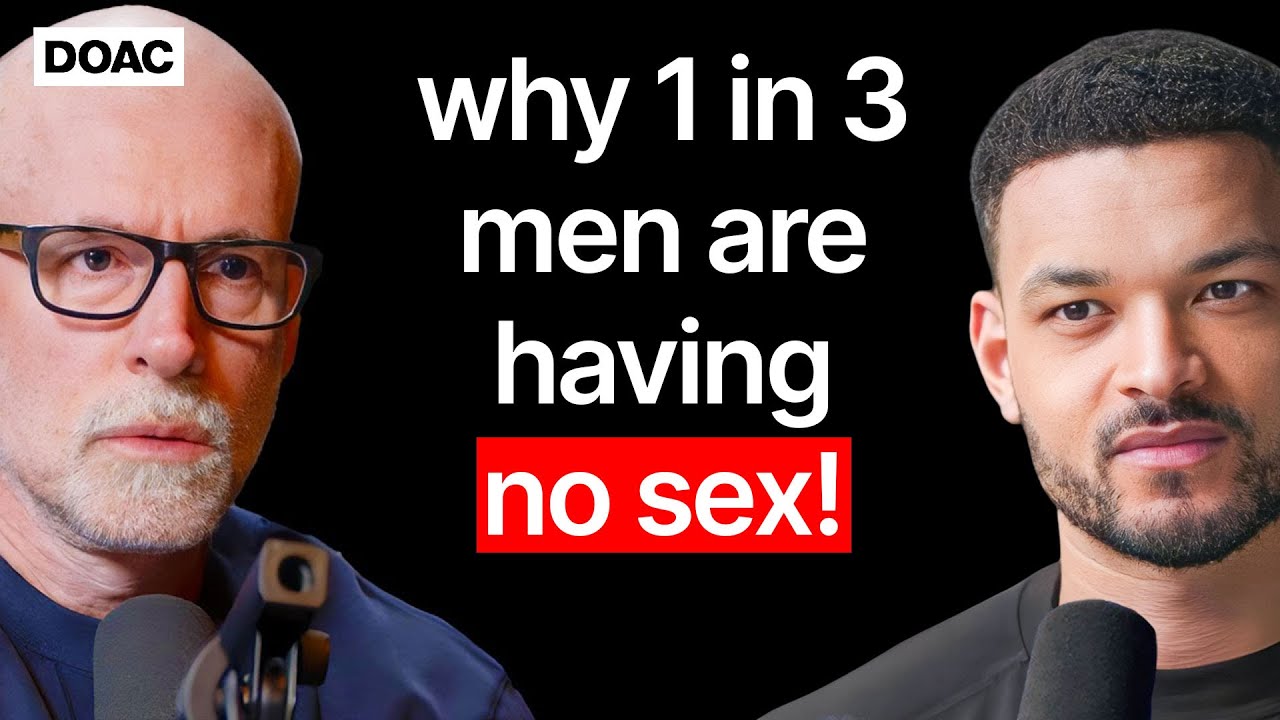
Scott Galloway: The crisis among young men is getting worse! — The Diary Of A CEO

The Diary Of A CEO

Rising economic inequality and digital isolation severely threaten young men's romantic prospects and financial stability, requiring targeted economic reforms and direct adult mentorship.

AI-assisted summary of Scott Galloway: The crisis among young men is getting worse! — original source. Check the original for full context.

Source published:

Detailed notes

## Background Published on YouTube by The Diary Of A CEO on October 2, 2023, this video features host Steven Bartlett in conversation with Scott Galloway. According to the show description, the episode explores the escalating crisis among young men, societal biases in education, the impact of AI on relationships and jobs, and strategies for personal growth and financial success.

## TL;DR Scott Galloway and Steven Bartlett examine the complex structural challenges facing young men today, spanning economic disadvantages, the loss of physical third spaces, and the shift toward digital intimacy. Galloway outlines actionable advice on wealth building, emphasizing long-term discipline and housing ownership over conspicuous consumption, while advocating for a constructive masculinity anchored in protection, stewardship, and personal accountability. The discussion also covers systemic economic inequality, the realities of corporate AI lobbying, and why physical trades and AI-fluent professionals will thrive in the evolving labor market.

## Atmosphere & style The dialogue carries a candid, pragmatic, and intellectually sharp tone, blending Galloway's signature quick-witted storytelling with Bartlett's thoughtful, reflective probing. Despite tackling heavy societal themes like male isolation and economic disparity, the atmosphere remains grounded, humorous, and deeply practical rather than alarmist or performative. The mutual respect between host and guest creates an engaging, warm dynamic that transitions fluidly from humorous personal admissions to rigorous, data-driven analysis.

## Key takeaways - [50:34](https://www.youtube.com/watch?v=KRxhnSkgxtk&t=3034s) Selfless third-party adult mentors are crucial for turning young men into productive citizens, as teens naturally reject direct advice from their parents. - [52:29](https://www.youtube.com/watch?v=KRxhnSkgxtk&t=3149s) True long-term wealth and success stem from saving money and investing in assets like real estate, rather than spending on high-status consumer items. - [52:18](https://www.youtube.com/watch?v=KRxhnSkgxtk&t=3138s) Products with extreme profit margins succeed by appealing to fundamental human drives for social status and mate attraction. - [01:01:44](https://www.youtube.com/watch?v=KRxhnSkgxtk&t=3704s) In the Harvard Grant Study, alcohol was identified as the single most common shared attribute among the least happy cohort. - [01:06:04](https://www.youtube.com/watch?v=KRxhnSkgxtk&t=3964s) Economic shifts over the past 40 years have severely impacted younger generations, with housing costs rising dramatically while relative wealth has declined. - [01:13:30](https://www.youtube.com/watch?v=KRxhnSkgxtk&t=4410s) Modern masculinity should focus on being a protector and provider, showing restraint and emotional maturity in difficult social situations. - [01:21:22](https://www.youtube.com/watch?v=KRxhnSkgxtk&t=4882s) Online dating heavily concentrates attention on the top 10% of men in status and wealth, while the decline of physical 'third spaces' harms natural relationship building. - [01:29:26](https://www.youtube.com/watch?v=KRxhnSkgxtk&t=5366s) In-person work environments foster essential social connections, serving as a primary driver for retention and romantic relationships. - [01:38:14](https://www.youtube.com/watch?v=KRxhnSkgxtk&t=5894s) Tech companies often publicly request regulation while simultaneously sending lobbyists to suppress legislative oversight. - [01:45:11](https://www.youtube.com/watch?v=KRxhnSkgxtk&t=6311s) AI will not simply displace workforce demand, but workers who understand how to utilize AI will replace those who do not. - [01:47:23](https://www.youtube.com/watch?v=KRxhnSkgxtk&t=6443s) Skilled physical trades remain resilient against AI disruption while white-collar and cognitive labor face substantial reshaping.

## Detailed walkthrough ### [00:00](https://www.youtube.com/watch?v=KRxhnSkgxtk&t=0s) The Crisis of Suicidality and Male Isolation

The stats surrounding male mental health are alarming. A suicide occurs in the UK every 90 minutes, with 76% of those deaths being male. For every suicide completed, there are roughly 25 attempts. Suicide remains the single largest killer of men under the age of 45 and overall for people aged 15 to 49. Crucially, young men aged 19 to 35 are twice as likely as any other demographic to report being in a personal crisis, and 16-to-24-year-olds represent the fastest-growing group exhibiting suicidality.

Scott Galloway argues that the very framing of this problem is flawed. If women were taking their lives at three times the rate of men, society would immediately diagnose a systemic structural breakdown and deploy massive public investments, educational shifts, and behavioral changes. But when young men struggle, the narrative defaults to individual failing—telling them to "get their act together" or "open up about their emotions." Public discourse often treats compassion as a zero-sum game, where expressing sympathy for struggling young men is weaponized as anti-woman or associated with far-right "red pill" ideologies.

When legitimate institutions refuse to address male isolation, bad actors fill the void. This reflex to blame men rather than support them ignores a staggering baseline of suffering: men are four times more likely to struggle with addiction and twelve times more likely to end up incarcerated. Just as civil rights or gay marriage expanded human rights without harming anyone else, addressing male suffering takes nothing away from women.

- Male suicide rate in the UK: 76% of all suicides. - Suicide attempt ratio: 25 attempts for every completed suicide. - Demographics: Suicide is the leading cause of death for UK men under 45 and all individuals aged 15–49. - Fastest growing group for suicidality: Youth aged 16 to 24. - Broader disparities: Men are 4x more likely to experience addiction and 12x more likely to be incarcerated.

[04:44](https://www.youtube.com/watch?v=KRxhnSkgxtk&t=284s) Biological Disparities and Systemic Educational Bias

The root of this crisis can be traced to biological development and educational design. Drawing on the work of scholar Richard Reeves, Galloway points out that the male prefrontal cortex matures significantly slower than the female one. From an executive function standpoint, an 18-year-old woman functions like a 20-year-old man. Consequently, when two high school seniors apply to college, the female applicant effectively competes against a male student with the cognitive control of a 16-year-old. This biological gap manifests in higher education enrollment, where women now make up 60% of US college students, and the ratio skews further as male dropout rates increase.

Beyond biology, the educational system actively disfavors boys. On a behavior-adjusted basis, a boy is twice as likely to be suspended as a girl for the exact same infraction—such as cheating on a chemistry test. For Black boys, that suspension rate skyrockets to five times that of a girl. This discrepancy is compounded by the demographic skew among educators: roughly 90% of primary school teachers are women, and there are currently more female fighter pilots per capita than male kindergarten teachers.

This environment strips young boys of male role models early in life. The single most predictive point of failure—the signal through all the noise indicating a young man is about to go off the rails—is the complete absence of a positive male role model. Between rising incarceration, paternal abandonment, and a female-dominated primary education system, an entire generation of boys is growing up without a single man to guide them.

- Prefrontal cortex lag: Executive function in an 18-year-old woman matches that of a 20-year-old man. - College gender gap: US higher education sits at roughly 60% female and 40% male, with double the number of women graduating due to higher male dropout rates. - Disciplinary bias: Boys are 2x as likely to be suspended as girls for identical infractions; Black boys are 5x as likely. - Teacher representation: Approximately 90% of primary school teachers are women.

[07:03](https://www.youtube.com/watch?v=KRxhnSkgxtk&t=423s) Economic Mobility and the Decline of the "American Dream"

Economic policy has further squeezed young men. Over the last four decades, tax structures and economic shifts have engineered a massive wealth transfer from the young to the old. Citizens over the age of 70 are 72% wealthier today than their equivalents were 40 years ago, whereas adults under 40 are 24% less wealthy. For the first time in modern American and European history, a 30-year-old is doing demonstrably worse economically than their parents were at the same age.

Housing markets vividly illustrate this generational divide. In 1980, the average age of a first-time home buyer was 29; today, that number has shot up to 47. Young adults have been entirely priced out of economic security. While economic stagnation impacts everyone, it strikes men with unique psychological severity because society continues to evaluate a man's worth primarily through his economic output and ability to provide. When young men are sequestered from basic economic milestones, the result is deep-seated shame and rage.

Galloway reflects personally on why this issue matters to him so deeply. Raised by a single mother who worked as a secretary, Galloway describes his upbringing as "upper lower-middle class." Lacking a father figure, he easily could have spiraled downward. He credits his trajectory to government safety nets—like Pell Grants and an accessible public university system—and random men who stepped up to guide him, including a stockbroker, a baseball coach, and a neighbor. Galloway notes that the University of California system once viewed itself as a public service rather than a luxury brand, admitting 76% of applicants (though Galloway was initially rejected on his first try before gaining admission). Today, these societal ladders have been pulled up, creating a vast "white space" where young men are falling faster than any other demographic.

> "The most dangerous person in the world [is] a lonely young broke male, and we're producing millions of them."

- Generational wealth shift: Adults over 70 are 72% wealthier than 40 years ago; adults under 40 are 24% less wealthy. - First-time home buyer average age: Shifted from 29 years old in 1980 to 47 years old today. - University accessibility shift: University of California previously admitted ~76% of applicants, functioning as a ladder for upward mobility rather than a luxury brand.

[12:11](https://www.youtube.com/watch?v=KRxhnSkgxtk&t=731s) Hyper-Sanitization, Dating App Desolation, and Artificial Intimacy

Modern youth are suffering from extreme over-programming and physical isolation. Galloway contrasts his own upbringing with today’s parenting styles, noting that while older generations worried about kids getting into trouble, modern parents worry their children aren't getting into *enough* trouble. "Concierge" and "bulldozer" parenting have sanitized young lives to such an extent that children fail to build social immunities. For instance, 40% of Harvard's incoming freshman class are virgins. While dramatic declines in unplanned teen pregnancy and drunk driving are positive on the surface, they also signal an alarming lack of raw, unscripted socialization. The number of high school teenagers who see their friends in person every day has been sliced in half.

This social atrophy is exacerbated by the brutal dynamics of online dating. For a male of average attractiveness, the math on dating apps is soul-crushing: he must swipe right 1,000 times to secure a single coffee date. Out of five scheduled coffee dates, four will ghost him, meaning it takes thousands of swipes just to get one face-to-face interaction. This constant digital rejection instills a profound sense of worthlessness, driving men to withdraw from physical spaces entirely. Lacking real-world practice, one in seven American men now reports having zero friends, and one in four cannot name a best friend. Marriage has increasingly become a luxury good reserved for the wealthy: in the top income quartile, three out of four people get married, whereas in the lowest quartile, three out of four will never marry.

Into this vacuum steps Big Tech and AI, offering low-calorie, risk-free simulations of intimacy. Instead of enduring the painful, necessary friction of real life—putting on a clean shirt, hitting the gym, risking rejection, or making cold calls—young men are retreating into digital surrogates. They trade crypto on Coinbase, scroll social feeds, and form relationships with AI bots. But these digital substitutes lack the required "nutrients" of human connection, ultimately deepening depression and leaving millions of young men completely detached from society.

- Dating app friction: An average male must swipe right ~1,000 times to get a single in-person coffee date. - Male loneliness stats: 1 in 7 US men has no friends; 1 in 4 lacks a best friend. - Marriage dynamics by income: 75% marriage rate in the top income quartile vs. a 75% non-marriage rate in the bottom quartile. - Social contact shift: The number of high schoolers seeing friends daily has dropped by 50%. - Virginity in higher education: 40% of Harvard's incoming freshman class are virgins.

Here is the detailed, faithful walkthrough covering this part of the transcript.

---

[17:16](https://www.youtube.com/watch?v=KRxhnSkgxtk&t=1036s) AI, Sex Bots, and the Threat to Real-World Connection

The conversation shifts to how modern technology threatens to replace human relationships with risk-free digital substitutes. Scott Galloway argues that navigating the nuances of human sexuality and building real relationships requires taking risks. Developing the skills to pursue a partner and achieving a meaningful relationship is "the victory" and "the payoff," yet fewer and fewer men are willing to engage in those risks. Instead, Galloway predicts that artificial intelligence combined with sex robotics will form a massive industry where men choose relationships with algorithms and dolls over human beings. He notes that the sex bot industry is projected to exceed the domestic box office receipts of all U.S. movie theaters within five to six years.

This trend threatens to induce severe isolation and depression. Galloway suggests that the movie *Her* should be required watching for every teen male, and high schools should implement courses within health class on "mating dynamics." These courses would teach young men that approaching a woman and expressing romantic interest—while making her feel safe—is a vital life skill. Steven Bartlett interjects with insights from a conversation with Mustafa Suleyman, co-founder of DeepMind and Inflection AI (author of *The Coming Wave*). Suleyman highlighted how converging breakthroughs in AI and robotics will create home companions that not only handle chores like cooking and cleaning, but can also simulate love, agree with everything you say, encourage you, and engage in sex. Bartlett notes that a significant cohort of men, when faced with a choice between that and complete isolation, will inevitably choose the synthetic alternative to fill the void.

* **Sex Bot Industry Projections:** Forecasted to surpass total U.S. domestic box office revenues within 5 to 6 years. * **Relationship Disparity:** Two-thirds (66%) of women under 30 have a boyfriend, whereas only one-third (33%) of men under 30 have a girlfriend, largely because women date older, more emotionally and economically viable men. * **Cultural Reference:** Galloway points to the film *Her* as a cautionary tale of AI companionship that every young male should see.

---

[20:07](https://www.youtube.com/watch?v=KRxhnSkgxtk&t=1207s) Enduring Rejection: The Prerequisite for Personal and Professional Success

Addressing why young men retreat into passive digital options, Galloway points out that real-world relationships demand immense effort, financial expense, emotional trauma, and the willingness to face rejection. It is far easier to stay home, order food delivery, watch Netflix, take an edible, and watch pornography than to risk humiliation. However, learning to endure rejection is the single most important prerequisite for success in life, outweighing talent and even sheer hard work.

Galloway shares a personal story about his 13-year-old son, who thudded his bag down in tears after failing to make his school's football team after moving to the UK. While his mother freaked out asking what to do, Galloway viewed it as a great day for his son's development. "He's going to wake up tomorrow and he's going to realize he's fine, and he's going to develop a little bit of callous over that emotion." Drawing parallels to his own life as a lifelong entrepreneur and long-time single man, Galloway emphasizes that whether you are asking strangers out or begging investors and clients for money, "the only thing I can guarantee you is a shit ton of rejection."

> "If you want to punch above your weight class economically or romantically, then get out a spoon and get ready to eat shit. That is a prerequisite to that kind of success."

---

[22:34](https://www.youtube.com/watch?v=KRxhnSkgxtk&t=1354s) Reclaiming Human Capital and Modulating Pornography

When coaching young men, Galloway focuses on reallocating their primary asset: time. While young people lack financial capital, they possess abundant human capital. Galloway routinely asks young men to unlock their phones to inspect their screen time without judgment. Across platforms like Twitter, TikTok, pornography, and Coinbase, he consistently finds anywhere from 10 to 50 hours a week being wasted on low-value digital interactions.

He counsels young men to reallocate those wasted hours into two core productive areas: 1. **Making Money:** Engaging in basic gig or entry-level work—whether driving for Uber, Instacart, or DoorDash—to build skills, financial independence, and a hunger for earning. 2. **In-Person Social Exposure:** Joining activities and organizations that place them in the presence of strangers, potential romantic partners, friends, and mentors.

A crucial part of building the "mojo" required to take romantic risks involves strictly modulating pornography consumption. Reflecting on his own youth, Galloway credits his desire to meet women as one of the primary reasons he even attended classes at UCLA as a struggling student. Had he possessed modern high-definition, infinite-choice pornography back then, he doubts he would have had the drive to leave his house. While telling young men to quit porn entirely is unrealistic, analyzing its drain on ambition is necessary, as "every digital version of your life is a shittier vision of the analog version that could happen."

---

[26:12](https://www.youtube.com/watch?v=KRxhnSkgxtk&t=1572s) The Dating Crisis for Women and the "High Heels Effect"

The crisis facing young men has direct knock-on effects for women, creating a systemic imbalance. Bartlett shares a story of meeting a successful woman in her 30s at a bookstore who was killing it in her career, had never had a boyfriend, was tired of online dating apps, and was beginning to internalize the false belief that something was wrong with her. Bartlett notes that several high-achieving women in his personal circle echo this exact experience: they refuse to lower their standards, yet cannot find viable partners.

Galloway explains this through a concept popularized by podcaster Chris Williamson called the "high heels effect." Over the last 50 years, women have made massive strides in education and income—in U.S. urban centers, women under 30 now earn more than their male peers, and single women own more homes than single men. Anthropologically and socioeconomically, women naturally seek to mate horizontally or hypergamously ("horizontally and up"), whereas men mate horizontally and down. As women "get taller" economically and educationally, the pool of men who are senior to them shrinks.

* **Height Preference Analogy:** Roughly 50% to 80% of women prefer not to date men shorter than themselves, sub-consciously viewing physical stature as a proxy for protection. Metaphorically, women are growing taller while men are shrinking. * **Societal Double Standards:** A successful single man in his 30s is viewed as an enviable bachelor ("It's good to be Steven Bartlett"), whereas society unfairly views a successful, single woman in her 30s through a lens of romantic failure.

---

[30:43](https://www.youtube.com/watch?v=KRxhnSkgxtk&t=1843s) Online Dating Dynamics and "Porsche Polygamy"

Online dating dynamics have created a massive distortion in the mating market. Because friction and geographic barriers have been removed, women concentrate their interest on a tiny slice of the male population. This creates an environment where the top 10% of attractive or successful men engage in what Galloway calls "Porsche polygamy."

These top tier men receive 80% or more of the attention and short-term sexual opportunities on dating apps. Because options are endless and effortless, these men have little incentive to settle down, establish long-term relationships, or exhibit good behavior. Meanwhile, average women can easily secure short-term sexual access to these top-tier men, leading them to calibrate their expectations around them, even though those men have no intention of committing. Consequently: * **The Top 10%:** Enjoy unlimited casual access, avoiding long-term household formation. * **The Bottom 90% of Men:** Receive little to no interest from women, leading to withdrawal and isolation. * **The Majority of Women:** Are left disappointed by the top tier's lack of commitment while ignoring the broader pool of men.

Galloway stresses that men desperate for romantic connection lose critical guardrails. Without a partner demanding that they pull themselves together—to save for a house, work hard, and build a future—unattached men drift into passive habits like drinking and smoking weed every night. Healthy relationships offer a powerful "peanut butter and chocolate" balance where one partner's risk tolerance combines with the other's practicality, yielding a outcome where "1 plus 1 really does equal 3."

[33:46](https://www.youtube.com/watch?v=KRxhnSkgxtk&t=2026s) The Societal Impact of Uncoupled Men

Steven Bartlett highlights data from the Pew Research Center and the Centers for Disease Control and Prevention showing how drastically the social landscape for women has shifted over the past 50 years. While women are increasingly uncoupled, they remain economically successful, find outlets for connection, and generally maintain robust social safety nets. Scott Galloway agrees, noting that while this dynamic is bad for women, the broader societal knock-on effects are far more dangerous when applied to men, who lack those same non-romantic support systems and are statistically more likely to fall into depression, violence, or self-harm.

* **Marriage Rates:** In 1970, only 13% of women over 30 were unmarried; today, that number has risen to almost 50%. * **Divorce Rates:** The divorce rate for women over 30 has doubled in the past 50 years. * **Childlessness:** In 1970, only 10% of women over 30 were childless, compared to almost 30% today. * **Out-Earning Husbands:** In 1970, only 28% of women over 30 earned more than their husbands, whereas today that number is nearly 50%. * **Living Alone:** In 1970, only 12% of women over 30 lived alone; today, that number has reached 35%. * **Social Connections:** Women maintain a best friend at multiples the rate of men, making them far better at forming non-romantic social ties.

---

[35:32](https://www.youtube.com/watch?v=KRxhnSkgxtk&t=2132s) Reallocating Capital and Building Real-World Value

To counteract these trends, Scott proposes a three-part framework for young men looking to establish themselves and build a foundation for success. The first step involves getting off line and putting oneself in real-world environments where random encounters with strangers can occur. The second involves reallocating 4 to 6 hours a week toward physical fitness, which Scott points out is "50% better than Pharmaceuticals and talk therapy" according to recent studies, while also making a man more attractive, confident, and kind. The third pillar is achieving economic security through a clear personal finance framework.

Scott strongly rejects the popular advice to "follow your passion," calling it misleading. Passion is often confused with hobbies—such as becoming a DJ, an athlete, an actor, or opening a restaurant—where unemployment rates are above 90%. He illustrates this with the SAG-AFTRA actor guild during the Hollywood strike: out of 180,000 members, only 12.5% earn the $24,000 annually required to qualify for health insurance. "Assume you are not Jay-Z," Scott advises, urging young men to focus instead on finding something they are naturally good at that exists in an industry with a greater than 90% employment rate.

Once a young man identifies a viable field, the key is to commit the requisite 10,000 hours of grit, perseverance, and willingness to endure injustice in the workplace to become great at it. Scott points out that potential romantic partners do not require someone to be a "baller driving a Porsche"—what they truly seek in a partner is a clear, actionable plan.

---

[38:31](https://www.youtube.com/watch?v=KRxhnSkgxtk&t=2311s) Living Like a Stoic and the Power of Compounding

The second component of Scott's financial algorithm is living below one's means. In a modern capitalist culture where algorithms target personal vulnerabilities to push premium upgrades, avoiding debt takes serious character. Scott shares memories of his time as a student at UCLA, where he faced a critical summer between his junior and senior years: if he did not earn $3,300 across 11 weeks, he could not afford his tuition or pay off his fraternity debt. He gamified his existence by living in a tiny fraternity room for free and eating a strict diet of Top Ramen, bananas, and milk.

By keeping his weekly living expenses down to $110, Scott survived while still having a blast with his crew team peers—buying cheap cases of Schmidt beer and gorging on the all-you-can-eat salad bar and "Malibu chicken" during Sunday night specials at Sizzler. He urges young men to lean into their ability to live frugally in a "shitty little apartment" before the unavoidable expenses of adult life—like children, pets, and higher living costs—take over.

This frugality creates an "army of capital" that can be deployed to build long-term wealth through simple investment strategies:

* **Diversification Over Stock Picking:** Avoid trying to outperform the market by picking individual stocks. Keep at least two-thirds of saved capital in low-cost ETFs and index funds. While day trading leads to losses for 85% of participants, holding a diversified portfolio over a 10-year period has historically yielded positive returns for every investor. * **Respect the Speed of Time:** People struggle to grasp compound growth because human evolution did not prepare minds for long life spans. Scott notes that after age 39, people lose the psychological ability to process their own aging when looking in the mirror. Time moves faster than expected, making early investments double and triple rapidly over decades. * **The Baby Bond Concept:** To illustrate the power of compounding, Scott notes that if the US government invested $7,000 for every newborn into a diversified ETF index fund, that initial investment would grow to $1,000,000 by the time the child turns 65.

---

[45:16](https://www.youtube.com/watch?v=KRxhnSkgxtk&t=2716s) Practical Investing Steps for Beginners

For anyone sitting on modest savings, Scott outlines a straightforward roadmap to start investing:

* **Open a Low-Cost Brokerage Account:** Use accessible platforms such as Charles Schwab or Public.com in the US, or Hargreaves Lansdown in the UK. * **Select Index Funds/ETFs:** Direct funds into broad-market ETFs (such as S&P 500 trackers like SPY) that offer broad diversification with low management fees. * **Utilize Tax-Advantaged Vehicles:** Maximize accounts that shield investments from unnecessary taxation, such as 401(k)s and Roth IRAs in the US, or ISAs and retirement accounts in the UK. * **Build Momentum Early:** Even starting with just $100 allows an individual to develop "a taste for flesh"—a metaphor Scott uses after hearing about lions on safari—where seeing small initial returns transforms financial discipline into an empowering habit.

---

[48:40](https://www.youtube.com/watch?v=KRxhnSkgxtk&t=2920s) The Role of Male Role Models

Scott becomes visibly emotional when discussing the positive influence men can have on young lives. Reflecting on his own childhood, Scott shares how his mother's boyfriend, Terry, stepped up as an unexpected mentor. Despite the complicated reality of Terry being married with another family, he spent every other weekend with Scott and his mother, providing warmth, generosity, and guidance that kept Scott grounded when he could have easily fallen off course.

Other male figures, including a camp counselor working in technology who taught him programming, stepped in at critical junctures. Scott emphasizes that "the number one solution for what ails young men is other men." He asserts that the ultimate expression of masculinity isn't power or dominant status, but taking active, irrational responsibility for the success and well-being of a young person who is not your own.

[50:34](https://www.youtube.com/watch?v=KRxhnSkgxtk&t=3034s) Mentorship, Male Role Models, and the Perils of Society's Suspicion

Scott Galloway reflects on how societal perceptions have damaged the vital dynamic of male mentorship. Recalling a conversation with Bill Maher, Galloway notes how Maher immediately reacted to the idea of mentoring a 15-year-old boy by saying he wouldn’t get involved because "they're going to think I'm a pervert." Galloway argues forcefully that the actions of the Catholic Church and figures like Michael Jackson have "fucked it up for all of us," instilling a pervasive cultural suspicion toward men who want to invest in the lives of young boys. In reality, 99.999% of paternal and fraternal love that men wish to offer is entirely positive, and being made to feel suspect is a tragedy for the next generation.

Reflecting on his own life, Galloway credits random, generous men who took a selfless interest in him—without any personal gain—as being instrumental in turning him into a productive citizen. He emphasizes that young men in desperate need of guidance are everywhere: friends' kids, the nanny's child, or the dozens of young men who reach out to him daily via email just looking for reassurance, a bit of direction, and someone to tell them that they matter. Furthermore, Galloway points out a natural biological dynamic: as teenagers grow up, they inherently pull away from their parents and dismiss their father's advice. Yet, when a father's friend offers the exact same advice, the young man nods and takes it to heart.

- **Bill Maher Anecdote**: Maher expressed hesitation to mentor young boys out of fear of being labeled a "pervert," highlighting a widespread cultural paranoia. - **Impact of Selfless Mentors**: Galloway views the random adult men who intervened in his youth as a crucial "gift" that shaped his life trajectory. - **Biological Nest-Leaving**: Teens naturally reject parental advice to establish independence, making third-party adult role models vital sounding boards.

---

[52:29](https://www.youtube.com/watch?v=KRxhnSkgxtk&t=3149s) Deconstructing Andrew Tate: The Mechanics of the Modern Male Grift

Addressing where young men are turning for guidance in the absence of traditional mentors, Steven Bartlett brings up online figures like Andrew Tate. Galloway offers a nuanced take, stating that much of what Tate says starts from a fundamentally good place—advocating for personal accountability, physical fitness, and action-orientation. However, Galloway points out that Tate’s message quickly "comes off the rails" when he shifts into treating women as property or selling crypto trading courses that make "Trump University look like Harvard."

Galloway identifies this blend of self-improvement and toxicity as the most dangerous aspect of Tate’s influence. A impressionable young man agrees with the initial 80% of sensible self-help advice, making him vulnerable to adopting the remaining 20%, which Galloway describes as ugly, blatant misogyny and a financial grift.

When discussing the hyper-flashy lifestyle Tate promotes—complete with Bugattis and Lamborghinis—Galloway acknowledges the natural desire of young men to signal power and success. He admits to his own subtle status-signaling, noting that he wears a Panerai watch he hasn't wound in ten years simply to signal attractiveness and success to strangers. However, Galloway counters Tate’s luxury-car flex by offering a practical truth for long-term success:

> "The baller, the guy who ends up with more what I'll call lasting opportunities—and quite frankly more mating opportunities—is the guy who buys a Toyota and is saving money, and is the first guy in his cohort to buy a house. I think the majority of people are less impressed by your things than you think... I think people are really impressed with discipline and a plan."

- **The 80/20 Trap**: Enticing self-help advice (fitness, discipline) acts as a gateway to toxic beliefs (misogyny, predatory financial courses). - **Crypto Course Critique**: Galloway compares Tate's online courses unfavorably to Trump University, labeling them a grift. - **True Status vs. Flash**: Long-term mating and financial success favor the disciplined individual driving a Toyota and buying real estate over someone renting supercars.

---

[54:33](https://www.youtube.com/watch?v=KRxhnSkgxtk&t=3273s) Status Games, Mating Signals, and Why We Buy Luxury

Steven Bartlett shares a shift in his own perspective on material possessions. While he previously believed he had outgrown status-seeking because he stopped buying designer items like Louis Vuitton, reading Will Storr's work made him realize that humans simply transition between different status games over time. Whether it is a podcast director obsessing over production quality and camera gear or a billionaire buying a yacht, the fundamental drive to establish standing within a tribe remains innately human.

Galloway connects this status-seeking directly to biological evolution and consumer economics. The world's wealthiest individuals—such as Bernard Arnault—have built empires by tapping into humanity's most primal instincts: survival and propagation (sex). Communicating one's worth as a mate is the primary engine behind luxury consumer spending.

``` ┌─────────────────────────────────────────────────────────┐ │ Primal Human Motivations │ ├───────────────────────────┬─────────────────────────────┤ │ 1. Survival │ Basic needs & security │ │ 2. Propagation (Sex) │ Signaling mate value │ │ 3. Transcendence │ Feeling closer to God │ └───────────────────────────┴─────────────────────────────┘ ```

Galloway posits that any product enjoying gross margins greater than 70% or 80% fulfills one of two core psychological needs: 1. **Signaling Mate Value**: Driving a Bugatti signals strength and resource abundance to potential mates, just as high heels or luxury skin creams signal health and genetic fitness. 2. **Feeling Closer to God**: High-margin design—like the curve of a Porsche 911, the leather mesh of a Bottega Veneta bag, or fine art—evokes awe. Historically, the finest craftsmanship was reserved for religious venues (temples, mosques, churches) to signal the divine. When people encounter exceptional beauty today, it triggers that same deep-seated feeling of presence and divine connection.

- **High-Margin Rule**: Products with >70-80% gross margins almost always capitalize on biological mate-signaling or spiritual/aesthetic elevation. - **Biological Evolution**: Material goods act as modern proxies for evolutionary fitness, communicating strength, resources, and genetic health.

---

[57:46](https://www.youtube.com/watch?v=KRxhnSkgxtk&t=3466s) Personal Confessions: iPhone Snobbery, the AMEX Black Card, and Seeking Validation

When Galloway asks Bartlett where he spends his money, Bartlett explains that he invests in starting companies, appointing CEOs, holding funds in the S&P 500, and holding Ethereum for over five years. Galloway jokingly replies that Bartlett is "more evolved," openly confessing his own addiction to external validation and the economic status games he still catches himself playing.

Galloway admits that despite knowing better, he catches himself dropping "obnoxious douchebag" comments that signal his wealth, such as casually mentioning owning a home in Aspen. He reflects on how society conditions men to tie their entire self-worth to economic output. This dynamic trickles down to everyday items—even smartphones and credit cards:

* **iPhone vs. Android**: Galloway jokes that carrying an Android phone signals to the world that "life hasn't panned out the way you'd hoped," while an iPhone is used to signal mate value (likening an Android to carrying a Discover card). * **The AMEX Black Card**: Galloway reveals he pays $7,500 annually just to carry an American Express Centurion (Black) Card. He candidly admits he doesn't even know what the benefits are, but pays the fee solely for the ego boost of tossing down a black card around food, alcohol, and strangers so they think, "the professor is a baller."

Despite acknowledging the absurdity of paying $7,500 a year for a piece of metal—and having done so for 20 years—Galloway laughingly admits he will probably keep doing it for another 20 years, summarizing his advice as "do as I say, not as I do." Bartlett adds that true maturity isn't about achieving instant perfection, but recognizing these flaws, reducing regrettable moments, and keeping the overall "direction of travel" positive.

---

[01:01:44](https://www.youtube.com/watch?v=KRxhnSkgxtk&t=3704s) The Catalyst of "Rock Bottom" and Auditing Addictions

Bartlett shifts the discussion to discipline and motivation, observing that young people frequently ask how to find consistent tenacity while sitting on the couch playing video games. Bartlett notes from his interviews that real transformation rarely happens in a vacuum; it almost always requires a "rock bottom" moment where the pain of remaining the same outweighs the pain of changing. Whether it's parents threatening eviction or friends walking away, an acute shift in the incentive structure forces action. Galloway agrees, pointing to figures like George W. Bush, whose life and career only took off after his wife issued an ultimatum regarding his alcoholism.

Turning to the topic of alcohol, Galloway shares his personal relationship with drinking, famously echoing Winston Churchill by stating that he feels he has "gotten more out of alcohol than it's gotten out of me." While rejecting the extreme notion that everyone who drinks or uses THC will end up ruined under a bridge, he highlights a sobering reality from long-term psychological research:

> "If you look at the studies around happiness, especially the largest study—the Grant Study—where they segment people into quintiles from the happiest to the least happiest, the most common attribute across the cohort of the least happiest was alcohol."

Galloway urges everyone—particularly young men who are biologically more prone to addiction—to conduct a rigorous "audit of your addictions." The criteria for cutting back shouldn't be whether you're living under a bridge, but asking yourself: *"Would I be just a little less shitty at things if I did less of it?"*

Galloway shares that when he got serious about his career and providing economic security for his mother, he dramatically reduced his alcohol intake and avoided drugs entirely. He compares an early career to a rocket: most of the fuel is consumed just escaping the heavy atmosphere. Once a young professional breaks out into orbit, momentum takes over, but getting off the ground demands absolute focus and commitment that heavy drinking actively undermines.

- **The Grant Study Insight**: Among the least happy quintile of participants in Harvard's landmark study, alcohol consumption was the single most common shared attribute. - **The Rocket Ship Analogy**: Early career building requires maximum energy to escape baseline gravity; substance use acts as dead weight during this critical launch phase. - **The Addiction Audit**: Evaluate all daily habits (alcohol, screen time, shopping) not against hitting rock bottom, but against whether moderation would improve overall performance.

[01:06:04](https://www.youtube.com/watch?v=KRxhnSkgxtk&t=3964s) Economic Reforms and Systemic Solutions to Societal Crises

Scott Galloway and Steven Bartlett pivot to discussing systemic fixes for current social issues like depression, loneliness, and the decline of romantic relationships among young adults. Galloway argues that while large corporations often pretend these problems are endlessly complex—a tactic he calls the "delusion of complexity"—the solutions are actually straightforward, though expensive for the ultra-wealthy. He points out how fast platforms can fix issues when forced, noting that when Twitter removed a single account, misinformation dropped dramatically overnight. He suggests that age-gating social media or removing Section 230 protections would drastically curb youth depression and radicalization.

The core driver behind these societal issues, Galloway argues, is economic inequality across generations. For the first time in modern history across Western democracies, a 30-year-old is financially worse off than their parents were at the same age. When young people realize the socio-economic ladder is broken, they experience rage and shame, making them vulnerable to radicalization. Galloway proposes a dramatic policy shift: significantly raising the minimum wage and taxing high earners to shift capital back into the hands of young and working-class people.

* The average 70-year-old is **72% wealthier** than 70-year-olds were 40 years ago, whereas the average person under 40 is **24% less wealthy**. * The share of national wealth controlled by people under 40 has been cut in half over recent decades. * Housing costs are **12 times** higher than they were 40 years ago, while average incomes have only grown **6 times**. * Post-WWII top marginal tax rates reached **92%**, and sat around **70%** when Ronald Reagan and Margaret Thatcher took office, before dropping to **27%** by the end of Reagan's presidency. * Studies from UC Berkeley and UC Riverside on minimum wage increases in Washington, California, and New York demonstrated that boosting minimum wages grows the economy rather than causing job losses, due to the high multiplier effect of lower- and middle-income spending. * Labor market dynamics show roughly **1.7 open jobs for every job seeker** in the US, and about **1.3 to 1** in the UK.

> "In corporations, a key component of entrenchment is the delusion of complexity... Twitter and Google and Meta will say that the hate speech and the polarization that they've created... are indicative of broader problems in our society... yet they kick one account off of Twitter, the real Donald Trump, and election misinformation goes down 40 to 60% in one day."

---

[01:13:50](https://www.youtube.com/watch?v=KRxhnSkgxtk&t=4430s) Parenting Boys and Modeling Character

When Bartlett asks how Galloway guides his own sons through adolescence and the modern dating landscape, Galloway shares a candid look at parenting teenagers. He admits that direct advice is often rejected by 13- and 16-year-old boys who are naturally establishing their independence. Instead, he focuses on modeling positive behaviors in everyday life, such as working hard, staying physically fit, showing manners, and displaying patience.

Galloway shares an internal lesson about letting go of his ego. When he was younger, if a service worker was rude to him, he felt compelled to confront them to "restore the world's balance." As a mature adult, he realizes that taking a moment of disrespect on the chin without escalating is actually a sign of strength and true masculinity.

* Galloway has two sons, aged 13 and 16. * He emphasizes that personal modeling—such as maintaining physical fitness, working hard, and showing kindness to strangers—is far more effective for teenagers than giving unsolicited lectures.

> "When I was your age, I felt like I always needed to restore the world's balance and no one could be disrespectful to me... and now I realize occasionally just take it. That's what it means to be a man."

---

[01:15:27](https://www.youtube.com/watch?v=KRxhnSkgxtk&t=4527s) Redefining Modern Masculinity: Protector and Provider

Galloway outlines his vision for a constructive, modern model of masculinity to counter extreme voices on both sides of the political spectrum. He argues that the far-right often conflates masculinity with cruelty and toxic behavior, pointing to figures like Donald Trump, Vladimir Putin, and Elon Musk as flawed role models. Conversely, he contends that the far-left errs by suggesting men should simply act more like women, ignoring the reality that biological drives and distinct masculine traits are valued in society and romantic relationships.

Galloway defines the first two pillars of modern masculinity as being a **protector** and a **provider**:

1. **Protector:** Real protection extends beyond physical force; it means using strength to defend vulnerable groups, regardless of political ideology or whether one fully understands their situation. Using the trans community as an example, Galloway stresses that even if a man does not fully grasp trans issues, his default biological and moral imperative as a man should be to step in and shield persecuted people from harm. 2. **Provider:** Economic stability remains a major factor in modern relationships, as financial strain is a primary driver of divorce. Being a provider involves earning a living, supporting family, supporting a partner's career goals, and eventually expanding that circle of care to philanthropy and community support.

* Galloway notes that approximately **70% of divorce filings are initiated by women**, frequently triggered by economic shocks such as a partner losing a business, suffering a severe mental breakdown, or filing for bankruptcy. * While recounting an incident at the Westin Hotel in Seattle where firefighters rushed up 11 flights of stairs carrying 80 pounds of gear into a potential fire, Galloway highlights that willingness to face danger to protect others remains a cornerstone of the masculine ideal.

> "Your first role as a man in his masculinity is to move to protect them, full stop. That's what we do—we protect people, and we err on the side of protection."

[01:21:22](https://www.youtube.com/watch?v=KRxhnSkgxtk&t=4882s) Masculinity, Initiation, and the Pitfalls of Online Dating

Scott Galloway addresses the final aspect of masculinity in his framework: being the "procreator" and taking the initiative in romantic relationships. He acknowledges that this perspective is controversial, but insists that initiating romantic pursuit is a fundamental component of healthy masculinity. The line between active pursuit and predatory behavior is distinct, yet recent high-profile cases of power abuse have caused society to conflate any male romantic initiative with predation. Galloway argues that learning to approach others and initiate contact—whether professionally or romantically—is an indispensable life skill.

To illustrate the importance of overcoming social anxiety, Galloway shares a personal anecdote about parenting. He used to force his 13-year-old son to step outside their house and interact with a stranger—even if it just meant asking to pet someone's dog—refusing to let him back inside until he complied. While his son found it frustrating at the time, Galloway views this exercise as essential for building confidence. With statistics showing that approximately 50% of new relationships now originate online, young men face an unprecedented challenge. Bartlett notes that after hosting dating app founders on his podcast, he received angry comments from young men frustrated by how difficult it is to get matches.

``` Online Dating Dynamics (Visual Model) ┌─────────────────────────────────────────┐ │ Top 10% Men (High Money / High Status) │ ──► Receives vast majority of attention └─────────────────────────────────────────┘ ┌─────────────────────────────────────────┐ │ Bottom 90% Men │ ──► Expresses severe friction & burnout └─────────────────────────────────────────┘ ```

The online dating ecosystem operates on extraordinarily crude, surface-level metrics. Galloway breaks down mate selection dynamics, noting that women are generally attracted to men based on three core pillars: provider potential, intelligence, and kindness (with humor serving as the primary delivery mechanism for intellect). Online platforms collapse all nuance down to two variables: money for men and physical looks for women. For men in the top 10% of financial or physical attractiveness, online dating offers endless options. However, for the bottom 90%, it often becomes a demoralizing experience characterized by rejection and low engagement.

- **Dating Dynamics:** Approximately 50% of couples now make initial contact through digital apps or websites. - **Top 10% vs. Bottom 90%:** Online dating concentrates female attention heavily on top-tier profiles, leaving the remaining 90% of men largely sidelined. - **Core Attraction Pillars:** Women primarily look for provider ability, intellect, and kindness; humor is the most efficient way to demonstrate intellect. - **Surface-Level Metrics:** Digital profiles stripped of human nuance reduce male appeal almost exclusively to wealth/status and female appeal to physical looks.

---

[01:24:40](https://www.youtube.com/watch?v=KRxhnSkgxtk&t=5080s) The Magic of In-Person Connection and Third Spaces

In contrast to the shallow filtering of dating apps, in-person interactions activate a complex web of "X-factors"—including body language, voice inflection, sense of humor, smile, movement, and natural chemistry. Many successful relationships stem from environments like workplaces or shared activities, where people discover attractive qualities in someone they initially overlooked on paper. Galloway argues that society has severely degraded these organic meeting grounds.

``` Traditional Third Spaces vs. Modern Isolation ┌───────────────────────┐ ┌───────────────────────┐ │ Historical Baseline │ │ Modern Landscape │ ├───────────────────────┤ ├───────────────────────┤ │ • Church / Community │ │ • Remote Work / Zoom │ │ • Malls & High Street │ ───► │ • Digital Streaming │ │ • Physical Offices │ │ • App-Based Dating │ │ • Daily Socializing │ │ • Screen-First Living │ └───────────────────────┘ └───────────────────────┘ ```

The decline of "third spaces"—places outside of home and work where people gather—has severely limited opportunities for spontaneous connection. High school students see their peers outside of class far less than previous generations did, neighbors rarely talk, and remote work keeps young professionals isolated at home. Historically, people met within smaller, localized communities where individuals sorted into relationships based on rich, multi-dimensional interactions. The internet expanded everyone's perceived pool of options to thousands of people, distorting expectations while forcing interaction through flat, digital profiles.

Galloway advises young men outside the top 10% to focus on self-improvement and basic self-presentation—grooming, fitness, dressing well, and developing social charm—so that when in-person opportunities arise, they can make a positive impression. He calls for structural societal solutions, including economic policies that leave more disposable income in young people's pockets, investment in third spaces, and national service programs (military or civilian healthcare/elderly care) to force diverse groups of young adults to interact and build lasting relationships.

- **The In-Person Advantage:** Physical proximity unlocks chemical, behavioral, and intellectual subtle traits that cannot be captured in a static profile picture. - **Decline of Social Cohesion:** The percentage of teenagers hanging out with friends daily has decreased significantly over recent decades. - **Alternative Meeting Grounds:** Proposal for mandatory or incentivized national service (similar to model structures in countries like Israel) to create shared experiences where future partners, business allies, and mentors connect.

---

[01:29:26](https://www.youtube.com/watch?v=KRxhnSkgxtk&t=5366s) Reclaiming the Workplace as a Social Hub

Bartlett and Galloway pivot to discussing the workplace as one of the few remaining functional environments for building deep interpersonal relationships. Bartlett explains his strong commitment to in-person work for his 30-person team at *The Diary Of A CEO*. While acknowledging that remote work offers flexibility, he believes being together in an office creates essential emotional bonds, reduces stress, and makes work more meaningful. When he wrote a letter to his staff articulating these first principles around connection and shared mission, it received an overwhelmingly positive response.

Galloway highlights controversial advice he gave at a Wall Street Journal Europe conference: young professionals seeking rapid career and romantic progress should minimize time spent isolating at home. Though the snippet went viral and drew backlash from young workers on TikTok pointing out high rent and travel costs, Galloway maintains that professional and social momentum depends on real-world exposure. Statistically, roughly one-third of long-term romantic relationships historically originated in the workplace, and having a "best friend at work" remains the single strongest predictor of employee retention.

``` Workplace Relationship Guidelines ┌─────────────────────────────────────────────────────────────────────────┐ │ JUNIOR / EQUAL SENIORITY │ │ • Encourage social events, gatherings, and organic bonding. │ │ • Natural venue for forming friendships, mentorships, and romance. │ ├─────────────────────────────────────────────────────────────────────────┤ │ EXECUTIVE / SENIOR MANAGEMENT │ │ • Zero tolerance for dating subordinates due to power dynamics. │ │ • Strict boundary ("keep your fly zipped"). │ └─────────────────────────────────────────────────────────────────────────┘ ```

While remote work is an invaluable accommodation for parents, caregivers, or older workers with established lives, Galloway considers early-career remote work a net negative for young adults. Employers must create clear boundary guidelines: senior executives dating subordinates involves an unacceptable power imbalance and should be prohibited, but junior colleagues working together under shared intensity should be allowed and encouraged to form social and romantic bonds. At his own company, Prop G Media, Galloway enforces a rule where if any four employees go out socialized together—whether for a football match or a trip—the company covers the bill to invest directly in organizational culture and community.

- **Workplace Romance Stats:** Historically, approximately 1 in 3 long-term relationships began at work. - **Employee Retention Metric:** Having a close friend at work is the primary indicator of whether an employee stays at an organization. - **Company Culture Investment:** Galloway's policy at Prop G Media fully reimburses social outings whenever four or more team members gather outside work. - **Nuanced Governance:** Clear distinction between senior leadership (strict prohibition on dating within reporting lines) and peer-level junior employees (encouraged social interaction).

[01:36:19](https://www.youtube.com/watch?v=KRxhnSkgxtk&t=5779s) Flexibility in the Workplace and the Truth About Remote Work

Steven Bartlett reflects on how his own companies balance corporate guidelines with employee life stages, noting that keeping top talent requires supporting people through major milestones like pregnancy and parenthood. Scott Galloway agrees, pointing out that strict back-to-office mandates are usually issued by privileged CEOs who have the financial means to live close to the office and can afford full-time childcare. Galloway proposes establishing a formal "care worker" classification to afford caregivers greater scheduling flexibility.

However, Scott insists that remote workers must accept an uncomfortable economic reality: those who stay remote will likely earn less and face slower career progression. In-person work involves commute costs, time sacrifices, and geographical friction that are directly rewarded by employers. Furthermore, if a role can be moved seamlessly to Boulder, Colorado, it can eventually be moved to Bangalore. Galloway highlights that executive promotions are heavily driven by personal relationships, which are inherently tied to proximity.

> "Show me a CEO who is mandated back to office, I'm going to show you a guy who has someone else taking care of his kids, has the money to live near work... The back-to-office mandates have usually been dictated by someone who's in a real position of privilege."

- **The Proximity Effect:** In corporate promotions with multiple qualified candidates, decision-makers inevitably choose the individual with whom they have the strongest face-to-face relationship. - **Remote Compensation:** Galloway argues that choosing to work fully remote comes with a natural trade-off in pay growth and advancement opportunities.

---

[01:38:14](https://www.youtube.com/watch?v=KRxhnSkgxtk&t=5894s) Regulating AI: The Hypocrisy of Tech Executives

Reading a closing question left by previous guest Spotify founder Daniel Ek, Bartlett asks Galloway: with AI replacing jobs, what parts of humanity will become more important, and what will matter less? Scott opens by rejecting AI doomism and tech-savior narratives, framing both extremes as pure Silicon Valley narcissism. Instead, Galloway argues that the most critical players right now are government officials and regulators who need to step in before the technology outpaces public policy.

When Steven notes that tech leaders like Sam Altman and Elon Musk are actively testifying in Washington asking for regulation, Galloway dismisses their public pleas as performative "jazz hands." He points out that while executives express earnest concern on camera, their companies deploy armies of lobbyists in DC and Brussels to block antitrust legislation and suppress real regulatory action.

> "Sam Altman says, 'I want regulation.' And I believe Sam—he's really earnest, he looks like a young, nice man. And concurrently, he has lobbyists in Europe trying to suppress regulation against AI... It's stop me before I kill again."

- **Lobbying Influence:** There are currently more full-time corporate lobbyists working in Washington D.C. than there are sitting U.S. Senators. - **Antitrust Action:** Galloway cites Senator Amy Klobuchar's attempts to pass antitrust legislation as a clear example of policy that would break up big tech monopolies, stimulate job growth, and foster startup innovation.

---

[01:42:28](https://www.youtube.com/watch?v=KRxhnSkgxtk&t=6148s) The Imminent Threat of AI Misinformation

Scott predicts that the first devastating real-world fallout of unbridled AI will materialize in political election cycles. He lays out a specific scenario involving Vladimir Putin using generative AI to influence the 2024 U.S. presidential election. Rather than pouring billions into a stalled land war in Ukraine, foreign adversaries can achieve their geopolitical goals for a fraction of the cost by funding AI troll farms to output convincing deepfakes and targeted disinformation.

Galloway criticizes tech platforms for hiding behind Section 230 protections and refusing to implement robust AI watermarking. Driven by financial incentives, social media networks will happily collect foreign ad dollars and express empty regret only after the election results are locked in.

- **Economic Arbitrage of Disinformation:** Spending $7 billion on AI-generated deepfakes and automated troll networks is far cheaper and more effective for foreign autocrats than spending $70 billion on conventional military hardware. - **Mental Health Impact:** Galloway points out that 1 in 8 teenage girls in the UK directly attribute their low self-esteem, self-harm, or suicidal ideation to Instagram's algorithmically driven platform.

---

[01:45:11](https://www.youtube.com/watch?v=KRxhnSkgxtk&t=6311s) Universal Basic Income vs. Human Purpose

Bartlett raises Sam Altman's experiments with Universal Basic Income (UBI), questioning whether handing out free money will strip humanity of its drive, struggle, and sense of purpose. Galloway responds that he doesn't buy into the "idiocracy vision" where AI strips away all human purpose. People do not strictly need traditional employment; they need *purpose*, which many find through non-profit work, community building, and creative endeavors once basic financial security is met.

Addressing job loss concerns, Galloway notes that every major technological shift undergoes a period of short-term disruption followed by long-term growth. When tractors automated farming, the workforce adapted and expanded into entirely new economic sectors.

> "AI is not going to take your job. Someone who understands AI is going to take your job."

- **Agricultural Shift:** One in three Americans used to work in agriculture; today, that figure is down to 1 in 25, yet overall national employment and living standards have dramatically increased. - **Adaptation Dynamic:** Technology initially destroys specific tasks, but the resulting surge in productivity creates entirely new industries that could not have been envisioned beforehand.

---

[01:47:23](https://www.youtube.com/watch?v=KRxhnSkgxtk&t=6443s) Human Intelligence and the Shift Toward Skilled Labor

Steven expresses a deeper existential dread: while previous industrial revolutions replaced human physical muscle, AI targets cognitive processing and intelligence itself. He asks where humans fit in a world where an AI model can process information 10,000 times faster than a human expert or replace millions of commercial drivers. Galloway acknowledges the pain of transition—especially for white-collar information workers—but emphasizes that physical trade skills and vocational careers will see skyrocketing demand.

Galloway advocates for a cultural reset that removes the social stigma around blue-collar vocational training. While white-collar fields like law, programming, and consulting face severe disruption, skilled physical trades like welding, plumbing, and construction remain heavily protected from AI automation. Furthermore, general productivity gains generated by AI will add trillions of dollars to global GDP over the next decade.

- **Vocational Disparity:** Only 3% of U.S. LinkedIn profiles hold the title of "Apprentice," compared to 11% in the UK and Germany. In Germany, 50% of the working population holds a vocational certification, compared to just 5% in the U.S. - **Productivity Gains:** Citing economist Paul Krugman, Galloway highlights estimates that AI will increase U.S. productivity by 1.2% over the next decade, unlocking trillions of dollars in economic value.

[01:51:23](https://www.youtube.com/watch?v=KRxhnSkgxtk&t=6683s) AI Optimism and the Difficulty of Imagining Future Innovation

Steven Bartlett reflects on Scott Galloway's insights regarding artificial intelligence, noting how Scott helped shift his mindset toward a more optimistic stance. Steven observes that throughout history—such as during the Industrial Revolution or the rise of the internet—it has always been remarkably easy for people to identify what jobs and structures will be lost because those items are right in front of them. Conversely, it is nearly impossible to foresee the net-new industries, opportunities, and innovations that will emerge from technological disruption. Scott agrees that AI will ultimately create far more opportunities and roles than it destroys.

Steven expresses deep gratitude to Scott for returning to *The Diary Of A CEO*, sharing that Scott is a personal favorite guest not just for him, but for his close circle of friends. Steven uses a private WhatsApp group of five close friends as a true barometer for interview quality, beyond standard YouTube metrics like watch time and retention. He praises Scott's rare ability to articulate complex topics with humor, depth, and compelling storytelling without needing to shout or act performatively. With Scott's recent move to the UK, Steven looks forward to hosting him more frequently and highlights his anticipation for Scott's upcoming books on wealth (*The Algebra of Wealth*) and modern masculinity.

- Steven admits he once considered writing a book on masculinity himself due to his passion for the topic, but decided against it after learning Scott and other podcasters, like Chris Williamson, are writing on the subject. - Steven mentions a two-book deal with Penguin, noting that his best friend strongly urged for a book exploring what it truly means to be a man today.

[01:53:34](https://www.youtube.com/watch?v=KRxhnSkgxtk&t=6814s) Personal Growth, Professional Milestones, and Mutual Appreciation

Scott offers warm praise to Steven for his rapid professional evolution and media presence. Scott shares a poignant personal analogy: when he travels on the road for two or three weeks, returning home late at night and peeking into his kids' bedrooms reveals how noticeably they have grown in a short absence. Comparing that to Steven's career, Scott notes that after not seeing Steven in person for 13 months, Steven has "blown up" on an international scale—appearing on airport screens and across major American media outlets. Scott commends Steven and his entire crew for reaching a massive cultural tipping point and "killing it."

Steven humbly responds by acknowledging that while he is the visible face of the podcast, the operation's success is entirely powered by a dedicated team that shares his drive. He explicitly credits key team members, including Jack—who stood by him from the very beginning when the podcast had zero listeners and no brand recognition—as well as Jimer and the broader crew. Steven thanks Scott for contributing significantly to the show's initial breakthrough in the United States, citing their first conversation as a major catalyst for expanding the show's global footprint and maintaining its forward momentum.

- Scott jokes about peeking into Steven's room while he is sleeping and seeing that he has "grown a foot" since their last meeting 13 months ago. - Steven highlights that having loyal team members who share his core work ethic from day one is the foundation of his ability to function and scale.

<FollowUp label="Would you like a summarized overview of Scott Galloway's core arguments across the entire interview series?" query="Can you summarize Scott Galloway's core arguments and key takeaways across his interviews on The Diary Of A CEO?"/>

## Notable quotes > [50:34](https://www.youtube.com/watch?v=KRxhnSkgxtk&t=3034s) they're going to think I'm a pervert — Bill Maher

> [52:29](https://www.youtube.com/watch?v=KRxhnSkgxtk&t=3149s) The baller, the guy who ends up with more what I'll call lasting opportunities—and quite frankly more mating opportunities—is the guy who buys a Toyota and is saving money, and is the first guy in his cohort to buy a house. — Scott Galloway

> [01:01:44](https://www.youtube.com/watch?v=KRxhnSkgxtk&t=3704s) If you look at the studies around happiness, especially the largest study—the Grant Study—where they segment people into quintiles from the happiest to the least happiest, the most common attribute across the cohort of the least happiest was alcohol. — Scott Galloway

> [01:06:04](https://www.youtube.com/watch?v=KRxhnSkgxtk&t=3964s) In corporations, a key component of entrenchment is the delusion of complexity... Twitter and Google and Meta will say that the hate speech and the polarization that they've created... are indicative of broader problems in our society... yet they kick one account off of Twitter, the real Donald Trump, and election misinformation goes down 40 to 60% in one day. — Scott Galloway

> [01:13:30](https://www.youtube.com/watch?v=KRxhnSkgxtk&t=4410s) When I was your age, I felt like I always needed to restore the world's balance and no one could be disrespectful to me... and now I realize occasionally just take it. That's what it means to be a man. — Scott Galloway

> [01:15:27](https://www.youtube.com/watch?v=KRxhnSkgxtk&t=4527s) Your first role as a man in his masculinity is to move to protect them, full stop. That's what we do—we protect people, and we err on the side of protection. — Scott Galloway

> [01:36:19](https://www.youtube.com/watch?v=KRxhnSkgxtk&t=5779s) Show me a CEO who is mandated back to office, I'm going to show you a guy who has someone else taking care of his kids, has the money to live near work... The back-to-office mandates have usually been dictated by someone who's in a real position of privilege. — Scott Galloway

> [01:38:14](https://www.youtube.com/watch?v=KRxhnSkgxtk&t=5894s) Sam Altman says, 'I want regulation.' And I believe Sam—he's really earnest, he looks like a young, nice man. And concurrently, he has lobbyists in Europe trying to suppress regulation against AI... It's stop me before I kill again. — Scott Galloway

> [01:45:11](https://www.youtube.com/watch?v=KRxhnSkgxtk&t=6311s) AI is not going to take your job. Someone who understands AI is going to take your job. — Scott Galloway

> [01:53:34](https://www.youtube.com/watch?v=KRxhnSkgxtk&t=6814s) grown a foot — Scott Galloway

## Mentioned Scott Galloway, Steven Bartlett, Bill Maher, Michael Jackson, Catholic Church, Andrew Tate, Trump University, Panerai, Toyota, Bugatti, Lamborghini, Will Storr, Bernard Arnault, Porsche 911, Bottega Veneta, AMEX Centurion (Black) Card, Discover card, George W. Bush, Winston Churchill, Harvard Grant Study, Twitter, Google, Meta, Donald Trump, Ronald Reagan, Margaret Thatcher, UC Berkeley, UC Riverside, Vladimir Putin, Elon Musk, Prop G Media, Daniel Ek, Spotify, Sam Altman, Amy Klobuchar, Instagram, Paul Krugman, The Diary Of A CEO, Chris Williamson, Jack, Jimer, Penguin, The Algebra of Wealth, WhatsApp, YouTube

[Source](https://www.youtube.com/watch?v=KRxhnSkgxtk)

中文简报

Scott Galloway敦促通过政策改革应对年轻男性危机 不断加剧的经济不平等与数字化孤独正严重威胁年轻男性的择偶前景和财务稳定,亟需针对性的经济改革以及成年人的直接指导。 Scott Galloway与Steven Bartlett探讨了当今年轻男性面临的复杂结构性挑战,涵盖经济劣势、实体第三空间的缺失以及向数字化亲密关系的转变。Galloway提出了关于财富积累的可行建议,强调长期的自律和购置房产的重要性远胜于炫耀性消费,同时提倡以保护、担当和个人责任为根基的建设性男性特质。讨论还涉及系统性经济不平等、企业对AI游说的现实状况,以及为何实体技工和熟练应用AI的专业人士将在不断变化的劳动力市场中蓬勃发展。 无私的第三方成年导师对于将年轻男性培养为富有成效的社会公民至关重要,因为青少年往往会本能地排斥父母的直接建议。 (50:34) 真正的长期财富与成功源于储蓄和投资房地产等资产,而非挥霍于象征高地位的消费品。 (52:29) 拥有极高利润率的产品之所以能成功,是因为它们迎合了人类追求社会地位和吸引伴侣的底层驱动力。 (52:18) 在哈佛格兰特研究(Harvard Grant Study)中,酒精被认定为幸福感最低的人群中最普遍共有的单一特征。 (61:44) 过去40年的经济变迁对年轻一代造成了严重冲击,住房成本大幅上涨,而相对财富却显著缩水。 (66:04)

Reading summary

Scott Galloway argues that modern society faces a compounding crisis of male isolation, driven by biological educational disparities, an unprecedented generational wealth transfer, and distorted digital mating markets. Rather than treating male suffering as individual moral failing, he advocates for systemic policy interventions alongside a renewed model of personal responsibility, mentorship, and vocational purpose. Biological Disparities and Generational Economic Stagnation (4:44) Galloway asserts that the roots of young male disengagement stem from biological pacing and institutional misalignment. Citing scholar Richard Reeves, he points out that executive function in the female prefrontal cortex develops faster, meaning an 18-year-old woman effectively matches a 20-year-old man. This disparity is amplified in primary education, where roughly 90% of teachers are women and boys are suspended at twice the rate of girls for identical infractions. With fewer positive male mentors in schools and rising fatherlessness, young men enter adulthood without essential developmental scaffolding, contributing to a crisis where men represent 76% of UK suicides. This developmental gap is compounded by an economic system that Galloway argues has redistributed wealth upward. Adults over 70 are 72% wealthier than their equivalents 40 years ago, while adults under 40 are 24% less wealthy. In the United States, the average first-time homebuyer age has escalated from 29 in 1980 to 47 today. Because cultural expectations still heavily evaluate men by their economic utility as providers, Galloway argues that being priced out of basic milestones induces profound shame, withdrawal, and vulnerability to political radicalization. Distorted Dating Markets and Synthetic Intimacy (12:11) In physical and social spheres, Galloway notes that excessive digital shelter and the decline of traditional "third spaces"—such as workplaces, community halls, and civic organizations—have eroded social resilience. One in seven American men now reports having zero friends. Online dating platforms exacerbate this alienation through an extreme consolidation dynamic that Galloway labels "Porsche polygamy": the top 10% of attractive or high-earning men receive over 80% of attention and short-term sexual opportunities, leaving the bottom 90% of men largely invisible and driving an average man to swipe right 1,000 times to secure a single coffee date. Simultaneously, women's educational and economic gains create what Galloway describes as the "high heels effect": women naturally prefer horizontal or hypergamous mating, but the pool of economically superior male peers has drastically shrunk. Galloway warns that this isolation vacuum is increasingly filled by low-friction digital pacifiers, including high-definition pornography and conversational artificial intelligence. He highlights projections that the sex robotics industry will out-earn domestic movie theater box offices within five to six years, cautioning that synthetic relationships strip men of the friction and risk-taking required for emotional maturity. Individual Agency, Mentorship, and Masculine Accountability (22:34) To counteract these trends, Galloway outlines a constructive model of modern masculinity centered on three pillars: protector, provider, and initiator. He contends that real strength entails shielding vulnerable populations from persecution and acquiring practical economic skills to build a household, rather than falling for toxic internet grifts that package basic self-help with misogyny. Crucially, Galloway stresses that learning to endure romantic and professional rejection is the ultimate prerequisite for long-term achievement, arguing that a willingness to risk failure outweighs raw talent. On a personal level, Galloway counsels young men to perform a rigorous audit of their addictions—specifically alcohol, video games, and pornography—and reallocate wasted screen hours into physical fitness and earning power. He rejects the conventional advice to "follow your passion," urging young men instead to master industries with employment rates exceeding 90%, live frugally beneath their means, and compound wealth in low-cost index funds. Above all, he highlights selfless male mentorship as the primary antidote to male despair, urging older men to push past cultural suspicion to guide younger men who lack paternal figures. Structural Economic Reforms and AI Labor Shifts (66:04) At the macroeconomic level, Galloway rejects corporate claims that youth despair is unsolvable, labeling it a "delusion of complexity." He proposes raising the minimum wage, enforcing progressive tax structures on top earners, implementing strict age-gating on social media platforms, and reforming Section 230 to hold tech networks liable for algorithmically amplified harms. In the geopolitical arena, he forecasts that foreign adversaries will exploit cheap generative AI and automated troll networks to disrupt democratic elections at a fraction of the cost of conventional warfare. Regarding labor displacement, Galloway expects artificial intelligence to automate white-collar cognitive routines while significantly expanding aggregate economic output. Rather than viewing universal basic income as an adequate substitute for human purpose, he advocates removing societal stigmas around skilled trades like welding, plumbing, and electrical work. Galloway notes that while 50% of German workers hold vocational certifications, only 5% of American workers do, concluding that reinvestment in vocational apprenticeships is vital to equipping young men with non-automatable, dignity-affirming careers. Galloway's thesis hinges on the conviction that restoring stability to young men is not a zero-sum contest against women's advancement, but an urgent prerequisite for societal cohesion. While his behavioral frameworks offer direct paths for personal discipline and financial compounding, reversing macro-level alienation remains dependent on whether political institutions are willing to tax accumulated capital, regulate monopolistic digital platforms, and revive physical third spaces.

精炼阅读摘要

Scott Galloway 指出,当代年轻男性正陷入心理健康恶化、教育脱节与代际财富剥夺的多重系统性危机;若缺乏积极的男性导师指引和制度性改革,数字沉迷与虚假亲密关系将进一步瓦解现实社会的连接与稳定。 年轻男性自杀率与制度性边缘化危机 (0:00) Scott Galloway 指出,英国每90分钟就有一人自杀,其中男性占自杀身亡总数的76%,自杀已成为45岁以下男性的头号死因;19至35岁男性报告陷入个人危机的概率是其他群体的两倍。然而公众舆论往往将男性的挣扎视为个人失败,忽视了男性成瘾率高出四倍、监禁率高出十二倍的事实。这种将同理心视作零和博弈的社会认知,导致正规机构退出介入,反而为极端意识形态和有害话语留出了空间。 生理发育滞后与教育系统性别失衡 (4:44) 引用学者 Richard Reeves 的研究,Galloway 阐明男性前额叶皮层的成熟速度显著慢于女性,18岁女性的执行功能相当于20岁男性,这导致同龄高中男生在升学竞争中处于认知控制劣势,美国高校中女性学生比例已达到60%。与此同时,教育体系对男生产生了系统性排斥,相同违规行为下男生被停学的概率是女生的两倍,黑人男生更是高达五倍;加之初等教育教师中约90%为女性,全社会严重匮乏能为男孩提供现实指引的健康男性榜样。 代际财富转移与年轻一代经济阶梯断裂 (7:03) 过去四十年间,税收与经济政策驱动了大规模向老年群体的财富转移:70岁以上群体的财富较四十年前同龄人增长了72%,而40岁以下成人的财富则缩水24%。首次购房者平均年龄从1980年的29岁飙升至现今的47岁,住房成本暴涨12倍而收入仅增长6倍。由于社会仍将经济供给能力作为衡量男性价值的核心标尺,被彻底挤出经济安全网的年轻男性普遍积累了深层的羞耻与愤怒。 交友软件极化、性玩偶与人际萎缩 (12:11) 现代年轻群体在过度保护与线上隔离中丧失了社交免疫力,高中共处时间减半且无性比例上升。线上约会软件的无摩擦匹配催生了“保时捷多偶制”(Porsche polygamy),前10%的高吸引力男性占据了绝大部分短期配对机会且拒绝建立长期承诺,导致底层90%的男性遭受严重漠视并退回数字孤岛。与此同时,AI与仿真性偶行业迅速崛起,Galloway 预测其产值将在五至六年内超越全美院线票房,这种低门槛的合成亲密关系正进一步剥夺年轻人直面现实摩擦与拒绝的核心能力。 重构现实资本:男性导师与务实发展框架 (22:34) Galloway 提出年轻男性必须从手机屏幕中抽离时间资本,转向赚钱、线下社交与每周4至6小时的体能锻炼;在职业上应摒弃脱离现实的“追逐热情”,进入就业率高于90%的刚需行业深耕,并坚持将结余资金投入低成本指数基金以利用复利效应。他强调“治疗年轻男性的首要解药是成熟男性”,真正的男性气概在于成为弱者的保护者和家庭的供给者,成熟男性应主动承担起指导非亲属青年的责任,打破社会舆论对男性导师的污名化猜忌。 劳动力重塑、AI监管与重返物理空间 (98:14) 针对人工智能的冲击,Galloway 驳斥了硅谷高管以游说阻碍立法的表演式姿态,强调政策监管、取消第230条免责保护与年龄限制是遏制数字虚假信息与心理危机的关键。在就业层面,AI将主要颠覆白领脑力分析工种,而水暖、焊接等高技能实体蓝领工种的需求将持续走高。为积累人际网络并摆脱心理孤立,他警告全远程办公将牺牲晋升机率与薪酬增幅,呼吁年轻一代重返实体工作场所与多元“第三空间”,通过面对面真实交互重建社会信任。 Galloway 的论证集中于制度结构如何剥夺年轻男性的成长支撑,但其提出的自律储蓄、线下主动社交与重返办公室等个人应对方案,在面对高昂生活成本与不可逆的数字化生活方式时,能否在缺乏大规模宏观再分配政策的前提下广泛推行,仍是一个悬而未决的现实疑问。

Detailed notes — zh

## Background 该视频由知名访谈播客《The Diary Of A CEO》(主持人 Steven Bartlett)于 2023 年 10 月 2 日发布在 YouTube 平台上。视频简介指出,这是主持人与纽约大学斯特恩商学院教授 Scott Galloway 的第二次深度对话,主要探讨当代年轻男性正日益严峻的生存与心理危机、教育系统与在线约会中的失衡机制、个人财富积累法则,以及人工智能对未来工作与人类目的感带来的重塑。 ## TL;DR 对谈直面西方年轻男性在自杀率、学业脱节、经济边缘化及极度孤独等多重维度的全面溃败,指出男性榜样的缺失与教育、经济政策的失衡是结构性主因。Scott Galloway 犀利剖析了线上约会“保时捷一夫多妻制”对男女两性家庭组建的毁灭性打击,以及 AI 伴侣可能带来的虚假情感代偿,同时给出了年轻男性通过专注、斯多葛式节制和指数基金构建资产的破局路径。此外,对话重新界定了兼具保护与担当的现代男性气质,并深入探讨了回归线下物理职场对于重构社会连结的紧迫意义,最后以审慎乐观的视角回应了 AI 时代人类智力与就业版图的重塑。 ## Atmosphere & style 整场对谈兼具令人清醒的残酷现实感与充满温情的人文关怀,Scott Galloway 以其标志性的连珠妙语、粗粝生动的隐喻和毫不掩饰的自嘲掌控着叙事节奏。Steven Bartlett 敏锐温和的提问与 Scott 激烈澎湃的观点输出形成鲜明互补,情绪弧线从开头剖析自杀与脱节数据时的沉重压抑,逐步过渡到自我剖析虚荣与成瘾时的幽默释怀,最终升华至探讨男性担当与父职责任时的庄重感性。聆听体验如同置身于一场既有硬核经济学社会学洞察、又有长辈推心置腹人生复盘的深夜促膝长谈,锋芒毕露却又充满对迷茫个体的同理心。 ## Bulletin - [00:00](https://www.youtube.com/watch?v=KRxhnSkgxtk&t=0s) 西方社会正经历前所未有的代际财富大转移与青年危机:40岁以下男性财富较40年前缩水24%,而70岁以上群体财富增长72%,导致历史上首次出现30岁一代生活水平普遍不如父辈的困局。 - [05:18](https://www.youtube.com/watch?v=KRxhnSkgxtk&t=318s) 由于生理前额叶皮层成熟晚约2年、停学惩罚率高达女生的2至5倍以及初级教育90%师资为女性,男孩在教育体制中全面掉队,美国大学毕业生男女比例已拉开至40:60。 - [30:20](https://www.youtube.com/watch?v=KRxhnSkgxtk&t=1820s) 线上约会算法催生“保时捷一夫多妻制”,前10%的高吸引力男性垄断了80%以上的短期接触机会,而后90%的普通男性面临反复被拒与无视,进而加速推高社会孤立与AI伴侣代偿现象。 - [41:16](https://www.youtube.com/watch?v=KRxhnSkgxtk&t=2476s) 针对年轻人积累财富,Scott Galloway提出专注、斯多葛式低欲望生活与低成本指数基金分散投资三大底层法则,并主张政府应为每个新生儿建立7000美元强制锁定的指数基金账户以化解养老危机。 ## Key takeaways - [00:00](https://www.youtube.com/watch?v=KRxhnSkgxtk&t=0s) 年轻男性正面临严重的心理健康与生存危机,自杀已成为45岁以下男性的首要死因,且每七位男性中就有一人连一个可倾诉的朋友都没有。 - [02:46](https://www.youtube.com/watch?v=KRxhnSkgxtk&t=166s) 舆论在界定男性困境时常存在“零和博弈”偏差,习惯性地将结构性弱势诉诸个人问责,从而形成了有害的社会舆论真空与抵触心理。 - [12:11](https://www.youtube.com/watch?v=KRxhnSkgxtk&t=731s) 过度保护的“推土机式育儿”剥夺了男孩冒险和试错的机会,导致青少年抗挫折能力和现实社交技能严重萎缩。 - [22:34](https://www.youtube.com/watch?v=KRxhnSkgxtk&t=1354s) 色情内容与短视频等数字无痛替代品构成了人类史上最大规模的无监管实验,严重透支年轻人的时间资本与现实探索驱动力。 - [28:17](https://www.youtube.com/watch?v=KRxhnSkgxtk&t=1697s) “高跟鞋效应”导致择偶结构性错配:女性学历与收入大幅攀升并保持横向或向上择偶偏好,使30岁以上优秀职场女性的候选伴侣池急剧萎缩。 - [35:52](https://www.youtube.com/watch?v=KRxhnSkgxtk&t=2152s) 个人财富算法的第一核心是专注并拒绝盲目“追随激情”,应选择就业率超90%的赛道刻意练习10,000小时以建立立足点。 - [41:16](https://www.youtube.com/watch?v=KRxhnSkgxtk&t=2476s) 克服对时间流逝感知的认知缺陷,将70%以上储蓄配置于低成本指数基金并长期持有,是普通人借助复利最可靠的财务跨越路径。 - [48:40](https://www.youtube.com/watch?v=KRxhnSkgxtk&t=2920s) 解决年轻男性危机的终极良药是成熟男性的介入指导,但社会信任的流失使健康的导师文化遭遇了不应有的污名化。 - [52:26](https://www.youtube.com/watch?v=KRxhnSkgxtk&t=3146s) 安德鲁·泰特等网络网红利用前80%关于健身与自律的正面切入点吸引年轻人,随后灌输物化女性等仇女思想,极具破坏力与蛊惑性。 - [01:18:02](https://www.youtube.com/watch?v=KRxhnSkgxtk&t=4682s) 现代男子气概应当重塑为“保护者、供养者与主动追求者”三大支柱,其核心并非好勇斗狠,而是出于担当去庇护弱者与家庭。 - [01:29:25](https://www.youtube.com/watch?v=KRxhnSkgxtk&t=5365s) 实体职场是填补“第三空间”坍塌的关键场景,面对面的物理同场具备不可替代的生物学机制,能有效缓解孤立并孕育真实连接。 - [01:40:11](https://www.youtube.com/watch?v=KRxhnSkgxtk&t=6011s) 科技巨头呼吁AI监管的表态多数是公关说辞,亟需立法机构主动介入,防范即将到来的虚假信息风暴与算法负外部性。 - [01:45:45](https://www.youtube.com/watch?v=KRxhnSkgxtk&t=6345s) 技术浪潮虽然短期内带来白领岗位的洗牌与阵痛,但长期看不会消灭工作,反而会通过生产力跃升催生前所未有的全新产业与就业机会。 ## Detailed walkthrough ### [00:00](https://www.youtube.com/watch?v=KRxhnSkgxtk&t=0s) 年轻男性的生存危机与严峻现状 对谈由一系列令人心惊的数据拉开帷幕:在英国,每 90 分钟就有一人死于自杀,其中高达 76% 是男性。当今社会(特别是对男性而言)不断灌输一种观念——个人的自我价值与经济上的成功高度绑定。然而现实却极其残酷:历史上第一次出现 30 岁的年轻人整体经济处境不及他们父母同龄时期的现象;40 岁以下男性的财富缩水了 24%;首次购房者的平均年龄已推迟至 47 岁。在社交与情感生活层面,男性在在线约会软件上可能需要右滑 1000 次才能换来一次线下喝咖啡的机会;每七个男性中就有一人连一个能够倾诉的朋友都没有。 这种极度的孤独与经济窘迫,正把许多年轻人推向虚拟世界——未来甚至可能出现大量男性选择与机器建立情感关系的怪象。正如 Scott Galloway 所指出的:“世界上最危险的人群,莫过于一个孤独、年轻、破产的男性(a lonely young broke male),而我们现在正在成批制造出数以百万计这样的人。”这种情况不仅对经济和文明构成威胁,也波及了女性的婚恋选择——受高等教育程度更高、收入更可观的女性,正面临“合格伴侣池”逐年萎缩的困局。而在意识形态领域,传统主流的缺位导致年轻男性只能向网络寻找榜样:极右翼推崇诸如特朗普或普京这类角色,而极左翼给出的“解药”在 Galloway 看来更像是“让男人变得更像女人”。社会急需一套既非仇恨亦非逃避的现代男性气质新愿景。 - **英国自杀数据**:每 90 分钟有 1 人死于自杀,76% 为男性;每次死亡背后平均对应 25 次自杀未遂。 - **高危年龄段**:自杀是 45 岁以下男性及 15 至 49 岁人群的首要死因;19 至 35 岁人群报告处于个人危机中的概率是其他群体的 2 倍;16 至 24 岁是历史上表现出自杀意念增长最快的群体。 - **社交与经济困局**:40 岁以下男性财富减少 24%;首套房买家平均年龄达 47 岁(1980 年仅为 29 岁);1/7 的男性没有任何朋友。 --- ### [02:46](https://www.youtube.com/watch?v=KRxhnSkgxtk&t=166s) 话语偏差:为何对男性的同情成了“零和博弈”? 谈及男性危机的根源,Galloway 指出整个社会在界定问题的方式上就已经走偏。如果把数据调换——假设女性自杀率是男性的三倍——整个社会会毫不犹豫地将其视作结构性的“社会问题”,并立刻调动投资、发起行为干预、推动教育改革来提供援助。然而,当事实是年轻男性的自杀率是年轻女性的三倍、成瘾率高出 4 倍、监禁率高出 12 倍时,大众舆论却往往迅速诉诸“问责”(accountability),抛出“谁让他们不愿敞开心扉表达情感”、“他们需要自己振作起来”等苛责。 这种双重标准源于一种错误的零和博弈思维:许多人潜意识里认为同情男性就等于站在女性的对立面,或者被扣上“红药丸”(red pill)甚至厌女的帽子。但 Galloway 强调,同情绝非零和博弈——正如民权运动并未伤害白人利益、同性婚姻并未削弱异性恋婚姻的神圣性一样,关注男性的困境并不意味着剥夺女性的权益。正因为正规渠道长期回避公开、诚实地讨论这一群体的痛点,留下的舆论真空才被互联网上各种不良、有害的杂音所填补,最终导致公众一旦听到男性困境就产生本能的心理反胃(gag reflex)。一个 19 岁的年轻男孩不应该为他父亲或祖父犯下的历史罪责买单,社会必须停止责怪受害者,给他们应有的同情与关怀。 --- ### [05:18](https://www.youtube.com/watch?v=KRxhnSkgxtk&t=318s) 男孩困境的三大根源:生理、教育偏见与经济剥夺 借助学者 Richard Reeves 的研究框架,Galloway 将男孩全面陷入劣势的核心原因提炼为三大维度:生理发育滞后、教育体制的系统性偏见,以及经济政策的财富代际剥夺。 ```mermaid flowchart TD accTitle: 现代男孩陷入多重困境的传导机制 accDescr: 展现生理发育差异、教育体制偏见以及男性榜样缺失如何最终推高年轻男性的自杀率与社会脱节风险。 subgraph Causes["核心诱因"] A["生理发育差异<br/>(前额叶皮层成熟晚 2 年)"] B["教育系统偏见<br/>(停学惩罚率高出 2-5 倍)"] C["男性榜样全面缺失<br/>(初级教师90%为女性、家庭缺位)"] end subgraph Impact["中层连锁反应"] D["学业脱节与大学辍学<br/>(毕业比达 40:60)"] E["经济竞争力削弱<br/>(年轻代财富较40年前缩水 24%)"] end subgraph Outcome["社会危机表现"] F["羞耻感与愤怒蔓延<br/>(购房推迟、婚育率暴跌、自杀率激增)"] end A --> D B --> D C --> D D --> E E --> F ``` 从生理机制来看,男性的前额叶皮层成熟速度远慢于女性。一个 18 岁的高中女生在执行功能上相当于 20 岁男性的水平;反过来说,当男女高中生竞争大学录取名额时,女生面对的实际上是一个执行功能只相当于 16 岁的竞争对手。这导致美国大学男女入学比例失衡(60/40),且男生后续辍学率更高,最终导致大学毕业女性数量几乎是男性的两倍,直接剥夺了大量男性进入经济安全层面的快速通道。 其次是教育体系对男孩行为的偏见。即便违纪情节完全相同(例如化学考试作弊),男生被停学(suspended)的概率也是女生的两倍;若是黑人男生,停学概率更是普通女生的五倍。这背后与早期教育师资极度单一有关:小学阶段 90% 的教师为女性,按人均计算,美国女战斗机飞行员的比例甚至高于男幼师。这一现象导致了最关键的单点故障(single point of failure)——**年轻男孩在成长历程中彻底失去了男性榜样(male role model)**。 在经济层面,过去 40 年里,财富从年轻人向老年人发生了前所未有的大转移(70 岁以上人群财富增长 72%,40 岁以下人群财富缩水 24%)。由于社会仍然习惯用经济能力来衡量男性的价值,买不起房、收入跑不过父辈的 30 岁年轻人心中积压了巨大的羞耻感与愤怒,最终在宏观层面表现为婚姻率下滑、生育率暴跌和自杀率攀升。 - **行为处罚差异**:在相同违纪情况下,男生被停学概率是女生的 2 倍;黑人男孩被停学概率是女生的 5 倍。 - **师资构成失衡**:90% 的小学教师为女性;人均女性战斗机飞行员数量超过男性幼儿园教师。 - **代际财富差距**:70 岁以上人群财富比 40 年前高出 72%,而 40 岁以下人群反而低了 24%。 --- ### [08:39](https://www.youtube.com/watch?v=KRxhnSkgxtk&t=519s) 个人叙事:从迷茫单亲少年到反哺社会的动力 主持人询问 Galloway,以其广泛的社会声誉和学识,本可以专注于投资、商业运营或人生幸福等常规议题,为何对“拯救年轻男性”抱有如此强烈的个人执念。Galloway 给出了极其坦率且充满温情的回答:“因为我就是那个曾经的男孩(I'm that guy)。” Galloway 回忆自己成长于一个由单亲母亲维系的“中产偏下底层”家庭,母亲一生都是普通的秘书。在那段童年时光里,他同样极度迷失、缺少父亲等男性榜样的指引,经历过好几次险些彻底误入歧途的人生节点。之所以能够没有脱轨,完全得益于两大力量的托底:一是来自社会的“陌生男性”及时伸出了援手——其中包括一位股票经纪人、一位棒球教练以及热心的邻居,这些善良男性的介入填补了榜样缺失的裂痕;二是当年政府制度层面的有力支持。例如联邦佩尔助学金(Pell Grants),以及彼时加利福尼亚大学(University of California)真正践行公立大学的公共服务精神,保持着高达 76% 的录取率(尽管 Galloway 第一次申请时被拒,落在那 24% 之外,但最终还是被接纳)。正是当时那个“深爱着平凡普通人”的政府体系与沿途遇到的男性导师,才把他从边缘挽救了回来,这也正是他如今竭力为年轻男性发声的情感支点。 ### [10:30](https://www.youtube.com/watch?v=KRxhnSkgxtk&t=630s) 年轻男性的急剧坠落与榜样缺失 Scott Galloway 直言,自己之所以如此关注年轻男性的困境,一方面是因为他能对这群年轻人产生强烈的共鸣,并深感过去拉了自己一把的体制与男性长辈的恩情;另一方面,直白地说这也是一个商业机会与思想领导力的空白领域(white space)。当前分配给这个问题的社会情绪、关注带宽与实际资源,与其严重程度完全不成正比。数据清晰地指向同一个事实:年轻男性比欧美任何其他群体坠落得更快、更彻底。 主持人和 Scott 探讨了男性榜样缺失与一系列社会指标恶化之间的深刻联系。如今人们结婚的可能性降到了历史最低,甚至连人生的关键里程碑也在全面推迟——以往男性的初吻平均发生在 18 岁左右,现在已经推迟到了 20 岁出头。随着婚姻率骤降、约会前景恶化,年轻男性在成长过程中能接触到成熟男性榜样的几率正在被系统性蚕食。 ```mermaid flowchart TD accTitle: 现代年轻男性孤立与异化链条 accDescr: 展示过度保护、社交技能匮乏、线上挫败感以及最终走向社会孤立与AI代偿的完整因果链 subgraph Growth ["过度保护与技能缺失"] A["推土机式育儿 / 过度消毒"] --> B["缺乏无监督玩耍与现实冒险"] B --> C["线下社交与抗挫力萎缩"] end subgraph Dating ["线上化挫败与自我封闭"] C --> D["约会软件残酷筛选<br/>(千次右滑换一次喝咖啡)"] D --> E["遭遇反复无视与拒绝<br/>产生强烈自我怀疑"] E --> F["社会自我隔离<br/>(孤独、贫困、单身)"] end subgraph Substitution ["数字替代与虚假满足"] F --> G["转向 AI 伴侣 / 仿生人偶"] G --> H["低门槛、零拒绝的虚幻体验"] H --> I["真实社交技能彻底丧失与长期抑郁"] end ``` ### [12:11](https://www.youtube.com/watch?v=KRxhnSkgxtk&t=731s) “过度消毒”的童年与社交退化 谈到当下的育儿模式,Scott 指出了一种荒诞的反差:上一代父母担心孩子在外面“闯太多祸”,而现在的父母却担心孩子“惹的祸不够多”。孩子们失去了无监督的自由玩耍(unsupervised play)、偷偷溜进电影院被抓住的微小冒险,以及适度试错并建立心理免疫力的机会。现代的“礼宾式育儿”与“推土机式育儿”(concierge and bulldozer parenting)如同用消毒湿巾把孩子生活中的每一处细菌擦拭干净,导致他们根本无法发展出自身的抗体,一进入大学就无法承受外界冲击。 - **性经验推迟**:哈佛大学新生中,有 40% 的人仍然是处男/处女。 - **反常的指标**:未成年人怀孕率和青少年酒驾事故大幅下降固然值得庆幸,但这背后反映的却是青少年被过度规训与极度缺乏真实社交——每天能见到朋友的高中生比例直接腰斩。 - **哺乳动物的天性被剥夺**:人类作为哺乳动物,本质上如同渴望依偎在主人身上的狗一样,最怕被整天独自关在家里;而现代社会正在让年轻一代在物理上互相隔绝、自闭孤立。 ### [14:03](https://www.youtube.com/watch?v=KRxhnSkgxtk&t=843s) 线上约会的残酷算术与社会隔离 现实学校里能让普通男生获得成就感的汽车修理、金工和木工等动手课程逐渐消失,大量年轻男性被迫转向线上寻找约会对象,却迎来了毁灭性的心理打击。一个外貌普通的男性在线上约会软件中,平均需要右滑 200 次才可能促成一次喝咖啡的机会;而即便约好了 5 次喝咖啡,其中 4 次都会被对方爽约(放鸽子)。换算下来,一个普通男性需要右滑 1000 次,才能获得一次面对面喝咖啡的验证,而在其余 999 次中,他感受到的全是被异性否定的无价值感。 这种挫败让男性彻底丧失自信,并逐渐退出现实社交圈,最终沦为无法融入社会的孤立个体: - **友谊匮乏**:在美国,每 7 个男性中就有 1 人没有任何朋友;每 4 个男性中就有 1 人说不出谁是自己最好的朋友。 - **婚姻沦为奢侈品**:在收入排名前 25% 的高收入家庭中,步入婚姻的几率高达 75%;而在收入最低的 25% 群体中,终生无法结婚的几率却高达 75%。 - **最危险的群体**:现代社会正在大规模量产全世界最危险的人格画像——“孤独、贫困且年轻的男性”(a lonely young broke male)。 ### [15:37](https://www.youtube.com/watch?v=KRxhnSkgxtk&t=937s) AI 伴侣与性爱机器人的虚幻代偿 对于 AI 的威胁,Scott 并不认同机器产生自我意识或超级武器是当下的核心危险,他认为最严峻的危机在于:科技巨头正提供一系列“低热量、低风险”的替代品,让人误以为自己拥有了某种真实关系的合理仿制品。人们在线上以为自己在交朋友、在谈恋爱,甚至误以为在 Coinbase 或 Robinhood 上赌博是在学习投资。 真实生活的魅力就在于克服拒绝、承受痛苦并赢得胜利的过程——就像爱情喜剧之所以需要演两小时而不是二十分钟,正是因为去冒风险、换上一件干净衬衫、多洗几次澡、走进健身房、给不确定心意的人发信息、在人际细微之处不断磨练技能,最终建立一段亲密关系的奖赏才是人生幸福的核心。然而,AI 聊天与即将爆发的性爱机器人产业,正给男性提供一条无需面对拒绝的退路。据预测,性爱机器人行业的产值在五至六年内将超过全美电影院的国内票房总收入,届时大量男性将与算法和玩偶共度余生,这必将引发空前的群体抑郁。 - **影视与教育建议**:电影《她》(*Her*)应该成为每位年轻男性的必看影片;高中健康课程中必须加入“择偶动态”(mating dynamics)教学,指导年轻男性学会在让女性感到安全的前提下,得体地表达浪漫兴趣。 - **年轻男女的择偶错位**:30 岁以下的女性中有三分之二拥有男友,而同年龄段的男性中只有三分之一拥有女友。年轻女性更倾向于寻找年龄稍大、在经济和情绪上更加成熟稳定的男性。 ### [18:56](https://www.youtube.com/watch?v=KRxhnSkgxtk&t=1136s) 无痛替代品对人性的致命诱惑 主持人 Steven Bartlett 提到自己与 DeepMind 联合创始人 Mustafa Suleyman(其新书为《即将到来的浪潮》*The Coming Wave*)的交流。AI 与机器人技术的融合,将创造出不仅能做家务、洗碗、做午饭,还能在程序设定上“全心全意爱你”的家庭实体——它赞同你说的每一句话,不断鼓励你,并提供生理满足。面对“要么面对残酷现实并一无所获,要么选择一个百依百顺的机器伴侣”的抉择,必定会有相当一部分男性毫不犹豫地选择性爱机器人来填补内心的空虚。 Scott 强调,这种逃避心理每个人都能体会:在真实世界中投入金钱、经历情感创伤和付出巨大精力去维系关系极其沉重,待在家里看 Netflix、吃点大麻食品、点外卖甚至看色情片,显然要轻松得多。拒绝是极其痛苦的,而社会正在失去教会年轻人承受拒绝的能力。Scott 随即分享了自己 13 岁的儿子上周未能入选橄榄球队的亲身经历,说明学会面对失败与挫折才是年轻人成长中不可或缺的一课。 ### [20:50](https://www.youtube.com/watch?v=KRxhnSkgxtk&t=1250s) 承受拒绝的艺术:从儿子的挫败到创业与恋爱的底层逻辑 斯科特·加洛威(Scott Galloway)从自己儿子的亲身经历切入:儿子非常热爱足球,并将其视为融入英国生活最重要的方式。然而在经历了自我感觉极其出色的试训后,儿子回到家却痛哭失声,把背包狠狠砸在地上——他落选了校队。当时孩子的母亲惊慌失措不知如何是好,而斯科特虽然感到心疼,却将其视作一个“糟糕却又极好的一天”。他清楚地知道,孩子第二天清醒过来时就会发现天没有塌下来,自己依然好好的,并且内心会因此磨砺出一层情绪上的“老茧”。 在斯科特看来,这种面对失败与挫折的韧性是所有成就的根基。作为一名终身创业者且在成年后大部分时间都保持单身的男性,他指出,商业与个人情感的成功之间存在极其深刻的共性——那就是“忍受拒绝的能力”。在现实生活中,没有人能够做到百发百中(Nobody bats a thousand): - 在陌生场合走向心仪的女性,多数时候气氛会变得尴尬,甚至因为被当面拒绝而感到屈辱; - 创立一家企业,创始人必须日复一日地向投资人要钱、游说员工加入、向客户推销,随之而来的必然是铺天盖地的碰壁与拒绝。 斯科特强调,忍受拒绝的本领远比天赋重要,甚至比单纯的努力更为关键(唯有毅力/Grit能与之相提并论)。他用一句粗粝而生动的比喻总结道:“如果你想在经济上或情感上跨越阶层、越级挑战(punch above your weight class),那就拿出一把勺子,准备好吞咽所有苦涩与屈辱(eat shit)——这是通往成功的绝对先决条件。”然而,现代科技却给年轻人提供了一条退路:它让人产生一种无需承担任何真实风险、就能获得类似体验的错觉,但长远来看,这是一种极其糟糕的人生交易。 --- ### [22:34](https://www.youtube.com/watch?v=KRxhnSkgxtk&t=1354s) 屏幕时间与多巴胺陷阱:重新配置年轻男性的时间资产 斯科特直言不讳地指出,色情内容(Porn)是对年轻男性群体开展的一场“人类历史上最大规模的无监管实验”。学术界由于顾忌声誉、不想被扣上“色情学教授”的帽子,对该领域的研究严重缺失。当斯科特指导那些迷茫的年轻男性时,他的首要动作就是拿过对方的手机查看“屏幕使用时间”(Screen Time)。 他告诉年轻人:青年时期的最大特征是缺乏金融资本(Financial Capital),但拥有巨额的人力资本(Human Capital),即时间。时间就是资产组合,必须审慎投资。但在查看手机时,Twitter(X)、TikTok、色情网站和加密货币交易所(如 Coinbase)轻而易举地吃掉了年轻人每周 10 到 50 个小时的时间。斯科特主张对这些时间资本进行强力重新配置: 1. **先去赚取最基础的收入**:不论是去跑 Uber、做 Instacart 买手还是去 DoorDash 送外卖。赚大钱的最佳路径是先开始赚点小钱,因为这能培养技能并激发对财富的饥饿感; 2. **走出家门进入陌生人群体**:把时间投入到能接触陌生人的线下组织或活动中,结识朋友、寻找人生导师,而不仅仅是物色潜在伴侣; 3. **节制色情内容以重塑驱动力(Mojo)**:斯科特幽默地回忆自己在加州大学洛杉矶分校(UCLA)的求学时光,他自嘲当时是个极差的学生,而促使他坚持去教室上课的重要动机之一,就是在校园里偶遇女性、邀请她们参加兄弟会派对并发展浪漫关系的渴望。如果当年他也能像现在的年轻人一样随时随地接触无限的色情网络内容,这种驱动他踏出家门的“原始欲望之火”恐怕早就熄灭了。 “数字版本的现实生活,永远是现实实体生活更劣质的缩水版。”斯科特感慨,如今大量年轻人宁愿守在家里看麻木神经的平庸电视节目,也不愿去承担出门社交所面临的拒绝、精力消耗和金钱成本。学会调控色情与网络消费,是找回雄心与活力的首要一步。 --- ### [26:12](https://www.youtube.com/watch?v=KRxhnSkgxtk&t=1572s) 连带危机:当30多岁的优秀职场女性“找不到约会对象” 男性的溃退并非孤立事件,它正在对女性群体造成巨大的连锁冲击。史蒂文·巴特利特(Steven Bartlett)在此分享了一段切身经历:他在书店偶遇一位前来寻找人生建议书籍的30岁出头女性。这名女性职业发展极为出色,却从未谈过恋爱,尝试了主流交友软件后极度失望,甚至去健身房社交也毫无成效,最终开始陷入深度自我怀疑,觉得是自己身上出了严重问题。而史蒂文身边至少有三到四位极其优秀的女性挚友,倾诉着一模一样的心声。 针对这一普遍现象,斯科特直言:这些在30岁或40岁左右、品格高尚、事业有成且富有魅力的女性,面临的痛点根本不是“找不到人约会”,而是“找不到任何她们看得上的人去约会”。史蒂文随之补充印证道,书店的那位女士曾明确表示:“我绝不会降低我的择偶标准。”这引得斯科特引用了沃伦·巴菲特(Warren Buffett)的名言幽默化解:“健康婚姻的秘诀,是拥有足够低的预期(low expectations)。” --- ### [28:17](https://www.youtube.com/watch?v=KRxhnSkgxtk&t=1697s) “高跟鞋效应”与社会学错配:变高的女性与变矮的男性 为了从社会学结构上拆解这一困境,斯科特引用了播客主持人克里斯·威廉森(Chris Williamson)提出的“高跟鞋效应”(The High Heels Effect)。过去50年里,女性受教育程度和收入水平稳步攀升,在各大都市圈中,30岁以下全职女性的收入已全面反超同龄男性,美国拥有独立房产的单身女性数量也已超过单身男性。 ```mermaid flowchart TD accTitle: 高跟鞋效应与择偶错配模型 accDescr: 展示女性经济地位上升与传统择偶偏好共同作用下造成的择偶池萎缩机制 subgraph Societal_Shift ["社会与经济地位演变"] W_Rise["女性教育与收入大幅提升<br/>(隐喻上“穿上高跟鞋变高”)"] M_Drop["年轻男性在经济与学业上掉队<br/>(隐喻上“相对变矮”)"] end subgraph Mating_Preferences ["人类学进化择偶心理"] W_Hyp["女性倾向于平视或向上择偶<br/>(横向或向上对齐社会地位与身高等)"] M_Hyp["男性倾向于平视或向下择偶<br/>(横向或向下寻找伴侣)"] end subgraph Outcome ["结构性危机"] Pool_Shrink["符合女性标准的男性候选池急剧萎缩"] Crisis["30岁+优秀女性面临结构性单身<br/>年轻男性陷入边缘化与退缩"] end W_Rise --> W_Hyp M_Drop --> W_Hyp M_Rise -.-> M_Hyp W_Hyp --> Pool_Shrink Pool_Shrink --> Crisis ``` 斯科特借用身高的生物学现象进行隐喻: - 现实中有 50% 到 80% 的女性明确表示不愿与比自己矮的男性约会,这是源于潜意识中对伴侣物理保护能力的进化本能; - 在社会经济地位层面,女性的择偶偏好是“横向或向上寻找”(Hypergamy),而男性往往是“横向或向下寻找”; - 随着女性在经济上“越来越高”,而男性相对“越来越矮”,符合女性向上择偶标准的男性候选池每年都在以肉眼可见的速度缩水。 社会长久以来向女性灌输“你可以拥有一切”的观念,但斯科特直言:“你或许可以拥有一切,但绝不可能在同一时间拥有一切。”女性全身心追求事业是完全正当且必要的经济自主体现,但其客观后果便是婚恋市场的严重错配。更为残酷的是社会舆论的双重标准:社会往往通过“情感与婚姻是否美满”来评价一名女性的终极成功,而一个事业有成但保持单身的30多岁男性,却只会被外界普遍夸赞为“过得极其风光”。这种不对称的社会评价体系,进一步加剧了优秀单身女性所承受的焦虑与压力。 ### [30:20](https://www.youtube.com/watch?v=KRxhnSkgxtk&t=1820s) 约会市场的分化:“保时捷一夫多妻制”与家庭组建的崩溃 对三十多岁的职业女性而言,即使在事业上极其成功,单身往往仍被外界视为某种“缺陷”;然而对像 Steven Bartlett 这样的男性来说,单身却被看作是一项“优势”。Scott Galloway 指出,当下在线约会软件催生了一种残酷的新型动态——“保时捷一夫多妻制”(Porsche polygamy)。在线约会消除了人际接触的摩擦阻力,使得顶层 10% 的高吸引力男性获得了 80% 以上的短期约会与性接触机会。一位相貌中等的女性很容易与排名前 10% 的男性建立短期关系,但这名男性极不可能与她走进长期的婚姻契约。 这种极度的不均衡导致了严重的不良行为与家庭组建的停滞:绝大多数女性所渴望并认为自己理应匹配的少数男性,恰恰是最不可能安定下来的群体;而其余 90% 的普通男性,则面临着极少甚至完全没有女性问津的窘境。虽然女性完全没有义务去“服务”男性,但当几乎所有人都涌向极少数同一类群体时,结果就是大面积的男女共同陷入极度孤独之中。 男性在丧失恋爱关系后的连锁反应尤为致命。他们不仅缺乏伴侣,还会减少社交、朋友变少,并在职场上失去进取心。Scott 以自身经历为例坦言,若没有伴侣的硬性约束——明确要求必须存钱买房,并下达“如果你想继续和我维持关系、拥有性生活,就必须把生活理顺”的最后通牒,他年轻时大概只会夜夜抽大麻、酗酒度日。 这种家庭内部的分工与平衡就像“花生酱与巧克力”的经典组合:一方勇于承担风险、不断向外探索突破,另一方则保持务实与理性。这种互补模式创造出“1 + 1 > 3”的合力,不仅能够孕育后代,更是维系社会稳定运转的基石。然而,当今社会不仅独居人数激增,因无法建立关系而被迫与父母同住的年轻人比例也创下历史新高。女性即使独居通常仍能保持经济独立、通过友谊寄托情感,也不会走上伤害自己或危害社会的极端道路;相比之下,年轻男性的脱轨给社会带来的次生灾害要剧烈得多。 ```mermaid flowchart TD accTitle: 约会市场分化与家庭组建断裂 accDescr: 展示线上约会如何导致前10%男性垄断资源,从而引发广泛的家庭组建危机与社会影响。 subgraph DatingMarket["线上约会撮合机制"] F["大多数女性的关注"] --> M10["前 10% 顶层高吸引力男性"] F -. 忽视.-> M90["后 90% 普通年轻男性"] end subgraph BehavioralOutcomes["两极化结果与行为模式"] M10 --> PP["“保时捷一夫多妻制”<br/>垄断80%+短期机会,缺乏长期承诺"] M90 --> ISO["深度孤独、社交退缩<br/>缺乏人生护栏与进取动力"] end subgraph SocietalImpact["社会层面连锁危机"] PP --> Coll["家庭组建率暴跌<br/>人口结构滑坡与高独居率"] ISO --> Coll end ``` ### [34:12](https://www.youtube.com/watch?v=KRxhnSkgxtk&t=2052s) 女性独立的数据印证与社会的危险航向 Steven Bartlett 引用了来自皮尤研究中心(Pew Research Center)以及美国疾病控制与预防中心(CDC)的翔实历史数据,印证了过去五十年间家庭结构的剧烈剧变: - **婚姻状态**:1970 年,30 岁以上女性中仅有 13% 处于未婚状态;如今这一比例已攀升至近 50%。 - **离婚率**:30 岁以上女性的离婚率在过去 50 年间整整翻了一倍。 - **生育情况**:1970 年 30 岁以上女性仅有 10% 未生育;如今无子女比例已激增至接近 30%。 - **经济收入对比**:1970 年只有 28% 的 30 岁以上已婚女性收入超过丈夫;如今这一比例已接近 50%。 - **居住状态**:1970 年仅有 12% 的 30 岁以上女性独居;如今该数字已飙升至 35%。 此外,关于孤独感的研究表明,拥有无话不谈的“挚友”的女性数量是男性的数倍。女性天生比男性更擅长在非恋爱场景中与同性维系紧密纽带,因而在单身状态下仍能维持较好的心理支撑。Steven 强调,这一发展轨迹的指向十分严峻:如果继续沿此方向推演,全社会将直接滑向少子化人口萎缩、重度抑郁、心理健康恶化以及自杀率攀升的深渊。面对这种困局,年轻男性必须在财务与个人成长上掌握主动权。 ### [35:52](https://www.youtube.com/watch?v=KRxhnSkgxtk&t=2152s) 财富算法第一定律:专注、告别“追随激情”并拥有规划 针对迷茫的 21 岁年轻男性,Scott 提出了重建个人生活的三大支柱:第一是开始赚钱;第二是主动把自己置于能与陌生人产生偶遇的现实场景中;第三是每周抽出 4 到 6 个小时进行高强度的体育锻炼。科学研究已证明,规律健身改善心理健康的效果比药物和谈话心理治疗高出 50%,不仅能显著提升择偶吸引力,还能增强自信并让人变得更加和善宽容。 谈到经济与财务安全感(Economic Security),Scott 指出其底层算法的第一个核心要素就是**专注(Focus)**。他极度反感“追随你的激情”(Follow your passion)这类毒鸡汤,因为年轻人极易将纯粹的业余爱好误当成激情,盲目涌入那些失业率超过 90% 的行业——比如幻想着成为 DJ、职业运动员、开餐厅或当演员。以好莱坞编剧与演员工会(SAG-AFTRA)的 18 万会员为例,年收入能达到 24,000 美元从而符合医保资格的比例仅有区区 12.5%,意味着近九成的从业人员处于严重失业或未充分就业状态。像 Jay-Z 那样凭借激情成为亿万富翁的人只是极少数特例,年轻人做规划时必须假设自己绝不是 Jay-Z。 明智的选择是找到一项自己擅长、且全行业就业率超过 90% 的领域(这涵盖了市场上 99% 的普通职业),然后投入必不可少的 10,000 小时刻意练习。这需要展现出惊人的毅力、韧性、突破瓶颈的能力,以及忍受职场不公的耐心(因为不公在职场中必然发生),从而让自己成为该领域的顶尖好手。对于尚未取得经济成功的年轻男性而言,能在潜在伴侣面前展现出最大的性吸引力莫过于“拥有一套清晰的规划”(A plan)。女性并不指望 20 岁出头的年轻人立马开上保时捷成为大富翁,但他们必须拿出一套正在扎实行进的行动路线图。 ### [38:31](https://www.youtube.com/watch?v=KRxhnSkgxtk&t=2311s) 财富算法第二定律:斯多葛式的克制与低欲望生存 经济算法的第二个支柱不在于你能赚多少钱,而在于你是否具备像斯多葛哲人(Stoic)一样克制生活、始终让支出低于收入的能力。在高度发达的消费主义社会中,各路商业精英结合先进算法与 AI 技术,正时刻在用户意志力薄弱的瞬间精准推销商品——诱导人们必须买一双全新的昂贵跑鞋,或是诱惑乘客将机票从普通经济舱层层加价升级为超级经济舱甚至商务舱。在纽约和伦敦这样的国际大都市,花光所有收入甚至透支信用卡负债消费是极其容易的事,因此年轻时能守住底线、绝不超支,展现的是非凡的纪律与坚韧品质。 年轻男性最大的生存优势就是低成本试错。Scott 回忆自己在加州大学洛杉矶分校(UCLA)读大三与大四之间的那个夏天,当时他拖欠兄弟会一大笔钱,如果不能在 11 周内凑齐 3,300 美元学费和欠款,就将面临退学命运。为了活下去并达成目标,他将生活开支压缩到了不可思议的极致:挤在兄弟会一间破烂狭小的简陋房间里免交房租,主食几乎全靠日清方便面(Top Ramen)、香蕉和牛奶度日,将全周的生活开销严格锁死在 110 美元之内。但即便在这样极其清苦的预算下,他们仍然过得很充实,攒下零钱买一箱平价的 Schmitty 啤酒,到了周日晚上再去光顾便宜的廉价西餐厅 Sizzler,用自律和克制硬生生打赢了生存之战。 ### [40:34](https://www.youtube.com/watch?v=KRxhnSkgxtk&t=2434s) 年轻时节俭的超能力与打造“资本军队” Scott Galloway 回忆起年轻时的荒唐与朴素生活:在洛杉矶,他和划艇队队友常常光顾一家特价炸鸡沙拉自助餐厅,一行人连续吃上三个小时,几乎把餐厅吃空,花很少的钱就能获得极大的快乐。他指出,年轻最大的红利在于“几乎不需要花多少钱”:你可以睡在别人的沙发上、住破旧狭小的公寓、步行上下班、仅靠顶好拉面(Top Ramen)和香蕉度日。然而,一旦步入中年,开始养狗、成家生子,各种硬性开支接踵而至,低成本生活便彻底成为不可能。 年轻时若能将节俭“游戏化”(gamify),严格做到入不敷出、支出远低于收入,便能将省下的每一分钱转化为属于自己的“资本军队”。这支军队会在你熟睡时日夜不息地为你开疆拓土、产生被动收益。 ```mermaid flowchart LR accTitle: 资本军队积累与复利飞轮 accDescr: 展示从年轻时的极简生活到资本积累,再通过时间和指数基金产生复利被动收入的完整流程。 subgraph Phase1["年轻阶段:生活方式极简"] A["压缩不必要开支"] --> B["极简生活 / 低欲望"] B --> C["攒下第一笔结余本金"] end subgraph Phase2["投资阶段:构建资本军队"] C --> D["投入低成本指数基金/ETF"] D --> E["彻底避免频繁日内交易"] end subgraph Phase3["复利收获:跨周期增值"] E --> F["被动复利滚动增长"] F --> G["中年享受睡后收入与财务自由"] end ``` --- ### [41:16](https://www.youtube.com/watch?v=KRxhnSkgxtk&t=2476s) 人类的时间感知盲区与分散投资的底层逻辑 在具体投资建议上,Scott 直言人们往往听不进逆耳忠言:必须首先摒弃“自己比市场上其他人更聪明、能挑出跑赢大盘的个股”的妄念。如果实在按捺不住投资冲动,想体验买入英伟达(NVIDIA)或狗狗币(Dogecoin)的乐趣,也必须将这类投机资金严格控制在总积蓄的 30% 以内;至少三分之二(约 70% 以上)的资金必须无条件买入低成本 ETF 和大盘指数基金。 造成人们投资失败的核心原因,在于人类物种进化中的一个严重认知缺陷——无法真正理解“时间流逝有多快”。在整个人类演化史中,绝大多数祖先在 35 岁之前就已死亡,人类的大脑根本没有演化出感知 35 岁之后时间飞逝的生理机制。人类在 39 岁左右便丧失了客观处理自身容貌衰老的能力,这也是为什么人在 39 岁之后每次照镜子都会震惊于自己的容颜变化。 Scott 对 Steven Bartlett 感叹,再过二十年两人坐在一起喝啤酒时,回看今天只会觉得光阴“如白驹过隙”(in a blink)。正因时间过得比想象中更快,复利和分散投资的力量才无比惊人: - **分散投资的底线保证**:在任何单日,市场上约 51% 的股票上涨,49% 的股票下跌;但只要随机买入标普 500 指数中的任意 5 只股票并持有 10 年且不进行短线买卖,历史上从未有人亏过钱。 - **频繁交易的陷阱**:统计显示,85% 的日内交易者(day traders)最终以亏损收场。 - **全仓单一资产的巨大回撤**:即便是全球最优秀的企业,在历史长河中也难免遭遇断崖式下跌。如果有人在 1999 年互联网泡沫顶点全仓押注亚马逊(Amazon),在接下来的 24 个月内会承受高达 90% 的本金亏损;思科(Cisco)等基础设施巨头同样出现过类似暴跌。但只要坚守分散且长期不抛售,亚马逊最终带来了 30 至 50 倍的回报。 因此,财富积累的极简四步法是: 1. **专注**:找到自己擅长且市场愿意为此付钱的领域。 2. **斯多葛式生活**:克制消费,让支出远低于收入,攒出一支能在梦乡中为你征战的资本军队。 3. **彻底分散**:借助时间与大盘指数,锁定每年 6%–8% 的年化复利回报。 4. **管住双手**:不频繁盯盘与短线交易,静待时间的复利发酵。 作为一项国家级解决方案,Scott 提出:如果美国政府从预算中拨出 400 亿美元,给每个新生儿建立一个存有 7,000 美元的指数基金投资账户,并立法禁止其在 65 岁前支取或交易;按照复利计算,当他们退休时该账户将自然增值到 100 万美元,彻底化解人口老龄化带来的社会养老危机。 --- ### [45:16](https://www.youtube.com/watch?v=KRxhnSkgxtk&t=2716s) 从零起步的实操指南与投资带来的男性气概 面对存款仅有几百到数千美元、对先锋领航(Vanguard)或低费率等金融术语一无所知的普通打工者(如出租车司机),Scott 给出了极其直接的操作指引: 1. **开立正规账户**:在美国使用 Charles Schwab 或 Public.com;在英国使用 Hargreaves Lansdown 等主流正规平台。 2. **买入大盘指数**:直接买入跟踪标普 500 的低费率 ETF(如 SPY)或全市场指数基金。 3. **用尽税收优惠政策**:了解并利用好美国政府提供的 401(k) 和 Roth IRA 账户,或英国的个人储蓄账户(ISA)及养老金体系。若不理解税务细节,务必向身边的年轻人或专业人士请教。 4. **行动压倒一切**:哪怕手头仅有 100 美元,也要立刻投进去。20 到 30 年后,这笔钱会变成 1,000 美元甚至更多。 更关键的是,投资能让人“尝到血腥味”(a taste for flesh)。Scott 分享了他在非洲游猎时的见闻:狮子原本不会主动袭击人类,但只要某只狮子尝过一次人肉的滋味,整个狮群就会食髓知味,开始疯狂捕猎人类。投资也是如此:当你存入 100 美元,几天后发现它变成了 108 或 112 美元,你就会真切体会到资本运作的魔力,进而自发上瘾,渴望不断积累本金。 Scott 强调,压制物欲、量入为出并建立自己的资产组合,会赋予男性一种真实的“男性气概”(masculinity)。很多人整天空谈“打造能自动扩张的商业模式以便在睡觉时赚钱”,其实最现实、人人皆可落地的途径就是克己储蓄与投资。这种自律让人在精神上像长期规律健身一样,产生由内而外的自我掌控感与自尊。 --- ### [48:40](https://www.youtube.com/watch?v=KRxhnSkgxtk&t=2920s) 男导师的救赎力量与男性的终极价值 在 Steven 插入频道订阅请求后,对话切入年轻男性的成长危机与男性榜样(male role models)的重要性。Steven 敏锐地指出,每次提到“男性导师”这个话题,Scott 的语气和神情都会变得格外动容。 Scott 动情地承认,自己成长过程中稍有不慎就会“彻底脱轨”,是人生各阶段出现的杰出男性将他拉了回来。他的著作《幸福的微积分》(The Algebra of Happiness)曾被好莱坞买下版权计划改编为影视剧,剧本基调犹如 R 级版的《摩登家庭》(Modern Family),而这正是他真实的童年写照: - **非常规家庭中的榜样**:Scott 幼年时曾与母亲以及母亲的男友 Terry 共同生活了 7 年。Terry 在外另有正室家庭与孩子,每两周才来和 Scott 母子度过一个周末。外界眼中道德有瑕疵的 Terry,在生活中却对 Scott 极尽关爱、大度慷慨,教会了他什么是善良、成功与真正的男子汉担当;即便后来与 Scott 母亲分手,Terry 依然主动联系并持续关照 Scott 的成长。 - **夏令营辅导员的启蒙**:少年时期一位从事科技行业的夏令营男辅导员一直与他保持联系,甚至悉心教他基础编程,成为他看世界的重要窗口。 Scott 总结道,解决年轻男性危机的头号良药是“其他成熟男性”(other men)——“如果我们希望社会拥有更好的男人,我们自己就必须先成为更好的男人。”在他看来,展现力量、智慧与真正男性气概的终极形式,从来不是好勇斗狠,而是出于纯粹的担当,对另一个没有血缘关系的年轻生命倾注非理性的热忱与责任感。 ### [50:30](https://www.youtube.com/watch?v=KRxhnSkgxtk&t=3030s) 导师角色的污名化与年轻男性的指引困境 斯科特·加洛韦(Scott Galloway)回忆起自己在比尔·马赫(Bill Maher)的节目《Real Time with Bill Maher》中的一次交锋。当时他提到成年男性应当更多地走进年轻男孩的生活并给予指导,比尔·马赫立刻反驳道:“我才不会去插手任何一个15岁男孩的生活,别人会觉得我是个变态。”加洛韦感叹,天主教会的丑闻和迈克尔·杰克逊(Michael Jackson)事件严重败坏了社会的信任土壤,导致公众对成年男性表现出的善意充满猜忌。然而事实是,99.999%想要介入年轻男性生活的父爱与兄弟般的情谊,完全是出于积极、纯粹的善意。加洛韦坦言,自己年轻时若不是那些萍水相逢、毫无私利的年长男性慷慨相助,他根本不可能健康成长为一个对社会有用的人。 这种社会防备心无疑是一种悲剧,因为现实中渴望获得指引的迷茫年轻男性比比皆是。加洛韦指出,从生物学和心理学角度来看,青春期的孩子为了完成“离巢”独立,往往会本能地排斥父母,觉得父亲说的一切都是陈腐愚蠢的;但如果是父亲的朋友对他们说一模一样的话,年轻人反而会点头接受。加洛韦每天都会收到数十封来自年轻男孩的求助邮件,从保姆的孩子到朋友的儿子,大家都在现实中苦苦挣扎。他们本质上都是试图寻找出路的好孩子,只是迫切需要长辈的一句肯定、一点方向感,以及一个能看着他们眼睛告诉他们“你很重要”的人。 - 社会舆论过度放大了极少数负面案例,导致健康的成年男性对指导年轻男孩产生心理顾虑。 - 青春期男性的心理机制使其天然抗拒亲生父母的规劝,反而对外部良师益友的建议更为接纳。 - 大量年轻人缺乏现实中的导师,每天通过邮件等渠道向外界发出渴望获得认可与方向的呼救。 --- ### [52:26](https://www.youtube.com/watch?v=KRxhnSkgxtk&t=3146s) 安德鲁·泰特现象:积极动机与危险厌女症的杂糅 由于现实中缺乏积极健康的男性榜样,成千上万的年轻男性转而在网络世界寻找精神导师,安德鲁·泰特(Andrew Tate)便是这一危机的典型产物。当被史蒂文·巴特利特(Steven Bartlett)问及是否认同泰特的某些观点时,加洛韦给出了一个坦率且发人深省的评价:泰特所宣扬的大部分内容其实是积极的,而且出发点相当不错——他鼓励年轻人对自己的行为负起责任、塑造强健的体魄、成为行动导向的实干家。 然而,泰特的危险之处在于其观点“脱轨”后的演变:他将“承担责任”与“物化女性、将女性视作个人财产”捆绑在一起,甚至推销自己的加密货币培训班,其敛财手段“让特朗普大学(Trump University)看起来都像哈佛一样正规”。加洛韦强调,这种混合了正面自律与极端厌女症的输出正是其最具破坏力的地方——一个年轻男孩很容易认同前80%关于健身、自律和自我提升的健康观点,随后便在不知不觉中全盘接受了最后10%到20%极其丑陋、充满偏见的仇女思想。 ```mermaid flowchart TD accTitle: Andrew Tate Influence Model accDescr: Diagram showing how self-improvement messaging hooks young men before introducing misogyny and monetization. subgraph Hook ["正面切入点(前 80%)"] A["个人责任意识"] B["强健身体素质"] C["行动与结果导向"] end subgraph Slip ["危险蜕变(后 20%)"] D["物化与贬低女性"] E["售卖投机课程敛财"] end Hook --> Slip Slip --> F["形成极端仇女价值观与认知扭曲"] ``` --- ### [53:45](https://www.youtube.com/watch?v=KRxhnSkgxtk&t=3225s) 豪车与地位游戏:从炫耀性消费到真正的长期实力 针对网络网红大肆炫耀布加迪(Bugatti)和兰博基尼(Lamborghini)等豪车的现象,加洛韦表示完全理解年轻男性渴望通过拥有象征力量与地位的物品来展示自身吸引力。他自嘲道,自己手腕上也戴着一块整整十年都没上过发条的沛纳海(Panerai)手表,本质上也是为了向陌生人展示自己的世俗成功。但他话锋一转指出,绝大多数人对你拥有的物质根本没有你想象的那么在意;真正能赢得长久尊重并在择偶与人生机遇中胜出的“硬茬”,往往是那些开着丰田(Toyota)、默默省钱、在同龄人中第一个买得起房子的自律者。 史蒂文分享了自己在认知上的转变:他在两年前甚至以为自己已经有70%脱离了对地位的盲目追求,因为他不再购买名牌跑车或奢侈品,录制节目开的车已经是他最贵的财产。但直到读了作家威尔·斯托尔(Will Storr)关于地位游戏的著作后,他才恍然大悟——人类永远无法完全摆脱地位游戏,只是随着阶层和年龄的变化更换了赛道。例如,从早年炫耀路易威登(Louis Vuitton)的Logo,变成了暗中比较游艇的大小,或者是播客制作总监通过升级专业摄像机和制作精良度来角逐行业地位。追求社会地位与部落认同是刻在人类基因深处的本能,豪车不过是这一本能投射在年轻群体中的显性符号。 --- ### [55:36](https://www.youtube.com/watch?v=KRxhnSkgxtk&t=3336s) 奢侈品的商业秘密:繁衍信号与“接近上帝”的心理溢价 加洛韦从演化生物学和商业逻辑的角度,进一步剖析了地位象征的本质。他提到全球首富贝尔纳·阿尔诺(Bernard Arnault,LVMH集团缔造者)之所以能够积累惊人财富,正是因为精准拿捏了人类的两大基本本能:第一是生存,第二便是繁衍(性)。开布加迪的男性是在向外界释放明确信号:“我很强大、资源丰富,选择与我繁衍后代,孩子的存活率远高于跟一个开本田的人。”同样,女性忍受不符合人体工程学的高跟鞋、涂抹昂贵的提拉面霜,在潜意识里也是为了传递出健康的繁衍优势信号。 加洛韦提出了一个洞察:任何毛利率能超过70%到80%的高端产品,无一例外都在满足两件事之一——“让你感觉更接近上帝”,或是“向潜在伴侣展示繁衍价值”。 - **接近上帝(超越世俗的敬畏感)**:历史上最极致的审美和艺术都被宗教场所(清真寺、神庙、大教堂)所垄断,当人们看到天顶壁画、闻到烛香、听到圣乐时,会产生神圣的敬畏。如今,保时捷911流畅的车尾曲线、葆蝶家(Bottega Veneta)精巧的编织皮革,或是震撼人心的艺术品,同样能唤起这种超然物外的审美定力。 - **繁衍价值的信号放大器**:随着年龄增长,这种对繁衍吸引力的追逐或许会有所消退,但永远不会彻底消失。阿尔诺的奢侈品帝国正是建立在这一永恒的人性底层渴望之上。 --- ### [57:47](https://www.youtube.com/watch?v=KRxhnSkgxtk&t=3467s) 自我剖析与黑卡执念:对他人认可的终身瘾症 在谈到财富的使用方式时,史蒂文表示自己的资金大部分用于企业投资、孵化新公司、标普500(S&P 500)指数基金以及持有了五六年的以太坊(Ethereum),生活上极少铺张。加洛韦听后自嘲史蒂文在精神维度上比自己进化得更彻底。加洛韦毫不避讳地揭露自己内心深处的虚荣与不安全感,直言每个人都有某种程度的瘾——有人沉迷反式脂肪、大麻、酒精或畸形关系,而他自己则极度沉迷于“他人的认可”。 加洛韦承认,自己在阿斯彭(Aspen)买房的一个隐秘动机,就是为了能在不经意间告诉别人“我在阿斯彭有套房子”。尽管他不开豪车、不戴大金链,但常常会在交谈中忍不住抛出一些彰显自己财富的傲慢话语;每次话一出口,他内心就会立刻自责“你真是个混蛋,别人根本不需要知道这个”,可下一次又会周而复始。 这种对财富标签的依赖在日常细节中体现得淋漓尽致: - **手机生态的阶层隐喻**:他戏称大家用iPhone也是一种择偶信号,拿着安卓手机仿佛在向世界宣告自己的生活过得不如预期,就像在钱包里掏出一张Discover信用卡一样让人觉得底气不足。 - **每年7500美元的运通黑卡**:加洛韦坦言自己持有一张美国运通百夫长黑金卡(Amex Black Card),每年要缴纳7,500美元的年费。他连这张卡到底有什么权益都搞不清楚,续费20年的唯一动力,就是在餐厅、酒吧和陌生人面前结账时能够随手甩出那张沉甸甸的黑卡,享受旁人暗自惊叹“这位教授真是个大人物”的虚荣瞬间。 加洛韦最后总结道,自己在这方面完全是“按我说的做,别按我做的做”。但他认为,面对人性中的这些虚荣与偏执,最重要的第一步是拥有诚实直面它们的自我意识,唯有看清这些被社会规训出来的地位游戏,人们才能开始设立边界并逐步克制它们。 ### [01:00:32](https://www.youtube.com/watch?v=KRxhnSkgxtk&t=3632s) 黑卡虚荣与人类的“A/B 测试” 史蒂文·巴特利特(Steven Bartlett)和斯科特·加洛韦(Scott Galloway)就运通黑卡(Amex Centurion Card)展开了轻松幽默的调侃。巴特利特提到,当运通向他提供黑卡时,他曾仔细评估过这项财务决策。黑卡提供了专属礼宾客服,但他心想自己已经有全职助理和多名员工了,完全没必要“打电话给达拉斯的某个陌生人询问晚上去哪吃饭”。最终他选择了一个既没有额外繁冗福利、成本相对较低但仍能拿到黑卡的方案。巴特利特借此反思自己的心态:人永远不可能完美,自己依然会有虚荣心、不安全感和偶尔炫耀的冲动,但关键在于“比过去的自己有所进步”。只要回顾过去五年,能诚实地对自己说“我的前行方向是好的,后悔的时刻减少了”,这就足够了。 加洛韦对此深表赞同,认为这就是作为一个不断进化的人的本质。他将个人成长比作市场营销中的核心逻辑——**A/B 测试**(A/B Testing)。在市场营销中,人们通过不断测试不同的变量来优化结果;在人生中亦是如此:诚实审视自己的强项与弱项,评估应该在哪些领域加大投入(investing)、在哪些不良行为模式上果断剥离撤资(divesting),持续迭代,这就是成为一个优秀之人的必经之路。 ```mermaid flowchart TD accTitle: 个人成长与自我迭代模型 accDescr: 展示从认知自我局限到像市场营销A/B测试一样优化个人行为的演进过程。 subgraph SelfAwareness["自我认知与反思"] A["接纳不完美与虚荣冲动"] --> B["评估过去五年的轨迹与前行方向"] end subgraph Optimization["人生的 A/B 测试"] B --> C["识别个人强项与弱项"] C --> D["加大优质行为投入 (Investing)"] C --> E["剥离负面不良习惯 (Divesting)"] end D --> F["持续进化:少犯后悔的错误"] E --> F ``` --- ### [01:01:46](https://www.youtube.com/watch?v=KRxhnSkgxtk&t=3706s) 触底反弹:痛苦为何是改变的催化剂 巴特利特抛出一个许多迷茫年轻人经常提起的困惑:许多人整天瘫在沙发上打电子游戏,看着屏幕里自己崇拜的成功人士,心里充斥着无力感,总会问“你为什么总是有动力?”或“我该如何找到自律?”巴特利特指出,他在采访过数百名成功人士后观察到一个显著规律:当人们缺乏自律与持续执行力时,往往是因为“受到的痛苦还不够多”。人在平庸舒适的温床里是很难主动蜕变的,只有当父母威胁要将他们扫地出门、最好的朋友发出绝交警告,或者遭遇彻底的**触底时刻(Rock Bottom)**时,整个激励机制才会发生根本性逆转。正如那句名言所说:“维持现状的痛苦,终于大过了做出改变的痛苦。” 加洛韦认同这种观点,他指出绝大多数人生的重大成功绝非平滑向上的直线,往往伴随着某种剧烈的“震荡与冲击(Shock Value)”。例如,美国前总统乔治·W·布什(George W. Bush)及其副总统迪克·切尼(Dick Cheney)在年轻时都曾深陷酗酒泥潭,最终都是因为妻子发出“要么戒酒,要么离婚离开你”的最后通牒,才逼得他们彻底戒酒;而在摆脱酒精的束缚之后,他们的职业生涯与个人生活才真正迎来了爆发式的腾飞。 - **动机与自律的误区**:很多人将自律视为一种天生的神秘特质,但现实中持续的狠劲往往是被逼入绝境后的应激反应。 - **痛感临界点**:唯有当不改变所带来的代价变得无法承受时,行动力才会彻底被唤醒。 --- ### [01:03:30](https://www.youtube.com/watch?v=KRxhnSkgxtk&t=3810s) 成瘾审查与职业初期的“逃逸速度” 加洛韦坦言自己其实非常喜欢饮酒,也自认很有酒量,甚至引用温斯顿·丘吉尔(Winston Churchill)的名言自我调侃:“我从酒精中得到的,远比酒精从我身上夺走的多。”但他强调,社会上对成瘾存在一种非黑即白的误解,认为只要接触酒精或四氢大麻酚(THC)的人最终都会沦落到睡在桥洞下或财务破产。事实并非如此,绝大多数人接触成瘾物质不一定会彻底毁掉生活,但哈佛著名的**格兰特研究(Grant Study)**揭示了一个不可忽视的事实:在对受访者幸福感进行五等分划分时,最不幸福的人群中最普遍、最显著的共同特征正是酒精。 加洛韦强烈建议年轻人(尤其是更容易受到成瘾倾向影响的年轻男性)对自己的生活做一次彻底的**成瘾审查(Addiction Audit)**。评估自己是否需要戒除某项习惯的标准,绝不是“我有没有沦落街头”,而是诚实地问自己:“如果我减少这项消耗,我在做事时会不会变得没那么糟糕?” 加洛韦分享了自己的切身经历:当年为了赚取足够的财富来照顾患病的母亲、在职业生涯早期建立经济安全感时,他大幅减少了饮酒,并且坚决不碰任何毒品。他将年轻人的职业起步比作**火箭升空**: - **突破大气层(Inner Orbit)**:火箭绝大部分的燃料,都在起飞阶段用于挣脱重力与浓厚的大气层。这个阶段极其艰难、消耗极其巨大,要求个体必须全力以赴(All-in)。 - **进入预定轨道(Orbit Momentum)**:一旦脱离了引力束缚进入轨道,职业势能就会带着你轻松前行。 - **阶段性取舍**:在事业处于向上攻坚、需要快速累积动能的起飞期,酒精和分散注意力的不良嗜好只会成为沉重的阻力,必须坚决在生活习惯上做减法;唯有到了事业后期建立在人际关系和社交场合的阶段,饮酒才可能作为润滑剂发挥积极作用。 --- ### [01:06:24](https://www.youtube.com/watch?v=KRxhnSkgxtk&t=3984s) 赞助商插播:灵活办公与营养补给方案 在深入探讨下一步的社会议题之前,主持人巴特利特插播了两则赞助商信息: - **WeWork**:巴特利特提到,自从他 19 岁创办第一家公司以来,他的办公室就遍布各种移动场景——飞机上、汽车后座、机场航站楼或火车上。只要有 Wi-Fi、一张桌子和副耳机就能工作。多年来在曼彻斯特、伦敦、曼哈顿或洛杉矶奔波时,WeWork 一直是他解决办公空间的首选,省去了寻找完美办公地点的压力,提供会议室、协作空间和茶歇补给。他为听众提供了使用优惠码“CEOWORKS”在 `w.co/ceoworks` 获得首个 6 个月 All Access 通行证 75 折(25% off)的专属福利。 - **Huel**:作为 Huel 的早期投资人和董事会成员,巴特利特分享了自己的真实使用体验。虽然不是每款产品都适合每个人,但即饮代餐瓶(Ready-to-drink)多年来已成为他快节奏生活中的日常刚需。对于其他用户,Huel 还提供 5 分钟即可食用的 Hot & Savory 热食代餐及营养棒,含有 23 种人体必需的维生素与矿物质。针对不知道如何挑选的新用户,他推荐尝试官网描述栏链接中的畅销精选组合包(Bestseller Bundle)。 插播结束后,巴特利特将话题重新引回核心讨论:现代人正不可逆转地走向更加数字化、离群索居、深陷孤独的生活状态,同时伴随着对加工食品和糖分的严重依赖,整个社会结构的裂痕正在持续扩大。 ### [01:08:44](https://www.youtube.com/watch?v=KRxhnSkgxtk&t=4124s) “复杂性的假象”与大科技公司的避责说辞 面对当今社会普遍蔓延的孤独感、抑郁症和无性生活等危机,史蒂文·巴特利特提出疑问:我们是否必须彻底推翻并重写整个社会结构蓝图,才能根治这些深层次的系统性顽疾?斯科特·加洛韦对此给出了坚决的否定回答。他认为,问题的解决之道远比既得利益者愿意承认的要简单得多。在商业企业中,固步自封和推卸责任的一个核心手段就是制造“复杂性的假象”(the delusion of complexity)。 加洛韦直言,像 Twitter、Google 和 Meta 这样的巨头公司在谈及平台上的仇恨言论、政治极化和青少年抑郁时,总是故作深沉地对着镜头叹息,声称这些是“极为复杂的社会宏观议题”,需要“全社会共同努力去探索应对之道”。但事实恰恰相反,他们完全有能力迅速解决问题:当 Twitter 封禁了真实唐纳德·特朗普(@realDonaldTrump)的账号后,大选相关的虚假信息一天之内就暴跌了 40% 到 60%。加洛韦强调,只要采取几项清晰明确的手段,局面就会彻底改观:如果给社交媒体设定严格的年龄准入门槛,青少年抑郁率必将断崖式下跌;如果废除《通信规范法》第 230 条(Section 230)赋予平台的免责保护伞,YouTube 等平台自然会想尽办法阻止算法对年轻男性的极端化诱导。 - 解决方案本质上并不复杂,但推行起来代价高昂,而且这笔代价直接触动了当权掌权者——富豪阶层与巨头企业的既得利益。 - 平台惯用托辞:“这是深层次的社会顽疾”;实际效果:仅封禁一个核心煽动性账号,谣言传播量即刻减少 40% 至 60%。 --- ### [01:10:11](https://www.youtube.com/watch?v=KRxhnSkgxtk&t=4211s) 贫富代际断层与三倍提升最低工资的解法 如果要将现代社会危机的“爆心投影点”(Ground Zero)归结为一个根本原因,加洛韦指出,那就是西方民主国家有史以来第一次出现了“30 岁的年轻人生活水平不如其父母一辈”的现象。这种家庭与社会之间基本契约的破裂,孕育了年轻人内心的愤怒与怨恨,进而转化为对政府的不信任;而别有用心的煽动者乘虚而入,通过物化和攻击其他群体大肆挑起对立,历史已无数次证明这会走向危险的境地。这种代际掠夺背后有着令人触目惊心的数据失衡: ```mermaid flowchart TD accTitle: 财富代际转移与社会危机链条 accDescr: 展示财富向老年与富人倾斜如何导致年轻人生活压力加剧并引发一系列社会危机。 subgraph 资源倾斜 A["财富流向老年人与富豪阶层<br/>70岁人群财富+72%"] --> B["年轻人财富遭腰斩<br/>40岁以下人群财富-24%"] C["房价40年上涨12倍<br/>收入仅上涨6倍"] --> B end subgraph 衍生危机 B --> D["契约破裂与愤怒滋生<br/>极端主义/寻找替罪羊"] B --> E["绝望之死、成瘾、肥胖、<br/>男性退缩、离婚与严重孤独"] end subgraph 核心解法 F["大幅提高法定最低工资<br/>甚至翻三倍"] --> G["释放中低收入群体消费乘数效应<br/>提振经济与就业"] G --> H["修复社会契约,提供工作尊严"] end ``` 加洛韦提出,如果自己手中有一根能立竿见影的“魔杖”,第一项政策就是大幅提高最低工资,甚至在美国翻三倍。二战结束时,美国最高联邦所得税税率曾高达 92%,社会共识明确要求富人回馈并反哺中产阶层;哪怕在里根和撒切尔夫人上台之初,最高税率仍有 70% 左右,但到里根卸任时已暴降至 27%。加州大学河滨分校与加州大学伯克利分校针对华盛顿州、加州和纽约州大幅提高最低工资的研究表明,企业界宣称的“天会塌下来、企业会倒闭、全换成 BurgerTron 汉堡机器人来替代人工”等恐慌纯属无稽之谈。现实中不仅就业未降,经济反而加速增长,因为底层与中产阶级拿到钱后会立刻投入消费,其“乘数效应”远比把钱堆积在顶层 1% 手中更能刺激经济。 - 70 岁群体的平均财富比 40 年前增加了 72%,而 40 岁以下人群的财富却缩水了 24%;40 岁以下人群所拥有的财富占 GDP 的比例遭到了腰斩。 - 40 年间房屋价格飙升了 12 倍,而年轻人的薪水收入仅仅增长了 6 倍。 - 劳动者工资占 GDP 的比例跌至历史冰点,而企业利润却刷新了历史纪录。 - 当前美国劳动力市场每 1 位求职者对应 1.7 个空缺岗位(英国约为 1:1.3),在极低失业率环境下,企业与市场完全有能力吸收最低工资的大幅提高。 --- ### [01:13:50](https://www.youtube.com/watch?v=KRxhnSkgxtk&t=4430s) 言传身教:面对十六岁儿子的“男性榜样” 话题转向家庭教育,史蒂文询问有两个儿子(分别为 13 岁和 16 岁)的加洛韦,面对正步入青春期、即将接触恋爱与成人世界的孩子们,他会传授怎样的原则与价值观。加洛韦坦言,16 岁正是孩子人生剧烈转变的关口,到了这个年纪,直接的说教往往毫无效果,孩子正处于健康的“情感抽离期”,抗拒父母的耳提面命,因此“给别人的 16 岁孩子当导师反倒比管教自己的儿子容易得多”。 他的应对之道是停止唠叨,全面转向身教:展示对陌生人的友善、努力工作的职业操守、得体的言谈举止,以及坚持健身保持强健体魄。加洛韦分享了一个深刻的心态转变:年轻时如果遇到服务员无礼或有人挑衅,自尊心总会作祟,觉得必须“教对方做人”来重构世界平衡;但人到中年,他学会了坦然咽下偶发的无礼。他常借此向儿子展示:“偶尔忍下来,这就是成为一个男人的真正含义(Occasionally just take it, that's what it means to be a man)。” --- ### [01:15:26](https://www.youtube.com/watch?v=KRxhnSkgxtk&t=4526s) 重塑男子气概:左翼的偏颇、右翼的残暴与“保护者”本色 加洛韦透露,在完成《财富的代数》(The Algebra of Wealth)一书后,自己正着手撰写一本关于“男子气概”(Masculinity)的新作。他指出,由于主流社会长期在男性议题上失语,留下了一片危险的空白,导致极端声音趁虚而入。在极右翼叙事中,男子气概被严重歪曲为“残酷”(cruelty)——杀人犯普京、官司缠身的特朗普、以及生了 11 个孩子却无一共同生活的马斯克,竟然被年轻一代奉为男性楷模,加洛韦严词反驳称,这些行径恰恰定义了“什么叫作不是真正的男人”。 另一方面,极左翼开出的药方同样脱离实际,其潜台词仿佛是“男人要变好,就得变得更像女人”。加洛韦直言,这既不是社会与男性自身需要的,也不是女性在两性关系中所渴望的。“当发生火灾,或是俄罗斯士兵越过乌克兰边境时,你需要的是那种纯粹硬核的男性魄力(big dick energy)。”在浪漫关系中,展露坦荡自信的男子气概依然拥有不可替代的吸引力。 加洛韦正在提炼男子气概的“三脚支架”模型,而其中第一根支柱便是**“保护者”(Protector)**。他回忆起自己在西雅图威斯汀酒店(The Westin Hotel)大堂办理入住时的经历:11 楼突发火警警报,电梯随即停运;短短 9 分钟内,消防队员赶赴现场。那是九男一女的队伍,每人身上扛着重达 80 磅的装备与破拆斧。他们没有停下来看监控核实火情真伪,而是义无反顾地直接徒步冲向 11 楼。“消防员的殉职危险甚至超过了警察和军人,但他们明知可能送命依然往前冲,因为他们的职责就是去保护他人。”加洛韦认为,这种为庇护弱者而甘冒生命危险的担当,正是男子气概最原始、最崇高的体现。 ### [01:18:02](https://www.youtube.com/watch?v=KRxhnSkgxtk&t=4682s) 男子气概的三大支柱:保护者(Protector)与无条件守护 斯考特·加洛韦(Scott Galloway)深入探讨了他对现代男子气概(Masculinity)的定义与核心支柱。他指出,无论是军队、警察,还是在经济上支撑家庭的顶梁柱,担任“保护者”都是男子气概的关键组成部分。他特别强调,男子气概绝非男性专属,许多女性同样展现出强烈的男子气概;反之,他自己也常被具有女性特质的朋友所吸引。但在探讨性别角色时,不得不承认 90% 到 95% 的人更容易顺应与出生生理性别相关的行为模式。 关于现代意义上的“保护”,加洛韦提出了一个需要极大包容度的视角:以跨性别群体(Trans Community)为例。他坦言,绝大多数男性从心底无法理解跨性别议题,无法想象父母和医生为何会决定让一个 15 岁的孩子接受手术或激素替代治疗。这种不理解极易催生无意识的歧视与偏见。但加洛韦强调,成为真正的保护者,核心就在于“即使你不理解,你也应该去保护”:“抛开政治纷争,抛开你的困惑,这是一个正在承受巨大痛苦、甚至遭受迫害的群体。作为男人的第一天职,就是挺身而出保护他们,全句终(Full stop)。”就如同在地铁上看到有人挨打,或在酒吧看到冲突即将爆发一样,男人无需先去探究谁对谁错,保护弱者是刻在骨子里的本能与偏向。 ### [01:20:24](https://www.youtube.com/watch?v=KRxhnSkgxtk&t=4824s) 经济支柱(Provider)与主动追求者(Procreator)的角色重塑 男子气概的第二项核心是成为“供养者”(Provider)。加洛韦提到,70% 的离婚诉讼是由女性发起的,其背后的催化剂通常有三点:男方生意失败、精神崩溃或宣告破产。社会依然普遍期望男性扮演经济支柱的角色。与此同时,男性也需要顺应并拥护女性取得的巨大进步;如果伴侣在赚钱方面更具天赋,男性应当全力支持并懂得让步,因为首要目标是确保家庭得到照料。成熟的供养者会经历一个成长闭环:先照顾好自己,再照顾好直系家庭,进而扩展到大家庭,最终回馈社区与慈善事业——正如那句谚语所说,“种下自己永远乘不到树荫的大树”。 第三项支柱则是“繁衍与追求者”(Procreator/Initiator)。加洛韦直言这可能会引发争议,但他坚持认为,在浪漫关系中扮演“主动发起者”(Initiator)是男子气概不可或缺的一部分。他犀利地辨析了“追求”(Pursuit)与“掠夺/侵害”(Predator)之间的本质界限:虽然近期许多曝光的滥用权力的恶劣罪行令人发指,导致社会往往将建立恋爱关系的一切主动性甚至进取心(Aggression)污名化为掠食行为,但男性主动打破僵局依然是促成浪漫与个人成功的关键能力。加洛韦分享了他过去管教儿子的趣事:带孩子们出门时,他曾立下规矩,除非主动跟一个陌生人搭话(哪怕只是夸一句狗可爱),否则不准进家门;有一次他 13 岁的儿子急得在门外哭,但加洛韦认为,无论是为了职场还是情感生活,克服恐惧、主动接近陌生人的能力都是人生立足的基石。 ```mermaid flowchart TD accTitle: 男子气概的三大核心支柱与延伸 accDescr: 展示加洛韦提出的保护者、供养者、追求者三大支柱及其具体表现形式 subgraph M["男子气概的核心支柱"] direction TB P1["保护者 (Protector)<br/>• 无论是否理解,本能保护弱者<br/>• 包容跨性别等受迫害边缘群体"] P2["供养者 (Provider)<br/>• 撑起家庭经济底线<br/>• 拓展至社区与慈善(前人栽树后人乘凉)"] P3["追求/主动者 (Procreator / Initiator)<br/>• 区分合理追求与掠夺侵害<br/>• 掌握在现实中主动破冰的能力"] end P1 --> OUT["建立健康、富有担当的现代男性气质"] P2 --> OUT P3 --> OUT ``` ### [01:23:09](https://www.youtube.com/watch?v=KRxhnSkgxtk&t=4989s) 线上约会的“残酷十进一”与被抹杀的吸引力拼图 针对线上约会应用给年轻男性带来的无尽挫败感,加洛韦展开了透彻的现实剖析。女性衡量男性的核心吸引力通常包含三点:经济供养能力、智商(Intellect,最直观的表现方式就是幽默感与机智)以及善良的性格。然而,线上约会算法却将极其复杂的人类性吸引力压缩到了最粗糙的单一维度:男性看财力/地位,女性看外貌。 这就导致了极度两极分化的约会生态: - **前 10% 的男性**:在线上如鱼得水、香槟狂欢,拥有无限的选择权,能够轻易斩获短期约会或长期伴侣; - **后 90% 的男性(尤其是后 50%)**:在线上约会市场遭遇的是彻底的羞辱与被无视,几乎匹配不到任何人。 加洛韦指出,人类性吸引力的真正魅力在于由海量“X 因素”构成的复合迷汤:一个人的气味、举手投足的体态、微笑时的神采、阐述热爱事物时的激情,以及深层智慧的流露。现实生活中(例如在职场或社交圈),很多人最初并不起眼,但当看到对方在会议上精彩的表达、展现出的幽默感与聪明才智时,爱意便会悄然萌生。然而在屏幕上,一张静态照片和简陋的职业标签抹杀了这一切可能性。 ### [01:25:48](https://www.youtube.com/watch?v=KRxhnSkgxtk&t=5148s) 虚拟无限选择的幻觉与“第三空间”的坍塌 由于互联网打破了地理限制,现代人的择偶参照系发生了病态的通胀。加洛韦与主持人史蒂文·巴特利特(Steven Bartlett)探讨了传统模式与现代模式的剧烈冲突:在过去,人们的生活圈局限在村庄、学校或教堂,适龄单身男女可能只有各四个人(共八人),大家在多维度的真实接触中找到适合自己“重量级”(Weight class)的伴侣;如今,手机软件让人以为自己能够触达 8,000 个人,人人都产生了一种能匹配到“前 10% 精英”的虚妄预期,从而严重贬低了身边真实的缘分。 加洛韦呼吁,社会必须重建年轻人的社交生态并提供经济支持: - **现实生活场景的萎缩**:每天能见到朋友的高中生比例减少了一半;居家办公普及后,人们不再认识邻居,也不再去实体办公室上班; - **第三空间(Third Places)的匮乏**:缺乏公共社交空间,年轻人丧失了偶然相遇、发生肢体与眼神碰撞的物理契机; - **线上简历式的筛选盲区**:绝大多数在线下结为恩爱伴侣的人,如果一开始只在网上看对方干瘪的个人资料照片和职业介绍,很可能根本不会划向喜欢。 解决年轻人生育率下降与情感危机的出路,不在于让男性在软件上无休止地机械右滑,而在于将资金重新放回年轻人的口袋,创造更多可供他们面对面互动、建立真实连接的第三空间,让彼此在现实中重新拥有“坠入爱河与萌生情欲”的机会。 ### [01:27:18](https://www.youtube.com/watch?v=KRxhnSkgxtk&t=5238s) 面对面互动的魔力:下层90%年轻人的唯一生机与“第三空间”的缺失 在网络交友软件主导的世界中,顶层的赢家规则与普通人截然不同。如果你刚从达特茅斯学院(Dartmouth)毕业,顺利入职谷歌,在 Tinder 头像里“不经意”露出手腕上的劳力士,那么在线约会对你而言易如反掌。然而,现实中 99% 的人根本进不了那 1% 的顶层阶梯,既没有大厂光环,也买不起劳力士。对于这占绝大多数的 90% 到 99% 的普通男性而言,在真实生活中面对面交流是唯一的突围机会。这要求年轻人必须打磨现实社交技能:练就风趣幽默的谈吐(a good rap)、把衬衫熨得平整笔挺、把头发吹得利落有型、保持规律健身。唯有当年轻人有机会在现实中与他人反复相遇,展现出无法被压缩成两张网图的立体人格,对方才可能被真正打动,进而逐步生出交往的意愿。 现实环境却正在无情扼杀这种面对面相遇的机会。现代社会中的“第三空间”急剧萎缩:年轻人不去办公室上班、不参加志愿服务、不去教堂、不去电影院,连曾经承载青春期社交的购物中心(Mall)也日渐荒废。Scott 回忆起自己 17 岁在洛杉矶念高中(Uni High)高三时的时光:当时他们还不到法定饮酒年龄,傍晚就去韦斯特伍德村(Westwood Village)买冰淇淋闲逛。当迎面碰到来自宝马山高中(Palisades High)的一群女生时,双方在街区里擦肩而过三四次,直到有人鼓足勇气上前搭讪。这种青涩却至关重要的社交试炼场在当今年轻人的生活中几乎彻底绝迹。 为了打破这种孤立,Scott 倡导通过经济政策重建公共社交机制,其中最关键的一项提议是推行“国家服务体系”(National Service)。他观察到许多以色列朋友的伴侣、创业合伙人乃至人生导师,都是在军队服役期间结识的。这种公共服务不一定仅限于军事领域,也可以涵盖老年护理或医疗支持,其核心目的是为年轻人提供充足的时间与空间,让他们在现实中碰撞出火花。这种实体互动具有数字界面永远无法替代的生物学机制——比如“气味”(smell)。在网络上你闻不到对方的气味,甚至你自己都无法预知某种真实的气味分子是否会让你怦然心动;如果年轻人无法在物理世界中真实碰面,社会的连结与亲密关系必将大幅萎缩。 --- ### [01:29:25](https://www.youtube.com/watch?v=KRxhnSkgxtk&t=5365s) 办公室重塑归属感:Steven Bartlett的在岗原则与催产素联结 面对传统社交阵地的消解,Steven Bartlett 提出,现代职场正是填补“第三空间”真空、重建真实人类联结最现成的场所。当教堂、酒馆以及商业街上的公共聚集地全面数字化后,雇主肩负着巨大的时代机遇——通过将团队聚集在走廊与会议室中,促成催产素的分泌,锻造深厚的情感纽带。在远程办公席卷全球的浪潮下,Steven 始终坚持实地办公。他的《CEO日记》(The Diary of a CEO)团队拥有 30 名员工,始终保持线下全职协作。 Steven 曾给全体员工写过一封关于“框架内的自由”(freedom within parameters)的全员信。他在信中坦陈,虽然咖啡馆和沙滩或许偶尔能激发绝妙的创意,但团队物理上的朝夕相处具有无可替代的心理学价值: - **压力分散**:身处同一个物理空间能够分担心理重负,让高压工作不再令人窒息。 - **意义赋予**:面对面的碰撞赋予工作更深刻的使命感。 - **生活充实**:真实的社交互动极大地提升了员工的内在满足感。 这封信在团队内部引发了空前的正面反响,员工纷纷回以火焰和鼓掌表情符号。Steven 强调,这并非出于 CEO 傲慢的权力指令(“我是老板,所以你们周二周三必须来公司”),而是从第一性原理出发,深刻关照员工在马斯洛需求层次中的社交归属。这也是 Steven 即便在疫情严峻时期,也始终坚持面对面录制播客的原因——尽管物理同场在数字时代显得有些“脱离潮流”,但人类底层的生物学与情感需求从未改变。 ```mermaid flowchart TD accTitle: 物理办公环境对员工心理与人际联结的赋能链路 accDescr: 展示线下聚集如何通过生理与心理机制最终转化为团队凝聚力与深度关系 subgraph OfficePresence ["线下职场环境(In-Person Workspace)"] A["物理同场交流与偶遇"] B["非言语信号与生物本能<br>(催产素、气味、肢体语言)"] end subgraph PsychologicalImpact ["心理与情感收益"] C["分担高压焦虑<br>(减缓职场孤立感)"] D["赋予工作实体意义<br>(提升专注与使命感)"] end subgraph DeepConnection ["人际与组织产出"] E["建立职场深度挚友<br>(核心保留率指标)"] F["自然萌发伴侣/婚姻关系<br>(约1/3情侣始于职场)"] end A --> B B --> C B --> D C --> E D --> E E --> F ``` --- ### [01:31:08](https://www.youtube.com/watch?v=KRxhnSkgxtk&t=5468s) “年轻人不该待在家里”引爆的争议与职场恋爱的双刃剑 Scott Galloway 在《华尔街日报》欧洲峰会(Wall Street Journal Europe conference)上的发言曾引发全网轩然大波,成为他传播度最广、却也遭受最多非议的观点之一。当时他向年轻人提出忠告:“如果你还年轻,你绝不应该待在家里。家只是用来睡觉的地方;你的职业成功与浪漫契机,完全取决于你在户外度过的时间。”这番话迅速被截取传播,在 TikTok 上引爆了数以万计的合拍吐槽(stitches)。大批年轻人一边拍下自己在家烤纸杯蛋糕、刷 Netflix 的惬意画面,一边愤怒反呛:“去你的 Scott Galloway,我们为什么要听这些愚蠢的婴儿潮一代(Boomers)指手画脚?外面消费那么贵,我的房租又这么高,我待在家里享受有什么错?” 针对舆论的剧烈反弹,Scott 进一步拆解了职场社交的深层机制与认知误区。职场向来是现代社会最重要的红娘:历史上约有三分之一的亲密关系始于工作场所,它为人们提供了一个长期观察彼此人品与能力的优质平台。对于企业而言,决定员工留存率的核心指标往往简化为一个心理学问题:“你在公司里是否有要好的朋友?”但如今,由于少数职场骚扰与不端行为的恶劣影响,整个职场社交被严重污名化,HR 部门为了规避诉讼风险,甚至恨不得彻底禁止办公室内的任何荷尔蒙流动。 针对远程办公的利弊,Scott 提出了极具分寸感的细分界定: - **照料者(Caregivers)的刚需解锁**:对于需要抚养子女、照顾年迈父母、自身有健康困扰,或是囊中羞涩无法承担市中心高昂通勤租金的人群,远程工作是一项划时代的伟大解放。国家政策与企业应当设立专门的“家庭照料者”分类,赋予其每周 4 到 5 天居家办公的绝对灵活性。 - **年轻群体的成长陷阱**:对于 30 岁甚至 40 岁以下、尤其是 20 多岁的年轻人而言,实体办公室绝非制度缺陷,而是最核心的成长赋能设施(a feature, not a bug)。年轻人如果整天把自己关在公寓里远程打卡,不仅失去了展示专业魅力与领导力的舞台,更直接切断了三分之一的恋爱契机。 - **摒弃极端文化**:办公室社交需要回归健康理性,而不是滑向某些科技公司纵酒狂欢(bacchanal)、更衣室乱搞、龙舌兰酒横飞的荒唐失控状态。 --- ### [01:33:55](https://www.youtube.com/watch?v=KRxhnSkgxtk&t=5635s) 权力鸿沟与同侪社交:Prof G Media的“四人聚餐报销法则” 职场恋爱必须建立在极其明确的权力界线之上。Scott 在多家上市公司担任董事,频繁处理高管人事红线问题。他直言,在权力和级别存在悬殊落差的高管层,原则必须是冰冷且绝对的:一旦跨过某个资历门槛,“你的裤子拉链必须彻底锁死”(your fly is up and locked)。如果一个年薪数百万美元的 50 岁男性 CEO 与下属发生越界关系,事后哪怕声称双方是“自愿同意”,董事会也绝不会姑息,唯一的结果就是即刻解雇卷铺盖走人——因为上位者天然掌握着巨大的权力压迫与利益分配权。 然而,对于处于相近职业阶梯、地位平等的年轻初级员工(Junior staff),管理层则应当报以宽容与鼓励。年轻人在激烈残酷的经济竞争中并肩作战、加班打拼,此时强硬命令他们克制人性本能、禁止产生浪漫情愫,纯属不切实际的伪善。如果剥夺了职场这一年轻人花费时间最多的社交场景,他们在这个孤立的社会中将无处安放对爱与陪伴的渴望。 为了将这一理念落到实处,Scott 在自己的新媒体公司 Prof G Media(团队规模约 14 人)推行了一项独特的“四人报销法则”: - 只要团队中任意四个人在线下聚会——无论是相约去看一场足球比赛,还是周四晚上一同飞往图卢姆(Tulum)度假——所有的账单全部由 Scott 掏腰包买单。 - 这笔预算不是单纯的福利,而是对团队凝聚力、真实友谊与企业文化极其高回报的战略投资,更是抵御员工流失最强有力的护城河。 在 Scott 看来,职场中 99% 的人际连接都是纯粹且积极的,它是人性的必然需求而非管理漏洞。Steven 对此深表认同,并坦言自己目前尚未生育,因此审视远程办公时难免带有一些“未育年轻创业者”的偏见视角;如果未来自己拥有四五个孩子,必然也需要重新权衡家庭看护与物理到岗之间的现实天平。但在年轻一代陷入全面社交危机的当下,捍卫线下相聚的权利与场景,已成为维系社会生机不可或缺的防线。 ### [01:36:14](https://www.youtube.com/watch?v=KRxhnSkgxtk&t=5774s) 职场灵活性与重返办公室的特权 Steven Bartlett 提到,随着自己所经营团队的成员步入不同的人生阶段,公司必须做出调整以适应员工的需求。团队中已有不少人身为人父人母,这凸显了“在规则框架内给予自由”的重要性:一方面需要建立工作指引,促成同步协作与人际纽带;另一方面,若想留住优秀人才,就必须包容员工孕育子女、为人父母等不同人生阶段。 Scott Galloway 对此完全赞同,并指出一家初创公司全是未婚未育的年轻人的状态是无法长期持续的。他直言不讳地指出,那些强推全员强制重返办公室(RTO)的 CEO,几乎无一例外都身处巨大的特权之中:家里有人帮忙带孩子,而且有足够的财力住在离公司很近的高档社区,普通员工则根本不具备这些条件。因此,Scott 建议设立一种新的员工类别——“照护型劳动者”(Care Worker),为那些需要照料家庭成员的员工提供更高的工作灵活性。 然而,Scott 也强调成年人之间需要展开一场现实的对话:如果选择大部分时间居家远程办公,收入和升迁必然会受到影响。通勤既艰辛又昂贵,是一种付出了牺牲的行为,而职场历来会对此给予回报。 - **工作可替代性警告**:如果你能把工作带到科罗拉多州的博尔德(Boulder),那么这份工作也能随时被外包到印度的班加罗尔(Bangalore)。 - **晋升的物理近场法则**:跨国企业中,欧洲区主管的才干完全可能超越美洲区主管;但若公司总部设在美洲,美洲区高管晋升为集团 CEO 的概率要大得多。 - **决策者的偏好**:每一次晋升往往有两到三位资历相当的候选人,最终谁能脱颖而出取决于决策者,而决策者一定会选择与自己关系最紧密的人——人际关系的深厚程度直接由物理距离的亲疏决定。正如 Scott 总结的那样:“在你养狗生娃之前,先进办公室去。” --- ### [01:38:14](https://www.youtube.com/watch?v=KRxhnSkgxtk&t=5894s) 丹尼尔·埃克的提问:AI 时代的自恋与盲点 节目进入了每期收尾的传统交接环节:上一位受访嘉宾在不知道下一位是谁的情况下留下一个问题。Steven 透露,给 Scott 提问的前一位嘉宾是 Spotify 创始人兼 CEO 丹尼尔·埃克(Daniel Ek)。 丹尼尔·埃克留下的问题是:“随着 AI 的到来并可能取代许多工作,人性的哪些特质会变得更加重要,而哪些特质的重要性会降低?” ```mermaid flowchart TD accTitle: AI 时代科技自恋与反思 accDescr: 科技精英夸大 AI 影响与实际监管需求的对比逻辑 subgraph EliteMyth ["科技精英的叙事"] A["AI 带来终极救赎"] --- B["AI 导致人类灭亡"] A & B --> C["本质:科技自恋主义"] end subgraph Reality ["真实世界的紧迫需求"] D["避免重蹈社交媒体覆辙<br/>(青少年抑郁 / 政治极化)"] E["理性深思的监管官员介入"] D --> E end ``` Scott 首先表明自己是一名“AI 乐观主义者”。他认为当前围绕 AI 的末日浩劫言论纯属科技精英的“自恋”(Narcissism):科技领袖总是沉醉于一种宏大叙事,认定自己的技术要么是拯救人类的唯一神迹,要么就是毁灭人类的终结者。Scott 直言,AI 既不会彻底拯救人类,也不会毁灭人类。 谈及当下最宝贵的人才,Scott 认为不是沉迷于末日叙事的极客,而是能够走在技术发展前面的人。在 Web 2.0 和大科技(Big Tech)时代,社会眼睁睁看着选举武器化、青少年抑郁症蔓延以及社会政治极化全面失控,才后知后觉地考虑监管。因此,现在最关键的其实是那些富有远见、明确表态“我们绝不会重蹈覆辙”并果断制定监管政策的政府官员。 --- ### [01:39:42](https://www.youtube.com/watch?v=KRxhnSkgxtk&t=5982s) 科技巨头的游说伎俩与反垄断困局 针对 Steven 提到“Sam Altman 甚至 Elon Musk 都亲自前往华盛顿国会呼吁对 AI 立法监管,这是否代表一种真诚的转变”,Scott 毫不留情地予以驳斥,直斥科技高管的这套作秀完全是虚伪的鬼话。 从 Sheryl Sandberg 到 Mark Zuckerberg,科技大佬向来擅长公开声称“我们欢迎监管”。他们身后有全球顶尖的公关团队进行精密包装。Sam Altman 表现得真诚温和,但在华盛顿呼吁监管的同时,其背后的说客军团却在欧洲竭尽全力压制和削弱针对 AI 的监管法案。这种“在我再次杀人前阻止我”(Stop me before I kill again)的姿态纯粹是迷惑公众的障眼法。 - **说客淹没华府**:常驻华盛顿特区和布鲁塞尔的专职游说人员与律师团队,数量远超在任的美国参议员,立法机构在专业攻势前处于严重劣势。 - **反垄断推行受阻**:参议员 Amy Klobuchar 一直试图推行反垄断法案以拆分科技巨头。Scott 强调,拆分这些巨头本是给欧美经济“注入氧气”最简便的手段——不仅能带来股东价值增长,还能催生更多初创企业、增加就业岗位和拓宽税基。 - **虚伪的双面表态**:正如 Sundar Pichai 会在台面上深思熟虑地表示对监管持开放态度并与伙伴商讨,台面下则投入巨额资金抵制任何实质性约束法案。所谓的呼吁监管不过是挥舞双手的“爵士舞手势”(Jazz hands),旨在塑造亲和形象,避免公众反抗。 --- ### [01:42:14](https://www.youtube.com/watch?v=KRxhnSkgxtk&t=6134s) 虚假信息风暴与全民基本收入的隐忧 Scott 预测,AI 技术带来的第一波严重负外部性将在次年(2024年)上半年集中爆发。他分析了背后的地缘政治与经济利益驱动:普京每年在俄乌冲突上耗费约 700 亿美元并损失数万生命,对他而言最快锁定胜利的方式就是唐纳德·特朗普在 2024 年底当选并于 2025 年 1 月就职。与其在前线耗资 700 亿,不如仅拨出 70 亿预算投向水军集团(Troll farms),利用 AI 生成虚假深度伪造(Deepfakes)内容,在大选年全方位抹黑诋毁拜登与哈里斯。 面对这种攻击,大型科技公司的管理层虽然缺乏道德底线,但并不会拒绝这笔巨额广告账单。在资本的暴利面前,企业会以“水印技术属于审查手段”或“不能剥夺《通信端正法》第 230 条豁免权”为由推卸责任,最终将导致一场空前的虚假信息狂欢节(Misinformation Lollapalooza)。Scott 直言,指望商业公司的“良知觉醒”是徒劳的:商业公司的法定义务就是在法律允许范围内实现利润最大化。因此,唯一能守住底线的就是立法者和监管者,必须防患于未然,避免重演“英国八分之一少女因 Instagram 产生自尊缺陷甚至自残自杀念头”的悲剧。 对话最后转向了社会层面的应对。针对社会上 62% 的人感到迷茫与缺乏方向感,Steven 提及 Sam Altman 等 AI 先驱所大力倡导的“全民基本收入”(Universal Basic Income, UBI)构想——即随着 AI 取代大部分日常工作,社会直接给大众发放资金维生。但 Steven 对此表达了极大的焦虑:如果人们的生活失去了经历追求、踏上旅程、体验胜利与吞咽挫败的过程,哪怕获得了基本收入保障,人生的意义感与驱动力又将何去何从。 ### [01:45:45](https://www.youtube.com/watch?v=KRxhnSkgxtk&t=6345s) 技术浪潮的周期律:从末日恐慌到生产力爆发 当人们讨论全民基本收入(UBI)时,常伴随一种《蠢蛋搞怪秀》(Idiocracy)式的悲观末日论:一旦机器替代了人类劳动,人们就会失去前进的动力和目标,整天瘫在沙发上看 Netflix。Scott Galloway 明确反对这种宿命论。他指出,人类需要的核心从来都不是“工作”,而是“使命感与人生目标”(Purpose)。许多在财务上实现自由的人,往往会投身于非营利组织或从事无经济回报的奉献,证明工作与目标感并不等同。 从历史维度看,几乎每一次颠覆性技术创新都遵循着相同的节奏与周期:起初,社会陷入极度悲观,宣称自动化将彻底摧毁中产阶级工作岗位;短期内,确实会出现局部的阵痛与岗位缩减。但历史的一贯规律是,人们在变革之初根本想象不出未来会诞生的新事物(正如汽车工业刚起步时,没人能预见到车内音响或加热座椅等繁衍出的庞大产业),新技术催生出前所未有的利用方式,最终带动就业总量逆势上涨。AI 在医疗、教育等各行业的渗透固然会导致部分行业洗牌,但长期来看不仅会增加整体就业机会,还会显著提升人均生产力与薪酬水平。正如那句名言所言:“淘汰你的不会是 AI,而是懂得使用 AI 的人。” ```mermaid flowchart TD accTitle: 技术创新的周期演进 accDescr: 展现从初期灾难化预期到短期失业、再到技术催生新行业并最终提升总就业与薪酬的演进过程。 subgraph 初期阵痛与预期 A["新技术颠覆出现"] --> B["社会悲观情绪蔓延<br/>(中产失业恐慌)"] B --> C["短期局部岗位缩减"] end subgraph 长期重塑与扩张 C --> D["催生未曾预见的新需求与新产业<br/>(如医疗、教育与AI结合)"] D --> E["生产力大幅跃升"] E --> F["总体就业率与薪资增长<br/>(善用技术者胜出)"] end ``` - 历史例证:美国过去曾有三分之一的人口以农业为生;当提升产量的农业机械出现时,社会充斥着对大失业的恐惧。而如今农业从业者仅占二十五分之一,但社会的总就业体量却空前庞大。 --- ### [01:47:23](https://www.youtube.com/watch?v=KRxhnSkgxtk&t=6443s) 机器换力还是换脑:AI 与人类智力的较量 Steven Bartlett 对 AI 带来的冲击抱有更深层的疑虑。他指出,过去的每一次技术革命(包括农业机械化、工业自动化),替代的主要是人类的“肌肉力量”(Muscles),而他和 Scott 等知识工作者的整个职业生涯都建立在“智力”(Intelligence)之上。这一次变革似乎直接瞄准了人类最后的护城河。 Steven 分享了一位 AI 专家曾给他的震撼比喻:想象墙后坐着一个存在,它的智力广度是你的 10,000 倍,思维速度比你快 1,000,000 倍——无论是作为播客主播、作家、首席执行官还是投资人,认为人类还能在智力上胜过它或掌控它,都是一种巨大的傲慢。在万物互联的数字化网络中,哪怕结合了先进机器人技术,人类似乎也退居到了只能依靠“拥抱宠物狗和女友分泌催产素”的边缘地位。甚至像驾驶这样全球体量最大的就业工种,如果网约车司机、卡车司机都被无人驾驶取代,路边加油站也全部换成大语言模型交互的点餐设备,普通劳动者的出路将彻底沦为一个难以想象的认知黑洞。 --- ### [01:49:13](https://www.youtube.com/watch?v=KRxhnSkgxtk&t=6553s) 自动驾驶、职业教育与白领阶层的洗牌 面对自动驾驶的落地冲击,Scott Galloway 指出,在美国非大学学历群体中,从业人数最多的职业就是长途卡车司机,而长途干线物流正是自动驾驶最先落地的场景。技术的大坝一旦蓄满水,最终必然溃堤,试图将其封死在瓶子里是不现实的。过去社会最大的失误在于,未能将生产力提升所带来的增量收益合理抽调出来,用于劳动者的再培训或兜底保障。 但换个角度看,自动驾驶长期同样会创造海量需求:车辆的软硬件调试、日常维护维修、相关算法迭代,乃至推动各城市立法准入的游说人员等,都将成为新的就业岗位。更重要的是,高生产力人群财富的增长会催生对高品质实体服务的强劲需求。例如如今熟练焊工的收入极高,但美国社会却长期轻视职业教育: - **学徒比例严重失衡**:在 LinkedIn 上的美国用户中,职位头衔为“学徒工”(Apprentice)的仅占 3%;而在英国和德国,这一比例达到 11%。 - **职业认证差距**:在德国,有 50% 的人口持有某种职业技能证书,而美国仅为 5%。 - **白领“狂欢”终结**:过去 30 年里享受着“香槟、可卡因与迪斯科”般黄金时代的白领群体——包括程序员、专业服务人员、律师等——在 AI 浪潮中将受到尤为不成比例的冲击;相反,需要亲临现场动手的熟练技工(如建房修缮、焊接等)短期内几乎不会被 AI 取代。 引用诺贝尔经济学奖得主 Paul Krugman 的名言,“生产力并非一切,但长远来看它几乎就是一切。”据测算,AI 有望在未来 10 年内使美国整体生产力提升 1.2%,这将转化为数万亿美元的惊人财富增量。因此,Scott 坚信自己在 20 年后仍会是一个坚定的“AI 乐观主义者”。 --- ### [01:51:30](https://www.youtube.com/watch?v=KRxhnSkgxtk&t=6690s) 预见未来的盲区与男性的新命题 Steven 坦言,这番论述极大地拓宽了他的视角:身处大变革的前夜,人们总是极其容易清点出自己眼下即将失去的事物,因为它们触目可及;但人类却天生难以想象出那些从未存在过的全新机遇与产业生态。 对谈尾声,Steven 对 Scott Galloway 的再次到访表达了由衷的赞叹。他提到自己的私密好友群经常被他用作衡量嘉宾质量的温度计,而群里所有的好友都一致评价 Scott 的见解极其精辟。Scott 不仅知识渊博,更拥有罕见的叙事幽默感,无需咆哮便能牢牢抓住听众。 随着 Scott 移居英国,两人将有更多当面交流的机会。Steven 表达了对 Scott 即将于三月出版的新书(探讨财富方程式)以及未来计划撰写的男性主题新书的热切期待。Steven 透露自己与企鹅兰登(Penguin)签有两本书的合约,其身边的好友(包括 Chris Williamson 等内容创作者)也都意识到当下一个强烈的时代痛点:当代年轻人极其迫切地需要一部作品,来清晰阐明“在如今这个时代,究竟怎样才算是一个真正的男人”。最后,Scott 诚恳地回应了这些赞誉,并感性地分享起自己在离家巡回两三周后最想做的事就是回家陪伴孩子。 ### [01:53:40](https://www.youtube.com/watch?v=KRxhnSkgxtk&t=6820s) 惊人的蜕变与爆发临界点:Scott 的由衷赞许 Scott Galloway 在对谈行将结束时,以一种极为温情且充满生活气息的比喻表达了对 Steven Bartlett 的钦佩。他提到自己经常很晚才回到家,有时会感到一丝酸楚,因为隔了两三周没见孩子,突然就会发觉孩子又长高了。他将这种感受投射到了 Steven 身上:两人上一次见面是在 13 个月前,那时 Scott 对 Steven 甚至还不太熟悉,而如今 Steven 已经在全美以惊人的速度彻底爆火("blown up")。现在 Scott 无论是穿梭在各大机场,还是打开美国的各类主流媒体,到处都能看到 Steven 的身影。 Scott 幽默地形容,这种感觉就像自己轻手轻脚推开房门,看着熟睡中的 Steven,忽然发现对方竟足足“长高了一英尺”("grown a foot")。他由衷地祝贺 Steven 及其制作团队,直言他们已经迎来了事业的爆发临界点("hit a Tipping Point"),并在内容领域展现出所向披靡的势头("killing it")。 ### [01:54:16](https://www.youtube.com/watch?v=KRxhnSkgxtk&t=6856s) 幕后团队的力量与破圈契机:致谢 Scott Galloway 面对 Scott 的高度赞扬,Steven 表现得十分谦逊。他坦言自己虽然是这档播客的前台面孔("the face of this operation"),但如果离开了身后那些全心全意付出的伙伴,整个项目根本无法正常运转。他特别感谢了从最底层、零起点就陪伴在侧的核心成员 Jack——在播客一期未录、无人知晓他们是谁的最初时刻,Jack 就已经在与他并肩作战;同时他也向整个幕后团队表达了深切敬意。 Steven 随后将感激之情回赠给 Scott,郑重指出 Scott 本人其实正是《The Diary Of A CEO》走向突破的关键推手。他回忆道,双方 13 个月前录制的第一场深度对话在美国市场掀起了巨大波澜,一举为他们打开了庞大的全新北美受众群体,由此积累的势能一直持续至今。对话在诚挚的相互道谢与温暖的闭幕音乐中圆满落幕。 - **成长对照**:两人时隔 13 个月再次碰面,Steven Bartlett 从初入美国视野迅速成长为全美机场与媒体平台上的标杆人物。 - **初创元老**:Steven 特别点名致谢团队元老 Jack,强调其在播客零节目、零知名度阶段便坚定相随的开拓意义。 - **国际破圈关键**:Scott Galloway 与 Steven 的首次对谈是播客成功攻入美国受众圈层的核心催化剂,构成了其后续飞跃的重要支点。 ## Notable quotes > [00:00](https://www.youtube.com/watch?v=KRxhnSkgxtk&t=0s) 世界上最危险的人群,莫过于一个孤独、年轻、破产的男性(a lonely young broke male),而我们现在正在成批制造出数以百万计这样的人。 — Scott Galloway > [08:39](https://www.youtube.com/watch?v=KRxhnSkgxtk&t=519s) 因为我就是那个曾经的男孩(I'm that guy)。 — Scott Galloway > [20:50](https://www.youtube.com/watch?v=KRxhnSkgxtk&t=1250s) 如果你想在经济上或情感上跨越阶层、越级挑战(punch above your weight class),那就拿出一把勺子,准备好吞咽所有苦涩与屈辱(eat shit)——这是通往成功的绝对先决条件。 — Scott Galloway > [22:34](https://www.youtube.com/watch?v=KRxhnSkgxtk&t=1354s) 数字版本的现实生活,永远是现实实体生活更劣质的缩水版。 — Scott Galloway > [28:17](https://www.youtube.com/watch?v=KRxhnSkgxtk&t=1697s) 你或许可以拥有一切,但绝不可能在同一时间拥有一切。 — Scott Galloway > [48:40](https://www.youtube.com/watch?v=KRxhnSkgxtk&t=2920s) 如果我们希望社会拥有更好的男人,我们自己就必须先成为更好的男人。 — Scott Galloway > [01:03:30](https://www.youtube.com/watch?v=KRxhnSkgxtk&t=3810s) 我从酒精中得到的,远比酒精从我身上夺走的多。 — Winston Churchill > [01:13:50](https://www.youtube.com/watch?v=KRxhnSkgxtk&t=4430s) 偶尔忍下来,这就是成为一个男人的真正含义(Occasionally just take it, that's what it means to be a man)。 — Scott Galloway > [01:18:02](https://www.youtube.com/watch?v=KRxhnSkgxtk&t=4682s) 抛开政治纷争,抛开你的困惑,这是一个正在承受巨大痛苦、甚至遭受迫害的群体。作为男人的第一天职,就是挺身而出保护他们,全句终(Full stop)。 — Scott Galloway > [01:31:08](https://www.youtube.com/watch?v=KRxhnSkgxtk&t=5468s) 如果你还年轻,你绝不应该待在家里。家只是用来睡觉的地方;你的职业成功与浪漫契机,完全取决于你在户外度过的时间。 — Scott Galloway > [01:36:14](https://www.youtube.com/watch?v=KRxhnSkgxtk&t=5774s) 在你养狗生娃之前,先进办公室去。 — Scott Galloway > [01:45:45](https://www.youtube.com/watch?v=KRxhnSkgxtk&t=6345s) 淘汰你的不会是 AI,而是懂得使用 AI 的人。 — Scott Galloway > [01:49:13](https://www.youtube.com/watch?v=KRxhnSkgxtk&t=6553s) 生产力并非一切,但长远来看它几乎就是一切。 — Paul Krugman ## Mentioned Scott Galloway, Steven Bartlett, The Diary Of A CEO, Richard Reeves, Mustafa Suleyman, Chris Williamson, Warren Buffett, Andrew Tate, Bernard Arnault, George W. Bush, Dick Cheney, Donald Trump, Vladimir Putin, Elon Musk, Daniel Ek, Sam Altman, Sundar Pichai, Mark Zuckerberg, Sheryl Sandberg, Amy Klobuchar, Joe Biden, Kamala Harris, Paul Krugman, 《幸福的微积分》(The Algebra of Happiness), 《财富的代数》(The Algebra of Wealth), 《即将到来的浪潮》(The Coming Wave), 电影《她》(Her), 加州大学洛杉矶分校 (UCLA), 达特茅斯学院 (Dartmouth), 哈佛大学格兰特研究 (Grant Study), Meta, Google, Twitter / X, TikTok, Spotify, WeWork, Huel, Prof G Media, Coinbase, Robinhood, Uber, DoorDash, Instacart, Tinder, LVMH, Bottega Veneta, Panerai, Porsche, Bugatti, Lamborghini, American Express (Amex Centurion Card), 标普 500 指数 (S&P 500), NVIDIA, Amazon, Cisco, Vanguard, Charles Schwab, Public.com, Hargreaves Lansdown, 好莱坞编剧与演员工会 (SAG-AFTRA), 皮尤研究中心 (Pew Research Center), 美国疾病控制与预防中心 (CDC) ## Video description If you enjoyed this video, you can listen to my first conversation with Scott, here: https://www.youtube.com/watch?v=vHpZEMesriU 0:00 Intro 02:46 Understanding Men's Struggles & Addressing societal issues 05:18 Exploring biases in the education system affecting boys. 16:53 The impact of AI-driven relationships. 22:24 Tips for building real-life connections amidst online distractions. 26:33 Exploring the crisis in romantic relationships among men. 28:55 Analysing societal expectations affecting women's relationships. 31:41 The disproportionate focus on attractive men in online dating. 35:54 Tips for young men on making money and investing wisely. 43:13 Importance of diversification and starting early in investing. 44:21 Role of mentors in the development of young men. 50:09 Emphasising discipline and character in personal growth. 01:02:37 How moments of rock bottom lead to personal growth. 01:03:30 Importance of moderation and self-awareness in personal development. 01:05:40 Balancing career, fitness, and social life for holistic growth. 01:08:53 Addressing societal issues through economic reforms. 01:18:21 Modern interpretation of masculinity and romantic relationships. 01:23:09 Acknowledging challenges in online dating and building confidence. 01:25:22 Discussing the dynamics favouring the top 10% in online dating. 01:27:23 Importance of economic policies for genuine connections. 01:32:48 Valuing social connections in the workplace. 01:42:11 Discussing the need for regulation in AI and its impact on society. 01:45:49 AI's role in creating purpose beyond traditional work. 01:46:46 Exploring new job opportunities in the age of AI. 01:49:45 Discussing the effects of autonomous driving on jobs. 01:51:23 Analysing the positive impact of AI on job opportunities. Scott’s books: ‘Adrift: 100 Charts that Reveal Why America is on the Brink of Change’: https://amzn.to/47snioy 'The Algebra of Wealth, A Simple Formula for Success’: https://amzn.to/467sGvZ Follow Scott: Instagram: https://bit.ly/3NdunjW Twitter: https://bit.ly/3W9Y4Gn Listen on: Apple podcast - https://podcasts.apple.com/gb/podcast/the-diary-of-a-ceo-by-steven-bartlett/id1291423644 Spotify - https://open.spotify.com/show/7iQXmUT7XGuZSzAMjoNWlX Join my exclusive Telegram Community: https://g2ul0.app.link/SBExclusiveCommunity FOLLOW ► Instagram: https://www.instagram.com/steven/ Twitter: https://twitter.com/SteveBartlettSC Linkedin: https://www.linkedin.com/in/steven-bartlett-56986834/ Sponsors: Wework: https://we.co/ceoworks Huel: https://g2ul0.app.link/G4RjcdKNKsb [Source](https://www.youtube.com/watch?v=KRxhnSkgxtk)

Source quotes

[0:00] Scott Galloway: 世界上最危险的人群,莫过于一个孤独、年轻、破产的男性(a lonely young broke male),而我们现在正在成批制造出数以百万计这样的人。 [8:39] Scott Galloway: 因为我就是那个曾经的男孩(I'm that guy)。 [20:50] Scott Galloway: 如果你想在经济上或情感上跨越阶层、越级挑战(punch above your weight class),那就拿出一把勺子,准备好吞咽所有苦涩与屈辱(eat shit)——这是通往成功的绝对先决条件。 [22:34] Scott Galloway: 数字版本的现实生活,永远是现实实体生活更劣质的缩水版。 [28:17] Scott Galloway: 你或许可以拥有一切,但绝不可能在同一时间拥有一切。 [48:40] Scott Galloway: 如果我们希望社会拥有更好的男人,我们自己就必须先成为更好的男人。 [63:30] Winston Churchill: 我从酒精中得到的,远比酒精从我身上夺走的多。 [73:50] Scott Galloway: 偶尔忍下来,这就是成为一个男人的真正含义(Occasionally just take it, that's what it means to be a man)。 [78:02] Scott Galloway: 抛开政治纷争,抛开你的困惑,这是一个正在承受巨大痛苦、甚至遭受迫害的群体。作为男人的第一天职,就是挺身而出保护他们,全句终(Full stop)。 [91:08] Scott Galloway: 如果你还年轻,你绝不应该待在家里。家只是用来睡觉的地方;你的职业成功与浪漫契机,完全取决于你在户外度过的时间。 [96:14] Scott Galloway: 在你养狗生娃之前,先进办公室去。 [105:45] Scott Galloway: 淘汰你的不会是 AI,而是懂得使用 AI 的人。 [109:13] Paul Krugman: 生产力并非一切,但长远来看它几乎就是一切。

Source quotes

[50:34] Bill Maher: they're going to think I'm a pervert [52:29] Scott Galloway: The baller, the guy who ends up with more what I'll call lasting opportunities—and quite frankly more mating opportunities—is the guy who buys a Toyota and is saving money, and is the first guy in his cohort to buy a house. [61:44] Scott Galloway: If you look at the studies around happiness, especially the largest study—the Grant Study—where they segment people into quintiles from the happiest to the least happiest, the most common attribute across the cohort of the least happiest was alcohol. [66:04] Scott Galloway: In corporations, a key component of entrenchment is the delusion of complexity... Twitter and Google and Meta will say that the hate speech and the polarization that they've created... are indicative of broader problems in our society... yet they kick one account off of Twitter, the real Donald Trump, and election misinformation goes down 40 to 60% in one day. [73:30] Scott Galloway: When I was your age, I felt like I always needed to restore the world's balance and no one could be disrespectful to me... and now I realize occasionally just take it. That's what it means to be a man. [75:27] Scott Galloway: Your first role as a man in his masculinity is to move to protect them, full stop. That's what we do—we protect people, and we err on the side of protection. [96:19] Scott Galloway: Show me a CEO who is mandated back to office, I'm going to show you a guy who has someone else taking care of his kids, has the money to live near work... The back-to-office mandates have usually been dictated by someone who's in a real position of privilege. [98:14] Scott Galloway: Sam Altman says, 'I want regulation.' And I believe Sam—he's really earnest, he looks like a young, nice man. And concurrently, he has lobbyists in Europe trying to suppress regulation against AI... It's stop me before I kill again. [105:11] Scott Galloway: AI is not going to take your job. Someone who understands AI is going to take your job. [113:34] Scott Galloway: grown a foot

Original transcript

[0:00] someone dies in the UK every 90 minutes [0:03] 76% of these are male what is going [0:05] wrong if you were to point to a single [0:07] point of failure it would be the Scott [0:09] Galloway entrepreneur bestselling author [0:11] Professor one of the most desired Minds [0:14] when it comes to business and life he is [0:16] about the obsession of how to be better [0:18] as individuals and as a society Society [0:21] tells you especially I think as a man [0:23] that your worth is highly correlated to [0:25] your economic success but for the first [0:27] time a 30-year-old isn't doing as well [0:28] as his or her parents men under the age [0:30] of 40 are 24% less wealthy the average [0:33] age of a firsttime home buyer is 47 now [0:35] it's an online dating you have to swipe [0:37] right a thousand times to get a single [0:39] coffee it's one in seven men doesn't [0:40] have a single friend we're going to have [0:42] men having relationships with machines [0:45] the most dangerous person in the world a [0:47] lonely young broke male and we're [0:49] producing millions of them and that can [0:51] lead to very ugly places for the economy [0:53] and Society what is the impact this is [0:55] having on women women have become better [0:57] educated and they're making more money [0:59] it means that the quote unquote pool of [1:01] viable mates for women is going down [1:03] every year and a lot of these men are [1:05] finding Role Models online yeah this is [1:07] a real issue that this is a group that's [1:09] struggling on the far right people like [1:11] Trump a criminal Putin murderer on the [1:14] far left as far as I can tell their [1:15] vision of masculinity is to act more [1:16] like a woman I don't think that's right [1:18] either we need a new vision for modern [1:19] masculinity do we need individual [1:21] Solutions or do we need societal [1:23] Solutions my Solutions are pretty [1:24] straightforward and this is the one I'm [1:26] working through and will definitely get [1:27] me in the most [1:28] trouble [1:31] [Music] [1:37] Scott it's quite clear that there is a [1:43] crisis in [1:45] society in different areas I called a [1:48] friend of mine who is called Simon [1:50] gunning before this conversation [1:51] literally 10 minutes ago he heads up one [1:54] of the largest mental health charities [1:56] in the UK and they specifically focus on [1:59] suicide they do a lot of work with men [2:01] and I said to him can you tell me the [2:02] latest stats on suicidality amongst men [2:06] and purposeless and those kind kinds of [2:08] things and he said to me someone dies by [2:10] suicide in the UK every 90 minutes 76% [2:13] of these are male for there's 25 [2:16] attempts for every death it's the single [2:18] biggest cause of death for men under 45 [2:20] and it's the single biggest cause of [2:22] death for 15 to 49 year olds and the [2:25] category of 19 to 35 year olds is twice [2:29] as likely to report being in a crisis [2:31] personally than any other group and [2:33] lastly 16 to 24 year olds are currently [2:36] the fastest growing group in history to [2:38] exhibit suicidality MH what is going [2:42] wrong in the way we've designed and the [2:44] way that we're executing upon this [2:46] vision of [2:47] society I think even the way we frame [2:50] the problem is incorrect and that is [2:53] when we talk about if you were to [2:57] say um that women women are three times [3:01] as likely as men to kill themselves I [3:03] think we would talk about the problem [3:05] through the lens of it being a societal [3:07] issue and we would immediately move to [3:10] what investments and changeing behavior [3:12] and education would address that problem [3:15] when we say young men are killing [3:17] themselves at three times the rate as [3:19] young women we use terms like [3:22] accountability or say things well if [3:24] they just opened up more about their [3:26] emotions or they need to get their act [3:28] together and that is we've decided when [3:30] it comes to men compassion is a zero sum [3:34] game and that if you feel bad for men it [3:37] immediately kind of outs you as someone [3:40] who might be anti-women or who's gone [3:42] red pill because the [3:45] void the the statistics are just [3:48] staggering four times more likely to be [3:50] addicted 12 times more likely to be [3:52] incarcerated and because nobody was [3:55] talking openly and honestly about those [3:57] very real issues that void created [4:01] opportunity for what I think are some [4:02] unproductive voices to fill that void [4:04] and start speaking to these men and [4:07] naturally a lot of people now have a gag [4:09] reflex when I hear people talking about [4:11] the problems around men so the first is [4:12] we need to frame the problem as this is [4:15] a real issue that requires and deserves [4:17] compassion and our sympathy you know [4:21] it's not a zero some game civil rights [4:22] didn't hurt white people uh gay marriage [4:25] didn't in any way diminish [4:26] heteronormative marriage and so the [4:28] first is to have a conversation that [4:30] this is a group that's struggling and to [4:32] stop using terms like accountability and [4:34] somehow blaming them for their own [4:36] problems here a 19-year-old male should [4:38] not pay for the sins of his father or [4:41] grandfather now and my yoda on this is [4:44] Richard Reeves uh but basically it comes [4:46] down to kind of three things the first [4:48] is biological our prefrontal cortex does [4:51] not mature as fast as a woman's an [4:53] 18-year-old woman from an executive [4:55] function standpoint is like a [4:57] 20-year-old male so or put in another [4:59] way uh two seniors in high school [5:01] applying to a college the woman is [5:03] essentially competing against a [5:05] 16-year-old and that is her prefrontal [5:07] cortex had that executive function that [5:09] he has uh she had it at 16 so we're [5:13] seeing uh double the number of women [5:15] graduating from us colleges as men [5:18] because it's 60/40 ratio when they start [5:20] and then the ratio only gets worse [5:22] because more men drop out that still is [5:24] an incredible on-ramp to influence in [5:26] Economic Security these men are getting [5:28] on that on-ramp so there's biological [5:30] reasons there's also I think the [5:31] education system is just biased against [5:33] men uh boys are five excuse me a boy is [5:36] twice as likely on a risk adjusted basis [5:38] or behavior adjusted basis to be [5:40] suspended for the exact same activity as [5:43] a girl who's brought into the [5:44] principal's office for the exact same [5:46] infraction you're sitting in front of me [5:49] as a as a guy you're twice as likely to [5:51] be suspended for cheating on your [5:52] chemistry test as if you as a girl [5:55] coming in a black boy is five times as [5:58] likely to be suspended as a girl so we [6:01] still have we have a real bias now part [6:03] of that is that 90% of primary school [6:06] teachers are women there are more Fe [6:10] there are more female fighter pilots per [6:12] capita than there are male kindergarten [6:14] teachers men are not going into early [6:17] stage [6:18] education and this is really important [6:21] because you have an entire Cort of boys [6:26] who grow up the single if you were to [6:27] point to a single a sing single point of [6:30] failure where all of this starts if you [6:33] said where did this young man come off [6:35] the tracks if you tried to identify one [6:38] signal through all the noise it would be [6:40] the following when the boy no longer has [6:43] a male role model and with incarceration [6:46] with male abandonment and with a lack of [6:48] teachers in Primary School you have an [6:51] entire generation of young men who grow [6:53] up having never had a male role model [6:57] and so a lack of male role models and [6:59] education system that is biased against [7:01] them and then I think um economic [7:03] policies whether it's the Outsourcing of [7:05] manufacturing jobs the transfer of [7:08] wealth from young to old people and you [7:10] think well the fact that someone over [7:12] the age of 70 is 72% wealthier than they [7:15] were 40 years ago and someone under the [7:17] age of 40 is 24% less wealthy that [7:19] affects men and women I think it's [7:21] especially hard on men because I think [7:23] men are [7:25] still uh primarily evaluated in terms uh [7:28] through the length of [7:29] economic uh Vitality so they're [7:32] biologically behind women have an [7:35] education system biased against them and [7:37] we have economic policies that have [7:40] created a great deal of Shame and rage [7:42] and the last point I would just say is [7:44] for the first time in Europe and [7:46] America's history a 30-year-old is not [7:49] doing as well as his or her parents were [7:51] at 30 and that creates just tremendous [7:53] shame and rage I mean look at the [7:55] housing market the average age of a [7:56] firsttime home buyer is 47 now in 1980 [8:01] the average age of a first-time home [8:02] buyer was 29 young people have been [8:05] sequestered from whatever you call you [8:07] know Loosely speaking the American dream [8:09] or the or you know the the UK dream so [8:13] the odds are just the the the forces in [8:17] the face of young men have just become [8:20] uh greater and greater and it's [8:21] manifesting in a lot of different ways [8:24] lower marriage rates lower birth rates [8:26] and uh uh skyrocketing and suicide [8:29] should also add that suicide is way up [8:31] among teen girls because of social media [8:34] so different challenges at different [8:36] ages you're committing a lot of your [8:39] time to both talking about this but [8:40] writing about this subject matter why [8:43] why does it matter so much to you [8:45] personally of all the things because [8:47] you're one of those individuals and I [8:48] spoke to your team and they kind of [8:49] echoed this that is very diverse in [8:53] their ability to speak about subject [8:55] matter you could talk about investing or [8:56] money or um business or [9:00] happiness but for some reason you've [9:02] honed in it seems in part to solve this [9:06] challenge that young men specifically [9:07] are facing why why [9:12] you well did you have two parents yes [9:17] okay so I had a single mother I was [9:19] installing sh because I'm that guy I'm [9:22] that guy that that as a kid like lost [9:26] didn't have didn't have a male role [9:27] model um [9:29] we were in what I affectionally call an [9:31] upper lower middle class household my [9:33] mother lived and died a [9:35] secretary um I just could have easily [9:37] come off the tracks and almost did a few [9:40] times and because government stepped in [9:43] and because because of things like pel [9:46] grants which are um financial aid for [9:49] kids in the lower I think cortile of [9:51] income earning houses because the [9:52] University of [9:54] California uh saw themselves as public [9:56] servants not as luxury Brands and they [9:58] let in 76% of [10:00] applicants you know and I got rejected [10:02] the first time so I was one of the 24% [10:04] that didn't get in and then I got in [10:06] again but the big hand of government [10:08] Lifted Me Up and also I had men a lot of [10:12] strange men step in a stock broker a [10:15] baseball coach a neighbor I had all [10:18] these wonderful men kind of step in and [10:22] between the warm embrace of government [10:24] in America that used to love [10:26] unremarkable people um men who step in [10:30] you know this is nothing but for me I [10:32] relate to these young men and I see an [10:36] opportunity there aren't a lot of [10:38] people I think I just think the problem [10:41] is so much greater than the emotion and [10:44] the bandwidth and the resources being [10:45] allocated to it and it's just simply you [10:49] know kind of a nod to the the [10:51] institutions and the men that help me um [10:54] so and also be blunt it's a commercial [10:58] opportunity it's a chance to talk about [11:00] something that's it's a white space it's [11:03] so obvious if you think of yourself as a [11:06] Tha leader you want to be fearless and [11:07] you want to move the needle on stuff so [11:09] this for me was just you know slowly but [11:12] surely you just look at the data and It [11:14] All Leads to one place and that is um [11:17] young men have fallen further faster [11:20] than any cohort in America in Europe and [11:25] and it needs to be addressed and talked [11:27] about this idea that it all comes back [11:30] to do you have a male role model in your [11:32] life links interestingly to a lot of the [11:35] data that says we're less likely to be [11:37] married than ever before we're less [11:39] likely even I was reading some stats [11:40] around when our first kiss happens and a [11:43] man's first kiss used to happen I think [11:44] it was around 18 it's now on average [11:47] into their early 20s everything seems to [11:49] be moving further and further and back [11:50] so from that I deduce that the chance [11:53] that a young man would have a male role [11:57] model in their life is probably [11:58] deteriorating as as well because there's [12:00] less marriages there seems to be um the [12:03] prospects of dating seem to have dropped [12:05] as well so is there correlation between [12:07] these two things in some in some [12:10] respect yeah [12:11] there's what's strange is so you don't [12:14] have kids right no what's weird about [12:17] raising kids now is that my mom was [12:19] worried about me getting into too much [12:21] trouble I think what's fairly common now [12:23] among parents is we're worried our kids [12:25] aren't going to get into enough [12:26] trouble and that is we see the the power [12:29] of unsupervised play we see the power of [12:33] maybe sneaking into a movie and getting [12:35] caught you know we see just uh the the [12:38] that it's important that at some point [12:40] kids are going to experiment with [12:41] alcohol and drugs and kind of better [12:43] they ease into it as opposed to never do [12:45] anything and then end up at College [12:47] their freshman year and just can't you [12:49] know can't handle the the onslaught of [12:51] it so you know I think that there's [12:55] something about the concierge and [12:56] bulldozer parenting that where we use so [12:58] many sanitary wipes on a kid's life that [13:01] they don't develop their own [13:03] immunities um 40% of Harvard's incoming [13:06] freshman class are [13:08] virgins and uh I worry that I mean this [13:14] is going to sound strange we have two [13:16] little teen pregnancy what do I mean by [13:18] that um unplanned teen pregnancy is a [13:21] bad thing but we have we have had such [13:23] dramatic Falls in that and uh drunk [13:26] driving accidents which is great but [13:28] what it signals quite frankly is that [13:30] kids are so over programmed and have [13:34] such a lack of um socialization now the [13:36] number of high school teenagers that [13:39] sees their friends every day has been [13:40] cut in half that were slowly but surely [13:43] sequestering from each other and when we [13:45] do that we become less mamalia we're [13:47] mammals were literally if you have dogs [13:49] dogs are happiest when they're lying on [13:51] top of you the worst thing you can do to [13:52] a dog is leave it alone all day and what [13:54] we're doing to young people is we're [13:56] kind of they are leaving others and [13:58] themselves alone all day we're [13:59] separating from each other we're [14:00] becoming less social and there's a group [14:03] of men who um aren't received well at [14:07] school don't find a source of Pride auto [14:10] shop metal shop wood Shop's gone away [14:13] they they go online to date they the [14:17] majority of them get rejected if you're [14:19] average attractiveness in online dating [14:21] you have to swipe right 2 200 times to [14:23] get a single coffee if you set up five [14:26] coffees you'll get one will actually [14:28] show up four or the five will ghost you [14:30] and decide later on they don't actually [14:32] want to meet up so a young man of [14:34] attractive of average attractiveness and [14:36] online dating has to swipe right a [14:38] thousand times so he gets validation for [14:40] one coffee he gets validation that he [14:42] has no Worth to the other sex he loses [14:44] confidence he starts engaging with [14:46] people because he has less opportunities [14:47] for Random Encounters where he has to [14:49] develop those skills and slowly but [14:51] surely he [14:53] sequesters from society and at some [14:55] point he just is not not really savable [14:58] he just never develops those skills [15:00] those skills around friendship or [15:02] romantic relationships in the United [15:04] States one in seven men doesn't have a [15:06] single friend one and four uh one and [15:09] four can't name a best friend in [15:10] addition marriage has become now a [15:12] luxury item if you're in the upper [15:14] cortile of income earning households [15:17] there's a three and four chance you're [15:18] going to get married if you're in the [15:20] lower quti the lowest cortile there's [15:22] only a one and there's a three and four [15:24] chance you will never get married so we [15:27] have a group of the most d ous person in [15:29] the world we're producing millions of [15:30] them and that is a lonely young broke [15:33] male and just bridging into AI I think [15:37] the biggest danger in [15:39] AI that people are worried about it [15:41] becoming sentient I don't buy any of [15:43] that or super weapons I think that's a [15:45] problem but we've managed through those [15:46] things bioweapons Etc before I think the [15:49] biggest problem that AI presents is that [15:52] big Tech presents a series of low [15:54] calorie lowrisk entry points into what [15:57] feels like a reasonable fact assimil of [15:59] a relationship I I think I'm making [16:01] friends online no but you're not really [16:03] experiencing friendship I think I'm in a [16:05] relationship with somebody well are you [16:08] are you really I'm learning no you're [16:10] not you're gambling on coinbase or Robin [16:12] Hood and rather than endure the [16:15] rejection and trying and develop the [16:17] skills and make the effort and it is an [16:19] effort and involves rejection of going [16:21] out into the physical world and [16:23] revealing yourself as someone who would [16:25] like to be friends with another man [16:27] Express romantic interest take those [16:29] risks we're developing these digital [16:31] analoges of life that create low entry [16:34] lowrisk [16:36] relationships and you think well that's [16:38] not necessarily a bad thing but it is [16:40] because it leads to depression because [16:41] the reason why romantic comedies are two [16:44] hours and not 20 minutes is that life is [16:47] about the [16:48] victory of taking risks enduring [16:51] rejection and having a small business [16:53] that works about about um approaching [16:57] someone and getting the interview cold [17:00] emailing someone and getting getting a [17:01] coffee and quite frankly pursuing [17:03] someone and developing the skills in [17:06] deciding to put on a clean shirt and [17:08] maybe shower more often and maybe hit [17:10] the gym every once in a while and maybe [17:12] text when you're not sure how this [17:14] person feels about you and figure out a [17:16] way to interact with someone around the [17:18] Nuance nuance and develop the skills [17:20] around human sexuality such that you can [17:23] develop a relationship that is the [17:25] victory that's the payoff after the two [17:27] hours and fewer and fewer men are [17:30] engaging in those risks and that Victory [17:33] and I think that AI in combination with [17:36] sex bots is going to create an industry [17:39] where Men start having relationships [17:40] with algorithms and Dolls supposedly the [17:43] sexbot industry is going to be bigger [17:45] than the domestic box office receipts of [17:47] all movie theaters in the US within 5 to [17:49] six years so we're going to have men [17:52] having relationships with machines and [17:55] Dolls as opposed to as opposed to other [17:58] other uh humans and I think it's just it [18:01] creates a a level of depression I think [18:05] her should be required watching for [18:08] every teen male and I think every every [18:10] teenager in in high school should have a [18:14] course as part of Health on mating [18:16] Dynamics where they teach especially [18:18] young men that approaching a woman and [18:20] expressing romatic interest while making [18:23] her feel safe is a skill and there's [18:25] nothing wrong with that and that the end [18:27] game of relationship a partner a [18:30] romantic uh partner is one of the keys [18:33] to a happy life and I think most studies [18:36] bear that out and we are sequestering [18:38] for a variety of reasons men from the [18:40] opportunities to have those [18:42] relationships and it also impacts women [18:44] but what we're seeing with women is two [18:46] and three under the age of 30 have a [18:47] boyfriend only one in three men have a [18:50] girlfriend because women are dating [18:52] older they want more economically and [18:54] emotionally viable [18:56] men on the point of sex box it's [18:59] almost it's almost impossible for me to [19:02] see how that doesn't become a huge part [19:05] of male dating you know I was speaking [19:07] to Mustafa Solomon who was the one of [19:09] the co-founders of and Mustafa yeah yeah [19:12] yeah one of the co-founders of m Deep [19:14] Mind which sold to Google and in his new [19:17] book The Coming wave he talks about how [19:18] all of these breakthroughs in technology [19:21] one of which is AI one of which is [19:22] robotics is going to sort of intersect [19:26] with the ability to have literally some [19:28] someone in your house who can not only [19:30] clean you know clean your house and do [19:32] the dishes and make your lunch but also [19:36] can love you MH in whatever artificial [19:38] form that love comes they can agree with [19:40] everything you say they can encourage [19:41] you and they can have sex with you MH [19:44] and dare I say and I'm sure this might [19:47] be clipped by somebody there is a [19:49] certain cohort of men who would rather [19:51] choose that than nothing and when [19:53] they're faced increasingly with that [19:54] choice it feels really inevitable to me [19:57] to see how they would choose [19:59] um some of them would choose a sex spot [20:01] or something to that effect to fill that [20:04] void we can all relate to that we all we [20:07] all make that type of decision in [20:10] different increments a lot of times it's [20:12] easier to say I'm just going to stay [20:13] home and watch Netflix and take an [20:15] edible and por order in and maybe maybe [20:19] watch porn instead of go out and engage [20:22] in the expense the emotional trauma the [20:26] effort the skills I have to provide [20:29] to try and establish something [20:30] resembling a real world [20:32] relationship and rejection is [20:36] enormously painful and you know I think [20:40] teaching young people rejection and my [20:44] son didn't make the football team uh [20:47] last week and he's 13 years old and it [20:50] was a big deal he was really upset he [20:52] thought this was the way he integrated [20:54] into the UK he loves football tried out [20:57] trouts are going really really well came [20:59] home threw his back down tears didn't [21:01] make the football team and of course his [21:04] mother's totally freaked out what do we [21:05] do and I'm like this is a awful day for [21:08] all of us and it's a great day for him [21:10] because this is what's going to happen [21:11] he's going to wake up tomorrow and he's [21:12] going to realize he's fine and he's [21:14] going to develop a little bit of callous [21:16] over that that emotion and I think [21:19] you're an [21:19] entrepreneur and and I've been an [21:22] entrepreneur my whole life I was single [21:23] most of my adult life I don't know I [21:25] don't know your relationship status but [21:27] if you're an entrepr [21:29] and you're single you're used to [21:30] enduring rejection and that is the key [21:33] to success that's the absolute key [21:36] because the only thing you know that [21:38] that has happened in someone who's very [21:40] successful professionally and personally [21:42] is they have developed the skills to [21:44] endure rejection that that's just it no [21:46] one bats a thousand you approach strange [21:49] women in a strange Place most of the [21:51] time it's going to be awkward and [21:53] sometimes it's going to be humiliating [21:55] because you're going to get rejected you [21:57] wna start a business you keep asking [22:00] people for money you keep asking [22:01] employees to join you you keep asking [22:03] for customers and clients and the only [22:04] thing I can guarantee you is a [ __ ] ton [22:06] of [22:07] rejection the ability to endure that [22:10] rejection is absolutely the key to [22:13] success more so than Talent more so than [22:16] I even I wouldn't say hard work I'd say [22:18] grid is right up there but your ability [22:20] to endure rejection is the you you know [22:23] if you want to punch above your weight [22:24] class economically or romantically then [22:27] get out of spoon and get ready to eat [22:29] [ __ ] that is a prerequisite to that kind [22:31] of success and technology is enabling [22:34] people to say well why subject yourself [22:38] to that risk you can you can engage in [22:40] something that feels sort of similar [22:43] without any risk at all and over the [22:47] long term it's just such a bad trade I I [22:50] mean you were talking about porn porn is [22:52] the largest unsupervised experiment on [22:54] young men that we've ever had and it's [22:56] largely unsupervised because there isn't [22:58] a lot of academic research on it because [23:00] most academics don't want to be known as [23:01] the porn Professor so there really is a [23:03] lack of research around it and when I [23:06] coach young men the first thing I do [23:07] kind of my go-to is I get their phone I [23:09] look at screen time I'm like okay let's [23:11] think of your what do you have as a [23:12] young person you have a lack of [23:13] financial Capital but you have a lot of [23:15] human capital and that's really [23:16] important time so we're going to think [23:18] about your time as money and we're going [23:20] to decide how we're going to invest it [23:22] let's look at your current portfolio of [23:23] Investments and I ask them to unlock [23:25] their phone and I say I won't be [23:26] judgmental and between Twitter Tik Tock [23:31] porn coinbase it's so easy to find a [23:34] minimum of 10 and sometimes up to 50 [23:37] hours a week and we're going to [23:39] reallocate it and we're going to [23:41] reallocate it to other things and one of [23:44] the things we're going to reallocate it [23:45] to is like first we got to make some [23:46] money are you making any money you got [23:48] to make some I don't care if it's [23:49] flipping on an Uber app I don't care if [23:51] it's becoming an instacart a Dasher the [23:53] best way to make a lot of money is to [23:54] start making a little bit because you [23:56] start developing the skills and the [23:58] Hunger for More Money Right the second [24:00] is we're going to take some time and [24:02] we're going to try and invest in uh [24:05] organizations or activities that put us [24:07] in the company of random strangers not [24:10] just potential romantic interests but [24:12] friends mentors you that's that's super [24:15] you know that's super important and one [24:18] of the keys to developing what I'll call [24:20] the [24:21] Mojo to take those risks around romantic [24:26] relationships is to Moder your [24:28] consumption of [24:30] porn one of the only reasons I graduated [24:32] from UCLA was because one of my [24:34] motivations for going to [24:36] class was not only that I wanted to [24:38] learn not only that I needed to learn to [24:40] graduate I was a terrible student but [24:42] the prospect of potentially meeting a [24:45] woman who I could take to one of my [24:47] fraternity parties or that ultimately [24:50] might be interested in me romantically [24:51] and sexually and if I'd had the access [24:54] to porn that young men have now I'm not [24:57] not sure that Mojo would have been as [24:59] great to get out of the house as often [25:01] so just to tell young men not to engage [25:04] in porn I think is sort of [25:06] ridiculous but look at it analytically [25:09] and think okay would you be more [25:10] inclined to get out of the house take [25:13] those risk engage in the victory engage [25:15] in what it is to be a man and be a [25:17] mammal um if you had reallocated some [25:21] capital and ensure that that fire was [25:23] still there uh so modulating I think [25:26] modulating porn and more generally [25:28] spending less time online every digital [25:32] version of your life is a shittier [25:34] vision of the analog version that could [25:37] happen but everyone said I'd rather have [25:41] I'd rather have shitty shitty kind of [25:43] okay TV that's just mind-numbing as [25:45] opposed to putting in the effort to to [25:47] to do something great but um I think [25:50] it's more than just porn I think it's [25:52] all of it why leave the house why endure [25:56] that sort of reject rejection effort [25:58] expense it's not just so expensive to go [26:01] out right so but I think porn is one of [26:03] those things that young men need to [26:05] modulate and find and you know such that [26:08] they get their Mojo this all has KnockOn [26:12] effects for women and I think the data [26:13] is also suggesting that the crisis [26:15] amongst men is causing in many [26:18] situations a crisis for women as well [26:21] because we both you know men and women [26:24] exist in an ecosystem that needs to be [26:25] somewhat balanced um so I'd like to talk [26:28] about the impact this is having on women [26:31] one of the things I I found interesting [26:33] it's actually because of a young young [26:34] woman came up to me in a book shop I was [26:36] just there looking for my own book as [26:37] you do just cuz it just come out and she [26:39] said something to me that a lot of women [26:41] that have approached me or dm'd me have [26:43] said quite frequently which is she's [26:45] over the age of 30 now mhm she's [26:47] committed much of her life to her career [26:50] she's single she's tried dating apps and [26:54] she doesn't enjoy it and I part of me [26:57] started to think about the fact she [26:58] might be caught in a sort of [27:00] generational Gap where they used to meet [27:01] in person but now the the generation [27:03] below her meet online um and she [27:06] concluded what she was saying to me with [27:08] the fact that she believes or she's [27:10] starting to believe that maybe there's [27:11] something wrong with her because she's [27:14] over the age of 30 she's single she [27:16] can't find a partner she told me she's [27:18] never had a boyfriend MH she's killing [27:20] it in her career mhm and she was in that [27:22] Bookshop looking for advice from a book [27:26] mhm and I feel compelled because I know [27:29] she listens to this podcast to ask as [27:32] many people as I can the question to [27:34] find an answer for her because there's [27:35] someone very close to me in my life who [27:37] I literally text when I left the [27:39] Bookshop and I said I've just met you in [27:40] the book shop every sentence that that [27:43] woman said to me in the Bookshop is the [27:44] exact word for word even like I've tried [27:46] going to the gym and that's not working [27:47] mhm is the same as a close friend in my [27:50] my life one of my best friends has said [27:51] to me as well and there's not just one [27:53] in my personal life there's three or [27:55] four well we all know know [27:58] women I'm sure this happens to you all [28:00] the time really interesting High [28:03] character successful attractive women [28:05] usually in their 30s sometimes in their [28:06] 40s who will say I can't find anyone to [28:10] date and it's not that they can't find [28:12] anyone to date it's that they can't find [28:14] anyone they want to date and there's [28:16] some Dynamics here the first is can I [28:18] just interject validate your point there [28:20] she also said to me I'm not willing to [28:22] drop my standards well and and and it's [28:26] like Warren Buffett said the key to a [28:27] health marriage is low [28:28] expectations the what's happening is and [28:31] I think his name is Chris Williams he [28:33] kind of reminds me of you he's this [28:34] handsome young podcaster he was blown by [28:36] all this old guys do you know Chris yeah [28:37] I know Chris anyways he does he does a [28:39] fantastic job and I've learned a lot [28:41] from him um but he calls it the high [28:43] heels effect and that is every year for [28:45] the last 50 years women have become [28:48] better educated and they're making more [28:50] money in urban centers they've now under [28:51] the age of 30 blown by they're now [28:53] making more money more single women in [28:55] the US own houses than single men [28:57] they're getting taller every year and [28:59] the reason he uses height is that 50% of [29:02] women say they want date a guy shorter [29:03] than them it's probably more like 80% [29:05] and even if they're not cognizant of it [29:07] just anthropologically subconsciously [29:10] they're just usually not attracted to [29:11] men shorter than them because they have [29:13] something telling them that this uh [29:16] individual is less likely to be able to [29:17] physically protect you so you're just at [29:20] a disadvantage from a height standpoint [29:23] now metaphorically women are getting [29:24] taller every year and men are getting [29:26] shorter right [29:28] men mate socioeconomically horizontally [29:30] and down women horizontally and up but [29:32] when the pool of men who are [29:35] socioeconomically uh uh senior to women [29:38] it just means that the quote unquote [29:39] pool of viable mates for women is going [29:43] down every year and women have been told [29:45] they can have it all and what I found is [29:47] you can't have it all um or let me put [29:50] this way you can have it all you just [29:51] can't have it all at once and that uh to [29:54] focus on their careers which by the way [29:56] I think is a good thing I think economic [29:57] viability is just super important for [29:59] everyone including women um but the [30:01] reality is as they have gotten taller [30:03] men have gotten shorter so there's just [30:05] less pairing Society has a tendency to [30:07] evaluate a woman's Success Through the [30:09] lens of her romantic success not as much [30:12] for men people look at you and think and [30:14] I don't know your relationship s but [30:16] people look you like guy who's killing [30:17] it he's killing it and he's single oh my [30:20] God it's good to be Steven Barlett a [30:23] woman in her 30s who's killing a [30:24] professional is alone it's like super [30:26] success ful but your your single status [30:31] is a feature for women it's seen as a [30:33] bug and you both might be just as lonely [30:36] but it's it's or you might be engaging [30:39] in and I'm projecting here I have no [30:41] idea what your situation is here but [30:43] there's this Dynamic where the men who [30:45] are in the top 10% can engage in Porsche [30:48] polygamy and that is [30:50] women um with online dating now believe [30:54] there's something wrong with this that [30:56] and I'm going to be this this is going [30:58] to get me in trouble but let's raate [30:59] everybody most people will acknowledge [31:02] that some people are more attractive [31:03] than others and they find certain people [31:05] less and more [31:06] attractive a woman of average [31:08] attractiveness can have a relationship [31:10] and when I say relationship that's code [31:12] for sex with someone who's in the top [31:14] 10% but that individual is probably not [31:17] going to establish a long-term [31:18] relationship and because of the lack of [31:20] friction and connection and meeting [31:22] people via text message or online dating [31:24] the top 10% of men are getting 80 to 880 [31:29] plus per of the opportunities for [31:31] short-term relationships or sex so they [31:34] can engage in what's called Porsche [31:35] polygamy and that there's not a lot of [31:37] motivation for them to establish [31:39] long-term relationships which leads to [31:41] bad behavior and a lack of household [31:42] formation so the guys that most women [31:46] want and believe that they should be in [31:47] a relationship with are the least likely [31:51] to establish a long-term relationship [31:53] and then the bottom 90 either have [31:55] little or absolutely no interest from [31:58] women so I want to be clear no woman is [32:02] responsible for servicing a man but what [32:05] I think has happened is this Dynamic [32:07] where because online has given everyone [32:10] access to everyone the majority of women [32:12] are all interested in the same group and [32:15] this group is now much less likely to [32:18] engage in a long-term relationship and [32:21] the result is that just there's a [32:23] disproportionate number of men and women [32:25] who quite frankly are just [32:27] lonely uh but men have a tendency when [32:30] they don't have a romantic relationship [32:33] to not only not have that romantic [32:34] relationship but then they have fewer [32:36] friends they go out less they're less [32:39] professionally successful you know if I [32:42] didn't have a mate who told me we need [32:44] to save for a house I'm not sure I [32:45] wouldn't have been smoking pot and [32:46] drinking every night you know she was [32:48] like if you want to continue to have a [32:50] relationship and have sex with me you've [32:52] got to get your [ __ ] together that's a [32:55] men young men need that [32:57] they need the guard rail of a romantic [33:00] interest the cocktail or the the peanut [33:03] butter and chocolate of a household [33:05] where one person is more risk aggressive [33:09] you know that's really important and [33:11] pushing the boundaries of what can be [33:13] done and then another person who's more [33:15] practical and that often times goes into [33:18] gender roles not always and sometimes [33:19] it's flipped but that's a powerful [33:22] combination 1 plus one really does equal [33:24] three and across every species you see [33:26] that the majority of really wonderful [33:29] things including Offspring but other [33:31] things in terms of building a society [33:33] are a mix of different attributes and so [33:36] we have just fewer and fewer of that [33:38] peanut butter and chocolate in [33:39] households there are now more people not [33:42] only living alone but living with their [33:44] parents than ever before because they're [33:46] not establishing this relationship so it [33:48] has it's absolutely bad for women but [33:51] typically typically women still are [33:54] economically successful still find place [33:56] places to put that love and quite [33:59] frankly don't start killing themselves [34:00] or killing others so it's not that it's [34:03] any any any any less bad but the knock [34:06] on effects tend to be less bad for [34:09] society and I went through the research [34:12] from the Pew research but also from the [34:15] sort of centers of Disease Control just [34:16] to clarify some of these numbers for [34:18] women as well and they they cement [34:20] everything you've said um only 133% of [34:23] women over 30 were married in 1970 that [34:27] number has now risen to almost half the [34:29] divorce rate for women over 30 has [34:31] doubled in the past 50 years in 1970 [34:33] only 10% of women over 30 were childless [34:36] today that number is risen to almost 30% [34:38] in 1970 only 28% of women over 30 were [34:41] earning more than their husbands today [34:43] that number has risen to almost 50% and [34:45] in 1970 only 12% of women over 30 were [34:49] living alone today that number has Ren [34:51] risen to 35% and on the point of [34:53] loneliness I was looking at how many men [34:56] versus how many women have a best friend [34:58] and it's it's multiples more so multiple [35:01] more women I find still have [35:03] relationships regardless of this state [35:04] of affairs because they they're better [35:06] at as you say forming social Connections [35:08] in non-romantic relationships with other [35:10] women than men are so it's a pretty it's [35:14] a pretty um Bleak picture and maybe most [35:17] importantly of all there's a clear [35:19] direction of travel here and if you [35:21] extrapolate out that direction of travel [35:23] we don't get to a good place population [35:25] decline you spoke of and how that lops [35:27] side Society depression mental health [35:29] suicide so the question becomes for me [35:32] what would you advise young men you [35:34] talked about money I thought that was [35:35] really interesting so maybe we we start [35:37] there personal finance and establishing [35:39] that I'm a young man so say 21 years [35:42] old [35:44] um what do what have I got to do with my [35:46] money where should I be putting it how [35:48] should I be earning it MH [35:52] so I think the three legs of the stool [35:54] we're going back to it re reallocating [35:56] capital as a Young Man one start making [35:58] some money two put yourself in r in [36:02] environments where you might have a [36:03] random encounter with a stranger also [36:06] and I know you engage in this we're [36:08] going to reallocate four to six hours a [36:09] week to physical [36:11] fitness um feeling strong feeling um um [36:17] in shape is one there's studies coming [36:20] out now that it's supposedly 50% better [36:22] than Pharmaceuticals and talk therapy [36:24] two you'll be more attractive to mates [36:26] you'll feel better about yourself you'll [36:27] be more kind uh I think that is [36:30] incredibly uh powerful but in terms of [36:33] economic success and I'm I have a book [36:36] coming out in March on this I think [36:37] there's a basic algorithm to Financial [36:39] Security or Economic Security the first [36:42] is focus and that is focus find [36:45] something I don't I hate the term Follow [36:47] Your Passion because typically people [36:49] mistake passion for a hobby and they [36:51] think oh I should be a DJ or I should be [36:53] an athlete or I should open a restaurant [36:55] and they choose into Industries with the [36:57] unemployment rate is 90 plus per. you [37:00] know the Riders are on strike in [37:01] Hollywood the number there's [37:03] 180,000 uh people in the uh actors unit [37:06] Sager Afra and the percentage of them [37:10] that uh don't or that make more than [37:12] $24,000 a year to qualify for health [37:15] insurance is um 12.5% so I would argue [37:19] that there's under or unemployment for [37:22] nine and 10 actors so find something [37:25] you're good at that that where there's [37:27] an employment rate of more than 90% And [37:30] I want to be clear some people follow [37:31] their passion and it pays off hugely [37:33] Jay-Z followed his passion is now a [37:35] billionaire but I tell young man assume [37:36] you're are not Jay-Z find something [37:38] you're good at that has more than a 90 [37:41] plus percent employment rate which is [37:43] 99% of professions and then in invest [37:47] requisite 10,000 hours perseverance grit [37:49] willingness to break through hard things [37:51] willingness to suffer Injustice which is [37:52] a guaranteed attribute of the workplace [37:55] and get really really good at something [37:57] or at least having have a path to being [37:59] great to something also in terms of [38:01] being attractive to potential mates [38:03] there's very few things that are more [38:04] attractive if you're not already [38:06] economically successful than a plan this [38:08] is my plan right that's what I think [38:11] romantic potential rantic Partners want [38:13] you don't need to be a baller you don't [38:14] need to be driving a Porsche you need to [38:16] have a plan and that plan might change [38:18] that plan may not work out we got to [38:20] have a plan so the first is we're going [38:22] to focus and we're going to find [38:23] something we're good at and not only [38:25] something we're good at but something [38:27] people will pay us [38:28] for um that's the first thing you got to [38:31] make money but the second component the [38:33] key to wealth isn't isn't as much how [38:36] much money you make it's your ability to [38:38] live a little bit like a stoic and live [38:40] below your means and that's one thing I [38:42] always did I always live below my means [38:44] I never had debt I never use credit [38:45] cards for stuff and that is incredibly [38:48] hard in our society where um every [38:53] talented person and now ai and [38:55] algorithms are finding you at a moment [38:57] of vulnerability and convincing you that [38:59] you need a new set of on trainers that [39:02] oh wait it's worth it to upgrade from [39:04] economy to economy Comfort to economy [39:06] plus to business class I mean it's just [39:10] the the Market's ability in a capitalist [39:12] Market to find you a product you must [39:15] have when you have any disposable income [39:17] is just remarkable there are so many [39:20] amazing ways to spend money in London [39:23] and New York that to not spend all and [39:28] or not spend more than all is real [39:32] discipline that is in that shows [39:35] incredible character at a young age you [39:37] need to live like a stoic your your [39:40] advantage as a young person is quite [39:42] frankly to live in a [ __ ] shoe box [39:44] and spend no money on rent spend no [39:47] money I used to make it a game one [39:49] summer at UCA and this was more out of [39:52] survival or need but if I didn't make [39:55] $3,300 between my Junior and Senior year [39:57] at UCLA I wasn't going back to college I [39:59] owed the fraternity a ton of money I [40:02] wasn't going to be able to pay my [40:03] tuition so I had 11 weeks to make $3,300 [40:05] and I figured out if I just lived in the [40:08] fraternity in a shitty little room that [40:10] I was paying no money for and I only ate [40:12] Top Ramen bananas and milk I could save [40:15] I could I could live on $110 a week that [40:18] was my total budget and I could do it [40:21] and when you're a young man and not only [40:23] that it was still a fun summer I would [40:25] still go we would [40:26] money and go buy a case of Schmitty beer [40:29] and then on Sunday uh Sunday nights we'd [40:32] go to Sizzler this tacky restaurant in [40:34] La for a brewing special Malibu chicken [40:38] and all you can eat salad bar and I used [40:39] to go with the other members of the crew [40:40] team and just clear them out and spend [40:42] three hours gorging but we still had a [40:44] good time but when you're young I think [40:47] you want to lean into this great thing [40:49] where you don't have to spend money it [40:50] is impossible not to spend money when [40:53] you get a little bit older and you start [40:54] collecting dogs and kids you can't sleep [40:57] on someone's couch you can't sleep in a [40:58] shitty apartment you can't walk to work [41:01] you can't live on Top Ramen and bananas [41:03] so the ability to gamify and really try [41:07] and live below your means and then that [41:08] creates an army of capital and that army [41:11] of capital goes out for you and starts [41:13] making money for you when you're in your [41:14] sleep and that goes to specific [41:16] investment advice the first is and [41:18] people don't like to hear this do away [41:20] with the notion that you are brighter [41:22] than anyone else and going to be able to [41:23] figure out individual stocks or [41:25] Investments that allow perform the [41:27] market I can't convince you of that 100% [41:30] and some of it is fun and if you want to [41:31] learn about a stock and you want to buy [41:33] Nvidia or you want to buy DOA coin fine [41:38] but try not to do it with more than 30% [41:41] of your saved money try to take 2third [41:43] plus of your saved money and put it in [41:46] lowcost ETFs and index funds because [41:49] here's the thing our flaw as a species [41:52] is we don't realize how fast time goes [41:55] because the majority of us for the [41:56] majority of history have died before the [41:57] age of 35 we can't process how fast time [42:01] is actually going to go when you go past [42:03] 35 at the age of 39 we stop we have no [42:07] longer have the ability to process the [42:09] way we change in terms of our own [42:11] physical appearance so from the age of [42:12] 39 on and I can validate this every time [42:15] you look in the mirror you're like [ __ ] [42:16] what is that because you can't process [42:19] what is happening to you because for the [42:21] majority of your species history you [42:23] weren't around post [42:25] 39 you and I hopefully will be sitting [42:28] here in 20 years or over a beer and I'm [42:30] going to look at you and I'm like how [42:31] fast did it go and you're gonna like [42:33] Jesus like a blink and so if I said to [42:37] you Stephen give me 20 give me find out [42:40] a way to save a th000 bucks 1,000 bucks [42:43] and in a blink it's going to be worth [42:45] 6,000 because I have this magic box how [42:49] hard would you try to get as many as [42:51] much of that Capital to put in that box [42:53] the power the power of diversification [42:57] and time because if you diversify I can [43:00] get you 68% a year right every day 51% [43:04] of stocks go up 49% go down but if you [43:06] invest in any five S&P stocks over 10 [43:09] years and don't trade them no one has [43:11] ever lost money 85% of day Traders lose [43:14] money if you buy five stocks put them [43:17] away and never look at them again 10 [43:20] years later no one has ever lost money [43:21] so diversification and this is where I [43:23] really screwed up I didn't understand [43:25] the power diversification [43:26] successful people fall into the Trap of [43:28] thinking I'm a baller I'm smarter than [43:31] everyone I'm going all in on Cisco cuz [43:34] everybody wants internet infrastructure [43:36] I'm going all in on Amazon if you went [43:38] all in on Amazon in 99 in 24 months you [43:41] had lost 90% of your principle even [43:44] Amazon the best companies in the world [43:46] if you look back the majority of them [43:48] have had 24mon periods where they went [43:50] down 90% but if you'd held on if you'd [43:53] held on and you didn't day trade and you [43:55] didn't look at your stock you'd be up 30 [43:56] or 50x now so the power of [43:59] diversification and also a recognition [44:02] that time is just going to go so much [44:04] faster than you think so Focus find [44:06] something you're good at that people [44:07] will pay you for live like a stoic save [44:11] you know spend less than you save so you [44:13] can develop an army of people who are [44:15] killing it or killing people and [44:17] invading the Earth while you're in your [44:19] sleep recognizing the power of [44:21] diversification and then appreciating [44:23] how fast time will go and not tra stocks [44:27] just let time take over if we give every [44:30] baby and this is a potential solution to [44:32] what I think is going to be an oncoming [44:33] crisis among seniors or too many of them [44:36] that we can't take care of if we gave [44:38] for $40 billion from the US budget we [44:40] could give every baby $7,000 and I think [44:43] we treat them like INF infants and we [44:44] put it in a savings account ETFs [44:46] Diversified by the time they're 65 just [44:49] with that $7,000 if you didn't let them [44:51] touch it or trade it it'd be worth a [44:53] million bucks so the fastest way to get [44:55] every senior a million bucks and granted [44:57] it's 65 years from now would be to give [45:00] every baby [45:01] $7,000 and that just shows you the power [45:04] of compound interest and time and [45:07] diversification I think it's fairly [45:08] simple those four things but they're not [45:11] easy to do easy to do but everyone can [45:13] do them almost everyone can do them and [45:16] for anybody who really is you know [45:18] they've got I don't know $3,000 in their [45:20] savings account they have never invested [45:23] a penny before in their life they don't [45:25] know any of the time techology we just [45:26] used they don't know what Vanguard means [45:28] they don't know what low fees mean what [45:30] is the simple way of getting them on the [45:33] right track from that point of I I drive [45:36] taxis I got $3,000 in my bank account or [45:38] $500 what do I do go to Charles Schwab [45:42] or public.com open an account and first [45:45] off find out um the equivalents in the [45:48] UK are like hard grief lands down um you [45:51] can do a lot of this stuff on a lot of [45:52] different apps where you're picking a [45:54] fund right go into spy or go into an [45:58] index or an ETF that buys a bunch of [46:01] stocks for you make sure it's low fees [46:04] and find out and I wish I knew more [46:06] about the tax law here find out if your [46:09] employer or the government offers you [46:11] some sort of tax advantage vehicle in [46:13] the US it's it's Roth and 401ks we have [46:16] ice we have a retirement um system where [46:19] you can invest in your retirement and [46:21] you have to understand that [ __ ] and if [46:23] you don't understand it find your [46:24] daughter or or someone who can explain [46:27] it to you and then the key is just start [46:31] and put it in an ETF or an index fund [46:33] that tracks the entire Market low costs [46:37] low fees and find out if you have access [46:40] to anything that's tax advantage but the [46:42] key the key is to start but I only have [46:45] $100 well Christ that again that 100 [46:48] bucks in 20 or 30 years will be a [46:51] thousand or more and not only that it [46:54] gets you it gets you to a taste for [46:56] flesh you know like I remember I went on [46:59] my first Safari and they said the line [47:02] you know unfortunately we had one Lon [47:04] attack a human and now all of them [47:06] appear to have a taste for human flesh [47:07] they never used to go after humans [47:09] before but once they get a taste for [47:11] human flesh like oh this tastes pretty [47:13] good let's start killing people killing [47:15] and eating people just a hundred bucks [47:18] and then you wake up and you're like oh [47:20] it's worth 108 it's worth 112 you get a [47:22] taste for the Flesh of how powerful [47:25] money and time and investing is and just [47:28] start I also think it starts to make you [47:33] feel in a weird way I think it makes you [47:35] feel and and and I'm just saying this [47:37] because I can relate to it as a man I [47:38] think it makes you feel masculine to [47:40] feel like I'm taking care of myself I'm [47:42] strong enough to live below my means [47:44] discipline isn't it yeah I I'm it's like [47:46] working out you just feel better about [47:49] yourself and I think living below your [47:51] means and creating an army of capital [47:53] everyone talks about starting a business [47:55] at skills so that can make money in [47:56] their sleep that's their goal you can [47:58] make money in your sleep by saving it [47:59] and investing it but the key is just a [48:02] start quick one this is really really [48:04] fascinating to me on the back end of our [48:06] YouTube channel it says that [48:08] 69.9% of you that watch this channel [48:11] frequently over the lifetime of this [48:12] channel haven't yet hit the Subscribe [48:14] button I just wanted to ask you a favor [48:16] it helps this channel so much if you [48:18] choose to just subscribe helps us scale [48:20] the guest helps us scale the production [48:22] and it makes the show bigger so if I [48:23] could ask you for one favor if you've [48:25] watched this show before and you've [48:26] enjoyed it and you like this episode [48:28] that you're currently watching could you [48:29] please hit the Subscribe button thank [48:31] you so much and I will repay that [48:33] gesture by making sure that everything [48:35] we do here gets better and better and [48:36] better and better that is a promise I'm [48:38] willing to make you do we have a deal [48:40] Scott every time you mention male role [48:42] models your demeanor changes a little [48:45] bit same more and I I see the emotion [48:49] and passion in your face yeah the I mean [48:52] I like I said I could have easily come [48:54] off the tracks and all these [48:56] wonderful men from different parts of my [48:59] life I mean this is um one of my one of [49:04] my uh books the algebra of Happiness was [49:06] optioned to be turned into a series and [49:08] the series was going to be like an [49:09] R-rated version of Modern Family because [49:11] this was the reality of my life I lived [49:13] with my mother and her boyfriend for [49:16] seven years who was a male role model [49:17] for me we were that family that they [49:20] don't talk about in movies or dramas and [49:22] that is we were the second family Terry [49:25] was married with kids and every other [49:27] weekend he used to come spend with me [49:28] and my mom and you immediately think [49:31] this is a bad person he was wonderful to [49:34] me he was a great role model he was [49:36] generous he was kind he taught me a lot [49:38] about what it meant to be successful and [49:40] a good person and after him and my mom [49:43] broke up he reached out and kind of [49:46] tried to stay involved in my life you [49:48] know I had I had men like that I [49:51] remember meeting men I met a cam [49:54] counselor who would just stay in touch [49:56] with me and he he was in technology and [49:58] he taught me a little bit about [50:00] programming and here's the thing here's [50:02] the thing Stephen and this is I mean the [50:03] bottom line is when we go to Solutions [50:06] the number one solution for what ails [50:09] young men is other men and that is uh if [50:13] we want better men we have to be better [50:15] men and I think the ultimate expression [50:17] of masculinity where it shows your [50:19] powerful you're strong you're smart is [50:21] when you get involved and irrationally [50:23] passionate about the well-being of [50:25] another child out that is that shows you [50:28] have hit a certain level of success and [50:30] unfortunately I was on Bill Maher I'm [50:32] doing a lot of name dropping right now [50:34] and I said that and Bill Maher [50:35] immediately went well I'm not going to [50:37] get involved in any 15 year-old boy's [50:39] life they're going to think I'm a [50:40] pervert and the reality is the Catholic [50:42] church and Michael Jackson have [ __ ] [50:44] it up for all of us and that is [50:48] 99.999% of paternal and fraternal love [50:51] that men want to display and get [50:53] involved in a young man's 's life is [50:57] positive and Society has taught us to be [51:01] suspect of those men and it's a real [51:03] shame because those random generous men [51:08] who came into my life were were were [51:12] instrumental instrumental in in my [51:15] development and turning into a [51:17] productive citizen I think a lot of men [51:20] have [51:21] those the inclinations and that desire [51:25] to get involved and and and the good [51:27] news is these young men in need of [51:29] guidance are everywhere sometimes it's [51:30] just your friend's kids because [51:33] biologically uh kids start pulling away [51:35] from their parents because they need to [51:37] to get out you know leave the nest so [51:39] they start thinking anything your dad [51:41] says is just wrong and stupid but your [51:44] Dad's friend when he says the exact same [51:47] thing you kind of Nod your head and it [51:49] makes sense and young men who need [51:51] guidance are everywhere everywhere you [51:55] know my Nanny's kid is struggling your [51:57] friend's kids are struggling young boys [52:00] are struggling I get emails every day [52:03] from dozens of young men who are clearly [52:05] just like good kids trying to figure it [52:08] out they're just trying to figure it out [52:10] and they want a little bit of [52:12] reassurance and a little bit of guidance [52:14] in someone just to tell them that they [52:16] matter right but yeah that that the [52:19] number of men just randomly with no [52:22] self-interest who got involved in my [52:24] life was just I mean literally a gift [52:26] several of them and a lot of these men [52:29] are finding Role Models online like [52:31] Andrew Tate who is many people describe [52:34] as a symptom of this of this [52:37] crisis [52:40] um is there anything that Andrew Tate [52:43] says that you fundamentally agree [52:45] with I I I understand there's there's a [52:47] lot that you have a different opinion on [52:49] but what is what is it that he says that [52:50] you think has holds [52:53] Merit uh I'll go for than that I think [52:56] the majority of what Andrew Tate says is [52:57] probably positive it starts from a [53:00] really good place take accountability [53:02] for your actions be in great shape be [53:03] action [53:04] oriented but it then kind of comes off [53:08] the rails and the one of the ways you [53:09] kind of take accountability or take [53:11] action is to try start treating women as [53:15] property is to sign up for my class on [53:19] how to trade crypto which makes Trump [53:22] University look like Harvard I mean it's [53:24] just [53:26] it's a bit of a grift and I also think [53:29] that it what starts off as positive and [53:32] that's most the mo quite frankly that's [53:33] the most dangerous thing about it [53:34] because you can imagine a young [53:36] boy a young man just agreeing with most [53:39] of it and so then they adopt the last 10 [53:41] or 20% Which quite FR is is really ugly [53:43] it's just misogyny what do you think [53:45] about the Bugatti in the Lamborghini and [53:48] hey look a young man wanting to acquire [53:50] items that signal power and strength [53:52] such that I'm wearing a panai watch that [53:54] I haven't wound in 10 10 years okay [53:57] how's that any different right cuz I [53:59] want to Signal my attractiveness and and [54:01] and and success to strangers right so [54:04] yeah that's I I get it I get it but you [54:08] know the baller the guy who ends up with [54:11] more what I'll call lasting [54:13] opportunities and quite frankly more [54:14] mating opportunities is the guy who buys [54:16] a Toyota and a saving money and is the [54:18] first guy in his coort to buy a house I [54:21] think the majority of people are less [54:23] impressed by your things than you think [54:26] they're thinking about your [ __ ] less [54:27] than you're thinking about it I think [54:29] people are really impressed with [54:31] discipline and a [54:33] plan I used to believe I think up until [54:36] maybe two years ago that I no longer was [54:39] in search of stat status to some degree [54:42] well maybe like 70% I believe this [54:44] because I no longer have lots of [54:45] material possessions you won't catch me [54:47] and I mean you other than the car that [54:49] you arrived here in that's the nicest [54:51] possession I own I don't have sports [54:53] cars I don't have luxury item items or [54:55] watches or anything and then I read a [54:58] book by a guy called will stall who's [54:59] been on this podcast I'm sure the book's [55:01] behind me somewhere who told me that we [55:03] just are the the status games that we [55:05] play just change over time so instead of [55:07] logos we care about the size of the boat [55:10] or even Jack in his profession as the [55:13] Director of this podcast is playing a [55:15] status game of cameras and production [55:18] quality and that really changed my [55:20] perception I used to be quite judgmental [55:21] once I'd lost all my Louis Vuitton and [55:23] all the stuff that I used to buy of [55:25] people demonstrating status and I [55:27] arrived to the conclusion that it's [55:28] actually innately human it's it's part [55:30] of belonging and feeling valuable [55:32] amongst our tribes is playing these [55:34] status games and I guess that's what the [55:36] Bugatti is a metaphor of its the the [55:39] wealthiest man in the [55:41] world uh Bernard Arno and it's usually [55:43] either Bernard or musk but the [55:44] wealthiest man in the world figured out [55:47] that you know we want to feel Basic [55:50] Instincts the most Basic Instinct is [55:52] survival but a close second is prop [55:55] propagation what's that mean sex sex and [55:58] so the way you communicate your worth as [56:01] a mate is by one showing that you have a [56:04] Bugatti because what it means is I'm [56:06] successful and strong and if you have [56:08] sex with me your kids are more likely to [56:09] survive than if you have sex with [56:11] someone driving a Honda and women spend [56:13] a great deal of money on ergonomically [56:15] Impossible shoes and expensive creams [56:18] and lotions that elevate the height of [56:20] their cheekbones because supposedly that [56:22] means if you m with them their kids are [56:24] less likely to be prone to infection so [56:27] this all comes to propagation and show [56:29] me any product that has a margin gross [56:32] margins of greater than 70 or 80 points [56:34] I'm going to show you a product that [56:36] does one of two things makes you feel [56:38] closer to God I think the slope on the [56:40] back of a 911 I think the mesh on a BGA [56:43] Vanetta bag I think the you know [56:46] sometimes great art that can really [56:47] steal you you look at something and you [56:49] think God that just gives me a moment of [56:51] presence here that's because over time [56:53] the place we saw really really beautiful [56:55] things were sequestered to venues that [56:58] had a religious overtone to them the MOs [57:00] the temples the churches the most [57:02] beautiful artisans in the world were [57:03] commissioned to come in and say paint [57:05] the frescos on the ceilings here because [57:07] we want to give people the impression [57:08] that this is where God lives and people [57:11] started believing them when they heard [57:13] the music and they saw the beautiful [57:14] robes and the candles and the art so [57:17] when we are around really beautiful [57:19] things we just feel closer to God and [57:22] then the the other maybe more powerful [57:24] thing is it's signals are worth as a [57:26] mate and the desire to be more desirable [57:28] as a mate such that the next generation [57:30] is smarter Stronger Faster just never [57:32] goes away and the wealthiest man in the [57:35] world or it abates as you get older but [57:37] it doesn't I don't think it really goes [57:38] away but the wealthiest man in the world [57:40] is tapped into our need to feel closer [57:42] to God or be more um attractive to [57:46] potential M so I have a question back to [57:47] you where do you spend your money H [57:50] great [57:51] question businesses so investing [57:54] investing starting companies one of my [57:57] new chapter of my life where I'm I'm [57:59] starting companies and appointing CEOs [58:01] or investing uh investing very early on [58:04] in shaping the company I have a lot of [58:06] my money in the S&P 500 so just in a in [58:10] funds um I have some money in ethereum [58:14] which has been there for six years five [58:16] six years now it's done very well for me [58:17] so you're more evolved than I am [58:21] um you know I one of the reasons I [58:23] bought a home and as I think is so I [58:25] could tell people I own a home and Aspen [58:28] I'm I'm everyone has a certain level of [58:30] addiction you're either addicted to [58:32] trans fats THC alcohol codependent [58:36] relationship online shopping whatever it [58:38] is I'm addicted to other people's [58:40] affirmation and one of the ways I get [58:42] that affirmation is I don't want say I [58:44] don't flaunt my economic success I I [58:46] don't own a car I don't I don't wear [58:48] blingy things or anything like that but [58:50] I do find myself telling [58:53] people you know [58:55] just obnoxious douchebag things I hear [58:57] myself talking about stuff that canotes [59:00] my wealth so I still haven't gotten past [59:02] that I mean I still do that I definitely [59:05] still do that and I still and I and I [59:07] the minute it comes out of my mouth I [59:09] think you're still an [ __ ] oh and I [59:11] then I do it again I hear myself saying [59:13] it I'm like God that's just so nobody [59:15] needs to know that why is it important [59:17] to you that these strangers know this [59:20] and I still can't I still can't get past [59:22] it it's still Society tells you [59:24] especially I think as a man that your [59:26] worth is highly correlated to your [59:27] economic success and so the reason I [59:30] have an iPhone I think we all have [59:32] iPhones because we want to communicate [59:33] our worth as a mate if you have an [59:35] Android phone you're kind of signaling [59:36] to the rest of the world that life [59:37] hasn't panned out the way you'd hoped [59:39] that if you had been just a little bit [59:41] more successful you'd have an iOS right [59:44] seriously it's like carrying a Discover [59:46] card I have an AMX black card that you [59:48] want to talk about a douchebag I spend [59:51] $7,500 a year for a card I don't even [59:53] know what the benefits are but I want [59:55] when I'm out around food and alcohol and [59:58] strangers I want to throw down blacks so [60:01] they think wow the professor is a baller [60:04] I like him I want to be his friend or I [60:06] want to have sex with him and it's [60:09] ridiculous in the fact that every 12 [60:11] months I get a $7,500 charge for [60:14] carrying a card that's a different color [60:17] and I mean I hear that and you know what [60:19] I've done it for 20 years I'm gonna do [60:21] it for another [60:22] 20 so I don't it's kind of like do as I [60:25] say not as I do what's interesting is to [60:28] kind of sus out at least become aware of [60:30] these things and to limit them because I [60:32] have a black card modul yeah and I I [60:34] think when they offered me the black [60:35] card I have I'm like sponsored by Amex [60:37] or something but um You probably get [60:39] paid to carry a black that's the [60:41] difference but no I still looked at the [60:43] financial decision and there was this [60:44] one tier where it's like we'll give you [60:46] a concierge I'm like I have a full-time [60:47] assistant I have multip you're going to [60:49] call some stranger in Dallas and ask [60:51] where to eat I mean that you just don't [60:52] do that I think I just went for the [60:54] cheap option that comes with no pucks [60:56] but you get the card I'm still sure I'm [60:57] paying something for it but um what I'm [61:00] saying there is it's for me I thought [61:02] just get better you you're never going [61:04] to be perfect I'm still going to have [61:05] these like insecurities and try and show [61:07] off here and there but just try and get [61:09] better and try and you know have less [61:12] regrettable moments and just by saying [61:15] to myself listen have you gotten better [61:16] over the last 5 years I go yeah you know [61:18] you the direction of travel is good mhm [61:21] I think that's what matters well that is [61:23] that's what it is to be an involve [61:25] person and to be human and to be you [61:27] know you think about marketing the key [61:29] to marketing is AB testing and just [61:30] trying to get better and better and [61:31] better and that's we're trying to do as [61:33] human so I evaluate your weaknesses and [61:35] your strengths and say where could I be [61:37] investing more and divesting and what [61:39] types of [61:40] Behavior Uh do I want do I want to start [61:42] out I just think that's what it means to [61:44] be a good person discipline and purpose [61:46] and motivation a lot of young people [61:48] that will come up to you I'm sure and [61:49] come up to me often ask this question [61:52] which seems to be like an invalid [61:53] question but they they'll say something [61:55] like how are you always motivated or how [61:57] do I find discipline maybe they're on [61:58] the sofa playing video games they [62:01] looking up at a screen at someone they [62:02] admire and they just think I can't find [62:04] what that that person seems to have that [62:07] sort of consistent tenacity towards a [62:09] goal I sometimes wonder if in areas of [62:12] Our Lives where we're lacking the [62:13] discipline and the consistency we're [62:14] searching for do we just need a little [62:16] bit more pain I've sat here and [62:18] interviewed hundreds of people and you [62:19] you often find these Mo these Rock [62:21] Bottom moments are the Catalyst for a [62:23] change in Direction in someone's life [62:25] and when they're not there yet when [62:26] their parents aren't threatening to kick [62:29] them out of the house or their their [62:30] best friends turn against them and tell [62:32] them listen if you don't change your act [62:33] you're not going to be a friend with us [62:34] anymore it seems like just the [62:37] correlation I've seen is that there's a [62:38] moment of rock bottom or pain where the [62:42] incentive structure changes and people [62:43] go [ __ ] I have no choice now the pain of [62:45] staying the same becomes greater than [62:47] the pain of making the [62:48] change I think that's right I think most [62:51] success involves sort of it's not just [62:52] sort of gradual up into the ride there's [62:54] some Shock value there I think if George [62:57] W bush you know talks about his wife [63:00] Laura I think the same thing happened to [63:02] his vice president at some point they [63:04] were you know alcoholics and basically [63:06] their wives their respective wives both [63:08] of them both case said I'm leaving you [63:09] unless you stop drinking and kind of [63:11] once they stopped drinking their lives [63:12] they're professionally and personally [63:14] just took [63:15] off uh for other people I mean I think [63:18] it I think there are moments like that [63:20] for almost anyone who's been successful [63:23] or maybe not maybe it's incremental just [63:25] High character people keep plugging away [63:27] alcohol though interesting subject we've [63:29] not spoken [63:30] about yeah so I think a lot about [63:33] alcohol first so first off I just mean [63:35] to acknowledge I love alcohol and I'm [63:37] really good at it um like Winston [63:40] Churchill I believe I've gotten more out [63:41] of alcohol than it's gotten out of me [63:43] and I think there's this myth of [63:45] addiction that everyone who drinks or [63:47] does you know engages in THC is probably [63:50] going end up living under a bridge or be [63:51] economically ruined I don't think that's [63:53] true at all I think that the majority of [63:55] people who engage with substances do so [63:58] in maybe not a productive way but in at [64:00] least a way that's not going to ruin [64:01] their lives or their [64:02] careers and I'd like to think I'm one of [64:05] those people having said that if you [64:08] look at the studies around happiness [64:10] especially the largest study the grant [64:11] study where they segment people into [64:14] quintiles from the happiest to the least [64:16] happiest the most common attribute [64:18] across the cohort of the least happiest [64:20] was [64:21] alcohol and what I suggest what I advise [64:25] every person especially young people [64:27] especially young men who are more prone [64:28] to addiction to do is to do an audit of [64:30] your [64:31] addictions and to go through everything [64:33] and say all right everyone has a certain [64:35] level of addiction what are things I [64:36] just do a lot of that I could probably [64:38] do a little bit less of and then decide [64:41] what would happen and the test isn't [64:44] well am I living under a bridge or am I [64:47] addicted that's not the test for [64:48] addiction the test is would I be just a [64:50] little less shitty at things if I did [64:52] less of it when I got really serious [64:54] about my career when I got really [64:57] serious about trying to develop the [64:58] economic security to take care of my [65:00] mother I substantially decreased my [65:04] intake of alcohol and I didn't do any [65:06] drugs and I found that part and parcel [65:09] of developing the professional and [65:11] economic success I wanted at an early [65:13] age involved a level of just sheer [65:16] commitment that alcohol wasn't conducive [65:18] to it was when I got into businesses [65:21] later where they were more about [65:22] relationships and I had more [65:23] opportunities to go out where alcohol [65:25] kind of crept back in but I don't think [65:27] it's a bad strategy to decide that [65:30] you're going to work and work out and [65:33] invest in trying to meet people and that [65:36] alcohol alcohol can serve as a decent [65:38] lubricant as a young person to helping [65:40] meet other people is it's easier to [65:41] approach strangers after one or two [65:43] drinks um but I don't think it's a bad [65:46] strategy when you're trying when you're [65:48] on the up curve really trying to make a [65:50] lot of progress fast I mean if you think [65:51] of your professional career it's like a [65:53] rocket the majority of the fuel is just [65:56] is is spent trying to get out of the [65:57] supy atmosphere and then once if you can [66:00] get out of the atmosphere into the orbit [66:02] that professional momentum will take you [66:04] a long way but it's really hard and [66:08] costly to get out of that atmosphere the [66:11] inner [66:12] orbit and when you're really trying to [66:15] kill it and you just need to be kind of [66:16] Allin on your [66:18] career yeah that's probably a point [66:20] where you want to air on the side of [66:22] doing less rather than more quick one [66:24] you guys know that for years now my [66:26] office has quite literally been [66:28] everywhere on a plane in the back of my [66:30] car in a terminal in an airport or on a [66:33] train you name it I've probably worked [66:35] there ever since I started my first [66:36] business at 19 years old I've been [66:38] working on the move all I need is Wi-Fi [66:41] a desk and my headphones and I'm set and [66:44] one of the places that has always had my [66:46] back when I'm struggling to find an [66:47] office is Wei workor I've been using [66:50] wework for years now whether it's in [66:52] Manchester London Manhattan or La wew [66:54] work is easy it literally requires no [66:57] thinking there's no stress of finding [66:58] the perfect working location wew work [67:00] does it all for you plenty of desk space [67:03] meeting rooms collaboration spaces [67:04] drinks snacks it's all there so for your [67:07] next remote working trip away from the [67:09] office or if you want a new Fresh space [67:10] to work in then don't just work anywhere [67:13] wew work might just be your answer and [67:14] you can get 25% off your first 6 months [67:16] of wew work all access by using Code CEO [67:20] works that's one word CEO works and to [67:23] redeem this offer visit [67:25] w.co CEO works as you may know this [67:28] podcast is sponsored by hu if you're [67:30] living under a rock you might have [67:31] missed that I've come to learn over time [67:33] not all of the products they have are [67:34] for me but the ones that are for me have [67:37] really really changed my life in a [67:38] profound way all of the products are [67:39] designed for different use cases and [67:41] different people for me as you'll [67:42] probably know the ready to drink bottles [67:44] are a staple of my life at the moment um [67:46] and they have been for many many years [67:48] but for a lot of other people they have [67:50] the hot and savory which is a 5 minute [67:52] hot meal that's nutritionally complete [67:53] it contains all the good stuff that all [67:55] heel products contain which is the 23 [67:57] vitamins and minerals and the wonderful [68:00] balance of sort of nutritional [68:01] completeness and then you have the bars [68:02] as well if you've heard about hu on this [68:04] podcast you've heard me talking about it [68:05] a lot you're aware that I'm an investor [68:07] in the company you're aware that I'm on [68:08] the board of the company and you're not [68:10] sure where to start I would highly [68:12] recommend starting with the bestseller [68:14] bundle basically we'll send you a [68:15] package in the pose containing all of [68:17] the favorite products that people love [68:19] and then you try them all and stick with [68:22] the ones that really really fit you the [68:24] link is in the description below to try [68:26] the best seller bundle one of the things [68:28] I've always muled with is when we think [68:29] about the stats we've discussed in the [68:30] crisis and the issues in society yeah um [68:34] the direction of travel and how we're [68:36] living Our Lives more digital more alone [68:38] more lonely um more dependent on [68:42] processed foods and sugars and other [68:44] chemicals to keep ourselves seemingly [68:47] balanced there it feels like the [68:49] solution must be quite deep systemic in [68:51] the way that we're designing our society [68:53] so so I the question I've always [68:54] wondered is do we have to just like rip [68:56] up the entirety of the blueprint of how [68:58] Society is designed to solve for these [69:00] problems loneliness depression [69:02] sexlessness all of those subject [69:05] matters I don't think so I think the [69:07] solutions are [69:09] simpler uh than than the incumbents want [69:12] to admit in corporations a key component [69:15] of entrenchment is the delusion of [69:18] complexity you know um Twitter and [69:21] Google and meta will say that the hate [69:24] speech and the polarization that they've [69:26] created in the teen depression are kind [69:30] of indicative of broader problems in our [69:32] society and are these really complex [69:34] problems and they kind of stare [69:35] thoughtfully into the camera like we got [69:37] to solve these problems together [69:40] yet they kick One account off of Twitter [69:42] the real Donald Trump an election and [69:44] misinformation goes down 40 to 60% in [69:46] one day if they age gated social media I [69:49] think you would see a dramatic decline [69:52] in teen depression if you remove section [69:54] 230 protections I think YouTube would [69:56] find ways to stop radicalizing young men [69:59] on YouTube uh I think the solutions are [70:02] simpler [70:04] than they're simpler but they're [70:06] expensive and specifically they're [70:07] expensive against the people in charge [70:09] and that is rich people in corporations [70:11] and I'll give you an example if you were [70:13] to try and reverse engineer the problems [70:15] in our society to kind of one Blast Zone [70:19] one Ground Zero I think it's what we [70:20] said before I think it's that for the [70:22] first time in our societ iy in a democ [70:25] in democracies it's happened in the US [70:27] it's about to happen across the majority [70:29] of the 28 countries in the EU in the EU [70:32] for the first time a 30-year-old isn't [70:33] doing as well as his or her parents [70:35] that's a fundamental breakdown in the [70:37] compact between a family and a society [70:40] and they get angry and they blame the [70:41] government or they start demonizing and [70:42] then someone fills that void and starts [70:44] demonizing other groups and says oh it's [70:46] not your fault it's their fault and that [70:48] can lead to very ugly places in history [70:50] so my solution is my Solutions are [70:52] pretty straightforward [70:54] if you have the average 7-year-old is [70:55] 72% wealthier than they were 40 years [70:57] ago and the average person under the age [70:59] of 40 is 24% less wealthy and the [71:01] percentage of wealth is a percentage of [71:03] GDP controlled by people under the age [71:05] of 40 has been cut in half and a house [71:08] is 12 times more expensive than it was [71:10] 40 years ago but their income is only 6X [71:12] what it used to [71:14] be we have too much money being crowded [71:17] into not only the rich but the old and [71:20] if you want if you want to solve if you [71:23] were to try and have one answer that [71:27] would address not all of it but really [71:29] take a dent out of obesity addiction [71:32] deaths of Despair uh male abandonment [71:36] divorce depression if we raised and I [71:39] don't know the numbers here but if we [71:40] rais in the United States the minimum [71:42] wage if we triple the minimum wage I [71:45] think you would go a long way to solving [71:49] a lot of those problems I think putting [71:51] more money in the pockets of young [71:54] people uh and reducing the rage and the [71:56] shame and the deaths of Despair uh and [71:59] the would go so far to solving [72:01] loneliness I think it's pretty basic at [72:03] the end of World War II the top tax rate [72:06] was 92% we just decided rich people are [72:09] here to reinvest in the middle class [72:11] when Reagan entered office and when [72:12] thater entered office the top tax rates [72:14] were about 70% by the time Reagan left [72:17] office it was 27% what we've seen across [72:20] studies University of California [72:21] Riverside and UC Berkeley did studies on [72:23] minimum wage and in Washington state [72:25] California New York where they [72:26] dramatically raised minimum wage the [72:28] incumbents will tell you the sky going [72:29] to fall businesses are going to go out [72:31] of business people are going to stop [72:32] hiring it's going to expedite them [72:34] trying to figure out a way to buy the [72:36] new burger Tron to to make burgers not [72:40] humans and what they found was the [72:41] opposite that when you increase minimum [72:43] wage even dramatically it grew the [72:45] economy and jobs because here's the [72:47] wonderful thing about lower and middle- [72:48] inome people when you give them money [72:51] they spend it and so the multip supplier [72:53] effect is more stimulative than when you [72:55] crowd money into the top 1% so if a [72:59] magic wand first thing a dramatic [73:02] increase in minimum wage and there's [73:03] very things very few things we could do [73:05] that would have this much impact without [73:06] increasing the deficit and it's time we [73:09] have employment unemployment at historic [73:11] lows so the employment Market could [73:14] absorb an increase in mandatory minimum [73:16] wage as a percentage of of GDP wages [73:20] have never been lower yet corporate [73:22] profits have never been greater [73:24] so yeah corporate profits would be hit [73:27] yeah the markets might go down and it [73:29] would absolutely be worth it this is [73:31] this is Ground Zero that's where we [73:33] start we're going capitalism is about a [73:36] Dignity of work and because there's such [73:39] a demand there's now 1.7 open jobs for [73:41] every one person seeking a job in the US [73:43] I think it's 1.3 to one in the U in in [73:46] the UK we need to put more money in the [73:48] hands of lower middle-income households [73:50] full stop how many kids have you got SC [73:53] I've got two 13 and 16-year old boys [73:56] what is it you the advice you give them [73:57] about the world they're coming into [73:59] their their adolescence and their going [74:01] to be off dating and all of those things [74:03] if you if you had to equip them with I'm [74:05] sure you do what are the messages you're [74:07] trying hard to either directly equip [74:10] them with or [74:11] indirectly infect them with in terms of [74:13] values and principles for life um for [74:16] your oldest you said 13 m is 16 my is 13 [74:19] 13 okay so 16 years old Jesus that's [74:21] when it all starts happening mhm so what [74:25] I try and do is like I think about all [74:27] right I want to show the these kids that [74:30] I want to be kind to strangers right you [74:33] know just I want to be I want to work [74:35] hard I want to I want to have good [74:38] manners I want to try and occasionally [74:41] someone says something service person or [74:44] whatever is rude to me and my ego is [74:47] when I was your age I felt like I always [74:49] needed to restore the world's balance [74:51] and no one could be disrespectful to me [74:52] or I got got back in their face and now [74:54] I realize occasionally just take it [74:56] occasionally just take it that's what it [74:57] means to be a man I try to be physically [75:00] strong I work out I try to get them [75:01] working out I'm just trying to show them [75:03] stuff because I find it's very hard when [75:05] they get to a certain age to advise them [75:08] they don't want to hear it so I'm trying [75:10] to be that guy um and you know but it's [75:14] not I have an easier time advising other [75:18] 16-year-olds in mine because mine is [75:21] healthfully pulling away from me and [75:23] I'll come back but right now he's [75:25] pulling away what is what is masculinity [75:27] isn't that you're writing a book at the [75:29] moment right you're writing two books at [75:30] the moment about various subject matters [75:31] what can you tell us about what you're [75:33] writing [75:34] about yeah well I'm finished with the [75:36] algebra of wealth book I'm just starting [75:38] the book on masculinity but I think we [75:40] need for our previous comments I think [75:42] some unfortunate voices have filled this [75:44] void around masculinity and I think we [75:46] need um a new vision for modern [75:49] masculinity on the far right I would [75:52] argue that those forces have conflated [75:54] masculinity with cruelty I think people [75:57] like Trump and Putin and Elon Musk are [75:59] looked to as role models for masculinity [76:02] for a lot of good reasons but I think [76:05] being a murderer Putin a criminal [76:09] Trump or someone who has 11 kids none of [76:12] whom he's living with musk I think that [76:15] is exactly what it means to not be a man [76:18] and when I try and trifate the three [76:21] legs of the stool masculinity and I'm [76:23] still working through this and I'm [76:25] curious if you have any thoughts but I [76:26] come up and then so on the far right let [76:28] me back up the wrong vision of [76:30] masculinity on the far left as far as I [76:33] can tell their vision of masculinity is [76:35] to act more like a woman I don't think [76:37] that's right either it's like what how [76:39] do men how do men become better men act [76:42] more like a woman I I don't think that's [76:44] not only what men and Society aren [76:45] looking for I don't think that's what [76:47] women are looking for I think if there's [76:49] a fire or Russian soldiers pour over the [76:53] eranian border you want some of that big [76:55] dick energy and I also think that women [76:57] are attracted to generally speaking this [77:00] isn't true across the Spectrum we're [77:02] having a really important conversation [77:03] and everyone deserves respect but I [77:06] think demonstrating a certain level [77:09] of uh unabashed masculinity is really [77:13] important in in romantic relationships [77:16] and for me the pillars or the three legs [77:19] of the sto masculinity trying to distill [77:20] it down to three things are first [77:23] protector I think that I was in Seattle [77:27] at the Weston Hotel and I was checking [77:29] in and there was an alarm went off and [77:31] they said they closed the elevators and [77:32] said we a smoke alarm has gone off on [77:34] the 11th floor and these firefighters [77:37] about 9 minutes later showed up carrying [77:40] each of them must have been carrying 80 [77:43] pounds of equipment and axes and all [77:45] sorts of [ __ ] and it was nine men and [77:47] one woman and they don't look at the [77:50] cameras to see if there's a raging fire [77:52] on the 11th floor Flor they just bomb to [77:54] the 11th floor they're just there to [77:56] protect people like yeah we might die [77:58] fireman is actually more dangerous than [77:59] being a cop it's more dangerous than [78:00] being in the military but they're there [78:02] to protect you and whether it's the [78:05] military or things are cops or people or [78:08] or a head of household that's providing [78:10] economically I think being a protector [78:12] is a key component of masculinity and I [78:14] also want to say that masculinity is not [78:17] isolated to people born as males I think [78:19] a lot of women demonstrate masculinity I [78:21] think it's a wonderful attribute I [78:23] personally end up being more drawn to [78:26] friends who have more feminine [78:27] characteristics which are also wonderful [78:30] but generally speaking if we're going to [78:32] have an adult conversation around gender [78:34] and gender roles of masculinity I think [78:36] we need to acknowledge that 90 95% of us [78:39] will have an easier time embracing these [78:42] types of behaviors more commonly [78:44] associated with people born as males and [78:47] born as females but the modern vision of [78:50] protection the modern vision of [78:52] protection need some nuance and that [78:55] is the the trans Community I think most [78:59] men don't understand at their heart [79:01] don't really understand the trans [79:02] Community don't understand the notion [79:05] that parents and a doctor might decide [79:08] that a 15-year-old should have surgery [79:10] and go through transition with hormones [79:12] I think the majority of men don't when [79:14] that hits them don't understand it and I [79:17] think that lack of understanding can [79:19] lead [79:19] to um unconscious discrimination and [79:23] bias and I think part of being a real [79:26] protector is to acknowledge that you [79:28] don't need to understand stuff to um [79:31] protect people and that is I think our [79:33] first inclination should be as men this [79:35] is a community maybe I understand this [79:37] maybe I don't maybe maybe I do know [79:40] trans people I don't know trans people [79:42] clear out the politics of it clear out [79:44] your misunderstanding this is a [79:47] community that is taking a lot of [ __ ] [79:50] even You could argue being persecuted [79:52] you're first role as a man in his [79:54] masculinity is to move to protect them [79:57] full stop that's what we do we protect [79:59] people and we air on the side of [80:01] protection and I think that is a really [80:04] I think that's a really nice attribute [80:06] to start from a level of protection when [80:09] you see someone being hurt you don't [80:11] need understand the situation you see [80:13] someone getting beaten up in a Subway if [80:16] you see a fight about to break out in a [80:18] bar you don't need to understand the [80:20] situation you move to protect to prot [80:22] Protection full stop that's what we do [80:24] as men the second is [80:27] provider um 70% of divorce violing are [80:30] from [80:31] women and it's usually a function of [80:33] three things the guy loses his business [80:35] has a mental breakdown or goes bankrupt [80:37] men are still look to to be the economic [80:40] provider and that's not to say that and [80:44] part of that is to embrace this [80:46] wonderful progress women have made and [80:48] sometimes acknowledge many times [80:50] acknowledge that the woman or your [80:52] partner is is better at this whole money [80:53] thing and being supportive and getting [80:55] out of her way cuz your job is just to [80:57] ensure play a role that you can provide [80:59] for the family um and then getting to a [81:03] point where you can take care of [81:04] yourself take care of your family and [81:07] then start to expand the circle and [81:08] start taking care of extended family [81:10] start taking care of the community [81:12] donations philanthropy I think that's a [81:14] real to be a provider for people that [81:17] ultimately you don't know is a form of [81:19] masculinity right to plant to plant the [81:22] seeds of of trees or sh you know that uh [81:25] you will never sit under the shade of [81:27] which you'll never sit under and then [81:29] the final one is procreator and this is [81:31] the one I'm working through and will [81:32] definitely get me in the most trouble [81:34] but I do think that part of masculinity [81:36] is being the initiator in a romantic [81:38] relationship and pursuing romantic [81:41] relationships and there's a difference [81:43] between Pursuit and being a predator and [81:45] if you don't understand the difference [81:46] you've got much bigger problems and [81:49] because of some well publicized and [81:51] heinous abhorent acts where [81:53] men um Abus their power um now we can [81:57] flate any sort of [81:59] initiative or or aggression around [82:02] establishing a romantic relationship is [82:04] predatory and I don't think that's true [82:07] I think men's role in being more [82:10] aggressive around romantic relationships [82:12] and even aggressive is a tough word [82:13] being the initiator I think that is part [82:16] of masculinity I think that's part of [82:18] success um one of the things you know I [82:21] hope my boy I try I think I told you [82:23] this last time I was here uh when I used [82:25] to go down I don't do anym because it [82:27] just got too much but I used to force my [82:29] kids whenever we went out to talk to a [82:31] stranger and we' sit outside our house [82:34] with my 13-year-old very upset because [82:36] he hadn't talked to a stranger I wasn't [82:37] going to let him back in the house I'm [82:38] like just go pet the dog just say hi [82:40] anything but that ability to initiate [82:44] contact professionally personally [82:46] whatever it is I think it's fundamental [82:49] to success and so I think guys need to [82:53] early on hopefully get comfortable with [82:55] approaching [82:56] strangers including including strange [82:59] strange potential romantic partners [83:00] because the stats are showing that about [83:02] 50% of people who end up in [83:04] relationships made their first Contact [83:06] online and I it's funny I had a podcast [83:09] that we did about dating I won't go into [83:11] too much context I don't want to reveal [83:12] the guest but a lot of the comments on [83:14] that podcast were from young men that [83:16] were really I think pissed off with me [83:17] to be honest for not speaking to the [83:20] person who had created the dating app [83:22] and telling them highlighting the plight [83:25] of men in the dating industry as you've [83:27] said with the the amount of swipes a man [83:29] needs to do to find a m I need to give a [83:31] message to those men I understand and [83:34] let's move to Solutions so the first is [83:36] if you're in the top 10% of quote [83:38] unquote attractiveness on a risk [83:39] adjusted level around economic success [83:43] care women are attracted to men for [83:44] three reasons the first is their ability [83:46] to provide um the second is how smart [83:50] they are and the third is how kind they [83:52] are are Personality yeah right and also [83:55] intellect can come through in [83:56] personality the fastest way to [83:57] communicate intellect is humor is to be [84:00] clever I've always thought and I've you [84:02] know always thought if I can make a [84:04] woman laugh she'll go out she'll go out [84:05] with me and here's the problem so if [84:08] you're in the top 10% go online it's [84:11] going to be champagne and cocaine and a [84:13] mar Gro women for you I mean just you're [84:15] going to you're going to kill it if [84:17] you're in the bottom 90 the reality is [84:19] the online dating Market is a [84:21] humiliating experience for you because [84:23] the majority of women and their right [84:24] can have some contact or interest from [84:27] the top 10% maybe they're not looking [84:28] who are looking for a series of [84:30] short-term relationships and maybe a [84:31] long-term relationship but for the [84:33] bottom 90 of men especially the bottom [84:36] half have just been shut out they get no [84:38] activity online the wonderful thing [84:40] about human sexuality is there's a ton [84:42] of X factors the way you smell the way [84:45] you move your humor uh your smile right [84:49] the way your your passion for a specific [84:53] topic the depth of intellect whatever it [84:55] might be there's just the magic and [84:57] mystery of the soup of human sexuality [85:00] is so strange and it's wonderful but [85:03] there's one ingredient in that soup that [85:05] comes through online for men it's money [85:07] and for women it's looks that's it and [85:10] so it's great if you are in the top [85:13] desile for those things for either sex [85:16] but if you're with us in the bottom 90 [85:19] it's about the magic and mystery of SE [85:22] sexuality that can be expressed in [85:25] person and what you find especially with [85:27] relationships that begin at work one [85:28] will say I wasn't interested in him and [85:30] then I saw him present in a meeting or I [85:33] saw how smart he is or I saw what an [85:36] interesting person she is and how funny [85:38] she is these things are really hard to [85:40] get across online and so we need to put [85:43] more money in the pockets of young [85:45] people we need more third spaces and [85:47] opportunities for them to meet each [85:48] other the number of high school kids [85:50] that see their friends every day has [85:51] been cut in half we're no longer talking [85:53] to our neighbors we're no longer going [85:54] to work so where are people supposed to [85:56] meet and find out that yeah maybe he's [85:58] not rich maybe she's not hot but I'm [86:02] into this person I want to go out with [86:05] them I want to kiss them but I've got so [86:07] much optionality in both those cases [86:09] that it seems that I value that less [86:10] right we used to just live in you know [86:12] the options were my village now they are [86:14] the internet everybody but when we gave [86:16] access to everybody everybody's now [86:18] under the I mean typically you're right [86:20] we were sequestered you went to or [86:22] church and there were kind of eight [86:23] single people four men and four women [86:25] and they sort of paired off based on [86:27] call it a multiple of reasons where they [86:29] figured out their weight class now it's [86:32] like well I don't have access to eight [86:34] people I have access to [86:36] 8,000 so why wouldn't I expect that I'm [86:39] going to get in the top death sty and [86:40] what you find is that the metrics are so [86:43] crude and base [86:45] online that I mean we just end up I [86:48] would I would task people saying who [86:51] have met someone someone online or who [86:53] have met someone offline do you think [86:55] you would have been attracted to that [86:56] person their online profile like if you [86:59] saw a picture of them and then say this [87:00] is what I do would that be like yeah [87:02] that's the one and that's the beautiful [87:04] thing about and it's important we we [87:06] need more opportunities for people to [87:08] bump into each other and and and not [87:12] decide uh to give them the opportunity [87:15] to kind of fall in in lust and in love [87:18] over time for different reasons that can [87:20] only be communicated in person because [87:23] Us in the lower 90 that's our only [87:26] hope and if you just graduated from [87:29] dmouth and you got a job at Google and [87:30] your Rolex accidentally slips into your [87:32] profile picture on Tinder you're all set [87:34] 99% of us are not in the top 1% we're [87:37] not working for Google can't afford a [87:39] Rolex so you got to bring something else [87:42] and it's important to develop those [87:43] skills a good rap iron your goddamn [87:47] shirt blow dry your hair work out a [87:49] little bit like you know figure out a [87:51] way that when you get yet and you have [87:52] the opportunity to meet someone in [87:54] person over and over that they're going [87:55] to be impressed by you and then slowly B [87:57] Sure think I'm more than impressed by [87:59] this person you know I'd like to have a [88:01] a relationship with them and we're [88:03] creating fewer and fewer contexts for [88:06] that to happen if we're not if we're not [88:08] even going into work right if we're not [88:11] volunteering if we're not going to [88:12] church like where on Earth do we we're [88:14] not going to the movies we're not going [88:15] to the mall I used to walk around when I [88:16] was 17 a senior in high school we go [88:18] into Westwood Village and we would just [88:19] walk around we're too young to drink we [88:21] get ice cream and we'd walk around and [88:23] we'd see a group of girls from Palisades [88:26] High School I went to UNI and about the [88:27] fourth time we passed them one of us [88:29] would take the leap and start talking to [88:31] them like where does that happen now for [88:34] young people right so I think it's econ [88:37] economic policies and creating more [88:38] third spaces I would like national [88:40] service I know a lot of friends from [88:42] Israel who met their spouses their [88:44] business partners their mentors in uh [88:47] military service I don't think it should [88:49] just be military it could be service [88:50] around Helping Seniors or healthare but [88:53] we need to give them more money and more [88:57] opportunities to bump into each other [88:59] and fall in love with each other and be [89:01] attracted to each other for the reasons [89:04] that are unique smell can't smell [89:07] someone online and not only that you [89:09] don't even know what smells you're going [89:11] to be attracted to you don't even know [89:14] and so unless you bump off a bunch of [89:16] people um in person we're just not going [89:19] to have nearly as many connections and [89:20] not nearly as many relationship ship but [89:23] I think there are pretty straightforward [89:24] Solutions here don't you think work is [89:26] the most obvious opportunity I think [89:29] when we think about social settings [89:31] where we bump into people like churches [89:32] and pubs and you know a lot of the [89:34] things that used to live on the High [89:35] Street that have now found home online [89:38] don't you think there's a huge [89:39] opportunity for employers to create that [89:42] sense of bonding the oxytocin the [89:44] relationships that forged in the [89:46] hallways of the office by bringing [89:48] people together because I have to say I [89:50] have always believed that and even [89:52] though the world went that way with the [89:55] remote working thing my teams including [89:58] all of the teams the 30 people that work [90:00] at the Diary of a CEO team we've always [90:02] been in office and I've made I wrote a [90:03] letter to them actually a year ago [90:05] explaining this idea of freedom within [90:06] parameters where you're trusted to make [90:08] the best decisions for your life but [90:09] essentially one of our core beliefs is [90:11] that of course we'll do some of our best [90:12] work in coffee shops and on beaches but [90:14] being together will make the stress less [90:16] stressful it'll make the work more [90:18] meaningful it'll make our lives more [90:20] fulfilling so I that letter to the team [90:22] and they're all hit like they're all [90:24] listening to this either upstairs or in [90:25] here or in the office down the road it [90:27] was the best reaction I've ever had to [90:28] any letter I've ever sent to my team MH [90:30] in terms of fire emojis and clapping [90:32] because I explained why and the the [90:34] first principles underneath my belief [90:37] made we're about them and it was it [90:39] wasn't just we're coming in Tuesday and [90:40] Wednesday cuz I'm the CEO and we'll do [90:42] what I say it was I understand that [90:44] connection and it's why I've always done [90:46] this podcast in person even through the [90:47] pandemic is going out of fashion but it [90:51] ain't going out of of our sort of [90:52] maslovian hierarchy yeah yeah look a lot [90:56] there [90:57] so uh I spoke at the Wall Street Journal [91:00] Europe conference the piece of content [91:03] that's gone more viral than almost [91:04] anything I've ever done I got just a ton [91:06] of [ __ ] for and push back and I said [91:08] they asked me advice to young people and [91:10] I I started off I said um if you're [91:13] young you should never be at home home [91:16] is for sleep and you should be out and [91:19] professional and romantic success is a [91:21] function of the amount of time you spend [91:23] outside of your house and so they [91:25] clipped a young prison you should never [91:27] be at home homeless for sleep and [91:30] thousands of Tik toks with people doing [91:32] stitches showing themselves making [91:34] cupcakes or watching Netflix and [91:37] basically and then they chime in and say [91:38] screw you Scott Galler why do we listen [91:40] to these idiot Boomers uh because [91:42] they're saying look I love home going [91:45] out is expensive my apartment is so [91:47] expensive that I want to be at home [91:49] anyways that the work Place one in three [91:53] relationships begin at work it's a [91:55] fantastic place to meet and fall in love [91:57] and because of some abhorent [91:59] behavior um it's gotten a bad rep and if [92:03] you're going to have an organization the [92:05] number one source of retention for a [92:07] company comes down to one question do [92:08] you have a good friend at work I go to [92:10] weddings all the time with people who [92:12] met at work so but there's some Nuance [92:15] here the first is around remote work [92:17] remote work is an unbelievable unlock [92:19] for caregivers now is people taking care [92:21] of kids people taking care of their [92:23] parents people trying to take care of [92:24] themselves or quite frankly don't have [92:25] the money to live near work and so to [92:28] give them the opportunity to work from [92:31] home a few or four or the five days a [92:34] week or five is a big unlock and it's [92:36] something I think we should have a [92:37] caregiver classification that where we [92:39] try and invest and afford more [92:40] flexibility if you're under the age of [92:43] 30 or 40 much less 30 the office is a [92:46] feature not a [92:48] bug and where we need though there's [92:51] some Nuance here here and that is we [92:52] need to modulate the kind of tech [92:54] environment or some of the tech [92:55] environment where it turned into kind of [92:56] this Bach nool and people you know [92:59] having sex in the you know the coat room [93:01] and Tequila everywhere that's probably a [93:03] little too much but in my companies I've [93:06] always created on a regular basis of [93:08] social environment for people to meet [93:10] and most of it's just socializing with [93:12] mentors and colleagues and making [93:14] friends but sometimes people start the [93:17] path towards mating and that's wonderful [93:20] because if all of a sudden there is no [93:23] workplace or you're discouraged because [93:25] HR would just rather nobody ever have [93:26] sex at work it just solves a lot of [93:28] problems you're taking out a third of [93:31] the mating opportunities a third and so [93:34] where are young people supposed to meet [93:36] if you're if you're into work and you [93:38] want to have influence you want to do [93:40] well and you want to develop Economic [93:41] Security so you're working all the time [93:43] and it's remote where on Earth are you [93:46] supposed to meet somebody and quite [93:47] frankly Sometimes some of the most [93:49] attractive attributes of you to [93:51] potential romatic Partners can be best [93:53] demonstrated professionally now there's [93:55] some nuance and I'm on a bunch of public [93:57] company boards and we deal with this all [93:59] the time I think above a certain level [94:03] of [94:04] seniority your flies up and locked it's [94:07] just not [94:08] permitted but in terms of young people [94:10] at a [94:11] similar uh similar seniority or J [94:14] they're all Junior you know my attitude [94:17] is have at it meet fall in love fall out [94:21] of love you know whatever it might be I [94:23] think that's a I think that's a [94:25] wonderful thing and I think [94:27] community and friendship and meeting [94:29] people at work I have a rule at my [94:32] company at prop G media and we're only [94:34] 14 people now if any four of them are [94:37] ever together they get my credit card [94:40] and I mean they don't physically have it [94:43] but if the four of you are at are out of [94:45] play uh a football match or you decide [94:49] to go to Tulum which they have done [94:53] on a Thursday night or whatever it's on [94:55] me because that investment in community [94:59] and friendship is worth it it's a great [95:02] retention tool and it also is important [95:04] for culture so I think we I think that [95:07] the ability to meet people at work is [95:10] really important you just have some [95:12] Nuance there the the 50-year-old CEO is [95:14] making millions of bucks a year sorry [95:16] boss off campus and when we hear that it [95:19] was you thought it was consent no you [95:20] [ __ ] up you're out we told you this [95:23] right here we told you right from the [95:24] get-go and I think it's important to [95:26] educate people about the Nuance of it [95:29] but to to tell people young people that [95:32] they shouldn't in an intense situation [95:33] where we tell them to work this hard in [95:35] a competitive economy to tell them that [95:37] they shouldn't form relationships that [95:39] sometimes lead to romantic relationships [95:41] that's just naive and and to your point [95:44] we've taken away an enormous Arena or [95:48] venue for making those connections which [95:50] were lacking so [95:52] my sense is workplace [95:54] relationships in 99% of the time are a [95:57] positive they're a feature not a bug I [95:59] appreciate the Nuance as well that you [96:00] applied to that situation because I [96:02] don't have children yet I have a clear [96:04] bias that that um I realize is there and [96:07] I did play forward the scenario where I [96:09] have say I had four or five children now [96:12] how I'd have to adjust or how I'd want [96:14] the companies that I run to adjust to me [96:16] and so I have to kind of reflect that in [96:18] the companies now because there are [96:19] people in my my teams even this team [96:20] that have multiple children and I think [96:23] that's where the importance of that [96:24] freedom part in the freedom of within [96:26] parameters thing where where okay we [96:28] have a set of God sort of guidelines of [96:30] how we work together that bring us [96:31] together and for that synchronous [96:32] collaboration and bonding but also we [96:34] appreciate that if we want to retain our [96:36] best people we need to keep them over [96:37] all of the seasons of life we need to be [96:39] a great place to work through pregnancy [96:42] fatherhood you name it um yeah I could [96:45] tell when you were saying that it's [96:46] great to be a young company where no [96:47] one's had kids yet and the majority of [96:49] people haven't had kids that's not [96:51] sustainable and show me a CEO who is [96:55] mandated back to office I'm going to [96:57] show you a guy who has someone else [96:58] taking care of his kids has the money to [97:01] live near work right it whereas a lot of [97:04] people don't um so the the back to [97:07] office mandates have usually been [97:08] dictated by someone who's in a real [97:10] position of privilege and I'd like to [97:12] see a new classification of worker [97:14] called a care worker where if you're [97:17] taking care of people you just are [97:18] afforded more flexibility also we need [97:20] to have an adult conversation [97:22] if you are working remotely the majority [97:24] of the time you're going to make less [97:25] money getting into work is hard it's [97:28] expensive CH sacrifice and you get [97:31] rewarded for it if your job can be if [97:33] you can move to Boulder Colorado if your [97:35] job can be moved to Boulder it can be [97:36] moved to Bangalore be clear the CEO of a [97:39] big conglomerate running the the [97:41] European unit can be more talented than [97:44] the person running the Americas but if [97:45] headquarters is in the Americas the COO [97:48] of the Americas is much more likely to [97:49] get the top job the you know CE of the [97:51] whole company uh in every in every um [97:56] promotion there's two or three people or [97:57] more who are qualified for that [97:59] promotion the person who gets it is a [98:03] function of the decider and the decider [98:05] is going to pick the person that have [98:06] the strongest relationship with and [98:07] relationships are a function of [98:08] proximity so before you collect dogs and [98:11] kids get into the [98:14] office we have a closing tradition on [98:17] this podcast where the last guest leaves [98:18] a question for the next guest not [98:19] knowing who they're going to be leaving [98:20] it for and your question was actually [98:23] left by Daniel e oh Daniel I've never [98:26] told anybody that that before but [98:28] special occasion um [98:35] H the question he's left for you is with [98:38] AI coming in perhaps replacing many jobs [98:43] what parts of humanity will become more [98:47] important and what will matter less [98:54] so first off I'm an AI Optimist I think [98:58] this catastrophizing around AI is [99:01] narcissism technologists like to believe [99:03] that their technology is the single [99:06] point of salvation for Humanity or is [99:10] going to destroy Humanity it's just [99:11] narcissism I don't I don't think AI is [99:13] going to save or destroy [99:15] Humanity um the people who are most [99:18] valuable are the ones who get out ofe [99:21] of this technology versus what we did [99:24] with big Tech we let weaponization of [99:26] Elections teen depression polarization [99:29] get out ahead of the regulations so I [99:31] think the most important people uh it's [99:33] going to sound lame are government [99:35] officials that uh are thoughtful and say [99:38] We Won't Get Fooled Again and we're [99:40] going to regulate this technology but [99:42] when the people that are making the [99:43] technology are actually it seems to be [99:45] going to government and saying we need [99:47] regulation here they didn't do that in [99:49] web 2 with social networks and stuff but [99:51] those people like Sam Alman even Elon [99:52] Musk was at the Washington the other day [99:55] M pushing for legislation that for me [99:59] says something yeah what it says Stephen [100:02] is that they're full of [ __ ] because [100:04] when Sam Alman calls for regulation in [100:05] front of Congress this is their go to I [100:08] can pull up clips of Cheryl Samberg and [100:10] Mark Zuckerberg saying we welcome [100:12] regulation we need this is their go-to [100:14] and keep in mind these people are [100:15] massively overc consulted by some of the [100:17] smartest coms people in the world Sam [100:20] Malton said says I want regular and I [100:22] believe Sam he's really Earnest he looks [100:23] like a young nice man and concurrently [100:26] he has lobbyists in the in Europe trying [100:28] to suppress regulation against AI I mean [100:32] this is just such [ __ ] this notion [100:34] that stopped me before I kill again and [100:36] then they have armies of lawyers and [100:38] lobbyists and paint the money paint the [100:41] towns of DC and Brussels and money to [100:43] Stave off any regulation despite their [100:45] calls for regulation there hasn't been a [100:48] single point of Regulation and I speak [100:50] to a lot of senator senators and elected [100:51] officials and they just roll their eyes [100:53] and go senator Amy kashar has been [100:56] trying to pass antitrust regulation to [100:57] break up big Tech that is that would be [100:59] the easiest way to oxygenate both of our [101:01] economies would be to take these [101:02] incredible companies break them up and [101:05] you'd see shareholder growth growth in [101:07] jobs growth in tax base more startups [101:10] these things have just gotten way too [101:11] powerful but when she has antitrust [101:14] legislation while Sunder pasai will say [101:17] thoughtfully we should look at [101:18] regulation and you know that we defin [101:21] are open to regulation we're talking to [101:22] our partners that's their go-to [101:23] meanwhile there are more full-time [101:26] lobbyists working and living working and [101:29] living in Washington DC than there are [101:30] sitting US senators so this is their [101:33] go-to stop me before I kill again right [101:36] I want to be regulated and wouldn't you [101:38] know not a single pass of Regulation has [101:39] passed and it's is it because government [101:41] can't get their act together maybe or is [101:44] it because they want to give the public [101:46] the impression that they're good people [101:48] such that there's a lack of public [101:49] Uprising people love these products and [101:53] our elected officials are just outgunned [101:55] with some of the best and brightest [101:57] lawyers and [101:58] lobbyists who are have literally overrun [102:02] DC and Brussels so this whole call or [102:06] openness to regulation it's jazz hands [102:10] it's a head fake so I don't um but back [102:14] to the original question I really hope [102:16] that some of the best and brightest and [102:18] young staffers who understand a [102:21] I um get out ahead of this um and the [102:28] the you know this is we're going to see [102:31] the [102:32] first real externality of AI in q1 and [102:37] Q2 of next year and it'll it'll I [102:39] believe and it'll go something like the [102:40] following Putin's spending $70 billion [102:43] do and losing tens of thousands of lives [102:45] every year on a failed invasion of [102:48] Ukraine and he can the fastest way to [102:51] victory for him is really simple is the [102:54] election of Donald Trump he's won if [102:57] Donald Trump is inaugurated in January [103:00] of [103:01] 2025 uh Putin has won the war in [103:04] Ukraine and if I'm Putin I figured that [103:07] out pretty quickly and instead of [103:09] sending 70 billion why wouldn't I just [103:10] spend 7 billion on troll farms and AI [103:13] tested information that will create deep [103:15] fakes that the deepos Biden and Harris [103:17] for [103:18] 2024 and I have an aoral management team [103:22] who despite their calls for regulation [103:24] and their concerns about the [103:25] Commonwealth will cash these checks and [103:28] then post inauguration of a president [103:31] just feel awful about all the AI [103:34] generated misinformation that skewed [103:36] these [103:37] elections so we're about to see a [103:40] misinformation la la palooza in the [103:42] first half of next year that takes [103:45] AI uh a murderous autocrat that is [103:48] losing a war in Ukraine and amoral [103:51] management I don't think these are bad [103:52] people but when it's raining money it [103:54] kind of you decide well oh there's a [103:57] problem here there might be election [103:58] misinformation we can't figure out who's [104:00] paying for all of this we don't want to [104:03] implement the technology to Watermark AI [104:07] because that would be censorship and [104:10] we're definitely not going to agree to [104:11] remove our protections from 230 based on [104:14] AI generated content that's been [104:15] elevated algorithmically no let's cash [104:18] their check let's cash their damn check [104:20] and then we'll revisit what this all [104:22] means so I think aggressive regulatory [104:26] oversight I'm sick of calling on the [104:28] better angels of CEOs I'm sick of for [104:30] them that waiting to show up we live in [104:32] a capital Society to make more money is [104:34] to be more loved broader selection set [104:37] of mates people like you you can give [104:38] money away so why wouldn't you want to [104:41] be more loved so you will ignore the [104:42] externalities of your business and to a [104:43] certain extent that's what a for-profit [104:45] company is supposed to do it's supposed [104:46] to make as much money as it can within [104:47] the confines of the law so the most [104:49] important people around a a are are [104:52] elected leaders who need to get out [104:54] ahead of this issue as opposed to you [104:57] know realizing that one in eight teenage [105:00] girls in the UK directly site Instagram [105:02] as a form of their self-esteem problems [105:04] that often leads to suicidal ideation [105:06] and self harm we need to get we need to [105:09] get out in front of those on so boring [105:11] the boring important people here are The [105:13] Regulators the 62% of people that say [105:15] they feel lost in directionless though I [105:17] reflect on what Sam alman's doing with [105:19] this uh Universal basic income program [105:22] and a few of these very smart AI people [105:24] speak to Universal basic income being [105:26] the outcome I.E we will hand money to [105:29] people in society because there'll be [105:31] such little work for people to do this [105:33] is what I hear um that we'll need to [105:36] support them in some way so we'll give [105:37] them money and my worry has always been [105:40] that as you said the pursuit the journey [105:43] the victory the rejection all of those [105:45] things being Central to our sense of [105:47] like purpose and forward motion and [105:49] progress um is does that disappear in a [105:52] world where we're just giving people [105:53] Universal basic income the idiocracy [105:56] Vision I don't buy into it we're all [105:58] just going to be on a couch watching [105:59] Netflix because there's not a need for [106:01] for labor anymore first off people don't [106:04] need work what they need is purpose so a [106:06] lot of times when people are [106:07] economically secure and they need [106:08] purpose they go to work for nonprofits [106:09] or they do something that's not [106:10] economically driving them so you can [106:12] find purpose without work but having [106:14] said that there's a Cadence to all [106:16] technological innovation and it goes [106:17] something like this there's [106:18] catastrophizing that it's going to do [106:20] away with all middle class jobs [106:21] Automation and the Auto industry and in [106:24] the short term there is some job [106:25] destruction and then but we couldn't [106:27] have envisioned heated seats or car [106:29] stereos and employment goes up because [106:31] there's new ways to leverage technology [106:34] and I think the same is going to happen [106:35] with AI there's going to be some [106:36] Industries and there's going to be some [106:38] job destruction but the opportunities [106:40] for new businesses in Ai and its [106:43] intersection with healthare education [106:45] it's going to create a lot of jobs now [106:46] there'll be some losers and some [106:48] reshuffling but I just don't buy I think [106:50] think I think AI is actually going to [106:51] over the long term I think it's going to [106:52] increase employment it's just going to [106:54] make them more productive and higher [106:56] paid and the people who don't adop AI is [106:59] not going to take your job someone who [107:01] understands AI is going to take your job [107:03] but every technology in history has [107:06] ultimately usually been some job [107:08] destruction on the short end you know [107:10] one in three people in America used to [107:12] make their living at farming and so we [107:14] were worried about all these [107:15] Technologies to increase output guess [107:17] what now it's only one and 25 but [107:19] employment has gone up we we make our [107:21] money now from what we describe is if [107:23] you think about both of our careers M [107:25] like some form of intelligence mhm [107:27] whether that's you know so that's why I [107:29] think none of those revolutions have [107:31] taken on human intelligence I think [107:33] they've taken on our muscles yeah I [107:35] think about the farming example you gave [107:37] there but this feels like the first [107:38] Revolution that's like taken the last [107:40] thing I have which is my intelligence if [107:44] if someone said to me once with some AI [107:46] expert on this podcast just imagine [107:47] there's someone through that wall there [107:48] Steve not only did could they was their [107:50] intelligence [107:51] 10,000% or 10,000 times um broader than [107:55] yours but they could think a million [107:58] times faster than you can think MH who [108:01] are you there's a real arrogance to [108:02] think that you are going to control it [108:05] or that you will be able to perform [108:06] better it as a podcast or or as a author [108:09] or as a um [108:11] CEO or as a investor you know and that [108:16] frame okay is that going be a reality [108:18] that there will be a species or a or [108:21] whether it exists on a microchip or [108:22] whatever that is can think a million [108:25] times faster than me and is 10 thousand [108:27] times more intelligent than me yes I go [108:30] yes in a world of Robotics will that [108:33] species be able to move around as well [108:35] yes okay well it needs to move around [108:37] not really because everything's [108:38] connected to the internet anyway I go so [108:40] where do I fit in that world like what [108:42] am I I understand I'll be good at [108:44] releasing oxytocin by hugging my dog and [108:46] my girlfriend but beyond that I go where [108:49] do I even with driving I think driving [108:51] is the biggest employer in the world and [108:53] mhm it's playing out the scenario where [108:54] you remove all the drivers from Uber and [108:56] Lorry drivers and then they pull up at a [108:58] gas station and their food is served by [109:00] speaking to a a large language model and [109:03] then it spits out the back end I go [109:05] where is you know that's that's been my [109:09] it's kind of like a black hole in my [109:10] head I don't really know what comes [109:11] after that yeah but we've seen it before [109:13] and so in the US the largest employer or [109:17] the most popular or the biggest number [109:18] of jobs among the non college educated [109:20] as truck driver autonomous driving just [109:23] makes sense for Long Haul Trucking I [109:25] think that's where it's going to start [109:26] and what we've been really bad at in the [109:28] past is figuring out how to take some of [109:30] the incremental income created by that [109:33] increased productivity and reinvest it [109:34] back in people in terms of retraining or [109:36] as you said just giving them money but [109:38] you can't stop it I mean you can you can [109:41] hold it at the gates for a little while [109:42] but eventually the damn bursts and [109:45] trying to keep te technology in a bottle [109:47] just doesn't just doesn't work but at [109:49] the same time I think that autonomous [109:50] driving over the long term it's going to [109:52] create a lot of jobs and because people [109:55] it's going to free up time the people [109:56] who understand how to program and repair [109:58] autonomous vehicles or drive the you [110:00] know figure out the software or the [110:02] lobbyist trying to convince San [110:03] Francisco to I mean there's just going [110:05] to be a lot of jobs what it comes right [110:06] down to is to be more competitive but [110:08] the people who have those skills are [110:09] going to make more money and then the [110:10] people who make that money are going to [110:12] want to have nicer things and houses [110:14] from people who need to show up like you [110:16] can make a lot of money as a welder [110:18] right now and this goes to one of my [110:20] Solutions only [110:21] 3% of people in the US on LinkedIn the [110:24] title is Apprentice in the UK and [110:26] Germany it's 11% in Germany 50% of the [110:29] population has some vocational [110:31] certification in the US it's five we [110:33] need much more not only vocational [110:36] training but we need to stop shaming it [110:38] if you build a house you're going to see [110:39] that anyone who has these types of [110:41] skills actually makes a really good [110:42] living and I don't know if AI is coming [110:45] for those jobs so in the information [110:47] sector the communities that have had [110:50] champagne and cocaine and it's been [110:51] disco for 30 years programmers Services [110:55] people or lawyers those people are going [110:57] to probably get hit disproportionately [111:00] hard but the incremental productivity [111:02] gains I mean productivity isn't [111:04] everything but in the long run it's [111:05] almost everything that's a Paul Krugman [111:07] post this is supposedly going to [111:09] increase productivity in the US over the [111:11] next 10 years [111:12] 1.2% that's probably going to translate [111:15] to trillions of dollars in [111:16] incremental uh value so I'm just not I [111:19] think this is I think again I'm looking [111:21] forward to the conversation in 20 years [111:23] I think AI is going to create more jobs [111:25] and more opportunities than it's going [111:26] to destroy I'm an AI Optimist I you [111:30] definitely inspired my thinking to be a [111:32] little bit more optimistic there because [111:33] you're right thinking forward if we were [111:35] in I don't know the Industrial [111:37] Revolution I never would have been able [111:38] to I could think about the things we'd [111:40] lose but I couldn't think about the [111:42] things that we'd stand to gain through [111:43] Innovation and disruption and the [111:44] internet that was to come and all these [111:46] other things it's really hard for us to [111:48] think about what Will exist in the [111:50] future and the opportunities but it's [111:52] really easy for us to think about the [111:54] things we'll lose within that the coming [111:56] Revolution cuz I just can just point at [111:58] them because they're all around me but I [111:59] can't point at things that I've never [112:00] seen before if you see what I'm saying [112:02] so um thank you Scott thank you again [112:05] for returning um the conversation we had [112:07] last time was so enjoyable for for me [112:09] but I just I use my friends my like my [112:11] five friends in my little WhatsApp group [112:13] as a barometer for the great [112:15] conversations I look at the metrics of [112:16] course the watch time the retention all [112:18] those things but so many of my really [112:20] close friends said he is just brilliant [112:23] oh thanks for that thanks for saying [112:24] that that this just the truth I can name [112:26] name the friends that said that and um [112:28] and it's and it's not just the extent [112:32] and the depth of knowledge you have it's [112:33] you're a wonderful Communicator you're [112:36] hilarious and you're hilarious in the [112:38] most almost it seems unintentional but [112:41] it's a skill that that very few people [112:42] are blessed with and you're blessed with [112:43] that skill of just telling really [112:45] interesting stories in such a compelling [112:47] funny way that hold people and you don't [112:49] need to shout and scream to do it which [112:50] I think is a real talent that you have [112:52] so thank you for coming back here thank [112:53] you for um moving to the UK means that [112:56] we can have these conversations more [112:57] often and I'm so excited for your book [112:59] in March about wealth feel like a lot of [113:01] people need that and even I'm especially [113:03] excited for your book about masculinity [113:05] I've so so passionate about that subject [113:07] matter that I almost thought I need to [113:08] write a book about that so knowing [113:09] you're writing it means that I [113:10] definitely won't because you'll do a [113:12] wonderful motivation I got to get it out [113:14] before it out well I know a lot of [113:15] people I know a lot even like Chris [113:16] Williamson I know a lot of these people [113:18] have told me they're going to write a [113:19] book about it which speaks to the need [113:21] and my best friend in my chat actually [113:23] said to me cuz I was say what I've got [113:25] this this two book deal with penguin I [113:26] need a second book he was like I would [113:29] love someone to write about what it is [113:30] to be a man these days oh there's going [113:31] to be a ton of them there's going to be [113:33] a ton of them but just let me thank you [113:34] for the kind words but just let me say [113:35] when I'm on the road for more than two [113:37] or three weeks first thing I do is I go [113:39] come home and I go see my kids I usually [113:40] get home late at night and I can [113:42] sometimes and it's sad I'll notice [113:44] they've grown because I haven't seen [113:46] them in two or 3 weeks I'm like oh my [113:47] God he's actually grown I I haven't seen [113:50] you in 13 months you have blown up like [113:55] I never I didn't know who you were I'm [113:57] seeing you in airports I'm seeing you [113:59] across media in America so I can't tell [114:02] you like I peek into the room and I look [114:05] at you sleeping you have grown a foot so [114:07] congratulations my sense is you've hit [114:10] you've hit a Tipping Point so [114:11] congratulations to you and the team it [114:13] just feels like you guys are killing it [114:16] thank you so much um I am the face this [114:20] operation [114:21] but you probably can understand that I [114:23] wouldn't be able to function without [114:25] people that would just like me MH and [114:27] that's exactly what I have that's what I [114:28] have in Jack who was here from the very [114:30] jump when we had zero podcast and nobody [114:32] knew who we were that's what I have in [114:33] the team jimer and all of the the [114:35] broader team so thank you so much I um [114:38] we're doing our very best to make things [114:39] better um and you you were actually a [114:41] huge uh a huge lift in our success [114:44] because that first conversation we had [114:45] did so well with a huge new new audience [114:48] in the United States and and the [114:50] momentum has for us continued from there [114:52] so thank you Scott thank you for your [114:53] time very precious I appreciate it thank [114:54] you [114:55] [Music] [115:18] Steven and