Airbnb CEO Brian Chesky Centralizes Management as IPO Hits $100B
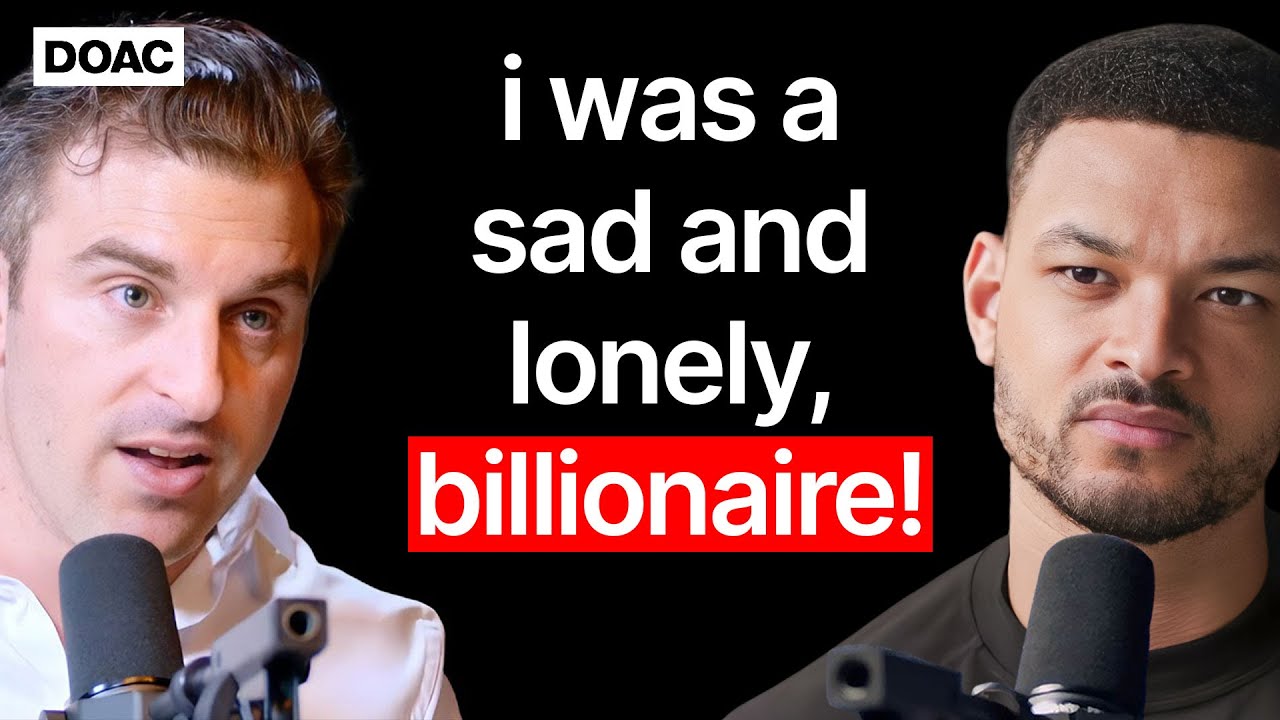
Airbnb CEO: “Airbnb Was Worth $100 BILLION & I Was Lonely & Deeply Sad!” — The Diary Of A CEO

The Diary Of A CEO

Brian Chesky argues that reliance on short-term data squashes creative corporate leadership, prompting Airbnb to abandon divisional silos in favor of centralized, founder-led design control.

AI-assisted summary of Airbnb CEO: “Airbnb Was Worth $100 BILLION & I Was Lonely & Deeply Sad!” — original source. Check the original for full context.

Source published:

Detailed notes

## Background This episode was published on YouTube by Steven Bartlett on his channel The Diary Of A CEO on October 9, 2023. According to the page description, the episode features Airbnb CEO Brian Chesky discussing the highs and lows of building one of the world's biggest brands, touching on his journey from early context to facing loneliness, dealing with work addiction, navigating the pandemic crisis, and leading a $100 billion IPO.

## TL;DR In this candid conversation, Airbnb co-founder and CEO Brian Chesky reflects on his journey from a childhood passion for art and design to building a $100 billion global enterprise. He opens up about the severe personal costs of high achievement, including extreme loneliness, work addiction, and the trap of seeking love through adulation rather than genuine connection. Chesky details Airbnb's inception from an $80 rent solution to its near-collapse during the COVID-19 pandemic, explaining how leading with principles and intuition allowed the company to rebuild and publicize. Ultimately, he shares how his personal realization about the necessity of human connection is actively driving Airbnb's next evolution toward building a global, community-driven host model.

## Atmosphere & style The interview is intimate, deeply reflective, and emotionally transparent, balancing high-stakes business strategy with vulnerable personal introspection. Brian Chesky speaks with earnest intensity, shifting effortlessly from analyzing corporate leadership frameworks to openly choked-up moments as he recalls layoff letters and post-IPO isolation. Host Steven Bartlett maintains a grounded, empathetic, and attentive presence that encourages Chesky to unpack his inner psychology. Watching it feels like witnessing a rare, behind-the-curtain look at a Silicon Valley giant confronting the existential friction between immense worldly success and basic human needs.

## Key takeaways - [01:30](https://www.youtube.com/watch?v=ia6Di_ytiSE&t=90s) L'apprentissage précoce de Brian Chesky en design industriel à la RISD l'a préparé à diriger Airbnb en lui apprenant à concevoir de manière holistique des produits physiques complexes, en équilibrant esthétique, coûts et besoins des utilisateurs. - [04:45](https://www.youtube.com/watch?v=ia6Di_ytiSE&t=285s) Le besoin compulsionnel de Chesky de créer et concevoir pendant son enfance découlait du fait qu'il se sentait isolé et « différent », trouvant dans la création un moyen de construire un monde auquel il appartenait. - [09:14](https://www.youtube.com/watch?v=ia6Di_ytiSE&t=554s) La recherche d'adulation à travers le travail fonctionne comme « une tasse trouée par le bas » : les accomplissements professionnels apportent une validation temporaire mais ne comblent pas un besoin d'amour véritable ou d'épanouissement interne. - [12:10](https://www.youtube.com/watch?v=ia6Di_ytiSE&t=730s) L'isolement et la solitude extrêmes sont des pièges fréquents pour les entrepreneurs, diminuant l'empathie et la capacité à prendre de bonnes décisions en période de crise. - [17:20](https://www.youtube.com/watch?v=ia6Di_ytiSE&t=1040s) Pour lutter contre la solitude, Chesky recommande d'entretenir activement deux groupes de relations : les « racines » (amis d'enfance et d'études) et les « pairs du présent » (autres fondateurs vivant les mêmes réalités opérationnelles). - [22:20](https://www.youtube.com/watch?v=ia6Di_ytiSE&t=1340s) Utiliser un modèle mental d'une espérance de vie de 10 ans permet d'équilibrer la recherche d'impact à long terme et la présence immédiate auprès de ses proches. - [28:41](https://www.youtube.com/watch?v=ia6Di_ytiSE&t=1721s) Airbnb a adapté son processus d'analyse du parcours client complet (storyboarding) directement de la méthode de travail inventée par Walt Disney pour le film Blanche-Neige. - [32:40](https://www.youtube.com/watch?v=ia6Di_ytiSE&t=1960s) Le manque de profils créatifs et de designers dans les comités de direction des entreprises du Fortune 500 conduit à des décisions axées uniquement sur la décision par les chiffres et l'optimisation incrémentale. - [35:57](https://www.youtube.com/watch?v=ia6Di_ytiSE&t=2157s) Airbnb a débuté en 2007 par une simple idée pour payer un loyer de 80 $ lors d'une conférence à San Francisco, démontrant que les grands projets commencent souvent comme des initiatives modestes. - [37:35](https://www.youtube.com/watch?v=ia6Di_ytiSE&t=2255s) Le meilleur conseil reçu par Chesky de la part de Paul Graham (Y Combinator) est qu'il vaut mieux avoir 100 personnes qui adorent passionnément un produit qu'un million de personnes qui l'aiment moyennement. - [49:26](https://www.youtube.com/watch?v=ia6Di_ytiSE&t=2966s) Les fondateurs possèdent trois super-pouvoirs uniques face aux dirigeants salariés : une passion quasi parentale, la légitimité pour opérer des changements radicaux et la connaissance intime de la structure pour tout reconstruire en cas de crise. - [54:28](https://www.youtube.com/watch?v=ia6Di_ytiSE&t=3268s) La culture d'entreprise n'est pas une liste de valeurs affichées sur un mur, mais la façon partagée d'agir forgée lors des moments d'adversité et incarnée quotidiennement par les leaders. - [57:48](https://www.youtube.com/watch?v=ia6Di_ytiSE&t=3468s) Pour préserver la cohérence du produit et la qualité, Chesky a abandonné la structure divisionnelle traditionnelle d'Airbnb pour adopter une organisation fonctionnelle centralisée et intégrée. - [01:05:30](https://www.youtube.com/watch?v=ia6Di_ytiSE&t=3930s) Face au choc du COVID-19 et une perte de 80 % d'activité en huit semaines, Chesky a dirigé la crise en prenant des « décisions de principe » ancrées sur la manière dont la société souhaitait être remémorée. - [01:11:43](https://www.youtube.com/watch?v=ia6Di_ytiSE&t=4303s) Lors des licenciements de 25 % des effectifs en 2020, Airbnb a privilégié la dignité et l'empathie envers ses employés en leur fournissant une aide au reclassement, du soutien psychologique et des indemnités étendues. - [01:18:30](https://www.youtube.com/watch?v=ia6Di_ytiSE&t=4710s) Le succès financier ou l'introduction en bourse à plus de 100 milliards de dollars ne résolvent pas le vide personnel ; le sentiment d'accomplissement provient des relations quotidiennes et de l'alignement interne. - [01:28:11](https://www.youtube.com/watch?v=ia6Di_ytiSE&t=5291s) La vision future d'Airbnb vise à faire évoluer la plateforme de la réservation de logements physiques (« les espaces ») vers la création de communautés et de connexions humaines (« les personnes »).

## Detailed walkthrough ### [00:00](https://www.youtube.com/watch?v=ia6Di_ytiSE&t=0s) Intro: The Highs and Lows of Airbnb

The segment opens with Airbnb co-founder and CEO Brian Chesky reflecting on the sudden existential crisis facing his $100 billion company at the onset of the pandemic. In a span of just eight weeks, Airbnb lost 80% of its business as global travel ground to a complete halt under "stay at home" orders. Faced with the stark possibility that Airbnb might not survive, Chesky had to make grueling operational decisions, culminating in a deeply emotional letter to the entire company that still brings him to tears when reading it back today.

Looking back at the trajectory of the business, Chesky notes that Airbnb—originally "AirBed & Breakfast"—was never intended to be a global empire; it started merely as a way to cover rent in San Francisco before they figured out their next move. He emphasizes that breakthrough ideas often look crazy at first and advises aspiring entrepreneurs to focus on the immediate first step rather than the mountain top. People consistently overestimate what they can accomplish in a single year, but underestimate what discipline and focus can build over a ten-year horizon.

[01:30](https://www.youtube.com/watch?v=ia6Di_ytiSE&t=90s) Early Context: Escaping into Art and Design

Steven Bartlett introduces the idea that while our external world evolves, our internal core remains shaped by early childhood experiences. Chesky shares details about growing up with a normal background, but highlights the defining passion of his childhood: a compulsive, almost obsessive love for drawing. By age 10, he was drawing like an adult, filling hundreds of sketchpads as he learned to replicate the world around him, and by high school, his artistic talent reached a professional level. At 17, Chesky decided to forgo traditional paths like law, medicine, or politics to pursue design school at the Rhode Island School of Design (RISD).

During his freshman year, Chesky chose his major after an instructor pitched industrial design as "the design of everything from a toothbrush to a spaceship." Unlike graphic design or architecture, industrial design requires a deep, holistic understanding of three-dimensional physical manufacturing, supply chain costs, materials, sustainability, marketing, and end-user empathy. If an industrial product fails to sell, the designer cannot simply claim it was a good design. Though he had no idea at the time, this comprehensive design training proved to be the ultimate preparation for running a global tech company.

* **Childhood Artistic Ability:** Compulsively filled hundreds of sketchpads; drew at an adult level by age 10 and a professional level by high school. * **Definition of Industrial Design:** Designing physical objects from "a toothbrush to a spaceship," balancing aesthetics with cost, materials, manufacturing, and user demand.

[04:45](https://www.youtube.com/watch?v=ia6Di_ytiSE&t=285s) Creating a World Where I Can Fit In

When Bartlett presses on Chesky's choice of the word "escape" when describing why he designed worlds as a child, Chesky reflects on his nature as a sensitive, idealistic, and anxious kid. He was undersized, struggled to fit in at school, and felt like an outsider who was fundamentally "different" in an environment where being different was not celebrated. Watching classic television segments of *The Wonderful World of Disney*, Chesky became obsessed with Walt Disney’s ability to build magical worlds. Designing new environments was a way to construct a home where he could finally belong and exert control.

Chesky connects this early feeling of displacement to a quote by Bob Dylan—"It took me a long time to find my way home"—noting that he only felt at home once he reached design school and surrounded himself with fellow creatives. Reflecting on his childhood behavior, Chesky describes himself as hyperactive, impulsive, and full of intense energy. While never formally diagnosed with ADHD, he was constantly trying to do things differently, such as attempting to redesign his middle school's curriculum or engaging in public speaking and creative writing.

* **Influences:** Inspired by 1960s footage of Walt Disney building magical worlds on *The Wonderful World of Disney*. * **Childhood Traits:** Hyperactive, undersized, sensitive, and constantly searching for a sense of home and belonging.

[09:14](https://www.youtube.com/watch?v=ia6Di_ytiSE&t=554s) Dealing with Work Addiction and the Trap of Adulation

Bartlett brings up a insight from a prominent therapist who notes that almost all high-achieving clients suffer from one or both core fears: feeling like they are "not enough" or feeling like they are "different." Chesky strongly identifies with both, explaining how those feelings drove him to turn to work as an addiction. Because work addiction in an entrepreneur is productive and socially celebrated, it rarely gets called out as a problem, but it served as a mechanism to seek connection.

Chesky reflects on the subtle trap of seeking love through accomplishment: what he truly wanted was love, but what he actually attracted was **adulation**. He describes adulation as "a cup with a hole at the bottom"—no matter how much success, status, or praise you pour in, it leaks out, forcing you to chase bigger and bigger achievements just to feel the same validation. Over time, Chesky realized that rocket-ship success provides a temporary high through novelty, but once adaptation sets in, your baseline internal state returns to where it was before. True happiness requires internal purpose, health, and meaningful relationships rather than endless status climbing.

> "Adulation I think is like a cup with a hole at the bottom... you fill up the cup, but then something leaks out the bottom, and so it kind of comes down and down and down. You have to keep filling it... you have to go bigger to get the feeling you had before."

[12:10](https://www.youtube.com/watch?v=ia6Di_ytiSE&t=730s) Being Lonely as an Entrepreneur

Looking back at his journey, Chesky maintains that building Airbnb was "the great joy of my lifetime" and well worth the sacrifices. However, he warns aspiring founders about two brutal realities that no one warned him about, chief among them being extreme **loneliness**. In the early days of Airbnb, Chesky was living in a three-bedroom apartment with his co-founders and early employees; they were broke, lacked boundaries, and functioned like a close-knit family.

As the company scaled into a large corporation, formal structures, chains of command, and boundaries naturally emerged. Employees brought in families and separate personal lives, shifting the dynamic from friends to subordinates. Working 60, 80, and eventually 100 hours a week, Chesky felt constant guilt whenever he wasn’t working, isolating himself further. He points out that lonely leaders make poorer decisions because their vigilance is heightened, their empathy drops, and they lack a support system to bounce ideas off of during crises. He stresses that founders must actively fight the tide of isolation to remain anchored to reality and connected to others.

* **Work Hours:** Escalated from normal hours to 60, 80, and 100 hours a week due to perceived responsibility. * **Impact of Isolation on Leadership:** Reduced empathy, increased hyper-vigilance, loss of resilience, and degraded decision-making capability. * **The Second Warning:** Realizing that status and power cannot fix internal emotional gaps; purpose and introspection must fill those needs instead.

[17:20](https://www.youtube.com/watch?v=ia6Di_ytiSE&t=1040s) Rediscovering & Building Back Up Connections

When asked what he would add if given one extra hour every week for the next 10 to 15 years, Brian Chesky does not hesitate: he would make time for the people he loves. He speaks candidly about how the grueling pace of building Airbnb caused him to drift away from his family—especially his sister, with whom he is now close, but previously went weeks without speaking to simply because he was overwhelmed. He explains the unique paradox high-achieving founders face: friends assume you are too busy and refrain from reaching out so as not to bother you, while you are so consumed by reacting to inbound business demands that you fail to initiate contact yourself. Over time, this leads to an inadvertent, compounding isolation.

To combat this, Chesky has made deliberate efforts to reconnect with his past. He now takes an annual trip with high school friends he hadn't spoken to in nearly two years, and works to maintain ties with college friends from RISD (Rhode Island School of Design) with whom he had lost touch. He shares a striking story from May or June 2021 regarding his relationship with former President Barack Obama, who became a personal mentor on leadership and business. When a newly single Chesky admitted he felt lonely and thought he needed a new romantic relationship, Obama offered counterintuitive advice: "I don't think you yet need to be in a relationship. I think what you need are friends."

Obama explained that he maintained a core group of around 15 close friends—mostly from before his presidency—who were completely plugged into his daily life. Chesky realized that if you have to spend the first twenty minutes of a call catching someone up on your life, you are not truly connected in real time. He argues that loneliness is often an illusion borne out of mutual hesitation; everyone is waiting for the other person to reach out. Instead of making real contact, people open social media, which Chesky likens to standing outside a dinner party and peering through the glass window rather than knocking on the door, walking in, and hanging out.

- **Key Connections:** Chesky emphasizes maintaining two distinct groups of friends: "your roots" (childhood and college friends who anchor you) and "present-day peers" (fellow founders who share your current operational reality). - **Peer Benchmark:** He highlights his friendship with Spotify founder Daniel Ek as an example of a peer relationship where both understand the specific pressure of executive departures or the feeling that "the walls are caving in." - **The Social Media Metaphor:** Browsing social media without reaching out directly is like looking through the window of a dinner party without going inside.

---

[22:20](https://www.youtube.com/watch?v=ia6Di_ytiSE&t=1340s) Embracing Life's Finite Nature

The conversation turns to the illusion of infinite time. Steven Bartlett points to a sand timer on his shelf, noting that many ambitious people operate under the silent assumption that they can defer their personal lives and pick up relationships thirty years later—only to find nothing left when they finally look back. Chesky expands on this, observing that while an hourglass displays remaining sand, life obscures the top chamber: a person might have six minutes, six months, or sixty years left.

To maintain perspective without slipping into fatalism, Chesky utilizes a mental framing exercise: he envisions having exactly 10 years left to live. A one-year horizon leads to unsustainable choices (like quitting all work to sit on a beach), whereas a ten-year horizon provides enough urgency to eliminate procrastination while preserving enough time to build meaningful projects and cultivate shared experiences. Reflecting on memory, Chesky notes that while thousands of routine days blend together, shared travel and milestone experiences remain permanently burned into the mind.

When Bartlett asks what his ultimate regret would be if he were on his deathbed with six minutes remaining, Chesky speaks openly about his personal life and legacy. Beyond wishing he had expressed his love more frequently to the people in his life, he reflects on being 42 and realizing that despite building an iconic company, he has not yet built a family of his own. At the same time, he balances this regret with deep gratitude, noting that as a CEO, he has had the rare privilege of hand-selecting world-class, creative, and driven colleagues to build products that impact millions of lives.

> "People tend to overestimate what they can do in a year and underestimate what they can do in 10 years."

- **The 10-Year Rule:** Chesky uses a 10-year lifespan mental model to balance long-term execution with immediate presence. - **Airbnb Travel Insight:** Approximately 80% of all trips booked on Airbnb are taken with other travelers, emphasizing that human experiences are fundamentally social. - **Core Regrets:** Chesky echoes the findings of palliative care research (such as Bronnie Ware's work with end-of-life patients), stating that people ultimately regret the relationships they didn't nurture rather than the risks they took.

---

[28:41](https://www.youtube.com/watch?v=ia6Di_ytiSE&t=1721s) Start Small, Dream Big: Scaling Strategies & Disney's Influence

Bartlett introduces a pivotal physical artifact into the interview: Neal Gabler's 600-plus-page biography, *Walt Disney: The Triumph of the American Imagination*. Chesky reveals he has read the biography twice and considers Walt Disney and Steve Jobs his ultimate entrepreneurial role models. Both leaders were creative visionaries who ran what were essentially top-tier technology companies of their respective eras.

Two specific chapters in Gabler's book profoundly shaped Chesky’s trajectory:

1. **"Go-Getter":** Details Disney moving from Kansas City to Los Angeles in his early twenties and convincing his brother Roy Disney—who was severely ill with tuberculosis—to join him. Reading this in Los Angeles just before launching Airbnb in 2007, Chesky saw a direct parallel between 1920s Los Angeles and late-2000s San Francisco, inspiring him and his co-founder Joe Gebbia to build their own creative entity from scratch. 2. **"Folly":** Recounts the creation of *Snow White and the Seven Dwarfs*, which critics dubbed "Disney's Folly" because Walt risked his entire company on a feature-length animated film. To manage the narrative scale of an animated feature, Disney invented the process of storyboarding.

Reading about storyboarding four years into Airbnb triggered a massive breakthrough for Chesky. He realized Airbnb needed to storyboard the entire end-to-end customer journey—from the moment a user books to the moment they check in and return home. This framework shifted Airbnb's focus from merely designing digital app screens to holistically designing offline service experiences, drawing directly on Chesky's background in industrial design.

- **The Role of Co-Founders:** Chesky views co-founder relationships through the lens of the Disney brothers, noting that co-founders function like non-blood brothers sharing an intense, singular journey. - **Service Design Origin:** Airbnb's famous customer journey storyboarding process was directly adapted from Walt Disney's production workflow for *Snow White*.

---

[32:40](https://www.youtube.com/watch?v=ia6Di_ytiSE&t=1960s) The Power of Creativity in Business

Chesky challenges the prevailing corporate worldview that metrics alone drive success. While corporate dogma insists that "numbers are the language of business," Chesky argues that language itself is the primary medium of business, and numbers are merely a tool to measure results. He points out a glaring void in modern corporate leadership: out of the Fortune 500 CEOs and the estimated 5,000 corporate board seats across those companies, virtually none are held by designers, artists, or people trained in the humanities.

This lack of creative leadership leaves corporate decision-making trapped in incrementalism, trade-offs, and zero-sum thinking. When business leaders lack creative imagination, companies default to optimizing existing systems rather than inventing better alternatives. Chesky argues that creative thinking is systematically squashed in Corporate America, starving companies of the bold, qualitative leaps required to design a better future.

> "Numbers are the language of business? No, language is the language of business. Numbers is just the only way we have to measure them."

- **The Corporate Creative Deficit:** Chesky highlights the extreme underrepresentation of industrial designers and humanities graduates in Fortune 500 C-suites and boardrooms. - **Systemic Suppression:** Modern corporate structures favor short-term numerical optimization over visionary design, leading to uninspired products and binary, low-quality choices for consumers.

[33:59](https://www.youtube.com/watch?v=ia6Di_ytiSE&t=2039s) Childhood Curiosity and Disney-Style Intuition

Reflecting on Pablo Picasso's famous quote—that it took him four years to paint like Raphael, but a lifetime to paint like a child—Brian Chesky emphasizes that creative individuals manage to hold onto that rare childhood curiosity. He laments that this trait is often lost in modern corporate culture. Walt Disney and Steve Jobs are cited as his ultimate benchmarks because they built truly creative companies led by intuition rather than "painting the company by numbers." Chesky shares his lifelong ambition to build one of the most creative institutions on Earth, holding Disney and Apple as the ideal standards Airbnb strives toward.

Responding to Steven Bartlett’s observation about building products for oneself first, Chesky points out that almost no massive global enterprise started large; virtually every breakthrough company began as a small project that looked like a toy or a hobby. When Airbnb was starting out, an early investor gave Chesky memorable advice: never worry about people stealing a truly good idea, because if it's genuinely revolutionary, everyone will initially dismiss it as crazy, unserious, or trivial.

* **Picasso Quote:** *"It took me four years to learn to paint like Raphael, but a lifetime to learn to paint like a child."* * **Startup Truth:** Breakthrough ideas rarely seem like multi-billion dollar opportunities at inception; they almost always look like small, unfeasible hobbies.

---

[35:57](https://www.youtube.com/watch?v=ia6Di_ytiSE&t=2157s) The Origin Story: $80 Rent and Air Beds

Chesky walks through the exact genesis of Airbnb, illustrating how it was never designed as a global marketplace for millions of nights booked. In October 2007, a major design conference was coming to San Francisco, and all the city's hotels were completely sold out. On September 22, 2007, Joe Gebbia sent Chesky an email proposing a quick scheme to turn their apartment into a "designer's bed and breakfast" for four days to make enough money to cover their rent.

Lacking actual guest beds, Gebbia pulled three inflatable air mattresses out of his closet, leading them to launch `airbedandbreakfast.com`. Chesky emphasizes that they never envisioned becoming a public company or hosting millions of guests per night; they simply wanted to survive the weekend, pay their rent, and buy time to figure out their "big idea"—unaware that the air mattress setup *was* the big idea.

* **Email Date:** September 22, 2007 (sent by Joe Gebbia to Brian Chesky). * **The Original Pitch:** Hosting young designers on air mattresses for a 4-day conference to pay the apartment rent. * **First Domain Name:** `airbedandbreakfast.com`

---

[37:35](https://www.youtube.com/watch?v=ia6Di_ytiSE&t=2255s) Paul Graham's Advice: 100 People Who Love You

When Airbnb joined the Y Combinator startup accelerator, founder Paul Graham gave Chesky what he considers the most single important piece of advice in his career: *"It's better to have a hundred people love you than a million people that just sort of like you."* When a customer truly loves a product, they naturally turn into a passionate, unpaid marketing force. Chesky recalls asking an early Airbnb super-fan how many people she had referred; she guessed 10 or 20, but her friend interrupted to reveal she had actually pitched it to over 100 people.

To get 100 people to love something, a founder must meet them individually, deeply understand their needs, and hand-craft a bespoke experience just for them. Chesky advises entrepreneurs not to get paralyzed by trying to scale to a million users instantly. Instead, startups scale in orders of magnitude: reaching 100 passionate users leads to 1,000, then 10,000, and eventually 100,000.

* **Y Combinator Rule:** Focus on getting 100 obsessed lovers of your product rather than a million passive users. * **Historical Examples:** Apple originally started with Steve Wozniak selling blue boxes out of a car trunk; Google began as an unpolished university research project that the founders tried to sell for a few million dollars.

---

[39:52](https://www.youtube.com/watch?v=ia6Di_ytiSE&t=2392s) Data vs. Intuition in Corporate America

Most companies are born out of raw human intuition because early-stage founders have zero data and zero customers. However, as companies grow successful, they accumulate mountain loads of data and become addicted to it. This data dependency breeds derivative, cautious products. While data is necessary, Chesky argues it is far from sufficient, warning that larger corporations must continually "refound" themselves rather than abandoning their original heart and gut instincts.

Chesky compares the average corporation to a body that has been cut off at the head—disconnected from its heart, governed strictly by risk-averse legal and HR departments that round off every sharp, creative edge. Boardrooms fill up with purely analytical people who only value short-term, quantifiable metrics, ignoring intangible assets like product quality, brand warmth, and long-term vision.

> "Not everything that counts can be counted, and not everything that can be counted counts." — Linus Pauling

* **The Corporate Trap:** Relying strictly on data leads to derivative products because data only measures past performance on short-term horizons. * **The Solution:** Merging artists, scientists, and operators together to build innovative, efficient systems.

---

[45:33](https://www.youtube.com/watch?v=ia6Di_ytiSE&t=2733s) Rejection Letters and the Founder's Journey

Reading directly from a rejection letter dated August 1, 2008, Chesky reveals that Airbnb tried to raise $150,000 at a $1.5 million post-money valuation. The investor turned them down, writing: *"The potential market opportunity did not seem large enough for our required model."* Today, Airbnb processes economic volume comparable to the entire GDP of Croatia, accounting for roughly $1 out of every $1,500 spent globally—all built on the exact same core concept that investors dismissed as too small.

Chesky describes the arduous journey of entrepreneurship using the metaphor of a freezing mountain climb. When rations run out and the team is shivering, a founder must beat the drum, build makeshift bridges over unexpected obstacles, and convince exhausted people to push 500 steps further. While many people possess the skills to launch something, guiding a team past these brutal comfort zones requires a founder's unique persistence.

* **2008 Angel Round Pitch:** $150,000 investment for a $1.5 million valuation (declined by multiple prominent venture funds). * **Scale Today:** Airbnb processes approximately $1 out of every $1,500 spent across the global economy. * **The Founder's Edge:** Professional managers parachuted into a company mid-mountain lack the biological connection, history, and contextual intuition that original founders possess from climbing from the absolute bottom.

[49:26](https://www.youtube.com/watch?v=ia6Di_ytiSE&t=2966s) The Unique Power of Founders and the Crisis of Succession

Brian Chesky outlines the three unique superpowers that biological "founders" possess over professional, hired managers. First, founders have an intense, parental passion for what they created—they love it because it quite literally came from them. Second, they have "permission" to make radical changes; while a hired CEO might feel constrained, a founder knows why things were built or named a certain way and feels fully empowered to rebrand or overhaul them. Third, founders built the company from scratch, meaning they know its exact "freezing temperature" and melting point—they understand how to rebuild it from the raw materials up. Professional managers simply do not possess these qualities in the same abundance.

However, founder leadership presents two major vulnerabilities. Most founders struggle to scale themselves to run massive organizations, and, ultimately, human beings do not live forever. Great companies aspire to outlive their creators, leading to the complex challenge of succession planning—a hurdle that faced figures like Walt Disney and Steve Jobs. Chesky notes that both died prematurely, though Jobs had done more to prepare Apple for the transition. Despite these hurdles, Chesky stresses that society urgently needs more entrepreneurs and founders. Boosting founder-led enterprises is one of the most effective levers for creating wealth, empowering underrepresented groups, and shifting the trajectory of global economies.

- **Three Founder Superpowers:** Unmatched passion (parental link), permission to change/rebrand, and foundational knowledge of how to rebuild. - **The Succession Dilemma:** Companies outlive humans, leaving a gap when visionary founders pass away (e.g., Walt Disney, Steve Jobs). - **Economic Impact:** Entrepreneurship remains one of the single greatest mechanisms for wealth creation and social mobility globally.

---

[51:24](https://www.youtube.com/watch?v=ia6Di_ytiSE&t=3084s) Designing the Engine: What Company Culture Really Is

Steven Bartlett reflects on Steve Jobs's legacy, pointing out that Jobs successfully left behind an enduring set of cultural principles that allowed Apple to flourish long after his passing. Bartlett references Spotify founder Daniel Ek, who remarked that in his twenties he didn't care about culture, in his thirties he didn't understand it, and by his forties he realized company culture is the most important thing in business. Chesky shares that just one week prior, he sent a company-wide email to all 6,000 Airbnb employees detailing his exact philosophy on culture upon hiring a new head of HR—a role Airbnb deliberately redefines as "People and Culture."

In the email, Chesky argued that culture is the ultimate foundation for all future innovation. It is the "engine that designs everything else." He outlined a vision where Airbnb grows into one of the world's largest companies while continuing to operate with the agility, speed, and minimal bureaucracy of the "world's largest startup." HR, in his view, shouldn't be an administrative compliance department; it should be a strategic function aimed at bringing out the absolute best in people so that top talent looks back decades from now and says, "If I was alive during that time, that's where I would have wanted to work."

- **The Engine Analogy:** Culture is the underlying engine that designs every product and service the company creates. - **Goal for Airbnb:** Maintain the fast-moving, high-collaboration feel of a startup across a 6,000-person organization. - **Redefining HR:** Shifting human resources from administrative overhead to a strategic function focused on unleashing human potential.

---

[54:28](https://www.youtube.com/watch?v=ia6Di_ytiSE&t=3268s) How Culture is Formed: Beyond Wall Posters and Value Lists

Bartlett points out that while any CEO can draft a inspiring email about culture, execution is what differentiates successful companies. Chesky agrees and dismantles common corporate misconceptions. He explains that he used to think culture was built by gathering a team, writing down a list of values, and printing them on the office walls. In reality, culture is "the shared way you do things," forged primarily through trials, tribulations, and moments of extreme adversity. It is defined by the behaviors that leaders model every single day, which then cascade down through every level of the organization.

Culture is actively shaped by every single hiring, firing, and promotion decision. Chesky compares managing culture to pruning a garden or teaching a golf swing. A leader sets the bar by repeatedly reviewing work and declaring, "Not good enough," until the team internalizes that standard. The moment employees make the exact same decision when the founder *isn't* in the room as they would if the founder *were* present is the exact moment management transforms into culture. Ultimately, a company's collective way of doing things is its most vital intellectual property—far more valuable than technology, recipes, or vendor contracts.

- **How Culture is Built:** Formed during hard times and adversity, perpetuated through leader behavior, hiring, firing, and promotion choices. - **Management vs. Culture:** Management requires direct supervision; culture occurs when employees make the right call autonomously. - **True IP:** The shared instinct and execution capability of a workforce is a company's ultimate competitive advantage.

---

[57:48](https://www.youtube.com/watch?v=ia6Di_ytiSE&t=3468s) Reverse-Engineering Behaviors and the Integrated Startup Model

Bartlett shares his framework for building culture, using his podcast team as a case study: identify the problem to solve, reverse-engineer the required behaviors, establish values that drive those behaviors, and build systems or hire people to enforce them (such as hiring a full-time data scientist and an experimentation lead to continuously adapt to algorithms). Chesky agrees with this structure but adds crucial nuance. He cautions against separating "what you do" (competency) from "how you do it" (culture). The "how" directly dictates the quality of the "what," and breaking core values to achieve short-term results eventually destroys the organization.

To illustrate this, Chesky details how he revamped Airbnb's internal structure. As a self-described perfectionist who obsesses over design, simplicity, and cohesive details, he realized that operating Airbnb in traditional, autonomous, divisional silos was causing fragmentation—analogous to different automotive teams designing tires and car bodies that don't fit together. Against prevailing corporate wisdom, Chesky abolished divisional structures and consolidated Airbnb to run functionally (Design, Marketing, Engineering, Sales) under a centralized model, similar to how Steve Jobs structured Apple.

- **Challenging Division:** Rejects autonomous divisional silos in favor of a single, deeply integrated functional organization. - **Focus over Micro-Optimization:** Rejects reliance on endless A/B testing and performance marketing in favor of bold, cohesive creative leaps. - **Unmeasurable Values:** Rejects the corporate impulse to only act on what can be measured, asserting that caring about unmeasurable quality details (like the exact sheen of a table or pixel alignment) is the essence of company culture.

---

[01:04:03](https://www.youtube.com/watch?v=ia6Di_ytiSE&t=3843s) Pulling Power In: Collective Consciousness and Skipping Levels

Chesky concludes by outlining his hands-on leadership methodology, comparing his role to that of a chief editor or orchestra conductor. Rather than pushing decision-making down—which he argues fragments large organizations and dilutes standards—he intentionally "pulls decision-making in." By conducting regular "skip-level" meetings with product teams every one, two, or four weeks, he directly reviews work, gives feedback, and ensures the entire company moves as a single, synchronized unit.

This intense, centralized involvement draws all parts of the organization inward toward a "collective consciousness." By maintaining rigorous standards and demanding that team members act as true artists who are proud to "sign their name" to the finished product, the entire company begins to operate with unified values and a shared instinct for excellence.

- **Leadership Role:** Functioning as an editor-in-chief or conductor who pulls decisions inward rather than delegating them out to isolated units. - **Hands-On Governance:** Reviewing work directly with product teams on a 1-to-4 week cadence to maintain alignment. - **The Ideal Outcome:** Achieving a single "collective consciousness" across thousands of employees.

Here is a detailed, faithful walkthrough of the provided transcript segment.

---

[01:05:20](https://www.youtube.com/watch?v=ia6Di_ytiSE&t=3920s) Culture in Crisis and the Onset of the Pandemic

Brian Chesky explains that a leader’s job is to "flatten the organization" so that employees feel close to the leadership and, by extension, close to the core values. He emphasizes that true culture is not built on office perks like yoga or free food; rather, culture is defined by how a company behaves during its darkest hour—when it is running out of money, facing fierce competition, or undergoing a major disaster.

For Airbnb, that ultimate test arrived in early 2020. Right as the company was actively preparing for one of the biggest IPOs in tech history, the COVID-19 pandemic hit. Within just eight weeks, Airbnb lost $80\%$ of its business, dropping from $35 billion in gross booking value—a volume larger than Starbucks' gross sales—to an abrupt standstill. Chesky describes this sudden collapse as an 18-wheeler driving 80 miles an hour and slamming on the brakes, marking the single darkest professional moment of his life.

- Gross booking value prior to the crash: ~$35 billion. - Business drop: $80\%$ loss in 8 weeks. - Crucial moment: March 15, 2020 (termed "The Ides of March" when the world shut down).

[01:08:30](https://www.youtube.com/watch?v=ia6Di_ytiSE&t=4110s) Leading Through Crisis with Principles and Optimism

Faced with media headlines openly questioning "Is this the end of Airbnb?", Chesky called an emergency board meeting. He cited Intel co-founder Andy Grove's famous quote: *"Bad companies are destroyed by a crisis. Good companies survive a crisis. Great companies are defined by a crisis."* Chesky told his board that Airbnb was going to be in the third category, boldly predicting—with no evidence at the time—that the next six months would be the best six months in the company's history.

Chesky outlines that in a crisis, leaders must make **principal decisions** rather than business decisions. A business decision attempts to predict the best outcome based on data, whereas a principal decision asks how you want to be remembered, regardless of the outcome. He notes that data-oriented leaders often freeze in a crisis because historical data becomes instantly obsolete. The hardest thing to manage during a crisis is not the financials or the employees, but "your own psychology," as teams look directly into the CEO's eyes to gauge whether the company is doomed.

- **Key Principles Formulated During the Crisis:** - Act fast and decisively using intuition. - Act with all stakeholders in mind (avoiding becoming cold or heartless). - Preserve cash and prepare to win the next travel season. - Imagine how the company will be remembered in history. - Embrace optimism to create the conditions for creative, "third path" solutions.

[01:11:43](https://www.youtube.com/watch?v=ia6Di_ytiSE&t=4303s) The Layoffs and the Letter That Defined Airbnb

As part of rebuilding the company from the ground up, Airbnb had to make the painful decision to reduce its workforce by $25\%$ (roughly 1,900 to 2,000 employees). Host Steven Bartlett mentions reading the famous layoff letter Chesky penned, highlighting how exceptionally the company treated departing employees compared to tech industry norms—such as extending healthcare coverage in the US, providing mental health support, and launching a public Alumni Directory to help recruiters find and hire laid-off talent. Chesky notes that he was personally calling other CEOs to help place employees.

Reading the final three paragraphs of the letter aloud, Chesky reflects on how "travel like a human" and "belonging" were the core mission, stating, "at the center of belonging is love." He apologized to those leaving, reassuring them that the layoffs were not their fault. Reading the letter again brings Chesky to tears as he reflects on the heavy burden of "breaking up with 2,500 people." He rejects the advice that leaders should remain detached, arguing instead: "Get as emotionally involved as possible so you understand the consequent decisions." Following the email, Chesky unexpectedly received hundreds of thank-you letters from laid-off employees expressing gratitude for being treated with dignity.

> "To those leaving, I am truly sorry. Please know this is not your fault. The world will never stop seeking the qualities and talents that you brought to Airbnb that helped make Airbnb. I want to thank you from the bottom of my heart for sharing them with us."

[01:18:43](https://www.youtube.com/watch?v=ia6Di_ytiSE&t=4723s) Rebuilding, the $100 Billion IPO, and the Reality of Success

The remaining 4,900 employees rallied together in a virtual "foxhole" over Zoom to completely reorganize the company, simplify products, and reinvent marketing. As local travel rebounded with people driving a tank of gas away to stay in homes, bankers advised dusting off the S1 filing. Airbnb went public on December 10, 2020. Initially target-valued around $48–$50 billion, the stock skyrocketed within an hour of opening, pushing Airbnb's valuation past $100 billion. Chesky jokes that going through those intense seven or eight months made him feel like he went from "39 going on 59" due to living 20 years of life in a single year.

Despite the $100 billion milestone, Chesky reveals that while $70\%$ of his emotion was pride and accomplishment, $20–30\%$ was a underlying sadness that emerged once the high wore off. Waking up on December 17th or January 1st, he realized his day-to-day life felt identical to how it was before going public. He concluded that milestones, wealth, and public recognition are great to accumulate, but they cannot fill a person internally. True fulfillment comes from what you do every single day and the loved ones you surround yourself with.

- Remaining workforce after layoffs: 4,900 employees. - IPO date: December 10, 2020. - Peak IPO Valuation: Exceeded $100 billion on opening day. - Emotional split post-IPO: $70\%$ pride/exaltation vs. $20\text{--}30\%$ lingering sadness/reflection.

[01:22:18](https://www.youtube.com/watch?v=ia6Di_ytiSE&t=4938s) Post-IPO Isolation: Standing at the Top of the Mountain

Brian Chesky opens up about the stark contrast between his professional low point during the 2020 pandemic and his personal low point immediately following Airbnb's IPO. During the height of the crisis in 2020, people sent condolence messages, feeling sorry for him while the company was on the brink. However, Chesky was driven by adrenaline, working 24/7 in constant contact with board members, executives, and employees. He was on the "field of battle" with a sharp purpose, meaning he did not feel professionally lonely despite being completely isolated from his personal life.

The real personal reckoning hit after Airbnb became a $100 billion public company. Once the crisis subsided, free evenings and weekends suddenly opened up. Standing at the top of the mountain without the constant rush of survival, Chesky found himself asking, "What do I do now, and who do I do it with?" That moment unleashed a deep sadness and isolation. He reflects on working 16-hour days, seven days a week, from March 2020 through the summer of 2021—a singular period he does not regret because he lacked personal family responsibilities at the time, but one he realized he could no longer fill solely with work.

* **Work schedule during crisis:** 16 hours a day, 7 days a week from roughly March 2020 to August 2021. * **The inflection point:** Moving from $0/crisis adrenaline to a $100B public company created unexpected personal emptiness. * **Action taken:** Chesky realized he had to intentionally design his personal life and actively reconnect with people he cared about.

[01:25:05](https://www.youtube.com/watch?v=ia6Di_ytiSE&t=5105s) Rekindling Friendships and Navigating Dating as a High-Profile CEO

Chesky candidly discusses his ongoing journey toward a balanced personal life. While he maintains good physical health—exercising regularly and rarely drinking alcohol—maintaining friendships required intentional effort. When planning a 40th birthday party during the pandemic, he had to write down a complete list of his friends for the first time in his life. Compiling the invite list made him realize how many close relationships he had allowed to drift, prompting him to systematically reach out and discipline himself to stay in touch.

When the conversation turns to romance, Chesky shares that he spent most of his 30s in two long-term relationships spanning nine years, but is currently single. He admits that dating is far more complicated now than in his early 30s due to the massive infrastructure, structured schedules, and lack of everyday spontaneity surrounding his life. He reframes the search for a partner as being similar to discovering a career path: rather than strictly following a rigid "type," one should follow active curiosity and remain open-minded to unexpected connections.

> "If you knew exactly what you want, you'd probably already have it."

* **Health habits:** Regular exercise and near-total abstinence from alcohol. * **Friendship audit:** Writing an invitation list for his 40th birthday revealed dozens of neglected friendships, leading to a conscious effort to stay connected. * **Dating dynamic:** Lacks everyday spontaneity (like casually bumping into someone at a grocery store) due to his structured CEO life.

[01:28:11](https://www.youtube.com/watch?v=ia6Di_ytiSE&t=5291s) Airbnb's Next Chapter: Moving from Spaces to People

Chesky reveals how his personal evolution directly shapes the future vision for Airbnb. Historically, people viewed Airbnb as a utility for booking physical spaces—empty homes where travelers could save money or live like a local. Chesky wants to shift the company's center of gravity from the *space* to the *people*, transforming Airbnb into a global travel community driven by connection.

The core of this strategy involves creating rich, authentic user profiles centered on trust, public information, and personal preferences. Chesky envisions Airbnb acting as the "ultimate host"—much like a host at a dinner party who introduces guests to one another rather than just serving food. Using design and technology, Airbnb aims to match and connect people with places, experiences, and each other, directly combatting the widespread epidemic of modern loneliness.

* **Strategic pivot:** Transitioning focus from "spaces" (renting houses) to "people and community." * **The "Ultimate Host" framework:** Using AI and rich profiles to personalize recommendations and facilitate human connections worldwide. * **Observation on loneliness:** Recounts visiting 10 Downing Street to meet with staff, including the UK's Minister for Loneliness, noting how modern conveniences (Amazon replacing malls, Netflix replacing theaters, Zoom replacing offices) have inadvertently isolated people—especially teenagers.

[01:31:27](https://www.youtube.com/watch?v=ia6Di_ytiSE&t=5487s) The Core Belief: Shared Humanity and the 99.9% Rule

Reflecting on Airbnb's foundational principles, Chesky reiterates his core belief in human goodness and shared connection. He notes that children are born inherently curious, creative, and loving. Drawing on a point raised earlier in the podcast, Chesky highlights that humans are genetically 99.9% identical across the world.

He emphasizes that travel constantly proves how remarkably similar people are, regardless of geography. The remaining 0.1% accounts for the rich diversity of culture, heritage, and background. Chesky argues that if people truly recognized their shared 99.9% baseline, it would be almost impossible to hate someone over a 0.1% difference, laying the conceptual groundwork for Airbnb's broader societal mission beyond travel.

> "How could you hate someone that's 0.1% different than you? That would seem kind of pointless, and then suddenly you would find this common bond."

[01:33:01](https://www.youtube.com/watch?v=ia6Di_ytiSE&t=5581s) "How Are You?" — The Final Diary Question

Steven Bartlett presents Chesky with the traditional closing question left in the diary by the previous podcast guest: *"There's a question we are often asked that we usually gloss over or lie about on a frequent basis... How are you?"*

Chesky pauses thoughtfully and responds that he currently feels "loved." He reflects on how opening up about his struggles with loneliness on public platforms prompted close friends and loved ones to reach out, revealing a deep support system he hadn't fully recognized before. He notes how tragic it is that people often wait until funerals to express love for someone, expressing gratitude that he gets to give and receive that love while alive.

Bartlett closes the episode with a heartfelt tribute, acknowledging Chesky's rare ability to re-examine first principles and design a better world. Bartlett observes that the ultimate price of thinking so differently is often a profound feeling of isolation, but notes that society owes a debt of gratitude for the sacrifices made by visionary leaders like him.

* **Emotional reflection:** Chesky describes feeling "loved" and using that feeling as a true North Star for making executive and personal decisions. * **Final exchange:** Bartlett thanks Chesky for his willingness to take on the personal burdens required to bring people closer together in an increasingly isolated world.

## Notable quotes > [09:14](https://www.youtube.com/watch?v=ia6Di_ytiSE&t=554s) Adulation I think is like a cup with a hole at the bottom... you fill up the cup, but then something leaks out the bottom, and so it kind of comes down and down and down. You have to keep filling it... you have to go bigger to get the feeling you had before. — Brian Chesky

> [22:20](https://www.youtube.com/watch?v=ia6Di_ytiSE&t=1340s) People tend to overestimate what they can do in a year and underestimate what they can do in 10 years. — Brian Chesky

> [32:40](https://www.youtube.com/watch?v=ia6Di_ytiSE&t=1960s) Numbers are the language of business? No, language is the language of business. Numbers is just the only way we have to measure them. — Brian Chesky

> [33:59](https://www.youtube.com/watch?v=ia6Di_ytiSE&t=2039s) It took me four years to learn to paint like Raphael, but a lifetime to learn to paint like a child. — Pablo Picasso

> [37:35](https://www.youtube.com/watch?v=ia6Di_ytiSE&t=2255s) It's better to have a hundred people love you than a million people that just sort of like you. — Paul Graham

> [39:52](https://www.youtube.com/watch?v=ia6Di_ytiSE&t=2392s) Not everything that counts can be counted, and not everything that can be counted counts. — Linus Pauling

> [45:33](https://www.youtube.com/watch?v=ia6Di_ytiSE&t=2733s) The potential market opportunity did not seem large enough for our required model. — Unidentified Investor

> [01:08:30](https://www.youtube.com/watch?v=ia6Di_ytiSE&t=4110s) Bad companies are destroyed by a crisis. Good companies survive a crisis. Great companies are defined by a crisis. — Andy Grove

> [01:11:43](https://www.youtube.com/watch?v=ia6Di_ytiSE&t=4303s) To those leaving, I am truly sorry. Please know this is not your fault. The world will never stop seeking the qualities and talents that you brought to Airbnb that helped make Airbnb. I want to thank you from the bottom of my heart for sharing them with us. — Brian Chesky

> [01:25:05](https://www.youtube.com/watch?v=ia6Di_ytiSE&t=5105s) If you knew exactly what you want, you'd probably already have it. — Brian Chesky

> [01:31:27](https://www.youtube.com/watch?v=ia6Di_ytiSE&t=5487s) How could you hate someone that's 0.1% different than you? That would seem kind of pointless, and then suddenly you would find this common bond. — Brian Chesky

## Mentioned Brian Chesky, Steven Bartlett, Airbnb, AirBed & Breakfast, The Diary Of A CEO, Rhode Island School of Design, Walt Disney, The Wonderful World of Disney, Bob Dylan, Barack Obama, Daniel Ek, Spotify, Bronnie Ware, Neal Gabler, Walt Disney: The Triumph of the American Imagination, Steve Jobs, Roy Disney, Snow White and the Seven Dwarfs, Apple, Fortune 500, Pablo Picasso, Raphael, Joe Gebbia, Y Combinator, Paul Graham, Steve Wozniak, Google, Linus Pauling, Starbucks, Andy Grove, Intel, Zoom, Amazon, Netflix, UK Minister for Loneliness

[Source](https://www.youtube.com/watch?v=ia6Di_ytiSE)

中文简报

Airbnb 市值达千亿美元,CEO Brian Chesky 推进集权管理 Brian Chesky 认为过度依赖短期数据会扼杀富有创造力的企业领导力,这促使 Airbnb 摒弃部门孤岛,转向以创始人为主导的集中化设计管控。 在这次坦诚的对话中,Airbnb 联合创始人兼首席执行官 Brian Chesky 回顾了他从童年对艺术与设计的挚爱,到建立起一家价值千亿美元的全球企业的历程。他坦言追求卓越成就所付出的沉重个人代价,包括极度孤独、工作成瘾,以及试图通过外界赞誉而非真正的人际联结来获取认同的心理陷阱。Chesky 详细讲述了 Airbnb 从一个赚取 80 美元房租的解决办法起步,到在 COVID-19 疫情期间濒临崩溃的曲折经历,阐述了以原则和直觉为主导如何帮助公司完成重建并成功上市。最后,他分享了自己对人际联结必要性的领悟,这一认知正有力推动着 Airbnb 的下一步演变,致力于打造一个全球性的、由社区驱动的房东模式。 Brian Chesky 早期在 RISD(罗德岛设计学院)学习工业设计的经历,教会了他如何平衡美学、成本与用户需求并从整体视角设计复杂的实体产品,为他领导 Airbnb 奠定了基础。 (1:30) Chesky 童年时期对创作与设计的迫切渴望,源于他深感孤立和“与众不同”,创作成为他构建一个自己所属世界的方式。 (4:45) 通过工作寻求赞誉就像“底部有破洞的杯子”:职业成就只能带来暂时的认可,无法填补对真正的爱与内心充实的渴求。 (9:14) 极度的孤立与孤独是创业者常见的陷阱,这会削弱同理心以及在危机时期做出正确决策的能力。 (12:10) 为应对孤独,Chesky 建议积极维系两类人际关系:“根基”(童年和学生时期的好友)与“当下的同行”(面临相同运营现实的其他创始人)。 (17:20)

Reading summary

Airbnb co-founder and CEO Brian Chesky argues that conventional corporate playbooks over-index on short-term data at the expense of design-driven intuition, while warning that high-achievement often generates adulation rather than genuine human connection. The Illusion of Success and Founder Loneliness (9:14) Chesky describes work addiction as a trap that attracts adulation instead of love, comparing adulation to a leaking cup that demands progressively larger achievements to sustain validation. As Airbnb scaled from founders sharing an apartment into a massive corporate enterprise, increased professional boundaries and 80-to-100-hour workweeks left Chesky severely isolated. He contends that lonely executives make poorer decisions due to heightened hyper-vigilance and reduced empathy. When Airbnb went public on December 10, 2020, and crossed a $100 billion valuation, Chesky found that 20% to 30% of his emotional reaction was sadness, because the milestone did not alter his daily internal baseline. Intentional Reconnection and the 10-Year Horizon (17:20) To counteract executive isolation, Chesky adopted advice from former President Barack Obama, who emphasized cultivating a core circle of friends fully integrated into daily life over rushing into new romantic relationships. Chesky categorizes necessary connections into anchoring roots (childhood and college friends) and present-day peers (such as Spotify's Daniel Ek) who share executive pressures. He contrasts direct contact with social media browsing, which he compares to peering through a window at a dinner party instead of entering. Intuition and Industrial Design over Pure Metrics (32:40) Trained in industrial design at RISD, Chesky criticizes Corporate America for relying almost exclusively on data and short-term performance marketing, noting the absence of designers and humanities graduates among Fortune 500 leadership. He argues that breakthrough businesses start out resembling small, unfeasible hobbies—such as Airbnb launching in 2007 from three air mattresses on an apartment floor to cover rent. Drawing on advice from Y Combinator's Paul Graham, Chesky asserts it is better to have 100 passionate customers who love a product than a million who merely like it, because obsessed users drive organic adoption. Centralized Culture and Crisis Leadership (57:48) Rather than separating organizations into autonomous divisional silos, Chesky restructured Airbnb into a centralized functional model inspired by Steve Jobs's approach at Apple, utilizing regular skip-level meetings to preserve high craft standards. When the COVID-19 pandemic halted 80% of Airbnb's gross booking volume in eight weeks, Chesky made principal-based decisions to preserve the business while safeguarding its culture. Facing 25% layoffs involving roughly 1,900 employees, the company maintained US healthcare, provided mental health resources, and built a public Alumni Directory, illustrating Chesky's stance that culture is defined by how an organization behaves in its darkest moments. Evolving Airbnb from Physical Spaces to Community (88:11) Chesky is steering Airbnb away from serving merely as an infrastructure for booking physical rooms toward acting as a facilitator for human connection. Pointing out that 80% of Airbnb trips are booked with companions, he envisions using verified profiles and algorithmic matching to function as an "ultimate host." Chesky connects this business trajectory directly to his conviction that humanity shares a 99.9% genetic baseline, framing travel as an antidote to modern domestic isolation created by screen-based conveniences. Chesky's reflection leaves open whether large publicly traded enterprises can permanently preserve a centralized, founder-driven design culture without succumbing to conventional corporate metrics or executive succession crises.

精炼阅读摘要

Airbnb联合创始人兼首席执行官Brian Chesky阐述了该企业如何从解决个人房租问题的边缘项目成长为千亿美元平台的历程,指出商业突破源于逆向设计直觉和对少数狂热用户的极致满足,而非数据驱动的渐进式优化。他同时结合亲身经历强调,世俗赞誉无法填补领导者内心的孤独与情感空洞,组织长青与个人救赎的关键在于危难中对原则的坚守以及有意识地构建真实的人际联结。 工业设计思维与直觉决策 (35:57) Chesky回忆指出,Airbnb在2007年9月创立时并非出于打造跨国商业帝国的规划,仅是合伙人Joe Gebbia为筹集旧金山公寓房租、利用三张充气床垫接待设计展参会者的权宜之计。在进入Y Combinator孵化器后,创始人Paul Graham给出了对他影响深远的建议:与其让100万人平淡地喜欢你的产品,不如让100个人真正深爱你。通过深入一线与早期核心用户逐一交流并手工定制体验,忠诚用户会转化为强大的自发传播渠道。在创办初期,Airbnb因市场规模被评估过小而遭遇多家机构的拒绝(如2008年8月试图以150万美元估值融资15万美元未果),而如今其交易规模已约占全球总支出的1/1500。 依托在罗德岛设计学院(RISD)接受的工业设计训练以及受迪士尼《白雪公主》分镜脚本的启发,Chesky将企业重点从单纯设计应用程序屏幕,转向对用户端到端线下服务体验的完整设计。他批评现代企业过度依赖短期数据而压制创新,指出财富500强的高管与董事会成员中极度缺乏设计师和人文学科背景的人才。他认为商业的本质媒介是语言而非冰冷的数字,过度依赖量化数据只会让产品陷入渐进式微调和平庸模仿,唯有将直觉与分析相结合才能带来颠覆性的质变跳跃。 集中制架构与行动铸就的文化 (57:48) 在企业组织治理方面,Chesky颠覆了现代企业通行的事业部自治模式。他认为传统各业务线的割裂运作会导致产品体验严重碎片化,犹如造车团队各自研发互不匹配的轮胎与车身。为此,他将Airbnb重构为类似于苹果公司的中央集中制职能架构(涵盖设计、市场、工程、销售),打破自治孤岛,并摒弃无休止的A/B测试与效果广告依赖,专注于跨部门协同的重大创意跃迁。Chesky在管理中扮演类似乐团指挥或总编辑的角色,通过每1至4周直接参与产品团队的跨级评审,将整个组织引向高度同步的“集体意识”。 关于企业文化的形成,Chesky明确反对仅把价值观打印在办公室墙上的空洞做法。他提出文化本质上是团队在逆境与考验中形成的“共同做事方式”,由每一次招聘、解雇和晋升决策所塑造。当员工在创始人不在场的情况下,依然能自发做出与创始人亲临完全相同的决策时,自上而下的管理才真正内化为文化。Chesky强调,创始人拥有职业经理人难以具备的母性激情、推倒重来的权力以及从底层原料重塑业务的透彻认知,但也面临组织扩展瓶颈以及无法逾越的接班人更迭挑战。 疫情危机考验与原则性裁决 (68:30) 2020年初,在Airbnb积极筹备上市的关键时刻,全球新冠疫情导致旅行全面停滞,公司业务在八周内骤降80%,预订总额从350亿美元的高位瞬间跌入冰点。面对生存困境,Chesky主张领导者在极端时刻必须做出“原则决策”而非“商业决策”。由于突发危机导致历史数据全面失效,过度依赖预测的商业决策往往陷入瘫痪;而原则决策则拷问“无论最终成败,你希望公司以何种姿态被世人铭记”,要求管理者保持乐观并兼顾所有利益相关者的尊严。 在裁减25%员工(约1,900至2,000人)的艰难过程中,Chesky发表了公开信并向离职员工真诚致歉,明确申明裁员绝非员工的过错。Airbnb提供了延长在美医疗保险、心理援助以及建立公开离职人才名录等超出行业惯例的安置保障,Chesky本人也亲自致电外部CEO推介员工。他反对领导者保持情感抽离的传统建议,坚信只有在情感上深度卷入,才能真正理解决策的沉重代价。重组后的Airbnb依托本地周边游复苏,于2020年12月10日挂牌上市,首日市值便突破1000亿美元。 赞誉陷阱与人际价值的重塑 (9:14) Chesky深度剖析了高成就者普遍存在的内在恐惧——即觉得自己“不够好”或“与他人格格不入”,这种心理往往导致创业者将工作当成获取社会认同的成瘾工具。然而,追逐成就换来的往往不是真正的爱,而是虚妄的“赞誉”。他将赞誉比作“底部漏水的杯子”,无论灌入多少名利地位都会迅速流失,迫使人追求更庞大的成功以维持心理快感。在Airbnb市值登顶千亿美元、脱离生存危机后,Chesky非但没有获得持久充盈,反而陷入了深刻的空虚与孤独,意识到外在里程碑无法治愈内部的情感缺口。 受前总统Barack Obama建议的启发,Chesky开始有意识地修复被长期高强度工作所荒废的真实社交,注重维护“根基型朋友”(高中与大学挚友)以及“同行伙伴”(如Spotify创始人Daniel Ek)。在思考生命的有限性时,他采用“假想自己仅剩10年寿命”的思维框架,在紧迫感与长期规划间建立平衡,认识到临终前人们往往悔恨于未能充分关照亲近之人。这一反思直接塑造了Airbnb的未来战略:从提供物理租赁“空间”,升级为利用技术与信任机制促进人与人真实交流的“终极房东”,试图在科技便利加剧人际隔绝的现代社会中重建社区联结。 该访谈生动展现了一位设计导向型创始人如何运用非传统思维应对商业毁灭性风险与个人精神困境,证明了同理心与原则导向在极端危机中的生存价值。然而,访谈也留下了尚待检验的现实命题:这种高度依赖创始人个人审美、强集权管控与直觉洞察的管理范式,在失去创始人生物学维系后能否持续传承;同时,商业平台是否有能力真正扭转全球数字化生活方式所催生的孤独流行病,仍面临技术工具理性与人类复杂情感之间的长期张力。

Detailed notes — zh

## Background 该内容由知名商业播客《The Diary Of A CEO》频道主理人史蒂芬·巴特利特(Steven Bartlett)于 2023 年 10 月 9 日发布在 YouTube 平台上。视频记录了对 Airbnb 创始人兼 CEO 布莱恩·切斯基(Brian Chesky)的长篇独家专访,围绕切斯基打造全球巨头品牌的起伏、执掌千亿市值背后的深刻孤独,以及创业者在名利巅峰与人际连接之间的心路历程展开。 ## TL;DR 布莱恩·切斯基回顾了 Airbnb 从三张充气床垫付房租起步,历经多次被拒、疫情期间八周暴跌 80% 业务的至暗裁员,最终绝地反弹实现千亿美元 IPO 的非凡历程。他坦言外在成功与赞美无法填补内心的空洞,自己在公司市值破千亿后反而陷入了极度的孤立与悲伤,并分享了奥巴马等导师如何点醒他重建人际纽带。在商业管理上,他抨击了商界过度迷信数据、扼杀创意的弊端,倡导以工业设计与“创始人模式”重塑扁平化组织,将文化视为由内而外的终极护城河。最终,切斯基将对抗现代社会的“孤独瘟疫”作为 Airbnb 的下一阶段愿景,呼吁让科技回归人与人之间真实的温暖与信任。 ## Atmosphere & style 整场访谈散发着一种褪去浮华后的深邃感伤与赤诚坦率,宛如一场顶峰之上的深夜剖白。主持人巴特利特以极具穿透力且充满共情的追问步步推进,切斯基则毫无防备地卸下科技巨头 CEO 的神圣光环,数度谈至眼眶泛红、声音微颤。从狂风暴雨般的商业危机复盘,跌入直面灵魂缺口的孤独告白,对话在理性的商业哲学思辨与温热的人性回响之间游走,带给听众一种既震撼提气又令人喉头哽咽的情感沉浸感。 ## Bulletin - [01:18:28](https://www.youtube.com/watch?v=ia6Di_ytiSE&t=4708s) Airbnb 在 2020 年疫情暴发初期的 8 周内痛失 80% 业务,随后通过裁员 25%、全面重构产品和营销逻辑实现反弹,并在同年 12 月 IPO 首日开盘一小时内市值突破 1,000 亿美元。 - [01:20:09](https://www.youtube.com/watch?v=ia6Di_ytiSE&t=4809s) 布莱恩·切斯基(Brian Chesky)坦言登顶市值千亿美元并未带来长久幸福,相反在危机高压退去后陷入了深刻的孤独与失落,印证了心理适应机制(Hedonic Adaptation)对外在成就感的侵蚀。 - [01:02:37](https://www.youtube.com/watch?v=ia6Di_ytiSE&t=3757s) 在组织治理上,Airbnb 坚决废除大公司常见的独立事业部与微观 A/B 测试割裂模式,回归像苹果公司一样的功能型一体化初创架构,由领导者扮演总指挥家角色以统揽产品全貌。 - [01:28:38](https://www.youtube.com/watch?v=ia6Di_ytiSE&t=5318s) Airbnb 宣布将未来重心从单一的“物理空间预订”战略转向以“人”为核心,致力于打造具备立体个人画像与信任体系的“全球旅行社区”及全能“终极房东”,以抗击现代社会的孤独流行病。 ## Key takeaways - [01:37](https://www.youtube.com/watch?v=ia6Di_ytiSE&t=97s) 工业设计思维逼迫创作者在动笔的第一天就将形态设计与材料、成本、制造工艺及市场推广等现实商业约束紧密结合,未被市场接纳的设计在本质上即是失败。 - [07:25](https://www.youtube.com/watch?v=ia6Di_ytiSE&t=445s) 许多卓越创业者的疯狂工作成瘾往往源于童年时期“我不够好”与“我和别人不同”的深层恐惧,试图用外界的赞美来填补内心的空虚,但赞美犹如漏底之杯,无法替代真正的爱与连接。 - [12:07](https://www.youtube.com/watch?v=ia6Di_ytiSE&t=727s) 极度孤立往往是商业扩张过程中的默认终局,繁复的科层制会筑起高墙隔绝现实并损害决策质量,创业者必须像落水者般主动且拼命地维护真实人际关系。 - [18:57](https://www.youtube.com/watch?v=ia6Di_ytiSE&t=1137s) 衡量人际连接深度的关键标准在于是否需要额外花时间“同步生活背景”;如果彼此始终在同一生活节拍上,就无须在每次联络时费力解释近况。 - [20:40](https://www.youtube.com/watch?v=ia6Di_ytiSE&t=1240s) 创业者在心理支撑上需要兼具两个圈层:见证自身未成名前最真实样貌的发小/老友(根基),以及身处同等绝境、能对高管离职和增长瓶颈感同身受的同行创始人(共鸣)。 - [37:35](https://www.youtube.com/watch?v=ia6Di_ytiSE&t=2255s) YC 创始人保罗·格雷厄姆的核心增长原则表明:让 100 个人深深爱上你的产品,远胜于让 100 万人仅仅感到还算喜欢,狂热的口碑效应脱胎于为极少数用户量身定制的极致体验。 - [40:10](https://www.youtube.com/watch?v=ia6Di_ytiSE&t=2410s) 企业做大后往往陷入唯数据论的陷阱,过度依赖短期可量化指标会导致组织规避风险、磨平棱角并丧失颠覆性创新能力,真正的价值观恰恰体现在那些无法被数据衡量的细节与品质之中。 - [49:18](https://www.youtube.com/watch?v=ia6Di_ytiSE&t=2958s) 创始人具备职业经理人无法比拟的原生血缘激情、推翻重构业务的天然许可,以及对系统底层架构熔点与冰点的透彻认知,这使其在危机与转型中具备不可替代性。 - [54:44](https://www.youtube.com/watch?v=ia6Di_ytiSE&t=3284s) 真正的企业文化并非挂在墙上的宣传标语,而是团队在历经生死磨难后刻入骨髓的行动范式,是当核心领导不在场时全员依然能做出的同频严苛决断。 - [01:08:56](https://www.youtube.com/watch?v=ia6Di_ytiSE&t=4136s) 面对不可抗力引发的灭顶危机,领导者必须放弃试图预测最优解的“商业决策”,转而采取果断迅速、关注底线并设想“希望如何被历史铭记”的“原则决策”。 - [01:11:41](https://www.youtube.com/watch?v=ia6Di_ytiSE&t=4301s) Airbnb 在裁员 25% 时打破冷血管理教条,动用公司资源公开建立校友人才目录并保留长期医保,CEO 亲自为离职员工向外部推荐,最大程度保全了员工尊严与深层信任。 - [01:20:09](https://www.youtube.com/watch?v=ia6Di_ytiSE&t=4809s) 外在的财富、声望与敲钟上市无法真正治愈虚无,真正能填满内心的唯有日复一日做自己深爱的事,并与所爱之人保持真诚无间的深层连接。 - [01:25:05](https://www.youtube.com/watch?v=ia6Di_ytiSE&t=5105s) 在寻觅伴侣或探索毕生事业时,单纯强调“追随激情”往往让人迷茫,更可持续且有效的心态是“追随好奇心”,主动置身于未知情境去捕捉真实的可能性。 - [01:30:31](https://www.youtube.com/watch?v=ia6Di_ytiSE&t=5431s) Airbnb 的底层哲学建立在“人性本善”以及“人类在基因与情感层面上 99.9% 惊人相似”的信念之上,科技平台应当成为消除隔阂、连接人心的桥梁,而非助长孤独的工具。 ## Detailed walkthrough ### [00:00](https://www.youtube.com/watch?v=ia6Di_ytiSE&t=0s) 从濒临崩溃到千亿美元巨头:危机与初心 在八周之内痛失 80% 的业务,对任何一家企业而言都无异于灭顶之灾。当新冠疫情在全球爆发、各地纷纷下达居家令时,即将在资本市场敲钟的 Airbnb 瞬间跌入深渊,外界充斥着诸如“Airbnb 是否会就此走向终结”、“Airbnb 还能活下去吗”的致命质疑。面对生死存亡的至暗时刻,创始人兼 CEO 布莱恩·切斯基(Brian Chesky)不得不做出极其艰难的抉择,并在致全员信中向团队坦诚交代危机。多年后回看这段经历,切斯基重读当年的公开信依然会情绪激动、眼眶湿润。 回望最初,这家估值高达千亿美元、彻底颠覆全球旅宿行业的巨头,其起点低微得超乎所有人想象。“AirBed & Breakfast 最初只是我们在想出真正的‘大点子’之前,用来应付房租的一种临时手段。”切斯基感慨道,他们当时根本无法想象这个简陋的构想最终会演变成每晚有 400 万人入住的全球网络。对于创业与人生,他总结出一条至关重要的原则:“不要只盯着山顶看,要专注于迈出第一步。”许多突破性创新在诞生之初往往显得荒诞不经;人们常常高估自己一年内能做成的事,却极大地低估了自己在十年内所能达到的高度。只要保持专注与自律,即便起步于微小的梦想,十年光阴也足以构筑起宏伟的商业帝国。 --- ### [01:37](https://www.youtube.com/watch?v=ia6Di_ytiSE&t=97s) 少年画纸上的避难所:工业设计与商业思维的启蒙 斯蒂芬·巴特利特(Steven Bartlett)探讨了外在世界与内心底色的关系:外在的生活境遇可以瞬息万变,但人内心最核心的本质往往极其坚固,而这一核心恰恰是由童年最早期的经历所塑造的。谈及自己的成长底色,切斯基表示自己虽生于一个普通的家庭,但在体育与同龄人的常规日常之外,真正定义他的是对艺术的痴迷。 小时候的切斯基几乎处于一种强迫式的作画状态,厚厚的画本一页接一页地画满成百上千张纸。他在画纸上疯狂临摹现实环境并试图重塑它;10 岁时他的画工便已达到成人水准,到了高中更展现出专业画师般的技法。17 岁那年,他放弃了成为政客、医生、律师或宇航员等常规路径,毅然决定报考设计名校罗德岛设计学院(RISD)。大一过半时,学校要求学生选择专业,面对令人困惑的专业清单,一位教授向他们介绍了“工业设计”(Industrial Design)。教授将其概括为:“工业设计涵盖从牙刷到宇宙飞船之间的一切设计。” 这段专业训练最终成了切斯基日后执掌科技巨头最完美的商业基石,其核心逻辑在于将三维形态与现实约束深度结合: ```mermaid flowchart TD accTitle: 工业设计思维与商业闭环 accDescr: 展示工业设计如何从三维形态拓展至制造、成本、用户与市场,形成不可分割的商业闭环 subgraph DesignForm["产品塑造维度"] A["三维物理形态设计"] --> B["材料选用与可持续性"] B --> C["制造工艺与供应链"] end subgraph BusinessConstraint["商业与市场约束"] C --> D["制造成本核算"] D --> E["目标受众与定价匹配"] E --> F["市场营销与商业闭环"] end F -.->|"未被市场接受的设计即为失败"| A ``` 在切斯基看来,平面设计师或许只需考虑如何印刷,建筑师即使设计的写字楼租不出去也不会直接背负全责;但工业设计完全不同——如果设计出来的产品卖不掉,你就绝不能声称这是一个好设计。它逼迫设计师在落笔的第一时间就通盘考虑制造材料、环保标准、供应链地点、成本核算、目标客群以及市场推广。 --- ### [04:40](https://www.youtube.com/watch?v=ia6Di_ytiSE&t=280s) “寻找回家的路”:创造一个能容纳自己的世界 巴特利特敏锐地捕捉到了切斯基自述中的关键词——“我想通过设计逃离”(design an escape),并追问他当年究竟试图逃离什么。切斯基坦言,自己童年时期是个极其敏感、极度理想主义的孩子,而童年对他来说充满了不易与阵痛。由于身材瘦小、性格独特,他在学校里始终难以融入周围的环境,每天都处于高度紧张和焦虑之中。 童年时,切斯基经常守着电视机观看 80 年代播出的迪士尼节目《迪士尼的美妙世界》(The Wonderful World of Disney)。屏幕里 60 年代的沃尔特·迪士尼(Walt Disney)描摹着一个个不可思议的奇幻世界,这让他深深着迷。他无比渴望亲手设计出一个截然不同、更加美好的世界,以此逃离现实中的焦灼与格格不入。切斯基引用了鲍勃·迪伦(Bob Dylan)的一句名言:“我花了很长的时间才找到回家的路(It took me a long time to find my way home)。”在进入设计学院遇到志同道合的创意群体之前,切斯基始终觉得自己是个无家可归的局外人,四处寻觅归属感。 当被问及“渴望设计新世界是否意味着渴望为自己建造一个能融入的家”时,切斯基全盘认同:“百分之百是这样。当你去设计一个世界时,你就能掌控这个世界。我想创造一个我能生活其中、能够真正融入的世界,因为在成长的那段岁月里,我总觉得自己根本不属于那个世界。” --- ### [07:25](https://www.youtube.com/watch?v=ia6Di_ytiSE&t=445s) 局外人的孤独与“工作成瘾”:填不满的赞美之杯 切斯基回顾自己成长阶段时提到,虽然未曾正式确诊多动症(ADHD),但他身上始终带有高度的多动倾向、冲动以及注意力难以集中的特质,体内蕴藏着排山倒海般的充沛能量。在初中时,他甚至会做出“尝试重新设计全校课程大纲”这种让旁人匪夷所思的举动。虽然他不演戏,却热衷于演讲与创意写作,渴望走上台前表达自我。然而在当时的成长环境里,“与众不同”非但不是一种赞誉,反而是被排挤和孤立的代名词。 巴特利特分享了自己与一位顶尖心理治疗师的对话:不论来访者是王室成员、顶级商业 CEO、还是奥运金牌得主,深层困扰往往逃不出两句话——“我不够好”以及“我和别人不一样”。人类作为天生的部落型生物,对这两点有着深刻的恐惧: - 感到自己“与众不同”,意味着面临被族群抛弃、无法融入部落的危机; - 感到自己“不够好”,则意味着自身对部落缺乏价值,随时可能被边缘化。 切斯基坦承自己整个人生都在与这两种内在恐惧缠斗。为了逃避这些阴影,许多人沉溺于药物或恶习,而他则将全部心力倾注于“工作成瘾”。由于工作带来了极高产出的商业与创意成果,社会不仅不会批判这种沉迷,反而会将其奉为成功企业家的典范。 然而,这种无休止的奔忙背后隐藏着巨大的心理陷阱: > “我原以为自己做这些是为了成为某种角色,以为一旦达成目标就能获得某种感受、赢得人们的对待。但事实证明,我内心真正渴望的是‘爱’,而我实际拼命去换取的却只是‘赞美’(adulation)。” 切斯基指出,赞美就像是一只底部破了洞的杯子。人们为了寻求有条件的爱而拼命做出非凡成就,赢得外界的喝彩;然而杯底在不断漏水,内心的虚无感很快会再次袭来。为了重温那种被认可的快感,你不能只重复过去的行为,而是被迫去做规模更大、更轰动的大事来重新填满杯子。他感慨道,科技圈有太多创业者都是如此——不服权威、无法融入同龄人、在特定领域拥有惊人天赋,内心深处却极度渴望被爱。唯有真正看清这一动力的心理根源,才能从无休止的索求中抽身,与工作建立起真正健康的连接。 ### [10:48](https://www.youtube.com/watch?v=ia6Di_ytiSE&t=648s) 成功的内在转变与“火箭飞船”上的幸福幻象 布莱恩·切斯基(Brian Chesky)谈到自己的驱动力已经彻底从追求外在认可转向了探寻内在动机。过去他总以为只要取得巨大的成功,内心就能获得某种圆满的感受,但后来他幡然醒悟:如果现在的成就依然无法填补那种空虚,那么再多的社会地位、再多的金钱也永远不可能奏效。他用“登上火箭飞船”来比喻这种创业登顶的过程——在最开始,巨大的成功和地位确实会带来短暂的快乐,因为那是新鲜的、充满刺激的,足以让人暂时忘却烦恼;然而,一旦心理产生适应性(Hedonic Adaptation),人的情绪基线就会瞬间跌回最初的原点。“你并没有变得更糟,但也绝对没有变得更好。” 切斯基感慨,人生远不止于拼命攀爬阶梯,等你好不容易爬上顶端,却沮丧地发现自己并没有比站在地面时站得更高。事实上,一个人在启程之前,内心就已经拥有了获得幸福所需的大部分要素;真正维系生命的支柱无非是三样东西:人生使命(Purpose)、健康(Health)以及人际关系(Relationships)。然而在现实中,太多人把最珍贵的人际关系视为了理所当然。 ```mermaid flowchart TD accTitle: 成功与适应性循环 accDescr: 描述创业者获得外在成功后情绪基线先上升后回落的心理机制 subgraph Phase1["外部追逐"] A["追求地位与金钱"] --> B["登上商业火箭飞船"] end subgraph Phase2["短暂快感"] B --> C["新鲜感与虚荣刺激<br/>带来短期快乐"] end subgraph Phase3["适应与回归"] C --> D["心理适应机制介入"] D --> E["情绪跌回原始基准线<br/>内心空洞依然存在"] end subgraph Phase4["核心觉醒"] E --> F["转向内在支柱:<br/>使命感、健康与人际关系"] end ``` --- ### [12:07](https://www.youtube.com/watch?v=ia6Di_ytiSE&t=727s) 疯狂扩张背后的代价:无人预警的领导者孤独 当主持人史蒂芬·巴特利特(Steven Bartlett)问及沉迷于工作到底让他牺牲了什么时,切斯基首先明确表示,创立 Airbnb 依然是他“毕生最大的快乐”,是一场不可思议的人生旅程,如果重来一次他大部分依然会照做。但他严肃地警告后来者:在所有关于如何扩大规模、招聘高管的商业指导中,没有任何人曾向他预警过两件事,其中第一件就是——**作为创始人,这条路究竟会孤独到何种可怕的境地**。 在创立初期,切斯基与联合创始人兼好友挤在三居室小公寓里,大家全是一穷二白的穷小子,所谓的“CEO”不过是个虚衔,整个团队比起商业机构更像一个温暖的家庭。然而随着公司走向成功,繁复的科层制、汇报链条和职场界限迅速建立起来。新招募的员工往往有了自己的家庭,不再可能在深夜或周末与创始人聚在一起狂欢;员工开始纯粹变成“雇员”,上下级的权力隔阂让切斯基越来越被孤立。更糟糕的是,为了对得起大家的仰望和肩上的责任,他陷入了疯狂加班的泥潭: - 工作时长从每周 60 小时飙升到 80 小时,最后甚至达到每周 100 小时。 - 只要醒着的每一分每一秒没有在工作,内心就会被强烈的负罪感吞噬。 - 他原本以为投入的每一个额外小时都会线性增加产出,结果却发现长期的孤立直接损害了决策质量。 切斯基坦言,孤独的领导者绝不是好领导。当一个人陷于极度孤立时,同理心会急剧下降,神经会处于病态的戒备状态,视野变得狭窄,既找不到可以推心置腹推敲想法的对象,面对危机时也会缺乏心理韧性。他从最初的无比快乐,跌入了毫无心理准备的情感极寒之地。 --- ### [15:20](https://www.youtube.com/watch?v=ia6Di_ytiSE&t=920s) 对抗孤立的本能与向内修补内心的空洞 切斯基给创业者的警示是:被孤立几乎是创业旅程的“默认结局”。随着企业规模的扩大,外部世界会自然而然地筑起一道高墙,把创始人关在一个彻底与现实脱节的真空气泡中。如果放任自流,你最终会彻底失去自我。“你必须像一个漂在汪洋大海中却没有救生衣的人一样,每一天都在拼命划水,只为了让脑袋露出水面——而这种拼尽全力的划水,就是在对抗滑向孤立的诱惑,主动去维持人与人之间的连接。” 谈到无人预警的第二点,切斯基直言:**千万不要试图通过成功来治愈内心的创伤**。除了服务他人、寻找使命感所带来的正面作用之外,再多的权力和地位都无法填补灵魂深处的黑洞。许多人之所以拼命想要证明自己、追求成功,底层逻辑其实是源自成长过程中的孤独与缺爱,误以为只要自己变得足够优秀、足够有声望,人们就会爱自己。但残酷的讽刺在于,为了换取这种外在的认可,人们反而付出了彻底孤立自己的代价;殊不知,那个真正能填补内心空缺的解药,从来不是远方的功名,而是当下主动伸出手、把爱的人拉进自己的生活。 --- ### [17:05](https://www.youtube.com/watch?v=ia6Di_ytiSE&t=1025s) 穿越回2007年:每周多留一小时给所爱之人 史蒂芬问切斯基,如果能穿越回 2007 年 10 月——当时 26 岁、刚刚带着一腔热血抵达旧金山的“布莱恩 1.0”身边,并在他接下来 10 到 15 年的日程表里每周强制硬塞进一个小时,那这一个小时该用来做什么?切斯基毫不犹豫地回答:“显而易见,我会把时间留给那些我真正爱的人。” 切斯基剖析了创业过程中极其普遍却极为致命的“疏离悖论”(Drift Paradox): ```mermaid flowchart LR accTitle: 疏离悖论循环图 accDescr: 展示创始人与亲朋好友因误解而渐行渐远的心理与行为循环 subgraph Founder["创始人侧"] F1["被海量业务需求淹没"] --> F2["陷入纯被动应激状态"] F2 --> F3["无暇主动联系朋友"] end subgraph Friends["亲友侧"] P1["认为创始人太忙太成功"] --> P2["害怕打扰而选择沉默"] P2 --> P3["等待对方主动联络"] end F3 <--> P3 ``` 因为这种双向的误判与沉默,他在一路狂奔的过程中弄丢了太多珍贵的人际纽带: - **至亲家人**:他和妹妹如今关系极度亲密,但在带领 Airbnb 狂飙的岁月里,由于自己成天陷入“纯被动应对工作”的状态,兄妹俩常常连续数周不讲一句话,仅仅是因为“太忙”。 - **高中挚友**:高中毕业后有近 20 年的时间,他与那些昔日好友几乎音讯全无;直到近年他才重新修复了友情,并开始每年与他们组织一次旅行,他将这段漫长的失联视为人生极大的遗憾。 - **大学室友**:从罗德岛设计学院(RISD)毕业后曾同住一屋的密友们,随着 Airbnb 的规模膨胀,彼此的通话从频繁变成罕见,最终一年年地渐行渐远。 --- ### [18:57](https://www.youtube.com/watch?v=ia6Di_ytiSE&t=1137s) 奥巴马的当头棒喝:“你缺的不是伴侣,而是朋友” 切斯基分享了一段从未公开深入谈过的转折点经历。2021 年 5 月至 6 月前后,已卸任的前总统贝拉克·奥巴马(Barack Obama)作为切斯基多年的商业与领导力导师,在一次深谈中介入了他的个人生活。当时切斯基刚结束一段恋情,形单影只,内心深感凄凉与孤独。切斯基对奥巴马倾诉:“我觉得我必须尽快再开始一段新恋爱。” 奥巴马听后直截了当地打断了他:“我不认为你现在需要恋爱。我认为你现在真正缺乏的,是朋友。” 切斯基当时感到十分不解:“我怎么会没有朋友?”奥巴马随后向他解释了真正的亲密关系:奥巴马自己有一群大约 15 人的核心好友圈,其中绝大多数是在他当选总统之前就相识相知的至交,无论顺境逆境,彼此之间的生活始终保持着无缝同步。这番话让切斯基如遭雷击。他猛然意识到,自己名义上认识无数人,但每次通电话,对方第一句总是试探性地问:“最近怎么样?你那边有什么新动态?”接着切斯基就得花上大半天向对方“同步”自己当下的生活背景。 切斯基总结出了一个犀利的衡量标准:“如果每次你给生活中的某个人打电话或发短信,你都必须先花时间让他‘跟上你的生活进度’(Get them up to speed),那就意味着你们根本算不上真正连接。真正有连接的人,永远都在同一个节拍上。”他感叹,现代人的孤独往往是一种荒谬的心理错觉——我们总觉得世界冷漠、没人爱自己,但真相是大家都在被动等待对方迈出第一步。所有人都握着智能手机,与挚爱之人只有一条短信的距离,但人们打开屏幕后,却宁可麻木地刷着社交媒体,也迟迟不肯发去一句真诚的问候。 ### [20:40](https://www.youtube.com/watch?v=ia6Di_ytiSE&t=1240s) 两种圈子的友谊:过去的根基与同行的共鸣 在布莱恩·切斯基看来,刷社交媒体就像是去参加一场晚宴,但你并没有真正走进去,而只是趴在窗外向里张望。如果这成为了你唯一的社交生活,必然会感到无比凄凉与孤独;真正的做法应该是“敲敲门,走进去,开始和人们面对面交谈与相处”。回顾过去,切斯基意识到自己当初不该彻底自我封闭,而是应当牢牢维系与家人、老朋友的联系。同时,他也结识了一批能够感同身受的创业者朋友,例如 Spotify 的创始人丹尼尔·埃克(Daniel Ek)。 切斯基深刻地剖析了人际关系中的两个关键维度:一端是代表“根基”的发小和大学同学,另一端是身处当下相同境遇的同行。发小们虽然认识成名前最真实的布莱恩,但他们无法真正理解一位百亿估值公司 CEO 所承受的重压——当高管离职、四面楚歌、感觉公司无法规模化扩张甚至自己快要被淹没时,老朋友固然有同情心,却无法切身体会;而丹尼尔·埃克这样的同行虽然不认识创业前的他,却能在这些绝境中产生极其强烈的共鸣。切斯基坦言,在创业的中途,他曾经历过两端同时彻底缺失的黑暗时期。 ```mermaid flowchart TD accTitle: 创业者所需的人际连接维度 accDescr: 展现维系心理健康所必需的两类核心社交圈层及其特质 subgraph Roots["过去的根基 (Roots)"] A["发小与大学同学"] B["见证未成名前最真实的自己"] A --> B end subgraph Peers["当下的同行 (Present Peers)"] C["同行创业者(如 Daniel Ek)"] D["共享危机共鸣:高管离职、增长瓶颈与孤立无援"] C --> D end Roots --- Peers ``` --- ### [22:20](https://www.youtube.com/watch?v=ia6Di_ytiSE&t=1340s) 沙漏隐喻与十年视角的生命规划 斯蒂芬·巴特利特分享了书中的一句话:“容易做到的事,往往也很容易被忽略。”比如发一条问候短信轻而易举,但正因如此,人们总觉得随时可以发,反而一拖再拖。斯蒂芬指着架子上的沙漏感慨,很多人活着时总以为生活可以“以后再过”,以为随时能把搁置的家庭关系捡起来,仿佛自己能长生不老,甚至心甘情愿把人生最黄金的三十年全押在事业上。切斯基对此深有同感:“当我后来试图把那些关系捡回来时,发现那里早已空无一物。” 谈到沙漏的比喻,斯蒂芬指出生活与沙漏最大的不同在于:沙漏里的存量一目了然,但人生的沙漏是被遮住的——你明知沙子在流逝,却不知道还剩下多少时间,可能是六分钟,也可能是六个月或六十年。切斯基深受触动,他分享了自己常做的一个思维练习:假设自己的人生只剩下十年。如果只剩一年,人会陷入极端,可能立刻放弃工作去挥霍时间,这并不具备可持续性;但如果设定为十年,既能带来强烈的紧迫感,又足够让人建立规律去沉淀和构筑伟大的事业。 --- ### [24:36](https://www.youtube.com/watch?v=ia6Di_ytiSE&t=1476s) 记忆的本质是共享经历:攀登高峰与同行之人 切斯基引用了一句名言:“人们往往高估自己一年内能做的事,却低估自己在十年内能创造的奇迹。”十年是一个极其深远的时间跨度,只要保持专注与自律,一个微小的想法就能长成参天大树。他回忆道,Airbnb 走到今天也不过十五年,而在十五年前,“你甚至不会愿意雇我当实习生”。然而十年更重要的意义,在于与他人共同创造的人生体验。 切斯基指出,人生的本质在于体验,而最美好的体验永远是与他人共享的——在 Airbnb 上,有 80% 的订单都是多人同行。他对比了自己的童年记忆:在十多年里,他坐了数千天的校车上学,那些重复的日子在脑海中早已模糊成一片;但他能清晰记住每一次度假的细节,记住初次踏进某座城市的震撼。回望人生时,人们最终记住的绝非平庸的日常,而是去过的地方、深爱过与被爱过的人,以及倾注了全部心血的事物。切斯基反思道,追求成功的巨大压力曾让他一门心思只想征服眼前的山峰,却严重忽略了究竟是谁在陪他一起攀登。 --- ### [26:28](https://www.youtube.com/watch?v=ia6Di_ytiSE&t=1588s) 临终遗愿与六分钟的坦白:家庭与陪伴的遗憾 斯蒂芬提到了澳大利亚临终关怀护士布朗妮·维尔(Bronnie Ware)关于临终病人五大遗憾的研究,并向切斯基抛出了一个假设性问题:“如果你只剩下最后六分钟生命,接受我的采访,你最大的遗憾会是什么?”切斯基陷入了沉思,随后坦诚给出了回答: - **未曾陪伴所爱之人的时光**:遗憾没有留出足够的时间给真正在乎的人,也未能让他们充分知晓自己内心的爱意。 - **未曾组建属于自己的家庭**:尽管已经 42 岁且创造了举世瞩目的商业成就,但他内心一直渴望拥有一个家庭。即便很难用纯理性的逻辑解释,但那种希望留下生命延续而非仅留下一家公司的渴望是极其强烈的。 尽管怀揣这些遗憾,切斯基依然对已拥有的人生充满了巨大的感恩。他表示自己仿佛体验了多重人生,每天都能与世界上最富有创造力、最善良且极具野心的一群人并肩作战;作为 CEO,他拥有挑选同行者的特权,并创造出了深刻改变数百万人生活的优秀产品。他总结道,人类在生命终点往往不会后悔自己做过了什么,只会为那些“想做却未做的事”、未曾陪伴的人、未曾说出口的爱意而感到遗憾。 --- ### [28:41](https://www.youtube.com/watch?v=ia6Di_ytiSE&t=1721s) 灵感之源:从华特·迪士尼与乔布斯身上汲取的力量 在斯蒂芬插播了一段关于频道 69.9% 的观众尚未订阅、呼吁大家点击订阅以支持节目的互动后,对话转向了创业背后的牺牲与灵感源泉。切斯基分享了自己在 25 岁左右时对他影响深远的一部著作——传记作家尼尔·加布勒(Neal Gabler)撰写的 600 多页权威巨作《华特·迪士尼传》(*Walt Disney: The Triumph of the American Imagination*)。 切斯基表示自己已将该书通读了两遍。在他心中,华特·迪士尼(Walt Disney)与史蒂夫·乔布斯(Steve Jobs)是他最崇拜的两位创业偶像: - 他们不仅打造了超越自身寿命的伟大商业帝国; - 更关键的是,他们本质上都是极具创造力的艺术家,却执掌着前沿的技术型企业(早期的迪士尼在动画与视听工业上同样是无可比拟的科技奇迹)。 书中有一章名为《实干家》(Go-Getter),讲述了华特·迪士尼在二十出头时离开堪萨斯城闯荡洛杉矶,并成功说服患有肺结核、正在休养的哥哥罗伊·迪士尼(Roy Disney)一同白手起家创立工作室的传奇开端。这种将艺术直觉与技术力量相结合、从零开辟新世界的魄力,成为了切斯基日后创立并执掌 Airbnb 的精神图腾。 ### [30:38](https://www.youtube.com/watch?v=ia6Di_ytiSE&t=1838s) 迪士尼传记的启发与“故事板”服务设计 布莱恩·切斯基在创办 Airbnb 之前住在洛杉矶,当时读到了一本关于华特·迪士尼(Walt Disney)的传记。书里提到洛伊·迪士尼(Roy Disney)患有重病,医生甚至觉得他活不成了,华特便对哥哥说“来加州吧,这里对你的身体有好处”。兄弟二人同心创业的情谊让布莱恩联想到了自己与合伙人乔·杰比亚(Joe Gebbia)的关系——虽然没有血缘关系,但在共同创业的战壕里,合伙人就像亲兄弟一样。华特在1920年代前往洛杉矶,正如布莱恩在2007年奔赴旧金山,那里仿佛是转动世界命运齿轮的核心。读完那本传记,布莱恩深受触动,意识到自己不必去给像华特·迪士尼这样的人打工,而是可以尝试成为那样的人,哪怕最终做不到那么巨大的商业规模,也能创造出真正属于自己的事业。 创业四年后,书中一个名为《愚行》(Folly)的章节再次点醒了他。这个标题源于当年迪士尼押上全公司身家制作影史首部动画长片《白雪公主》时,外界普遍冷嘲热讽,称其为“迪士尼的愚行”(Disney's Folly),断言公司必将破产。为了把控这部前所未有的超长动画,华特·迪士尼实质上发明了“故事板”(Storyboard)。读到这里,布莱恩脑中灵光乍现:既然电影可以用故事板逐帧把控,为什么不能为 Airbnb 的用户设计一套从预订、入住到离开的“完美度假故事板”?他们不仅设计屏幕界面、App 按钮或确认邮件,而是运用工业设计的同理心去全流程设计端到端的完整旅程,这项“服务设计”(Service Design)自此成为塑造 Airbnb 产品体验的北极星。 ### [32:46](https://www.youtube.com/watch?v=ia6Di_ytiSE&t=1966s) 商业世界中被扼杀的创造力 布莱恩强烈反驳了商界常说的一句话——“数字是商业的语言”。在他看来,“语言本身才是商业的语言,数字只是我们用来衡量它的工具”。他指出,在《财富》世界500强企业中,像他这样真正毕业于设计学院的创意类 CEO 寥寥无几;若按每家公司董事会10到12人计算,全美5000多位董事会成员里,几乎见不到设计师或人文学科背景的身影,向 CEO 直接汇报的高管中也极度缺乏创意人才。这种失衡导致当今社会充斥着对现状的不满,人们往往只能在两个糟糕的现成选项之间妥协,陷入零和博弈的泥潭,而鲜有人具备跨越想象力的勇气去构想更美好的未来。 企业界正系统性地扼杀创造力。布莱恩引用巴勃罗·毕加索的名言:“我花了四年时间学会像拉斐尔一样画画,但花了一生的时间才学会像孩子一样画画。”创意人士最宝贵的特质就是能够始终守护童年般的好奇心,而这恰恰是现代企业最容易丢失的东西。布莱恩对华特·迪士尼和史蒂夫·乔布斯推崇备至,正是因为他们都是拥有极强直觉与审美洞察的真正创意领袖,绝不按部就班地“照着数字填色”,这也正是他一直渴望将 Airbnb 打造成像迪士尼或苹果那样充满极致创造力的殿堂的原因。 ### [35:09](https://www.youtube.com/watch?v=ia6Di_ytiSE&t=2109s) 解决自己的问题:从三张充气床垫到全球巨头 很多创业者误以为必须一上来就构思出能满足百万人的宏大产品,但布莱恩强调,全世界几乎所有伟大企业起步时都始于极其微小的切口——它们最初往往由一两个人发起,看起来不过像个粗糙的玩具或业余爱好。早年曾有一位投资人对布莱恩说:“别担心别人会抄袭你的想法,因为如果一个想法真的足够好,大家第一反应全都会嗤之以鼻。”突破性的概念在诞生之初往往显得荒诞、不严肃、微不足道。 Airbnb 的诞生源于2007年10月旧金山举办的一场大型设计大会,当时全城酒店爆满。2007年9月22日,乔·杰比亚给布莱恩发来一封邮件,提议把他们的公寓改造成设计大会期间的“设计师家庭旅馆”,为来城里的年轻设计师提供几天的借宿之地,顺便赚点钱付房租。由于家里没有多余的床,乔从壁橱里翻出了三张充气床垫,于是他们将网站命名为“AirBed & Breakfast”。当时他们根本没奢望过未来每晚会有三四百万人住在 Airbnb 上,也没想过自己会登上播客、掌舵一家巨型上市公司;他们纯粹是想招待三位房客度过一个酷炫的周末,借此应付眼前的房租,以便“腾出精力去琢磨真正的伟大点子”。 ```mermaid flowchart LR accTitle: Airbnb 起步与扩展逻辑 accDescr: 展示从解决个人房租问题到通过阶梯式增长实现规模化的演进路径 subgraph Origin["起点:玩具般的微小点子"] A["2007年10月设计大会<br/>全城酒店客满"] --> B["乔·杰比亚提议:<br/>出租客厅充气床垫付房租"] B --> C["上线 airbedandbreakfast.com<br/>仅为招待3位房客"] end subgraph PG_Principle["YC 核心增长法则"] C --> D["让100个人深爱<br/>胜过100万人略微喜欢"] D --> E["极致定制与面对面访谈<br/>单点突破带来狂热口碑"] end subgraph Scale["数量级阶梯式拓展"] E --> F["100 位狂热用户"] F --> G["1,000 位用户"] G --> H["10,000 / 100,000+"] end ``` ### [37:35](https://www.youtube.com/watch?v=ia6Di_ytiSE&t=2255s) 保罗·格雷厄姆的法则:100个人的狂热胜过百万人的敷衍 在加入著名创业孵化器 Y Combinator(YC)后,创始人保罗·格雷厄姆(Paul Graham)送给了布莱恩一生中最重要的商业建议:“让100个人深深爱上你,远好过让100万人只是稍微喜欢你。”布莱恩指出,当一个人只是“还算喜欢”某样东西时,他什么也不会做;但当一个人深深爱上某项服务时,他就会化身全天候的自愿营销员。他曾遇到一位女房客,对方称自己向十几个人推荐了 Airbnb,身旁的朋友立刻打断说:“才不是,你起码跟一两百个人安利过了!”这就是狂热喜爱所激发的病毒式口碑效应。 初创阶段没有任何资源,根本不可能让100万人同时满意,但创始人完全有能力亲自去见一两个用户,深入理解他们的痛点,为其量身定制最极致的体验。布莱恩告诫创业者,不要一开始就盯住高不可攀的雪山之巅而陷入瘫痪,妄想立刻搭建服务百万人的复杂系统只会让人手足无措: - **聚焦第一步**:通往百万用户的路上,必须先有10万人;在10万人之前是1万人,其前是1000人,而一切的真正起点永远是最初那100人。 - **化繁为简**:把野心拆解为可管理的最小单元,集中全副精力赢得前100个狂热拥趸,然后再以十倍的“数量级”逐步跃迁,不同阶段的任务自然会随之改变。 - **撕下神话面具**:苹果最初不过是在汽车后备箱里兜售能盗打电话的“蓝盒子”(Blue Box),谷歌早年只是一个想要以几百万美元贱卖的研究项目,伟大往往脱胎于服务自己和朋友的“拼凑玩具”。 - **体验战胜规模**:在 Airbnb 漫长的发展历程中,布莱恩多次在可扩展性、短期财务指标与极致用户体验之间选择偏向后者,事实证明这种以创意为先的非理性决策在长期维度上始终能够胜出。 ### [40:10](https://www.youtube.com/watch?v=ia6Di_ytiSE&t=2410s) 商业中的数据陷阱与重塑直觉 Brian Chesky 深入探讨了企业成长过程中直觉与数据的博弈。他指出,几乎所有伟大业务的萌芽都是凭借直觉诞生的。创业初期,创始人既没有客户,自然也没有数据,一切决策都依赖于敏锐的洞察力、对人性的理解与大胆的直觉。然而荒谬的悖论在于:随着公司逐渐成功,积累的数据越来越多,管理者便开始过度依赖数据。这种依赖让企业变得越来越保守、衍生化(derivative)且只懂得小步迭代(iterative)。数据固然“必要,但绝不充分(necessary but not sufficient)”。既然直觉、热情和创意才是企业起步并取得成功的根本动力,为何在做大之后反而要将它们全盘抛弃? Chesky 强调,企业做大后不能只躺在过去的功劳簿上,而必须不断“重新创业(refound)”与重建。他用人体做比喻:绝大多数大型跨国公司就像是“头脑与心脏被彻底切断”——它们完全陷入了左脑的冷酷分析,失去了灵魂与温度。尽管人力资源(HR)和法务等部门的员工本身都是善良有爱的人,但体制却逼迫他们过度规避风险、磨平所有棱角,甚至忘记了“在急剧变化的世界中,最大的风险就是不主动求变”。久而久之,公司内部只剩下精于算计、只看短期指标的分析型管理者,董事会也全由唯数字论的人占据,最终让产品质量、品牌价值、团队幸福感以及抗颠覆能力等无法量化的长远指标被彻底牺牲。 ```mermaid flowchart TD accTitle: 数据依赖对企业创新的侵蚀路径 accDescr: 展示企业从直觉驱动发展到过度依赖数据,最终导致丧失创新能力的恶性循环过程。 subgraph EarlyStage ["初创期:直觉与灵感驱动"] A["无数据 / 无客户基础"] --> B["凭直觉、洞察与灵感破局"] B --> C["实现商业突破与成功"] end subgraph DataTrap ["成长期:数据依赖陷阱"] C --> D["数据资产大规模积累"] D --> E["决策过度依赖短周期量化指标"] E --> F["管理层与董事会全面分析化"] end subgraph DeclineStage ["僵化期:失去灵魂与被颠覆"] F --> G["极致风险厌恶 / 磨平棱角"] G --> H["陷入小步微调与平庸衍生"] H --> I["丧失远见并面临行业颠覆"] end ``` - 援引诺贝尔奖得主莱纳斯·鲍林(Linus Pauling)的名言:“并非所有重要的事情都能被计算,也并非所有能被计算的事情都重要(Not everything that counts can be counted, not everything that can be counted counts)”。 - 过于短视的财务指标优化,几乎是企业在未来走向边缘化和被淘汰的“绝佳保证”。 --- ### [42:59](https://www.youtube.com/watch?v=ia6Di_ytiSE&t=2579s) 艺术与科学的联姻:设计更好的世界 当企业找回创造力与灵魂时,其意义远不仅限于取悦创意人员,更是关乎商业的生存与世界的前景。Chesky 认为,人们难道不渴望生活在一个更有趣、更令人兴奋的世界吗?这需要将艺术家的天马行空、科学家的理性严谨以及运营者的高效落地深度结合。 在他看来,当今社会其实并不缺少先进的技术,甚至也并不缺乏资金。尽管很多人整天把“缺乏预算”挂在嘴边,但实际上只要借助创意和效率,现有的资源足以构建一个好得多的世界。唯有打破冷冰冰的教条,让艺术与科技携手,才能驱动真正的产业变革与体验革新。 --- ### [43:37](https://www.youtube.com/watch?v=ia6Di_ytiSE&t=2617s) 赞助商插播:Shopify 与 Huel 播客主持人 Steven Bartlett 在此插入了赞助商内容: - **Shopify**:介绍其为全球数百万企业提供支持的商业平台。Steven 分享团队近期上线销售了衍生产品“The Diary of a CEO 话题卡牌(conversation cards)”,整个上线流程全靠 Shopify 提供流畅稳定的运营支撑。 - **Huel**:介绍 Huel RTD(即饮型代餐饮品)。Steven 提及自己四年前便已发现该产品,称其为一瓶包含 26 种必需维生素与矿物质、20 克蛋白质及缓释碳水化合物的“便携正餐”,在忙碌日程中能有效替代不健康的外卖。 --- ### [45:33](https://www.youtube.com/watch?v=ia6Di_ytiSE&t=2733s) 一封 2008 年的拒信与创业攀登法则 Steven 拿出了一封具有历史纪念意义的邮件——那是 2008 年 8 月 1 日,Airbnb 早期向投资机构寻求融资时收到的众多拒信之一。当时 Brian Chesky 和 Joe Gebbia 正拼尽全力寻求一笔仅仅 **15 万美元** 的投资,投后估值仅为 **150 万美元**。 信中冷冰冰地写道:“抱歉回复晚了。我们在内部进行了讨论,遗憾的是,从投资角度来看,这个项目并不适合我们的投资模型——因为潜在的市场机会似乎不够大。” Chesky 对比了当下的现实:今天的 Airbnb 处理的资金规模几乎逼近整个克罗地亚一年的国内生产总值(GDP);全球每花出的 1500 美元中,就有大约 1 美元流向了 Airbnb。而今天的核心业务形态,与当年被投资人轻蔑拒绝时所描绘的构想几乎一模一样。 Chesky 由此发出深刻感慨:世界不会自发地朝着人类的理想与梦想进化,它必须依靠少数“偏执”的创业者和发明家。这些人坚信世界可以变得不一样,不仅有胆量去践行,还能说服旁人共同踏上未知的远征。他将创业比作一场恶劣环境下的极限登山: - 跋涉过程中注定会迷路、挨冻、资源匮乏,甚至掉入陷阱。真正的领导者必须清楚为何而出发,在面对险滩断流时,懂得利用有限资源就地“搭桥”。 - 当所有人筋疲力尽想倒头大睡时,领导者必须成为那个击鼓前行的人:“我们当然会休息,但现在必须再咬牙走完最后 500 步,翻过那个山头!” - 优秀的创始人就像严厉的健身私教:逼你做最后 3 个力竭的深蹲推举,虽然当下你恨不得撕了他,但训练结束后你会由衷感谢他的倒逼。 - 创始人必须具备在脑海中同时容纳上千种相互竞争的离散想法、并不断重新解构组合的心智容量。 最后,Chesky 指出,若一支队伍千辛万苦快要爬上山顶,此时突然派一架直升机空降一个从未亲身丈量过山路的职业经理人,并要求他带领大家去翻越下一座高山,这种管理断层往往是灾难性的。创始人之所以具有不可替代性,正是因为他们从零见证了整座山脉的每一步险阻。 ### [49:18](https://www.youtube.com/watch?v=ia6Di_ytiSE&t=2958s) 创始人与职业经理人的本质分野 职业经理人无论多么敬业,往往都欠缺创始人与生俱来的三样东西。首先是“亲缘连接”:创始人是公司的亲生父母。一个人可以去深爱某样事物,但当你作为造物者赋予其生命、它完全源自你的血肉时,那种骨子里的激情与爱意是无法替代的。其次是“变革的特权与许可”(Permission):就像管教孩子一样,你很难随意对别人的孩子发号施令,但管教自己的孩子则是天经地义;创始人拥有全权推翻、重塑品牌或更改业务核心的底气,而职业经理人面对这些颠覆性调整时往往裹足不前。第三是“从底层铸造的认知”:因为这家公司是你一砖一瓦搭建起来的,你清楚它的每一块合金选材、源头何在,明晰它的熔点与冰点,因而当系统崩塌时,你也知道该如何将它重新拼装。职业经理人多数时候只是在“管理”系统,而创始人是在“锻造”系统。 然而,创始人模式也伴随着两大宿命般的技术难题。其一,绝大多数创始人无法实现能力的同步跃升,去驾驭并规模化运营一家巨型企业;其二,人终有一死,而伟大的商业组织通常希望超越个体的生命周期。正因如此,华特·迪士尼与史蒂夫·乔布斯等先驱在英年早逝前后,都遭遇了极其艰难的接班人挑战。尽管传承不易,但创始人主导型企业依然是推动社会变革的最强引擎。如果想彻底改变世界、赋能女性群体或重振区域经济,最有效的路径便是培育并支持当地的创业者。 ```mermaid flowchart TD accTitle: 创始人的三重核心优势 accDescr: 展示创始人相比职业经理人所特有的三大核心特质及其相互关系 subgraph Advantages["创始人的底层壁垒"] A["原生血缘<br/>(Biological Parent)"] B["变革许可<br/>(Natural Permission)"] C["重构认知<br/>(Built from Scratch)"] end subgraph Impact["商业势能"] D["无与伦比的深层激情"] E["敢于颠覆重构的魄力"] F["危机中重建底层的能力"] end A --> D B --> E C --> F ``` - 职业经理人大多在管理现成架构,而创始人深知企业在什么极端温度下会冻结、在什么压力下会融化。 - 传承难题:伟大公司追求基业长青,但创始人的肉身寿命有限,乔布斯与迪士尼都曾深陷接班人困境。 - 赋能社会的最高杠杆:无论是提振落后地区经济还是打破性别壁垒,支持并培养创始人都是最具深远影响的方式。 --- ### [51:20](https://www.youtube.com/watch?v=ia6Di_ytiSE&t=3080s) 一封发给六千人的全员信:重新定义企业文化与 HR 史蒂夫·乔布斯离开后,苹果公司之所以能够打破外界衰退的悲观预言并持续繁荣,核心在于他留下了长青的文化准则。谈及文化的重要性,Spotify 创始人丹尼尔·埃克(Daniel Ek)曾有一段生动的心路历程:“二十岁时我根本不在乎文化,三十岁时我搞不懂文化到底是什么,到了四十岁,我认为公司与团队文化才是一切的重中之重。”对 Brian Chesky 而言,文化的意义早已化为日常行动。他刚向全公司六千名员工发送了一封长信,起因正是 Airbnb 重新任命了“人才与文化负责人”(替代了传统的 HR 头衔)。 信中写道,文化绝不能任由其野蛮生长,必须由管理者主动去设计,否则它就会被随意塑造出你不愿见到的模样。长期来看,文化不仅是未来一切创新的基石,更是“孕育所有设计的总引擎”。Brian 希望 Airbnb 成为全球规模最大却依然保有敏捷生命力的初创公司——在极度精简的官僚层级与极少的信息传达壁垒下,不同领域的顶尖人才展开高频协作与极致聚焦。为此,Airbnb 坚决抛弃将 HR 贬低为纯行政事务部门的传统偏见,将其还原为战略核心。他们立志打造地球上最具创意的工作场所,创造出俘获全球想象力的全新产品,以至于在数十年后,后人回顾这段历史时会由衷感叹:“如果我生活在那个时代,那才是我唯一渴望加入的公司。” - 文化的定义:它不仅是创新的基石,更是塑造一切产品与决策的总引擎(Engine that designs everything else)。 - 去官僚化愿景:打造“全球最大的初创公司”,确保各专业精英以极高协同速度与极致专注力并肩作战。 - 职能重塑:彻底告别将 HR 降格为行政后勤的陈旧做法,将其正名为以激发出每个人最大潜能为使命的“人才与文化部门”。 --- ### [54:44](https://www.youtube.com/watch?v=ia6Di_ytiSE&t=3284s) 从“管理”到“文化”:挥杆理论与终极知识产权 许多 CEO 常常误以为文化的打造就是召集高管开会、总结出几条标语、刷在墙上或做成文化衫让员工背诵。但在 Brian 看来,这种浮于表面的形式主义收效甚微。真正的文化,是整个团队在经年累月中形成的“共同行动范式”,它往往深深烙印在遭遇重大逆境、化解灭顶危机的考验之中,是全体成员面对风暴时的集体下意识反应。同时,文化还是高管行为的一面镜子,每一个微小的动作都会被下属逐层模仿;每一次招聘、解雇和提拔,都是在向组织无声地宣示什么才是被默许的标准。 领导者塑造文化的过程,好比园丁在花园里持续修剪枝叶。以追求“极致卓越”的文化为例:在最初阶段,CEO 亲自审核每一项设计或成果,不断指出“这不够好、达不到标准”;直到某一天,即便 CEO 缺席了评审会,参会人员依然会主动说出“这达不到我们的标准”,并做出完全一致的严苛决策。这就如同高尔夫教练纠正学员的挥杆动作,直到学员独自在场上无需指导也能挥出标准优美的动作时,管理才真正蜕变成了文化。文化不仅是组织共享的本能,更是企业终极的知识产权——技术会迭代,商业模式和供应链协议会被复制,唯有凝聚了特定人才、资本与战略方向的组织运作方式,才是无法被掠夺的核心壁垒。 - 文化的真身:它不是挂在墙上的口号,而是团队共同历经磨难后刻入骨髓的行动模式。 - 试金石:当核心领导不在场时,团队内部依然能依照共同的极高标准做出抉择,管理才算升华为了文化。 - 终极壁垒:代码和供应链均可被替代,但组织运作的默契与做事方式才是最具排他性的知识产权。 --- ### [57:46](https://www.youtube.com/watch?v=ia6Di_ytiSE&t=3466s) 逆向工程文化:Steven 的“问题-行为-价值观”闭环 在后疫情时代的当下,无数企业深陷混合办公与全员到岗的拉锯战,苦苦思索该如何重新凝聚公司文化。对此,主持人 Steven Bartlett 提出了自己的逆向工程推演框架:企业根本无需凭空捏造一套虚浮的文化,它实际上早就潜藏在组织深处。管理者首先应当明确“公司到底要解决世界上的什么问题”,进而逆向推导“为了解决该问题,团队成员必须具备什么样的行为特征”,再推导出“什么样的哲学理念与价值观才能催生这些行为”,最终落地为招聘标准、考核指标与底层运作流程。 以《CEO日记》(The Diary Of A CEO)播客团队为例,他们的终极目标是打造全球顶级的音视频播客内容。面对主流平台深不可测且变动不居的推荐算法,团队最需要的核心行为就是“极度敏感的实验心态与应变能力”。为了将这种行为模式制度化,他们确立了名为“1%”的核心价值观——即对最细微的变量保持偏执般的死磕。在执行层面,团队不仅全职雇佣了实验负责人(Head of Experimentation)和专职数据科学家,还在演播室内外做足了极致测试:从现场香氛气味的调试、桌子下方隐藏粘附的 AI 对话追踪设备,到录音触控板的材质调试,全部严丝合缝地服务于那个自上而下推导出的行为体系。这种将抽象价值观通过系统与专职人才具象化的闭环,正是文化落地的真实样貌。 ```mermaid flowchart LR accTitle: 企业文化逆向工程链路 accDescr: 展示从企业目标逆向推导到具体组织执行落地的完整链条 A["明确使命<br/>要解决的世界级问题"] --> B["推导关键行为<br/>解决问题需展现的行动"] B --> C["沉淀核心哲学<br/>催生该行为的价值观"] C --> D["落地执行体系<br/>招聘、流程与基础设施"] ``` - 文化的逆向工程模型:从现实问题出发,依次穿透行为模型、价值哲学,最终固化为组织架构与流程。 - 1% 的偏执法则:为应对动态算法,团队将关注最微小细节的极客精神深植入组织日常。 - 制度化保障:播客团队配置全职实验负责人与数据科学家,甚至对录制现场的气味与暗藏的 AI 监测硬件反复打磨,将价值观彻底转化为生产力体系。 ### [59:19](https://www.youtube.com/watch?v=ia6Di_ytiSE&t=3559s) 文化的真谛:做事方式(How)决定了做出的成果(What) 布莱恩·切斯基(Brian Chesky)深入探讨了他对“行为”与“企业文化”的底层理解。过去人们普遍习惯将工作拆解为“做的事”(The What)与“做事的方式”(The How):所谓“做的事”通常被归为业务能力与工作绩效,而“文化”则往往被视为行为作风,比如待人是刻薄还是友善、是否能激发团队潜力。但切斯基直言这种传统划分是完全错误的——实际上,“做事的方式直接孕育了你所做出的成果”。一个团队绝不可能在践踏核心价值观、伤害周围人的同时,还能做出真正卓越伟大的产品。价值观与文化本质上就是行动的底层路径。 在切斯基看来,企业文化并不是墙上刻板的一纸守则。尽管 Airbnb 早年也有成文的核心价值观,但当文化达到巅峰状态时,它体现为一种高度统一的“共享意识”(Shared Consciousness)。在这种状态下,创始人脑海中的全部愿景、审美追求和关切细节,都会完全渗透进全体成员的潜意识中。团队成员之间能够自然接续彼此的思路,更关键的是,即使创始人完全不在现场,他们在会议室里做出的决策也能与创始人在场时别无二致。这种企业文化,正是创始人长远愿景、个人价值观与领导方式交汇融通的产物。 ### [01:00:36](https://www.youtube.com/watch?v=ia6Di_ytiSE&t=3636s) 共享意识与完美主义:告别割裂的“造车”模式 切斯基承认自己是个不折不扣的“完美主义者”,他开玩笑说 Airbnb 的员工听到这个词肯定会哑然失笑,因为用完美主义来形容他完全是“极具保留的轻描淡写”。他执着于产品的绝对极致与纯粹,追求整套产品展现出宛如一人独立操刀般的无缝连贯与统一感,痴迷于做减法、剥离冗余并保留核心灵魂。然而,过去他在管理公司时曾陷入误区,误以为应当按照大众推崇的方式放权,让各个独立业务部门各自为政、开展海量去中心化的微观 A/B 测试。 这种分散模式带来了灾难性的割裂,切斯基用“造汽车”打了一个生动的比方:如果轮胎团队在闭门独立测试新型轮胎,轮毂团队也在单独研发新轮毂,结果两者根本拼装不上;好不容易为了兼容新轮毂改大了轮子,它又塞不进现有的车身;于是他们只得找车身团队把整车改大,导致车身过重又需要更换电池;电池团队表示必须投产全新电池,这笔高昂开支又被迫推给财务团队,财务团队最终不得不求助投资者关系部门(IR)向资本市场重新要钱。这种层层脱节的碎片化实验,完全背离了团队齐心协力“同划一条船”的初衷。 ```mermaid flowchart TD accTitle: 碎片化组织与集成化组织的协作对比 accDescr: 对比传统大公司各自为政的研发断层与 Airbnb 回归的全局集成模式 subgraph Fragmented["割裂的业务单元(各自微观优化)"] A["轮胎/轮毂团队独立试验"] --> B["车身团队被迫重构尺寸"] B --> C["电池团队研发更大电池"] C --> D["财务与投资者关系部追加预算"] end subgraph Integrated["功能型一体化组织(统一把控)"] E["统一设计/工程/营销/销售"] --> F["全员共享意识与同一方向"] F --> G["极致连贯的端到端产品体验"] end ``` ### [01:02:37](https://www.youtube.com/watch?v=ia6Di_ytiSE&t=3757s) 像初创公司一样组织:不可量化的细节才是真正的价值观 为了终结这种割裂,切斯基打破了常规大公司的治理惯例,做出了近乎异类的决断:彻底取消所有相互独立的业务事业群,将庞大的公司退回到初创时期的功能型架构,只设立统一的设计、营销、工程与销售部门。尽管外界普遍告诫“绝不可能像运营初创公司一样运转一家庞然大物”,但切斯基借鉴了史蒂夫·乔布斯(Steve Jobs)在苹果推行的模式,坚持以一体化的阵型统揽全局。 切斯基尖锐地指出,许多大企业之所以沦为平庸,是因为过度依赖数据度量,一味沉溺于绩效营销(Performance Marketing)、AdWords 投放和微小的局部数值提升,最终不敢迈出需要全公司协同的重大创意飞跃。当团队声称“无法量化某处像素是否对齐、界面质感是否优雅”时,这些无法被数据捕捉的细节反而被判定为无关紧要。但切斯基坚决反驳道:“正因为无法测量,它才是我们的价值观!”文化恰恰体现在无人注意、无法通过公式计算回报时,你依然出于信念执意要去坚守的高标准。就如同一张会议桌所呈现的漆面光泽,尽管无法证明它能多吸引多少人入座,但它代表了艺术家的尊严——“真正的艺术家必须敢于在作品右下角签上自己的名字”,而创作者本人就是首要且最严苛的用户。 - **组织架构变革**:摒弃传统跨国巨头常用的事业部制(Divisions),重组为类似初创公司的纯功能性职能部门(设计、营销、工程、销售)。 - **指标迷信的代价**:警惕过度依赖效果广告(AdWords)与微小数据优化,避免因数据导向而扼杀需要全公司协同的大型创意突破。 - **不可衡量的质感**:真正的文化往往是那些无法用具体 ROI 衡量、但在无人注视时依然被偏执坚守的品质追求。 ### [01:04:18](https://www.youtube.com/watch?v=ia6Di_ytiSE&t=3858s) 首席指挥家与扁平化:决策向心收拢而非盲目下放 切斯基并不赞同将决策权无限向下推诿的传统管理信条,他认为向下盲目放权只会让公司分崩离析。相反,他把自己定位为“总编辑”或“交响乐团指挥家”,选择将决策权向核心收拢。这就像太阳系运转一样,让围绕运转的各大行星向太阳靠拢,从而形成紧密统一的引力场与集体意识。 在实际管理中,他采用扁平化的“跳级沟通”(Skip-level meetings),直接深入一线接触正在做具体项目的各个团队。针对这些核心项目,他会根据节奏每周、每两周或每四周与具体执行人员直接碰头,让他们当面展示实际产出的工作成果。切斯基将这种复盘比作“现场纠正高尔夫挥杆”。作为领导者,其终极使命是尽可能抚平层级隔阂,让一线员工最大限度地贴近创始人的思考频段。因为层层转达只会像复印机的反复复印一样导致信息失真,唯有紧密挨近领导者本身,全员才能真正同频感知并践行那些最本真的价值观。 ### [01:05:53](https://www.youtube.com/watch?v=ia6Di_ytiSE&t=3953s) 至暗时刻与疫情突袭:从千亿 IPO 到八周蒸发 80% 业务 切斯基直言,企业的真正文化绝不是办公室里的免费零食、瑜伽福利或优渥待遇,而是在面临生死存亡的“至暗时刻”团队所展现出的选择与作为。无论是濒临现金流枯竭、遭遇恶意竞争,还是陷入不可抗力的全球灾难,危机时刻的应对方式直接铸就了公司的文化内核。 2020 年初,Airbnb 正紧锣密鼓地筹备全球资本市场上规模最大的 IPO 之一。当时平台全年的总预订额(Gross Booking Value)已高达约 350 亿美元,体量甚至超越了星巴克(Starbucks,当时营收约 250 亿至 300 亿美元)。然而就在这一节点,新冠疫情在全球范围内全面爆发。切斯基将 2020 年 3 月 15 日称为公司的“三月中旬危难日”(The Ides of March)——全球封锁,公司在短短 8 周内惨烈地蒸发了整整 80% 的业务,如同“一辆以时速 80 英里狂飙的 18 轮重型卡车瞬间被一脚将刹车踩死”。 各大媒体头条随即铺天盖地充斥着“Airbnb 会不会倒闭”、“Airbnb 是否迎来了终局”的悲观唱衰。外界不仅质疑这家已经深入全球日常语汇的超级独角兽能否存活,更公开怀疑布莱恩·切斯基是否有足够的成熟度与领导力来操盘这场危机。面对前所未有的绝境,切斯基紧急召集了董事会。在至暗时刻的紧急会议上,他向全体董事掷地有声地引述了前英特尔(Intel)传奇 CEO 安迪·格鲁夫(Andy Grove)的传世名言: > “糟糕的公司被危机毁灭,优秀的公司在危机中幸存,而伟大的公司则被危机所定义。”("Bad companies are destroyed by a crisis, good companies survive a crisis, but great companies are defined by a crisis.") 切斯基向董事会立誓,Airbnb 绝不只是要勉强幸存,而是要借由这场危机重塑自身,蜕变为一家真正伟大的公司。 ### [01:08:56](https://www.youtube.com/watch?v=ia6Di_ytiSE&t=4136s) 危机中的原则决策与心理管理 当疫情导致全球旅游业停摆、外界所有人都在悲鸣“天哪,为什么偏偏是我们遭受灭顶之灾”时,Brian Chesky 的回应是:“不,看好了,看我们怎么做。”尽管当时没有任何实际证据支撑,他依然坚定地告诉自己,这就是公司的“决定性时刻”(defining moment),接下来的六个月将会成为 Airbnb 历史上最出色的六个月,公司将借此重新定义自身业务的方方面面。Brian 总结道,在危机面前,领导者必须做的是“基于原则的决策”(principal decisions),而非单纯的“商业决策”(business decisions)。商业决策往往试图去预测并追求最佳结果;但面对完全无法预知走向的前途时,原则决策关心的是:不论结局如何,你希望如何被世人铭记?什么才是真正重要的底线? 基于此,Brian 制定了一系列核心原则: 1. **果断且迅速地行动**:依赖数据决策的人在危机中往往极度挣扎,因为过去的底层数据全部失效了,而他们又不习惯依靠直觉做决定。但处于危机中,唯有直觉能驱动迅速决断。 2. **顾及所有利益相关者**:很多管理者在极端压力下容易变得冷酷无情,完全不顾及他人感受,而这正是绝不能陷入的诱惑。 3. **设想历史将如何评价我们**:哪怕公司在历史长河中微不足道,也要假定自己会被后人审视——“如果我们必须被铭记,我们希望自己以何种面貌被记住?” 4. **保留现金,为下一个旅游旺季做准备**:即便外界预言旅游业可能永远无法恢复,他坚信旅游终将回归,Airbnb 必须活着并赢得胜利。 5. **绝不浪费一场严重的危机**:如果将危机定义为自己的高光转折点,就会构建出一种极度乐观的心态。 在危机之中,最难管理的从来不是员工或财务数字,而是“CEO 自己的心理状态”。因为如果你觉得自己完蛋了,团队能从你的眼神里看得清清楚楚,他们会想:“你是掌握信息最多的人,既然你都绝望了,那我们肯定完了。”反之,建立在现实客观事实(例如用户依然需要这种连接、世界依然希望我们存在)基础上的乐观,能够孕育出创造力。危机通常只留下两条糟糕的死路,而创造力就是“那条原本不存在的第三条道路”——用手头散落的所有未竟之物,硬生生铺出一条生路。 ```mermaid flowchart TD accTitle: 危机决策与心态管理框架 accDescr: 对比商业决策与原则决策,并展示管理者心理状态如何催生创造力开辟第三条道路。 subgraph DecisionMode["决策模式对比"] A["商业决策"] -->|预测结果 / 依赖历史数据| B["数据失效后陷入瘫痪"] C["原则决策"] -->|不计结果 / 追求如何被铭记| D["果断迅速 / 直觉驱动"] end subgraph CrisisPsychology["心理机制与结果"] D --> E["CEO 自身心理管理"] E -->|坚定乐观| F["激发团队创造力"] F --> G["死局中开辟出『第三条道路』"] end ``` --- ### [01:11:41](https://www.youtube.com/watch?v=ia6Di_ytiSE&t=4301s) 裁员 25%:人性化安置与长远考量 Airbnb 最终不得不做出成立以来最艰难的抉择:全公司裁员 25%(约 2000 至 2500 人)。在疫情肆虐、经济陷入全面衰退、所有人被迫居家隔离且看不到外部招聘机会的背景下,丢掉工作对任何员工来说都是一场巨大的创伤。然而,Airbnb 采取的应对措施在科技商业史上极为罕见,Steven Bartlett 提到,他在录制前刚重新研读了当时的所有报道,那些离职补偿与安置方案与所有其他公司截然不同。 公司不仅全力照顾受影响员工的心理健康,在通常“失业即失去医保”的美国体制下,依然为离职员工长期延续了医疗保险福利。更关键的是,Airbnb 专门搭建了一个公开的校友人才目录(Alumni Directory)。离职员工可以自主选择将个人资料展示其中,Airbnb 则动用自身资源向全世界的招聘人员和企业高管推荐这批人才。这一举措吸引了成千上万的招聘机构访问,大量员工迅速找到了新工作。甚至在公司自身深陷至暗时刻的关头,Brian 依然在亲自给各大公司的 CEO 逐一打电话,请求他们录用 Airbnb 裁掉的优秀人才。 这一举措展现了真正的长期视野。Brian 直言,很多纯财务驱动或以数据为中心的人(如传统财务逻辑下的管理者)绝不可能同意做出这些决定。这并不是说财务和数据不重要——疫情之后,Brian 比以往任何时候都更感谢 CFO 和财务团队设立的严格财务约束,改变了过去将其视作阻碍与说“不”的人的心态。但他坚信:“财务指标只是一种输入项,永远不能仅仅基于纯粹的财务考量去作出生死决策。” --- ### [01:14:24](https://www.youtube.com/watch?v=ia6Di_ytiSE&t=4464s) 告别信尾声与裁员背后的尊严 在访谈现场,Brian 重新读起了 2020 年 5 月发给全员的那封著名公开信的结尾三段: > “正如我在过去八周中所体会到的,一场危机会让你彻底看清什么才是真正重要的。尽管大家经历了一场风暴,但有些事情对我来说比以往任何时候都更加清晰: > 首先,我深深感谢 Airbnb 的每一个人。在这次令人揪心的经历中,我从你们所有人身上汲取了灵感。即使在最糟糕的境遇下,我也看到了你们最美好的一面。世界现在比以往任何时候都更需要人与人之间的连接,我知道 Airbnb 一定能挺身而出、不负所托——因为我相信这一点,正如我相信你们。 > 其次,我对你们所有人怀有极深的爱意。我们的使命绝不仅仅关乎旅行。当我们创立 Airbnb 时,最初的标语是‘像人一样去旅行’(Travel like a human)。其中‘人’的部分永远比‘旅行’的部分更重要。我们追求的是归属感,而归属感的核心就是爱。对于留下的同事,我们向离开的人致敬的最重要方式之一,就是让他们知道他们的付出至关重要,他们将永远是 Airbnb 历史的一部分。我坚信他们的心血将与这项使命一同延续。对于即将离开的同事,我由衷感到抱歉。请务必明白,这不是你们的错。世界永远不会停止寻找你们带给 Airbnb 的那些品质与才华——正是这些成就了 Airbnb。我由衷地感谢你们与我们分享这些才华。” 重读这段话时,Brian 情绪十分激动、眼眶泛红。他解释道,当一名领导者号召“我们应该去做这件事”,员工们为了达成这个目标,在幕后默默做出了巨大的个人牺牲;无论领导者是否与他们面对面相识,彼此之间都会结下极深的情感纽带。因此,面对面的裁员就像是在最黑暗的时刻,不得不向两千多位同甘共苦的人宣布“分手”。 很多商业理论奉行“绝不要掺杂个人情感,情感会模糊决策判断”,Brian 却持截然相反的观点:“要尽可能深地投入情感,唯有如此你才能真正体察到决策所带来的沉重代价与后果。”作为一名完整的人,必须把情感、财务、战略全盘纳入视野。信件发出后,令人意想不到的事情发生了:Brian 收到了数百封来自被裁员工的感谢信。员工们感谢的不单单是丰厚的离职福利,更是因为他们在这场告别中保全了应有的尊严——CEO 亲自向外界宣告他们才华横溢、其他公司能招到他们是莫大的幸运;同时,这些离开的人依然发自内心地深爱着这个特别的地方,期盼着 Airbnb 能够渡过难关、继续存在。 ### [01:18:28](https://www.youtube.com/watch?v=ia6Di_ytiSE&t=4708s) 4,900 人的绝地重构与千亿市值的上市奇迹 在经历了艰难的裁员之后,留下的 4,900 名员工反而凝聚出了一种近乎悲壮的战斗力。布莱恩·切斯基回忆道,信件发出之后,留下来的人工作得甚至比以往任何时候都要拼命。身处新冠疫情的风暴中心,这 4,900 人全部借助 Zoom 协同办公,硬生生把 Airbnb 从底层架构开始彻底重构:推倒并重写每一个产品,颠覆以往所有市场营销打法。随后,业务出现了奇迹般的反弹——当跨国航班停摆时,人们选择跳进私家车,去寻找“一箱油就能开到”的短途 Airbnb 度假房。眼看着数据绝地逢生,原本叫停了上市流程的投行银行家们重新找上了门,对切斯基说:“把你们的 S-1 招股说明书重新擦灰拿出来吧。” Airbnb 最终决定正式挂牌上市。最初投资银行给出的估值预期大约在 480 亿至 500 亿美元左右,然而在 2020 年 12 月 10 日上市交易开盘后的短短一个小时之内,其市值便一路狂飙突破了 1,000 亿美元大关。在那一刻,切斯基的手机彻底被祝贺短信和邮件淹没,令他深受触动的是,海量的信息不仅来自现任员工,更来自许多被裁减掉的前同事以及一路走来的故人。那是一段他人生中最不可思议的七八个月。回望那段疯狂的岁月,当时年仅 39 岁的切斯基由衷感叹道:“我觉得自己简直是‘39 岁长成了 59 岁’(39 going on 59),因为在这一年里,我好像活过了整整二十年的人生。” ```mermaid flowchart TD accTitle: Airbnb 从危机重构到上市及心理低谷的过程 accDescr: 展示 Airbnb 在疫情期间重组产品与营销、业务回暖、IPO 登顶以及切斯基随之面临的心理落差的过程。 subgraph 绝地重组 A["4,900 名员工居家协作"] --> B["全面重构产品与营销逻辑"] B --> C["本土自驾游爆发:一箱油的距离"] end subgraph 资本登顶 C --> D["重新启动 IPO (S-1)"] D --> E["开盘 1 小时内市值突破 1,000 亿美元"] end subgraph 心理转折 E --> F["高潮退去:日常生活毫无变化"] F --> G["失去危机肾上腺素后的极度孤独"] G --> H["转变心念:主动设计人际关系"] end ``` - **重组规模**:4,900 名留存员工在全员居家办公(Zoom)的极端逆境中完成全公司的产品与组织重构。 - **业务拐点**:本地自驾短途游(“a tank of gas away”)带动现金流惊人复苏。 - **上市表现**:预期估值约 480 亿至 500 亿美元,上市首日一小时内市值冲破 1,000 亿美元。 --- ### [01:20:09](https://www.youtube.com/watch?v=ia6Di_ytiSE&t=4809s) 70% 的自豪与 30% 的落寞:外在成就无法填满人生 当被问及身价与成就登顶、执掌一家千亿级上市公司究竟是什么感觉时,切斯基给出了出人意料的坦诚剖析。他坦言自己当时百感交集:大约 70% 确实是自豪、狂喜与巨大的成就感,但与此同时,内心深处却盘踞着 20% 到 30% 难以言喻的悲伤与失落。这种灰暗的情绪并未在敲钟那刻爆发,而是在上市的兴奋褪去后,随着日常生活的重新降临慢慢浮出水面。 IPO 发生在 12 月 10 日,接着迎来了 12 月 17 日、12 月 20 日、1 月 1 日和 1 月 10 日。切斯基震惊地发现,自己的日常生活竟与 IPO 前完全没有任何分别。“那场 IPO 以及我们作为一家上市公司的事实,绝大部分只存在于我的意识和大脑概念里。”他醒来面对的依然是周一,生活没有因为一千亿而变好分毫。这让他得出了一个深刻的领悟:把成为上市公司 CEO 或赚取巨额财富当成目标,本质上和“争当医生”或“在学校领小红花”别无二致。这些勋章有其价值,但它们永远不可能以你所期望的方式填满你的内心。“真正能填满你的,绝非你所达成的功名,而是你日复一日所做的事。如果你每天都在做自己深爱的事,身旁围绕着你深爱的人,你大概率就会感到快乐;但若你为了追求成就而割席孤立、无暇顾及你所爱的人,痛苦便不可避免。” - **情绪比例**:登顶之时内心包含约 70% 的自豪狂喜,以及 20% 至 30% 的空虚与悲伤。 - **落差来源**:上市仅意味着增加了一份季度财报的概念,日复一日的实际生活体验完全没有发生质变。 - **幸福公式**:外在奖章无法治愈虚无,唯有“每天做热爱的事”与“和所爱的人在一起”才能带来真正的充盈感。 --- ### [01:22:22](https://www.youtube.com/watch?v=ia6Di_ytiSE&t=4942s) 危机退潮后的真正低谷:站在山巅却孤身一人 切斯基指出,外界总以为 2020 年上半年业务暴跌、被迫裁员是他的人生最低谷,但事实恰恰相反——疫情初期是他的“职业危机”,而上市后的平静才真正引爆了他的“个人至暗时刻”。在 2020 年最危险的日子里,外界纷纷发来慰问信,觉得他身处绝境,可他当时其实并不沮丧;整整一年半时间里,他被巨量肾上腺素推着走,每天工作 16 个小时、每周 7 天无休,时刻与董事会、高管及员工通话。“我当时宛如置身激战正酣的战场,心中拥有无比强烈的使命感”,因此哪怕与朋友彻底断联,他也丝毫感受不到孤立。 然而,随着 Airbnb 成功跨过千亿美元市值、警报彻底解除,狂暴的肾上腺素瞬间烟消云散。切斯基突然拥有了大把空闲的周末和夜晚,他赫然发现自己并不需要再用无休止的加班来填补空缺。“那一刻,我站上了山顶,却突然发现自己陷入了巨大的真空:我现在该做什么?我又该和谁一起去做?”从 2020 年 3 月鏖战到 2021 年下半年,那种持续紧绷的高压戛然而止,取而代之的是铺天盖地的深刻孤独。他意识到,自己绝不能再用工作当作麻痹自己的遮羞布,而是必须像设计产品一样,极为主动且审慎地去“设计”自己的时间,主动走向自己关爱的人。 > “那一刻我登上了山顶,但我随之发问:我现在该做什么?我又该和谁一起去做?那一刻,孤独感将我彻底吞没。” --- ### [01:25:05](https://www.youtube.com/watch?v=ia6Di_ytiSE&t=5105s) 40 岁的名单、约会困境与“好奇心”哲学 为了走出孤独,切斯基开始在个人生活上做出改变。在迎接 40 岁生日时,他原本打算办一场盛大的派对,后来受 Delta 变异毒株影响缩减为小型聚会。然而在拟定邀请名单时,他猛然意识到自己这辈子从未系统梳理过“谁才是我的朋友”。这就像筹备婚礼拉宾客名单一样,当他一笔一笔写下名字时,才震惊地发现自己竟同如此多的挚友断绝联络太久。这促使他拿着那份包含数十人的名单逐一破冰回访,自此养成了极具纪律性的社交维护习惯。 在情感生活方面,切斯基坦言这比年轻时复杂得多。他曾在 30 多岁的大部分时间里维系过两段长达 9 年的稳定感情,但目前处于单身状态。作为一位掌管全球巨头企业的公众人物,他的日常被高度严谨的日程表与庞大的人员配置所包围,失去了如“在杂货店转角偶遇某人”那样的生活随机性。面对寻觅伴侣的难题,他分享了自己对人生方向与亲密关系的独到思考: - **拒绝画地为牢的“类型”**:切斯基认为很多人寻找伴侣时总执着于固定的“理想型”(type),但这种过度的预设往往是自我设限,“如果你真切知道自己要什么,你现在大概率早就得到了”。 - **用好奇心替代被动等待**:寻找伴侣与寻找毕生志业一样,单纯叫人“追随激情”毫无意义,因为很多人根本不知道激情何在。更好的策略是“追随你的好奇心”(follow your curiosity),主动将自己置身于全新的场景中去发现爱与被爱的可能。 - **驱动 Airbnb 的全新愿景**:正是切斯基这几年在孤独与连接之间的深刻内省,催生了 Airbnb 下一阶段的全新愿景——打破冰冷的空置房源租赁概念,将公司使命全面引向人与人之间真实的温度与深层连接。 ### [01:28:38](https://www.youtube.com/watch?v=ia6Di_ytiSE&t=5318s) 从物理空间转向人:打造全球社区与终极房东 Brian Chesky 阐述了他对 Airbnb 未来的宏大构想。长期以来,人们选择 Airbnb 是为了省钱、体验当地人生活或度过难忘的假期,但归根结底,它提供的仍然只是一个“物理空间”(Space)。Brian 认为,Airbnb 未来的重心必须实现根本性转移——从关注“空间”转向关注“人”(People)。Airbnb 不应仅仅局限于工具型产品或预订服务,而应演进为一个真正的“全球旅行社区”(Global Travel Community)。 在这个社区的构想中,用户将拥有极为丰富、立体的个人画像(Profile)与身份识别系统,公开信息与个性化偏好深度交融。这不仅是建立人际信任的基石,更让平台能够真正理解每一个用户的本质需求。当用户打开 Airbnb 时,感受到的不再是一个冷冰冰的找房软件,而是一个懂你、了解你的“终极房东”(Ultimate Host)。就像现实中一场完美晚宴的主人绝不仅仅端出食物,而是会热情地引荐客人——“嘿,快来认识一下 John,认识一下 Sally”——未来的 Airbnb 也要利用顶尖的设计与最新科技,将人与空间、家、在地体验及各种服务精准连接,甚至未来逐步拓展到旅行之外的生活场景。 ```mermaid flowchart TD accTitle: Airbnb 重心转移演进图 accDescr: 展示 Airbnb 从单一空间预订向基于人际连接与信任的全球社区演进的过程。 subgraph Phase1["传统阶段:物理空间"] A["物理空间 (Space)"] --> B["省钱 / 融入当地 / 度假住宿"] end subgraph Phase2["演进桥梁:信任体系"] B --> C["立体个人画像与身份系统"] C --> D["建立人际信任基石"] end subgraph Phase3["未来愿景:以人为本"] D --> E["终极房东 (Ultimate Host)"] E --> F["连接人、家、体验与服务"] F --> G["全球旅行社区及跨界生活领域"] end ``` ### [01:30:31](https://www.youtube.com/watch?v=ia6Di_ytiSE&t=5431s) 对抗孤独阴霾与坚守人性的基本善意 Brian 谈到,如果这一愿景得以实现,Airbnb 将能正面抗击笼罩在现代社会上空的“孤独阴霾”。他在节目录制前刚刚拜访了唐宁街 10 号,并非拜会首相本人,而是会晤了首相的幕僚团队,其中包括英国政府特设的“孤独事务大臣”(Minister of Loneliness)。Brian 感慨,一个国家竟然需要专门设立应对孤独的部长级职位,这表明孤独早已不再是老年人独有的困境,当今年轻人甚至是青少年反而成为了世界上最孤独的群体。商场变成了 Amazon,电影院变成了 Netflix,办公室变成了 Zoom,科技带来了极大便利,但也悄然抽离了面对面的现实连接。 在 Brian 看来,自己职业生涯最根本的使命就是“将人们连接在一起”。这种连接建立在 Airbnb 自创立第一天起就秉持的两大核心信念之上: 1. **人性的本质是善良的**:正如初生孩童大多天生富有创造力、好奇心、包容与爱意,人类内心深处拥有向善的力量。 2. **人类 99.9% 是高度同质的**:在基因层面上人类几乎完全一致。Brian 在周游世界时,最震撼他的不是彼此的分歧,而是惊人的相似性。剩下的 0.1% 构成了文化多样性与独特传承,绝不应成为仇恨的借口;当我们看到彼此共有的同理心与人性时,偏见便会冰释瓦解。 ### [01:33:00](https://www.youtube.com/watch?v=ia6Di_ytiSE&t=5580s) 真实面对自我的提问:“你最近好吗?” 节目进入尾声,主持人 Steven Bartlett 开启了播客的保留传统:由上一位未曾谋面的嘉宾为下一位嘉宾在《CEO 日记》笔记本中留下一个问题。这位神秘嘉宾留下的问题直击灵魂:**“有一个问题我们经常被问到,但我们平时几乎总是敷衍过去或撒谎掩盖。你愿意如实回答吗?这个问题就是:你最近好吗?(How are you?)”** 面对这个问题,Brian 陷入沉思,坦诚而动情地回答道,自己此刻内心最真实的感受是“被爱包围”(Feeling loved)。过去这段时间是一段无比紧凑而强烈的旅程,当他在播客中勇敢坦白自己经历过的孤独与抑郁后,身边的至亲好友纷纷主动向他伸出援手。他蓦然发现,自己从来没有想象中那么孤立无援,身边关爱他的人远比他预想的要多得多。 - 人们往往习惯等到葬礼上才向逝者倾诉爱意,却忘了在人还健在时表达心意;能够活着听见身边人直白表达的爱,是无与伦比的馈赠。 - 尽管身体偶有疲惫或着凉感冒,但那些浮躁的情绪终会消散;唯有“爱”这种基本的情感会长存,成为指引他做出最佳决策的“北极星”(True North Star)。 ### [01:35:20](https://www.youtube.com/watch?v=ia6Di_ytiSE&t=5720s) 终曲:第一性原理者的孤独代价与崇高使命 Steven Bartlett 随后向 Brian 致以极高的赞誉与感谢。Steven 动情地指出,Brian 是真正罕见的“独一无二之人”,他拥有回到第一性原理(First principles)思考世界、重新设计世界并坚信能够创造更美好明天的罕见特质。这种眼光与信念具有强大的感染力,能够启发成千上万的人共同去相信改变的可能。 但 Steven 也直言,这种天赋必然伴随着残酷的代价——那就是与生俱来的“与众不同感”,以及在常人看似轻松的人际关系中所经历的挣扎与疏离。然而,正如当年特蕾莎·梅(Theresa May)任命孤独事务大臣所揭示的时代病症,当今世界比以往任何时候都更需要有人挺身而出、重新构想如何把破碎的人心连接起来。Steven 强调,Brian 所承受的孤独与牺牲,是社会在未来岁月里都会深感亏欠并铭记的崇高付出。Brian 对此深表感谢,整场深度对话在真挚温暖的气氛中圆满落幕。 ## Notable quotes > [00:00](https://www.youtube.com/watch?v=ia6Di_ytiSE&t=0s) AirBed & Breakfast 最初只是我们在想出真正的‘大点子’之前,用来应付房租的一种临时手段。 — 布莱恩·切斯基 > [00:00](https://www.youtube.com/watch?v=ia6Di_ytiSE&t=0s) 不要只盯着山顶看,要专注于迈出第一步。 — 布莱恩·切斯基 > [07:25](https://www.youtube.com/watch?v=ia6Di_ytiSE&t=445s) 我原以为自己做这些是为了成为某种角色,以为一旦达成目标就能获得某种感受、赢得人们的对待。但事实证明,我内心真正渴望的是‘爱’,而我实际拼命去换取的却只是‘赞美’。 — 布莱恩·切斯基 > [18:57](https://www.youtube.com/watch?v=ia6Di_ytiSE&t=1137s) 如果每次你给生活中的某个人打电话或发短信,你都必须先花时间让他‘跟上你的生活进度’,那就意味着你们根本算不上真正连接。真正有连接的人,永远都在同一个节拍上。 — 布莱恩·切斯基 > [37:35](https://www.youtube.com/watch?v=ia6Di_ytiSE&t=2255s) 让100个人深深爱上你,远好过让100万人只是稍微喜欢你。 — 保罗·格雷厄姆 > [40:10](https://www.youtube.com/watch?v=ia6Di_ytiSE&t=2410s) 并非所有重要的事情都能被计算,也并非所有能被计算的事情都重要。 — 莱纳斯·鲍林 > [51:20](https://www.youtube.com/watch?v=ia6Di_ytiSE&t=3080s) 二十岁时我根本不在乎文化,三十岁时我搞不懂文化到底是什么,到了四十岁,我认为公司与团队文化才是一切的重中之重。 — 丹尼尔·埃克 > [01:05:53](https://www.youtube.com/watch?v=ia6Di_ytiSE&t=3953s) 糟糕的公司被危机毁灭,优秀的公司在危机中幸存,而伟大的公司则被危机所定义。 — 安迪·格鲁夫 > [01:11:41](https://www.youtube.com/watch?v=ia6Di_ytiSE&t=4301s) 财务指标只是一种输入项,永远不能仅仅基于纯粹的财务考量去作出生死决策。 — 布莱恩·切斯基 > [01:20:09](https://www.youtube.com/watch?v=ia6Di_ytiSE&t=4809s) 真正能填满你的,绝非你所达成的功名,而是你日复一日所做的事。如果你每天都在做自己深爱的事,身旁围绕着你深爱的人,你大概率就会感到快乐;但若你为了追求成就而割席孤立、无暇顾及你所爱的人,痛苦便不可避免。 — 布莱恩·切斯基 > [01:22:22](https://www.youtube.com/watch?v=ia6Di_ytiSE&t=4942s) 那一刻我登上了山顶,但我随之发问:我现在该做什么?我又该和谁一起去做?那一刻,孤独感将我彻底吞没。 — 布莱恩·切斯基 ## Mentioned Airbnb, 布莱恩·切斯基 (Brian Chesky), 斯蒂芬·巴特利特 (Steven Bartlett), 罗德岛设计学院 (RISD), 沃尔特·迪士尼 (Walt Disney), 罗伊·迪士尼 (Roy Disney), 鲍勃·迪伦 (Bob Dylan), 贝拉克·奥巴马 (Barack Obama), 丹尼尔·埃克 (Daniel Ek), Spotify, 保罗·格雷厄姆 (Paul Graham), Y Combinator (YC), 史蒂夫·乔布斯 (Steve Jobs), 苹果 (Apple), 安迪·格鲁夫 (Andy Grove), 英特尔 (Intel), 尼尔·加布勒 (Neal Gabler), 《华特·迪士尼传》, 乔·杰比亚 (Joe Gebbia), 布朗妮·维尔 (Bronnie Ware), 莱纳斯·鲍林 (Linus Pauling), Shopify, Huel, Zoom, Netflix, Amazon, 特蕾莎·梅 (Theresa May) ## Video description If you enjoyed hearing from Brian Chesky about the highs and lows of creating the world’s biggest brands, I recommend you listen to my conversation with Spotify founder, Daniel Ek, here: https://www.youtube.com/watch?v=w_35cUaU_NA This podcast is also available in French & Spanish, to change switch audio track settings on the video. 0:00 Intro 01:30 👶 Early Context 07:10 🌍 Creating A World Where I Can Fit In 09:14 💼 Dealing With My Addiction To Work 15:52 🚪 Being Lonely As An Entrepreneur 17:30 🤝 Rediscovering & Building Back Up Connections 21:05 🤝 The Power Of Connections With others 23:48 ⏳ Embracing Life's Finite Nature 28:41 🚀 Start Small, Dream Big: Scaling Strategies Of Airbnb 32:40 🎨 The Power Of Creativity In Business 42:45 📊 Balancing Data & Creativity 42:59 🌍 Designing a Better Tomorrow 45:33 📉 Pushing Past Multiple Rejections When Building Airbnb 50:13 💼 The Benefits Of A Founder Led Company 56:27 🌱 The Importance Of Culture & How To Bring The Best Out Of People 1:04:03 🎭 How To Be A Great Leader 1:06:36 💪 Airbnb's Darkest Moment 1:20:26 🏔️ Airbnb's IPO 1:25:46 💑 Rekindling Old Relationships, The Importance Of Staying Connected 1:26:36 💔 Dating Dilemmas As An Entrepreneur 1:28:45 🏠 Airbnb's Vision 1:30:38 🌍 Combatting Loneliness with Connection Are you ready to think like a CEO? Gain access to the 100 CEOs newsletter here: ⁠https://bit.ly/100-ceos-newsletter Follow Brian: Instagram: https://bit.ly/3ti1InE Twitter: https://bit.ly/3RSjGYo Listen on: Apple podcast - https://podcasts.apple.com/gb/podcast/the-diary-of-a-ceo-by-steven-bartlett/id1291423644 Spotify - https://open.spotify.com/show/7iQXmUT7XGuZSzAMjoNWlX Join this channel to get access to perks: https://www.youtube.com/channel/UCGq-a57w-aPwyi3pW7XLiHw/join FOLLOW ► Instagram: https://www.instagram.com/steven/ Twitter: https://twitter.com/SteveBartlettSC Linkedin: https://www.linkedin.com/in/steven-bartlett-56986834/ Sponsor: Huel: https://g2ul0.app.link/G4RjcdKNKsb Shopify: http://shopify.com/barlett [Source](https://www.youtube.com/watch?v=ia6Di_ytiSE)

Source quotes

[0:00] 布莱恩·切斯基: AirBed & Breakfast 最初只是我们在想出真正的‘大点子’之前,用来应付房租的一种临时手段。 [0:00] 布莱恩·切斯基: 不要只盯着山顶看,要专注于迈出第一步。 [7:25] 布莱恩·切斯基: 我原以为自己做这些是为了成为某种角色,以为一旦达成目标就能获得某种感受、赢得人们的对待。但事实证明,我内心真正渴望的是‘爱’,而我实际拼命去换取的却只是‘赞美’。 [18:57] 布莱恩·切斯基: 如果每次你给生活中的某个人打电话或发短信,你都必须先花时间让他‘跟上你的生活进度’,那就意味着你们根本算不上真正连接。真正有连接的人,永远都在同一个节拍上。 [37:35] 保罗·格雷厄姆: 让100个人深深爱上你,远好过让100万人只是稍微喜欢你。 [40:10] 莱纳斯·鲍林: 并非所有重要的事情都能被计算,也并非所有能被计算的事情都重要。 [51:20] 丹尼尔·埃克: 二十岁时我根本不在乎文化,三十岁时我搞不懂文化到底是什么,到了四十岁,我认为公司与团队文化才是一切的重中之重。 [65:53] 安迪·格鲁夫: 糟糕的公司被危机毁灭,优秀的公司在危机中幸存,而伟大的公司则被危机所定义。 [71:41] 布莱恩·切斯基: 财务指标只是一种输入项,永远不能仅仅基于纯粹的财务考量去作出生死决策。 [80:09] 布莱恩·切斯基: 真正能填满你的,绝非你所达成的功名,而是你日复一日所做的事。如果你每天都在做自己深爱的事,身旁围绕着你深爱的人,你大概率就会感到快乐;但若你为了追求成就而割席孤立、无暇顾及你所爱的人,痛苦便不可避免。 [82:22] 布莱恩·切斯基: 那一刻我登上了山顶,但我随之发问:我现在该做什么?我又该和谁一起去做?那一刻,孤独感将我彻底吞没。

Source quotes

[9:14] Brian Chesky: Adulation I think is like a cup with a hole at the bottom... you fill up the cup, but then something leaks out the bottom, and so it kind of comes down and down and down. You have to keep filling it... you have to go bigger to get the feeling you had before. [22:20] Brian Chesky: People tend to overestimate what they can do in a year and underestimate what they can do in 10 years. [32:40] Brian Chesky: Numbers are the language of business? No, language is the language of business. Numbers is just the only way we have to measure them. [33:59] Pablo Picasso: It took me four years to learn to paint like Raphael, but a lifetime to learn to paint like a child. [37:35] Paul Graham: It's better to have a hundred people love you than a million people that just sort of like you. [39:52] Linus Pauling: Not everything that counts can be counted, and not everything that can be counted counts. [45:33] Unidentified Investor: The potential market opportunity did not seem large enough for our required model. [68:30] Andy Grove: Bad companies are destroyed by a crisis. Good companies survive a crisis. Great companies are defined by a crisis. [71:43] Brian Chesky: To those leaving, I am truly sorry. Please know this is not your fault. The world will never stop seeking the qualities and talents that you brought to Airbnb that helped make Airbnb. I want to thank you from the bottom of my heart for sharing them with us. [85:05] Brian Chesky: If you knew exactly what you want, you'd probably already have it. [91:27] Brian Chesky: How could you hate someone that's 0.1% different than you? That would seem kind of pointless, and then suddenly you would find this common bond.

Original transcript

[0:00] you lose 80% of your business in 8 weeks [0:03] and I knew there were questions is this [0:06] the end of Airbnb will Airbnb exist [0:10] Brian tesy founder and CEO of the100 [0:12] billion company Airbnb one of the most [0:15] successful and most disruptive companies [0:17] in the world airb and breakfast was just [0:20] a way to keep paying rent before we came [0:22] up with the big idea we did not think [0:24] airb and breakfast would be a company [0:26] where 4 million people a night would use [0:28] don't focus on the mountain top focus on [0:30] the first step a lot of breakthrough [0:32] ideas don't seem breakthrough at the [0:33] time they seem crazy people tend to [0:35] overestimate what they can do in a year [0:37] and underestimate what they can do in 10 [0:38] years 10 years is a profoundly long [0:40] period of time if you're disciplined and [0:42] focused and you can have a small idea a [0:44] small dream and you can build something [0:46] vast Airbnb is going to IPO and then [0:50] disha to strikes in the Corona virus [0:52] emergency stay at home stay at home you [0:55] lose 80% of your business in 8 weeks and [0:59] I knew [1:01] there were questions is this the end of [1:03] Airbnb will Airbnb exist we had to make [1:07] some incredibly difficult decisions so I [1:09] write this letter to the entire [1:12] company here's what I [1:15] said it's a hard for you to read that [1:18] yeah yeah no now I get a little [1:19] emotional reading [1:21] that [1:28] why [1:29] [Music] [1:37] Brian I'm a fan believer [1:40] that our external world can change and [1:43] evolve and look different but it tends [1:44] to be the case that our internal world [1:47] is much more stubborn which is who we [1:50] are at our core and I also believe that [1:53] who we are at our core is of in shaped [1:55] by our earliest experiences that's been [1:56] supported by a lot of the psychologists [1:58] I've sat here with to understand you the [2:01] way you think and who you are I think [2:04] it's best to First understand that early [2:06] experience and how it shaped the [2:09] internal [2:11] Brian that remains regardless of how [2:13] everything else in your life has changed [2:16] well yeah thank you for having me on I [2:18] um I came from a pretty normal [2:20] non-descript background but in parallel [2:22] to sports and all the regular things [2:24] kids had I had this other interest and [2:27] it was a thing that most defined me and [2:28] that was that I was an artist [2:30] I would be drawing and drawing and I [2:32] have these pads of paper and I go [2:34] hundreds and hundreds of pages almost [2:36] compulsively drawing um both trying to [2:39] learn how to mimic an environment and [2:41] reproduce it in reality and when I was [2:44] you know 10 I could probably draw like [2:46] an adult and by the time I was in high [2:48] school I could you know draw like you [2:50] know probably akin to a professional [2:52] artist I love design worlds I wanted to [2:55] design and escape and at the age of 17 I [2:58] I decide I'm going to design design [2:59] school so I've already taken like a [3:01] hundred opportunities in life and now [3:03] I'm like okay I'm going to do this I'm [3:04] not going to be like a politician a [3:06] doctor a lawyer a astronaut I'm going to [3:08] be some an artist or designer halfway [3:12] through freshman year they have to they [3:13] tell you to declare a major what kind of [3:16] artist and designer I'm like I'm still [3:18] 17 and I got to tell you what type of [3:20] artist and designer this guy comes in [3:23] and he pitches an apartment called [3:25] industrial design it just sounded cool [3:28] industrial design and I was like what is [3:30] industrial design and I remember him [3:32] saying something like industrial design [3:36] is the design of everything from a [3:38] toothbrush to a spaceship and everything [3:41] in between to design a physical object [3:45] you have to understand three dimensions [3:47] you can't just design an object you have [3:49] to understand how to make the object if [3:51] you were a graph designer you didn't [3:53] really have to know how to make anything [3:54] guess you have to know how to print it [3:56] but you had to know manufacturing what [3:58] kind of materials is it are the [3:59] materials sustainable where do you [4:01] manufacture it well how much is it going [4:03] to cost because like how much is going [4:05] to cost like has implications on how you [4:08] design it well how much it's going to [4:10] cost depends on who is the audience how [4:13] are you going to Market it you see when [4:14] an architect designs the building no one [4:17] like blames the architect if the office [4:20] building doesn't get leased out but in [4:22] industrial design you can't design a [4:24] product it not sell and you say it was a [4:26] good design I would have never imagined [4:28] that would have come to you [4:30] to run a tech company it turns out [4:32] industrial design was one of the best [4:35] educations to run a tech company but I [4:37] had no idea I was going to do that I'm G [4:40] to walk back through that because [4:41] there's couple of words you said across [4:43] the way that really stuck out to me the [4:45] first word you said when you were [4:46] talking about wanting to design design [4:49] your own worlds is I was trying to [4:51] design a world that I could escape to [4:54] yes the use of the word Escape is quite [4:56] a intentional but quite a um strong word [4:59] what were you trying to [5:02] escape a great [5:06] question I think I was a very sensitive [5:11] child I think I was a very idealistic [5:16] child [5:20] and I think I was trying [5:23] to escape what might one might describe [5:28] as [5:31] the the numerous challenges of childhood [5:33] I think childhood is really hard for [5:35] people and I think for me especially [5:38] like I was young small undersized I had [5:42] trouble fitting in at school I remember [5:45] just having a really intense [5:48] environment and I remember when I was a [5:52] kid I would watch like the uh like the [5:57] ABC where like they were like a dis [5:59] Disney you know they had this thing [6:01] called The Wonderful World of Disney and [6:02] I would see these old videos of Walt [6:04] Disney on television from the ' 80s but [6:06] it was from him in the 60s and he [6:08] described these like magical worlds I [6:11] was just so obsessed with designing a [6:14] world that was different and better than [6:17] the one I was in I just think I had a [6:19] lot of kind of [6:21] anxiousness as a [6:23] kid and I never [6:28] really I I didn't really feel like I was [6:30] at home you know I felt like I was I was [6:33] searching for home and I I there's this [6:37] great Bob Dylan quote he said it took me [6:40] a long time to find my way home and I [6:44] think it did for me as well I feel like [6:46] I never found my way home until I was [6:48] surrounded at school with other [6:50] creatives but other before that I was [6:52] just it's kind of an outsider and things [6:54] were very challenging and [6:57] painful so am I right in thinking that [6:59] your desire to design a new world was [7:01] also a desire to design a home where you [7:03] might fit 100% if you if you design the [7:06] world as well you get to control the [7:07] world and you get [7:09] to [7:10] I I think I want to design a world that [7:14] I could live in that I could fit into [7:17] because I probably didn't think I fit [7:18] quite into the world that I grew up in [7:21] absolutely that's 100% the case you you [7:25] said in some of your interviews that you [7:26] are a hyperactive child hyperactive [7:30] impulsive um difficulty concentrating I [7:33] was never diagnosed with [7:36] ADHD maybe today if I was growing up [7:38] somebody might have may may have said [7:40] that but I don't know but I had an [7:43] intense energy I was I was always trying [7:47] to do things differently I remember like [7:49] in junior like Middle School I would try [7:51] to like redesign the school curriculum [7:54] or something like just kind of [7:56] interesting frankly kind of bizarre [7:58] things I was was a bit of a performer I [8:00] wasn't into acting or anything but I did [8:03] a lot of like public speaking and I [8:05] would do a lot of creative writing but I [8:08] remember I always was like I was always [8:11] different and different wasn't good [8:13] growing up that was maybe the core thing [8:16] I think the core thing is I was [8:18] different I was different in almost [8:20] every [8:21] way and different wasn't good I sat here [8:25] with a therapist and she said to me [8:26] there's two things at a very human level [8:29] she's I mean her clients are royalty and [8:32] CEOs at the top of the world and [8:34] athletes and gold medalists she says all [8:35] my clients come to me with two one of [8:38] two things and it's usually both either [8:40] they don't believe they're enough or [8:43] they feel like they're different and [8:46] those two things really haunt people in [8:47] a world you know we we're tribal animals [8:49] as you know from I've watched airbnb's [8:50] IPO video and this idea of connection [8:52] really coming through strongly we want [8:53] to belong we want to be in our tribes [8:55] and feeling like you're different I was [8:57] thinking about this through the lens of [8:58] a tribe means that I don't belong in the [9:00] tribe feeling like I'm not enough means [9:01] I'm not valuable to the tribe 100% and [9:05] those and that and I would think though [9:06] both of those identified I felt like my [9:10] entire [9:11] life many people have like turned to [9:14] addiction and if I turned to one was [9:15] work and luckily my addiction was very [9:18] productive and so no one ever called it [9:20] that like no one says that somebody's [9:22] working all day and night especially if [9:24] they're doing something creative if [9:25] you're an access to entrepreneur and it [9:27] was mostly I mostly [9:29] was made me happy but the challenge is [9:32] that if you are doing something hoping [9:36] to become something hoping you become [9:38] something and then therefore you're [9:39] going to feel certain way because people [9:40] are going to treat you certain way it [9:42] turned out that what I wanted was love [9:44] and what I was actually retracting with [9:47] agulation and so the problem is we try [9:50] to seek conditional love we do something [9:52] great we get noticed and then people [9:55] show us love and admiration but it's [9:58] probably not love admiration is probably [10:00] agulation and agulation I think is like [10:02] a cup with a hole at the bottom and the [10:05] problem is you fill up the cup but then [10:07] something leaks out the bottom and so it [10:09] kind of comes down and down and down you [10:10] have to keep filling it and keep filling [10:12] it and keep filling it and the problem [10:13] is that like anything you can't just do [10:16] keep doing the same actx you must do [10:17] even bigger axe you have to go bigger to [10:19] get the feeling you had before I think [10:21] this is [10:22] incredibly typical of people like I know [10:25] Tech entrepreneurs where a lot of them [10:28] were had Challen with authority didn't [10:30] fit in wanted to be loved and were [10:34] really good at something and it's not to [10:37] take away any of that but just to know [10:39] where it comes from now that I know what [10:42] it where it comes from I've been able to [10:43] have a much healthier relationship with [10:44] it I still love what I do but I now it's [10:48] really interesting my motivations have [10:50] gone more internal more intrinsic [10:53] instead of wanting to be super [10:55] successful to feel a certain way part of [10:58] me says why I not felt that way I [11:00] probably never will and I you know if I [11:03] no amount of additional status or money [11:05] or anything is going to make me feel [11:07] good better because this amount hasn't [11:09] actually changed how I feel it turns out [11:11] that like when you're when you go on a [11:14] rocket ship you initially the success [11:17] and the status and everything makes you [11:18] initially probably happier because it's [11:21] new there's a novelty and it's [11:23] distracting and at some point you adapt [11:26] to it and the moment of adaptation is [11:28] the moment you probably go back to [11:30] reverting to the way you felt before all [11:31] of it you're not worse but you're [11:34] presumably not better life is so much [11:37] more than just climbing a ladder and [11:40] getting to the top and realizing you're [11:41] not much higher than you ever were [11:43] before that the world is you you had [11:46] everything inside of yourself mostly to [11:49] be happy before the journey started and [11:52] probably what you needed most is purpose [11:55] you have that health and relationships [11:59] and I think that you know a lot of [12:01] people take the last one for granted [12:03] those relationships and that's that's [12:05] kind of that's kind of probably been my [12:07] journey the cost of your addiction to [12:11] work in hindsight you can maybe point at [12:13] the cost and say this was something I [12:16] sacrificed at the expense of happiness [12:18] because of that addiction to my work [12:20] what are those things let me first say [12:23] that like it it was mostly worth it yeah [12:26] and so I want to be clear about that [12:27] that I wouldn't have done it [12:29] dramatically different I am let me just [12:31] say I [12:32] am it it's like the the Journey of [12:36] Airbnb of being able to build Airbnb has [12:39] been unbelievable it's been the great [12:42] joy of my lifetime and if people could [12:45] experience what I had experien I would [12:47] say to them it would be the most [12:49] unbelievable ride of a lifetime and I [12:51] wouldn't want to change a ton because [12:53] it's been amazing but if they're about [12:55] somebody's listening and they're about [12:57] to go on this journey I would forar them [13:00] about some things that no one told me [13:03] and no no one told me when I started [13:06] this journey is two things the first [13:09] thing is how lonely it would be and it [13:12] doesn't have to be but it's almost like [13:14] by default you see when I started ARB I [13:17] started with my friends to my friends [13:19] then we hired people and those people [13:21] there were employees but they were also [13:23] kind of our friends and this notion that [13:25] I was the boss there was a power and [13:26] balance well we're all like broke at a [13:29] three bedroom apartment so what does it [13:30] mean that I'm CEO like that's kind of [13:32] just a title and so I felt really [13:34] connected we weren't a family but we [13:36] were more like a family than a business [13:38] if if it was one of the other and then [13:40] as we got successful then it became more [13:43] of a corporation there was a chain of [13:44] command there were more boundaries you [13:46] know like you you started hiring people [13:48] that had families and people families [13:50] don't hang out with you on nights and [13:51] weekends and then like you know you know [13:54] it's just like it becomes more formal [13:57] and that's the moment that your [13:58] employees become your employees and less [14:00] your friends and that gets more and more [14:02] isolating and then people start looking [14:04] at you a little bit differently and it's [14:06] it feels really good but you can just [14:08] find yourself working more and more to [14:10] live up to the responsibility and you [14:13] feel like you're never working enough [14:14] and you're working 60 hours a week then [14:16] 80 hours a week and 100 hours a week and [14:18] you just almost feel guilty any second [14:20] you're alive and you're not working and [14:23] I again I'm huge proporn it and pouring [14:26] your life into something but I think [14:28] that what thought was every incremental [14:30] hour would make me more productive but [14:32] it what turns out that like we need to [14:34] step away from work we need to be happy [14:36] we need to have some healthy [14:38] relationships to probably make good [14:40] decisions I don't lonely leaders are [14:43] probably not the best leaders and when [14:44] you're lonely you're probably less [14:46] empathetic your sense of vigilance is up [14:49] um you don't necessarily see problems [14:51] really clearly you don't have people to [14:52] bounce ideas off of when there's a [14:55] challenge it can feel like you're alone [14:57] you don't have as much resilience [14:59] and so I remember going from being [15:00] incredibly happy to feeling incredibly [15:03] isolated not having been prepared now I [15:06] was prepared for all the business [15:07] challenges people told me what it's like [15:09] to scale a team hire Executives but we [15:12] weren't really well prepared for the [15:13] psychological and emotional Journey that [15:16] we would go on that turned out to be [15:18] some incredibly intense Journey so that [15:20] was the first thing the first thing that [15:22] I didn't know no one forewarned me about [15:25] and that I've now learned is about the [15:27] lonely Journey can be and I would just [15:30] tell people it doesn't have to be lonely [15:32] keep in touch with your friends meet [15:34] other entrepreneurs like you've got to [15:36] almost fight the world as you go on this [15:39] journey is going to isolate you into a [15:41] bubble that's going to completely detach [15:43] you from reality and if you're not [15:45] careful you can lose a sense of yourself [15:47] and you have to fight every single day [15:49] like a person in the ocean without a [15:52] without a the life jacket just staying [15:54] above water and that staying above water [15:57] is fighting the temptation of isolation [15:59] so that you can remain connected and if [16:01] you're connected you're going to be okay [16:03] but it's not going to just happen most [16:05] people don't like you don't have to [16:06] think about breathing you just breathe [16:08] you have to think about staying [16:10] connected the other thing is you can't [16:13] try to be successful to think it's going [16:15] to solve something inside of you being [16:18] successful other than maybe a sense of [16:20] purpose it turns out having a purpose [16:23] and serving others and being focused in [16:25] something that's generally good for you [16:27] beyond that no amount of status and [16:31] power is going to fill something inside [16:33] of you whatever is inside of you that [16:35] you're missing you need to probably fill [16:38] you know through introspection like we [16:40] might call it Solitude connection to [16:43] self or maybe you know like many of us [16:46] growing up we kind of lonely and so we [16:48] wanted to be loved so we decided to [16:50] pursue these things so that people would [16:52] be connected to us but then by working [16:54] we're just loner more and more isolated [16:56] in fact maybe the thing we had to to do [16:58] the entire time was reach out and bring [17:01] people in maybe that was the thing we [17:03] were missing and that was probably what [17:05] happened with me if I could speak in if [17:07] you could talk to Brian Zer in October [17:10] 2007 when you were 26 years old and you [17:13] arrived in San Francisco and you could [17:16] say Brian listen here are some practical [17:18] things I'm going to do here's how I'm [17:20] going to change your schedule for the [17:22] next 10 15 years I'm going to add one [17:26] extra hour of something [17:29] to your schedule every week what would [17:30] that one hour [17:33] be it's completely obvious to me that I [17:38] would make time for the people I love [17:42] who who is that I would start my family [17:45] especially my [17:46] sister I'm now really close to her but [17:48] through a bunch of the airb journey we [17:50] would go weeks without [17:52] talking for no other reason I was just [17:55] busy and like well like and and and [17:57] there's this Paradox that when you go on [17:59] this crazy Journey like I do a lot of [18:01] people don't reach out to you because [18:02] they're afraid to reach out you because [18:04] they think they're bothering you but [18:05] you're so busy that you're dealing with [18:07] inbound from the business that if no one [18:10] like you're just reacting all the time [18:12] so if your friends don't re reach out to [18:14] you you're not going to reach out to [18:15] them because you're just reacting to [18:16] everything and they're like well they're [18:18] so busy if they want to talk to me they [18:19] reach out to me and you see how you end [18:21] up in this like drift and drift and [18:24] drift I would have stayed connected to [18:27] my high school friends I would have kept [18:29] I I have high school friends I now do an [18:32] annual trip with some of them I didn't [18:34] talked to for almost 20 years I graduate [18:36] I didn't keep in touch with them it's [18:38] one of the great regrets I have I had [18:40] College friends that I lived with after [18:42] Ry but every year as I went on my airb [18:45] journey we talked less and less and less [18:48] and I drifted more and more away and I [18:51] could go down the list I actually I had [18:54] this thing I've said I talked about it [18:56] once [18:57] before but I would it was [19:00] 20021 it was like May or [19:03] June and [19:05] I I had developed a at this point long [19:10] relationship with President Obama he had [19:12] left office and he became a bit of a [19:14] mentor to me and he mentored me un like [19:15] leadership and business at one point he [19:18] took a personal interest to me and I [19:21] remember I was single got out of a [19:24] relationship and I kind of felt lonely [19:26] and I remember telling him I think need [19:28] to be in another relationship and he [19:30] said I don't think you yet need to be in [19:32] a relationship I think what you need are [19:33] friends and I thought to myself but I [19:36] have friends what do you mean but then I [19:38] then he explained that like he had these [19:40] like 15 people in his life many of them [19:42] before you know mostly before he was [19:44] president and he like they were totally [19:48] connected and I realized I had all these [19:50] people in my life but if I call them [19:52] first they go what's going on like [19:54] what's new with you and I have to get [19:56] them all up to spe in my life and if you [19:58] have someone in your life where if you [19:59] were to call them or text them you have [20:02] to get them up to speed then you're not [20:04] connected people you're connected to are [20:06] already up to speed and I actually think [20:08] that most of us being alone or being [20:11] lonely is an illusion or maybe the [20:14] illusion is that like people don't love [20:16] us and the fact is we have all these [20:18] people but we're not reaching out to [20:19] them and they're also not reaching out [20:21] to us and everyone's waiting for someone [20:23] else to take some initiative and it [20:26] seems crazy cuz we're just a text [20:27] message away way from our entire life [20:31] and yet what do we do we open the phone [20:33] and instead of texting people or [20:35] FaceTiming them or like seeing them we [20:38] what do we do open social media so [20:40] opening social media is like going to a [20:42] dinner party except you don't go inside [20:44] you're looking in the window and you [20:46] know like and like it's great if it's a [20:48] Way Station to meet people but if you're [20:50] look just look in the window and that's [20:52] your social life then that's you're [20:54] going to feel really sad so knock on the [20:57] door and walk in and start talking to [21:00] people start hanging out so this is that [21:03] that would be the thing I would do I [21:05] wouldn't have been totally isolated I [21:07] would have REM con stayed connected to [21:10] my family my close friends and really [21:13] the only other thing I'd say is I I'm [21:15] now friends with a bunch of other [21:16] entrepreneurs including you said you had [21:18] Daniel L on the show and I would call [21:19] him a friend and I spend time with him [21:21] and others so in other words I would [21:23] have old I would keep my old friends and [21:26] I would be friends of people my [21:27] situation M So Daniel doesn't know the [21:31] Brian before Airbnb so maybe he doesn't [21:34] know the real me that that me but he [21:37] does know a different real me that my [21:40] childhood friends can't know because my [21:42] high school and college friends can't [21:43] possibly know what it's like for me to [21:45] go through I'm going through and I can [21:47] tell it to them and they can have [21:49] compassion but they can't possibly know [21:51] what I'm talking about but Daniel can [21:53] and Daniel can know what it's look like [21:55] when an executive leaves you where [21:56] everyone's kind of the walls are caving [21:58] in and you feel like you're not scaling [22:00] and you're like drowning in this you [22:02] know there's all these things I can [22:04] describe we have a shared experience so [22:07] I think those two groups are really [22:09] important your roots and your friends [22:12] from the past and your friends from your [22:14] present day shared experiences and there [22:16] was a period of time where I didn't have [22:18] either of those [22:20] really as you saying that it reminded me [22:23] of a phrase I heard many years ago in a [22:25] book I read that said the things that [22:26] are easy to do are also easy not to to [22:28] do and as you're talking about the um [22:30] the just sending the text is so easy to [22:32] do which is also why it's so easy not to [22:34] do it because we're always just one text [22:36] away so what's the point sending it but [22:38] also it reminded me of why I have that [22:40] sandtimer on the W on the Shelf over [22:42] there because it's funny I think I've [22:44] lived so much of my life believing that [22:46] I could do life later like I could pick [22:48] up the relationship with my family later [22:51] and then that's it's almost like we're [22:52] living through the frame of that we're [22:55] going to live forever like when you look [22:56] at our decision- making you think think [22:58] [ __ ] you're giving like three decades of [22:59] your prime years to building this thing [23:03] like and we we're assuming that we can [23:04] pick up the rest later it'll all be [23:06] there and that's what I learned I tried [23:08] to pick it up later and there was [23:09] nothing there I think that metaphor of [23:12] The Hourglass with the sand slowly [23:16] dripping every day of your life is a [23:19] window and every day that window gets a [23:22] little narrower and a little narrower [23:23] and a little narrower should I tell you [23:25] the difference though just with the [23:26] sound timer tell me is you you know it's [23:29] dripping but you can't see how much you [23:30] have left oh that's a really good point [23:32] so it's and that's why you should almost [23:35] cover it up because we can you know with [23:37] the sand timer we can see how much sand [23:38] we have left but in life I could I could [23:40] live for another six [23:42] minutes and so could you or it could be [23:45] six months or 60 years and yes that's a [23:48] profound thought [23:50] and you're right we don't really live [23:52] our [23:53] lives imagining if we had a limited time [23:57] left how would we live I like to I I an [24:01] exercise I've done is imagining you know [24:05] at a young age I had 10 years left [24:08] because if I had one year left I might [24:10] be so dramatically different that I [24:12] might not do something sustainable I [24:14] might like not work and just only spend [24:16] time and that's not sustainable but I [24:18] think we always go about life thinking [24:20] we have many decades and I think that [24:22] creates a sense of procrastination and [24:24] if you say to yourself you have this [24:26] decade What would you want to do it [24:29] gives you enough urgency but also it [24:32] long enough to have routine to build [24:33] towards something and I think that like [24:36] the one of the most important things [24:39] people can do i i two thoughts come to [24:42] my mind the first thought is that you [24:45] probably heard this saying you can [24:47] people tend to overestimate what they [24:48] can do in a year and underestimate what [24:49] they can do in 10 years that 10 years is [24:52] a profoundly long period of time in some [24:54] ways if you're disciplined and focused [24:56] and you can have a small idea a small [24:58] dream a small goal and you can build [25:01] something vast and I've only done Airbnb [25:03] for 15 years so you think about what 10 [25:05] years is I you wouldn't have hired me as [25:06] your intern 15 years ago the other thing [25:09] about 10 years though is think [25:12] about the Amazing Life Experiences you [25:15] can have with other people and I think [25:18] life is about experiences but the best [25:20] experiences are the ones you share with [25:22] other people like on Airbnb 80% of our [25:24] trips are with other Travelers like 80% [25:27] of people Trav with other people and I [25:29] think as I think about my memories [25:31] growing up you know I rolled the school [25:34] bus like 180 days a year or more than 10 [25:38] years that's thousands of days and all [25:39] those memories blend together I don't [25:41] really remember those but I remember [25:43] basically every vacation I've ever took [25:45] taken I remember the first time I went [25:47] to this city the first time I went to [25:49] that City and they're burned in my mind [25:52] and I think that when I look back on my [25:54] life I'm going to remember all the [25:56] experiences I went [25:58] all the places I [26:00] saw the friendships and the and and the [26:03] people I loved and who loved me and what [26:06] I poured my heart and soul into and I [26:08] think that like that is an important way [26:12] that I've thought about my life and I [26:14] made time for some of it but I think the [26:16] pressure of being successful made me so [26:19] focused on trying to climb a mountain [26:22] that maybe I didn't focus enough on who [26:25] I was climbing with and who is along the [26:27] way way with me Bron we interviewed Pala [26:30] of patients on their last days on Earth [26:32] so she interviewed people on their [26:33] deathbed and asked them what their [26:34] biggest regret [26:36] was hypothetically if you had six [26:38] minutes left and I was interviewing you [26:40] to find out what your biggest regret [26:42] might [26:43] be now you had six minutes left what [26:47] might you say to [26:50] me I think my biggest regret would [26:53] be the time I didn't spend with people I [26:56] love [26:59] maybe making sure those people knew how [27:01] I felt about [27:04] them and then I'm [27:06] 42 I've created many great things the [27:08] one thing I haven't created that I've [27:10] always wanted was probably a family I [27:12] just couldn't even explain exactly [27:14] rationally why but it's just you know [27:15] like we all I think humans have an many [27:18] many people have an urge to to create a [27:21] family maybe they feel like they've [27:22] created something and they can leave [27:24] something behind I've I will have left a [27:26] company behind but maybe I could leave [27:28] more than that behind so those would be [27:30] the things that I would regret [27:33] but importantly I'd also like to [27:36] say I feel like in other ways I've lived [27:39] multiple lifetimes and I would be filled [27:41] with so much love and gratitude for what [27:44] I've been able to experience [27:46] because I never thought in my lifetime I [27:49] would be able to experience what I've [27:52] experienced right now up to this point [27:54] the amount of people I get to meet the [27:56] amount of work I get to do [27:58] I get to work come to work every day to [28:01] obsess with some of the most creative [28:03] people in the world and you know most [28:04] people they don't get to be surrounded [28:06] with the people they choose when you're [28:07] a CEO you get to pick the people you're [28:09] surrounded with there's something really [28:10] special and I've gotten to select some [28:12] of the most creative kind compassionate [28:15] intensely driven people in the [28:18] world making some things that I'm so [28:21] proud of that have affect millions of [28:22] people's lives so but I tend to think we [28:26] regret the things we didn't do not the [28:29] things we did do and I think we tend to [28:31] regret you know the people we didn't [28:33] spend time with the people we loveed [28:35] that we didn't tell or the people we you [28:38] know could have met and didn't I think [28:41] this is fascinating I looked at the back [28:43] end of our YouTube channel and it says [28:45] that since this channel started [28:48] 69.9% of you that watch it frequently [28:51] haven't yet hit the Subscribe button so [28:53] I have a favor to ask you if you've ever [28:55] watched this Channel and enjoyed the [28:56] content if you're enjoying this episode [28:57] right now please could I ask a small [28:59] favor please hit the Subscribe button [29:00] helps this channel more than I can [29:02] explain and I promise if you do that to [29:05] return the favor we will make the show [29:07] better and better and better and better [29:09] and better that's the promise I'm [29:11] willing to make you if you hit the [29:12] Subscribe button do we have a deal there [29:14] sacrifice involved in everyone's Journey [29:16] especially when it's a great journey and [29:17] you're talking about being I think 25 [29:19] years old when Walt Disney inspired you [29:26] yeah [29:28] Neil gabar I've read this book [29:30] twice yes I've read this book twice this [29:34] book okay so this book had a big effect [29:36] on me [29:39] and there's two chapters that really [29:42] affected me so this is the Neo gabler [29:44] book it's the definitive biography and [29:46] it's pretty extensive it's like over 600 [29:48] pages so you can see it the W Walt [29:50] Disney's bi biography yes the biography [29:52] about the man Walt Disney and there's [29:53] two entrepreneurs that I've always [29:55] looked up to more than any others and [29:57] those are Walt Disney and Steve Jobs [29:59] partly because they built companies that [30:01] have lived Beyond them but more [30:03] importantly they were creative people [30:06] that were basically running tech [30:07] companies I mean Apple was clearly a [30:09] techan Disney was at the time very much [30:12] a like a technological Marvel the first [30:16] chapter that really affected me was this [30:19] chapter I think it's go-getter it [30:22] describes the period of time where he [30:24] moves from Kansas City to Los Angeles [30:26] and he his early 20s he moves to Los [30:29] Angeles he convinces his brother Roy [30:33] Disney Roy uh Roy Disney who I think has [30:36] like uh I can't remember what ailment he [30:38] has but he has like this horrible [30:39] ailment and they don't think he's even [30:41] going to live and Walt says come to [30:43] California it's going to be good for you [30:45] and Roy they were like BR they were [30:47] literally brothers and I always [30:49] thoughted of Joe my co-founder as like [30:51] brothers if we were like like non-blood [30:53] related Brothers but you know when [30:55] you're a co-founder you're almost like [30:56] brothers and him going to LA in the 20 I [31:00] think it was the 20s was like me going [31:02] to San Francisco in 2007 the gears of [31:04] the world felt like they were turning [31:06] there in some really important way so [31:09] this book I read right before I started [31:12] Airbnb I'm living in Los Angeles I read [31:14] this biography and I thought to myself I [31:17] don't have to work for someone like Walt [31:18] Disney I can try to become something [31:20] like that even if I don't get to that [31:22] level of scale of success that's okay I [31:24] can do something much smaller but I can [31:26] do something like this and then there [31:28] was another chapter um four years into [31:32] Airbnb called [31:35] Folly Folly Folly is the title of the [31:39] chapter about Snow White and they called [31:41] it Folly because they named it Disney's [31:43] Folly and the reason he named it [31:45] Disney's Folly is because he bet the [31:48] entire company on this featurelength [31:50] animated film and everyone thought there [31:52] was this terrible the company was going [31:53] to out of business and I thought I was [31:56] reading that chapter and that's when a [31:58] light bulb went off I he basically [32:00] invented the storyboard for that movie [32:03] because the movie was so long right no [32:05] one had done a feature like anime film [32:07] they had to storyboard out the scenes [32:09] and I remember thinking to myself once I [32:11] read that chapter I said what if we [32:13] created a storyboard of the perfect [32:15] vacation on Airbnb from the time you [32:18] book to the time you check in and what [32:19] if we literally designed the end to-end [32:22] Journey you might call this service [32:24] design and this became a Guiding Light [32:27] to how we design our service we didn't [32:28] just design the screen the apps the [32:30] emails we designed the experience the [32:33] endtoend experience kind of like when I [32:36] was in industrial design school and we [32:38] were like designing a ventilator or some [32:40] product and you're trying to put [32:40] yourself in the shoes of the user so [32:43] this book became very influential for me [32:46] and maybe the final thing I'll just say [32:48] is like somebody once said numbers are [32:50] the language of business and I remember [32:52] thinking to myself no language is the [32:54] language of business numbers is just the [32:55] only way we have to measure them but [32:58] that you ever notice there's 500 [33:01] companies in a fort 500 how many of them [33:03] are creative people I don't know how [33:05] many but like I I might be one of the [33:07] only ones that went to design school [33:09] they have Boards of directors let's say [33:11] there's 12 PE or 10 people per board so [33:13] that's like 5,000 board members how many [33:15] of them are creative people or designers [33:18] or people from the humanities not many [33:20] how many EX CEOs have creative people [33:24] reporting to them not many and so we [33:27] have this world now where we many people [33:29] are dissatisfied with the way the world [33:31] is we are often given two bad options we [33:35] tend to be fighting Zero Sum when we [33:38] could imagine something better but we [33:40] don't have a lot of people in positions [33:42] of power that can take creative leaps of [33:44] the imagination and really understand [33:47] how to design something better that [33:49] we're in right now and I think [33:51] creativity is kind of being [33:53] systematically squashed from Maybe [33:57] Corporate America you know paabo Picasso [33:59] said it took me four years to learn the [34:01] paint like Raphael but a lifetime to [34:03] learn to paint like a child I think that [34:05] childhood curiosity is something that [34:07] creative people are able to typically I [34:10] think hold hold on to and and I think [34:14] that's being a little bit lost and what [34:16] I loved about Walt Disney and I also [34:17] liked about Steve Jobs was since they [34:19] were truly creative people that had [34:21] truly creative companies they empowered [34:23] them and they had an intuition they [34:25] didn't just paint the company by number [34:27] and that's the kind of company I've [34:29] always tried to do I've had this dream [34:31] of creating one of the most creative [34:32] places on Earth like Disney or apple we [34:35] may not get there but at least we'll [34:36] have the ideal I want to talk about that [34:38] moment where creativity won out over [34:40] what a CFO or the numbers might say but [34:43] taking a step back to that what [34:45] something else you said there which is [34:48] um kind of alluded to this idea of [34:50] creating for creating for yourself being [34:52] the path forward to creating for others [34:54] and I saw that it's actually one of the [34:55] big things as an entrepreneur taken away [34:57] from the Airbnb story that you don't [34:59] have to sit there and think about what a [35:00] million people want in a product you [35:03] just have to solve a problem for like [35:04] you and your best friend and you can [35:06] build an an amazing business out of that [35:09] and that's really like the Genesis of [35:10] Airbnb if you go right back to that's [35:13] almost every company in the world by the [35:14] way almost every company in the world [35:16] maybe Enterprise companies are not that [35:19] people have this thing people [35:22] forget take any giant company in the [35:25] world nothing large started large they [35:29] always started small it started with a [35:31] few people one or a few people and many [35:34] times they were making something that [35:35] looked like a toy it looked like a hobby [35:38] I remember one of my First Investors [35:40] said Brian don't worry about people [35:41] stealing your idea because if it's any [35:44] good everyone will dismiss it everyone [35:45] will dismiss it everyone will dismiss it [35:47] it turns out that a lot of breakthrough [35:49] ideas don't seem breakthrough at the [35:51] time they seem crazy or they seem [35:53] unserious or they seem like Hobbies they [35:55] seem something small [35:57] Airbnb we did not design a way for a [35:59] millions of people to stay in homes [36:02] Airbnb started one weekend it was [36:05] October 2007 a design conference was [36:07] coming to San Francisco all the hotels [36:10] are sold out and we had this idea we [36:12] said what if we just turned our house [36:13] into a bed and breakfast for the design [36:15] conference we can make enough rent I [36:18] think I actually have that email oh yeah [36:19] you have the email that Joe sent me yeah [36:21] yeah you have the email that Joe sent [36:23] sent me and so that's I thought of a way [36:26] to make a few bucks turning her place [36:28] into a designer's bed and breakfast [36:31] offering young designers who come into [36:32] town a place to crash during the 4day [36:34] weekend this is September 22nd 2007 we [36:38] thought we were just creating a way to [36:41] create a bed and breakfast for the [36:43] conference unfortunately we didn't have [36:44] any beds but Joe had air beds we pulled [36:47] the air beds out of the closet and we [36:48] called it airbed and breakfast.com now I [36:52] can assure you we did not think airbed [36:54] and breakfast would be a company where 3 [36:57] four million people a night would use to [37:00] sleep in we did not think I'd be doing [37:02] podcasts and I'd be a giant public [37:04] company we thought it was going to be a [37:06] way for three people one weekend to stay [37:09] in our apartment sleep on some airbeds [37:12] pay us money we'd have a cool weekend [37:14] adventure and we go about our lives and [37:17] the funny thing is we thought it would [37:19] pay the rent while Joe Nate and I or Joe [37:22] and I at the time thought of the big [37:24] idea we kept talking about the big idea [37:27] an airb and breakfast was just a way to [37:30] keep solving our own problem paying her [37:32] rent before we came up with the big idea [37:35] but when I joined yator it's a very [37:38] well-known startup incubator of sorts [37:41] the founder Paul Graham used to have a [37:43] saying and it's the most important [37:45] advice they ever got and it's what you [37:47] were saying and it's counterintuitive he [37:49] said it's better to have a hundred [37:51] people love you than a million people [37:53] that just sort of like you if you have a [37:56] 100 people that love your service they [37:58] when they love something they'll tell [38:01] everyone they know I remember talking to [38:02] somebody she loved airing be I'm like [38:04] how many people you've told a be she [38:06] goes I probably told 10 or 20 and her [38:08] friend standing next to her go no she's [38:09] told like one or 200 people and I [38:11] started realizing people who love [38:13] something become your marketing [38:15] department and they'll tell other people [38:17] and if they tell other people that grows [38:19] by what we call word of mouth so how do [38:21] you get somebody to love something I [38:22] don't know how you get a million people [38:24] to like something at the same time when [38:25] you're starting from nothing but I do [38:27] know how you could get one or two people [38:29] to like something you could meet with [38:30] them you can understand what their needs [38:32] are and you could design something so [38:34] perfectly spoke just for them and you [38:37] could literally think of them as [38:38] recruiting one person at a time if you [38:40] have a business idea you don't need to [38:42] get to a million you before you get to a [38:44] million you need to get to 100,000 [38:46] before you get to 100,000 you get to [38:47] 10,000 and before 10,000 you get to a [38:49] th000 and before 10,000 you get to 100 [38:52] so all you have to do and all roads lead [38:55] to 100 don't Focus focus on the mountain [38:57] top focus on the first step Don't focus [38:59] in a million Focus just in 100 and as [39:02] you do that you make the problem small [39:04] and manageable because a million has to [39:06] build systems and just you start [39:08] developing complexities you can't deal [39:10] with so all you got to do is get to 100 [39:13] once you get to 100 now you get to a th [39:16] and what you do is when you get thousand [39:17] you just keep going in orders of [39:19] magnitude and the job changes but people [39:21] get paralyzed because they think they [39:23] have to make something big and they're [39:25] like well Apple wasn't like this or [39:27] Google wasn't like this well actually [39:29] Apple started by selling black these [39:31] blue boxes in the back of like a trunk [39:34] of a car Google was this like research [39:37] project they were going to sell for like [39:39] low millions of dollars and they didn't [39:40] really know what they had these things [39:42] all start as unres toys that seem hacked [39:47] together and they're only made for you [39:49] and your friends that's almost always [39:50] how it starts and that question there [39:52] about creativity [39:54] beating rationality from like a [39:56] corporate Amer America standpoint the [39:58] Airbnb story story is riddled with [40:00] moments where you chose creativity and [40:02] customer experience over scalability and [40:05] profits but that wins out over a long [40:07] period of time in the story it always [40:10] does doesn't it I think it's in our soul [40:13] to be creative I think most [40:14] entrepreneurs are creative it's funny [40:17] almost every business is conceived [40:19] intuitively maybe sometimes people have [40:21] a business plan and they have some like [40:23] statistical insights and data but most [40:26] people start a company they have no data [40:27] like they have no customers and you no [40:29] customers you probably have no data and [40:31] so everything is started with intuition [40:34] with insights and understanding and then [40:37] the problem is as you get more [40:39] successful you get more data and as you [40:41] get more data you get more reliant on [40:44] the data and as you get more reliant on [40:45] the data you get more derivative you get [40:48] more iterative and data is good it's [40:50] what we might call necessary but not [40:52] sufficient but why if something made you [40:55] successful would you AB abandon it if [40:57] you follow your intuition if you follow [40:59] your heart if you had ideas why would [41:01] you seize to have them the bigger you [41:03] get you don't just have to found a [41:06] company you have to continue to refound [41:07] it to rebuild it continue to have new [41:09] ideas and I think the difference between [41:11] Airbnb and a lot of other large [41:13] multinational corporations if you think [41:15] of a company like a body most companies [41:18] it's like they're cut off at the head [41:20] they're disconnected from their heart [41:22] and they're kind of cut off and they're [41:23] focused on the one more analytical side [41:25] of their brain I think what most [41:28] companies need is more creativity and [41:30] maybe a little more heart and soul most [41:32] people at companies are loving [41:34] well-meaning people they just don't act [41:36] that way you know like the HR and legal [41:39] departments are mostly really good [41:41] people but the the Departments sometimes [41:44] work where the groups overly defer to [41:46] these groups they're very risk averse [41:48] they round the edges off it they sees to [41:50] take risk not realizing the biggest risk [41:53] is we don't change in a world that we [41:54] know will change but no one wants to be [41:56] the one to make a change to take a risk [41:59] the organization starts focusing on [42:00] itself rather than why it exists to [42:03] serve other people so all these things [42:06] start happening and you start appointing [42:09] more and more analytical people and then [42:11] pretty soon you wake up and the only [42:13] people on your board are only analytical [42:14] people and they only value what can be [42:17] measured and the only things you are [42:19] measuring are on are measured on a [42:21] short-term Horizon so the quality of [42:23] your product the brand how happy people [42:26] are [42:26] the vision whether you're moving in the [42:28] right direction are you about to be [42:29] disrupted in latest technology these [42:31] things are all hard to measure there's [42:33] an old Sig by a a Nobel Prize winner [42:35] named lonus Pauling says not everything [42:37] that counts can be counted not [42:38] everything that can be counted counts so [42:40] we tend to have a bias towards [42:42] short-term Financial measurements it [42:45] doesn't mean they're unimportant but if [42:46] you only optimize for them then you are [42:49] going to be imperiled and it's a pretty [42:51] damn good guarantee that you're going to [42:53] be Irrelevant in the future so I feel [42:55] like there needs to be more heart in [42:56] business more creativity in business and [42:59] not for the sake of the creative people [43:00] for the sake of the businesses for the [43:02] sake of the world we live in don't we [43:03] want to live in a world that's more [43:05] interesting than more exciting we need [43:07] to bring the creativity that artist and [43:10] scientists come together to bring and [43:12] it's that marriage of artists and [43:14] scientists and operators all coming [43:17] together that I think can design a [43:19] significantly better world than the we [43:21] loan we have in now we have all the [43:23] technology we need to design a a Better [43:26] World We believe it or not have all the [43:28] money we need we can say we need more [43:30] money but actually we can be more [43:32] efficient and more productive with the [43:33] resources we have this is going to [43:35] require creativity though we've got an [43:37] exciting new sponsor on this podcast and [43:39] I couldn't be more excited to announce [43:41] that we're now working with Shopify and [43:43] if there's one tool that I use pretty [43:44] much every single day in my businesses [43:46] that is certainly Shopify I'm sure [43:48] you've all heard about Shopify but for [43:50] some reason if you haven't then Shopify [43:52] is the Commerce platform that is [43:54] revolutionizing millions of businesses [43:56] is worldwide whether you're starting a [43:57] side hustle a new project with a friend [43:59] or a global business Shopify has you [44:01] covered you guys may know that we [44:03] recently sold a product on this platform [44:04] called the daro conversation cards which [44:06] featured questions from the guests in [44:08] these episodes and from start to finish [44:10] from launching that product we used [44:12] Shopify a total Game Changer makes life [44:14] incredibly incredibly smooth when it [44:15] relates to business and a tool that my [44:17] team have absolutely loved using which [44:19] is not always the case with technology [44:21] we couldn't have launched those [44:22] conversation cards without it and if you [44:24] guys haven't tried Shopify out for [44:26] yourself then I highly suggest you do [44:28] head to shopify.com Bartlet to take your [44:31] business to the next level today and let [44:32] me know how you get on that shopify.com [44:35] bartler let me know how you get on as [44:37] you may know this podcast is sponsored [44:39] by hu if you're living under a rock you [44:40] might have missed that I discovered hes [44:42] RTD about four years ago Hues RTD is [44:45] basically a meal in a bottle it is [44:47] nutritionally complete it contains 26 of [44:50] your essential vitamins and minerals [44:52] it's got your protein in there 20 gram [44:54] of protein it's got slow release energy [44:56] in there in the form of those slow [44:57] release carbs it's just nutritionally [45:00] complete not only have I got a good [45:02] relationship with it in terms of health [45:03] but it saves my life in terms of those [45:05] busy days where there's a higher [45:07] probability of me reaching for something [45:08] I might regret if you haven't tried HS [45:10] RTD you could probably seen it in a [45:12] couple of supermarkets but you can order [45:13] it online and the link is in the [45:14] description below let me know which [45:16] flavor is your favorite and also tell me [45:18] if it ends up adding value to your life [45:20] in the form of making you nutritionally [45:21] complete on those difficult days at the [45:24] very beginning [45:26] I saw this [45:28] email which I think is really important [45:30] because maybe it's the most important [45:31] thing because there are going to be [45:33] people uh starting companies now that [45:35] are getting a lot of emails like that [45:38] this is from August 1st 2008 we were by [45:42] the way so let me give the context of [45:43] this email so Jo Joe and I were trying [45:45] to raise money for everyone trying to [45:47] raise money I want you to know that [45:48] Airbnb was trying to raise [45:51] $150,000 at a $1.5 million I think post [45:55] money valuation I'll give you that right [45:57] now exactly and and here's one of many [46:01] rejection letters hi Brian apologies for [46:04] the delayed response we've had a chance [46:06] to discuss internally and unfortunately [46:08] don't think that it's right for [46:10] fill-in-the blank investment firm from [46:12] an investment perspective the potential [46:15] Market opportunity did not seem large [46:17] enough for a required [46:19] model now I want you to just put in this [46:22] perspective Airbnb handles nearly as [46:24] much money as the entire GDP of the [46:26] country of Croatia today one in about [46:29] every $1,500 spent in the world about $1 [46:31] spent on Airbnb that's a pretty large [46:34] market and our business is pretty much [46:36] the same idea as the idea that we [46:38] proposed that person who said our Market [46:41] opportunity wasn't large enough so [46:43] there's probably a myriad of lessons in [46:45] that aren't there and I think [46:48] that it's a reminder that the world [46:51] doesn't just change or at least it [46:53] doesn't just transform toward WS our [46:56] dreams ideals and Ambitions that require [46:59] certain types of people we might call [47:01] them entrepreneurs inventors all sorts [47:03] of people in different domains that [47:05] believe the world could be a little [47:06] different than the one that they live in [47:08] that have the audacity to believe that [47:11] they can do it and they have the ability [47:13] to convince other people to go on that [47:15] Journey with them but along that Journey [47:18] everything's going to be different [47:19] you're going to get lost you're going to [47:21] be cold you're going to you're going to [47:22] have like obstacles things are going to [47:24] attack you you're going to fall down [47:25] pits and the question is when people are [47:28] cold and they're shivering and they're [47:29] not sure what to do and you're running [47:30] out of resources and rations can you [47:33] find your way up that mountain do you [47:35] know why you're going can you invent all [47:38] these different apparatus like there's a [47:40] stream you can't figure out you can [47:42] build a bridge to cross the stream with [47:44] the limited resources you have can you [47:45] recruit people along the way and can you [47:48] beat the drum and when people are tired [47:50] and they say I want to sleep you say yes [47:51] we're going to rest but we got to go [47:53] just 500 more steps I know it's it's [47:56] right over the edge I think we can do a [47:59] little bit better and can you push [48:00] people outside their comfort zone not [48:03] enough to hate you but enough to feel [48:06] like like a trainer you're like three [48:08] more reps and you don't want to do it [48:09] and then that very moment they're not [48:11] your friend but the end of the workout [48:12] you're like thank you for pushing me [48:14] that hard this is that kind of person [48:17] and can you take Divergent ideas that no [48:20] one's ever seen before and just continue [48:23] to reformulate them could you store [48:25] these ideas in your head a thousand [48:28] competing ideas and just reformulate [48:31] them in your mind that turns out the [48:33] stuff is difficult but you can work your [48:35] way up there most people watching this [48:38] have the skill set to be an entrepreneur [48:40] not everyone has a skill set or the [48:42] desire to run a giant company I don't [48:45] think everyone needs to do that but a [48:47] lot of people have the skill set to do [48:50] something to start something this is [48:53] what you need to get up the mountain and [48:55] the problem is imagine we got up the [48:57] mountain and then somebody was dropped [48:59] from a helicopter having never walked up [49:01] the mountain and you tell them okay now [49:04] you lead this group up the next Mountain [49:06] can you imagine how hard it would be for [49:08] that person to drop from the sky or [49:11] maybe they joined a third of the way up [49:13] the mountain but they weren't there at [49:14] the very beginning you see a Founder [49:16] brings three things that a professional [49:18] manager doesn't have the first thing a [49:21] Founder has is they're the biological [49:25] par [49:26] so you can love something but when [49:28] you're the biological parent of [49:30] something like it came from you it is [49:32] you there's a deep passion in love the [49:36] second thing a Founder has is they have [49:38] the permission right like I can't tell [49:40] another child what to do but if they [49:41] were my child I probably could I have [49:44] the permission and so you have a [49:45] permission I could rename the I could [49:48] Rebrand the company and a professional [49:50] manager would probably come and say I [49:52] can't do that but I know how we named it [49:54] I know how we branded it so so you know [49:56] what you can change and the third thing [49:58] that a Founder brings is you built it so [50:01] you know how to rebuild it you know the [50:03] freezing temperature of a company you [50:05] know at what temperature it melts you [50:07] know like what this looked like before [50:09] it was tooled where it came from the [50:11] Alloys where they where they were [50:13] sourced from you're not just managing it [50:15] you're building it and the problem is [50:18] professional managers typically don't [50:20] have any of those three at least not in [50:22] the abundance of Founders but the [50:24] problem with Founders there's two [50:25] problems the first is most them cannot [50:27] scale to run a giant company and even if [50:31] they do the last problem is they don't [50:33] live forever and companies Great [50:35] companies usually want to live longer [50:37] than humans do and so therefore you end [50:39] up with the inevitable challenge that [50:41] Disney and Steve Jobs had which is [50:44] succession planning and actually both of [50:45] them died prematurely and didn't maybe [50:48] Steve prepared more than than Walt did [50:51] and that's the last step of the journey [50:53] but I think there's something really [50:56] special about Founders and founder-led [50:59] companies and I think that if you want [51:01] the World to Change we need more [51:03] entrepreneurs we need more Founders if [51:05] you want to empower more women you [51:06] should make more women entrepreneurs if [51:08] you want to lift up more economies [51:10] around the world you should lift up [51:11] entrepreneurs in those economies it's [51:13] one of the greatest ways to create [51:15] wealth to change the world and to just [51:17] change the directory of society so [51:20] powerful Brian it made me think about [51:22] what Steve Jobs did leave behind and [51:24] that's maybe where the word culture [51:26] comes in because I would have bet [51:29] against Apple surviving and flourishing [51:31] in the wake of Steve Jobs's um passing [51:34] because Steve was so so special but he [51:37] clearly left a set of enduring [51:38] principles behind culture you know I [51:42] spoke to Daniel as you said as a friend [51:43] of yours um he said to me 20 years old [51:46] didn't care about culture 30 years old [51:48] didn't know what it was at 40 years old [51:50] I think company culture and team culture [51:51] is the most important thing when you [51:53] think about culture how important is [51:55] that what is it how does one go about [51:57] creating it it's funny you ask this [52:00] question because last week I sent a [52:04] email to the entire company to all 6,000 [52:06] people and my email was about culture [52:09] and why it's important and what it is [52:11] can I read you a portion of it what a [52:12] privilege so the context of email is I [52:14] hired a a head of people in culture like [52:18] a different name for [52:19] HR Jon and I have always believed that [52:23] you must design the culture you want [52:26] otherwise you'll be designed for you and [52:29] you might not like what emerges the [52:32] people and the culture they create at [52:35] the heart of [52:36] Airbnb simply put culture is what [52:39] creates the foundation for all future [52:42] innovation in the long [52:45] run the culture is the most important [52:49] thing you will ever design because it's [52:52] the engine that designs everything [52:55] else all good designs start with a [52:58] vision and I want working at Airbnb to [53:01] feel like working at the world's largest [53:04] startup I believe we can grow into one [53:06] of the largest companies in the world [53:07] without feeling large a company that's [53:10] still like run like a startup with the [53:12] best people in every discipline [53:14] collaborating at high speeds with [53:15] intense Focus all well maintaining [53:17] mental bureaucracy and communication [53:19] layers and to make this happen we're [53:22] going to reimagine HR function because [53:24] too many companies have lost sight of [53:26] what HR was originally designed to do [53:29] reducing it to merely an administrative [53:31] function yet as core HR is about people [53:34] and culture and it's one of the most [53:36] strategic functions within a company [53:38] that's why we don't call it HR because [53:41] it should be about bringing out the very [53:42] best in people most of all I want us to [53:46] feel like we're building one of the most [53:47] creative places on Earth a company that [53:50] brings together some of the best people [53:52] of Our Generation to dream up new [53:54] products and services that capture the [53:56] world's imagination a place where years [54:00] from now people would say if I was alive [54:04] during that time that's where I would [54:07] have wanted to work I literally wrote [54:10] that email last week about [54:14] culture it's it's so incredible so [54:16] incredible because yeah the the greatest [54:19] leaders that I've met all arrive at the [54:21] same conclusion about culture even if it [54:23] takes them 10 years or 20 years or what [54:25] they arrive there um the question though [54:28] because so many CEOs could send that [54:30] email yes right everyone could just you [54:32] know they just heard Brian say it so [54:33] they copy and paste and send it to their [54:35] team the question is how do you actually [54:38] create that it's so great so big huge [54:43] Insight here [54:44] okay I used to think you talk about the [54:47] culture and you talk about how important [54:50] it is and you write out a list of well [54:52] what is your culture well our culture [54:55] are a bunch of principles or values we [54:57] live by so what what makes us most [54:59] unique let's do a session let's write [55:02] out a list of our values now let's tell [55:04] everyone the values let's print them on [55:06] the walls let's have people repeat them [55:08] let's keep telling people culture is [55:10] important and that stuff can help a [55:14] little bit but it's not how you build [55:16] culture so let me give you a few [55:19] thoughts your [55:22] culture is the shared way you do things [55:26] and often they're based on lessons [55:29] you've learned and the lessons you tend [55:32] to remember the most are the ones that [55:34] are seared in you they come from trials [55:37] and tribulations from your most [55:39] difficult times it's the way you rise [55:41] the occasion in the face of adversity [55:44] your culture is the behaviors of the [55:47] leaders that get mimicked all the way [55:50] down every single person your culture is [55:53] every time you choose to hire someone [55:55] every time you choose to fire someone [55:57] every time you choose to promote [55:58] somebody it's the way everyone does [56:01] everything and the way a leader designs [56:04] the culture is not by writing out a list [56:06] of values it's by basically leading by [56:09] example every single day and taking a [56:12] survey of every single thing happening [56:14] and constantly shaping it pruning it [56:17] like a gardener you know you you you [56:20] don't just allow the culture to happen [56:22] you design the culture you have an idea [56:25] of what you want to do and you're just [56:27] constantly getting this group together [56:29] you know you might have a culture of [56:31] excellence and a culture of Excellence [56:33] means I review all the work and I say [56:35] not good enough not good enough not good [56:38] enough and eventually I could not join [56:40] the meeting but people know what I'd say [56:42] they'd say it's not good enough this is [56:44] our standard and the moment I cannot be [56:46] in the room and the same action happens [56:51] as if I was in the room that's the [56:53] moment it goes from management [56:55] to culture so it's like a golf swing to [56:59] teach a golf swing you got to like [57:01] probably I don't play golf be the [57:03] instructor has to watch the person and [57:05] at some point the person learns how to [57:06] swing a golf swing without the [57:09] instructor there that's the difference [57:11] between management and culture and [57:13] culture is something that people learn [57:15] they develop these shared instincts and [57:17] it's so important because is it's your [57:20] ultimate intellectual property not your [57:22] technology not your recipe s not your [57:26] exclusive contract vendor [57:28] relationships the way you know how to do [57:31] something it that is the most important [57:33] thing a company has because all a [57:35] company is is a bunch of people a bunch [57:37] of money and a direction that th people [57:41] are using those resources to go towards [57:42] people resources strategy and the [57:44] culture is a thing that bonds those [57:46] things together you're the smartest [57:48] person I'm going to get to throw this [57:49] idea of culture at so I wanted to throw [57:51] it at you because I've just again a week [57:52] ago I started thinking about it when I [57:53] was asked the question on stage people [57:55] because of in a post-pandemic world are [57:57] now trying to figure out if they're [57:58] remote or in office or whatever else [58:00] trying to figure out their company [58:01] culture and I came to the conclusion [58:04] that you shouldn't um you shouldn't try [58:08] and create your company culture it is [58:11] already there if you look closely and [58:14] try and figure it out and here's what I [58:16] kind of concluded that if Trump someone [58:18] trying to figure out what their company [58:19] culture is think about the problem [58:21] you're trying to solve in the world then [58:23] from there reverse engineer the [58:25] behaviors you need to solve the problem [58:27] then from there reverse Engineers the [58:28] philosophies and values you need to [58:30] create those behaviors then from there [58:32] implement the [ __ ] things hire the [58:34] people so through the lens of this [58:37] podcast how do we become the best in the [58:39] world or what we do best podcast in the [58:40] world the behavior we need because we're [58:41] dealing with algorithms that changed all [58:43] the time is this experimental mindset we [58:46] need to constantly be leaning in every [58:47] time something changes that's the [58:49] behavior we want so one of our values is [58:51] what we call 1% which means that we [58:53] obsess over the smallest details and [58:55] then how do we Implement that into the [58:56] business well we had a head head of [58:57] experimentation in this podcast [58:59] full-time we have a full-time data [59:00] scientist if you said about the vibe in [59:03] the room and I said the scent the AI [59:05] thing glued under the table recording [59:06] the conversation with the trackpad so [59:08] that's like our company culture it was [59:09] the behaviors we needed the philosophies [59:11] that created and then the systems [59:12] processes and people we then hide [59:14] through to make sure that we achieved [59:15] that does that roughly you're the first [59:18] person I've ever said that too that [59:19] roughly makes [59:20] sense and please interrogate it for [59:22] Flaws because I need to improve my [59:25] thinking I think it's essentially [59:28] correct and I think the one thing I [59:31] would add is when we say behaviors [59:33] because I agree with the word behaviors [59:36] but I want to like round out behaviors [59:38] because for just a [59:39] second I used to think behaviors as the [59:42] things in addition we used to say the [59:44] what and the how this is something I [59:46] always got wrong there's what you did [59:48] and how you did it and people tend to [59:50] think of the what as competency how well [59:53] you did your job and culture is how how [59:56] you went about doing it and like so were [59:59] you a jerk were you nice did you make [60:01] people around you better and I don't [60:03] think that's accurate that's what I used [60:05] to think there's the what and the [60:07] how it turns [60:09] out the how you do something creates the [60:12] what in other words you can't break the [60:15] core values and succeed at making [60:17] something but like trample on people [60:19] along the way your values your culture [60:22] is how you do something so for example [60:25] let me take our example like one of our [60:28] one of our we don't we don't even really [60:30] have codified core values we have old [60:31] codified core values but like our [60:33] culture is at its strongest when it's [60:36] just like one shared Consciousness so [60:38] the best cultures is on shared [60:40] Consciousness where everything in your [60:42] head everything you care about is pered [60:45] throughout the people and they can [60:46] finish your sentences and people would [60:48] do in a room without you what they would [60:50] do if you were there and that's when you [60:52] create this Collective consciousness so [60:55] my thing is the culture starts with the [60:58] intersection of what your vision is and [61:01] what your personal values are and how [61:03] you want to lead and to use this I just [61:06] want to give one very concrete example [61:07] of where I left this out I'm a [61:10] perfectionist I am if people I who work [61:13] for me will watch they' actually laugh [61:14] because that's kind of like a classic [61:16] understatement I want every part of the [61:19] product to be perfect I want our product [61:21] to be perfectly designed I want it to [61:23] look like one person designed it [61:25] completely cohesive I obsess over [61:28] Simplicity I want to make sure that it's [61:30] about reducing something to its Essence [61:32] I want there to be the sense of heart [61:33] and Imagination and the problem was the [61:36] way we were running the company I was [61:38] running it the way I thought everyone [61:39] else wanted to work and they wanted to [61:41] work in autonomous separate groups and [61:43] divisions they wanted to do lots of [61:45] experimentation and for me I like to be [61:49] creative and experimental but I not want [61:50] to do micro experimental optimizations [61:53] for software because with that meant let [61:55] me use an analogy let's say we're making [61:56] a car one team is experimenting on the [61:59] tires and then another team's [62:01] experimenting on the wheels but it turns [62:03] out those two things don't fit together [62:05] and they fit together they invent this [62:07] new wheel now it's got to fit on a [62:09] bigger car body so now they got to go to [62:11] the car body team and change the shape [62:12] of the car but that makes the car I [62:14] don't know maybe heavier they need a [62:16] different battery so now they go to the [62:17] battery team the battery team says we [62:19] need to manufacture new battery but now [62:21] they need to actually capitalize that so [62:22] they go to the finance team and the [62:23] finance team goes we have to go to the [62:25] IR invest your relations to say we need [62:27] to explain we need more money it's just [62:29] a metaphor the metaphor is that you're [62:31] all in one team rowing together and I [62:34] realized that we need to be totally [62:36] integrated so I did some things that no [62:38] one else did I said there's no more [62:40] divisions we're going to be run like a [62:42] startup we have a design Department a [62:44] marketing department a engineering [62:46] department a sales and this is how every [62:48] little companies run and almost no large [62:52] companies in the entire world are [62:54] running run this way people say you [62:55] can't run a a a giant company like a [62:58] startup but I I wanted to do that and I [63:00] know Steve Jobs had done it that way [63:02] it's like I'm going to try to do the [63:03] same thing the next thing is people tend [63:05] to do measurement when you get really [63:07] big and you do small tactical micro [63:09] optimizations but then you tend to bias [63:11] towards Performance Marketing towards [63:13] AdWords towards small optimizations and [63:16] you don't take big creative leaps [63:18] because big creative leaps require the [63:20] entire company to organize work together [63:24] you don't obsess over things you can't [63:25] measure and you it's hard to measure [63:27] quality if this pixels off if that [63:29] doesn't feel quite right if this thing's [63:31] complicated it may be hard to measure so [63:33] maybe that doesn't matter I said no that [63:35] matters that's our culture and somebody [63:37] once said but we can't measure the [63:39] impact I said that's exactly why it's [63:41] our values because our culture and our [63:44] values are we do something when nobody [63:46] notices and we can't even measure it and [63:48] we don't even know if it works the [63:50] reason we do it because that's what we [63:51] believe it's like you know like this [63:54] this table we want it to be a certain [63:55] Sheen but I can't prove to you that more [63:58] people want to sit in this room but I [64:00] want it that way it matters to me I [64:03] always joke to people the most important [64:05] customer is yourself you have to love it [64:07] because real artists want to sign their [64:09] name to work and you have to be willing [64:11] to sign your name in the bottom right [64:13] quarter of that thing to make it perfect [64:15] so this is just a metaphor so it starts [64:17] at you your values and then the last [64:19] thing is your behaviors those are those [64:22] behaviors aren't just how you act and [64:23] behave [64:25] it's your capabilities it's how you make [64:26] something and maybe like your values are [64:29] we're constantly trying new things and [64:31] that has to be rigorously detailed and [64:33] documented and I think you want to show [64:35] by example and I tend to skip level work [64:39] with a team and and watch them and keep [64:42] meeting them I meet every team in the [64:45] company that works on projects that I I [64:47] see I meet them either every week every [64:49] two weeks or every four weeks and I have [64:51] them show work it's like go it's like [64:53] watching a golf swing I'm the chief [64:55] editor or the Orchestra conductor I [64:57] don't push decision- making down I pull [65:00] it in by push and making decisioning [65:02] down I'm pushing the company to be [65:04] fragmented by pulling decision making in [65:06] it's like a solar system the planets are [65:09] coming closer to Sun and at some point [65:11] we're all one Collective Consciousness [65:13] we're totally integrated we can Row in [65:15] the same direction and we all have the [65:17] same values every single thing you care [65:20] about in your head as a leader your [65:22] culture is as strong as everyone else [65:23] caring as much as you do about every one [65:25] of those things they may never be a [65:27] carbon copy individuality is good but [65:30] the further away from you usually it's [65:33] like carbon copy of a carbon copy of a [65:35] carbon copy and so I think your job as a [65:37] leader is to flatten the organization to [65:40] make people feel as close as possible to [65:42] you by feeling close to you they're [65:45] going to be close to the values because [65:46] you as a leader you are the values and [65:49] then disaster strikes and then disaster [65:53] strikes [65:54] and then you know what when disaster [65:57] strikes whatever you do in your darkest [66:01] hour that becomes your culture because [66:04] your culture people think is the perks [66:08] the yoga the free food no culture is [66:12] like when everyone said you know you [66:15] were going to fail in your darkest hour [66:19] when you didn't know how to get out of [66:20] the situation when you know you were in [66:22] this incredibly difficult POS position [66:25] maybe you're in a difficult negotiation [66:28] maybe you're about to run out of money [66:30] maybe you're in this horrible situation [66:31] with a competitor whatever you do in [66:34] that difficult or the P or in our case a [66:36] pandemic and you're about to go public [66:40] and you're working on one of the biggest [66:41] IPOs ever at that [66:44] point and then suddenly you lose 80% of [66:48] your business in eight weeks that's what [66:50] you lost 80% of our business and we had [66:53] a business larger we were handle our our [66:56] gross sales were probably higher than [66:58] Starbucks I think at that time was $35 [67:00] billion I think Starbucks is like 25 30 [67:02] billion this is gross sales through the [67:04] platform gross revenue gross gross [67:06] booking [67:07] value when a company that big loses 80% [67:11] of its business in 8 weeks it's like an [67:12] 18wheeler going 80 mil an hour and [67:14] slamming on the brakes nothing really [67:18] good comes out of that situation at [67:20] least not initially was that your [67:21] darkest hour 100% % it was so dark at [67:26] least professionally I mean My Darkest [67:28] Personnel hour I I'll talk about in a [67:30] second but my [67:32] darkest professional [67:35] moment [67:37] was I [67:40] remember there were news [67:42] articles is this the end of [67:45] Airbnb will Airbnb [67:47] exist and this is 8 weeks after we were [67:51] preparing for one of the highest IPOs [67:53] ever [67:54] how could we go from this noun and a [67:56] verb used all over the world to suddenly [67:59] people were [68:01] worrying will we even survive and I knew [68:05] there were probably some questions not [68:07] only could we survive but could I could [68:10] I could I Brian lead us through this I [68:15] think no one doubted I knew how to build [68:17] this I did I mean that happened but was [68:20] I enough of an adult and a grownup and a [68:22] leader to be able to man through a [68:24] crisis and that crisis occurred on March [68:27] 15th that's when the world shut down the [68:30] Ides of March and I remember holding an [68:32] emergency board [68:34] meeting and I remember there was a quote [68:36] by Andy Grove he one of the founders of [68:39] Intel I believe and he [68:42] said bad companies are destroyed by a [68:45] crisis good companies survive a crisis [68:49] but great [68:50] companies are defined by a crisis [68:54] and I told our board that we're going to [68:56] be that third [68:58] category see everyone was like oh my God [69:00] why us and I was like no no watch us and [69:04] I told myself at that moment this is our [69:07] defining moment I had no evidence that [69:10] this was our defining moment but I said [69:12] this is our defining moment and I said [69:15] what's about to ensue over the next six [69:17] months will be the best 6 months in the [69:20] company's history we are going to [69:22] redefine every part of our company so I [69:26] learned a lesson in a crisis you make [69:28] principal decisions not business [69:30] decisions a business decision is you [69:32] make a decision predicting the best [69:35] possible outcome a principal decision is [69:38] irresp of the outcome maybe you have no [69:41] idea how the outcome is going to play [69:42] out how do you want to be remembered [69:44] what's important to you I wrote a bunch [69:46] of principles some were pretty simple [69:48] like act decisive and fast Everyone by [69:51] the way data oriented people really [69:52] struggle in crisis M because the data is [69:54] changed and they don't know what to do [69:56] and they are uncomfortable making [69:58] intuitive decisions you better do that [70:00] in a crisis the second as I said act [70:02] with all stakeholders of mind a lot of [70:04] people suddenly they don't think about [70:07] everyone and they get really cold and [70:08] heartless I mean that's a Temptation and [70:10] you should not do that in a crisis [70:13] always imagine how to Well Be Remembered [70:15] in history maybe history won't remember [70:17] you maybe we're not important enough to [70:18] be remembered but pretend like we are do [70:21] if we had to be remembered how would we [70:22] want to be remembered [70:24] act decisive with all stakers of Mind [70:27] preserve cash win for the next travel [70:29] season people said travel may never come [70:31] back it may not come back forever I said [70:33] it will come back and we're going to win [70:35] and I think the final thing is to [70:37] remember that a crisis is a terrible [70:39] opportunity to ways if you tell yourself [70:43] this is my defining moment then that [70:45] creates an optimistic mindset and that [70:48] optimism is what everyone looks to [70:51] because in a crisis the hardest thing to [70:53] you know what the hardest thing to manag [70:54] in a crisis is this is what I learned [70:56] what it's your own psychology it's not [70:59] the employees it's not the financials [71:02] it's your own psychology because if you [71:04] think you're screwed people see in your [71:06] eyes and they say well you have the most [71:08] information so we must be screwed but if [71:10] you're optimistic and that optimism is [71:13] rooted in reality some basic facts that [71:17] people still want us to exist and here's [71:19] why then that optimism is going to be [71:22] the conditions for creativity and you [71:24] damn well need creativity in a crisis [71:26] cuz in a crisis you often have like two [71:28] bad options and you sometimes want that [71:30] third path and that's what creativity is [71:33] often times in life creativity is that [71:34] third path that third road that doesn't [71:37] exist that you pave with all the [71:39] components that weren't ahead of you so [71:41] that's what we did we rallied the [71:43] company together we got in a foxhole [71:45] basically and we rebuilt the company [71:47] from the ground up we had to make some [71:50] incredibly difficult decisions we had to [71:52] reduce the size of Company by 20 uh 25% [71:55] history will always remember how you did [71:57] that I hope so and I hope they remember [71:59] it well I remember it I read it one hour [72:02] ago before you came here I read every [72:04] article about it and you were can I read [72:06] the ending of it yeah yeah yeah yeah so [72:07] I wrote this long letter when I uh when [72:10] I never thought I would and I just want [72:11] to read the ending of it because I want [72:14] to I want to um I want to I'm going to [72:16] read just the close the last three [72:19] paragraphs so I write this letter [72:21] informing the company of a layoff this [72:23] is is you know obviously very difficult [72:26] and actually in a pandemic it's pretty [72:28] traumatizing because it's uncertain [72:31] you're isolated you're by yourself maybe [72:33] and you don't know if you're laid off in [72:35] a pandemic who's hiring because the [72:37] economy slowed down and we were in a [72:40] recession so I go through this email I [72:42] write out all the benefits I'm not going [72:43] to read that whole thing I want to just [72:46] fill the gap for you though because okay [72:49] the benefits you gave I read it upstairs [72:51] the benefits you gave people were unlike [72:53] any other company did that the way you [72:55] looked after their mental health the way [72:57] you um offered to maintain their [72:59] Healthcare in the US people lose their [73:00] healthare if they lose their job I [73:02] looked at it and thought [ __ ] H we [73:04] created an alumni directory where if you [73:06] were laid off you could opt into a [73:08] public directory we'd publish your [73:10] information and we'd Point recruiters to [73:14] your information and we ended up getting [73:17] like mil hundreds of thousands of PE [73:20] recruiters and people ended up visiting [73:22] those profiles and lot of those people [73:23] got rehired I was even calling [73:26] CEOs and I I remember this is how want [73:28] to be remembered I only remember that [73:30] when I'm imp Peril we're in our darkest [73:32] hour I'm not just worrying about how we [73:34] will survive I'm trying to call CEOs of [73:36] other companies to see if they can hire [73:37] our people but I want to I want to read [73:40] you what you made a long-term decision [73:42] in that moment yeah it's so clear well I [73:44] asked how do I want to be remembered [73:45] CFOs wouldn't have made like I'm not [73:47] saying CFOs in general but Finance [73:49] focused data people would never have [73:50] made those decisions it's nothing yeah [73:52] and the lesson is isn't that Finance [73:54] isn't good or data isn't good it's that [73:57] making CI solely on a financial basis [74:01] yeah yeah are usually not good Finance [74:03] is an input I appreciate my CFO and the [74:06] finance team I every be more than I ever [74:08] have before before the pandemic before [74:10] the pandemic I did not have nearly as [74:12] healthy relation my CFO I saw them as [74:13] somebody trying to control me and say no [74:15] to me and once the pandemic heard I said [74:17] thank God they're constraints but you [74:20] should never only make a decision based [74:21] on Purely financial reasons [74:24] so I end the letter and here's what I [74:27] said as I've learned these past eight [74:29] weeks a price crisis brings you clarity [74:32] about what is truly important though [74:35] you've been through a whirlwind some [74:37] things are more clear to me than ever [74:39] before first I'm thankful for everyone [74:42] here at airb B throughout this harrowing [74:44] experience I've been inspired by all of [74:46] you even the worst of circumstances I've [74:49] seen the very best in you the world [74:51] needs human connection now more more [74:53] than ever and I know that arban be will [74:55] rise to the occasion because and I [74:57] believe this because I believe in you [75:02] second I have a deep feeling of love for [75:04] all of you our mission is not merely [75:07] about travel when we started Airbnb our [75:11] original tagline was travel like a human [75:15] the human part was always more important [75:17] in the travel part what we're about is [75:20] belonging and at the center of belonging [75:21] is love to those of you staying one of [75:25] the most important ways we can honor [75:28] those who are leaving is for them to [75:30] know that their contributions [75:32] mattered and that they will always be a [75:34] part of Arab and B's history I'm [75:37] confident their work will live on just [75:39] like this Mission will live on to those [75:42] leaving I am truly sorry please know [75:45] this is not your fault the world will [75:47] never stop seeking the qualities and [75:49] talents that you brought to [75:50] Airbnb that helped make Airbnb [75:53] I want to thank you from the bottom of [75:55] my heart for sharing them with us [75:59] Brian that was it's a hard for you to [76:02] read that yeah yeah no now I get a [76:04] little emotional reading [76:06] that [76:13] why because of the thing I said I had a [76:16] deep feeling of love for for all of them [76:19] and even the ones I hadn't met like I [76:21] knew them through the work and I knew [76:23] how much sacrifice they made you know [76:25] the burden you have and you're a leader [76:27] and you say we should do this thing and [76:29] it turns out somebody actually does that [76:32] thing and that person who does that [76:34] thing they might [76:35] sacrifice personally so that you can do [76:38] that thing and maybe you know them and [76:40] you devop a deep bond but if you don't [76:42] know them they know you and they develop [76:45] a deep bond for you and then in the [76:47] darkest of hours in your dark hour it's [76:49] their dark hour and you tell them that [76:51] we can't be together anymore and that's [76:54] difficult and imagine breaking up with [76:55] somebody now imagine breaking up with [76:57] 2,500 people or 2,000 people it's very [77:01] difficult and I don't I sometimes some [77:03] people think don't get emotionally [77:04] involved it clouds your decision-making [77:07] I would say the opposite I get I say get [77:08] as emotionally involved as possible so [77:10] you understand the consequent decisions [77:13] and now try to make a decision but [77:16] seeing the entire picture the emotions [77:19] the financials the strategy you're a [77:23] whole person bring all of it into the [77:26] place that letter was one of the most [77:31] defining moments of my life in my [77:35] career and something remarkable happened [77:37] right after that [77:39] letter I got hundreds of thank you [77:41] letters from people who were laid off it [77:43] was the [77:45] most unexpected one of the most [77:48] unexpected things in my life and I think [77:50] what they were thanking me for wasn't [77:52] just [77:53] the you know the benefits we gave I did [77:56] say something I said we have great [77:57] people in other companies be lucky to [77:59] have them in other words people had even [78:01] when they got laid off had to have [78:03] dignity and dignity required me to [78:05] elevate them and remind people that [78:07] these people are really good and if I [78:09] said people they're really good other [78:10] people might want to hire them and the [78:13] last thing is that I think many people [78:15] just thank me because they felt like we [78:18] had created a a very special place that [78:21] a special place in their heart [78:23] and many of them said we still want [78:26] Airbnb to exist because there's no [78:28] company quite like it and doesn't mean [78:30] we're better than everyone else but it [78:31] means like every person we're a little [78:33] bit different there's something [78:34] different about us and those that left [78:36] that remained at [78:38] Airbnb I think after that letter I think [78:41] they came to work even harder and [78:43] something happened after that those that [78:46] remained 4,900 of [78:48] Us Against All Odds on zoom in the [78:52] middle of a pandemic mic we rebuild the [78:54] company for the ground up we reorganize [78:57] every part of the company we rebuild all [78:59] the products we redo How We Do marketing [79:02] we then we then then something [79:04] miraculous happens our business starts [79:07] recovering because people start getting [79:09] in cars and staying in airbnbs like a [79:11] tank of gas away and then our Bankers [79:14] who put our IPO on hold say you should [79:17] dust off the [79:19] S1 and then we decide to go public [79:23] and we go public at a valuation that [79:27] probably valued at 4850 billion and by [79:30] the time within an hour of opening we're [79:33] a hundred billion [79:35] doll [79:37] and the a huge amount of the text [79:40] message emails I got weren't just [79:41] current employees were former employees [79:44] some of the ones that were laid off or [79:46] people I'd been along the journey with [79:48] it was the most unbelievable seven or [79:52] eight months [79:53] of my life and by the end of it I [79:56] remember saying I'm I think I was 39 at [79:58] that point I said I'm 39 going on [80:02] 59 because I've lived like 20 years this [80:05] year and I think that's the moment I [80:07] really grew up how did you feel in that [80:09] moment your company's worth a hundred [80:11] billion dollars it's ipoed how does it [80:14] feel I had a lot of [80:17] feelings mostly great feelings and some [80:20] sadness sadness a little bit I'd say it [80:23] was [80:26] 70% pride and exaltation and sense of [80:31] accomplishment and I think why is I [80:33] think obvious I think the more [80:35] insightful thing is the it wasn't I [80:37] wasn't sad in the IPO or post I was [80:39] mostly happy but I had 20 30% sadness in [80:44] a part of me and it emerged after the [80:47] high of the IPO started going down and [80:51] then I went about my daily life cuz the [80:54] IPO is December 10th and December 17th [80:56] and December 20th and January 1st and [80:58] January 10th and you know what [81:00] happened the thing that shocked me was [81:04] my life dayto day was exactly like it [81:07] was before the IPO it was as if nothing [81:09] had happened the IPO and us being a [81:12] public company mostly existed in my head [81:16] as a Consciousness yes we were now [81:18] public and yes we now had a quarterly [81:19] earnings report but like I'd wake up on [81:21] Monday and nothing was really different [81:23] and the point of the story is that if [81:26] your goal was to be public so you could [81:29] say you're a public CEO you made people [81:33] all this money you became a public it's [81:35] kind of like saying I became a doctor I [81:38] won this gold star I did this [81:41] thing these things have Merit they're [81:44] great to accumulate but they're not [81:47] going to fill you the way you think they [81:50] will the thing that's going to fill you [81:52] is not what you achieve it's going to be [81:55] what you do every single day if you do [81:58] things you love and you soundself be [82:00] people you love you're probably going to [82:03] be happy as long as you don't take those [82:05] things for granted and if you isolate [82:08] yourself doing things that are painful [82:11] or you don't love or you do but along [82:13] the way you don't make time for people [82:15] that you love then you might not be [82:18] happy why is it so simple I don't know [82:20] but that seems to be the case you talked [82:22] about your professional low moment being [82:24] the pandemic your personal low moment [82:27] over the last 15 years was this leads [82:29] into it after the [82:31] IPO because [82:34] 2020 was [82:36] 247 and I it was the weirdest thing in [82:39] 2020 people I would get a lot of [82:41] condolence messages before the IPO like [82:44] before when we were down and out I would [82:45] get condolences I'm so sorry I feel for [82:48] you and people felt bad for me but I [82:50] wasn't unhappy at that point I was on [82:53] adrenaline I was working 24/7 and I [82:56] wasn't at least professionally lonely [82:58] because 24/7 I was in constant contact [83:00] I'm in the phone with my board members [83:02] my executive team my employees I'm on [83:04] this rush I have a purpose maybe I'm [83:07] totally isolated maybe I'm totally [83:09] disconnected from friends but I'm like [83:11] I'm like in the I'm I'm in the field of [83:13] battle so I'm not thinking about that [83:15] and it's okay that I have time for that [83:17] cuz we're Sheltering in place and [83:18] everyone's working and I don't feel like [83:20] there's not something I'm not getting [83:22] like of course and then we become aund [83:25] billion company we go public we're no [83:28] longer in crisis suddenly I have [83:29] weekends free I have evenings free I can [83:32] choose to fill with work but I know I [83:34] don't have to and that [83:36] moment that's when I don't have the rush [83:40] the same level rush I don't have the [83:41] adrenaline I'm at the top of a mountain [83:44] and now I say what do I do now and who [83:47] do I do it with and that was that moment [83:51] of I isolation that I've been working [83:54] for a year and a half from probably [83:56] March [83:58] of 2020 to like May June July August or [84:02] some general period of [84:04] 2021 and I was working basically 16 [84:07] hours a day seven days a week I knew it [84:10] was a singular period in my life I don't [84:13] regret a minute having done it I'm [84:15] thankful I did not have like profession [84:18] personal responsibilities like a family [84:20] at that point and I could dedicate I [84:22] don't want to do that again if I don't [84:24] have to but I wouldn't do anything [84:26] different about that period of my life [84:28] but the moment that period ended this [84:31] deep sadness came in because now I'm [84:34] like well I can't just keep filling it [84:36] with work and that's when I realized [84:39] that I can I don't want to say like like [84:42] overly and I want to say I design my [84:44] personal life but I can I what I could [84:46] do is design how I spend my time I can [84:48] be intentional and I can be intentional [84:51] about spending time with people that I [84:54] love and people I care about and that's [84:57] when I started reaching back out to [84:59] people and that became the beginning of [85:02] everything that would changed how I felt [85:04] personally how are you doing on that [85:05] front on the personal front I still [85:07] struggle with it I I can't say I don't [85:10] struggle I'm doing much better I've made [85:12] so much progress um I feel pretty [85:16] healthy like I exercise pretty regularly [85:19] um so I'm like pretty healthy I don't [85:21] really drink alcohol very often ever um [85:23] so I'm pretty healthy on the friend side [85:28] actually this a funny story when I was [85:29] turning 40 I had I was going to throw a [85:31] big birthday party and then because of [85:33] Co I think it was the Delta strain or uh [85:37] I end up not throwing a giant party [85:38] having a small party but for the first [85:40] time in life I had to write who all my [85:41] friends are because I had to inv send an [85:43] invite list and I never it's kind of [85:45] like when if you're like going to get [85:46] married people have to create an invite [85:48] a wedding list and maybe in your life [85:49] you've never written who all your [85:51] friends are why would you [85:52] and the crazy thing is as I wrote a list [85:54] of my friends I started realizing how [85:57] many I hadn't kept up with and so then I [85:59] literally went down the list of like [86:02] dozens and dozens of friends and now I'm [86:06] pretty disciplined about staying [86:09] connected to people about romantic [86:11] relationships I've I've had I've I was [86:15] in two relationships over the course of [86:17] 9 years they were very long [86:19] relationships so I spent most of my 30s [86:22] in two very long relationships um I'm [86:25] single now and um I've dated some but it [86:28] that's probably something I need to make [86:30] more time for and it's definitely like [86:33] more complicated for me today than it [86:36] was when I was um in my early 30s like [86:41] you know is it hard for someone like you [86:43] to meet someone I think the part that's [86:46] like kind of interesting is [86:50] like it yes and know I think you have a [86:53] lot of like you encounter a lot of [86:54] people and you have a lot of access but [86:56] at the same time like you know there's a [86:59] pretty big infrastructure around me and [87:01] my life is like pretty structured and [87:03] organized and there's not maybe as much [87:07] spontaneity like I'm not just going to [87:09] like bump into somebody at the grocery [87:11] store as frequently as I used to like [87:12] not to say that's where you meet [87:13] somebody but you know what I'm saying [87:14] like there's a little less spontaneity [87:16] it's definitely not the easiest it's not [87:18] the easiest thing but I'm not sure it [87:19] ever is easy I think there's always this [87:21] happens St that occurs so you know I I [87:24] kind of said like my job isn't to like [87:26] try to find somebody my job is to it's [87:29] kind of like I think I wonder finding a [87:31] partner is similar to finding what you [87:34] want to do with your life some people [87:36] say follow your like follow your passion [87:38] and I always say what if you don't know [87:40] what your passion [87:41] is I think the better thing is to follow [87:44] your curiosity but your curiosity is [87:47] something you must actively participate [87:48] in you must actively put yourself out [87:51] there in situations to discover what you [87:53] love what you love and who you love and [87:55] be opened and be openminded knowing that [87:58] you might not predict what you want and [88:01] that you might not have a type because [88:03] to have a type is to be so prescriptive [88:05] that you think you know exactly what you [88:07] want well if you knew exactly what you [88:09] want you'd probably already have it you [88:11] said a second ago the vision really [88:12] actually starts with the founder you've [88:14] gone through a lot of personal changes [88:16] over the last couple of years um and [88:18] that's sort of inspired the next chapter [88:19] of Airbnb it seems about connection and [88:22] being more than just uh people renting [88:24] out their their houses what is that next [88:26] chapter for [88:28] Airbnb so I think when people see [88:32] Airbnb on the surface they see homes [88:36] most of those homes are empty and the [88:38] reason you book them is because you can [88:39] save money maybe you can live like a [88:41] local um you can have these really cool [88:43] memorable vacations but you know it's [88:45] it's it's a it's a it's a [88:48] space and I think that the center of [88:52] gravity of Airbnb over time I like to [88:55] shift from the [88:58] space to the [89:00] people I think at the end of the day [89:02] we're not just a service we're not just [89:04] a product I think what I'd like every to [89:07] become is more of a community more of [89:10] like a Global Travel community and I [89:12] think in that Community I imagine that [89:15] everyone will have this really robust [89:18] profile and it with with this Rich [89:21] identity system so we know who everyone [89:23] is and everyone knows who everyone else [89:25] is which I think is the foundation of [89:27] trust the profiles are really rich with [89:30] public [89:31] information and personal information [89:33] like [89:34] preferences and you come to Airbnb not [89:36] just to find a space but because Airbnb [89:39] the app the brand the company you feel [89:42] like it really knows you and understands [89:44] who you are and really what you want and [89:48] maybe initially for travel but [89:50] eventually you could go beyond travel [89:52] and then our job as the app the brand [89:54] the company is to be like the ultimate [89:57] host and what a host does like what does [89:59] a host a dinner party do they don't just [90:01] offer you food they like oh hey like [90:03] meet John meet Sally like meet meet each [90:07] other and [90:09] so so you can you can start to connect [90:13] people to places homes experiences [90:17] service all different types of things [90:20] and that we can use great design in the [90:23] latest technology to really be able to [90:26] match and connect people all over the [90:28] world and if we're [90:31] successful then you know I think we can [90:34] push against this dark cloud of you know [90:38] loneliness that has been you know [90:40] casting anything Shadows over Society [90:42] all over the world I mean literally [90:44] right before this I was at I the reason [90:46] I'm in a dress shirt I took my jacket [90:49] off was I was at 10 Downing Street but I [90:51] wasn't meaning the Prime Minister I was [90:52] meeting some of his um members of his [90:56] staff including the minister of [90:58] loneliness they have a minister of [91:01] loneliness the fact that the United [91:03] Kingdom needs to have a minister of [91:04] loneliness and probably many countries [91:06] do tells us that it's not just older [91:09] people that are lonely in fact some of [91:11] the lonliest people in the world are [91:13] teenagers this is crazy and why is this [91:17] it's because the mall is now Amazon the [91:19] theater is now Netflix the office is now [91:21] Zoom it's not the fault of any of these [91:23] things I think these are all great [91:24] inventions I I I I had this Vision once [91:27] like what is my purpose at a [91:29] professional level at the most [91:30] fundamental level is to help bring [91:31] people together that's kind of what we [91:34] do at Airbnb the most FAL level maybe we [91:36] bring you together with your friends to [91:37] travel maybe you bring you people [91:38] together people from other cultures [91:40] you've never met before if we can bring [91:42] people together I think we can reinforce [91:45] these two core ideas that we've had [91:47] since the day we started the first is we [91:49] believe people are basically [91:50] fundamentally good [91:52] like children most children are good you [91:54] you were born creative curious [91:56] open-minded loving for the most part I [91:59] think that we have the ability for [92:01] goodness in outside of us and the other [92:03] thing is I think you I think you said [92:04] this in the beginning of our discussion [92:06] people are basically 99.9% the same in [92:09] fact Genetically speaking that we know [92:11] that's true and the thing I'm surprised [92:13] by is not how different we are as I [92:14] travel the world it's how similar I am [92:17] we are and that 0.1% that makes us all [92:20] difference we might call that diversity [92:22] and culture and Heritage and can we use [92:25] all these different words to describe [92:26] that [92:27] 0.1% but as you spend time with those [92:29] people you're going to realize the [92:30] shared Humanity we have and if we [92:32] believe that 99.9% of people were the [92:35] same then it would be really hard to [92:37] hate someone else because how could you [92:38] hate someone that's 0.1% different than [92:40] you that would seem kind of pointless [92:42] and then suddenly you would find this [92:44] common Bond so that's kind of at a [92:47] conceptual level where I'd like us to go [92:49] I'm not saying that's who we are yeah [92:51] but that's saying at a conceptual level [92:53] where I'd like us to go the direction of [92:55] travel the direction of travel and maybe [92:57] even one day beyond travel no no pun [92:59] intended exactly oh I like that Brian we [93:01] have a closing tradition on this podcast [93:03] where the last guest leaves a question [93:04] for the next guest not knowing who [93:05] they're going to leave the question for [93:06] oh my God so they've left this in the [93:09] the official diary of the CEO for [93:14] you there's a question we are often [93:17] asked that we [93:18] usually gloss over or lie about on a [93:21] frequent [93:22] basis will you answer this question and [93:25] answer honestly the question [93:28] is how are [93:35] you I would [93:37] say the feeling that I have right now is [93:40] one of feeling [93:44] loved because the last you know this [93:47] journey I've been on has been so intense [93:51] and by the way like I this isn't the [93:53] first podcast I talked about this stuff [93:55] I was on a couple [93:57] others and after I started talking about [93:59] this I had a lot of people in my life [94:00] who I love who reached out to me and [94:02] it's been a basis for some [94:04] connections and what I've realized is I [94:07] was never as lone as I thought I was and [94:09] I had so many more people in my life [94:11] than I realized and they loved me more [94:12] than I ever knew it's kind of funny we [94:15] often wait till after people die to tell [94:17] them how much we love them at these like [94:20] Services hoping maybe they're [94:22] watching and sometimes there's a [94:24] reminder that we should tell them how we [94:26] feel about them while they're still [94:27] alive and I've gotten the benefit of [94:31] people telling me that and I've been [94:33] able to tell them [94:35] that I had a cold and I sometimes I I [94:38] have these temporary feelings of I'm a [94:39] little bit like like a little tired here [94:42] and there but those feelings come and go [94:45] and the feelings that stick with you are [94:48] like really basic feelings and I think [94:50] the most important feeling that I have [94:52] is love and it's and I make my best [94:55] decisions when I'm feeling that because [94:57] that love is like the light and that's [94:59] like a it's like a true north [95:02] star and and that's how I'm feeling [95:05] right now and Al also the more I think [95:07] about it the more I let it [95:11] in the better it feels and the more it's [95:15] it's [95:20] true Brian thank you thank you very much [95:24] um you are I mean you are one of a kind [95:27] that's for sure and you're one of a kind [95:29] in the most important ways because you [95:31] know those people that are different [95:33] that think differently that see the [95:34] world differently that are able to go [95:35] back to First principles and design a [95:37] new world and believe in the ability for [95:39] us to design a new world end up doing [95:41] that and just from sitting here with you [95:43] over the last two two hours whatever [95:45] it's been I I see someone who has the [95:48] potential to do exactly that design a [95:50] new and better world and also believes [95:52] in it and in doing so inspires others to [95:54] believe that that's possible too that is [95:56] a truly special thing I've interviewed a [95:58] lot of people not everybody has that but [96:00] you're born with it and the cost of that [96:02] so clearly to me is the feeling of being [96:05] different yes um it's also probably a [96:08] struggle to form Connections in other [96:10] ways where other people might do it so [96:12] seamlessly yeah but from a societal [96:17] perspective the sacrifice you make in [96:20] being different [96:22] is one that Society will owe you for [96:24] long after you're gone and it's a and [96:26] it's a worthy worthy sacrifice it's a [96:28] truly worthy sacrifice because if there [96:30] was ever a time as you said with the [96:32] lonely Nar that Theresa May appointed [96:34] that we needed someone to be thinking [96:36] about bringing people together and [96:37] designing a new world as you tried to [96:39] when you're a young boy it is now so [96:42] thank you well thank you so much for [96:43] having me here this has been an [96:44] incredible [96:46] [Music] [96:50] conversation [96:51] [Music] [97:09] oh