Van Tulleken Links Ultra-Processed Food to Early Death, Calls for Bans
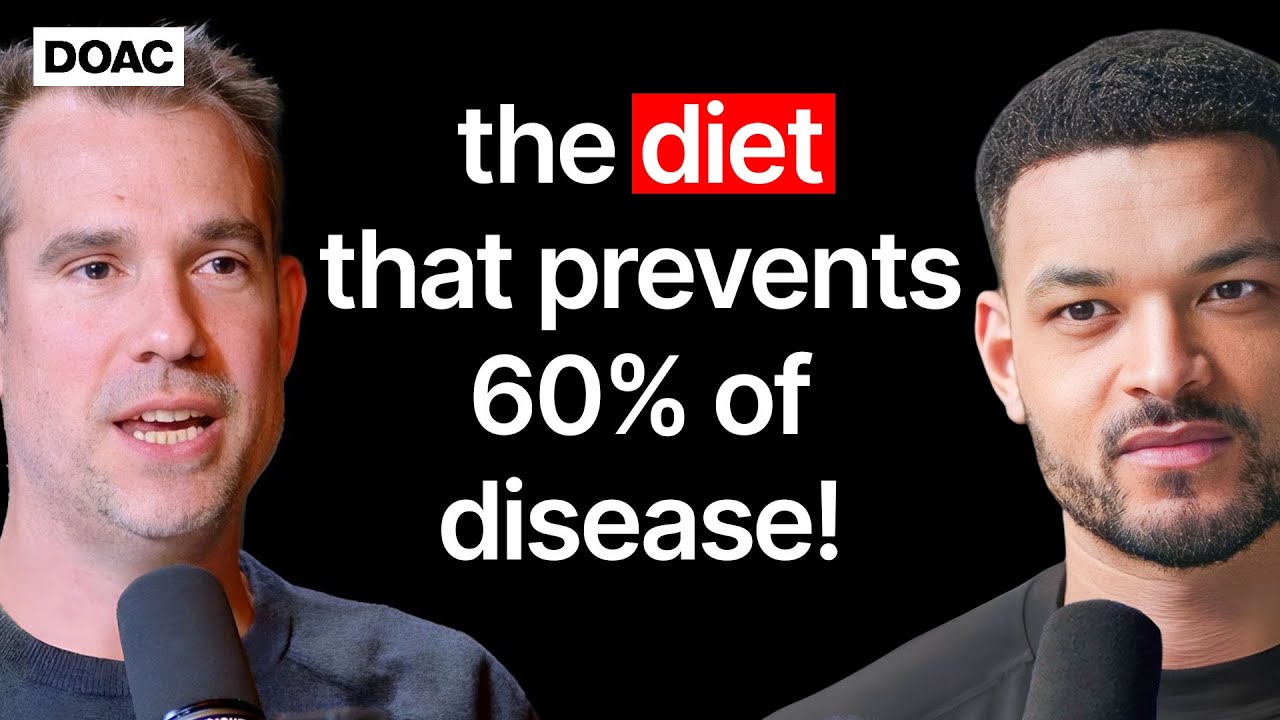
The Diary Of A CEO
Ultra-processed food alters brain chemistry to drive overeating and causes more global deaths than tobacco, requiring strict regulatory action and an end to corporate policy influence.
AI-assisted summary of The Junk Food Doctor: "THIS Food Is Worse Than Smoking!" - Chris Van Tulleken Ultra-Processed People — original source. Check the original for full context.
Source published:
Detailed notes
## Background This video was published on YouTube by The Diary Of A CEO channel on October 23, 2023. The page description features a conversation with Dr. Chris van Tulleken discussing his book 'Ultra-Processed People' and how ultra-processed foods impact human health, nutrition, and addiction.
## TL;DR Dr. Chris van Tulleken explains how ultra-processed food (UPF) has quietly rewritten our food environment, triggering addiction pathways and causing global health crises like obesity, diabetes, and early mortality. Drawing from evolutionary biology, personal dietary experiments, and industry insights, he demonstrates how financial incentives drive corporations to manufacture soft, hyper-palatable non-foods that bypass innate satiety mechanisms. Ultimately, van Tulleken dismantles the myth of individual willpower, framing UPF consumption as a systemic social justice issue that demands policy reform, corporate accountability, and a shift toward viewing industrial food with disgust.
## Atmosphere & style The conversation carries an urgent, eye-opening, and deeply grounded tone as host Steven Bartlett and Dr. Chris van Tulleken explore the hidden reality of the modern food industry. Van Tulleken blends rigorous scientific authority with empathetic candor, moving fluidly between shocking statistics, personal anecdotes, and practical insights. The dialogue creates a compelling emotional arc that transitions from quiet alarm and outrage over corporate tactics to a reassuring sense of agency, empowerment, and pragmatic optimism.
## Key takeaways - [00:00](https://www.youtube.com/watch?v=dzUDhstqXbg&t=0s) In the UK, poor dietary quality, largely driven by ultra-processed foods (UPF), has overtaken tobacco as the primary cause of early mortality globally. - [02:45](https://www.youtube.com/watch?v=dzUDhstqXbg&t=165s) Ultra-processed foods meet clinical diagnostic criteria for addiction, impacting brain circuitry in ways similar to tobacco, alcohol, and gambling. - [06:36](https://www.youtube.com/watch?v=dzUDhstqXbg&t=396s) Framing obesity as a failure of individual willpower is scientifically, morally, and economically flawed, as weight trends shifted systematically across populations following changes to the food environment around 1975. - [16:42](https://www.youtube.com/watch?v=dzUDhstqXbg&t=1002s) UPFs are industrial formulations designed from cheap commodity extracts (like soy, corn, and dairy waste) specifically to maximize profit margins and shelf appeal rather than nourish. - [19:21](https://www.youtube.com/watch?v=dzUDhstqXbg&t=1161s) Mechanical processing and unnaturally soft textures enable rapid calorie consumption that bypasses the body's natural satiety signals. - [22:41](https://www.youtube.com/watch?v=dzUDhstqXbg&t=1361s) Marketing tactics, such as front-of-pack health claims and small serving sizes on front-of-pack labels, obscure high sugar content and metabolic confusion caused by synthetic additives and sweeteners. - [35:48](https://www.youtube.com/watch?v=dzUDhstqXbg&t=2148s) A month-long 80% UPF experiment resulted in rapid weight gain, increased neural connectivity between reward centers and habit-driven brain regions, and elevated hunger hormones after eating. - [40:12](https://www.youtube.com/watch?v=dzUDhstqXbg&t=2412s) High UPF diets are linked to mental health disruptions, sleep fragmentation, constipation, and long-term risk of cognitive decline. - [45:57](https://www.youtube.com/watch?v=dzUDhstqXbg&t=2757s) Dr. Clara Davis's 1920s experiment demonstrated that infants and toddlers naturally self-regulate their nutritional needs when offered unprocessed whole foods. - [53:24](https://www.youtube.com/watch?v=dzUDhstqXbg&t=3204s) The 'calories in, calories out' model fails because the human body operates under a constrained energy expenditure model where total daily energy burn remains relatively fixed regardless of exercise levels. - [01:00:33](https://www.youtube.com/watch?v=dzUDhstqXbg&t=3633s) Gene expression related to obesity is heavily influenced by the socio-economic food environment, with living in poverty significantly increasing exposure and vulnerability to high-UPF diets. - [01:18:09](https://www.youtube.com/watch?v=dzUDhstqXbg&t=4689s) Overcoming UPF consumption relies on an emotional shift from infatuation to disgust by recognizing these products as artificial, non-food entities. - [01:13:31](https://www.youtube.com/watch?v=dzUDhstqXbg&t=4411s) Addressing the public health crisis requires three key policy changes: reducing poverty, implementing clear warning labels on packaging, and eliminating food industry influence from public health policy.
## Detailed walkthrough ### [00:00](https://www.youtube.com/watch?v=dzUDhstqXbg&t=0s) Intro and the Looming Health Crisis
Dr. Chris van Tulleken opens with a sobering personal experiment: after consuming a standard British diet high in ultra-processed foods (UPF), he rapidly gained weight, entering a dark, vicious cycle characterized by persistent overeating, anxiety, and sleeplessness. Brain scans later revealed structural shifts in his neural circuitry, warning that continuing this dietary pattern for even a single year would cause irreversible damage.
Across the globe, diet-related chronic illnesses have reached epidemic proportions. In the UK, one in five people now derive 80% of their daily energy intake from ultra-processed food. Globally, poor diet has quietly surpassed tobacco as the leading cause of premature human death. Beyond mortality, the physiological consequences on child development are striking: four-to-five-year-old children in the UK are on average 9 cm shorter than their peers in countries with healthier, whole-food traditions—a physical stunting that carries inevitable intellectual and cognitive consequences.
- **Global Caloric Control:** 75% of all calories consumed worldwide originate from just six multinational agribusiness corporations. - **Leading Cause of Early Death:** Poor dietary quality has officially eclipsed smoking as the top risk factor for early mortality globally. - **Stunted Development:** Children at age five in the UK are 9 cm shorter than same-aged peers in nations with lower UPF consumption.
---
[02:45](https://www.youtube.com/watch?v=dzUDhstqXbg&t=165s) The Motivation Behind *Ultra-Processed People*
When host Steven Bartlett asks why Chris dedicated years of painstaking effort to authoring *Ultra-Processed People*, Chris explains that society has long lacked a clear, scientifically rigorous framework to classify what we consume. Terminology like "junk food," "processed food," or "high fat, salt, and sugar (HFSS)" fails to capture the true mechanism of harm. Meanwhile, the industrial food system driving this crisis doubles as a primary catalyst for environmental destruction—ranking as the single largest cause of global biodiversity loss, the leading source of plastic pollution, and the second-largest contributor to greenhouse gas emissions.
The modern scientific understanding of ultra-processed food originated around 2009–2010 through the work of public health researchers in Brazil led by Carlos Monteiro. Looking at countries across Central and South America, such as Mexico, Colombia, and Brazil, researchers observed a sudden, unnatural surge in public health crises. In towns where obesity was virtually non-existent, an influx of American-style industrial food caused obesity and severe type 2 diabetes complications—including amputations—to become widespread within a single decade.
On a personal level, Chris shares how his lived experience as an identical twin shaped his research. While Chris was partially shielded by socioeconomic privilege, his brother, Xand, struggled with severe obesity for years. Observing Xand's daily battles helped Chris realize that many ultra-processed products meet every clinical diagnostic criterion for addiction, acting on human brain circuitry in ways directly comparable to tobacco, alcohol, or gambling.
- **Origin of the Term:** The NOVA classification system defining UPF was formulated in 2009–2010 by researchers at the University of São Paulo, Brazil. - **Rapid Public Health Shift:** In Mexico, the rapid introduction of industrial food transformed whole communities from near-zero obesity rates to widespread metabolic disease within ten years.
---
[06:36](https://www.youtube.com/watch?v=dzUDhstqXbg&t=396s) The Danger of Nagging and the Fallacy of Personal Responsibility
Chris reflects deeply on the relational dynamics of weight and addiction, detailing how his familySpent nearly a decade nagging Xand to lose weight. The turning point came when Chris accompanied Xand to see a behavioral change expert. Rather than focusing on Xand, the therapist pulled Chris aside and declared, "You are the problem. For your brother to lose weight now would mean losing a decade-long argument with you." By incessantly nagging his brother, Chris had unintentionally stripped Xand of agency, forcing him into a defensive posture where giving up UPF felt like admitting defeat.
This insight fundamentally reframes how society views weight gain. The prevailing narrative—which insists that obesity is merely an individual failing of willpower or poor personal choices—is morally, scientifically, and economically bankrupt. When willpower is tested under laboratory settings, such as the classic "marshmallow test," long-term outcomes cease to correlate with personal grit once researchers control for maternal education and household income. Children from socioeconomically disadvantaged backgrounds do not fail to delay gratification out of a lack of character; they make a rational calculation based on an environment where promised future rewards rarely materialize.
- **The Marshmallow Re-evaluation:** Controlling for maternal education negates the predictive power of the marshmallow test regarding future life success, exposing it as a metric of childhood poverty rather than inherent self-control. - **Relational Dynamics:** Interpersonal nagging forces individuals living with addiction or obesity to "own" the argument rather than owning their personal health journey.
---
[08:36](https://www.youtube.com/watch?v=dzUDhstqXbg&t=516s) The 1975 Inflection Point and the Modern Food System
To dismantle the myth that obesity is a personal moral failing, Chris points to historical public health data from the mid-1970s. Around 1975, standard weight curves across every demographic in the Western world experienced a sharp, simultaneous upward inflection. Men, women, children, elderly populations, and every ethnic demographic began gaining weight concurrently. It is statistically impossible for millions of disparate human beings to experience a sudden, simultaneous collapse in personal responsibility. What changed was not human biology or morality, but the food environment itself.
The industrial transformation of food began post-WWII as a solution to feed a booming global population while accommodating changing family dynamics as women entered the workforce. Products like Swanson TV dinners in the 1950s introduced unprecedented convenience. However, over subsequent decades, the food industry underwent deep financialization. Today, the core directives governing major food manufacturers are strictly tied to financial indicators—maximizing profit margins, utilizing cheap debt for share buybacks, and prioritizing investor yields over public health outcomes.
This hyper-financialized landscape has consolidated global agricultural production down to an alarmingly narrow foundation. The human species, biologically adapted to consume thousands of wild plant and animal species, now relies on a fragile, industrial assembly line dominated by a handful of corporate giants.
| Category | Primary Components of the Modern Global Diet | |:--- |:--- | | **Dominant Animal Proteins** | Pork, Beef, Chicken (with minimal Lamb, Goat, or Duck) | | **Dominant Caloric Crops** | Corn, Rice, Wheat, Soy, Palm Oil, Sunflower Oil | | **Corporate Control** | 6 companies supply 75% of global calories; 15–20 companies process most UK food |
---
[14:36](https://www.youtube.com/watch?v=dzUDhstqXbg&t=876s) Defining Ultra-Processed Food: From Traditional Processing to Novel Substances
To clarify what ultra-processed food actually is, Chris outlines the three primary evolutionary stages of human diet and food preparation:
1. **Unprocessed / Whole Foods:** Foods consumed directly from nature with zero or minimal alteration (e.g., an fresh apple, a raw oyster, or fresh milk directly from a cow). 2. **Processed Foods:** Whole foods modified using traditional culinary methods to extend shelf life or enhance safety and flavor (e.g., churning milk into butter, or fermenting milk with salt to create cheese). Humans have practiced traditional processing for thousands of years; early pastoralists in the Sahara were making cheese 7,000 to 8,000 years ago. 3. **Ultra-Processed Foods (UPF):** Industrial formulations made predominantly or entirely from substances derived from foods and additives, with little to no intact whole food remaining.
Chris points out that humans are uniquely adapted to traditional food processing. Over a million years of controlled fire use, chopping, fermenting, and cooking have shortened our digestive tracts, reduced our tooth size, and softened our jawlines. Our kitchens have essentially functioned as an external organ of digestion. However, ultra-processed food is fundamentally different: it is not real food processed for preservation, but an assembly of cheap industrial inputs, cosmetic additives, and engineered structures designed explicitly to maximize shelf life, generate proprietary intellectual property, and drive overconsumption.
- **Evolutionary Adaptations:** Human teeth, jaw structures, and intestinal lengths have shrunk over evolutionary time because cooking and traditional processing pre-digest our food. - **The Core Formula of UPF:** Formulated by prioritizing the cheapest raw ingredients, maximum shelf stability, high intellectual property rights, and hyper-palatability.
<ElicitationsGroup message="Where would you like to go next?"> <Elicitation label="Continue to Part 2: Sweeteners, Additives, and Gut Health" query="Please provide the walkthrough for Part 2 of this transcript series."/> <Elicitation label="Summarize the core arguments against UPF" query="Summarize the primary scientific and economic arguments against ultra-processed foods discussed in Part 1."/> </ElicitationsGroup>
[16:42](https://www.youtube.com/watch?v=dzUDhstqXbg&t=1002s) The Industrial Logic of Ultra-Processed Food
Dr. Chris van Tulleken points out that virtually every traditional diet around the world—from various Asian cuisines to French cooking rich in butter and red wine—is linked to good health because each evolved naturally over centuries. The only diet systematically proven to cause health harm is the financialized American industrial model of Ultra-Processed Food (UPF). The core economic engine of UPF involves taking cheap, ubiquitous commodity crops like soy, corn, rice, and low-grade meat, and processing them into powders, pastes, and refined extracts.
To illustrate the profit motive, van Tulleken contrasts whole foods with their industrial derivatives: a farmer can only make a small profit selling raw cobs of corn. However, by breaking that same corn down into modified cornstarch, corn oil, and high-fructose corn syrup, manufacturers create functional building blocks for thousands of lucrative packaged goods. These ingredients have an infinite shelf life and can be reassembled with synthetic additives, artificial texturizers, and flavorings before being wrapped in branded packaging. This process yields massive profit margins—frequently converting what was historically industrial waste into premium products.
* **Upcycling Waste Products:** Whey proteins used in nutritional powders were originally dairy farm waste dumped on fields or fed to livestock; turning them into supplements increases their value well over a thousandfold. * **Citrus Fiber:** A byproduct extracted from the peels leftover by the juicing and canning industries, chemically processed to add bulk to snack bars. * **The Business Model:** UPF relies on creating products protected by intellectual property using the cheapest possible raw materials with maximum shelf life.
---
[19:21](https://www.youtube.com/watch?v=dzUDhstqXbg&t=1161s) How Mechanical Processing and Formulation Drive Overeating
While many focus on artificial additives, van Tulleken emphasizes that the physical structure of UPF is equally damaging. Ultra-processed foods are typically heavily processed, resulting in an unnaturally soft texture, high energy density, and low moisture content—a combination designed to maximize shelf life. Because these foods require minimal chewing, calories are consumed at a rate that outpaces the body's hormonal satiety signals, driving overconsumption before a person feels full. Additionally, refining strips out key phytonutrients and complex chemical matrixes present in whole plants and animals that interact favorably with human biology.
Beyond the physical mechanics, UPF products undergo continuous consumer testing to maximize intake. Food industry scientists conduct focus groups comparing different formulations; if consumers eat Formulation B 5% faster than Formulation A, Formulation B is chosen for store shelves because it translates to a 5% increase in sales velocity. This creates a "darwinian evolutionary process" where every sensory attribute—sweet-to-salt ratios, mouthfeel, and packaging colors—is continuously optimized to make products irresistible.
> "If the focus group eats box B quicker than box A, box B is the one that goes on the shelf, because if they eat it 5% quicker, you'll sell the boxes 5% faster... Everything is dialed up to 11 so that things become irresistible."
* **Loss of Biological Signals:** Isolated vitamins in additives interact differently with human physiology compared to the complex matrix of whole plant and animal foods. * **Binge Eating Behavior:** Highly engineered UPF products frequently lead individuals to consume multiple adult portions in a single sitting, overcoming normal appetite controls.
---
[22:41](https://www.youtube.com/watch?v=dzUDhstqXbg&t=1361s) Deciphering "Healthy" UPF: Diet Drinks, Traffic Lights, and Marketing Clues
To test these concepts on real-world items, host Steven Bartlett presents four everyday supermarket staples typically viewed as healthy or guilt-free: **Cheerios**, **Actimel**, **Diet Coke**, and **Whole Grain Bread**. Van Tulleken highlights that these items represent the "shallow end of the pool"—they are far from the most extreme UPF examples, but they pose the greatest moral hazard because consumers and parents purchase them under the assumption that they are nutritious.
Examining a can of Diet Coke, van Tulleken calls it the ultimate example of flawed food labeling. Under the UK's front-of-pack "traffic light" rating system—which grades products solely on fat, saturated fat, sugar, and salt—Diet Coke receives four green lights, framing it as a health food. However, an inspection of its ingredients reveals a complex chemical cocktail rather than real nourishment:
``` Diet Coke Ingredients Analysis: ├─ Carbonated Water ├─ Caramel E150d (Carbohydrates treated with acids, heat, ammonium, and sulfites) ├─ Artificial Sweeteners (Aspartame & Acesulfame K) ├─ Natural Flavorings ├─ Caffeine (Addictive stimulant) └─ Phosphoric & Citric Acids (Acids linked to mineral leaching from bones and teeth) ```
Van Tulleken explains that artificial sweeteners act as a "nutritional lie." When a sweet taste registers on the tongue, the body anticipates incoming carbohydrates and prepares physiologically (such as altering insulin levels). When those calories fail to arrive, it creates metabolic confusion. Consequently, World Health Organization guidance notes that non-sugar sweeteners do not assist with long-term weight management.
* **Flavors Out of Context:** Natural flavorings detach taste signals from actual nutritional content, confusing the body's internal feedback loops between the gut and brain. * **Child Consumption Rates:** In the UK, children as young as three years old consume an average of one can of artificially sweetened drinks per day. * **The "Health Claim" Rule of Thumb:** A reliable indicator that a packaged product is ultra-processed is the presence of explicit health claims on the box (e.g., "Immune Support", "Rich in Vitamin D"). Whole, unbranded foods like broccoli, eggs, or steak rarely carry formal health claims because there is no proprietary margin to fund marketing campaigns.
---
[30:02](https://www.youtube.com/watch?v=dzUDhstqXbg&t=1802s) Breakfast Cereals, Fortification, and Synthetic Supplements
Turning to popular breakfast items like Cheerios and Cocoa Pops, van Tulleken observes that despite marketing claims highlighting whole grains, fiber, iron, and vitamin D, these products meet the criteria for ultra-processed foods due to additives like palm oil, caramelized sugar syrup, unneeded colors, and synthetic antioxidants. When given to children, the combination of soft texture and high palatability allows them to consume far greater quantities than they would of plain whole-grain porridge.
Steven Bartlett points out that even products like Cocoa Pops feature front-of-pack green and orange traffic lights alongside cartoon mascots designed to appeal to children. Van Tulleken addresses the industry practice of nutrient fortification, noting that synthetic vitamins are often added back into processed foods primarily to justify front-of-pack health claims. Independent scientific evidence indicates that while naturally occurring vitamins and minerals within whole food matrices provide clear health benefits, isolated vitamin supplements offer minimal value to healthy individuals.
* **Misleading Traffic Lights:** Standardized front-of-pack color codes create confusion when a sugary, highly processed cereal displays green and orange indicators alongside health claims. * **Whole Foods vs. Fortification:** Unprocessed staples like milk, plain yogurt, and oats provide intrinsic nutritional value without requiring synthetic vitamin additives or chemical texturizers.
<ElicitationsGroup message="Explore related health and nutrition topics from this episode:"> {/* Reason: The user is consuming an informative walkthrough on ultra-processed foods; these options offer natural extensions into health mechanics, policy, or dietary alternatives discussed in the episode. */} <Elicitation label="Examine how artificial sweeteners impact gut microbiome health" query="How do artificial sweeteners impact gut microbiome health according to Dr. Chris van Tulleken?"/> <Elicitation label="Detail practical strategies to reduce UPF in everyday diets" query="What are practical strategies to reduce Ultra-Processed Foods in a family diet according to Dr. Chris van Tulleken?"/> <Elicitation label="Explore the systemic political and economic influences behind UPF" query="How does the food industry influence government nutrition guidelines and policies according to Dr. Chris van Tulleken?"/> </ElicitationsGroup>
[33:43](https://www.youtube.com/watch?v=dzUDhstqXbg&t=2023s) Deceptive Marketing and the illusion of "Healthier" UPF Alternatives
Chris van Tulleken points out how ultra-processed foods target children through clever marketing, packaging, and misleading nutrition labels. Front-of-pack "traffic light" nutrition warnings can easily manipulate parents because the figures are calculated based on tiny, unrealistic serving sizes—such as a 30-gram portion of cereal, which equates to roughly a single large spoonful or a small handful. In reality, a child might eat five adult-sized portions in one sitting, rendering the green or amber warning lights on the box completely meaningless. This engineered hyper-palatability triggers addictive eating behaviors in both children and adults alike.
To demonstrate the ubiquitous nature of UPFs across price points, Dr. Chris compares a basic cheap frozen pizza with an upmarket "Tesco Finest" non-frozen pizza. While consumers naturally assume the expensive item is healthier, both products contain non-domestic kitchen ingredients like palm fat and dextrose. Both are manufactured by publicly traded corporations driven by institutional growth targets, meaning both products belong to the exact same incentive structure: engineered specifically to be overconsumed to the point where consumers end up "licking the packet."
- Traffic light labels are based on a 30g serving size—often just one spoonful—making them misleading for real-world consumption. - Premium store-brand UPFs (e.g., Tesco Finest) share the same underlying industrial formulations (palm fat, dextrose) as cheap frozen equivalents. - Publicly listed food corporations operate under institutional pressure for continuous growth, driving the design of products intended for overconsumption.
---
[35:48](https://www.youtube.com/watch?v=dzUDhstqXbg&t=2148s) The 80% UPF Experiment: Weight Gain, Brain Rewiring, and Hormonal Disruption
Dr. Chris recounts his self-experiment where he switched his diet from 20% to 80% ultra-processed foods for one month—a level typical for a British teenager and roughly 20% of the UK population. The experiment was conducted as part of an academic study at University College London (UCL). Within four weeks, he experienced rapid weight gain; had he maintained the diet for a full year, his body weight would have doubled.
Beyond physical weight gain, neuroimaging performed at the National Hospital for Neurology and Neurosurgery revealed profound changes in his brain structure. MRI scans showed significant increases in functional connectivity between the automatic, habit-driven regions at the back of the brain and the reward/addiction centers in the deep brain. Crucially, his satiety signaling was completely disrupted. Normally, chewing and digesting whole foods triggers a cascade of gut hormones that signal fullness. By the end of the month-long trial, his hunger hormones remained sky-high even immediately after finishing a heavy meal.
- **Weight gain velocity:** On an 80% UPF diet, his rate of weight gain extrapolated to doubling his body weight within 12 months. - **Brain changes:** Functional MRI showed heightened connectivity between habit-formation regions and reward centers. - **Hormonal dysfunction:** Satiety signals failed to trigger; post-meal hunger hormone levels remained elevated despite adequate caloric intake.
---
[38:12](https://www.youtube.com/watch?v=dzUDhstqXbg&t=2292s) The Brazilian Epiphany: Disgust as a Tool for Quitting UPF
Midway through the experiment, while indulging in childhood comfort foods like fried chicken wings, Dr. Chris was researching and speaking with colleagues. Brazilian nutrition researcher Fernanda Rauber offered a perspective shift, stating: *"This isn't food, Chris. It's an industrially produced edible substance."* That evening, while sitting down to a meal of takeaway fried chicken, a mental switch flipped, rendering the food instantly revolting.
He compares this psychological shift to Allen Carr’s famous book *The Easy Way to Stop Smoking*, where smokers are encouraged to continue smoking while reading about the underlying addiction mechanisms until the habit naturally becomes repulsive. By paying close attention to ingredients lists and realizing that most UPF items share identical baseline flavor profiles—heavy combinations of salt, sugar, fat, and acid—consumers can unravel the illusion of variety. The World Health Organization (WHO) endorses *The Easy Way* methodology as being as effective as nicotine replacement therapy, suggesting that framing UPFs as addictive industrial substances rather than real food can help individuals break free from consumption cycles.
- **Conceptual definition:** Dr. Fernanda Rauber defines UPF not as food, but as an "industrially produced edible substance." - **The Allen Carr method:** Immersing oneself in the details and ingredients of UPF while eating allows consumers to recognize the artificiality and develop a natural aversion. - **WHO endorsement:** The psychological framework used in *The Easy Way to Stop Smoking* is recognized by the WHO as being as effective as medical cessation aids.
---
[40:12](https://www.youtube.com/watch?v=dzUDhstqXbg&t=2412s) Mental Health, Sleep Disruption, and the Vicious Cycle of Stress
Addressing the parallel rises in physical illness and mental health diagnoses, Dr. Chris notes that broad epidemiological data links UPF consumption not only to metabolic diseases, cardiovascular problems, cancers, and early mortality, but also directly to anxiety, depression, and dementia.
He shares his personal experience on the 80% UPF diet, detailing uncaptured side effects that severely impacted his well-being. Due to high sodium levels and low dietary fiber, he experienced nocturnal urination, severe constipation, and chronic sleep fragmentation. Waking up in the middle of the night, he frequently found himself standing at the open refrigerator seeking comfort in the very foods that caused the disruption. This created a self-reinforcing feedback loop: poor sleep elevated cortisol levels, which heightened stress and drove further cravings for hyper-palatable, low-quality food.
- **Epidemiological links:** High UPF intake correlates with increased rates of anxiety, depression, and cognitive decline/dementia. - **Physiological side effects:** Low fiber and high salt cause gastrointestinal issues and nighttime awakenings. - **The stress feedback loop:** Sleep disruption raises cortisol, which directly increases cravings for high-calorie, ultra-processed food.
---
[41:54](https://www.youtube.com/watch?v=dzUDhstqXbg&t=2514s) Obesity Stigma, Policy Realities, and Economic Barriers
Dr. Chris emphasizes using person-first language—referring to people "living with obesity" rather than calling someone "obese"—to separate personal identity from a medical condition. According to statistics from the World Obesity Federation, over 51% of the global population (more than 4 billion people) will be overweight or living with obesity within the next 12 years. He warns that anti-obesity campaigns often morph into direct prejudice against those affected, when the root cause is an aggressive food environment rather than individual moral failure.
Regarding policy solutions, Dr. Chris clarifies that he does not advocate for taxing or banning ultra-processed foods. Instead, he argues for increasing consumer choice, economic freedom, and food equity. Drawing on his clinical experience treating disadvantaged patients, asylum seekers, and low-income families at the Hospital for Tropical Diseases, he refutes the common claim that eating healthily is simply a matter of personal choice. When individuals live on £8 a day without access to functional kitchens, refrigeration, basic utensils, or the time required for batch cooking, recommending whole foods like fresh vegetables and pulses ignores structural realities.
- **Global projections:** World Obesity Federation data projects that over 51% of the global population (4+ billion people) will be overweight or living with obesity within 12 years. - **Systemic barriers to healthy eating:** Low-income households often lack basic kitchen infrastructure (fridges, freezers, cookers, or knives) and the time required to prepare raw ingredients. - **Cost of cooking:** Fuel costs for boiling dried beans or lentils make "cheap" whole-food staples financially impractical for vulnerable populations.
---
[45:57](https://www.youtube.com/watch?v=dzUDhstqXbg&t=2757s) The Clara Davis Toddler Experiment: Innate Nutritional Wisdom
To illustrate human biology's innate ability to self-regulate food intake, Dr. Chris cites a classic 1920s experiment conducted by Dr. Clara Davis. In the study, young children and infants (including orphans and abandoned toddlers) were presented with a selection of 34 unrefined whole foods every day—including items like raw bone marrow, cooked rice, milk, yogurt, and plain salt—allowing them to eat whatever they chose without adult direction or restriction.
The results demonstrated that when given access exclusively to real, unprocessed foods, children naturally selected balanced diets that fulfilled all their micro- and macronutrient needs. In one notable case, an infant named Earl arrived at the study with severe rickets caused by vitamin D deficiency. On his own accord, Earl chose to drink a full cup of cod liver oil daily until x-rays confirmed his bones were fully healed, at which point he permanently stopped drinking it. The study revealed that human bodies possess internal wisdom to regulate appetite and correct nutritional deficiencies—a mechanism that breaks down only when exposed to modern industrial junk food.
- **Study setup:** Conducted in the late 1920s by Dr. Clara Davis, offering toddlers 34 distinct unprocessed, whole-food options daily. - **Self-regulation:** Without parental guidance, children naturally balanced their diets, gained weight normally, and experienced zero food-refusal issues. - **The Earl case study:** A child with rickets voluntarily drank cod liver oil daily until his vitamin D levels restored and bone lesions healed, then abruptly ceased consumption.
---
[49:31](https://www.youtube.com/watch?v=dzUDhstqXbg&t=2971s) The Challenge of Modern Parenting in a UPF Environment
When host Steven Bartlett envisions raising future children in a pristine food environment by stocking the home exclusively with healthy whole foods, Dr. Chris offers a grounded reality check. While keeping UPF out of the home is a noble start, he notes that preventing a child's exposure to ultra-processed foods in modern society is nearly impossible once they leave the house.
From school meals and playdates to birthday parties, sporting events, and aggressive commercial advertising, the modern environment is saturated with UPF. As children grow, their natural appetite-regulation mechanisms are continuously challenged by foods designed to override satiety. Simply locking the kitchen cabinets at home cannot fully insulate a child from an environment built around hyper-palatable, cheap, industrial food products.
- **Environmental exposure:** Children encounter UPF outside the home via schools, social activities, and public marketing. - **Satiety disruption:** Exposure to UPFs overrides the innate nutritional wisdom observed in the Clara Davis experiments.
<ElicitationsGroup message="Explore related discussions on ultra-processed foods:"> <Elicitation label="Discuss the physiological mechanism of satiety signals" query="Explain the specific hormones involved in satiety signals and how ultra-processed foods disrupt them based on Dr. Chris Van Tulleken's research."/> <Elicitation label="Summarize policy solutions for ultra-processed foods" query="What public health policies and regulatory approaches does Dr. Chris Van Tulleken recommend to address UPF consumption?"/> </ElicitationsGroup>
Here is a detailed, faithful walkthrough covering this part of the podcast:
[50:09](https://www.youtube.com/watch?v=dzUDhstqXbg&t=3009s) The Ubiquity of Ultra-Processed Food and Social Justice
Dr. Chris van Tulleken opens by admitting the stark reality of raising children in a culture saturated with ultra-processed food (UPF). Despite having written a book on the subject and actively researching it, he explains that he wants his children to feel normal, as food is deeply tied to community, identity, and social connection. In the UK, the dominant food culture *is* UPF; refusing to eat or serve it risks turning someone into a "fanatical food snob." As a result, van Tulleken still eats UPF when visiting friends and allows his children to navigate the same social reality, noting that grandparents bring it over, schools serve it, and his youngest daughter is exposed to it at nursery from the moment she arrives.
While van Tulleken hopes readers gain actionable technical knowledge from his book, he emphasizes that his primary argument centers on **social justice**. It is an appalling failure of the food environment that real, unadulterated food has become extremely expensive, inconvenient, and inaccessible, even for people with significant financial means.
During the discussion, host Steven Bartlett steps in with sponsor messages: * **Whoop:** Highlighted for its new feature, *Whoop Coach*, which leverages advanced AI to analyze personal health and fitness data to offer custom recommendations (e.g., explaining fatigue or structuring strength training programs). * **Huel Daily Greens:** Bartlett notes that the product—boasting 91 vitamins, minerals, and whole-food ingredients per scoop—is back in stock in the US.
---
[53:24](https://www.youtube.com/watch?v=dzUDhstqXbg&t=3204s) Debunking "Calories In, Calories Out" and the Fixed Energy Model
Bartlett brings up a common claim made in the fitness and weight loss communities: that weight management is purely a mathematical equation of "calories in versus calories out," meaning a person can eat anything as long as they maintain a calorie deficit. Van Tulleken agrees that while this is technically true mathematically, it fails in practice due to two major flaws. First, humans are not simple calculators; many people possess genetic drives and behavioral ties to food that make eating in strict, measured amounts nearly impossible when faced with hyper-palatable options. Attempting to limit a child or an adult to a single portion of a sugary cereal is like telling an alcoholic to "just have one drink" or a smoker to "just have one cigarette"—for many, UPF is genuinely addictive.
Second, van Tulleken explains the fascinating science behind energy expenditure. Citing ground-breaking research by evolutionary anthropologist Herman Pontzer, he outlines how human metabolism responds to physical activity. Pontzer studied the Hadza hunter-gatherer tribe in Tanzania, measuring their daily caloric expenditure with double-labeled water and metabolic hoods. Expecting the Hadza—who walk 15 kilometers daily hunting and digging—to burn vastly more calories than sedentary Westerners, Pontzer discovered their daily caloric burn was essentially identical.
Subsequent cross-species and cross-cultural literature confirmed this phenomenon, known as the **constrained (or fixed) energy expenditure model**. Across subsistence farmers, miners, and office workers, the body maintains a tight total daily energy budget (around 3,000 calories for an average adult male). Extreme exceptions exist—such as Tour de France cyclists or polar explorers—but for standard daily exercise, the body simply reallocates energy from other internal systems.
* **Why exercise is still healthy:** When you exercise for an hour, your total daily caloric burn stays roughly fixed; instead, the body "steals" calories away from inflammatory responses, stress hormones, and background anxiety pathways to fuel physical activity. * **Implications for weight loss:** For populations living with obesity, increasing exercise yields tremendous health benefits but does **not** drive significant long-term body weight reduction. * **Exercise limitations:** Bartlett shares his own routine of working out daily with a personal trainer, confirming that exercise changes muscle tone and strength but has virtually zero impact on his weight unless his diet changes.
---
[59:11](https://www.youtube.com/watch?v=dzUDhstqXbg&t=3551s) Post-Exercise Psychology and Whole Foods for Athletes
The conversation shifts to the psychological aftermath of exercising. Bartlett notes that after an intense workout, he often views junk food like cookies or flapjacks as "two steps backward," though he admits to occasionally overconsuming "healthy" replacement items like protein bars instead. Van Tulleken points out that these commercial protein bars are heavily marketed UPF items designed to fit fitness aesthetics.
Interestingly, when looking at elite sports teams, top nutritionists steer athletes toward real, home-cooked food rather than heavily processed performance products: * Elite athletes are often fed real-food flapjacks made with standard kitchen ingredients. * They drink plain milk and eat real chicken pieces during intense training cycles rather than relying solely on engineered ultra-processed supplements.
---
[01:00:33](https://www.youtube.com/watch?v=dzUDhstqXbg&t=3633s) Genetics, Deprivation, and the Illusion of "Willpower"
Addressing the topic of willpower, Bartlett admits his perspective has evolved after hearing arguments on both sides. Van Tulleken explains that attributing diet outcomes purely to individual willpower ignores critical genetic and environmental research. He cites twin studies conducted by his colleague Clare Llewellyn regarding the heritability of obesity genes.
Llewellyn's work builds on historic twin research (originally pioneered in IQ studies by Sandra Scarr) showing that gene expression is heavily modified by socio-economic environment: * **In wealthy, well-resourced environments:** Every individual’s basic needs are met, allowing variation in weight or IQ to be driven mostly by genetic inheritance. * **In low-income, deprived environments:** High levels of stress, poor nutrition, and lack of resources suppress gene expression. In these settings, genes for obesity are far more likely to be expressed, whereas potential for height or cognitive development may be constrained. * **The poverty link:** Llewellyn's findings indicate that eradicating poverty would eliminate roughly **60%** of diet-related disease issues, demonstrating that obesity is primarily a social and environmental problem rather than a personal failure of willpower.
---
[01:03:47](https://www.youtube.com/watch?v=dzUDhstqXbg&t=3827s) Environmental Saturation and Marketing to Youth
To illustrate environmental influence, van Tulleken points to his own twin brother, who gained weight while living a high-stress lifestyle in Boston. Bartlett relates to this, describing how traveling to the US for work routinely ruins his health and causes weight gain because hotels and travel hubs make finding real food almost impossible. Bartlett shares a story of throwing hotel mini-bar cookies into the trash, only for housekeepers to replace them the next day with two more bags, assuming he had eaten them.
Van Tulleken identifies this as an insidious form of constant marketing. While adults find these environments difficult to navigate, British, American, Canadian, and Australian teenagers are immersed in 360-degree, 24/7 hyper-targeted advertising for addictive foods: * Marketing appears on bus tickets, receipts, social media feeds, and free music streaming apps. * Food corporations capture young people's phone numbers through contests, sending direct promotional push notifications and meal-deal texts ("ping, ping, ping") throughout the day. * Given this total immersion in aggressive marketing for addictive products, van Tulleken stresses that it is no surprise that roughly **25% of British children** are living with obesity.
[01:05:30](https://www.youtube.com/watch?v=dzUDhstqXbg&t=3930s) Twin Study, Food Environments, and the Illusion of Willpower
Dr. Chris van Tulleken illustrates the overwhelming impact of the food environment through a deeply personal example involving his genetically identical twin brother. When his twin moved to Boston during a period of high stress—navigating an unplanned pregnancy with his son, Julian—he ended up living directly above a burger shop. Stress-eating in that specific food environment caused his brother to gain 30 kilograms (around 66 pounds). Chris points out that while they share the exact same genetic vulnerabilities, his own life in the UK was stable and embedded in a completely different food environment.
This stark contrast destroys the narrative that weight management is merely a matter of personal responsibility or individual willpower. Steven Bartlett responds by expressing his frustration with feeling a lack of autonomy, noting how the "big food mafia" bombards consumers with targeted marketing and engineered, addictive products designed to trigger brain chemistry beyond conscious control. Steven voices a desire for immediate, personal agency rather than waiting for slow political change from Downing Street or the White House.
- **Genetic Twins, Divergent Outcomes:** Identical twin gained 30 kg in Boston living above a burger joint under stress, while Chris maintained his weight in a stable UK environment. - **Willpower vs. Environment:** The drastic difference in outcomes demonstrates that environment and life circumstances dictate weight far more than personal willpower.
[01:07:19](https://www.youtube.com/watch?v=dzUDhstqXbg&t=4039s) From Victim to Activist: Reclaiming Control
Chris validates Steven's desire for personal action and explains the emotional journey he guides readers through in his book, *Ultra-Processed People*. Readers typically start in an unconscious state, oblivious to how their food choices are manipulated. Midway through the book, readers realize they are victims of a predatory food system—a difficult realization, as no one likes to view themselves as a victim. However, Chris argues that the essential next step is transforming that victimization into outward-directed rage and activism.
For those with adequate financial resources and cooking skills, taking back control means actively eliminating ultra-processed food (UPF) from their diet and opting for whole foods or artisanal options like real sourdough. However, Chris acknowledges a painful reality: for a vast portion of the population facing economic hardship, avoiding UPF simply is not an option. Rather than directing guilt or rage inward, consumers must direct their anger outward toward the transnational food corporations that control the food supply. Chris refutes the political argument that regulating food is "nanny statism," arguing that we currently live in a corporate nanny state run by multinational conglomerates that pay minimal local taxes while dictating what society eats.
- **The Reader Journey:** Moving from unconscious consumer $\rightarrow$ victim $\rightarrow$ active self-advocate or political activist. - **Corporate "Nanny State":** Transnational food corporations currently exercise more nanny-state control over public health and diet than governments do.
[01:09:10](https://www.youtube.com/watch?v=dzUDhstqXbg&t=4150s) The Science of Food Addiction and Speed of Delivery
Addressing how people without financial privilege can handle UPF, Chris emphasizes that he refrains from giving preachy individual advice because the broader system requires structural, political reform similar to how society tackled tobacco. When Steven asks whether UPF is truly addictive, Chris explains why "food addiction" was historically contested in scientific circles: classic addiction definitions require absolute abstinence, which is impossible with food. However, the modern definition of UPF isolates a specific class of industrial substances—not real food—that people compulsively consume.
Chris defines addiction as the continued use of a substance despite clear knowledge of physical or psychological harm and despite repeated, failed attempts to quit. Studies, brain scans, and genetic profiles confirm that UPF triggers the exact same neurological addiction pathways as traditional drugs. A critical factor in UPF's addictiveness is its fast speed of consumption and rapid nutrient hit, driven by its soft texture and lack of fiber. Chris draws a direct parallel to drug delivery systems: fast-acting substances like tequila shots, smoked tobacco, or crystal meth are intensely addictive, whereas slow-release substances like session beers or ADHD medications (such as slow-release methylphenidate) carry a vastly lower addiction profile.
- **Definition of Addiction:** Continued consumption despite explicit knowledge of personal harm and repeated failed attempts to stop. - **Rate of Consumption:** UPF's soft, pre-chewed texture enables rapid calorie consumption, mimicking the fast "hit" characteristic of highly addictive substances like crystal meth or tequila shots. - **Population Impact:** Chris estimates that roughly 40% of the population has a severely troubled, addictive relationship with UPF, where complete abstinence from UPF products might be the only effective strategy.
[01:12:00](https://www.youtube.com/watch?v=dzUDhstqXbg&t=4320s) Health Risks, Neurodiversity, and the Real Cause of Chronic Disease
When Steven inquires about links between UPF and neurodiverse conditions like ADHD or binge eating disorders, Chris mentions an ongoing working group at the Royal College of Psychiatrists investigating these connections. While many children grow up on diets composed almost entirely of UPF alongside co-occurring factors like poverty, trauma, and poor housing, unravelling precise causal links remains complex. Nevertheless, the global health data regarding UPF is damning.
Chris highlights a staggering statistic from his research: diets high in ultra-processed foods are linked to more deaths globally than tobacco smoking, high blood pressure, or any other single health risk factor, accounting for roughly 22% of all global deaths. Steven reads out an extensive list of diseases directly linked to high UPF consumption, illustrating the catastrophic scope of the crisis:
- All-cause mortality and cardiovascular disease - Various cancers and high blood pressure - Fatty liver disease and inflammatory bowel disease (IBD) - Depression and adverse blood fat profiles - Irritable bowel syndrome (IBS), dementia, and physical frailty
[13:31](https://www.youtube.com/watch?v=dzUDhstqXbg&t=811s) Systemic Solutions: Poverty, Labeling, and Removing Industry Influence
Reflecting on his personal path, Steven outlines a three-step framework: building awareness of UPF definitions, conducting a personal diet audit to make intentional choices, and advocating for broader systemic change. Chris praises this approach, reiterating that his goal is not to dictate what individuals eat—as he strongly values personal liberty—but to ensure people have true agency free from predatory marketing.
To achieve real public health reform, Chris outlines three essential policy priorities: 1. **Tackle Poverty First:** Poverty forces people to buy cheap, energy-dense UPF. Health inequality is fundamentally rooted in wealth inequality. 2. **Implement Clear Front-of-Pack Warnings:** Current nutritional labels are deliberately confusing. Chris points to Argentina's bold warning system, where products like sodas carry prominent black octagonal warnings larger than the brand logos. National nutritional guidelines must explicitly warn against processed foods. 3. **Evict Industry from Policy-Making:** Food corporations must be completely removed from public health policy decisions, mirroring the ban on tobacco companies. Major health charities and advisory groups—including the British Nutrition Foundation, Cancer Research UK, Diabetes UK, and the British Dietetic Association—receive substantial funding from UPF manufacturers like Coca-Cola, Nestlé, and Cargill, severely compromising their independence.
> "Part of being an activist in this area for me is not taking food industry money myself... that is a very painful weekly process because if you write a book about food you get offered enormous amounts of money to go and work for the food industry."
[01:18:39](https://www.youtube.com/watch?v=dzUDhstqXbg&t=4719s) Personal Transformation: Moving from Addiction to Disgust
Discussing how his own eating habits transformed while writing the book, Chris explains that willpower alone is useless against true addiction. The key to breaking free from UPF is transitioning emotionally from a state of infatuation/addiction to a state of profound **disgust**. Because love and disgust share closely related neural pathways in the brain, flipping that mental switch alters how one perceives industrial food items.
Chris describes experiencing an "uncanny valley" effect with ultra-processed food—a concept borrowed from robotics and computer animation where something looks almost human, yet feels unsettlingly off or corpse-like. As he researched the industrial processing, chemical additives, and corporate strategies behind UPF, the food crossed into this uncanny valley: it looked like food, but he recognized it as an artificial, non-food substance. Consequently, his craving vanished completely, replaced by a natural aversion, though he admits he will still politely eat it if served as a guest. He then gestures to the collection of UPF items brought into the studio—including packaged pizzas, Coco Pops, and Coca-Cola—to illustrate the reality of these products.
Here is a detailed, faithful walkthrough of this section of the interview:
[01:20:50](https://www.youtube.com/watch?v=dzUDhstqXbg&t=4850s) Redefining Food and the Sources of Optimism
Chris Van Tulleken begins by challenging the traditional concept of food, pointing out that there is no strict working definition of "food" in law. He argues that food should be defined as a substance consumed for physical, cultural, social, and psychological nourishment. Ultra-processed foods (UPFs), however, are engineered strictly to generate financial growth for institutional investors rather than to nourish human beings. A concoction of colorings, addictive substances, and phosphoric acid—where nearly every ingredient carries potential harm—cannot reasonably be called food; it is simply a way to commodify ill health for corporate profit.
When asked if he feels optimistic about the future of public health, Chris explains that his outlook varies daily, but highlights several key reasons for hope: * **Alternative Business Models:** He cites a friend who transitioned from Big Pharma to lead a non-profit pharmaceutical company that pays standard industry salaries while reinvesting revenues to reduce global healthcare inequalities. Similar models could decouple the food industry from the demands of institutional investors. * **The Precedent of Tobacco Regulation:** Public health advocates successfully regulated the tobacco industry and significantly drove down smoking rates using established roadmaps and marketing controls. * **Public Outrage:** There is growing public anger as parents watch their children suffer physical and developmental setbacks due to ultra-processed diets.
- In the UK, five-year-old children are average-wise up to 9 cm shorter than their peers in countries like Bulgaria, the Netherlands, or Scandinavia due to poor nutrition—a degree of physical stunting that carries severe risks of intellectual stunting. - The physical stunting observed in children across the UK and the US is primarily driven by diet once maternal smoking during pregnancy is accounted for. - Individual food corporations often boast annual revenues equivalent to the GDP of nations such as Croatia or Venezuela.
[01:25:21](https://www.youtube.com/watch?v=dzUDhstqXbg&t=5121s) Personal Stunting Narratives and Twins Studies
Steven Bartlett shares a personal story, reflecting on the striking height and academic differences between himself and his two older brothers, Kevin and Jason. Growing up, his mother made traditional, home-cooked African meals full of whole foods. However, by the time Steven was growing up, his mother had started businesses and was away from home more frequently, leaving Steven to rely heavily on convenience foods and sweet shops. He humorously wonders if his lower relative height—6'1" compared to his brothers' 6'3" and 6'5"—and his academic struggles (getting kicked out of school while his brothers were mathematical "super geniuses") might be a real-world case of UPF-induced stunting.
Chris acknowledges the anecdote, noting while one case study isn't definitive proof, it reflects population-level data. He points to natural twin studies to illustrate the point, such as a well-known pair of genetically identical twins born in China: one was adopted and raised in Norway, while the other was raised in the US. The Norwegian-raised twin grew up noticeably taller than her American counterpart due to environmental and dietary differences.
[01:27:45](https://www.youtube.com/watch?v=dzUDhstqXbg&t=5265s) Giving Loved Ones Agency and Embracing Food Preparation
Discussing his twin brother, Xand, Chris reveals that writing *Ultra-Processed People* transformed their personal relationship. Rather than nagging Xand about his diet or feeling public embarrassment over his brother's weight, Chris learned to completely step back and let go. When loved ones are freed from constant external pressure and judgment, they gain agency and empowerment to make their own choices.
Steven agrees, drawing a parallel to a conversation he had with a music manager who observed that individuals struggling with addiction must reach their own "rock bottom" before making genuine changes. Forced interventions often backfire by stripping away agency. Chris uses a relatable domestic example: being about to clean up after dinner, only to be asked by his wife to do the dishes, which instantly transforms a self-motivated, empowering act into a frustrating chore.
- Chris emphasizes that food preparation should not be viewed as a chore, but as a meaningful connection to human ancestry—reclaiming the traditional, collective effort of grinding, cooking, and sharing meals. - People need "a little bit of pain" in their diets through bitter, chewy, and textured real foods that require actual effort to prepare and consume. - In modern food environments, individual choice is severely curtailed on high streets and motorways, where ultra-processed options overwhelmingly dominate.
[01:32:46](https://www.youtube.com/watch?v=dzUDhstqXbg&t=5566s) Reasons for Pessimism and Sustainable Activism
Addressing the pessimistic side of the debate, Chris explains that regulating ultra-processed food will be an uphill battle. It took 50 to 60 years from establishing the firm link between tobacco and fatal health outcomes (strokes, heart attacks, lung cancer) to implementing strict regulations. Even today, tobacco companies stay profitable through vaping and expansion into developing nations.
Drawing on his background as a virologist, Chris compares the struggle against food corporations to an evolutionary arms race or a competitive business market: * You can never achieve a single, permanent victory because commercial entities constantly adapt and innovate to bypass regulation. * Activists must build a long-term, sustainable movement that continuously generates evidence, pushes for tighter policy, and funds alternatives like non-profit food initiatives. * The battle against "Big Food" has been waged for decades—dating back to early activist campaigns against Nestlé’s aggressive marketing of infant formula in low-income regions—and will continue across generations.
[01:35:05](https://www.youtube.com/watch?v=dzUDhstqXbg&t=5705s) Closing Question: Parenting and Presence
To conclude the interview, Steven reads the traditional closing question left by the previous guest: *"What will we regret in 10 years about how we brought up our children today?"*
Chris responds candidly, sharing that he already experiences this regret firsthand: it is the failure to give children the same undivided, intentional presence that adults routine reserve for professional engagements. He notes that for high-profile interviews, people prepare thoroughly, listen attentively, and show up completely focused, yet often fail to bring that same high level of presence and quality time to their daily interactions with their own children.
[01:35:50](https://www.youtube.com/watch?v=dzUDhstqXbg&t=5750s) Regrets, Family, and Being Present
Dr. Chris van Tulleken reflects warmly on the depth of the podcast conversation, sharing that he feels genuinely enriched by the experience. The dialogue prompts him to open up about his personal struggles with work-life balance and family time. He discusses the advice to "diarise lunch" and intentionally schedule time for loved ones rather than merely giving them the "crumbs" left over after work. With two young children (ages six and three) and a pregnant wife, he admits his home life often feels like a "scramble."
Looking forward, Chris candidly acknowledges that failing to spend present, quality time with his children is something he knows he will regret. He commits to making a conscious effort to force out time where he can simply be present, listen, and invest in his children regularly—just as he meticulously invests time in every other professional aspect of his life.
* Chris's children are six and three years old, and his wife is currently pregnant. * "You talk about diarising lunch... it's not just giving the crumbs to your family, but it's like investing in your family in the way you do in your work." * "If I'm going to regret it, who do I want to be?"
---
[01:36:44](https://www.youtube.com/watch?v=dzUDhstqXbg&t=5804s) The Impact of "Ultra-Processed People"
Steven Bartlett offers high praise for Chris's book, *Ultra-Processed People*, noting its massive cultural footprint and its prolonged position near the top of the *Sunday Times* bestseller list. Steven emphasizes that books like this appear only once every few years or once in a generation—capturing the exact cultural moment with language, nuance, and inclusivity that brings people together rather than alienating them with extreme political or ideological stances.
Steven commends Chris for starting a vital, nation-wide revolution and conversation around modern nutrition, predicting that the book will ultimately drive meaningful real-world changes in legislation and public policy. Chris responds with genuine gratitude, admitting he is blushing and deeply moved to hear such high praise.
* *Ultra-Processed People* spent around 24 to 25 weeks on the *Sunday Times* bestseller chart, briefly knocking Steven Bartlett's own book off the number one spot. * "Books come along once every couple of years, once in a generation, that really meet culture at the exact moment with the exact language... bringing everyone in." * "It's starting a conversation that we really need to start... these books end up changing the world and changing legislation."
---
[01:38:26](https://www.youtube.com/watch?v=dzUDhstqXbg&t=5906s) Sponsor: Shopify
Steven wraps up the episode with an endorsement for the podcast's new sponsor, Shopify. He shares that Shopify is a tool he uses daily across his various business operations and highlights how his team utilized the platform to launch and sell the official "DOAC Conversation Cards." He encourages listeners interested in launching or scaling a business to check out the platform.
* Dedicated promotional link mentioned for listeners: `[shopify.com/bartlett](https://shopify.com/bartlett)`.
## Notable quotes > [19:21](https://www.youtube.com/watch?v=dzUDhstqXbg&t=1161s) If the focus group eats box B quicker than box A, box B is the one that goes on the shelf, because if they eat it 5% quicker, you'll sell the boxes 5% faster... Everything is dialed up to 11 so that things become irresistible. — Dr. Chris van Tulleken
> [38:12](https://www.youtube.com/watch?v=dzUDhstqXbg&t=2292s) This isn't food, Chris. It's an industrially produced edible substance. — Fernanda Rauber
> [01:13:31](https://www.youtube.com/watch?v=dzUDhstqXbg&t=4411s) Part of being an activist in this area for me is not taking food industry money myself... that is a very painful weekly process because if you write a book about food you get offered enormous amounts of money to go and work for the food industry. — Dr. Chris van Tulleken
## Mentioned Dr. Chris van Tulleken, Steven Bartlett, Xand van Tulleken, Carlos Monteiro, Fernanda Rauber, Dr. Clara Davis, Earl, Herman Pontzer, Clare Llewellyn, Sandra Scarr, NOVA classification system, University of São Paulo, University College London (UCL), National Hospital for Neurology and Neurosurgery, World Health Organization (WHO), World Obesity Federation, Hadza hunter-gatherer tribe, Royal College of Psychiatrists, British Nutrition Foundation, Cancer Research UK, Diabetes UK, British Dietetic Association, Swanson, Tesco, Cheerios, Actimel, Diet Coke, Cocoa Pops, Coca-Cola, Nestlé, Cargill, Whoop, Huel Daily Greens, Shopify, The Easy Way to Stop Smoking, Ultra-Processed People, Sunday Times
[Source](https://www.youtube.com/watch?v=dzUDhstqXbg)