LOGAN URY: BEHAVIORAL SCIENCE DISRUPTS MODERN DATING DISASTER
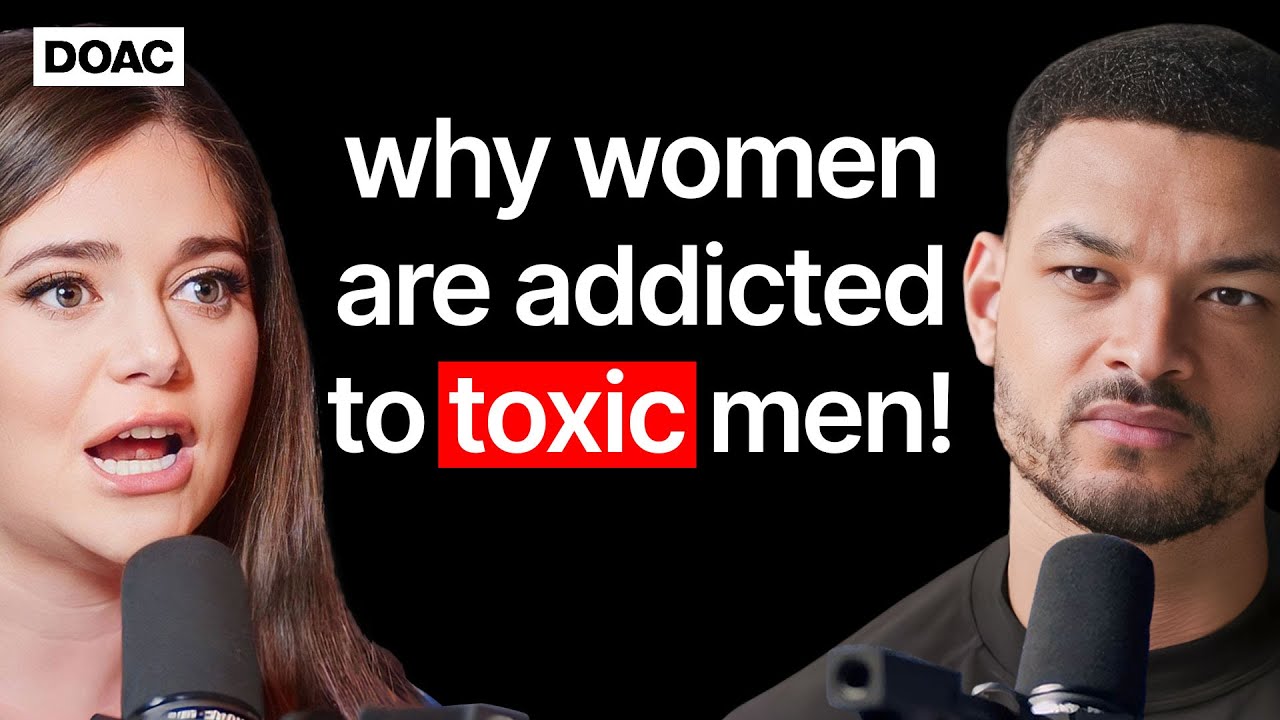
The Love Expert: Why Women Are Addicted To Toxic Men,"Have A Boring Relationship Instead!" Logan Ury — The Diary Of A CEO

The Diary Of A CEO

Data shows daters sabotaging their long-term marital success by prioritizing immediate emotional spark over proven predictors like kindness, loyalty, and conflict resolution.

AI-assisted summary of The Love Expert: Why Women Are Addicted To Toxic Men,"Have A Boring Relationship Instead!" Logan Ury — original source. Check the original for full context.

Source published:

Detailed notes

## Background This episode of "The Diary Of A CEO," hosted by Steven Bartlett, was published on YouTube on October 26, 2023. It features behavioral scientist and dating coach Logan Ury discussing dating strategies, attachment styles, and relationship dynamics. The description provides links to Ury's book, her dating quiz, and related podcast episodes.

## TL;DR Logan Ury shares science-backed insights into modern dating, exploring how attachment styles shape relationship behaviors and why daters often mistake anxiety for chemistry. She breaks down common dating tendencies, such as the Romanticizer and Maximizer, while explaining mathematical concepts like the "Secretary Problem" for optimal partner selection. The discussion covers practical strategies for profile optimization, ditching small talk, avoiding petty "icks," and evaluating long-term compatibility through tools like the Post-Date 8.

## Atmosphere & style The conversation is intellectually grounded yet deeply personal, blending behavioral science with intimate self-reflection. Steven Bartlett approaches the discussion with raw honesty about his own past dating patterns, creating a candid, collaborative environment. Ury offers empathetic yet direct guidance, making complex psychological principles feel practical, reassuring, and transformative.

## Key takeaways - [15:56](https://www.youtube.com/watch?v=ow3ao6YsCgQ&t=956s) Understanding attachment styles and biological/societal triggers is key, with around 25% of people successfully shifting their attachment style over time through self-awareness and behavioral changes. - [17:22](https://www.youtube.com/watch?v=ow3ao6YsCgQ&t=1042s) Dating a securely attached partner helps break the anxious-avoidant cycle and frees up substantial cognitive energy previously consumed by dating anxiety. - [19:14](https://www.youtube.com/watch?v=ow3ao6YsCgQ&t=1154s) Daters frequently mistake secure partners for being 'boring' while misinterpreting avoidant behavior as high value due to intermittent reinforcement. - [31:45](https://www.youtube.com/watch?v=ow3ao6YsCgQ&t=1905s) The 'Secretary Problem' from optimal stopping theory suggests rejecting the first 37% of potential options (roughly up to age 26) to establish a baseline before choosing the next best match. - [45:02](https://www.youtube.com/watch?v=ow3ao6YsCgQ&t=2702s) Superficial 'icks' often function as sub-conscious defense mechanisms to avoid emotional vulnerability, making it crucial to distinguish pet peeves from genuine deal breakers. - [50:00](https://www.youtube.com/watch?v=ow3ao6YsCgQ&t=3000s) People generally fall into 3 Dating Tendencies: Romanticizers (unrealistic expectations of relationships), Maximizers (unrealistic expectations of partners), and Hesitators (unrealistic expectations of self). - [54:48](https://www.youtube.com/watch?v=ow3ao6YsCgQ&t=3288s) Dating like a scientist involves intentionally altering environment design and testing date variables to reduce stress and overcome dating fatigue. - [01:00:43](https://www.youtube.com/watch?v=ow3ao6YsCgQ&t=3643s) Strict height filters eliminate a massive portion of the dating pool, with an 6'0" filter excluding 86% of adult men in the U.S. - [01:02:02](https://www.youtube.com/watch?v=ow3ao6YsCgQ&t=3722s) Practicing good phone hygiene on dates is essential, as the mere visible presence of a smartphone drastically reduces conversational depth and intimacy. - [01:04:37](https://www.youtube.com/watch?v=ow3ao6YsCgQ&t=3877s) Building genuine connection requires skipping generic small talk and showing vulnerability or 'cracks' rather than projecting a perfect exterior. - [01:10:33](https://www.youtube.com/watch?v=ow3ao6YsCgQ&t=4233s) The 'Share First' strategy allows individuals to authentically state their relationship goals without prompting the other person to simply echo what they want to hear. - [01:18:15](https://www.youtube.com/watch?v=ow3ao6YsCgQ&t=4695s) Daters should shift from 'relation-shopping' based on specific criteria to 'relation-shipping' by focusing on how a partner makes them feel and prioritizing a steady 'Slow Burn' over instantaneous spark. - [01:21:53](https://www.youtube.com/watch?v=ow3ao6YsCgQ&t=4913s) Long-term relationship satisfaction depends on emotional stability, kindness, loyalty, and conflict resolution skills rather than extreme physical attraction or shared hobbies. - [01:29:51](https://www.youtube.com/watch?v=ow3ao6YsCgQ&t=5391s) Research shows that 69% of relationship conflicts are perpetual, meaning healthy couples focus on managing recurring issues rather than eliminating all disagreement. - [01:32:24](https://www.youtube.com/watch?v=ow3ao6YsCgQ&t=5544s) Couples who intentionally 'decide' to reach major milestones (like cohabitation) experience better long-term outcomes than those who passively 'slide' into them. - [01:37:43](https://www.youtube.com/watch?v=ow3ao6YsCgQ&t=5863s) Optimizing dating profiles requires specific photo selection and detailed prompt answers that tell a genuine story rather than relying on clichés.

## Detailed walkthrough ### [00:00](https://www.youtube.com/watch?v=ow3ao6YsCgQ&t=0s) Intro & The Science of Modern Dating

Logan Ury, a renowned dating scientist from Harvard and Director of Relationship Science at Hinge, frames a central paradox of modern romance: almost everyone wants to find love, but most people are completely wrong about what actually makes them happy in a long-term partner. Modern dating as we know it is a very recent human experiment—for most of history, marriages were arranged based on proximity, land, or family matchmakers. dating apps are only a decade old, meaning our brains are forced to navigate an unprecedented mating landscape without built-in evolutionary software.

Ury highlights three central pillars of her research that help individuals get out of their own way: * **The "Spark" Myth:** The obsession with instant fireworks often leads to intense relationships that quickly burn out. * **The Post-Date 8:** Eight specific reflection questions designed to retrain your brain after a date instead of relying on superficial impressions. * **The Three Dating Tendencies:** Universal behavioral patterns that subtly sabotage people from finding a lasting relationship.

---

* Modern dating began around **1890**, shifting away from thousands of years of arranged or land-based marital alliances. * Dating apps have only existed in earnest for roughly **10 years**, creating a gap between ancient biology and digital interface culture.

---

[02:10](https://www.youtube.com/watch?v=ow3ao6YsCgQ&t=130s) Why Behavioral Science Matters in Dating

Ury transitioned from behavioral science into full-time relationship coaching and research because she repeatedly saw people suffering from blind spots they could not identify on their own. People are born knowing how to love, but nobody is born inherently knowing how to date in the modern era. As Hinge's Director of Relationship Science, Ury studies user data to uncover what successful daters do differently, aiming to bridge the gap between human intent and dating outcomes.

Addressing the skepticism surrounding dating app algorithms, Ury addresses the common suspicion that platforms intentionally retain users for subscription revenue. Reflecting on an early interview with Hinge CEO Justin McLeod, she notes that the company operates on a word-of-mouth model: successful couples who met on Hinge act as the ultimate referral engine, creating an incentive structure aligned with getting users off the app and into healthy relationships.

> "We were born knowing how to love, but we're not born knowing how to date."

---

[05:55](https://www.youtube.com/watch?v=ow3ao6YsCgQ&t=355s) Understanding Attachment Theory & The Anxious-Avoidant Loop

Attachment theory—originally developed by psychologist John Bowlby in the 1960s through observational experiments with mothers and infants—serves as the foundational blueprint for how adults manage intimacy and independence. In these classic experiments, infants demonstrated distinct responses upon their mother's return: 1. **Anxiously Attached:** The infant continues to cry and struggle to calm down, fearing ongoing abandonment. 2. **Avoidantly Attached:** The infant appears stoic or ignores the mother, suppressing internal distress to avoid further rejection. 3. **Securely Attached:** The infant is quickly soothed by the mother's presence, balancing a desire for connection with confidence.

In the adult dating pool, roughly **50% of the population is securely attached**, but because secure individuals tend to enter long-term relationships and stay in them, the remaining active dating pool is heavily populated by anxious and avoidant individuals. This imbalance frequently triggers the **Anxious-Avoidant Loop**: an anxious partner chases out of fear of abandonment, which causes the avoidant partner to pull away out of fear of being smothered. Both mistake this intense, high-anxiety dynamic for true passion until they learn to break the pattern.

``` Anxious Partner (Fears Abandonment) ──> Chases / Seeks Reassurance ▲ │ │ ▼ Re-triggers Anxiety <── Pulls Away / Deactivates <── Avoidant Partner (Fears Smothering) ```

Ury shares a personal turning point from her own dating life when she fell into an anxious-avoidant cycle with someone she met at Burning Man. After crying on a friend's couch over his lack of investment, she hired a dating coach. The coach had her write down a list of how she actually wanted a partner to make her feel—words like *desired*, *respected*, and *admired*. Realizing her crush offered none of those feelings, Ury shifted her attention to a co-worker who had been tutoring her in the statistical programming language **R**. Though she initially wrote him off over minor differences (such as his dislike of travel), focusing on how he made her feel transformed their bond, leading to a happy relationship of nearly nine years and marriage.

---

[11:26](https://www.youtube.com/watch?v=ow3ao6YsCgQ&t=686s) Navigating Avoidant Attachment & Overcoming "Deactivating Strategies"

Avoidant attachment manifests through a predictable pattern whenever intimacy begins to deepen: 1. **The Trigger:** A moment of vulnerability or close contact (e.g., a partner staying over on a Sunday morning). 2. **Deactivating Strategies:** Subconscious thoughts or hyper-fixations on minor flaws that push the other person away (e.g., obsessing over an unbrushed toothbrush or a minor habit). 3. **Protest Behaviors:** Abruptly shutting down, snapping, or manufacturing a reason to end the interaction (e.g., ordering an Uber to force them to leave).

These internal rationalizations feel completely valid to the avoidant individual, but they actually function as a protective defense mechanism against the fear of being vulnerable, rely on someone, or ultimately get let down or hurt.

To counteract avoidant triggers without damaging relationships, Ury recommends concrete behavioral shifts: * **Direct Communication:** Clearly state your boundaries and needs upfront instead of abruptly dismissing someone (e.g., *"I had an amazing time, but I need to focus on my upcoming week, so I'll follow up with you soon"*). * **Counteracting the Negativity Bias:** Evolutionary biology hardwires the human brain to ruminate on negative traits to protect against danger. To override this, actively identify and state five positive traits or moments with your partner. * **Reframing Minor Flaws:** Recognize that hyper-fixating on minor details—like a client who dismissed a great date because he wore a white T-shirt under his shirt that reminded her of her uncle—is an emotional defense mechanism against intimacy.

---

<ElicitationsGroup message="Explore more from this interview:"> <Elicitation label="Continue to Part 2: What to Do as an Avoidant Attached Person" query="Please provide the next detailed walkthrough for Part 2 of this transcript."/> <Elicitation label="Deep-dive into Logan Ury's 'Post-Date 8' Questions" query="Can you break down the 'Post-Date 8' questions from Logan Ury and how to apply them?"/> </ElicitationsGroup>

[15:56](https://www.youtube.com/watch?v=ow3ao6YsCgQ&t=956s) Rethinking Attachment Origins: Beyond Blaming Parents

Logan Ury addresses a common misconception surrounding attachment styles: the belief that they are strictly rooted in childhood and determined solely by how one's primary caregiver, particularly the mother, treated them. While parental dynamics play a part, Ury stresses that it is unfair to blame mothers entirely if someone is single or struggling in relationships. Societal influences and biological factors also shape how attachment patterns develop. Attachment theory offers a helpful diagnostic framework, but it should never be used as a convenient excuse to evade personal accountability or resign oneself to staying single.

Furthermore, attachment styles are not set in stone. Research indicates that approximately 25% of people successfully shift their attachment style over time through dedicated effort. For an avoidant individual, this work involves recognizing personal triggers, practicing self-regulation, explicitly stating their needs rather than expecting partners to read their minds, and actively looking for positive traits in others. When either an anxious or avoidant person gets triggered, they enter what Ury terms the "danger zone"—an intense emotional state driven by a fight-or-flight impulse to either escape the partner immediately or desperately reconnect. Learning to self-regulate allows individuals to remain in their "comfort zone" and handle emotional stress without sabotaging the relationship.

- Roughly 25% of people manage to alter their attachment style through self-awareness and active behavioral changes. - The "danger zone" is the high-stress state where anxious or avoidant triggers drive extreme reactions (running away or desperately pursuing closeness).

[17:22](https://www.youtube.com/watch?v=ow3ao6YsCgQ&t=1042s) Healing Through a Secure Partner: Ury's Personal Experience

While individual internal work is effective, Ury advocates a strategy she considers far easier: dating a securely attached partner. Being in a relationship with a secure person acts as a natural buffer, effectively breaking the destructive "anxious-avoidant loop." Ury illustrates this with a personal story from her past as an anxiously attached dater. Before meeting her husband, she was stuck in toxic cycles—most notably chasing an emotionally unavailable "Burning Man guy." Early in her relationship with her now-husband, she experienced a moment in San Francisco where she became intensely overwhelmed, angry, and flooded with cortisol. Expecting their interaction to follow her past pattern—where her explosive text messages would trigger a fiery argument, a major blowout, and an eventual makeup—she fired off angry texts detailing everything he had done wrong.

Her husband broke the cycle completely with his secure response. Instead of getting defensive or picking a fight, he texted back: "It sounds like you're upset. We should talk about this in person." This simple acknowledgment validated her feelings while establishing a healthy boundary, instantly diffusing her anger. Ury jokes that his calm demeanor was likely aided by having a therapist for a mother. Living in a secure marriage transformed her own attachment security, freeing up immense mental bandwidth. She estimates that early in her dating life, 20% to 50% of her cognitive energy was consumed by anxious ruminations, emotional spirals, and constant worry over partners. Achieving relationship peace allowed her to channel that energy into her career.

> "I really feel like 20 to 50% of my brain was in these spirals worrying about people being anxiously attached, ruminating on them... being in a secure relationship actually gives you a lot of peace and you can use that brain power for something else."

[19:14](https://www.youtube.com/watch?v=ow3ao6YsCgQ&t=1154s) The "Vanilla" Misconception and the Addiction to "Bad Boys"

A major obstacle in finding love is that people frequently misinterpret secure partners as boring, unexciting, or "vanilla." Steven Bartlett notes that avoidant partners often seem more attractive initially because playing hard-to-get creates an illusion of high social proof and value. Ury agrees, recalling her mindset with the "Burning Man guy": she assumed that if someone rejected or didn't want her, they must be superior to her. People get caught up trying to win over unavailable partners to regain a sense of power, rather than adopting the healthier mindset of wanting a partner who reciprocates their interest.

Ury shares an anecdote about a client who refused to see a man again after he sent her helpful recommendations for a trip to Seattle, dismissing his thoughtfulness as "desperate." Ury had to point out that he was simply a nice, interested guy trying to share a bookstore recommendation. To explain why people become addicted to emotionally unavailable partners ("bad boys"), Ury references B.F. Skinner’s classic psychological experiment with pigeons:

* **Pigeon #1 (Continuous Reward Schedule):** Every time the pigeon presses a lever, food comes out. If the food is turned off, the pigeon presses the lever a few times, realizes it no longer works, and stops. * **Pigeon #2 (Partial/Intermittent Reward Schedule):** Food comes out unpredictably—sometimes after 1 press, sometimes after 5 or 20. When the food is turned off entirely, the pigeon continuously presses the lever until it collapses from exhaustion.

This intermittent reinforcement is the exact mechanism that powers slot machines and gambling addictions, and it explains the pull of "bad boys." At first, they shower a partner with attention, but then they pull back and run hot and cold. The unpredictability creates a dopamine-driven addiction where the person constantly asks, "Will they text me back this time?" Secure partners operate on a continuous reward schedule—offering consistent, predictable affection—which is essential for long-term relational stability, even if it lacks the chaotic high of intermittent validation.

- Secure partners are the "heroes of the relationship world," defined by consistency, transparency, and a lack of mind games. - Intermittent reinforcement (the partial reward schedule) explains the psychological addiction to hot-and-cold partners.

[24:45](https://www.youtube.com/watch?v=ow3ao6YsCgQ&t=1485s) Deconstructing the Anxious-Avoidant Cycle in Real Time

Steven Bartlett opens up about his own relationship history, admitting that for the first 25 years of his life, he was heavily avoidant and viewed relationships as "prison." His dynamic shifted when he met his current girlfriend, whom he describes as sitting between secure and anxiously attached. She is a calm communicator who prefers sitting down to discuss issues rather than shouting or panicking. However, Bartlett observes how their respective attachment styles can still collide during specific disagreements.

He walks through their exact conflict loop step-by-step: 1. **The Trigger:** On a date, Bartlett inadvertently stops paying attention to her. 2. **The Anxious Escalation:** Sensing the withdrawal of attention, she becomes increasingly needy and starts "pecking" for his engagement. 3. **The Shutdown:** When she doesn't get the desired connection, she goes completely quiet out of frustration. 4. **The Confrontation:** Bartlett notices her annoyance and asks what is wrong. She explains what he did minutes earlier that hurt her feelings. 5. **The Avoidant Impulse:** Feeling overwhelmed and wanting to avoid an argument, Bartlett feels an intense urge to grab his belongings and escape to a hotel, physically repeating to himself, *"Don't leave the house, don't leave the house."* 6. **The Pursuit:** As he tries to head for the exit, she steps up her efforts to pursue and solve the problem immediately, wanting him closer right when he feels smothered.

Ury notes that this sequence is the textbook definition of the anxious-avoidant loop: one partner feels disconnected and pursues closeness, while the other feels trapped and demands space. To break this loop, both partners must learn emotional self-regulation. The avoidant partner should request a brief timeout to lower their rising cortisol levels without abandoning the conversation (e.g., stating, *"I see you're upset, but I need a few minutes to regulate so I can hear you properly"*). Meanwhile, the anxious partner can use self-soothing strategies like going for a walk, texting a friend instead of demanding immediate resolution, or seeking "disconfirming evidence"—brainstorming plausible, non-catastrophic reasons for a partner's behavior instead of jumping to the worst-case scenario.

> "I have to say in my head: don't leave the house, don't leave the house, don't leave the house. And at that point what she wants to do is she wants to chase..."

[29:13](https://www.youtube.com/watch?v=ow3ao6YsCgQ&t=1753s) Bartlett's "Apology Tour" to Bali

Ury presses Bartlett on a story she read online about his relationship: after dating for two years, he and his girlfriend broke up, and he eventually flew all the way to Bali to pursue her. Ury highlights how unusual it is for a historically avoidant partner to do the chasing, suggesting it represented a major breakthrough in his pattern.

Bartlett shares the context behind their breakup. Near the end of their initial two-year relationship, while lying in bed in Paris, his girlfriend turned to him and admitted she no longer enjoyed having sex with him. For a 25-year-old guy who considered himself attractive and confident, this was a deeply emasculating blow, and the relationship ended shortly after. During the COVID-19 pandemic, struggling with depression and seeking a fresh start, she moved to Bali, where she lived for two years.

A year after the breakup, having dated other people, Bartlett realized she was truly the best person he had ever met. Determined to make amends, he booked a flight to Bali on what he calls an "apology tour." For the first three weeks of his four-week stay on the island, she was sweet and polite but showed zero romantic interest in him. It was only during the final week—after he sent a warm, pressure-free text expressing how proud he was of her personal growth and preparing to leave for the UK—that the dynamic shifted, prompting her to text him the next day asking to meet up.

- Bartlett's girlfriend moved to Bali for two years during the pandemic following their initial breakup in Paris. - He spent four weeks in Bali on an "apology tour" to repair the relationship, with romantic interest only re-igniting in the final days when he released expectations.

[031:45] Breaking the Pattern and the "Secretary Problem"

Reflecting on the dramatic turn in his own relationship, Steven Bartlett notes how close he came to telling his girlfriend off out of pride before overriding his avoidant tendencies to see her. Logan Ury highlights this as a pivotal moment of growth. In her coaching practice, Ury frequently encounters clients—even 70-year-olds—who repeat the exact same relationship patterns for decades without realizing they have the agency to choose a different path. A great relationship, she explains, is not a matter of luck but the culmination of a series of conscious, intentional decisions—from deciding who to date and marry, to choosing who to have children with.

Ury connects this decision-making framework to a concept from computer science and mathematics known as optimal stopping theory, famously illustrated by the **"Secretary Problem."** Detailed in the book *Algorithms to Live By*, the classic setup imagines interviewing 100 job candidates sequentially. To maximize the mathematical probability of picking the absolute best candidate, you should sample and reject the first 37% (the first 37 applicants) to establish a baseline quality standard. From applicant 38 onward, you immediately hire the very first person who outperforms that initial benchmark.

Applied to human dating, Ury translates the math into real-world timelines. Assuming an average person dates actively between the ages of 18 and 40 (a 22-year period), 37% of that span brings a person to roughly **26.1 years old**. At that benchmark age, a dater should reflect on the best partner they have encountered so far (the "Jenny" benchmark). The next time they meet someone who exceeds that benchmark, they should commit to building a lasting relationship rather than endlessly searching for an elusive, "perfect" candidate. Bartlett's decision to reunite with his girlfriend after a year apart mirrored this principle, as he realized she was his benchmark.

- **Optimal Stopping Math:** The mathematically proven strategy dictates rejecting the first 37% of options to set a benchmark, then choosing the next option that exceeds it. - **The Dating Timeline:** Based on dating from ages 18 to 40, the 37% mark occurs at age 26.1. - **The Maximizer Trap:** Perfectionists ("maximizers") often continue searching past their benchmark, depleting their options while looking for flawless partners who do not exist.

---

[038:48] Navigating Anxious Attachment and Digital Body Language

Shifting the conversation to anxious attachment styles, Bartlett asks how anxious individuals can improve their chances of finding love, citing his own girlfriend's occasional anxious tendencies. Ury breaks down the classic psychological loop experienced by anxiously attached individuals:

1. **The Trigger:** An event occurs, such as asking a partner to hang out tomorrow and receiving no immediate reply. 2. **Activating Strategies:** Brain spiraling and catastrophic thoughts ("They don't like me anymore," "They found someone else") driven by an core fear of abandonment. 3. **Protest Behavior:** Acting out impulsively—sending 10 to 20 texts in a row or leaving angry voicemails. 4. **Shutdown/Punishment:** Retreating or turning off the phone after failing to get the desired reassurance.

To interrupt this destructive loop before becoming emotionally overwhelmed or "floated," Ury offers actionable self-regulation strategies: actively distracting oneself (e.g., going for a phone-free walk), venting anxiety to a friend instead of the partner, or acting as an internal "judge and jury" by consciously presenting disconfirming evidence against panic. Citing Viktor Frankl's *Man's Search for Meaning*, she emphasizes that emotional maturity lies in widening the space between a stimulus and one's reaction.

Bartlett shares a personal anecdote about advising a female friend who felt she was being ghosted. Bartlett reviewed her text messages, saw her repeatedly attempting to drag a conversation forward despite getting cold, one-word responses, and told her bluntly: *"People do what they want to do."* Ury strongly validates Bartlett's advice, noting that while high achievers can force success in athletics or business through sheer hustle, "you can't hustle your way into a relationship."

Drawing from research she conducted at Hinge on **Digital Body Language (DBL)**, Ury points out that non-verbal communication has moved to text. Lack of follow-up questions, slow response times, and minimal answers are modern digital indicators of low interest. Unavailablity should not be treated as a challenge to conquer; true growth for anxious daters involves retraining their brains to find emotional availability attractive rather than boring.

---

[045:02] The Petty "Icks" Blocking Love

Bartlett shares another story about the same friend, a mid-30s woman who repeatedly dates emotionally unavailable or married men. While on a dating app, she showed him a profile of a kind, polite, well-employed man, but refused to date him simply because she noticed storage boxes stacked on top of a cupboard in the background of one of his photos. Ury uses this example to illustrate how superficial turn-offs—often called "icks"—serve as unconscious defense mechanisms to avoid real intimacy with available partners.

[46:40](https://www.youtube.com/watch?v=ow3ao6YsCgQ&t=2800s) The Rise of "The Ick" and Pet Peeves vs. Deal Breakers

The discussion begins with Steven Bartlett sharing an absurd real-life example of a woman rejecting a potential partner on Tinder simply because there was a random box sitting on the wardrobe behind him in his picture. Logan Ury jumps in to address the viral cultural phenomenon known as "the ick"—a trendy term describing a sudden, irrational loss of romantic attraction toward someone. To illustrate how petty these triggers have become, Logan references her friend, comedian Jared Freid, who travels the country asking women for their most outrageous "icks." Among his classic stories:

- **The Velcro Wallet:** A woman is on a fantastic date and ready to go home with a guy, but the moment he pulls out a noisy velcro wallet to pay the bill, all attraction evaporates. - **The Imaginary Bus:** A woman admitted her ick was imagining a guy running to catch a bus he was late for. Jared had to clarify: *"To be clear, there was no bus and there was no running?"* She confessed she simply imagined it in her head and turned herself off.

While these stories are hilarious to recount over Sunday brunch or post on TikTok, Logan warns that "the ick" has become a destructive excuse to avoid vulnerability and emotional intimacy. Modern daters regularly confuse minor **pet peeves** (annoying habits or items, like a velcro wallet, that are easily fixable or overlookable) with actual **deal breakers** (fundamental, unresolvable incompatibilities, such as an asthmatic dating a heavy smoker).

Social media feeds into this toxic behavior by offering massive "social capital" and viral engagement for sharing dating horror stories. Daters end up consuming "date entertainment"—treating dating as a content-generation exercise for their friend group or TikTok followers rather than a genuine search for human connection. As Logan points out, if a great guy happens to carry a childish velcro wallet, the sensible response isn't to dump him—it's to buy him a nice new leather wallet once you start dating.

- **Definition of "The Ick":** A sudden, often petty or irrational feeling of disgust or attraction loss toward a prospective partner. - **Pet Peeve vs. Deal Breaker:** A pet peeve is a minor nuisance (e.g., wardrobe choice, velcro wallet); a deal breaker is an core mismatch in values, lifestyle, or health requirements. - **Social Capital Incentive:** Modern daters are rewarded with social clout and viral views when framing dates as absurd "disaster stories" rather than seeking genuine connection.

---

[50:00](https://www.youtube.com/watch?v=ow3ao6YsCgQ&t=3000s) The 3 Dating Tendencies: Romanticizer, Maximizer, and Hesitator

When Steven mentions a friend who runs a dating podcast, goes on over 100 dates a year, and still cannot find a partner, Logan argues that this is rarely a "supply problem." It is statistically improbable that none of those 100 people were compatible. Instead, serial daters are usually trapped by irrational behavioral patterns. Logan introduces her core framework—**The 3 Dating Tendencies**—developed through years of behavioral research and coaching thousands of clients. Every tendency stems from a core set of unrealistic expectations:

1. **The Romanticizer (Unrealistic expectations of relationships):** - Believes in soulmates, "love at first sight," and cinematic "meet-cutes." - Expects relationships to be effortless; at the first sign of friction or hard work, they assume, *"Must not be my soulmate,"* and abandon ship. 2. **The Maximizer (Unrealistic expectations of their partner):** - Obsessed with finding the absolute optimal option because they believe a "better" match is just one swipe away. - Constantly seeks a "Frankenstein partner"—trying to blend the ambition of one ex, the physical attractiveness of another, and the great family background of a third into a single nonexistent human. 3. **The Hesitator (Unrealistic expectations of themselves):** - Does not actually go on dates because they feel unprepared or unworthy. - Constantly defers dating until a future milestone is reached: *"I'll date when I lose 10 pounds," "when I get a promotion,"* or *"when I finish therapy."* They fail to realize that the only way to get better at dating is by actively dating.

Logan posits that Steven’s podcast-host friend is almost certainly a **Maximizer**. By treating dating like an endless job interview, Maximizers repeat the same mechanical scripts (*"How long have you lived in London? What do you do for work?"*) until dates feel transactional and devoid of romantic chemistry.

---

[54:48](https://www.youtube.com/watch?v=ow3ao6YsCgQ&t=3288s) Designing the Ideal Date Environment and "Dating Like a Scientist"

To break out of stagnant dating patterns, Logan stresses that the **environment** plays a decisive role in whether chemistry can flourish. Boring or stressful environments stifle romantic sparks:

- **The 7:00 AM Coffee Mistake:** Logan shares a story of a client who insisted on scheduling 7:00 AM coffee dates at the Starbucks underneath his office building. Nobody feels flirtatious or seductive at dawn before having caffeine. - **Side-by-Side Seating:** Research indicates that direct, continuous eye contact across a narrow table can actually increase cognitive strain, making listening and speaking harder. Sitting side-by-side at a bar or counter relieves pressure and encourages vulnerability—the same psychological mechanism that makes deep conversations flow naturally during long car rides. - **Sober Dating:** Gen Z is leading a massive shift toward sober dating to avoid post-date anxiety ("hangxiety") and get an accurate read on a partner without alcohol masking personalities. Zero-proof menus and mocktail bars are normalizing non-alcoholic dates. - **Evoking Playfulness:** Long-term compatibility requires a playmate. If you show up in "boss mode" fresh out of a stressful workday, you project a rigid energy that feels like interviewing someone to fill a corporate "husband/wife role."

Logan advises daters to **"date like a scientist"**—formulate a clear hypothesis, test new variables, and stay open to being proven wrong. Shift the pre-date routine by taking a relaxing bath, listening to a high-energy podcast, or picking interactive activities where you can let down your guard (such as ping-pong, ice skating, or a comedy club).

- **Eyeball Strain:** Continuous direct eye contact raises cognitive load; side-by-side seating reduces tension and improves conversational flow. - **Mindset Shifts:** Transitioning out of work mode before a date prevents transactional "interview" dynamics. - **Scientific Iteration:** Systematically change date variables (time, location, activity, outfit) if standard coffee dates yield poor results.

---

[01:00:43](https://www.youtube.com/watch?v=ow3ao6YsCgQ&t=3643s) Removing Restrictive Filters and Height Bias

One of the biggest self-sabotaging behaviors in modern digital dating is setting overly restrictive app filters. Logan highlights the pervasive issue of height requirements set by female daters:

- In the United States, **86% of adult men are under 6 feet tall**. - When a user sets her height filter strictly to "6'0\" and above," she automatically eliminates **86% of the dating pool**, competing for the remaining **14%**.

Logan points out that height has zero scientific correlation with long-term relationship satisfaction, partner loyalty, or emotional intelligence. Daters act like strict "bouncers at their own club," blocking out high-quality partners based on arbitrary physical attributes. By expanding app parameters—whether regarding height, age ranges, or locations—daters allow genuine chemistry and personality compatibility to take priority over superficial checkboxes.

- **Height Demographics:** 86% of US men are under 6 feet tall; setting a 6-foot filter cuts off nearly 9/10ths of potential matches. - **The Bouncer Analogy:** Arbitrary app filters act like overly strict nightclub bouncers, keeping out compatible, high-quality partners before interaction even begins.

[01:02:05](https://www.youtube.com/watch?v=ow3ao6YsCgQ&t=3725s) Distraction-Free Dating and Phone Hygiene

The discussion opens with Steven Bartlett observing couples at restaurants while waiting for food. While some long-term couples play guessing games about other patrons, younger couples are frequently seen glued to their phones, leading to what appears to be a cold or disconnected date. Logan Ury notes that technology addiction is not isolated to Gen Z; older generations—such as Boomers on Facebook—equally struggle with screen distraction. To combat this widespread issue, Hinge developed the *Distraction-Free Dating Guide*, which synthesizes behavioural research to help people build genuine connections.

Ury references research by MIT professor Sherry Turkle, which demonstrates that the mere presence of a phone on a table—even if it is face-down or turned off—drastically reduces the depth of a conversation. When a phone is visible, a dating partner subconsciously senses that the interaction could be interrupted at any second, making them feel unsafe to share vulnerable details. To optimize dating hygiene, Ury outlines several actionable rules for removing screen-based friction:

- **Hide screens entirely:** Keep phones and smartwatches completely out of sight rather than resting them on the table face-down. - **Clear emotional and work tabs:** Wrap up pressing work or personal conversations prior to the date so the mind is not preoccupied with replying to others. - **Save memes for callbacks:** Resist the urge to pull out a phone to show a meme or photo; use it instead as a follow-up text after the date. - **Lock in post-date plans:** Confirm subsequent social plans ahead of time so there is no need to text friends during the date. - **Gamify screen-free dates:** Establish an explicit rule at the beginning of the date: "First person to check their phone buys the drinks."

[01:04:37](https://www.youtube.com/watch?v=ow3ao6YsCgQ&t=3877s) Skipping Small Talk: Share Stories, Not Facts

Transitioning from physical distractions to conversational quality, Ury argues that serial daters often fail because they get stuck in shallow small talk. Hinge’s research highlights that people are overwhelmingly drawn to emotional vulnerability. However, Ury observes through her coaching practice that many individuals find going deep surprisingly difficult because they default to listing facts rather than telling stories.

To illustrate this, Ury recounts a coaching session with a female client whose dates repeatedly fell flat. When asked what she talked about, the client listed mundane biographical facts. When Ury asked about her family, the client simply stated, "I have a brother and he lives across the country." Ury helped her reframe this fact into an emotional story: her brother had just had a baby whom she hadn't met yet, leaving her feeling disconnected from him, worried about her aging parents, and anxious about her own timeline as her friends began having children. Ury emphasizes that while facts provide the setup, the underlying feeling is what creates the connection.

> "When you have a shiny, perfect exterior, there's no cracks for me to grab onto. You actually need to show me the cracks so that there's something to grip and I can actually feel connected to you."

- **The "Cracks" Analogy:** People—especially older professionals who have spent decades building an impressive, flawless image—often present a polished exterior. However, perfection creates distance, whereas revealing internal struggles or "cracks" gives a partner something to hold onto. - **Appropriate Vulnerability:** Sharing stories does not mean oversharing severe family trauma immediately. Minor, relatable admissions—such as struggling with a new manager at work or taking medication for a past injury—signal that you carry normal human baggage.

[01:07:37](https://www.youtube.com/watch?v=ow3ao6YsCgQ&t=4057s) The Paradox of Vulnerability and Low Self-Esteem

Bartlett poses a theory regarding why people struggle with vulnerability, asking whether individuals with low self-esteem feel the greatest compulsion to project absolute perfection. He mentions a friend with low self-confidence who undergoes an exhaustive three-day beauty routine—getting her hair, nails, and fake tan done—before dates, attempting to hit prospective partners with a facade of flawless perfection.

Ury agrees that low self-esteem drives people to keep others at arm's length out of fear that their real selves will be rejected. However, she points out that high-confidence individuals—particularly successful men—face a similar barrier. Society teaches men to "puff up their chest," project power, and pitch themselves much like they would pitch investors. Because society rewards them for having everything together, displaying vulnerability feels like an immense, unnatural risk.

Bartlett reflects on his personal journey, admitting that when he was younger and deeply insecure, vulnerability felt like an unacceptable risk. Over time, he ran what he calls an "experiment of being honest"—opening up on his podcast about his doubts, mental health struggles, and flaws. Instead of repelling people as he feared, vulnerability acted as a powerful magnet for deep connection.

[01:10:33](https://www.youtube.com/watch?v=ow3ao6YsCgQ&t=4233s) The "Undatable" Illusion and Building Connection

Expanding on the magnetic nature of vulnerability, Ury shares an experiment from her newsletter where she asked subscribers if they secretly believed they were "undatable." Hundreds of readers responded with conflicting fears: some felt undatable because they suffered from chronic fatigue or lacked a close relationship with their parents, while others felt undatable for having either too many or too few past sexual partners. In a follow-up email, Ury revealed to her audience that these perceived flaws do not make anyone undatable; rather, they represent the exact points of vulnerability that foster authentic intimacy.

Bartlett shares how this dynamic plays out in his current relationship. Over the preceding six months, he began opening up to his girlfriend during his darkest moments and bad days. Despite a societal voice telling him that showing emotional weakness might make his partner find him unmanly or unappealing, the outcome was the exact opposite: it deepened their connection and transformed their relationship from "perfectly shallow and inauthentic" into a profound bond where both feel safe.

- **The Reinforcement Cycle:** Disclosing vulnerability creates safety, which leads to partner connection, reinforcing the safety required to be even more open in the future. - **The "Share First" Strategy:** When discussing relationship goals, state your own intentions first (e.g., "I'm looking for a long-term relationship and ready to build a family. What about you?") rather than interrogating the other person, which prevents them from simply echoing what they think you want to hear. - **Uncensored Conversation:** Ury attributes her conversational skills to refusing to censor her current state; admitting when she feels burned out or stressed gives others permission to sigh, drop their guard, and be real.

Here is a detailed, faithful walkthrough covering the provided transcript section.

---

[01:15:51](https://www.youtube.com/watch?v=ow3ao6YsCgQ&t=4551s) Social Media, Authenticity, and Gen Z

Steven Bartlett and Logan Ury explore why raw, messy vulnerability resonates so deeply with people, especially in contrast to polished online personas. Bartlett points out that 99% of our daily existence is unglamorous and disorganized—"like eating the Pot Noodle on my stomach at 2 a.m. watching junk television"—whereas social media typically feeds us a 1% "highlight reel" of pristine vacations in the Maldives. Because the mess is what most of us actually experience, seeing someone share their unvarnished reality feels uniquely relatable and validating.

Ury agrees, noting that traditional social media platforms incentivize curated perfection because a shiny photo from a scuba trip naturally pulls in more likes than a photo with mascara running after a bad day. However, she praises Gen Z for shifting cultural norms. By embracing platforms like TikTok over Instagram, Gen Z is ushering in an era of unfiltered authenticity where people let it all hang out. Ury shares that she is actively attempting to pivot her own online presence away from the put-together "Millennial" aesthetic toward being more real, acknowledging that while social media historically isolated people by making them feel like the only ones with a messy life, trends are finally moving in a healthier direction.

* "99% of our lives is imperfect... the thing that we can connect with and relate to the most is the mess of life." * "I'm trying to make that switch from like the Millennial 'have my together' to being more real."

---

[01:18:15](https://www.youtube.com/watch?v=ow3ao6YsCgQ&t=4695s) Shift from "Relation-Shopping" to "Relation-Shipping"

Reflecting on his personal evolution, Bartlett describes how his younger self approached dating like a rigid shopping list, demanding specific physical traits such as hair color. Over time, hindsight allowed him to distil his core needs down to three essential pillars: a strong sexual attraction, an intellectual connection, and a state of "mutual baking"—where both partners actively inspire and make each other better at their respective life missions.

Ury praises Bartlett’s three criteria, emphasizing that they focus on *relational dynamics*—who the two people are together—rather than superficial checklist qualities. She introduces a key concept from relationship science: the danger of **"relation-shopping."** Many daters log onto dating apps as if browsing Amazon for Bluetooth headphones, filtering for height, weight, or salary, only to find that hitting every filter fails to deliver long-term happiness. Instead, people must shift to **"relation-shipping"**—focusing on building and nurturing a partnership. Ury emphasizes that "maximizers" often come to her demanding help finding a hyper-specific individual, but relationship science proves that the person who ultimately makes us happy rarely matches our imagined ideal.

Rather than making rigid assumptions (such as ruling out a candidate because their parents are divorced), Ury advises people to **"date like a scientist"** by testing their hypotheses and remaining open. In fact, when her coaching clients report that a new date is "not my type," Ury considers it a major breakthrough because making a different choice breaks old, dysfunctional patterns.

* Relation-shopping treats finding a partner like buying electronics on Amazon based on specs, whereas relation-shipping focuses on doing the work to build a long-term connection. * Daters often hold false assumptions that artificially narrow their dating pool, making them pass over compatible partners. * When someone says a date is "not my type," it is often a positive signal that they are stepping outside harmful repetitive loops.

---

[01:21:44](https://www.youtube.com/watch?v=ow3ao6YsCgQ&t=4904s) Mindful Assessment: The "Post-Date 8" and the "Slow Burn"

To help daters abandon evaluative checklists, Ury created the **"Post-Date 8"**—a set of eight reflective questions to answer immediately following a date. Rather than judging the date like a job interviewer ("Are they ambitious enough? Are they tall enough?"), the Post-Date 8 forces the dater into an *experiential mindset* that tunes into internal emotional and physical feedback.

Much like a daily gratitude journal trains the brain to notice positive events throughout the day, answering the Post-Date 8 trains daters to pay attention to subtle relational cues in real time—such as whether they felt listened to, whether they laughed, or if their energy felt drained. Ury contrasts the addictive pursuit of "the spark"—which often stems from anxiety or intense, fleeting fireworks that burn out—with searching for the **"Slow Burn."** The Slow Burn represents the secure, steady partner whose appeal builds over time. The Post-Date 8 serves as a new barometer to track whether interest is naturally trending upward across consecutive dates.

* **Evaluating Mindset vs. Experiential Mindset:** Evaluative dating focuses on paper qualifications (resume, family background, wealth), which can blind people to someone who is actually rude or inconsiderate in person. * **The "Post-Date 8" Questions Focus On:** 1. What side of me did they bring out? 2. How did my body feel during the date (relaxed, tense, energized)? 3. Did we laugh together? 4. Do I feel more energized or less energized after the date? 5. Did I feel heard and listened to? 6. Was there a sense of curiosity? 7. Did I feel desired? 8. Is my interest in them trending upward?

* "The spark often leads to relationships that burn out... instead, you should go after the Slow Burn."

---

[01:25:13](https://www.youtube.com/watch?v=ow3ao6YsCgQ&t=5113s) What Doesn't Matter vs. What Science Says Does

Ury busts common romantic myths by outlining factors that matter far less for long-term marital success than people assume, alongside the scientifically proven qualities that actually predict a lasting partnership.

Factors That Matter Less Than You Think

1. **Looks:** Humans experience rapid **hedonic adaptation**—we adjust to whatever is around us. Ury quips that "even the hottest person you know, there's somebody who's sick of sleeping with them." While baseline attraction is necessary, optimizing for extreme physical attractiveness yields diminishing returns. 2. **Money:** Beyond having enough financial security to relieve basic pressures or outsource stressful chores, money does not guarantee relationship happiness. Ury references the **transition rule** from psychological research: whether someone wins the lottery or suffers a catastrophic injury like quadriplegia, their baseline happiness generally reverts to its original set-point within about a year. We adapt to financial upgrades in the exact same way. 3. **Identical Personalities or Hobbies:** Couples do not need identical interests; they simply need curiosity and mutual respect for each other's passions. Bartlett shares how he is grounded strictly in hard science while his girlfriend is deeply spiritual and metaphysical, yet their dynamic thrives. Ury adds that dating your "personality twin" can be exhausting, pointing to a former client with a wild, party-centric personality who ultimately found balance with a calm, homebody partner who served as his grounding "home base."

Science-Backed Qualities That Predict Long-Term Success

* **Kindness and Loyalty:** Having a compassionate teammate who treats you and others well and stands by you through life's difficulties. * **Emotional Stability:** Being with someone who is grounded and consistent makes navigating long-term relationships significantly smoother. * **Ability to Make Hard Decisions Together:** Navigating major life hurdles—such as aging parents, raising children, or career shifts—as a unified team. * **Fighting Well:** Being able to argue respectfully, take timeouts when flooded, frame disagreements as "us against the problem" rather than "you versus me," and communicate pain without attacking. * **The Person They Bring Out in You:** Ultimately, the most vital factor is how you feel in their presence. A person can be faultless on paper, but if they unconsciously trigger old childhood anxieties or make you feel small, the relationship will fail.

---

<ElicitationsGroup message="To explore these dating frameworks further:"> <Elicitation label="Review Logan Ury's 3 Dating Tendencies" query="What are the 3 Dating Tendencies described by Logan Ury in her book and interview?"/> <Elicitation label="Break down Attachment Theory in relationships" query="Explain how Anxious, Avoidant, and Secure attachment styles function in dating according to relationship science."/> </ElicitationsGroup>

[01:29:51](https://www.youtube.com/watch?v=ow3ao6YsCgQ&t=5391s) Fighting Well and Choosing Your Set of Problems

Logan Ury explains that finding long-term love is not about discovering a soulmate with whom you never fight, but about finding someone whose specific set of problems you are willing to manage. Citing the pioneering relationship research of Doctors Julie and John Gottman, Ury reveals that **69% of relationship fights are perpetual**. These recurring conflicts stem from fundamental differences in personality or lifestyle—such as one partner being a chronic early-arriver to the airport while the other prefers running late—and will never end in a total compromise or victory. Real maturity in a relationship means accepting these unresolvable differences and developing a joint conflict resolution strategy rather than breaking up the moment an issue arises.

The conversation touches upon how popular culture—specifically "Disney fairytale" narratives—misleads people into believing in a frictionless "happily ever after." To counter this mindset, Ury shares an insightful observation from her mother-in-law, a professional therapist, who tells couples claiming they never fight: *"Do you also not have sex?"* Avoidance of all conflict implies a lack of authenticity and an unwillingness to push through emotional boundaries to reach true intimacy. Furthermore, Ury dismantles the romantic obsession with how couples first meet. She notes that in a 50-year relationship, the single day a couple meets constitutes a mere **0.55%** of their total time together. Obsessing over a "rom-com moment" at a farmers' market overlooks the actual romance of spending decades building a life together.

- **Perpetual Fights:** 69% of all relationship arguments cannot be resolved and require long-term management instead of a definitive fix. - **The 0.55% Rule:** The initial day a couple meets accounts for only 0.55% of a 50-year relationship, making the meeting method far less important than the life built afterward.

---

[01:32:24](https://www.youtube.com/watch?v=ow3ao6YsCgQ&t=5544s) Moving In, Getting Married, and "Decide vs. Slide"

When Steven asks for data on when a couple should transition to marriage, citing his own four-year relationship and a 37-year-old friend who frantically rushes partners into moving in within weeks, Ury cautions against focusing on an artificial clock. She highlights the concept of **"Decide vs. Slide"** from relationship research. Couples generally progress through major milestones in one of two ways: "sliding" into the next phase out of convenience (e.g., moving in together simply because a lease is up) or "deciding" through intentional, explicit conversations about what the milestone means. Research shows that couples who slide tend to be less happy, less intentional, and even have less sex compared to those who make explicit decisions.

To build a resilient partnership, couples must explicitly make the "unconscious conscious." Partners often wrongly assume they share identical long-term visions simply because they are in love. Ury emphasizes that partners must actively discuss core questions regarding future living locations, family planning, and daily lifestyle expectations rather than assuming alignment.

- **Pre-Engagement Dating:** Research indicates that couples who date for more than two years before getting engaged have higher rates of marital success. - **Rushing Milestones:** Fast-tracking milestones (such as moving someone in after 20 days) bypasses critical relational work and damages long-term viability. - **The Risks of Sliding:** Slipping into major lifecycle changes out of convenience leads to lower overall relationship satisfaction.

---

[01:35:48](https://www.youtube.com/watch?v=ow3ao6YsCgQ&t=5748s) The Impact of Dating Apps and the "Thin Market"

Addressing the broader societal footprint of dating apps, Ury maintains that technology has been a net positive for modern romance. Citing landmark research by Stanford sociologist Michael Rosenfeld, she points out that **online dating has been the number one way couples meet since 2017**. Apps provide vital infrastructure for "thin dating markets"—such as singles over 50 or members of the LGBTQ+ community—who historically faced significant structural hurdles in locating potential local partners.

Responding to Steven's point about criticism from male users and commentary from Scott Galloway regarding extreme swipe disparities, Ury acknowledges that many men struggle on apps. However, she argues that technology is often used as a scapegoat for deeper dating friction. Apps serve merely as modern-day matchmakers; they can secure a first date, but personal accountability, curiosity, and offline effort dictate everything that follows. She advises users not to rely exclusively on smartphones and to proactively meet people through real-world activities like sports leagues.

- **Dominant Meeting Method:** Since 2017, online platforms have served as the primary mechanism for meeting romantic partners. - **Thin Dating Markets:** Apps provide unmatched connectivity for demographics that struggle with traditional local dating pools (e.g., LGBTQ+ individuals and older singles).

---

[01:37:43](https://www.youtube.com/watch?v=ow3ao6YsCgQ&t=5863s) An Expert Guide to Constructing the Ideal Dating Profile

Drawing from extensive empirical research conducted at Hinge, Ury outlines a strategic framework for constructing a standout dating profile. The core philosophy of a profile is **storytelling**: effectively communicating who you are across various facets of your life. Every profile should open with a clear, current headshot where the user’s face is fully visible without sunglasses, filters, or distant framing. Profiles must also include a full-body photo, an activity photo showcasing hobbies, and a group shot with family or friends to demonstrate a vibrant social life.

During the conversation, Steven and Ury joke about common pitfalls, such as the "Where's Waldo?" group picture—where a profile owner is indistinguishable among a crowd of friends—or profiles where every single photo features the person drinking alcohol at a night venue. Ury warns against using repetitive images, referencing a client who only uploaded photos from a single dress-up session with her dog. Prompt answers should also combine humor and emotional vulnerability, completely avoiding low-effort one-word responses, typos, or overly one-note comedic tone.

> "Your dating app is your billboard... if you're not willing to put effort into your profile, why would I think you'll put effort into the relationship?"

- **Essential Photos:** A clear face-focused headshot (no sunglasses or filters), an activity shot, a group photo, and a full-body picture. - **Avoid "Where's Waldo?":** Group shots must clearly indicate who the profile belongs to without requiring the viewer to zoom in or guess. - **Variety in Content:** Avoid photos taken exclusively in one setting (such as night clubs or holding drinks in every frame) to ensure you reveal distinct dimensions of your life. - **Prompt Effort:** One-word responses and grammatical errors serve as immediate filters for users looking for reasons to pass.

[01:43:16](https://www.youtube.com/watch?v=ow3ao6YsCgQ&t=6196s) Crafting an Effective Dating Profile Through Specificity

Logan Ury explains that when building a dating profile, specificity is key. She shares examples of effective profile entries, such as a former coworker who wrote "I don't know how to ride a bike," which received a massive number of responses because of how specific and relatable it was. Another example includes prompting a debate like "how bad it is to parallel park in Boston." Borrowing a core rule from comedy, Ury notes that "the specific is universal"—the more detailed and specific you are, the more people can see themselves in your story and connect with you.

To optimize a profile, Ury advises eliminating cliches and avoiding repetitive content. For instance, if you mention a hobby like anime in two separate prompt answers, you are wasting valuable space that could be used to highlight another facet of your personality. Profiles should use varied pictures and prompts to present a multidimensional picture of who you are. Regarding profile photos, while smiles are generally positive, Ury warns against using selfies, gym selfies, or photos showing smoking, as these consistently perform poorly with potential matches.

- Specificity makes prompts memorable and relatable (e.g., admitting not knowing how to ride a bike or discussing regional parallel parking). - Cliches should be completely removed from profiles. - Repeated topics across multiple prompts waste limited profile space. - Photo types to strictly avoid: gym selfies, standard selfies, and smoking photos.

---

[01:44:29](https://www.youtube.com/watch?v=ow3ao6YsCgQ&t=6269s) The Last Guest's Question: Defining Great Sex

In keeping with the show's closing tradition, host Steven Bartlett asks Ury the question left by the previous guest: "What is great sex?" Laughing and noting that she isn't typically labeled a "sexpert," Ury gives a thoughtful and deeply reflective answer. She describes great sex as "losing yourself in the moment and being transported to a different place."

She explains that in daily life, people play various roles and put up facades. Great sex allows individuals who feel safe and eroticly connected to shed those artificial layers and become completely present. It requires taking risks, attuning to the other partner, and allowing oneself to experience deep pleasure. Ury believes many people have never actually experienced great sex, but once they do, they continuously seek out that profound level of emotional and physical connection.

- Great sex requires safety, physical/erotic connection, and fully shedding social roles or "artifice." - It relies on mutual attunement, taking risks, and being fully present in the moment. - Ury notes that true "great sex" is rare for many people, but creates a lasting benchmark once experienced.

---

[01:45:46](https://www.youtube.com/watch?v=ow3ao6YsCgQ&t=6346s) Closing Thoughts and Praise for "How to Not Die Alone"

Steven Bartlett expresses his sincere gratitude to Logan Ury, praising her book *How to Not Die Alone: The Surprising Science That Will Help You Find Love* as "the best book ever written on this subject." He contrasts her work with typical dating books that are built purely on "vibes" and gossip, noting that Ury's advice stands out because it is grounded in rigorous behavioral science and psychological research. Bartlett adds jokingly that if he were an author considering writing a book on dating, he wouldn't bother because Ury has already encapsulated all the fundamental wisdom anyone needs.

Ury accepts the praise with humility and gratitude, emphasizing how honored she feels to do this work and share it with a broad audience. The conversation concludes on a warm note as Bartlett thanks her for her generosity in answering his questions and helping clarify complex relationship dynamics.

- Book title referenced: *How to Not Die Alone: The Surprising Science That Will Help You Find Love*. - Key differentiator: Grounded in psychology and behavioral science rather than unverified "vibes" or general advice.

---

[01:47:09](https://www.youtube.com/watch?v=ow3ao6YsCgQ&t=6429s) Sponsor Message: Huel Daily Greens

In the final post-interview segment, Bartlett transitions to a message for the podcast sponsor, Huel. He highlights their product, "Huel Daily Greens," noting that it recently sold out due to high demand but is now back in stock for US customers. He praises its convenience, explaining that a single scoop provides a comprehensive nutritional boost without needing a cabinet full of individual supplement pills.

- Huel Daily Greens contains 91 vitamins, minerals, and whole food ingredients in a single scoop. - Product availability at the time of recording was limited to the USA via `huel.com`. - Bartlett invites non-US listeners to message him directly so he can advocate for international availability during Huel board meetings.

## Notable quotes > [17:22](https://www.youtube.com/watch?v=ow3ao6YsCgQ&t=1042s) I really feel like 20 to 50% of my brain was in these spirals worrying about people being anxiously attached, ruminating on them... being in a secure relationship actually gives you a lot of peace and you can use that brain power for something else. — Logan Ury

> [24:45](https://www.youtube.com/watch?v=ow3ao6YsCgQ&t=1485s) I have to say in my head: don't leave the house, don't leave the house, don't leave the house. And at that point what she wants to do is she wants to chase... — Steven Bartlett

> [45:02](https://www.youtube.com/watch?v=ow3ao6YsCgQ&t=2702s) To be clear, there was no bus and there was no running? — Jared Freid

> [50:00](https://www.youtube.com/watch?v=ow3ao6YsCgQ&t=3000s) Must not be my soulmate

> [50:00](https://www.youtube.com/watch?v=ow3ao6YsCgQ&t=3000s) I'll date when I lose 10 pounds

> [50:00](https://www.youtube.com/watch?v=ow3ao6YsCgQ&t=3000s) when I get a promotion

> [50:00](https://www.youtube.com/watch?v=ow3ao6YsCgQ&t=3000s) when I finish therapy

> [50:00](https://www.youtube.com/watch?v=ow3ao6YsCgQ&t=3000s) How long have you lived in London? What do you do for work?

> [01:04:37](https://www.youtube.com/watch?v=ow3ao6YsCgQ&t=3877s) When you have a shiny, perfect exterior, there's no cracks for me to grab onto. You actually need to show me the cracks so that there's something to grip and I can actually feel connected to you. — Logan Ury

> [01:15:51](https://www.youtube.com/watch?v=ow3ao6YsCgQ&t=4551s) 99% of our lives is imperfect... the thing that we can connect with and relate to the most is the mess of life. — Steven Bartlett

> [01:15:51](https://www.youtube.com/watch?v=ow3ao6YsCgQ&t=4551s) I'm trying to make that switch from like the Millennial 'have my together' to being more real. — Logan Ury

> [01:21:44](https://www.youtube.com/watch?v=ow3ao6YsCgQ&t=4904s) The spark often leads to relationships that burn out... instead, you should go after the Slow Burn. — Logan Ury

> [01:29:51](https://www.youtube.com/watch?v=ow3ao6YsCgQ&t=5391s) Do you also not have sex? — Mother-in-law of Logan Ury

> [01:37:43](https://www.youtube.com/watch?v=ow3ao6YsCgQ&t=5863s) Your dating app is your billboard... if you're not willing to put effort into your profile, why would I think you'll put effort into the relationship? — Logan Ury

## Mentioned Logan Ury, Steven Bartlett, John Bowlby, Justin McLeod, Hinge, Burning Man, B.F. Skinner, Viktor Frankl, Jared Freid, TikTok, Tinder, Starbucks, R, Algorithms to Live By, Man's Search for Meaning, How to Not Die Alone: The Surprising Science That Will Help You Find Love, Sherry Turkle, MIT, John Gottman, Julie Gottman, Michael Rosenfeld, Stanford University, Scott Galloway, Instagram, Amazon, Huel, Huel Daily Greens

[Source](https://www.youtube.com/watch?v=ow3ao6YsCgQ)

中文简报

Logan Ury:用行为科学破解现代约会困境 数据显示,约会者往往优先考虑当下的情感火花,而非善良、忠诚和化解冲突能力等已被证实的预测指标,从而影响了长期的婚姻成功。 Logan Ury 分享了基于科学的现代约会见解,探讨了依恋类型如何塑造亲密关系行为,以及约会者为何常常将焦虑误认为是化学反应。她深入剖析了“浪漫主义者”(Romanticizer)和“追求极致者”(Maximizer)等常见约会倾向,并结合“秘书问题”等数学概念来阐释如何实现最优择偶。讨论还涵盖了个人资料优化、摒弃无意义闲聊、克服琐碎的反感倾向(icks),以及利用“约会后八问”(Post-Date 8)等工具评估长期契合度的实用策略。 理解依恋类型以及生理与社会诱因至关重要,约有25%的人能够随着时间推移,通过自我意识和行为改变成功转变自己的依恋类型。 (15:56) 与安全型依恋伴侣约会有助于打破“焦虑-回避”恶性循环,并释放此前被约会焦虑消耗的大量认知精力。 (17:22) 约会者往往容易误以为安全型伴侣“很无趣”,而由于间歇性强化的作用,又常常将回避型行为误读为更具吸引力或更高价值。 (19:14) 最优停止理论中的“秘书问题”表明,应拒绝前37%的潜在选择(大致到26岁为止)以建立评估基准,随后选择出现的下一个更优匹配对象。 (31:45) 表面上的反感或“下头”(icks)往往是避免情感脆弱的潜意识防御机制,因此区分个人的小毛病与真正不可逾越的底线至关重要。 (45:02)

Reading summary

Behavioral scientist Logan Ury argues that modern daters systematically sabotage their romantic lives by chasing chaotic, unpredictable chemistry over emotional consistency. She contends that lasting relationships require recognizing attachment patterns, shedding rigid checklist mindsets, and making conscious decisions to commit to compatible partners. Attachment Loops and the Addiction to Unpredictability (5:55) Drawing on John Bowlby’s attachment theory, Ury explains that while roughly 50% of the population is securely attached, active dating pools are disproportionately dominated by anxious and avoidant individuals. When these types pair up, they frequently enter the 'anxious-avoidant loop,' where anxious pursuit triggers avoidant withdrawal and deactivation. Many people mistakenly interpret this high-anxiety dynamic as passionate chemistry. To explain why daters become addicted to emotionally unavailable partners, Ury references B.F. Skinner’s operant conditioning research on intermittent reinforcement. Much like pigeons compulsively pressing a lever when rewards are unpredictable, or gamblers playing slot machines, daters become hooked on hot-and-cold partners. Secure partners, by contrast, offer a continuous reward schedule of reliable affection that is often misinterpreted as boring or 'vanilla.' Ury notes that roughly 25% of individuals shift their attachment style over time by learning emotional self-regulation or by partnering with secure individuals who diffuse conflict. The Three Dating Tendencies and Over-Filtering (50:00) Through her behavioral coaching, Ury categorizes chronic dating difficulties into three tendencies: Romanticizers, who hold unrealistic expectations of effortless soulmate love; Maximizers, who pursue a nonexistent 'Frankenstein partner' combining the best traits of past dates; and Hesitators, who delay dating until reaching arbitrary personal milestones. Maximizers frequently fall victim to optimal stopping fallacies, continuing to search endlessly instead of committing. Applying the mathematical 'Secretary Problem' to dating between ages 18 and 40, Ury calculates that daters should reject the first 37% of options—reaching approximately age 26.1—to calibrate a baseline benchmark, committing to the next person who exceeds that standard. Instead, modern daters weaponize minor pet peeves ('the ick') as psychological defense mechanisms against vulnerability. Similarly, arbitrary digital filters severely distort opportunities: for example, female daters requiring a minimum height of six feet filter out roughly 86% of adult American men, despite height having no scientific correlation with marital satisfaction. Shifting from Relation-Shopping to Genuine Connection (78:15) Ury distinguishes between 'relation-shopping'—treating partner selection like browsing specifications on Amazon—and 'relation-shipping,' which focuses on building a functional connection. Daters regularly subvert intimacy through poor environment design and digital distractions. Citing research by MIT professor Sherry Turkle, Ury notes that the mere physical presence of a phone on a table, even face down, diminishes conversational depth. She recommends side-by-side seating at bars to reduce the cognitive strain of unbroken eye contact, as well as replacing corporate-style factual questioning with emotional stories that reveal personal 'cracks.' Rather than evaluating dates against rigid qualification checklists or waiting for an explosive 'spark,' Ury advises daters to pursue the 'Slow Burn' through her 'Post-Date 8' framework. This exercise shifts individuals from an evaluative mindset to an experiential one, assessing whether a partner fostered laughter, emotional safety, relaxed physical sensations, and rising curiosity over successive encounters. Navigating Perpetual Conflict and Milestone Decisions (89:51) Addressing long-term durability, Ury cites research from Doctors John and Julie Gottman showing that 69% of relationship conflicts are perpetual, stemming from unresolvable differences in lifestyle or personality. Lasting partnerships require managing these friction points as a collaborative team rather than striving for frictionless perfection. Furthermore, extreme physical attractiveness and wealth provide diminishing returns due to rapid hedonic adaptation, whereas qualities like kindness, emotional stability, and the ability to make difficult decisions predict lasting satisfaction. Couples also face relationship hazards when transitioning between stages. Citing relationship science on 'Decide vs. Slide,' Ury cautions against sliding into cohabitation or marriage purely for convenience, such as an expiring lease, which correlates with lower relationship satisfaction. While Stanford research from Michael Rosenfeld demonstrates that online dating has been the primary way couples meet since 2017—providing vital access for thin markets like older adults and LGBTQ+ communities—apps remain merely modern matchmakers; relationship success depends on deliberate, offline commitment. Ury frames relationship success not as a stroke of romantic fate, but as a discipline grounded in behavioral awareness, conscious trade-offs, and intentional decision-making. Digital tools can expand romantic opportunities, but lasting partnership ultimately requires abandoning idealized expectations of perfection, embracing emotional vulnerability, and choosing a partner with whom one can navigate inevitable lifelong conflicts.

精炼阅读摘要

哈佛大学行为科学家、约会软件 Hinge 关系科学总监 Logan Ury 指出,现代人在寻找长期伴侣时常常陷入认知盲区:人们过度执着于转瞬即逝的激情火花与严苛的外在筛选条件,却忽视了决定长久幸福的核心特质。她主张通过理解依恋理论、破除对不可预测关系的病态沉迷,并从被动的“商品化挑选”转向主动的“关系构建”,才能建立稳固持久的亲密纽带。 依恋动力学与间歇性强化的成瘾机制 (5:55) 依恋理论将成年人的亲密反应划分为安全型、焦虑型与回避型。Ury 解释称,约50%的人属于安全型,但因其倾向于长期留在稳定关系中,导致活跃约会池主要由焦虑型与回避型占据,进而极易触发“焦虑-回避循环”:焦虑者的恐惧促使其步步紧逼,而回避者则触发去激活策略(如挑剔琐碎缺点或情感抽离)拼命逃离,导致双方误将这种高焦虑状态当成轰轰烈烈的真爱。Ury 指出,研究显示约 25% 的人能够通过自我意识与刻意调节改变依恋风格;在应对触发点时,双方应避免进入应激的“危险区”,通过直接表达需求与暂停冷静来恢复理智。 此外,人们之所以容易对情感忽冷忽热的伴侣上瘾,其本质类似于 B.F. Skinner 鸽子实验所揭示的“间歇性强化”:不可预测的反馈刺激了多巴胺分泌,如同老虎机一样令人沉迷。相比之下,安全型伴侣始终如一、情绪稳定,提供的是持续回报模式,却常被误判为平淡乏味(“vanilla”)。Ury 强调,与安全型伴侣建立联系不仅能打破恶性循环,更能大幅释放原先被焦虑反刍所耗费的大脑认知带宽。 约会倾向与“最佳停止理论”决策模型 Ury 将受挫的约会者总结为“三大约会倾向”,其本质均源自不切实际的预期:“浪漫主义者”误信一见钟情与灵魂伴侣神话,在关系遇到摩擦时便草率放弃;“最大化者”坚信下一个滑到的人会更好,试图拼凑出完美的“弗兰肯斯坦伴侣”,把约会变成冰冷的面试;“犹豫者”则因自身不安全感无限期推迟约会,总以为达到某些外在成就后才配去爱。Ury 认为,频繁约会却始终无果的人极大概率陷入了最大化者的陷阱,而非真的面临匹配资源匮乏。 针对最大化者的过度筛选,Ury 引入了计算机科学与数学中的“最佳停止理论”(源自“秘书问题”)。该模型指出,在连续面试100名候选人时,最优策略是先拒绝前 37% 的人以建立基准,随后立即选择第一个超越该基准的人。若将 18 至 40 岁的 22 年活跃择偶期换算,37% 的时间节点大约落在 26.1 岁。约会者应当以此时遇到的最佳伴侣为基准线,一旦再次遇到超越该水准的伴侣,就应停止无休止的挑拣并全心投入承诺,避免因盲目追求完美的幻影而耗尽良机。 摆脱商品化挑选并接纳真实脆弱性 (78:15) 许多现代约会者将寻找伴侣视作网购,设置严苛的外部指标进行“商品化挑选”(Relation-shopping)。例如,在美国 86% 的成年男性身高低于 6 英尺,但许多女性直接将筛选器锁定在 6 英尺以上,人为排除了绝大部分候选池;同时,人们还容易将琐碎的生活微瑕(如使用魔术贴钱包的“恶心感”/The Ick)误当成不可调和的原则性底线。Ury 倡导转向“关系构建”(Relation-shipping),并在约会中践行“慢火细熬”(Slow Burn)的理念。她设计的“约会后八问”(Post-Date 8)引导人们在约会后反思自身的身心感受(如是否被倾听、身体是否放松、能量是增加还是耗尽),而非机械式地对伴侣条件打分。 同时,深层次吸引力建立在情感脆弱性而非完美外表之上。研究显示,餐桌上手机的存在会显著削弱谈话深度,约会时应彻底隐藏屏幕,并跳过枯燥的事实罗列,转而讲述富有情感波动的个人故事。Ury 强调,完美无瑕的坚硬外壳让人无法抓住联结的支点,只有适度展现自身的“裂缝”(Cracks)与不完美,才能建立起真诚信任的心理安全岛。 长期伴侣的科学特质与主动人生决策 (89:51) 行为科学研究证明,长期婚姻幸福感与伴侣的外貌、财富并无必然关联。人类存在强烈的“快感适应”机制,无论面对伴侣的外形还是财富跃升,其心理幸福感通常都会在一年内回落至初始设定点。相反,真正预测长久关系的特质是善良、忠诚、情绪稳定、共同艰难决策的能力以及“良好争吵”的技巧。引用 John 与 Julie Gottman 博士的研究,亲密关系中有高达 69% 的争吵属于无法彻底消除的“永久性冲突”;健康的伴侣应当学会管理和包容这些分歧,将冲突视作“我们共同对抗问题”而非“彼此对立”。 在推进关系阶段时,Ury 提醒伴侣必须警惕“随波逐流”(Slide)的风险,转而采取“主动决定”(Decide)。研究表明,仅因租约到期或省钱等便利因素而顺势同居的伴侣,其日后的整体满意度、沟通质量乃至性生活频率都明显更低;相比之下,在订婚前恋爱超过两年的伴侣婚姻稳定性更高。伴侣必须主动将关于金钱、生育和居住地等潜在重大议题坦率摆上台面,通过明确的沟通达成共识,而非寄希望于童话般的自然默契。 Logan Ury 总结指出,现代恋爱不是去寻找一个完美无缺且永不起冲突的灵魂伴侣,而是选择一套自己愿意共同面对的人生难题。约会软件虽自 2017 年起已成为人们相遇的主要途径,极大惠及了小众群体,但技术只是线下的跳板。建立持久关系的终极考验,依然在于个人能否勇敢放下防御、摆脱无休止的优柔寡断,并在日复一日的真实互动中保持清醒的主动承诺。

Detailed notes — zh

## Background 本期视频由 YouTube 知名播客频道 The Diary Of A CEO 于 2023 年 10 月 26 日发布。节目邀请了哈佛毕业的行为科学家、知名约会软件 Hinge 关系科学总监兼《How to Not Die Alone》作者罗根·乌里(Logan Ury),深入探讨现代人为何屡屡陷入有毒的恋爱循环,以及如何通过行为科学与理性决策找到并维系健康的长期关系。 ## TL;DR 访谈围绕现代约会痛点展开,系统剖析了焦虑型、回避型与安全型三种依恋风格在两性互动中的动态表现,解释了间歇性强化机制为何让人对“渣男”或忽冷忽热的关系上瘾。乌里引入了数学上的“秘书问题”(37%法则)与“三大约会倾向”,揭示了完美主义“最大化者”骑驴找马的认知陷阱,呼吁人们破除即时火花迷思,转向注重情绪稳定与真实相处体验的“慢燃”模式。此外,双方还深入探讨了在约会中展现脆弱、克服挑刺心理(Icks)、调整约会环境以及打造高转化交友主页的科学实操策略。 ## Atmosphere & style 对话在严谨的科学实证与极具人情味的亲密剖析之间自如切换,充满顿悟感与治愈力。主持人史蒂文毫无保留地分享自身曾作为“回避型最大化者”的情感挫折与巴厘岛挽回经历,而乌里则以敏锐犀利又不失同理心的教练视角抽丝剥茧,二人互动真诚而默契。整场播客如同一次兼具认知重塑与心理安抚的高维度情感咨询,让听众在直面自身恋爱盲区的同时,收获对长期亲密关系的笃定与释怀。 ## Bulletin - [08:06](https://www.youtube.com/watch?v=ow3ao6YsCgQ&t=486s) 行为科学家 Logan Ury 指出,单身约会池中充斥着不成比例的焦虑型与回避型依恋人群,双方极易陷入病态的相互吸引和追逃内耗;约25%的人可通过系统性认知调整或选择安全型伴侣蜕变为安全型。 - [35:03](https://www.youtube.com/watch?v=ow3ao6YsCgQ&t=2103s) 基于数学上的最优停止理论(37%法则),若以18至40岁作为择偶跨度,26.1岁左右是完成基准校准的黄金分水岭,此后遇到超越标杆者应果断确定关系,避免落入骑驴找马的“最大化者”陷阱。 - [01:21:26](https://www.youtube.com/watch?v=ow3ao6YsCgQ&t=4886s) 约会中盲目追求瞬间的“火花”(The Spark)往往容易导致关系迅速燃尽;研究表明外貌、财富与性格高度镜像化对长期幸福的预测度被严重高估,而良性争吵、情绪稳定和共同决策能力才是长久维系的基石。 - [01:29:49](https://www.youtube.com/watch?v=ow3ao6YsCgQ&t=5389s) 约翰·戈特曼研究证实,伴侣之间高达69%的分歧属于无解的“永久性矛盾”;成熟关系的本质不是寻找完美无瑕的客体,而是“主动选择自己愿意承受哪一套问题”。 ## Key takeaways - [02:10](https://www.youtube.com/watch?v=ow3ao6YsCgQ&t=130s) 自由约会和现代约会软件是人类历史上极其年轻的产物,人类从未进化出擅长现代约会的天然本能,因此在择偶中产生迷茫与焦虑完全合理。 - [08:06](https://www.youtube.com/watch?v=ow3ao6YsCgQ&t=486s) 安全型依恋者大多能维持长久稳定关系并退出约会市场,导致单身池中焦虑型与回避型依恋者高度集中,极易产生病态的相互吸引。 - [11:12](https://www.youtube.com/watch?v=ow3ao6YsCgQ&t=672s) 回避型依恋者常在亲密接触后开启“去激活策略”,放大对方小缺点并冷酷推开他人;应对方法在于主动清晰表达独处需求,并刻意通过罗列对方优点来对抗进化带来的负面偏见。 - [21:00](https://www.youtube.com/watch?v=ow3ao6YsCgQ&t=1260s) 人们对“渣男”上瘾符合斯金纳鸽子实验的间歇性强化机制;不可预测的忽冷忽热刺激了多巴胺分泌,而安全型伴侣稳定持续的爱意却常被大脑误判为无聊平淡。 - [24:45](https://www.youtube.com/watch?v=ow3ao6YsCgQ&t=1485s) 回避型与焦虑型伴侣陷入冲突时,回避型需通过肯定对方感受并明确约定冷静时间来避免情绪过载,焦虑型则需借助转移注意力、寻找反证来遏制灾难化联想。 - [35:03](https://www.youtube.com/watch?v=ow3ao6YsCgQ&t=2103s) 运用“最优停止理论”(37%法则)可破解最大化者的择偶内耗:在择偶期的前37%阶段建立基准线,随后一旦出现超越该基准的人选应果断承诺,而不是无休止地寻求向上交易。 - [46:39](https://www.youtube.com/watch?v=ow3ao6YsCgQ&t=2799s) 现代约会中应严格区分“可调和的小毛病”(如用魔术贴钱包)与“原则底线”,许多人沉迷挑刺并把琐碎毛病作为逃避亲密关系的借口。 - [51:00](https://www.youtube.com/watch?v=ow3ao6YsCgQ&t=3060s) 受困于感情的人常属于三大约会倾向之一:对关系抱有幻想的浪漫主义型、对伴侣抱有幻想的最大化者型,或对自身条件抱有不切实际前提的犹豫拖延型。 - [55:54](https://www.youtube.com/watch?v=ow3ao6YsCgQ&t=3354s) 白天生硬的面对面咖啡约会容易退化为枯燥的求职面试;采用肩并肩就坐、引入玩乐互动活动(如脱口秀、乒乓球)或尝试清醒约会更有利于卸下防备。 - [01:04:39](https://www.youtube.com/watch?v=ow3ao6YsCgQ&t=3879s) 约会中应跳过流水账式的表面事实闲聊,主动分享具体的故事与生活烦恼;适度展现脆弱与生活包袱不仅不会劝退对方,反而像磁铁一样能够快速拉近彼此的真实距离。 - [01:21:26](https://www.youtube.com/watch?v=ow3ao6YsCgQ&t=4886s) “约会后八问”(Post-Date 8)将评估重心从挑剔对方纸面条件转向自身真实的相处体验,帮助约会者戒掉对剧烈“火花”的执念,转向追求健康稳定的“慢燃”关系。 - [01:25:13](https://www.youtube.com/watch?v=ow3ao6YsCgQ&t=5113s) 外貌的新鲜感会迅速适应衰减,财富存在心理边际效益递减,性格互补往往优于寻找双胞胎式的克隆人;维系长期关系的核心是善良、情绪稳定与良性争吵的能力。 - [01:29:49](https://www.youtube.com/watch?v=ow3ao6YsCgQ&t=5389s) 伴侣间69%的争吵是无法消除的永久性分歧;在关系的推进过程中,必须遵循“主动抉择,而非随波逐流”(Decide, Don't Slide)的原则,清晰沟通核心诉求与边界。 - [01:37:56](https://www.youtube.com/watch?v=ow3ao6YsCgQ&t=5876s) 约会软件个人主页是一场视觉与文本叙事:首张照片应为清晰无遮挡的面部特写,辅以全身照、社交合影与爱好展示,提示语应避免敷衍与陈词滥调,用极度具体的个人细节激发情感共鸣。 ## Detailed walkthrough ### [00:00](https://www.youtube.com/watch?v=ow3ao6YsCgQ&t=0s) 约会科学与核心框架 许多人都渴望找到真爱,但普遍存在的困境在于:你以为自己清楚想要什么伴侣,其实你的直觉往往是错的。哈佛大学毕业的行为科学家罗根·乌里(Logan Ury)致力于通过数据驱动的科学方法帮助千万人脱单。在她的理论体系中,有三个最为核心的支柱: 1. **火花迷思(The Spark)**:人们在约会中常过分执着于初次见面的即时化学反应和触电般的“烟花感”。但事实是,这种瞬间爆发的“火花”往往会导致关系迅速燃烧殆尽。 2. **约会后八问(The Post-Date Eight)**:约会结束后向自己提问的八个反思问题,旨在训练大脑以全新的视角和评估标准去对待约会,不再被琐碎的偏见带偏。 3. **三大约会倾向(The Three Dating Tendencies)**:大多数在寻爱路上受阻的人,都受制于某种特定的内在心理倾向。 获得长期幸福伴侣的人,靠的是一路做出明智的选择。最终让他们相伴一生的对象,极少是他们最初以为“非他不嫁/非她不娶”的理想模板。单身且想脱单的人必须认清一个现实:步入一段关系本质上是“选择去面对哪一组问题”。人们总在纠结“为什么我又爱上了渣男/男孩”,或者将无关紧要的小毛病误判为不可调和的原则性底线(Deal-breakers)——例如嫌弃对方使用魔术贴皮夹(Velcro wallet)。罗根调侃道:“只要他其他品质过关,我完全可以给你买个新钱包!”此外,尽管许多人抱怨网恋不够浪漫,但不可否认的是,线上约会早已成为当代伴侣相识的首要途径。 ```mermaid flowchart LR accTitle: 约会科学核心框架 accDescr: 罗根·乌里的理论框架涵盖核心理念、三大工具与长远目标 subgraph CoreConcepts["理论基石"] A["打破火花迷思<br/>(The Spark)"] B["三大约会倾向<br/>(Dating Tendencies)"] C["约会后八问<br/>(Post-Date Eight)"] end subgraph Execution["实操心智"] D["区分习惯偏好与核心底线"] E["理性接纳现代约会方式"] end subgraph Outcome["长远结果"] F["建立健康稳定的长久关系"] end A --> D B --> D C --> E D --> F E --> F ``` --- ### [02:10](https://www.youtube.com/watch?v=ow3ao6YsCgQ&t=130s) 为什么我们天生不懂约会? 当主持人史蒂文·巴特利特(Steven Bartlett)问及她的工作为何重要时,罗根解释道,现代社会中几乎每个人都渴望爱,但寻爱之路却举步维艰。她见过无数人极其渴望拥有伴侣、苦苦寻觅多年,却反复因为自己的盲区(Blind spots)在感情中作茧自缚。她的使命就是帮助大家识别这些阻碍,改写旧有的行为模式与习惯,清扫自设的障碍。 从人类历史的长河来看,“自由约会”其实是一个极为年轻的现代产物: - **包办婚姻时代**:在人类历史的大部分时间里,婚姻往往是包办的。比如两家的土地相邻,长辈为了合并土地便安排儿女结亲,或是由媒人直接撮合。 - **现代约会(Modern Dating)**:这种以自由恋爱为基础的约会形态直到 1890 年前后才真正出现。 - **约会软件(Dating Apps)**:直到约十年前才开始真正大规模兴起并融入日常生活。 人类生来拥有去爱的本能,却从未进化出天然擅长现代约会的机制。面对浩瀚的选择与全新的社交规则,人们感到焦虑和挣扎完全合情合理。 --- ### [03:48](https://www.youtube.com/watch?v=ow3ao6YsCgQ&t=228s) 行为科学视角与 Hinge 的反直觉逻辑 罗根自我介绍为“从行为科学家转型为约会教练”。她不仅为客户提供一对一的脱单咨询、开设约会课程,并撰写了《如何不孤独终老》(*How to Not Die Alone*)一书,同时她还担任知名约会软件 Hinge 的关系科学总监(Director of Relationship Science),通过严谨的研究来洞察哪些行为模式能够帮助用户在现实中真正成功建立关系。 针对许多人对约会软件商业逻辑的怀疑(认为平台为了留存率和商业利益,故意不希望用户找到真爱),罗根分享了她入职前对 Hinge 首席执行官贾斯汀·麦克劳德(Justin McLeod)的采访趣事。当时她非常尖锐地质问:“让我们坦白点吧,用户要是脱单流失了(Churn),你们还得花高昂成本拉新,你们当然想把用户长期锁在软件里。” 贾斯汀当场反驳了这个逻辑:**口碑传播(Word of mouth)才是约会产品最强大的增长引擎**。如果你去参加一场婚礼,发现新人是在 Hinge 上相遇的,这种真实的幸福见证会自发带来大量高价值用户。罗根表示,在 Hinge 工作的近四年里,团队内部从不讨论如何把人留在 App 里,反而像信条一样执着于“如何尽快让用户走出软件、去现实中真正约会”。 --- ### [05:16](https://www.youtube.com/watch?v=ow3ao6YsCgQ&t=316s) 依恋理论的实验室根源 即便身为情感专家,罗根也坦言年轻时的自己在感情里摔得鼻青脸肿。她曾与一位男士在火人节(Burning Man)度过了激情四射、情绪极其高涨的一周。当时她一厢情愿地认为:“既然我对他的感觉如此强烈,他对我必然也怀有同样深刻的爱意。”然而回到现实后,对方对正式确立恋爱关系毫无兴趣。 回头复盘,罗根意识到两人陷入了典型的**焦虑-回避型循环(Anxious-Avoidant Loop)**。为了让史蒂文更深入地理解,她详细拆解了由心理学家约翰·鲍尔比(John Bowlby)在 20 世纪 60 年代开创的依恋理论(Attachment Theory)。鲍尔比著名的实验室母婴分离实验生动揭示了三种核心依恋风格的雏形: | 依恋类型 | 婴儿在母亲离开又返回时的反应 | 投射到成年恋爱中的核心心理与行为模式 | |:--- |:--- |:--- | | **焦虑型 (Anxious)** | 母亲离开时大哭;母亲返回并抱起安抚时,婴儿依然哭泣不止,无法平复。 | 潜意识里总觉得伴侣会抛弃自己,时刻感到恐慌;伴侣一有抽离迹象就极度渴望重新确认亲密感,容易夺命连环追问、过度黏人。 | | **回避型 (Avoidant)** | 母亲离开时不哭闹(但生理指标显示其处于应激状态);母亲返回时,婴儿故意视而不见、采取冷漠回避态度。 | 认为“反正你迟早会离开我,那我索性不要太投入”;对过度亲密有窒息感,总在寻找借口推开伴侣、拖延进入承诺阶段。 | | **安全型 (Secure)** | 母亲离开时感到难过;母亲返回并抱起时,能迅速获得安抚并恢复平静。 | 恋爱关系中的“英雄角色”;既能拥抱高质量的亲密感,又能自如享受彼此的独立空间,情绪稳定且沟通顺畅。 | --- ### [08:06](https://www.youtube.com/watch?v=ow3ao6YsCgQ&t=486s) 约会池中的“焦虑-回避”恶性循环 依恋理论对当代恋爱生态给出了一个残酷的解释: - 全人群中约有 **50%** 属于安全型依恋。 - 然而,安全型的人一旦进入恋爱关系,往往能长期稳定地维系下去,从而退出了约会市场。 - 结果导致在单身相亲池中,充斥着不成比例的**焦虑型**与**回避型**人群,这两类人极易产生病态的相互吸引。 在这种“追逐-逃跑”的死循环中,焦虑型认为“爱就是你随时会抛弃我,我必须死命倒贴追逐”;回避型则认为“爱就是你会让我窒息,我必须后撤自保”。双方都将这种充满内耗的拉扯误认为是刻骨铭心的真爱(“我们这就是在轰轰烈烈地相爱啊”)。唯有一方自我觉察蜕变为安全型,或是选择与安全型伴侣相处,才能打破这种循环。 罗根回忆自己在火人节邂逅后的痛苦挣扎: - 她当时完全陷在焦虑型角色中,而对方是典型的回避型。 - 她痛哭着瘫倒在朋友的沙发上,百思不得其解为什么对方不愿接纳自己。 - 她甚至试图拿出哈佛毕业生的全套逻辑说服力去跟对方谈判、论证两人为什么应该在一起。 - 最终发现一切徒劳无功后,她接受建议,为自己聘请了第一位专业约会教练,以此为契机彻底扭转了自己的情感人生。 ### [09:39](https://www.youtube.com/watch?v=ow3ao6YsCgQ&t=579s) 从沉迷“有毒执念”到看清真正感觉:洛根与丈夫的相遇 在与约会教练的咨询中,洛根(Logan Ury)经历了一次彻底打破认知的顿悟。教练首先引导她正视内心的痛苦,随后给出了一个看似简单却极具穿透力的练习:“你希望别人带给你怎样的感受?”洛根在纸上写下一连串渴望的情绪特征:被渴望、被尊重、被钦佩,以及“希望对方觉得我非常幽默”。然而,当她回过头审视这份清单时,整个人瞬间清醒了——那个让她神魂颠倒、在火人节(Burning Man)认识的迷人浪子,根本没有带给她清单上的任何一种感受,带给她的只有自我怀疑与焦虑。 与此同时,她突然意识到办公室里其实一直有另一个人能完全带给她这些感受。那是她在大学时就认识、后来在公司午餐中重聚的一位同事。当时洛根正苦于学习统计编程语言 R,对方随口说了一句:“我刚退学了一个博士项目,在那儿我每天都在写 R 语言,要不我来给你当家教吧。”接下来的几个月里,这位男士耐心地辅导她编程,但洛根起初根本没把他列为约会对象——他曾随口提到自己讨厌旅行,也不喜欢去火人节的人,洛根便主观认定他“思想封闭”。但在完成教练的练习后,洛根重新审视了自己与他相处的感受,决定主动出击。两人的互动从每月一次午餐,加速到每周一次,最后变成每天共进午餐。某个周五,洛根旁敲侧击地暗示:“我周五晚上没什么安排,你打算干嘛?”顺理成章地促成了第一次正式约会。如今,两人已经携手近九年,走入了稳定的婚姻。 ```mermaid flowchart TD accTitle: 择偶核心转变路径 accDescr: 洛根从被表面光环吸引转向关注自身真实情绪体验的心态演变 subgraph Trap["曾经的误区:追求光环与假想匹配"] A["迷恋火人节浪子<br/>(情绪内耗与焦虑)"] B["对同事预设偏见<br/>(因不爱旅行等标签否定对方)"] end subgraph Shift["认知觉醒:核心感受练习"] C["明确内在渴望:<br/>被尊重 / 被钦佩 / 被渴望 / 觉得有趣"] end subgraph Reality["真实的稳定关系"] D["发现同事能提供真实的积极感受"] E["从日常午餐到主动暗示约会"] F["建立长达近9年的安全婚姻"] end Trap --> C C --> Reality ``` --- ### [11:12](https://www.youtube.com/watch?v=ow3ao6YsCgQ&t=672s) 回避型依恋的内在机制:“去激活策略”与断崖式推开 听完洛根的经历,主持人史蒂芬(Steven Bartlett)忍不住露出了意味深长的笑容。他直言洛根刚才对“回避型依恋”(Avoidant Attachment)的描述简直就是在原原本本地剖析自己,并迫切希望她能更深入地拆解这种心理模式。洛根强调,对于任何在感情中感到卡壳、反复受挫的人而言,深挖依恋理论都是认清自我、打破过往不良模式的首要工具。 洛根现场生动地还原了回避型依恋者在亲密接触后的典型心理崩塌与防御机制: - **触发点(The Trigger):** 比如周六晚上你和某人度过了一个极其美妙的约会之夜,对方留宿在你家;周日早晨醒来,你已经准备好恢复个人空间去做自己的事情,但对方依然悠闲地待在你的屋子里。这种“空间被入侵”的现实瞬间成了触发警报的导火索。 - **去激活策略(Deactivating Strategies):** 为了抵御亲密感带来的窒息感,大脑会下意识开启防御程序,启动各种推开对方的念头:“天啊,都上午十点了她居然还没刷牙,她到底什么时候才走?”紧接着,大脑会疯狂放大对方身上的微小瑕疵,挑剔对方的一举一动,在心里砌起一道高墙。 - **抗议行为(Protest Behavior):** 伴随着耐心的迅速耗尽,回避型者最终会以一种生硬甚至残忍的方式突然爆发,比如冷冰冰地直接说:“我已经替你叫了 Uber。” 这种戏剧性的转折往往让伴侣猝不及防且备受伤害。对方可能正沉浸在昨夜的浪漫氛围中,还满心欢喜地提议一起去路边餐馆吃顿早餐,结果下一秒就被下了逐客令。对方完全不知道回避型者内心正在上演一场“你侵占了我的世界,我永远失去自由了”的灾难大戏。 --- ### [13:05](https://www.youtube.com/watch?v=ow3ao6YsCgQ&t=785s) 克服负面偏见与借口:回避型者的自救指南 针对饱受回避倾向困扰的人群,洛根给出了极具操作性的两套解法: 1. **清晰表达自身需求,而非盲目指望对方读心:** 想要独处空间完全合情合理,关键在于如何沟通。回避型者完全可以温柔且明确地说:“昨晚和你在一起真的很开心。不过我下周工作堆成山,今天需要尽早开始准备,但我很快会再打给你。” 2. **主动对抗进化留下的“负面偏见”(Negativity Bias):** 洛根指出,尽管现代人生活在拥有 ChatGPT 的高科技时代,但我们的大脑依然运行着远古时期的生存软件。如果远古祖先交往的五个伴侣中有一个想加害于你,大脑就必须深刻记住负面危险信号以求保命。这种本能导致回避型者极其擅长对伴侣挑刺,并把这些吹毛求疵的借口当作“客观真理”。为了对抗这种推开人的下意识冲动,回避型者必须强制进行正向重塑——在心里默念对方的五个优点,例如:“昨晚真的很有趣”、“她穿我的 T 恤看起来太可爱了”、“我非常期待听她聊聊她的工作”。 洛根分享了她正在辅导的一个真实案例:一位女学员在约会后坚决要与男方断绝来往,理由居然是“他在衬衫里面穿了一件白 T 恤打底,这让我立刻想起了我舅舅”。洛根当场犀利地拆穿道:“你知道这听起来有多荒谬吗?这根本不是不合适的理由,而是你害怕靠近别人的借口。”深入交谈后发现,该学员在上一段糟糕的婚姻中遭遇了背叛与抛弃,内心深信“只要我不靠近你,你就无法伤害我;只要我从不依赖你,你就永远无法让我失望”。对于回避型者而言,真正的成长往往始于学着去承担风险,重新体会依赖他人的安全感。 --- ### [15:30](https://www.youtube.com/watch?v=ow3ao6YsCgQ&t=930s) 依恋风格的根源与转变:安全型伴侣如何重塑人生 当被问及回避型依恋究竟因何形成时,史蒂芬直觉地认为这必然源于童年。洛根对此做出了修正:虽然依恋理论最初脱胎于婴儿与主要照顾者的互动研究,但不能将所有单身和情感障碍一股脑甩锅给父母,尤其是母亲——“‘嗨,妈妈,要是我现在还单身全都是你的错’,这种说法既不公平也不准确”。现代科学表明,除了原生家庭,社会环境与天生的生物学神经机制同样发挥着重大作用。 面对“依恋风格能否改变”的核心疑问,洛根给出了令人振奋的研究数据:**大约 25% 的人在经过系统性的认知调整后,能够成功转变为安全型(Secure Attachment)。** - **跳出“危险区域”(Danger Zone):** 不论是焦虑型急于抓狂重连,还是回避型急于逃离窒息,两者在被触发时都会失控陷入危险区。通过识别触发点并刻意练习自我情绪调节,个体能够学会将自身稳定在舒适区中。 - **寻找“安全型伴侣”打破死循环:** 洛根坦言,相比艰苦的内省修炼,对自己而言更直接、有效的捷径是找到一个安全型的伴侣,从而彻底终结“焦虑-回避追逃循环”。 ```mermaid flowchart LR accTitle: 焦虑与安全型伴侣互动对比 accDescr: 对比传统冲突爆发模式与安全型伴侣带来的情绪化解机制 subgraph OldCycle["过往模式:焦虑-回避追逃循环"] direction TB A1["洛根被触发<br/>皮质醇飙升/文字指责"] --> B1["回避型伴侣反击对抗"] B1 --> C1["冲突剧烈升级炸裂"] C1 --> D1["筋疲力尽后艰难和解"] end subgraph NewReality["安全型化解:与现任丈夫的互动"] direction TB A2["洛根情绪失控<br/>在旧金山街头疯狂发信息控诉"] --> B2["丈夫平静回应:<br/>'听起来你很难过,我们见面聊'"] B2 --> C2["预期的战火瞬间熄灭<br/>(愤怒彻底消散)"] C2 --> D2["建立健康的沟通范式"] end ``` 洛根深情地回忆了与丈夫交往初期的一个关键转折点:当时她走在旧金山街头,整个人陷入了被背叛般的极端愤怒中,皮质醇疯狂分泌,手指在手机屏幕上如暴风雨般敲打着控诉的信息。按照她以往的恋爱情感剧本,对方一定会愤怒反击,两人将爆发一场惊天动地的争吵,最终在痛苦折磨中艰难和好。然而,她的丈夫(其母亲碰巧是一名心理咨询师)却发来了一条彻底颠覆她认知的回复: > "It sounds like you're upset, we should talk about this in person."(听起来你现在非常难过,我们应该当面好好聊聊这件事。) 那一刻,洛根呆立在街头,内心的怒火在瞬间化为乌有。她意识到自己一直在与别人上演的毒性争吵循环,在眼前这个成熟男人的平静与接纳面前彻底失效了。这段稳定的安全型关系不仅治愈了她过往的焦虑追逐,更为她的事业腾出了巨大的能量。洛根坦言,如果当年没有丈夫作为避风港,她绝不可能取得今天的职业成就——在过去的混乱关系中,她大脑中 20% 到 50% 的带宽都在被无休止的内耗、猜疑与焦虑死循环所吞噬。 ### [19:02](https://www.youtube.com/watch?v=ow3ao6YsCgQ&t=1142s) 安全型依恋不是“乏味”,而是关系里的真正英雄 Logan 指出,在一段安全型关系(secure relationship)中,人们不必再把宝贵的精力浪费在内耗和胡思乱想上,从而能腾出巨大的脑力去投入到工作或创造中。世界上大约有 50% 的人属于安全型依恋——这也是人人都渴望得到的伴侣特质。要想拥有健康的关系,人们要么通过自我修炼变得更安全,要么主动去寻找一个安全型的伴侣。 然而现实中的一大阻碍在于:许多人经常把“安全型伴侣”误当成“乏味平淡”(boring)。Steven 对此深有同感,坦言安全型的人听起来确实有点像“白开水”或不起眼的“墙纸”(wallpaper)。Logan 举了一个真实咨询案例:一位女性来访者与一个男生约会过几次,期间随口提了一句自己准备去西雅图;男生随后非常用心地给她发来了一长串西雅图旅行推荐。令人震惊的是,这位女生对 Logan 说:“我再也不要见他了,这太掉价(desperate)了!”Logan 只能无奈地反问:“人家只是个对你感兴趣、用心为你推荐酷书店的好人,为什么你不能把这看作诚意和付出?” 在典型的“焦虑-回避循环”(anxious-avoidant loop)中,人们往往被那些“得不到的人”所吸引,反而忽视了近在咫尺的真诚。Logan 慨叹,世界上有那么多温柔靠谱的安全型人士,甚至会自暴自弃地怀疑自己是“没人要的次品”,但其实他们才是亲密关系世界里的无名英雄。她强调,在约会中需要刻意训练自己去识别并被安全型的人吸引:看对方行为是否前后一致(consistent)、是否拒绝玩弄心机游戏(don't play games)、以及是否坦荡明确地表达好感。 - **安全型伴侣的核心辨识特征**: - 情绪与行为稳定一致,不会忽冷忽热。 - 沟通开诚布公,不搞欲擒故纵或心理推拉。 - 懂得并勇于表达好感,给予对方清晰的情感安全感。 --- ### [21:00](https://www.youtube.com/watch?v=ow3ao6YsCgQ&t=1260s) 斯金纳鸽子实验与“渣男上瘾症”的心理学真相 Steven 随后提出了一个敏锐的观察:如果说回避型依恋自带一种不可预测的“刺激感”,而安全型伴侣略带“无趣”,那么回避型是不是往往能在短期内吸引最多的追求者?Steven 提到吸引力心理学中的“社交认同”(social proofing)原则——如果你表现得不以为意、态度冷淡,反而会在潜意识里拉高自身的吸引力和价值感。Logan 对此完全认同,并回忆起自己当年与“火人节男生”纠缠的心态:“我脑海里当时的声音是:‘既然你不想要我,那你一定比我更优秀。’我们总觉得,一旦被拒绝,主动权就全到了对方手里;而为了夺回主动权,我们就拼命想让对方看上自己。” 为了彻底解释现代人为什么对“渣男”(fuckboys)欲罢不能,Logan 引用了著名心理学家 B.F. 斯金纳(B.F. Skinner)经典的鸽子行为实验: ```mermaid flowchart TD accTitle: 斯金纳鸽子奖励机制对比 accDescr: 对比连续奖励机制与间歇奖励机制对行为成瘾性的不同影响 subgraph Continuous["连续奖励计划(安全型伴侣)"] P1["鸽子 A 按压杠杆"] --> R1["每次必定掉落食物"] R1 --> E1["停止投喂后"] E1 --> S1["尝试按压数次后便理智停止"] end subgraph Partial["间歇/部分奖励计划(渣男 / 赌博机制)"] P2["鸽子 B 按压杠杆"] --> R2["随机掉落:有时给,有时连按20次才给"] R2 --> E2["停止投喂后"] E2 --> S2["疯狂按压杠杆,直至彻底虚脱累倒"] end ``` 在斯金纳箱(Skinner box)中,第一只鸽子处于“连续奖励计划”(continuous reward schedule)下,每次按压杠杆都有食物;当食物供应彻底切断后,它试了几次发现没有食物,就干脆停手了。而第二只鸽子面临的是“部分/间歇奖励计划”(partial reward schedule),按压杠杆后食物时有时无,甚至可能需要连续按上 5 到 20 次才会偶尔掉出一粒;一旦食物被彻底切断,这只鸽子会陷入极度癫狂,不停疯狂按压杠杆直到力竭倒地。 这正是老虎机、博彩以及“渣男”让人深度上瘾的核心底层逻辑。在接触初期,他们会给予你满满的关注与热度;随后他们便开始抽离后退、忽冷忽热。人们对这种间歇式奖励彻底上瘾,每次拿起手机都在焦灼地等待:“这次按杠杆,他到底会不会回我的短信?”相比之下,安全型伴侣就像是那个每次按压都稳定掉落粮食的杠杆,提供的是持续而稳定的爱意,这才是健康长久关系的基础,却常常被大脑错判为无聊。 --- ### [24:45](https://www.youtube.com/watch?v=ow3ao6YsCgQ&t=1485s) 还原“焦虑-回避陷阱”与应对身心充血的自救策略 Logan 随后促狭地分析起 Steven 的情感历程,指出听其往期播客就能看出他曾是个“回避型最大化主义者(avoidant maximizer)兼改过自新的混蛋男生(reformed fuckboy)”。Steven 欣然承认,在 25 岁之前,他在潜意识里甚至觉得“谈恋爱就是坐牢”,只要有人对自己表现出兴趣,他就立刻落荒而逃。直到他遇见现在的女友——一位沟通风格冷静平和、但兼具安全型与焦虑型特质的伴侣,才慢慢将他带出了恶性循环。 Steven 现场生动还原了两人发生冲突时的经典死循环: 1. **回避型抽离**:周六约会时,Steven 可能会在某个瞬间注意力分散,不再把全神贯注放在女友身上。 2. **焦虑型索求**:女友敏锐地察觉到被忽视,情绪雷达拉响,开始频繁试探和索要关注(像啄木鸟一样“pecking”)。 3. **退行与质问**:得不到想要的回应,女友陷入极度委屈与愤怒,进而开启冷暴力式的彻底沉默;Steven 察觉异样后询问原因,女友便翻出几分钟前的某件小事进行宣泄。 4. **逃跑 vs 穷追**:Steven 的回避机制被全面激活,内心只想抓起行李直奔酒店夺门而逃;而女友的焦虑机制彻底爆发,企图追着他立刻要把问题掰扯清楚。 Logan 指出,这教科书般地展现了“焦虑-回避死循环”:女方感受到情感断联而急切寻求重新连结(reattach),男方感受到窒息与被困(smothered or trapped)而急需个人空间。在生理层面上,回避型此时正在经历“情绪充血”(flooding)——体内皮质醇飙升,身体直接进入了战斗或逃跑(fight or flight)状态。 为了打破这种破坏性死循环,双方都需要掌握自我情绪调节的科学策略: - **针对回避型伴侣的暂停沟通法**: - 承认当前状况并肯定对方感受,切忌直接甩门出走。 - 明确表态:“我看到你非常难过,这件事情对我们确实很重要,我并不是想逃避讨论;但我现在情绪处于充血超负荷状态,需要几分钟让自己冷静下来,稍后我们一定好好谈。” - **针对焦虑型伴侣的自我干预工具**: - **转移注意力(Distraction)**:不要在焦虑上头时死盯手机,出门散步、看电影或做其他事情。 - **支持转移(Proxy reach-out)**:当抑制不住想给回避型伴侣发轰炸信息时,把短信发给闺蜜或好友:“我真的很想给他发信息,但他没回我,所以我先把这股情绪发给你缓冲一下。” - **寻找反证事实(Disconfirming evidence)**:打破“他没回我微信,肯定是不爱我了/他找了新欢”的灾难化想象,寻找合理的替代解释——例如“他今天可能只是工作极度忙碌,早上确实提到过今天有个重要的大会议”。 ### [28:38](https://www.youtube.com/watch?v=ow3ao6YsCgQ&t=1718s) 破解追逐与逃避的毒性循环:史蒂文的巴黎断崖与巴厘岛“道歉之旅” 当焦虑型伴侣陷入信息未回的恐慌时,最关键的是学会自我安抚与合理归因——对方可能正在忙一个紧急项目,或者身体不适,而不是在确认真正的问题存在之前就凭空捏造危机。洛根·尤里(Logan Ury)指出,只有双方都主动打破“女方追逐、男方逃跑”的毒性循环,才能维系一段健康的关系。史蒂文·巴特利特(Steven Bartlett)对此深表认同,并坦言现任女友是他此生遇到过最好的伴侣,只要对方点头,他会“百分之百立刻娶她”。然而,两人的感情并非一帆风顺。洛根敏锐地指出,史蒂文作为回避型依恋者,过去在分手后竟然主动飞往巴厘岛挽回前女友,这一反常的“倒追”举动彻底打破了他以往的情感模式。 史蒂文随即分享了这段充满转折的真实经历。两人最初交往了约两年,彼时双方都很年轻且不够成熟。致命的转折发生在巴黎的一间卧室里,两人躺在床上时,女友突然对他说:“我不再喜欢和你做爱了。”这句话对年仅二十五六岁、自诩为魅力十足的年轻小伙来说,无异于一次极具毁灭性与“去男性化”(emasculating)的自尊打击。两人很快走向分手。随后新冠疫情暴发,女友陷入抑郁并决定彻底重构生活,搬到印度尼西亚巴厘岛居住了整整两年。 在分手一年后,史蒂文尝试与其他人约会,却深刻意识到“她可能是我这辈子能遇到的最好的人”。于是他策划了一场跨越半个地球的巴厘岛“道歉之旅”,表面上是为过去的幼稚道歉,内心深处其实渴望破镜重圆。然而,在巴厘岛的前三周半里,住在岛另一端的朋友家的史蒂文备受冷遇——女友态度礼貌温和,却对他毫无任何浪漫层面的兴趣。转机发生在最后一周,史蒂文准备返英,并大度地发短信称赞她在自我成长上取得的巨大进步。次日,女友突然发信息询问能否在离境前见一面。史蒂文坦承,当时他内心的第一反应是受挫后的报复欲:“我都来这里三周半了你理都不理,也许这是我挽回面子的最后机会,干脆叫她‘滚蛋’(f*** off)。”但在那一瞬间,成熟的理智占据了上风,他回复道:“当然可以。”正是离境前最后的48小时里,两人重新坠入爱河,并一直稳定相伴至今。 ```mermaid flowchart TD accTitle: 史蒂文情感挽回与依恋模式打破路径 accDescr: 展示史蒂文与女友从巴黎分手、巴厘岛冷遇到打破防御机制最终复合的决策过程 subgraph Phase1["第一阶段:关系破裂与反思"] A["巴黎危机:自尊受挫<br/>‘不再喜欢与你亲密’"] --> B["正式分手 & 女友移居巴厘岛"] B --> C["史蒂文进入探索期:<br/>意识到对方是不可替代的理想伴侣"] end subgraph Phase2["第二阶段:巴厘岛行动与博弈"] C --> D["飞赴巴厘岛展开‘道歉之旅’"] D --> E["前三周半遭遇情感冷淡壁垒<br/>(女方保持边界,无恋爱意向)"] E --> F["临别前发出真诚祝福短信"] end subgraph Phase3["第三阶段:超越本能的关键抉择"] F --> G["女方主动提议:离境前见一面"] G --> H{"选择分岔路口"} H -- "回避型防御本能" --> I["拒绝见面寻求虚妄的‘心理胜利’"] H -- "成熟心智启动" --> J["回应‘当然可以’并展现脆弱"] J --> K["最后48小时内重燃爱火,复合至今"] end ``` --- ### [32:08](https://www.youtube.com/watch?v=ow3ao6YsCgQ&t=1928s) 行为科学视角:打破固有依恋模式与人生的决策链 洛根·尤里听完这段故事后坦言自己甚至起了一身鸡皮疙瘩。她指出,史蒂文在那一秒没有选择出于自尊心让对方“滚蛋”,而是选择展现宽容与接纳,正是极度罕见且宝贵的“心智成长瞬间”。作为恋爱教练与行为科学家,洛根表示许多七十岁的老人依然在重复年轻时的破坏性情感模式;人只有在意识到“这是一个选择,而我可以做出不同的选择”时,才能扭转命运的走向。 从行为科学与依恋理论来拆解这场巴厘岛之行,双方其实都在无意中打破了彼此的神经反射: - **吸引力重构**:当女友离开并独立生活、不再苦苦追逐史蒂文时,回避型的史蒂文反而感受到了对方巨大的吸引力; - **摆脱匮乏感**:史蒂文现身后,女友并没有表现出饥渴或“我们终于能在一起了”的迎合,而是保持了高度的自立; - **超越本能选择最高阶的自我**:史蒂文克服了回避型依恋中常见的冷酷反击与逃避,双方都遏制了低维本能,才在现实宇宙中赢得了这份“终极奖赏”。 洛根强调,一段美满的长期关系本质上是“一系列明智决策的累积结果”:从“我准备好恋爱了吗?”、“我应该和谁约会?”、“我应该与谁继续走下去?”,到“我该和谁建立严肃承诺、结婚并生养孩子?”。单身人士如果长期处于不满意的状态,必须停下脚步审视自身从中学时代起构建的行为脚本。无论是因少数族裔背景产生的自我认同缺失,还是因年少时备受追捧而未曾发展出真正的人格深度,抑或是受困于家暴或过往的单一段关系,这些潜意识盲区都在主导当下的决策。行为科学的核心价值,恰恰在于照亮这些隐秘的盲区,通过主动干预打破默认的行为惯性。 --- ### [35:03](https://www.youtube.com/watch?v=ow3ao6YsCgQ&t=2103s) 秘书问题与最优停止理论:数学如何指引我们何时停止寻找 为了让人们在择偶决策中摆脱无休止的挑剔与犹豫,洛根引述了数学中著名的“最优停止理论”(Optimal Stopping Theory),即计算机科学与决策学著作《算法之美》(*Algorithms to Live By*)中详述的“秘书问题”(Secretary Problem)。这套算法提供了在面对未知样本时,数学上最优的定夺时机。 假设你需要从100名应聘者中选出一名秘书,面试必须按顺序逐一进行,且面试结束后必须立刻决定录用与否;一旦拒绝,便无法回头重新选择。如果你过早做出决定,就无法掌握候选人群体的整体水准;而如果挑选得太晚,最优秀的人选可能早已错过。数学计算出的黄金法则被称为“37%法则”: - **建立基准线(37%探索期)**:在前37名应聘者(即前37%的样本)中,一律不予录用,但要极其仔细地评估,找出这37人中表现最出色的那个人作为“标杆基准”(Benchmark); - **执行选择(跳跃锁定)**:从第38个人开始,只要遇到任何一位综合表现超越此前那位“标杆”的候选人,就应当机立断立刻录用并终止寻找。 ```mermaid flowchart LR accTitle: 择偶中的最优停止理论(37%法则) accDescr: 说明从探索期建立基准到选择期立刻锁定超越基准者的全过程 subgraph Explore["0% - 37%:探索与校准期"] direction TB A1["接触前37%的候选人 / 人生阶段"] --> A2["一律不作终身承诺"] A2 --> A3["确立心目中的最佳标杆(Benchmark)"] end subgraph Exploit["38% - 100%:决策与锁定期"] direction TB B1["继续相处与筛选后续对象"] --> B2{"是否超越标杆?"} B2 -- "否" --> B1 B2 -- "是" --> B3["立即选择并停止寻找<br/>(投入关系建设)"] end Explore --> Exploit ``` 将该数学模型投射至现实的情感生活中,有助于彻底拯救那些深陷内耗的“最大化者”(Maximizers)。假设一个人预计自己的择偶期为18岁到40岁(共计22年时间跨度),那么其37%的临界点大约落在**26.1岁**。这意味着: - 在26.1岁之前,人们应当多去体验和经历,并在心里回顾这段岁月里最契合的“标杆人物”是谁; - 迈过26.1岁之后,一旦遇到任何一个在心智、契合度或相处感受上超越该标杆的人,就应当果断选择对方,全心全意投入去共同构建一段长久关系。 洛根总结道,现代约会文化中充斥着盲目的“最大化者”,他们即便遇到了超越标杆的极佳伴侣,依然抱着骑驴找马的心态继续寻觅,幻想着前方还有更完美的“灵魂伴侣”,却忽略了伴侣候选池正在随年龄增长而急剧缩水的事实。爱情的真相绝非永远在路上寻找完美无瑕的客体,而是“找到一个足够优秀的人,然后合力构建一段伟大的关系”。 ### [37:40](https://www.youtube.com/watch?v=ow3ao6YsCgQ&t=2260s) 37% 法则与最大化者陷阱:不要在无休止的“向上交易”中错过对的人 Logan 接着数学上的“秘书问题”(Secretary Problem)展开分析。如果将人从 18 岁到 40 岁设定为一个寻找伴侣的区间,那么依据 37% 停止准则,大约到了 26 岁左右,你就已经建立了基准线(Benchmark)。Steven 的故事恰恰印证了这一模型:他和现任女友曾经分手过一年,在此期间他看尽了外界的选择,最终意识到“外面的世界并没有更好的人”。Logan 指出,虽然现实恋爱并非纯粹的算法(因为现实中你还有机会回头挽回前任,而 Steven 足够幸运成功了),但核心逻辑是相通的——你亲身体会了外部世界,确认了“她就是最好的,这就是我想要的人”。 然而,现实中太多人深陷“最大化者”(Maximizer)的误区:他们要么根本意识不到身边的伴侣有多好,要么早就远远跨过了 37% 的界限,却依然抱着骑驴找马的心态,执念于寻找一个“并不存在的完美之人”。Logan 强调,她对咨询者所做的核心辅导,就是帮助他们摆脱这种不断想要“向上交易”(Trade up)的恶性循环,从执迷于虚妄的完美,转变为去寻找一个真正优秀的人,并踏踏实实地共同经营、构建一段长久的感情。 ```mermaid flowchart TD accTitle: 寻找伴侣的决策逻辑转换 accDescr: 展示从执迷完美的“最大化者”思维向务实构建关系的思维转变过程。 subgraph Trap["最大化者陷阱 (Maximizer)"] A["执迷寻找完美伴侣<br/>(现实中并不存在)"] --> B["越过 37% 基准线仍不停寻找"] B --> C["陷入无休止的向上交易恶性循环"] end subgraph Healthy["健康长期关系构建"] D["设定 37% 参照基准 (Benchmark)"] --> E["认清伴侣的珍贵价值"] E --> F["与优秀的人共同构建深度关系"] end Trap -.->|"思维转型"| Healthy ``` --- ### [38:48](https://www.youtube.com/watch?v=ow3ao6YsCgQ&t=2328s) 焦虑型依恋的痛苦循环:从触发点到抗议行为 听到这里,Steven 将话题引向依恋风格中的另一个大类——焦虑型依恋(Anxious Attachment),并提到自己的女友似乎就偏向焦虑型,想知道这类人群该如何提升获得真爱的几率。Logan 顺着 Steven 先前讲述的生活细节切入:当女友渴望他的关注而得不到回应时,会先用力争取,受挫后便退缩封闭。这正是焦虑型依恋的典型写照。 Logan 系统拆解了焦虑型依恋者在情感遭遇压力时的心理与行为闭环: - **触发点(The Trigger)**:生活中极其细微的信号,例如向对方发信息询问“明天要不要一起出去”,却没有立刻得到回复。 - **激活策略(Activating Strategies)**:脑海中迅速掀起风暴并陷入失控思维(Spiraling),本能地认定“他不爱我了”、“他在外面有人了”、“他要抛弃我了”,触及心底深处最恐惧的“被遗弃感”(Abandonment)。 - **抗议行为(Protest Behavior)**:在极度恐慌中情绪爆发,做出过激反应——如连续狂轰滥炸 10 条、20 条短信,或者留下一通充满愤怒的语音留言;紧接着,为了“惩罚”对方而彻底关闭手机或切断联络,将自己陷入既想挽回又愤而抽离的痛苦拉扯中。 针对这种困境,Logan 提出了焦虑型依恋者的三项核心应对策略: 1. **转移注意力(Distraction)**:放下手机去散步或做别的事,彻底脱离苦苦死守消息的被动状态。Logan 感叹,等待对方回信的那几分钟,往往就像人生中最漫长的煎熬。 2. **向第三方倾诉(Text someone else)**:把想砸给对方的冲动情绪转述给值得信赖的朋友,倾诉“我真希望我能对他说这些”,以此释放能量。 3. **寻找反证(Disconfirming Evidence)**:在脑海中扮演法官和陪审团,强迫自己列举所有客观原因:“对方没回信息,可能有哪些与感情无关的合理解释?” Logan 引用了维克多·弗兰克尔(Viktor Frankl)在《活出意义来》(Man's Search for Meaning)中的经典洞见:在刺激与反应之间存在一段距离,若能拓宽这段空间、自主选择回应方式,那就是成长与突破既有行为模式的关键。 --- ### [41:54](https://www.youtube.com/watch?v=ow3ao6YsCgQ&t=2514s) “别把对方当唯一,对方只把你当备选”:数字肢体语言与不可得陷阱 Steven 顺势分享了一段自己曾给一位女高管好友的恋爱建议。当时那位女生遭遇了冷暴力“断崖式断联”(Ghosting),把聊天记录拿给 Steven 看。聊天中女生拼命抛出话题苦苦维系,而男方每次都只回两三个字的敷衍闭合式短句,最后甚至彻底不回。Steven 当时给出了一个看似残酷却极度清醒的判断:“人总是会去做自己真正想做的事情(People do what they want to do)。他早上起来刷牙是因为他想刷,他吃早餐是因为他想吃;如果他一次次不回你信息,那就证明他不想回你,不要为他找借口。” Logan 对 Steven 的建议赞不绝口,并深刻剖析了当代职场优秀女性在恋爱中常犯的错觉:很多女性极其聪明、野心勃勃,在事业上跑完马拉松、理财成功、达成一项又一项壮举,习惯了“通过拼搏解决一切”的模式;但恋爱根本无法“硬拼”(Hustle),它是一门极其细腻、讲求双向互动的艺术。 Logan 结合她在恋爱软件 Hinge 主导的最新研究,提出了**数字肢体语言(Digital Body Language, DBL)**的概念。在当下线上为主的恋爱初期,信息互动就是非语言信号的延伸: - **消极数字肢体语言(Bad DBL)**:单字敷衍、从不抛出追问、消息节奏与投入程度完全不对等,这些都是明确拒绝的信号。 - **认清现实与划定界限**:受困者往往误以为“我只是还没问出那个能让他敞开心扉的完美问题”。Logan 搬出大学室友曾告诫她的一句金句痛击要害:“**永远不要把一个只把你当备选的人,当作你的首选**”(Don't make somebody a priority when they're making you an option)。 当 Steven 补充说这位女性朋友总是习惯性爱上已婚或在情感上无法投入的男人(Unavailable Men)时,Logan 明确指出,这依然是经典的“焦虑-回避循环”:不可得性激发了她的追逐欲。真正的心理成长,必须从重新训练大脑开始——学会把一个“情感可得(Available)、愿意投入”的伴侣视为充满魅力和性感的象征,而不是继续去跪舔残羹冷炙。正如 Logan 所言:“你值得一整块饼干,而不是抓着碎屑不放。” --- ### [46:06](https://www.youtube.com/watch?v=ow3ao6YsCgQ&t=2766s) 荒谬的挑刺心理:衣柜顶上的纸箱 谈话逐渐过渡到了人们在择偶中匪夷所思的挑刺行为(Icks)。Steven 谈到前面那位年过三十岁、反感约会软件的朋友。有一次,软件上出现了一个条件极其优秀的男士:举止彬彬有礼、工作优渥,对她非常客气尊重。然而,这位女性朋友却直接将其全盘否定并拒绝交往。 当 Steven 惊诧地询问原因时,她给出的理由竟然是:“你看他照片的背景里——他的衣柜顶上放着几个破纸箱。”Steven 对这种因琐碎细节直接否定一个优质对象的心态感到匪夷所思,而这一荒谬的现象,也直接引出了当下单身群体如何被微不足道的“反感点”扼杀良缘的深刻探讨。 ### [46:39](https://www.youtube.com/watch?v=ow3ao6YsCgQ&t=2799s) 现代约会中的“让人瞬间下头”(The Ick):小毛病与原则底线的混淆 对现代约会文化的剖析从一个荒谬的案例切入:有人仅仅因为约会对象在 Tinder 头像背景的衣柜上放了一个纸箱,便果断拒绝了他。Logan Ury 指出,如今“让人下头”(the ick)已经演变成一种流行趋势,指的是某种让你突然对原本感觉不错的人彻底丧失兴趣的微小细节。她的好友、单口喜剧演员 Jared Freid 曾走遍全美收集女性的“下头”经历,并做成极为爆笑的段子。例如,一位女性与男士相处十分愉快,原本甚至打算跟他回家,结果买单时对方掏出钱包,撕拉一声——居然是一个魔术贴钱包(velcro wallet),瞬间“下头”,连上床的心思都没了。更荒唐的案例是,一位女性坦言她的“下头点”是约会时在脑海中脑补了男士快要赶不上公交车、拼命追赶公交的样子,于是断定自己绝不可能和他在一起;Jared 追问现场是否真的有公交车或追车发生,对方回答纯属脑补。 尽管这些段子引人发笑,但 Logan 严肃指出,必须克服“下头”心理,因为“下头”本质上是逃避与他人建立亲密关系的借口。在实际咨询中,许多人常将“小毛病/令人不爽的癖好”(pet peeves)与“原则底线/无法妥协的硬伤”(deal breakers)混为一谈: - **小毛病(Pet Peeve)**:只是让人感到不快或不性感的小细节(如魔术贴钱包),但它是可以包容甚至解决的(比如交往后直接给他买个新钱包)。 - **原则底线(Deal Breaker)**:关乎根本上的不兼容性,例如一方有哮喘而另一方吸烟,这才是不可调和的矛盾。 两个人调侃魔术贴钱包之所以让人觉得不性感,是因为它太像 12 岁初中生的配置,没有任何人能想象杰夫·贝佐斯(Jeff Bezos)这样的成功人士掏出一个魔术贴钱包。但关键问题在于,现代人宁愿因为一个微小的瑕疵全盘否定一个人,也不愿以理性态度去面对一个完全可以修复的问题。 ```mermaid flowchart TD accTitle: 约会拒绝原因的分类对比 accDescr: 对比微小缺点与根本不合的差异,展示现代人将小毛病误判为底线的问题。 subgraph PetPeeve["可调和的小毛病(Pet Peeve)"] A["表面细节:魔术贴钱包 / 脑补追公交"] B["属于可修复问题:换个钱包即可解决"] end subgraph DealBreaker["原则底线(Deal Breaker)"] C["本质不兼容:一方严重哮喘 vs 一方抽烟"] D["无法妥协的核心冲突,需果断止损"] end PetPeeve -.->|"常被现代约会者误判为"| DealBreaker ``` ### [49:13](https://www.youtube.com/watch?v=ow3ao6YsCgQ&t=2953s) 约会娱乐化与“百场约会无果”的迷局 为什么人们如此沉迷于寻找“下头点”?Logan 剖析了其背后的心理与社交激励机制。与“魔术贴钱包男”约会后拒绝对方,周日早上便能成为早午餐聚会上的谈资,赚取社交货币。在 TikTok 时代,这种现象更被成百上千倍地放大,约会奇葩经历能获得海量点赞与转发。这导致人们逐渐把“为了建立真实连接而约会”变成了“为了收集八卦故事而约会”(dating for entertainment)。虽然像《欲望都市》(Sex and the City)式的姐妹早午餐吐槽确实充满趣味,但若是带着这种娱乐心态去相亲,注定无法达成建立稳定关系的长期目标。 Steven 由此提到自己的一位朋友,对方主持着一档约会类播客,每周相亲三四次,一年累计约会近百次,身为无可救药的浪漫主义者,却始终找不到合适的对象。Steven 困惑这绝不可能是“候选人供给不足”(supply problem)。Logan 完全赞同这种判断。她经常遇到抱怨“过去两年约会了上百人却一无所获”的客户,这些人通常将失败归咎于外部环境——抱怨所在的城市不适合约会、身边的单身者素质太差。然而 Logan 的回答非常直接:在这一百个人的候选池里,极大概率存在能够与之磨合幸福的人;如果不去反思自身行为并做出改变,再去约会一百次也只会重复同样的失败结局。 ### [51:00](https://www.youtube.com/watch?v=ow3ao6YsCgQ&t=3060s) 三大约会倾向框架(The Three Dating Tendencies) 基于对成百上千名学员与客户的研究,Logan 提炼出了一套核心框架——“三大约会倾向”。大多数在感情中挣扎的人都可以归入这三类,而他们共同的致命伤在于“抱有不切实际的期望”(unrealistic expectations): | 约会倾向类型 | 核心不切实际的期望 | 典型思维与行为模式 | |:--- |:--- |:--- | | **浪漫主义型(The Romanticizer)** | 对**感情关系本身**抱有幻想 | 执着于影视剧般的“浪漫初遇”(meet cute),抗拒交友软件;坚信世上有唯一的命中注定(soulmate)。一旦感情遇到波折,便认定“他不是对的人,因为如果是真爱,相处起来应该毫不费力”。 | | **最大化者/完美主义型(The Maximizer)** | 对**约会伴侣**抱有幻想 | 坚信下一个搜索结果或下一次滑动会遇到更完美的人。企图将不同前任的优点拼凑成一个弗兰肯斯坦式的完美怪物(例如前任 A 的野心 + 前任 B 的性感身材 + 前任 C 的优渥家境),因不断追求最优解而永远无法安定。 | | **犹豫拖延型(The Hesitater)** | 对**自身条件**抱有幻想 | 根本不敢迈出约会的第一步。总在心里预设前提:“等我瘦了 10 磅”、“等我换了更体面的工作”、“等我把公寓打扫好”、“等我做完心理咨询”之后,我才值得被爱,才准备好去约会。他们忽视了提升约会能力的唯一途径就是去实践。 | 针对 Steven 提到的那位一年相亲百次却颗粒无收的朋友,Logan 分析指出她绝不可能是“犹豫拖延型”。虽然她有浪漫主义成分,但鉴于她能高频次地在软件上约会且不在意相遇形式,她大概率是一位“最大化者”(Maximizer),始终在等待下一个更好的人,而未意识到问题出在自己对待约会的方式上。 ### [54:10](https://www.youtube.com/watch?v=ow3ao6YsCgQ&t=3250s) 约会环境的致命影响:告别面试式约会 如果深入剖析那位相亲百次者的日程,往往会发现典型问题:频繁安排白天廉价的散步约会或喝咖啡约会。在这样的约会中,人很容易开启“自动播放模式”,像背台词一样机械重复自己的经历(在伦敦呆了多久、工作做了几年、播客做了多久),不仅毫无当下临场感,更没有任何情感流动与调情张力,直接将约会降级成了一场生硬的“求职面试”。在这种毫无化学反应的事务性氛围中,期待瞬间擦出爱情火花是不现实的。 Logan 强调,约会环境在建立连接中起着举足轻重的作用: - **反面典型**:曾有一位男客户因为工作繁忙,总是把约会定在早上 7:00 公司楼下的星巴克。在没有咖啡因唤醒、睡眼惺忪的清晨,根本没有人能产生性感或心动的感觉,对方却天真地以为“如果是对的人,任何时间都能一眼看中”。 - **时间与场域的魔力**:环境往往能颠覆认知。Logan 分享自己与丈夫早在大学时代就相识,但当时并不合拍;数年之后换了环境重逢,依然磨合了一年才走到一起。 - **环境调整建议**:如果白天的省钱散步约会总是毫无结果,不妨换到灯光柔和的红酒吧,或者选择两人并排而坐(side by side)的座位布局,主动营造有利于肢体放松与浪漫调情的交互场域。 ### [55:54](https://www.youtube.com/watch?v=ow3ao6YsCgQ&t=3354s) 约会环境与“清醒约会”趋势 研究表明,当人们与约会对象进行持续的眼神接触时,倾听和表达反而会变得更加困难,因为双方的大脑都在高度关注对视本身带来的压力。相比之下,肩并肩(side-by-side)坐着能显著卸下心理负担,让沟通与连接变得更加轻松自然。这也是为什么许多人在长途驱车、两人都目视前方时更容易敞开心扉;因此,洛根·尤里(Logan Ury)强烈建议在酒吧等场所约会时,尽量选择并排坐,而不是面对面坐着。很多时候,约会者一次又一次遭遇失败,会本能地怪罪于对方“人不对”,却忽略了问题可能出在自己身上,或是约会环境的设置从一开始就扼杀了火花。 当主持人史蒂文·巴特利特(Steven Bartlett)问及酒精在完美约会环境中扮演的角色时,尤里透露自己从不饮酒,并坚定倡导“清醒约会”(sober dating)。在当下的约会文化中,Z世代(Gen Z)正引领这一潮流。年轻人选择不喝酒约会的原因主要有两点:其一,他们希望认识“真实的你”,而不是被两杯鸡尾酒麻醉或伪装后的状态;其二,年轻一代普遍承受着心理健康和焦虑的困扰,不希望次日还要承受宿醉带来的情绪低谷(hangxiety)。如今在纽约等地,越来越多的酒吧推出了无酒精饮品单(zero-proof menus),这让不借助“液体勇气”(liquid courage)的约会变得日常化与体面化。 - **并排就坐的心理学效应**:减少了凝视对抗感,为彼此提供了更安全的表达空间,促使双方更愿意吐露心声。 - **Z世代的清醒约会主张**:拒绝依赖酒精伪装自我,规避酒精引发的次日情绪崩塌与身体负担。 --- ### [57:20](https://www.youtube.com/watch?v=ow3ao6YsCgQ&t=3440s) 展现玩乐天性:别把约会变成“招聘丈夫” 想要打造一场优质的约会,核心在于思考“自己身上的哪一部分在以往的约会中被压抑了”。许多人习惯了“面试型约会”(interview-style dates)——两人在咖啡厅面对面坐着喝拿铁,严肃地互通工作背景与履历,导致有趣、搞怪的真实个性完全无法显现。尤里建议,约会策划应该围绕“你想展现的侧面”来量身定制:比如去打一场自己极不擅长的乒乓球、去滑冰场尽情出糗,或者在一个无法掌控全局的环境中放下身段。尤里个人非常热爱单口喜剧(stand-up comedy),她建议可以一起看脱口秀,随后复盘其中的笑点,通过幽默感来拉近彼此的距离。 在长期的约会咨询中,尤里发现,当来访者在复盘时由衷感叹“太好玩了,我们一直在笑”时,通常就意味着他们真正喜欢上了对方。归根结底,成年人在长期关系中最渴望的是一个“能一起玩耍的玩伴”(somebody to play with)。然而,对于处于30岁中段、面临“同龄人都已结婚生子、自己时间不多了”这种焦虑的人群而言,放松和保持趣味往往极其困难。带着极强的功利心去约会,往往会传递出一种令人窒息的气场:“我这里有个‘丈夫’的空缺职位,你能来填补一下我团队里的配偶岗位吗?”没有人愿意被这样物化。如果无法展现出调情、诱惑与玩乐的浪漫能量,约会者就需要暂停约会,或者调整进入约会前的心理状态。例如,不要直接穿着职业装、顶着“老板模式”从公司奔赴约会,而是在中间留出缓冲期——泡个热水澡,或者听一期《CEO日记》(The Diary Of A CEO)播客,借由史蒂文的声音为自己转换心态。正如那句老话所言:“无论你认为事情会变糟还是变好,你都是对的。” ```mermaid flowchart TD accTitle: 约会模式对比图 accDescr: 对比低效的面试型约会与高效的玩乐型约会的心态与行为路径差异 subgraph Bad["面试型约会 (低互动与高防备)"] direction TB B1["工作'老板模式'直奔现场"] --> B2["咖啡馆面对面坐着盘问履历"] B2 --> B3["散发'招聘配偶'的指标焦虑"] end subgraph Good["玩乐型约会 (情绪共振与真实连接)"] direction TB G1["约会前缓冲 (听播客/转换心态)"] --> G2["破冰活动 (乒乓球/滑冰/脱口秀)"] G2 --> G3["展现脆弱与幽默 (建立玩伴默契)"] end ``` --- ### [01:00:16](https://www.youtube.com/watch?v=ow3ao6YsCgQ&t=3616s) 像科学家一样约会:破除身高与偏好过滤器的迷思 尤里提出的核心约会法则之一是“像科学家一样去约会”(date like a scientist):提出一个假设,设计实验去验证它,并随时准备接受自己的假设被推翻。如果你此前经历了一百次失败的约会,就认定第一百零一次也会搞砸,这种预设就会自我实现。因此,约会者需要像做实验一样不断改变变量——更换着装、改变约会时长、把下班后的咖啡约会换成清晨散步或晚餐,观察不同的场景能否激发自己未曾察觉的情绪。 现代约会软件中最令尤里感到沮丧的现象,是大量女性将男性的身高过滤器直接设定为6英尺(约183厘米)以上。从统计学上看,在美国有高达86%的男性身高不足6英尺;这就意味着,一旦开启这一过滤器,用户瞬间排除了86%的男性群体,只能在仅存的14%中进行极度狭窄的筛选。尤里强调,身高根本无法预测一段长期关系的幸福程度。约会软件的偏好设置就像是“夜店门口的保安”(bouncer in your club),当把门槛定得过分严苛(例如必须在30岁以下且身高6英尺以上)时,这位保安就会将大批真正优质、契合的潜在伴侣拒之门外。在实际咨询中,尤里经常要求客户放宽甚至取消身高筛选,当他们真正与稍矮的男性接触后,几乎所有人都会意识到,真正决定吸引力的是对方的性格魅力和五官面相,而不是那几厘米的纸面身高。 - **全美男性身高分布**:约86%的男性身高低于6英尺(183厘米),仅有14%达到或超过该标准。 - **严苛过滤器的隐患**:像盲目的保安一样,剥夺了用户接触那些在性格、价值观上高度契合的潜在伴侣的机会。 --- ### [01:02:00](https://www.youtube.com/watch?v=ow3ao6YsCgQ&t=3720s) 约会数字礼仪与“无干扰约会指南” 史蒂文分享了自己与女友在餐厅的观察:他们常常会打量周围的食客并猜测对方的背景,偶尔会看到非常年轻的情侣双双低头盯着手机、全程零沟通,画面沉闷且令人窒息。尤里对此深有同感,并介绍 Hinge 针对这一现代通病专门制作了一套《无干扰约会指南》(Distraction-Free Dating Guide)。科技产品对人际关系的侵蚀并非年轻人的专属专利,很多老一辈人在社交网络上的沉迷程度同样严重。 麻省理工学院(MIT)教授雪莉·特克尔(Sherry Turkle)的研究表明,手机对对话深度的破坏极其惊人——哪怕手机关机且屏幕朝下扣在桌面上,只要它处于视线范围内,双方展开深度对话的概率就会大幅暴跌。其背后的心理机制在于:当看到手机摆在眼前时,人们潜意识里会觉得对方随时可能被弹出的通知打断;由于缺乏“不被打扰”的安全感,双方都会下意识地保持在琐碎浅薄的谈话层面,不敢交付脆弱和深层的情感。为此,尤里给出了几项极其具体的“数字约会礼仪”: 1. **手机彻底移出视线**:约会期间放进包里或口袋,决不能放在桌上。 2. **警惕第二屏幕**:智能手表同样会震动并分散视线,应尽量静音或减少抬腕查看。 3. **提前收尾工作与私事**:不要带着未完结的对话进入约会,避免产生“我得赶紧回复那个人”的悬垂心理。 4. **延迟分享网络迷因(Meme)**:不要在约会中途掏出手机展示搞笑梗图,而应将其留作约会结束后的回访谈资(callback),作为二次联络的绝佳由头。 5. **提前敲定后续行程**:若约会后有其他安排,必须在入座前完全确认好时间与地点,避免约会中频繁看手机确认“朋友到底几点碰头”。 6. **设立趣味道德约束**:入座时可以主动提议:“不如我们把手机都收起来,今晚谁先看手机谁买单。”用轻松的博弈化解科技依赖,建立真正深度的情感连接。 ### [01:04:39](https://www.youtube.com/watch?v=ow3ao6YsCgQ&t=3879s) 拒绝闲聊:分享故事与脆弱,而不是罗列事实 当史蒂文·巴特利特(Steven Bartlett)问及连环约会者(serial daters)在约会中大量进行闲聊(small talk)的现象时,洛根·尤里(Logan Ury)给出了极其斩钉截铁的建议:“跳过闲聊(skip the small talk)。”她在 Hinge 领导的大量研究表明,人们天生容易被情感上的脆弱(emotional vulnerability)所吸引,渴望深入了解彼此的内核,然而在她的恋爱咨询实战中,这种深层交流对大多数人来说却异常艰难。 洛根分享了一位女客户的真实案例:这位女士参加了无数场约会,却总是擦不出火花。当洛根询问她在约会上聊什么时,光是听她复述那些话题,洛根就觉得无聊透顶。洛根一针见血地指出:“你是在分享事实,而不是故事(You're sharing facts, not stories)。我们需要你分享故事。”面对对方“什么是故事、该怎么讲”的困惑,洛根现场给她做了示范: - **事实的表层**:当被问到家庭时,对方回答:“我有一个哥哥,他住在离我很远的另一个州。” - **背后的情绪与故事**:洛根引导她探索事实背后的感受,女士才透露,哥哥最近刚生了小孩,但自己连孩子都还没见过,这让她感到一种深深的疏离与脱节。 ```mermaid flowchart TD accTitle: 约会沟通:从事实罗列到情感故事 accDescr: 对比约会中流于表面的事实沟通与激发情感连接的故事化沟通路径 subgraph Surface["表面事实(容易让约会变得枯燥)"] A["事实陈述<br/>'我有个哥哥住得很远'"] --> B["罗列简历式信息<br/>家庭、行业、城市"] end subgraph Deep["深度故事(建立情感桥梁)"] C["挖掘核心感受<br/>'他刚有了孩子,我还没见过,感觉彼此疏离'"] --> D["展现真实脆弱<br/>职场困扰、身体旧伤、容貌焦虑"] end B -. 转变提问方式.-> C D --> E["暴露外壳裂缝,创造连接切入点"] ``` 洛根指出,这就是展现脆弱的时刻——事实只是铺垫,故事和情绪才是核心。随后她们挖掘了更多深层议题:看到身边的朋友纷纷生子而自己没有时的落差感、对日渐衰老的父母的担忧、对所处行业的迷茫。洛根强调,展现脆弱并不意味着把约会变成“倾倒创伤(TMI, too much information)”,而是适度展示有瑕疵的真实生活: - 例如谈及职场烦恼:“最近换了新主管,我们还没磨合好,加上公司正在裁员,压力确实有点大。” - 或者自然坦白生活细节:“我得吃这粒药,因为几年前出过一场车祸,需要靠它来调理身体。” 这种表达传达出的潜台词是:“我是一个带着生活包袱(baggage)的普通人,我相信你也有,我们的包袱也许可以彼此拼凑、互相契合。”如果一个人始终维持光鲜亮丽、毫无瑕疵的完美外壳,别人根本找不到任何抓手去建立联系;唯有露出外壳上的“裂纹(cracks)”,对方才有借力点去握住你、感知你。洛根感叹,尤其是面对五六十岁、奋斗了一辈子只想挺起胸膛展现成就与完美的人,她最常做的工作就是告诉他们:向他人敞开心扉、展现不完美是绝对安全的,因为完美只会让人对自身的缺陷感到恐惧,唯有真实才能创造让彼此放松的安全空间。 --- ### [01:07:36](https://www.youtube.com/watch?v=ow3ao6YsCgQ&t=4056s) 完美外壳的背后:低自尊还是社会期待? 听完洛根的分析,史蒂文提出假说:最缺乏自尊(low self-esteem)的人,是否反而最迫切地想要营造完美的假象,从而在建立深度连接上屡屡受挫?他以身边一位低自尊的朋友为例:每次去约会前,这位朋友都会启动长达三天的极限制备流程——做头发、美黑(fake tan)、做脚指甲、全身脱毛,把外表武装到牙齿。在约会上,这位朋友竭尽全力呈现出“我的一切都完美无瑕”的姿态,但在这层厚重的铠甲之下,其实是对自我形象的极度不自信。 洛根认为这个视角非常深刻,并补充了两种不同的心理动力学机制: - **自卑型回避与伪装**:自尊较低的人往往持有“如果你看到真正的我,你一定会抛弃我”的恐惧,因此要么彻底放弃约会(犹豫型/Hesitators),要么把外表包装得天衣无衣,把对方挡在安全距离之外(keep at arm's length)。 - **成就型高自尊的脆弱盲区**:然而,无法展现脆弱的不仅是自卑者,很多在世俗意义上高度自信的成功人士同样深受其害。比如习惯在投资人面前大谈如何扩张公司的创业者,社会一直在奖励他们的“掌控感”与“强硬无瑕”,他们从未在任何环境中体验过脆弱被接纳的感觉,因此将脆弱视为一种巨大的威胁。 洛根特别指出,这种困境在男性群体中尤为普遍:社会规训要求男性必须坚强、无所不知、永远掌控全局,因此在约会中要求他们展现脆弱,会让他们觉得极其冒险和不安全。 --- ### [01:09:42](https://www.youtube.com/watch?v=ow3ao6YsCgQ&t=4182s) 脆弱不是驱逐舰,而是磁铁:打破“不可爱”的自卑错觉 史蒂文结合自身经历引起了强烈共鸣。他坦言自己年轻、最缺乏安全感的时候,绝不敢展现丝毫脆弱,那对他来说是不可承受的风险;直到随着年龄增长,内心越来越笃定,才开始敢于坦白自己的短板与缺陷。这也是《The Diary Of A CEO》播客能够成功的底层逻辑——他在舞台上反复强调,自己进行了一场“诚实与脆弱的社会实验”,公开谈论自己的心理健康、迷茫与不完美。史蒂文原本以为展露脆弱会把人吓跑,结果事实彻底颠覆了他的认知:“我原以为脆弱是驱逐剂(repellent),没想到它是一块磁铁(magnet)。” 洛根对史蒂文的领悟赞不绝口,并分享了自己数月前给读者邮件列表(newsletter)发送的一封调查问卷。她向数百人抛出问题:“你是否曾觉得自己‘不可爱/无法去约会’(undatable)?你觉得是因为自己的什么缺点会被人拒绝?”回复如潮水般涌来,展现了极其荒谬而真实的众生相: - 有人觉得自己患有导致长期疲劳的慢性病,因此不配被爱; - 有人因为和父母关系疏远而感到自卑; - 有人觉得自己曾经发生关系的伴侣太多而不可爱; - 有人则觉得自己性经验太少而不可爱。 洛根把这些截然相反的答案汇总后回信告诉大家:**没有任何一件事会让你变成一个“不可爱(undatable)”的人**。那些被大家死死隐藏的缺点与秘密,恰恰是建立真实连接的脆弱切入点。如果每个人都带着完美的假面,朋友或伴侣只会觉得“你已经什么都搞定了,只有我是一团糟”,进而产生疏离感。洛根直言,她衡量友谊深度的唯一标准,就是彼此能否互发短信倾诉当下最挣扎的困境。 史蒂文深表赞同,并坦白这一“脆弱实验”至今仍在进行中。即使是面对恋爱关系,他也直到最近六个月,才开始尝试在自己状态最糟糕、情绪最低落的时刻,主动向女友倾诉内心的软弱。但他坦言,身为男人的潜意识依然会在脑海中拉响警报:如果我暴露出软弱的一面,她会不会觉得我不再是一个真正的男人了?这种根深蒂固的性别角色包袱,正是展现脆弱路上最难跨越的心魔。 ### [01:12:57](https://www.youtube.com/watch?v=ow3ao6YsCgQ&t=4377s) 脆弱与袒露:从表面完美走向深层联结 斯蒂芬·巴特利特(Steven Bartlett)回顾起自己在亲密关系中的转变:社会往往将展露情绪与软弱划上等号,但他发现向伴侣倾诉内心的自我怀疑或心理健康挣扎时,结果往往截然相反——伴侣并没有嫌恶地跑开,两人的关系反而因此变得前所未有地深刻。洛根·乌里(Logan Ury)随即指出,这与恋爱初期的状态完全不同。在关系刚开始的几年里,人们往往表现得“完美而肤浅”,带着一层不真实的防御机制。而如今伴侣之所以能成为“一生挚爱”,正是因为她提供了一个绝对安全的容器,让人敢于卸下面具展现最真实、甚至是最不堪的自己。 乌里阐述道,亲密关系的核心试金石在于:“当你在我最黑暗、最艰难的时刻看见我时,你是朝我奔来,还是转身逃跑?”许多人因为恐惧被抛弃而永远不敢暴露脆弱,从而错失了建立深度联结的机会。然而,一旦迈出袒露的一步并得到对方充满爱意的回应,就会形成一个强有力的正向循环:我袒露脆弱,我们建立深度联结,双方因此感到更加安全,进而愿意在未来进行更深层的袒露与倾听。 ```mermaid flowchart LR accTitle: Vulnerability and Connection Loop accDescr: 展现脆弱如何促进深度信任与联结的正向循环 subgraph Cycle["正向安全循环"] direction LR A["袒露真实脆弱"] --> B["对方靠近并接纳"] B --> C["建立深层安全感"] C --> D["更大意愿开放自我"] D --> A end ``` ### [01:14:25](https://www.youtube.com/watch?v=ow3ao6YsCgQ&t=4465s) 示范效应与不假思索的真实表达 在探讨如何在约会中开启敏感话题(例如探寻对方是否渴望长期关系)时,洛根·乌里给出了极为实用的沟通策略——“行为示范”(modeling)。如果直接质问对方“你在寻找什么?”,对方往往会产生迎考般的心理压力,出于迎合心理给出一个虚假的“标准答案”。更智慧的做法是先真诚分享自己的现状与诉求,例如坦言:“我已经约会过一段时间,也经历了不少有趣的阶段,但我很清楚自己现在渴望一段长期稳定的关系,并且准备好组建家庭了。你呢?”通过先迈出坦白的一步,便自然而然地为对方创造了一个免于评判、能够坦率回应的安全空间。 乌里还将这种“去滤镜化”的态度延伸到了日常沟通与人际交往中。当朋友赞叹她是一位出色的倾谈者并询问其秘诀时,她的回答十分直接:“我不做自我审查,我只讲真实发生的事。”当被问及近况时,她不会客套地敷衍一句“我很好”,而是会直截了当地倒出内心的压力、职业倦怠或在平衡婚姻与工作时的挣扎。这种坦白常常让交谈对象如释重负,仿佛终于能够卸下防备深深叹一口气,进而放心地倾诉自己生活里的波澜。人们渴望结识的是有血有肉的真人,如果呈现给外界的永远是一个无懈可击的完美假人,那么深度的彼此了解便无从谈起。 ### [01:15:55](https://www.youtube.com/watch?v=ow3ao6YsCgQ&t=4555s) 接纳生活的狼狈:Z世代与社交媒体的审美转向 斯蒂芬深有感触地指出,绝大多数人的生活现实——可能高达99%的部分——原本就是杂乱无章、毫不体面的,就像“凌晨两点躺在沙发上,肚皮上搁着一碗泡面,看着毫无营养的垃圾电视节目”。然而,社交媒体所展示的往往只是那代表1%的“高光时刻”(Highlight Reel),比如偶尔一次的马尔代夫奢华度假。正是因为不完美与混乱才是日常生活的本质,人们在看到他人分享真实的狼狈与困顿时,反而能激发出最强烈的共鸣与亲近感。 乌里对此表示赞同。她认为传统社交媒体确实放大了焦虑,因为光鲜亮丽的潜水度假照往往比哭花了睫毛膏的糟糕日常能换来更多点赞,给人造成一种“唯独我自己的生活一团糟”的孤独错觉。不过,她也对当下的趋势感到乐观:以TikTok为代表的平台和Z世代年轻人正在积极打破这一滤镜,他们更倾向于展示毫无修饰的真实自我,敢于让不完美暴露在阳光下。这种对真实性的拥抱不仅改变了大众文化的风向,也促使千禧一代从“努力假装一切尽在掌握”的包袱中解放出来。 ### [01:17:19](https://www.youtube.com/watch?v=ow3ao6YsCgQ&t=4639s) 赞助商插播:智能穿戴设备与个性化AI指导 在进入下一阶段的深度探讨前,节目穿插了赞助商 Whoop 的合作介绍。斯蒂芬·巴特利特提到,虽然人工智能常常作为前沿科技被广泛讨论,但其在切实改善个人生活方面的应用同样引人注目。他分享了自己对健康监测手环 Whoop 的长期佩戴体验,重点介绍了其搭载的新功能“Whoop Coach”。该功能运用高级AI综合分析用户的个人健康与体能数据,能够针对诸如“我为什么这么累”或“如何定制力量训练计划”等具体问题,生成因人而异的定制化建议与指导。 ### [01:18:14](https://www.youtube.com/watch?v=ow3ao6YsCgQ&t=4694s) 从“货比三家”到“同舟共济”:像科学家一样去约会 斯蒂芬随后分享了自己择偶观的演变历程。年轻时,他的择偶标准宛如一份详尽的超级市场购物清单,精确到头发颜色、外貌特征等各种外在条件;随着阅历增长,这张清单被大幅精简为三项关乎本质的核心要素: 1. **性吸引力与身体联结**(Sexual Attraction / Connection) 2. **智识上的共鸣与交流**(Intellectual Connection) 3. **彼此成就**(Mutually making each other better):在各自的人生使命与事业中相互赋能,促使对方成为更好的自己。 乌里对这三点给予了高度肯定,指出这三项指标的精妙之处在于它们关注的是**两人在一起时的互动状态与动态关系**,而非对方单维度的外部标签。她借用关系科学中的两个概念对此进行了深刻剖析: - **择偶购物化(Relation Shopping)**:如同在亚马逊上挑选蓝牙耳机一般,机械地设定颜色、重量、电池续航等硬性指标,试图通过严苛的筛选题选出“完美伴侣”。这种最大化主义(Maximizer)倾向往往导致人们亲手将许多优秀的潜在伴侣拒之门外,且最终促成长期幸福的伴侣极少符合最初设定的条条框框。 - **关系航行构建(Relation Shipping)**:将重心放在寻找愿意长期携手同行的伴侣上,把亲密关系视为一艘需要双方共同投入心力、悉心经营的航船。 乌里强调,“你以为你知道自己想要什么,但你其实错了。”基于刻板预设(例如“父母离异的人不懂得如何经营美好婚姻”或“我必须找一个各方面都像我的人”)进行筛选只会让人故步自封。最健康的恋爱心态是**“像科学家一样去约会”**(Date like a scientist)——将自己的偏好视为有待检验的假说,勇敢去和那些“非自己传统类型”的人接触并观察真实的相处化学反应。每当有学员向她抱怨“我遇到了一个人,但他不是我的菜”时,乌里反而会在心中暗自喝彩(“ding ding ding!”),因为跳出舒适圈做出不同的尝试,恰恰是打破过往失败模式、收获真正美满关系的转折点。 ### [01:21:30](https://www.youtube.com/watch?v=ow3ao6YsCgQ&t=4890s) 约会后的八个反思问题(Post-Date 8)与体验心态 Logan Ury 谈到,衡量一个人是否适合长久相处,最关键的视角不在于客观条件,而在于“你在对方面前成为了怎样的人,对方激发了你哪一面的特质”。为此,她在著作中提出了“约会后八问”(Post-Date 8)。传统的相亲或约会往往像一场工作面试,人们脑海中带着打勾清单,不断评估对方:“他够不够好看?够不够上进?够不够幽默?”这种“评估心态”(evaluative mindset)极具破坏性。而 Post-Date 8 旨在训练约会者切换到“体验心态”(experiential mindset),去关注真实的共处感受:我们在一起是否开怀大笑?在对方面前我是否觉得自己富有吸引力?对方是让我感到精力充沛,还是身心俱疲?对方究竟激发出了怎样的我?因为在未来的漫长岁月中,你在这段关系里展现的样子,就是你往后余生的生活状态;每个人都理应选择那个能让自己变得快乐、有安全感且幽默自信的伴侣。 这一工具在读者中引发了巨大反响,许多人会截图保存在手机里,每次约会结束立刻逐项反思。这不仅彻底改变了他们在约会时的临场状态,更为“是否该继续与这个人约会”提供了清醒的指南针。Logan 指出,现代人太容易盲目追求“火花”(the spark)——那种瞬间迸发、令人头晕目眩的化学反应;然而,烟火般绚烂的火花往往伴随着焦虑与回避的拉扯循环,最终以迅速燃尽收场。真正值得追求的是“慢燃”(the Slow Burn),即寻找那些初见时不一定自带戏剧张力、但安全稳定且极其适合长期相守的伴侣。借助 Post-Date 8 记录每次约会后的感受走势,只要好感度与舒适感稳步上升,大脑就能逐步戒掉对病态激情的瘾头。 ```mermaid flowchart TD accTitle: 约会评估思维转换机制 accDescr: 对比传统评估心态与基于Post-Date 8的体验心态,展示从追求瞬时火花到慢燃关系的演变。 subgraph Mindset["约会心态模式对比"] A["评估心态 (Evaluative)"] -->|"清单挑剔 / 面试模式"| B["追求火花 (The Spark)<br/>极度兴奋、易燃尽"] C["体验心态 (Experiential)"] -->|"关注内心感受与互动"| D["追求慢燃 (The Slow Burn)<br/>安全稳定、适合长久相伴"] end subgraph Tool["核心工具:Post-Date 8"] D --> E["会后逐项反思"] E --> F["对方激发了怎样的我?"] E --> G["我的能量是增加还是耗竭?"] E --> H["好感度与舒适感是否稳步上升?"] end ``` - **感恩日记效应**:就像每天寻找三件感恩事项会倒逼大脑在日常生活中主动捕捉美好细节一样,带着 Post-Date 8 的预期去约会,会让人在约会现场高度专注于当下的身体反应与相处体验,摆脱冷冰冰的打分模式。 - **识破“纸面条件”陷阱**:约会者常被“家境优渥、履历光鲜、收入丰厚”等标签迷惑,即便对方在席间态度粗鲁冷漠,也会强行说服自己继续交往。Post-Date 8 能够以真实的负面感受打破这种认知失调。 --- ### [01:25:13](https://www.youtube.com/watch?v=ow3ao6YsCgQ&t=5113s) 那些被严重高估的择偶标准:外貌、金钱与性格镜像 谈及人们在择偶时最容易放大的误区,Logan 列举了三项被大众普遍高估、却与长期关系幸福感关联微弱的特质:外貌、财富以及过于相似的性格或爱好。 第一是**长相外貌**。人当然需要具备基础的身体吸引力,但人类大脑具有强大的“适应性”(adaptation)。Logan 幽默地调侃道:“哪怕是世界上最火辣性感的人,也总有某个人早就对与其同床共枕感到厌倦了。”美貌带来的新鲜感会极速衰退,为长相过度优化择偶选项毫无意义。第二是**金钱财富**。虽然经济充裕能通过外包做饭、打扫和育儿来减轻压力、为伴侣腾出沟通时间,但心理学上的“转变规则”(transition rule)表明,人们往往高估了境遇改变带来的幸福跨度。研究证明,中彩票大奖的人在一年后,其幸福指数基本回落到中奖前的水平;同理,遭遇高位截瘫的人在一年后的心理幸福度,也往往与受伤前相差无几。人会对财富迅速脱敏,物质远非长久幸福的护城河。 第三是**极其相似的性格或共同爱好**。彼此爱好不同完全无伤大雅,关键在于伴侣能否尊重并支持对方去探索自己的世界而不横加评判。Steven Bartlett 在此深有共鸣地分享了他与女友的关系:女友极度热衷灵修与无法证伪的形而上学领域,而自己则是坚定的科学与实证主义者。Logan 对此表示赞同,指出双方只需保持好奇与敬意即可,无需完全同步。她还分享了自己指导过的一位学员案例:该男士性格张扬夸张、是社交派对的焦点,一心想找同样狂野的派对狂女郎;Logan 当头棒喝道:“一个关系里容不下两个派对狂,你们在同一场晚宴上都会把人逼疯。”最终这位男士与一位非常居家的女性结为连理,女方成为他安宁稳固的避风港,他则为关系注入活力,互补共生胜过寻找“克隆双胞胎”。 --- ### [01:28:06](https://www.youtube.com/watch?v=ow3ao6YsCgQ&t=5286s) 科学证实维系长期关系的真正基石 反过来,关系科学研究明确揭示了那些经常被忽视、却真正决定长期伴侣关系质量的核心品质: * **善良与忠诚(Kindness & Loyalty)**:听起来朴实无华,但你需要的是一个发自内心体贴、有同理心并善待旁人的人;在漫长的岁月风雨中,忠诚意味着彼此是可以同甘共苦、不离不弃的坚定盟友。 * **情绪稳定性(Emotional Stability)**:长久关系极其需要神经质程度低、情绪平稳的伴侣,这是抵抗生活波动的心理减震器。 * **共同做出艰难决定的能力(Making Hard Decisions Together)**:真实生活充满考验——孩子出现问题、年迈父母需要赡养、搬迁定居抉择等,伴侣必须是能够坐下来平等协商、值得你敬佩并能携手决策的坚实队友。 * **良性争吵的能力(Fighting Well)**:在冲突爆发、情绪过载(flooded)时,能够尊重彼此、适时暂停(“你刚才的话伤到了我,我需要冷静一下”);争吵的底层逻辑必须是“我们并肩面对问题”,而非“我与你决一死战”。 * **能够激发彼此最好的一面**:Logan 强调这是她眼中最重要的一条法则。即使某人在纸面上完美无瑕,但如果他的言行举止莫名触发了你的创伤——让你联想到严苛的父亲或初中时霸凌你的同学——你在他身边就会本能地感到畏缩与不适。爱情之所以无法被算法精准计算,正因为这种人际间奇妙的化学映射:“在某个平行宇宙里我们或许天造地设,但在眼前的现实里,你却把我惹得心烦意乱。” ### [01:29:49](https://www.youtube.com/watch?v=ow3ao6YsCgQ&t=5389s) 争吵的艺术:你选择的是一套属于你们的“问题集合” 在长期亲密关系中,寻找一个“感觉像家一样”、能激发自己最美好一面的人至关重要,因为那就是你未来几十年的模样。然而,维系关系的核心技能并非“永不争吵”,而是“如何好好吵架”以及双方的冲突解决策略。Logan Ury 引用了约翰·戈特曼(John Gottman)与朱莉·戈特曼(Julie Gottman)博士的著名研究指出,伴侣之间高达 69% 的争吵是“永久性冲突”(Perpetual fights),这意味着它们永远不可能彻底达成一致。例如一个人习惯早到机场,另一人总喜欢掐点到达,最终的解决办法绝不是强行改造对方,而是接纳差异、各自乘车去机场。 成熟的亲密关系观意味着你必须清醒地认识到:你不是在寻找一个毫无问题的人,而是在选择“你愿意承受哪一套问题”。现实中常有人陷入怪圈:因为伴侣的某个毛病而分手,找了下一个完全相反的人,却又暴露出全新的矛盾。Logan 的岳母是一位心理咨询师,每当有夫妻吹嘘他们“从不吵架”时,她总会直接反问:“那你们是不是也不做爱?”因为这意味着两个人根本没有敞开心扉去触碰彼此的边缘,没有面对真实的冲突,也就从未抵达亲密关系的本质。 - **戈特曼冲突理论**:伴侣间 69% 的分歧属于无解的“永久性矛盾”,关键在于接纳差异并摸索出妥协机制,而非试图消灭分歧。 - **岳母的犀利洞察**:“从不争吵的伴侣可能也没有性生活”,回避冲突往往代表着对真实情绪与亲密触碰的压抑。 --- ### [01:31:20](https://www.youtube.com/watch?v=ow3ao6YsCgQ&t=5480s) 破除“从此幸福快乐”的神话与初遇执念 大众普遍受到迪士尼等童话叙事的误导,认为只要命中注定的王子或公主盛装出现,接下来的日子就会自然而然地“从此幸福快乐”(Happily Ever After)。Logan 将这种心态称为“从此幸福快乐的谬误”——人们误以为最艰难的部分只是找到那个人,一旦找到就万事大吉,但事实是:寻找另一半固然艰难,可漫长的相处与经营同样充满挑战。 这种幻想在“浪漫主义者”(Romanticizers)身上尤为严重,他们对“我们是如何相遇的”抱有近乎病态的执念,甚至鄙视通过相亲软件结识,认为那不够浪漫。对此,Logan 算了一笔扎实的账:如果你和一个人走过 50 年的漫长岁月,相识那一天在整段关系中的时间占比仅仅是 **0.55%**。真正浪漫的不是像浪漫喜剧(Rom-com)里那样在农贸市场恰好抓住了同一个西红柿,而是你们相识之后,共同携手构建了一整套生活。抛开对“相遇故事”的虚幻执念,才是步入现实幸福的第一步。 ```mermaid flowchart TD accTitle: 浪漫主义陷阱与现实关系对比 accDescr: 对比童话叙事中的相遇幻觉与现实长久关系的核心构成 subgraph Illusion ["迪士尼式浪漫幻觉"] A["迷恋梦幻初遇 (Rom-com)"] --> B["以为找到即终点"] B --> C["被动期待自然完美"] end subgraph Reality ["现实长久关系本质"] D["相遇仅占总时长 0.55%"] --> E["选择愿意接纳的一套问题"] E --> F["共同经营与解决冲突"] end ``` --- ### [01:32:26](https://www.youtube.com/watch?v=ow3ao6YsCgQ&t=5546s) 结婚时机与“主动抉择,而非随波逐流” 关于究竟何时该迈入婚姻,Steven 结合自身已恋爱四年的现状提出了疑问。他分享了一位 37 岁好友的极端案例:这位朋友因极度焦虑年龄,总觉得时间不够,四年内换了四任女友,急躁地把每一段关系往婚姻里推——不仅曾认识 20 天就火速同居,甚至在第二次约会时就将远隔重洋的女生接回欧洲酒店同居,最终都以破裂收场。急于求成跳过了必要的磨合步骤,反而亲手扼杀了潜在的良缘。 Logan 指出,虽然统计数据表明恋爱超过两年再订婚、或达到一定成熟年龄后再步入婚姻的成功率更高,但最核心的法则在于心理学上的**“主动抉择,而非随波逐流”(Decide, Don't Slide)**。 - **随波逐流(Sliding)**:被动顺应外部借口推进关系,例如“我租的公寓租约到期了,要不我们搬到一起吧”。研究表明,这种随遇而安的情侣在往后的关系中幸福感更低、意图更模糊,甚至性生活频率也显著偏少。 - **主动抉择(Deciding)**:带着清晰的意图展开坦诚对话。例如探讨同居究竟意味着“关系试水”还是“订婚前的预备期”。伴侣往往会因为深爱对方而默认“我们心意相通”,误以为不必挑明未来的定居城市、家庭规划等核心议题;真正健康的做法是让潜意识显性化(Make the unconscious conscious),在迈向下一里程碑前确保双方身处同一频道。 --- ### [01:35:48](https://www.youtube.com/watch?v=ow3ao6YsCgQ&t=5748s) 约会软件是社会的净收益吗? 作为约会软件 Hinge 的恋爱趋势专家,Logan 坚信约会软件对人类社会起到了正面推动作用。它极大惠及了“小众约会群体”(Thin dating markets),例如 50 岁以上人群或 LGBTQ+ 群体。斯坦福大学社会学家迈克尔·罗森菲尔德(Michael Rosenfeld)的研究表明,自 2017 年起,线上约会已经正式超越熟人介绍,成为伴侣相识的首要途径。 Steven 则转述了 Bumble 创始人 Whitney Wolfe Herd 访谈后收到的男性听众反馈,以及 Scott Galloway 提出的严峻现实:约会软件存在极端的不平等分布,前 10% 的“高价值男性”垄断了绝大多数约会与性资源,而底层近 50% 的普通男性几乎得不到划动(Swipe)匹配,感到被彻底抛弃。 面对这种技术带来的失落感,Logan 回应称,绝不能将所有寻找真爱的赌注全盘压在一部手机上。智能手机充其量只是现代版的媒人,现实中加入匹克球俱乐部(Pickleball league)或在日常生活里自然搭讪依然是极为有效的通路。许多客户虽然在软件上受挫,但背后其实有更深层的心理与社交卡点阻碍着他们。约会软件的算法与个人主页技巧充其量只能帮你争取到“第一次约会”,而那扇门推开之后的一切,全看你个人的真实本领。随后,话题自然引向了 Hinge 基于海量行为数据总结出的个人资料避坑与打造秘籍。 ### [01:37:56](https://www.youtube.com/watch?v=ow3ao6YsCgQ&t=5876s) 打造高转化相亲主页:照片的视觉叙事法则 约会软件上的个人主页本质上是一次微型的“个人叙事”(storytelling),关键在于向对方展示立体、多面的自己。根据 Hinge 的后台数据分析与行为研究,首张照片是绝对的决胜关键:它必须是一张清晰的头部肖像照(Headshot)。这并不意味着需要死板的专业商务照,更绝非像“监狱入狱照”(mug shot)那样严肃僵硬,而是要让对方在没有滤镜、没有墨镜遮挡、没有远景干扰的情况下,一眼就能看清你真实的长相。数据明确表明,拥有清晰正面、无遮挡头像的用户,在平台上获得的匹配成功率最高。 除了第一张清晰头像外,一套优秀的照片组合还必须包括三个核心元素:展示你热爱并沉浸其中的某项爱好的活动照、一张能够展示真实身材的全身照,以及至少一张与亲朋好友的合影。与家人和朋友的合影不仅能够证明你拥有健康的社交生活,传达出“有人爱我,我也有爱的人”这一安全感信号,更重要的是它能让潜在约会对象产生画面感:“如果我和这个人在一起,未来我可能会与这样一群人打交道。” 然而,合影中最常见的致命失误就是“寻找沃尔多照片”(Where's Waldo photo)——比如一张十个金发女孩都穿着伴娘服的大合照,滑卡片的人不得不费劲放大屏幕逐个分辨哪个才是主页主人。这种需要别人耗费认知努力的照片绝不该放。同时,合照中严禁出现关系模棱两可的人物,绝不能让浏览者怀疑对方是你的前任、正在约会的人,或是你暗恋的对象;照片必须让任何人扫一眼就能确信不存在潜在的情感纠葛。 ```mermaid flowchart TD accTitle: 理想约会软件个人主页结构 accDescr: 展示成功Hinge约会主页所需的关键照片类型与提示语策略 subgraph Photos["视觉叙事(照片组合)"] P1["首张头像照<br/>(清晰无滤镜/无墨镜)"] P2["兴趣爱好照<br/>(展现热爱与生活方式)"] P3["社交合影<br/>(亲友合照,非沃尔多式)"] P4["真实全身照<br/>(坦诚展示身形)"] end subgraph Prompts["文本叙事(提示语 Prompts)"] PR1["拒绝单字应付<br/>(展示投入度与认真)"] PR2["拒绝语法拼写错误<br/>(消除减分筛选项)"] PR3["幽默与真诚平衡<br/>(避免全篇单一风格)"] PR4["极度具体的细节<br/>(以细节引发普遍共鸣)"] end Photos --> Profile["高吸引力、立体完整的约会主页"] Prompts --> Profile ``` - **头像要求**:自然、清晰、近距离,禁止使用夸张滤镜或遮挡面部的太阳镜。 - **避免“沃尔多式”大合照**:绝不要逼迫潜在对象放大图片去猜你是谁。 - **杜绝浪漫关系模糊**:合照中不要出现容易被误判为现任或前任的亲密异性/同性身影。 - **禁忌自拍类型**:用户普遍反感怼脸自拍(Selfies)、健身房镜面自拍(Gym selfies)以及吸烟自拍。 --- ### [01:39:58](https://www.youtube.com/watch?v=ow3ao6YsCgQ&t=5998s) 避免单一维度:用具体细节打破千篇一律的陈词滥调 Steven 借自己朋友的故事引申出一个常见的展示误区:他认识的一位女性朋友,在约会主页上的每一张照片手里都端着一杯酒精饮料,场景清一色是派对或夜生活。Logan 强调,这并不代表大家一定会认为对方是个酒鬼,而是因为她只展现了自己单一维度的生活切面。Logan 在自己教授的课程中进行真人主页诊断时,也遇到过一位女士放了整整四张自己在同一次写真中与爱犬的合照。Logan 当时直言:“狗狗确实可爱,但这四张照片只告诉我一件事:你在某一天穿了这条裙子,并且你有一只长这样的狗。” 约会主页就是个人的数字广告牌,由于版面极为有限,每一处空间都必须用于展现不同侧面的故事。如果照片全都是室内酒吧、早午餐或夜店,就会错失展示户外、安静独处或工作状态的机会。在 Hinge 的破冰提示语(Prompts,如“我的爱的语言是……”或“我典型的周日是……”)上,最致命的错误有三点: 1. **只回一个词的敷衍回答**:如果一个人连在主页上多打几个字都不愿意,潜在对象完全有理由推断对方在真实关系中也不会愿意投入精力。 2. **低级的拼写或语法错误**:浏览者往往在下意识寻找拒绝的理由,错别字就是送上门的淘汰借口。 3. **风格单一极端**:通篇全是冷幽默冷笑话,或者通篇都是严肃深沉的人生自白。 Logan 提出了喜剧界的一条经典铁律:“**细节方显共鸣**”(The specific is universal)。越是独特具体的细节,反而越能引发广泛的情感链接。例如,一位女性学员在主页写下“我其实不会骑自行车”,这个看似普通却极度坦诚的具体事实,成了她收到回复和破冰最多的内容;另一句“我想和你辩论一下在波士顿侧方停车到底有多反人类”同样效果拔群。相反,如果主页里连续在两个回答中提到自己喜欢看动漫,或者充斥着“寻找一起冒险的伙伴”这种陈词滥调(clichés),只会迅速磨灭吸引力。 - **广告牌思维**:主页空间稀缺,坚决不要把有限的版位浪费在重复信息上(例如多次提及同一种爱好)。 - **具体化的力量**:用独属于你个人的微小怪癖或具体痛点替代空洞的套话。 - **微笑的重要性**:微笑是积极加分项;至于早期公开研究中探讨的“看镜头还是看向别处”,在平台的大规模数据中差异并不显著,关键仍在于亲和力与真实感。 --- ### [01:44:29](https://www.youtube.com/watch?v=ow3ao6YsCgQ&t=6269s) 终极快问:卸下伪装的高质量性爱到底是什么? 节目录制进入传统收尾环节,上一位受访嘉宾在《CEO 日记》笔记本中为 Logan 留下一道直击灵魂的问题:“什么是极致美妙的性爱(What is great sex)?” 虽然自谦并非专门研究性学的“性专家”(sex-pert),Logan 稍作沉思后给出了充满洞见的深刻答案:极致的性爱,是彻底遗忘自我并置身于当下,感觉被带入了一个全新的维度。 人在日常社会生活中扮演着太多角色,不得不时刻戴着面具去伪装成某一种身份。但当且仅当你感到身心处于绝对的安全之中、性唤起足够充分、并与对方建立了恰当的情色联结(erotic connection)时,所有的伪装与做作才会瞬间瓦解。在那一刻,你能毫无保留地展现完全真实的自己,体验到最深邃的生命连结。 Logan 感慨,现实中有许多人终其一生可能从未体会过这种极致的性体验,但一旦体验过一次,你就会明白它的不可替代。高质量的性爱本质上是由四个要素构筑的深层联结: 1. **全然沉浸于当下**(Being fully present); 2. **敢于展现脆弱并承担风险**(Taking risks); 3. **彼此情绪与感官的高度调频**(Attuning yourself to the other person); 4. **彻底允许自己去拥抱并享受纯粹的愉悦**(Allowing yourself to experience pleasure)。 对谈接近尾声时,Steven 极力赞誉 Logan 撰写的《如何不孤独终老》(How to Not Die Alone)是该领域有史以来最出色的著作。他指出,市面上绝大多数关于脱单、恋爱与约会的书籍几乎全靠虚无缥缈的八卦感觉和感性说教(built on vibes),毫无底层逻辑与科学支撑;而 Logan 的作品则是严格建立在严谨的行为科学与海量真实数据基础之上,切实为现代人的情感困境提供了理性的导航方案。 ### [01:46:18](https://www.youtube.com/watch?v=ow3ao6YsCgQ&t=6378s) 对《How to Not Die Alone》的高度赞誉与致谢 Steven Bartlett 对 Logan Ury 的著作《How to Not Die Alone: The Surprising Science That Will Help You Find Love》(如何不孤独终老)给予了极高的评价。他强调,这本书最可贵之处在于完全透过心理学与行为科学的视角来剖析现代约会与亲密关系。Steven 甚至坦言,如果自己是一名原本打算撰写约会指南的作者,在读完 Logan 的书之后就会彻底放弃动笔,因为这本书已经把所有核心精髓与智慧结晶囊括殆尽。无论是正在约会泥潭中挣扎、寻觅心仪对象,还是渴望建立稳固长久感情的人,都能在其中找到亟需的答案。 面对 Steven 的赞美与真诚感谢,Logan 表达了由衷的感动与谦逊。她表示能够从事这份研究爱与人际关系的工作是莫大的荣幸,并由衷感谢 Steven 能够提供播客这个广阔的平台,让她得以将这些基于科学的亲密关系洞见分享给全世界更多的人。Steven 更是感慨道,读完这本书并完成这次访谈后,自己未来恐怕会“永远在引用 Logan 的金句”。 - **著作价值**:以行为科学和心理学为依托,破解亲密关系中的直觉误区,提供可落地的实操建议。 - **核心推荐人群**:正在经历约会挫败、寻觅真爱,或希望提升亲密关系质量的每一个人。 --- ### [01:47:09](https://www.youtube.com/watch?v=ow3ao6YsCgQ&t=6429s) 赞助商寄语:Huel Daily Greens 与结语 在节目的最后,Steven Bartlett 介绍了长期赞助商 Huel 的当家产品之一——Daily Greens。他分享道,这款绿色蔬果粉自发布以来便极受欢迎,甚至一度完全售罄,如今终于重新补货上架。Steven 提到,每天早晨只需冲泡一勺,就能直接摄入多达 91 种维生素、矿物质以及天然全食物成分(whole food ingredients),彻底免去了早起吞服一堆繁琐药丸与营养补充剂的困扰。 相比市面上许多口感难以下咽的蔬菜粉,Steven 称赞 Huel Daily Greens 的味道非常棒,让人能毫无心理负担地照顾好身体健康。目前该产品暂时仅在美国地区发售,Steven 提醒美国听众抓紧前往 huel.com 订购以防再次断货;同时他也鼓励其他国家和地区的听众向他发送私信(DM),他会在 Huel 的董事会会议上向团队反馈国际用户的强烈需求,推动产品尽快推向更多国家。 - **产品规格**:一勺即涵盖 91 种维生素、矿物质与全食物原料。 - **销售现状与购买渠道**:目前在美国现货发售(huel.com),国际市场正根据用户反馈筹备推广。 ## Notable quotes > [15:30](https://www.youtube.com/watch?v=ow3ao6YsCgQ&t=930s) It sounds like you're upset, we should talk about this in person. — Logan Ury's husband > [41:54](https://www.youtube.com/watch?v=ow3ao6YsCgQ&t=2514s) Don't make somebody a priority when they're making you an option. — Logan Ury's roommate > [41:54](https://www.youtube.com/watch?v=ow3ao6YsCgQ&t=2514s) People do what they want to do. — Steven Bartlett > [01:04:39](https://www.youtube.com/watch?v=ow3ao6YsCgQ&t=3879s) You're sharing facts, not stories. — Logan Ury > [01:09:42](https://www.youtube.com/watch?v=ow3ao6YsCgQ&t=4182s) 我原以为脆弱是驱逐剂(repellent),没想到它是一块磁铁(magnet)。 — Steven Bartlett > [01:18:14](https://www.youtube.com/watch?v=ow3ao6YsCgQ&t=4694s) 你以为你知道自己想要什么,但你其实错了。 — Logan Ury > [01:25:13](https://www.youtube.com/watch?v=ow3ao6YsCgQ&t=5113s) 哪怕是世界上最火辣性感的人,也总有某个人早就对与其同床共枕感到厌倦了。 — Logan Ury > [01:41:58](https://www.youtube.com/watch?v=ow3ao6YsCgQ&t=6118s) The specific is universal. — Logan Ury > [01:32:26](https://www.youtube.com/watch?v=ow3ao6YsCgQ&t=5546s) Decide, Don't Slide. — Logan Ury ## Mentioned Logan Ury, Steven Bartlett, The Diary Of A CEO, How to Not Die Alone, Hinge, Justin McLeod, John Bowlby, Burning Man, B.F. Skinner, Viktor Frankl, Man's Search for Meaning, Jared Freid, Sex and the City, Tinder, Jeff Bezos, TikTok, Sherry Turkle, Whoop, Whoop Coach, John Gottman, Julie Gottman, Whitney Wolfe Herd, Bumble, Scott Galloway, Michael Rosenfeld, Huel, Huel Daily Greens ## Video description If you want to hear more dating and relationship advice, I recommend you check out my most recent conversation with Jay Shetty, which you can find here: https://www.youtube.com/watch?v=cLTUA1lneS0 0:00 Intro 02:10 Why Does Your Work Matter? 05:55 Attachment Theories, which one are you? 11:26 What To Do As An Avoidant Attached person 19:31 How To Find A Secure Partner & Maintain A Healthy Relationship 35:03 The "secretary problem" That Could Save Your Love Life 38:48 What To Do As An Anxious Attached Person 45:02 Why Icks Are Stopping You Finding Love 50:00 3 Dating Tendencies 01:02:02 Why You Need To Skip The Small Talk! 01:09:37 The Number One Way To Find Love 01:18:15 8 Date Questions To Find The One 01:28:06 The Qualities You Should Be Looking For In A Person (backed by science) 01:37:43 How To Get The Perfect Dating Profile 01:44:29 The Last Guest's Question You can find out which of the 3 dating tendencies you are with Logan’s quiz, here: https://bit.ly/491O3lj You can purchase Logan’s book, ‘How to Not Die Alone: The Surprising Science That Will Help You Find Love’, here: https://amzn.to/476uvdV Follow Logan: Instagram: https://bit.ly/3SddZUL Twitter: https://bit.ly/46IWMqV Listen on: Apple podcast - https://podcasts.apple.com/gb/podcast/the-diary-of-a-ceo-by-steven-bartlett/id1291423644 Spotify - https://open.spotify.com/show/7iQXmUT7XGuZSzAMjoNWlX Join this channel to get access to perks: https://www.youtube.com/channel/UCGq-a57w-aPwyi3pW7XLiHw/join FOLLOW ► Instagram: https://www.instagram.com/steven/ Twitter: http://bit.ly/3ztHuHm Linkedin: https://www.linkedin.com/in/steven-bartlett-56986834/ Sponsors: Whoop: https://join.whoop.com/CEO Huel: https://g2ul0.app.link/G4RjcdKNKsb [Source](https://www.youtube.com/watch?v=ow3ao6YsCgQ)

Source quotes

[15:30] Logan Ury's husband: It sounds like you're upset, we should talk about this in person. [41:54] Logan Ury's roommate: Don't make somebody a priority when they're making you an option. [41:54] Steven Bartlett: People do what they want to do. [64:39] Logan Ury: You're sharing facts, not stories. [69:42] Steven Bartlett: 我原以为脆弱是驱逐剂(repellent),没想到它是一块磁铁(magnet)。 [78:14] Logan Ury: 你以为你知道自己想要什么,但你其实错了。 [85:13] Logan Ury: 哪怕是世界上最火辣性感的人,也总有某个人早就对与其同床共枕感到厌倦了。 [101:58] Logan Ury: The specific is universal. [92:26] Logan Ury: Decide, Don't Slide.

Source quotes

[17:22] Logan Ury: I really feel like 20 to 50% of my brain was in these spirals worrying about people being anxiously attached, ruminating on them... being in a secure relationship actually gives you a lot of peace and you can use that brain power for something else. [24:45] Steven Bartlett: I have to say in my head: don't leave the house, don't leave the house, don't leave the house. And at that point what she wants to do is she wants to chase... [45:02] Jared Freid: To be clear, there was no bus and there was no running? [50:00] Must not be my soulmate [50:00] I'll date when I lose 10 pounds [50:00] when I get a promotion [50:00] when I finish therapy [50:00] How long have you lived in London? What do you do for work? [64:37] Logan Ury: When you have a shiny, perfect exterior, there's no cracks for me to grab onto. You actually need to show me the cracks so that there's something to grip and I can actually feel connected to you. [75:51] Steven Bartlett: 99% of our lives is imperfect... the thing that we can connect with and relate to the most is the mess of life. [75:51] Logan Ury: I'm trying to make that switch from like the Millennial 'have my together' to being more real. [81:44] Logan Ury: The spark often leads to relationships that burn out... instead, you should go after the Slow Burn. [89:51] Mother-in-law of Logan Ury: Do you also not have sex? [97:43] Logan Ury: Your dating app is your billboard... if you're not willing to put effort into your profile, why would I think you'll put effort into the relationship?

Original transcript

[0:00] most people want to find love but the [0:02] truth is you think you know what you [0:04] want but you're wrong but there's a lot [0:06] of great relationship science out there [0:08] and this might be the number one thing [0:10] that I want people to take away so if [0:12] you're Logan you're King is dating [0:14] scientist from Harvard she's renowned [0:16] for her datadriven approach to help [0:18] millions of people find love big things [0:20] in my work are the spark the post8 8 and [0:23] the three dating Tendencies so let's go [0:25] through that the spark is this idea that [0:27] we go after initial chemistry the [0:29] fireworks the spark often leads to [0:31] relationships that burn out the spark [0:33] the postdate eight there eight questions [0:35] to ask yourself after a date training [0:37] your brain to a new way of dating and [0:39] finally most people suffer from one of [0:42] these three dating Tendencies and that's [0:43] what's holding them back from Finding [0:45] Love and can you change it yeah so the [0:48] first type is people in great [0:50] relationships have made a bunch of good [0:52] choices and the truth is the person that [0:54] ends up making them happy in the long [0:56] term is very rarely who they thought [0:58] they should be with if you are single [1:00] and you don't want to be at some point [1:01] you have to realize you are choosing a [1:03] set of problems why do I keep falling [1:05] for boys or people often confuse pet [1:08] peeves the ick for deal breakers like he [1:11] has a velcro wallet I can buy you a new [1:15] wallet and they say to me like I don't [1:17] want to meet on an app it's not romantic [1:18] but the number one way that couples are [1:20] meeting is online and so because I want [1:22] to help so many people find love these [1:25] are the top tricks for a great hinge [1:26] profile first of all [1:28] you're [1:30] I think this is fascinating I looked at [1:33] the back end of our YouTube channel and [1:35] it says that since this channel started [1:38] 69.9% of you that watch it frequently [1:41] haven't yet hit the Subscribe button so [1:43] I have a favor to ask you if you've ever [1:45] watched this Channel and enjoyed the [1:46] content if you're enjoying this episode [1:47] right now please could I ask a small [1:49] favor please hit the Subscribe button [1:50] helps this channel more than I can [1:52] explain and I promise if you do that to [1:55] return the favor we will make the show [1:57] better and better and better and better [1:59] and better that's the promise I'm [2:00] willing to make you if you hit the [2:01] Subscribe button do we have a [2:03] [Music] [2:09] deal [2:12] Logan why does your work matter my work [2:16] matters because most people almost [2:18] everyone wants to find love and it's [2:21] really hard and I meet people and I see [2:25] how badly they want it I see how long [2:27] they've been trying to get it and [2:29] they're getting in their own way and so [2:31] I do the work that I do because I want [2:33] to help people understand the blind [2:35] spots that are holding them back from [2:36] Finding Love and I want to help them get [2:39] out of their own way develop new [2:40] patterns new habits and find love where [2:43] are we in times of love as a society [2:47] love dating sex all these kinds of [2:50] things where are we what's our direction [2:51] of travel are we getting better worse [2:54] people are really struggling if you [2:55] think about the history of dating it's [2:57] actually pretty new right so for most of [2:59] human history you were had an arranged [3:03] marriage from let's say your piece of [3:06] land was next to somebody else's piece [3:08] of land so your dads wanted to combine [3:09] the land so you were married to the [3:11] person next door or there was a [3:12] Matchmaker who made the arrangement so [3:15] modern dating as we know it only started [3:17] around 1890 this is very new in the span [3:20] of human history and then you have [3:22] dating apps which only started in [3:24] Earnest around 10 years ago and so the [3:27] way that we're dating now is actually [3:28] really new and so when people are [3:31] struggling with it I understand we were [3:33] not designed to date this way or we [3:36] don't have tons of experience and so we [3:38] were born knowing how to love but we're [3:41] not born knowing how to date and so I'm [3:43] out there trying to teach people how to [3:45] date and who are you so I am a [3:49] behavioral scientist turn dating coach I [3:52] work with people one-on-one to help them [3:54] find love I also work as hing's director [3:57] of relationship science so I conduct [4:00] research and really try to understand [4:03] what's happening with dating people who [4:05] are finding success on hinge what are [4:06] they doing differently I also teach [4:09] dating classes and I wrote this book how [4:11] to not die [4:13] alone so for anybody that doesn't know [4:15] what hinge is because I'm sure there'll [4:16] be some people listening that don't know [4:18] what hinge is what is hinge hinge is a [4:20] dating app and I think it's the best one [4:23] what hinge does differently is it truly [4:25] is about getting you off the app and on [4:27] to great relationships and so before I [4:29] started at hinge I actually interviewed [4:31] the CEO Justin McLoud for my book and I [4:33] was kind of the skeptical person and I [4:35] was like all right let's be real of [4:38] course you don't want your users to [4:40] actually find love because then they [4:42] would churn and then you'd have to find [4:43] new users and that'd be really expensive [4:45] so get real with me of course you want [4:47] to keep people on the app and he was [4:49] like no the best referral system that we [4:52] have is Word of Mouth from people [4:54] finding somebody on the app and telling [4:56] other people if you go to a wedding [4:58] where the people Found Love on hinge [5:00] that's going to get you to use it and [5:02] since I've been there for almost 4 years [5:04] not to sound like a a sponsored ad but [5:07] I've never been in a conversation that [5:09] was about how do we keep people on the [5:10] app we're really it's almost a religion [5:13] how do we get people off the app and [5:14] onto these states and you hired a dating [5:16] coach for yourself right yeah that's [5:18] exactly right yeah so I have compassion [5:21] for my younger self but at the time it [5:24] was just so hard it was like the classic [5:27] story of you fall for someone we're [5:30] having this amazing time and emotions [5:32] are running so high and you fall for [5:33] someone and you think oh well if my [5:35] feelings about them are so strong their [5:37] feelings about me must be so strong and [5:39] we had this amazing week at berning man [5:41] and then when we came back I was like oh [5:43] well of course we'll date now and this [5:45] person was just not interested in dating [5:48] and when I look back at my younger self [5:51] I can see that we were in this anxious [5:52] avoidant Loop are you familiar with that [5:55] no I'm not okay so you know about [5:57] attachment Theory loosely okay so I'll [6:00] give you the scoop because I feel like [6:01] it's really interesting so attachment [6:03] theory is a really great part of [6:06] relationship research because it's [6:08] something that has a deep background in [6:10] research so John bulby was a [6:12] psychologist and he did the most [6:14] interesting research on this and this [6:15] was in the 60s so he basically would [6:18] have moms bring their babies into a [6:21] laboratory and the moms would place the [6:23] baby down and leave the room and see how [6:26] the baby reacted and so some babies [6:30] would start crying the mom would come [6:32] back in the room and pick it up and the [6:34] baby would keep crying so the mom was [6:36] there again but the baby still felt [6:38] upset and that baby is anxiously [6:40] attached there was another type of baby [6:43] where the mom would leave the baby would [6:45] come back and as soon as the mom picked [6:48] up the baby the baby was soothed so the [6:50] baby was saying I want to be with you [6:51] but when you're here I know you're here [6:52] for good the Third Kind the mom would [6:57] leave the room the baby wouldn't cry [6:59] but they knew from other signals that [7:01] the baby was upset and when the mom came [7:03] back in the room the baby would ignore [7:05] it and that baby is [7:08] called avoidant attached and so [7:11] basically the point is that what we have [7:13] in childhood often shows up in adult [7:15] romantic relationships and this is [7:18] attachment Theory and so anxiously [7:21] attached people they feel like they're [7:23] always going to lose you you're going to [7:25] abandon them you're going to leave them [7:27] and so they always try to regain [7:29] closeness and so that's why when the mom [7:31] came back they're still like are you [7:32] going to leave me again I'm so nervous [7:34] the avoidant attached babies they feel [7:36] like well you'll probably abandon me [7:38] anyway so I'm not going to get too close [7:40] and those are the people who are always [7:41] pushing somebody away here's the reason [7:43] why we shouldn't be together they're [7:45] always creating reasons to delay [7:47] intimacy and they're afraid of being [7:49] smothered and then the securely attached [7:51] babies who become securely attached [7:53] adults they say I want some intimacy but [7:56] I also want independence and we sort of [7:58] think about them as the heroes of the [7:59] relationship world because they can [8:01] manage both of those feelings of [8:04] closeness and Independence and so what [8:06] happens is 50% of the population is [8:09] securely attached which would be great [8:12] because many of us could date them but [8:14] they actually get into relationships and [8:16] they stay there so the pool is a lot of [8:18] anxious attached people and avoidant [8:20] attached people dating each other and [8:22] they do the thing called the anxious [8:24] avoidant Loop and what that means is my [8:27] version of Love is that you're going to [8:29] leave me you're going to abandon me and [8:31] that I have to chase you your version of [8:33] Love is you're going to smother me so I [8:36] go after you you pull back and we both [8:38] think oh this is what love is we're just [8:40] doing love and it's not until one of us [8:43] becomes more secure or that we date a [8:45] secure partner that we actually realize [8:48] that there's another way so so much of [8:50] the work I do with people is actually [8:52] busting the anxious avoidant Loop and [8:55] helping them understand hey you are [8:57] anxiously attached when you keep dating [8:59] these guys who are running away and you [9:01] have to chase them it's hurting you and [9:04] you're not in a great relationship look [9:05] for someone secure and so that was a [9:08] very long-winded way of what happened to [9:10] me with this Burning Man guy I was [9:13] definitely an anxious attached dator he [9:15] was avoidant and instead of us just [9:17] saying we're not a match we were in this [9:20] Loop and it was so painful I remember [9:22] crying on my friend's couch not [9:25] understanding why doesn't this person [9:26] want to be with me and I I tried my [9:28] heart artist I put that Harvard degree [9:30] to work right you try to convince [9:32] somebody to be with you but they're not [9:34] interested and so somebody recommended [9:37] this daating coach and I went to meet [9:39] with her and it was so helpful because [9:42] first of all I acknowledged how painful [9:43] it was and then we did an exercise where [9:46] she says how do you want somebody to [9:48] make you feel and I wrote down all these [9:50] characteristics desired respected [9:54] admired I want to feel like they think [9:56] I'm really funny and when I look looked [9:59] at that list I was like this guy doesn't [10:00] make me feel like any of those things he [10:02] makes me feel like but there's this [10:05] other guy at work who actually does make [10:08] me feel those things and so there was [10:10] this guy at work who I had met [10:13] originally in college and then I met him [10:15] again at work like in a casual lunch and [10:18] I had told him I'm trying to learn this [10:21] Statistics language called R and he said [10:23] oh I just dropped out of a PhD program [10:25] where I write R every day and he was [10:29] like I'll tutor you so for a few months [10:31] he was tutoring me but I didn't think [10:33] that we were a good match he said a [10:35] couple things like oh I don't like [10:37] travel I don't like people that go to [10:38] berning man he seemed close-minded but [10:40] then when I worked with this dating [10:42] coach and I thought about how I wanted [10:43] someone to make me feel I was like that [10:45] guy makes me feel that way so I put more [10:48] effort into seeing him and we went from [10:49] having lunch maybe once a month to once [10:52] a week till we suddenly were having [10:54] lunch every day and I didn't explicitly [10:57] ask him out but I certainly said [10:59] oh I don't have plans on Friday what are [11:01] you doing kind of inviting him to ask me [11:04] out and yeah we've now been together for [11:08] almost nine years and we're married I've [11:10] got so much to dig into that okay great [11:12] I was smirking at you because I just so [11:15] much of what you were saying rang true [11:17] with me you were perfectly describing me [11:20] when you started describing the avoidant [11:22] attached can you just characterize that [11:25] again because I want to zoom in on that [11:26] right yeah let me go more into avoid an [11:28] attach M and I would say for anyone [11:30] listening who's feeling really stuck [11:32] going deep on attachment theory is one [11:34] of the number one things that you can do [11:36] to really understand yourself understand [11:38] your past patterns understand who you've [11:40] been attracted to and why it isn't [11:42] working and so there's a lot of great [11:43] relationship science out there but this [11:45] might be the number one thing that I [11:47] want people to take away let me describe [11:49] what happens when you're avoiding attach [11:51] so first there's a trigger so the [11:53] trigger might be that you go out with [11:55] somebody on Saturday night you have a [11:56] great night they sleep over and Sunday [11:58] morning morning you wake up and you're [12:00] just ready to do your thing but they're [12:01] still there so you feel triggered by the [12:03] fact that they're still at your house [12:05] then you do something called [12:07] deactivating strategies so these are [12:09] thoughts or feelings that push them away [12:13] so it might be like oh my God it's 10 [12:15] o'clock and she hasn't brushed her teeth [12:17] yet when is she going to leave oh uh you [12:20] know is she going to be here forever and [12:22] then you start thinking about flaws in [12:24] that person well this is wrong with her [12:26] or that is wrong with her and there's [12:28] all these things that are subtly pushing [12:30] her away from you and then you do a [12:33] protest Behavior which is sort of [12:35] snapping or just saying something like [12:37] okay I called your Uber and I feel like [12:39] many of us have had that situation where [12:41] you think you're going you think things [12:43] are going well with somebody and then [12:44] all of a sudden they're like the ubber [12:46] here and you're like oh so you're [12:47] kicking me out and it's so interesting [12:49] because it's like the other person has [12:51] no idea what's going on for you they [12:52] feel like you just had a great date and [12:54] they're like great let's go out to the [12:56] diner for breakfast and instead that [12:57] person is like I will never have my life [13:00] back you are taking over my world you're [13:02] really blessing and so what an avoidant [13:05] attached person can do let me give a few [13:08] tips for them so one of them is being [13:12] really clear about what you want and so [13:14] it's absolutely fine if you want the [13:15] person to leave but saying something [13:18] like hey I had such a great date with [13:19] you I have a big week of work ahead of [13:22] me and so I want to get started but I [13:24] will call you again soon and so just [13:26] asking for what you need another thing [13:28] is overriding the flaws that are become [13:32] so obvious to you so there's a really [13:35] interesting thing called the negativity [13:37] bias and even though we're living in [13:40] this age of chat GPT and all of modern [13:43] technology our brains are running on [13:45] Ancient software and so our brains have [13:48] the negativity bias which is that we're [13:50] much more likely to ruminate on what's [13:52] wrong with someone the reason for this [13:54] is that if you had five ex-girlfriends [13:57] and one of them wanted to kill you it [13:59] was really important to know which one [14:01] that was and so your brain would [14:02] remember that and so to overcome the [14:05] negativity bias to overcome this feeling [14:07] where avoid and attach people focus on [14:09] flaws you actually can work on focusing [14:12] on the positives so even just saying to [14:14] yourself five things that you like about [14:16] somebody so you could think in your head [14:19] last night was so fun she looked so cute [14:22] wearing my t-shirt I'm really excited to [14:25] hear her talk more about her work [14:27] whatever that is and so actively [14:28] overriding this feeling of pushing [14:30] people away because that's one of the [14:32] really hard Parts about being avoidant [14:34] is that you feel like those criticisms [14:37] that you have in your head are so valid [14:39] well I need to pay attention to this but [14:41] what you don't understand is that that's [14:43] actually a subconscious way to you to [14:45] not for you to not get close to someone [14:47] and so I'm coaching someone right now [14:50] where she told me oh I went on a date [14:51] with a guy everything was great but he [14:53] wore a white T-shirt under his shirt [14:55] which reminded me of my uncle so I can't [14:57] be with him I was like do you understand [14:59] how ridiculous that sounds obviously [15:02] that's not a reason to not be with [15:03] someone that's an excuse for you to not [15:05] get close to someone and as we talked [15:08] about it more it became obvious that [15:10] she's really afraid of being hurt she's [15:12] been abandoned by many people she was in [15:15] a bad marriage and for her if I don't [15:18] get close to you then you can't hurt me [15:20] and that's part of the avoidant [15:21] attachment if I never rely on you then [15:24] you can never let me down and so part of [15:27] it is actually getting more com fortable [15:29] relying on somebody else and you kind of [15:31] alluded to it there but the obvious [15:33] question here is where does it come from [15:35] you know I think from your answer with [15:38] your client with the white T-shirt ick I [15:41] think it's quite clear but in my case I [15:44] think I I think I know where it comes [15:45] from but generally where does this [15:47] avoidant attachment style come from yeah [15:50] so if you think about the history of [15:52] attachment Theory and the fact that it [15:54] started doing research with children and [15:56] their primary caregiver there is this [15:58] idea that it goes back to your childhood [16:00] but I feel like it's unfair to really [16:02] say all of us have these attachment [16:04] Styles because of our parents or [16:05] specifically because of our mothers and [16:07] hey Mom if I'm single it's your fault [16:09] that's actually not true I think that's [16:11] part of it but there's other societal [16:13] things that can lead to it and there's [16:15] some evidence of [16:18] different biological reasons why each of [16:20] us would do this so the main message [16:23] that I want to give away is do not blame [16:25] everything on your mother I think [16:27] attachment Style is a really good [16:29] framework but it's not just an excuse to [16:32] say oh well my parents are the reason [16:34] why I can't find love and can you change [16:36] it the research shows that when people [16:39] work on it about 25% of people are able [16:41] to change their attachment style and so [16:43] what that might look like is somebody [16:45] understanding this is my trigger and [16:47] when a trigger happens I'm going to do [16:49] something else and so we talked about [16:50] for the avoidant person asking for what [16:53] you need being really clear and not [16:55] assuming that somebody is going to read [16:56] your mind and looking for the positives [16:59] and you can work on self-regulation so [17:03] for example when an when an avoidant or [17:05] anxious person is triggered they go into [17:07] this thing called The Danger Zone which [17:09] is basically like I need to get away [17:11] from you as soon as possible or I need [17:13] to reconnect with you as soon as [17:15] possible and if you don't want to get [17:16] into the danger zone and you want to [17:18] stay in the comfort zone then you can [17:20] learn how to self-regulate so that's one [17:22] thing the other thing which I personally [17:24] feel like is easier and with my strategy [17:26] is finding a secure partner [17:29] and so that's a great way to get out of [17:30] the anxious avoidant Loop so with me [17:33] right I was this anxiously attached [17:35] dator chasing after this Burning Man guy [17:37] had all these bad habits and then when I [17:40] started dating my husband I distinctly [17:42] remember this moment where I was walking [17:44] down the street of San Francisco and I [17:46] was flooded I was so angry I would just [17:49] get so upset and I was typing away at my [17:51] phone I couldn't see anything else I [17:53] truly was in this flooded cortisol Rush [17:55] moment and I was telling him all the [17:57] things he had done wrong and I knew the [17:59] pattern which was then he would fight [18:01] with me we'd get into this fight it [18:02] would blow up and then eventually we'd [18:04] make up but he didn't do that pattern he [18:08] wrote back and said it sounds like [18:10] you're upset we should talk about this [18:11] in person and it was this crazy moment [18:15] where I was like wait we're not going to [18:17] do the thing that I always do with [18:18] everyone we're going to do this [18:20] different thing and it just dissipated [18:23] all of the anger because he was [18:24] acknowledging that I was upset but he [18:27] was suggesting a healthier plan and I [18:29] don't think that it's unrelated to the [18:31] fact that his mom is a therapist so [18:34] dating this secure person made me so [18:36] much more secure where I broke out of [18:39] the anxious avoidant loop I got over the [18:41] silly Burning Man guy and I understood [18:44] what a secure relationship was like and [18:46] I feel so lucky to be in this secure [18:48] marriage and sometimes when I think [18:49] about My Career Success I'm like I [18:51] couldn't have done it without my husband [18:54] not because he's involved with my career [18:56] but I really feel like 20 to 50% of my [18:59] brain was in these spirals worrying [19:02] about people being anxiously attached [19:05] ruminating on them and just being in a [19:07] secure relationship actually gives you a [19:09] lot of peace and you can use that brain [19:11] power for something else but any 50% of [19:14] people you said are the secure ones that [19:16] everybody wants yeah yeah so I think [19:19] it's a combination of you can become [19:20] more secure yourself or you can find a [19:25] secure partner what's hard is that we [19:28] often confuse secure people for boring [19:32] that's what I was going to say I was I [19:33] wasn't sure whether to say it but secure [19:35] sounds a bit you know wallpaper yes and [19:38] that's what people don't understand so [19:40] people think oh like I had a client who [19:43] said to me I went on a date with this [19:45] guy we went out a few times I told him I [19:47] was going to Seattle and then he sent me [19:48] all these recommendations for Seattle so [19:50] I'm never going to see him again I was [19:52] like what are you talking about she's [19:54] like that's so desperate I was like this [19:57] is just a nice guy who's trying to tell [19:59] you about a cool bookstore in Seattle [20:01] like why can't you see that as somebody [20:03] that's interested in you and putting in [20:05] effort but to her in the anxious [20:07] avoidant Loop what she wanted was [20:09] someone who was unavailable and that's [20:11] what's so hard I feel like there's all [20:13] these lovely securely attached people [20:15] out there that are probably like Oh I'm [20:17] a dud nobody wants me it's like baby [20:19] somebody wants you they just haven't [20:21] figured it out yet and so some of the [20:23] work that I do is train people to look [20:25] for secure partners and so things like [20:28] are they consistent do they not play [20:30] games are they clear about their [20:32] interest in you and so we actually have [20:34] to understand that securely attached [20:37] partners are the heroes of the [20:39] relationship world and they're great to [20:41] be in relationships with they have [20:43] healthier relationships and you have to [20:45] train yourself to go for that and to [20:48] break out of this anxious avoidant loop [20:51] I could probably hasit a guess as to [20:53] which attachment style ends up in [20:55] marriage the mo the most and stays in [20:57] marriage marriage but I'm also quite [20:59] curious about which attachment style is [21:00] most likely to get the most attention [21:02] mhm you know because from what we've [21:04] just talked about there there is a hint [21:06] of vanilla to the person that there is a [21:09] hint of vanilla to the secure attachment [21:11] style and there's a hint of excitement [21:13] associated with the avoidant attached [21:16] style you know CU one of the principles [21:18] I learned about attraction is this idea [21:20] of um social proofing and that and one [21:24] element element of social proofing is [21:26] not appearing to be so interested [21:29] because that raises your the perception [21:30] of your value so if we're having a [21:31] conversation if I'm kind of Blas about [21:33] you and a little bit uninterested it [21:35] raises my social value therefore you'll [21:37] think I may be more valuable yeah um so [21:40] I was thinking maybe these avoidant [21:42] attached people getting the most sort of [21:45] short-term interest I don't know is that [21:47] I think that's exactly right and even [21:49] when you said that it reminded me of how [21:51] I felt with the berning man Guy where [21:52] the story in my head was if you don't [21:54] want me you must be better than me I [21:57] think so many many of us feel that way [21:59] it's like well as soon as you reject me [22:00] you have more power than me and for me [22:02] to regain power I want to get you [22:04] interested in me instead of a much [22:06] healthier mindset which is I want the [22:08] person I choose to choose me back that's [22:10] how un low that we're a match so I want [22:12] to tell you about this interesting [22:13] application of research so the term [22:17] boy has been around for a little while [22:19] and I people kept asking me what's going [22:21] on with boys why do I keep falling [22:22] for boys there's boy Island [22:25] there's all this stuff and I was like [22:26] why are people so addicted to boys [22:29] and so there's this really interesting [22:31] research from the psychologist BF [22:33] Skinner and it's a study with pigeons so [22:37] for the first pigeon the pigeon is in a [22:40] little cage with a lever every time that [22:42] the pigeon presses the lever food comes [22:45] out and so that's pigeon number one then [22:49] there's pigeon number two they're also [22:51] in a cage with a lever in the beginning [22:54] every time that they press the lever [22:58] food comes out okay so now they're the [23:00] same but then the first pigeon it stays [23:03] the same they press the lever food comes [23:06] out and this is called The Continuous [23:07] reward schedule the second pigeon over [23:10] time the schedule changes sometimes when [23:12] they press the lever food comes out [23:14] sometimes when they press it it doesn't [23:16] come out maybe it might take them five [23:18] or 20 times of pressing it for the food [23:20] to come out and that's called the [23:22] partial reward schedule so with the [23:24] first pigeon once they turn off the food [23:27] the pige will press it a few more time [23:29] see there's no more food and stop [23:31] pressing it the second pigeon once they [23:33] turn off the food it will literally keep [23:36] pressing the lever until it collapses [23:38] from fatigue and that's because the [23:41] partial reward schedule is so addictive [23:44] that's also how slot machines work [23:46] that's how gambling works sometimes I [23:49] get what I want and sometimes I don't so [23:50] I want to keep trying and I want to keep [23:52] trying and that's what's happening with [23:54] boys so boys give you a [23:57] attention in the beginning right you get [23:59] what you want they seem interested in [24:01] you you go out then they start pulling [24:03] back they're hot and cold sometimes [24:05] they're interested sometimes they're not [24:07] and you become addicted to that partial [24:09] reward schedule will this time when I [24:11] press the lever will you text me back or [24:13] not and it feels really exciting and so [24:16] securely attached partners are the [24:18] levers in the first one where they [24:21] interest in you and they loving you is [24:23] continuous and that's what we should go [24:25] after because that's what a healthy [24:26] relationship is but people get so [24:29] addicted to the boys and to the [24:31] partial reward schedule that they're [24:33] trapped in this cycle and so our brains [24:35] are really they really develop in this [24:38] way where when we don't know if we'll [24:39] get what we want or not it's really [24:41] exciting but that's not what's aligned [24:42] with long-term relationship success oh [24:45] that makes perfect [24:47] sense tell me about you I want I I feel [24:50] like from listening to your episodes I [24:51] was like this is an avoidant attached [24:54] maximizer this is a reformed Buck boy [24:58] but what was the dynamic like with you [24:59] and your girlfriend so for the first 25 [25:01] years of my life I was the avoidant [25:03] again grew up in said this a million [25:04] times but grew up in a household where I [25:06] think I thought relationships were [25:07] prison I I ran from everybody that was [25:08] interested in me and then I met a person [25:12] who was H I would say she sits somewhere [25:15] between being secure but also anxiously [25:18] attached she has hints of both I get [25:20] that where she's a really calm [25:24] communicator and [25:26] and she [25:28] can just like like your husband if [25:30] there's a problem like we should talk [25:32] about it we should sit down and have a [25:33] conversation about it not scream at each [25:34] other not get um [25:37] agitated um and being with her slowly [25:40] eased me out of my cycle it's still [25:43] there and it's still can be triggered [25:44] and when it gets triggered this is how [25:45] it looks and and this is how I know [25:47] she's a bit of an anxious [25:49] attached she'll we'll be on a date on [25:52] Saturday I [25:54] will stop paying attention to her in [25:57] some way [25:59] she will then increase the amount of [26:01] need she has of my attention she'll [26:03] start kind of like pecking because she's [26:05] seen that she's no longer getting my [26:07] attention then she goes really really [26:09] quiet mhm because she's now really [26:12] annoyed yeah because she lost my [26:15] attention I then see she's annoyed [26:19] yeah I don't want to [26:22] argue but I want I want to know why [26:24] she's annoyed I ask her why she's [26:25] annoyed she basically explains that did [26:27] something seven minutes ago that made [26:30] her feel whatever I then we kind of get [26:33] into it a little bit and I want to leave [26:34] I want to like get my stuff and go to a [26:36] hotel and I have to say in my head don't [26:38] leave the house don't leave the house [26:40] don't leave the house and at that point [26:42] what she wants to do is she wants to [26:45] Chase and this is kind of like a toxic [26:47] combination cuz I'm trying to get out [26:49] the front door and she wants to solve it [26:52] and wants me to be even closer so it's [26:55] almost like when we when we both get [26:56] triggered together she gets gets [26:57] increasingly needy and I want to run [27:00] yeah you really just describe the [27:01] anxious avoidant Loop and it's exactly [27:04] that it's like I feel she feels [27:06] disconnected from you so she wants to [27:07] reattach and you feel smothered or [27:09] trapped and so you need space exactly [27:12] and then it's not that you're [27:13] relationship is doomed in any way it's [27:15] that you just have to learn how to both [27:17] regulate your emotions and so for you it [27:19] might be saying I see that you're really [27:21] upset obviously something happened that [27:23] went wrong I need a few minutes to [27:26] regulate and so in that moment you're [27:28] experiencing flooding where your [27:29] cortisol is riding rising and you [27:31] actually are in fight ORF flight mode [27:33] and this is a really common thing in [27:34] fights is that people don't take enough [27:36] breaks so if you at all feel like you're [27:38] flooding you can ask for a break but [27:40] it's not saying this isn't important to [27:41] me it's not saying we're never going to [27:43] talk about this it's just saying I [27:44] actually can't have this conversation in [27:46] this moment with where my head is at and [27:49] for her it's also understanding what did [27:52] you do that triggered her and what could [27:54] she do in that moment differently and so [27:56] we talked about the strategies for [27:58] avoidant attached but I can also talk [28:00] about the strategies for anxious [28:02] attached so for example distracting [28:04] yourself going for a walk going to the [28:06] movies doing something else um texting a [28:10] friend and saying I really want to text [28:12] the guy I'm interested in but he hasn't [28:13] texted me back so I'm texting you [28:15] instead or something called [28:17] disconfirming evidence which is a fancy [28:19] way of saying basically what's the [28:21] alternative here so the story in your [28:23] head is I texted him a meme this morning [28:25] he hasn't texted me back he usually text [28:27] me back right away clearly he's not [28:29] interested and he's met someone else [28:31] disconfirming evidence would [28:34] be maybe he has a really busy week at [28:36] work he mentioned that he has a big [28:38] project or perhaps he's not feeling well [28:41] what are the other reasons that he could [28:43] not be getting in touch with you and [28:45] it's about not creating a problem before [28:47] you know there's a real problem and so [28:49] both of you could work on those [28:51] different strategies so that you can [28:52] have this healthy relationship and that [28:54] you're not constantly in what you call [28:56] that toxic cycle of she's chasing and [28:58] you're running yeah it's and I I agree [29:01] we she's by far I'm not just saying this [29:03] because she probably's going to listen [29:04] I'll probably send her the episode [29:05] because I always do by far the best [29:07] relationship I've ever had in my entire [29:08] life and I will 100% marry her as soon [29:10] as she says yes yay but we do have that [29:13] Loop but one thing that's interesting so [29:15] I know about this from reading about it [29:16] online it sounds like you were dating [29:18] and then you broke up and then you went [29:19] to Bali to chase her yes this is true [29:21] you still and so right so when I hear [29:24] that I'm like oh there's something in [29:26] the dynamic where you as an avoidant [29:29] attached person you doing the chasing [29:32] that was breaking a pattern for you and [29:33] so what was going on with that [29:35] interesting yeah so we we were together [29:38] for about two years and it wasn't it [29:39] wasn't a great relationship in hindsight [29:41] at that point cuz we were clearly quite [29:43] immature and then we're lying in bed in [29:46] Paris and she turns to me and says I no [29:49] longer she says something along the [29:51] lines of I don't like having sex with [29:52] you and I didn't really know what that [29:54] meant like I'm a I'm a young guy I'm [29:56] like 25 26 years old no one's ever said [29:58] that to me before I think I'm you [30:01] know like I'm a stud I'm like yeah what [30:03] what do you mean I've like I've I've [30:05] always got compliments does that mean [30:06] that I'm bad in bed what does that mean [30:07] really a mascula thing to hear and so [30:11] very quickly after that we broke up and [30:15] then we were separated in that time Co [30:18] rolls around she's not feeling great and [30:21] locked down she knows that because of [30:23] that incident but also just how she's [30:26] feeling in her life anyway the [30:27] depression all those kinds of things [30:29] something's not right she needs to go [30:30] she spends the next two years living in [30:32] barley but so a year after the date when [30:35] we we broke up I had you know looked at [30:39] what else was out [30:40] there and I think part of me had [30:42] realized that that's probably that is [30:45] the best person I'm ever going to meet I [30:46] say it to my friends all the time I say [30:48] I will I cannot find a better person and [30:50] I think I'd had that realization that [30:52] this was maybe the best person I'll ever [30:54] meet um and so I made a plan I got on a [30:58] plane I [30:59] flew to Barley and went there really [31:04] with the the aim of apologizing but Loki [31:08] the aim was to get her back in some way [31:10] went and apologized she just wasn't [31:11] interested in me she wasn't rude she was [31:13] really sweet and nice there was no [31:14] romantic interest in me whatsoever and [31:16] then on like I'm there for four weeks in [31:18] total staying at the other side of the [31:19] island with a friend of mine and then in [31:21] the last week of my trip to Barley my [31:24] sort of apology tour [31:27] things slowly start to change and it [31:29] actually happened when I said to where [31:31] I'm going to go going back to the UK [31:34] um and it's been lovely being here with [31:36] you I sent her a nice text message and [31:38] said you're doing really well I'm so [31:39] proud of like the progress you're making [31:41] on yourself and stuff and then the next [31:43] day she text me saying can I see you [31:45] before I go part of me is thinking I've [31:47] been here for three and a half weeks [31:48] you've shown no interest to me [31:49] whatsoever maybe this is my last chance [31:51] at Victory I'll just tell her to f off [31:53] and again my mature brain for whatever [31:55] reason showed up instead of course you [31:56] can see me before you go and it was in [31:58] those last 48 hours that everything [32:00] changed that's when it was like we fell [32:02] back in love with each other in those [32:04] last 48 hours before I flew and we've [32:06] been together ever since wow yeah thank [32:08] you for sharing that with me I feel like [32:10] there's so many good moments in there I [32:12] got the chills when you were talking [32:13] about how you could have chosen one path [32:16] which was to say off but you chose [32:18] to say of course you can see me because [32:21] that's the moment of growth that's why I [32:23] do the work that I do that's why I coach [32:25] because we can just keep repeating the [32:27] same patterns over and over again I work [32:28] with 70-year-olds who have been doing [32:30] the same thing over and over again and [32:31] it's not until we understand this is a [32:33] choice and I can make a different one [32:35] that we get different results and so for [32:37] you let's just break down that story and [32:39] think about all the different moments so [32:41] when she left and she was doing her own [32:44] thing she probably became more [32:46] attractive to you because she wasn't [32:48] chasing you anymore and she was [32:50] independent and then when you showed up [32:53] you were doing what she probably wanted [32:55] for a lot of the time which which is [32:57] getting attention from you but still she [32:59] wasn't needy in that moment as soon as [33:01] you got there she wasn't like finally we [33:03] can be together you had to choose each [33:05] other and so both of you overrode your [33:08] natural tendencies to really be in that [33:11] moment and be your highest selves and [33:13] there's just so many universes in which [33:15] that didn't happen but because you flew [33:18] there you overrode this avoidant [33:20] attachment and you made mature choices [33:23] you get this incredible prize of being [33:25] with your girlfriend it's so C it's so [33:27] crazy when you say there's so many [33:28] universes where that wouldn't have [33:30] happened yeah so the way that I see it [33:34] is a great relationship is the [33:36] culmination of a series of decisions am [33:38] I ready to date who should I date who [33:41] should I keep dating who should I get [33:42] serious with who should I marry who [33:44] should I have kids with and at each [33:45] moment you get to choose and so the [33:48] people in great relationships have made [33:50] a bunch of good choices and so if you [33:52] are single and you don't want to be you [33:54] need to take a step back and so in my [33:56] coach coing a lot of the work I do with [33:58] people is looking at what's your [34:00] relationship history we start with [34:01] Middle School people tell me you know I [34:03] was the only South Asian kid in a class [34:05] full of white people and I never felt [34:07] attractive until I went to Stanford and [34:09] was around other South Asian people or [34:11] people tell me I got a lot of attention [34:14] and so I got a big head and I didn't [34:16] develop a personality and people have [34:17] all these stories about who they are and [34:20] then they tell me about the [34:21] relationships they've been in and [34:23] sometimes they've been in abusive [34:24] relationships sometimes they've been in [34:26] just one long relationship and so they [34:28] have these patterns and so we say what [34:31] are those patterns resulting in and how [34:33] can you make different choices to get [34:35] different results and so really where [34:37] the Behavioral Science part of my work [34:39] comes in is understanding that we have [34:42] these default behaviors we have these [34:44] patterns and it's not until we [34:45] illuminate those blind spots and then [34:47] actively make different choices that [34:49] we'll get the different results and for [34:51] you that worked but there's definitely a [34:53] world in which you and I are meeting [34:54] here and you're still single you're [34:56] avoiding attached and I'm trying to give [34:58] you this advice but nothing really [35:00] changes until you make the different [35:03] Choice there was a couple other things I [35:05] wanted to follow up on from the story so [35:07] have you heard of the secretary problem [35:09] only in your book okay so let me tell [35:11] you about it and I I should give credit [35:12] to where I heard about it so there's a [35:14] great book called algorithms to live by [35:16] and that's how I came across this so [35:18] this is the mathematically correct way [35:20] to know when to stop looking and when to [35:23] choose someone so the idea is Imagine [35:26] that you're hiring a secretary and you [35:29] have a hundred people to choose from and [35:32] you have to go through each one one at a [35:34] time and say yes or no so after the [35:36] first person yes or no after the second [35:37] person yes or no and if you say no you [35:39] can't go back so the question which is [35:41] part of this way of mathematical [35:44] thinking called optimal stop theory is [35:45] how many people should you go through [35:47] because if you choose too early you [35:48] don't know what's out there but if you [35:50] choose too late maybe all the good [35:51] people have passed you by and so the [35:54] mathematically correct answer is that [35:55] you go through the first 37 people 37% [36:00] and you say who is the single best [36:02] person of that 37% that's now your [36:04] benchmark person the next time that you [36:07] find someone who's better than that [36:09] Benchmark person you hire them okay so I [36:12] go I I'm interviewing someone to be my [36:14] assistant let's say I go through 37 [36:17] people and this can be used in the [36:19] context of dating as well yeah and I [36:21] find someone called Jenny who was the [36:23] best of the [36:24] 37 but I've said no to [36:27] so I can't go back and get Jenny so I've [36:29] been on a date with Jenny or whatever [36:31] I've interviewed Jenny so I'm now at [36:33] interview number [36:35] 38 what do I do the next you you keep [36:37] going until you find someone who you [36:39] like more than Jenny and then you say I [36:40] found her and you stop and the reason [36:43] why this is so important is because if [36:45] you're a maximizer and we should get [36:46] into what that means you want to keep [36:48] looking and there are so many people who [36:50] just have found someone who's better [36:52] than their Benchmark person but they [36:53] keep looking and they keep looking and [36:54] then they keep looking and the pool is [36:55] getting smaller and smaller and they [36:57] don't realize it and so here's how that [36:59] applies to dating we don't know how many [37:01] people you'll date but one way we can [37:04] think about it is let's just approximate [37:05] how long somebody might date so let's [37:07] say somebody dates from ages 18 to 40 [37:11] what is 37% of the way through so it's [37:14] when you're 26.1 years old so at that [37:17] point you should look back and say who [37:19] is my Jenny who was my Benchmark person [37:21] the next time you find someone who you [37:23] like more than that Benchmark person [37:26] choose them and try to build a [37:28] relationship with them and why this is [37:30] so important is so many people keep [37:31] looking so many people keep searching [37:33] they're waiting for the perfect person [37:35] and they don't understand that [37:36] relationships are about finding somebody [37:38] great and building a great relationship [37:40] not the continuous search to find the [37:42] perfect person who doesn't exist and [37:45] that's a statistical mathematical [37:48] equation that says on average if we do [37:50] date from 18 to 40 then by 26 if you've [37:54] already met someone who could be your [37:55] benchmark person and that you should [37:57] keep that as the framework and so the [37:59] reason it's relevant to your story is [38:01] you had a feeling that your girlfriend [38:03] was your benchmark person or was your [38:05] person and so you broke you guys broke [38:07] up for a year you looked around and you [38:09] were like there's nobody better and so [38:11] obviously things are not exactly the [38:13] same as a secretary problem and you [38:14] could go back and you were lucky enough [38:16] to be able to go back and find her but [38:18] it was that feeling of I've seen what's [38:21] out there she's the best that's who I [38:23] want and I feel like so often people [38:27] don't recognize how good the person [38:28] they're with is or they get way past 37% [38:31] and they're still looking and so a lot [38:33] of the work I try to do with people is [38:35] to help them understand I know you're a [38:37] maximizer I know you're trying to find [38:39] the perfect person but instead I want [38:41] you to find somebody amazing and build a [38:44] relationship with them and not be in [38:45] this Perpetual cycle of trying to trade [38:47] up so interesting you talked about this [38:50] concept called maximizer which I want to [38:52] double down on but um I feel like there [38:54] will be a bunch of people out there who [38:56] CL ask themselves as the first first [38:58] attachment style anxiously attached that [39:01] needs some help and advice so my [39:03] girlfriend I think she's a little bit [39:05] anxious attached what do anxious [39:07] attached people need to know um to [39:10] increase their probability of finding [39:12] love so you Illustrated this really well [39:13] in your story so you talked about how [39:16] your girlfriend will want attention from [39:17] you you don't give it to her she tries [39:20] and then she shuts down so that's [39:21] exactly what we see with anxious [39:23] attached people so let me give you the [39:24] equivalent of what I gave you for the [39:26] avoid and attached so an anxious [39:28] attached person will have a trigger so [39:30] for example the trigger would be I ask [39:34] somebody if we're hanging out tomorrow [39:36] and they didn't get back to me so after [39:38] the trigger happens they go into [39:41] activating strategy so those are [39:43] thoughts or feelings where you start [39:45] spiraling and you're thinking they're [39:47] not interested in me they met somebody [39:49] else there's something else going on [39:51] they don't like me anymore and you [39:52] really are getting into that danger zone [39:54] of coming up with all these reasons why [39:56] that person is going to abandon you [39:57] which is your biggest fear so then you [40:00] do protest Behavior so the protest [40:03] behavior and trust me I've been there is [40:04] sending 10 texts in a row maybe it's [40:06] sending 20 texts in a row leaving an [40:09] angry voicemail so really acting out and [40:11] then afterwards you decide to punish the [40:13] person and you shut down so you send all [40:15] those texts you send threats and then [40:17] you turn off your phone and so you're [40:19] really in this tough place where you've [40:21] tried to reconnect with somebody and [40:22] then you've gotten so upset that they're [40:24] abandoning you that you actually pull [40:26] back and so that sort of describes what [40:28] might be happening with your girlfriend [40:30] sometimes where she doesn't get what she [40:31] wants it's very frustrating for her and [40:33] then she shuts down so the strategies [40:36] for the anxious attached I talked about [40:38] them before but I'll say them again so [40:40] some of the strategies for anxious [40:41] attached are distracting yourself so [40:44] going for a walk doing something else [40:46] where you're not on your phone where [40:47] you're basically not in a mode where [40:49] you're waiting for somebody to text back [40:51] I feel like those are the longest [40:52] minutes of my life are waiting for that [40:54] text back from that person the second [40:57] thing is [40:59] to text somebody else you know I wish I [41:01] could say this to him and the third [41:03] thing is this disconfirming evidence [41:04] it's almost like inside your head is a [41:06] judge and a jury and you're presenting [41:08] to the judge here's all the reasons why [41:11] it could not be true so then you're [41:13] presenting to the judge and the jury [41:15] here's all the reasons why that person [41:16] might not be texting me back and so [41:18] you're really doing everything that you [41:20] can to not get into that protest [41:22] Behavior moment because once you're [41:23] flooded once you're in that protest [41:25] Behavior moment it's really hard to [41:27] recover and so it's both people are [41:29] working on having different reactions to [41:32] triggers and honestly if you look at all [41:34] of the mindfulness stuff if you look at [41:36] the work of Victor Frankle and man Man's [41:38] Search for meaning so much of it is this [41:40] idea of creating more space between an [41:43] action and a reaction and if you can [41:45] extend that space and choose a different [41:47] reaction that's where the growth comes [41:50] from and that's how we can overcome [41:52] these negative behavioral [41:54] Trends something you said that made me [41:57] think about advice I once gave to a [41:59] friend that I'm not sure is good or bad [42:00] advice she was being [42:03] ghosted [42:05] and she came to me telling me she'd been [42:08] ghosted and she showed me her phone and [42:10] was like look and I looked at her phone [42:12] conversation with this person and she [42:14] was basically peppering him she was [42:16] dragging the conversation you know what [42:18] I mean where she's like asking the [42:19] questions and he's giving um closed [42:21] responses then she's asking another [42:22] question then he's giving a closed [42:24] response it was that cycle over and over [42:25] again then the next day she text him and [42:28] he didn't reply and I said to her she's [42:31] a good friend of mine she works in one [42:33] of my companies I said I think it's [42:35] important to realize that people do what [42:37] they want to [42:38] do and the reason I said that to her is [42:41] because she had started justifying I [42:43] think in her her own mind what I saw as [42:46] a clear rejection as something else I [42:48] said I think it's important to let you [42:49] know that just remember people do what [42:51] they want to do he would have woke up [42:53] this morning I'm sure he brushed his [42:54] teeth because he wanted to do that he [42:56] then would have eaten breakfast because [42:57] I'm sure he wanted to do that so if he's [42:59] not texting you back over and over again [43:02] and you feel like you're constantly [43:03] dragging the conversation I think it's [43:05] important to know that he's doing what [43:06] he wants to do and it's maybe a bit of [43:08] harsh advice but I don't know I think [43:11] that's great advice and I'm I'm smiling [43:13] and I have sympathy for your friend [43:14] because I feel like I've really been [43:16] there obviously I don't know anything [43:18] about her but let's say she's wired like [43:19] me it's like well when I want something [43:21] I go after it and it works in every [43:23] other area of my life I set goals I go [43:25] after them I achieve them and people [43:28] respect the hustle it doesn't work in [43:30] dating you can't hustle your way into a [43:33] relationship and I think that's why so [43:34] many of the women I work with are really [43:36] smart and ambitious and they're like [43:37] I've run a marathon I have amazing [43:40] personal finances I've achieved all [43:42] these goals why isn't dating working out [43:44] for me and it does feel like this one [43:46] aspect of your life where you can't [43:47] muscle your way through it you actually [43:50] have to learn this pretty Nuance stance [43:53] and so for her she wasn't getting the [43:55] cues [43:56] and she wasn't getting the clues and so [43:58] I just finished a bunch of research at [43:59] hinge on this idea that we're calling [44:01] DBL digital body language and so we talk [44:05] about body language in normal [44:07] conversation which is what are the [44:09] non-verbal things that you're [44:10] communicating are you crossing your arms [44:12] you're not interested in me are you [44:13] opening up are you interested in having [44:15] this conversation even The Way We Stand [44:18] well most of early dating is now [44:20] happening over text what is your digital [44:23] body language saying and so through this [44:25] research I have this whole list of good [44:28] DBL and bad DBL or signs that somebody's [44:30] interested you and signs that they're [44:32] not and this guy is doing all the signs [44:34] that you're not he's answering the [44:35] questions with one-word answers he's not [44:37] asking a follow-up question he's not [44:39] matching her style and so for her I [44:42] think it should be a sign that he's not [44:44] interested but she wants him to be [44:46] interested so she's going to keep trying [44:48] and in her in her head which I have been [44:49] there it's like oh I just haven't found [44:51] the perfect question yet for him to open [44:53] up to it's like no he's not interested [44:55] in you and I can hear my college [44:57] roommate saying to me Logan don't make [45:00] somebody a priority when they're making [45:01] you an option and that's what's [45:04] happening with her she's prioritizing [45:05] him but he's not prioritizing her I [45:07] think your advice is exactly right [45:09] people do what they want to do and he's [45:10] choosing not to invest in that [45:12] relationship but at the end of the day [45:14] that was not your guy he had already [45:17] indicated in multiple ways that he [45:19] wasn't interested you were still [45:21] grasping on to the crumbs but you don't [45:23] want the crumbs you deserve the whole [45:26] cookie it's not like you ruin things [45:28] with your person he wasn't your person [45:30] and she always dates people that are [45:32] either in marriages already or [45:34] unavailable yeah well I mean going back [45:37] to our theme of the anxious avoidant [45:39] Loop and she's drawn to this avoidant [45:40] person and when they're unavailable she [45:42] loves the Chase and how can I convince [45:44] them I don't know if she's Found Love [45:46] since but I feel like growth for her [45:48] will look like choosing somebody who's [45:50] available and retraining her brain to [45:53] see their availability as sexy and and [45:56] interesting and correlated with [45:58] relationship success which is going to [46:00] feel different than how dating has been [46:02] which is she's been going after people [46:04] who are not available something she said [46:06] to me kind of correlates to this because [46:08] she was um on a dating app she hates [46:10] dating apps but she was on a dating app [46:11] B mind she's a mid-30s woman um and [46:15] there was this wonderful like this [46:16] really like wonderful guy he's nicely [46:18] mannered guy and she said I'm not [46:21] interested in him I said why she goes [46:23] look at the background of his or [46:26] whatever it was photo there's boxes on [46:28] top of his cupboard uh and that was her [46:32] reason for this like I thought I was [46:33] like that's a really good guy he's got a [46:34] great job seems really nice he's been [46:36] really polite to her and the reason why [46:39] she didn't want to be with him was [46:40] because there was a box on the Wardrobe [46:43] behind him in the Tinder picture this is [46:45] what frustrates me about modern dating [46:47] and you used the word ick before so I [46:49] know you're familiar with it but the ick [46:51] has become this trend where only because [46:52] of her oh you know better from her okay [46:54] she she says to me so PE for people [46:57] listening who haven't heard of it the [46:59] ick is this new trendy word that [47:00] basically means the reason why all of a [47:03] sudden you're not interested in someone [47:05] and so my friend is the comedian Jared [47:06] freed and he does hilarious bits about [47:09] this and so he travels around the [47:10] country asking women for their EXs and [47:12] one of them is you're having an amazing [47:14] date you want to go home with the guy [47:16] it's time to pay the bill you open you [47:19] you pull out your wallet and you hear he [47:21] has a velcro [47:23] wallet the ick you're not sleeping with [47:26] him and he has these hilarious bits one [47:30] woman told him my ick was that I was on [47:32] a date with a guy and I imagined him [47:34] being late for his bus and running for [47:36] the bus and I could never be with him [47:39] and Jared's like to be clear there was [47:41] no bus and there was no running and [47:42] she's like I just imagined [47:44] it and that's what's you know the ick is [47:47] hilarious when Jared does it it's [47:48] hilarious you're laughing at it but I'm [47:50] also like you know what I think we [47:52] should get over the ick because the ick [47:54] is just an excuse to not not get close [47:56] to someone and I found in my work that [47:59] people often confuse pet peeves for deal [48:01] breakers so a pet peeve is something [48:03] that annoys you maybe it's the velcro [48:05] wallet but you could get over it a deal [48:07] breaker is a fundamental incompatibility [48:09] right I have asthma and you're a smoker [48:12] this isn't going to work and so when all [48:14] these people are confusing catp for deal [48:18] breakers sorry it's the velcro wallet I [48:21] it's so funny because you feel it you're [48:23] like yes that's not sexy get a new [48:25] wallet but it doesn't mean you couldn't [48:27] be with that person now you've said it [48:30] though there's going to be a lot of [48:30] people that go on dates and that it's [48:32] going to be the deal breaker yes or [48:33] maybe we're saving relationships maybe [48:35] people are going to get rid of those [48:37] velcro wallets and actually get laid [48:40] more what is it about a velc crew wallet [48:42] though that I think it feels very high [48:44] school what do you think like that's [48:46] exactly I had one when I was 12 right [48:49] like when you think [48:50] of the CEOs that you admire you're not [48:54] like Jeff bezos's pulling out his velcro [48:56] wallet like this guy maybe he doesn't [48:59] even have a wallet but you know what I [49:00] mean and it's just this thing where it's [49:02] like because you have this one thing [49:04] wrong with you I can't be with you [49:05] instead of being reasonable which is I [49:08] can buy you a new wallet if we [49:11] date this is a fixable problem but [49:13] because people get this people get [49:18] positive feedback for these stories [49:19] right like you have the date with velker [49:21] wallet guy you don't sleep with him [49:23] Sunday morning you go to brunch with [49:25] your friends you get all the social [49:26] capital for telling the story and now [49:28] we're having that on a massive scale [49:29] with Tik Tok how many people are getting [49:32] a lot of positive feedback and shares [49:34] for these Horror Story these dating [49:37] horror stories and so what ends up [49:38] happening is it's dat entertainment [49:40] you're dating for entertainment which I [49:42] love dating stories this is probably one [49:44] of the reasons I do the work I do is [49:45] because I love Sunday brunches about [49:47] dating that's the Sex in the City Empire [49:50] but if you're dating for the funny story [49:53] and you're not dating for connection [49:54] you're not going to hit goals and so yes [49:57] the velcro wallet isn't sexy I'm not [49:59] saying it is but get over [50:02] it X do you think that X are as you said [50:06] kind of more of an excuse It's funny [50:08] because I know I know someone who runs a [50:10] dating podcast and she goes on honestly [50:12] three or four dat dates a week she is a [50:14] little bit of a hopeless romantic yeah [50:16] um and I wondered to myself I said she [50:18] goes she must have been on like a [50:19] hundred dates a [50:21] year and yet she still can't find [50:23] someone like statistically I'm like you [50:26] it's it can't be a supply problem that's [50:29] exactly how I feel I meet with people [50:31] and they say Logan I've been on a 100 [50:32] dates in the last two years and I [50:34] haven't met someone should I move what's [50:37] wrong with the people out there it's [50:38] always about how their city is wrong for [50:41] dating it's what's wrong with everybody [50:42] else and what I say in my head and what [50:44] I say out loud to them is there was very [50:47] likely somebody within that 100 person [50:49] dating pool who you could have made it [50:50] work with and we need to figure out why [50:52] it didn't click because you will now go [50:54] on 100 more dates and the same thing [50:56] will happen unless you make a different [50:58] choice and so this is how I developed [51:00] this framework that I want to tell you [51:01] about called the three dating Tendencies [51:04] and so really this is the culmination of [51:05] a lot of my research the idea that I've [51:08] worked with hundreds of people now [51:10] thousands of people in my classes and [51:13] most people suffer from one of these [51:15] dating Tendencies or most people can be [51:17] categorized into one of these three [51:19] dating Tendencies what they each have in [51:21] common is unrealistic expectations so [51:24] the first type is the romanz and they [51:27] have unrealistic expectations of [51:29] relationships so they are the person who [51:31] really wants that meat cute they cousin [51:34] met their boyfriend in high school and [51:35] now they're married and they want to [51:37] have a romantic we met story they don't [51:38] want to meet on an app they believe that [51:40] there's a soulmate one person for Life [51:43] you'll know it when you see it as soon [51:45] as a relationship hits a rough spot they [51:47] think must not be my soulmate because if [51:49] it was my soulmate it would be easy and [51:52] effortless the second type is the [51:54] maximizer [51:55] the maximizer has unrealistic [51:57] expectations of their partner so this is [52:00] the person and I bet a lot of your [52:01] listeners are maximizers where they feel [52:04] like the perfect person is only one [52:08] search away I need to keep searching for [52:10] that person I want the ambition of my [52:13] ex-girlfriend plus the hotness of this [52:15] other ex-girlfriend plus the really [52:18] great family of this other person and I [52:19] can just wait until I find this [52:21] Frankenstein version of the perfect [52:22] person and so they're always waiting and [52:25] theyve unrealistic expectations and [52:26] they're waiting for the perfect person [52:28] the third type is the hesitat and they [52:31] have unrealistic expectations of [52:34] themselves so they're not dating at all [52:36] so in their head they fill in the blank [52:39] I'll be ready to date when when I lose [52:42] 10 pounds when I get a more impressive [52:44] job when I clean up my apartment when I [52:46] go to therapy I need to do these things [52:49] to be lovable and then I can date I [52:51] can't date now because nobody would be [52:53] interested in me and so they sit at home [52:56] maybe trying to get better maybe just [52:57] thinking about trying to get better but [52:59] they're not actually dating and they [53:01] don't understand that the only way to [53:03] get better at dating is by dating and [53:05] the only way to figure out who you want [53:08] to be with is by actually going on dates [53:10] with [53:10] people and if I'm if I'm a romanticizing [53:14] so in the example I gave there with my [53:15] friend's going on a 100 dates and she's [53:18] finding no apparent suitable match it [53:21] could be any of the first two I guess [53:23] she could be a bit too romantic about [53:26] how love should look or she could be a [53:28] little bit too romantic about how a [53:30] perfect partner should look exactly and [53:31] I would want to understand more about [53:33] her but yes definitely one of the first [53:34] two if she's going 100 date she's not a [53:36] hesitat so I'd want to understand why [53:38] aren't things working out so it could be [53:41] that she's finding that they don't match [53:45] her image of the soulmate they don't [53:46] come in the package that she's expecting [53:48] my guess is the kind of person that goes [53:50] on that many dates for that long is a [53:53] maximizer that's just to me more [53:56] associated with it because to go on that [53:58] many dates you probably are meeting on [54:00] the apps and so she's not obsessed with [54:02] the we met story and so I think she [54:04] keeps going on these dates waiting for [54:06] something different to happen instead of [54:08] understanding what's in her control and [54:10] so if I was working with her what I [54:12] would say is first of all tell me about [54:14] these dates and she'd probably say I go [54:16] on so many dates I mostly go on coffee [54:17] and walking dates and then I would say [54:20] well do you feel sexy on these dates or [54:22] does it feel like a job interview are [54:24] you saying the same thing things over [54:25] and over again are you pressing play in [54:27] your mind how long have you lived in [54:29] London how long have you done your job [54:31] how long have you had a dating podcast [54:32] you're not even in the moment you've [54:34] said these things to so many people [54:36] you're not present you're not connecting [54:38] you're not flirting you're just having a [54:40] transaction and you expect that all of a [54:43] sudden you're going to feel the spark [54:44] but of course you're not your your [54:45] environment isn't creating a spark and [54:48] so I often tell people the dating [54:50] environment is so important I had this [54:53] one client and he kept going on dates [54:55] with men at 7: a.m. he would say I'm [54:58] really busy and I need to meet with them [55:00] in the morning and so I meet them at the [55:01] Starbucks below my office I was like who [55:04] feels sexy or flirty at 700 a.m. before [55:08] they've had caffeine this is a terrible [55:10] way to date but in his head it was like [55:12] I'll know it when I see it when I meet [55:14] the right person I'll have that [55:15] experience that's absolutely wrong the [55:18] environment plays a huge role in how we [55:20] feel connected to people it's why [55:22] sometimes somebody might meet somebody [55:24] in one setting and not be interested and [55:25] meet them years later and be interested [55:27] I met my [55:29] husband many years before we started [55:31] dating I met him in college it wasn't [55:33] the right time for us and then when we [55:34] met again it still took a year the [55:36] environment matters so much and so [55:38] really can you create a flirtatious [55:40] romantic environment for a date and can [55:42] you really think about what does that [55:44] look like and so if you're going on [55:45] daytime walking dates to save money and [55:48] that's not working out for you try a [55:50] wine bar try going out and sitting side [55:52] by side there's really interesting [55:54] research that shows when we make eye [55:56] contact with somebody it can actually be [55:58] harder to listen to them and to speak [56:01] because we're so focused on the eye [56:02] contact when we sit by side side by side [56:05] actually takes the pressure off us and [56:06] can make it easier to communicate and [56:08] connect that's why people open up to [56:10] each other on long car rides where [56:11] you're both looking forward that's why I [56:14] recommend that people sit side by side [56:16] in a bar instead of across from each [56:18] other and so for her she's going on one [56:20] type of date and getting the same result [56:22] and she's thinking it's the guy it's not [56:25] the guy it's also you and it's also the [56:27] environment so what is then the perfect [56:29] environment and I want you to give me as [56:31] much detail as possible including you [56:33] use the word bar which is associated [56:35] with alcohol yeah I want to know if [56:36] alcohol is a good or bad idea for a date [56:40] so I don't drink and I'm a fan of sober [56:43] dating and in my work with Jen Z that [56:45] has come up a lot so sober dating has [56:47] become a much bigger thing with jenzie [56:50] leading the charge and there's a few [56:51] reasons why so one is they feel like I [56:53] want to meet you not you under the [56:56] influence of two cocktails another thing [56:58] is we know that they struggle with [56:59] mental health they feel this anxiety and [57:02] they don't want to have that the next [57:03] day and so way more people are going on [57:06] sober dates and even especially in New [57:08] York I've seen bars that have zero proof [57:11] menus and so this is definitely getting [57:14] normalized and so anyone who's [57:15] interested in sober dating or just [57:17] taking a month off drinking should try [57:18] so absolutely don't feel like you need [57:20] the liquid courage what makes a great [57:23] date so I want people to think about [57:25] what is the part of you that often [57:27] doesn't come out on dates so let's say [57:29] somebody is really serious but they have [57:31] a funny side think about the last few [57:34] dates you've gone on what side of you is [57:36] coming out maybe you're going these [57:38] interview style dates where you sit [57:40] across from each other and you have a [57:41] latte and you talk about your work the [57:43] silly side of you isn't coming out and [57:45] you're just being very serious can you [57:47] design a date that emphasizes the part [57:49] of you that you want to come out so can [57:52] you go and play pingpong which you're [57:55] really bad at can you go ice skating and [57:57] make a fool of yourself can you be in an [57:59] environment where you're less in control [58:01] and you can show the silly side of [58:03] yourself or even for me I love stand-up [58:05] comedy could you go see standup with [58:07] someone and then afterwards debrief all [58:09] the jokes and and express your love of [58:11] humor how can you have your dates show [58:14] these different sides of yourself [58:16] another thing is understanding that at [58:18] the end of the day people really want [58:20] somebody to play with in so much of my [58:22] coaching I talk to people after the and [58:25] we debrief the thing that makes me [58:28] understand when they like someone is [58:29] when they say it was so fun we just kept [58:31] laughing everybody wants to laugh people [58:34] want to align themselves with and have a [58:36] long-term relationship with somebody [58:37] who's fun but it's really hard because [58:40] if you're in your mid-30s and you've [58:42] been dating for a while and you have [58:45] this feeling of I'm running out of time [58:46] everyone else is married am I going to [58:48] have kids it's really hard to [58:50] relax and be fun you have a goal and [58:53] trust me I'm the most goal oriented in [58:54] person I get it but you have to do this [58:57] dance of flirtation seduction [59:00] playfulness because people don't want to [59:02] be with someone who says I have the role [59:04] of husband open will you please fill the [59:07] role of husband I'm I'm searching to [59:09] fill the spouse position on my team no [59:11] nobody wants that they want a partner [59:15] they want a person to play with they [59:17] want to have that fun romantic playful [59:19] energy and so you have to figure out are [59:22] you able to show up that way and if not [59:25] you need to take a break from dating or [59:26] you need to date differently so that [59:28] might look like instead of going from [59:31] work to a date where you're in this boss [59:34] mode maybe you take a break in between [59:36] maybe you listen to a podcast maybe you [59:38] take a bath maybe you what kind of put [59:42] cost Diary of a CEO pump yourself up [59:46] with stepen Bartlett you know basically [59:48] you're shifting your mindset because if [59:50] you you know this old expression that's [59:52] like whether you think things will go [59:54] poorly or you think things will go well [59:56] you're right the same thing is true with [59:58] dating your mindset has a huge impact so [60:00] if you've gone on a 100 dates and it [60:02] hasn't worked out you're going to say [60:04] 101 is going to go the same way it will [60:06] then go the same way so what are all the [60:09] different things that you can change you [60:11] can change what you wear you can change [60:12] what you do you can change what you do [60:14] prior you can change how long the date [60:16] is one of my biggest things is date like [60:18] a scientist what does a scientist do [60:22] they have a hypothesis they test it and [60:24] they're open to being proven wrong and [60:27] so maybe your hypothesis is that the [60:29] coffee dates aren't working for you [60:31] great try some dinner dates try some [60:34] morning dates try different things and [60:36] see if something opens something new for [60:37] you maybe it wasn't the coffee dates but [60:40] at least you tested it so one thing that [60:43] frustrates me so much about modern [60:44] dating is when women set their height [60:47] filters for six feet or higher I know in [60:50] the US 86% of men are under 6t so when [60:56] you set your height filter at 6 ft or [60:58] taller you are [60:59] excluding 86% of men you are only now [61:03] seeing 14% of men and then among that [61:06] group the pool is much smaller maybe [61:08] you've dated many of them in your city [61:09] and now you don't have anyone else to [61:11] date well you should expand your filters [61:13] because the height of the guy isn't [61:16] going to predict your relationship [61:18] success but you've just decided that you [61:20] want someone six feet or taller and so [61:21] you've set your preferences that way so [61:23] dating like a scientist you might say [61:26] I'm going to expand my filters I'm going [61:27] to date men of any height or set [61:29] whatever minimum height you want and [61:31] then see can I be attracted to someone [61:33] shorter I do this with my clients all [61:35] the time and they find that it is [61:38] actually much more about the person's [61:39] personality or face but your dating app [61:42] filters are like a bouncer in your club [61:44] they're deciding who gets in and who [61:46] doesn't and when you when you set your [61:48] filter at something really restrictive [61:50] like under the age of 30 over 6 feet [61:53] tall your bouncers is preventing all [61:55] these people from getting in and you're [61:56] not even getting the chance to connect [61:58] with people who could be a great [61:59] partner there's also like dating hygiene [62:02] that goes into that I guess you me and [62:03] my girlfriend when we go to restaurants [62:05] and stuff when we're waiting for the [62:06] food or I don't know we sometimes look [62:08] over at different people and we're like [62:10] oh who do you think they are like what [62:11] do you think their story is and we try [62:12] and guess their story you know they're [62:13] married they've been married for 20 [62:15] years they're whatever and then you get [62:16] The Odd Couple who they're super young [62:19] and they're both glued to their phone [62:21] and it looks like it's either a really [62:22] really bad day or they just generally [62:24] have like a not not such a great [62:25] relationship what is the kind of good [62:27] relationship hygiene or good dating [62:30] hygiene that you think is conducive with [62:32] finding somebody I'm so glad you asked [62:34] me this because we actually just [62:35] produced this thing at hinge called the [62:37] distraction free dating guide and it's [62:38] basically based on this it's like what [62:40] are all the things that are getting in [62:41] people's way and one of them is [62:43] technology so I've absolutely seen those [62:45] dates and it's really people of any age [62:47] I don't think it's just genen Z I feel [62:49] like that's unfair when people are like [62:50] genen Z is so addicted to technology [62:52] it's like who's all over Facebook it's [62:54] Boomers who's the couple with their [62:56] phones at it's often older people and so [62:59] the distraction free dating guide is [63:01] about understanding the research behind [63:03] this so there's research from MIT [63:05] Professor Sher turl that talks about the [63:07] influence of a phone on the depth of the [63:09] conversation so if a phone is on the [63:11] table even if it's face down even if [63:13] it's off you're much less likely to have [63:15] a deep conversation because the reason [63:18] is right now you and I are going deep [63:20] your phone is not out I don't feel like [63:22] at any moment you're about to be [63:23] interrupted [63:24] but if I felt like at any moment I could [63:26] share something really deep and then [63:28] your phone could go off and you could [63:29] grab it that makes me not feel safe [63:31] sharing so the conversation is more [63:33] shallow because at any moment you could [63:35] be pulled away so the first big tip is [63:37] to put your phone away out of site the [63:41] second tip is to know that there's other [63:42] screens involved your watch is a screen [63:45] you could also be pulled away by that I [63:48] also recommend that people finish up any [63:50] big work conversations or even life [63:52] conversations before they go in so [63:53] they're not feeling like oh I have to [63:55] get back to that person sometimes people [63:58] pull out their phones to show somebody a [63:59] meme during the date do that later let [64:02] that be your call back where you can get [64:04] in touch with somebody and finally if [64:06] you have plans for after the date make [64:08] sure that they're really solid so that [64:09] you're not during the date checking hey [64:11] hey let me just see when my friends want [64:12] to meet up and so all of these things [64:15] all of these things seem fairly obvious [64:17] right good phone [64:18] hygiene but people don't understand how [64:21] much their phones are getting in the way [64:22] of connection that if you act just [64:24] commit to having a phone free date hey [64:27] let's both let's both just put our [64:28] phones away first person to check their [64:30] phone buys drinks it's actually a much [64:33] better way to create deeper connection [64:35] so on that point of shallow conversation [64:37] a lot of dates and a lot of sort of [64:39] Serial datas will engage in a lot of [64:41] small talk what's your view on Small [64:43] Talk skip the small talk so much of the [64:47] research that we've done at Hing talks [64:48] about how people are drawn to emotional [64:50] vulnerability interesting they really [64:52] want you to go deep and and they want to [64:54] know what you're about and through my [64:57] coaching I've been surprised at how hard [64:59] this is for people so I have one client [65:01] where I said you're going on all these [65:03] dates they're not [65:05] clicking I wonder what's going on what [65:07] do you talk about on these dates when [65:08] she told me the topics I was getting [65:10] bored just listening to them and I said [65:13] you're sharing facts not stories we need [65:16] you to share stories and she said what [65:18] do you mean what's a story what how [65:20] would I how would I tell that so I said [65:21] okay off the top of my head here are [65:23] some conversations you talk about I said [65:26] you know tell me about your family do [65:28] you have any siblings and she said yes I [65:30] have a brother and he lives across the [65:32] country from me so I said okay the fact [65:35] is that you have a brother who lives far [65:36] away what is the feeling behind it and [65:39] she said well he actually just had a kid [65:42] and I haven't even met the kid yet and I [65:45] feel disconnected from him and I'm like [65:47] great that's the story that's the [65:49] vulnerability the fact sets us up but [65:51] then go deeper and then we talked about [65:53] all these deeper things how she feels [65:55] when her friends have kids and she [65:57] doesn't and it's harder to have a [65:58] relationship how she feels about her [66:00] aging parents how she feels about her [66:02] industry and it it was so interesting to [66:04] me because I love conversation this is [66:07] my art form this is what I love doing [66:09] but just breaking it down into pieces [66:11] for her was something that she needed [66:12] and so I want people to take away this [66:14] idea of share stories not facts and that [66:17] means going deeper and so you don't want [66:19] to be TMI and tell everybody about the [66:22] crazy trauma in your family but you [66:24] might let somebody in and say oh I'm [66:26] struggling with this thing at work I [66:27] have a new manager and I feel like we [66:29] haven't clicked yet and there's been [66:31] layoffs at my company so it's kind of [66:33] been a stressful time or saying hey I'm [66:35] about to take this pill because I [66:37] actually was in an accident a few years [66:38] ago and now I need to take this pill to [66:41] regulate my system something like that [66:44] where it's just saying like I'm a person [66:46] with baggage I bet you're a person with [66:48] baggage too our baggage can match and [66:51] instead we're so focused on these dates [66:52] on coming across as perfect but the [66:55] truth is when you have a shiny perfect [66:57] exterior there's no cracks for me to [66:59] grab on to you actually need to show me [67:02] the cracks so that there's something to [67:04] grip and I can actually feel connected [67:06] to you and I feel like a lot of my work [67:08] with people especially older people is [67:11] telling them that it's safe to let [67:12] someone in and they've worked their [67:14] whole life 50 or 60 years to say look at [67:17] me look what I've accomplished I'm [67:19] puffing up my chest look at how perfect [67:21] I am but people aren't drawn to [67:23] perfection because then they feel afraid [67:26] of their own imperfections people are [67:28] drawn to somebody who's real because [67:30] then that creates a safe space for them [67:31] to be real too vulnerability is the [67:35] bridge I guess you could say [67:36] vulnerability creates a bridge to [67:37] connection um with that in mind is it [67:40] conceivable then that people that have [67:42] the lowest self-esteem feel the need to [67:46] create the perception of perfection the [67:49] most and therefore struggle because [67:51] thinking about one of my friends that [67:52] has low self-esteem [67:54] ahead of a date this person will it has [67:57] like a three-day routine where they go [67:59] and get their hair they everything done [68:01] fake tan bloody probably get their [68:02] toenails done wax this whack wax my butt [68:05] whatever and it's this huge thing they [68:07] have a really low self-esteem they go on [68:09] and they go on the date and I can only [68:10] just imagine as you were speaking that [68:12] they go on the date and try and like hit [68:14] this person with perfection like [68:16] everything about me is perfect I know [68:18] underneath that they're struggling with [68:19] their self-esteem and their self-image [68:21] but I it made me think that there might [68:24] be correlation between low self-esteem [68:26] and our willingness to be vulnerable [68:28] which will also mean our will our [68:30] ability to form connection I think it's [68:32] an interesting Theory I haven't studied [68:34] it I bet it happens both ways so I think [68:36] somebody with low self-esteem could feel [68:38] like I'm going to be rejected anyway so [68:40] I'm not even going to date so those [68:41] might be the hesitates that I talked [68:43] about they also might be the people that [68:45] you talked about where they're like I [68:46] have so many flaws I can't let you in [68:48] because if you know the real me you'll [68:50] reject me so I have to keep you at arms [68:53] length mhm however I also think there's [68:55] this other person who actually has [68:56] pretty high self-confidence but they go [68:58] through the world bragging or they say [69:01] the way that I got investors in my [69:02] company is by showing what a big man on [69:04] campus I am and how I'm going to scale [69:07] my company and that what Society has [69:09] prized in them is how together they are [69:12] so they've never been in a situation [69:13] before where their vulnerability has [69:15] been appreciated so it's actually pretty [69:18] hard for that person and I think that [69:20] just to generalize it this happens with [69:21] a lot of men where Society wants people [69:24] to be strong and wants people to feel [69:26] like they have all their together [69:28] and so then to suddenly say hey be [69:29] vulnerable on the date that doesn't feel [69:31] safe to them they don't have that and so [69:33] I don't think it's necessarily just low [69:35] self-esteem I also think it's they feel [69:38] like it's really risky to show that [69:40] they're not perfect that's the journey [69:42] I've been on is when I was younger and [69:44] most insecure I was never vulnerable [69:47] that felt like a huge risk that I was [69:49] not willing to take and as I got more [69:51] secure with myself I've been able to be [69:53] much more more vulnerable and that means [69:55] like having conversations where I admit [69:57] my and that's also why I think [69:58] this podcast has worked for me because I [70:00] I say on stage a lot I ran the [70:02] experiment of being honest I being [70:05] vulnerable about my about my [70:07] imperfection about my doubt about my [70:08] mental health all of these things and [70:10] that experiment resulted in connection [70:12] that I was not expecting I thought [70:14] vulnerability was a repellent turns out [70:16] it's a magnet and that was like a [70:18] revelation in my life so I've doubled [70:20] down on that that concept of just like [70:22] share it and instead of repelling people [70:25] it actually ends up drawing them closer [70:26] which I think is great I absolutely love [70:28] what you said and I hope people rewind [70:30] and listen to that part again because [70:32] that's honestly a lot of what I'm trying [70:33] to get across so a few months ago I sent [70:36] out this email to my newsletter and I [70:37] said do you worry you're undatable is [70:40] there something about you where you feel [70:42] like people will reject you because of [70:43] that what is that and hundreds of people [70:45] wrote in and they said I'm undatable [70:48] because I have a chronic illness that [70:50] makes me have chronic fatigue I'm [70:52] undatable because I don't have a close [70:53] relationship with my parents I'm [70:55] undatable because I've slept with too [70:56] many people I'm undatable because I [70:58] haven't slept with enough people every [71:00] side of every coin people felt like they [71:01] were undatable and then I turned that [71:03] around and the next email I sent out I [71:05] shared all these things and I said this [71:06] is what you're all feeling you all feel [71:09] like you're undatable because of these [71:10] things none of these things make you [71:13] undatable they actually are your [71:15] vulnerability that if you share somebody [71:17] will feel connected to you but you're [71:19] not putting it out there and you're not [71:20] sharing and you're not connecting and I [71:22] think people who have been on the [71:23] journey you're on have proven that when [71:26] you are vulnerable people feel connected [71:29] to you because they say Steven [71:31] struggling with something that I'm [71:32] struggling with I want to be a part of [71:34] what he's doing because I can learn from [71:36] him when you come across as perfect [71:38] people don't feel connected to you [71:40] because they can't relate my friends [71:42] that don't share their vulnerabilities I [71:44] feel less close to them because I'm like [71:45] well you must have it all figured out [71:47] and you must think I'm a mess but when [71:49] they text me what they're struggling [71:50] with and I text them with what I'm [71:52] struggling with that's the depth of our [71:54] friendship and I can judge my [71:55] friendships based on how real we we are [71:58] with each other and so I think that [72:00] younger people but really A lot of [72:02] people have this idea that if you really [72:04] knew me you would reject me and the [72:07] truth is if you really knew me you would [72:09] feel closer to me and we would have a [72:11] deeper connection so true even you know [72:14] I I talk about this experiment it's an [72:16] ongoing experiment I'm getting better at [72:18] being more and more vulnerable I think [72:19] it's only in the last like even I'd say [72:22] six months that I've open opened up to [72:23] my girlfriend about things I would [72:25] normally just keep from her as well like [72:27] how I'm really feeling when I have my [72:28] like really bad days share like run I [72:31] call it experiment because it feels like [72:33] one it is it is that's your life [72:34] experiment yeah yeah like letting her [72:36] know in those really tough moments how [72:38] I'm feeling and because I'm a man I [72:42] sometimes feel like I'm supposed to be [72:44] strong and perfect all the time but and [72:47] that like there's this part of my brain [72:48] that thinks okay if I share this with [72:50] her maybe she's going to like not think [72:52] I'm a man anymore because I'm like CU [72:55] I'm experiencing like a weak like an [72:57] emotion that Society might associate [72:59] with weakness but it's always been the [73:02] opposite and it's such a an illusion [73:05] that feeling that like opening up about [73:07] my emotions to her even when they [73:09] emotions of I don't know it could be [73:11] self-doubt or it could be like um [73:15] struggles with mental health that she [73:17] might run off and be like G yuck but [73:19] it's always the opposite right your your [73:21] relationship's getting deeper and deeper [73:22] and it's probably completely different [73:24] than the first era of your relationship [73:26] those first few years you weren't [73:27] sharing those things you were actually [73:28] having you were perfect perfectly [73:31] shallow [73:33] perfectly inauthentic and now that [73:35] you're in this inauthentic [73:37] relationship that's why she feels like [73:39] the love of your life that's one of the [73:40] reasons is because she's the person who [73:41] has made you feel safe and then you can [73:43] be your real self and I feel like that's [73:44] so much of the work that we're all doing [73:46] is when you see [73:48] me in my darkest moments in my hardest [73:51] times do you run towards me or do you [73:54] run away and so many of us don't even [73:56] get to that point of revealing ourselves [73:57] because we think the other person will [73:58] run away but you have revealed yourself [74:01] and she's gotten closer to you and [74:03] that's allowed you to feel safe doing [74:05] that even more and so it's this [74:06] perpetuating cycle of I share we connect [74:10] and then I can do it again but if you [74:13] don't share it all then you never get to [74:15] have that positive reinforcement that [74:17] comes from the connection but also in [74:19] there is I share we connect she feels [74:22] more safe to yeah yes connect that's a [74:25] huge part of it is when people say to me [74:28] Logan I know that I'm looking for a [74:30] long-term relationship when should I [74:32] bring that up we do this modeling [74:34] exercise where you say to somebody hey [74:36] I've been dating for a while I have had [74:39] some fun but I know that I'm looking for [74:41] a long-term relationship and I'm ready [74:43] to build a family what about you I [74:45] didn't come at you saying Stephen what [74:48] are you looking for because then you [74:49] feel like there's a right a wrong answer [74:51] I better tell her that I want a [74:52] long-term Rel relationship no you're [74:54] just going to say what you think I want [74:55] to hear by sharing the background and [74:57] letting you know what I'm looking for [74:59] I'm giving you space to be able to do [75:01] that and so a lot of it is I share first [75:03] and then you share I create the space to [75:06] share and so this is going to sound not [75:08] humble but my friend said to me she's [75:10] like Logan you're a great [75:11] conversationalist I've been trying to [75:12] analyze why what do you think it is and [75:15] I was like I don't censor myself I [75:18] really say what's going on so if you ask [75:20] me how I'm feeling I might say I feel [75:22] like I'm so stressed out I'm [75:24] experiencing burnout I'm forsaking my [75:27] relationship with my husband here's all [75:29] the things that are wrong and it's like [75:31] I don't even know how to just say I'm [75:32] fine but I think that when I do that [75:35] people are [75:36] like I can take a breath I can sigh I [75:39] can feel relieved because I can tell you [75:41] all the things that are wrong in my life [75:43] and not that every conversation should [75:44] be a venting session but I think that [75:47] people want to feel like they're getting [75:49] to know the real you and if they're only [75:51] getting the perfect you then they don't [75:53] feel like they know you at [75:55] all and there's something in that that [75:57] the 99% of our Lives is imperfect it is [76:00] messy it is like eating the pot noodle [76:02] on my stomach at 2 a.m. watching junk [76:05] television that is the 99% of my lives [76:08] but and we when we look out onto the [76:10] world on social media we see this we [76:12] obviously see this like highlight reil [76:13] which represents maybe the 1% of Our [76:14] Lives someone's in the Maldives we maybe [76:16] go there once in a while the thing that [76:18] we can connect with and relate to the [76:20] most is the mess of life so that's maybe [76:23] another reason why we find people [76:25] sharing their MTH so resonant because [76:27] it's the thing we can relate to the most [76:28] it's the thing we experience the most I [76:30] agree and I would I would mostly say [76:32] social media is bad for that because you [76:34] get more likes for the shiny picture on [76:38] your scuba vacas versus this is me with [76:41] my mascara running because I had a bad [76:43] day but I do think gen Z is doing a good [76:45] job at being more real I think their [76:47] interest in Tik Tok over Instagram sort [76:50] of their unfiltered view is kind of like [76:52] let's let it all hang out and I think [76:53] that people are actually responding to [76:55] authenticity even in my own social media [76:57] I'm trying to make that switch from like [77:00] the millennial have my together to [77:02] being more real and so I would say [77:04] overall I think social media is bad [77:06] because it perpetuates the idea that [77:08] you're the only one with the mess but I [77:10] do think things are potentially trending [77:11] in the right direction with Jen Z and [77:14] Tik Tok embracing some of the more real [77:17] unfiltered authenticity as you guys may [77:19] know this podcast is sponsored by one of [77:21] my favorite bands in all the world which [77:22] is whoop AI is a topic I've spoken about [77:25] various times on this podcast and it's a [77:26] topic that I'm pretty obsessed with but [77:28] we don't often talk about how it could [77:30] be used as a force to make our lives [77:32] even better whoop is using the power of [77:35] AI to drive meaningful positive change [77:37] my whoop doesn't leave my wrist and [77:39] their new feature which is called whoop [77:41] coach uses the power of advanced AI to [77:44] synthesize all of your health and [77:46] fitness data and to provide you with [77:48] personalized recommendations to support [77:50] you on your health and fitness journey [77:52] you can literally ask it questions like [77:54] why am I so tired or can you help me [77:57] build a strength training program and [77:59] its Advanced AI system will provide you [78:01] with answers that are unique to you so [78:04] if you would like to check it out and [78:05] level up your health and fitness journey [78:06] in the process go to join. whoop.com [78:11] CEO to get a free months whoop [78:14] membership some of the things that I [78:17] used to go for when I was younger when I [78:18] was looking for a perfect partner I [78:20] would be able to reel off things like I [78:22] want this color hair and I want them to [78:24] look like this and I want this this this [78:26] this it was like a shopping list like [78:27] apples plums it was like everything was [78:29] on there um as I got a little bit older [78:32] and I did a little bit of hindsight [78:34] research on what I was actually looking [78:36] for it the the list reduced and it [78:39] became more about fundamental things and [78:40] I got down to these three things I [78:42] thought you need in a partner to be [78:45] happy I'm going to run these things past [78:46] you and get your thoughts I believe you [78:49] need a sexual connection so I'll say [78:51] sexual attraction I I believe you need [78:53] an [78:54] intellectual connection and the last one [78:57] is I felt that you need to mutually bake [78:59] you need to mutually make each other [79:01] better at what you do and for me that's [79:03] like my mission doing this or running [79:05] businesses and for her it could be she's [79:07] a breath work practitioner and um [79:09] whatever else we make each other better [79:11] we're sexually attracted and we're [79:13] intellectually um stimulating of each [79:16] other I think those things are great I [79:18] don't think everyone should write them [79:20] down as their three things but I think [79:21] it works for you and I can tell you why [79:24] they are more about who the two of you [79:26] are together than her quality so maybe [79:29] your early list had this body type this [79:33] hair color this eye color this ethnicity [79:35] whatever it was it was about The [79:37] Superficial qualities and so there's [79:39] actually a term for this from [79:40] relationship science and we call it [79:42] relation shopping shopping for a partner [79:45] like you'd shop for a pair of bluetooth [79:47] headphones you log on to Amazon and you [79:49] say Okay I want ones that are this color [79:51] this weight this battery life and then [79:53] you start to think oh I can shop for a [79:55] partner the same way and it just doesn't [79:57] work what works is relation shipping [80:01] which is looking for a long-term partner [80:03] and putting in the work to make that [80:04] happen so you want to move from relation [80:06] shopping to relation shipping but this [80:08] is very common people come to me often [80:11] these maximizers and they say I know [80:13] exactly what I want Logan I just need [80:15] your help finding that person so rarely [80:18] does that ever work out the person that [80:19] ends up making them happy in the long [80:21] term is very rarely who they thought [80:24] they should be with and so the truth is [80:26] you think you know what you want but [80:28] you're wrong and the older you get and [80:30] the more you think you figured it out [80:32] the more you're actually excluding [80:34] really great partners because you think [80:36] oh I want to find someone like myself or [80:38] you think well if her parents are [80:40] divorced and she probably doesn't know [80:41] how to be in a great relationship so I [80:43] only will date people whose parents are [80:45] together you're making all of these [80:46] assumptions that are wrong the better [80:49] attitude is to date like a scientist I [80:51] think I need to be with somebody who's [80:53] this tall I think I need to be with [80:55] somebody whose parents aren't together [80:56] well date date someone who's different [80:58] from that and see if you could fall for [80:59] them and so when I'm working with [81:01] someone in a coaching capacity and they [81:03] say to me Logan I met this guy but he's [81:05] not my type in my head I hear ding ding [81:08] ding because that's often them making a [81:10] different Choice that's going to lead to [81:12] a different result and those are way [81:14] more often the relationships that work [81:15] out and so when people come to me with [81:17] that checklist I'm not saying great [81:20] let's run a LinkedIn search to find that [81:22] person I'm like let's do the work to [81:24] help you actually figure out who will [81:26] bring out the best side of you and I can [81:28] tell you all the research about what's [81:30] correlated with long-term relationship [81:32] success and what's not but my favorite [81:36] way of viewing it is who are you around [81:38] that person what side of you do they [81:39] bring out and so I have this list of [81:41] questions called the post- date 8 and [81:44] there are eight questions to ask [81:45] yourself after a date the point of the [81:48] post-date 8 is [81:50] that when you go on a date with a check [81:52] check list in your head you're [81:54] evaluating the person as if you're on a [81:56] job interview are they good-looking [81:58] enough for me are they ambitious enough [81:59] for me are they funny enough for me [82:01] you're evaluating instead with the post8 [82:04] 8 it's actually training you to tune [82:06] into your experience the experiential [82:08] mindset are we laughing together do I [82:10] feel desired in their presence do they [82:12] make me feel more energized or less [82:14] energized and finally what side of me do [82:16] they bring out because whoever that [82:19] person brings out in you is who you will [82:21] be for the rest of your life in that Rel [82:22] relationship and don't you want to be [82:24] the happy secure desired hilarious [82:27] version of yourself where do I find uh [82:30] this post date 8 picture in your book I [82:33] had this is something from my book that [82:35] I liked it but it's really blown up [82:37] because I feel like people really use it [82:39] they take a picture of it on their phone [82:40] they take a screenshot from my Instagram [82:42] and they ask themselves after the date [82:44] and it really changes the way they show [82:45] up on the date and it's also a great way [82:47] to say should I date this person again [82:50] because my slogan my motto has become [82:52] the spark and the spark is this [82:55] idea that we go after the [82:56] all-encompassing initial chemistry the [82:59] fireworks but the spark often leads to [83:01] relationships that burn out and instead [83:03] you should go after the Slow Burn the [83:05] person who's not initially as exciting [83:07] the secure person who' make a great [83:08] long-term partner but to train yourself [83:11] from looking for the spark to looking [83:12] for the Slow Burn how do you do that you [83:15] need a new barometer so with the [83:16] postdate 8 you ask yourself these [83:18] questions after a date and then you see [83:21] am I interested in um is my interest [83:23] trending upwards after each date and [83:25] it's a way of training your brain away [83:27] from the initial chemistry maybe the [83:29] anxious avoidant Loop to a new way of [83:31] dating so the post dat eight questions [83:34] are all kind of um they're all kind of [83:38] sensible yeah I'm pretty sensible and I [83:41] guess this is ranking them more on [83:43] whether they are a secure person than [83:46] whether they are that kind [83:48] of super spicy K and pepper maybe be [83:52] little bit abandoning anxious type yeah [83:56] I think it's I think it's doing a few [83:57] things so one is do you know the [83:59] research on gratitude journals and why [84:01] they work no so if you throughout the [84:04] day have to look for three things to [84:06] write in your Journal that you're [84:07] grateful for at the end of the day [84:08] you're training your brain to look for [84:09] those things like I almost missed my [84:12] flight but I made it maybe normally you [84:13] wouldn't even think about that but [84:16] because you have to look for things to [84:17] be grateful for you make a little mental [84:18] note and then you feel more gratitude [84:20] the same thing works with the post8 a [84:22] because I have to answer at the end of [84:24] the date what side of me did they bring [84:25] out how did I feel in my body I'm paying [84:27] attention to that during the date so [84:30] it's overriding the checklist mindset [84:32] it's overriding the evaluative mindset [84:34] I'm not thinking are you good enough for [84:35] me I'm thinking what are we creating [84:37] together so it's really training me to [84:39] be more Mindful and really tuning tune [84:42] in to what it feels like to be around [84:43] you because so often what happens with [84:45] daters is they think he's from a good [84:47] family he has a great resume he makes a [84:50] bunch of money we should work out this [84:51] should be a great relationship he's good [84:53] on paper well when you're in person he [84:55] makes you feel like he's rude to [84:56] you and he's [84:58] inconsiderate but you're so focused on [85:00] his resume qualities that you don't [85:02] think about it with the post8 8 you'll [85:03] be like I felt very bad on that date I [85:05] shouldn't see him again so it's taking [85:08] what people are doing wrong and it's [85:09] training them to focus on what really [85:11] matters what are some of the things that [85:13] people think matter less than they [85:15] actually do as it relates to finding [85:17] someone falling in love and having a [85:18] great relationship so some things that [85:20] people you know they think are really [85:21] important are actually not important in [85:24] reality yeah so let's go through that so [85:26] here are some things that matter less [85:28] than people think they do for long-term [85:29] relationship success so the first one is [85:32] looks of course you should be attracted [85:35] to the person but the truth is that we [85:38] have adaptation we adapt to whatever is [85:41] around us so I like to joke that even [85:43] the hottest person you know there's [85:44] somebody who's sick of sleeping with [85:46] them that's just the truth of the human [85:48] brain is that we adapt to what's around [85:50] us and so obviously you should be [85:51] attracted Ed to the person but I [85:53] wouldn't optimize for the hottest person [85:56] the next one is similar which is money [85:57] obviously money makes things easier [85:59] there's tons of research that when [86:00] couples have enough money to Outsource [86:02] things like cooking and cleaning and [86:04] child care they have more time to [86:05] connect but the same thing is true with [86:07] money and there's this idea called the [86:10] transition rule so when you think about [86:13] winning the lottery what you imagine is [86:15] going from your current salary to what [86:17] you would have with the lottery and what [86:19] that change would feel like but over [86:21] time and we know this from the research [86:23] about a year after you win the lottery [86:25] you are about as happy as you were [86:26] before because you've adapted to your [86:28] new circumstances and the same thing is [86:30] true with people who become [86:31] quadriplegics if I say to you how bad [86:33] would it feel to become a quadriplegic [86:35] you think about the change and you think [86:36] it would be extremely terrible but what [86:39] actually we find is that about a year [86:41] after becoming a quadriplegic somebody [86:44] is the same happiness as they were [86:46] before and so the same thing is true [86:48] with looks and money is that we adapt to [86:50] our circumstances so don't over optimize [86:52] for for it the next thing is having a [86:54] similar personality or similar Hobbies [86:57] it's fine if we have different Hobbies [86:59] as long as you make me feel like I can [87:00] explore mine without judging me for it [87:03] so interesting because me and my [87:05] girlfriend are completely different she [87:07] is super spiritual she believes things [87:10] that are metaphysical and can't be [87:11] proven and I'm like science science [87:13] science evidence right and maybe at some [87:15] point in your life you thought oh we [87:16] have to have the same interest no you [87:19] probably both want to be curious and be [87:21] respectful and you want understand her [87:22] breath work stuff it doesn't mean you [87:24] need to share it and with similar [87:26] personalities it's the same idea I [87:27] remember I was coaching this guy who had [87:29] a huge Larger than Life personality [87:32] crazy nicknames life of the party and he [87:34] wanted to find someone like that cuz [87:35] he's like well she needs to party with [87:37] me I was like dude you are so much two [87:40] of you in a relationship would be [87:41] exhausting two of you at the same dinner [87:43] party would be exhausting I want you to [87:45] find somebody who compliments you and so [87:47] the woman he ended up with is very [87:49] different from him she's not at the [87:50] party she's at home but she's the home [87:52] base for him and he is the [87:56] energizing wild part of their [87:58] relationship and so it's not that people [88:00] have to find their opposites it's that [88:01] you shouldn't focus on just finding your [88:04] identical twin your personality twin [88:06] what are the things on the flip side of [88:07] it then that we should be looking for [88:11] that people don't typically think are [88:12] that important right so relationship [88:15] science research shows that some of [88:16] these things are really important and [88:17] that people underestimate they're [88:18] important for relationship success so [88:21] kind and loyalty they sound really [88:24] simple but you want to align yourself [88:26] with somebody who will treat you with [88:28] kindness who's compassion who shown [88:30] kindness to other people in their lives [88:31] loyalty if you're in this for the long [88:33] term don't you want a teammate who will [88:35] be there through thick and thin another [88:37] one is emotional stability that's what [88:38] the relationship research finds somebody [88:41] who's emotionally stable is just great [88:43] to be in a long-term relationship with [88:45] some of the ones that all add to it are [88:47] the ability to make hard decisions [88:49] together so life is hard what happen [88:52] happens when there's an issue with your [88:54] child or when you have an aging parent [88:56] you have to decide where to live don't [88:57] you want this to be a teammate who you [88:59] respect and admire and you can make hard [89:01] decisions together another one is the [89:03] ability to fight well and so feeling [89:07] like when we fight we can fight in a [89:09] respectful way we can take a time out [89:10] when we're flooded and we can say hey [89:13] what you just said really hurt me I need [89:15] to take a break or can we fight in a way [89:17] where we're teammates and it's us [89:19] against the world versus we're in battle [89:22] and it's you versus me and finally the [89:24] one that has become the most important [89:26] to me is this idea of what side of me [89:28] you bring out because you could be [89:30] perfect on paper but something about you [89:32] reminds me of my dad something about you [89:34] reminds me of my middle school Billy and [89:36] I don't feel good around you and so [89:38] that's honestly why finding love is so [89:40] hard because it's not an algorithm it's [89:42] really complicated in some Universe we [89:45] make perfect sense but in this universe [89:47] you annoy the out of me and so [89:49] we're not supposed to be together and so [89:51] there's a a sense of find the person who [89:53] feels like home find the person that [89:55] brings out your favorite side of [89:57] yourself because that's who you'll be in [89:58] the relationship longterm one of the [90:00] most interesting ones for me is having [90:02] the skill to fight well you didn't say [90:04] having the skill not to fight at all but [90:06] it's really about your conflict [90:08] resolution strategy together you [90:10] mentioned earlier was it Julie and John [90:12] gotman yeah they've done some work on [90:14] this absolutely yeah that's really where [90:15] I learned about all this so basically [90:17] doctors Julie and John gotman talk about [90:19] how most fights are Perpetual 69% of [90:23] fights are Perpetual what that means is [90:25] we will never come to a conclusion so [90:27] let's say I like to get to the airport [90:28] early you like to get to the airport [90:30] late the conclusion isn't you start to [90:32] get to the airport early it might be we [90:34] accept the other person's View and we go [90:36] to the airport separately so you're not [90:39] looking for a person with whom you don't [90:41] fight you're looking for a person with [90:43] whom you fight well and whose set of [90:45] problems you can deal with and this is [90:47] part of maturing is there's stories [90:49] about people who say you know I dated [90:51] this person but I broke up with them for [90:53] this problem then I dated the next [90:54] person who had the opposite situation [90:57] and they they were fine in that area but [90:58] then they had this problem it's like at [91:00] some point you have to realize you are [91:01] choosing a set of problems there's no [91:03] one with whom you don't have problems [91:06] and so my mother-in-law who's a [91:07] therapist she says to me when couples [91:09] tell me they don't fight I say do you [91:11] also not have sex because it means [91:13] you're not being real and you're not [91:15] getting to the edges you're not getting [91:16] to the conflict you're not getting to [91:18] the root of a relationship so [91:20] interesting that idea that it's just [91:22] about the problems you're accepting and [91:25] that because there is you people watch [91:27] Disney right so Disney tells us that [91:29] this is going to be this perfect person [91:30] he comes down she comes down wearing a [91:32] wonderful dress perfect we we get Happ [91:34] happily ever after we don't think as of [91:37] relationships as you choosing the [91:39] problems you want to accept and then [91:41] working on those going forward you know [91:43] absolutely yeah I call this the happily [91:44] ever after fallacy you think there's [91:46] this idea of the hard work of dating is [91:48] finding somebody and then everything [91:49] will be easy honestly finding somebody [91:52] is hard but the rest of it is really [91:53] hard too so for those romanticizes that [91:56] are obsessed with the we met and they're [91:58] like I don't want to meet on an app it's [91:59] not romantic I say to them if you're [92:01] going to be in a 50y yearlong [92:03] relationship the day you meet is [92:07] 0.55% of the total relationship who [92:10] cares how you meet the Romantic part is [92:12] that you met and you built a life [92:14] together it doesn't matter that you [92:15] didn't have a romcom moment where you [92:17] were at the farmers market reaching for [92:19] the same tomato at the same time so get [92:21] over the we met story and start meeting [92:24] people and what about when we should get [92:27] married cuz I'm in the point now I've [92:28] been in a relationship for what four [92:30] years so is that a good time to pop the [92:33] question should I wait longer there's [92:36] got to be some data and research on [92:37] people that end up having successful man [92:39] marriages versus unsuccessful ones I've [92:41] also got a friend actually that he's [92:43] getting to like 37 years old now and [92:46] he's always telling me about this like [92:47] Rush he's going like Steve you don't [92:48] understand I'm 37 so he's trying to rush [92:51] people down the [92:52] and it's resulting in continual [92:54] breakdown in relationships he's now been [92:57] in I'm going to say four relationships [92:59] in the last four years in one of them he [93:01] moved the girl in in 20 days after [93:03] knowing her that didn't go well in the [93:06] second one he flew her from another [93:07] country on the second date to move in [93:10] with him and that also didn't end well [93:12] and before he flew her from far away [93:15] land to Europe to that hotel room on the [93:19] second day I said to him I was like bro [93:20] listen take it slow because in dating [93:23] and in relationships and in life the [93:25] slow way is the only way um and he [93:28] that's when we were sat on my couch at [93:29] home and he told me listen Steve I'm 37 [93:31] you don't understand I haven't got that [93:33] much time and I think by rushing it he's [93:35] actually ruining the chances of even if [93:37] that person was right he's they're going [93:39] to skip past a bunch of necessary work I [93:42] agree with you I think he's focusing on [93:44] the clock and not focusing enough on the [93:46] connection and so there's no perfect [93:48] time to get married there is some [93:49] research that suggests that if You' [93:51] you've been dating for more than two [93:52] years before you get engaged that the [93:54] relationship has a greater chance of [93:56] success or if you're older than a [93:58] certain age you have a greater chance of [94:00] success all of those things are true but [94:02] what I would really focus on is this [94:04] idea of decide don't slide so there's [94:07] research that shows that there's two [94:08] ways to move through relationship [94:09] Milestones deciding is having an [94:11] intentional conversation so you might [94:14] say to your girlfriend I assume you live [94:15] together but you might have said to her [94:16] in the past let's move in together what [94:18] does moving in together mean to you and [94:21] this happened with a couple that I know [94:22] where one person said moving in means [94:24] we're testing the relationship and the [94:26] other person said moving in means we're [94:28] engaged to be engaged well they weren't [94:29] on the same page so they didn't move in [94:31] together and they waited until they were [94:33] on the same page that's deciding sliding [94:36] is just slipping through the next stage [94:38] of the relationship well my lease is up [94:40] so let's move in together and couples [94:42] that slide their way through the next [94:44] stage of the relationship end up being [94:46] in relationships that are less [94:48] intentional less happy and even have [94:51] less less sex and so I really would [94:53] encourage people to decide their way [94:55] through these relationships and through [94:57] these milestones and so for you it's [94:59] about having a conversation with your [95:01] girlfriend which I'm sure you have all [95:02] the time what do you want out of life [95:04] where do you see us living how do you [95:07] want to spend your time together Do you [95:09] want to build a family what would that [95:11] look like and having these relationship [95:13] conversations that people often don't [95:15] have because there's this thing that [95:17] happens where when you're in love with [95:18] someone you assume that you're the same [95:20] and so you think oh well I've never [95:21] talked to her about whether we're going [95:22] to live in London long term but we love [95:25] each other so much I bet she feels the [95:26] same way I do it's like no you have to [95:27] make the unconscious conscious and you [95:31] have to actually see if you're on the [95:32] same page so my advice is less focus on [95:34] how long you should date before you get [95:37] engaged or how long you should be [95:39] engaged before you get married and more [95:40] like are you having the explicit [95:43] conversations about what you want [95:44] because that's the most important part [95:46] of moving to the next stage and do you [95:48] think I know you have a role at a dating [95:50] app but do you think dating apps have [95:52] been a net positive to society I do [95:55] because it's helped so many people find [95:57] love there's this idea of a thin dating [95:59] market so if you're over 50 if you're in [96:02] the lgbtq plus Community it was really [96:04] hard to find love how did you know who [96:06] in your neighborhood was around who was [96:09] single who was interested in you and so [96:11] it's just making all these matches that [96:12] wouldn't happen otherwise and we know [96:14] from the research from Michael Rosenfeld [96:16] of Stanford that since 2017 the number [96:19] one way that couples are meeting is [96:21] onine [96:23] I say this in part because I had Whitney [96:25] wolf her on the podcast who's the [96:27] founder of Bumble and I was really [96:29] surprised actually that when I looked at [96:31] some of the feedback on the episode [96:33] specifically from men there was it open [96:37] my eyes to the way that certain men feel [96:39] about dating apps they feel and then I [96:42] spoke to Scott Galloway who told me that [96:44] it's really difficult if you're in like [96:45] the bottom percentage of men because the [96:48] top like 10% of men are having all the [96:49] sex and all the dates and there's has [96:51] kind of lost 50% of men at the bottom [96:53] that like aren't getting swiped on they [96:55] don't have all the money they're kind of [96:57] you know I totally hear that and I [96:59] absolutely work with clients who have [97:00] the same thing but when I meet with them [97:03] I feel like there's so many other things [97:04] going on that's holding them back from [97:06] Finding Love and it's not just the [97:08] technology so first of all somebody can [97:10] be on a dating app but also meeting [97:11] people in real life there's nothing [97:13] holding you back from hitting on [97:14] somebody in person joining a pickle ball [97:17] league and talking to someone and so I [97:18] feel like we make a mistake when we [97:20] think everything related to love happens [97:22] on my phone the phone is just the [97:24] modern-day Matchmaker but there's so [97:25] many other parts to it there's other [97:27] ways to meet and there's other ways to [97:29] mess it up and so a lot of the work that [97:31] I do with people you know I know all the [97:33] tips and tricks for the best hinge [97:34] profile I know what a good opening line [97:37] is I am familiar with all of the stuff [97:39] that makes people successful but that [97:40] only gets you to the first date the rest [97:42] is on you I'm curious you're curious [97:44] about what the tips and tricks for a [97:46] great hinge profile oh sure yeah I'll go [97:48] through all of them I mean we have done [97:51] tons of research on this at hinge and [97:53] our basically our philosophy is the [97:55] people who are finding success what are [97:56] they doing differently and how can we [97:58] teach other people to do that so these [98:00] are the top tricks for a great hinge [98:02] profile so first of all your profile is [98:04] telling a story who are you show us [98:07] different sides of yourself and you want [98:08] to start with a clear head shot this is [98:10] what you look like no filters no [98:12] sunglasses I should be able to see from [98:14] that first photo what you look like you [98:16] also want to have the following photos a [98:18] photo of you doing an activity that you [98:20] love a photo with you and with friends [98:22] and family show us you have a social [98:23] life and a full body picture then for [98:27] the prompts you want to have a mixture [98:29] of humor and vulnerability okay let's [98:31] just pause on this because I want to [98:32] double down on some of these so the [98:33] first photo should be a head shot and [98:35] this is and I don't mean literally a [98:36] professional headshot I mean just your [98:39] face clearly not far away no filters no [98:43] sunglasses just this is what I look like [98:45] and not like a jail head shot or [98:46] anything like that but not a mug shot [98:48] not a mug shot a head shot and the data [98:50] suggest that those people who have a [98:53] clear head shot no filters no glasses no [98:55] nothing have the most success yes all of [98:58] this is based on the hinge research for [99:00] what we find what we have found makes a [99:02] successful profile and what people are [99:04] looking for on your profile and then you [99:06] want to show that you have a diverse [99:08] sort of social life including family and [99:11] friends so at least one picture with [99:12] family and friends that shows us that [99:14] you have a social life it shows us that [99:16] there's people who you love who love you [99:17] it also kind of gives you this image of [99:19] this is what dating me would be like if [99:22] you date me like here's the kind of [99:23] people that we're going to hang out with [99:24] there's a couple ways this can go wrong [99:26] and the number one is what we call the [99:28] where's Waldo photo which is the photo [99:30] where I can't tell which one you are so [99:32] it's you know 10 white women in [99:34] bridesmaid's dress which one of these [99:36] white women are you don't make me do [99:37] work to zoom in and see who you are just [99:40] don't include that photo so it should be [99:42] very clear in the photo who you are you [99:44] also shouldn't have any photos where [99:46] it's ambiguous is this the person that [99:48] you are dating is this the person that [99:50] you wish you were dating [99:51] so make sure it's clear that there's no [99:53] romantic interest in the photo and I can [99:55] tell at a glance which one is you on [99:58] that point I've got a friend I always [99:59] say I've got a friend on this [100:00] podcast people think I'm just making [100:01] these friends up I actually am just [100:02] talking about guys St no friends he's [100:05] never he's trying to do this podcast to [100:07] make friends nobody is friends with him [100:09] you know what's funny is when I say I've [100:10] got a friend I'm literally talking about [100:13] five people and I probably said I've got [100:14] a friend like 200 wait I kind of was [100:16] thinking about this because you spoke on [100:17] a podcast about you were like I have six [100:20] friends that I text with three of them [100:21] are in sexless relationships I was like [100:23] anyone in your extended network is going [100:26] to know you're basically talking about [100:28] your friends sex relationships they know [100:30] when they're cool with it and also when [100:32] when I think it's a bit too revealing in [100:34] terms of identity I send them the [100:35] episode ahead of time and say hey I told [100:37] a story that from from us beforehand is [100:39] it okay for me to run it and every time [100:41] I talk about my girlfriend I send her [100:43] the episode and go babe okayy this is [100:44] what I said about our situation is it [100:46] okay and even like the thing I said [100:47] about that actually makes me feel better [100:49] as a listener cuz I'm like he's blowing [100:50] up all [100:51] people it's funny cuz I was about to say [100:53] to you I've got a friend and I was and [100:55] I've actually spoken about them a second [100:56] ago but um one thing that I noticed on [100:59] their profile was every single picture [101:02] that they had on their profile had them [101:05] holding a glass of alcohol and I [101:07] remember thinking it was cuz I I I I was [101:10] so bad on dating apps for the I don't [101:12] know the one month that I tried but when [101:15] I looked at this person's dating profile [101:16] when they showed me I remember they they [101:18] were telling me about the guy that had [101:19] the Box on top of his wardrob [101:21] I was like oh this is the same this is [101:23] the same I was like every single um [101:25] picture on your dating profile you're [101:28] holding alcohol and you're in a party is [101:30] that are those subtle do those subtle [101:32] cues matter yes so if I looked at her [101:34] profile I would say hey do you notice [101:36] anything in common about these and she [101:38] would say oh I guess I'm holding alcohol [101:40] in all them and I'd say exactly so it's [101:42] not that I think people are going to [101:44] think you're a lush it's that you're [101:45] only showing me one side of you right [101:47] and so I see this all the time where I [101:49] was evaluating a woman's profile in my [101:51] course and we do um live profile [101:54] feedback and she had four pictures from [101:56] a photo shoot she had done with her dog [101:58] I was like look your dog is plenty cute [101:59] but all I know about you is that on one [102:02] day you wore this dress and this is what [102:03] your dog looks like I was like you're [102:05] telling me a story but you're only [102:06] telling me one chapter and so you really [102:08] want to have variety and so your friend [102:11] can have one photo with alcohol or it's [102:13] not about the alcohol it's about show me [102:14] different sides of yourself I imagine [102:16] most of those photos were taken at night [102:18] or most of those taken photos were taken [102:19] inside at a restaurant [102:21] or brunch or a club show me different [102:23] sides of yourself and really it's a [102:25] storytelling exercise and so going back [102:27] to prompt so hinge has these prompts [102:29] which are ice breakers that you respond [102:31] to like my love language is or my [102:35] therapist would tell you or my typical [102:37] Sunday and that's a chance to tell me [102:39] about who you are and so the biggest [102:41] mistakes that people make with their [102:43] hinge prompts are onew answers which [102:45] show no effort if you're not willing to [102:47] put effort into your profile why would I [102:49] think you'll put effort into the [102:50] relationship ship they also um if [102:53] there's grammatical errors or typos [102:55] unfortunately people are looking for [102:56] reasons to say no so they won't be into [102:58] that or being all one flavor so all dad [103:00] jokes are all super Earnest you want to [103:03] have a mixture of all of that and so [103:05] it's like your dating app is your [103:07] billboard you have limited room what is [103:09] the story that you're trying to tell I [103:12] recommend that people be really specific [103:14] this is a rule in humor and it's also a [103:16] rule in dating apps so this girl that I [103:18] worked with she had on her profile [103:21] I don't know how to ride a bike and she [103:24] said that that was one of the things [103:25] that she got the most comments on cuz it [103:27] was just super specific or I want to [103:29] debate with you how bad it is to [103:30] parallel park in Boston there's a rule [103:32] in comedy that the specific is universal [103:35] the more specific you go the more people [103:36] relate to it and the same thing is true [103:38] and so the things that I look at on [103:40] people's profiles are do you have any [103:41] cliches get rid of those make it [103:43] specific do I feel like you've mentioned [103:45] anime in two of your answers I already [103:47] get that you like anime try something [103:49] else and so so really understand that [103:51] you have this limited space to tell your [103:53] story and the best way to do that is to [103:55] have different pictures and different [103:58] prompts show different sides of who you [103:59] are what about a smile does that make a [104:03] difference Smiles are good yeah I so [104:06] basically in my book I have some [104:07] research on things like looking away [104:09] from the camera looking towards the [104:10] camera and that was before I worked at [104:12] hinge and that was based on some [104:14] research that I had found that was [104:15] publicly available now that I work at [104:17] hinge that's not something that's come [104:18] up in the research I think those things [104:20] differ but people don't like selfies [104:23] they don't like gym selfies they don't [104:24] like smoking selfies so those are all [104:27] photos that you should avoid [104:29] interesting Logan we have a closing [104:31] tradition on this podcast where the last [104:32] guest leaves a question for the next [104:33] guest in the Diary of a CEO and the [104:36] question that has been left for you is [104:37] kind of fitting because it somewhat [104:38] links to the work that you [104:41] do the question [104:45] is what is great [104:49] sex [104:51] oh my gosh I always feel like I'm not [104:53] the sex pert let me think about my real [104:56] answer I think great sex is losing [104:59] yourself in the moment and being [105:02] transported to a different [105:04] place we play so many different roles in [105:07] our lives we're pretending to be this [105:09] person or that person but I feel like [105:11] when you feel safe enough when you feel [105:13] turned on enough when you have the right [105:16] erotic connection with somebody you can [105:18] actually just lose all the artifice and [105:20] be fully present and fully express [105:22] yourself and connect in this deep way [105:24] and I think many people have never had [105:26] great sex but once you've had it you [105:28] want to keep having it and so great sex [105:31] is the Deep connection that comes from [105:36] being fully present taking risks [105:39] attuning yourself to the other person [105:42] and really allowing yourself to [105:44] experience [105:46] pleasure Logan thank you thank you [105:49] because this is the the best book ever [105:51] written on this [105:53] subject it quite clearly is and I say [105:55] that because a lot of these books in [105:57] this category that talk about [105:58] relationships and love and dating they [106:01] are built on Vibes it's like gossip [106:04] Vibes and like you know kind of like I [106:07] don't know I how to explain it there's [106:08] just no sort of basis underneath the [106:11] advice that they give your book is based [106:13] on science and it even says that on the [106:15] front the surprising science that will [106:16] help you find love because you think [106:18] through psychology and the lens of [106:20] science and that is why this book is so [106:22] important and if I read this book and I [106:26] was an author thinking about writing a [106:27] book about dating I would not write a [106:30] book about dating because I think that [106:32] within it you encapsulate so many of the [106:33] fundamental um nuggets of wisdom that [106:36] anybody struggling in dating or [106:38] relationships or is looking for dates or [106:39] looking for a great relationship or love [106:42] um needs to find so I highly recommend [106:44] that everybody goes and gets this book [106:45] how to not die alone what an amazing [106:48] title and thank you so much for your [106:49] generosity generosity today um you've [106:52] helped me answer so many of my questions [106:55] that I've had and I feel like I'm going [106:56] to be quoting You Forever After reading [106:57] this book so thank you thank you for all [106:59] the compliments it means so much to me [107:01] I'm I'm honored that I get to do the [107:03] work that I do and thank you for letting [107:05] me share it with more [107:09] people as you all know this podcast is [107:11] sponsored by hure and one of my favorite [107:14] products that they've ever created is [107:15] their hu Daily Greens it actually [107:17] performed so well when we released it [107:20] that it's sold out completely and the [107:22] only thing I'm back here to say to you [107:23] guys is that it's now back in stock it [107:25] tastes amazing and it's actually got 91 [107:29] vitamins and minerals and whole food [107:31] ingredients in one scoop it's nice not [107:33] to have to think about taking lots of [107:35] different pills and vitamins in the [107:36] morning I can just take this and I know [107:39] that I'm giving my body a good dose of [107:40] all the vitamins and minerals that it [107:42] needs every morning it's a lot better [107:43] tasting than having to force down some [107:45] of the other green powders I've tried [107:47] and it's really reassuring to know that [107:49] I'm looking after my body properly [107:51] unfortunately and currently this product [107:54] is only available in the US so anyone in [107:56] the USA head to hu.com to get it before [107:58] it runs out again but anyone that's not [108:00] in the US and wants it to to come to [108:01] their country please send me a DM a [108:03] direct message and I'll speak to the [108:05] team at hu in our board meetings and [108:07] I'll let them know that you want it in [108:08] your [108:09] [Music] [108:19] country [108:21] [Music] [108:32] oh