## Background
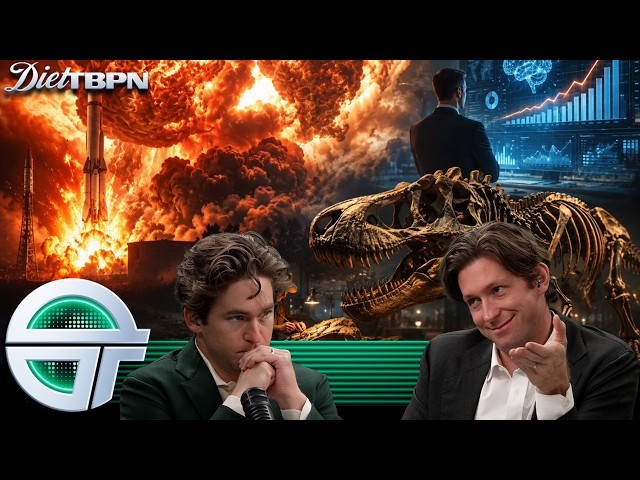
This content was published on YouTube by the channel TBPN on May 30, 2026. According to the page description, it is an episode of Diet TBPN—a daily recap delivering the best moments from TBPN, a live tech talk show hosted by John Coogan and Jordi Hays covering major technology, market, and business stories.
## TL;DR
The episode opens with coverage of a catastrophic static fire test explosion of Blue Origin's New Glenn rocket at Launch Complex 36, discussing the extensive pad damage, financial implications, and industry reactions. It then transitions into enterprise AI adoption, highlighting Anthropic's recent valuation, soaring token costs, and corporate efforts to track AI return on investment. Additionally, the hosts explore the booming market for prehistoric fossils, discuss volatile market signals and stock surges, and react to viral internet memes and guerrilla startup pitches.
## Atmosphere & style
The broadcast carries a fast-paced, irreverent, and banter-filled energy typical of modern tech commentary. The hosts navigate seamlessly between severe industry setbacks—like rocket explosions and corporate budget strains—and humorous internet culture, maintaining a relaxed, conversational style. Listening to the show feels like tuning into a witty, high-energy discussion among Silicon Valley insiders who balance genuine market analysis with dark humor and lighthearted side banter.
## Key takeaways
- [00:00](https://www.youtube.com/watch?v=OeWU7OpM8y4&t=0s) Blue Origin's New Glenn rocket suffered a catastrophic explosion at Launch Complex 36 during a static fire test ahead of its planned NG-4 mission.
- [00:00](https://www.youtube.com/watch?v=OeWU7OpM8y4&t=0s) Despite the severe fireball and destruction at the launch site, no injuries were reported, and Blue Origin pledged to rebuild and continue tests.
- [04:13](https://www.youtube.com/watch?v=OeWU7OpM8y4&t=253s) The explosion inflicted extensive structural damage on Launch Complex 36, requiring exhaustive re-inspection and re-engineering before flights can resume.
- [06:38](https://www.youtube.com/watch?v=OeWU7OpM8y4&t=398s) Enterprise AI adoption has surged rapidly, with Anthropic reaching $47 billion in ARR and closing a $65 billion Series H round at a $965 billion valuation.
- [06:38](https://www.youtube.com/watch?v=OeWU7OpM8y4&t=398s) Widespread enterprise LLM deployment has triggered financial strain due to low-leverage token consumption, such as internal token-maxing leaderboards and trivial automated tasks.
- [15:10](https://www.youtube.com/watch?v=OeWU7OpM8y4&t=910s) Major corporations including Uber, Meta, Microsoft, Salesforce, DoorDash, and Match Group are instituting strict auditing and controls to measure AI ROI and curb runaway token expenses.
- [06:38](https://www.youtube.com/watch?v=OeWU7OpM8y4&t=398s) Long-term AI compute costs remain fundamentally deflationary due to hardware depreciation, new power generation, and model distillation techniques.
- [17:34](https://www.youtube.com/watch?v=OeWU7OpM8y4&t=1054s) High-end dinosaur fossil collecting is booming among ultra-wealthy buyers, exemplified by Sotheby's auctioning a T-Rex named Gus ($20M-$30M estimate) and Ken Griffin purchasing a Stegosaurus named Apex for $44.6 million.
- [20:16](https://www.youtube.com/watch?v=OeWU7OpM8y4&t=1216s) Equities and AI-exposed tech stocks are experiencing massive volatility and surges, leading market observers to debate whether extreme valuations and public founder antics signal macro market tops.
- [21:38](https://www.youtube.com/watch?v=OeWU7OpM8y4&t=1298s) A popular discussion on internet culture and legal humor covered viral memes alongside a hypothetical r/CFA scenario regarding insider trading laws during an executive emergency.
- [23:50](https://www.youtube.com/watch?v=OeWU7OpM8y4&t=1430s) Startup founders are resorting to novel guerrilla marketing tactics, such as gifting physical basketballs printed with investment QR codes to tech commentators.
## Detailed walkthrough
Here is a detailed walkthrough of the transcript part provided:
[00:00](https://www.youtube.com/watch?v=OeWU7OpM8y4&t=0s) Blue Origin's New Glenn Explosive Test Failure
A dramatic video released over the last 24 hours shows a catastrophic explosion at Blue Origin's Launch Complex 36 (LC-36) during a static fire attempt for the New Glenn rocket ahead of its planned NG-4 mission. The hosts describe the footage as looking like a nuclear blast or a cinematic scene straight out of Christopher Nolan's *Oppenheimer*. Everyday Astronaut publicly reacted with shock, mourning the major setback to space exploration progress. Industry insider Brad Gerstner had recently discussed the launch business economics on CNBC, pointing out that launch capabilities alone—without accompanying massive ventures like Starlink or growing AI businesses—are difficult to sustain financially. This failure is particularly painful given that SpaceX is actively raising tens of billions of dollars to scale its frequent, reliable launch cadence, while Blue Origin actually predates SpaceX history-wise yet faces continual delays.
Remarkably, despite the massive fireball and apocalyptic visual, no one was injured during the incident. Jeff Bezos posted a message on social media acknowledging the "very rough day," promising that Blue Origin will rebuild whatever is necessary and return to flying because "it's worth it." Elon Musk offered words of support, tweeting "Most unfortunate. Rockets are hard." The host emphasizes that even for SpaceX maximalists, having a secondary heavy-lift capability in the United States is vital for national space leadership, especially considering New Glenn previously achieved orbit and successfully returned.
- **Test Context:** This static fire was in preparation for New Glenn's fourth test flight (NG-4).
- **Previous Mission Misstep:** During its third test flight, New Glenn successfully launched but deployed an AST SpaceMobile (ASTS) satellite into the wrong orbit.
- **Market Reaction:** Shares of AST SpaceMobile dropped **16%** on the day following the explosion.
- **Flight Track Record:** New Glenn has achieved only **1** successful flight out of **3** attempts.
- **Historical Comparison:** Elon Musk suffered **3** consecutive failures with Falcon 1 from 2006 to 2008 before achieving a successful orbital launch.
---
[04:13](https://www.youtube.com/watch?v=OeWU7OpM8y4&t=253s) Aftermath, Viral Reactions, and Pad Damage
Footage of the event captured from various angles quickly went viral online across platforms like X and Truthful. Viewers shared vertical video depicting a massive mushroom cloud rising over Cape Canaveral, prompting dark humor and viral pop-culture comparisons online. Some social media users joked about abandoning their personal carbon footprint efforts in light of such a massive fire, while others drew direct comparisons to the fictional Roman Roy rocket explosion on the HBO show *Succession*. The hosts joked about the "nominative determinism" of Blue Origin—punning on "blue" meaning feeling sad or depressed after a bad start.
Open-Source Intelligence (OSINT) accounts, including OSINT Defender, posted daylight images showcasing extensive structural damage to Launch Complex 36 at Cape Canaveral Space Force Station in Florida. The blast caused severe damage to New Glenn's only functional launch pad. While initial rumors feared a total cratering of the facility, morning footage revealed that nearby infrastructure remains standing. However, every single bolt, nut, and structural beam on the tower will require painstaking re-inspection and re-engineering for corrosion and stress before flights can resume.
- The explosion represents one of the largest static fire failures seen at Cape Canaveral in recent years, comparable to past pad explosions during Starbase tests in Boca Chica.
---
[06:38](https://www.youtube.com/watch?v=OeWU7OpM8y4&t=398s) Enterprise AI, Token Maxing, and the ROI Era
The discussion shifts to the fast takeoff of enterprise AI adoption and the mounting questions surrounding return on investment (ROI). Anthropic recently crossed **$47 billion** in Annual Recurring Revenue (ARR) and closed a massive Series H funding round of **$65 billion** at a **$965 billion** post-money valuation. While tools like Claude Code and small "vibe coding" applications went viral among early adopters in late 2025, Q2 2026 has marked widespread, enterprise-wide deployments across Fortune 500 companies. However, this rapid adoption has created internal financial strain.
Companies have reported issues with "token maxing dashboards"—internal leaderboards where employees burn tokens on low-leverage tasks or leave AI models running overnight simply to climb company rankings. Highly visible tech corporations like Meta and Uber have faced internal debate over blowing through AI budgets. An Uber executive noted that while they quickly depleted their initial token budget set in 2025, the dramatic jump in model capabilities and costs required re-evaluating bottom-line impact rather than simply cutting off access. Axios reported that Amazon Web Services (AWS) consumed roughly **$500 million** ($0.5 billion) in tokens within a single month, triggering high-level executive conversations among CTOs and CFOs.
- **The Bull Case for AI Costs:** AI compute and hardware are naturally deflationary. Even if a company spends half a billion dollars a month on tokens today, hardware depreciation, new power generation, and model distillation mean the same workload will likely cost a fraction (perhaps 10% to 50%) next year.
- **Trivial Use Cases:** Employees are frequently seen using expensive, frontier LLM calls for trivial tasks, such as generating weather reports or running AI agents to sort iOS contact lists by "recently added"—a simple UI feature Apple lacks, which could otherwise be solved by a $2 dedicated app.
- **Economic Principles at Play:** The hosts cite **Jevons paradox** (as a resource becomes more efficient, consumption increases rather than decreases) and **Goodhart's law** (when a measure becomes a target, it ceases to be a good measure), jokingly combining them into "Coogan's Paradox."
> "Fear not the man who has vibe coded 50 apps. I fear the man who has vibe coded the same app 50 times."
[15:10](https://www.youtube.com/watch?v=OeWU7OpM8y4&t=910s) Enterprise AI Enters the ROI Era as Token Costs Soar
The conversation kicks off with a blunt assessment of enterprise AI spending: it is time to "stack rank the tokens," cutting unnecessary expenditures while retaining high-value use cases. The hosts highlight a stark contrast in the current ecosystem. On one end, "vibe-coded" projects rack up staggering token bills while delivering negligible value; on the other, resourceful builders achieve impressive products using basic $200-a-month subscriptions by treating AI like a "scalpel not a hammer." This shift in mindset reflects a broader industry trend where corporate America is beginning to ration AI usage as massive compute bills come due.
Referring to recent coverage in *The Wall Street Journal*, the hosts note that executives are scrambling to measure the return on investment (ROI) of their machine learning initiatives. Drawing on a recent conversation with Match Group's Spencer Rascoff, they discuss how even reasonable single-digit million-dollar token spends are now subject to rigorous auditing. AI investments are increasingly evaluated with the same discipline applied to digital marketing budgets, forcing technical leaders at companies like Uber, Meta, Microsoft, Salesforce, and DoorDash to demonstrate tangible productivity gains. Employees who fail to deliver clear output risk having their access "nerfed" as management pulls back on unrestricted experimentation.
- **Match Group's Approach**: Spencer Rascoff noted that tracking AI ROI like digital marketing spend is a top priority for his team over the coming year.
- **Corporate Rationing**: Major tech companies (including Uber, Meta, Microsoft, Salesforce, and DoorDash) are instituting controls to curb runaway token expenses and restrict low-value access.
- **Market Sentiment**: Soaring compute costs threaten to slow down AI's rapid, unchecked adoption across the broader corporate landscape.
[17:34](https://www.youtube.com/watch?v=OeWU7OpM8y4&t=1054s) The Dinosaur Fossil Boom: T-Rexes, Stegosauruses, and High-End Collectors
Shifting gears to a cover story from the *Financial Times*, the hosts dive into what the publication jokingly calls the most important story in the global economy: the booming market for prehistoric fossils. Sotheby's is set to auction a 67-million-year-old Tyrannosaurus Rex skeleton named "Gus"—named after South Dakota rancher Gary Gus Licking, on whose land it was discovered. Estimated to fetch between $20 million and $30 million on July 14th, Gus could set a record for the highest price ever paid for a dinosaur fossil.
The discussion sparks banter over where different species rank in prestige. If the T-Rex is the "Ferrari of dinosaurs," the hosts joke about whether a Stegosaurus is a Lamborghini or a minivan—though "true dino heads" appreciate its rising status. Citadel founder Ken Griffin famously purchased a Stegosaurus named "Apex" for $44.6 million (far exceeding its $4M–$6M pre-auction estimate) and placed it on display at the American Museum of Natural History. The hosts compare high-end fossil collecting to a multi-million-dollar "Pokémon card for boomers," noting that most wealthy buyers ultimately lend these artifacts to public institutions.
- **Gus the T-Rex**: 67-million-year-old fossil estimated at $20M–$30M at Sotheby's July 14th auction.
- **Apex the Stegosaurus**: Purchased by Citadel boss Ken Griffin for $44.6M, now on display at the American Museum of Natural History.
- **Alternative Favorites**: The hosts and chat members debate other notable species, including Ankylosaurus, Triceratops, and Brachiosaurus (highlighted in an *Odd Lots* podcast episode).
[20:16](https://www.youtube.com/watch?v=OeWU7OpM8y4&t=1216s) Market Signals, "Chuds," and Macro Top Signals
Reading through market commentary from an account named Prepared Remarks, the hosts run through a series of wild stock movements and market indicators. NBA player and self-proclaimed "AI maxi" Kyle Kuzma gets a shoutout just before the hosts break down shocking equity surges: Dell jumping over 40% post-earnings (bringing its year-to-date gain to 222%), trillion-dollar companies swinging 20% on sell-side notes, and AI-exposed software stocks doubling within a single month.
The chaotic price action prompts a discussion on whether the market is flashing "top signals." The hosts recall Jensen Huang signing a fan's shirt and drinking with friends before Nvidia's blowout earnings, debating whether such viral moments signal an impending peak or simply reflect genuine corporate confidence.
- **Dell Technologies**: Surged 40% post-earnings, mounting a massive 222% year-to-date run.
- **Volatility**: $1.5T market cap holding companies experiencing 10–20% intraday moves without clear catalysts.
- **Top Signals**: Playful debates around public founder antics—like Jensen Huang signing apparel—serving as market sentiment indicators.
[21:38](https://www.youtube.com/watch?v=OeWU7OpM8y4&t=1298s) Banter, Vibe Coding Memes, and a Tanzania Hyena Dilemma
The stream turns to lighter internet culture, starting with Kyle Kuzma’s existential tweet: *"Can you die from a lack of being called big dog?"* The hosts ponder the social dynamics of the phrase, concluding that to be called "big dog," one must deliberately put themselves in spaces where the moniker flourishes. They also celebrate a viral post by Deep Fates: *"I fear not the man who vibe coded 50 new apps, but the man who vibe coded the same new app 50 times."*
The highlight of the segment comes from a classic Reddit post on `r/CFA` regarding insider trading law. A user asks whether it constitutes insider trading if, while on a safari in Tanzania, their CEO gets mauled by a pack of hungry hyenas and they immediately buy put options on the company instead of helping.
> "If instead of helping him fend them off, I open up Robinhood and start buying put options on his company, would this be insider trading?... What if before I buy the puts, I post a video of him getting attacked on my public Instagram story?"
The hosts laughingly dissect the scenario, pointing out that the market might actually view the CEO's demise as a bullish signal depending on their leadership—or price in a brief "21% nuke salute" drop before rebounding.
[23:50](https://www.youtube.com/watch?v=OeWU7OpM8y4&t=1430s) The "Erewhon Clone" and the Punter QR Basketball Pitch
To wrap up the episode, host John Coogan sends crew member Nick outside to fetch an item left in his car: a custom basketball received during a trip to Laurel Supply in Los Angeles. John humorously describes Laurel Supply as a venue that "makes Erewhon look like a 7-Eleven," while calling out its shameless, one-to-one copy of Erewhon's entire menu and aesthetic.
While outside the store, John was approached by a viewer who handed him a physical basketball stamped with a QR code and the text: `invest in the future of sports punter.us/invest`. The unique guerrilla pitch for the startup Punter earns high praise from the studio. Acknowledging that while they usually stick to foam balls in the studio to protect sensitive camera gear, the hosts applaud the creative hustle. They close out the show by thanking the Punter team, referencing their earlier NBA guest, and reminding viewers to leave five-star reviews on Apple Podcasts and Spotify before signing off for the weekend.
## Notable quotes
> [00:00](https://www.youtube.com/watch?v=OeWU7OpM8y4&t=0s) very rough day — Jeff Bezos
> [00:00](https://www.youtube.com/watch?v=OeWU7OpM8y4&t=0s) Most unfortunate. Rockets are hard. — Elon Musk
> [06:38](https://www.youtube.com/watch?v=OeWU7OpM8y4&t=398s) Fear not the man who has vibe coded 50 apps. I fear the man who has vibe coded the same app 50 times. — Deep Fates
> [21:38](https://www.youtube.com/watch?v=OeWU7OpM8y4&t=1298s) Can you die from a lack of being called big dog? — Kyle Kuzma
> [21:38](https://www.youtube.com/watch?v=OeWU7OpM8y4&t=1298s) If instead of helping him fend them off, I open up Robinhood and start buying put options on his company, would this be insider trading?... What if before I buy the puts, I post a video of him getting attacked on my public Instagram story?
## Mentioned
TBPN, John Coogan, Jordi Hays, Mark Zuckerberg, Sam Altman, Mark Cuban, Satya Nadella, Blue Origin, New Glenn, Launch Complex 36, LC-36, Everyday Astronaut, Brad Gerstner, CNBC, Starlink, SpaceX, Jeff Bezos, Elon Musk, AST SpaceMobile, Falcon 1, Cape Canaveral Space Force Station, OSINT Defender, Starbase, Anthropic, Claude Code, Fortune 500, Meta, Uber, Axios, Amazon Web Services, AWS, Apple, Jevons paradox, Goodhart's law, The Wall Street Journal, Match Group, Spencer Rascoff, Microsoft, Salesforce, DoorDash, Financial Times, Sotheby's, Gus, Apex, Ken Griffin, American Museum of Natural History, Odd Lots, Prepared Remarks, Kyle Kuzma, Dell Technologies, Jensen Huang, Nvidia, Deep Fates, Reddit, r/CFA, Robinhood, Instagram, Nick, Laurel Supply, Erewhon, Punter, Apple Podcasts, Spotify
Blue Origin新格伦号火箭在佛罗里达测试中发生爆炸
随着企业Token成本激增迫使高管要求获得可衡量的投资回报,美国企业界开始对AI模型使用进行配额管理。
本期节目首先报道了Blue Origin的新格伦号(New Glenn)火箭在36号发射台进行静态点火测试时发生的灾难性爆炸,讨论了发射台遭受的大规模损毁、财务影响以及行业反应。随后节目转向企业级AI的应用普及,重点介绍了Anthropic近期的估值、飙升的Token成本以及企业追踪AI投资回报的举措。此外,主持人还探讨了蓬勃发展的史前化石市场,讨论了波动的市场信号与股价飙升,并点评了网络热门迷因与初创企业的游击式推介。
Blue Origin的新格伦号(New Glenn)火箭在计划执行NG-4任务前,于36号发射台进行静态点火测试期间发生灾难性爆炸。 (0:00)
尽管发射现场烈焰冲天且损毁严重,但目前暂无人员伤亡报告,Blue Origin承诺将进行重建并继续推进测试。 (0:00)
爆炸对36号发射台造成了大范围的结构性损伤,在恢复飞行前需要进行全面的复检与重新工程整改。 (4:13)
企业级AI应用迅猛增长,Anthropic的年度经常性收入(ARR)达到470亿美元,并以9650亿美元的估值完成了650亿美元的H轮融资。 (6:38)
企业大语言模型(LLM)的广泛部署引发了财务压力,主要源于内部刷Token排行榜和琐碎自动化任务等低杠杆的Token消耗。 (6:38)
Reading summary
TBPN outlines an eventful news cycle marked by Blue Origin's catastrophic launchpad explosion, corporate America's pivot toward auditing runaway enterprise AI expenditures, and soaring valuations in the private fossil market. The broadcast examines how capital demands and operational realities are forcing greater discipline across frontier technology, even as speculative momentum persists in public markets.
New Glenn Explosion and Launch Infrastructure Damage (0:00)
Blue Origin suffered a major setback when a static fire test for the New Glenn rocket ended in a massive explosion at Launch Complex 36 (LC-36) at Cape Canaveral Space Force Station. The test was conducted in preparation for the NG-4 mission. While no injuries were reported, open-source intelligence images revealed extensive structural damage to the company's sole operational orbital launch pad, requiring comprehensive re-inspection of structural beams and components. Jeff Bezos publicly acknowledged the setback while committing to rebuild, and Elon Musk offered public sympathy.
The incident intensifies scrutiny on Blue Origin's operational track record, which stands at only one successful flight out of three orbital attempts; its third flight placed an AST SpaceMobile satellite into an incorrect orbit, contributing to a 16% drop in AST SpaceMobile shares following the explosion. Industry observers, including Brad Gerstner on CNBC, noted the challenging economics of the pure-play launch sector, where sustained capital outlays are difficult to maintain without secondary revenue engines comparable to SpaceX's Starlink or commercial AI initiatives.
Enterprise AI Enters the ROI and Auditing Era (6:38)
Enterprise AI spending is entering an era of strict return-on-investment (ROI) scrutiny following rapid corporate adoption in Q2 2026. While frontier model providers continue rapid financial expansion—with Anthropic reportedly reaching $47 billion in ARR and closing a $65 billion Series H at a $965 billion valuation—enterprise customers are experiencing severe budget strain. Axios reported that Amazon Web Services consumed roughly $500 million in tokens within a single month, prompting executive-level reviews of compute consumption across Fortune 500 organizations.
Corporate leaders at Meta, Uber, Microsoft, Salesforce, and DoorDash are instituting token rationing and auditing usage to curtail internal 'token maxing' on low-value tasks. Match Group's Spencer Rascoff indicated that tracking AI ROI with the rigorous metrics applied to digital marketing budgets is a key corporate objective. Although proponents cite the deflationary nature of compute hardware and model distillation as factors that will eventually reduce workload costs by 50% to 90%, firms are actively restricting access for employees who fail to demonstrate concrete productivity gains.
The Booming Collector Market for Prehistoric Fossils (17:34)
Drawing on coverage from the Financial Times, the hosts review the rapidly expanding private market for dinosaur fossils, where rare specimens command valuations comparable to premier fine art. Sotheby's scheduled an auction for a 67-million-year-old Tyrannosaurus Rex skeleton named 'Gus,' discovered on a South Dakota ranch, with pre-sale estimates ranging between $20 million and $30 million. If realized, the sale would represent a record benchmark for dinosaur fossils.
The high-end fossil trade has seen significant price escalation, exemplified by Citadel founder Ken Griffin's $44.6 million acquisition of the Stegosaurus skeleton 'Apex'—a price that far exceeded its initial $4 million to $6 million estimate. While these multi-million-dollar prehistoric relics function as high-status trophy assets for ultra-wealthy buyers, the discussion notes that purchasers routinely loan the specimens to public natural history museums for scientific display.
Extreme Equity Volatility and Market Top Indicators (20:16)
Highlighting market data compiled by Prepared Remarks, the hosts analyze extreme price movements across technology and AI-exposed equities. Dell Technologies posted an intraday jump exceeding 40% following strong earnings, elevating its year-to-date gain to 222%, while several enterprise software equities doubled within a single month. In addition, holding companies with market capitalizations near $1.5 trillion experienced 10% to 20% swings on routine sell-side commentary.
These dramatic upward moves have renewed debate among market participants regarding potential 'top signals' in tech equities. The hosts contrast whether rapid equity spikes and exuberant executive public appearances reflect sustained fundamental earnings strength or late-stage cyclical exuberance.
The discussion underscores a growing bifurcation in the innovation economy: while primary infrastructure developers in spaceflight and foundation models face immense capital expenditures and severe operational risks, downstream corporate adopters and capital markets are shifting toward defensive audits, cost controls, and questions about durable profitability.
[0:00] Jeff Bezos: very rough day
[0:00] Elon Musk: Most unfortunate. Rockets are hard.
[6:38] Deep Fates: Fear not the man who has vibe coded 50 apps. I fear the man who has vibe coded the same app 50 times.
[21:38] Kyle Kuzma: Can you die from a lack of being called big dog?
[21:38] If instead of helping him fend them off, I open up Robinhood and start buying put options on his company, would this be insider trading?... What if before I buy the puts, I post a video of him getting attacked on my public Instagram story?
Original transcript
[0:00] bunch of stories. Uh we're going to go
[0:01] through mostly the stories that have
[0:02] just broken in the last 24 hours. Uh the
[0:05] first is this insane video from Blue
[0:09] Origin. Very, very disappointing to see
[0:11] Blue Origin's New Glenn rocket just blew
[0:14] up at LC landing LC-36 while attempting
[0:18] to static fire ahead of NG-4. We can
[0:20] watch this video because it is
[0:23] absolutely insane.
[0:25] >> a
[0:26] nuclear bomb went off.
[0:27] >> It looks like a like like scene from
[0:30] Oppenheimer. It looks like
[0:32] uh Christopher Nolan movie. This is
[0:35] uh absolutely remarkable. Uh Everyday
[0:37] Astronaut says, "Oh my god, that was a
[0:39] very big one. I hate to see setbacks in
[0:41] progress. This is not good." Uh that has
[0:43] to be extremely, extremely frustrating.
[0:45] Um
[0:46] Brad Gerstner broke down a little bit of
[0:48] the back and forth on uh this particular
[0:51] uh rocket initiative. Uh
[0:53] Jeff Bezos's rocket company suffered a
[0:55] catastrophic failure last night when its
[0:57] New Glenn rocket, a reusable heavy lift
[0:59] orbital spacecraft designed to compete
[1:02] with SpaceX's Falcon Heavy. Uh and we
[1:05] were talking about this in the backdrop
[1:06] of the uh of the SpaceX IPO. And I heard
[1:10] Brad Gerstner talking about this on
[1:12] CNBC. I think I someone was playing
[1:15] a Gerstner interview in the in the
[1:16] studio today. Uh and he was saying, "The
[1:18] launch business is fantastic, but it's
[1:20] not enough without Starlink, which is a
[1:22] fantastic business. But that's not
[1:23] enough without the AI business, which is
[1:25] a fantastic business and growing." And
[1:27] so, to just have a launch business and
[1:29] then have like this is got to be
[1:31] extremely frustrating uh if you're
[1:33] competing with a company that's going to
[1:35] raise 80 billion I don't know I forget
[1:38] how much SpaceX is actually going to
[1:39] raise, but they're going to raise a lot
[1:41] of money. They're going to have a lot of
[1:42] uh capital to deploy in their march
[1:45] towards uh ever more frequent and uh and
[1:48] uh ever more frequent reliable
[1:50] >> painful you know, Blue Origin started
[1:52] before SpaceX. Talked about this before.
[1:55] >> That's been hard.
[1:55] >> Uh and yeah, unclear unclear uh, how
[1:59] much this will set them back, but uh,
[2:01] certainly disappointing.
[2:03] >> So, the good news is that no one was
[2:05] hurt, which is incredible because you
[2:07] see the rocket, it looks like it's
[2:09] surrounded by a city. It looks like
[2:11] there's buildings around, and to see
[2:13] that much destruction with no one
[2:15] injured at all is a miracle, and I'm so
[2:18] happy to hear that. Jeff Bezos tweeted,
[2:20] "Very rough day. We'll rebuild uh,
[2:22] whatever needs rebuilding and get back
[2:24] to flying. It's worth it." And Elon
[2:26] chimed in with some words of
[2:27] encouragement. Space is hard. A lot of
[2:29] folks were uh, sending their
[2:31] encouragement because uh, I think even
[2:33] if you're uh, you know, a SpaceX maxi,
[2:36] uh, it's it's it is very exciting for
[2:38] America to have multiple heavy launch
[2:40] capability uh, providers in the market.
[2:44] It's good. It was very exciting when uh,
[2:46] New Glenn got to orbit, came back. Um,
[2:49] that was the second time that that sort
[2:51] of rocket technology had been demoed,
[2:53] and it was demoed in America. Sort of
[2:55] even our second-best rocket provider is
[2:58] better than everyone else in around the
[3:00] globe. What else do you have, Tyler?
[3:01] >> just some added context. So, this was
[3:03] the This is the fourth test.
[3:05] Uh, this was prepping for the fourth
[3:07] test. In the third test, if you
[3:08] remember, um, this is when the the
[3:10] rocket kind of correctly went up, but
[3:11] then deployed an ASTS
[3:14] satellite in the wrong orbit.
[3:15] >> Wait, but but that was New Glenn?
[3:17] >> That was that Yeah, that was the third
[3:18] test.
[3:19] >> That was pretty recent. So, they're on a
[3:20] pretty good cadence here, but this is
[3:22] still a huge setback
[3:23] >> Yeah, and the ASTS is down 16% today.
[3:27] >> Because of this, most likely.
[3:28] Interesting. Interesting. So, Elon Musk
[3:31] lent his support, tweeting "Most
[3:32] unfortunate. Rockets are hard." That's
[3:34] an understatement. A lot of people were
[3:35] saying like, uh, "If you think uh,
[3:37] software engineering is hard, you could
[3:39] have been a rocket scientist." It is,
[3:41] after all, rocket science. Uh, the
[3:43] explosion caused extreme structural
[3:44] damage to its only functional launch
[3:46] pad. While Blue Origin has successfully
[3:48] reached space a number of times with
[3:49] other vehicles, New Glenn has has has
[3:53] had just one successful flight out of
[3:54] three attempted tries. Uh from 2006 to
[3:57] 2008, Elon Musk had three consecutive
[4:00] failures with Falcon 1 before
[4:02] successfully launching it. And so,
[4:04] failure is, you know, is a natural state
[4:07] of these pursuits, but uh never fun to
[4:11] watch it happen. There were some people
[4:13] that were syncing up the different
[4:14] angles. There were some different angles
[4:16] on this that were absolutely uh crazy to
[4:18] see people watch.
[4:19] >> from Truthful.
[4:20] >> Truthful. This is the one that you want
[4:22] to see. This literally looks like a nuke
[4:24] went off. So scary.
[4:26] Yeah, vertical footage. Absolutely
[4:28] crazy.
[4:29] Amazing footage from the local.
[4:31] >> I wonder what the reaction is from the
[4:33] people.
[4:33] >> Oh, that's really far away.
[4:35] >> It's far away, but it's also a pretty
[4:37] big mushroom cloud. I imagine maybe they
[4:39] walked to their cars.
[4:40] >> Yeah, I saw some people saying like, "I
[4:42] don't want to hear about my carbon
[4:43] footprint ever again because this seems
[4:45] like
[4:47] an immensely disastrous explosion."
[4:49] >> Uh other people were saying Bezos did
[4:52] Roman's rocket launch from Succession
[4:54] IRL, if you remember this scene. We can
[4:57] pull it up.
[4:57] >> Yeah.
[4:58] >> You haven't seen Succession.
[4:59] >> I have seen the first season. I haven't
[5:01] seen the whole thing.
[5:02] >> But he has a pet project.
[5:04] >> Yeah.
[5:05] >> Okay.
[5:05] >> And it blows up.
[5:06] >> It blows up.
[5:07] That's certainly dramatic. I feel like
[5:09] that makes for good good TV.
[5:11] >> Yeah, we were right before the show
[5:13] started we were talking about the
[5:14] nominative determinism of Blue Origin.
[5:17] John said it blew up.
[5:20] Ba- boom- tish. Uh
[5:22] but
[5:23] uh or, you know, blue as in sort of sad.
[5:25] >> Feeling blue.
[5:26] >> Sad.
[5:27] >> Yeah.
[5:27] >> Sad start. Uh but
[5:28] >> They will rebuild.
[5:29] >> They will be back.
[5:30] >> Uh so, OSINT Defender says, "Daylight
[5:32] reveals the extent of damage caused to
[5:34] launch complex 36 in the surrounding
[5:36] area of Cape Canaveral's Space Force
[5:38] Station in Florida following last
[5:39] night's massive explosion of Blue Origin
[5:41] New Glenn during static fire test." And
[5:43] there was a static fire test that went
[5:45] poorly at Starbase, uh and they had a
[5:48] similar explosion, and people were
[5:50] regarding that as like a major setback.
[5:52] And maybe it was, but at the same time,
[5:54] we saw a very successful launch of uh
[5:56] Starship uh just a week or two ago. And
[5:59] so,
[5:59] >> This looks way better than I would have
[6:01] thought.
[6:02] >> Yeah, I agree. It looked like total
[6:04] destruction. I was expecting like a
[6:05] crater in the ground. I was expecting a
[6:07] crater in the ground.
[6:08] >> Yeah, so so
[6:10] you can see here clearly a lot of damage
[6:12] >> Not good.
[6:13] >> right around the pad, but there's plenty
[6:15] of other infrastructure
[6:16] >> that seems to be still standing, and so,
[6:19] uh you you should in theory be able to
[6:21] rebuild. But, I mean, with anything uh
[6:23] rocket-related, you have to imagine that
[6:25] every nut and bolt on that on that uh
[6:28] tower, even though it is standing, needs
[6:30] to be reinspected, reexamined, make sure
[6:32] there's not corroded. Uh there's got to
[6:34] be so much work for the team. They have
[6:36] my full faith that they will get it
[6:38] done. Well, shifting over to the token
[6:40] maxing debate, people are spending more
[6:43] and more on tokens. Uh there's been a
[6:46] complete fast takeoff in enterprise AI
[6:48] adoption, uh but people are raising
[6:49] questions about what is the ROI on
[6:51] these? There's a whole bunch of
[6:52] companies that are grappling with this.
[6:54] Uh some good news and a lot of questions
[6:56] for where this goes next. So, we'll take
[6:57] you through it. So, the big news is that
[6:59] Anthropic uh recently uh passed 47
[7:02] billion in ARR uh and raised a massive
[7:05] series uh series H 65 billion at 965
[7:10] billion post-money valuation. They're
[7:12] almost at 9999999.
[7:15] Last November, Claude Code was going
[7:16] viral among a lot of early adopters for
[7:19] and small vibe coding apps were
[7:20] launching daily, but Q2 2026 was clearly
[7:24] a massive moment for Fortune 500
[7:26] wide-scale rollouts. Uh and so, this has
[7:28] become a double-edged sword for some
[7:30] organizations. Uh token maxing
[7:32] dashboards have been reportedly led to
[7:35] potentially ROI negative AI use in at
[7:38] name brand companies like Meta. There
[7:40] was the the the the the talk of a token
[7:42] maxing dashboard. People leaving things
[7:44] running overnight that weren't
[7:45] necessarily productive just cuz they
[7:46] want to rank up on the dashboard. That's
[7:47] obviously very expensive. Uber went back
[7:49] and forth on, well, we blew through our
[7:50] budget, but a lot of people were saying,
[7:52] well, if they set a budget in 2025 for
[7:56] their token spending 2026, like the
[7:59] capabilities have gotten so much better,
[8:00] the models have gotten so much more
[8:01] expensive.
[8:02] >> Yeah, so theoretically you should find
[8:04] more budget.
[8:05] >> might have been very small, but they did
[8:07] say they blew through it and then uh,
[8:09] the uh, chief operating officer said, I
[8:11] I think it was the chief operating
[8:12] officer, uh, said something like, oh,
[8:14] we're we're we're struggling to
[8:16] understand the financial impact and like
[8:18] the ROI on this stuff, but his actual,
[8:20] uh,
[8:21] his actual comments as you unpack them
[8:24] were much more reasonable and he wasn't
[8:26] completely, uh, you know, dooming on the
[8:29] ROI of the spend. He was just saying
[8:31] that like the next the next iteration
[8:33] will be understanding the impact to the
[8:36] bottom line of this spending. And then A
[8:38] A AWS was also reported in Axios as
[8:41] having spent something like half a
[8:42] billion dollars in a single month. And
[8:44] so, whenever the numbers get big,
[8:45] there's going to be questions about ROI.
[8:47] Uh, the bull case is that the cost per
[8:49] task completed by AI will decrease very
[8:51] quickly. So, even if you're spending
[8:53] half a billion per month on AI or tokens
[8:57] today, uh, the same output will be
[8:59] available next year maybe for a tenth of
[9:01] the cost, maybe next year it's half the
[9:03] cost. Like, even even if there's no
[9:05] optimizations to the systems, the
[9:07] hardware depreciates and then more power
[9:10] comes online. Like, the market solves
[9:12] these things pretty quickly.
[9:13] >> Yeah, it's naturally deflationary.
[9:15] >> Yeah, yeah, and I think we've seen that
[9:17] where where capabilities have gone open
[9:19] source, they've gone cheaper, they've
[9:20] been distilled, and you've got, you
[9:22] know, 90% of the value. Maybe you don't
[9:24] get the exact same flavor
[9:26] >> an example of of uh, you know, people
[9:28] are using LLMs to get the weather
[9:30] report.
[9:31] >> That was a funny one.
[9:33] >> be, I'll admit I've done that before.
[9:35] >> Yeah.
[9:35] >> Uh, it can be very convenient.
[9:38] >> Typically, you'd go to like a free chat
[9:39] app for that though, not
[9:41] >> Well, no, you could go to the weather
[9:42] app.
[9:43] >> model.
[9:44] >> But, sometimes it's nice to just ask
[9:46] chat.
[9:47] >> Yeah. I I've been running into this a
[9:48] lot with people. I ran into somebody
[9:50] yesterday who was telling me that they
[9:51] have a they have a an agent that looks
[9:54] through their their iOS contact book and
[9:57] sees if they added any
[9:59] any new contacts. And I remember being
[10:02] at a conference and you know, you're
[10:03] changing you're exchanging numbers with
[10:04] people and it's hard to tell if you add
[10:06] somebody to your contacts like who'd you
[10:08] add? Like because you can't it's a very
[10:10] weird Apple feature that they don't have
[10:12] sort your contacts by recently added.
[10:14] That's just like a UI feature that Apple
[10:16] should add. They haven't. But, there's
[10:17] like a $2 app that does that basically.
[10:20] It just looks at your contacts. But, you
[10:22] can also do it in the agentic way and
[10:24] have it email you or synthesize
[10:25] everything and go away further. And
[10:27] there's a you know, a debate about
[10:29] what's the value there and and people
[10:31] are making that those tradeoffs in their
[10:32] personal life. They're also making it in
[10:34] the enterprise. But, of course the
[10:35] stakes are a lot higher in the
[10:36] enterprise because everything has five
[10:38] extra zeros behind it if not nine extra
[10:40] zeros behind it. And so, there's a
[10:42] debate about over whether AI tooling is
[10:44] being pointed at the most high leverage
[10:46] problems in these organizations. Like
[10:48] are you just picking up things that are
[10:51] deep in the backlog and they were
[10:52] deprioritized probably for a good reason
[10:55] because they were never really going to
[10:56] move the needle. But, now you can just
[10:58] say, "Hey, go churn on the all these
[11:00] backlog items." That's maybe not ROI
[11:03] positive at current token prices. Might
[11:05] be in the future. Um,
[11:07] but maybe the cutting room floor should
[11:09] remain the floor and not be not
[11:12] everything should be shipped
[11:13] necessarily. Outside of stories like
[11:15] workers checking the weather with AI
[11:16] agents or running endless loops trying
[11:19] random different make-work projects.
[11:21] There's definitely a worry that truly
[11:22] needle-moving features aren't being
[11:25] pulled forward like people would expect.
[11:27] >> Trey says, "Just vibe code your own
[11:28] weather app each time you You to know
[11:30] the weather."
[11:30] >> Yes. Yes. I think you have a post about
[11:32] that in the timeline.
[11:34] >> Yeah, who was
[11:35] >> Fear not the man who has vibe coded 50
[11:38] apps. I fear the man who has vibe coded
[11:40] the same app 50 times.
[11:43] Uh that was a good post. And so, you uh
[11:46] you probably don't want a a literal
[11:47] token maxing dashboard. I think uh
[11:49] everyone has has has has tested with it
[11:52] >> Meta has tried it. Anthropic has it.
[11:55] >> Ha had it. I think they I think they
[11:56] took it down or something, but uh Meta
[11:59] same thing. Uh it's easy to get
[12:01] obsessed. And I And the token maxing
[12:03] dashboards pop up not just in the uh not
[12:07] just in the literal like who is on the
[12:10] leaderboard, but also if you give
[12:12] someone a budget, they can kind of see
[12:14] it as like, "Okay, well, my boss gave me
[12:17] a $1,000 token budget or a $10,000 token
[12:20] budget or a $100,000 token budget. If I
[12:23] am not using it, if I'm not putting it
[12:25] to use, then I don't look like I'm
[12:28] deploying the capital that I was given."
[12:30] Like if you give a marketer a you know,
[12:32] a brand budget of a million dollars, and
[12:35] they come back to you and they say like,
[12:36] "Sorry, boss. Like I only spent
[12:39] $100,000." You'd be like, "Well, like
[12:41] who'd you talk to? Like why didn't you
[12:42] find good use of that funding?" Like
[12:45] it's very rare. At the same time, it can
[12:47] be, you know, you don't want those
[12:48] employees deploying that budget into bad
[12:51] places and just wasting it because they
[12:52] have the budget. So, these are these are
[12:54] common problems across all aspects of
[12:56] the enterprise.
[12:58] Um and so, I think the future looks a
[13:00] little bit like Jevons paradox, of
[13:01] course. When something becomes more
[13:03] efficient to use, people often often end
[13:05] up using more of it, not less. And then
[13:07] also Goodhart's law. When a measure
[13:09] becomes a target, it ceases to be a good
[13:11] measure. And so, uh we we live in a
[13:13] world defined by Jevons paradox and
[13:16] Goodhart's law. And you put those
[13:17] together.
[13:18] >> The combination of those, many people
[13:20] will call that Coogan's law.
[13:22] >> Coogan's paradox.
[13:23] >> Coogan's paradox.
[13:24] >> Both Jevons paradox and Goodhart's law
[13:28] are true.
[13:28] >> Uh Madison Mills, over at Axios, had uh
[13:32] some good reporting on it. I was uh we
[13:35] were
[13:37] we were on a flight
[13:38] >> Mhm.
[13:38] >> when I found out uh when I saw that that
[13:41] reporting that someone had spent uh half
[13:43] a billion dollars a month kind of
[13:45] accidentally and and uh
[13:48] >> And we'd heard rumors of those numbers
[13:50] >> just imagining the conversation of the
[13:52] the first person to kind of like find
[13:54] the number and
[13:55] >> Yeah.
[13:55] >> you know, hey, maybe maybe we should
[13:57] talk to the CTO about this. Okay, yeah,
[14:00] probably time to bring the CFO in.
[14:02] >> Yeah.
[14:02] >> Hey, hey boss, uh
[14:05] we accidentally spent half a billion
[14:06] dollars
[14:08] in the last 30 days.
[14:09] >> It's a lot of money.
[14:10] >> right, what did we what did we make?
[14:12] >> Yeah.
[14:12] >> What did we do?
[14:13] >> What did we do?
[14:13] >> we spend it?
[14:14] >> What did we get done? It's tough. We we
[14:16] see examples of we we
[14:18] >> And there was there was there was a lot
[14:19] of like there was some conspiratorial
[14:21] posts, people saying, oh, how
[14:24] >> deal.
[14:24] >> Yeah, how how convenient for Amazon, who
[14:27] obviously owns a lot of, you know, the
[14:29] big labs, to spend all this money on
[14:32] Anthropic right when they're raising a
[14:33] round and they got this revenue
[14:35] multiple, blah blah blah.
[14:37] I It's not really how it works. Like it
[14:39] wasn't like this round with like this
[14:41] this round wasn't like they were just,
[14:43] okay, we're going to give you XX
[14:45] revenue.
[14:45] >> And there were plenty of hyperscalers
[14:46] that don't have active positions that
[14:48] were doing the same thing.
[14:49] >> Yeah.
[14:50] >> Like this was a broader trend. Uh but
[14:52] yeah, it it is it is a crazy
[14:53] skyrocketing cost to build. I mean, we
[14:55] see this all the time.
[14:56] >> I I I think it's healthy how quickly
[14:58] things corrected. It's not like this was
[15:02] I mean, and of course some companies
[15:03] won't correct, but it is a healthy
[15:06] dynamic that companies were, hey, we got
[15:08] a little bit ahead of our skis for a
[15:10] couple months. Now, let's be a little
[15:12] bit more
[15:13] >> Let's stack rank the tokens. Cut all the
[15:16] unnecessary token spend. Keep all the
[15:18] good token spend. I mean, we see this
[15:19] all the time with uh there'll be some
[15:21] vibe-coded project out there that's uh
[15:23] like incredibly high token cost with
[15:26] very little value and then on the flip
[15:28] side you'll have someone that actually
[15:29] built something really cool with you
[15:31] know just like their default $200 month
[15:34] you know subscription and they didn't
[15:36] actually have to token max to get the
[15:38] product to where they wanted it to be
[15:41] because they they they knew what they
[15:43] were building they used the tool like a
[15:45] scalpel not a hammer and they got a good
[15:47] outcome. So the Wall Street Journal has
[15:49] some more coverage of this corporate
[15:51] America is starting to ration AI as as
[15:54] costs skyrocket executives are
[15:56] scrambling to track returns on AI
[15:58] investments as the bill for massive
[16:00] computing
[16:01] needs come due. We talked to Spencer
[16:03] Rascoff from Match Group about this. He
[16:06] was
[16:07] sort of sharing a
[16:09] a very reasonable token spend I think in
[16:11] the single digit millions but he was
[16:13] still saying that like one of the tasks
[16:16] that him and his team will be embarking
[16:17] upon over the next year will be
[16:20] understanding the ROI on that investment
[16:24] because you should be tracking it just
[16:26] like digital marketing dollars that go
[16:27] out the door. What was your ROI? How did
[16:30] it move the needle? Use of artificial
[16:32] intelligence by big companies is
[16:33] exploding and the soaring cost has some
[16:36] of them pumping the brakes in a way that
[16:38] could complicate AI's triumphal march
[16:40] across the economy.
[16:41] Are they pouring cold water on it? We'll
[16:43] see.
[16:44] Executives across industry this year
[16:46] have urged employees to integrate AI
[16:48] tools. Wired has a whole AI for business
[16:52] deep dive that you can go take their
[16:54] survey
[16:55] into their work spending freely to
[16:57] encourage experimentation and seeking to
[16:59] send a message to Wall Street that their
[17:00] companies won't be left out behind in a
[17:02] coming wave of disruption. All that
[17:04] enthusiasm enthusiasm has resulted in
[17:07] skyrocketing costs for so-called tokens
[17:09] the basic units of measurement for AI
[17:11] computing. Now corporate leaders are
[17:12] scrambling to bring down expenses by
[17:14] finding ways to ration AI. Top technical
[17:17] executives for Uber, Meta, Microsoft,
[17:19] Salesforce, DoorDash, and other
[17:20] companies have all talked about new
[17:21] efforts to ensure AI use contributes to
[17:23] productivity or have taken steps to
[17:25] reduce the availability of some tools
[17:27] for certain employees. You get nerfed if
[17:30] you're not putting up big numbers. We
[17:32] should move on. First, we got to talk
[17:34] about the fossil hunt. Big spenders are
[17:36] pursuing Tyrannosaurus Rex skeletons.
[17:38] This was on the cover of the Financial
[17:40] Times. It's the most important story in
[17:43] the global economy according to the
[17:45] Financial Times as of Thursday. This is
[17:46] an old edition. But this is interesting.
[17:49] Sotheby's is to auction a 67
[17:51] million-year-old Tyrannosaurus Rex 2
[17:53] years after it sold a a Stegosaurus
[17:56] fossil to hedge fund owner Ken Griffin
[17:59] for 44.6 million. I thought Ken Griffin
[18:02] was was uh trying
[18:03] >> I didn't know I didn't know Stegosaurus
[18:05] were getting up there like
[18:06] >> I didn't know he was diversified.
[18:07] >> You know,
[18:08] I feel like T-Rex is up here
[18:10] desirability and then everything else is
[18:13] >> Yeah.
[18:13] >> you know, way
[18:14] >> T-Rex is the Ferrari
[18:15] >> of dinosaurs.
[18:17] >> Yeah.
[18:17] >> Stegosaurus
[18:18] >> I would say that's kind of a minivan of
[18:19] dinosaurs.
[18:20] >> Minivan? I was going to say Lambo. I was
[18:22] going to say the Lamborghini. They're on
[18:24] a rise. You know, the true the true dino
[18:26] heads know that there's something there.
[18:28] They're starting to pick up momentum,
[18:30] but they don't have the heritage. They
[18:31] don't have as much of the heritage. I
[18:32] don't know.
[18:33] >> Yeah, I'm more of a I think I could get
[18:35] into an Ankylosaurus.
[18:37] >> Oh, Ankylosaurus. Okay.
[18:39] >> Ankylosaurus.
[18:40] Uh Triceratops, too.
[18:42] >> Yeah. I mean, the Brontosaurus like the
[18:44] big guys, that's that's special. You got
[18:46] to have a special special viewing area
[18:48] for that. Well, this T-Rex is named Gus
[18:51] after Gary Gus Licking, the rancher
[18:54] whose land it was found on in South
[18:56] Dakota. Well, it'll be auctioned at
[18:58] Sotheby's with an estimate between 20
[18:59] million and 30 million, the highest for
[19:01] a dinosaur fossil on July 14th.
[19:05] >> I was at a I was at a buddy's house
[19:07] >> Yeah.
[19:08] >> uh recently and Uh, he just pointed over
[19:11] at this box and it was it was a
[19:13] dinosaur,
[19:14] >> Ooh. and he hadn't taken it out of the
[19:16] box. He's like, "I've had it for a few
[19:17] years now."
[19:18] >> Was it a glass box that you can see in?
[19:20] >> No, no, no. It's a wooden box. It's just
[19:21] a crate.
[19:22] >> What's in the box?
[19:23] Schrodinger's dinosaur.
[19:25] >> dino breathe.
[19:26] >> Maybe.
[19:27] Uh, the plant sale in New York
[19:28] highlights how the auction house is
[19:30] betting on the fossil market as a place
[19:32] where the wealthy will spend big. The
[19:34] pre-auction estimate for Apex, which is
[19:38] uh the Citadel boss Ken Griffin's
[19:40] Stegosaurus, was 4 to 6 million.
[19:42] >> And Nicola says Brachiosaurus.
[19:45] Brachiosaurus is the go-to.
[19:47] Brachiosaurus has a crazy
[19:48] >> Ooh, Odd Lots did a podcast about this?
[19:51] Amazing. We got to listen to that. Uh,
[19:53] the overwhelming majority of fossil
[19:54] buyers still want to lend their
[19:56] purchases to a museum.
[19:58] Uh, Apex is now on display at the
[20:00] American His- Museum of Natural History.
[20:03] Uh, that is fun story. If you're in the
[20:06] market, go pick it up. Go pick up a
[20:08] T-Rex. You got to do it. Uh, it's the
[20:11] ultimate the ultimate collector's item.
[20:13] It's the Pokémon card for boomers or
[20:15] something like that.
[20:16] >> Prepared remarks
[20:18] >> Yes.
[20:18] >> is sharing some signals. You tell us
[20:21] what kind of signals they are. Kyle
[20:23] Kuzma, the AI maxi, stocks ripping 10 to
[20:26] 50%
[20:27] >> He's coming on the show.
[20:27] >> on 13F of some chud. Can't be Leopold
[20:30] he's talking about.
[20:32] It's no chud.
[20:34] Uh, Dell plus 40% on earnings after
[20:36] being plus 150% year to date. Dell is
[20:39] now 222 up 222%
[20:42] >> Wow.
[20:42] >> year to date. Not bad.
[20:44] >> Michael Dell.
[20:44] >> Not bad for somewhat of a I'm not going
[20:47] to call it a dinosaur, but um
[20:49] >> Well, it's been taken private, taken
[20:50] public. It's fascinating history of the
[20:52] of that company, but
[20:53] >> American technology company. Uh, $1
[20:56] trillion company is moving 20% on
[20:57] sell-side notes. 1 and 1/2 trillion
[20:59] space hold co of he says turds.
[21:03] >> Mhm.
[21:05] >> Uh, 10 to 20% intraday moves for no
[21:07] reason. Software with AI exposure plus
[21:09] 100% in a month.
[21:10] >> He's black pilling. Moving on.
[21:12] >> Uh, no, it's just so so we were uh,
[21:15] someone else said this morning uh,
[21:18] I also thought it was a top signal when
[21:20] Jensen signed
[21:22] >> Yeah.
[21:22] >> that infamous shirt.
[21:24] >> about? Yeah, the shirt. Or or even when
[21:26] he was drinking with his buddies,
[21:28] everyone was
[21:28] >> No, but I I that was a top signal.
[21:30] >> but yeah. He He looked very confident
[21:32] going to earnings and and he and he was
[21:34] confident for a good reason.
[21:35] >> Kyle Kuzma says what we've all been
[21:38] thinking.
[21:38] >> Oh, what is that?
[21:39] >> Can you die from a lack of being called
[21:41] big dog?
[21:42] >> Mhm. It's a big question.
[21:44] >> It's a big question. Do you get called
[21:46] big dog too much?
[21:48] >> No, not very often. I don't know.
[21:50] >> Okay.
[21:50] >> I think you put yourself in the right
[21:52] There's certain spaces where you might
[21:54] get called big dog
[21:56] and you have to you have to attend. You
[21:58] have to open yourself to the
[21:59] opportunity. You have to open the door
[22:01] to being called big dog. Like if
[22:02] everyone knows your name, they're just
[22:03] going to call you your name. You have to
[22:05] be
[22:06] uh, you have to be walking around in a
[22:07] certain space.
[22:08] >> Deep Fates, this was the post we had
[22:11] earlier. I fear not the man who vibe
[22:13] coded 50 new apps, but the man who vibe
[22:15] coded one new app 50 times.
[22:19] It's a banger post. I think he meant to
[22:20] say but the man who vibe coded the same
[22:23] app 50
[22:24] >> Yeah.
[22:24] >> times.
[22:25] >> Yeah, the same new app 50 times.
[22:27] Something like that.
[22:28] >> Uh, this was good. Over on Reddit r/CFA,
[22:32] would it be considered insider trading
[22:35] if I'm on a hunting trip or safari with
[22:37] a CEO of a large firm and they get
[22:39] mauled by hyenas and I start buying put
[22:42] options on their firm. Let's say I go to
[22:44] Tanzania
[22:45] >> This does not sound hypothetical.
[22:47] >> with the CEO of a very prominent firm in
[22:49] the United States when we suddenly get
[22:51] overrun by a pack of a dozen hungry
[22:54] hyenas. However, I and my youthfulness
[22:57] are of course quicker than this old man
[22:59] and I manage to escape and hide behind a
[23:01] rock while the hyenas maul him?
[23:03] >> Mhm.
[23:03] >> If instead of helping him fend them off,
[23:05] I open up Robinhood and start buying put
[23:08] options on his company, would this be
[23:10] insider trading? There's absolutely no
[23:12] way this can be priced into the stock
[23:14] predicted. Oh, but the material
[23:16] non-public info, blah blah blah. Okay,
[23:18] but what if before I buy the puts, I
[23:20] post a video of him getting attacked on
[23:22] my public Instagram story? Uh
[23:25] what then?
[23:26] Thoughts? Purely hypothetical.
[23:28] >> Does not sound hypothetical. Well, it
[23:30] all depends on what the market thinks
[23:32] about the CEO because it's possible that
[23:34] the market sees this as a bullish
[23:35] signal. The the CEO is no longer there.
[23:37] Maybe he's dead.
[23:38] >> He's
[23:40] clearly pricing in the 21% nuke salute,
[23:43] you know, where the market at least
[23:45] briefly sells off 21% and then hopefully
[23:48] pops back
[23:49] >> in.
[23:49] >> Brad Hunt, ask John about his new
[23:51] basketball.
[23:52] >> Can some Is the car here? We have the
[23:54] basketball. Uh Nick, can you go get the
[23:57] basketball that's in my driver seat? Uh
[23:59] or in the passenger seat because uh we
[24:02] were at Laurel Supply yesterday, which
[24:05] makes Erewhon look like a 7-Eleven.
[24:08] >> It makes It makes Erewhon look like a
[24:09] 7-Eleven.
[24:10] >> No, I It's so above.
[24:12] Laurel Supply is is uh is the new
[24:14] Erewhon in in LA.
[24:17] >> That is not It's very nice.
[24:18] >> Not an actual Erewhon. Everything is a
[24:21] one-to-one copy of Erewhon. They didn't
[24:24] They did not They did not It's like just
[24:25] It's disorienting. They did not try to
[24:27] differentiate a single thing.
[24:29] >> Yeah.
[24:29] >> They copied every item on the menu. They
[24:31] copied every
[24:32] >> Delicious food.
[24:33] >> every every single item. In my culture,
[24:36] that's very offensive because if you're
[24:38] going to go through the process of
[24:39] creation
[24:40] >> Yeah, you think they would be able to do
[24:41] something differently. Okay, but outside
[24:44] of Laurel Supply, I receive from uh I
[24:47] get stopped by uh a person who I believe
[24:50] is in the chat. Um and uh and he says uh
[24:53] here is a basketball. I got this for you
[24:56] because uh he's raising money for a
[24:58] company Punter and it says invest in the
[25:01] future of sports punter.us/invest
[25:04] and he had this basketball with a QR
[25:06] code on here. What a unique way to draw
[25:09] attention to your company. What a unique
[25:11] way to
[25:12] to pitch someone and you know, you know,
[25:14] we love a basketball in the in the
[25:16] studio. Although we use a soft
[25:19] because there's a lot of camera gear. So
[25:20] we don't throw a full-size basketball.
[25:22] We use a we use a foam one. But thank
[25:25] you
[25:26] to the Punter team for making this
[25:28] possible. Very interesting drop. Very
[25:30] fun. Very fun way.
[25:33] And what what a great what a great way
[25:34] to end the show. We had an NBA star on
[25:36] the show and we finished with a
[25:37] basketball. Have a great weekend. We'll
[25:39] see you on Monday.
[25:41] Have a great have an incredible weekend.
[25:43] Leave us five stars on Apple Podcast and
[25:44] Spotify.
[25:46] Sign up for our newsletter tbpm.com. We
[25:47] will see you
[25:48] on Monday.
[25:50] Goodbye.