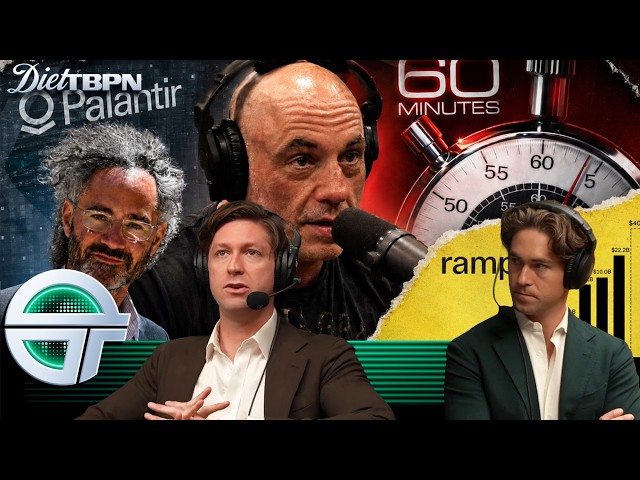
Ramp Valuation Hits $44B as AI Token Spend Thesis Drives Capital
TBPN
Corporate spend platform Ramp reached a $44 billion valuation on the strength of its thesis that tracking decentralized AI token consumption represents the next major frontier in corporate expense management.
## Background
Published on YouTube by TBPN on June 4, 2026, this episode of Diet TBPN delivers a condensed daily digest of the platform's live tech talk show hosted by John Coogan and Jordi Hays. The channel's show notes highlight recent guest appearances by prominent tech figures like Sam Altman and Mark Zuckerberg, providing links to their daily newsletter and partner sponsors.
## TL;DR
The episode opens with an analysis of biosecurity threats and an open letter signed by top AI leaders calling for mandatory nucleic acid synthesis screening. The hosts then transition to the resurgence of venture capital in biotechnology and Ramp's $750 million fundraising round at a $44 billion valuation, highlighting its new 'token spend' thesis. They wrap up by discussing hardware leaks like Sabi's BCI beanie, xAI's 100x revenue projections, Benchmark Capital's pivot to a growth fund, rumors about Joe Rogan joining 60 Minutes, and Audi's new Nuvolari supercar.
## Atmosphere & style
The broadcast maintains a fast-paced, witty, and banter-heavy conversational tone between hosts John Coogan and Jordi Hays, seamlessly blending serious tech analysis with lighthearted humor. The commentary feels like an insider Silicon Valley debrief, shifting casually from high-stakes biosecurity policies to joking about beanie fashion trends, Zuckerberg tracking brainwaves, and pitching themselves to legacy news networks. The overall vibe is highly energetic, sharp, and self-referential, capturing the rapid momentum of the daily tech and startup news cycle.
## Key takeaways
- [00:02](https://www.youtube.com/watch?v=Lm5dLL9aZlo&t=2s) The primary focus of Washington, D.C. and AI leaders has shifted toward immediate AI-driven biological threats, creating a tangible 'Y2K-style moment' for biosecurity.
- [01:46](https://www.youtube.com/watch?v=Lm5dLL9aZlo&t=106s) Historical breakthroughs in 2002 and 2005 proved that bad actors no longer need physical viral samples to synthesize dangerous pathogens like polio or the 1918 flu, relying only on digital sequence blueprints.
- [04:08](https://www.youtube.com/watch?v=Lm5dLL9aZlo&t=248s) Prominent AI and biotech figures signed an open letter requesting mandatory federal nucleic acid synthesis screening and customer record-keeping to close the security gaps left by voluntary compliance models.
- [09:09](https://www.youtube.com/watch?v=Lm5dLL9aZlo&t=549s) Early-stage biotechnology is experiencing strong financial and cultural momentum, marked by massive investments in startups like Isomorphic Labs, NewLimit, and Retro Biosciences.
- [11:40](https://www.youtube.com/watch?v=Lm5dLL9aZlo&t=700s) Corporate spend platform Ramp raised $750 million at a $44 billion valuation, eclipsing the public market valuation of PayPal despite PayPal's $32 billion in revenue.
- [11:40](https://www.youtube.com/watch?v=Lm5dLL9aZlo&t=700s) Ramp's growth is tied to the 'third pillar' of business expense—AI token spend—which has emerged alongside human labor and external vendors as a core operational cost.
- [14:18](https://www.youtube.com/watch?v=Lm5dLL9aZlo&t=858s) Brain-computer interface startup Sabi is reportedly being preempted for a $35 million funding round at a $500 million valuation for its BCI-integrated beanie hat.
- [15:13](https://www.youtube.com/watch?v=Lm5dLL9aZlo&t=913s) Sabi has reportedly secured $200 million in LOIs from enterprise B2B customers for non-invasive BCI technology applications.
- [17:19](https://www.youtube.com/watch?v=Lm5dLL9aZlo&t=1039s) Goldman Sachs forecasts xAI revenue to grow 100x by 2030, supported by roadshow estimates projecting $360 billion in cumulative CapEx through 2028 for xAI and SpaceX.
- [18:43](https://www.youtube.com/watch?v=Lm5dLL9aZlo&t=1123s) Benchmark Capital has shifted from its historic single-fund early-stage strategy by raising $2 billion across two funds, including its first dedicated growth fund.
- [20:18](https://www.youtube.com/watch?v=Lm5dLL9aZlo&t=1218s) CBS is reportedly considering Joe Rogan for a role on 60 Minutes, prompting the hosts of TBPN to pitch themselves as technology and business correspondents.
- [21:07](https://www.youtube.com/watch?v=Lm5dLL9aZlo&t=1267s) Audi unveiled the Nuvolari supercar, its first flagship supercar release since the R8, featuring a twin-turbo V8 hybrid engine with a top speed of 217 mph.
## Detailed walkthrough
### [00:02](https://www.youtube.com/watch?v=Lm5dLL9aZlo&t=2s) AI Bio Threats and the Open Letter for Nucleic Acid Screening
The conversational landscape in Washington, D.C., and the broader AI ecosystem has undergone a distinct shift. Instead of standard debates centered around approving models before their public release, the primary focus has turned to the immediate nature of AI-driven biological threats. Writing in the TBPN newsletter, Brandon Carroll observed that "the great houses of AI have united behind the bio threat," referencing a comprehensive list of signatories bridging the AI community, biotech startups, and scientific research.
This momentum draws a strong parallel to cybersecurity, which evolved rapidly due to tight feedback loops and verifiable rewards in reinforcement learning. AI systems are generating a highly tangible "Y2K-style moment" regarding bio-risk. The implications mean society doesn't even need to achieve superintelligent Artificial General Intelligence (AGI) to face new biological crises. While this landscape ensures full employment for cybersecurity giants like Nikesh Arora at Palo Alto Networks, who has been implementing defensive AI solutions, attention is expanding to the physical architecture of synthetic biology.
[01:46](https://www.youtube.com/watch?v=Lm5dLL9aZlo&t=106s) The Blueprints of Polio and the Evolution of Viral Synthesis
The baseline for modern synthetic biological threats dates back decades. In 1981, a group of researchers open-sourced the primary structure of the poliovirus genome by publishing it in the journal *Nature*. As an RNA virus, its literal sequence of building blocks—adenine, cytosine, guanine, and uracil (A, C, G, U)—was laid bare from start to finish. At the time of publication, polio was on the decline due to mass vaccination, but historically it had paralyzed and killed over half a million people globally per year.
The inflection point occurred in 2002 when researchers successfully synthesized an infectious poliovirus entirely from this publicly available sequence data. They did not require an existing physical sample of the virus to clone or replicate; instead, they took the text-based data file, chemically synthesized short DNA fragments, assembled them into a full-length DNA copy of the genome, and recovered a fully functioning, live virus. The identical methodology was utilized in 2005 to reconstruct the 1918 Spanish flu, a highly lethal virus that caused 675,000 American deaths and carried a staggering 2% to 3% mortality rate. These breakthroughs permanently demonstrated that possessing physical source material is no longer necessary to create dangerous pathogens—all a bad actor requires is the digital blueprint.
[04:08](https://www.youtube.com/watch?v=Lm5dLL9aZlo&t=248s) The Open Letter and the Gaps in Voluntary Industry Screening
The rise of advanced AI tools has drastically democratized the ability to reconstruct and optimize DNA sequences capable of generating novel or extinct viruses. In response, high-profile AI and biotech leaders—including Demis Hassabis, Sam Altman, Dario Amodei, and Alex Wang—signed an open letter advocating for mandatory nucleic acid synthesis screening and strict customer record-keeping. The letter is not a public relations stunt or an alarmist warning regarding hypothetical "apocalyptic AI doom." Rather, it serves as an explicit request for the United States government to legally compel nucleic acid synthesis companies to verify the legitimacy of their customers, keep permanent transactional records, and screen all orders for dangerous sequences of concern.
The current voluntary compliance models possess notable security gaps. The International Gene Synthesis Consortium, founded in 2009 as a non-governmental organization, claims that roughly 80% of commercial synthesis volume has voluntarily opted into screening practices. However, this figures means the remaining 20% of the market operates entirely unchecked. Furthermore, because participation is voluntary and the 80% metric is entirely self-reported without independent government verification or formal audits, the baseline agreement remains fragile. While the Department of Health and Human Services (HHS) offers official guidance, its non-binding status means the distribution of hazardous sequences by American firms cannot be entirely ruled out. The open letter represents a unified push to transform these loose industry agreements into enforceable federal legislation, backed by a wide coalition of signatories from Y Combinator, Google DeepMind, Microsoft, Twist Bioscience, Ansa, Emerald Cloud Lab, and Valto's.
[09:09](https://www.youtube.com/watch?v=Lm5dLL9aZlo&t=549s) The Resurgence of Biotech Momentum and Big Tech Bets
Beyond biosecurity concerns, early-stage biotechnology is experiencing a powerful wave of cultural and financial momentum. While this sector lacks the staggering volume and scale of the mainstream AI market—which boasts trillion-dollar chip stocks like Micron and massive impending IPOs—the resurgence is notable because biotech had previously been largely written off by venture investors. Approximately 14 months ago, prominent biotech investors openly questioned the viability of the asset class given its historically poor returns. However, the ecosystem is showing classic power-law characteristics, moving away from a traditional culture of quick "base hits, doubles, and triples" where founders repeatedly flip small companies for consecutive one-billion to three-billion-dollar exits.
Today, massive capital allocations and institutional spinoffs are defining the space:
- **Isomorphic Labs:** Spun directly out of Google DeepMind to leverage advanced structural biology AI.
- **NewLimit:** Founded by Coinbase's Brian Armstrong with a core focus on epigenetic reprogramming and cellular longevity.
- **Retro Biosciences:** An ambitious longevity startup aggressively scaling operations.
- **Altos Labs:** Backed heavily by prominent tech figures like Jeff Bezos.
- **Coefficient Bio:** Recently acquired by frontier AI lab Anthropic to deepen its biological research infrastructure.
- **Big Tech Infrastructure:** Additional heavy computational investments are being led by Nvidia's Jensen Huang and Oracle's Larry Ellison.
Traditional pharmaceutical giants like Pfizer and Johnson & Johnson have yet to fully submerge themselves into this fast-moving "press release economy." While their collaborative deal-making is frequent, it remains buried in corporate finance news due to mainstream AI dominating media cycles.
[11:40](https://www.youtube.com/watch?v=Lm5dLL9aZlo&t=700s) Ramp's $44 Billion Valuation and the Token Spend Thesis
In fintech, corporate spend platform Ramp announced a massive $750 million fundraising round at a $44 billion valuation. The company continues to exhibit explosive traction, executing major rounds every 12 to 18 months. The standout metric from this raise is that the last time Ramp grew at its current velocity, it was only 1/20th of its current corporate size. This trajectory has sparked intense debate across the tech ecosystem regarding broader software-as-a-service (SaaS) valuations, especially considering that Ramp's private market valuation has officially surpassed the public market valuation of legacy giant PayPal, despite PayPal maintaining a robust $32 billion in annual revenue.
Ramp's premium is driven by its forward momentum relative to PayPal's negative growth indicators, alongside an expansive long-term strategy outlined by co-founder Eric Glyman. In a widely discussed essay, Eric introduced the concept of the "third pillar" of value creation. While human labor and external vendors have served as the core pillars of business expense dating back to 600 BCE, 2026 AD marks the arrival of "tokens" as the third foundational pillar. Dubbed the "quadrillion token blind spot," this thesis posits that all personal and corporate finance ultimately distills down to three fundamental, timeless questions: Who spent what, was it worth it, and what is the bill next month? While modern ad buying and marketing departments frequently get lost in complex Return on Ad Spend (ROAS) analytics, Ramp's core value proposition relies on building automated tools to track and optimize decentralized AI token spend, ensuring companies can clearly verify if their net bank balances are actually increasing.
[14:18](https://www.youtube.com/watch?v=Lm5dLL9aZlo&t=858s) Sabi's Beanie BCI and the Inside Information Leak
Emerging hardware startups are seeing aggressive preemptive investment rounds, highlighted by a leaked report from legendary investor Arthur Rock regarding Sabi, a company developing a Brain-Computer Interface (BCI) integrated into a standard beanie hat. Sabi is reportedly being preempted for a $35 million funding injection at a $500 million post-money valuation. The hosts joke about the lifestyle alignment of the product, noting that it is a massive development for "beanie guys" who favor the headwear to manage long hair in the morning.
From a practical product standpoint, the distinct beanie format raises questions regarding geographic adoption and market expansion. While a heavy knit beanie is highly fashionable among creative directors and tech workers in cooler climates like Silver Lake, it faces natural friction building cultural momentum in scorching regions like Southern California or Arizona. The hosts pitch modular adjustments to scale the technology, suggesting the internal BCI sensors could easily be wrapped in leather or integrated into a cowboy hat format. Given Arthur Rock's historically pristine track record and absolute precision within Silicon Valley, the host notes that the accuracy of the leak indicates he is "pretty dialed" and operating with flawless inside perspective.
Here is the detailed walkthrough of the transcript section:
---
[15:13](https://www.youtube.com/watch?v=Lm5dLL9aZlo&t=913s) The Game Theory of Venture VC Leaks & Enterprise BCI
The hosts discuss the game theory behind venture capital leaks on social media, questioning who benefits when proprietary deal details get published. While a lawyer leaking documents would gain "zero benefit," the clout and "rush of getting likes on the timeline" remains a universal motivator for anyone looking to drop a "banger." However, there can be strategic value for founders: publicizing a deal creates massive momentum by alerting investors who missed the initial deal flow, even if it occasionally annoys the company's internal team.
Attention shifts to the $200 million in LOIs (Letters of Intent) from B2B customers for non-invasive brain-computer interface (BCI) technology, such as Sabi’s beanie. The hosts joke about what an enterprise BCI deployment actually looks like—whether it's hospital networks, healthcare systems, or Mark Zuckerberg moving past screen-tracking to monitor employee brainwaves directly. While invasive options like Neuralink have demonstrated remarkable consumer traction—evidenced by patient P0 (Noland Arbaugh) appearing on Joe Rogan to talk about playing *Call of Duty*—the BCI beanie opens up vastly different B2B form factors. They joke that the $200M in LOIs might just as easily come from outdoor apparel brands like Patagonia, REI, or Carhartt, poking fun at the "beanie economy."
* The team debates who leaks VC deals: likely someone at a fund seeking social media engagement, rather than a lawyer bound by confidentiality.
* Patient P0 (Noland Arbaugh) previously demonstrated playing *Call of Duty* via Neuralink.
* Enterprise use cases for non-invasive BCI hats/beanies range from healthcare to industrial environments like warehouses in Dallas, Texas.
---
[17:19](https://www.youtube.com/watch?v=Lm5dLL9aZlo&t=1039s) xAI Revenue Projections, SpaceX CapEx, and Nvidia Models
Goldman Sachs has released optimistic projections expecting xAI revenue to surge 100x by 2030. The hosts note that evaluating this target depends on how current revenue is calculated—whether standard Grok consumer subscriptions, API token usage, X subscriptions, or cloud infrastructure contracts are included. Starting from a smaller baseline makes a 100x jump easier, but they acknowledge that multiple AI companies have achieved 100x revenue growth in just 2 to 4 years.
Roadshow data points also reveal aggressive infrastructure investments, anticipating around $360 billion in cumulative capital expenditures through 2028 for xAI/SpaceX as it establishes itself as a major new hyperscaler—a figure that surely has Nvidia CEO Jensen Huang "fist-pumping." Meanwhile, Nvidia has released its latest foundation model, prompting the hosts to check out its model card and benchmarks.
* **Goldman Sachs Forecast:** Projects xAI revenue to scale 100x by 2030.
* **Capital Expenditure:** SpaceX/xAI projects $360 billion in CapEx through 2028.
* **Nvidia Update:** A new Nvidia foundation model and model card have gone live for benchmarking.
---
[18:43](https://www.youtube.com/watch?v=Lm5dLL9aZlo&t=1123s) Benchmark Capital's First Growth Fund and Historical Legacy
The hosts observe a "moment of silence" for the end of an era in traditional venture capital, as Benchmark Capital—historically known for its hyper-focused, single-fund early-stage approach—pivots strategy. As reported by Kate Clark in *The Wall Street Journal*, Benchmark has raised $2 billion across two new funds, which notably includes their first-ever dedicated growth fund.
This shift prompts a nostalgic look back at Benchmark's legacy, including the famous book *eBoys: The First Inside Account of Venture Capitalists at Work* by Randall Stross, which chronicled the firm's early days. The hosts laugh about the book's stark title and its dramatic subtitle ("The Story of Six Tall Men..."), recalling how journalists were given unprecedented access to observe their dealmaking. They joke about potential growth investing talent the firm could recruit, referencing investors with backgrounds at Bond Capital, Founders Fund, Kleiner Perkins, and Twitter co-founder Ev Williams.
* **Fund Raising:** Benchmark raises $2.0 billion split across two funds, marking its debut in dedicated growth investing.
* **Media Reference:** *eBoys* documented Benchmark's early partner dynamics and unique flat-partnership culture.
---
[20:18](https://www.youtube.com/watch?v=Lm5dLL9aZlo&t=1218s) Joe Rogan 60 Minutes Rumors & The TBPN Pitch
Reports suggest Austin-based podcaster Joe Rogan is being considered for a role with CBS's *60 Minutes*. The hosts joke that given Rogan’s penchant for long-form, multi-hour discussions, the show might need to be renamed "200 Minutes" or simply "100."
Taking advantage of the media crossover news, the hosts lightheartedly pitch themselves to *60 Minutes* executive producer Bill Owens (referencing "Barry"), volunteering TBPN as technology and business correspondents. They joke that doing a 60-minute segment would be "light work," given that they already broadcast up to 1,000 minutes of content a week across multiple daily streams. They briefly recall their own early show concepts, which included running both a morning show and a late-night show.
> "Put us in the ring. We're ready to go. You need a tech correspondent, business correspondent... We do 60 minutes three times a day."
---
[21:07](https://www.youtube.com/watch?v=Lm5dLL9aZlo&t=1267s) Audi Unveils the Nuvolari Supercar
The show wraps up with a look at Audi's newly revealed supercar, the Nuvolari, marked as the brand's first true supercar release since the iconic R8. Featuring a futuristic, sharp design that the hosts describe as "somewhat Cybertruck-inspired," the vehicle combines classic combustion with modern hybrid power.
They debate its performance against other high-end sports cars, jokingly warning that owners of the Porsche Cayenne Turbo GT should expect their resale values to tank now that a car that is "10% faster" has arrived.
* **Engine:** Twin-turbocharged 4.0-liter V8 hybrid powertrain.
* **Top Speed:** 217 mph.
* **Acceleration:** 0 to 60 mph in 2.6 seconds.
* **Significance:** First flagship supercar from Audi since the discontinuation of the R8.
The hosts sign off by reminding viewers to leave five-star reviews on Apple Podcasts and Spotify, subscribe to the daily newsletter at TBPN.com, and tune back in on Monday.
## Notable quotes
> [00:02](https://www.youtube.com/watch?v=Lm5dLL9aZlo&t=2s) the great houses of AI have united behind the bio threat — Brandon Carroll
> [11:40](https://www.youtube.com/watch?v=Lm5dLL9aZlo&t=700s) Who spent what, was it worth it, and what is the bill next month? — Eric Glyman
> [20:18](https://www.youtube.com/watch?v=Lm5dLL9aZlo&t=1218s) Put us in the ring. We're ready to go. You need a tech correspondent, business correspondent... We do 60 minutes three times a day.
## Mentioned
Palantir, AIPCon 10, Ramp, 60 Minutes, Joe Rogan, TBPN, John Coogan, Jordi Hays, Mark Zuckerberg, Sam Altman, Mark Cuban, Satya Nadella, Public, Cisco, Console, CrowdStrike, Figma, MongoDB, NYSE, Railway, Shopify, Brandon Carroll, Nikesh Arora, Palo Alto Networks, Demis Hassabis, Dario Amodei, Alex Wang, International Gene Synthesis Consortium, Department of Health and Human Services, Y Combinator, Google DeepMind, Microsoft, Twist Bioscience, Ansa, Emerald Cloud Lab, Valto's, Micron, Isomorphic Labs, NewLimit, Brian Armstrong, Coinbase, Retro Biosciences, Altos Labs, Jeff Bezos, Coefficient Bio, Anthropic, Jensen Huang, Nvidia, Larry Ellison, Oracle, Pfizer, Johnson & Johnson, PayPal, Eric Glyman, Arthur Rock, Sabi, Neuralink, Noland Arbaugh, Patagonia, REI, Carhartt, Goldman Sachs, SpaceX, Benchmark Capital, Kate Clark, The Wall Street Journal, Randall Stross, Bond Capital, Founders Fund, Kleiner Perkins, Ev Williams, Bill Owens, Audi, Nuvolari, R8, Porsche Cayenne Turbo GT
As artificial intelligence accelerates synthetic biology capabilities, technology leaders are petitioning the federal government for mandatory nucleic acid screening, while venture capital redirects aggressive funding toward enterprise AI infrastructure, longevity biotechnology, and corporate expense tracking.
Federal Push for Mandatory Gene Synthesis Screening (0:02)
Washington policy discussions around AI risk have shifted from hypothetical superintelligence scenarios to tangible biological threats. Digital pathogen design has historical precedent: researchers reconstructed infectious poliovirus from published genetic data in 2002 without physical samples, followed by the Spanish flu in 2005. Because modern AI models streamline the optimization of genetic sequences, an open letter signed by industry leaders including Demis Hassabis, Sam Altman, Dario Amodei, and Alex Wang urges the U.S. government to mandate customer verification, transaction record-keeping, and pathogen screening across synthesis providers.
Advocates emphasize that existing guardrails remain insufficient. Although the International Gene Synthesis Consortium reports that roughly 80% of global commercial synthesis volume complies with voluntary standards, the figure is self-reported and lacks independent verification. This leaves an estimated 20% of the market unchecked, while existing Department of Health and Human Services guidelines remain non-binding.
Biotech Momentum and Big Tech Longevity Bets (9:09)
Early-stage biotechnology is experiencing renewed financial momentum after roughly 14 months of skepticism regarding venture returns. The sector is shifting away from historical models prioritizing quick company sales between $1 billion and $3 billion, moving instead toward long-term platform plays backed by major tech figures.
Institutional capital is heavily backing structural biology and longevity platforms, including DeepMind spinoff Isomorphic Labs, Brian Armstrong’s NewLimit, Retro Biosciences, and Jeff Bezos-backed Altos Labs. Frontier AI lab Anthropic expanded its infrastructure by acquiring Coefficient Bio, while computational support from Nvidia and Oracle continues to integrate tech hyperscalers directly into life sciences development.
Ramp Valuation and the Economics of AI Tokens (11:40)
Corporate spend platform Ramp raised $750 million at a $44 billion valuation, lifting its private valuation above PayPal’s public market capitalization despite PayPal generating $32 billion in annual revenue. Ramp’s valuation multiple reflects accelerated expansion, returning to previous peak growth rates at 20 times its prior operational size.
Ramp co-founder Eric Glyman contextualizes this growth through the concept of the 'quadrillion token blind spot.' He argues that while human labor and external vendors have historically represented business expense baselines, machine-consumed AI tokens represent a third operational pillar starting in 2026. Ramp aims to capture this shift by providing automated tracking to measure enterprise return on decentralized AI token expenditures.
Emerging BCI Hardware and Benchmark's Strategic Pivot (14:18)
In neurotechnology hardware, startup Sabi is reportedly securing a preemptive $35 million funding round at a $500 million valuation, according to details leaked by investor Arthur Rock. The company integrates non-invasive brain-computer interfaces (BCI) into wearable beanies and has claimed $200 million in commercial letters of intent across potential enterprise, healthcare, and industrial deployments.
Concurrently, traditional venture models are shifting. Benchmark Capital, historically committed to a concentrated, early-stage partnership structure, raised $2 billion across two vehicles, establishing the firm's first dedicated growth fund and marking a structural transition from its legacy approach.
Hyperscale CapEx Projections and Media Moves (17:19)
Goldman Sachs published research forecasting a 100-fold revenue increase for xAI by 2030, alongside roadshow projections indicating $360 billion in cumulative capital expenditures through 2028 across xAI and SpaceX as they establish hyperscale infrastructure. In media, reports indicate CBS's 60 Minutes has explored a prospective contributor role for podcaster Joe Rogan, while automotive news featured Audi's reveal of the Nuvolari, a 217 mph twin-turbocharged hybrid V8 supercar serving as the brand's successor to the R8.
While capital deployment across AI infrastructure and biotechnology reaches historical scale, biosecurity governance continues to rely on non-binding industry screening, leaving unresolved whether federal legislation can be enacted before commercial bio-synthesis vulnerabilities expand.
## Background
本期内容由科技播客频道 TBPN 于 2026 年 6 月 23 日发布在 YouTube 平台。作为主打高密度科技对谈的“Diet TBPN”精华栏目,该期节目由 John Coogan 与 Jordi Hays 共同主持,精选呈现了当天科技界与风险投资领域最核心的热门动向与行业八卦。
## TL;DR
节目核心聚焦于顶级 AI 实验室与生物科技领航者联合签署的公开信,深入探讨了从脊髓灰质炎开源历史到 AI 时代生物安全风险,呼吁政府立法强制核酸合成订单筛查与留痕。在资本与企业动态上,主持人拆解了支出管理独角兽 Ramp 以 440 亿美元估值融资 7.5 亿美元及其关于“Token 支出第三支柱”的商业论述,并报道了硅谷传奇 VC 机构 Benchmark 募资 20 亿美元首次打破传统设立独立增长基金的行业转折。此外,节目还覆盖了 Sabi 针织帽脑机接口获溢价抢投与 2 亿美元意向书、高盛预测 xAI 营收至 2030 年增长百倍、SpaceX 巨额算力投入及英伟达新模型动态。尾声部分则趣味调侃了 Joe Rogan 获《60分钟》接洽的传闻并自荐出镜,最后盘点了奥迪新发布的双涡轮 V8 混动超跑 Nuvolari。
## Atmosphere & style
整期节目节奏紧凑、妙语连珠,散发着硅谷科技圈特有的犀利敏锐与非正式对谈氛围。两位主持人在拆解硬核生物技术安全漏洞与宏大财务逻辑时展现出扎实的思辨深度,而面对风投泄密内幕、针织帽穿搭习惯与电视主播自荐等话题时又充满极客式的幽默互损。听感就像置身于一场兼具前沿商业洞察与辛辣内幕八卦的科技老友闭门午餐会,轻松鲜活且信息密度极高。
## Bulletin
- [04:08](https://www.youtube.com/watch?v=Lm5dLL9aZlo&t=248s) DeepMind、OpenAI、Anthropic 等顶尖 AI 实验室与生物科技领袖联合发表公开信,呼吁政府出台法规,强制要求核酸合成企业对所有商业订单进行序列审查及 KYC 实名留痕,以堵塞目前自愿协议下 20% 的安全盲区。
- [11:40](https://www.youtube.com/watch?v=Lm5dLL9aZlo&t=700s) 支出管理平台 Ramp 以 440 亿美元估值完成 7.5 亿美元融资,估值已超越 PayPal;CEO Eric Glyman 提出商业支出“第三支柱”论,将 AI Token/算力支出列为继人员与供应商之后的全新核心开支。
- [14:18](https://www.youtube.com/watch?v=Lm5dLL9aZlo&t=858s) 脑机接口初创公司 Sabi 获 5 亿美元估值抢投注资 3500 万美元,旗下研发针织帽形态非侵入式 BCI,并已斩获 2 亿美元 B2B 意向书。
- [18:45](https://www.youtube.com/watch?v=Lm5dLL9aZlo&t=1125s) 硅谷传奇风投 Benchmark 打破数十年坚持纯早期的传统,通过两支新基金募集 20 亿美元,其中包含其史上首支独立增长期基金(growth fund)。
- [21:07](https://www.youtube.com/watch?v=Lm5dLL9aZlo&t=1267s) 奥迪正式曝光全新混动超跑 Nuvolari,搭载 4.0 升双涡轮增压 V8 混动系统,极速达 217 英里/小时,0-60 英里加速仅需 2.6 秒,填补了 R8 停产后的旗舰跑车空白。
## Key takeaways
- [00:02](https://www.youtube.com/watch?v=Lm5dLL9aZlo&t=2s) AI 在生物学领域的快速突破与当年的网络安全如出一辙,均具备强化学习高度契合的紧密反馈机制,正催生新型生物安全监管需求。
- [01:46](https://www.youtube.com/watch?v=Lm5dLL9aZlo&t=106s) 生物制造风险已从物理宿主转向纯文本数据代码:2002 年及 2005 年科学家已先后证明仅凭公开序列即可化学全合成脊髓灰质炎与 1918 西班牙流感活病毒。
- [04:08](https://www.youtube.com/watch?v=Lm5dLL9aZlo&t=248s) AI 顶尖机构联合签署核酸审查信并非末日恐慌营销,而是务实针对供应链薄弱环节,推动从自愿自律转向联邦立法强制核酸订单筛查。
- [06:15](https://www.youtube.com/watch?v=Lm5dLL9aZlo&t=375s) 现有国际基因合成联盟(IGSC)仅覆盖全球约 80% 的商业合成厂商且全凭自愿,剩余 20% 的盲区让恶意获取危险生物序列成为现实漏洞。
- [08:54](https://www.youtube.com/watch?v=Lm5dLL9aZlo&t=534s) 早期生物科技领域迎来强势复苏,但与 AI 相比其退出生态更依赖于频繁的十亿美元级并购退出,而非动辄万亿级超级 IPO。
- [08:54](https://www.youtube.com/watch?v=Lm5dLL9aZlo&t=534s) 科技巨头及核心创始人(包括 Demis Hassabis、Brian Armstrong、Sam Altman、Jeff Bezos、Jensen Huang 等)均已重金押注生物计算与抗衰老赛道。
- [11:40](https://www.youtube.com/watch?v=Lm5dLL9aZlo&t=700s) Ramp 在 SaaS 增长放缓的大环境下以高基数复合高增长逆势融资,其 440 亿美元估值已超越年营收 320 亿美元但增速乏力的 PayPal。
- [11:40](https://www.youtube.com/watch?v=Lm5dLL9aZlo&t=700s) Eric Glyman 总结历经 2500 年的商业支出演变:从传统的人员与供应商开支,步入 2026 年后正式分化出 Token 算力这一企业第三大支出支柱。
- [14:18](https://www.youtube.com/watch?v=Lm5dLL9aZlo&t=858s) Sabi 研发的针织帽脑机接口获得资方溢价抢投,虽然在热带推广受限,但其非侵入式形态已获得高达 2 亿美元的 B2B 企业意向书。
- [17:18](https://www.youtube.com/watch?v=Lm5dLL9aZlo&t=1038s) 高盛研报激进预测马斯克旗下的 xAI 到 2030 年营收将暴增 100 倍,反映出市场对生成式 AI 头部企业几何级扩张的乐观预期。
- [18:14](https://www.youtube.com/watch?v=Lm5dLL9aZlo&t=1094s) SpaceX 到 2028 年累计资本支出预测将达 3600 亿美元,正激进蜕变为新型超大规模算力巨头,英伟达等硬件商持续受益。
- [18:45](https://www.youtube.com/watch?v=Lm5dLL9aZlo&t=1125s) Benchmark 告别纯早期专注模式并设立 20 亿美元双基金(含首支独立增长基金),被视作硅谷早期风投经典时代的标志性转折。
- [20:18](https://www.youtube.com/watch?v=Lm5dLL9aZlo&t=1218s) 传 CBS 老牌调查节目《60分钟》正接触全球顶流播客主 Joe Rogan,传统主流电视媒体与新一代长音频播客生态持续碰撞融合。
- [21:07](https://www.youtube.com/watch?v=Lm5dLL9aZlo&t=1267s) 奥迪发布接替 R8 的全新双涡轮混动超跑 Nuvolari,0-60 英里加速 2.6 秒、极速 217 英里/小时,展现未来主义硬朗设计。
## Detailed walkthrough
### [00:02](https://www.youtube.com/watch?v=Lm5dLL9aZlo&t=2s) AIPCon 现场与聚焦:AI 巨头首次集体聚焦生物威胁
节目在 Palantir AIPCon 现场开场。虽然当天金融科技独角兽 Ramp 刚传出完成巨额融资的重磅消息(官方经典的“Ramp 之歌”甚至再度在现场响起),但主持人率先将目光投向了华盛顿特区和整个科技圈讨论最为热烈的核心议题——AI 与生物安全威胁。在当天的 TBPN 简报中,撰稿人写下了这样一句话:“AI 的各大名门豪族(The great houses of AI),如今在生物威胁面前统一了战线。” 这份联名阵营不仅囊括了顶尖 AI 实验室,更汇集了生物界、合成生物学初创公司以及学术界的诸多领军人物。
主持人指出,AI 在生物领域的发展轨迹与此前的网络安全如出一辙。网络安全之所以进展迅猛,是因为其具备极紧密的反馈回路和可验证的奖励机制,强化学习(RL)在这一场景下表现极佳;而生物领域同样拥有高度契合此类算法的特质。回顾过去,网络威胁创造了类似“千年虫(Y2K)”般的恐慌时刻与极其强大的商业赛道,也让 Palo Alto Networks 首席执行官 Nikesh Arora 等人抓住了帮助企业应对系统风险的巨额业务增量。如今,生物领域正迎来类似的转折点,AI 能力的扩散正将新型生物安全推向风口浪尖。
```mermaid
flowchart TD
accTitle: 生物威胁与基因合成监管逻辑
accDescr: 展示从开源生物序列到AI辅助设计、化学合成及强制审查闭环的演变流程
subgraph Risk["历史演进与潜在风险"]
A["1981年: 病毒基因组序列完全开源 (如脊髓灰质炎)"] --> B["2002/2005年: 无需实体样本,纯数据化学合成活体病毒"]
B --> C["AI时代: 门槛大幅降低,生成新型序列或优化危险病毒"]
end
subgraph Solution["联合公开信倡导的强制监管"]
C --> D["向合成公司下单合成核酸订单"]
D --> E{"强制订单筛查机制"}
E -->|"匹配危险序列特征"| F["阻断交付并启动背景调查"]
E -->|"常规科研订单"| G["合规交付并全流程实名归档"]
end
```
---
### [01:46](https://www.youtube.com/watch?v=Lm5dLL9aZlo&t=106s) 从脊髓灰质炎到西班牙流感:病毒“开源化”与无实物合成历史
为了厘清当前风险的本质,节目回顾了生物学史上两起具有里程碑意义的合成事件:
1981 年,研究人员在《自然》(Nature)杂志上发表了脊髓灰质炎病毒(Poliovirus,一种由 A、C、G、U 四种碱基构成的单链 RNA 病毒)的一级结构。用通俗的话说,科学家们把这种高危病毒从头到尾的碱基构建代码完完整整地向全世界“开源”了。而在 20 世纪中叶实现大规模疫苗接种前,脊髓灰质炎每年导致全球超过 50 万人瘫痪或死亡。
到了 2002 年,研究人员成功证明,仅仅依靠公开数据库中的序列信息,就可以人工合成出具有完全传染性的活体脊髓灰质炎病毒。他们不需要任何天然病毒活体样本,也不需要进行扩增克隆,而是纯粹依据公开的文本数据,化学合成短链 DNA 片段,拼装出病毒基因组全长 DNA 拷贝,再转录出病毒 RNA,最终彻底复原了活病毒。2005 年,科学家又使用完全相同的技术,人工复原了曾造成全球浩劫、致死 67.5 万美国人且致死率达 2% 至 3% 的 1918 年西班牙流感病毒。这两次历史突破彻底打破了旧有的生物防线——制造恶性病毒不再依赖于物理宿主或天然样本,任何人只要拿到类似于文本文件里“ATGU”代码的图纸,并拥有相应的合成设备,就能打印出真正的致命病毒。
- **1981 年《Nature》论文**:公开发布脊髓灰质炎病毒基因组一级结构,等同于向公众公开病毒蓝图。
- **2002 年化学全合成实验**:历史上首次在没有实体病毒样本的情况下,纯基于数据序列从头合成出具有传染性的活病毒。
- **2005 年西班牙流感复原**:重现了致死率高达 2%–3%、曾夺走数十万美国人生命的 1918 年大流感病毒。
- **核心风险转折**:实体病毒样本不再是前置约束,“数据代码 + 商业合成代工”成为了新的扩散途径。
---
### [04:08](https://www.youtube.com/watch?v=Lm5dLL9aZlo&t=248s) 拒绝空洞的“末日营销”:呼吁政府强制推行核酸合成筛查与实名留痕
当下的新变量在于:AI 工具的普及大幅降低了设计、重构甚至优化致病 DNA 序列的技术门槛。正是在这一背景下,DeepMind 的 Demis Hassabis、OpenAI 的 Sam Altman、Anthropic 的 Dario Amodei、Scale AI 的 Alexandr Wang,以及数十位来自学术界、政策制定机构和合成生物学产业的高管共同签署了一封公开信,呼吁美国政府出台法规,强制推行核酸合成订单筛查与全流程记录留痕(Mandatory Nucleic Acid Synthesis Screening and Record Keeping)。
节目指出,公众在第一眼看到这类联名信时,往往容易误以为这又是顶尖 AI 实验室在搞“AI 毁灭人类”式的恐慌营销公关(PR stunt),借宣称自家模型展现出危险突破来抬高身价。但事实恰恰相反,这封信非常务实:它并没有夸大 AI 现阶段就能“一键生成全新致命病毒”,而是直击供应链的薄弱环节——要求政府立法强制核酸合成代工企业对所有商业订单进行序列筛查。一旦发现客户提交的序列与已知高危病毒吻合,必须启动核验,并对客户资质(KYC)与物流流向进行全面建档留痕。
- **签署代表**:涵盖顶尖 AI 实验室(DeepMind、OpenAI、Anthropic、Scale AI)以及生物产业与学术机构(Twist Bioscience、Ansa Biotechnologies、Emerald Cloud Lab、Harvard、Y Combinator 等)。
- **监管诉求核心**:从自愿引导转向联邦立法强制执行,包括高风险序列审查、客户真实身份验证,以及合成供应链的交易追踪记录。
---
### [06:15](https://www.youtube.com/watch?v=Lm5dLL9aZlo&t=375s) 堵住 20% 的安全漏洞:自愿性行业自律为何已经不够
针对“难道生物合成行业此前一直没有客户记录和审查吗”的疑问,主持人解释了现有机制的脆弱性。早在 2009 年,国际基因合成联盟(International Gene Synthesis Consortium, IGSC)便已成立,目前全球约 80% 的商业基因合成机构自愿加入了该组织并承诺进行筛查。然而,主持人一针见血地指出了其中的荒谬:“这就好比说‘我们 80% 的核武器都已经安全入库了,至于剩下的 20% 你别问’一样令人不安。”
更为关键的是,即便在这 80% 的范围内,目前的机制完全建立在行业自律与非政府组织(NGO)的自愿加入基础上,相关数据均属自测自报,政府监管部门既没有独立核查,也没有法定义务进行监督;美国卫生与公众服务部(HHS)此前发布的相关指导意见同样缺乏硬性法律约束力。这意味着任何心怀不轨的人,依然可以避开严格审查,从剩下的 20% 合成厂商或其他非合规渠道获取危险物质。随着 AI 赋予个人更强的生物序列操作能力,这种仅靠 80% 覆盖率的松散自律协议已完全不足以抵御现实威胁。行业各界期待相关立法者能迅速跟进,将核酸合成筛查转变为具有法律约束力的强制标准。
### [08:54](https://www.youtube.com/watch?v=Lm5dLL9aZlo&t=534s) 生物科技早期势头:大厂入局与并购文化
节目开篇谈及行业领袖致政府的一封公开信,包括来自 Altos Labs 等机构的代表均在签名之列。信件内容主要是表达对生物科技相关监管与政策支持的诉求,属于行业推动政府重视生物技术的早期举措。两位主持人指出,尽管目前早期生物科技领域展现出令人难以置信的势头,但其体量与规模仍无法与当前狂热的人工智能产业同日而语。在 AI 领域,市场正期待着数家潜在的三万亿美元级 IPO,美光(Micron)市值迈向万亿,各家芯片股的估值动辄数千亿乃至上万亿美元,相比之下生物科技的绝对规模依然偏小。
然而,生物科技的复苏极其引人瞩目,因为在过去一段时间里该板块几乎被市场“判定死亡”。大约 14 个月前,曾有一位生物科技投资人做客节目时直言:“单看目前的投资回报率,我都不知道为什么还有人会投资这个资产类别。”但任何资产类别都会经历周期性低谷,如今热度明显回暖。谈及投资逻辑时,主持人分析指出,尽管风险投资本质上都遵循幂次法则,但生物科技领域的文化更倾向于“安打、二垒打和三垒打”,创业者频繁买卖公司套现:此前做客节目的某位嘉宾曾连续完成两起单笔 10 亿美元级别的并购退出,随后加入另一家公司,转头又以 30 亿美元将其出售。
放眼当前的技术前沿,各大科技巨头与明星创始人均在生物领域深度布局:
- DeepMind 拆分孵化出 Isomorphic Labs;
- Coinbase 联合创始人 Brian Armstrong 创立了抗衰老公司 NewLimit;
- Sam Altman 重金支持的 Retro Biosciences(节目组正积极邀请 Jacob 登台);
- 亚马逊创始人杰夫·贝索斯(Jeff Bezos)投资的 Altos Labs;
- Anthropic 收购了 Coefficient Bio;
- 英伟达的黄仁勋(Jensen Huang)与甲骨文的拉里·埃里森(Larry Ellison)亦在积极推进生物与计算融合的项目。
主持人感叹,诸如辉瑞(Pfizer)或强生(Johnson & Johnson)这样的大型传统药企,不知何时也会彻底加入科技行业的“公关通稿经济”,动辄宣布重磅合作。事实上,生物医药界的大额交易层出不穷,只是在当下的媒体环境中,风头全被 AI 以及私募信贷(Private Credit)夺走,相关报道往往被深埋在《华尔街日报》较深的风投版面中。
### [11:40](https://www.youtube.com/watch?v=Lm5dLL9aZlo&t=700s) Ramp 以 440 亿美元估值融资 7.5 亿美元与“Token 支出”第三支柱论
金融科技领域迎来重磅重磅交易:支出管理平台 Ramp 宣布以 440 亿美元的估值完成 7.5 亿美元融资。该公司的执行节奏令人惊叹,往往每隔 12 到 18 个月就有一轮新动作,甚至曾创下两周内连融两轮的纪录。更令市场震动的是其官方披露的增长效率——“上一次我们保持如此高的增速时,体量只有现在的二十分之一。”这一指标在当前充斥着“SaaS 终结浩劫”(SaaS apocalypse)悲观论调的市场上显得格外耀眼。作为横向对比,Ramp 如今的估值已经超越了年营收达 320 亿美元的支付巨头 PayPal;虽然 PayPal 体量庞大,但其增长动能呈现净负向,而 Ramp 则在高基数下展现出惊人的复合扩张能力。
```mermaid
flowchart TD
accTitle: 商业支出三支柱演进
accDescr: 展示从公元前600年的人员与供应商支出,演进至2026年AI Token支出的商业财务核心逻辑。
subgraph 传统商业支出 ["历经 2500 年的两大支柱 (始于公元前 600 年)"]
P1["第一支柱:人员 (People)"]
P2["第二支柱:供应商 (Vendors)"]
end
subgraph 新纪元支出 ["第三支柱 (2026 年起)"]
P3["第三支柱:Token / 算力支出 (Tokens)"]
end
subgraph 财务终极三问 ["500 年财务核心本质"]
Q1["谁花了什么钱?"]
Q2["花得值不值?"]
Q3["下个月账单会是多少?"]
end
P1 --> Q1
P2 --> Q1
P3 --> Q1
Q1 --> Q2 --> Q3
```
Ramp 联合创始人兼 CEO Eric Glyman 在社交网络上发表长文,阐述了其关于商业价值创造“第三支柱”的宏大叙事。他调侃称“如果你思考问题的尺度没有跨越数千年,那你来这里是干什么的”:
- **历史两大支柱**:自公元前 600 年以来,企业支出始终由“人员”(People)与“供应商”(Vendors)构成;
- **第三支柱崛起**:步入 2026 年,“Token”(AI 算力代币)正式成为第三大核心支出支柱,Eric 将其称为企业面临的“千万亿 Token 盲区”(quadrillion token blind spot)。
长文将 500 年现代商业财务的繁文缛节高度浓缩为三个最质朴的灵魂拷问:“谁花了什么钱?花得值不值?下个月账单是多少?”主持人赞许道,在市场营销、买量投流领域,从业者常常沉迷于 ROI、ROAS 等天花乱坠的复杂指标模型,但做生意最终必须拉回常识——企业到底有没有挣到比花掉更多的钱,银行账户的余额究竟是涨了还是跌了。Ramp 正是通过深入 Token 优化管理工具,解答了这一最核心的企业财务诉求。
### [14:18](https://www.youtube.com/watch?v=Lm5dLL9aZlo&t=858s) Sabi 针织帽脑机接口获溢价抢投与 Arthur Rock 爆料内幕
知名风投爆料账号 Arthur Rock 披露,研发针织帽形态脑机接口(BCI)的初创公司 Sabi 正在遭遇资方“溢价抢投”(pre-empted),融资方案为以 5 亿美元的投后估值注资 3500 万美元。这一消息引发了主持人的趣味调侃,其中一位主持人日常就是个“针织帽爱好者”,尤其在早上头发长、没打理时全靠帽子遮挡。但两人随即理性探讨了这种产品形态的局限性:在加利福尼亚南部、亚利桑那等炎热地区,一年四季戴毛线帽极难推广;不过在洛杉矶银湖区(Silver Lake)等文艺创意总监扎堆的地方,这种帽子有望大火。当然,团队也可以将传感器无缝植入进牛仔帽、遮阳帽乃至高端户外品牌帽子中,产品形态并不受限。
围绕爆料人 Arthur Rock,主持人展开了一番关于风投博弈论的趣味推测:
- 此人掌握的信息“极其精准”(pretty dialed),近乎拥有第一手内幕消息;
- 他究竟是供职于某家顶级一线风投的投资人,还是处理交割文件的律所律师?
- 主持人推断律师泄密毫无收益,但在社交媒体上获取点赞与关注度的心理诱惑是普遍存在的;
- 更大概率爆料者身处基金内部。此类曝光通常对创始人利大于弊,能让尚未收到项目推介的投资机构蜂拥而至争抢额度,制造强烈的融资势头,但同时也可能彻底打乱原定融资团队的谈判节奏。
最引发关注的实质业务数据是,Sabi 已经斩获了来自 B2B 企业的 2 亿美元意向书(LOI)。主持人猜测其企业级落地方向:究竟是接入医院与专业医疗健康网络,还是某些科技巨头(如扎克伯格)用于监测员工脑电波与专注度?亦或是 Neuralink 之外更轻量级的非侵入式替代品?另一位主持人打趣道,这 2 亿美元意向书搞不好来自 REI、Patagonia 或工装品牌 Carhartt 等服装巨头,预示着一个庞大的“针织帽经济学”(Beanie economy)正在成型。
### [17:18](https://www.youtube.com/watch?v=Lm5dLL9aZlo&t=1038s) 高盛预测 xAI 收入至 2030 年暴增百倍
节目随后讨论了高盛(Goldman Sachs)发布的一份极具进攻性的研报,预测埃隆·马斯克(Elon Musk)旗下的 xAI(或与 SpaceX 产生协同)到 2030 年收入将实现 100 倍的爆发式增长。面对这一惊人数字,主持人理性剖析了当前 xAI 的营收口径基数:
- 剔除社交平台 X 本身,xAI 当前真正的 AI 收入究竟几何?
- 是仅计算 Grok 独立订阅与 API Token 消耗,还是将 X 平台的高级订阅分成、以及各大云厂商和新型云(Neo-cloud)的算力合同一并计入?
分析认为,计算的起始基数越小,实现 100 倍增长的统计难度就相对越低。更重要的是,在近几年的生成式 AI 爆发浪潮中,多家领头羊企业已在短短两到四年内实打实地完成了营收翻百倍的神话,“100 倍增长早已不再是孤例或天方夜谭”。如果马斯克团队能够保持高水准的工程与商业执行力,重现图表中的百倍飙升轨迹完全在情理之中。
### [18:14](https://www.youtube.com/watch?v=Lm5dLL9aZlo&t=1094s) SpaceX 巨额资本支出预测与英伟达新模型
路演预测数据显示,SpaceX 预计到 2028 年的累计资本支出(CapEx)将达到约 3600 亿美元。面对如此惊人的算力与硬件投入规模,主持人笑称英伟达 CEO 黄仁勋此刻肯定在某个角落兴奋地握拳庆祝("Jensen somewhere fist-pumping")。SpaceX 正在迅速蜕变成为一家崭新的超大规模算力巨头(hyperscaler),虽然这一策略极其激进,但也完全符合马斯克生态一贯的扩张逻辑。
与此同时,英伟达全新的基础模型也已正式上线。节目提到团队很快会去查阅该模型的模型卡(model card),进一步追踪其各项基准测试(benchmarking)的表现。
- **SpaceX 资本支出预测**:预计到 2028 年累计支出约 3600 亿美元。
- **英伟达动态**:全新官方基础模型发布,社区正密切关注其性能跑分基准。
### [18:45](https://www.youtube.com/watch?v=Lm5dLL9aZlo&t=1125s) Benchmark 告别纯早期时代:首推 20 亿美元增长基金
提到“benchmark”,两位主持人顺势将话题转向了硅谷传奇风投机构 Benchmark。他们戏谑地提议为 Benchmark “默哀片刻”,因为这标志着“一个时代的终结”("the end of an era")——硅谷最后一家数十年如一日坚持纯早期投资的一线顶级 VC 终于打破了传统。主持人借此回忆起描写 Benchmark 的经典商业纪实书籍《eBoys》(讲述当年六位合伙人允许记者深入内部记录投资决策的故事),调侃称 "E-boys" 听起来像是一本攻击性极强的黑料书名,所幸副标题中和了吹捧的意味。
根据《华尔街日报》记者 Kate Clark 的独家爆料,Benchmark 刚刚通过两支新基金募集了 20 亿美元资金,其中最受瞩目的莫过于他们史上首支专门的“增长期基金”(dedicated growth fund)。主持人打趣探讨他们会由谁来执掌增长投资,甚至半开玩笑地提到 Ev Williams,调侃 Benchmark 是否正在围绕 Ev Williams 构建整套平台战略。
```mermaid
flowchart TD
accTitle: Benchmark 基金战略转型
accDescr: Benchmark 募集 20 亿美元双基金,打破纯早期传统,首次设立独立增长基金。
subgraph S1["传统模式 (历史传承)"]
A["纯粹专注早期阶段 (Pure Early-Stage)"]
B["合伙人精简均权机制"]
end
subgraph S2["20 亿美元新基金募资 (Kate Clark 独家爆料)"]
C["传统早期风投基金"]
D["史上首支独立增长基金 (Growth Fund)"]
end
S1 --> S2
```
- **募资规模**:两支新基金共募集 20 亿美元。
- **战略转型**:正式打破坚持数十年的早期专注模式,首次设立专门的成长阶段(growth-stage)基金。
- **行业轶事**:提及著名 VC 纪实书籍《eBoys: The First Inside Account of Venture Capitalists at Work》。
### [20:18](https://www.youtube.com/watch?v=Lm5dLL9aZlo&t=1218s) 传 Joe Rogan 获《60分钟》接洽与主播自荐
据媒体报道,常驻奥斯汀的全球顶流播客主 Joe Rogan 正在被 CBS 老牌深度调查新闻节目《60分钟》(*60 Minutes*)考虑吸纳为主持人或特约记者。主持人打趣说,如果 Rogan 加盟,这档节目恐怕得改名叫“200分钟”("200 minutes")甚至“数百分钟”,因为 Rogan 的长篇对谈通常动辄数小时,区区 60 分钟的电视篇幅根本不够他展开。
TBPN 的两位主播随后对着镜头隔空向节目制片方积极自荐,高呼“派我们上场吧(put us in the ring)!”他们表示 TBPN 完全可以胜任科技与商业领域的出镜通讯员,并炫耀称自己每天就要做三场 60 分钟的直播,每周内容产出高达 1000 分钟,做一小时的节目对他们来说完全是“小菜一碟”("light work")。他们还回忆起创业初期甚至考虑过全天双播的疯狂排期:做完早间秀休息两小时,再回来录一场晚间脱口秀。
- **媒体动向**:CBS 历史名牌栏目《60分钟》据传正接触 Joe Rogan。
- **时长调侃**:鉴于 Rogan 标志性的超长播客风格,主持人笑称节目应更名为“200 分钟”。
### [21:07](https://www.youtube.com/watch?v=Lm5dLL9aZlo&t=1267s) 奥迪全新混动超跑 Nuvolari 亮相与周末收官
汽车资讯网站 Motor 1 曝光了奥迪(Audi)全新超跑 Nuvolari 的重磅消息。这是奥迪自停产传奇超跑 R8 以来推出的首款真正意义上的超级跑车。该车搭载了 4.0 升双涡轮增压 V8 混合动力系统,最高时速高达 217 英里/小时(约 349 公里/小时),0-60 英里/小时加速仅需 2.6 秒。
主持人兴奋地分析道,这一极速表现比保时捷 Cayenne Turbo GT 还要快上 10%,并戏谑发问:随着 Nuvolari 亮相,Cayenne Turbo GT 的二手市场是不是要当场崩盘、折旧率直接爆表?在设计语言上,Nuvolari 展现出强烈的未来主义风格,主播甚至觉得其硬朗凌厉的线条隐约带有特斯拉 Cybertruck 的影子。尽管导播 Vince 在后台留言表示它依然“无法超越经典的 R8”,但主播们认为无论是从性能数据还是前卫外观来看,它都完美填补了下一代超级跑车的空缺。节目最后,主播们提醒听众前往苹果播客与 Spotify 给节目打出五星好评,并订阅官网新闻通讯,随后向观众致意告别,相约下周一再见。
| 车型性能指标 | 奥迪 Nuvolari |
|:--- |:--- |
| **动力系统** | 4.0 升双涡轮增压 V8 混合动力 (Twin-turbo 4.0L V8 Hybrid) |
| **最高时速** | 217 mph(约 349 km/h,比 Cayenne Turbo GT 快 10%) |
| **0-60 mph 加速** | 2.6 秒 |
| **产品定位** | 奥迪继经典车型 R8 之后的首款全新超级跑车 |
## Notable quotes
> [00:02](https://www.youtube.com/watch?v=Lm5dLL9aZlo&t=2s) AI 的各大名门豪族(The great houses of AI),如今在生物威胁面前统一了战线。
> [06:15](https://www.youtube.com/watch?v=Lm5dLL9aZlo&t=375s) 这就好比说‘我们 80% 的核武器都已经安全入库了,至于剩下的 20% 你别问’一样令人不安。
> [08:54](https://www.youtube.com/watch?v=Lm5dLL9aZlo&t=534s) 单看目前的投资回报率,我都不知道为什么还有人会投资这个资产类别。
> [11:40](https://www.youtube.com/watch?v=Lm5dLL9aZlo&t=700s) 上一次我们保持如此高的增速时,体量只有现在的二十分之一。
> [11:40](https://www.youtube.com/watch?v=Lm5dLL9aZlo&t=700s) 如果你思考问题的尺度没有跨越数千年,那你来这里是干什么的 — Eric Glyman
> [11:40](https://www.youtube.com/watch?v=Lm5dLL9aZlo&t=700s) 谁花了什么钱?花得值不值?下个月账单是多少? — Eric Glyman
> [17:18](https://www.youtube.com/watch?v=Lm5dLL9aZlo&t=1038s) 100 倍增长早已不再是孤例或天方夜谭
> [18:14](https://www.youtube.com/watch?v=Lm5dLL9aZlo&t=1094s) Jensen somewhere fist-pumping
> [18:45](https://www.youtube.com/watch?v=Lm5dLL9aZlo&t=1125s) the end of an era
> [20:18](https://www.youtube.com/watch?v=Lm5dLL9aZlo&t=1218s) 派我们上场吧(put us in the ring)!
> [21:07](https://www.youtube.com/watch?v=Lm5dLL9aZlo&t=1267s) 无法超越经典的 R8 — Vince
## Mentioned
Palantir AIPCon, Ramp, Nikesh Arora, Palo Alto Networks, Demis Hassabis, Google DeepMind, Sam Altman, OpenAI, Dario Amodei, Anthropic, Alexandr Wang, Scale AI, Twist Bioscience, Ansa Biotechnologies, Emerald Cloud Lab, Harvard University, Y Combinator, International Gene Synthesis Consortium (IGSC), Altos Labs, Micron, Isomorphic Labs, Brian Armstrong, NewLimit, Retro Biosciences, Jeff Bezos, Coefficient Bio, Jensen Huang, Nvidia, Larry Ellison, Oracle, Pfizer, Johnson & Johnson, Eric Glyman, PayPal, Arthur Rock, Sabi, Neuralink, Elon Musk, xAI, Grok, SpaceX, Benchmark, Kate Clark, eBoys, Ev Williams, Joe Rogan, CBS, 60 Minutes, Motor 1, Audi Nuvolari, Audi R8, Porsche Cayenne Turbo GT, Tesla Cybertruck
## Video description
Sign up for TBPN’s daily newsletter at TBPN.com
Diet TBPN delivers the best of today’s TBPN episode in 30 minutes. TBPN is a live tech talk show hosted by John Coogan and Jordi Hays, streaming weekdays 11–2 PT on X and YouTube, with each episode posted to podcast platforms right after.
Described by The New York Times as “Silicon Valley’s newest obsession,” the show has recently featured Mark Zuckerberg, Sam Altman, Mark Cuban, and Satya Nadella.
TBPN is made possible by:
Ramp - https://ramp.com
Public - https://public.com
Cisco - https://www.cisco.com
Console - https://www.console.com
CrowdStrike - https://www.crowdstrike.com
Figma - https://www.figma.com
MongoDB - https://www.mongodb.com
NYSE - https://www.nyse.com
Railway - https://railway.com
Shopify - https://www.shopify.com/
Follow TBPN:
https://TBPN.com
https://x.com/tbpn
https://open.spotify.com/show/2L6WMqY3GUPCGBD0dX6p00?si=674252d53acf4231
https://podcasts.apple.com/us/podcast/technology-brothers/id1772360235
https://www.youtube.com/@TBPNLive
Chapters:
00:00 AI Bio Threats, Polio Blueprints + Nucleic Acid Screening
09:09 Biotech Momentum, DeepMind, NewLimit + Big Tech Bio Bets
11:40 Ramp Raises $750M at $44B + The Token Spend Thesis
14:18 Sabi’s Beanie BCI, xAI Revenue Forecasts + Nvidia Models
18:47 Benchmark’s Growth Fund, Rogan/60 Minutes + Audi’s New Supercar
[Source](https://www.youtube.com/watch?v=Lm5dLL9aZlo)
Source quotes
[0:02] AI 的各大名门豪族(The great houses of AI),如今在生物威胁面前统一了战线。
[6:15] 这就好比说‘我们 80% 的核武器都已经安全入库了,至于剩下的 20% 你别问’一样令人不安。
[8:54] 单看目前的投资回报率,我都不知道为什么还有人会投资这个资产类别。
[11:40] 上一次我们保持如此高的增速时,体量只有现在的二十分之一。
[11:40] Eric Glyman: 如果你思考问题的尺度没有跨越数千年,那你来这里是干什么的
[11:40] Eric Glyman: 谁花了什么钱?花得值不值?下个月账单是多少?
[17:18] 100 倍增长早已不再是孤例或天方夜谭
[18:14] Jensen somewhere fist-pumping
[18:45] the end of an era
[20:18] 派我们上场吧(put us in the ring)!
[21:07] Vince: 无法超越经典的 R8
Source quotes
[0:02] Brandon Carroll: the great houses of AI have united behind the bio threat
[11:40] Eric Glyman: Who spent what, was it worth it, and what is the bill next month?
[20:18] Put us in the ring. We're ready to go. You need a tech correspondent, business correspondent... We do 60 minutes three times a day.
Original transcript
[0:02] Next, we are live from Palantir AIPCon.
[0:04] Big news from Ramp today. Massive fund
[0:07] raise we're going to cover in a little
[0:08] bit, but first we've got to talk.
[0:10] >> Oh, is it still going? I like it. The
[0:12] Ramp song is back. This was This was
[0:15] early days. We really talked about Ramp
[0:17] so much. Turned into a song. The topic
[0:19] of conversation in DC has still in AI
[0:23] world, but instead of talking about
[0:26] approving models before they're
[0:27] released. Today, it's about the bio
[0:29] threat. Brandon Carroll wrote in the TBP
[0:32] newsletter today, "The great houses of
[0:34] AI have united behind the bio threat."
[0:36] There's actually a lot more to that
[0:38] because it was a big long list of
[0:40] signatories from AI, but also from the
[0:42] bio world and biotech and even startups.
[0:45] We've seen former guests of the show
[0:47] sign on. I'm excited to bring some of
[0:48] those folks back on the show in the
[0:50] coming weeks and hear more about this
[0:51] because I have this belief that as AI
[0:55] advances, we got cyber because it was
[0:56] such a tight feedback loop, such a tight
[0:58] verifiable reward. Reinforcement
[1:01] learning works really well in that
[1:02] context. Bio has some similar
[1:04] characteristics.
[1:05] >> And it was a very tangible Y2K style
[1:08] moment where there was, let's just say,
[1:11] powerful business strategy.
[1:12] >> Yeah, is it Yeah, it was like, "Is it
[1:14] over?" You start thinking about the
[1:15] consequences of this and you don't need
[1:16] to get to AGI super that creates a new
[1:19] problem and that creates full employment
[1:21] for Nikesh Arora over at Palo Alto
[1:23] Networks who we had a chance to talk to
[1:24] yesterday. And he's been very fortunate
[1:30] implementing the solutions to the
[1:31] cybersecurity threats posed by new AI
[1:34] systems and the new AI capabilities that
[1:36] are rolling out. But, bio might be next
[1:38] and so it's exciting to see that the
[1:41] great houses of AI are uniting behind
[1:43] the bio threat. So, let's take you
[1:45] through this. So,
[1:46] in 1981, a group of researchers
[1:48] published the primary structure of the
[1:51] poliovirus genome in the journal Nature.
[1:54] So, they're basically open-sourcing the
[1:56] sequence for making polio, which uh just
[2:00] a few years earlier, polio I think was
[2:01] on the decline by 1981, but uh a very,
[2:04] very problematic virus. Uh it's an RNA
[2:06] virus, meaning that its nucleobases or
[2:09] building blocks are A, C, G, U, if
[2:12] you're familiar with uh RNA, uh adenine,
[2:15] cytosine, guanine, and uracil. Uh put
[2:17] more plainly, thanks Brendan Grill, he
[2:19] says, "When the researchers published
[2:21] the primary structure of the poliovirus,
[2:23] they gave the world the literal sequence
[2:25] of poliovirus building blocks in order
[2:27] from start to finish." By the mid-20th
[2:29] century, before mass vaccination, polio
[2:31] was paralyzing and killing more than
[2:33] half a million people per year
[2:35] worldwide. So, you have this pretty
[2:37] deadly virus killing more than half a
[2:38] million people per year worldwide, and
[2:40] you have just open sourced it. What
[2:41] happens? So, in 2002,
[2:43] researchers synthesized infectious
[2:44] poliovirus from its publicly available
[2:47] sequence data. So, they didn't actually
[2:49] need any of the poliovirus RNA to start.
[2:52] They didn't need it on hand. They didn't
[2:54] need to It's not like they took a little
[2:55] sample and they just cloned it up and
[2:56] made it bigger. They just took the data
[2:58] and they made the actual virus. So, this
[3:00] is the This is the shape of the threat.
[3:02] If there's a new uh if there's a new
[3:04] virus or an existing virus or a
[3:05] forgotten about virus and you have the
[3:07] code to it, you can potentially print
[3:09] that RNA and then have the virus in your
[3:11] hands even if you don't have a sample.
[3:13] Instead,
[3:14] these researchers in 2002, they were
[3:16] able to take the published sequence,
[3:18] chemically synthe- synthesize short DNA
[3:20] fragments, assemble them into
[3:21] full-length a full-length DNA copy of
[3:24] the poliovirus genome, and then use the
[3:25] DNA to make the viral RNA to in fully
[3:28] recover the infectious virus. So, in
[3:30] 2005, researchers used these same
[3:32] technologies to reconstruct the Spanish
[3:34] flu, a virus in 1918 that killed 675,000
[3:38] Americans and had a 2 to 3% mortality
[3:40] rate among those infected. Very, very
[3:42] dangerous stuff. So, basically, these
[3:44] two reconstructed viruses showed that
[3:46] having a physical virus on hand was no
[3:48] longer necessary as source material to
[3:51] create viruses. All you needed was the
[3:52] blueprints. As long as you have the
[3:53] code, literally just like text in a text
[3:55] file a bunch of ATGU,
[3:58] you can go and make this as long as you
[4:00] have the equipment on hand, but that is
[4:01] getting democratized as well. And that's
[4:03] what this
[4:04] AI letter is all about. So, that's the
[4:07] situation that we're still in today
[4:08] except now that we have AI, there are
[4:10] easier ways to potentially reconstruct
[4:13] DNA sequences that could create new
[4:14] viruses. So, yesterday, Demis Hassabis,
[4:17] Sam Altman, Dario Amodei, Alex Wang, and
[4:19] dozens of other high-profile leaders
[4:20] across AI tech, policy, nucleic acid
[4:22] synthesis, and biotech signed an open
[4:24] letter called in support of mandatory
[4:27] nucleic acid synthesis screening and
[4:29] record keeping. You might have seen it
[4:30] on the timeline. And at first glance,
[4:33] Brandon here assumed, and I assumed the
[4:35] same thing, assumed it was another press
[4:37] release from a frontier lab claiming it
[4:38] had just discovered new capabilities in
[4:40] one of its internal models that would
[4:41] ultimately lead to
[4:43] catastrophe. A lot of this like doom
[4:45] fear-based marketing has been happening.
[4:47] So, that was sort of the natural
[4:47] reaction. And that's what Brandon
[4:49] assumed.
[4:49] >> else's reaction would be, "Were we not
[4:51] doing record keeping here already?"
[4:53] >> That's a great question. And Brandon
[4:55] actually did answer that. But it's not
[4:57] just a PR stunt and it's not a new
[4:58] capability. They're not saying that the
[5:00] models can just create a novel virus,
[5:03] you know, one shot like that that that
[5:05] that that is solved yet. It's not there,
[5:07] but they see it as something that's
[5:09] coming down the pipe. And this letter is
[5:11] not this dangerous new capability. It's
[5:14] more asking the US government to force
[5:16] nucleic acid synthesis companies to
[5:18] screen orders for sequences of concern.
[5:21] So, "Hey, somebody just ordered this.
[5:23] Looks a lot like a virus. Like, what are
[5:25] we doing here? You said that you were
[5:28] trying to treat cancer or you said that
[5:29] you were, you know, trying to make a new
[5:31] peptide. And all of a sudden you're
[5:32] asking for poliovirus or something that
[5:34] looks like poliovirus. Like, let's let's
[5:36] dig into this."
[5:37] That's where they're going with that.
[5:38] They also need to verify the legitima-
[5:40] the legitimacy of the customer and to
[5:42] keep a record of what they're sending
[5:44] and to whom. That's a crazy one
[5:46] [laughter] that I'm sure you're like,
[5:47] wait, what they weren't keeping records?
[5:49] They were a little bit. He gets into
[5:51] this. So he says the reason the letter
[5:52] is coming out now is that the threat of
[5:54] nucleic acid synthesis sequence
[5:56] sequencing getting into the wrong hands
[5:58] has been enhanced by AI. So anyone with
[6:00] an AI tool in the future could in
[6:02] theory, if the models don't have
[6:04] safeguards on them, could synthesis
[6:07] could create a sequence and then they go
[6:08] to a nucleic acid sequence company, get
[6:11] printed, send it to them, mix it up,
[6:13] boom, they got a virus. Not good. So uh
[6:15] most of the global nucleic acid
[6:17] synthesis industry has already signed up
[6:19] to do some of this. They did they
[6:20] started this in 2009 with what's called
[6:22] the International Gene Synthesis
[6:24] Consortium. And roughly 80% of
[6:26] commercial synthesis is on board, but
[6:29] membership in the
[6:30] >> Okay, so 20% is still just hanging out.
[6:33] Now we're good.
[6:34] >> 80% of nuclear weapons are safely
[6:37] stored. Don't ask about the other 20%.
[6:38] That's kind of what this letter is
[6:40] getting at. Because 80% it was a good
[6:42] first effort 2009. It's been 16 17
[6:46] years. Uh we haven't had Yeah, but
[6:48] there's a new reason to go further.
[6:50] Let's get that last 20%. That's what
[6:51] they're asking for. Membership is not a
[6:54] strong guarantee that they're actually
[6:55] screening or keeping records of their
[6:57] customers because it's voluntary. The
[6:59] 80% number is also self-reported for
[7:01] example, and a bunch of other factors
[7:03] contribute to the relative flimsiness of
[7:05] the agreement. So it's not
[7:08] >> into this program by just saying that
[7:10] you're opting into it, but then even the
[7:12] reporting once you're opted in is
[7:14] voluntary.
[7:14] >> So I I think the way this works is the
[7:16] International Gene Synthesis Consortium
[7:18] is probably a a non-profit NGO, you
[7:20] know, non-governmental organization. All
[7:23] the companies uh they volunteer 80% of
[7:26] commercial synthesis volume has opted
[7:28] into this. And then this organization,
[7:31] the International Gene Synthesis
[7:32] Consortium, they say, "Hey, we've looked
[7:35] at the market and we're covering about
[7:36] 80% has opted into this. We're we're on
[7:39] board with 80% and and the government
[7:41] isn't coming in and checking the
[7:43] records. They're not actually saying,
[7:44] "Okay, well, we we have a different
[7:45] number cuz we're the government, and you
[7:48] have your this number. Let's verify this
[7:50] number." It's self-reported by that
[7:51] organization, but there's no reason not
[7:52] to trust that organization necessarily.
[7:54] Bunch of other factors contribute to the
[7:55] relative flimsiness of this agreement.
[7:57] HHS also has guidance in place around
[7:59] the issue, but again, it's voluntary,
[8:01] meaning that the possibility of bad
[8:02] actors getting their hands on dangerous
[8:04] nucleic acid sequences, at least from
[8:06] American companies, still cannot be
[8:07] ruled out. Overall, it's good to see
[8:09] industry leaders signing this letter,
[8:11] and doubly refreshing uh that the letter
[8:14] is not yet another warning of
[8:16] apocalyptic AI doom, which I think the
[8:18] public has unfortunately become to
[8:20] expect from announcements like this.
[8:22] Hopefully, the relevant legislators are
[8:24] paying attention and can make this
[8:25] happen in short order. So, I thought
[8:26] that was a good uh a good breakdown, and
[8:29] I agree with a lot of that. Andrew
[8:30] Curran also has some uh deep dive on
[8:32] this with some more uh of the
[8:34] signatories. He shares screenshots of
[8:35] all of these, and it it really is
[8:37] everyone. Uh yeah, Y Combinator,
[8:39] >> That's for calling us
[8:40] >> DeepMind, Microsoft, Interconnects AI,
[8:42] Harvard, uh tons of stuff. And then,
[8:45] over in uh in the nucleic acid synthesis
[8:48] industry, you have uh Twist Bioscience,
[8:50] uh Ansa, Emerald Cloud Lab, and Kathleen
[8:54] McMahon from Valto's is on here. So, uh
[8:56] good news, but uh obviously, just a
[8:59] early step. This is just an open letter
[9:00] to the government saying, "Hey, we think
[9:02] you should we want to support this. We
[9:04] think that the government should start
[9:06] thinking about this." Uh the other news
[9:08] in the bio world
[9:09] >> Yeah, and the news is just that there's
[9:11] incredible momentum in biotech, early
[9:14] stage biotech. Uh after
[9:16] >> momentum, but not like volume, not scale
[9:19] yet. Because you're looking at three
[9:21] trillion-dollar IPOs going out this year
[9:24] potentially. So much news in AI,
[9:26] Micron's at a trillion, every chip stock
[9:29] is, you know, in the hundreds of
[9:31] billions, trillions. This is much
[9:33] smaller, but
[9:34] >> But it's notable because biotech had
[9:36] been
[9:37] uh
[9:38] left for dead in some ways. We had a
[9:40] biotech investor on probably 14 months
[9:44] ago at this point who said, "I don't
[9:46] even know. I mean, just looking at the
[9:47] returns so far, I don't know why you
[9:50] would invest in this asset class."
[9:52] >> Yeah.
[9:52] >> Uh but of course, every asset class goes
[9:55] through that kind of phase and clearly
[9:57] there's a lot of momentum.
[9:58] >> should be you would expect that biotech
[10:00] would be similarly power law driven,
[10:01] maybe not as extreme, but if you pull
[10:03] out SpaceX, open AI, Anthropic from
[10:06] >> law is universal though.
[10:07] >> Yes, but I feel like the biotech
[10:09] community has a little bit more of like
[10:11] a culture of like base hits, doubles,
[10:14] triples where they flip companies pretty
[10:17] pretty frequently and the two
[10:18] >> had that Didn't we have a guy on that
[10:19] had sold
[10:21] Like three companies. We didn't have one
[10:23] who did two billion dollar exits.
[10:25] >> Yep. And then he joined another company
[10:26] and sold it for three billion like the
[10:27] next day. Uh and so
[10:29] >> So anyways, you have Isomorphic Labs
[10:31] spun out of
[10:32] DeepMind,
[10:34] Coinbase or not Coinbase, but but Brian
[10:37] spun out or like founded New Limit. Uh
[10:40] you have Retro BioSciences.
[10:41] >> We're going to get Jacob on the show.
[10:43] >> As well.
[10:44] Altos Labs
[10:47] >> Jeff the Chad from Amazon
[10:51] >> And then
[10:53] Anthropic obviously acquired Coefficient
[10:55] Bio as well.
[10:56] >> But Jensen and Larry Ellison at Oracle
[10:58] are also doing stuff. So there's a lot
[11:00] of activity. It's very fun and I hope
[11:01] we're going to be able to cover this a
[11:02] lot more in the near future.
[11:04] >> point do the
[11:08] Uh at what point does like a Pfizer or
[11:10] Johnson and John Johnson and Johnson
[11:12] start joining the press release economy
[11:16] of just coming I'm not I'm not saying
[11:17] it'd be a good thing, but coming coming
[11:19] out and saying,
[11:20] "We believe we're you know, right at
[11:22] [laughter] the
[11:23] >> You got to get it because there are
[11:25] partnerships all the time that happen
[11:26] and they're always just like tucked a
[11:28] little bit deeper in the Wall Street
[11:29] Journal because AI is dominating and
[11:31] even private credit takes the front seat
[11:33] to the bio news, but there there's a
[11:34] whole bunch of deal making going on.
[11:36] Anyway, there's other deal making going
[11:37] on in fintech. We're going to talk about
[11:39] Ramp's raise today. What's going on in
[11:40] Rampland? $44 billion valuation. Really,
[11:43] really solid traction. Just, you know,
[11:46] every 12, 18 months, sometimes much
[11:48] quicker. Sometimes they do two rounds in
[11:50] two weeks, but
[11:52] really solid progress. They raised $750
[11:54] million at a $44 billion
[11:56] valuation. Last time we grew this fast,
[11:59] we were 1/20 of the size. So
[12:01] >> Yeah, this is the most notable thing to
[12:02] me.
[12:03] Lots of chatter on the timeline around
[12:07] you know, other fintech valuations. You
[12:10] compare
[12:10] >> SaaS apocalypse.
[12:11] >> Yeah, well, yeah, you compare them to
[12:12] like,
[12:13] you know, Ramp is now worth more than
[12:15] PayPal.
[12:15] >> Okay.
[12:16] >> PayPal has 32 billion of revenue.
[12:17] >> Yeah.
[12:18] >> But PayPal certainly has
[12:22] I would say net, you know, probably
[12:24] negative momentum.
[12:26] Whereas Ramp has incredible momentum.
[12:28] And this this is the standout line. They
[12:30] were 1/20 the size the last time they
[12:32] were growing this fast. And so yeah,
[12:35] just really, really, really, really
[12:37] impressive execution.
[12:38] >> Yeah.
[12:38] >> And
[12:40] incredible opportunity still.
[12:42] >> Yeah. So Eric
[12:45] took to the timeline, posted an essay
[12:48] about the third pillar, comparing
[12:50] the previous eras of value creation. The
[12:53] two pillars, people and vendors, dating
[12:57] back to 600 BCE. If you're not thinking
[12:59] in millennia, what are you doing here?
[13:02] Tokens emerge as the third pillar in
[13:04] 2026 AD. And he calls it the quadrillion
[13:07] token blind spot. Boiled down 500 years
[13:10] of finance. It's really just three
[13:12] questions. Who spent what? Was it worth
[13:16] it? What's the bill next month? I mean
[13:19] [laughter]
[13:19] people get caught up in all these crazy
[13:21] things. I mean, you see this is like
[13:22] marketing, I'm sure, and and ad buying
[13:25] where people will do all these crazy
[13:27] analysis and ROI ROAS and all this other
[13:31] stuff and like it is it's always useful
[13:33] to zoom out and just be like, "Okay, we
[13:35] spent a bunch of money. Did the bank
[13:36] balance go up in this company or not?"
[13:38] >> All all personal and business finance
[13:41] finance at the end eventually comes down
[13:43] to are we making more money than we're
[13:45] spending?
[13:46] >> and I think yeah, Eric is is right to
[13:48] dive super deep into like token
[13:51] optimization and thinking about the
[13:53] tools that they're building, but then at
[13:54] the same time like not don't get lost in
[13:56] the sauce and like actually zoom out and
[13:58] try and understand like what is the core
[14:00] value that you're delivering to your
[14:02] customer. It is answering that question.
[14:05] So,
[14:06] fantastic news over there. There's some
[14:07] other fundraising news. Sabi, the beanie
[14:10] BCI company is getting pre-empted at 35
[14:12] million at 500 million post. This is a
[14:15] leak from Arthur Rock. We'll see where
[14:17] it goes, but
[14:18] >> This is huge for you.
[14:19] >> Why?
[14:19] >> Because you are a beanie guy.
[14:21] >> like beanies, especially when my hair
[14:23] grows long.
[14:24] >> in the morning.
[14:24] >> Sit together, yeah. Like a beanie.
[14:27] Very very fun.
[14:28] >> I
[14:29] it's interesting. I think that
[14:32] this format, of course I'm sure they can
[14:34] adapt it to other types of hats, but
[14:37] this format certainly
[14:39] maybe makes it harder to build momentum
[14:41] in places like California, at least
[14:44] Southern California, Arizona.
[14:46] >> amongst creative directors though.
[14:48] >> Yeah.
[14:48] >> Huge.
[14:49] >> Huge huge potentially. Silver Lake
[14:51] Silver Lake every
[14:53] >> It's not too hard to change a beanie
[14:55] into a hat cowboy hat. Like that's just
[14:57] extra leather around it. You can wrap
[14:59] the beanie in the in the cowboy hat. You
[15:00] can wear
[15:01] >> Here's what's interesting though. So,
[15:02] Arthur Rock
[15:03] >> Yeah.
[15:03] >> usually
[15:05] >> It's pretty dialed.
[15:06] >> pretty pretty dialed.
[15:06] >> Pretty dialed. [laughter]
[15:07] >> Uh pretty dialed. It's almost like he
[15:09] has inside information. It's almost like
[15:11] he somehow got
[15:12] >> Yeah, but I mean we've talked about the
[15:13] the game theory of like do does he work
[15:15] at a real like tier one venture capital
[15:17] firm that's like what's the benefit of
[15:19] leaking everything? Is he a lawyer
[15:21] that's seeing all the docs turn turn
[15:23] around?
[15:24] >> zero benefit for a lawyer.
[15:25] >> Right?
[15:26] >> Um
[15:26] >> Cloud I I you did the rush of getting
[15:28] likes on the timeline is pretty
[15:30] universal. You're a lawyer, you're just
[15:31] like I
[15:32] I need a banger.
[15:33] >> Out of fund.
[15:34] >> Okay.
[15:34] >> For sure.
[15:35] >> Yeah.
[15:36] >> And
[15:37] uh
[15:38] I don't I don't know anything else.
[15:39] >> Mhm.
[15:40] >> Um but uh he's always taken the view
[15:43] that it can be helpful to the founder to
[15:47] build cuz a bunch of people are going to
[15:49] see this that this didn't sort of land
[15:51] in their deal flow, land on their desk,
[15:54] and they're going to reach out, right?
[15:55] So, it does create momentum, but uh can
[15:57] certainly be annoying for teams as well.
[15:59] Uh this was notable though. So, 200
[16:01] million of of LOI from B2B customers.
[16:04] >> Mhm.
[16:05] >> And so, very curious what the enterprise
[16:09] play is here.
[16:10] >> Does that mean like uh like through
[16:13] hospital networks or through like the
[16:15] health care system? Or is it like Mark
[16:18] Zuckerberg wants to go further. He wants
[16:20] to track the brainwaves of the
[16:22] employees, not just the master plan.
[16:23] >> your screen.
[16:24] >> We're also going to track your brain.
[16:26] >> [laughter]
[16:26] >> I I mean it could go either way cuz like
[16:28] you you you you imagine like Neuralink
[16:30] has had a bunch of traction and bunch of
[16:32] amazing I saw uh Nolan the uh the first
[16:35] patient P0 uh on Rogan talking about
[16:38] playing COD
[16:39] >> Yeah.
[16:39] >> uh with the Neuralink. Amazing. Uh and
[16:41] you can imagine that at a certain point
[16:43] like some sort of partnership.
[16:44] >> They have multiple hat form factors.
[16:46] >> There we go. Top of the hats coming.
[16:48] >> We're good. I was getting really hung up
[16:50] on the beanie.
[16:51] >> Yeah.
[16:51] >> I'm like there's so many different
[16:52] enterprise or or B2B contexts. You're in
[16:54] a You're in a warehouse in Dallas, Texas
[16:57] in the summer.
[16:58] >> Yeah, you don't know. Maybe this Maybe
[17:00] this $200 LOI is from REI or Patagonia.
[17:04] You know, you don't know. Who makes
[17:05] beanies? Uh what's the Carhartt?
[17:08] Carhartt makes a great beanie. There we
[17:09] go. You don't know any of this stuff.
[17:11] You're out You're out You're You're
[17:12] You're You're You're completely out to
[17:14] lunch on the on the beanie economy.
[17:16] >> Beanie economy.
[17:17] >> Anyway.
[17:17] >> Beanie market map. It's Goldman.
[17:19] >> Goldman Sachs is here.
[17:20] >> optimistic.
[17:21] Goldman expects SpaceX's AI revenue to
[17:23] surge 100 times by 2030.
[17:26] >> Huge.
[17:27] >> Uh big big number. I looked at this
[17:30] title and I was thinking like, okay,
[17:31] what's Grok's actual revenue today if
[17:34] you take out
[17:35] >> Yeah.
[17:36] >> X
[17:36] >> What what is their AI revenue today? Is
[17:37] it just Grok subscriptions plus Grok
[17:39] Grok tokens? Do you include X
[17:41] subscriptions? Do you include uh cloud
[17:45] vendor and and neo cloud contracts?
[17:47] There's a bunch of different ways to
[17:48] measure it. The smaller the number, the
[17:50] easier it is to 100X, but we have seen
[17:53] other AI companies 100X revenues over 2
[17:56] years, over 3 years, 4 years. Like the
[17:58] 100X has become It's not a one-of-one
[18:01] scenario.
[18:02] >> Yeah.
[18:02] >> It's happened multiple times. And so uh
[18:04] we have seen these charts many times.
[18:05] And uh if if they execute well, they're
[18:09] this is uh entirely possible. It is It
[18:11] is extremely uh
[18:12] >> Other Other notable data points from the
[18:14] road show.
[18:15] >> Yeah.
[18:15] >> They the forecast anticipates SpaceX
[18:18] making about 360 billion of capital
[18:20] expenditures through 2028. Uh Jensen
[18:24] somewhere fist-pumping.
[18:26] >> Mhm.
[18:26] >> Uh very excited about that number.
[18:28] >> Mhm.
[18:28] >> Be a new hyperscaler. Should be
[18:31] unsurprising, but very aggressive. And
[18:34] >> The new Nvidia foundation model is also
[18:36] live. Uh we'll have to go to check it
[18:38] out and look at the model card soon. See
[18:40] how it's benchmarking. But we got to
[18:43] move on to benchmark because there's new
[18:45] news in the benchmark world. So
[18:48] >> Moment of silence?
[18:49] >> Moment of silence.
[18:50] >> Why is there a moment of silence?
[18:50] >> For uh the the end of an era. The last
[18:53] pure
[18:53] >> they have been very focused for decades.
[18:56] >> The last tier one
[18:58] that was a pure venture capital
[18:59] >> they get called again? Internet boys or
[19:01] something?
[19:03] >> Oh.
[19:03] >> Soft boys? There's
[19:04] There's There's some book about them
[19:06] that was very funny.
[19:07] >> Yeah. E-boys.
[19:08] >> E-boys. E-boys is a A hit piece of a
[19:10] book book title.
[19:11] >> That was fantastic [laughter] book.
[19:13] >> But the subtitle makes up makes up for
[19:15] it and it's a fantastic book. And it's a
[19:16] very interesting story where they
[19:17] actually let a a journalist come in and
[19:20] see how they do this and stuff.
[19:22] >> story of the six tall men.
[19:23] >> Yeah, see see he he clearly wrote the
[19:27] subtitle and was like, "I got to take
[19:29] the edge off of this. It's too glazy. I
[19:31] got to I got to take it down a notch."
[19:33] And so he threw the Eboys in there, but
[19:35] uh
[19:35] >> Anyways, big moves from Benchmark. Kate
[19:37] Clark has a scoop in the journal.
[19:39] Benchmark has raised two billion across
[19:41] two new funds.
[19:42] >> Wow.
[19:43] >> And uh most notably their first ever
[19:46] dedicated growth fund.
[19:47] >> Hm. Did they hire anyone who's has
[19:48] experience growth investing? Who could
[19:50] possibly do growth investing there?
[19:53] Someone who's maybe like at Bond Capital
[19:55] and then Founders Fund and maybe
[19:56] Kleiner. Like someone with that
[19:58] pedigree.
[19:58] >> with that kind of background I think
[19:59] would be fantastic.
[20:00] >> Pretty good for growth investing.
[20:02] >> Now that you say that though.
[20:04] >> Yeah.
[20:05] >> Ev Williams.
[20:05] >> Ev Williams, that's right.
[20:07] >> pick up Ev Williams.
[20:09] >> up. They're almost thinking two steps
[20:11] ahead there.
[20:12] >> Are they building their fund strategy
[20:13] now, their entire platform strategy
[20:15] around Ev Ev Williams?
[20:16] >> Potentially. Potentially.
[20:18] >> Austin-based podcaster Joe Rogan
[20:20] reportedly being considered for
[20:23] 60 Minutes.
[20:23] >> 60 Minutes.
[20:24] >> Looks like
[20:25] >> have to call it 200 minutes. But um
[20:27] cuz he records long podcasts and 60
[20:29] minutes isn't enough for him.
[20:30] >> Hundreds. It's It'll just be called 100.
[20:32] >> you're listening, put us in. Put us in
[20:34] the ring. We're ready to go. You need
[20:36] tech correspondent, business
[20:38] correspondent.
[20:39] >> Technology correspondent.
[20:40] >> Just chop it up for 60 minutes. We do 60
[20:42] minutes three times a day. We're ready
[20:44] to go. This is going to be light work
[20:46] for us, Barry.
[20:47] I'm ready. I'm ready. You could do 60
[20:49] minutes right now. You could do 60
[20:50] minutes tomorrow. You could do 60
[20:51] minutes. You could do an extra 60
[20:53] minutes easily. We're putting up to
[20:54] 1,000 minutes a week. It's no problem.
[20:56] >> We did consider that at one point early
[20:58] on. We thought Should we do basically a
[21:00] morning show?
[21:01] >> Oh, yeah.
[21:02] >> Take a two-hour break and come back and
[21:03] do another show.
[21:04] >> Late night show. Yeah, late night show
[21:06] maybe. Anyway, we should talk about the
[21:07] new Audi, the Nuvolari. Is this real?
[21:10] Motor 1? This seems real. It's real.
[21:13] It's big deal. It's the It's the brand's
[21:15] first supercar since the R8.
[21:17] Twin-turbocharged
[21:19] 4-liter V8 hybrid. 217 mph top speed.
[21:23] That is 10% faster than a Cayenne Turbo
[21:27] GT. What is the Cayenne Turbo GT market
[21:29] doing right now? Is it tanking?
[21:31] Depreciation must be just through the
[21:32] roof on this news because you have a car
[21:34] that's
[21:35] >> 10% faster. And so what everyone is
[21:38] going to be rotating out
[21:39] >> I mean I I I think they did it. I I
[21:41] think the Nuvolari
[21:42] >> It's a really cool design. It's really
[21:43] cool design.
[21:44] >> It feels like somewhat
[21:45] Cybertruck-inspired.
[21:47] >> Cybertrucky, futuristic, I don't know.
[21:49] It just checks the box for like the next
[21:50] supercar for me. And in a way that the
[21:53] >> Vince says it can't touch the R8.
[21:55] >> Oh, can't touch the R8? Okay. Okay,
[21:58] well, it goes 0 to 60 in 2.6 seconds.
[22:00] >> Thank you for tuning in with us today,
[22:02] folks. We will be back on Monday. Yes.
[22:05] And we look forward to it.
[22:07] >> Some business to do tomorrow, but see
[22:09] you Monday. Leave us five stars on Apple
[22:10] Podcasts and Spotify. Sign up for the
[22:12] newsletter at tvp.com.
[22:14] And have a wonderful weekend. We'll see
[22:16] you later. Goodbye.