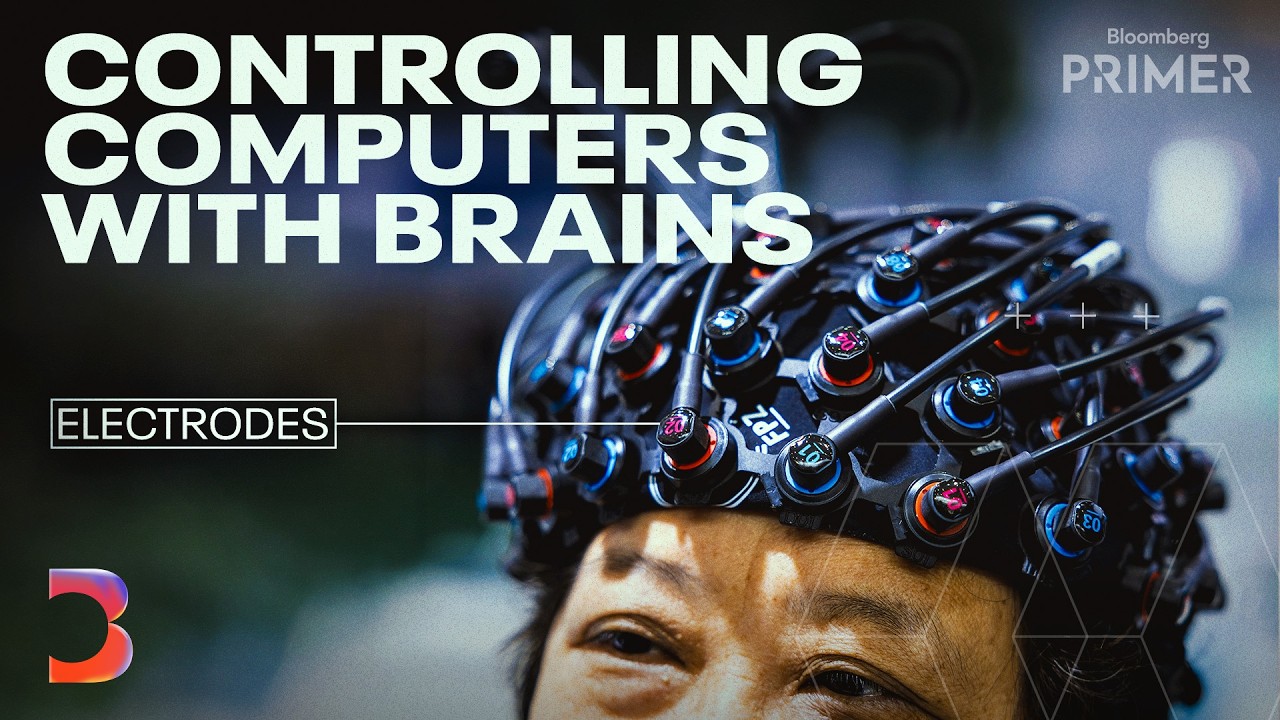
China State Backing Accelerates NeuroXess Brain Chip Clinical Trials
Bloomberg Originals
China's inclusion of brain-computer interfaces in its 15th Five-Year Plan enables domestic startups to challenge US market dominance despite lower private funding levels.
## Background
Published by Bloomberg Originals on YouTube on June 8, 2026, this episode of Bloomberg Primer examines the technology and global race surrounding brain-computer interfaces (BCIs). The channel's page description explains that startups worldwide are competing for commercial approval, with China elevating BCI as a strategic industry and approving its first device for commercial application, alongside a spotlight on Shanghai-based startup NeuroXess.
## TL;DR
The video explores how brain-computer interfaces translate neural signals into commands for external devices, highlighting China's rapid catch-up to US pioneers through strong state backing and strategic designation in its 15th Five-Year Plan. It focuses on Shanghai startup NeuroXess and its semi-invasive cortex strip tested on paralyzed patient Mr. Zhang to demonstrate safety and smart-home integration. Despite challenges like scar tissue formation, high implantation costs, and ethical fears around neural privacy and military weaponization, BCI development currently remains focused on restoring mobility and independence to paralyzed individuals.
## Atmosphere & style
The presentation strikes an analytical, cinematic, and authoritative tone typical of high-end tech journalism, balancing high-stakes global competition with quiet human intimacy. Scenes showing Mr. Zhang controlling his wheelchair via thought ground the complex science in personal stakes, while discussions of AI doom scenarios, cold war experiments, and geopolitical strategy add an urgent, speculative gravity. The overall feel is an intriguing mix of clinical precision and futuristic wonder, keeping viewers captivated by both the immediate therapeutic impacts and the profound ethical horizon.
## Key takeaways
- [01:54](https://www.youtube.com/watch?v=okxvk08uAwo&t=114s) China is rapidly closing the gap with the US in brain-computer interface (BCI) technology and clinical trials.
- [01:20](https://www.youtube.com/watch?v=okxvk08uAwo&t=80s) Elon Musk frames BCI technology as an existential tool to reduce the civilizational risk posed by artificial intelligence.
- [01:54](https://www.youtube.com/watch?v=okxvk08uAwo&t=114s) BCI systems intercept electrical neural signals from firing neurons and use AI algorithms to filter noise into device commands.
- [03:53](https://www.youtube.com/watch?v=okxvk08uAwo&t=233s) Brain data harvested by BCIs offers insights into human neural function that could shape future AI architectures.
- [04:33](https://www.youtube.com/watch?v=okxvk08uAwo&t=273s) BCI funding in China doubled year-over-year in 2025, leading to its first approved commercial invasive BCI in March 2026.
- [04:53](https://www.youtube.com/watch?v=okxvk08uAwo&t=293s) NeuroXess utilizes a flexible cortex strip instead of deep brain-penetrating needles to mitigate scar tissue formation and health risks.
- [05:53](https://www.youtube.com/watch?v=okxvk08uAwo&t=353s) A Shanghai patient named Mr. Zhang is undergoing a pivotal year-long trial using NeuroXess's BCI to control devices and robotic limbs.
- [07:33](https://www.youtube.com/watch?v=okxvk08uAwo&t=453s) NeuroXess has partnered with Xiaomi to integrate mind-control technology into smart home appliance ecosystems.
- [08:05](https://www.youtube.com/watch?v=okxvk08uAwo&t=485s) China designated BCI as one of six strategic industries of the future in its 15th Five-Year Plan, granting it fast-track regulation and state funding.
- [09:07](https://www.youtube.com/watch?v=okxvk08uAwo&t=547s) High medical unit economics pose a hurdle for BCI viability, with Neuralink estimating single implantation costs at $50,000.
- [09:25](https://www.youtube.com/watch?v=okxvk08uAwo&t=565s) NeuroXess is building a manufacturing facility to produce up to 10,000 BCI devices annually.
- [09:47](https://www.youtube.com/watch?v=okxvk08uAwo&t=587s) Widespread BCI technology brings ethical risks regarding neural privacy, cognitive autonomy, and potential military weaponization.
## Detailed walkthrough
Here is the detailed walkthrough of the transcript:
[00:03](https://www.youtube.com/watch?v=okxvk08uAwo&t=3s) Mind Over Matter: China’s BCI Breakthroughs
Mr. Zhang, a patient paralyzed from the neck down following a traumatic accident over eight years ago, sits in a wheelchair that he controls entirely with his mind. Having requested that his face not be filmed for privacy reasons, he demonstrates his mastery over the device, even showing off a few impressive maneuvers. Last year, Mr. Zhang underwent surgery to receive a brain-computer interface (BCI) developed by NeuroXess, a Shanghai-based startup. His training represents a critical front in a new wave of clinical trials across China aimed at achieving the next major BCI breakthrough.
While US companies initially held a distinct head start in developing BCI systems and conducting human trials, China is catching up at an exceptionally rapid pace. The global race to bring BCI tech to market is officially on, and the stakes extend well beyond medical treatments. High-profile figures like Elon Musk frame the technology in existential terms, arguing that linking human minds directly to computers is key to mitigating the "civilizational risk of artificial intelligence" and preventing a "robocalypse." Beyond avoiding AI doom scenarios, BCI commercialization could fundamentally alter human interaction with technology—provided these devices can navigate regulatory pathways to reach the market.
[01:54](https://www.youtube.com/watch?v=okxvk08uAwo&t=114s) How BCI Technology Works and Uses AI
The underlying mechanics of brain-computer interfaces rely on capturing the brain's internal electrical signals. Whether a person speaks, eats, or moves a hand, every action is driven by firing neurons. A BCI intercepts, reads, and decodes these neural signals, translating them into commands to operate external devices like tablets, electric wheelchairs, or prosthetic limbs. These interfaces come in varying levels of invasiveness: some sit directly on the scalp using non-invasive electrodes, while others are surgically implanted—either sitting directly on top of the cortex or penetrating deep into brain tissue.
Because brain data is inherently "noisy," BCI companies rely on advanced AI algorithms to filter out background neural chatter and identify pure motor instructions. Beyond restoring movement, the vast streams of rich brain data harvested by these devices offer neuroscientists deep insights into human brain function. Researchers speculate that these rich datasets could eventually empower AI engineers to build entirely new architectures of artificial intelligence. Although BCI concepts date back to the 1970s—when an American scientist first used EEGs to decode brain activity into movement patterns—human implant trials only began in earnest during the early 2000s, finally entering mainstream consciousness today thanks to high-tech investment.
- **1970s:** Term "brain-computer interface" coined; initial EEG signal-to-movement decoding.
- **Early 2000s:** First human trials utilizing implanted microchips to read brain activity.
- **$2.75 Billion:** Total estimated venture capital raised by US BCI companies to date.
- **2025–2026 Growth:** Funding for Chinese brain chip startups more than doubled in 2025 year-over-year. In March 2026, China approved its first invasive BCI for commercial use.
[04:53](https://www.youtube.com/watch?v=okxvk08uAwo&t=293s) NeuroXess, Patient Trials, and Smart Home Integration
At NeuroXess, founder Tiger Tao—who jokingly notes that "Tiger" is simply the literal translation of his Chinese name, Hu, and has "nothing to do with my personality"—has been experimenting with alternative BCI designs. Rather than using deep brain-penetrating needles, NeuroXess utilizes a flexible strip of electrodes that sits gently on top of the cerebral cortex. This strip records neural signals and relays them to a brain chip for initial signal processing, which then passes data to an internal control unit that houses a battery and wirelessly transmits clean data to an external computer.
To minimize health risks, NeuroXess intentionally selected this semi-invasive cortex strip because long-term implants can act like a "ticking time bomb" inside the sensitive human brain. Over time, the brain typically forms scar tissue around implanted hardware, potentially damaging surrounding brain cells and degrading signal quality. While over 50 patients have tested various iterations of NeuroXess tech, Mr. Zhang has lived with his implant the longest—since October 2025. He trains several hours daily, learning to operate smart devices and a robotic exoskeleton for his hand, which Tao hopes could one day help him walk again. His year-long trial is pivotal for proving long-term device safety; after 12 months, he can choose to keep the implant, which NeuroXess claims has a operational lifespan of up to three years.
- **Smart Home Partnerships:** NeuroXess has partnered with tech giant Xiaomi to integrate mind-control BCI hardware into consumer smart home appliance ecosystems.
- **Regulatory Classification:** BCIs are categorized as Class III medical devices in China, representing the strictest and most difficult tier for regulatory approval.
[08:05](https://www.youtube.com/watch?v=okxvk08uAwo&t=485s) Government Backing and the 15th Five-Year Plan
Although Chinese BCI startups operate with a fraction of the private venture funding raised by their US counterparts, they benefit from immense state backing. Every five years, top Chinese officials publish a strategic national development outline; historical inclusion in this plan—such as past backing for New Energy Vehicles (NEVs)—has successfully catapulted nascent sectors into dominant global industries. In China's 15th Five-Year Plan, BCI technology was officially designated as one of six "strategic industries of the future."
This state designation grants the Chinese BCI ecosystem streamlined regulatory pathways, faster clinical trial approval reviews, optimized inter-agency coordination, and access to a dedicated $165 million state brain science fund. This targeted policy environment allows Chinese firms to accelerate product development rapidly despite tighter private venture budgets.
[09:07](https://www.youtube.com/watch?v=okxvk08uAwo&t=547s) Commercial Viability, Ethics, and Military Risks
The ultimate test for BCI technology lies in its commercial viability and whether it can justify its massive hype in real-world market settings. Medical unit economics present a steep hurdle: in July 2025, Bloomberg reported that Neuralink estimated each surgical implantation procedure would cost $50,000. While NeuroXess has not released individual price estimates, the company has already broken ground on a dedicated manufacturing facility designed to produce 10,000 devices annually. Investors and analysts remain unsure whether medical applications alone provide a large enough market, or if companies will eventually be forced to market devices to healthy consumers for broader commercial returns.
The prospect of mass BCI adoption raises profound ethical concerns regarding neural privacy, data access, and cognitive autonomy. Critics warn of nightmare scenarios involving mind control, coerced consciousness altering, or military weaponization. These fears have historical precedents: during the Cold War, the US CIA conducted illegal mind-control experiments, while modern military research bodies like DARPA (in the US) and state-funded programs in China continue funding BCI research for hands-free drone operation and cognitive enhancement for soldiers. Despite these futuristic anxieties and commercial hurdles, current human clinical trials remain grounded in a therapeutic mission: restoring daily independence and mobility to individuals living with severe paralysis.
While US firms established an early lead in brain-computer interface (BCI) technology, China is rapidly closing the gap through targeted state backing and clinical human trials. Beyond clinical mobility restoration, the sector faces unresolved challenges surrounding surgical costs, long-term safety, and commercial scalability.
Mechanics, AI Integration, and the Funding Landscape (1:54)
Brain-computer interfaces work by capturing electrical signals generated by firing neurons when a person moves, speaks, or eats. Devices decode these neural patterns into commands for hardware like electric wheelchairs, robotic prosthetics, or tablets. Because brain data contains substantial background noise, developers deploy artificial intelligence algorithms to filter extraneous neural chatter and isolate motor intentions. In turn, researchers anticipate that datasets harvested from these devices could inform future AI architectures.
While the BCI concept originated in the 1970s and early human microchip trials began in the 2000s, commercial momentum has accelerated sharply. US companies have raised an estimated $2.75 billion in private venture capital to date. However, Chinese BCI venture funding more than doubled year-over-year in 2025, and by March 2026, China authorized its first invasive BCI for commercial use.
Semi-Invasive Implants and Clinical Rehabilitation (4:53)
Hardware safety remains a critical clinical barrier because the brain often forms scar tissue around penetrating foreign objects, degrading signal quality over time and posing neurological risks. To mitigate this issue, Shanghai startup NeuroXess, led by founder Tiger Tao, utilizes a flexible electrode strip that rests on the cerebral cortex rather than penetrating deep brain tissue. Signals are routed to a brain chip, processed, and transmitted wirelessly from an internal battery unit to external computers.
Clinical implementation is underway with trial participants such as Mr. Zhang, who was paralyzed from the neck down over eight years ago. Implanted in October 2025, Zhang uses his mind to navigate a wheelchair, operate smart home devices via a partnership with Xiaomi, and control an experimental robotic hand exoskeleton. Categorized under China's Class III medical device tier—the strictest regulatory classification—the implant carries a projected three-year lifespan, with Zhang's year-long trial designed to test multi-year safety and efficacy.
State Strategy and the 15th Five-Year Plan (8:05)
Although Chinese startups operate with less private capital than American competitors, they benefit from systemic state backing. In its 15th Five-Year Plan, Beijing officially designated BCI technology as one of six 'strategic industries of the future,' mirroring past industrial policies that successfully scaled China's New Energy Vehicle sector.
This national designation provides the domestic BCI ecosystem with expedited clinical trial approvals, streamlined inter-agency regulatory pathways, and access to a dedicated $165 million state brain science fund. Industry observers note that this institutional support allows Chinese developers to advance products rapidly despite smaller private funding pools.
Commercial Scalability, Ethics, and Dual-Use Risks (9:07)
The long-term viability of the BCI sector depends heavily on unit economics and total market size. In July 2025, Bloomberg reported that Neuralink estimated its surgical implantation procedures would cost $50,000 each. While NeuroXess has broken ground on a manufacturing facility designed to produce 10,000 devices annually, analysts question whether medical applications alone can generate sufficient returns, or if firms must eventually target healthy consumers.
Wider adoption also introduces significant ethical and security questions regarding cognitive privacy, neural data ownership, and unauthorized manipulation. Both the US defense research agency DARPA and state-backed Chinese research bodies continue to fund BCI research for military applications, including hands-free drone piloting and cognitive augmentation for combat personnel.
While high-profile figures such as Elon Musk characterize BCIs as an existential safeguard to merge human consciousness with artificial intelligence, developers on the ground remain focused on nearer-term objectives: validating medical safety, obtaining regulatory clearance, and establishing sustainable commercial models for paralyzed patients.
## Background
该视频由彭博旗下频道 Bloomberg Originals 于 2026 年 6 月 21 日发布在 YouTube 平台。节目简介指出,全球初创企业正竞相推动脑机接口(BCI)设备的商业化,中国更将其确立为国家战略性产业并率先批准了首批商业化设备;本期《Bloomberg Primer》专题剖析了 BCI 背后的核心技术,并深入探访正在对瘫痪患者开展长期植入测试的中国初创公司脑虎科技(NeuroXess)。
## TL;DR
节目以高位截瘫患者张先生凭借意念自如操控轮椅的临床测试为切入点,系统展现了中美两国在脑机接口领域的竞逐态势。尽管美国在早期研发与风险投资规模上处于领先,但中国凭借“十五五”战略扶持、专项基金和快速审批通道迅速迎头赶上,脑虎科技等本土企业则通过皮层柔性微电极路线与小米智能家居生态加速技术落地。与此同时,高昂的手术成本、商业医保覆盖难题、规模化量产前景,以及伴随思维读取而来的脑神经隐私边界和军事化应用争议,构成了该技术全面走向市场必须跨越的多重屏障。
## Atmosphere & style
全片洋溢着典型彭博式的冷静、严谨与宏观洞察,视觉质感极富现代硬核科技感。隐去面容的重度瘫痪患者在实验室中展现出重获自主尊严的动人张力,与大国科技博弈的宏大图景、自动化芯片工厂的商业现实交织在一起。整体叙事节奏紧凑、层层递进,既让观众真切感受到人机共生破晓时分的震撼与希望,又始终笼罩着对脑隐私沦陷与思维管控的审慎反思。
## Bulletin
- [04:16](https://www.youtube.com/watch?v=okxvk08uAwo&t=256s) 中国正全速推动脑机接口商业化,不仅在2026年3月批准了首款商业化侵入式BCI设备,更在“十五五”规划中将其列为未来六大战略性产业之一,辅以1.65亿美元专项基金与绿色审批通道。
- [00:03](https://www.youtube.com/watch?v=okxvk08uAwo&t=3s) 上海初创企业脑虎科技(NeuroXess)正在对高位截瘫患者进行为期一年的植入测试,患者已能通过脑电信号自主驾驶电动轮椅并控制机械外骨骼。
- [04:16](https://www.youtube.com/watch?v=okxvk08uAwo&t=256s) 虽然美国BCI企业累计风投资本以27.5亿美元占据绝对主导,但中国2025年相关投资实现翻倍,正依靠政策红利和制造规模迅速缩小差距。
- [09:07](https://www.youtube.com/watch?v=okxvk08uAwo&t=547s) 脑虎科技正着手建造年产1万台设备的制造基地,但高昂的手术成本、尚不明确的医保支付机制以及神经隐私泄露与军事化应用争议,仍是技术大规模普及的主要瓶颈。
## Key takeaways
- [00:03](https://www.youtube.com/watch?v=okxvk08uAwo&t=3s) 截瘫患者张先生成功依靠脑虎科技植入的脑机接口芯片自主操纵电动轮椅,验证了BCI在恢复肢体行动障碍方面的临床可行性。
- [00:03](https://www.youtube.com/watch?v=okxvk08uAwo&t=3s) 埃隆·马斯克等科技领袖认为,脑机接口不仅用于医疗康复,更是未来抵御人工智能对人类文明构成生存威胁的人机共生防线。
- [01:54](https://www.youtube.com/watch?v=okxvk08uAwo&t=114s) 脑机接口通过贴覆或植入微电极采集大脑皮层动作电位,绕过受损神经通道直接向计算机、轮椅等外部设备发送运动控制指令。
- [01:54](https://www.youtube.com/watch?v=okxvk08uAwo&t=114s) AI深度学习算法在BCI中充当关键的“翻译官”角色,负责滤除复杂的脑电噪声并精准解码意图,同时高通量神经数据也反哺了类脑AI的研究。
- [04:16](https://www.youtube.com/watch?v=okxvk08uAwo&t=256s) 在全球资本格局中,美国以约27.5亿美元的累计风投资金遥遥领先,但中国初创企业的融资规模正在以每年翻倍的速度迅猛追赶。
- [04:47](https://www.youtube.com/watch?v=okxvk08uAwo&t=287s) 脑虎科技选用贴覆于大脑皮层表面的柔性微电极条,能有效降低脑组织异物反应和胶质瘢痕包裹,保障设备长期信号读取的稳定性与安全性。
- [04:47](https://www.youtube.com/watch?v=okxvk08uAwo&t=287s) 中国政府在“十五五”规划中确立BCI为未来六大战略产业之一,通过设置专项基金和绿色通道加速高门槛的第三类医疗器械审批。
- [04:47](https://www.youtube.com/watch?v=okxvk08uAwo&t=287s) 脑机接口正逐步拓展应用边界,脑虎科技已联合小米探索打通智能家居生态,并结合机械外骨骼尝试辅助截瘫患者重获站立与行走功能。
- [09:07](https://www.youtube.com/watch?v=okxvk08uAwo&t=547s) BCI商业模式落地难度极高,对比Neuralink预估每台手术5万美元的高昂成本,当前缺乏医保支付覆盖迫使行业未来必须寻求向消费级泛大众市场扩展。
- [09:07](https://www.youtube.com/watch?v=okxvk08uAwo&t=547s) 脑虎科技正规划建立年产能达1万台的生产基地以期通过规模效应降本,但仅靠严肃医疗市场能否消化庞大产能并实现商业回报仍存疑问。
- [09:07](https://www.youtube.com/watch?v=okxvk08uAwo&t=547s) 伴随脑机接口向大众普及,脑神经隐私权成为核心伦理焦点,公众高度担忧个人思维数据被无授权调取、存储滥用甚至遭遇反向意识控制。
- [09:07](https://www.youtube.com/watch?v=okxvk08uAwo&t=547s) BCI兼具敏感的军事应用属性,美军DARPA长期研发脑控无人机集群,中国军工体系亦在持续投入,引发了关于超级认知战士与伦理边界的全球争议。
## Detailed walkthrough
### [00:03](https://www.youtube.com/watch?v=okxvk08uAwo&t=3s) 意念操纵轮椅与中美脑机接口竞逐
在镜头前,张先生(Mr. Zhang)出于隐私保护要求不公开面容。8年多前的一场严重事故导致他颈部以下完全瘫痪。然而在实验现场,他仅凭大脑意念便能顺畅自如地操纵电动轮椅移动,甚至还能熟练地展示一些细致的操控技巧。这一改变源自他去年接受的一场脑机接口(BCI)植入手术,设备由中国上海的初创企业脑虎科技(NeuroXess)研发提供。
张先生的临床训练是中国新一轮脑机接口临床试验浪潮的关键缩影。尽管美国公司在早期系统研发与人体临床测试方面起步更早,但中国正在以极快的速度迎头赶上。脑机接口不仅关乎医疗康复,在某些科技巨头眼里更是关乎人类未来的终极防线——埃隆·马斯克(Elon Musk)曾直言,脑机接口技术从根本上有助于“缓解人工智能对人类文明构成的生存威胁(mitigate the civilizational risk of artificial intelligence)”。除了防范AI末日危机,BCI更有望超越纯粹的医疗范畴,使人机共生走向深处,但其首要前提是必须跨越商业化的门槛。
```mermaid
flowchart TD
accTitle: 脑机接口工作原理流程图
accDescr: 描述大脑皮层神经元发放电信号,经电极采集并由AI算法滤波解码后控制外部设备的完整通路。
subgraph Brain["人脑信号源"]
N["神经元活动<br/>产生动作电位"]
end
subgraph Hardware["BCI硬件系统"]
E["皮层/头皮电极<br/>采集神经电脉冲"]
P["植入处理芯片<br/>初步信号处理与放大"]
end
subgraph Software["算法解码层"]
AI["AI深度学习算法<br/>过滤噪声并解析运动意图"]
end
subgraph Actuators["外部执行终端"]
W["智能电动轮椅"]
H["智能家居与机械外骨骼"]
end
N --> E
E --> P
P --> AI
AI --> W
AI --> H
```
### [01:54](https://www.youtube.com/watch?v=okxvk08uAwo&t=114s) 脑机接口的核心机制与技术演变
脑机接口的概念早在20世纪70年代就由美国科学家提出。当时研究人员证明,通过脑电图(EEG)记录到的脑电信号可以被映射为特定模式,并进一步解码为身体运动指令。直到21世纪初,科学家才正式开始尝试将芯片植入人体大脑读取脑神经电活动。近几年来,在多位科技亿万富翁的强力助推下,BCI彻底走入大众主流视野,并迅速跨入临床测试与商业化落地的高速攻坚期。
人类的每一项行为——无论是说话、进食还是挥手,本质上都由大脑皮层中的神经元相互传递电信号所驱动。脑机接口正是通过采集并破译这些微弱电信号,绕过受损的神经通道与肌肉组织,直接向计算机、平板或假肢等外部电子设备发出控制指令。按侵入程度划分,BCI分为多种形式:非侵入式直接将微电极贴附在头皮表面;侵入式则需要外科手术将电极阵列精准贴覆在大脑皮层表面或直接刺入脑组织内部。由于采集到的脑电数据极度微弱且嘈杂,AI算法在其中扮演了不可或缺的“翻译官”角色,专门用于滤除背景噪音、精准识别人脑发出的运动指令。此外,高通量神经数据的积累也为科学家探索脑科学提供了宝贵数据,并反哺AI研究人员开发全新的类脑计算与人工智能系统。
### [04:16](https://www.youtube.com/watch?v=okxvk08uAwo&t=256s) 中美融资格局与中国政策东风
在资本层面,全球脑机接口领域的资金分布呈现出明显的结构差异。据估算,美国BCI企业迄今累计吸纳了约27.5亿美元的风险投资,而中国和欧洲同行融到的资金体量仅为美国的一小部分。然而,中国脑芯片产业的增速不容小觑:2025年中国该领域的初创企业融资金额相比前一年实现翻倍。2026年3月,中国正式批准了首个用于商业化应用的侵入式脑机接口设备,释放出全面押注该底层硬科技的明确信号。
### [04:47](https://www.youtube.com/watch?v=okxvk08uAwo&t=287s) 脑虎科技(NeuroXess)的临床实践与技术路径
上海脑虎科技(NeuroXess)创始人陶虎(Tiger Tao)幽默地解释自己的名字:“我的名字是Tiger,这只是我中文名‘虎’的直译,和我的性格没有任何关系。”这家初创公司近年来尝试了多种脑机接口技术路线。他们为张先生设计的设备采用了一种贴覆于大脑皮层表面的柔性微电极条,电极连接到负责信号处理的脑部芯片,并进一步连接内置控制单元。该单元集成了电池模组,负责对脑电数据进行本地处理并无线传输至计算机端。
目前已有超过50名患者参与测试了脑虎科技不同版本的技术方案,而张先生是佩戴生活时间最长的一位(自2025年10月植入至今)。他每天都要花费数小时接受脑电控制技能训练。脑虎科技还与中国智能家居巨头小米(Xiaomi)展开深度合作,致力于将脑机接口直接打通接入庞大的智能家居生态系统,让行动不便的患者能凭意念掌控家电。此外,张先生正在训练通过意念操控机械手部外骨骼,陶虎表示,这项技术未来有望帮助他重新站立行走。
- 长期植入测试周期:张先生的体内植入物将留存整整一年,这是验证设备长期生物兼容安全性与信号稳定性的关键周期;期满后他可自行选择取出或保留,设备标称寿命长达三年。
- 异物反应与电极策略:人体大脑极其脆弱敏感,硬质侵入物极易触发胶质瘢痕包裹(scar tissue),这不仅会损伤脑细胞,还会严重屏蔽电信号。脑虎科技选择创伤较小、仅贴覆在皮层表面的微电极条,有效抑制了瘢痕增生,保障了长期信号质量。
- 顶层监管与战略扶持:在监管审批层面,该设备被归类为门槛最高、审查最严苛的“第三类医疗器械(Class III medical device)”。但中国政府每五年制定的发展规划提供了强大的政策推力——在“十五五”规划中,脑机接口被明确列为中国未来六大未来战略性产业之一。配套举措包括设立1.65亿美元的脑科学专项扶持基金、出台更明晰的审批指引、开辟临床审查绿色通道,从而大幅对冲了早期风投资金相对不足的劣势。
### [09:07](https://www.youtube.com/watch?v=okxvk08uAwo&t=547s) 商业化困境、脑隐私挑战与军事应用争议
当脑机接口技术走出实验室走向真实商业世界,最大的考验在于其商业模式能否跑通。首先摆在行业面前的是高昂的费用与支付机制难题:目前尚不清楚公共医疗保险或商业保险能否全面覆盖这类前沿疗法。作为对比,2025年7月彭博社曾披露,马斯克旗下的Neuralink估算单台手术收费高达5万美元。脑虎科技虽未公布具体终端售价,但已着手开工建设一座年产能力达10,000台设备的专业制造工厂。这一巨大产能也迫使行业直面核心抉择:仅靠严肃医疗市场是否足以支撑投资回报?商业资本未来势必会推动技术向消费电子等泛大众市场渗透。
随着侵入式与非侵入式BCI走向大众普及,关于“脑神经隐私(neural privacy)”的伦理与法律边界迅速被推至风口浪尖。当外部设备能够长期读取乃至反向写入思维活动时,谁有权访问神经数据、这些数据将被存向何处,成为公众最大的担忧。甚至有声音警惕脑机接口技术可能被滥用于违背个人意愿的思想篡改,或是被军方用于制造“超级认知战士”。
- 军事研发渊源与现状:脑控制实验在历史上早有先例,例如冷战时期美国中央情报局(CIA)就曾开展非法精神控制实验;近年来,美国国防高级研究计划局(DARPA)持续资助免手操作脑控无人机集群的脑机系统开发,中国军工科研体系同样在脑机接口军事应用领域投入了专项资金。
- 伦理与立法跟进:鉴于技术快速演进带来的不可逆影响,全球部分司法管辖区已经启动立法程序,针对公民的神经隐私数据设立专门保护法案。当前,脑机接口技术正在帮助残障人士重获生活自理的尊严,而参与测试的患者们更期盼着这项技术在未来拓展人类潜能的更大可能。
## Notable quotes
> [00:03](https://www.youtube.com/watch?v=okxvk08uAwo&t=3s) 缓解人工智能对人类文明构成的生存威胁(mitigate the civilizational risk of artificial intelligence) — 埃隆·马斯克(Elon Musk)
> [00:03](https://www.youtube.com/watch?v=okxvk08uAwo&t=3s) 脑机接口不仅关乎医疗康复,在某些科技巨头眼里更是关乎人类未来的终极防线
> [01:54](https://www.youtube.com/watch?v=okxvk08uAwo&t=114s) 由于采集到的脑电数据极度微弱且嘈杂,AI算法在其中扮演了不可或缺的‘翻译官’角色,专门用于滤除背景噪音、精准识别人脑发出的运动指令
> [04:47](https://www.youtube.com/watch?v=okxvk08uAwo&t=287s) 我的名字是Tiger,这只是我中文名‘虎’的直译,和我的性格没有任何关系。 — 陶虎(Tiger Tao)
> [04:47](https://www.youtube.com/watch?v=okxvk08uAwo&t=287s) 硬质侵入物极易触发胶质瘢痕包裹(scar tissue),这不仅会损伤脑细胞,还会严重屏蔽电信号
> [04:47](https://www.youtube.com/watch?v=okxvk08uAwo&t=287s) 在‘十五五’规划中,脑机接口被明确列为中国未来六大未来战略性产业之一
> [09:07](https://www.youtube.com/watch?v=okxvk08uAwo&t=547s) 仅靠严肃医疗市场是否足以支撑投资回报?商业资本未来势必会推动技术向消费电子等泛大众市场渗透
> [09:07](https://www.youtube.com/watch?v=okxvk08uAwo&t=547s) 当外部设备能够长期读取乃至反向写入思维活动时,谁有权访问神经数据、这些数据将被存向何处,成为公众最大的担忧
> [09:07](https://www.youtube.com/watch?v=okxvk08uAwo&t=547s) 当前,脑机接口技术正在帮助残障人士重获生活自理的尊严,而参与测试的患者们更期盼着这项技术在未来拓展人类潜能的更大可能
## Mentioned
张先生(Mr. Zhang), 脑虎科技(NeuroXess), 陶虎(Tiger Tao), 埃隆·马斯克(Elon Musk), Neuralink, 小米(Xiaomi), 彭博社(Bloomberg Originals / Bloomberg Primer), 美国国防高级研究计划局(DARPA), 美国中央情报局(CIA), 脑机接口(BCI), 脑电图(EEG)
## Video description
Brain-computer interfaces could dramatically alter how humans interact with technology. Today, startups around the world are racing to get their devices approved for commercial use. China in particular is moving quickly, earmarking BCI as a strategic industry. The country also recently approved its first BCI for commercial application.
On this episode of Bloomberg Primer, we explore the technology behind BCI and visit Shanghai-based startup NeuroXess, which is conducting a year-long test in a paralyzed patient.
00:00 - 01:54 Intro
01:54 - 04:16 What is a brain-computer interface
04:16 - 04:47 Fundraising
04:47 - 09:07 NeuroXess
09:07 - 12:15 How BCI could change the future
#Tech #China #Computers
Bloomberg Primer cuts through the complex jargon to reveal the business behind technologies poised to transform global markets. This six-part, planet-spanning series offers a comprehensive look at the "impossible" industries vying to shape our future.
Watch more: https://www.youtube.com/show/VLPLqq4LnWs3olWuFFpsiq0cFkGs7WMb6MtA?sbp=QAE%3D
--------
Like this video? Subscribe: http://www.youtube.com/Bloomberg?sub_confirmation=1
Get unlimited access to Bloomberg.com for just $1.99 your first month: https://www.bloomberg.com/subscriptions?in_source=YoutubeOriginals
Bloomberg Originals offers bold takes for curious minds on today’s biggest topics. Hosted by experts covering stories you haven’t seen and viewpoints you haven’t heard, you’ll discover cinematic, data-led shows that investigate the intersection of business and culture. Exploring every angle of climate change, technology, finance, sports and beyond, Bloomberg Originals is business as you’ve never seen it.
Subscribe for business news, but not as you've known it: exclusive interviews, fascinating profiles, data-driven analysis, and the latest in tech innovation from around the world.
Visit our partner channel Bloomberg News for global news and insight in an instant.
[Source](https://www.youtube.com/watch?v=okxvk08uAwo)
[1:00] Elon Musk: civilizational risk of artificial intelligence
[1:00] Elon Musk: robocalypse
[4:53] Tiger Tao: nothing to do with my personality
[4:53] Tiger Tao: ticking time bomb
Original transcript
[0:03] - This is Mr.
[0:05] Zhang. He asked us not to film
his face for privacy reasons.
[0:10] A little over eight years ago,
[0:12] an accident left him
paralyzed from the neck down,
[0:16] but here, he's controlling
his wheelchair with his mind.
[0:31] - He's even got a few
tricks up his sleeve.
[0:36] Last year, Mr. Zhang had surgery
[0:38] to get a brain-computer interface,
[0:40] or BCI from a Shanghai-based
startup called NeuroXess.
[0:55] - Training is part of a new wave
[0:57] of clinical trials in China,
[0:59] hoping to make the next
breakthrough in BCI tech.
[1:03] - US companies certainly had
a head start in developing
[1:06] these systems and testing
these systems in humans,
[1:09] but China is certainly
catching up very rapidly.
[1:13] - The race to get BCI's to market is on
[1:16] and the stakes for one
well-known tech CEO are high.
[1:20] Like saving humanity from
the robocalypse high.
[1:23] - Ultimately, I think
this helps mitigate the
[1:27] civilizational risk of
artificial intelligence.
[1:29] - AI doom scenario aside,
there's a chance BCI's could move
[1:33] beyond just medical purposes
[1:35] and further enmesh humans and technology.
[1:39] But first, they've gotta get to market.
[1:54] - Tiny electrodes are
carefully cemented to the scalp
[1:57] to detect and record the delicate
[1:59] pulses from the human brain.
[2:06] - There's been a lot of
buzz around brain-computer
[2:08] interfaces in the past few years,
[2:11] but the technology behind
them isn't all that new.
[2:15] - So a brain-computer interface
is a piece of technology
[2:18] that allows your brain
to communicate directly
[2:21] with a computer
[2:22] or another sort of piece
[2:23] of electronic equipment
bypassing the rest of the body.
[2:26] - The term brain-computer
interface was coined in the 1970s
[2:30] by an American scientist who showed
[2:31] that one could take electrical
signals measured by an EEG
[2:36] and map it onto patterns
[2:38] and then decode how that
corresponds to movement.
[2:41] - It wasn't until sort of
the early 2000s
[2:44] that we got into humans using these chips
[2:46] to read the activity in human brains.
[2:48] - Over the past few years,
[2:50] it's really entered
mainstream consciousness.
[2:52] Thanks in no small part to the enthusiasm
[2:55] of tech billionaires,
[2:57] but we are at a point where
[2:59] are moving fast in clinical trials
[3:01] and really working
towards bringing a product
[3:04] to commercial use.
[3:09] - BCI's work like this:
[3:11] Everything you do,
whether that's speak, eat
[3:14] or move your hand is driven
by neurons in your brain.
[3:18] Those neurons send electrical signals
[3:20] to each other to create action.
[3:22] BCI's read and decode those signals
[3:24] to control an external
device like a tablet
[3:27] or prosthetic limb.
[3:29] BCI's come in varying
degrees of invasiveness.
[3:32] Some need to be surgically implanted
[3:34] and either stick into the brain
or sit right on top of it.
[3:38] Others are placed on top of the scalp.
[3:44] Regardless of how you measure
it, brain data is noisy.
[3:48] That's where AI comes in. BCI
[3:51] companies use algorithms to
filter out background chatter
[3:54] and accurately identify
the brain's instructions.
[3:58] - The vast rich amount of data
[4:00] that they collect can be super
helpful in helping scientists
[4:04] understand the human brain better.
[4:06] And a lot of researchers
believe that this kind
[4:10] of data will help AI researchers
build totally different
[4:14] kind of artificial intelligence systems.
[4:18] - In the US, it's estimated
[4:20] that BCI companies have raised
$2.75 billion collectively.
[4:25] - Chinese and European
companies have raised maybe a
[4:27] fraction of that.
[4:29] - Even so, the Chinese
sector is growing. Funding
[4:32] for Chinese brain chip startups
[4:34] more than doubled in 2025
compared to the year before.
[4:37] And in March of 2026, China
approved its first invasive BCI
[4:42] for commercial use, a signal
[4:44] that it's betting big on this tech.
[4:53] - My name's Tiger Tao,
[4:54] and actually Tiger is
the direct translation
[4:56] of my first name Hu in Chinese.
[4:59] So it has nothing to
do with my personality.
[5:03] - Over the past few years,
[5:05] NeuroXess has been experimenting
[5:07] with different approaches to BCI's.
[5:09] - I was hoping that maybe
you could bring the Marva
[5:25] - The device uses a strip of
electrodes that sits on top
[5:28] of the cortex that can
record signals in the brain.
[5:31] Those electrodes are
connected to a brain chip
[5:34] that does all the signal
processing that's attached
[5:37] to an internal control unit
[5:39] that processes and wirelessly
transmits data to a computer.
[5:43] It also houses the battery
[6:01] - More than 50 patients have
tested different versions
[6:04] of NeuroXess's technology, but Mr.
[6:07] Zhang has lived with it the
longest since October of 2025.
[6:12] He spends several hours a day training
[6:14] to learn new skills with his BCI.
[6:34] - It's also interesting
[6:35] that NeuroXess has a
collaboration with Xiaomi, one
[6:39] of the leading home
appliances companies in China
[6:43] to integrate
[6:44] its BCI with a whole universe
of smart home devices.
[6:48] - Other startups have similar partnerships
[6:50] with tech companies so
that patients can start
[6:52] to control their devices with their minds.
[6:56] Mr. Zhang is also training
[6:57] to control a robotic
exoskeleton on his hand.
[7:00] According to Tao, this sort
[7:02] of tech could one day
help Mr. Zhang walk again.
[7:09] Mr. Zhang will have this
implant for an entire year,
[7:12] which is critical to test its long-term
[7:14] safety and effectiveness.
[7:16] After that, Mr. Zhang could remove
[7:18] or keep the BCI,
[7:20] which NeuroXess claims
could last three years.
[7:24] - In a sense, it can be a
ticking time bomb when something
[7:29] is put in the human brain,
[7:30] which is very sensitive area of the body.
[7:34] - That's because over time,
the brain forms scar tissue
[7:36] around the implant, which
can damage brain cells
[7:39] and block signals to the device.
[7:41] NeuroXess opted for a less
invasive strip of electrodes
[7:45] to help reduce scarring
and maintain a good signal.
[7:50] One challenge? The bar for
regulatory approval is very high.
[7:54] - This is gonna be classified
[7:56] as class III medical device, which
[7:58] is the hardest to get
in terms of approval.
[8:01] - But they've got a helping hand.
[8:05] Every five years, China's top
officials release an outline
[8:08] for key areas of economic
and social development.
[8:11] That support can catapult nascent
industries to new heights.
[8:16] For example, China's
highlighted new energy vehicles
[8:19] for investment over the past few decades,
[8:21] and today they dominate most
of the global EV market.
[8:25] - In the 15th five year plan,
BCI was designated as one
[8:30] of six strategic industries of the future.
[8:33] - That means clearer guidelines,
[8:35] faster clinical trial reviews
[8:37] and better coordination.
[8:39] Oh, and a $165 million brain science
[8:41] fund to back the fledgling industry.
[8:44] - So while venture funding
[8:46] for these BCI companies are
relatively limited compared
[8:50] to their US peers, this kind
[8:52] of policy support really
helps them accelerate their
[8:55] development of BCI technology.
[9:07] - The biggest test will be
whether BCI's can actually be a
[9:11] viable business
[9:12] and whether it can live
up to all its hype,
[9:15] all its promises when it's rolled out in a
[9:17] commercial, real world setting.
[9:22] - There is a big open question
of how these are going
[9:24] to be paid for, what sort
[9:26] of insurance coverage
will look like, whether
[9:28] that will be sufficient
to to cover the costs.
[9:30] - BCI's
[9:31] are unsurprisingly expensive.
[9:34] In July 2025, Bloomberg reported
[9:37] that Neuralink estimates each
surgery will bring in $50,000.
[9:42] NeuroXess hasn't announced an estimate,
[9:45] but they've already broken ground on a
[9:46] manufacturing facility
[9:47] the company says will make
10,000 devices a year.
[9:51] - I think then, you know, companies
[9:53] and investors are gonna have
to see how, you know, large,
[9:56] they really need this market
to be. Will it be sufficient
[9:59] to only use this as a medical device?
[10:01] Or will investors want more of return
[10:05] and want this technology to be available
[10:08] or marketed more broadly?
[10:14] - Mass adoption of this
tech, whether invasive
[10:17] or non-invasive, raises
questions about the future
[10:20] of neural privacy.
[10:21] - As this technology becomes
more widely available,
[10:25] which you know, many people
think it will, there are sort
[10:28] of questions to be raised
about who has access
[10:30] to this data and what happens to it.
[10:33] - In response to the rapid
acceleration of BCI tech,
[10:36] some jurisdictions are passing laws
[10:37] to protect neural privacy.
[10:39] - There are fears that
ultimately BCI will be used
[10:43] or abused to alter people's
consciousness against their
[10:47] wills or even be deployed
in a military setting
[10:50] to create soldiers with
enhanced cognitive abilities.
[10:55] - Those nightmare scenarios
have some basis in
[10:58] reality. In the US,
[11:00] the CIA ran illegal experiments to try
[11:03] to unlock mind control
during the Cold War.
[11:07] And more recently, the US's
primary military research arm,
[11:10] DARPA, has funded studies
into BCI's that could allow
[11:14] for hands-free control of drones.
[11:17] China has also funded brain research
[11:20] for military applications
[11:33] For now,
[11:34] BCI trials are helping people
[11:35] with disabilities regain
their independence
[11:38] for everyday tasks.
[11:40] But Mr. Zhang is thinking beyond that.