Zip Co-Founder Zaparde Shifts Startup Strategy to Enterprise Sales Risk After FlightCar Operations Trap Cash
Y Combinator
Second-time founders succeed by abandoning impression management and targeting established enterprise markets with strict cold-outreach validation.
AI-assisted summary of Building A $2 Billion SaaS Company: Lessons From A Two Time Founder — original source. Check the original for full context.
Source published:
Detailed notes
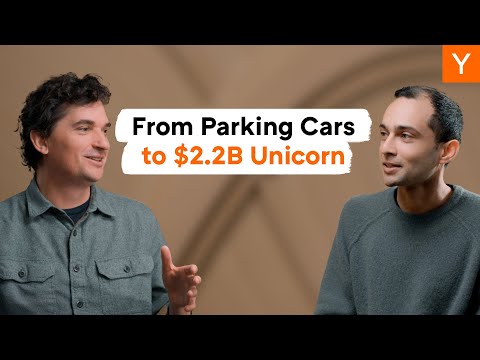
## Background Published by Y Combinator on YouTube on January 8, 2025, this video features a conversation between managing partner Dalton Caldwell and two-time founder Rujul Zaparde. The page description outlines Rujul's entrepreneurial journey from dropping out of college to build FlightCar, working as a product manager at Airbnb and a visiting partner at YC, to co-founding the procurement software company Zip, which has scaled to a $2.2 billion valuation.
## TL;DR The conversation chronicles Rujul Zaparde's evolution from a self-conscious, first-time founder navigating the intense operational and margin-squeezing challenges of FlightCar to a highly intentional leader at Zip. After refining his understanding of corporate scale at Airbnb and advising startups at Y Combinator, Rujul applied a first-principles approach to his second venture. By executing strict cold outbound sales strategies and forcing early monetization, he and his co-founder successfully identified a deep market need in procurement. Ultimately, the walkthrough outlines a foundational framework for second-time founders that prioritizes a relentless search for internal truth and operational execution over external validation and perception management.
## Atmosphere & style The tone of the discussion is deeply reflective, humble, and candid, stripping away the typical glamour of tech entrepreneurship to expose the raw, chaotic realities of early-stage startups. It carries an analytical yet conversational vibe, marked by a supportive peer-to-peer dynamic between Dalton and Rujul as they demystify complex concepts like enterprise sales and founder mode. Listening to the narrative feels like sitting in on an intimate, high-level mentoring session, moving from comical tales of outrunning transit police to a liberating, mature philosophy on business building.
## Key takeaways - [00:00](https://www.youtube.com/watch?v=rjyJsbUunQ4&t=0s) First-time founders often worry deeply about external perceptions, board impressions, and press, whereas second-time founders shift to a liberating mindset focused purely on seeking truth and building something people want. - [00:00](https://www.youtube.com/watch?v=rjyJsbUunQ4&t=0s) Zip is an enterprise procurement software company valued at $2.2 billion post-money after raising $370 million and scaling to roughly 350 employees. - [01:37](https://www.youtube.com/watch?v=rjyJsbUunQ4&t=97s) The idea for FlightCar—renting out idle cars at airports with free parking—was conceived during a single, rushed one-hour brainstorming session at Panera Bread, leading to a recommendation that future founders spend much more time thinking through their next business. - [03:58](https://www.youtube.com/watch?v=rjyJsbUunQ4&t=238s) Following Paul Graham's advice to launch immediately without a parking lot, FlightCar ran a scrappy, undercover operation using a local BART transit lot before getting caught by the police. - [07:09](https://www.youtube.com/watch?v=rjyJsbUunQ4&t=429s) FlightCar was an asset-heavy, low-margin business where profitability relied on 'the last drop out of the lemon,' making it incredibly difficult to raise venture capital from skeptical investors. - [09:52](https://www.youtube.com/watch?v=rjyJsbUunQ4&t=592s) Hiring without clear justification leads to self-inflicted corporate pain, where employees invent redundant projects just to justify their roles or secure promotions. - [09:52](https://www.youtube.com/watch?v=rjyJsbUunQ4&t=592s) A startup's primary pain should always be externally inflicted by the market rather than self-inflicted by internal misalignment and unnecessary scaling. - [12:55](https://www.youtube.com/watch?v=rjyJsbUunQ4&t=775s) The core of 'founder mode' involves creating healthy internal conflict, asking hard questions, and challenging whether internal initiatives truly serve the company's core goals. - [14:57](https://www.youtube.com/watch?v=rjyJsbUunQ4&t=897s) True founders are fundamentally formidable individuals with an intense, critical drive to make something work in the world, even if they must completely pivot from their initial concept. - [17:10](https://www.youtube.com/watch?v=rjyJsbUunQ4&t=1030s) Second-time founders should intentionally seek out industries with execution risk rather than market risk by modernizing old software spaces that have failed to adapt to a changing world. - [18:19](https://www.youtube.com/watch?v=rjyJsbUunQ4&t=1099s) To validate true market fit and build long-term sales muscle, startups should enforce a rule to close their first 10 customers completely cold without relying on warm introductions or referrals. - [18:19](https://www.youtube.com/watch?v=rjyJsbUunQ4&t=1099s) Instead of pitching immediately, founders can leverage cold outreach on LinkedIn to ask for industry advice, compiling feedback to build the product and turning those advisors into highly responsive first customers. - [20:20](https://www.youtube.com/watch?v=rjyJsbUunQ4&t=1220s) Founders must avoid hiding behind 'design partner' labels and charge a rational amount early on to ensure that user feedback comes from customers who actually have skin in the game. - [20:20](https://www.youtube.com/watch?v=rjyJsbUunQ4&t=1220s) If a reasonably sized company refuses to pay a negligible fee like $10,000 or $20,000, it serves as a crucial signal that the product is not solving a painful enough problem.
## Detailed walkthrough ### [00:00](https://www.youtube.com/watch?v=rjyJsbUunQ4&t=0s) The Shift from First-Time to Second-Time Founder
As a first-time founder, Rahul dropped out of school and cared deeply about external perceptions. He worried constantly about what his team and executives thought when people quit, how board meetings would go, how to paint a positive picture of the business for investors, and how the press covered them. By the second time around, his mindset shifted completely: "You know what, it's my time. I just want to build something that people want, that really works."
Rahul is the founder of Zip, a procurement software company that provides a "one front door" system for any employee in an organization to request a purchase. The software routes requests for approval across budget, legal, IT, and security teams before connecting to the ERP financial system. Zip has grown to about 350 employees, raised $370 million, and recently closed a Series D round at a $2.2 billion post-money valuation.
- **Zip Employee Count:** ~350 people - **Total Funding Raised:** ~$370 million - **Most Recent Valuation:** $2.2 billion post-money (Series D) - **Zip YC Batch:** Summer 2020 (S20)
---
[01:37](https://www.youtube.com/watch?v=rjyJsbUunQ4&t=97s) The Origin of Flight Car: A One-Hour Brainstorm at Panera Bread
In late 2012 or early 2013, Rahul dropped out of college to start Flight Car. Technically, he and his co-founder Kevin were still incredibly young—Kevin dropped out during his freshman year of college, and Rahul dropped out just before his freshman year started, essentially straight out of high school. Rahul called Kevin to suggest starting a company, and they agreed to meet up on a Sunday at their local hangout spot, a Panera Bread in Princeton, New Jersey.
They gave themselves exactly one hour to brainstorm before Kevin had to run. Kevin asked if Rahul had heard of Airbnb. When Rahul said no, Kevin explained that people were sharing their homes. They reasoned that if a home is the most expensive thing someone owns, the second most expensive is their car. They realized cars sit idle at airports when people travel. In a pre-Uber and pre-Lyft era, they came up with Flight Car: "Free airport parking by renting out your car, fully insured." That single hour of brainstorming led to five years of running the company, prompting Rahul to advise future founders to put "more than an hour" of thought into their next business idea.
---
[03:58](https://www.youtube.com/watch?v=rjyJsbUunQ4&t=238s) Scrappy Operations and Running from the BART Police
During the Winter 2013 Y Combinator batch, Flight Car had not yet launched. Two weeks into the batch, Paul Graham (PG) asked them during office hours how many customers they had. When they admitted they had zero because they didn't have a parking lot yet, PG told them, "That sounds like a thing you guys can figure out... you need to launch tomorrow." Taking the advice to heart, they launched within days by using the local BART (Bay Area Rapid Transit) subway parking lot, which was five minutes from SFO airport and cost only $2 a day. They would meet customers at BART, drive them to the airport in their own cars, and park the vehicles back at the transit lot.
Within three weeks, they had 200 cars parked at the BART lot. The sudden influx of vehicles caught the attention of the BART police, who called and ordered them to remove the cars immediately. Lacking an alternative lot, Flight Car transitioned into an "undercover operation," shedding their uniforms to blend in while they scrambled to secure a real parking lot.
Solving the supply side of their marketplace presented another comical challenge. None of the three co-founders were old enough to rent a car from traditional agencies, and one of them did not even have a driver's license. They found a business called "Super Cheap Car Rental" in San Jose, where the owner agreed to rent them 30 to 40 basic Toyota Corollas. Rahul and his licensed co-founder took the Caltrain down to San Jose and took turns driving the cars up to SFO—making 15 trips each—to seed their initial supply.
---
[07:09](https://www.youtube.com/watch?v=rjyJsbUunQ4&t=429s) Squeezing the Lemon: The Post-Mortem on Flight Car
At its peak, Flight Car expanded to 17 different airport locations. However, it was an incredibly asset-heavy and operationally intensive business. They managed leases at 17 facilities, ran shuttle services, and washed and gassed up hundreds of cars daily. Rahul compares the business to squeezing a lemon: "Making money in a business is like squeezing the juice out of the lemon... Flight Car was the type of business where it's the last drop out of the lemon that's the money you keep." If you make a mistake early in the process, you realize you aren't making any money at all.
Because of these poor gross margins and high fixed expenditures, Flight Car was trapped in a negative feedback loop. Low-margin businesses command lower valuation multiples, making it harder to raise venture capital, yet they desperately need more cash to survive. Rahul pitched Flight Car to 80 different venture firms for their Series A, and 79 said no. At one point, they had only two weeks of cash left and were facing the prospect of missing payroll before a single investor stepped up to lead the round.
---
[09:52](https://www.youtube.com/watch?v=rjyJsbUunQ4&t=592s) Learning "Best-in-Class" at Airbnb
After selling Flight Car, Rahul knew he wanted to start another company but realized he had never worked at a "real" company at scale. He recalled a painful piece of feedback from a marketing leader he hired at Flight Car, who told him during a one-on-one: "It kind of feels like you went to a bus stop and just picked up everybody from the bus stop and that's who works at your company." Acknowledging there was truth to the critique, Rahul joined Airbnb as a product manager to observe what best-in-class engineers, designers, and product processes looked like.
Rahul joined the experiences team, where he met his Zip co-founder, Lu. He watched CEO Brian Chesky stay deeply involved in the product details at a critical level of quality. During his two and a half years there, the product management team grew from roughly 30 PMs to over 100, alongside thousands of engineers. This rapid scaling taught Rahul the danger of self-inflicted corporate pain. When companies hire people without clear justification, employees naturally invent projects to justify their roles or get promoted, creating internal friction. Rahul realized a company's primary pain should be externally inflicted by the market, not self-inflicted by internal misalignment.
- **Airbnb PM Growth:** From ~30 PMs to 100+ PMs during Rahul's tenure - **Key Takeaway:** Align incentives so employees do not create unnecessary projects just to secure promotions.
---
[12:55](https://www.youtube.com/watch?v=rjyJsbUunQ4&t=775s) Founder Mode and Visiting Partner at YC
Rahul attended the retreat where Brian Chesky spoke about what Paul Graham later coined "founder mode." The concept resonated deeply with Rahul, who saw firsthand at Airbnb the necessity of creating healthy internal conflict, asking hard questions, and challenging whether projects were truly serving the company or just helping employees get promoted.
After leaving Airbnb, Rahul served as a visiting partner at Y Combinator during the Winter 2020 (W20) batch. This batch became historic as the "half-remote, unplanned batch" because COVID-19 lockdowns hit the US just two to three weeks before Demo Day, forcing the YC partners to adapt on the fly. Despite the chaos, the group of 50 to 60 companies they advised went on to achieve an astronomical success rate.
- **Notable W20 Group Alumni:** - **Whatnot** (multi-billion dollar company) - **Airbyte** (unicorn) - **PostHog** - **BuildBuddy** - **99 Minutos** - **Yasser** - **Stark Bank** (Brazil) - **Pully**
[14:57](https://www.youtube.com/watch?v=rjyJsbUunQ4&t=897s) The Formidable Nature of Founders
Reflecting on their shared YC batch, which included companies like Phal Talent, the speakers discuss the sheer force of will required to build a company. The primary takeaway from observing this diverse group of founders was just how "formidable" a true founder has to be. They possess an intense, critical drive to "make something work in the world," even if the final successful product ends up being completely different from their initial idea.
This cohort was a highly unique group of people, representing vastly different verticals, ideas, and backgrounds with very little overlap. Sitting together in group office hours and watching these companies at their most nascent, fragile stages left a deep impression on what it takes to survive the early phases of a startup.
[15:45](https://www.youtube.com/watch?v=rjyJsbUunQ4&t=945s) Starting Over in the Midst of a Lockdown
Transitioning from a YC visiting partner back to a founder was not a difficult decision; the speaker always knew they had another startup in them. However, they wanted to be much more intentional and thoughtful the second time around. They teamed up with Lou, their former engineering counterpart at Airbnb, with whom they had been side-noodling on ideas for nearly two years. The duo committed to quitting their jobs and going full-time on March 31, 2020—literally just weeks after the COVID-19 lockdowns began. It was a chaotic time to leave, especially for Lou, as Airbnb's revenue plummeted by 95% the very week he departed.
- **Co-founder:** Lou, the speaker's former engineering counterpart at Airbnb. - **Timing:** Quitted full-time on March 31, 2020, right at the start of global pandemic lockdowns. - **Context:** Airbnb's revenue dropped by 95% the week Lou left the company.
[17:10](https://www.youtube.com/watch?v=rjyJsbUunQ4&t=1030s) The Mid-Batch Pivot and Dalton's Advice
Despite the speaker's experience as a YC visiting partner helping other founders navigate pivots, starting from scratch was a deeply humbling experience. They entered YC without a clear idea and went through a series of different concepts before undergoing a mid-batch pivot. The turning point came during a "come to Jesus" office hours session with Dalton, who bluntly asked, "guys, what are you doing?"
Dalton advised them that as second-time founders, they should seek out a space with execution risk rather than market risk. He suggested finding an old software company that hadn't changed in a long time, figuring out what had changed in the world since, and solving a new problem. This advice completely altered the trajectory of the speaker's life and birthed Zip by pointing them toward procurement.
[18:19](https://www.youtube.com/watch?v=rjyJsbUunQ4&t=1099s) Demystifying Enterprise Sales Through Cold Outreach
Having never worked at a company with a sales team before Zip, the founders had to learn enterprise sales from scratch. To prove they had real market fit and weren't just relying on goodwill, they set a strict rule: the first 10 customers had to be closed completely cold. They avoided referrals, friends, or warm introductions, believing that if 10 strangers would "take out their proverbial credit cards and buy your thing," the business was viable. This forced them to build an outbound sales muscle that still drives the majority of Zip's business today.
Their strategy involved maxing out their daily LinkedIn connection limits every morning and messaging anyone who accepted. Instead of pitching immediately, they asked for advice to learn about the industry's pain points. Within two to three weeks, they compiled a massive 107-page document of notes. They used this feedback to build the product and then went back to those same contacts, saying, "remember that conversation we had? Your feedback was so helpful to us that we in fact we built it, can we show it to you?" This high-touch, responsive approach blew prospects away and successfully converted their first customers.
[20:20](https://www.youtube.com/watch?v=rjyJsbUunQ4&t=1220s) The Importance of Charging Early and Overcoming Fear
When it comes to pricing, the speaker strongly cautions against offering the product for free or hiding behind "design partner" labels. Founders often lack confidence in their early, unpolished products and hesitate to ask for money. However, if the pain point is severe enough and the promise of a solution is real, customers will and should pay. Charging is a crucial test; it ensures that the feedback you receive comes from people who actually have skin in the game, rather than users who would never buy the product.
The speaker suggests charging a rational amount, such as $10,000 or $20,000 a year. For any reasonably sized company with 100 to 200 employees, a $20,000 annual purchase is negligible. If a prospect refuses to pay that amount, it serves as an invaluable signal that the product might not be solving a painful enough problem, indicating that the founder needs to tweak their build or pivot entirely. Over time, as confidence and referenceable customers grow, pricing can scale up.
[22:05](https://www.youtube.com/watch?v=rjyJsbUunQ4&t=1325s) The Second-Time Founder's "Do-Over" Framework
The overarching theme of the speaker's journey is the power of the "do-over." Having experienced the entire lifecycle of a startup, worked as a PM, and served as a YC partner, they were able to approach their second startup with extreme intentionality. As a first-time founder, the speaker admits they cared deeply about external perceptions—worrying about what the team thought when executives left, trying to paint a positive picture for investors at board meetings, and stressing over press.
The second time around, that anxiety vanished. The speaker realized that their time was their most valuable asset, leading them to focus purely on seeking truth. Instead of trying to impress their board, they now prefer to spend meetings focusing entirely on "what's broken in the business" because that is the only way to improve. This shift from managing impressions to relentlessly seeking truth is described as an incredibly "liberating way to think about things."
## Notable quotes > [00:00](https://www.youtube.com/watch?v=rjyJsbUunQ4&t=0s) You know what, it's my time. I just want to build something that people want, that really works. — Rahul
> [01:37](https://www.youtube.com/watch?v=rjyJsbUunQ4&t=97s) Free airport parking by renting out your car, fully insured. — Rahul
> [03:58](https://www.youtube.com/watch?v=rjyJsbUunQ4&t=238s) That sounds like a thing you guys can figure out... you need to launch tomorrow. — Paul Graham
> [07:09](https://www.youtube.com/watch?v=rjyJsbUunQ4&t=429s) Making money in a business is like squeezing the juice out of the lemon... Flight Car was the type of business where it's the last drop out of the lemon that's the money you keep. — Rahul
> [09:52](https://www.youtube.com/watch?v=rjyJsbUunQ4&t=592s) It kind of feels like you went to a bus stop and just picked up everybody from the bus stop and that's who works at your company. — null
> [17:10](https://www.youtube.com/watch?v=rjyJsbUunQ4&t=1030s) guys, what are you doing? — Dalton
> [18:19](https://www.youtube.com/watch?v=rjyJsbUunQ4&t=1099s) remember that conversation we had? Your feedback was so helpful to us that we in fact we built it, can we show it to you? — Rahul
> [22:05](https://www.youtube.com/watch?v=rjyJsbUunQ4&t=1325s) what's broken in the business — Rahul
## Mentioned Rahul, Kevin, Lu, Lou, Dalton, Paul Graham, Brian Chesky, Zip, FlightCar, Airbnb, Y Combinator, Panera Bread, BART, SFO, Super Cheap Car Rental, Caltrain, Whatnot, Airbyte, PostHog, BuildBuddy, 99 Minutos, Yasser, Stark Bank, Pully, Phal Talent, LinkedIn
[Source](https://www.youtube.com/watch?v=rjyJsbUunQ4)