Prabowo Policies Trigger Indonesia Stock Selloff as MSCI Downgrade Looms
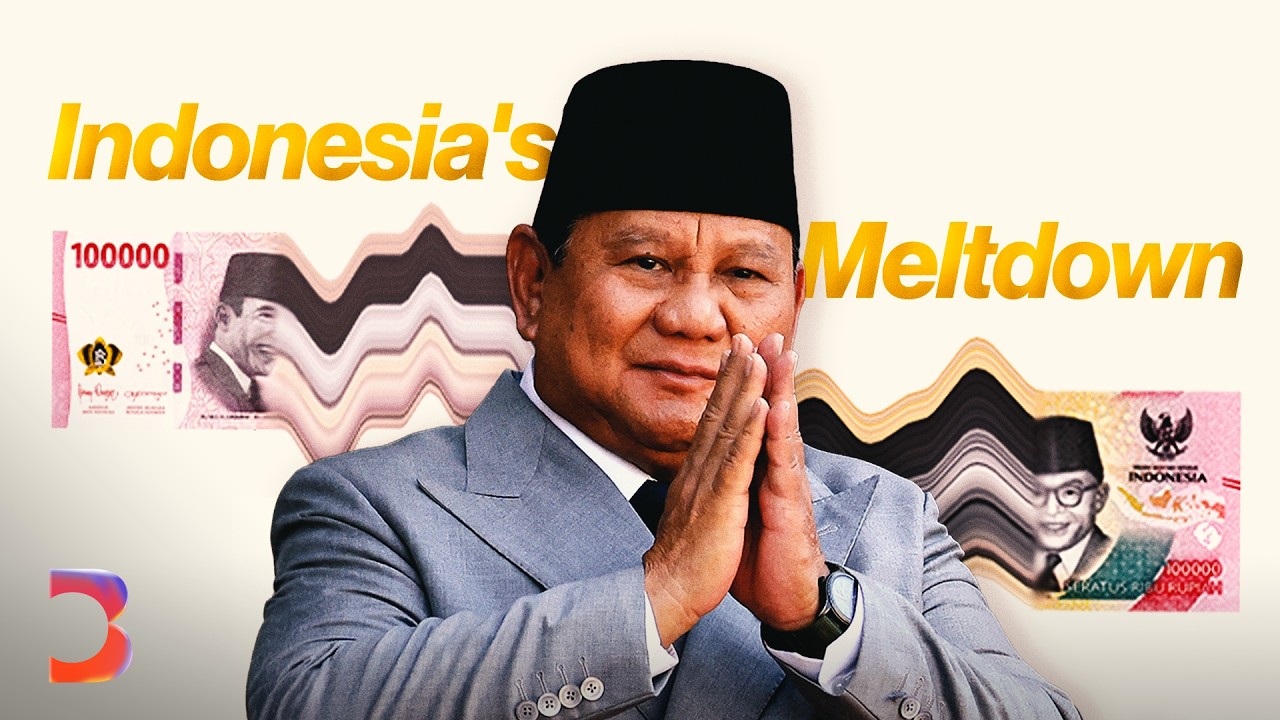
Inside Indonesia's Market Meltdown — Bloomberg Originals

Bloomberg Originals

Indonesian markets face severe capital flight and a potential MSCI downgrade as President Prabowo Subianto's state-led policies, costly welfare programs, and opaque stock manipulation erode investor trust.

AI-assisted summary of Inside Indonesia's Market Meltdown — original source. Check the original for full context.

Source published:

Detailed notes

## Background Published by Bloomberg Originals on YouTube on June 12, 2026, this video examines Indonesia's transition from a darling of global investors into a market in turmoil. The video description highlights how Indonesia's $1.5 trillion economy—larger than Singapore and Thailand combined—is facing severe economic anxiety due to fears of corruption, market manipulation, and policy missteps under President Prabowo Subianto.

## TL;DR Once a standout growth story in Southeast Asia, Indonesia's stock market has plummeted roughly 19% over the past year, with the rupiah collapsing to record lows. The slump is driven by market manipulation through illiquid 'deep-fried stocks,' governance concerns surrounding President Prabowo Subianto's new state-led sovereign wealth fund Danantara, and budget strains from costly social welfare programs pushing the fiscal deficit toward its legal limit. Threatened with a potential downgrade to Frontier Market status by MSCI, regulators are scrambling to enforce transparency, but global macroeconomic pressures and fading investor trust continue to jeopardize the nation's economic future.

## Atmosphere & style The video delivers a sleek, analytical, and sobering economic deep dive characteristic of high-production financial journalism. Combining data-driven warnings with punchy metaphors—like comparing manipulated equities to unhealthy 'deep-fried' food—it builds an atmosphere of mounting urgency around a emerging market crisis. The narrative arc moves from praising Indonesia's immense demographic and resource strengths to exposing structural vulnerabilities, creating a tense, cautionary mood about the risks of state intervention and market opacity.

## Key takeaways - [00:00](https://www.youtube.com/watch?v=WQ3KDgazkRk&t=0s) Indonesian equities known as "deep-fried stocks" feature manipulated, enticing exteriors but deeply unhealthy inner mechanics, contributing to global investor wariness. - [00:00](https://www.youtube.com/watch?v=WQ3KDgazkRk&t=0s) Despite a $1.5 trillion economy exceeding Singapore and Thailand combined, Indonesia's stock market plummeted roughly 19% over the past year while the rupiah collapsed to record lows. - [02:07](https://www.youtube.com/watch?v=WQ3KDgazkRk&t=127s) Indonesia possesses strong baseline economic fundamentals, including a young population of over 280 million and dominant global positions in palm oil, nickel, coal, and manufacturing. - [02:07](https://www.youtube.com/watch?v=WQ3KDgazkRk&t=127s) Following the 1998 Asian Financial Crisis and President Suharto's resignation, Indonesia enacted a strict legal cap limiting annual budget deficits to 3% of GDP to ensure fiscal discipline. - [04:04](https://www.youtube.com/watch?v=WQ3KDgazkRk&t=244s) Despite two decades of steady ~5% GDP growth, severe structural inequality and a shrinking middle class triggered violent public protests over rising living costs in 2025. - [05:25](https://www.youtube.com/watch?v=WQ3KDgazkRk&t=325s) President Prabowo Subianto introduced Danantara, a sovereign wealth fund managing hundreds of state-owned enterprises, raising investor fears regarding political misuse and state-led control over major commodity exports. - [05:25](https://www.youtube.com/watch?v=WQ3KDgazkRk&t=325s) Funding massive social welfare initiatives like a free meal program pushed Indonesia's 2025 budget deficit near its 3% legal limit—its highest non-pandemic level in over two decades. - [07:36](https://www.youtube.com/watch?v=WQ3KDgazkRk&t=456s) Concentrated ownership by tycoons historically kept Indonesia's minimum free float at a dangerously low ~7.5%, enabling extreme price manipulation in "deep-fried stocks." - [07:36](https://www.youtube.com/watch?v=WQ3KDgazkRk&t=456s) MSCI warned it might reduce Indonesia's index weighting or downgrade it to Frontier Market status, triggering severe market selloffs and spiking government bond yields. - [09:38](https://www.youtube.com/watch?v=WQ3KDgazkRk&t=578s) Although regulators mandated doubling the minimum free float requirement to 15% in early 2026, analysts remain skeptical about actual enforcement against powerful market figures. - [09:38](https://www.youtube.com/watch?v=WQ3KDgazkRk&t=578s) Rising global crude oil prices, heavy domestic fuel subsidies, and international trade tariffs further aggravate Indonesia's fiscal strain and capital flight.

## Detailed walkthrough ### [00:00](https://www.youtube.com/watch?v=WQ3KDgazkRk&t=0s) Introduction to "Deep-Fried Stocks" and Market Stagnation

Fried food is delicious, but generally terrible for your health—and curiously, the exact same thing can be said about certain equities in Indonesia. Known locally as "deep-fried stocks," these assets look enticing on the outside, but their inner mechanics are deeply unhealthy. Suspicion over these manipulated equities is just one factor causing global investors to turn wary of Indonesia's stock market, which until recently ranked as the largest in Southeast Asia. Concerns are mounting over whether the nation can sustain its broader economic growth.

Only three to four years ago, Indonesia was considered an absolute darling among international investors. Boasting a $1.5 trillion economy, its GDP exceeds those of Singapore and Thailand combined. As Southeast Asia's largest economy, Indonesia has all the necessary ingredients to ascend onto the world stage and accelerate its growth. However, rising fears of corruption and state policy missteps—both across financial markets and within government—are putting this trajectory at serious risk.

- **Market Decliners:** The Indonesian stock market has plummeted roughly 19% over the past year. - **Currency Strain:** In 2026, the Indonesian rupiah ($IDR$) collapsed to all-time lows against the U.S. dollar, becoming one of the worst-performing currencies in Asia. Analysts express severe doubt over any near-term rebound. - **Regional Impact:** Moody's warned that tighter export controls could further spook investors. Because Indonesian assets are viewed as a critical barometer for risk appetite across Asia, a prolonged slump risks causing economic contagion across Southeast Asia.

---

[02:07](https://www.youtube.com/watch?v=WQ3KDgazkRk&t=127s) Indonesia's Economic Strengths and Historical Foundation

Indonesia holds immense baseline economic potential as the world's fourth most populous country, housing over 280 million people. Spanning a vast archipelago, its geographical footprint is massive—if stretched across the Atlantic Ocean, it would span from New York to London. Its demographic profile skews heavily toward a young, dynamic population, creating a highly lucrative consumer market that attracts global fashion giants like Uniqlo and Zara.

The nation's industrial output and natural resource wealth are equally vast: - **Manufacturing:** It ranks as the world's largest producer of Barbie dolls and one of the largest producers of Hot Wheels toy cars. - **Commodity Powerhouse:** Indonesia is the world's largest exporter of palm oil, the top producer of nickel, and the premier global exporter of thermal coal.

Indonesia's modern economic rise began during the 1970s and 1980s, when it was a net oil exporter and an active member of OPEC, routinely generating annual growth rates between 6% and 8%. Much of this expansion was driven under President Suharto. While his authoritarian regime significantly raised living standards, it was also characterized by rampant corruption and severe human rights violations.

This era came to a sudden end during the late 1990s Asian Financial Crisis. The shock triggered a devastating collapse of regional currencies, battered the rupiah, and nearly wiped out Indonesia's banking system. Suharto was forced to resign in 1998, ushering in a democratic era alongside strict financial safeguards—most notably a legal cap limiting the annual budget deficit to 3% of GDP.

---

[04:04](https://www.youtube.com/watch?v=WQ3KDgazkRk&t=244s) Post-Reform Growth and Emerging Wealth Inequality

The 3% budget deficit cap established Indonesia as a fiscally responsible nation, causing foreign direct investment to surge throughout the 2000s and outperform regional competitors like Vietnam, Malaysia, and Thailand. Outside of the Asian Financial Crisis and the COVID-19 pandemic, Indonesia sustained steady annual GDP growth of approximately 5% for two decades. By the time President Joko Widodo (Jokowi) took office in 2014, the country was widely celebrated as the region's rising star. Jokowi introduced market-friendly reforms, opening up critical infrastructure sectors and commodity markets to global investors.

However, headline growth figures obscured severe domestic economic strains. By 2025, public outrage over soaring living costs and deep structural inequality erupted into violent street protests. Data reveals that Indonesia's middle class has shrunk steadily since 2018, pushing a growing segment of the population into poverty or vulnerable economic status.

---

[05:25](https://www.youtube.com/watch?v=WQ3KDgazkRk&t=325s) President Prabowo's State-Led Capitalism and Fiscal Strain

Taking office amidst economic friction, President Prabowo Subianto has shifted policy toward state-led capitalism. A centerpiece of his strategy is **Danantara**, a new sovereign wealth fund modeled after those in Singapore and the Middle East. Danantara is designed to manage hundreds of state-owned enterprises (SOEs) deemed inefficient by the president, while also soliciting foreign investment. However, international investors express deep concern over governance, fearing Danantara will be used as a "piggy bank" to finance political agendas.

Prabowo has also moved to tighten state control over critical commodities—calling for a new state-appointed entity under Danantara to oversee exports of palm oil, coal, and nickel products. While framed as a measure to stop "under-invoicing" (a practice where companies hide profits offshore to evade Indonesian taxes), critics worry it adds bureaucratic friction.

Concurrently, Prabowo is attempting to fund expensive flagship social welfare programs, including a multi-billion-dollar free meal program targeting school children and pregnant women. While popular with voters—with Prabowo asserting, "Our free meals strengthen our economy"—the policy has severely strained state finances without delivering broad macroeconomic gains: - **Fiscal Deficit Warning:** Funding these massive programs has pushed Indonesia's budget deficit close to the legal 3% ceiling. - **Record Deficit:** Excluding the emergency pandemic period, Indonesia's 2025 budget deficit reached its highest level in over two decades, severely undermining investor trust in the nation's fiscal discipline.

---

[07:36](https://www.youtube.com/watch?v=WQ3KDgazkRk&t=456s) "Deep-Fried Stocks" and the Structure of Indonesian Markets

The structural weakness in Indonesia's equities stems directly from market manipulation and illiquidity. In Indonesia, vast blocks of listed shares are closely held by the country's wealthiest tycoons. Consequently, the actual proportion of shares available for public trading—known as the **free float**—is dangerously small for many companies, and real ownership is rarely transparent.

``` [ Regional Minimum Free Float Requirements ] ----------------------------------------------------------------- Country Minimum Free Float (%) ----------------------------------------------------------------- Indonesia (Historical) Lowest in Southeast Asia (~7.5%) Indonesia (New 2026) 15.0% (Requirement doubled) Regional Peers 15.0% - 25.0%+ ----------------------------------------------------------------- ```

Because a low free float means a low volume of shares can trigger huge price swings, speculators easily pump asset prices up before letting them crash—giving rise to the term "deep-fried stocks."

This lack of liquidity and transparency forced global index provider MSCI to issue a stark warning: it threatened to reduce Indonesia's weighting in its Emerging Markets Index and raised the shocking prospect of downgrading Indonesia to **Frontier Market** status.

- **Market Panic:** MSCI's warning triggered a market selloff not seen since the 1998 Asian Financial Crisis. Months later, Indonesia's stock exchange remains among the worst-performing equity markets in the world. - **Bond Yield Spikes:** Reflecting elevated sovereign risk, Indonesian government bond yields have shot up to become among the highest in Asia, dramatically raising the government's borrowing costs.

---

[09:38](https://www.youtube.com/watch?v=WQ3KDgazkRk&t=578s) Regulatory Reforms and External Headwinds

To halt the capital flight, regulators in March 2026 approved a mandate to double Indonesia's minimum free float requirement. However, market observers remain skeptical, noting that "the devil's in the details." Crucial questions remain over how fast regulators will enforce transparency regarding ultimate beneficial owners and whether they will prosecute powerful market players guilty of price manipulation.

These domestic troubles are compounded by global macroeconomic turbulence, including international trade tariffs and geopolitical conflicts: - **Subsidy Pressures:** Indonesia maintains some of the cheapest fuel prices in the region due to heavy government subsidies. As global crude oil prices rise, maintaining these low pump prices requires massive budget outflows. - **Fading Growth Narrative:** Persistent capital outflows across Indonesian stocks, bonds, and the rupiah signal that global appetite for Asia's once-promising growth stories is rapidly waning.

If trust in Indonesia's governance continues to erode, the country risks turning inward. As analysts warn, an insular, isolated Indonesia is a disastrous outcome that neither its government nor its business community wants to see.

## Notable quotes > [00:00](https://www.youtube.com/watch?v=WQ3KDgazkRk&t=0s) deep-fried stocks

> [00:00](https://www.youtube.com/watch?v=WQ3KDgazkRk&t=0s) darling

> [05:25](https://www.youtube.com/watch?v=WQ3KDgazkRk&t=325s) piggy bank

> [05:25](https://www.youtube.com/watch?v=WQ3KDgazkRk&t=325s) under-invoicing

> [05:25](https://www.youtube.com/watch?v=WQ3KDgazkRk&t=325s) Our free meals strengthen our economy — Prabowo Subianto

> [07:36](https://www.youtube.com/watch?v=WQ3KDgazkRk&t=456s) free float

> [07:36](https://www.youtube.com/watch?v=WQ3KDgazkRk&t=456s) Frontier Market

> [09:38](https://www.youtube.com/watch?v=WQ3KDgazkRk&t=578s) the devil's in the details

## Mentioned Bloomberg Originals, Bloomberg News, Prabowo Subianto, Moody's, Uniqlo, Zara, Barbie, Hot Wheels, Suharto, OPEC, Joko Widodo, Danantara, MSCI

[Source](https://www.youtube.com/watch?v=WQ3KDgazkRk)

中文简报

普拉博沃政策引发印尼股市抛售,MSCI降级风险逼近 随着印尼总统普拉博沃·苏比延多(Prabowo Subianto)国家主导的政策、成本高昂的福利计划以及不透明的股市操纵削弱了投资者信任,印尼市场面临严重的资本外逃和潜在的MSCI降级风险。 印尼股市曾是东南亚引人注目的增长代表,但在过去一年中暴跌约19%,印尼卢比也跌至历史新低。这场暴跌受到多重因素驱动:流动性差的“油炸股”(deep-fried stocks)引发的市场操纵、外界对总统普拉博沃·苏比延多新设立的国家主导型主权财富基金Danantara治理问题的担忧,以及昂贵的社会福利项目带来的预算压力正将财政赤字推向法定上限。在面临可能被MSCI降级为前沿市场(Frontier Market)的威胁下,监管机构正竭力推行透明度,但全球宏观经济压力与不断消退的投资者信任仍在持续危及该国的经济前景。 被称为“油炸股”的印尼股票具有被操纵且诱人的外表,但内部机制极不健康,加剧了全球投资者的戒备心态。 (0:00) 尽管印尼拥有高达1.5万亿美元、超过新加坡和泰国总和的经济体量,但在过去一年中,其股市暴跌了约19%,印尼卢比也崩跌至历史低点。 (0:00) 印尼拥有强劲的基础经济面,包括超过2.8亿的年轻人口,以及在棕榈油、镍、煤炭和制造业领域的全球主导地位。 (2:07) 在1998年亚洲金融危机和苏哈托总统辞职之后,印尼制定了严格的法定上限,将年度财政赤字限制在GDP的3%以内,以确保财政纪律。 (2:07) 尽管保持了二十年约5%的稳定GDP增长,但严重的结构性不平等和中产阶级的萎缩仍在2025年因生活成本上升而引发了激烈的公众抗议。 (4:04)

Reading summary

Indonesia's once-celebrated investment appeal has deteriorated into severe market turmoil as structural manipulation in equities, expanding state intervention, and fiscal strain erode investor confidence. Mounting capital flight has battered the rupiah and triggered threats of index downgrades, jeopardizing Southeast Asia's largest economy. Equities Manipulation and the 'Deep-Fried' Stock Crisis (7:36) Indonesia's stock market decline—plummeting roughly 19% over the past year—is deeply rooted in structural illiquidity and opaque ownership. Heavy concentrations of listed company shares are closely held by domestic tycoons, historically leaving public free floats at an average of roughly 7.5%, the lowest in Southeast Asia. This thin public float enables speculators to easily manipulate illiquid equities, pumping prices before letting them crash in volatile cycles known locally as 'deep-fried stocks.' The resulting lack of transparency and liquidity prompted global index provider MSCI to issue warnings that it could reduce Indonesia's weighting in its Emerging Markets Index or downgrade it to Frontier Market status. The warning triggered a market selloff not seen since the 1998 Asian Financial Crisis, while Indonesian government bond yields surged to become among the highest in Asia, sharply elevating sovereign borrowing costs. Prabowo's State-Led Capitalism and Escalating Fiscal Deficits (5:25) Policy shifts under President Prabowo Subianto have introduced mounting friction with global investors. Central to Prabowo's agenda is Danantara, a new sovereign wealth fund tasked with managing hundreds of state-owned enterprises and centralizing state oversight across major commodity exports, including palm oil, coal, and nickel. While intended to curb tax evasion from under-invoicing, international investors voice concern that Danantara could serve as a political 'piggy bank' and introduce bureaucratic friction. Simultaneously, the administration is financing expensive social welfare initiatives, notably a multi-billion-dollar free meal program for school children and pregnant women. While Prabowo maintains that free meals strengthen the economy, funding the program pushed Indonesia's 2025 fiscal deficit to its highest level in over two decades (excluding the emergency pandemic period), approaching the statutory 3% of GDP ceiling and weakening investor confidence in the nation's fiscal discipline. Resource Wealth Clashing with Household Vulnerability (2:07) The market slump contrasts sharply with Indonesia's baseline economic potential. Spanning a $1.5 trillion economy with more than 280 million people, Indonesia is the world's leading exporter of thermal coal and palm oil, the premier producer of nickel, and a major manufacturing hub for global consumer brands. Following the 1997–1998 Asian Financial Crisis and the introduction of strict fiscal caps, the nation sustained steady annual growth of approximately 5% for two decades, attracting foreign direct investment that outpaced regional peers like Vietnam and Malaysia. However, headline growth figures obscured deepening domestic distress. Data indicates that Indonesia's middle class has shrunk steadily since 2018, pushing a growing segment of the population into poverty or precarious economic status. By 2025, public frustration over escalating living costs and structural inequality culminated in violent street protests, revealing that top-line resource wealth has failed to translate into broad household stability. Regulatory Responses and Looming Contagion Risks (9:38) To stem capital flight, Indonesian regulators in March 2026 approved a mandate doubling the minimum free float requirement to 15.0%. Nevertheless, market observers remain skeptical, cautioning that regulatory effectiveness depends on whether authorities strictly enforce transparency regarding ultimate beneficial owners and prosecute powerful market manipulators. Meanwhile, the rupiah collapsed to record lows against the U.S. dollar in 2026, becoming one of Asia's worst-performing currencies with minimal expectations of an imminent rebound. External economic headwinds have exacerbated these domestic issues. Heavy state fuel subsidies face severe budgetary strain as global crude oil prices rise, while international trade tariffs threaten export earnings. Moody's has warned that tighter export controls could further deter international investors, noting that because Indonesian assets act as a regional barometer for risk appetite, prolonged distress risks triggering economic contagion across Southeast Asia. The central unresolved challenge is whether regulatory interventions can restore market credibility before persistent capital flight isolates the country. If transparency reforms fail to overcome entrenched tycoon influence and fiscal pressures, analysts warn Indonesia risks turning inward—an outcome detrimental to both the domestic business community and regional stability.

精炼阅读摘要

彭博社报道指出,作为东南亚最大经济体,印度尼西亚因权贵操纵的“油炸股票”、国家主导资本主义转向以及扩张性财政支出逼近法定赤字红线,正遭遇严峻的市场信心危机与资产抛售潮。国际投资者对该国治理透明度与政策连贯性的疑虑骤增,不仅造成其股市暴跌与货币大幅贬值,也使其长期经济增长叙事面临脱轨风险。 市场操控与极低公众持股引发资本外逃 (7:36) 印尼股市在过去一年暴跌约19%,其核心结构性痼疾在于流动性匮乏与极度集中的股权结构。长期以来,印尼上市公司的大量股份被极少数富豪财阀牢牢掌控,实际用于公开交易的自由流通股(free float)比例过低,历史法定最低要求仅约7.5%,位居东南亚倒数第一,远低于周边国家普遍15%至25%以上的水平。这种微小的自由流通量为投机势力提供了极低的操纵成本,游资只需极少交易量即可人为爆炒股价并快速出货,造就了外表诱人但内里极不健康的“油炸股票”(deep-fried stocks)。 鉴于市场普遍缺乏透明度且实际控股人信息模糊,国际指数机构MSCI发出严厉预警,威胁下调印尼在MSCI新兴市场指数中的权重,甚至公开提出可能将其降格为前沿市场(Frontier Market)。该警告直接触发了自1998年亚洲金融危机以来罕见的大规模恐慌抛售;印尼政府主权债券收益率飙升至全亚洲最高位之一,严重推高了国家借贷成本。2026年,印尼盾(IDR)兑美元汇率跌至历史新低,成为亚洲表现最差的货币之一。穆迪(Moody's)同时警告,若政府进一步收紧出口管制,恐将加剧投资者恐慌,并因印尼作为亚洲风险资产风向标的地位而引发全东南亚范围的区域性溢出风险。 普拉博沃国家资本主义转向与赤字破限隐忧 (5:25) 面对经济震荡,总统普拉博沃·苏比安托(Prabowo Subianto)上任后加速将政策推向国家主导的资本主义。其战略核心是组建名为Danantara的新主权财富基金,效仿新加坡与中东模式统一接管数百家被其视作效率低下的国有企业,同时对外筹集外资。然而,国际投资者对该基金的治理架构疑虑重重,担忧Danantara沦为服务政治日程的“存钱罐”。此外,普拉博沃主张在Danantara旗下设立新机构对棕榈油、煤炭和镍产品的出口进行统筹监管,官方宣称此举旨在遏制企业通过“低开发票”(under-invoicing)将利润藏匿离岸以规避税收,但批评人士警告此举将大幅增加官僚行政摩擦。 与此同时,普拉博沃执意推进高额民生福利承诺,包括耗资数十亿美元向全国学童与孕妇提供免费餐食。尽管普拉博沃坚称“免费餐食将强化国家经济”并借此赢得选民拥护,但该政策在尚未带来广泛宏观效益之前,已对国库造成沉重负担。除去疫情紧急状态年份,印尼2025年财政赤字已跃升至二十多年来的最高水平,逼近法律规定的GDP 3%赤字上限,严重削弱了国际社会对印尼数十年财政纪律的信任。 经济资源底色与中产阶级萎缩现实 (4:04) 从基本面看,印尼具备显著的发展潜能:其坐拥1.5万亿美元经济规模,GDP超过新加坡与泰国总和;作为世界第四大人口国,印尼拥有超过2.8亿人口且结构年轻,巨大的消费活力吸引了优衣库(Uniqlo)和Zara等国际巨头布局。印尼工业与资源实力雄厚,既是全球最大的芭比娃娃生产国和风火轮玩具车核心产地,又是全球第一大棕榈油出口国、最大镍生产国和首要动力煤出口国。回顾历史,印尼在苏哈托执政时期的石油出口热潮中常年实现6%至8%的年增长率;1998年亚洲金融危机重创该国银行业并终结苏哈托政权后,印尼设立了3%财政赤字法定上限作为安全防线,推动外商直接投资在2000年代大幅领先越南、马来西亚与泰国,并在佐科·维多多(Jokowi)治下凭借市场化改革维持了长达二十年约5%的稳定增长。 然而,光鲜的总体经济数据掩盖了日益严峻的内部失衡。至2025年,由于生活成本飞涨与深层贫富分化,印尼多地爆发了暴力街头抗议。官方统计数据显示,印尼中产阶级自2018年以来呈现持续萎缩态势,大批民众被重新推入贫困或处于易受冲击的经济边缘状态,动摇了长期繁荣的民生根基。 监管补救迟滞与外部宏观逆风夹击 (9:38) 为遏制资本外流并安抚全球投资者,印尼监管机构于2026年3月批准新规,将上市公司的最低公众持股比例要求提升一倍至15.0%。然而市场观察人士大多态度审慎,认为“细节决定成败”,外界普遍怀疑监管部门是否能真正穿透查证最终受益所有人(ultimate beneficial owners),以及是否有魄力对涉及价格操纵的商界与政界强势权贵提起司法诉讼。 与此同时,印尼国内困局正受到全球宏观动荡的进一步放大,国际贸易关税壁垒与地缘政治冲突频发推高了国际原油价格。由于印尼政府长期通过巨额财政补贴维持本地区极低的成品油售价,全球油价上涨直接转化为膨胀的国库支出负担。海外资本对印尼股票、主权债及印尼盾的持续撤离,表明全球市场对曾经备受追捧的亚洲明星增长故事正失去耐心;分析人士警告,若对国家治理的信任持续破裂,印尼将面临退回封闭孤立状态的巨大危险,而这绝非印尼政界与商界所愿承受的灾难性后果。 彭博社总结认为,印尼当前面临的市场崩溃不仅是一场金融资产暴跌,更是投资者对国家资本主义干预、治理透明度缺失以及财政纪律破裂的全面信任危机。尽管监管层试图通过将最低自由流通量提高至15%等技术手段修复信誉,但在巨额福利与燃油补贴持续推高财政赤字的背景下,政府能否切实打击市场操纵、落实实控人透明化仍是未解难题。若印尼无法妥善平衡国家控制与市场规则,不仅自身经济奇迹将停滞不前,甚至可能在东南亚区域引发连锁金融传染。

Detailed notes — zh

## Background 该视频由彭博旗下频道 Bloomberg Originals 于 2026 年 6 月 21 日发布在 YouTube 平台。视频简介指出,印尼曾以 1.5 万亿美元的经济体量成为全球投资者的宠儿,但如今在现任总统普拉博沃·苏比安托领导下,市场治理失效与政策失误引发的腐败隐忧,正让外界对这个东南亚最大经济体的未来深感担忧。 ## TL;DR 视频深入剖析了印尼资本市场遭遇崩盘式抛售与资本外流的深层危机。宏观上,总统普拉博沃推行国家主导型资本主义、组建主权财富基金 Danantara 并推行耗资巨大的免费餐计划,令维系数十年的 3% 财政赤字法定红线面临失守。微观层面上,极低自由流通量与寡头幕后操纵催生出大量暴涨暴跌的“炸物股”,引发 MSCI 考虑将印尼股市降级为“前沿市场”的严重信任危机。在汇率跌至历史低位与外围地缘冲突的双重夹击下,印尼正面临改革开放成果倒退与走向封闭孤立的重大考验。 ## Atmosphere & style 全片呈现出彭博纪录片一贯的克制、理性与敏锐调查感,语调严肃而充满警示意味。叙事从极具市井烟火气的“炸物”隐喻平滑过渡至复杂的微观股权结构与宏观财政赤字分析,层层剥开繁荣表象下的结构性溃烂。音画节奏凝重紧凑,让观众在见证资金仓皇出逃与市场动荡的现实中,深刻体会到新兴市场治理短板被骤然放大的脆弱与窒息感。 ## Bulletin - [00:00](https://www.youtube.com/watch?v=WQ3KDgazkRk&t=0s) 印尼股市在过去一年重挫约19%,本币印尼卢比对美元汇率探至历史低位,曾经作为东南亚第一大经济体和全球投资宠儿的增长叙事正遭遇严峻的信任危机。 - [05:25](https://www.youtube.com/watch?v=WQ3KDgazkRk&t=325s) 总统普拉博沃推行“国家主导型资本主义”,设立主权财富基金Danantara统管资源出口并力推数百亿美元的免费学生餐计划,导致2025年财政赤字创除疫情外近二十年新高,逼近3%的法定红线。 - [08:40](https://www.youtube.com/watch?v=WQ3KDgazkRk&t=520s) 资本市场极低的自由流通盘滋生了严重的“炸物股”操纵乱象,引发MSCI警告可能将印尼降级至“前沿市场”,导致1998年亚洲金融危机以来罕见的外资恐慌性大撤退。 - [08:40](https://www.youtube.com/watch?v=WQ3KDgazkRk&t=520s) 印尼监管层紧急将上市公司最低自由流通比例要求翻倍以挽回外资信心,但市场对其实际控制人穿透披露及针对本土寡头利益集团的执法意愿仍持高度怀疑态度。 ## Key takeaways - [00:00](https://www.youtube.com/watch?v=WQ3KDgazkRk&t=0s) 印尼经济总量达1.5万亿美元,超过新加坡与泰国总和,曾是全球增速最快的主要经济体之一及外资在新兴市场的核心配置标的。 - [00:00](https://www.youtube.com/watch?v=WQ3KDgazkRk&t=0s) 受政策失误、腐败担忧与出口管制收紧影响,印尼股市过去一年重挫约19%,卢比沦为亚洲表现最差的货币之一,资本外逃引发区域连锁反应担忧。 - [02:07](https://www.youtube.com/watch?v=WQ3KDgazkRk&t=127s) 印尼坐拥逾2.8亿年轻人口构建的庞大消费市场,同时在供应链端占据统治地位,既是全球最大芭比娃娃生产国,也是全球第一大棕榈油、镍及动力煤出口国。 - [02:54](https://www.youtube.com/watch?v=WQ3KDgazkRk&t=174s) 1997至1998年亚洲金融危机重创印尼并终结苏哈托政权,痛定思痛后确立的“财政赤字占GDP不超过3%”的法定红线,奠定了过去二十年外资信心的基石。 - [02:54](https://www.youtube.com/watch?v=WQ3KDgazkRk&t=174s) 前总统佐科执政十年间推行亲市场政策,开放基建外资准入并大力发展大宗商品深加工,推动印尼年均经济增速长期维持在5%的稳健水平。 - [05:03](https://www.youtube.com/watch?v=WQ3KDgazkRk&t=303s) 宏观数据掩盖了日益扩大的贫富差距,印尼中产阶级自2018年以来持续缩水,生活成本上涨引发2025年多地爆发暴力抗议。 - [05:25](https://www.youtube.com/watch?v=WQ3KDgazkRk&t=325s) 现任总统普拉博沃转向国家资本主义,设立主权财富基金Danantara整合国企,并由指定机构垄断棕榈油、煤炭等核心资源出口以打击低报发票逃税行为。 - [05:25](https://www.youtube.com/watch?v=WQ3KDgazkRk&t=325s) 普拉博沃耗资数百亿美元的“免费营养餐计划”给财政带来沉重包袱,2025年财政赤字逼近3%的法定红线,动摇了长期以来的审慎财政声誉。 - [07:36](https://www.youtube.com/watch?v=WQ3KDgazkRk&t=456s) 印尼本土将寡头资金操纵的股票称为“炸物股”,由于法定最低自由流通量门槛过低且股权穿透不透明,幕后资本能以极少资金随意操纵股价暴涨暴跌并收割散户。 - [08:40](https://www.youtube.com/watch?v=WQ3KDgazkRk&t=520s) 股票指数编制巨头MSCI对印尼市场不规范操作发出警告,可能调降其权重甚至直接降级为“前沿市场”,直接引爆了国际被动资金的大规模清仓式撤离。 - [08:40](https://www.youtube.com/watch?v=WQ3KDgazkRk&t=520s) 印尼国债收益率走高使其沦为亚洲借贷成本最高的主权体之一,尽管监管层将最低自由流通量比例提高一倍,但整肃权贵寡头面临巨大阻力。 - [10:06](https://www.youtube.com/watch?v=WQ3KDgazkRk&t=606s) 在全球关税争端与地缘冲突加剧的背景下,国内巨额燃油补贴面临失控风险,国际信任危机可能使印尼经济逐步走向内向封闭与保护主义。 ## Detailed walkthrough ### [00:00](https://www.youtube.com/watch?v=WQ3KDgazkRk&t=0s) 油炸食品的隐喻:从投资宠儿到印尼“炸物股”崩盘 油炸食品酥脆诱人,几乎人人都爱,但大家都清楚它对健康无益。在印度尼西亚的资本市场中,有一种股票被形象地称作“炸物股”(deep-fried stocks)。这类股票表面上看起来令人垂涎、涨势惊人,内里却极不健康且充满猫腻。畸形的股票生态只是国际投资者对印尼股市望而却步的原因之一。不久之前,印尼证券交易所还是东南亚规模最大的股票市场,其1.5万亿美元的国内生产总值(GDP)甚至超过了新加坡与泰国的总和,但如今,市场对这个群岛国家增长潜力的担忧正急剧升温。 仅仅三四年前,印尼还是全球投资者眼中的“绝对宠儿”(investor's darling),作为全球增速最快的主要经济体之一,它具备登上世界舞台所需的一切要素。然而,市场监管不力与政府政策失误所引发的腐败与治理担忧,正硬生生截断这一增长势头。国际评级机构穆迪发出警告,印尼收紧出口管制的举措正在吓退外资;过去一年内,印尼股市重挫约19%,本币印尼卢比对美元汇率在2026年跌至历史新低,沦为亚洲表现最差的货币之一。作为衡量亚洲风险偏好的重要“晴雨表”,印尼市场的震荡正在引发广泛的溢出效应,让人不禁担忧这是否会演变为波及整个东南亚的经济阵痛。 - 印尼GDP总量达1.5万亿美元,稳居东南亚第一大经济体宝座。 - 印尼股市在过去一年内累计暴跌约19%,印尼卢比汇率探至历史低点。 --- ### [02:07](https://www.youtube.com/watch?v=WQ3KDgazkRk&t=127s) 群岛巨人的经济底牌与庞大消费市场 印尼拥有得天独厚的先天禀赋。作为全球第四人口大国,印尼拥有超过2.8亿人口,散布在广袤的群岛之上;如果将这座千岛之国拉直横跨大西洋,其跨度足以从纽约一直延伸到伦敦。更为关键的是,印尼人口结构极为年轻,构成了极具活力的内需消费市场,优衣库(Uniqlo)、Zara等国际快时尚巨头纷纷在此重仓布局。 除了庞大的消费群,印尼还是全球制造业与自然资源供应链的重镇。它是全球最大的芭比娃娃(Barbie dolls)生产国,也是风火轮小汽车(Hot Wheels)的主要制造基地之一。在关键原材料领域,印尼更是占据统治地位:它是全球最大的棕榈油出口国、第一大镍生产国,同时也是全球最大的动力煤出口国。丰富的自然资源为印尼构筑了极具竞争力的经济基本盘。 --- ### [02:54](https://www.youtube.com/watch?v=WQ3KDgazkRk&t=174s) 从苏哈托时代到佐科繁荣:危机重塑的财政纪律 印尼经济的真正腾飞始于20世纪70至80年代。彼时印尼作为石油净出口国和欧佩克(OPEC)成员国,年均经济增速频繁达到6%至8%。这一时期的经济扩张主要由苏哈托总统领导。尽管苏哈托的威权统治提高了国民生活水平并壮大了经济体量,但其政权内部普遍存在的贪腐现象与恶劣的人权记录也埋下了深刻隐患。矛盾在90年代末集中爆发,1997至1998年的亚洲金融危机引发区域货币雪崩,印尼卢比遭遇毁灭性打击,国内银行业几近崩溃,印尼陷入严重的经济与政治动荡,最终迫使执政长达32年的苏哈托于1998年辞职下台。 这场惨痛的危机为印尼推开了民主化与严密金融管制的新时代大门。危机后确立的诸多制度红利沿用至今,其中最受国际投资者看重的定海神针,便是将财政赤字严格限制在GDP 3%以内的法定红线。对赤字支出的自律约束,为印尼树立了负责任的新兴市场形象。步入2000年代后,涌入印尼的外国直接投资迅速攀升,先后超越越南、马来西亚和泰国;除亚洲金融危机与新冠疫情期间外,印尼在过去二十年里始终维持着约5%的稳健年增长率。2014年佐科·维多多(Jokowi)就任总统后,推行了一系列高度亲市场的政策,积极开放基础设施外资准入,全力吸引跨国企业布局印尼大宗商品加工产业,将印尼推向了区域经济“领头羊”的高光时刻。 ```mermaid flowchart TD accTitle: 印尼经济发展与财政纪律演进图 accDescr: 展示印尼从70年代资源繁荣、90年代亚洲金融危机重创,到确立3%赤字红线与外资涌入的历史脉络。 subgraph S1["繁荣与震荡 (1970s-1990s)"] A["苏哈托威权统治<br/>石油出口驱动6%-8%高增长"] --> B["1997-1998 亚洲金融危机<br/>卢比暴跌与银行体系近乎崩溃"] B --> C["苏哈托下台<br/>开启民主化改革与金融治理"] end subgraph S2["纪律重塑与黄金期 (2000s-2014)"] C --> D["确立财政铁律<br/>法定财政赤字上限不超过3%"] D --> E["外资规模跃升<br/>超越越南、马来西亚等邻国"] E --> F["佐科执政发力<br/>开放基建外资与大宗商品深加工"] end ``` --- ### [05:03](https://www.youtube.com/watch?v=WQ3KDgazkRk&t=303s) 光鲜数据背后的贫富差距与社会裂痕 然而,宏观纸面上的繁荣并未惠及全阶层,反而掩盖了印尼根深蒂固的财富分配失衡。2025年,由于公众对严重不平等和飞涨生活成本的不满积压到顶点,印尼多地爆发了暴力抗议活动。数据显示,印尼的中产阶层规模自2018年以来持续萎缩,而滑落至脆弱群体及贫困线以下的边缘人口却在不断增加,繁荣泡沫之下的社会矛盾愈发尖锐。 --- ### [05:25](https://www.youtube.com/watch?v=WQ3KDgazkRk&t=325s) 普拉博沃的国家资本主义与财政赤字考验 面对阶层分化与经济挑战,现任总统普拉博沃·苏比安托选择了截然不同的治理路径——他坚定推崇“国家主导型资本主义”(state-led capitalism)。其核心战略之一是借鉴新加坡淡马锡或中东主权基金的模式,设立了名为“达南塔拉”(Danantara)的国家主权财富基金。官方设想是通过该基金统筹管理数百家被总统视为效率低下的国有企业,并以此为平台吸引更多海外投资。但在外国投资者眼中,Danantara的治理透明度存在严重隐忧,许多机构甚至担忧它会沦为填补总统各项高额社会福利政策的“储蓄罐”(piggy bank)。 与此同时,普拉博沃计划全面收紧对国家关键资源的直接管控,指定专门的国有机构垄断棕榈油、煤炭以及部分镍产品的出口运营。该政策旨在打击大宗商品贸易中普遍存在的“廉价发票”(under-invoicing)逃税现象——即通过低报出口价格将巨额利润转移至离岸账户以规避本国税收。印尼官方坚称Danantara旗下的运作将保持亲市场并以盈利为导向,同时增加财政收入,用来支撑普拉博沃耗资数百亿美元的旗舰竞选承诺:针对全国在校学童及孕妇的“免费营养餐计划”。 尽管普拉博沃豪言“免费餐食计划将强化我们的经济”,并赢得了基层的广泛支持,但该计划对整体经济的拉动效应尚未显现,反倒给中央财政套上了沉重枷锁。在这类高昂社会福利支出的挤压下,印尼的赤字水平正逼近3%的法定红线;除去新冠疫情的特殊时期,印尼2025年的财政赤字已攀升至近二十年来的最高水平,国际投资者对印尼坚守数十年的财政健康底线产生了极大的信任危机。 - 主权财富基金Danantara:旨在整合低效国企并统管棕榈油、煤炭、镍出口,但引发外资对其公司治理和资金用途的困惑。 - 免费营养餐计划:耗资数百亿美元覆盖学童与孕妇,直接推高财政支出。 - 2025年印尼财政赤字创下除疫情年份外二十年来的新高,无限逼近3%的法定红线。 --- ### [07:36](https://www.youtube.com/watch?v=WQ3KDgazkRk&t=456s) 揭秘“炸物股”:流动性紧缩与市场操纵陷阱 财政隐忧之外,资本市场的内部痼疾彻底引爆了信任危机,这便回到了开篇所提及的“炸物股”。在印尼本地语境中,炸物股专门用来指代那些被幕后资金高度控盘和操纵的股票。长期以来,印尼上市公司的大量股权集中在少数顶级寡头大亨手中,导致市场上真正可供公众公开自由交易的股份——即“自由流通量”(free float)极低,且股权穿透后的实际控制人往往隐秘不透明。 大多数成熟资本市场都会设定较为严格的最低自由流通比例,以确保交易流动性与公允定价。但在印尼,监管层设定的自由流通门槛长期位居东南亚区域最低水平。极低的流通盘意味着操纵成本低廉,游资与寡头仅需极少的交易量就能在短时间内大幅拉抬股价。这种股票在短时间内能暴涨数倍,但崩盘砸盘的速度同样快如闪电,极易将跟风散户洗劫一空。 --- ### [08:40](https://www.youtube.com/watch?v=WQ3KDgazkRk&t=520s) 资本大撤退与MSCI降级预警 这种畸形扭曲的交易环境终于招致了国际指数巨头的反弹。全球著名股票指数编纂机构MSCI发出严厉警告,称鉴于印尼市场的不规范操作与流通盘缺陷,可能下调印尼在MSCI新兴市场指数中的权重;更令全球资本市场震惊的是,MSCI甚至提出可能将印尼股票市场直接降级为“前沿市场”(frontier market)。 降级警报拉响后,印尼股市随即爆发了自1998年亚洲金融危机以来罕见的恐慌性抛售潮,外国资本大规模出逃,数月过去后印尼依然深陷全球表现最差的股市梯队。在国际资产配置的“啄序”(pecking order)中,一旦被剔除出主流新兴市场行列,被动跟踪资金将不可逆转地被动清仓。与此同时,印尼国债收益率持续攀升,成为亚洲融资成本最高的主权借款人之一,直接加重了政府债务还本付息的压力。 面对崩盘危局,普拉博沃政府试图紧急止血并着手整顿结构性弊病。监管机构批准了一项新规,将上市公司的最低自由流通量要求直接提高了一倍。然而,“细节决定成败”(the devil's in the details),市场真正关注的是:当局究竟需要耗费多长时间才能真正穿透并公开股票的真实持股人?监管部门又是否有魄力对涉嫌恶意操纵市场的本土顶层利益集团真正动刀执法? - 股票流动性机制缺陷:极低的自由流通量让少数巨头得以利用少量资金剧烈拉抬或砸盘。 - MSCI降级风暴:面临调降新兴市场权重甚至退回“前沿市场”地位的风险,触发1998年以来最惨烈的资本外流。 - 监管整顿:当局批准将最低自由流通量比例提高一倍,但面临透明度披露与对权贵寡头执法意愿的双重考验。 --- ### [10:06](https://www.youtube.com/watch?v=WQ3KDgazkRk&t=606s) 地缘冲突与关税风暴下的孤立风险 雪上加霜的是,印尼国内的资本动荡正值全球地缘政治紧张、关税战与局部战争多点爆发的动荡期。在印尼国内,政府长期对燃料实行巨额财政补贴,使其油价保持在区域最低水平。普拉博沃若想兑现压低国内油价的平民承诺,一旦国际油价因地缘冲突飙升,政府就必须自掏腰包承担更庞大的财政补贴黑洞。 在全球避险情绪升温、新兴市场货币普遍承压的背景下,国际资本若持续对印尼的股票、债券及汇市展开抛售,意味着外资对这个曾经极具魅力的“亚洲成长故事”的兴趣正逐步冷却。更为深层的风险在于:倘若国际社会对印尼的金融治理彻底失去信任,印尼恐将滑向保护主义并变得更加封闭内向(insular)——而这无论是印尼政府还是本土商业界,都不愿看到的结局。 ## Notable quotes > [00:00](https://www.youtube.com/watch?v=WQ3KDgazkRk&t=0s) 表面上看起来令人垂涎、涨势惊人,内里却极不健康且充满猫腻。 > [00:00](https://www.youtube.com/watch?v=WQ3KDgazkRk&t=0s) 仅仅三四年前,印尼还是全球投资者眼中的“绝对宠儿”,作为全球增速最快的主要经济体之一,它具备登上世界舞台所需的一切要素。 > [02:07](https://www.youtube.com/watch?v=WQ3KDgazkRk&t=127s) 如果将这座千岛之国拉直横跨大西洋,其跨度足以从纽约一直延伸到伦敦。 > [02:54](https://www.youtube.com/watch?v=WQ3KDgazkRk&t=174s) 将财政赤字严格限制在GDP 3%以内的法定红线。对赤字支出的自律约束,为印尼树立了负责任的新兴市场形象。 > [05:25](https://www.youtube.com/watch?v=WQ3KDgazkRk&t=325s) 许多机构甚至担忧它会沦为填补总统各项高额社会福利政策的“储蓄罐”。 > [05:25](https://www.youtube.com/watch?v=WQ3KDgazkRk&t=325s) 免费餐食计划将强化我们的经济 — 普拉博沃·苏比安托 > [07:36](https://www.youtube.com/watch?v=WQ3KDgazkRk&t=456s) 在印尼本地语境中,炸物股专门用来指代那些被幕后资金高度控盘和操纵的股票。 > [08:40](https://www.youtube.com/watch?v=WQ3KDgazkRk&t=520s) MSCI甚至提出可能将印尼股票市场直接降级为“前沿市场”。 > [08:40](https://www.youtube.com/watch?v=WQ3KDgazkRk&t=520s) 细节决定成败,市场真正关注的是:当局究竟需要耗费多长时间才能真正穿透并公开股票的真实持股人? > [10:06](https://www.youtube.com/watch?v=WQ3KDgazkRk&t=606s) 倘若国际社会对印尼的金融治理彻底失去信任,印尼恐将滑向保护主义并变得更加封闭内向——而这无论是印尼政府还是本土商业界,都不愿看到的结局。 ## Mentioned 普拉博沃·苏比安托 (Prabowo Subianto), 佐科·维多多 (Jokowi), 苏哈托 (Suharto), 穆迪 (Moody's), 明晟 (MSCI), 达南塔拉主权财富基金 (Danantara), 淡马锡 (Temasek), 优衣库 (Uniqlo), Zara, 芭比娃娃 (Barbie), 风火轮 (Hot Wheels), 石油输出国组织 (OPEC), 印度尼西亚证券交易所 (IDX), 彭博 (Bloomberg Originals) ## Video description Indonesia was once seen as a darling of investors. At $1.5 trillion, Indonesia’s GDP is more than that of Singapore and Thailand combined. Until recently, Indonesia’s stock exchange was the biggest in the region. But fears of corruption and policy missteps in markets and government under President Prabowo Subianto are raising concern about the country’s economic future. 00:00 Introduction 2:07 Indonesia’s economy 2:54 How Indonesia got here 5:03 Wealth inequality 5:25 Prabowo’s state-led capitalism 7:36 Deep-fried stocks 8:40 Investor concerns 10:06 Impact of tariffs and war #Indonesia #SoutheastAsia #Prabowo -------- Like this video? Subscribe: http://www.youtube.com/Bloomberg?sub_confirmation=1 Get unlimited access to Bloomberg.com for just $1.99 your first month: https://www.bloomberg.com/subscriptions?in_source=YoutubeOriginals Bloomberg Originals offers bold takes for curious minds on today’s biggest topics. Hosted by experts covering stories you haven’t seen and viewpoints you haven’t heard, you’ll discover cinematic, data-led shows that investigate the intersection of business and culture. Exploring every angle of climate change, technology, finance, sports and beyond, Bloomberg Originals is business as you’ve never seen it. Subscribe for business news, but not as you've known it: exclusive interviews, fascinating profiles, data-driven analysis, and the latest in tech innovation from around the world. Visit our partner channel Bloomberg News for global news and insight in an instant. [Source](https://www.youtube.com/watch?v=WQ3KDgazkRk)

Source quotes

[0:00] 表面上看起来令人垂涎、涨势惊人,内里却极不健康且充满猫腻。 [0:00] 仅仅三四年前,印尼还是全球投资者眼中的“绝对宠儿”,作为全球增速最快的主要经济体之一,它具备登上世界舞台所需的一切要素。 [2:07] 如果将这座千岛之国拉直横跨大西洋,其跨度足以从纽约一直延伸到伦敦。 [2:54] 将财政赤字严格限制在GDP 3%以内的法定红线。对赤字支出的自律约束,为印尼树立了负责任的新兴市场形象。 [5:25] 许多机构甚至担忧它会沦为填补总统各项高额社会福利政策的“储蓄罐”。 [5:25] 普拉博沃·苏比安托: 免费餐食计划将强化我们的经济 [7:36] 在印尼本地语境中,炸物股专门用来指代那些被幕后资金高度控盘和操纵的股票。 [8:40] MSCI甚至提出可能将印尼股票市场直接降级为“前沿市场”。 [8:40] 细节决定成败,市场真正关注的是:当局究竟需要耗费多长时间才能真正穿透并公开股票的真实持股人? [10:06] 倘若国际社会对印尼的金融治理彻底失去信任,印尼恐将滑向保护主义并变得更加封闭内向——而这无论是印尼政府还是本土商业界,都不愿看到的结局。

Source quotes

[0:00] deep-fried stocks [0:00] darling [5:25] piggy bank [5:25] under-invoicing [5:25] Prabowo Subianto: Our free meals strengthen our economy [7:36] free float [7:36] Frontier Market [9:38] the devil's in the details

Original transcript

[0:01] Fried food. [0:03] What’s not to love? [0:05] It’s delicious, but also generally bad for you. [0:09] And curiously, [0:09] the same could be said of some stocks in Indonesia. [0:13] In fact, they’re often called - [0:15] deep fried stocks. [0:17] While they may look tasty on the outside. [0:20] Inside - they’re really not that healthy. [0:23] Unhealthy stocks are just one of the reasons [0:25] investors have become wary of Indonesia’s stock market, [0:29] which until recently, was the biggest in Southeast Asia. [0:32] And concerns are growing [0:34] over the country’s potential for growth more broadly. [0:38] Just three to four years ago, [0:40] it was an investor’s darling. [0:42] There was so much buzz. [0:43] It’s one of the fastest [0:44] growing economies in the world. [0:46] At $1.5 trillion, Indonesia’s GDP [0:49] is more than Singapore’s and Thailand’s combined. [0:54] Within Southeast Asia itself, [0:56] Indonesia is the largest economy. [0:59] Indonesia wants to be on the world stage. [1:01] It wants to grow faster. [1:03] And it has all the ingredients for it. [1:05] But fear of corruption and policy missteps - [1:08] both in markets and government [1:10] is putting this path at risk. [1:13] Moody’s warns Indonesia’s tighter export controls [1:16] may spook investors. [1:18] The Indonesia market here down about 19% [1:21] in the past year. [1:22] Indonesia’s currency, the rupiah, [1:24] has fallen to all time lows against the US dollar in 2026. [1:28] And analysts doubt it will rebound any time soon. [1:33] It’s actually one of the [1:34] worst performers against a dollar in Asia. [1:37] And that sends an incredibly strong signal [1:39] to investors that things aren’t fantastic. [1:43] This could have a ripple effect [1:45] across one of the fastest [1:46] growing regions in the world. [1:48] Indonesian assets are often seen [1:50] as a barometer for risk appetite in Asia. [1:54] So can Indonesia regain investor confidence? [1:57] Or does this mean a stomachache [1:59] for all of Southeast Asia? [2:07] Indonesia is the world's fourth [2:08] most populous country [2:09] with more than 280 million people. [2:11] That’s spread across an archipelago. [2:14] If you strung it out [2:15] from across the Atlantic Ocean, [2:17] it would stretch from New York to London. [2:21] There's also a higher group of younger people living in Indonesia. [2:27] Which makes it an attractive consumer market. [2:30] Fashion brands from Uniqlo [2:31] to Zara all have operations here. [2:34] It is, the world's biggest producer of Barbie dolls. [2:37] One of the biggest producers of Hot Wheel cars. [2:42] It's the world's largest palm oil exporter, [2:44] nickel producer, [2:45] and the world's largest exporter of thermal coal. [2:48] Such vast natural resources have meant [2:50] Indonesia always had a lot going for it. [2:54] Indonesia's economy really took off in the 1970s [2:58] and 80s, the country was a net oil exporter. [3:01] It was a member of OPEC. [3:03] And during those years it was growing at [3:05] 6%, 7%, 8% sometimes. [3:09] Much of this growth was overseen [3:10] by President Suharto. [3:12] Although his authoritarian regime [3:14] raised living standards and expanded the economy, [3:18] it was also marked by widespread corruption [3:21] and serious human rights abuses. [3:23] Tensions came to a head in the late 90s, [3:26] when the Asian financial crisis [3:28] triggered a collapse in regional currencies [3:31] and plunged Indonesia [3:32] into economic and political turmoil. [3:35] In Indonesia, [3:37] the rupiah, was particularly hard hit. [3:39] And eventually it led to, [3:42] the near collapse of the banking system. [3:44] Suharto was forced to resign in 1998. [3:48] And it really ushered in a new age of [3:51] democracy and financial controls in Indonesia. [3:55] A lot of them are still in place today [3:57] including one of the biggest one [3:58] that international investors watch, [4:00] which is the three percent cap on budget deficit spending. [4:04] Limits on deficit spending presented [4:06] Indonesia as a responsible nation. [4:09] Foreign investments coming into the country [4:12] soared in the 2000s. [4:14] Surpassing Vietnam, Malaysia and Thailand. [4:19] This helped fuel the nation's GDP. [4:22] With the exception of the Asian financial crisis and Covid [4:25] Indonesia has had steady growth [4:27] of around 5% a year for the past two decades. [4:31] By 2014, when Joko Widodo assumed the presidency, [4:34] Indonesia was viewed as the rising star in the region. [4:38] Joko Widodo started to implement [4:41] much more market friendly policies, [4:43] allowing foreign investors to come in [4:45] to areas such as infrastructure. [4:48] Trying to get companies to invest [4:50] in the country's commodity market. [4:52] And that actually generated a lot of excitement [4:55] among not just domestic businesses [4:58] or foreign companies, [4:59] but also to the larger international market. [5:02] But prosperity on paper has concealed [5:05] the nation's pervasive wealth disparities, [5:08] which led to violent protests in 2025. [5:12] Public outrage over inequality and rising living costs. [5:16] The country's middle class, [5:17] shown here in red, has shrunk since 2018, [5:20] with the number of vulnerable and poor rising. [5:25] Indonesia's current president [5:27] has approached these problems from a new angle. [5:30] President Prabowo Subianto has [5:33] deep believes in state-led capitalism. [5:37] One strategy has been to launch a sovereign wealth fund [5:40] like those in Singapore or the Middle East. [5:43] It's named Danantara. [5:45] The idea is to actually manage [5:48] hundreds of the country's state owned enterprises, [5:52] which the president has deemed as being inefficient. [5:56] It's supposed to also get foreign investments. [5:59] One of the major concerns with [6:01] Danantara is simply governance. [6:03] It's seen as some sort of a piggy bank [6:07] to fund some of the president's social policies. [6:10] And that is creating some confusion among foreign investors. [6:15] Prabowo has also announced plans [6:17] to tighten control [6:18] over some of the country's biggest commodities, [6:21] calling for a new state [6:22] appointed company to manage [6:24] exports of palm oil, coal [6:26] and some nickel products. [6:29] The intention of this policy is to crack down on [6:31] something called under-invoicing. [6:32] Which basically allows you to ship some of those profits offshore [6:35] avoid taxation in Indonesia. [6:37] Because it is under Danantara, [6:39] it will be market friendly, it will be for profit. [6:44] It would also boost state revenue needed [6:46] to fund Prabowo’s costly flagship plans, [6:48] including his multi-billion-dollar [6:50] free meals program [6:51] for schoolchildren and pregnant women. [6:55] Our free meals strengthen our economy. [6:58] The program is popular among some voters. [7:01] But so far, [7:02] positive effects across the economy [7:04] have yet to materialize. [7:06] It's also created strain [7:07] on the country's budget. [7:09] Because of these expensive social welfare programs [7:14] the country is actually close to breaching [7:16] its three percent legal limit. [7:20] Not including the pandemic years, [7:21] Indonesia's budget deficit in 2025 [7:24] hit its highest level in the past two decades. [7:28] International investors are worried that [7:31] the fiscal state isn't quite what it used to be. [7:37] This leads us back to [7:38] those deep fried stocks. [7:40] It’s how people in Indonesia call stocks [7:44] that are heavily manipulated. [7:48] Large amounts of stocks [7:49] in Indonesia are owned [7:50] by the nation's wealthiest tycoons. [7:53] And because of this concentration, [7:55] the amount of shares available for public trade - [7:57] called free float - is actually quite small in some stocks. [8:01] And ownership isn't always transparent. [8:04] Most countries set a minimum free float requirement [8:08] to make sure markets stay liquid. [8:10] But in Indonesia, that requirement [8:12] is much lower than in many other markets. [8:16] You can see that here. [8:18] Until recently, [8:19] Indonesia had the lowest free float requirement in the region. [8:24] A low free float means it only takes [8:26] a relatively small amount of trading volume [8:29] to move the price significantly. [8:32] And because of this, prices can rise very quickly. [8:35] But crash very fast. [8:40] Such market irregularities [8:42] Such market irregularities prompted MSCI, [8:43] a global stock market index provider [8:46] to warn that it may reduce Indonesia’s weight [8:48] in its emerging markets index. [8:51] The most shocking element was the prospect [8:54] of potentially downgrading [8:56] Indonesia’s stock market to frontier market status. [8:59] In the stock market [9:01] you saw a selloff that you hadn't [9:02] seen since the 1998 financial crisis. [9:05] And months later, [9:07] the market is still one of the worst [9:08] performing in the world. [9:12] It impacts where they are [9:13] in the pecking order [9:14] of a particular investment universe. [9:17] Another clear indicator of stress [9:19] are the high yields [9:20] Indonesia is paying on its bonds. [9:23] The higher the bond yields, the more [9:26] a certain government needs to pay [9:29] for those who invest in the nation's bonds. [9:32] In Indonesia's case, [9:33] it's one of the highest in Asia. [9:38] Prabowo’s government is trying to limit the damage. [9:41] And has vowed to address [9:42] some of these structural issues. [9:45] In March, financial regulators approved a measure [9:47] to double the country's minimum free float requirement. [9:52] Now, the devil's in the details. [9:54] How long will it take them [9:55] to really increase transparency [9:57] about who owns what stocks, [9:59] and will they go after [10:00] some of the big market players that, [10:03] might be guilty of market manipulations. [10:06] All of this is happening against the upheaval [10:08] of tariffs and war. [10:11] Fuel prices in Indonesia [10:13] are some of the cheapest in the region. [10:14] If the president really wants to keep fuel prices low. [10:18] He's going to have to pay for it [10:20] if oil prices keep rising. [10:22] A lot of emerging market currencies have come under pressure, [10:25] So if we see continued selling of the rupiah [10:28] of its bonds, of its stocks, [10:30] it shows that investor interest in some of the [10:34] real growth stories in Asia that's waning. [10:37] If there's a global loss of trust in Indonesia, [10:41] Indonesia becomes more insular. [10:43] I don't think anyone in Indonesian government, [10:47] Indonesian business wants to see a more insular country.