Trump Oil Sanctions Push Cuba's Socialist Economy Toward Collapse
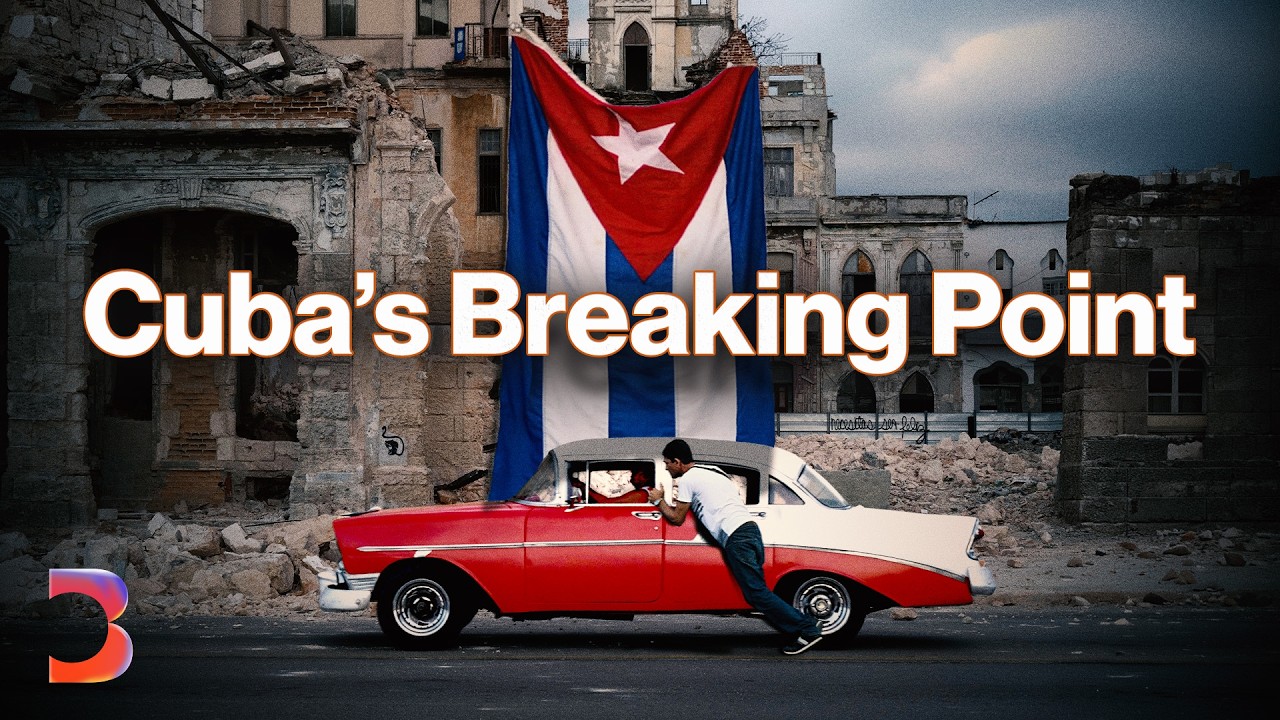
Bloomberg Originals
U.S. oil blockades and targeted indictments have severed foreign energy lifelines to Cuba, forcing Havana to permit private enterprise while plunging the island into severe power blackouts and humanitarian distress.
AI-assisted summary of What's Choking Cuba's Economy — original source. Check the original for full context.
Source published:
Detailed notes
## Background Published by Bloomberg Originals on YouTube on July 03, 2026, this video examines the severe economic crisis currently gripping Cuba. According to the page description, Donald Trump's blockade has caused severe shortages of fuel, food, and medicine, raising questions about whether Cuba's authoritarian government will succumb to US pressure or transition from socialism toward capitalism.
## TL;DR Cuba is experiencing an unprecedented economic breakdown marked by widespread fuel shortages, blackouts, and the collapse of essential public services like healthcare and the traditional ration card system. US pressure, including threats of secondary sanctions on oil suppliers and indictments of Cuban leadership, has exacerbated the island's isolation following the loss of Venezuelan crude. In response, the Cuban government has approved minor economic measures allowing over 9,200 private small businesses to operate, while the South Florida diaspora provides critical humanitarian lifelines amid persistent risks and fear of military conflict.
## Atmosphere & style The video carries a somber, urgent, and analytical tone, balancing rigorous economic breakdown with deeply human stories of daily survival. Through vivid accounts of failing hospitals, silent airport runways, and local business owners navigating hyperinflation, the narrative conveys a palpable sense of exhaustion and anxiety. It feels like an immersive, sober investigation into a nation on the brink, caught between relentless geopolitical pressure and the quiet resilience of its people.
## Key takeaways - [00:01](https://www.youtube.com/watch?v=Q0PnVLUeFI8&t=1s) Cuba faces a critical economic crisis fueled by fuel shortages, electrical blackouts, and trade embargos. - [00:01](https://www.youtube.com/watch?v=Q0PnVLUeFI8&t=1s) US foreign policy has maintained a hardline approach toward Cuba, including an indictment against former President Raúl Castro to pursue political transition. - [02:03](https://www.youtube.com/watch?v=Q0PnVLUeFI8&t=123s) The loss of foreign energy patrons, particularly Venezuelan oil shipments, triggered a severe breakdown in Cuba's power grid. - [02:03](https://www.youtube.com/watch?v=Q0PnVLUeFI8&t=123s) Threats of secondary US sanctions prompted Mexican President Claudia Sheinbaum to halt oil exports to Cuba. - [03:25](https://www.youtube.com/watch?v=Q0PnVLUeFI8&t=205s) Fuel scarcity creates massive logistical bottlenecks, preventing humanitarian aid and basic goods from reaching populations in need. - [03:25](https://www.youtube.com/watch?v=Q0PnVLUeFI8&t=205s) Public services and healthcare have severely deteriorated, marked by growing surgical waitlists and rising infant mortality rates. - [03:25](https://www.youtube.com/watch?v=Q0PnVLUeFI8&t=205s) The historic 'libreta' ration system has largely collapsed under high inflation, leaving basic staples unaffordable. - [04:54](https://www.youtube.com/watch?v=Q0PnVLUeFI8&t=294s) Tourism, historically a major revenue generator, has dropped significantly due to airline flight cancellations caused by jet fuel shortages. - [04:54](https://www.youtube.com/watch?v=Q0PnVLUeFI8&t=294s) To generate foreign currency, Cuba exports medical labor through international doctor brigades, earning billions annually. - [06:30](https://www.youtube.com/watch?v=Q0PnVLUeFI8&t=390s) In response to state shortfalls, Cuba has permitted over 9,200 micro, small, and medium private enterprises ('mipymes') to operate. - [06:30](https://www.youtube.com/watch?v=Q0PnVLUeFI8&t=390s) Structural barriers and a lack of legal guarantees for property rights and profit repatriation continue to deter major investment. - [08:55](https://www.youtube.com/watch?v=Q0PnVLUeFI8&t=535s) The Cuban diaspora provides a crucial economic lifeline by using platforms like Katapulk to supply essential goods and fuel to relatives. - [08:55](https://www.youtube.com/watch?v=Q0PnVLUeFI8&t=535s) US-Cuba foreign policy remains heavily influenced by South Florida politics and hardline exile perspectives.
## Detailed walkthrough ### [00:01](https://www.youtube.com/watch?v=Q0PnVLUeFI8&t=1s) Deepening Crises and US Escalation
Cuba's geopolitical standing has long exceeded its geographical size, positioning the island just 90 miles off the coast of Florida as a focal point of Cold War politics and modern US foreign policy. Since the 1960s revolution, the island has been under a broad trade embargo enforced by the United States, while remaining strictly under the control of the Cuban Communist Party. Today, the single-party system—which maintains total control over the military, legislature, and broad society—faces a severe economic breakdown as its foundational socialist model runs out of momentum and essential resources.
The island faces unprecedented human suffering driven by critical shortages of fuel, severe electrical grid blackouts, and widespread civil unrest. Under Donald Trump's administration, Washington has maintained a hardline posture, unsealing an indictment against former Cuban President Raúl Castro to signal its intent to pursue regime change. With options ranging across the board regarding potential interventions, the US crackdown has exacerbated an already fragile state of affairs.
- **Geographic Proximity:** Located 90 miles south of Florida, Cuba served historically as a haven for American tourists during Prohibition and later as a strategic platform for US adversaries. - **Indictment of Leadership:** The US Department of Justice unsealed an indictment targeting former Cuban President Raúl Castro. - **Diaspora Aspirations:** Over two million Cubans residing abroad express a strong desire to see their homeland move toward prosperity and political transition.
---
[02:03](https://www.youtube.com/watch?v=Q0PnVLUeFI8&t=123s) Loss of Allied Oil and the Energy Collapse
Cuba's history is defined by periods of extreme economic vulnerability following the loss of foreign patrons. After the collapse of the Soviet Union in the early 1990s, the island lost its primary economic benefactor. In the early 2000s, Fidel Castro established a pivotal political and economic alliance with Venezuelan President Hugo Chávez, securing a steady supply of crude and refined oil products to power Cuba's electrical grid. However, foreign oil shipments have precipitously dropped in recent years. Even when combined with domestic production of roughly 40,000 barrels per day, total supply falls far short of the volume needed to maintain normal economic function.
The geopolitical landscape shifted dramatically when US forces captured Venezuelan President Nicolás Maduro and his wife, cutting off Cuba's principal oil lifeline. While nations like Russia and Mexico occasionally provided supplementary shipments, President Donald Trump threatened secondary sanctions in late January against any country supplying oil to Cuba. Fearing catastrophic economic retaliation against her own country, Mexican President Claudia Sheinbaum halted oil shipments to the island, effectively sealing Cuba's energy blockade.
- **Domestic Oil Production:** Cuba produces approximately 40,000 barrels of oil a day, which is severely insufficient for daily operations. - **Sanctions Threat:** US sanctions threats forced Mexican President Claudia Sheinbaum to cease oil exports to Cuba. - **Grid Deterioration:** The loss of Venezuelan crude eliminated the primary fuel source keeping Cuba's domestic power grid operational.
---
[03:25](https://www.youtube.com/watch?v=Q0PnVLUeFI8&t=205s) Humanitarian Fallout and Deteriorating Public Services
International observers have widely criticized the US oil blockade, labeling the sanctions strategy as inhumane and illegal under international standards. The humanitarian consequences continue to deepen, severely impacting the island's health sector—historically a primary source of national pride. Surgical waitlists have lengthened dramatically, infant mortality rates are rising, and basic medical supplies remain critically scarce.
Attempting to distribute humanitarian aid and food shipments across the island has proved almost impossible due to the lack of gasoline required for logistics and transport. Consequently, the limited fuel supplies that do enter the country are largely seized by the government rather than reaching vulnerable populations. The legacy *libreta* (ration card system), which historically guaranteed basic provisions of rice, chicken, and eggs, has systematically broken down. While essential items occasionally appear in markets, hyperinflation renders them unaffordable for average citizens.
> "The surgery wait list has grown. Infant mortality is rising. Attempts to bring in humanitarian aid and food from places like Mexico is very slow... when you have no gasoline to distribute those things on the island, it's also difficult to get those things into the hands of the people that need them."
- **Medical Sector Impact:** Surgical delays and rising infant mortality mark a severe decline in Cuba's healthcare system. - **Logistics Bottlenecks:** Fuel shortages prevent aid brought into ports from being transported inland to local communities. - **Rationing Failure:** The traditional government ration card system can no longer guarantee staple goods like eggs, rice, and poultry.
---
[04:54](https://www.youtube.com/watch?v=Q0PnVLUeFI8&t=294s) Economic Stagnation, Inflation, and Tourism Collapse
Local business owners, such as restaurant and grocery operator Juan Carlos Blain, struggle daily to navigate severe product shortages and skyrocketing costs. Inflation in Cuba reached a peak of roughly 71% during the COVID-19 pandemic. Official state data reported an inflation rate of 14% in 2025, but independent economists estimate that actual price growth remains near peak pandemic levels.
Tourism, historically a pillar of the Cuban economy, has experienced a devastating decline. Following President Barack Obama's historic visit in 2016 to normalize bilateral relations, foreign visitor arrivals peaked. However, the pandemic halted travel, and the ongoing jet fuel crisis forced commercial airlines to cancel flights into Havana. Hotel closures are widespread across the island, and foreign credit card processing services have been suspended. To generate hard currency, the government relies heavily on medical exports—deploying over 24,000 doctors abroad in medical brigades, generating upwards of $4 billion annually, previously exchanged in part for subsidized Venezuelan oil.
| Indicator / Sector | Peak / Historical Figure | Current Reality / Impact | |:--- |:--- |:--- | | **Official Inflation** | 71% (Pandemic Peak) | Reported 14% in 2025, though real rates hover near peak levels. | | **Tourism Sector** | Record high arrivals post-2016 Obama visit | Lowest non-COVID arrivals in two decades; hotels closed. | | **Medical Brigades** | Over 24,000 doctors deployed abroad | Generates over $4 billion annually in foreign currency. |
---
[06:30](https://www.youtube.com/watch?v=Q0PnVLUeFI8&t=390s) Emergence of Small Private Enterprises
Unlike other communist nations, Cuba has resisted structural market reforms, remaining a central state-run economy. However, facing economic necessity, the Cuban government has increasingly permitted micro, small, and medium-sized private enterprises (*mipymes*) to operate. Cuban citizens have demonstrated incredible adaptability, leading to a visible rise in private enterprise across various sectors.
The government reports that there are now over 9,200 registered small and medium businesses operating on the island. This private sector employs a growing proportion of the national workforce. Additionally, the government has passed over 170 economic measures to attract foreign investment and encourage the Cuban diaspora to invest in small domestic businesses. However, serious structural barriers remain: doing business still requires interacting with the state, and the legal framework provides no firm guarantees for property rights, asset protection, or profit repatriation.
- **Private Sector Growth:** Official figures count over 9,200 small and medium-sized private businesses operating in Cuba. - **Economic Reforms:** Over 170 economic measures have been approved by the state to open paths for foreign and private capital. - **Investment Risks:** Analysts warn that investing remains highly risky due to the absence of legal guarantees protecting private property and profits.
---
[08:55](https://www.youtube.com/watch?v=Q0PnVLUeFI8&t=535s) Diaspora Contributions and South Florida Geopolitics
In response to state shortfalls, the Cuban exile community has become an indispensable lifeline for the island's population. Entrepreneurs like Hugo Cancio operate platforms such as *Katapulk*, an online marketplace that allows the diaspora to purchase food, consumer products, and mobile credit for relatives in Cuba. Leveraging exemptions in US Commerce Department export controls for humanitarian and consumer goods, Katapulk handles 1,500 to 2,000 orders daily across a catalog of 33,000 products, even shipping containers of natural gas to the island. However, large-scale capital investments will remain sidelined until Cuba establishes robust legal protections for investors.
Simultaneously, South Florida politics heavily shapes US-Cuba policy. Political figures like Florida Senator Marco Rubio, born to Cuban immigrant parents, embody the hardline exile consensus seeking decisive political change in Havana. Political analysts note that driving a political transition in Cuba could bolster Rubio's national profile ahead of future Republican presidential primaries. Meanwhile, many Cubans express deep anxiety over potential military conflict between the US and Cuba, urging a negotiated resolution to end the humanitarian crisis rather than an armed confrontation that would endanger relatives on the island.
> "I personally, and a lot of Cubans, don't want this direct military confrontation with the United States. That'll be really sad... I hope and will do everything within my powers to where, you know, my adoptive country and my native country comes to terms and negotiates an end to this humanitarian crisis."
- **Katapulk Logistics:** Processes between 1,500 and 2,000 daily orders of consumer products financed by the Cuban diaspora. - **Export Control Exemptions:** US regulations permit specified shipments of food, consumer goods, and natural gas containers directly to the island. - **Electoral Influence:** The South Florida Cuban-American voting block has played a central role in shaping Republican Party electoral strategy and foreign policy since 2000.
## Notable quotes > [03:25](https://www.youtube.com/watch?v=Q0PnVLUeFI8&t=205s) The surgery wait list has grown. Infant mortality is rising. Attempts to bring in humanitarian aid and food from places like Mexico is very slow... when you have no gasoline to distribute those things on the island, it's also difficult to get those things into the hands of the people that need them.
> [08:55](https://www.youtube.com/watch?v=Q0PnVLUeFI8&t=535s) I personally, and a lot of Cubans, don't want this direct military confrontation with the United States. That'll be really sad... I hope and will do everything within my powers to where, you know, my adoptive country and my native country comes to terms and negotiates an end to this humanitarian crisis.
## Mentioned Bloomberg Originals, Donald Trump, Raúl Castro, Fidel Castro, Hugo Chávez, Nicolás Maduro, Claudia Sheinbaum, Juan Carlos Blain, Barack Obama, Hugo Cancio, Marco Rubio, Katapulk, Cuban Communist Party, US Department of Justice, US Commerce Department, Republican Party, Cuba, Havana, Florida, South Florida, Mexico, Russia, United States
[Source](https://www.youtube.com/watch?v=Q0PnVLUeFI8)