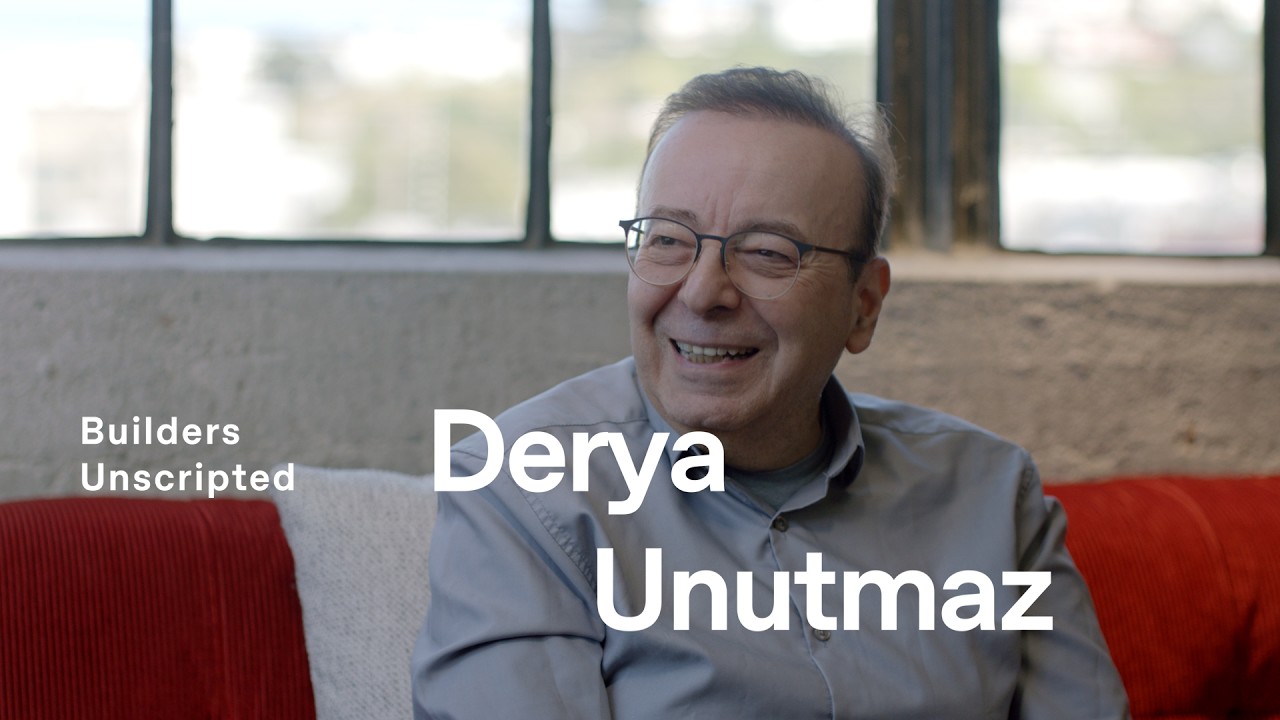
Jackson Lab Professor Uses OpenAI Codex to Model Immune Cell Systems
OpenAI
Exponential gains in artificial intelligence reasoning models will allow medicine to simulate human biological systems, cure all major diseases within a decade, and reverse human aging within 15 years.
## Background
Published on YouTube by OpenAI on July 6, 2026, this video features immunologist and professor Dr. Derya Unutmaz in conversation with host Romain Huet. The page description outlines a discussion on building biological tools with Codex and exploring a future where AI empowers scientists to simulate complex experiments.
## TL;DR
Dr. Derya Unutmaz details his journey integrating AI models like Codex, GPT-5.5, and reasoning systems into immunology and biomedical research. He demonstrates custom-built applications that streamline flow cytometry, simulate T-cell receptor pathways, and automate CRISPR target selection. Looking ahead, Unutmaz advocates for the development of digital twins and autonomous AI agent swarms to revolutionize drug discovery, hyper-personalized cancer therapies, and cellular engineering.
## Atmosphere & style
The conversation carries an energetic, forward-looking, and deeply enthusiastic tone, driven by Unutmaz's passionate advocacy for AI-driven science. The dynamic between Huet and Unutmaz feels warm, collegial, and mutually inspired, combining technical depth with lighthearted humor about intense coding habits. Watching the exchange evokes a sense of awe and optimism, bridging rigorous biological research with the transformative speed of modern software development.
## Key takeaways
- [00:10](https://www.youtube.com/watch?v=4sexN3yE8xg&t=10s) The vast complexity of biological systems—trillions of parts and billions of simultaneous reactions—exceeds human cognitive capacity, making AI-driven simulation necessary for discovery.
- [02:15](https://www.youtube.com/watch?v=4sexN3yE8xg&t=135s) Reasoning-focused AI models (like o1-preview, o3, and Pro models) marked a major turning point by enabling cross-domain scientific reasoning and reliable hypothesis generation.
- [05:44](https://www.youtube.com/watch?v=4sexN3yE8xg&t=344s) Using Codex, researchers can rapidly build custom, domain-specific apps and interactive tools without needing traditional software engineering teams.
- [09:17](https://www.youtube.com/watch?v=4sexN3yE8xg&t=557s) Unutmaz demonstrated custom Codex-built tools for flow cytometry analysis, immune cell T-cell receptor signaling simulations, and dynamic cellular environments.
- [18:25](https://www.youtube.com/watch?v=4sexN3yE8xg&t=1105s) The ultimate goal of bioengineering is programmable biology, treating human cells like software code that can be designed, compiled, and deployed therapeutically.
- [18:49](https://www.youtube.com/watch?v=4sexN3yE8xg&t=1129s) Custom Swift applications can automate complex CRISPR target region selection across thousands of DNA nucleotides for custom genetic editing.
- [21:13](https://www.youtube.com/watch?v=4sexN3yE8xg&t=1273s) A biological 'digital twin' simulates an individual's entire biological system, enabling precision medicine, targeted cancer therapies, and dramatically accelerated clinical trial timelines.
- [24:39](https://www.youtube.com/watch?v=4sexN3yE8xg&t=1479s) Simulations allow researchers to optimize immunotherapies by finding the right balance between tumor destruction and avoiding hazardous autoimmune side effects.
- [26:46](https://www.youtube.com/watch?v=4sexN3yE8xg&t=1606s) Advanced frontier models (such as GPT-5.5 Pro) demonstrate human-like biological intuition by accurately predicting complex experimental outcomes.
- [29:17](https://www.youtube.com/watch?v=4sexN3yE8xg&t=1757s) In 'Science 2.0,' autonomous networks of AI agents and robotic labs will conduct high-throughput, continuous discovery loops, compressing years of drug discovery into hours.
- [30:50](https://www.youtube.com/watch?v=4sexN3yE8xg&t=1850s) According to Jevons paradox, lower costs and higher efficiency in AI-driven bioengineering will vastly expand research and job opportunities rather than reduce them.
- [32:40](https://www.youtube.com/watch?v=4sexN3yE8xg&t=1960s) Personal agency, curiosity, and a willingness to iterate through trial and error are the most important traits for building with AI across any field.
## Detailed walkthrough
### [00:10](https://www.youtube.com/watch?v=4sexN3yE8xg&t=10s) The Epiphany of Biological Complexity
```
+-----------------------------------------------------------------------+
| DERYA UNUTMAZ, M.D. |
| Immunologist & Professor at The Jackson Laboratory (JAX) |
| "I can call myself a Codex addict. I'm definitely a certified one." |
+-----------------------------------------------------------------------+
```
Host Romain Huet introduces Dr. Derya Unutmaz, an immunologist and professor at The Jackson Laboratory, highlighting his unique positioning at the intersection of medicine, bioscience, bioengineering, and artificial intelligence. Unutmaz traces his realization that biology requires AI back to the early 1990s, immediately following his graduation from medical school. Transitioning into biomedical research to uncover why so many diseases remained untreatable, he was struck by the staggering, overwhelming scale of living systems—trillions of interacting parts and billions of simultaneous biochemical reactions.
This sense of scale drove his early interest in AI during the 1990s, when he first attempted to write code to model biological functions. He tracked the field's evolution through the deep learning revolution, noting that deep learning provided the parallel processing capabilities necessary to handle massive biological datasets. The arrival of milestone models like AlphaFold and ChatGPT solidified his conviction that AI-driven simulation was the future of scientific discovery.
* **Timeline & Turning Points:**
* **Early 1990s:** Graduated medical school; realized human cognition alone cannot parse biological complexity (trillions of parts, billions of reactions).
* **Deep Learning Era:** Recognized parallel processing as the breakthrough for big-data biology.
* **Milestones:** AlphaFold, ChatGPT, and reasoning-centric LLMs.
---
[02:15](https://www.youtube.com/watch?v=4sexN3yE8xg&t=135s) From Battle Royale Prompts to Reasoning Models
```
PHYSICAL ANALOGY BIOLOGICAL PARALLEL
+------------------+ +-------------------+
| Battle Royale | =======> | Immune System |
| Survival Game | | vs. Tumors |
+------------------+ +-------------------+
```
Unutmaz recalls his early involvement testing OpenAI's reasoning models, specifically recalling September 2024 when OpenAI approached him to test `o1-preview`. At the time, Unutmaz was an active vocal advocate on X (formerly Twitter) arguing against widespread AI skepticism. To test the reasoning model, he designed a prompt drawing from his passion for video games—specifically battle royale survival games set on isolated islands. He asked `o1-preview` to draw a conceptual parallel between a battle royale scenario and how immune cells combat cancer cells, prompting it to design a scientific experiment based on that cross-disciplinary analogy.
The depth, insightfulness, and nuance of the model's response was an emotional moment for him. While prior models like GPT-4 were transformational for routine tasks—reducing an hour of recommendation letter writing to five minutes or synthesizing vast literature—they could not be fully trusted to predict experimental outcomes. The emergence of reasoning in `o1-preview`, and later `o3` and Pro models, marked the exact tipping point where AI became an indispensable tool for hypothesis generation and experimental design.
> *"o1-preview just gave me this response that almost made me emotional. I was like, 'Oh my God.'... That was the moment where I realized when it starts to reason, then you get things that are going to be extremely relevant for science."*
* **Key AI Model Iterations Discussed:**
* **GPT-4 / GPT-4o:** Exceptional for literature synthesis, routine tasks, and administrative drafting.
* **o1-preview (Sept 2024):** Proved capable of complex, cross-domain scientific reasoning and experimental scenario design.
* **o3 & Subsequent Pro Models:** Delivered higher precision for predictive biological modeling.
---
[05:44](https://www.youtube.com/watch?v=4sexN3yE8xg&t=344s) The Daily Workflow: Morning Coffee and Codex
Describing himself as a "certified Codex addict," Unutmaz shares how generative coding tools have restructured his daily research workflow. His morning routine begins with coffee and opening Codex to review scripts or simulations that ran overnight. Before accessible AI coding assistants, translating complex biological ideas into working software or interactive simulations required months of dedicated programming or specialized software engineering skills.
As a biomedical engineer rather than a traditional software developer, Unutmaz notes that manually coding something as simple as a Snake game would have taken him months. Today, he prompts Codex to build custom, domain-specific apps in minutes. The speed of iteration—accelerated further by models like GPT-5.5—allows him to test ideas continuously, leading to a vibrant (if somewhat sleep-deprived) period of creation.
---
[09:17](https://www.youtube.com/watch?v=4sexN3yE8xg&t=557s) Live Demo: Reinventing Flow Cytometry Software
Demonstrates a custom web application built entirely using Codex to analyze flow cytometry data—the primary experimental window into immune cell profiling. In flow cytometry, cells are labeled with fluorescently tagged antibodies against specific cell-surface markers and passed individually through lasers. The resulting data points (representing thousands to hundreds of thousands of individual cells) must be categorized to identify specific functional immune subpopulations.
Unutmaz walks through the interface of his app, which parses complex, multi-parametric datasets:
* **Interactive Cell Gating:** Displays 2D dot plots and contour plots where each dot represents a single cell mapped across two fluorescent channels out of a 20-marker panel.
* **T-Cell Profiling:** Highlights CD4+ T helper cells and CD8+ cytotoxic T cells (killer cells that target lymphocytes or tumor cells).
* **Automated Panel Designer:** Includes a feature where selecting a cell subset (e.g., naive T cell, central memory cell, or TH17 cell) automatically generates the optimal combination of marker antibodies required for experimental flow analysis.
> *"To make these apps would be kind of like a dream... I said, 'Why not make one for myself?' It was a crazy idea because it's very complex. In fact, I failed a lot... But since 5.5, now I have a completely working version of this."*
---
[13:26](https://www.youtube.com/watch?v=4sexN3yE8xg&t=806s) Simulating Immune Cells and Interactive Models
Unutmaz presents his broader vision: building full "virtual cells," cellular digital twins, and eventually complete organ/human simulations to mirror how physical engineering uses aerodynamic simulations before manufacturing hardware. To demonstrate, he displays a browser-based T-Cell Receptor (TCR) simulator built with Codex.
The simulation models the delicate molecular signaling cascade beneath the surface TCR:
1. **Input Parameters:** The user modulates ligand binding affinity, antigen dose, and co-receptor signals.
2. **Real-Time Computation:** The app calculates downstream intracellular signaling, phosphorylation patterns, and transcription factor activation.
3. **Biological Outcome:** Simulates whether the signal strength leads to clear tumor clearance, autoimmune self-destruction, or viral clearance.
4. **Target Suppression:** Allows users to introduce inhibitory molecules (e.g., PD-1 checkpoint inhibitors) or small-molecule drugs to observe how signal pathways shut down or redirect in real time.
---
[16:06](https://www.youtube.com/watch?v=4sexN3yE8xg&t=966s) Converting Static Journal Cover Art into Dynamic Simulators
Unutmaz showcases an experiment combining image generation with code generation. Using image generation tools, he produced a mock cover for the journal *Nature* depicting an immune atlas—a detailed visualization of diverse immune cell types interacting in microenvironments.
He then fed the generated image directly into Codex with a open-ended prompt: *"I want you to understand this image and create an interactive simulator website."* Without explicit step-by-step instructions, Codex parsed the visual entities and engineered an interactive web environment featuring:
* **Interactive Entities:** Clickable cell types displaying biological identity, differentiation status (e.g., memory vs. effector cells), and functional properties.
* **Therapeutic Mechanics:** Toggleable checkpoint blockades (e.g., anti-PD-1 anti-cancer mechanisms).
* **Aging Variables:** Sliders adjusting systemic immune cell behavior and exhaustion dynamics based on biological age.
---
[18:25](https://www.youtube.com/watch?v=4sexN3yE8xg&t=1105s) The Pathway to Programmable Biology
Unutmaz concludes the segment by discussing the ultimate goal of biomedical engineering: treating human cells like programmable code. Just as software developers write code in high-level languages, biological engineers aim to write, manipulate, and compile genetic and cellular programs. He envisions a future where an integrated "Codex for Biology" allows researchers to design, simulate, and deploy therapeutic cell behaviors seamlessly.
Here is the detailed walkthrough covering the second part of the transcript.
---
[18:49](https://www.youtube.com/watch?v=4sexN3yE8xg&t=1129s) CRISPR Genome Engineering and Custom Swift Tooling
Derya Unutmaz reflects on how genetic editing technology has evolved over his career, recalling that he developed early genetic editing techniques 25 to 30 years ago. Today, the landscape is dominated by CRISPR, which enables scientists to target virtually any gene to fix mutations, delete sequences, or overexpress them like traditional genome engineering. However, the process remains exceptionally complex. A typical target gene, such as CD4 on the surface of T cells, can stretch across 2,000 nucleotides. Determining precisely where to target along that sequence to achieve specific, effective editing requires sophisticated computation, which led Unutmaz to build his own custom application rather than relying solely on existing tools.
Demonstrating his app on screen, Unutmaz shows how it instantly fetches raw DNA sequences directly from public databases whenever a gene name like CD4 is entered. The application analyzes the sequence, isolates potential 20-to-22 nucleotide target regions, ranks them based on quality metrics, and lets him copy optimized target sequences directly into order forms for commercial synthesis vendors. Moving beyond single-gene targeting, Unutmaz built extended functionality that allows researchers to generate bulk target libraries across multiple genes simultaneously by simply entering a list and clicking "Design Library." Romain Huet points out that the software is running as a native macOS application built with Swift, prompting Unutmaz to share that he is also working on an iPad version. Huet warmly jokes that seeing this workflow makes Unutmaz's intense morning coffee routine make complete sense.
* CRISPR tools target 20 to 22 nucleotide regions within genes that can span over 2,000 nucleotides.
* The native macOS software is written using Swift, with an iPad edition currently in development.
* Synthesized custom CRISPR molecules designed in the app are outsourced directly to online manufacturing vendors.
[21:13](https://www.youtube.com/watch?v=4sexN3yE8xg&t=1273s) Digital Twins and AI-Accelerated Medicine
Transitioning to broader biological concepts, Huet asks Unutmaz to unpack the idea of a "digital twin" and estimate when it will become a viable reality in immunology and oncology. Unutmaz defines a digital twin as a complete, simulated model of an individual human's entire biological system. Human health is far more intricate than external biological markers; it is governed by an interconnected web of genetics, gut bacteria numbering in the trillions, circulating metabolites, hormones, and environmental factors. Because of this overwhelming complexity, modern medicine has historically prescribed identical therapies to millions of patients with limited success—such as statins, which only benefit a small fraction of the people taking them. A fully realized AI digital twin would allow medicine to treat the individual patient rather than a generic diagnosis by running predictive simulations to answer "what-if" health scenarios.
Achieving complete biological simulation promises drugs engineered with nearly 100% efficacy and zero side effects, alongside a massive collapse in clinical trial timelines. Rather than spending 5 to 10 years conducting human trials, AI simulations could complete comprehensive trial evaluations in 5 to 10 days. Unutmaz addresses skepticism surrounding his prediction that all diseases will be treatable in the next decade and age reversal will be achieved within 15 years, arguing that critics rely on linear historical progress—such as taking 50 years to make incremental progress in cancer care—while underestimating the exponential growth of AI capabilities. While current global computing power remains insufficient to simulate the trillions of components inside a human body, Unutmaz expects superintelligent AI and compute infrastructure to bridge this gap within the next 5 to 10 years.
* Digital twins incorporate a full biological profile: host genetics, environmental exposures, metabolites, proteins, hormones, and trillions of gut microbes.
* AI-driven clinical trials could reduce drug development and testing cycles from 5–10 years down to 5–10 days.
* Unutmaz predicts that exponential AI growth will enable the treatment of all major diseases within a decade and human age reversal within 15 years.
[24:39](https://www.youtube.com/watch?v=4sexN3yE8xg&t=1479s) Hyper-Personalized Cancer Therapies and Immunotherapy
When Huet asks how an oncologist might treat a cancer patient using a digital twin, Unutmaz explains that cancer care is already leading the shift toward personalized medicine due to the extreme genetic heterogeneity of tumors. In lung cancer, for example, oncologists routinely sequence a patient's tumor mutations first; certain targeted "smart drugs" might be effective for only 1% of lung cancer cases featuring a specific mutation while proving useless for the remaining 99%. Digital twins will allow clinicians to test multiple therapeutic hypotheses on simulated control and treatment groups simultaneously. Unutmaz references a notable real-world example from Australia where a computer scientist utilized ChatGPT and Grok to design a personalized mRNA vaccine targeting the specific mutations of a dog's tumor.
The discussion shifts to immunotherapy—a revolutionary approach that harnesses the immune system to hunt and kill cancer cells. Despite its promise, immunotherapy currently fails in many patients because immune cells can become exhausted or fail to recognize tumor targets. Conversely, overactivating the immune system poses severe risks, as hyperactive immune responses can cause catastrophic tissue damage. Unutmaz emphasizes that simulating immune cell dynamics via AI models will allow researchers to fine-tune cancer therapies to maximize anti-tumor activity without triggering dangerous auto-immune side effects.
> "There was a case from Australia, this computer scientist using ChatGPT and Grok, created an RNA vaccine for the dog... that's as personalized as you can get because that RNA vaccine was created just for those cancer's mutations."
[26:46](https://www.youtube.com/watch?v=4sexN3yE8xg&t=1606s) AI Adoption in Research and The Breakthrough of Frontier Models
Huet asks Unutmaz what it is like navigating his peer group as an AI-focused medical doctor and whether his colleagues share his enthusiasm for tools like Codex. Unutmaz candidly admits that many of his peers think he is "totally crazy," though opinions are starting to shift as results become undeniable. He notes that human minds struggle to process exponential curves; many scientists dismissed AI after testing GPT-4 a year and a half prior, walking away because of hallucinations or flawed answers without realizing how rapidly frontier models evolve. Comparing recent model generations, Unutmaz notes that the leap from GPT-5.4 to GPT-5.5 was "day and night."
Unutmaz shares a personal milestone that brought him to tears: after prompting GPT-5.5 Pro with data from a complex, highly involved biological experiment his lab had conducted, the model predicted the exact experimental outcomes with 100% accuracy. Previous models like GPT-5 and GPT-5.4 were exceptional at organizing static biological facts, but GPT-5.5 demonstrated genuine biological intuition—the unspoken "gut feel" that senior researchers accumulate after 30 years at the bench. Huet recalls seeing Unutmaz's viral post online describing the moment, while Unutmaz reflects on how he used to make friendly bets with his students about experimental outcomes and win every time purely off intuitive reps. Seeing an AI model match that level of experienced nuance proved to him that frontier models have crossed a fundamental threshold.
* Unutmaz observed a stark, "day and night" difference in biological reasoning quality between GPT-5.4 and GPT-5.5.
* GPT-5.5 Pro achieved a 100% accurate prediction rate when evaluating complex, unpublished experimental setups from Unutmaz's lab.
[29:17](https://www.youtube.com/watch?v=4sexN3yE8xg&t=1757s) Science 2.0: AI Agents, Lab Automation, and Jevons Paradox
Looking toward the near future, Unutmaz outlines a paradigm shift he calls "Science 2.0" (or 3.0), which will permanently end the traditional scientific cycle of spending weeks planning experiments and months manually analyzing data. In this new era, networks of specialized AI agents will generate scientific hypotheses, simulate thousands of trial conditions, and filter out low-probability approaches so researchers only spend physical resources on experiments with high confidence scores. Once physical experiments run, specialized analysis agents will instantly process the incoming data and feed findings back to a primary coordinator agent, creating a continuous, autonomous discovery loop. Under this model, the principal investigator's primary role shifts to high-level directional oversight—such as directing agent swarms to solve specific conditions like lung cancer.
Physical execution will also shift toward automated, robotic laboratories running continuous experimental batches. Addressing fears around job displacement for scientific researchers, Unutmaz points to Jevons paradox: as the cost of conducting science drops and efficiency skyrockets, demand for bioengineering will expand exponentially rather than shrink. Because humanity currently understands only roughly 10% of total biological systems, AI-driven tools will empower thousands of bioengineers to design entirely new cell types, synthetic tissues, and targeted therapies at their computers. This transformation will ripple across physics, chemistry, material sciences, and clinical trial pipelines, reducing drug discovery work that once took years down to mere hours.
* Traditional research workflows (weeks of planning, months of analysis) are being replaced by automated hypothesis-and-analysis loops managed by AI agent swarms.
* Humanity currently understands roughly 10% of biological systems, leaving massive room for expansion as bioengineering tools improve.
* Drug discovery tasks that historically required years can now be compressed into hours using AI simulation.
[32:40](https://www.youtube.com/watch?v=4sexN3yE8xg&t=1960s) Agency, Curiosity, and Embracing the AI Transformation
Offering advice to individuals in non-scientific fields, Unutmaz credits his quick adoption of AI to his training in biology, where 95% to 98% of bench experiments end in failure. This daily reality builds high resilience, personal agency, and a willingness to iterate through mistakes—traits that are essential when building with AI. He candidly notes that many of his own early application attempts with Codex failed or produced poor results before yielding successful builds. In the age of AI, Unutmaz argues, personal agency and curiosity are the two most crucial traits anyone can cultivate.
Because the financial and temporal cost of experimentation has dropped close to zero, individuals no longer need to settle for static, costly solutions—whether altering a business website in minutes or designing custom 3D-printed products. Rather than fearing technology, people should embrace AI as an empowering force capable of ushering humanity into a golden age. Unutmaz praises AI researchers as the true heroes of modern technology for driving the greatest transformation in human history. Huet closes the episode by thanking Unutmaz for his optimistic vision and inviting him to return in a few months to demonstrate his next round of progress with Codex and digital twins.
> "In the age of AI, really agency and curiosity are the only things that matter. Don't be scared. Constantly try, constantly experiment with AI... because the cost of experimentation is so low. Why shouldn't you do that?"
## Notable quotes
> [02:15](https://www.youtube.com/watch?v=4sexN3yE8xg&t=135s) o1-preview just gave me this response that almost made me emotional. I was like, 'Oh my God.'... That was the moment where I realized when it starts to reason, then you get things that are going to be extremely relevant for science. — Derya Unutmaz
> [00:10](https://www.youtube.com/watch?v=4sexN3yE8xg&t=10s) I can call myself a Codex addict. I'm definitely a certified one. — Derya Unutmaz
> [09:17](https://www.youtube.com/watch?v=4sexN3yE8xg&t=557s) To make these apps would be kind of like a dream... I said, 'Why not make one for myself?' It was a crazy idea because it's very complex. In fact, I failed a lot... But since 5.5, now I have a completely working version of this. — Derya Unutmaz
> [16:06](https://www.youtube.com/watch?v=4sexN3yE8xg&t=966s) I want you to understand this image and create an interactive simulator website. — Derya Unutmaz
> [24:39](https://www.youtube.com/watch?v=4sexN3yE8xg&t=1479s) There was a case from Australia, this computer scientist using ChatGPT and Grok, created an RNA vaccine for the dog... that's as personalized as you can get because that RNA vaccine was created just for those cancer's mutations. — Derya Unutmaz
> [32:40](https://www.youtube.com/watch?v=4sexN3yE8xg&t=1960s) In the age of AI, really agency and curiosity are the only things that matter. Don't be scared. Constantly try, constantly experiment with AI... because the cost of experimentation is so low. Why shouldn't you do that? — Derya Unutmaz
## Mentioned
Derya Unutmaz, Romain Huet, OpenAI, The Jackson Laboratory, JAX, Codex, ChatGPT, AlphaFold, GPT-4, GPT-4o, o1-preview, o3, GPT-5.5, GPT-5.5 Pro, GPT-5.4, Grok, Nature, CRISPR, CD4, Swift, macOS, iPad, X
杰克逊实验室教授利用 OpenAI Codex 模拟免疫细胞系统
人工智能推理模型的指数级提升将使医学界能够模拟人类生物系统,在十年内治愈所有重大疾病,并在 15 年内逆转人类衰老。
Derya Unutmaz 博士详细介绍了其将 Codex、GPT-5.5 及推理系统等 AI 模型整合到免疫学和生物医学研究中的历程。他展示了简化流式细胞术分析、模拟 T 细胞受体通路以及自动化 CRISPR 靶点筛选的定制应用。展望未来,Unutmaz 倡导开发数字孪生和自主 AI 智能体集群,以彻底革新药物研发、高度个性化癌症疗法以及细胞工程。
生物系统的巨大复杂性——数万亿个组成部分以及数十亿个同时发生的反应——超出了人类的认知能力,使得 AI 驱动的模拟成为科学探索的必要途径。 (0:10)
侧重推理能力的 AI 模型(如 o1-preview、o3 和 Pro 模型)通过实现跨领域科学推理和可靠的假设生成,标志着一个重大转折点。 (2:15)
借助 Codex,研究人员无需传统的软件工程团队,即可快速构建定制的领域专属应用和交互式工具。 (5:44)
Unutmaz 展示了通过 Codex 构建的定制工具,可用于流式细胞术分析、免疫细胞 T 细胞受体信号传导模拟以及动态细胞环境建模。 (9:17)
生物工程的终极目标是可编程生物学,即将人体细胞视同软件代码,可以对其进行设计、编译并应用于临床治疗部署。 (18:25)
Reading summary
Dr. Derya Unutmaz argues that biological complexity exceeds the limits of unassisted human cognition, requiring artificial intelligence models, digital twins, and autonomous agent systems to model living systems and accelerate therapeutic discovery.
The Evolution from Pattern Matching to Reasoning (0:10)
Dr. Derya Unutmaz dates his conviction that biology demands computational tooling to the early 1990s, when he recognized that trillions of cellular components and billions of simultaneous reactions overwhelm unaided human analysis. While deep learning enabled parallel processing of large biological datasets and milestones like AlphaFold demonstrated computational modeling of structures, early large language models such as GPT-4 remained largely restricted to literature synthesis and routine text generation rather than reliable experimental prediction.
A substantive shift occurred with the release of reasoning-focused systems. When Unutmaz evaluated OpenAI's o1-preview in September 2024 by prompting it to translate an analogy between a survival video game and tumor-immune dynamics into a wet-lab protocol, the system designed a nuanced experimental setup. Subsequent frontier systems, including GPT-5.5 Pro, demonstrated an ability to forecast unpublished laboratory results with full accuracy, indicating to Unutmaz that models are beginning to replicate the biological intuition typically acquired through decades of experimental experience.
Codex-Driven Software for Wet-Lab Analysis (9:17)
Rather than relying on generic software development pipelines that require months of engineering, Unutmaz utilizes AI coding tools such as Codex to program tailored scientific software in minutes. Demonstrating an internal tool for flow cytometry—a method where individual fluorescently tagged cells pass through lasers to measure up to 20 markers—Unutmaz built a web interface that parses multi-parametric data into 2D dot and contour plots, profiles CD4+ helper and CD8+ cytotoxic T cells, and automatically calculates optimal antibody panels for targeted subsets like TH17 or memory cells.
He has also applied generative coding to cellular simulation and genetic engineering. Using Codex, Unutmaz built a browser-based T-cell receptor simulator that models real-time molecular phosphorylation, transcription factor activation, and downstream responses across variable antigen affinities and PD-1 checkpoint inhibition. For genetic engineering, he developed a native macOS application in Swift that queries public genomic databases for genes such as CD4, isolates and ranks 20-to-22 nucleotide CRISPR target windows across 2,000-base-pair sequences, and compiles batch target libraries ready for direct submission to commercial oligonucleotide synthesis vendors.
Digital Twins and Simulated Clinical Trials (21:13)
Unutmaz defines a biological digital twin as a comprehensive computational replica of an individual patient, integrating host genetics, environmental exposures, circulating metabolites, hormones, and trillions of gut microbes. In his assessment, contemporary medicine relies on broad-population treatments—such as statins that benefit only a fraction of recipients—because standard diagnostics cannot compute personalized biological variance. By simulating these networks, clinicians could model individual patient responses to targeted immunotherapies, balancing anti-tumor efficacy against dangerous autoimmune tissue destruction.
Unutmaz forecasts that high-fidelity digital twins could compress clinical trial evaluation periods from 5 to 10 years down to 5 to 10 days, predicting that exponential compute scaling will make all diseases treatable within a decade and enable human age reversal within 15 years. While acknowledging skepticism from peers who observe historical progress moving linearly, he argues that critics underestimate exponential advances in computing and reasoning models.
Automating Discovery Through Science 2.0 (29:17)
Looking forward, Unutmaz outlines a transition to 'Science 2.0,' where the traditional cycle of manual experimental design and analysis is replaced by networked AI agents coupled with automated robotic laboratories. In this framework, coordinator and specialist agents formulate hypotheses, screen out low-probability experimental paths in simulation, guide robotic physical execution, and instantly interpret incoming data streams, shifting the principal investigator's role toward high-level strategy.
Addressing concerns regarding workforce displacement in research laboratories, Unutmaz cites Jevons paradox, contending that dropping the computational and experimental cost of science to near zero will expand overall demand for bioengineering. Because humanity currently understands only an estimated 10% of total biological systems, he argues that agent-driven discovery will enable engineers to design synthetic cell therapies and novel biological tissues on personal workstations rather than downsizing research output.
Unutmaz's forward projections rely on continuous exponential leaps in AI reasoning, software generation, and computational capacity to simulate the trillions of interacting components inside the human body—infrastructure that current computing power cannot yet support.
[2:15] Derya Unutmaz: o1-preview just gave me this response that almost made me emotional. I was like, 'Oh my God.'... That was the moment where I realized when it starts to reason, then you get things that are going to be extremely relevant for science.
[0:10] Derya Unutmaz: I can call myself a Codex addict. I'm definitely a certified one.
[9:17] Derya Unutmaz: To make these apps would be kind of like a dream... I said, 'Why not make one for myself?' It was a crazy idea because it's very complex. In fact, I failed a lot... But since 5.5, now I have a completely working version of this.
[16:06] Derya Unutmaz: I want you to understand this image and create an interactive simulator website.
[24:39] Derya Unutmaz: There was a case from Australia, this computer scientist using ChatGPT and Grok, created an RNA vaccine for the dog... that's as personalized as you can get because that RNA vaccine was created just for those cancer's mutations.
[32:40] Derya Unutmaz: In the age of AI, really agency and curiosity are the only things that matter. Don't be scared. Constantly try, constantly experiment with AI... because the cost of experimentation is so low. Why shouldn't you do that?
Original transcript
[0:10] Derya, thank you so much for being here.
[0:13] Thank you. I'm very excited.
[0:14] Likewise.
[0:15] Very psyched to have you,
because you're obviously a very unique kind of builder.
[0:20] Quite unlike the builders
we usually talk to.
[0:23] You have a medical background,
but you also work in,
[0:27] you know, bioscience, bioengineering,
and you're pushing into AI
[0:32] in a way that, like most builders
don't, coming at it with this real depth
[0:38] that you have in so many topics, like
from biology to cancer to immunology.
[0:43] So very excited to dive in.
[0:45] Thank you.
[0:45] Thank you very much.
[0:46] Maybe the first question,
like if you if we rewind, like,
[0:50] when did you first realize that biology
and science were going to need AI?
[0:55] Yeah, I think that was, right
after I graduated from medical school.
[0:59] When I realized the complexity
of the biological system.
[1:03] In fact, after I graduated,
I went into biomedical research
[1:07] because I really wanted to understand
the biology and I so that,
[1:12] you know, at the time, well,
we couldn't treat a lot of diseases.
[1:16] And because of the complexity
and then more I went into the research
[1:20] aspect of it, the more I realized, oh
my God this is incredible.
[1:24] How are we going to solve this?
[1:26] There are trillions of different parts
and biological systems and made billions
[1:32] of reactions that are happening
and it just seemed so overwhelming.
[1:36] And that's when I got interested in AI,
artificial intelligence, early 90s.
[1:42] Then I realized, maybe someday, you know,
[1:45] we could actually build models using AI.
[1:48] And I got very interested in,
trying to code with AI during the 90s and
[1:52] and of course, you know, fast forward
with deep learning revolution.
[1:56] Then I was so excited
because for the first time,
[2:00] I could see that deep learning is able
to
[2:03] process this massive amount of information in a sort of a parallel fashion.
[2:08] And of course, AlphaFold
and then ChatGPT.
[2:11] Yeah.
[2:11] but the first moment was
when I finished my medical school.
[2:15] Amazing.
[2:15] I And since that moment of launching ChatGPT,
[2:17] it feels like you very much
being in our community, right?
[2:20] We've been testing models.
[2:21] I remember you doing some work with o1-preview.
[2:23] Yes.
[2:24] When we had the very first, like,
reasoning models.
[2:26] Like what was the first, like, reaction
when you started to have your hands on that?
[2:30] I still remember this was September 2024.
[2:33] Actually, OpenAI approached me,
I guess because I was,
[2:37] very active on X
and that I would Twitter in the old days,
[2:42] you know, talking about the AI,
[2:44] you know, how this was going to change
humanity.
[2:48] You know, at the time
there were a lot of skeptical people
[2:50] and I think there still are.
[2:51] But, you know, I truly believed in it.
[2:53] And I went all-in in AI and
I guess, OpenAI was interested for me to try.
[3:00] I guess that the first reasoning model
and I still remember it,
[3:05] when I gave it a very complex
[3:10] question on immunology in my topic.
[3:14] But the question, actually,
I even remember the prompt,
[3:17] and I'm very interested in games,
video games.
[3:21] So I like to sort of cross
[3:23] virtualize games to, to science.
[3:26] And one of the games that I would play
is, you know, this
[3:30] sort of like a survival game
when you're in a, in an island
[3:34] and, you know, you're fighting.
[3:35] I won't give the names of the companies,
but you understand the type of games.
[3:40] And so it's kind of a battle royale games.
[3:43] And, you know, in a way,
the immune system is kind of
[3:46] like a battle royale for against tumors.
[3:50] And I said, you know, think of,
[3:53] how would,
[3:55] if you just imagine battle royale games and immune system,
how would you develop, a scenario
[4:02] where the immune cells
would fight against cancer?
[4:05] It's a completely different field.
[4:07] And in fact, we actually did experiments
related to that later on.
[4:11] And o1-preview just gave me this
response that almost made me emotional.
[4:16] I was like, oh my God.
[4:18] Before that, you know, GPT 5.40 you know, it wouldn't
[4:22] it wouldn't really give you that kind of a
deep, insightful, response.
[4:27] And, yeah,
[4:29] I still remember that day that was,
you know, special.
[4:31] Incredible.
[4:32] Was that the moment you would say
what you thought
[4:35] Okay, like, AI is now inevitable for science?
[4:38] Absolutely.
[4:39] I mean, even before that,
you know, especially after 4
[4:43] GPT 4 came out,
you know, it was extremely useful.
[4:47] I would tell my colleagues,
because there's so much information,
[4:52] especially in biology,
you can't really keep up with it.
[4:54] And, you know, for searching literature
[4:57] and really synthesizing, the knowledge,
[5:01] of course, you know, doing mundane things
like writing your letters.
[5:04] You know,
I read a lot of letters of recommendation
[5:07] and things that we used to take an hour
would take five minutes.
[5:10] But, it wasn't at the point
where you could fully trust it
[5:15] or ask questions like, so what would be
the outcome of an experiment for example?
[5:20] And I think o1-preview
was that moment where I realized
[5:25] when it starts to reason,
[5:27] then you get, things that's going to
be extremely relevant for science.
[5:31] So of course, after that we had the pro
version and o3, which got better.
[5:35] And now we have unbelievable
models alone and that, you know,
[5:39] mentioned about my current experience
and which is getting better and better.
[5:44] Yeah. I mean, like, maybe speaking of the current moment,
like, fast forward to today.
[5:47] I read a couple months ago your tweets,
about your new routine were like,
[5:51] you're going to start your days
now with first the morning coffee.
[5:54] But second kind of Codex
has to be doing something for you.
[5:59] Yes.
[6:00] So I can call myself a Codex addict.
[6:03] I'm definitely a certified one.
[6:07] Yeah. So the first thing in the morning
when I wake up because
[6:11] what for Codex enabled is, you know,
there's all these ideas
[6:16] that, you know,
whether you want to make a simulation,
[6:20] whether you want to make a certain app
or you want to make a game or whatever it is.
[6:26] You know, in the past,
you had to know how to code.
[6:29] Even if you knew how to code,
it would take you weeks or months to do it.
[6:33] But now, I mean, I get a lot of ideas and the moment I wake up, get my coffee, say, okay, I gotta try this idea.
[6:43] You know, how is it going to work out.
[6:45] And sometimes, actually, Codex
is working overnight,
[6:48] so I want to see what the
what the results are.
[6:50] And I haven't slept that much in the last couple of months
because of that.
[6:56] Fascinating.
[6:57] So, yeah.
[6:58] I love Codex.
[7:00] And I'm curious, like,
for someone like you that has so much,
[7:03] like, real depth in like, immunology, oncology, cancer, T-cells, like,
[7:09] how do you approach, like, using Codex
to bring these worlds together?
[7:14] And in a way
that's also useful to your day to day?
[7:16] Yeah.
[7:17] Yeah. I can, even show specific examples.
[7:20] I've been, trying to build,
you know, some apps
[7:24] that are not very complex, but
extremely useful for day to day bases.
[7:30] I have a bunch of examples of that.
[7:32] But then also we, we are very much
dependent on software for analysis.
[7:38] As I said, the biology is very complex.
[7:40] Whether there's genetics, immunology,
we, for example,
[7:44] do a lot of analysis called flow cytometry.
[7:47] Basically, this is like our window to the
[7:50] world of cells, mainly immune cells.
[7:52] But you can analyze any cells.
[7:54] So we have these machines,
there's a big laser.
[7:57] We label the cells
with particular markers,
[8:00] fluorescent markers, because there's like
hundreds of different types of cells.
[8:04] So how do you know, what type of cells
there are in your blood in your tissues.
[8:08] So we label them,
we pass them through this laser.
[8:10] And the laser, you know, analyzes
thousands of cells
[8:14] and then creates, some sort of a data,
[8:17] that will tell me this is an immune cell
that can fight against cancer.
[8:21] This one can cause auto immunity
or whatever the function is.
[8:25] But we have to take that data
and put it into specialized software.
[8:29] Take all that thousands or sometimes
hundreds of thousands of data points,
[8:34] individual cells and the software will make that into graphs
[8:39] and then so you can say, okay, give me
[8:41] the percentage of these cells there
and how did they link to that and so on.
[8:45] So this is very sophisticated software,
[8:47] which we've been using
for the last couple of decades.
[8:50] And you know, one day
I said, why not make one for myself?
[8:56] It was a crazy idea because it's very complex.
[8:58] In fact, I failed a lot.
[9:01] I tried to make some things work.
[9:04] But since 5.5, now I have a completely
working, version of this.
[9:10] That's amazing.
[9:11] I would love to see it if you have
[9:12] Yeah.
[9:13] on your laptop to show me.
[9:14] I can show you some of these examples.
[9:17] So, start with this.
[9:20] And I have different versions of this
[9:22] but I'll show you one of these applications.
[9:25] So basically, I already uploaded a file
and you can see that these are
[9:31] actually each of these dots is a single cell.
[9:34] And these are the fluorescent
molecule colors, if you like.
[9:38] So whatever the antibody,
it has that first molecule,
[9:42] it will label that particular cell type.
[9:45] And actually I can choose here.
[9:47] Okay.
[9:48] Well, change me because you can see these are
[9:50] all of these are different
antibodies that are labeled different.
[9:53] It's very complex
because there's 20 different molecules
[9:57] and each of them binding to a receptor.
[9:59] And their combination will
define, will give you
[10:02] a particular subset of cells that will
we defined by those markers alone.
[10:07] For example, my favorite cells are these T cells
[10:12] that have, what we call the CD4 molecule.
[10:15] And some of them have
what's called the CD8 molecule.
[10:18] The ones that have CD8
or are killer cells.
[10:21] They will go and kill the lymphocytes.
[10:23] And so I can, put gates here and I can
say, okay, well, you know, what's the,
[10:28] what's the percentage of cells
that are CD8 positive or CD4 positive?
[10:33] So it will create all kinds of statistic
analysis.
[10:36] But, you know, this is actually, really,
complex software because I can change
[10:41] the contour, plots, the graphics, it's
a different kind of representation.
[10:45] Remember, there's like 100,000 events here
and it's doing so fast,
[10:49] which is incredible
because I didn't think that
[10:52] it would be optimized this way.
[10:54] And you built all of this with Codex?
[10:56] 100% with Codex. Yeah.
[10:58] Incredible.
[10:58] I mean, it took me a while because,
you know, some things wouldn't work but
[11:02] especially with 5.5, I would say,
okay, well, I can’t see the graphs
[11:05] very well and, you know, fix that
and write me a prompt for that.
[11:09] And it would just go and work and work and you know.
[11:11] So I made this little app,
[11:13] which basically, you can actually
choose the cell type you want.
[11:17] Okay. So I say I want a naive T cell,
and it will show me
[11:20] all the markers
that I can potentially choose.
[11:24] And in fact, it will even show me, for example, you know, the ones that are more relevant for that cell type
[11:29] versus the other one.
[11:31] this becomes extremely useful
for developing these, what we call panels.
[11:36] I'm looking for the central memory
naive cell and a T cell and TH17 cells.
[11:41] Okay.
[11:41] If I choose these markers then
I can go back and do my flow analysis.
[11:46] That's amazing.
[11:47] I mean, like you’re obviously an engineer
by training but, like,
[11:50] you would have taken you, I'm sure,
like weeks of work, if not months of work
[11:53] to even do, build this abstract.
[11:56] So I'm not a software engineer.
[11:57] I'm a biomedical engineer.
[11:58] Sure.
[11:58] So I can't really
[12:00] write, I could probably write a snake game
if I worked months.
[12:07] To make these apps would be kind of like a dream.
[12:11] So, I mean, I make these, like, little
kind of apps that
[12:16] help on a daily basis.
[12:18] That's pretty incredible.
[12:19] And on T cells, like, tell me more.
[12:20] Have you, like, tried to play with more models to kind of help in your day to day work using Codex
[12:26] or even things like ImageGen?
[12:28] Yeah. So one of the things that I'm
very passionate about and I think
[12:33] when I say AI is going to make tremendous impact on especially biology,
[12:37] is to be able to simulate biological systems because they're so complex.
[12:44] For example, if you're building
an airplane, right, you don't just say,
[12:48] okay, if I put these parts together,
I hope that I'm going to have an airplane.
[12:52] You do a simulation, right?
[12:54] So how is it going to be a
or the aerodynamic and all that stuff?
[12:57] For, for any kind of complex things.
[12:59] But for biology, we don't have that
because there's so many parts.
[13:04] And my goal is that at some point
we'll be able to build what's called virtual cells.
[13:09] We will be able to mimic a complete immune cell,
[13:13] by AI and eventually tissues
and eventually
[13:17] what I call the digital twin,
like a complete human being.
[13:21] We're going to need a lot more compute.
[13:23] So you guys better invest developing that.
[13:25] Point taken.
[13:26] But, you know, just to start, I began
with an app like this.
[13:30] This is basically one receptor.
[13:33] It's called the T cell receptor
that's on the top
[13:36] of these immune cells,
the T cells that I just showed you.
[13:39] And it's the main receptor,
but is one receptor is extremely complex.
[13:43] Depending on the affinity of the molecules it sees,
[13:47] depending on the other signals it sees,
[13:51] that’s the decider. That will decide sometimes
whether you're going to live or die.
[13:56] Because the strength of the signal could
mean that you get autoimmune disease.
[14:00] It could mean that
you can clear the tumors.
[14:03] It could mean that you kill
the virally infected cells
[14:06] or it could mean it will cause
too much damage and kill you.
[14:10] So, the decision point is there
and there is very complex events
[14:15] that happen underneath that receptors,
[14:18] huge signaling pathways.
[14:21] And so I built this just to be able to simulate,
[14:25] for example, if I have only the T cell receptor.
[14:28] And then, you know,
if the ligand is a certain quality
[14:31] and the dose is this much,
I can actually control all of that here.
[14:36] And then I can say, okay, run me
a simulation based on that.
[14:39] It will run me a simulation.
[14:41] Wow.
[14:41] It will tell me what molecules are going to get activated,
[14:45] which ones will not get activated and it will even show me
[14:48] the phosphorylation patterns of what's
called the transcription factors.
[14:53] And I can say, okay, well,
what if I just put pressure.
[14:57] There’s an inhibitory molecule and then I choose
a different signal, what would happen?
[15:03] And then it will show me.
[15:05] Okay, well,
okay. This pathway stopped now.
[15:07] So you're going to get a different type
of events.
[15:10] So basically you can just expand this.
[15:12] You can say, okay,
what if I just put a small molecule
[15:15] that will inhibit this molecule,
what will be the output?
[15:19] Right.
[15:19] And then what
if I just add more receptors to here?
[15:22] And how are they going to interact
with each other?
[15:25] I love that because it's not even just like visualizing data sets or like searching in data sets.
[15:30] This is like a complete like application
that you build to, like identify the inputs
[15:35] and outputs in the browser of every like
particular like cell and scenario.
[15:39] Incredible.
[15:40] Yeah.
[15:41] I mean, we see so many builders
who are obviously like using tools
[15:44] like Codex and GPT 5.5 to build like
websites, web applications, mobile apps.
[15:49] But this is like so intricate
and so advanced.
[15:53] For the biology.
[15:54] Yeah.
[15:54] I'm that's why
I wake up early after coffee.
[15:57] I say, okay.
[15:58] So I'm going to add this to,
to this simulator, see what happens.
[16:01] And so and then the other thing,
which was kind of a fun thing to do,
[16:06] because after Image 2.0 came out,
[16:10] I just fell in love with it, you know,
I can make extremely complex images.
[16:15] For example, this image,
I think I shared it on X as well.
[16:19] This was about
an immune atlas that was published
[16:24] in this journal called
Nature it’s top journal in the world.
[16:29] And so I basically asked image to said,
you know, create me
[16:33] a cover page of Nature
just for fun based on this atlas.
[16:38] And it made this unbelievable image
where you can see all these immune cells
[16:43] are the ones that I've actually worked
for the past 30 years.
[16:46] So like, oh my God, you know,
this is so detailed and so beautiful.
[16:50] And then I said, what if I just
take that image and put it into Codex
[16:54] and tell it to sort of
make it live in an interactive website.
[17:01] And that's what I did.
[17:02] And then Codex just came up
with these beautiful animations
[17:06] and how these cells are interacting
with each other.
[17:09] I can click on them.
[17:10] It shows me what you know.
[17:12] This is a memory cell.
[17:14] This is an effector cell.
[17:15] It gives me all kinds of information
about them.
[17:17] You know, if I block it, for example, this molecule, PD-1, is very important in cancer therapy.
[17:23] If you block this molecule, you can cure a lot of cancers called checkpoint inhibitor.
[17:27] And you know, this was a totally a fun thing to do.
[17:30] But then I realized, wow,
I can even change, for example,
[17:33] based on your age,
how your immune cells are going to behave.
[17:37] This is like a mini simulator here.
[17:39] It all started with just one image.
[17:42] Just this one image. And GPT managed to generate it.
[17:44] Exactly. And I didn't say, okay, do this
or do that.
[17:47] I said,
I want you to understand this image
[17:51] and create an interactive
simulator website.
[17:54] That's all I did.
[17:56] And Codex just built this for me.
[17:58] Amazing.
[17:58] Yeah.
[17:59] It's also such a great tool
for education as well. Right.
[18:01] Because if you want to learn into, like, dig into any topic,
[18:05] learn about that topic.
[18:06] Yeah.
[18:07] You can generate image
but also just generate like simulators.
[18:10] Exactly.
[18:11] For that topic, it is pretty incredible.
[18:12] Sounds like you're building
so many apps like thank you fro sharing.
[18:14] This is like a window into your work
and how you think and how you use Codex
[18:20] in a way that, like, I have not used Codex to build these apps so far.
[18:23] So this is fascinating for me.
[18:25] Let me just show one more, one more app, which I think is very useful as a biomedical engineer.
[18:32] What we want to do is
we want to manipulate the cells.
[18:36] In a way the cells are kind of like
[18:39] programed code software.
[18:41] And I'm hoping that one day we'll have
a Codex for biology where we can
[18:45] we can totally program the cells.
[18:47] In fact, we started doing that,
[18:49] with these technologies
to genetically edit cells.
[18:53] I actually,
developed some of that 25 years ago.
[18:57] 30 years ago.
[18:58] And now we have this thing called CRISPR.
[19:00] I'm sure a lot of people have heard of it.
[19:02] Basically, CRISPR is
you can target any gene, you can change
[19:07] fixed mutations, you can delete the gene,
you can overexpress it.
[19:10] It's like a genome engineering.
[19:12] But the problem is that again,
this is very complex.
[19:15] So you have a gene
that's let's say 2000 words nucleotides.
[19:21] Where are you going to target?
[19:23] Right.
[19:24] So you have to have
some sort of a computation
[19:27] to say that that's going to be specific.
[19:30] It's going to do this effect or not.
[19:33] And there are some tools.
[19:34] Like then I said, well, I want my own,
you know, so that I can
[19:37] so I built this application where
you can actually choose any gene you want.
[19:42] So let's say this is a CD4 gene,
which is I mentioned about that
[19:46] on the surface of T cells.
[19:48] It immediately
pulls the sequence from the database.
[19:52] So thats the DNA of the CD4?
[19:53] Yeah, exactly.
[19:54] And then it gives me
all the potential targets.
[19:58] So these are 20, 22 nucleotide, regions.
[20:01] But it's a very big, big gene.
[20:04] And then it ranks them. Says, okay, well,
you should probably choose this one because it's good.
[20:08] And I can just say, okay, add
that there, add that there
[20:11] and then I can copy it
and then give it to an online company.
[20:16] And they will synthesize that and send it to me and I will engineer
and do the experiment.
[20:21] I can visualize that.
[20:23] It shows me all the regions
where, these are being targeted.
[20:26] so there are some features here that are
not present in other applications.
[20:31] That's the beauty.
[20:32] For example, I said, okay,
can you create a library for me?
[20:36] So what if I have, you know,
multiple genes
[20:39] and I want many different CRISPR targets.
[20:42] So I built this, version
where I can just write the genes name here
[20:46] and all I do
is just click on design library.
[20:49] It will make, different CRISPR molecules
for me.
[20:51] That's amazing. And this is a native app
that we're looking at?
[20:54] On your Mac, right?
[20:54] This is a native Mac OS app
that's built with Swift and actually
[20:58] I'm going to make an iPad version too, so that's
[21:01] That’s really cool.
[21:02] Well, thank you so much for sharing that.
[21:04] This is incredible to see the behind
the scenes of your work.
[21:06] Yeah.
[21:07] Now you understand why after coffee I
[21:09] I totally understand the routine now.
[21:11] It makes so much more sense to me.
[21:13] One thing that you mentioned earlier
that I'd love to double click on
[21:16] is this idea of like a digital twin,
right?
[21:18] And as you have like your vantage point
[21:21] in like immunology, cancer, biology.
[21:25] When do you think this idea
of a digital twin becomes viable?
[21:29] First of all, why digital twin
and why we need AI?
[21:33] The reason we need the digital twin
[21:35] and when I say digital twin, I mean,
a person's complete biological system.
[21:40] So our biology is
not just what you measure outside.
[21:45] As I showed you, there's the immune
system, there's our metabolites.
[21:48] There's our trillions of bacteria
in our gut and hormones and so on.
[21:53] So it's very, very complex system.
[21:55] And of course there's your genetics and your genetics and your environment decide
[22:00] pretty much everything whether you're going to get sick or when are you going to get sick.
[22:04] Whether you're going to respond to a given treatment.
[22:06] Can we predict before the disease happens?
[22:10] And it has to be very personalized.
[22:12] In fact, you have to treat the patient not the disease
[22:17] but because the biology is so complex.
[22:19] We have been giving the same drug with the same disease to millions of people.
[22:24] For example, statins are used by millions of people but
it only affects a small portion of them.
[22:31] So can we come to a point where
AI can completely simulate the biology
[22:39] and your biology with your genome,
with your metabolites,
[22:43] with your proteins, your immune system.
[22:47] And if you can get that point,
then we can start to ask this question.
[22:51] What if I make this change in my health?
[22:54] Or what if I give them this drug?
[22:56] Or maybe,
I will basically order a treatment
[23:01] just for you based on your biology,
what the AI is going to tell us.
[23:06] And so we're getting to a point
of complete personalization
[23:11] where the drugs will have
nearly 100% effect with 0% side effect.
[23:17] And that means that the clinical trials
that we do are going to be accelerated
[23:22] from 5 to 10 years
to maybe 5, 10 days.
[23:27] Literally, AI is going to do
the clinical trial for you.
[23:31] And that's the incredible acceleration
because when I say
[23:34] in the next decade or so,
we're going to treat all of the diseases.
[23:39] Eventually, within 15 years,
when reverse aging and people
[23:43] will be able to live hundreds of years,
people say, well, that sounds crazy.
[23:47] That's science fiction.
[23:49] You know, it took us 50 years, for cancer
just to be able to treat a little bit.
[23:55] What they don't calculate is that AI is
[23:59] advancing exponentially.
[24:01] And this is also assuming that the compute
is going to greatly increase
[24:04] because even the current
available compute
[24:08] if you put all of the compute in the world, it’s not enough to simulate biological systems.
[24:13] There are trillions of components.
[24:15] So if we get to that point, which
I believe we'll be able to do in the next
[24:19] 5, 10 years and we'll have the superintelligence then.
[24:23] Then basically we simulate
this digital twin with AI and then we
[24:28] we do an experiment, not on humans
[24:31] but with AI for your biology.
[24:35] And that will change medicine.
[24:38] That will change everything.
[24:39] So if we take the example, for instance,
[24:40] of like a cancer patient, say,
and if we had the digital twin,
[24:44] what could a doctor do differently versus
what they do today?
[24:48] We did just basically try different
hypotheses
[24:50] and experiments on that digital twin
and see how that reacts.
[24:53] And that's how we treat the stable group
and the treatment group almost?
[24:57] Exactly.
[24:57] Actually, cancer and oncology is as close as we
[25:01] we are today for personalization because
[25:05] even the same cancer type
have many different mutations.
[25:09] And so you probably if you were
a lung cancer patient, the first thing
[25:14] your doctor, oncologist, would do
is to sequence the genes that are mutated
[25:18] because depending on which genes mutated,
you have a different drug for that.
[25:22] For example, 1% of lung cancers can use a particular drug and
[25:27] that drug is very effective in that 1%,
but it's not effective at the 99%.
[25:31] So these are smart drugs
that companies are developing.
[25:35] So we can come to a point
where we can literally create a drug
[25:41] for all the mutations that you have.
[25:44] In fact, there was a case from Australia,
this computer scientists
[25:48] using ChatGPT and Grok, you know,
[25:51] created an RNA vaccine for the dog.
[25:54] Right. Yes, yes.
[25:55] so that's as personalized as you can get
because it was that RNA
[25:59] vaccine was created
just for those cancers’ mutations.
[26:04] And there's a lot of trials going on with that.
[26:07] So I think it will change completely
because, as I said, based on
[26:12] not only your genes and mutations
but your immune system.
[26:16] For example, the immune system is extremely effective in killing cancer cells.
[26:21] And this has been a revolution,
what we call immunotherapy.
[26:24] But it doesn't work in everybody.
[26:26] Why is that?
[26:27] Why is some people's immune cells able
[26:29] to recognize the cancer and kill,
but others don't?
[26:33] Some of them become exhausted and whatnot.
[26:36] So if you could figure that out and of course
[26:39] there are also side effects
because immune system is very dangerous.
[26:42] If you activate it too much,
you can actually cause a lot of harm.
[26:46] I'm curious, like you seem so AI pilled and so Codex pilled, while also being, like, an MD.
[26:52] Like, what are the people around you thinking about AI?
[26:55] Like, do you try to get them also, like, to adopt these tools as fast as you are?
[26:59] Yeah, I tried very hard and I think they think that I'm totally crazy.
[27:04] Although I think nowadays
they're starting to see
[27:08] the potential.
[27:10] And I've been saying this for,
since GPT 3.5 came out.
[27:16] I think people are very hesitant
[27:20] and I can understand that
because this is something so new
[27:25] that human mind is not able to comprehend
this exponential advance.
[27:30] For example, people use GPT 4.0 a year and a half ago, which is like ages in AI world.
[27:38] And say, well, you know, it was hallucinating too much.
[27:41] It didn't really answer to me very well.
[27:44] In fact, even, the difference between GPT 5.4 and 5.5 is day and night.
[27:50] If you constantly experiment and then assume that it's going to get better and better.
[27:57] I trust AI models,
[27:59] even for things
that I've been working on for 30 years
[28:03] because recently, GPT 5.5 Pro
model gave me this report
[28:08] that I almost cried, I said,
how is this possible?
[28:11] I remember seeing your post online about that experience.
[28:13] Exactly.
[28:14] Because that latest model
crossed the threshold.
[28:17] Of course, GPT 5 and Pro and 5.4,
they were fantastic
[28:23] understanding the knowledge and
the patterns and putting them together.
[28:29] But what 5.5 did was
[28:31] almost as if it had the same experience
that I had working in the lab
[28:37] for 30 years because there are certain
things that are intuition.
[28:41] You just know
it's not out there in the literature.
[28:44] You feel that,
[28:45] for example, I would bet with my students,
I say, do this experiment.
[28:49] I'll bet you it's going to work this way.
[28:51] And they would bet sometimes
and they would lose 100% of the time.
[28:55] Because, you know,
I just know that it's going to work.
[28:59] You’ve had so many reps that it’s just your intuition.
[29:01] Somehow you have that intuition.
[29:03] And that's what I felt with 5.5
that it
[29:06] it predicted the outcome of an experiment,
very complex experiment
[29:11] we had done, at 100% level, which was incredible.
[29:17] And I'm curious, like,
if we continue on this rate of progress
[29:20] that you are experiencing on your side,
[29:23] what do you imagine, like your day to day
looking like in a few years from now?
[29:28] Like, what will be like unmistakably different for people
like yourself and researchers around you in this world of biology?
[29:35] Well, again,
you know, some of the things I say
[29:38] may sound very radical but
fortunately for me
[29:40] but maybe, unfortunately,
those who don't believe in this
[29:44] is that there's going to be a complete
fundamental shift.
[29:48] In fact, I call this science 2.0 or 3.0.
[29:51] The way we do
science is going to completely change.
[29:55] The days where we would, for example,
[29:58] come up with an idea,
plan for experiments for weeks
[30:02] and then analyze them for months, those days are over.
[30:07] We have to and
[30:09] students or other scientists have to realize that we are in a very accelerated timescale,
[30:16] that the way we do science
is going to be a bunch of AI agents
[30:20] that will come up with the hypothesis and they're already able to come up with hypotheses because, again,
[30:25] the number of things you can come up with
are almost endless.
[30:29] You know, how do you know
that hypothesis better than that one?
[30:31] Then, you know, you get the best ideas.
[30:35] Then, it will simulate the experiments for you.
[30:38] Because, again,
I can do a thousand experiments
[30:41] but which ones going to work?
I don't know that.
[30:43] If it could drive me to a point, says,
okay, this type experiment
[30:48] likely to work more because of this
in this, then I can just focus on that.
[30:52] The chances of that experiment
working is going to increase tremendously.
[30:56] And the data I get,
I have almost instant response.
[31:00] I'll give it to other AI agents
and they will immediately
[31:03] analyze
and feed it back to the to the master.
[31:07] And that master is going to make a new
hypothesis and plan for a new experiment.
[31:10] So I guess my role is going to be just
telling the agents, go figure this out.
[31:17] This is the direction you should go.
[31:19] I want to cure lung cancer and work on that.
[31:23] Go explore.
[31:24] Exactly.
[31:25] And then, you know,
somebody still has to do the experiment.
[31:27] But then I think the labs
are going to get automated.
[31:30] This is already happening.
[31:32] And so there's going to be a bunch of
robots doing lots of, lots of, experiments.
[31:36] When people say, well, you know,
but will I still have a job or whatnot?
[31:41] You know, there's something called Jevons paradox.
[31:45] If we are able to do so much,
[31:47] then we will be able to do so much more,
especially in biology.
[31:51] As I said, you know,
[31:52] we can get to a point of bioengineering,
but we only know, like 10% of biology.
[31:57] Imagine how much more,
how fast we can learn.
[32:00] And then once we have that power,
like I'm building apps now,
[32:04] then I'll be able to build new cell
types, new tissues.
[32:09] So there will be
maybe thousands of bioengineers,
[32:12] you know, in front of their computers,
simulating and building.
[32:16] So, but this is going
to fundamentally change not just biology,
[32:20] I think every field physics
and material sciences
[32:23] and chemistry,
already for drug discovery.
[32:27] You can do it in a matter of hours what took years to do.
[32:31] And doing clinical trials for doctors treating patients,
[32:36] all of that stack
is going to change and accelerate.
[32:40] And speaking of these other fields,
actually, for people
[32:43] who are not in science like you are,
but maybe like in different fields,
[32:47] what would you advise them
about your journey?
[32:50] Like you've been at this for a long,
long time and like, you know, thinking
[32:54] about AI and having this curiosity
to build with the AI every step of the way,
[32:59] what would you like to advise them
[33:01] in terms of how do you have to rethink
their own field and their own work?
[33:06] Yeah. So I have one advantage.
[33:08] My my job, my work, my life
[33:11] depends on constantly doing experiments.
[33:14] And this is very painful
because especially in biology,
[33:17] 95 to 98% of the experiments
you do fail.
[33:21] So I'm very used to failure.
[33:23] That's why it's called experiment.
[33:24] You say, okay, well try this, try that.
[33:27] And you develop a certain resilience
and agency and curiosity just to try.
[33:32] And that's how I was so excited about Codex.
[33:36] And I have to, of course, I showed you the things that worked
[33:39] but there were a lot of failures
before that.
[33:41] Many apps that I did didn't work
very well.
[33:44] Didn't come out very well.
[33:45] But you don't, you shouldn't give up.
[33:47] And my advice to people
would be in the age of AI,
[33:51] really agency and curiosity
are the only things that matter.
[33:55] You don't be scared.
[33:57] Constantly try, constantly experiment with AI.
[34:00] You know, say,
what if I can do it this way,
[34:03] you know, because you can now ask that
what if question.
[34:06] Before it was just too expensive to ask that.
[34:10] Let’s say you have a
a website for your company.
[34:13] You know,
you probably spent thousands of dollars
[34:16] to have it made
and then it wasn't perfect.
[34:18] But you say, okay, well,
you know, it's good enough.
[34:20] I don't want to touch it.
[34:22] Now you can say, what if I can just
change this and make it this way?
[34:26] Just a matter of minutes you have a new website or a new product
[34:30] that you can design
and then 3D printed, for example.
[34:34] I think everything this can be applied
[34:37] but then you have to have the courage
[34:39] to experiment because the cost of experimentation is so low.
[34:43] Why shouldn't you do that?
[34:44] Yeah.
[34:45] These are very simple daily things
but I think you can really extend that
[34:50] to pretty much anything in your life.
[34:53] You just have to embrace it and look at
AI is something incredibly positive.
[34:59] And I see a lot of negativity.
[35:01] AI is going to do this.
[35:03] AI is going to do that.
[35:04] I believe just the opposite.
[35:05] It's going to really enhance us to a golden age.
[35:11] And I'm really super excited about it.
[35:14] And I think, you know, AI researchers
are for me are all heroes, by the way.
[35:19] Because this is going to be
the greatest transformation of humanity.
[35:24] And I'm super excited for the future.
[35:27] Thank you so, so much, Derya.
[35:29] It feels like it's amazing, you know, way to close the conversation.
[35:33] Very positive.
[35:35] And we can't wait to see what are you going to do next.
[35:38] And how are you going to push Codex
and these frontier models to, like,
[35:42] bring all of these worlds together and work on this, like, digital twin idea.
[35:47] Absolutely.
[35:48] Happy to come back for another episode.
[35:52] We'd love to have you back in a few months
to see how much progress you've made.
[35:55] Until then, enjoy your time in California.
[35:57] Thank you.
[35:58] Thank you so much.
[35:58] Thank you Deyra.
[35:59] This was a lot of fun.