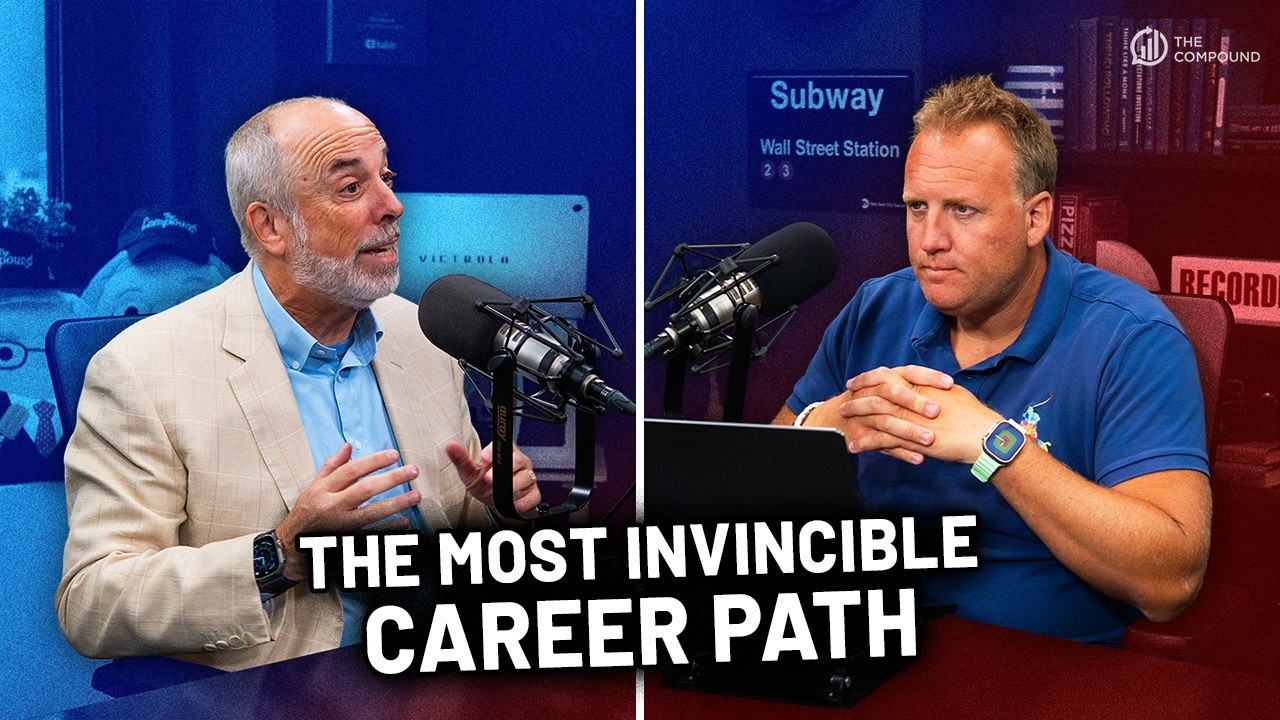
Edelman Pours $10 Million Into College to Counter Financial Advisor Shortage
The Compound
Ric Edelman says financial planning is resilient to artificial intelligence, prompting his firm to fund a university school to train thousands of new advisers as 38% of the workforce nears retirement.
## Background
This video was published on YouTube by The Compound on June 22, 2026. According to the page description, host Josh Brown sits down with Edelman Financial Engines founder Ric Edelman to discuss the future of higher education, the AI-resistant nature of financial planning, the growing advisor shortage, and Edelman's latest outlook on crypto and institutional adoption.
## TL;DR
Financial pioneer Ric Edelman argues that higher education is fundamentally broken due to high dropout rates, rising debt, and a lack of alignment with career paths, prompting his launch of Rowan University's School of Financial Planning to address an impending deficit of 100,000 advisors. He highlights financial planning as a highly AI-resistant, human-centric profession that offers a secure career trajectory in an increasingly automated world. Addressing the 2026 crypto downturn, Edelman explains how macro headwinds and regulatory gridlock have stalled short-term momentum while institutional adoption and on-chain tokenization continue to build strong long-term fundamentals.
## Atmosphere & style
The conversation carries a polished, peer-to-peer dynamic between two seasoned financial professionals who speak with candid authority and grounded energy. Josh Brown's pragmatic, parent-oriented perspective balances Ric Edelman's sharp, statistics-driven insights and strategic industry vision. The mood transitions smoothly from a critical, urgent critique of higher education into an optimistic discussion on career longevity and the future of institutional digital asset infrastructure.
## Key takeaways
- [02:32](https://www.youtube.com/watch?v=UnSygxcYzwo&t=152s) The American higher education system is fundamentally broken, burdened by high dropout rates, massive average undergraduate debt, and degrees that frequently do not lead to relevant employment.
- [02:32](https://www.youtube.com/watch?v=UnSygxcYzwo&t=152s) Sending a student to an elite or Ivy League university does not guarantee success, as individual student potential matters far more than institutional prestige.
- [08:33](https://www.youtube.com/watch?v=UnSygxcYzwo&t=513s) Universities do not operate as fiduciaries for their students, often prioritizing tuition revenue and vanity amenities over student success and degree completion.
- [08:33](https://www.youtube.com/watch?v=UnSygxcYzwo&t=513s) Public higher education in the United States is projected to become completely tuition-free within the next 20 years, driven by voter demand and expanding community college programs.
- [15:33](https://www.youtube.com/watch?v=UnSygxcYzwo&t=933s) Ric Edelman established the School of Financial Planning at Rowan University to help address a critical impending industry shortage of 100,000 financial advisors over the next decade.
- [15:33](https://www.youtube.com/watch?v=UnSygxcYzwo&t=933s) A major structural gap exists in higher education, where out of 1,500 U.S. business schools, fewer than 200 offer dedicated financial planning programs.
- [23:39](https://www.youtube.com/watch?v=UnSygxcYzwo&t=1419s) Financial planning is one of the most AI-resistant career paths because client relationships are fundamentally built on human empathy, trust, and personal connection.
- [23:39](https://www.youtube.com/watch?v=UnSygxcYzwo&t=1419s) Direct, human-led financial advice will increasingly be viewed as a high-end luxury good in an AI-automated world.
- [27:40](https://www.youtube.com/watch?v=UnSygxcYzwo&t=1660s) Despite the 2026 crypto bear market and steep token drawdowns, mainstream advisor education and institutional interest in digital assets remain historically high.
- [30:45](https://www.youtube.com/watch?v=UnSygxcYzwo&t=1845s) Crypto markets are facing regulatory gridlock in Washington D.C., where opposition from traditional banks over yield-bearing stablecoins has stalled legislative momentum.
- [33:21](https://www.youtube.com/watch?v=UnSygxcYzwo&t=2001s) MicroStrategy's sale of 32 Bitcoin was an isolated corporate liquidity transaction to satisfy preferred dividend obligations, rather than a shift in long-term strategy.
- [35:01](https://www.youtube.com/watch?v=UnSygxcYzwo&t=2101s) Real-world asset tokenization on public blockchains represents the primary long-term utility of the technology, enabling 24/7 global trading and instant T+0 settlement.
The episode opens with an advertisement for Betterment Advisor Solutions, emphasizing how modern Registered Investment Advisors (RIAs) are leveraging client segmentation to drive growth. The read outlines how client needs range from complex, ongoing planning to straightforward wealth accumulation, requiring a platform that can streamline smaller accounts through automated, paperless onboarding and tax-efficient portfolio management.
Host Josh Brown introduces financial industry pioneer Ric Edelman, founder of Edelman Financial Engines—a powerhouse firm that manages roughly $300 billion for over 1.3 million clients. Having stepped back from daily management to serve as a strategic advisor and board member, Edelman continues to be an active voice through his 13 personal finance books and his advocacy for exponential technologies and digital assets. Setting the stage for their discussion, Josh notes the vibrant energy in New York City, which Edelman visits at least monthly.
---
[02:32](https://www.youtube.com/watch?v=UnSygxcYzwo&t=152s) The Broken Reality of Higher Education
Transitioning to the state of higher education, Josh asks Edelman about his 14th book, *The Truth About College*, which debuted at number one on Amazon following its release. Edelman explains that he wrote the book because parents, grandparents, and high school guidance counselors are operating under a deeply flawed, outdated premise. Society focuses obsessively on *getting* kids into college—prepping for SATs, hiring tutors, and tailoring applications—rather than evaluating whether attending college makes sense for the student or how to navigate it successfully once enrolled.
Edelman argues that the modern higher education system is fundamentally broken, presenting stark statistics to challenge the status quo:
* **24% of college freshmen** drop out before their sophomore year.
* **Less than 60%** of students graduate within six years.
* **10 years post-graduation**, fewer than half of graduates work in a field that required their specific degree, with most holding jobs requiring no degree at all.
* **$250,000** is the average total cost facing a four-year student today.
* **$30,000** is the average undergraduate debt load upon graduation.
* **50% of current college students** have been clinically diagnosed with depression.
Josh pushes back from a parent’s perspective, arguing that his household focuses heavily on getting his children into top-tier or "Big Ten" style institutions for the social network and character-building environment created by surrounding them with high-achieving peers. Edelman responds that sending a child to an elite or Ivy League school does not magically alter these macroeconomic statistics. He emphasizes two core points: "An average kid who goes to a great school will have an average life. A great kid who goes to an average school will have a great life".
Edelman points out that 85% of incoming freshmen start as undeclared or undecided, leading over 80% to switch majors and 60% to transfer schools. In the process, new institutions reject an average of 43% of transfer credits, forcing students into extra years of tuition and compounding their debt. While wealthy families can absorb these inefficiencies, for the average American family, this system delays major life milestones like buying a home, marrying, and having children. Edelman clarifies that his book is not anti-college, but rather a strategic roadmap designed to help students graduate in four years, debt-free, on the dean's list, and with a degree that leads directly to a career they love.
---
[08:33](https://www.youtube.com/watch?v=UnSygxcYzwo&t=513s) Shift to Southern Schools and Institutional Priorities
Josh shifts the conversation to changing geographic preferences among college applicants, noting a noticeable migration away from traditional Northeast/New England schools (like Syracuse) toward major Southern universities like Alabama, Clemson, Georgia, and Tulane. He asks whether this trend is driven by weather, post-COVID lifestyle choices, social media imagery, or sports. Edelman agrees that all these factors contribute, particularly the cultural draw of big sports programs, but cautions that out-of-state tuition premiums make these choices financially risky when half of parents and high school seniors now believe college is not worth the cost.
Addressing the traditional argument that college graduates earn $1 million more over their lifetime than non-graduates, Edelman acknowledges the proven societal benefits: degree holders statistically enjoy lower divorce rates, longer life expectancies, safer neighborhoods, and greater community involvement. However, he notes that while getting into college has become easier due to a 15% nationwide drop in overall enrollment over the past decade, remaining enrolled and graduating has become significantly harder.
The conversation turns critical when Edelman asserts that colleges do not hold a fiduciary duty to their students. He compares universities to "car salesmen" focused on maximizing sales and tuition revenue rather than acting in the best interest of the buyer. To stay competitive and justify skyrocketing costs, institutions invest in vanity amenities like lazy rivers—now offered at seven U.S. campuses—or admit underprepared students who require remedial math and English, leading to campus food insecurity and high dropout rates. Edelman highlights the systemic arbitrage where state schools aggressively recruit out-of-state students solely to capture higher tuition revenues. Looking ahead, Edelman predicts that driven by voter demand and expanding free community college programs, public higher education will eventually become completely free nationwide within the next 20 years.
[15:33](https://www.youtube.com/watch?v=UnSygxcYzwo&t=933s) The Launch of Rowan University's School of Financial Planning
Josh Brown and Ric Edelman transition into discussing Edelman's latest academic venture: founding the School of Financial Planning at Rowan University, a leading public research institution in New Jersey. As its founding head, Edelman will actively shape the curriculum and hire faculty, aiming to produce 500 Certified Financial Planner (CFP) graduates annually once fully operational. The school will offer a comprehensive lineup of programs, including an undergraduate major, minor, master's degree, an online program, and specialized certifications tailored for career changers and professionals looking to upskill as AI impacts other fields.
Edelman details the stark structural imbalance in higher education that motivated this initiative. Out of roughly 1,500 business schools in the United States—which collectively churn out over 250,000 finance, accounting, and marketing graduates each year—fewer than 200 offer dedicated financial planning programs, producing under 4,000 financial planners annually. This massive gap exacerbates an impending industry crisis, as McKinsey studies project a shortage of 100,000 financial planners over the coming decade as veteran advisors retire.
- Rowan University is located in New Jersey, roughly 30 minutes outside Philadelphia and 2 hours from New York City.
- Rowan is currently an R2 research university transitioning to R1 status and is one of the few institutions nationwide operating three medical schools.
- Edelman met his wife, Jean—who sits on Rowan's Board of Trustees—while attending the university as a student.
- Prominent existing financial planning programs mentioned include those at Texas Tech University and Kansas State University.
---
[17:47](https://www.youtube.com/watch?v=UnSygxcYzwo&t=1067s) Why Students and Business Schools Ignore Financial Planning
The conversation delves into the root causes behind the shortage of incoming financial planning talent. Edelman points out that high school students, parents, and guidance counselors remain virtually unaware that financial planning exists as a distinct, viable profession. Most 18-year-olds associate finance with high-status pursuits like Wall Street investment banking, traditional accounting, or corporate marketing. Furthermore, because personal financial literacy is rarely taught in K-12 education, many parents themselves lack financial planners or basic money management skills, leaving teenagers with zero exposure to the field.
Josh Brown highlights another major structural obstacle: at many prestigious institutions, financial planning coursework is historically relegated to consumer sciences or home economics departments rather than business schools. Brown notes that a business student at Ohio State University, for instance, cannot access financial planning courses without transferring out of the business college entirely. Edelman adds that a pervasive stigma exists among students who incorrectly assume financial planning is merely a sales pitch for insurance or commission-based products, completely failing to understand the fiduciary, life-changing nature of the work.
> "Kids think, 'Oh... you're talking about selling insurance and selling stocks and bonds. I don't want to be a salesman.' They don't understand the fiduciary nature of what we do, how we improve people's lives."
---
[20:04](https://www.youtube.com/watch?v=UnSygxcYzwo&t=1204s) Changing the Narrative: "Wealth Management" vs. Financial Planning
Brown shares his firsthand observations from raising college-aged children, noting a recent shift in youth terminology. While students previously defaulted to claiming they wanted to work in "private equity" simply because practitioners drove expensive cars, more young people are now stating they want to enter "wealth management." However, both Edelman and Brown emphasize that students still lack clarity on what the job entails. Many assume it means landed roles at bulge-bracket investment banks like Morgan Stanley or Goldman Sachs, failing to grasp that the actual power in wealth management resides with financial planners who directly control the client relationship and portfolio allocations.
To counter this awareness gap, Rowan University plans to conduct direct outreach in New Jersey high schools to educate teenagers on career options early. Edelman reveals that Edelman Financial Engines has backed the program with a $10 million gift to help establish internships and career placement pathways across its 175 national offices. The ultimate goal is to build a plug-and-play curriculum model that can be packaged "in a box" and freely distributed to universities across the country to rapidly scale the workforce.
- McKinsey projects a deficit of 100,000 financial advisors over the next 10 years.
- Edelman Financial Engines provided a $10 million gift to fund the School of Financial Planning at Rowan University.
- Edelman Financial Engines operates 175 offices nationwide to host student internships and post-grad roles.
---
[23:39](https://www.youtube.com/watch?v=UnSygxcYzwo&t=1419s) AI Resistance and Human Connection as a Luxury Good
Edelman asserts that financial planning is one of the most AI-resistant career paths in existence, describing it as the "last man standing" among financial services roles. While AI can process complex tax data or generate automated advice, client relationships are fundamentally built on personal trust, empathy, and human connection. Even if AI eventually develops high emotional intelligence (EQ), clients who build a deep bond with a human advisor will want to retain it. Edelman predicts accounting and administrative fields will be automated decades before human financial planning faces any true existential threat.
Brown offers a compelling framework he shares with his own team, framing direct human guidance as a high-end "luxury good." In a world increasingly saturated with frictionless, automated chatbot transactions, getting the undivided attention of a trusted human expert who truly knows a client's life will feel exceptionally premium. Edelman agrees, pointing out that two-thirds of the population dislike managing money, feel intimidated by finance, and simply want a human professional to take the burden off their shoulders.
- 20 years ago, approximately 30% of individual investors were self-directed; today, that figure remains unchanged at 30%.
- The remaining 70% of the population consistently seeks delegated, human-led guidance rather than DIY tools.
- Edelman notes that early automated platforms like Wealthfront and Betterment eventually hired human CFPs and established human advisor referral networks to meet client demand.
---
[27:40](https://www.youtube.com/watch?v=UnSygxcYzwo&t=1660s) Navigating the 2026 Crypto Winter
The discussion turns to the ongoing downturn in digital assets—marking what Edelman identifies as roughly the sixth major crypto drawdown of 50% or more in Bitcoin's history. Despite a brutal first half of 2026 marked by significant price drops, $4 billion in spot crypto ETF outflows over a 10-day span, a 20% spike in fear metrics, and unprecedented Bitcoin sales by long-time holders like Michael Saylor, underlying institutional interest remains steady. Edelman notes that attendance at the annual Digital Assets Council of Financial Professionals (DACFP) conference actually jumped 60% year-over-year, as mainstream advisors scramble to educate themselves to answer client inquiries.
Edelman characterizes the 2026 bear market as a "death of a thousand cuts" driven by macro factors rather than a single catastrophic failure. He also addresses how historical market relationships have shifted: while Bitcoin previously traded in lockstep with gold or tech stocks like the Nasdaq during certain market cycles, those correlations have largely uncoupled. As semiconductor stocks doubled while software and Bitcoin pulled back, Bitcoin continues to prove itself as a unique, non-correlated asset class over long time horizons.
- The 2026 DACFP conference experienced a 60% surge in attendee registration despite Bitcoin dropping 50% from its peaks.
- Spot crypto ETFs saw $4 billion in net outflows during a concentrated 10-day stretch in mid-2026.
- Edelman emphasizes that DACFP operates strictly as an educational organization for financial advisors and does not manage client funds or market financial products.
[30:45](https://www.youtube.com/watch?v=UnSygxcYzwo&t=1845s) Headwinds and Regulatory gridlock in Crypto
Josh Brown and Ric Edelman address the current headwinds pressuring crypto asset prices. Edelman observes that Bitcoin faces stiff capital competition as trillions of dollars flow away from crypto and into "shiny new toys" like SpaceX, OpenAI, and Anthropic, alongside funding for data centers and rocket infrastructure. Beyond capital flight, regulatory stalemate in Washington D.C. is weighing heavily on sentiment. The Clarity Act, which was expected to pass, remains stalled on Capitol Hill. Edelman notes that the legislation lacks full buy-in from key industry participants; for example, Coinbase CEO Brian Armstrong initially opposed the bill because it prohibited stablecoins from paying yields like money market funds, though he later changed his position. Meanwhile, traditional banking institutions strongly oppose yield-bearing stablecoins, viewing them as direct neobank competition.
This clash between the banking lobby and crypto firms has pushed the bill into political "no man's land." Edelman notes that prediction market Polymarket shows low odds of the bill passing by the end of the year, warning that if control of Congress shifts during the upcoming midterms, legislative momentum could be lost entirely.
* **Capital Diversion:** Investor dollars have shifted from digital assets toward generative AI and private space/tech firms (OpenAI, Anthropic, SpaceX).
* **Stablecoin Yield Controversy:** Banks oppose stablecoins offering yields to prevent crypto platforms from operating as high-yield neobanks.
* **Polymarket Odds:** Prediction markets signal low probability for the Clarity Act passing before year-end.
---
[33:21](https://www.youtube.com/watch?v=UnSygxcYzwo&t=2001s) The Michael Saylor Bitcoin Sale Debacle
Turning to market headlines, Josh brings up the recent controversy surrounding Michael Saylor and MicroStrategy. Saylor, long regarded as Bitcoin's most vocal advocate who pledged never to sell, surprised the market when MicroStrategy sold 32 Bitcoin. Edelman clarifies that the sale was executed at the corporate level, not personally, and was driven strictly by liquidity needs to satisfy a preferred dividend obligation—not a shift in long-term conviction or an attempt to time the market. To underscore this point, Edelman notes that MicroStrategy bought over 1,500 Bitcoin just a week later. Nevertheless, the news triggered widespread anxiety among retail investors, who questioned their own holdings when MicroStrategy's "never sell" narrative was shaken.
Edelman emphasizes that broader crypto markets are suffering significant pullbacks, with major tokens like Ethereum and Solana experiencing drawdowns in the ballpark of 75%. In bear markets, alternative layer-1 tokens and risk assets tend to correlate and fall together, mirroring traditional equity downturns.
> "If they're questioning his conviction, they question their own." — **Ric Edelman**
* **MicroStrategy's Transaction:** Sold 32 BTC to fund preferred dividend payments, then purchased over 1,500 BTC shortly thereafter.
* **Broader Market Drawdowns:** Top altcoins (Ethereum, Solana) face steep downturns around 75% from recent highs.
---
[35:01](https://www.youtube.com/watch?v=UnSygxcYzwo&t=2101s) Institutional Adoption and On-Chain Tokenization
Despite depressed asset prices, Edelman presents a bullish counter-thesis rooted in institutional engagement and technological development. Behind the scenes, massive institutional infrastructure is being built: 95% of endowments and pension funds currently lacking exposure report plans to allocate to digital assets by year-end, while 76% of those already invested plan to increase their positions. Major asset managers including BlackRock, Franklin Templeton, State Street, Goldman Sachs, and Morgan Stanley are aggressively rolling out crypto offerings. For instance, BlackRock recently filed for a crypto income ETF targeting a 15% yield, while Morgan Stanley is encouraging its wealth advisors to target up to a 4% asset allocation to crypto for clients.
Edelman argues that tokenization represents the true long-term utility of blockchain technology. Tokenizing real-world assets—such as real estate, private equity, and public equities—enables high-value or illiquid assets to be atomized into fractional shares. Major exchanges like the NYSE and Nasdaq are collaborating with blockchain firms to tokenize traditional equities, paving the way for 24/7/365 trading with instant T+0 settlement at minimal transaction costs.
* **Institutional Sentiment:** 95% of non-allocated pension/endowment funds plan to enter the asset class; 76% of existing institutional holders plan to expand allocations.
* **Product Expansion:** Crypto ETF offerings have expanded from 9 spot Bitcoin ETFs at launch in 2024 to nearly 200 products today.
* **Wealth Management Allocation:** Morgan Stanley recommends advisors consider up to a 4% client allocation to crypto assets.
---
[38:41](https://www.youtube.com/watch?v=UnSygxcYzwo&t=2321s) True Tokenization vs. Synthetic Assets and Wrap-Up
Josh raises a cautionary example involving Robinhood, which announced the tokenization of private, venture-backed startup shares, only to face swift opposition and potential cease-and-desist actions from the issuers. Edelman clarifies the distinction: Robinhood attempted to issue synthetic "mirror" assets without the permission or involvement of the underlying private companies. In contrast, the joint initiatives by the NYSE and Nasdaq seek to tokenize actual underlying equity ownership with direct issuer cooperation, unlocking global liquidity for public companies.
Because tokenization executes natively on-chain, transaction volume directly drives network demand. Even with sub-penny fees on networks like Solana, Polygon, Algorand, or Ethereum, processing trillions of dollars in global financial settlements creates immense structural value for native layer-1 tokens over time. To conclude the conversation, Josh thanks Ric Edelman for his insights, reminding viewers of his published works—including *The Truth About Crypto* and *The Truth About College*—before signing off.
> "Before the end of next year, you're going to be able to trade securities 24/7 365 with T+0 settlement at virtually no cost." — **Ric Edelman**
* **Robinhood vs. Exchange Tokenization:** Robinhood created unauthorized synthetic derivatives of private startups, whereas NYSE/Nasdaq tokenization involves actual equity ownership with issuer participation.
* **On-Chain Fee Economics:** High-volume institutional clearing and settlement on networks like Ethereum, Solana, Polygon, and Algorand generates continuous fee demand.
## Notable quotes
> [02:32](https://www.youtube.com/watch?v=UnSygxcYzwo&t=152s) An average kid who goes to a great school will have an average life. A great kid who goes to an average school will have a great life — Ric Edelman
> [17:47](https://www.youtube.com/watch?v=UnSygxcYzwo&t=1067s) Kids think, 'Oh... you're talking about selling insurance and selling stocks and bonds. I don't want to be a salesman.' They don't understand the fiduciary nature of what we do, how we improve people's lives. — Ric Edelman
> [33:21](https://www.youtube.com/watch?v=UnSygxcYzwo&t=2001s) If they're questioning his conviction, they question their own. — Ric Edelman
> [38:41](https://www.youtube.com/watch?v=UnSygxcYzwo&t=2321s) Before the end of next year, you're going to be able to trade securities 24/7 365 with T+0 settlement at virtually no cost. — Ric Edelman
## Mentioned
Josh Brown, Ric Edelman, Edelman Financial Engines, Betterment Advisor Solutions, The Truth About College, The Truth About Crypto, Rowan University, School of Financial Planning at Rowan University, Jean Edelman, Certified Financial Planner (CFP), Texas Tech University, Kansas State University, Ohio State University, McKinsey, Morgan Stanley, Goldman Sachs, BlackRock, Franklin Templeton, State Street, Wealthfront, Betterment, Digital Assets Council of Financial Professionals (DACFP), Bitcoin, Ethereum, Solana, Polygon, Algorand, Michael Saylor, MicroStrategy, Clarity Act, Brian Armstrong, Coinbase, Polymarket, SpaceX, OpenAI, Anthropic, Robinhood, NYSE, Nasdaq
Ric Edelman and Josh Brown argue that higher education is failing to prepare students for real-world labor needs, producing a severe shortage in financial planning—a profession they identify as exceptionally insulated from artificial intelligence. Edelman further contends that despite periodic drawdowns and regulatory gridlock, institutional adoption and blockchain-based tokenization represent the structural future of financial markets.
Structural Inefficiencies and Misaligned Priorities in Higher Education (2:32)
Edelman argues that the modern university system lacks fiduciary duty toward students, functioning like a sales operation focused on tuition revenue rather than career placement. He highlights systemic warning signs: 24% of college freshmen drop out before their sophomore year, less than 60% graduate within six years, and a decade post-graduation, fewer than half of graduates work in jobs that required their degree. Meanwhile, the average student faces $250,000 in total costs, graduates with $30,000 in debt, and 50% of current undergraduates have been clinically diagnosed with depression.
To justify rising tuition, institutions actively recruit out-of-state students to capture higher fees and invest in non-academic amenities like lazy rivers. While Edelman acknowledges the societal benefits linked to degrees—such as higher lifetime earnings and life expectancy—he emphasizes that 85% of freshmen enter undecided, and institutions reject an average of 43% of transfer credits. Based on growing public dissatisfaction and the expansion of community college initiatives, Edelman predicts that public higher education will become completely tuition-free within the next 20 years.
The Impending Shortage of Certified Financial Planners (15:33)
Out of roughly 1,500 business schools in the United States producing over 250,000 annual graduates in finance, accounting, and marketing, fewer than 200 offer dedicated financial planning programs, graduating under 4,000 planners each year. This educational bottleneck contrasts with an imminent labor shortage: Edelman cites McKinsey projections of a 100,000 financial planner deficit over the coming decade due to retiring advisors. To address the imbalance, Edelman helped launch the School of Financial Planning at Rowan University—backed by a $10 million gift from Edelman Financial Engines—aiming to graduate 500 Certified Financial Planners (CFPs) annually and create a portable curriculum for other universities.
Both Edelman and Brown attribute the recruitment gap to misperceptions and institutional barriers. High school students and guidance counselors routinely mistake financial planning for commission-driven insurance sales rather than fiduciary advisory work. Additionally, Brown observes that prominent business schools, such as Ohio State University, historically housed financial planning coursework in consumer sciences or home economics rather than their business colleges, creating administrative hurdles for interested students.
Human Advisory Services as an AI-Resistant Luxury (23:39)
Edelman identifies financial planning as one of the most AI-resistant careers in finance, arguing that back-office operations like accounting will be automated decades before human advisory faces real disruption. While AI can efficiently handle tax analysis and automated portfolio management, Edelman stresses that advisory relationships are anchored in personal trust, empathy, and emotional connection. Furthermore, user behavior has remained consistent: over the past 20 years, the proportion of self-directed investors has held flat at 30%, meaning 70% of individuals consistently seek delegated human guidance.
Brown frames direct human advisory relationships as an emerging high-end "luxury good." In an economy filled with frictionless, automated digital tools, the focused attention of an expert human advisor who understands a client's life becomes a premium service. Edelman notes that early automated platforms, including Wealthfront and Betterment, ultimately validated this dynamic by hiring human CFPs and establishing advisor referral networks to meet client demand.
Crypto Market Headwinds Versus Institutional Tokenization Infrastructure (27:40)
Edelman characterizes the 2026 crypto downturn—marked by a 50% drop in Bitcoin, 75% drawdowns in Ethereum and Solana, and $4 billion in spot ETF outflows across 10 days—as a cyclical capital rotation toward generative AI and space tech, compounded by legislative gridlock surrounding the Clarity Act. He also clarifies that MicroStrategy's sale of 32 Bitcoin was an operational transaction to satisfy corporate preferred dividends rather than lost conviction, noting the firm purchased over 1,500 Bitcoin the following week.
In contrast to depressed prices, Edelman points to expanding institutional participation: 95% of unallocated endowments and pensions plan to enter digital assets by year-end, while Morgan Stanley is encouraging advisors to target up to a 4% client allocation. Edelman argues that real-world asset tokenization represents blockchain's primary utility. Unlike Robinhood's disputed synthetic startup shares, collaborative initiatives by the NYSE and Nasdaq seek to tokenize actual underlying equities on public chains, enabling 24/7/365 trading with instant T+0 settlement and establishing sustainable on-chain settlement volume.
While legacy universities struggle with misaligned incentives and crypto legislation faces political friction in Washington, Edelman and Brown conclude that the combination of fiduciary human advice and institutional blockchain infrastructure will anchor the next generation of finance. The critical unresolved challenge is whether financial planning can overcome legacy stigma and academic barriers rapidly enough to fill the looming 100,000-advisor shortage.
精炼阅读摘要
金融界人士Ric Edelman指出,传统大学教育模式脱离实际且成本高昂,而财务规划凭借以信任为核心的人际连接将成为最具抗AI能力的职业;与此同时,尽管加密市场经历剧烈回撤,底层机构化与资产代币化仍在持续推进。
高等教育模式的结构性困境与财务风险 (2:32)
Edelman在其著作《The Truth About College》中指出,当前社会过度聚焦于“如何进入大学”,却忽视了大学教育是否真正匹配学生需求。据他列举的数据,美国大一新生中有24%在升入大二前退学,六年后顺利毕业的比例不足60%,且毕业十年后,只有不到一半的人从事需要其所学学位的工作。此外,四年制大学生的平均总开销已达250,000美元,毕业时平均负债30,000美元,同时50%的在校生被临床诊断为抑郁症。85%的新生入学时专业未定,导致超过80%的学生转换专业,60%经历转学,而转学过程中平均有43%的学分被新学校拒收,进一步推高了学费与负债负担。
针对家长倾向将子女送入名校或大型州立大学以获取社交资源的观点,Edelman认为优秀学生在普通学校同样能取得卓越成就,而名校并不能消除宏观统计层面的就业与债务风险。他进一步批评公立大学并非以学生利益为最高优先级的“受托人”,往往像汽车销售员一样追求学费收入,大肆招收州外学生并投资修建如环流河等非教学设施以提升吸引力。基于过去十年全国大学入学率下降15%以及选民对免费社区大学项目的支持,Edelman预测,美国公立高等教育在未来20年内可能走向完全免费。
理财规划人才缺口与Rowan大学学院设立 (15:33)
针对专业理财人才严重匮乏的现状,Edelman与Rowan大学合作成立了财务规划学院(School of Financial Planning),并由Edelman Financial Engines捐赠1000万美元。该项目旨在全面投产后每年培养500名注册财务策划师(CFP),并计划通过其全国175处办事处为学生提供实习和就业通道,进而将这一课程体系模块化并推广至其他高校。Edelman指出,全美约1500所商学院每年输出超过250,000名传统金融、会计和市场营销专业毕业生,但开设专门财务规划项目的院校不足200所,年均毕业生不到4,000人。麦肯锡的研究预计,随着资深顾问陆续退休,未来十年行业将面临100,000名财务规划师的人才缺口。
Josh Brown与Edelman分析认为,这种人才短缺源于长期的认知偏差与制度障碍。由于基础教育缺乏个人财商培养,许多高中生与家长误以为理财规划只是推销保险和佣金产品的低端销售,而不了解其受托人性质。在学术建制层面,如俄亥俄州立大学等机构长期将财务规划课程划归消费者科学或家政学系,导致商学院学生无法直接修读。尽管近年年轻人开始对“财富管理”产生兴趣,但多将其混同于高盛等投行的传统岗位,忽视了真正掌控客户关系与投资配置话语权的独立财务规划师角色。
财务规划的人文价值与抗AI替代属性 (23:39)
Edelman断言,财务规划是金融服务业中“最后屹立不倒”且最能抵御AI冲击的职业路径。他分析指出,AI虽然能高效处理复杂的税务数据或生成自动化分析,但理财客户关系的本质建立在个人信任、同理心与深层情感纽带之上。在会计及行政岗位可能面临深度自动化之际,人类理财规划师的生存空间不会受到根本威胁。即使AI发展出极高情商,与人类顾问建立起深厚信任的客户仍会倾向于保留这种真实连接。
Brown将专业人士的直接陪伴与指导定义为一种高端“奢侈品”,认为在充斥着自动化聊天机器人的时代,能获得一位透彻理解自身家庭生活的专家的全神贯注服务将极具溢价。Edelman补充道,全美约有三分之二的群体厌恶或畏惧打理财务,迫切希望由专业人员代劳。数据显示,自主管理投资的个人比例在过去二十年中始终维持在约30%,其余70%的投资者持续寻求人工主导的服务;即便是Wealthfront和Betterment等早期主打全自动化的平台,最终也纷纷引入人类CFP并建立外部人工顾问网络以满足用户需求。
加密货币市场逆风、监管博弈与机构化进程 (27:40)
针对2026年数字资产经历的深度调整,Edelman指出这是比特币历史上第6次幅度达到或超过50%的回撤,以太坊和Solana等主流代币也下跌约75%。他分析当前疲软并非由单一黑天鹅事件引起,而是宏观资金竞争与监管停滞共同导致的“千刀万剐”式慢跌:一方面,万亿美元级资金正分流至生成式AI(OpenAI、Anthropic)以及SpaceX、算力中心等前沿技术领域;另一方面,美国国会针对《清晰度法案》(Clarity Act)陷入僵局。传统银行业极力阻挠能够派息的稳定币,防止其演化为高息新型银行,而Prediction市场Polymarket数据显示该法案年内通过概率较低,若中期选举带来国会席位变动,立法动能可能进一步受挫。此外,MicroStrategy因支付优先股股息而出售32枚比特币的操作引发了散户心理动摇,尽管该公司一周后随即买入了1500多枚比特币。
然而,底层机构投资者的参与度与基础设施建设并未停滞。Edelman指出,DACFP峰会参会人数同比上升60%,95%目前未涉足数字资产的大学捐赠基金与养老金计划在年内入场,已投资机构中则有76%计划追加配置;贝莱德与摩根士丹利等机构亦在持续推进现货及衍生投资工具,摩根士丹利甚至建议顾问考虑将客户资金的最多4%配置于该领域。Edelman认为区块链的长期价值在于真实世界资产的链上代币化,纽约证券交易所与纳斯达克正在与区块链企业合作推动股票原生代币化,这与Robinhood未经底层公司许可发行的合成镜像衍生品截然不同。他预测在直接发行人协作下,证券市场有望在明年底前实现全天候T+0近乎零成本结算,其结算体量将为底层公链带来持续的费用支撑。
本期对话呈现了Edelman对教育与财富管理行业的结构性重塑思考,他认为应降低盲目求学的高昂成本,转而投资于具备受托人属性且抗AI的理财顾问行业。而在数字资产领域,尽管短期宏观资金分流与华盛顿立法博弈压制了币价表现,但合规代币化基础设施的落地将决定该领域长期效用的最终释放。
Detailed notes — zh
## Background
本期视频由知名财经频道 The Compound 于 2026 年 7 月 13 日在 YouTube 平台发布。节目中主持人 Josh Brown 邀请到 Edelman Financial Engines 创始人兼理财规划界传奇人物 Ric Edelman,围绕高等教育的崩坏与重塑、理财规划师作为对抗 AI 浪潮的坚固职业堡垒、全美理财顾问的人才荒危机,以及 2026 年加密寒冬下的底层代币化趋势展开深度对谈。
## TL;DR
Ric Edelman 剖析了美国大学体系的高昂负债率、低毕业率与信托责任缺失,并阐述了其在罗文大学创立财务规划学院以应对未来十年全美 10 万名理财顾问退休缺口的战略蓝图。访谈指出,由于普通大众对金钱课题的天然恐惧与对深度人际信任的刚性需求,财务规划将成为 AI 时代抵御自动化冲击的“最后坚守者”,甚至演变为一种稀缺的奢侈服务。针对当前跌幅达 50% 的第六次“加密寒冬”,Ric 深入拆解了科技资金分流与监管博弈背后的压制机制,同时坚信以贝莱德等机构为代表的真实资产代币化(RWA)与全天候清算浪潮,正孕育着超越纯投机周期的巨大历史机遇。
## Atmosphere & style
整场对谈呈现出老友重逢般松弛却交锋密集的专业氛围,Josh Brown 的犀利追问、现实质询与为人父母的亲身观察,与 Ric Edelman 详实严谨的数据论证、宏大构想形成了极佳的张力。从针砭传统高校沉疴时的冷静辛辣,到畅谈理财专业人性温度时的坚定笃定,再到剖析加密熊市与技术暗流时的从容自信,整期节目既有打破主流迷思的现实震撼感,又洋溢着对技术前沿与长期职业价值的深邃洞察。
## Bulletin
- [15:50](https://www.youtube.com/watch?v=UnSygxcYzwo&t=950s) 全美理财顾问行业正面临严重供给断层:未来十年内将有 10 万名从业者退休,但每年仅有不到 4,000 名财务规划专业毕业生,罗文大学因此设立财务规划学院,目标每年输送 500 名持证 CFP 毕业生以填补缺口。
- [23:39](https://www.youtube.com/watch?v=UnSygxcYzwo&t=1419s) 财务规划被视为最抗 AI 替代的金融职业:面对毕生财富管理时,约 70% 的大众仍极度依赖人际信任与情感链接,理财规划师正从通用劳动力转变为高溢价的“奢侈品”服务。
- [02:32](https://www.youtube.com/watch?v=UnSygxcYzwo&t=152s) 美国高等教育体系面临结构性危机:大一辍学率达 24%,四年平均开销逼近 25 万美元,且半数在读大学生被诊断出抑郁症,倒逼名校扩大贫困资助并推动高等教育未来 20 年走向免费。
- [35:02](https://www.youtube.com/watch?v=UnSygxcYzwo&t=2102s) 尽管 2026 年比特币陷入第 6 次加密寒冬且较峰值回撤 50%,底层机构布局却暗流涌动:95% 未配置的养老金与捐赠基金计划在年内入场,纽交所与纳斯达克亦全面加速真实股票代币化(RWA)落地。
## Key takeaways
- [02:32](https://www.youtube.com/watch?v=UnSygxcYzwo&t=152s) 美国四年制大学平均成本逼近 25 万美元,但大一辍学率高达 24%,毕业 10 年后少于半数人从事需要学位的岗位,高等教育的财务与心理负担已严重失衡。
- [04:42](https://www.youtube.com/watch?v=UnSygxcYzwo&t=282s) 名校并不能自动决定人生上限:顶尖学生在普通院校依然能脱颖而出,而普通学生进入名校仍可能走向平庸,核心在于个人品质而非学校品牌光环。
- [11:36](https://www.youtube.com/watch?v=UnSygxcYzwo&t=696s) 大学普遍缺乏对学生的“信托责任”,不仅通过修筑漂流河等奢华设施迎合低龄心理,还以剔除 24% 辍学者的幸存者偏差数据掩饰真实的就业率问题。
- [14:10](https://www.youtube.com/watch?v=UnSygxcYzwo&t=850s) 由于学费飙升引发大众选民强烈抗议,未来 20 年美国公立大学有望复制 K-12 体系实现全面免学费,目前社区大学与多所常春藤高校已先行落地学费全额减免政策。
- [15:50](https://www.youtube.com/watch?v=UnSygxcYzwo&t=950s) 全美 1,500 所商学院每年培养超 25 万名商科生,但开设正规个人财务规划专业的院校不足 200 所,甚至长期被部分名校边缘化至“家政学”名下。
- [21:47](https://www.youtube.com/watch?v=UnSygxcYzwo&t=1307s) Ric Edelman 向罗文大学捐赠 1,000 万美元设立财务规划学院,建立本硕及在线课程体系,旨在打破独立咨询机构(RIA)无力从零培训新人的行业死局。
- [25:45](https://www.youtube.com/watch?v=UnSygxcYzwo&t=1545s) 面对复杂财富决策时,全美约 70% 的人群天生抗拒自行操作并畏惧数字,这决定了理财顾问作为“幕后数据过滤器”与“情感受托人”的不可替代性。
- [29:40](https://www.youtube.com/watch?v=UnSygxcYzwo&t=1780s) 2026 年比特币迎来的第 6 次“加密寒冬”属于多重负面叠加的千刀万剐式下跌,科技增量资本被生成式 AI 与商业航天严重分流,与黄金及科技股的相关性亦彻底破裂。
- [29:40](https://www.youtube.com/watch?v=UnSygxcYzwo&t=1780s) 《清晰法案》(Clarity Act)因传统银行业与加密机构就“生息稳定币”权益产生激烈博弈而陷入停滞,中期选举前两党极可能错失最友好的监管立法窗口期。
- [35:02](https://www.youtube.com/watch?v=UnSygxcYzwo&t=2102s) 华尔街暗中加速吸纳加密资产:95% 尚未建仓的机构养老金和大学捐赠基金表态年底前入场,且摩根士丹利已开始推动顾问为客户资产配置 4% 的加密敞口。
- [36:38](https://www.youtube.com/watch?v=UnSygxcYzwo&t=2198s) 真实世界资产代币化(RWA)并非仅局限于不动产,纽交所与纳斯达克正推进原生公开交易股票链上化,以实现低成本、7×24 小时交易及 T+0 实时交割。
- [38:01](https://www.youtube.com/watch?v=UnSygxcYzwo&t=2281s) 正规交易所主导的代币化基于上市公司原生授权,区别于 Robinhood 过去遭到法律抵制的单边合成镜像资产,海量合规链上交易将为底层公链 Gas 费捕获巨额真实价值。
## Detailed walkthrough
### [00:17](https://www.youtube.com/watch?v=UnSygxcYzwo&t=17s) 赞助商与嘉宾介绍:理财规划传奇 Ric Edelman 再度做客
本期节目由 Betterment Advisor Solutions 赞助播出。片头广告探讨了顶级 RIA(注册投资顾问)机构普遍采用但多数普通机构忽略的增长策略——客户分层(Segmentation)。高端客户需要深入且持续的综合规划,而处于财富积累初期的客户需求则相对简单;通过自动化建档、无纸化流程、流线化与税收高效的投资组合管理,顾问机构可以在后台顺畅运转的同时实现服务规模化。
主持人 Josh Brown 随后引出本期节目的三大核心议题:大学教育的未来究竟走向何方?为何财务规划(Financial Planning)几乎能对 AI“免疫”?以及加密货币市场当下到底在上演什么?本期重磅回归的常客是 Josh 的好友、Edelman Financial Engines 创始人 Ric Edelman。该机构为超过 130 万名客户管理着约 3000 亿美元的资产。Ric 目前已退居日常管理幕后,担任战略顾问与董事会成员。作为 13 本个人理财畅销书的作者,他同时也是指数级技术投资和加密货币的坚定倡导者。闲聊中,Ric 提到自己非常热爱纽约,在曼哈顿拥有一套公寓,每月至少来纽约一次,少则住上数天,多则待上数周,这次正好赶上城市游行后的热烈氛围。
---
### [02:32](https://www.youtube.com/watch?v=UnSygxcYzwo&t=152s) 大学体系的崩塌与《The Truth About College》揭露的残酷数据
话题切入教育领域。Ric Edelman 介绍了自己于去年 12 月出版的第 14 本新书《The Truth About College》(关于大学的真相),该书上线即登上亚马逊畅销榜榜首。面对 Josh 关于“理财顾问为何要读这本书”的疑问,Ric 直言,几乎所有理财顾问的客户群体中,都有孩子正值升学年龄(青少年或中学生),或者客户本人就是这类孩子的祖父母;整个社会对于大学教育的底层认知存在巨大误区,而市面上其他书籍从未触及核心痛点。
Ric 指出,美国家庭、高中升学指导顾问乃至整个社会,都被一种单一叙事绑架——即竭尽全力把孩子送进大学。辅导员的绩效考核往往直接挂钩应届毕业生的大学升学率,导致根本没有人考虑其他人生路径。然而,今天的大学体系已经“彻底崩坏”(Today, college is broken),大学对年轻人的意义已完全不同于老一辈人的时代。Ric 列举了一连串触目惊心的数据:
- **退学率与毕业周期**:大一新生退学率高达 24%;仅有不到 60% 的本科生能在 6 年内顺利毕业。
- **学非所用**:毕业 10 年后,少于一半的人在从事需要该学位的工作,绝大多数人从事的工作实际上“根本不需要任何大学学位”。
- **沉重财务负担**:如今攻读四年制大学的平均总开销正逼近 25 万美元(约合四分之一百万美元);本科毕业生平均背负 3 万美元的学生贷款。这直接拖垮了年轻一代买房、买车、独立生活、结婚乃至生子的节奏,各项人口与生活指标全面推迟。
- **心理健康危机**:最为严峻的是,当今 50% 的在读大学生已被临床诊断为抑郁症(clinically diagnosed with depression)。
---
### [04:42](https://www.youtube.com/watch?v=UnSygxcYzwo&t=282s) 名校光环与现实碰撞:如何四年零负债毕业
Josh Brown 对此提出了强烈探讨与反驳。Josh 坦言过去三年自己的家庭生活完全被大学申请所占据,全家一门心思要让两个孩子进入顶尖或规模庞大的优质学府。Josh 认为,名校的核心价值不仅在于课堂,更在于社交圈层(Social opportunities)与同伴效应:孩子能与那些同样拼搏进取、通过激烈竞争脱颖而出的同龄人在一起,这对塑造心智品格、为迈入成年期建立优势起点至关重要。Josh 质问:如果把 Ric 提到的那些残酷统计数据限定在 Big Ten、SEC 联盟名校或常春藤精英校,结果难道不会改变吗?
Ric 坚定地回应:哪怕去顶级精英校或常春藤,统计规律依然适用。Ric 给出了一句掷地有声的名言:“一个普通的孩子去了一所伟大的学校,依然会过着平庸的一生;而一个优秀出众的孩子去了一所普通的学校,依然会活出伟大的人生”("An average kid who goes to a great school will have an average life. A great kid who goes to an average school will have a great life.")。决定命运的始终是孩子本身,而非学校的光环。
```mermaid
flowchart TD
accTitle: 传统大学迷思与理性求学路径对比
accDescr: 展示盲目追求名校导致转专业、学分损耗与高负债的困境,对比按需规划以达成4年零负债毕业的科学路径。
subgraph Traditional["传统困境:盲目追逐光环"]
A["85%新生未定专业 / 盲目冲名校"] --> B["大二/大三发现不契合,频繁更换专业或转校"]
B --> C["转校损耗 43% 学分 / 补修额外课程"]
C --> D["被迫读第5-6年 & 背负巨债 & 陷入抑郁"]
end
subgraph Blueprint["破解之道:理性定制规划"]
E["评估孩子特质与现实职场需求"] --> F["锁定契合高校 & 控制教育开销"]
F --> G["4年顺利毕业 + 零负债 + 院长荣誉榜"]
end
```
针对 Josh 提出的“能否通过设定名校目标来倒逼孩子变优秀”以及“大学期间换专业是否算自我探索”,Ric 从财务与现实角度打破了这种乐观假设:
- **专业迷茫与学分损失**:全美 85% 的大一新生入学时未确定专业方向(undeclared/undecided);超过 80% 的学生中途更换专业;60% 的学生经历过转学。
- **高昂的沉没成本**:对 Josh 这样的高净值富裕家庭而言,多读一两年或许无伤大雅,但对绝大多数普通家庭而言这是灾难——学生一旦转学,新学校平均会直接作废拒绝原学校 43% 的学分,迫使学生不得不读第 5 甚至第 6 年,造成学费与时间成本几何级暴增。
- **破局方法论**:Ric 澄清自己绝非反对大学教育,对多数孩子而言大学仍是最佳选择,但前提是“方式必须正确”。《The Truth About College》正是为了提供实操蓝图,教导学生如何做到“在 4 年内零负债毕业、名列院长优异名单(Dean's list)、手握真正热爱领域的学位无缝步入职场”,并在必要时评估职业教育(vocations)等时代新兴替代路径。
---
### [08:33](https://www.youtube.com/watch?v=UnSygxcYzwo&t=513s) 大学申请两极分化:东北部生源南移与名校偏好转变
Josh 提出了一个在近年大学录取中尤为突出的反常现象:全美大学申请呈现极端的两极分化。那些体量庞大的超级名校申请量屡创新高,尤其是地域重心出现了明显的“南移”趋势。以纽约大都会区和新英格兰地区为代表的东北部学生,正成群结队地申请南方的传统公立强校,例如阿拉巴马大学(Alabama)、克莱姆森大学(Clemson)、佐治亚大学(University of Georgia)以及杜兰大学(Tulane)。
与此形成鲜明对比的是,地处纽约上州的传统名校雪城大学(Syracuse University)却公开表示今年无法达成其预期的申请量与招生目标。Josh 困惑地指出,从声誉梯队来看,雪城大学与杜兰大学以往常被视作同一梯队,但如今家庭与学生在偏好上却出现了断崖式的分流。Josh 抛出疑问:这种地理与高校选择的剧变,究竟是因为南方更好的气候条件、后疫情时代生活方式的重新洗牌,还是源于 Instagram 等社交媒体的视觉冲击效应——南方阳光灿烂的校园日常和社交氛围在短视频平台上展现出了对北方阴冷大学的绝对降维打击?
### [09:47](https://www.youtube.com/watch?v=UnSygxcYzwo&t=587s) 上大学的现实回报与毕业率困境
除了地理位置和名气,体育项目也是当下年轻人择校时极具吸引力的砝码。许多高中生挤破头都想进入拥有顶尖体育赛事的大学,甚至不惜跨州就读并承担高昂得多的州外学费。这种盲目追求导致了严重的经济负担,如今已有半数家长和高中毕业生直言,大学的投入产出比低到“根本不划算”。但面对公众对大学价值的普遍质疑,统计数据却展现出截然相反的残酷现实:拥有大学本科学历的人与没有学历的人之间,一生的收入轨迹呈现出触目惊心的分化。
获得大学学位所带来的优势远不止金钱。大学毕业生一生的平均收入要比非大学毕业生高出整整 100 万美元;他们的婚姻更加稳固,离婚率还不到非大学毕业生的一半;他们的寿命更长、身体更健康、幸福感更强,对社区的参与度也更高。从代际传递来看,这些毕业生的子女成长环境也显著更好,他们大多生活在更安全的中产社区和双亲家庭中。然而当下的矛盾在于,进入大学本身变得前所未有的容易——受人口结构影响,全美大学入学人数相比十年前下降了约 15%,各高校都在放宽门槛争抢生源;但真正“留下来并顺利毕业”却变得前所未有的艰难。上大学的真正分水岭从来不是“被录取”,而是“拿到学位”。
- 全美大学入学总人数较 10 年前萎缩约 15%,院校录取率普遍上升。
- 大学毕业生一生平均比非毕业生多赚 100 万美元。
- 大学毕业生的离婚率不到非毕业群体的一半,且在寿命、健康和心理幸福感指标上全面领先。
- 核心现实痛点:进入大学容易,但坚持读完并成功毕业极其困难。
---
### [11:36](https://www.youtube.com/watch?v=UnSygxcYzwo&t=696s) 缺失的信托责任:“大学就像汽车推销员”
在谈及大学的制度性缺陷时,高校机构往往标榜自身对学生前途负责,但实际上根本没有承担起任何“信托责任”(Fiduciary Obligation)。商学院虽然热衷于向申请者展示毕业生进入顶尖职业轨道的百分比,但这完全是在玩共同基金惯用的“幸存者偏差”游戏——他们只统计了顺利毕业并找到好工作的人,却刻意抹去了高达 24% 的中途辍学率。大学在商业本质上“无异于汽车推销员”,其终极目标是把学费销售额和机构收入做大,根本不在意这辆“车”是否符合买家的切身利益,也不管买家是否承担了虚高的价格。
为了招徕不成熟的 17 岁生源,许多高校不惜将预算砸在极尽奢华的游乐设施上,全美甚至有 7 所大学在校内建造了休闲漂流河(Lazy River)。这种投其所好的营销手段被斥为面向青少年的“垃圾食品与毒品”。与此形成鲜明讽刺的是,许多校园内竟然常年设立救济食品站(Food Bank),因为大量贫困学生连基本的温饱都无法保障;还有大批院校开设了基础英语和基础数学的补习班,这实际上是在变相承认这些学生根本不具备读大学的学术资格。此外,公立大学还在玩弄州内与州外学费的“价格卡特尔”套路,为了追求更高的学费利润而大力招收州外学生,逼得本土学生只能被迫跨州求学,陷入层层加价的债务泥潭。
```mermaid
flowchart TD
accTitle: 大学商业化招生与学生辍学恶性循环
accDescr: 展示大学通过过度营销招收不匹配学生,导致高辍学率与财务困境的流程图
subgraph School["高校商业驱动 (营收最大化)"]
A["兴建漂流河/豪华设施<br/>迎合低龄心理"] --> B["放宽录取标准<br/>开设补习课程"]
C["扩大州外招生比例<br/>获取高昂学费"] --> B
end
subgraph Outcome["学生端困境 (缺乏信托保障)"]
B --> D["学生学术/财务不匹配"]
D --> E["校内设立救济粮站<br/>(生活无以为继)"]
D --> F["高达 24% 中途辍学<br/>(背负负债无学位)"]
end
subgraph Marketing["幸存者偏差营销"]
F -.->|隐匿辍学率| G["仅公布毕业生就业率<br/>继续招揽新生"]
G --> A
end
```
- 7 所美国大学为了吸引生源,在校区内建造了度假村式的漂流河。
- 全美大学平均辍学率高达 24%,商学院公布的优异就业率完全建立在剔除辍学者的“幸存者偏差”之上。
- 大量大学校内设有针对在读学生的食品银行(Food Banks),且普遍开设初中水平的英语和数学补救课程。
- 州立大学通过挤压本州名额、争抢跨州生源来套取更高的州外学费差价。
---
### [14:10](https://www.youtube.com/watch?v=UnSygxcYzwo&t=850s) 免学费浪潮与高等教育的未来重构
面对学费失控,部分地区和顶尖院校正在探索新的模式。佛罗里达州选择将公立大学打造成高门槛的优质教育资产,通过优待本土顶尖生源来遏制人才外流,避免优秀学子盲目涌入昂贵的常春藤盟校。与此同时,以哈佛大学、耶鲁大学、布朗大学和麻省理工学院(MIT)为代表的顶尖精英学府,纷纷推出了激进的学费减免政策:针对家庭年收入低于 10 万美元的学生,学费、食宿费全免;针对家庭年收入在 20 万美元以下的学生,学费全免。这一趋势揭示了一个极具冲击力的未来演变方向——在未来 20 年内,大学教育很可能会像如今的 K-12 义务教育一样,在全美范围内全面走向免费。
这种由收费向免费的底层转向,源自庞大选民群体的现实压力。普通的父母面对飙升的大学账单已经无力承受,纳税人正以选民的身份强力要求州立法机构介入,迫使公立高等教育变得平价甚至免费。实际上,这一变革在社区大学层面已经成为现实:几乎全美所有州的社区大学目前都已经实现事实上的免学费政策,学生可以免费修完前两年的副学士学位,并获得直升四年制州立大学的学分互认保障。许多拥有丰厚捐赠基金或充沛财政储备的院校,也正在通过免学费和大幅补贴等手段重新洗牌生源竞争。
- 常春藤与顶尖名校资助门槛:家庭年收入低于 10 万美元免除学费及食宿费;低于 20 万美元免除全额学费。
- 行业预判:未来 20 年内,全美大学教育将大概率全面实现免费,普及路径与 K-12 类似。
- 社区大学路径已基本铺平:前两年副学士课程全面免费,且具备向 4 年制公立大学平滑转学的法律保障。
- 核心推动力:选民家庭无力承担学费,倒逼各州立法机构动用税收与专项基金实行财政补贴。
---
### [15:50](https://www.youtube.com/watch?v=UnSygxcYzwo&t=950s) 罗文大学财务规划学院与全美理财顾问荒
为了解决高等教育专业设置与现实职场需求严重脱节的问题,罗文大学(Rowan University)近期宣布正式成立财务规划学院(School of Financial Planning)。罗文大学是一所位于新泽西州南部、距离费城仅 30 分钟车程的公立大学,不仅即将由卡内基 R2 晋升为 R1 顶尖国家级研究型大学,更是全美极少数同时拥有三所医学院的高校之一。作为罗文大学的校友,这所学校也是其与妻子让·埃德尔曼(Jean Edelman)结缘的母校(Jean 现任学校校董会成员)。作为该学院的创办负责人,目标是亲自参与搭建专业课程框架、招聘核心师资,打造涵盖辅修、主修、硕士以及在线教育的完整学科生态,最终目标是实现每年向市场输送 500 名持证注册财务规划师(CFP)。
这项重磅投资的背后,是美国金融教育与财富管理行业之间极其荒谬的供需失衡。全美有 1,500 所大学开设商学专业,每年毕业的商科、金融、市场营销和会计专业本科生超过 25 万人;然而,全美开设正规个人财务规划(Financial Planning)专业的院校居然不足 200 所,每年培养出的财务规划师还不到 4,000 人。麦肯锡(McKinsey)的研究报告早已发出严重预警:未来 10 年内,全美将有 10 万名财务顾问退休或离职,行业正面临毁灭性的人才断层。之所以出现如此巨大的供给黑洞,主要原因在于社会认知极度滞后——18 岁的高中生在填报志愿时只听说过华尔街、投行和证券经纪,要么就只认会计与传统金融,完全不知道现代个人理财规划这一独立职业的存在;更为荒谬的是,在高校学术分类体系中,个人财务规划长期被严重错配,比如俄亥俄大学(Ohio University)甚至将该专业挂靠在家政学(Home Economics)大类之下,而非商学院,严重阻碍了专业化人才的吸纳与培育。
- 罗文大学概况:新泽西州公立高校,距费城 30 分钟、距纽约 2 小时车程,全美少有拥有 3 所医学院的顶尖研究型机构(即将升为 R1)。
- 财务规划学院发展目标:设立辅修、主修、硕士学位及在线课程,全面运营后每年稳定培养 500 名 CFP 毕业生。
- 供需极端失衡数据对比:全美 1,500 所商学院每年输出逾 25 万名商科/金融毕业生,但仅有不到 200 所院校开设财务规划专业,年产出不足 4,000 名规划师。
- 人才缺口:麦肯锡研究显示,未来 10 年全美将面临高达 10 万名财务顾问退休离职的供给危机。
- 行业知名度与学科分类弊端:全美仅得州理工大学(Texas Tech)与堪萨斯大学(Kansas)等少数院校拥有顶尖规划专业,不少公立大学(如俄亥俄大学)仍将其降格放在家政学专业下培养。
### [18:31](https://www.youtube.com/watch?v=UnSygxcYzwo&t=1111s) 财务规划被边缘化为“家政课”与罗文大学的学科革新
两位嘉宾探讨了大学教育中长期存在的结构性偏差:许多名校的商学院学生甚至接触不到财务规划(Financial Planning)这门专业。以俄亥俄州立大学(Ohio State University)等顶尖高校为例,理财规划相关课程往往被塞在非商学院的院系中,被很多人当成类似高中“家政课”(Home Ec)或“学习如何平衡支票簿”的边缘学科。如果商科学生不转系,甚至根本没有进入该行业的正规途径。
Ric Edelman 指出,这种偏见在学生群体中根深蒂固,年轻人往往误以为财务规划无非是“推销保险、推销股票和债券”,心里抗拒成为一名金融产品销售员。他们根本无法体会受托人(Fiduciary)职责的崇高与改善他人生活的成就感。造成这种盲区的根源在于多代人的金融素养匮乏:大多数父母自己都没有理财顾问,甚至成年人自身在理财方面也是一塌糊涂;K-12 基础教育体系从未教过个人财务知识。为此,Edelman 在新泽西州的罗文大学(Rowan University)商学院设立了专门的财务规划项目,打破过去被边缘化的困境:
- **主修与辅修兼备**:允许社会学、哲学、历史等文理专业学生辅修财务规划,拓宽职业出路。
- **线上全流程课程**:面向全美 40 至 50 岁有中年转型需求(Career Changers)的职场人士,支持在线学习。
- **推出数十种微认证(Certifications)**:针对不想全职转行但希望提升技能的人群,提供税务筹划、遗产规划、退休规划和大学教育储蓄规划等认证,帮助那些现有岗位受到 AI 冲击的职场人开辟新路径。
---
### [20:04](https://www.youtube.com/watch?v=UnSygxcYzwo&t=1204s) 行业认知的鸿沟:“财富管理”热潮与罗文大学的全国蓝图
Josh Brown 分享了自己作为家长的亲身观察。随着女儿 20 岁、儿子 17 岁,他接触了大量商科大学生及高中生。在过去几年里,年轻人言必称想进“私募股权”(Private Equity),追问其原因,其实根本没人清楚 PE 是干什么的,仅有的逻辑是“我认识的每个做 PE 的人都开着酷炫的豪车”。然而到了近一年,越来越多学生开始转口说想进“财富管理”(Wealth Management),这一方面可能与 PE 行业缩减招聘有关,另一方面学生依然存在严重认知误区——他们以为进入财富管理就是去高盛(Goldman Sachs)或摩根士丹利(Morgan Stanley)当批发分销商(Wholesaler),殊不知财富管理生态中拥有最高话语权的是掌握终端客户与资产配置决策的财务规划师。
```mermaid
flowchart TD
accTitle: 理财行业认知断层与罗文大学模式
accDescr: 展示学生对财富管理的误解与罗文大学解决方案的对比流程
subgraph PerceptionGap ["学生的认知断层"]
A["追求高薪表象<br/>(从盲目跟风 PE 转向 Wealth Management)"]
B["误以为去大投行就是顶峰<br/>(甚至沦为产品批发销售 Wholesaler)"]
C["忽视核心价值<br/>(不了解真正掌控客户资产配置的是 Financial Planners)"]
A --> B --> C
end
subgraph RowanSolution ["罗文大学的解决方案与推广"]
D["深入高中宣讲<br/>(突破升学辅导员认知局限)"]
E["提供标准化即插即用模型<br/>(Put it in a bottle)"]
F["面向全美大学复制推广"]
D --> E --> F
end
C -.->|认知重塑| D
```
针对高中升学指导顾问(Guidance Counselors)对该行业一无所知的现状,罗文大学决定先从新泽西州本州高中切入,主动向年轻人普及财务规划这一充满前景的职业路径,未来更打算将整套教育模式“装进瓶子里”(Put it in a bottle),打包成现成的模块直接推广至全美各大高校。
---
### [21:47](https://www.youtube.com/watch?v=UnSygxcYzwo&t=1307s) 培养 500 名 CFP 毕业生:破解独立咨询机构(RIA)的培训困局
面对四年后罗文大学首批毕业生的去向,Josh 提出尖锐疑问:应届生到底会去嘉信理财(Schwab)或先锋领航(Vanguard)接客服电话,还是进入本地 RIA?现实情况是,除了少数摩根士丹利等华尔街大行,绝大多数只有几名合伙人的独立 RIA 根本没有意愿或精力去从零培养一个 22 岁的年轻人;全美真正有规模、有成熟培养体系的 RIA 可能也就十几家。
Ric 披露,正是为了打破新人入行门槛,Edelman Financial Engines 捐赠了 1,000 万美元启动资金,并凭借其在全美设立的 175 家办事处,为这群学生提供覆盖全美、跨越特拉华河谷地区的带薪实习与正式岗位通道。
- **核心培育目标**:力求实现每年培养 500 名具备报考并拿下 CFP(注册理财规划师)资格的专业毕业生。
- **全美规模化赋能**:联合更多大型 RIA 承接实习生,将成套的行业培训标准无偿提供给其他大学,避免各校重复造轮子。
---
### [23:39](https://www.youtube.com/watch?v=UnSygxcYzwo&t=1419s) 为什么财务规划是 AI 时代最坚固的职业堡垒?
在探讨为什么理财规划能够抵御人工智能浪潮时,Ric 强调其核心本质在于“人际关系与情感链接”。即便 AI 未来能够模拟情商(EQ),甚至当下已有不少人通过 AI 聊天机器人寻求心理辅导,但当面对毕生积蓄时,人们依然渴望与具有真实信赖感的人类建立长期链接。在这个意义上,财务规划师将是各行各业面对 AI 颠覆时的“最后坚守者”(Last man standing)——在理财顾问被取代之前,其他所有常规工种恐怕早已被洗劫一空;正如 Ric 所言:“在财务规划行业受到威胁的几十年前,会计行业就早已成为历史了。”
Josh Brown 提出了一个深刻的隐喻——**理财规划师将成为一种“奢侈品”(Luxury Good)**:
- **人际关注的稀缺化**:当社会日常交互全面被聊天机器人与自动化软件接管,人与人之间真实的倾听、理解与专注将变得极度稀缺与昂贵。
- **交易与关系的割裂**:普通的 AI 对话只是冰冷的“提出需求—获取结果”的事务性交互,而一个深入了解家庭底细、拥有长期信任背书的人类顾问,其花在客户身上的时间本身就是顶级富人愿意买单的奢侈体验,在未来 5 年这种溢价只会更加显著。
---
### [25:45](https://www.youtube.com/watch?v=UnSygxcYzwo&t=1545s) 自动化背后的温度:从智能投顾恐慌到 AI 赋能新纪元
Ric 对 Josh 的“奢侈品理论”深表赞同,并指出理财顾问的真正使命是充当“幕后数据的过滤器”。客户从来不在乎后台是用什么高级税务软件或 AI 模型计算出来的,他们真正在意的是“这些铺天盖地的信息与噪音,到底跟我本人的生活有什么关系?”。绝大多数普通大众天生抗拒研究金钱,他们被复杂的数字吓退,既不想面对枯燥的聊天机器人提问,也不想自己上网搜索,他们只想把这一切托付给一个专业顾问,听对方说一句:“交给我吧,别担心。”
| 维度 | 自主投资者(Self-Directed) | 寻求专业规划的客户(Delegators) |
|:--- |:--- |:--- |
| **人群占比** | 过去 20 年始终维持在约 30% | 约占全美人口的三分之二(约 70%) |
| **面对工具的态度** | 工具越先进越兴奋,喜欢亲力亲为掌控一切 | 畏惧复杂的金钱课题,讨厌与软件对话交互 |
| **AI 带来的核心变化** | 获得了前所未有的强大独立研究与分析工具 | 依然依赖人类顾问将技术成果翻译为生活决策 |
谈及当前对 AI 的焦虑,两人回想起十多年前 Wealthfront 与 Betterment 掀起的“智能投顾(Robo-advisor)颠覆浪潮”,当时市场普遍恐慌人类顾问将被全部淘汰。但事实证明,不仅那 30% 自主投资者的固定基本盘没有发生本质跃迁,那些当年的智能投顾平台如今也纷纷组建了自己的人类 CFP 团队,甚至向线下的人类顾问网络分流推荐客户。正如当下一句广为流传的名言所言:“淘汰你的不会是 AI,而是善用 AI 的理财顾问。”
### [27:35](https://www.youtube.com/watch?v=UnSygxcYzwo&t=1655s) 第六次加密寒冬与顾问的“恶补狂潮”
Josh Brown 直奔主题,不打算让 Ric Edelman 轻易避开加密货币市场正在经历的剧烈下行,并打趣地询问这究竟是第 3 次还是第 5 次“加密寒冬(Crypto Winter)”。Ric 纠正道,如果以从高点回撤 50% 或以上为标准来衡量,这实际上已经是比特币历史上的“第 6 次寒冬”。谈及 Ric 在该领域的角色,Josh 询问他属于倡导者还是数字资产基金会成员,Ric 则明确将自己界定为一名“纯粹的教育者”。他创办了金融专业人士数字资产委员会(Digital Assets Council of Financial Professionals, DACFP),不管理资金、不提供客户理财服务、也不推销产品,核心使命仅仅是向理财顾问及其机构普及加密资产的基础认知。
Josh 调侃地问,DACFP 每年举办年度大会时,是否必须根据比特币的实时币价来调整会议场馆的大小。令人意外的是,Ric 透露在两周前刚刚落幕的年会上,尽管比特币价格已经暴跌了 50%,参会人数却逆势激增了 60%。Ric 认为这种反常现象背后的驱动力在于,理财顾问们终于意识到加密资产“不会彻底消失(it ain't going away)”:越来越多的客户不仅已经实质持有加密资产,还在频繁向顾问咨询相关问题。顾问们发现自己落后于市场,正在争先恐后地恶补专业知识,以跟上客户的实际需求。
- **加密寒冬界定**:以跌幅达到或超过 50% 为门槛,当前被视为比特币历史上的第 6 次熊市回调。
- **DACFP 年会数据**:在比特币币价折半的大环境下,今年 DACFP 年会的参会规模逆势增长了 60%。
- **理财顾问心态转变**:从过去的漠视甚至抵触,转向被迫面对客户资产配置的现实,加速填补知识断层。
---
### [29:40](https://www.youtube.com/watch?v=UnSygxcYzwo&t=1780s) 千刀万剐式的下跌:资金分流、资产脱钩与法案僵局
在分析 2026 年上半年数字资产市场的残酷表现时,Josh 列举了一连串冰冷的数据:不仅比特币腰斩,短短 10 天内主流加密货币 ETF 就遭遇了 40 亿美元的净流出,恐慌指数飙升 20%。针对本轮深幅回调的核心逻辑,Ric Edelman 形象地将其比喻为“千刀万剐(death of a thousand cuts)”——市场下跌并非源于单一黑天鹅,而是几十个次要的负面催化剂层层叠加,最终压垮了骆驼的脊梁。
Josh 敏锐地指出,过去几轮周期中比特币形成的资产关联性如今已彻底失效:去年曾与比特币同步走高的黄金维持了强势,两者相关性破裂;曾因“科技股属性”而与比特币高度联动的纳斯达克也已分道扬镳。虽然比特币跟随软件股一同下行,但过去一年半导体板块暴涨翻倍,比特币却直接折半。Ric 解释称,比特币就像一只“变色龙”,在不同时刻映射不同的属性。目前,AI 与前沿科技领域——如 SpaceX、OpenAI 和 Anthropic 等“闪闪发光的新玩具”吸走了原本可能流入加密领域的上万亿美元增量资本,带来了沉重的估值抛压。
```mermaid
flowchart TD
accTitle: 加密市场下跌与资本分流机制
accDescr: 展示科技资金分流、监管立法僵局与市场相关性破裂对币价造成的压制链条
subgraph CapitalShift["资本转移与叙事脱钩"]
AI["生成式 AI 与商业航天<br/>(OpenAI / Anthropic / SpaceX)"]
Decouple["脱离黄金与芯片联动<br/>失去高成长科技溢价"]
end
subgraph RegulatoryGridlock["华盛顿监管立法僵局"]
Clarity["清晰法案 (Clarity Act) 停滞"]
Conflict["银行业 vs 加密巨头冲突<br/>(稳定币生息权益之争)"]
ElectionRisk["政治窗口期收窄<br/>(国会中期选举不确定性)"]
end
subgraph MarketImpact["市场现状与资金面"]
Outflow["ETF 资金持续流出<br/>(10 天流出 40 亿美元)"]
Drawdown["全线深幅回调<br/>(BTC 跌 50%, 山寨币跌 75%)"]
end
AI --> Decouple
Decouple --> Outflow
Clarity --> Conflict
Conflict --> ElectionRisk
ElectionRisk --> Outflow
Outflow --> Drawdown
```
雪上加霜的是来自国会山的政策挫折。市场原本预期旨在确立监管框架的《清晰法案》(Clarity Act)能够顺利落地,但各方利益博弈导致法案陷入停滞。加密行业内部与传统银行业爆发了直接冲突:Coinbase 首席执行官 Brian Armstrong 最初反对该法案,正是因为法案禁止稳定币持有者获取生息收益,而加密行业希望稳定币能够像货币市场基金一样支付利息;传统商业银行则将生息稳定币视为蚕食存款业务的巨大威胁,竭力游说阻击。双方的拉锯战将法案推入无主之地,预测市场 Polymarket 甚至认为今年内通过该法案的概率极低。Ric 指出,如果执政党在中期选举中失去对国会的控制,这项拥有“史上最友好总统与国会”的历史性立法窗口期或将被彻底浪费。
---
### [32:58](https://www.youtube.com/watch?v=UnSygxcYzwo&t=1978s) 微策略减持风波与山寨币的流动性重创
市场的另一大心理防线在微策略(MicroStrategy)身上被撕开一道口子。比特币最坚定的布道者 Michael Saylor 曾立誓“永远不会卖出任何一枚比特币”,却在数周前由 MicroStrategy 公司卖出了 32 枚比特币。这一举动在社区内引发了轩然大波,直接动摇了大量散户与机构投资者的持币信念。
Ric 澄清了这笔交易的背景真相:首先,这并非 Saylor 的个人行为,而是 MicroStrategy 公司的操作;其次,公司减持 32 枚比特币的根本目的只是为了筹集现金以支付优先股股息,与微策略长期收购比特币的战略毫不相关。事实证明,在卖出后仅一周,Saylor 便斥资增持了超过 1,500 枚比特币。然而,这依然沉重打击了市场情绪——当信徒们怀疑神级领袖的信仰时,他们首先动摇的是自己的仓位。Josh 与 Ric 随后探讨了整个代币市场的联动杀跌现象:
- **市场全面承压**:熊市不讲分化,风险资产的β属性集中爆发。除比特币下跌 50% 外,以太坊(Ethereum)以及 Solana 等公链代币的回撤幅度普遍达到了 75% 左右。
- **牛熊行为差异**:Josh 总结道,加密世界与传统股市极为相似,在牛市中资产往往各凭叙事分化走强,而一旦进入流动性退潮的熊市,所有所有权属性的风险资产都会无差别下跌。
---
### [35:02](https://www.youtube.com/watch?v=UnSygxcYzwo&t=2102s) 巨大的预期差:机构入场与代币化暗流涌动
在剖析完所有负面利空后,Ric Edelman 笔锋一转,揭示了当前盘面与底层基本面之间惊人的“认知脱节(massive disconnect)”:当大众紧盯币价暴跌时,技术落地与传统主流金融机构的布局正在以前所未有的速度暗中爆发,而这恰恰是公众目前完全忽略的叙事。
Ric 重点阐述了资产代币化(Tokenization)与机构资金筹备的爆发式进展:
| 领域 / 机构 | 核心动态与数据指标 | 战略意义与市场影响 |
|:--- |:--- |:--- |
| **资产代币化布局** | 贝莱德(BlackRock)、Securitize、富兰克林邓普顿(Franklin Templeton)、道富银行(State Street) | 涵盖传统证券代币化、以稳定币为载体的现金代币化,以及公募 ETF 代币化进程全面铺开。 |
| **机构准入意愿调研** | 机构养老金(Pension Funds)与大学捐赠基金(Endowments) | **95%** 目前未持有比特币的基金表态将在今年底前完成资产配置;已持仓机构中 **76%** 计划进一步提高配置比例。 |
| **加密 ETF 货架扩张** | 华尔街发行方(从 2024 年初的 9 只扩张至近 200 只) | 贝莱德刚刚申报推出目标年化收益率达 **15%** 的收益型加密 ETF;高盛、摩根大通争相布局。 |
| **财富管理顾问指引** | 摩根士丹利(Morgan Stanley)等头部投行财富管理部门 | 摩根士丹利正积极推动其理财顾问为客户投资组合配置 **4%** 的加密资产敞口。 |
Ric 强调,养老金和大学捐赠基金的尽职调查(Due Diligence)、投资委员会审批及董事会流程通常长达数年。当前大量机构正处于该周期的最后收尾阶段。尽管价格跌幅惨烈,但这批最具长线属性的机构巨头和华尔街核心分销渠道正在完成前所未有的蓄势。这种基础设施与资金管道的迅猛铺设,与现阶段二级市场低迷的代币价格形成了历史罕见的巨大背离。
### [36:38](https://www.youtube.com/watch?v=UnSygxcYzwo&t=2198s) 代币化:加密资产超越投机后的终极答案
Josh Brown 指出,加密货币的金融化(Financialization)属性其实从来未曾被真正怀疑过;即便在深陷熊市期间,市场也总有人愿意去交易它。但对于广大局外人、乃至持有一点代币的普通投资者而言,最大的怀疑与迟疑在于:行业已经走过了 17 年,“这东西到底有什么用?”大家心里都很清楚它可以用来投资、甚至许多人借此发了大财,但这之后呢(“Then what?”)?业界依然在苦苦等待一个超越单纯炒作的实际意义。对此,Ric Edelman 斩钉截铁地表示,代币化(Tokenization)就是加密货币的未来所在。
```mermaid
flowchart TD
accTitle: Real World Assets to On-Chain Tokenization
accDescr: Diagram illustrating how real-world assets undergo tokenization to trade on blockchains, driving transaction fees and network value.
subgraph RWA["现实世界资产 (RWA)"]
A["传统资产类别<br/>(股票 / 不动产 / 体育球队)"]
end
subgraph Process["链上化整合"]
B["纽交所 (NYSE) / 纳斯达克 (Nasdaq)<br/>携手区块链公司发行真实资产 Token"]
end
subgraph Benefit["交易与结算赋能"]
C["7x24x365 全天候交易<br/>T+0 实时清算 / 极低手续费"]
end
subgraph Value["公链网络价值捕获"]
D["链上交易量暴增<br/>(以太坊 / Solana / Polygon / Algorand)"]
E["网络 Gas 费累积<br/>代币底层价值与价格上涨"]
end
A --> B
B --> C
C --> D
D --> E
```
代币化能够将原本流动性差或必须以大宗区块交易的资产(如一栋大楼或一支职业体育球队)彻底“原子化”(Atomized)切分。但 Ric 强调,最先落地的将是“垂手可得的果实”——公开交易的股票。纽约证券交易所(NYSE)和纳斯达克(Nasdaq)目前已经与多家区块链公司展开合作,推进股票的证券化与代币化。在不久的将来(预计在下一年年底前),投资者就能够以极低的成本,实现全年无休(7×24×365)且支持 T+0 即时结算的股票交易。
- **落地低门槛资产**:现实世界资产代币化(RWA)并不局限于非流动性不动产,率先铺开的反而是美股(NYSE、Nasdaq 挂牌股票)。
- **颠覆交易清算规则**:链上原生代币化交易打破了传统证券市场开盘时间的限制,直接带来 T+0 实时交割,并大幅削减中介流转成本。
---
### [38:01](https://www.youtube.com/watch?v=UnSygxcYzwo&t=2281s) 真实资产链上化与 Robinhood 假合成资产的本质区别
面对股票代币化的前景,Josh Brown 提出疑问:如果这项技术全面普及,是否可能出现“代币化成功落地,但加密货币本身价格却没有上涨”的情形?Ric Edelman 明确否定了这一可能。他解释道,代币化在定义上就必须在区块链底层(On-chain)运行;当海量资产搬到以太坊(Ethereum)、Solana、Polygon 或 Algorand 等底层公链上流转时,每一笔转账都必须支付网络处理费(Gas 费)。即便在 Solana 上单笔费用只有零点几美分,一旦面对数以万亿计的庞大交易规模,积少成多的网络使用需求也将直接推高底层公链代币的价格。
随后,Josh 提到了 Robinhood 此前高调宣布将部分风投支持的未上市初创公司股权代币化的先例。当时相关企业极为不满,甚至发出了“停终止并停止”(Cease-and-desist)信函,导致 Robinhood 在大张旗鼓后不得不低调退缩。Josh 由此发问:上市公司真的会乐意见到有人用并非自己发行的凭证在其他平台交易其股票吗?Ric 指出了核心症结所在:
> “Robinhood 遇到的阻力,是因为他们创造的是一种合成资产(Synthetic),相关公司根本毫不知情也没有参与批准,它只是一个镜像克隆……纽交所和纳斯达克现在做的事情完全不同,它们代币化的是真实的证券所有权本身。”
因为纽交所与纳斯达克是在获得发行人授权的前提下,直接把真实的股票资产变成可在全球范围内流通的数字凭证。对于上市公司而言,这能以全球化的规模带来更高的流动性和触达范围,“简直没有理由不喜欢”。
节目最后,Josh 总结了当天的深度访谈,打趣 Ric 对“The Truth About…”书名系列的偏爱。Ric 细数了自己的经典著作系列,包括《The Truth About Money》、《The Truth About Retirement Plans and IRAs》、《The Truth About Crypto》以及聚焦高等教育现状的新作《The Truth About College》,在轻松愉快的道谢与告别中为本期节目画上了圆满句号。
- **公链价值捕获逻辑**:海量交易无论手续费多便宜,在万亿级交易频次下都能形成巨大的公链网络代币价值支撑。
- **合成代币 vs. 真实代币**:Robinhood 模式的失败在于未经授权单方面搭建“场外合成镜像”;而主流交易所推进的是“原生真实所有权”代币化,天然受到资产发行方的支持。
## Notable quotes
> [02:32](https://www.youtube.com/watch?v=UnSygxcYzwo&t=152s) Today, college is broken — Ric Edelman
> [04:42](https://www.youtube.com/watch?v=UnSygxcYzwo&t=282s) An average kid who goes to a great school will have an average life. A great kid who goes to an average school will have a great life. — Ric Edelman
> [11:36](https://www.youtube.com/watch?v=UnSygxcYzwo&t=696s) 大学就像汽车推销员 — Ric Edelman
> [25:45](https://www.youtube.com/watch?v=UnSygxcYzwo&t=1545s) 淘汰你的不会是 AI,而是善用 AI 的理财顾问。 — Ric Edelman
> [23:39](https://www.youtube.com/watch?v=UnSygxcYzwo&t=1419s) 在财务规划行业受到威胁的几十年前,会计行业就早已成为历史了。 — Ric Edelman
> [27:35](https://www.youtube.com/watch?v=UnSygxcYzwo&t=1655s) it ain't going away — Ric Edelman
> [29:40](https://www.youtube.com/watch?v=UnSygxcYzwo&t=1780s) death of a thousand cuts — Ric Edelman
> [36:38](https://www.youtube.com/watch?v=UnSygxcYzwo&t=2198s) Then what? — Josh Brown
> [38:01](https://www.youtube.com/watch?v=UnSygxcYzwo&t=2281s) Robinhood 遇到的阻力,是因为他们创造的是一种合成资产(Synthetic),相关公司根本毫不知情也没有参与批准,它只是一个镜像克隆……纽交所和纳斯达克现在做的事情完全不同,它们代币化的是真实的证券所有权本身。 — Ric Edelman
## Mentioned
Josh Brown, Ric Edelman, Jean Edelman, Michael Saylor, Brian Armstrong, Edelman Financial Engines, Betterment Advisor Solutions, Rowan University, School of Financial Planning, CFP Board, Digital Assets Council of Financial Professionals (DACFP), BlackRock, Securitize, Franklin Templeton, State Street, Morgan Stanley, Goldman Sachs, JPMorgan Chase, Charles Schwab, Vanguard, Robinhood, MicroStrategy, Coinbase, OpenAI, Anthropic, SpaceX, NYSE, Nasdaq, Bitcoin, Ethereum, Solana, Polygon, Algorand, Polymarket, The Truth About College, The Truth About Money, The Truth About Retirement Plans and IRAs, The Truth About Crypto, Clarity Act
## Video description
On this episode of Live From The Compound, Josh Brown sits down with Ric Edelman, founder of Edelman Financial Engines to discuss the future of higher education, why financial planning may be one of the most AI-resistant professions, and the growing advisor shortage facing the industry.
With 300,000 financial advisors in the U.S. and 38% expected to retire within the next decade, he explains why he's investing in the next generation through Rowan University's new School of Financial Planning.
Plus, Ric shares his latest thoughts on crypto, institutional adoption, regulation, and why he's staying bullish despite a challenging 2026 for digital assets.
This episode is sponsored by Betterment Advisor Solutions. Learn more at https://betterment.com/advisors
►00:00 - Ad Read
►01:23 - Intro
►02:32 - The Future of College, and "The Truth about College"
►15:50 - The School of Financial Planning at Rowan University
►23:38 - The Most Invincible Career Path in Finance
►27:40 - Crypto Winter
👕 Check out The Compound shop: https://www.idontshop.com
🎙️Listen to our podcasts:
TCAF: https://podcasts.thecompoundnews.com/show/TCAF/
Animal Spirits: https://podcasts.thecompoundnews.com/show/animalspirits/
Ask The Compound: https://podcasts.thecompoundnews.com/show/ATC/
The Compound Newsletter: https://www.thecompoundnews.com/subscribe
Linkedin: https://www.linkedin.com/company/the-compound-media/
Instagram: https://instagram.com/thecompoundnews
Twitter: https://twitter.com/thecompoundnews
Tik Tok: https://www.tiktok.com/@thecompoundnews
Investing involves the risk of loss. This podcast is for informational purposes only and should not be or regarded as personalized investment advice or relied upon for investment decisions. Josh Brown and Michael Batnick are employees of Ritholtz Wealth Management and may maintain positions in the securities discussed in this video. All opinions expressed by them are solely their own opinion and do not reflect the opinion of Ritholtz Wealth Management. See our disclosures here:
https://ritholtzwealth.com/podcast-youtube-disclosures/
The Compound Media, Incorporated, an affiliate of Ritholtz Wealth Management, receives payment from various entities for advertisements in affiliated podcasts, blogs and emails. Inclusion of such advertisements does not constitute or imply endorsement, sponsorship or recommendation thereof, or any affiliation therewith, by the Content Creator or by Ritholtz Wealth Management or any of its employees. For additional advertisement disclaimers see here https://ritholtzwealth.com/advertising-disclaimers.
#thecompound #investing #stockmarket #stocks
[Source](https://www.youtube.com/watch?v=UnSygxcYzwo)
Source quotes
[2:32] Ric Edelman: Today, college is broken
[4:42] Ric Edelman: An average kid who goes to a great school will have an average life. A great kid who goes to an average school will have a great life.
[11:36] Ric Edelman: 大学就像汽车推销员
[25:45] Ric Edelman: 淘汰你的不会是 AI,而是善用 AI 的理财顾问。
[23:39] Ric Edelman: 在财务规划行业受到威胁的几十年前,会计行业就早已成为历史了。
[27:35] Ric Edelman: it ain't going away
[29:40] Ric Edelman: death of a thousand cuts
[36:38] Josh Brown: Then what?
[38:01] Ric Edelman: Robinhood 遇到的阻力,是因为他们创造的是一种合成资产(Synthetic),相关公司根本毫不知情也没有参与批准,它只是一个镜像克隆……纽交所和纳斯达克现在做的事情完全不同,它们代币化的是真实的证券所有权本身。
Source quotes
[2:32] Ric Edelman: An average kid who goes to a great school will have an average life. A great kid who goes to an average school will have a great life
[17:47] Ric Edelman: Kids think, 'Oh... you're talking about selling insurance and selling stocks and bonds. I don't want to be a salesman.' They don't understand the fiduciary nature of what we do, how we improve people's lives.
[33:21] Ric Edelman: If they're questioning his conviction, they question their own.
[38:41] Ric Edelman: Before the end of next year, you're going to be able to trade securities 24/7 365 with T+0 settlement at virtually no cost.
Original transcript
[0:07] [music]
[0:11] [music]
[0:17] >> Today's show is brought to you by
[0:18] Betterment. What growth [music] strategy
[0:21] are leading RIAs using that most firms
[0:23] don't? Segmentation. Some clients' needs
[0:26] are sophisticated and require deep,
[0:29] ongoing planning. Some clients' needs
[0:31] [music] are simple, like those in the
[0:33] wealth accumulation stage. The smartest
[0:35] firms know planning shouldn't look the
[0:38] same for every client, [music] but the
[0:40] experience should always be exceptional.
[0:43] Now it can be with Betterment Advisor
[0:45] Solutions. [music] It's the platform
[0:46] built for segmenting your book and
[0:48] streamlining those smaller and simpler
[0:51] accounts. The onboarding experience is
[0:53] automated and paperless. The portfolio
[0:56] management [music] is streamlined and
[0:57] tax efficient. The client experience is
[1:00] consistent and modern.
[1:01] >> [music]
[1:01] >> And the impact isn't just felt by your
[1:03] clients. It's felt across your entire
[1:06] [music] practice. Imagine a back office
[1:08] that's humming, a team that's thriving,
[1:10] and a service model ready to scale.
[1:12] Betterment Advisor Solutions, your
[1:14] biggest regret will be not doing it
[1:16] sooner. Learn more at
[1:18] betterment.com/advisors.
[1:23] What is the future [music] of college?
[1:25] Why is financial planning
[1:28] almost impervious to AI? And what the
[1:32] hell is going on in crypto? We We are
[1:34] going to cover a lot of ground today. My
[1:37] friend Ric [music] Edelman is back. Ric
[1:39] is one of my favorite repeat guests here
[1:40] on the show. He is the founder of
[1:42] Edelman Financial Engines, managing
[1:44] roughly $300
[1:47] for over 1.3 [music] million clients.
[1:49] Ric stepped back from day-to-day
[1:51] leadership at the firm and is now
[1:53] serving as a strategic advisor and board
[1:55] member. [music] Ric has written 13
[1:58] personal finance books and is an
[2:00] outspoken advocate [music] of crypto and
[2:02] investing in exponential technologies.
[2:05] Rick, thank you so much for coming by.
[2:06] >> Great to be with you as always, Josh.
[2:08] >> You like New York?
[2:09] >> I love New York. I have an apartment
[2:10] here in the city. I'm here as often as
[2:11] possible.
[2:12] >> How often do you [music] come in a in a
[2:13] given year?
[2:14] >> Oh, at least once a month
[2:17] and for anywhere from several days to a
[2:19] couple of weeks.
[2:19] >> Okay. Well, we're we're thrilled to have
[2:21] you here in New York. You're here at a
[2:22] pretty
[2:23] you're here at a at a high point for the
[2:25] city.
[2:26] >> For sure. I'm coming off of the parade.
[2:28] >> Okay. People are feeling pretty good
[2:30] about New York right now. So, that's
[2:31] good.
[2:31] >> And glad to see it.
[2:32] >> All right. I want to talk to you about
[2:33] the future of college. You have a new
[2:35] book. Does it is it out today?
[2:36] >> It came out in December. It debuted at
[2:38] number one on Amazon. Number 14, by the
[2:40] way.
[2:40] >> I haven't read I haven't read it yet,
[2:42] but I read a bunch of your books. Why
[2:43] should I read this one?
[2:45] >> Uh you need to read it as an advisor
[2:46] because you have clients who have
[2:49] children of college-headed age. They're
[2:51] teens or twins or you're a grandparent
[2:53] of such kids. And we need to reevaluate
[2:56] the entire college question, which no
[2:58] college book on the market does, which
[3:00] is why I wrote mine.
[3:01] >> Okay. What is it called?
[3:02] >> The truth about college.
[3:03] >> Okay. What is the truth about college in
[3:05] 2026?
[3:06] >> It is that we
[3:08] parents, grandparents, are viewing
[3:11] college incorrectly. The motive
[3:13] in American society is to get your kids
[3:16] into college. And every book, every
[3:17] tutor, every high school guidance
[3:19] counselor, every parent is all focused
[3:21] on how to get the kid in, how to choose
[3:23] the right school, how to prep for the
[3:25] SAT, how to you know, prepare the
[3:28] >> describing my life over the last 3
[3:30] years.
[3:30] >> It's all designed about college. High
[3:32] school guidance counselors are often
[3:33] evaluated on how many high school
[3:36] seniors go to college. So, there isn't
[3:38] an idea of any other course
[3:41] uh of any other path. And yet, what we
[3:43] need to recognize is that for today's
[3:46] environment, college is not the way it
[3:48] was when you and I went or when our our
[3:50] went. Today, college is broken. Meaning,
[3:54] the fundamental assumption that kids
[3:55] ought to go is fundamentally flawed. And
[3:57] I've got the statistics to prove it. 24%
[4:00] of college freshmen drop out. Less than
[4:03] 60% graduate within 6 years. And 10
[4:07] years after graduating, less than half
[4:09] are working in a job that required their
[4:12] degree. In fact, most are in a job that
[4:14] didn't require any degree.
[4:16] And yet, the average cost of a school
[4:18] today is facing a quarter of a million
[4:21] dollars. The average undergrad graduates
[4:23] with 30,000 in student debt. It is
[4:25] severely interfering with their ability
[4:27] to buy a home, buy a car, live
[4:29] independently, get married, have
[4:30] children. We're seeing declines and
[4:32] delays in all those statistics. And
[4:33] here's the worst one of all. 50%
[4:37] of today's college students have been
[4:39] clinically diagnosed with depression.
[4:42] >> Mhm. Can I Can I argue with you on all
[4:44] this stuff?
[4:44] >> Absolutely.
[4:45] >> Okay.
[4:46] Uh
[4:47] my household is singularly focused on
[4:50] getting both of my kids into
[4:53] a school, and not just any school, but a
[4:56] a big school or a good school.
[4:58] And a lot of the reason why is the
[5:01] social opportunities that are created.
[5:04] >> Yes.
[5:04] >> I want my kids with other kids who have
[5:06] worked hard
[5:06] >> Yes.
[5:07] >> and didn't just
[5:08] wake up and happen to be in an
[5:10] institution, but really had to fight to
[5:12] get in there.
[5:12] >> Yeah.
[5:12] >> I think there is character that's built
[5:15] >> Yep.
[5:15] >> as part of that process, and I think
[5:17] there's a certain level of kids that I
[5:19] want my kids to associate with because
[5:22] it'll put them in a better
[5:24] um position to begin their adult life.
[5:26] >> No argument.
[5:27] >> If I were to take your stats
[5:30] and then redo them for the types of
[5:32] schools that I want my kids to be at,
[5:35] would the outcomes change?
[5:36] >> No. That's the crazy thing. Is that even
[5:38] if you send your kids to the elites, to
[5:41] the Ivy Leagues, etc.
[5:43] >> I'm We're not at Big Ten schools or SEC
[5:46] schools.
[5:47] >> You're going to still find those
[5:48] statistics. In other words, I'll give
[5:50] you two two two answers to this, Josh,
[5:51] cuz you're raising a really valid point.
[5:53] Number one is this, and you'll resonate
[5:55] with this a whole lot. An average kid
[5:58] who goes to a great school will have an
[6:00] average life. A great kid who goes to an
[6:03] average school will have a great life.
[6:04] In other words, it's more about the kid
[6:07] than the school. The second element is
[6:09] >> create above-average kids by putting
[6:12] that goal in front of them when they
[6:13] were in ninth grade?
[6:14] >> No, not necessarily. If the child No, we
[6:16] know it from the statistics. 85% of
[6:19] incoming freshmen are undeclared,
[6:21] undecided. And this is why over 80%
[6:23] change their majors and 60% change
[6:26] schools. Because what the parents and
[6:28] they thought was the right place to go,
[6:31] the kid discovers in their second or
[6:33] third year, this place isn't right for
[6:34] me. It doesn't meet who I am or what I
[6:37] am.
[6:38] >> Is that a kid finding themselves?
[6:40] >> fine.
[6:41] For you, Josh, your family, the wealth
[6:43] you have, sure, it doesn't matter in
[6:45] that sense. But for the average student
[6:47] who is massing massive amounts of debt
[6:50] and recognize that whenever you change
[6:52] majors, you end up having to take extra
[6:54] credits cuz the old credits don't
[6:55] qualify. Or if you change schools, the
[6:58] new school rejects 43% of the credits
[7:00] from the old school, which means you
[7:02] have to go to years five and six at more
[7:04] expense, more time. So, for most
[7:06] Americans who are challenged
[7:08] financially, this is a path toward a
[7:10] problem. And therefore, here's the
[7:13] conclusion. While I painted a
[7:14] statistical picture of really bad
[7:17] issues, the real message is this. For
[7:19] most kids, you're right, college remains
[7:22] the best path. I'm not trying to say no
[7:25] to college, and my book is not
[7:26] anti-college. My premise is this, if you
[7:29] do it correctly, college is the greatest
[7:32] choice. The problem is too many parents
[7:34] are allowing too many children to go
[7:36] about it incorrectly. They're going to
[7:38] the wrong school, they're choosing the
[7:39] wrong major, they're going about it in
[7:41] the wrong way, amassing too much debt,
[7:44] and emerging unprepared for today's
[7:46] workforce. So, the book has a simple
[7:48] premise to teach the kid how to graduate
[7:51] in 4 years debt-free,
[7:54] on the dean's list,
[7:56] with a degree ready for them to enter a
[7:58] field they love.
[7:59] >> So, somebody buying this book will get
[8:00] that road map from you.
[8:02] >> Yes.
[8:02] >> How do I achieve
[8:04] an actual college education that
[8:06] matters?
[8:07] >> Yes. And it shows you how to minimize
[8:09] the cost of college to avoid going to
[8:11] debt, how to choose the right major, how
[8:13] to determine if college is right for
[8:15] your kid right now, and alternatives if
[8:18] not, such as the vocations or a
[8:20] gazillion other options that frankly
[8:21] didn't exist very much when you and I
[8:23] were in college. So, it's basically a
[8:25] simple point of saying to the parent,
[8:26] it's different than it was when we were
[8:28] in school, and we can't assume that your
[8:30] child's experience will match yours
[8:31] because the environment is different.
[8:33] >> One of the things that's funny about
[8:36] the fact that it's different,
[8:38] it seems as though the schools that are
[8:41] the biggest
[8:43] are
[8:44] getting the highest amount of
[8:45] applications now.
[8:46] >> Yeah.
[8:47] >> And a And a lot of that is sort of like
[8:50] the polarity is shifting south, at least
[8:53] where we're from. Kids from the
[8:54] Northeast are increasingly choosing
[8:56] schools like Alabama, Clemson,
[8:59] University of Georgia, Tulane. Um these
[9:03] These schools always got kids from New
[9:06] England and the New York metro area, but
[9:09] now I think they're getting a lot more.
[9:11] I don't know what that's about. And then
[9:13] I contrast that with Syracuse, which
[9:15] says it's not going to hit any of its
[9:16] goals in in applications this year or or
[9:19] in enrollment this year. Um I've always
[9:22] thought of Syracuse as being on roughly
[9:24] the same tier as a Tulane, but there's a
[9:28] difference in preference on Why Why does
[9:31] that difference in preference exist? Is
[9:33] it about the weather? Is the thing that
[9:35] I keep hearing? Is it about post-COVID,
[9:38] just different lifestyle choices, is it
[9:40] the Instagram effect, people seeing much
[9:42] better visuals for a southern school
[9:45] than a school that's in upstate New
[9:47] York, or is it some combination of all
[9:48] these things?
[9:49] >> I There's no doubt there's some
[9:50] combination. I'll add another factor,
[9:52] and that's sports. Kids want to go to a
[9:54] school that has a great sports program.
[9:56] >> did, but more now?
[9:57] >> Yes, I think so. And And for all the
[9:59] reasons you cited, uh and yet we have to
[10:02] recognize that the cost of going to that
[10:04] school, especially out of state, uh the
[10:07] tuition is so much higher, uh that half
[10:10] of parents today and half of high school
[10:13] seniors today say college is simply not
[10:15] worth the cost.
[10:16] >> Okay.
[10:17] What do you make then of the statistic
[10:19] that people will show
[10:20] where it's sort of like two lines and
[10:23] they diverge of income throughout your
[10:26] lifetime, people with a college degree
[10:28] versus people without?
[10:29] >> These are some of the big advantages and
[10:32] the reasons for going to college.
[10:34] College College graduates earn on
[10:36] average a million dollars over their
[10:37] lifetime more than non-grads. College
[10:40] grads are more likely to have stable
[10:42] marriages. They're They're less than
[10:43] [snorts] half as likely to divorce. They
[10:45] live longer lives. They live healthier
[10:47] lives. They live happier lives. They
[10:49] have greater support and involvement in
[10:51] their communities. Their children grow
[10:53] up
[10:54] better because they're living in better
[10:56] neighborhoods. They're living in safer
[10:57] neighborhoods. The children are
[10:59] generally involved in a two-parent
[11:01] household as opposed to one. And we have
[11:03] seen lots of studies showing the
[11:05] advantages to children of that. So,
[11:07] there are tremendous advantages for
[11:09] going to college and graduating with a
[11:11] degree. The challenge is that today it's
[11:14] not so much getting into college. That's
[11:15] increasingly easy because enrollment is
[11:17] down nationally by about 15% compared to
[11:20] 10 years ago. So, schools are accepting
[11:22] far more students than ever. It's easier
[11:24] than ever to get in, but it's harder
[11:26] than ever to stay in and graduate. And
[11:28] that's the point of the book. It's not a
[11:30] question of going to college. It's a
[11:32] question of graduating from college.
[11:34] >> Okay. Which is the Which is the point.
[11:36] >> Right.
[11:36] >> Okay. You said um you had a fireside
[11:40] chat and you told students that
[11:41] institutions should have a fiduciary
[11:44] obligation to their students.
[11:47] Um but they don't.
[11:48] >> Right.
[11:49] >> So that's a pretty damning thing to say
[11:51] um
[11:52] when you're speaking at a school that
[11:55] you yourself are help which we're going
[11:56] to get to in a minute. You yourself are
[11:58] are endowing, but like what do you mean
[12:00] by that? Is that a general thing for
[12:02] every school that they should consider
[12:04] adopting some sort of
[12:05] >> They should.
[12:06] >> I think they feel it.
[12:07] >> No, they don't.
[12:08] >> You don't really don't think so?
[12:09] >> Absolutely not.
[12:09] >> Busi- Business schools seem to be very
[12:11] obsessed with showing
[12:13] potential applicants this is what
[12:16] percentage of our students end up uh in
[12:19] a career. Like I I I feel like they look
[12:21] at that as a point of pride.
[12:22] >> They do. They play the same game that
[12:24] mutual funds play with survivor bias.
[12:26] >> Okay.
[12:27] >> They're not showing you how many dropped
[12:28] out. They're showing you of the
[12:29] graduates, here's what the percentage of
[12:31] graduates are working in that field.
[12:33] That's a huge distinction. Um colleges
[12:37] are I I hate to put it this way, but
[12:38] they're nothing more than car salesmen.
[12:40] Their [snorts] goal is to maximize sales
[12:42] and revenues and without regard as to
[12:45] whether this vehicle is in the best
[12:46] interest of that buyer and whether or
[12:48] not they're getting the best price.
[12:50] Colleges are in the business of
[12:51] attracting students. They're going to do
[12:53] whatever it takes to do so such as
[12:55] building lazy rivers. Seven schools in
[12:57] this country now offer one. They're
[12:59] going to have
[13:00] >> I mean you you would like a lazy river
[13:02] if you were at if you were at school.
[13:04] >> If I were 17, I would go for it. But
[13:06] come on, you know, this is you know,
[13:08] junk food and and and heroin for a
[13:10] 17-year-old. So we need to recognize
[13:12] that they're doing whatever it takes to
[13:14] admit students they frankly shouldn't
[13:15] admit. How else do you acknowledge 24%
[13:17] drop out? At some schools they have food
[13:20] banks on campus because the students are
[13:22] food insecure. They can't even afford
[13:24] food. If If afford food, what on earth
[13:26] are you doing there? Uh so, they've got
[13:28] to do a better job of evaluating, are
[13:31] you right for this campus? Why are so
[13:32] many schools offering remedial classes
[13:35] in English and math?
[13:36] Isn't that a way of saying you're not
[13:37] ready to be here?
[13:39] >> Yeah.
[13:39] >> And that's kind of the problem. So,
[13:40] they're happy to accept you. And then
[13:42] there's the cartel issue, where so many
[13:44] schools will say, "Oh, we're going to
[13:47] charge you an in-state student rate if
[13:49] you're a state school, and we'll charge
[13:50] you a higher out of
[13:52] state rate." Well, guess what? They're
[13:54] going to go after the out-of-state
[13:56] student where they get higher tuition
[13:57] revenue. So, all we end up having are
[14:00] students going to different states cuz
[14:01] they can't get admitted into their home
[14:03] state, forcing all these students to
[14:05] spend more than they otherwise should
[14:07] because of the games the schools are
[14:08] playing to maximize their tuition
[14:10] revenue.
[14:10] >> Florida seems to be going the other way.
[14:12] They have this the schools have become a
[14:14] luxury item within Florida. They cost a
[14:17] lot, but they are also very focused on
[14:19] taking the top students and not having
[14:22] that brain drain and having those kids
[14:24] necessarily run up to the Ivy League.
[14:27] >> And we're also seeing
[14:27] >> Florida seems to be
[14:28] >> And I'll give you another example.
[14:29] You're absolutely right. A lot of
[14:31] schools are now offering free tuition.
[14:33] And some of the elites, Brown, Harvard,
[14:35] Yale,
[14:37] MIT and others, if you're earning under
[14:39] $100,000 a year, tuition, room and board
[14:42] are free. Under $200,000 a year for the
[14:43] family, tuition is free. This is all
[14:46] wonderful, and it's another illustration
[14:48] that over the next 20 years, college
[14:50] will probably be free for everybody
[14:52] everywhere, just like K through 12 is.
[14:54] >> You think that's where this is going?
[14:55] >> Yes, no question.
[14:57] >> Okay. Where will we see that first, away
[14:59] from Ivy League? We'll see that with
[15:00] state schools or
[15:01] >> States Yeah, state schools, and we're
[15:03] already seeing this. Community colleges
[15:05] in almost every state are free right
[15:06] now. So, your kid can get the
[15:08] associate's degree for the first 2
[15:09] years, guaranteed transferability into
[15:12] the 4-year state college or university.
[15:15] >> Why will it go that way? Who who In
[15:17] whose interest is Is that taxpayers will
[15:19] decide they want to fund this or
[15:21] >> The taxpayers are already saying this.
[15:23] Now, I'll change the word. The voters
[15:25] are already saying this. Mom and dad
[15:26] know how incredibly expensive college
[15:28] is. They can't afford it and they're
[15:29] demanding that their state legislatures
[15:32] make college more affordable.
[15:33] Translation, free. Uh and partly because
[15:36] schools have many of them have abundant
[15:38] endowments, others have resources from
[15:40] other methodologies that they are
[15:43] playing the game again attracting
[15:45] students by offering free or low-cost or
[15:47] subsidized uh uh expenses.
[15:50] >> Okay, tell us about Rowan University and
[15:53] and what you're doing there.
[15:54] >> Uh we announced a couple of months ago
[15:56] the creation of the School of Financial
[15:58] Planning. I'm going to be
[15:59] >> Where is Rowan? Tell people what this
[16:00] the school is.
[16:01] >> Rowan University is a state university
[16:03] in New Jersey. It's about 30 minutes
[16:05] outside of Philly, 2 hours from here in
[16:07] New York. Uh and
[16:09] uh they're an R2 university. They'll be
[16:11] R1 next year, a leading research
[16:14] institution. They're one of the only
[16:15] schools in the country to have three
[16:16] medical schools. Uh it's an astonishing
[16:19] institution. I went to Rowan and that's
[16:21] where I met what my wife, Jean. She's on
[16:23] the board of trustees. Uh we've been
[16:25] heavily involved there for a very long
[16:26] time and
[16:28] uh we just created the School of
[16:29] Financial Planning. As founding head,
[16:31] I'll be involved in creating the
[16:33] curriculum and the fact and hiring the
[16:34] faculty. Our goal is to produce 500 CFPs
[16:38] a year once we get fully up and running.
[16:41] We're going to offer a minor, a major,
[16:42] and a master's degree. Also an online
[16:45] program.
[16:46] >> [snorts]
[16:46] >> And the fundamental reason that I chose
[16:48] to do this is because we have a big
[16:50] problem in our country. Last year,
[16:52] business schools around the US, 1,500 of
[16:55] them, graduated over a quarter million
[16:58] business, finance, marketing, and
[16:59] accounting majors.
[17:02] Less than 200 schools
[17:04] offer a financial planning degree and
[17:06] they produce less than 4,000 financial
[17:08] planners.
[17:09] Let's face it. Who really What do we
[17:11] really need more of? Marketing guys or
[17:13] financial planners?
[17:13] >> programs that you can think of? Yeah.
[17:14] What are the biggest schools with
[17:15] financial planning
[17:16] >> Oh, Texas Tech and Kansas have two of
[17:18] the best programs in the country. There
[17:19] are lots of good ones, but not enough.
[17:21] And we're producing far too few
[17:23] financial advisors relative to the We're
[17:25] all familiar with the McKinsey study
[17:27] that says 100,000 going to quit over the
[17:28] next 10 years.
[17:29] >> Let's let's dive in on that.
[17:32] So, McKinsey says we're going to be
[17:34] short 100,000 financial planners.
[17:38] We have 1,500 schools offering business
[17:40] degrees. Fewer than 200 offer financial
[17:43] planning. Why does that imbalance exist?
[17:47] >> For the simple reason that most people
[17:50] are unaware of the existence of the
[17:53] financial planning profession.
[17:55] Students have no clue at age 18 that you
[17:58] can go into financial planning. They've
[17:59] heard certainly heard of Wall Street,
[18:01] they know about brokerage and investment
[18:02] banking, they love to go in that
[18:03] direction. Everybody's familiar with
[18:05] accounting and finance
[18:07] and marketing. Their parents are
[18:09] unfamiliar with this. This is a first
[18:10] gen. It didn't exist when you and I were
[18:12] kids.
[18:13] >> with that. So, I spoke to somebody at
[18:14] the University of Ohio.
[18:16] They now have a financial planning
[18:18] program.
[18:18] >> Mhm.
[18:19] >> It's under the home economics major.
[18:21] >> That's exactly the problem.
[18:23] >> It's not in the business school.
[18:24] >> That's right. That's
[18:25] >> So, I guess they were doing personal
[18:26] finance
[18:27] >> Mhm.
[18:28] >> that then became financial planning.
[18:31] >> it like home ec.
[18:32] >> It's home ec.
[18:32] >> Yeah, let's let's balance a checkbook.
[18:34] >> So, a business school kid at Ohio State,
[18:36] which is a great school,
[18:37] >> Right.
[18:38] >> does not have entree
[18:39] >> Right.
[18:39] >> to financial planning as a profession
[18:41] unless they switch
[18:43] >> Right.
[18:43] >> out of business.
[18:44] >> Right. And it's pejorative, too, because
[18:46] people think you know, kids think, "Oh,
[18:47] that you're talking about selling
[18:49] insurance and selling stocks and bonds.
[18:51] I don't want to be a salesman." They
[18:53] don't understand the fiduciary nature of
[18:55] what we do, how we improve people's
[18:56] lives. They have no clue because their
[18:58] parents very likely don't have a
[19:00] financial planner. Many parents
[19:02] themselves aren't doing very well with
[19:04] money. They're financially illiterate as
[19:05] adults.
[19:06] Uh kids are growing up financially
[19:08] illiterate because K-12 doesn't teach
[19:10] them anything about this. And they have
[19:12] no idea what the rewarding nature of our
[19:14] profession is. And that's a big reason
[19:17] why kids aren't choosing it as a choice.
[19:19] Partly because most schools don't offer
[19:21] it. Even when they do, as you pointed
[19:23] out, it's not in the business school.
[19:24] So, we're doing it in the business
[19:26] school, uh the business college at Rowan
[19:28] University, where kids can not only
[19:30] major in it, they can choose to minor.
[19:31] So, go ahead, stick with your sociology
[19:34] or philosophy or history major. Minor in
[19:36] financial planning. And now you can do
[19:39] it as an online course. You're a career
[19:40] changer in your 40s and 50s? Now,
[19:42] anywhere in the country you can get this
[19:44] program online. And we're going to also
[19:46] going to be creating a couple of dozen
[19:48] certification programs. You don't want a
[19:49] full-blown career in financial planning?
[19:51] Here's a certificate in tax planning or
[19:53] estate planning or retirement planning
[19:55] or college planning to allow students
[19:58] and people in the workforce to add this
[20:00] as a new career path as their current
[20:02] careers are being threatened by AI.
[20:04] >> So, one thing that I've noticed recently
[20:07] is kids are saying wealth management.
[20:10] When you ask So, my my daughter's 20, my
[20:13] son is 17. So, I'm right in the thick of
[20:15] this. And I know all the parents of the
[20:17] kids, and it's constant like
[20:20] up until the last year,
[20:22] I think when I asked people, like kids,
[20:25] what do you want to I'm studying
[20:27] business, what do you want to do?
[20:28] Private equity. Private equity. Private
[20:30] equity.
[20:31] What is private equity? I have no idea,
[20:33] but everyone I know that works in
[20:35] private equity has a sick car.
[20:37] That's like literally the decision
[20:38] process. Okay.
[20:40] >> I'm hearing wealth now more and more,
[20:43] and I don't know if that's because
[20:44] private equity stopped hiring,
[20:46] but I am hearing kids talk about going
[20:47] into wealth. They don't say financial
[20:50] planning.
[20:50] >> Right.
[20:51] >> They say I'm going into wealth
[20:52] management.
[20:52] >> And they still don't know what that is.
[20:54] >> want to go to Morgan Stanley or Goldman
[20:56] Sachs. They have no idea
[20:58] that the most powerful people in wealth
[21:00] management are financial planners.
[21:03] >> Right.
[21:03] >> Because they own the client.
[21:04] >> Right.
[21:05] >> They own the client's allocation
[21:06] decisions.
[21:08] So, they If you go into wealth, you
[21:10] might become a wholesaler selling to
[21:12] wealth, and I don't know if that's what
[21:14] you would have intended if you
[21:15] understood.
[21:16] >> And they don't understand, which is the
[21:17] issue. High school guidance counselors
[21:19] have no clue about this, either. So,
[21:21] they're just less likely to recommend it
[21:23] as a career path. And so, our real
[21:25] mission first at Rowan University will
[21:27] begin with New Jersey, since it's a
[21:28] state school, of going to the high
[21:30] schools around the state to let these
[21:32] kids know of the career options.
[21:34] >> and it's a great career.
[21:35] >> Right. And it's in And it's in demand.
[21:38] And our next step will be to take this,
[21:40] put it in a bottle, and make it
[21:42] available to colleges and universities
[21:44] across the country. We're just going to
[21:45] replicate this on a national scale.
[21:47] >> So, fast forward 4 years from now, the
[21:50] first class of School of Financial
[21:52] Planning at Rowan graduate.
[21:55] Do you Where do you envision
[21:58] Obviously, everyone is different, but
[21:59] where do you envision a lot of them
[22:01] ending up in their first job? Is it
[22:04] answering phones at Schwab, Vanguard,
[22:06] is it finding a local RIA near where
[22:09] they live that's
[22:11] like willing to mentor a 22-year-old,
[22:13] which most firms are not, you know this,
[22:15] or is it some other
[22:17] way of get Cuz it's really hard to
[22:19] understand the career path for a lot of
[22:21] people.
[22:22] >> And because of that, uh you're
[22:24] absolutely right, Josh. And because of
[22:26] that, it is really important that we
[22:27] establish the effective career path for
[22:29] these kids. And this is why Edelman
[22:31] Financial Engines has funded this
[22:34] program with a $10 million gift, and is
[22:36] going to be creating internship
[22:38] opportunities and career opportunities
[22:40] for these kids using its national
[22:43] uh stature with 175 offices around the
[22:46] country.
[22:46] >> that many firms that are have the size
[22:49] and scale to take a meaningful number of
[22:52] advisor trainees.
[22:54] >> Right.
[22:55] >> You know, the Morgan Stanley and Merrill
[22:56] Lynch, they will still do that. But in
[22:59] the on the RIA side, what do you have,
[23:01] 10 RAAs of of the wherewithal to not
[23:05] just big RAAs, but RAAs that actually
[23:07] have something to teach.
[23:08] >> And that's why our big focus Edelman
[23:10] Financial is very heavily behind this,
[23:12] going to create these opportunities for
[23:14] these kids, not just in the Delaware
[23:15] Valley area, but on a national basis.
[23:18] And broadening this to other RAAs around
[23:21] the country because our ultimate goal is
[23:23] to produce 500 CFP ready graduates a
[23:26] year. And we're going to be trying to
[23:29] infuse this on a national scale and
[23:31] encouraging other schools around the
[23:32] country to replicate this model. We're
[23:34] going to give it to them in a box so
[23:36] that they can very easily create this
[23:38] without having to reinvent it.
[23:39] >> Can you tell the audience why you think
[23:42] financial planning is one of the more
[23:45] impervious
[23:47] professions in the age of AI? Why do you
[23:49] think of it that way?
[23:50] >> It's because at the end of the day, as
[23:52] we all know as advisors in this
[23:53] business, it's about the human
[23:54] relationship. Although we do know that
[23:57] AI will eventually be able to provide
[23:59] EQ, and some people are already getting
[24:02] therapy from online chatbots, we know
[24:05] that it's the human connection. If you
[24:07] have a personal relationship with
[24:09] someone, you're going to want to
[24:10] maintain and sustain that. And this is
[24:13] something that will be I will phrase it
[24:15] as last man standing. That by the time
[24:18] AI does that, every other job will have
[24:20] already gone by the wayside. So I don't
[24:22] know when it'll occur, if ever, but
[24:24] it'll be a very long time from now.
[24:26] Creating the job stability and career
[24:29] opportunity in this profession that
[24:31] simply doesn't exist elsewhere.
[24:33] Accounting will be history decades
[24:35] before the financial planning industry
[24:36] is.
[24:37] >> Um I have this
[24:39] So I have this vision that I share with
[24:41] my financial planners here at the firm.
[24:43] Curious what you think about it.
[24:45] I sort of think of them as luxury
[24:48] goods, luxury items, or luxury
[24:51] um but to the extent that
[24:53] AI is going to be at the forefront of
[24:56] our interactions, everyone's
[24:58] interactions all day long.
[25:00] The moment that you actually get the
[25:02] attention of a human being will actually
[25:04] be special.
[25:05] And having the attention of a human
[25:06] being that really knows you well and
[25:08] whose guidance you trust, that will feel
[25:11] like your luxury for that day. Whereas
[25:14] every other interaction just boils down
[25:16] to a transaction. I need this, you give
[25:18] me this, thank you, I'll take it,
[25:20] goodbye. I So, I I'm trying to
[25:23] sort of like instill in my financial
[25:25] planners
[25:27] time spent with you is a luxury. Wealthy
[25:30] people will pay for that luxury and it
[25:33] will stand out in a sea of interactions
[25:36] they have with chatbots and software
[25:38] programs and it'll be even more
[25:40] meaningful in 5 years than it is today.
[25:43] If you can imagine that. What do you
[25:44] think of that heuristic?
[25:45] >> I I completely agree. It's going to be
[25:48] the advisors using AI to augment what it
[25:51] is they do behind the curtain. The
[25:53] client isn't going to care what happens
[25:55] behind the curtain. The client
[25:56] already know you're using tax software,
[25:58] they don't care. What they want is from
[26:00] you is not only the relationship and
[26:02] development, but also the analysis of
[26:04] how does all this noise, how does all
[26:06] this information, all this data apply to
[26:08] me and my life? And let's remember that
[26:10] the overwhelming majority of people in
[26:12] this country, all around the world,
[26:14] don't care about money. They don't like
[26:16] the subject of money. They're
[26:16] intimidated by the subject. They're busy
[26:18] doing other things. They have
[26:19] preferences in other areas. They don't
[26:21] want to have to go to a chatbot to get
[26:23] answers. They don't want to go online to
[26:24] ask questions. They want it handed to
[26:27] them. And that's what you as the
[26:28] personal human advisor can do saying, I
[26:31] got this. Don't worry about it.
[26:32] >> 20 years ago, the percentage of the
[26:34] population that was a
[26:36] considered themselves a self-directed
[26:37] investor, it's about 30%.
[26:39] >> And today?
[26:40] >> 30%.
[26:41] >> Exactly.
[26:42] >> So, the 30% of self-directed investors
[26:45] who
[26:46] are ruggedly independent, they want to
[26:48] do everything themselves,
[26:50] they're going to have better tools than
[26:51] ever.
[26:52] That doesn't mean anything about the
[26:53] other two-thirds
[26:54] >> Right.
[26:55] >> that weren't self-directed last year,
[26:57] the year before, the year before that,
[26:58] and probably won't be. It's It seems
[27:01] like it's in this stasis. I don't think
[27:03] that chatbots are going to be the thing
[27:05] that takes 30% to 50%.
[27:08] >> Remember when everybody was fearful that
[27:10] Wealthfront and Betterment were going to
[27:12] put us all out of business?
[27:13] >> and I laughed at that in real time.
[27:14] >> Exactly. And today they have CFPs on
[27:16] staff, you know, humans. And so, it's
[27:18] the same kind of thing.
[27:20] >> They're launching referral networks
[27:21] [laughter] to human advisors.
[27:23] >> So, that's the robo revolution.
[27:25] >> it's that old It's now becoming a
[27:27] cliché. AI won't put you out of
[27:28] business. It's the advisor using AI who
[27:30] will. And we need to recognize that your
[27:33] what you do, how you do it, will shift,
[27:35] but what matters, what cannot be
[27:37] replaced, is that human dynamic, that
[27:38] human connection.
[27:39] >> All right. So, you you and I you and I
[27:41] agree on that. I want to I can't let you
[27:43] escape here without talking about crypto
[27:46] winter three or five or what?
[27:49] What number crypto winter is this that
[27:51] we're in right now?
[27:52] >> Depends how you count. 50% drawdowns or
[27:55] better I think this is number six.
[27:57] >> Okay. So, you wrote an update. You're
[28:00] How do I describe your involvement in
[28:02] crypto? You're a proponent, you're an
[28:03] advocate, you're involved in Digital
[28:05] Assets Foundation.
[28:06] >> Predominantly I'm an educator. Our
[28:09] The The Digital Assets Council of
[28:11] Financial Professionals, DACFP. Uh
[28:14] you've you've keynoted at our annual
[28:16] conference. Uh it is uh a crypto
[28:19] education company. We don't manage
[28:20] money. We we aren't serving clients. We
[28:22] aren't pitching product. We're just
[28:24] teaching advisors and their firms what
[28:26] is it.
[28:26] >> Do you have to change the size of the
[28:28] venue each year for that event based on
[28:30] the price of Bitcoin?
[28:31] >> It It's always No, shockingly this year
[28:33] we just held our event uh annually uh
[28:35] two weeks ago. We had a 60% increase
[28:38] even though Bitcoin is down 50%.
[28:40] >> That is That is That is surprising.
[28:42] >> I I think it's because advisors are now
[28:44] realizing it ain't going away.
[28:46] >> Yeah.
[28:47] >> More and more clients own it. More and
[28:49] more are asking about it and advisors
[28:50] are are behind. They need They're racing
[28:53] to catch up in their knowledge.
[28:54] >> Okay. So, you did a mid-year update. You
[28:56] said first half of 2026
[28:59] has been brutal for digital asset. Yeah,
[29:01] we know.
[29:02] Um not only is Bitcoin down, we we saw a
[29:05] 10-day period where $4 billion was
[29:07] drained from the popular crypto ETFs.
[29:11] Um you cited the fear gauge being up
[29:12] 20%. Michael Saylor sold Bitcoin for the
[29:16] first time since 2022.
[29:18] Um which there's a qualifier to that,
[29:21] but you just You list all of these
[29:23] reasons for why we're in this bear
[29:25] market for Bitcoin. If you could just
[29:27] give people a sense of like what's the
[29:30] big picture here, why the drawdown, and
[29:34] whether or not you have any sort of
[29:36] sense of how far through this particular
[29:38] crypto winter we might be.
[29:40] >> The reason for the drawdown, uh
[29:42] it's the death of a thousand cuts. No
[29:44] single reason, but a couple of dozen
[29:46] minor ones that all add up to breaking
[29:48] the camel's back. And so, we are still
[29:51] in the in the mess of this right now. Uh
[29:54] and it's reflected in Bitcoin prices
[29:57] being down 50%.
[29:58] >> Gold held up, Bitcoin fell, but those
[30:01] two things were highly correlated last
[30:02] year. They were moving up together.
[30:05] >> For For a while, they were, but if you
[30:07] look over 16 years, they did not
[30:08] correlate. Uh and for most of Bitcoin's
[30:11] history, it has not correlated to
[30:13] anything else. It's been truly an
[30:14] independent
[30:15] >> This is the other one I wanted to ask
[30:15] you about. There was a period of time
[30:17] where Bitcoin and the Nasdaq were very
[30:19] highly correlated because Bitcoin was
[30:21] seen as sort of like a It's not a
[30:23] company in a traditional sense, but it
[30:25] was seen as a technology play.
[30:27] >> Correct.
[30:27] >> That linkage has also broken.
[30:29] >> Yes.
[30:30] >> Um Bitcoin is down with software, which
[30:33] I'm not sure if there's any linkage
[30:34] there,
[30:35] but semiconductors have obviously
[30:37] doubled in price over the last year,
[30:40] and Bitcoin's been cut in half. So, that
[30:42] That linkage seems to not be a thing
[30:44] that people are talking about anymore.
[30:45] >> the That's the challenge for everybody
[30:47] looking at this sector is trying to
[30:48] figure out what is it like, and it isn't
[30:50] like anything. It's like everything at
[30:52] any given moment in time,
[30:53] >> Yeah, it's really it's a chameleon.
[30:54] >> It is. Uh and we have SpaceX,
[30:58] OpenAI, Anthropic, you know, all the the
[31:01] shiny new toys that are capturing
[31:03] everybody's attention. A trillion
[31:05] dollars is flowing into that stuff that
[31:07] used to go into Bitcoin. So, there's a
[31:09] lot of pricing pressure. There's also
[31:11] weakness in on Capitol Hill regarding
[31:13] the Clarity Act. It was supposed to have
[31:15] been passed by now. It still isn't, and
[31:16] debate about whether or not it will. Uh
[31:19] if the Clarity Act doesn't pass, then
[31:20] people will consider that a negative
[31:22] >> holding up the Clarity Act? There are
[31:24] some crypto players who think it doesn't
[31:27] give them enough
[31:28] uh ability to do things like, for
[31:31] example, pay a yield on on a stablecoin,
[31:35] uh etc. So, that it doesn't have full
[31:37] buy-in from the biggest players in
[31:39] crypto. So, and of course,
[31:41] the banks don't want crypto to become
[31:44] neobanks. So, it seems like everyone
[31:47] hates it for different reasons.
[31:48] >> You're correct. Brian Armstrong of
[31:50] Coinbase has opposed the bill. He's now
[31:53] changed his mind, but he opposed it
[31:54] originally because the bill wouldn't let
[31:57] stablecoins earn yield. Brian wants it
[31:59] to.
[31:59] >> Stablecoin holders earn yield.
[32:01] >> They want Yeah, they want stablecoins to
[32:03] be able to pay yield.
[32:04] >> Like a money market Like a money market.
[32:05] >> Exactly. And the bill doesn't allow
[32:07] that. Banks don't want it to because
[32:09] they see that as competition. So, the
[32:11] crypto community and the banking
[32:13] community started fighting over it,
[32:15] forcing the bill into no man's land.
[32:18] >> Yeah.
[32:18] >> Uh
[32:19] the question now becomes will they get
[32:21] past their
[32:22] argument and allow the bill to pass?
[32:25] TBD. Polymarket says no. So, we'll
[32:28] >> Polymarket says no by the end of this
[32:29] year, or no period, they'll never get
[32:31] there?
[32:31] >> By the end of this year, they say no.
[32:33] >> Okay.
[32:33] >> Uh if Trump loses control of Congress in
[32:36] the midterms, then the answer will
[32:37] probably be never. Uh so, there's a lot
[32:40] of negativity
[32:41] >> their window.
[32:42] >> Exactly. They had the most
[32:43] crypto-friendly president ever.
[32:46] >> And Congress.
[32:46] >> Yet.
[32:47] >> Correct.
[32:47] >> And Congress.
[32:48] >> And so, they they're blowing their
[32:50] opportunity, which is why there's such a
[32:52] push by the administration to pass the
[32:53] bill
[32:54] now. And there's skepticism in the
[32:57] marketplace as to whether that will
[32:58] occur.
[32:58] >> All right. So, you have new new things
[33:00] people can invest in that are more
[33:01] exciting like rockets and data centers.
[33:03] Okay.
[33:05] Then Now you have this political sort of
[33:07] There was a lot of political certainty
[33:09] like now all the dominoes are going to
[33:11] fall in our direction.
[33:12] >> Right.
[33:13] >> And then we ran into this this banking
[33:15] thing and it's not happening.
[33:16] >> Correct. And so, all of that contributes
[33:19] to why Bitcoin prices are down.
[33:21] >> Explain this Saylor
[33:22] this Saylor thing.
[33:23] >> Well, Michael Saylor, the biggest
[33:25] proponent of Bitcoin, has always said he
[33:26] would never sell. And then a couple of
[33:28] weeks ago, he did. He sold 32
[33:29] >> for MicroStrategy, not personally.
[33:31] >> Correct. And strategy sold 32 Bitcoin
[33:34] after swearing they never would. But of
[33:36] course, a week later, he bought over
[33:37] 1,500 Bitcoin.
[33:40] >> did he do that?
[33:40] >> I you know, I'm trying to get him on the
[33:42] phone. Uh and so,
[33:43] >> What are the What are the stated
[33:45] reasons? Surely the company put
[33:47] something in a filing.
[33:48] >> They needed to create cash to pay the
[33:50] preferred dividend.
[33:52] >> Okay.
[33:52] >> But it had nothing to do with their
[33:54] continuing
[33:56] uh acquisition of Bitcoin as part of
[33:57] their long-term strategy. So, two very
[34:00] separate issues unrelated to each other
[34:02] uh that simply occurred within a period
[34:05] of 10 days.
[34:05] >> So, he wasn't trading it based on the
[34:07] price of it.
[34:08] >> Correct.
[34:09] >> Wasn't calling a top and selling 32
[34:11] >> No.
[34:11] >> cuz it was quote-unquote high.
[34:13] >> Correct.
[34:13] >> Cuz he still thinks they're going to a
[34:15] million dollars a coin or whatever he
[34:16] thinks.
[34:17] >> Correct.
[34:17] >> Okay. So, but people did react to this.
[34:19] >> They did because they were all going
[34:21] under the assumption Michael will never
[34:22] sell. He did, and that questioned their
[34:24] own If they're questioning his
[34:26] conviction, they question their own.
[34:27] >> Okay.
[34:28] >> So, these are some of the headwinds that
[34:29] are going on at the moment. And as a
[34:30] result, crypto prices generally are down
[34:32] significantly.
[34:34] >> right. So
[34:34] >> a flip side.
[34:35] >> Well, before we get to the flip side,
[34:37] it's not just Bitcoin to your point.
[34:39] Correct. Uh Ethereum looks terrible
[34:41] price price-wise.
[34:42] >> Correct. Solana, many others.
[34:44] >> These are in 75% drawdowns, ish.
[34:47] >> Yes.
[34:48] >> Okay.
[34:49] Um
[34:50] So they
[34:51] I guess in a bull market, there's more
[34:53] divergence. In a bear market, they all
[34:55] go down.
[34:55] >> Yes.
[34:56] >> Is that accurate?
[34:56] >> That's fair.
[34:57] >> Sort of reminds me of the stock market.
[34:58] >> Yeah, they very much so. They're
[34:59] ownership assets, they're risk assets.
[35:01] >> the what's the flip side?
[35:02] >> So the flip side is what's going on in
[35:05] the technological development and the
[35:07] institutional engagement is a story that
[35:09] people are not paying attention to.
[35:10] >> Tokenization.
[35:11] >> Huge. Tokenization of securities is
[35:13] coming. BlackRock, Securitize, Franklin
[35:16] Templeton, and others. Securitization,
[35:19] uh tokenization of cash with the
[35:22] stablecoins. Tokenization of ETFs by
[35:25] BlackRock and State Street, Franklin
[35:28] Templeton, and and others. Uh we're
[35:30] seeing astonishing levels of development
[35:34] and engagement by institutional
[35:35] investors. 95% of endowments and pension
[35:38] funds that currently don't own Bitcoin
[35:41] say they're going to allocate by the end
[35:42] of the year. And and three out of four,
[35:45] 76% that already allocate say they're
[35:47] going to increase their allocations. So
[35:49] there is a huge groundswell being built
[35:52] right now. They're all going through
[35:54] their due diligence process, their
[35:55] investment committee and board approval
[35:57] process, which takes as you know years.
[36:00] As they complete that exercise, we're
[36:02] going to see astonishing levels of
[36:04] product. People have no idea that when
[36:06] the Bitcoin ETFs were established in
[36:08] 2024, there were nine of them. Today
[36:11] there are nearly 200 crypto ETFs on the
[36:13] market. BlackRock just filed to release
[36:15] an income ETF that will pay a 15% yield.
[36:19] Goldman Sachs has launched its uh
[36:21] filing. Morgan Stanley, JP Morgan,
[36:23] they're all racing to add product to
[36:26] client portfolios. Morgan Stanley wants
[36:28] their advisers to allocate 4% of clients
[36:31] assets to to crypto. So, we are seeing a
[36:34] massive disconnect between the price of
[36:36] this stuff and what's happening
[36:38] underneath behind the curtain.
[36:39] >> I guess the
[36:41] financialization piece of the crypto
[36:44] story
[36:45] has never really been in doubt. Like
[36:47] people have even in a bear market,
[36:49] people have been willing to trade it.
[36:51] Like that We don't have to worry about
[36:52] that part. I I think the thing for
[36:55] outside observers, even people that own
[36:57] a little,
[36:58] the skepticism, the hesitancy is, all
[37:01] right, we're in year 17,
[37:04] what does this
[37:06] What is the point? We're still outside
[37:08] of you can invest in it, you can make
[37:10] money in it. We all understand that.
[37:11] People have made fortunes in crypto.
[37:15] But but then what? I We're still waiting
[37:17] for the answer to then what?
[37:19] >> The answer
[37:19] >> Tokenization sounds like it could be.
[37:20] >> That that's tokenization is the future
[37:24] of crypto.
[37:24] >> Okay, so this will enable
[37:26] things that are illiquid or unable to be
[37:29] traded unless they're in large blocks to
[37:32] all of a sudden be atomized.
[37:34] >> I'll give you an example. The
[37:35] >> A building, a sports team, okay.
[37:37] >> And and
[37:38] and we're going to start with the
[37:39] low-hanging fruit, stocks. S- New York
[37:42] Stock Exchange and Nasdaq have already
[37:45] partnered with blockchain companies to
[37:47] securitize and tokenize equities. You're
[37:50] going to be able before the end of next
[37:52] year, you're going to be able to trade
[37:53] securities 24/7 365
[37:57] with T+0 settlement at virtually no
[38:01] cost.
[38:01] >> Is there a universe in which that
[38:03] happens and it does not mean anything
[38:05] positive for the price of crypto? Or
[38:08] does Or if that really becomes
[38:10] widespread,
[38:12] the price of some sort of crypto has to
[38:14] go up.
[38:14] >> It it all skyrockets because the
[38:16] tokenization by definition means you're
[38:18] doing this on chain. You're doing it on
[38:20] a blockchain. So more
[38:22] >> has to come on chain, which means the
[38:24] prices of the coins themselves have to
[38:26] go up. Because when you engage in the
[38:27] transaction on the Ethereum network or
[38:29] the Solana network or polygon or
[38:32] Algorand, you're paying processing fees.
[38:34] They might be fractions of a penny like
[38:36] Solana, but when you do trillions of
[38:38] transactions, those fractions of a penny
[38:40] add up.
[38:41] >> Robinhood announced the tokenization of
[38:44] some venture backed non-public startups
[38:47] and the companies didn't like it.
[38:49] And I think they might have even gotten
[38:51] some cease and desists and they sort of
[38:53] backed away. They made a really big
[38:55] blustery announcement and then
[38:58] I don't want to say they backpedaled,
[38:59] but immediately it sort of went quiet.
[39:03] Would public companies look at something
[39:05] like this and say, "Yes, we want our se-
[39:10] the securities we issue, we're okay with
[39:12] them being traded in some other format,
[39:15] even though those aren't the securities
[39:17] that we issued?"
[39:18] >> But that's the key point.
[39:19] >> Okay.
[39:19] >> In other words, the pushback against
[39:21] Robinhood was that Robinhood was
[39:23] creating a synthetic
[39:25] Right.
[39:26] >> Companies had nothing to do with it.
[39:27] >> Exactly. It wasn't the It wasn't the
[39:28] actual stock and the company had nothing
[39:30] to do with it. They didn't approve of it
[39:32] and it was trading as a mirror, as an as
[39:35] a replica.
[39:36] That's not what the NYSE and Nasdaq are
[39:38] doing.
[39:39] >> They want to tokenize the actual
[39:40] security ownership itself.
[39:42] >> Exactly. So the companies love it
[39:44] because it's literally their security
[39:46] with greater liquidity and access on a
[39:50] global scale.
[39:51] >> Yeah.
[39:51] >> What's not to love?
[39:52] >> Okay. All right, got it. Um anything
[39:54] else on crypto or you think we have it
[39:55] covered? I think you've got All right.
[39:57] Rick, this has been such a pleasure
[39:58] hanging with you. I always learn so
[39:59] much. So I want to remind people
[40:02] um the name of the book is
[40:03] >> [music]
[40:04] >> The truth about crypto.
[40:04] >> No, and and the truth about college.
[40:06] >> about crypto. You like the Is that your
[40:09] >> Yeah, I've got the truth about
[40:10] the truth about money, the truth about
[40:12] retirement plans and IRAs and now these.
[40:14] >> All right. It's been such a pleasure
[40:16] hanging with you. Thank you so much for
[40:17] coming by. Rick Adelman, ladies and
[40:19] gentlemen. Thank you for watching. Thank
[40:20] you for listening.
[40:23] >> [music]