Bryan Johnson Links Data Tracking and Gene Therapy to Aging Defiance
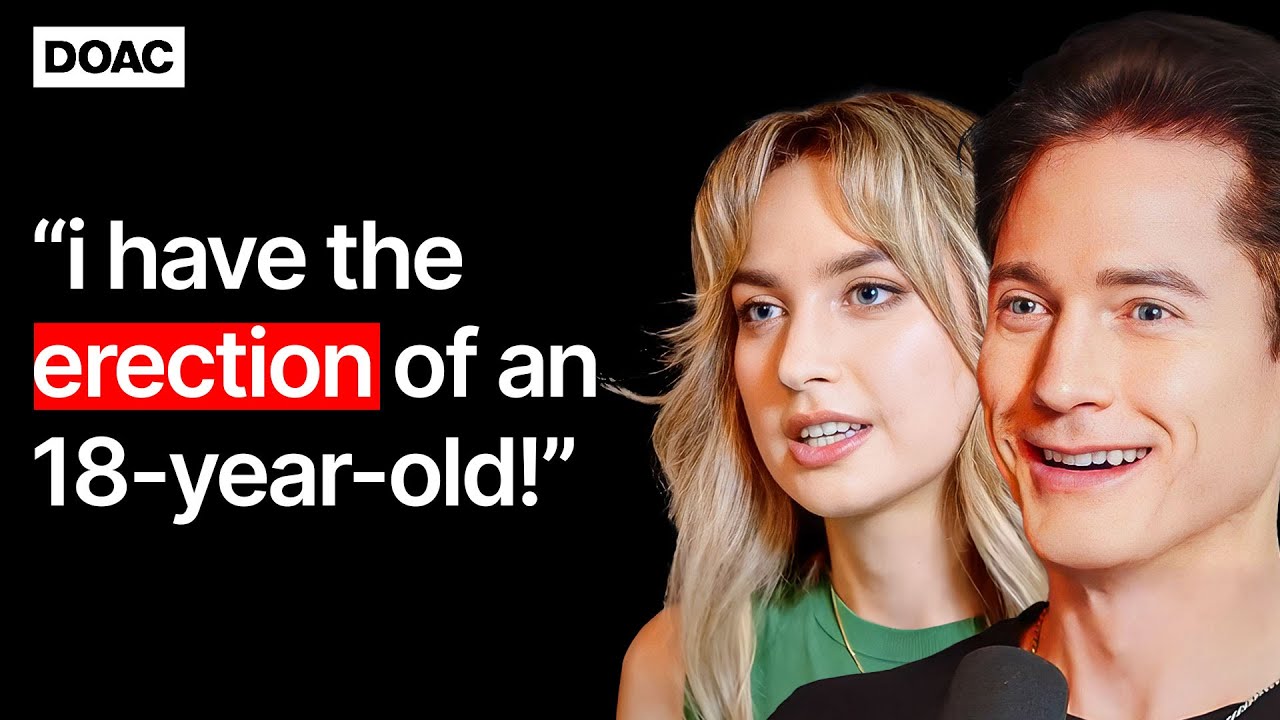
I've PROVEN This Food Keeps You Young & This Oil Reduces Inflammation by 85%! Bryan Johnson — The Diary Of A CEO

The Diary Of A CEO

Rigorous biological tracking and genetic interventions can slow human aging and extend life beyond traditional physiological limits.

AI-assisted summary of I've PROVEN This Food Keeps You Young & This Oil Reduces Inflammation by 85%! Bryan Johnson — original source. Check the original for full context.

Source published:

Detailed notes

## Background This episode was published on YouTube by The Diary Of A CEO (hosted by Steven Bartlett) on November 9, 2023. According to the page description, it features a return conversation with Bryan Johnson to discuss Project Blueprint, scientific approaches to age reversal, sleep optimization, anti-aging therapies, and life-extension strategies.

## TL;DR Bryan Johnson and his Chief Marketing Officer, Kate Tolo, discuss Project Blueprint, an uncompromising, data-driven system designed to lower biological age and extend human life. The discussion covers practical health protocols including optimizing sleep metrics, high-polyphenol extra virgin olive oil, targeted gene therapies, and tracking core biological markers like nighttime erections and cardiovascular fitness. Tolo shares her experience testing the Blueprint regimen as the first female participant, highlighting measurable physical gains alongside the psychological and social sacrifices involved. Ultimately, Johnson frames longevity and anti-aging research as a critical evolutionary step to prepare humanity for the era of artificial superintelligence.

## Atmosphere & style The conversation is intensely focused, analytical, and surprisingly candid, blending rigorous biological data with deep existential philosophy. Steven Bartlett serves as an inquisitive host, probing into both the astonishing metrics and the bizarre daily realities of Johnson's anti-aging protocols. Kate Tolo brings a grounded, human perspective to the dialogue, contrasting Johnson's radical, hyper-quantified vision with the emotional and social realities of adopting the program.

## Key takeaways - [00:00](https://www.youtube.com/watch?v=Htg3HCgrJK4&t=0s) Blueprint utilizes rigorous scientific tracking and biological data to lower biological age, improve physical performance, and extend human lifespan. - [07:39](https://www.youtube.com/watch?v=Htg3HCgrJK4&t=459s) Achieving consistent, optimal sleep hygiene requires prioritizing calendar scheduling, setting clear boundaries, and utilizing tracking metrics to enhance sleep quality. - [16:49](https://www.youtube.com/watch?v=Htg3HCgrJK4&t=1009s) Overcoming environmental triggers and replacing personal self-deception with objective health data are crucial steps in eliminating detrimental health habits. - [18:38](https://www.youtube.com/watch?v=Htg3HCgrJK4&t=1118s) The emergence of artificial superintelligence may soon provide humanity with the technological tools needed to prevent biological death. - [39:42](https://www.youtube.com/watch?v=Htg3HCgrJK4&t=2382s) Breaking past the absolute human lifespan ceiling of approximately 120 years requires direct genetic interventions such as CRISPR and gene therapy. - [42:18](https://www.youtube.com/watch?v=Htg3HCgrJK4&t=2538s) High-polyphenol extra virgin olive oil provides significant systemic health benefits, including reduced cardiovascular risk factors and lower post-meal blood sugar spikes. - [49:07](https://www.youtube.com/watch?v=Htg3HCgrJK4&t=2947s) Tracking objective markers such as nighttime erection duration and quality provides essential feedback on cardiovascular function and autonomic nervous system health. - [59:39](https://www.youtube.com/watch?v=Htg3HCgrJK4&t=3579s) Reversing hair loss effectively involves a multi-pronged regimen combining light therapy, clinical procedures like PRP, and custom topical treatments. - [01:09:04](https://www.youtube.com/watch?v=Htg3HCgrJK4&t=4144s) Testing the Blueprint framework on individuals like Kate Tolo shows rapid biological and functional improvements across cardiovascular fitness, strength, and sleep metrics. - [01:16:14](https://www.youtube.com/watch?v=Htg3HCgrJK4&t=4574s) Adapting health regimens successfully often demands making significant social sacrifices and overcoming external pressure to conform to unhealthy habits. - [01:27:22](https://www.youtube.com/watch?v=Htg3HCgrJK4&t=5242s) Commercial access to standardized anti-aging supplement stacks and optimized nutritional formulations aims to make lifespan extension accessible to the broader public. - [01:36:10](https://www.youtube.com/watch?v=Htg3HCgrJK4&t=5770s) Recognizing that modern society is built around self-destructive habits allows individuals to shift their behaviors to align with long-term biological survival.

## Detailed walkthrough ### [00:00](https://www.youtube.com/watch?v=Htg3HCgrJK4&t=0s) Teaser & The Quest for Perfect Sleep

Bryan Johnson returns to *The Diary Of A CEO* to share updates on **Project Blueprint**, his viral, algorithmically driven anti-aging protocol. Reflecting on his ongoing journey, Johnson highlights achieving an unprecedented milestone: **six consecutive months of perfect sleep scores (100%)** tracked on his Whoop band. For Johnson, achieving perfect sleep is not merely a personal victory; it serves as a public "demonstration of human ability"—a modern equivalent of breaking the four-minute mile or flying across the Atlantic—proving that optimal biological restoration is achievable under the right conditions.

Beyond sleep, Johnson describes Blueprint as an attempt to deploy the world's best science to extend human life, reduce biological age, and maximize daily cognitive and physical performance. His metrics reflect drastic changes: an extended lifespan trajectory by over 30%, a biological age reduction of 12 years, improved muscle strength, and optimal emotional calm. Host Steven Bartlett introduces the episode with a call to subscribe to the channel, noting that roughly 70% of frequent viewers have not yet subscribed.

---

* **Key Health Outcomes Cited by Bryan Johnson:** * **Lifespan Extension:** Estimated increase of over 30%. * **Reversed Age:** Reduced biological age by 12 years. * **Sleep Performance:** 6 continuous months of 100% Whoop sleep scores. * **Daily Routine:** Final meal eaten by 11:00 AM; in bed by 8:30 PM.

---

[02:17](https://www.youtube.com/watch?v=Htg3HCgrJK4&t=137s) Three Years of Blueprint: Peak Performance & Eliminating Blind Spots

Now approaching three years into Blueprint, Johnson reports that he has "legitimately never been happier" in his entire life. He compares his current baseline to the experience of recovering from a prolonged period of poor sleep and bad diet: when people normalize to feeling terrible, they lose sight of what peak human function actually feels like. By systematically taking care of his body, Johnson has arrived at a constant state of mental clarity, emotional stability, and baseline vitality where irritability and mental fog have entirely disappeared.

``` +-----------------------------------------------------------------------+ | BRYAN JOHNSON'S BLUEPRINT PROTOCOL | | | | 1. Systemic Quantification: Replace subjective stories with data | | 2. Precise Sleep Hygiene: Strict 8:30 PM bedtime & 11:00 AM last meal | | 3. Subconscious Awareness: Identify and strip away hidden biases | +-----------------------------------------------------------------------+ ```

A core element of this evolution is recognizing psychological blind spots and unconscious biases. Johnson notes how easily human perception is manipulated by environmental cues, citing classic behavioral economics research on **priming**. For instance, when individuals are subtly primed with words related to old age (e.g., "grandmother" or "elderly"), they unconsciously walk significantly slower down a hallway compared to those primed with youth-associated terms. Most people operate under self-limiting narratives and false instruction manuals dictated by societal norms rather than objective reality.

> "The brain plays these tricks on us where we believe with confidence that we are the master of our reality... my life has become trying to find out what's invisible to me."

---

[05:24](https://www.youtube.com/watch?v=Htg3HCgrJK4&t=324s) Objective Measurement vs. Storytelling

To dismantle these unconscious biases, Johnson relies on mathematical models and quantifiable biological data rather than subjective narratives. At age 24, reading Gary Becker's *The Economics of Life* permanently altered his worldview. Becker demonstrated that complex social phenomena—such as poverty—could be analyzed through rigorous economic models rather than emotional stories. Johnson applies this exact framework to human health and longevity.

Rather than viewing daily performance or sleep quality as a random event, Johnson systematically tracks variables to back out mathematical models for physiological outcomes.

* **Shift from Story to Structure:** Moving from "I had a bad night's sleep" to understanding the exact biochemical, temperature, and temporal variables affecting deep and REM sleep cycles. * **De-biasing Decision Making:** Filtering daily life choices through quantifiable health metrics rather than societal pressure or emotional impulses.

---

[07:39](https://www.youtube.com/watch?v=Htg3HCgrJK4&t=459s) Defining and Achieving 6 Months of Perfect Sleep

Expanding on his sleep protocols, Johnson clarifies what achieving a "100% sleep score" for six straight months actually entails. Using wearable biometric tracking via Whoop, his routine achieves optimal ratios of light, deep, and REM sleep alongside high Heart Rate Variability (HRV) and minimal nighttime disturbances. He acknowledges that while wearable data does not capture every nuance of human sleep architecture, it remains the standard quantitative benchmark.

To maintain this standard, Johnson adheres to a rigid daily routine: * **Strict Bedtime:** Consistently going to bed at 8:30 PM. * **Early Caloric Window:** Consuming his last meal of the day by 11:00 AM to eliminate digestion-induced core body temperature spikes during sleep.

Johnson views this achievement as breaking a psychological barrier for humanity. Just as Roger Bannister proved the four-minute mile was possible, proving that perfect, predictable sleep is repeatable encourages others to prioritize sleep hygiene over hustle-culture ideals.

---

[09:38](https://www.youtube.com/watch?v=Htg3HCgrJK4&t=578s) Sleep Deprivation, Entrepreneurial Mythology, and Social Pressure

Bartlett and Johnson dissect the cultural mythology surrounding sleep deprivation, particularly within entrepreneurship. For decades, business culture has glorified working through the night or sleeping under office desks as a badge of honor—a modern equivalent of "Viking mythology" where leaders seek status through self-sacrifice.

Johnson argues that this mindset is fundamentally dangerous. Physiological studies demonstrate that acute sleep deprivation impairs executive function and decision-making to a degree equivalent to **alcohol intoxication**. Society currently tolerates organizations being led by chronically sleep-deprived, functionally inebriated executives who are incapable of making high-level strategic decisions.

``` HISTORICAL MYTHOLOGY MODERN BIOLOGICAL REALITY +---------------------------------+ +---------------------------------+ | • "Sleep under your desk" | | • Impairment = Intoxication | | • Glorified exhaustion | VS | • Peak performance & lucidity | | • Sleep treated as weakness | | • Sleep as foundational pillar | +---------------------------------+ +---------------------------------+ ```

> "People who don't sleep are literally half dead... physiologically, they're impaired."

Furthermore, prioritizing sleep requires navigating awkward social dynamics. Turning down evening drinks or leaving social dinners early pits the individual against deeply ingrained social norms. However, Johnson emphasizes that every individual who stands up to peer pressure makes it easier for others in their group to prioritize their health.

---

[12:27](https://www.youtube.com/watch?v=Htg3HCgrJK4&t=747s) Living in the Past vs. The Future of Longevity

Reflecting on a recent conference experience, Johnson shares an interaction where an interviewer asked an audience who believed humans could live forever (2 people raised hands) versus who believed they were going to die (nearly everyone raised hands). Johnson observes that throughout history, 99% of people live mentally in the past, failing to recognize when a technological or paradigm shift has already arrived.

In 1634, the future had already arrived for those observant enough to recognize it, yet most people remained trapped in antiquated assumptions. The same applies to modern longevity science and sleep optimization: technology and protocols exist today to dramatically slow aging and optimize performance, but the majority of society remains tethered to outdated cultural habits.

---

[13:48](https://www.youtube.com/watch?v=Htg3HCgrJK4&t=828s) Practical Sleep Hygiene and Family Dynamics

Addressing common obstacles to sleep—such as insomnia, busy work schedules, and raising children—Johnson stresses that setting strict boundaries is critical. While acknowledging the genuine challenges parents face with infants, he shares his experience raising three children and maintaining family-wide sleep cultures.

* **Establish Clear Parental & Family Boundaries:** Training children to understand that barring genuine emergencies (e.g., fires or feeling unsafe), night hours are meant for rest inside their own rooms. * **Standardize Household Hygiene:** Sleep hygiene must start with parents setting a uncompromising baseline standard that kids can mirror as they grow. * **Rejecting Excuses:** Transitioning from treating sleep as an afterthought to structuring social, dietary, and work calendars around the sleep window.

<ElicitationsGroup message="Explore more aspects of Bryan Johnson's Blueprint protocol:"> <Elicitation label="Analyze Bryan Johnson's diet, meal timing, and daily supplement stack" query="Break down Bryan Johnson's exact dietary strategy, caloric intake, meal timing, and supplement routine."/> <Elicitation label="Explore the biomarker metrics used to measure biological age reduction" query="What exact biological markers, tests, and metrics does Bryan Johnson use to track his biological age?"/> </ElicitationsGroup>

[16:49](https://www.youtube.com/watch?v=Htg3HCgrJK4&t=1009s) Blueprint, Self-Deception, and Extreme Responsibility

Steven Bartlett challenges Bryan Johnson on the sheer level of discipline required by the Blueprint protocol, suggesting that to the average observer, Johnson's surrender of control to an automated routine might look like an avoidance of personal responsibility. Johnson responds candidly, asserting that human beings are fundamentally "self-deception machines." Anyone claiming they don't deceive themselves is merely deceiving themselves further. Even with his rigorous protocols, Johnson admits he still doesn't trust his own willpower in the presence of junk food—which is why he has systematically purged his home environment of all opportunities for "self-harm."

Rather than relying purely on moment-to-moment willpower, Johnson’s philosophy centers on finding where he is in error—in both thought and action—and building systems to eliminate those human fallibilities.

* **On human self-deception:** Johnson argues that the ultimate goal in personal growth is continuously seeking out where one is wrong, calling the discovery of personal flaws the real "treasure chest." * **Eliminating temptation:** Instead of attempting to resist bad habits dynamically, Johnson engineers his environment so that breaking his protocol is practically impossible.

---

[18:38](https://www.youtube.com/watch?v=Htg3HCgrJK4&t=1118s) The "Don't Die" Protocol and Extreme Longevity

Johnson frames the entire human experience around one subconscious rule every person follows every second: "don't die." People look both ways before crossing the street, install carbon monoxide detectors, and avoid drinking poison. However, the human mind is full of contradictions—a person will carefully look both ways before crossing the road while simultaneously smoking a cigarette. Blueprint takes the "don't die" principle to its absolute, uncompromising extreme by measuring every biological marker in the body and systematically eliminating any behavior that contributes to aging or decay.

Steven pushes back, noting that while everyone wants to avoid dying, most people do not want to sacrifice *living*. For most, living involves sensory pleasures—enjoying a couple of cocktails, staying up late to binge-watch Netflix, or indulging in social treats. Johnson acknowledges this trade-off but argues that we are currently at a unique turning point in human history due to the rapid acceleration of artificial intelligence and technology.

> "In any other time as a Homo sapien, I completely understand that thought process... The difference right now is we're baby steps away from superintelligence, which means for the first time in the history of Homo sapiens, we may not die."

* **The logic of extreme trade-offs:** Johnson argues that giving up short-term "cheap thrills" today is a rational choice if it buys enough time to reach the era of radical life extension and superintelligence. * **Engineering reality:** Johnson envisions a near future where humans can program physical reality, manipulate atoms and molecules, engineer biological organisms, and curate conscious experiences far beyond current imagination.

---

[23:54](https://www.youtube.com/watch?v=Htg3HCgrJK4&t=1434s) Wealth Disparities, Public Policy, and Evolution

Addressing the social implications of extreme longevity, Steven cites statistics showing the growing consolidation of global wealth among older generations. In 2020, people aged 65 and older held 35% of global wealth, a figure projected to approach nearly 50% by 2050. Steven questions whether radical longevity will lead to extreme inequality, where 250-year-old billionaires hoard all resources while younger generations are left with nothing. Johnson dismisses this as a reason to avoid extending life, categorizing it strictly as a public policy and engineering challenge rather than an insurmountable barrier.

Steven further questions whether death is a necessary feature of nature—a mechanism of natural attrition that enables evolutionary mutations, new energy, and fresh ideas. Johnson replies that while natural selection was the system of intelligence that produced humanity, humans have now taken the reins of evolution themselves through the ability to engineer biology.

* **Wealth accumulation stats:** * **2020:** People aged 65+ held **35%** of global wealth. * **2050 (projected):** People aged 65+ are projected to hold nearly **50%** of global wealth. * **On taking the reins of evolution:** Johnson points out that after selling Braintree/Venmo, he recognized the disparity between software development (where humans rapidly solve digital problems) and physical biology. He argues humanity must develop foundational technologies to program the physical world—from restoring dying coral reefs to building a global biological immune system.

---

[26:54](https://www.youtube.com/watch?v=Htg3HCgrJK4&t=1614s) Kernel, Brain Scans, and Ketamine Studies

Johnson details his work with Kernel, a company dedicated to building brain-imaging hardware to measure cognitive states with the ease of stepping on a bathroom scale. While conventional tools like MRI or PET scans are expensive, bulky, and difficult to access, Kernel developed a wearable device shaped like a bicycle helmet to acquire brain data seamlessly.

To demonstrate the helmet's capabilities, Johnson participated as a pilot subject in a 15-person study examining the effects of ketamine—a compound used as an anesthetic, animal tranquilizer, and psychedelic. He recorded his baseline brain activity for 10 minutes a day over 5 days, received an intravenous dose of ketamine during a 45-minute session, and tracked his brain activity for 14 days post-treatment.

* **Brain activity patterns:** Before the experience, Johnson's neural communication traffic between brain regions was highly static and predictable day after day. * **The "scrambling" effect:** Ketamine completely scrambled these established traffic routes, opening a 1- to 3-day therapeutic window of heightened neuroplasticity where the brain was remarkably open to forming new patterns. * **The wall-jumping anecdote:** On the second day following the session, Johnson spontaneously jumped over a wall while walking with colleagues between meetings—an impulsive, playful act outside his normal workplace behavior, illustrating his temporary openness to novel actions.

---

[30:19](https://www.youtube.com/watch?v=Htg3HCgrJK4&t=1819s) Psychedelics, Subjective Measurement, and Steven's Trip

Discussing the therapeutic potential of psychedelics like psilocybin and ibogaine for depression and addiction, Johnson emphasizes that objective data collection is desperately needed. Currently, clinical studies rely heavily on subjective self-reporting and post-session questionnaires, which are notoriously unreliable due to memory decay and human bias. Brain-measuring technology like Kernel aims to provide concrete neural metrics to help usher in broader medical adoption.

Steven shares a personal story about a mushroom ceremony he attended overseas in Peru. Believing the dose had not taken effect, Steven broke protocol, sat down with his laptop, and opened Netflix. Watching a reality TV show, he was suddenly struck by how toxic and spiteful the cast members were to one another. At that exact moment, his perception of reality began to spin violently.

> "If this experience that I'm having with you now—this perception of reality—is that fragile, that one little capsule that I eat can just shake it all, then Jesus... I can't trust much, can I?"

* **The aftermath of Steven's experience:** Steven closed his laptop, re-joined the group, and handwrote roughly 35 pages of notes focused entirely on human connection. * **The takeaway:** The experience highlighted the deep fragility of human perception, underscoring how easily an individual's baseline view of the world can be completely transformed by a single plant or chemical compound.

[33:49](https://www.youtube.com/watch?v=Htg3HCgrJK4&t=2029s) The Cradle of Superintelligence and the Future of Consciousness

Continuing the discussion on life extension and the shifting human condition, Bryan Johnson framing his philosophy around the imperative to "Don't Die" argues that humanity stands on the precipice of an unprecedented technological epoch. While acknowledging that in previous centuries death was an inescapable inevitability where one simply had to accept their fate, he views our current moment in time quite differently. Driven by his own introspective and psychedelic experiences, Johnson poses that humans are stepping directly into the "cradle of artificial superintelligence"—a future where computational intelligence will quickly surpass standard human limits and unlock entirely new dimensions of conscious experience.

``` ┌──────────────────────────────────────────────┐ │ Zeitgeist Paradigm Shift │ └──────────────────────┬───────────────────────┘ │ ┌───────────────────────┴───────────────────────┐ ▼ ▼ ┌─────────────────────────────┐ ┌─────────────────────────────┐ │ Historical "Death Track" │ │ Blueprint "Life Track" │ ├─────────────────────────────┤ ├─────────────────────────────┤ │ • Passive acceptance │ │ • Active life extension │ │ • Celebration of death │ │ • Objective soberness │ │ rituals & limits │ │ • Priority on preservation │ └─────────────────────────────┘ └─────────────────────────────┘ ```

When Steven Bartlett expresses contentment with current reality, feeling that he still bends reality through personal achievements and climbing metaphoric mountains, Johnson highlights his own self-admitted bias toward exploring the unknown. He maintains that computational intelligence on near-future timelines will advance at a speed faster than human minds can comprehend. Drawing analogies to how an ant compares to a human, or how *Homo erectus* relates to modern *Homo sapiens*, he asserts that humanity's ability to engineer all of reality via superintelligence represents "the coolest opportunity maybe in the known Galaxy."

* **Superintelligence Definition:** Artificial intelligence and computational systems infinitely more capable than human cognition, designed to interface with humans to enhance decisions, capabilities, and life. * **Historical Perspective:** Looking back from the 25th century, future generations will view the 21st-century shift from celebrating "death track" rituals to prioritizing total life preservation as an obvious evolutionary leap. * **The *Homo erectus* Analogy:** Attempting to debate the merits of extended life using current human reasoning is like asking *Homo erectus* a million years ago to speculate on modern human technology and wisdom; primitive logic simply cannot foresee superintelligent outcomes.

---

[39:42](https://www.youtube.com/watch?v=Htg3HCgrJK4&t=2382s) Cracking the Lifespan Ceiling with Genetic Engineering

Addressing how humans can practically transcend biological limitations, the conversation shifts to genetic engineering and CRISPR. Johnson explains that under standard human biology, there is a natural ceiling on human lifespan capped around 120 years. Reaching this ceiling requires winning the genetic lottery and maintaining optimal lifestyle, diet, and exercise habits. However, punching *through* this 120-year cap is impossible through lifestyle choices alone—it requires direct intervention at the cellular and genetic levels.

> "To really punch through this ceiling, you need to start working at the genetic level."

Johnson details his own recent experience with gene therapy, where he received two injections on either side of his obliques. This specific therapy was designed to increase the expression of the protein follistatin in his body. Follistatin acts by suppressing myostatin, a protein that normally limits muscle growth. While the gene therapy did not alter his fundamental genome, it successfully altered his body's protein expression profile, boosting his follistatin levels from a baseline of 8 or 9 up into the 20s, 30s, or 40s.

``` [ Gene Therapy Injections (Obliques) ] │ ▼ Increases Follistatin │ ▼ Suppresses Myostatin │ ▼ Enhanced Muscle Mass & Systemic Longevity Benefits ```

* **Human Lifespan Ceiling:** ~120 years via optimal lifestyle, diet, and exercise. * **Follistatin Gene Therapy:** Injected directly into the obliques to increase follistatin protein levels. * **Mechanism:** Follistatin suppresses myostatin (which restricts muscle growth), increasing muscle mass while offering broader systemic anti-aging effects. * **Verification:** Monitored using extensive blood tests, body scans via MRI, fat/bone density tracking, and DNA methylation patterns across hundreds of data points.

---

[42:18](https://www.youtube.com/watch?v=Htg3HCgrJK4&t=2538s) High Street Supplements, NAD+, and the Power of Extra Virgin Olive Oil

When Bartlett asks about common "High Street" anti-aging treatments—such as popular NAD+ intravenous (IV) drips available across London clinics—Johnson dismisses quick-fix IV drips as ineffective marketing hype. Having personally experienced a burning chest sensation during a two-hour NAD+ drip, Bartlett questions whether these treatments actually deliver results. Johnson explains that IV drips fail to provide the sustained intracellular NAD+ levels required for true longevity.

| Anti-Aging Modality | Mechanism / Application | Effectiveness for Sustained Longevity | |:--- |:--- |:--- | | **NAD+ IV Drips** | Brief, high-dose intravenous infusion | **Ineffective:** Fails to maintain long-term intracellular NAD+ levels due to rapid half-life. | | **Oral NMN & NR** | Daily oral supplementation (twice daily) | **Highly Effective:** Consistently maintains intracellular NAD+ at baseline levels equivalent to an 18-year-old. | | **Blueprint EVOO** | High-polyphenol Extra Virgin Olive Oil (30–60 mL daily) | **Top Tier:** Proven to lower post-meal blood sugar, cut oxidized LDL by 80%, and reduce disease risk. |

To achieve measurable results, Johnson consistently tracks his intracellular NAD+ levels, relying on daily oral supplements like NMN (nicotinamide mononucleotide) and NR (nicotinamide riboside). By taking these twice daily, he successfully restored his cellular NAD+ levels—which originally tested at an age-equivalent of 47—back to the biological benchmark of an 18-year-old.

Turning to simple, high-impact dietary interventions, Johnson highlights Ultra-Premium Extra Virgin Olive Oil (EVOO) as one of the single most powerful anti-aging tools available, ranking it above popular weight-loss drugs like Ozempic. Bartlett samples a spoon of Johnson's custom Blueprint EVOO live on air, noting its thick, smooth texture and distinct peppery kick—a marker of high polyphenol concentration.

``` [ High-Polyphenol EVOO ] │ ┌─────────────────────────┼─────────────────────────┐ ▼ ▼ ▼ Reduces Oxidized LDL Lowers Post-Meal Blood Weight Loss & Breast by 80% Post-Meal Sugar Levels by 60% Cancer Risk Reduction ```

* **Intracellular NAD+ Restoration:** Johnson moved his biological NAD+ marker from age 47 to age 18 through calibrated oral NMN and NR intake rather than IV drips. * **EVOO Health Impact:** Scientific studies demonstrate that consuming 30 to 60 mL of high-polyphenol EVOO daily can reduce post-meal oxidized LDL (the damaging form of cholesterol) by 80%, lower post-meal blood sugar spikes by 60%, and reduce the risk of invasive breast cancer by over 60%. * **EVOO Weight Loss Study:** Participants in a 9-week study lost 5.2 lbs simply by adding daily EVOO to their existing diet without other restrictions. * **Daily Protocol:** Johnson allocates 15% of his precise daily caloric budget to high-grade extra virgin olive oil, consuming a tablespoon with every single meal.

---

[49:07](https://www.youtube.com/watch?v=Htg3HCgrJK4&t=2947s) Biological Baselines: Speed of Aging and Nighttime Erections

Transitioning to practical health tracking, Johnson introduces two diagnostic tools he brought to the studio. He asserts that every individual should actively monitor three core biological metrics: body weight, speed of aging, and the duration and quality of nighttime erections. He hands Bartlett a finger-prick blood spot test designed to measure biological speed of aging through chemical signatures and DNA methylation patterns left in the blood.

``` ┌─────────────────────────────────────────┐ │ 3 Essential Longevity Metrics │ └────────────────────┬────────────────────┘ │ ┌─────────────────────────┼─────────────────────────┐ ▼ ▼ ▼ [ Body Weight ] [ Speed of Aging ] [ Nighttime Erections ] Standard composition Measured via finger- Tracked via specialized tracking prick blood test wearable ring device ```

Johnson explains that reducing one's aging rate from a standard 1.0 down to 0.6 effectively gifts a person four months of life per year—meaning while others age twelve months, they only age eight, receiving "September, October, November, and December for free."

Finally, Johnson presents a specialized wearable ring device designed to be worn around the penis shaft while sleeping to track nocturnal penile tumescence. He addresses the initial awkwardness and humor around the topic, demonstrating how the non-intrusive ring unobtrusively logs the frequency, duration, and stiffness of erections throughout the night—a critical, objective biomarker for cardiovascular health, autonomic nervous system function, and overall biological vitality.

* **Speed of Aging Test:** Uses a capillary blood sample (finger prick) sent to a laboratory to determine the exact pace at which an individual is biologically aging compared to chronological time. * **The 0.6 Speed of Aging Goal:** Slowing the biological clock to 0.6 means accumulating only 0.6 years of biological damage for every calendar year lived. * **Nocturnal Erection Ring Device:** A soft, expandable sensor worn around the base of the penis during sleep that silently logs nocturnal erection frequency, strength, and duration without disrupting sleep.

[52:18](https://www.youtube.com/watch?v=Htg3HCgrJK4&t=3138s) Nighttime Erections as a Core Health Indicator and Shock Wave Therapy

Bryan Johnson explains that tracking nocturnal penile tumescence (NPT) provides critical medical data regarding psychological, sexual, and cardiovascular health. While most people spend time building visible muscles in the gym, they remain unaware that nighttime erections serve as a vital marker of underlying vascular and biological function. Bryan currently averages 2 hours and 12 minutes of nighttime erections. However, to match the baseline of a typical 18-year-old, he would need to reach 3 hours and 30 minutes—a milestone no recorded study has attempted to engineer systematically.

To achieve this goal, Bryan uses specialized tracking devices several nights a month, paired with regular targeted interventions. Specifically, he undergoes focused acoustic shock wave therapy. A technician uses a specialized wand to deliver acoustic waves directly to the tissue, creating micro-injuries that stimulate cellular repair and tissue regeneration—similar to how muscle fibers rebuild after a heavy workout. While the therapy is often applied across medicine for joint repair or erectile dysfunction, Bryan utilizes it preventatively to optimize tissue structure and increase erection duration.

``` * Average Nighttime Erection Duration: 2 hours 12 minutes (Goal: 3 hours 30 minutes for an 18-year-old baseline). * Acoustic Shock Wave Pain Level: Rated 7/10 overall, increasing to 9/10 near sensitive areas like the tip. * Observed Benefits: Subjective improvement equivalent to making the organ "15 years younger," alongside enhanced erection strength and heightened orgasmic pleasurability. ```

---

[56:10](https://www.youtube.com/watch?v=Htg3HCgrJK4&t=3370s) High-Intensity Electromagnetic Stimulation and Social Stigmas

Steven Bartlett asks about the physiological mechanisms behind acoustic shock waves and compares it to other non-invasive therapies, such as the electromagnetic muscle stimulation device Bryan uses for his abdomen. Steven admits that growing up, he viewed consumer-grade electrical stimulation belts from catalog ads as "BS." Bryan clarifies that high-intensity focused electromagnetic technology relies on rigorous science, demonstrating via MRI scans that deep abdominal muscle tissue is actively broken down and rebuilt. Steven jokes about whether this counts as "cheating" to get a sculpted six-pack, prompting Bryan to briefly display his core.

The conversation turns to the broader social perception around sexual health, age-related tissue degradation, and taboo health metrics. Steven highlights that while discussing nighttime erections can sound comedic in casual conversation, sexual dysfunction and declining libido are serious issues that destroy personal confidence, damage intimacy, and tear relationships apart. Bryan agrees, noting that as the body ages, all tissues lose structural integrity and firmness—from skin and skeletal muscle to penile tissue. Normalizing these discussions helps strip away the shame and offers actionable solutions for men struggling silently.

> "Can you imagine being in a conversation and everyone else knows their nighttime erections and you don't?... Can you imagine the embarrassment?" — **Steven Bartlett**

> "As you age, your body becomes less firm and more saggy right across muscle, skin, penis... You just lose structure across your entire body, and it's improved the structure of my penis." — **Bryan Johnson**

---

[59:39](https://www.youtube.com/watch?v=Htg3HCgrJK4&t=3579s) Reversing Hair Loss: Protocols, Therapies, and Emerging Tech

Addressing noticeable improvements in his hair density since their last interview, Bryan outlines the multi-pronged regimen he follows to combat male pattern baldness. Maintaining a full head of hair requires constant effort due to his genetic predisposition. His medical routine combines aggressive clinic procedures, daily light therapy, and custom topical formulations:

``` * Platelet-Rich Plasma (PRP) Injections: Administered every 30 to 60 days. Blood is drawn, spun down, and mixed with ACell and dutasteride (totaling 13–15 mL) before being injected across the scalp. * Low-Level Light Therapy: Worn as a specialized red-light therapy cap for 6 minutes every single day. * Topical Nightly Formula: Includes compounded minoxidil alongside other follicle-stimulating agents (all published open-source on the Blueprint website). ```

Bryan expresses frustration over how much daily effort hair preservation demands, noting that hair loss treatments have historically lagged behind other medical fields. Unlike gene therapies that yield dramatic biochemical shifts from a couple of doses, hair maintenance requires relentless maintenance to prevent follicle miniaturization. However, he is optimistic about emerging technologies like hair follicle cloning, where a patient's own healthy follicles can be cloned *in vitro* and implanted indefinitely. Ultimately, Bryan hopes that speaking openly about hair restoration helps break down the heavy psychological toll and social stigma associated with balding.

---

[01:02:44](https://www.youtube.com/watch?v=Htg3HCgrJK4&t=3764s) Indoor Air Quality and Environmental Toxins

Steven transitions to environmental factors, recalling a previous podcast conversation with author James Nestor regarding the hidden health dangers of elevated indoor carbon dioxide ($CO_2$) and airborne particulates. Bryan strongly echoes these concerns, describing high air quality as an essential pillar of longevity.

To combat airborne damage, Bryan has equipped his home with ambient sensors that monitor indoor and outdoor pollution levels in real time across every room, alongside medical-grade air filtration units. He points out that fine particulate matter—specifically $\text{PM}_{2.5}$— lodges deep within lung tissue, causing chronic cellular inflammation and systemic cardiovascular damage that is exceptionally difficult to reverse. On days when Los Angeles experiences severe outdoor pollution spikes, Bryan deliberately limits his outdoor activity to protect his pulmonary system.

---

[01:03:40](https://www.youtube.com/watch?v=Htg3HCgrJK4&t=3820s) Introducing Kate Tolo: The First Female Blueprint Participant

Steven introduces Kate Tolo, a 27-year-old former fashion strategist who serves as Bryan's Chief Marketing Officer and the first woman to fully adopt the Blueprint lifestyle. Before diving into her story, the episode features brief sponsor messages from *Until* (a co-founded workspace solution for health and wellness entrepreneurs) and *British Airways* (highlighting their business class sale).

Bryan explains that Kate joined his neurotech venture, Kernel, where they focused on measuring brain function and preparing humanity to co-evolve alongside artificial intelligence. Recognizing that Blueprint offered a radical path for human optimization, Kate helped shape the project's vision from its inception and has co-built the initiative alongside Bryan for several years.

Kate shares her personal journey, reflecting on growing up in a small town before moving to New York City to work in fashion. Around 2016, realizing the exponential trajectory of AI, she became convinced that humanity's survival depended on merging with advanced technology. After coming across a quote by Bryan Johnson in a Singularity University newsletter about human-AI symbiosis, she relentlessly pitched him across Medium, email, and social media until eventually moving out to Los Angeles to collaborate with him directly.

Adopting the strict Blueprint protocol required careful deliberation for Kate. Beyond the operational demand it placed on their clinical team to adjust benchmarks for female physiology, it demanded a total transformation of her daily habits—from strict sleep routines to precise nutrition—under public scrutiny.

``` * Background: 27 years old; former fashion strategist based in New York City. * Role: Chief Marketing Officer for Blueprint and the first female participant undergoing full protocol testing. * Initial Connection: Discovered Bryan Johnson in 2016 via a Singularity University feature on merging human intelligence with AI. ```

> "I felt very strongly the only way to proceed forward as a species would be to latch ourselves onto AI and to merge with AI in some way." — **Kate Tolo**

Here is a detailed, faithful walkthrough of this section of the interview.

---

[01:09:04](https://www.youtube.com/watch?v=Htg3HCgrJK4&t=4144s) Testing the Human Blueprint Program on Others

Kate explains that before publicly launching her participation in the Blueprint program, the team decided she would complete a 30-day trial to determine if she was capable, willing, and truly ready to take on the commitment. Overhauling her daily life entirely, she successfully completed the trial and is currently on day 90. When Steven Bartlett asks how long she plans to continue, she notes that because Blueprint operates as an algorithm, committing to it meant handing over her conscious decision-making and stepping into the unknown—without knowing exactly how many pills, blood draws, or protocols would be required.

Her daily routine on Blueprint involves achieving 100% sleep performance every night, consuming a strictly mapped 1,700-calorie diet identical to Bryan Johnson's, taking over 60 supplements daily, and adhering to specific weekly targets for strength training and cardiovascular exercise. She admits that the transition was significantly harder than anticipated because the fundamental methodology relies on strict measurement, targeted intervention, and re-measurement.

- **Caloric intake:** 1,700 calories daily, perfectly mapped to match Bryan's diet. - **Supplements:** Over 60 pills and supplements taken every single day. - **Initial Baseline Results:** Baseline fitness testing placed Kate at an average functional age of 60 to 70 in terms of flexibility, strength, and cardiovascular health. - **Biomarker Flags:** While basic deficiencies like Vitamin D and zinc were easy to address, her baseline blood panel revealed high levels of oxidized LDL—a concerning finding for a 27-year-old due to its association with arterial plaque accumulation and stroke risk.

---

[01:12:13](https://www.youtube.com/watch?v=Htg3HCgrJK4&t=4333s) The Psychological Toll and "Priority Kate"

Transitioning into the protocol forced Kate to confront her self-destructive tendencies and habitual patterns directly. On her very first day, she experienced multiple existential crises as her established life patterns unravelled. She discovered that her entire adult life had been structured around people-pleasing and helping others at the total expense of her own well-being. She refers to this self-neglecting alter ego as "Priority Kate," who would book back-to-back meetings without breaks to eat or use the restroom, finish work at 10:00 p.m., eat McDonald's because it was the only option open, and consistently prioritize social commitments over proper sleep out of fear of disappointing others.

Through Blueprint, Kate came to realize that self-care is analogous to putting on one's own oxygen mask on an airplane before assisting others. Bryan Johnson adds that watching her internal experience was both interesting and entertaining, as he frequently sent her playful check-in texts asking, "Hope your existential crisis is going well today!" Bryan praises her for stepping into the process with full transparency, refusing to hide her pain or posture as "tough," and remaining disciplined without missing a single day.

> "I didn't realize before I did Blueprint that my whole life has been structured around helping other people and never focusing on myself."

---

[01:14:02](https://www.youtube.com/watch?v=Htg3HCgrJK4&t=4442s) Measurable Physical Gains and Fitness Transformation

Despite the emotional friction, Kate's objective health metrics improved dramatically within the first 30 days of following the algorithm:

* **Restorative Sleep:** Deep and REM sleep increased by 19% within 30 days. * **Strength Performance:** Her leg press one-rep max increased from 220 lbs to 360 lbs. * **Cardiovascular Fitness ($VO_2$ max):** She started at the 51st percentile for her age group and climbed to the top 7% for her age and gender within 30 days.

This physical transformation was particularly striking to Kate because she had never exercised, run, or stepped into a gym prior to Blueprint, considering fitness to be the absolute "antithesis of anti-Kate." Bryan notes that witnessing her struggle and ultimate victory served as an inspiring, transparent reveal of the mental hurdles that stop people from transitioning out of "grind culture."

---

[01:16:14](https://www.youtube.com/watch?v=Htg3HCgrJK4&t=4574s) Social Sacrifices and Overcoming Pressure

Integrating Blueprint into a normal 20-something lifestyle requires significant adaptation. Kate shares how Blueprint is a full-time endeavor that must fit alongside existing work commitments. For example, after returning at 6:00 p.m. from an exhausting three-day work trip where the rest of the team was drained, her data required her to work out immediately regardless of how she felt in the moment.

To maintain a social life without compromising protocol, her friends have been accommodating. During group brunches, she brings her own Blueprint tin and eats her prepared meals while others drink mimosas. When asked about her single hardest sacrifice, Kate confesses that it was giving up oat milk lattes, reflecting on how many of life's small daily joys are tied to routine habits.

Steven asks if she feels pressure not to quit due to the team's investment and Bryan's faith in her. Kate admits feeling that weight, but notes that halfway through her first month, she reached a breaking point where she was crying on the weekend, unable to get her heart rate above her target threshold of 173 bpm. She realized "Priority Kate" was secretly back: she was pushing herself past her physical limits to prove something to the public rather than listening to the data. When she checked her biometrics, her Heart Rate Variability (HRV) and recovery scores were tanked, signaling that her body desperately needed rest. Blueprint taught her to stop, evaluate the data, and drop the desire to perform for external validation.

---

[01:21:38](https://www.youtube.com/watch?v=Htg3HCgrJK4&t=4898s) Perspectives on Longevity, Death, and Human Limitation

Steven turns the discussion toward mortality, asking Kate and Bryan directly if they want to die or if they are afraid of death. Kate distinguishes her position from Bryan's signature "Don't Die" tagline by clarifying, "I want to have the opportunity to live." She explains that she isn't afraid of dying if it happens, but wants to maximize the quality and presence of every living minute. Steven agrees, noting that scarcity and knowing life will end is part of what makes choosing how to spend a specific moment so special.

Kate adds that fearing death strikes her as one of the most rational fears a human can possess. Bryan, however, challenges Steven and Kate's perspective on scarcity giving life meaning, bluntly stating, "I don't think we know what we're talking about." Bryan acknowledges that Kate's relatable framing resonates with most people, whereas his own perspective often strikes people as bizarre. He argues that humanity's current existence is so primitive that we cannot accurately conceptualize what living in the future will feel like, comparing our present view to humans from a million years ago who could never have predicted modern civilization or our extended lifespans.

[01:24:06](https://www.youtube.com/watch?v=Htg3HCgrJK4&t=5046s) Recent Achievements and the Next Horizon: Gene Therapy

Bryan Johnson and Kate reflect on the major progress made over the past few months since Bryan’s last appearance on the show. They have completed significant milestones: Bryan published a book, Kate completed her first 90 days as the first female participating in the full Blueprint protocol, and they underwent gene therapy. Furthermore, they made the entirety of the Blueprint system available to the public completely free of charge—including all recipes, dietary protocols, exercise routines, and supplement plans. Bryan emphasizes that they wanted to gift a open-source "blueprint for the future evolution of Being Human" to everyone globally.

When asked what comes next, Bryan teased that "the best is yet to come," revealing that their next major initiative involves another gene therapy aimed at extending human lifespan. He explains that while diet, exercise, and sleep have been mastered and pushed to their practical limits, punching through the ceiling of human longevity requires leveling up to far more powerful biological therapies.

- **Completed Milestones:** Kate finished 90 days as the first female on Blueprint; published a book; performed gene therapy. - **Free Resources Released:** Full Blueprint recipes, dietary protocol, exercise plans, and supplement lists released online for free. - **Next Frontier:** A new gene therapy project aimed at punching past current biological limits on human lifespan.

---

[01:25:21](https://www.youtube.com/watch?v=Htg3HCgrJK4&t=5121s) The Diary Question: Evaluating "Current Kate" vs. "Past Kate"

Answering the traditional question left by the previous diary guest ("What is one thing you wish you said or did differently?"), Kate takes the opportunity to articulate the core philosophy behind her participation in Blueprint. She explains that whenever she doubts whether this rigorous path is the right choice, she steps back and asks a fundamental question: *"Who is doing a better job of looking after Kate—is it current Kate or past Kate?"* She argues that even if the protocol offers only marginal improvements, taking steps to take care of oneself better is unequivocally worth it. Based on data and her subjective experience, current Kate is unquestionably faring better than past Kate.

When Steven asks who is happier, Kate humorously notes that she tries not to optimize for happiness directly because "Kate has no control over her own happiness" and is naturally an optimistic person. However, both agree that current Kate is happier than past Kate.

- **Core Philosophical Metric:** Comparing "Current Kate" to "Past Kate" in terms of self-care quality, data, and daily experience. - **Female-Specific Blueprint Tuning:** Kate notes that adapting Blueprint for women requires tailored adjustments for hormones and physiological differences, a process currently underway.

---

[01:27:22](https://www.youtube.com/watch?v=Htg3HCgrJK4&t=5242s) Cost of Research and the Upcoming Blueprint Commercial Product Stack

Bryan addresses the financial investments made into Blueprint, estimating total costs so far at $3 million to $4 million. The vast majority of this capital has gone toward scientific research, measurement protocols, and structuring decades of published literature into actionable routines. Crucially, Bryan notes that while the initial research and discovery phase is extremely expensive, the actual daily implementation is remarkably cheap.

In response to overwhelming public demand from people who want an easy way to follow the protocol without spending endless hours or millions of dollars, Bryan and Kate are launching a commercial Blueprint product stack in about 90 days. Built not as a profit-first cash grab, but as a "species-wide evolutionary plan," the product stack includes powders, pills, specialized extra virgin olive oil, and food supplements. Bryan boldly states that his goal is to create "the most nutritious product in history," aiming for a price point and quality level so high that international organizations like the UN could realistically distribute it globally to eliminate self-destructive dietary habits.

- **Total Research Investment:** Approximately $3M to $4M, primarily spent on measurement protocols and scientific literature synthesis. - **Product Stack Launch:** Launching in ~90 days; includes powders, pills, food supplements, and extra virgin olive oil. - **Mission Goal:** To create a highly accessible, ultra-nutritious product stack competing for the title of most nutritious food product in human history.

---

[01:29:41](https://www.youtube.com/watch?v=Htg3HCgrJK4&t=5381s) Disagreements, Roles, and the "Operations Manager for Humanity"

When asked where Kate and Bryan disagree, Kate admits that while they view the world from distinctly different perspectives, they ultimately reconcile their views on almost everything. Kate conceives of her role as an "operations manager for Humanity"—a systemic coordinator addressing large-scale operational gaps that the human species has neglected. She likens the upcoming Blueprint product stack to a caring parent packing a foundational lunchbox: providing the baseline biological requirements your body needs every day so you have the energy and health to go out and live fully.

Steven asks what Bryan's role is if Kate is the operations manager, to which Kate calls Bryan the "Visionary" driving the movement forward.

- **Kate’s Self-Assigned Role:** "Operations manager for Humanity," focusing on systematic, efficient fixes to species-wide human problems like nutrition. - **The "Lunchbox" Metaphor:** Providing baseline human nutritional requirements effortlessly so individuals can focus on enjoying life.

---

[01:31:24](https://www.youtube.com/watch?v=Htg3HCgrJK4&t=5484s) Bryan's Message to the Community and Loving "Mean Tweets"

Bryan takes a moment to speak directly to the camera to deliver a message of gratitude to Steven’s audience. Having grown accustomed to widespread public criticism and internet hate, Bryan was deeply touched by the overwhelming generosity, compassion, and charitable engagement from the *Diary of A CEO* community following his previous appearance. He reads almost all the comments and uses them constructively to gauge how clearly his ideas are landing.

Steven brings up the topic of online toxicity, revealing that Bryan recently filmed a video reading "Mean Tweets"—and seemed to derive genuine joy from it. Bryan confirms that he not only doesn't care about mean comments, but genuinely loves them: "People work so hard at making the absolute most cutting insult they can generate... I appreciate the effort! It brings me genuine happiness." Kate adds that Bryan is so intensely self-analytical behind the scenes that public insults are harmless compared to the brutal internal monologue he used to inflict upon himself.

- **Audience Gratitude:** Bryan thanks the community for reading and engaging with compassion rather than default internet hostility. - **Handling Online Hate:** Bryan actively enjoys reading vicious online roasts, appreciating the creative effort commenters put into crafting insults. - **Overcoming Internal Torture:** Bryan reflects that he spent most of his life severely "torturing" himself internally; after overcoming that, public insults feel completely insignificant.

---

[01:36:10](https://www.youtube.com/watch?v=Htg3HCgrJK4&t=5770s) Questioning Human Perception: The Lighthouse Analogy

Bryan transitions to a deeper reflection on human consciousness, health, and addiction. He argues that when people lack proper sleep, nutrition, and healthy habits, they become functionally inebriated—unable to think clearly or express genuine wants and desires. Because of this, Bryan trusts human judgment (including his own past judgments) very little, observing that society as a whole is largely "drunk on addiction" and unable to evaluate what is truly good for its future.

To illustrate the mental trap humanity faces, Bryan shares his favorite story about a naval captain navigating off the coast. The captain spots a light on a collision course and aggressively radios: *"Change your course 30 degrees North!"* The receiver replies: *"Change your course 20 degrees South!"* Indignant, the captain pulls rank: *"This is Fleet Commander so-and-so! Change your course 30 degrees North immediately!"* The voice calmly replies: *"I'm a lighthouse. Change your course 20 degrees South."*

Bryan explains that human minds act like the arrogant fleet commander, believing we can bully our way through life using old tactics and ego. However, the future is a lighthouse: physical realities and changing biological circumstances will not bend to human demands. To survive and thrive, humanity must recognize the lighthouse and change course, questioning habits as deeply ingrained as giving children sugar on Halloween or waging wars.

- **Drunk on Addiction:** Bryan asserts that poor sleep and toxic lifestyle habits leave most people functionally inebriated, rendering their stated desires unreliable. - **The Lighthouse Story:** A parable highlighting the futility of using authority, ego, and force against unyielding reality. - **Cultural Critique:** Questions culturally normalized destructive behaviors, such as feeding children massive amounts of sugar during Halloween or engaging in warfare.

Here is a detailed, faithful walkthrough of the concluding section of the transcript:

[01:40:36](https://www.youtube.com/watch?v=Htg3HCgrJK4&t=6036s) Societal Awakening and Cultural Shift

Steven Bartlett reflects on how absurd certain societal norms look when stepped back from—such as the tradition of trick-or-treating during Halloween where children walk house to house collecting candy. Though he jokes about Halloween sponsors, he notes that this reflects how society has been deliberately designed around ultra-processed foods and sugar. Despite this, Steven expresses optimism for the future, believing that widespread podcast conversations are actively moving the dial. He shares that over the past 12 months, his own perspective and habits have evolved significantly regarding sleep, sugar, and ultra-processed foods, convincing him that listeners are undergoing a similar shift. With the rising burden of chronic symptoms—such as depression, systemic inflammation, and cardiovascular disease—people are recognizing the cost of current societal design, sparking a "slow but certain uprising." Bryan Johnson agrees with this assessment, confirming that he perceives the exact same societal movement occurring.

- **Cultural Norms:** Steven highlights the irony of traditions like Halloween trick-or-treating, pointing out how normalized sugar consumption has become. - **Societal Uprising:** Both host and guest agree that rising chronic health issues (inflammation, heart disease, depression) are prompting a cultural awakening toward better lifestyle choices.

[01:41:35](https://www.youtube.com/watch?v=Htg3HCgrJK4&t=6095s) Concluding Remarks and Quality Olive Oil

Steven wraps up the interview by thanking Bryan Johnson and Kate for sharing their insights. He expresses enthusiasm for bringing Bryan back onto the podcast in the future as he hits more health and longevity milestones. Moving to a practical takeaway, Steven mentions the widespread buzz around high-quality extra virgin olive oil. He emphasizes that because he deeply trusts the rigorous testing and standards behind Bryan's Blueprint brand, it is the specific olive oil he plans to stock in his own home. Bryan thanks Steven for having them on the show as the interview concludes.

- **Product Trust:** Steven emphasizes his trust in Bryan's Blueprint extra virgin olive oil over other market options due to its stringent testing protocols.

[01:42:02](https://www.youtube.com/watch?v=Htg3HCgrJK4&t=6122s) Sponsor Message: Huel Daily Greens

In the post-show advertisement, Steven speaks as a board member and partner of Huel, highlighting one of his favorite products, Huel Daily Greens. He notes that the product performed exceptionally well upon its initial launch, selling out completely, but is now back in stock. He praises its taste and convenience, pointing out that a single scoop contains 91 vitamins, minerals, and whole-food ingredients, eliminating the need to swallow multiple individual daily supplement pills.

- **Availability:** Huel Daily Greens is currently available exclusively in the United States via Huel's website. - **Global Demand:** Steven invites international listeners who want Huel Daily Greens available in their country to send him a direct message so he can bring the request to Huel board meetings. - **Recommended Content:** Steven concludes the episode by noting that listeners who enjoyed this conversation with Bryan Johnson frequently enjoy a related episode linked in the show description.

## Notable quotes > [02:17](https://www.youtube.com/watch?v=Htg3HCgrJK4&t=137s) The brain plays these tricks on us where we believe with confidence that we are the master of our reality... my life has become trying to find out what's invisible to me. — Bryan Johnson

> [09:38](https://www.youtube.com/watch?v=Htg3HCgrJK4&t=578s) People who don't sleep are literally half dead... physiologically, they're impaired. — Bryan Johnson

> [18:38](https://www.youtube.com/watch?v=Htg3HCgrJK4&t=1118s) In any other time as a Homo sapien, I completely understand that thought process... The difference right now is we're baby steps away from superintelligence, which means for the first time in the history of Homo sapiens, we may not die. — Bryan Johnson

> [30:19](https://www.youtube.com/watch?v=Htg3HCgrJK4&t=1819s) If this experience that I'm having with you now—this perception of reality—is that fragile, that one little capsule that I eat can just shake it all, then Jesus... I can't trust much, can I? — Steven Bartlett

> [39:42](https://www.youtube.com/watch?v=Htg3HCgrJK4&t=2382s) To really punch through this ceiling, you need to start working at the genetic level. — Bryan Johnson

> [49:07](https://www.youtube.com/watch?v=Htg3HCgrJK4&t=2947s) Can you imagine being in a conversation and everyone else knows their nighttime erections and you don't?... Can you imagine the embarrassment? — Steven Bartlett

> [49:07](https://www.youtube.com/watch?v=Htg3HCgrJK4&t=2947s) As you age, your body becomes less firm and more saggy right across muscle, skin, penis... You just lose structure across your entire body, and it's improved the structure of my penis. — Bryan Johnson

> [01:03:40](https://www.youtube.com/watch?v=Htg3HCgrJK4&t=3820s) I felt very strongly the only way to proceed forward as a species would be to latch ourselves onto AI and to merge with AI in some way. — Kate Tolo

> [01:12:13](https://www.youtube.com/watch?v=Htg3HCgrJK4&t=4333s) I didn't realize before I did Blueprint that my whole life has been structured around helping other people and never focusing on myself. — Kate Tolo

> [01:21:38](https://www.youtube.com/watch?v=Htg3HCgrJK4&t=4898s) I want to have the opportunity to live. — Kate Tolo

> [01:21:38](https://www.youtube.com/watch?v=Htg3HCgrJK4&t=4898s) I don't think we know what we're talking about. — Bryan Johnson

> [01:25:21](https://www.youtube.com/watch?v=Htg3HCgrJK4&t=5121s) Who is doing a better job of looking after Kate—is it current Kate or past Kate? — Kate Tolo

> [01:27:22](https://www.youtube.com/watch?v=Htg3HCgrJK4&t=5242s) the most nutritious product in history — Bryan Johnson

> [01:29:41](https://www.youtube.com/watch?v=Htg3HCgrJK4&t=5381s) operations manager for Humanity — Kate Tolo

> [01:31:24](https://www.youtube.com/watch?v=Htg3HCgrJK4&t=5484s) People work so hard at making the absolute most cutting insult they can generate... I appreciate the effort! It brings me genuine happiness. — Bryan Johnson

## Mentioned Bryan Johnson, Steven Bartlett, Kate Tolo, Project Blueprint, The Diary Of A CEO, Whoop, Gary Becker, Kernel, CRISPR, NMN, NR, Follistatin, Myostatin, ACell, dutasteride, minoxidil, James Nestor, Los Angeles, Until, British Airways, Singularity University, Medium, New York City, McDonald's, UN, Huel, Huel Daily Greens

[Source](https://www.youtube.com/watch?v=Htg3HCgrJK4)

中文简报

布莱恩·约翰逊将数据追踪与基因疗法同抗衰老联系起来 严谨的生物学追踪与基因干预能够延缓人类衰老,并将寿命延长至突破传统生理极限。 Bryan Johnson与其首席营销官Kate Tolo探讨了“蓝图计划”(Project Blueprint),这是一个旨在降低生理年龄并延长人类寿命的严格数据驱动系统。讨论涵盖了切实的健康方案,包括优化睡眠指标、摄入高多酚特级初榨橄榄油、靶向基因疗法,以及监测夜间勃起和心血管健康等核心生物学指标。Tolo作为首位女性参与者分享了亲测Blueprint方案的经历,重点提及了可衡量的身体机能提升以及所伴随的心理和社交牺牲。最后,Johnson将长寿与抗衰老研究定位为让人类迎接超级人工智能时代所必需的关键进化步骤。 Bryan Johnson 依托算法驱动的 Blueprint 协议实现了连续 6 个月 Whoop 睡眠评分 100% 的记录,并通过严格的作息(上午 11:00 前结束最后一餐、晚上 8:30 入睡)与生理指标监测将生理年龄降低了 12 岁。 (7:39) 要打破人类约 120 岁的自然寿命上限无法单靠饮食与锻炼,必须在基因层面直接干预;Johnson 详述了他注射卵磷脂抑制素(follistatin)基因疗法以抑制肌肉生长抑制素并促进系统性抗衰老的效果。 (39:42) 在抗衰补剂方面,Johnson 认为传统 NAD+ 静脉滴注难以维持细胞内浓度,而每日规律口服 NMN/NR 可将细胞内 NAD+ 恢复至 18 岁基准;同时每日摄入高多酚特级初榨橄榄油可使餐后氧化 LDL 降低 80%、血糖峰值降低 60%。 (42:18) Johnson 提出应将夜间勃起时长与质量作为评估心血管及自主神经系统健康的核心生物指标,并分享了利用聚焦声波冲击波疗法诱导微损伤以促进组织修复与再生的实践方案。 (49:07)

Reading summary

Bryan Johnson argues that human aging and biological decay can be systematically slowed through algorithmic quantification, strict environmental control, and targeted cellular interventions. Drawing from Project Blueprint data alongside collaborator Kate Tolo, Johnson maintains that replacing subjective lifestyle habits with rigorous biological measurements enables humans to achieve unprecedented baseline health and extended longevity. Algorithmic Quantification Over Willpower and Hustle Culture (2:17) Johnson frames human beings as flawed "self-deception machines" whose perceptions and habits are easily compromised by societal expectations, environmental priming, and acute fatigue. To counteract these blind spots, Blueprint replaces subjective intuition with automated biometric tracking. Instead of relying on willpower to resist unhealthy behavior, Johnson re-engineers his environment to make deviations nearly impossible, setting an uncompromising 8:30 PM bedtime and consuming his final meal by 11:00 AM to eliminate sleep-disrupting body temperature spikes. Central to this philosophy is sleep optimization, demonstrated by Johnson's record of six consecutive months of 100% sleep scores on Whoop. He and host Steven Bartlett challenge the entrepreneurial glorification of exhaustion, citing medical data showing that acute sleep deprivation impairs executive decision-making to the same degree as alcohol intoxication. Johnson asserts that treating sleep as an uncompromising biological pillar eliminates mental fog and emotional irritability, unlocking peak cognitive function. Targeted Biochemistry: Polyphenols, NAD+, and Gene Therapy (42:18) To improve cellular longevity, Johnson differentiates between high-impact biological interventions and commercial wellness fads. He dismisses popular NAD+ intravenous drips as ineffective due to rapid metabolic clearance, instead utilizing calibrated oral doses of NMN and NR to restore his intracellular NAD+ markers to the biological equivalent of an 18-year-old. For daily nutrition, Johnson allocates 15% of his caloric intake to 30–60 mL of high-polyphenol extra virgin olive oil, citing research indicating it can lower post-meal blood sugar spikes by 60% and reduce oxidized LDL by 80%. Beyond diet and supplementation, Johnson argues that lifestyle alone cannot breach the biological human lifespan limit of approximately 120 years. To transcend this ceiling, he underwent gene therapy via oblique injections designed to increase follistatin protein expression. This intervention aims to suppress myostatin—a natural protein that constrains muscle development—to enhance lean mass and induce systemic anti-aging benefits, tracked via regular DNA methylation assays and body imaging. Vascular, Aging, and Cognitive Biomarkers (49:07) Rather than relying on subjective wellness narratives, Johnson assesses his rate of decay through precise diagnostics. He utilizes capillary blood spot tests to measure biological pace of aging, aiming for a 0.6 rate of aging to accumulate only eight months of biological damage per calendar year. Furthermore, he monitors nocturnal penile tumescence via a wearable ring as a direct biomarker for cardiovascular health and autonomic nervous system integrity, using preventative acoustic shock wave therapy to induce micro-trauma and stimulate vascular tissue remodeling. Johnson extends this quantification framework to neural function through Kernel’s brain-imaging helmet. In a clinical pilot evaluating ketamine administration, Kernel's scans showed that the compound disrupted rigid baseline neural communication pathways, unlocking a multi-day therapeutic window of heightened neuroplasticity. Johnson emphasizes that objective neuroimaging is crucial for moving psychiatric and longevity medicine away from unreliable, subjective self-assessments. Protocol Testing and Physiological Adaptation in Women (69:04) Blueprint Chief Marketing Officer Kate Tolo became the first female participant to adopt the protocol, undergoing a 90-day trial to evaluate its broader viability. Transitioning to a strict 1,700-calorie diet, taking over 60 daily supplements, and following rigid training routines, Tolo confronted "Priority Kate"—a self-neglecting habit of chronic people-pleasing and poor sleep. Despite significant initial psychological friction, her objective metrics improved rapidly, including a 19% increase in deep and REM sleep, a leg press increase from 220 lbs to 360 lbs, and a jump in VO2 max from the 51st percentile to the top 7% for her demographic. Tolo’s participation underscored the need to tailor algorithmic protocols to female hormonal profiles and specific recovery demands. Having spent an estimated $3 million to $4 million on Blueprint research, Johnson and Tolo plan to release a commercial product stack and open-source recipes to lower implementation costs, aiming to provide baseline nutritional requirements globally without demanding excessive daily decision-making. While Johnson and Tolo report significant physiological improvements from strict algorithmic adherence, the protocol requires extreme daily discipline, constant monitoring, and substantial financial investment. The generalizability of these interventions—particularly experimental modalities like gene therapy and high-volume supplementation—remains subject to ongoing verification and broader clinical validation across diverse human populations.

精炼阅读摘要

布莱恩·约翰逊(Bryan Johnson)在访谈中阐述了其“蓝图计划”(Project Blueprint)的核心理念:通过严密的生物数据量化与算法化生活方式替代不可靠的人类意志力,并借助靶向营养、再生医学与基因疗法延缓衰老,为迎接超级人工智能时代的激进生命延续做准备。 算法化替代意志力与“别死”哲学 (16:49) 约翰逊指出,人类大脑本质上是“自我欺骗机器”,在垃圾食品与短视冲动面前,单凭意志力抵抗往往注定失败。因此,他主张将日常决策移交给由数据驱动的算法,通过彻底清除生活环境中的诱惑来消除自我伤害行为。受经济学家加里·贝克尔(Gary Becker)数理模型理论的启发,约翰逊将个人健康从模糊的主观叙事转化为可量化的客观系统,专注于持续挖掘并剔除自身的无意识盲区。 在长寿愿景上,约翰逊将整个生命哲学锚定在极端的“别死”(Don't Die)原则上。他认为人类正处于迈向超级人工智能的历史转折点;尽管传统自然演化依靠死亡来完成物种更迭,但随着人类获得对生物与物理现实的底层编程能力,死亡将由必然宿命转变为工程问题。约翰逊主张放弃饮酒或深夜娱乐等短期快感,通过极端严格的生理自律换取生存时间,以期跨入寿命无限延长的全新技术周期。 极致睡眠管理与核心生物指标监测 (7:39) 约翰逊将高质睡眠视为生理修复的首要基石,并以其在Whoop监测下达成的连续六个月100%睡眠评分作为突破人类生理局限的实证。为达成这一目标,他执行每晚8:30入睡、上午11:00前进食全天最后一餐的严格日程,以防止夜间消化过程造成核心体温升高。他批驳了商业文化中推崇熬夜与自我牺牲的“维京神话”,强调急性睡眠剥夺对高阶决策能力的损伤等同于醉酒状态。 除了睡眠,约翰逊主张大众应重点追踪三项核心生物指标:体重、衰老速度以及夜间勃起持续时间(NPT)。他通过定期的干血斑DNA甲基化测试监测自身衰老速率,旨在将指标降至0.6(即每度过一个日历年仅累积0.6年的生物损耗)。同时,他利用专用环状传感器在夜间监测勃起时长与强度,以此作为心血管功能与自主神经系统的客观生理标志。为将夜间勃起时长从2小时12分提升至18岁基准的3小时30分,他甚至定期接受高强度的局部声学冲击波疗法以刺激微血管与组织再生。 靶向营养、补剂筛选与基因突破 (42:18) 在日常饮食中,约翰逊将特级初榨橄榄油(EVOO)列为最基础且高效的抗衰工具,将其占全天总热量的比例固定为15%(每餐一汤匙,每日约30至60毫升)。他援引临床研究表示,高多酚EVOO能使餐后氧化低密度脂蛋白降低80%,并减少60%的餐后血糖波动。针对市场上常见的NAD+静脉注射疗法,约翰逊直言其无法长期维持细胞内浓度,实属营销噱头;他选择每日两次口服NMN和NR补充剂,声称已将自身的细胞内NAD+指标从47岁水平恢复至18岁水准。 然而,约翰逊强调单纯依靠优化饮食、锻炼与作息只能触及约120岁的人类自然寿命天花板;要突破这一极限,必须介入基因与分子层面。他分享了自身接受的卵泡抑素(Follistatin)基因疗法:通过向腹斜肌注射相关载体以抑制限制肌肉生长的肌肉生长抑制素(Myostatin),使血液中卵泡抑素蛋白表达量从8至9跃升至20至40以上。针对男性脱发,他则结合了每30至60天一次的自体富血小板血浆(PRP)加度他雄胺头皮注射、每日红光帽光疗与定制外用米诺地尔配方,进行系统的毛囊抗老化干预。 实验的泛化验证与系统商业化普及 (69:04) 为验证该协议在年轻女性群体中的可行性,27岁的首席营销官凯特·托洛(Kate Tolo)作为首位女性受试者全面介入蓝图计划。托洛严格执行每日1700卡路里摄入、服用60余种补剂并遵循算法安排的抗阻训练。在转变过程中,她被迫直面此前长期忽视自身健康的讨好型工作模式。数据显示,在执行算法的30天内,托洛的深睡与REM睡眠比例提升了19%,腿举极限从220磅增至360磅,最大摄氧量(VO2 max)从同龄人的第51百分位跃升至前7%。 面对前期高达300万至400万美元的科研与检测投入,约翰逊与托洛计划在90天内推出商业化产品组合(包含特级初榨橄榄油、功能性蛋白粉与复合补剂),旨在将复杂的长寿实验转化为大众可触及的日用营养组合。托洛将自身角色定义为“人类运营经理”,希望通过提供标准化的身体营养基底,使普通人无需耗费数百万美元研发成本即可摆脱超加工食品与糖类成瘾的束缚。 约翰逊借“灯塔寓言”强调,客观的生物与物理法则不会屈从于人类的傲慢与固有习性,全社会终将需要摒弃熬夜与滥用糖分等慢性自毁文化。尽管蓝图协议在极高的实施门槛、激进的基因疗法安全性以及对生活乐趣的剥离上仍面临广泛质疑,但该项目开创性地将人类健康从“模糊的主观叙事”转变为“严密的量化算法”,为探索生物衰老极限提供了极具参考价值的先锋案例。

Detailed notes — zh

## Background 本期视频由知名播客频道 The Diary Of A CEO 于 2023 年 11 月 9 日在 YouTube 平台发布。节目中主持人 Steven Bartlett 再次对话科技企业家 Bryan Johnson,内容围绕其斥巨资打造的逆龄抗衰项目 Blueprint,深入探讨了经过科学实证的抗炎超级食物、特级初榨橄榄油的临床价值、精准睡眠与生理量化监测,以及人类在迈向超级智能时代突破寿命极限的可能性。 ## TL;DR Bryan Johnson 在节目中系统阐述了他践行 Blueprint 计划近三年来所取得的突破性进展,包括连续 6 个月达成 100% 完美睡眠评分、将生理年龄逆转 12 岁,以及尝试卵泡抑素基因疗法和夜间勃起等前沿生物标志物监测。他与首位全面践行该计划的女性 Kate Tolo 一同拆解了普通人如何走出讨好型人格与生活恶习的钝化陷阱,并力荐特级初榨橄榄油作为核心抗衰超级食物。Bryan 提出“绝不赴死”(Don't Die)的激进哲学框架,主张用严谨的数学算法与客观测量接管身体决策,以迎战即将来临的超级智能时代并重塑生命的物理边界。 ## Atmosphere & style 整场对话在严谨的硬核科学探讨与轻松幽默的机智交锋之间自如切换,主持人充满好奇的打破砂锅与 Bryan 极客般的笃定平静形成了鲜明对比。从现场生饮高多酚橄榄油的辛辣呛咳,到毫无顾忌地展示测量下体的环状传感器,现场既有令人忍俊不禁的破除羞耻时刻,也有涉及存在主义危机与生命终局的冷峻哲学沉思。听众既能深切感受到先锋探索者面对网络嘲弄时的超然与韧性,也能被那种试图打破人类生物天花板的狂热与执着所震撼。 ## Bulletin - [00:00](https://www.youtube.com/watch?v=Htg3HCgrJK4&t=0s) Bryan Johnson 展现了 Blueprint 计划的阶段性成果,通过算法化管理健康,实现了连续 6 个月获得 100% 睡眠评分,生理年龄逆转 12 岁,寿命预期提升超 30%。 - [45:09](https://www.youtube.com/watch?v=Htg3HCgrJK4&t=2709s) Blueprint 将特级初榨橄榄油(EVOO)列为核心抗衰超级食物,临床数据显示每日摄入高多酚橄榄油可使餐后血糖峰值降低 60%,氧化低密度脂蛋白降低 80%,其综合代谢效益甚至优于司美格鲁肽(Ozempic)。 - [01:14:02](https://www.youtube.com/watch?v=Htg3HCgrJK4&t=4442s) 27 岁的 Kate Tolo 作为首位践行 Blueprint 的女性,在 30 天内将最大摄氧量(VO2 Max)提升至同龄群体的前 7%,证实算法驱动的健康生活方式在不同人群中具备可复制性。 - [38:15](https://www.youtube.com/watch?v=Htg3HCgrJK4&t=2295s) Bryan Johnson 指出仅靠健康习惯无法突破 120 岁的物种生理寿命天花板,他已完成首阶段卵泡抑素(Follistatin)基因疗法,将关键指标提升至基准值的 3 到 4 倍。 ## Key takeaways - [10:10](https://www.youtube.com/watch?v=Htg3HCgrJK4&t=610s) 睡眠是日常机能中最核心的一环,长期缺乏睡眠在生理损伤上等同于严重酗酒,必须摒弃创业文化中美化熬夜的英勇叙事。 - [16:45](https://www.youtube.com/watch?v=Htg3HCgrJK4&t=1005s) 摆脱自欺不能依赖意志力,而应彻底重构物理环境,消灭诱发自我伤害的通道与借口。 - [20:16](https://www.youtube.com/watch?v=Htg3HCgrJK4&t=1216s) 人类已处于超级智能(Superintelligence)的前夜,这是智人首次拥有对物理现实和意识进行工程化编程并跨越死亡奇点的历史转折点。 - [22:37](https://www.youtube.com/watch?v=Htg3HCgrJK4&t=1357s) 寿命延长带来的财富固化是公共政策与分配制度的调控议题,绝不能成为拒绝长寿科技或合理化死亡的借口。 - [26:49](https://www.youtube.com/watch?v=Htg3HCgrJK4&t=1609s) 脑机接口公司 Kernel 的目标是让大脑监测变得像量体重一样便捷,通过客观神经动力学数据取代迷幻药临床评估中的主观问卷误差。 - [38:15](https://www.youtube.com/watch?v=Htg3HCgrJK4&t=2295s) 常规饮食与运动有其生理极限,突破人类 120 岁寿命天花板必须依赖 CRISPR 基因编辑或前沿基因疗法深入干预。 - [42:15](https://www.youtube.com/watch?v=Htg3HCgrJK4&t=2535s) 商业化 NAD+ 静脉注射因半衰期过短无法形成细胞内稳态,规律口服 NMN/NR 前体才是维持细胞内年轻化 NAD+ 水平的有效途径。 - [52:16](https://www.youtube.com/watch?v=Htg3HCgrJK4&t=3136s) 夜间勃起不仅关乎性健康,更是评估全身微循环内皮系统和心血管健康的敏锐晴雨表,可作为衡量生理年龄的核心量化指标。 - [01:10:37](https://www.youtube.com/watch?v=Htg3HCgrJK4&t=4237s) 外表匀称年轻往往掩盖了内部指标的隐形退化,抗衰干预必须建立在严谨的血液生化与生理数据基准之上,而非凭直觉盲信。 - [01:12:00](https://www.youtube.com/watch?v=Htg3HCgrJK4&t=4320s) 践行算法化健康的核心是破除“讨好型人格”,像飞机遇险先戴好氧气面罩一样,优先确保自身身心基准才能真正关照他人。 - [01:37:54](https://www.youtube.com/watch?v=Htg3HCgrJK4&t=5874s) 面对未来,人类的大脑就像试图命令灯塔改道的傲慢舰队司令,必须承认自身认知的原始与局限,敬畏客观趋势并重构规则。 ## Detailed walkthrough ### [00:00](https://www.youtube.com/watch?v=Htg3HCgrJK4&t=0s) 节目开场与高能前瞻:算法精准度重构生命 布莱恩·约翰逊(Bryan Johnson)再次做客节目。作为每年投入超 200 万美元、试图通过算法精准度(algorithmic precision)实现永葆青春的科技富豪,他将 Blueprint(蓝图计划)定义为“人类历史上最具影响力的人道主义项目”,旨在汇集全球最顶尖的科学成果来延长人类寿命。回顾近期的实践成果,布莱恩表示自己正处于此生体能与精力的“绝对巅峰”:不仅寿命预期延长了 30% 以上、生物学年龄缩减了 12 岁、肌肉力量显著提升,更达成了在穿戴设备监测下连续 6 个月获得满分睡眠的纪录。 开场片段中还穿插了多个极具冲击力的话题片段,包括通过可穿戴设备监测夜间勃起对整体健康与活力的评估、普通人即可实践的抗炎与超级食物、以及第一位跟随布莱恩生活方式进行测试的女性凯特(Kate)的亮相。随后主持人史蒂芬·巴特利特(Steven Bartlett)插播了一段真诚的频道呼吁:后台数据显示高达 69.9% 的常客观众尚未点击订阅,他恳请观众通过订阅支持节目升级制作规模,并承诺以更高水准的对谈作为回馈。 - **核心抗衰数据**:寿命预期提升超 30%,生理年龄逆转 12 岁,连续 6 个月获得 100% 睡眠评分。 - **哲学命题**:“每一天的每一秒,我们都在努力让自己‘别死’(not to die),但现行社会的做法效果并不好;如果有一套算法能为你管理健康并达成近乎完美的状态,你是否愿意全权托付?” --- ### [02:14](https://www.youtube.com/watch?v=Htg3HCgrJK4&t=134s) Blueprint 三周年:摆脱钝化陷阱与心理盲区 距离布莱恩开启 Blueprint 计划已接近整整三年。当被问及这三年来最深刻的收获时,布莱恩毫不犹豫地回答:“我这辈子从没像现在这样快乐过。”他用一个极为通俗的生活经验解释这种转变:当一个人连续多日睡眠不足、饮食糟糕时,大脑会在一两周内将这种低质状态“正常化”(normalize),让人完全意识不到自己到底失去了什么;只有当真正经历了一整夜的高质量深睡、身体得到彻底修复时,才会惊觉“原来生命可以如此美妙,为什么我不能永远生活在这种状态中?”如今的他心态平和、思绪清晰,以往困扰他的易怒、情绪冲动与精神内耗彻底消失。 布莱恩认为,人类生存面临的最大挑战正是“与自己相处”——探索自我觉察的边界究竟在哪里,看清究竟是什么样的偏见、现状与盲点在遮蔽现实。人类的大脑极其擅长欺骗自己,让人自信满满地以为自己能感知并掌控周围发生的一切。史蒂芬对此深有共鸣,指出大部分人实际上都被一套自幼习得的“故事剧本”所牵引,宛如提线木偶般遵从错误的指令生活。布莱恩举了经典的心理学“启动效应”(priming)实验:当向受试者暗示“祖母”、“祖父”或衰老相关的词汇后,他们在走廊中的行走速度会下意识地明显放缓;人类的大脑正是这样在不知不觉中被外部概念重塑,并深陷思维定式。 ```mermaid flowchart TD accTitle: 状态感知与行为定式的形成循环 accDescr: 展示不良生活习惯如何演化为认知盲区并受故事支配,以及算法如何打破这一循环 subgraph Habituation ["钝化陷阱"] A["长期劣质睡眠与不良饮食"] --> B["大脑将低效疲惫'正常化'"] B --> C["失去对照基准,认知盲区形成"] end subgraph Narrative ["叙事支配"] D["文化与心理暗示(如衰老启动词)"] --> E["形成虚假的自我人生剧本"] E --> F["被动遵从错误的生活指令行动"] end subgraph BlueprintBreakthrough ["数据重塑"] G["引入客观生理指标与算法监测"] --> H["打破盲区,找回巅峰认知体验"] end C --> G F --> G ``` --- ### [05:24](https://www.youtube.com/watch?v=Htg3HCgrJK4&t=324s) 从故事到数据:用客观数学模型重构生命与睡眠 布莱恩透露,他在 24 岁时读到了诺贝尔经济学奖得主加里·贝克尔(Gary Becker)的著作《生活中的经济学》(*The Economics of Life*),这彻底颠覆了他的世界观。书中将贫困等传统上被归为社会学“叙事”的议题,全部拆解为冷峻的数学、模型与经济学分析。从那时起,布莱恩便坚定了自己的认知路径:不再依赖主观编造的故事,而是通过数字、公式与图表来拆解复杂的现实系统。 这种量化思维被完整移植到了 Blueprint 的睡眠管理中。布莱恩过去认为睡眠完全是不可控的随机事件,而现在他将睡眠拆解为全部可测量的生物过程与输入变量。他在智能穿戴设备 Whoop 上达成了前所未有的“连续 6 个月 100% 睡眠评分”。布莱恩直言,目前全球尚未有任何人公开过达到同等水平的数据。他将这项成就比作田径史上的“4 分钟跑完 1 英里”(Roger Bannister)、阿梅莉亚·埃尔哈特(Amelia Earhart)飞越大西洋,或是人类首次登顶珠峰——其核心目的在于打破人类自我设限的天花板:“一旦有人证明这是可行的,就为所有人打开了大门,因为如果我能做到,其他人就知道自己也能做到。” - **极度严苛的作息**:每天晚上 8:30 准时就寝,全天的最后一顿饭在上午 11:00 之前结束。 - **打破职场神话**:“睡眠是任何人类在任何一天中所做的最重要的一件事”,布莱恩坚决摒弃了硅谷与创业圈推崇的“睡在办公桌下”、熬夜拼搏的虚荣文化,将其视为对人体核心机能的严重破坏。 ### [10:10](https://www.youtube.com/watch?v=Htg3HCgrJK4&t=610s) 睡眠剥夺的神话陷阱与生理中毒 在传统创业文化和大众观念中,不睡觉往往被美化为某种英勇叙事。布莱恩·约翰逊(Bryan Johnson)指出,这就像古老的维京神话,人们传颂着关于伟大功绩的故事;如果你想成为一名受人敬仰的杰出企业家、赢得同侪的认可,就必须参与这种“睡眠剥夺仪式”。许多向布莱恩倾诉心声的创业者朋友,在深挖内心后才意识到,自己之所以无法将睡眠置于首位,是因为脑海中有一套关于“我是谁”以及“别人如何看待我”的固有想象。他们深陷其中,唯恐一旦打破这种拼搏神话,就会在社交圈层中被视作懦弱或降级。 布莱恩强调,这种认知完全是本末倒置。真正的高效能人士恰恰是那些把睡眠放在第一位的人:他们的头脑更清醒、思维更活跃、构想更卓越。相比之下,严重缺乏睡眠的人在生理学层面上处于近乎“半死”的中毒状态。科学研究表明,一定程度的睡眠不足在生理机能损害上与严重酗酒无异。然而,当今无数大型组织的领导者正处于这种生理受损、判断力滑坡的状态下,背负着团队的信任做出重大决策,这暴露出社会文化中荒谬的认知错位。 ### [12:03](https://www.youtube.com/watch?v=Htg3HCgrJK4&t=723s) 活在过去的多数人与早已降临的未来 社会上绝大多数人都在不假思索地遵照旧有的社会剧本行事,布莱恩将其称为“生活在由过时观念编织的过去中”。他分享了最近参加一场会议时的经历:主持人现场提问“在场有谁认为人类能够永生?”台下只有区区两个人举手;紧接着问“谁认为自己终将死去?”,全场几乎所有人的手瞬间举起。布莱恩对此感叹,纵观人类历史,在任何一个特定历史节点,99% 的人都无法真正理解当下正在发生什么,他们只是在机械重复前人留下的话语。 ```mermaid flowchart TD accTitle: 观念滞后与技术未来的演进对比 accDescr: 展示绝大多数人受困于过去的社会常模,而前沿技术与真实未来早已降临 subgraph PastMindset["大众认知的滞后循环"] A["固守传统常模与历史话语"] --> B["忽视当下正在发生的巨变"] B --> C["将前沿理念视作疯狂或骗局"] end subgraph PresentFuture["已然降临的未来"] D["科学测量与生物抗衰技术"] --> E["推翻'熬夜英雄主义'"] E --> F["将极端自律作为新基准"] end C -.->|"观念认知断层"| D ``` 这种滞后性在历史上反复上演:即便在公元 1634 年,未来的种子其实已经落地生根,只是生活在那个时代的大多数人要么一无所知,要么将先驱者斥为疯子和江湖术士。同样的规律也适用于当下的抗衰老与睡眠科学——未来已经来到身边,技术与理念早已存在。那些依然以“睡在办公桌下”为荣的人,思想仍旧停留在早已过时的旧时代。 ### [13:48](https://www.youtube.com/watch?v=Htg3HCgrJK4&t=828s) 社交阻力与家庭育儿中的睡眠博弈 斯蒂芬·巴特利特(Steven Bartlett)提出,许多饱受失眠或焦虑困扰的人并非不认同睡眠的价值,而是不知如何在实际生活中破局。布莱恩犀利地拆解了“口头认同”与“真正付诸行动”之间的本质鸿沟:一旦你真正以睡眠为核心来重构生活,就必须做出残酷的取舍。当朋友在夜晚邀你“去喝一杯”时,你必须能够面不改色地拒绝并声明自己的就寝时间;如果提早进食有助于深度睡眠,你就必须在各类晚宴聚会上面对社交压力坚定忌口。 - **社交破局者效应**:当一个人在聚会中鼓起勇气说“各位,我该上床睡觉了”,即使当场会被打趣嘲笑为“窝囊废”(wuss),这种坚持也往往会暗中赋能群体里的其他人,促使原本被动的同伴也敢于提出维护睡眠的需求。 - **育儿现实与睡眠文化**:针对巴特利特提到“初生婴儿夜间啼哭会彻底粉碎一切 HRV(心率变异性)监测和上午 11 点前不排会的规则”,养育了三个孩子的布莱恩承认育儿初期的极端挑战,但他强调家庭内部必须建立明确的睡眠规矩。除火灾或生命危险等紧急情况外,孩子不能因找不到玩具车或毯子而随意进出父母卧室,良好的睡眠卫生和秩序完全可以且必须由父母率先树立。 ### [16:45](https://www.youtube.com/watch?v=Htg3HCgrJK4&t=1005s) 放弃自控力幻想:消除环境中的自我欺骗 当巴特利特问及布莱恩是否觉得大众充满了借口、极度缺乏个人责任感时,布莱恩给出了出人意料的回答:人类本质上全都是“自我欺骗机器”(self-deception machines),任何宣称自己免于自欺的人,本身就在经历最深重的自我欺骗。即便自律严苛如布莱恩,他也从不盲目信任自己的意志力。 布莱恩坦承,如果家里食品柜里堆满垃圾食品,他绝不相信自己能抵御诱惑。因此,他的策略不是依靠意志力去“忍耐”,而是在物理环境中彻底消灭所有自我伤害的渠道——家中绝对不存放任何垃圾食物。对他而言,探索认知盲区、在思维和行为中找出自己的漏洞与错误,才是最珍贵的认知宝藏;真正的自律不是把自己置身于诱惑中去苦苦对抗,而是彻底重构环境,不给犯错留出任何空间。 ### [18:38](https://www.youtube.com/watch?v=Htg3HCgrJK4&t=1118s) “不要死”的终极游戏与人性的荒诞悖论 布莱恩阐述了整个人类文明底层运转的单一核心逻辑:地球上的每一个人、每一秒其实都在玩一场名为“不要死(Don't Die)”的游戏。为了不死亡,人们过马路看两头、在房间安装一氧化碳报警器、本能地拒绝喝毒药。然而人类大脑的荒谬之处在于,一个人完全可以在过马路时谨慎地左顾右盼以免被卡车撞飞,同时嘴里却叼着一根严重致癌的香烟。 | 行为维度 | 传统日常模式 | Blueprint 极端科学模式 | |:--- |:--- |:--- | | **底层目标** | 被动规避直接意外伤害(如车祸、急性中毒) | 全面阻断一切微观层面的细胞衰老与生物死亡行为 | | **执行标准** | 充满妥协、借口与认知失调(如一边看路一边吸烟) | 没有任何借口,规则制定后不可违背(如连续 6 个月完美睡眠) | | **监测深度** | 凭主观感觉或常规体检,忽视缓慢的慢性衰损 | 测量全身每项生理机能指标,量化每一寸细胞的衰老速率 | 为了终结这种行为上的精神分裂,布莱恩在 Blueprint 项目中将“不要死”推演到了绝对极限:不再允许任何侥幸与借口。连续六个月达到满分睡眠评分,就是将规矩彻底刻在岩石上、在任何情况下都绝不妥协的成果。巴特利特随即指出其中的微妙矛盾:人们固然想在“不要死”的协议上签字,但如果为了活着而剥离所有感官享受,许多人会质疑这是否等于签署了“不再真正活着”的契约。 ### [20:16](https://www.youtube.com/watch?v=Htg3HCgrJK4&t=1216s) 告别廉价快感:在超级智能前夜选择“不死的可能” 史蒂文·巴特利特指出,大多数普通人的生活动力往往来自于即时的感官愉悦——无论是下班后喝两杯鸡尾酒,还是熬夜刷 Netflix 剧集。大众虽然渴望延长寿命,但前提是能够继续享受现有的生活方式,而布莱恩·约翰逊所坚持的极端自律与牺牲,显然超越了普通人的承受意愿。布莱恩对此给出了极具颠覆性的解释:在智人历史上的任何其他时代,选择“用晚年十年的寿命换取当下的尽情享乐”都是合情合理的;然而此时此刻,人类正处于迈向超级智能(Superintelligence)的临界点。这是智人诞生以来,人类第一次真正有可能实现“不再死亡”。 面对这一历史转折点,布莱恩反问,如果只为了换取眼前的廉价快感,而错失全人类历史上最壮丽的生命形态,是否过于短视。当被问及这种“壮丽的存在”究竟意味着什么时,布莱恩坦言作为人类的认知确实存在局限,但他强调,随着人工智能的爆发,人类正在获得“对现实本身进行工程化编程”的能力。从原子、分子、有机体到特定化学物质引发的意识状态,再到视觉与数字虚拟现实,物理现实的每一个维度都正被纳入可编程的范畴,未来所蕴含的潜能早已远远超出当下的想象边界。 ```mermaid flowchart TD accTitle: 认知范式转移:即时享乐与技术永生 accDescr: 对比传统人类与超级智能时代人类在寿命与享乐之间的取舍路径 subgraph Past ["传统智人时代"] A1["追求即时感官刺激<br/>(美酒、熬夜、娱乐)"] --> B1["透支晚年健康"] B1 --> C1["自然死亡归宿"] end subgraph Future ["超级智能前夜"] A2["极端自律与生物编程<br/>(蓝图计划 / Blueprint)"] --> B2["跨越死亡奇点"] B2 --> C2["重构现实与意识可能"] end ``` ### [22:37](https://www.youtube.com/watch?v=Htg3HCgrJK4&t=1357s) 财富固化与长寿悖论:生命延续是公共政策问题 对话中插入了一段史蒂文关于其创办的私募股权基金 Flight Fund 的介绍。该基金于 2023 年推出,受英国金融行为监管局(FCA)监管,旨在联合欧洲顶尖创业家,投资并培育下一代高增长的欧洲独角兽企业,同时也向成熟投资者开放合规申请。 随后,史蒂文将话题拉回长寿科技带来的严峻社会学挑战:如果人类整体寿命大幅延长,是否会导致极端的社会财富分化与阶层固化?史蒂文援引数据指出,65 岁以上人群在全球财富中所占的比例正急剧攀升——2020 年该群体持有全球 35% 的财富,而到 2050 年预计将飙升至近 50%。如果富豪能够活到 250 岁,财富复利将使他们成为万亿富翁,而年轻一代将几乎丧失获取资产的希望。布莱恩对此回应得干脆利落:财富分配失衡本质上是一个“系统工程问题”和“公共政策问题”,绝对不能作为拒绝长寿技术的借口。他直言,不能因为一个人年老富有就认为他“理应去死”,延长生命是全人类共享的权利,由此产生的分配矛盾应由公共政策和分配制度去调控解决。 - **财富集中度演变**:2020 年 65 岁以上人群掌握全球 35% 财富;预测到 2050 年这一比例将逼近 50%。 - **布莱恩的核心立场**:寿命延长属于普惠权利,财富鸿沟需要制度治理,绝不能用“自然淘汰”来合理化死亡。 ### [25:01](https://www.youtube.com/watch?v=Htg3HCgrJK4&t=1501s) 从自然演化到物理编程:人类接管生命的缰绳 面对史蒂文提出的哲学质问——“在自然界中,死亡本就是新陈代谢、基因突变与新生命孕育的必要机制,难道死亡不是生命的一部分吗?”布莱恩给出了宏大的文明演进视角。他承认,死亡确实是此前孕育出人类的那个“自然智能系统”的核心规则;但如今,人类已经从自然法则手中接过了缰绳("taken the reins"),成为决定生命未来形态的全新智能系统。 这一转折点的标志,正是人类开始掌握工程化改造生物学的能力。布莱恩回顾了自己在出售支付公司 Braintree 与 Venmo 之后的十年探索。他观察到,在数字软件世界中,数以百万计的程序员能够坐在电脑前,通过编写代码极其高效地解决复杂难题;但在物理世界中,面对诸如全球珊瑚礁因海洋变暖而大规模白化死亡这类生态危机,人类却缺乏相应的底层工具。布莱恩认为,人类迫切需要建立底层的物理编程能力——像编写软件一样去设计更耐热的珊瑚礁,去构建全球生物免疫防线,去重塑人类的健康与意识。一旦掌握了物理现实的编程接口,修复地球生态与突破个体生物极限才真正成为可能。 ### [26:49](https://www.youtube.com/watch?v=Htg3HCgrJK4&t=1609s) Kernel 脑机头盔与氯胺酮实验:重构大脑的“航线图” 谈及对物理世界与人体自身的量化,布莱恩详细介绍了脑科学公司 Kernel 的创立初衷。他打了个生动的比方:普通人想要了解自己的体重变化非常简单,只要站上体重秤就能获得即时反馈,进而调整健康行为;然而对于极其关键的大脑状态,人类却一直缺乏同等便捷的监测手段。核磁共振(MRI)和 PET 扫描不仅设备笨重、流程繁琐,而且价格极其昂贵。Kernel 的目标就是打造一款如同“自行车头盔”般便携的脑机接口设备,让获取脑部精准数据变得像称体重一样轻松。 布莱恩随后分享了自己作为受试者参与的一项 15 人氯胺酮(Ketamine)脑科学先导研究。氯胺酮兼具麻醉剂、马匹镇静剂以及派对致幻药物的多重属性。实验中,布莱恩在手臂注射了药剂,经历了持续 45 分钟的致幻体验,并在此前 5 天(每天 10 分钟)、体验期间以及随后的 14 天内,使用设备持续记录脑活动数据: ```mermaid flowchart LR accTitle: 氯胺酮大脑连接性实验阶段 accDescr: 展示布莱恩在接受氯胺酮前后大脑神经连接模式的变化历程 A["基准期(前5天)<br/>神经航线固定死板"] --> B["体验期(45分钟)<br/>网络模式彻底打乱"] B --> C["窗口期(第1-3天)<br/>高度神经可塑性与开放性"] C --> D["恢复期(第3-4天起)<br/>神经网络重新锚定成型"] ``` - **大脑航线图隐喻**:正常状态下的大脑连接如同全球航班网络,纽约至东京、纽约至伦敦之间航线繁忙且高度固化;布莱恩在基准测试期间的脑神经模式每一天都高度稳定、毫无波澜。 - **神经过载与打乱**:注射氯胺酮瞬间重组了整个大脑的网络拓扑,就像将地球上的所有机场位置彻底洗牌,迫使神经信号开辟全新的流动路径。 - **1 至 3 天的治疗窗口**:在药效消退后的两到三天内,大脑处于重塑模式的高度开放期,为突破固化思维提供了极佳的可塑空间。 - **“翻墙”趣事**:在实验后第二天,布莱恩与团队同事正在去开会的路上,途经一堵墙时,脑中突然冒出一个念头——“翻过这堵墙好像挺好玩的,为什么不呢?”于是他当场毫无征兆地翻越了围墙。同事们目瞪口呆地质问:“你在干什么?我们在工作,正常人不会在上班时翻墙!”布莱恩事后幽默地反思,这或许正是氯胺酮打开了神经可塑性窗口,促使他做出了打破日常行为框架的本能尝试。 ### [30:08](https://www.youtube.com/watch?v=Htg3HCgrJK4&t=1808s) 迷幻药的临床潜力与主观体验的测量局限 Bryan Johnson 与 Steven Bartlett 探讨了迷幻体验如何重塑大脑回路。Bryan 指出,当大脑原有的神经模式在特定窗口内被打开并重新映射时,对精神健康具有巨大的启发意义。特别是在抑郁症和药物成瘾等心理障碍中,患者往往陷入僵化的思维、信念和行为模式无法自拔。临床研究已经证实,像裸头草碱(Psilocybin)或伊博格碱(Ibogaine)这类物质对打破这类固化回路具有惊人的效果。 谈及对迷幻药的整体看法时,Bryan 直言它们“极为强大”。但他指出了当前迷幻疗法的一大硬伤:现有的临床与学术评估几乎完全依赖问卷调查——询问患者“感觉如何”、记录患者的主观叙述。Bryan 强调,人类的主观记忆极不可靠;以他自己使用氯胺酮(Ketamine)的经历为例,用语言很难准确重现体验,到了第三天甚至很难记清第一天的确切感受。即便是记日记,也无法精确还原大脑内部的神经动力学。他创办脑机接口公司 Kernel 的初衷之一,正是希望通过硬件系统直接采集高保真客观神经数据,取代模糊的主观描述,以此提供硬核数据支持,从而大幅加速迷幻药的临床认可与普及。 - **Kernel 技术的应用方向**:通过客观脑电/血流成像技术追踪用药前后神经连接变化,消除主观问卷带来的误差。 - **治疗机制核心**:打破大脑内默认模式网络(DMN)固化的认知与行为回路,提供“重塑体验”的可塑性时间窗口。 --- ### [31:36](https://www.youtube.com/watch?v=Htg3HCgrJK4&t=1896s) Steven 的秘鲁蘑菇体验:现实感知的脆弱性 Steven 分享了自己在秘鲁参加致幻蘑菇仪式的亲身经历。当时他服用了萨满提供的药物后,以为药效尚未发作,便坐下来打开笔记本电脑——他苦笑自嘲这是一个“极度愚蠢的主意”。他在 Netflix 上随手点开了一档真人秀节目,但在药物影响下,他立刻被荧幕上角色之间尖酸刻薄、互相中伤的恶劣价值观强烈刺激。就在那一刻,整个世界开始剧烈天旋地转。 Steven 赶紧合上电脑,回到其他人身边。他拿起纸笔手写了足足 35 页关于“人与人之间连接”的笔记(平时他从不用笔手写)。这次经历让他深刻意识到,人类对“现实”的感知竟是如此脆弱不堪:仅仅吞下一粒小小的胶囊或植物,整个坚不可摧的现实感知就会彻底天翻地覆。既然几毫克的外源物质就能粉碎日常的认知框架,那么人清醒时所坚信的现实又有多大程度值得信任?Bryan 对此深表赞同,感叹大自然造物的不可思议——人类对自身心智与现实的本质其实知之甚少。 ```mermaid flowchart TD accTitle: Steven Bartlett 的致幻蘑菇体验演变 accDescr: 描述 Steven 在秘鲁致幻蘑菇仪式中从误判药效、外界刺激到顿悟现实脆弱性的心理过程。 subgraph Phase1["仪式开始与误判"] A["服下萨满配制的蘑菇药物"] --> B["自以为药效没起作用"] B --> C["打开笔记本电脑观看 Netflix 真人秀"] end subgraph Phase2["感官冲击与转变"] C --> D["对电视角色的勾心斗角产生极度厌恶"] D --> E["世界剧烈震颤旋转<br/>药效完全爆发"] end subgraph Phase3["顿悟与反思"] E --> F["合上电脑重回集体<br/>手写 35 页关于'连接'的笔记"] F --> G["核心领悟:现实感知极其脆弱脆弱<br/>人类对世界的把握微不足道"] end ``` --- ### [33:50](https://www.youtube.com/watch?v=Htg3HCgrJK4&t=2030s) 超级智能与“绝不赴死”的文明转向 围绕对未知现实的追求,Bryan 将话题引向他的“绝不赴死”(Don't Die)哲学框架。他询问 Steven 是否愿意拥有全新的意识体验能力,去感知超越想象的更精彩的现实。Steven 坦言自己对当下生活很满意,感觉自己依然能够通过拼搏来“弯曲现实”,去攀登更高的人生山峰;面对不可知的未来体验,普通人很难为纯粹的“不确定性”押上一切。Bryan 则解释,推动他的并非对当下的不满,而是对未来潜在可能性的极致渴望——人类正步入“超级智能”(Superintelligence)的摇篮。 Bryan 阐明,这里的超级智能不仅指计算能力远迈人类的人工智能,更关乎人类未来如何与这种智能连接。计算智能的进化速率远超人类大脑的理解范围;人类看待超级智能,正如蚂蚁看待人类,或直立人看待现代智人。Bryan 坚信,置身于超级智能降临的摇篮,并获得重构所有现实的能力,是“已知银河系中最酷的机遇”。 当被问及听到过针对“绝不赴死”最有力的反驳是什么时,Bryan 回答道,他从未被任何反对意见所说服。他通过一个思想实验反观当下:假设站在公元 25 世纪的客观视角回望 21 世纪初,未来人类必然会觉得显而易见——智人正是在这个时期掌握了持续延展寿命的科技,整个文明的核心从崇尚死亡的仪式全面转向了生命延续的仪式。当今社会却依然处在“死亡轨道”上自娱自乐,时代精神必须发生根本逆转。 ```mermaid flowchart LR accTitle: 文明时代精神的演进对比 accDescr: 对比传统死亡轨道与以超级智能和生命延续为核心的新文明轨道。 subgraph Legacy["传统智人轨道"] A1["死亡必然论"] --> B1["围绕死亡建立文化与安慰仪式"] B1 --> C1["认知局限于自然寿命(约120岁上限)"] end subgraph Future["25世纪回望的新范式"] A2["生命延展技术突破"] --> B2["转向'绝不赴死'(Don't Die)仪式"] B2 --> C2["步入超级智能时代<br/>彻底重构意识与生理现实"] end ``` --- ### [38:15](https://www.youtube.com/watch?v=Htg3HCgrJK4&t=2295s) 从直立人到新物种:突破 120 岁寿命天花板 对于长生不老或逆转衰老是否可能,Bryan 提出了直立人比喻:如果一百万年前去采访直立人(Homo erectus),问他们如何看待一百万年后现代智人(Homo sapiens)的科技、认知与欲望,直立人的见解没有任何参考价值;我们既不会在乎他们害怕什么,也不会认为他们的经验对现代社会有何指引。同理,当今人类的思维仍极其原始,面对远超自身的超级智能与未来进化,我们现在的种种疑虑与偏见同样微不足道。人类正在不可避免地迈向一个全新的物种形态。 针对具体的生物学延寿手段,Steven 问及 CRISPR 基因工程与基因疗法(Gene Therapy)的潜能。Bryan 解释说,人类目前的自然寿命存在一个约 120 岁的天花板;即便生活方式极其健康,且在基因彩票中获得顶级眷顾,仅靠饮食、运动和日常习惯也很难打破这个上限。要真正突破 120 岁的寿命壁垒,必须深入基因层面进行干预,包括使用 CRISPR 进行基因编辑或接受前沿基因治疗。 Bryan 透露自己已经完成了第一项自体基因疗法: - **注射部位**:在左右两侧腹外斜肌(Obliques)各注射了一针。 - **干预靶标**:促进体内卵泡抑素(Follistatin)蛋白的过表达。 - **生理数值变化**:治疗前他体内的卵泡抑素水平仅为 8 到 9 左右,注射该基因治疗后,其体内的卵泡抑素指标大幅飙升至 20 多、30 多乃至 40 多个单位,极大地增强了机体肌肉保持与抗衰抗炎的生理机能。 ### [41:16](https://www.youtube.com/watch?v=Htg3HCgrJK4&t=2476s) 基因疗法与卵泡抑素:如何衡量抗衰成效 谈及前沿的抗衰老干预手段,Bryan Johnson 详细解释了他正在接受的卵泡抑素(Follistatin)基因疗法机制。在通常情况下,人体运动时,肌肉生长抑制素(Myostatin)会限制肌肉的无节制增长;而卵泡抑素的作用恰恰是抑制肌肉生长抑制素,从而促使肌肉量增加,并产生一系列其他积极的生理效应。Bryan 特别澄清,这项基因疗法并没有修改他原本的基因序列,而是增强了体内卵泡抑素的基因表达水平。 面对“如何验证它是否真正起效”的疑问,Bryan 给出了非常直截了当的答案:“去测量”。他指出,自己正是通过抽血化验,对比注射前后血液中卵泡抑素的绝对浓度,并结合全身核磁共振(MRI)来进行全方位监控。作为“人类历史上被测量最详尽的人”,他的团队建立了一个覆盖数百项生理数据的监测系统,能够全景审视肌肉、脂肪、骨骼、衰老速率、DNA 甲基化模式以及脑部健康的细微变化。关于该疗法的初步反馈,第一批实验数据将在下周正式揭晓。 ```mermaid flowchart TD accTitle: 卵泡抑素基因疗法的作用机制与验证流程 accDescr: 展示卵泡抑素如何抑制肌肉生长抑制素并促进肌肉生长,以及通过多维度测量验证疗效的路径 subgraph Mech ["生理调节机制"] A["卵泡抑素基因疗法\n(增强体内表达)"] --> B["抑制 Myostatin\n(肌肉生长抑制素)"] B --> C["释放肌肉增长潜力\n& 带来广泛生理益处"] end subgraph Verify ["Blueprint 严密验证体系"] C --> D["客观医学测量"] D --> E["血液化验:\n前后卵泡抑素水平"] D --> F["全身 MRI 扫描:\n肌肉、骨骼与脂肪分布"] D --> G["生物标志物:\nDNA 甲基化与衰老速率"] end ``` --- ### [42:15](https://www.youtube.com/watch?v=Htg3HCgrJK4&t=2535s) 商业化 NAD+ 诊所与抗衰补剂的真相 主持人 Steven Bartlett 将话题引向大众能够触及的日常健康市场:市面上如雨后春笋般涌现的抗衰疗法(例如伦敦遍地开花的 NAD+ 静脉输液诊所)到底是不是智商税?Steven 分享了自己在朋友新开的诊所里打过一次点滴的亲身体验,不仅坐在椅子上挂了整整两个小时,胸口还伴随着强烈的灼烧发烫感,根本不确定是否有用,感觉更像是一种“信则灵”的玄学宗教。 Bryan 直言,NAD+ 静脉输液(IV Drips)根本无法提供持久的效果。人体真正需要的是维持细胞内(intracellular)NAD+ 水平的长期稳定。Blueprint 团队对此进行了穷尽式的测量与实验,深入对比了 NMN(烟酰胺单核苷酸)与 NR(烟酰胺核糖)等多种补充途径: * **维持持久浓度是核心**:静脉注射无法解决体内半衰期短的问题,无法形成持续稳态;若想靠打点滴维持,不仅不现实,且缺乏长效证据。 * **从 47 岁逆转至 18 岁**:Bryan 最初的细胞内 NAD+ 指标相当于 47 岁的人群基准;经过精准调配口服剂量,如今稳定保持在 18 岁的健康水平。 * **口服替代方案**:通过每日两次规律口服经过严格检验的 NMN 或 NR 前体,能够可靠且安全地维持年轻化的细胞内 NAD 浓度。 * **警惕营销陷阱**:市场上大部分抗衰养生疗法都是“包装出来的故事”和精明营销,充斥着虚假承诺。若一项干预手段无法通过量化数据直接映射在身体指标上,大众就必须保持高度戒备。 --- ### [45:09](https://www.youtube.com/watch?v=Htg3HCgrJK4&t=2709s) 真正的超级食物:特级初榨橄榄油的临床价值 当被问及普通人能够立刻采取的最高效、高性价比且具科学依据的抗衰举措时,Bryan 毫不犹豫地把特级初榨橄榄油(Extra Virgin Olive Oil, EVOO)排在了首要位置。Bryan 甚至专程为 Steven 邮寄并带来了一瓶 Blueprint 自主研发的特级初榨橄榄油。该产品采用纯黑避光玻璃瓶包装,宛如高级红酒。瓶身标签明确注明:Bryan 将其每日摄入总热量的 15% 专门分配给这种特级初榨橄榄油。 Steven 现场打开瓶子倒出一勺饮下,随即感受到了强烈的辛辣与微涩感,不禁直呼“像加了黑胡椒一样冲喉咙”。Bryan 笑着解释,这种强烈的辛辣回味恰恰是富含高浓度多酚(Polyphenols)的顶级初榨橄榄油的标准特征,绝非市面上平淡无味的普通油可比。Bryan 甚至语出惊人地表示,从多项临床指标来看,其综合健康改善效益甚至超越了当红减重控糖药物 Ozempic(诺和泰/司美格鲁肽): * **减重与代谢支持**:在一项临床实验中,受试者在不改变既有饮食结构的前提下,仅每日摄入特定剂量的优质橄榄油(通常为每日 30–60 毫升,约 45 毫升),9 周内平均减重达 5.2 磅。 * **餐后指标急剧改善**:餐后血糖峰值可降低约 60%;对血管最具破坏性的氧化低密度脂蛋白(Oxidized LDL)水平可被降低高达 80%。 * **严重疾病防护**:文献证据显示,优质橄榄油中的多酚成分对浸润性乳腺癌的发生风险具有超过 60% 的显著降低作用,并在预防心血管疾病、糖尿病与神经退行性疾病方面具备强大支持。 * **全球供应链整合**:全球大部分货架上的橄榄油品质与多酚活性都无法达到临床有效阈值。为了解决标准缺失的问题,Blueprint 团队跨越南北半球采购最顶尖原料,以确保常年供应多酚活性达标的纯正橄榄油。 Bryan 强调,自己的做法是每餐都固定搭配一汤匙特级初榨橄榄油,把它当成基础“超级食物中的超级食物”来摄入。 --- ### [49:05](https://www.youtube.com/watch?v=Htg3HCgrJK4&t=2945s) 两大核心量化指标:生物衰老速率与夜间勃起监测 在节目录制现场,Bryan 从身旁的地面上拿出了两样准备送给 Steven 的实用检测工具。Bryan 严肃地指出,当代成年人除了了解自己的体重之外,日常生活中最应该准确掌握的其实是另外两个维度的健康数据:一是你的衰老速度有多快,二是你的夜间勃起持续时间有多长。 ```mermaid flowchart LR accTitle: 核心健康指标与检测机制 accDescr: 展示生物衰老时钟检测与夜间勃起监测环的运作流程 subgraph Test1 ["生物衰老速率测试"] A1["指尖采血\n(几滴血液滴入测试卡)"] --> B1["实验室甲基化分析\n(捕捉化学特征特征)"] B1 --> C1["获取生物时钟读数\n(基准 1.0 vs 优化目标 0.6)"] end subgraph Test2 ["夜间勃起监测装置"] A2["睡前佩戴于阴茎根部\n(柔软贴合、无振动打扰)"] --> B2["睡眠期间自动传感\n(记录周长扩张与充血强度)"] B2 --> C2["量化全身血管健康\n(发作次数与持续总时长)"] end ``` Bryan 当场提出可以协助 Steven 完成第一项指尖采血测试。该测试仅需刺破指尖取微量血液涂抹在特制采样卡上,送交专业实验室检测其表观遗传化学特征。如果一个人的生物时钟测试结果为 1.0,意味着其衰老速度与大众平均水平一致;但若能通过改善睡眠、清淡饮食、坚持锻炼和充足摄入优质橄榄油等举措将其压低至 0.6,就意味着每过一年,“你比同龄朋友多白赚了 9 月、10 月、11 月和 12 月整整四个月的青春”。 随后,Bryan 展示了第二件外形奇特的环状监测仪器。看到这个需要套在下体的装置,Steven 拿起麦克风打趣地比划起来,并半开玩笑地询问尺寸是否合适。Bryan 详细阐述了其监测原理: * **佩戴与体感**:睡前将其套在阴茎根部,设备本身没有任何振动干扰,材质设计确保入睡后完全感觉不到其存在。 * **全身心血管健康晴雨表**:在深睡眠与快速眼动期(REM),健康的男性身体会自然出现多次自发性勃起。设备能够精准捕获阴茎充血膨胀的次数、单次持续时长及充血硬度。 * **量化基准**:夜间勃起绝非单纯的生殖机能,而是微循环内皮系统和全身心血管健康的直接信号反应,为个体的生理衰老干预提供了极其敏锐的客观指标。 ### [52:16](https://www.youtube.com/watch?v=Htg3HCgrJK4&t=3136s) 夜间勃起监测与生理年龄的量化对标 在探讨睡眠监测数据时,话题转向了一个鲜为人知却至关重要的生理指标——夜间勃起。监测设备不仅能记录下夜间勃起的发生频次(例如一整夜发生四次),还能精确捕捉每次的持续时长(如 47 分钟、31 分钟、55 分钟)以及勃起的硬度与质量等级。布莱恩·约翰逊(Bryan Johnson)指出,人们通常习惯去健身房练出粗壮的肱二头肌,却大多不知道夜间勃起其实是衡量心理健康、性健康乃至心血管健康极其关键的综合生理指标。 当被问及实测数据时,布莱恩透露自己目前的夜间勃起平均总时长为 2 小时 12 分钟。史蒂文·巴特利特(Steven Bartlett)打趣地问他在梦里都梦到了什么,布莱恩解释说人在睡眠中大多数时候对勃起毫无察觉。从生物学对标来看,他目前的夜间勃起时长大致与他的实际生理年龄相吻合;而团队设定的逆龄目标是将该数据提升至 18 岁年轻人的水准——即每晚累计 3 小时 30 分钟。此前从未有人尝试通过科学干预来系统性提升这一指标。 在监测操作上,布莱恩并非每晚佩戴测量环,而是配合特定的干预周期,在一个月或两个月内连续监测 3 到 5 个夜晚。 - **当前平均夜间勃起时长**:2 小时 12 分钟 - **18 岁青年基准目标**:3 小时 30 分钟 - **监测频率**:视治疗周期而定,通常每 1 至 2 个月连续监测 3 至 5 晚 --- ### [53:59](https://www.youtube.com/watch?v=Htg3HCgrJK4&t=3239s) 聚焦式冲击波疗法与组织重塑体验 为了主动逆转这一器官的生理衰老,布莱恩结合了聚焦式冲击波疗法(Focused Shockwave Therapy)。治疗过程由专业技师操作手柄探头,利用声波声学技术(并非电击)对阴茎组织释放冲击。其生理机制类似于高强度力量训练——通过声波引发微创损伤(micro-injuries),进而激活机体的自我修复与组织再生网络。这种技术在医学界已被广泛用于韧带修复(如前十字韧带 ACL 重建)、膝关节及肩关节软骨软组织再生,同时也用于治疗勃起功能障碍(ED)。 布莱恩表示,尽管自己在各项性功能临床评估中均拿到了无功能障碍的满分成绩,但他希望验证该疗法是否能实现更深层次的组织年轻化。在连续接受治疗两个月后,他坦言主观感受非常惊人:“感觉我的器官好像年轻了 15 岁。”不过他同时强调,团队在采信主观感受前,必须等待最终严谨的客观量化数据。 史蒂文好奇这究竟是痛苦的电击还是令人愉悦的振动。布莱恩坦言这个过程相当痛苦,必须全神贯注进行疼痛管理:一般部位的疼痛评分为 7 分(满分 10 分),而一旦触及敏感度最高的末梢龟头区域,疼痛感会飙升到 9 分。然而除提升夜间勃起外,该疗法还显著增强了勃起硬度、局部敏感度以及高潮愉悦感。 ```mermaid flowchart LR accTitle: 聚焦式冲击波组织再生机制 accDescr: 展示冲击波探头通过声波引起微创伤,最终刺激组织重塑并提升生理指标的流程 A["声学冲击波探头<br/>(聚焦式声波)"] --> B["引发局部微损伤<br/>(模拟抗阻训练刺激)"] B --> C["启动组织修复机制<br/>(促进血管生成与胶原再生)"] C --> D["逆龄综合表现<br/>(提升敏感度/硬度/夜间勃起)"] ``` --- ### [56:28](https://www.youtube.com/watch?v=Htg3HCgrJK4&t=3388s) 腹肌电磁刺激与打破男性健康羞耻 由声波修复肌肉的讨论,史蒂文联想到了布莱恩日常使用的腹部刺激设备。史蒂文回忆小时候母亲曾邮购过贴在肚子上振动的“甩脂电击仪”,他一直觉得那是忽悠人的智商税。布莱恩解释,专业级设备采用的是高强度电磁脉冲频率技术(Electromagnetic Frequency),其有效性已通过核磁共振成像(MRI)得到证实:高强度电磁刺激确实能够诱发肌肉纤维深层破损并促进超量恢复,相当于在无需关节负重的情况下进行被动高强度肌力训练。史蒂文调侃布莱恩这是在“作弊”,并半开玩笑地要求布莱恩展示雕刻般的腹肌,现场气氛轻松欢快。 两人随即谈到了关于夜间勃起与性健康的社会观念。布莱恩戏谑道,设想一下在一场聚会聊天中,大家都在对自己的夜间勃起数据侃侃而谈,只有你不知道自己的数字,那该有多尴尬。史蒂文感叹道,虽然大家常拿性开玩笑,但现实中性欲低下、无性关系以及勃起功能障碍对个人自信、伴侣情感和家庭稳定造成了极其沉重的心理负担。 布莱恩总结道,衰老在宏观上表现为全身各处组织的松弛、失去张力与结构坍塌——无论是皮肤、骨骼肌还是生殖器官。若能通过科学手段恢复组织结构,不仅能重获生理机能,更重要的是能打破男性在这个领域的羞耻感与心理禁锢。 --- ### [59:39](https://www.youtube.com/watch?v=Htg3HCgrJK4&t=3579s) 组合毛发再生方案与男性心理挑战 史蒂文注意到布莱恩的头发比上次见面时明显浓密且健康许多,布莱恩随即公开了自己详尽的头发生长治疗协议(Hair Protocol): 1. **富血小板血浆(PRP)注射**:每 30 至 60 天进行一次。通过抽取静脉自体全血进行离心旋转,分离出高浓度血小板血浆,随后加入细胞外基质材料 ACell 以及 5α 还原酶抑制剂度他雄胺(Dutasteride),配制成总容积约为 13 至 15 毫升的混合注射液,密集注射于头皮脱发及稀疏区域。 2. **日常红光生发帽光疗**:每天佩戴专用的低能量红光疗法(LLLT)头盔 6 分钟。 3. **夜间外用头皮涂抹剂**:每晚使用含有米诺地尔(Minoxidil)等活性成分的定制配方外用液。 布莱恩坦言,自己在 30 岁出头便开始脱发,受家族遗传影响,保住头发是一场极为艰难的持久战。目前的毛发再生技术尚不完美,缺乏像基因疗法那样打两针就能让关键生物指标暴增 3 至 4 倍的彻底治愈手段;现阶段的手段本质上都是在减缓毛囊萎缩进程、强化发根并预防未来损伤。对于未来,他看好毛囊克隆技术的发展(即提取自身健康毛囊体外克隆增殖后进行自体回植)。 布莱恩深有感触地指出,在男性的心理防线中,“秃顶脱发”与“性功能障碍”绝对稳居心理痛苦排行榜的前五名。他公开讨论这些极为隐私的干预细节,正是为了打破长期笼罩在男性健康之上的耻辱标签,让受这些问题折磨的人看到积极自救的希望,而不必默默承受心理重压。 ### [01:02:48](https://www.youtube.com/watch?v=Htg3HCgrJK4&t=3768s) 室内空气质量与微粒污染的隐形伤害 主持人谈到之前播客嘉宾曾提及室内二氧化碳及空气质量的严重危害,Bryan Johnson 对此表示完全赞同。他在家里的每个角落都安装了全天候实时监测设备,并在所有房间配置高效空气净化系统,以确保家中的空气指标保持在极其纯净的状态。由于洛杉矶的整体空气质量并不理想,Bryan 会严格监控室内外的空气数据,一旦遇到户外空气质量特别糟糕的日子,便会主动避免剧烈的户外运动。 Bryan 特别指出空气污染中最需防范的隐患是 PM2.5 等微细颗粒物。这类超细微粒一旦被吸入,会深层沉积在肺泡及呼吸系统内部,身体极难将其自行清除。这种持续性的微观损伤日积月累后很难逆转,因此通过环境控制切断污染源是抗衰老必不可少的基础防线。 - **室内环境监测**:每个房间均配备全天候传感器,随时对比室内与室外空气指标。 - **PM2.5 危害**:微细颗粒物极易滞留在肺部深处无法排出,造成长期的不可逆损伤。 --- ### [01:03:40](https://www.youtube.com/watch?v=Htg3HCgrJK4&t=3820s) 引入首位女性践行者:Kate Tolo 登场 访谈迎来了一位特别嘉宾——27岁的 Kate Tolo。她此前在时尚界担任品牌策略师,后来出任 Bryan Johnson 旗下项目的首席营销官(CMO),并且是世界上第一位公开加入并全面执行 Blueprint 抗衰生活方式的女性。她的加入标志着 Blueprint 方案从 Bryan 个人极端个案走向更广泛人群测试的关键转折。 ```mermaid flowchart LR accTitle: Kate 加入 Blueprint 决策流程 accDescr: 展示 Kate 从确立人机融合认知到联络 Bryan 并加入团队执行 Blueprint 的演进路径 subgraph S1["认知形成"] A["关注 AI 浪潮"] --> B["笃信人类须与 AI 融合"] end subgraph S2["建立连结"] B --> C["读到 Bryan 2016年观点"] C --> D["持续多年主动联络"] end subgraph S3["深度执行"] D --> E["加入 Kernel / Blueprint"] E --> F["成为首位女性践行者"] end ``` --- ### [01:05:44](https://www.youtube.com/watch?v=Htg3HCgrJK4&t=3944s) 从人机共生到 Blueprint:Kate 的结缘之旅 谈及 Kate 在团队中的角色,Bryan 盛赞她拥有让 Blueprint 诞生的“开创精神”。两人最初在神经科技公司 Kernel 紧密合作,致力于大脑测量以及探索人类如何与 AI 共同进化。在筹备 Blueprint 早期,Kate 敏锐地洞察到了该项目的巨大社会潜能,并与 Bryan 并肩搭建体系已有数年。Kate 形容他们俩如同“豆荚里的两颗豆子”(two peas in a pod),配合默契,涵盖从战略到品牌创意的所有工作。 Kate 回忆自己的转变历程:她成长于一个视野狭窄的小镇,后前往纽约从事时尚行业。当意识到 AI 正迅速进入大众视野时,她深信人类物种唯有主动与 AI 深度融合才能找到未来出路。2016年,她在奇点大学(Singularity University)的一份邮件通讯中读到了 Bryan 关于“人机融合”的先锋论述,认定这就是自己渴望倾注全部精力的方向。经过在 Medium、邮件和社交平台上持续数年坚持不懈地发送联络信息,她最终搬到洛杉矶加入了 Bryan 的团队。 --- ### [01:08:13](https://www.youtube.com/watch?v=Htg3HCgrJK4&t=4093s) 放弃主观意志:30天盲测与迈入未知的算法生活 成为首位践行 Blueprint 的女性意味着生活方式的颠覆性重构。团队需要投入极大的资源为新人建立监控系统,同时 Kate 也深知公众将严密注视她的数据与状态。为了验证自己是否有足够的心理承受力和意志力去适应,他们最初设立了一个秘密的“30天试运行期”,确认身体和心理均能承受后才向外界公开。此时 Kate 已经顺利度过试运行并来到了执行协议的第90天。 当被问及打算坚持多久时,Kate 坦言这是一种“算法化生活”,其实没有预设的终点。她表示这是自己做出的最重大的决断之一——自愿“撤销显意识在日常生活琐事上的决策权”,将作息、补剂和饮食完全托付给生物数据算法,坦然迈入完全未知的自我重构之中。 - **睡眠目标**:每日追求 100% 完美睡眠评分。 - **定制热量**:与 Bryan 保持一致的营养原则,每日精准摄入 1700 大卡。 - **高密度干预**:每日服用超过 60 粒定制补剂,并按计划完成心肺与抗阻力量训练。 --- ### [01:10:37](https://www.youtube.com/watch?v=Htg3HCgrJK4&t=4237s) 外表健康的假象与基线体检的警钟 Kate 直言实际执行过程比想象中艰难得多。Blueprint 的核心底层逻辑是“测量—干预—再测量”的闭环。在建立基线数据(Baseline)之前,包括 Kate 自己在内的很多人都有一种认知偏差:“如果外表看起来年轻匀称,内部身体就必然健康”。然而,详尽的医学检测给出了令人震惊的反差结果。 在体能与柔韧性基线测试中,Kate 的综合心肺和力量评分竟仅相当于 60 至 70 岁老人的平均水平。而在血液生化检测中,除了容易通过补剂纠正的维生素 D 和锌缺乏之外,她的氧化低密度脂蛋白(Oxidized LDL)指标显著偏高。对于一名仅有 27 岁的年轻女性而言,这一指标具有极高的心血管风险警示意义,意味着血管壁可能已经开始产生斑块堆积,若不早期干预将大幅增加日后中风和动脉粥样硬化的几率。数据彻底粉碎了“外表健康等同于内部健康”的幻觉,坚定了她依靠严谨医学数据重塑机体的决心。 ### [01:12:00](https://www.youtube.com/watch?v=Htg3HCgrJK4&t=4320s) 走出“讨好型人格”与“优先他人 Kate” Kate 坦言,当突然面临必须近乎完美地照顾自己这项艰巨任务时,人会不可避免地直面阻碍自身变好的绊脚石,尤其是那些深层自我毁灭的倾向。在开启 Blueprint 的第一天,她就经历了三次存在主义危机,感觉整个生活彻底崩塌。如同 Bryan Johnson 会在晚间五点至七点或十点因意志力崩溃而暴饮暴食(被戏称为“晚间 Bryan / Evening Bryan”),Kate 发现自己的心魔是“优先他人 Kate(Priority Kate)”。她此前从未意识到,自己过去的整个人生结构完全建立在服务他人之上,完全丧失了与自我的关系——只要别人看不见的事物,她就会彻底忽视。 这种行为模式渗透在细微的日常中:背靠背安排会议,连上洗手间、吃饭甚至规律睡眠的时间都不留;晚上十点下班时,唯一开门的只有麦当劳,晚餐便只能草草应付;周末若与朋友有约,哪怕极度缺觉也绝不爽约,因为别人的看法远重于自己的身心健康。主持人指出这正是典型的“讨好型人格”,而 Blueprint 几乎就是讨好型人格的反义词。Kate 引用 Bryan 常提的飞机氧气面罩原理回应:只有先给自己戴上氧气面罩,才能真正帮助别人。通过将自己放在首位,她发现自己的身体状态变好了,反而能以更充沛的精力去关照他人。 ```mermaid flowchart TD accTitle: 讨好型人格向数据驱动自我关怀的转变 accDescr: 对比 Kate 过去优先他人忽视自我的恶性循环与 Blueprint 模式下的健康自省循环 subgraph Old["过去的模式:讨好型人格(Priority Kate)"] A["无休止配合他人与过度承诺"] --> B["忽视生理需求<br>(缺觉/憋尿/快餐)"] B --> C["身心透支与自我崩塌"] end subgraph New["Blueprint 模式:数据驱动自我关怀"] D["自我优先<br>(佩戴氧气面罩)"] --> E["严格遵循生物指标与数据反馈"] E --> F["恢复精力与机能提升"] F --> D end ``` --- ### [01:14:02](https://www.youtube.com/watch?v=Htg3HCgrJK4&t=4442s) 30天惊人数据:从健身绝缘体跃升至同龄前 7% 在加入 Blueprint 的测试中,Kate 在短短 30 天内取得了全面且显著的数据突破: * **深度恢复性睡眠(Restorative Sleep)**:30 天内提升了 19%。 * **力量与柔韧性**:腿举(Leg Press)单次最大重量(1RM)从 220 磅飙升至 360 磅。 * **心肺耐力(VO2 Max)**:初始测试处于同龄人群的第 51 百分位数(完全对应其实际年龄的平均水准);仅 30 天后,便跃升至同年龄、同性别群体的前 7%。 * **血液指标**:各项常规指标全面改善,当时仅剩氧化低密度脂蛋白(Oxidized LDL)的结果尚在等待。 Kate 强调,这些改变对她而言是不可思议的飞跃,因为在此之前她一生从未主动运动过,厌恶健身房、讨厌跑步,运动可以说是“反 Kate”的代名词。Bryan 则幽默地回忆,Kate 经历的各种存在主义危机频繁到他经常发短信开玩笑问她“今天危机过得如何”。Bryan 对此由衷赞叹,称赞她毫无保留地跳入其中,不掩饰任何痛苦,也不假装坚强,公开透明地分享了整个内部心路历程;即便有无数次放弃的机会,她也一天未落,展现了非凡的韧性,激励了整个团队。 --- ### [01:16:20](https://www.youtube.com/watch?v=Htg3HCgrJK4&t=4580s) 20多岁年轻人的社交牺牲与“燕麦拿铁”的诱惑 谈到 27 岁执行 Blueprint 所面临的牺牲,Kate 坦承这确实是一项需要全心投入的“全职事业”,必须艰难地融入既有生活。例如在为期 30 天的测试期间,团队出差三天回到驻地已是傍晚六点,所有人都筋疲力尽、大脑放空,而 Kate 却因为身体数据和计划的要求,必须立刻去健身房运动。 在社交层面上,原本深受加班与“内卷拼搏文化(Grind Culture)”影响的 Kate 不得不做出调适: * **社交聚餐的妥协**:周末与朋友聚餐吃早午餐时,朋友们喝着含橙汁的含羞草鸡尾酒(Mimosa),她则自带装有 Blueprint 营养补充剂的金属餐盒坐在桌边,朋友们对此也非常理解与包容。 * **最难割舍的小确幸**:当被问及最怀念、最痛苦的牺牲是什么时,Kate 脱口而出是“燕麦拿铁(Oat Milk Latte)”。她感慨许多人生的微小乐趣早已固化在日常习惯里,要重新建立一套无害的愉悦反射机制需要极大的心理调试。 --- ### [01:18:30](https://www.youtube.com/watch?v=Htg3HCgrJK4&t=4710s) 心率焦虑与“优先他人 Kate”的悄然复发 面对团队的巨大投入和 Bryan 的信任,Kate 坦白自己中途感受到了强烈的心理压力。大约在 30 天测试进行到一半时,随着心肺体能的迅速提升,她的心率变得越来越难以被拉高。为了达到剧烈运动区间(Vigorous Heart Rate Zone),她强行要求自己必须将心率推高到 173 bpm 以上以刷出漂亮指标。 过度透支导致她在周末情绪崩溃大哭,甚至觉得自己不得不退出。冷静反思后她才惊觉,“优先他人 Kate”以一种隐蔽的方式再次作祟——她把外界和公众的眼光凌驾于身体之上,试图强行证明自己是个能达标的“Blueprint 模范生”。而真正的 Blueprint 哲学恰恰相反:应该停下来倾听数据。如果当时她仔细查看客观反馈,就会发现心率变异性(HRV)已显著下降、恢复状态极差,身体正在发出急需休整的信号。Bryan 补充强调,自己在推行前与 Kate 进行过深入探讨,明确告知没有任何强制期望或压力,完全由她自主决定是否参与或随时退出;而从内卷文化真正过渡到健康自律,其中掺杂着太多需要逐层剥离的心理包袱。 ### [01:21:01](https://www.youtube.com/watch?v=Htg3HCgrJK4&t=4861s) 凯特加入 Blueprint 的初衷与对死亡的哲学探讨 布莱恩·约翰逊(Bryan Johnson)解释道,普通人在面对彻底的生活方式改变时,总能找出成堆的借口和推辞,而团队成员凯特(Kate)的加入,就像是一面透明的镜子,将人们阻碍自己做出改变的借口逐一拆解。凯特不仅深入理解这项计划错综复杂的科学逻辑,也清楚对外传播的语境,更拥有独特的观察视角。布莱恩强调这完全是凯特本人的自由选择,没有任何强迫成分。主持人史蒂文·巴特利特(Steven Bartlett)随即打趣地向凯特调侃道:“如果你被绑架了,就眨一下眼睛。” 随后,史蒂文直截了当地抛出一个尖锐问题:“你想死吗?”凯特回答得非常谨慎且富有深意:“我希望能拥有活着的机会。”史蒂文指出,布莱恩向来宣称自己“不想死”(甚至印在了 T 恤上),而凯特的措辞却微妙地不同。凯特解释称,自己并不抗拒死亡这个概念,若死亡降临她欣然接受,但她渴望能够尽可能地充分度过生命中的每一分钟。史蒂文表示赞同,认为自己也不怕死,正是因为生命的有限性和稀缺性,才让当下坐在椅上交谈的选择变得弥足珍贵。史蒂文甚至提出,在所有恐惧中,对死亡的恐惧反而是最理性的。 ```mermaid flowchart TD accTitle: 对待死亡与生命的视角对比 accDescr: 对比凯特与史蒂文关于稀缺性赋予生命意义的观点与布莱恩的前瞻演化视角。 subgraph RelatablePerspective["传统与当下视角 (Kate & Steven)"] A["接受死亡的必然性"] --> B["生命的稀缺性创造价值"] B --> C["专注活好当下的每一分钟"] end subgraph EvolutionaryPerspective["演化与未来视角 (Bryan)"] D["人类当前处于认知原始阶段"] --> E["不盲信当下人类的直觉判断"] E --> F["跳出有限死亡框架,追求演化突破"] end ``` 然而,当被问及“死亡赋予生命特殊性”这一观点时,布莱恩直言:“我认为我们根本不知道自己在谈论什么。”布莱恩自嘲道,凯特说的话合情合理、让人容易产生共鸣,而自己一开口往往会被大众视为怪物或怪人。他坦言自己一直在努力让观点变得更易被理解,但核心逻辑在于:人类当下的存在形式可能极其原始,原始到甚至没有资格就这些问题给出定论。史蒂文对此表示理解,并补充道,如果回到一百万年前询问原始人对未来的看法,他们同样无法想象当下的文明与数倍于以往的寿命。 --- ### [01:24:02](https://www.youtube.com/watch?v=Htg3HCgrJK4&t=5042s) 近期重大突破与下一阶段的基因治疗规划 谈及距离上次访谈以来的几个月进展,布莱恩列举了一系列密集的里程碑事件:他接受了基因治疗、出版了新书,凯特作为首位全盘践行 Blueprint 的女性完成了整整 90 天的周期实验。此外,他们将 Blueprint 的所有核心资产在全球范围内免费公开,涵盖全部食谱配方、膳食方案、体能训练体系以及补剂指南。布莱恩希望这能成为人类未来演化的一份通用蓝图。 面对“接下来是什么”的追问,布莱恩毫不犹豫地回答“好戏还在后头”,并透露即将开启下一项全新的基因治疗项目。他解释道,饮食、睡眠和运动这些传统生活方式的干预是有天花板的,Blueprint 团队在这些领域已经掌握得炉火纯青;若想真正突破寿命的生理极限,就必须转向更强大的高阶生物疗法。 - 近期成果:完成首阶段基因疗法、出版专著、凯特完成女性 90 天全流程实验。 - 公共开源:向全球免费提供全部 Blueprint 膳食配方、补充剂搭配、运动计划及电子书。 - 未来主攻:启动新型延寿基因治疗项目,突破基础生活方式干预的生理瓶颈。 --- ### [01:25:21](https://www.youtube.com/watch?v=Htg3HCgrJK4&t=5121s) 《CEO日记》遗留问题:审视过去的自己与幸福定义 史蒂文念出了上一位嘉宾在节目日记中留下的问题:“回顾整场访谈,有什么是你希望自己当时表达得更清楚或做法有所不同的?”凯特接过了这个问题,坦言希望能把 Blueprint 对她个人的意义阐述得更透彻。她指出,抛开所有的化验数据和主观感受不谈,评判这项决定对错的核心始终是:“现在的凯特和过去的凯特,究竟谁在更好地照顾自己?”答案显而易见是现在的凯特。即便只是微小的边际改善,迈出照顾好自己的一步也是完全值得的。 当史蒂文追问现在的凯特是否比过去更幸福时,凯特的回答十分耐人寻味。她认为自己对自身的幸福感根本没有绝对控制权,因此她几乎从不去刻意优化“幸福”这项指标。尽管布莱恩曾表示 Blueprint 让他处于人生中最幸福的状态,凯特也承认自己现在更快乐,但她清醒地指出自己天生具有乐观倾向,无论身处何种境地,都会本能地觉得自己当下很幸福。 --- ### [01:26:56](https://www.youtube.com/watch?v=Htg3HCgrJK4&t=5216s) 商业化落地:打造史上营养密度最高的产品体系 在性别差异方面,凯特提到男性与女性在荷尔蒙和生理机制上存在巨大差异。布莱恩花费了数年时间和数百万美元才摸索并稳定出属于他自己的方案,目前团队正在根据凯特的荷尔蒙数据和生物指标,微调一套专为女性设计的个性化流程。布莱恩证实,迄今为止该项目已累计投入约 300 万至 400 万美元,其中绝大部分资金消耗在检测协议、科研梳理和海量论文转化上,而日常方案的实际执行成本其实相当低廉。 为了解决普通大众“想执行但缺乏精力与金钱”的痛点,布莱恩宣布将在约 90 天内正式推出 Blueprint 商业化产品堆栈(Product Stack)。该系列包含特级初榨橄榄油(EVOO)、复合营养粉剂以及特定补充剂丸剂。布莱恩充满信心地表示,他们的目标是打造出“人类历史上营养密度最高、最具性价比的食品产品”,其标准甚至应该被联合国用来大规模分发救助。从最初没有商业计划的纯科学探索,演变成全人类层面的生活方式革新,布莱恩的核心愿景是帮助社会剔除内化已久的自我毁灭机制。 ```mermaid flowchart LR accTitle: Blueprint 研发转化与普及流程 accDescr: 展现从高昂科研投入到普惠商业化产品堆栈的转化链路。 subgraph ResearchPhase["高额研发阶段 (300-400 万美元)"] R1["海量科学文献梳理"] --> R2["高频全指标生物测量"] R2 --> R3["男性/女性个性化校准"] end subgraph ProductPhase["普惠落地方案 (90 天内推出)"] P1["特级初榨橄榄油 (EVOO)"] P2["定制复合营养粉剂"] P3["精心配比补剂组合"] end ResearchPhase -->|"标准化与降本压缩"| ProductPhase ``` 访谈的最后,史蒂文询问凯特与布莱恩之间是否存在分歧。凯特坦言两者在绝大多数理念上高度一致,但观察世界的视角却大相径庭。凯特更倾向于将自己视为“全人类的运营经理”(Operations Manager for Humanity),试图在大尺度上理顺支撑人类运转的底层系统。她把 Blueprint 正在构建的营养堆栈比作母亲精心准备的爱心便当:“便当里装好了你身体今天所需的基础养分,带上它出门,并在预算范围内去尽情享受属于你的一天。” ### [01:31:24](https://www.youtube.com/watch?v=Htg3HCgrJK4&t=5484s) Bryan 致 DOAC 社区:在恶评常态下感受到的罕见善意 在节目录制的间隙,主持人将镜头对准 Bryan Johnson,让他直接对屏幕前的观众说几句话。Bryan 望向镜头,坦诚地表达了对《The Diary Of A CEO》社区听众的由衷感谢。他回顾了上次参加节目后的经历,坦言自己在公众视野中早已“习惯了在各种事情上遭受劈头盖脸的抨击与责难”。然而,出乎他意料的是,上一期视频下方的评论区却涌现出难以计数充满善意、宽容、慈善与同理心的留言。 Bryan 透露自己会阅读绝大多数的评论,并将这些反馈视作极具价值的信息源,用来检验自己在表达和沟通上的得失。他坦承,许多概念在自己的头脑中无比清晰,但一旦试图向外界阐述,往往难以精准落地,甚至容易引发误解。而这里的听众没有选择网络上最省力、最普遍的讥讽与羞辱,反而展现出极高的智慧和同理心,愿意耐心地探讨这些极具争议且困难的议题。这份深具包容性的善意,让他感到格外触动。 --- ### [01:32:54](https://www.youtube.com/watch?v=Htg3HCgrJK4&t=5574s) 面对网络恶评:从自我折磨到享受“读恶评”的乐趣 当被问及阅读这些负面评论是否会感到受伤时,团队成员透露,他们最近刚为即将发布的 YouTube 视频搜集了一大堆恶毒推文(Mean Tweets),而 Bryan 在镜头前朗读这些尖酸攻击时,展现出了前所未有的快乐与兴奋。Steven 也提到,自己在社交媒体上确实注意到 Bryan 极其热衷于与这些抨击言论互动,并好奇他是如何在心理上完成这种转换——将最恶劣的攻击轻松化为笑料,且真正做到毫不在乎。 Bryan 直言自己“不仅不在乎,反而由衷地喜欢这些恶评”。他笑着解释道,很多人耗费大量心血与时间,只为了构思出世界上最刻薄、最伤人的羞辱之词,“我甚至很欣赏他们为此付出的努力”。团队同僚分析,这是因为 Bryan 在幕后其实极其体贴且深思熟虑,早就把各种可能出现的攻击和嘲弄在脑海中演练过无数遍,当亲眼看到它们在现实中发生时,反而觉得十分有趣。 对于这种异于常人的心态,Bryan 剖析了自己曾经黑暗的精神历程: - **过去的残酷内耗**:在他人生的大部分岁月里,他都处于极其剧烈的自我折磨之中; - **外界攻击无法匹敌自我审判**:因为自己对自己最阴暗软弱的软肋了如指掌,过去他在内心对自己进行的批判,远比网络上任何喷子的恶毒言论要残酷百倍; - **跨越心理阴影后的免疫**:随着近年来 Blueprint 项目的推进,他终于摆脱了长年的精神折磨;体验过那样的极端绝境之后,外界任何试图击垮他的言语都显得微不足道、毫无分量。 --- ### [01:36:10](https://www.youtube.com/watch?v=Htg3HCgrJK4&t=5770s) 沉溺于恶习的人类心智:我们真的足够清醒去判断想要什么吗? Bryan 顺势将话题引向更深层的哲学反思。他感慨人类能存在于当下这一刻是何等幸运,但如果我们真正追求更有价值的生存体验,就必须明白:优先保障身心健康、获取完美睡眠、保证营养摄入并剔除恶劣习性,会从根本上重塑一个人的存在状态。当你改变了身体系统,你的渴望、思考维度以及对外界刺激的反应方式都会彻底蜕变,“你已经变成了一个完全不同的人”。 正是基于这一点,Bryan 提出了一个极具颠覆性的观点:**不要盲目信任当下的自我,更不要轻信那些处于半死不活状态的人群的意见**。他指出,现代科学早已证实,长期睡眠匮乏、深陷不良习惯的人,其认知与决策能力无异于处于严重的“醉酒状态”(Inebriated)。整个人类社会目前在很大程度上都深陷在成瘾中烂醉如泥,根本没有足够的清醒意识去认清自己真正的渴望与需求: - 当人们随口宣布“我想要这个、我想要那个”时,其真实性值得怀疑,因为那不是处在最佳心智状态下的理性判断; - 人类每天依靠惯性自我信任来维持生活,因此退后一步去质问“我是否在所有事情上都彻底错了”,需要极大的勇气,甚至会冒犯到绝大多数人的自尊; - 这种认知鸿沟正是他在日常沟通中频频受挫的根源,因为当他指出某种更高效的生存路径时,处于旧模式中的人们本能上无法产生共鸣。 --- ### [01:37:54](https://www.youtube.com/watch?v=Htg3HCgrJK4&t=5874s) 舰队司令与灯塔的寓言:人类无法再用旧规则强行定义未来 为了具象化人类在面对未知未来时的顽固与自大,Bryan 分享了他最喜欢的一个寓言故事:一位舰队指挥官在海上航行时接收到无线电指令:“请立刻向北改道 30 度。”指挥官傲慢地回电:“请你向南改道 20 度。”对方再次坚决要求其立即向北避让。习惯了依靠权力和强权压制对手的指挥官愤怒地亮出身份:“我是某某战备舰队的司令官,命令你立刻转向!”然而无线电那头平静地回复道:“我是一座灯塔,请你向南改道 20 度。” ```mermaid flowchart TD accTitle: 舰队司令与灯塔的冲突隐喻 accDescr: 对比人类凭借过往经验强行命令未来的思维,与未来不可动摇的客观现实之间的冲突。 subgraph Mind["人类心智与过往法则(舰队司令)"] A["习惯凭借权力与强力霸凌现实"] B["自诩无所不知:我想要什么、未来是什么"] C["试图命令航道做出妥协与顺应"] end subgraph Reality["既定的终极现实(灯塔)"] D["客观存在、不可撼动的未来趋势"] E["底层环境与规则发生彻底剧变"] F["旧规则彻底失效,强行对抗必将撞毁"] end A -->|"发出指令与威胁"| D B -->|"傲慢定义未来"| E D -.->|"平静回绝,迫使改道"| C E -->|"倒逼人类认知重构"| F ``` Bryan 指出,在当前的文明演进中,人类的大脑就像这位傲慢的舰队司令,笃信自己可以凭借过去的经验、蛮力与强权摆平一切对话。人们自以为对一切都有现成的答案——未来值不值得活、想不想吃这顿大餐、要不要睡好觉。然而,**未来本质上是一座巍然不动的灯塔**。过往行之有效的强硬手段即将彻底失效,因为生存环境与底层逻辑已经发生了激进的变化: - 新时代的全新游戏规则正在降临,旧规则已无立足之地; - 我们甚至无法预知未来的存在状态会是积极还是消极,甚至“积极”与“消极”这些概念本身都可能彻底消亡; - 正因如此,Bryan 认为必须对现代社会中那些无形中残害人类健康的陈规陋习宣战,包括像过度放纵糖分的万圣节(Halloween)等传统习俗——人类为何还要不断为自己的退化与衰亡添砖加瓦,断送走向未来的全部机会? ### [01:40:34](https://www.youtube.com/watch?v=Htg3HCgrJK4&t=6034s) 社会对健康的觉醒与反思 对话由万圣节儿童挨家挨户讨要糖果的现象展开,现场带着几分调侃与荒谬感反思道,整个社会竟然在体制化地纵容和鼓励孩子们摄入大量精制糖,不禁让人感叹“我们到底是有多愚蠢”。这种社会设计虽然荒唐,但 Steven Bartlett 指出,自己看到了改变的希望。 过去十二个月里,通过深入探讨控糖、超加工食品(ultra-processed foods)、睡眠等主题,他亲身体验到了自我认知的巨大转变。这种持续的公共讨论正在慢慢拨动大众意识的天平: - 全世界范围内的健康播客与科学讨论正在普及,形成一股温和却坚定的推动力量(nudge)。 - 人们日益真切地感受到不良生活方式带来的恶果——抑郁情绪蔓延、慢性炎症肆虐以及心血管疾病的威胁。 - 社会底层正在经历一场缓慢却不可逆转的“健康觉醒”,公众开始主动反思并抵制有害健康的社会惯性。Bryan Johnson 对此表示高度赞同,认为这种趋势真实而确凿。 ### [01:41:35](https://www.youtube.com/watch?v=Htg3HCgrJK4&t=6095s) 节目收尾与特级初榨橄榄油的推荐 Steven 对 Bryan Johnson 以及团队成员 Kate 的到来表达了诚挚的感谢,并相约在 Blueprint 项目取得更多里程碑式进展时再次对谈。在告别之际,Steven 再次强烈推崇特级初榨橄榄油(Extra Virgin Olive Oil),他提到外界虽然对各种初榨橄榄油好评不断,但他最信任的还是 Bryan 团队严选的那一款,并表示会将其列为自家厨房的必备品。 ```mermaid flowchart TD accTitle: 社会健康觉醒与行动路径 accDescr: 展示从社会反思到健康习惯养成的逐步觉醒过程 subgraph Problem ["社会现存困境"] A["荒谬的糖分诱导习惯"] B["超加工食品泛滥"] C["慢性炎症与心血管疾病高发"] end subgraph Awakening ["意识转变与推动"] D["科学健康对话与播客传播"] E["身体不适激发的公众觉醒"] end subgraph Solution ["个人行动与重塑"] F["严苛优化营养(如特级初榨橄榄油)"] G["科学睡眠与生活方式变革"] end Problem --> Awakening Awakening --> Solution ``` ### [01:42:02](https://www.youtube.com/watch?v=Htg3HCgrJK4&t=6122s) 赞助商致谢与收听建议 访谈结束后,Steven 插入了对赞助商 Huel 的致谢,并推荐了其旗下的明星产品 Huel Daily Greens: - **成分与便捷度**:一勺粉末涵盖 91 种维生素、矿物质以及天然全日食物成分(whole food ingredients),省去了早晨繁琐吞服多种药丸的负担。 - **口感体验**:相较于市面上其他难以下咽的绿色果蔬粉,该产品口感大幅改善,能够让人省心地为身体补充每日营养。 - **库存与发售**:在初次发售售罄后现已重新补货,目前仅在美国地区供应;非美国地区的用户若有购买需求,可直接向 Steven 发送私信,他承诺会在 Huel 的董事会会议上转达各国用户的诉求。 - **后续内容引导**:最后,Steven 推荐听众点击简介栏链接,继续收听与本期深度契合的另一期精彩节目。 ## Notable quotes > [05:24](https://www.youtube.com/watch?v=Htg3HCgrJK4&t=324s) 睡眠是任何人类在任何一天中所做的最重要的一件事 — Bryan Johnson > [05:24](https://www.youtube.com/watch?v=Htg3HCgrJK4&t=324s) 一旦有人证明这是可行的,就为所有人打开了大门,因为如果我能做到,其他人就知道自己也能做到。 — Bryan Johnson > [18:38](https://www.youtube.com/watch?v=Htg3HCgrJK4&t=1118s) 地球上的每一个人、每一秒其实都在玩一场名为‘不要死’(Don't Die)的游戏。 — Bryan Johnson > [41:16](https://www.youtube.com/watch?v=Htg3HCgrJK4&t=2476s) 去测量 — Bryan Johnson > [53:59](https://www.youtube.com/watch?v=Htg3HCgrJK4&t=3239s) 感觉我的器官好像年轻了 15 岁。 — Bryan Johnson > [01:08:13](https://www.youtube.com/watch?v=Htg3HCgrJK4&t=4093s) 自愿‘撤销显意识在日常生活琐事上的决策权’,将作息、补剂和饮食完全托付给生物数据算法,坦然迈入完全未知的自我重构之中。 — Kate Tolo > [01:12:00](https://www.youtube.com/watch?v=Htg3HCgrJK4&t=4320s) 只有先给自己戴上氧气面罩,才能真正帮助别人。 — Kate Tolo > [01:25:21](https://www.youtube.com/watch?v=Htg3HCgrJK4&t=5121s) 现在的凯特和过去的凯特,究竟谁在更好地照顾自己? — Kate Tolo > [01:21:01](https://www.youtube.com/watch?v=Htg3HCgrJK4&t=4861s) 我认为我们根本不知道自己在谈论什么。 — Bryan Johnson > [01:37:54](https://www.youtube.com/watch?v=Htg3HCgrJK4&t=5874s) 我是一座灯塔,请你向南改道 20 度。 — Bryan Johnson > [01:37:54](https://www.youtube.com/watch?v=Htg3HCgrJK4&t=5874s) 未来本质上是一座巍然不动的灯塔。 — Bryan Johnson ## Mentioned Bryan Johnson, Steven Bartlett, Kate Tolo, Blueprint, Whoop, Gary Becker, 《生活中的经济学》(The Economics of Life), Flight Fund, Kernel, 氯胺酮 (Ketamine), 裸头草碱 (Psilocybin), 伊博格碱 (Ibogaine), 卵泡抑素 (Follistatin), 肌肉生长抑制素 (Myostatin), CRISPR, NAD+, NMN, NR, 特级初榨橄榄油 (Extra Virgin Olive Oil), Ozempic, 聚焦式冲击波疗法 (Focused Shockwave Therapy), 富血小板血浆 (PRP), 度他雄胺 (Dutasteride), 米诺地尔 (Minoxidil), Huel, Huel Daily Greens ## Video description If you enjoyed this episode, I recommend you check out my first conversation with Bryan Johnson, which you can find here: https://www.youtube.com/watch?v=1yfoonW1InE 00:00 Intro 02:17 Blueprint: The Study to Reverse Your Age 05:24 A Scientific & Measurable Perspective on My Health & the World 07:39 First Person To Achieve Perfect Sleep for 6 Months 13:48 How To Achieve Perfect Sleep 16:49 The Ultimate Effort to Not Die 23:56 What Are the Consequences of Extending Our Lives? 26:56 Brain Scans & My Psychedelic Experience 36:52 The Most Compelling Argument Against Blueprint 39:42 The Endless Possibilities of Genetic Engineering 42:18 High Street Supplements for Anti-Aging: What Really Works 49:07 The Surprising Impact of Nighttime Erections 01:01:00 Reversing Hair Loss 01:05:52 Testing the Human Blueprint Program on Others 01:14:02 Becoming the Top 7% Fittest in My Age Group 01:15:13 Balancing the Blueprint Program and My Former Social Life 01:17:55 The Toughest Sacrifices Made 01:21:38 Do You Want To Die? 01:24:04 Achievements Since Your Last Show Appearance 01:27:25 Creating the Ultimate Supplements for Every Individual 01:29:41 What Do You Disagree About with Bryan? 01:31:24 A Special Message from Bryan to the DOAC Community 01:32:54 Managing Online Hate 01:37:54 An Analogy for Our Future You can follow all the work and progress of Bryan and Blueprint here: https://bit.ly/3QP8VF2 Follow Bryan: Instagram: https://bit.ly/3rTLMaF Twitter: https://bit.ly/47hUDDi My new book! 'The 33 Laws Of Business & Life' is out now: https://smarturl.it/DOACbook Flightfund: https://flightfund.com/ Listen on: Apple podcast - https://podcasts.apple.com/gb/podcast/the-diary-of-a-ceo-by-steven-bartlett/id1291423644 Spotify - https://open.spotify.com/show/7iQXmUT7XGuZSzAMjoNWlX Join this channel to get access to perks: https://www.youtube.com/channel/UCGq-a57w-aPwyi3pW7XLiHw/join FOLLOW ► Instagram: https://www.instagram.com/steven/ Twitter: https://x.com/StevenBartlett?s=20 Linkedin: https://www.linkedin.com/in/steven-bartlett-56986834/ Sponsors: British Airways: https://www.britishairways.com/en-gb/offers/sale UNTIL: https://until.co.uk Huel: https://g2ul0.app.link/G4RjcdKNKsb [Source](https://www.youtube.com/watch?v=Htg3HCgrJK4)

Source quotes

[5:24] Bryan Johnson: 睡眠是任何人类在任何一天中所做的最重要的一件事 [5:24] Bryan Johnson: 一旦有人证明这是可行的,就为所有人打开了大门,因为如果我能做到,其他人就知道自己也能做到。 [18:38] Bryan Johnson: 地球上的每一个人、每一秒其实都在玩一场名为‘不要死’(Don't Die)的游戏。 [41:16] Bryan Johnson: 去测量 [53:59] Bryan Johnson: 感觉我的器官好像年轻了 15 岁。 [68:13] Kate Tolo: 自愿‘撤销显意识在日常生活琐事上的决策权’,将作息、补剂和饮食完全托付给生物数据算法,坦然迈入完全未知的自我重构之中。 [72:00] Kate Tolo: 只有先给自己戴上氧气面罩,才能真正帮助别人。 [85:21] Kate Tolo: 现在的凯特和过去的凯特,究竟谁在更好地照顾自己? [81:01] Bryan Johnson: 我认为我们根本不知道自己在谈论什么。 [97:54] Bryan Johnson: 我是一座灯塔,请你向南改道 20 度。 [97:54] Bryan Johnson: 未来本质上是一座巍然不动的灯塔。

Source quotes

[2:17] Bryan Johnson: The brain plays these tricks on us where we believe with confidence that we are the master of our reality... my life has become trying to find out what's invisible to me. [9:38] Bryan Johnson: People who don't sleep are literally half dead... physiologically, they're impaired. [18:38] Bryan Johnson: In any other time as a Homo sapien, I completely understand that thought process... The difference right now is we're baby steps away from superintelligence, which means for the first time in the history of Homo sapiens, we may not die. [30:19] Steven Bartlett: If this experience that I'm having with you now—this perception of reality—is that fragile, that one little capsule that I eat can just shake it all, then Jesus... I can't trust much, can I? [39:42] Bryan Johnson: To really punch through this ceiling, you need to start working at the genetic level. [49:07] Steven Bartlett: Can you imagine being in a conversation and everyone else knows their nighttime erections and you don't?... Can you imagine the embarrassment? [49:07] Bryan Johnson: As you age, your body becomes less firm and more saggy right across muscle, skin, penis... You just lose structure across your entire body, and it's improved the structure of my penis. [63:40] Kate Tolo: I felt very strongly the only way to proceed forward as a species would be to latch ourselves onto AI and to merge with AI in some way. [72:13] Kate Tolo: I didn't realize before I did Blueprint that my whole life has been structured around helping other people and never focusing on myself. [81:38] Kate Tolo: I want to have the opportunity to live. [81:38] Bryan Johnson: I don't think we know what we're talking about. [85:21] Kate Tolo: Who is doing a better job of looking after Kate—is it current Kate or past Kate? [87:22] Bryan Johnson: the most nutritious product in history [89:41] Kate Tolo: operations manager for Humanity [91:24] Bryan Johnson: People work so hard at making the absolute most cutting insult they can generate... I appreciate the effort! It brings me genuine happiness.

Original transcript

[0:00] what on Earth have you given me that is [0:03] how you can measure your nighttime [0:04] erections it's unbelievable in ways it [0:08] improves health and wellness Brian [0:10] Johnson is back the billionaire who's [0:12] spending $2 million a year to stay young [0:15] forever through algorithmic Precision [0:18] this is the most impactful humanitarian [0:19] project ever trying to find the very [0:22] best science in the world for how you [0:23] can extend your life and how's it been [0:24] going honestly I'm in the absolute Peak [0:27] Performance of my entire life I've [0:29] extended my lifespan over 30% reduced my [0:33] age by 12 years increased muscle and [0:36] strength and now 6 months of perfect [0:39] sleep I've accomplished the best sleep [0:42] score in history a demonstration of [0:44] human ability because if I can do it [0:46] everyone else can do it too every second [0:48] of every day we're all trying not to die [0:50] that's what we're doing as a society [0:51] right now it's not working very well but [0:53] if an algorithm could manage your health [0:55] and wellness for you and Achieve near [0:57] perfect health would you opt into that [0:59] because [1:00] we found it but what can the average [1:02] person do one thing that works [1:04] is really yeah it's like the super of [1:07] superfoods there you [1:09] go that is not how you're meant to have [1:12] that and what comes next The Best Is Yet [1:15] To Come Kate to Kate will you come on [1:20] out so you're the first woman on earth [1:22] to follow Brian's lifestyle that's right [1:25] what's been the biggest [1:28] sacrifice quick one this is really [1:31] really fascinating to me on the back end [1:33] of our YouTube channel it says that [1:35] 69.9% of you that watch this channel [1:38] frequently over the lifetime of this [1:39] channel haven't yet hit the Subscribe [1:41] button I just wanted to ask you a favor [1:43] it helps this channel so much if you [1:45] choose to subscribe helps us scale the [1:47] guest helps us scale the production and [1:49] it makes this show bigger so if I could [1:50] ask you for one favor if you've watched [1:52] the show before and you've enjoyed it [1:54] and you like this episode that you're [1:55] currently watching could you please hit [1:56] the Subscribe button thank you so much [1:58] and I will repay [2:00] that gesture by making sure that [2:01] everything we do here gets better and [2:03] better and better and better that is a [2:04] promise I'm willing to make you do we [2:06] have a [2:06] [Music] [2:12] deal [2:14] Brian you're now coming up on almost [2:18] three years since you started blueprint [2:20] which is your sort of anti-aging life [2:23] extending longevity protocol is that [2:25] accurate that's [2:27] accurate give me a overview of the [2:30] benefits you've been able to achieve in [2:32] those three [2:33] years I legitimately have never been [2:36] happier in my entire life why it's like [2:40] when you have a a series of bad nights [2:42] of sleep and you you're eating poorly [2:44] and you sleep poorly in a week or two [2:47] you just normalize to that new Norm you [2:48] don't realize what you've lost it just [2:50] becomes invisible to you and then when [2:52] you bounce back after a really great [2:53] night's sleep and you take care of [2:55] yourself you make the observation this [2:57] is the most remarkable thing ever I wish [2:59] wish I could exist like this all the [3:01] time and I've hit that state where I'm [3:03] in the absolute Peak Performance of my [3:06] entire life I've never been as well [3:08] rested I've never been as CL with uh [3:10] greater Clarity of mind I've [3:12] never uh been more calm emotionally yeah [3:16] you know I'm I'm not provoked I'm not [3:18] irritable things that I struggled with [3:22] before it's true that you don't know how [3:24] bad you felt until you feel good I can [3:27] relate it's dealing with oneself is uh [3:32] the most challenging thing this is from [3:34] my experience the most challenging thing [3:35] in my existence is understanding my own [3:37] self like uh trying to map out where I'm [3:40] self-aware and where I'm unaware where [3:42] my self-awareness ends and what I've [3:45] normalized to and can no longer see what [3:47] status quo hides from me what biases I [3:50] have in my brain what blind spots I have [3:52] I'm blind to so much of reality and I [3:56] just have no idea and the Brain plays [3:58] these tricks on us where we believe with [4:01] confidence that we have we're the master [4:02] of our reality that we see all things we [4:04] feel all things that if something's [4:06] missing we're going to note it but [4:08] really my life has become trying to find [4:10] out what's invisible to me what are some [4:12] of those psychological biases that you [4:13] think most people still don't realize [4:15] our our Illusions oh man it's like my [4:18] most favorite topic [4:20] because we are fooled into [4:24] thinking that we truly [4:26] [Music] [4:28] understand our situation our reality and [4:31] there's so many easy tricks one can play [4:33] even something simple like if you prime [4:34] somebody with words like uh grandma [4:38] grandmother or grandfather or things [4:41] that trigger thoughts of old age or [4:44] being slow and then you ask a person to [4:46] walk down the hallway to do a task those [4:49] who've been primed with old sounding [4:51] word old Rel uh Associated words and [4:53] young the old Associated walk more [4:56] slowly and the young walked qu quicker [4:58] we incorpor all these things into the [5:00] way we Act and the way we think and what [5:04] we internally uh generate and we just [5:07] it's beyond our awareness so for people [5:09] that don't know what the word priming [5:10] means essentially if you just say those [5:12] words to somebody if you say grandmother [5:13] or grandfather or old Associated elderly [5:15] Associated words to somebody in studies [5:18] they then walk slower I'm really [5:20] interested in the behavioral stuff [5:21] because I think most of us are governed [5:23] by a set of stories that we've come to [5:25] learn believe about ourselves that we've [5:27] probably learned from false evidence [5:30] along the way and we're now living our [5:31] lives in accordance with that false [5:33] instruction manual like there's a puppet [5:35] master pulling the strings telling me [5:37] that I am a entrepreneur that does a [5:39] podcast in that IMA I'm unorganized and [5:41] I'm you know whatever might be you know [5:44] yeah how does one go about understanding [5:46] that those words are governing our lives [5:47] but then also more importantly getting [5:48] rid of the the the power that they're [5:50] exerting over us there's a few things I [5:53] do on a daily basis to help me one I [5:55] read a book by Gary Becker the economics [5:57] of Life uh when I was uh 24 years old [6:01] and he would take any given topic like [6:03] poverty something that would be non you [6:06] wouldn't think that this thing relates [6:08] to math and economics it's just like [6:09] this so social phenomena that I would [6:11] have previously heard someone tell me a [6:12] story about and he would break them down [6:15] uh using economics and I thought that's [6:18] unreal a world understood through [6:21] numbers and graphs and models not [6:23] through stories no one's going to tell [6:25] me any story they're just going to lay [6:26] this out and I realize that there are [6:27] limitations of course to those things [6:29] like stories are embedded in those to [6:30] some extent however from the world I [6:32] came from where it was dominant on on [6:35] story to see that the world could be [6:38] objectively measured understood and [6:41] Quantified change my reality and so now [6:43] when I look at a given situation I try [6:46] to identify what is the numerical [6:49] representation of this thing what is the [6:50] mathematical formula what is the graph [6:52] that explains this phenomena not through [6:54] a story lens but like what actually are [6:57] what systems are at play so try to parse [6:59] through all the all the decoys that [7:00] would otherwise take me down a different [7:02] path and then secondarily is give me an [7:05] example of that what's an example I mean [7:07] so like uh what determines whether I [7:09] have high quality [7:10] sleep and most of the time in my [7:13] previously in my life my Sleep Quality [7:15] was something like a random I would go [7:17] to sleep and I would have no idea what [7:20] was impacting why I would get high [7:23] quality sleep or not and then I could [7:25] numerically back out that's what I've [7:26] done over the past few years is what [7:28] elements contribute to and how those [7:30] biological processes function and then [7:31] what happens when and you can map out [7:33] the entirety of that process last time [7:36] we we spoken I think you were on four [7:38] months of perfect [7:40] sleep where are you at now I completed [7:43] six months of perfect [7:46] sleep and what does perfect sleep mean [7:48] for 100% sleep score and that's judged [7:51] by uh my wearable by by whoop okay and [7:54] so before I did this nobody had achieved [7:58] that series of of 100% scores and many [8:02] people who who have had a device like [8:04] that for over a year have never once [8:06] achieved a 100% sleep score and what I [8:09] was trying to do was something akin to [8:11] like a 4minute mile or a milia aart [8:14] flying a plane across the Atlantic or [8:16] you know someone climbing Everest it was [8:18] basically a demonstration of human [8:21] ability that people didn't think was [8:24] possible and then once one person [8:26] demonstrates it it opens it up for [8:28] everyone else because if I can do it [8:30] everyone else knows they can do it too [8:32] and so I wanted to show that reliable [8:35] high quality sleep is achievable and [8:38] that if you do that it could potentially [8:40] give you the best cognitive and [8:44] emotional performance of your life do [8:47] you think there's a human being an adult [8:49] human being on planet Earth that's slept [8:52] better than you for the last 6 months [8:54] there's currently no one that has shared [8:57] data that has achieved that so so is if [8:59] we're just looking at the data alone [9:01] which is not an entire representation [9:03] then yeah I I've accomplished the best [9:05] sleep score in history pretty impressive [9:09] and for for just to recap so I'm I'm [9:11] clear because I know we discussed this [9:12] last time you go to bed at like 8 8:00 [9:14] pm right 8:30 8:30 and your last meal of [9:18] the day is before midday that's right [9:20] 11:00 a.m. 8:30 and you're still doing [9:22] that you're still going to bed at 8:30 [9:23] every day that's right people are I feel [9:26] like this their sleep is getting worse [9:28] and worse in society with stimulants [9:30] that we consume the way we live our [9:33] lives devices destroy [9:36] sleep do you think sleep is the really [9:38] the foundation of daily performance [9:42] would you would you aim at that first if [9:44] you were someone that was trying to [9:44] start your journey to live [9:47] a a life more in line with your [9:50] long-term [9:50] goals sleep is the single most important [9:54] thing any human does on any given day [9:57] and if you look at it from a culture [9:59] identity standpoint people like you and [10:02] me who work hard at an entrepreneural [10:04] Endeavor there's this mythology that if [10:07] you sleep under your desk or you go days [10:10] without sleep you're a hero that people [10:13] will tell stories about you it's like [10:15] the old like I guess Viking mythology [10:18] where you you have these stories told [10:20] about your great deeds and so it's [10:22] almost like if you're a great [10:24] entrepreneur and if you want to be [10:26] respected by your peers and if you want [10:27] to achieve mythology [10:30] status you do that sleep deprivation [10:33] thing and so it's built so far into our [10:36] cultural identity so when people I know [10:37] when my friends who I act as a therapist [10:41] for many people who go through this [10:43] thing where they they don't realize why [10:45] they actually can't prioritize sleep and [10:47] then when we dig deep is that they have [10:49] these imaginations of the kind of person [10:52] they want to become and how they want [10:54] others to view them and they feel [10:56] trapped that if they don't complete the [11:00] mythology lore that they'll somehow be [11:02] less than and they won't achieve the [11:05] ranking among the social group and it's [11:07] all backwards the the the shift that's [11:11] appropriate is and it's happening [11:14] actually right now is that the person [11:15] who prioritizes sleep is going to be [11:18] higher performing they'll be more Lucid [11:21] they'll be they'll have better ideas [11:23] that people who don't sleep are [11:25] literally half dead they're actually [11:28] intoxicated they're impaired [11:31] physiologically physiologically they're [11:32] impaired explain that when you are sleep [11:35] deprived uh to a certain degree it is [11:38] equal to being Intoxicated by alcohol [11:40] you're [11:41] inebriated and so these are the people [11:44] who are leading organizations there are [11:47] groups of a large number of individuals [11:49] that [11:50] are expecting them to make high quality [11:54] decisions on behalf of the entire group [11:56] and it's those very people who are not [11:59] sleeping well and who are impaired in [12:00] their judgment it's backwards and so [12:03] this is it's a it's a good note to make [12:06] and this goes back to the first [12:07] conversation of what am I not aware of [12:10] if you're playing the script of social [12:13] norms of doing what people say and [12:15] you're not questioning them then you're [12:18] you're living a you're living in a p in [12:22] the past of antiquated ideas that are [12:25] hurtful to you like here's one more [12:27] example I was at a conf of the day and [12:30] the gentleman who was interviewing me [12:31] said hey who here thinks that you can [12:34] live forever and there was like two [12:36] people were [12:37] like who who here thinks you're going to [12:40] die and like everyone's hand shot up and [12:44] I was commenting to them that when when [12:47] you read [12:49] history who in a historical moment [12:52] actually understood what was happening [12:55] in that time and place you know 99% of [12:58] people [12:59] are living in the past they repeat the [13:01] things that people in the past had said [13:03] the future had already arrived so if [13:05] it's like the year [13:07] 1634 the future already arrived in 1634 [13:10] it's just the people there living during [13:11] that time frame don't know it they [13:13] hadn't seen it yet they hadn't been [13:14] exposed to it or maybe they exposed to [13:16] it but they thought it was crazy or the [13:18] person was a quack and so you're always [13:20] people are always living in the past and [13:23] so the same is true right now we are [13:25] living in the past the future is already [13:27] here the ideas and Technologies are out [13:30] there maybe you and I have seen it maybe [13:32] we can't maybe we encounter it maybe we [13:33] believe it maybe we don't but it's [13:35] definitely here right now and sleep is [13:37] one of those things where the future is [13:39] already here and people who are playing [13:41] the mythology of no sleep and under desk [13:43] and everything else they're living in [13:44] the past I think a lot of people [13:46] listening who do struggle with sleep do [13:49] believe in the importance of sleep at [13:51] least if you asked them they'd say they [13:52] did but for whatever reason you know [13:55] they might have sleep related [13:56] difficulties they might have insomnia [13:57] they might to lay in bed all night and [13:59] just feel anxious or whatever else and [14:02] it's those people that I I want to offer [14:05] some advice to the people that um yeah [14:09] they they work hard and stuff but they [14:11] just struggle with sleep yeah there's a [14:13] difference between the acknowledgement [14:16] that sleep may be good for you and like [14:18] you say like yeah I'm on board a good [14:19] sleep it's an entirely different [14:21] situation when you prioritize your life [14:23] around that which means if somebody's [14:25] like hey let's grab a drink sorry can my [14:29] bedtime at blank or if you're if you [14:33] find that you sleep better by having [14:35] earlier meals and then you're in a [14:37] social event you're like well I'm going [14:38] to eat anyways so it forces you to make [14:41] really hard decisions on your actual [14:43] lifestyle which it does it pits you [14:45] against social norms which are [14:46] uncomfortable we want to fit in we want [14:48] to have friends we want to be part of [14:49] the tribe so it it does really invite [14:52] but that every person who makes the [14:54] gesture who does it makes the tribe [14:57] stronger so when one one person's brave [14:59] enough to say actually I'm going to hit [15:01] the sack guys and like oh man you're [15:04] you're such a wuss while you doing that [15:06] hang out man like what's wrong with you [15:07] what like they they jokingly try to [15:11] belittle like it's kind of serious and [15:12] kind of not but every time somebody does [15:14] that and has the [15:16] courage there's several others in that [15:18] group who are like damn I now feel [15:21] empowered that I can say something and [15:22] that's the norm that's shifting but this [15:24] it's the same social dynamics in [15:26] whatever time you're in it's just [15:28] understanding that and not being owned [15:30] by it and then I guess the other the [15:32] other exception potentially is parents [15:35] that don't have yeah um child care [15:39] because I mean I've when I speak to [15:40] parents they always tell me they like [15:42] Steve listen when you have a kid you can [15:44] forget your no meetings before 11:00 [15:46] a.m. Rule and your whoop HRV competition [15:49] yeah because when that baby cries at [15:50] 3:00 a.m. you know and then at 4:00 a.m. [15:53] and then 5:00 a.m. you're just going to [15:54] be dragged through the mud with them so [15:57] that's true and having raised three kids [16:00] I can attest that that's true also you [16:03] can definitely establish a sleep culture [16:06] in your family where you can make it [16:09] understandable that once the child goes [16:11] to sleep at whatever age the expectation [16:14] is they're in their bedroom for that [16:15] entire duration of time absent something [16:19] a fire or them feeling threatened for [16:21] their life if it's because they lost [16:23] their PL their toy car under their bed [16:25] or it's because they can't find their [16:27] blankie none of that justifies leaving [16:29] the room and entering you know the [16:30] parents bedroom so there's definitely [16:33] things that can be done you're not [16:34] entirely powerless and you can make [16:36] meaningful improvements by setting the [16:37] standard for the entire family that [16:39] starts with the parents like what what [16:41] hygiene do they maintain and what do [16:42] they pass on to the children but it's [16:43] not entirely hopeless based on the way [16:45] you live your life now you must look at [16:46] people and see a whole lot of excuses [16:49] and a whole lack of responsibility [16:51] everywhere you go every tweet you get [16:53] every comment you see it must just to [16:55] you wreak of low responsibility cuz [16:57] you're someone that as you you said last [16:58] time has kind of given up control of [17:01] yourself to this blueprint which really [17:04] is the essence of um discipline is [17:06] completely surrendering to that do you [17:09] think people are lacking responsibility [17:12] and full of excuses about their [17:14] lives I mean who of us are not [17:19] that and like any of us who would dare [17:22] say otherwise are deceiving ourselves [17:25] and this is again a self-awareness is we [17:27] all are self-deception machines and [17:31] anyone who doesn't believe that is self- [17:34] deceiving do you still self- deceive [17:36] absolutely what are you still self- [17:38] deceiving yourself on you suspect I [17:40] wouldn't trust myself in my own Pantry [17:43] with a bunch of junk food that's why in [17:46] my house I can have I I've eliminated [17:49] all self harm there's just nothing I can [17:51] do because I don't trust [17:53] myself it's not like I you know I feel [17:56] like I've created so much discipline and [17:58] confidence like put it in front of me [17:59] and I won't do it even though I do it on [18:01] a daily basis where I'm in social [18:03] situations I don't put myself in that [18:04] environment but yeah I mean [18:07] I my goal is to find where I'm in error [18:12] in thought and action [18:17] constantly that's the that's the gem [18:19] that's the treasure chest is finding out [18:21] where you've [18:23] missed but you can know you've missed [18:25] somewhere I think about areas in my life [18:26] where I go I know what the right to do [18:28] is but for whatever reason I keep not [18:31] doing the right thing and I keep getting [18:32] the feedback yeah okay you you mess that [18:34] up Steve and then you know weak passes [18:36] and I might do the same thing [18:38] again the one game we all humans play [18:41] every human on the planet is playing is [18:43] don't die every second of every day [18:47] we're all trying not die not to die so [18:49] we look both ways before we cross the [18:50] street we have carbon monoxide detectors [18:54] we don't seek out we don't drink poison [18:56] you know on purpose like we we do all [18:58] these things to not die now the weird [19:00] thing though is I can look both ways [19:02] before I cross the street and also be [19:04] smoking a [19:05] cigarette and that's just the nuances of [19:08] the human mind but what I wanted to do [19:10] with blueprint is I wanted to say okay [19:11] if you really take do don't die to the [19:13] absolute extreme I'm going to measure [19:15] every biological process in my body and [19:17] find out where every cell is aging like [19:21] where basically where dying is happening [19:23] and then I'm going to identify all those [19:24] behaviors and I'm going going to try to [19:26] eliminate every Behavior [19:28] that contributes to don't dying so what [19:31] is possible in 2023 for the ultimate uh [19:34] effort of don't die on every front and [19:37] that means no excuses ever for anything [19:41] so a six-month sleep score like you [19:43] basically have to say this is in stone [19:46] it's not going to be changed under any [19:48] circumstance because I'm trying to prove [19:49] a point of what could be done with the [19:51] science in this moment funny when you [19:53] said about the cigarette example you'll [19:56] cross the road you'll look both ways to [19:57] make sure you don't get get hit by a [19:58] truck but you'll be smoking the way that [20:00] I interpreted that is okay we don't want [20:02] to die and we will want to sign up to [20:05] don't die but none of us want to sign up [20:08] to don't [20:09] live yeah with with living you're [20:13] mapping that to like some sensorial [20:16] pleasure like just some kind of yeah [20:19] some kind of pleasure whether it's [20:20] having a couple of cocktails or staying [20:23] up late and watching Netflix or whatever [20:25] it might be yeah and you're trying to [20:27] find the things that create the stimuli [20:30] that you you care about yeah I think [20:32] most people want to extend their life [20:35] but I I think they only want to extend [20:37] it as long as they can live within that [20:40] extension and obviously what you've [20:42] chosen to do is to extend your life and [20:46] make bigger sacrifices than the average [20:48] Jo would be prepared to make yeah the [20:51] the argument I'm making is in any other [20:55] time as a homo sapien I I completely [20:59] understand that thought process do your [21:02] thing the difference right now is we're [21:04] baby steps away from Super intelligence [21:06] which means for the first time in the [21:08] history of homo sapiens we may not die [21:12] and so I'm arguing that only in this [21:14] moment doesn't make sense to take these [21:16] Extreme Measures because before you can [21:19] easily say look I'm willing to trade 10 [21:21] years of end life for this version of [21:24] life now reasonable understandable sure [21:28] but in this moment you may miss out on [21:31] the most spectacular existence in all of [21:33] history so why why do that for some [21:36] cheap thrill what's that spectacular [21:38] existence I might miss on um It's [21:42] Complicated definitely complicated to be [21:43] human uh when you look at the [21:45] capabilities of AI as it's emerging [21:48] there's reason to believe [21:51] that we are acquiring the ability to [21:57] engineer [21:59] reality we can [22:01] physically engineer atoms molecules [22:04] organisms we can [22:06] create experiences with with uh certain [22:10] chemicals we can program physical we can [22:13] program visual digital realities like we [22:16] have our fingers on the ability to [22:20] engineer and program the entirety of our [22:23] reality [22:25] increasingly that opens up a an expanse [22:28] of opportunity that is so far beyond our [22:31] imagination we can't even begin to [22:33] pretend like we understand okay this is [22:37] something I've never mentioned before in [22:39] 2023 I launched my very own private [22:42] Equity Fund called flight fund and since [22:44] then we've invested in some of the most [22:46] promising companies in the world my [22:48] objective is to make this the best [22:50] performing Fund in Europe with a focus [22:52] on high growth companies that I believe [22:54] will be the next European unicorns the [22:57] current investors in the fund who have [22:58] joined me on this journey are some of [23:00] Europe's most successful and Innovative [23:03] entrepreneurs and I'm excited to [23:04] announce that today as a founder of a [23:07] company you can pitch your company to us [23:10] or if you are an investor you can also [23:14] now apply to invest with us head to [23:17] flight fund.com to gain an understanding [23:20] of the fund's mission the remarkable [23:22] companies we proudly support and to get [23:23] in touch with me and my team legal [23:26] disclaimer flight fund is regulated by [23:28] the FCA so please remember that [23:29] investing in the fund is for [23:31] sophisticated investors only don't [23:32] invest unless you're prepared to lose [23:34] all of the money you invest this is a [23:35] highrisk investment and you are unlikely [23:37] to be protected if something goes wrong [23:39] there is no guarantee that the [23:40] investment objectives will be achieved [23:42] and as with all private Equity [23:44] Investments all of the investment [23:45] capital is at risk this communication is [23:47] for information purposes only and should [23:49] not be taken as investment advice or a [23:51] financial [23:52] promotion what are the um concerns [23:55] though if everybody gets older isn't [23:58] there going to be like huge disparities [23:59] in like wealth and stuff because I read [24:02] some stats that the global share of [24:03] wealth held by people over the age of 65 [24:06] is increasing in 2020 people age 65 and [24:10] older held 35% of global wealth by 2050 [24:14] they projected to hold almost 50% of [24:16] global wealth isn't it going to be the [24:18] case that if we're all living longer [24:20] you'd imagine like think about some of [24:21] the richest people in the world now they [24:22] would just acrw more and more wealth [24:24] older Generations would have more wealth [24:26] and younger Generations would mhm would [24:28] have very little there'd be this kind of [24:29] disparity within Society the 250 year [24:31] olds would all be like [24:33] billionaires yeah that's just an [24:35] engineering problem it's so it's public [24:38] policy so do you believe in like a [24:40] universal basic income where we'd hand [24:42] money to people I mean I don't think [24:44] it's not a reason to not want the future [24:45] it's not a reason to not want longevity [24:47] it's not a reason why we shouldn't [24:48] extend lives it's not a reason why [24:49] somebody should be deprived it's not [24:50] like if you're wealthy and you're old [24:52] you should die you know it's like it's [24:54] everyone's got this opportunity for life [24:56] and if there's a a very large disparity [24:59] it's getting worse it's a public policy [25:01] problem do you not think from like a [25:02] philosophical standpoint that death is [25:03] part of life I if you look at any sort [25:06] of Animal Kingdom Death is part of the [25:09] sort of natural attrition that creates [25:11] new Offspring new mutations new um [25:14] Energy new ideas I guess it has been the [25:18] system of intelligence that produced [25:21] us we have now taken the Reigns and we [25:24] are now the new system of intelligence [25:26] that's creating life going forward [25:29] when did we take the Reigns when we [25:31] started learning how to engineer biology [25:34] when we when we this is what I spent the [25:36] past 10 years doing is my observation [25:38] was after selling brry venmo it's [25:41] amazing that we have been able to create [25:44] the capability set in the digital world [25:46] you take a problem that can be solved by [25:48] people sitting down at a computer and [25:50] coding [25:51] software we can as a species we're [25:54] extraordinarily good at it millions and [25:56] millions of people that can do it and [25:57] solve problems very quickly if you take [25:59] a problem in the physical world like we [26:01] say the coral reef is dying around the [26:03] world which is creating a major problem [26:04] in these in oceans how do you make a [26:07] coral reef that is more robust to heat [26:11] or to Big you know variations you need [26:14] to have the same programmability of [26:16] programming of building a new coral reef [26:19] that can do that sort of thing if that's [26:20] a ano an approach to the problem we need [26:22] to have those abilities and so the goal [26:24] I had was we need this foundational Tech [26:27] techology so that any problem in the [26:30] physical world whether it be our health [26:32] the health of the oceans anything you [26:34] know building a Global biological immune [26:36] system we need to have these physical [26:38] abilities and so once you have that you [26:41] can program physical reality including [26:43] uh conscious States including the Earth [26:45] Health including our health and wellness [26:47] All Things become possibilities do are [26:49] you talking about Kel uh no my I had a [26:52] venture fund okay yeah what is Kel what [26:55] are you doing with kernel kernel is a a [26:58] way for us to use science and data to [27:02] build our best cognitive existence so [27:05] like for example it's easy for each of [27:06] us to to get on a scale and see our [27:09] weight and when we see weight is [27:11] climbing very quickly uh you know we [27:13] think that's not a good situation [27:15] because that leads to bad Health [27:16] outcomes I don't feel great and so [27:18] there's like a a it's a good feedback [27:21] mechanism for how am I doing with my [27:22] health with my weight we don't have the [27:25] same equivalent for our brains you can [27:27] get MRI or you can get a pet scan [27:29] they're great but they're hard to get [27:32] they are expensive uh it's very [27:34] laborious to actually do it we need to [27:37] be able to acquire information about our [27:38] brains as easy as it is to step on a [27:40] scale and get our weight and that's what [27:42] we built a kernel is the bike helmet you [27:44] put it on your head and you find out [27:46] important information about your brain I [27:48] had my brain scanned last week have you [27:50] seen your brain of course you've seen [27:51] your brain yeah did you find out [27:53] anything about your brain uh I did well [27:56] I wanted to demonstrate that you could [27:58] ask a question what happens when and [28:00] then take a given thing about the brain [28:01] like what happens when I do a [28:02] psychedelic what happens when I play a [28:03] game what happens when I don't sleep [28:04] well what happens when and all the [28:06] things we do that affects our brain and [28:08] in this case I was a pilot participant [28:10] for ketamine so we run a 15 person [28:12] ketamine study ketamine is a [28:15] anesthetic also used to tranquilize [28:17] horses also a party drug and so I [28:19] received a dose of in of ketamine in my [28:22] arm and then I was in that experience [28:25] for 45 minutes and what we saw was [28:27] interesting that I had my brain measured [28:29] for 10 minutes a day for 5 days before [28:30] during the camine experience then five [28:32] then uh 14 days afterwards and I think [28:35] those the most interesting thing is my [28:37] brain patterns like if you think about [28:38] the patterns like imagine you're looking [28:40] at Planet Earth and there's airports all [28:42] over the Earth and you're seeing traffic [28:44] patterns between each airport so between [28:45] Tokyo and New York there's a lot of [28:47] traffic London New York a lot of traffic [28:49] but between you know smaller cities you [28:50] have just a few planes here and there [28:52] there's big traffic patterns in our [28:53] brains of where activity is happening [28:56] and those patterns tell you things about [28:58] yourself like sounds like you had some [29:00] analysis done and when I did K when I [29:02] did the five days of measurement my [29:04] patterns of my brain were stable every [29:06] single day they were the same the same [29:08] traffic from the same place to and from [29:11] and then when I did ketamine it [29:13] scrambled all of my [29:15] patterns it's like you took the globe [29:18] and you just like remapped where all the [29:20] airports were and like okay Planes start [29:22] flying and then over on like day three [29:26] four my pattern started forming again [29:29] back in a similar way and so there was [29:31] that two to like one to 3 Day [29:34] therapeutic window where I was very open [29:37] to new pattern creation and it was [29:40] there's this joke among my colleagues [29:41] where we were walking from one meeting [29:43] to another and there was a wall that was [29:46] in front of us and I it was day two [29:47] after I took ketamine and I thought I'm [29:49] going to jump over the wall like that [29:51] seems like a fun idea why not so I just [29:53] spontaneously jumped over the wall and [29:55] then all my colleagues were like [29:58] what are you doing we're in a work [29:59] environment we don't jump over walls and [30:02] I hadn't thought about it in that frame [30:03] but I wonder if in that moment I was [30:06] open to doing something different and [30:07] unique that I normally wouldn't have [30:08] done because I had this opening but it [30:10] was cool to see my [30:12] patterns where they were how they [30:14] changed and how they reformed in some [30:16] kind of window that opened up as how I [30:18] could remap my own experience I mean [30:20] that's probably a pretty compelling case [30:22] for psychedelics as it relates to mental [30:24] health and you know if we think of some [30:26] mental disorders as being stuck in [30:28] patterns patterns of thinking patterns [30:30] of belief patterns of [30:32] behavior um there's been quite [30:35] incredible clinical studies done to show [30:37] the impact that something like [30:39] psilocybin or Iain can have on addiction [30:42] or [30:43] depression what's your view on [30:45] psychedelics they're powerful yeah and I [30:48] hope that konel accelerates their [30:52] progress because most of the the [30:53] measurements are done through [30:55] questionnaires you're asking the person [30:57] how they felt how they felt and their [31:00] perspective but we know that our [31:02] subjective experiences are not terribly [31:03] reliable like when I after I had [31:05] ketamine if I were to use words to [31:07] explain what I experience I don't know [31:09] if I'm asked on day three how I felt in [31:11] day one it's hard to remember now you [31:13] can journal and try to make uh more [31:15] detailed notes but it's really hard to [31:18] subjectively account for your brain and [31:21] so having a a a system that tracks the [31:24] data removes some of that challenge and [31:27] could help Usher in uh psychedelics for [31:30] uh much broader adoption much faster [31:32] because you've got data to support what [31:34] you're trying to demonstrate have you [31:36] tried all the [31:40] psychedelics um I [31:43] asker I've had some [31:45] experiences [31:47] mushrooms I've done mushrooms what' you [31:50] think really interesting experience did [31:53] it did it change your [31:58] your opinion or your [32:00] perspective of your own mind yes yes um [32:06] I was overseas I think I was in Peru or [32:09] something and I was at a mushroom [32:11] ceremony whatever and i' taken the [32:14] treatment that the Sharman or whatever [32:15] had given me and I didn't think it was [32:18] working so I went over and sat down on [32:19] my [32:20] laptop yeah really [ __ ] bad idea and [32:23] I for whatever reason and this is so on [32:25] me I clicked on like Netflix because [32:27] everyone was over there and they were [32:28] all having their experience I thought [32:30] I'll just I'll just watch something on [32:31] Netflix and I don't watch I didn't even [32:32] watch Netflix I clicked something on [32:34] Netflix and as I'm watching it it's like [32:37] some I don't know some reality TV thing [32:41] and it just becomes really apparent to [32:42] me that these people's values that I'm [32:44] watching are like really bad they're all [32:46] like bitching about each other and [32:47] they're all being mean to each other and [32:49] at that very moment the world started to [32:51] just Spin and shake and I put the laptop [32:53] away and went and joined the gang wrote [32:55] about 35 notes of um [32:57] of handwriting again I never write with [32:59] my hands about connection and in that [33:01] moment I learned that like my perception [33:03] on reality is so [33:04] fragile and so what what do I believe [33:07] you know if if this experience that I'm [33:09] having with you now this perception of [33:11] reality is that fragile that one little [33:14] capsule that I eat can just shake it all [33:16] then Jesus [33:18] is I can't trust much can I I love that [33:23] so [33:25] much that's so beautiful [33:28] like what do we really know about [33:32] anything and like you said like this one [33:35] little plant and you eat it you ingest [33:39] it and then somehow your reality is [33:41] absolutely transformed into something [33:43] that you never imagined was [33:46] possible but then you come right back [33:49] you do and this is also this is the the [33:51] frame around like don't die so I [33:53] understand before our time and place [33:56] right now like in the 19th century sure [33:58] do your thing because you're going to [34:00] die and that's fine but right now I [34:03] guess with your your mushroom [34:06] experience do you feel open to the [34:10] idea that we may acquire new [34:13] capabilities of conscious experience [34:16] creation that could make your reality [34:19] more [34:21] interesting and more worthwhile like [34:23] whatever than anything you could ever [34:25] imagine yes but also could not sure cuz [34:28] I just don't know so again it goes back [34:30] to like it's hard for people to bet on [34:33] uncertainty in their lives yes you know [34:35] people don't who wants to bet on I don't [34:38] know interesting are you basically [34:41] impartial I'm kind of good with what [34:44] life's like now I think life's quite [34:46] cool now I think I think I still feel [34:48] like I'm [34:49] bending Reality by the way that I like [34:52] live my life and the things I've [34:53] achieved and I still feel like I've got [34:55] more Mountains to climb in my life and [34:57] higher Peaks to see [35:00] so you see what I'm saying yeah so it's [35:03] not really about a a dissatisfaction so [35:05] much now as the driver it's that the [35:08] possibilities are a motivator that you [35:10] if you [35:11] say um there just the possibility [35:16] some something you've not experienced a [35:19] new reality you could experience like [35:21] some we're walking into the Cradle of [35:23] super [35:25] intelligence okay so let's define super [35:27] intelligence just in case someone's lost [35:28] us along the way okay when you say super [35:30] intelligence you're talking about like [35:33] artificial intelligence and computers [35:34] that [35:35] are you know infinitely more intelligent [35:38] than we are and how we can interface [35:39] with that intelligence to bring make our [35:42] lives and our decisions and our [35:43] capabilities better that's right like [35:46] the computational Intelligence on near [35:50] future [35:51] timelines are going to be far superior [35:54] to our form of intelligence like how and [35:57] when and what forms no one knows but if [36:00] you look at the trajectory of the speed [36:03] it's fast it's it's faster than our [36:05] minds can comprehend and so if we [36:08] whatever comparison you want to make [36:09] like whether you know an ant relative to [36:11] us or whatever the version is or [36:14] homoerectus to us I don't we don't know [36:17] those details on what their experience [36:18] is but if if you just try to like think [36:21] about the scale of intelligence and what [36:23] that experience may be like even though [36:24] we don't know but you your response is [36:28] uh informative for me I have a bias and [36:31] this goes back to my [36:33] blindness I think this idea of walking [36:36] into the Cradle of artificial super [36:38] intelligence and the ability to engineer [36:41] all of [36:42] reality is the coolest [36:46] opportunity maybe in the known Galaxy [36:49] what's the most compelling argument [36:51] you've heard against your do not die [36:55] position the one that troubles you the [36:57] most I'm entirely unconvinced by any [37:01] argument that I've ever heard about [37:04] it are you entirely convinced by the Do [37:07] Not Die argument I'm convinced uh [37:10] through the thought experiment I did if [37:12] I if I try to transport myself to the [37:14] 25th [37:16] Century and of course they have a sober [37:20] a detached cold soberness objective [37:23] soberness looking back at the 21st [37:25] century that we don't just like we look [37:27] back in history and we can see with [37:29] Clarity what we're so caught up in this [37:31] moment we're blinded by so many of these [37:34] realities and they would look back I'm [37:36] convinced by my thought experiment that [37:37] they look back and be like of course in [37:40] the early 21st century Homo sapiens [37:42] figured out that they had developed the [37:44] technology to continually expand their [37:47] life and [37:49] that like the homo sapian culture [37:52] shifted to the preservation of life [37:57] whereas right now we're all on the death [37:58] track and then we play all the fun games [38:00] along the death track but it's we just [38:03] you have to shift the entire [38:05] Zeitgeist where we we do the exact [38:07] opposite of what we're doing today in [38:08] instead of embracing and celebrating [38:10] death rituals we move entirely to life [38:13] extension rituals do you think like [38:15] living forever is possible or even [38:16] reverse reversing age yeah I mean I so [38:20] basically with all the arguments I come [38:22] down to this [38:24] idea uh this is a kin to us to us [38:28] interviewing Homo rectus a million years [38:31] ago and asking Homo rectus to make [38:35] observations on what it's going to be [38:37] like to be Homo sapiens a million years [38:40] later have our kind of cognition have [38:42] our [38:44] technology Homo rectus would have [38:47] nothing like almost nothing useful to [38:50] say do we care what they want or don't [38:53] want what they're scared of do we value [38:55] it in any way like it's interesting from [38:59] just an observational perspective but do [39:00] we really think that Homo rectus has [39:03] wisdom of some sort that would allow us [39:07] to um yeah to step into this existence [39:10] that's where I think we're at now is [39:11] like we're [39:13] basically we're sufficiently primitive [39:15] in our thought I don't believe in [39:19] anything we say as it relates to the to [39:21] the Future because the intelligence [39:22] we're walking into is so far superior to [39:24] ours why would we even [39:26] begin to imagine that we can express an [39:30] opinion that is Meaningful do you see it [39:33] almost like we're walking into a [39:34] different species of human entirely I [39:37] mean unquestionably that's happening one [39:39] of the really interesting things that's [39:40] going on is this thing called [39:42] crisper genetic [39:45] engineering what is what is that crisper [39:48] genetic engineering I know you did um [39:49] you did some kind of DNA therapy didn't [39:52] you I did I did my first gene therapy [39:54] gene therapy yeah yeah what is what is [39:57] all of that and what's the promise that [39:58] it holds for us crisper genetic [40:00] engineering and what was your gene [40:01] therapy yeah currently there's a ceiling [40:03] on human lifespan like 120 or so that if [40:06] you if you uh live a life a certain way [40:09] and you're given a genetic Lottery then [40:12] you can do that but to punch through 120 [40:14] is very difficult through lifestyle and [40:17] diet and exercise and so to to Really [40:20] punch through this ceiling you need to [40:22] start working at the genetic level and [40:24] so whether you're doing there's gene [40:26] therapy whether you're doing crisper [40:28] there's a variety of ways you can start [40:31] modifying uh your genetic code and this [40:35] has the power or potential to punch [40:38] through the ceiling so explain that to [40:40] an idiot gene therapy is injecting genes [40:44] into you someone else's genes genes that [40:46] have been made in a laboratory or yeah [40:49] so this one is I just got two injections [40:52] on either side in my obliques here and [40:56] uh what it does is it expresses the [40:59] protein full Statin and so basically I [41:03] before I have a certain level I'm like [41:05] like eight or nine and once you get the [41:07] therapy you're higher like 20s 30s 40s [41:10] and so it's just increasing it's [41:11] increasing the amount of f Statin in my [41:13] body and so like one way to understand [41:16] this is when you work out M Statin um [41:21] lessens the amount of muscle growth that [41:23] can happen F Statin suppresses M Statin [41:25] so you have more muscle mass but it has [41:27] a whole bunch of other effects as well [41:29] this gene therapy didn't change my [41:32] actual genes it just increases the [41:34] expression of f Statin in my body and [41:37] how do you know if it works uh measure [41:39] them so yeah I do routine well so [41:41] there's a few things we're doing uh [41:43] we're measuring this via my blood what [41:44] are my full stat levels before and after [41:47] and then we're also measuring my body [41:48] with MRI and so because I'm the most [41:50] measured person in history we have this [41:52] interesting vantage point where we can [41:54] see across my entire body body from my [41:57] muscle and my um my fat and Bone and [42:00] speed and DNA methylation patterns from [42:02] my speed of Aging to my brain health [42:05] like working at hundreds and hundreds of [42:07] data points to see what effect it has [42:10] and have you found an effect yet uh our [42:12] first results are coming back next week [42:15] someone like me who is you know on the [42:17] High Street per se what are the [42:19] supplements that are on the High Street [42:21] that that do actually work for [42:23] anti-aging cuz people talk about NAD [42:25] plus and stuff [42:26] there's all these clinics now popping up [42:28] all over London where you can sit in the [42:29] chair for 2 hours and have the little [42:30] drip in your arm and stuff and I did it [42:32] once um cuz my friend had opened a a [42:35] place and I had a very hot chest yeah [42:38] like a burning feeling in my chest I [42:39] don't know if it's done anything for me [42:41] so I've just got it goes back to what I [42:43] said earlier you just got to kind of [42:44] believe in it or not like a religion [42:47] yeah yeah I mean it's best to measure it [42:49] so you're trying to change your [42:52] intracellular NAD I'm sure other people [42:55] have done measured it though so does it [42:56] work uh the the drips don't the drips [43:00] don't work you you want sustained levels [43:03] of NAD and so we yeah so I mean we [43:06] extensively measure my Ned levels and [43:08] we've tested nmn we've tested NR we've [43:10] looked at all the different modalities [43:12] you want sustained levels so my levels [43:14] when I first started I think they were [43:17] equivalent of something like 47 years of [43:19] age and now they're reliably age 18 like [43:23] I have that much I have age 18 levels of [43:26] NAD intracellular NAD and we dialed that [43:29] dosage in because I was able to measure [43:31] it and the the challenge of course is [43:33] when you do these things haphazardly get [43:35] a drip or whatever it's what you're [43:37] saying it's a story it's a market clever [43:41] marketing it's happy faces it's what [43:43] your friends are doing but it's not [43:44] based on any reality you need to see it [43:47] working in your body otherwise you know [43:49] be careful and when you're doing it so [43:52] the only reason it doesn't work is [43:53] because it's not sustained but it would [43:55] work if it was sustained so if I did [43:57] that every week then it would work you [44:00] also have to consider the halflife okay [44:02] so I I don't know all the data on the [44:03] drips I know the data much better on nmn [44:05] and NR but those things then you take [44:08] them orally yeah orally every day twice [44:10] a day yeah twice a day and those things [44:12] work yeah yeah they [44:15] reliably maintain my NAD My IC NAD [44:18] levels uh at a 18-year old [44:20] level what are some of those big um [44:24] anti-aging Therapies [44:26] or businesses or supplements that most [44:29] people have just thrown themselves into [44:32] or habits in terms of longevity habits [44:34] that are just a load of BS I mean most [44:39] everything really [44:41] yeah yeah give me some examples we I [44:44] mean everything listed on the the [44:46] blueprint website [44:48] is three years of our effort to try to [44:50] figure out what has scientific evidence [44:54] what can we do in me and measure it and [44:56] then communicate that out yeah cuz I I [44:58] want to make sure I avoid false [45:01] advertising right I got sucker down to [45:02] do that Bloody NAD drip thinking I was [45:04] going to be an 18-year-old that's right [45:05] so I don't want to do that again what do [45:07] I need to avoid I mean for example one [45:09] thing that works is extra virgin olive [45:11] oil well here's one I brought with me [45:14] out [45:15] here yeah so you sent me this um I did I [45:18] sent you that in the post yeah I mean so [45:20] we we tried [45:22] to for anybody that can't see I've got a [45:25] a bottle of extra virgin olive oil that [45:27] Brian had sent me about a month ago it [45:29] says on the front blueprint Brian [45:31] Johnson Ultra Premium extra virgin olive [45:34] oil completely all Black Bottle it looks [45:35] like a wine bottle oh on the back of it [45:38] it says with the goal of slowing his [45:41] speed of Aging Brian Johnson allocates [45:43] 15% of his precise daily car calorific [45:47] budget to this extra virgin olive [45:50] oil it is rich in polyphenols which [45:54] studies show can potentially Safeguard [45:55] against against various cancers [45:57] cardiovascular diseases diabetes and [46:00] neurodegenerative conditions by [46:01] providing better reduction of oxidized [46:04] LDL than regular Evo extravaginal olive [46:08] oil [46:09] interesting so that's the question you [46:11] know if [46:12] you what things can I do in my life that [46:15] are easy and actionable and have a high [46:16] impact extra verion olive oil is very [46:19] close to number one really MH why [46:23] because of all the things it says on the [46:24] back yeah when you there you [46:27] go that's not how you're meant to have [46:30] that it's spicy yeah you put some pepper [46:33] in there it that's what premium olive [46:36] oil tastes like it's it's it's good oil [46:41] it's good virgin olive oil but nobody [46:43] should it's not nice to drink extra oh [46:45] it feels [46:47] quite it's very um it's quite thick and [46:49] smooth [46:51] mhm interesting yeah peppery and smooth [46:54] if you look at the evidence we we just [46:56] shared about what this does it's [46:58] unbelievable uh in the ways it improves [47:02] health and wellness it's better than [47:05] OIC really it is okay so explain what [47:09] exemp exemp is that's the diabetes drug [47:11] that people using to lose weight yeah so [47:13] like OIC is like the fire [47:18] alarm and so for example there's a study [47:20] where people lost 5.2 lbs uh taking Evo [47:25] consuming Evo for 9 [47:28] weeks in addition to what they're [47:30] currently eating yeah yep and when you [47:33] say taking what do you mean just [47:34] sprinkling on top of my food or yeah the [47:37] I think the quantity for that study was [47:39] I think uh 45 ml daily or or something [47:42] like that it's between 45 and between 30 [47:46] and 60 MLS daily but there's things for [47:49] example like it it uh reduces by over [47:52] 60% uh invasive breast cancer it reduces [47:56] your your uh blood sugar levels by 60% [48:00] post a Mill and your oxidize LDL levels [48:04] these are the this is the bad thing your [48:05] body that's causing damage by 80% post a [48:07] mill so I have a tablespoon with every [48:10] single mill and it's yeah it's like the [48:14] super of [48:15] superfoods and the problem is most of [48:17] the olive oil in the world does not meet [48:19] the quality thresholds to make it useful [48:21] so you think you're consuming olive oil [48:24] that's actually doing the have the [48:25] health benefits if it doesn't meet very [48:27] specific criteria it won't do it for you [48:29] so where do we get it this is what I [48:30] tried this is why I solved it because [48:31] like we basically trying to find a olive [48:35] oil that you can verify meets the specs [48:39] is very challenging so we we built a [48:42] supply chain across both hemispheres to [48:45] acquire the best olive oil in the world [48:47] to make it just easy you can trust it [48:49] the data is shared and the health [48:51] benefits are um supported by [48:53] evidence and this is available online [48:56] mhm yeah everyone can buy this [48:58] yeah it's exciting but that's an easy [49:01] one to do go to bed on time and drink [49:02] your olive oil you've got something down [49:05] there on the floor but you would tell me [49:06] what it was what is it yeah I brought [49:08] you two things today [49:10] okay one I I brought you a test okay [49:14] what is it this test okay that's the [49:15] test it's your speed of Aging test oh [49:17] [ __ ] so you should everybody should know [49:21] three things you know how much you weigh [49:24] how fast you're aging mhm [49:27] and the duration of your nighttime [49:30] erections is that what the other thing [49:32] that's the other advice oh [ __ ] so [49:35] basically y so both these are going to [49:37] give [49:39] you a good Baseline with where you're at [49:41] in [49:42] life so how do I how do I do how do I do [49:46] this I I can admin wait yeah I can [49:49] administer that test for you if you want [49:51] so I what it requires is prick your [49:54] finger yeah get get a little blood yeah [49:57] put it on the card yeah and then we'll [49:59] send it to the processing to the to the [50:02] um the center where they're going to [50:04] process it you'll get your results back [50:06] and it will tell you how fast your aging [50:09] clock is [50:11] internally how does it know that from a [50:13] prick of blood uh because your body [50:15] leaves chemical signatures that reveal [50:19] the data okay and then I can reverse [50:22] that presumably yes you yes exactly so [50:24] if you let's you get a result back and [50:26] let's just say it's one so you're aging [50:29] like a normal person would average [50:31] person you could potentially slow your [50:34] speed of Aging to 6 which means while [50:39] all of your friends are aging at a [50:41] normal rate you would get September [50:43] October November and December for free [50:45] I'd love that yeah [50:49] how olive oil good sleep exercise a good [50:52] diet don't smoke basic stuff basic stuff [50:55] and what is this other contraption that [50:57] you that is how you can measure your [50:59] nighttime [51:02] directions I mean where am I going to [51:04] put that yeah so [51:06] you you put it on your [51:09] shaft and just gently yeah there you go [51:11] gently pull that and so you put there [51:14] you go put on the [51:16] mic yeah mine's a little bit bigger and [51:19] he do have you got a bigger [51:22] one yep and then you put it on the on [51:25] the [51:26] base and you put on and you you think [51:29] you presume that it's going to be an [51:31] irritation it's going to bother you [51:33] you're going to feel it once you put it [51:34] on and you go to sleep you can't feel it [51:36] you don't what does it like vibrate in [51:37] the night or something so yeah no [51:40] there's no vibration but you you have [51:43] erections throughout the night yeah and [51:46] when you become erect the expansion of [51:49] your penis will be captured by that [51:52] device and it will [51:53] show how many erections you had and for [51:56] what duration and what strength [51:59] and all I've got you so you put your you [52:02] put your you go to sleep you put your [52:04] penis inside it like like that and [52:07] then when you have an erection during [52:10] the night it'll expand and log it yes [52:12] and it'll keep logging every time you [52:13] have an erection in the night that's [52:15] right and then will tell you you had [52:16] four erections tonight that during that [52:18] duration of sleep they were 47 minutes [52:21] 31 minutes 55 minutes and whatever and [52:24] of this strength of this quality [52:25] erection type and then this data it's [52:28] really important because it represents [52:29] psychological Health Sexual Health uh [52:32] cardiovascular health is basically [52:34] people are not familiar you can go to [52:36] the gym and build big biceps or whatever [52:38] but people are not familiar that [52:40] nighttime erections are actually a [52:41] meaningful Health indicator and so [52:43] you've been me measuring your nighttime [52:45] erections and what have you found out [52:46] and have have you been able to improve [52:48] it yeah my my average right now is 2 [52:50] hours and 12 minutes so you're wrecked [52:52] at night for 2 hours and 12 minutes yes [52:57] what are you dreaming about for so the [52:59] thing is we're not aware of our [53:01] erections most the [53:03] time and so uh my my current erection [53:07] amount is equal to roughly my [53:08] chronological age for me to be equal to [53:11] an 18-year-old I would need 3 hours and [53:14] 30 minutes interesting of nighttime [53:16] erection so that's the goal we're trying [53:17] to achieve is is we're basically I mean [53:19] no one's ever done this before we're [53:20] trying to figure out can you improve [53:23] nighttime [53:24] erection you put this on your penis [53:26] every night no just in I'll do it three [53:30] to five days in a row so most most [53:33] nights of the week you'll put this on [53:35] your penis I'm sorry so I'll do for [53:37] example in like oh okay like for one [53:39] month in like a month or two months I'll [53:41] do like three to five and it depends on [53:43] what therapies we're doing and so what I [53:45] coupled up with that is uh we're trying [53:49] to come on Brian grow [53:53] out I'm just playing with it it's just [53:56] interesting yeah uh I coupled this up [53:59] with shock focused shock wave [54:01] therapy and so there's this technology [54:05] you have a wand and you sit in a chair [54:09] and then the the technician uses the [54:10] wand and basically shocks your [54:14] penis through through the acoustic [54:17] technology and it's like it does the [54:20] same thing as workouts doing where [54:22] you're creating micro injuries so then [54:24] it rebuilds [54:25] and so this technology is used for all [54:28] over the entire body if you're trying to [54:30] heal an ACL or you're trying to [54:32] rejuvenate the knees the joints [54:34] shoulders so it's a technology that has [54:37] a broad range of applications it's also [54:39] used for retile dysfunction so while my [54:41] scores are I have no sexual dysfunction [54:44] I'm I score perfect in every category [54:47] we're wondering if you take this therapy [54:49] this Focus shock wave therapy and if it [54:51] will just basically rejuvenate the penis [54:53] and increase nighttime erections [54:55] is there any early evidence that that's [54:57] working uh yes I've been [55:00] shocked by the results I'm now two [55:03] months in it's my subjective experience [55:07] is it's as [55:08] if my penis has gotten like 15 years [55:14] younger so we're still in the early [55:16] stages we still need to measure we need [55:18] Data before we're going to believe [55:19] anything [55:21] subjectively I'm in when you say when [55:24] you say shock do you mean a painful [55:26] shock or is it like a you know like a [55:29] the kind of shock you you'd pay [55:31] for like a tell me more is it like a [55:35] nice feeling is it like a vibration or [55:36] is it like a uh is it painful it's [55:39] painful yeah you you need to be focused [55:42] uh like you need to do pain management [55:44] yeah it's it's uh it's like uh maybe a [55:48] seven out of 10 but then once you get to [55:50] the tip it's like oh no they got suck [55:53] the whole thing yeah it's like a n out [55:55] of 10 because you the tip you have [55:57] improved sensitivity so it generates in [56:00] addition to what we're trying to do with [56:02] the nighttime erections it also improves [56:04] um erection strength and orgasm [56:07] pleasurability so it has all kinds of [56:08] benefits I'm trying to figure out [56:10] physiologically what's going on there so [56:11] you shock the penis you give a big [56:14] electric shock to the penis and then it [56:16] rebuilds like a muscle would yes and [56:19] that causes it to be more effective [56:22] going forward yeah yeah it's it's a yeah [56:25] acoustic technology so it's not like an [56:26] electrical [56:27] shock I this kind of brings I guess this [56:29] brings me in part to the thing you use [56:33] on your abs the 20K setup machine thing [56:36] I I when I was younger in my house I [56:37] think my mom bought it in a catalog she [56:39] had one of those machines that she put [56:40] on her abdomen and it gave her an [56:42] electric shock like and it like kind of [56:45] vibrated and I just always thought it [56:47] was BS yeah I thought the whole industry [56:48] was just BS people feel like it's doing [56:51] something so they think they're going to [56:52] get abs but you've got like a really [56:55] extensive impressive machine that does a [56:57] similar thing mhm yeah using [56:58] electromagnetic uh frequency yeah and it [57:00] works it does how' you know uh We've [57:03] looked at it with [57:04] MRI and the muscles are being like [57:06] broken down and regenerated from the [57:08] electric shock yeah yeah we [57:11] cheating [57:13] um so you've got have you got a [57:16] six-pack I suppose it's defined to some [57:20] extent you're going to have to show us [57:23] with your permission of course we don't [57:25] force people to undress on this show [57:26] yeah yeah yeah I mean I don't know [57:31] like yeah you've got yeah yeah I won't [57:33] show mine not right now I've been in I [57:36] showed you mine yeah but it's [57:39] it's you've been doing this for three [57:41] years it's fine yeah I'm new I'm going [57:43] to work my way up with the penis shock [57:44] thing and then I'll but can can you [57:46] imagine being in a conversation and [57:49] everyone else knows their erection the [57:51] night time erections and you don't like [57:53] can you imagine the embarrassment You' [57:54] feel [57:58] no I can't imagine no one I know knows [58:01] how long [58:02] they're I'm playing I'm playing I I'm [58:05] playing because it's like it's of course [58:07] it's a novel idea nobody measures their [58:09] erection so it's not part of a social [58:10] Norm but you can imagine the humor of [58:14] you finding someone having a a casual [58:16] conversation of like yeah I had a really [58:17] great night sleep last night new Peak [58:19] record on erection duration and and [58:21] Direction like no it's going to become a [58:23] thing I know it is because sexual health [58:25] and sexlessness in relationships and [58:27] libido are actually a really big Topic [58:29] at the moment for a lot of people I I've [58:31] been in relationships where there's been [58:32] libido issues and things like that and [58:34] I've got friends that have got libido [58:36] issues and sexual health issues and [58:38] things like that so it we we joke about [58:40] it but there it's not a joke for a lot [58:42] of people and it can lead to [58:44] relationships breaking down and families [58:46] breaking down and yeah so I don't I do [58:49] think it's a serious topic and if it [58:51] this therapy can help people get get [58:54] their erections back and bring their sex [58:56] life back then that's an amazing thing [58:58] yeah the yeah the testimonials of the [59:00] technology are pretty compelling uh [59:02] people with [59:03] Ed that it's it's causing a significant [59:06] problem of their own self-confidence of [59:09] their Partners it's a big deal like when [59:12] when you can't get erect it's a very big [59:15] problem your penis is 15 years younger [59:17] you believe I mean this is a a [59:19] subjective assessment it's just like you [59:21] know um as you age your body becomes [59:25] less firm and more saggy right across [59:27] muscle skin penis like you just lose [59:32] structure across your entire body and [59:35] it's improved the structure of my penis [59:39] your hair looks like it's changed as [59:41] well since we last spoke you look like [59:43] you've got a fuller head of [59:45] hair what's what's been going on there [59:48] the the protol I have is I do uh [59:50] platelet rich plasma every 30 to 60 days [59:54] so that that is the process where you [59:56] draw blood from a vein you spin it up [59:59] and you separate the blood from the [60:00] plasma you take the plasma and then we [60:03] add a [60:05] cell and dutasteride so it's a [60:09] concoction of plasma AEL dutasteride and [60:13] it's a total volume of between 13 15 [60:16] milliliters and then it's injected [60:19] across the entire head or in the areas [60:21] that would be balding and then I also do [60:24] light therapy daily which we spoke about [60:27] uh wear that cap for 6 minutes and then [60:29] I have a nightly concoction that [60:32] includes a few things like moox [60:35] minoxidil and a few others this is all [60:37] on my website so the the recipe the [60:41] protocol it's all there for everybody [60:43] but yeah I mean I I started losing my [60:45] hair in my early 30s and it's it's [60:49] really hard to as a I mean with my [60:52] genetics it's very very hard for me to [60:53] maintain hair so I've had to work very [60:55] hard at it what is hair loss anyway why [60:58] does our hair recede what's going on it [61:01] and it doesn't happen in women yeah I [61:03] know you [61:05] typically uh yeah it's it's really quite [61:08] annoying that it's such a big [61:11] problem I wish I didn't have to pay [61:13] attention to it as much as I [61:15] do [61:17] why uh just requires constant [61:21] attention and it's [61:23] a [61:25] the technology is not that great yet you [61:27] know like you're you're basically trying [61:29] to slow the process you're trying to [61:31] improve follicle strength you're trying [61:32] to prevent future damage but it's not [61:35] like something like like a gene therapy [61:37] where I with two injections I your [61:41] levels go up three or 4X my the [61:43] production of that [61:45] critical uh biochemical in my body uh [61:49] it's not the case there now there's [61:50] technology people are working on for [61:52] cloning so you take a few of your [61:53] follicles you clone that and you re you [61:55] put them in so basically like doing a a [61:57] hair transplant but you're cloning [61:58] you're doing your own your own hair so [62:00] there's other technologies that are [62:01] emergent that are promising they it's [62:03] not a market yet so yeah it's it's hard [62:05] and it's like being as a man being bald [62:09] is a meaningful thing right like it's a [62:12] significant psychological situation so [62:14] if you if you TI through the issues of [62:16] be of like a man would really struggle [62:19] with psychologically you know being bald [62:21] not being able to have erections like [62:24] those those are like two of your top [62:26] five things and so is you know I hope [62:29] that the things I talk about publicly [62:33] help break the stigma around it so that [62:38] uh people feel hope they can do [62:39] something about it they don't have to [62:40] hide it it's it's challenging and it's [62:43] heavy to deal with it what do you think [62:44] about air quality I've been thinking a [62:46] lot about this I had James Nester on [62:48] this podcast he was talking to me about [62:49] the harm of like in room CO2 and stuff [62:52] like [62:53] that yeah I agree uh my house is I have [62:57] devices around the entire house [62:59] measuring those things every moment of [63:01] every day and I have air filters in [63:03] every room and so the qu air quality in [63:05] my house is pristine in Los Angeles the [63:08] air quality is not great and so I [63:11] typically will avoid significant outdoor [63:14] activities on days where the air quality [63:15] is particularly bad but I'm always aware [63:17] of it so I have monitors in my house [63:19] that tell me the outdoor air quality and [63:21] the indoor air quality in every room [63:23] what's the harm that you're trying to [63:24] avoid [63:25] uh it's damaging there's like the the uh [63:28] the P2 [63:30] 2.5 uh there's a few things that are [63:32] very damaging and they can get lodged [63:33] for example in your lungs and it's very [63:35] hard to get it out so there's a lot of [63:37] sustained damage that's just hard to [63:40] undo Kate yes Kate too is that her name [63:45] to Kate too Kate will you come on out [63:49] Kate is a 27 year-old former fashion [63:51] strategist and is Brian's Chief [63:53] marketing officer M but she's also the [63:56] first woman to ever sign up and follow [63:59] the [64:01] blueprint way of [64:04] living in Kate is here Health Wellness [64:08] or medical entrepreneurs I'm joining [64:09] your industry to fix the outdated and [64:12] unfair business models that you have [64:14] been victim to I'm really excited to [64:16] announce that I've become an investor [64:17] and co-founder in until which is a [64:20] disruptive new solution for all of the [64:21] frustrated undervalued and undeserved [64:24] Health wellness and medical [64:25] entrepreneurs that are trying to grow [64:27] their business if you're a WellCare [64:28] entrepreneur looking to grow your [64:30] business the link is in the description [64:32] to join the waiting list we accept [64:34] roughly 20 practitioners every month we [64:36] have multiple sites opening all across [64:37] London and I really believe if you're in [64:39] that industry and this sounds like [64:40] something that might be of interest to [64:41] you then this is for you just a quick [64:44] Interruption for a brand that is very [64:45] close to us here at the DI of CEO who [64:47] are sponsoring this episode of this [64:49] podcast and that is British Airways if [64:52] you're like me and you love a good deal [64:53] I I think you're going to want to hear [64:55] about this the British Airways business [64:58] class sale is in full swing and the [65:01] potential savings are enormous we're [65:03] talking Savings of up to £1,000 on a [65:06] return business class flight to places [65:08] like New York Boston and Chicago plus [65:10] you can save even more on their [65:12] incredible packages to both the USA and [65:14] to Europe that includes those premium [65:17] business class flights and a luxury [65:19] hotel stay there's something different [65:21] about flying business with British [65:23] Airways as I think you guys will know if [65:24] you've ever done it it's not just the [65:25] seat that converts fully into a flat bed [65:27] or the menu or the fact that you can [65:29] watch the dire of a CEO on the inflat [65:30] entertainment system it's the Personal [65:33] Touch the experts that make you feel [65:35] relaxed and at home in the sky and [65:37] here's the thing you've got until the [65:38] 13th of November so don't sit on it head [65:41] over to ba.com to find your deal [65:44] now okay so Brian who is hate to [65:52] you uh [65:55] Kate had the pioneering [65:58] spirit that helped give birth to [66:01] blueprint we we began working together [66:03] at kernel uh we were focused on [66:05] measuring the brain and how humans could [66:08] co-evolve with AI and we started talking [66:12] about the possibilities of what [66:14] blueprint could be we were the project [66:15] was underway and we were trying to [66:16] figure out how we could communicate this [66:18] and Kate saw the potential immediately [66:22] and has been building this with me for [66:24] several years why did you decide to work [66:27] with Brian and why did you decide to [66:29] develop [66:31] blueprint I grew up in a very small town [66:34] with a very small field of view and as I [66:37] got more experience in the world that [66:39] view opened farther and further and I [66:41] was in New York and I was working in [66:43] fashion at the time and I was sitting in [66:45] a cafe and I'd spent the year learning [66:47] about AI coming to mainstream and what [66:50] how is the human species going to deal [66:51] with this and I felt very strongly the [66:54] only way to perceive forward as a [66:56] species would be to latch ourselves onto [66:58] Ai and to merge with AI in some way and [67:02] so I was in this position where I had [67:04] all of this energy and I was like I want [67:06] to throw it out there into the world I [67:08] don't want to do anything my own and [67:09] there weren't many people talking about [67:11] this as a problem and one day I was [67:13] sitting in a cafe and I got an email in [67:15] my inbox from Singularity University and [67:17] it included a quote from this man Brian [67:19] Johnson back in 2016 and it it [67:21] referenced merging with AI and I thought [67:24] that's the person that I want to work [67:27] with and throw my energy toward and so I [67:31] reached out to him and across like every [67:33] medium uh so literally his medium [67:35] articles email social media and I never [67:38] heard back and then year after year I [67:40] just kept pinging him and pinging him [67:42] and then [67:43] eventually I I moved out to LA to work [67:45] with Brian and what did you do for Brian [67:48] you say what what with Brian I [67:51] intentionally keep it very vague cuz we [67:53] do everything together we are two PS in [67:56] a pod and um from the very beginning you [67:58] know both at konel and at blueprint [68:00] we've just done anything and everything [68:03] that needs to be done my background is [68:05] creative so I I lean more toward that [68:07] side of thing so the marketing and and [68:09] just General brand design that kind of [68:11] stuff but yeah and you've become the [68:13] first woman to follow the blueprint [68:15] protocol that's right yes I remember [68:17] hearing about the blueprint protocol um [68:20] last time we had this conversation and [68:22] one of the things that stood out to me [68:23] is the amount of sacrifice MH that goes [68:26] into living in line with it mhm things [68:29] like getting up at a certain time and [68:31] then going to sleep at a certain time [68:33] and things that you eat are you [68:35] following all of that yes I'm definitely [68:38] not as extensive as Brian is because [68:40] I've just started the protocol but that [68:42] was a big decision factor for both of us [68:44] when we're considering this one is it is [68:47] incredibly laborious on our team to [68:50] bring up another person um but not only [68:52] that it means complet completely [68:54] changing my lifestyle and so when we [68:55] were contemplating doing this decision I [68:58] really gave it a lot of serious thought [68:59] because I know that the public are going [69:01] to follow along you know it's a really [69:02] big decision for my life it's a big [69:04] decision for our team and for the [69:05] resources that get get put put behind it [69:07] and so early on we decided that I was [69:09] going to do a 30-day trial before we [69:11] made any of this public to make sure [69:12] that am I capable am I willing is this [69:15] something I actually want to take on and [69:17] so yeah I meant completely uh redefining [69:19] what my life and lifestyle is and where [69:22] are we at now with that 30day trial yes [69:24] so I've done my 30-day trial and I'm on [69:26] about day 90 of blueprint so I [69:29] successfully did my first 30 days which [69:30] was yeah really really difficult and [69:33] you're day 90 now yes how long are you [69:35] going to do it for that's the thing it's [69:37] an algorithm so that was definitely [69:40] something I was conscious of this is [69:41] maybe one of the last decisions I really [69:43] made because I was deciding to walk into [69:46] the unknown like I didn't know exactly [69:48] how many pills I'd be taking what my [69:50] protocol would be how many blood drawers [69:51] would I be going into it was really am I [69:54] okay revoking my conscious mind from [69:56] making this decision making and stepping [69:58] into the unknown so what does your life [70:00] look like now on a day-to-day basis so I [70:03] so this is this was establishing you [70:04] know the first 30 days was really just [70:06] the trial and so um I'm we're still in [70:09] the process of figuring out you know [70:12] what I'm we're still in the process of [70:13] personalizing essentially to to my data [70:16] but what I do is I try and get 100% [70:18] sleep every single night I do perfect [70:20] nutrition so I eat the same thing as [70:21] Brian every single day so it's 1,7 100 [70:23] calories perfectly you know um mapped [70:26] out and then I take over 60 supplements [70:29] every single day and I I I aim to get a [70:32] certain amount of um cardio and strength [70:35] training and exercise in every week and [70:37] how's it been going it it was really [70:40] difficult it was much more difficult [70:41] than I expected it to be why [70:44] um the process of doing blueprint is [70:49] really about uh measurement intervention [70:52] and measurement again so so when we did [70:54] my Baseline measurements there were a [70:56] couple things that became apparent one [70:57] is that people observe me from the [70:59] outside and this is how I observe myself [71:01] as well so it's not a commment other [71:02] people but that if things look okay from [71:05] the outside things must be okay on the [71:06] inside too and so I had a lot of people [71:08] like saying to me oh you Sur must be [71:10] healthy because you know you you look [71:12] healthy so you must be fine my Baseline [71:15] Fitness testing for example put me on [71:16] like an average of like age 60 or age 70 [71:19] just based on my flexibility my strength [71:22] um my you know cardiovascular health all [71:25] those kinds of things um and then my [71:29] blood work for example you know a few [71:31] things came back off which is to be [71:32] expected like my vitamin D and my zinc [71:34] which is easy to fix but then my [71:35] oxidized LDL came back high which is [71:38] extremely concerning because I'm only 27 [71:39] years old and these are the kinds of um [71:42] flags that you see early on that can [71:44] lead to things like stroke or you know a [71:46] buildup in your arteries that can lead [71:48] to really serious health consequences so [71:50] there were a couple things in those like [71:51] Baseline tests for example that [71:54] had a red flag then throughout the [71:56] process I would say that it's because [72:00] all of a sudden you're given this huge [72:02] task of looking after yourself to [72:04] Perfection you come face to face with [72:06] the things that are in the way of your [72:09] better of living a better life so your [72:11] self-destructive Tendencies and so for [72:13] me like day one I had like three [72:16] different exential crisis like moments [72:19] you know where my whole life crumbled [72:20] down because you come face to face with [72:23] things that are in your way that you had [72:24] never had to deal with before like so [72:27] you know Brian talks about evening Brian [72:29] the Brian that you know over at between [72:31] 500 and 7:00 p.m. or 10: p.m. um every [72:33] night for me it was priority [72:36] Kate I didn't realize before I did [72:38] blueprint that my whole life has been [72:41] structured around helping other people [72:44] and never focusing on myself it was like [72:47] I was completely blind to the fact that [72:48] any opportunity I get I would deflect [72:49] for myself and be like how are you doing [72:51] what can I do for you you know because I [72:53] I realized that I didn't have a [72:55] relationship with self [72:57] where if other people couldn't see it I [73:00] just neglected it so in like little [73:03] things it meant that I would schedule [73:04] meetings back to back and I wouldn't [73:06] make time to you know use the restroom [73:08] or eat or have proper sleep um and then [73:11] 10: p.m. would roll around and I'd [73:12] finish work and the only thing that was [73:13] left open was McDonald's and so that's [73:15] what I would eat for dinner um or you [73:17] know if a friend if I committed to hang [73:19] out with him on a weekend there was no [73:20] way I was going to you know say that I [73:24] can't do that anymore just to get enough [73:25] sleep because you know ultimately I [73:27] cared more about the other people's [73:28] perceptions than my my own actual [73:30] well-being people pleas are yes people [73:32] please are big time and to do blueprint [73:35] it's sounds like it's the antithesis of [73:37] people pleasing yeah I would say so um [73:41] and it's kind of like that you know [73:43] Brian references this but the the [73:45] airplane example where you want to put [73:47] your own mask on before you can help [73:48] others so you know in this process I've [73:50] slowly learned that I am functioning [73:53] better and I can actually do more of [73:54] that people pleasing in a weird way [73:56] anyway by looking after myself first [73:59] what what have been [74:00] the although it's just been 90 days what [74:03] have you noticed changes so as far as [74:06] actual like results and data it was it [74:07] was very um straight forward everything [74:10] improved pretty much across the board um [74:12] so my my restorative sleep increased by [74:15] 19% in 30 days my flexibility improved [74:18] my strength improved like my my leg [74:20] press one rep REM rep one rep max went [74:23] from 220 lb to 360 lb in 30 days um I [74:27] did uh V2 max testing um so my body's [74:31] ability to use oxygen when I first did [74:33] it at the start of the 30 days I was put [74:34] at the 51st percentile so if you looked [74:36] at like an age graph you'd be able to [74:38] predict exactly what age I am that was [74:39] spot on average and then after 30 days I [74:42] had increased into the top 7% of Fitness [74:44] for my um age and gender which is huge [74:47] for me because I'm someone who has never [74:49] exercised a day in my life before this [74:51] I'd never gone on runs I hated the gym [74:54] I'd never been trained in the gym it was [74:56] just something that was like the [74:57] antithesis of anti- Kate you know um so [75:01] yeah huge huge changes on my end and my [75:03] blood work improved we're still waiting [75:05] on my oxidized LDL to come back but [75:07] generally everything everything looks [75:08] really good what's your take on that and [75:10] things that have improved and the [75:12] changes you've seen in her I think the [75:14] most interesting and uh entertaining was [75:18] the existential crisises where they be [75:21] they became so frequent I would send her [75:23] messages just like in a joking fashion [75:25] like hey like hope your central crisis [75:27] is going well today how can uh how can I [75:29] help but she really was I I applaud her [75:32] because she jumped in with both feet and [75:35] she was willing to share the entirety of [75:37] her internal experience so she didn't [75:38] try to camouflage any of her pain she [75:41] didn't try to uh be tougher than she was [75:44] she was just open and transparent about [75:46] the entire process and I think that [75:48] people around us the entire team and uh [75:50] those observing drew a lot of [75:51] inspiration because she was open about [75:54] everything about what she was struggling [75:55] with internally and uh she was willing [75:57] to step into the problem like she she [75:59] didn't miss a single day and that's hard [76:02] like there's a lot of motivation to quit [76:04] or to take a day off and so I am really [76:07] pleased that um she gave it a go and uh [76:13] she prevailed it would have been very [76:14] easy for her to quit hey you 27 yes [76:20] um sacrifice yeah people think of 20 [76:24] your 20's sacrifice they think going out [76:26] partying did you do that stuff before [76:28] did you like date you know all that kind [76:30] of stuff yeah yeah no it definitely was [76:33] a big consideration for me and like the [76:35] other thing to add is blueprint [76:37] especially at the level we're trying to [76:39] do this at is a full-time Endeavor and [76:42] so you have to fit this into your [76:43] existing lifestyle and so it's really [76:45] difficult even things like you know [76:46] during that 30-day trial we travel for [76:48] work and I remember we got back one day [76:50] and it was like 6:00 p.m. or something [76:52] like that and and everyone was like [76:54] zoned after being on the road for 3 days [76:56] or something like that and I was like I [76:58] got to go exercise now guys and everyone [76:59] was like what but that's the thing like [77:01] you know my data it demanded it my body [77:04] demanded it and so I was going to do it [77:06] it wasn't about you know what I wanted [77:07] in that moment or not um so it is a very [77:11] intense thing to commit to as far as [77:14] like the socializing and all that kind [77:16] of stuff yeah I I was someone who you [77:18] know would stay up I mean I would St up [77:20] working a lot of the time like I'm a [77:22] grind culture child like I I really did [77:25] throw myself into it so I would say [77:27] that's probably the thing that changed [77:28] the most on the socializing thing like [77:30] my friends have been [77:31] so uh accommodating you know I we'd go [77:35] out for brunch still and I would bring [77:36] my blueprint tin and just sit at the [77:37] table while you know other people having [77:39] their you know maybe their mimosas with [77:41] orange juice in it um but yeah I think [77:44] there have [77:46] been easy ways to make it fit into my [77:49] life and the people around me have been [77:50] really accommodating which is lovely [77:51] what's been the biggest and the hardest [77:53] sacrifice the thing that you you know [77:56] maybe on the difficult days you miss a [77:58] little [77:59] bit you know just so sad but my the [78:01] first thing that comes to my mind is oat [78:02] milk lates like I'm such a typical you [78:06] know uh yeah young person now but yeah I [78:09] you know there's like little you you [78:11] realize you come face to face with the [78:12] fact that a lot of life's small Joys are [78:16] baked into the things that you do on a [78:18] routine basis and so it it took me a [78:20] while to remap those things um did you [78:23] drink before no I mean know I was I was [78:25] like a normal normal person yeah so [78:28] drinks in the weekend with friends when [78:30] you feel a little bit guilty if you quit [78:31] doing this after everything the team [78:34] have invested in you Brian's faith in [78:35] you does that not feel like a bit of a [78:38] pressure yes it does however this was [78:41] also you can't let those things drive [78:44] you when you're on blueprint so for [78:46] example I halfway through my my 30-day [78:50] period I started to really not feel [78:53] great and I would watch my heart rate [78:55] you know as you get better exercises [78:57] exercise your Fitness improves it's [78:59] harder to get your heart rate up and I [79:00] was going against this metric of I need [79:03] to get my heart rate over 173 beats per [79:05] minute um to hit this biger heart rate [79:07] zone to get my markers um up and I was [79:10] pushing myself and pushing myself I was [79:12] you know I documented all this all you [79:14] know for our YouTube channel and whatnot [79:16] but I was at this point where I was [79:19] crying on the weekend and I was like I [79:21] don't know if I can do this like I think [79:22] I have to give up because I just [79:24] couldn't get my heart rate up and it [79:26] took me a second to realize that [79:27] priority Kate had snuck in again but in [79:29] this really subtle you know back door [79:32] kind of way where I was holding myself [79:34] to this expectation of I needed to do [79:37] these very intense things so I could [79:39] prove to the public that I can do this [79:41] I'm going to be you know this blueprint [79:42] XX when in reality the blueprint ways [79:45] actually stop look at the data and if I [79:47] had done that I really would have seen [79:48] that my my HIV was down my recovery was [79:51] down like my body was asking for break [79:53] but my conscious mind was stepping in [79:55] and saying you need to prioritize the [79:57] Viewpoint of others and how they're [79:58] going to think of you and make sure you [80:00] just hit these goals regardless of what [80:01] the data says so I think that to answer [80:04] your [80:05] question if I'm people pleasing in that [80:08] way I just get in my own [80:10] way but if you stop and look at the [80:14] data that's where actually the Insight [80:16] comes from why did Brian why did you [80:18] want Kate to do this did you want her to [80:21] do it and if so why [80:24] I'm we talked about this extensively and [80:27] I told Kate that there was no pressure [80:29] no expectation that uh it was entirely [80:32] her decision that she could think [80:33] through it uh there were other people [80:35] that could certainly fulfill the role [80:37] so it was Kate's call to do it and even [80:40] when she was doing it it was entirely [80:41] her decision whether she want to [80:42] continue and so I made it very very [80:44] clear there was no pressure no uh [80:47] overriding assumption that was not being [80:49] exp uh communicated so this is why I [80:52] think the [80:53] the the the shift and transition from [80:56] grind culture to taking care of one's [80:58] health is there's so many layers uh [81:00] people are very fast to come up with [81:01] excuses and reasons why they don't want [81:03] to do it and I think by Kate doing this [81:04] it was um a transparent reveal of [81:07] everything she had stacked up that was [81:09] stopping her from doing that and uh I [81:11] thought it would be interesting because [81:12] she she understood the intricacies of [81:14] the Endeavor so thoroughly and she also [81:16] was aware of how we were communicating [81:17] to this and she had this vantage point [81:19] that was really unique uh so I thought [81:21] it'd be she'd be a perfect candidate to [81:22] do it uh but again no obligation [81:24] entirely her call if she thought this [81:26] would be a good move for her okay blink [81:28] once if you're being held [81:33] hostage exactly right right do you want [81:35] to [81:37] die I [81:38] want to have the opportunity to live you [81:43] want you want to have the opportunity to [81:44] live that's very intentional cuz he said [81:45] he doesn't want to die yeah you might [81:47] have seen it on the shirt yeah you want [81:50] what's the Nuance there I don't mind the [81:53] idea of death you know if it happens it [81:55] happens but I would love to be able to [81:58] spend each minute living as much as [82:00] possible and so that's what this is for [82:02] me I think I'm I'm on the same page with [82:04] you yeah I I'm not scared of dying um I [82:08] don't think you're scared of dying are [82:10] you Brian you're not scared of dying um [82:12] but would I like the opportunity to live [82:15] on I would like the opportunity to live [82:17] on but I do also think that what makes [82:20] life enjoyable is the scarcity the fact [82:23] that I'm me sitting here now is me CH [82:26] choosing not to do everything else is [82:28] why this is so special y totally agree [82:31] so also I find this like idea of the [82:34] fear of death and people kind of like [82:36] barking at that it's interesting to me [82:38] because I think if anything is more [82:39] rational to fear fear I would say is [82:41] death like out of all the fears I could [82:43] have in life fear of death is probably [82:45] one that I would choose to have you know [82:47] that makes sense to me I'd love to to to [82:51] Really Want To Live every single second [82:53] of the day yeah same what how what you [82:55] how do you think about what we just said [82:57] that the fact that we are going to die [82:59] creates the specialness in the life that [83:00] we have I don't think we know what we're [83:04] talking about okay fair enough I do what [83:07] I I think I lose everybody like you know [83:10] Kate is a much more relatable person [83:12] like she you know she says things to [83:13] people are like that's sensible and I [83:15] understand that and I say something [83:16] people are like that's really weird I'm [83:18] not quite sure what to do with that but [83:20] I really and so I really am trying very [83:23] hard to be more understandable to be [83:26] more relatable and have these viewpoints [83:28] but I I can't seem to land this [83:33] idea that it's possible we are so [83:38] primitive in our current way of being [83:40] that we wouldn't even dare ask ourselves [83:43] our own opinions about anything when you [83:45] talk about this playing it Forward into [83:46] the future and asking future [83:47] civilizations about us or then playing [83:49] it backwards that does help me [83:51] understand it because if You' gone a [83:52] million years backwards and asked them [83:55] about us they never would have been able [83:57] to predict this incredible world and [83:58] we're probably living like four times [84:00] longer than they did anyway since we've [84:02] since we last spoke is there anything [84:04] that's been on your mind that you uh you [84:06] think is important as an update for the [84:08] listeners who listen to the last [84:11] episode yeah I mean we we it was a a fun [84:14] couple months yeah gene therapy uh I [84:17] published a book and we Kate completed [84:21] her 90 days of of uh first female on [84:24] blueprint uh doing the full program we [84:27] made for available for free the entirety [84:29] of the recipes of blueprint so we [84:30] basically we've made for free uh the [84:33] dietary protocol all the exercises all [84:36] the supplements a book like we basically [84:39] what I hope is we've given a a blueprint [84:41] for the future evolution of Being Human [84:43] and we've made everything available for [84:45] free for everyone all over the world wow [84:49] and what comes [84:50] next the best is Yet to Come yeah we've [84:53] got a couple fun projects just give me [84:55] one uh let's [84:59] see it's another gene therapy okay yeah [85:02] to do what to extend life I mean if we [85:06] really are trying to punch through the [85:08] ceiling then we you can only do so much [85:11] with diet sleep and exercise and we've [85:13] kind of mastered those things so now [85:15] we're trying to level up on more [85:16] powerful [85:17] therapies exciting look forward to [85:19] hearing the question that's been left [85:21] for you in the diary is dear next guest [85:24] as you look back on the interview right [85:27] now what's one thing you wish you said [85:31] or did differently yeah [85:35] okay I I don't know if I did this [85:38] justice so I want to I want to [85:40] communicate with more clarity that [85:44] regardless of the data and how I feel [85:47] and all these kinds of things the thing [85:49] that I always come back to on whether or [85:51] not this is the right decision for me as [85:53] in Blueprint [85:56] is am who's doing a better job of [85:59] looking after Kate is it current Kate or [86:02] past Kate and I would argue that even if [86:05] it's only a marginal Improvement it's [86:07] worth taking this step toward looking [86:10] after oneself just a little bit better [86:12] and so that's how I feel about this [86:13] whole process is like I know based on [86:15] the data I know based on my subjective [86:16] experience based on any other metric [86:18] that I'm doing a better job now than I [86:21] was previously so which Kate's [86:24] happier I think Kate has no control over [86:28] her own happiness and [86:31] so I almost never try to optimize her [86:34] happiness when Brian sat down he said [86:36] I'm the happiest I've ever been yeah is [86:38] this the happiest you've ever been yes [86:41] yeah purely go ahead this Kate's happier [86:43] than old Kate yes but I would say that [86:48] Kate always is biased to saying that [86:50] Kate is always the happiest in any given [86:52] moment Kate is generally a very [86:54] optimistic and happy person and is the [86:56] blueprint different for women than it is [86:58] for men because there's different sort [87:00] of hormonal and physiological elements [87:03] to men and women yeah that's what we're [87:05] currently in the process of figuring out [87:07] so it took Brian what like two three [87:09] years and millions of dollars to get his [87:10] protocol stabilized so we're currently [87:12] in that process of figuring out how are [87:14] we tuning it to to my to my hormones and [87:17] levels and tracking my data so we're in [87:19] a very exciting period have you kept [87:22] count of how many millions of dollars [87:23] it's cost you to do [87:25] this uh yeah I counting it's um probably [87:29] three to four at this point yeah the [87:31] majority of that has been on the [87:33] measurement protocols it's the [87:34] scientific research it's like uh yeah [87:37] trying to get your head around [87:38] everything that's ever been published [87:39] get that structured in a way that's [87:40] actionable then doing the measurement [87:42] but the actual implementation is very [87:43] cheap like this is the thing is we um [87:47] someone made a comment the other day [87:48] that this is the the uh most impactful [87:50] humanitarian project ever in that the [87:53] more value is being delivered to more [87:55] people and um I love the frame that um [88:00] it's a species wide evolutionary plan [88:03] and we uh we're we're launching a [88:05] product so one of the biggest questions [88:07] we've received like this is one of the [88:08] more exciting things we have going on is [88:10] when we did blueprint started blueprint [88:12] it was never to make money we never had [88:14] a commercial plan we never had like some [88:15] sneaky idea was just like we wanted to P [88:18] pursue the boundaries of Science and [88:20] then it became a thing and people are [88:22] like make this easy because I want to do [88:24] it but I don't want to spend the time [88:25] and so over the past few months we've [88:27] created a a blueprint product stack and [88:29] I think that we'll be ready to launch in [88:32] 90 days or so I think it will be [88:35] competitive with the most [88:39] nutritious product in [88:43] history interesting and it's a [88:45] supplement it's uh it's it's a powders [88:48] and pills food supplement extra version [88:50] olive oil it's a whole bunch of stuff [88:52] it's basically I think we'll be able to [88:54] deliver to people at a lower cost you [88:58] whether we succeed in this or not [88:59] whether we succeed at the number one [89:00] spot I like the idea that we're [89:02] competing with the best the best most [89:06] nutritious food product ever built in [89:08] human history and I like that we are at [89:10] least competing for that slot and so I [89:12] think it would make sense for the UN to [89:14] be putting blueprint into the hands of [89:16] people and uh than anything else out [89:18] there and so that's exciting that it's [89:20] we're just rounding the corner from this [89:22] novel idea to this full scale Humanity [89:27] wide conversation on what can we become [89:30] and basically trying to purge from our [89:34] society the self-destruction that we've [89:37] embeded within it hey I've got one more [89:39] question for you before Brian answers [89:40] the book question just thought of one go [89:42] you want to take it um what can you tell [89:45] me something that you disagree with [89:46] Brian on um that's actually really [89:49] really hard because I think we agree on [89:51] most things [89:52] um we typically see the world uh from [89:55] from pretty different perspectives [89:56] definely we reconcile them ultimately [89:59] but we definitely view the [90:01] world uh meaningfully different yeah [90:05] yeah I really see myself as an [90:07] operations manager for Humanity not not [90:11] because like I just find that that's a [90:14] role that we have not really tackled as [90:17] a species yet you know being able to see [90:20] the systems that underly [90:22] Humanity at this huge scale and so [90:25] nutrition is one of these things like we [90:27] you know this blueprint stack that we're [90:30] working on it's almost like your your [90:33] mom has packed you a lunch box and said [90:36] here's the basics of what your body has [90:38] requested for today like go out have a [90:41] great day you know you've got a budget [90:43] to go and have fun in this specific kind [90:45] of way but just like here's what you [90:46] need at a basic level I think there only [90:49] a small you can you can change the world [90:52] with a small a couple of small changes [90:54] like that that we just haven't thought [90:56] about on that efficient level if you're [90:58] the operations manager Humanity what is [91:00] Brian Brian is [91:02] the the Visionary behind behind pushing [91:06] this I mean when I met it was said you [91:09] got opportunity to roast me it was like [91:11] te up you could have get dunked on what [91:13] did it mean it was like moment for to [91:16] dunk on [91:17] me I don't know yeah that's yeah okay so [91:22] Brian your question then so I will see [91:24] where can I speak to [91:26] camera which one okay great as [91:31] a last time I was on the podcast hi [91:33] everyone nice to see you you were all so [91:38] kind to me in the comments on our last [91:40] video together and I've become [91:42] accustomed to get pretty beat up about [91:44] on pretty much everything all the time [91:47] and all of there were so many of you who [91:49] were so generous and kind and charitable [91:52] and compassionate and I just really [91:54] appreciate you I read all the comments I [91:57] find it to be a really informative [91:58] Source about what I'm doing well to [92:00] communicate what I'm struggling on and I [92:02] appreciate your generosity with me uh as [92:05] I Stumble through how to communicate [92:08] ideas that make sense in my mind but [92:10] then you know they don't land as clearly [92:12] with others but I appreciate that you're [92:15] willing to entertain the discussion and [92:18] uh yeah just it really I was [92:20] really touched by how your your kindness [92:23] so you've developed a powerful [92:27] community that of highly intelligent [92:29] compassionate engaging people and I [92:31] appreciate being a member of that [92:34] because it's these topics are hard and [92:36] it's easy to lob insults and make [92:39] derogatory comments it's just so easy to [92:41] try to pick that off as the form of [92:43] communication and you this community did [92:46] not they took a different path and it [92:48] was really encouraging to read you read [92:52] every comment I read most of them does [92:54] that do does any of it ever hurt [92:58] you and maybe you should answer this you [93:01] answer this just collected a whole bunch [93:03] of Mean Tweets for a YouTube video we [93:05] have coming out soon Brian ready mean [93:07] tweets and honestly I don't think I've [93:09] ever seen Brian more happy than reading [93:11] Mean Tweets he absolutely loves it I did [93:14] notice that on Twitter I was like he [93:16] really loves engaging with this stuff [93:20] how how how have you got yourself to [93:21] that place mentally where you can read [93:23] someone saying some just the worst thing [93:25] about you and seemingly spin it into a [93:27] joke and apparently really genuinely not [93:30] care [93:32] yeah not only do I not care I love it [93:36] why um I mean why why do why why do I [93:39] love [93:40] it I mean it's really beyond my [93:42] comprehension I don't know I mean and [93:45] maybe you know like in other times in my [93:47] life maybe I would have been more [93:47] sensitive to it but I mean I people work [93:51] so hard at making the absolute most [93:53] cutting insult they can generate I know [93:56] they they spend a lot of time doing [93:58] these things and I I appreciate the [94:00] effort you know like it's great I'm not [94:02] sure why but it does it brings me [94:04] genuine happiness I I would wager that [94:08] Brian Brian I lot of people don't [94:10] realize how thoughtful he is every [94:12] second behind the scenes he's constantly [94:14] thinking about other people and what [94:16] they're going to think so I feel like [94:17] you've actually explored all of these [94:19] roasts in your own head and so to [94:21] witness them come to life it's just like [94:22] oh fun people are having fun with me [94:24] like it's great interesting [94:27] gosh [94:30] gosh I do I do I do think that Brian I [94:32] do think that you're very very [94:33] thoughtful I even notice it in the way [94:34] you answer questions you take a pause [94:35] often and people don't typically do that [94:37] they just give the answer and then for [94:39] you to even say to some questions I [94:40] don't know is again a sign of that [94:42] thoughtfulness but I always also think [94:45] people that are that sort of neurotic [94:46] and thoughtful and always thinking in [94:48] their head I think God they must be a [94:49] little bit tortured in some way like it [94:51] it can't be a pleasant experience to be [94:53] that intelligent and thinking about that [94:55] many things that often because you're [94:57] going to end up thinking about some [94:58] things that aren't so great yeah you [95:00] know what I mean if you can if you have [95:01] that ability to think you know I think [95:04] that about Elon a little bit as well [95:05] like he he speaks about being a young [95:07] man that had like an existential crisis [95:10] and and uh made him depressed and then [95:13] he watched hitchhike as Guide to the [95:14] Galaxy and that kind of got him out of [95:15] his depression [95:17] but being that intelligent and [95:19] thoughtful comes with a cost now [95:22] yeah I mean I I certainly am familiar [95:25] with torturing [95:27] myself I've been in time times in my [95:30] life like the majority of my life I [95:32] actually vigorously tortured myself and [95:35] it's only been in the past few years in [95:36] conjunction with blueprint where I have [95:38] been rid of that torture and I I think [95:42] also when people make these biting [95:44] comments to me they don't even compare [95:47] with the comments I make to myself I [95:48] mean I am uh in previous versions of me [95:51] I was [95:51] brutal to myself in ways and of course I [95:55] know all of my uh I know the underbelly [95:58] of you know so I know how to make the [95:59] most biting comment to myself and so I'd [96:01] say After experiencing that anyone else [96:04] trying to uh tear me down just like it's [96:06] totally insignificant it doesn't mean [96:08] anything to me um this is the thing like [96:10] if we I guess I'll be sincere for a [96:13] moment is [96:16] if like how lucky are we to [96:19] exist in this moment [96:22] and if we're really trying to figure out [96:24] how we have the most fulfilling [96:28] existence prioritizing our health and [96:30] wellness of getting good sleep and [96:31] eating well and avoiding bad things [96:33] changes your existence you want [96:36] different things you think about [96:38] different things you respond differently [96:40] to to people's comments you you're a [96:42] different human and this is in in some [96:45] ways why I don't trust so first I don't [96:48] trust any of my own responses but I [96:50] trust even less [96:52] other people's responses who are half [96:54] dead when they're not sleeping well when [96:56] they have bad habits when they aren't [96:59] thinking clearly we know this from [97:01] science that you you become [97:04] inebriated and so that's why when I [97:06] think about Humanity like do we are we [97:08] actually of the right mind of clarity to [97:11] say anything about our wants and desires [97:14] and I think we're all just drunk on [97:16] addiction and we just can't see our way [97:19] through this thing and so when we say I [97:20] want this I want that or whatever I [97:22] don't believe it we're not our we're not [97:24] in our best mind state right now and we [97:25] don't trust our own judgment and this is [97:28] it's it's hard for us to comprehend that [97:31] because we have to trust oursel on a [97:33] day-to-day basis doing these things and [97:34] to step take a step back and be like [97:36] could I be wrong about basically [97:39] everything takes so much courage to to [97:43] even contemplate and it's offensive to [97:45] most people's minds but really I think [97:47] it's where we we are best to be there to [97:50] question all all these things and and [97:52] this is what how I Stumble in these [97:53] conversations like I know even in [97:55] talking with you today I know when I say [97:57] certain things to you they don't [97:59] resonate right you're like kind of see [98:01] your point but like really this this [98:02] path makes much more sense to me and uh [98:06] yes I'm really trying to improve at this [98:09] game uh it's a hard one it's like um [98:13] there there's like there's one story [98:14] here I'll share um it's my favorite one [98:17] so there's a [98:19] captain navigating the [98:21] Andes a communication change course 30° [98:28] north the captain radio's back you [98:31] change your course 20° [98:33] South gets a radio back no immediately [98:36] change 30° north now at this point the [98:38] captain is irritated uh his authority [98:41] their Authority has been challenged so [98:43] Captain radio's back this is fleet [98:46] commander so and so of the Battalion so [98:48] and so whatever change 30 North [98:51] and of course this has always worked for [98:53] that person uh always use force and [98:56] authority and bullying to get whatever [98:58] their objective is and the communication [98:59] comes back I'm a lighthouse change [99:03] course 20 [99:04] South in this conversation as a [99:07] species we are the fleet commander our [99:10] minds are the fleet commander we believe [99:12] we can bully our way through any [99:16] conversation is the future worth living [99:18] I'll tell you right now do I want this [99:21] fette I'll tell you right now do I want [99:22] to sleep versus something else I'll tell [99:24] you our mind has an infinite depth of [99:27] answers and it knows all [99:30] things I think the future could [99:32] potentially be a lighthouse when we [99:35] offer up a response about something we [99:38] want feel think imagine [99:40] whatever our tactic that has always [99:43] worked for us in the past so we can just [99:44] bully our way through all things is [99:46] somehow not going to work anymore [99:48] because it's a lighthouse and that's [99:50] what the future future feels like to me [99:52] is we cannot use these tactics that have [99:54] worked for us in the past that the [99:57] circumstances have changed so [99:59] radically the new the old rules don't [100:02] apply a new game is coming and like sure [100:04] we don't know what's going to happen and [100:05] sure we don't know if it's going to be [100:06] positive or netive we don't even know if [100:07] we'll have a conception of positive or [100:09] negative like maybe those ideas will [100:10] even go away like we have no clue [100:13] whatsoever what our existence would be [100:15] like and this is like why purging [100:17] Society of this stuff is interesting to [100:19] me like Why would not wage war right now [100:22] like wage war on this it's it's ruining [100:25] our chances of the [100:27] future even something like like the [100:29] hallow Halloween holiday traditions why [100:32] are we contributing to the dying of our [100:34] children by giving them sugar as they [100:36] walk around from house to house like how [100:38] are we this [100:40] foolish got our Halloween [100:43] [Laughter] [100:48] sponsor joking we haven't really no it's [100:51] true though but that's the way we've [100:52] designed Society but I'm I'm hopeful [100:53] about that because conversations like [100:55] this um and all the podcasts out there [100:57] that are having these conversations are [100:59] changing the dial I've seen an evolution [101:01] in myself over the last 12 months of [101:02] doing this the the types of subjects [101:04] we're talking about and sugar and ultr [101:06] process foods and sleep and all of these [101:09] things so if it's gently nudging me I'm [101:11] convinced it's gently nudging my [101:12] listeners and there's more shows like [101:14] this all around the world and we're all [101:16] kind of becoming awakened to it because [101:17] we're feeling the symptoms the symptoms [101:19] of that discontent the depression [101:22] inflammation killing everybody and [101:24] cardiovascular diseases so I think it [101:26] feels like there's a slow but certain [101:29] Uprising in society I agree I that I [101:33] perceive the same [101:35] thing thank you so much Brian thank you [101:37] so much Kate really appreciate you [101:38] sharing that with me um so interesting [101:41] and I really hope we can have this [101:42] conversation again when you hit more [101:43] Milestones everybody needs to go and get [101:45] the extra virgin olive oil because as I [101:47] said everybody's been raving about this [101:49] extra virgin olive oil but as I said a [101:51] second ago I really really trust yours [101:52] so that will be the one that I'm [101:53] stocking in my house thank you Brian [101:56] thanks for having us thank [101:58] [Music] [102:02] you as you'll know this podcast is [102:04] sponsored by hure and one of my favorite [102:06] products that they've ever created is [102:08] their hu Daily Greens it actually [102:10] performed so well when we released it [102:12] that it sold out completely and the only [102:14] thing I'm back here to say to you guys [102:16] is that it's now back in stock it tastes [102:18] amazing and it's actually got 99 One [102:21] vitamins and minerals and whole food [102:23] ingredients in one scoop it's nice not [102:25] to have to think about taking lots of [102:27] different pills and vitamins in the [102:29] morning I can just take this and I know [102:31] that I'm giving my body a good dose of [102:33] all the vitamins and minerals that it [102:34] needs every morning it's a lot better [102:36] tasting than having to force down some [102:38] of the other green powders I've tried [102:40] and it's really reassuring to know that [102:41] I'm looking after my body properly [102:43] unfortunately and currently this product [102:46] is only available in the US so anyone in [102:48] the USA head to hu.com to get it before [102:50] it runs out again but anyone that's not [102:52] in the US and wants it to to come to [102:54] their country please send me a DM a [102:56] direct message and I'll speak to the [102:57] team at hu in our board meetings and [102:59] I'll let them know that you want it in [103:00] your [103:01] country do you need a podcast to listen [103:04] to next we've discovered that people who [103:06] liked this episode also tend to [103:09] absolutely love another recent episode [103:10] we've done so I've linked that episode [103:13] in the description below I know you'll [103:15] enjoy [103:19] it [103:22] [Music] [103:24] oh