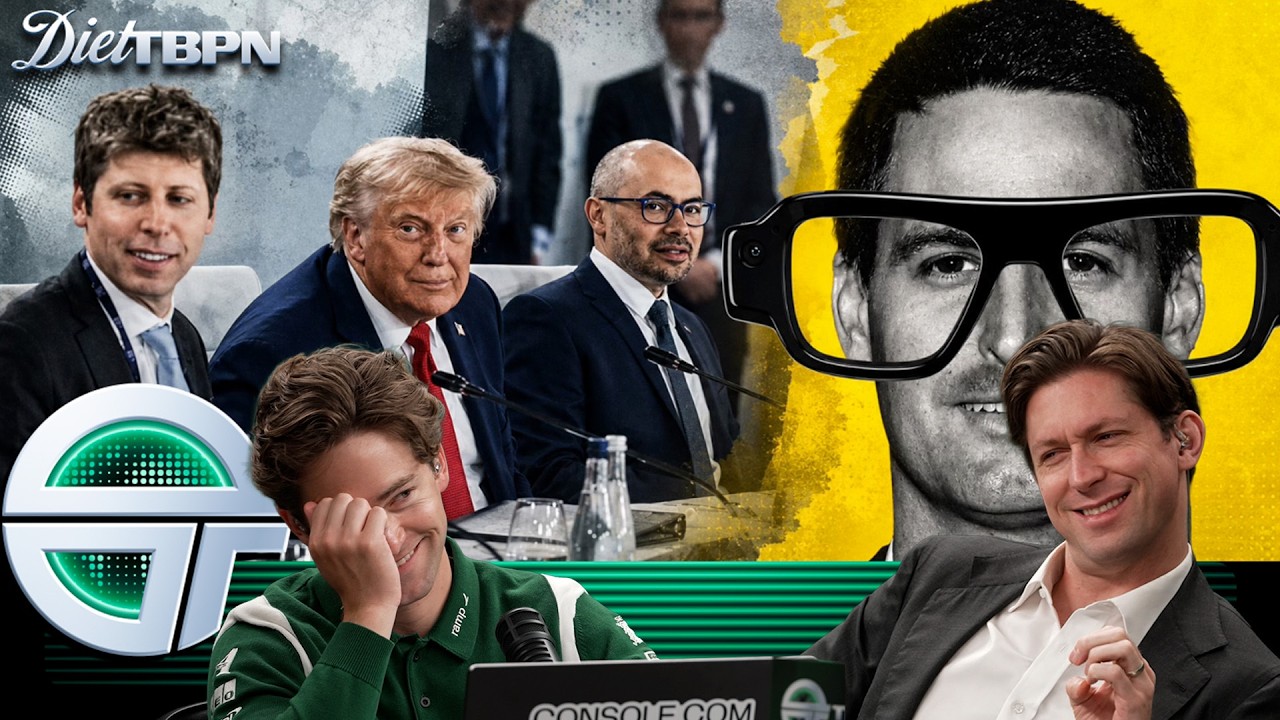
Snap Specs Face Wall Street Pushback as SpaceX Weighs Acquisitions
TBPN
Snap risks investor backlash by spending billions on augmented reality hardware during an artificial intelligence boom, while high-valuation peers like SpaceX leverage equity to expand.
## Background
Published by TBPN on YouTube on June 18, 2026, this video represents the 'Diet TBPN' format, which delivers a 30-minute highlight version of their daily live tech talk show. Hosted by John Coogan and Jordi Hays, the show covers daily tech news, hardware reviews, AI industry developments, and financial market updates.
## TL;DR
In this episode, the hosts analyze the negative market backlash and physical design flaws surrounding Snap's newly unveiled $2,200 Spectacles AR glasses amidst Snap's 92% stock decline. They delve into the viral debate around Taste Labs, a startup attempting to codify aesthetics to eliminate 'AI slop' in front-end design, while examining the broader trend of design commoditization. Finally, they cover recent media acquisition rumors, Hawkish Federal Reserve rate signals from Kevin Warsh's first meeting, a tech-heavy G7 summit, the tragic passing of Austin startup figure Joshua Baer, and SpaceX's potential M&A roll-up strategy.
## Atmosphere & style
The episode has the fast-paced, conversational, and slightly irreverent vibe of a modern tech podcast driven by quick-witted banter between peer co-hosts. Moving fluidly from lighthearted roasts—like joking about Evan Spiegel developing 'cauliflower ear'—to sharp financial and strategic analysis, the tone strikes a balance between Silicon Valley insider cynicism and genuine curiosity. The emotional arc transitions naturally from lively, sarcastic hot takes on tech hardware and social media drama to a brief, respectful moment of solemnity when addressing a tragedy in the startup community.
## Key takeaways
- [00:00](https://www.youtube.com/watch?v=AVhD0FQa_4s&t=0s) Snap's new Spectacles received mixed-to-negative feedback, underscoring the tough market scrutiny public companies face after spending $3.5 billion on hardware compared to early-stage startups.
- [00:00](https://www.youtube.com/watch?v=AVhD0FQa_4s&t=0s) Snap's stock has plunged 92% from its all-time peak, increasing investor pressure to focus on core AI ad targeting over expensive physical wearables.
- [03:00](https://www.youtube.com/watch?v=AVhD0FQa_4s&t=180s) The $2,200 Spectacles face physical and utility drawbacks, including an uncomfortable ear-compressing design, a 3.5-hour battery life, and a disconnect from Snapchat's core demographic.
- [08:00](https://www.youtube.com/watch?v=AVhD0FQa_4s&t=480s) High-end spatial computing hardware suffers from a severe cold-start problem, as a lack of an installed user base deters developers from building software ecosystems.
- [13:00](https://www.youtube.com/watch?v=AVhD0FQa_4s&t=780s) Taste Labs launched to fight 'AI slop' by codifying subjective aesthetic judgments into training data for frontier AI labs and app developers.
- [13:00](https://www.youtube.com/watch?v=AVhD0FQa_4s&t=780s) The Taste Labs launch ignited debate between critics who view taste as uncodifiable human craft and defenders who see aesthetic RLHF as a major business opportunity.
- [15:30](https://www.youtube.com/watch?v=AVhD0FQa_4s&t=930s) Automating or democratizing design risks commoditizing high-taste aesthetics, turning unique craft into recognizable visual tropes similar to Squarespace templates.
- [20:41](https://www.youtube.com/watch?v=AVhD0FQa_4s&t=1241s) Public feuds between tech reporters on X highlighted the chaotic nature of media reporting around potential Netflix acquisition rumors.
- [21:27](https://www.youtube.com/watch?v=AVhD0FQa_4s&t=1287s) Markets sold off following hawkish signals during Kevin Warsh's first Federal Reserve meeting as Chairman, with nine officials signaling potential rate increases by year-end.
- [21:27](https://www.youtube.com/watch?v=AVhD0FQa_4s&t=1287s) Global AI strategy, export controls, and model security were key topics at the G7 summit featuring Donald Trump alongside OpenAI's Sam Altman and DeepMind's Demis Hassabis.
- [23:56](https://www.youtube.com/watch?v=AVhD0FQa_4s&t=1436s) Capital Factory founder and CEO Joshua Baer tragically died in a plane crash, marking a significant loss for the Austin startup community.
- [24:38](https://www.youtube.com/watch?v=AVhD0FQa_4s&t=1478s) SpaceX is leveraging its immense valuation and stock currency to potentially execute an acquisition spree or roll-up strategy across energy, cloud, and supply chain infrastructure.
## Detailed walkthrough
Here is a detailed, faithful walkthrough of the transcript portion provided.
---
[00:00](https://www.youtube.com/watch?v=AVhD0FQa_4s&t=0s) Snap Spectacles and the AR Hardware Dilemma
The hosts jump straight into discussing the latest unveiling of Snap’s new Spectacles, noting that early feedback from the market and tech community has been mixed to outright negative. Looking at photos of the chunky augmented reality glasses—including a shot of DJ Kao wearing a particularly exaggerated version—John admits that seeing the oversized prototype actually makes the regular production model look surprisingly cool by comparison. He confesses he might even be "getting pilled" on the design and considering picking up a pair, though Jordi remains skeptical. The hosts reflect on how differently the market evaluates a product depending on who builds it. If an early-stage startup had shipped these glasses with these exact live demos, they could easily raise funding at a $1 billion valuation based on current market hype. However, Snap is a public company that has poured roughly $3.5 billion into developing this hardware, making Wall Street and activist investors far less forgiving.
```
Snap Spectacles Evaluation
┌────────────────────────────────────────────────────────────────────────┐
│ As a Startup Launch: │
│ • Innovative live demos & AR capabilities │
│ • Projected Valuation: ~$1 Billion+ │
└────────────────────────────────────────────────────────────────────────┘
┌────────────────────────────────────────────────────────────────────────┐
│ As a Public Enterprise (Snap Inc.): │
│ • ~$3.5 Billion spent in R&D over 5–10 years │
│ • Stock down 92% from peak (down 8.5% in the last 5 days alone) │
│ • High investor fatigue & scrutiny over non-core AI spending │
└────────────────────────────────────────────────────────────────────────┘
```
The financial picture for Snap highlights why investors are so anxious. A viewer in the chat points out that Snap’s stock is down 92% from its peak, including an 8.5% drop in the last five days alone. Evan Spiegel has been defending his long-term hardware vision, but critics argue these expensive wearables were greenlit years ago during a booming bull market. Today, in the AI era, investors want Snap to run a lean operation, double down on its core ad business and social network effects, and drive high margins through AI-powered ad targeting rather than pouring money into physical hardware. Still, the hosts acknowledge Spiegel's decade-long commitment to the space, dating back to acquisitions made ten years ago and the original display-less Spectacles, which achieved cultural buzz even if they failed to reach escape velocity.
- **Financial Impact:** Snap's stock has plunged 92% from its all-time peak, dropping another 8.5% in the five days surrounding the announcement.
- **R&D Spend:** Snap has invested approximately $3.5 billion into its hardware and augmented reality initiatives to date.
- **Historic Strategy:** Spiegel has been acquiring AR startups for over ten years, starting with early camera-only glasses that mirrored today's Meta Ray-Bans.
[00:03](https://www.youtube.com/watch?v=AVhD0FQa_4s&t=3s) Unpacking the Features, Form Factor, and $2,200 Price Tag
Examining the announcement from Augmented World Expo (AWE) 2026, the hosts dissect the specific feature set and physical design of the $2,200 device. Snap highlighted everyday utility features like heads-up navigation maps, real-time visual field restaurant reviews, spatial AI assistants that replace tape measures, and prosumer collaboration tools like shared virtual whiteboards. However, newsletter writer Brandon Goral points out a major physical flaw: the glasses look extremely uncomfortable. In photos, the thick, heavy side arms—housing the battery and compute modules—compress Spiegel's ears noticeably. The hosts joke that Spiegel looks like he is developing "cauliflower ear" from training MMA to keep up with Mark Zuckerberg.
```
Snap Spectacles ($2,195 / ~$2,200)
┌─────────────────────────────────────────────────────────────┐
│ Promised Features: │
│ • Heads-Up Navigation & Map Overlays │
│ • Spatial AI Measuring (Tape Measure Replacement) │
│ • Real-Time Restaurant Reviews in Visual Field │
│ • Shared Virtual Whiteboards for Collaborative Work │
│ • Golf Rangefinding & Spatial Furniture Placement │
├─────────────────────────────────────────────────────────────┤
│ Physical & Practical Drawbacks: │
│ • Thick, heavy arms causing ear compression ("cauliflower ear")│
│ • 3.5-hour battery life (insufficient for a 6-hour golf day)│
│ • $2,200 price point disconnects from core Snapchat demo │
└─────────────────────────────────────────────────────────────┘
```
Beyond comfort, the hosts question whether any touted use case justifies the massive price tag. While a golfer could use the HUD as a rangefinder to check yardage to the pin, traditional golf rangefinders cost $150, are far more durable, and last through a full 6-hour outing on the course—whereas Spectacles max out at three to three-and-a-half hours of battery life. Similarly, using AR to visualize how furniture fits into a living room or accessing DIY home-improvement tips are cool features, but they are episodic moments people only encounter every few years. The $2,200 price point fundamentally misaligns with Snapchat’s core youth demographic, leaving the device stranded without a clear "killer feature."
- **Price:** Retail/developer price is set at $2,195 (roughly $2,200).
- **Battery Life:** Rated for approximately 3 to 3.5 hours of continuous use.
- **Conference Debut:** Showcased at Augmented World Expo (AWE) 2026, an industry AR conference rather than a standalone Snap event.
- **Alternative Tools:** Standalone golf rangefinders cost roughly $150 compared to the $2,200 headset.
[00:08](https://www.youtube.com/watch?v=AVhD0FQa_4s&t=8s) Market Backlash, Ecosystem Bottlenecks, and Cheap Competition
The backlash from tech commentators and venture capitalists online has been fierce. A post from Blue Pool Capital slammed the design, asking "how deeply broken a culture has to be to ship this product and let the CEO walk around like this," while investor posts joked that it might be the first product in history not to sell a single unit. While collector figureheads like Palmer Luckey will buy them for hardware archives, mainstream adoption seems non-existent. A viral clip shared by A Capital highlights the absurd contrast: as an interviewer asks Spiegel about his $2,195 glasses while the stock drops 5%, the audio mix dims her voice whenever the camera perspective shifts inside the headset frame.
The primary challenge facing high-end AR/VR hardware is a brutal cold-start problem and stiff competition from both low-end manufacturers and big tech rivals:
| Device Category | Examples | Price Range | Strengths & Market Position |
|:--- |:--- |:--- |:--- |
| **Commoditized Display Glasses** | Xreal | ~$200 - $400 | Bypasses complex spatial AR to project a simple 200-inch virtual screen. Connects via HDMI for Xbox gaming and media consumption. |
| **Smart Audio/AI Frames** | Meta Ray-Bans | $299 - $799 | Stylish, wearable daily drivers focusing on on-demand AI, HUD overlays, and lightweight audio/camera features. |
| **High-End Spatial Computing** | Apple Vision Pro / Snap Specs | $2,200 - $3,500 | Impressive technical demos (e.g., Apple's interactive dinosaur portal), but hampered by high friction, short battery life, and lack of developer support. |
The hosts note that even in the current era of "vibe coding" where software creation is fast and inexpensive, developers refuse to build for spatial platforms because there is no installed base to monetize. Without millions of active users buying games or viewing ads, developer ecosystems remain stagnant, leaving expensive AR headsets trapped in an endless loop of impressive tech demos with no real commercial traction.
- **Competitive Landscape:** Xreal offers display glasses in the $200–$400 range, while Meta's Ray-Ban smart glasses sit between $300 and $800.
- **Developer Stagnation:** Apple Vision Pro's flagship tech demo—where a wall opens into a portal with a 3D velociraptor and landing butterfly—has failed to spur a thriving third-party app ecosystem due to low unit sales.
[00:13](https://www.youtube.com/watch?v=AVhD0FQa_4s&t=13s) Taste Labs Launch Sparks Internet Turf Wars
The conversation shifts to the second major tech story tearing up the X/Twitter timeline: the launch of Taste Labs by a former founding team member of Exa AI Labs. The startup announced its mission to "end AI slop" by converting subjective aesthetic judgments into measurable, codifiable data. Taste Labs revealed it is collaborating directly with frontier AI labs to fine-tune foundational models along taste parameters, while simultaneously partnering with app-layer startups to eliminate the generic, cookie-cutter look associated with early "vibe-coded" software projects. Her announcement went viral immediately, amassing over 1 million views in 24 hours and igniting fierce debate across the tech ecosystem.
```
The "Taste Labs" Controversy
┌────────────────────────────────────────────────────────────────────────┐
│ Core Mission: │
│ • Codify subjective aesthetics to eliminate "AI slop" │
│ • Partner with Frontier AI Labs to fine-tune model design taste │
│ • Help app developers avoid generic "vibe-coded" UI templates │
└────────────────────────────────────────────────────────────────────────┘
│
┌──────────────────┴──────────────────┐
▼ ▼
┌───────────────────────────────┐ ┌───────────────────────────────┐
│ Critique / Skepticism: │ │ Defense / Steel-Man: │
│ • "Taste" is uncodifiable │ │ • AI aesthetic output IS │
│ • Severe "taste fatigue" in │ │ currently poor & needs RL │
│ tech discourse │ │ • Startups have a right to │
│ • SF tech community seen as │ │ monetize RLHF for design │
│ lacking cultural taste │ │ and UI quality │
└───────────────────────────────┘ └───────────────────────────────┘
```
Critics quickly dogpiled on the post, arguing that genuine human taste is intrinsically qualitative and impossible to capture in code or data labeling pipelines. Jordi expresses massive "taste fatigue," noting that over the past six to twelve months, "taste" has become a tired buzzword invoked whenever people discuss what humans will do once AI automates all technical coding skills. Furthermore, observers outside the San Francisco tech bubble pushed back, pointing out the irony of Silicon Valley technologists claiming authority over aesthetics when the local tech culture is historically unassociated with high fashion, fine art, or cultural curation. However, John steel-mans the concept, noting that AI models undeniably produce ugly, generic UI design by default, making aesthetic data collection and design-focused RLHF a legitimate and lucrative venture opportunity.
- **Founder Background:** Founded by a former founding team member of Exa AI Labs.
- **Social Traction:** The launch announcement garnered over 1,000,000 views on X within its first 24 hours.
- **Primary Goal:** Codifying design standards and data labeling to improve front-end design outputs for AI models and app-layer tools.
<FollowUp label="Want to go deeper into the Taste Labs debate or explore the rest of the episode?" query="Tell me more about the Taste Labs debate and what else was covered in the rest of this TBPN episode."/>
[15:30](https://www.youtube.com/watch?v=AVhD0FQa_4s&t=930s) Taste Labs, the "Taste-as-a-Service" Trend, and Design Commoditization
The hosts critique the concept of "taste" in technology and product design, noting that tech centers like San Francisco are often "optimized and devoid of taste by design," prioritizing efficiency and athleisure over aesthetics. When evaluating companies known for genuine design taste, such as Linear, the hosts point out that their strong opinionated style leads to a wave of superficial imitators across the industry. Once a distinct aesthetic is copied wholesale, it fundamentally loses its originality and ceases to be tasteful. A historical parallel is drawn to Squarespace, which democratized high-end web design; while it allowed anyone to build a sleek site, it commoditized aesthetic quality to the point where viewers could immediately recognize a canned Squarespace template rather than true individual craft.
Despite the philosophical debate, the hosts acknowledge the immediate business opportunity for a company like Taste Labs. With AI labs, users, and hyperscalers desperate for higher-quality UI outputs, helping AI models generate better design is a lucrative short-term play. Even though Taste Labs faced criticism on social media, their sales pipeline likely exploded, and they are poised to "print money" in the short term, regardless of their long-term trajectory over five years. The hosts poke fun at the name itself, calling "Taste Labs" a "perfect rage bait name" since it implies manufacturing genuine human taste in a laboratory setting.
- A major issue in current AI data labeling is that feedback loops have historically focused on pure functionality (e.g., verifying if a button works or if a rendered hand has five fingers instead of six).
- The challenge moving forward is creating diverse datasets of high-taste design to prevent AI generation from collapsing into a repetitive "new Corporate Memphis" aesthetic.
- One host shares an anecdote about reviewing a pitch deck for a friend's company and asking if they were comfortable letting investors know they "tried to one-shot this" with generic AI design, warning that while some investors don't mind, it turns others off.
- Quoting a online debate post: *"Not everything can be codified and analyzed... Taste emerges from craft, context, meaning, subjectivity, and genuine care."* The hosts agree this is a tall order when dealing with a word as heavily loaded as "taste."
---
[20:41](https://www.youtube.com/watch?v=AVhD0FQa_4s&t=1241s) Media Turmoil: Netflix Acquisition Rumors and Reporter Spats
The discussion shifts to media industry gossip and fighting on social media timelines regarding rumors of Netflix acquiring Lionsgate or bidding for Roku. The hosts highlight a public feud between media reporters on X (formerly Twitter), where Semafore's reporting on potential M&A deals was publicly disputed by source statements.
- Semafor reporter Ben Smith and tech media figures traded barbs online over whether Netflix was ever in serious talks to acquire Lionsgate.
- Ben Smith posted a sarcastic tweet regarding the cleanup of conflicting reports: *"Clean up on aisle Semafor, my dear Ben."*
- The back-and-forth illustrates the chaotic nature of media reporting and corporate acquisition rumors when sources dispute published scoops on the record.
---
[21:27](https://www.youtube.com/watch?v=AVhD0FQa_4s&t=1287s) Market Movements, Fed Rate Signals, and the G7 AI Summit
In financial news, markets sold off roughly 1% following Hawkish signals from the Federal Reserve. During Kevin Warsh's first meeting as Fed Chairman, the central bank held interest rates steady, but a significant portion of board members revised their outlook toward rate increases before the end of the year.
- Nine out of 19 Federal Reserve officials penciled in at least one interest rate increase by year's end, up from zero in March.
- At a G7 summit in France, President Donald Trump was seated alongside OpenAI CEO Sam Altman and DeepMind CEO Demis Hassabis to discuss global AI strategy, export controls, and supply chain security.
- Discussions around export controls remain ongoing, particularly regarding the embargo surrounding advanced AI models like "Fable Five."
- The U.S. government held off on blacklisting China's DeepSeek along with over 100 other foreign firms deemed potential security risks.
- A report from *The Washington Post* detailed a dustup over Anthropic's model distribution: after Anthropic's list of approved recipients ballooned by roughly 50 entities, U.S. officials discovered that a South Korean telecommunications company with alleged ties to China had gained access to advanced models, triggering debate over clawing back technology via export controls.
---
[23:56](https://www.youtube.com/watch?v=AVhD0FQa_4s&t=1436s) In Memoriam: Joshua Baer
The hosts share tragic news regarding the Austin startup community, reporting the sudden death of Capital Factory founder and CEO Joshua Baer in a plane crash.
- Joshua Baer died in a plane crash while traveling back to Austin from Mexico early in the morning.
- The hosts express deep sadness, recognizing Baer as a vital pillar and leading figure in the Austin tech and startup ecosystem, and offer thoughts and prayers to his family and friends.
---
[24:38](https://www.youtube.com/watch?v=AVhD0FQa_4s&t=1478s) SpaceX's Valuation, M&A Roll-Up Strategy, and Closing
To close on a more analytical note, the hosts examine reports from the *Financial Times* regarding SpaceX leveraging its astronomical valuation and stock currency to launch an acquisition spree or industry roll-up. Investor Bill Ackman shared what the hosts call a "hall of fame opening sentence" regarding the company's valuation logic: *"One of the things that makes SpaceX so valuable is how valuable it is."*
- Ackman's tautology highlights how a high stock price acts as a powerful currency for public or high-valuation companies to acquire supply chain assets with minimal dilution.
- Analyst Ben Thompson wrote about this dynamic following the news of the Cursor acquisition option being exercised.
- The hosts ponder whether SpaceX will execute a broad roll-up strategy by acquiring neo-cloud assets, energy infrastructure, or chip manufacturing facilities (referencing discussions around Terafab).
- The discussion notes SpaceX's massive relative scale, pointing out that SpaceX trades at a market capitalization well beyond major legacy tech firms—clarifying that Intel itself is a $600 billion company, making SpaceX's acquisition capacity immense if they choose to partner across the AI and space supply chains.
## Notable quotes
> [08:00](https://www.youtube.com/watch?v=AVhD0FQa_4s&t=480s) How deeply broken a culture has to be to ship this product and let the CEO walk around like this.
> [18:30](https://www.youtube.com/watch?v=AVhD0FQa_4s&t=1110s) Not everything can be codified and analyzed... Taste emerges from craft, context, meaning, subjectivity, and genuine care.
> [20:41](https://www.youtube.com/watch?v=AVhD0FQa_4s&t=1241s) Clean up on aisle Semafor, my dear Ben. — Ben Smith
> [24:38](https://www.youtube.com/watch?v=AVhD0FQa_4s&t=1478s) One of the things that makes SpaceX so valuable is how valuable it is. — Bill Ackman
## Mentioned
Snap, Spectacles, DJ Kao, John Coogan, Jordi Hays, Evan Spiegel, Mark Zuckerberg, Meta, Augmented World Expo (AWE), Brandon Goral, Blue Pool Capital, Palmer Luckey, A Capital, Xreal, Apple Vision Pro, Taste Labs, Exa AI Labs, Linear, Squarespace, Semafor, Ben Smith, Netflix, Lionsgate, Roku, Federal Reserve, Kevin Warsh, G7, Donald Trump, OpenAI, Sam Altman, DeepMind, Demis Hassabis, Fable Five, DeepSeek, The Washington Post, Anthropic, Joshua Baer, Capital Factory, SpaceX, Bill Ackman, Ben Thompson, Cursor, Terafab, Intel, TBPN
TBPN's commentary examines a tech landscape caught between expensive long-term hardware gambles and mounting macro pressures, spanning Snap's controversial augmented reality spectacles, debates over codifying design taste for AI models, and executive diplomacy at the G7 summit.
Snap's Costly AR Bet and Developer Stagnation (0:00)
Snap debuted its newest Spectacles at AWE 2026 with a $2,195 price tag, heads-up navigation overlays, and spatial utility features, but the device faces intense skepticism from investors. Snap has spent approximately $3.5 billion on hardware and augmented reality R&D over a decade, yet its stock remains down 92% from its peak, including an 8.5% drop around the announcement. Tech commentators have criticized the hardware's ergonomics, noting thick arms that compress the user's ears and a 3- to 3.5-hour battery life that compares unfavorably to single-purpose tools like $150 golf rangefinders.
Beyond hardware comfort, high-end spatial computing faces a persistent cold-start dilemma. Unlike lightweight $200–$400 display glasses from Xreal or $299–$799 Meta Ray-Bans, premium devices exceeding $2,000 lack an active consumer base. Without widespread unit adoption, third-party software developers refuse to build for the platform—a challenge also seen with Apple's Vision Pro—leaving Snap's expensive hardware reliant on isolated, episodic utility demos rather than a self-sustaining ecosystem.
Taste Labs and the Monetization of AI Design
The launch of Taste Labs, founded by a former founding team member of Exa AI Labs, sparked immediate friction online by proposing to codify subjective aesthetic standards into measurable data. The startup aims to eliminate generic 'AI slop' by partnering with frontier AI labs on design-oriented fine-tuning and assisting app builders with reinforcement learning for user interfaces. The announcement drew over 1 million views in 24 hours but provoked backlash from critics who argue that artistic taste is inherently qualitative, context-dependent, and cannot be reduced to data labeling pipelines.
Despite widespread 'taste fatigue' in tech commentary, the hosts highlight a strong near-term commercial justification for the venture. Foundational models and app layers currently generate bland, repetitive interfaces by default, creating urgent commercial demand from hyperscalers for better visual output. The discussion compares the dynamic to how Squarespace commoditized web templates and how imitators diluted the design language of tools like Linear, concluding that providing design-focused RLHF is poised to be highly lucrative regardless of long-term philosophical debates.
AI Geopolitics, Model Distribution, and Macro Headwinds (21:27)
Frontier technology governance reached the international stage at a G7 summit in France, where President Donald Trump met with OpenAI CEO Sam Altman and DeepMind CEO Demis Hassabis to address global AI strategy, supply chain defense, and export controls. Tensions around model access continue to escalate following a Washington Post report that an approved recipient on Anthropic's expanded distribution list—a South Korean telecom provider—had alleged ties to China, prompting debate over export enforcement. Concurrently, U.S. officials held off on blacklisting Chinese lab DeepSeek alongside roughly 100 foreign entities.
These strategic developments converged with broader market anxiety as major stock indices dropped approximately 1%. During Kevin Warsh's first Federal Reserve meeting as Chairman, the central bank held benchmark interest rates steady, but hawkish forward guidance emerged: nine of nineteen board officials penciled in at least one interest rate increase before the end of the year, up from zero in March.
SpaceX's Stock Currency and Strategic Roll-Up Strategy (24:38)
Drawing on reporting from the Financial Times, the program analyzes SpaceX's capacity to exploit its high valuation as an acquisition currency to consolidate supply chain infrastructure. Investor Bill Ackman noted that 'one of the things that makes SpaceX so valuable is how valuable it is,' illustrating how significant equity value enables a firm to roll up neo-cloud assets, power infrastructure, and chip fabrication capabilities with minimal equity dilution.
This structural consolidation of capital contrasts with abrupt disruptions across regional startup hubs, reflected in the hosts' tribute to Austin tech ecosystem leader and Capital Factory founder Joshua Baer, who died suddenly in a plane crash while returning to Austin from Mexico.
Across consumer wearables, generative model design, and strategic infrastructure roll-ups, technology leaders are attempting to use high valuations and capital reserves to establish defensible platforms. However, whether in Snap's struggle to justify enterprise-tier pricing to consumers or Taste Labs' bid to standardize human aesthetics, long-term viability remains contingent on genuine third-party developer support and clear market demand.
## Background
本期内容由科技播客频道 TBPN 于 2026 年 6 月 23 日发布在 YouTube 平台。据节目简介,Diet TBPN 是由 John Coogan 与 Jordi Hays 主持的每日科技脱口秀精华版,旨在用 30 分钟左右快速提炼呈现当下硅谷最受瞩目的科技与创投焦点议题。
## TL;DR
节目首先深度剖析了 Snap 新一代 Spectacles AR 眼镜面临的高达 2200 美元定价、缺乏杀手级场景以及审美饱受诟病的商业困境,并对比了来自低成本竞品的冲击。随后,两位主持人讨论了 Taste Labs 试图将设计品味量化代码化所引发的行业论战,指出其在被群嘲背后的真实商业刚需。最后,节目快速复盘了奈飞收购传闻引发的媒体互撕、美联储鹰派信号与 G7 峰会期间围绕 Anthropic 的出口管制风波,在沉痛悼念奥斯汀创投先驱 Joshua Baer 坠机罹难后,探讨了 SpaceX 依托超高估值开展滚雪球式并购的宏大猜想。
## Atmosphere & style
整期节目节奏紧凑、叙事辛辣,充满硅谷圈内人特有的机智插科打诨与敏锐推演,在戏谑吐槽产品硬伤与解构资本逻辑之间切换自如。两位主持人的互动松弛而默契,情绪曲线既包含对科技圈“品味疲劳”的幽默拆台,也经历了突发悼念逝去创投前辈时的肃穆温情,最后又在探讨万亿级并购构想中重拾兴奋,带给观众极具现场感的高密度信息冲浪体验。
## Bulletin
- [00:00](https://www.youtube.com/watch?v=AVhD0FQa_4s&t=0s) Snap 在 AWE 2026 发布售价高达 2,195 美元的新一代 Spectacles AR 眼镜,因笨重外观、人体工学硬伤及缺乏杀手级场景引发广泛嘲讽,其股价自历史高位已累计暴跌 92%。
- [13:00](https://www.youtube.com/watch?v=AVhD0FQa_4s&t=780s) 前 Exa AI 成员创立 Taste Labs 试图将“品味”量化与代码化以终结 AI 垃圾内容,尽管在社交网络遭遇审美疲劳与群嘲,但其依托负向数据标注提升模型下限的商业变现逻辑备受看好。
- [21:27](https://www.youtube.com/watch?v=AVhD0FQa_4s&t=1287s) 尖端 AI 监管风波升级:Anthropic 因未按时报备向约 50 家实体开放尖端模型权限(包括一家涉华关联的韩国电信商),引发白宫国家安全审查并考虑动用出口管制收回技术。
- [21:27](https://www.youtube.com/watch?v=AVhD0FQa_4s&t=1287s) 美联储点阵图突显鹰派信号,19 位官员中近半数预计年底前至少加息一次,加之奥斯汀创投领袖 Joshua Baer 坠机罹难的悲剧,令宏观与创投市场整体承压。
## Key takeaways
- [00:00](https://www.youtube.com/watch?v=AVhD0FQa_4s&t=0s) 初创公司与上市公司在硬件创新上面临极度不公的评价标准:同等技术的 AR 原型足以让初创团队拿到 10 亿美元估值,但对于耗费 35 亿美元研发的 Snap,市场只看到持续失血与股价暴跌。
- [02:28](https://www.youtube.com/watch?v=AVhD0FQa_4s&t=148s) Evan Spiegel 历经十年的可穿戴设备执念未能形成商业“逃逸速度”,硬件长期亏损已严重拖累 Snap 拥有高网络效应的广告基本盘。
- [03:02](https://www.youtube.com/watch?v=AVhD0FQa_4s&t=182s) 新版 Spectacles 定价 2,195 美元且压耳严重,其力推的高尔夫测距、室内软装与虚拟白板协同均属伪需求场景,远不及现有低成本工具实用。
- [06:44](https://www.youtube.com/watch?v=AVhD0FQa_4s&t=404s) Snap Spectacles 偏向商务与硬核极客的定位,与其 Snapchat 平台年轻、追求潮流的核心用户画像存在严重割裂。
- [08:54](https://www.youtube.com/watch?v=AVhD0FQa_4s&t=534s) 高端前沿 AR 正遭受低成本实用路线的挤压:Xreal 仅凭数百美元便将大屏观影与主机游戏体验商品化,Meta Ray-Ban 则在 799 美元档位占据生态优势。
- [11:28](https://www.youtube.com/watch?v=AVhD0FQa_4s&t=688s) 头显硬件面临致命的“冷启动”僵局:缺乏百万级出货量导致开发者无利可图,即便在软件开发门槛极低的当下,Apple Vision Pro 等设备仍无法催生原生杀手级应用。
- [13:00](https://www.youtube.com/watch?v=AVhD0FQa_4s&t=780s) Taste Labs 主张将模糊主观的“审美品味”转化为可量化代码与标注数据,引爆推特对于“品味是否属于人类特权”的哲学与文化论战。
- [14:38](https://www.youtube.com/watch?v=AVhD0FQa_4s&t=878s) 硅谷长期被外界批评为缺乏审美,科技界对“人类仅存品味”的反复炒作已演变为审美疲劳;原创设计一旦被工具化(如 Linear 风格或模板建站),便迅速贬值为平庸。
- [14:38](https://www.youtube.com/watch?v=AVhD0FQa_4s&t=878s) Taste Labs 的商业逻辑在于负向数据清洗:相比直接定义完美设计,通过数据标注识别并剔除劣质粗糙内容,能切实提高前沿模型与应用界面的视觉下限。
- [18:54](https://www.youtube.com/watch?v=AVhD0FQa_4s&t=1134s) AI 生成设计面临坍缩为“新企业孟菲斯风格”的同质化危机,投资人对一键直出(one-shot)PPT 所体现的敷衍态度正形成明显的审美鄙视链。
- [20:41](https://www.youtube.com/watch?v=AVhD0FQa_4s&t=1241s) 媒体圈因 Netflix 竞购狮门影业传闻爆发推特公开论战,Semafor 创始人与一线行业记者就消息源准确性与公信力直接对线。
- [21:27](https://www.youtube.com/watch?v=AVhD0FQa_4s&t=1287s) 美联储点阵图半数官员支持年内加息,打破宽松预期并带动美股下跌;同时 G7 峰会围绕中美 AI 竞争与前沿模型出口管制展开高层博弈。
- [23:56](https://www.youtube.com/watch?v=AVhD0FQa_4s&t=1436s) 奥斯汀著名孵化器 Capital Factory 创始人 Joshua Baer 坠机身亡,得州创投界失去了一位奠基人式的领军人物。
- [24:38](https://www.youtube.com/watch?v=AVhD0FQa_4s&t=1478s) Bill Ackman 指出高市值本身即流动性硬通货,SpaceX 凭借极高估值完全有能力在 AI 算力、能源电力与芯片供应链领域展开大规模滚雪球并购。
## Detailed walkthrough
### [00:00](https://www.youtube.com/watch?v=AVhD0FQa_4s&t=0s) Snap Spectacles 外观引发的争议与初创公司估值悖论
节目开场,主持人讨论了前一天刚刚提及的 Snap 新一代 Spectacles(AR 眼镜)。外界对该产品的反馈极其两极化且普遍偏负面,很多人直接吐槽其外形不好看。屏幕上调出了 DJ Khaled 佩戴某款夸张眼镜的对比照片,主持人笑称,看过那种极其夸张的巨大眼镜之后,回过头来看 Snap 的 Spectacles,反而觉得没那么违和了,甚至带点“块状复古感(blocky)”,算是一种风格选择,让人忍不住想要买上一两副试试。
然而,聊到产品本身的定位,主持人提出了一个鲜明的对比:如果这是一款由初创公司发布的硬件,并且能做到 Snap 目前展示的各种技术 Demo,那么凭借当前的创投市场环境,该团队轻松就能以 10 亿美元的估值融到巨额资金。但这是一家上市公司耗时多年、累计砸下约 35 亿美元研发成本拿出的产品,市场与维权投资人(activist investors)自然不会给它初创公司那样的宽容度。
- 市场对 Snap 新硬件的反响极其冷淡,维权投资人表达了强烈不满。
- Snap 股价在过去 5 年表现低迷,仅在最近 5 天内又下挫了 8.5%。
- 聊天室观众 Tyler 提醒道:Snap 股价自历史最高点已经累计暴跌了 92%。
- 核心质疑在于:当整个科技行业进入人工智能(AI)时代而非可穿戴设备(Wearables)时代时,Snap 为什么还要在非核心业务上投入数千人与数十亿美元?
```mermaid
flowchart TD
accTitle: 硬件产品在不同主体下的市场评价差异
accDescr: 对比初创团队与上市公司推出同款 AR 眼镜时面临的完全不同的估值与市场期待逻辑。
subgraph Startup["初创公司模式"]
A["展示 AR Demo 与原型"] --> B["凭借市场热度吸纳资本"]
B --> C["轻松获得 10 亿美元高估值"]
end
subgraph Public["上市公司(Snap)模式"]
D["投入 35 亿美元与长期 R&D"] --> E["股价自高点暴跌 92%"]
E --> F["面临维权股东与市场严苛审视"]
end
```
---
### [02:28](https://www.youtube.com/watch?v=AVhD0FQa_4s&t=148s) Evan Spiegel 的十年 AR 执念与 Spectacles 的迭代历史
Evan Spiegel 并非临时起意跟风做硬件,他在增强现实与智能眼镜领域的布局已经持续了超过十年。主持人提到,自己认识的一位创业者早在十年前就把公司卖给了 Snap,彼时 Snap 就已经在持续收购相关团队与技术资产。第一代 Spectacles 发布时曾掀起过快闪贩卖机(Snapbot)的狂潮,虽然当时仅内置摄像头、没有显示屏(类似于后来的 Meta Ray-Ban),且发售初期好评如潮,但最终未能达到改变公司营收轨迹的“逃逸速度(escape velocity)”。
当时很多硬件研发项目是在 Snap 股价处于高位、市值庞大的繁荣期获得批准的。如今大环境转冷,Snap 坐拥高毛利的广告业务和具备强网络效应的社交平台,原本应该精简架构、提高广告负载与定位精准度,做一家高利润率的 AI 时代赢家,如今却依然不得不面对硬件巨额亏损带来的沉重包袱。
- Evan Spiegel 持续通过外部并购和内部研发探索可穿戴设备超过 10 年。
- 第一代 Spectacles 属于纯摄像眼镜,虽引发打卡潮流但未能实现规模化商业变现。
- 市场普遍质疑该项目在公司内部占用的人力与资金规模过重,偏离了核心广告业务。
---
### [03:02](https://www.youtube.com/watch?v=AVhD0FQa_4s&t=182s) AWE 2026 发布细节:2200 美元售价、人体工学硬伤与伪需求场景
TBPN 的通讯作者 Brandon Grolle 在撰写分析文章后直言“看不懂这款产品”。Snap 是在 Augmented World Expo 2026(AWE 2026)行业大会上展示这款全新 AR 眼镜的,而非单独举办独立发布会。功能层面上,它试图把“全天候日常佩戴”与“专业生产力/AI 助理”融为一体:包括抬头显示地图导航(HUD)、视野内餐厅评分、用于协作的共享虚拟白板,以及利用视觉 AI 测量空间距离以替代卷尺等。
但这一定位立刻遭遇了现实的重击:不仅售价高达约 2,200 美元,而且佩戴极不舒适。发布会照片中,Evan Spiegel 的耳朵明显被镜腿压得变形。由于镜腿后部集成了电池和计算单元,又厚又重,长时间佩戴会造成严重压迫感(主持人调侃 Spiegel 是不是像扎克伯格一样去练综合格斗练出了“菜花耳”)。
更关键的问题在于场景缺乏杀手级应用(Killer Feature):
- **高尔夫球场测距**:Snap 宣传可以用来测算球洞码数,但普通测距仪只要 150 美元且抗造,高尔夫球手打一场球常常需要 3.5 到 6 小时,AR 眼镜的电池续航根本支撑不住;再者,如果 PGA 巡回赛职业选手不用,业余爱好者很难为了“耍帅”买单。
- **室内软装设计**:普通人几年才买一次家具,用人脑估算或手机 AR 即可搞定,绝不可能为了偶尔一次的测量常年把厚重的眼镜挂在脸上。
- **企业远程协作**:要求初创公司给每位员工配发 2,000 多美元的设备去画虚拟白板,投入产出比极低。
---
### [06:44](https://www.youtube.com/watch?v=AVhD0FQa_4s&t=404s) 杀手级定位之争:日常屏幕替代品与 Snapchat 用户基本盘的割裂
针对“AR 眼镜是否需要杀手级应用”,两位主持人展开了探讨。一方认为一代 iPhone 早期也没有单一杀手级第三方应用,它的核心价值在于直接替代了人们口袋里的“功能手机”,顺带集成了 iPod 和网页浏览器;因此,AR/VR 真正要解决的是替代日常最常用的屏幕。然而,现阶段 VR 眼镜想取代客厅里的 80 英寸大电视并不容易,毕竟如今一台 80 英寸电视售价才 500 美元左右,体验更稳定且全家皆可共享。
另一方则指出更致命的问题在于用户画像的严重错位:Snapchat 的核心用户是一群年轻的社交媒体活跃群体,而 Spectacles 却做成了一款售价超过 2,000 美元、外观笨重、偏向商务或专业小众场景的极客硬件。
舆论反弹因此异常猛烈:
- 投资机构 Blue Pool Capital 方面公开痛批:“究竟是多么混乱的公司文化,才会允许发布这样的产品,并让 CEO 顶着这样的形象示人?”
- 批评者认为眼镜首先必须具备时尚属性,“连审美备忘录都没送到 Snap 办公室”,戴上它的用户只会显得像个极客呆子(dork)。
- 知名评论者 JB 甚至断言这可能是科技史上“第一款一件都卖不出去的产品”。
- 主持人对此表示反驳:即便大众不买单,科技产品狂热粉、需要做 AR Demo 的开发者以及像 Palmer Luckey 这样的全套设备收藏家,依然会购买并体验这款产品。
### [08:54](https://www.youtube.com/watch?v=AVhD0FQa_4s&t=534s) Snap 新一代 Spectacles 面临的严峻市场困境
主持人讨论了 Snap 刚发布的新一代智能眼镜 Spectacles 的现场演示与采访片段。采访中记者直接点出该眼镜售价高达 2,195 美元,而 Snap 的股价随即应声下跌超过 5%。两人注意到视频剪辑中的音效处理非常滑稽且生动——当镜头切换进入头显视角时,记者的声音瞬间变小,这种细节被调侃为“真正的杀手级功能”。然而对于 Snap 团队的处境,主持人表达了深切的同情。尽管主观上希望 Snap 能够胜出,但现实很残酷:这样昂贵的定价和定位很难获得足够的市场关注,难以证明未来继续烧钱研发的合理性。除非 Evan Spiegel 完全不在乎外界看法、坚持二倍或三倍地下注,否则在一家常规运营的公司里,这种尝试很可能就是硬件项目的“最后一搏”。
与 Snap 面临的困境形成鲜明对比的是来自中国硬件厂商的高效率竞争。例如主持人给 Tyler 买来体验过的 Xreal 眼镜,虽然在纯 AR 体验上还不算完美,但售价仅为几百美元,性价比极高。Xreal 并没有强行追求前沿的增强现实计算,而是专注在打磨日常高频场景:眼镜内嵌屏幕,直接投射出相当于 200 英寸的虚拟电视画面。用户只需用 HDMI 线将 Xbox 接上设备,就能直接在大屏幕上打主机游戏,极大地满足了移动游戏或无电视场景下看电影的基本需求。这种实用主义路径正在迅速将轻量级显示设备商品化。与此同时,Meta 与 Ray-Ban 合作的智能显示眼镜售价为 799 美元,拥有更庞大的开发者生态与丰富功能。对大部分用户来说,随叫随到的 AI 助手、生成式交互界面或者问答反馈,完全可以用类似《使命召唤》(Call of Duty)的平视显示器(HUD)形式来实现,根本不需要一副价值两千多美元的沉重眼镜。
```mermaid
flowchart TD
accTitle: AR Glasses Market Positioning Comparison
accDescr: Comparison of hardware strategies between Snap, Meta, and Xreal
subgraph HighEnd["高端前沿探索路线"]
Snap["Snap Spectacles ($2,195)<br/>探索前沿 AR / 开发者定位<br/>高成本、生态起步难"]
end
subgraph Consumer["实用与大众消费路线"]
Meta["Meta Ray-Ban ($799)<br/>AI 助手 / HUD 界面 / 庞大开发者网络"]
Xreal["Xreal 眼镜 (数百美元)<br/>200 英寸虚拟屏幕 / 即插即用游戏与观影"]
end
HighEnd -.->|"面临激烈价格与场景挤压"| Consumer
```
- **价格对比**:Snap Spectacles 定价为 2,195 美元,Meta Ray-Ban 显示版本售价约 799 美元,而 Xreal 仅需数百美元。
- **市场反应**:新设备发布后,Snap 股价跌幅超过 5%。
- **核心替代场景**:Xreal 针对移动游戏、连接 Xbox 和观影等基础屏幕需求,以极低成本对屏幕体验进行商品化普及。
---
### [11:28](https://www.youtube.com/watch?v=AVhD0FQa_4s&t=688s) 硬件平台的“冷启动”僵局与开发者生态缺失
硬件设备面临的最核心难题在于极其残酷的“冷启动”问题(Cold Start Problem):因为没有足够的用户基数,开发者不愿意为其投入开发;而没有丰富的杀手级应用,消费者更不会掏钱购买。主持人指出,即使当今处于“Vibe Coding”盛行、软件编写成本几乎为零的时代,市场依然没有看到 Apple Vision Pro 上出现任何爆发性的原生杀手级应用。
主持人以 Apple Vision Pro 附带的一个官方演示为例说明这种落差。该演示极具视觉冲击力:头显会先扫描房间的所有墙壁,随后其中一面墙壁开启成为传送门,门后是一片逼真的恐龙世界;接着一只类似迅猛龙的恐龙跨过传送门走进真实房间,随后一只蝴蝶轻盈地落在用户的手指上,由于手部追踪极其精准,甚至让人产生真实的触觉错觉。这是一个由苹果团队倾力打造的 5 分钟精湛演示,按理说在低门槛编程时代,开发者本可以极低成本基于此类玩法延展出完整应用。然而事实上并没有人跟进,因为开发者清楚地意识到这里缺乏经济回报,宁愿继续去卷 iOS App Store。如果硬件设备不能卖出数百万台的规模,无法让开发者看到通过销售游戏或投放广告变现的希望,那么即便演示再炫酷,生态系统也终究无法真正运转起来。
---
### [13:00](https://www.youtube.com/watch?v=AVhD0FQa_4s&t=780s) Taste Labs 引发推特舆论风暴:“品味”可以被量化吗?
社交网络(X)上另一场引发剧烈震荡的事件来自初创公司 Taste Labs。前 Exa AI Labs 创始团队成员公开宣布成立 Taste Labs,其核心使命是“终结 AI 垃圾内容(AI Slop)”。创始人提出:“这需要将一个模糊、主观的领域转化为我们可以衡量和代码化的东西。我们将从设计开始。”Taste Labs 计划通过数据标注与前沿 AI 实验室合作,帮助模型建立符合审美标准的产出,同时协助应用层初创公司提升产品的视觉与设计品质。
这一项目直接戳中了当下 AI 圈的痛点——利用 AI 快速生成的“Vibe Coded”项目往往长着同一张脸,视觉模板化严重,甚至被外界贴上“典型 Vibe Code 廉价感”的标签。Taste Labs 发布的推文在 24 小时内获得了超过 100 万次浏览,但也引来了铺天盖地的嘲讽与批评。反对者的核心论点是:“品味(Taste)根本不可能被编程,这是一件荒谬的事”。然而客观来看,提升 AI 的审美输出是一个合乎逻辑的商业切入点,针对这一需求成立创业公司完全具有合理性。
- **创始人背景**:前 Exa AI Labs 创始团队成员。
- **业务主张**:通过量化与代码化主观审美,结合数据标注提升前沿模型及应用层产品的设计质量。
- **传播数据**:推文发布后迅速病毒式传播,24 小时内展现量突破 100 万次。
---
### [14:38](https://www.youtube.com/watch?v=AVhD0FQa_4s&t=878s) 对“品味”的审美疲劳、硅谷人设与商业逻辑
围绕 Taste Labs 的争议,主持人指出大众首先产生了“品味疲劳”(Taste Fatigue)。在过去半年到一年间,“品味”成了科技圈最泛滥的高频词——当所有人都在讨论“AI 把所有技术活都干了之后人类还剩什么”时,大家的统一标准答案都是“人类拥有品味”。这种过度包装引发了普遍的反感。更讽刺的是,许多批评声来自科技圈外部:旧金山的科技从业者整天将品味挂在嘴边,但在外人眼里,旧金山是全球公认最缺乏审美的地方之一。这里充斥着千篇一律的纯色 T 恤和运动休闲服(Athleisure),这种文化在本质上是由“效率至上”驱动的,它在设计之初就摒弃了传统意义上的审美与艺术修养。
```mermaid
flowchart LR
accTitle: Taste Lifecycle and Commoditization
accDescr: The cycle of how original taste is formed, copied, and commoditized into standard slop
A["独创品味<br/>(例如 Linear 极简设计)"] --> B["行业跟风抄袭<br/>(大量克隆产品涌现)"]
B --> C["工具化与大众化<br/>(例如 Squarespace 模板)"]
C --> D["丧失原创性与独特性<br/>(沦为新一代视觉垃圾)"]
```
关于“品味”的本质,主持人以项目管理软件 Linear 为例进行了剖析。Linear 是一家极具主见(Opinionated)、由设计驱动的公司,产品细节极其讲究。然而一旦一种设计风格证明了自己的成功,就会引来整整一代初创公司的全盘照搬,从官网排版到产品 UI 毫无二致;而品味一旦沦为无脑复制,便失去了原有的独创性与灵魂。正如当年 Squarespace 将高端网页设计平民化、模板化一样,所有人都能一键做出漂亮的网站,但大众一眼就能看出这是模板产物,它便不再被视为具有高级品味。
尽管面对这些哲学和文化层面的冷嘲热讽,主持人对 Taste Labs 的商业前景却给出了积极务实的预判:
1. **真实刚需驱动**:无论是底层大模型实验室、云基础设施巨头(Hyperscalers),还是普通终端用户,都急需摆脱劣质粗糙的生成界面,改善外观是极具价值的现实问题。
2. **舆论即流量**:“Taste Labs”这个名字本身就是完美的“愤怒诱饵”(Rage Bait),虽然过去 24 小时内遭遇全网群嘲,但其客户获客管线(Sales Pipeline)大概率已经瞬间被挤爆。
3. **短期盈利能力极强**:即便无法看清这家公司在 5 年后的终局形态,但在短期内它极有可能赚得盆满钵满。
4. **负向数据集逻辑**:从技术实现角度看,与其定义什么是“高品味”,不如通过数据标注筛选并剔除“糟糕的、缺乏品味的设计”,把剩下的留作正向数据;相比过去只标注“按钮是否可用”、“渲染是否正常”的低级数据工程,这无疑是数据标注行业的一次向上升级。
### [18:54](https://www.youtube.com/watch?v=AVhD0FQa_4s&t=1134s) AI 生成设计的“品味”困境与一键直出 PPT 的尴尬
两位主持人深入探讨了人工智能在设计领域的落地现状与瓶颈。在过去两年里,AI 模型主要解决的是基础可用性问题,比如依靠强化学习环境和简单的数据标注来纠正生理错误——最典型的就是训练模型判断“图片里的手到底是五根手指还是六根手指”。然而,技术演进到今天,行业面临的核心挑战已经变成了“到底什么是好看的”以及“如何呈现兼具审美多样性的品味设计”。如果无法解决这个问题,AI 生成的内容最终会全部退化并坍缩成新一代的“企业孟菲斯风格”(Corporate Memphis),导致所有通过 AI 制作的视觉素材都散发着完全相同的廉价质感。
主持人分享了一个昨晚刚刚经历的鲜活例子:他的一位创业朋友发来了公司的融资路演 PPT(Deck),他看完后给出的第一句核心反馈就是:“大家一眼就能看出来你没在设计上花任何心思,对此你真的无所谓吗?”他解释说,有些创始人和特定投资人确实对此毫不在意,但创始人必须清醒地意识到,投资人完全能看出来这份 PPT 是“一键直出”(one-shot)的产物;对一部分讲究品质和细节的投资人而言,这种敷衍的设计态度会直接劝退他们。科技圈目前对“品味”(Taste)的定义存在根本误解,很多人妄图将一切都进行编码化和量化分析,但真正的审美与品味是无法被数据完全拆解的。
- 社交媒体上的争论观点认为:“即使你让 AI 模仿品味,它依旧毫无意义;品味脱胎于工艺、语境、意义、主观感受以及发自内心的投入。”
- 主持人对此表示,虽然“品味”这个词背负了太多形而上的包袱,但利用工具实打实地提升设计的基本下限与视觉质量,本身依旧具有极大的商业价值。
---
### [20:41](https://www.youtube.com/watch?v=AVhD0FQa_4s&t=1241s) 奈飞收购传闻与媒体推特互呛:Semafor 报道风波
媒体圈与社交平台时间线上爆发了一场戏剧性的争吵,焦点集中在流媒体巨头 Netflix 是否计划收购狮门影业(Lionsgate)的传闻上。此前 Semafor 针对该交易进行了独家报道,但随后多位知情人士出面驳斥了该消息,时间线上随即陷入了 Netflix 究竟是准备收购狮门还是曾参与竞购 Roku 的混乱讨论中。
两家媒体与知名记者之间更是在社交媒体上直接隔空开火对线。Semafor 联合创始人 Ben Smith 讥讽对手是在帮忙“擦屁股”,声称对方的消息源甚至都不愿意去找《Variety》这种老牌娱乐媒体;对方记者 Sharon 则毫不客气地反唇相讥,发推嘲弄道:“我的好 Ben,Semafor 货架上才是一片狼藉需要收拾(Clean up on aisle Semafor)。我现在只是说官方正式声明他们对狮门影业毫无兴趣、且从未感兴趣过,否则我也会乐意帮你转发扩散独家报道的。”主持人调侃道,媒体记者们在推特上真刀真枪地互撕,“整个时间线彻底乱成一锅粥了”。
---
### [21:27](https://www.youtube.com/watch?v=AVhD0FQa_4s&t=1287s) 美联储加息信号、G7 人工智能峰会与 Anthropic 出口管制风波
宏观市场方面,美联储官员再度释放出强烈的鹰派加息信号。尽管美联储在 Kevin Warsh 就任主席后的首次议息会议上维持基准利率不变,但十九位美联储官员中,竟有九位在最新的点阵图预测中写入了“年底前至少加息一次”,而此前三月份时这一人数还是零。受此鹰派情绪打压,美股市场应声下挫,当日大盘跌幅约为 1%。
与宏观市场的寒意并存的是欧洲的一系列地缘政治与 AI 监管大戏。在法国举行的 G7 人工智能峰会午餐会上,唐纳德·特朗普与 OpenAI 首席执行官 Sam Altman、谷歌 DeepMind 负责人 Demis Hassabis 并肩而坐,与多国领导人就 AI 出口管制及未来战略展开高规格讨论。与此同时,美国政府暂缓了将包括中国深度求索(DeepSeek)在内的上百家企业列入黑名单的举措,但在尖端大模型的出口管控上,各方博弈空前激烈。
```mermaid
flowchart TD
accTitle: Anthropic advanced model distribution and export scrutiny flow
accDescr: Shows the flow of advanced model access to foreign entities and US government intervention
subgraph ModelAccess["尖端模型分发外溢"]
A["Anthropic 尖端大模型授权"] --> B["获准访问名单暴增约 50 家新实体"]
B --> C["韩国某电信运营商获准接入"]
end
subgraph GovScrutiny["美国政府国家安全审查"]
C --> D["美方情报怀疑该韩企与中国存在关联"]
D --> E["高级官员考虑动用出口管制强行收回技术"]
end
```
根据《华盛顿邮报》披露的内幕,AI 独角兽企业 Anthropic 的尖端模型授权名单此前出现异常膨胀,在未及时向美国政府报备的情况下,额外向约 50 家实体开放了最顶尖模型的访问权限。在拖延数日后提交的最终名单中,美国官员惊愕地发现其中赫然包含一家涉嫌与中国存在密切关联的韩国电信运营商。这一发现直接触动了白宫的国家安全红线,多位高级官员随即开始严密评估是否动用出口管制法规强行收回技术权限。
---
### [23:56](https://www.youtube.com/watch?v=AVhD0FQa_4s&t=1436s) 悼念奥斯汀创投先驱:Capital Factory 创始人 Joshua Baer 坠机罹难
节目中插播了一条沉痛的突发悲剧:得克萨斯州奥斯汀知名创业孵化器兼加速器 Capital Factory 的创始人兼首席执行官 Joshua Baer,在一场清晨发生的小型飞机失事中不幸遇难。该架飞机当时正从墨西哥飞回奥斯汀。
主持人表达了深切的哀思与悼念。他们动情地回顾道,尽管此前没有机会与 Joshua 私下见面,但业内关于他的评价全部是极高的赞誉。作为奥斯汀科技创业生态圈的核心奠基人与擎天柱般的人物,Joshua Baer 多年来不遗余力地扶持本地科技新星与初创企业,他的骤然离世是整个得克萨斯乃至全美创投圈的巨大损失。主持人在节目中向 Joshua 的家人、好友以及 Capital Factory 的全体同仁致以深切的慰问。
---
### [24:38](https://www.youtube.com/watch?v=AVhD0FQa_4s&t=1478s) SpaceX 高估值“滚雪球”并购猜想与阿克曼的同义反复神论
为了打破悲伤的氛围,两位主持人将话题转向了商业世界的宏大构想:《金融时报》与知名科技分析师 Ben Thompson(Stratechery 作者)近期就 SpaceX 是否会利用其惊人的高估值开启大规模收购整合(Roll-up)展开了深度剖析。亿万富翁投资人 Bill Ackman 为此贡献了一句堪称入选“名人堂”的名言:“让 SpaceX 如此有价值的原因之一,就在于它本身是如此有价值(One of the things that makes SpaceX so valuable is how valuable it is)。”
这句看似荒谬的“同义反复”(tautological)论调,背后实则揭示了一条非常残酷的资本逻辑:极其高昂的股票市值在公开市场中本身就是流动性极强的硬通货。借着近期 Cursor 收购期权行使的行业风向,SpaceX 凭借其夸张的估值平台,完全有能力在航天与 AI 供应链上掀起一场疯狂的并购潮:
- **潜在并购标的**:SpaceX 完全有财力将触角延伸至新一代云基础设施(Neo Cloud)、新能源电力资产,乃至如 Terafab 等尖端芯片资产。
- **关于市值的调侃**:主持人一度惊呼 SpaceX 的估值是否已经达到了“十倍英特尔”,随后迅速自我纠正并笑道,英特尔目前仍是一家价值 6000 亿美元的科技巨头,收购它绝非易事。
- **产业战略意义**:如果 SpaceX 决定动用手中的股权资产全面整合太空基础设施、能源和 AI 算力供应链,将彻底改变其现有业务形态,全球科技圈也将密切关注其接下来的资本动作。
## Notable quotes
> [06:44](https://www.youtube.com/watch?v=AVhD0FQa_4s&t=404s) 究竟是多么混乱的公司文化,才会允许发布这样的产品,并让 CEO 顶着这样的形象示人? — Blue Pool Capital
> [06:44](https://www.youtube.com/watch?v=AVhD0FQa_4s&t=404s) 连审美备忘录都没送到 Snap 办公室
> [06:44](https://www.youtube.com/watch?v=AVhD0FQa_4s&t=404s) 第一款一件都卖不出去的产品 — JB
> [13:00](https://www.youtube.com/watch?v=AVhD0FQa_4s&t=780s) 终结 AI 垃圾内容(AI Slop) — Taste Labs 创始人
> [13:00](https://www.youtube.com/watch?v=AVhD0FQa_4s&t=780s) 这需要将一个模糊、主观的领域转化为我们可以衡量和代码化的东西。我们将从设计开始。 — Taste Labs 创始人
> [13:00](https://www.youtube.com/watch?v=AVhD0FQa_4s&t=780s) 品味(Taste)根本不可能被编程,这是一件荒谬的事
> [18:54](https://www.youtube.com/watch?v=AVhD0FQa_4s&t=1134s) 大家一眼就能看出来你没在设计上花任何心思,对此你真的无所谓吗? — 主持人
> [18:54](https://www.youtube.com/watch?v=AVhD0FQa_4s&t=1134s) 即使你让 AI 模仿品味,它依旧毫无意义;品味脱胎于工艺、语境、意义、主观感受以及发自内心的投入。
> [20:41](https://www.youtube.com/watch?v=AVhD0FQa_4s&t=1241s) 我的好 Ben,Semafor 货架上才是一片狼藉需要收拾(Clean up on aisle Semafor)。我现在只是说官方正式声明他们对狮门影业毫无兴趣、且从未感兴趣过,否则我也会乐意帮你转发扩散独家报道的。 — Sharon
> [24:38](https://www.youtube.com/watch?v=AVhD0FQa_4s&t=1478s) 让 SpaceX 如此有价值的原因之一,就在于它本身是如此有价值(One of the things that makes SpaceX so valuable is how valuable it is)。 — Bill Ackman
## Mentioned
Snap, Spectacles, Evan Spiegel, DJ Khaled, Tyler, Brandon Grolle, Blue Pool Capital, JB, Palmer Luckey, Meta, Ray-Ban, Xreal, Xbox, Apple Vision Pro, Taste Labs, Exa AI Labs, Linear, Squarespace, Netflix, Lionsgate, Roku, Semafor, Ben Smith, Sharon, Variety, 美联储 (Federal Reserve), Kevin Warsh, G7 人工智能峰会, 唐纳德·特朗普 (Donald Trump), Sam Altman, OpenAI, Demis Hassabis, Google DeepMind, DeepSeek, Anthropic, 华盛顿邮报 (The Washington Post), Capital Factory, Joshua Baer, SpaceX, Bill Ackman, Ben Thompson, 金融时报 (Financial Times), Cursor, Terafab, 英特尔 (Intel)
## Video description
Sign up for TBPN’s daily newsletter at TBPN.com
Diet TBPN delivers the best of today’s TBPN episode in 30 minutes. TBPN is a live tech talk show hosted by John Coogan and Jordi Hays, streaming weekdays 11–2 PT on X and YouTube, with each episode posted to podcast platforms right after.
Described by The New York Times as “Silicon Valley’s newest obsession,” the show has recently featured Mark Zuckerberg, Sam Altman, Mark Cuban, and Satya Nadella.
TBPN is made possible by:
Ramp - https://ramp.com
Public - https://public.com
Cisco - https://www.cisco.com
Console - https://www.console.com
CrowdStrike - https://www.crowdstrike.com
Figma - https://www.figma.com
MongoDB - https://www.mongodb.com
NYSE - https://www.nyse.com
Railway - https://railway.com
Shopify - https://www.shopify.com/
Follow TBPN:
https://TBPN.com
https://x.com/tbpn
https://open.spotify.com/show/2L6WMqY3GUPCGBD0dX6p00?si=674252d53acf4231
https://podcasts.apple.com/us/podcast/technology-brothers/id1772360235
https://www.youtube.com/@TBPNLive
[Source](https://www.youtube.com/watch?v=AVhD0FQa_4s)
Source quotes
[6:44] Blue Pool Capital: 究竟是多么混乱的公司文化,才会允许发布这样的产品,并让 CEO 顶着这样的形象示人?
[6:44] 连审美备忘录都没送到 Snap 办公室
[6:44] JB: 第一款一件都卖不出去的产品
[13:00] Taste Labs 创始人: 终结 AI 垃圾内容(AI Slop)
[13:00] Taste Labs 创始人: 这需要将一个模糊、主观的领域转化为我们可以衡量和代码化的东西。我们将从设计开始。
[13:00] 品味(Taste)根本不可能被编程,这是一件荒谬的事
[18:54] 主持人: 大家一眼就能看出来你没在设计上花任何心思,对此你真的无所谓吗?
[18:54] 即使你让 AI 模仿品味,它依旧毫无意义;品味脱胎于工艺、语境、意义、主观感受以及发自内心的投入。
[20:41] Sharon: 我的好 Ben,Semafor 货架上才是一片狼藉需要收拾(Clean up on aisle Semafor)。我现在只是说官方正式声明他们对狮门影业毫无兴趣、且从未感兴趣过,否则我也会乐意帮你转发扩散独家报道的。
[24:38] Bill Ackman: 让 SpaceX 如此有价值的原因之一,就在于它本身是如此有价值(One of the things that makes SpaceX so valuable is how valuable it is)。
Source quotes
[8:00] How deeply broken a culture has to be to ship this product and let the CEO walk around like this.
[18:30] Not everything can be codified and analyzed... Taste emerges from craft, context, meaning, subjectivity, and genuine care.
[20:41] Ben Smith: Clean up on aisle Semafor, my dear Ben.
[24:38] Bill Ackman: One of the things that makes SpaceX so valuable is how valuable it is.
Original transcript
[0:00] Snap Spectacles, we talked about it a
[0:02] little bit yesterday.
[0:03] Feedback has been mixed, not good.
[0:06] People don't like it. Pull up the
[0:08] picture from DJ Cow's glasses. What
[0:11] glasses?
[0:12] >> It's really uh
[0:14] >> This one.
[0:14] >> It's really tough because if if a
[0:17] startup shipped these, everyone
[0:21] like they would they would they would be
[0:23] able to raise capital.
[0:24] >> this one, go back to the other photo.
[0:27] Looks really normal now.
[0:28] >> There you go.
[0:29] >> Honestly,
[0:29] >> There you go.
[0:30] >> the funny big exaggerated version makes
[0:32] me feel like these actually look really
[0:34] cool now. That not those. That's too
[0:36] much. But you flip back, I'm into it
[0:39] now. It's actually
[0:41] inoculated me to the oh, they're big
[0:43] because I saw a bigger version and I
[0:45] like these. They're a little bit blocky,
[0:47] yeah, but it's like a style choice. I
[0:49] don't know. I'm getting I'm getting
[0:50] pilled. I might pick up a pair.
[0:52] >> Okay, here's the thing.
[0:52] >> I might pick up a couple pair.
[0:53] >> If a startup launched this product
[0:56] >> Yes.
[0:56] >> and was able to do the demos that they
[0:58] can do. We've tried this product.
[0:59] >> Yeah.
[0:59] >> done We've done a a number of the demos.
[1:01] That startup would be able to raise at I
[1:04] would say easily a billion just based on
[1:07] current market conditions. But they're a
[1:09] startup is evaluated a lot differently,
[1:11] of course, than a you know, public
[1:12] company that has spent somewhere in the
[1:14] range of three and a half billion
[1:15] dollars building this product. So yeah,
[1:18] the the feedback uh from the market um
[1:21] has not been great. From activists has
[1:24] not been great.
[1:25] >> in the last five years and just in the
[1:26] last five days down another eight and a
[1:28] half percent. Evan Spiegel has had been
[1:31] having to defend his decisions, his
[1:33] investment here.
[1:34] We'll we'll see where all this goes. The
[1:36] question's like how how expensive is
[1:38] this effort? How how core to the
[1:40] business is it? How many Snap employees
[1:43] are working on this? They have a great
[1:44] ads business, a great social media with
[1:47] a network effect. Should be an AI
[1:49] winner, you know, just increase the the
[1:52] ad load, increase the ad targeting, uh
[1:55] run a really lean thin operation and you
[1:58] should be able to be a very, very
[2:00] profitable enterprise. Uh, the the era,
[2:03] clearly a lot of these investments were
[2:04] greenlit in the early days when the
[2:06] stock was up, uh, when the when the
[2:09] market was booming, and now we're seeing
[2:11] them roll out and everyone's asking a
[2:12] wildly different set of questions
[2:14] because we're in the AI era, not the
[2:16] wearables era. But,
[2:18] >> Yeah, Tyler in the chat says Snap down
[2:20] 92% since peak.
[2:21] >> Yeah, peak drop.
[2:22] >> So, you can imagine a lot of the a lot
[2:24] of the work that was done on these was
[2:26] done when they were a much, much, much
[2:27] bigger company.
[2:28] >> Yeah, but to be fair, uh, Evan has been
[2:31] acquiring in this category and thinking
[2:33] about this for probably over a decade. I
[2:36] know, uh, I actually talked to a founder
[2:37] that he sold his company to Snap, it
[2:40] must have been 10 years ago. And they
[2:42] bought a couple of companies and have
[2:44] been working on this, and then of course
[2:45] they did have the first version of
[2:46] Spectacles, which were like the Meta
[2:48] Ray-Ban displays or the Meta Ray-Bans,
[2:50] no screen but just a camera, and the
[2:52] rollout for that was really well
[2:53] received but never quite got to uh,
[2:55] escape velocity where it really moved
[2:56] the needle for the business. Um, but
[2:58] very clear,
[3:00] uh, you know, interesting R&D thinking.
[3:02] Anyway, Evan Spiegel is going to have to
[3:04] defend himself from our own Brandon
[3:06] Goral, because Brandon Goral came up to
[3:08] me after writing the newsletter and
[3:09] said,
[3:10] "Uh, I don't I I don't think I get it."
[3:13] And I'm like, "That's fine. We'll we'll
[3:14] read through your piece. We'll We'll
[3:16] take We'll We'll steel-man it. I'll
[3:17] steel-man it, no problem." So, Snapchats
[3:19] showed off Specs, its new augmented
[3:21] reality glasses at Augmented World Expo
[3:25] 2026 yesterday. Uh, interesting. I
[3:28] didn't realize that this was an industry
[3:29] conference for augmented reality, not a
[3:32] Snap specific event. Uh, the features
[3:34] are a mix of things you'd want in a
[3:35] daily driver pair of glasses that you'd
[3:38] have on all the time, everywhere. Uh,
[3:40] maps, HUD, uh, review of restaurants in
[3:42] your visual field, prosumer features
[3:45] like the ability to collaborate on
[3:46] shared virtual whiteboards and more
[3:48] general AI-powered assistant stuff, like
[3:50] measuring distances for you so you don't
[3:53] have to use a tape measure.
[3:54] Uh the broad mix of features combined
[3:56] with the fact that specs are fairly
[3:57] pricey, $2,200 basically, and they look
[4:00] painful to wear. So, Brandon Grolle is
[4:03] pointing out the fact that Evan's ear
[4:05] looks a little bit bent from wearing the
[4:08] specs. The The uh What do they call
[4:10] that? The The bar?
[4:13] What's that thing on the on the glasses
[4:15] that goes in the back? I don't know.
[4:16] Whatever that thing is, uh it's a little
[4:19] thick, it's a little heavy. There's a
[4:20] battery back there, probably some
[4:21] compute. And so, uh that is compressing
[4:25] his ear a little bit. Imagine wearing
[4:26] that for 4 hours, maybe it gets a little
[4:28] bit tiring. We will see how we can get
[4:30] >> Other scenario, he's getting some
[4:31] cauliflower ear, he's training. He sees
[4:34] Zach is is uh you know, gotten into MMA,
[4:37] he doesn't want to be left behind. So,
[4:39] we don't know.
[4:39] >> Are guys who [snorts] golf every other
[4:41] weekend in the summer really going to
[4:43] drop over 2K so they can put on their
[4:46] pair of specs just when they need to see
[4:48] how many yards they are from the pin? Uh
[4:50] I think a lot of golfers do have
[4:53] disposable income. The price tag might
[4:55] not be the issue. The question is, does
[4:57] this look cool on a golf course? Is this
[4:59] a Is this a Is this something that has
[5:02] like badge value if you pull out like a
[5:04] nice rangefinder, like a Titleist bag or
[5:07] something with a with a great brand? So,
[5:09] it feels like to make it cool, it's got
[5:11] to be on the PGA tour. The The heroes
[5:15] that people look to need to be using
[5:17] this actively uh for the golf community
[5:20] to really
[5:21] >> Yeah, and
[5:22] and so many cool use cases.
[5:26] >> Mhm.
[5:26] >> But, are any of them killer use cases?
[5:29] >> No, I'm just saying Is that
[5:30] >> I'm saying like that's a cool use case.
[5:33] You're trying to understand how a piece
[5:34] of furniture is going to fit into your
[5:35] room.
[5:37] I don't
[5:37] >> Yeah.
[5:38] >> I can I I do that uh
[5:41] >> mentally.
[5:41] >> when I'm doing
[5:42] >> You do it in your
[5:43] >> Like if I'm doing an interior design
[5:44] project, I might need that, but that's
[5:46] like a specific moment in time.
[5:48] >> Yeah.
[5:49] >> Maybe once every couple years at most.
[5:52] For a lot of people,
[5:53] you know, some people are kind of
[5:54] constantly adding furniture here and
[5:56] there, but a lot of people it's kind of
[5:57] you set it and forget it. Again, unclear
[5:59] why this is something you would want on
[6:01] your face all the time.
[6:02] >> You can buy rangefinders for around 150
[6:04] bucks. They're not fragile. Also, a lot
[6:07] of golf got a lot of golf heads. They're
[6:08] out there for more than the battery
[6:10] life. They're more out They're out there
[6:11] for more than three three and a half
[6:12] hours. Three and a half hours might be
[6:13] enough for night on a busy course.
[6:16] They're doing six hours out there
[6:17] sometimes. So, you don't want to be out
[6:18] there with your going to reality glasses
[6:20] and they die on you.
[6:21] Are DIYers going to drop this much money
[6:23] just so they can have easy access tips
[6:25] for their home projects? Are startups
[6:26] going to be willing to drop 2K for every
[6:28] employee who wants to collaborate in AR?
[6:30] All of these are examples touted on
[6:33] Snap's specs page as things you can do
[6:35] with the glasses and the features do
[6:37] seem super cool. It's just hard to
[6:38] imagine
[6:39] any one of them justifying a 2K price
[6:41] tag, especially because they look
[6:43] painful to wear. And so, that's to your
[6:44] point about killer features. I I
[6:46] disagree. I I I I don't think that these
[6:49] products need a killer feature. I think
[6:51] the original killer feature of the
[6:52] iPhone was the phone. Like people were
[6:54] already carrying phones and the iPhone
[6:56] was like we we we we debated this
[6:58] before, but it it it it it had some call
[7:00] dropping problems, but it was a
[7:02] replacement for your dumb phone. And
[7:05] then the fact that it also was an iPod
[7:07] was was an extra feature. And then the
[7:10] fact that it was an internet browser was
[7:11] another feature. But it replaced like
[7:13] very very
[7:15] >> Yeah. Basic things.
[7:16] >> My thing is like I don't think as cool
[7:17] as the tech is, I don't think the tech
[7:19] is ready to be a daily driver computer.
[7:21] >> Yeah. Well, I I think it needs to
[7:23] replace a very a very regular everyday
[7:26] interaction thing like a screen. And so,
[7:28] that's why I still think VR is like a
[7:31] replacement for the home theater, maybe
[7:32] a replacement for the 80-in TV, but
[7:35] 80-in TVs are like 500 bucks now. And
[7:37] so,
[7:38] you got to get it to be better and you
[7:40] got to have enough for everyone in your
[7:42] household to have one and it's got to be
[7:43] a better experience but in that world
[7:46] >> like a lot of these I mean like a lot of
[7:48] these use cases I don't feel like are
[7:50] that aligned to Snapchat's user base.
[7:53] >> Mhm.
[7:54] >> And that's like the biggest thing. Like
[7:55] a $2,000
[7:57] a $2,000 device doesn't really align to
[8:00] their what I believe is their core
[8:02] >> Yeah.
[8:03] >> demo.
[8:03] >> Yeah. And so Blue Pool Capital bloke's
[8:05] asking the question how did this happen?
[8:08] Do you know how deeply broken a culture
[8:09] has to be to ship this product and let
[8:11] the CEO walk around like this? Again, I
[8:13] don't think they look that bad but there
[8:14] is
[8:15] this question of
[8:18] you know, is this a serious product? The
[8:20] fashion part must be addressed first. I
[8:22] guess the taste memo never made it to
[8:24] snap if you're enough of a dork to have
[8:26] these on your face and you won't even
[8:27] get the chance to say may I meet you.
[8:30] Wow, people are very very upset about
[8:32] these. JB says I think I legit think
[8:35] this may be the first product ever to
[8:37] hit the market and not sell a single
[8:38] unit. That's ridiculous. going to sell a
[8:40] few to people that want to demo them.
[8:42] There's there's fans that buy every
[8:44] product. Palmer Luckey has a collection
[8:45] of augmented VR glasses, you know, the
[8:47] collectors will get them.
[8:49] Uh right.
[8:49] >> Let's put up pull up this post from A
[8:51] Capital because this might be a
[8:54] >> Yeah, we can watch this. This this
[8:55] actually might be the killer feature
[8:57] honestly.
[8:58] >> Thanks for joining us here today. You're
[9:00] wearing your new Spectacles you just
[9:02] unveiled. They cost $2,195.
[9:06] The stock's down more than 5%.
[9:09] >> The sound device
[9:10] The sound mix is really good.
[9:13] >> Thanks for joining us here today. You're
[9:15] wearing your new
[9:16] >> The sound mix. The fact that her voice
[9:18] gets quieter when you go inside the
[9:20] headset is really what does this.
[9:22] So so funny.
[9:24] >> I feel really bad for the Snap team.
[9:26] >> Mhm.
[9:26] >> I I I think like the I want them to win
[9:29] but I don't I I don't think this launch
[9:33] will get them the level of traction that
[9:34] they're you're to need to justify
[9:36] further investment.
[9:37] >> Yeah.
[9:37] >> Is my current
[9:39] >> No.
[9:39] >> view, unless you're
[9:40] >> Yeah.
[9:40] >> Spiegel just doesn't care
[9:42] >> Yeah.
[9:42] >> and, you know, continues to double
[9:44] double or triple down, which is totally
[9:46] possible. But, I think at at a normal
[9:48] company,
[9:50] uh this would this would kind of be the
[9:52] the the last shot.
[9:54] >> It's tough. You're competing with uh
[9:55] these hyper-efficient Chinese companies.
[9:58] There's this company Xreal. We demoed
[10:00] this. Uh I got a pair for Tyler, took
[10:03] them for a spin. They're not quite
[10:04] there, but they're way cheaper. Uh
[10:07] you're looking at a couple hundred
[10:09] dollars, and you get uh a screen that's
[10:12] like not even really augmented reality.
[10:15] It's sort of like sunglasses with a
[10:18] screen screen inside, but then it
[10:19] projects like a 200-in TV in front of
[10:22] you. And uh these are actually sort of
[10:27] It's more chopping at the daily use
[10:28] cases and less doing like frontier
[10:30] technology. So, you can play video games
[10:33] on them because you just plug the HDMI
[10:36] from the Xbox into the device, and then
[10:40] you just have a big screen in front of
[10:42] you. And if you don't have a TV with
[10:43] you, for mobile gaming, there's a whole
[10:45] bunch of different things. You can watch
[10:46] movies on it, do do the basic things
[10:48] that people do with screens. And I think
[10:50] that uh Xreal is on a a path to like
[10:54] commoditizing this in a pretty
[10:57] significant way, where
[10:59] >> Not to mention Meta Ray-Ban displays are
[11:01] $799.
[11:03] >> Yeah.
[11:03] >> And I'm sure I do believe that these
[11:06] have more, quite a bit, like more
[11:08] features, functionality. They have a
[11:10] bigger developer network.
[11:12] >> But, a lot of the a lot of the killer
[11:13] features of like on-demand AI,
[11:16] instantiating a generative UI, answering
[11:19] a question for you, that can be done
[11:20] with a Call of Duty HUD. That can be
[11:22] done with a Call of Duty HUD.
[11:23] >> all this, like again, it's it's cool,
[11:25] but I cannot I don't know anyone that
[11:27] would do this.
[11:28] >> And you face this crazy cold start
[11:31] problem, where the developers don't make
[11:34] anything because there aren't that many
[11:36] users. Like it is so crazy that even in
[11:38] the era of vibe coding and software
[11:40] being like free, we're not seeing a
[11:42] breakout Apple Vision Pro development.
[11:44] Like the Apple Vision Pro, which I need
[11:46] to bring in for Scotty wants to demo it,
[11:48] comes with a really, really impressive
[11:51] demo where it it finds all the walls and
[11:55] then one of the walls opens up and is a
[11:57] portal and and through the wall you see
[12:00] this like dinosaur land. You'd love it
[12:01] as a dinosaur expert. Kids love it. And
[12:04] then a dinosaur comes through the
[12:05] portal, comes into your
[12:08] uh it's like a velociraptor type thing.
[12:10] Um
[12:11] and and a butterfly lands on your finger
[12:15] and it feels like it almost you almost
[12:17] feel it because it's so it's like
[12:19] tracking your hand and lands. Very cool.
[12:22] Uh it's like a 5-minute demo that the
[12:24] Apple team clearly worked very hard on.
[12:26] That feels like something that could be
[12:27] expanded on very cheaply in the age of
[12:30] vibe coding and yet no one sees it as an
[12:33] economic opportunity. Developers are
[12:34] just they'd rather build an app for the
[12:37] iOS App Store. And so no one's really
[12:40] going there to compete. So while these
[12:42] demos look really cool,
[12:44] where's the ecosystem going to come from
[12:46] if they're not selling millions and
[12:47] millions of units and people are are are
[12:50] ready to purchase games or you know, see
[12:52] ads or do anything that could monetize a
[12:55] business built on the back of this
[12:56] platform. It's a very, very tricky
[12:58] proposition to get a platform like this
[13:00] up and running. Well, the other story
[13:03] that's burning up the timeline is Taste
[13:05] Labs put the timeline in turmoil, people
[13:08] going back and forth. So yesterday, a
[13:10] former Exa AI Labs founding team member
[13:14] introduced her startup Taste Labs whose
[13:16] mission is to end AI slop. Quote, "This
[13:21] requires turning a fuzzy subjective
[13:23] domain into something we can measure and
[13:25] codify. We're starting with design, her
[13:27] post says. More specifically, Taste says
[13:30] they're working with Frontier AI Labs to
[13:32] improve their models along taste lines
[13:34] through data labeling and app layer
[13:36] startups to improve the aesthetics of
[13:37] their products. This has been a critique
[13:39] of of vibe coded projects. They all sort
[13:42] of look the same. Um of course, there
[13:44] are examples of really cool projects,
[13:47] but uh people were starting to say, "Oh,
[13:49] this has like the vibe code look to it
[13:51] uh or this model's not good at front
[13:53] end, etc."
[13:55] Um
[13:55] her goal is to fix that. Uh
[13:58] Ties' post her post was immediate
[14:00] immediately went viral, generating tons
[14:02] of opinions on X and getting over a
[14:04] million views in 24 hours. People's main
[14:06] complaint is basically you can't program
[14:08] taste. It's impossible, they say. Uh but
[14:11] the steel man is that a the AI aesthetic
[14:13] AI's aesthetic output can be improved
[14:16] and that it's perfectly reasonable for a
[14:18] startup to try and capitalize on that uh
[14:21] opportunity. I want to talk to you about
[14:24] taste about your your feed. Is it
[14:27] scalable? Is it not? Give me uh take me
[14:30] through some of the uh the [snorts] the
[14:32] critiques here. Tell me what resonates
[14:34] with you and then I have a a take about
[14:37] where the business
[14:38] >> So, I think the main thing is
[14:40] main thing is people have
[14:41] uh taste fatigue.
[14:43] >> Mhm.
[14:43] >> They don't want to hear that word
[14:44] anymore.
[14:45] >> Yeah.
[14:45] >> I don't want to hear that word anymore.
[14:47] >> Cuz for the last 6 months, maybe last
[14:48] year, it's been like the the the code
[14:51] word. Like, what will we do when the
[14:53] AI can do all the
[14:55] >> technical stuff? Well, we'll have the
[14:56] taste.
[14:56] >> Yeah, and and and so yeah, I think
[14:58] there's fatigue around the usage of the
[15:01] word, the even the conversation. I I
[15:04] we've never even like waded that deeply
[15:06] into the conversation and I'd like to
[15:08] keep it that way. That being said,
[15:11] >> to set the the the table on the
[15:13] critique, like a lot of people outside
[15:15] of tech are critiquing it because a lot
[15:18] of SF people in tech are saying taste is
[15:20] so important and the outsiders don't see
[15:23] San Francisco
[15:24] >> creative. as being particularly tasteful
[15:26] people from a fashion perspective, from
[15:28] an art perspective, or curation
[15:30] perspective. It's sort of known as the
[15:33] t-shirts and athleisure community, and
[15:36] that's
[15:37] it's sort of it's it's optimized. It's
[15:39] devoid of taste by design. It's about
[15:41] efficiency, not taste.
[15:43] >> Yeah, and then and then
[15:45] I'll say one more thing and then
[15:48] and then I'll I'll steal man
[15:50] >> taste labs.
[15:50] >> Yeah.
[15:51] >> But
[15:52] so the main thing is like when I think
[15:54] of when I think of like taste, like like
[15:56] product taste, like I think of like
[15:58] linear, right? Like linear has like
[16:00] always been very opinionated, very
[16:02] quality driven.
[16:04] They want to grow quickly because of how
[16:06] great the product is.
[16:09] Like, you know, very very design driven.
[16:11] Like that is a company that I think
[16:13] generally has very high, you know, good
[16:15] taste, right? The problem is when you
[16:17] have good taste and people pick up on
[16:19] it, they just sort of just like blanket
[16:21] like copying you, right? So then there's
[16:23] an entire generation of companies that
[16:25] just look like linear, right? From their
[16:27] website to the actual product. And so
[16:30] taste is something that
[16:32] people curate themselves.
[16:35] But then as soon as it's copied, then
[16:37] it's like fundamentally like not
[16:39] tasteful in my in my view, right? Then
[16:41] it's not original.
[16:42] I think taste has, you know, you need
[16:44] some originality and to be able to
[16:46] combine, you know, do 1 + 1 = 2. Um
[16:51] And another example is like
[16:54] Sorry, sorry, sorry. 1 + 1 = 1 + 1 = 3.
[16:57] 1 + 1 = 2. That's the That's the ad um
[17:01] >> [laughter]
[17:01] >> That big startup that Um No, so
[17:05] another example is like Squarespace.
[17:07] Like Squarespace took like high-end
[17:09] website design and then just
[17:11] democratized it, commoditized it, right?
[17:12] Anybody could have a pretty website. And
[17:14] then you started to just I would just
[17:16] look like, okay, is this a Squarespace
[17:18] website or did this person make it?
[17:19] Okay, it's a Squarespace website like
[17:21] and not it's not really that much of a
[17:23] knock, but like that it wasn't like the
[17:26] the company's own taste that led to that
[17:29] output or or the people that they worked
[17:31] with. Uh so it commoditizes really
[17:32] quickly and then it ceases to be
[17:34] tasteful. That being said, just helping
[17:37] AI labs create better looking outputs
[17:41] and working on that problem feels like a
[17:45] pretty good way to build a at least
[17:47] temporarily a pretty big business
[17:49] because this is something that users
[17:51] really care about, the labs really care
[17:53] about, hyperscalers even care about,
[17:56] right? And so I think that while taste
[17:59] labs, you know, got a lot of flack over
[18:01] the last 24 hours, their pipeline
[18:03] probably exploded and I bet they get a
[18:05] ton of business out of it. Yeah. And
[18:07] very unclear what what this business
[18:09] looks like in, you know, 5 years like a
[18:11] lot of the other companies in the
[18:12] category, but I bet they I bet they
[18:14] print in the short term.
[18:16] >> Yeah. I feel like a lot of the training
[18:18] data, data labeling
[18:20] >> Also the name the name is like kind of
[18:21] perfect rage baby. Taste labs. We're
[18:24] building final yeah taste in a lab.
[18:28] We built it. We made it.
[18:30] >> Yeah, it is funny because you could do
[18:31] the inverse and say our job is to just
[18:34] identify things that are not tasteful
[18:37] and the end product would be exactly the
[18:39] same because [snorts] you're just that's
[18:41] just your negative data set and
[18:43] everything else is positive if I that
[18:45] design. Um
[18:47] but a lot of the data labeling projects
[18:50] have just been does the button work?
[18:52] Does this render properly? Like is this
[18:54] just is this functional? And some of
[18:56] that's been able to be, you know, looped
[18:59] in a reinforcement learning environment,
[19:01] some of it's been able to be encoded
[19:03] just tagging okay, does the does the
[19:06] photo have six fingers or five fingers?
[19:08] Like that was a useful useful piece of
[19:11] data labeling that
[19:12] probably two years ago. Now, there's a
[19:15] bigger question about what actually
[19:17] looks good and then how do you represent
[19:19] like a diversity of tasteful designs
[19:23] such that you don't everything just just
[19:25] doesn't collapse into like the new
[19:26] corporate Memphis and everything that's
[19:29] AI generated has the exact same flavor.
[19:31] Like the it's not this, it's that but
[19:33] for design would be the bad outcome.
[19:36] >> like already extremely easy to clock.
[19:38] >> Right now.
[19:39] >> And uh I got a deck uh last night
[19:43] uh friend of mine's company and my first
[19:46] piece of feedback is like are you okay
[19:49] with everyone knowing that you didn't
[19:51] put any effort into design?
[19:53] Because it's totally possible the answer
[19:55] is yes.
[19:55] >> Yeah.
[19:56] >> But at least you should go into your
[19:57] fundraise process knowing that everyone
[20:00] is going to know that you tried to
[20:03] one-shot this. Which again, for some
[20:05] businesses is fine and some investors is
[20:08] fine, but it's going to turn some people
[20:10] off.
[20:11] >> Yeah. Uh yeah, people are going all back
[20:14] and forth on this. This highlights a
[20:15] fundamental misunderstanding in tech.
[20:16] Not everything can be codified and
[20:18] analyzed. Even if you make AI imitate
[20:21] taste, whatever that means, it still
[20:22] won't mean anything. Taste emerges from
[20:24] craft, context, meaning, subjectivity,
[20:25] and genuine care. Uh that's sort of
[20:28] true, but just just increasing the
[20:32] quality of design is valuable. Uh but
[20:35] yes, it is it is a it's a tall order
[20:37] when you use the word taste because so
[20:39] much baggage has been assigned to that.
[20:41] >> There's also a a bunch of back and forth
[20:44] going on about Netflix
[20:47] buying Lionsgate potentially. Uh sources
[20:50] familiar with the matter disputed
[20:51] Semaphores reporting there was a back
[20:53] there was a whole bunch of back and
[20:54] forth about what is Netflix going to buy
[20:56] something else? Were they in the bidding
[20:58] war for Roku?
[21:01] Uh and
[21:02] they're taking shots at each other.
[21:04] Semaphore, what you got? Ben Smith says
[21:06] congrats congrats on helping with the
[21:08] cleanup. They could have gone to Variety
[21:10] and shows you. I'm not even sure what
[21:12] this mean tweet means, Sharon. Clean up
[21:14] on aisle semaphore, my dear Ben. All I'm
[21:16] saying is they're now saying on the
[21:18] record that they're not interested in
[21:20] Lionsgate, never were. Would have been
[21:22] happy to amplify your scoop, too.
[21:24] They're fighting. They're fighting. The
[21:26] timeline's in turmoil.
[21:27] >> And in market news, uh
[21:29] more Fed officials have signaled a rate
[21:32] increase as the next move. The central
[21:35] bank held interest rates steady as Kevin
[21:38] Warsh's first meeting as as chairman,
[21:40] but nine of 19 Federal Reserve officials
[21:44] penciled in at least one rate increase
[21:47] by year's end, up from none in March.
[21:50] And so, the market is selling off down
[21:51] about a percent today based on that. Uh
[21:55] there's also a G7 meeting that's
[21:57] happening between AI leaders. Uh Donald
[22:00] Trump was seated next to Sam Altman and
[22:02] uh and Demis Hassabis from Google's
[22:05] DeepMind at a summit in France on
[22:09] Wednesday discussing um AI uh export
[22:13] controls and all things AI. The AI
[22:16] leaders are huddling at lunch with the
[22:18] G7 in France.
[22:20] Um and I'm sure there'll be more things
[22:22] to come uh out of that. There's still
[22:24] more back and forth on export controls.
[22:26] Fable Five is still embargoed in some
[22:29] way, and they're working through that.
[22:30] There's been a little bit more
[22:31] reporting, but not much major movement
[22:33] there. Uh and then also uh US has held
[22:36] off on blacklisting China's Deep Seek,
[22:39] more than 100 firms and more than 100
[22:41] firms that they're deemed security
[22:43] risks. That was part of the the Fable
[22:45] Five rollout was that there was a uh
[22:48] South Korean telecom company, according
[22:51] to the reporting, that had access to uh
[22:54] one of the most advanced models from
[22:56] Anthropic, and uh that firm, that
[22:59] Chinese that South Korean telecom
[23:02] company had potentially ties to the to
[23:06] China in some way and so the US
[23:09] government was skeptical of that South
[23:11] Korean telecom company and so there was
[23:14] a debate over that and whether or not
[23:16] that crossed a bright line
[23:19] and so from the Washington Post Entropic
[23:22] later disclosed that the list had
[23:24] ballooned the list of companies that
[23:25] would be getting the most advanced
[23:26] models had ballooned in roughly 50
[23:29] additional entities had already received
[23:30] access senior officials began to
[23:32] consider using export controls to claw
[23:34] back the technology after the company
[23:35] did not identify new recipients for days
[23:38] when Entropic finally turned over names
[23:40] the administration discovered that one
[23:42] recipient was a South Korean
[23:43] telecommunications company the
[23:45] administration suspected alleged of
[23:49] having ties to China officials said and
[23:51] so that is the the the key of the dustup
[23:53] there but we'll be continuing to follow
[23:55] that
[23:56] >> In other news much more tragically many
[24:00] of you will have seen this by now but
[24:01] Joshua Baer who is the CEO and founder
[24:04] of Capital Factory was uh in a in a uh
[24:08] >> plane crash
[24:09] >> plane crash
[24:10] >> I guess early early this morning coming
[24:13] back from Mexico to Austin uh
[24:16] I unfortunately never never got to meet
[24:18] Joshua but only heard tremendous things
[24:22] about him and he really was a important
[24:23] figure in the Austin startup community
[24:27] so
[24:28] sending our
[24:29] prayers to Joshua's family and friends
[24:32] um
[24:33] and uh yeah really really tragic
[24:36] >> rest in peace
[24:38] >> well we should close on a positive note
[24:40] in some way there's a whole discussion
[24:42] over SpaceX potentially using the high
[24:45] share price the incredible valuation to
[24:48] acquire more companies create a roll up
[24:50] there's a piece in the Financial Times
[24:52] we can we can run through another day
[24:54] but
[24:55] Bill Ackman shares a Hall of Fame
[24:58] opening sentence. One of the things that
[25:01] makes SpaceX so valuable is how valuable
[25:04] it is. A tautological
[25:06] value argument. Of course, what he's
[25:09] actually getting at is that, well, the
[25:11] stock price is is so high, that serves
[25:15] as a currency for acquisition. And when
[25:17] you're a public company, you can acquire
[25:19] companies very easily with your public
[25:22] stock. And so, uh, there's a very
[25:24] interesting window. Ben Thompson wrote
[25:26] about it on the back of the Cursor
[25:28] acquisition closing or or being
[25:30] announced that the option has been
[25:32] exercised. But, uh, it is a very
[25:34] interesting debate. We touched on it a
[25:36] little bit yesterday. Is there going to
[25:37] be an acquisition spree? Will there be a
[25:39] roll up? Will SpaceX buy Neo Cloud
[25:42] assets, energy assets, chip assets like
[25:46] Terafab has been talking? What what's
[25:47] involved in that? I mean, they're
[25:49] trading at what, 10 times Intel at this
[25:52] point or something? I don't know. What
[25:53] is Intel's market cap? But, there's so
[25:55] much that they could do. They really
[25:56] It's not 10 times Intel. Intel's a $600
[25:58] billion company. So,
[26:01] uh, that would be a big one. But,
[26:02] there's a lot in the supply chain.
[26:03] There's a lot in the in the AI world, in
[26:06] the space world, that they could partner
[26:08] up with if that's the direction that
[26:09] they want to go. But, it would be a very
[26:11] different direction. And so, everyone
[26:13] will be watching it very very closely.
[26:15] Anyway,
[26:16] thank you for tuning in to TBPN today.
[26:19] >> And, uh, have a wonderful afternoon and
[26:22] evening, folks. We'll see you tomorrow.
[26:23] >> Goodbye.