Baron Capital Amasses $2.5 Billion SpaceX Stake on $40 Trillion Valuation Outlook
The Compound
Baron Capital projects SpaceX could reach a $40 trillion valuation within 15 years as expanding compute demands and vertical integration drive massive compounding returns.
## Background
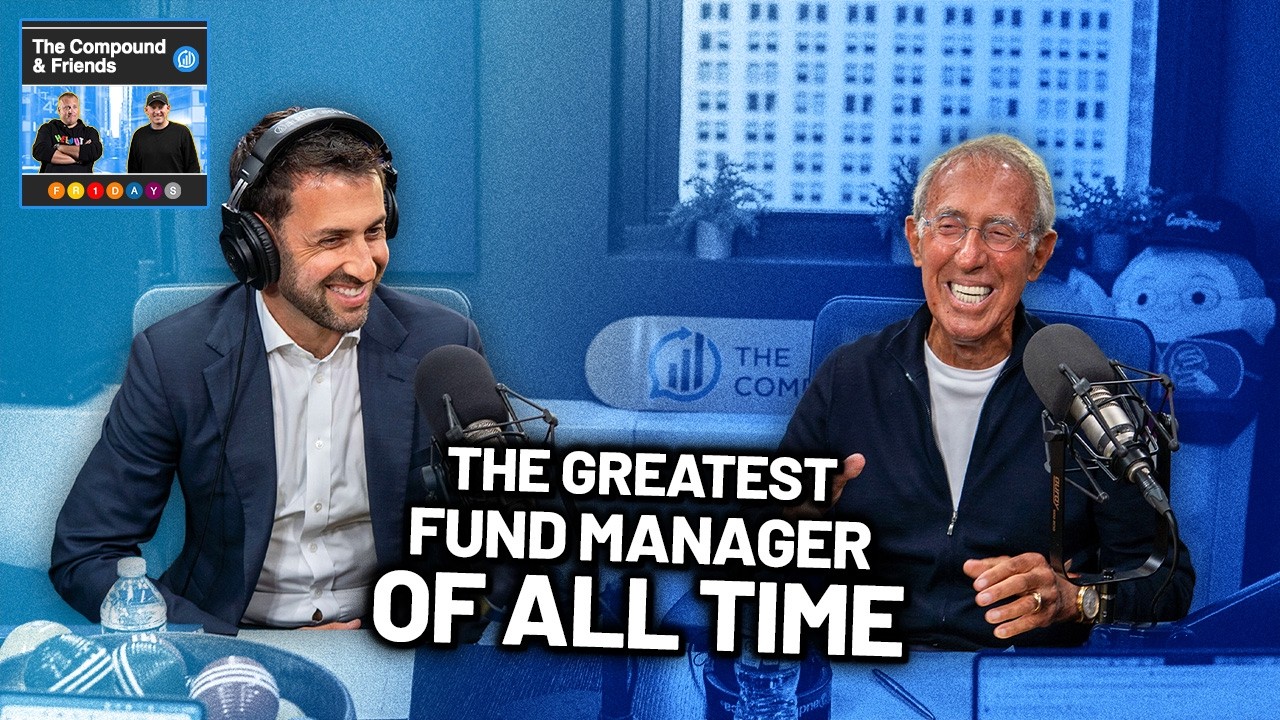
This video was published on YouTube by The Compound on July 24, 2026. On episode 252 of The Compound and Friends, Downtown Josh Brown and Michael Batnick host Ron Baron and Michael Baron of Baron Capital to discuss long-term investing, Tesla, SpaceX, artificial intelligence, and the power of holding exceptional businesses for decades.
## TL;DR
Legendary investor Ron Baron and his son Michael Baron trace Baron Capital's evolution from a $10 million firm seeded by George Soros to managing $70 billion with $70 billion in cumulative client gains. They detail their high-conviction, long-term approach behind massive investments in Tesla and SpaceX, project multi-trillion-dollar valuations for Elon Musk's ventures, and explain their contrarian allocations into software and compute infrastructure. The episode wraps with insights into their deep fundamental research model, generational wealth dynamics, and the unique culture behind the annual Baron Investment Conference.
## Atmosphere & style
The atmosphere is warm, engaging, and rich with Wall Street history, blending lighthearted podcast banter with masterclass-level investing wisdom. The conversation flows effortlessly between Josh Brown's enthusiastic admiration and Ron Baron's nostalgic, unhurried storytelling about his 56-year career. It feels like an intimate, fireside chat with investment royalty, offering an authentic mix of candid personal anecdotes, visionary optimism, and deep mutual respect.
## Key takeaways
- [00:00](https://www.youtube.com/watch?v=0aL-3b4h_qw&t=0s) Baron Capital filter out daily market noise to focus entirely on core business fundamentals, long-term trends, and exceptional leadership teams.
- [02:38](https://www.youtube.com/watch?v=0aL-3b4h_qw&t=158s) From starting with $15,000 in personal debt in 1969, Ron Baron built Baron Capital into a ~$70 billion AUM firm that has generated approximately $70 billion in cumulative profits for clients.
- [06:08](https://www.youtube.com/watch?v=0aL-3b4h_qw&t=368s) George Soros provided $10 million in initial seed capital to launch Baron Capital in 1982, which the firm expanded through high-conviction buy-and-hold strategies with turnover rates typically under 10%.
- [10:47](https://www.youtube.com/watch?v=0aL-3b4h_qw&t=647s) 15 Baron Funds representing over 96% of mutual fund AUM have outperformed their benchmarks since inception, with Baron Partners Fund ranking as the #1 performing U.S. mutual fund since 2003.
- [14:12](https://www.youtube.com/watch?v=0aL-3b4h_qw&t=852s) Baron Capital turned a $400 million investment in Tesla (2014–2016) into $7.7 billion in profits, and currently holds a ~$2.5 billion private stake in SpaceX across 27 discrete transactions.
- [18:10](https://www.youtube.com/watch?v=0aL-3b4h_qw&t=1090s) SpaceX represents Baron Capital's single largest long-term growth conviction, with projections targeting a potential $20 trillion to $40 trillion valuation over the next 10 to 15 years.
- [21:07](https://www.youtube.com/watch?v=0aL-3b4h_qw&t=1267s) Ron Baron views Elon Musk as an unmatched engineer driven by societal impact, anticipating that AI and automation will accelerate global economic growth tenfold every decade.
- [32:20](https://www.youtube.com/watch?v=0aL-3b4h_qw&t=1940s) Baron Capital constructs portfolios by pairing high-upside transformational holdings (25–30%) with stable, predictable double-digit compounders anchored by strong cash flows and tangible assets.
- [35:33](https://www.youtube.com/watch?v=0aL-3b4h_qw&t=2133s) Ron Baron's passion for business ownership began after turning his $1,000 Bar Mitzvah savings into $1,700 by investing in a local bank stock, teaching him that asset ownership creates lasting wealth.
- [42:32](https://www.youtube.com/watch?v=0aL-3b4h_qw&t=2552s) Over long horizons, equities and real estate compound exponentially to hedge inflation, as illustrated by Hamptons oceanfront property growing from $250,000 to nearly $200 million over 80 years.
- [52:24](https://www.youtube.com/watch?v=0aL-3b4h_qw&t=3144s) With 11% to 12% of firm AUM consisting of the Baron family's personal wealth, the firm avoids short-term institutional career risk and easily holds through high volatility.
- [01:00:12](https://www.youtube.com/watch?v=0aL-3b4h_qw&t=3612s) Baron Capital views AI as an enabler for proprietary data platforms, deploying $5 billion into out-of-favor software leaders like FactSet, MSCI, Verisk, and Gartner.
- [01:09:41](https://www.youtube.com/watch?v=0aL-3b4h_qw&t=4181s) The annual Baron Investment Conference at the Metropolitan Opera House provides unscripted executive talks, entertainment, ice cream, and Tesla giveaways fully funded for shareholders.
## Detailed walkthrough
### [00:00](https://www.youtube.com/watch?v=0aL-3b4h_qw&t=0s) Market Volatility vs. Long-Term Business Fundamentals
The conversation kicks off with lighthearted banter about Ron Baron’s delayed Q2 investor letter. Host Josh Brown ribbing Ron about it being late in late July, to which Ron candidly admits how painstaking the drafting process is: "I go over and over and over it." Michael Batnick chimed in that he is behind on his own letters as well, acknowledging how demanding writing and preparing for programs can be. When asked why it takes so long, Ron explains that while many market commentators scramble to write about day-to-day market swings, Baron Capital focuses strictly on long-term business principles, company missions, and visionary people rather than short-term market noise.
Ron points out that daily financial commentary adds zero lasting value. He highlights Baron’s long-standing investment in MSCI (whose founder and chairman Henry Fernandez owns over $1 billion of MSCI stock, matching Baron Capital's $1 billion-plus stake). Ron recounts a friendly rivalry with Fernandez, laughing off a joke where Fernandez suggested lending him $100 million because it would turn into $400 or $500 million in ten years—Ron's response being that he would rather just own it under his own name. The hosts note how systematic investing and algorithmic models create artificial short-term volatility, contrasting sharply with Baron's fundamental, long-term approach.
- **Baron Capital's MSCI Stake:** Over $1 billion owned by Baron Capital, matching the ~$1 billion stake held by MSCI founder/chairman Henry Fernandez.
- **Letter Strategy:** Ignores short-term stock swings to focus entirely on core business fundamentals and leadership teams.
[02:38](https://www.youtube.com/watch?v=0aL-3b4h_qw&t=158s) Ron Baron’s Origin Story: From Patent Office to AW Jones
Reflecting on his 56-year career in finance, Ron calls the current era the most exciting time he has ever experienced. He traces his journey back to the summer of 1969, arriving in New York City in debt by $15,000 and lacking enough credit even to get a home landline telephone. After failing to get into medical school, he taught biochemistry at Georgetown Medical School on a PhD fellowship before taking a job as an examiner at the U.S. Patent Office while attending law school at night. At the patent office, his chemical background landed him the job of examining patents for nose cone heat-shield coatings on returning spacecraft—jokingly advising the hosts, "If you ever have a chance to ride in a nose cone, don't do it."
```
[1969] Arrives in NYC ($15k debt, no credit)
│
[1970s] Wall Street analyst selling research to hedge funds (A.W. Jones)
│
[1980] Reaches $1M net worth
│
[1982] Founds Baron Capital with $10M seed from George Soros
│
[Mid-2026] Reaches ~$70B AUM & $70B cumulative profits generated
```
Ron recounts his transition into Wall Street research during the 1970s, selling stock ideas for commissions. He tells a classic story about one of his early hedge fund clients, Walter Harrison at A.W. Jones (widely considered the first hedge fund). Desperate for a commission order to survive, Ron called Harrison asking for business. Harrison deadpanned that he needed a "hamburger rare with French fries." Taking the request literally, Ron bought the greasiest hamburger he could find from a greasy spoon on Wall Street, instructed the delivery guy to drop it on Harrison’s desk at 5:00 PM on Friday, and left it sitting there until Monday morning.
- **Starting Debt (1969):** $15,000 in personal debt with zero credit history.
- **Early Career Path:** Georgetown Medical School biochemistry instructor → U.S. Patent Office examiner → Wall Street equity research analyst.
- **Client Relationship:** Provided research to A.W. Jones, one of the earliest hedge funds in financial history.
[06:08](https://www.youtube.com/watch?v=0aL-3b4h_qw&t=368s) Building Baron Capital: George Soros and Holding for Decades
By 1980, Ron had turned a negative net worth into $1 million. In 1982, he launched Baron Capital with $10 million in initial seed capital provided entirely by legendary investor George Soros. Soros had allocated $5 million allocations to several outside managers following a tough year for Quantum Fund. While the other managers traded in and out of positions rapidly, Ron bought and held high-conviction companies, dramatically outperforming his peers.
Baron Capital grew from $10 million in 1982 to $100 million in 1992, and stood at approximately $70 billion in AUM by mid-2026. Strikingly, Ron notes that the firm has generated $70 billion in total cumulative profits for its clients since inception. On the corporate side, the Baron family management company grew its book value from $100,000 in 1982 to $4.5 billion, plus an additional $1.5 billion in deferred tax liability—effectively turning $100,000 into $6 billion over 44 years.
- **Firm Growth Metrics:** $10M (1982) → $100M (1992) → ~$70B AUM (mid-2026).
- **Cumulative Client Profits:** Approximately $70 billion delivered back to investors over the firm's history.
- **Family Management Book Value:** $100,000 (1982) grown to ~$4.5B ($6B including deferred tax liability).
- **Team & Retention:** Grown to 233 employees (including 45 analysts) with exceptionally low portfolio and employee turnover.
[08:21](https://www.youtube.com/watch?v=0aL-3b4h_qw&t=501s) The Art of Holding: $70 Billion in Cumulative Profits
Ron and Michael discuss why true long-term buy-and-hold investing is so rare on Wall Street. Ron observes that many high-profile hedge fund managers claim to be long-term investors while turning over their entire portfolios constantly. In contrast, Baron Capital’s firm-wide portfolio turnover is virtually always below 10%, while the flagship funds managed by Ron, Michael, and David Baron feature turnover under 5%.
Looking back at their total profits generated, Ron calculates that roughly $40 billion came from traditional long-term investments outside of Elon Musk's companies, while $30 billion was generated directly via Tesla and SpaceX. Ron expresses immense confidence that their positions in SpaceX and Tesla will generate hundreds of billions in additional gains in the coming decade.
[10:47](https://www.youtube.com/watch?v=0aL-3b4h_qw&t=647s) Intro and Remarkable Outperformance Benchmarks
Josh officially opens Episode 252 of *The Compound and Friends*, welcoming back the audience and formally introducing Ron Baron (Founder, CEO, and PM of Baron Capital) alongside his son, Michael Baron (Co-President and PM). Josh reads off Baron Funds' historic performance track record across its mutual fund lineup, pointing out that 15 funds representing over 96% of the firm's mutual fund AUM have outperformed their respective benchmarks since inception, with 13 funds ranking in the top 20% of their Morningstar categories.
```
┌────────────────────────────────────────────────────────────────────────┐
│ BARON FUNDS TRACK RECORD │
├────────────────────────────────────────────────────────────────────────┤
│ 96.2% of AUM ──► Outperformed benchmarks since fund inception │
│ 95.4% of AUM ──► Ranked in Top 20% of Morningstar categories │
│ 54.0% of AUM ──► Ranked in Top 5% of Morningstar categories │
│ Baron Partners ──► #1 performing U.S. mutual fund since 2003 │
└────────────────────────────────────────────────────────────────────────┘
```
When asked what it feels like to stand as a "one of one" in the investment management world, Ron playfully corrects Josh's opening stat about the firm's AUM, pointing out that as of June, total assets are $70 billion rather than $55 billion. Michael Baron's track record with the concentrated Baron Partners Fund is highlighted, notably delivering a ~25% return in 2025 compared to 8.7% for the Russell Midcap Growth index, driven by heavy conviction holdings like Tesla (representing ~27% of that fund's portfolio).
- **Performance Statistics:**
- 15 funds (96.2% of mutual fund AUM) have beaten their benchmarks since inception.
- 13 funds (95.4% of mutual fund AUM) rank in the top 20% of Morningstar categories.
- 6 funds (54.0% of mutual fund AUM) rank in the top 5% of their categories.
- **Baron Partners Fund:** The #1 ranked performing U.S. mutual fund overall since its conversion to a mutual fund in 2003.
[14:12](https://www.youtube.com/watch?v=0aL-3b4h_qw&t=852s) Massive Bets on Elon Musk: Tesla and SpaceX Walkthrough
The conversation shifts to Baron Capital’s two most iconic positions: Tesla and SpaceX. Ron explains that he first met Elon Musk in 2010 but spent four years conducting deep due diligence before buying his first share. Musk famously asked him, "What took you so long?" Between 2014 and 2016, Baron invested $400 million in Tesla at a split-adjusted average cost basis of roughly $14 per share. To date, that $400 million investment has yielded $7.7 billion in realized and unrealized profits, remaining a ~$5 billion core position across the firm's portfolios.
However, Ron stresses that their single largest current conviction is SpaceX. As of June, Baron’s stake in SpaceX is valued at roughly $2.5 billion out of the firm's $70 billion total AUM. Mark Hoplamasian (CEO of Hyatt) and Tom Pritzker (Chairman of Hyatt) both marvel at Baron's ability to hold onto such massive stakes through extreme volatility and illiquidity.
```
TESLA (Purchased 2014–2016)
Cost Basis: ~$400M (~$14/share split-adjusted)
Current Value / Profit: ~$7.7B generated (~$5B current position)
SPACEX (Purchased 2017–Present)
Total Invested: ~$2.0B across 27 private transactions (+ $1B at IPO opportunity)
Current Value: ~$2.5B position (representing ~3.5% of total $70B AUM)
```
Addressing the logistics of owning a private giant like SpaceX, Ron notes that SpaceX conducts bi-annual employee tender offers (typically ~$1 billion each). Because SpaceX gets oversubscribed quickly and Elon Musk himself routinely participates to increase his personal stake beyond 44%, Baron built an incredible relationship with SpaceX management. Baron was granted equal allocation access alongside sovereign wealth giants like Saudi Arabia, Abu Dhabi, and institutional giant Fidelity. Across 27 separate discrete transactions since 2017, Baron repeatedly bought available private blocks from early investors. Ron projects that while Tesla will likely multiply 4x to 5x over the next decade, SpaceX represents an even larger long-term growth opportunity for the firm.
- **Tesla Investment Stats:** $400M cost basis (2014-2016) at ~$14/share split-adjusted → $7.7B total profit generated.
- **SpaceX Investment Stats:** ~$2.0B total invested across 27 private transactions since 2017 → ~$2.5B position value.
- **Transaction Access:** Participated in private liquidity rounds alongside sovereign wealth funds (Saudi Arabia, Abu Dhabi) and Fidelity, maintaining a ~1.25% ownership stake in SpaceX.
[18:10](https://www.youtube.com/watch?v=0aL-3b4h_qw&t=1090s) SpaceX Valuation and the Mission of Baron Capital
Ron Baron and Michael Baron outline their staggering projections for SpaceX, anticipating a potential 20- to 30-fold increase from its internal stock pricing over the next 10 to 15 years, targeting a market valuation between $20 trillion and $40 trillion. Addressing skepticism surrounding such astronomical projections—especially when comparing them to the entire S&P 500 market cap—Ron asserts his sobriety and firm convictions. He attributes Baron Capital’s unique edge to a higher organizational purpose: changing lives, which attracts superior talent who approach research with utmost rigor and question every detail as if their families' well-being depended on it.
- Baron Capital sets its analytical bar exceptionally high, requiring analysts to investigate businesses with total dedication and question executives deeply during daily visits.
- Warren Buffett’s rule of evaluating leaders places integrity at the top, followed by intelligence and energy; Ron notes Elon Musk focuses on finding leaders with "heart."
[21:07](https://www.youtube.com/watch?v=0aL-3b4h_qw&t=1267s) Understanding Elon Musk: Character, Work Ethic, and Economic Vision
The hosts inquire whether Elon Musk's high-profile public controversies or social media antics ever make it difficult to maintain trust in him as a steward of capital. Ron defends Musk's motivations, emphasizing his tireless work ethic—sleeping four to five hours a night and working seven days a week—driven not by personal wealth, but by a desire to preserve humanity and elevate society. While traditional economic model predictions show standard real growth of 2% to 3% with 4% to 5% inflation (doubling the economy every 10 years), Musk envisions AI and automation driving exponential 10x growth every decade, creating guaranteed universal incomes and fundamental societal transformation.
- Ron touches on Musk revealing his Asperger's syndrome on *Saturday Night Live*, explaining that Musk thinks differently than anyone else, yet operates as the most brilliant engineer on the planet.
- All SpaceX employees receive stock equity, aligning worker incentives directly with the long-term success of the company.
- The hosts discuss how Musk has likely created more millionaire households among employees and retail investors than almost any other corporate CEO in history.
> "He thinks the growth of the world economy... instead of doubling every 10 years, he thinks it's going to grow 10 times every 10 years because of what he does."
[25:47](https://www.youtube.com/watch?v=0aL-3b4h_qw&t=1547s) Government Efficiency, Data Centers, and Grok vs. Anthropic
Reflecting on Musk's public presence, Ron offers his perspective on how Musk could reframe his public service and government engagement. Instead of political controversy, Ron suggests emphasizing Musk's record as the world's premier builder who systematically replaces inefficient "cost-plus" contracts with cost-effective fixed-price bids, as SpaceX successfully did with the Department of Defense. He highlights xAI's rapid execution, building massive compute data centers in just 122 days at a fraction of competitors' costs.
- Competitors like Anthropic scaled rapidly from $9 billion to $45 billion in annualized revenues within months.
- Ron highlights that xAI's Grok is closing the capability gap with Anthropic and offers usage at roughly 65% cheaper token costs.
[28:38](https://www.youtube.com/watch?v=0aL-3b4h_qw&t=1718s) Early Tesla Investment and the Power of Vertical Integration
Michael Baron clarifies that Baron Capital was not the first institutional investor in Tesla, having initially taken a small private equity stake around the 2010 IPO before executing extensive diligence over four years. At the time, Tesla was producing roughly 30,000 vehicles annually out of a single factory in Fremont, California. While Wall Street analysts evaluated Tesla purely as a traditional automaker and warned of imminent failure, Baron Capital looked beyond quarterly car deliveries to grasp Musk’s overarching mission: accelerating the transition to sustainable energy.
- Automotive legacy models traditionally relied heavily on third-party outsourcing, slicing away profit margins at every step.
- Tesla's relentless vertical integration drove production costs down to unassailable levels, setting the foundation to transition from a hardware vehicle seller to a high-margin software and service business.
- Michael fondly recalls early meetings with Musk, describing him as an unconventional, unshaven character whose long-term operational vision required four years of thorough vetting to fully trust.
[32:20](https://www.youtube.com/watch?v=0aL-3b4h_qw&t=1940s) Portfolio Construction: Radical Growth vs. Compounders
Ron details how Baron Capital balances its funds between high-growth disruptive bets and conventional compounders. Around 25% to 30% of portfolio assets are allocated to high-upside transformational companies like SpaceX, Tesla, and NVIDIA. The remaining balance consists of predictable, double-digit return businesses anchored by strong cash flows, earnings, or tangible assets across hospitality, healthcare, and real estate.
- Key holdings mentioned include veterinary hospital chains, healthcare uniform maker Figs, and mountain resort operator Vail Resorts.
- Ron quips that holding leisure businesses like Vail Resorts makes fundamental sense because as automation reduces necessary work hours, people will need recreation.
[33:58](https://www.youtube.com/watch?v=0aL-3b4h_qw&t=2038s) Finding the Exceptional Winners in a Sea of Failure
Michael Batnick cites famous empirical findings by Professor Hendrik Bessembinder showing that the vast majority of individual stocks are terrible long-term investments. Over their lifetimes, only 48% of stocks deliver a positive return, just 42% beat short-term Treasury bills, only 27% outperform the broader market, and the median stock loses 7%. Given these stark odds, Batnick asks how Baron Capital mastered the rare ability to identify and hold generational winners like Wynn Resorts for over 27 years. Ron points back to fundamental research discipline rooted deep in his early career background.
[35:33](https://www.youtube.com/watch?v=0aL-3b4h_qw&t=2133s) Ron Baron’s Beginnings in Investing
Ron Baron shares the origin story of his fascination with business ownership and the stock market, tracing it back to his childhood observations of wealth disparity. Growing up in the 1940s and 1950s, his father worked as an engineer for the army, earning $2,500 in 1942 and $10,000 by 1956—the year Ron had his Bar Mitzvah, which marked the moment his family finally reached the middle class. Observing that friends with wealthier families lived in larger houses, drove Cadillacs, and owned businesses (such as motels, boardwalk rides, or legal practices) while his family drove used Fords, Ron realized early on that owning assets was the true driver of wealth creation.
Prompted by a friend's father in Asbury Park, Ron decided to put his $1,000 in Bar Mitzvah savings into the stock market. After convincing his reluctant father by reading corporate reports at the local library, he selected Monmouth County National Bank in West Allenhurst, purchasing 100 shares at $10 per share through Merrill Lynch. Tracking the stock daily in the *Asbury Park Press*, he watched it steadily rise over several months until it was acquired at $17 per share. Turning $1,000 into $1,700—enough to pay for two-thirds of a year of college tuition—hooked him on investing for life.
* "Are we middle class yet? Are we middle?"
* "They owned a business or they owned a motel or they owned rides on the boardwalk... They owned something. They owned it."
* "What's a stock? And he explained to me that it's the easiest thing. You buy something and it's 10 times earnings... and you don't have to manage it."
* "My thousand became 1,700... I said, wow, nothing to this, I can do that."
[39:20](https://www.youtube.com/watch?v=0aL-3b4h_qw&t=2360s) Early Career as an Analyst and Missing Home Depot
Transitioning into a Wall Street research analyst during the 1970s, Ron provided investment research on companies like McDonald's, Disney, and Nike to high-profile institutional clients, including George Soros and Peter Lynch. During this period, prominent investor Ken Langone reached out after noticing Ron was buying a company called Daylin, inviting him to lunch at the Bull and Bear inside the Waldorf Astoria. Langone, a fellow Bucknell University alumnus, proposed a 50/50 information-sharing partnership.
At the time, Daylin owned Handy Dan, a California home improvement retailer managed by Arthur Blank and Bernie Marcus. Daylin later went through bankruptcy, leading to Blank and Marcus being fired; Langone then stepped in to help them raise capital to found The Home Depot. However, because the prevailing brokerage industry incentive structure prioritized generating trading commissions over long-term holdings ("We're not in the storage business; we're in the moving business"), Ron had already advised his clients to flip Daylin at $4 to $6 a share after buying at $2, missing out on early-stage ground-floor participation in Home Depot.
* "Guys like us, we got to stick together."
* "My modus operandi is I buy a stock, goes doubles or triples, I say buy this, sell this and buy this. So, I get two commissions instead of just one."
* "The goal of the firm, the brokerage firm, they told us... 'We're not in the storage business. We're in the moving business.'"
[42:32](https://www.youtube.com/watch?v=0aL-3b4h_qw&t=2552s) Inflation, Real Estate, and Long-Term Compounding
Ron shifts to discussing the inevitable power of inflation and long-term asset compounding, drawing on examples from residential real estate. His parents bought their first 2,000-square-foot home in 1948 for $5,000, sold it in 1955 for $10,000, and it is now worth approximately $500,000. Their subsequent home, built in 1955 for $20,000, is worth around $1.5 million today—reflecting standard long-term inflation growth of roughly 4% to 6% annually.
Oceanfront land, however, compounds even faster at 7% to 9% per year. Ron shares an anecdote about a neighbor's oceanfront property in the Hamptons—formerly a 12-to-14-acre dairy farm located over 100 miles from New York City (Columbus Circle) to qualify for government milk subsidies ($1.10 per gallon versus $1.00). The family originally sold the land decades ago for $250,000; today, that same oceanfront property is valued between $150 million and $200 million. Over an 80-year span, 10 doublings (a 1,000x gain) illustrates the exponential math of holding unique assets through inflation cycles.
- Parents' 1948 home purchase: $5,000; sold in 1955 for $10,000; estimated current value: $500,000.
- Parents' 1955 custom home build: $20,000; estimated current value: $1,500,000.
- Dairy farm oceanfront land in the Hamptons: Sold decades ago for $250,000; estimated current value: $150 million–$200 million.
- Mathematical rule of thumb: At ~7% annual return over 80 years, capital doubles 10 times, multiplying initial value by roughly 1,000x.
[45:59](https://www.youtube.com/watch?v=0aL-3b4h_qw&t=2759s) Holding Stocks Through Volatility and Downturns
The conversation addresses the emotional discipline required to endure extreme drawdowns in high-conviction growth stocks, specifically referencing a day where Tesla shares tumbled 16%. Michael Baron emphasizes that staying calm during severe volatility requires deep fundamental research into the underlying business rather than reacting to daily stock charts or short-term noise.
To manage risk without sacrificing upside, Baron Capital maintains portfolio diversification across companies with uncorrelated growth drivers rather than concentrating entirely in high-beta tech plays. Michael notes that while index concentration has increased significantly—with the top holdings heavily dominating benchmark performance—Baron Capital focuses strictly on identifying businesses with durable competitive advantages and strong management teams capable of execution over a multi-year horizon.
* "It's very hard to own a stock... if you haven't done the primary research. And that's what we pride ourselves on—really understanding the business behind it."
* "The S&P 500, it's no longer 500 companies. It's seven or eight... I like to call it the MAG 8 at this point with SpaceX."
* "The reason we would sell a position isn't on timing... The biggest area that we would sell something is if that competitive advantage deteriorates."
[49:13](https://www.youtube.com/watch?v=0aL-3b4h_qw&t=2953s) Evaluating Tesla's Moat and Long-Term Vision
The discussion explores Tesla's evolving competitive moat beyond electric vehicles. While competitors have made gains in traditional EVs, Michael and Ron highlight Tesla's advantages in autonomous driving (Cybercab/robotaxi) and humanoid robotics (Optimus). Ron emphasizes that Elon Musk's ultimate vision extends far beyond manufacturing millions of units to scale production into tens of millions or even hundreds of millions of AI-driven units.
Ron reiterates that daily stock price movements reflect trading activity and market sentiment rather than intrinsic business quality. Quoting MSCI Chairman Henry Fernandez, Ron notes that Baron Capital's edge lies in "seeing around corners" by evaluating businesses on a 5-to-10-year time horizon rather than managing for short-term quarterly expectations.
* "Their mission was never about transportation alone. It was about... getting us to renewable energy."
* "All the price does is tell you what you can buy and sell a security for in a given day. It doesn't tell you if a company's doing well or not."
* "What you guys do is you have an ability to see around corners... Our time horizon is five or 10 years."
[52:24](https://www.youtube.com/watch?v=0aL-3b4h_qw&t=3144s) Personal Capital, Long-Term Horizons, and the SpaceX Slingshot Story
The hosts and guests contrast the pressures facing standard fund managers—who fear getting fired for short-term underperformance—with Baron Capital’s structure. Because the Barons own the management firm and act as the largest investors in their own funds (holding around 11% to 12% of the total assets managed), they have complete freedom to maintain 5-year and 10-year horizons without the threat of being terminated. Ron Baron reflects fondly on this personal co-investment, lightheartedly noting that achieving this scale after once being $15,000 in debt is "pretty cool."
To illustrate the extreme founder commitment they seek, Ron shares a favorite story about Elon Musk's early days founding SpaceX. After selling PayPal for around $100 million to $110 million, a young Musk informed his wife that he intended to spend his fortune building reusable rockets. When she expressed fear over what would happen to their six children if he lost everything, Musk nonchalantly replied that they could simply live in her father's basement.
Ron further details Musk’s attempt to purchase rockets in Russia, recounting how Vladimir Putin gave Musk the runaround during a week of meetings. When Musk decided to leave and construct orbital rockets himself, Putin scoffed, asking if he planned to launch them into orbit with a "slingshot." Years later, after SpaceX successfully launched and landed its first reusable rocket, Musk looked directly into the news cameras and quipped, "Some slingshot."
- **Skin in the Game:** Approximately 11–12% of total assets under management at Baron Capital represents the firm's own capital.
- **Founding Story:** Elon Musk netted $100M–$110M from the PayPal acquisition before founding SpaceX.
- **Russian Negotiations:** Putin famously mocked Musk by asking if he would put rockets into orbit using a "slingshot."
---
[55:30](https://www.youtube.com/watch?v=0aL-3b4h_qw&t=3330s) Deep-Dive Research and Remaining Calm Through Market Cycles
Ron emphasizes that Baron Capital's approach relies on continuous, rigorous contact with executive management rather than one-off analyses. He shares that his wife, Judy, often questions why he continues working late into his 80s, to which he answers that learning how unique businesses operate remains endlessly fascinating. He frequently talks to high-level executives, such as the CFO of SpaceX's launch business, to dig into granular operational questions—such as why launch platforms cost $500 million or what precise mechanism caused a platform test to fail. To accommodate West Coast time differences without disturbing his household, Ron regularly wakes up at midnight in New York to hold late-night operational calls with California executives.
When asked how they trained their shareholders to handle heavy market volatility, Michael Baron points out that their portfolios are far more balanced than people realize. Rather than purely holding volatile tech high-flyers, Baron Capital constructs diversified portfolios with different buckets designed to protect capital through complete down cycles. During the lost decade spanning the dot-com crash and the Great Financial Crisis—when the broader market dropped by roughly a third—Baron Partners Fund actually grew annualized returns by 1.5% to 2%.
> "She says, 'I like talking to you more than other people because they're just interested in now. And what you're interested in is... how things work.'"
- **Research Frequency:** Ron speaks with key corporate executives multiple times per month, including late-night calls at midnight Eastern Time.
- **Bear Market Defense:** During the dot-com burst through the Great Financial Crisis, the overall market declined by ~33%, while Baron Partners Fund advanced approximately 1.5–2% annualized.
- **Index Concentration:** Michael notes that purchasing broad growth benchmarks like the Russell 1000 Growth or S&P 500 heavily concentrates an investor into just seven mega-cap tech names.
---
[01:00:12](https://www.youtube.com/watch?v=0aL-3b4h_qw&t=3612s) Contrarian Software Investments: FactSet and AI Disruption Fears
Addressing the widespread market fear that generative AI will render traditional software platforms obsolete, Michael and Ron call those concerns drastically overblown for firms with proprietary data. Over the past year, Baron Capital deployed $9 billion into stocks, with $5 billion specifically targeted at out-of-favor software businesses. They highlight investments in proprietary data powerhouses like MSCI, Verisk Analytics, Gartner, and FactSet, asserting that AI acts as an enabler to these datasets rather than a replacement.
Ron details their conviction in FactSet, a long-time holding whose stock dropped from $500 down to $200 before recovering around $250. FactSet recently brought in an extraordinary new CEO who grew up on a farm in India, graduated from top Indian technical and business schools, served at McKinsey (where he advised Tim Geithner during the 2008 financial crisis at age 31), and became a top executive candidate under Jamie Dimon at JPMorgan Chase. Since taking the helm at FactSet, the new leader has brought in top talent, buying back stock aggressively alongside Baron Capital, while deeply embedding FactSet's proprietary data workflows into client operations so they cannot be disintermediated.
- **Capital Deployment:** Baron Capital invested $9 billion over the past year, with $5 billion allocated directly into software companies.
- **FactSet Price Action:** FactSet shares dropped from $500 to $200 before rebounding to $250, prompting heavy buying from both Baron Capital and corporate insiders.
- **Data Enablers:** Key proprietary data software holdings mentioned include MSCI, Verisk, Gartner, and FactSet.
---
[01:05:14](https://www.youtube.com/watch?v=0aL-3b4h_qw&t=3914s) AI Compute Economics, SpaceX Compute, and Generative AI
Ron argues that Large Language Model (LLM) providers will ultimately be commoditized, noting that xAI's Grok is significantly cheaper than competing models like Anthropic's Claude. However, the true bottleneck remains raw compute power. He highlights a $25 billion to $30 billion compute installation built in Mississippi, which is now generating massive monthly recurring revenues from major tech firms like Anthropic ($1.25 billion/month) and Google ($900 million/month).
Because coherent, interconnected compute clusters are exceptionally scarce, this infrastructure commands pricing three times higher than competitors like CoreWeave. Reflecting on his career, Ron tells his wife that at age 83, coming to work every day and staying on top of rapid technological shifts still feels like being in college.
- **Compute Revenue:** The $25B–$30B compute infrastructure project yields ~$1.25 billion per month from Anthropic and ~$900 million per month from Google.
- **Pricing Power:** Coherent, unified compute facilities yield 3x the revenue of standard infrastructure providers like CoreWeave for equivalent capacity.
---
[01:07:01](https://www.youtube.com/watch?v=0aL-3b4h_qw&t=4021s) Family Legacy and the Baron Capital Culture
The conversation shifts to the dynamic of father and son working together. Michael Baron shares that while he officially joined the firm in late 2004 (over 20 years ago), his training started around age five or six. Ron would teach his sons about investing through engaging stories—never focusing on macro economics or short-term ticker movements, but on what makes individual businesses unique and sustainable.
Michael stresses that beyond Ron's stock-picking track record, his greatest accomplishment is building a culture of 45 investment professionals who completely buy into the firm's long-term research philosophy. Rather than operating like a financial factory, the team stays unified in asking the right fundamental questions about people, moats, and business durability.
[01:08:32](https://www.youtube.com/watch?v=0aL-3b4h_qw&t=4112s) Post-COVID Team Dynamics and Cultivating Culture
Michael Baron reflects on how the COVID-19 pandemic served as a major trial for their firm's collaborative environment. While remote work technologies enabled survival, Michael emphasizes that working from home falls short because it lacks the crucial element of in-person collaboration. At Baron Capital, corporate teams visit the office constantly, and analysts frequently travel to conduct visits. A key drawback of virtual meetings like Zoom is that "you press that red button and the meeting ends," missing out on the essential hour or two spent debriefing with analysts afterward where "a lot of the good stuff happens outside of the official meeting."
Michael notes that while his father, Ron Baron, founded the firm and set its overarching philosophy, his primary role today is instilling this long-term investment mindset into the entire team. This shared approach is why the firm's funds consistently achieve top-quartile, top-5%, and top-1% performance benchmarks rather than relying solely on a single individual.
* **In-Person Debriefs:** Baron Capital emphasizes deep-dive post-meeting analysis with analysts, which was heavily disrupted by the abrupt nature of Zoom calls.
* **Firm Performance:** The investment philosophy established by Ron Baron permeates all portfolios across the firm, driving strong performance relative to benchmark indices.
---
[01:09:41](https://www.youtube.com/watch?v=0aL-3b4h_qw&t=4181s) The Baron Investment Conference and Unrivaled Lineups
The conversation pivots to the legendary Baron Investment Conference held annually at the Metropolitan Opera House in New York City. Downtown Josh Brown marvels at the scale of the gathering, calling it "the literal best event in asset management." Michael and Ron detail how the firm covers 100% of the costs for their mutual fund shareholders, offering world-class entertainment, door prizes, and gifts without charging attendees a single cent.
The hosts and guests read through an astonishing list of iconic performers and speakers who have appeared at the conference over the years, spanning legendary musicians, comedians, and corporate leaders.
* **Headline Musical & Comedy Acts:** P!nk, Justin Timberlake, Adam Sandler, John Legend, John Mulaney, Bruno Mars, Sebastian Maniscalco, Fleetwood Mac, Steve Carell, Stephen Colbert, Seth Meyers, Paul McCartney, Barbra Streisand, Celine Dion, Sting, Bon Jovi, Rod Stewart, and Jerry Seinfeld.
* **Featured Business Leaders & Founders:** Elon Musk, Gwynne Shotwell (SpaceX), Charles Schwab, Steve Wynn, Ralph Lauren, Tom Pritzker, and Henry Fernandez (MSCI), alongside executives from Shopify.
* **Next Conference Date:** November 6th.
---
[01:10:37](https://www.youtube.com/watch?v=0aL-3b4h_qw&t=4237s) Tesla Giveaways, Ice Cream Trucks, and Founder Stories
Ron shares some of the unique traditions and personal anecdotes that make the conference special. Every year, Baron Capital gives away brand-new Teslas as door prizes to attendees who are in their seats when their numbers are called. Ron recalls a moment three or four years prior when a young woman approached him in tears because her number was called while she was in the restroom, causing her to miss out on winning a car. Moved by her story, Ron gave her a Tesla anyway—and increased the annual giveaway from two Teslas to three ever since.
Ron also recounts how his summer job driving an ice cream truck as a youth inspired a new conference tradition. Back then, bringing in $100 a day yielded a $25 profit, leading him to drive routes in areas other drivers deemed too risky. Years later, an entrepreneur who grew up as an orphan approached Baron Capital about his ice cream truck business; the firm invested in his company, which now brings six trucks to pull up outside the Metropolitan Opera House at the conclusion of every conference to hand out free ice cream cones, t-shirts, and swag to departing shareholders.
Michael explains that corporate executives enjoy speaking at the Baron Investment Conference because they are instructed to forgo canned, quarterly financial speeches in favor of open, authentic dialogues about their personal backstories, founding visions, and long-term directions.
* **Tesla Door Prizes:** Three Teslas are given away each year to conference attendees present in their seats during the drawing.
* **Ice Cream Truck Tradition:** Six trucks serve premium ice cream cones to thousands of shareholders as they leave the venue.
* **Unscripted Corporate Keynotes:** Executives focus on founder journeys and overarching vision rather than short-term earnings reports.
---
[01:13:19](https://www.youtube.com/watch?v=0aL-3b4h_qw&t=4399s) David Rubenstein's Unscripted Stage Moment
Ron shares a funny story featuring Carlyle Group co-founder David Rubenstein. Before taking the stage in front of an audience of 5,000 attendees, Michael walked Rubenstein across the stage. Rubenstein casually turned to Michael and asked, "What do you want me to talk about?" When Michael relayed this back to his father, Ron chuckled, knowing Rubenstein's natural ability to improvise. Rubenstein then asked if he should be funny, to which Ron replied, "David, yeah, sure. Be funny." Rubenstein proceeded to deliver an incredibly entertaining and hilarious speech about founding Carlyle.
Josh Brown and Michael Batnick conclude the interview by expressing deep admiration for Ron and Michael Baron's passion, congratulating them on their milestones and decades of success.
* **David Rubenstein Anecdote:** Delivered a completely unscripted, hilarious talk on how he co-founded Carlyle Group to an audience of 5,000.
* **Official Website:** Listeners and investors looking for Ron's commentary and details on Baron Funds can visit `baroncapitalgroup.com`.
## Notable quotes
> [02:38](https://www.youtube.com/watch?v=0aL-3b4h_qw&t=158s) If you ever have a chance to ride in a nose cone, don't do it. — Ron Baron
> [21:07](https://www.youtube.com/watch?v=0aL-3b4h_qw&t=1267s) He thinks the growth of the world economy... instead of doubling every 10 years, he thinks it's going to grow 10 times every 10 years because of what he does. — Ron Baron
> [35:33](https://www.youtube.com/watch?v=0aL-3b4h_qw&t=2133s) Are we middle class yet? Are we middle? — Ron Baron
> [35:33](https://www.youtube.com/watch?v=0aL-3b4h_qw&t=2133s) They owned a business or they owned a motel or they owned rides on the boardwalk... They owned something. They owned it. — Ron Baron
> [35:33](https://www.youtube.com/watch?v=0aL-3b4h_qw&t=2133s) What's a stock? And he explained to me that it's the easiest thing. You buy something and it's 10 times earnings... and you don't have to manage it. — Ron Baron
> [35:33](https://www.youtube.com/watch?v=0aL-3b4h_qw&t=2133s) My thousand became 1,700... I said, wow, nothing to this, I can do that. — Ron Baron
> [39:20](https://www.youtube.com/watch?v=0aL-3b4h_qw&t=2360s) Guys like us, we got to stick together. — Ken Langone
> [39:20](https://www.youtube.com/watch?v=0aL-3b4h_qw&t=2360s) We're not in the storage business. We're in the moving business. — Ron Baron
> [45:59](https://www.youtube.com/watch?v=0aL-3b4h_qw&t=2759s) It's very hard to own a stock... if you haven't done the primary research. And that's what we pride ourselves on—really understanding the business behind it. — Michael Baron
> [45:59](https://www.youtube.com/watch?v=0aL-3b4h_qw&t=2759s) The S&P 500, it's no longer 500 companies. It's seven or eight... I like to call it the MAG 8 at this point with SpaceX. — Michael Baron
> [45:59](https://www.youtube.com/watch?v=0aL-3b4h_qw&t=2759s) The reason we would sell a position isn't on timing... The biggest area that we would sell something is if that competitive advantage deteriorates. — Michael Baron
> [49:13](https://www.youtube.com/watch?v=0aL-3b4h_qw&t=2953s) Their mission was never about transportation alone. It was about... getting us to renewable energy. — Michael Baron
> [49:13](https://www.youtube.com/watch?v=0aL-3b4h_qw&t=2953s) All the price does is tell you what you can buy and sell a security for in a given day. It doesn't tell you if a company's doing well or not. — Ron Baron
> [49:13](https://www.youtube.com/watch?v=0aL-3b4h_qw&t=2953s) What you guys do is you have an ability to see around corners... Our time horizon is five or 10 years. — Henry Fernandez
> [55:30](https://www.youtube.com/watch?v=0aL-3b4h_qw&t=3330s) She says, 'I like talking to you more than other people because they're just interested in now. And what you're interested in is... how things work.' — Ron Baron
## Mentioned
Adam Sandler, Anthropic, Arthur Blank, A.W. Jones, Barbra Streisand, Baron Capital, Baron Partners Fund, Bernie Marcus, Bon Jovi, Bruno Mars, Celine Dion, Charles Schwab, Claude, CoreWeave, Daylin, David Baron, David Rubenstein, Department of Defense, Downtown Josh Brown, Elon Musk, FactSet, Fidelity, Figs, Fleetwood Mac, Gartner, Georgetown Medical School, George Soros, Google, Grok, Gwynne Shotwell, Handy Dan, Henry Fernandez, Hyatt, Jamie Dimon, Jerry Seinfeld, John Legend, John Mulaney, JPMorgan Chase, Ken Langone, Mark Hoplamasian, McDonald's, McKinsey, Metropolitan Opera House, Michael Baron, Michael Batnick, Microsoft, Monmouth County National Bank, Morningstar, MSCI, Nike, Nuveen, NVIDIA, Optimus, P!nk, Paul McCartney, PayPal, Quantum Fund, Ralph Lauren, Rod Stewart, Ron Baron, Russell Midcap Growth, Russell 1000 Growth, S&P 500, Sebastian Maniscalco, Seth Meyers, Shopify, SpaceX, Steve Carell, Steve Wynn, Stephen Colbert, Sting, The Compound, The Home Depot, Tesla, Tim Geithner, Tom Pritzker, U.S. Patent Office, Vail Resorts, Verisk Analytics, Vladimir Putin, Walt Disney, Walter Harrison, Wynn Resorts, xAI
Baron Capital founder Ron Baron and Co-President Michael Baron argue that long-term business fundamentals, primary research, and decade-long holding periods dramatically outperform short-term market timing. They attribute their firm's $70 billion in cumulative client profits to high-conviction stakes in visionary leaders and asset-heavy compounders.
Long-Term Conviction Versus Market Turnover (0:00)
Ron Baron rejects daily financial commentary and short-term trading, arguing that algorithmic models and macro speculation generate noise rather than enduring value. Baron Capital maintains an exceptionally low firm-wide portfolio turnover rate below 10%, with flagship funds managed by the Baron family recording turnover under 5%. This patience allows investments to compound across multi-year operational cycles rather than relying on quarterly timing.
Concentrated Stakes in Transformational Companies (14:12)
A significant driver of Baron Capital's performance has been concentrated bets on generational innovators, particularly Elon Musk's enterprises. Between 2014 and 2016, the firm invested $400 million in Tesla at a split-adjusted basis of roughly $14 per share, realizing and holding $7.7 billion in profits. Since 2017, Baron has also deployed roughly $2.0 billion into SpaceX across 27 discrete transactions, building a $2.5 billion stake representing ~3.5% of the firm's $70 billion AUM. Out of $70 billion in total cumulative profits delivered to clients, Ron notes that roughly $30 billion stems from Musk's ventures, while $40 billion came from other long-term holdings.
Balanced Construction: Disruptors Paired with Compounders (32:20)
To absorb the extreme volatility inherent in disruptive growth equities, Baron Capital allocates 25% to 30% of portfolio assets to high-upside disruptors like SpaceX, Tesla, and NVIDIA, while dedicating the remainder to durable compounders with steady cash flows. Holdings include hospitality, leisure, and healthcare assets such as Vail Resorts and veterinary hospital networks, as well as proprietary data software providers. Over the past year, Baron deployed $5 billion of a $9 billion capital outlay into out-of-favor software businesses like FactSet, MSCI, Gartner, and Verisk Analytics, arguing that proprietary data providers will be enhanced rather than displaced by artificial intelligence.
Ownership Alignment and Continuous Operational Diligence (52:24)
The Barons credit their endurance through sharp drawdowns to skin in the game and direct executive contact. The Baron family and insiders own 11% to 12% of the firm's assets under management, insulating their portfolio managers from the short-term career risk that drives excessive turnover elsewhere. Ron and Michael emphasize rigorous primary research, maintaining continuous communication with corporate leadership to track operational engineering, cost structures, and competitive moats instead of relying on secondary analyst research.
While Baron Capital's buy-and-hold framework has driven historic returns, their growth forecasts—such as SpaceX reaching a $20 trillion to $40 trillion valuation within 10 to 15 years—face skepticism regarding macroeconomic feasibility relative to total global market capitalization.
## Background
本期节目由 YouTube 财经频道 The Compound 于 2026 年 7 月 30 日发布,为《The Compound and Friends》播客的第 252 期节目。主持人 Downtown Josh Brown 与 Michael Batnick 邀请到 Baron Capital 的创始人 Ron Baron 及其联席总裁 Michael Baron 父子,深入探讨长期成长股投资、埃隆·马斯克旗下的特斯拉与 SpaceX 布局、人工智能对软件行业的重塑,以及数十年来持有卓越企业穿越周期的投资秘诀。
## TL;DR
节目中,传奇基金经理 Ron Baron 回顾了自己从专利局审查员、负债累累的华尔街经纪人到掌管近 700 亿美元资管巨头的历程,并详细拆解了 Baron Capital 成立以来为投资者累计赚取 700 亿美元净利润的核心策略。父子二人深度披露了建仓特斯拉和参与 27 次 SpaceX 股权交易的内幕,坚信 SpaceX 终将成为全球市值最高的企业,并以 Optimus 机器人为例反驳了关于特斯拉竞争优势丧失的质疑。此外,他们还分享了“颠覆性创新与高确定性现金流”的杠铃式资产配置哲学,直言市场对 AI 颠覆垂直数据软件(如 FactSet)的恐慌被严重夸大,强调拥有专有数据和深度工作流嵌入才是真正的长期护城河。
## Atmosphere & style
整场对话充满欢声笑语与老派华尔街的传奇叙事感,既有父子间心领神会的幽默打趣,也有两位主持人面对数百亿战绩时发自肺腑的惊叹与追问。83 岁的 Ron Baron 精神矍铄、口若悬河,从早年送油腻汉堡的恶作剧到深夜给 SpaceX 高管跨时区通话,谈起投资时展现出如同大学生般的旺盛求知欲与极具感染力的乐观主义。现场没有枯燥的短期行情盘点,而是贯穿着对商业本质、企业家品格与跨越数十年复利奇迹的深刻敬畏与开怀畅谈。
## Bulletin
- [06:20](https://www.youtube.com/watch?v=0aL-3b4h_qw&t=380s) Baron Capital 资产管理规模截至 2026 年中已达 700 亿美元,自 1982 年创办以来累计为投资者创造约 700 亿美元净利润,其中约 300 亿美元收益直接来自于对马斯克旗下特斯拉和 SpaceX 的长期重仓。
- [16:07](https://www.youtube.com/watch?v=0aL-3b4h_qw&t=967s) SpaceX 持仓市值已达约 250 亿美元,占公司总规模的三分之一以上;Baron 自 2017 年起先后参与 27 次独立股权交易,预计 SpaceX 市值未来 10 到 15 年仍有 20 至 30 倍增长空间。
- [01:00:16](https://www.youtube.com/watch?v=0aL-3b4h_qw&t=3616s) 面对软件板块因通用 AI 冲击而遭遇的抛售潮,Baron Capital 逆势斥资约 50 亿美元抄底核心软件标的,强调掌握垂直专有数据和深度工作流嵌入的企业(如 FactSet)将是大模型的使能者而非受害者。
- [31:53](https://www.youtube.com/watch?v=0aL-3b4h_qw&t=1913s) Baron Capital 采取杠铃式资产配置策略:25% 至 30% 布局颠覆性高成长领跑者,其余 70% 至 75% 重仓基于稳健现金流和账面价值的抗通胀实体企业,旗下基金管理资产中约 11% 至 12% 属于管理团队自有资金。
## Key takeaways
- [08:03](https://www.youtube.com/watch?v=0aL-3b4h_qw&t=483s) Baron Capital 坚持超低年化换手率(核心组合低于 5%),将长期超额收益归功于对杰出商业领袖品行、护城河与稀缺资产的长期持有,拒绝预测短期大盘波动。
- [14:12](https://www.youtube.com/watch?v=0aL-3b4h_qw&t=852s) 特斯拉投资历经 4 年前期深度尽调,自 2014 年起投入约 4 亿美元本金,目前已斩获约 77 亿美元净利润,看重的是其垂直整合与从硬件制造转向软件及移动出行服务的本质跃迁。
- [25:21](https://www.youtube.com/watch?v=0aL-3b4h_qw&t=1521s) SpaceX 的关键机制在于全产业链垂直整合与固定总价合同,彻底颠覆了传统军工采购成本加成推诿低效的弊端,且全员持股让员工共享成长红利。
- [25:21](https://www.youtube.com/watch?v=0aL-3b4h_qw&t=1521s) 马斯克团队在算力集群与基础设施建设上展现出极致工程效率,仅用 122 天便建成世界级 Colossus 算力集群,相比传统巨头耗时数年大幅缩减工期与资本支出。
- [33:58](https://www.youtube.com/watch?v=0aL-3b4h_qw&t=2038s) 童年对房产和海滨游乐设施拥有者的观察,让 Ron Baron 认识到只有成为资产所有者才能跑赢通胀;早年痛失家得宝早期投资的教训促使他彻底抛弃传统证券经纪人的高频倒手思维。
- [42:56](https://www.youtube.com/watch?v=0aL-3b4h_qw&t=2576s) 依据 80 年汉普顿沿海地产翻倍千倍的复利案例,以 7% 复合年化增长跨越长周期经历 10 次翻倍即可实现 1000 倍回报,稀缺壁垒型资产显著跑赢普通资产。
- [45:59](https://www.youtube.com/watch?v=0aL-3b4h_qw&t=2759s) 抵御特斯拉等核心持仓单日剧烈波动的底气来自一手初级调研(Primary Research),卖出逻辑只取决于核心竞争优势是否恶化,而非 Robotaxi 等短期催化剂的季度延期。
- [49:13](https://www.youtube.com/watch?v=0aL-3b4h_qw&t=2953s) 特斯拉的长期天花板在于 Optimus 人形机器人,其终极规模目标指向数亿乃至十亿台量级,将形成传统车企无法企及的降维打击。
- [52:23](https://www.youtube.com/watch?v=0aL-3b4h_qw&t=3143s) 基金管理团队自身资产占旗下基金总规模的 11% 到 12%,利益高度绑定使得团队无需承受短期业绩被炒考核压力,能够专注 5 到 10 年的投资视界。
- [57:38](https://www.youtube.com/watch?v=0aL-3b4h_qw&t=3458s) 在 2000 年至 2009 年互联网泡沫与金融危机双重熊市期间,美股大盘下挫约三分之一,Baron Partners Fund 逆势录得全周期正收益,证明了优质成长组合的防守反共识能力。
- [01:02:22](https://www.youtube.com/watch?v=0aL-3b4h_qw&t=3742s) 通用大语言模型(LLM)正逐步商品化,而 Gartner、Verisk、FactSet 等拥有排他性专有数据和深度业务嵌合的企业,构成了 AI 浪潮下最坚实的护城河。
- [01:07:01](https://www.youtube.com/watch?v=0aL-3b4h_qw&t=4021s) 自 2004 年加入的 Michael Baron 推动了投研哲学的代际传承,Baron Capital 建立起 45 人的专业投资团队,通过面对面复盘与非流水线式研讨延续超额收益能力。
- [01:09:41](https://www.youtube.com/watch?v=0aL-3b4h_qw&t=4181s) 一年一度的 Baron 投资年会由公司全额承担成本,要求企业高管抛弃千篇一律的公关稿、深谈创业初心与本质愿景,并延续了现场抽送特斯拉汽车与冰淇淋车的独特传统。
## Detailed walkthrough
### [00:00](https://www.youtube.com/watch?v=0aL-3b4h_qw&t=0s) 季报撰写的烦恼与宏观噪音
节目开场气氛轻松,主持人与 Ron Baron 刚见面便打趣地“兴师问罪”,催促着想读 Baron Capital 最新的第二季度致投资者信。主持人调侃现在已经是 7 月 22、23 日左右了,Ron 笑着承认自己严重拖延。他坦言写信的过程非常痛苦,自己会一遍又一遍地修改润色,但一旦定稿,看到成文的那一刻又会觉得“真的很棒”。在场的 Michael Baron 也同病相怜地表示自己近期的信件同样延后,直言这在眼下是个“敏感话题”。
面对撰写信件耗时过长的讨论,Ron 强调自己撰写的可不是薄薄的一页纸,而是篇幅长达多页的深度长信,工作量极大。主持人提到在当前日新月异的市场环境下写市场评论格外困难,往往前一天刚落笔,隔天市场就发生剧变,让人进退两难。Ron 则回应道,自己其实从不在信中谈论大盘或预测行情;电视上所有人都在整天讨论“市场接下来会怎样、股票明天会怎么走”,但他认为这些毫无意义,转瞬即逝。他的信件始终专注于三件事:投资本质、优秀企业以及杰出的人才与原则。
- Baron Capital 的季报重点在于投资哲学、底层企业经营与企业家特质,坚决不参与对短期市场波动的预测。
- 绝大多数机构评论随着每日行情的切换迅速失效,缺乏长期记录与阅读的价值。
---
### [01:36](https://www.youtube.com/watch?v=0aL-3b4h_qw&t=96s) 规则量化交易时代的 MSCI 与长期基本面
Ron 探讨了当前市场极端波动性背后的结构性根源。作为金融数据与指数巨头 MSCI 的长期投资者,他指出 MSCI 向对冲基金和大型机构提供的系统性工具,在一定程度上助推了基于算法的量化交易(Systematic Investing)。这类交易行为脱离了对企业底层基本面的关注,导致短期市场情绪与波动被显著放大。此前市场曾因担忧人工智能(AI)会彻底颠覆并取代 MSCI、标普全球(S&P Global)以及穆迪(Moody's)等传统数据信用评级机构而出现抛售潮,但在 Ron 眼中,这恰恰创造了绝佳机会。
谈及与 MSCI 创始人兼董事长 Henry Fernandez 的私交,Ron 分享了一段有趣的互动。目前 Henry 个人持有价值超 10 亿美元的 MSCI 股票,而 Baron Capital 同样重仓持有超过 10 亿美元。Henry 曾开玩笑地对 Ron 说:“Ron,如果你现在借我 1 亿美元,10 年后它能变成 4 亿或 5 亿美元。”Ron 则当场幽默地回绝表示:“那我宁愿用我自己的名字持有这笔股票。”
```mermaid
flowchart TD
accTitle: 市场波动与 Baron 投资逻辑对比
accDescr: 对比基于数据驱动的系统性量化投资与关注基本面的长期投资范式
subgraph Systematic["系统性量化投资"]
A["指数与量化数据提供商 (如 MSCI)"] --> B["高频/规则化对冲基金"]
B --> C["脱离基本面追逐波动"]
C --> D["市场短期剧烈震荡"]
end
subgraph Fundamental["Baron 长期基本面投资"]
E["深度产业与企业调研"] --> F["聚焦杰出创始人与宽护城河"]
F --> G["超低换手率长期持有"]
G --> H["跨越周期创造超额收益"]
end
```
---
### [02:38](https://www.youtube.com/watch?v=0aL-3b4h_qw&t=158s) 从生化讲师、专利局审查员到华尔街经纪人
回顾自己长达 56 年的职业生涯,Ron 感慨眼下是他经历过“最令人兴奋的时代”,原因在于他们重仓了埃隆·马斯克(Elon Musk)旗下的企业,特别是 SpaceX。随后他追溯了自己充满戏剧性的早年历程:他在新泽西州阿斯伯里帕克(Asbury Park)的木板栈道旁长大,1960 年代未被医学院录取后,在乔治城大学医学院担任了一年生物化学讲师,原本指望通过博士后奖学金曲线进入医学院未果。
随后,为了在越战时期获得兵役豁免,他凭借化学专业这一“关键紧缺技能”进入美国专利局担任日间审查员,并在夜间依靠奖学金攻读法学院。在专利局期间,他负责审查并批准了航天器重返大气层防隔热涂层的鼻锥(Nose Cone)专利。基于这段第一手技术经历,Ron 常常打趣地告诫身边的朋友:“如果你们以后有机会坐上航天器的鼻锥,千万别去!”
1969 年夏天,Ron 带着 1.5 万美元的债务来到纽约闯荡。当时他的个人信用极差,甚至连一台座机电话都办不下来。在失业三个月后,他凭借口才谋得了一份分析师工作。到了 1970 年代,他的主要生计是从事证券经纪业务,通过向对冲基金、共同基金和家族办公室撰写并兜售投研报告来赚取佣金,核心驱动完全在于频繁买卖。
- 1960 年代末来到纽约时身负 15,000 美元负债,由于信用评级过低无法申请安装住宅电话。
- 在专利局审查航天器鼻锥耐热涂层专利的经历,为他后来理解高精尖航天工业埋下了伏笔。
---
### [04:30](https://www.youtube.com/watch?v=0aL-3b4h_qw&t=270s) 华盛顿邮报的汉堡恶作剧与索罗斯的第一桶金
谈到早期的经纪生涯,Ron 忆及对冲基金先驱 A.W. Jones 曾是他的重要客户。为了给公司拓展业务,他在《华尔街日报》上花费 8,000 美元刊登了一则广告,画面上印着一位身穿白围裙、头戴厨师帽托着餐盘的人,标语醒目地写着:“我们送出的是投资业绩,不是比萨(We deliver performance, not pizza)。”广告登出首日反响热烈,接到了 50 通电话,但随后热度骤降:从 20 通、10 通、5 通,直到周五彻底归零。
焦急的 Ron 打电话给 A.W. Jones 的基金经理 Walter Harrison 催讨交易订单:“Walter,我需要订单维持生存!”对方却调侃道:“那我想要一个一分熟的汉堡配炸薯条。”不服输的 Ron 随即在华尔街附近找到一家油腻的小餐馆,特意叮嘱店主制作一个“最油腻、汁水最多”的汉堡,并要求务必在周五傍晚 5 点整送到并直接扔在 Walter 的办公桌上。结果到了周一早晨,汉堡的油脂渗透了整张办公桌,令人哭笑不得。
凭借勤奋的调研,Ron 在 1980 年彻底摆脱了负资产状态,个人净资产突破 100 万美元。早在 1976 至 1977 年间,乔治·索罗斯(George Soros)便是他的投研客户。索罗斯在经历了一个业绩糟糕的年份后,量子基金(Quantum Fund)董事会建议将资金分散给外部经理管理。索罗斯选出了包括 Ron 在内的 6 至 7 名投资人,各自分配了 500 万美元。其他投资经理都选择高频倒买倒卖,唯独 Ron 采取了“买入并长线持有”(Buy and Hold)的策略,最终业绩脱颖而出。
- 《华尔街日报》花费 8,000 美元投放招商广告,首日获得 50 个来电线索,随后迅速归零。
- 1980 年个人资产实现从负债到 100 万美元的跨越。
- 1970 年代末获得乔治·索罗斯量子基金的 500 万美元委托,以 Buy and Hold 策略战胜了其他外部同行。
---
### [06:20](https://www.youtube.com/watch?v=0aL-3b4h_qw&t=380s) 40 年资产演变与 700 亿美元惊人利润
1982 年,凭借索罗斯注资的 1,000 万美元管理资产规模(AUM),Baron Capital 正式启航。经历十年耕耘,公司的资产管理规模在 1992 年跨越至 1 亿美元;而截至当下(2024 年年中),管理资产已攀升至约 690 亿美元。更令人惊叹的是,自成立以来,Baron Capital 累计为投资人赚取了高达 700 亿美元的绝对净利润,形成了所赚取的收益总额甚至超越了当前资产存量的历史级业绩。
从家族管理公司自身的账面价值来看,1982 年 Baron Capital 的注册资本仅为 10 万美元。如今,管理公司的账面净值已达 45 亿美元,另外还有约 15 亿美元的递延所得税负债(若未来发生股权变现才需缴纳,但他们绝无出售计划)。换言之,公司最初的 10 万美元原始资本,在 40 多年间增值为了 60 亿美元的自有资产。主持人惊叹这是有史以来向外部投资者交付资本回报最辉煌的记录之一,甚至直追伯克希尔·哈撒韦(Berkshire Hathaway)。
| 指标 / 维度 | 1982 年创立初期 | 1992 年(发展十年) | 2024 年现状 |
|:--- |:--- |:--- |:--- |
| **资产管理规模 (AUM)** | 1,000 万美元 | 1 亿美元 | 约 690 亿美元 |
| **为投资者创造的累计净利润** | — | — | 约 700 亿美元 |
| **管理公司自身账面价值** | 10 万美元 | — | 45 亿美元(加延税共约 60 亿) |
---
### [08:03](https://www.youtube.com/watch?v=0aL-3b4h_qw&t=483s) 坚守超低换手率与下注马斯克
Ron 强调,如此巨大的成就绝非一己之力,如今 Baron Capital 拥有 233 名全职员工,其中包括 45 名资深投研分析师。公司最核心的竞争优势在于“超低换手率”:内部员工流动性极低,而旗下投资组合的年化换手率在绝大部分情况下均低于 10%;由他本人、儿子 Michael Baron 以及另一位儿子 David Baron 共同管理的投资组合,其年化换手率甚至低于 5%。
针对华尔街所谓的“长期投资”,Ron 提出了尖锐的批评。他指出许多赫赫有名的顶尖对冲基金经理口头上高喊长期持有,私底下却几乎每天把投资组合全盘翻转一遍。在他看来,“买入”往往很容易,但“在剧烈波动中坚定拿住”才是极少数人能做到的残酷考验。在他们为客户创造的 700 亿美元总利润中:
- 约 400 亿美元来自投资埃隆·马斯克旗下资产之前的传统长期重仓股;
- 另外 300 亿美元利润则直接来自于对马斯克旗下企业(特斯拉与 SpaceX)的押注。
面向未来,Ron 展现出极大的信心,认为在接下来的 10 到 15 年内,Baron Capital 有望通过深度布局特斯拉和 SpaceX 再赚取数千亿美元的回报。随着讨论渐入高潮,主持人笑着打断,宣布热身完毕,正式拉开播客第 252 期的正题序幕。
### [10:47](https://www.youtube.com/watch?v=0aL-3b4h_qw&t=647s) 节目开场与传奇投资人 Ron Baron 登场
播客节目在热烈的气氛中正式开场。主持人 Downtown Josh Brown 兴奋地向听众宣告这是“全球最伟大的投资播客”,并开玩笑称“五位牙医里有四位都一致认可这是他们的最爱”。随后,Josh 隆重请出了他们期待已久的重磅嘉宾——投资界真正的“活化石与传奇”Ron Baron 以及他的儿子 Michael Baron。
Josh 介绍道,Ron Baron 于 1982 年创立了成长股投资公司 Baron Capital,如今掌管着庞大的资金,也是华尔街公认持有埃隆·马斯克(Elon Musk)企业最成功的长期投资人之一。Baron Capital 在 2014 年至 2016 年间以拆股调整后约 14 美元的均价大举建仓特斯拉(Tesla),并在 2017 年开启了对 SpaceX 的早期投资,将最初约 17.5 亿美元的投入滚雪球般变成了约 250 亿美元的惊人头寸。
同台出席的 Michael Baron 是 Baron Capital 的联席总裁兼投资组合经理。当主持人打趣地问他在 2004 年以研究分析师身份加入公司时“是怎么混进去的”,Michael 笑着回答:“你得认对人(笑)。”Michael 自 2018 年起与父亲共同掌管高集中度、非分散化的 Baron Partners Fund。该基金在 2025 年斩获了约 25% 的回报,远超罗素中盘成长指数(Russell Midcap Growth)8.7% 的表现,当时特斯拉约占其投资组合的 27%。此外,Michael 还管理 Baron WealthBuilder 基金,并与父亲 Ron 及兄弟 David 一同管理 Baron First Principles 主动型 ETF(代码:RB)。
---
### [12:49](https://www.youtube.com/watch?v=0aL-3b4h_qw&t=769s) Baron Funds 的惊人战绩与资管规模纠错
Josh Brown 念出了一段令人瞠目结舌的官方业绩数据:自各自作为共同基金成立以来,Baron 旗下 15 只基金(占其总资产管理规模的 96.2%)跑赢了基准指数;13 只基金(占 AUM 的 95.4%)位居同类 Morningstar(晨星)排名的前 20%;6 只基金(占 AUM 的 54%)排名前 5%;其中 Baron Partners Fund 自 2003 年转型为共同基金以来,更是全美同期表现第一的共同基金。Josh 惊叹道:“这太不可思议了!你每天醒来会觉得自己就是历史最佳(GOAT)吗?身处这种独一无二的独孤求败层级到底是种什么感觉?”
面对主持人的吹捧,Ron Baron 开口的第一件事却是纠正 Josh 的数据:“在聊那个之前,我想先说一句,我们的资产规模不是 550 亿美元,截至今年 6 月已经是 700 亿美元了。”Ron 补充道,这份资产是从 1982 年到 1992 年间的 1 亿美元一步步滚雪球壮大到 700 亿美元的。Josh 笑着自嘲道:“如果我们读了你 7 月 2 日发布的第二季度股东信就知道了,Ron,我再也不会低估你了!”
- **Baron Capital 历史跨度**:资金规模从 1992 年左右的 1 亿美元增长至 2026 年 6 月的 700 亿美元。
- **Morningstar 晨星评级战绩**:96.2% 的 AUM 战胜基准,95.4% 的 AUM 位列前 20%,超半数 AUM 位列全美前 5%。
---
### [14:12](https://www.youtube.com/watch?v=0aL-3b4h_qw&t=852s) Tesla 与 SpaceX 的惊人投资布局:从 20 亿到 250 亿
Ron 随后详细拆解了他对特斯拉和 SpaceX 的关键投资节点。他透露,自己早在 2010 年就与马斯克会面,但整整观察、研究了四年,直到 2014 年才真正动手建仓。马斯克当时甚至当面问他:“你怎么花这么久才决定投?”在 2014 至 2016 年间,Baron Capital 累计向特斯拉注资 4 亿美元。截至录制当天,这笔投资已创造了约 77 亿美元的纯利润。Ron 信心十足地预测,未来 10 到 15 年,特斯拉还能为他们再带来 5 倍的回报。如今,特斯拉在其总资产中约占 50 亿美元。
然而,更震撼的重仓来自未上市航天巨头 SpaceX。截至 6 月,Baron 在 SpaceX 的持仓市值约为 250 亿美元,占整个公司 700 亿美元总资产的超三分之一。主持人惊呼:“在全市场你根本找不到第二家基金敢下这么大的赌注(bet)!”Ron 立刻纠正了这个说法:“我们不认为这是赌博。我们是基于深厚认知的投资,而不是押注。”
凯悦酒店(Hyatt)总裁兼首席运营官 Mark Hoplamazian 以及凯悦董事长 Tom Pritzker(也是 Ron 的好友)曾向 Ron 表达由衷的惊叹——许多被 Baron 投资的知名企业高管本身也是通过 Baron 的渠道间接投资了 SpaceX。他们惊叹的不仅是 Ron 能挖掘到如此暴涨的资产,更是他在巨大的账面浮盈面前“竟然能一直死死拿住、绝不轻易卖出”。
```mermaid
flowchart TD
accTitle: Baron Capital 对特斯拉与 SpaceX 的投资轨迹
accDescr: 展示 Baron Capital 在特斯拉与 SpaceX 上的入局时间、初始投入及后续资产增长脉络。
subgraph TeslaFlow["特斯拉 (Tesla)"]
T1["2010 年初次接触马斯克<br/>(深入调研 4 年)"] --> T2["2014-2016 年累计建仓<br/>成本约 4 亿美元(每股约 $14)"]
T2 --> T3["当前账面利润达 77 亿美元<br/>预期未来 10-15 年再实现 4-5 倍回报"]
end
subgraph SpaceXFlow["SpaceX"]
S1["2017 年开启首次投资<br/>(累计参与 27 次交易)"] --> S2["总计投入约 20 亿美元本金<br/>+ IPO/定增追加 10 亿美元防止稀释"]
S2 --> S3["截至 2026 年 6 月头寸约 250 亿美元<br/>占 Baron 700 亿 AUM 的逾三分之一"]
end
```
---
### [16:07](https://www.youtube.com/watch?v=0aL-3b4h_qw&t=967s) SpaceX 投资秘辛:27 次交易、员工要约与万亿市值展望
针对主持人“未上市公司无法像二级市场那样随时抛售,是不是反而更容易拿住”的疑问,Ron 果断反驳称事实并非如此,他们“只要想卖,任何一天都能卖掉”,市场对 SpaceX 的股权极度渴望。Ron 披露了他们构建庞大 SpaceX 头寸的内幕:
SpaceX 每年会面向员工开展两次要约收购(employee tender offers),每次规模约 10 亿美元,且每次都迅速被超额认购。在私有化运作期间,马斯克本人(持有公司约 44% 股份)也开始自掏腰包回购这些员工要约股份,这是一个极具说服力的内部人买入信号。凭借与马斯克建立的深厚信任,体量相对较小的 Baron Capital 获得了与沙特主权基金、阿布扎比投资局(Abu Dhabi)以及富达(Fidelity)等全球巨头完全平起平坐的参投待遇。
自 2017 年以来,Baron Capital 先后参与了整整 27 次独立股权交易,每一次交易中他们都是排名前三的大买家。除了员工要约,Ron 还告诉 SpaceX 管理层:“只要有任何老股东想出手股份,我们全包。”哪怕是老投资人想转手 2500 万美元,只要对方打电话过来,Ron 就会说“给我一天时间”,隔天一早就拍板接盘。累计投入约 20 亿美元后,这部分资产升值到了约 250 亿美元。此外,为了防止其持有的 1.25% 股权被稀释,他们又追加认购了 10 亿美元。
谈到未来,Ron 大胆断言 SpaceX 将成为**全球市值最高的公司**。他预计在接下来的 10 到 15 年里,SpaceX 将从当前估值水平再翻 20 到 30 倍,市值有望达到 20 万亿、30 万亿甚至 40 万亿美元。Josh 忍不住插话:“Ron,一般人听到这个数字会觉得你肯定磕了药,因为标普 500 指数的总市值也就七八十万亿美元,你描绘的是地球上从未出现过的体量!”Ron 笑着回应:“我从不碰毒品,我甚至连酒都不喝。”
---
### [19:03](https://www.youtube.com/watch?v=0aL-3b4h_qw&t=1143s) Baron Capital 的核心哲学:基于认知的投资与人的品质
面对主持人的不可思议,Ron 阐释了支撑这种极度乐观背后的投资哲学。他表示,Baron Capital 与大部分资产管理公司截然不同,公司的使命是“改变生活”(change lives)。正因为有了超越金钱的使命感,公司才能吸引到那些不单单为了个人利益、而是为了更崇高目标而奋斗的顶尖人才。
在公司内部,Ron 制定了严格的第一性原则(First Principles):
1. **穷尽审问与极度较真**:对每一笔投资提出最苛刻的质疑。Ron 要求分析师在做投资推荐时必须设身处地去想——“如果你们全家人的前途、财富与命运都系于这次推荐的成败之上,你必须掌握哪些关键信息才能做出决定?”
2. **直面管理层,打破砂锅问到底**:每天都有各大公司的 CEO 和高管造访 Baron Capital 进行路演路演争取投资。Ron 严禁分析师在会谈中停下打字或停止提问。“这个世界上没有愚蠢的问题。你必须像身家性命悬于一线那样去追问,挖出这家企业最核心、最不可替代、让它区别于其他所有同行的关键要素。”
3. **把赌注押在人的品格上**:在商业模式之外,投资的实质是投人,这就需要时刻评估管理者的品格。
谈及选人标准,Ron 引用了沃伦·巴菲特(Warren Buffett)的名言:考察一个人最重要的是**正直品行(Integrity)**、**智慧(Intelligence)**和**充沛活力(Energy)**;如果一个人缺乏正直的品质,那么他越聪明、越有干劲,反而越是一场可怕的灾难。而在马斯克眼中,最关键的则是“胸怀与初心(heart)”。
正当 Ron 畅谈对马斯克的信任时,主持人打断并提出了一个直击灵魂的尖锐问题:“过去 10 年里,马斯克经历了那么多风波、做了那么多离经叛道的事,难道你就从来没有某一刻心里犯过嘀咕:‘我确实喜欢这家伙,也相信他能改变世界,但这做法是不是太……’?”
### [21:24](https://www.youtube.com/watch?v=0aL-3b4h_qw&t=1284s) 媒体舆论与埃隆·马斯克的真实驱动力
主持人 Josh Brown 提出疑问:面对媒体日复一日对埃隆·马斯克(Elon Musk)发推特、言论争议的炒作,甚至对其个人品性的质疑,作为长期投资者的 Baron 团队是如何看待其公众形象与实际商业管理能力之间的巨大反差的?Ron Baron 坦言,在他眼中马斯克拥有一颗赤诚的心。马斯克每天只睡四五个小时,每周工作七天;对于一个身家数千亿乃至万亿美元的人来说,金钱的数字早已失去意义。他之所以如此拼命,根本驱动力在于希望人类文明能够延续,并让所有人的生活变得更好。
Ron Baron 将马斯克的宏大愿景置于经济周期的背景下来对比:传统经济和股市大约每 10 年翻一番(包含 2% 至 3% 的实际增长以及 4% 至 5% 的通胀),这意味着每 15 年货币购买力就会缩水一半。而马斯克坚信,凭借他正在推动的颠覆性创新,未来美国和全球经济不再是 10 年翻一倍,而是可能实现每 10 年增长 10 倍。马斯克所描绘的世界包含全民基本收入(guaranteed incomes)、生产力的彻底释放以及探寻宇宙的终极真理。Ron 还提及马斯克曾登上《周六夜现场》(Saturday Night Live, SNL)并公开谈及自己患有阿斯伯格综合征(Asperger's)。Ron 当时还给他支过几个段子,马斯克似乎还在节目里用了一个。这种神经特质造就了他异于常人的思维模式,也让他成为了当今无可争议的最具远见的工程师。更重要的是,马斯克坚持让员工共同分享成果,SpaceX 的全体员工都持有公司股票。Josh Brown 与 Michael Batnick 也补充道,在所有上市公司的 CEO 中,马斯克凭借特斯拉造就的百万富翁家庭数量,很可能超越了贝佐斯(Jeff Bezos)而位列全球第一。
- **传统经济周期与通胀规律**:实际年增长约 2%~3%,叠加 4%~5% 通胀,名义增长约 7%,资产约每 10 年翻番,购买力约每 15 年贬值一半。
- **马斯克的跨代愿景**:通过全面自动化、新能源与 AI 赋能,目标使经济总量实现每 10 年增长 10 倍,走向全民基本收入与丰裕社会。
- **利益共享机制**:SpaceX 广泛向普通员工授予股权,确保公司成长的红利惠及全体团队成员。
---
### [25:21](https://www.youtube.com/watch?v=0aL-3b4h_qw&t=1521s) 政府效率、基建飞跃与 xAI Grok 的追赶
针对马斯克行事风格与政治立场的争议,Ron Baron 分享了自己的独特见解。他认为外界往往将马斯克个性上的不同误读为错误,如果换作是他,他更希望看到马斯克以纯粹“顶级建设者”(Builder)的身份去革新政府运作方式:打破传统国防与公共采购中推诿延期、层层加价的“成本加成合同”(cost-plus contracts),全面转向 SpaceX 所采用的“固定总价合同”(fixed-price contracts)。SpaceX 凭借固定总价不仅为政府节约了巨额资金,而且交付周期更短、产品质量和可靠性远胜传统军工巨头。
Ron 强调,马斯克是地球上最顶尖的建造者,这种恐怖的执行力在 AI 算力集群的建设中体现得淋漓尽致。当传统科技巨头耗费 400 亿至 500 亿美元、历时两到三年才建起一座数据中心时,马斯克团队仅用 6 个月(更具体来说是 122 天)就建成了世界级的超级算力中心(Colossus 集群),且成本仅为对手的零头。马斯克很早就敏锐地预判到算力将成为制约大语言模型(LLM)发展的最大瓶颈。在谈到 AI 竞争格局时,Ron 指出,尽管像 Anthropic 这样的对手发展迅速(其年化营收在短时间内暴增),且 Anthropic 的 Dario Amodei 和 OpenAI 的 Sam Altman 都曾受到马斯克的深远影响,但马斯克创立的 xAI 以及模型 Grok 正在上演惊人的追赶速度。尽管 Grok 起步较晚,但在基准测试上已迅速迫近 Anthropic,且调用 Grok 的成本较 Anthropic 便宜约 65%,极大地减少了Token消耗与综合使用成本,预计在数月之内性能即可完全比肩乃至超越竞品。
```mermaid
flowchart TD
accTitle: SpaceX 与传统军工采购机制对比
accDescr: 流程图展示了传统成本加成合同与 SpaceX 固定总价合同在激励机制、预算和交付结果上的本质差异。
subgraph Legacy["传统军工承包模式 (Cost-Plus)"]
L1["成本加成合同"] --> L2["缺乏控制成本与工期的动力"]
L2 --> L3["预算超支、项目严重延期"]
end
subgraph MuskPlaybook["SpaceX / 马斯克模式 (Fixed-Price)"]
M1["固定总价竞标"] --> M2["全垂直整合 + 极端工程提效"]
M2 --> M3["低成本、准时交付、极高可靠性"]
end
```
- **超级算力中心建设速度**:其他公司建造大型数据中心通常耗时 2~3 年、耗资 400~500 亿美元;马斯克团队仅用约 6 个月(122 天)即完成建设,造价大幅降低。
- **Grok 模型成本优势**:在模型性能快速逼近主流前沿模型(如 Anthropic)的同时,API/推理调用价格低约 65%。
---
### [28:35](https://www.youtube.com/watch?v=0aL-3b4h_qw&t=1715s) 布局特斯拉:四载尽调与从制造向软件的质变
当主持人将话题切回 2014 年,询问 Baron 团队在特斯拉尚未实现盈利、华尔街几乎无人看好(仅有摩根士丹利的 Adam Jonas 等极少数分析师跟踪)的极早期,究竟看到了什么常人未见的未来时,Michael Baron 澄清了一个常见误区:Baron Capital 从不认为自己是在盲目抢早,他们在 2010 年特斯拉 IPO 前后通过私募股权投资建立过极小的头寸,但真正重仓特斯拉之前,整整进行了四年的深入尽职调查。
在这四年时间里,Michael 与 Ron 密集接触马斯克及其管理团队,试图摸透他的思维底层逻辑与终极目标。当时特斯拉全年汽车交付量仅约 3 万辆,且全部挤在加州弗里蒙特(Fremont)的一座旧厂房内。但 Baron 团队并未陷入“这家工厂能造几辆车”的细枝末节,而是看懂了马斯克的使命——特斯拉的核心目标从来不局限于造车或出行本身,而是加速整个人类社会向可持续能源体系的转型。基于这一认知,马斯克打破了传统汽车行业依赖博世、大陆等外部供应商层层分包、层层加价的模式,在特斯拉和 SpaceX 上彻底践行了极其激进的“垂直整合”(vertical integration)战略。
面对当时整个汽车工业“特斯拉必然破产归零”的巨大嘲讽与质疑,Baron 团队选择坚定持股,因为他们洞察到华尔街传统分析师从根本上就看错了赛道:他们误把特斯拉当作一家卖铁皮盒子的重资产五金硬件制造商,而特斯拉的本质是通过极致自研压低成本,并最终跨越临界点,蜕变为以软件驱动、按行驶里程变现(selling the mile)的高利润科技与移动出行平台。
- **四年深度尽调**:重仓前历经约 4 年调研,未被早期单厂规模所局限(2014 年前后弗里蒙特工厂年产量仅约 3 万辆)。
- **垂直整合打破外包**:彻底颠覆传统主机厂将安全气囊、座椅、车桥等零部件外包剥离利润的模式,将成本降至工业极限。
- **商业模式范式跃迁**:实现从“一次性卖车赚取微薄硬件利润”到“销售软件与自动驾驶里程服务”的根本性转变。
### [31:53](https://www.youtube.com/watch?v=0aL-3b4h_qw&t=1913s) 尽职调查埃隆·马斯克与男爵资本的杠铃式投资组合
在谈及对埃隆·马斯克(Elon Musk)最初的尽职调查时,现场爆发出笑声。马斯克曾不解地问罗恩·男爵(Ron Baron):“做那些尽职调查到底为什么花了你那么长时间?卡在什么地方了?”罗恩则风趣地回应:“埃隆,看看你自己吧!”罗恩回忆第一次见马斯克时,对方胡子都没刮就走了进来,行事风格完全不同于常人,活脱脱像个“疯狂的家伙”。但对于投资团队而言,核心在于必须真正摸透这个人:究竟是什么在驱动他?他是谁?他试图达成什么目标?随后再通过独立渠道去验证他到底能否把事情做成。
主持人乔希·布朗(Josh Brown)提到,罗恩过去也曾多次在史蒂夫·韦恩(Steve Wynn)等商业领袖身上下注(例如长期持有永利度假村 Wynn Resorts 数十年),这本质上是“押注骑手而非仅仅押注马匹”。被问及这些顶级 CEO 的共性与投资组合结构时,罗恩透露了男爵资本(Baron Capital)的资产配置逻辑:组合中大约有 25% 至 30% 投资于 SpaceX、特斯拉(Tesla)或英伟达(Nvidia)这类颠覆性的高增长公司;而其余约 70% 至 75% 的仓位,则重仓于基于账面价值、自由现金流和每股收益定价的传统稳健型企业。这些企业能稳定带来至少双位数的复合回报,虽然“并非翱翔于天际”,但确定性极高,涵盖酒店连锁、动物医院、医疗工服品牌 Figs 以及滑雪胜地运营商 Vail Resorts 等。罗恩打趣道,等未来大家都不需要工作时,总得有地方消遣娱乐。
```mermaid
flowchart TD
accTitle: 男爵资本投资组合结构
accDescr: 展示男爵资本将资产配置分为颠覆性创新与稳健现金流复利两大板块的杠铃结构
subgraph Portfolio["男爵资本资产配置策略"]
direction TB
subgraph Disruptive["25% - 30% 颠覆性创新领跑者"]
A1["SpaceX"]
A2["Tesla"]
A3["Nvidia"]
end
subgraph Compounding["70% - 75% 稳健复利现金流标的"]
B1["酒店与不动产 (如 Vail Resorts)"]
B2["医疗服装 (如 Figs)"]
B3["动物医院连锁及专业服务"]
end
end
Disruptive --> C["追求改变世界级的超额天花板"]
Compounding --> D["追求双位数稳健收益与安全边际"]
```
### [33:58](https://www.youtube.com/watch?v=0aL-3b4h_qw&t=2038s) 贝森宾德的研究与“以时间换空间”的顿悟
迈克尔·巴特尼克(Michael Batnick)抛出了学术界知名的亨德里克·贝森宾德(Henrik Bessembinder)实证研究:大多数股票在长期维度下其实都是“垃圾”,多数企业终究平庸甚至走向消亡。具体数据显示:
- 仅有 27% 的股票在其生命周期内跑赢了整体股市大盘(意味着高达 73% 的股票跑输市场);
- 只有 42% 的股票在存续期内的回报率能跑赢短期美国国债(T-bills);
- 仅有 48% 的股票整个生命周期能产生正回报,赚钱与否堪比扔硬币;
- 中位数股票在其整个公开交易的生命周期内累计亏损达 7%。
巴特尼克直言,既然绝大多数公司都不值得买入并长期持有,为何男爵资本不仅坚持“买入并持有”,还屡屡斩获惊人回报?究竟是什么时候让罗恩意识到“财富是在等待中赚来的”?
罗恩回答,除了扎实的研究,这种对“持有资产”的领悟很大程度上植根于他的童年经历。罗恩的父亲是美国陆军的一名工程师,1942 年罗恩出生时年薪仅有 2,500 美元;到了 1956 年罗恩举行犹太成年礼(Bar Mitzvah)时,父亲的薪水涨到了 10,000 美元。儿时的罗恩总追问父亲:“我们算中产阶级了吗?我们到中产了吗?”直到 1956 年父亲才说刚迈入中产。罗恩成长中敏锐地察觉到对比:自己家住在狭小的房子里,开着破旧的二手福特车;而他的同学朋友家住大洋房,开着凯迪拉克。罗恩当时百思不得其解这背后的差异究竟从何而来,最终他发现——朋友的父母要么开汽车旅馆,要么在海滨步道经营游乐设施,要么拥有自己的诊所、律所或企业。“他们拥有属于自己的资产(They owned something)。”这一观察在年幼的罗恩心中埋下了深刻的印记:只有真正成为资产的拥有者,才能创造财富。
### [36:41](https://www.youtube.com/watch?v=0aL-3b4h_qw&t=2201s) 第一笔千元投资:从地方银行股赚取大学学费
在阿斯伯里帕克(Asbury Park),罗恩的好友马克·马瑟(Mark Masser)的父亲从事房地产。成年礼后攒下 1,000 美元的罗恩在与马克聊天时,马克建议他:“你应该去投资股市。”当时连股票是什么都不懂的罗恩问:“什么是股票?”马克通俗地解释道:股票是世界上最省心的事情,你用 10 倍市盈率买入一家公司,他们给你分红,每一年公司价值都在提升,而且你根本不需要亲自去打理运营。罗恩听后大开眼界,当即找到父亲提出想把这 1,000 美元投入股市。
从没碰过股票的父亲并没有直接拒绝,而是立下规矩:“如果你能向我证明你懂得足够多,我就在美林证券(Merrill Lynch)帮你开户。”放学后,罗恩便扎进券商研报中刻苦钻研。当时他的储蓄账户开在西阿伦赫斯特(West Allenhurst)的蒙茅斯县国家银行(Monmouth County National Bank)。那是一座外观气派庄严的红砖立柱建筑,每隔三个月,罗恩都要拿着存折去柜台敲章记录利息。读完该行的财务报告后,罗恩条理清晰地向父亲阐述了投资逻辑,获得了父亲的首肯。
罗恩以每股 10 美元的价格买入了 100 股蒙茅斯县国家银行的股票。从那一刻起,他每天翻阅《阿斯伯里帕克新闻报》(Asbury Park Press)追踪本地 15 家上市公司的股价。那只股票几乎每个交易日都在小幅上涨:10 美元、10又1/8、10又1/4、10又3/16……在连续稳步上涨了六七个月后,该银行以每股 17 美元被收购。罗恩最初的 1,000 美元本金变成了 1,700 美元,这笔利润直接支付了他大一学费的三分之二。这次空前成功的初试啼声,彻底确立了他对投资的热爱与坚信。
### [39:16](https://www.youtube.com/watch?v=0aL-3b4h_qw&t=2356s) 从华尔街倒票经纪人到痛失家得宝:反思交易本能
1970 年代,罗恩正式成为华尔街的分析师,撰写深度研报并销售给机构投资者与对冲基金,当时的客户包括乔治·索罗斯(George Soros)和彼得·林奇(Peter Lynch)等传奇人物。罗恩推荐的核心标的包括麦当劳、迪士尼和耐克等未来巨头。某天,著名投资银行家肯·兰格恩(Ken Langone)给罗恩打电话:“我注意到你在买戴林公司(Daylin)的股票。你知道我是谁吗?”罗恩答道:“华尔街谁不知道肯·兰格恩是谁。”
两人约在华尔道夫酒店(Waldorf Astoria)著名的 Bull and Bear 酒吧共进午餐。身材魁梧的兰格恩发现罗恩和他同样毕业于巴克内尔大学(Bucknell University),随即一把搂住罗恩的肩膀说道:“像我们这样的人,必须抱团取暖。”兰格恩透露自己也在买刚走出破产阴影的 Daylin,看中的是其旗下位于加州的家装零售业务“Handy Dan”,该业务由阿瑟·布兰克(Arthur Blank)和伯尼·马库斯(Bernie Marcus)掌舵。兰格恩建议两人互通有无,一人看中机会就分享给对方,五五分账合作。
罗恩坦言,自己当年的操作手法(Modus Operandi)还是典型的华尔街佣金经纪人思维:以每股 2 美元买入股票,涨到 4、5、6 美元翻倍或两三倍时,就通知客户抛出换仓(比如换到联邦快递),这样来回倒手可以赚取两笔佣金。然而,Daylin 位于旧金山的高管随后解雇了阿瑟·布兰克和伯尼·马库斯;失业的二人找到肯·兰格恩,由兰格恩牵头募资创办了日后雄霸全美的家得宝(The Home Depot)。因为急于短线获利了结,罗恩彻底错过了在最早期入股家得宝这一历史级投资的机会。
乔希·布朗对此深有共鸣地指出,当年传统经纪业务体系灌输给新人的第一条法则就是:“我们做的是搬运业务,不是仓储业务(We're not in the storage business, we're in the moving business)。”经纪人的本能就是说服客户兑现利润并赚取 2.5% 的佣金,然后立马推销下一只股票让资金继续运转。这次痛失家得宝的经历,叠加童年对财富积累机制与通货膨胀的思考,最终促使罗恩彻底摒弃频繁倒手的交易员思维,坚定转型为真正伴随伟大企业长期成长的“资产所有者”。
### [42:56](https://www.youtube.com/watch?v=0aL-3b4h_qw&t=2576s) 房产复利与汉普顿奶牛场传奇:80年1000倍的数学法则
罗恩·巴伦(Ron Baron)回顾了自己的早年生活,讲述他们全家最初曾住在车库上方。1948 年二战老兵回乡潮期间,他的父母以 5,000 美元买下了人生第一套 2,000 平方英尺的住宅,并在 1955 年以 10,000 美元卖出——如今那套房子市值已达 50 万美元;同年父亲又自建了一套 20,000 美元的房屋,现在的价值已升至约 150 万美元。罗恩指出,这相当于每年 4%、5% 到 6% 的稳健年化回报。但普通资产与稀缺资产的增值速度截然不同:大部分资产年涨幅为 4% 到 5%,而海景地皮的年复合增长率却能达到 7%、8% 甚至 9%。
为了直观展现稀缺性与复利的力量,罗恩分享了一件在汉普顿(The Hamptons)度假时的真实趣闻。一位前来拜访、寻求医疗小药瓶制造项目投资的企业家指着隔壁两三家外、原 Edgy Inlander 居住的方向透露,他的家族当年在那里曾拥有一处 12 到 14 英亩的奶牛场。在海边开奶牛场的缘由十分耐人寻味:当时纽约政府规定,只要距哥伦布圆环(Columbus Circle)超过 100 英里,收购牛奶的补贴价格就能从每加仑 1.00 美元提高到 1.10 美元。多年前该家族以 25 万美元卖掉了这块沿海地皮,而如今其市场估值已在 1.5 亿至 2 亿美元之间。
罗恩向儿子迈克尔·巴伦(Michael Baron)拆解了背后的数学公式:80 年内以年化 7% 复合增长,意味着资产完成了 10 次翻倍(2、4、8、16、32、64、128、256、512 直至 1024),整整扩大了 1000 倍。这种复利规律正是巴伦资本(Baron Capital)投资哲学的基石——全力寻找那些具备稀缺壁垒、管理层品格值得信赖且极富远见的独特商业实体。罗恩强调,他们不是激进的主动干预型股东(Activist Investors),绝不会对埃隆·马斯克(Elon Musk)这样的创始人指手画脚、教他们如何具体运营公司。
```mermaid
flowchart TD
accTitle: 汉普顿沿海地产80年复利翻倍示意图
accDescr: 展示年化7%增长率下,资产在80年内经历10次翻倍实现1000倍增长的过程
subgraph Phase1["复利起点与制度套利"]
A["100英里红线规制<br/>牛奶卖出1.10美元高价"] --> B["汉普顿12-14英亩奶牛场<br/>历史售价:25万美元"]
end
subgraph Phase2["复利翻倍机制"]
B --> C["年化复合增长率:7%<br/>周期:80年"]
C --> D["历经10次翻倍<br/>2→4→8...→1024倍"]
end
subgraph Phase3["终局价值"]
D --> E["现值:1.5亿至2亿美元<br/>规模膨胀近1000倍"]
end
```
---
### [45:59](https://www.youtube.com/watch?v=0aL-3b4h_qw&t=2759s) 特斯拉单日暴跌16%的考验:初级调研与投资组合的定力
长期持有虽然能充分享受跨越数十年的复利红利,但所有权的代价是必须承担 100% 的下行回撤与心理折磨。录制节目当天,特斯拉(Tesla)股价遭遇重挫,单日暴跌 16%,价格倒退回 2021 年 11 月及 2025 年 8 月的水平。主持人提出尖锐问题:面对账面数十亿美元的剧烈波动与外界噪音,投资人究竟该如何管理情绪,是什么赋予了他们“绝不离场”的底气?
迈克尔·巴伦率先回应,强调抵抗波动的唯一护城河是独立扎实的“一手基础研究(Primary Research)”。如果投资人仅仅关注每日行情或季度财报,而未真正摸透底层的商业本质,根本不可能在暴跌中拿稳股票。他举例称,就像前一周 SpaceX 遭遇发射取消(Scrubbed)或试飞不如预期,如果散户只押注单一标的,心理极易崩溃。巴伦资本的做法是通过严谨的组合管理来对冲单一资产的极端波动:
- 坚持成长股路线,但确保投资组合中的不同标的在迥异的市场宏观环境中展现出非同质化的防御与弹性。
- 拒绝盲目跟风高贝塔(High Beta)科技巨头。迈克尔指出当前标普 500 指数和罗素 1000 指数高度集中、严重趋同,已经变成了“Magnificent 7”甚至是加上 SpaceX 的“Magnificent 8”游戏。
- 机构仓位配置反其道而行之:外界常误以为巴伦资本全仓超配科技,但实际上科技股处于低配状态,主要敞口集中在非必需消费品(Consumer Discretionary)等多元成长领域。
面对主持人关于“今晚是否会心痛失眠”的人性追问,迈克尔坦诚地表示,在职业生涯早期遇到暴跌确实会寝食难安,难熬的状态往往会持续整整一周甚至一个月;然而经历过无数次周期磨炼后,认知已经彻底超越了短期的账户浮亏。
---
### [49:13](https://www.youtube.com/watch?v=0aL-3b4h_qw&t=2953s) 何时离场与远见:从电动车红海到Optimus机器人愿景
传统基金经理在建仓时通常会设定清晰的止损或退出触发条件(“如果 X、Y、Z 发生就说明我看错了”),但巴伦资本的持有逻辑截然不同。迈克尔指出,华尔街大部分人纠结于择时(Timing)与短期催化剂——比如特斯拉的资本开支(CapEx)规模有多大、Robotaxi(Cybercab)究竟在哪个月兑现。对于巴伦资本而言,Robotaxi 推迟一两个季度甚至延后一年都完全可以接受,他们真正决定斩仓的唯一核心指标是“企业的核心竞争优势(Competitive Advantage)是否发生实质性恶化”。发现高增长很容易,但看清创始人的格局以及构筑对手无法复制的护城河才是极度困难的。
针对主持人关于“中国车企崛起导致特斯拉在电动车领域的领先优势已不如 5 年前明显”的质疑,罗恩与迈克尔给出了更高维度的解答:
- **终极使命的认知差异**:特斯拉的愿景从一开始就不仅限于交通工具,而是推动全社会向可再生能源与可持续资源转型。
- **Optimus 人形机器人的降维打击**:当主流市场还在纠结传统造车业务时,真正的长期价值正在转向 Optimus。针对得州超级工厂年产 1,000 万台机器人的假设,罗恩纠正道,马斯克瞄准的远非 1,000 万台,而是“1 亿台乃至 10 亿台的终极规模”。在这个领域,全球没有任何一家公司能够望其项背。
罗恩最后强调,每日行情的跳动不过是量化交易与动量资金“羊群效应”的数字游戏,只能反映当天买卖筹码的撮合成交价,根本无法衡量底层实体企业是否健康。引用 MSCI 明晟首席执行官亨利·费尔南德斯(Henry Fernandez)对巴伦资本的评价,他们所具备的核心竞争力是“看透拐角处未来的能力(Ability to see around corners)”——当普通交易者沉迷于几个星期的业绩指引时,巴伦资本始终坚守 5 到 10 年的超长投资视界。
### [52:23](https://www.youtube.com/watch?v=0aL-3b4h_qw&t=3143s) 投资者的终极考核:自身利益的深度绑定与超长投资视野
面对华尔街基金经理普遍背负的“若短期不出业绩就会被解雇”的巨大考核压力,Ron Baron 直言自己与团队根本不存在被炒鱿鱼的风险,因为他们自己就是这家管理公司的所有者。更关键的是,他们是旗下所管理基金最大的投资人——在公司管理的全部资产中,约有 11% 到 12% 属于他们自己的真金白银。考虑到 Ron 最初创业时还是个背负着 1.5 万美元债务的穷小子,如今能够投入如此庞大的自有资金,不仅让他倍感自豪,也正是这层根本利益绑定,让他们能够完全屏蔽外界的短期噪音,以 5 年乃至 10 年的超长跨度去冷静评估一家企业的独特性与商业壁垒。
### [53:08](https://www.youtube.com/watch?v=0aL-3b4h_qw&t=3188s) 埃隆·马斯克的“地下室豪赌”与普京的弹弓嘲弄
为了阐释何为卓越的创业者精神,Ron Baron 讲述了 SpaceX 创立初期的惊险历程。在出售 PayPal 之后,年轻的埃隆·马斯克分得了 1 亿至 1.1 亿美元,本已实现彻底的财富自由。然而,他却对妻子提出想把后半生全部投入到制造“能够像飞机一样重复使用的火箭”上,并且坦言失败几率极高、极可能倾家荡产。面对妻子关于“我们有六个孩子,输光了住哪里”的质问,马斯克轻描淡写地回答:“你父亲有个地下室,我们可以搬去住地下室。”
随后,马斯克前往俄罗斯试图购买火箭。他与弗拉基米尔·普京连续周旋会面了一周,最终察觉对方根本是在敷衍推诿。马斯克当即表示感谢并决定回国自己研发火箭并让其成功返航降落。普京听后轻蔑地反问他:“埃隆,那你打算怎么把这玩意儿送上轨道?拿弹弓射上去吗?”数年之后,当 SpaceX 的火箭首次成功发射并稳稳垂直着陆时,马斯克面对蜂拥而至的镜头激动地留下了一句“好一把弹弓”(Some slingshot)——这是他隔空回应普京的独家幽默与胜利宣言。
```mermaid
flowchart TD
accTitle: 马斯克创办 SpaceX 的早期关键决策与验证历程
accDescr: 流程图展示了马斯克出售 PayPal 后投入资金、俄罗斯寻购受阻以及自研可回收火箭成功验证的全过程。
subgraph 创业抉择
A["出售 PayPal 获益约 1.1 亿美元"] --> B["豪赌可重复使用火箭<br/>做好全家住地下室的准备"]
end
subgraph 俄罗斯碰壁
B --> C["前往莫斯科洽购火箭<br/>遭普京推诿拖延"]
C --> D["决心独立自主研发<br/>被普京讥讽是否用'弹弓'送上天"]
end
subgraph 历史性验证
D --> E["突破技术封锁与多次失败"]
E --> F["火箭成功发射并垂直着陆<br/>以'好一把弹弓'回击嘲弄"]
end
```
### [55:30](https://www.youtube.com/watch?v=0aL-3b4h_qw&t=3330s) 深夜跨时区追问:调研如何击中业务底层的真实细节
Ron Baron 强调,他们做投资绝非买完就放任不管的一锤子买卖,而是日复一日持续与企业高管进行极其密集的沟通。面对妻子的不解——“你为什么还要这样拼命工作?”——Ron 的回答始终如一:没有什么比每天跟这些顶尖创业者对话、听他们剖析商业运作逻辑以及与同行的本质差异更令人着迷的了。他的调研往往深入到令人咋舌的工程细节中:火箭为何出故障?耗资高达 5 亿美元的回收着陆平台为什么在测试中炸毁?一个看似只是水泥地面的着陆平台究竟复杂在哪里,为什么必须斥巨资并在全球各地铺设?
这种对业务本质的追问让高管们也为之倾倒。Ron 每月都要与负责 SpaceX 发射业务的首席财务官通话数次。由于存在纽约与加州的时差,为了不影响家庭生活,Ron 常在妻子入睡后的午夜悄悄爬起来跨洋拨通电话。那位 CFO 曾半开玩笑地告诉他:“我和你通电话的频率比和其他任何人都高,甚至可能超过了我的一位前夫。”比起其他只盯着下一季度财报的分析师,她更愿意与 Ron 交流,因为 Ron 真正关切的是底层系统究竟如何运转。
### [57:38](https://www.youtube.com/watch?v=0aL-3b4h_qw&t=3458s) 穿越泡沫与金融海啸:成长股防守的反共识能力
面对主持人关于“如何培养股东耐受长期剧烈波动”的提问,Michael Baron 澄清了外界对高成长投资的误解:由于组合内部有精细的资产分类与仓位配置,其实际波动并没有人们想象的那么夸张。除了像马斯克这样的前沿科技激进仓位外,男爵资本通过多层次的资产布局分散风险。在牛市中,他们往往能跑赢市场;但他们真正确立声誉的时刻,是在宏观经济恶化、科技与成长股遭受市场冷落的残酷逆境中。
最典型的验证发生在互联网泡沫破裂延伸至大金融危机的长达十年间(2000 年至 2009 年前后):
- 整体美股市场暴跌了约三分之一;
- 而 Baron Partners Fund 却逆势实现了约 1.5% 至 2% 的年化正收益,全周期累计上涨 12% 至 15%;
- 这种在熊市中守住本金的防守韧性,使得投资人免于遭受永久性的资本折损。
Michael 进一步指出,当前盲目追捧标普 500 或罗素 1000 成长指数的投资者,本质上只是把赌注压在所谓的“美股七巨头”身上,丧失了真正的多元配置。诸如 Baron Generational Growth Fund 这样持有稳健成长型资产的基金,虽然短期内因为没有超配七大巨头而表现暂时落后,但这些底层企业的基本面不仅极为坚挺,甚至正在迎来基本面拐点。目前这类优质标的估值已从高点回落了 50%,估值优势极具吸引力。
### [01:00:16](https://www.youtube.com/watch?v=0aL-3b4h_qw&t=3616s) AI 恐慌过度杀跌:重仓 FactSet 与专有数据护城河
针对当前市场关于“人工智能将摧毁传统软件公司”的恐慌情绪,Ron 与 Michael 均明确表态:这种恐慌被“极大地夸大了”。在他们看来,AI 绝不是所有软件企业的掘墓人,相反,如果一家公司掌控着独有的专有数据(Proprietary Data),AI 就会成为其加速业务发展的利器(Enabler)。例如 MSCI 耗费重金雇佣专业人员采集对冲基金极度依赖的专有信息,并进一步渗透到庞大的非公开市场数据中,构筑了无可替代的防御壁垒。
在过去一年里,男爵资本逆势斥资 90 亿美元买入股票,其中有大约 50 亿美元集中投向了被市场大肆抛售的软件企业:
- 长期持仓的核心金融数据服务商 FactSet 就是典型代表,其股价一度从 500 美元腰斩跌至 200 美元(当前反弹至 250 美元左右);
- 面对“软件公司将不复存在”的市场叙事,包括 FactSet 在内的四五家软件公司自身都在展开疯狂的回购,男爵资本则紧跟企业管理层的步伐大举抄底;
- Ron 对 FactSet 现任首席执行官寄予厚望。在经历了前任 CEO 带领下四五年的业绩疲软期后,这位接任者展现出惊人的草根奋斗韧性:他出生在印度极其贫困的农场,凭借卓越的天资考入印度最顶尖的理工学院与商学院,随后被麦肯锡招致麾下,具备扭转乾坤的管理魄力。
### [01:02:22](https://www.youtube.com/watch?v=0aL-3b4h_qw&t=3742s) FactSet 的新掌门人与垂直领域专有数据的“AI 护城河”
Ron Baron 详细讲述了他们投资 FactSet 的契机与背后的商业逻辑。在 2008 年金融危机爆发时,麦肯锡(McKinsey)找到了一位年仅 31 岁、刚刚走出印度的年轻人,邀请他赴美担任时任美国财长蒂莫西·盖特纳(Timothy Geithner)的顾问。在为盖特纳工作一两年后,他被摩根大通(J.P. Morgan)招致麾下,一路升迁,并在 52 岁左右成为接替杰米·戴蒙(Jamie Dimon)的十位热门候选人之一。当得知自己虽在前十名但未能跻身前五时,他毅然辞职,转而接掌了 FactSet。
```mermaid
flowchart TD
accTitle: 数据服务商抵御通用大模型的商业壁垒
accDescr: 展示基础大模型走向同质化,而拥有专有垂直数据的服务商凭借工作流嵌入获得长期壁垒的流程关系。
subgraph LLM["AI 与大模型层(商品化趋向)"]
Grok["xAI / Grok<br/>极高算力性价比"]
Claude["Claude / GPT 等<br/>推理能力提升"]
Compute["底层大集群算力<br/>一致性与稀缺性"]
end
subgraph DataMoat["专有数据与工作流护城河"]
FS["FactSet<br/>深度嵌入客户日常工作流"]
VRSK["Verisk<br/>保险精算核心数据"]
IT["Gartner<br/>庞大分析师原创研究库"]
end
Compute --> Grok
Grok -.->|竞争与降价| Claude
FS -->|"数据喂养与赋能"| LLM
VRSK -->|"不可替代的专有资产"| LLM
IT -->|"专有知识版权"| LLM
```
Ron 对儿子 Michael Baron 敏锐地指出,FactSet 就像一个“小彭博”(junior Bloomberg),虽然过去几年管理欠佳,但彭博自身存在软肋,而 FactSet 拥有独到优势,加之空降了这位执行力惊人的新领导者。入股后,双方进行了深入交流,该 CEO 甚至在回印度探亲时给他们通电话;FactSet 目前 11 位高管中有 8 位都是由他一手搭建。该 CEO 解释了他们的业务模式:把大宗商品化的初级服务以极低价格提供给大企业作为敲门砖,进而将无法替代的核心数据与关键业务工具深度嵌入到客户的日常工作流中。
- 许多市场观点悲观地认为此类传统数据服务商会被 AI 彻底取代,但 Ron 与主持人 Josh Brown 反驳称,大模型(LLM)若缺乏此类专有数据集就根本无从发挥价值,像 Verisk(拥有庞大保险数据)、Gartner(拥有数千名分析师构建的研究库)和 FactSet 等企业,本质上是“AI 的使能者”(Enablers of AI),未来大模型公司必将为这些独家数据支付高额费用。
- 讨论提到,各家 LLM 之间正快速走向商品化(Commoditized),例如 Grok 的成本比 Claude 便宜约 65%,算力基础设施的规模与一致性构成了关键分水岭。
---
### [01:05:35](https://www.youtube.com/watch?v=0aL-3b4h_qw&t=3935s) 算力稀缺性、xAI 密西西比项目与 83 岁如同上大学的心态
在谈及基础算力时,Ron 提到了他们在密西西比(Colossus 集群项目)的巨额算力投入。该项目耗资约 250 亿至 300 亿美元建成,如今通过提供算力,每月从 Anthropic 获得约 12.5 亿美元,从 Google 获得约 9 亿美元,并从其他客户处获得约 2.5 亿至 5 亿美元,一年的回款规模几乎等同于总建造成本。
- Ron 强调,由于他们的大规模算力集群具备真正的“一致性与高内聚力”(Coherent Compute),算力单元高度协同、性能放大,其同等规模算力的变现价格达到 CoreWeave 等同业的三倍。
- 面对日新月异的技术变革,现年 83 岁的 Ron 笑着对妻子 Judy 感慨,这份工作让他每天醒来依然感觉自己“像是在上大学”,必须保持极度旺盛的求知欲,与不断变化的世界同步学习。
---
### [01:07:01](https://www.youtube.com/watch?v=0aL-3b4h_qw&t=4021s) Baron Capital 的家族传承、团队文化与“非流水线”投研哲学
Michael Baron 随后分享了与父亲共事超过 20 年的体验。Michael 于 2004 年底正式加入公司,但他打趣道,真正的培训从五六岁时就开始了。Ron 从未在饭桌上谈论股市走势、宏观经济或繁复的指标,而是从极小的时候就引导他去思考:究竟是什么让一家公司与众不同、独一无二。Ron 从未强迫兄弟俩继承家业,而是用趣味和好奇心激发了他们的热情。
- Michael 特别指出,外界往往只赞叹 Ron 杰出的个人投资战绩,却低估了他招募与培养团队的能力。Baron Capital 现有约 45 位专业投资人员,全员深度认同同一套选股体系——追求有卓越领导者、有宽广护城河与可持续成长的伟大企业。
- 他们强调公司“不是生产标准化配件的工厂”,而是高度依赖投研人员的深度探讨。Michael 坦言新冠疫情期间居家办公极其糟糕,因为真正关键的洞见往往来自面对面接触:在公司频繁接待管理层或外出调研后,团队通常会在长达一两个小时的正式会议之后,再花同样多的时间在走廊和办公室里共同复盘、抽丝剥茧。正是这种投研哲学的代际渗透,使得 Baron Capital 旗下不仅是 Ron 个人的基金,多只不同组合均能长期位列同类排名的前 5% 甚至前 1%。
---
### [01:09:41](https://www.youtube.com/watch?v=0aL-3b4h_qw&t=4181s) 传奇的 Baron 投资年会:全额自掏腰包与抽奖送特斯拉
在节目尾声,Josh Brown 兴奋地将话题引向每年在纽约大都会歌剧院(The Met)举办的“Baron 投资年会”(Baron Investment Conference),并盛赞这是“整个资产管理行业中无出其右的最佳年度盛事”。现场讨论起历年登台表演或演讲的豪华嘉宾阵容,名单横跨流行巨星、摇滚传奇与喜剧大腕:
| 领域 | 历届年会重磅嘉宾 |
|:--- |:--- |
| **流行与摇滚巨星** | Paul McCartney(保罗·麦卡特尼)、Barbra Streisand(芭芭拉·史翠珊)、Celine Dion(席琳·迪翁)、Sting(斯汀)、Bon Jovi(邦·乔维)、Fleetwood Mac、Rod Stewart(罗德·斯图尔特)、P!nk、Bruno Mars(布鲁诺·马尔斯)、Justin Timberlake(贾斯汀·汀布莱克)、John Legend(约翰·传奇) |
| **喜剧与主持名嘴** | Jerry Seinfeld(杰瑞·宋飞)、Adam Sandler(亚当·桑德勒)、John Mulaney(约翰·木兰尼)、Sebastian Maniscalco(塞巴斯蒂安·马尼斯卡尔科)、Steve Carell(史蒂夫·卡瑞尔)、Stephen Colbert(斯蒂芬·科拜尔)、Seth Meyers(塞斯·梅耶斯) |
Ron 自豪地强调,整个盛会的所有费用 100% 由公司承担,不让参会的投资客户分摊一分钱。此外,年会保留了一项极富代表性的传统:现场抽奖赠送特斯拉汽车,每年送出两辆。唯一的硬性规则是“叫号时必须坐在座位上”,若不在现场便自动弃权。Ron 随即开始回忆三四年前发生的一段关于中奖女孩的曲折趣事。
### [01:11:09](https://www.youtube.com/watch?v=0aL-3b4h_qw&t=4269s) 抽特斯拉、卖冰淇淋的往事与大会的招牌冰淇淋车
Ron Baron 接着分享了 Baron 投资大会(Baron Investment Conference)上的各种趣事与传统。有一次在抽奖环节,一位与会者的号码被抽中了,但她当时正巧去了洗手间而错过了领奖机会。Ron 得知后觉得不能让她空手而归,于是干脆送了她一辆特斯拉。从那之后,大会每年送出的特斯拉干脆从两辆增加到了三辆。除了抽送特斯拉,大会结尾还有一个特别的传统:为每位离场的参会者提供免费的高级冰淇淋。
这背后源于 Ron 年轻时的一段打工经历。当年夏天他曾开着卡车去卖冰淇淋,当时的行规是:如果你一天能做满 100 美元营业额(俗称 "a bill a day"),自己就能挣到 25 美元,这在当时是一笔大钱。为了冲业绩,Ron 专门跑去其他司机觉得风险太高、不敢去的街区叫卖,最终成功拿到了这 100 美元的业绩。多年以后,有一位曾是孤儿的创业者找上门来,向他们推介自己的冰淇淋卡车生意,希望获得投资。Ron 决定支持他并投资买下了几辆卡车。如今,每当 Baron 投资大会闭幕时,就会有六辆冰淇淋车停在场外,为走出大门的参会者免费派发最好的蛋筒冰淇淋,再加上免费的 T 恤、周边礼品(Swag)以及各类书籍。
- **抽奖福利升级**:大会原本每年赠送 2 辆特斯拉汽车,因一次中奖者去洗手间错过领奖、事后补送一辆的插曲,此后固定为每年送出 3 辆特斯拉。
- **冰淇淋车传统**:大会散场时会停靠 6 辆由 Baron 投资支持的冰淇淋卡车,向离场观众免费提供顶级品质的冰淇淋甜筒。
- **年轻时的创业拼劲**:Ron 年轻时开冰淇淋车,通过勇闯他人不敢去的街区实现单日 100 美元营收,以此获得 25 美元的日收入。
---
### [01:12:18](https://www.youtube.com/watch?v=0aL-3b4h_qw&t=4338s) 全球股东齐聚:不念讲稿的非典型商业领袖盛宴
这不仅是一场属于共同基金持有人的聚会,更汇聚了来自世界各地的投资者。更令主持人惊叹的是其历年的演讲嘉宾阵容:除了 Elon Musk 曾多次登台,SpaceX 总裁兼首席运营官 Gwynne Shotwell、嘉信理财(Charles Schwab)的 Charles Schwab、永利度假村的 Steve Wynn、时尚巨头 Ralph Lauren、普利兹克家族的 Tom Pritzker、MSCI 首席执行官 Henry Fernandez 以及 Shopify 高管等都曾在此登台。主持人打趣说下次可以把 Ritholtz Wealth Management 的联合创始人 Barry Ritholtz 也请来。
Michael Baron 解释说,Baron 投资大会之所以能吸引这些平时极少在常规投资论坛露面的顶级商业领袖,是因为大会有着完全不同的定位和风格。他们会明确要求这些创始人与高管们:“不要读那些千篇一律的现成讲稿(canned speech),也不要扯当前季度的短期业绩,我们想听的是最本质的故事——你是谁?你当初为什么想创办这家公司?是什么让它变得与众不同?你的长期愿景是什么?这个行业究竟走向何方?” 这种开诚布公、探讨商业本质与企业家精神的深入对话,正是让参会者感到极具吸引力和与众不同的地方。
```mermaid
flowchart TD
accTitle: Baron 投资大会演讲理念
accDescr: 对比传统财报电话会议与 Baron 大会对于企业高管演讲要求的差异
subgraph Traditional["常规投资峰会风格(明确弃用)"]
direction TB
A["照本宣科的现成讲稿"] --- B["纠结于当季财报数字与短期波动"]
end
subgraph BaronStyle["Baron 投资大会演讲核心"]
direction TB
C["创始人的个人背景与初心"]
D["企业设立背后的深层动力"]
E["颠覆性商业模式与护城河"]
F["面向未来的宏大长期愿景"]
end
BaronStyle --> G["引发 5,000 名全球长期股东的共鸣"]
```
---
### [01:13:19](https://www.youtube.com/watch?v=0aL-3b4h_qw&t=4399s) 凯雷创始人 David Rubenstein 的即兴幽默与节目尾声
Ron Baron 随后分享了凯雷集团(The Carlyle Group)联合创始人 David Rubenstein 参会时的一则趣事。当时全场聚集了约 5,000 名观众,Michael Baron 走下台去接 David Rubenstein 准备上台发表演讲。走到讲台边时,Michael 悄悄走回 Ron 身边说:“爸,你知道 David 刚才问我什么吗?他居然问我:‘你们想让我讲点什么?’” 现场主持人和嘉宾听闻纷纷大笑。主持人打趣道,David Rubenstein 极其擅长临场即兴发挥,只要给他上紧发条他就能滔滔不绝。当时 David 随即自信表示:“行,我明白了,我知道怎么讲我是谁、我是怎么创办凯雷的、以及我们现在在做什么。” 临上台前,David 还探头问了一句:“对了,需要我风趣一点吗?” Ron 回答:“当然,尽情展现你自己,好玩幽默就行!” 结果他的演讲全场爆笑、反响极佳。Ron 也由衷赞叹他在彭博(Bloomberg)主持的访谈节目展现出了极强的个人魅力。
节目最后,主持人 Josh Brown 和 Michael Batnick 诚挚感谢了 Ron Baron 与 Michael Baron 父子的分享,赞叹他们所取得的惊人里程碑与辉煌成就,并感慨整个行业中恐怕没有人能像他们两位一样,依然对长期投资保持着如此充沛的激情与兴奋。最后,嘉宾留下了获取 Baron Funds 报告与最新观点的官方网站(baroncapitalgroup.com),在热烈友好的氛围中结束了本期播客。
## Notable quotes
> [04:30](https://www.youtube.com/watch?v=0aL-3b4h_qw&t=270s) We deliver performance, not pizza. — Ron Baron
> [12:49](https://www.youtube.com/watch?v=0aL-3b4h_qw&t=769s) 我们的资产规模不是 550 亿美元,截至今年 6 月已经是 700 亿美元了。 — Ron Baron
> [14:12](https://www.youtube.com/watch?v=0aL-3b4h_qw&t=852s) 我们不认为这是赌博。我们是基于深厚认知的投资,而不是押注。 — Ron Baron
> [19:03](https://www.youtube.com/watch?v=0aL-3b4h_qw&t=1143s) 如果你们全家人的前途、财富与命运都系于这次推荐的成败之上,你必须掌握哪些关键信息才能做出决定? — Ron Baron
> [39:16](https://www.youtube.com/watch?v=0aL-3b4h_qw&t=2356s) 像我们这样的人,必须抱团取暖。 — Ken Langone
> [39:16](https://www.youtube.com/watch?v=0aL-3b4h_qw&t=2356s) We're not in the storage business, we're in the moving business. — Josh Brown
> [53:08](https://www.youtube.com/watch?v=0aL-3b4h_qw&t=3188s) 你父亲有个地下室,我们可以搬去住地下室。 — Elon Musk
> [53:08](https://www.youtube.com/watch?v=0aL-3b4h_qw&t=3188s) 埃隆,那你打算怎么把这玩意儿送上轨道?拿弹弓射上去吗? — Vladimir Putin
> [53:08](https://www.youtube.com/watch?v=0aL-3b4h_qw&t=3188s) Some slingshot. — Elon Musk
> [55:30](https://www.youtube.com/watch?v=0aL-3b4h_qw&t=3330s) 我和你通电话的频率比和其他任何人都高,甚至可能超过了我的一位前夫。 — SpaceX 发射业务 CFO
> [01:12:18](https://www.youtube.com/watch?v=0aL-3b4h_qw&t=4338s) 不要读那些千篇一律的现成讲稿,也不要扯当前季度的短期业绩,我们想听的是最本质的故事——你是谁?你当初为什么想创办这家公司?是什么让它变得与众不同?你的长期愿景是什么? — Michael Baron
## Mentioned
Ron Baron, Michael Baron, Josh Brown, Michael Batnick, Elon Musk, David Baron, Henry Fernandez, George Soros, Peter Lynch, Ken Langone, Arthur Blank, Bernie Marcus, Henrik Bessembinder, Mark Hoplamazian, Tom Pritzker, Gwynne Shotwell, Charles Schwab, Steve Wynn, Ralph Lauren, David Rubenstein, Vladimir Putin, Timothy Geithner, Jamie Dimon, Dario Amodei, Sam Altman, Baron Capital, Tesla, SpaceX, xAI, Grok, MSCI, FactSet, Verisk, Gartner, Nvidia, The Home Depot, Daylin, A.W. Jones, Quantum Fund, Berkshire Hathaway, CoreWeave, Anthropic, Google, J.P. Morgan, McKinsey & Company, The Carlyle Group, Baron Partners Fund, Baron WealthBuilder Fund, Baron First Principles ETF (RB), Baron Generational Growth Fund, Baron Investment Conference
## Video description
On episode 252 of The Compound and Friends, Downtown Josh Brown and Michael Batnick are joined by Ron Baron and Michael Baron of Baron Capital to discuss: long-term investing, Elon Musk, Tesla, SpaceX, artificial intelligence, and the power of owning exceptional businesses for decades.
Ron explains how Baron Capital grew from $10 million in assets to approximately $70 billion, why the firm invested repeatedly in SpaceX, and why he believes it could eventually become the world’s most valuable company. Ron and Michael also discuss what they saw in Tesla before most of Wall Street, how they evaluate visionary founders, and what allows them to hold through extreme volatility.
This episode is sponsored by Nuveen. Start your alternative investments journey with Nuveen by visiting http://nuveen.com/alternatives
▶ 00:00 - Cold Open
▶ 10:47 - Intro
▶ 14:12 - Tesla & SpaceX
▶ 21:07 - Elon Musk
▶ 32:20 - Looking Ahead When Investing
▶ 35:31 - Ron Baron’s Beginnings in Investing
▶ 42:32 - Inflation
▶ 45:59 - Holding Stocks Through Downturns
▶ 49:13 - Their Investment Philosophy, Tesla & SpaceX
▶ 1:00:12 - AI vs Software, and FactSet
▶ 1:09:41 - The Baron Investment Conference
👕 Check out The Compound shop: https://www.idontshop.com
🎙️Listen to our podcasts:
TCAF: https://podcasts.thecompoundnews.com/show/TCAF/
Animal Spirits: https://podcasts.thecompoundnews.com/show/animalspirits/
Ask The Compound: https://podcasts.thecompoundnews.com/show/ATC/
The Compound Newsletter: https://www.thecompoundnews.com/subscribe
Linkedin: https://www.linkedin.com/company/the-compound-media/
Instagram: https://instagram.com/thecompoundnews
Twitter: https://twitter.com/thecompoundnews
Tik Tok: https://www.tiktok.com/@thecompoundnews
Investing involves the risk of loss. This podcast is for informational purposes only and should not be or regarded as personalized investment advice or relied upon for investment decisions. Josh Brown and Michael Batnick are employees of Ritholtz Wealth Management and may maintain positions in the securities discussed in this video. All opinions expressed by them are solely their own opinion and do not reflect the opinion of Ritholtz Wealth Management. See our disclosures here:
https://ritholtzwealth.com/podcast-youtube-disclosures/
The Compound Media, Incorporated, an affiliate of Ritholtz Wealth Management, receives payment from various entities for advertisements in affiliated podcasts, blogs and emails. Inclusion of such advertisements does not constitute or imply endorsement, sponsorship or recommendation thereof, or any affiliation therewith, by the Content Creator or by Ritholtz Wealth Management or any of its employees. For additional advertisement disclaimers see here https://ritholtzwealth.com/advertising-disclaimers.
#thecompound #investing #stockmarket #stocks
[Source](https://www.youtube.com/watch?v=0aL-3b4h_qw)
Source quotes
[4:30] Ron Baron: We deliver performance, not pizza.
[12:49] Ron Baron: 我们的资产规模不是 550 亿美元,截至今年 6 月已经是 700 亿美元了。
[14:12] Ron Baron: 我们不认为这是赌博。我们是基于深厚认知的投资,而不是押注。
[19:03] Ron Baron: 如果你们全家人的前途、财富与命运都系于这次推荐的成败之上,你必须掌握哪些关键信息才能做出决定?
[39:16] Ken Langone: 像我们这样的人,必须抱团取暖。
[39:16] Josh Brown: We're not in the storage business, we're in the moving business.
[53:08] Elon Musk: 你父亲有个地下室,我们可以搬去住地下室。
[53:08] Vladimir Putin: 埃隆,那你打算怎么把这玩意儿送上轨道?拿弹弓射上去吗?
[53:08] Elon Musk: Some slingshot.
[55:30] SpaceX 发射业务 CFO: 我和你通电话的频率比和其他任何人都高,甚至可能超过了我的一位前夫。
[72:18] Michael Baron: 不要读那些千篇一律的现成讲稿,也不要扯当前季度的短期业绩,我们想听的是最本质的故事——你是谁?你当初为什么想创办这家公司?是什么让它变得与众不同?你的长期愿景是什么?
Source quotes
[2:38] Ron Baron: If you ever have a chance to ride in a nose cone, don't do it.
[21:07] Ron Baron: He thinks the growth of the world economy... instead of doubling every 10 years, he thinks it's going to grow 10 times every 10 years because of what he does.
[35:33] Ron Baron: Are we middle class yet? Are we middle?
[35:33] Ron Baron: They owned a business or they owned a motel or they owned rides on the boardwalk... They owned something. They owned it.
[35:33] Ron Baron: What's a stock? And he explained to me that it's the easiest thing. You buy something and it's 10 times earnings... and you don't have to manage it.
[35:33] Ron Baron: My thousand became 1,700... I said, wow, nothing to this, I can do that.
[39:20] Ken Langone: Guys like us, we got to stick together.
[39:20] Ron Baron: We're not in the storage business. We're in the moving business.
[45:59] Michael Baron: It's very hard to own a stock... if you haven't done the primary research. And that's what we pride ourselves on—really understanding the business behind it.
[45:59] Michael Baron: The S&P 500, it's no longer 500 companies. It's seven or eight... I like to call it the MAG 8 at this point with SpaceX.
[45:59] Michael Baron: The reason we would sell a position isn't on timing... The biggest area that we would sell something is if that competitive advantage deteriorates.
[49:13] Michael Baron: Their mission was never about transportation alone. It was about... getting us to renewable energy.
[49:13] Ron Baron: All the price does is tell you what you can buy and sell a security for in a given day. It doesn't tell you if a company's doing well or not.
[49:13] Henry Fernandez: What you guys do is you have an ability to see around corners... Our time horizon is five or 10 years.
[55:30] Ron Baron: She says, 'I like talking to you more than other people because they're just interested in now. And what you're interested in is... how things work.'
Original transcript
[0:00] So, I know we just met, but I have a
[0:02] slight bone to pick. [applause] Go
[0:03] ahead.
[0:04] >> I want to read your Q2 letter.
[0:06] >> I want to write it. [laughter]
[0:07] >> It's July 22nd, 23rd.
[0:09] >> I know I'm so late.
[0:11] >> You know, it's tough writing it, but
[0:13] once you get it written, you say, "Man,
[0:15] I really like how it sounds, you know,
[0:17] but I go over and over and over it." Uh,
[0:19] Baron AI, you have no excuse.
[0:22] >> I know, Michael. Am I right?
[0:23] >> I'm I'm behind as well in letters, so
[0:25] it's a sensitive topic at the moment.
[0:28] >> All right. not the first person to say
[0:29] this,
[0:30] >> but there's so much you have to do
[0:32] >> all the time to write letters or to be
[0:35] in a program and prepare for it.
[0:37] >> And your letter was it's not one page.
[0:40] >> No, three.
[0:40] >> Yeah. No, it's more than that
[0:42] >> for
[0:42] >> the Ron letter.
[0:43] >> Yeah, it was the letter from Ron.
[0:44] >> Substantial. It's a lot of work.
[0:46] >> Substantial.
[0:47] >> I find that it's very hard to write
[0:49] about markets given the pace of change.
[0:52] You write something and something
[0:53] happens the next day.
[0:55] >> Whoops. And you either say this changes
[0:58] what I just wrote or I wish I had
[1:01] incorporated this new piece of
[1:02] information. Find that things are
[1:04] speeding up. Do you
[1:06] >> really fast? Um I don't really write
[1:09] very much about the markets. Write
[1:11] really mostly about investing and about
[1:13] businesses and about people
[1:14] >> principles.
[1:15] >> Yeah.
[1:16] >> About what we do, you know, the mission
[1:17] that we follow. We have
[1:20] >> that's my idea. Uh, everyone else is
[1:23] writing about you watch television, the
[1:25] market's going to do this, the stock's
[1:26] going to do that. We don't worry about
[1:28] that at all.
[1:29] >> This, right? There's no value in that
[1:31] kind of commentary because it comes and
[1:32] goes. There's no reason to write it
[1:34] down.
[1:36] >> We're an investor in MSCI and a lot of
[1:39] what they do, the information they
[1:41] provide to hedge funds, investors, uh,
[1:43] they enable a lot of this to happen. A
[1:45] lot of volatility comes about because
[1:47] it's going to systematic investing
[1:50] >> instead of investing in fundamentals the
[1:52] way we do.
[1:53] >> You probably love the AI selloff of Msei
[1:57] and S&P and Moody's as if AI was going
[2:00] to replace all of these companies.
[2:01] >> Well, Msei is going to be amazing. I was
[2:03] talking to Henry Fernandez who's the
[2:07] founder and chairman of that company and
[2:10] he owns a little bit over a billion
[2:11] dollars and we own over a billion
[2:13] dollars. So, we're having a contest and
[2:16] uh and he said, "Ron, you know, if you
[2:18] lend me $100 million in in you know,
[2:23] if you lend me $100 million in 10 years,
[2:26] it's going to worth $400 or $500
[2:27] million." Uh, I'd rather own it in my
[2:30] name. [laughter]
[2:32] >> Is this the most exciting time? I know
[2:34] you've been doing this for a long time,
[2:35] but this has got to be up there in terms
[2:37] of business change.
[2:38] >> 56 years.
[2:39] >> What do you think?
[2:40] >> Um, most exciting time for me. We've
[2:42] never had such a large position as we
[2:44] have in uh SpaceX and uh and Elon. You
[2:48] know, when you think about how we
[2:50] started our business and we had uh so I
[2:53] come to New York in 1969, the summer
[2:56] 1969 1960s I didn't get into medical
[2:59] school and uh I taught for a year
[3:03] biochemistry at Georgetown Medical
[3:05] School. I taught there I couldn't get
[3:06] into that school. I was hoping I would
[3:08] get in after a year on PhD fellowship.
[3:12] >> Same. Where'd you grow up?
[3:13] >> Aspberry Park, New Jersey boardwalk.
[3:17] Um, and so after a year, I got a job in
[3:21] the patent office working in the daytime
[3:23] as an examiner and went to law school at
[3:26] night on a scholarship. And when I was
[3:29] working in the patent office, uh, my art
[3:31] was chemistry. That was draft exempt
[3:34] job, uh, critical skill. And so I issued
[3:38] the patents on the nose cone on the
[3:40] coatings for the nose cones that they
[3:42] use to come back to earth and not burn
[3:45] up. So I always advise my friends if you
[3:47] ever have a chance to ride in a nose
[3:49] cone, don't do it. [laughter]
[3:53] >> You had firsthand knowledge a good idea.
[3:56] >> No. And so so that was uh the 1960s. So
[3:59] I come to New York in 1969. I'm in debt.
[4:03] $15,000
[4:05] and my credit wasn't good enough to get
[4:06] a telephone. Couldn't get a telephone.
[4:09] [snorts]
[4:10] And and then uh I talked my way into a
[4:12] job after three months being unemployed
[4:15] as an analyst. In the 1970s,
[4:18] I did research and sold it to hedge
[4:20] funds, mutual funds, partnerships,
[4:22] families, uh for commissions. So my
[4:25] whole reason of being was to buy and
[4:29] sell. And so
[4:30] >> did you work with AW Jones?
[4:32] >> They were one of my clients
[4:34] >> and he was like allegedly the first you
[4:36] were doing broke you were doing
[4:37] brokerage.
[4:38] >> Uh I was doing brokerage. In fact, one
[4:40] of my clients was AW Jones and it was
[4:42] not him but it was a man named Walter
[4:45] Harrison and he was a portfolio manager
[4:47] there and I remember uh I tried
[4:50] advertising for Baron Funds and I said
[4:53] well uh I'll run an ad. I ran an ad in
[4:55] the Wall Street Journal uh and I made
[4:57] the ad up and the ad was we deliver uh
[5:01] and it was a picture of a man with a
[5:03] white apron on and a chef's hat and a
[5:06] tray and I said we deliver performance
[5:09] not pizza and [laughter] so ran a Wall
[5:12] Street Journal was $8,000 and the first
[5:14] day we got 50 phone calls and response.
[5:16] >> It worked.
[5:17] >> Uh
[5:18] >> did you take the phone calls?
[5:20] >> Um they got to me but we got 50 phone
[5:22] calls. There were three people with me
[5:24] and so phone calls 50 then it went to 10
[5:27] then it went to 20 then it went to five
[5:30] and on Friday there were none and so uh
[5:33] so I called up one of my friends Walther
[5:35] Harrison uh from AW Jones I said Walther
[5:39] I need an order how do you expect me to
[5:40] survive I need an order and he said uh
[5:43] well I'd like to have a hamburger rare
[5:45] with French [laughter] fries
[5:47] >> you like
[5:48] >> right so so I found a greasy spoon place
[5:51] uh on Wall Street and I said, "Listen, I
[5:54] want the greasiest, you know, leakiest
[5:56] hamburger you can have, but don't
[5:58] deliver till 5:00 and put it on the
[6:00] guy's desk and leave it there." And it
[6:02] comes in Monday morning and it's just
[6:04] all over his desk.
[6:04] >> Oh my god.
[6:05] >> But that was AW Jones. Anyway, so 1970s,
[6:08] I did research, sold it for commissions,
[6:10] and then uh one of my clients and then
[6:13] 1980 19 uh I went from having a minus
[6:17] net worth to being worth a million
[6:18] dollars in 1980. And then 1982 started
[6:21] Baron Capital. We had $10 million under
[6:24] management. It all come from George
[6:26] Soros. And then 1976 or 77 he was one of
[6:30] my clients for ideas. Uh he had had a
[6:33] bad year and quantum said why don't you
[6:35] have some other people manage money for
[6:36] you instead of just you. And uh he gave
[6:39] $5 million to six people, seven people.
[6:43] I was one of them favorite guys outside
[6:45] of him. And then everyone else bought
[6:47] and sold and I bought and held and my
[6:50] performance is better than the others.
[6:52] So I started off brand Capital with 10
[6:54] million under management m million and
[6:57] then that was 1982. 1992 100 million and
[7:02] at the end of June it was 69 billion.
[7:04] >> Michael, are you taking notes? You don't
[7:05] know the story. [laughter]
[7:06] >> I've heard it.
[7:08] >> And 69 billion is what we had and then
[7:12] uh 70 billion is how much profits we
[7:14] made. So we managed 69ap
[7:17] I think that's I think that's I think
[7:20] that's got to be one of the biggest
[7:22] deliveries of capital back to investors
[7:24] >> all time record 69 I don't know but I
[7:28] think that we're going to make hundreds
[7:29] of billions of dollars next 105 years
[7:31] >> actually Bergkshire did okay but a
[7:33] little bit different
[7:33] >> you know we have Baron Capital book
[7:35] value our management company our family
[7:38] management company we had a $100,000
[7:41] book value in uh 198200 00,000 uh and
[7:46] that's now 4 and a.5 billion. No
[7:48] pressure.
[7:49] >> And then there's $1.5 billion dollars
[7:50] more of deferred taxes that we owe if I
[7:54] were going to sell things which we're
[7:55] not going to sell. So basically 100,000
[7:58] in 1982 turned into six billion.
[8:00] >> I mean it's it's really unbelievable.
[8:03] >> Well, [applause] it's it's not one
[8:05] person. Uh our business is now 233
[8:09] people and 45 are analysts. We have very
[8:12] low turnover of our portfolio. Very low
[8:15] turnover of the people who work there
[8:18] and uh just long-term investors.
[8:21] >> I was going to say the the the buy and
[8:23] hold part, the buy is the easy part, the
[8:26] hold is the hard part and a lot of
[8:29] people talk about doing it, but not
[8:30] everybody does it. You know, people say
[8:34] uh one of the most well-known hedge
[8:36] funds who was in difficult times five or
[8:40] 10 years ago, whenever it was, uh he
[8:43] talked about being a long-term investor.
[8:45] He turned over his portfolio every day.
[8:47] Just crazy things.
[8:48] >> Yes.
[8:48] >> And and our turnover uh is in very in
[8:53] all virtually all instances is less than
[8:55] 10%. and the portfolios that Michael and
[8:58] I and my other son David manage, it's
[9:01] probably less than 5%. And we just are
[9:04] long-term. So, we made of our profits uh
[9:08] we made about $40 billion uh before Elon
[9:12] and $30 billion more with Elon. So, it's
[9:15] that's our 70.
[9:16] >> Yeah. And I think with uh case of Elon,
[9:19] we're going to make
[9:22] I can't we can't even figure out how
[9:23] we're going to make hundreds of billions
[9:24] from here uh with our investments in
[9:27] SpaceX and Tesla.
[9:28] >> We'll see about that.
[9:29] >> Well, we're going to we're definitely
[9:30] going to get we're definitely going to
[9:31] get into that. Do we want to start the
[9:32] show?
[9:33] >> Oh, that wasn't
[9:34] >> That wasn't that wasn't it? I got to do
[9:36] that again.
[9:38] We got it all. Don't [laughter] worry.
[9:40] 252
[9:50] >> [music]
[9:53] >> This message is brought to you by New.
[9:55] Today's markets don't sit still and
[9:57] neither should your portfolio.
[9:59] >> As rising rates, inflation, and [music]
[10:00] economic uncertainty continue to reshape
[10:02] the investment landscape, informed
[10:04] investors are looking beyond traditional
[10:06] markets to stay ahead. New's private
[10:08] markets platform offers innovative
[10:10] solutions across real estate, credit,
[10:13] infrastructure, and natural [music]
[10:15] capital. Strategies built to go beyond
[10:18] traditional market exposure and capture
[10:20] opportunities that stocks and bonds
[10:23] simply can't reach. With decades of
[10:25] experience and the scale to deliver
[10:26] across the full risk return spectrum,
[10:29] New is helping investors navigate
[10:31] [music] complexity and build portfolios
[10:33] for the future. New unlocking
[10:36] opportunity in private markets. Visit
[10:38] newben.com/alternatives
[10:40] to learn more. Investing [music]
[10:42] involves risk. Loss of principle is
[10:44] possible.
[10:47] Oh boy. Compounding friends episode 252.
[10:50] Ladies and gentlemen, welcome to the
[10:52] world's greatest investing podcast.
[10:55] It is. I don't know if I told you that.
[10:56] [applause]
[10:57] You did. [cheering] Four out of five
[10:59] dentists agree. This is their favorite.
[11:01] All right, you guys. We have a our
[11:04] favorite things.
[11:06] >> We have an extremely special uh uh pair
[11:09] of guests today. Uh literally a living
[11:12] legend with us. We are so excited. This
[11:14] is the show that we have wanted to do
[11:16] for quite some time. And uh without any
[11:19] further ado, let me introduce Ron Baron.
[11:22] Ron is the founder, CEO, and portfolio
[11:25] manager for Baron Capital, the growth
[11:28] equity firm he started in 1982. now
[11:31] manages over 55 billion. He's known as
[11:34] one of the great long-term Elon Musk
[11:36] investors. Baron bought most of its
[11:39] Tesla stake between 2014 and 2016 at a
[11:43] split [music] adjusted average around
[11:45] $14 a share and turned a $1.75
[11:49] billion SpaceX [music] investment that
[11:52] began in 2017 into a roughly $25 billion
[11:56] position. Unbelievable. Welcome to the
[11:58] show, Ron. We're so excited to talk to
[11:59] [cheering] you about it. And with Ron is
[12:02] Michael Baron. Michael is a co-president
[12:05] and a portfolio manager at Baron Capital
[12:08] where he started as a research analyst
[12:10] in 2004. How'd you get in there, man?
[12:14] You got to know the right people. All
[12:15] right. Michael has co-managed the
[12:17] concentrated non-diversified Baron
[12:19] Partners Fund alongside his father since
[12:21] 2018. The fund returned about 25% in
[12:25] 2025 versus just 8.7% for the Russell
[12:29] Midcap growth with Tesla at roughly 27%
[12:33] of the portfolio. He also runs Baron
[12:36] Wealthbuilder and co-manages the Baron
[12:39] First Principles ETF RB
[12:43] with Ron and his brother David. Michael,
[12:45] thank you so much for being [applause]
[12:45] here. Thanks for having me. All right,
[12:49] here's how I want to start. Uh this is a
[12:51] this is a quote. Since their respective
[12:54] inceptions as mutual funds, 15 funds
[12:58] representing 96.2%
[13:00] of Baron Funds AUM have outperformed
[13:03] their benchmarks and 13 funds
[13:06] representing 95.4% of Baron Funds AUM
[13:10] rank in the top 20% of their respective
[13:14] Morning Star categories. Six funds
[13:17] representing 54% of your
[13:18] aumumumumumumumumumumumumumumumumumumumum
[13:19] rank in the top 5% of their categories
[13:23] and Baron Partners Fund is the number
[13:26] one performing mutual fund in the United
[13:28] States since its inception as a mutual
[13:31] fund in 2003. That is outrageous.
[13:35] you you wake up every day and say I'm
[13:38] the I'm the GOAT or I mean how how does
[13:41] it feel I guess how does it feel first
[13:42] of all to be in a one of one in a
[13:46] category of your own?
[13:47] >> Um before we get into that uh just want
[13:50] to say not 55 billion as of June it's 70
[13:53] billion. All right. I I
[13:55] >> And that and that comes from
[13:57] >> Okay.
[13:57] >> a hund00 million in 1982
[14:01] 1992. 100 million became 70 billion. Uh
[14:06] and so that's one
[14:07] >> and if you wrote your July 2nd your Q2
[14:09] letter we would have known that. Ron
[14:10] >> I'll never underestimate you again Ron.
[14:12] >> And then and then Tesla Tesla uh we've
[14:16] been investing in Tesla between 2014 and
[14:19] 16. Met him in 2010. It took uh four
[14:23] years and he said what took you so long?
[14:25] Took four years uh before we began to
[14:27] invest. And then between 14 and 16
[14:30] invested 400 million and uh we made
[14:33] about uh actually I checked today we
[14:35] made $7.7 billion in profit
[14:38] >> on that 4 billion. I think we're going
[14:39] to make five times that next 10-15
[14:42] years. But the big position we have now
[14:44] that's now about $5 billion of our
[14:46] assets. Uh uh however the big investment
[14:50] we have now is SpaceX. Yeah.
[14:52] >> And that represents as of June about $2
[14:55] billion. 25 billion out of 70 is Space
[15:00] X. You can't find another fund.
[15:02] >> It's a bet. It's a real bet.
[15:04] >> We don't consider ourselves betting. We
[15:06] consider ourselves investing on the
[15:08] basis of knowledge, not bets.
[15:09] >> You've got Beahones.
[15:11] >> Yeah. Either way,
[15:13] >> either way, it's a conviction. It's a
[15:14] conviction position. you know, Mark uh
[15:17] Hoplamasian, who's the president, chief
[15:20] operating officer for Hyatt, was telling
[15:22] me that he and Tom Prrisker, who's my
[15:24] friend, who's the chairman and biggest
[15:26] owner of Hyatt, said that they marveled
[15:29] and their investor a lot of executives
[15:31] of companies in which we've invested are
[15:33] investors in SpaceX through us. Uh and
[15:37] he said that they marveled at how we
[15:39] were able to in SpaceX instance, how did
[15:42] you ever hold on to that stock straight
[15:44] through you your point about how hard it
[15:47] is not just to be able to find an
[15:49] investment that goes up a lot but to
[15:51] find an investment goes up a lot and not
[15:53] sell it. It's it's much hard especially
[15:57] but is it easier in the private markets
[15:59] with SpaceX? I guess you could have sold
[16:00] some but you could not have sold all
[16:02] even if you wanted to. And uh we started
[16:05] buying we could have sold any day we
[16:06] wanted.
[16:07] >> Yeah.
[16:07] >> Uh we started buying
[16:09] >> SpaceX in 2000. So Tesla was 2014 to 16
[16:13] and then they did employee tender offers
[16:17] uh every year twice to do a billion
[16:19] dollars and uh they get oversubscribed
[16:21] very quickly. And then Elon started in a
[16:24] private company. Elon started buying
[16:26] some of those employee tenders for
[16:28] himself.
[16:29] >> So great signal. So because we had a uh
[16:32] and he owned 44% of the company and and
[16:35] so so we had this good relationship with
[16:37] him. So we got included and we were
[16:40] treated the same as Saudi Arabia, as Abu
[16:44] Dhabi, as Fidelity. We're a tiny
[16:47] investor and that's how they treated us.
[16:49] It was incredible. And so we invested in
[16:51] the aggregate in 27 discrete
[16:54] transactions since 2017
[16:58] purchased stock and and we were either
[17:00] the number one or number two or number
[17:02] three purchaser on each of these
[17:04] transactions in in SpaceX 27 times. So
[17:07] we're talking about selling we were
[17:10] purchasing. So other than just these
[17:13] tenders uh we told them that if they
[17:16] ever see any stock that is available we
[17:18] want to buy it. And so we would get
[17:20] these calls and say, "Here's a guy who's
[17:22] been in the Lester for a long time. He's
[17:24] got $25 million for sale. Do you want
[17:27] it?" Said, "Give me a day. I'll call you
[17:29] tomorrow." And they called me, "Call him
[17:31] back tomorrow. We want it. We bought
[17:33] it." So we kept 27 transactions. And uh
[17:37] uh though, and in the aggregate, we
[17:39] invested I think it's two billion so
[17:41] far. Uh and it's now worth about June 25
[17:44] billion. And then we bought a billion
[17:46] dollars more on the IPO. And the reason
[17:49] we bought the billion, they said, "Well,
[17:51] how come that we bought a billion more
[17:53] because we owned 1.25% of SpaceX and I
[17:56] didn't want to get diluted, right?" And
[17:59] uh but but I think we're going to make
[18:01] that investment where I think from Tesla
[18:03] we'll make four or five times our money
[18:05] next 10 years. We think that in SpaceX
[18:08] we're going to make somewhere
[18:10] uh 20 times 30 times from the IPO price.
[18:14] 20 to 30 times next 10 to 15 years.
[18:16] Incredible business. You think this is
[18:18] going to be the biggest company in the
[18:19] world?
[18:20] >> Yes.
[18:20] >> By by a wide margin?
[18:22] >> I think it's going to be we think it's
[18:24] going to be 20 to 30 trillion dollar
[18:27] value at least $40 trillion. Uh it
[18:30] started off at two trillion as the IPO.
[18:32] Um
[18:33] >> Ron, when people hear that number, it
[18:34] sounds like you're on drugs.
[18:37] >> Um I don't do drugs. I don't I don't
[18:39] drink.
[18:41] Um,
[18:41] >> but you you understand like when people
[18:44] people say, "Well, we're first seeing
[18:46] now the first ever $5 trillion."
[18:49] >> The S&P market cap total is what 70
[18:50] trillion, whatever it is. So
[18:52] >> 70.
[18:52] >> So people are saying that people are
[18:54] saying that
[18:54] >> I think it might be 80.
[18:55] >> What what your your vision is for
[18:58] something that's never existed before on
[19:00] Earth. So I'm sure you have a great
[19:02] answer for it.
[19:03] >> It's you're right. uh this is a unique
[19:06] business and one of the things we look
[19:08] for all the so so we have so so we have
[19:11] our firm is different than most money
[19:13] managers so we have a mission and the
[19:16] mission is to change lives that's our
[19:18] mission and so when you say have
[19:20] something like a mission then all of a
[19:22] sudden you get better employees than you
[19:25] do because they're working for something
[19:27] not just for themselves and then we have
[19:29] principles that we follow and the
[19:31] principles are how do we do it you know
[19:33] we question everything we do. You talked
[19:36] about gambling before, about betting, we
[19:38] question everything. And I tell the
[19:40] people with whom we work that what I
[19:43] want them to do when they're making our
[19:44] analysts, when they make recommendations
[19:46] to us, I want them to think about if
[19:50] their family, you know, fortune, if
[19:53] their family good well-being depended
[19:56] upon them being right, what would they
[19:59] have to know in order to make that
[20:00] investment? What would they have to
[20:02] know? And I said, 'When when when an
[20:04] when companies come to visit us, which
[20:05] they do every single day, they come to
[20:08] visit us to court us to invest in their
[20:09] businesses. I said, I don't want to see
[20:12] them not typing. I don't want to see
[20:15] them stop asking questions. You ask and
[20:17] there are no dumb questions. You keep
[20:19] asking questions and you ask questions
[20:21] as though your life depends on you don't
[20:23] have to write all the time. I don't
[20:24] expect that. But I do expect you to find
[20:27] out what are the critical elements of a
[20:30] business that make us want to invest in
[20:32] it that make it different than all the
[20:33] other businesses. There have to be and
[20:35] we have to like the people and so so uh
[20:38] you're asking questions and then you're
[20:40] you're betting on people. That's a bet.
[20:42] And the betting on people is you're
[20:44] trying to judge their character all the
[20:46] time. So Buffett says that before he
[20:49] invests in someone they have it's it's
[20:52] integrity is the most important thing
[20:54] then intelligence then energy he says if
[20:56] you don't have integrity and you get
[20:58] someone high energy that's a really bad
[21:00] deal don't do that but basically
[21:03] integrity is the most important part
[21:05] Elon says it's the heart that makes him
[21:08] you know
[21:08] >> is there nothing that Elon has done over
[21:10] the last uh 10 years that you've been
[21:12] invested in Tesla and now SpaceX where
[21:16] you've said to yourself, "Okay, I really
[21:19] like the guy. I really think he has the
[21:21] potential to change the world, but some
[21:24] of these character questions are now
[21:26] tougher for me to answer." Or have you
[21:29] been able to look past the stuff that
[21:30] the media seems to be consumed with? He
[21:33] tweeted this, he said that. Like, what's
[21:35] your what what's your take on the the
[21:38] public persona of Elon versus Elon the
[21:41] business manager?
[21:43] Um,
[21:45] I I I think
[21:48] he really does have a big heart when you
[21:50] think about someone who works or sleeps
[21:54] four or five hours a day, works seven
[21:56] days a week. Um, and if you're worth a
[22:01] trillion or three trillion or five or
[22:03] 10, what difference does it make? And so
[22:05] why are you doing that? And you're doing
[22:07] that because he wants uh humanity to
[22:09] survive and he wants better lives for
[22:11] everyone. The things that he's doing. So
[22:14] normally uh the stock market on our
[22:17] economy double about every 10 years.
[22:19] They make about 2 or 3% a year of real
[22:21] growth and about five four or five% is
[22:24] inflation. So 7% a year growth means you
[22:27] double the economy and double the stock
[22:30] market about every 10 years. The value
[22:32] of money falls in half about every 15
[22:34] years. four or 5% inflation. Uh so you
[22:37] have to make twice as much in 15 years
[22:39] just to stay even. So what he's doing is
[22:42] that he thinks that with all of the
[22:46] innovations that he's bringing to bear
[22:50] that he's changing everyone. So we think
[22:53] we're changing the lives of people we
[22:55] who with whom we do business. He's
[22:57] changing everyone's life. And I can't
[22:59] even imagine, you know, so growing up
[23:02] what I thought my life was going to be
[23:04] and what my children's lives were going
[23:05] to be and for Michael and for his
[23:08] children and their children. Uh I I
[23:11] can't imagine what's going to happen. He
[23:12] thinks the growth of the world economy
[23:16] of the United States economy is going to
[23:18] instead of doubling every 10 years, he
[23:20] thinks it's going to grow 10 times every
[23:23] 10 years because of what he does. He
[23:25] thinks there's going to be, you know,
[23:27] generational uh change. There's going to
[23:29] be uh guaranteed incomes that people
[23:32] will have and he's going to try to find
[23:35] uh the truth in the truth and the
[23:38] universe. So, what he does is that he
[23:41] has asberers and he was on uh on CNB on
[23:46] on on uh what is it?
[23:49] >> Saturday Night Live.
[23:50] >> Saturday Night Live. And uh I gave him a
[23:53] couple jokes and I don't know if he used
[23:56] them. I I think he used one of them. And
[23:59] and uh but when he was there uh it was
[24:03] just you know he said I got asberers and
[24:06] so he's he's a different kind of person.
[24:08] He's the most brilliant engineer on the
[24:11] planet obviously
[24:15] and his vision other people don't have.
[24:18] Nobody thinks about the things that he
[24:19] thinks about. And all these things he
[24:21] does, they all tie together. They all
[24:25] somehow fit together. So you always say,
[24:27] "Gee, I wonder did he ever think of that
[24:29] before he bought that? Did he ever
[24:31] think?" But he's always uh you know
[24:34] trying to to to make everyone's life
[24:37] better. And so all those people who are
[24:39] investor who who work at SpaceX, they're
[24:42] all shareholders of SpaceX. Gives
[24:44] everyone shares. So he wants everyone to
[24:46] participate. Well, we said this earlier
[24:48] this week. Michael and I were talking
[24:50] and I'm pretty sure, I can't prove this,
[24:52] but I'm pretty sure out of every CEO of
[24:55] a publicly traded company, Elon has
[24:58] probably created more million
[25:00] millionaire households. Like, I'm I'm
[25:03] trying to think if there's anyone else,
[25:04] >> maybe Bezos.
[25:06] >> Maybe Bezos, but I'm not sure. Uh
[25:09] because I think the average Tesla
[25:10] employee is probably a higher
[25:12] compensation than the average Amazon
[25:14] employee, but that's not science. I'm
[25:16] just making it up, but I I think between
[25:18] investors and employees, it's got to be
[25:20] Elon Musk.
[25:21] >> I'm sure it's the case.
[25:22] >> Do you think that it's just like the the
[25:24] the the uh a lot of the things that
[25:27] people either criticize about Elon Musk
[25:29] or more about style than substance? the
[25:32] way he speaks, the way he handles
[25:34] questions on conference calls, the way
[25:36] he uses social media, and a lot maybe a
[25:40] lot of the things that uh people
[25:42] criticize are really just he's a very
[25:44] different differently behaved person.
[25:47] >> Well, he behaves differently.
[25:48] >> Yeah,
[25:49] >> he's very political. Um he Yeah, I
[25:53] suppose. Um and and if I were,
[25:58] you know, there there's things I I I
[26:01] think that the way he should have gone
[26:05] into the government in my opinion was
[26:08] that it would have been better if he
[26:10] said um in my opinion uh that you know
[26:14] what we're going to do here is we're
[26:16] going to make the government more
[26:17] efficient about the way we issue
[26:19] contracts. We're not going to have cost
[26:22] plus contracts where people are incented
[26:24] to take longer and cost more. We're
[26:26] going to do it for fixed bids. In fact,
[26:28] that's what they do now with defense
[26:31] department now too
[26:32] >> with with with SpaceX. Uh everything for
[26:35] us is fixed fixed price uh and and price
[26:38] is better than everyone else and better
[26:40] quality and delivers on time and stuff
[26:42] works as opposed to not. So he should
[26:45] have been holding himself out as I am a
[26:49] builder. I am the best builder on the
[26:51] planet probably. So when other people
[26:53] take two and three years to build a data
[26:56] center and cost them 40 or 50 billion
[26:59] dollars uh then we build it for a gig uh
[27:02] then we build it uh in six months 122
[27:06] days. Six months we build it and it cost
[27:09] us a fraction of what it cost them. But
[27:10] we build, you know, Elon thought that
[27:13] there's going to be a short supply of
[27:15] compute. Uh, and he thought that was the
[27:17] limiting factor for all this AI to be
[27:20] effectively working. The LLMs will be
[27:22] working. So other people, Anthropic goes
[27:25] from $9 billion of annualized revenues
[27:28] uh to 45 billion in six months. Uh, and
[27:31] there's a three or four year old company
[27:33] who Elon trained him and ChachiBT.
[27:37] >> Uh, Elon trained him and so
[27:40] >> Dario and Sam both have that in their
[27:42] family tree.
[27:43] >> Right. Right.
[27:44] >> And and and so uh so he left uh you know
[27:49] and and and Grock got started.
[27:52] >> Right. and and Grock is so far behind,
[27:57] but within the next probably five or six
[28:00] months, uh then we're not very far
[28:02] behind anthropic right now. And and I
[28:06] think that within the next six months,
[28:08] uh we will catch them and be equal. A
[28:10] lot of tests were almost equal right
[28:11] now, but when you're buying stuff from
[28:13] Grock, it's 65% cheaper than Anthropic.
[28:18] 65% cheaper. So, you know,
[28:20] >> use of the model.
[28:21] >> Yeah. So, so if you use our model,
[28:23] you're going to have it uh significantly
[28:26] less fewer tokens than if you're using a
[28:29] Gro and you don't Yeah. Anthropic. So,
[28:31] you don't really need to use as much as
[28:33] they are with uh with anthropic.
[28:35] >> What did you What did you see in Tesla
[28:38] in in 2014 that the rest of Wall Street
[28:41] didn't? Because that predates all of the
[28:45] the models. It obviously predates
[28:47] profitability. It's it's a fairly early
[28:49] stage. I think the IPO was 2010.
[28:52] >> U very little coverage on Wall Street. I
[28:54] know Adam Jonas was writing about it and
[28:57] uh I don't think any asset manager had
[28:59] come in and made a big bet on it. So you
[29:02] were probably the first. What were you
[29:04] why were you able to see more of the
[29:07] future than everybody else?
[29:09] >> Can I jump in for one second just to
[29:11] clarify? We weren't the first and and I
[29:14] don't think we're ever necessarily early
[29:15] on things. You know, we we we met Elon
[29:18] on the IPO. But we had a very small
[29:20] stake right uh due to a private equity
[29:22] investment.
[29:22] >> This is 2011 10. Okay.
[29:25] >> And we spent a lot of time with him, a
[29:29] lot of time with the management team.
[29:30] Took us around four years of of
[29:32] diligence on the company, diligence on
[29:34] on him, what makes him tick, what is he
[29:36] trying to achieve? And at the time, what
[29:38] were they doing? Around 30,000 vehicles
[29:40] a year.
[29:41] >> Yeah.
[29:41] >> Something in that ballpark. Uh one
[29:44] facility over over in uh Fremont, over
[29:46] in California. And we didn't spend time
[29:49] talking about, you know, what are you
[29:50] doing in this one facility or or or or
[29:53] you know, how many vehicles you can
[29:54] actually do in this this one place, but
[29:56] what are they trying to achieve? And and
[29:58] one of the things I noticed in the first
[29:59] one of the first visits is there's a big
[30:01] mission. You know, my dad was just
[30:03] speaking about what our mission is in
[30:04] terms of changing lives. And Elon has a
[30:07] mission for all of his businesses. you
[30:08] know, the and the the mission over at
[30:11] Tesla was to drive humanity to I'm I'm
[30:15] probably butchering a little bit, but
[30:16] drive humanity some kind of renewable
[30:18] resource from energy perspective and
[30:20] nothing to do with with with with
[30:21] vehicles, nothing to do with
[30:22] transportation. It it's, you know, doing
[30:24] good for society, changing us to to a
[30:26] better uh way to consume energy. And
[30:30] when you understand that he is going to
[30:32] be a lot more dynamic than a single
[30:33] business, that's what kind of got us
[30:35] excited. And all of our questioning was
[30:36] really about that. You know, how do you
[30:38] become this much greater business and
[30:41] and what Elon's famous for doing both in
[30:44] Tesla now doing kind of the same similar
[30:46] playbook over at SpaceX. It's about
[30:48] vertical integration. So all the prior
[30:50] automobile companies was about
[30:52] outsourcing. You know, get your seat
[30:53] belts from someone, get your get your
[30:55] airbags, your wheels from someone else,
[30:56] and everyone takes a little bit of
[30:58] margin.
[30:59] >> If you really want to change the world,
[31:00] you need to do it yourself. You need to
[31:01] drive down costs as low as low as
[31:03] possible. Um and and he's able to make
[31:06] vehicles now that others cannot possibly
[31:09] uh catch up to. He can and and and I
[31:11] think that Tesla is on the cusp of
[31:13] really transforming itself from a
[31:16] hardware company, you know, selling a
[31:17] selling a box on four wheels, earning a
[31:19] earning a one-time profit to a software
[31:22] company. You know, basically selling the
[31:23] mile.
[31:24] >> So, but while you're invested in it, all
[31:26] of the car people are telling you you're
[31:28] going to lose all your money. It's a
[31:29] zero. So, must have been difficult to
[31:32] tune that out.
[31:33] >> Right. But it's four years.
[31:34] >> Maybe you didn't tune it out. Maybe you
[31:37] you looked at that and said, "They don't
[31:38] get it. They think they're covering a
[31:40] car company."
[31:41] >> Yes. Exactly. Um it took four years of
[31:45] of constantly questioning. He was at our
[31:47] conference last year. Two years ago.
[31:49] >> Um
[31:50] >> last year three [clears throat] times
[31:51] >> and we were talking about that kind of
[31:53] thing. And he says, "You know, what took
[31:54] you so long on me?" Uh you know, doing
[31:57] all that diligence. Where was the hold
[31:58] of I'm like, Elon, you know, look at
[32:01] you. [laughter] You know, he's this
[32:02] crazy guy. You know, I remember you
[32:04] always describe him in the f one of the
[32:06] first meetings coming in unshaven and
[32:08] then uh you know, a different kind of
[32:10] character. Uh but really need to get
[32:13] comfortable on the person, you know,
[32:15] what's motivating them, who they are,
[32:16] what they're trying to achieve, and then
[32:18] trying to independently verify whether
[32:19] or not they can successfully do it.
[32:21] >> So, um Ron, you've done this before.
[32:24] There's a there's a an anecdote about uh
[32:27] Steve Win and being an investor in win
[32:32] resorts for decades or you know just
[32:34] like being able to see through
[32:36] short-term volatility and this is
[32:38] another case where I'm guessing you're
[32:40] betting on the jockey. You're betting on
[32:42] the person as much as you're betting on
[32:44] the the company. um you talk a little
[32:46] bit about some of the similarities
[32:48] between the CEOs who have delivered the
[32:50] most value to you to the Elon Musk
[32:53] situation.
[32:55] So we have um our portfolios
[32:58] are uh you know balanced out where we
[33:02] have 25 30% is invested in companies
[33:05] like SpaceX or like Tesla or like uh uh
[33:09] Nvidia and then uh and then we have the
[33:12] rest of our companies invested in
[33:15] companies that might be valued uh
[33:17] relative to book value, relative to cash
[33:19] flow, relative to earnings per share
[33:21] that are at least doubledigit returns
[33:24] But more consistent, you know, it's not
[33:27] in the sky. It's
[33:28] >> like more convention, more conventional
[33:30] investments.
[33:30] >> Right. Right.
[33:31] >> And uh and it could be hotel companies.
[33:34] It could be an animal hospital company.
[33:38] Uh it could be uh a healthc care uniform
[33:41] company like Figs, which I love. Uh it
[33:44] could be uh a company that uh owns real
[33:49] estate uh like Veil Resort.
[33:52] >> Yeah. when after all when people don't
[33:54] need to work anymore they're going to
[33:55] need to do something. So uh
[33:57] >> okay
[33:58] >> Ron so most stocks are garbages. Most
[34:02] businesses suck. Henrik Bessenbinder has
[34:05] this famous study where he compares what
[34:08] are the lifetime returns of businesses
[34:11] versus the stock market versus inflation
[34:13] versus cash. And here we go.
[34:17] Just 27% of stocks kept pace with the
[34:21] valuated with with the stock market.
[34:22] which is 27% of stocks meaning 73% lose
[34:26] versus T- billills only 42% of stocks
[34:29] over their lifetime beat treasuries
[34:33] only 48%
[34:35] delivered a positive lifetime return. So
[34:38] it's basically a coin flip of these
[34:39] companies are even going to make money
[34:41] for their shareholders over the time of
[34:42] their listing to the time they die or
[34:44] acquired or whatever. And then the
[34:46] median stock lost 7% over its entire
[34:49] lifetime. So most companies are trash
[34:52] and are not worth investing and
[34:53] certainly not buying and holding. And
[34:56] yet you guys have found a way to buy and
[35:00] hold stocks that have done the opposite
[35:03] that have generated astounding returns.
[35:06] Astounding returns. So I'm curious when
[35:10] did you have this insight? Like how did
[35:12] you know that the money was made by
[35:14] waiting? Because that is extraordinarily
[35:16] difficult. Josh mentioned you held wind
[35:17] for 27 years. It's like unheard of. So,
[35:20] how did that insight come to you so
[35:21] early and how are you finding the stocks
[35:24] that actually are worth buying and
[35:26] holding?
[35:27] >> Well, we do research, but some of it a
[35:30] lot of it comes from my background
[35:33] uh growing up. So, my dad was an
[35:35] engineer for the army and uh I would
[35:39] always ask him and and when I was 1942,
[35:43] he was making $2,500 a year. And then
[35:46] when I was bar mitzvah in 1956,
[35:49] he was making $10,000. And I would ask
[35:51] him all the time, "Are we middle class
[35:52] yet? Are we middle?" And that was when
[35:54] we got to be middle class in 1956.
[35:58] And uh and I noticed uh was couldn't
[36:01] miss it uh when I was growing up that so
[36:04] we lived in a small house and my friends
[36:06] lived in larger houses and they drove
[36:10] Cadillacs and we had an old Ford and uh
[36:15] used cars all the time. And and I was
[36:18] wondering how'd that happen? And and
[36:21] what happened was that they owned a
[36:23] business or they owned a motel or they
[36:26] owned rides on the boardwalk uh or they
[36:29] owned a legal practice. They owned
[36:31] something. They owned it. Uh and uh so
[36:34] so it always made me think about uh you
[36:39] you know owning things is make money.
[36:41] Then my friend in Aspberry Park, his
[36:43] name was Mark Masser. His dad had a real
[36:46] estate business in Ashbury Park and I'm
[36:50] talking to him one day and I'm I just
[36:53] had $1,000 for my boy miss saved up
[36:58] and um and he says you need to invest in
[37:02] the stock market. I said what's a stock?
[37:05] And and he explained to me that it's the
[37:07] easiest thing. you buy something and
[37:09] it's 10 times earnings and they pay you
[37:11] a dividend and every year it becomes
[37:13] more valuable and you don't have to
[37:15] manage it. Said, "Well, that sounds
[37:17] pretty cool." So, I go to my parents, my
[37:19] dad, and say, "I'd like to invest my
[37:22] thousand dollars in stock market." And
[37:24] he said, "Well, uh, I've never invested
[37:26] in stocks. I don't know how to do that."
[37:29] And, uh, but if you can show me why you
[37:32] know enough to be able to do that, I'll
[37:34] open an account for you at Meil Lynch. I
[37:36] said, "Okay." Uh so I started going
[37:39] after school and reading these reports
[37:41] and then um my savings account was at
[37:44] Mammoth County National Bank in West
[37:46] Alenhurst and it was Alenhurst and brick
[37:50] red brick building the state center was
[37:52] in the top floor pillar building looked
[37:54] substantial and um uh and and you go
[37:59] with your passbook savings account every
[38:01] three months and they stamp in how much
[38:03] interest you made. And so, so I go there
[38:06] and I read a report about him and I
[38:08] said, "I'd like to put my $1,000 into
[38:10] Mammoth County National Bank and this is
[38:12] why." And he said, "Okay, you can do
[38:15] that." And so
[38:18] I bought uh 100 shares at $10 a share
[38:22] and and uh with account at Meil Lynch
[38:26] and uh and then from that point every
[38:29] day the Aspbury Park Press listed the
[38:31] local companies and their prices every
[38:34] day. And so every day I would look up
[38:36] Mammoth County and maybe 15 local
[38:38] companies.
[38:38] >> You remember the ticker?
[38:39] >> No, I don't know. I don't think there
[38:41] was a ticker. I don't know. [laughter]
[38:43] But but but but uh every day the stock I
[38:47] would look at the end of the day and
[38:48] every day it would be 10 10 and an
[38:51] eighth 10 and a quarter 10 and 316 just
[38:54] every day it went up for like six or
[38:56] seven months and then it got acquired at
[38:58] $17 a share and I said
[39:01] >> oh my god
[39:02] >> said I could do this my thousand became
[39:04] 1700 that was you know twothirds of my
[39:06] first year's college
[39:08] >> and and I said wow nothing to this I can
[39:11] do that and so that's how I became
[39:13] interested in investing but it was the
[39:15] idea about owning something and then
[39:18] after I became an analyst in 1970s and
[39:21] did research and sold it to all these
[39:23] institutions and hedge funds and you
[39:26] know Soros is a client, Peter Lynch was
[39:28] a client. Uh, so I had all all of these
[39:32] clients and uh and and every time and my
[39:35] stocks in the 1970s were McDonald's,
[39:38] Disney, Nike. Uh uh and Ken Langon calls
[39:42] me up one day and he says uh he says, "I
[39:45] see you're buying uh a company Dalon."
[39:48] And I said, "Uh yeah." And he says, "Do
[39:50] you know who I am?" I said, "Everybody
[39:52] knows who Ken Langon is." Yeah. And he
[39:55] says, "Uh well, I'd like to have lunch
[39:57] with you." And so we go to lunch at the
[39:59] at the bull and bear at the Waldorf
[40:01] Historia.
[40:02] >> I remember.
[40:02] >> And and I walk in. He's much bigger than
[40:04] I am. And he puts his arm around me and
[40:07] he went to Bucknell just like I went to
[40:08] Bucknell and puts his arm around me and
[40:10] he says, "Guys like us, we got to stick
[40:12] together." And I look around and see if
[40:15] there's someone else he's talking to.
[40:16] He's talking [laughter] to me. And so,
[40:19] uh, so we sit there and he says, "Look,
[40:22] uh, I'm buying Dalon and I think I'm
[40:24] probably they've just come out of
[40:25] bankruptcy and they owned a company, uh,
[40:28] there was a a home improvement company
[40:30] called Handy Dan in California and it
[40:33] was uh, Arthur Blank and uh, um,
[40:37] the other guy uh, were were uh, running
[40:40] it and uh, I was buying it because of
[40:43] them." And and he says, "I'm buying the
[40:46] same thing. I'm buying for clients, he's
[40:48] buying for him. And so, uh, my my motus
[40:52] operendi is I buy a stock, goes doubles
[40:55] or triples, I say buy this, sell this
[40:58] and buy this. So, I get two commissions
[41:00] instead of just one.
[41:00] >> Right?
[41:01] >> So, stock doubles or triples or
[41:03] quadruples and oh, so we share. He says,
[41:06] "Anything I see, I'll show to you, and
[41:08] anything you see, you show to me. We'll
[41:09] split 50/50." Said, "Well, why beat each
[41:12] other up?" I said, "Great. Let's do
[41:13] that." And so we do it and I buy stock
[41:15] at $2 a share and it goes to four, five,
[41:18] $6 a share. I say, "Okay, that's enough.
[41:20] Let's call my clients and get them to
[41:22] sell it and buy something else by
[41:25] Federal Express." And and uh so so we do
[41:28] that and then uh these guys at Handy Dan
[41:32] get fired by the head of uh uh the
[41:36] company Dalon San Francisco. And uh then
[41:41] they go to Ken and Ken raises the money
[41:44] to start Home Depot. So basically I
[41:48] could have invested in Home Depot at the
[41:51] very beginning but I had already sold
[41:53] and so I was gone.
[41:54] >> Well, you got Tesla.
[41:55] >> But so I I started in the business in
[41:57] the same way. The the goal of the firm,
[42:00] the brokerage firm, they told us this is
[42:02] the first thing they told us. We're not
[42:04] in the storage business. We're in the
[42:05] moving business. So, if you were right
[42:07] on a stock almost by accident, the the
[42:11] first instinct is great, I'm going to
[42:13] get two and a half% commission to get
[42:15] out of this.
[42:16] >> Yeah.
[42:16] >> And it just so happens I have another
[42:19] stock that the client should buy right
[42:21] now because they're liquid. And that was
[42:23] I mean that was the way. So, you had
[42:25] this insight that I want to be an owner.
[42:27] I want to own businesses. That's the
[42:29] key. And it dates back to what you saw
[42:31] when you first became aware of money in
[42:33] in in your childhood. And the other
[42:35] thing I always thought about was
[42:38] inflation. And so my parents' first
[42:41] house, so when I was born, we lived in
[42:43] rooms in a home in uh in Redbank, New
[42:47] Jersey.
[42:47] >> Mh.
[42:48] >> And uh and then uh 19 and then we moved
[42:52] to uh Bradley Beach. And then uh 1948
[42:56] um and we live on top of a garage. And
[42:58] then 1948, my parents bought their first
[43:00] home and people were coming back from uh
[43:02] from the war. And it was $5,000.
[43:06] $5,000 for a 2,000 foot home. And uh and
[43:10] then uh they sold it in 1955
[43:13] uh for $10,000. That house is now worth
[43:16] $500,000.
[43:17] And then uh they bought another house or
[43:19] built my dad built a house in 1955
[43:23] for 20,000. That's now worth a million
[43:26] half dollars.
[43:26] >> Wow.
[43:27] >> So basically that happens to be four,
[43:30] five, six% a year. That's what that is.
[43:32] And Michael and I were just talking, we
[43:34] were coming over here and we were
[43:36] talking about land on the ocean. So
[43:38] everything goes up four or five% a year
[43:40] in price except land on ocean that goes
[43:42] up 78% a year and uh or 9%. And I was
[43:47] describing to him how uh some people
[43:51] that not very far away from us uh three
[43:54] or four houses away where Edgy Inlander
[43:56] lives actually two houses away from me
[43:59] in the h in the Hamptons uh that house
[44:02] uh a man comes to visit us in the
[44:05] Hamptons and he's making vials for drugs
[44:08] and he wants us to invest with him you
[44:09] know smaller vials and he says oh Ron I
[44:13] lived 12 acres three houses away from
[44:17] you. Uh in uh when my my my parents had
[44:21] a dairy farm and the dairy farm was uh
[44:25] uh the reason we had it there was that
[44:28] it was uh 100 more than a 100 miles from
[44:31] the center of New York City. Yeah.
[44:33] >> And that was important because and that
[44:35] was measured from Columbus Circle. And
[44:37] that was important because if you're
[44:39] more than a hundred miles from the city,
[44:41] what happened is you can sell milk to
[44:44] the government for a$110 a gallon
[44:46] instead of a dollar a gallon. So that's
[44:48] how come they have that's how come they
[44:50] had the land there. This 14 acres or 12
[44:53] acres on the ocean,
[44:54] >> right?
[44:55] >> And uh and so uh so we're talking for
[44:58] that. He says, "But you know, we sold
[45:00] our land um a long time ago uh for
[45:03] $250,000.
[45:04] that land is now worth
[45:06] >> $80 million now
[45:07] >> between 150 and 200 million.
[45:09] >> Yeah, I bet.
[45:09] >> And and so I was describing to Michael
[45:12] that that what that means is that
[45:15] happens to be in 80 years that happens
[45:18] to be 10 doubles. So 2 4 8 16 32 64 128
[45:22] 256 500,000. So a thousand times. So So
[45:26] basically, you know, whatever you had 80
[45:29] years ago, 7% a year is a thousand times
[45:33] more today. Wow.
[45:34] >> So, so that's the that's the math. And
[45:38] so the math is if you have something
[45:40] that's unique, so we're investing in
[45:42] businesses that are unique with people
[45:44] whose character we admire uh and we
[45:47] trust and and and to you know if if Elon
[45:51] does things um you know who am I you
[45:54] know we're not active investors who I'm
[45:56] going to tell him how to run a business
[45:58] or what the what he should be doing or
[45:59] how we should be acting.
[46:00] >> Let me discuss this. Both of you can
[46:02] answer this. So, one of the benefits of
[46:04] ownership is all of the upside as you've
[46:07] laid it out. Tremendous upside to growth
[46:11] when you're doing 8% a year over 30-year
[46:13] periods of time. Holy [ __ ] that's a lot
[46:15] of money. One of the downsides of
[46:16] ownership is you get all the downside.
[46:19] And so, I'm curious how both of you can
[46:22] answer this, how you manage your
[46:23] emotions. So, on a day like today, Tesla
[46:26] is getting the ship beat out of it. It's
[46:28] down 16%. The stock is where it was in
[46:31] August 2025. It's where it was in
[46:34] November 2021. And obviously, this is
[46:36] not the first time or second or 100th
[46:38] time that you guys have experienced
[46:39] something like this, whether it's with
[46:41] Tesla or any other monster winner. This
[46:43] is the price, right? No pain, no gain.
[46:46] But on days like this, months and
[46:47] quarters and years like this, how do you
[46:50] how do you stick with it? What gives you
[46:52] the confidence to say, "We're not
[46:53] leaving. We believe in this in this
[46:55] vision."
[46:57] >> Sure. I'll take the first stab at that.
[46:59] um on an individual basis. It's very
[47:01] hard to own a stock. It's very hard to
[47:03] own a company if you haven't done the
[47:06] first primary research. And that's what
[47:09] we pride ourselves on really
[47:10] understanding the business behind it,
[47:12] not really what's happening on a on a
[47:13] day-by-day basis or a quarter by quarter
[47:15] basis. Additionally,
[47:18] owning stocks as an individual is very
[47:21] volatile. you know, you're going to have
[47:22] multiple times like this when all of a
[47:24] sudden something comes out or an
[47:25] earnings report comes out, uh, whether
[47:27] it's SpaceX last week, you know, all of
[47:29] a sudden had a flight not exactly work
[47:32] or they they they scrubbed it and you
[47:34] try again next week. Um, and the impact
[47:37] that has on the stock and and and and
[47:40] what it does uh to individuals if they
[47:42] actually just own that one one security.
[47:45] We want to own stocks in a portfolio
[47:47] where you have different companies that
[47:48] act differently in different market
[47:49] environments and we really pride
[47:51] ourselves on exactly that. You know, not
[47:53] having a whole portfolio of the Teslas
[47:55] and the SpaceXes when all of a sudden
[47:57] there's this quote unquote riskoff
[47:58] environment. They all move together and
[48:00] that's what you're kind of seeing right
[48:01] now in the market. The S&P 500, it's no
[48:04] longer 500 companies. It it's seven or
[48:06] it's eight. Um eight including, you
[48:08] know, the MAG seven. I like to call it
[48:10] the MAG 8 at this point with with with
[48:11] SpaceX. It's obviously not in the index
[48:13] yet, but but eventually it will be. Uh
[48:15] the Russell 1000, same kind of thing.
[48:17] You know, very concentrated and and
[48:19] highly correlated investments.
[48:22] We're growth. We're only growth. You
[48:23] know, we want to do one thing
[48:24] extraordinarily well. That's find these
[48:25] growth uh oriented businesses, but they
[48:28] need to work in different market
[48:29] environments. You know, we're talking
[48:31] we're we're as as a firm, you know,
[48:33] people think of us as okay, well, you're
[48:35] going to be completely overweight it
[48:37] technology kind of investments. We're
[48:39] not
[48:39] >> discretionary.
[48:40] >> Yeah. We're we're we're actually
[48:41] underweight.
[48:42] >> The whole market is overweight tech. So
[48:44] >> even even if you were 30% waiting, you'd
[48:46] be underweight.
[48:46] >> So Michael, your answer makes perfect
[48:48] sense from the portfolio manager point
[48:49] of view. I'm just as a person. Like are
[48:51] you you have you guys have billions of
[48:53] dollars in Tesla and the stock is down
[48:55] 16% today? You're a human being. I
[48:56] imagine that like tonight's going to be
[48:57] a little bit rough. Like you going to
[48:59] lose sleep over this? Like how do you
[49:00] how do you manage your emotions through
[49:02] stuff like this? I mean, I
[49:04] >> I used to I I used to you you know, like
[49:07] you said, it's not your first time
[49:08] having a having a a down day. Um first
[49:11] time I had a down day. Yeah. It was real
[49:12] tough. It was probably a tough day,
[49:14] tough week, tough month.
[49:16] >> A lot of managers when they get into a
[49:18] position, they'll say to themselves, "If
[49:21] X, Y, or Z happen, I'll be wrong and
[49:25] I'll exit the position." It doesn't seem
[49:27] like you guys uh go into a position
[49:30] already thinking about what could go
[49:32] wrong. Um it seems like you guys do all
[49:35] that due diligence, spend all that time
[49:37] with the CEO, and you just say to
[49:39] yourselves, there are going to be good
[49:41] years and bad years, but this is a
[49:43] company that's missionoriented and we're
[49:45] going to stick it out and there's
[49:47] probably very little that can change
[49:48] your mind.
[49:49] >> Not that very little. The the reason we
[49:51] would sell a position isn't on timing.
[49:53] And I think that's where the market
[49:54] does. you know, all of a sudden they
[49:56] say, "Hey, is this happening now?" And
[49:57] you're kind of seeing that with with
[49:58] Tesla. How much are they going to be
[49:59] spending on on capex? How much uh you
[50:02] know, they're getting on the the robo
[50:03] taxi and how when's that going to come
[50:05] to fruition? We're we don't care about
[50:07] timing. We we care about is this still
[50:10] driving towards what they think we we
[50:12] can do longer term. And the biggest area
[50:15] that we would sell something is if that
[50:17] competitive advantage deteriorates. You
[50:18] know, people think of us as, hey, you're
[50:20] your growth. You only care about growth.
[50:22] growth's the easiest thing I think to
[50:23] kind of identify. The harder aspect is
[50:26] understanding the people who are running
[50:27] the business and understanding his
[50:29] competitive advantage. Why can other
[50:30] people not do what they're doing? Um and
[50:33] we feel that in in Tesla's case, robo
[50:36] taxi cyber cab will come. Um it might be
[50:39] pushed out a quarter or two or even a
[50:42] year. That's okay for us. What's what's
[50:44] interesting about Tesla now to me, maybe
[50:46] I'm seeing this wrong,
[50:48] >> the competitive advantage they had in
[50:50] EVs, it's not as strong today as it was
[50:53] 5 years ago. The Chinese are very
[50:55] serious uh with EVs. Um but now if
[51:00] you're an owner of the stock, you're
[51:01] talking about Optimus and you're talking
[51:03] about robots and Tesla probably has a
[51:06] bigger advantage there than in anything
[51:08] they've ever done.
[51:08] >> Remember what I said earlier? Their
[51:10] mission was never about transportation
[51:11] alone. It was about being in and getting
[51:14] us to renewable energy, going into
[51:15] renewable resources.
[51:16] >> So they can make 10 million robots a
[51:18] year though in out of uh I guess out of
[51:20] Texas. No one else can do anything near
[51:22] that. So like they I almost would
[51:25] >> He's not talking about 10 million. He's
[51:26] talking about 100 million and then he's
[51:27] talking about a billion.
[51:28] >> So is that how they tend? But so
[51:30] nobody's going to do that. They they
[51:32] >> No one's going to have any no one's
[51:33] going to ever do anything like his
[51:35] robots.
[51:35] >> Yeah. So, so if you think about how
[51:38] you're able to withstand a share price
[51:41] going down is that the all the price
[51:44] does is tell you what you can buy and
[51:45] sell a security for in a given day. It
[51:47] doesn't tell you if a company's doing
[51:49] well or not.
[51:49] >> You guys aren't getting signal from the
[51:50] fact that the stock is up or down on a
[51:52] given day.
[51:53] >> Don't give signals. They just, you know,
[51:55] there are guys who trade and systemic
[51:57] investing. They trade and they make
[51:59] stocks go up and down. They follow the
[52:02] leader down. They follow the leader up.
[52:04] You know, that's not what we do. We try
[52:06] to find businesses in which we can
[52:07] invest. You know, Henry Fernandez says,
[52:09] you know, Ron, uh, what you guys do is
[52:12] you have an ability to see around
[52:14] corners. You know, you can look
[52:16] longterm. Our time horizon is five or 10
[52:18] years. Other guys are going to say, gee,
[52:21] I understand you're going to make all
[52:23] these billions of dollars of
[52:24] investments, right?
[52:25] >> Uh, but you know what? If I don't
[52:27] perform today, I'm going to get fired.
[52:29] I'm not going to be around for that in
[52:30] 10 years. So, but we can't get fired. We
[52:33] own the business. So basically uh the
[52:36] way and we're the biggest investors in
[52:38] our in our funds and the money that we
[52:41] manage. We're the largest investors and
[52:44] so like 11 12% of the money we manage is
[52:46] ours and and and so which considering
[52:50] that was minus $15,000 in debt
[52:52] [laughter] is pretty cool. Um so so the
[52:56] idea that we have though is that you're
[52:59] uh you know it's a time how we think
[53:02] about five and 10 years horizon and we
[53:04] think about what makes one business
[53:06] different than others. So think about
[53:08] think about SpaceX. Um, so here he comes
[53:13] along. This is a cool story that he
[53:15] comes along and he's the founder of
[53:18] PayPal and Elon and uh and then when uh
[53:24] he has the idea then then his partners
[53:28] want to sell PayPal. Wasn't a good sale
[53:30] but they sell it and he gets a hundred
[53:32] or$ 1110 million uh for his share and so
[53:35] he doesn't need to work anymore at that
[53:37] point. He's a very young man. And um and
[53:40] so he goes to his wife and he says, "You
[53:42] know, honey, um I think uh I would like
[53:46] to uh uh spend the rest of my life. I
[53:49] want to have rockets that you can use
[53:51] over and over again like airplanes." And
[53:54] uh she says, "Oh, okay." And and and he
[53:56] says, "And there's a good chance I will
[53:59] not be successful and I could lose, you
[54:02] know, everything." And she says, "Well,
[54:04] Elon, we have six children. uh what will
[54:07] we do? Where will we live? And uh and he
[54:10] says, "Well, your dad has a basement. We
[54:12] can live in the basement." That's so
[54:14] that's commitments.
[54:16] >> And then when when you think about uh
[54:18] what he's done, so then he says, "Okay."
[54:21] And goes to visit uh President Putin and
[54:24] he wants to buy rockets from Putin. And
[54:26] so he goes there and he spends a week
[54:27] there and meets with Putin every day.
[54:30] and uh and and and uh Putin, it's
[54:33] obvious after a while that Putin's given
[54:35] a runaround. So he says, "Uh, okay, Mr.
[54:40] President, thank you very much for your
[54:41] time. Uh, but I think I'll be able to do
[54:44] this by myself." And so Putin looks at
[54:47] him and
[54:47] >> build rockets by himself.
[54:48] >> Build rockets and make them return and
[54:50] land again. And Putin says, "Well, Elon,
[54:54] how are you going to get these to orbit
[54:56] with [snorts] a slingshot?" And so, and
[54:59] that was it. That was the end of the
[55:00] conversation. Zion goes and now it's
[55:02] several years later and uh and we have
[55:05] the first rocket going up and coming
[55:07] back and landing and it's very emotional
[55:09] moment for him and all the cameras are
[55:11] around. They come right up to him and
[55:13] they say and and he looks into the
[55:15] camera and he says some slingshot
[55:18] [laughter] for
[55:19] >> Right.
[55:19] >> Uh but I mean
[55:20] >> it's an inside joke for him and and
[55:23] Vladimir Putin.
[55:24] >> Right. Right. Okay. And but it's
[55:26] >> always good to have inside jokes where
[55:27] [laughter]
[55:30] >> so but but the idea is that the way we
[55:34] invest is that it's this is not a
[55:36] one-time thing and then done. We're
[55:40] constantly talking to companies every
[55:41] single day. I talk to companies every
[55:44] day. So is he. Every day you're talking
[55:46] to companies every single day. And my
[55:48] wife says to me, "Ronnie, I don't why
[55:50] are you doing this? Why are you working
[55:52] this way? what what is the matter with
[55:54] you? And and what I do, my life is so
[55:57] interesting to meet these people and
[55:59] speak to them every day and explain to
[56:00] me how their business operates and
[56:03] explain to me what's different about
[56:05] what they do compared to what everyone
[56:06] else is doing. Yeah.
[56:07] >> And I say, man, and it strikes the bell.
[56:10] And when you're talking to someone, you
[56:11] say this, you know, why didn't this
[56:13] rocket work right? Why didn't it work?
[56:16] What happened? How come the landing uh
[56:19] strip, you know, the the the platform
[56:21] blew up when and was destroyed? Cost
[56:23] $500 million. How come that was
[56:26] destroyed? What was the matter? And why
[56:27] why does a landing strip it's just
[56:30] cements? Why is that so complicated to
[56:32] build? $500 million and why do you have
[56:35] to build them all around the world? And
[56:36] why do you have so so you just keep
[56:38] asking questions? And I was speaking to
[56:41] the CFO for uh the launch business of
[56:45] SpaceX um I guess a couple weeks ago
[56:50] and she told me that um a long time ago
[56:55] she told me he speaks to me more than
[56:57] anyone else. I talked to her every
[56:58] month, couple times, three times a
[57:01] month.
[57:02] >> Um and she says I talk to you more than
[57:05] anyone else. Maybe even one of my
[57:07] husbands. [laughter]
[57:07] >> Yeah. Uh, and and the way I talk to her,
[57:10] she's in California and what I do is
[57:13] that my wife says, "You know, you don't
[57:14] need to work at home." And and so what I
[57:17] do is she goes to sleep and then
[57:20] midnight I get up and I go to talk to my
[57:23] late in California, [laughter]
[57:27] but but she says, "I like talking to you
[57:28] more than other people because they're
[57:31] just interested in in in now. And what
[57:34] you're interested in is what you
[57:35] describe to me. what you're what how
[57:37] things work.
[57:38] >> So, you guys obviously believe deeply in
[57:40] your bones about what you do, your
[57:42] mission, right? It's apparent. You
[57:44] believe it. How long did it take you to
[57:47] train your shareholders to come
[57:49] alongside with you to endure the ups and
[57:51] downs of the businesses that you guys
[57:53] are investing in for years and decades
[57:55] in some cases?
[57:57] >> I I don't think there's necessarily as
[57:58] much volatility in in our portfolios as
[58:01] you would suspect based on the fact that
[58:02] we are growth equity investors. We're
[58:04] not just Elon Musk, just this the SpaceX
[58:07] tech of the world. As I was describing
[58:09] earlier, you know, we have these
[58:10] different buckets in the portfolio,
[58:11] empowering partners fund. It, you know,
[58:14] in in good times, we we do well. Uh we
[58:17] keep up with the market and do a little
[58:18] bit better. But I think where we really
[58:19] earn our stripes is in the more
[58:20] difficult time periods in the economy.
[58:23] When when when tech's out of favor, when
[58:25] growth's out of favor, we're showed that
[58:27] we're able to protect investors over the
[58:28] course of an over of an entire cycle.
[58:31] Not in any one given quarter, not any
[58:32] given year or even, you know, these
[58:34] random one, three, fiveyear periods. But
[58:36] over the course of of a down market
[58:38] cycle, we've shown that we protected
[58:39] investors. I think one of the worst
[58:41] times, you know, obviously in in our
[58:43] history, maybe the United States history
[58:44] of investing, uh, was the dotcom burst
[58:47] through the great financial crisis where
[58:49] had you invested in the market, you lost
[58:51] about a third of your money.
[58:52] >> Had you invested with us, we advanced
[58:54] one and a half 2% annualized in Baron
[58:57] Partners Fund. I'm not sure the exact
[58:58] number, but something in that ballpark.
[58:59] Yeah.
[59:00] >> So, you grew 12 15%
[59:02] >> while the market went down by a third
[59:04] over that whatever it was 9 10 year
[59:06] period of time. You can't come back
[59:08] having lost a third of your money. And
[59:09] you have to have these these different
[59:11] kinds of of of buckets and and
[59:13] performance uh companies that perform
[59:15] differently in different environments.
[59:17] And like I said, you know, you have
[59:18] Baron Partners Fund or concentrated
[59:20] portfolios that have these these
[59:21] investments with these, you know, big
[59:23] open-ended growth opportunities, but so
[59:26] many of our other portfolios give that
[59:28] balance and balance to our clients and
[59:30] to our adviserss that like I was saying
[59:32] earlier, if you just buy the S&P, if you
[59:34] just buy the Russell 1000 growth, you're
[59:36] buying seven companies. you're you're
[59:37] not getting real diversity and something
[59:39] like we have a baron generational growth
[59:41] fund which has lagged over the past you
[59:44] know few years because it doesn't own
[59:46] that it doesn't own this very small
[59:47] section of the market the these big
[59:49] gener the big uh growth ideas but it has
[59:52] nice steady growth businesses and and
[59:54] the fundamentals of those businesses
[59:56] continue to do well and actually are an
[59:58] inflection point in improving yet the
[60:01] sentiment is we're only going to have
[60:03] seven companies in the future it's only
[60:04] going to be AI companies doing
[60:05] everything we're not in in that mindset
[60:07] uh and and it's not showing up in in the
[60:10] results of these businesses. The
[60:11] companies are doing better and and the
[60:12] valuations are incredibly cheap. You
[60:15] know, 50% off of their highs.
[60:16] >> You own some software stocks, right?
[60:18] >> Yeah.
[60:18] >> You so you guys are optimistic that some
[60:20] of the AI fears are overblown.
[60:22] >> Way overblown if you have something that
[60:24] is proprietary
[60:25] >> such as AI should be an enabler to these
[60:28] businesses, not a not a
[60:30] >> proprietary data. Msei
[60:33] >> they have proprietary data they're
[60:36] spending a great deal on on on people to
[60:40] gather information to provide to hedge
[60:44] funds for example they have and there's
[60:46] also going after private no one's done
[60:49] that before so
[60:49] >> you guys on faxet too
[60:51] >> yeah um faxet is a really interesting
[60:54] story
[60:55] >> market hates it
[60:56] >> yeah we have been so in the past year we
[61:00] bought
[61:01] $9 billion [clears throat] worth of
[61:02] stock and about $5 billion uh has been
[61:05] in software companies. So five billion
[61:08] out of nine uh for software the past
[61:10] year and uh in fact then uh we have been
[61:15] investor for uh a very long time and did
[61:20] well for a long period of time and then
[61:22] in the past year the stock has fallen
[61:25] from 500 to 200. It's now 250 and we've
[61:29] been buying it. Has the companies been
[61:31] buying it? So the four or five companies
[61:34] that we've been investing in or
[61:35] software, the companies have been buying
[61:38] in like crazy and we've been buying
[61:40] right along with the companies and uh
[61:42] and the narrative is they're not going
[61:44] to exist any longer. And the person who
[61:48] is really interesting to me uh who runs
[61:52] uh Paxet now replaced the prior CEO who
[61:55] we hadn't had good success with for
[61:58] probably three or four or five years and
[62:00] uh so was vulnerable. Uh this guy uh so
[62:04] he grows up on a farm in India, dirt
[62:07] poor uh figures out how to go to the
[62:10] best technical school in India and goes
[62:12] to the best uh uh you know business
[62:15] school in India and then gets recruited
[62:17] by uh um McKenzie and company and then
[62:22] uh the financial crisis hits in uh 2008
[62:27] and McKenzie says we'd like you to come
[62:29] to America and to be an adviser. He's 31
[62:32] years old at the time. We'd like you to
[62:34] come to America to be an adviser to Tim
[62:36] Gener right off the farm in India.
[62:39] [clears throat] And so he comes to the
[62:41] United States. He works uh for Gitener
[62:43] for a year or two. Then Morgan then then
[62:47] price solved. Then JP Morgan recruits
[62:49] him and uh he works at JP Morgan and he
[62:53] becomes one of the top candidates uh to
[62:57] uh to succeed Jaime Diamond. He's now
[63:00] 52. it becomes one of the the the prime
[63:03] candidates probably in the top 10. They
[63:05] say, "Well, look, you're in the top 10,
[63:06] but you didn't make the top five." He
[63:09] says, "Come out of here." And where does
[63:10] he go? Fact set. So, I tell Michael say,
[63:13] "This is a really cool company. It
[63:15] hasn't been especially well managed for
[63:17] a few years now. And now it's like a
[63:20] junior Bloomberg, but we got uh the big
[63:23] company in the industry is Bloomberg.
[63:24] And they got some vulnerabilities and we
[63:27] get some special things. And now we drop
[63:29] in this new guy who is unbelievable. We
[63:32] weren't allowed to speak to him until we
[63:34] took his position. And so after that we
[63:37] spent a bunch of time with him and he
[63:39] even called me from India. He calls him
[63:41] from India when he goes visit his
[63:42] family. I mean really really good guy.
[63:44] And then of the 11 top executives now at
[63:46] Faxet eight come from him. And now he's
[63:49] describing to us how all of the services
[63:52] that he's providing are getting embedded
[63:55] in the uh in the workflow of the clients
[63:58] that can't be replaced. So basically
[64:01] he's talking about the data that he has,
[64:03] the relationships he has. He says the
[64:05] people in the big companies, they didn't
[64:07] even know who he was. Uh and and you
[64:09] know they you know they were just paying
[64:11] the bills or whatever. and he says,
[64:13] "Well, when we have something that's a
[64:14] commodity type of uh service, then we
[64:18] give it to them for really low prices,
[64:20] but that gets us the entree to give them
[64:22] something that they really need for
[64:24] their business uh they can't get
[64:25] somewhere else." So, so we find so
[64:28] whether it's Baris who has all this
[64:30] insurance data or whether it's uh faxet
[64:33] uh or whether it's Gartner who has you
[64:36] know thousands of of analysts going out
[64:39] and create this great library. So we So
[64:41] there's companies that have something
[64:43] special that get well there's no way
[64:47] they're going to exist. That's all going
[64:48] to get replaced by by AI.
[64:50] >> Think the LLMs end up having to pay them
[64:52] for this data.
[64:53] >> They're enablers of AI.
[64:55] >> Okay.
[64:56] >> I like I [clears throat] like that
[64:57] argument. Uh a lot of people have given
[64:59] up on it because these stocks seem to
[65:01] have no these stocks seem to have like
[65:04] no one who's willing to come out and
[65:05] say, "No, you don't understand. There's
[65:08] nothing Claude can do if they're not
[65:10] working with this proprietary data set
[65:12] or that data set.
[65:14] >> Well, a lot of the information that
[65:15] these companies have or arrangements
[65:17] that they have with Claude. Yeah.
[65:19] >> And all those LLMs, uh, they're going to
[65:22] be be commoditized. Uh, and they're all
[65:25] going to, you know, describing before
[65:28] how Grock is 65%
[65:31] uh as uh, you know, cheaper than uh,
[65:34] than Claude.
[65:35] >> Yeah. and not as good so far, but it
[65:37] will be. But we got compute and when we
[65:40] invested in compute, SpaceX did uh when
[65:43] we invest in compute, uh when other
[65:46] people are investing in the LLMs, we can
[65:47] catch them in LLMs. They can't catch us
[65:49] in compute.
[65:50] >> And when we've invested in uh in
[65:53] Mississippi, as I mentioned before, that
[65:55] was for 2530 billion dollars. And we got
[65:58] we're getting $1.25 25 billion dollars a
[66:02] month from from uh Anthropic and getting
[66:05] $900 million a month from uh from Google
[66:09] and I think we're getting about $500
[66:11] million a month from someone else or
[66:12] 250. So we're getting almost 2530
[66:15] billion a month for something a year
[66:17] rather for something that cost us 25 or
[66:20] 30 billion to build. To show you how
[66:22] scarce it is, we're getting uh three
[66:25] times what core weave would get for the
[66:28] same amount of compute. three times. Why
[66:30] is that? Because we got it. No one else
[66:33] has it. And also our compute is
[66:35] different than other people's compute
[66:37] because it's coherent. Because it's all
[66:39] together. And when it's all together,
[66:41] that means that that it makes each other
[66:43] more powerful. The other things really
[66:45] interesting about my job, which I told
[66:47] Judy, I said, you know what, that so
[66:50] here I am, I'm 83 and it's still like
[66:54] feels like I'm in college. you know, you
[66:55] get to and so is
[66:57] >> still learning as things change, keeping
[66:59] pace with it
[67:00] >> every day.
[67:01] >> Okay,
[67:01] >> Mike, you like having your dad around at
[67:03] work? [laughter]
[67:04] >> Um, most days.
[67:06] >> Uh, no, obviously he's been incredible
[67:10] to to learn from at an extraordinary
[67:12] young age. You know, I I joined the
[67:13] business in what was it late 2004, so
[67:17] over 20 years at this point. But I I
[67:18] jokingly say, you know, my training
[67:20] started probably when I was five or six
[67:21] years old. half jokingly saying this,
[67:23] you know, we would talk about investing
[67:26] um from an extraordinarily young age.
[67:28] Never about, you know, what's happening
[67:29] in the stock market, never what's
[67:30] happening in the economy or from a macro
[67:32] perspective, but about companies, what
[67:34] makes one company different, unique,
[67:37] special. And you know, he gave me that
[67:39] train. He made it fun, made it
[67:40] interesting. I never people say, you
[67:41] know, were you forced to do this? Um I
[67:43] don't know. Obviously, it was his grand
[67:45] plan to get both me and my brother into
[67:47] this, but wasn't forced. uh but he did
[67:49] make it extraordinarily interesting and
[67:51] and something you know so he obviously
[67:52] trained me trained my brother but one
[67:54] thing that he doesn't get enough credit
[67:55] for I think is [snorts] obviously he
[67:57] gets credit for being a great investor
[67:58] and building this business but the
[68:00] people that he's brought into it you
[68:02] know so we have what 45 investment
[68:04] professionals at Baron Capital each and
[68:05] every one buys into it buys into what is
[68:09] a baron capital type investment what is
[68:10] a baron capital type portfolio uh what
[68:13] makes a company you know for us what
[68:16] makes it special makes the growth what
[68:17] makes the the people, all those kind of
[68:19] things, all those kind of questioning.
[68:20] So, so we're not a factory. We're not,
[68:21] you know, producing widgets. Um, but
[68:25] it's the people that we have here who
[68:27] get to that right answer more often than
[68:29] not. You know, I I think that co was a
[68:32] tough time for us. You know, it was a
[68:33] tough time. We obviously I don't know
[68:34] how well we would have survived co if it
[68:35] was 5 10 years earlier if we didn't have
[68:37] the technology to to, you know, enable
[68:38] work from home. But work from home sucks
[68:41] because you're not with people. you're
[68:42] not with us that you know we have
[68:44] companies come to the office non-stop
[68:46] and and we go see them non-stop. It's
[68:48] never one person in the meeting and and
[68:50] the bad thing about Zoom and COVID was
[68:52] you press that red button and the
[68:53] meeting ends. You know, we have that
[68:55] hourong, hour and a half, two hour long
[68:57] meeting and then we spend just as much
[68:59] time with the other analysts there to
[69:01] understand do a deep dive on on what
[69:02] just happened.
[69:03] >> A lot of the good stuff happens outside
[69:04] of the official meeting.
[69:06] >> Yes. Um so so it's you know it's my dad
[69:09] is the founder he's he's the philosophy
[69:11] he's all that but he's training everyone
[69:13] else here to kind of think about
[69:15] investing in this same way and as you
[69:17] were giving our stats earlier in terms
[69:19] of what percent of our portfolios you
[69:20] know beat them index which is obviously
[69:21] very hard to do but not just beating by
[69:23] a little bit top quartile top 5% top 1%
[69:26] it's not just Ron Baron it but it's him
[69:28] you know permeating all these different
[69:30] portfolios in terms of how we think
[69:31] about investing over
[69:32] >> I let you guys go we have two two more
[69:34] things Baron AI Okay.
[69:36] >> I got I got one more thing. How many
[69:38] more do you have?
[69:38] >> Uh, two. And the and the conference.
[69:40] >> Second people are going to start losing
[69:41] their mind.
[69:41] >> And the conference. I thought we have
[69:43] time.
[69:43] >> Uh,
[69:44] >> all the time in the world.
[69:45] >> Well, so let let's do the conference
[69:47] because I'm fascinated by the fact that
[69:49] I've never been invited to this. I I got
[69:51] to get myself into the You guys throw
[69:54] the I I would have to guess the literal
[69:58] best event in asset management once a
[70:01] year. For the for the listeners, this is
[70:03] the the Baron Investment Conference. You
[70:06] do it at the Met here in New York City.
[70:08] Um you've been doing it forever. These
[70:11] are some of the people that you've had
[70:12] there.
[70:13] >> Uh Pink Josh Brown
[70:15] >> Pink, Justin [clears throat] Timberlake,
[70:17] Adam Sandler, John Legend, John Melany,
[70:20] Bruno Mars, Sebastian Maniscalco,
[70:22] Fleetwood Mack, Steve Carell, Steven
[70:24] Coar, Seth Mart. It's just it's
[70:27] >> How about Paul McCartney?
[70:28] >> Paul McCartney.
[70:29] >> How about Barbara Stson? uh Selene Dion,
[70:31] Sting, Bon Joy, Rod Stewart, Jerry
[70:34] Seinfeld.
[70:35] >> This is the most I'm gonna add to that.
[70:37] And by the way, we pay for that. There's
[70:38] no expense for our clients. That's 100%
[70:41] paid for. And not only that, but we give
[70:44] away door prizes every year now of
[70:46] Teslas. We give away. We were giving
[70:48] away two a year and you have to be in
[70:50] your seat when you're when your number's
[70:53] called. Okay? And then one year what
[70:54] happened is that uh a young woman came
[70:57] and if you don't if you're not there you
[70:59] don't get it. And uh and one year uh
[71:03] about three or four or five years ago a
[71:05] young woman came over to me and said uh
[71:08] you know I can't believe it you called
[71:09] my number and I was in the restroom and
[71:12] I missed out. Um, so I gave her a Tesla
[71:15] [laughter] and and so since then we've
[71:17] been given three Teslas a year instead
[71:19] of two a year, but we give and in
[71:21] addition to that, one of the jobs I had
[71:23] in the summertime was as an ice cream
[71:25] man. And and uh and so someone came to
[71:29] me and the way it worked when I was when
[71:31] I was driving an ice cream truck is that
[71:32] if you did a bill a day, $100 a day, you
[71:35] made $25. That was a big deal. And so I
[71:38] went to areas that other people didn't
[71:39] go to that. They thought it was too
[71:41] risky and I was able to do that $100 and
[71:44] and now someone came to us and told us
[71:46] about the ice cream trucks that he has
[71:49] and he was an orphan and he explain and
[71:51] say okay we want to invest in your
[71:53] business. So, so we own a couple of
[71:55] trucks and now every year at the end of
[71:58] our conference, we go to we have our
[72:01] trucks. They have six trucks.
[72:02] >> The ice cream trucks pull up.
[72:03] >> Ice cream trucks. Okay. At the end of
[72:04] the conference. So when you leave the
[72:06] conference, we give you ice cream. It's
[72:08] the best ice cream. Best cones, best ice
[72:10] cream.
[72:10] >> I love it.
[72:11] >> So for free. So So we give t-shirts, we
[72:14] give swag, we give ice cream. Every now
[72:16] and then we'll give a book or something
[72:17] like
[72:18] >> So your [clears throat] mutual fund
[72:19] shareholders from around the world come
[72:21] in for this
[72:22] >> around the world. So
[72:23] >> yeah, so so they get that entertainment
[72:24] as they you you just mentioned, but I
[72:26] was just jotting down a few of the
[72:27] people who who have come. Obviously Elon
[72:29] Musk has been there multiple times. Gwen
[72:30] Shaw from SpaceX has been there. Uh
[72:33] Charles Schwab, Steve Wyn, Ralph Lauren,
[72:35] Tom Pritsker, Henry Fernandez, uh
[72:38] Shopify,
[72:39] >> I can get you guys Barry Red Holds.
[72:41] [laughter]
[72:42] >> Just I'm just saying that it's really
[72:44] cool. And the next one's
[72:46] November.
[72:47] >> November 6th.
[72:48] >> Okay. All right. executives who don't
[72:49] speak normally at at these kind of
[72:51] investment conferences
[72:52] >> because it's a very different type of
[72:54] investment conference. You know, we tell
[72:56] these guys don't give your your canned
[72:58] speech. Don't talk about what's
[72:59] happening now and in the quarter
[73:01] >> but talk Yeah, it's exactly who are you?
[73:03] How did you get into this? These are
[73:04] founders of businesses, you know, why
[73:06] why did you want to found this business?
[73:08] What makes it interesting? What's the
[73:10] vision? Where's this thing going? Um and
[73:12] have this kind of open dialogue uh about
[73:14] who these executives are. And I think
[73:15] that's really what people find very
[73:17] fascinating and differentiated about the
[73:18] conference.
[73:19] >> So, so one thing I would add to that is
[73:21] that one year we had Michael followed
[73:23] Carile. That's David Rubenstein. And so,
[73:27] so I'm sitting on the stage and uh with
[73:29] Michael and then Michael goes to get
[73:31] David and bring him across. Do you know
[73:33] who he is?
[73:33] >> Yes, of course. [laughter]
[73:34] >> And so to bring him across the stage and
[73:36] he's going to give a speech. And then uh
[73:38] he's standing in front of the audience,
[73:40] 5,000 people. And then Michael walks
[73:42] back to me and says, "Dad, do you know
[73:44] what David just asked me?" I said, "No."
[73:46] He said, "What do you want me to talk
[73:47] about?" [laughter]
[73:49] Yeah. He said, "What what do you want to
[73:50] talk? What is what's going on?"
[73:51] >> Something tells me David Rubenstein can
[73:53] improvise.
[73:54] >> You can you kind of wind him up and he
[73:55] goes, "But" And then he says, "Okay, I
[73:56] got this. I can give this, you know, who
[73:58] I am. How did I find found Carl Island
[74:00] and what we're trying to do?" And he
[74:01] says, "By the way, should I be funny?" I
[74:04] said, [laughter] "David, yeah, sure. Be
[74:05] funny.
[74:05] >> Be David Rubenstein."
[74:07] >> He was hilarious. Totally hilarious. By
[74:09] the way, I love his show over on on on
[74:11] Bloomberg. Uh the way he interviews
[74:13] people, it's a very uh charismatic guy.
[74:14] I think
[74:15] >> guys, I I want to thank you so much for
[74:16] your time and uh it's just it's been
[74:19] such an honor talking with you and
[74:20] congratulations on all of your uh
[74:23] milestones and success. It's it's an
[74:25] amazing thing that you've done and it
[74:27] sounds like nobody is more excited than
[74:30] the two of you to keep doing it and
[74:32] that's uh that's as cool as it gets to
[74:34] me. So, thank you so much.
[74:36] >> Thank you. Um, where do we send people
[74:39] who want to learn more about Baron
[74:40] Funds? What's the [music] right what's
[74:42] the right URL or where can they follow
[74:44] and get more of Ron's commentary or
[74:46] [music] anything that the firm puts out?
[74:48] >> baron capitalgroup.com.
[74:50] >> baroncapgroup.com.
[74:52] [music] Once again, thank you so much,
[74:53] Michael and Ron. We appreciate it. All
[74:56] right. Cheers, guys. Listen from ours.
[74:58] Thank you so much for watching. Thank
[74:59] you for listening. We appreciate you.
[75:01] We'll talk to you soon. Thanks again.
[75:04] >> [music]