Whoop's Kristen Holmes Links Sleep Debt to Executive Failure, Injury Risks
The Diary Of A CEO
Consistent wake times, daylight exposure, and early dinners maximize heart rate variability to prevent cognitive decline and physical injury.
AI-assisted summary of The Fitness Scientist: "Even A Little Alcohol Is Hurting Your Health!" Kristen Holmes — original source. Check the original for full context.
Source published:
Detailed notes
## Background This episode of The Diary Of A CEO was hosted by Steven Bartlett on YouTube and published on January 4, 2024, featuring Kristen Holmes, VP of Performance Science at WHOOP. The page description highlights the transformative power of sleep, recommends a related conversation with Dr. Matthew Walker, and outlines key timestamps covering topics such as circadian rhythms, light exposure, alcohol, HRV, and core values.
## TL;DR Kristen Holmes explains how fundamental biological mechanisms—particularly circadian light alignment, sleep consistency, and autonomic recovery through HRV—directly dictate cognitive function, leadership capacity, and long-term health. She detailing the severe physiological penalties of alcohol, poor sleep timing, and sedentary habits on muscle recovery and injury risk while offering practical protocols to optimize human performance. Beyond the physical metrics, Holmes emphasizes that sustaining high recovery and a growth mindset requires connecting daily habits to defined core values and psychological safety.
## Atmosphere & style The conversation carries a grounded, intimate, and deeply analytical tone, balancing rigorous performance science with personal vulnerability. Steven Bartlett acts as an inquisitive host, guiding Holmes as she transitions seamlessly between dense epidemiological data and poignant reflections on her own upbringing with parental addiction. The emotional energy shifts from urgent health warnings to empowering, reflective advice, creating an atmosphere that feels both intellectually rigorous and humanly compassionate.
## Key takeaways - [34:50](https://www.youtube.com/watch?v=-Hwlvkfp698&t=2090s) Natural sunlight provides up to 100,000 lux of light, significantly outperforming indoor lighting in triggering morning wakefulness pathways via the brain's suprachiasmatic nucleus. - [36:32](https://www.youtube.com/watch?v=-Hwlvkfp698&t=2192s) Restricting light exposure after sunset and maintaining a dark sleeping environment protects melatonin release, preventing disruptions to deep, restorative sleep. - [43:03](https://www.youtube.com/watch?v=-Hwlvkfp698&t=2583s) Living with parental addiction and severe mental health struggles can drive deep self-reliance, directly inspiring long-term scientific research into human performance and circadian health. - [51:54](https://www.youtube.com/watch?v=-Hwlvkfp698&t=3114s) Under the principle of non-neutrality, every lifestyle choice or substance continuously moves an individual either toward or away from their optimal health goals. - [01:11:54](https://www.youtube.com/watch?v=-Hwlvkfp698&t=4314s) Sleep debt in leadership directly damages team performance, as leader sleep deprivation significantly lowers the psychological safety of direct reports. - [01:13:10](https://www.youtube.com/watch?v=-Hwlvkfp698&t=4390s) Consistently getting less than 7 hours of daily sleep substantially increases the risk of traffic accidents as well as muscle and bone injuries. - [01:15:43](https://www.youtube.com/watch?v=-Hwlvkfp698&t=4543s) Partnered sexual activity before sleep yields substantial improvements in sleep and recovery metrics due to psychological intimacy, whereas solo masturbation shows no such significant effect. - [01:18:53](https://www.youtube.com/watch?v=-Hwlvkfp698&t=4733s) Heart Rate Variability (HRV) serves as a key measure of autonomic nervous system health and stress resilience, naturally declining by 3% to 4% per year as individuals age. - [01:23:26](https://www.youtube.com/watch?v=-Hwlvkfp698&t=5006s) Optimizing HRV requires core health protocols, including consistent wake times, immediate morning sunlight, polarized exercise, and ending food intake at least 3 hours before sleep. - [01:30:04](https://www.youtube.com/watch?v=-Hwlvkfp698&t=5404s) Sustaining a growth mindset and positive cognitive function requires foundational physical infrastructure, such as proper sleep and circadian alignment. - [01:35:39](https://www.youtube.com/watch?v=-Hwlvkfp698&t=5739s) Long-term behavior change and discipline depend on establishing an identity anchored in clear core values rather than setting arbitrary external goals. - [01:43:50](https://www.youtube.com/watch?v=-Hwlvkfp698&t=6230s) Focusing on internal standards of personal growth yields better performance than competing against external rivals or arbitrary targets.
## Detailed walkthrough ### [00:00](https://www.youtube.com/watch?v=-Hwlvkfp698&t=0s) Intro: Sex, Shift Work, and the Hidden Dangers of Misalignment
The episode kicks off with a provocative reflection on the biological ties between sexual activity and sleep quality. Research shows that engaging in sex within a few hours of going to sleep significantly improves markers of sleep and recovery. This sets the stage for an explosive deep dive into human performance, biological clocks, and health optimization.
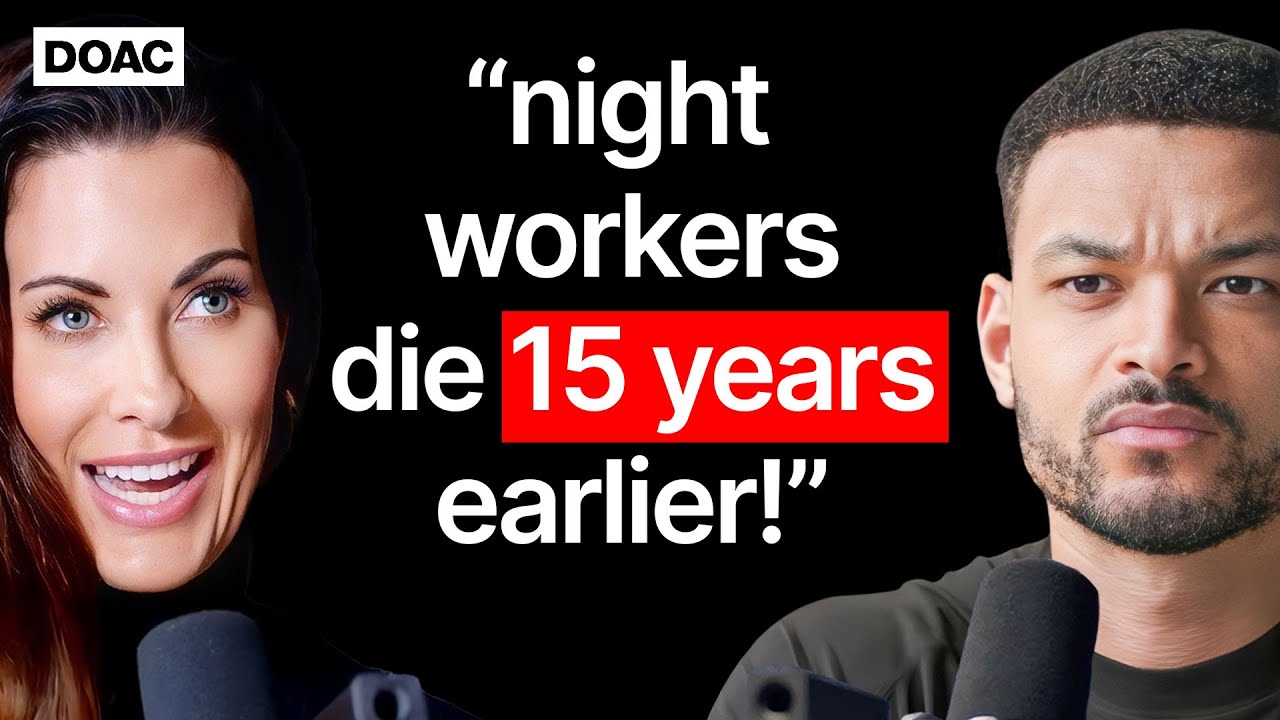
Kristen Holmes, the Vice President of Performance Science at Whoop, leverages massive health datasets from hundreds of thousands of users to decode human physiology. A core pillar of her findings revolves around circadian rhythms—the 24-hour physical, mental, and behavioral cycles governed by our environment. The consequences of disrupting these rhythms are severe. For instance, shift workers die on average 15 years earlier than non-shift workers. Alarmingly, the bar to qualify as a "shift worker" is surprisingly low: being awake for just 2 hours between 10:00 p.m. and 4:00 a.m. twice a week for 25 days out of the year places an individual in this high-risk category.
``` Circadian Disruption Threshold: 2 hours awake between 10:00 p.m. – 4:00 a.m. ➔ 2 days/week ➔ 25 days/year = Shift Worker Risk Level ```
This degree of circadian misalignment drastically elevates the risk for cardiovascular disease, metabolic dysfunction, cancer, fertility issues, and psychiatric disorders. Furthermore, viewing artificial blue light during this critical 10:00 p.m. to 4:00 a.m. window exerts a direct pro-depressive effect on the brain. Holmes firmly dismisses the common excuse of staying up late due to being a self-proclaimed "night owl," framing it instead as a lifestyle choice that undermines stress tolerance and long-term vitality.
---
[02:13](https://www.youtube.com/watch?v=-Hwlvkfp698&t=133s) The Science of Human Flourishing and High-Stakes Performance
When asked about the underlying motivation behind her career, Holmes describes an "irrationally passionate" drive to understand human flourishing. Her mission is to map out the psychological and physiological determinants that allow people to take control of their health, direct their energy effectively, and live rewarding lives.
As the VP of Performance Science and Principal Scientist at Whoop, her job involves anticipating future trends in health monitoring and identifying the key behaviors that drive positive biological outcomes. Her research specifically targets high-stakes, high-stress environments to extract principles that can be applied to the general population:
* **Professional Athletes:** Pushing physical and recovery limits daily. * **Frontline Healthcare Clinicians:** Managing chaotic schedules and high emotional demands. * **Military Operators:** Operating under extreme environmental and psychological stressors.
By analyzing how the mind and body interact under these extreme conditions, Holmes and her team develop scalable frameworks to help everyday individuals manage cognitive load, energy, and stress.
---
[05:03](https://www.youtube.com/watch?v=-Hwlvkfp698&t=303s) The Alaska Paratrooper Study and the "Mother of All Performance Behaviors"
To illustrate her work, Holmes highlights a major study she led involving 1,000 paratroopers stationed in Army Alaska—a harsh, extreme environment notorious for high suicide rates and severe mental health challenges. The U.S. Army approached Whoop to identify the underlying drivers of these psychological struggles.
Through rigorous data collection, the study yielded a striking conclusion: out of all measured parameters, a single behavior emerged as the most powerful predictor of positive psychological functioning: **sleep-wake timing consistency**.
``` Consistent Sleep-Wake Timing │ ├──► ── Workplace Resilience ├──► ── Reduced Homesickness ├──► ── Greater Sense of Control └──► ── Stronger Social Support Networks ```
Paratroopers who maintained stable bedtimes and wake times demonstrated higher workplace resilience, reduced homesickness, a stronger sense of personal control, and healthier social networks. Holmes calls sleep-wake timing "the mother of all performance optimization behaviors," noting that it consistently emerges as the foundation of health across every Whoop study.
---
[05:37](https://www.youtube.com/watch?v=-Hwlvkfp698&t=337s) How the Master Clock Rules Every Cell in the Body
To break down the mechanics of the circadian system, host Steven Bartlett asks for a simple, ground-level explanation of how biological timing works. Holmes explains that the body is governed by a central Master Clock called the **suprachiasmatic nucleus (SCN)**, located within the brain's hypothalamus.
``` [ Sunlight / Darkness ] │ ▼ [ Suprachiasmatic Nucleus (SCN) ] <-- Master Clock in Hypothalamus │ ┌─────────┼─────────┐ ▼ ▼ ▼ [ Organs ] [Tissues] [ Cells ] <-- Peripheral Clocks ```
The SCN acts as an orchestrator, receiving direct light and dark cues from the eyes to harmonize millions of peripheral clocks embedded in every cell, tissue, and organ. Light signals daytime activity, while darkness triggers nighttime recovery processes.
When an individual exposes themselves to bright light or eats at hours when the SCN expects sleep, it creates intense internal friction and systemic stress. While an occasional late night causes minimal damage, chronic circadian disruption acts as a primary catalyst for major health crises, including metabolic disorders, cardiovascular disease, and mental health breakdowns.
* **Primary Zeitgeber (Entrainment Cue):** Natural light and darkness. * **Systemic Impact:** 100% of psychiatric disorders exhibit some degree of circadian disruption. * **Core Vulnerability:** Modern environments disconnect our internal timing from natural solar cycles.
---
[10:16](https://www.youtube.com/watch?v=-Hwlvkfp698&t=616s) Humans Have Not Adapted to Artificial Light
Holmes points out a fundamental evolutionary mismatch: modern humans are attempting to navigate an environment saturated with artificial illumination using biological machinery designed prior to electricity. The human brain has simply not adapted to blue light exposure after sunset.
She points to studies examining brain circuitry, which demonstrate that light exposure between 10:00 p.m. and 4:00 a.m. actively disrupts the dopamine system, suppressing motivation and reward pathways while inducing pro-depressive states.
> "If you're viewing light between the hours of 10 p.m. and 4 a.m., it actually has a pro-depressive effect... our relationship to light will directly influence the trajectory of our health. There's just no question about that."
Bartlett contrasts this with our ancestral past, where light and food availability were strictly governed by natural solar patterns. Today, anyone can order food or consume digital content at 3:00 a.m., creating severe physiological friction.
To demonstrate how deeply wired this response is, Holmes cites research on hunter-gatherer societies living without electricity, as well as controlled mountain experiments: * In non-electrified societies, individuals naturally fall asleep and wake up within a tight 15- to 30-minute window of one another. * When modern humans are placed in an environment without artificial light (such as camping in the mountains), their sleep schedules naturally synchronize with the group within 48 hours.
This evidence debunks the widespread myth of extreme "chronotypes." While natural genetic variability accounts for a slight shift of 60 to 90 minutes at most, claims of being a "genetically hardwired night owl" who must sleep at 2:00 a.m. are largely driven by habits, choices, and light exposure patterns rather than genetics.
---
[15:07](https://www.youtube.com/watch?v=-Hwlvkfp698&t=907s) Sleep Regularity vs. Sleep Duration: The 70-Minute Threshold
While public health messaging has long fixated on sleep *duration* (getting 7 to 8 hours), emerging research reveals that sleep *regularity* is an even stronger predictor of longevity and performance.
Holmes highlights a major study analyzing UK Biobank data from 60,000 individuals across 10 million sleep nights. The findings revealed that consistent sleep-wake timing predicts all-cause mortality **independently of total sleep duration**. Spending 8 hours in bed yields diminished health returns if sleep onset and wake times fluctuate wildly from day to day.
``` Sleep Regularity ──► Strongest Predictor of Longevity / All-Cause Mortality Sleep Duration ──► Secondary (Necessary, but incomplete on its own) ```
Sharing preliminary, unpublished data from Whoop, Holmes reveals their findings on sleep variability thresholds across various populations.
* **Elite Athlete Benchmark:** In high-performing 18- to 23-year-old athletes, going beyond **70 minutes of sleep onset/offset variability** triggers a sharp decline in vital recovery metrics, including Heart Rate Variability (HRV) and resting heart rate. * **Systemic Impact:** Exceeding this variability threshold impairs the body's capacity to adapt to physical, mental, and environmental stress the following day. * **General Population Implication:** If elite, highly resilient athletes suffer measurable physiological decline at 70 minutes of variability, less robust or more vulnerable individuals will experience negative impacts at even narrower thresholds.
[17:55](https://www.youtube.com/watch?v=-Hwlvkfp698&t=1075s) Melatonin Suppression and Muscle Recovery
Kristen Holmes explains that when sleep-wake schedules are inconsistent, one of the primary physiological markers suppressed is circulating melatonin. Reduced levels of circulating melatonin are linked to nearly every disease and disorder in the human body, as melatonin plays a vital role in suppressing systemic inflammation.
Alongside melatonin, growth hormone release is severely compromised when going to bed late or irregularly. Human Growth Hormone (HGH) is released in a large bolus during deep sleep, driving physical restoration, cellular repair, and muscle growth. Steven Bartlett notes that his understanding of HGH through tracking tools like Whoop altered his behavior: when faced with a choice between going to the gym late or getting a full night’s sleep, he now chooses sleep because a sleep-deprived body cannot recover or rebuild muscle effectively anyway. Holmes confirms that while occasional late workouts are acceptable for consistent sleepers, sleep should almost always take priority over exercise when pressed for time.
- Melatonin suppression elevates systemic inflammation and vulnerability to disease. - Peak HGH release occurs during early deep sleep cycles and governs physical recovery and muscle repair. - Skipping sleep to work out negates the physical recovery benefits expected from exercise.
[20:08](https://www.youtube.com/watch?v=-Hwlvkfp698&t=1208s) Sleep Consistency and the Harvard GPA Study
Steven Bartlett asks Holmes about her personal sleep habits, referencing her commitment since 2017 to maintaining a sleep window within a 25 to 30-minute variation every day. Holmes explains that her habit was inspired by a landmark 2017 four-year Harvard study led by Dr. Andrew Phillips. The study analyzed student sleep patterns to identify which variables predicted academic success (measured via GPA) and overall flourishing. The single strongest predictor of high GPA was sleep-wake consistency rather than total hours slept—the difference between getting an A and a B came down to keeping a stable schedule.
Following this research, Holmes tested the concept on elite performers, tracking NCAA, EPL, NBA, NFL, and MLB athletes manually on Excel before Whoop automated the feature. The data consistently demonstrated that sleep-wake consistency directly predicted subjective well-being, internal/external training load, and performance metrics. Applying this rule strictly to herself since 2017, Holmes reports that she has not been sick since—experiencing no stomach bugs, no COVID-19, and only a single 48-hour head cold over six years.
- **Harvard Study (Dr. Andrew Phillips, 2017):** 4-year study showing sleep-wake consistency was a stronger predictor of student GPA than sleep duration. - **Personal Immunity Result:** Holmes attributes remaining illness-free since 2017 directly to her fixed sleep-wake schedule. - **Consistency Range:** Holmes maintains a fixed sleep-wake window within a 25–30 minute variance daily.
[22:38](https://www.youtube.com/watch?v=-Hwlvkfp698&t=1358s) Managing Travel, Naps, and Daily Routines
To maintain her sleep-wake schedule despite frequent travel across time zones, Holmes focuses on anchoring her wake-up time. Even when traveling internationally or to the West Coast, she keeps her home time zone wake time intact whenever possible. Anchored wake times ensure her body receives bright light at the same point each day, setting her circadian clock so that nighttime sleepiness occurs naturally.
When short sleep is unavoidable, Holmes manages sleep debt by scheduling a brief nap before 1:30 PM, lasting between 30 to 60 minutes. Napping later in the afternoon interferes with night-time sleep pressure. Her personal nightly routine involves getting into bed around 9:15–9:30 PM, reading a physical book under dim light for 30–45 minutes, falling asleep by 10:00 PM, and waking up naturally around 6:00 AM.
- **Wake-Up Anchor:** Keeping a fixed morning wake-up time sets the circadian rhythm, even after a late night or during travel. - **Strategic Napping:** Naps should occur before 1:30 PM for 30–60 minutes to prevent sleep debt without disrupting nighttime sleep drive. - **Evening Routine:** Bedtime prep starts around 9:15 PM with paper books and dim lighting, sleeping by 10:00 PM, and waking at 6:00 AM.
[24:12](https://www.youtube.com/watch?v=-Hwlvkfp698&t=1452s) Challenges for Parents and the Role of Meal Timing
Addressing a common objection from listeners, Bartlett raises the reality faced by parents of young children or caregivers who cannot control their sleep schedules. Holmes acknowledges that caring for infants or sick family members turns individuals into functional "shift workers," where sleep disruption is inevitable. However, she emphasizes that individuals can mitigate the physiological damage of chaotic sleep by controlling secondary circadian signals—specifically meal timing.
Holmes clarifies the scientific terminology used in circadian research: human studies focus on "Time-Restricted Eating" (TRE), whereas "Time-Restricted Feeding" (TRF) refers to animal/mouse models. Unlike intermittent fasting, which primarily focuses on calorie restriction, Time-Restricted Eating centers on aligning food intake with the light-dark cycle to optimize metabolic health regardless of calorie intake.
- **Time-Restricted Eating (TRE):** Aligning nutrition windows with circadian rhythms in human studies. - **Time-Restricted Feeding (TRF):** Term used specifically for rodent/animal laboratory models. - **Intermittent Fasting vs. TRE:** Intermittent fasting targets overall caloric reduction, whereas TRE prioritizes the temporal alignment of food with daylight.
[25:23](https://www.youtube.com/watch?v=-Hwlvkfp698&t=1523s) Time-Restricted Eating and Physiological Digestion
Research demonstrates that consolidating food consumption into an 8 to 12-hour window significantly improves metabolic outcomes. Whoop platform data reveals that stopping all food intake at least three hours before going to sleep results in exponentially better sleep quality and cardiovascular recovery scores. Humans are physiologically primed to digest and metabolize food far more efficiently early in the day near wakefulness compared to late evening.
Holmes highlights that even without altering food quality or calorie count—a vital consideration for socioeconomically disadvantaged populations with higher rates of cardiometabolic disease—simply restricting the daily eating window to 8–10 hours delivers roughly 60% of potential metabolic health benefits. Holmes maintains a 10-hour eating window herself, generally eating between 7:00 AM and 4:00 PM, and stopping food intake when the sun sets.
- **The 3-Hour Buffer Rule:** Ending food intake 3 hours prior to sleep dramatically improves sleep quality and recovery metrics. - **Eating Window Recommendation:** Consolidating calories into an 8–10 hour daytime window provides ~60% of metabolic health benefits regardless of diet content. - **Circadian Priming:** Nutrient processing and metabolic capacity peak earlier in the day.
[29:06](https://www.youtube.com/watch?v=-Hwlvkfp698&t=1746s) The Autonomic Nervous System and Late Night Eating
Digestion is governed by the parasympathetic branch of the autonomic nervous system ("rest and digest"). Sleep also requires a parasympathetic-dominant state for restorative cellular repair. Eating a heavy meal close to bedtime forces the body to compete for autonomic resources, diverting energy away from deep sleep restoration toward gastrointestinal processing.
Bartlett shares a personal anecdote from a period when long workdays led him to order food late at night, eating around 11:00 PM or midnight. He recalled waking up feeling completely unrefreshed. Tracking his physiological metrics on Whoop confirmed his suspicion: after eating at midnight, his resting heart rate remained elevated at ~70 BPM for the first three hours of sleep, only dropping to his true resting rate of ~45 BPM around 3:00 or 4:00 AM once digestion completed. Holmes confirms that late eating acts similarly to alcohol, driving up heart rate and stress scores while suppressing heart rate variability (HRV).
- **Autonomic Conflict:** Late-night digestion forces the body to divide parasympathetic resources between GI processing and sleep restoration. - **Physiological Footprint:** Late meals elevate sleeping heart rate by 20+ BPM for several hours, preventing heart rate minimum attainment. - **Research Benchmark:** Studies show individuals consuming the bulk of their calories before 3:00 PM experience significantly superior weight loss and metabolic outcomes compared to those eating main meals after 3:00 PM under identical caloric intake.
[32:26](https://www.youtube.com/watch?v=-Hwlvkfp698&t=1946s) Late-Night Exercise and Cortisol Dynamics
Bartlett admits to frequently working out late at night—sometimes as late as 11:00 PM or midnight—under the assumption that physical exertion would exhaust him and aid sleep. Holmes explains that late-night exercise elevates circulating cortisol, adrenaline, and core body temperature, activating the central nervous system and delaying the return to homeostasis.
Furthermore, gym environments present a secondary hazard: high-intensity artificial overhead lighting. Exercising under bright lights late at night signals to the master circadian clock that it is daytime, suppressing melatonin production and reinforcing alertness when the body should be preparing for sleep.
- **Hormonal Cascade:** High-intensity exercise triggers cortisol and adrenaline release that requires hours to metabolize back to baseline. - **Environmental Signals:** Bright gym lights late at night suppress melatonin and shift circadian timing backward.
[34:09](https://www.youtube.com/watch?v=-Hwlvkfp698&t=2049s) Morning Sunlight and Light Exposure
Holmes strongly supports morning sunlight exposure as the single most critical circadian anchor. Receptive light sensors in the eyes require exposure to natural sunlight—ideally around 100,000 lux—within 5 to 20 minutes of waking up.
When Bartlett mentions that his partner sits on the balcony for 10 to 20 minutes every morning, Holmes commends the practice. Stepping outside shortly after waking signals the brain's suprachiasmatic nucleus that the day has begun, setting a precise biological timer for nighttime melatonin release approximately 14 to 16 hours later.
- **Photonic Target:** Aim for natural light exposure (up to 100,000 lux outdoors) within 5–20 minutes of waking. - **Circadian Mechanism:** Morning outdoor light sets the internal clock for daytime alertness and triggers the countdown for evening melatonin release.
<FollowUp label="Want to cover the next section on alcohol, coffee, and stress reduction?" query="Continue the detailed walkthrough for part 3 of the transcript."/>
Here is the detailed, faithful walkthrough of this section of the transcript:
### [34:50](https://www.youtube.com/watch?v=-Hwlvkfp698&t=2090s) Managing Light Exposure Before Sleep and the Role of Melatonin Kristen Holmes explains that following a proper light exposure protocol allows you to absorb enough photon energy to signal to your body clock that it is time to be awake. When Steven asks whether someone can simply look into a lamp instead, Kristen notes that while indoor lighting works, it takes significantly longer because artificial light lacks the intensity of natural sunlight. If waking up before sunrise, turning on bright indoor lights helps mimic daytime, but one should still step outside once the sun comes up.
Transitioning to pre-sleep habits, Steven asks if the principles surrounding light exposure before bed mirror those of avoiding late-night eating. Kristen confirms that they absolutely do. She advises restricting light after sunset by dimming the home environment as much as possible and minimizing all artificial light leading up to bedtime. While activating blue-light blocking glasses or screen filters on devices like iPads and phones can help, the overarching goal is to protect the body's natural melatonin release. Melatonin is essential because its absence is linked to various diseases and health disorders, and its release strictly requires darkness. Darkness alerts the master clock in the brain that it is time to sleep, which in turn signals the rest of the body's tissues, organs, and cells to enter sleep mode.
* Indoor artificial lighting lacks the intensity of sunlight, meaning it takes much longer to stimulate the body's wakefulness pathways. * After sunset, people should dim their indoor environment to protect melatonin production. * Lack of melatonin release is tied to numerous chronic health diseases and mental disorders. * The brain's master clock relies on darkness signals to coordinate cellular and organ sleep functions.
### [36:34](https://www.youtube.com/watch?v=-Hwlvkfp698&t=2194s) Sleep Masks, Nighttime Stimuli, and Managing Daily Stress Steven shares that during a recent visit to the WHOOP headquarters in Boston, he saw the team developing sleep masks. He admits to previously being skeptical, thinking people wearing face straps on airplanes were "weirdos," though he now uses one himself. Kristen affirms that even a tiny light from an alarm clock or television screen emits enough artificial light to disrupt sleep quality. While natural light like moonlight is harmless, artificial light impairs the body's ability to reach deep, restorative sleep stages. When Steven asks if she listens to anything while falling asleep—jokingly mentioning serial killer documentaries at 3:00 a.m.—Kristen cautions against listening to anything cognitively stimulating or energizing. Steven quips that he is part of a niche group of people who find horror and thriller audio relaxing at night. Kristen responds that if a habit feels subjectively helpful and objective data confirms adequate time in deep sleep, it may be fine, but the foundational environment should remain cold, dark, and quiet.
Kristen highlights that sleep is heavily influenced by how effectively someone manages stress during the day. Living in alignment with one's core values, controlling thoughts, and handling personal relationships productively all prevent negative stress from manifesting during sleep. When daytime stress is managed proactively, going to sleep happens naturally.
* Tiny LED lights from TVs or clocks emit enough light to disrupt deep, restorative sleep. * Natural light (such as moonlight) does not disrupt sleep architecture in the same way artificial light does. * Audio content that triggers cognitive arousal or emotional stress should generally be avoided before sleep. * The ideal sleep environment rests on three main physical pillars: cold, dark, and quiet. * Proactive stress management and value-aligned living during the day directly improve sleep quality at night.
### [39:20](https://www.youtube.com/watch?v=-Hwlvkfp698&t=2360s) Developing Discipline, Values, and Pruning Relationships Steven brings up a common predicament: many listeners feel discouraged because, despite knowing what they *should* do—such as putting phones away at 9:00 p.m. or avoiding late-night cookies—they lack the discipline to act on it. He asks Kristen what compelling message can push people toward positive circadian habits. Kristen explains that building new habits requires linking those behaviors directly to personal values. For instance, because her core values are growth, impact, and presence, she structures her daily routine around supporting those ideals. People often struggle with discipline because their desires and values are fuzzy, causing them to drift aimlessly across emotional, mental, and physical states.
To overcome this, Kristen argues that individuals must clarify what they truly care about and align their behavior accordingly. This often requires making difficult choices, including removing people from one's life who do not support those values. She notes that people are frequently too lenient with their social circles, retaining friends who fail to help them become better versions of themselves. When Steven asks if she has had to shed relationships herself, Kristen answers that she has, explaining that she needed an environment supporting her goal to wake up with joy and energy and remain fully present for her children.
> "I think when folks are struggling, they don't really know who they want to be in the world, and they don't maybe understand exactly what it is that they value. They're fuzzy about their desires... and you end up flinging yourself in all sorts of directions."
### [43:03](https://www.youtube.com/watch?v=-Hwlvkfp698&t=2583s) Growing Up with Addiction: Kristen's Personal Story Kristen opens up about her past, sharing details she has never spoken about publicly before. She grew up in an environment where her mother suffered from severe severe depression, seasonal affective disorder, and chronic alcoholism, eventually dying of cirrhosis. Kristen recalls how watching her mother's life get destroyed by alcohol led her to personally abstain from drinking. However, early in her adulthood and university life, she found herself surrounded by peers who normalized heavy binge drinking. Although she did not participate, being in that environment weighed on her core and prevented her from showing up as her best self, forcing her to make hard decisions to cut ties and rebuild a supportive life infrastructure.
Steven asks what it was like growing up with a parent battling severe addiction. Kristen shares that a child in that situation feels fundamentally deprioritized and unsupervised, forced to navigate basic survival tasks like finding food independently. Her father, whom she describes as a good man of high integrity, coped by becoming a workaholic. This upbringing instilled deep independence in her, but also made it challenging to form emotional attachments as an adult out of a subconscious fear of not being taken care of.
Looking back, Kristen reflects on how her mother suffered from undiagnosed major depressive disorder and seasonal affective disorder—a primary driver behind Kristen's current scientific fascination with light exposure and health. Overcome with emotion, Kristen sheds tears for her mother, expressing deep grief that her mother was never able to realize her potential. Steven offers her a tissue, thanking her for sharing such a personal story and noting how remarkably she transformed her pain into a mission to help hundreds of thousands of people. Kristen explains that her entire career—from coaching to health research—is rooted in helping others avoid that same pain, master their baseline habits, and actualize their full human potential.
* Kristen's mother struggled with seasonal affective disorder and major depressive disorder, which led to severe alcoholism and death from cirrhosis. * Children raised in households affected by addiction often suffer from lack of supervision and struggle with adult emotional attachment due to early neglect. * The widespread normalization of heavy binge drinking in university settings can negatively impact even non-drinking peers. * Kristen's personal trauma inspired her life's work in circadian health, light therapy, and human performance coaching.
### [51:54](https://www.youtube.com/watch?v=-Hwlvkfp698&t=3114s) Rethinking Alcohol: The Principle of Non-Neutrality Steven shares that he recently decided to quit drinking alcohol three to four months prior. He notes that while one of his close friends was a recovering alcoholic writing a book on sobriety, Steven himself had only ever been a casual drinker—having perhaps one glass of wine a week or going months without drinking at all. Because he lacked a dramatic "rock bottom" story, he wanted to explore whether there were compelling reasons for casual, social drinkers to eliminate alcohol entirely.
He asks Kristen for her scientific perspective on how alcohol impacts health and circadian rhythms. Kristen introduces what she calls the "principle of non-neutrality." Under this framework, no behavior, choice, or substance is truly neutral; every action either moves you toward your core values and health goals or pulls you away from them.
* Steven BARTLETT quit alcohol entirely three to four months prior despite being only an occasional, casual drinker. * **The Principle of Non-Neutrality**: Behaviors and health choices are never completely neutral—they either actively support your goals and physiological functioning or actively hinder them.
The Clarity of Choices and the Reality of Alcohol
Kristen Holmes discusses how viewing life choices through the lens of one's core values—such as compassion and tolerance—brings absolute clarity, leaving very little room for gray areas, which she views merely as excuses. When Steven Bartlett suggests that alcohol helps people socialize, Kristen challenges the premise directly: "if you need alcohol to bond or to form a connection there's probably something else going on that is unaddressed." Addressing the common belief that small, moderate doses or components in red wine like resveratrol are beneficial, she notes that one would have to drink an impractical amount, like ten bottles, to see a real benefit. Literature consistently shows that even just one to two drinks per week carry negative implications for health, refuting the notion that moderate drinking is good for you.
---
Alcohol's Toll on Sleep, Melatonin, and Recovery
The conversation shifts to the direct physiological mechanisms of alcohol, focusing on how it disrupts circadian rhythms primarily by wrecking sleep onset and offset. Kristen cites studies from the Sleep Foundation: a 2007 study of 29 young adults showing that moderate alcohol up to an hour before bed slashes melatonin production by nearly 20%, and a massive 2018 Finnish study of 4,908 participants showing Sleep Quality dropping by 9.3% after one glass of wine, 24% after two glasses, and a staggering 39.2% after three or more glasses. Steven shares his own transformative motivation for quitting alcohol after getting a Whoop band: waking up with a flashing red warning on his heart rate variability (HRV)—a key metric for how well the body handles stress and load—accompanied by a prompt asking if he had consumed alcohol the night before. Kristen explains that Whoop data reveals a linear relationship where every single drink triggers a clinically significant decline in recovery, averaging a 6% reduction overall, with binge drinking pushing drops to 30% or 40%.
---
Caffeine and the Heavy Toll of Shift Work
Moving to coffee and caffeine, Kristen explains that consumption within 8 to 12 hours of intended sleep disrupts circadian rhythms and fragments sleep architecture, preventing individuals from reaching deep, restorative stages even if sleep deprivation makes them pass out. This naturally leads into an expression of profound empathy for shift workers—not just warehouse employees, but doctors, nurses, firefighters, police officers, truck drivers, and bakers—anyone awake for more than two hours between 10 p.m. and 4 a.m. Kristen delivers a sobering statistic: these individuals face an average reduction in life expectancy of 15 years, and shift work is officially classified as a carcinogen by the World Health Organization. While hospitals and organizations struggle to fix the problem due to insufficient roster sizes, researchers look at levers like timed eating, protein timing, and light exposure to minimize circadian disruption.
---
Mental Health, Social Jet Lag, and Stress Deactivation
The dialogue expands into the correlation between sleep disruption and mental health issues, such as depression and suicidality. Kristen points out that social jet lag—the stark timing difference between weekday and weekend sleep schedules common among people aged 20 to 30—has direct psychological consequences. Citing research in college students, she notes that for every hour of variability between weekday and weekend schedules, there is a 17% increase in non-suicidal self-harm ideation (fantasizing about suicide). Because circadian disruption is present in 100% of mental health issues, shift workers with completely random sleep schedules are exceptionally vulnerable. To combat this constant state of biological stress, Kristen advocates for proactive "mini moments of deactivation," highlighting the **physiological sigh**—a double inhale followed by an extended exhale, mirroring what the body does when crying—as the most effective on-demand breath work technique to activate the parasympathetic nervous system, lower the heart rate, and mitigate accumulated stress.
---
Sleep Debt, Executive Function, and Leadership Impact
Focusing on the tragic paradox where high-stakes professionals like doctors and executives suffer the worst sleep deprivation, Kristen breaks down the concept of **sleep debt**—the gap between what a body needs and what it actually gets. Drawing on Whoop platform data and a six-month study of business leaders and CEOs, she explains that for every 45 minutes of accumulated sleep debt, there is a 5 to 10% decline in next-day executive function and mental control (measured via performance tests like the Stroop test), which directly impairs decision-making abilities. In a wild follow-up study involving around 70 business executives, researchers paired objective sleep data with evaluations of the psychological safety of their direct reports during team meetings. The results showed a direct linear relationship: for every 45 minutes of sleep debt carried by the leader, the psychological safety of their direct reports significantly decreased, making employees feel less safe showing up as their authentic selves.
By the way, to unlock the full functionality of all Apps, enable [Gemini Apps Activity](https://myactivity.google.com/product/gemini).
Here is a detailed, faithful walkthrough of this section of the conversation:
[01:11:24](https://www.youtube.com/watch?v=-Hwlvkfp698&t=4284s) The Insidious Nature of Sleep Deprivation and Psychological Safety
Kristen Holmes highlights that sleep-deprived leaders are often completely blind to their own physical, cognitive, and emotional declines. This dynamic is what makes sleep deprivation so insidious: individuals adapt to a degraded baseline of functioning and falsely assume they are operating fine, whereas everyone around them immediately feels the difference in their facial expressions, eye contact, tone, and reduced emotional tolerance. Sleep deprivation does not just affect the individual; it impacts every person they interact with.
To demonstrate the economic and organizational impact of interpersonal dynamics, Kristen references Google’s Project Aristotle study, which evaluated various metrics related to high-performing teams. The study revealed that psychological safety—the extent to which team members feel secure enough to present their authentic selves—was the single most critical factor in driving team performance. Notably, teams with high psychological safety generated $4.5 million more in revenue than those lacking it. Connecting this back to the "principle of non-neutrality," minimizing sleep debt stands as a primary behavior for maintaining high psychological safety, enabling people to live out their values and consistently perform at their best.
- Google’s Project Aristotle found psychological safety to be the top predictor of team performance. - Culturally and financially, teams with high psychological safety generated **$4.5 million** more than teams without it.
[01:13:10](https://www.youtube.com/watch?v=-Hwlvkfp698&t=4390s) Sleep Debt, Accident Rates, and Physical Injuries
The conversation transitions to how sleep debt directly correlates with personal injuries and severe accidents. Kristen emphasizes that accumulated sleep debt drastically increases risk-taking and error rates across numerous fields, including medicine and driving. Steven Bartlett cites a 2016 study by the AAA Foundation for Traffic Safety, which found that drivers getting 4 to 5 hours of sleep per night face a crash rate **5.4 times higher** than those sleeping 7 hours or more. Kristen responds that society is approaching sleep through the wrong lens by merely urging people to spend more time in bed rather than addressing the core circadian behaviors that allow them to fall asleep and stay asleep.
Steven brings up a 2021 study demonstrating that sleeping under 7 hours daily increases physical injury risks; when sustained for 14 days or longer, the risk of muscle and bone injuries rises by **1.7 times** (nearly double). As an avid gym-goer, Steven expresses shock at how dramatically a lack of sleep undermines physical durability. Kristen reinforces that sleep remains the single greatest natural performance enhancer on the planet.
- **Crash Risk**: Drivers sleeping 4–5 hours a day have **5.4 times** the crash rate compared to those sleeping 7+ hours. - **Injury Risk**: Sustaining less than 7 hours of sleep over 14 consecutive days increases muscle and bone injury risk by **1.7 times**.
[01:15:43](https://www.youtube.com/watch?v=-Hwlvkfp698&t=4543s) The Impact of Sex and Intimacy on Sleep Quality
Addressing the connection between sex and sleep, Kristen shares preliminary, unpublished research from Whoop indicating that engaging in sexual activity with a partner shortly before bed yields significant improvements in sleep and recovery metrics. When Steven asks for clarification on what "partner" means, Kristen explains that the data explicitly reflects sexual intimacy with a regular partner or spouse rather than casual encounters or solo activities.
- **Masturbation**: Data collected via Whoop's de-identified, opt-in journal feature shows no strong or significant positive effects on sleep or recovery markers from solo masturbation. - **Biochemical and Emotional Mechanism**: While ejaculation triggers the release of oxytocin (a calming chemical), the profound recovery benefits appear tied to the psychological sense of connection, safety, and intimacy shared with a partner. - **Post-Coital Response**: Steven notes feeling exceptionally tired after sex with his partner. Kristen adds that while men typically fall asleep rapidly following sex due to this hormonal shift, women often feel inclined to stay awake and converse or cuddle.
[01:19:00](https://www.youtube.com/watch?v=-Hwlvkfp698&t=4740s) Sponsor Break: Whoop & Shopify
Steven presents messages from the episode's sponsors:
- **Whoop**: Steven details why Whoop is his wearable of choice over other devices, highlighting its non-invasive design, analytics, evolving membership model, and tools like the Whoop Coach, Journal, and Weekly Planner that drive long-term behavior change. He offers listeners a 30-day risk-free trial at `[join.whoop.com/CEO](https://join.whoop.com/CEO)`. - **Shopify**: Steven introduces Shopify as an all-in-one e-commerce platform that powers millions of businesses globally. He mentions using Shopify for his team's product launches, including *The Conversation Cards*, and promotes a **$1/month** trial available via `[shopify.com/bartlett](https://shopify.com/bartlett)`.
[01:20:53](https://www.youtube.com/watch?v=-Hwlvkfp698&t=4853s) Understanding Heart Rate Variability (HRV)
Steven admits to being deeply obsessed with checking his Heart Rate Variability (HRV) on his wearable every morning to gauge his physical recovery. Kristen defines HRV as the time interval variation between consecutive heartbeats. Originating in the autonomic nervous system, HRV reflects the dynamic balance between its two competing branches: the parasympathetic nervous system ("rest and digest") and the sympathetic nervous system ("fight or flight").
When an individual is fully recovered, their heart responds dynamically to both nervous systems, allowing the body to adapt efficiently to environmental demands. Counterintuitively, higher variability in time between beats represents a healthier, more adaptable state, whereas a rigid, highly metronomic heartbeat signals stress and low adaptability.
- **Metronomic vs. Variable**: A predictable rhythm like "*bum... bum... bum...*" indicates low HRV and poor recovery, whereas a varied rhythm like "*bum... bum-bum... bum...*" signals high HRV and readiness. - **Baseline Determinants**: HRV baselines are heavily influenced by genetics, biological sex, heart size, and life history—including past trauma, sleep habits, and substance use. - **Age Decline**: HRV naturally decreases by roughly **3% to 4%** per year as people age. - **Demographic Baselines**: Average HRV values on the Whoop platform typically hover around **65–70 ms** for 20–30-year-olds, dropping into the lower range for 30–40-year-olds, and averaging around the **50s** for people in their 40s and 50s. - **Sex Differences**: Males generally present higher baseline HRV values than females, primarily due to differences in average heart size.
[01:25:26](https://www.youtube.com/watch?v=-Hwlvkfp698&t=5126s) Protocols for Maximizing HRV and Performance
Steven asks how he can actively raise his HRV. Kristen outlines specific daily protocols across sleep, light exposure, stress management, nutrition, and exercise:
- **Sleep & Circadian Consistency**: Maintain a strict, regular wake-up time every day as the foundational anchor, immediately followed by exposure to a large dose of natural sunlight to lower systemic inflammation and align cortisol cycles. - **Proactive Stress Management**: Incorporate intentional rest-and-recovery pauses throughout the workday to balance high-stress demands rather than pushing continuously through fatigue. - **Nutrition**: Consume the majority of calories early in the day, prioritize high protein intake, and finish eating several hours before going to sleep while maintaining proper hydration. - **Polarized Exercise Training**: - **Zone 5 Training**: High-intensity, max-effort work where you are out of breath, performed **2 to 3 times per week**. - **Zone 2 Training**: Low-intensity, steady-state cardio at approximately 60% of max heart rate, targeting **200 to 300 minutes per week** (surpassing standard guidelines of 150 minutes for optimal cardiovascular and HRV outcomes).
[01:27:44](https://www.youtube.com/watch?v=-Hwlvkfp698&t=5264s) Maximizing Heart Rate Variability (HRV) and Lifestyle Habits
The conversation continues with a discussion on how to optimize the interplay between the cardiovascular system and the nervous system. Kristen Holmes points out that training a few times a week in a targeted manner can help achieve this balance. Beyond exercise, fundamental lifestyle habits play an indispensable role in boosting Heart Rate Variability (HRV) and helping the body adapt to environmental stress. Key recommendations include practicing time-restricted feeding by stopping food intake at least three hours before sleeping, completely abstaining from alcohol, and ensuring sufficient time in bed to avoid accumulating sleep debt.
Steven Bartlett introduces social connection and sedentary lifestyle factors into the equation. He notes that in the Western world, people are becoming increasingly sedentary year after year—a downward trend accelerated by modern conveniences like Uber, office jobs, and remote work. Holmes confirms that prolonged sitting severely harms HRV and overall health. Sitting continuously for four hours or more is explicitly linked to increased mortality rates. Even an hour-long morning workout does not give someone a "license to sit" for the rest of the day.
- **Stop Eating Before Bed:** Cease eating at least 3 hours before intended sleep to optimize recovery and HRV. - **Abstain from Alcohol:** Essential if the goal is maximizing environmental adaptability and HRV. - **Avoid Sleep Debt:** Consistently getting sufficient time in bed protects systemic recovery. - **Break Up Sedentary Time:** Avoid consolidated sitting blocks of 4+ hours; instead, stand up and move for 5 minutes every 30 to 60 minutes. - **Social Connection:** Surrounding oneself with supportive people who share similar values is a vital element of health.
---
[01:30:04](https://www.youtube.com/watch?v=-Hwlvkfp698&t=5404s) The Psychological Dimension: Gratitude and Growth Mindset
Shifting focus to the psychological influences on physiological metrics like HRV, Bartlett references a 2020 article written by Holmes detailing five ways to improve HRV. One surprising element mentioned was practicing gratitude. Holmes explains that research reveals *receiving* gratitude (such as reading and internalizing a genuine thank-you letter) has the most powerful long-term effect on mood and well-being. Expressing gratitude to others also yields significant psychological benefits.
As a PhD researcher in psychology, Holmes highlights how a "growth mindset"—the optimistic belief that future learning, improvement, and happiness are possible—directly manifests in physical markers like heart rate variability. Bartlett references research by Shawn Achor at Harvard, illustrating how positive psychological states drive tangible real-world outcomes. However, Holmes argues that psychology often misses the mark by preaching mindset without addressing the foundational physical behaviors needed to sustain it.
- **Receiving Gratitude:** Has a stronger impact on personal well-being and positive affect than merely expressing it. - **Shawn Achor's Findings:** Doctors in a positive mindset make accurate diagnoses **19% faster**, and positive employees are **31% more productive** than negative counterparts. - **Psychological-Physiological Loop:** Proper circadian alignment, sleep, recovery, and stress management form the essential infrastructure that enables a growth mindset to take root.
---
[01:35:39](https://www.youtube.com/watch?v=-Hwlvkfp698&t=5739s) Deconstructing Motivation: Appraisal and Perception
When addressing people who struggle with a lack of motivation, Holmes and Bartlett break down what motivation actually is: energy production. Motivation is governed by two psychological levers: **appraisal** (how relevant or meaningful a task is to an individual's personal goals and values) and **perception** (how difficult or challenging the task is perceived to be). Together, appraisal and perception set the ceiling on an individual's potential motivation.
Bartlett shares a concept from his own book, *The 16 Laws of Communication / Diary of a CEO*, which he calls the "Discipline Equation":
$$\text{Discipline} = (\text{Strength of One's Why}) + (\text{Reward of the Pursuit}) - (\text{Cost of the Pursuit})$$
Holmes strongly agrees with this formulation, noting that during her coaching career, she consistently helped her athletes tap into their personal core values rather than forcing team-wide values upon them. She stresses that leaders often fail because they do not understand how to align work tasks with an individual's personal values.
- **Motivation Drivers:** Appraisal (answering "why this matters to me") paired with challenge perception determines available energy. - **The Upward vs. Downward Spiral:** Healthy behaviors release energy and build positive momentum; poor sleep and circadian disruption trigger low energy, depression, and a downward spiral. - **Breaking the Downward Spiral:** Takes one tiny decision at a time, backed by behavioral momentum.
---
[01:39:41](https://www.youtube.com/watch?v=-Hwlvkfp698&t=5981s) Where to Start: Key Actions and Value Alignment
For anyone feeling overwhelmed and seeking to break out of a negative cycle, Holmes provides a concrete, low-barrier roadmap:
1. **Fix Sleep-Wake Timing:** Wake up at the exact same time every day and get as much natural light exposure as possible immediately after waking. 2. **Consolidate the Eating Window:** Eat all daily calories within a 10-hour window, keeping a buffer of several hours before bedtime.
These two foundational steps improve body composition, stabilize mood, regulate cardio-metabolic markers, and establish a healthy relationship with light exposure. Parallel to fixing physical health, individuals must audit their relationship with technology and clarify their identity and values rather than getting lost in constant content consumption.
Rather than setting traditional goals—which Holmes describes as "total BS"—she manages her life through a dynamic, quarterly updated document in Evernote based strictly on core values.
- **Top 5 Core Values for Kristen Holmes:** 1. Growth 2. Impact 3. Tolerance 4. Compassion 5. Presence - **Translating Values into Action:** Holmes studies authors like James Baldwin (on compassion and tolerance) and Ayn Rand (on impact and growth), defining what each value looks like in daily execution. - **Goals vs. Values:** Pursuing a PhD is not a static "goal" for Holmes, but rather a structured outlet that allows her to live out her core value of continuous growth.
[01:43:50](https://www.youtube.com/watch?v=-Hwlvkfp698&t=6230s) Aligning Goals with Personal Values and Redefining Competition
Kristen Holmes explains that her overarching ambition—such as pursuing a PhD—is not merely about collecting credentials, but about building the scientific credibility and experimental capability required to impact human health at scale. For her, pursuing a degree or setting a target is simply a vehicle to live out her core values of growth and impact. She points out that many people make the mistake of setting arbitrary targets, like running a 10K, without asking themselves what happens after the goal is achieved. Instead of measuring success by discrete achievements, Kristen views her personal scorecard around a single question: "Am I living my values to my fullest?"
This internal values-based alignment radically alters how one views competition. Kristen reveals that she stopped competing against external rivals a decade and a half ago. Reflecting on her time coaching collegiate athletics at Princeton, she shares how she designed an infrastructure that deliberately ignored the competition—they did not even list their opponents' names. She wanted her athletes focused entirely on their own daily standards, training quality, and personal application, rather than letting an external opponent dictate their behavior or mindset. Teams and individuals consistently underperform when they fixate on beating someone else rather than striving to meet their own high standards and continuously learning.
- **Core values:** Living out values like growth and impact serves as the real metric for success rather than simple task completion. - **Princeton coaching philosophy:** Omitted opponents' names from schedules to focus strictly on internal quality, consistency, and daily performance standards. - **Why people underperform:** Focusing on arbitrary external targets or opponents distracts from asking, "Am I actually living my values?"
---
[01:46:29](https://www.youtube.com/watch?v=-Hwlvkfp698&t=6389s) The Last Guest's Question and Closing Words
Following the podcast’s signature tradition, Steven Bartlett asks Kristen a final question left by the previous guest (who wrote it without knowing who would be answering): "What is the last thing that you would say?"
Kristen reflects briefly and offers a succinct, powerful piece of advice: "Figure out who you want to be in the world, and then set up your life so you can be that person."
Steven expresses deep gratitude for her presence, intelligence, and storytelling ability. He notes that while her work has already transformed hundreds of thousands of lives over decades of research and leadership at Whoop, her ability to communicate these principles will positively impact hundreds of millions more in the decades to come. He praises her deep innate drive and wisdom as a vital service to humanity at a time when society needs it most. Kristen warmly thanks Steven for his hospitality and support before the interview concludes.
- **Closing question:** "What is the last thing that you would say?" - **Kristen's final advice:** Identify who you want to be, then structure your daily life and environment to enable you to become that person.
---
[01:48:28](https://www.youtube.com/watch?v=-Hwlvkfp698&t=6508s) Podcast Sponsor Message: Huel Steven Bundle
To close out the episode, host Steven Bartlett shares a brief promotional message for Huel, a company he invests in and advertises on the podcast. He highlights the "Huel Steven Bundle," a curated selection designed for both new users and existing fans wanting to try his personal favorites.
- **Salted Caramel Black Edition:** A high-protein powder containing 17 servings per container. - **Ready-to-Drink bottles:** A convenient, nutritionally complete meal option for busy schedule days. - **Huel Snack Bars & Shaker:** Included alongside the signature Huel t-shirt, which Steven notes is widely praised by his friends for its exceptionally flattering fit. - **Description link:** Listeners can find the direct link to the bundle and a recommended follow-up podcast episode in the episode description.
## Notable quotes > [39:20](https://www.youtube.com/watch?v=-Hwlvkfp698&t=2360s) I think when folks are struggling, they don't really know who they want to be in the world, and they don't maybe understand exactly what it is that they value. They're fuzzy about their desires... and you end up flinging yourself in all sorts of directions. — Kristen Holmes
> if you need alcohol to bond or to form a connection there's probably something else going on that is unaddressed. — Kristen Holmes
> [01:46:29](https://www.youtube.com/watch?v=-Hwlvkfp698&t=6389s) What is the last thing that you would say? — Steven Bartlett
> [01:46:29](https://www.youtube.com/watch?v=-Hwlvkfp698&t=6389s) Figure out who you want to be in the world, and then set up your life so you can be that person. — Kristen Holmes
## Mentioned Kristen Holmes, Steven Bartlett, WHOOP, Dr Matthew Walker, The Diary Of A CEO, Whoop Coach, Shopify, Huel, Sleep Foundation, World Health Organization, Google, Project Aristotle, AAA Foundation for Traffic Safety, Stroop test, Harvard, Shawn Achor, Princeton University, James Baldwin, Ayn Rand, Evernote
[Source](https://www.youtube.com/watch?v=-Hwlvkfp698)