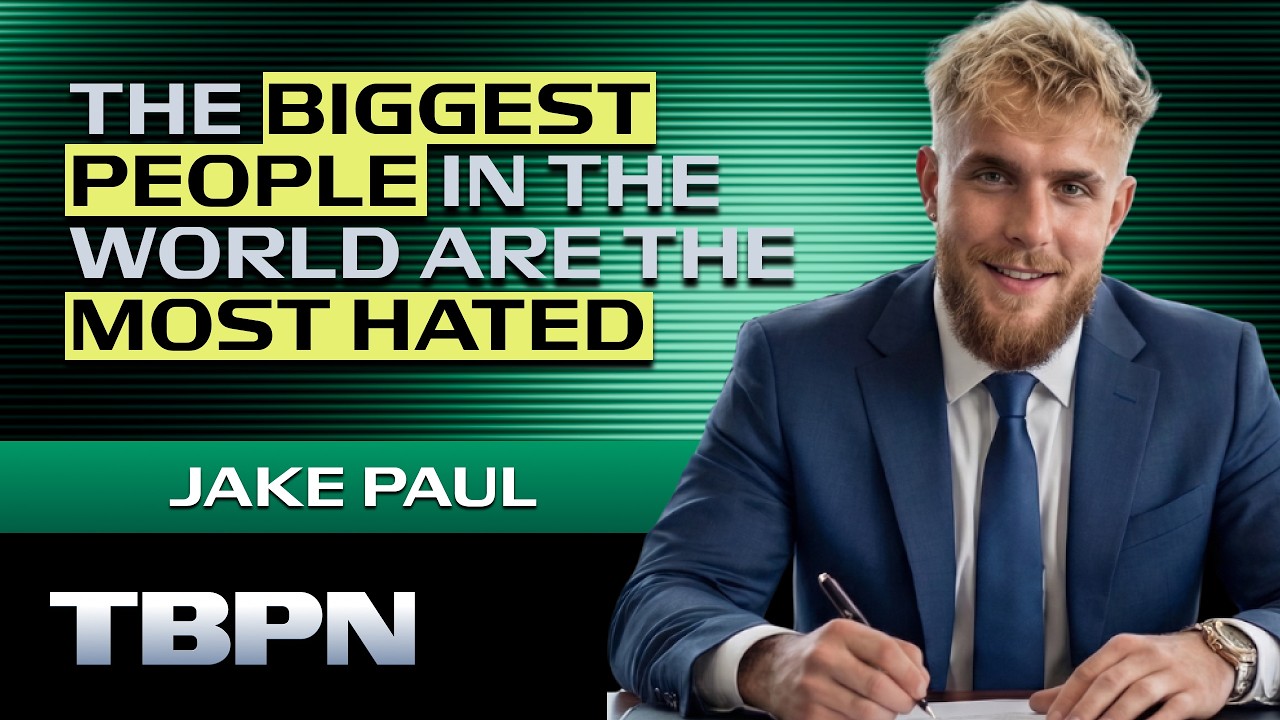
Jake Paul Anti Fund Target $100M Venture Shift to Defense and AI Hardware
TBPN
Jake Paul and Jeff Lowe are pivoting Anti Fund toward institutional capital and physical-world tech investments, arguing that venture success now requires pairing deep AI capabilities with mass-market consumer storytelling.
## Background
Published by TBPN on YouTube on June 18, 2026, this page hosts a full conversation with Jake Paul and Jeff Lowe. According to the page description, the interview covers Anti Fund's new $100M+ fund, their focus on AI, defense, robotics, and frontier tech, Jake Paul's career evolution from Vine to boxing and Most Valuable Promotions, and their thesis on value creation in the physical world.
## TL;DR
Jake Paul and Jeff Lowe join TBPN to announce Anti Fund's $100M+ oversubscribed fund, explaining their barbell strategy that combines early-stage venture bets with growth-stage investments in visionaries like Elon Musk and Palmer Luckey. Paul details how Anti Fund leverages media expertise to help tech founders fix their storytelling, while sharing his own progression from Vine and landscaping to building a media empire and disrupting boxing through Most Valuable Promotions. The discussion spans combat sports dynamics, skepticism toward the Enhanced Games, health maxing, and the critical importance of superior product-market fit over sheer celebrity endorsement.
## Atmosphere & style
The conversation is high-energy, ambitious, and candid, blending the pragmatic world of Silicon Valley venture capital with the raw hustle of digital media and fight promotion. Jake Paul and Jeff Lowe bring an insider, street-smart confidence—symbolized by striking a gong at the start—while joking easily about everything from sibling rivalries to 'testosterone Kardashians' and electric Ferraris. The dynamic between the hosts and guests feels like an informal, peer-to-peer brainstorm that moves seamlessly between sharp financial calculus and unvarnished, humorous personal anecdotes.
## Key takeaways
- [00:00](https://www.youtube.com/watch?v=Zd_YmIk5PYM&t=0s) Anti Fund has raised over $100M for its new fund, backed by lead institutional investor Aquarian Holdings ($27B+ AUM) alongside a 10% to 14% GP commit.
- [00:00](https://www.youtube.com/watch?v=Zd_YmIk5PYM&t=0s) The fund operates a "barbell strategy," pairing fast DPI growth-stage investments in tier-one founders (e.g., SpaceX, xAI) with early-stage venture bets.
- [02:46](https://www.youtube.com/watch?v=Zd_YmIk5PYM&t=166s) Anti Fund's core value-add for portfolio companies is bridging the gap between deep technical product engineering and mass-market consumer storytelling.
- [06:03](https://www.youtube.com/watch?v=Zd_YmIk5PYM&t=363s) Jake Paul built his media empire starting on Vine after realizing a single $200 brand deal far outperformed manual landscaping labor.
- [06:03](https://www.youtube.com/watch?v=Zd_YmIk5PYM&t=363s) Jake and Logan Paul evolved from fierce sibling vlogging competitors into collaborative business and investment partners.
- [09:37](https://www.youtube.com/watch?v=Zd_YmIk5PYM&t=577s) Jake Paul models his multi-company operational framework and scaling strategy after Elon Musk.
- [11:22](https://www.youtube.com/watch?v=Zd_YmIk5PYM&t=682s) Most Valuable Promotions (MVP) disrupted legacy boxing by cornering women's boxing, backing Amanda Serrano, and shifting distribution from pay-per-view to subscription streaming like Netflix.
- [11:22](https://www.youtube.com/watch?v=Zd_YmIk5PYM&t=682s) MVP operates with a startup, "fighter-first" approach, providing guaranteed instant payouts, social media coaching, and direct communication.
- [17:40](https://www.youtube.com/watch?v=Zd_YmIk5PYM&t=1060s) Combat sports athletes fully understand the physical health risks involved but remain motivated by their deep passion for competing and entertaining.
- [19:04](https://www.youtube.com/watch?v=Zd_YmIk5PYM&t=1144s) Jake Paul views the Enhanced Games as flawed, noting that performance-enhancing drugs cannot replace decades of foundational skill and elite training.
- [20:43](https://www.youtube.com/watch?v=Zd_YmIk5PYM&t=1243s) Jake Paul remains strongly bullish on traditional human sports over augmented or robotic competition due to the raw human storytelling audiences demand.
- [22:26](https://www.youtube.com/watch?v=Zd_YmIk5PYM&t=1346s) Beyond core AI software consolidation, Anti Fund targets the convergence of AI with physical hardware, defense, robotics, and fusion energy.
- [24:36](https://www.youtube.com/watch?v=Zd_YmIk5PYM&t=1476s) Product quality and market fit are the primary drivers of celebrity brand success, while distribution acts merely as fuel for an existing flywheel.
- [27:21](https://www.youtube.com/watch?v=Zd_YmIk5PYM&t=1641s) Public criticism and haters mathematically accelerate algorithm reach by driving engagement, comments, and long-term brand recall.
## Detailed walkthrough
Here is the detailed walkthrough of the transcript section.
---
[00:00](https://www.youtube.com/watch?v=Zd_YmIk5PYM&t=0s) $100M Over subscribed: Anti Fund's Institutional Shift and Barbell Strategy
Jake Paul and Jeff Lowe join the studio, kicking things off by striking the gong to celebrate Anti Fund’s new $100M+ oversubscribed fund. When asked about their LP base and whether they are raising from endowments or using their own capital, Jeff and Jake explain that they maintain a significant skin-in-the-game commitment with a 10% to 14% GP commit. Their lead institutional investor is Aquarian Holdings, led by Rudy and Eric, an insurance holding company managing over $27 billion in assets that doubled down into their growth fund. While Anti Fund started primarily by investing their own money, they are rapidly transitioning toward institutional sophistication as fiduciaries, pitching endowments and institutions on their ability to compound money faster and better than traditional venture capital firms.
When discussing how their fund strategy is evolving in terms of check sizes and ownership, Jeff details their reliance on a "barbell approach." On one side of the barbell, they write large checks into growth-stage companies led by top-tier founders—emphasizing that "you don't bet against Palmer Luckey, Elon, Sam, the big names like that." This side of the strategy targets fast DPI (Distributed to Paid-In capital) through investments in companies like SpaceX and xAI (working alongside Jared Birchall), allowing them to achieve liquidity relatively quickly. On the opposite side of the barbell, their early-stage venture strategy focuses on betting on founders from day one.
- **GP Commit:** 10%–14% committed directly by the general partners.
- **Lead Investor:** Aquarian Holdings (managing $27B+), led by Rudy and Eric.
- **Fund Deployment:** Venture Fund 1 is fully deployed; Growth Fund 1 is nearly fully deployed after eight months of work; actively raising for Venture Fund 2 and moving into Growth Fund 2.
- **Key Portfolio/Target Companies:** SpaceX, xAI, and companies founded by high-profile visionaries like Elon Musk, Sam Altman, and Palmer Luckey.
[02:46](https://www.youtube.com/watch?v=Zd_YmIk5PYM&t=166s) The Anti Fund Advantage: Fixing SF Tech's Storytelling Problem
The conversation turns to how Anti Fund wins allocations in competitive growth rounds and what tangible value-add they bring to portfolio founders beyond capital. Jeff and Jake emphasize that their primary edge is offering marketing and growth consulting. They point out a recurring pattern across the tech ecosystem: even the most technical, world-class engineering teams building cutting-edge products often lack basic consumer distribution knowledge. In practice, a simple 30-minute marketing advisory call from their team can completely transform a portfolio company's go-to-market strategy.
Jake explains that tech founders frequently make the mistake of crafting insular, hyper-corporate narratives that only appeal to a tiny enclave of investors or engineers in San Francisco. When these funded companies try to scale, they default to spending millions of dollars on polished, corporate commercials that completely fail to connect with average consumers. Drawing from his 14 to 15 years of building personal and corporate brands, Jake helps founders scale down their messaging, make their stories relatable, and translate complex engineering products so they appeal directly to end-users or specific target audiences.
- "You'd be surprised at the level of marketing knowledge that these companies have. It's like day one, very basic."
- **Core Value Add:** Bridging the gap between deep technical product development and mass-market consumer storytelling.
[06:03](https://www.youtube.com/watch?v=Zd_YmIk5PYM&t=363s) Born on Camera: From Vine and Landscaping to Building a Media Empire
Jake shares his origin story in content creation, jokingly noting that he discovered footage two years ago proving he was literally "born on camera." His serious content journey began the day Vine launched, where he started making videos in his high school cafeteria as the class clown. He and his brother, Logan Paul, had previously experimented on YouTube with a video camera, but Vine ignited a fierce sibling rivalry. Jake recalls boasting to Logan about having 40 followers compared to Logan's 20. That dynamic motivated Logan to elevate his content, pushing Jake to do the same; within two weeks, one of their videos went viral, landing them 5,000 followers overnight.
That initial taste of virality revealed the formula required to engineer reach. Shortly after, Jake landed his first brand deal for $200. At the time, he was running his own landscaping business making $10 an hour, and realizing he could earn $200 for a six-second video without laboring under the hot sun served as the ultimate catalyst to pursue media full-time. Over the next decade and a half, he and Logan navigated every major platform transition—from Vine to YouTube, Facebook, Snapchat (where Evan Spiegel invited them to Snapchat's Venice office to advise on app design), TikTok, and Instagram Reels.
Jake notes that while his early relationship with Logan was defined by intense rivalry—driven by being the two biggest vloggers in the world with no one else to compete against—their relationship has transformed into a strategic partnership. As co-investors in Anti Fund, they operate as a unified media and business engine, which Jake humorously dubs "the testosterone Kardashians."
- **First Brand Deal:** $200 for a 6-second Vine video (compared to making $10/hour landscaping).
- **Early Platform Trajectory:** Vine $\rightarrow$ YouTube $\rightarrow$ Facebook $\rightarrow$ Snapchat $\rightarrow$ TikTok/Reels.
- **Sibling Synergy:** Evolved from fierce vlogging competitors into collaborative business partners ("the testosterone Kardashians").
[09:37](https://www.youtube.com/watch?v=Zd_YmIk5PYM&t=577s) Team, Vision, and the Elon Musk Blueprint for Scale
When asked how he manages his capacity across multiple businesses, boxing campaigns, and investment vehicles without hitting a ceiling, Jake attributes his compounding growth since age 16 to surrounding himself with best-in-class operators and visionary execution. He credits his core team—including top videographer Gus and key executives like Laura—for executing day-to-day operations at the highest level. Jake views his own role primarily as a visionary who anticipates industry trends, pivots quickly, and adapts to where the market is going.
Jake cites Elon Musk as his primary inspiration for managing several massive companies simultaneously. He operates with an aggressive, round-the-clock work ethic where the boundary between work and personal life is seamless—even when engaging in leisure activities, he ensures it is filmed and monetized as content.
- **Core Scaling Philosophy:** Relying on top-tier partners and team members to execute operational details while focusing personal bandwidth on high-level vision and trend forecasting.
- **Inspirations:** Modeling multi-company operational efficiency after Elon Musk.
[11:22](https://www.youtube.com/watch?v=Zd_YmIk5PYM&t=682s) Disrupting Boxing: Most Valuable Promotions, Women's Boxing, and the Streaming Era
Jake breaks down the structural landscape of boxing and why attempt by legacy figures to form a centralized monopoly in fight sports will inevitably fail due to the fragmented network of sanctioning bodies, belts, promoters, and managers. Recognizing this structure, Jake and his company, Most Valuable Promotions (MVP), identified an untapped market opportunity: women's boxing. MVP positioned itself as the "WNBA of boxing" by backing Amanda Serrano from day one, taking her from earning $500 per fight to over $5 million per fight. Today, MVP signed 7 of the top 10 pound-for-pound women fighters in the world and represents roughly 40 top-tier and up-and-coming athletes.
In addition to cornering women's boxing, Jake highlights MVP's strategic push to lead the sport out of the traditional pay-per-view (PPV) model into the streaming era. Addressing widespread PPV piracy, MVP partnered directly with streaming giant Netflix to maximize global reach and accessibility. Discussing the inner workings of MVP, Jake credits his co-founder Nakisa Bidarian (former CFO of UFC who helped lead its sale to Endeavor) as one of the sharpest negotiators in the world. He notes that Dana White took Nakisa’s partnership with Jake personally, fueling their high-profile feud.
Jake explains that MVP operates like a Silicon Valley startup rather than a legacy boxing promoter. Traditional promoters—such as Bob Arum, whom Jake jokes "was alive when the T-Rexes were running around"—often suffer from delayed fighter payouts, poor communication, and outdated logistics. MVP differentiates itself by treating fighters with a "fighter-first" ethos: guaranteed instant payouts, modern fight kits, social media coaching, and direct communication. This modern operational strategy allowed MVP to become a premier promotion in just four years while attracting marquee talent across combat sports, including Ronda Rousey, Francis Ngannou, Nate Diaz, and Mike Perry.
- "We came into the world that was... like taxi and we're Uber in the fight world."
- **Amanda Serrano Pay Growth:** Scaled from $500/fight to $5,000,000+/fight under MVP.
- **Roster Footprint:** 7 of the top 10 pound-for-pound female fighters; ~40 total fighters on the roster.
- **Distribution Shift:** Pioneering fight distribution away from PPV toward subscription streaming platforms like Netflix.
[16:34](https://www.youtube.com/watch?v=Zd_YmIk5PYM&t=994s) Reaction to UFC 250 / America 250 and Fighter Longevity
The conversation touches on recent high-profile MMA events, specifically referencing Justin Gaethje's comeback victory to win the title after suffering a brutal knockout years earlier, juxtaposed against taking out a rising international star like Ilia Topuria. Asked how he views the broader impact of such events on combat sports, Jake assesses it as a net positive for MMA overall because high-drama, entertaining fights expand the audience for all fight sports. Pointing to Conor McGregor's career trajectory, Jake notes that a fighter's star power and brand equity do not depend solely on an undefeated record, but rather on their resilience, willingness to step back into the ring, and ability to keep putting on a show.
[17:40](https://www.youtube.com/watch?v=Zd_YmIk5PYM&t=1060s) Fighter Mindset and the Physical Toll of Combat Sports
The conversation opens with a discussion on the brutal physical reality of combat sports, referencing fighters like Justin Gaethje and Ilia Topuria who take severe, permanent damage during high-stakes fights. When asked whether rising fighters are acutely aware that a single beating could permanently alter their health and make a comeback nearly impossible, Jake Paul explains that fighters are fully conscious of the risks. However, they are fundamentally "addicted to the sport" and view fighting as all they know, making them willing to sacrifice their long-term health for the thrill, entertainment, and pure love of the game.
Jake notes that anyone entering the sport understands from day one that combat is inherently rough on the body and carries long-term health consequences. While individual athletes process and cope with the physical aftermath of injuries differently, the consensus among fighters is a clear acceptance of what they signed up for when entering the ring or cage.
[19:04](https://www.youtube.com/watch?v=Zd_YmIk5PYM&t=1144s) Skepticism Toward the Enhanced Games
The hosts pivot to the concept of the Enhanced Games, asking Jake how he processed the idea of a performance-enhancing-drug-fueled athletic competition. Jake reveals he thought the concept was "dumb" from day one. While some commentators argued that adding steroids to world-class events would create an entertaining spectacle, Jake and the hosts break down why the execution falls short. The gap between top-tier gold medalists and lesser-ranked athletes stems from two decades of relentless dedication, which cannot simply be bridged by pharmacological shortcuts. As one host puts it, you can give someone "a horse worth of testosterone," but it will not overcome the gap in elite skill and training.
Jake adds that from what he saw of the event's coverage, the production was poor, no major world records were broken, and non-enhanced runners reportedly outperformed some participants. He shares an anecdote about his fiancée, Olympic speed skater Jutta Leerdam, who recently won in Milan. She dismissed the threat of enhanced competitors outright, asserting, "no one's beating me still."
- **Key Takeaway:** PEDs cannot substitute for 20 years of elite athletic dedication and foundational skill.
- **Production Assessment:** Jake notes bad production values and lack of record-breaking performances at the event.
[20:43](https://www.youtube.com/watch?v=Zd_YmIk5PYM&t=1243s) Longevity, Health Maxing, and Human vs. Robotic Sports
Looking at broader trends like health maxing, looks maxing, and peptides, Jake expresses immense excitement about the rapid pace of technological innovation, pointing to recent launches in AI image generation like Midjourney as proof of the era's dynamism. Recalling a conversation in San Francisco with Alex Blania and the Merge Labs team, Jake laughs as he recalls Blania declaring, "Yeah, we're all going to live forever," by eventually transferring human consciousness into robotic bodies.
When asked if eliminating long-term brain injury or CTE would improve combat sports by enticing world-class athletes who currently avoid physical damage, Jake remains skeptical. He argues that if someone is afraid of getting hit in the first place, they will never make a great fighter—even inside a synthetic body. Furthermore, Jake remains firmly "long on traditional human sports" as a business model because authentic storytelling and a level playing field are what captivate audiences. Introducing robotic augmentations or technical perks strips away the raw human element that fans actually care about.
[22:26](https://www.youtube.com/watch?v=Zd_YmIk5PYM&t=1346s) Humanoids in Boxing and Anti Fund's Tech Thesis
When pressed on a timeline for when a humanoid robot could beat him in a boxing match, Jake jokes that it could happen very soon, admitting, "if I'm going up against a metal robot, like I'd probably lose." While the hosts debate whether human spirit, will, and speed could overcome machine precision, Jake notes that a computer lacks spirit and feels no pain, making it a real-life *I, Robot* scenario unfolding in real time.
Turning to Anti Fund's venture capital strategy, the discussion touches on their balance between software singularity bets and physical-world technologies like defense, hardware, robotics, and fusion energy. The team highlights their investments across the AI stack, including OpenAI, inference ASIC developer Etched, and nuclear fusion company Helion. They observe that while core software power laws are consolidating around massive players like OpenAI, Anthropic, SpaceX, and Google due to immense capital requirements for compute, the next massive frontier of value creation lies at the intersection of AI with physical atoms—specifically defense tech, manufacturing in hubs like El Segundo, robotics, and early-stage AI biology.
- **Portfolio Mentions:** OpenAI, Etched (inference ASICs), Helion (fusion energy).
- **Core Strategy:** Capitalizing on the convergence of AI with physical hardware, defense manufacturing, and bio-tech.
- **Geographic Focus:** Active deal-making and visits in hardware/defense hubs like El Segundo.
[24:36](https://www.youtube.com/watch?v=Zd_YmIk5PYM&t=1476s) The Formula and Pitfalls of Celebrity Brands
The dialogue turns to celebrity-backed brands and consumer packaged goods (CPG). Anti Fund explains their extreme selectivity regarding celebrity ventures, noting that unless a brand reaches Kardashian-level scale, CPG investments generally offer significantly less venture upside compared to high-margin technology and software platforms. As fiduciaries managing both LP capital and their own money, they prefer deploying time and resources where potential returns are highest.
The team dissects why most celebrity brands fail, emphasizing that distribution is merely "gasoline on that fire," whereas product-market fit and product quality are paramount. Celebrities often mistake temporary attention for a sustainable distribution flywheel. Jake is highlighted as a rare exception because of his background—starting out doing manual labor like landscaping and spending 15 years posting daily to cultivate a direct, owned audience of over 200 million followers across platforms. Contrastingly, mainstream athletes like NFL players often struggle to build direct consumer businesses because their visibility is masked by helmets and their distribution is entirely owned by the league.
> "Product is actually most important. I think choosing the right market and the right product is everything. Distribution is just gasoline on that fire."
[27:21](https://www.youtube.com/watch?v=Zd_YmIk5PYM&t=1641s) Leveraging Haters and Algorithm Math
Referencing Palantir CEO Alex Karp's observation that top tech figures often face immense criticism, the hosts ask Jake if having haters is a vital source of strength and longevity. Jake enthusiastically agrees, stating, "I don't think anyone who does good things in this world or big things in this world doesn't have haters." He recalls going viral for the very first time as a teenager, noting that classmates immediately began hating him, to the point where he barely remembers life without detractors.
Jake views criticism through a pragmatic, mathematical lens. While positive sentiment travels fast, negative noise travels faster—yet over time, the public forgets the specific complaints and only remembers the name and face. From an audience-growth perspective, haters actively feed online recommendation algorithms by driving comments, clicks, and trending topics. Adding 10,000 vocal haters to 10,000 loyal fans doubles total engagement metrics, turning negative commentary directly into reach and brand equity.
- **Algorithmic Advantage:** Haters increase total comment volume and engagement, signaling algorithms to boost content visibility.
- **Brand Recall:** Long-term public perception filters out specific negative claims, leaving behind raw name and face recognition.
[29:11](https://www.youtube.com/watch?v=Zd_YmIk5PYM&t=1751s) Ferrari Luce and TBPN Sign-Off
In a lighthearted moment, the hosts ask Jake if he plans to buy the new electric Ferrari Luce. Aware of Ferrari's strict allocation rules for hypercars like the upcoming F80, the team jokingly warns Jake to be careful with his answer so he doesn't get blacklisted. Jake laughingly demurs, offering a diplomatic "no comment" while playfully whispering that the car looks terrible, declaring, "This is a political answer... That shit's ass. No comment."
The hosts wrap up the episode by thanking Jake and the Anti Fund team for joining, pointing to upcoming visits to El Segundo and predicting increased economic activity in the South Bay region following a potential SpaceX IPO. The episode concludes with a traditional sponsor shoutout for the New York Stock Exchange (NYSE) and a call to action for listeners to rate the show five stars on Apple Podcasts and Spotify and subscribe to the daily newsletter at TBPN.com.
## Notable quotes
> [00:00](https://www.youtube.com/watch?v=Zd_YmIk5PYM&t=0s) you don't bet against Palmer Luckey, Elon, Sam, the big names like that. — Jeff Lowe
> [02:46](https://www.youtube.com/watch?v=Zd_YmIk5PYM&t=166s) You'd be surprised at the level of marketing knowledge that these companies have. It's like day one, very basic. — Jake Paul
> [11:22](https://www.youtube.com/watch?v=Zd_YmIk5PYM&t=682s) We came into the world that was... like taxi and we're Uber in the fight world. — Jake Paul
> [19:04](https://www.youtube.com/watch?v=Zd_YmIk5PYM&t=1144s) dumb — Jake Paul
> [19:04](https://www.youtube.com/watch?v=Zd_YmIk5PYM&t=1144s) a horse worth of testosterone
> [19:04](https://www.youtube.com/watch?v=Zd_YmIk5PYM&t=1144s) no one's beating me still. — Jutta Leerdam
> [20:43](https://www.youtube.com/watch?v=Zd_YmIk5PYM&t=1243s) Yeah, we're all going to live forever — Alex Blania
> [20:43](https://www.youtube.com/watch?v=Zd_YmIk5PYM&t=1243s) long on traditional human sports — Jake Paul
> [22:26](https://www.youtube.com/watch?v=Zd_YmIk5PYM&t=1346s) if I'm going up against a metal robot, like I'd probably lose. — Jake Paul
> [24:36](https://www.youtube.com/watch?v=Zd_YmIk5PYM&t=1476s) Product is actually most important. I think choosing the right market and the right product is everything. Distribution is just gasoline on that fire. — Jake Paul
> [27:21](https://www.youtube.com/watch?v=Zd_YmIk5PYM&t=1641s) I don't think anyone who does good things in this world or big things in this world doesn't have haters. — Jake Paul
> [29:11](https://www.youtube.com/watch?v=Zd_YmIk5PYM&t=1751s) This is a political answer... That shit's ass. No comment. — Jake Paul
## Mentioned
Jake Paul, Jeff Lowe, Anti Fund, Aquarian Holdings, Rudy, Eric, Palmer Luckey, Elon Musk, Sam Altman, SpaceX, xAI, Jared Birchall, Logan Paul, Evan Spiegel, Snapchat, Gus, Laura, Most Valuable Promotions, MVP, Amanda Serrano, Netflix, Nakisa Bidarian, UFC, Endeavor, Dana White, Bob Arum, Ronda Rousey, Francis Ngannou, Nate Diaz, Mike Perry, Justin Gaethje, Ilia Topuria, Conor McGregor, Enhanced Games, Jutta Leerdam, Midjourney, Alex Blania, Merge Labs, OpenAI, Etched, Helion, Anthropic, Google, El Segundo, Alex Karp, Palantir, Ferrari Luce, Ferrari F80, New York Stock Exchange, NYSE, Apple Podcasts, Spotify, TBPN
Jake Paul旗下Anti Fund拟募资1亿美元 转向国防与AI硬件风投
Jake Paul与Jeff Lowe正推动Anti Fund转向机构资本与实体世界科技投资,认为当前的创投成功需要将深厚的AI能力与面向大众消费者的叙事能力相结合。
Jake Paul与Jeff Lowe做客TBPN宣布Anti Fund获得超1亿美元超额认购的新基金,并阐释了将早期风投押注与对Elon Musk及Palmer Luckey等远见者的成长阶段投资相结合的“杠铃策略”。Paul详细说明了Anti Fund如何借助媒体专长帮助科技创始人优化品牌叙事,并分享了他从拍摄Vine视频和做园艺杂工起步,最终建立媒体帝国并通过Most Valuable Promotions重塑拳击行业的历程。双方的讨论还涉及格斗运动动态、对增强型运动会(Enhanced Games)的质疑、极限健康管理(health maxing),以及卓越的产品市场契合度相较于单纯名人代言的关键重要性。
Anti Fund 完成超 1 亿美元新基金超额募集,由管理资产超 270 亿美元的 Aquarian Holdings 领投,GP 自投资金占比达 10% 至 14%,通过快速收回本金的成熟期项目(如 SpaceX、xAI)与早期创业投资构成“杠铃策略”。 (0:00)
针对旧金山硬核技术团队普遍欠缺消费端认知的问题,Anti Fund 将自身的核心赋能定位为弥合深层工程研发与大众市场叙事之间的鸿沟。 (2:46)
Jake Paul 创立的 Most Valuable Promotions (MVP) 以“拳手优先”的初创公司模式颠覆传统拳击生态,不仅重塑女子拳击并让 Amanda Serrano 的单场出场费从 500 美元跃升至超 500 万美元,更力推赛事全面转向 Netflix 等流媒体订阅分发。 (11:22)
在投资与品牌逻辑上,Anti Fund 重点布局 AI 与物理实体结合的赛道(涵盖 Etched 芯片与 Helion 核聚变等),并强调产品市场契合度(PMF)才是根本,流量与名人分发仅是火上浇油的催化剂。 (22:26)
Reading summary
Jake Paul and Jeff Lowe present Anti Fund's venture thesis and promotional playbook, asserting that commercial success in both venture investing and combat sports relies on mastering direct consumer distribution and mass-market storytelling rather than insular Silicon Valley conventions or athletic shortcuts.
Anti Fund's Barbell Allocations and Marketing Edge (0:00)
Jeff Lowe and Jake Paul detail Anti Fund's $100M+ oversubscribed fund, anchored by lead institutional investor Aquarian Holdings (managing over $27 billion in assets) alongside a 10% to 14% general partner commit. The firm operates a barbell investment strategy: deploying large checks into growth-stage ventures led by established operators—including Elon Musk's SpaceX and xAI, Sam Altman, and Palmer Luckey—to target fast distributed-to-paid-in capital (DPI), while simultaneously backing early-stage founders from day one. In physical-world technology, their portfolio spans inference ASIC developer Etched and fusion energy developer Helion.
To secure competitive allocations, Anti Fund provides marketing and go-to-market advisory to technical founders. Paul and Lowe observe that elite engineering teams frequently default to insular, San Francisco-centric messaging and expensive, corporate advertisements that fail to connect with average consumers. Anti Fund positions concise consumer storytelling interventions as a primary value-add, translating complex engineering products for mass-market end users.
Disrupting Boxing Logistics via Streaming and Equity (11:22)
Paul argues that structural fragmentation across sanctioning bodies, belts, and promoters prevents centralized monopolies in boxing. Through Most Valuable Promotions (MVP), co-founded with former UFC CFO Nakisa Bidarian, Paul operates a startup-oriented model to challenge legacy promoters like Bob Arum. Differentiating through guaranteed instant payouts, updated apparel kits, and social media coaching, MVP identified women's boxing as an undercapitalized asset, signing seven of the top ten pound-for-pound female fighters and scaling headliner Amanda Serrano’s compensation from $500 to over $5 million per bout.
To address widespread pay-per-view piracy and expand global reach, MVP bypassed traditional broadcast channels to partner directly with Netflix for subscription streaming distribution. Paul asserts that commercial longevity in fight sports depends on resilience and showmanship rather than maintaining an undefeated record, arguing that dramatic, high-stakes bouts expand total audience interest across all combat disciplines.
Attention Mathematics and Pitfalls of Celebrity CPG (24:36)
Reflecting on 15 years of digital content creation across Vine, YouTube, Snapchat, and TikTok, Paul evaluates online notoriety through a mathematical lens. He contends that active critics drive platform recommendation algorithms: combining 10,000 detractors with 10,000 supporters doubles total comment volume and engagement metrics, which platforms reward with increased distribution. Over time, Paul notes, audiences forget specific grievances while retaining broad name and facial recognition.
Despite his audience of over 200 million followers, Anti Fund maintains strict selectivity regarding celebrity-backed consumer packaged goods (CPG). The firm emphasizes that audience reach cannot compensate for an inferior product; distribution merely accelerates growth once product-market fit exists. Unlike league athletes whose direct consumer visibility is masked by protective helmets and institutional ownership, Paul attributes his commercial durability to daily, direct audience cultivation, warning that most celebrity brands collapse by mistaking temporary attention for a sustainable flywheel.
Human Athletic Primacy Over Synthetic Shortcuts (19:04)
Paul expresses strong skepticism toward synthetic athletic concepts, dismissing the Enhanced Games as fundamentally flawed. He argues that performance-enhancing substances cannot bridge the competitive gap against athletes with two decades of elite technical conditioning, pointing to the event's lackluster production and absence of broken records. He references his fiancée, Olympic speed skater Jutta Leerdam, who dismissed chemical enhancement as incapable of overcoming elite athletic preparation.
This skepticism extends to robotic and synthetic combat. While acknowledging technical advances in artificial intelligence and speculative concepts around transferring consciousness into robotic hardware, Paul remains firmly committed to traditional human sports as a commercial enterprise. He maintains that audience engagement relies fundamentally on unscripted human will, genuine physical jeopardy, and a level playing field, warning that synthetic bodies or technological augmentations strip away the authentic narrative tension fans demand.
While Anti Fund expands its capital base toward institutional fiduciaries and backs capital-intensive software and hardware infrastructure, Paul's commercial thesis maintains that whether in venture distribution or live combat, authentic human risk and mass-market communication cannot be synthesized by capital, chemicals, or automation alone.
精炼阅读摘要
Jake Paul 与合伙人 Jeff Lowe 阐述了其风险投资基金 Anti Fund 的发展路径:通过结合自身逾十五年的内容分发与叙事能力,在硬件防御、人工智能与聚变等前沿实体技术领域推行“杠铃投资策略”,同时以硅谷式的运营思维和流媒体直播模式重塑职业拳击的商业底层。
Anti Fund的杠铃投资法与叙事赋能 (0:00)
Anti Fund 宣布其超额认购的 1 亿美元基金到位,普通合伙人(GP)出资比例保持在 10% 至 14%,领投机构为管理资产逾 270 亿美元的保险控股集团 Aquarian Holdings。在投资部署上,该基金执行严格的“杠铃策略”:一侧专注于早期创业者的首日孵化;另一侧则向 Elon Musk、Sam Altman 与 Palmer Luckey 等顶尖领袖创办的成长期项目(如 SpaceX 和 xAI)注入大额资本,旨在通过更短的周期实现资本分红率(DPI)目标。
在项目赋能层面,Jake Paul 指出,即便技术实力顶尖的旧金山工程师团队也常欠缺基本的消费者分发常识,往往耗资数百万美元制作脱离受众的官僚化宣传片。Anti Fund 将自身核心壁垒定位为市场营销与增长咨询,通过简化产品语言并纠正硅谷本土封闭的叙事习惯,协助硬核科技公司将复杂工程成果直接转化面向大众或垂直客户的市场吸引力。
拳击产业重构:流媒体与女性拳手赋能 (11:22)
针对传统拳击界由割裂的认证组织、经纪人和老派推广人构成的陈旧格局,Jake Paul 创立的 MVP(Most Valuable Promotions)将其运作机制类比为打破传统出租车行业的 Uber。传统推广商常存在拳手薪酬延误、沟通不畅和后勤过时等问题,而 MVP 坚持“拳手优先”原则,推行即时确定性薪酬、现代比赛装备支持及社媒运营辅导。MVP 早期敏锐发掘了女性拳击的市场空白,签约了全球前十磅里排名中的七位女拳手;旗下拳手 Amanda Serrano 的单场出场费从最初的 500 美元跃升至超过 500 万美元。
在版权分发模式上,MVP 致力于摆脱受盗播严重侵蚀的传统付费点播(PPV)路径,选择直接与全球流媒体巨头 Netflix 合作,以最大化全球观众触达。Paul 强调,拳手价值并非仅由不败战绩决定,真正维系明星品牌资产的是持续提供高戏剧性观赏体验的韧性,流媒体平台与现代内容分发正是释放这种观赏价值的关键工具。
AI结合物理世界与传统竞技的人性壁垒 (22:26)
在技术演进路径上,Anti Fund 观察到底层软件的幂律分布正向 OpenAI、Google 等具备超级算力与资金优势的巨头集中。因此,团队将后续核心超额收益押注于人工智能与实体“原子”的结合点,包括推理芯片开发商 Etched、核聚变研发机构 Helion,以及以加州 El Segundo 为代表的国防制造和机器人集群。
尽管科技界存在将人类意识上传至合成肉体的长寿假说,甚至探讨仿生机器人在拳台取代人类的可能性,Jake Paul 明确表示持续看好传统人类体育。他指出,体育赛事的商业生命力根植于真实的人类情感叙事和公平竞技环境。无论是依赖药理捷径的“增强型运动会”(Enhanced Games),还是冰冷无痛的机械躯体,都会抽离体育中最核心的人性与克服恐惧的魅力,因而无法动摇传统竞技的观赛基石。
名人品牌的陷阱与黑粉的算法数学逻辑 (24:36)
Anti Fund 对名人背书的快消品牌(CPG)保持极高淘汰率。团队分析表明,除少数达到 Kardashian 级别的特例外,多数名人品牌往往陷入将短期曝光误认为可持续分发飞轮的误区。在商业规律中,产品本身与市场契合度(PMF)是火种,而流量只是助燃剂;缺乏扎实的产品力,单纯依靠名气无法支撑高回报率,且常规联盟运动员的私域影响力往往被赛事方与防具头盔所隔绝。
面对网络恶评,Jake Paul 总结出一套务实的“算法数学”。在他看来,负面言论传播速度虽快,但在推荐算法机制下,批评互动与忠实拥护同样产生高权重的数据指标,一万名反对者的涌入直接让整体曝光翻倍。长期来看,大众最终会淡忘具体的批评细节,沉淀下来的面孔与姓名知名度则转化为极具穿透力且难以被剥夺的个人分发资产。
Jake Paul 与 Anti Fund 展现了将超级个人 IP、算法红利以及硅谷初创公司执行力跨界输出至职业体育与硬科技风投的野心。然而,这种依靠高密度曝光与黑粉转化建立的影响力,在面对长周期、重资产的机构信托责任(如大额 LP 资产管理)时,其治理机制与专业退出的稳定性仍需经历完整市场周期的持续检验。
Detailed notes — zh
## Background
本期内容由科技播客频道 TBPN 于 2026 年 6 月 23 日发布在 YouTube 平台上。视频记录了主持团队与知名创作者兼投资人 Jake Paul 及其团队的深度对谈,围绕 Anti Fund 超募破亿美元的新基金、团队加码前沿科技与物理世界的投资逻辑,以及 Jake 如何从 Vine 时代一路建立涵盖内容、消费品与职业拳击推广的庞大商业帝国展开探讨。
## TL;DR
节目中,Jake Paul 与合伙人宣布 Anti Fund 超额完成逾 1 亿美元募资,并阐述了成长期重注与早期赋能并重的“杠铃式”投资策略,重点布局能源、芯片、机器人和国防科技等“物理原子世界”赛道。Jake 结合自身 15 年的内容创作与操盘经验,指出硬核科技团队在市场营销与分发叙事上的普遍短板,并展示了其风投机构独有的赋能优势。此外,他还深入剖析了旗下拳击推广公司 MVP 颠覆传统拳坛利益格局、全面拥抱 Netflix 流媒体的商业逻辑,并分享了自己如何将全网黑粉争议冷酷转化为算法流量飞轮的硬核心法。
## Atmosphere & style
整场对话节奏极快且张力十足,开场敲锣庆祝募资成功的喧闹瞬间点燃了录音室的气氛。Jake Paul 展现出一种高度融合街头野蛮生长本能与硅谷硬核商业逻辑的独特气场,表达直率、不加掩饰,既有对传统拳坛老派势力的尖锐嘲讽,也有对自身精力边界与商业帝国运作的极度自律。现场主持团队与嘉宾在技术硬科技探讨与爆笑的公关吐槽之间自如切换,充满充沛的荷尔蒙冲劲与野心勃勃的创投激流,让听众清晰感受到一名超级网红向专业机构掌舵人蜕变时的自信与压迫感。
## Bulletin
- [00:00](https://www.youtube.com/watch?v=Zd_YmIk5PYM&t=0s) Jake Paul 联合创立的风投机构 Anti Fund 新一期基金规模突破 1 亿美元并获超额认购,管理规模超 270 亿美元的 Aquarian Holdings 领投,GP 个人出资比例高达 10%–14%。
- [01:25](https://www.youtube.com/watch?v=Zd_YmIk5PYM&t=85s) Anti Fund 采取“杠铃式”投资策略:成长期重注 SpaceX、xAI、OpenAI 等顶级标的以追求快速回款(DPI),早期则向硬科技团队提供全方位营销与分发赋能。
- [11:22](https://www.youtube.com/watch?v=Zd_YmIk5PYM&t=682s) Jake Paul 旗下拳击推广公司 MVP 将硅谷初创模式引入传统拳坛,通过即时结清报酬与拥抱 Netflix 流媒体分发,深耕女子拳击蓝海并签约全球前十顶级女子拳手中的七位。
- [22:59](https://www.youtube.com/watch?v=Zd_YmIk5PYM&t=1379s) 团队将投资重心向物理世界(Atoms)倾斜,布局国防科技、先进制造、机器人、核聚变(Helion Energy)及专用推理芯片(Etched),并认为纯大模型领域将呈现极强的幂律通吃格局。
## Key takeaways
- [00:00](https://www.youtube.com/watch?v=Zd_YmIk5PYM&t=0s) Anti Fund 正式从自营与天使资金向成熟机构化受托人转型,旨在向大学捐赠基金证明比传统 VC 更快的复合回报能力。
- [01:25](https://www.youtube.com/watch?v=Zd_YmIk5PYM&t=85s) 成长期投资坚持“不设上限押注超级创始人”的原则,坚定看好 Elon Musk、Palmer Luckey 及 Sam Altman 等顶尖领袖。
- [02:51](https://www.youtube.com/watch?v=Zd_YmIk5PYM&t=171s) 硬核技术团队普遍存在营销盲区与旧金山信息茧房思维,Anti Fund 依靠 15 年内容直觉帮助硬科技公司向大众化叙事转型。
- [08:42](https://www.youtube.com/watch?v=Zd_YmIk5PYM&t=522s) Jake 与 Logan Paul 兄弟通过多年内容创作沉淀了肌肉记忆,将两人的商业与内容资源深度捆绑为“睾酮版卡戴珊”矩阵。
- [10:02](https://www.youtube.com/watch?v=Zd_YmIk5PYM&t=602s) Jake Paul 借鉴 Elon Musk 式的全天候运作哲学,将生活与内容生产高度融合,依靠顶尖专业团队打破个人精力天花板。
- [11:22](https://www.youtube.com/watch?v=Zd_YmIk5PYM&t=682s) 传统拳击高昂且受盗版侵蚀的 PPV 模式正在瓦解,订阅制流媒体分发(如 Netflix)成为推动拳击运动主流化与商业爆发的必由之路。
- [14:16](https://www.youtube.com/watch?v=Zd_YmIk5PYM&t=856s) MVP 扮演了格斗界的 Uber,通过透明快速的履约机制与 IP 包装,颠覆鲍勃·阿鲁姆等老派推广人主导的传统低效拳坛。
- [16:34](https://www.youtube.com/watch?v=Zd_YmIk5PYM&t=994s) 职业格斗选手的商业价值不单纯取决于不败战绩,而是建立在直面伤痛与毁灭性打击的纯粹斗志之上。
- [19:04](https://www.youtube.com/watch?v=Zd_YmIk5PYM&t=1144s) 坚决驳斥允许药物作弊的“强化运动会”(Enhanced Games),化学补剂无法跨越顶级运动员二十年如一日的高强度专注与训练鸿沟。
- [21:24](https://www.youtube.com/watch?v=Zd_YmIk5PYM&t=1284s) 人类传统体育的商业壁垒在于真实叙事与规则公平,即便未来意识上传或仿生机器人出现,也无法替代肉身竞技的共情魅力。
- [22:59](https://www.youtube.com/watch?v=Zd_YmIk5PYM&t=1379s) 大模型软件层正显现残酷的资本与算力幂律法则,物理世界的硬核科技(国防、机器人、能源、芯片)将构成下一轮核心价值创造。
- [24:36](https://www.youtube.com/watch?v=Zd_YmIk5PYM&t=1476s) 警惕绝大多数名人消费品牌(Celebrity CPG Brands)的局限性,分发只是助燃剂而非根本,产品力与高上限赛道才是资本受托人的首要考量。
- [27:21](https://www.youtube.com/watch?v=Zd_YmIk5PYM&t=1641s) 从算法数学视角看待网络黑粉:负面争议本质上是推高互动基数、助推算法推荐飞轮并最终转化为个人影响力的流量引擎。
## Detailed walkthrough
### [00:00](https://www.youtube.com/watch?v=Zd_YmIk5PYM&t=0s) Anti Fund 超募完成:从自有资金转向管理机构资本
访谈开场充满活力,Jake Paul 与合伙人 Geoffrey Woo(以及团队成员)匆匆赶到录音室。在敲响庆祝锣后,主持人宣布 Anti Fund 的新一期基金规模已突破 1 亿美元且获得了超额认购(Oversubscribed)。当主持人问及资金来源——究竟是大学捐赠基金(Endowments)、身边的朋友还是全是他们自己的自有资金时,Jake Paul 坦言团队自己投入了很大一部分,普通合伙人出资(GP commit)比例高达 10%、12% 乃至 14%,真金白银参与其中("Get in the game")。
与此同时,管理规模超过 270 亿美元的保险控股集团 Aquarian Holdings 担任了该基金的领投机构。Jake Paul 特别致谢了来自 Aquarian 的 Rudy 和 Eric,强调对方长期以来的信任,并在此次成长基金中进行了加码跟投。Jake 与合伙人指出,Anti Fund 正从最初单纯投资个人资产,全面过渡为一家成熟且制度化的专业机构(Institutional investor)。他们正向大学捐赠基金与大型机构证明自己的专业受托人能力,直言他们能够比传统风投(VC)为出资人带来更快、更好的复合资金回报。
- **GP Commit 比例**:普通合伙人个人出资达到 10%–14%,远高于行业常规水平。
- **核心领投机构**:Aquarian Holdings(管理资产规模达 270 亿美元以上的保险控股集团)。
- **发展定位**:从天使/个人资金池转型为向机构与捐赠基金证明复合回报实力的专业基金。
---
### [01:25](https://www.youtube.com/watch?v=Zd_YmIk5PYM&t=85s) 杠铃式投资策略与快速回款(DPI)
谈到新基金的投资策略变化、支票额度与持股诉求,Jake Paul 阐述了被他们验证非常成功的“杠铃策略”(Barbell approach):一端是针对成长期(Growth stage)的大额重注,另一端则是早期风险投资(Venture stage)。
```mermaid
flowchart TD
accTitle: Anti Fund 杠铃投资策略架构
accDescr: 展示 Anti Fund 在成长阶段与早期风投阶段的双轨投资逻辑及价值赋能模式
subgraph Growth["成长期投资 (Growth Fund)"]
G1["顶级创始人背书<br/>(Elon Musk / Palmer Luckey / Sam Altman)"]
G2["核心标的<br/>(SpaceX / xAI 等)"]
G3["快速回款流动性<br/>(Fast DPI)"]
G1 --> G2 --> G3
end
subgraph Venture["早期风投 (Venture Fund)"]
V1["Day 1 阶段押注潜力创始人"]
V2["全方位营销咨询与分发赋能"]
V1 --> V2
end
subgraph Synergy["投后赋能与战略目标"]
S1["出资人资本快速复合增长"]
S2["解决硬核技术团队的获客短板"]
end
Growth --> S1
Venture --> S2
```
在成长型投资方面,他们开出大额支票,坚定押注行业内最顶尖的传奇创始人。Jake 直言永远不要做空 Palmer Luckey、Elon Musk 或 Sam Altman 这样的人物。通过与 Jared Birchall(马斯克家族办公室负责人)等关键人紧密合作,他们成功打入了 SpaceX 和 xAI 等核心轮次。这类成长性投资具备极高的流动性预期,能够实现快速分红回款(Fast DPI)。
基金进展方面,Anti Fund 早期一期基金(Venture 1)已全部部署完毕,目前正在筹备早期二期(Venture 2);而专注成长期的成长一期基金(Growth 1)在过去约 8 个月的运作中也已基本部署完毕,团队甚至已经在布局成长二期基金(Growth 2)。
- **不设上限的顶尖押注**:锁定 Palmer Luckey、Elon Musk、Sam Altman 等已证明自己的超级创始人。
- **核心成长期项目**:SpaceX、xAI 等高流动性优质标的。
- **基金运作周期**:Venture 1 已完全打完,正募集 Venture 2;Growth 1 在 8 个月内基本部署完毕,正启动 Growth 2。
---
### [02:51](https://www.youtube.com/watch?v=Zd_YmIk5PYM&t=171s) 技术硬核团队的营销盲区与分发破局
Jake Paul 强调,Anti Fund 之所以能够顺利进入诸多挤破头的顶级投资轮次,核心优势在于强大的独家获取能力(Access)以及极具针对性的投后支持——尤其是市场营销与咨询服务。他们发现,几乎每一家走进视野的技术公司都极度渴求“用户增长”(Users)与“分发渠道”(Distribution)。
令他们惊讶的是,哪怕是全世界最尖端、技术壁垒最高的技术团队,其市场营销思维往往还停留在“第一天”的极初级状态:
- 擅长面对投资者或工程师高谈阔论,甚至拿到会议后能说服客户,但讲出的品牌故事根本无法击中普通大众的心智。
- 习惯于硅谷旧金山小圈子(Enclave)的行话,脱离了美国广大本土及全球主流受众的实际共鸣点。
- 融到巨额资金、资产负债表充裕或现金流极佳后,陷入极其刻板的企业化思维(Corporate messaging),动辄砸下一两百万甚至三四百万美元制作华而不实的传统商业广告,结果传播效果极差。
Jake 认为,Anti Fund 往往只需一通 30 分钟的基础营销辅导电话,就能为这些公司带来质的飞跃:指导他们剥离繁琐晦涩的说辞、降低身段贴近普通人,用简单接地气的方式讲故事;即便是纯粹面向软件工程师的硬核工具,也能为其定制专属的沟通语言。
---
### [04:13](https://www.youtube.com/watch?v=Zd_YmIk5PYM&t=253s) 从 Vine 到多平台帝国:15年内容直觉与品牌构建
面对主持人关于“如何打破旧金山信息茧房、让品牌触达全美乃至全球”的提问,Jake Paul 梳理了自己长达 14 至 15 年的内容创作生涯。他的历程几乎贯穿了整个现代社交媒体的演变史:
1. **平台跃迁历程**:从最初的短视频鼻祖 Vine 起步,随后转战 YouTube 爆发期,再到 Facebook 视频风口与 Snapchat 黄金期。Jake 回忆当年他和哥哥 Logan Paul 是最早在 Snapchat 上打造完整连贯内容(Full content stories)的人,Snap 联合创始人 Evan Spiegel 甚至亲自邀请他们前往威尼斯海滩(Venice)办公室,当面请教如何改进 App 的产品体验。随后他们又一路踩中了 TikTok 和 Instagram Reels 的红利。
2. **商业化与多品牌验证**:十几年的打磨让他对“如何击中用户痛点、保持亲和力(Relatable)并做大品牌”形成了肌肉记忆般的第二本能。不仅打造了自身个人 IP,还一手创办了男士个护品牌 W、风险投资基金 Anti Fund,以及在过去四年里迅速崛起为行业巨头的拳击推广公司 MVP(Most Valuable Promotions)。
Jake 指出,自己既精通自媒体个人端的野蛮生长,又深刻理解企业级战略与商业运作,因此在面对科技公司创始人时,能够一针见血地帮对方做“减法”,让故事真正走入大众视野。
---
### [06:03](https://www.youtube.com/watch?v=Zd_YmIk5PYM&t=363s) 出生录像带、兄弟竞争与 200 美元带来的启蒙
主持人询问 Jake 是否还记得自己创作的第一部内容。Jake 开玩笑称自己“出生就在镜头前”,直到两年前母亲给他展示当年出生的录像带,他才惊呼:“妈,你居然一直没给我看这个?这可是绝佳的内容素材!”
真正将创作当成严肃事业的转折点发生在高中时代的 Vine:
- **Vine 创作者初期**:Vine 上线第一天,Jake 看到 Twitter 上的推广便立即下载。作为班上的活宝(Class clown),他开始在学校食堂随性拍摄搞笑短片。此前他和哥哥 Logan 经常扛着家用摄像机乱拍、在 YouTube 上鼓捣剪辑,因此上手极快。
- **40 位粉丝引发的兄弟暗战**:Jake 在学校收获了 40 个粉丝,大伙都夸他搞笑。一次与哥哥 Logan 争论该怎么运镜拍视频时,Jake 仗着自己的 40 个粉丝疯狂嘲弄只有 20 个粉丝的 Logan:“老兄,我粉丝比你多一倍,闭嘴吧。”这番嘲讽刺激了 Logan,次日 Logan 便全力以赴打磨视频,粉丝飞涨至 80。兄弟二人自此展开狂热的良性竞争。
- **爆发与第一笔商单**:两周后,他们合作的一条视频彻底引爆网络,两人瞬间涨了 5000 多名粉丝,第一次尝到了“全天下我们最红”的成名滋味。掌握了爆款密码后,他们开始像流水线一样高频产出高质量内容。不久后,Jake 拿到了人生第一笔 200 美元的品牌赞助广告。当时他自己开了一家割草绿化(Landscaping)小公司,顶着酷暑干重体力活每小时才赚 10 美元;面对 6 秒钟短视频换来 200 美元的巨大反差,他毅然下定决心全职投入内容产业。
---
### [08:42](https://www.youtube.com/watch?v=Zd_YmIk5PYM&t=522s) 睾酮版卡戴珊家族(Testosterone Kardashians)与多业务精力分配
谈到成年后与哥哥 Logan Paul 竞争关系的变化,Jake 坦言年少时的较量确实异常激烈。但当时全球最顶级的 Vlog 创作者基本就只有他们兄弟二人,没有其他竞品,因此那段时光既是彼此的灵感源泉,也是唯一的竞争对手。
如今随着年龄增长,兄弟俩的关系已全面转变为高度协同的团队模式:
- **利益高度捆绑**:Logan Paul 也是 Anti Fund 的普通合伙人(General Partner),两人在商业与内容上深度协作,任何一方的成功都会赋能另一方。
- **超级 IP 矩阵**:Jake 戏称他们兄弟二人就是“睾酮版卡戴珊家族”(Testosterone Kardashians)——在一周里的任何一天,大众无论打开哪个平台,都避不开他们两兄弟的脸。
主持人随即抛出终极疑问:在同时管理 Anti Fund、MVP 拳击推广公司、男士个护品牌 W 以及多项高强度业务的情况下,Jake 是如何协调精力容量(Capacity)并打破个人精力天花板的。Jake 对此坦然回应,每一年的历练都在不断重塑并推高他的承载极限。
### [10:02](https://www.youtube.com/watch?v=Zd_YmIk5PYM&t=602s) 团队复利与埃隆·马斯克式的全天候驱动力
杰克·保罗(Jake Paul)回顾了自己从 16 岁起便开始积累的复利效应。他将至今取得的所有商业与影响力成就,归功于团队规模的扩张以及在各个业务线上寻找行业顶尖伙伴的坚持。从全球顶尖的摄影师 Gus 到合伙人 Laura,身边汇聚的这群核心成员是他能够迅速扩张的坚实后盾。但保罗也直言,自己最大的天赋在于拥有前瞻性的眼光,能够敏锐洞察时代球路的走向,并保持随时调头、转型与快速适应的能力。
在个人驱动力方面,保罗坦言自己深受埃隆·马斯克(Elon Musk)等顶尖企业家的启发。面对一个人如何能同时执掌四、五甚至六家全球顶级巨头公司的疑问,保罗将这种状态归结为“机器般的运转”。他表示自己过去 14 年来几乎处于全天候不间断的工作状态中,早已将生活与内容生产完全绑定在一起——哪怕是在休假娱乐,镜头也始终在拍摄记录,以便转化成对外发布的素材。这种对高强度劳作近乎痴迷的热爱,构成了他整个商业帝国的底层逻辑。
```mermaid
flowchart TD
accTitle: MVP 对传统拳击推广模式的颠覆
accDescr: 对比传统拳击推广机构与 MVP 初创企业化运作模式的差异
subgraph Traditional["传统拳手推广模式"]
T1["派系林立的认证组织与腰带"]
T2["高昂且受盗版侵蚀的 PPV"]
T3["拖欠出场费与低效沟通"]
end
subgraph MVP["MVP 硅谷创业模式"]
M1["深耕女子拳击蓝海市场"]
M2["拥抱 Netflix 订阅制流媒体"]
M3["即时结算、品牌包装与初创级服务"]
end
Traditional -.->|"颠覆与重构"| MVP
```
---
### [11:22](https://www.youtube.com/watch?v=Zd_YmIk5PYM&t=682s) 押注女子拳击与开创 Netflix 流媒体拳赛新时代
当主持人问及美国拳击运动的未来走向时,保罗分析了拳坛错综复杂的利益格局。与试图建立单一垄断联盟的设想相反,拳击界拥有过多的拳击认证组织、金腰带头衔、推广人和经纪人,整个生态注定是高度分散且四分五裂的。正是在这种混乱之中,保罗与其推广公司 Most Valuable Promotions(MVP)找到了突围的切入点:将自身定位为“拳击界的 WNBA”,通过全面角逐女子拳击这片未被开发的蓝海来建立护城河。
保罗将阿曼达·塞拉诺(Amanda Serrano)视为这一战略的最佳样板。在 MVP 介入前,塞拉诺每场比赛仅能获得 500 美元酬劳,而如今她的出场费已飙升至 500 万美元级别。保罗直言,女子比赛的观赏性甚至明显超越了弗洛伊德·梅威瑟(Floyd Mayweather)那些略显乏味的防守战,但此前全行业却没有人在认真推广东道主级别的女子拳手。如今,MVP 旗下囊括了全球前十名顶尖女子拳手(Pound-for-Pound)中的七位,并签约了 40 多位极具潜力的明日之星。
此外,保罗也是拳坛从传统按次付费点播(PPV)向流媒体转型的先锋。他指出,拳击经历了电视转播时代和高昂的 PPV 时代,而当下高发的网络盗版已经让 PPV 模式摇摇欲坠。拥抱 Netflix 等每月仅需数美元订阅费用的流媒体平台,才能换取最大量级的触达与分发。尽管在特定焦点战中仍可能偶用 PPV,但他坚定认为整个拳击产业正在不可逆转地跨入流媒体纪元。
---
### [14:16](https://www.youtube.com/watch?v=Zd_YmIk5PYM&t=856s) MVP 的硅谷初创模式:与白大拿的恩怨与颠覆传统拳坛
针对与 Netflix 联手促成保罗对决迈克·泰森(Mike Tyson)并导致服务器一度宕机的历史性商业谈判,保罗重点提到了其合伙人纳基萨·比达里安(Nakisa Bidarian)的关键作用。作为前 UFC 首席财务官,比达里安曾主导了 UFC 出售给 Endeavor 的世纪交易,兼具深厚的人脉与无出其右的谈判实力。保罗戏谑地证实,这也是 UFC 总裁白大拿(Dana White)始终对他俩心存芥蒂且矛盾激化的主因。
保罗将 MVP 的崛起比喻为“格斗界的 Uber 颠覆传统出租车行业”。传统拳击推广圈充满了拖延、混乱与不公,拳手打完比赛后甚至往往要等上一整年才能拿到酬劳。MVP 则完全移植了旧金山硅谷初创公司的职业化运转标准:
- **拳手至上原则**:极速履约与即时转账,比赛结束立刻结清出场费;
- **全方位服务配套**:提供专业的专属拳手装备包、高质量赛事制作水准及全天候沟通渠道;
- **社媒宣发赋能**:系统性指导拳手打造个人 IP 与社交媒体影响力,帮助朗达·鲁西(Ronda Rousey)、弗朗西斯·纳干诺(Francis Ngannou)、内特·迪亚兹(Nate Diaz)和迈克·佩里(Mike Perry)等大牌明星取得更好的声量。
保罗调侃道,诸如鲍勃·阿鲁姆(Bob Arum)这类在行业盘踞三四十年的老派推广人“可能在暴龙满地跑的远古时代就活着了”,而 MVP 仅仅依靠正规的初创管理思维和对细节的尊重,就在短短四年内成长为行业龙头。
---
### [16:34](https://www.youtube.com/watch?v=Zd_YmIk5PYM&t=994s) 格斗选手的心理代价与八角笼内的残酷复出
话题转向刚结束不久的综合格斗大战,贾斯汀·盖奇(Justin Gaethje)在经历此前惨烈的被 KO 阴影后强势杀回巅峰夺下金腰带,但在登顶的同时也重创了一位冉冉升起的全球超级新星伊利亚·托普里亚(Ilia Topuria)。保罗认为,这种高潮迭起的剧本整体上对综合格斗运动是绝对的净收益。他指出,一名格斗明星的商业价值并不单纯取决于是否尝过败绩,正如康纳·麦格雷戈(Conor McGregor)虽然多次落败,但只要敢于不断回到赛场挑战自我,个人品牌就依然稳固。
针对新星在遭遇毁灭性打击后所面临的心理深渊与不可逆身体损伤,保罗给出了极其清醒而现实的剖析。他表示,大多数踏入职业八角笼的拳手心里都非常清楚自己签下的是怎样的契约。格斗运动的残酷性决定了它会永久损耗选手的长期健康,但这些拳手本质上是一群对肾上腺素和战斗极度成瘾的人。“为了那种极致的刺激和对这项运动纯粹的热爱,他们愿意牺牲一切,”保罗直言,真正的战士早已接受了这一潜在命运,旁人眼中的致命风险不过是他们必须支付的入场门票。
---
### [19:04](https://www.youtube.com/watch?v=Zd_YmIk5PYM&t=1144s) 驳斥“强化运动会”:PED 无法取代二十年的执着专注
当主持人探讨允许甚至鼓励使用兴奋剂的“强化运动会”(Enhanced Games)模式时,保罗嗤之以鼻地给出了评价,直言自己从一开始就觉得这种概念“极其愚蠢”。尽管外界有人幻想在传统奥运项目上加入药物助推能制造出超人般的视觉奇观,但保罗坚信,竞技体育的巅峰差距从来无法被化学补剂抹平。
保罗指出,站在全球金字塔顶尖的运动员,靠的是连续二十年日复一日非人般的刻苦训练与极致专注。主持人补充道,即便是世界第五与世界第一之间的鸿沟,也绝非灌下一匹马剂量的睾酮类药物就能弥补的。保罗提到该赛事的实际呈现极其糟糕,转播制作水准低下,不仅没有打破任何世界纪录,甚至还出现了未服用违禁药物的普通选手击败药物选手的情况。他的未婚妻——刚在米兰夺冠的奥运会速度滑冰金牌得主尤塔·莱尔丹(Jutta Leerdam)对此更是直言不讳:“就算有人靠吃药来参加强化运动会试图击败我,他们照样赢不了我。”
---
### [20:43](https://www.youtube.com/watch?v=Zd_YmIk5PYM&t=1243s) 永生设想与科技奇点:从 Midjourney 到意识上传
对话最后延伸到了硅谷当前极度风靡的身体机能优化(health maxing)、外貌重塑(looks maxing)以及多肽类抗衰药物(peptides)浪潮。保罗表现出了强烈的兴奋感,并特别提及了当天刚发布的 Midjourney 最新影像生成模型,感叹整个世界正在以难以置信的速度被颠覆。
保罗透露,自己不久前在旧金山与 Merge Labs 团队以及 Tools for Humanity 的联合创始人亚历克斯·布拉尼亚(Alex Blania)碰面交谈。布拉尼亚在交流中十分笃定地向他们断言:“我们这一代人都会实现永生。”其背后的技术路径正是将人类的心智与意识完整转移到先进的仿生机器人躯体之中。面对这股将人工智能、机器人学与生命延长深度交织的科技狂潮,保罗认为当前的各种身体养生法仅仅是前奏,人类正在迈向一个打破肉身极限的未知新时代。
### [21:24](https://www.youtube.com/watch?v=Zd_YmIk5PYM&t=1284s) 科技对格斗运动的冲击:人类意志与机械躯体
对话探讨了如果科技能治愈慢性创伤性脑病(CTE)或减少身体损伤,是否会让更多原本忌惮伤痛的顶尖运动员踏入格斗赛场。Jake Paul 对此持否定态度。他指出,如果一个人从一开始就害怕挨揍,哪怕未来能把意识上传到机械身躯里,也不可能成为一名出色的拳手。从商业模式角度看,他极度看好("long on")传统的人类体育运动,因为竞技体育最核心的魅力在于叙事(story)以及所有人类处于同一规则下的公平竞争环境;一旦引入机器人以及各种科技外挂或改造,大众的观看乐趣反而会大打折扣。
当被问及人形机器人多久能在拳击擂台上击败他本人时,Jake 坦率且带着幽默回应,恐怕用不了多久就会发生。他笑称如果自己真在擂台上对抗纯金属打造的机器人,大概率会落败,因为机器人感受不到疼痛,宛如电影《机械公敌》(I, Robot)走进现实。尽管主持人调侃人类还有速度和“人类精神与意志”,Jake 却直言计算机根本没有灵魂,这种钢铁躯体与血肉之躯的对抗完全是纯粹的物理压制。
- Jake Paul 坚信传统人类体育的商业模式壁垒在于公平与故事性,科技外挂会破坏这种共情机制。
- 面对人形机器人的挑战,Jake 直言没有痛觉的纯金属机械将彻底碾压人类拳手,且这一幕正在加速逼近。
---
### [22:59](https://www.youtube.com/watch?v=Zd_YmIk5PYM&t=1379s) Anti Fund 的硬科技布局:从软件到原子世界
在投资层面上,Anti Fund 的投资人阐述了基金如何在“纯软件/AGI 奇点”与“硬核科技(原子世界)”之间做配置。团队自称是坚定的“AI 最大主义者”(AI maxis),不仅直接投资了 OpenAI,而且顺着整个技术栈向下延展布局:从底层基础模型到推理服务商,再到半导体硬件层(例如投资了开发推理 ASIC 芯片的 Etched),以及清洁能源领域的核聚变公司 Helion Energy。他们认为,在纯软件和模型竞赛上,最终的赢家大概率会被 OpenAI、Anthropic、Google 或依托庞大资本构建护城河的顶级团队所通吃,资本集中度与算力规模正在验证残酷的幂律法则(Power Law)。
正因如此,基金将极大的重心转移到了物理世界("atoms")——包括国防科技(Defense Tech)、机器人技术、先进制造以及生物医药。合伙人透露,他们特意前往南加州的国防制造重镇埃尔塞贡多(El Segundo)考察。此外,在“AI × 生物”(Bio cross AI)赛道,团队最近曾与 Sam Altman 互发信息探讨,Altman 也坦言该领域仍处于极早期,目前尚未出现一眼可见的绝对赢家。因此,机器人、硬件与生物科技将构成下一波创造真正价值的浪潮。
```mermaid
flowchart TD
accTitle: Anti Fund 投资技术栈
accDescr: 展示 Anti Fund 从底层算力、能源到应用与物理世界的投资全景分布。
subgraph ComputeEnergy["算力与能源基础设施"]
A["核聚变能源<br/>(Helion Energy)"]
B["推理定制芯片 ASIC<br/>(Etched)"]
end
subgraph FoundationModels["基础模型与软件生态"]
C["前沿大模型<br/>(OpenAI, Anthropic 等)"]
D["代码与推理智能体<br/>(Cognition 等)"]
end
subgraph PhysicalWorld["物理原子世界 (下一波浪潮)"]
E["国防科技与先进制造<br/>(El Segundo 生态)"]
F["人形机器人与硬件"]
G["AI + 生物医药<br/>(极早期探索)"]
end
A --> B
B --> C
C --> D
C -.赋能.-> PhysicalWorld
```
- **投资层级**:从能源(Helion)到芯片(Etched)、基础模型(OpenAI),再到物理制造。
- **行业共识**:顶级软件大模型正在走向强烈的幂律集中;未来增量重点在国防科技、先进制造、机器人和生物科技。
- **一手信息**:与 Sam Altman 的交流印证了 AI 在生物领域的落地仍处于早期阶段,尚无明确胜负手。
---
### [24:36](https://www.youtube.com/watch?v=Zd_YmIk5PYM&t=1476s) 网红消费品牌陷阱 vs. 顶级创作者的商业闭环
针对市场上层出不穷的“名人消费品品牌”(Celebrity CPG Brands),Anti Fund 表现得格外谨慎。他们认为,除非达到卡戴珊家族(Kardashians)那种顶级体量,绝大多数明星品牌其实很难跑通,消费品赛道的上升空间(upside)远不如技术与软件行业。作为代客理财与自营资金的受托人(fiduciaries),他们必须把时间和资本配置在回报上限更高的赛道上。
合伙人深入剖析了明星品牌的核心误区:名人光环充其量只解决了“冷启动分发”的一半,但分发是一台需要持续运转的飞轮,而不是单次把一百万人转化为买家。产品力和所选市场才是生死根本,分发只是浇在火上的汽油。此外,传统文体明星(如 NFL 球员)很难跨界创业,因为他们佩戴头盔缺乏个人面孔辨识度,且粉丝所有权掌握在联盟手中,他们缺乏日复一日与粉丝深度沟通的经历。
相比之下,Jake Paul 作为“创作者企业家”具有极强的独特性:
1. **白手起家历练**:从早期干绿化除草工,到 15 年来几乎每天在互联网发布内容并亲自促成第一单品牌赞助,具备真正的商业嗅觉与叙事本能;
2. **私域受众资产**:在各大社交网络拥有自主掌握的 2 亿粉丝(owned audience);
3. **主流化破圈实力**:不仅在互联网拥有巨大声量,还能登上 Netflix 主流舞台,作为职业拳击手在纯粹的专业竞技中赢得主流大众的尊重。这种将硬核资本主义变现逻辑与线上线下双重影响力结合的模型,展现出罕见的商业爆发力。
---
### [27:21](https://www.youtube.com/watch?v=Zd_YmIk5PYM&t=1641s) 黑粉与算法数学:将仇恨转化为流量引擎
在探讨“黑粉(haters)是否是力量源泉”时,主持人引用了 Palantir 首席执行官 Alex Karp 的观点——Karp 曾表示如今许多 AI 领袖只有批评者而没有粉丝,而自己虽然树敌颇多,但至少拥有一批铁杆信徒。Jake Paul 对此深有同感,并表示在这个世界上只要做成大事或引发变革,就绝不可能没有黑粉。
Jake 回忆道,自己从成名第一天起就在承受恶意——当年在学校拍摄的第一条爆火视频刚发出去,周围同学立刻开始抨击嫉妒,他甚至已经记不起“没有黑粉的生活”是什么模样。他总结出了一套冷酷而清醒的流量数学:
- 坏事传千里的速度永远比好消息快,黑粉在网上声讨你的热情往往远超普通支持者。
- 但时间拉长后,大众根本记不住批评者具体骂了什么,脑海中沉淀下来的只有你的名字和面孔。
- 从算法分发的底层逻辑来看,如果只有 10,000 名铁粉讨论你,互动量只有一万;但若同时涌入 10,000 名黑粉,讨论基数瞬间翻倍至 20,000 人。点击量、浏览量、讨论度和热搜排名因此被成倍推高。在他眼中,黑粉本质上只是推动算法飞轮的一串数据,世界上最顶尖的人物往往伴随着最强烈的争议。
---
### [29:11](https://www.youtube.com/watch?v=Zd_YmIk5PYM&t=1751s) 节目收尾与未来 IPO 畅想
对谈尾声出现了一段轻松的插曲。主持人询问 Jake 是否会购买法拉利最新推出的首款纯电动车("Ferrari Luce"),并好心提醒他回答要谨慎,因为法拉利对配额审查极其严格,如果说错话可能会彻底失去未来购买 F80 等顶级旗舰跑车的资格。Jake 听后立刻心领神会,一本正经地给出了经典的公关遁词:“这绝对是个政治问题,无可奉告(No comment)”,紧接着又忍不住脱口吐槽了一句“那玩意儿太烂了(That shit's ass)”,引得现场一片哄堂大笑。
在节目的最后致谢中,主持人预祝 Anti Fund 团队在南加州埃尔塞贡多的考察一切顺利,并提到在 SpaceX 潜在 IPO 之后,南湾(South Bay)必将成为更加活跃的硬科技创新中心。面对主持人关于未来是否会带领旗下业务(如 MVP 等)敲钟上市的调侃,Jake 意味深长地留下了悬念:“我们正在酝酿一些事情,兄弟,我们正在憋大招(We're cooking, dog)”,为全场对话画上了充满野心的句点。
## Notable quotes
> [01:25](https://www.youtube.com/watch?v=Zd_YmIk5PYM&t=85s) 永远不要做空 Palmer Luckey、Elon Musk 或 Sam Altman 这样的人物。 — Jake Paul
> [06:03](https://www.youtube.com/watch?v=Zd_YmIk5PYM&t=363s) 妈,你居然一直没给我看这个?这可是绝佳的内容素材! — Jake Paul
> [06:03](https://www.youtube.com/watch?v=Zd_YmIk5PYM&t=363s) 老兄,我粉丝比你多一倍,闭嘴吧。 — Jake Paul
> [08:42](https://www.youtube.com/watch?v=Zd_YmIk5PYM&t=522s) 我们就是睾酮版卡戴珊家族(Testosterone Kardashians)。 — Jake Paul
> [14:16](https://www.youtube.com/watch?v=Zd_YmIk5PYM&t=856s) 可能在暴龙满地跑的远古时代就活着了。 — Jake Paul
> [16:34](https://www.youtube.com/watch?v=Zd_YmIk5PYM&t=994s) 为了那种极致的刺激和对这项运动纯粹的热爱,他们愿意牺牲一切。 — Jake Paul
> [19:04](https://www.youtube.com/watch?v=Zd_YmIk5PYM&t=1144s) 就算有人靠吃药来参加强化运动会试图击败我,他们照样赢不了我。 — Jutta Leerdam
> [20:43](https://www.youtube.com/watch?v=Zd_YmIk5PYM&t=1243s) 我们这一代人都会实现永生。 — Alex Blania
> [29:11](https://www.youtube.com/watch?v=Zd_YmIk5PYM&t=1751s) 这绝对是个政治问题,无可奉告(No comment)。 — Jake Paul
> [29:11](https://www.youtube.com/watch?v=Zd_YmIk5PYM&t=1751s) 那玩意儿太烂了(That shit's ass)。 — Jake Paul
> [29:11](https://www.youtube.com/watch?v=Zd_YmIk5PYM&t=1751s) 我们正在酝酿一些事情,兄弟,我们正在憋大招(We're cooking, dog)。 — Jake Paul
## Mentioned
Jake Paul, Geoffrey Woo, Logan Paul, Palmer Luckey, Elon Musk, Sam Altman, Jared Birchall, Evan Spiegel, Amanda Serrano, Floyd Mayweather, Nakisa Bidarian, Dana White, Bob Arum, Justin Gaethje, Ilia Topuria, Conor McGregor, Jutta Leerdam, Alex Blania, Alex Karp, Anti Fund, Aquarian Holdings, SpaceX, xAI, Vine, YouTube, Facebook, Snapchat, TikTok, Instagram, W, Most Valuable Promotions (MVP), UFC, Endeavor, Netflix, WNBA, Enhanced Games, Midjourney, Merge Labs, Tools for Humanity, OpenAI, Anthropic, Google, Etched, Helion Energy, Palantir, Ferrari
## Video description
This is our full conversation with Jake Paul.
We discuss Anti Fund's new $100M+ fund, why they're doubling down on AI, defense, robotics, and frontier technology, how Jake Paul built a media empire from Vine to boxing, the future of Most Valuable Promotions and women's boxing, what separates great founders from great celebrities, and why they're betting that the next wave of value creation will come from AI, hardware, energy, and the physical world.
TBPN is made possible by:
Ramp - https://ramp.com
Public - https://public.com
Cisco - https://www.cisco.com
Console - https://www.console.com
CrowdStrike - https://www.crowdstrike.com
Figma - https://www.figma.com
MongoDB - https://www.mongodb.com
NYSE - https://www.nyse.com
Railway - https://railway.com
Shopify - https://www.shopify.com/
Codex - http://openAI.com/codex
Sign up for TBPN’s daily newsletter at TBPN.com
Follow TBPN:
https://TBPN.com
https://x.com/tbpn
https://open.spotify.com/show/2L6WMqY3GUPCGBD0dX6p00?si=674252d53acf4231
https://podcasts.apple.com/us/podcast/technology-brothers/id1772360235
https://www.youtube.com/@TBPNLive
[Source](https://www.youtube.com/watch?v=Zd_YmIk5PYM)
[0:00] Jeff Lowe: you don't bet against Palmer Luckey, Elon, Sam, the big names like that.
[2:46] Jake Paul: You'd be surprised at the level of marketing knowledge that these companies have. It's like day one, very basic.
[11:22] Jake Paul: We came into the world that was... like taxi and we're Uber in the fight world.
[19:04] Jake Paul: dumb
[19:04] a horse worth of testosterone
[19:04] Jutta Leerdam: no one's beating me still.
[20:43] Alex Blania: Yeah, we're all going to live forever
[20:43] Jake Paul: long on traditional human sports
[22:26] Jake Paul: if I'm going up against a metal robot, like I'd probably lose.
[24:36] Jake Paul: Product is actually most important. I think choosing the right market and the right product is everything. Distribution is just gasoline on that fire.
[27:21] Jake Paul: I don't think anyone who does good things in this world or big things in this world doesn't have haters.
[29:11] Jake Paul: This is a political answer... That shit's ass. No comment.
Original transcript
[0:00] We got Jake Paul. He's here. Come sit
[0:01] down. Jeff Lowe, too. How are you doing?
[0:03] >> I was running.
[0:04] >> What's up? What's up?
[0:05] >> I made it. How are you?
[0:06] >> I can see you. Good to see you.
[0:07] >> Good to see you.
[0:08] >> What's up, bro? How are you?
[0:09] >> Good to meet you.
[0:10] >> Go.
[0:12] >> Bro, we
[0:13] >> Smack that gong.
[0:14] >> 100 million over subscribed.
[0:15] >> Woo!
[0:17] >> You can do it. You can You can
[0:22] >> Wow, come on.
[0:24] >> Great to see you.
[0:25] >> Great to see you. Good to see you.
[0:26] Thanks for having us.
[0:27] >> the fund. Who Who Who do you raise money
[0:29] from? Are you Is there you Are you
[0:30] talking to endowments now? Are these
[0:32] your friends? Is it all your money?
[0:33] What's going on there? You're good.
[0:35] >> Yeah, a lot of a lot of our own money.
[0:36] We have um a 10% uh maybe even more.
[0:39] It's like 10, 12, 13, 14% GP commit.
[0:43] >> Get in the game.
[0:43] >> Yeah, our our lead uh investor is
[0:46] Aquarian Holdings. So, shout out to Rudy
[0:49] and Eric. They believed in us for a long
[0:51] time. They doubled down into our growth
[0:52] fund, and it's been a great relationship
[0:55] with them. And then, yeah, just like
[0:57] other people uh that we know in our
[0:59] network.
[1:00] >> Yeah.
[1:01] >> Uh highlights from the fund so far?
[1:03] >> Sorry, I was going to say like
[1:05] I think going from more of just
[1:06] investing our own money, I think we are
[1:08] going more institutional, right? So,
[1:09] Aquarian, they manage 27 billion plus as
[1:11] an insurance holding company. So,
[1:14] I think we're just proving our
[1:16] sophistication as fiduciaries, as
[1:18] investors, to be like, "Hey, endowments,
[1:20] institutions,
[1:21] >> Mhm.
[1:22] >> we can compound money faster and better
[1:23] than other VCs can for you."
[1:25] >> How is the strategy changing with the
[1:27] new fund?
[1:29] Is it changing?
[1:31] >> I think
[1:31] >> Like
[1:32] Like number of checks, check size,
[1:34] ownership, all that good stuff.
[1:36] >> Yes, time has gone on. I think the
[1:37] barbell approach for us has been very
[1:40] successful. I think going big with
[1:42] bigger checks into growth stages in
[1:46] companies that we believe in with the
[1:47] best founders. You know, you don't bet
[1:49] against Palmer Lucky, Elon, Sam, the big
[1:53] names like that. And getting to fast
[1:56] DPI, you know,
[1:58] going into SpaceX and XAI,
[2:02] working with Jared Birchall to get into
[2:04] some of those rounds, and then you know,
[2:05] you're you're liquid very quickly. And
[2:08] so, I think that's very attractive in
[2:10] putting bigger checks into into
[2:11] companies like that. And then on venture
[2:14] one,
[2:16] um early stage, you know, and getting in
[2:18] betting on founders from day one
[2:21] sometimes. And yeah, taking that more
[2:24] venture approach on that side of things.
[2:27] We've deployed our full venture one.
[2:29] This is our growth one.
[2:32] Going into venture two now, raising for
[2:35] that, and then pretty much fully
[2:36] deployed on growth one. We've been
[2:38] working on it for the past, you know,
[2:40] eight months getting into a lot of these
[2:41] big companies and actually going into
[2:44] growth two already. And so, we've just
[2:46] had tons of great access. And I think
[2:49] that's obviously the key and just we're
[2:51] hustling and
[2:52] all in all the right rooms providing uh
[2:55] marketing support, consultant support on
[2:57] that side of things, which a lot of
[2:59] these companies need. That's what we've
[3:00] realized in every room that we go into,
[3:02] whether it's you I mean, I won't say
[3:04] names, but pretty much everyone needs
[3:06] users.
[3:07] >> Sure, yeah.
[3:07] >> Um and so,
[3:08] >> Distribution.
[3:09] >> you you'd be surprised at the level of
[3:12] marketing knowledge that these companies
[3:13] have. It's like day one, very basic.
[3:16] These are the most technical companies
[3:18] in the world, right?
[3:20] Uh but they're not the the best at
[3:22] breaking through to to grow their their
[3:24] users. And then so, we've just been able
[3:26] to really help on on that side of
[3:28] things. And the most basic 30-minute
[3:31] call
[3:32] about marketing is extremely helpful for
[3:34] these companies.
[3:35] >> Yeah, well, take us through it. Like,
[3:36] what are you actually talking to a tech
[3:38] company that might have their pitch
[3:40] dialed for investors or engineers?
[3:43] >> Or even customers once they get them on
[3:45] a call.
[3:45] >> Customers, but like it's just that
[3:47] whatever story they're telling, it's not
[3:49] resonating with just the normal person.
[3:52] And I feel like you've gone so big with
[3:55] everything that you've done that you've
[3:57] touched every part of America, the world
[3:59] globally and you can probably offer more
[4:02] feedback and advice on just like how to
[4:05] tell a story as a company that resonates
[4:09] outside of this tiny little
[4:11] you know, enclave in San Francisco.
[4:13] >> Yeah, no, correct. I mean
[4:15] I went from Vine
[4:17] to then it was YouTube, then Facebook
[4:20] popped off, then Snapchat was the thing.
[4:22] Me and my brother were the first people
[4:24] making Snapchat stories like a full
[4:26] content. Evan Spiegel invites us out
[4:28] asking us like how we like the app, what
[4:31] what could we change in Venice and then
[4:33] it went um
[4:35] you know, to all these different
[4:36] platforms, TikTok, Reels. So, it's been
[4:39] however many years, like 14, 15 years of
[4:43] knowing exactly how to talk to the
[4:46] audience and be relatable and grow
[4:49] brands and my own brands from Better W
[4:53] Anti Fund, MVP becoming the the biggest
[4:56] uh boxing company in the last four
[4:59] years.
[4:59] >> Mhm.
[5:00] >> And so, I could do it from a personal
[5:02] side, but I also understand it from a
[5:03] corporate side.
[5:04] >> Mhm.
[5:04] >> And I think a lot of the times, you
[5:07] know, these companies raise all this
[5:08] money, they have a big balance sheet,
[5:10] they're printing cash
[5:12] and
[5:13] they get really corporate with their
[5:15] messaging and they want to create like a
[5:17] one, two, three, four million dollar
[5:20] commercial.
[5:21] >> Mhm.
[5:21] >> And I think oftentimes
[5:24] that doesn't reach the audience and so,
[5:26] it's actually just
[5:28] a lot of times telling them to be more
[5:30] relatable and to to scale down and to
[5:33] um tell their story in a easier to
[5:36] understand way and obviously I'm
[5:38] summarizing and it depends on like what
[5:40] the company is, right? We've helped
[5:41] companies
[5:43] market shh, you know, towards engineers
[5:47] cuz that you know, they're they're maybe
[5:49] just an engineering product and so it's
[5:51] like, how do we appeal to that side of
[5:53] things? So, each case is is different.
[5:57] Um
[5:57] but
[5:59] yeah, it's just second nature and I
[6:01] think
[6:02] been pretty helpful.
[6:03] >> Do you remember the first piece of
[6:04] content you ever created?
[6:07] >> I was born on camera.
[6:10] So,
[6:10] >> [laughter]
[6:11] >> my my and I didn't know that until like
[6:13] 2 years ago. My mom's like, look at this
[6:15] footage of you being born. I was like,
[6:17] oh great, you've never shown me this.
[6:19] What are we doing, Mom? Like, you did
[6:21] This is great part of the story.
[6:23] >> influencer era, you know.
[6:26] >> Yes.
[6:26] >> the first time where the first platform
[6:28] that you were on or the first series or
[6:30] the first like the first content where
[6:32] you're like, okay, this is I'm taking
[6:34] this seriously.
[6:35] >> Yeah, I would say it was Vine. So, I
[6:37] downloaded Vine the first day it came
[6:39] out. Uh
[6:41] it was promoted through through Twitter.
[6:43] I was like, oh, this is super
[6:44] interesting and I just started making
[6:46] videos in like my cafeteria in school
[6:50] and
[6:51] just doing random stuff. I was like the
[6:52] class clown. I loved making videos. Me
[6:54] and my brother had been on YouTube
[6:56] before that just
[6:58] messing around, cooking up edits with
[7:01] our with our video camera and posting it
[7:04] on YouTube. So, we were naturally kind
[7:06] of like good at making the content. And
[7:08] when Vine came out, I thought it was
[7:10] super cool. I got to like 40 followers.
[7:12] Everyone in the high school was like,
[7:13] this is hilarious, your videos are
[7:15] funny. Um and then me and my brother got
[7:17] into an argument about like how to film
[7:20] a video.
[7:22] And I was like, bro, I have more
[7:23] followers than you.
[7:24] Like, shut up.
[7:26] >> [laughter]
[7:27] >> And I had like Yeah, 40 followers and he
[7:29] had like 20. And I logged him so hard
[7:31] that [laughter] day. And that's what
[7:33] That's actually what changed everything
[7:35] cuz the next day he started like putting
[7:37] a ton of effort into his Vine videos and
[7:40] I was watching them. I was like, "Oh,
[7:41] that was really good. Oh,
[7:43] oh, he's really doing this." And then he
[7:45] got to like 80 followers. I was at like
[7:48] 80. And then we just kept on putting
[7:51] more effort. And like 2 weeks later, one
[7:54] of the videos that we made went viral.
[7:57] And once we tasted that success, we both
[7:59] gained like 5,000 followers. We were
[8:01] like, "Oh my gosh, we're famous. Like,
[8:03] this is it. We're the coolest people
[8:06] ever."
[8:07] >> [laughter]
[8:08] >> And once we figured out that recipe of
[8:11] like the level it took to make a viral
[8:13] video, we just kept on cranking that
[8:16] level out, and
[8:19] it just one thing led to another. And
[8:22] once we realized we could make money
[8:24] from it, I got paid like $200 for my
[8:26] first brand deal, and I was landscaping.
[8:29] I had my own landscaping company, and I
[8:30] was making $10 an hour, and I was like,
[8:32] "$200 for 6-second video?"
[8:35] >> have to be in the hot sun.
[8:36] >> Exactly. And that was the motivation to
[8:40] just like take it even more serious.
[8:42] >> Has the nature of the competition
[8:44] between you and your brother changed?
[8:46] >> Yeah, I think when we were younger, it
[8:48] was like very
[8:50] intense and still there. And
[8:54] we were just like young, and it was
[8:56] actually good because there was no one
[8:58] else to compete with. We were the two
[8:59] biggest vloggers in the world.
[9:03] Um and so I was It was inspiration and
[9:05] competition at the same time.
[9:08] And then as we've gotten older, we're
[9:09] just like
[9:11] collaborative now. And we're on the same
[9:14] team. Obviously, he's a general partner
[9:16] in Anti Fund, and
[9:18] we work together on a lot of things, and
[9:21] everything that he does benefits me and
[9:23] vice versa. And so it's like
[9:26] building out a We're the testosterone
[9:29] Kardashians essentially. It's just like
[9:31] >> [laughter]
[9:32] >> Any given day of the week, you got to
[9:34] see one of our faces somewhere. So.
[9:37] >> The Kardashians of testosterone. How do
[9:39] you How do you think about
[9:41] capacity?
[9:43] You've got a great partner in Jeff with
[9:45] Anti Fund, but you know, multiple
[9:47] businesses, it feels like there's always
[9:50] some ceiling. Maybe you haven't found it
[9:52] yet, but uh yeah, where what what's the
[9:55] limit?
[9:57] >> Yeah, it's a good question. I mean,
[9:59] every year I've just continued to
[10:02] compound since I was 16 years old and I
[10:05] think it's just a testament to
[10:08] scale, team, having great partners
[10:11] on all different sides of the business
[10:13] and the best in class.
[10:15] Uh from Gus, the best videographer in
[10:18] the world, to Laura and all all these
[10:21] people around are just
[10:23] top-notch and I think that's that's
[10:26] been a massive part of it and then just
[10:28] continuing to
[10:31] you know, see ahead and know where the
[10:34] ball is going. I think that's one of my
[10:36] best attributes is is being a visionary
[10:39] and being able to pivot, move, change,
[10:42] um adapt, and
[10:45] continue to grow my career that way, but
[10:48] again, I think it just goes back to team
[10:50] and I'm inspired by people like Elon
[10:52] where it's like, how do you have, you
[10:55] know, four, five, six of the biggest
[10:58] some of the biggest companies in the
[11:00] world. I mean, obviously he's a machine
[11:03] and I don't stop work all the time
[11:06] around the clock and it's like even if
[11:08] I'm
[11:09] doing something fun,
[11:11] I'm filming it
[11:13] to be posted as content. So, like it's
[11:16] just non-stop grind for the past, you
[11:19] know, 14 years and I just love hard
[11:21] work.
[11:22] >> What's the future of boxing in America?
[11:24] >> Yeah, that's an interesting category cuz
[11:26] it's not
[11:27] you're going up against, you know, the
[11:30] biggest the biggest names, the biggest
[11:32] balance sheets in the world [snorts]
[11:35] competing over a market that
[11:37] historically hasn't been a monopoly, but
[11:39] maybe it's, you know, there are some
[11:41] efforts to try to create a monopoly in
[11:43] that space.
[11:44] >> Yeah, it's not going to work, you know,
[11:46] I think
[11:48] so many people have tried to take over
[11:49] the sport of boxing and it's just
[11:52] too diversified, too many sanctioning
[11:55] bodies with the belts,
[11:57] too many
[11:59] fighters and promoters and managers
[12:02] involved
[12:04] and
[12:05] it's a sport that is always going to be,
[12:08] you know, scattered across the board.
[12:11] Um, and I think our strategy on that was
[12:14] essentially we're the WMBA
[12:17] of boxing because we've cornered a
[12:19] market in women's boxing and believed in
[12:22] Amanda Serrano since day one and that
[12:25] was really the test case to say, "Okay,
[12:27] we can make a woman a massive star and
[12:30] take her from making $500 a fight to $5
[12:33] million a fight and no one is pushing
[12:36] women's boxing. They deserve to be
[12:39] pushed. Their fights are arguably more
[12:41] entertaining, especially than Floyd
[12:43] Mayweather for sure, without a doubt."
[12:45] And [laughter]
[12:47] we saw that and we were like, "All
[12:48] right, let's go after women's boxing cuz
[12:51] it's it's untapped and now we have, you
[12:54] know, seven out of the 10
[12:56] pound-for-pound best women fighters and
[12:59] 40 overall, some of the best
[13:02] up-and-coming talent.
[13:04] And
[13:06] that's where we found a little bit of a
[13:08] niche, um, as well as
[13:11] being the leaders of working with
[13:13] Netflix. I think
[13:16] pay-per-view, there's so much piracy
[13:19] and so many issues with that and so
[13:21] I was the first one to be like, "All
[13:23] right, there was the TV era of boxing,
[13:26] then there was the pay-per-view era."
[13:28] and then I was like, now we're in the
[13:29] streaming era. And so, realizing
[13:32] [clears throat] that we had to pivot the
[13:33] business model to be accessible where
[13:36] it's like if you have Netflix or one of
[13:38] these subscriptions, you're not going to
[13:40] want you don't care. You're going to
[13:42] you're going to pay the $7 a month or
[13:44] $10 a month or whatever it is now.
[13:46] Um and getting distribution that way.
[13:50] Obviously, I'll probably still do
[13:51] pay-per-view fights here and there.
[13:54] But, we're definitely moving into the
[13:56] the streaming era of boxing.
[13:58] >> you think the Tyson fight broke Netflix,
[14:00] right? So, like
[14:01] >> did, right?
[14:02] >> That literally broke their platform.
[14:04] >> For such a yeah, storied engineering
[14:06] team over there for decades.
[14:07] >> How do you How have you approached
[14:10] negotiating with, you know, platforms
[14:12] like a Netflix? Like, what does your
[14:14] team look like for that?
[14:16] >> Yeah, so my my business partner at Most
[14:18] Valuable Promotions, Nakisa Bidarian, is
[14:21] one of the best negotiators in the
[14:23] world, but he was the CFO at UFC
[14:28] when they they sold to Endeavor, and he
[14:31] helped to lead the sale and was a part
[14:34] of it part of their organization for
[14:37] many years. And
[14:39] >> So, do you think Dana took that
[14:40] personally?
[14:41] >> Oh, yeah, that's that's a whole big part
[14:42] of the beef.
[14:44] Um
[14:45] it's not just me, it's the fact that
[14:47] yeah, Nakisa and I have have teamed up
[14:49] together.
[14:51] Um so,
[14:52] yeah, definitely source subject for for
[14:55] Dana. And
[14:58] yeah, I think it's just
[15:00] having the relationships and making the
[15:03] right fights at the right moments, and
[15:05] we've also,
[15:06] you know, put on
[15:08] um amazing events and have great
[15:10] relationships with so many fighters, and
[15:12] so we're able to pull together the Ronda
[15:15] Rouseys, the Francis Ngannous, the Nate
[15:17] Diaz's, the the Mike Perrys because
[15:19] we've always been fighter first. So,
[15:22] people love working with us. We came
[15:25] into the world that was I I say it was
[15:27] like taxi and we're Uber in the fight
[15:32] world. The way we run things is like a
[15:34] startup professional treating fighters
[15:36] right. We're on time. We're
[15:38] pay, you know, instantly.
[15:41] Um all all these little details,
[15:43] production, fighter kits, helping them,
[15:46] instant communication, social media
[15:48] tips. The list goes on. These things are
[15:51] all like super basic to to me
[15:53] and Nakisa, but in the fighting world
[15:55] it's like fighters will fight and then
[15:57] like not get paid for like a year. And
[15:59] the just like
[16:01] there's so many issues in the sport. So,
[16:03] just by running it like a proper SF
[16:07] startup
[16:08] we've
[16:10] amongst many other things, but we that's
[16:12] where the why we've been able to become
[16:14] the number one promoter in the sport in
[16:15] four years when
[16:17] a lot of these other people have been
[16:18] doing it for 30, 40, 50 years. I mean,
[16:21] Bob Arum
[16:23] I don't even know that guy's like 100
[16:24] years old. He probably was alive when
[16:26] the T-Rexes were running around. So,
[16:29] it's like just these small little
[16:31] changes are why we've risen to the top.
[16:34] >> How do you think the results of America
[16:37] 250
[16:39] are going to impact the UFC? On on one
[16:41] hand the the Gaethje story of, you know,
[16:43] coming back from this, you know, really
[16:46] brutal knockout a couple years ago to
[16:49] then, you know, getting getting the belt
[16:52] is amazing, but at the same time in the
[16:54] process he took out, you know, a rising
[16:56] global superstar.
[16:58] And so I can make an argument that it's
[17:00] good or bad for the UFC, but I'm
[17:02] wondering how you processed it.
[17:05] >> Yeah, look, I think the event overall
[17:07] was great and great for fight sports in
[17:11] general. And it was such a entertaining
[17:15] show. So, I think
[17:17] overall for all of MMA, it's a net
[17:21] positive. And I think it just depends
[17:24] how Ilia comes back, right? I mean, I
[17:25] think Conor McGregor has lost so many
[17:28] times,
[17:30] but his brand has, you know, stayed up
[17:33] there because he just keeps on fighting.
[17:35] He keeps on coming back. He keeps on
[17:37] trying. And so, I think it's up to Ilia
[17:40] on that one. But, yeah, Justin Gaethje
[17:42] is like overnight superstar legend. And
[17:45] uh we'll see, you know, how far he can
[17:47] go from here at at his older age. But,
[17:51] overall
[17:52] >> what's the mindset of a of of uh fighter
[17:56] that's rising, you know, through the
[17:58] ranks? When you have a fight like Ilia
[18:00] just had, you're taking
[18:02] damage that's going to
[18:04] probably stay with you in some capacity
[18:07] forever.
[18:09] Are fighters like pretty acutely aware
[18:11] that at any point you could take a
[18:13] beating that like you makes it a lot
[18:15] harder to come back from? I I'm sure
[18:17] you've gone through
[18:19] Yeah, look, I think
[18:21] they're definitely aware of it.
[18:24] I think the thing is is that they're
[18:26] just
[18:27] addicted to
[18:29] the sport. And it's really all they
[18:31] know.
[18:32] Um and they're willing to sacrifice for
[18:34] that thrill and for that entertainment,
[18:37] for the love of the game. So, um
[18:41] I don't think they necessarily care. And
[18:43] you know that going into the sport that
[18:45] it's that it's brutal and tough and
[18:47] rough on the body. And it's going to
[18:49] affect your health potentially in the
[18:52] long run. I think people deal with
[18:54] the effects of injuries differently. Uh
[18:57] but,
[18:59] to each their own. And I I I think a lot
[19:02] of fighters know what they're signing up
[19:03] for.
[19:04] >> How did you process the enhanced games?
[19:10] >> Um
[19:10] >> [laughter]
[19:12] >> I always thought it was dumb.
[19:14] >> Okay.
[19:16] Yeah, from [snorts] day one. And
[19:19] >> It sounds like a good idea. You take
[19:20] something Olympics is entertaining, you
[19:23] add steroids fuel to the fire. Like this
[19:26] is Jordy's take.
[19:27] >> It's the best people in the world like
[19:29] you could take something but the best
[19:31] people in the world are the ones who are
[19:33] the most dedicated to it for 20 years
[19:36] straight. So there's no replicating that
[19:40] 20 year dedication just cuz
[19:42] >> Yeah, you take somebody that's like
[19:43] fifth best in the world which seems not
[19:45] that far away from number one and you
[19:48] give them all the PEDs but that the gap
[19:50] between five and and gold is actually so
[19:54] big that it you can give them again give
[19:57] them a horse worth of of testosterone
[20:00] and it's not going to make up the
[20:01] difference.
[20:02] >> Yeah, no and and again I believe that's
[20:05] what happened. I I didn't watch it. I
[20:07] saw some clip outs but I heard the
[20:11] production was was bad and that no one
[20:14] beat any records and then I think
[20:17] there was some but there was some like
[20:19] people who weren't on PEDs that beat the
[20:22] runners.
[20:24] I don't know. But my fiance is Olympic
[20:26] gold medalist and she was like I if
[20:27] anyone
[20:29] she just won
[20:30] in Milan and
[20:32] she was like if anyone tried to like
[20:36] do the enhanced games to beat her like
[20:38] she was like no one's beating me still.
[20:41] >> [laughter]
[20:42] >> So.
[20:43] >> Well, what about more broadly health
[20:45] maxing, looks maxing, peptides? Do you
[20:48] have a take on the current trend?
[20:50] >> Yeah, look I think it's amazing, right?
[20:53] Like you see
[20:55] today
[20:57] you know, they just launched the new
[20:59] imaging uh
[21:00] >> Yeah, Midjourney.
[21:01] >> Yeah, Midjourney. It's like the the
[21:03] world we're living in is so exciting and
[21:06] I've told my friends, you know, we met
[21:08] we were in SF with
[21:09] um the Merge Labs guys and Alex Blania
[21:12] was like, "Yeah, we're all going to live
[21:14] forever."
[21:15] Like we're just going to like transfer
[21:17] our mind into some robotic body. And so
[21:20] I think [laughter]
[21:21] this whole like health
[21:23] >> it?
[21:24] >> Yeah, 1,000%. Yeah, 100%.
[21:27] >> Do you think that'll be good Do you
[21:28] think that'll be good for the fight game
[21:29] cuz I feel like there's a lot of insane
[21:31] athletes out there that would be
[21:33] incredible fighters, but they're just
[21:35] not willing to take that level to make
[21:37] the sacrifice to take that level of
[21:38] damage. And if we can solve, you know,
[21:41] CTE and and you know, some of these
[21:44] other things,
[21:45] uh it could actually make the the most
[21:49] violent sports
[21:50] >> think so. I think if someone's like
[21:51] afraid of getting hit in the first
[21:53] place, they're not going to be a good
[21:54] fighter when they're like even if they
[21:56] transfer into
[21:57] a robotic body. But also, I don't think
[21:59] it'd be entertaining. I think like I'm
[22:02] I'm very
[22:04] you know, long on
[22:06] traditional human sports in terms of a
[22:09] business model because
[22:12] the story is what matters and everyone's
[22:14] on the same playing field. So, when you
[22:16] put in like robots and all these perks
[22:19] and extra things and blah blah blah,
[22:22] I I'm
[22:23] don't think people will enjoy it as
[22:25] much.
[22:26] >> What's your timeline to a humanoid being
[22:28] able to beat you in boxing?
[22:30] >> I'm sure very soon. Like
[22:33] >> [laughter]
[22:34] >> I mean, bro, if I'm going up against a
[22:35] metal robot, like I'd probably lose, so
[22:38] >> I know, but but but speed speed matters.
[22:43] >> The will, the human spirit.
[22:44] >> spirit. You're lacking the human spirit.
[22:47] >> Yeah, I think a computer's There's
[22:50] There's no spirit. They just don't even
[22:52] feel the pain. It's just like
[22:53] straight-up robot.
[22:55] It's like I, Robot in real life.
[22:57] >> Yeah, yeah.
[22:57] >> It's happening right now.
[22:59] >> What What about on the investing side?
[23:00] How much of uh your current thinking is
[23:02] like software only singularity invest in
[23:05] the token path versus stuff like bio,
[23:09] health, defense tech, hardware,
[23:12] robotics, all the next gen stuff that's
[23:15] maybe not product market fit, not
[23:17] billion dollar ARRs yet, but
[23:19] interesting.
[23:20] >> Yeah, I think it's really both, right?
[23:22] So,
[23:23] we're pretty AI maxis here. So, we're in
[23:26] open AI and then going down that stock,
[23:28] right? So,
[23:30] you go down the inference providers like
[23:31] the models and then you go to
[23:33] semiconductors where in etched which is
[23:34] an inference ASIC.
[23:36] >> etched.
[23:37] >> We just did Helion which is a fusion
[23:39] company.
[23:40] Um, so I think
[23:43] in some sense I think that software game
[23:45] is going to be won by an open AI
[23:48] Anthropic space X, Google, maybe with
[23:51] Cognition and some of these like
[23:54] Yeah, like
[23:54] >> The power law is being realized.
[23:57] >> Yeah, cuz I think there's just so much
[23:58] capital for just all the compute and all
[24:00] the models are getting bigger and
[24:01] bigger.
[24:01] >> Mhm.
[24:02] >> Um,
[24:03] so I think I mean partly of where where
[24:05] here to just visit Also Gundo as well,
[24:07] right? So, I think it is like defense
[24:09] tech, robotics, manufacturing. I think
[24:11] getting to atoms is more and more
[24:12] important.
[24:13] >> Yeah, going forward.
[24:14] >> And then secondly, I think bio cross AI
[24:17] is also very, very new. I think we're
[24:19] just
[24:20] texting with Sam Altman. He's like,
[24:21] yeah, we're
[24:23] like
[24:24] it's still really early. Like he he
[24:25] wasn't like, hey, there's like obvious
[24:28] >> Yeah.
[24:28] >> like
[24:29] winners there yet. So, I think in terms
[24:31] of like find that next wave, I think
[24:32] that will be robotics, hardware, bio.
[24:36] >> What about celebrity brands? What's your
[24:37] framework for a successful celebrity
[24:40] brand?
[24:42] >> Yeah, I mean I think we're
[24:44] not as excited around those often.
[24:48] >> Yeah, like leave it to me, buddy.
[24:50] >> Yeah, exactly.
[24:50] >> [laughter]
[24:51] >> Seriously. And
[24:52] yeah, I think it's unless it's like the
[24:53] Kardashians or someone at that level,
[24:56] then it's
[24:58] uh you know, very difficult. So, we've
[25:00] been way more selective and then
[25:03] you know, there's just way more upside
[25:05] on the on the tech and software side of
[25:07] things versus like CPG.
[25:10] >> Mhm.
[25:10] >> Um and
[25:13] that's where we're spending our time,
[25:14] right? We're we're fiduciaries. So, at
[25:17] the end of the day and for our own
[25:18] money. So, at the end of the day it's
[25:19] like where is where is time best spent?
[25:22] Um and that's that's really how we think
[25:24] about it.
[25:24] >> Don't you believe
[25:25] >> I think to me like celeb is just like a
[25:27] solve for distribution.
[25:29] But I like but I think
[25:30] >> But it's not a full solve.
[25:31] >> Because distribution is a flywheel.
[25:33] >> It's a half solve for distribution.
[25:34] >> is not is not convert a million people
[25:37] over to this one time.
[25:38] >> Yes.
[25:38] >> It's how are you going to continue to
[25:40] grow and maintain
[25:41] >> why like I think product is actually
[25:42] most important. I think choosing the
[25:44] right market and the right product is
[25:46] everything. Distribution is just
[25:48] gasoline on that fire.
[25:50] Um and then I think second, I think Jake
[25:52] is actually very special as a celeb
[25:54] entrepreneur, right? Like
[25:55] >> Yeah.
[25:55] >> his story of just like
[25:57] you know, being a landscaper, right?
[25:58] Like I think a lot of
[26:00] celebrity folks that I have we've
[26:01] crossed paths with, right? They were
[26:02] really good at singing or dancing or
[26:04] playing a ball sport since they're like
[26:07] >> 13.
[26:07] >> Yeah.
[26:08] >> So, they never actually had to like
[26:11] actually like hustle their first brand
[26:12] deal, actually think about business.
[26:14] >> Yeah, tell a story. Yeah.
[26:15] >> Or or they or they or they're well known
[26:18] but they don't have an an owned
[26:20] audience, right?
[26:21] >> Correct.
[26:22] >> very different like somebody that's
[26:23] posted every single day for you know, 15
[26:26] years to launch something.
[26:27] >> that's why like NFL players are very
[26:29] hard to cross over because like one,
[26:31] their face is not even recognizable cuz
[26:33] they're in helmets all the time. And
[26:34] then two, the NFL owns their
[26:36] distribution, right? Like NFL is their
[26:38] distribution channel. They don't have an
[26:40] audience that they're used to speaking
[26:41] towards on a daily basis.
[26:43] So, I think the internet generation
[26:45] folks are interesting cuz they own that
[26:46] distribution.
[26:48] And I think I'm lucky to work with Jake
[26:49] cuz I think Jake has the hybrid of both,
[26:51] right? Like he's mainstreamed on the
[26:53] Netflix platforms as a professional
[26:55] athlete and has the respect of actually
[26:57] being good at a craft
[26:58] >> Mhm.
[26:59] >> in an art, in a sport. Plus, he comes
[27:01] with like a what, like 200 million
[27:03] followers across different channels.
[27:05] >> Yeah.
[27:05] >> So, I think that's where it's like
[27:07] like an experiment for us where it's
[27:09] like, okay,
[27:10] we have a touch into mainstream, a touch
[27:12] into internet, and then I think there's
[27:14] also just like a hardcore capitalism
[27:17] >> Yeah.
[27:17] >> like heart that we're like, "Hey, how do
[27:19] we monetize the opportunity set?"
[27:21] >> Are are haters a source of strength? We
[27:23] were talking to Alex Karp about this. He
[27:25] says, "All the AI leaders have only
[27:29] haters, no fans." And he was saying, "I
[27:31] at least have fans. I have a lot of
[27:33] haters, but I have fans."
[27:35] Uh are haters a source of strength? Do
[27:38] In the fullness of time, are you glad
[27:40] you have both fans and haters?
[27:42] >> Yeah, 100%. You know, I don't think
[27:44] anyone who does good things in this
[27:48] world or big things in this world
[27:49] doesn't have haters. I mean, it's the
[27:52] it's the day one story, and
[27:55] I honestly,
[27:56] you know, since day one, uh when I first
[27:59] went viral, the video I was talking
[28:01] about, like, I instant Yeah, I instantly
[28:04] instantly people in my school started
[28:06] hating. So, like, I don't even
[28:07] >> [laughter]
[28:08] >> I don't even remember life without
[28:10] haters.
[28:11] >> your your mom, you know, took that video
[28:13] when you were born. I'm sure some of the
[28:15] nurses were like, "Yeah, this kid is
[28:18] >> [laughter]
[28:18] >> Yeah, yeah.
[28:20] >> No, you have to have it, and you know,
[28:23] good news travels fast, bad news travels
[28:25] faster, and the the haters actually will
[28:27] talk about you more and say bad things.
[28:30] But at the end of the day, the people
[28:31] don't really remember what was said.
[28:34] They just remember your your name and
[28:36] your face.
[28:37] >> Mhm.
[28:37] >> Um and so, you could do with that what
[28:39] you want, and you know, it's really
[28:42] they're adding to the algorithm at the
[28:43] end of the day. So, it's really just
[28:45] math, and if you just have fans that are
[28:49] saying things, you know, let's say
[28:50] there's 10,000 people, but
[28:52] add 10,000 haters in there, and now
[28:54] 20,000 people are talking about you, and
[28:56] it just adds to clicks, views, talk,
[29:00] trending.
[29:01] >> Mhm.
[29:01] >> Uh so, that's the way
[29:03] I've always looked at it, and
[29:06] yeah, the the biggest and best people in
[29:08] the world all are also the the most
[29:10] hated.
[29:11] >> Ferrari Luch has a lot of haters. Will
[29:13] you be getting one?
[29:15] >> Say it again?
[29:15] >> The Ferrari Luch, new electric vehicle
[29:18] from Ferrari. Are you in the market?
[29:20] >> You got to be careful, cuz if you want
[29:21] any of those halo cars, you know, this
[29:23] is going to be permanent.
[29:24] >> This is permanent.
[29:25] >> You might want to say I I know you might
[29:27] want a F80 at some point. You got to be
[29:29] really careful. I just want you to be
[29:30] really careful with what
[29:31] >> This is This is a political answer. No
[29:34] comment.
[29:35] >> Okay. [laughter]
[29:36] >> That shit's ass. No comment. No comment.
[29:39] No comment.
[29:40] >> Oh, well.
[29:41] Uh it was a lot of fun. Well, thank you
[29:43] so much for coming on
[29:43] >> Yeah, congrats on the new phone.
[29:45] >> Congrats on the
[29:45] >> Have fun down in El Segundo. Hopefully,
[29:47] uh give our best to everyone.
[29:49] >> It's going to be great.
[29:50] >> It uh the South Bay, I'm sure you guys
[29:52] are going to be spending a lot of time
[29:53] there post SpaceX IPO. It's just going
[29:55] to be more and more action.
[29:56] >> Yeah.
[29:56] >> 100%.
[29:57] >> Let me close out by telling everyone
[29:58] about the New York Stock Exchange. Want
[30:00] to change the world? Raise capital at
[30:02] the New York Stock Exchange. We were off
[30:04] for a couple days. We'll see you back at
[30:06] 11:00
[30:07] next week.
[30:08] >> an IPO like on the on the
[30:11] >> We got some ideas of things.
[30:14] We're cooking, dog.
[30:16] >> We're [laughter] cooking.
[30:17] >> Flash bang out. Leave us five stars on
[30:19] Apple Podcasts and Spotify. Sign for our
[30:20] newsletter at tbpi.com, and thank you
[30:22] for tuning in today. Goodbye.
[30:28] >> Nice.
[30:28] >> Dude, I got