## Background
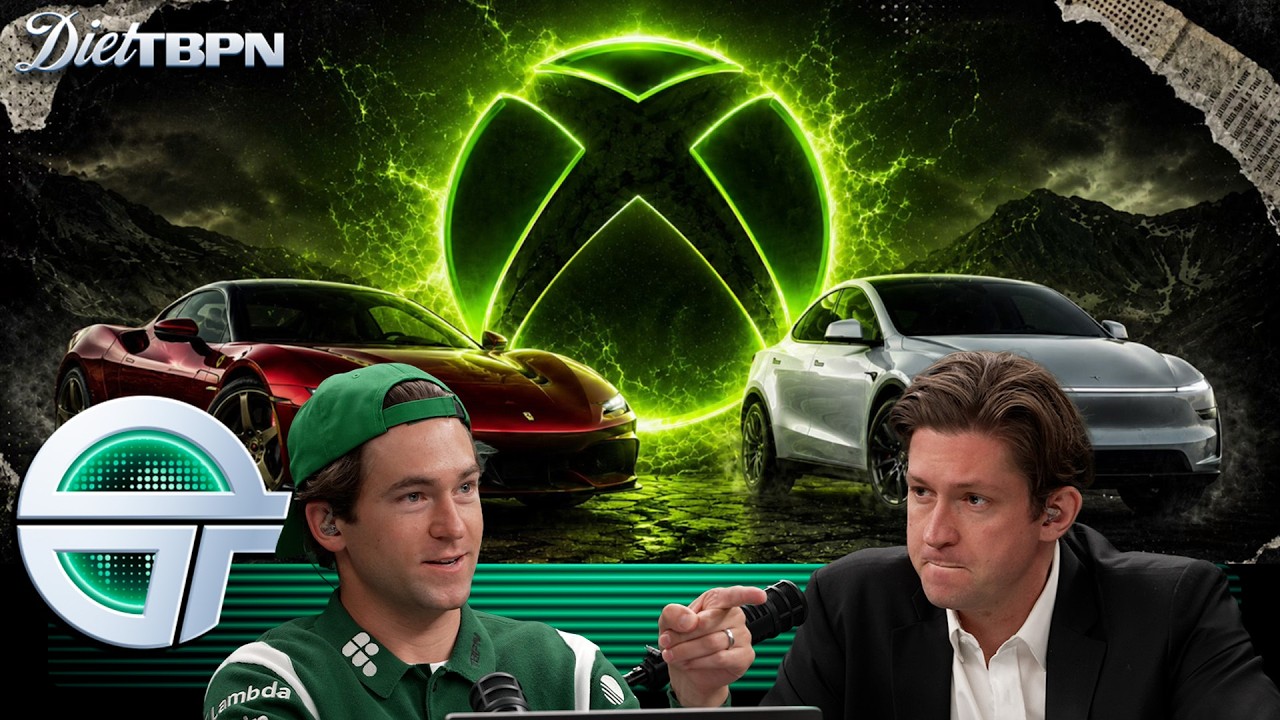
TBPN published this video on YouTube on July 7, 2026. According to the page description, this 'Diet TBPN' episode offers a 30-minute summary of their daily live tech talk show hosted by John Coogan and Jordi Hays, which covers major technology news and Silicon Valley culture.
## TL;DR
The hosts break down major corporate restructuring at Microsoft's Xbox division, where CEO Asha Sharma announced 3,200 layoffs alongside candid disclosures about low profit margins and heavy management layers. The episode covers shifts in Microsoft's corporate culture—from historical 'stack ranking' practices to modern management dynamics—and reviews automotive news including Ferrari's simulated manual 12Cilindri Manuel and Tesla's Model Y L with its subtrunk fridge accessory. Additionally, the hosts examine the debate between AI query tools and algorithmic feed 'brain rot,' concluding with an analysis of a $12.8 million legal dispute over an abandoned lottery ticket at an Arizona Circle K.
## Atmosphere & style
The show carries a relaxed, sharp, and conversational vibe typical of daily tech commentators dissecting industry developments. The hosts blend analytical business critique with lighthearted banter and personal nostalgia, seamlessly shifting between corporate strategy, automotive tech, and bizarre legal news. The overall tone feels plugged-in and candid yet accessible, capturing the casual dynamic of knowledgeable insiders sharing news over a daily broadcast.
## Key takeaways
- [00:02](https://www.youtube.com/watch?v=p6oniGpzzds&t=2s) Following recent California wildfires, local communities substituted traditional Fourth of July pyrotechnics with coordinated drone light shows, though some anticipate a potential cultural backlash demanding a return to authentic fireworks.
- [00:32](https://www.youtube.com/watch?v=p6oniGpzzds&t=32s) Microsoft's Xbox division is laying off 3,200 employees by fiscal year 2027, with Xbox CEO Asha Sharma explicitly attributing the decision to an unacceptably unhealthy underlying business rather than AI productivity gains.
- [00:32](https://www.youtube.com/watch?v=p6oniGpzzds&t=32s) Internal metrics disclosed by Xbox reveal profit margins 3 to 10 times lower than competitors, up to 14 layers of management, and a historical loss of 64 cents for every dollar invested in a typical operational year.
- [00:32](https://www.youtube.com/watch?v=p6oniGpzzds&t=32s) To streamline its bloated operational structure, Xbox is spinning out several acquired game studios, including Compulsion Games, Double Fine, Ninja Theory, Undead Labs, and Arkane.
- [00:55](https://www.youtube.com/watch?v=p6oniGpzzds&t=55s) Xbox's strategic importance as a consumer wedge to capture the living room has faded relative to Microsoft's rapidly expanding enterprise, Azure cloud, and AI businesses.
- [00:09](https://www.youtube.com/watch?v=p6oniGpzzds&t=9s) The two-phased layoff strategy announced by Asha Sharma risks eroding employee morale and driving top talent to proactively seek outside opportunities due to prolonged uncertainty.
- [00:12](https://www.youtube.com/watch?v=p6oniGpzzds&t=12s) Historically used as a meritocratic review system, Microsoft's legacy 'stack ranking' forced managers to grade on a bell curve, eroding internal collaboration by pitting colleagues against each other.
- [15:31](https://www.youtube.com/watch?v=p6oniGpzzds&t=931s) While stack ranking at Microsoft penalized low performers and blocked promotions, HR primarily used it as a forced talent redistribution mechanism across divisions rather than an automatic vehicle for mass liquidations.
- [16:49](https://www.youtube.com/watch?v=p6oniGpzzds&t=1009s) Microsoft opted to keep the Call of Duty franchise multi-platform following its acquisition of Activision, likely driven by regulatory and antitrust pressures.
- [18:07](https://www.youtube.com/watch?v=p6oniGpzzds&t=1087s) Ferrari announced the 12Cilindri Manuel launching in 2027 for ~$500,000, featuring a simulated 6-speed manual gate with a physical clutch pedal built over an 8-speed dual-clutch transmission.
- [19:56](https://www.youtube.com/watch?v=p6oniGpzzds&t=1196s) Tesla launched the 3-row, 6-seat Model Y L with a 325-mile range alongside a $600 dual-zone subtrunk refrigerator accessory.
- [21:34](https://www.youtube.com/watch?v=p6oniGpzzds&t=1294s) Perplexity CEO Aravind Srinivas argued that algorithmic feeds induce 'brain rot' while AI tools accelerate curiosity through deliberate, query-driven engagement.
- [25:36](https://www.youtube.com/watch?v=p6oniGpzzds&t=1536s) A chaotic legal dispute in Arizona emerged over a $13 million winning lottery ticket left behind by a customer and subsequently purchased off-shift by a Circle K store manager.
## Detailed walkthrough
Here is a detailed walkthrough of this portion of the transcript:
[00:02](https://www.youtube.com/watch?v=p6oniGpzzds&t=2s) Fourth of July Weekend & Drone Shows in LA
The show kicks off with the hosts reflecting on their Fourth of July weekend. Jordy describes his holiday as "cinema," while Tyler calls his "electric," noting he attended a high-profile wedding at Madison Square Garden in New York that was strictly under NDA. John shares that his holiday was spent in Malibu and Pasadena, where the unusual humidity gave the day an authentic "East Coast Fourth of July" feel.
The conversation shifts to how California communities celebrated the holiday without traditional pyrotechnics. Following recent wildfires like the Palisades and Altadena fires, many local townships opted for coordinated drone shows instead of fireworks to avoid fire hazards and prevent poor air quality. While John appreciates drone light shows—recalling a memorable display he saw in France—he anticipates a eventual cultural backlash from people demanding a return to "organic authentic fireworks." John also reminisces about flying one of the earliest consumer drones through the Dodger Stadium fireworks show before modern regulations existed, capturing spectacular, though now "wildly illegal," aerial footage.
[00:32](https://www.youtube.com/watch?v=p6oniGpzzds&t=32s) Xbox Restructuring & Asha Sharma's Candid Layoff Announcement
The hosts turn to major corporate news: Microsoft's Xbox division is laying off 3,200 employees by the end of fiscal year 2027, starting with 1,600 cuts taking place immediately. Newly appointed Xbox CEO Asha Sharma posted her full internal email to employees on X, drawing attention for its unusual candor. Rather than blaming the reductions on artificial intelligence or recent productivity gains from AI tools—as many tech companies have done recently—Sharma explicitly admitted that the underlying Xbox business is unacceptably unhealthy.
The hosts break down the alarming operational and financial metrics disclosed in Sharma's email regarding the state of Xbox:
* Xbox operates at profit margins **3 to 10 times lower** than its industry competitors.
* The latest console generation launched to a smaller overall install base despite having a significantly higher cost structure—a financial strain set to worsen as memory prices rise.
* Certain segments of the organization are bogged down by up to **14 layers of management**.
* In a typical operational year, Xbox lost **64 cents for every dollar** it invested.
* To streamline operations, Xbox is spinning out several game studios acquired over the years, including Compulsion Games, Double Fine Productions, Ninja Theory, Undead Labs, and Arkane.
[00:55](https://www.youtube.com/watch?v=p6oniGpzzds&t=55s) Console Competition and Strategic Identity of Xbox
John and Jordy analyze the tough broader market conditions driving Xbox's decline. While Microsoft once fought Sony's PlayStation head-to-head for exclusive titles, the market landscape has fractured. Sony maintains a dominant lineup of PS5 exclusives, Nintendo carved out its own lucrative space with the Switch, PC gaming via Steam has become widely accessible even on basic laptops, and hyper-casual mobile gaming and social media platforms (like TikTok) are constantly eating away at consumer attention.
The hosts question whether Xbox still fits into Microsoft’s core enterprise strategy or if it will eventually be spun off as a standalone entity. Microsoft originally viewed Xbox as a consumer foothold to capture the living room—highlighted by past strategies like shipping the Xbox One S as an affordable 4K Blu-ray player (which John notes remains a great $100 physical-media alternative for parents over subscription services like Netflix and Disney+). However, with Microsoft’s enterprise, Azure cloud platform, and AI business booming, Xbox's strategic role as a consumer wedge has largely faded.
[00:09](https://www.youtube.com/watch?v=p6oniGpzzds&t=9s) Internal Dynamics: The Two-Phased Layoff Strategy
The discussion delves into the psychological and organizational impact of Asha Sharma’s two-phase layoff strategy—announcing 1,600 immediate terminations while scheduling another 1,600 cuts across fiscal year 2027. The hosts debate whether holding a second wave of cuts in reserve acts as a motivator to eliminate corporate complacency or if it simply destroys employee morale by leaving a continuous "guillotine hanging over everyone."
Jordy points out that standard guidance for startup founders and investors is to "cut deep" once rather than dragging out reductions over time. Dragging out layoffs creates prolonged uncertainty, causing top talent to proactively search for outside opportunities. Across the parent company, Microsoft is cutting 4,800 total positions—roughly 2.1% of its 16,000-person gaming/corporate workforce.
[00:12](https://www.youtube.com/watch?v=p6oniGpzzds&t=12s) Microsoft's Culture: From "Stack Ranking" to the Modern Era
The segment concludes with an overview of Microsoft’s corporate performance culture. Historically, Microsoft built a reputation in the late 1970s and 1980s under Bill Gates and Steve Ballmer for being intense, founder-led, and product-obsessed. By the 1990s, as Windows 95 and Office built a dominant monopoly, Microsoft instituted a formal "stack ranking" (or "rank and yank") review process. Under this system, managers were forced to grade team members on a bell curve, inevitably labeling a bottom 10% as losers regardless of the team's overall success.
Although stack ranking was initially viewed as a core pillar of Microsoft's meritocracy, it eventually generated widespread internal dysfunction during the Ballmer era. Following Satya Nadella's appointment as CEO, the company shifted its focus toward the cloud and eliminated forced curve reviews. Reflecting on Asha Sharma's attempt to revamp Xbox, the hosts quote a 2012 *Vanity Fair* profile describing early Microsoft as "thrilling but also unnerving"—a high-pressure environment that Xbox may now be attempting to resurrect.
Here is the detailed walkthrough of the transcript section:
[15:31](https://www.youtube.com/watch?v=p6oniGpzzds&t=931s) Corporate Culture Shifts and Microsoft's "Stack Ranking" Controversy
In a healthy hiring environment, corporate expectations should be completely transparent upfront so employees know exactly what culture they are entering. However, company dynamics evolve over time. An employee who joined a decade ago under the expectation of a "chill monopoly" might suddenly find themselves working in a hyper-aggressive "wartime" environment, forcing them to re-evaluate whether it is time to seek another job. Media coverage highlights the brutal nature of performance reviews, with ABC describing managers as grading on a bell curve, while *Vanity Fair* published a harsher critique, with current and former employees branding "stack ranking" as the most destructive process inside Microsoft because it forced colleagues to compete against each other rather than external business rivals.
The hosts clarify a common misconception regarding stack ranking: while it pushed out low-rated staff, blocked promotions, slashed bonuses, and forced internal transfers, it did not historically trigger mass layoffs. Instead, HR viewed bottom-decile performers as an opportunity to reallocate talent across different divisions, recognizing that a low performer on one team might be a top performer elsewhere.
- *Vanity Fair* reported that stack ranking eroded collaboration by pitting internal teammates against one another.
- Historically, stack ranking at Microsoft served as a forced redistribution mechanism for internal talent rather than an automatic vehicle for annual 10% workforce liquidations.
[16:49](https://www.youtube.com/watch?v=p6oniGpzzds&t=1009s) Xbox’s Market Position and Strategy Dilemma
Evaluating the gaming industry landscape, the hosts find Xbox to be the most difficult platform to feel optimistic about today. In contrast, Valve operates a literal PC money-printing machine, the broader PC market remains robust, and Sony’s PlayStation has excelled at building enduring intellectual property (such as *The Last of Us*, which successfully transitioned into a hit HBO series).
When Microsoft acquired Activision, industry analysts speculated whether *Call of Duty* would become an Xbox exclusive to act as a system seller for PS5 gamers. However, Microsoft opted to keep the franchise multi-platform, likely due to antitrust pressures. The hosts share lighthearted banter over nostalgic Xbox memories, reminiscing about 1v1 battles on the *Modern Warfare 2* map "Rust" with best friends, though they joke that buying second-hand games adds zero pennies to Microsoft's income statement.
- Sony has successfully leveraged core IPs like *The Last of Us* into mainstream multimedia franchises.
- Microsoft refrained from making *Call of Duty* an Xbox exclusive post-Activision acquisition to navigate regulatory and antitrust hurdles.
[18:07](https://www.youtube.com/watch?v=p6oniGpzzds&t=1087s) Ferrari's Simulated Manual: The 12Cilindri "Manuel"
Ferrari is releasing the 12Cilindri Manuel, marking its first car featuring a gated manual shifter from Maranello since 2012. Starting at roughly $500,000 before options, the vehicle goes on sale at the beginning of 2027. Despite the presence of a clutch pedal and a 6-speed physical shifter, the mechanism is actually a simulated mode built on top of an 8-speed dual-clutch transmission (DCT).
The reception within the car community is sharply divided. Some view it as a welcome step in the right direction that will satisfy fans, while critics like TJ Parker tore it apart, calling it "far more embarrassing than the Luche face plant." The system incorporates clever software guardrails: driver inputs allow for gear skipping, heel-toe downshifts, and realistic engine stalls if the clutch is mismanaged, yet electronic protections step in to prevent engine-destroying "money shifts" or catastrophic over-revving.
- **Model Details**: Ferrari 12Cilindri Manuel, launching early 2027 at a base price around $500,000.
- **Transmission Tech**: Simulated 6-speed manual gate with a real clutch pedal integrated into an 8-speed DCT.
- **Engine Protection**: Allows stalls and heel-toe downshifting, but electronically blocks over-revving and money shifts.
[19:56](https://www.youtube.com/watch?v=p6oniGpzzds&t=1196s) Tesla Model Y L and the Dual-Zone Subtrunk Fridge
Tesla has introduced the Model Y L in the United States and Puerto Rico, with customer deliveries scheduled to begin a couple of months out. The long-wheelbase variant features a 3-row, 6-seat layout offering increased legroom and headroom, a 0-to-60 mph time of 4.4 seconds, 325 miles of range, power-reclining heated and ventilated seats, active damping, staggered tires for improved grip, and a redesigned longer tailgate for better rear visibility. Additionally, the update debuts upgraded 50-watt wireless charging pads.
Alongside the vehicle, Tesla unveiled a $600 dual-zone subtrunk refrigerator accessory. Operating from 0 to 68°F (-18 to 20°C) via the vehicle's power outlet, the fridge fits neatly inside the rear subtrunk compartment. The hosts praise Tesla's ecosystem integration, chuckling over the product marketing that skirts around promoting "30 to 40 beers" on the road.
- **Tesla Model Y L Specs**: 3-row, 6-seat setup; 0–60 mph in 4.4s; 325-mile range; 50W wireless chargers.
- **Tesla Subtrunk Refrigerator**: $600 accessory featuring dual temperature zones adjustable between 0°F and 68°F.
[21:34](https://www.youtube.com/watch?v=p6oniGpzzds&t=1294s) AI Text Interfaces vs. Algorithmic Feed "Brain Rot"
Addressing recent tech demos, the hosts react to an AI workflow where a user orders pizza via an iMessage integration that triggers a background action. While skeptics point out that apps like DoorDash already solved food delivery with a single button, the broader bull case lies in text and voice serving as universal interfaces. Consolidating payments and actions into a single conversational thread eliminates app clutter and friction.
The discussion pivots to a clip from Joe Rogan's podcast featuring Perplexity CEO Aravind Srinivas discussing curiosity. Srinivas argues that algorithmic feeds induce "brain rot" and kill curiosity through mindless doomscrolling, whereas AI supercharges curiosity by acting as a deliberate, query-driven system.
The hosts offer a counter-perspective: while AI is a "pull" system where users must bring their own active curiosity to dive down rabbit holes, social media feeds act as a "push" system that generates spark-of-the-moment inspiration. The hosts express interest in a hybrid future—such as a feed displaying deep research reports from thinkers like Tyler Cowen—where AI push and pull mechanisms converge.
- Aravind Srinivas (Perplexity CEO) argued on *The Joe Rogan Experience* that algorithmic feeds degrade curiosity while AI tools accelerate it.
- **Push vs. Pull Dynamic**: Feeds push passive content to inspire new ideas; AI requires an affirmative pull/prompt to explore ideas deeply.
[25:36](https://www.youtube.com/watch?v=p6oniGpzzds&t=1536s) The $12.8M Circle K Lottery Dispute in Arizona
A chaotic legal battle in Arizona centers on a disputed $13 million lottery ticket from a Circle K store. In February, customer Sun Chun Kim attempted to purchase $85 worth of $1 lottery tickets. Realizing she only had $60 in cash, she took 60 tickets and left the remaining 25 unpaid tickets sitting on the counter. The following morning, store manager Robert Galita realized the leftover stack contained the winning $13 million jackpot ticket. Galita clocked out, took off his Circle K uniform shirt, and bought the tickets through another store clerk—even having the coworker sign the back of the ticket.
When Circle K corporate discovered what happened, they impounded the physical ticket at headquarters and filed a legal complaint against Galita and the Arizona Lottery, claiming corporate ownership. At least three distinct parties are now asserting rights to the jackpot: manager Galita, Circle K corporate, and original buyer Sun Chun Kim, whom the presiding judge ordered to be brought into court to testify. The hosts debate the legal merits, questioning employee handbook rules regarding buying tickets at one's own workplace and whether leaving unpaid tickets on a counter preserves an original buyer's claim.
- **Jackpot**: $13 million ($12.8M net claim) arising from 25 uncollected $1 lottery tickets at an Arizona Circle K.
- **Key Figures**: Sun Chun Kim (original buyer short on cash), Robert Galita (store manager who bought the left-behind tickets off-shift).
- **Current Legal Status**: Circle K held the ticket at corporate offices while a judge subpoenaed Sun Chun Kim to testify.
[29:27](https://www.youtube.com/watch?v=p6oniGpzzds&t=1767s) Summer Tech News Cycles and Wrap-Up
Wrapping up the show, the hosts reflect on the seasonal ebb and flow of technology news. During the summer months, news typically slows down as venture capitalists famously vanish on vacation from mid-May through late September (or even mid-October). However, slow news periods leave room for unpredictable wildcards—much like the previous summer's aggressive AI talent poaching wars led by Mark Zuckerberg.
The hosts remind viewers that the tech news cycle can explode unexpectedly, requiring them to go live every weekday at 11:00 AM Pacific on X and YouTube. They conclude the episode by encouraging listeners to subscribe to their newsletter at `TBPN.com` and leave five-star reviews on Apple Podcasts and Spotify.
## Notable quotes
> [00:32](https://www.youtube.com/watch?v=p6oniGpzzds&t=32s) 3 to 10 times lower — Asha Sharma
> [00:32](https://www.youtube.com/watch?v=p6oniGpzzds&t=32s) 14 layers of management — Asha Sharma
> [00:32](https://www.youtube.com/watch?v=p6oniGpzzds&t=32s) 64 cents for every dollar — Asha Sharma
> [09:00](https://www.youtube.com/watch?v=p6oniGpzzds&t=540s) cut deep — Jordy Hays
> [09:00](https://www.youtube.com/watch?v=p6oniGpzzds&t=540s) guillotine hanging over everyone — John Coogan or Jordy Hays
> [12:00](https://www.youtube.com/watch?v=p6oniGpzzds&t=720s) rank and yank — John Coogan or Jordy Hays
> [12:00](https://www.youtube.com/watch?v=p6oniGpzzds&t=720s) thrilling but also unnerving — Vanity Fair
> [15:31](https://www.youtube.com/watch?v=p6oniGpzzds&t=931s) chill monopoly — John Coogan or Jordy Hays
> [15:31](https://www.youtube.com/watch?v=p6oniGpzzds&t=931s) wartime — John Coogan or Jordy Hays
> [18:07](https://www.youtube.com/watch?v=p6oniGpzzds&t=1087s) far more embarrassing than the Luche face plant — TJ Parker
> [18:07](https://www.youtube.com/watch?v=p6oniGpzzds&t=1087s) money shifts — John Coogan or Jordy Hays
> [19:56](https://www.youtube.com/watch?v=p6oniGpzzds&t=1196s) 30 to 40 beers — John Coogan or Jordy Hays
## Mentioned
TBPN, John Coogan, Jordy Hays, Tyler, Microsoft, Xbox, Asha Sharma, Sony, PlayStation, PS5, Nintendo, Switch, Steam, Valve, TikTok, Azure, Netflix, Disney+, Compulsion Games, Double Fine Productions, Ninja Theory, Undead Labs, Arkane, Bill Gates, Steve Ballmer, Satya Nadella, Vanity Fair, ABC, Activision, Call of Duty, The Last of Us, HBO, Ferrari, Ferrari 12Cilindri Manuel, Luche, TJ Parker, Tesla, Tesla Model Y L, DoorDash, Joe Rogan, The Joe Rogan Experience, Aravind Srinivas, Perplexity, Tyler Cowen, Circle K, Sun Chun Kim, Robert Galita, Arizona Lottery, Mark Zuckerberg, Sam Altman, Mark Cuban, Ramp, Public, Cisco, Console, CrowdStrike, Figma, MongoDB, NYSE, Railway, Shopify, Apple Podcasts, Spotify, X, YouTube
微软Xbox裁员3200人,CEO直言业务不健康
Xbox结构性的利润率劣势与公司优先事项的转变,使其在微软内部的长期战略地位愈发岌岌可危。
主持人深入剖析了微软Xbox部门的重大企业重组;该部门CEO Asha Sharma宣布裁员3200人,并坦率披露了利润率低下和管理层级臃肿等问题。本期节目探讨了微软企业文化从历史上的“员工分级评定”(stack ranking)机制向现代管理模式的转变,并回顾了汽车行业动态,包括Ferrari的模拟手动挡12Cilindri Manuel以及Tesla配备下沉式后备箱冰箱配件的Model Y L。此外,主持人还探讨了AI查询工具与算法信息流“脑腐”(brain rot)之间的争议,最后分析了一起在亚利桑那州Circle K因一张遗弃彩票引发的1280万美元法律纠纷。
微软 Xbox 部门宣布将在 2027 财年前裁减 3,200 名员工,CEO Asha Sharma 坦承业务基础严重不健康且利润率远低于竞争对手,同时 Xbox 计划剥离 Arkane 和 Double Fine 等多家旗下工作室。 (0:32)
法拉利发布起售价约 50 万美元的 12Cilindri Manuel,配备带门式换挡杆与离合踏板,该机构基于 8 速双离合变速器模拟手动换挡体验,并内置电子防爆缸保护。 (18:07)
特斯拉在美国推出三排六座加长版 Model Y L,具备 325 英里续航与 4.4 秒零百加速,并同步发售了一款售价 600 美元的后备箱双温区车载冰箱配件。 (19:56)
亚利桑那州一家 Circle K 便利店因一张 1,300 万美元的中奖彩票陷入三方诉讼纠纷,现金不足的原顾客、下班后购入遗留彩票的店经理与便利店公司正争夺奖金归属权。 (25:36)
Reading summary
TBPN reviews Microsoft's extensive operational retrenchment across its gaming division and historical corporate review practices, contrasting these shifts with new product introductions from Ferrari and Tesla, debates over AI interfaces versus algorithmic feeds, and a three-way legal fight over a $13 million lottery ticket.
Xbox Restructuring and Shifting Strategic Priorities (0:32)
Newly appointed Xbox CEO Asha Sharma announced that Microsoft's gaming division will cut 3,200 jobs by the end of fiscal year 2027—beginning with 1,600 immediate terminations—while spinning out acquired studios including Compulsion Games, Double Fine Productions, Ninja Theory, Undead Labs, and Arkane. In an internal email shared on X, Sharma acknowledged severe financial headwinds: Xbox operates at profit margins 3 to 10 times lower than its competitors, lost 64 cents for every dollar invested in a typical operational year, launched its latest console to a smaller install base despite high cost structures, and had accumulated up to 14 management layers. Across the parent company, Microsoft is cutting 4,800 positions, or roughly 2.1% of its 16,000-person gaming and corporate workforce.
The hosts assess that Xbox has largely lost its original strategic identity as Microsoft's consumer wedge to conquer the living room, particularly as the parent company's growth shifted toward enterprise cloud services and artificial intelligence. Concurrently, Xbox faces intensifying pressure from Sony's PlayStation exclusives, Nintendo's Switch, accessible PC gaming on Steam, and mobile entertainment platforms, while Microsoft's decision to keep Call of Duty multiplatform following its Activision acquisition blunted its exclusive hardware appeal.
Performance Review Culture and Phased Layoff Risks (15:31)
The discussion contrasts Sharma's phased workforce reductions with Microsoft's historical performance management systems. Under Bill Gates and Steve Ballmer, Microsoft utilized a formal "stack ranking" system that graded staff on a bell curve, which contemporary reporting by Vanity Fair cited as fostering destructive internal competition rather than external rivalry. However, the hosts note that stack ranking historically operated as a forced internal talent redistribution mechanism rather than a systematic process for mass annual workforce liquidations, before CEO Satya Nadella ultimately abolished forced curves.
Evaluating Sharma's strategy of executing 1,600 immediate layoffs while reserving another 1,600 cuts across fiscal year 2027, the hosts highlight the organizational risks of prolonged retrenchment. While some managers might intend deferred cuts to motivate teams, conventional startup and executive wisdom favors cutting deep in a single round, as prolonged uncertainty threatens morale and prompts top-tier talent to seek outside opportunities.
Ferrari's Simulated Manual and Tesla's Model Y L (18:07)
In the automotive space, Ferrari revealed the 12Cilindri Manuel, a vehicle starting around $500,000 that will arrive in early 2027 as Maranello's first gated shifter offering since 2012. Rather than using a mechanical linkage, the vehicle combines an authentic clutch pedal and six-speed physical shifter with an eight-speed dual-clutch transmission; software permits heel-toe downshifts and engine stalls while electronically intervening to prevent engine damage or over-revving, dividing enthusiasts over its simulated execution.
Simultaneously, Tesla introduced the long-wheelbase Model Y L in the United States and Puerto Rico, featuring a three-row, six-seat interior, a 325-mile range, active damping, upgraded 50-watt wireless chargers, and a 0-to-60 mph acceleration time of 4.4 seconds. Alongside the vehicle, Tesla launched a $600 integrated dual-zone subtrunk refrigerator powered by the vehicle that cools between 0°F and 68°F.
Conversational AI Interfaces vs. Algorithmic Feeds (21:34)
Analyzing emerging software paradigms, the hosts examine text- and voice-based AI workflows that execute background tasks—such as ordering delivery via iMessage—arguing that conversational threads can streamline transactions by abstracting away fragmented application interfaces. The conversation responded to comments by Perplexity CEO Aravind Srinivas on The Joe Rogan Experience, where Srinivas asserted that algorithmic feeds induce "brain rot" through passive doomscrolling, whereas generative AI fosters active curiosity.
The hosts offer a qualification, contrasting AI's active "pull" dynamic with the passive "push" nature of feeds. While conversational engines require users to supply their own curiosity via prompts, algorithmic feeds provide unprompted discovery that sparks new interests, pointing toward a future where feeds push synthesized, deep-dive research into user workflows.
The $13 Million Arizona Lottery Ownership Dispute (25:36)
A complex legal battle in Arizona centers on a $13 million ($12.8 million net) winning lottery ticket originating from a Circle K store. Customer Sun Chun Kim selected $85 in $1 tickets but, having only $60 in cash, left 25 unpaid tickets on the counter. The following morning, store manager Robert Galita identified the remaining stack as containing the winning jackpot ticket, clocked out, removed his uniform, and bought the tickets via a coworker who signed the back.
Circle K corporate subsequently impounded the physical ticket and initiated legal action against Galita and the Arizona Lottery to assert corporate ownership. With the presiding judge ordering Kim to testify, the case hinges on the legal validity of workplace wagering policies, corporate ownership of unsold merchandise, and whether leaving unpaid tickets on a retail counter retains any property interest for the original patron.
The episode highlights a transition phase across enterprise technology, consumer hardware, and software interfaces, leaving open whether Xbox's studio divestitures and prolonged workforce reductions will successfully correct its compressed profit margins.
精炼阅读摘要
本期节目重点聚焦微软 Xbox 部门面临严重业务失衡与高管公开信后开启的数千人裁员及文化反思,同时探讨了法拉利与特斯拉的新硬件发布、人工智能与算法信息流引发的好奇心之争,以及亚利桑那州涉及千万美元彩票的复杂权属诉讼。
Xbox 业务危机与激进管理重组 (0:32)
新任 Xbox 首席执行官 Asha Sharma 在 X 平台公开发布内部信,罕见坦承 Xbox 底层业务本身极度不健康,而非将裁员归咎于人工智能带来的生产力提升。披露的关键财务与运营数据显示:Xbox 的利润率比行业竞争对手低 3 到 10 倍;在常规运营年份中,每投资 1 美元便会亏损 64 美分;最新一代主机的初期装机量较小,但结构性成本大幅增加,且内存价格上涨将进一步加重财务负担;部分组织架构内甚至存在多达 14 层的管理层级。为精简运作,Xbox 计划在 2027 财年结束前裁撤 3,200 名员工(其中 1,600 人立即解雇,另 1,600 人分批执行),并剥离 Compulsion Games、Double Fine Productions、Ninja Theory、Undead Labs 和 Arkane 等此前收购的游戏工作室。
节目主持人和业界对这种两阶段裁员策略的心理影响表示担忧。通常初创公司与投资人主张一次性“深砍”,而拉长解雇周期会导致不确定性长期悬挂,摧毁员工士气并促使核心人才主动离职。微软全公司层面在此轮调整中将削减 4,800 个岗位,约占其游戏及企业员工总数 16,000 人的 2.1%。这亦引发对微软绩效文化的历史回顾:在 20 世纪 90 年代及鲍尔默时期,公司曾强制推行“分级堆叠”(Stack Ranking)考核,迫使团队按钟形曲线评定末位 10% 员工,导致内部恶性竞争而非对外协作。虽然该制度在纳德拉接任后被取消,但当下 Xbox 试图在严峻困境下重塑高压绩效机制,其内部士气与文化重塑面临极大挑战。
主机市场竞争与微软核心战略错位 (0:55)
随着主机游戏市场格局持续碎片化,Xbox 在外部竞争中的定位愈发艰难。索尼 PlayStation 凭借强大的第一方独占 IP 储备(例如成功改编为 HBO 热门剧集的《最后生还者》)巩固了主导地位;任天堂 Switch 牢牢占据独特市场;PC 端的 Valve 依托 Steam 平台形成了稳固且高利润的数字分发体系;与此同时,以 TikTok 为代表的社交媒体和超休闲手游正持续瓜分消费者的碎片时间。即便微软斥巨资收购动视暴雪,由于面临监管和反垄断压力,其王牌 IP《使命召唤》也未能变为 Xbox 独占作品来驱动硬件销售。
从母公司整体战略来看,Xbox 原本承担着作为微软抢占家庭客厅入口的“消费者楔子”角色——例如早期的 Xbox One S 曾被视为极具性价比的 4K 蓝光播放机。然而,随着微软当前的战略重心与丰厚利润全面倒向企业级软件、Azure 云计算平台以及前沿人工智能业务,Xbox 与核心战略的协同效应已显著弱化,促使主持人和分析师讨论微软未来是否会将其完全剥离为独立实体。
汽车硬件革新:模拟手动挡与特斯拉长轴距版 (18:07)
在汽车领域,传统超跑品牌与纯电巨头分别带来了极具话题性的硬件更新。法拉利推出了 12Cilindri Manuel 车型,这是马拉内罗自 2012 年以来首款配备物理换挡闸的车型,选配前基础售价约 50 万美元,预计于 2027 年初上市。尽管该车配置了真实的离合踏板和 6 速物理换挡杆,但其实质上是在 8 速双离合变速箱(DCT)基础上构建的纯软件模拟系统。该系统允许驾驶者进行空挡滑行、降挡补油甚至因操作失误而熄火,但通过电子保护机制阻止了可能毁坏发动机的严重误挡(Money Shift)或超转。汽车社区对该模拟系统评价两极,支持者视其为迎合车迷情怀的尝试,而批评者 TJ Parker 则斥其表现尴尬。
与此同时,特斯拉在美国及波多黎各市场正式推出了 Model Y L,预计将在数月内开启交付。该车采用长轴距设计,提供 3 排 6 座布局以大幅改善腿部与头部空间,具备 4.4 秒的 0-60 英里加速性能和 325 英里的续航里程,并配备前后不同宽度的抓地力轮胎、主动阻尼减震、电动倾斜通风加热座椅及 50 瓦无线充电板。特斯拉还同步发布了一款售价 600 美元的双温区下沉后备箱(Subtrunk)专用车载冰箱,温控范围在 0°F 至 68°F(约 -18°C 至 20°C),进一步通过配件强化了其出行生态系统。
对话式 AI 界面与算法信息流的认知博弈 (21:34)
围绕人工智能交互范式,业界展示了通过 iMessage 发送短信触发后台代理完成点外卖等复杂操作的案例。尽管怀疑者认为 DoorDash 等外卖应用程序已实现单键下单,但在看好该前景的视角看来,文本和语音将成为统一的操作入口,把支付流程与各类功能集成到单一对话流中,从而消除应用泛滥带来的繁琐摩擦。
该技术演进引发了关于注意力分配与认知模式的深入探讨。Perplexity 首席执行官 Aravind Srinivas 在播客中提出,社交媒体算法驱动的信息流通过无休止的“刷屏”正在诱发“脑腐败”(Brain Rot)并扼杀思考,而基于主动提问的 AI 系统则能通过针对性探索激发人类好奇心。节目主持人对此提出补充视角:算法信息流本质是一种“推送”(Push)机制,能意外触发灵感火花;而 AI 是一种“拉取”(Pull)机制,要求用户本身具备主动探究的意愿。理想的技术形态或许是二者的结合,即通过算法推送深度洞察,再经由 AI 引导深入探究。
亚利桑那 Circle K 千万美元巨奖的权属官司 (25:36)
在社会热点板块,亚利桑那州一家 Circle K 便利店因一张 1,300 万美元(净索赔额约 1,280 万美元)的头奖彩票引发了错综复杂的法律官司。起因是顾客 Sun Chun Kim 在 2 月份来店购买总价 85 美元的 1 美元面额彩票,因现金仅有 60 美元,便拿走 60 张,将未付款的 25 张留在收银台上。次日清晨,便利店经理 Robert Galita 发现该批被遗弃的彩票中包含中奖票,于是他在下班打卡并脱掉员工制服后,通过另一名店员买下了这批剩余彩票,并让该同事在彩票背面签字。
Circle K 总部得知此事后扣押了该彩票实物,并对经理 Galita 及亚利桑那州彩票机构提起诉讼,主张该奖项归属于公司。目前该案形成了三方争端局面:坚称凭个人资金买下的经理 Galita、主张公司资产与合规政策的 Circle K 总部,以及被主审法官传唤出庭作证的原购票人 Kim。围绕员工手册是否允许购买本店彩票、以及将未付款彩票遗留柜台是否仍保有所有权等核心法律问题,多方争议尚待司法裁决。
本期内容展示了科技与商业周期变迁下的多重张力:微软 Xbox 面临主营业务低回报与母公司战略重心转移的双重考验,其激进重组能否扭转颓势仍是未决问题;而在硬件技术与 AI 交互的发展中,无论是模拟机械感的工程折中,还是信息获取模式从被动推送到主动检索的转变,均体现出技术创新在商业利益与用户体验之间的反复磨合。
Detailed notes — zh
## Background
本期内容由科技播客频道 TBPN 于 2026 年 8 月 3 日发布在 YouTube 平台。节目属于 Diet TBPN 系列的 30 分钟精华版,由 John Coogan 和 Jordi Hays 共同主持,旨在为听众快速梳理科技圈当天的核心要闻与商业大事件。
## TL;DR
节目重点剖析了 Xbox 宣布裁撤 3,200 人并剥离多家工作室的行业强震,聚焦其破天荒承认业务不善而非甩锅 AI 的坦诚姿态,并深挖了微软历史上极具破坏性的绩效堆叠排名与管理臃肿问题。此外,主持人们探讨了法拉利模拟手动挡超跑的争议、特斯拉加长版六座 Model Y 及其车载冰箱,以及从 iMessage 点披萨和 Perplexity 访谈中所折射出的 AI 智能体与信息获取变革。结尾部分则详述了亚利桑那州便利店因弃购彩票引发的 1,280 万美元奖金所有权大乱斗,并观察了硅谷风投夏季休假与巨头突袭挖人的反差生态。
## Atmosphere & style
整期节目散发着典型的硅谷极客脱口秀风格,语调轻松风趣、观点犀利透彻。两位主持人互动极其默契自然,无论是从独立日假期的防晒和野生烟花互相打趣,还是针对彩票归属权与直播弹幕热烈争论,都充满生活化的市井幽默与临场感。而在切入商业战略时,两人又展现出敏锐深刻的行业洞察,在嬉笑怒骂间将大厂裁员和组织内耗剥离得淋漓尽致,整体节奏明快且极富沉浸感。
## Bulletin
- [03:29](https://www.youtube.com/watch?v=p6oniGpzzds&t=209s) Xbox 宣布到 2027 年底前累计裁撤 3,200 个岗位(约占团队 20%),新任 CEO 阿莎·夏尔马(Asha Sharma)坦承部门业务不健康且管理层级深达 14 层,并宣布剥离多家工作室,成为近年罕见不以 AI 替代为借口的科技重组。
- [19:54](https://www.youtube.com/watch?v=p6oniGpzzds&t=1194s) 特斯拉在美国与波多黎各推出三排六座配置的加长版 Model Y,并同步推出售价 600 美元、可嵌入后备箱隐藏储物槽的双温区车载冰箱。
- [16:51](https://www.youtube.com/watch?v=p6oniGpzzds&t=1011s) 法拉利推出 12Cilindri 模拟手动挡车型,在 8 速双离合变速箱基础上硬装物理离合与门形换挡杆,兼顾复古换挡体验与防止发动机爆缸(money shift)的电控保护,售价预计约 50 万美元。
- [25:36](https://www.youtube.com/watch?v=p6oniGpzzds&t=1536s) 亚利桑那州 Circle K 便利店爆发 1,280 万美元中奖彩票纠纷,涉及顾客因现金不足遗留的废弃彩票及店长事后脱制服自购的合法性,企业、员工与彩民多方已对簿公堂。
## Key takeaways
- [03:29](https://www.youtube.com/watch?v=p6oniGpzzds&t=209s) Xbox 新 CEO 内部信公开承认运营严重受挫:运营利润率比竞品低 3 至 10 倍,每投入 1 美元净亏损 0.64 美元,且硬件成本居高不下,将剥离 Ninja Theory 与 Double Fine 等知名工作室止血。
- [03:29](https://www.youtube.com/watch?v=p6oniGpzzds&t=209s) Xbox 本轮裁员罕见地未将原因包装为“AI 驱动生产力优化”,夏尔马明确表示不会盲目硬塞 AI,这既契合了游戏社区对生成式 AI 的普遍抵触情绪,也反映了其专注业务本质与组织提效的决心。
- [09:04](https://www.youtube.com/watch?v=p6oniGpzzds&t=544s) Xbox 采取分阶段裁员(即刻裁 1,600 人,后续再裁 1,600 人),违背了创投管理中“裁员要一次切到位(cut deep)”的共识,如同悬在团队头顶的达摩克利斯之剑,极易引发核心人才出走与组织内耗。
- [05:46](https://www.youtube.com/watch?v=p6oniGpzzds&t=346s) 在索尼 PS5 独占大作护城河、Steam 便携化以及手游短视频抢占注意力的夹击下,Xbox 作为微软客厅娱乐入口的野心已破灭,与其全面转向 Azure 和 B 端生产力 AI 的母体战略愈发格格不入。
- [12:11](https://www.youtube.com/watch?v=p6oniGpzzds&t=731s) 微软历史上一直具备硬核且严苛的管理传统,鲍尔默时期的“绩效堆叠排名(Stack Ranking)”强制要求经理按钟形曲线对团队评级,曾导致员工过度防范内耗而非一致对外。
- [18:40](https://www.youtube.com/watch?v=p6oniGpzzds&t=1120s) 法拉利 12Cilindri 手动挡通过工程手段在双离合架构上模拟物理三踏板驾驶,不仅允许降挡补油甚至真实熄火,还内置了防超频和防误挂爆缸(money shift)的保护逻辑。
- [19:54](https://www.youtube.com/watch?v=p6oniGpzzds&t=1194s) 特斯拉加长版 Model Y 优化了头部与腿部空间,标配主动阻尼减震、前后不同规格宽胎与 50W 无线充电,兼顾家用大空间与 4.4 秒破百的动力性能。
- [21:32](https://www.youtube.com/watch?v=p6oniGpzzds&t=1292s) 通过 iMessage 对话框直接点披萨的演示展现了 AI Agent 的终极形态:文本即全能界面,比价、绑卡与履约全部下沉到后台无缝执行,将打破传统垂直独立 App 的割裂体验。
- [22:48](https://www.youtube.com/watch?v=p6oniGpzzds&t=1368s) Perplexity CEO 指出算法信息流的被动“推送(Push)”模式容易给用户投喂无意义内容并抹杀好奇心,而通过 Prompt 主动向 AI“拉取(Pull)”深度知识才能实现真正的思维赋能。
- [28:38](https://www.youtube.com/watch?v=p6oniGpzzds&t=1718s) 亚利桑那州便利店巨额彩票案的裁决核心在于零售商的内部管理条款:若店内缺乏明文规定禁止店长购买本店彩票,店长自费买下顾客遗弃的中奖彩票在法律上可能站得住脚。
- [29:27](https://www.youtube.com/watch?v=p6oniGpzzds&t=1767s) 每年 5 月中旬至 10 月硅谷风投往往进入漫长的夏季休假周期,但新闻与资本淡季也为扎克伯格等科技巨头提供了突袭高薪挖角顶尖 AI 人才的窗口期。
## Detailed walkthrough
### [00:02](https://www.youtube.com/watch?v=p6oniGpzzds&t=2s) 独立日假期闲聊:无人机秀、空气质量与野生烟花
节目伊始,主播们互致七月四日独立日假期问候。Jordy 兴奋地用“精彩绝伦”("Incredible")和“如同电影”("Cinema")来形容自己的周末;制作人 Tyler 则透露自己度过了一个“电力十足”("electric")的假期,参加了在纽约曼哈顿麦迪逊广场花园附近举办的白趴和婚礼,但由于签署了保密协议(NDA),具体细节只能守口如瓶。关于防晒的话题引发了一阵互相打趣:John 得意地表示自己一点没被晒伤,全凭看准紫外线指数(UV index)并及时躲在阴凉处;而 Jordy 则坦白自己的后背被“残暴晒伤”("brutally sunburned")。在天气方面,南加州帕萨迪纳的潮湿闷热让他们恍惚感受到了东海岸假期的质感。
话题随后转向了加州的节日庆祝方式。由于帕利塞兹大火(Palisades fire)和阿尔塔迪纳大火(Altadena fire)的阴影未散,为了规避火灾风险,许多市镇今年选择以无人机秀取代传统的烟花燃放。虽然无人机表演新颖酷炫,但 John 预判未来很可能会出现公众反弹,届时怀旧的人们会高呼必须回归“有机、地道的真正烟花”("organic authentic fireworks")。Jordy 则调侃道,这就好比有人硬说“我就喜欢空气质量奇差的那种感觉”。
两人接着回忆起洛杉矶往年节日期间糟糕的空气流通状况,尤其提到了回声公园(Echo Park)社区疯狂的放烟花传统。那里的居民不玩普通的小烟花或仙女棒,而是热衷于自行采购类似道奇体育场(Dodger Stadium)加农炮级别的专业发射装置;整座城市没有背景音乐、没有节奏编排、也没有高潮压轴,只是任由居民随心所欲地引爆巨型烟花。John 甚至回忆起在无人机法规尚未完善的早期,他曾冒险操控第一代无人机直接穿行在道奇体育场的烟花秀中,录制了极其震撼但以现代标准看“严重违规”的航拍镜头。
### [03:29](https://www.youtube.com/watch?v=p6oniGpzzds&t=209s) Xbox 开启三千人规模大裁员:破天荒承认业务不善而非甩锅 AI
微软游戏部门迎来剧烈地震。新任 Xbox 首席执行官阿莎·夏尔马(Asha Sharma)正式宣布,Xbox 将在 2027 年底前累计裁撤 3,200 个岗位,其中 1,600 人的裁减于当日立即生效。夏尔马在社交平台 X 上公开发布了致全体员工的完整内部信,措辞极其坦诚且直白地剖析了部门的运营溃败与业务走向,明确承认公司当前的“业务并不健康”("the business is not healthy")。
```mermaid
flowchart TD
accTitle: Xbox 运营困境与重组应对措施
accDescr: 展示 Xbox 内部面临的利润暴跌、成本高企与管理臃肿问题,以及对应的裁员与工作室剥离举措。
subgraph Crisis["Xbox 核心运营危机"]
A["利润率比竞品低 3 到 10 倍"]
B["装机量萎缩且硬件成本高企"]
C["管理层级臃肿,高达 14 层架构"]
D["平均每投资 $1 亏损 $0.64"]
end
subgraph Restructure["重组瘦身应对"]
E["裁员 3,200 人(首批 1,600 人即日生效)"]
F["剥离工作室:Ninja Theory / Arcane 等"]
G["拒绝盲目硬塞 AI,重归游戏本源"]
end
Crisis --> Restructure
```
这封裁员信引发了科技界与游戏圈的巨大震动。近两年来科技巨头的大规模裁员往往被包装为“AI 驱动生产力跃升”的战略优化,而 Xbox 的此次裁员不仅完全没有归咎于人工智能,夏尔马反而明确表态 Xbox 不会盲目在各处硬塞 AI,而是要回归业务本质、专注于运营效率。主播们分析,游戏社区玩家群体对 AI 持有极度强烈的抵触情绪,强推 AI 借口只会招致更严重的舆论反噬;更重要的是,信中所披露的财务与管理漏洞令人咋舌。
- **利润率极度垫底**:Xbox 的运营利润率比主要行业竞争对手低了 3 到 10 倍。
- **主机亏损加剧**:最新一代主机是在装机基数更小的情况下推出的,硬件自身的成本结构却不降反升;随着近期内存芯片价格上涨,硬件制造成本压力雪上加霜。
- **组织结构冗杂不堪**:在公司部分业务条线中,一项工作需要层层汇报,跨越深达 14 层的管理架构("as many as 14 layers of management")。
- **资本回报严重倒挂**:在典型的运营年份里,Xbox 业务每投入 1 美元,就会净亏损 64 美分。
- **打包剥离旗下工作室**:为了止血瘦身,Xbox 将打包剥离或处置过去几年通过大规模并购吞下的多家知名游戏开发商,包括 Compulsion Games、Double Fine Productions、Ninja Theory、Undead Labs 以及曾开发《红霞岛》的 Arcane。
### [05:46](https://www.youtube.com/watch?v=p6oniGpzzds&t=346s) 游戏混战与战略迷思:Xbox 会被微软分拆独立吗?
在为主播们讨论这一困局把脉时,他们指出 Xbox 正在全方位遭受强力挤压。在主机市场,索尼 PS5 拥有坚不可摧的豪华独占大作护城河;任天堂自 Switch 发布后开辟了完全不同的赛道,退出了自 N64 和初代 PlayStation 时代延续至今的硬件参数军备竞赛。以往在 Xbox 与 PS 之间,玩家大多是根据好友圈子选择平台来联机《使命召唤》(Call of Duty)或《麦登橄榄球》(Madden);但如今不仅 PC 端的 Steam 游戏生态极大普及,即便是学生用的便携笔记本也能随心运行海量游戏。与此同时,手机上的超休闲游戏、TikTok 刷不完的短视频信息流以及播客等免费泛娱乐内容,正在疯狂抢夺用户的闲暇注意力。
面对 Xbox 连年亏损、缺乏独占爆款的局面,市场最大的疑问在于:Xbox 最终是否会被微软彻底剥离(spin out)成为一家独立实体?从微软的整体战略演变来看,最初进入主机市场是为了抢占消费者的客厅娱乐入口。当年内置了顶级 4K 蓝光播放器的 Xbox One S 曾承载过这一家庭媒体中枢的野心。如今这类老主机在二手市场仅需 100 美元左右即可拿下,甚至在北美家长群体中掀起了一股“实体媒介复兴”("physical media maxing")的风潮——家长们宁可花 100 美元买台旧主机加一张《玩具总动员》(Toy Story)的 4K 蓝光光盘,也不愿为了让孩子看动画片而每月持续支付 Netflix 或 Disney+ 昂贵的流媒体订阅费。
然而,将 Xbox 打造成微软进军消费级市场桥头堡的宏大愿景最终化为了泡影。绝大多数现代玩家即使拥有 Xbox,也仅是将其作为特定游戏的使用工具;用户在苹果生态、PS5 和 Switch 之间无缝切换,完全不会在意与微软体系缺乏联动。反观今天的微软母体,其真正的绝对王牌是 Azure 云平台、Teams 协作软件、企业级服务以及核心的 AI 生产力大模型,其 DNA 已全面转型为面向 B 端企业的技术底座。在此背景下,边缘化且连年失血的消费级硬件娱乐业务显得愈发格格不入。
### [09:04](https://www.youtube.com/watch?v=p6oniGpzzds&t=544s) 达摩克利斯之剑:Xbox分批裁员的策略争议
节目讨论了来自 Asha 的内部备忘录中所揭示的激进重组计划。微软游戏部门做出了一个极具争议的战略决策:计划在2027财年之前累计裁员3200人,但当天仅宣布了第一阶段的1600人,其余1600人的裁减计划则悬而未决。这种像“断头台悬在所有人头顶”的做法引发了对团队士气和激励机制的激烈讨论。主持人们质疑,这种预期中的二次裁员究竟能杜绝大企业内部的安逸心态、促使员工打起精神保住职位,还是会引发普遍恐慌,促使核心骨干因为害怕被波及而提前另寻出路。如果留下的人整天都在怀疑“下一个被开的会不会是我”,整个组织的战斗力可能会被彻底冻结。
在初创企业和风险投资界,最普遍的裁员法则是“要裁就下狠手,一次切到位”(cut deep)。在通常的组织管理逻辑中,与其分阶段折磨团队,不如直接进行彻底的大幅裁员,然后向所有留在船上的人明确表态:“留下来的人,我们现在要转入全面进攻姿态,并在关键战略方向加大招聘投入。”然而 Xbox 却选择在16000名员工的基础上限期裁掉10%,同时在储备库中再保留10%的削减指标。究竟是这后续的1600人尚未被识别出来,还是需要他们先在接下来的12个月内完成手头的交付?无论是哪种情况,在管理层面都显得尤为尴尬与消极。
- **Xbox裁员规模**:微软游戏部门员工总数约为16,000人,本次3,200人的整体裁员比例高达20%(第一波即刻裁撤10%,后续财年再裁10%)。
- **微软整体数据**:微软集团层面近期裁员4,800人,约占全公司员工总数的2.1%,但在部分前沿业务上依然在同步招聘。
```mermaid
flowchart TD
accTitle: Xbox 裁员决策与团队心理链路
accDescr: 展示 Xbox 分阶段裁员的决策路径及其对组织士气造成的不同影响反馈机制
subgraph Xbox裁员决策
A["宣布裁员3,200人总规划<br>(占Xbox 16,000人的20%)"] --> B["阶段一:即刻裁员1,600人 (10%)"]
A --> C["阶段二:2027财年前再裁1,600人 (10%)"]
end
subgraph 组织心理与行为反应
C --> D{"员工心态分化"}
D -->|消除懈怠| E["全员全神贯注以求达标留队"]
D -->|达摩克利斯之剑| F["人人自危,核心人才提前看外部机会"]
end
subgraph 创投界常规准则对比
G["一次性深幅裁员<br>(Cut Deep)"] --> H["明确攻守方向与军心稳定"]
end
```
### [12:11](https://www.youtube.com/watch?v=p6oniGpzzds&t=731s) 微软的激进基因:从盖茨的“令人战栗”到等级堆叠
人们往往因为微软当今庞大的体量,将其与免费午餐和午休室这类安逸的硅谷大厂文化混为一谈,但微软历史上一直保持着极为硬核的组织传统,甚至被称为“绩效堆叠排名(Stack Ranking / Rank and Yank)”的发明者。回顾20世纪70年代末和80年代,比尔·盖茨时期的微软氛围极其严苛:团队规模极小、交付死线极其紧张、技术争论白热化,盖茨会亲自逐行审查工作成果,对极端技术能力给予重奖。当时的微软极度崇尚产品至上,风格与如今埃隆·马斯克旗下的企业如出一辙。《名利场》(Vanity Fair)在2012年的一篇专题报道中曾将早期的微软形容为既“令人兴奋又令人战栗”(thrilling but also unnerving),盖茨要求员工具备高度奉献精神,而1980年加入的史蒂夫·鲍尔默则是雷厉风行的商业操盘手。
步入90年代,随着 Windows 95 和 Office 的全面统治,微软依托 Word 和 Excel 的极高粘性成了“印钞机”。公司体量与财富急剧膨胀的同时,内部竞争机制也逐渐异化,管理层级不断堆叠,Xbox 内部一度出现了多达14层的管理架构。一名微软前员工在 GeekWire 撰文回忆,堆叠排名早在几十年前就已深植于微软文化中;当他在1999年加入时,这一制度甚至被正面视作微软精英管理(Meritocracy)的核心体现。
- **堆叠排名的本质**:将团队所有员工放在正态分布钟形曲线上进行强制评分,人为区分出少数顶尖的 A 类员工以及必须落入后置梯队的落后者。
- **主持人插话调侃**:两位主持人在讨论评级时互相打趣,笑称如果要在两人团队内做堆叠排名,自己绝对是“S级”,而对方只能拿“F级”。
### [14:24](https://www.youtube.com/watch?v=p6oniGpzzds&t=864s) 鲍尔默时期的钟形曲线与内耗悖论
在鲍尔默执掌微软期间,强制曲线绩效评估机制引发了严重的组织功能障碍。当时各级经理必须强行将下属按比例塞入预设的分组中,这意味着哪怕是一支全员皆精兵强将的顶尖团队,也被迫人为制造出“赢家和输家”,团队中最底层的10%必须被贴上垫底标签。对于员工而言,如果最初加入的是一家“令人放松的垄断型养老大厂”,突然被拖入这种战时状态,往往会产生极大的落差感。
《名利场》对这一时期的抨击尤为严厉,直指堆叠排名是“微软内部最具破坏性的制度”,因为它直接迫使员工将精力用于“防范和对抗身旁的队友,而不是外部的竞争对手”。商业分析博客 *Stratechery* 的创办人 Ben Thompson 正是在离开经历移动端败局的鲍尔默时代微软后,获得了源源不断的商业评论素材。直到萨提亚·纳德拉上任后全面转向云计算,微软才走出内耗阴影重新起飞。值得厘清的是,早期的堆叠排名主要用于限制奖金、压制晋升或在团队间重新调配人才(一个团队的末尾10%可能在另一个团队是前10%),而非每年以此为由搞一轮全公司层面的大规模裁员,这与当前 Xbox 的做法存在本质差异。
### [16:51](https://www.youtube.com/watch?v=p6oniGpzzds&t=1011s) Xbox的平台困局与法拉利12Cilindri手动挡惊喜
客观审视当下的主机游戏格局,Xbox 几乎是三大阵营中最难让人产生兴奋感的产品。在 PC 领域,Valve 旗下的 Steam 宛如一台稳定的印钞机;索尼 PlayStation 则打造出了无与伦比的第一方独占 IP 护城河,例如《最后生还者》(The Last of Us)不仅在主机端封神,还成功衍生为 HBO 热门美剧。微软此前斥巨资收购动视暴雪,外界曾期待《使命召唤》(Call of Duty)能否成为 Xbox 独占的“杀手级武器”,但受制于反垄断审查和商业考量,微软并未将其完全独占,使得 Xbox 主机缺乏独特性卖点。主持人们打趣称,对 Xbox 最美好的回忆依然停留在《现代战争2》(Modern Warfare 2)的 Rust 地图中跟死党 1v1 单挑的黄金时代,但这根本无法反映在当前的财务损益表上。
节目的最后部分画风突变,切入了一条汽车工业的重磅消息:法拉利自2012年以来首次推出带有经典门形换挡槽(Gated Shifter)的手动挡车型——Ferrari 12Cilindri Manuel。该车实质上是在其8速双离合变速箱(DCT)的技术架构上进行模拟开发,并由法拉利工程师硬生生加装了物理离合器踏板和6速门形换挡杆。这款兼具复古情怀与顶尖工程技术的车型定于2027年初正式发售,起售价预计在50万美元左右,大部分配额在选装之后价格将更为高昂。
### [18:40](https://www.youtube.com/watch?v=p6oniGpzzds&t=1120s) 仿手动挡跑车的争议:情怀创新还是画蛇添足?
主持人围绕一款搭载模拟手动挡系统的高性能跑车展开了热烈讨论。大家争论的核心在于,这种电子模拟的三踏板系统是否真能满足手动挡爱好者的情怀,还是仅仅是对纯机械驾驶体验的拙劣模仿。支持者认为这无疑是迈出了正确的一步,足以满足大量拥趸的需求;但批评的声音也极为尖锐,比如 TJ Parker 就毫不留情地评价它“比以往的翻车现场还要尴尬得多”。即便部分车迷认为“只要好玩谁在乎呢”,但反对者依然坚决不买账,吐槽其花哨可笑。不过从市场角度来看,这类限量车型(例如限量 1,499 台的规格)依然不愁销路。
这套系统的软硬件细节设计既诙谐又相当精妙。它允许驾驶员自由跳挡、做跟趾动作、降挡,甚至在离合器操作失误时还会真实地“熄火”。同时,车机内置的保护系统会避免驾驶员做出毁灭性的愚蠢操作,比如发动机超频转速,或是误挂挡位导致的爆缸(即俗称的 "money shift"——因跳错挡位强行啮合导致齿轮打碎,不得不掏大笔钱修发动机的惨痛故障)。
---
### [19:54](https://www.youtube.com/watch?v=p6oniGpzzds&t=1194s) 特斯拉加长版 Model Y 登陆美国与 600 美元双温区车载冰箱
特斯拉正式在美国及波多黎各市场推出三排六座配置的加长版 Model Y(Model Y L),尽管距离首批交付还有数月时间,但各项硬件规格已经引发关注。新车轴距与车身均有加长,为车内乘客提供了更加充裕的头部与腿部空间,在兼顾家用空间的同时依然保持了强劲性能:0-60 英里/小时加速仅需 4.4 秒,续航里程达到 325 英里。全车搭载了主动阻尼悬挂、改善抓地力的前后不同规格宽胎(staggered tires)、提升后方视野的加长尾门,以及车内前后排加热通风电动调节座椅。此外,特斯拉还推出了 50W 的无线充电面板,甚至让人联想到未来若能普及夜间无线家用充电桩,车主连拔插充电枪的步骤都可以彻底省去。
与此同时,特斯拉还上架了一款极具极客露营风格的原厂配件——售价 600 美元的双温区车载冰箱。这款冰箱完美契合 Model Y 后备箱底部的隐藏储物槽(sub-trunk),配备两个独立分区,温控范围覆盖 0 至 68 华氏度,直接接入车内电源供电。主持人调侃道,虽然车企通常不会公开宣传“装上三四十罐啤酒自驾上路”,但能把原本闲置的车身空间塞满功能性硬件,确实击中了科技爱好者的痛点。
- **Model Y L 关键参数**:3排6座布局、0-60 mph 加速 4.4 秒、续航 325 英里。
- **配置升级亮点**:标配主动阻尼减震、差异化前后轮尺寸、加长尾门、全车电动调节通风加热座椅及 50W 无线充电。
- **Model Y 双温区后备箱冰箱**:售价 600 美元,嵌入下沉储物格,双独立温区温控范围为 0°F – 68°F。
---
### [21:32](https://www.youtube.com/watch?v=p6oniGpzzds&t=1292s) 用 iMessage 点披萨:AI 代理与“文本即全能界面”的未来
节目中提到一个最近在网络上引发讨论的技术演示:有团队通过 AI 让用户能直接在苹果 iMessage 对话框里点披萨。虽然一部分人对此嗤之以鼻,觉得“这不就是给 DoorDash 的一键下单按钮套了个 AI 壳子吗”,但主持人指出了这项技术背后的底层看多逻辑(bull case)。
文本与即时通讯才是最通用的交互界面。在由语音和 AI 智能体(Agent)驱动的未来世界中,用户不再需要在手机里安装几十个各自分立的外卖平台 App,去比对哪家有优惠、哪家绑了信用卡。所有的比价、支付与履约逻辑都将下沉到后台自动完成,用户只需要在集中的通讯流中发出一句自然语言指令,这种无缝的极简体验才是下一代人机交互的真正演进方向。
---
### [22:48](https://www.youtube.com/watch?v=p6oniGpzzds&t=1368s) 乔·罗根对话 Perplexity CEO:“推送”算法投喂与“拉取”AI 探索
话题转入乔·罗根(Joe Rogan)访谈 Perplexity 首席执行官 Aravind Srinivas 的片段。Aravind 提出了一个关于好奇心的鲜明论点:有两种截然相反的信息获取路径,一种在杀死好奇心,另一种在激发好奇心。以 TikTok、YouTube Shorts 和 Instagram 为代表的推荐算法信息流,每天用无止境的“刷屏内卷”给用户喂食精神垃圾(brain rot),彻底扼杀主动思考;而 AI 则通过即时解答和深入对话,超级赋能人类的好奇心。
主持人们对此展开了辩证剖析:
- **算法的被动“推送”(Push)**:虽然容易让人陷入无脑刷视频的状态,但不可否认,社交平台的信息流往往是灵感的起点(例如在 X 上偶尔刷到一条国家元首干预世界杯的历史轶事,从而触发兴趣)。
- **AI 的主动“拉取”(Pull)**:用户必须带着明确的想法或问题(Prompt)去主动向 AI 索取知识、探索历史纵深,这种深挖的过程对具备求知欲的人来说极为满足。
- **工具的发展终局**:早期 YouTube 只有一个搜索框,如今却被无休止的短视频算法占据;未来的 AI 产品(如 Perplexity、ChatGPT)是否也会从“被动搜索”演变为根据用户习惯主动推送预置研究报告的信息流?
```mermaid
flowchart TD
accTitle: 信息获取模式的对比与结合
accDescr: 对比推荐算法的推送模式与人工智能的拉取模式,并展示两者的互动工作流
subgraph PushModel["算法推送 (Push)"]
A["社交平台信息流<br/>(X / Shorts / TikTok)"] --> B["被动接收碎片信息"]
B --> C["触发灵感火花"]
end
subgraph PullModel["AI拉取 (Pull)"]
D["主动输入 Prompt"] --> E["AI 深入研究与交互"]
E --> F["系统化知识沉淀"]
end
C -->|"带入好奇心"| D
```
---
### [25:36](https://www.youtube.com/watch?v=p6oniGpzzds&t=1536s) 亚利桑那州 Circle K 便利店 1300 万美元彩票归属大乱斗
节目后半段讲述了一桩在亚利桑那州发酵了半年的离奇彩票诉讼案。今年二月,一位名叫 Sun Chun Kim 的女性顾客走进当地一家 Circle K 便利店,要求购买 85 张面值 1 美元的彩票。彩票打印完毕后,Kim 发现自己浑身只带了 60 美元现金,于是店员收了 60 美元给她 60 张票,剩下的 25 张废弃彩票便被随手留在了收银台上。
戏剧性的一幕发生在次日清晨:该店经理 Robert Galita 上班后发现,柜台上被挑剩下的那 25 张彩票中,居然藏着一张中了 1300 万美元大奖的头奖彩票。Galita 见状立刻打卡下班、脱掉 Circle K 工作制服,转头作为“普通顾客”从另一名在岗店员手里买下了这批留存的彩票,自以为神不知鬼不觉。
然而 Circle K 母公司得知此事后迅速介入,不仅直接扣押了该中奖彩票送往总部,还将这位经理以及亚利桑那州彩票局一并告上法庭,宣称便利店公司才是该彩票的合法所有者。目前这笔千万巨奖引发了多方争夺:
1. **买彩票现金不足的初始顾客 Sun Chun Kim**:法官已正式下令必须寻找到她本人出庭作证,还原当天柜台交易的完整真相。
2. **脱衣服打卡买下彩票的店经理 Robert Galita**(以及一名被他拉去在彩票背面签名的女员工):抱持着“就算被开除也要拿走 1300 万”的心态据理力争。
3. **Circle K 企业巨头**:主张员工违规利用职务之便侵占店内资产。
两位主持人针对案件走向激烈站队:一人支持店经理,认为只要他付了钱买下遗留彩票,便利店系统缺乏明确细则判定非法;另一人则坚持员工守则首条绝对明令禁止员工利用职务便利在自己任职的门店内买彩票以防作弊,甚至打趣道“怎么看都应该把奖金判给那位最初没带够钱的倒霉女士”。这场围绕贪婪、规则漏洞与巨额暴富的闹剧至今仍在法庭审理之中。
### [28:38](https://www.youtube.com/watch?v=p6oniGpzzds&t=1718s) 1280万美元彩票纠纷:店长买下中奖彩票是否违规?
围绕这起价值1280万美元的彩票纠纷,两位主持人与直播间观众就彩票店操作漏洞展开了激烈探讨。讨论提到了一种潜在的漏洞策略:如果顾客每次都去店里要买价值100美元的彩票,随后却借口说“哎呀,我身上只有50美元现金”,而对剩下的彩票依然保留某种索赔主张,这在理论上相当于把中奖几率直接翻了一倍。面对观众“Gold Rock”在弹幕中吐槽“这些便利店店员又不是顶级黑客(super hackers)”,主持人将核心焦点拉回到了最根本的问题:到底是谁为那张最终中奖的彩票买了单?
争论的关键落在闻讯赶来的便利店经理身上。有观点质疑经理其实是在知道彩票已经中奖之后才决定认购的,甚至根本没有提前垫付任何资金;但现场情况表明,当时柜台确实留下了25张未结算的彩票。主持人分析认为,该事件最终的法律走向完全取决于零售商的具体管理规范:如果便利店明确存在“经理严禁在自己当店长的门店内购买本店彩票”的规定,那么店长无疑理亏违规;但如果规章制度里并没有白纸黑字写下这条禁令,那么这位顺手买下废弃彩票的经理在法律上“可能完全站得住脚”(he might be golden),甚至真能顺利保住这笔巨奖。
- **争议核心**:遗留在柜台的25张彩票归属权,以及便利店经理是否在得知中奖信息后才完成出资购买。
- **规则关键**:便利店是否存在明确条款禁止本店管理层购买本店销售的彩票;若无显式明文规定,管理者的兑奖资格极难被轻易剥夺。
---
### [29:27](https://www.youtube.com/watch?v=p6oniGpzzds&t=1767s) 夏季风投度假潮与AI抢人大战:科技新闻淡季中的变数
随着彩票话题的收尾,节目转入了对当前科技创投大环境的观察。主持人感叹,每逢夏季科技新闻总会进入周期性的平淡期,但偶尔又会冷不丁爆发出一连串极为疯狂的头条,因此保持每天开播、随时待命是绝对必要的。硅谷一直流传着一个心照不宣的行业段子:风险投资人(VC)通常从5月15日就开始放暑假,一直悠闲地休假到9月27日,甚至很多人要到10月中旬才会真正重返工作岗位。
```mermaid
flowchart TD
accTitle: 夏季科技行业周期波动
accDescr: 展现硅谷夏季风投度假潮与巨头突袭挖人之间的动态关系
subgraph Vacation["风投休假模式 (5月中旬至10月)"]
VC["VC 集体开启超长假期"] --> Slow["行业投融资与新闻周期放缓"]
end
subgraph Disruption["巨头打破平静"]
Slow --> Opp["非共识突袭机会爆发"]
Opp --> Poach["扎克伯格不休假:<br/>高薪强挖 AI 顶尖人才"]
end
```
然而,资本市场的淡季反而给野心勃勃的科技巨头留出了出奇制胜的窗口期。例如去年夏天硅谷就爆发了惨烈的“AI人才抢夺战”(talent wars),Meta的马克·扎克伯格(Mark Zuckerberg)不仅完全不休假,还在整个行业沉睡之际四处出击,“左拉右拽”式地疯狂挖角顶尖研究员。虽然目前的新闻节奏相对平缓,也让节目有充裕的时间漫谈电动车与生活趣闻,但科技圈随时都可能出现意想不到的黑天鹅变数。在节目尾声,主持人向观众致谢告别,提醒大家次日上午11点(太平洋时间)准时收看直播,并呼吁听众在 Apple Podcasts 与 Spotify 上给予五星好评,同时订阅 TBPN.com 的每日科技资讯邮件。
## Notable quotes
> [00:02](https://www.youtube.com/watch?v=p6oniGpzzds&t=2s) 有机、地道的真正烟花 — John Coogan
> [00:02](https://www.youtube.com/watch?v=p6oniGpzzds&t=2s) 我就喜欢空气质量奇差的那种感觉 — Jordi Hays
> [03:29](https://www.youtube.com/watch?v=p6oniGpzzds&t=209s) 业务并不健康 — Asha Sharma
> [05:46](https://www.youtube.com/watch?v=p6oniGpzzds&t=346s) 实体媒介复兴
> [09:04](https://www.youtube.com/watch?v=p6oniGpzzds&t=544s) 要裁就下狠手,一次切到位
> [09:04](https://www.youtube.com/watch?v=p6oniGpzzds&t=544s) 留下来的人,我们现在要转入全面进攻姿态,并在关键战略方向加大招聘投入。
> [12:11](https://www.youtube.com/watch?v=p6oniGpzzds&t=731s) 令人兴奋又令人战栗
> [14:24](https://www.youtube.com/watch?v=p6oniGpzzds&t=864s) 防范和对抗身旁的队友,而不是外部的竞争对手
> [18:40](https://www.youtube.com/watch?v=p6oniGpzzds&t=1120s) 比以往的翻车现场还要尴尬得多 — TJ Parker
> [18:40](https://www.youtube.com/watch?v=p6oniGpzzds&t=1120s) 只要好玩谁在乎呢
> [28:38](https://www.youtube.com/watch?v=p6oniGpzzds&t=1718s) 这些便利店店员又不是顶级黑客 — Gold Rock
> [28:38](https://www.youtube.com/watch?v=p6oniGpzzds&t=1718s) 可能完全站得住脚
## Mentioned
TBPN, John Coogan, Jordi Hays, Tyler, Asha Sharma, Microsoft, Xbox, Sony, PlayStation 5, Nintendo, Nintendo Switch, Valve, Steam, Apple, iMessage, Netflix, Disney+, Compulsion Games, Double Fine Productions, Ninja Theory, Undead Labs, Arkane Studios, 动视暴雪, 使命召唤, 麦登橄榄球, 现代战争2, 玩具总动员, 最后生还者, 比尔·盖茨, 史蒂夫·鲍尔默, 萨提亚·纳德拉, 埃隆·马斯克, Ben Thompson, Stratechery, 名利场, GeekWire, 法拉利, Ferrari 12Cilindri, TJ Parker, 特斯拉, Model Y L, 乔·罗根, Aravind Srinivas, Perplexity, TikTok, YouTube Shorts, Instagram, Circle K, Sun Chun Kim, Robert Galita, 亚利桑那州彩票局, 马克·扎克伯格, Meta
## Video description
Sign up for TBPN’s daily newsletter at TBPN.com
Diet TBPN delivers the best of today’s TBPN episode in 30 minutes. TBPN is a live tech talk show hosted by John Coogan and Jordi Hays, streaming weekdays 11–2 PT on X and YouTube, with each episode posted to podcast platforms right after.
Described by The New York Times as “Silicon Valley’s newest obsession,” the show has recently featured Mark Zuckerberg, Sam Altman, Mark Cuban, and Satya Nadella.
TBPN is made possible by:
Ramp - https://ramp.com
Public - https://public.com
Cisco - https://www.cisco.com
Console - https://www.console.com
CrowdStrike - https://www.crowdstrike.com
Figma - https://www.figma.com
MongoDB - https://www.mongodb.com
NYSE - https://www.nyse.com
Railway - https://railway.com
Shopify - https://www.shopify.com/
Follow TBPN:
https://TBPN.com
https://x.com/tbpn
https://open.spotify.com/show/2L6WMqY3GUPCGBD0dX6p00?si=674252d53acf4231
https://podcasts.apple.com/us/podcast/technology-brothers/id1772360235
https://www.youtube.com/@TBPNLive
[Source](https://www.youtube.com/watch?v=p6oniGpzzds)
[0:32] Asha Sharma: 3 to 10 times lower
[0:32] Asha Sharma: 14 layers of management
[0:32] Asha Sharma: 64 cents for every dollar
[9:00] Jordy Hays: cut deep
[9:00] John Coogan or Jordy Hays: guillotine hanging over everyone
[12:00] John Coogan or Jordy Hays: rank and yank
[12:00] Vanity Fair: thrilling but also unnerving
[15:31] John Coogan or Jordy Hays: chill monopoly
[15:31] John Coogan or Jordy Hays: wartime
[18:07] TJ Parker: far more embarrassing than the Luche face plant
[18:07] John Coogan or Jordy Hays: money shifts
[19:56] John Coogan or Jordy Hays: 30 to 40 beers
[21:34] Aravind Srinivas: brain rot
Original transcript
[0:02] Happy July 4th, everyone. I hope
[0:03] everyone had a fantastic weekend. How
[0:05] was your fourth, Jordy?
[0:06] >> Incredible.
[0:06] >> It was incredible.
[0:07] >> Cinema.
[0:08] >> Tyler, how was your fourth?
[0:09] >> It was electric.
[0:10] >> Can you tell us about that white party
[0:11] that you went to?
[0:13] >> You can't talk about that. What about
[0:15] the wedding you went to? Was that a fun
[0:17] one? That was in New York, right?
[0:18] >> New York. Yeah.
[0:18] >> Manhattan.
[0:19] >> Yeah. Madison Square Garden.
[0:20] >> But you can't you can't break it down
[0:22] for us.
[0:23] >> Yeah. It's they they told us not to
[0:25] NDA.
[0:26] >> I'm glad you had fun. I'm glad you had
[0:28] fun. I'm glad everyone had fun. Uh, my
[0:30] Fourth of July was great. It was a
[0:31] little Was it humid?
[0:32] >> Did you even get sunburned? No,
[0:34] >> you don't even look sunburned.
[0:35] >> Not sunburned. Can't say that for the
[0:37] rest of the team. Half the team over.
[0:39] >> He's laring around saying, "Oh, I had
[0:40] the best Fourth of July." Not even
[0:42] sunburned. No.
[0:43] >> Make it make sense.
[0:44] >> Yeah. Shade. Shade. You stay in the
[0:46] shade at the right time.
[0:47] >> UV index.
[0:48] >> You're not You're not sunburned. Why are
[0:50] you
[0:50] >> Oh, I'm brutally sunburned.
[0:52] >> Oh, on the back.
[0:53] >> On my back.
[0:53] >> Okay. Okay, that makes sense. Uh, UV
[0:56] index. Was it humid in Malibu? Uh, a
[0:58] little bit.
[0:59] >> It was a little humid in Pasadena and it
[1:02] made it feel very East Coast. Like it
[1:04] felt like an East Coast Fourth of July
[1:06] to me. I went I did East Coast I did
[1:08] East Coast Fourth of July a couple years
[1:10] ago and it was sort of refreshing. I
[1:12] don't know. It was nice. Uh, but
[1:15] >> uh, drone shows were in this year.
[1:17] >> Yes, fireworks are out given the
[1:19] Palisades fire, the Altadena fire. So, a
[1:21] lot of townships are playing it safe
[1:23] with uh drone shows instead of
[1:26] fireworks, which is I don't know. I feel
[1:29] like it's cool. I like a drone show.
[1:31] I've only seen one when we were in
[1:33] France. It was cool. I don't have a
[1:35] problem with it, but I'm anticipating a
[1:37] backlash. I'm anticipating that people
[1:39] will be like, "We got to go back to the
[1:41] organic authentic fireworks." Right.
[1:44] >> Yeah.
[1:44] >> But
[1:45] >> yeah, they're like, "I like when the air
[1:47] quality is terrible."
[1:48] >> Okay. It's an air quality risk for you.
[1:51] You notice that?
[1:52] >> I didn't notice it this year.
[1:53] >> Did you see fireworks?
[1:54] >> I I I honestly
[1:57] >> I didn't see
[1:57] >> didn't see a single
[1:59] >> I didn't see a single firework.
[2:00] >> I was up at 6:00 a.m. So, I went to bed
[2:01] at like 9:00.
[2:02] >> I did not see a single firework on the
[2:04] 4th of July, which is crazy. I heard
[2:06] some around,
[2:07] >> but uh I remember when I lived in LA,
[2:09] >> the air quality would genu genuinely be
[2:12] terrible for at least a few days because
[2:15] it just sits in there and if there's no
[2:16] wind. When I lived in Echo Park, it was
[2:18] like fireworks
[2:20] everywhere. It's the craziest
[2:22] neighborhood because people in the
[2:25] neighborhood buy the production level
[2:27] fireworks. You know how normally you get
[2:28] like a sparkler or you get something
[2:30] that like shoots off a little.
[2:31] >> No, they buy the the same thing that you
[2:33] see at like Dodger Stadium, like the
[2:35] cannon that goes off and goes boom that
[2:37] but they they don't coordinate them. So,
[2:39] it's not like there's music that's
[2:40] playing and then it's sync see synced up
[2:42] and there's an finale. It's just
[2:44] whenever someone feels like lighting one
[2:46] off, it goes uh full fireworks scale. Uh
[2:49] there's some really cool like helicopter
[2:51] video shots of Los Angeles during I
[2:53] think 4th of July where they go really
[2:55] really crazy. But
[2:56] >> that's probably would do is like I'm
[2:58] going to go fly my plane
[3:01] >> at 900 p.m. on the 4th of July. Yeah.
[3:03] And just get into
[3:04] >> I have some crazy video of the fireworks
[3:07] show at Dodger Stadium before there were
[3:09] regulations around drones. I had one of
[3:11] the first drones and I flew it like
[3:13] through the fireworks and in spectacular
[3:16] footage. I'll I'll have to play it on
[3:17] the show one day. Uh, wildly illegal by
[3:20] modern drone standards, but at the time
[3:21] no one knew uh how to regulate those
[3:23] things, so you could just fly them
[3:24] anywhere. Uh, which was really really
[3:26] crazy, but a lot of fun. Anyway, big
[3:29] changes at Microsoft, big changes at
[3:31] Xbox. Xbox is cutting 3,200 jobs by the
[3:35] end of next year. And here's where it
[3:38] gets interesting. It's not because of
[3:39] artificial intelligence. AI uh the new
[3:42] CEO of Xbox has been very clear that
[3:44] they're not stuffing AI everywhere.
[3:46] They're going back to their roots, but
[3:47] they are focused on efficiency. And so
[3:49] the newly appointed Xbox CEO Asha Sharma
[3:52] has announced this morning that Xbox
[3:54] will lay off 3,200
[3:57] staffers by the end of 2027 with 1600
[4:00] layoffs taking place today. Uh she
[4:03] posted her full email to Xbox employees
[4:06] on X. uh and it's very candid about the
[4:09] operational failures and trajectory of
[4:10] the company.
[4:11] >> Very notable that the first major layoff
[4:14] from a major company just admits that
[4:16] the business is not healthy and doesn't
[4:18] blame it on AI.
[4:19] >> Yes,
[4:19] >> we have we haven't we have not seen a
[4:21] layoff of this scale.
[4:22] >> Yes.
[4:23] >> That wasn't at least partially credited
[4:26] to like
[4:27] >> the productivity increases that we're
[4:29] seeing from AI.
[4:30] >> Yes. And this feels like the most honest
[4:33] layoff and they're sort of forced into
[4:35] doing it because of the gaming community
[4:36] is like so anti- AI, right?
[4:40] >> Yeah. I think it would get even worse.
[4:41] >> Few things that are going on. So yeah,
[4:44] we need to break this debate into
[4:46] strategic. Should they be doing layoffs?
[4:48] What does this mean for the Xbox
[4:49] business? And then uh the communications
[4:51] around it as well because the
[4:53] communications, we can dig into what she
[4:55] actually said. Uh in her email she says
[4:57] the business is not healthy and lists a
[4:59] bunch of surprisingly bad trends and
[5:01] aspects of the operation. Uh one Xbox is
[5:04] operating at margins three to 10 times
[5:07] lower than its competitors. It released
[5:09] its latest console to a smaller install
[5:11] base while the cost structure of the
[5:12] console itself was higher. Of course
[5:14] memory prices are going up now and so
[5:17] the cost of these consoles is going to
[5:18] be even higher in the future. And in
[5:20] some of the parts in some parts of the
[5:22] company, work has to pass through as
[5:24] many as 14 layers of management. Wow,
[5:27] that's a lot. In a typical year, Xbox
[5:29] lost 64 cents for every dollar it
[5:32] invested. In addition to the layoffs,
[5:34] Asha said that Xbox will spin out game
[5:36] studios that acquired over the years.
[5:38] Compulsion Games, Double Fine
[5:39] Productions, Ninja Theory, Undead Labs,
[5:41] and Arcane are all getting yeeted in one
[5:43] way or another from the company.
[5:45] >> Has been running Xbox into the ground
[5:48] for the love of the game. You mean
[5:50] running it unprofitably for the love of
[5:51] the game?
[5:52] >> No, no, no.
[5:53] >> Because I do I do agree that they face
[5:56] really fierce competition. PS5 has a ton
[5:58] of amazing exclusives and then Nintendo
[6:00] has Nintendo the N64 used to compete
[6:03] directly with the PlayStation. It was
[6:05] like, did you get an N64 or a
[6:07] PlayStation? And then once Xbox came in,
[6:09] PlayStation and Xbox, they fought for
[6:11] every exclusive. And by and large, you
[6:14] could play Call of Duty on either. You
[6:15] could play most of the games. Madden was
[6:17] on both of them. And so you would sort
[6:19] of decide, oh, I got some friends on
[6:21] Xbox. I'm on the Xbox crew or I'm in the
[6:24] PlayStation world. But then Nintendo
[6:25] went off and just did something
[6:26] completely different with the Switch. PC
[6:28] gaming continued to grow and became more
[6:30] and more accessible on more and more,
[6:33] you know, devices. So even even a laptop
[6:36] that you might get for school can still
[6:38] play most of the cate of the library on
[6:41] Steam. And so you have more competition.
[6:43] And then you also have mobile like the
[6:45] hyper casual games are taking mind
[6:48] share. People are scrolling Tik Tok.
[6:49] There are tons of free entertainment
[6:51] resources that they compete with. This
[6:53] is something all the movie studios love
[6:55] to say.
[6:55] >> People are making
[6:56] >> Yeah.
[6:57] >> podcasts like you didn't have this.
[6:59] >> No, you can be gaming while you watch
[7:01] this. We We approve.
[7:02] >> No, I'm saying because you're making
[7:03] this, you're not gaming.
[7:04] >> Oh, yeah. You were spending at least
[7:07] back in the day.
[7:08] >> Yeah.
[7:09] >> Pretty penny on on
[7:10] >> That's true. That's true. So, yeah. uh
[7:12] they they're they're they're tightening
[7:14] up operations at Xbox. The question I
[7:17] think on everyone's mind is will Xbox be
[7:19] spun out as a standalone entity at some
[7:22] point? Uh is it too far a field from the
[7:26] core uh Microsoft uh mission? There was
[7:30] a move Xbox was seen as a foothold into
[7:33] consumer for Microsoft. Of course, with
[7:36] the way Azure's grown in their cloud
[7:38] platform and their cloud business,
[7:41] really it feels like Microsoft is having
[7:43] the biggest win in in enterprise and
[7:46] teams and uh and cloud and all of the
[7:50] workforce uh and productivity tools that
[7:52] they launch. Obviously, they're very big
[7:54] in AI. Um, and so the idea that the Xbox
[7:59] would be at one point they it came with
[8:02] uh the best 4K Blu-ray player, an Xbox
[8:05] One S. I believe you can get one of
[8:06] these for a hundred bucks right now.
[8:08] It's actually a great steal if you want
[8:10] to go uh physical media, which is very
[8:12] popular with parents these days. Instead
[8:14] of, oh yeah, scroll the, you know,
[8:16] endless feed of Netflix and and Disney
[8:19] Plus. Instead of that, it's like, you
[8:21] like Toy Story, we got you Toy Story on
[8:23] 4K Blu-ray. can put it in the box and
[8:25] it's a hundred bucks which is six months
[8:27] of a streaming service. So, uh a lot of
[8:30] people are are starting to physical
[8:31] media max a little bit more. But, uh the
[8:34] idea was that you would get this Xbox
[8:36] and you would get it because you were a
[8:38] gamer, you want to play games, but you
[8:39] also had an HD DVD player, Blu-ray
[8:41] player, and it would also serve as like
[8:44] your home media console and they would
[8:45] grow from there, get the foothold into
[8:47] the into the consumer market. But that
[8:49] never really materialized. Most people,
[8:51] if they have an Xbox, they use it to
[8:53] play one specific set of games. They
[8:55] might have a PS5 as well and Nintendo
[8:56] Switch as well. And then if they're in
[8:58] the Apple ecosystem and they play Xbox
[9:01] games on the weekend, they're not
[9:02] lamenting the lack of integration there.
[9:04] They're like, "Yeah, it's fine." Like, I
[9:06] play the games over there. I talk to
[9:07] people on the iPhone. It's fine. So,
[9:09] let's read through a little bit of
[9:10] Asha's post to see because there's this
[9:14] there's this key
[9:16] decision to announce 3,200 layoffs
[9:20] throughout fiscal year 2027, but
[9:24] announce only 1,600 today. The question
[9:27] is strategically, what does that do for
[9:31] morale? like because you sort of have
[9:34] this guillotine hanging over everyone.
[9:36] Is this a good incentive for everyone to
[9:38] lock in and not and make the cut because
[9:41] you know another cut is coming. Is it is
[9:43] it going to stop complacency in the
[9:44] organization or is it going to make
[9:46] everyone start looking for other jobs
[9:49] and think h like I could get fired at
[9:50] any moment? They've already teed up 1600
[9:53] layoffs. If I'm likely to be in that,
[9:56] maybe I should be looking for another
[9:58] job right now. Now, that could be good
[10:00] because maybe those aren't the
[10:01] missionaries who you want on the team,
[10:03] but um what do you think about the idea
[10:05] of announcing to your company that there
[10:09] are layoffs today and there's also a
[10:10] whole bunch more coming down the pipe?
[10:12] >> Xbox/ Microsoft Gaming has around 16,000
[10:16] employees. So, this cut is quite
[10:18] significant.
[10:19] >> Yes.
[10:19] >> Uh I think that at least in startups,
[10:22] >> it's 10% today, 10% within the next
[10:25] year.
[10:25] >> Yeah. at at least in startups, the uh
[10:28] the best advice that I've ever gotten uh
[10:32] and and would typically talk with
[10:34] founders in my portfolio about is like
[10:36] if you need to do cuts, cut deep, right?
[10:38] And this is like maybe uh this is like a
[10:42] talking point for at least like five
[10:44] significant founders and investors,
[10:45] right? Like a lot of people just repeat
[10:47] this, right? And I think I think it
[10:48] generally holds true. It's better to I
[10:51] think the question is like why did they
[10:53] feel like they needed to cut 1,600 today
[10:56] and then also keep a 1,600 cut in the in
[10:59] the tank? Like do they need like is is
[11:02] there some
[11:03] >> and do they know who those 1600 people
[11:06] are and they're like we just 12 months
[11:08] to let them finish what they're doing or
[11:10] is it that we haven't even identified
[11:13] them? We just suspect
[11:14] >> and and either way doesn't necessarily
[11:16] seem that great, right? Because if
[11:18] you've identified who you're going to
[11:19] cut, like you should probably just do it
[11:22] now.
[11:22] >> It's much better to just do a big cut
[11:24] and then say, "Look, everyone who's
[11:26] still on the ship, we're going on the
[11:27] offensive. We're going to be hiring in
[11:29] these areas. We're this is where we're
[11:31] winning. So, everyone get on because
[11:33] we're going on a big run right now. Uh
[11:36] we, you know, had to shrink a little
[11:38] bit, but now we're on the offensive in
[11:40] this particular with this particular
[11:42] strategy." Uh,
[11:43] >> but who knows? They they certainly
[11:46] understand the implications of doing
[11:47] this.
[11:48] >> Microsoft as a whole is laying off 4,800
[11:51] employees, which is 2.1% of its
[11:53] workforce. This is a massive company and
[11:55] you have to wonder because they're
[11:57] obviously hiring as well. Like will the
[11:59] company shrink this year on the back of
[12:02] these layoffs or will they just do 2%
[12:04] layoffs and then wind up growing the
[12:06] company 3% and so they wind up a larger
[12:08] organization at the end of the year? Uh
[12:11] there's some interesting history here
[12:13] because Microsoft has had a long history
[12:16] of rank and yank stack ranking they
[12:18] invented. It was always a hardcore
[12:20] culture. People sort of forget this
[12:22] about Microsoft because it's such a
[12:24] dominant tech company that of course
[12:26] they got lumped in with the you know nap
[12:28] rooms and free lunches. But uh in fact
[12:31] uh back in the late 70s and 80s
[12:34] Microsoft was famously intense very tiny
[12:36] teams huge deadlines technical
[12:38] arguments. uh Gates, Bill Gates was
[12:41] personally reviewing work and they had a
[12:43] culture that rewarded extreme
[12:44] competence. It was sort of a an Elon
[12:46] Musk type endeavor at that time. It was
[12:49] not nice, still founder led and product
[12:51] obsessed. Uh Vanity Fair had a had a
[12:53] profile on the company uh in 2012
[12:56] describes young Microsoft as thrilling
[12:58] but also unnerving with Gates demanding
[13:00] intense commitment from hires and Balmer
[13:02] joining in 1980 as the hard charging
[13:04] business operator. Maybe Asha wants the
[13:06] new culture at Xbox to be thrilling and
[13:10] a little unnerving.
[13:11] >> Maybe. Maybe. So, in the '9s, they
[13:13] started to develop a monopoly. Windows
[13:15] 95, Office, there was a lot of lock in
[13:17] to Excel, Word. Business was just
[13:20] printing cash. Uh, and Microsoft became
[13:23] enormous, rich, internally competitive.
[13:25] Uh the company still had the old uh
[13:27] smart people, brutal review, ship or die
[13:29] energy, but it was becoming more layered
[13:32] as we saw 14 layers of management at
[13:34] Xbox in some cases. Uh stack ranking uh
[13:37] became part of the culture. Um, but no
[13:40] one really knows exactly when exactly
[13:42] what date it went into uh effect. But a
[13:45] former Microsoft employee writing in
[13:47] GeekWire said stack ranking had been an
[13:48] integral part of Microsoft culture for
[13:51] decades. And that when he joined in
[13:52] 1999, it was often viewed positively as
[13:55] a part of Microsoft's meritocracy. And
[13:58] so so stack ranking was you rank all the
[14:00] employees, you put them on this bell
[14:01] curve, you're sort of grading on a curve
[14:03] is are you have a couple A players, but
[14:05] then there's certain people that are
[14:07] falling behind and and everyone knows
[14:09] where they sit in the organization
[14:12] this for me. Yeah. Just with the team.
[14:14] >> Yeah. Yeah, of course.
[14:15] >> That would be helpful.
[14:16] >> Yeah. Yeah. Um I'd give myself S tier,
[14:19] you F tier, and uh I think I think we
[14:22] can start and end. No. uh but Balmer
[14:25] came in and uh and and people started
[14:28] pointing to stack ranking as a little
[14:30] bit more of dysfunction. Of course,
[14:31] there were other uh strategic missteps
[14:33] during the Balmer era and the stock was
[14:35] flat and this is what what birth stratey
[14:38] is as soon as Ben Thompson left
[14:40] Microsoft. He had tons to write about
[14:42] because he was there during the the
[14:43] presata era when they were trying to get
[14:45] into mobile and and did so
[14:47] unsuccessfully. Then Satcha comes in the
[14:49] pivot to cloud the business does very
[14:51] well and uh everything's off to the
[14:53] races again. But during the infamous
[14:55] Balmer era, there was a forced curve
[14:58] performance review. Managers had to
[14:59] distribute employees into buckets. So
[15:02] even a strong team had to produce
[15:03] winners and losers. So there even if you
[15:06] love everyone on your team, the bottom
[15:07] 10% is going to be labeled the bottom
[15:09] 10%. And that creates a lot of stress,
[15:11] but it can also create a lot of
[15:12] incentive and a lot of excitement. Uh it
[15:14] can be tough but fair sometimes. But uh
[15:17] ABC
[15:17] >> thrilling and unnerving.
[15:18] >> Thrilling and unnerving. Uh
[15:20] >> ABC,
[15:21] >> how would you describe your corporate
[15:22] environment? Thrilling and unnerving.
[15:25] >> Better than just unnerving. I'd rather
[15:28] have some thrill in there. I don't know.
[15:29] You sort of opt into it. You know,
[15:31] ideally, ideally, this is all out in the
[15:33] open. It comes out in the hiring
[15:34] process. You don't go in blind. You know
[15:36] what you're getting. But of course, of
[15:37] course, cultures change over time. If
[15:40] you've been with a company for a decade,
[15:41] you might say, "I I signed up for, you
[15:44] know, a chill monopoly. Why are we
[15:46] wartime? I'm a peaceime employee, you
[15:48] know, or vice versa." Um, and then might
[15:50] it might be time to find another
[15:51] opportunity. Uh so ABC summarized it as
[15:54] managers grading on the bell curve.
[15:56] Vanity Fair's critique was harsher. They
[15:58] said former and current employees
[15:59] described stack ranking as the most
[16:01] destructive process inside Microsoft
[16:04] because it made employees compete with
[16:06] teammates instead of competitors. It's a
[16:08] good point. So the question is like is
[16:10] this new? Is this is this a new trend or
[16:13] is this just a continuation of the stack
[16:15] ranking process? It actually is new.
[16:17] Stack ranking would push out lowrated
[16:20] people. sometimes it would block
[16:22] promotions, reduce bonuses, uh force
[16:24] transfers, but they weren't necessarily
[16:26] doing mass layoffs around it. That's
[16:28] sort of a misconception. So even if they
[16:30] look at all the static ranking at the
[16:32] end of the year and they say, "Okay,
[16:33] these people are clearly in the bottom
[16:34] 10%." They saw it more as an opportunity
[16:36] to reallocate talent from different
[16:39] pieces, different teams. And it wasn't
[16:41] always, okay, every at the end of every
[16:42] year we're just firing the bottom 10%.
[16:44] >> Yeah. Bottom 10% on one team might be
[16:46] top 10% on another team.
[16:49] >> Exactly. which again thrilling but
[16:50] unnerving. Overall, is there cause for
[16:53] optimism with Xbox? It's the hardest
[16:56] gaming platform to be excited about.
[16:58] When you think about Valve, it's just a
[17:00] money printing machine on top of PC. Uh
[17:04] the PC gaming industry broadly is is
[17:07] doing well and and PlayStation's done
[17:10] such a good job, Sony's done such a good
[17:12] job with PlayStation with creating like
[17:14] true intellectual property. You think
[17:16] about Last of Us, which is now an HBO
[17:18] series, that there's fewer and fewer
[17:21] exclusives. And when when Microsoft
[17:23] bought Activision, there was talk of
[17:26] will Call of Duty go exclusive to Xbox
[17:28] because that would be sort of a killer
[17:30] feature that would get a lot of gamers.
[17:32] Even if they're in the PS5 ecosystem,
[17:34] they say, "Well, I want to play Call of
[17:35] Duty. I'll get an Xbox as well." Uh they
[17:38] chose not to do that for potentially
[17:39] antitrust reasons.
[17:41] >> You can't necessarily cut
[17:42] >> Yeah. the uh I don't follow the video
[17:46] game industry.
[17:47] >> Loser alerts
[17:49] video games. But the thing that's easy
[17:52] to get excited about with Xbox is Modern
[17:55] Warfare 2 Rust and 1v1ing
[17:58] >> your best friends.
[17:59] >> Yes, but you buy it in the secondary
[18:01] market. That's not any pennies on me
[18:05] >> income statement. It's rough over there.
[18:07] The 12 cylindry is the first car with a
[18:09] gated manual shifter to come out of
[18:11] Marinelo since 2012.
[18:14] >> Ferrari is building a new car with a
[18:16] manual transmission. This is the
[18:17] 12cylindry Manuel. As you can see, it's
[18:20] a manual gearbox in a Ferrari. And what
[18:23] it really is is a mode of the 8-speed
[18:26] DCT, but Ferrari has added a clutch
[18:28] pedal and a shifter. It's a six-speed
[18:30] shifter. The Manual goes on sale at the
[18:33] beginning of next year, at the beginning
[18:34] of 2027. The price will be right around
[18:36] half a million dollars for starters. I'm
[18:38] sure most of them will be optioned out
[18:40] with a lots of goodies and cost a lot
[18:42] more.
[18:42] >> Do you think this checks the box? Does
[18:44] this count as a manual Ferrari? Are they
[18:47] giving their manual fans what they want
[18:51] or is this a poor similocum of what it
[18:54] means to have three pedals?
[18:57] >> I think it's a obvious step in the right
[18:59] direction.
[19:00] >> I think a lot of people will be
[19:01] satisfied with this.
[19:03] >> I don't know. I think this checks enough
[19:06] shambles.
[19:06] >> TJ Parker does not like it. He says this
[19:09] is far more embarrassing than the luche
[19:11] face plant and people are saying, "Wow,
[19:14] that's bad. As long as it's fun, who
[19:16] cares?" TJ Parker says he cares. Uh,
[19:19] it's corny, but Koenigse approved by the
[19:21] new Bugatti CEO seems
[19:23] >> Look, when I see this, I think that
[19:25] they're going to sell at least 1,499
[19:28] Luches.
[19:29] >> The details are are hilarious and kind
[19:31] of brilliant. Look at listen to this.
[19:32] Uh, you can skip gears, heel toe,
[19:34] downshift, and even stall the car if you
[19:36] mess up the clutch. But the system will
[19:38] also stop you from doing something truly
[19:40] stupid, like over revving the engine or
[19:43] money shifting the car into the wrong
[19:45] gear. If you're not familiar with the
[19:46] money shift, that's where you shift g
[19:49] you skip a gear too much and it grinds
[19:52] the gears and you have to pay for uh to
[19:54] uh fix your engine. The Model Y L from
[19:57] Tesla is coming to the United States.
[20:00] It's now available in the United States
[20:01] and Puerto Rico. Deliveries are still a
[20:03] couple months out, but it's a three row,
[20:05] six seat configuration for the Model Y.
[20:08] It's longer than the standard Model Y.
[20:10] It brings exceptional interior space
[20:12] with ample headroom and leg room for all
[20:15] passengers, 0 to 60 in 4.4 seconds, 325
[20:18] mi of range, front row, heated
[20:20] ventilated seats. They all have power
[20:22] recline, improved air flow, more trunk
[20:26] space, active damping, staggered tires
[20:29] for an enhanced grip, longer tailgate
[20:32] for better rear visibility, upgraded 50
[20:35] watt wireless charging pads. I haven't
[20:38] seen the wireless charging pads in the
[20:40] wild yet. That seems like a cool
[20:42] innovation for your home charger. Can be
[20:45] a little bit slower because it's
[20:46] overnight, but every night, so you don't
[20:48] even need to deal with the plug. Well,
[20:49] there's other Tesla announcements. The
[20:52] Tesla Model Y dual zone fridge, $600,
[20:56] fits in the subtrunk and has two
[20:58] separate compartments that can be fit
[21:00] set to different temperatures from 0 to
[21:02] 68 degrees Fahrenheit. You plug it into
[21:04] the outlet. I I love this. I think it's
[21:06] so cool that there's like this gadget
[21:07] that fits into the other thing that they
[21:09] have. Like they have the front trunk. No
[21:11] one's really doing anything with it. Why
[21:13] not throw a couple
[21:14] >> Yeah. Not a lot of manufacturers are
[21:17] really willing to promote having 30 to
[21:21] 40 beers hitting the road and having 30
[21:24] to 40 beers.
[21:24] >> I don't think these are beers in this
[21:26] image. What is lollipop? I don't know. I
[21:29] think it's uh blood orange. I don't know
[21:31] which one this is. There was a a team
[21:34] that figured out how to order pizza with
[21:36] iMessage using artificial intelligence
[21:40] and uh people are not as impressed as
[21:44] they should be uh because the the image
[21:47] is uh AI please press the order me pizza
[21:50] button and it w is wired up to press the
[21:54] order pizza button. Yes, Door Dash sort
[21:56] of already created an artificial
[21:58] intelligence for having food delivered
[22:00] to you. there is a button and you can
[22:02] sort of reimagine the UI in a very in a
[22:05] different way uh vibe code a button that
[22:07] orders you the most recent thing or or
[22:10] interfaces with a text message uh
[22:12] somewhat cool the bull case for what
[22:15] Arlin is working on is that uh iMessage
[22:17] is a more universal interface text is
[22:20] the universal interface uh in a future
[22:22] world where uh you know everything is
[22:25] done via voice or via an agent or via
[22:28] text stream uh Having a centralized
[22:31] place and not having to use a bunch of
[22:33] different apps and have the best app at
[22:35] the right time and this one's on
[22:36] discount and that one's not and this
[22:37] one's your payments information safe.
[22:39] Having all of that happen below the fold
[22:41] is just another layer to the user
[22:44] experience in the modern era that it
[22:47] feels like it's on the way.
[22:48] >> Can we play this video?
[22:50] >> Yeah.
[22:51] >> From Joe Rogan.
[22:53] >> Joe Rogan. Joe Rogan is uh talking to
[22:56] the CEO of Perplexity, Arvin
[22:59] to the show.
[23:00] >> Two paths to curiosity. One that can
[23:01] kill it and one that can supercharge it.
[23:04] >> In my opinion, the one that kills
[23:06] curiosity is algorithmic feeds.
[23:08] >> Like
[23:09] >> the the brain rot that you're fed every
[23:11] day with just, you know, this continuous
[23:13] doom scrolling.
[23:15] >> That's bad.
[23:16] >> Um and the one that can supercharge it
[23:18] is AI. This is probably true from a
[23:21] maybe more macro sense like if you're
[23:23] sometimes good ideas do come to you some
[23:26] people say in the shower to me
[23:28] >> it's in the sauna.
[23:29] >> Mhm.
[23:30] >> Uh I think there's clearly inspiration
[23:33] that comes when you're not doing
[23:34] anything at all.
[23:36] >> But that being said I get so many ideas
[23:38] from the feed.
[23:39] >> Oo okay.
[23:40] >> Don't you
[23:41] >> hot take. I like that.
[23:42] >> Like how many uh yesterday I sent you
[23:44] something
[23:45] >> feed? Yeah. Yesterday I I sent you a
[23:47] link that I that I saw on X and I was
[23:49] like, "Hey, we should do something like
[23:51] this for this other thing."
[23:52] >> Sure.
[23:52] >> Once I have inspiration, then I'm going
[23:55] to AI, right? Yes. Then I'm going in and
[23:57] exploring the idea and saying, "Has how
[23:59] has this been done before in this way?"
[24:02] Yes.
[24:02] >> Or I was looking at uh incidents where
[24:06] heads of state have interfered with the
[24:09] World Cup.
[24:09] >> Yes. Yes.
[24:10] >> Uh which was interesting. uh he is
[24:12] pointing to something that is correct
[24:14] which is that uh AI feels very pull you
[24:18] choose what to pull out of the AI system
[24:21] you prompt you ask for information about
[24:24] a specific thing so you have to come
[24:26] with an idea and then you're exploring
[24:28] that idea and that's very satisfying for
[24:30] curious people uh whereas the algorithms
[24:33] feel very push you go to YouTube shorts
[24:36] or Tik Tok or Instagram and you're just
[24:38] being fed things and you're not starting
[24:41] your journey with a a an affirmative
[24:44] declaration. I want to learn more about
[24:46] the new Dolce Trillindri Manual and I'm
[24:50] going down that rabbit hole. Uh and I
[24:53] think your frustration that you voiced
[24:54] early about YouTube shoving a bunch of
[24:56] random shorts in your face is that
[24:59] otherwise you would be more likely to
[25:01] search for something specific. You want
[25:03] to learn about a history of a specific
[25:04] thing. And this was the case at the dawn
[25:08] of YouTube. It was just a search box.
[25:10] Where does AI go? Where does Perplexity,
[25:12] Chatbt, where do these apps go? Do they
[25:14] become more push in the sense that you
[25:17] show up and there's already a bunch of
[25:19] interesting prompts already done for
[25:22] you? I was talking about this
[25:24] >> that was Pulse.
[25:25] >> Pulse was that, but I was also when
[25:27] there were the rumor about the social
[25:28] network features, I was saying that like
[25:31] I would love to just scroll a timeline
[25:33] of like what are the deep research
[25:34] reports that Tyler Cowan is doing.
[25:36] There's a crazy story out of Arizona
[25:38] that's been brewing over the last six
[25:39] months. Back in February, a Circle K
[25:42] customer named Sun Chun Kim asked the
[25:46] cashier for $85 worth of $1 lottery
[25:50] tickets. So, she shows up. She wants 85
[25:53] tickets. A but after all 85 were printed
[25:57] out, Kim found out that she only had 60
[25:59] bucks on her, only $60. So, the cashier
[26:02] gave her 60 tickets and left the
[26:04] remaining 25 tickets on the counter. The
[26:06] next morning, Circle K manager Robert uh
[26:10] Galita learned that the leftover tickets
[26:13] included the $13 million winning ticket.
[26:16] So, he clocked out, took off his Circle
[26:18] K shirt, and bought the tickets from
[26:21] another Circle K employee, being like,
[26:24] "What?
[26:25] >> No one no one's going to
[26:27] notice." So, when Circle K, the company,
[26:30] found out about the purchase, it ordered
[26:32] the ticket be held in its corporate
[26:34] office and filed a complaint against the
[26:36] manager who bought the tickets and the
[26:38] Arizona Lottery and claimed that Circle
[26:40] K, the company, is the rightful owner of
[26:42] the lottery ticket. As of a week ago, at
[26:44] least three people slash entities are
[26:47] claiming ownership of the of the of the
[26:49] ticket.
[26:49] >> Wait, so the original buyer that didn't
[26:51] have the cash?
[26:52] >> Yes. the the manager who's like, "I
[26:55] don't care if I lose my job as long as I
[26:57] win the lottery." And Circle K is like,
[27:00] "We really need to win.
[27:01] >> We really need we need to like
[27:03] >> we need 13. We need this." Yeah. So,
[27:06] Galita, a Circle K employee that Galita
[27:09] got to sign the back of the ticket. Not
[27:11] sure why he had her do all of this. And
[27:13] Circle K. Additionally, the judge
[27:15] presiding over the complaint has ordered
[27:17] that the woman who bought the tickets
[27:19] but couldn't pay for them, Sunshan Kim,
[27:21] be found and brought into court before
[27:23] making a decision on who gets it. So,
[27:25] she's going to have to testify and
[27:26] explain her side to to make sure that
[27:29] that's exactly what happened because
[27:30] this is just claims at this point. How
[27:32] did the the local Circle K wind up with
[27:35] 25 uh lottery tickets?
[27:37] >> Who you going with? I'm going with uh
[27:39] manager. I'm going with big corporate
[27:41] big big big
[27:43] >> I'm going with a manager. Not because I
[27:45] think it's ethical, but I think that I
[27:47] think that there's I think it's unlikely
[27:49] that there is a rule at Circle K that
[27:52] says
[27:54] >> 100% there's a rule that if you work at
[27:56] that company, you can't buy lottery
[27:59] tickets at all from your own store.
[28:00] >> Oh, okay.
[28:01] >> Obviously, because you have the machine
[28:03] right there, you can tamp but they don't
[28:05] control.
[28:06] >> That's probably line number one in
[28:08] employee handbook. No, but but it seems
[28:10] very unlikely that that the circle like
[28:12] it's it's a machine that just prints
[28:14] tickets. Yes. It's like
[28:15] >> Yes, but there's so many ways you could
[28:17] tamper with it. You're watching the
[28:18] news. You're printing the ticket at the
[28:19] right time. You have access. You refill
[28:21] the ticket. Oh, there's one. It's not
[28:22] >> fil. But you're saying the corporation
[28:24] can buy its own lottery tickets.
[28:26] >> Yes.
[28:28] >> Why? But the manager can't. That seems
[28:30] also strange.
[28:32] >> Maybe. Maybe you got
[28:33] >> I think I got a ride with the woman.
[28:35] >> You think she's owed it
[28:36] >> the manager? But then but then then the
[28:38] strategy for the original buyer but then
[28:41] you can just shift the odds in your
[28:42] favor by constantly going to circle $100
[28:45] of $100 of of tickets. Oh, I only have
[28:48] 50 bucks and then you're basically
[28:49] doubling your odds because you still
[28:51] have a claim on those.
[28:52] >> Gold Rock says these clerks aren't super
[28:54] hackers. John,
[28:56] >> who paid for the winning ticket? The
[28:57] manager comes down.
[28:58] >> But the manager knew that the ticket
[29:00] won. He didn't have to put any money up.
[29:02] We don't know that yet.
[29:02] >> No, no, no, no. He did. He did. So there
[29:05] were 25 tickets there. through that.
[29:06] Okay. If there's a rule, if there's a
[29:08] rule that managers cannot
[29:11] >> buy lottery tickets at their own store,
[29:13] then you're correct.
[29:14] >> But if there's no rule that explicitly
[29:18] I, you know, basically spells that out,
[29:20] I think he might he might
[29:22] >> he might be golden.
[29:24] >> Maybe golden. You think so? I don't
[29:26] know.
[29:27] >> You have tech news.
[29:28] >> Yeah.
[29:29] >> Hit us up.
[29:30] >> You know, it is funny. It is funny. M
[29:32] >> you know we get into these slower summer
[29:34] months
[29:35] >> and then all of a sudden you have just
[29:37] insane days.
[29:38] >> Yeah.
[29:38] >> So you got to be live every day. Got to
[29:39] be ready.
[29:40] >> Yeah. I mean the basic cycle of of tech
[29:42] news will slow down. Venture capitalists
[29:44] are famously on vacation from May 15th
[29:49] to September 27th. Right. That's when
[29:51] they go on vacation, right?
[29:53] >> Usually midocctober is like realist
[29:55] >> when they come back. Yeah. Um but uh
[29:58] that leaves opportunities. Last year we
[30:01] got the talent wars. Zuck didn't take
[30:03] any breaks. He was poaching left and
[30:05] right. Uh so we'll always there's always
[30:07] a chance we get a wild card, but uh
[30:09] things have been slow. So lots of time
[30:11] to discuss vehicles and other fun
[30:14] topics. But stay with us. We will see
[30:16] you tomorrow at 11:00 a.m. Pacific. Have
[30:18] a great week. Have a great day. Let's go
[30:20] USA. Leave us five stars on Apple
[30:21] Podcast and Spotify for our newsletter
[30:23] tvpn.com.