Arthur Brooks Links Long-Term Happiness to Prefrontal Cortex Processing
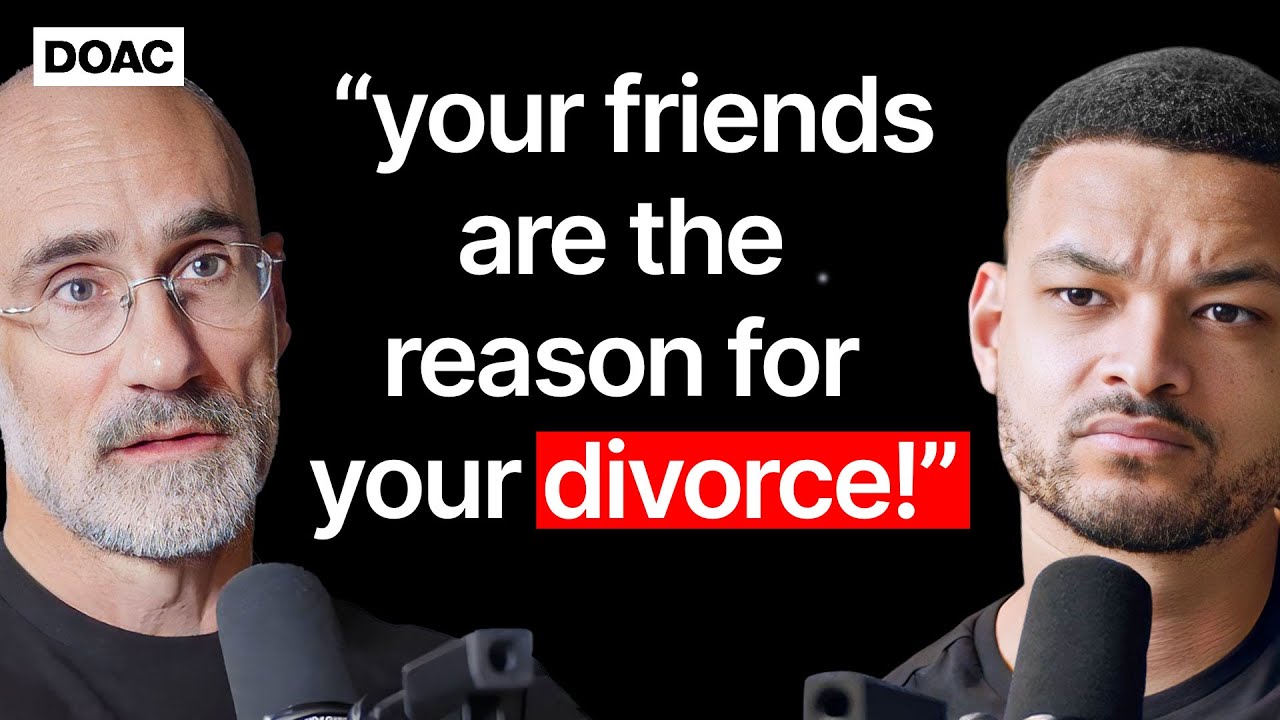
The Diary Of A CEO
Arthur Brooks argues that lasting human happiness depends on moving basic emotional drives into the prefrontal cortex through deliberate contemplation, shared experiences, and service to others.
AI-assisted summary of The Happiness Expert: Single Friends Will Keep You Single & Obesity Is Contagious! — original source. Check the original for full context.
Source published:
Detailed notes
## Background This episode of The Diary Of A CEO was published on YouTube by Steven Bartlett on January 18, 2024. The description notes that it features a conversation on the keys to happiness and recommends a related episode with Dr. Robert Waldinger, while providing links to Arthur Brooks' latest book, 'Build the Life You Want: The Art and Science of Getting Happier'.
## TL;DR Harvard professor and social scientist Arthur Brooks breaks down the science of happiness, reframing it not as a mere feeling, but as a combination of enjoyment, satisfaction, and meaning. The discussion explores how to construct a purposeful life through four core pillars—faith, family, friendship, and meaningful work—while avoiding the traps of intermediate goals like money and fame. Brooks introduces emotional personality profiles via the PANAS scale, analyzes the neurochemistry of love, and offers practical metacognitive strategies, such as structured journaling and daily contemplation, to manage fear and anxiety.
## Atmosphere & style The conversation feels deeply intellectual yet intimately practical, blending academic rigor with the warmth of a grounded mentorship. Arthur Brooks speaks with a sharp, compassionate authority, while Steven Bartlett's engaged prompts create a fluid, analytical, and reflective dialogue. The narrative arc moves smoothly from cold scientific metrics and evolutionary neurochemistry to profound philosophical realizations about love, suffering, and human connection. Listening feels like sitting in an exclusive, high-stakes seminar that somehow morphs into a deeply personal, reassuring guide on how to navigate the chaos of the human mind.
## Key takeaways - [00:00](https://www.youtube.com/watch?v=qRY-foz-ZAw&t=0s) Happiness is roughly 50% genetically determined, but actively practicing and applying the social science of happiness can significantly improve long-term well-being. - [18:05](https://www.youtube.com/watch?v=qRY-foz-ZAw&t=1085s) Happiness is not a feeling, but a combination of three core components: enjoyment, satisfaction, and meaning. - [23:10](https://www.youtube.com/watch?v=qRY-foz-ZAw&t=1390s) Pure pleasure pursued alone triggers short-term dopamine loops in the limbic system; turning pleasure into true enjoyment requires adding social connection and memorable experiences. - [25:00](https://www.youtube.com/watch?v=qRY-foz-ZAw&t=1500s) Satisfaction equals what you have divided by what you want; lasting satisfaction comes from desiring less rather than accumulating more. - [30:56](https://www.youtube.com/watch?v=qRY-foz-ZAw&t=1856s) Intermediate goals like money, power, fame, and low body fat do not yield lasting baseline happiness due to the arrival fallacy and hedonic treadmill. - [30:56](https://www.youtube.com/watch?v=qRY-foz-ZAw&t=1856s) The four true pillars of lasting happiness are faith (or transcendence), family, real friendships, and work that serves others. - [34:48](https://www.youtube.com/watch?v=qRY-foz-ZAw&t=2088s) Physical exercise manages cortisol and reduces negative emotion in the amygdala, while daily routines eliminate decision fatigue. - [38:13](https://www.youtube.com/watch?v=qRY-foz-ZAw&t=2293s) A life of meaning requires three elements: coherence (understanding your story), purpose (having long-term goals), and significance (feeling your life matters). - [01:00:14](https://www.youtube.com/watch?v=qRY-foz-ZAw&t=3614s) Using the PANAS test categorizes emotional profiles into Mad Scientists, Cheerleaders, Judges, and Poets, which impacts leadership styles and partner choices. - [01:07:21](https://www.youtube.com/watch?v=qRY-foz-ZAw&t=4041s) The early phase of romantic love produces neurochemical swings similar to addiction, lowering serotonin and causing intense obsession, which does not guarantee long-term stability. - [01:12:12](https://www.youtube.com/watch?v=qRY-foz-ZAw&t=4332s) Focusing outward by performing moral deeds, volunteering, and giving back increases personal happiness far more than self-care. - [01:14:15](https://www.youtube.com/watch?v=qRY-foz-ZAw&t=4455s) Emotions, divorce, and health habits are socially contagious; having happy friends in close proximity boosts your own probability of happiness by 25%. - [01:21:04](https://www.youtube.com/watch?v=qRY-foz-ZAw&t=4864s) Metacognition allows individuals to shift reactive fears out of the limbic system and into the prefrontal cortex through structured reflection and journaling.
## Detailed walkthrough Here is a detailed, faithful walkthrough of Part 1 of the transcript.
---
[00:00](https://www.youtube.com/watch?v=qRY-foz-ZAw&t=0s) Intro & The Science of Happiness
Arthur Brooks introduces his life's work as a Harvard professor, social scientist, and author who studies human happiness to help people lead better lives. He explains that much of what society teaches us about achieving happiness is fundamentally incorrect. Over the last five years, by rigorously applying the science of happiness to his own life, Brooks has increased his measured happiness score by 60%.
He shares several counterintuitive research findings: * **Genetics:** Happiness is roughly 50% genetically determined. * **Introversion:** Introverts tend to experience higher levels of long-term, sustained happiness compared to extroverts. * **Social Contagion:** Happiness operates like a "mind virus" that spreads from person to person through social networks.
Brooks references longitudinal tracking studies showing that lifestyle dynamics—including obesity, divorce, and happiness—are socially contagious. If your close friends get divorced, your likelihood of divorce increases; conversely, if your friends become happier, your own probability of happiness rises.
---
[02:13](https://www.youtube.com/watch?v=qRY-foz-ZAw&t=133s) Are You a Professor of Happiness?
Host Steven Bartlett asks Brooks to define his role at Harvard and whether national happiness can be quantified. Brooks clarifies that while his official title is Professor of Leadership at the Harvard Kennedy School and Harvard Business School, his domain is the intersection of leadership and happiness. He draws upon social psychology, neuroscience, behavioral economics, and philosophy to equip future political and business leaders with actionable tools to improve their well-being and elevate those they lead.
``` +-----------------------------------------------------------------------------------------------------------------------+ | NATIONAL HAPPINESS MEASUREMENT | +-----------------------------------------------------------------------------------------------------------------------+ | METHODOLOGY | Surveys ~1,000 people across ~100 countries asking: "How do you evaluate your life?" | +-----------------------+-----------------------------------------------------------------------------------------------+ | BROOKS' CRITIQUE | Flawed methodology—akin to asking citizens in every nation how much they like local music, | | | then claiming the highest internal ranking proves who has the best music. | +-----------------------+-----------------------------------------------------------------------------------------------+ | VALID COMPARISONS | Evaluating well-being trends over time *within* a single country or shared cultural context. | +-----------------------------------------------------------------------------------------------------------------------+ ```
Data from OECD countries—including the United States and the United Kingdom—reveals that national happiness levels have been steadily declining since roughly 1990.
#### Genetic Baseline & Personal Roots When asked about his personal motivation for studying happiness, Brooks candidly reveals that he is not a naturally happy person and scores well below average in baseline happiness. He highlights landmark twin studies on identical twins separated at birth and reunited as adults. Personality tests administered by researchers show that 40% to 80% of personality traits (such as openness, conscientiousness, extroversion, agreeableness, and neuroticism) are inherited, with happiness being roughly 50% genetic.
Reflecting on his own upbringing, Brooks notes that while his parents loved each other and provided a safe environment, he was not particularly close to them. He emphasizes that no one has a perfect childhood, but adults are not doomed to repeat their past. Instead, individuals can consciously design their lives by deciding which childhood variables to replicate and which to change.
* **Parental Proximity:** Brooks' parents lived far away (Barcelona and Seattle), preventing his children from having an intense relationship with their grandparents. * **Intentional Change:** Brooks committed to living near his own grown children and speaks to them daily on FaceTime. He frequently turns down work opportunities to spend time babysitting his grandson.
---
[07:28](https://www.youtube.com/watch?v=qRY-foz-ZAw&t=448s) Is Hope Important to Be Happy?
Bartlett asks whether hope directly influences survival rates, drawing a parallel to the common observation that elderly spouses often die shortly after losing their lifelong partner. Brooks notes that this phenomenon exhibits a striking gender asymmetry:
* **Widowers (Men):** Fare very poorly after losing a spouse. Roughly 60% of 60-year-old men report that their wife is their best friend. * **Widows (Women):** Adapt significantly better. Only 30% of wives report that their husband is their best friend, as women typically maintain deeper, non-kin social networks and closer bonds with adult children.
``` +--------------------------------------------------------------------------------------------+ | GENDER ASYMMETRY IN BEREAVEMENT | +--------------------------------------------------------------------------------------------+ | METRIC | HUSBANDS / MEN | WIVES / WOMEN | +------------------------------------------+-------------------------+-----------------------+ | Identify spouse as their best friend | 60% | 30% | +------------------------------------------+-------------------------+-----------------------+ | Broader social support network | Typically lower | Typically higher | +------------------------------------------+-------------------------+-----------------------+ | Well-being outcomes after spousal loss | Significant decline | Higher resilience | +------------------------------------------+-------------------------+-----------------------+ ```
Beyond spousal loss, hope is a vital physiological requirement for people of all ages. When individuals lose hope, they experience severe physical degradation—they stop exercising, isolate themselves, neglect their diet, and may resort to substance abuse. Restoring agency and hope to individuals directly correlates with a longer, healthier, and more successful life.
---
[10:21](https://www.youtube.com/watch?v=qRY-foz-ZAw&t=621s) Follow the Science to Be Happy
Brooks tracks his own well-being monthly, by semester, and annually using structured protocols measuring both "macronutrients" and "micronutrients" of happiness. By systematically learning the science, applying it personally, and teaching it to others, he has achieved a 60% increase in his happiness score over five years.
He explains the neurological mechanism behind why teaching happiness is so effective: 1. **Limbic Processing:** Simply thinking about an idea keeps it as a temporary "limbic fantasm." 2. **Executive Processing:** Explaining and sharing concepts with others forces the brain's executive centers to process and encode the material deeply. 3. **Behavioral Accountability:** Teaching others creates external accountability, making it far more likely that you will live out the principles yourself.
Bartlett notes that hosting *The Diary Of A CEO* has had a similar transforming effect on his own life, as discussing empowering topics regularly reinforces those behaviors in his private life.
---
[12:05](https://www.youtube.com/watch?v=qRY-foz-ZAw&t=725s) Personal Responsibility & Learned Helplessness
Brooks and Bartlett explore how personal agency directly impacts well-being and longevity. Brooks cites the foundational work of Martin Seligman, the founder of positive psychology, who identified the phenomenon of **learned helplessness**.
* **Seligman's Experiments:** In early animal and human studies (such as dogs placed on mildly shocked floors or individuals operating altered slot machines), subjects learned that their actions had zero effect on the outcome. Eventually, the subjects stopped trying to escape or adapt and simply gave up in passive distress. * **Modern Victimhood:** When politicians, media outlets, or activists convince individuals that they are helpless victims of external forces, people internalize learned helplessness. Embracing a victim identity degrades quality of life, lowers happiness, and reduces lifespan.
``` +-----------------------------------------------------------------------------------------------------------------------+ | LEARNED HELPLESSNESS vs. AGENCY | +-----------------------------------------------------------------------------------------------------------------------+ | LEARNED HELPLESSNESS | Belief that external forces control outcomes → Passive acceptance → Degradation of health | +------------------------+----------------------------------------------------------------------------------------------+ | PERSONAL AGENCY | Belief that inner choices control reactions → Active engagement → Increased longevity | +-----------------------------------------------------------------------------------------------------------------------+ ```
Bartlett shares an anecdote from a previous guest, Mo Gawdat, who crowdsourced feedback on an upcoming book from 500 advance readers. Gawdat observed that roughly 8% of readers dropped off the Google Document as soon as they reached the chapter on personal responsibility.
Brooks agrees, calling personal responsibility topics "spinach columns"—articles that prescribe humility, active listening, and self-discipline (such as not calling those who disagree with you "evil"). While essential for personal growth, these articles receive far fewer readers because society inclines people to look for external scapegoats rather than exercising leverage over their own internal state. Genuine, lasting hope begins when people realize they have direct agency over their internal emotional state.
<FollowUp label="Want to explore the next part of Arthur Brooks' interview on enjoyment, satisfaction, and purpose?" query="Continue with Part 2 of the transcript walkthrough for The Diary Of A CEO interview with Arthur Brooks."/>
### Is Happiness a Choice? The discussion opens with a direct look at personal agency, establishing that while happiness itself is an unattainable final destination—operating more like a direction—being *happier* is entirely a choice based on commitments and self-management. The speaker notes that most societal teachings about happiness are fundamentally wrong, pointing out that happiness is not just a feeling. Sharing an anecdote from teaching two sections of 90 MBA students at Harvard Business School (along with a 400-person waiting list and an "illegal Zoom link" students sneak into), he describes how he cold-calls them on the first day to ask what happiness is. They invariably reply with feelings about loved ones or enjoyable activities, to which he tells them they are wrong.
* **The Core Misconception:** Believing that happiness is a feeling is the single biggest barrier to getting happier. * **The Smell of Dinner Analogy:** Feelings are merely evidence of happiness, just as the smell of dinner is evidence of dinner itself. * **The Biological Necessity of Negativity:** Pure, unadulterated happiness ("the side of heaven") is dangerous and would lead to a quick death; negative emotions keep us alive and experiences help us learn and grow.
---
### The Three Macronutrients of Happiness Drawing a parallel to nutrition and dietary protein deficiencies in America, the speaker introduces the three true "macronutrients" of happiness: **enjoyment**, **satisfaction**, and **meaning**. Getting happier requires understanding these components and obtaining them in healthy, balanced ways.
* **Enjoyment vs. Pleasure:** Pleasure is a limbic phenomenon tied to the brain's reward center, driven by evolutionary survival triggers like "sex and sugar" as well as modern slot machine mechanics or pornography. * **The Brain's Architecture:** The limbic system deep inside the brain translates external signals into emotional information. This information is then relayed to the neocortex (specifically the prefrontal cortex behind the forehead) for higher reasoning. * **The Danger of Pure Pleasure:** Pursuing pure pleasure without a higher frame traps a person in the limbic system, which modern technology easily hijacks into compulsive addictions like fentanyl or pornography that destroy relationships.
---
### Turning Pleasure into Enjoyment To transform a potentially addictive, animalistic pleasure into a fully human experience of *enjoyment*, two elements must be added: **people** and **memory**. This shifts the experience out of the limbic system and into the prefrontal cortex.
* **The Rule of Thumb:** If an activity is addictive and done entirely alone, it is likely being done wrong. * **The Corporate Marketing Example:** Advertisements for alcohol (such as Anheuser-Busch) or soft drinks (like Coca-Postal or Coca-Cola) never show a person alone pounding a 12-pack in an apartment—which leads to dangerous alcoholism—instead, they feature friends clinking bottles together. * **The Formula:** Pleasure + People + Memory = Enjoyment, which actively connects the brand or experience to lasting happiness.
---
### Satisfaction and the Marshmallow Test Moving to the second macronutrient, **satisfaction** is defined as the joy experienced *after* struggle and deferred gratification. Successful entrepreneurs excel at this, enduring hard work for a sweet future payoff.
* **The Marshmallow Experiment:** Originating in the late 1960s at Stanford University under psychologist Walter Mischel, children aged 4 to 8 were left alone with a marshmallow with the promise of a second marshmallow if they could wait while the researcher took a phone call. * **The Results:** About 80% of the kids ate the marshmallow, while 20% managed to wait. The 20% who delayed gratification went on to achieve higher grades, better job success, and stronger relationships. * **The Nature vs. Nurture Debate:** While people debate the origins, it is roughly a 50/50 split, proving that good things come to those who wait and suffer through necessary restraint.
---
### The Hedonic Treadmill and the Arrival Fallacy Mother Nature employs a trick regarding satisfaction, operating under emotional and physical **homeostasis**—the biological and emotional mechanism that returns us to a baseline so we don't remain stuck in unusual physiological states.
* **The Hedonic Treadmill:** Because homeostatic reset strips away the emotional high of an achievement, striving individuals find themselves trapped on a treadmill demanding "more, more, more." * **The Satisfaction Equation:** Satisfaction equals **Haves divided by Wants**. High-achieving people often fail because they try to increase their "Haves" infinitely rather than managing and lowering their "Wants." * **The Diets Analogy:** Citing the diet industry where 95% of diets fail because people gain the weight back within a year, the speaker highlights the **arrival fallacy**—the false belief that reaching a specific goal will provide eternal happiness. Instead, reaching the goal brings homeostasis, frustration, and disappointment. * **The Dalai Lama's Wisdom:** Having worked closely with the Dalai Lama for 11 years, the speaker shares his ultimate formula for lasting satisfaction: *"You need to want what you have, not to have what you want."*
By the way, to unlock the full functionality of all Apps, enable [Gemini Apps Activity](https://myactivity.google.com/product/gemini).
Here is a detailed, faithful walkthrough of part 3 of the interview:
[30:56](https://www.youtube.com/watch?v=qRY-foz-ZAw&t=1856s) The Four Goals That Actually Bring Lasting Happiness
Arthur Brooks explains that while many things we accumulate trigger the hedonic treadmill—returning us back to our psychological baseline—certain transcendent goals break this cycle. The four goals that truly lead to a happier life, where "more actually is better," do not fall into the classic categories of money, power, pleasure, or fame (or intermediate proxies like weight loss). Instead, the four core pillars of lasting happiness are: **Faith**, **Family**, **Friendship**, and **Work that serves others**.
Brooks clarifies that there is nothing inherently wrong with money, power, pleasure, or fame, but they must only serve as intermediate goals. Their true value lies in making it easier to pursue deeper philosophical/faith life (not strictly traditional religion), richer family relationships, deep friendships (which can be especially difficult for successful people), and earned success that serves others. These are the proper New Year's resolutions to set: asking oneself how to draw closer to the Divine, deepen family intimacy, cultivate stronger friendships, and find greater meaning by serving others through work.
* **Money, Power, Pleasure, Fame:** Intermediate goals that do not yield lasting baseline happiness on their own. * **Faith:** A transcendent or philosophical life to ground one's existence. * **Family:** Deepening mystical and often neuroscientifically complex family bonds. * **Friendship:** Building true, deep connections rather than superficial networking. * **Work:** Earning success through meaningful service to other people.
---
[32:37](https://www.youtube.com/watch?v=qRY-foz-ZAw&t=1957s) Intermediate Goals and the Arrival Fallacy in Fitness
Steven Bartlett steers the conversation toward practical concerns, noting that many people will still say, "I get it, but I hate this belly fat." Brooks responds that wanting to lose belly fat is a valid intermediate goal, but it becomes self-destructive when treated as the ultimate end goal. When people finally achieve physical milestones, they often experience the "arrival fallacy"—realizing that hitting a target weight or physical look did not magically transform their life or make them happier.
To illustrate this, Brooks shares an anecdote from his work with the wellness and longevity community. Men often set aggressive targets like adding 15 pounds of muscle and losing all their belly fat, imagining it will result in overwhelming romantic attention. By September or October, if they stick to their routine, they discover they aren't getting extra compliments from women—instead, other guys at the gym are walking up and saying, "Looking good, dude!" which leaves them feeling unfulfilled because it wasn't their true motivation. The goal must be rooted in an intrinsic "why" (such as living long enough to play with 11 grandchildren) rather than extrinsic validation.
> "Losing your last five pounds of belly fat so you can see your lower abs... is not necessarily that healthy [and] is not going to materially improve your life and your relationships."
---
[34:48](https://www.youtube.com/watch?v=qRY-foz-ZAw&t=2088s) What Makes a Good Fitness Goal?
When asked what a healthier fitness goal looks like, Brooks shares his personal daily routine. He works out for 60 minutes every day not out of vanity—joking self-deprecatingly that he has "a face for radio"—but because daily consistency is far easier to maintain than trying to work out "as often as I can." He applies this same logic to practicing his faith and eating healthily; absolute daily routines eliminate the friction of constant decision-making and willpower depletion.
Brooks explains the neuroscience of fitness and mood: physical exercise doesn't necessarily raise positive affect (happiness) directly, but it effectively lowers negative affect (unhappiness). Positive and negative affect are processed in separate regions of the limbic system, meaning a person can experience high levels of both simultaneously. Identifying Bartlett as having a "mad scientist" personality profile (high positive and high negative affect), Brooks emphasizes that vigorous exercise—like his own taxing "leg day"—is one of the best tools to manage cortisol levels and keep anxiety under control. Bartlett agrees, sharing that shifting his goal from seasonal aesthetics (getting a six-pack for summer) to daily consistency transformed his life and mental well-being.
* **Daily Consistency vs. Flexibility:** Exercising every single day is easier than trying to exercise 3–4 times a week because it becomes an automatic habit. * **Limbic System Separation:** Happiness (positive affect) and unhappiness (negative affect) are handled in different parts of the brain. Exercise specifically targets and reduces negative affect. * **Cortisol Management:** Vigorous physical training actively burns off stress hormones and manages innate anxiety.
---
[38:13](https://www.youtube.com/watch?v=qRY-foz-ZAw&t=2293s) The "Why" of Your Life: The Three Elements of Meaning
The discussion transitions into the third core pillar of happiness: **Meaning**. Brooks defines meaning as the "why" of one's life, acknowledging that it is often the hardest element for young adults to grasp. According to social psychologists and philosophers, meaning is composed of three distinct parts: 1. **Coherence:** Understanding *why* things happen; having a personal framework or theory for life's events rather than seeing life as just "one damn thing after another." 2. **Purpose:** Having direction and goals, moving forward without falling victim to the arrival fallacy. 3. **Significance:** Feeling that your existence matters and that it would make a difference if you weren't here.
To help evaluate whether someone is experiencing a "meaning crisis," Brooks presents a two-question quiz he uses with his university students. There are no objectively right or wrong answers, but failing to have convincing personal answers points to an underlying lack of meaning.
---
[39:18](https://www.youtube.com/watch?v=qRY-foz-ZAw&t=2358s) Putting the Meaning Quiz to the Test
Brooks puts Bartlett on the spot with Question 1: *"Why are you alive?"* Bartlett initially explains his daily actions—waking up, going to the gym, running on the treadmill, and doing the podcast. Pushed deeper on why he hosts the podcast, Bartlett admits it stems from an "ikigai" style motivation: it is selfishly rewarding because he learns a lot, but it also pays it forward to listeners. Brooks distills these motivations into two categories—**fun** and **service**—and asks which is more transcendentally important. Bartlett confirms that service gives him his true sense of worth.
Brooks highlights that an individual's "order of operations" dictates their sense of meaning. If someone prioritizes fun over serving others, their work will ultimately feel hollow. He summarizes Bartlett's underlying mission as "lifting people up and having an intellectual adventure."
> "If you're having fun more than you're serving other people, you're not going to find your sense of meaning."
---
[41:26](https://www.youtube.com/watch?v=qRY-foz-ZAw&t=2486s) "For What Are You Willing to Die Today?"
Brooks delivers Question 2: *"For what are you willing to die today?"* Bartlett ponders this carefully, stating he would die for his romantic partner and his siblings. Humorously, he admits he isn't sure if he would die for his parents, quipping, "I don't know why I said that, but... my mom listens to this podcast," which brings laughter to the room. When Brooks probes whether he would die for an idea or his country, Bartlett notes that context matters heavily.
Brooks explains that answering "I don't know" or "Nothing" to these two questions signals a meaning crisis—but also presents a massive entrepreneurial opportunity for self-discovery. Finding meaning doesn't require getting a PhD in philosophy or meditating in a Himalayan cave; it simply requires embarking on a deliberate "vision quest" to uncover your core values and write your personal mission statement.
* **Question 1:** Why are you alive? (Requires defining your purpose beyond basic biology). * **Question 2:** For what are you willing to die today? (Reveals your deepest, non-negotiable core values). * **The Meaning Crisis:** Answering "nothing" or "I don't know" shows a lack of deep values, serving as a starting point for personal growth.
---
[43:48](https://www.youtube.com/watch?v=qRY-foz-ZAw&t=2628s) The Trap of "Finding Your Purpose" and the "Go Find a Rock" Theory
Bartlett raises a common issue he sees in messages from young followers on social media: people feel immense pressure and anxiety over the popular instruction to "find your purpose." The phrase carries two faulty assumptions—that purpose is something hidden you must search for ("find"), and that there is only a single correct one ("purpose").
Brooks agrees, comparing the internet's advice to what business managers call the **"Go find a rock" theory of leadership**. In this scenario, a boss tells an employee to go find a rock; the employee brings back a rock, and the boss says, "Wrong rock." Telling someone to vaguely "go find your purpose" in a world overflowing with options is equally unhelpful and paralyzing. Brooks shares his experiences studying meditation with the Dalai Lama and Tibetan Buddhist monks in Dharamshala, India. While his time in the Himalayan foothills made him a deeper Catholic, he warns against the misguided belief that randomly traveling to spiritual hotspots will result in your purpose hunting you down. Purpose must be built through deep reflection on your values rather than passively searched for.
> "The idea of just going someplace and randomly looking, hoping that your purpose just hunts you down, is misguided."
[46:29](https://www.youtube.com/watch?v=qRY-foz-ZAw&t=2789s) Finding Meaning When You Feel Lost
Steven Bartlett highlights a common fear for listeners: realizing you do not know why you are alive or what you would die for. Arthur C. Brooks framing this realization not as a crisis, but as "hugely good news"—the exact launching point for an adventure. Many people spend their lives searching for what they *enjoy*, mistakenly expecting pleasure to yield purpose. Enjoyment and meaning are two entirely separate pillars of happiness; pursuing what you like will not automatically reveal why you exist.
``` ┌───────────────────────────────┐ │ 3-PART MEANING PROTOCOL │ └───────────────┬───────────────┘ │ ┌──────────────────────────┼──────────────────────────┐ │ │ │ ▼ ▼ ▼ ┌──────────────┐ ┌──────────────┐ ┌──────────────┐ │ 1. MORAL │ │2. CONTEMPLA- │ │ 3. WISDOM │ │ FOUNDATIONS │ ────────> │ TION │ ────────> │ TRADITION │ │ Define right │ │ Sit still, │ │ Read 15 min │ │ and wrong │ │ drop phone │ │ of classic │ └──────────────┘ └──────────────┘ └──────────────┘ ```
For those standing at square one, Brooks outlines a structured protocol based on Tibetan Buddhist practices to begin locating meaning:
* **Define Moral Foundations:** Write down your explicit moral principles and non-negotiables (such as free speech, dignity, and equality). Crucially, remain morally flexible enough to evolve as you grow, resisting the culture war's demand for ideological rigidity. * **Practice Contemplation:** Engage in quiet, undisrupted self-reflection—even for five minutes a day—without screens or external noise. * **Study Wisdom Traditions:** Spend 15 minutes every day reading foundational texts rather than consuming low-value news or social media.
---
[49:05](https://www.youtube.com/watch?v=qRY-foz-ZAw&t=2945s) The Psychological Toll of Living Out of Alignment
Drawing on Carl Jung, Brooks notes that the foundation of happiness lies in discovering your beliefs and acting in accordance with them. Conversely, unhappiness stems from living in direct opposition to your own moral code. When young people behave on dates in ways they themselves consider improper, or when individuals cheat on partners despite holding strong anti-infidelity values, they inflict deep psychological violence upon their self-worth.
``` ALIGNMENT MISALIGNMENT ┌───────────────────────┐ ┌───────────────────────┐ │ Moral Principles │ │ Moral Principles │ │ │ │ │ │ │ │ ▼ │ │ ▼ (Violated) │ │ Aligned Actions │ │ Contradictory Action │ │ │ │ │ │ │ │ ▼ │ │ ▼ │ │ High Agency & │ │ Learned Helplessness │ │ Integrity/Happiness │ │ & Self-Aversion │ └───────────────────────┘ └───────────────────────┘ ```
This dynamic mirrors fundamental concepts across world religions, where "sin" is rarely about offending a deity, but rather about self-destructive behavior that erodes personal integrity. Violating your own ethics traps you in learned helplessness, signalling that you are a victim of your impulses. Even struggle with diet or sugar consumption often manifests as self-aversion when health goals represent a breakdown of personal agency rather than physical aesthetics. Writing down a clear moral philosophy builds the foundation for long-term self-respect.
* Carl Jung posited that happiness comes from living by your principles, while misalignment breeds deep internal conflict. * Major world religions (Islam, Christianity, Judaism, Hinduism) treat "sin" primarily as self-harm and loss of personal integrity. * Social psychology demonstrates a fundamental human need to view oneself as a good, moral person.
---
[52:11](https://www.youtube.com/watch?v=qRY-foz-ZAw&t=3131s) Practicing Contemplation and Reclaiming Transcendence
The second tier of the meaning protocol requires deliberate contemplation to experience transcendence. Brooks references his Harvard colleague Dr. Ellen Langer—the psychologist who helped introduce mindfulness to the West 30 years ago—who suggests practicing mindfulness informally: sitting on a train, putting your phone away, placing your hands in your lap, and quietly looking out the window for five minutes.
``` ┌──────────────────────┐ │ NEGATIVITY BIAS │ │ Evolution: Notice │ │ threat/twig snap │ └──────────┬───────────┘ │ ▼ ┌──────────────────────┐ │ CONTEMPLATION & │ │ GRATITUDE LISTING │ │ Rewires focus toward │ │ abundant good │ └──────────────────────┘ ```
The discussion turns personal as Bartlett shares that he stopped praying when he abandoned his childhood Christian faith around age 18. He reflects on his family's daily dinner prayers, wondering if he threw out a valuable exercise in gratitude when he walked away from theology. Brooks explains that human beings carry an evolutionary **negativity bias**—our brains prioritize negative signals (like a snapping twig in the forest) to survive. Intentional contemplation and gratitude listing actively counteract this bias.
* **Dr. Ellen Langer:** Author of *Mindfulness* and the first woman tenured in the Harvard psychology department. * **The Ghost Phone of Japan:** Following the 2011 earthquake and tsunami, a disconnected phone booth in Otsuchi allowed over 30,000 grieving people to "speak" to lost relatives, demonstrating the deep human need for transcendent processing. * Adults often abandon spiritual habits due to childhood misunderstandings, yet data shows many return to secular or nuanced spiritual reflection as they age.
---
[56:25](https://www.youtube.com/watch?v=qRY-foz-ZAw&t=3385s) Wisdom Traditions and Writing *Build the Life You Want* with Oprah
The top of the meaning pyramid is **wisdom**—accumulating deep human insight rather than surface-level noise. Brooks urges people to dedicate just 15 minutes a day to core philosophical and spiritual texts, such as the Stoic philosophers, Aristotle's *Nicomachean Ethics*, the *Bhagavad Gita*, the Quran, or the Bible. Replacing mindless social media scrolling with Marcus Aurelius’s *Meditations* or Seneca’s letters provides profound emotional grounding.
``` ┌──────────────────────────────────┐ │ THE THREE TIER MEANING MODEL │ ├──────────────────────────────────┤ │ Top: Wisdom (15 min classic text│ │ Mid: Contemplation (Quiet time) │ │ Base: Moral Foundations (Values)│ └──────────────────────────────────┘ ```
Bartlett transitions to Brooks’s book, *Build the Life You Want: The Art and Science of Getting Happier*, co-authored with Oprah Winfrey. Brooks recounts how Oprah reached out directly after becoming a devoted reader of his weekly *Atlantic* column (*How to Build a Life*) and his book *From Strength to Strength*. Having retired *The Oprah Winfrey Show*, she sought a new avenue to lift people up using scientific tools for happiness, leading them to co-write the manuscript at her Montecito estate over the winter of 2022–2023.
* **15-Minute Reading List:** Marcus Aurelius (*Meditations*), Seneca's letters, Aristotle (*Nicomachean Ethics*), the *Bhagavad Gita*, the Quran, and the Bible. * **Oprah Partnership:** Sparked by her reading Brooks’s *Atlantic* column and his book *From Strength to Strength: Finding Success, Happiness, and Deep Purpose in the Second Half of Life*. * **Core Goal:** Teaching readers to manage emotions deliberately so they can stop reacting to distractions and construct a purposeful life.
---
[01:00:14](https://www.youtube.com/watch?v=qRY-foz-ZAw&t=3614s) The PANAS Test and the Four Personality Types
Brooks introduces the **PANAS** scale (Positive and Negative Affect Schedule), available in the book and on his website, which categorizes individuals into four distinct emotional profiles based on the intensity of their positive and negative affects (moods). Although humans share standard emotional responses, their baseline intensity varies wildly.
``` HIGH POSITIVE AFFECT ▲ │ CHEERLEADERS │ MAD SCIENTISTS (High Positive /│ (High Positive / Low Negative) │ High Negative) │ ───────────────────────────────┼───────────────────────────────► │ HIGH │ NEGATIVE POETS │ JUDGES AFFECT (Low Positive / │ (Low Positive / Low Negative) │ High Negative) │ ```
Evaluating Bartlett's mix of high ambition, intense drives, and sharp emotional swings, Brooks classifies him as a **Mad Scientist**. The four profiles split evenly across the general population:
1. **Mad Scientists (High Positive / High Negative):** Experience intense euphoria alongside sharp downswings; energetic, creative, and emotionally volatile. 2. **Cheerleaders (High Positive / Low Negative):** Upbeat, optimistic, and resilient; largely immune to prolonged down moments. 3. **Judges (Low Positive / High Negative):** Realistic, cautious, and alert to risks; excellent at identifying problems but prone to cynicism. 4. **Poets (Low Positive / Low Negative):** Quiet, steady, and emotionally subdued; deep observers who operate with low emotional variance.
---
<ElicitationsGroup message="To take this further:"> <Elicitation label="Explore the PANAS profile breakdown" query="What are the detailed traits, strengths, and weaknesses of the four PANAS personality profiles from Arthur Brooks' book?"/> <Elicitation label="Learn the Tibetan Buddhist meaning framework" query="How does the Tibetan Buddhist approach to finding purpose and meaning map onto modern psychological research?"/> </ElicitationsGroup>
[01:01:27](https://www.youtube.com/watch?v=qRY-foz-ZAw&t=3687s) The Four Personality Profiles and the Cheerleader CEO
Arthur Brooks explains that people who experience intense positive emotion and weak negative emotion fall into the "Cheerleader" quadrant, making up roughly a quarter of the population. While many people admire this disposition, Cheerleaders often struggle as CEOs. Their tendency to downplay threats and avoid bad news makes it difficult for them to evaluate employees realistically or deliver necessary criticism, which can quickly frustrate team members when obvious incompetence goes unaddressed. In contrast, effective leadership requires a grounded realism to navigate business threats.
Further exploring personality profiles, Brooks outlines "Poets" (high negative affect, low positive affect), whose ventrolateral prefrontal cortex drives rumination over mistakes, regret, and social anxieties. However, this same brain structure fuels creative genius in comedians, composers, and writers, as well as romantic infatuation, which is essentially ruminating on another person. Finally, "Judges" (low positive affect, low negative affect) process emotions mildly and remain unphased under pressure, making them ideal surgeons, judges, or Secret Service agents.
* **Cheerleaders:** High positive affect / low negative affect; optimistic and threat-averse. * **Poets:** Low positive affect / high negative affect; driven by rumination, high creativity, and romanticism. * **Judges:** Low positive affect / low negative affect; emotionally steady and highly composed under high stress. * **Mad Scientists:** High positive affect / high negative affect; typical profile for intense entrepreneurs who feel everything deeply.
[01:04:49](https://www.youtube.com/watch?v=qRY-foz-ZAw&t=3889s) Finding Complementary Partners vs. Looking for Clones
Most successful entrepreneurs fit the "Mad Scientist" profile, characterized by intense highs and lows. Steven Bartlett identifies strongly with this intensity, while noting that his partner acts as a Cheerleader. Brooks, who is also married to a Cheerleader, notes that while Cheerleaders and Mad Scientists can clash over differing reactions to minor issues, finding a complementary partner rather than a clone is the key to a successful relationship.
A major pitfall in modern dating apps is that users search for exact doppelgängers who share identical political views, taste in music, and habits. This tendency results in dating someone who feels more like a sibling than a romantic partner. Bartlett shares that his girlfriend's deep spirituality—something he never would have sought out initially—has expanded his worldview and enriched their bond. Celebrating differences rather than attempting to change a partner prevents the self-defeating egotism that ruins relationships.
> "Wishing that your partner were more like you is just a form of egotism."
[01:07:21](https://www.youtube.com/watch?v=qRY-foz-ZAw&t=4041s) The Neurochemistry of Falling in Love
At Harvard Business School, love and relationships represent the single most requested topic among MBA students. Brooks uses brain scans to show how intense falling in love hijacks executive function, noting that the brain of someone in the throes of infatuation closely mirrors that of a methamphetamine addict. The neurochemical cascade begins with sex hormones (testosterone and estrogen) as the initial spark, followed by a surge in noradrenaline and dopamine that creates euphoric anticipation.
As the relationship deepens, serotonin levels drop significantly. This drop activates the ventrolateral prefrontal cortex, sparking obsessive rumination and intense infatuation with the other person. Finally, oxytocin steps in to foster deep emotional attachment. Because this neurochemical process bypasses conscious logic, individuals in the middle of this cascade—such as executives risking their careers over workplace affairs—often feel completely powerless to control their behavior.
* **Phase 1 (Ignition):** Testosterone and estrogen spark initial physical attraction. * **Phase 2 (Euphoria):** Noradrenaline and dopamine drive reward anticipation and high energy. * **Phase 3 (Infatuation):** Serotonin drops, triggering rumination and hyper-fixation on the partner. * **Phase 4 (Attachment):** Oxytocin fosters deep, long-term bonding and connection.
[01:10:25](https://www.youtube.com/watch?v=qRY-foz-ZAw&t=4225s) Why Early Love Doesn't Guarantee Happiness
Statistically, being in the early stages of romantic love does not make people happier. The combination of drop-off serotonin and heightened rumination triggers intense jealousy, possessiveness, and surveillance behaviors. From an evolutionary perspective, sexual jealousy evolved differently between sexes to protect reproductive interests: men worry about paternity certainty, whereas women worry about resource devotion and commitment.
Citing research from the University of Texas at Austin, Brooks notes that male jealousy is most acutely triggered by visual imagery of a partner's sexual infidelity, while female jealousy is most acutely triggered by emotional betrayal. According to some estimates, up to 15% of paternal attributions worldwide are misattributed, explaining the deep-seated evolutionary mechanics behind romantic anxiety.
* **Male Jealousy Trigger:** Visualizing a partner engaging in physical infidelity with someone else. * **Female Jealousy Trigger:** Hearing or imagining a partner expressing deep emotional love to someone else. * **Paternity Estimates:** Studies suggest non-paternity rates reach up to 15% globally.
[01:12:12](https://www.youtube.com/watch?v=qRY-foz-ZAw&t=4332s) Focusing Less on Yourself Brings True Happiness
Shifted focus away from self-absorption consistently increases personal happiness, a fact demonstrated by empirical social psychology experiments. In a study conducted by Adam Waytz at Northwestern University, undergraduate participants were divided into three intervention groups: performing moral deeds (random acts of kindness), holding moral thoughts (wishing others well), or engaging in self-care (pursuing personal pleasures). Tracking their well-being revealed that moral deeds produced the highest happiness gains, followed by moral thoughts, while self-care ranked last.
``` Adam Waytz's Experiment Results (Happiness Impact): 1. Moral Deeds (Random acts of kindness) --> Highest Happiness 2. Moral Thoughts (Wishing others well) --> Moderate Happiness 3. Self-Care (Focusing on self) --> Lowest Happiness ```
Shifting focus outward disrupts negative self-rumination and grants a sense of personal agency. Volunteering counters loneliness, while charitable giving creates a psychological state of empowerment that correlates statistically with higher future income. Directing energy toward helping others—such as tutoring students—delivers a sustained mood boost for days while proving to oneself that they are making a tangible difference in the world.
[01:14:15](https://www.youtube.com/watch?v=qRY-foz-ZAw&t=4455s) Emotional Contagion and the Spread of Workplace Energy
Emotions function much like a virus through a phenomenon known as "emotional contagion." Both negative and positive emotional states spread rapidly within groups, making the emotional self-management of leaders vital to organizational health. When visiting executive teams, Brooks can immediately determine whether positive or negative emotional energy is dominating the company culture based on how employees react to their leader's mood.
[01:14:56](https://www.youtube.com/watch?v=qRY-foz-ZAw&t=4496s) The Negativity Virus and Contagious Emotions
The conversation addresses the dark side of emotional transmission, describing a "this sucks" attitude as a horizontal form of infection within families. Living with someone who has a high negative affect is deeply draining because they spread what is effectively a "negativity virus." While the transmission isn't airborne like the coronavirus—meaning it heavily relies on the amount of direct contact and relational intimacy you share—its impact is geographically and socially measurable.
Arthur Brooks highlights data from the famous Framingham Heart Study, a long-running research project based in a Boston suburb. Originally designed to track cardiovascular health trajectories across generations, the study expanded to measure behavioral networks. The findings are stark: lifestyle changes and psychological states are socially contagious. When your friends become obese, you are more likely to become obese; when your close network gets divorced, your own likelihood of divorce climbs; conversely, when a friend or family member living within a mile of you becomes happier, your probability of becoming happier shoots up by 25%. The closer the proximity—both geographically and in terms of emotional intimacy—the stronger this transmission mechanism becomes.
- **The Framingham Heart Study:** Demonstrated that social networks transmit behavioral and emotional states, including obesity, divorce, and happiness. - **The 25% Happiness Jump:** Living within a mile of a friend or family member who becomes genuinely happier increases your own chances of happiness by a quarter, provided there is regular contact. - **Proximity Dynamics:** The speed and strength of emotional contagion are directly correlated with physical closeness and the intimacy of the bond.
[01:16:30](https://www.youtube.com/watch?v=qRY-foz-ZAw&t=4590s) Compassion vs. Empathy in Relationships and Society
Steven Bartlett pivots the discussion toward the burden of carrying other people's problems, particularly when dealing with unhappy friends and family. Brooks counters with a vital distinction that he believes modern society completely gets wrong: the difference between empathy and compassion. Society heavily overvalues empathy, which is simply feeling someone else's pain and absorbing their problems. Brooks argues that highly empathetic people often make the worst parents to teenagers because they become paralyzed by the child's distress rather than providing a steady, corrective hand.
True parenting, partnership, or leadership requires compassion, which Brooks describes as "being hard as steel" and doing what a person actually needs out of love, independent of the raw emotions they are throwing at you. This philosophy extends beyond individual households to macro-level institutions; Brooks asserts that national welfare systems should be built on steel-lined compassion that drives real assistance and transformation, rather than fleeting empathy. He evokes the classic airplane safety briefing: you must put on your own oxygen mask first. Safeguarding your own happiness ensures you are not incapacitated by the negativity virus, allowing you to actually be of service to those you love.
- **Empathy:** The act of taking on and feeling another person's emotional pain; can lead to emotional paralysis. - **Compassion:** Acting out of love to give people what they truly need, requiring emotional boundaries and strength. - **The Oxygen Mask Principle:** Taking care of your own baseline happiness is a prerequisite for helping others effectively. - **Family Schisms:** One in six Americans is currently estranged from a family member due to political differences. Brooks labels this "simply insane," notes that political disagreement does not equal abuse, and emphasizes that cutting off family should be reserved strictly for actual abuse.
[01:18:25](https://www.youtube.com/watch?v=qRY-foz-ZAw&t=4705s) A Brief Intermission: Building a World-Class Team
Steven takes a moment to address the entrepreneurs and business owners listening to the podcast, sharing his personal philosophy on company culture. He states that the secret to building a world-class organization always starts with people. He introduces the podcast's sponsor, LinkedIn Jobs, noting it as his absolute first port of call across all of his companies whenever a new role needs to be filled.
- **Efficiency:** Setting up a free job post on LinkedIn takes roughly 5 minutes. - **Visibility:** Features like the hiring frame on profile pictures alert professional networks immediately. - **Vetting:** Screening questions streamline candidate filtering to match specific business needs.
[01:19:28](https://www.youtube.com/watch?v=qRY-foz-ZAw&t=4768s) Introverts, Extroverts, and the Pursuit of Meaning
The dialogue shifts back to personality types as Steven asks who is ultimately happier: introverts or extroverts. Brooks explains that traditional literature heavily favors extroverts, who consistently register higher levels of "positive affect" and short-term mood boosts. Extroverts excel at capturing immediate enjoyment. However, introverts possess a distinct long-term advantage: they form deeper emotional connections and maintain tight-knit, enduring friendships and marriages that sustain them over a lifetime. Extroverts, conversely, often suffer from intense bouts of loneliness when the crowd thinned out.
The dynamic gets highly personal when Brooks turns the question on Steven, guessing that despite his public-facing career as an entrepreneur and podcast host, Steven is actually a baseline introvert. Steven confirms this, pointing out that his producer, Jackie, who has known him for five years, can attest to his introversion. Steven reveals he actively avoids parties because they drain his energy completely. Instead, he preserves a small, impenetrable circle of five close friends he has known since his university days—friends who stood by him when he was literally shoplifting pizzas just to feed himself. Brooks identifies these as "real friends" rather than "deal friends" (transactional professional relationships), illustrating his point that introverts swap broad social enjoyment for deep, protective life meaning.
- **Extroverts:** Capture more immediate, short-term enjoyment and display higher immediate positive affect, but face greater risks of loneliness. - **Introverts:** Experience higher long-term meaning and life satisfaction rooted in deep, stable relationship structures. - **Real Friends vs. Deal Friends:** Transactional networks vs. foundational history; illustrated by Steven's core group of five friends from his college years.
[01:21:04](https://www.youtube.com/watch?v=qRY-foz-ZAw&t=4864s) Metacognition: Moving Fear from the Amygdala to the Prefrontal Cortex
Steven brings up the concept of metacognition, framing it as a potential antidote to chronic unhappiness. Brooks simplifies the term for a general audience: "metacognition simply means thinking about your thinking." It is the practice of inserting a conscious buffer between an primitive emotional stimulus and your subsequent reaction. Emotions originate instantly in the limbic system, an ancient part of the brain. However, evaluating and deciding what those emotions mean occurs in the prefrontal cortex—the executive "sea suite" located right behind the forehead. When a child throws a tantrum, parents don't say "don't be so limbic"; they say "use your words." Telling a child to use their words forces them to engage the prefrontal cortex to analyze their internal state.
Brooks uses the mechanics of anxiety to show how metacognition works in practice. Fear is an evolutionary adaptation meant to be intense but short-lived. When a threat is perceived, the visual cortex alerts the amygdala, which routes a signal via the hypothalamus to the pituitary gland, ultimately telling the adrenal glands above the kidneys to flood the body with stress hormones—a process taking a mere 74 milliseconds. While this mechanism saves lives in high-risk environments, modern life subjects people to vague, continuous background threats. This results in a persistent, low-grade drip of cortisol, creating unfocused anxiety. The metacognitive solution is to rigorously force the fear into the logical brain by writing it down.
``` [Threat Perceived] │ ▼ [Occipital Lobe / Visual Cortex] │ (74 milliseconds) ▼ [Amygdala Signals] ──► [Hypothalamus] ──► [Pituitary Gland] ──► [Adrenal Glands] ──► [Cortisol Release] ```
- **Anxiety Defined:** An evolutionary misfire where episodic fear transforms into long-term, "unfocused fear." - **The 10-Minute Journaling Routine:** A daily practice of writing down specific fears, their root causes, worst-case scenarios, and actionable responses to transition emotional data from the amygdala to the prefrontal cortex. - **The Striver's Spectre:** High-achievers frequently self-objectify around success, becoming addicted to the dopamine hit of external metrics (e.g., download counts tapping the ventral striatum). This turns the fear of failure into an omnipresent phantom that shrinks down into a harmless "mouse" the moment it is looked at directly through writing.
[01:25:28](https://www.youtube.com/watch?v=qRY-foz-ZAw&t=5128s) Closing Thoughts and The Uncontrollable
Steven heaps praise on Brooks’s book, *Build the Life You Want: The Art and Science of Getting Happier* (co-authored with Oprah Winfrey), noting its accessibility and its refusal to rely on the typical, oversimplified "three steps to happiness" tropes found in the self-help market. Brooks warmly replies that he wrote it precisely for people like Steven who want a nuanced, scientifically backed framework.
To close the interview, Steven introduces the show's signature tradition: the previous guest leaves an anonymous question for the next visitor. The question left for Brooks is: *"What are we supposed to do about the things that we cannot control?"* Brooks responds immediately, stating that almost everything outside of our immediate skin is beyond our control. The secret to peace, he argues, is acknowledging this reality and intentionally pulling our focus away from external chaos, reallocating our limited attention to the micro-domains of life where we possess genuine agency. The episode wraps up with warm mutual expressions of admiration and gratitude between host and guest.
- **The Core Thesis:** "The things that we can't control are virtually all outside ourselves." - **Agency Realignment:** Refocusing attention exclusively on internal choices and actions yields a sense of perspective and mutes anxiety over global or environmental uncontrollables.
[01:27:49](https://www.youtube.com/watch?v=qRY-foz-ZAw&t=5269s) Post-Show Reflections: A Nutritional Foundation
Following the interview, Steven transitions to a final message regarding his role as an investor and board member for Huel. He highlights a major product development for the UK audience: the official launch of Huel Daily Greens. He connects the conversation's focus on mental wellness back to physical health, noting that maintaining a diverse gut microbiome is incredibly difficult with modern dietary habits. He shares his personal routine of taking one scoop every morning, emphasizing the density of the formulation.
- **Nutritional Yield:** A single daily scoop contains 91 vitamins, minerals, and whole-food-sourced nutrients. - **Target Design:** Explicitly formulated to support the gut microbiome and fill critical systemic nutritional gaps.
[01:28:34](https://www.youtube.com/watch?v=qRY-foz-ZAw&t=5314s) Outro and Recommended Next Episode
Steven Bartlett concludes the episode by noting that Arthur C. Brooks' latest book, *Build the Life You Want: The Art and Science of Getting Happier* (co-authored with Oprah Winfrey), launches in the UK in January, and given the high demand, it is almost certain to sell out quickly. He encourages viewers to check the link in the video description below to secure their copy.
Closing out the show, Steven recommends another podcast episode for viewers looking for their next listen. Based on listener data, those who enjoyed this conversation with Arthur Brooks also thoroughly enjoyed a recent episode featuring Dr. Robert Waldinger on the keys to human happiness and relationships.
- Arthur C. Brooks' book *Build the Life You Want* launches in the UK in January 2024. - Steven Bartlett highlights a recommended follow-up episode featuring Dr. Robert Waldinger, linked in the video description.
## Notable quotes > [32:37](https://www.youtube.com/watch?v=qRY-foz-ZAw&t=1957s) Losing your last five pounds of belly fat so you can see your lower abs... is not necessarily that healthy [and] is not going to materially improve your life and your relationships. — Arthur Brooks
> [39:18](https://www.youtube.com/watch?v=qRY-foz-ZAw&t=2358s) If you're having fun more than you're serving other people, you're not going to find your sense of meaning. — Arthur Brooks
> [01:04:49](https://www.youtube.com/watch?v=qRY-foz-ZAw&t=3889s) Wishing that your partner were more like you is just a form of egotism. — Arthur Brooks
> [01:25:28](https://www.youtube.com/watch?v=qRY-foz-ZAw&t=5128s) What are we supposed to do about the things that we cannot control? — Previous Guest
> [01:25:28](https://www.youtube.com/watch?v=qRY-foz-ZAw&t=5128s) The things that we can't control are virtually all outside ourselves. — Arthur Brooks
## Mentioned Arthur Brooks, Steven Bartlett, Dr. Robert Waldinger, Harvard University, Harvard Business School, Harvard Kennedy School, Martin Seligman, Mo Gawdat, Walter Mischel, Dalai Lama, Carl Jung, Dr. Ellen Langer, Oprah Winfrey, The Atlantic, From Strength to Strength, Build the Life You Want: The Art and Science of Getting Happier, Marcus Aurelius, Seneca, Aristotle, Adam Waytz, Northwestern University, Framingham Heart Study, LinkedIn Jobs, Huel Daily Greens, The Diary Of A CEO
[Source](https://www.youtube.com/watch?v=qRY-foz-ZAw)