Harvard Biologist Lieberman Links Modern Lifestyle Mismatch to Chronic Disease Escalation
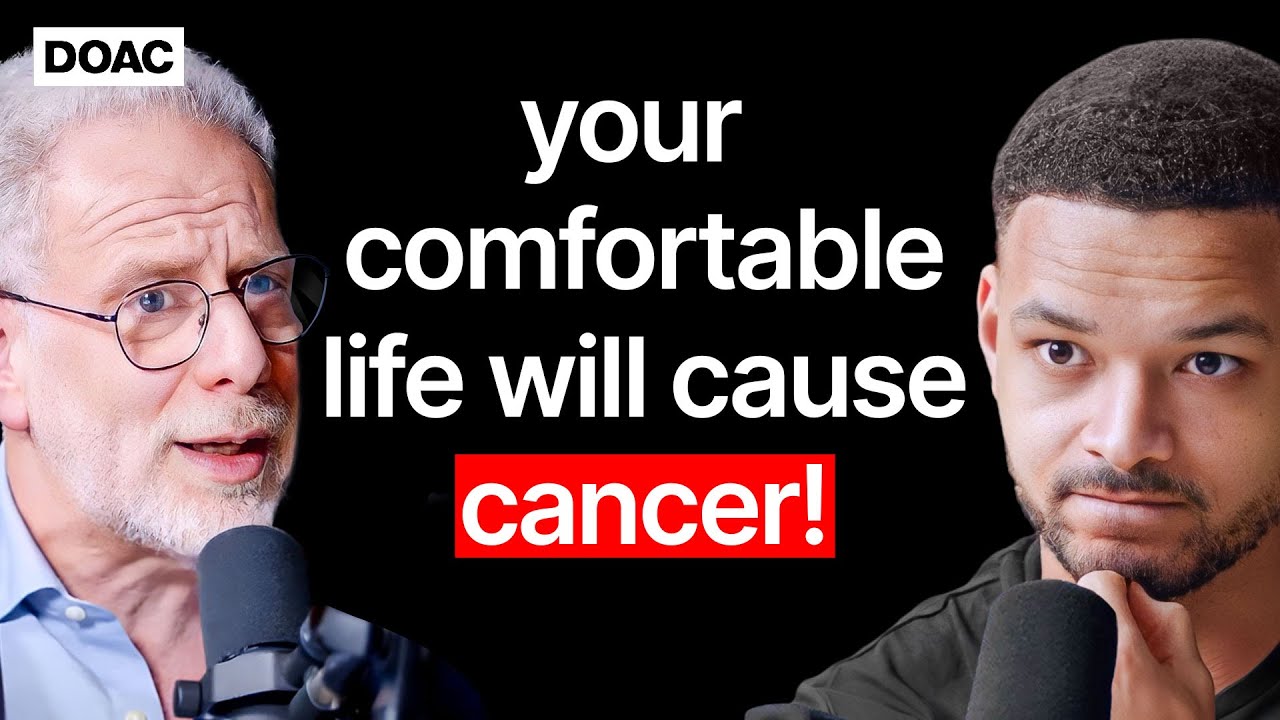
Harvard Professor: They’re Lying To You About Running, Breathing & Sitting! - Daniel Lieberman — The Diary Of A CEO

The Diary Of A CEO

Rapid cultural evolution has created environmental conditions that conflict with human biology, driving an epidemic of preventable mismatch diseases such as diabetes, cardiovascular illness, and cancer.

AI-assisted summary of Harvard Professor: They’re Lying To You About Running, Breathing & Sitting! - Daniel Lieberman — original source. Check the original for full context.

Source published:

Detailed notes

## Background Published on YouTube by The Diary Of A CEO on January 29, 2024, this episode features host Steven Bartlett interviewing Harvard professor Daniel Lieberman. The discussion explores evolutionary human biology, challenging common modern misconceptions surrounding diet, exercise, sitting, breathing, and chronic disease prevention.

## TL;DR Evolutionary biologist Daniel Lieberman explains how modern chronic health conditions stem from evolutionary mismatches between our biology and current lifestyles. He breaks down how humans uniquely evolved for endurance running, thermoregulation through sweating, and flexible omnivorous diets, while warning against simple solutions like the 'Paleo' diet or strict nasal-only breathing during intense exertion. Ultimately, Lieberman argues that modern society prioritizes treating symptoms of mismatch diseases rather than preventing them by addressing their root environmental causes.

## Atmosphere & style The interview carries an intellectually stimulating and engaging tone, blending high-level academic science with accessible, real-world practical insights. Steven Bartlett maintains an inquisitive and reflective presence, asking probing questions that allow Lieberman to candidly debunk popular wellness myths with wit and authority. The conversation feels like a thought-provoking, eye-opening dialogue that leaves listeners re-evaluating their daily physical habits and relationship with modern comfort.

## Key takeaways - [00:00](https://www.youtube.com/watch?v=A-8tPmQtYqs&t=0s) Most Westerners will die from preventable 'mismatch diseases'—such as chronic stress, obesity, heart disease, and cancer—because modern environments shield us from the biological stressors our bodies evolved to handle. - [03:24](https://www.youtube.com/watch?v=A-8tPmQtYqs&t=204s) While humans lack the explosive short-distance strength of chimpanzees or quadrupedal sprinters, both men and women uniquely evolved unmatched long-distance endurance running capabilities in extreme heat. - [05:26](https://www.youtube.com/watch?v=A-8tPmQtYqs&t=326s) The 'Paleo Fantasy' is a flawed evolutionary assumption; ancestral hunter-gatherer societies were not disease-free utopias, and natural selection prioritizes reproductive success rather than longevity or happiness. - [07:47](https://www.youtube.com/watch?v=A-8tPmQtYqs&t=467s) Claims that humans did not evolve to eat meat are biologically incorrect, with active hominin hunting and meat consumption dating back at least 2 to 2.5 million years. - [15:19](https://www.youtube.com/watch?v=A-8tPmQtYqs&t=919s) The external human nose and complex internal nasal cavities evolved around 2 million years ago to function as a highly efficient air humidification and moisture recapture system. - [17:18](https://www.youtube.com/watch?v=A-8tPmQtYqs&t=1038s) Elite endurance runners do not rely solely on nasal breathing; humans uniquely evolved mouth breathing during high-intensity exercise specifically to dump excess body heat. - [19:43](https://www.youtube.com/watch?v=A-8tPmQtYqs&t=1183s) Humans evolved an exceptionally high density of eccrine sweat glands across hairless skin, enabling evaporative cooling that allowed ancestors to run prey to exhaustion in midday heat. - [24:38](https://www.youtube.com/watch?v=A-8tPmQtYqs&t=1478s) The rapid expansion of the human brain to 1,400 cc required massive energy trade-offs, leading humans to naturally carry significantly higher body fat percentages (10-25%) than other lean primates. - [30:10](https://www.youtube.com/watch?v=A-8tPmQtYqs&t=1810s) Dieting directly fights human biology; caloric restriction triggers a primitive starvation response that actively spikes cortisol, intensifies cravings, and lowers baseline metabolic rates. - [31:06](https://www.youtube.com/watch?v=A-8tPmQtYqs&t=1866s) Chronically elevated cortisol directs fat storage toward abdominal visceral fat, which triggers systemic chronic inflammation that drives Type 2 diabetes, Alzheimer's disease, and cardiovascular illnesses. - [50:30](https://www.youtube.com/watch?v=A-8tPmQtYqs&t=3030s) Modern processed diets bypass the heavy chewing required during childhood development, leading to smaller jaw structures, dental overcrowding, and impacted wisdom teeth. - [53:17](https://www.youtube.com/watch?v=A-8tPmQtYqs&t=3197s) Higher national wealth directly correlates with elevated cancer rates because high-energy, low-activity modern environments elevate insulin levels and accelerate cellular division. - [01:03:18](https://www.youtube.com/watch?v=A-8tPmQtYqs&t=3798s) Visceral fat cells that expand to the point of rupturing trigger an emergency immune response, recruiting white blood cells and secreting inflammatory adipokines that drive arterial plaques. - [01:05:38](https://www.youtube.com/watch?v=A-8tPmQtYqs&t=3938s) While intermittent fasting initiates cellular repair pathways similar to exercise, physical exercise provides vastly superior overall biological benefits compared to caloric restriction or keto diets alone. - [01:09:59](https://www.youtube.com/watch?v=A-8tPmQtYqs&t=4199s) Modern conveniences eliminate necessary mechanical loads on the body; human skeletons require physical stress before ages 25 to 30 to reach proper peak bone mass density. - [01:15:14](https://www.youtube.com/watch?v=A-8tPmQtYqs&t=4514s) Abundant modern caloric intake has artificially accelerated human maturation, causing female menarche to drop drastically from around 16 years old in the 19th century to roughly 12 years old today. - [01:16:52](https://www.youtube.com/watch?v=A-8tPmQtYqs&t=4612s) The negative health outcomes of sitting are driven by uninterrupted durations; breaking up sitting bouts every 20 minutes activates muscle metabolism to clear lipids and sugars from the blood. - [01:24:31](https://www.youtube.com/watch?v=A-8tPmQtYqs&t=5071s) Hyper-sanitized modern environments and chemical hygiene products leave the immune system under-stimulated, causing it to misfire and attack harmless self-tissues or allergens.

## Detailed walkthrough ### [00:00](https://www.youtube.com/watch?v=A-8tPmQtYqs&t=0s) Introduction and the Evolutionary Mismatch

Human evolutionary biologist Professor Daniel Lieberman highlights that the vast majority of people in the Western world will die from "mismatch diseases." These conditions—including chronic stress, obesity, heart disease, and many forms of cancer—occur because modern humans live in an environment offering unprecedented levels of comfort and choice for which our bodies are poorly adapted. For example, back pain is the number one medical complaint today because comfortable chairs allow our supporting muscles to disuse and weaken over time. Similarly, a lack of physical activity in early adulthood prevents adequate skeletal growth, leading to steady bone loss starting around age 25 to 30.

Even our sanitized environments contribute to these mismatches. With immune systems left unchallenged by historical pathogens, they frequently overreact, causing allergies and autoimmune diseases. Broad epidemiological studies demonstrate that higher national wealth correlates directly with elevated cancer rates; for instance, Bangladeshi women who migrate to England experience a surge in cancer risk driven by changes in diet, reduced physical activity, and increased stress. Lieberman notes that addressing modern health crises requires looking through the lens of our evolutionary past.

* **Key Health Mismatches:** Chronic stress, obesity, cardiovascular disease, various cancers, low back pain, osteoporosis, allergies, and autoimmune disorders. * **Epidemiological Fact:** Bangladeshis who move to the UK experience significantly higher cancer rates due to environmental and lifestyle shifts.

---

[01:31](https://www.youtube.com/watch?v=A-8tPmQtYqs&t=91s) Host Interlude

Host Steven Bartlett takes a brief moment to share channel analytics with the audience, noting that 69.9% of frequent viewers have not yet subscribed to *The Diary Of A CEO*. He asks viewers for a simple favor: hitting the subscribe button to support scaling guest recruitment, boosting production value, and growing the show overall, promising in return to continuously improve the quality of the content.

---

[02:15](https://www.youtube.com/watch?v=A-8tPmQtYqs&t=135s) What Does an Evolutionary Biologist Do?

Daniel Lieberman serves as a Professor of Human Evolutionary Biology at Harvard University. He describes his discipline as studying how and why humans became the way they are, and why that history remains profoundly relevant today. His specific research focuses on the human body, particularly the evolution of physical activity, diet, and energy use. Understanding this lineage is essential because human beings were not artificially engineered; we evolved.

Because natural selection drove our anatomical and physiological development, complex modern issues—ranging from metabolic disorders to violence and aggression—have deep evolutionary origins. Grasping these origins provides a foundation for developing effective, long-term health solutions rather than merely treating symptoms.

---

[03:24](https://www.youtube.com/watch?v=A-8tPmQtYqs&t=204s) Are Humans Weak, or are We Athletic Powerhouses?

Contrary to the popular narrative that humans are fragile creatures who conquered the planet strictly through "brains over brawn," Lieberman argues that human athletic capabilities are remarkably impressive. While chimpanzees—our closest living relatives—are roughly 30% stronger than humans and quadrupedal animals can easily outsprint us over short distances, humans possess unmatched endurance. Both men and women are evolved to outrun almost any animal over long distances in the heat, and humans have specialized abilities to throw and kick accurately that other mammals lack.

In terms of diet, humans are the ultimate omnivores. While most animals are constrained to specific food sources, humans can thrive on an astonishing array of diets—ranging from strictly plant-based veganism to almost entirely meat-based diets. Our livers can flexibly convert fats into carbohydrates and vice versa, and our digestive capabilities, paired with technology like cooking and food processing, allow us to consume nearly anything on Earth.

> "We have this sort of story about human evolution that it's been a sort of triumph of brains over brawn... but as athletes we're pretty impressive. We can outrun most animals over long distances."

---

[05:26](https://www.youtube.com/watch?v=A-8tPmQtYqs&t=326s) The "Paleo Fantasy" and Natural Selection

Lieberman cautions against the popular belief—often termed the "Paleo Fantasy"—that living like ancient hunter-gatherers is a perfect blueprint for modern happiness and health. Ethnographic records show that ancestral hunter-gatherer societies were not peaceful utopias free of disease or conflict; they engaged in warfare and experienced murder just as modern humans do. While hunter-gatherers lacked modern issues like metabolic syndrome and high rates of heart disease, they should not be viewed as flawless role models.

Crucially, natural selection does not care about human happiness, moral fulfillment, or longevity past the reproductive years. Evolution operates solely on the equation of "food in, babies out"—optimizing for reproductive success rather than health or longevity. Therefore, we cannot assume an ancestral trait or behavior is inherently optimal for modern well-being; it was merely optimal for passing on genes within a specific prehistoric context.

* **The Evolutionary Equation:** Food in, babies out (maximizing offspring survival). * **The "Paleo Fantasy":** The flawed assumption that ancestral lifestyles guarantee total health, harmony, and an absence of disease or violence.

---

[07:47](https://www.youtube.com/watch?v=A-8tPmQtYqs&t=467s) Did Humans Evolve to Eat Meat?

Addressing the debate over human meat consumption, Lieberman states unequivocally that claims humans are not evolved to eat meat are "just nonsense." Evidence demonstrates that hominins began consuming meat at least 2.5 million years ago, playing a central role in human development. Even chimpanzees consume meat when possible, though it constitutes less than 5% of their overall diet.

However, Lieberman points out the logical fallacy in arguing that because our ancestors ate meat, modern humans *must* or *should* eat meat to be healthy. Just as humans did not evolve to read—a skill only a few thousand years old—we can still engage in and benefit from behaviors not explicitly selected for by evolution. Hunter-gatherer populations adapted to vastly different diets across the globe: * **Kalahari Hunter-Gatherers:** Consume around 800 distinct species of plants alongside various animals. * **Arctic Populations:** Historically survived on diets composed almost entirely of meat and fish, obtaining plant nutrients in winter partly from digested plant matter inside animal intestines. * **Coastal & Rainforest Communities:** Adapted to diets centered on shellfish, ocean fish, insects, birds, and primates.

Through food preparation techniques—such as cooking, fermenting, grinding, and cutting—humans expanded their dietary flexibility far beyond any other species, making it impossible to single out one "ideal" human diet.

---

[10:48](https://www.youtube.com/watch?v=A-8tPmQtYqs&t=648s) The Origins of Hunting, Gathering, and the Genus *Homo*

The transition to hunting and gathering unfolded gradually over millions of years. When the human lineage split from chimpanzees around 7 million years ago, our ancestors became obligate bipeds. Walking upright reduced sprinting speed by roughly half compared to quadrupedal galloping, making early hominins poor hunters relative to apes. Consequently, meat remained a rare component of the diet for millions of years.

Between 3 and 2 million years ago, a dramatic evolutionary shift occurred: * **Stone Tools & Cut Marks:** Archaeological sites dating back 2.5 to 2.6 million years show stone tools alongside animal bones bearing distinct butchery marks. * **Active Hunting:** By 2 million years ago, clear evidence shows hominins were actively hunting rather than merely scavenging carcasses. * **Extractive Foraging:** Hominins began digging for underground storage organs, such as nutrient-rich tubers, expanding their food choices beyond surface fruits and berries. * **Social Cooperation:** Toolmaking, shared communication, and cooperative hunting laid the groundwork for the classic hunter-gatherer lifestyle.

This ecological shift coincided with major anatomical changes around 2 million years ago, best illustrated by the famous 1.5-million-year-old fossil "Turkana Boy" (*Nariokotome Boy*, a *Homo erectus* specimen found in northern Kenya). From the neck down, Turkana Boy's skeleton was nearly identical to a modern human's, featuring longer legs, an expanded brain, a flatter face, and human-like teeth. This anatomical shift, along with the emergence of an external projecting nose—unlike the flat, inverted nasal structures of apes—marked the rise of the genus *Homo* and adapted humans for sustained endurance and active foraging in open environments.

[15:19](https://www.youtube.com/watch?v=A-8tPmQtYqs&t=919s) The Evolution of the Human Nose

Daniel Lieberman explains how the external, protruding human nose evolved around 2 million years ago as a sophisticated humidification system. Air enters through narrow nostrils—creating what engineers call a "Venturi throat"—and is forced through a series of sharp angles into the pharynx. These dramatic twists, turns, and changing diameters break up smooth, straight airflow, creating turbulent vortices that force the air against the moist, warm mucous membranes of the nasal cavity. This mechanism heats and humidifies dry air before it reaches the lungs and recaptures precious moisture during exhalation. Lieberman suggests a simple freezing-day experiment to prove this point: exhaling through the mouth creates a dense cloud of steam, whereas exhaling through the nose releases significantly less visible moisture because the nasal passages retain it. Fossil records reveal that around 2 million years ago, the nasal margins of hominins began to lip outward, confirming the presence of protruding cartilage and the birth of the modern human nose.

- **Venturi effect in the nose:** Air passes through narrow nostrils into a wider nasal cavity, changing speed and pressure. - **Turbulent airflow vs. laminar flow:** Internal structural turns disrupt straight airflow into vortices, increasing contact time with mucous membranes. - **Moisture conservation:** The external nose prevents dehydration during long-distance walking and running. - **Fossil evidence:** Outwardly curved (inverted) nasal bone margins appear in the fossil record starting roughly 2 million years ago.

---

[17:18](https://www.youtube.com/watch?v=A-8tPmQtYqs&t=1038s) Debunking Nasal-Only Breathing Myths During Exercise

Addressing recent wellness trends popularized by authors like James Nestor—who emphasize nasal breathing and point to widespread issues like deviated septa or nasal strips—Steven Bartlett asks whether modern humans have evolved to breathe incorrectly. Lieberman expresses deep skepticism toward claims that nasal breathing is a cure-all, calling the idea that runners should only breathe through their nose "just silly." He emphasizes that humans uniquely evolved to breathe through their mouths during intense exertion as an essential mechanism for dumping internal heat. Because running generates massive heat loads, mouth breathing provides a crucial cooling relief valve. No elite endurance runner on Earth relies exclusively on nasal breathing while competing.

Lieberman cautions that while breathing correctly is important, people naturally crave simple, trendy solutions to complex biological problems. Taping one's mouth shut or relying on nasal strips fails to address the true root causes of conditions like sleep apnea, which are more accurately tied to underlying issues like obesity or structural airway obstructions.

- **Thermoregulation via mouth breathing:** Open-mouth breathing acts as a rapid exhaust mechanism to dump excess body heat during high-intensity running. - **Elite athletic consensus:** No elite endurance athletes rely exclusively on nasal breathing during top-tier performance. - **Root-cause medicine:** Lieberman notes that addressing conditions like sleep apnea requires resolving underlying triggers (e.g., obesity or structural issues) rather than relying on quick fixes like nasal tape.

---

[19:43](https://www.youtube.com/watch?v=A-8tPmQtYqs&t=1183s) How Sweating Made Humans Ultimate Endurance Mammals

Unlike most animals that rely on panting or gular pumping to regulate body temperature, humans evolved an extraordinary network of eccrine sweat glands spread across hairless skin. Most mammals cool down through panting—rapidly moving air over moisture-rich surfaces like the tongue or nasal mucosa. This phase change from liquid water to gas absorbs heat energy (roughly 561 calories per milliliter of evaporated water), cooling the dense network of blood vessels directly beneath those surfaces. While animals like dogs or lizards must pause to pant, humans turned their entire body surface into a functional cooling mechanism.

Lieberman explains that most mammals carry eccrine glands solely on their paws or palms to improve grip—much like wetting a finger to turn a page—which helps rodents scale trees when fleeing predators. Chimpanzees and monkeys developed sparse body sweat glands, but humans increased eccrine gland density tenfold while shedding thick body fur, allowing convective airflow to instantly carry away evaporated sweat. This thermoregulatory masterpiece gave early hominins a devastating advantage in midday heat: while furry quadrupeds would quickly collapse from heat stroke if chased continuously, human hunters could keep moving. Lieberman speculates that early *Australopithecus* ancestors may have even scavenged or forged in the scorching heat of midday specifically to avoid fast-running carnivores who were forced to rest in the shade.

- **Evaporative cooling energy cost:** Converting 1 mL of liquid water into gas consumes approximately 561 small calories of thermal energy from the body. - **Types of sweat glands:** - *Apocrine glands:* Located in armpits and genitals; produce thick, waxy, or aromatic secretions. - *Eccrine glands:* Watery glands; limited to paw pads in most mammals for grip, but densely distributed across the entire human body. - **Eccrine density:** Humans possess roughly 10 times the density of eccrine sweat glands found in chimpanzees. - **Scavenging hypothesis:** Sweat-driven thermoregulation may have allowed slow-moving australopiths to forage safely during peak hot hours when big cats were thermal-bound.

---

[24:38](https://www.youtube.com/watch?v=A-8tPmQtYqs&t=1478s) Big Brains, Fat Babies, and Evolutionary Trade-Offs

When asked whether massive brains preceded or resulted from hunting, Lieberman outlines a distinct evolutionary timeline: chimpanzees and early hominins like Lucy maintained brain volumes around 400 to 500 cubic centimeters (grams) for millions of years. Starting around 2 million years ago, human brain size surged on evolutionary graphs. This rapid brain expansion coincided directly with the emergence of hunting and gathering—a cooperative social structure that drastically increased available dietary energy through meat consumption, marrow extraction, and food processing like cooking. Because the human brain is exceptionally expensive to maintain—consuming 20% of resting metabolic energy—it could only grow larger once metabolic energy constraints were lifted.

This massive brain capacity created an intimate evolutionary connection with body fat. Human infants are born at roughly 15% body fat—higher than almost any other mammal—serving as a critical energy buffer or "money in the bank" for a brain that consumes half of the baby's total metabolic energy. Citing research by Chris Kuzawa, Lieberman notes a striking energetic trade-off during childhood development: during early periods when an infant's brain undergoes rapid growth spurts, body fat levels drop; conversely, when brain growth temporarily plateaus, the body resumes storing fat. Beyond infancy, fat reserves remain vital for adult survival and reproduction, such as supporting nursing mothers who expend an additional 600 calories daily to produce milk during lean seasons.

- **Brain volume surge:** Early hominins maintained 400–500 cc brains; modern human brains average roughly 1,400 cc (grams). - **Metabolic cost of the brain:** The human brain accounts for 20% of an adult's resting metabolic rate (1 out of every 5 breaths). - **Infant metabolic demand:** A newborn's brain consumes 50% of its entire daily energy expenditure. - **Infant fat percentage:** Human babies are born with roughly 15% body fat to safeguard brain development. - **Primates vs. humans fat baseline:** Lean primates carry 4–5% body fat, whereas even a lean human carries 10–25% body fat. - **Cost of lactation:** Producing breast milk requires approximately 600 extra calories per day, heavily relying on maternal fat stores during lean periods.

---

[30:10](https://www.youtube.com/watch?v=A-8tPmQtYqs&t=1810s) Why Dieting Fights Human Biology

"We never evolved to diet," Lieberman emphasizes, addressing why weight loss is notoriously difficult. Human physiology evolved over millions of years to aggressively store body fat during surplus periods and draw down those energy reserves during unavoidable seasonal starvations. In a natural environment free of chronic food surpluses, there was zero evolutionary pressure to develop biological mechanisms for losing weight intentionally.

When modern humans go on a restrictive diet, the body cannot distinguish between a deliberate weight-loss regimen and an impending famine. Entering a negative energy balance instantly triggers a primitive "starvation response." Hormones like cortisol spike, driving intense food cravings and lowering baseline metabolism to defend current energy stores. Every physiological mechanism that once kept our ancestors alive now works directly against modern efforts to shed weight.

- **Evolutionary imbalance:** Natural selection strongly favored mechanisms to gain and hold onto body fat, but never developed a mechanism to voluntarily shed fat. - **Starvation response:** Entering an energy deficit raises stress hormones (such as cortisol) and sparks intense biological cravings to preserve body weight.

[031:06] Stress, Cortisol, and the Pathology of Visceral Belly Fat

When a person experiences stress, the body releases cortisol—a key hormone designed to liberate energy. Cortisol simultaneously stimulates appetite and triggers sugar cravings, a common scenario for students pulling late-night cramming sessions before exams. Beyond driving food intake, cortisol actively directs the storage of energy into visceral fat deposits around the abdomen.

While abdominal visceral fat is highly vascularized, hormone-sensitive, and useful as a rapid-access fuel source during physical activity (such as a morning run through Central Park), chronically elevated levels prove dangerous. When these fat cells swell excessively, they become dysfunctional and trigger systemic chronic inflammation. This underlying inflammatory state is a primary driver behind major modern metabolic conditions, including Type 2 diabetes, Alzheimer’s disease, and cardiovascular illnesses. Furthermore, persistent psychosocial stressors—ranging from daily commutes to systemic discrimination and racism—keep cortisol chronically elevated, leading to fat deposition in harmful locations and suppressing normal immune function.

* **Cortisol Functions:** Mobilizes energy, increases hunger and sugar cravings, and redirects fat storage toward visceral deposits. * **Visceral Fat Dynamics:** Easily accessible fuel for exercise due to high vascularity, but produces destructive chronic systemic inflammation when over-expanded. * **Psychosocial Stress Impact:** Discrimination, social inequality, and urban daily stressors act as chronic biological triggers that elevate disease risk.

---

[033:38] Energetic Trade-offs: Female Reproductive Health and Exercise

The human body operates under strict energy allocation constraints, particularly regarding female fertility. Fat functions not merely as energy storage, but as an endocrine organ producing key hormones like leptin and estrogen. When body fat levels drop significantly, estrogen production declines, leading to amenorrhea—the cessation of regular menstrual cycles.

Even in women with normal fat reserves, acute energy deficits caused by strict dieting or intense physical activity can alter reproductive hormone balance. Research shows that negative energy balance or high physical output causes progesterone levels to drop by roughly 50% during the luteal phase (the second half of the menstrual cycle), decreasing the likelihood of embryo implantation. From an evolutionary standpoint, the body suppresses reproduction during energetic deficits because pregnancy (lasting nine months) and subsequent lactation demand massive caloric investments. Conversely, in energy-abundant, sedentary modern environments, women maintain perpetually high estrogen and progesterone levels. While this supports maximum fertility, constant hormone exposure increases disease risks; physically active women exhibit a 30% to 50% lower rate of breast cancer compared to their sedentary peers due to normalized hormone profiles.

* **Amenorrhea Mechanism:** Low body fat reduces estrogen synthesis, stopping the menstrual cycle to conserve calories. * **Progesterone Suppression:** Caloric deficits or intense training decrease luteal-phase progesterone levels by up to 50%, lowering immediate conception rates. * **Breast Cancer Risk:** Regular physical activity reduces breast cancer incidence by 30%–50% by mitigating the chronically elevated estrogen levels common in sedentary lifestyles. * **Evolutive Investment Strategy:** The body pauses reproductive expenditure during periods of resource scarcity or high metabolic strain to prioritize immediate survival.

---

[038:09] The Mismatch Concept and the Global Rise of Chronic Disease

A biological "mismatch" occurs when organisms face novel environmental conditions for which their evolved biology is imperfectly adapted. Acute stress responses evolved to handle short-term threats, such as escaping a predator, by temporarily disabling non-essential functions like immune defense and reproduction. Modern chronic stressors—such as academic exams, economic inequality, or social strain—prolong these biological stress states, creating systemic dysfunction.

``` +-------------------------------------------------------------------+ | EVOLUTIONARY MISMATCH | | | | Evolved Biological Trait Modern Environmental State | | -------------------------- --------------------------- | | * Acute stress response * Chronic daily stress | | * Calorie scarcity & high activity * Calorie surplus & sitting| | * Low exposure to crowded vectors * Post-agricultural pathogens| +-------------------------------------------------------------------+ ```

The overwhelming majority of non-communicable diseases dominating modern society are directly traceable to evolutionary mismatches. Even many historical infectious diseases—such as tuberculosis—were absent among ancestral hunter-gatherers, emerging only after the agricultural revolution brought humans into continuous close contact with domesticated animals.

* **Hunter-Gatherer Baseline:** Cardiovascular disease is virtually non-existent in non-modernized populations like the Tsimané horticulturists of the Amazon. * **Blood Pressure Trajectory:** Studies of Kalahari hunter-gatherers in the 1970s revealed that 80-year-olds maintained the same blood pressure as 20-year-olds, contrasting with urban populations in cities like London, where hypertension becomes ubiquitous with age. * **The Global Diabetes Epidemic:** Type 2 diabetes has expanded worldwide; in places like Eldoret, Kenya, dedicated diabetes clinics have proliferated along roadways where the disease was previously rare. In the United States, roughly 12% of the population lives with diabetes. * **Leading Causes of Death:** Cardiovascular disease accounts for roughly one-third (33%) of all global deaths, followed by cancer—both heavily driven by mismatch factors like atherogenic diets, physical inactivity, and chronic stress.

---

[042:56] Cultural Acceleration vs. Biological Adaptation

For the vast majority of human history, individuals ate whatever sparse resources were locally available. Today, modern urban environments present an unprecedented abundance of ultra-palatable, highly processed options. Because evolution by natural selection progresses slowly over thousands of generations, human biological mechanisms cannot adapt to the rapid pace of cultural and technological transformation.

Cultural evolution has dramatically reshaped human environments over recent centuries and decades—introducing sedentary lifestyles, continuous screen exposure, and processed foods. The resulting gap between fast-paced cultural change and slow biological evolution manifests in widespread physiological mismatches.

> "Cultural evolution is so powerful and so rapid... that we have made our world so vastly and rapidly different that our bodies cannot possibly keep up in terms of our biology."

An illustrative example of this rapid mismatch is the surge in myopia (nearsightedness). Historically uncommon, myopia rates have risen dramatically as children spend more time indoors performing close-up visual tasks like reading and screen viewing. Comparative studies among Inuit populations in Alaska revealed that while older generations possessed sharp distance vision, up to 30% of their grandchildren required corrective glasses. Modern estimates indicate myopia affects roughly 30% of populations in the US and UK, with rates reaching 50% or higher in several urbanized regions across East Asia.

[47:24](https://www.youtube.com/watch?v=A-8tPmQtYqs&t=2844s) The Imperial Guard, Myopia, and Modern Mismatch Diseases

Daniel Lieberman opens this segment by recalling an intriguing historical observation from the early 1800s involving soldiers standing outside the Imperial Palace. Studies revealed that a remarkably high percentage of military officers required eyeglasses, whereas the lower-ranking foot soldiers maintained completely fine vision. Initially, people speculated that intensive reading was the culprit. However, modern scientific consensus confirms that spending extensive time indoors during childhood prevents proper eye development, leading to myopia. Because humans did not evolve to spend their youth indoors, nearsightedness has become a widespread evolutionary mismatch. Fortunately, society easily manages myopia with glasses or contact lenses, ensuring it rarely impacts overall longevity or mating success.

While treating myopia with corrective lenses is relatively benign, Lieberman highlights a broader, more dangerous trend: modern medicine routinely treats the symptoms of mismatch diseases rather than addressing their root causes. Severe conditions like cancer and cardiovascular disease are often met with reactive care only after symptoms manifest. Patients are prescribed pharmaceuticals to manage blood pressure or lower cholesterol, rather than being guided to prevent the underlying pathologies altogether.

* In the early 1800s, studies noted high rates of eyeglass usage among officers compared to foot soldiers, which was initially misattributed to reading rather than indoor lifestyle. * Lasik surgery offers a permanent fix for myopia, but its high cost makes it inaccessible for most people. * "When you get glasses, you're treating the symptom, not the cause."

---

[49:28](https://www.youtube.com/watch?v=A-8tPmQtYqs&t=2968s) The Trap of "Dis-evolution" and "Pill-For-An-Ill" Medicine

Lieberman introduces the concept of "dis-evolution"—a cycle in which modern medicine treats the symptoms of evolutionary mismatch diseases, effectively enabling those conditions to remain prevalent or even worsen across generations. Instead of preventing chronic illnesses through lifestyle interventions, society relies on pharmacological fixes like metformin for diabetes or statins for heart disease. While Lieberman stresses that medical treatments are essential for alleviating immediate human suffering, he argues that a system focused entirely on symptom management rather than primary prevention is fundamentally flawed.

Steven Bartlett agrees, noting that modern healthcare often feels trapped in a bad habit of "throwing a pill at the problem." Lieberman notes that 70% to 80% of visits to a doctor's office stem from preventable mismatch diseases. This reactive paradigm is not only bankrupting healthcare systems worldwide, but it also disproportionately harms low-income and marginalized communities who lack equal access to exercise facilities, fresh produce, and unprocessed foods.

* Dis-evolution occurs when culture cushions the harmful effects of mismatch diseases via medical tech, allowing the environmental causes to persist unchecked. * An estimated 70% to 80% of routine medical visits are driven by preventable conditions. * Healthy habits like regular exercise and non-processed diets are often far easier to maintain for high-income individuals, creating health disparities. * "Isn't the best disease the one that you never get in the first place?"

---

[50:30](https://www.youtube.com/watch?v=A-8tPmQtYqs&t=3030s) Jaw Size, Modern Diets, and the Mechanistic Causes of Heart Disease

The conversation pivots to how diet influences physical anatomy, referencing James Nestor’s work on how chewing affects facial structure. Lieberman confirms that this rests on his own published research: chewing tough, fibrous foods during development stimulates jaw growth. Today, soft processed foods leave modern humans with smaller jaws, leading to dental overcrowding, impacted wisdom teeth, and malocclusions that require orthodontic intervention or surgery.

Beyond jaw development, Lieberman emphasizes far more hazardous metabolic mismatches. High consumption of refined sugars and saturated fats combined with physical inactivity leads to arterial plaque accumulation, stiffened blood vessels, and systemic hypertension. These structural degraded states represent controllable environmental factors that society fails to properly regulate.

* Chewing soft food in infancy and childhood leads to smaller jaw structures and increased rates of dental malocclusion and impacted third molars. * Modern jaw issues can often be corrected with orthodontics or extractions, making them less life-threatening than cardiovascular mismatches. * Lack of physical activity causes blood vessel walls to stiffen, directly contributing to chronic hypertension.

---

[53:17](https://www.youtube.com/watch?v=A-8tPmQtYqs&t=3197s) Cancer as an Energetic Mismatch and Historical Menstrual Cycles

When Bartlett asks whether cancer is an evolutionary mismatch, Lieberman clarifies that cancer is an inherent vulnerability of all multicellular life, present even in ancient dinosaurs via fossilized bone cancer. Cancer essentially represents natural selection occurring at the cellular level: a single cell mutates, acts selfishly, and outcompetes surrounding tissue. However, rates of cancer have escalated dramatically in modern environments due to chronic energy excess and environmental carcinogens.

Lieberman explains that cancer is heavily driven by energy status. In high-energy environments characterized by overeating and physical inactivity, elevated insulin levels promote cell division (mitogenesis), increasing the likelihood of cancerous mutations. Tissues interfacing with the external environment—such as the lungs, colon, and skin—are especially susceptible to toxic carcinogens like tobacco smoke and air pollution.

Additionally, energy surplus dramatically alters female reproductive biology. In active hunter-gatherer societies, women spent most of their reproductive years pregnant or nursing, experiencing temporary lactational amenorrhea. Consequently, a hunter-gatherer woman averaged around 50 menstrual cycles in her lifetime. In contrast, modern women experience 350 to 400 (or even up to 500) cycles due to earlier menarche, smaller family sizes, and altered energy dynamics. Each cycle triggers significant surges of estrogen and progesterone, accelerating cell turnover in hormone-sensitive tissues and elevating the risk of breast and reproductive cancers.

* Cancer is fundamentally a disease of multicellularity where a mutated cell selfishly outcompetes normal body cells. * Evidence of bone cancer has been identified in dinosaur fossils, proving cancer predates modern human civilization. * Plotting a nation's Gross Domestic Product (GDP) against its cancer rates reveals a near-linear relationship: richer countries exhibit significantly higher cancer incidence. * Bangladeshi women moving to the UK experience a sharp rise in breast cancer rates, largely driven by higher energy intake and reduced physical activity. * Hunter-gatherer women typically experienced about 50 menstrual cycles over a lifetime, whereas modern women average between 350 and 400+ cycles. * "If you actually plot GDP of countries against cancer rates, it's almost nearly a straight line."

---

[58:50](https://www.youtube.com/watch?v=A-8tPmQtYqs&t=3530s) Fat Storage Mechanics, Triacylglycerols, and Adipocytes

The discussion transitions into energy storage dynamics after Bartlett shares his experience with a eight-week keto diet, where he lost substantial weight only to regain it rapidly. Lieberman explains that rapid weight loss on keto is largely water loss rather than true fat depletion. He defends fat as a vital, elegant molecule rather than something to be demonized, explaining its basic biochemical architecture: a three-carbon glycerol backbone attached to three fatty acid chains (triglycerides).

Fatty acids store over twice as much energy per unit mass as carbohydrates, making them an incredibly efficient fuel source. Excess dietary carbohydrates are readily converted by the liver into fats. Once created, these fats are transported with the help of hormones like insulin into specialized fat-storing cells called adipocytes. Humans are born with billions of adipocytes, and their overall number remains fixed early in life; weight gain occurs as these cells swell like tiny fat-filled balloons, while weight loss causes them to shrink.

* Fat molecules yield more than double the energy density per gram compared to carbohydrates. * Adipocyte count is largely fixed during early development; fat accumulation is driven by individual fat cells expanding in size. * Typical hunter-gatherer males maintain roughly 10% to 15% body fat, while females maintain 15% to 25% body fat—levels significantly higher than almost any other mammal. * Although women carry a higher body fat percentage than men, their smaller average body frame means total absolute fat mass between sexes is fairly similar. * Fat serves as an essential metabolic "bank account" required to fund energy-intensive human adaptations, especially pregnancy and lactation. * Subcutaneous fat stored right under the skin is normal, whereas ectopic fat stored inside organs—like non-alcoholic fatty liver disease—signals deep metabolic dysfunction.

[01:03:20](https://www.youtube.com/watch?v=A-8tPmQtYqs&t=3800s) Visceral Fat and the Inflammatory Cascade

Dr. Lieberman explains the hidden biological danger of storing fat deep inside the abdomen, surrounding internal organs like the kidneys and heart. Known as visceral fat—from *viscera*, meaning guts—this tissue poses severe health risks when fat cells become overfilled. He uses a vivid analogy to illustrate the problem: much like a water balloon or a pair of pantyhose stretched to its absolute limit, overstuffed fat cells eventually rupture and break open.

This cellular destruction signals an emergency to the immune system. White blood cells swarm the area assuming injury or infection, initiating a widespread immune response. Crucially, the expanding fat cells themselves begin behaving like immune cells, secreting inflammatory signaling molecules. White blood cells release signaling proteins called cytokines, while fat cells secrete their own version known as adipokines (such as TGF-alpha). This persistent molecular output acts like turning up the dial on a central control knob, sending system-wide chronic inflammation throughout the body.

* **Cardiovascular Impact:** Arterial inflammation acts as a key driver in forming dangerous vascular plaques. * **Brain Health:** Inflammatory molecules crossing into brain tissue can trigger plaque formation associated with Alzheimer's disease. * **Metabolic Dysfunction:** Systemic inflammation impairs muscle cell receptors, driving insulin resistance and type 2 diabetes.

---

[01:05:38](https://www.youtube.com/watch?v=A-8tPmQtYqs&t=3938s) Fasting vs. Exercise and the Truth About Keto

Turning to popular wellness trends, Bartlett asks whether intermittent fasting and the ketogenic diet mirror natural evolutionary states and offer protective benefits against diseases like cancer. Lieberman breaks down fasting as simply entering a state of negative energy balance—a natural phase humans experience overnight or between meals when the body burns stored energy. While exercise and intermittent fasting turn on many of the same cellular repair and maintenance genes in response to energy deficits, Lieberman emphasizes that exercise gives a far bigger "bang for your buck." Fasting might serve as a passive alternative to trigger some cellular maintenance, but it falls short of providing the full spectrum of physical activity benefits.

Lieberman then addresses the ketogenic diet, clarifying that switching off carbohydrates and forcing the body to use backup energy units called ketone bodies is fundamentally different from fasting. Because a keto diet supplies high calories from fat, it does not put the body into a negative energy balance, nor does it automatically trigger the same cellular repair pathways. While high-ketone diets have proven neurological applications—such as medically supervised interventions for epileptic seizures—their broad claim as a long-term weight loss solution is unsupported by data.

``` +------------------------+------------------------------------+----------------------------------+ | Metabolic Strategy | Primary Energy Source | Long-term Primary Benefit | +------------------------+------------------------------------+----------------------------------+ | Intermittent Fasting | Stored Glycogen / Body Fat | Cellular repair & maintenance | | Ketogenic Diet | Ketone Bodies (from dietary fat) | Short-term weight loss | | Exercise | Mixed (Glucose, Fatty Acids) | Robust overall systemic health | +------------------------+------------------------------------+----------------------------------+ ```

* "Intermittent fasting isn't necessarily a way to lose weight if you eventually replace those calories." * Ketone bodies serve as a evolutionary backup energy system rather than the body's primary preference. * Clinical studies show keto often drives rapid short-term weight loss, but fails as a sustainable long-term strategy.

---

[01:09:59](https://www.youtube.com/watch?v=A-8tPmQtYqs&t=4199s) The "Comfort Industry" and Declining Youth Fitness

The discussion pivots to whether modern society is over-protecting and physically coddling children, contributing to chronic mismatch conditions. Lieberman pulls no punches regarding what he calls the "comfort industry." While luxury is enjoyable—joking that "who wouldn't rather be in business class than in economy"—an obsession with absolute comfort impairs human physiology. Modern conveniences like heavily cushioned shoes, plush chairs, and elevators remove necessary biological stressors that our bodies require to build strength and resilience.

This absence of physical stress is having a measurable impact on youth health. Data from the long-running U.S. Presidential Fitness Test shows a steep, multi-decade decline in children's overall physical fitness. Military recruiters echo these concerns, frequently reporting that an increasing proportion of young recruits are physically unfit for basic service duties.

* Children require at least **1 hour** of vigorous physical activity every day to build a healthy skeletal system. * Reduced youth activity rates directly accelerate global trends in chronic mismatch diseases.

---

[01:13:36](https://www.youtube.com/watch?v=A-8tPmQtYqs&t=4416s) Bone Mass, Jaw Shrinkage, and the Orthodontic Epidemic

Addressing bone health, Lieberman dispels the common misconception that bones are static structures unaffected by physical habits. Skeleton tissue dynamically responds to physical demands by building structural density in response to mechanical loading. Lieberman highlights a striking real-world example: competitive teenage tennis players often develop an upper arm bone (humerus) in their playing arm that is up to **40% thicker** than in their non-dominant arm simply from the repeated impact of hitting the ball.

Because peak bone mass is finalized between ages **25 and 30**, failing to load the skeleton through weight-bearing exercise during youth leaves individuals entering adulthood with significantly lower starting bone density. As natural bone loss begins past age 30, inactive individuals cross the threshold into osteoporosis far earlier in life.

A similar biological principle applies to jaw development. Because modern humans consume soft, highly processed foods, the mechanical load placed on jawbones during childhood has plummeted. Lieberman notes that human jaws have shrunk by roughly **6%** since the advent of food processing, leading to widespread dental malocclusion and crowded wisdom teeth.

* Peak bone density mass caps off between **25 and 30 years old**, after which net bone density naturally declines. * **The Gum Experiment:** Lieberman humorously envisions a study where children chew tough, resinous gum throughout childhood to test if increased mechanical loading expands jaw structure and prevents impaction.

---

[01:15:14](https://www.youtube.com/watch?v=A-8tPmQtYqs&t=4514s) The Shift in Puberty and the Energy Equation

When asked why the average age of female puberty has dropped dramatically over recent centuries, Lieberman returns to a fundamental evolutionary theme: "life is about energy." Natural selection designs organisms to take in environmental energy and direct it toward reproduction. When young bodies have access to abundant, high-calorie food without burning it off through hard labor, the body accelerates its timeline to shift from growth to sexual maturation.

Historical records from France show that 200 years ago, girls reached menarche (first menstruation) around age **16**. Today, that average has dropped to roughly **12 to 12.5 years old**. Lieberman observes this exact dynamic in his current fieldwork in Kenya: girls living in rural, labor-intensive environments with limited high-calorie food reach menarche approximately **2 years later** than girls living in nearby urban centers just 50 kilometers away who have access to processed foods and sugary drinks.

* **Secular Trend:** The biological phenomenon where improved nutrition and higher caloric intake lead to earlier physical maturation across generations. * Evolutionary drives prioritize reproductive readiness as soon as metabolic energy thresholds are met.

---

[01:16:52](https://www.youtube.com/watch?v=A-8tPmQtYqs&t=4612s) Sitting Down: Work vs. Leisure Contexts

Reflecting on his own routine, Bartlett voices concern about sitting in a podcast chair for up to **7 hours** a day, jokingly asking if he should wrap up his career to protect his long-term health. Lieberman offers a nuanced perspective based on epidemiological data, explaining that the health impacts of sitting depend heavily on context.

The primary divide in the research lies between **work-time sitting** and **leisure-time sitting**. Individuals who sit for long stretches at work but remain active during their leisure time fare significantly better than those who spend both their working and free hours sedentary.

* "I mean it's been a good run, does it matter that I'm spending so much time sitting down?" * The health risk of prolonged sitting is most severe when sedentary behavior carries over into non-working hours.

[01:17:38](https://www.youtube.com/watch?v=A-8tPmQtYqs&t=4658s) Interrupting Sitting and the Anatomy of Back Pain

Continuing their discussion on physical inactivity, Daniel Lieberman addresses host Steven Bartlett's lifestyle, reassuring him that because he is very physically active and works out, he has a degree of protection against sitting-related diseases. However, Lieberman stresses that overall fitness isn't the only factor; the frequency and duration of "sitting bouts" matter immensely. He points out that getting up every 20 minutes is critical to maintaining metabolic health. Mentioning researcher Dave Raichlen (who Bartlett is scheduled to interview soon), Lieberman cites a favorite study showing that the Hadza hunter-gatherers actually sit about 10 hours a day—just as much as Westerners. The vital difference is that Hadza sitting is constantly interrupted. In a Hadza camp, adults regularly stand up to tend fires, care for running babies, or complete short tasks. Getting up engages large muscle groups, effectively "turning on the car engine" of human metabolism and reawakening vital metabolic processes.

When Bartlett asks if modern sedentary habits and chair designs explain the prevalence of back pain, Lieberman notes that back pain is currently the single leading medical complaint worldwide. He explains that comfortable, supportive chairs allow us to relax completely without using our back muscles, leading to weak, easily fatigued musculature lacking endurance. Contrary to popular belief, acute strength isn't what prevents back pain; muscle endurance is the true buffer. Picking up a fallen pencil or bending over awkwardly is merely "the straw that breaks the camel's back," triggering a muscular spasm because the underlying core and back muscles are underconditioned.

- Hadza hunter-gatherers spend roughly 10 hours a day sitting, matching Western averages, but break up their sedentary time continually throughout the day. - Interrupting sitting acts like turning on a car engine, activating muscular metabolism and clearing blood lipids and sugars. - Back pain stands as the number one medical complaint globally. - Muscle endurance in the back—rather than maximum force strength—is the primary predictor of whether someone will suffer from back pain.

[01:20:23](https://www.youtube.com/watch?v=A-8tPmQtYqs&t=4823s) Practical Philosophy: Tackling Evolutionary Mismatches

Bartlett asks for an overarching philosophy to help individuals reduce their risk of dying from mismatch diseases. Lieberman offers two main guiding principles. First, understanding evolutionary history allows us to evaluate our daily environments with a critical eye. Modern humans treat chairs, cars, processed foods, cushioned shoes, and high-stress routines as "normal" simply because they are ubiquitous. While modern conveniences are not inherently bad, viewing them through an evolutionary lens helps us recognize how novel they are, allowing us to make deliberate, healthier choices—such as breaking up sitting time, removing fiberless processed foods high in added sugar and fat, or wearing minimal footwear for children to allow proper foot development. At the same time, Lieberman cautions against falling into a "Paleo fantasy," emphasizing that hunter-gatherers were far from immune to disease.

Lieberman’s second overarching principle is recognizing the destructive "vicious cycle" of modern medicine and cultural evolution. Society continually creates novel environments for which human bodies are inadequately adapted—leading to spikes in heart disease, type 2 diabetes, and myopia (nearsightedness). Instead of addressing the root environmental causes, society relies on treating symptoms after diseases manifest. This reliance allows the disease-causing environments to persist and expand, perpetuating a cultural evolutionary trap that continually harms human health.

- Mismatch diseases arise because our bodies are adapted to ancestral conditions rather than modern industrial environments. - Lieberman warns against idealizing the past through "Paleo fantasies," noting hunter-gatherers suffered from high infectious disease loads and mortality. - The modern medical system often perpetuates a vicious cycle by treating symptoms (e.g., insulin for diabetes or glasses for myopia) without altering the environmental triggers.

[01:24:31](https://www.youtube.com/watch?v=A-8tPmQtYqs&t=5071s) Skepticism, Hygiene, and the Overactive Immune System

Transitioning to daily exposure to chemicals and personal hygiene products, Bartlett reflects on his own routine, questioning his heavy use of deodorants, face creams, and alcohol-based mouthwashes that he applies or ingests daily. Lieberman advises healthy skepticism, noting that consumers who are actively seeking self-improvement become prime targets for wellness marketing and novel commercial products. He warns that altering body chemistry often involves hidden trade-offs; for instance, using strong antibacterial mouthwash kills essential species within the oral microbiome, potentially offering fresh breath at the expense of long-term health benefits provided by native mouth bacteria.

This discussion leads into the "hygiene hypothesis." Lieberman explains that the human immune system evolved over millions of years to fight off a constant barrage of parasites, worms, and environmental pathogens. In hyper-sanitized modern environments—characterized by automatic dishwashers, lack of pets, anti-bacterial sprays, and hand sanitizers—our immune systems are left with nothing to fight. Lieberman likens an unchallenged immune system to "a bunch of teenagers hanging out on the corner with nothing to do," pointing out that an idle immune system is far more likely to get into trouble. This lack of stimulation causes the immune system to misfire and attack harmless substances or the body itself, driving the modern surge in peanut allergies, dairy intolerances, and autoimmune disorders. He speculates that children raised under extreme sanitation and masking protocols during the COVID-19 pandemic may show higher rates of autoimmune conditions as they grow up.

> "It's like a bunch of teenagers hanging out on the corner with nothing to do—it's much more likely to get into trouble."

- Using alcohol-based mouthwashes disrupts the oral microbiome, which plays a vital role in systemic health. - The hygiene hypothesis posits that overly sterile modern environments leave the immune system under-stimulated. - Lack of early-life exposure to diverse microbes and animals is directly linked to the global rise in allergies and autoimmune diseases.

[01:29:09](https://www.youtube.com/watch?v=A-8tPmQtYqs&t=5349s) The Impact of *The Story of the Human Body* and The Final Question

Expressing his admiration for Lieberman's work, Bartlett shares a funny anecdote about the massive impact of their previous interview, which garnered nearly 10 million downloads. He recounts receiving a phone call at 7:00 AM from famous UK television presenter Davina McCall. McCall was listening to the episode mid-run, excitedly shouting at pedestrians to move out of her way while absorbing Lieberman’s evolutionary insights. Bartlett praises Lieberman's seminal book, *The Story of the Human Body*, noting its widespread adoption in educational institutions and calling it essential reading for understanding human biology.

Concluding the interview, Bartlett introduces the podcast's tradition where the previous guest leaves a question for the upcoming guest: *"For what would you be willing to die today?"* Lieberman pauses to consider the profound question, admitting that while it is largely theoretical until faced with reality, he would willingly risk his life for the people he loves most—his daughter and his wife. He adds that he might risk his life if it yielded an enormous, undeniable benefit for humankind, though he doubts he would die purely for an abstract "idea." Reflecting on the conversation with his previous guest, Bartlett notes that he gave a similar answer, stating he would lay down his life for his siblings and his romantic partner.

> "Stephen, I've just listened to the podcast with Daniel Lieberman!... Get out of my way!" — Davina McCall (recounted by Steven Bartlett)

- Previous interview between Steven Bartlett and Daniel Lieberman reached nearly 10 million downloads. - Lieberman's book, *The Story of the Human Body*, is widely taught in educational curricula to explain health through an evolutionary framework. - Final Diary of a CEO tradition question: Lieberman states he would risk his life for his family (his wife and daughter) or a massive benefit to humanity, but likely not for an abstract idea.

[01:31:57](https://www.youtube.com/watch?v=A-8tPmQtYqs&t=5517s) Weighing the Value of Sacrifice and Final Reflections

The conversation concludes with a philosophical reflection on self-sacrifice, duty, and the principles that justify risking one's life. Steven Bartlett unpacks a question posed by a previous guest regarding whether one would die for their parents, their country, or an idea. Bartlett observes that from an evolutionary and practical standpoint, sacrificing oneself for older generations makes less sense than preserving life to reproduce and raise future children. However, when evaluating broad ideas—such as equality or systemic changes capable of preventing widespread human suffering—the calculus shifts. Sacrificing one's life becomes understandable if the tangible outcome results in saving numerous lives and improving overall societal well-being.

Dr. Daniel Lieberman and Bartlett navigate the distinction between abstract moral claims and actual choices made under real-world pressure. Bartlett expresses hesitation about casually claiming he would die for his country while sitting in a comfortable podcast studio, noting that asserting such a claim without facing immediate stakes feels disingenuous to those currently making that sacrifice. Lieberman acknowledges the reality of those who have laid down their lives historically, pointing out that modern security and existence often depend directly on the past sacrifices of others. The exchange highlights the tension between intellectualized moral commitments and the actual impact of actions, ending with mutual gratitude as the episode wraps up.

- Sacrificing life for grand ideas is viewed as justifiable primarily when it prevents systemic suffering and maximizes life-saving outcomes for many people. - Abstract moral claims made in comfort differ significantly from real-world decision-making during moments of actual crisis. - The benefits enjoyed by modern society are built upon the measurable sacrifices of previous generations.

***

Is there a particular topic from this segment or episode you would like to explore further to evaluate its broader impacts?

## Notable quotes > [03:24](https://www.youtube.com/watch?v=A-8tPmQtYqs&t=204s) We have this sort of story about human evolution that it's been a sort of triumph of brains over brawn... but as athletes we're pretty impressive. We can outrun most animals over long distances. — Daniel Lieberman

> [42:56](https://www.youtube.com/watch?v=A-8tPmQtYqs&t=2576s) Cultural evolution is so powerful and so rapid... that we have made our world so vastly and rapidly different that our bodies cannot possibly keep up in terms of our biology. — Daniel Lieberman

> [47:24](https://www.youtube.com/watch?v=A-8tPmQtYqs&t=2844s) When you get glasses, you're treating the symptom, not the cause. — Daniel Lieberman

> [49:28](https://www.youtube.com/watch?v=A-8tPmQtYqs&t=2968s) Isn't the best disease the one that you never get in the first place? — Daniel Lieberman

> [53:17](https://www.youtube.com/watch?v=A-8tPmQtYqs&t=3197s) If you actually plot GDP of countries against cancer rates, it's almost nearly a straight line. — Daniel Lieberman

> [01:05:38](https://www.youtube.com/watch?v=A-8tPmQtYqs&t=3938s) Intermittent fasting isn't necessarily a way to lose weight if you eventually replace those calories. — Daniel Lieberman

> [01:16:52](https://www.youtube.com/watch?v=A-8tPmQtYqs&t=4612s) I mean it's been a good run, does it matter that I'm spending so much time sitting down? — Steven Bartlett

> [01:24:31](https://www.youtube.com/watch?v=A-8tPmQtYqs&t=5071s) It's like a bunch of teenagers hanging out on the corner with nothing to do—it's much more likely to get into trouble. — Daniel Lieberman

> [01:29:09](https://www.youtube.com/watch?v=A-8tPmQtYqs&t=5349s) Stephen, I've just listened to the podcast with Daniel Lieberman!... Get out of my way! — Davina McCall

## Mentioned Daniel Lieberman, Steven Bartlett, The Diary Of A CEO, Turkana Boy, James Nestor, Chris Kuzawa, Exercised: The Science of Physical Activity, Rest and Health, Tsimané, Kalahari Hunter-Gatherers, Inuit, Harvard University, Huel, Davina McCall, The Story of the Human Body, Hadza, U.S. Presidential Fitness Test

[Source](https://www.youtube.com/watch?v=A-8tPmQtYqs)

中文简报

哈佛生物学家利伯曼:现代生活方式失配加剧慢性病蔓延 快速的文化演化创造了与人类生物学特征相冲突的环境条件,引发了糖尿病、心血管疾病和癌症等可预防“失配性疾病”的流行。 进化生物学家丹尼尔·利伯曼(Daniel Lieberman)阐释了现代慢性健康问题如何源于人体生理机能与当前生活方式之间的进化失配。他剖析了人类如何独特地演化出长跑耐力、出汗体温调节以及灵活的杂食饮食习惯,同时提醒人们警惕所谓的“原始人饮食”(Paleo diet)或在高强度运动中单纯坚持鼻呼吸等简单化方案。利伯曼最终指出,现代社会往往侧重于治疗失配性疾病的症状,而未能从源头上通过改善环境诱因来进行有效预防。 绝大多数现代人将死于慢性压力、肥胖、心血管疾病等可预防的“进化失配疾病”,根源在于现代舒适环境过度保护了身体,导致原本适应严苛挑战的人体机能退化。 (0:00) “原始饮食幻想”(Paleo Fantasy)在生物学上站不住脚,远古狩猎采集社会并非没有疾病与暴力的乌托邦,且自然选择只优化繁殖成功率而非个体的长寿与幸福;此外,人类吃肉的历史已至少有200万至250万年。 (5:26) 人类突出的外鼻在约200万年前演化为高效的空气加湿与保水系统,但在高强度运动中用嘴呼吸是人体排出核心热量的关键演化机制,顶级耐力运动员在比赛中绝非仅靠鼻呼吸。 (17:18) 人类拥有密度是黑猩猩十倍的外泌汗腺并褪去了体毛,这种独特的蒸发散热系统让人类具备极强的耐热与长跑能力,甚至能在烈日正午将猎物追逐至力竭虚脱。 (19:43) 现代医疗常陷入“反向进化”(Dis-evolution)陷阱:虽然70%至80%的日常就诊源自可预防的失配疾病,但医疗体系过度依赖用药物缓解症状,放任致病的生活环境与生活方式继续恶化。 (49:28)

Reading summary

Human evolutionary biologist Daniel Lieberman argues that the majority of modern chronic illnesses stem from an evolutionary mismatch between human bodies adapted for ancestral scarcity and modern environments of hyper-comfort, caloric abundance, and physical inactivity. He warns that contemporary healthcare frequently falls into 'dis-evolution,' treating preventable symptoms with medical technologies while allowing destructive lifestyle causes to persist. Evolutionary Mismatch and the Dis-Evolution Trap (49:28) Lieberman notes that an estimated 70% to 80% of routine doctor visits stem from preventable mismatch diseases—such as type 2 diabetes, cardiovascular disease, hypertension, and certain cancers. These conditions emerge because cultural evolution alters human environments far faster than natural selection can modify biology. For example, hypertension and heart disease are virtually absent among non-industrialized groups like Kalahari hunter-gatherers and Amazonian Tsimané horticulturists, whereas cardiovascular disease causes roughly 33% of global deaths today. Similarly, studies show Bangladeshi women who migrate to the United Kingdom experience a sharp surge in cancer rates due to acquired dietary and activity changes. Lieberman criticizes modern medicine's reliance on symptom management, labeling it 'dis-evolution.' By deploying pharmacological treatments like statins and metformin to manage symptoms after they appear, society cushions the impact of mismatched environments, allowing disease-promoting conditions to continue unchecked. While emphasizing that medical interventions are vital to relieve acute suffering, he stresses that relying entirely on pharmaceutical fixes fails to address root causes and exacerbates health disparities among populations lacking access to preventive resources. Endurance Adaptations, Sweating, and Breathing Realities (17:18) Rejecting the idea that humans are naturally weak, Lieberman highlights that humans evolved as elite endurance athletes capable of outrunning most mammals over long distances in the heat. To thermoregulate during prolonged activity, humans shed thick fur and evolved eccrine sweat gland densities roughly ten times higher than chimpanzees. Evaporating sweat absorbs approximately 561 calories of heat per milliliter of water, providing a functional whole-body cooling system that allowed ancestral hominins to forage safely in midday heat while quadrupedal carnivores were constrained by thermal limits. Lieberman dismisses popular wellness trends asserting that humans must exclusively breathe through the nose during exercise, calling the claim 'just silly.' While the external human nose evolved around 2 million years ago to humidify air and conserve moisture via turbulent airflow, mouth breathing during intense exertion serves as a vital cooling valve to rapidly dump excess metabolic heat. He emphasizes that no elite endurance athlete relies solely on nasal breathing while competing. Metabolic Trade-Offs, Visceral Fat, and Dieting (24:38) Human biology prioritizes reproductive success—a dynamic Lieberman terms 'food in, babies out.' To fuel an exceptionally large brain that accounts for 20% of adult resting metabolic energy (and 50% in infants), humans evolved substantial fat buffers. Human babies are born with roughly 15% body fat, and lean adults carry 10% to 25%, compared to only 4% to 5% in wild primates. Because ancestral hominins frequently faced seasonal famine, humans evolved powerful biological mechanisms to store fat, but zero mechanisms to lose weight intentionally. Restrictive dieting triggers an ancient starvation response: the body spikes cortisol and slows baseline metabolism to defend energy reserves. Excessive abdominal visceral fat acts as a major driver of chronic illness. When abdominal fat cells overfill, they rupture, prompting white blood cells to intervene and causing fat cells to secrete inflammatory signaling proteins called adipokines. This sustained systemic inflammation accelerates arterial plaque formation, insulin resistance, and Alzheimer's disease. Furthermore, constant energy surplus alters female reproductive endocrinology: modern women experience between 350 and 400 or more lifetime menstrual cycles compared to roughly 50 among hunter-gatherers, driving prolonged exposure to estrogen and progesterone that elevates breast cancer risks, which regular physical activity can reduce by 30% to 50%. Mechanical Disuse, Sitting Dynamics, and Hygiene (77:38) Modern reliance on comfortable environments impairs musculoskeletal and immune health by removing essential developmental stressors. Human skeletons dynamically respond to mechanical impact; because peak bone mass is finalized between ages 25 and 30, failing to load bones in youth accelerates the onset of osteoporosis. This principle is demonstrated by teenage tennis players who develop humerus bones up to 40% thicker in their playing arms. Similarly, softer modern diets place minimal mechanical demands on the skull, causing human jaws to shrink by roughly 6% and triggering widespread dental crowding and impacted wisdom teeth. Lieberman clarifies that sitting itself is not uniquely toxic, but context is critical. Hadza hunter-gatherers sit about 10 hours a day—matching Western averages—yet remain metabolically healthy because their sitting is continually interrupted by brief tasks that reactivate muscular metabolism. Lieberman also identifies back pain as the leading medical complaint globally, attributing it not to lack of peak strength, but to supportive chairs that allow back muscles to disuse and lose endurance. Concurrently, hyper-sanitized environments leave immune systems unchallenged, causing them to overreact against harmless proteins or self-tissue to produce modern surges in allergies and autoimmune disorders. Lieberman emphasizes that mitigating mismatch diseases requires evaluating modern environments through an evolutionary lens while avoiding the 'Paleo fantasy' that ancestral life was idyllic or disease-free. The central challenge remains redesigning cultural and medical systems to prioritize environmental prevention and active physical loading rather than treating the chronic symptoms of bodily disuse.

精炼阅读摘要

哈佛大学人类进化生物学教授丹尼尔·利伯曼(Daniel Lieberman)指出,现代人面临的绝大多数慢性非传染性疾病,本质上是人体在演化中形成的生理机能与现代工业社会高热量、极度舒适和少动环境脱节所引发的“进化不匹配”(mismatch diseases)。利伯曼强调,现代医学过度依赖药物和器械掩盖症状,陷入了致病环境代代相传的“反向进化”恶性循环,唯有从人类演化史视角重构生活方式才能实现根本预防。 进化不匹配与慢性疾病的病理根源 (0:00) 利伯曼指出,人类身体机制是在严苛的热量匮乏与高体力活动环境中自然选择形成的,并不适应当代社会无休止的舒适与热量盈余。在传统非工业化社会(如亚马孙流域的Tsimané人或哈拉哈里狩猎采集者)中,心血管疾病极为罕见,80岁老人的血压与20岁年轻人相当;而在现代化国家,高血压、II型糖尿病及心血管病已成致死主因,一国国内生产总值(GDP)甚至与癌症发病率呈近乎线性的正相关。例如从孟加拉国移民至英国的女性,受饮食高能量化、缺乏运动与压力激增影响,乳腺癌风险显著上升。 内脏脂肪的病理性膨胀是不匹配机制诱发代谢性疾病的关键载体。不同于皮下健康脂肪,堆积于腹部脏器周围的内脏脂肪在长期热量盈余与皮质醇压力驱动下会过度肿胀并破裂。受损破裂的脂肪细胞会分泌诸如TGF-alpha等促炎性脂肪因子,并招募白细胞释放细胞因子,向全身输送慢性炎症信号。这种系统性低度炎症不仅会破坏骨骼肌受体诱发胰岛素抵抗与糖尿病,还会促进血管粥样硬化斑块形成,甚至促发与阿尔茨海默病相关的脑部病理改变。 人类耐力进化的生理机制与呼吸误区 (17:18) 针对“人类依靠智力弥补了体能孱弱”的传统叙事,利伯曼驳斥称人类在长距离耐力方面是哺乳动物中的顶级物种。人类拥有密度达黑猩猩10倍的外分泌汗腺,配合毛发脱落,依靠每毫升水蒸发带走约561卡热量的强大体表散热能力,让远古祖先能在高温烈日下长途奔袭追踪猎物,而皮毛厚重的四足兽则极易过热虚脱。此外,距今约200万年前直立人出现的突出鼻梁结构,通过狭窄鼻孔和内部复杂湍流构成了文丘里效应式的湿润保温阀门,在呼吸间回收宝贵水分以防止长途奔跑脱水。 利伯曼对近期流行的“运动中必须全程用鼻呼吸”等健康风潮提出严厉质疑,称要求长跑者封口呼吸“十分荒谬”。他解释道,剧烈跑步会产生极高的内部热负荷,张口呼吸是人类演化出的必要排热泄压通道,全球没有任何顶尖耐力运动员在竞技中完全依赖鼻腔呼吸。利伯曼提醒公众警惕将复杂生物机能简化为商业噱头的倾向,指出睡眠呼吸暂停等病症的根本诱因是肥胖或气道解剖阻塞,封口贴胶带等权宜之计并未触及病理根源。 能量代谢的进化权衡:脂肪、节食与生殖 (24:38) 人类演化出的大容量大脑(约1400克,是早期古人类的3倍)带来了极其高昂的能耗代价,成年人大脑占据全身体内20%的静息代谢,婴儿大脑更占据整整50%。为筑起这道能量安全缓冲堤,人类婴儿出生即带有约15%的高体脂率,远超普通灵长类(4%–5%)。利伯曼解释称,人类在演化史上长期面临偶发性饥荒而从未经历持续热量过剩,因此生物学本能只发展出全力囤积脂肪的机制,而从未演化出“主动自愿减脂”的生理开关。当现代人进行严苛节食导致热量负平衡时,身体会本能地将其识别为饥荒来临,激增皮质醇等压力激素,下调基础代谢率,并诱发强烈的进食冲动以防卫体脂储备。 这种严苛的能量权衡直接左右了女性生殖系统的运转。脂肪组织作为内分泌器官分泌关键的雌激素与瘦素,一旦体脂骤降或机体遭遇急性能量亏缺,女性黄体期孕酮水平可下降约50%,进而引发闭经或胚胎着床抑制,以防止机体在能量匮乏期承担高昂的妊娠与泌乳支出(哺乳期每天需额外消耗约600千卡)。相反,现代社会持续的过剩能量使女性初潮时间大幅提前(从200年前的16岁降至如今约12岁),且一生中经历约350至400次月经,远多于传统狩猎采集女性经历妊娠与哺乳闭经后的约50次。激素环境的持续反复刺激加速了细胞更替,推高了乳腺癌发病率,而规律体力活动能通过平衡激素使乳腺癌风险降低30%至50%。 舒适的代价:骨质流失、久坐与免疫失衡 (69:59) 现代社会构建的“绝对舒适工业”剥夺了人体必需的生物机械刺激。人体峰值骨量在25至30岁之间即已定型并随后开始自然流失;青少年时期若缺乏冲击负荷运动,骨密度基准便会过低,成年后将提前陷入骨质疏松的危险(青少年竞技网球手持拍手臂的肱骨厚度可比非持拍手增加40%)。同样,由于精加工软食消除了咀嚼阻力,现代人类颌骨尺寸缩减了约6%,造成广泛的牙齿拥挤阻生和正畸需求。 针对久坐问题,利伯曼指出健康风险的核心在于久坐的连续性与工余状态。哈扎狩猎采集者日常静坐时间长达约10小时,与现代人相仿,但其静坐过程被照料婴儿、生火等日常活动持续打断。每隔约20分钟站立一次可重新激活大肌群代谢,如同“启动汽车引擎”般加速分解血脂和血糖。此外,作为全球第一大就医主诉的背痛,并非源于缺乏瞬间肌肉力量,而是现代舒适座椅导致核心背肌长期废用、缺乏支撑脊柱所需的“肌肉耐力”。在免疫层面,“卫生假说”指出高度无菌的现代环境使演化数百万年的免疫系统缺乏外来病原体刺激,如同“无事可做的闲逛青年”,转而攻击花粉、坚果等无害异物或自身组织,导致过敏症与自身免疫性疾病暴发。 “反向进化”陷阱与对症医疗体系的局限 (49:28) 利伯曼提出了“反向进化”(dis-evolution)这一文化演化困境:现代医学过度依赖二甲双胍、他汀类药物、视力矫正或外科手术来缓冲进化不匹配疾病的恶性后果。虽然这些技术在人道层面上有效减轻了即时病痛,但这种单纯对症处理的医疗模式使导致疾病的恶劣环境与生活方式得以长期留存,甚至在代际间愈演愈烈。据估计,70%至80%的就医门诊均由可预防的进化不匹配疾病引发,过度依赖事后干预不仅正在压垮全球医疗财政,更在无法平等获取优质饮食和健身资源的弱势群体中加剧了健康不平等。 利伯曼同时警示公众切勿陷入盲目美化原始生活的“旧石器时代幻想”(Paleo Fantasy)。自然选择的演化逻辑仅仅是最大化繁殖成功率(“摄入食物,繁衍后代”),对繁殖期过后的长寿、主观幸福感或道德完善毫无偏好;原始狩猎采集者同样饱受传染病、暴力冲突与高幼童死亡率的困扰。虽然人类肉食史可追溯至约250万年前且肉食促进了脑容量跃升,但演化史表明人类具有利用熟食、发酵等技术消化多样化食物的终极杂食能力,并不存在单一且完美的史前饮食模板。理性应对不匹配的关键在于利用演化智慧,主动防范久坐、无纤维高糖饮食和过度除菌等异常环境,寻求主动预防而非被动治疗。 利伯曼总结指出,现代诸多致命慢性疾病并非人类身体机能的必然故障,而是工业化生活环境与数百万年进化生理机制剧烈脱节的产物。解决危机既不能幻想退回原始时代,也不能单靠制药工业的对症药丸,而必须基于进化生物学规律重塑现代日常习惯。然而本讨论仍留下一个现实挑战:在高度商业化、充斥精加工食品与久坐劳作的现代社会结构中,公共卫生系统如何在不加剧贫富健康鸿沟的前提下,自下而上地建立具备可操作性的系统性预防机制。

Detailed notes — zh

## Background 该视频由著名访谈频道 The Diary Of A CEO(由 Steven Bartlett 主持)于 2024 年 1 月 29 日发布在 YouTube 平台。页面简介介绍本期嘉宾为哈佛大学人类演化生物学教授丹尼尔·利伯曼(Daniel Lieberman),主要探讨大众关于跑步、呼吸、久坐等常识的误区,以及现代人如何从演化视角理解健康与疾病。 ## TL;DR 丹尼尔·利伯曼教授指出,西方现代社会绝大多数人将死于“演化错配疾病”,即远古身体机制与现代安逸、过量环境的剧烈脱节。对话全面拆解了人类作为耐力长跑者和终极杂食者的演化优势,打破了盲目崇拜原始生活的“旧石器幻想”以及极端鼻呼吸疗法等流行迷思。利伯曼深入剖析了高体脂与大容量大脑的共生关系、久坐危害与背痛成因、现代环境诱发的慢性炎症及癌症风险,警示现代医学不应陷入只对症吃药而不治本的“异常演化”死循环,呼吁通过回归适度身体负荷与理性生活方式来阻断慢性病危机。 ## Atmosphere & style 整场对话在严谨的演化生物学剖析与轻松风趣的日常互动中展开,兼具学术深度与醒脑警示感。利伯曼教授以渊博的古人类学实证打破诸多健康伪科学,主持人的坦诚反思与即兴打趣则让艰涩的生理机制变得亲切生动。访谈后期从生理机制自然过渡到对舒适陷阱与生命意义的哲学省思,沉静而发人深省。 ## Bulletin - [51:54](https://www.youtube.com/watch?v=A-8tPmQtYqs&t=3114s) 西方现代社会约70%至80%的就医诉求源于肥胖、心血管疾病及糖尿病等“演化错配疾病”,其核心在于人体生理结构无法适应极度安逸、高能量饮食与久坐的现代环境。 - [01:11:36](https://www.youtube.com/watch?v=A-8tPmQtYqs&t=4296s) 人类骨密度在25至30岁达到峰值后便不可逆地净流失;若在发育期缺乏机械承重负荷,晚年跌破骨质疏松阈值的风险将显著飙升。 - [01:16:52](https://www.youtube.com/watch?v=A-8tPmQtYqs&t=4612s) 久坐危害的核心在于“单次连续静坐时长”而非总时长,每隔约20分钟主动起身即可有效重新激活沉睡的下肢肌群与代谢酶活性。 - [01:26:16](https://www.youtube.com/watch?v=A-8tPmQtYqs&t=5176s) 现代社会过度追求无菌消毒使免疫系统缺乏病原体历练,犹如“无所事事的少年”,最终因误伤自体组织导致过敏症与自身免疫性疾病激增。 ## Key takeaways - [05:26](https://www.youtube.com/watch?v=A-8tPmQtYqs&t=326s) 自然选择的底层逻辑是“食物进、后代出”,演化机制始终优先保障繁殖成功率而非个体的长期健康或长寿。 - [09:00](https://www.youtube.com/watch?v=A-8tPmQtYqs&t=540s) 人类是“终极杂食动物”,凭借熟食烹饪与食物加工技术适应了极广泛的生存环境,演化史上根本不存在单一的“祖先饮食标准”。 - [19:43](https://www.youtube.com/watch?v=A-8tPmQtYqs&t=1183s) 人类通过褪去浓密体毛并演化出密集的外分泌汗腺,将整个体表化作高效散热面,获得了在高温下令四足猎物热衰竭的无匹耐力。 - [18:26](https://www.youtube.com/watch?v=A-8tPmQtYqs&t=1106s) 剧烈运动时通过口腔大口呼气是不可或缺的排热机制,盲目推崇“高强度运动中纯鼻呼吸”缺乏生理学依据且属于适应不良。 - [24:40](https://www.youtube.com/watch?v=A-8tPmQtYqs&t=1480s) 人类约占体重大脑消耗了20%的基础代谢,丰厚的皮下脂肪并非累赘,而是演化出来保障大脑全天候永不断供的应急电池与繁育储备。 - [30:10](https://www.youtube.com/watch?v=A-8tPmQtYqs&t=1810s) 节食容易失败是因为机体会将负能量平衡识别为饥饿危机,通过激增皮质醇刺激食欲,并将脂肪优先堆积在容易引发慢性炎症的腹部内脏周围。 - [33:35](https://www.youtube.com/watch?v=A-8tPmQtYqs&t=2015s) 女性生殖系统对即时能量极度敏感,负能量平衡或运动会降低孕酮与雌激素水平,而现代久坐伴随的高激素暴露直接推高了乳腺癌风险。 - [48:36](https://www.youtube.com/watch?v=A-8tPmQtYqs&t=2916s) 现代医学陷入“异常演化”循环:过度依赖降压药、他汀等药物压制慢性错配疾病的表面症状,反而制度化保留了致病的生活方式与环境。 - [50:27](https://www.youtube.com/watch?v=A-8tPmQtYqs&t=3027s) 现代精细软食导致咀嚼负荷骤减,使人类下颌骨普遍退化缩小约6%,这是现代人错颌畸形与智齿阻生的根本进化诱因。 - [56:57](https://www.youtube.com/watch?v=A-8tPmQtYqs&t=3417s) 传统采集狩猎群体女性因长期处于怀孕与哺乳闭经期,一生仅约50次月经,而现代女性经历数百次激素波动,显著推高了激素敏感型癌症的风险。 - [01:06:28](https://www.youtube.com/watch?v=A-8tPmQtYqs&t=3988s) 酮体仅是人体在缺乏葡萄糖时的应急备用燃料,生酮饮食并未进入负能量平衡,无法诱导类似禁食或运动所具备的细胞深层自我修复机制。 - [01:19:05](https://www.youtube.com/watch?v=A-8tPmQtYqs&t=4745s) 腰背痛是全球第一大医疗抱怨,其根本原因在于过度舒适的座椅使背部核心肌群去适应化,预防腰痛的关键指标是背部肌肉的“耐力”而非爆发力。 - [01:09:59](https://www.youtube.com/watch?v=A-8tPmQtYqs&t=4199s) 现代“舒适产业”误导大众将身体舒适等同于健康,过度规避机械压力与劳作反而加速了生理系统的全面退化。 ## Detailed walkthrough ### [00:00](https://www.youtube.com/watch?v=A-8tPmQtYqs&t=0s) 错配疾病:现代舒适生活带来的演化代价 在节目的开篇序幕中,哈佛大学人类演化生物学教授丹尼尔·利伯曼(Daniel Lieberman)直指当代健康危机的本质:西方世界绝大多数人最终都将死于“演化错配疾病”(Mismatch Diseases)。所谓错配,是指人类祖先在数百万年中演化出的生理机制,与现代社会极度舒适、物质过剩的环境产生了严重脱节。慢性压力、肥胖症、心脏病以及多种癌症,本质上都是演化错配的产物。现代文明让我们拥有了前所未有的安逸与选择权,却也让我们失去了最基础的生理抗性。 利伯曼列举了数个触目惊心的日常证据:现代社会最普遍的就医主诉是背痛,原因恰恰是我们坐着过度舒适的工学椅,导致背部核心肌肉群无须发力,最终退化出缺乏耐力的脆弱脊柱;办公室久坐并在闲暇时继续瘫坐的人,面临呈指数级攀升的疾病风险;在骨骼发育的关键期若缺乏足够的负重体力活动,人体在25至30岁达到峰值后便会不可逆地提前开始流失骨质;而在极度卫生、过度消毒的现代环境中,免疫系统因缺乏外界细菌与寄生虫的历练而“无所事事”,最终发生误判,反噬自身导致过敏与自身免疫性疾病。流行病学研究同样印证了环境错配的破坏力——国家越富裕,癌症发病率往往越高;当孟加拉国女性移居英国后,因饮食结构、体力活动水平与心理压力的急剧转变,其癌症患病率便迅速飙升。面对现代环境对演化身体的残酷冲击,利伯曼指出,唯有理解身体演化的底层逻辑,才能找到真正切实可行的干预手段。 ```mermaid flowchart TD accTitle: 现代环境与人类演化身体的错配机制 accDescr: 展示祖先演化特征与现代环境剧烈碰撞,从而诱发多种现代错配疾病的逻辑图。 subgraph Ancestral ["远古演化适应"] A["高体力消耗与负重需求"] B["匮乏且未加工的天然食物"] C["充满微生物与寄生虫的自然挑战"] end subgraph Modern ["现代生活环境"] D["极度舒适的久坐与缺乏活动"] E["超加工、高糖高脂且过量的饮食"] F["过度消毒与高度洁净的无菌环境"] end subgraph Diseases ["错配疾病 (Mismatch Diseases)"] G["慢性背痛与骨质疏松"] H["肥胖、心血管疾病与部分癌症"] I["过敏与自身免疫系统疾病"] end A -. 碰撞.- D --> G B -. 碰撞.- E --> H C -. 碰撞.- F --> I ``` ### [01:31](https://www.youtube.com/watch?v=A-8tPmQtYqs&t=91s) 主持人插播:频道的订阅约定 在正式对话开启前,主持人史蒂芬·巴特利特(Steven Bartlett)穿插了一段来自后台数据的真诚呼吁。他透露,频道后台数据显示,长期频繁收看节目的观众中,竟有 69.9% 的人至今尚未点击订阅按钮。史蒂芬向观众发起请求,说明订阅不仅能帮助团队邀请到更高规格的重量级嘉宾、提升制作水准,更是对频道壮大最重要的支持。他郑重向观众许诺,只要大家愿意顺手点击订阅,团队将全力以赴,让节目的每一期内容都变得越来越精进。 ### [02:14](https://www.youtube.com/watch?v=A-8tPmQtYqs&t=134s) 从演化生物学解码现代人类危机 进入正式访谈后,史蒂芬询问利伯曼的本职头衔与工作内容。利伯曼风趣地回应自己是哈佛大学人类演化生物学系教授,这份工作最棒的地方在于“能享受无穷的乐趣”。他的研究核心在于探讨人类为何会演变成如今这般生理结构,以及这段演化历史对当今人类的现实意义。他的实验室尤其聚焦于人体的演化、体力活动与运动的演化历程,同时也关注饮食与人体使用方式对健康和疾病的深远影响。 谈及为何演化视角至关重要,利伯曼给出了极为根本的哲学与生物学论断:人类绝不是被某种智慧图纸“精巧设计”(Engineered)出来的产物,我们是经历了漫长自然选择演化而来的。如果脱离演化历程,就无法真正理解人体机制的弱点与优势。无论是当今社会面临的肥胖流行病、心脏病、癌症,还是人类群体中的暴力与攻击行为,全部根植于演化起源。只有追溯到起源,医学与科学界才能跳出头痛医头的局限,找到切中病灶的根治之道。 ### [03:24](https://www.youtube.com/watch?v=A-8tPmQtYqs&t=204s) 人类真的很脆弱吗?耐力与终极杂食者的优势 史蒂芬提出了许多人的共同困惑:如果横向对比自然界的其他生物,人类在身体机能上似乎极其羸弱而笨拙——视力不及猛禽,力量远输灵长类近亲,甚至连松鼠的短跑速度都能轻易甩开人类。人类文明是否仅仅是“智力对蛮力”(brains over brawn)的单一胜利? 利伯曼对此纠正道,人们往往夸大了人类的脆弱与无能。从绝对力量和短跑爆发力来看,人类确实处于劣势: - **力量对比**:人类现存最近的近亲黑猩猩,肌肉力量比人类高出约 30%,“你绝对不会想和一只黑猩猩掰手腕”; - **冲刺能力**:几乎任何四足哺乳动物在短距离冲刺中都能轻易碾压人类。 然而,利伯曼强调,人类在演化中点亮了非同寻常的“运动天赋”: - **无与伦比的长距离耐力**:无论男性还是女性,人类都是地球上最出色的长跑者之一。在高温和长距离奔跑中,人类发达的外分泌汗腺系统与双足直立步态,使我们能将绝大多数动物跑至体温过热衰竭; - **独特的运动协调**:人类演化出了极为精密的投掷与踢击能力,这是四足动物(包括家犬)完全无法企及的身体功能; - **终极杂食者(Ultimate Omnivores)**:相较于绝大多数饮食谱狭窄受限的野生动物,人类依靠烹饪、食物加工技术以及强大的消化系统,几乎能摄取地球上的任何有机物。人类的肝脏具备惊人的代谢弹性,既能将脂肪转化为碳水化合物,也能将碳水化合物转化为脂肪,使得人类既能依靠纯素食生存,也能依靠纯肉食维生。 ### [05:26](https://www.youtube.com/watch?v=A-8tPmQtYqs&t=326s) “旧石器幻想”破灭:自然选择只要“食物进、后代出” 针对当今健康圈对原始部落生活的狂热崇拜,史蒂芬提出疑问:回到狩猎采集祖先的生活方式,是否就是解决现代人健康与幸福的万能钥匙?利伯曼直接打破了这种被称为“旧石器幻想”(Paleo Fantasy)的浪漫化迷思。这种观念盲目假设原始人生活在一个毫无暴力、没有疾病、人与自然完美和谐的伊甸园中,但人类学和人种志记录给出了残酷的反例。 利伯曼指出,所谓“人类在农业起源之后才变得暴力”的说法完全站不住脚。狩猎采集部落中的暴力、仇杀与部落战争同样广泛存在,原始人同样会因激情、贪婪和嫉妒而自相残杀,他们与现代人一样具有复杂而阴暗的人性。尽管狩猎采集者确实极少患上肥胖症、代谢综合征或严重的心血管疾病,其体力活动模式也极具借鉴价值,但他们绝非全方位的理想生活范本。 更为关键的是,利伯曼阐明了演化生物学的冷酷铁律:自然选择的唯一衡量指标是“成功存活并繁衍的后代数量”。生命在演化维度的底层方程式只有六个字:“食物进,后代出”(Food in, babies out)。自然选择从不在意人类是否幸福、友善、自我实现,甚至不在意人类长寿与否,它只筛选能够最大化繁殖成功率的特质: - **繁衍优先于健康**:人类摄取食物的本能是为了获得繁殖能量,而非追求健康长寿; - **健康的附庸属性**:身体机能保持健康,仅仅是因为健康是实现繁殖成功的前提条件,一旦过了育龄期,自然选择对个体的保护效力便会急剧衰退; - **情境依赖性**:祖先的生理反应是针对特定匮乏环境的适应结果,生搬硬套到现代丰裕社会不仅荒谬,甚至有害。 ### [07:47](https://www.youtube.com/watch?v=A-8tPmQtYqs&t=467s) 人类是否天生演化为肉食者? 随后,史蒂芬将话题引向现代健康领域最具争议的辩题之一:从演化角度来看,人类究竟被设计为吃肉,还是注定应该采取素食或纯素饮食? 利伯曼毫不客气地评价,宣称“人类在演化上不该吃肉”的论调完全是“无稽之谈”(Nonsense)。化石证据与考古学记录无可辩驳地证明,人类谱系至少在 250 万年前(甚至更早)就已经开始吃肉,食肉在人类大脑容量扩增与身体演化史上扮演了不可替代的关键角色。即使是人类现存亲缘最近的黑猩猩,只要有机会也会主动捕杀猴类等小型动物打牙祭,尽管肉类仅占其食谱的 5% 以下。 然而,利伯曼也给出了客观的平衡视角:人类演化出了摄食肉类的能力,绝不等于现代人“必须”依赖肉类生存。人类完全可以在保持纯素食的同时维持健康,甚至现代减少肉类摄入还具有特定的健康优势。他再次警示大众不要陷入自然主义谬误——“祖先吃肉”仅代表肉类在远古环境下有助于提高繁殖与生存几率,绝不意味着大剂量摄入肉类就是当今环境下实现终身健康与长寿的最佳选择。 ### [09:00](https://www.youtube.com/watch?v=A-8tPmQtYqs&t=540s) 人类是终极杂食动物:不存在单一的“祖先饮食标准” 谈到很多人试图用“原始祖先吃什么”来规定现代人该吃什么时,丹尼尔·利伯曼(Daniel Lieberman)认为这种思维方式极其狭隘且毫无逻辑。他打趣道,我们的祖先并没有演化出“阅读”这项能力——阅读的历史满打满算也就几千年,难道我们现在就不应该阅读了吗?这种诉诸演化的论证方式完全脱离了科学事实。真相在于,人类是“终极杂食动物”(ultimate omnivores),能够演化并吃下自然界中几乎一切可以提供能量的食物。例如在卡拉哈里沙漠(Kalahari Desert)生活的狩猎采集者,其食物谱系中包含了大约 800 种不同植物以及种类繁多的动物。 在过去的几十万年里,人类迁徙到了地球的每一个角落,并凭借惊人的适应力在不同生境中寻找食物。在极其严苛的北极地区,许多季节几乎只有肉类可吃,极地的先民在冬天甚至通过食用所猎杀动物的肠道内容物来获取植物性营养。在海岸边,人类学会潜入水中摸贝类、捕捞海鱼;在热带雨林,人类吃昆虫、鸟类和猴子。人类之所以能成为终极杂食者,除了拥有高度灵活的消化系统外,更关键的是我们掌握了加工食物的“技术”——包括烹饪、发酵、研磨、切割等。这些加工手段大幅扩展了人类生存的生态位,因此根本不存在所谓“人类演化注定该吃的那一种饮食”。 - **卡拉哈里沙漠狩猎采集者**:食物来源多达约 800 种植物及多种动物。 - **北极极端环境**:冬天缺乏绿叶植被,人类通过摄入动物胃肠道中的未消化植物内容物来补充营养。 - **食物加工技术**:烹饪、发酵、研磨与物理切割让人类的消化道能够应对极其广泛的食物来源。 --- ### [10:48](https://www.youtube.com/watch?v=A-8tPmQtYqs&t=648s) 狩猎采集生活的起源与两足行走的代价 史蒂文·巴特利特(Steven Bartlett)随后追问:人类究竟是在何时学会狩猎采集的?这是否标志着我们肉类摄入量的剧增?利伯曼解释说,这绝非“一道晴空霹雳闪过,人类突然顿悟如何打猎”的偶发事件。黑猩猩作为人类的近亲也会在有机会时捕食,但大约在 700 万年前,当人类谱系与黑猩猩分道扬镳、变成两足行走的直立生物时,我们在速度上付出了沉重代价。黑猩猩用四肢奔跑时极具爆发力,像疾驰的四足动物一样快,虽然跑不长,但爬树和冲刺极强;而仅用两足奔跑,就如同引擎被砍掉了一半的气缸,输出的动力骤减一半。 正因如此,人类早期祖先跑得很慢,在数百万年间几乎无法像四足掠食者那样靠纯粹的追逐来捕猎,肉类在食谱中可能长期维持在较低比例。但转折发生在约 300 万年前到 200 万年前之间: ```mermaid flowchart TD accTitle: 人类狩猎采集生活方式的形成演化路径 accDescr: 从700万年前双足直立行走到200万年前形成狩猎、采集、石器制造与肉食组合的演化过程 subgraph Phase1 ["直立初期与瓶颈 (约 700万-300万年前)"] A["成为两足动物 (Bipedalism)"] --> B["奔跑速度骤降 / 失去爆发力"] B --> C["肉食极为罕见,难以追捕猎物"] end subgraph Phase2 ["技术与协作突破 (约 300万-200万年前)"] D["制造石器与敲骨吸髓"] --> E["攫取型采集 (挖掘块茎)"] E --> F["社会性合作与复杂沟通"] end subgraph Phase3 ["狩猎采集生活定型 (约 200万年前)"] G["从被动食腐转为主动狩猎"] H["人属 (Homo) 诞生与身体机能跃升"] end C --> D F --> G G --> H ``` 考古记录显示,约 300 万年前开始出现石器痕迹,骨骼上可见切割痕;到了 250 万至 260 万年前,带有明显屠宰切割痕迹的动物骨骼与石器遗址并存;到了 200 万年前,化石证据明确证明人类已经在进行系统性的“主动狩猎”,而非仅仅捡拾残羹冷炙的“被动食腐”。除了肉食,这一时期还发展出了极其关键的“攫取型采集”(extractive foraging)——不再只是随手采摘树上的果实或浆果,而是利用工具挖掘深埋在地下的块茎等储能器官(如类似土豆的植物根茎)。打制工具、团队协作、语言沟通、挖掘地下高能量块茎与主动狩猎的结合,标志着狩猎采集生活方式的彻底确立,这是人类演化史上最核心的转折点。 --- ### [13:40](https://www.youtube.com/watch?v=A-8tPmQtYqs&t=820s) 人属诞生、图尔卡纳男孩与神奇的外凸鼻子 大约 200 万年前,伴随狩猎采集模式的确立,我们的身体结构发生了巨大改变。过去的南方古猿(Australopiths)更偏向猿类特征:腿短、手臂长、脑容量小、嘴部突出呈吻部;而在东非肯尼亚图尔卡纳湖(Lake Turkana)西岸发现的著名直立人化石“图尔卡纳男孩”(Turkana Boy,化石编号 Nariokotome Boy,约 8 岁去世),其颈部以下的骨骼几乎与现代人类一模一样:长腿、垂直面孔、退化收缩的牙齿以及明显扩大的脑容量。这意味着,从南方古猿到人属(Homo)的跨越,比现代人(智人)自身的起源还要深远。 史蒂文提到,现代人类的面部有一个格外凸出隆起的鼻子,而许多猿类亲属的面孔看起来却更平整,甚至像《哈利·波特》里的“伏地魔”(Voldemort)。利伯曼风趣地回应道,这个凸出的鼻子除了“刚好能架住眼镜”之外,在演化上其实是一个精妙的天然加湿器与温控中枢: - **文丘里喉效应与涡流气流**:空气进入鼻孔时会穿过类似文丘里咽喉(Venturi throat)的狭小通道,然后直角转向进入鼻腔内部,再转向下行进入咽部(pharynx)。这一系列结构剧烈增加了气流的紊流度(turbulent airflow),让空气产生涡流。 - **保护肺部免于干燥**:紊流极大增加了空气与鼻腔湿润黏膜的接触面积,在空气吸入时迅速加温、加湿,避免干燥冷空气损伤肺泡。 - **呼气水分回收机制**:在呼出气体时,鼻腔能冷凝并重新捕获水分,避免剧烈长途行走或耐力奔跑时体内水分过度蒸发。 - **生活小实验验证**:利伯曼指出,在零度以下的严寒天气里,如果用嘴哈气,能看到大量的白色水蒸气;但如果仅用鼻子缓慢呼气,呼出的蒸汽会少得多,这正是鼻腔高效拦截并回收水汽的直观体现。 - **化石佐证**:从大约 200 万年前的直立人化石边缘可以看到明显的鼻骨外翘(everted margin),证明支撑外凸鼻子的软骨结构在当时就已经形成。 --- ### [17:18](https://www.youtube.com/watch?v=A-8tPmQtYqs&t=1038s) 现代呼吸迷思:对“纯鼻呼吸论”的科学质疑 随着鼻子演化话题的展开,史蒂文提到了近几年极度火爆的“呼吸疗法”热潮。诸如畅销书作家詹姆斯·内斯特(James Nestor)等倡导者提出,现代人的许多疾病都源于错误的“口呼吸”习惯;周围也有大量朋友深受鼻中隔偏曲(deviated septum)困扰,比如史蒂文的女友晚上必须贴鼻通贴才能入睡甚至考虑做手术,团队里也有多位成员面临呼吸道堵塞。 利伯曼对此表达了相当审慎且怀疑的态度。他直言,虽然呼吸显然对人体机能至关重要,但如果有人宣称“只要改成用鼻子呼吸就能包治百病”,这完全言过其实。特别是在高强度运动场景下,某些流派提倡“在跑步时也必须全程闭嘴只用鼻腔呼吸”,利伯曼明确指出“这简直荒谬透顶(that's just silly)”。从演化生物学来看,人类正是为了适应耐力奔跑,才演化出了在剧烈运动时通过口腔呼吸来满足巨大通气需求的能力,人类甚至可以说是唯一能够做到这一点的物种。单纯妖魔化运动时的口呼吸,完全违背了人类呼吸系统的生理与演化现实。 ### [18:26](https://www.youtube.com/watch?v=A-8tPmQtYqs&t=1106s) 口呼吸排热与鼻呼吸神话:别用简单方案应对复杂健康问题 跑步时大口喘气并不是什么身体机能紊乱,而是一种至关重要的散热机制。人在剧烈奔跑时体内会产生巨量热量,必须迅速将其排散,否则体温过高会带来生命危险。通过口腔大口呼气正是为了排出这些积攒的炽热热量;相比之下,在高速奔跑中强行用鼻子呼气是完全“适应不良”(maladaptive)的。放眼全球,没有任何一位精英耐力跑者会在比赛全力冲刺时仅靠鼻子呼吸。 针对当下社交媒体上大行其道的“鼻呼吸能包治百病”以及贴通气鼻贴等潮流,丹尼尔·利伯曼(Daniel Lieberman)直言希望能看到更多扎实的科学数据支持。他指出,现代人总喜欢为复杂的身体健康问题寻找“灵丹妙药式的简单解法”,以为只要纠正一下呼吸姿势,就能神奇地预防或摆脱一大堆疾病,这根本不符合生理学事实。以严重的阻塞性睡眠呼吸暂停(sleep apnea)为例,其发病机理复杂多样,可能源于鼻中隔偏曲,也可能与肥胖及呼吸道软组织阻塞密切相关。面对这种器质性疾病,正确的应对方式是找出根本病因并对因治疗,而不是天真地在鼻梁或嘴巴上贴上一块胶布来掩耳盗铃。 - **精英跑者的散热规律**:高强度跑步产热极大,通过口腔大口呼气是不可替代的散热途径,没有任何世界级长跑运动员在比赛中只用鼻子呼吸。 - **警惕伪科学偏方**:通气鼻贴或鼻呼吸潮流并不能预防复杂的慢性疾病,治疗睡眠呼吸暂停等病症必须直击根源,而非仅缓解表面症状。 --- ### [19:43](https://www.youtube.com/watch?v=A-8tPmQtYqs&t=1183s) 动物喘气与人类排汗:把整个身体变成“散热的舌头” 对于绝大多数哺乳动物而言,剧烈运动时的核心降温手段是“喘气”(panting),例如主持人养的爱犬巴勃罗(Pablo)并不会浑身淌汗,只能不停吐舌喘气。动物喘气时,流经口腔与鼻腔黏膜的空气促使水分由液态转化为气态,发生强烈的蒸发吸热。根据能量守恒定律,每一毫升液态水汽化需要消耗约 561 卡路里(小卡)的热量。舌头和鼻腔内部密布着极其丰富的血管网,一旦咬破或撞破便会血流不止;水分蒸发所带走的热量迅速冷却了这些表层血管中的血液,被冷却的血液流回机体各处,从而达到降低全身核心温度的效果。蜥蜴等冷血动物也会在剧烈疾跑间歇停下来进行“喉囊抽动”(gular pumping)辅助散热,以防自己因过热倒地。 ```mermaid flowchart TD accTitle: 哺乳动物喘气降温与人类全身出汗降温对比 accDescr: 对比动物依靠呼吸黏膜血管散热与人类全身外分泌汗腺直接体表蒸发的机制差异 subgraph AnimalCooling ["四足哺乳动物:黏膜喘气降温"] A["急促喘气<br/>空气掠过口腔/舌部"] --> B["黏膜水分剧烈蒸发<br/>每毫升吸收约 561 cal"] B --> C["冷却舌面与鼻腔血管网"] C --> D["低温血液循环回流<br/>核心体温下降"] end subgraph HumanCooling ["人类特有机制:全身出汗降温"] E["高密度外分泌腺遍布体表<br/>比猿类高出整整一个数量级"] --> F["大量分泌水状汗液"] G["退化体毛<br/>消除空气对流阻碍"] --> F F --> H["强劲的体表空气对流蒸发"] H --> I["全身犹如一块巨型舌头<br/>极其高效的持续热量倾倒"] end ``` 哺乳动物体内主要存在两类腺体:顶泌腺(apocrine glands,即大汗腺)和外分泌腺(eccrine glands,即小汗腺)。绝大多数哺乳动物的顶泌腺分布于腋下、生殖器周围或耳道内,分泌蜡质或脂质分泌物,常用于释放气味或生成耳垢保护耳道;而分泌清澈水分的外分泌腺通常仅局限在脚爪和手掌的肉垫上。这种手掌脚掌出汗机制原本是用来增强抓地力的,就像人翻书前用舌头蘸湿指尖一样,微弱的汗液能让老鼠等小型啮齿动物在遭遇天敌追捕时稳稳抓牢树干迅速爬上树梢。 然而在灵长类动物向人类演化的道路上,发生了颠覆性的生理重构: - **汗腺密度激增**:猴子和黑猩猩体表虽然开始出现少量外分泌汗腺,但人类体表的汗腺密度直接翻了整整一个数量级(约 10 倍)。 - **褪去浓密体毛**:体毛原本会阻碍皮肤表面的空气对流;人类褪去厚重毛发后,汗液一渗出皮肤便能借助对流极速蒸发并被气流带走。 - **全身化作“散热之舌”**:利伯曼形象地形容,人类进化等于“将自己的整个身体表面都变成了暴露在外的舌头”,获得了自然界无与伦比的热量倾倒能力。 --- ### [23:36](https://www.youtube.com/watch?v=A-8tPmQtYqs&t=1416s) 出汗机制早于狩猎?南方古猿的炽热避难策略 这套无与伦比的体温调节系统,让人类在酷热环境中展现出惊人的运动耐力。现代人类拥有适应长跑的修长双腿、发达的臀大肌以及坚韧的跟腱;更致命的是,我们能够一边奔跑一边持续排出体热,而被追逐的猎物必须停下来大口喘气才能散热。一旦被耐力极强的人类在烈日下持续驱赶,猎物往往会迅速陷入致命的热中暑,最终倒地不起。 然而,这套强大的出汗机制究竟在进化史的何时出现,至今仍是古人类学界悬而未决的谜题。由于软组织皮肤无法形成化石留在地层中,利伯曼提出了一个引人入胜的假说:排汗机制的出现甚至可能远远早于人类拿起武器主动狩猎的时代,而是南方古猿(*Australopithecus*)为了在烈日下躲避捕食者而被迫演化出的生存策略。 当时的南方古猿虽然已经直立行走,但奔跑速度极慢。面对草原上的凶猛食肉动物,古猿如果与奔跑如飞的瞪羚同场竞争,无疑是捕食者眼中唾手可得的软柿子。为了活命,这些早期人类祖先很可能被迫选择在烈日当头的正午时分离开树荫外出觅食——因为那是绝大多数大型食肉动物畏惧酷暑、躲在阴凉处沉睡的时刻。为了在这个致命的炎热窗口期生存,早期祖先必须具备极为强大的散热能力,因此高密度的体表排汗系统很可能最初是作为一种避开捕食者的“耐热采集防御机制”而萌芽的。 --- ### [24:40](https://www.youtube.com/watch?v=A-8tPmQtYqs&t=1480s) 大脑为何急剧膨胀:狩猎采集带来的能量盈余与解绑约束 当话题转向人类硕大的脑容量是发生在狩猎之前还是之后时,利伯曼指出科学证据清晰地指向了后者。一只成年黑猩猩的大脑容积大约为 400 立方厘米(重量约为 400 克),而现代人类的大脑平均重达 1400 克,整整是黑猩猩的 3 到 4 倍。在人类长达 500 万年的早期演化史中,从最早的原始人属成员到像“露西”(Lucy)这样的南方古猿,脑容量长期停滞在 500 克上下,极少能达到 600 克。 ```mermaid flowchart LR accTitle: 狩猎采集生活方式促进大脑急剧膨胀的进化循环 accDescr: 展现从狩猎采集获取能量、释放大脑生理约束到脑容量扩增的正向反馈循环 subgraph EnergyRevolution ["能量革命(约 200 万年前)"] A["狩猎采集生活方式"] --> B["获取高密度食物<br/>肉类、骨髓与脑髓"] A --> C["食物加工与熟食烹饪<br/>大幅降低消化能耗"] A --> D["群体分工与社会合作"] end subgraph BrainExpansion ["大脑扩张与正向选择"] B & C & D --> E["机体获得前所未有的能量盈余"] E --> F["打破昂贵大脑的能量枷锁<br/>(解除代谢约束限制)"] F --> G["大脑体积飞跃式增长<br/>(400g 暴增至 1400g)"] G --> H["认知/工具/协作优势增强"] H -. 强化.-> A end ``` 转折点发生在大约 200 万年前。化石记录显示,从那一刻起,人属物种的大脑体积如同火箭般垂直飙升,而这一时间节点恰恰与人类祖先开启狩猎采集(hunting and gathering)生活方式高度重合。利伯曼强调,不能将这种剧变单纯归功于“吃肉”,而是应该看作整个狩猎采集生存系统的能量红利: - **极高营养密度来源**:人类祖先开始系统性获取肉类、富含脂肪的骨髓以及猎物的脑髓。 - **加工与烹饪技术**:通过捣碎、切割甚至用火烹饪,原本难以消化的生硬食物被预先消化,人体能够以极低的肠道能耗吸收到多得多的纯热量。 - **群体社会化协作**:采集与狩猎伴随着全族群的分工与食物分享,大幅降低了个体面临的饥饿风险。 大脑是人体代谢最昂贵的器官之一。哪怕两个人只是静静坐着聊天、不做任何体力消耗,人每吸进 5 口气中就有一整口呼吸是专门用来维持大脑运转的,大脑消耗了机体整整 20% 的基础代谢能量。绝大多数动物终其一生都在为填饱肚子奔波,根本“供养不起”如此沉重的代谢负担。正是狩猎采集带来的巨大能量盈余,彻底打破了限制脑容量增长的生理枷锁(constraints were released)。脑容量更大的个体在群体规划、工具制造和空间导航上展现出巨大的生存优势,自然选择的滚滚车轮由此推动大脑不断膨胀,直到数十万年前才逐渐稳定为现代人类的体积。 --- ### [27:08](https://www.youtube.com/watch?v=A-8tPmQtYqs&t=1628s) 脂肪储备的进化意义:为永不停歇的大脑保驾护航 大脑体积的暴增不可避免地催生了人类的另一项独特生理特征:极易堆积脂肪。在自然界中,野生动物极少像人类这样储存如此多的体脂。很多人抱怨自己容易长胖,但在进化医学视角下,脂肪正是支撑人类这颗超级大脑平稳运转的“应急备用电池”。 人类新生儿从出生那一刻起,其实就是一个长在娇小躯体上的“超巨型大脑”。婴儿大脑所消耗的代谢能量,竟然占到了其全身总能量消耗的整整 50%。“婴儿在生理上基本就是个连着微小身体的大脑”。更致命的是,脑细胞极端娇贵且一秒都不能停止能量供应:大脑自身无法储存能量,既不具备长效糖原储备,也不能像骨骼肌那样暂时进入休眠等待补给,它必须依赖血液中永不中断的葡萄糖供给,或者在断粮饥饿时无缝切换为肝脏代谢脂肪产生的酮体(ketone bodies)来维持生命。因此,人类演化出丰厚的皮下脂肪组织,其核心使命之一就是防止大脑哪怕出现几分钟的能量断供危机。 - **婴儿代谢重心**:人类新生儿大脑消耗整整 50% 的全身代谢支出,其生理脆弱性要求极高。 - **能量断供防御机制**:大脑缺乏内源性能量储存能力,人类积攒脂肪的倾向是在严酷进化压力下演化出的一道生命保险,为全天候高能耗的中枢神经系统提供恒定的能量供给。 ### [027:55] 胖婴儿与大脑袋:脂肪是人类大脑与繁衍的“能量储蓄” 人类在哺乳动物中是非常奇特的存在——人类婴儿出生时普遍非常多脂。丹尼尔·利伯曼(Daniel Lieberman)引用了学者克里斯·库扎瓦(Chris Kuzawa)的研究指出,人类新生儿的体脂率大约在 15% 左右,远远超过自然界的其他物种。这些丰厚的婴儿脂肪并非累赘,而是大脑生长至关重要的“银行存款”,确保大脑在任何时候都有源源不断的能量供应。库扎瓦的研究揭示了一个极为精妙的能量权衡机制:在生命最初的几年里,当婴儿大脑快速生长时,体脂水平往往会下降;而当身体大量储存脂肪时,大脑的生长速度则相对放缓。大脑袋与多脂的身体之间存在着不可分割的进化纽带,“胖乎乎的婴儿是人类一项必不可少的基础性进化适应”。 从物种对比来看,绝大多数灵长类动物和哺乳动物的体脂率仅有 4% 到 5%,而哪怕是非常苗条的人类,体脂率通常也在 10% 到 25% 之间。人类储备如此高比例的脂肪,除了供养耗能极高的大脑外,更是繁衍后代的核心保障。在狩猎采集社会中,母亲通常需要母乳喂养孩子长达 3 年,而分泌乳汁每天就要额外消耗大约 600 卡路里的能量。当狩猎采集者面临食物匮乏、陷入“负能量平衡”(消耗大于摄入)时,母亲不可能直接停止哺乳,婴儿仍需大量能量生存,此时身体只能不断调用体内的脂肪储备。脂肪随着季节更迭经历储存与消耗的循环,这种对脂肪的储存偏好是刻在基因里的根本适应,人类若没有这些脂肪,根本无法繁衍至今。 ```mermaid flowchart TD accTitle: 脂肪储备与能量分配机制 accDescr: 展示人类脂肪储备如何在大脑发育、繁衍哺乳与负能量平衡之间分配与权衡 subgraph Reserves ["脂肪储备 (能量银行)"] FAT["高体脂特征<br/>新生儿 ~15% / 成人 10-25%"] end subgraph Allocation ["能量分配权衡"] BRAIN["大脑快速发育<br/>(高耗能,调用体脂)"] NURSE["长达3年母乳喂养<br/>(~600 kcal/天消耗)"] end subgraph Scarcity ["匮乏环境响应"] FAMINE["食物匮乏 / 负能量平衡"] --> CALL["分解脂肪储备<br/>维持个体与后代生存"] end FAT --> BRAIN FAT --> NURSE FAT -.-> CALL ``` --- ### [030:10] 节食之困:饥饿反应、皮质醇与致命的腹部内脏脂肪 史蒂芬·巴特利特(Steven Bartlett)由此提出一个普遍痛点:这是否正是节食如此困难的原因?利伯曼予以肯定。人类在进化历程中从未演化出“主动减脂”的生理机制,我们只演化出了“囤积脂肪以备不时之需”的能力;在没有肥胖症的远古时代,根本不存在促使机体主动抛弃脂肪的自然选择压力。当现代人尝试通过少吃来减脂时,身体会本能地将其判定为生存危机,并迅速启动防御性的“饥饿反应”。 当人体进入负能量平衡时,体内的压力荷尔蒙皮质醇(Cortisol)水平会急剧攀升。皮质醇的分泌本意是帮助身体应对紧急状况、调动能量,但它带来的直接后果就是让人食欲大增,疯狂渴望高热量糖分——就像大学生熬夜备考时面临考试压力,皮质醇激增便会引发强烈的甜食渴望。更致命的是,长期处于高压力状态下的皮质醇会促使脂肪堆积在腹部内脏周围。内脏脂肪虽然对激素极其敏感、血液供应丰富,能随时为身体活动提供快速供能(例如早晨在中央公园跑步时就会分解利用),但一旦内脏脂肪细胞因过度充盈而肿胀,它们就会发生功能紊乱并引发慢性全身性炎症(Chronic systemic inflammation)。这种慢性炎症正是 2 型糖尿病、阿尔茨海默病、心血管疾病等几乎所有现代“错配疾病”(Mismatch diseases)的核心元凶。 - **心理社会压力的生理代价**:歧视、种族主义乃至每日通勤等长期的心理社会压力,都会导致皮质醇长期居高不下,使脂肪异常堆积在腹部,并持续抑制免疫系统功能。 - **腹部脂肪的双刃剑效应**:高血管化使其成为运动时的敏捷能量库,但在现代久坐与高压环境下,过度膨胀的脂肪细胞会转化为持续释放炎性因子的危险源。 --- ### [033:35] 生殖的能量开关:停经、孕酮骤降与运动降低乳腺癌的进化逻辑 巴特利特顺势提到了一个现象:女性如果过度减脂或体重骤降,月经就会停止(闭经),这是否也是身体为了节约能量而发出的信号——“此时此刻没有足够的能量孕育后代”?利伯曼对此表示完全正确,并进一步从内分泌与进化生态学角度进行了剖析。脂肪绝非单纯的能量容器,它本身就是一个活跃的内分泌器官,能分泌调控食欲的瘦素(Leptin)以及雌激素(Estrogen)。当女性体脂过低时,雌激素水平严重不足,无法维持正常的月经周期,导致临床上的“闭经”(Amenorrhea)。 利伯曼的导师彼得·埃利森(Peter Ellison)以及波兰学者格拉日娜·亚申斯卡(Grażyna Jasieńska)等人的研究表明,女性生殖系统对“即时能量可用性”(Energy availability)具有不可思议的敏感度。即便一位女性体内有足够的脂肪储备,只要她正在节食(即处于能量负平衡状态),其黄体期(月经周期的后半段)的孕酮(Progesterone)水平就会直接暴跌约 50%。孕酮负责维持子宫内膜以供受精卵着床,其断崖式下跌会直接抑制受孕能力。同样,过量的剧烈运动也会因能量大量消耗而降低孕酮水平。进化的大逻辑始终围绕繁衍展开:怀胎九月成本高昂,产后哺乳更是长达数年的能量重担;如果当前能量匮乏或处于遭遇捕食者等极端压力(皮质醇激增)之下,身体便会果断按下繁育的“暂停键”,等待环境好转再投资。 反过来看,这种机制也解释了现代文明病的一个关键病因。在能量过剩且久坐不动的现代社会,缺乏身体活动的女性体内往往长期维持着异常偏高的雌激素与孕酮水平,这大幅推高了乳腺癌的发病风险。流行病学研究证实,经常进行体力活动的女性,其乳腺癌发病率比久坐人群低 30% 到 50%,核心原因正是运动将原本过度偏高的性激素水平拉回到了更符合进化设定的正常基线。 ### [37:35](https://www.youtube.com/watch?v=A-8tPmQtYqs&t=2255s) 皮质醇、慢性压力与进化错配的本质 丹尼尔·利伯曼(Daniel Lieberman)深入剖析了皮质醇(Cortisol)在人类进化史中的原本作用:当危险骤然降临——例如“一头狮子冲进房间”时——体内皮质醇会急性飙升。在这种生死攸关的极短瞬间,身体需要将所有能量瞬间释放给逃生或搏斗,因此皮质醇会果断“关闭”一切当前非必需的生理耗能活动,比如免疫系统的维护、生殖功能以及长期的组织修复。然而,人类演化的生理机制根本不是为了承受持久的高水平皮质醇。现代社会中充斥着长期的慢性压力(Chronic stress),诸如应试升学、种族歧视、贫困以及职场内耗,这些无休无止的心理刺激让皮质醇长期居高不下,进而构成了典型的“进化错配”(Mismatch)。 所谓错配,是指我们的身体在漫长进化中并未适应、或仅能极不完善地适应现代全新环境条件的现象。这种脱节正是当今绝大多数疾病与健康困境的根本温床。利伯曼特别强调,甚至连大量传染病本质上也是文明进程带来的错配:在农业出现以前,以小群体流动的狩猎采集者极少暴发大规模传染病,而诸如结核病(Tuberculosis)等致命疫病,都是人类转入农耕定居、大规模饲养家畜并与动物长期近距离接触后才跨物种传播而来的。 ```mermaid flowchart TD accTitle: 压力反应机制与进化错配对比 accDescr: 对比原始环境下短期的急性压力反应与现代环境下长期的慢性压力反应带来的不同健康后果。 subgraph Acute["原始环境:急性压力应对"] A1["突发危机(狮子来袭)"] --> B1["皮质醇急性飙升"] B1 --> C1["抑制非核心功能(免疫、繁殖)\n释放能量全力逃生"] C1 --> D1["危机解除,激素水平迅速恢复基准"] end subgraph Chronic["现代环境:慢性压力错配"] A2["持续性压力(考试/歧视/贫困)"] --> B2["皮质醇长期维持高位"] B2 --> C2["生理修复与免疫长期受阻"] C2 --> D2["引发各类代谢与慢性错配疾病"] end ``` ### [38:46](https://www.youtube.com/watch?v=A-8tPmQtYqs&t=2326s) 现代文明病的蔓延:从心脏病到糖尿病 在未受现代西方生活方式影响的传统人群中,诸如心血管疾病等现代头号杀手几乎完全不存在。利伯曼列举了大量人类学与流行病学证据:生活在玻利维亚亚马逊流域的奇曼人(Tsimané)以园艺与采集狩猎为生,科学扫描与长期体检发现他们身上几乎找不到任何冠心病的踪迹。早在20世纪70年代,首批针对南部非洲卡拉哈里沙漠(Kalahari)狩猎采集者的健康调查就显示,当地80岁老人的血压竟与20岁年轻人完全一致;而作为对照组的英国伦敦居民,到了七八十岁时几乎全员患有高血压。这种悬殊差异归根结底源于现代饮食结构、极度缺乏身体活动以及慢性压力,人体对这种生存环境极其不适应。 另一个迅猛蔓延的典型病症是糖尿病。就在几代人之前,糖尿病在世界范围内还属于罕见病,但如今它已成为全球蔓延速度最快的慢性病。利伯曼分享了自己在肯尼亚埃尔多雷特(Eldoret)市开展田野调查的亲身见闻:早年开车进城时,沿途一片开阔祥和;而近年来驱车经过,街道两旁林立的全是新开设的糖尿病专科诊所。如今在英美等西方国家,约有12%的成年人确诊糖尿病,而随着快餐与久坐生活方式的全球扩散,非洲等发展中地区的患病率亦在以惊人的速度飙升。 ### [41:18](https://www.youtube.com/watch?v=A-8tPmQtYqs&t=2478s) 错配疾病是西方人的主要死因,但并非不可避免 当主持人斯蒂芬·巴特利特(Steven Bartlett)听闻大部分疾病源自错配时,敏锐地反问:“这是否意味着,我这辈子大概率会死于某种错配疾病?”利伯曼坦率给出了肯定的回答:“是的,西方世界绝大多数人都将死于错配疾病。”如今全球头号死因是心血管疾病,至少剥夺了约三分之一(33%)现代人的生命;第二大死因是癌症。尽管癌症是一种古老的细胞恶变现象,但许多具体类型(例如在西方社会发病率远高于非西方传统社会的乳腺癌)都与现代饮食及环境等错配因素密切相关。斯蒂芬对高达三分之一的人死于心脏病感到不可思议。 利伯曼随即强调,这一严峻事实背后隐藏着巨大的希望:既然它们是“错配疾病”,就意味着它们并非人类不可逾越的基因宿命,我们绝不应当消极认命。冠心病等心血管疾病的惊人之处在于,通过合理的饮食和身体活动,绝大多数病例完全可以被有效预防: - **避免致肥胖与致动脉粥样硬化的饮食(Obesogenic & Atherogenic diets)**:远离导致严重超重和代谢综合征的高加工、高糖脂食物。 - **保持规律的体力活动**:人类演化出来的机体必须依赖规律运动才能维持正常的能量代谢和心血管弹性。 - **调节慢性压力与戒除吸烟**:从源头斩断损伤内皮细胞与引发系统性炎症的环境诱因。 - **非必然的疾病**:只要具备上述生活环境与健康习惯,心脏病在人类群体中的发生率原本可以降到微乎其微。 ### [42:56](https://www.youtube.com/watch?v=A-8tPmQtYqs&t=2576s) 为什么写关于食物的书:无限选择带来的现代困境 利伯曼谈到自己正在撰写一本关于食物与饮食演化历程的新书。他解释道,大众对日常饮食的演化背景普遍知之甚少,而从演化生物学视角重新审视饮食,有助于打破现代人被各种商业营销绑架的迷茫。现代社会带来了一种人类史上前所未有的特异现象——饮食自由选择的泛滥。利伯曼以自己录完播客回家的日常为例:他与妻子、女儿及岳母晚上要聚在一起决定吃什么,在纽约这样的超级大都市,走进超市货物堆积如山,叫外卖或外出就餐更可在中餐、日料、美式炸鸡、法餐之间随心所欲地切换。 然而,在人类数百万年进化的漫长历程中,我们的祖先“从来没有任何食物选择权”,他们唯一的生存法则就是“找到什么就吃什么”。人类大脑根本没有演化出应对这种海量热量与无限选择的调控机制,结果便是无限的选择必然伴随着糟糕的决策。此外,利伯曼批评了当今社会将饮食过度简单化的极端风潮:有人宣扬“只要吃素就能解决一切”,有人鼓吹单一疗法。他直言“天下没有免费的午餐”(There's no such thing as a free lunch),每一种饮食决策都必然伴随着生物学上的利弊权衡与潜在代偿后果,绝不存在通用的灵丹妙药。 ### [45:17](https://www.youtube.com/watch?v=A-8tPmQtYqs&t=2717s) 文化演化碾压生物演化:从近视眼的激增谈起 面对斯蒂芬关于“人类文化是否比生物演化跑得太快、导致严重脱节”的提问,利伯曼给出了极为坚定的赞同。通过自然选择的生物演化极其迟缓,必须依赖一代又一代个体的繁衍与基因频率筛选;而人类的独特性在于发明了“文化”(Culture)。文化演化的积累与迭代呈指数级爆发,近几十年里智能手机、互联网的普及彻底重塑了人类的日常行为模式,近几百年乃至几千年的农业与工业变革更是天翻地覆,但人类身体的底层生理结构却几乎停留在原始狩猎采集时代。这种文化演化与生物演化之间的巨大鸿沟,构成了当今所有错配疾患的温床。 利伯曼用近视(Myopia)这一最直观的现代病症作为例证: - **历史常态**:在过去漫长的人类历史中,几乎没有人整天窝在室内,也没有人长时间近距离阅读,因此近视极为罕见。 - **阿拉斯加因纽特人研究**:经典的流行病学调查发现,当地从未接受学校室内教育的因纽特祖辈拥有近乎完美的视力,而从小坐进教室读书看屏幕的孙辈,近视率飙升至约30%。 - **全球趋势**:如今世界上很多地区的近视发病率已突破50%,英美等国也普遍达到30%左右。 - **早期研究线索**:对近视历史成因的最早科学研究,甚至可以追溯到对英国著名的皇家卫队——头戴高耸熊皮帽(Bearskin hats)的国王卫队(King's Guards)士兵视力历史档案的系统考察。 ### [47:23](https://www.youtube.com/watch?v=A-8tPmQtYqs&t=2843s) 近视眼的演化悖论与近视的真正根源 丹尼尔·利伯曼(Daniel Lieberman)从一个历史细节切入,探讨了现代人类最普遍的表型改变之一——近视。在19世纪初的一项针对英国军队(如白金汉宫卫队)的研究中,研究人员发现军官群体配戴眼镜的比例极高,而步兵普通士兵的视力却绝大多数完全正常。起初人们以为这是过度阅读造成的,但现代更严谨的流行病学研究证实,导致近视激增的核心原因其实是“在幼年成长阶段长时间待在室内”。人类的眼睛在演化历程中从不需要在密闭空间中成长,室内光照与缺乏远眺直接改变了眼球的发育轨迹。 然而,近视并没有对人类造成严重的演化劣势,因为现代社会创造了极其便捷的应对方式——配戴眼镜或接受激光手术(LASIK)。利伯曼指出,戴眼镜是典型的“治疗症状而非病因”,虽然近视本身不会降低预期寿命或剥夺寻找配偶的机会,但这种应对模式却构成了现代医学面对许多严重慢性病时的危险缩影:我们总是满足于用低成本、快节奏的技术手段掩盖症状,而不是去纠正引发疾病的环境失配。 - **19世纪初军队调查**:军官近视率远高于普通步兵,揭示了阶层生活环境对视力发育的深远影响。 - **近视的根本诱因**:并非单纯的阅读负荷,而是童年时期长期缺乏户外自然光刺激。 - **治标 vs. 治本**:配镜与激光手术仅消除了视力模糊的“表象”,但眼球轴长改变的生理本质并未逆转。 --- ### [48:36](https://www.youtube.com/watch?v=A-8tPmQtYqs&t=2916s) “异常演化”:治标不治本的医学死循环 利伯曼提出了一个深刻的概念——“异常演化”(Dysevolution)。当面对演化失配性疾病(mismatch diseases)时,现代医疗体系几乎把所有资源倾注在发病后的对症治疗上:血压高了吃降压药,胆固醇高了吃他汀类药物,血糖失控了开二甲双胍(Metformin),视力下降了配眼镜。我们本能地在疾病形成后缓解痛苦、挽救生命,这固然是医学的崇高使命,但这种做法在客观上带来了一个可怕的副作用:它让原本可以彻底预防的失配疾病得以在社会中广泛蔓延,甚至愈演愈烈。 史蒂文·巴特利特(Steven Bartlett)敏锐地追问,这是否意味着人类在某种意义上仍在演化。利伯曼认同自然选择从未停止,但现代文化与医疗的干预让这种演化走向了一种尴尬的停滞与代偿。由于医学手段能够让患病人群维持生存和繁衍,导致疾病的病态环境(高糖饮食、缺乏运动、密闭生活)被全盘接纳并制度化。人类陷入了一种“产生失配疾病—药物压制症状—生活方式不改—疾病基数持续扩大”的恶性循环。 ```mermaid flowchart TD accTitle: 异常演化循环机制 accDescr: 展示环境失配如何演变为慢性病并通过对症治疗维持疾病蔓延的循环 subgraph S1["演化失配阶段"] A["现代文化环境改变<br/>(高糖、久坐、室内生活)"] --> B["演化失配疾病暴发<br/>(心血管病、糖尿病、近视)"] end subgraph S2["医学代偿阶段"] B --> C["针对症状的医学干预<br/>(降压药、二甲双胍、配镜)"] C --> D["生活质量受损但寿命维持<br/>(消除自然选择压力)"] end subgraph S3["异常演化闭环"] D --> E["病态环境得以合理化保留"] E --> A end ``` --- ### [50:27](https://www.youtube.com/watch?v=A-8tPmQtYqs&t=3027s) 咀嚼力退化、下颌变小与生活方式疾病 讨论转向面部发育与现代饮食时,巴特利特提到作家詹姆斯·内斯特(James Nestor)在《呼吸》(*Breath*)一书中提出的观点:现代婴儿吃太多精细软食,会导致成年后下颌发育过小。利伯曼笑着打断并透露:“那实际上是我做的研究!他引用了我的成果。”利伯曼的实验证明,咀嚼硬质食物施加在颌骨上的机械应力是刺激骨骼正常发育的必要信号。现代食品过度软化、深加工,使得现代人的下颌普遍小于远古祖先,进而导致牙齿拥挤、错颌畸形以及智齿阻生。 不过,利伯曼认为虽然下颌退化可能导致口呼吸等呼吸道隐患,但人类还能借助正畸医生拔除第三磨牙(智齿)来代偿,这尚不属于毁灭性的演化失配。真正具有致命威胁的失配,是饮食结构与身体活动的彻底脱节:大量摄入游离糖与饱和脂肪,直接在动脉壁堆积斑块;缺乏身体活动导致血管丧失弹性、硬化并引发高血压。这些环境诱因本是完全可控的,却因为文明生活的高糖、少动而被忽视。 - **颌骨退化机制**:咀嚼刺激减少导致机械负荷不足,引发颌骨发育不全及错颌畸形。 - **血管健康危机**:缺乏中高强度身体活动会导致血管壁失去弹性,成为动脉粥样硬化与原发性高血压的主因。 --- ### [51:54](https://www.youtube.com/watch?v=A-8tPmQtYqs&t=3114s) 滥用药片的医疗困局与健康不平等的代价 巴特利特质疑现代社会是否已经养成了“遇到问题就扔一片药”的懒惰习惯。利伯曼对此深表赞同,并直言这是“异常演化”的核心驱动力:“预防一种疾病的最好方式,就是从一开始就不要得它。”现代医学虽然能让关节炎、心脏病和糖尿病患者活得更久,但这种伴随多种并发症的生活往往伴随着漫长而痛苦的衰老过程,生活质量大幅缩水。 更惊人的是经济代价。利伯曼指出,目前前往全科医生处就诊的病例中,有高达 **70% 到 80%** 完全源自“可预防的失配疾病”。这种医疗模式正在让各国的公共财政濒临破产,并进一步加剧了社会的阶级鸿沟与不公正。在诸如美国等发达国家,唯有高收入阶层才拥有充足的闲暇时间锻炼,并负担得起新鲜蔬果与优质非加工食品;贫困与受歧视群体则被困在高热量加工垃圾食品和缺乏运动环境的“食物沙漠”中,沦为失配疾病与医疗账单的最大受害者。 > “当有人走进医生诊室时,大约 70% 到 80% 的情况是因为患上了完全可预防的疾病……这正在让我们在经济上倾家荡产,同时也带来了无尽的痛苦。” --- ### [53:17](https://www.youtube.com/watch?v=A-8tPmQtYqs&t=3197s) 癌症是现代生活方式的产物吗? 关于癌症是否属于演化失配疾病,利伯曼给出了极为严密客观的生物学解析。他明确指出,癌症并非纯粹的现代失配病,因为任何多细胞生物都会面临癌症风险。从演化生物学本质来看,癌症是“多细胞体内自然选择出错的产物”:当机体某个细胞因基因突变而变得“自私”,开始脱离整体调控不受限制地增殖、抢夺资源并排挤其他健康细胞时,癌症便诞生了。古生物学甚至在恐龙化石中发现了明确的骨癌证据,证明只要存在多细胞协作,癌症就不可能彻底消除。 但利伯曼强调,癌症在现代社会的恶性高发,本质上是一种极其典型的**“能量过剩疾病”(disease of energy)**。当人类进入热量充沛、运动匮乏的现代高能量环境时,癌症风险出现断崖式上升: 1. **促有丝分裂环境**:持续摄入超量热量导致体内胰岛素与胰岛素样生长因子长期维持在高水平,强烈刺激细胞突变与加速分裂(mitogenesis)。 2. **高频接触界面的毒素暴露**:容易癌变的通常是直接与外部环境接触的器官屏障(如肺、肠道、结肠、皮肤)。现代环境中的致癌物(如烟草烟雾、汽车尾气与化学污染)极大地拉高了突变概率。 --- ### [55:00](https://www.youtube.com/watch?v=A-8tPmQtYqs&t=3300s) 能量过剩、激素水平与跨国癌症发病率的剧增 利伯曼进一步通过女性内分泌生理学阐述了能量与癌症的危险关联。当女性长期缺乏体育活动且能量过剩时,身体机制会判定当前能量极为充裕,从而将资源过度分配给繁殖系统,导致体内的雌激素(estrogen)和孕激素(progesterone)水平急剧飙升。高浓度的性激素刺激乳腺上皮细胞出现频繁的新陈代谢与细胞更新,大幅增加了基因复制错误的几率,直接推高了乳腺癌的发病率。 流行病学研究提供了震撼的实证数据:当孟加拉国女性移民到英国,或在英国出生长大时,她们的乳腺癌发病率比留在孟加拉国本土的女性呈爆发式增长。这两组基因高度相似的人群,唯一的决定性差异在于“能量收支平衡”——英国移民的体力消耗大幅降低,高热量饮食导致能量严重过剩。利伯曼甚至直言,如果绘制一张全球各国的 GDP 与癌症发病率散点图,会发现两者几乎呈现一条**正相关的完美直线**:国家越富裕,癌症发病率就越高。 在谈及狩猎采集者社会的患癌情况时,巴特利特追问远古女性的卵巢癌是否更少。利伯曼承认小规模原住民社群缺乏复杂诊断仪器且样本较小,但演化人类学界普遍确信其患癌率极低。其中一个核心生理因素在于月经周期的巨大差异: - **现代女性**:受避孕工具普及、少子化以及早期断奶影响,一生中平均经历 **350 至 400 次**(甚至接近 500 次)月经周期。 - **狩猎采集者女性**:因持续妊娠、长达数年的高强度母乳喂养以及较低的体脂率,一生的月经周期数量仅有现代女性的极小一部分。 当巴特利特现场翻阅利伯曼的著作核对数字,念出“你书里写的是 350 到 400 次”时,利伯曼幽默地应和道:“是这么写的吗?那太好了,谢谢你替我作证!”两人在轻松的互动中,揭示了现代人生理节律与远古演化轨道之间令人不安的巨大撕裂。 ### [56:57](https://www.youtube.com/watch?v=A-8tPmQtYqs&t=3417s) 现代生育模式与激素相关癌症的演变 利伯曼教授指出,在人类漫长的演化史中,传统采集狩猎群体女性一生的月经周期大约只有 50 次左右。主持人斯蒂芬·巴特利特(Steven Bartlett)对此感到难以置信:“才 50 次?这太惊人了。”利伯曼解释称,每一次月经周期都伴随着激素水平的剧烈起伏——先是雌激素(estrogen)激增,随后是孕酮(progesterone)与雌激素的双重激增。现代避孕手段和计划生育模式虽然是人类社会的重大进步,但也客观导致现代女性一生经历的月经周期数量飙升至数百次,长期暴露于高频波动的性激素环境中,这成为乳腺癌和卵巢癌等疾病发病率上升的重要推手。 巴特利特坦言自己从未意识到月经周期数量与癌症风险之间存在这种联系。利伯曼进一步阐释,在不使用避孕手段的“自然生育群体”(natural fertility population)中,成年女性绝大部分时间要么处于怀孕状态,要么处于哺乳期。怀孕期间月经自然停止;而在极其消耗体力的哺乳阶段,由于母乳喂养需要耗费巨大的能量储备,机体会主动抑制卵巢功能,使女性处于闭经状态(lactational amenorrhea)。只有当哺乳期结束、出现极短的间歇后,她们才会再次怀孕。由于乳腺癌细胞和卵巢癌细胞大都对雌激素与孕酮高度敏感,现代生活方式彻底改变了这一荷尔蒙节奏,使相关组织承受了远超远古祖先的细胞分裂与激素刺激负荷。 - **远古女性的月经频率**:在采集狩猎时代,女性一生通常仅经历约 50 次月经周期,大部分育龄岁月处于怀孕或哺乳闭经状态。 - **高能耗抑制生殖轴**:哺乳需要调动极高能量,这种代谢负担会自然抑制卵巢功能,从而显著降低生殖相关激素的暴露总量。 - **激素受体敏感性**:现代临床在评估乳腺癌时,通常会检测细胞是否具备雌激素或孕酮受体阳性,这印证了频繁激素激增与细胞癌变机制之间的深层联系。 --- ### [58:50](https://www.youtube.com/watch?v=A-8tPmQtYqs&t=3530s) 人体能量储存机制:从甘油三酯到气球般的脂肪细胞 讨论由此转向人体如何储存和管理能量。巴特利特分享了自己尝试生酮饮食(keto diet)8 周快速减重的经历,但停滞后体重立刻反弹;利伯曼一针见血地指出:“那是因为你减掉的大部分只是水分。”利伯曼强调,脂肪分子在现代文化中常被严重污名化,但实质上“脂肪就是生命本身”(fat is life)。从生物化学结构来看,脂肪分子以甘油(glycerol)为三碳骨架,每个碳原子上连接着一条长长的脂肪酸(fatty acid)链,因而被称为甘油三酯(triglycerides)。细胞线粒体通过切断这些碳链之间的化学键释放能量,按单位质量计算,脂肪储存的能量足足是碳水化合物的两倍。 人体无论是直接摄入脂肪,还是摄入碳水化合物,多余的热量都会在胰岛素的协同作用下由肝脏迅速转化为脂肪储存。利伯曼强调:“这也是为什么‘无脂饮食’根本无法阻止人们变胖。”人类机体由数十亿个被称为脂肪细胞(adipocytes)的专门细胞构成,人出生后脂肪细胞的总体数量基本固定。当体内甘油三酯被运送进脂肪细胞并重新合成后,每个脂肪细胞就像一个“装满脂肪的微型气球”一样膨胀撑大。在人类演化过程中,我们积累了远超其他哺乳动物的体脂比例:传统采集狩猎男性体脂率约为 10%–15%,女性则为 15%–25%。女性体脂率更高,是因为必须由母体直接承担怀孕与哺乳这项昂贵的“生殖投资”。 ```mermaid flowchart TD accTitle: 人体能量储存与转化路径 accDescr: 展示摄入碳水化合物与脂肪后转化为甘油三酯并进入脂肪细胞膨胀的过程 subgraph INTAKE ["能量摄入与合成"] A["食物摄入 (碳水化合物 / 脂肪)"] --> B["肝脏代谢转化"] B --> C["甘油三酯 (甘油骨架 + 3条脂肪酸链)"] end subgraph STORAGE ["能量分流与储存"] C --> D{"是否立即被运动消耗?"} D -- 是 --> E["线粒体断裂碳键供能"] D -- 否 --> F["胰岛素协助转运至脂肪细胞"] F --> G["脂肪细胞像气球般充盈膨胀"] end ``` --- ### [01:02:47](https://www.youtube.com/watch?v=A-8tPmQtYqs&t=3767s) 脂肪细胞破裂、慢性炎症与现代代谢疾病 利伯曼详细区分了脂肪的储存部位与病理后果。人类储存的大多数脂肪属于皮下脂肪(subcutaneous fat),这类似于机体的“能量银行账户”。然而,当能量过度过剩时,脂肪会侵入本不该积聚的地方,形成异位脂肪(ectopic fat),例如在肝脏蓄积引发非酒精性脂肪肝病(NAFLD),或堆积在肾脏周围、心脏周围,以及腹腔脏器之间形成极其危险的内脏脂肪(visceral fat)。 当脂肪储存突破健康极限时,脂肪细胞会像被注满水的气球一样开始破裂渗漏。这一物理破损立刻被免疫系统视作损伤信号,召集大量白细胞涌入。白细胞会释放细胞因子(cytokines),而受损的膨胀脂肪细胞自身也会分泌大量的脂肪因子(adipokines),例如肿瘤坏死因子-α(TNF-α)。这些信号分子就像调高了全身的“炎症旋钮”,诱发广泛的全身慢性低度炎症(systemic chronic inflammation): - **心血管系统**:血管壁发生慢性炎症,加速动脉粥样硬化斑块的形成与脱落。 - **神经系统**:炎症波及大脑微环境,促使淀粉样蛋白斑块沉积,推高阿尔茨海默病(Alzheimer's disease)患病风险。 - **代谢受体**:炎症因子干扰肌肉等靶细胞表面的受体功能,导致胰岛素抵抗(insulin resistance),最终进展为 2 型糖尿病。 --- ### [01:05:38](https://www.youtube.com/watch?v=A-8tPmQtYqs&t=3938s) 断食与生酮饮食的演化本质 巴特利特询问当下备受追捧的生酮饮食与断食(fasting)之间的关联,以及断食是否如传闻所言能够降低癌症发生率。利伯曼解释称,从进化生物学视角看,断食实质上就是机体进入“负能量平衡”(negative energy balance)的状态。在人类漫长的演化史中,这种状态甚至构成了每日生理节律的常态:进食后机体短暂处于正能量平衡;在两餐之间以及长达数小时的睡眠期间,人体自然跌入负能量平衡,转而消耗之前储备的糖原与脂肪。 所谓的断食,无非是将这种负能量平衡的状态在时间维度上延长。针对巴特利特关于断食能否抗癌的提问,利伯曼态度相对审慎而克制,他承认目前大众对此寄予厚望,且理论上降低过剩的代谢负荷可能对抑制某些癌细胞扩散有潜在助益,但在严谨的临床证据和数据确证方面,科学界仍在持续深入研究与检验之中。 ### [01:06:28](https://www.youtube.com/watch?v=A-8tPmQtYqs&t=3988s) 间歇性禁食与生酮饮食的真相:运动与替代燃料的博弈 史蒂文提出,如果长期的能量过剩是诱发癌症的关键诱因,那么通过间歇性禁食(Intermittent Fasting)创造“负能量平衡”,理论上是否能降低罹患这些疾病的风险?丹尼尔·利伯曼对此给出了审慎的进化生物学视角:禁食固然能短暂进入负能量平衡,但人不可能永远处于热量亏缺状态,一旦重新进食填补了卡路里,它就未必能带来长期减重效果。利伯曼提出了一个未经完全证实但极具说服力的假说:运动和禁食在细胞机制上有着异曲同工之妙。当人运动时,不仅快速进入负能量平衡,机体还会启动一系列深层的修复与维护机制;研究表明,运动与间歇性禁食激活的基因簇高度重合,因为细胞都在对能量亏缺做出应急响应。然而,若论及对机体的综合效益,运动显然比单纯禁食能带来多得多的“性价比”("more of a bang for your buck")。 谈及生酮饮食(Keto Diet),利伯曼明确指出这与禁食有着本质区别。生酮饮食的核心在于彻底阻断碳水化合物的摄入,阻断了葡萄糖和果糖这些机体首选的基础单糖来源,迫使身体分解脂肪生成酮体(Ketone bodies)。他强调,酮体在进化史上是机体在缺乏葡萄糖时的“备用备用能源”,而非日常的主要燃料。由于生酮饮食并非处于负能量平衡,它并不会激发与运动或禁食相同的细胞修复级联反应。虽然生酮饮食长期以来在临床上被神经学家用于控制癫痫发作,且短期内能实现极快的大幅度减重,但长期随访数据却表明,它绝非一种可持续、有效的长期体重管理策略。 ```mermaid flowchart TD accTitle: 能量调控机制对比 accDescr: 对比运动、间歇性禁食与生酮饮食在能量平衡及生理响应上的差异 subgraph NegativeEnergy ["负能量平衡机制(修复与维护)"] A["运动 (Exercise)"] -->|"急性能量消耗 + 机械负荷"| C["激活修复与抗衰基因"] B["间歇性禁食 (Fasting)"] -->|"渐进性能量匮乏"| C end subgraph AlternativeFuel ["替代燃料机制(代谢转换)"] D["生酮饮食 (Keto Diet)"] -->|"戒断碳水化合物"| E["动用备用燃料:酮体"] E -->|"不等于负能量平衡"| F["短期减重快 / 长期可持续性差"] end ``` - **基因激活重合度**:运动与禁食均通过能量匮缺信号刺激细胞自噬与自我修复机制。 - **生酮的本质**:酮体是机体缺少葡萄糖时的应急代用燃料,不能将生酮饮食的代谢状态与断食的自我净化机制混为一谈。 - **临床与减重反差**:生酮饮食在对抗癫痫等特定疾病上具有医学价值,但在普通人群的长远减重效果上缺乏坚实证据。 --- ### [01:09:59](https://www.youtube.com/watch?v=A-8tPmQtYqs&t=4199s) “舒适产业”与体能衰退:我们是否被过度娇惯? 史蒂文将话题引向现代育儿与生活方式:“我们是不是过度娇惯(coddle)了自己和孩子,从而引发了各种失配性疾病?”利伯曼对此深有共鸣,他在自己的著作中专门设有一整章深入剖析“舒适陷阱”。现代商业社会构筑了一个巨大的“舒适产业”,让大众形成了一种无意识的偏见,误以为凡是舒适的就必然是对身体有益的。利伯曼风趣地调侃道:“谁不想坐商务舱而想去挤经济舱呢?”但在生物学层面,舒适往往意味着退化:更舒适柔软的跑鞋不一定利于足部健康,久坐沙发不等于滋养身体,乘电梯替代爬楼梯更是在剥夺基本的代谢刺激。 这种对不适与风险的过度规避,对下一代的成长造成了肉眼可见的物理性损伤。利伯曼强调,每个儿童每天至少需要一小时的高强度身体活动,以此为骨骼系统施加负荷。然而,现代儿童的身体素质正在以惊人的速度滑坡。以美国持续数十年的“总统体能测试”(Presidential Fitness Test)数据为例,现代青少年的体能指标全面大幅落后于往昔;甚至任何一名军队征兵官都能证实,如今身体合格、能承受军事训练的新兵比例正在急剧缩水。 - **舒适不等同于健康**:现代社会将技术便利性错误地与身体福利划上等号。 - **儿童骨骼发育底线**:每日至少需累计 1 小时的承重身体活动,才能刺激骨骼骨量正常沉淀。 - **征兵困境**:体能退化已演变为系统性的公共卫生与社会问题,适龄青年中符合基础体能标准的人数锐减。 --- ### [01:11:36](https://www.youtube.com/watch?v=A-8tPmQtYqs&t=4296s) 用进废退的骨骼:网球选手的肱骨与现代颌骨缩小 关于缺乏运动导致的生理退化,利伯曼指出骨质疏松症(Osteoporosis)正是典型的现代失配性疾病。骨骼与肌肉一样,严格遵循“容量匹配需求”(match capacity to demand)的生物法则。人类骨量的积累存在不可逆的时间窗口:骨骼在受到机械应力承重(Weight-bearing loading)时才会加速沉积骨量,而在 25 岁至 30 岁之间,人体的骨密度会达到一生的“峰值骨量”(Peak Bone Mass)。当史蒂文透露自己刚刚 31 岁时,利伯曼直截了当地指出:“你的骨量已经到达顶峰,余生你不可能再增加骨骼质量,只能减缓它的流失。”如果年轻时未通过剧烈运动积累足够高的骨密度储备,随着年龄增长骨量正常流失,个体将极易跌破临床骨质疏松阈值;反之,年轻时的活动储备能形成一道抵御骨折的坚固屏障,而年老时的坚持运动更能有效抑制破骨细胞的吸收作用。 为了具象化展示骨骼对机械压力的惊人适应力,史蒂文提到了利伯曼书中的经典案例:青少年职业网球选手的惯用手臂因为常年承受挥拍击球的巨大冲击力,其肱骨(Humerus,大臂骨)的骨壁厚度和强度竟然比不常使用的另一只手臂高出整整 40%!利伯曼盛赞这是人体内部最美妙的天然对照实验——如果组织没有受到严苛的需求驱动,出于节约能量的进化本能,机体绝不会凭空建造强健的骨骼。 这种用进废退的机械负荷逻辑同样深刻改变了现代人的面貌。由于人类进入高度加工食品时代,日常摄入的食物过于软烂精细,咀嚼产生的机械负荷骤降,导致现代人的下颌骨普遍退化缩小了约 6%。颌骨体积的萎缩引发了普遍的错颌畸形(Malocclusion),让原本属于人类正常牙列的智齿失去了萌出空间,迫使数百万人不得不去正畸诊所拔牙或矫正。正如利伯曼所总结的,若想让骨骼与牙齿健康发育,从童年开始提供适度的机械负荷是不可逾越的生理法则。 - **峰值骨量窗口**:人类骨量增加在 25 至 30 岁之间彻底封闭,此后骨量净流失不可避免。 - **40% 的肱骨不对称性**:长期承受高负荷击球震动的网球选手手臂肱骨,比对侧手臂厚实高达 40%。 - **下颌缩小与牙病**:加工食品使咀嚼负荷骤减,现代人下颌骨萎缩约 6%,成为错颌与智齿阻生的根本进化病因。 ### [01:14:48](https://www.youtube.com/watch?v=A-8tPmQtYqs&t=4488s) 咀嚼假设的实验构想与青春期提前的进化机制 在回顾下颌发育的问题时,丹尼尔·利伯曼(Daniel Lieberman)提出一个理论上的实验设计:虽然出于伦理考虑这完全无法实施,但最理想的验证方法是将两组儿童进行随机对照实验——让其中一组在整个童年时期持续咀嚼极硬的高树脂口香糖(resinous gum),以此模拟未经精细加工的狩猎采集食物对下颌骨的机械刺激,再与咀嚼普通口香糖的双胞胎对照,观察对颌骨发育的实际影响。 随后,史蒂芬·巴特利特(Steven Bartlett)将话题转入青春期(puberty)问题,指出如今女性初潮的年龄相较过去发生了极其显著的提前,并询问背后的驱动因素。利伯曼一针见血地指出,这归根结底仍然是“能量”(energy)的问题。生命的本质就是摄入能量并将其转化为繁殖后代的能力。在个体成长过程中,机体拥有的净能量决定了生长速率,以及从单纯的“身体发育”向“繁殖准备”转化的节点: - **法国历史纵向数据**:得益于数百年的详尽记录(可能源于拿破仑时期的征兵与人口统计体系),数据显示 200 年前法国女性的初潮(menarche)平均年龄约为 16 岁;而现代法国女性的初潮年龄已提前至约 12 至 12.5 岁。 - **肯尼亚田野调查的对照**:在利伯曼进行实地考察的肯尼亚地区,针对同一种族的卡伦金语人群(Kalenjin-speaking people),农村地区的女孩每天从事高强度的体力劳动,缺乏现代机械和电力,食物供应相对匮乏,她们的初潮年龄比仅相距 50 公里的城镇女孩整整晚了大约 2 年。城镇环境中热量充裕、可乐等高糖加工食品唾手可得。 - **长期世俗趋势(Secular Trend)**:这种初潮提前的现象在生物人类学中被称为“长期趋势”。从自然选择的底层逻辑来看,有机体一旦察觉到充足而冗余的能量,就会被进化机制驱动去更早地成熟并开启生殖周期。 --- ### [01:16:52](https://www.youtube.com/watch?v=A-8tPmQtYqs&t=4612s) 久坐的真相:工作久坐 vs 休闲久坐,以及高频打断的重要性 巴特利特听后深有感触并产生焦虑,提到自己做播客访谈往往一坐就是 3 个小时,当天更是已经在椅子上坐了约 7 个小时。他半开玩笑地自嘲道:“操,长远来看这对我肯定极度有害。如果我再做 10 年播客,是不是该考虑直接退休了?久坐真有那么可怕的负面影响吗?” 利伯曼对此给出了澄清,指出现代流行病学研究揭示了久坐问题的两个关键维度: 1. **工作久坐 vs 休闲久坐(Leisure Time vs Work Time Sitting)**: 流调数据显示,单纯在工作时久坐但日常积极运动的人,罹患慢性疾病的风险并没有想象中那么高。真正危险的是那些在工作时长时间坐着,下班后也缺乏运动、继续瘫坐的人(例如开车通勤、回家窝在沙发上看电视)。由于巴特利特平时有规律的健身和高强度体能训练,这种运动习惯具有非常强的主动保护效应。 2. **久坐单次时长(Sitting Bout)与高频活动**: 研究久坐行为时,最重要的指标是单次连续静坐的时长。人类理想状态下应该每隔 20 分钟左右就起身活动一次。利伯曼提及人类学家戴夫·赖希伦(Dave Raichlen)的一篇经典论文:东非哈扎(Hadza)狩猎采集部落的成年人每天累积坐着的时间实际上与西方现代人相当,大约都在 10 小时左右。但关键区别在于,哈扎人“从来不会像现代人这样连续几小时一动不动”——他们总是不断站起来抱孩子、添柴照料营火或处理杂务。 ```mermaid flowchart TD accTitle: 久坐模式与代谢状态切换机制 accDescr: 对比连续静坐导致机体休眠,与高频起身活动激活肌肉和代谢引擎的生物学效应。 subgraph Continuous["持续静态久坐模式 (现代办公)"] A["连续久坐数小时"] --> B["下肢大肌群完全放松停工"] B --> C["代谢引擎休眠 / 酶活性下降"] C --> D["心血管与代谢疾病风险激增"] end subgraph Interrupted["哈扎人模式 (高频打断)"] E["坐姿休息 (累计可达10小时)"] --> F["每隔约20分钟主动起身"] F --> G["处理营火 / 照看小孩 / 喝水走动"] G --> H["肌肉反复受力收缩"] H --> I["代谢引擎重启 / 唤醒各类生理循环"] end ``` 利伯曼将站起身形象地比作“启动汽车引擎”:每次从椅子上站起来,下肢和核心肌肉随之收紧,体内沉睡的代谢过程与酶活性就会被重新激活。巴特利特听到这里随即打趣道:“我马上回来(去上个厕所)!” --- ### [01:19:05](https://www.youtube.com/watch?v=A-8tPmQtYqs&t=4745s) 腰痛的流行与现代椅子的陷阱:肌耐力才是解药 巴特利特顺势追问,现代人普遍面临的各种骨关节不明疼痛,特别是被列为全球第一大医疗抱怨(number one medical complaint)的腰背痛(back pain),是否是由人类设计的舒适座椅和现代生活方式直接造成的。 利伯曼表示,这很大程度上源于背部肌耐力的退化: - **舒适椅子的去适应化(Disadaptation)**:现代人坐着极其舒适、带有高靠背的豪华转椅,后背完全倚靠在上面,脊柱周边的竖脊肌与核心肌群不需要做任何抗阻支撑。久而久之,背部肌肉变得松弛羸弱,完全丧失了持久耐力,极易疲劳。 - **诱发事件与根本原因的混淆**:许多人常说“我弯腰捡了一支铅笔,结果腰就闪了”,并误以为是弯腰捡笔的动作伤害了背部。利伯曼指出,捡铅笔不过是“压垮骆驼的最后一根稻草”。根本原因在于背部肌肉在长年缺乏训练后过于虚弱,稍有不协调或受力偏离,就会诱发剧烈的保护性肌肉痉挛(spasm)。 - **预测背痛的核心指标**:流行病学上预测一个人未来是否会出现腰背痛的最佳指标,并非瞬间爆发的最大绝对力量,而是**背部肌肉的耐力(endurance)**。保持核心与背部肌肉的长久耐力,才是预防脊柱疼痛的最根本防线。 --- ### [01:20:25](https://www.youtube.com/watch?v=A-8tPmQtYqs&t=4825s) 走出不匹配疾病的困境:拒绝原始幻想,跳出“只治症状”的恶性循环 在讨论了如此多令人窒息的不匹配疾病(mismatch diseases)后,巴特利特提出核心疑问:面对现代死亡率最高的这些疾病,普通人到底能从这一演化视角中提炼出怎样的生活哲学与可操作行动指南? 利伯曼给出了两项核心思考框架: 1. **以演化视角重塑生活常识,打破“现代即正常”的认知盲区**: - 每个人都习惯性地认为眼前的现代生活是“正常的”——精制食物、出门坐车、每天穿着厚底减震鞋、日复一日地伏案工作。但从演化历程看,这些环境在人类历史上全都是极度新颖且“不正常”的。 - 认识到这一点并不是要退回到旧石器时代去搞虚无的“原始幻想”(Paleo fantasy)——猎捕采集者同样会生病受伤,回到过去并不能解决所有健康问题。 - 演化视角的真正价值在于提供自省的契机:我们可以主动对环境进行微调。例如多起身走动、减少高糖高脂及脱去膳食纤维的超加工食品、尽量减轻心理社交压力(psychosocial stress),或者给孩子选择更轻便自然的极简鞋(minimal shoes),让双脚和骨骼自然受力。 2. **警惕“只对症治疗而不消除病因”的现代恶性循环**: - 全球范围内心脏病、2 型糖尿病、近视(myopia)等慢性疾病的发病率持续飙升,其本质是我们为肉体创造了一个高度脱节的新环境,而身体在演化上根本无法适应该环境。 - 现代社会陷入了一套有害的系统闭环:我们往往不去消除导致这些疾病的环境与行为病根,而是研发各种药物与技术单纯去压制症状。这种只治表象的模式阻断了对根源的干预,最终让慢性疾病的雪球越滚越大。 ### [01:23:11](https://www.youtube.com/watch?v=A-8tPmQtYqs&t=4991s) 文化演进的恶性循环与 Huel 赞助分享 在谈及现代文明与人类生理机制的脱节时,丹尼尔·利伯曼(Daniel Lieberman)指出,我们目前面临的健康困境并非自然选择(Natural Selection)的结果,而是一种“文化演进”(Cultural Evolution)。这种由现代生活方式塑造的文化演进正在深刻改变我们的身体,形成一种自我强化的恶性循环;唯有从演化视角看清这一循环的本质,人类才有可能找到阻断它的方法。 随后,主持人史蒂文·巴特利特(Steven Bartlett)插播了赞助内容。他提到自己作为健康营养品牌 Huel 的投资人与董事会成员,向观众隆重介绍了刚在英国上市的绿色蔬果粉 Daily Greens。该产品包含 91 种维生素与矿物质、适应原(Adaptogens)及益生菌混合物,在美国多次售罄后终于引入英国市场,旨在为现代人便捷补充日常所需的蔬果营养。 --- ### [01:24:31](https://www.youtube.com/watch?v=A-8tPmQtYqs&t=5071s) 日常化学护理品的隐忧与“保持怀疑” 史蒂文将话题引向一个近来一直困扰他的生活细节:现代人每天涂抹在身体上的各种化学产品。他反思道,现代工业教导人们把止汗喷雾喷进毛孔、在脸上涂抹各类护肤乳霜,甚至每天用含酒精的漱口水漱口。过去三个月里,他开始重新审视这些被大众默认为“健康理所当然”的日用化学物质,并询问利伯曼教授对此有何科学建议。 利伯曼的回答非常直接而克制:“保持怀疑(Just be skeptical)。”他解释道,整个商业世界都在绞尽脑汁向大众推销商品,而像史蒂文这样积极寻求更健康生活方式的“探索者”(Seeker),恰恰是商家最精准的目标受众,因而也更容易受到最新噱头与产品的诱惑。利伯曼强调,虽然并非所有护理产品都有害,但绝大多数产品带来的实际益处微乎其微,甚至会产生意想不到的负面代价。以含酒精的漱口水为例,杀灭口腔细菌看似能短暂清新口气,却往往同时破坏了有益的口腔微生物组(Oral Microbiome),而一切干预都是存在生物学权衡(Trade-offs)的。 --- ### [01:26:16](https://www.youtube.com/watch?v=A-8tPmQtYqs&t=5176s) 过度消毒文化与“卫生假说” 史蒂文接着分享了自己的切身体会:他已经彻底戒酒,却发现每天使用的漱口水里充斥着高浓度酒精,可能在无意中伤害了口腔与肠道微生态。不仅如此,新冠疫情加剧了一种普遍的“病菌恐惧症”——人们频繁消毒双手,他的女友甚至从健身房回家后第一件事就是涂抹大量抗菌洗手液。对此,利伯曼提到了医学与演化生物学中著名的“卫生假说”(Hygiene Hypothesis)。 利伯曼指出,现代人拥有的免疫系统与千百年前的祖先完全相同,这套精密的防御机制演化出来的初衷,是为了抵御自然环境中无处不在的病菌与寄生虫。然而在极度洁净、缺乏泥土、动物和天然微生物的现代环境中,免疫系统失去了原本的假想敌。利伯曼打了一个生动的比方:“这就像一群无所事事的少年在街角闲逛,无事可做时就更容易惹是生非。”由于缺乏外来病原体的训练与刺激,免疫系统便开始误伤人体自身,这也是花生过敏、牛奶过敏以及多种自身免疫性疾病在现代社会爆发式增长的核心原因。过度无菌的环境虽然在流行病暴发期能阻断传染,但也带来了深远代价;利伯曼对那些在疫情期间佩戴口罩、频繁涂抹抗菌凝胶且缺乏社交互动的幼儿深表关切,认为他们未来患上自身免疫疾病的风险值得长期追踪观察。 ```mermaid flowchart TD accTitle: 卫生假说机制流程 accDescr: 展示人类免疫系统在超洁净环境下引发自身免疫疾病的演化逻辑 subgraph Evolution["演化根基"] A["远古演化免疫系统"] --> B["预设对抗真实病原体与寄生虫"] end subgraph ModernEnv["现代超洁净环境"] C["洗碗机/无宠物/过度消毒"] --> D["日常接触病原体大幅减少"] end subgraph Consequence["免疫失调后果"] B & D --> E["免疫系统无所事事<br/>(如街头游荡少年)"] E --> F["误伤自身健康组织"] F --> G["过敏症与自身免疫疾病激增"] end ``` - **演化防御失调**:现代人体内依然运转着石器时代的免疫程序,旨在清除细菌与寄生蠕虫。 - **无菌生活环境**:现代家庭普遍配备洗碗机、空气过滤与化学清洁剂,减少了儿童接触有益环境微生物的机会。 - **病理后果**:免疫系统在“缺乏外敌”的刺激下极易失衡,导致花生过敏、乳制品过敏、哮喘及系统性自身免疫疾病发病率飙升。 --- ### [01:29:09](https://www.youtube.com/watch?v=A-8tPmQtYqs&t=5349s) 跑步狂热与《人体的故事》引发的共鸣 史蒂文由衷赞叹利伯曼的著作极具启发性与影响力,并分享了一则生动的轶事:上一次两人的播客对话收获了近千万次播放,播客上线后不久,英国知名电视主持人达维娜·麦考尔(Davina McCall)在早上七点突袭致电史蒂文。电话那头,达维娜一边在街头狂奔一边大喊:“让开!别挡我的路!”她激动地表示自己刚听完利伯曼的访谈,正热血沸腾地投入晨跑。 利伯曼对此感到十分荣幸。史蒂文特别提到利伯曼的代表作《人体的故事》(*The Story of the Human Body*),称赞其已成为全球教育机构与学校的必读经典,深刻改变了大众对自身演化历史与现代疾病的理解,并诚挚敦促教授随着最新科学研究的推进不断修订更新这一重要著作。 --- ### [01:30:21](https://www.youtube.com/watch?v=A-8tPmQtYqs&t=5421s) 压轴提问:今天你愿意为了什么而死? 节目进入传统收尾环节,史蒂文拿出了上一位嘉宾留给利伯曼的卡片问题:“在今天,你愿意为了什么而赴死?”(For what would you be willing to die today?) 面对这个沉重而深刻的人生考题,利伯曼坦言这是一个极其艰难的抉择。他深思后回答,如果真有必要,他首先会为了自己深爱并牵挂的人付出生命——特别是他的妻子与女儿。其次,若某种牺牲能够为全人类换来巨大的福祉,他也会认真考虑承担致命风险。但他坦诚地补充道,在真正面临生死抉择的瞬间到来之前,所有的回答本质上都只是理论上的推演。当史蒂文追问“你是否愿意为一个抽象的理念(Idea)而死”时,利伯曼给出了审慎的否定回答:“我不这么认为,虽然理念确实强大且重要,但我大概不会。”史蒂文深表共鸣,透露上期嘉宾提出该问题时,自己也同样回答只愿为了伴侣和手足等至亲之人牺牲生命。 ### [01:31:56](https://www.youtube.com/watch?v=A-8tPmQtYqs&t=5516s) 抽象信念与生死抉择:你会为了什么而牺牲? Steven 继续探讨上一位嘉宾留下的关于“你会为谁或为什么而死”的深刻提问。Steven 坦白分享了自己当时的内心活动:他曾说自己会为伴侣牺牲,但出于某种原因却表示不会为父母牺牲。他从生物进化的理性角度解释,这纯粹是因为自己活下去才能繁衍后代、养育未来的孩子们。而针对是否会为某种“理念”献身,Steven 在对方离开后反复琢磨,认为如果这个理念是关于平等、正义,或是能让无数人免于苦难的宏大理念,那么在那种情境下他可能会选择牺牲。 当话题延伸到“是否会为国家牺牲”时,两人的讨论变得更加审慎而凝重。Daniel 指出,虽然人们可以在脑海中进行抽象的推演,但这种空想与在现实中真正面临生死抉择完全是两码事。Steven 对此深表赞同,坦言自己无法确定当真正面临绝境时,自己是否真能做到刚才所说的一切。正因如此,他觉得轻易回答“愿意为国捐躯”是对那些正在前线付出生命的士兵的不敬——坐在闷热舒适的播客演播室椅上轻飘飘地说一句“我当然愿意”,其实毫无分量,因为自己此刻根本没有面临那样的生死考验。 Daniel 补充提醒,现实中有无数人确实做出了这样的牺牲,而如果历史上没有人挺身而出为之献身,大家今天可能根本无法坐在这里。对话在彼此由衷的感谢与共鸣中落下帷幕,Steven 对 Daniel Lieberman 的倾情分享表达了感谢,随后在片尾向观众推荐了往期精彩剧集。 - 繁衍本能对决策的影响:Steven 提到自己倾向于为伴侣而非父母牺牲,底层逻辑在于繁衍后代、传递基因的生物学生存本能。 - 抽象推想与现场实操的巨大差距:在没有面临直接生存威胁时,语言上的宏大表态往往轻而易举,但真正的生死决断只有在危机当头才能被验证。 - 历史牺牲者的重量:Daniel 指出人类社会的延续与自由,离不开那些在历史关头真正选择奉献生命的人们。 ## Notable quotes > [02:14](https://www.youtube.com/watch?v=A-8tPmQtYqs&t=134s) 人类绝不是被某种智慧图纸“精巧设计”(Engineered)出来的产物,我们是经历了漫长自然选择演化而来的。 — Daniel Lieberman > [05:26](https://www.youtube.com/watch?v=A-8tPmQtYqs&t=326s) 生命在演化维度的底层方程式只有六个字:“食物进,后代出”(Food in, babies out)。自然选择从不在意人类是否幸福、友善、自我实现,甚至不在意人类长寿与否,它只筛选能够最大化繁殖成功率的特质。 — Daniel Lieberman > [07:47](https://www.youtube.com/watch?v=A-8tPmQtYqs&t=467s) 宣称“人类在演化上不该吃肉”的论调完全是“无稽之谈”(Nonsense)。 — Daniel Lieberman > [17:18](https://www.youtube.com/watch?v=A-8tPmQtYqs&t=1038s) 在跑步时也必须全程闭嘴只用鼻腔呼吸,这简直荒谬透顶(that's just silly)。 — Daniel Lieberman > [19:43](https://www.youtube.com/watch?v=A-8tPmQtYqs&t=1183s) 人类进化等于将自己的整个身体表面都变成了暴露在外的舌头。 — Daniel Lieberman > [42:56](https://www.youtube.com/watch?v=A-8tPmQtYqs&t=2576s) 天下没有免费的午餐(There's no such thing as a free lunch),每一种饮食决策都必然伴随着生物学上的利弊权衡与潜在代偿后果,绝不存在通用的灵丹妙药。 — Daniel Lieberman > [51:54](https://www.youtube.com/watch?v=A-8tPmQtYqs&t=3114s) 预防一种疾病的最好方式,就是从一开始就不要得它。 — Daniel Lieberman > [51:54](https://www.youtube.com/watch?v=A-8tPmQtYqs&t=3114s) 当有人走进医生诊室时,大约 70% 到 80% 的情况是因为患上了完全可预防的疾病……这正在让我们在经济上倾家荡产,同时也带来了无尽的痛苦。 — Daniel Lieberman > [58:50](https://www.youtube.com/watch?v=A-8tPmQtYqs&t=3530s) 脂肪就是生命本身(fat is life)。这也是为什么‘无脂饮食’根本无法阻止人们变胖。 — Daniel Lieberman > [01:11:36](https://www.youtube.com/watch?v=A-8tPmQtYqs&t=4296s) 你的骨量已经到达顶峰,余生你不可能再增加骨骼质量,只能减缓它的流失。 — Daniel Lieberman > [01:26:16](https://www.youtube.com/watch?v=A-8tPmQtYqs&t=5176s) 这就像一群无所事事的少年在街角闲逛,无事可做时就更容易惹是生非。 — Daniel Lieberman ## Mentioned Daniel Lieberman, Steven Bartlett, Chris Kuzawa, Peter Ellison, Grażyna Jasieńska, James Nestor, Dave Raichlen, Davina McCall, 图尔卡纳男孩 (Turkana Boy), 露西 (Lucy), 哈扎人 (Hadza), 奇曼人 (Tsimané), Huel, Daily Greens, 《人体的故事》(The Story of the Human Body), 《Exercised: The Science of Physical Activity, Rest and Health》, 《呼吸》(Breath) ## Video description If you enjoyed this episode, I recommend you check out my first conversation with Dr. Daniel Lieberman, which you can find here: https://www.youtube.com/watch?v=ujRwf1HdNjk 00:00 Intro 02:15 What do you do, and why do you do it? 03:24 Are we actually a good species? 05:26 Do our ancestors hold the answer to all our health needs? 07:47 Have we evolved to eat meat? 10:48 How did we learn to hunt and gather? 17:18 Have we evolved to breathe wrong? 19:43 Why do we sweat? 24:38 When did our brains get so big? 30:10 Why do we struggle to diet? 38:46 Modern-day mismatched diseases 42:56 Why did you write a book about food? 45:17 Has our culture moved too fast? 46:30 We've decided to live with diseases rather than prevent them. 50:28 The modern foods we eat have affected the way we look. 53:17 Is cancer a consequence of our modern society? 58:49 How our bodies store energy 01:05:38 The keto diet and fasting 01:09:59 Are we too comfortable as a society? 01:15:14 Puberty has changed, and we’re going into it earlier than ever before. 01:16:52 The dangers of sitting down all day like we do. 01:20:23 What should people take away most from this conversation? 01:24:31 The products we put on our bodies, are they toxic? 01:30:21 The last guest's question YouTube: You can purchase Daniel’s book, ‘Exercised: The Science of Physical Activity, Rest and Health’, here: https://amzn.to/3vRfrTO Get tickets to The Business & Life Speaking Tour: https://stevenbartlett.com/tour/ Follow me: https://beacons.ai/diaryofaceo Shop the Conversation Cards: https://thediary.com/products/the-cards Sponsors: Huel Bundle: https://try.huel.com/steven-bartlett [Source](https://www.youtube.com/watch?v=A-8tPmQtYqs)

Source quotes

[2:14] Daniel Lieberman: 人类绝不是被某种智慧图纸“精巧设计”(Engineered)出来的产物,我们是经历了漫长自然选择演化而来的。 [5:26] Daniel Lieberman: 生命在演化维度的底层方程式只有六个字:“食物进,后代出”(Food in, babies out)。自然选择从不在意人类是否幸福、友善、自我实现,甚至不在意人类长寿与否,它只筛选能够最大化繁殖成功率的特质。 [7:47] Daniel Lieberman: 宣称“人类在演化上不该吃肉”的论调完全是“无稽之谈”(Nonsense)。 [17:18] Daniel Lieberman: 在跑步时也必须全程闭嘴只用鼻腔呼吸,这简直荒谬透顶(that's just silly)。 [19:43] Daniel Lieberman: 人类进化等于将自己的整个身体表面都变成了暴露在外的舌头。 [42:56] Daniel Lieberman: 天下没有免费的午餐(There's no such thing as a free lunch),每一种饮食决策都必然伴随着生物学上的利弊权衡与潜在代偿后果,绝不存在通用的灵丹妙药。 [51:54] Daniel Lieberman: 预防一种疾病的最好方式,就是从一开始就不要得它。 [51:54] Daniel Lieberman: 当有人走进医生诊室时,大约 70% 到 80% 的情况是因为患上了完全可预防的疾病……这正在让我们在经济上倾家荡产,同时也带来了无尽的痛苦。 [58:50] Daniel Lieberman: 脂肪就是生命本身(fat is life)。这也是为什么‘无脂饮食’根本无法阻止人们变胖。 [71:36] Daniel Lieberman: 你的骨量已经到达顶峰,余生你不可能再增加骨骼质量,只能减缓它的流失。 [86:16] Daniel Lieberman: 这就像一群无所事事的少年在街角闲逛,无事可做时就更容易惹是生非。

Source quotes

[3:24] Daniel Lieberman: We have this sort of story about human evolution that it's been a sort of triumph of brains over brawn... but as athletes we're pretty impressive. We can outrun most animals over long distances. [42:56] Daniel Lieberman: Cultural evolution is so powerful and so rapid... that we have made our world so vastly and rapidly different that our bodies cannot possibly keep up in terms of our biology. [47:24] Daniel Lieberman: When you get glasses, you're treating the symptom, not the cause. [49:28] Daniel Lieberman: Isn't the best disease the one that you never get in the first place? [53:17] Daniel Lieberman: If you actually plot GDP of countries against cancer rates, it's almost nearly a straight line. [65:38] Daniel Lieberman: Intermittent fasting isn't necessarily a way to lose weight if you eventually replace those calories. [76:52] Steven Bartlett: I mean it's been a good run, does it matter that I'm spending so much time sitting down? [84:31] Daniel Lieberman: It's like a bunch of teenagers hanging out on the corner with nothing to do—it's much more likely to get into trouble. [89:09] Davina McCall: Stephen, I've just listened to the podcast with Daniel Lieberman!... Get out of my way!

Original transcript

[0:00] cancer violence aggression obesity [0:03] stress if you want to fix all your [0:04] complex problems well this is [0:06] controversial but the vast majority of [0:08] the evidence suggests that Daniel [0:09] liberman a Harvard Professor who uses [0:11] the information of our evolutionary past [0:13] to understand the Health crisis we are [0:15] in today and educate people on how to [0:17] live a long healthy life the vast [0:19] majority of us in the Western World will [0:21] die from a mismatch disease chronic [0:23] stress that's what we call a mismatch [0:25] obesity heart disease many cancers are [0:27] mismatches and it's because we know live [0:29] in a world where we're able to have [0:30] incredible levels of comfort with all [0:32] this choice for example the number one [0:34] medical complaint is back pain because [0:37] I'm sitting in this comfortable chair I [0:38] don't have to use any of the back [0:39] muscles so we develop weak backs that [0:41] don't have any endurance we know that [0:43] people who sit a lot at work but then [0:45] also sit a lot in their Leisure Time run [0:47] way more risk of disease and if you [0:49] aren't Physically Active you don't grow [0:50] as much skeleton and then when you hit [0:52] 25 to 30 for a rest of your life you're [0:54] going to start losing bone oh even in [0:57] this highly sanitized World we're much [0:59] more like ly to develop allergies and [1:01] various kinds of autoimmune diseases [1:03] because our immune systems are so [1:04] unchallenged they end up accidentally [1:06] attacking us also famous studies show [1:08] that the Richer the country the higher [1:09] the rate of cancer Bangladeshi women who [1:11] mov to England their cancer rates go way [1:13] up because of diet and physical activity [1:15] and stress things that have changed in [1:17] our modern world for which we are very [1:18] poorly adapted there's a lot to take in [1:20] is there an actionable conclusion that I [1:22] can do today that is going to reduce my [1:24] chances of getting one of these [1:25] mismatched diseases yes I think there's [1:27] two the first is [1:31] quick one this is really really [1:32] fascinating to me on the back end of our [1:34] YouTube channel it says that [1:37] 69.9% of you that watch this channel [1:39] frequently over the lifetime of this [1:40] channel haven't yet hit the Subscribe [1:42] button I just wanted to ask you a favor [1:44] it helps this channel so much if you [1:46] choose to just subscribe helps us scale [1:48] the guest helps us scale the production [1:50] and it makes the show bigger so if I [1:51] could ask you for one favor if you've [1:53] watched this show before and you've [1:54] enjoyed it and you like this episode [1:56] that you're currently watching could you [1:57] please hit the Subscribe button thank [1:59] you so much much and I will repay that [2:01] gesture by making sure that everything [2:03] we do here gets better and better and [2:04] better and better that is a promise I'm [2:06] willing to make you do we have a [2:08] [Music] [2:14] deal Daniel what is your job title I am [2:18] a professor of human evolutionary [2:21] biology at Harvard University and what [2:23] does that [2:24] mean it means I get to have a lot of fun [2:26] um I study uh well my department studies [2:31] how and why humans are the way we are [2:32] and we're also interested in how and why [2:34] that's relevant to to humans today uh my [2:37] particular specialty is I study the [2:39] human body I'm interested in how why the [2:40] human body is the way it is and how [2:42] that's relevant to health and disease [2:44] and I most interested most of my work is [2:47] on the evolution of human physical [2:49] activity but I'm also interested in in [2:51] diet and and and other ways in which we [2:53] use our bodies why does it matter well [2:57] because we weren't designed you know we [2:59] weren't engineered neared we evolved [3:00] right so if you understand why we are [3:02] the way we are you have to understand [3:03] that evolutionary history and and if you [3:06] want to solve problems if you want to [3:08] deal with you know big issues that we [3:11] face today obesity you know heart [3:13] disease cancer violence aggression all [3:17] of these things have an evolutionary [3:18] origin and an evolutionary origin is is [3:20] crucial to to helping us come up with [3:24] Solutions does what we eat play a role [3:26] in the sort of starting point of our [3:28] stories and how began to we I'm thinking [3:30] about farming Hunter Gathering um and [3:33] all those things because when I look at [3:34] human beings versus a lot of animals and [3:36] you talk about this in the book we Are [3:37] remarkably fragile in and inadequate in [3:40] comparison like our eyesight isn't that [3:42] great we're like super weak I think you [3:44] say that like most monkeys are stronger [3:46] than we are squirrels can run faster [3:48] than [3:49] us well I think we actually exaggerate [3:52] our fragileness and weakness to some [3:55] extent so so chimpanzees our closest [3:57] relatives um are about probably about 30 [3:59] 30% stronger than we are um you would [4:02] not want to arm wrestle a chimpanzee [4:04] right um and most quadrupeds um can run [4:07] way faster than we can right we are we [4:10] have this sort of story about human [4:12] evolution that it's been a sort of [4:13] Triumph of brains over braa right that [4:15] we have this we have tools and language [4:18] and and and that has enabled us to sort [4:20] of conquer you know the world and become [4:22] the dominant species and there's some [4:24] truth to that of course technology uh [4:26] language communication cooperation all [4:28] are essential part of the human success [4:31] story um but you know I think as [4:33] athletes we're pretty impressive we can [4:36] outrun most animals over long distances [4:38] so we're we're really impressive in [4:39] terms of endurance both men and women we [4:42] can throw we can kick we can do all [4:43] kinds of things that my dog can't do as [4:46] far as diet is concerned you know we're [4:48] we're the ultimate omnivores we can eat [4:50] anything um I mean most animals have [4:52] very kind of constrained diets there are [4:54] certain things they can eat most of the [4:56] things out there they cannot eat we've [4:58] managed to figure out because of of [5:00] Technology cooking food processing but [5:02] also because of the nature of our of our [5:04] digestive system we can eat just about [5:06] anything on the planet right people can [5:07] be vegans they can be you know they can [5:10] eat all meat diets they can you know [5:12] it's it's astonishing how much variety [5:14] humans can get by with um our you know [5:17] our livers can turn anything into [5:18] anything you can you can we can turn fat [5:21] into carbohydrates carbohydrates into [5:22] fat we have an incredibly astonishing [5:24] range of foods that we can consume when [5:27] we're thinking about our sort of [5:28] evolutionary history and and the hunter [5:30] gatherer tribes that still exist in the [5:31] world I think I've fallen into the Trap [5:33] of believing that all the answers we're [5:36] looking for about how to be healthy [5:37] humans in the modern world can be found [5:40] just by looking back at our hunter [5:41] gatherer [5:42] ancestors is that true that they hold [5:45] the answers to how to live a happy [5:46] healthy life well it's like everything [5:48] gets complicated right I mean to some [5:50] extent um we call that a Paleo fantasy [5:54] this idea that if you just go back to [5:55] being a hunter gatherer that you'll have [5:57] no problems right and that Hunter [5:58] gathers have no violence and they don't [6:00] get sick and you know all is well [6:04] well it's not so simple right I'll give [6:07] you one example murder we have this idea [6:09] that you know humans have become [6:11] incredibly violent since the origins of [6:12] farming right but if you actually look [6:14] at the ethnographic record Hunter [6:16] gathers are are just as violent as the [6:18] rest of us they're they're human beings [6:21] um they they they they kill for passion [6:23] they kill for greed they kill for uh you [6:25] know for that you know there's murder [6:27] there's there's Warfare among Hunter [6:29] gatherers even in in some parts of the [6:31] world yes it's true that hunter [6:34] gatherers don't have the same problems [6:36] with obesity they don't have metabolic [6:38] syndrome they don't have um they [6:40] probably don't get heart disease least [6:42] to the extent that we do there are [6:43] plenty of things that they do that are [6:45] worth um emulating but but they're not [6:48] role models in every respect and you [6:50] know what natural selection cares about [6:52] is how many offspring we have who [6:53] survive right that's the only thing [6:55] natural s cares out it's the equation of [6:58] life is food in babies out right that's [7:00] what that's what we're here for right as [7:02] far as natural selection is concerned [7:03] not happiness we're not here to be happy [7:05] we're not here to be nice we're not here [7:06] to be fulfilled or anything like that [7:08] although it's good when that happens [7:10] right we evolved to be hun gathers our [7:12] ancestors were hun gathers for millions [7:14] of years but those but the the [7:16] adaptations they have are primarily and [7:19] first and foremost about reproductive [7:20] success so we didn't evolve to eat foods [7:23] to make us healthy we evolved foods that [7:25] would increase our reproductive success [7:28] and we evolve to be healthy only to the [7:30] extent that Health promotes reproductive [7:32] success so you you can't just assume [7:34] that because our ancestors did something [7:36] it must it's it's optimal for health [7:38] it's you can it's more reasonable to [7:41] assume that that's optimal for [7:42] Reproductive success and remember it's [7:45] in those environments and in those [7:46] contexts and things have changed talking [7:48] there about what they one of the big [7:50] debates of I guess that's an ongoing [7:52] debate is whether we are evolved to eat [7:55] meet or we're meant you know we're meant [7:57] to be interesting use of words vegan an [7:59] or [8:00] vegetarians what's your perspective on [8:02] that cuz i' I've sat here with people um [8:04] who are really really passionate about [8:06] the fact that we're not supposed to [8:09] evolutionarily see how quickly I tried [8:11] to say that word because I don't know [8:12] how to say it um meant to eat meat well [8:15] that's just [8:16] nonsense I [8:18] mean humans have been humans started [8:21] eating meat about two and a half million [8:22] years ago there's no question at least [8:24] two and a half million years ago maybe [8:26] more and there was no question it played [8:28] an extremely important role in our [8:29] evolutionary history even chimpanzees [8:31] our closest Cousins eat meat [8:32] occasionally when they can they don't [8:34] get it very often uh maybe about less [8:36] than 5% of their diet is meat you know [8:38] from an evolutionary perspective we [8:41] evolved to have meat as part of our diet [8:43] but but of course you can be a human [8:45] being and not eat meat and do just fine [8:48] in fact there are some advantages [8:50] because remember we didn't evolve to be [8:52] healthy so just because our ancestors [8:53] ate meat or didn't eat meat doesn't mean [8:56] that's optimal for health today right [8:58] it's that's that's very sort of [9:00] impoverished way of thinking it's just [9:02] it's just illogical right um You our [9:04] ancestors didn't evolve to to to read so [9:07] should we not read reading is only a few [9:09] thousand years old right so it it [9:11] doesn't you know that's just not the [9:12] right way to think about about how to [9:13] use evolutionary theory and data the the [9:16] fact of the matter is that we evolved to [9:18] eat just about everything we are the [9:19] ultimate omnivores it's astonishing the [9:21] range of foods that we eat Hunter gather [9:23] is you know a typical Hunter Gather in [9:26] in the like for example there's data [9:27] from the Kalahari I think they eat about [9:29] uh like 800 different kinds of plants [9:32] many different kinds of animals right [9:34] and that's just the Kalahari humans [9:37] moved over the last you know few hundred [9:39] thousand years to pretty much every [9:41] corner of the planet and in every part [9:43] of the world they found foods to eat [9:45] humans live in the Arctic where there's [9:47] almost nothing but meat to eat in many [9:49] seasons and you know where you you get [9:51] plant food in the Arctic in the winter [9:53] by eating the contents of the intestines [9:56] of of the animals that they they they [9:58] hunt right [9:59] um and people evolved to live by by [10:02] oceans and and and fish and and die for [10:05] shellfish and you know eat shellfish I [10:07] mean it's that they live in in in [10:10] rainforests and eat bugs and you know [10:12] birds and monkeys I mean everywhere you [10:15] go on the planet people figured out to [10:16] eat various kinds of foods and one of [10:18] the ways we became so omnivorous is that [10:21] in addition to having incredibly [10:22] flexible digestive system we also have [10:25] technology to to Pro process our food so [10:28] by cooking our food by fermenting our [10:30] food by grinding cooking cutting it up [10:33] we've been able to essentially adapt [10:36] ourselves to an astonishing range of [10:37] environments hence an astonishing range [10:40] of foods and so so so now tell me like [10:43] what diet are we evolved to eat right [10:45] it's it's an impossible question to [10:47] answer is there a point in our history [10:51] where we learn how to hunt and gather [10:54] and was that the point where we started [10:56] really eating more Meats yes [10:59] so well first of all it probably wasn't [11:01] like a you know a a day you know you [11:04] know lightning bolt came down from the [11:06] sky and all of a sudden bam you know so [11:08] we we figured how to hunt U after all [11:10] our ape cousins uh will hunt when they [11:13] can but as soon as we became bipeds [11:15] which is probably around seven million [11:16] years ago walk on two feet right we we [11:20] became slow right you know chimpanzees [11:22] when they run can Gallop essentially on [11:24] four legs right and and that and they [11:27] can be really fast they can't run [11:29] distances but boy are they amazingly [11:31] fast and they can climb up trees like [11:33] like no human can around 7 million years [11:36] ago when we split from the chimpanzee [11:37] lineage it looks like we became you [11:39] know obligatory two-legged bipedal [11:43] creatures and as when you have only two [11:45] legs you can only run half as fast as [11:47] when you can have four legs it's like [11:49] having a cylinder car with half the [11:50] number of cylinders right you you know [11:52] you can just produce less power right [11:54] and so our early ancestors must have [11:57] been slow there's no way they could have [11:58] run that fast fast and certainly not [11:59] fast enough to be great hunters so I [12:02] suspect that compared to chimpanzees [12:03] they were probably poor Hunters because [12:05] they couldn't run down creatures the way [12:07] chimpanzees could right so probably for [12:09] a few million years meat was probably [12:11] rare in the diet but then we begin to [12:14] see starting around you know around [12:16] three million years ago maybe a little [12:17] bit older stone tools in the [12:19] archaeological record we find bones with [12:21] some cut marks on them and starting [12:23] around you know 2.5 2.6 million years [12:26] ago we have archaeological sites with [12:28] with bones of animals with cut marks on [12:30] them stone tools and those animals were [12:33] clearly butchered and by 2 million years [12:36] ago we have clear evidence that humans [12:38] were were were actually hunting you know [12:40] we have we have clear evidence that [12:41] these animals weren't just scavenged [12:43] they were definitely hunted so that [12:45] means that sometime between around three [12:46] and two million years ago hunting became [12:49] part of our ancestors repertoire they're [12:52] also making tools they must have been [12:54] cooperating uh they probably had some [12:56] form of communication or whatever we [12:58] don't know exactly what it's like and [12:59] they're probably eating a wide range of [13:02] foods including including what we call [13:04] extractive foraging so they're they're [13:06] eating tubers underground storage organs [13:08] right so instead of just plucking [13:09] berries off plants you know they're [13:12] they're actually finding high quality [13:14] foods that you have to dig for right [13:15] under the ground right it's like just [13:17] think about a potato it stores its [13:19] energy underground so there's a these [13:21] are rich sources of food but you have to [13:23] be able to dig for them and find them [13:25] right so this combination of extractive [13:27] foraging so not just not just plucking [13:30] leaves or berries off plants but finding [13:33] high quality resources hunting [13:35] cooperation tool making and Tool using [13:38] all together that's the hunter gatherer [13:40] way of life right and that emerged [13:42] sometime again between three and two [13:44] million years ago and that was [13:45] transformative that's the that's really [13:48] I think one of the most [13:49] important shifts that occurred in human [13:52] evolution and that's also incidentally [13:54] when we see this shift in our bodies [13:56] right when we when we going from being [13:57] more ESS more apik like australopiths [14:01] which had short legs and long arms and [14:03] they have small brains and you know [14:05] they're they're not Apes but they're but [14:08] they're more [14:09] apik to basically bodies that are more [14:12] or less like yours and mine so we have a [14:14] a fossil called uh the tur boy his real [14:17] name is naria kame he's from the west [14:19] side of Lake turana Northern Kenya he's [14:22] a homus uh who was probably about 8 [14:24] years old when he died and you know from [14:27] the neck down he's basically like you [14:28] and me um his he's his his head is not [14:32] quite like ours but he's has a big brain [14:34] not as big as ours he has a doesn't have [14:36] a snout like a like a like an [14:38] australopith he's got a vertical face uh [14:41] he's got teeth that are basically like [14:42] yours and mine he's basically very you [14:44] know on that path towards being a human [14:46] and so hunting and Gathering and the [14:48] genus homo kind of come together and [14:51] that was I think one of the most [14:52] important major shifts that occurred in [14:56] our Evolution maybe the most important [14:58] actually more important than even the [14:59] evolution of our own species and that [15:02] allowed us to to become good hunter [15:04] gatherers so we have this nose that [15:05] sticks out of our face whereas like a [15:07] lot of our cousins look more like [15:08] Voldemort like they kind of have the [15:10] invert and that's a sign that of when we [15:13] became hunter gatherers right yeah so [15:15] that external nose right so a chimpanzee [15:17] has a flat nose like a dog right and [15:19] that external nose that you and I have [15:21] which is of course fantastic for holding [15:23] our glasses right well you don't have [15:24] glasses not yet at least um uh is um is [15:28] a oh we think it's a kind of a [15:30] humidifier so when air goes into our [15:33] nose it has to go through a little [15:35] nostril so it's a little what's called a [15:37] Venturi throat so it it goes through a [15:39] very narrow um bore and then into a a [15:42] larger space that has to turn a right [15:44] angle to get into the inside of our nose [15:47] and then has to turn another angle to [15:48] get down into our that pipe we call that [15:50] the FX that brings air to the down to [15:53] our lungs and all those twists and turns [15:56] and and changes in diameter cause the [15:58] air to be more turbulent so the air [16:00] instead of flowing in a kind of a you [16:03] know straight right um become it has [16:05] these V vortices it's it's got all kinds [16:08] of currents and when that happens that [16:10] means that the air has more contact with [16:13] the the the the mucous membranes in our [16:15] in our nasal cavity so it can pick up [16:18] moisture on the way in pick up heat on [16:21] the way in so our lungs are um don't get [16:24] dried out and on the way out it can [16:26] recapture that moisture so that we don't [16:29] um we don't lose that U moisture when [16:31] we're um when we're walking or for that [16:33] matter running so um if you on a really [16:36] cold day you can do a simple experiment [16:38] right when it's below freezing if you [16:40] breathe out right you see all that steam [16:43] coming out do the same thing breathe out [16:44] through your nose you'll see a lot less [16:46] Steam and that's evidence of this this [16:48] ability of our of our of our noses to [16:51] trap air um and that's because of this [16:54] external nose so so that happens around [16:57] 2 million years ago or so um we can see [16:59] that cuz on the in the fossils we can [17:01] see the the margin of the nose and you [17:04] can see that it's lipped out it's what [17:06] we call inverted right it sticks out and [17:08] that's evidence that we had these [17:09] cartilages that sticked out suuck out [17:11] and and gave us our modern nose so so if [17:14] yeah if you went two million years ago [17:15] and you met an your your ancient [17:17] ancestors they would have had a nice [17:19] schn does what does this say about how [17:21] we breathe today because of there's been [17:23] a huge conversation I think over the [17:24] last couple years about breathing and [17:26] Bre breath exercises and mouth breathing [17:28] in particular um I've had people on this [17:31] show like James Nester who talks about [17:33] how there's a lot of disease happening [17:35] because we've kind of by habit become [17:38] mouth breathers when we [17:40] run um but also so many people seem to [17:42] be having a lot of problems with their [17:44] sleep my girlfriend for example she uses [17:47] nasal strips when she sleeps to try and [17:49] like open up her Airways and I she think [17:51] she's going to have to have an operation [17:53] but we've even got people in our team [17:54] that are seems like everyone's nose is [17:57] what do they call it when it's the theid [18:00] deviated septum deviated septum seems [18:01] like everyone's struggling with this at [18:02] the moment yeah I have to say I'm a [18:06] little skeptical of some of these [18:07] arguments the idea that you can fix all [18:09] your health problems by just breathing [18:10] through your nose um look breathing is [18:13] obviously very important but um but the [18:16] idea that for example when you run you [18:18] should only breathe out through your [18:19] nose that's just that's just silly um uh [18:21] that's just not true we evolve to [18:23] breathe out of our mouth when we run [18:25] we're the only species that does that [18:26] actually because it's an way to dump [18:29] heat when you're running you're [18:30] generating huge amounts of heat you have [18:32] to dump it or you're going to overheat [18:34] um and you you you breathe out through [18:36] your mouth for that reason right to to [18:38] kind of um to get the heat out of there [18:40] right breathing through your nose would [18:41] be maladaptive and no Elite runner on [18:43] the planet breathes out through their [18:45] nose when they're when they're running [18:47] um I'm not sure where that came from and [18:50] I just like to see more data to support [18:51] some of these arguments about nasal [18:53] breathing I'd like to see data to [18:54] support the the effectiveness of those [18:56] of those nasal strips uh sure breathing [19:00] is important there are better and worse [19:01] ways to breathe you know we're always [19:03] looking for Simple Solutions right to [19:05] complex problems and the idea that [19:06] somehow fixing your breathing is going [19:08] to prevent you from having a wide range [19:10] of diseases is um not true and people [19:14] who have sleep apnea which is a serious [19:15] issue um uh that's usually caused by [19:19] well it's caused by a variety of things [19:20] of course a deviated septum might be one [19:22] of them obesity can cause it there's a [19:24] number of other problems and of course [19:26] once that occurs um you know again you [19:29] want to treat the cause not the symptom [19:31] right so the best way to treat the cause [19:34] of the apnea is not to put a piece of [19:37] tape on your nose it's to it's to it's [19:39] to find the underlying cause by why [19:40] that's happening in the first place and [19:41] solve that and deal with that and [19:44] sweating sort of correlated to that turn [19:46] in the the fork in the road in our sort [19:48] of hunter gatherer history because [19:50] monkeys and even my dog Pablo he doesn't [19:53] seem to sweat from anywhere other than [19:54] his mouth I guess it seems like he's his [19:56] panting is his way exactly exactly so [19:59] the way in which most animals cool down [20:01] is by penting right they they breathe uh [20:05] through their mouth or their nose right [20:06] and there's there's uh air passes over [20:10] these mucus membranes on the on the in [20:13] the nose and the mouth and and and um [20:17] and what happens is that the air uh by [20:19] passing that air over the tongue or [20:21] whatever causes uh you get evapor [20:23] transpiration so evaporation so the air [20:26] the the the moisture in that goes from a [20:28] liquid to a gas phase right and that of [20:31] course costs energy so because energy is [20:34] because of conservation of energy that [20:36] means that for every I think milliliter [20:38] of oxy of of water that goes that goes [20:41] from wa water to gas I think it's 561 [20:44] calories calories of the small CA and [20:47] that so that causes the tongue or the [20:48] surface of the nose to cool and then [20:51] there's blood right behind that blood [20:52] blood in the tongue thing if you cut [20:54] your tongue it's really bloody right if [20:56] you cut your nose right it's a lot of [20:57] blood there's a huge huge amount of [20:59] vasculature in there all these arteries [21:01] and veins right so that you cool then [21:03] the blood that's just below the surface [21:05] of the tongue and in the nose and then [21:06] that cools down your body right so [21:09] that's so panting is how animals cool or [21:11] you can even watch a lizard a lizzard [21:12] also does what's called G pumping it'll [21:14] it'll actually you know that's how it [21:16] cools itself down watch a a lizard will [21:18] run and then it'll it'll basically pent [21:21] and then it'll run again and it'll pant [21:22] and it'll run again because it's prevent [21:23] itself from overheating right now what [21:26] we did is we've we have uh sweat glands [21:30] so most animals have there's two kinds [21:32] of glands right there's one's called [21:34] aicon glands those are the glands we [21:36] have in our you know armpits and around [21:38] our genitals Etc or in our ears they [21:40] produce waxy sort of fatty substances [21:43] right there's the ones that smell or or [21:45] ear wax that protects our ear so all [21:48] most mammals have those aican glands [21:50] ecran glands are watery glands and most [21:54] mammals have them just on their palms [21:56] their paws and their feet right m so [21:58] that they can just think about when you [22:00] wet your finger you can turn a piece of [22:01] page right it gives you it gives you [22:03] more grip on something so when you're [22:05] trying to escape from a predator [22:07] sweating on your hands will help you run [22:09] up that [22:10] tree if you're a mouse or something like [22:12] that a rodent so most mammals have ecran [22:15] glands just on their palms but in [22:18] monkeys uh they started to evolve having [22:21] some sweat glands on their bodies but [22:22] not many and so chimpanzees monkeys have [22:25] some ecran glands on their bodies but [22:28] what we've done is we've increased that [22:30] by an order of magnitude we have like 10 [22:32] times the number uh the 10 times the [22:35] density of Ean glands the monkeys and [22:36] chimpanzees and we lost our fur so and [22:41] of course fur prevents air [22:43] from from you from convection of air [22:46] next to the Skin So when you sweat on [22:48] your skin and you don't have fur the uh [22:52] you you can have evaporation of of [22:55] moisture and then and then air takes [22:58] that away quickly so you can keep [22:59] evaporating moisture and then you can [23:00] cool your body so we've effectively [23:03] turned our entire bodies into a tongue [23:05] essentially and so we can dump amazing [23:07] amounts of heat when we're physically [23:09] active in hot environments and that was [23:11] obviously important for ancestors uh [23:13] when they're hunting right we have a [23:15] huge Advantage In the Heat of the day [23:17] because we can not only we good at [23:18] running for All For You know because of [23:20] our legs and our muscles and Archilles [23:22] tendon and all these adaptations we have [23:24] for running but we also have this [23:26] incredible therm regulatory ability to [23:27] dump heat which the animal we're chasing [23:30] does not have and we can we can we can [23:33] they'll die of heat stroke but we don't [23:36] know when that happened and it's [23:38] possible that um that our stopi [23:41] ancestors before before hunting started [23:44] because remember they're two-legged [23:46] creatures right and they're not um [23:47] they're not very [23:48] fast so maybe in the middle of the day [23:51] when when it was really um you know hot [23:55] that was the best time for them to go [23:56] out and get food because that's the time [23:59] of day when carnivores that would love [24:01] to chase them right if I'm a carnivore [24:03] and I want to am I going to eat a [24:04] gazelle or an australopith right aopi is [24:08] going to be half the speed of the [24:09] gazelle that's easy pickings right so [24:11] I'm going to go for an australopith so [24:12] maybe our early ancestors forged in the [24:16] middle of the day when it was really hot [24:18] so that because they because they were [24:20] too slow to run away from carnivores and [24:22] maybe that was an adaptation and so the [24:24] ability to to to dump heat effectively [24:27] might have been really important for [24:28] them so it's possible we just don't know [24:30] that sweating actually came before [24:32] hunting it's just simply at this point [24:34] we don't because skin doesn't Preserve [24:35] in the fossil record we just don't yet [24:38] know when that happened what about a big [24:40] brain did that come before hunting or is [24:42] that a a product of the fact that we [24:44] started hunting it looks like more the [24:46] latter right [24:48] so are chimpanzees have brains you know [24:51] typical chimpanzee might have about a [24:52] 400 cubic centimeter brain like 400 [24:55] grams think about it in grams right [24:57] typical human has a brain that's like [24:59] 1,400 gram so you know really like three [25:02] to four times the size of a chimpanzee's [25:06] brain for about five million years in [25:09] our evolutionary history so the earliest [25:11] hominins hominin is the term for [25:13] creature more closely related to us than [25:15] a chimp right so the earliest hominins [25:18] plus you know these australopiths like [25:20] Lucy they had brains that got up into [25:23] the 500 gram range rarely maybe [25:26] sometimes 600 but not that much [25:28] starting around two two million years [25:31] ago brain size just starts to shoot up [25:34] if you look on a graph right and that's [25:35] of course around the time we started [25:38] hunting but it's but it's really the [25:39] time we have hunting and Gathering and [25:42] so I think it's the whole system it's [25:43] it's not just meat although meat must [25:45] have been an important component of it [25:47] but the whole hunting and Gathering [25:49] system is really a way to get more [25:51] energy right because you're you're [25:53] you're processing your food so you're [25:54] getting more energy because you're [25:55] cooking your food or you're processing [25:57] it in various ways you're you're [25:59] cooperating you're you're you're you're [26:01] you're getting new sources of food such [26:03] as meat and Marrow and brains and [26:04] whatever all of that together means that [26:07] more energy is available and when more [26:08] energy is available then there's less of [26:10] a constraint on brain size because [26:12] brains are expensive just right now you [26:14] and I we're sitting right we're not [26:15] really doing much of anything other than [26:17] talking but one out of every five of our [26:19] breaths is to pay for our brain our [26:20] brain is using 20% of our metabolism [26:23] right and so to have a really big brain [26:25] means you have to have a lot of energy [26:27] available to you and so so most animals [26:29] can't afford big brains because they [26:30] don't have enough energy right with [26:32] hunting and Gathering you get more [26:33] energy more energy means selection can [26:36] now you know this the con the [26:39] constraints on having a big brain are [26:41] now released now you can get selection [26:44] for a larger brain so individuals with [26:46] bigger brains might have had some [26:48] advantage over individuals with smaller [26:50] brains maybe they were better at doing [26:52] this that or the other and so you get [26:54] selection for larger and larger brain [26:55] sizes and it really acceler Ates up [26:58] until you know well it continues up [27:02] until a few hundred thousand years ago [27:04] when essentially brains reached [27:05] basically modern size and then you get [27:08] fat because you have so much energy and [27:09] you have such a big brain it's it's all [27:11] about energy but that kind of makes [27:14] sense doesn't it you store more energy [27:15] and then we started to [27:17] get fat well fat is really important for [27:21] a number of reasons and one of them is [27:22] having a big brain so um you know a [27:25] human infant when it's born it's brain [27:27] is consuming half its metabolic energy [27:31] like when when a kid is born 50% of the [27:34] of the of the energy it's spending is [27:36] just to pay for its brain it's a brain [27:38] on a little body basically right and um [27:41] and of course you can't stop feeding a [27:43] brain brains require energy constantly [27:45] right brains don't store energy they [27:47] need a constant supply of glucose or or [27:51] Ketone bodies which you can use as when [27:53] you don't have sugar available to you [27:55] right you can get those from fats right [27:57] right so infants human infants are born [28:00] unusually fat guy named Chris kazawa [28:03] showed that you know we know that a [28:04] human baby when it's born is about 15% [28:07] body fat way more than any other species [28:10] right and that brain that all that fat [28:13] is really kind of an like money in the [28:16] bank to make sure that that brain always [28:18] has energy available to it and [28:19] furthermore he had published a really [28:21] cool paper a few years ago which showed [28:23] that when uh an infant's brain is [28:26] growing right in the first few years of [28:28] life the when it's growing really fast [28:30] that's when its body fat levels are [28:32] going down and when it's storing a lot [28:34] of fat that's when its brain isn't [28:36] growing very much so there's a tradeoff [28:37] in energy between fat and brains as [28:40] we're growing so so big brains and fat [28:43] bodies are intimately connected so we [28:45] want to make sure our babies are fat a [28:47] fat baby is an essential fundamental [28:50] human adaptation and and the body fat [28:52] that we have I mean a typical human has [28:54] much more body fat than than than than [28:57] most most animals most primates have [28:58] about four or 5% body fat most mammals [29:01] have about four or five% body fat [29:03] whereas a skinny human has maybe 10 to [29:06] 25% body fat right so that body fat is [29:10] not only important for brains but it's [29:11] also important for our reproduction [29:13] because a typical mother nursing for [29:15] example right uh Hunter gathers will [29:18] nurse for about three years nursing is [29:20] really expensive it costs about 600 [29:22] calories a day to produce breast [29:24] milk now imagine you're a hunter gather [29:27] and there's not a lot of food around [29:28] right you're in what we call negative [29:30] energy balance you're not getting as [29:31] much food in as you're spending right [29:33] you can't just stop nursing you're [29:35] infant is still going to require that [29:37] energy so you draw down on your fat [29:40] reserves right so having all that fat [29:42] which goes up and down and up and down [29:44] from season to season you store more fat [29:46] in the Good Seasons you use that up in [29:48] the Bad seasons those are fundamental [29:50] adaptations to keep us Physically Active [29:52] to enable us to reproduce the way we do [29:54] to pay for our big brains they're [29:57] they're part of you know that that you [29:59] know our our kind of relatively high [30:01] level of fat and our our predisposition [30:04] to store fat is fundamental to our [30:07] species we wouldn't be here if we if we [30:09] didn't have all that fat and I guess [30:11] this is why dieting is so hard right [30:14] because well we never evolved to diet we [30:16] evolved to put that fat on we did evolve [30:19] of course to use it when we needed it [30:21] right but we never evolved um to to to [30:24] get rid of fat it was just there was [30:26] never you know in an absence of obesity [30:28] there wouldn't be selection for for that [30:31] kind of physiological system to lose fat [30:33] without needing it because when we try [30:35] and diet it does feel like our body is [30:37] somewhat against us when I hear about [30:39] like sugar cravings and you know many [30:41] people have told me that if you the [30:42] reason why diets don't work is because [30:44] your body's trying to basically defend [30:45] the weight that you're at because that [30:47] used to mean your your survival that's [30:49] right um we call that a starvation [30:51] response right so when you go into [30:53] negative energy balance which is what a [30:54] diet is right you're spending more [30:56] energy than you're using and you're [30:57] taking in your body goes into a a [31:00] starvation response your cortisol levels [31:02] go up for example right it's a it's a [31:04] it's an emergency right it's like it's a [31:06] cortisol is our stress hormone stress [31:09] doesn't cause cortisol to go up cortisol [31:11] goes up when we are stressed and it [31:13] makes energy available to us and one of [31:15] the things that cortisol does is it [31:17] makes us hungry right when you're really [31:19] stressed at night right studying for an [31:20] exam of one of my students right they [31:22] get you know hunger you know they get [31:24] sugar Cravings right because they're [31:25] cortisol levels because they're stress [31:27] because I'm going to give them an [31:27] examine the next day goes up and then [31:29] they they want energy right cortisol [31:32] also makes you store fat in visceral [31:35] deposit so so so belly fat which is [31:38] which is you know concerning right it's [31:41] a it's a useful kind of fat right [31:43] because the fat that we store in and [31:45] around our abdomen is is very hormone [31:48] sensitive it's it's got lots of blood [31:50] vessels so that fat is a great energy [31:53] Supply when you're you know you're [31:55] physically active right when I when I [31:56] want run running around Central Park [31:58] this morning right I was burning some of [31:59] my belly fat but when cortisol levels go [32:02] up that's like it also directs us to B [32:05] deposit fat in those stores right and [32:07] the problem with those stores is that um [32:10] they're also very inflammatory so when [32:11] those fat cells get too large and they [32:14] swell they become [32:16] dysfunctional and they cause [32:18] inflammation they cause chronic systemic [32:21] inflammation which is just ruinous for [32:23] our health it causes diabetes and [32:25] Alzheimer's and you know heart disease [32:27] all kinds of diseases that um that [32:29] pretty much every major disease that [32:31] we're worried about the mismatch [32:33] diseases that we often talk about are [32:35] you know many of them are are stress are [32:37] inflammation related and and and and [32:40] that that's why we're con people are [32:42] concerned about excess uh adiposity [32:45] excess fat because excess fat causes [32:49] inflammation so that means that people [32:51] that are more stressed and more likely [32:52] to have belly fat correct yes that's [32:55] true so so that's one of the reasons why [32:58] stress is you know a risk factor for so [33:00] many diseases psychosocial stress is a [33:03] is a it has pernicious effects and [33:05] that's why you know racism [33:07] discrimination all those all those [33:09] factors that can Elevate stress [33:12] commuting um um have negative Health [33:15] consequences because it it causes us to [33:18] our cortisol levels to go up it causes [33:20] our us to us to put fat in the wrong [33:23] places it has a cortisol also turns your [33:26] immune system down [33:28] cortisol has all kinds of you know [33:30] negative effects when it's when it's [33:32] longterm and persistently [33:35] high it's often been said that if you [33:38] lose too much weight for example if a [33:39] woman loses too much weight then her [33:41] menstrual cycle will stop and I was [33:43] thinking about this from an evolutionary [33:45] perspective and you were saying how you [33:47] know fat is essentially evidence of our [33:50] survival so in some ways is that our if [33:53] that is true then is that our body [33:55] basically sto our menstrual cycle to [33:58] conserve energy basically if you could [33:59] think about it like our body saying to [34:01] us we don't have the energy to have kids [34:04] right now you are absolutely right so [34:07] it's a little bit comp more complicated [34:09] than that but but you you basically got [34:10] it right so there's two things first of [34:12] all fat is not just an energy store fat [34:15] is also an organ right fat fat produces [34:18] hormones we produce your fat produces a [34:21] hormone called leptin which affects [34:23] appetite but it also produces um [34:25] estrogen so so uh when women have very [34:29] low levels of body fat their estrogen [34:31] levels decline um and they don't produce [34:34] enough estrogen to have effective [34:36] menstrual cycles um so they become [34:39] what's called amenic am Menara is is a [34:42] is a just a fancy medical term for for [34:45] um U for loss of sort of normal cycling [34:48] it's been shown by many researchers a [34:51] former professor of mine Peter Ellison [34:53] and there other researchers around the [34:54] world a woman named GNA jensa and Poland [34:57] others have shown that you know our [35:00] bodies are Inc incredibly sensitive to [35:03] energy availability for example women [35:05] who are dieting they may have plenty of [35:07] body fat but when they're dieting which [35:10] means they're going to negative energy [35:11] balance levels of progesterone which is [35:14] a very important hormone for the [35:15] menstrual cycle progesterone is produced [35:17] in the second half of the menstrual [35:19] cycle and it maintains the the uterine [35:21] lining so you can have implantation [35:24] progesterone levels plummet they go down [35:26] by you know 50% during the ludal phase [35:29] that second half of the menstrual cycle [35:31] um thereby decreasing um their ability [35:35] to conceive um uh women who are very [35:38] Physically Active also there's a [35:40] decrease in the amount of progesterone [35:43] again during the second half of the [35:45] menstrual cycle a flip way of thinking [35:47] about it though is that because remember [35:50] what we evolved to do is to have as many [35:51] offspring as possible and so our bodies [35:54] also another way of thinking about this [35:55] also is that uh whenever there's extra [35:58] energy available the body you know it's [36:00] an adaptation to say hey let's use that [36:02] energy for reproduction so let's [36:05] increase estrogen levels let's increase [36:07] progesterone levels so we can increase [36:09] our our facundity increase our fertility [36:11] so there's a bit of a a balancing act [36:14] yes it's a bit of a balancing act so to [36:16] so obviously you know exercise is not [36:18] bad for women who are trying to conceive [36:20] and and and women who are but women who [36:23] are sedentary and aren't exercising have [36:25] high levels of Esten progesterone and [36:28] that may that's may be one of the [36:29] reasons why physical activity decreases [36:31] the risk of breast cancer so much so [36:33] women who are Physically Active have [36:35] like a 30 to 50% lower rate of breast [36:37] cancer and a lot of that part of that [36:39] has to do with the fact that their [36:40] hormone levels are more normal because [36:42] sedentary women have abnormally high [36:44] levels but nonetheless it's the the [36:48] important point from what you asked is [36:49] that our the body is incredibly [36:51] sensitive to energy right and so it [36:53] knows that when energy levels are low [36:54] when you're losing fat this is not a [36:56] good good time to invest because think [36:58] about it pregnancy lasts N9 months it's [37:00] incredibly expensive then you're going [37:02] to be spending months later nursing [37:04] which is also very expensive maybe this [37:06] is not a good time to invest let's wait [37:08] until times are better then you know [37:11] that this is a this is a better use of [37:13] your of your of you know a better time [37:15] to get pregnant a better you're can have [37:17] a much more likely positive outcome I [37:20] was thinking about what you were saying [37:21] through the lens of stress as well [37:23] because stress releases cortisol and if [37:27] someone is incredibly stressed I imagine [37:28] they're going to have trouble with [37:30] fertility as well probably for the same [37:32] reason I guess it's like a line was [37:33] running at you this is not a good time [37:35] to have it cortisol cortisol one of the [37:38] things that cortisol does is it turns [37:40] down everything that you don't need to [37:41] do at that moment in time right because [37:43] we evolve to elevate cortisol acutely [37:46] you know for short bursts when you know [37:48] when when the lion comes into the room [37:50] right um but but not over very very long [37:53] periods of time so you know when when [37:55] when the lion comes into the this is not [37:57] a time to reproduce it's not a time to [37:58] spend energy on your immune system it's [38:00] not a time to do all kinds of stuff [38:01] right just run right make energy [38:04] available but situations where you have [38:07] persistently high levels of cortisol [38:09] chronic stress chronic stress that's [38:11] what we call a mismatch right mismatches [38:13] are conditions that um for which our [38:16] bodies did not evolve right these are [38:18] novel environmental conditions um for [38:21] which we are inadequately or imperfectly [38:23] adapted for and that they cause the vast [38:26] maj majority of the diseases and [38:27] problems that we we encounter today and [38:30] you know taking exams is is a mismatch [38:33] um having you know you know [38:36] discrimination racism poverty um these [38:40] are you know any all those sorts of [38:41] things that elevate our cortisol levels [38:44] for long periods of time those are [38:45] mismatches you know in fact the vast [38:47] majority of the diseases that people [38:49] have today um apart from some infectious [38:52] diseases but the vast majority even of [38:54] infectious diseases are mismatches [38:56] because they come from humans spending [38:58] more time with animals and like all all [39:00] the a lot of the diseases that we you [39:02] know infectious diseases that we have [39:04] actually are diseases that jumped over [39:05] from the animal world to to humans [39:07] tuberculosis for example right that's a [39:09] disease that Hunter gathers didn't get [39:11] it's a it it came after farming the vast [39:14] majority of diseases I would say so yeah [39:17] I mean heart disease I mean look we when [39:18] we look around the world and look at [39:20] people who don't live in you know modern [39:22] Western Lifestyles they they heart [39:24] diseas is is rare to non existent [39:27] there's a wonderful study of a of a [39:28] group of people in the am in Amazon [39:30] called the [39:31] chiman there these are horticulturalist [39:34] foragers right they have there's like no [39:36] evidence whatsoever of any coronary [39:39] heart disease in these people some of [39:41] the populations that we've studied no no [39:42] increase in blood pressure in fact back [39:44] in the 1970s some of the first studies [39:46] that were ever done on the health of [39:48] Hunter gathers found that 80-year-old [39:51] hunter gatherers in the Kalahari had the [39:53] same blood pressure as 20-year-old [39:55] hunter gatherers in the Kalahari where [39:57] and they compared them to to to to to [40:00] English um people and you know londoners [40:03] at the same time and of course by the [40:05] time you're 70 or 80 in London almost [40:06] everybody's hypertensive right this is [40:09] this is a this is because of diet and [40:11] physical activity and and probably also [40:14] stress um these are these are these are [40:17] things that have changed in our modern [40:18] world for which we are very poorly [40:20] adapted no [40:21] diabetes if it exists nobody's diagnosed [40:24] it it's probably incred rare but even a [40:27] few Generations ago diabetes was rare I [40:29] mean diabetes is the world's fastest [40:31] growing disease where I work in Kenya um [40:35] in in the area around the town city [40:37] called [40:38] eldoret when I first started working [40:40] there gosh long time ago you know you [40:43] drive into the city then you'd be an [40:46] eldoret now as you drive into the city [40:48] you pass by all these diabetes clinics [40:50] they they weren't there before that's [40:51] because diabetes is rising in in in [40:56] Africa [40:56] to at incredibly rapid [40:59] rates which you know isn't that [41:01] surprising because diabetes in places [41:03] like the United States and England are [41:04] incredibly common about something like [41:06] 12% of Americans have diabetes now you [41:09] said that this mismatch is responsible [41:11] for most diseases doesn't that therefore [41:13] mean that I'm most likely to die from a [41:16] mismatch disease in my life yes okay yes [41:19] the vast majority of us in in the [41:21] Western World will die from a mismatch [41:24] disease the number one disease in the [41:25] world today that kills more people than [41:27] anybody anything else is is heart [41:30] disease and as far as we're you know [41:32] heart diseas is kills at least about a [41:34] third of us cancer is number two cancers [41:37] of course are ancient disease so not all [41:38] cancers are mismatched disease but many [41:40] cancers are mismatches right breast [41:42] cancer which is much more common in [41:44] Western populations than in non-western [41:45] populations um but heart disease you [41:48] know is essentially as far as we're [41:50] concerned non-existent until fairly [41:53] recently and now it's killing about 33% [41:55] of us 30 you said a third right yes [41:58] that's crazy so so crazy that's the bad [42:01] news right but the good news is because [42:03] they're mismatch diseases they're not [42:06] they're not inevitable right we [42:08] shouldn't just say all right heart [42:10] disease kills a third of us let's just [42:12] um because the the amazing thing about [42:14] heart disease is that diet and exercise [42:17] can prevent a large percentage if not [42:20] almost the almost all of them right if [42:23] people who live in environments where [42:25] they don't eat obesogenic diets diets [42:28] that are that make people overweight [42:30] diets that lead to metabolic syndrome [42:33] diets that are uh that are atherogenic [42:35] that cause a atherosclerosis right [42:38] people who are Physically Active um and [42:41] stress is also an important role plays a [42:44] role in heart disease don't smoke um [42:47] have vastly lower rates of heart disease [42:50] to the extent that it's you know this is [42:52] a this is a this is a disease that [42:54] doesn't have to exist you said you're [42:56] writing a book about diet and food yes [43:00] why the story of how the diets that we [43:04] eat today and and uh is is actually a [43:06] really fascinating story but also um [43:10] because I think that we um if we take a [43:14] more evolutionary approach to diet um we [43:16] can I think do much better to thinking [43:19] about you know help people make choices [43:22] I mean one important point to make is [43:25] that you know today like when we finish [43:27] this interview I'm going to go home and [43:29] my wife and I are going to and my [43:31] daughter and my mother-in-law are going [43:32] to try to decide what we're going to [43:33] have for dinner tonight right and we can [43:36] like we can go we can eat whatever we [43:37] want right we can go to the supermarket [43:39] and there's like you name it right here [43:41] in New York the really is you name it [43:43] right we can we can go out to [43:44] restaurants we can have Chinese or food [43:47] or Japanese food or American food or [43:50] French food whatever right we have we [43:52] have incredible choices to us for most [43:55] of human evolution history people never [43:57] chose what they ate ever right they ate [43:59] what was available to them and now with [44:01] all this choice we comes comes comes bad [44:05] choices right and so uh I would like to [44:09] help people figure out how not only [44:11] realize that these choices that we have [44:13] to make are we're not really evolved to [44:15] do but also how to better understand [44:17] what those choices are and what the [44:19] complexities are of of them because [44:21] there are no there there's no such thing [44:22] as a free lunch right every every choice [44:25] that you make has Alternatives and [44:27] alternative consequences and and I think [44:29] people oversimplified diet people come [44:31] up with simple ideas how you know just [44:33] do this just be a vegan just be a this [44:35] just be a that um there are no perfect [44:37] answers do you think in some ways that [44:39] our culture moved so much faster than [44:42] our biology in a sense because we're [44:44] like super sedentary now we just sit all [44:47] day we have these screens that bring us [44:49] our food um the food is processed and is [44:53] this part of what's causing this sort of [44:54] misalignment all these Mis mismatch [44:56] diseases as you call them is absolutely [44:58] because evolution by natural selection [45:02] occurs really slowly right every [45:04] generation people with genes that have [45:07] given them adaptations they're better [45:09] able to handle a particular [45:10] environmental context do better than the [45:12] Next Generation so slowly slowly [45:14] slowly Generation by generation you get [45:17] change right and that's true for every [45:19] animal right um mismatch is not unique [45:22] to humans right as environments change [45:25] some animals are better adapted to that [45:27] environment than other animals and [45:28] though those animals are going to be [45:30] more likely to pass those genes onto [45:31] their offspring so mismatches are part [45:33] of a natural selection every species as [45:36] environments change is subject to [45:38] mismatch or as they move into new [45:39] environments the difference with humans [45:42] is that we have culture and culture has [45:45] caused an acceleration of environmental [45:47] change right think about I mean just [45:49] today right I have now a in my pocket a [45:51] a computer right that I didn't have a [45:53] few you know decades a AG go right um we [45:57] have internet and email and all kinds of [45:59] things right just the last few decades [46:02] the world has changed amazingly just [46:03] think about the last few Generations the [46:05] last few hundred years the last few [46:06] thousand years so cultural evolution is [46:08] so powerful and so rapid it's so fast [46:11] it's so transformative that we have made [46:15] our world so F vastly and rapidly [46:18] different that our bodies cannot [46:19] possibly keep up in terms of our biology [46:22] it's this mismatch it's this difference [46:24] between evolutionary biological change [46:26] and cultural change that has heightened [46:29] the kinds of mismatches that we exist [46:31] and then guess what we do right so we [46:34] let's say we I'll give a very simple [46:35] example right until recently nobody read [46:38] right and nobody spent a lot of time [46:39] indoors and so myopia used to be [46:41] extremely unusual right what's that [46:43] myopia is having is being nearsighted [46:45] okay so if you go to like there's a [46:48] famous study where they looked in in in [46:50] Inuit populations right in Alaska and [46:52] they looked at grandparents and [46:53] grandchildren the grandparents all had [46:55] perfect vision and the grandchildren all [46:57] need glasses or at least a large [46:59] percentage of like 30% of them right in [47:01] various parts of the world the the [47:03] number of people who are are nearsighted [47:05] has gone up in some parts of the world [47:06] it's 50% and in America and England it's [47:09] probably about 30% of us need glasses [47:11] but this is all recent um the in fact [47:14] the first study of this was done on the [47:15] Queen's guards you know the actually now [47:17] they're the king's guards right so you [47:19] know those those they have the bare skin [47:21] hats I don't know what kind of fur it is [47:23] on their head anyway they're the ones [47:24] who stand in front of imp Palace right [47:26] there was a study done in the in the [47:28] early 1800s which showed that um it was [47:31] the officers who had a higher percentage [47:34] like a large number of the officers had [47:36] to wear glasses but the the the foot [47:38] soldiers were all fine um and there was [47:41] something about it right that that about [47:43] the officers and then people started [47:44] studying them around the world and and [47:46] then initially it was thought to be [47:48] reading and now we know from more [47:50] careful studies is that's really [47:51] spending a lot of time indoors when [47:53] you're young that causes myopia so we [47:56] never evolved to do that right so we're [47:57] more prone to myopia but it's not a big [48:00] deal because guess what we just go to [48:02] the optician and we get glasses and we [48:04] can deal with it and you know it's not [48:06] doesn't really have really any major [48:08] effect on our on our on our health or [48:11] our longevity our ability to find a mate [48:13] Etc we all do just fine can we undo it [48:16] well here's the thing I mean we're what [48:18] we're doing in no myopia you you can get [48:21] lasic surgery and there are some things [48:23] you can do very expensive most people [48:24] can't afford it right but the point is [48:27] that we're treating the symt with when [48:28] you get glasses you're treating the [48:30] symptom not the Cause right but it's [48:34] okay right because it's just glasses [48:36] right the problem is that for many [48:38] mismatch diseases right when we are [48:41] still we're treating the symptoms rather [48:42] than the causes right so cancer cancer [48:46] right or or or many forms of heart [48:48] disease right you don't see a doctor in [48:50] our in our in our medical system until [48:53] you get sick right and then you get [48:55] pills to lower your blood pressure and [48:57] pills to lower your cholesterol Etc but [49:00] but these aren't well those some of them [49:02] can be preventative but but um but to a [49:05] large extent most of Medical Treatments [49:07] are treating the symptoms diseases after [49:11] they occur and I'm of course we should [49:13] do that we should alleviate pain we [49:14] should alleviate suffering we should try [49:16] to decrease people from you know dying [49:18] from all kinds of diseases but wouldn't [49:20] it be better if we actually prevented [49:22] those diseases in the first place right [49:24] we would have a much more effective [49:25] medical system so what we're causing in [49:28] my opinion kind of a new form of [49:29] evolution I call this dis Evolution [49:32] where by we're treating the symptoms of [49:34] mismatch diseases thereby enabling those [49:39] diseases to remain prevalent right and [49:41] if some cases get worse because because [49:43] we can now cope with them right so [49:45] people now get diabetes we give them [49:47] metformin or whatever various kinds of [49:49] drugs they get they get heart disease we [49:51] give them various you you know pills to [49:53] kind of keep them going they get myopia [49:55] we give them [49:56] glasses all of these are are are are [49:59] things we should do but wouldn't it be [50:02] better if we prevented people from [50:03] getting heart disease in the first place [50:05] right because this is one of the big [50:06] questions I always have with Evolution [50:07] and when we're talking about our [50:08] evolutionary history is is are we still [50:11] evolving and from what you said there it [50:12] sounds like we in a way we are but it [50:14] doesn't sound good it sounds as you say [50:16] de Evolution sounds like we're in some [50:18] ways disolution disolution yeah I mean I [50:21] mean there is there is a little bit of [50:22] selection going on I mean you can't stop [50:25] s it's like gravity it happens but it's [50:27] slow what we eat and how we eat um I [50:30] think it was James Nester that said the [50:32] way we chew impacts what our face looks [50:34] like when we become adults if a baby's [50:35] chewing lots of soft foods when they [50:37] grow up they're going to have like a [50:38] small jaw yeah that's research I did [50:40] actually oh really I think you cited [50:41] you um yeah so so how you your chewing [50:44] affects the the shape of your you know [50:46] how your your jaw grows um and so it is [50:49] true that we have smaller Jaws today [50:52] than we used to the good news is it's [50:54] not that bad right doesn't really cause [50:55] that much you maybe your teeth are more [50:57] likely to have malocclusions Etc but you [51:00] know you can but we can go to the [51:01] orthodontist and have our third MERS [51:03] extracted Etc I mean we can we can cope [51:05] with that right it's not um it's that's [51:08] not the worst thing right of course he [51:09] thinks that it causes us to breathe [51:10] through our mouths and all that sort of [51:12] stuff but it's not the kind of [51:14] disastrous sort of um mismatch that [51:16] occurs from say you know uh well this is [51:20] controversial but um the evidence you [51:22] know the vast majority of the evidence [51:23] suggests that if you eat a lot of sugar [51:25] and you eat a lot of saturated fat [51:27] you're more likely to get heart disease [51:28] you're more likely to get plaques in [51:30] your arteries right if you don't aren't [51:32] Physically Active you're you know do [51:34] exercise or or physical activity your [51:37] your blood vessels start stiffening and [51:39] you start becoming hypertensive right uh [51:43] these are all um these are all aspects [51:46] of our environment that um that we we [51:49] have the potential to to to control [51:52] better and to prevent disease do you [51:54] think we've got into a bit of a bad [51:55] habit as a society of just throwing a [51:58] pill at the problem yes I mean that's [52:00] that's the fundamental argue argument of [52:03] making about dis Evolution that that you [52:05] know it's just it's expedient to treat [52:07] the symptoms of a problem rather than [52:08] its cause what's the problem with that [52:11] well [52:12] because number of reasons one is it's [52:16] isn't the the best disease is the one [52:17] that you never get in the first place so [52:19] so we can keep people alive once they [52:22] get heart disease we can keep people [52:24] alive once they get arthritis we can [52:26] keep people alive once they get all [52:28] kinds of diseases but they but their but [52:30] their quality of life goes down and of [52:32] course we pay for it we pay for it out [52:34] the nose right it's something like 70 [52:36] 80% of the time when somebody goes into [52:38] a doctor's office that's for a [52:40] preventable disease 70 80% of the time [52:43] right that's a an astonishing amount of [52:46] money that we spend in our medical [52:48] system on essentially mismatch diseases [52:51] it's bankrupting us but it's also [52:54] causing misery and [52:55] um it differentially affects people of [52:58] of low income and people who are of [53:00] suffer from [53:01] discrimination um I mean look in the [53:03] United States right who gets the chance [53:05] to exercise and eat you know fresh [53:08] vegetables and you know high quality [53:10] foods and nonprocessed Foods it's it's [53:12] wealthy people right so it's also it's [53:15] just unfair and unjust you mentioned [53:18] cancer and in what way and how do we [53:20] know if that's a mismatch disease well [53:23] cancer is not completely a mismatch [53:24] disease I mean you know all species that [53:27] are multicellular get cancer cancer is a [53:30] is essentially a disease of evolution [53:33] going wrong right natural selection [53:35] going wrong right so instead of you know [53:38] when you have many different kinds of [53:39] cells in your body when a cell becomes [53:41] essentially selfish and starts to [53:43] outcompete other cells because of [53:44] mutations it gets that's a cancer right [53:47] so cancer is an outcome of [53:49] multicellularity and dinosaurs got [53:51] cancer right we have evidence for bone [53:53] cancer and dinosaurs [53:56] um so it's we're never going to get rid [53:58] of cancer [53:59] completely but we also know that cancer [54:02] is very much a disease of energy right [54:05] when when people move to high energy [54:07] environments they're much more likely to [54:08] get cancer more food eating more more [54:11] food physical inactivity is a major risk [54:14] factor for cancer um insulin for example [54:17] high levels of insulin insulin you know [54:20] promotes um you know anything that [54:22] promotes mitogenesis you know which is [54:24] mutation you know cells to divide um um [54:27] is going to increase rates of cancer um [54:30] also anything that increases the rate of [54:32] of U you know a lot of the cells that [54:35] get cancer are cells in our bodies that [54:36] interact with the outside world so our [54:38] lungs our guts you know our colons or [54:42] you know things from the outside world [54:43] come into contact with them skin exactly [54:45] those are cells that often get cancer so [54:48] when we have carcinus you know poisonous [54:51] toxic compounds in our environment those [54:54] can Elevate levels of canc cancer so [54:55] smoking car pollution etc those can [54:58] cause cancer but also having lots of [55:00] energy so we talked earlier about when [55:02] women are physically inactive their [55:04] their their hormone levels shoot up [55:06] right because the body says ha more [55:08] energy let's spend it on reproduction [55:10] right and there's a trade-off there more [55:12] the higher levels of estrogen [55:14] progesterone increase the rate of of [55:16] breast cancers that that [55:18] occur because because they cause more [55:21] more turnover in those cells in the in [55:23] breast tissue and that's that's why the [55:25] those cancer rates are higher so you can [55:27] there's famous studies which show that [55:28] you look at women from Bangladesh who [55:31] live in Bangladesh women from Bangladesh [55:33] who moov to England or Bangladeshi women [55:36] who are born in England and live in [55:38] England wherever you no matter how you [55:41] how you look at it Bangladeshi women who [55:43] moved to England their cancer rates go [55:45] way up the difference a major difference [55:48] is energy you know the diet that they [55:50] have the physical activity levels they [55:51] have they're eating more they put more [55:53] we cancer rates just shoot up canc so if [55:55] you actually plot GDP of countries [55:58] against cancer rates it's almost nearly [55:59] straight [56:00] line the Richer the country the higher [56:02] the rate of cancer what about hunter [56:04] gatherer women did they have less um [56:06] ovarian cancer o that's a hard thing to [56:09] measure because diagnosing cancer [56:12] requires some sophisticated technology [56:13] and to my knowledge nobody's ever done [56:16] careful studies of cancer rates among [56:18] Hunter gathers um but most of us are [56:21] pretty convinced that cancer rates are [56:23] much much much lower among Hunter [56:25] gathers but again also the the [56:26] population sizes are tiny so you can't [56:28] really get very large samples the amount [56:31] of menstrual cycles you have is major [56:34] factor right so I believe hope I get the [56:36] numbers right typical woman today who [56:38] goes through her entire reproductive [56:40] lifespan will have something like 500 [56:42] menstrual cycles because of birth [56:44] control and um um and smaller families [56:48] it says 350 to 400 in your book is that [56:50] what it says okay thank you okay um it's [56:54] a it's it's in the hundreds right [56:56] typical Hunter gather is going to have [56:57] something like 50 50 yeah in her entire [57:02] life Wow and every time you go through a [57:05] menstrual cycle your your body is being [57:07] exposed to high levels of these hormones [57:09] right birth control um and sort of [57:12] Modern Family Planning which you know [57:14] I'm not obviously [57:16] um opposed to it but it is another [57:19] factor that has probably elevated rates [57:21] of breast cancer I didn't I never knew [57:23] that I never knew that having more [57:25] Cycles reduced your sure because each [57:29] every cycle involves you know surges of [57:32] hormones that's what causes the [57:35] cycle first you have an estrogen surge [57:38] then you have a progesterone and an [57:39] estrogen surge of course that's that's [57:41] what happens across the menstrual cycle [57:44] and hunter gatherer women would have [57:45] been pregnant more often more of their [57:47] life well yeah they a typical what we [57:51] call a natural fertility population a [57:53] population that doesn't use birth [57:54] control women are most of the time [57:56] pregnant or nursing and they go through [57:59] short periods when they um are doing [58:01] neither and then get pregnant again so [58:04] so the number of and and you don't of [58:06] course have menstrual cycles when you're [58:08] pregnant and you're generally don't have [58:11] menual Cycles when you're nursing until [58:14] again it's your energy level so so [58:16] because nursing costs so much energy [58:18] that high energy demand of nursing [58:21] suppresses ovarian function so and so so [58:25] so nursing women are often amoric [58:27] they're not cycling and that's not just [58:29] ovarian cancer that's breast cancer as [58:30] well that's yeah it's you know you any [58:34] any any cells that are sensitive to [58:36] estrogen and progesterone those those [58:37] are the cancer those those particular [58:39] kinds of so often when you you you you U [58:42] measure breast cancer you talk about you [58:45] know whether the the cells are estrogen [58:47] or progesterone sensitive I wanted to [58:50] talk about how our body stores energy [58:51] because I think that in part uh answers [58:53] a lot of these questions around around [58:55] um the things we're discussing about [58:57] weight loss about diet about all those [58:59] things we've talked about previously I [59:00] have a very loose understanding of this [59:03] so please enlighten me but I did go keto [59:06] for eight weeks and I lost so much [59:08] weight it's pretty crazy it bounce [59:10] straight back of course of course [59:12] because you're mostly lost water oh [59:14] really yeah that's one of the problems [59:16] with many diets so so fat is a is a fat [59:20] is a wonderful molecule right it's we we [59:22] tend to demonize it but it's fat is life [59:25] right fat is a really important molecule [59:28] so a fat is a is a a fat molecule has a [59:32] backbone of something called glycerol [59:34] glycerin right it's a three carbon [59:36] molecule there's a carbon carbon carbon [59:39] and there they little hydrogen sticking [59:41] off and to each one of those carbons is [59:43] a chain it sticks off a chain what's [59:45] called a fatty acid so so they're called [59:48] Tri glycerides they're Three fatty acids [59:51] on each glycerin and and there are [59:54] different kinds of fat fatty acids like [59:55] they're saturated fatty acids and [59:57] unsaturated fatty acids we can talk [59:59] about all those whatever but the point [60:00] is that these are each fatty acid stores [60:02] a huge amount of energy because those [60:03] long chains of carbon what our body does [60:06] is it Cleaves those carbons into smaller [60:09] units and gets and we get energy from [60:11] the from the bonds between those carbons [60:13] that's basically what our mitochondria [60:15] are doing right so fatty acids fats in [60:18] general have store a huge amount of [60:21] energy they store twice as much energy [60:22] as carbohydrates per unit Mass [60:25] so what we do is we we eat foods that [60:27] have fat in them or we eat carbohydrates [60:30] and our livers convert them quickly to [60:33] fats it's not it's it's easy right so [60:34] that's why you know fat-free diets don't [60:37] prevent people from being fat right [60:39] often with the help of insulin but it's [60:40] not the only hormone involved we then we [60:43] want to store those if you're not [60:45] burning them right our body can either [60:47] burn them or store them so if we're not [60:50] burning them I you we're running or [60:53] gesticulating talking Etc um um we we're [60:57] going to store them and we store them in [60:58] in special cells called adipocytes those [61:00] are the fat storing cells and our bodies [61:02] have billions of them you're born with [61:03] billions of these but you only have so [61:05] many adipocytes you get them when you're [61:07] young when you're born and that's it [61:09] that's the number of adipocytes you have [61:10] for the rest of your life and so and so [61:13] those adipocytes so insulin for example [61:15] helps potentiate the movement of [61:18] triglycerides [61:20] right which which you want to break down [61:22] and then you transport them into the fat [61:24] cell C and then you reassemble those [61:26] fats in the fat cell the glycerin and [61:28] the fatty acids you reassemble them in [61:30] the fat cell and they swell like a [61:32] balloon so every little fat cell in your [61:33] body is like a little balloon filled [61:35] with with fat and um and it's there to [61:39] be used and then there are hormones [61:41] which then help us retrieve that fat [61:44] when we need it right when we're running [61:46] a marathon or or just sitting around [61:48] talking and without having had lunch for [61:50] a while or whatever um and so you know [61:53] we we store fat we we then burn fat we [61:55] store fat we burn fat we store fat we [61:57] burn fat Etc and that's normal right and [61:59] as I as we talked about earlier in this [62:01] conversation humans evolved to have an [62:02] unusually high level of fat so a typical [62:05] Hunter gather male will have about 10 to [62:07] 15% body fat typical Hunter female will [62:10] have about 15 to 25% body fat that's [62:13] normal sort of skinny human being that's [62:15] way more than most mammals right so [62:17] women had more women have more right so [62:20] women have a higher uh uh percentage of [62:23] body fat although actually women tend to [62:25] be smaller bodied so the total amount of [62:28] fat that men and women store is about [62:30] the same women of course if you think [62:33] about it um because they're involved in [62:35] they're the ones who have to pay for [62:37] reproduction directly either during [62:39] pregnancy or or nursing that fat is [62:42] especially important for reproduction [62:45] right so what happens is that that fat [62:47] is there and it's like a banket count [62:48] right it's energy that we store and [62:50] energy that we use and we store it in [62:52] different places most of the fat that we [62:54] store stores what we call subcutaneous [62:55] so underneath the skin [62:57] subcutaneous but we also store fat that [62:59] we call ectopic that's outside of where [63:02] it should be some of that fat is a lot [63:05] of that that ectopic fat is some of [63:06] that's in our liver we call that um so [63:09] people have a lot of so normal livers [63:11] have just a little bit of fat in them [63:13] but if you have too much fat in your [63:14] liver your liver starts to malfunction [63:16] it's called non-alcoholic fatty liver [63:18] syndrome you can have fat around your [63:20] kidneys that's what seid is right but [63:22] too much fat around your kidneys again [63:24] causes problems fatter around your heart [63:25] fatter around so any all that fat in [63:27] your in your in your abdomen that we [63:30] call that visceral fat viscera means [63:32] guts right so that gut fat is is is very [63:36] problematic and all because when those [63:39] fat cells get too big so if you store a [63:41] lot of fat Beyond those sort of normal [63:43] levels as the fat cells get bigger and [63:45] bigger and bigger just like any balloon [63:47] they start to [63:49] rupture so you know if you overfill a [63:51] water balloon it's going to break if you [63:53] overfill an hosy it's also going to [63:55] start break and when it starts to break [63:57] it attracts the immune system and the [64:00] immune system comes in white blood cells [64:02] come right they're they're they think [64:04] something's wrong you have a we have we [64:06] have damage here and they start to [64:08] produce [64:09] molecules that [64:11] trigger a a systemwide immune response [64:15] right and this and the fat cells [64:16] themselves also will trigger an immune [64:19] response the fat cells can produce the [64:22] same kinds of molecules that are white [64:24] blood cells produce so the white blood [64:26] cells are produce molecules called [64:28] cytokines cyto for cell right Kine for [64:31] you know enzymes that do something right [64:34] and and so the ones that fat cells [64:36] produce we call them [64:37] adipokines and like one adipokine that [64:40] produce is called is a TGF Alpha right [64:43] you may have heard of and that turns on [64:47] your it's like a it's like turns up the [64:48] dial on your on your on your [64:50] inflammatory system right and it goes [64:52] everywhere in your body and you start [64:54] getting inflammation right and that [64:56] inflammation for example if it's those [64:59] turn if if you have inflammation in your [65:01] your blood vessels then that [65:04] inflammation can help cause plaques to [65:06] form in your arteries if that [65:07] inflammation occurs in your brain those [65:09] can cause plaques in your brain that can [65:12] cause Alzheimer's if that inflammation [65:14] affects um uh receptor cells on muscles [65:17] Etc that can cause insulin resistance [65:20] which can cause diabetes and and the [65:22] list goes on right so that that chronic [65:25] inflammation which can be caused by too [65:28] many fat cells that are [65:31] overpacked essentially is is why too [65:34] much fat uh can can be can cause health [65:37] problems the keto diet and fasting they [65:41] someone said to me the other day that [65:43] keto is basically a form of fasting in a [65:45] way um and are they how do they help the [65:48] body because people are pretty crazy and [65:50] pretty keen on both fasting at the [65:52] moment but also the ketogenic diet well [65:54] fasting is when you go into negative [65:56] energy balance right which is how we [65:58] spent most of our sort of evolutionary [66:00] history right well you how you spend [66:02] part of every day right we we [66:04] eat after you eat you're in positive [66:07] energy balance and then when you in [66:09] between meals your energy balance goes [66:11] down right now you're a neg you're [66:13] burning now energy that you've stored [66:14] when you're asleep you're a negative [66:15] energy balance so fasting is just a [66:17] prolonged state of negative energy [66:19] balance right does that mean that it [66:21] would reduce my chance of getting cancer [66:23] could do people are are hoping that's [66:26] the case I don't know how good the data [66:28] are for intermittent fasting um because [66:30] if the Surplus and energy causes cancer [66:33] then me being in that negative energy [66:34] balance presumably will reduce my [66:36] chances of getting these right but then [66:37] you have to go back into positive energy [66:39] balance at some point too right you [66:41] can't keep up negative energy balance so [66:42] intermittent fasting isn't necessarily a [66:45] way to lose weight if you [66:48] eventually you know replace those [66:50] calories right so what you so here's a [66:54] hypothesis right to which I cannot um I [66:56] cannot prove but I think that you know [66:59] when you when you exercise right you're [67:01] also going to Nega negative energy [67:03] balance because you're burning energy [67:04] you're not eating while you're exercise [67:05] least most people aren't right and and [67:08] your and your body's turn you know [67:10] turning on all kinds of mechanisms to to [67:12] um to cope with that negative en energy [67:14] balance you're turning on all kinds of [67:15] repair and maintenance mechanisms when [67:17] you when you when you're go through [67:19] intermittent fasting you're basically [67:20] doing the same thing but less acutely [67:24] it's it's a more gradual level and I and [67:26] if you look at the at the at the genes [67:28] that are turned on by exercise and the [67:30] genes that are turned on by intermittent [67:32] fasting many of them are the very much [67:33] the same and I think it's because you're [67:35] basically turning on genes that are [67:37] responding to that negative energy [67:38] balance um but um but I would argue that [67:41] you're going to get more of a bang for [67:43] your buck by exercising than just going [67:45] through intermittent fasting both well a [67:48] bit too much yeah I mean intermittent [67:50] fasting might be a kind of a easy way to [67:53] get some of the bit bits of exercise [67:54] without exercising it might be I mean [67:57] obviously we went we you know there's [67:58] nothing necessarily wrong with [68:00] intermittent fasting but I'm not sure [68:01] that it has some of the huge benefits [68:03] that people claim now keto diets are a [68:05] little different right so keto diets are [68:07] when you're you're basically avoiding [68:09] any [68:11] carbohydrates and carbohydrates the the [68:13] basic building block of most sugars is [68:15] is glucose right glucose is the sort of [68:18] a simple form of sugar that are [68:20] basically in starches there there's some [68:21] other sugars fructos is also which which [68:23] is the kind of the sweet one but when [68:26] you basically stop taking in glucose [68:28] right you're now basically taking in [68:30] only fats and and so instead of using [68:33] glucose to fuel your brain and and other [68:36] cells in your body You're Now using [68:38] what's called Ketone bodies these are [68:40] these are essentially remember we talked [68:42] about how you when you break those fats [68:43] down into small little units those are [68:45] Ketone bodies U they um they can be used [68:48] as energy but um they're more of a kind [68:51] of a backup energy source for our bodies [68:53] than than the primary energy source so [68:55] we we use them um we T our bodies tend [68:58] to use them when we don't have glucose [69:00] available to us and does that mean the [69:02] same sort of repair and restore [69:04] mechanism kicks in potentially no I [69:06] don't think so because that's not [69:08] negative energy balance you're just [69:09] using an alternative fuel in this [69:10] particular point because a lot of [69:12] doctors have sort of prescribed a keto [69:13] diet for people that have like epileptic [69:15] seizures right and I don't think anybody [69:17] knows I'm not a neurologist but I don't [69:20] think anybody knows [69:21] why High Ketone diets are so [69:24] beneficial for epilepsy but it could be [69:26] that they do and I just don't know and [69:27] I'm that's not my it's not my subject [69:30] but anyway there's a there's a there's a [69:32] thought that if you just you know [69:33] essentially keep your insulin levels low [69:36] and rely on Ketone bodies instead of [69:39] glucose you can you know do all kinds of [69:41] miraculous things um for weight loss if [69:44] you look at the data yes it does tend to [69:47] uh lead to Rapid short-term weight loss [69:50] but the data don't s don't show it is [69:52] very effective as a a long-term weight [69:54] loss strategy and I think your your [69:56] example your own anecdotal account is is [69:58] sort of typical are we too coddled are [70:00] we cuddling our kids too much and [70:02] cuddling ourselves too much and is that [70:03] causing some of these mismatch [70:07] diseases well I'm not a psychiatrist or [70:10] a psychologist so uh physically cuddled [70:13] oh physically cuddled um stopping kids [70:16] from doing anything that might hurt them [70:17] or you know the risk aversion and yeah I [70:20] think so yeah I mean the Comfort [70:22] industry absolutely I mean you know I [70:24] have a whole chapter in my book on [70:25] Comfort right we have this idea that [70:27] Comfort is somehow good for you like [70:29] where does that come from right um [70:31] comfort is nice but you know I mean who [70:33] wouldn't rather be in business class [70:35] than in economy right but um but uh is a [70:38] comfortable shoe better for you right is [70:39] like is sitting in a chair better for [70:41] you than walking around or standing is [70:42] it better to take the stairs or take the [70:44] lift or the elevator um so Comfort isn't [70:46] necessarily good for us but when we but [70:48] we now want to live in a world where [70:49] we're able to have incredible levels of [70:51] comfort and um and it's definitely not [70:54] doing us some good because you know kids [70:55] need to run around I mean every kid [70:57] needs a good hour of physical activity a [70:59] day to build a healthy skeletal system [71:01] and to you know for for all the other [71:03] benefits that come from physical [71:04] activity so preventing our kids from [71:05] running around and doing physical [71:07] activity is definitely a problem is [71:09] there any evidence that our kids are [71:11] getting sort of physically weaker or [71:13] physically oh absolutely absolutely I [71:14] mean we have data in the United States I [71:16] mean we have this thing called the [71:17] Presidential Fitness Test right that was [71:20] started I think maybe it was Kennedy [71:21] started I can't some president a long [71:23] time ago [71:24] so we have decades worth of data and [71:26] kids today are are are less fit [71:28] absolutely uh any ask any army recruiter [71:30] they'll tell you that fewer and fewer [71:31] Army recruits are are physically fit and [71:34] able to be what about strong in terms of [71:36] Bones and our skeletal structures yeah I [71:40] mean the rates of osteoporosis are going [71:42] up and and one of the reasons for that [71:44] is that you know loading our skeleton [71:45] when we're growing up causes the [71:47] skeleton to to acrw mass to to grow bone [71:50] if you don't if you don't exercise right [71:52] and especially weightbearing forms of [71:55] exercise you don't grow as much skeleton [71:57] and then when you hit you know normally [71:59] people stop adding bone around 25 to 30 [72:02] right so I don't know how old you are [72:04] but 31 all right so you're that's it you [72:06] have no more bone to add in the rest for [72:08] the rest of your life you're going to [72:09] start losing bone right but fortunately [72:12] you look like a reasonably fit person [72:13] who was very physically active so you [72:15] probably built up enough bone so having [72:17] a a high level of bone when you're [72:20] you're 25 when you're 25 to 30 as you [72:22] lose bone that's going to protect you [72:24] from falling below that threshold that's [72:25] going to give you osteoporosis but if [72:27] you aren't Physically Active when you're [72:29] young you have less bone to start with [72:31] you're still losing lose bone and you're [72:33] going to be much more likely to fall [72:34] below that threshold you're much more [72:36] likely to get osteoporosis and rates of [72:37] osteoporosis are rising again it's [72:40] another one of these mismatch diseases [72:41] that's Rising radically throughout the [72:43] world exercise also helps prevent uh [72:46] bone loss because it it it suppresses [72:48] the cells that that essentially cause [72:50] our bones to start being resorbed so so [72:53] it's a it's kind of a double whammy [72:54] you're not not enough exercise when [72:55] you're young you have less Peak bone [72:57] mass not enough exercise when you stay [72:59] old your bones are going to lose mass at [73:02] a more rapid rate I was reading in your [73:04] book that um teen tennis players can [73:07] become 40% thicker and stronger when [73:09] they become older because they were [73:11] using in in the arm that they use yeah [73:13] so so when you play tennis right the arm [73:15] that you use which is whacking the ball [73:17] that's getting more loading than the arm [73:18] that you simply use to throw the ball in [73:20] the air so there's an asymmetry so the [73:22] humorous the upper arm bone of tennis [73:24] players can be like 40% thicker than the [73:27] arm that they use to whack a tennis [73:28] roone just the bone yeah it's it's a [73:31] beautiful experiment you know natural [73:33] experiment in a body to show the [73:35] importance of loading that that loading [73:38] causes your your your skeleton to [73:40] respond because our skeletons are like [73:43] other tissues in our bodies respond to [73:45] Demand right we match capacity to demand [73:49] if you don't demand something of a [73:50] tissue it's not going to grow the [73:53] capacity because otherwise it's going to [73:54] be wasting energy right I know that [73:56] about muscles I knew that that muscles [73:58] grow and expand but I didn't think my [74:00] bones I had any say in the development [74:02] of my bones absolutely yeah loading your [74:04] bones is is is is is one of the factors [74:07] that just we talked about it earlier [74:08] that's why people who eat harder food [74:11] you know that's less processed grow [74:12] larger Jaws right our Jaws have shrunk [74:15] by about six% we showed by about 6% [74:18] since we started processing all our food [74:21] because we're just loading our our Jaws [74:23] L right that's another example is there [74:25] a consequence to this well so one [74:28] consequence is increased rates of [74:29] malocclusion right there's just not [74:30] enough room for our teeth uh to fit into [74:33] our Jaws so now we have to go we have to [74:35] go to the orthodonist to get our wisdom [74:36] teeth removed because there's not enough [74:37] space for them because okay so if I if I [74:40] just get my kid chewing hard food from [74:42] the jump then he his wisdom teeth will [74:44] be fine it might be the case yeah so so [74:47] so the experiment I'd like to see [74:48] somebody do of course it's unethical [74:50] right it would be to randomize two [74:52] groups of kids have one group of kids [74:54] basically chew really hard resinous gum [74:56] for like all their childhood right [74:58] because you're not going to get them to [74:59] eat like you know unprocessed Hunter [75:01] gather of food right but Mak we have [75:03] them chew gum all the time and then [75:05] compare them to say their twins who [75:07] don't chew um that much gum and let's [75:10] see who you know see you know see see [75:11] how much of an effect it has on their [75:13] jaw growth [75:14] puberty puberty um the age in which [75:18] women go through puberty has changed [75:20] quite significantly yeah and I couldn't [75:21] figure out why it's it's energy again [75:24] right it's always it's about energy [75:25] remember life is about energy taking an [75:28] energy and using that to reproduce so so [75:32] how much energy you have when you're [75:33] growing up affects the rate at which you [75:35] grow and the rate and the and your [75:37] ability to to switch from growth to [75:39] reproduction so we have data for example [75:41] from France there's good data from from [75:43] hundreds of years in France I'm not sure [75:45] why the French have such good [75:46] longitudinal data maybe it's because of [75:47] Napoleonic army or whatever but we can [75:49] show that you know 200 years ago French [75:52] girls were tending to go through puberty [75:54] they would start their menstrual you [75:56] know they went through what we call [75:57] menarchy when they start menstruating [75:59] around the age of 16 today it's around [76:01] 12 12 and a half right and that's [76:03] because of more energy we see that in in [76:05] the area of Kenya where we do field work [76:07] right that we looking at the same [76:09] population kenian speaking people and [76:12] the in the rural areas where you know [76:14] they have hard lives right they're [76:15] they're working all day long there's no [76:17] machines there's no electricity there's [76:19] not a huge amount of food girls we go [76:22] through menarchy about 2 years later [76:24] than in the urban area just you know 50 [76:27] km away where there's more food there's [76:29] more energy there's more Coca-Cola [76:30] there's more whatever um they and we [76:33] call that the secular Trend right so [76:35] that girls are maturing earlier they can [76:38] reproduce because again what does [76:40] natural selection want you to do wants [76:42] you to take in energy and use it to [76:44] reproduce that's what we're adapted for [76:46] so if you have more [76:48] energy we're we're evolved to to to do [76:51] it earlier every time I have these [76:53] conversations I realized that I'm sat in [76:54] a chair for a living for sometimes 3 [76:57] hours at a time today I've been satting [76:59] this chair for about 7 hours and I go [77:01] [ __ ] this is not going to be good for me [77:02] over the long term if I do this podcast [77:03] for the next 10 years maybe I should [77:04] just wrap it in here I mean it's been a [77:06] good run does it does it matter that I'm [77:08] spending so much time sitting down is [77:10] there any evidence that this is going to [77:12] you know have an adverse effect well so [77:14] the evidence is that um if you so people [77:17] who sit more um that can be an issue uh [77:20] there but there's two issues one is that [77:23] you look at the epidemiological data [77:24] what really matters is um Leisure Time [77:27] sitting versus work time sitting so [77:29] people who have who sit a lot at work [77:31] but then also sit a lot in their leisure [77:34] time when they're not at work they're [77:36] the ones who want run way more risk of [77:38] disease than people who are just sitting [77:39] a lot at work so that's one issue right [77:42] so so I think you're probably okay [77:43] because I'm I'm I can tell you you know [77:45] I I know that you're obviously very [77:46] Physically Active you work out Etc [77:49] that's that's going to help be very [77:50] protective but the other issue and I [77:52] think we talked about my in the previous [77:53] interview was sitting bout so so how [77:56] long you sit for a particular period is [77:59] also very important so we should be [78:00] getting up every 20 minutes you're going [78:02] to be interviewing Dave reand in a few [78:04] days so Dave Rin published one of my [78:06] favorite papers ever who showed that the [78:08] hza sit just as much as westerners they [78:11] sit about 10 hours a day um but they get [78:13] up all the time every if you're in a hza [78:16] camp you know there's Babies running [78:18] around they get up to get the babies [78:20] they're getting around to tend the fire [78:21] they're getting up all the time nobody [78:22] sits for a few hours and just like does [78:25] what you and I are doing and when you [78:26] get up you're kind of turning on the [78:28] metabolism of your body you're turning [78:29] on your muscles it's like turning on the [78:31] car engine right you're you're you're [78:33] kind of Awakening all kinds of metabolic [78:35] processes and that seems to have a huge [78:37] amount of benefit so the key is if [78:39] you're going to sit get up a lot right [78:41] go get up go go pee make a cup of tea [78:43] whatever you know interrupt your sitting [78:45] a lot I'll be right [78:47] back and of course if you're going to [78:49] sit at work make sure that you're not [78:51] spending you know sitting in your car to [78:53] get to work isn't good and then you go [78:55] home and you sit on the couch and watch [78:57] television that's not good um so you [78:59] know make sure that those non-work [79:01] periods of time are um don't involve too [79:04] much sitting is that why we've got so [79:05] many of these random pains joint pains [79:07] you know we were talking about you said [79:08] back pain is the what you say it's the [79:10] number one medical complaint in the [79:12] world yeah back [79:14] pain and that surely is because of the [79:17] way we've designed our chairs and our [79:19] lives well part of that is also just [79:21] back strength so you know I'm sitting in [79:24] this lovely comfortable chair here and [79:25] I'm resting my back against it I don't [79:27] have to use any of the back muscles [79:28] right so we we de we develop weak backs [79:31] that don't have any endurance so they're [79:33] quickly fatigable right so and actually [79:36] the best predictor of whether somebody [79:38] gets back pain is how strong their backs [79:40] are and not just like uh like you know [79:44] acute strength like from doing you know [79:45] like one thing it's it's how how how how [79:48] how much endurance their back muscles [79:50] have because because just think about it [79:52] like I don't know you but like every [79:54] once in a while I get a back pain right [79:56] I bend over to pick up a pencil or [79:58] something like that and I think ah it [80:00] was picking up the pencil right but [80:02] that's just the straw that literally [80:04] broke the camel's back right it's it's [80:06] really the fact that I just it just [80:08] happened to be the the event that [80:10] triggered it but it's when my back is [80:12] weak right that I'm just more likely to [80:15] do something a little bit weird and then [80:17] trigger something that causes a spasm [80:19] right but having um a strong back [80:22] muscles [80:23] is the way really to prevent back pain [80:25] if someone's just heard everything [80:26] you've said about these mismatch [80:28] diseases there's a lot to take in you [80:30] know there's a lot of different mismatch [80:32] diseases you said that if you're going [80:34] to die from anything it's basically [80:35] going to be one of these mismatch [80:36] diseases is there a conclus conclusion [80:39] is there an actionable conclusion about [80:41] something maybe that I can change or do [80:43] today or is there there a philosophy you [80:45] can lend me that is going to reduce my [80:48] chances of getting one of these mismatch [80:50] diseases just like a broader philosophy [80:51] towards life [80:53] yes I well two I think there's two the [80:56] first is that understanding why we get [80:59] particular kinds of mismatches helps us [81:02] make decisions about how to use our [81:04] bodies right what to eat how to be [81:07] physically active how to sit I mean all [81:10] the things we've been talking about [81:12] result in action items right let's get [81:14] up more often right let's not eat sugary [81:18] fatty foods so often right let's you [81:21] know let's try to avoid psychosocial [81:23] stress which is you can't just you know [81:25] wave a magic wand and do that that's a [81:27] hard one but we think that our life is [81:30] normal we think it's normal to live the [81:32] kinds of you know everybody thinks their [81:33] nor life is normal right we think the [81:35] foods that we eat are normal the kinds [81:37] of physical activities that we do are [81:38] normal the clothes that we wear the [81:40] shoes that we wear are normal cars cars [81:43] all of that right and but um from an [81:46] evolutionary perspective they're not [81:47] normal that doesn't mean they're not [81:48] good or or that they're necessarily bad [81:51] right but but it it gives us a chance to [81:54] pause and think and ask you know do we [81:58] have to live with this right or or how [82:00] can we modify the way we use cars and [82:02] taxis and shoes and you know we can [82:05] don't have to get rid of shoes but maybe [82:06] we'd be better off with more minimal [82:08] shoes especially for our kids maybe we'd [82:10] be better off without you know processed [82:12] foods that are have all the fiber you [82:14] know removed and all that you know that [82:15] fat and sugar added and all kinds of [82:17] other crap right again let's not engage [82:19] in a Paleo fantasy and pretend that [82:21] hunter gatherers don't get sick or that [82:23] you know Hunter gather you know what if [82:24] eating like a hunter gather will make [82:26] you you know absolutely healthy that's [82:28] not the way it works but we have [82:30] information that we can learn from our [82:32] evolutionary history that helps us make [82:33] better decisions so that's point one and [82:36] point two is that we need to be really [82:40] aware of this vicious cycle that we've [82:42] created in our modern world whereby [82:44] treating the symptoms of these mismatch [82:46] diseases are actually driving forward [82:48] the system and making things worse [82:50] there's a reason that heart disease is [82:51] going up in the world there's a reason [82:52] that diabetes is going up in the world [82:54] there's a reason that myopia is going up [82:56] in the world right it's because we're [82:58] we're we're creating novel environments [83:00] for which our bodies are poorly or [83:01] inadequately adapted and then instead of [83:04] preventing those causes we're simply [83:06] when we can treating the symptoms and [83:08] and so we're not stopping that you know [83:11] the the fundamental problem from [83:13] occurring and and thinking about it that [83:15] way from a kind of modern sort of [83:17] cultural evolutionary perspective it's [83:20] not a form of natural selection it's a [83:21] kind of cultural evolution that's going [83:22] on but it's cultural Evolution that's [83:24] affecting our bodies and thinking about [83:26] that vicious cycle that we've created [83:28] can help us stop the viscious [83:31] cycle as you'll know if you've listened [83:33] to this podcast before I'm an investor [83:35] in a company called hu I'm on their [83:36] board and they sponsor this podcast [83:38] Daily Greens which is this powder I have [83:40] in front of me for those of you that can [83:41] see that gives you some incredible [83:43] health benefits your energy your [83:44] concentration your immunity is now [83:47] available in the UK for the 91 vitamins [83:49] and minerals you get from it the [83:50] adaptogens the daily green probiotics [83:53] that are within this blend and for the [83:55] last year or so all of you on this [83:57] podcast that have dm'd me about this [83:59] product have asked when it will be [84:00] coming to the UK it's now here if you're [84:02] someone that wants to get more greens [84:03] into your diet then I highly recommend [84:05] giving it a go not only is it good for [84:07] you but it tastes good win-win the [84:09] product was so popular in the US that it [84:12] sold out over and over again and I think [84:14] that's what's going to happen here in [84:15] the UK so get your hands on it now just [84:17] give it a try take a picture tag me DM [84:20] me let me know what you think of it um [84:22] because I think it's going to become one [84:23] of your staple products if you're [84:24] someone that's looking for a greens [84:26] product in your life then I really [84:27] believe that this will probably become [84:29] your staple as it has become mine thank [84:32] you so much Daniel I as you were [84:33] speaking I was just thinking about [84:34] something we haven't discussed but that [84:36] is front of mine for me at the moment [84:37] which is the Cosmetic products that are [84:39] in my life I spray all this geant on my [84:43] pores and I put all this these chemicals [84:44] on me and there's a whole industry that [84:46] are telling you to rub these creams into [84:47] your face and all of this stuff and [84:49] alcohol in your mouth with mouth [84:50] mouthwash and over the last three months [84:53] since we last saw each other I have [84:55] really started to rethink about all [84:57] these chemicals that I just assumed were [85:00] all meant to like throw down our mouths [85:01] up our nose and you know what I'm saying [85:04] yeah is there anything that you've [85:06] learned that any advice I need on that [85:08] stuff just be skeptical skeptical I mean [85:12] look there's an entire world of people [85:15] out there who's trying who are trying to [85:17] sell us stuff right and and if you're [85:21] particularly like you you're you're [85:22] you're you're you're clearly interested [85:24] in how to live your life better right so [85:26] I think you're especially vulnerable to [85:29] people with the latest big idea the [85:32] latest new product because you're you're [85:35] a Seeker right you're you're looking for [85:36] this stuff right so you're you they've [85:39] got you you're in their target right and [85:41] um you're you're I think more vulnerable [85:43] so I think being skeptical now it [85:45] doesn't mean that all products are bad [85:46] for you but but probably the most of [85:49] most of them are right or Le they're not [85:50] going to do much benefit and there could [85:52] be be unended consequences everything [85:54] has trade-offs right when you take some [85:57] mouthwash right and kill the bacteria in [85:59] your mouth most of the bacteria they're [86:01] killing probably are useful right your [86:03] microbiome you have an oral microbiome a [86:06] lot of that's good for you right um and [86:08] it may have a short-term benefit of [86:10] maybe making your breaths feel a little [86:12] bit better but but it may have a [86:13] long-term cost I don't know I'm not an [86:15] expert on the or out anyway because that [86:17] was one of the things I looked at I [86:18] thought okay so I've qu alcohol I don't [86:19] drink anymore but this mouthwash that [86:21] I'm having is got all this alcohol in [86:23] and I'm I'm throwing it in my mouth [86:25] every day which is killing all the um [86:28] the good bugs in my gut microbiome and [86:30] also even on our hands we've because of [86:32] covid we got into this culture of [86:34] sanitizing all the bugs off our hands [86:36] and it was quite scary because I I think [86:38] again through this lens of like what is [86:39] the more natural way to live and this [86:42] constant sanitizing of our hands and our [86:43] children's hands and this fear of bugs [86:46] my girlfriend comes back from the gym [86:48] and she rushes into the house and [86:49] lathers on all this antibiotic CU she's [86:51] been touching things other people have [86:52] been touching I you know when I go to [86:54] the gym I do that too but yes too I yeah [86:59] but look you've heard of the hygiene [87:02] hypothesis right this is so we you know [87:04] you have the same immune system I have [87:06] the same immune system as our great [87:08] great great great great grandparents [87:09] right our immune systems you know we all [87:11] have these these really amazing immune [87:13] systems that evolved protect us from all [87:15] those germs and worms out there right [87:16] this is something I talk about in the [87:18] book too now in this highly sanitized [87:21] world I still have the same immune [87:23] system but now it's like it's like [87:25] doesn't have anything to do right the [87:26] analogy I use it's like it's like a [87:28] bunch of teenagers hanging out on the [87:30] corner with nothing to do it's much more [87:31] likely to get into trouble right and so [87:34] people who who grow up especially in [87:36] more sanitized environments with [87:38] dishwashers without you know pets [87:40] without animals Etc are much more likely [87:43] to develop allergies and various kinds [87:45] of autoimmune diseases because their [87:47] immune systems are no longer busy [87:49] defending them from the normal pathogens [87:52] that are out there in the in in the [87:53] world that we evolved to live in and now [87:55] we still have the same immune system and [87:57] now you know they're like those [87:59] teenagers on the corner they have [88:00] nothing to do and they're M that [88:02] increases the probability that they [88:04] start to attack us so that's why peanut [88:07] allergies and various kinds of allergies [88:09] and milk allergies and what all these [88:11] allergies are up on the rise because our [88:13] immune systems are so unchallenged they [88:15] they they basically end up um [88:17] accidentally attacking us because they [88:19] have no pathogens to deal with um that's [88:22] true true of of a wide range of [88:23] autoimmune diseases and so uh so so so [88:27] being Ultra Ultra sterile environments [88:31] we you know we think it's like the great [88:33] but actually and during a pandemic you [88:36] know it's can actually prevent you from [88:37] getting an infectious disease but but it [88:41] also has has costs and like it'll be [88:43] interesting to see like all those kids [88:45] who were born during the pandemic who [88:47] who didn't um interact with other kids [88:50] that much you know Nur nursery school or [88:52] play school or whatever who are wearing [88:54] masks all the time wearing you know get [88:57] getting all those creams you know those [88:59] antibiotic creams it's you know um stuff [89:03] they they might be more likely to get [89:05] autoimmune diseases we'll see as they [89:07] grow up what happens to [89:09] them Daniel thank you so much all of [89:11] your books are absolutely fascinating [89:12] it's so bloody annoying because I could [89:14] just talk to you forever they're so [89:16] brilliant all of the books absolutely [89:17] brilliant and um I had so many calls [89:19] after our last conversation which I [89:20] think has almost got 10 million [89:22] downloads which is crazy because feels [89:24] like it was a couple of weeks ago from [89:26] friends of mine I got a particularly [89:28] hilarious call from a lady called deina [89:30] mcco who is uh she's been a TV presenter [89:33] in the UK she's one of the most famous [89:34] people on TV in the UK for 25 years and [89:37] she called me at 7 a.m. right and she [89:40] calls me at 7: a.m. she go Stephen I've [89:42] just listened to the podcast with Daniel [89:43] Ean she I'm running she was and she was [89:48] like get out of my way she's getting [89:50] people out of my way and she's running [89:51] down on the [89:52] street well I'm very honored thank you [89:56] um but I had so many phone calls like [89:57] that and so many conversations like that [89:58] because of that um conversation and this [90:01] book is just [90:02] gosh the story of the human body it is [90:05] essential reading and as I've heard it's [90:07] being used in schools and education um [90:10] institutions so I do hope that you [90:12] continue to evolve and update the book [90:13] with new science ASM when it comes um [90:15] because it's such an important book [90:16] thank you again for the generosity of [90:17] giving me your time it's a huge huge [90:18] honor and I say that uh I don't say that [90:21] lightly we have a closing tradition on [90:22] this podcast where the last guest leaves [90:24] a question for the next guest you know [90:25] the tradition [90:29] okay ah the question left for you is for [90:35] what would you be willing to die [90:41] today that's a very hard [90:44] one um I mean obviously you know it's a [90:49] it's [90:49] a I think we all think about that [90:51] occasionally right um I would um if it [90:54] need be I think for the people I really [90:56] love and care about right for my my [90:57] daughter my wife um and I think I would [91:01] um I would certainly um be willing to [91:06] risk uh dying you know if it really had [91:10] an enormous benefit for for humankind it [91:13] would not be an easy decision to make [91:15] and I've never been put into that [91:16] position so it's all [91:17] theoretical uh I think you wouldn't know [91:19] the answer until you had to make that [91:22] decision at the moment would you die for [91:24] an [91:26] idea I don't think so but I don't [91:32] know interesting but ideas can be [91:34] powerful and [91:37] important Daniel thank that's a tough [91:39] one it's really tough and I'm just going [91:40] to give it away a little bit here but [91:42] this is what part of what we were [91:44] discussing with the previous guest that [91:45] was on the show and he asked me this [91:47] question he asked me what I would die [91:49] for and what I die for an idea Etc [91:52] and and so I said I'd Die For my [91:55] siblings and my partner my romantic [91:56] partner for some reason I said I [91:57] wouldn't die for my parents but I think [91:59] it's purely because I think it makes [92:01] more sense for me to reproduce and have [92:03] all the kids I'm gonna have um and he [92:06] asked if I would die for an idea and as [92:08] he left I thought about it more and if [92:10] you're saying the idea of quality or uh [92:15] you know these big ideas that would save [92:17] lots of people's lives from suffering I [92:19] think there I would die for an idea I he [92:21] said would you die for your country as [92:22] well which is an interesting one yeah it [92:24] depends what the consequence would be if [92:26] I didn't one can have these thoughts you [92:29] can think about it in the abstract but [92:32] it's totally different when the actual [92:35] when you're actually confronted with [92:37] with a decision and what I don't know is [92:40] whether or not what I just said would [92:42] actually be the case in the moment and [92:45] that's why when he said would you die [92:47] for your country I felt like I can't [92:48] answer that it would be disrespectful [92:50] for those that that are dying for their [92:51] my my country right now yeah but people [92:54] do yeah and people do and I for me to [92:56] just sit here in this podcasting chair [92:58] in this hot studio and go yeah of course [92:59] I would but I'm absolutely not doing [93:02] that if they hadn't we might not be here [93:04] today that's true Daniel thank you my [93:07] pleasure thank [93:09] you do you need a podcast to listen to [93:12] next we've discovered that people who [93:14] liked this episode also tend to [93:16] absolutely love another recent episode [93:18] we've done so I've linked that episode [93:21] in the description deson below I know [93:22] you'll enjoy [93:29] [Music] [93:31] it