Adam Grant Rejects Brainstorming and Perfectionism to Drive Potential
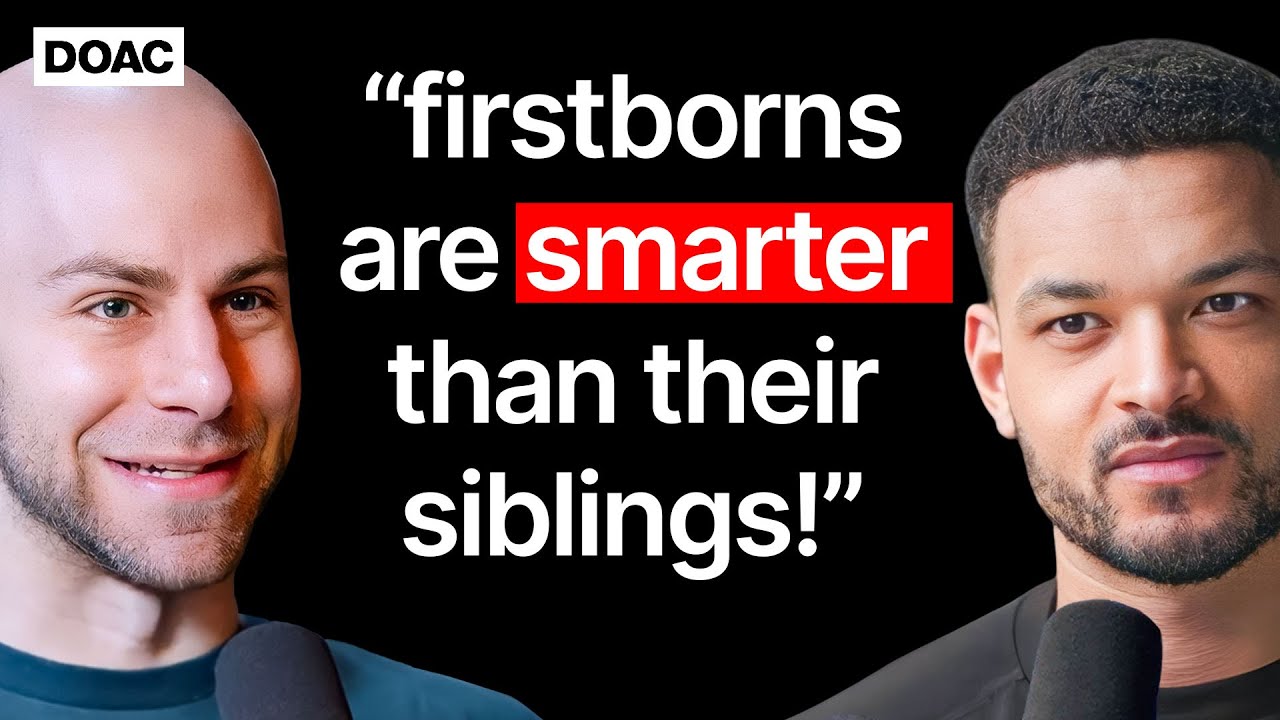
Adam Grant: 10 CRAZY Stats About Why Only 2% of the People Becomes Successful! — The Diary Of A CEO

The Diary Of A CEO

Sustained performance requires challenging defaults, forming challenge networks, and shifting from group brainstorming to independent idea generation.

AI-assisted summary of Adam Grant: 10 CRAZY Stats About Why Only 2% of the People Becomes Successful! — original source. Check the original for full context.

Source published:

Detailed notes

## Background This episode was published on YouTube by the channel The Diary Of A CEO on February 12, 2024. Hosted by Steven Bartlett, the episode features organizational psychologist Adam Grant discussing strategies for rethinking work, productivity, success, and unlocking hidden potential. The description highlights Grant's book 'Hidden Potential: The Science of Achieving Greater Things' and references related conversations on work and productivity.

## TL;DR Adam Grant explores the psychological mechanisms behind success, creative originality, and human potential, debunking common myths surrounding perfectionism, child prodigies, and group brainstorming. He highlights how moderate procrastination can enhance creative problem-solving and explains how questioning default settings—such as choosing alternative web browsers—signals proactivity. Furthermore, Grant emphasizes the importance of building 'challenge networks' of disagreeable givers, thinking like a scientist to keep beliefs flexible, and taking action before feeling confident to overcome self-doubt.

## Atmosphere & style The conversation carries an intellectually stimulating, candid, and deeply reflective atmosphere, seamlessly blending rigorous scientific data with personal anecdotes. Steven Bartlett and Adam Grant engage in a dynamic, mutually curious dialogue where complex organizational research is unpacked with wit, clarity, and practical insights. Listeners experience a grounded yet inspiring journey that continuously challenges conventional wisdom about achievement, mindset, and personal growth.

## Key takeaways - [24:04](https://www.youtube.com/watch?v=uPXjt6beYbg&t=1444s) Perfectionism is a major risk factor for burnout and hinders real-world performance, while true excellence relies on calibrated target scores rather than flawless execution. - [16:04](https://www.youtube.com/watch?v=uPXjt6beYbg&t=964s) Procrastination is often an emotional regulation issue caused by avoiding negative feelings like fear, boredom, or confusion, rather than sheer laziness. - [19:03](https://www.youtube.com/watch?v=uPXjt6beYbg&t=1143s) Questioning defaults—such as actively downloading alternative browsers like Chrome or Firefox over default options—signals higher proactivity, resourcefulness, and performance. - [24:04](https://www.youtube.com/watch?v=uPXjt6beYbg&t=1444s) Child prodigies rarely become adult geniuses because their rapid mastery of existing rules deter them from taking the creative risks required to redefine fields. - [38:37](https://www.youtube.com/watch?v=uPXjt6beYbg&t=2317s) Birth order shapes behavioral tendencies, with firstborns scoring slightly higher on standard IQ tests while later-born siblings exhibit a greater willingness to take risks. - [47:01](https://www.youtube.com/watch?v=uPXjt6beYbg&t=2821s) Successful entrepreneurs are not reckless thrill-seekers; they systematically focus on mitigating downside risk while taking calculated moonshots. - [51:24](https://www.youtube.com/watch?v=uPXjt6beYbg&t=3084s) Groups frequently fall victim to the 'Babble Effect,' selecting leaders based on talking volume and surface confidence rather than actual competence. - [58:38](https://www.youtube.com/watch?v=uPXjt6beYbg&t=3518s) High familiarity and early success can cause cognitive entrenchment; leaders must intentionally bring in 'disagreeable givers' and challenge networks to prevent complacency. - [01:09:16](https://www.youtube.com/watch?v=uPXjt6beYbg&t=4156s) Traditional group brainstorming yields fewer and lower-quality ideas than individual work due to production blocking and conformity pressure; 'brainwriting' eliminates these barriers. - [01:13:31](https://www.youtube.com/watch?v=uPXjt6beYbg&t=4411s) Early talent is a poor predictor of long-term achievement compared to character skills, intrinsic drive, and learning to take action before feeling fully confident. - [01:20:42](https://www.youtube.com/watch?v=uPXjt6beYbg&t=4842s) To receive actionable constructive guidance rather than superficial praise or empty criticism, individuals should ask for 'advice' rather than 'feedback.' - [01:30:40](https://www.youtube.com/watch?v=uPXjt6beYbg&t=5440s) Adopting a scientific mindset—treating beliefs as hypotheses and decisions as experiments—helps separate identity from opinions and enables continuous learning.

## Detailed walkthrough ### [00:00](https://www.youtube.com/watch?v=uPXjt6beYbg&t=0s) Rethinking Success and Hidden Potential

The episode opens with high-energy highlights re-examining deeply ingrained beliefs about performance, teamwork, and personal achievement. Adam Grant, organizational psychologist and bestselling author, emphasizes that his core mission is studying "how to make work not suck" while guiding individuals to unlock their true potential. Through a series of quick, provocative research teasers, Grant dispels common workplace myths:

* **Perfectionism** is not a prerequisite for greatness, but rather a major risk factor for burnout. * **Birth order dynamics** show that while firstborns tend to score higher on IQ tests, later-born siblings demonstrate a significantly higher willingness to take risks. * **Procrastination** is rarely driven by an avoidance of hard work; instead, it is rooted in emotional regulation and problem-framing dynamics. * **Brainstorming groups** routinely underperform compared to individuals working independently. Research demonstrates that solitary idea generation yields both a higher volume and superior quality of ideas before group collaboration occurs. * **Imposter syndrome** as a persistent identity is surprisingly rare; most people experience transient "imposter thoughts," which can actually yield distinct performance advantages. * **Tech habits and persistence:** Data from over 50,000 individuals reveals that employees using alternative browsers like Chrome or Firefox consistently outperform and outlast those who stick with default browsers like Safari or Internet Explorer, reflecting a willingness to challenge default choices.

---

[02:16](https://www.youtube.com/watch?v=uPXjt6beYbg&t=136s) Finding Happiness, Meaning, and Success

Adam Grant defines his broader academic and professional purpose as translating complex social science into actionable insights that cultivate clarity, critical thinking, meaning, and true success. Having earned tenure as a professor at a young age, Grant was challenged by his students to move beyond academic journals and share his ideas through books.

When reflecting on his childhood, Grant recalls being an intensely focused seven-year-old completely immersed in video games. After a marathon eight-hour Nintendo session left him visibly frustrated, his mother called the local newspaper to warn parents about the perceived dangers of video games, leading to a featured article with a photo of a young Grant. Looking back through a scientific lens, Grant notes that modern research refutes the belief that video games "fry kids' brains." Instead, moderate gaming is associated with improved self-control, enhanced working memory, grit, and emotional resilience built through overcoming repeated challenges.

- **Research Finding:** Moderate video game play in children is correlated with stronger executive functioning, working memory, and resilience against failure. - **Career Catalyst:** Grant’s career shifted toward writing for broader audiences in 2011 after his students urged him to publish accessible work following his tenure milestone at the Wharton School.

---

[05:06](https://www.youtube.com/watch?v=uPXjt6beYbg&t=306s) Redefining the Rules of Success

Discussing his early career trajectory, Grant reflects on how his mindset evolved from simply "beating the game" within existing systems to fundamentally changing the rules of how work and success are defined. His foundational work aimed to dismantle the traditional view that self-serving, hyper-competitive behavior is required to reach the top. Instead, his research proved that generous "givers"—those who help others without demanding immediate returns—often outperform selfish "takers" in the long run.

Rather than waiting to achieve monumental success before giving back, individuals who share knowledge, make valuable connections, offer honest feedback, and solve problems for peers build resilient, highly supportive networks that accelerate long-term achievement.

---

[07:36](https://www.youtube.com/watch?v=uPXjt6beYbg&t=456s) Givers vs. Takers: The Cristiano Ronaldo Debates

The conversation transitions into sports and team dynamics, framing a debate between the host and his friends regarding football icon Cristiano Ronaldo. While acknowledging Ronaldo's extraordinary individual talent, Grant and the host discuss how self-centered superstars can ultimately create a net negative impact on collective team success.

Grant points to empirical studies on NBA basketball teams to illustrate high-interdependence dynamics. The data demonstrates that teams with a higher density of self-centered or narcissistic players fail to improve over the course of a season. A single "ball hog" or dominant individual who prioritizes personal stats over team performance prevents the collective group from flourishing—a stark contrast to leaders like Lionel Messi, who focus on elevating everyone around them.

- **NBA Team Study:** High concentrations of narcissistic or self-centered players correlate with a failure to improve over the course of a sports season due to disrupted collaboration. - **The "Ronaldo Effect":** Data tracking Ronaldo's career post-Real Madrid suggests that several teams experienced a statistical decline in overall collective performance relative to their pre-existing standings after his arrival.

---

[10:41](https://www.youtube.com/watch?v=uPXjt6beYbg&t=641s) Defining "Originals" and the Execution Gap

Grant defines an "Original" as someone who goes beyond merely questioning the status quo; they take proactive initiative to build a viable, better alternative. Ideation without execution is described as mere "hallucination."

To illustrate how easy it is to miss transformative ideas, Grant shares personal anecdotes from his college years:

* **1999 E-Group:** Grant co-founded an early online group connecting an eighth of his incoming college freshman class before arriving on campus. Upon arriving at university, the group shut down the platform, reasoning that since everyone lived near each other physically, an online social network was redundant. * **2000 Dorm-Room Platform:** Grant's college roommate spent an entire night coding an online yearbook platform designed for university students to share profiles and organize events—only to abandon the project days later. A few years later, Mark Zuckerberg launched Facebook in an adjacent house.

Grant notes that the primary differentiator between casual dreamers and true originals lies not in generating the initial idea, but in sustained iteration, testing, and execution.

---

[14:37](https://www.youtube.com/watch?v=uPXjt6beYbg&t=877s) Procrastination, Creativity, and the "Precrastinator" Trap

Revisiting common assumptions about productivity, Grant shares how his former PhD student, Jihae Shin, challenged his worldview on procrastination. As a self-described "precrastinator"—someone compelled to tackle tasks immediately upon assignment—Grant initially scoffed at the idea that delaying work could yield better results.

Subsequent surveys and controlled laboratory experiments revealed an inverted U-shaped relationship between procrastination and creativity:

* **Extreme Precrastinators:** Suffer from reduced creativity because they rush to execute the very first idea that comes to mind rather than considering alternative approaches. * **Extreme Procrastinators:** Suffer from poor performance due to inadequate time and effort invested in execution. * **Moderate Procrastinators:** Demonstrate the highest levels of creative problem-solving.

Grant explains the underlying psychological mechanisms: moderate delay allows ideas to incubate in the subconscious mind, giving the brain time to connect disparate concepts and reframe problems. However, this incubation effect only occurs when individuals are **intrinsically motivated** by the problem at hand; procrastinating out of sheer boredom or apathy yields no creative benefit.

- **Precrastination Definition:** The psychological urge to complete tasks as quickly as possible, often at the expense of thorough consideration or creative refinement. - **Key Condition for Creative Incubation:** Procrastination enhances creative problem-solving only when the person genuinely cares about the task and keeps it active in the back of their mind while stepping away.

[16:04](https://www.youtube.com/watch?v=uPXjt6beYbg&t=964s) Procrastination as Emotional Avoidance and a Tool for Creativity

Steve Bartlett kicks off this segment by sharing his own personal struggle with procrastination. He notices two distinct modes in his own life: either he hits a wall on a piece of work and finds himself blindly grabbing his phone to scroll Instagram because the task has become psychologically intimidating, or he paces around the house doing dishes and chores while mulling over a complex problem. He admits that despite these habits, he treats procrastination as a tool rather than a pure defect.

Adam Grant responds by normalizing procrastination, clarifying that the goal isn't to encourage people to slack off, but to recognize that delaying work can be a natural component of the creative process that occasionally yields superior ideas. Citing research led by Fuchsius Sirois, Grant busts the common myth that procrastination is caused by laziness or a refusal to exert effort. Instead, procrastination is an emotional regulation problem. People avoid tasks that trigger negative, unpleasant feelings like frustration, confusion, boredom, or anxiety, often rooted in a fear of failure or inadequacy. Grant recommends auditing the specific tasks we habitually put off to pinpoint and address the underlying negative emotions behind them.

Grant reveals that his own major struggle is with editing and revising his writing. While he loves drafting rough ideas and framing evidence into stories, tweaking individual sentences bores him. To overcome this, he turned editing into an engaging creative game: he began rewriting dull paragraphs in the distinct stylistic voices of his favorite authors, such as Stephen King or the poet Maggie Smith, to force the process to become concrete and fun again.

* **Fuchsius Sirois's Research:** Demonstrates that procrastination stems from avoiding negative emotions (fear, boredom, anxiety, confusion) rather than an aversion to hard work. * **Adam's Writing Trick:** Rewriting paragraphs in the stylistic voices of Stephen King or Maggie Smith to make the tedious process of editing engaging again.

---

[19:03](https://www.youtube.com/watch?v=uPXjt6beYbg&t=1143s) Questioning the Defaults: What Your Web Browser Says About You

Steve shifts the conversation to an insightful takeaway from one of Adam’s famous TED Talks regarding internet browsers. Surprised to realize during the talk that he was using Google Chrome, Steve asks Adam to explain the underlying science behind what a person's choice of web browser reveals about their proactivity and workplace performance.

Adam recounts attending a conference where researcher Michael Housman presented data collected from over 50,000 workers across various industries. Housman tracked employee performance alongside automatically recorded background data and discovered a surprising correlation: employees who used Google Chrome or Mozilla Firefox performed better on the job and stayed with their companies significantly longer than those using Safari or Internet Explorer.

Adam explains that the browser itself is not a magic performance enhancer; rather, it serves as a signal of a person's underlying initiative. Because Safari and Internet Explorer come pre-installed as the default software on Apple and Microsoft machines, using Chrome or Firefox requires a user to reject the status quo, ask if a better option exists, and take the initiative to download an alternative. In the workplace, employees who question defaults in small ways tend to be the same people who craft better ways to do their jobs, innovate workflows, and actively create work environments they enjoy staying in.

> "It's not about the browser, it's about the resourcefulness to say you want to be the kind of person who questions the default and asks if there's a better way."

---

[21:52](https://www.youtube.com/watch?v=uPXjt6beYbg&t=1312s) Characteristics of "Originals" and the Myth of Child Prodigies

When Steve asks Adam to identify prominent "Originals" of our time in the tech and business space, Grant highlights Elon Musk. Despite acknowledging valid criticisms regarding Musk's leadership, communication on Twitter/X, and decision-making, Grant points out that Musk exemplifies an Original: he relentlessly challenges the status quo, takes massive initiative, and pursues radical visions—such as building reusable rockets at SpaceX (a concept NASA had previously overlooked) and driving the transition toward electric vehicles.

This leads to a discussion on whether groundbreaking innovators are simply born as child prodigies. Grant disputes this notion based on extensive social science evidence. While society romanticizes child prodigies, empirical research shows that most child prodigies do not go on to become adult geniuses or revolutionary innovators.

Grant explains that child prodigies excel at rapid learning and mastering established rules through repetition—such as a four-year-old playing a Mozart sonata perfectly. However, practice produces perfection, not originality. Prodigies often fail to develop creative muscles because they receive continuous reinforcement for conforming to existing blueprints. Consequently, they avoid trial and error, rarely experience early failure, and lack the willingness to take the risks necessary to invent something entirely new.

* **Definition of an Original:** Someone who actively challenges the status quo and is relentless in executing a novel vision. * **The Prodigy Trap:** Mastery of existing rules through practice yields speed and precision, but deters individuals from embracing the failure required to create original work.

---

[24:04](https://www.youtube.com/watch?v=uPXjt6beYbg&t=1444s) Character Skills, Imperfectionism, and the Fallacy of Perfectionism

Grant explains that true adult geniuses and late bloomers succeed not through raw innate talent, but through crucial "character skills"—a set of capabilities that put principles into practice. High achievers act like sponges by absorbing information while filtering out harmful distractions, and they deliberately lean into discomfort rather than relying strictly on their strengths. Crucially, they operate as "imperfectionists" who strategically determine when high standards are required and when "good enough" is sufficient.

Steve and Adam explore why perfectionism is widely misused as a fake weakness in job interviews—much like Michael Scott’s famous quote from *The Office* ("I work too hard and care too much"). People treat perfectionism as a badge of honor, assuming it signifies high output and standards. However, research led by Thomas Curran in the UK demonstrates that perfectionism is primarily a major risk factor for burnout and does not translate into better real-world job performance.

While perfectionists often excel in school because exams have clear guidelines and predictable content that can be memorized, they struggle in the ambiguous real world. Driven by an intense fear of failure and mistake-making, perfectionists stick strictly to tasks where they know they can excel, avoiding the calculated risks required for real growth, adaptation, and career breakthroughs.

> "Perfectionists are good at school because they know exactly what's going to be on the test... The real world is much more ambiguous... perfectionists are terrified of failure... so they don't take enough risks."

---

[27:28](https://www.youtube.com/watch?v=uPXjt6beYbg&t=1648s) Urgency, Iteration, and Calibrating Target Scores

Steve brings up the element of urgency and speed in success, noting that perfectionism prevents people from launching products. He contrasts a perfectionist who stays stuck in their bedroom refining an idea with Mark Zuckerberg, who shipped a "good enough" early version of Facebook and iterated based on real-world market feedback. Adam agrees, citing Eric Ries's *The Lean Startup* principles and experiments showing that founders who run rapid experiments and pivot quickly achieve far greater success.

To illustrate how to break free from perfectionism, Grant shares his personal journey as an athlete. Standing too short for basketball and too slow for football, he took up springboard diving despite a fear of heights and a stiff posture that earned him the nickname "Frankenstein." Early on, his perfectionism stalled his progress: he spent entire practices obsessing over tiny adjustments to basic dives (trying to push a front dive pike from a 6.5 to a 7) instead of attempting higher degree-of-difficulty Dives.

Everything changed when his coach, Eric Best, informed him that a score of 10 in the rulebook does not stand for "perfection," but for "excellence." Realizing perfection was an illusion, Grant learned to establish explicit target scores calibrated to the importance of each goal. Today, Grant applies this framework directly to his work:

* **Target Score Framework:** * **Book Project (Target: 9/10):** Worth two years of intense effort and research, requiring maximum quality and polish. * **Instagram Post (Target: 6.5/10):** Requires just enough effort to be valuable and stay above the threshold of getting canceled, without burning precious time that yields diminishing returns. * **Eric Best's Diving Rule:** Olympic 10s signify "excellence," not flawless "perfection."

[31:34](https://www.youtube.com/watch?v=uPXjt6beYbg&t=1894s) Investment, Impact, and Long-Term Value

Steven and Adam begin by comparing the reach and long-term impact of different content formats. While viral Instagram quotes offer immediate, fleeting bursts of dopamine and praise, they rarely create lasting personal value or lasting impact because others simply copy and repost them. In contrast, Adam notes that a standout TED Talk or an exceptional book creates enduring value: people still ask him questions about books he published a decade ago, whereas nobody remembers a social media post from a few years back. Podcasting sits somewhere in the middle—it offers intimacy and memorability through audio, but can still feel slightly more temporary than a book that fundamentally reshapes a person's worldview. Adam emphasizes evaluating effort based on maximum long-term impact rather than immediate reward, which is why he puts significantly more focus into writing.

[33:27](https://www.youtube.com/watch?v=uPXjt6beYbg&t=2007s) Leaning into Difficulty: Skill Power vs. Willpower

The discussion shifts to what enables certain individuals to lean into difficulty and embrace discomfort—a trait closely tied to long-term success. Adam stresses that choosing discomfort is not merely an innate personality trait, but a learnable skill. To illustrate this, he revisits Walter Mischel's famous "marshmallow test," noting that recent controversies and replications highlight how children from lower socioeconomic backgrounds often ate the marshmallow early because growing up in scarcity taught them that promises of future rewards could not be trusted. Crucially, the children who successfully delayed gratification didn't rely solely on sheer willpower; they used strategic "skill power"—such as sitting on their hands, covering their eyes, or squishing the marshmallow to make it unappealing.

Adam shares his own experience of overcoming a crippling fear of public speaking through gradual, repeated exposure after an early teaching feedback form noted his nervousness made students physically shake in their seats. Responding to Steven's curiosity about extreme figures like David Goggins or ultra-marathoner Russ Cook (who ran the entire length of Africa), Adam explains the psychology behind "learned industriousness": when hard effort and discomfort are consistently rewarded, being in uncomfortable situations takes on secondary reward properties through classical conditioning, making pushing past comfort self-reinforcing.

[38:37](https://www.youtube.com/watch?v=uPXjt6beYbg&t=2317s) Trauma, Resilience, and Scaffolding

Addressing the common perception that adversity and trauma drive people to become successful or unconventional, Adam cautions against falling for survivorship bias. While society observes successful individuals who overcame hardship, it often ignores those who were broken by it. However, psychological data shows that resilience is generally underestimated: rates of post-traumatic growth—where individuals report becoming stronger or better as a result of adversity—are actually more common than persistent post-traumatic stress disorder. Furthermore, resilience is not an isolated individual muscle, but depends heavily on "scaffolding"—a supportive network of parents, mentors, or coaches who believe in a person's potential and equip them with the tools to bounce forward.

[41:12](https://www.youtube.com/watch?v=uPXjt6beYbg&t=2472s) Sibling Dynamics, IQ, and Risk-Taking

When Steven asks how birth order influences personality and success, Adam opens with a strong disclaimer: birth order research contains many conflicting findings and overall small effect sizes across large samples. However, two consistent patterns emerge across rigorous studies: * **The Tutor Effect:** Firstborns score slightly higher on average in standard IQ tests than younger siblings. This is largely explained by the firstborns explaining and teaching concepts to their younger siblings, which deepens their own understanding. * **Risk-Taking in Laterborns:** Laterborns are statistically more willing to take risks and pursue unconventional paths. Frank Sulloway’s research on Major League Baseball brothers demonstrated that laterborn siblings were significantly more likely to attempt—and successfully execute—base steals compared to their older brothers.

Steven strongly resonates with these findings, sharing that his parents gave him far more freedom and fewer consequences by the time he was ten years old compared to his older sister, enabling him to experiment, start businesses young, and drop out of school. He jokes that his older brother Jason—an actuary who attended the London School of Economics—is a true genius compared to him, but Jason personally credited Steven's relaxed attitude toward risk with inspiring him to leave his corporate city job. Adam highlights two complementary reasons why laterborns lean into risk: the parental freedom that comes with experience, and the drive to carve out a unique niche when the "conventional achiever" role in the family has already been filled by an older sibling.

- Frank Sulloway’s study analyzed every pair of brothers in Major League Baseball, finding laterborns were much more likely to attempt and succeed at stealing bases. - Steven dropped out of university and slept on his brother Jason's sofa in London at age 18, which later inspired Jason to quit his actuary career and embrace risk.

[48:41](https://www.youtube.com/watch?v=uPXjt6beYbg&t=2921s) Debunking the Myth of the Risk-Taking Entrepreneur

The conversation transitions into how risk-taking is perceived in business. While popular culture depicts successful entrepreneurs as reckless thrill-seekers, Adam points out that his research in *Originals* debunks this assumption. Although risk-takers may be more likely to start companies, the most successful entrepreneurs do not actually love risk—they actively work to mitigate it.

[047:01] Calculated Risk-Taking and the Portfolio of Life

Original thinkers and successful entrepreneurs do not take reckless gambles; rather, they manage cautious risks by constantly figuring out how to reduce the downside while maximizing the upside. Living a life where you never take a risk is actually a fundamentally risky way to live. It is analogous to building an investment portfolio filled exclusively with safe, predictable mutual funds—you are actually safer when you maintain a balanced portfolio that combines cautious investments with a few risky ones. However, taking risks does not mean throwing caution to the wind or making foolish bets. Instead, it involves calculating the probability of an unproven idea succeeding and actively taking steps to raise those odds.

The popular narrative in movies and media often obscures this reality because people naturally want to frame themselves as courageous heroes when telling their own stories. Zooming in on the most successful entrepreneurs reveals that they carefully protect their downside before taking a leap.

* **Balancing upside and downside:** Successful innovators manage risk like a stock portfolio, blending safe anchors with high-upside ventures. * **The hero's journey fallacy:** Storytellers emphasize heroic, all-or-nothing risks, obscuring the meticulous risk-mitigation strategies behind real success.

---

[048:14] Elon Musk, SpaceX, and the Trojan Horse Strategy

A personal dinner conversation with Elon Musk illustrates how extreme risk is actually managed through practical "side bets." When asked how he could gamble on the seemingly impossible goal of putting the first humans on Mars, Musk explained that he knew the initial probability was extremely low. Because of those dismal odds, reaching Mars was not the original operational mission for SpaceX; instead, the immediate goal was building a reusable rocket—a realistic objective that could secure government contracts and get people on board.

When pressed to quantify the odds of reaching Mars in his lifetime, Musk admitted that years prior he would have put the chances at around 7% or 8%. When he updated that figure to an 11% chance, he was genuinely energized by hitting "double digits." The core lesson is that Musk had a viable side business (reusable rockets) that sustained the company, making SpaceX work rather than relying solely on the ultimate moonshot.

"I'd probably say 11% chance now... Come on, that's double digits, like we're close to reality."

This tactic mirrors how messaging evolves for radical ventures like Neuralink. Early on, Neuralink was framed around the sci-fi concept of interfacing with AI to turn humans into cyborgs—a concept most people either did not understand or did not want. Over time, the messaging shifted toward helping individuals with disabilities regain mobility in their limbs, a mission that commands public support and funding.

* **Tempered Radicalism:** Coined by Deborah Meyerson and Maureen Scully, this term describes the practice of moderating an extreme, radical vision to make it familiar, plausible, and desirable to others. * **The Trojan Horse:** By packaging a radical long-term vision inside a practical, palatable application, innovators can bring skeptical stakeholders along for the journey.

---

[051:24] Debunking Leadership Myths: The Babble Effect and Servant Leadership

In organizational psychology, one of the most persistent failures in building great team cultures is elevating the wrong people into leadership roles. This phenomenon is heavily influenced by the **Babble Effect**—the psychological finding that the person who talks the most in a meeting is the most likely to be selected as the leader. Organizations consistently mistake confidence for competence, rewarding individuals who dominate conversations even though they are often worse leaders who fail to include or learn from others.

"They're so obsessed with being the smartest person in the room that they fail to make the room smarter."

To build effective teams, organizations must instead elevate leaders who bring **generosity** and **humility** to the table:

* **Generosity (Servant Leadership):** Putting the collective mission above one's personal ego and actively working to make everyone else in the room better. * **Humility and Lifelong Learning:** Recognizing that every collaborator is a potential teacher who possesses lived experiences and expertise that the leader lacks.

---

[053:38] Commitment Cultures, Culture Fit, and the Stagnation Trap

Research by James Baron and Michael Hannan tracking hundreds of startups over 15 years evaluated different organizational blueprints, comparing "Star Cultures" (hiring top individual geniuses) with "Commitment Cultures" (hiring primarily for mission alignment and cultural fit).

In the early stages, Commitment Cultures dominate: they are dramatically less likely to fail and significantly more likely to reach an IPO. However, a major paradox emerges after these companies go public—they tend to grow at much slower rates than their peers.

``` Startup Phase Post-IPO Phase [Commitment Culture] ---> [Homogeneity & Groupthink] • Low failure rate • Stagnant growth rates • High rate of IPO • Cognitive entrenchment ```

This deceleration occurs because hiring strictly for "culture fit" gradually weeds out diversity of thought, background, and perspective. When a company only hires people with similar personality traits, academic backgrounds, or skill sets, the team ends up looking at the exact same painting. Over-indexing on similarity creates groupthink, causing the organization to replicate past successes rather than innovating for the future.

* **Value alignment vs. Homogeneity:** Alignment on 3–5 core values is crucial, but demanding uniform personalities or backgrounds leads to creative stagnation.

---

[055:45] How Team Culture Impacts Individual Performance

An individual's success is deeply tethered to their surrounding team culture and history. Research by Boris Groysberg on Wall Street security analysts revealed that when a top-performing "star" analyst leaves for a new firm, it takes them an average of **5 years** to recover their star-level performance. However, if the star analyst moves to the new firm alongside their existing team, they maintain their top performance from day one.

This interdependence appears across numerous fields:

* **Cardiac Surgeons:** A surgeon's patient mortality rate drops at Hospital A as they gain experience there. However, when that same surgeon operates at Hospital B later in the week, their performance resets as if they haven't practiced, because the new team doesn't know their routines, strengths, or weaknesses. * **Professional Basketball:** It takes 3 to 4 years of shared experience for NBA teams to maximize their chances of winning a championship, regardless of individual talent levels. * **NASA Flight Simulations:** In a study on flight crews, fatigued and sleep-deprived crews who had a shared history of flying together made fewer catastrophic errors than well-rested crews composed of strangers.

---

[058:38] Overcoming Cognitive Entrenchment and Successful Complacency

While shared team history builds seamless execution, too much familiarity leads to predictability and **cognitive entrenchment**—a state where team members take foundational assumptions for granted and stop questioning outdated practices. Opponents or market competitors learn to predict their moves, which is why major disruptions frequently come from outsiders.

This poses a unique challenge for highly successful organizations (like top-ranked podcasts or industry leaders) that fall into a defensive posture, assuming that what got them to the top will keep them there. The best historical example of self-disruption occurred at Pixar around the year 2000 under Steve Jobs and Ed Catmull.

Despite riding high on the success of *Toy Story*, *A Bug's Life*, and *Monsters, Inc.*, Pixar recognized that periods of peak success provide the most slack capacity to disrupt oneself. To shake up their process, they brought in Brad Bird—an unproven director coming off the commercial box-office flop of *The Iron Giant*.

Bird pitched a radical, seemingly impossible animated concept (*The Incredibles*) that studio executives claimed would take 10 years and $500 million to produce. Frustrated by the resistance, Bird asked for the "pirates, black sheep, and disgruntled Misfits" within Pixar—the staff who were dissatisfied with the status quo. By assembling this group of Misfits, Bird completely overhauled Pixar's animation pipeline, completing the film in just three years and delivering a massive critical and commercial triumph.

* **Combatting Entrenchment:** Leaders must actively invite outside perspectives, rotate roles, or empower internal Misfits to challenge core assumptions before success breeds complacency.

[01:03:02](https://www.youtube.com/watch?v=uPXjt6beYbg&t=3782s) Disagreeable Givers and the Challenge Network

Adam Grant continues highlighting how Brad Bird brought *The Incredibles* to life at Pixar—a project that came in under budget, became the studio's most successful film to date, and won major awards. Grant finds two aspects of this story particularly extraordinary: first, the deliberate willingness to "break something that's not broken" to innovate; second, Bird's recognition that a specific form of disagreeableness is invaluable. Bird wasn't looking for cranky complainers, but rather people who felt like "racing cars stuck in a garage"—talented individuals being stifled and shot down, waiting for someone to open the garage door.

In Grant’s organizational framework, these people are classified as "disagreeable givers." Though they appear gruff, tough, and critical on the surface, their friction stems from deep care and a drive to improve the status quo rather than self-interest. Research shows that disagreeable givers who challenge others out of genuine care drive significantly more innovation. Grant advises leaders to complement their supportive mentors with a dedicated "challenge network"—a team of thoughtful, trusted critics who hold up a mirror to reveal blind spots. High-status leaders especially need this, as power naturally discourages honest feedback and leaves executives surrounded by agreeable "yes-people."

To cultivate a challenge network, leaders must explicitly acknowledge the people who push them and invite them to play that role. Grant shares how he approached his own harsh critics—people who tore apart his book drafts or told him to re-work TED Talks—to name them as founding members of his challenge network. He reassured them that honesty is the highest expression of loyalty and urged them never to hold back out of fear of hurting his feelings. Additionally, leaders can break down hesitation by criticizing themselves out loud first. Citing research co-authored with Constantinos Coutifaris and referencing Amy Edmondson’s work on psychological safety, Grant notes that when leaders publicly admit their weaknesses, their teams become significantly more willing to speak up with constructive feedback over time.

- **The Pixar Success Story**: *The Incredibles* came in under budget, won major awards, and became Pixar's highest-grossing film at the time. - **Support Network vs. Challenge Network**: While a support network offers encouragement, a challenge network provides thoughtful critique to expose blind spots. - **Honesty as Loyalty**: Re-framing candid critique as an act of loyalty eliminates the perceived trade-off between being supportive and being truthful. - **Research on Self-Criticism**: Studies by Grant and Constantinos Coutifaris demonstrate that leaders who publicly share their own flaws foster greater team candor a year later. - **Muppet Feedback**: Grant humorously recalls receiving student feedback comparing him to a Muppet (without specifying which one) and a military leader stating, *"I gained nothing from this session but I trust the instructor got useful insight."*

---

[01:09:16](https://www.youtube.com/watch?v=uPXjt6beYbg&t=4156s) Rethinking Brainstorming: Why Independent "Brainwriting" Wins

Shifting to group dynamics, host Steven Bartlett brings up Grant’s counterintuitive research regarding traditional brainstorming. Grant explains that decades of research consistently prove that bringing a group together to verbally brainstorm yields fewer and lower-quality ideas than if those same individuals had generated ideas alone in separate rooms.

Grant details the three primary psychological barriers that ruin group brainstorming:

1. **Production Blocking**: People cannot all talk simultaneously, causing valuable ideas to be forgotten or brushed aside while waiting for a turn. 2. **Ego Threat**: Individuals hold back their most unconventional thoughts out of fear of looking foolish in front of peers. 3. **Conformity Pressure (The HiPPO Effect)**: Group members quickly coalesce around the "Highest Paid Person's Opinion," abandoning divergent thinking in favor of agreement.

To overcome these barriers, psychologists advocate for "brainwriting" over traditional brainstorming. Writing serves as an active thinking tool rather than just a communication medium, forcing creators to test the logical rigor of their concepts rather than relying on raw charisma. While individuals produce broader variety—including both brilliant and terrible ideas—brainwriting leverages the wisdom of crowds to evaluate those ideas objectively. Everyone writes down their thoughts independently, submits them, and rates them anonymously or individually before group discussion begins. Bartlett and Grant explore practical ways to implement this, such as pairing team members up to pitch each other's written ideas to separate the creator's identity from the concept itself.

---

[01:13:31](https://www.youtube.com/watch?v=uPXjt6beYbg&t=4411s) Unlocking Hidden Potential and Overcoming Fear

Discussing the core thesis of his book, *Hidden Potential: The Science of Achieving Greater Things*, Grant explains why he was driven to write it. Research on world-class musicians, athletes, scientists, and artists demonstrates that early talent is a poor predictor of ultimate achievement; early teachers, coaches, and parents rarely foresaw their future greatness. What set these achievers apart early on was not innate skill, but unusual motivation, passion, and drive.

Grant’s perspective is deeply personal. He recounts his own history of starting from behind: he was a clumsy novice diver who eventually became a Junior Olympic National qualifier, a nervous public speaker who struggled to present, and a student who failed his university writing entrance exam only to become a bestselling author. Reflecting on Bartlett's question—whether potential is something discovered or actively created—Grant argues it is both. Capabilities can be expanded through deliberate effort, even when hard limits exist.

To illustrate how to unlock latent growth, Grant shares a story from his diving career. Terrified of both heights and extreme pain, he used to freeze at the end of the 3-meter springboard when attempting new, complex dives. During one painful practice, he stood frozen on the board for 45 minutes, wasting his own time, his teammates' time, and his coach's time. Finally, his coach, Eric, walked over and asked:

> "Adam, are you going to do this dive?"

Grant replied, "Eventually, yes." Coach Eric simply looked up and said:

> "Great. Then what are you waiting for?"

That simple question shattered Grant's paralysis. Ever since, whenever fear or hesitation threatens to stall his progress, Grant hears that voice in his head pushing him to step forward and unlock his hidden potential.

[01:17:33](https://www.youtube.com/watch?v=uPXjt6beYbg&t=4653s) Building Confidence Through Action and Overcoming Impostor Thoughts

Adam Grant reflects on key moments in his life when he hesitated to step outside his comfort zone—such as when he was afraid to write his first book or when he was considering giving his first TED Talk. He notes that many people make the mistake of waiting for confidence before taking a leap. The reality, he explains, is that confidence is built *by* taking the leap and placing yourself in situations where you do not feel fully capable yet.

Addressing why some people remain hesitant even after hearing this advice, Grant highlights the pervasive nature of impostor thoughts. Citing research by Basima Tewfik, he points out that true "impostor syndrome"—the crippling belief that one is an absolute fraud about to be exposed—is relatively rare. Instead, everyday "impostor thoughts" about whether one is as competent as others believe are extremely common across medical professionals, investment bankers, military cadets, and students. Surprisingly, Tewfik's research shows that these thoughts can serve as useful motivation to work harder, listen better, and close the gap between current abilities and high expectations.

* **Building Confidence:** Waiting to feel ready is backward; readiness comes from entering challenging situations before feeling completely equipped. * **Research on Impostor Thoughts:** Basima Tewfik’s studies demonstrate that frequent impostor thoughts can act as fuel for persistence and continuous learning. * **Overcoming Self-Doubt:** Because individuals are inherently biased and know too much about their own flaws to compare themselves accurately to others, Grant advises trusting the objective judgment of trusted peers who believe in your potential.

---

[01:20:42](https://www.youtube.com/watch?v=uPXjt6beYbg&t=4842s) The Role of Unlocking Potential in Life Satisfaction

Steven Bartlett shares that helping people realize and pursue their hidden potential is one of the primary goals of *The Diary Of A CEO*. He suggests that much of human fulfillment and health stems from pursuing potential, whereas dissatisfaction often arises from regret over untaken risks. He references Bronnie Ware’s famous study on the regrets of the dying, noting that most palliative care patients wished they had lived a life true to themselves rather than living up to others' expectations.

Grant concurs, explaining that psychological research consistently shows long-term regret stems from failures to try rather than failures themselves. It is the actions not taken that haunt people over time.

---

[01:22:12](https://www.youtube.com/watch?v=uPXjt6beYbg&t=4932s) Seeking Advice Over Feedback: Turning Critics into Coaches

Grant discusses how individuals can cultivate the courage and support necessary to unlock their hidden potential. While people often ask for "feedback," doing so usually produces two unhelpful groups: cheerleaders (who offer rose-colored praise) and critics (who tear down weaknesses). To unlock real growth, people need *coaches*—individuals who see their hidden potential and help them bridge the gap.

To transform cheerleaders and critics into coaches, Grant advises asking for **advice** instead of **feedback**. Asking for feedback forces people to evaluate past performance, whereas asking for advice prompts them to look to the future and offer specific, actionable steps.

Grant illustrates this with a personal story from early in his career: * At age 25, he taught a leadership session to seasoned military officers with multi-billion-pound budgets, thousands of flying hours, and "Top Gun"-style nicknames. * After receiving brutal reviews—with leaders claiming they learned nothing—Grant had to teach the same group a week later. * Instead of hiding, he sought advice from his critics on how to improve. One officer advised him to address the elephant in the room and display vulnerability rather than trying to impress them with credentials. * In the next session, Grant opened by saying, "I know what you're all thinking right now: what could I possibly learn from a professor who's 12 years old?" After a beat of silence, an officer nicknamed "Sand Dune" joked back, "That's ridiculous! You've got to be at least 13!" * Breaking the ice transformed the dynamic; the session was a success, demonstrating how asking for advice can convert harsh critics into helpful coaches.

---

[01:25:23](https://www.youtube.com/watch?v=uPXjt6beYbg&t=5123s) Self-Promotion vs. Idea Promotion and the Trap of "Personal Branding"

Grant and Bartlett discuss the crucial distinction between self-promotion and idea promotion. Self-promotion centers on highlighting achievements ("Look at me") to impress others, which comes across as narcissistic. Idea promotion, on the other hand, centers on sharing valuable insights, services, or products ("Look at this") to elevate others, which is viewed as an act of generosity.

Bartlett shares his own experience when he first began posting quotes and ideas online nine years ago. He felt intense anxiety that school friends would think "Who the [__] does he think he is?", and even learned that a mutual friend was mocking him behind his back. Overcoming that fear was life-changing, leading him to encourage others not to withhold their ideas out of fear of judgment.

* **Rejection of "Personal Branding":** Grant expresses an unpopular opinion against the concept of personal branding. A brand implies a packaged, static product with slogans, which limits authentic growth. Instead, individuals should strive to build a **reputation** rooted in core values. * **The Freedom to Evolve:** To stay true to continuous learning, Grant stresses that one must be willing to contradict past work. After publishing *Give and Take*, he was labeled the "nice guys finish first" guy, which frustrated him because many effective "givers" are disagreeable. He argues that maintaining a rigid brand prevents intellectual evolution. * **The Feynman Technique & Teaching:** Bartlett references Richard Feynman and James Clear, noting that the person who learns the most in any classroom is the teacher, making idea sharing a powerful engine for personal learning.

---

[01:30:40](https://www.youtube.com/watch?v=uPXjt6beYbg&t=5440s) Thinking Like a Scientist: Avoiding Preachers, Prosecutors, and Politicians

Delving into core concepts from his book *Think Again*, Grant introduces Phil Tetlock's framework describing three common mindsets that hinder learning and truth-seeking: 1. **Preacher Mode:** Defending and proselytizing one's own ideas as absolute truth. 2. **Prosecutor Mode:** Attacking and attempting to disprove other people's arguments. 3. **Politician Mode:** Campaigning for approval and only listening to people who already agree with you.

Grant confesses that his dominant flaw is slipping into prosecutor mode when he believes someone is wrong. His wife, Allison, once labeled him a "logic bully"—a term he initially mistook for a compliment. Bartlett admits to having similar tendencies, explaining that he often tries to learn by aggressively stress-testing people's ideas through logic and research.

Grant emphasizes that one does not need to prosecute or argue with an idea to understand it. True open-mindedness requires thinking like a scientist: treating opinions as hypotheses, testing them with data, and remaining eager to prove oneself wrong in the pursuit of truth.

Here is a detailed, faithful walkthrough of the provided transcript segment:

[01:32:24](https://www.youtube.com/watch?v=uPXjt6beYbg&t=5544s) Thinking Like a Scientist vs. Being Attached to Being Right

Adam Grant warns against falling into "prosecutor mode"—where you have already decided everyone else is wrong and you are right—as well as "preaching" or "politicking." In these states, people drink their own Kool-Aid, listen exclusively to their own tribe, and become trapped inside an echo chamber. To break free from these mental traps, Grant advocates "thinking like a scientist." This mindset does not require a microscope or telescope; rather, it means decoupling your identity from your ideas. Under this framework, every opinion is merely a testable hypothesis, and every decision is just an experiment that might succeed or fail. Grant notes that when people are taught to view their thoughts this way, they become more flexible, recognize their mistakes faster, and ultimately make better choices.

The host, Steven Bartlett, observes how deeply challenging it is for individuals to disassociate their self-worth from being right. If a person receives continuous validation for every idea they voice, their ego swells, making it painful to accept being wrong later on. Grant agrees, quoting a colleague who once remarked that humanity's worst addiction is the "addiction to being right." Grant emphasizes that it is far more important to focus on *getting* it right than *being* right, which requires keeping beliefs separate from one's self-concept.

- **Beliefs vs. Values:** Grant makes a crucial distinction: beliefs are what you think is *true*, whereas values are what you think is *important*. - **Identity Shift:** If identity is tied to beliefs, admitting an error feels like a existential threat. If identity is anchored in values like curiosity or lifelong learning, changing your mind becomes a moment of growth. - **Historical Example:** Before evidence-based medicine, doctors practiced frontal lobotomies for anxiety. A practitioner whose identity was "a lobotomist" would ignore evidence of harm, while a doctor whose core value was "treating anxiety" would readily abandon the practice upon seeing scientific proof. - **Core Rule:** Maintain firm core principles, but remain highly flexible regarding specific practices and policies.

[01:36:06](https://www.youtube.com/watch?v=uPXjt6beYbg&t=5766s) Reflecting on Adam Grant's Work and Books

Steven expresses deep appreciation for Adam's contributions, noting how Grant's writing continually forces him to question the status quo, embrace a student mindset, and remain humble to new facts. Steven shares that maintaining this openness has profoundly benefited his own personal relationships and inspired his entrepreneurial work. Looking at copies of Grant's books on the table—*The Originals*, *Think Again*, and *Hidden Potential*—Steven encourages the audience to purchase all three as a package deal on Amazon, highlighting *Hidden Potential* as the newest release from October.

Adam expresses genuine gratitude for the compliment, returning the praise by telling Steven that he embodies the very principles studied on *The Diary Of A CEO*. Adam jokingly points out that not just anyone can make public intellectual Malcolm Gladwell cry on air, adding that despite knowing Gladwell for over a decade, he had never seen him break down in tears before or since.

- **Featured Books:** *The Originals*, *Think Again*, and *Hidden Potential: The Science of Achieving Greater Things*. - **Podcast Praise:** Adam notes that *The Diary Of A CEO* excels at challenging guests to rethink their ideas and unlock hidden potential.

[01:38:20](https://www.youtube.com/watch?v=uPXjt6beYbg&t=5900s) Turning the Tables: Adam Grant Questions Steven Bartlett

Before wrapping up, Adam turns the tables on the host, asking if he can ask Steven a few questions. Steven admits to feeling nervous as the guest role reverses. Adam introduces a brief promo for *The Conversation Cards* (Version 2)—a game based on questions written by previous podcast guests—before moving into his personal questions for Steven.

Adam asks Steven where his own "hidden potential" lies. Steven admits that his hidden potential resides in creative mediums like music and theater. He explains that he has avoided pursuing them due to a limiting belief that he lacks the right or talent because his identity is tied to being an "entrepreneur." Adam steps in to reframe his perspective, pointing out that Steven is simply adopting a fixed mindset: "You're not good enough *yet*." Steven agrees, acknowledging that while he isn't Beyoncé today, committing time to bridge the gap could unlock that potential.

- **Identity Trap:** Steven notes that past success reinforces a specific identity, which can trap a person inside a box and prevent them from trying new things.

[01:41:28](https://www.youtube.com/watch?v=uPXjt6beYbg&t=6088s) What Makes a Great Podcast Guest and Creating "Curiosity Gaps"

Adam asks Steven what he could do better as a podcast guest, thinker, or writer. Steven candidly shares his observation of what makes guests truly exceptional on his show: top-tier guests lead with an engaging story, hit the audience with a compelling statistic, fact, or study, and then conclude with a clear takeaway. Steven notes that Adam occasionally leads with data first because that is where his personal energy sits, rather than starting with a narrative.

Steven cites Dr. Tara Swart as an example of a guest who mastered opening with obscure, provocative statements that immediately make listeners "lean in"—an approach that helped her episode achieve 9 million views on YouTube. Adam connects this concept to what the Heath brothers call a "curiosity gap"—a mental puzzle or "itch" that social scientists say the human brain feels compelled to scratch. Adam reflects that he often worries podcast stories might go on too long or disrupt a conversational flow, but acknowledges he needs to let go of that fear, as short stories or brief narratives often make the material far more compelling.

- **The Guest Formula:** Story $\rightarrow$ Data/Fact $\rightarrow$ Conclusion. - **Curiosity Gap:** Creating an intriguing open loop or puzzle that forces the listener to lean in and want more context.

[01:44:12](https://www.youtube.com/watch?v=uPXjt6beYbg&t=6252s) The Final Question: Billy Joel and the First Historical Memory

Following the show's tradition, Steven asks Adam the question left behind by the previous guest: *"What is your first historical rather than personal memory—the first time you realized there is a big world out there unrelated to you, your friends, and family?"*

Adam recalls a vivid memory from 1989 when he was eight years old and heard Billy Joel's song *We Didn't Start the Fire*. He realized he did not recognize most of the historical references in the lyrics, wondering about Studebakers, television's history, and the Korean War. Driven by curiosity, the young Adam launched a personal research project to uncover the story behind every single reference in the track. Looking back, Adam realizes that child research project was the very first research endeavor he ever conducted—a clear foreshadowing of his future career as an organizational psychologist and author.

- **Year & Age:** 1989, age 8. - **The Catalyst:** Billy Joel's song *We Didn't Start the Fire*. - **The Project:** Investigating every historical term and event named in the song.

[01:45:24](https://www.youtube.com/watch?v=uPXjt6beYbg&t=6324s) Closing Remarks and Sponsor Note

Steven wraps up the interview by thanking Adam for a joyful and insightful conversation. Following the episode, Steven shares a short sponsor message regarding Huel, explaining how the meal product helps him maintain consistent, healthy nutrition on the go rather than resorting to junk food snacks during busy work schedules. He invites viewers to try Huel Ready-To-Drink (RTD) options in retail stores or online, and notes a recommended follow-up episode linked in the video description.

## Notable quotes > [19:03](https://www.youtube.com/watch?v=uPXjt6beYbg&t=1143s) It's not about the browser, it's about the resourcefulness to say you want to be the kind of person who questions the default and asks if there's a better way. — Adam Grant

> [24:04](https://www.youtube.com/watch?v=uPXjt6beYbg&t=1444s) Perfectionists are good at school because they know exactly what's going to be on the test... The real world is much more ambiguous... perfectionists are terrified of failure... so they don't take enough risks. — Adam Grant

> [48:14](https://www.youtube.com/watch?v=uPXjt6beYbg&t=2894s) I'd probably say 11% chance now... Come on, that's double digits, like we're close to reality. — Elon Musk

> [51:24](https://www.youtube.com/watch?v=uPXjt6beYbg&t=3084s) They're so obsessed with being the smartest person in the room that they fail to make the room smarter. — Adam Grant

> [01:13:31](https://www.youtube.com/watch?v=uPXjt6beYbg&t=4411s) Adam, are you going to do this dive? — Eric

> [01:13:31](https://www.youtube.com/watch?v=uPXjt6beYbg&t=4411s) Great. Then what are you waiting for? — Eric

> [01:20:42](https://www.youtube.com/watch?v=uPXjt6beYbg&t=4842s) I know what you're all thinking right now: what could I possibly learn from a professor who's 12 years old? — Adam Grant

> [01:20:42](https://www.youtube.com/watch?v=uPXjt6beYbg&t=4842s) That's ridiculous! You've got to be at least 13! — Sand Dune

> [01:44:12](https://www.youtube.com/watch?v=uPXjt6beYbg&t=6252s) What is your first historical rather than personal memory—the first time you realized there is a big world out there unrelated to you, your friends, and family? — Steven Bartlett

## Mentioned Adam Grant, Steven Bartlett, The Diary Of A CEO, Nir Eyal, Cristiano Ronaldo, Lionel Messi, Jihae Shin, Fuchsius Sirois, Stephen King, Maggie Smith, Michael Housman, Elon Musk, Thomas Curran, Eric Ries, Eric Best, Walter Mischel, David Goggins, Russ Cook, Frank Sulloway, Deborah Meyerson, Maureen Scully, James Baron, Michael Hannan, Boris Groysberg, Wharton School, SpaceX, Neuralink, Google Chrome, Mozilla Firefox, Safari, Internet Explorer, Facebook, NBA, Steve Jobs, Ed Catmull, Brad Bird, Constantinos Coutifaris, Amy Edmondson, Basima Tewfik, Bronnie Ware, Richard Feynman, James Clear, Phil Tetlock, Dr. Tara Swart, Malcolm Gladwell, Billy Joel, Pixar, The Incredibles, The Iron Giant, Toy Story, A Bug's Life, Monsters, Inc., NASA, Hidden Potential: The Science of Achieving Greater Things, Think Again, The Originals, Give and Take, The Conversation Cards, Huel, LinkedIn Jobs

[Source](https://www.youtube.com/watch?v=uPXjt6beYbg)

中文简报

Adam Grant摒弃头脑风暴与完美主义以激发潜能 实现持续的高水平表现,需要挑战默认设置、构建挑战网络,并从群体头脑风暴转向独立思考构想。 Adam Grant探讨了成功、创造性原创力与人类潜能背后的心理机制,打破了围绕完美主义、神童以及群体头脑风暴的常见迷思。他指出,适度拖延可以提升创造性解决问题的能力,并解释了质疑默认设置(如主动选择其他网页浏览器)是如何体现积极主动性的。此外,Grant还强调了建立由直言不讳的付出者构成的“挑战网络”、像科学家一样思考以保持观念灵活,以及在建立自信之前先采取行动以克服自我怀疑的重要性。 拖延本质上通常是情绪调节问题,而非单纯的懒惰;人们拖延往往是为了逃避面对任务时产生的恐惧、困惑、挫败或无聊等负面情绪。 (16:04) 对默认设置提出质疑(例如主动下载 Chrome 或 Firefox 而非沿用系统预装浏览器)是员工主动性与解决问题能力的有力信号,这类员工往往在职场中表现更优且留任时间更长。 (19:03) 神童很少能在成年后成为颠覆性天才,因为通过重复掌握既有规则能带来持续赞赏,这反而削弱了他们承受早期失败和承担创新风险的意愿。 (21:52) 完美主义是导致职业倦怠的高危因素且会阻碍现实工作表现;真正的卓越需要根据目标重要性校准出合理的“目标分数”,而非无休止地苛求无瑕。 (24:04) 群体在选拔领导者时常受“胡言乱语效应(Babble Effect)”误导,错误地将发言时长与表面自信等同于能力,忽视了以团队为先的仆人式领导力和谦逊品质。 (51:24)

Reading summary

Organizational psychologist Adam Grant argues that long-term success is driven not by innate genius or flawless execution, but by learnable character skills, strategic risk mitigation, and collaborative systems that challenge complacency. Drawing on organizational and behavioral research, Grant contends that sustained achievement requires uncoupling personal identity from rigid beliefs and questioning conventional defaults. Character Skills, Imperfectionism, and Emotional Regulation (24:04) Grant disputes the notion that child prodigies reliably convert into transformative adult innovators. Prodigies excel at rapid mastery within fixed rules, whereas breakthrough originality demands trial, error, and comfort with failure. Real-world achievement relies on character skills—such as absorbing knowledge, tolerating discomfort, and acting as an "imperfectionist." Citing research by Thomas Curran, Grant notes that perfectionism is primarily a predictor of occupational burnout rather than higher performance, because perfectionists often avoid ambiguous, high-risk tasks where failure is possible. To combat this, Grant advocates establishing calibrated target scores for tasks rather than seeking flawless output across every endeavor. Similarly, Grant reframes productivity habits like procrastination and proactivity. Research by Fuchsius Sirois indicates that procrastination stems from difficulty regulating negative emotions—such as confusion, boredom, or anxiety—rather than simple laziness. When individuals are intrinsically invested in a problem, moderate delay allows ideas to incubate subconsciously, yielding higher creative problem-solving than immediate task execution ("precrastination"). Proactivity also manifests in questioning defaults: a study by Michael Housman examining over 50,000 workers revealed that employees who took the initiative to install alternative web browsers like Chrome or Firefox consistently outperformed and outstayed peers who relied on pre-installed system defaults. Team Interdependence and the Pitfalls of Star Cultures Individual performance is deeply anchored in collective team dynamics rather than isolated talent. Grant highlights that in interdependent environments, prioritizing self-centered contributors over collaborative "givers" impairs team development. Research tracking NBA basketball teams reveals that rosters with high concentrations of narcissistic players fail to improve over the course of a competitive season. Furthermore, studies by Boris Groysberg on Wall Street security analysts found that when top-performing analysts move to rival firms alone, it takes an average of five years to re-establish their peak performance, whereas analysts who relocate alongside their intact teams sustain top results immediately. Parallel patterns exist among cardiac surgical teams and NASA flight crews, where shared history significantly lowers operational error rates. Organizational blueprint research by James Baron and Michael Hannan tracking startups over 15 years demonstrates a similar tension between cohesion and long-term vitality. Companies built around "Commitment Cultures"—which prioritize strong cultural alignment and shared mission—experience lower failure rates and reach initial public offerings faster than star-driven cultures. However, post-IPO, these organizations often experience decelerated growth and cognitive entrenchment. Overemphasizing cultural fit weeds out divergent viewpoints, fostering groupthink that hinders subsequent innovation. Combating Entrenchment with Challenge Networks and Brainwriting (63:02) To prevent cognitive complacency during periods of high performance, Grant argues that leaders must deliberately institutionalize dissent. At Pixar, director Brad Bird broke existing assumptions while producing *The Incredibles* by empowering internal "misfits" and "disagreeable givers"—individuals who express sharp, critical friction out of deep commitment to improving the collective outcome rather than self-advancement. Grant advises leaders to complement their supportive mentors with a formal "challenge network" of trusted critics. Research co-authored with Constantinos Coutifaris suggests that when leaders publicly acknowledge their own developmental flaws, team psychological safety and constructive upward candor rise substantially over time. Grant also challenges traditional group brainstorming, noting that decades of research show collective verbal idea generation underperforms independent ideation. Group sessions suffer from production blocking (inability to speak simultaneously), ego threat (fear of peer judgment), and the "HiPPO effect" (conformity toward the highest-paid person's opinion). Psychologists recommend replacing verbal brainstorming with independent "brainwriting," where participants generate, submit, and review written concepts anonymously prior to group evaluation to separate idea quality from individual status or presentation charisma. Calculated Risk, Impostor Thoughts, and Scientific Thinking Dispelling the archetype of the reckless entrepreneur, Grant asserts that effective innovators manage risk like an investment portfolio, balancing high-upside pursuits with stable downside protections. Drawing on Deborah Meyerson and Maureen Scully's concept of "tempered radicalism," Grant references Elon Musk's early positioning of SpaceX: rather than selling stakeholders solely on the speculative long-term objective of Mars colonization, Musk anchored the operational business around commercial reusable rockets to establish cash flow and credibility. Unlocking personal potential similarly requires reframing internal doubt and feedback. Research by Basima Tewfik reveals that transient "impostor thoughts" are widespread across high-stakes professions and can stimulate continuous learning and preparation. To accelerate growth, Grant recommends asking peers for forward-looking "advice" rather than retrospective "feedback," which prompts actionable coaching instead of generic praise or criticism. Finally, adopting Phil Tetlock's model of "thinking like a scientist" allows thinkers to treat beliefs as testable hypotheses rather than fixed identities, reducing ideological defensiveness and prioritizing truth over the urge to be right. Grant frames personal and organizational potential not as an innate ceiling to be discovered, but as a continuous capacity developed through deliberate discomfort, structured challenge, and evidence-driven iteration. A remaining question is how legacy institutions, often optimized for predictability and consensus, can systematically integrate disagreeable dissenters and calculated risk-taking without compromising daily operational stability.

精炼阅读摘要

组织心理学家 Adam Grant 认为,长期的卓越成就并非源自早慧天赋或零失误的完美主义执念,而取决于主动打破默认规则、科学管理下行风险并在合作中践行利他与求真品格。他提出,唯有将自我认同从“执着于证明自己正确”转向“像科学家一样探寻真理”,并依靠团队支持与建设性异见,才能持续释放真正的潜能。 告别完美主义执念与神童迷信 (24:04) 社会舆论常将早慧与严苛标准视作卓越的前提,但 Grant 指出实证研究并不支持这一假设。幼儿神童往往擅长通过练习迅速掌握既定规则,但在持续正向强化下容易陷入对犯错的恐惧,缺乏承担风险与试错的意愿,因而成年后鲜少成为开创全新领域的革新者。Thomas Curran 主导的研究同样显示,在职场中常被误作优点的完美主义,本质上是职业倦怠的核心风险源,既无法转化为更出色的实际工作表现,还会促使人们因惧怕失败而逃避充满模糊性的关键突破。 真正的潜能释放依赖于 Grant 所称的“品格技能”,即在实践中践行原则、直面不适的韧性。Grant 结合自身跳水训练经历指出,规则中的 10 分代表的是“卓越”而非无可挑剔的“完美”。高成就者往往扮演战略性的“不完美主义者”,懂得依据任务价值校准目标分值:重大项目值得全力追求高标准,而日常事务只需达到合理阈值即可,避免产生边际效应递减。Michael Housman 对逾 5 万名员工的数据分析也侧面印证了主动性的价值:主动下载安装 Chrome 或 Firefox 浏览器的员工,其绩效与留任率显著优于直接使用系统默认浏览器(如 Safari、Internet Explorer)的员工,反映出敢于质疑默认设置是高绩效与主动创造环境的重要信号。 认知孵化机制:适度拖延与独立脑写 (14:37) 关于工作效率的传统认知盲目推崇“立即执行”,Grant 则揭示了行动节奏与思维质量之间的微妙联系。受其前博士生 Jihae Shin 启发开展的实验表明,拖延与创造力之间呈倒 U 型曲线:极端的“抢先完成者”(Precrastinators)因急于执行脑中浮现的首个方案而错失多样性,极端拖延者则因投入不足导致产出低劣,而适度拖延者展现出的创造力最高。Fuchsius Sirois 的研究进一步证实,拖延并非源于懒惰,而是一种情绪调节失调,本质是人们试图逃避挫败、焦虑或无聊等负面情绪。在内在动机驱动下,适度拉开时间间隔能让潜意识对复杂问题进行孵化与重构。 在集体协作中,传统群体口头头脑风暴的效果往往被实证研究证伪。大量研究表明,单独在独立房间内构思方案的个人,其产出创意在数量与质量上均显著优于群体即兴讨论。群体头脑风暴存在三大心理阻碍:无法同时发言导致的“生产阻塞”(Production Blocking)、害怕当众出丑的“自我威胁”(Ego Threat),以及向最高薪酬者意见妥协的群体从众压力(HiPPO 效应)。Grant 建议团队采用“脑写”(Brainwriting)模式,让个体先通过书面独立起草观点,再通过匿名提交和互评整合群体智慧,以此消除从众压力与个人魅力对客观评估的干扰。 组织互依动力:付出者与挑战网络 (7:36) 传统零和竞争观念常误以为自私掠夺者更易登顶,但 Grant 的组织心理学研究表明,长远来看,无私分享知识与资源的“付出者”(Givers)往往表现更优。在高度互依的团队中,过度自恋的超级巨星反而会损害整体效能。例如针对 NBA 球队的实证研究表明,自私球员密集的球队在一个赛季中往往无法实现整体提升;追踪数据亦表明 Cristiano Ronaldo 转会后的部分球队整体战绩较此前存在统计学意义上的下滑。此外,Boris Groysberg 对华尔街证券分析师的追踪发现,单飞的明星分析师平均需要 5 年才能在新机构重获原有效绩,但若随原有支持团队一同转会则能立刻维持顶尖水准,心脏外科手术病死率与 NASA 模拟飞行数据亦印证了团队默契对个人表现的决定性依托。 在组织层面,James Baron 与 Michael Hannan 追踪初创企业 15 年的数据显示,以使命契合为主的“承诺文化”虽在早期破产率低、IPO 概率高,但上市后往往因过度追求文化一致性而引发群体思维与认知固化,导致增长停滞。为了打破顺从与僵化,领导者不仅需要提供情感支持的后援网络,更必须主动构建由理性批判者组成的“挑战网络”(Challenge Network)。Grant 引用皮克斯制作《超人总动员》时起用内部失意叛逆者的案例,强调具有挑剔外表但一心为团队着想的“异见型付出者”(Disagreeable Givers)对于创新的巨大价值,并指出领导者通过公开承认自我缺陷能有效建立团队心理安全感。 审慎风险管理与科学家思维模式 公众叙事常将成功创业者浪漫化为不计后果的亡命赌徒,但 Grant 澄清真正的原始创新者是极度审慎的风险管理者,其核心逻辑在于构建平衡风险的“人生投资组合”,通过夯实底线来争取上行空间。例如 Elon Musk 在创立 SpaceX 时评估其生前登上火星的概率仅有 7% 至 11%,因此并未直接开展登陆火星的单点豪赌,而是建立起具备政府订单与商业可行性的可复用火箭业务作为坚实支柱。这种通过务实切入点包装激进愿景的做法,印证了 Deborah Meyerson 与 Maureen Scully 所界定的“温和激进主义”(Tempered Radicalism)策略。 在认知层面,Grant 结合 Phil Tetlock 的理论警告,人们在思考中极易滑入传教士模式(固守教条)、检察官模式(攻击驳斥异见)或政客模式(迎合既有选民),从而深陷自我封闭的认同陷阱。为了真正释放潜能,个体必须学会“像科学家一样思考”,将自身认同从具体信念(我们认为什么是真实的)中剥离,转而锚定在核心价值观(我们认为什么是重要的)上。把每个观点视作待检验的假设,把每项行动看作允许失败的实验,关注“探寻真理”而非“证明自己正确”,方能在快速变化的环境中克服自负、拥抱修正并实现持续进化。 Grant 的论述系统打破了关于天赋、完美主义与领导力的单向神话,指出真正的潜能释放绝非孤立的意志力比拼,而是依赖品格技能、心理缓冲、团队脚手架与制度化批评的综合生态。不过,在将实验室内揭示的温和拖延或异见机制推广至高压竞争环境时,如何在保持高效交付与维持开放探索之间划定精确界限,仍取决于不同组织所面临的具体容错空间。

Detailed notes — zh

## Background 该视频由 YouTube 知名播客频道 The Diary Of A CEO(主持人为 Steven Bartlett)于 2024 年 2 月 12 日发布。节目围绕组织心理学家亚当·格兰特(Adam Grant)的实证研究展开,深入探讨了为何仅有极少数人能取得卓越成就,并结合其著作《潜能》(Hidden Potential)揭示了重新思考工作、效率与潜能的科学法则。 ## TL;DR 亚当·格兰特在对话中颠覆了大众对成功、天赋与效率的传统偏见,指出适度拖延能有效促进思维孵化,而完美主义往往是引发职业倦怠的核心诱因。他通过严谨的心理学实证表明,神童成年后往往难以成为颠覆性天才,真正的顶尖成就取决于主动拥抱不适感的品格技能,而非生来拥有的天赋上限。此外,访谈还深入剖析了利他付出者的长期优势、成功创业者管理下行风险的真实逻辑,以及如何利用“脑写”和“挑战网络”打破群体迷思并持续解锁个人潜能。 ## Atmosphere & style 整场对话充满知性张力与反思深度,既有严谨硬核的社会科学数据支撑,又不乏幽默风趣的个人轶事自嘲。主持人与嘉宾展现出极高的思想默契,在层层推进的追问与坦诚自我剖析中,直面脆弱、恐惧与认知盲区。聆听体验如同置身于一场高密度的智力洗礼,语调温和却观点尖锐,让人在颠覆既有认知的震撼中汲取前行的动力与勇气。 ## Bulletin - [19:03](https://www.youtube.com/watch?v=uPXjt6beYbg&t=1143s) 一项涵盖5万名员工的数据显示,主动下载并使用 Chrome 或 Firefox 浏览器的员工,其职场绩效与留职率显著优于使用系统预装默认 Safari 或 IE 的人,证明敢于质疑现状的主动性往往决定成就。 - [21:52](https://www.youtube.com/watch?v=uPXjt6beYbg&t=1312s) 实证研究推翻了神童必然成为成年天才的假设,熟练掌握既有规则并不等于创造新范式,而完美主义更非卓越法则,反而是引发职场倦怠的核心风险因素。 - [12:38](https://www.youtube.com/watch?v=uPXjt6beYbg&t=758s) 拖延本质上是对负面情绪的不良应对而非自律缺失,对任务具备内在动机时的适度拖延能为大脑提供思维孵化期,创造力得分显著高于从不拖延的前延者与极端拖延者。 - [55:45](https://www.youtube.com/watch?v=uPXjt6beYbg&t=3345s) 哈佛商学院研究证实华尔街明星分析师跳槽到新机构后平均需5年才能重回巅峰,除非整体打包带走原协作团队,表明个人卓越高度依赖背后的协同生态网络。 ## Key takeaways - [09:49](https://www.youtube.com/watch?v=uPXjt6beYbg&t=589s) 没有执行的构想仅仅是幻觉,真正的原创者核心在于主动采取行动打破现状、开辟更优路径,而非单纯构思新颖概念。 - [12:38](https://www.youtube.com/watch?v=uPXjt6beYbg&t=758s) 适度拖延能够拉开心理距离并促成思维孵化,使个体在面对复杂问题时产生更具突破性的原创解。 - [19:03](https://www.youtube.com/watch?v=uPXjt6beYbg&t=1143s) 主动下载第三方浏览器反映出对默认规则的主动质疑与重塑意愿,这种主动性是区分平庸与卓越的核心特质。 - [21:52](https://www.youtube.com/watch?v=uPXjt6beYbg&t=1312s) 绝大多数神童在成年后无法名留青史,原因在于他们习惯在既定模具中重复既有标准,缺乏试错经历与承受失败的心理韧性。 - [24:25](https://www.youtube.com/watch?v=uPXjt6beYbg&t=1465s) 卓越表现依赖于不完美主义者的敏捷迭代思维,明确何时追求极致、何时做到足够好就果断交付推进,而非死磕细节导致难产。 - [28:21](https://www.youtube.com/watch?v=uPXjt6beYbg&t=1701s) 体育与项目管理中不存在绝对的十分,理智的做法是根据任务性质与难度系数灵活校准目标分数与时间投资回报率。 - [33:27](https://www.youtube.com/watch?v=uPXjt6beYbg&t=2007s) 拥抱不适是一项可通过策略习得的技能,当付出的艰苦努力持续获得正向反馈,不适感本身便会演化为具备激励性质的次级奖赏。 - [41:12](https://www.youtube.com/watch?v=uPXjt6beYbg&t=2472s) 长子在智商测试中的微弱优势源于辅导弟妹的家教效应,而后出生的幼子往往因父母管教松动和生态位填补效应而更偏好冒险。 - [46:58](https://www.youtube.com/watch?v=uPXjt6beYbg&t=2818s) 顶尖创业者绝非盲目孤注一掷的赌徒,而是通过打造稳健现金流主营业务来对冲宏大远景的下行风险,全力放大上行胜算。 - [51:24](https://www.youtube.com/watch?v=uPXjt6beYbg&t=3084s) 群体极易落入胡扯效应将发言时长误判为胜任力,卓越的组织领袖应当是兼具慷慨与谦逊品格的付出者。 - [59:39](https://www.youtube.com/watch?v=uPXjt6beYbg&t=3579s) 企业在处于行业巅峰时最需要主动颠覆自我,建立由挑剔的给予者组成的挑战网络,以抵御群体迷思与认知固化。 - [01:05:53](https://www.youtube.com/watch?v=uPXjt6beYbg&t=3953s) 诚实是忠诚的最高体现形式,领导者通过公开进行自我批评能够有效构筑团队心理安全感,打破阿谀奉承的伪装。 - [01:09:16](https://www.youtube.com/watch?v=uPXjt6beYbg&t=4156s) 传统头脑风暴常因生产阻塞、自尊威胁和从众效应失效,改用独立脑写与匿名评审能极大释放团队的发散与聚合智慧。 - [01:16:08](https://www.youtube.com/watch?v=uPXjt6beYbg&t=4568s) 自信并非行动的前提,而是行动带来的副产品;将自我置于未知挑战中不断拉伸天花板,才是释放隐形潜能的关键。 - [01:18:11](https://www.youtube.com/watch?v=uPXjt6beYbg&t=4691s) 绝大多数人经历的是正常的冒充者念头而非病理综合征,这种认知落差能够转化为虚心学习、弥合差距的强大内驱力。 - [01:21:42](https://www.youtube.com/watch?v=uPXjt6beYbg&t=4902s) 停止索取面向过去表现的反馈,转向征求面向未来的具体建议,能够将挑剔的批评者有效转变为赋能成长的教练。 - [01:25:20](https://www.youtube.com/watch?v=uPXjt6beYbg&t=5120s) 自我推销以炫耀资历为核心易引起反感,观点传播则将认知作为礼物慷慨奉献给世界,追求长久声誉而非包装出的个人品牌。 - [01:32:20](https://www.youtube.com/watch?v=uPXjt6beYbg&t=5540s) 像科学家一样思考,将个人观点视为待检验的假设而非捆绑身份认同的绝对真理,才能在证据出现时果断修正认知、拥抱成长。 ## Detailed walkthrough ### [00:00](https://www.youtube.com/watch?v=uPXjt6beYbg&t=0s) 颠覆常识的心理学洞见与开篇寄语 播客在一连串颠覆传统认知的快节奏论点中拉开序幕。主持人史蒂文·巴特利特(Steven Bartlett)隆重介绍了享誉全球的组织心理学家亚当·格兰特(Adam Grant),称赞其致力于帮助人们做出人生中最出色的成就并释放职业潜能。亚当·格兰特用一句充满幽默感而又务实的话概括了自己的使命——“我的工作就是研究如何让工作不再糟糕,并帮助你成为更好的自己”。随后,他抛出了一系列违背直觉的科学研究发现:完美主义并非通往卓越的法宝,反而是引发职业倦怠的核心风险因素;头胎出生的孩子在智商测试中表现更好,但较晚出生的弟妹往往更具冒险精神;人们拖延并不是因为逃避艰苦的工作,背后另有情绪原因;数十年的头脑风暴研究显示,把一群人聚在一起发散创意,效果反而远逊于让每个人先独自思考;此外,流行文化中所说的“冒充者综合征”并不普遍,绝大多数人经历的仅仅是“冒充者念头”,而这种自我怀疑恰恰能带来巨大的潜在收益;一项涵盖 5 万人的数据甚至显示,主动下载并使用 Chrome 或 Firefox 浏览器的人,其职场表现和留职时间平均显著优于直接使用系统默认 Safari 或 Internet Explorer 的人。 紧接着,主持人向观众真诚分享了后台数据:频道有高达 69.9% 的常客从未点击过订阅。他以此向听众诚挚发起约定,承诺只要观众随手点击订阅支持节目成长,团队必将以持续迭代、不断提升的内容质量作为回报。 --- ### [02:16](https://www.youtube.com/watch?v=uPXjt6beYbg&t=136s) 追寻幸福、意义与成功的底层逻辑 谈及所有研究与著作的核心初衷,亚当·格兰特坦言,自己真正的目标是提炼社会科学中最实用的洞察,帮助公众更清晰、更具批判性地思考,从而做出能够构建幸福、生命意义与成功的决策。作为一名组织心理学家,他深知“让工作不那么令人痛苦”绝非易事,但他始终着迷于个体如何寻获内在驱动力、如何在日常生活中活得更加慷慨、更具创造力与好奇心。 主持人拿起桌上亚当的代表作《沃顿商学院最受欢迎的思维课》(*Originals*),分享了一个温暖的团队插曲:团队成员格蕾丝·米勒(Grace Miller)曾自掏腰包为办公室里的每位同事各买了一本,并在每一本书内页写下了专属的亲笔寄语。面对“离经叛道者/原创者”(Originals)这个标签,主持人翻出了一张节目组特意打印的旧照片,直言亚当童年时就展现出了与众不同的特质。 --- ### [03:49](https://www.youtube.com/watch?v=uPXjt6beYbg&t=229s) 任天堂游戏机、报纸报道与重新定义规则 面对那张青涩旧照,亚当笑着回忆起自己 7 岁时的沉迷往事。那是一个周六,小亚当连续打了七八个小时的任天堂红白机,最后因为没能通关而陷入极度的暴躁与挫败。母亲见状大为惊恐,觉得那些像素游戏正在将自己的快乐小天使变成“小怪物”(Gremlin),甚至在“烧焦他的大脑”。焦虑的母亲直接打电话给当地报纸,力劝记者写一篇关于电子游戏残害儿童的警示报道。报社欣然应允并决定以亚当为原型进行专访,于是留下了那张顶着一头乱发、掉了门牙、目不转睛紧盯屏幕的经典照片。亚当风趣地指出,如今海量的实证研究恰恰证明母亲当年的担忧是多余的:研究表明适度玩游戏的好处其实远大于弊端,哪怕每天玩几小时游戏的孩子,往往具备更强的自制力、更好的工作记忆、更高的坚毅品格(Grit)与抗挫力,因为他们必须在虚拟世界中不断面对挫折、解决难题。 主持人敏锐地总结道,亚当似乎一生都在通过“理解规则并寻找杠杆”来击败游戏。亚当对此深有感触,但他进一步补充:自己的人生旅途很早就从单纯的“通关打赢游戏”升级为了“重构更合理的规则”。2011 年亚当在大学获得终身教职(Tenure)时,面对这一“铁饭碗”,一群学生郑重建议他走出象牙塔著书立说,将知识分享给更多无法亲临课堂的人。学生们告诉他,正是他的研究改变了他们对竞争的认知——成功并不意味着必须做一个自私自利的索取者(Taker)。这一契机促成了其畅销书《给予》(*Give and Take*)的诞生。 ```mermaid flowchart TD accTitle: 成功理念的认知演进流程 accDescr: 展示从传统的争胜思维到亚当·格兰特倡导的利他与共赢理念的演变 subgraph OldMindset["传统竞技认知"] A["理解既定游戏规则"] --> B["追求个人利益最大化"] B --> C["自我优先 / 自私索取"] end subgraph Shift["认知转折点"] C --> D["反思:赢了游戏,系统更好了吗?"] D --> E["重新定义成功规则"] end subgraph NewMindset["原创与利他认知"] E --> F["付出者思维:无条件赋能他人"] F --> G["建立广泛联结与信任生态"] G --> H["长期表现超越预期,实现共赢"] end ``` - **付出者的长期优势**:亚当的研究表明,不计回报、乐于助人的“付出者”(Givers),在长周期内的成就会远远超出自我中心者。 - **重新定义职业阶梯**:成功不需要先踩着别人登顶再去“反哺”,在日常工作中主动分享知识、引荐人脉、提供反馈与解决麻烦,本身就是通往成功的核心助力。 --- ### [07:36](https://www.youtube.com/watch?v=uPXjt6beYbg&t=456s) 给予者与索取者:从 NBA 团队动力学到“C罗效应” 两人的讨论随后切入体育界的现实案例。作为曼彻斯特联队的忠实拥趸,主持人提到自己过去两年一直在球迷群中与朋友争辩克里斯蒂亚诺·罗纳尔多(Cristiano Ronaldo)的定位。群里形成了鲜明的两派:一派坚信 C 罗的巨星光环能为任何球队带来巨大效益;而主持人则坚持认为,综合考量全队数据,C 罗的净影响是负面的,因为他在团队机制中索取的远多于给予的。 亚当十分赞同这一观察。虽然他并非 C 罗个人专家,但他指出 C 罗在赛场上的言行与踢法显然不是典型的“付出者”风格。亚当援引了针对 NBA 篮球队的一项严谨研究:篮球与足球一样,都属于高度相互依存(High Interdependence)的团队运动,需要场上每一位角色紧密协作。数据确凿显示,如果一支球队充斥着自私的索取者或自恋型球员,整支队伍在一个赛季中的进步幅度就会极度停滞;他们会沦为“球霸”(Ball Hog),即便个人数据亮眼,却无法激活整个团队。当这名自私型球员恰恰是队内的超级巨星或核心领袖时,对团队化学反应的摧毁尤为严重。亚当与主持人一致认为,真正的领袖应当像梅西(Lionel Messi)那样,时刻思考“我如何让身边的队友踢得更自如高效”;而仅仅依靠个人数据傲视群雄、却无法赋能周遭的巨星,最终往往会让团队付出沉重代价。 ### [09:49](https://www.youtube.com/watch?v=uPXjt6beYbg&t=589s) 原创者(Originals)的定义:为何没有执行的构想只是幻觉 两人的对话从足坛巨星克里斯蒂亚诺·罗纳尔多(Cristiano Ronaldo)对团队动态的影响延伸开来。史蒂芬·巴特利特(Steven Bartlett)提到,有数据显示罗纳尔多在离开皇家马德里后,无论加盟尤文图斯还是转战中东联赛,所在球队的整体战绩反而出现下滑——例如他在中东加盟某俱乐部时球队本领先积分榜 6 分并高居榜首,之后却跌至联赛第二。这引出了“给予者”与“索取者”在团队合作中的微妙平衡。然而史蒂芬也指出,罗纳尔多在许多方面无疑是一位不折不扣的“原创者”(Original),他在球场上展现出的非凡技艺和即兴创造力,往往突破了人类想象的极限。亚当·格兰特(Adam Grant)对此表示赞同,但也提出核心问题在于:这种极致的个人才华最终是否真正服务于团队的整体目标? 谈及自己的代表作《原创者》(*Originals*),格兰特深入阐述了他对这一概念的界定:原创者绝不仅仅是质疑“事情一贯的做法”,更重要的是他们会主动采取行动,开辟出一条更好的路径。他强调,仅仅产生新颖的想法并不足以被称为原创者,创造变革的实际行动才是分水岭。“没有执行的构想仅仅是幻觉”("Ideation without execution is just hallucination"),现实中有无数人能够构想出令人惊叹的点子,却从未付诸实践。 为了说明执行与原创想法之间的落差,格兰特分享了自己在大学时期的两段遗憾经历: * **室友错失的社交网络先机**:在 2000 年,格兰特的大学室友萌生了搭建线上社交网络的念头,设想建立一个包含个人档案、能让大家互相联络并筹划派对的“线上年鉴”(Online Yearbook)。那位室友甚至通宵达旦编写代码、搭建了基础平台,但随后便彻底搁置,未再推进。几年之后,马克·扎克伯格(Mark Zuckerberg)就在同一座校园相邻的宿舍楼里创立了 Facebook。 * **格兰特自身的执行盲区**:早在 1999 年大学开学前,格兰特便与人共同创立了被称为该校首个线上社交网络的组织,通过一个 eGroup 将约八分之一的新生在报到前连接在一起,大家在线上交流互动。然而一迈入大学校园,他们就亲手关停了该网络,原因竟是当时幼稚地认为:“既然大家现在都住在同一个镇上,为什么还需要线上社区?”他们拥有极其超前的原创想法,却因缺乏执行力而与划时代的浪潮失之交臂。 --- ### [12:38](https://www.youtube.com/watch?v=uPXjt6beYbg&t=758s) 拖延与创造力:适度拖延如何催生更优解 当史蒂芬半开玩笑地询问如何成为一个高效的“执行者”(Executor,而非 Executioner/刽子手)时,格兰特揭示了一个颠覆常理的研究发现。过去,人们普遍认为原创者必须是果断的“先发者”(First Mover),如果不立刻抢占先机就会被时代淘汰。但科学研究表明,一些最顶尖的原创者竟然是“拖延者”(Procrastinators)。他们不会急于将脑海中浮现的第一个想法立刻落地,而是给思维留出测试、迭代与实验的空间,耐心等待最优构想的成熟。 ```mermaid flowchart TD accTitle: 拖延程度与创造力表现的关系模型 accDescr: 展示前延者、适度拖延者与极端拖延者在创造力上的倒U型曲线差异及作用机制 subgraph Types["行为类型与创造力分布"] A["前延者 (Precrastinators)<br/>从不拖延 / 追求立即完成"] -->|"创造力较低<br/>锁定初级方案"| ResLow1["产出相对平庸"] B["适度拖延者 (Moderate Procrastinators)<br/>适度搁置 / 留出酝酿期"] -->|"创造力最高<br/>倒 U 型曲线峰值"| ResHigh["产生原创突破解"] C["重度拖延者 (Extreme Procrastinators)<br/>过度拖延 / 临阵磨枪"] -->|"创造力较低<br/>缺乏时间完善"| ResLow2["匆忙应付任务"] end subgraph Mechanisms["适度拖延的认知机制"] M1["思维孵化 (Incubation)<br/>在潜意识中连接线索与新模式"] M2["认知距离 (Distancing)<br/>拉开心理距离,以更广阔视角重新定义问题"] end B -.-> M1 B -.-> M2 ``` 格兰特坦承,自己长期以来都是心理学所谓的“前延者”(Precrastinator)——一旦有了想法或任务,必须立刻执行、尽早完成,并以此为傲。直到有一天,他的博士生申智海(Jihae Shin)走进办公室,提出一个违背直觉的假设:“拖延实际上能让人更具创造力,我最棒的灵感都是在拖延时产生的。”最初对此嗤之以鼻的格兰特向她发起挑战,两人随后展开了一系列严谨的研究: * **职场实证调查**:调查各行业员工的拖延频率,并由其直属主管独立评估其创造力表现。 * **实验室受控实验**:要求参与者完成创造性任务,并在过程中利用数量不等的搞笑 YouTube 视频诱导他们拖延,最后由专家盲评他们的方案创意。 实验结果呈现出经典的倒 U 型曲线:适度拖延者的创造力得分明显高于从不拖延的前延者,也高于总是拖到最后一刻的重度拖延者。究其背后的心理机制,适度搁置任务能够促成“思维孵化”(Incubation),让大脑在潜意识层面继续加工信息、建立意想不到的连接;同时,与任务保持适当的心理距离,有助于从业者跳出既有框架,以更全局的视角重构问题。然而格兰特特别强调了一个关键先决条件:拖延唯有在对问题本身具有“内在动机”(Intrinsic Motivation)时才能激发创造力;如果纯粹因厌烦或漠不关心而推迟任务,大脑便不会在后台进行任何积极的认知加工。 --- ### [15:53](https://www.youtube.com/watch?v=uPXjt6beYbg&t=953s) 拖延的本质是情绪管理:直面负面感受与创意思维重塑 史蒂芬对这项研究成果产生了强烈的共鸣,坦言自己就是一个百分之百的适度拖延者。许多人常发信息向他请教“如何彻底消除拖延”,但他坚信拖延在某种程度上是自己的工作利器。史蒂芬观察到自己有两种典型的拖延形态:第一种是当工作遇到心理层面的阻碍、感到自身准备不足或面对难题陷入僵局时,他会像“被附身了一样”突然抓起手机开始刷 Instagram;第二种则是纯粹需要深入思考构思时,他会起身在屋里踱步、洗碗或整理家务,随后再精神抖擞地回到工作前。 格兰特借此澄清,研究的目的绝非鼓励人们无节制地拖延,而是希望将拖延“去污名化”,认识到它是创造性思维演进中的一种自然现象。心理学家弗希娅·西罗瓦(Fuschia Sirois)的研究打破了一个流传甚广的误区:拖延并非源于懒惰、缺乏自律或逃避努力,其核心本质在于“对负面情绪的不良应对”。当人们拖延某项任务时,真正试图逃离的是伴随该任务而来的挫败感、困惑、枯燥感以及害怕自己能力不足的焦虑与恐惧。 要化解阻碍性的拖延,关键在于识别那些令自己逃避的具体负面情绪,并通过重塑任务形态来转变情绪体验。格兰特剖析了自己的切身经历: * **写作过程中的情绪障碍**:格兰特非常享受撰写初稿的阶段,认为梳理核心证据、用故事赋予数据生命的创作过程乐趣无穷;但他极度厌烦字句微调、文本润色的编辑修改流程,因其枯燥乏味而经常严重拖延。 * **将枯燥重塑为游戏**:为了解决修稿时的拖延症,他为自己设定了一个富有趣味的新挑战——尝试以自己最喜爱的虚构小说家或诗人的口吻重写段落。例如,带着“斯蒂芬·金(Stephen King)会怎样写这个段落?”或“优秀诗人玛吉·史密斯(Maggie Smith)会如何打磨这些句子?”的视角进行修改。这种将死板校对转化为角色扮演式创作的方法,成功消解了枯燥感,让编辑过程重新焕发了趣味与创造力。 ### [19:03](https://www.youtube.com/watch?v=uPXjt6beYbg&t=1143s) 浏览器之谜:默认设置与主动质疑现状 在两人的对谈中,主持人提到 Adam Grant 在 TED 演讲中分享过的一个极具冲击力的发现——浏览器与个人创造力、职场表现之间的奇妙关联。当时主持人一听到这个研究,就立刻去确认自己用的是什么浏览器,发现是 Google Chrome,心里暗自松了一口气。Adam 详细解释了这背后的实验背景:那是他参与组织的一次学术会议,研究员 Michael Housman 展示了一项涵盖 50,000 名员工的庞大数据集。研究追踪了这些员工跨越各类工种的实际工作表现与留职率,并且顺带自动收集了他们填表时所使用的网络浏览器。 Michael Housman 登台时十分困惑地表示,自己也不明白原因何在,但数据清晰地表明:Chrome 和 Firefox(火狐)用户在工作绩效上平均显著优于 Safari 和 Internet Explorer(IE)用户,而且在前者的工作岗位上留存的时间也明显更长。 ```mermaid flowchart TD accTitle: 浏览器选择与职场行为模式 accDescr: 对比使用默认预装浏览器与主动下载第三方浏览器背后的行为逻辑及职场结果。 subgraph DefaultPath["被动顺应现状"] A["使用预装默认浏览器<br/>(Safari / IE)"] --> B["全盘接受既有规则与流程"] B --> C["缺乏主动探索与革新动力"] C --> D["工作表现平平 / 留职意愿低"] end subgraph ProactivePath["主动质疑现状"] E["主动下载第三方浏览器<br/>(Chrome / Firefox)"] --> F["质疑默认选项:是否有更好的方式?"] F --> G["职场中主动重塑工作方式与团队协作"] G --> H["工作绩效更高 / 自主打造理想工作环境"] end ``` 一直在研究原创思维(Originals)与主动性(Proactivity)的 Adam 当场看穿了其中的逻辑关键: - **默认选项 vs 主动寻找更好的方案**:Internet Explorer 和 Safari 是电脑或手机自带的“出厂默认设置”。若想使用 Chrome 或 Firefox,用户必须先主动质疑默认设置:“现有的就是最好的吗?有没有更优秀的浏览器?”随后付出实际行动去下载安装。 - **决定成就的是资源整合与主动性,而非浏览器本身**:并非下载了新浏览器就能提升业绩,而是那种“不盲从既定规则、勇于探寻更优解”的人生态度在起作用。这种特质投射到工作中,意味着他们会思考:“有没有更具创造力的方式来完成我的工作?我能否重塑团队的协作模式?”这种主动性不仅让他们业绩斐然,更让他们有能力将自己的岗位改造成自己愿意长期留任的理想环境。 - 主持人半开玩笑地提出以后招人干脆只录用安装了 Chrome 或 Firefox 的人,Adam 则建议将其升华为一个经典的面试问题:“不要局限于浏览器,直接问候选人:‘在过去,你是如何挑战现状(Status Quo)的?’” --- ### [21:52](https://www.youtube.com/watch?v=uPXjt6beYbg&t=1312s) 时代的原创者:为何神童成不了成年天才? 转向科技与商业领域,探讨当今时代的标杆性原创者(Originals)时,Elon Musk 是绕不开的人物。Adam 指出,无论外界对他的领导风格、日常决策以及在 X(原 Twitter)上的争议言论有多大分歧,不可否认 Musk 具备原创者的两大核心特征:首先是敢于从底层颠覆现状——当 NASA 从未考虑过回收火箭时,SpaceX 确立了可复用火箭并让人类成为跨行星物种的愿景,同时 Tesla 也加速了全球电动车革命;其次,他拥有将宏大愿景不屈不挠转化为现实的强大执行力与执念。 针对“Musk 成功是否因为他是神童(Child Prodigy)”的设想,Adam 从社会科学研究的视角给出了明确反驳:大众往往高估了神童的潜能,而实证研究显示,**绝大多数神童在成年后并未成为名留青史的天才**。 - **熟练重复不等于开拓创新**:4 岁就能流畅演奏莫扎特奏鸣曲的神童固然学得极快,然而“熟能生巧(Practice makes perfect),却不能生新(Doesn't make new)”。他们精通既有规则,却没学会谱写属于自己的全新乐章。 - **缺乏试错与承受失败的经历**:因为天赋异禀、万事顺手,神童在成长过程中很少体验挫败和反复摸索,因而缺乏承担风险去创造全新事物的心理韧性。 - **既定规则的嘉奖陷阱**:他们在成长中不断因“把别人已有的标准做到极致”而获得奖赏,久而久之反而被既定模具牢牢束缚,失去了突破常规的创造性肌肉。 --- ### [24:25](https://www.youtube.com/watch?v=uPXjt6beYbg&t=1465s) 破解完美主义陷阱:“不完美主义者”与敏捷迭代 那么,成年后真正能取得颠覆性成就的人,究竟拥有什么神童所缺失的能力?Adam 将其归结为**品格技能(Character Skills)**——一种将自身原则付诸实践的综合能力。这些具备巨大潜能的人往往不是天生的领跑者,甚至可能是大器晚成者、被看衰的弱势者或慢热型学习者,但他们具备以下特质: 1. **主动置身于不适之中**:他们坚信如果只依靠现有天赋和舒适区行事,就永远无法拓展边界。 2. **如海绵般的吸收与过滤机制**:贪婪吸收外界信息,同时敏锐筛选有益养分、剔除干扰噪音。 3. **成为“不完美主义者”(Imperfectionist)**:具备清晰而克制的判断力,明确知道什么时候必须追求极致巅峰,什么时候做到“足够好(Good Enough)”就必须果断向前推进。 | 评估维度 | 完美主义者 (Perfectionist) | 不完美主义者 (Imperfectionist) | |:--- |:--- |:--- | | **学校表现** | 凭借死记硬背与应试准备斩获高分(考试范围明确) | 表现不一定拔尖,更注重探索新知识与能力边界 | | **职场表现** | 真实工作中并未体现优势,反而是职场倦怠(Burnout)高危人群 | 表现卓越,适应力更强,善于在模糊环境中寻找出路 | | **对待错误与失败** | 极度恐惧瑕疵与失误,不敢冒险,狭隘局限在确定擅长的领域 | 将失败视为实验过程,敢于打破常规,通过试错实现跨越式成长 | | **行动节奏与紧迫感** | 试图“让时间慢下来”以抠尽细节,容易陷入无休止的孵化难产 | 保持紧迫感,奉行“足够好就上线交付”的精益与迭代思维 | 在日常求职中,人们总喜欢在被问及最大缺点时假装谦虚地回答“我最大的毛病就是太追求完美了”(就像美版《办公室》中的 Michael Scott 那样标榜自己工作太努力、太在乎细节),误以为完美主义是项美德。但英国研究学者 Thomas Curran 等人的实证研究证明,完美主义会导致身心俱疲。完美主义者在考场如鱼得水,是因为考试大纲清清楚楚;然而真实世界充满不确定性与模糊地带,由于极端恐惧瑕疵,完美主义者裹足不前、错失了在迭代中进化的机会。 主持人敏锐地补充道,现实商业世界需要极高的紧迫感(Urgency)。如果让完美主义者去创业,他们大概率永远不敢把社交网络产品推上线,至今仍会蜷缩在卧室里苦思冥想。相反,像 Mark Zuckerberg 那样先做出一个“足够好”的粗糙版本发布上线,在真实反馈中快速学习与进化,才是成功的通用法则。Adam 对此深表认同,这恰恰验证了 Eric Ries 在《精益创业》(The Lean Startup)中的核心理念:经由科学实验反复证明,更热衷于高频实验、快速试错的创业者,往往能更快完成业务转型(Pivot),最终在市场竞争中脱颖而出。 ### [28:21](https://www.youtube.com/watch?v=uPXjt6beYbg&t=1701s) 跳水经历与“不存在完美的十分” 亚当·格兰特(Adam Grant)分享了自己年轻时尝试成为运动员的亲身经历。因为打篮球嫌太矮、踢足球嫌太慢,他误打误撞接触了跳板跳水(springboard diving)。然而他不仅严重恐高,身体还僵硬到被队友戏称为“科学怪人”(Frankenstein)。由于极度的完美主义倾向,他起初以为这种心态会在跳水这种追求打分满分的运动中帮到自己。他执着于最基础的动作——向前屈体跳水(front dive pike),整堂训练课都在死磕微调,只为了把得分从 6.5 分抠到 7 分,结果长期无法挑战更高难度的动作,难度系数(degree of difficulty)提不上去,运动成长陷入停滞。 直到教练埃里克·贝斯特(Eric Best)把他拉到一旁,点破了一个残酷的真相:跳水界根本没有所谓的“完美 10 分”(no such thing as a perfect 10)。奥运解说员口中的“完美 10 分”其实是误导,规则手册中明确规定 10 分代表的是“卓越”(excellence),而非完美。这一认知彻底转变了格兰特的思维模式。从此,他们开始为不同动作设定贴合实际的目标分数,不再奢求 10 分: ```mermaid flowchart TD accTitle: 目标分数校准框架 accDescr: 展示从追求不切实际的完美到依据动作难度校准目标分数的转变过程 subgraph Trap["完美主义陷阱"] A["执着追求完美10分"] --> B["反复微调极简动作"] B --> C["不敢提升动作难度系数"] end subgraph Calibration["目标分数校准策略"] D["认知重构:10分代表卓越而非完美"] --> E["基础动作设为7分:达标即停止练习"] D --> F["高难度动作设为2分:以成功做完为先"] F --> G["进阶提升:逐步争取4到5分"] end Trap -.->|教练点拨打破僵局| Calibration ``` - **基础动作(如向前跳水)**:目标定为 7 分;原本计划练 30 次,如果第 3 次跳出 7 分水平,教练便叫停并立刻转入下一个训练。 - **高难度动作(如向前翻腾两周半转体一周)**:初学时只求“2 分”——只要能顺利入水不失败就行;随着熟练度提高,再逐步把目标提升至 4 到 5 分。 --- ### [30:26](https://www.youtube.com/watch?v=uPXjt6beYbg&t=1826s) 投入产出比与影响力的校准 格兰特将跳水教练教给他的目标校准法迁移到了职业生涯的各项事务中。每启动一个新项目,他问自己的第一个问题就是:“这个项目的目标分数是多少?”不同的项目对应着完全不同的投入标准与期望交付质量: - **写一本书**:目标定在 **9 分**。因为一本书需要倾注长达两年的工作心血,会面向海量读者并产生长期深远的影响,必须竭尽全力做到极致。 - **发一条 Instagram 动态**:目标只要 **6.5 分**,用格兰特幽默的话说就是“只要不至于被全网抵制取消(just above getting canceled)就行”,否则若耗费一整天琢磨社媒文案,其他正事就彻底荒废了。 史蒂芬·巴特利特(Steven Bartlett)对此深表共鸣,提出这一判断本质上是评估“时间投入回报率”(Return on Time Spent)。史蒂芬对比指出,一条 10 分满分的 Instagram 名言可能带来瞬时病毒式传播,但随后会被无数账号搬运洗稿,不会给创作者沉淀持久价值;相反,一本 10 分的经典著作或一次数千万播放的高分 TED 演讲,却足以彻底颠覆并改变一个人的一生。 格兰特赞同这一视角,并进一步补充道,相较于纯粹追逐个人眼前的回报,他更看重“如何通过时间投资创造最大化的影响力”。社交媒体带来的是转瞬即逝的多巴胺冲动,热度褪去极快;“笔虽然未必真比剑更锋利,但墨迹却能长久留存(the ink lasts)”——时至今日仍有读者向他探讨十年前写的书,却从没有人追问他几年前发过什么推文。相比之下,播客(podcasting)介于二者之间,虽然声音更具亲和力与沉浸感,但其在脑海中沉淀的厚重感仍不如一本彻底颠覆世界观的书籍。因此,他始终把最重的精力倾注在写作上。 --- ### [33:27](https://www.youtube.com/watch?v=uPXjt6beYbg&t=2007s) 棉花糖实验真相:主动拥抱困难是“技巧”而非天性 史蒂芬随后转向一个更深层的问题:为什么有一类人能够主动拥抱困难和不适感(lean into difficulty and discomfort),而另一类人却习惯性退缩?这似乎是决定人生能否成功的核心分水岭。 格兰特强调,主动拥抱不适绝对不是少数人独有的“天生性格特质”,而是一种可以习得的“技能”(learned skill)。虽然有些人可能天生拥有略多一点的意志力储备或自律韧性,但其底层完全建立在后天策略之上。为了打破公众误区,他详细拆解了被严重误读的经典“棉花糖实验”(Marshmallow Test): - **经典实验现象**:心理学家沃尔特·米歇尔(Walter Mischel)让 4 岁儿童面对一颗棉花糖,告诉他们如果能坚持 10 到 15 分钟不吃,就能得到两颗。早期追踪发现,延迟满足能力强的孩子,十年后在 SAT 等标准化考试及学业表现上全面领先。 - **重复实验的争议与现实**:近年的重复实验引发争议,部分研究显示来自低社会经济地位(SES)家庭的孩子在测试中往往表现较差。格兰特指出这并非出乎意料——生活在匮乏环境中的孩子没有理由相信第二颗糖真的会兑现,在缺乏信任的环境下,最理性的选择就是立刻吃掉,他们因而失去了在稳定环境中练习延迟满足技能的机会。 - **高手的制胜秘诀在于“技能力”而非单纯的“意志力”**:仔细观察那些成功坚持下来的孩子,靠的不是咬牙死撑,而是让诱惑变得不那么诱人的实用策略(simple strategies): - 有的孩子把双手死死压在屁股底下,通过增加拿糖的物理阻力来延缓冲动; - 有的孩子直接闭上双眼或转过头,彻底隔绝视觉诱惑; - 还有的孩子甚至将棉花糖捏成一个小球拿来弹跳玩耍,把它变成不能吃的玩具。 格兰特指出,学会“适应不适感”(get comfortable being uncomfortable)是一套方法论。只有掌握降低不适程度的策略,人才敢于置身于超出自身能力的陌生境地,即便感到尴尬笨拙,也明白这是汲取经验的必经过程。他坦言自己是个极度内向、害羞且对公众演讲充满恐惧的人,早期登上讲台时,曾有学生在课后反馈写道:“老师你太紧张了,甚至导致我们坐在底下也跟着全身发抖。”面对这种极度尴尬,他唯一的解法就是不断将自己置于这种不适的泥潭中,反复脱敏,最终才得以自如地站上顶级演讲舞台。 听到这里,史蒂芬提出了疑问:像戴维·戈金斯(David Goggins)这样能承受极端肉体折磨的硬汉,或者是正在挑战纵贯整个非洲大陆、每天跑两场马拉松的好友拉斯·库克(Russ Cook),难道真的不是天生在脑子里装了某种特殊的“超级基因开关”吗?对话在此悬念中继续深入。 ### [37:32](https://www.youtube.com/watch?v=uPXjt6beYbg&t=2252s) 习得性勤奋与创伤后的成长 斯蒂芬·巴特利特(Steven Bartlett)与亚当·格兰特(Adam Grant)深入探讨了逆境与个人特质究竟是先天赋予还是后天塑造。格兰特指出,生活中所有关键品质都是“先天与后天”(nature and nurture)复杂交织的结果,但人们往往严重低估了后天培养(nurture)的力量。以著名耐力运动员大卫·戈金斯(David Goggins)为例,他如今被大众视作一台不知疲倦的“机器”,但他并非生来如此——他的整个人生故事始于内心的极度脆弱,为了成为一个再也没有人能伤害到的人,他才逼迫自己蜕变。 心理学中解释这种转变的核心理论是“习得性勤奋理论”(Theory of Learned Industriousness)。格兰特解释道,如果个体的努力、艰苦付出以及主动拥抱不适的行为能够持续获得奖赏,久而久之,身处不舒服的境地本身就会产生次级奖赏属性(secondary reward properties)。这在本质上是一种巴甫洛夫式的条件反射:当你把自己推向超越舒适区一点点的极限时,你会感觉良好,并习惯于期待这种痛苦能带来积极结果,从而形成正向的自我强化循环。 面对巴特利特提出的“创伤是否是成为独创者(Original)的推手”,格兰特提醒警惕幸存者偏差(survivorship bias):我们看到了从逆境中崛起的人,却往往忽略了那些被创伤彻底击垮的人。不过,科学数据显示人类的韧性普遍被低估: - 经历创伤后报告“创伤后成长”(Post-Traumatic Growth)的人数,普遍多于罹患“创伤后应激障碍”(PTSD)的人数。许多人会感慨虽然绝不希望重来一次,但这段糟糕的经历确实让自己变得更强大。 - 韧性并非孤立训练的个人肌肉,而是需要支持系统的“脚手架”(scaffolding)——由相信你潜力的父母、导师或教练提供临时支撑结构,给予走出逆境的工具与动力。 ```mermaid flowchart TD accTitle: 习得性勤奋的正向强化循环 accDescr: 展示了从主动跳出舒适区到努力获得回报,再到不适感转化为次级奖赏的心理循环。 subgraph Reinforcement ["强化循环"] A["主动挑战与承受不适"] --> B["付出努力获得外部奖赏"] B --> C["不适感获得次级奖赏属性"] C --> A end ``` --- ### [41:12](https://www.youtube.com/watch?v=uPXjt6beYbg&t=2472s) 出生顺序与长子智商优势的“家教效应” 身为家中四兄弟姐妹里最小的一个,巴特利特向格兰特请教出生顺序(birth order)究竟如何影响个体的风险偏好和性格技能。格兰特首先给出了郑重声明:出生顺序的实证研究在心理学界充满争议,顶尖专家之间观点严重分歧。虽然在大样本、严谨的研究中有两个规律表现一致,但它们的实际效应量极其微小(tiny effects),绝不代表个人的固定命运。 格兰特半开玩笑地向巴特利特抛出了“坏消息”:大样本统计显示,长子(第一胎)在智商(IQ)测试中的平均得分略高于后出生的弟妹。面对巴特利特的调侃反驳,格兰特解释了背后的核心机制——“家教效应”(tutor effect): - **教学相长**:长子往往需要承担辅导幼年弟妹的任务,而在向他人解释知识的过程中,个体对概念的理解会更深入,记忆也更牢固。正如学习某件事最好的方式就是去教授它。 - **末子的缺失**:最小的孩子没有更小的弟妹可以辅导,因此失去了这种自然强化的教学机会。不过格兰特强调,这仅仅是平均线上的微小差异,现实中充满极其聪慧的幼子与智力平平的长子。 --- ### [42:53](https://www.youtube.com/watch?v=uPXjt6beYbg&t=2573s) 幼子的冒险天性:从棒球盗垒到创业抉择 出生顺序研究中第二个稳定的发现是:后出生的孩子(laterborns)通常更具冒险精神,也更可能成为独创者。弗兰克·萨洛威(Frank Sulloway)针对美国职业棒球大联盟(MLB)所有兄弟球员的研究为此提供了有力佐证。在成长环境、父母教育完全相同且双双打入职棒的兄弟组合中,弟弟在赛场上尝试“盗垒”(steal a base)的频率明显高于哥哥。在棒球比赛中,盗垒要求选手以肉身赛跑对抗空中飞球并骗过投手与捕手,是极高风险的行为,但数据显示弟弟不仅更频繁地选择盗垒,成功率也更高。 针对幼子为何更偏好冒险,巴特利特深有共鸣地分享了自己的亲身经历: - **父母教养的疲惫与放手**:当父母抚养到第四个孩子时,管教精力消耗殆尽。巴特利特回忆自己10岁时离家两天不归,父母甚至没有任何惩罚;而同样的事情发生在他姐姐身上时,晚上十点不回家家人就会报警。这种近乎空白的管教自由,让他得以更早进行商业实验,在12至14岁便开始折腾生意,并成为全家唯一没上大学的孩子。 - **反向启发长辈**:巴特利特的哥哥杰森(Jason)毕业于伦敦政治经济学院(LSE),曾立志成为精算师,巴特利特坦言哥哥在传统智力上远超自己。然而在巴特利特18岁退学借宿在哥哥家沙发上时,那种对未来毫不焦虑、坦然承受不确定性的状态,反过来深深震撼了哥哥,促使其后来毅然辞去金融城的体面工作,走上冒险之路。 格兰特进一步补充了“生态位填补理论”(ecological niche filling):长子往往通过遵循常规、取得优异学业成绩来博得父母赞赏,占满了传统成就的生态位;后出生的弟妹意识到在同一赛道上很难超越哥哥姐姐,为了脱颖而出,便会本能地选择“人迹罕至的道路”(the road less traveled),通过探索全新领域来建立自己的独特性。 --- ### [46:32](https://www.youtube.com/watch?v=uPXjt6beYbg&t=2792s) 破除创业者的“高风险偏好”神话 对话最后延伸到创业的核心特质。大众普遍认为成为成功创业者的先决条件是敢于孤注一掷、拥有极高的风险承受倾向。然而,巴特利特提到格兰特在《沃顿商学院最受欢迎的思维课》(*Originals*)第一章第17页中对这一观点的有力颠覆。 格兰特指出,现实情况呈现出耐人寻味的戏剧性:尽管热衷冒险的人确实更有可能选择去创办企业,但那些真正取得巨大成功、基业长青的卓越创业者,其真实行为模式往往与大众对“亡命赌徒”的浪漫想象截然相反。 ### [46:58](https://www.youtube.com/watch?v=uPXjt6beYbg&t=2818s) 成功创业者不爱冒险:对冲下行与马斯克的“火星概率” 大众文化和好莱坞电影总是将英雄叙事描绘成不顾一切的豪赌,但真正顶尖的创业者其实并不热爱冒险;相反,他们承担的是经过审慎计算的风险(cautious risks),核心逻辑始终在于“尽可能削减下行风险(downside),同时放大上行收益(upside)”。这就像构建投资组合:如果完全不冒任何风险、只投安全平庸的共同基金,整个人生反而会陷入另一种巨大的风险;但若彻底放弃谨慎、到处盲目下注,同样愚不可及。明智的做法是看清一个未经证实想法的成功概率,并竭尽所能去拉高胜算。 为了说明这种对下行风险的极度保护,Adam Grant 分享了他几年前与埃隆·马斯克(Elon Musk)共进晚餐时的真实对话。当时两人探讨了冒险的本质,马斯克滔滔不绝地谈论将第一批人类送上火星的雄心壮志。Adam 忍不住直言发问:“你怎么可能愿意在胜算如此渺茫的事情上押注?”马斯克回答,他在创办 SpaceX 早期就清醒地知道这件事情的概率极低,因此 SpaceX 最初的切入点根本不是火星任务,而是造出“可回收火箭”——这是一个现实得多、能拿到政府合同、足以维系公司现金流并活下去的商业立足点。 当 Adam 追问将人类送上火星的生命周期概率时,两人的对话充满戏剧性: - Adam:“用数字量化一下,在你这一生中,我们成功登陆火星的概率到底是多少?” - 马斯克:“几年前的话,我大概会说是 7% 到 8% 吧。” - Adam 震惊道:“概率这么低你居然还在做?” - 马斯克却纠正他:“不不,现在的成功概率已经大幅上升了!” - Adam 追问:“升到多少了?” - 马斯克答道:“我现在大概会说是 11% 吧。” - 看到马斯克为此兴奋不已,Adam 哭笑不得:“这就能让你热血沸腾了?!”马斯克理直气壮地回击:“拜托,这可是两位数了!我们已经无限接近现实了!” 正是这种清醒的算计——明确知道终极目标极其不切实际,因此必须建立一个能活下去的主营业务副业(例如可回收火箭)——才构成了 SpaceX 存活并走向伟大的基石,而不是单靠那个浪漫的火星梦。 ```mermaid flowchart TD accTitle: 创业风险管理与对冲逻辑 accDescr: 展示优秀创业者如何通过现实商业切入点对冲远大愿景的低胜算风险 subgraph Moonshot["终极愿景(低概率高回报)"] A["宏大目标(如火星登陆)<br/>初始成功率仅 7-8%"] end subgraph DownsideProtection["下行风险对冲(现实立足点)"] B["现实业务:可回收火箭"] --> C["赢得政府及商业合同"] C --> D["保障公司现金流与商业生存"] end subgraph UpsideExpansion["拉高胜算"] D --> E["概率从 7-8% 提升至 11%"] E --> A end ``` --- ### [49:58](https://www.youtube.com/watch?v=uPXjt6beYbg&t=2998s) 适度激进主义:用“特洛伊木马”走私激进愿景 主持人和 Adam 接着将话题引申到沟通框架与叙事策略上。主持人提到马斯克的另一家公司 Neuralink 经历了明显的公关话术转型:早年马斯克宣传脑机接口时,强调的是“AI 时代即将来临,人类智力将被碾压,我们必须成为半机械人(cyborgs)才能与 AI 对抗”。这种极客式的话语让普通大众感到恐惧甚至抗拒,既听不懂也不想要。而近年来,Neuralink 将核心叙事转向了帮助瘫痪及肢体残障人士重新恢复运动能力。后者极具人道主义温度,不仅社会各界全力支持,资金和政策也蜂拥而至。 Adam 指出,这种现象在极具原创思维的先锋人物身上非常普遍——他们最初提出的激进构想往往太超前、太怪异,让人难以消化。他引用了组织行为学者德博拉·迈耶森(Deborah Meyerson)和莫琳·斯库利(Maureen Scully)提出的经典概念——“适度激进主义者”(Tempered Radicals)。 - **核心策略**:面对石破天惊的大胆愿景,必须主动进行适度温和化(temper),将其包装得更贴近大众既有的认知习惯、现实可行性与道德期待。 - **特洛伊木马效应**:把激进宏大的终极野心伪装进一个温和、实用且能被广泛接受的“特洛伊木马”里悄悄走私进现实,只有先让别人愿意跟你上车,长远的变革才有实现的土壤。 --- ### [51:24](https://www.youtube.com/watch?v=uPXjt6beYbg&t=3084s) 团队领导的遴选陷阱:“胡扯效应”与谦逊付出者 转向组织心理学和团队文化的议题时,主持人询问:在打造一支卓越团队的过程中,人们最常陷入的认知误区是什么?Adam 明确指出,最大的顽疾在于企业几乎总是“提拔错误的人进入领导岗位”。 组织行为学中有一个著名的现象叫作“胡扯效应”(Babble Effect):在一场会议或团队互动中,说话最多、发言时间最长的人,往往最容易被推选为团队领导者。群体总是盲目奖励那些主导话语权的人,错把外在的“自信”(confidence)误认作实际的“胜任力”(competence)。然而,这些在会议室里拼命彰显存在感的人,往往是最糟糕的领导者,因为他们满脑子都在想着证明自己是“全屋子里最聪明的人”,反而没有心思去“让整个屋子变得更聪明”,彻底切断了倾听与吸纳他人智慧的通道。 真正应该被提拔到领导核心的,是兼具“慷慨”(Generosity)与“谦逊”(Humility)的付出者(Humble Givers): - **慷慨的领导者**:践行仆人式领导,将集体使命置于个人虚荣(ego)之上,竭尽所能赋能房间里的每一个人。 - **谦逊的领导者**:清醒地明白自己能力的边界,把合作者视为平等的学习对象。 - **终生学习的本质**:终生学习不该是空洞的口号,而是真诚承认遇到的每一个人都是自己潜在的老师——每个人都有你未曾经历的生活经验,拥有你不具备的专业认知。如果看不到这一点,领导者本身就是在亲手掐死团队的发展潜力。 --- ### [53:38](https://www.youtube.com/watch?v=uPXjt6beYbg&t=3218s) 承诺型文化悖论:初创期的护城河与上市后的滞胀 关于创业团队应该如何搭建团队文化,主持人提出一个疑问:初创团队所需要的“承诺型文化”(Commitment Culture),会不会演变成某种盲目排外的“邪教组织”? Adam 搬出了詹姆斯·巴伦(James Baron)与迈克尔·汉南(Michael Hannan)历时 15 年、针对硅谷数百家初创企业的标志性跟踪研究。该研究将初创团队的文化蓝图主要区分为两大流派: 1. **明星文化(Star Culture)**:创始人专注于网罗最顶级的天才与最耀眼的人才,迷信精英智商。 2. **承诺文化(Commitment Culture)**:创始人将价值观认同放在第一位,只招募真正认同公司使命、融入团队文化、愿意全力以赴的人。 在早期的较量中,承诺型文化展现出压倒性的优势:倒闭概率大幅降低,成功实现 IPO(上市)的几率显著提高。然而,残酷的反转发生在敲钟之后——这类曾经无往不利的承诺型企业,在上市后的增长速度反而明显慢于其他公司。 其根本原因在于过度依赖“文化契合度”(culture fit)所埋下的隐患: - 招聘时过度看重“契合”,往往会悄然演变成只招募那些背景相似、脾气相投、甚至毕业于同一所名校、所学专业一致的人。 - 团队所有人站得离同一幅画太近,视角彻底同质化,抹杀了思想的多样性,导致群体迷思(groupthink)横行与战略僵化。 - Adam 强调,文化契合本身没有错,团队确实需要在 3 到 5 个核心价值观上高度统一;但将契合错误泛化为性格、背景和专业的单一化,最终会彻底扼杀企业的后续创新动能。 --- ### [55:45](https://www.youtube.com/watch?v=uPXjt6beYbg&t=3345s) 明星是环境的产物:华尔街分析师跨团队业绩滑铁卢 针对团队环境对个人成败的决定性影响,主持人抛出了一个亲身体验带来的思考:如果在目前的播客团队里把某位表现极为亮眼的成员抽离出来,丢到另一个完全不同的团队文化中,这名成员的个人表现和成功率会发生多大变化? Adam 指出,哈佛商学院教授鲍里斯·格鲁伊斯伯格(Boris Groysberg)早就通过详实的数据证实了这一点。Groysberg 针对华尔街顶尖证券分析师(Wall Street equity research analysts)进行了长期追踪,研究当一位在原公司风光无限的“全明星分析师”被高薪挖角到新机构后会发生什么。 研究结果令人震惊: - **业绩断崖式下跌**:明星分析师在跳槽到新公司后,平均需要整整 5 年时间,才能勉强恢复到原本在老东家时的明星级分析水准。 - **唯一破局的例外**:除非该分析师跳槽时“带走整套既有的协作团队”;只有在这种情况下,他们才能在新环境下从第一天起继续维持全明星表现。 这一结论在心脏外科医生的手术存活率研究中也得到了同样的印证。人类社会极度习惯于将成就归因于个人英雄主义的光环,却严重低估了个人卓越背后那些日夜默契配合的辅助网络、信任机制以及支撑性文化的作用——剥离了原本如鱼得水的生态土壤,即便是个体天才,也很难独自盛开。 | 研究群体 | 变动情境 | 业绩表现变化 | 核心归因 | |:--- |:--- |:--- |:--- | | **华尔街明星证券分析师** | 单人跳槽至新机构 | 平均需要 **5 年** 才能重回巅峰水准 | 失去了原机构后台数据、协作默契与组织资源的有力支撑 | | **华尔街明星证券分析师** | **整支团队** 一起打包跳槽 | **第一天起** 即可保持全明星级高水准 | 保留了不可替代的协同网络与团队默契,对冲了新环境摩擦 | | **心脏外科医生** | 跨医院执刀手术 | 在非习惯协作团队配合下,手术成功率与并发症指标显著下滑 | 个人精湛技术高度依赖手术室护士、麻醉师等整个班底的协作生态 | ### [56:52](https://www.youtube.com/watch?v=uPXjt6beYbg&t=3412s) 团队默契与认知固化的双刃剑 外科医生的手术表现提供了一个反直觉的视角:许多顶尖外科医生会在多家医院执业,但数据显示,当医生在 A 医院执业的频率越高、积累经验越多,其在 A 医院的手术死亡率就会越低;然而一旦他们换到 B 医院执业,死亡率却几乎退回到“毫无练习经验”的状态。原因在于合作的医护团队变了:新团队不知道该医生的优缺点与工作节奏,双方缺乏磨合好的默契流程。人与人之间的相互依存度,远比个体自诩的专家水平更为深刻。 这种现象在体育和高风险科研中同样显著。职业篮球队哪怕汇聚了顶级天赋,平均也需要 3 到 4 年的磨合时间才能最大化争冠几率。NASA 多年前的一项飞行模拟测试中,一组是刚经历数日严重睡眠匮乏、极度疲惫但彼此共同执飞过的机组,另一组是睡眠充足、精力充沛但素不相识的机组。测试结果显示,精力充沛的陌生团队反而犯下了更多具有灾难性后果的错误,而疲惫但具有默契的团队凭借共享经验化解了危机。这表明团队共同历史的权重甚至超过了个体的即时警觉度。 但这把双刃剑也随之显现:过度的熟悉会导致创新能力大幅下滑。在职业体育比赛中,磨合 3 到 4 年之后,默契带来的边际收益开始放缓;除了球员年龄增长外,他们的战术打法会变得极其容易被对手预判,敌方教练只需复盘录像就能摸透应对之策。企业界更是如此,组织内部往往会深陷“认知固化”(Cognitive Entrenchment),人们把多年来未经推敲的假设视为理所当然。要打破这种固化,必须定期引入外部视角、引入新人才,或是主动轮换岗位、转换工作地点,甚至学习全新技能。 ```mermaid flowchart TD accTitle: 团队协同与创新周期的演进阶段 accDescr: 展示团队从磨合获益到认知固化,再到通过打破常规实现创新的完整生命周期。 subgraph S1["阶段一:默契积累期"] A["招募优秀个体"] --> B["磨合建立共同惯例"] B --> C["协同效率大幅提升"] end subgraph S2["阶段二:边际递减与认知固化"] C --> D["行为与战术模式高度可预测"] D --> E["陷入认知固化<br/>(Cognitive Entrenchment)"] end subgraph S3["阶段三:打破固化与自我颠覆"] E --> F["引入外部视角 / 异见者团队"] F --> G["重塑创新动力与突破成果"] end ``` - 外科医生在熟悉团队中的极佳表现无法轻易“随身携带”到陌生的医院团队中。 - NASA 模拟实验证明,少量共同经验的协同优势足以弥补严重缺乏睡眠带来的注意力下降。 - 篮球强队在磨合 3-4 年后收益逐渐平顶,主要受制于战术套路对敌方的可预测性。 --- ### [59:39](https://www.youtube.com/watch?v=uPXjt6beYbg&t=3579s) 功成名就时的“主动破坏”:皮克斯与《超人总动员》 当团队处于行业巅峰时,维持创新的难度反而是最大的。主持人谈到自己团队扩展到三十余人、节目如日中天,但这种持续的成功极易诱发防御心态——正如摩根·豪瑟(Morgan Housel)在《一如既往》(Same as Ever)中所述,行业第一名往往会停止创造性思考,倾向于死守让他们走到当下的老方法。此时选择自我颠覆(Self-disruption)在直觉上近乎荒谬。 Adam Grant 指出,最好的应对范例来自 2000 年前后的皮克斯(Pixar)。当时皮克斯凭借《玩具总动员》(Toy Story)彻底颠覆了电脑动画技术,接连推出《虫虫危机》(A Bug's Life)、《怪兽电力公司》(Monsters, Inc.),正处于好莱坞商业与艺术声誉的绝对巅峰。常规公司此时都会躺在功劳簿上,靠既有工业流水线不断榨取剩余价值。但史蒂夫·乔布斯(Steve Jobs)和埃德·卡特姆(Ed Catmull)深知:企业在空前顺遂时,才拥有最大的容错裕度去颠覆自己,而这恰恰是大多数领导者最不愿行动的时刻。 为了彻底打破既有体制,皮克斯聘请了刚因《钢铁巨人》(The Iron Giant)票房惨败而跌入低谷的布拉德·伯德(Brad Bird)担任导演。伯德提出了一部极其疯狂的新片构想,被当时的技术专家判定为需要耗资 5 亿美元、耗时整整 10 年才能完成,在商业上完全行不通。面对死局,伯德直接向管理层要求:“把你们所有的黑羊、海盗、心怀不满者和刺头全都拨给我。”他挑选了一帮感到怀才不遇、想法屡屡被体制打压的“边缘人”,最终仅用 3 年时间就交出了成果,成本低于预算,并拿下了奥斯卡最佳动画长片奖——这部作品就是《超人总动员》(The Incredibles)。 - 2000 年代的皮克斯处于动画行业最巅峰,乔布斯与卡特姆却选择在这个节点主动打破未坏的机制。 - 导演布拉德·伯德带着商业失败标签入局,其野心之作最初被估算为需耗时 10 年、耗资 5 亿美元。 - 伯德集结了一支由内部不受待见、挑剔不满的“反叛团队”,反向提速 1 年提前完成制作。 --- ### [01:03:24](https://www.youtube.com/watch?v=uPXjt6beYbg&t=3804s) 挑选“挑剔的给予者”与构建挑战网络 布拉德·伯德并非为了叛逆而招揽抱怨者;他看重的是那些“像被困在车库里的赛车一样渴望飞驰却被扼杀”的员工。在 Adam Grant 的“给予者与索取者”框架中,这类人被称为“挑剔的给予者”(Disagreeable Givers)。他们外表冷峻硬核、脾气倔强且极具挑衅性,但他们顶撞现状的底层动机不是发泄怨气,而是为了改善团队产出。研究显示,出于在乎而敢于公开挑刺的人,往往是推动企业创新的核心源泉。 针对领导者往往深陷阿谀奉承的现实,Adam Grant 建议管理者不仅需要提供情感支持的“支持网络”(Support Network),更必须主动搭建“挑战网络”(Challenge Network)。这群值得信赖的尖锐批评者能够扮演明镜的角色,照出领导者看不见的思维盲区。很多 CEO 走进办公室随口说一句“早上好”,下属都会阿谀奉承说“这个观点太精辟了”,地位越高越难以听到真相。 建立挑战网络的第一步,是精准识别出那些曾经毫不留情地当面质疑过你的人,并正式告知他们所承担的这一特殊角色。Adam Grant 分享了自己的亲身实践:他曾把那些将自己的书稿撕得体无完肤、或者直言让他把 TED 演讲草稿扔进废纸篓重写的直言之友召集起来,正式告诉他们已被列入自己的“挑战网络初创成员”。尽管这些脾气硬朗的人第一反应往往是满脸狐疑地爆粗口质问“这到底是个什么玩意儿”,但这种制度化的“授权质疑”,正是防止成功者陷入自满与盲目的关键机制。 - 挑剔的给予者(Disagreeable Givers):表面严苛甚至易怒,但出发点是追求卓越和利他,能打破群体盲从。 - 支持网络(Support Network)给人以鼓励与安全感,而挑战网络(Challenge Network)负责无情地指出盲点与谬误。 - 权力与地位天然会阻断真实反馈,领导者必须主动且正式地赋予批判者提出异见的特权。 ### [01:05:53](https://www.youtube.com/watch?v=uPXjt6beYbg&t=3953s) 诚实是最高形式的忠诚:公开批评自己的弱点 亚当·格兰特(Adam Grant)分享了自己与团队沟通时的一种深刻转变。过去在面对挑战和质疑时,他有时会产生防卫心理,有时则会直接忽视,因为他总觉得自己在既定轨道上前进,而别人的意见是在打乱节奏。但他后来深刻反省了这一点:“我知道我需要你们,你们必须推动我重新思考,质疑我做事的方式。”他告诉团队成员,如果因为害怕伤害他的感情或破坏彼此关系而犹豫不决,大可不必,“你们唯一能伤害我的方式,就是不对我说真话。” 很多人常常在“诚实”(Honesty)与“忠诚”(Loyalty)之间感到撕裂,认为直言不讳可能会显得不忠诚。但在格兰特看来,这二者之间根本不存在权衡取舍:“对我来说,诚实是忠诚的最高体现形式。你对我越坦白、越直接,我就越重视你的意见。” 然而,研究表明仅仅嘴上对大家说“欢迎提出意见”往往收效甚微,下属依然会心存顾虑,或者觉得这只是形式主义的徒劳之举。真正有效的做法是领导者主动“大声自我批评”(criticize yourself out loud),明确说出自己目前认为自己不擅长什么、在工作中有哪些短板。这种做法不仅宣称自己对反馈持开放态度,更当场证明了自己具备承受批评的胸襟与韧性。 - **心理安全感(Psychological Safety)的建立**:正如哈佛商学院教授艾米·埃德蒙森(Amy Edmondson)所定义的,公开自我批评能打破恐惧。格兰特与康斯坦蒂诺斯·库蒂法里斯(Constantinos Coutifaris)的研究发现,当领导者被随机分配明确列出“自己认为需要改进的事项”后,一年之后他们的团队成员明显更愿意主动发声、挑战领导并提出建设性批评。 - **自嘲与脱敏**:格兰特在大学课堂上也会践行这一原则。他会当着学生的面朗读自己职业生涯中收到过的最苛刻的差评:有学生留言说他“长得像一只提线木偶(Muppet),而且也没说是哪一只”,还有一位军官学员写道:“我在这堂课上一无所获,但我相信讲师本人得到了有用的启发。”读出这些难听的评价不仅逗乐了大家,更传达出一个信号:他极其认真地对待工作,但绝不把自己太当回事。 - **破除伪装**:许多领导者害怕公开承认缺点,但格兰特直言:“每天和你一起共事的人,早就对你的缺点一清二楚了,你根本藏不住。”与其掩耳盗铃,不如坦然承认,反而能赢得具备自我认知、谦逊与正直的赞誉。 --- ### [01:09:16](https://www.youtube.com/watch?v=uPXjt6beYbg&t=4156s) 为什么头脑风暴往往失效?“脑写”(Brainwriting)的崛起 史蒂文·巴特利特(Steven Bartlett)顺着团队协作的话题提到,格兰特在书中的一个颠覆性观点引起了他的共鸣——传统的“头脑风暴”(Brainstorming)其实效果很差;为了最大化集体智慧,人们在独立工作时反而能产生更多、更好的点子。史蒂文分享了自己近期的习惯转变:以前他有了灵感,会像“撒胡椒面”一样随手扔进工作群聊;而现在他会在独处时花时间将想法写成两页左右的备忘录(Memo),在写作过程中深思熟虑、打磨逻辑,然后再分享给团队,效果出奇地好。 格兰特指出,数十年的实证研究早已证明,如果把一群人聚在会议室里头脑风暴,其产出的创意数量和质量,反而远不如将他们分散在不同房间里独立思考。传统头脑风暴存在三大致命障碍: 1. **生产阻塞(Production Blocking)**:在群体讨论中,所有人不可能同时发言,很多人在等待发言的过程中,原有的灵感便被打断或遗忘了。 2. **自尊威胁(Ego Threat)**:没有人愿意在同事或上级面前显得愚蠢,因此人们倾向于保留自己最非主流、最大胆颠覆的想法。 3. **从众压力与 HiPPO 效应(Highest Paid Person's Opinion)**:HiPPO 意指“薪酬最高者的意见”。只要领导一表态,其他人往往立刻随声附和,导致团队出现过度的“聚合思维”(Convergent Thinking),而缺乏足够的“发散思维”(Divergent Thinking)。 针对这些痛点,心理学家提倡用“脑写”(Brainwriting)来取代头脑风暴。写作不仅是沟通的工具,更是梳理思维的利器——半生不熟、全凭个人魅力包装的想法在文字面前无处遁形,唯有严谨的逻辑才能经得起检验。个体在发散阶段具有更高的创造力和多样性(尽管也会伴随更多糟糕的想法),而群体则更擅长在收敛阶段进行筛选。 ```mermaid flowchart TD accTitle: 脑写工作流程示意图 accDescr: 展示从个人独立脑写、独立评分到群体筛选打磨的高效创意生成流程 subgraph Phase1["独立发散阶段"] A["个人独立写下构想<br/>(不受他人先入为主影响)"] end subgraph Phase2["客观评审阶段"] B["收集所有创意汇总"] --> C["全员独立匿名打分<br/>(消除 HiPPO 与从众效应)"] end subgraph Phase3["群体智慧聚合"] D["筛选出高评分优质方案"] --> E["团队集中研讨与深化打磨"] end A --> B C --> D ``` - **消除笔迹与风格偏见的技巧**:在讨论如何避免因文风认出作者时,格兰特提出了一种实验方法——让团队成员两两结对,互相撰写并为对方的想法进行推介陈述(Pitch)。通过将“想法的提出者”与“表达传播者”剥离,能够有效淡化个人光环或偏见,让团队纯粹基于想法本身的价值做出客观评估。 --- ### [01:13:28](https://www.youtube.com/watch?v=uPXjt6beYbg&t=4408s) 《潜能》的创作初衷:被严重低估的成长轨迹 谈到自己的新书《潜能:如何实现更大的成就》(Hidden Potential: The Science of Achieving Greater Things),格兰特阐述了动笔的核心动机。最主要的原因在于,大量的科学证据表明,我们无论对自身还是对他人的潜能都存在严重的低估。社会的惯性思维总是倾向于根据一个人的“起点”来武断地预判其“终点”。 然而,对世界顶尖的音乐家、艺术家、运动员和科学家的经典研究显示,这些人早年几乎很少展现出超越同龄人的超凡禀赋。在他们起步之时,启蒙老师、教练甚至他们自己的父母,都未能看出他们身上具备多大的潜力。他们最初之所以能脱颖而出,依靠的绝非所谓的早熟天赋,而是非同寻常的“动机”与“热情”——他们拥有坚定的驱动力和对所做之事的狂热。 格兰特强调,他渴望打破那种“如果你不能立即在某件事上表现出色,就应该尽早放弃、只专注发挥既有优势”的流俗神话。这不仅是学术研究带来的顿悟,更是他自己的人生写照:在他最初接触跳板跳水时,表现极其糟糕,各项身体条件和运动感知都不被看好,但他最终凭借后天的系统训练和毅力克服了重重阻碍,突破了自我上限。 ### [01:14:32](https://www.youtube.com/watch?v=uPXjt6beYbg&t=4472s) 潜能是既有存在还是被创造的? 亚当·格兰特(Adam Grant)回顾了自己一路以来的经历:早年没有人会相信他能获得全美青少年奥林匹克跳水赛(Junior Olympic National)的资格;他曾在公众演讲中极度受挫并感到挣扎;刚进大学时甚至未通过写作测试,被迫去上基础写作补习班(remedial writing),然而如今他却成了一名多本畅销书的作者。他指出,自己不仅是在学术上研究潜能,更是在用人生亲身体验何为潜能,因此觉得是时候将这些发现分享给世界了。主持人史蒂文·巴特利特(Steven Bartlett)顺势抛出了一个直击本质的核心问题:潜能究竟是本来就存在于某处的固有之物,还是我们在每次全力以赴逼迫自己时凭空创造出来的? ```mermaid flowchart TD accTitle: 潜能的双重机制模型 accDescr: 展示天资上限与主动拉伸共同构成潜能实现的完整路径 subgraph Sub1["先天基础 (Given Potential)"] A["固有的天资与局限"] --> B["初始能力天花板"] end subgraph Sub2["后天突破 (Created Potential)"] B --> C["高强度投入与训练"] C --> D["抬高能力上限 (Raise the Ceiling)"] D --> E["释放不可见的成长潜能"] end ``` 亚当肯定地回答:“两者皆有。”每个人都有与生俱来的天赋特长,也有深植于基因的短板。以他自己的跳水经历为例,尽管儿时非常渴望成为职业运动员,但自身的身体素质确实存在一个客观的天花板;然而,学习跳水的关键恰恰在于“不断抬高那个天花板”。在他退役后,教练埃里克(Eric)对他说了一句至高的评价:亚当是他执教过的选手中,“用最少的天赋走得最远的人”。虽然这句话初听之下有些微妙,但亚当明白这其实是极高的赞美,因为这意味着他将自身潜能压榨拉伸到了极限。潜能的真谛,正是认识到我们体内蕴藏着连自己和周围人都未曾发觉的隐形巨大成长空间。 --- ### [01:16:08](https://www.youtube.com/watch?v=uPXjt6beYbg&t=4568s) 恐惧、拖延与行动的顺逆逻辑 当史蒂文追问跳水经历中还有哪些尚未探讨的潜能解锁关键时,亚当分享了一段关于战胜恐惧的深刻轶事。作为一名跳水运动员,他其实患有严重的恐高症,同时又极度害怕剧烈疼痛——毕竟从3米跳板拍在水面上的“肚皮拍水”(belly flop)就已经苦不堪言,更别提他避之不及的10米跳台了。每次学习新动作时,他都要将自己抛向空中旋转、扭动,过程中极其容易丧失空间感,摔在水里的概率极高。 由于内心充满恐惧,亚当常常站在跳板边缘瑟瑟发抖,浪费大量的训练时间。有时他会僵持5分钟、10分钟,甚至有一次整整在跳板末端站了45分钟动弹不得,既浪费了自己的时间,也耽误了队友和教练的时间。最终,教练埃里克走上前严肃地问他: > “亚当,你到底还打不打算做这个动作了?” > 亚当答道:“当然,总有一天我会做的。” > 埃里克紧接着反问:“好,那你现在还在等什么?” 这句话从此成了亚当脑海中挥之不去的警钟。每当他在面对未知风险想要退缩、犹疑着不敢走出舒适区时——无论当年不敢动笔写第一本书,还是觉得自己没资格去登台做 TED 演讲时——这句“那你还在等什么”都会在耳边回响。亚当由此领悟到一个反常识的心理法则: - **传统直觉的误区**:人们普遍认为必须先积攒足够的自信,然后才能鼓起勇气采取行动。 - **真实成长机制**:现实恰好完全相反——人是通过勇敢跳出去这一行动本身,才反向建立起自信的。 - **就绪的时机**:你不可能坐等那个“感觉完全准备好了”的魔法时刻到来;只有将自己主动置于那些暂时还不擅长的新环境里,你才会真正变得有所准备。 --- ### [01:18:11](https://www.youtube.com/watch?v=uPXjt6beYbg&t=4691s) 冒充者念头:从自我怀疑到行动燃料 史蒂文提出,对于那些明明听懂了道理却依然在舒适区里按兵不动、不肯跳下跳板的人,背后是否普遍存在一种深层的心理障碍。亚当分析指出,这类人往往深受“冒充者综合征”(Impostor Syndrome)的困扰。 关于冒充者心理,亚当引用了学者巴希玛·阿德瓦克(Basima Tewfik)的研究进行深度剖析: 1. **极端冒充者与日常怀疑的区别**:真正认为“我是个彻头彻尾的骗子,几分钟内就会被所有人拆穿”的极端情况在现实中非常少见;绝大多数人经历的其实是普遍的“冒充者念头”(impostor thoughts)——即日常出现的自我怀疑,比如“我真有别人说的那么好吗?”、“我真的能辞职去创业吗?”、“我能胜任这个新职位吗?”。 2. **冒充者念头的积极功能**:研究涵盖了医护人员、投资专业人士、军校学员以及学生等不同群体,结果出人意料地显示:频繁产生冒充者念头的人,这些怀疑往往能转化为督促他们坚持追求目标的强大内驱力。这种动力来源于认知差距——当外界给予的高度评价超过了自身的心理底气时,人们会意识到自己需要投入更多努力、更虚心地倾听并向他人学习,以此来弥合这一差距。 3. **摆脱自我评估偏见的盲区**:人们往往迷信“唯有我自己最了解自己”,然而,知道过多细节反而使人失去客观对照的参照系,无法不偏不倚地评价自身水平。当你陷入自我怀疑时,最明智的办法不是独自内耗,而是借由那些熟悉你、看好你的人的眼睛来重新审视自己;如果周围有不止一个人坚定地信任你的能力,那么你该做的是选择相信他们的判断。 --- ### [01:21:42](https://www.youtube.com/watch?v=uPXjt6beYbg&t=4902s) 弥补遗憾的关键:别求反馈,转求建议 史蒂文提到临终关怀护士布罗妮·韦尔(Bronnie Ware)关于临终病人最大遗憾的研究,许多人在生命终点都会痛悔未能过上真正属于自己的生活,后悔没有勇敢地去尝试那些看似冒险的追求。针对如何避免终生遗憾并真正解锁潜能,亚当指出,心理学研究证明,人类长远来看最大的遗憾从来不是那些“做失败了的事”,而是那些“从未敢去尝试的事”(failures to try)。 为了找到破局行动的底气,人们需要外部支持,但绝大多数人采取的互动方式完全错了——他们习惯于“寻求反馈”(asking for feedback): | 角色类型 / 互动模式 | 核心视角与态度 | 造成的影响与局限 | |:--- |:--- |:--- | | **拉拉队员 (Cheerleaders)** | 戴着玫瑰色滤镜,只为你展现出的最好一面喝彩 | 难以让人产生真正的信任,无法带来实质技术改进 | | **挑刺批评者 (Critics)** | 放大并攻击你表现最差的一面 | 极具毁灭性与打击感,容易摧毁行动信心 | | **指导教练 (Coaches)** | 洞悉你的隐藏潜能,专注于协助你成长为更好的版本 | 顶尖运动员和艺术家必备的支持力量,促使潜能变现 | 亚当给出了一个极具实操性的沟通转换:**停止索取“反馈”(feedback),转而征求“建议”(advice)**。 - **反馈的视角面向过去**:当人们被要求提供反馈时,他们的思维会本能地聚焦在过去的表现上,容易沦为情绪化的表扬或严苛的批评。 - **建议的视角面向未来**:当人们被请求给予建议时,他们的思维会立刻转向未来。此时对方给出的反馈会自然而然地变得更加具体、更加具有针对性,且更具备可落地的操作性。随后,亚当准备以自己过去为军方领导层授课时遭遇的具体实例,来拆解这一转换背后的巨大力量。 ### [01:23:25](https://www.youtube.com/watch?v=uPXjt6beYbg&t=5005s) 化批评者为教练:用自嘲与求教打破僵局 面对台下那些满怀质疑的高级军官,亚当·格兰特(Adam Grant)一度感到极度沮丧,甚至萌生了退缩的念头,半开玩笑地想着自己能不能学会像动物一样“冬眠几个月”,等风头过去再出来。但他已经承诺了一周后要为同一批人讲授第二场课程,根本没有时间从零推翻重构全部内容。陷入绝境的他决定主动出击,将批评者转变为自己的“教练”——他走上前向他们请教,询问在下一场课程中自己应该做出哪些改进。 其中一位军官一针见血地指出了问题所在:亚当犯的最大错误,就是一开场就试图用自己的头衔、学历和资历去压人,拼命想证明自己是个“专家”。然而,当年亚当才 25 岁,台下坐着的却全都是身经百战的资深军队长官,他们掌管着数十亿英镑的巨额预算,拥有数千小时的飞行作战经验,甚至每个人都有类似《壮志凌云》(Top Gun)那样响当当的代号;一个初出茅庐的年轻人试图在阅历上压倒他们,无异于班门弄斧。那位军官建议亚当:“你应该试着挑明房间里的大象(直面最尴尬的显质问题),展现出你脆弱的一面。” 次周亚当再次走进教室,站在讲台上环视全场,深吸一口气说道:“好吧,我知道你们此刻心里在想什么——‘一个只有 12 岁的教授,到底能教我们什么?’”话音落下,全场陷入短暂的死寂。随即,一位代号为“沙丘”(Sandun)的军官大声打破沉默:“这太荒谬了,你至少有 13 岁!”全场顿时爆发出哄堂大笑,紧绷的气氛瞬间烟消云散。在那场培训中,亚当讲授的内容其实与之前大同小异,但收到的反馈却发生了翻天覆地的转变:军官们评价说,尽管他年纪轻轻、经验尚浅,但他剖析证据的角度非常新颖有趣,而且能向一个年龄几乎与他们正在领导的千禧一代相当的年轻人学习,本身就是一件极具启发的事。这让亚当深刻领悟到:如果向试图扳倒你的人寻求“建议”而非被动的“反馈”,他们往往会给出真正能成就你的关键指引。 --- ### [01:25:20](https://www.youtube.com/watch?v=uPXjt6beYbg&t=5120s) 自我推销与观点传播的本质差异 史蒂芬·巴特利特(Steven Bartlett)由此联想到亚当著作中关于“自我推销”(Self-promotion)与“观点传播”(Idea promotion)的核心区别。史蒂芬提到他的一位好友阿什利(Ashley)经营着一家名为 Great Influence 的个人品牌打造公司,专门帮助商业领袖建立影响力。阿什利经常在网上向他分享各种案例,史蒂芬发现,凡是那些让人感到油腻反感的案例,本质上全是在做“自我推销”;而真正打动人心的优秀案例,内核无一例外都是“观点传播”。 亚当深入拆解了两者的心理机制: * **自我推销(Self-promotion)**:核心在于“看我多厉害”。它充斥着对个人成就、奖项和奖杯的炫耀,千方百计地想要震撼受众、树立崇高形象。这种行为给人的观感往往是自恋、自夸且以自我为中心的。 * **观点传播(Idea promotion)**:出发点则是“我这里有一份值得分享的见解”。它的焦点在于提升某项产品、某项服务或某种洞察的价值。这在本质上被视为一种慷慨之举——是将自己的知识与经验打磨成一份礼物奉献给世界,并真诚地希望他人能从中受益。 ```mermaid flowchart LR accTitle: 自我推销与观点传播的对比 accDescr: 对比自我推销与观点传播在动机、焦点与外界感知上的核心差异。 subgraph SelfPromotion["自我推销 (Self-promotion)"] A["核心动机: 证明自己"] --> B["聚焦对象: 奖杯与资历"] B --> C["外界反馈: 自恋、自夸、令人反感"] end subgraph IdeaPromotion["观点传播 (Idea promotion)"] D["核心动机: 创造价值"] --> E["聚焦对象: 洞察、知识与礼物"] E --> F["外界反馈: 慷慨、启发、真诚共鸣"] end ``` 亚当指出,现实中有太多人正是因为极度害怕被外界误解为在搞“自我推销”,才迟迟不敢公开分享自己的想法和作品。这种退缩在无形中剥夺了世界吸收其创造力的机会。史蒂芬对此感同身受,他回忆起大约九年前自己第一次在社交网络公开发布语录和思考时那种刻骨铭心的焦虑:他当时极度担心学生时代的旧友会嘲讽他把自己当成了“圣雄甘地”或“曼德拉”,仿佛公开发表观点就等于自命不凡。事实上,当年他的朋友杰米(Jamie)就曾转述过一位共同好友在背后的刻薄评价:“他×的以为自己是谁啊?”尽管过程痛苦,但史蒂芬庆幸自己咬牙坚持了下来,最终彻底改变了整个人生轨迹。 --- ### [01:28:12](https://www.youtube.com/watch?v=uPXjt6beYbg&t=5292s) 拒绝“个人品牌”,拥抱“声誉”与推翻自我的勇气 亚当提出,每个人都拥有值得分享的观点,在知识民主化的时代,人人都有责任不剥夺身边人学习的机会。但他随即抛出了一个可能引起争议的见解:**将这种分享包装成所谓的“个人品牌”(Personal Branding),其实是一个有害的框架**。因为“品牌”这一概念在潜意识里就将自我推销置于核心,把人降格成了一件贴满花哨口号的工业包装品。 - **品牌 vs 声誉**:亚当表示,每当有人夸赞他某句话“很符合你的个人品牌”(on brand)时,他感受到的不是赞许,而是被定型(typecast)和丧失真实性的窒息感。“我不想拥有一个品牌,我想要的是声誉(reputation);我不愿做一件被口号包装得光鲜亮丽的产品,我希望自己因坚守一套核心价值观而为人所知。” - **推翻自我的必要性**:亚当所践行的核心价值观之一就是“原创思考与重新思考”(original thinking and rethinking)。这意味着他必须具备反驳自身过往观点的勇气。“如果我都不去推翻、反驳自己以前的想法,那就说明我根本没有在学习。” - **反思《给予与索取》**:亚当举例,在畅销书《给予与索取》(Give and Take)大获成功后,他被外界打上了“好人终有好报(Nice guys finish first)代言人”的标签,这让他感到极其恼火。因为现实中许多“给予者”在沟通上一点也不温柔体贴,帮助他人与盲目客气是两码事(例如带刺却真诚的“不合群给予者”)。他甚至一度半开玩笑地发愿,下一本书干脆命名为《索取与索取》(Take and Take),专门写写“为什么自私的混蛋也能成功”,以此逼迫自己的认知体系持续进化,而不是固步自封在原有的品牌人设中。 --- ### [01:29:57](https://www.youtube.com/watch?v=uPXjt6beYbg&t=5397s) 传教士、检察官与“逻辑霸凌者” 史蒂芬对这种认知共鸣深表赞同,他指出观点传播的终极目的应当是对真理与知识的求索,而在此过程中受益最大的往往是传播者自己。这就如同著名的“费曼学习法”(Feynman technique),或者正如《原子习惯》作者詹姆斯·克利尔(James Clear)所言:“在任何一间教室里,学到最多知识的人其实是站在台上的老师。”然而,承认自己先前的认知存在错误,在心理上会引发极其剧烈的认知失调(cognitive dissonance),这需要强大的认知工具去打破。 亚当谈到他在《重新思考》(Think Again)中研究的核心课题,该框架最初源自心理学家菲利普·泰特洛克(Philip Tetlock)。他发现,许多人在日常生活中极易陷入三种防御性思维陷阱: 1. **传教士模式(Preacher mode)**:全心全意向他人布道并宣扬自己的信条,坚信自己的理论无可挑剔。 2. **检察官模式(Prosecutor mode)**:站在法官与公诉人的制高点,专门寻找他人论点中的漏洞并施加无情打击。 3. **政客模式(Politician mode)**:精明迎合受众,除非对方本来就完全赞同自己的政见,否则根本不屑于倾听他人的声音。 亚当坦言,自己的主导缺陷正是“检察官模式”。一旦他认为对方在逻辑或实际上存在偏差,就会产生一种近乎职业道德和道义责任的冲动去当场纠正对方,而这种沟通往往以糟糕的结果收场。他甚至曾被妻子艾莉森(Allison)称为**“逻辑霸凌者”(Logic bully)**,而他起初竟然还以为这是夸赞,直到妻子严肃纠正他这绝非褒义。 史蒂芬听到这里忍不住苦笑认领:“我想我也是一个‘逻辑霸凌者’,同为检察官同盟。”史蒂芬解释,自己在听到一个观点时,总习惯性地通过猛烈挑战、施加压力测试来探索知识边界,但这往往在亲密关系中引发灾难——比如面对女友日常倾诉时,他会下意识反驳:“不,从逻辑上讲……我读过某项研究,我在播客里讨论过……”亚当感叹自己也经常犯同样的错误,并引用妻子经常提醒他的话总结道:“你完全不需要通过争吵与对抗去理解一个观点,也无需对听到的每一个论点都进行高压测试;有时候,静下心倾听,本身就是最好的学习。” ### [01:32:20](https://www.youtube.com/watch?v=uPXjt6beYbg&t=5540s) 像科学家一样思考:摆脱“证明自己是对的”的心态陷阱 Adam Grant 深入剖析了人们在争论中容易陷入的三种典型思维模式:起诉官模式(Prosecutor Mode)、传教士模式(Preacher Mode)以及政客模式(Politician Mode)。在起诉官模式下,人们早已默认对方全错、自己全对,从而彻底丧失了开放思维的能力;而在传教士或政客模式下,人们往往盲信自己的信条(“喝下自己的 Kool-Aid”),只倾听自己阵营的声音,将自己深锁在信息茧房(Echo Chamber)中。 为了打破这些思维定势,Adam Grant 提倡“像科学家一样思考”(Think Like a Scientist)。这并不是要求人们购买显微镜或天文望远镜,而是不要把具体的想法绑定为个人身份认同(Identity)。科学家会将持有的每一种观点视为有待检验的“假设”(Hypothesis),将每一个决策当作可能成功也可能失败的“实验”(Experiment)。研究表明,当人们接受这种科学思维训练后,决策水平和成功概率会显著提高,因为他们变得更加灵活,能够更快地承认错误并转向正确的结论。 ```mermaid flowchart TD accTitle: 科学思维与固定信念模式对比 accDescr: 对比了将信念绑定身份的起诉官模式与将观点视为假设的科学家模式的不同后果 subgraph Fixed["固定信念陷阱"] A["起诉官/传教士模式"] --> B["观念绑定个人身份与自尊"] B --> C["承认错误被视作自我威胁"] C --> D["陷入信息茧房与决策失误"] end subgraph Scientific["科学家思维模型"] E["科学思维模式"] --> F["观点视为待检验的'假设'"] F --> G["决策视为迭代的'实验'"] G --> H["快速修正认知并加速成长"] end ``` ### [01:33:32](https://www.youtube.com/watch?v=uPXjt6beYbg&t=5612s) 信念与价值观的区别:从“追求正确”转向“追求真理” Steven Bartlett 提出了一个关于自尊与虚荣的现实困境:假设团队成员 Jack 提出任何想法时大家都盲目附和,长此以往他的自尊和膨胀的自我就会牢牢绑定在“我总是对的”这一认知上;一旦一年后有人突然指出他错了,他的自尊心必然会遭受剧烈打击。这揭示了人类极难将“自我价值”与“自己是对的”区分开来。 Adam Grant 引述一位同事的话指出:“人类面临的最大问题就是对‘自己正确’(Being Right)的成瘾。”解决之道在于将关注点从“证明自己是对的”转向“搞清楚什么是对的”(Getting It Right),核心策略是不让信念演变成自我概念的一部分: - **信念(Beliefs)与价值观(Values)的区别**:信念是你认为“真实存在”的事物,而价值观是你认为“重要”的事物。 - **自我认同的重塑**:若将自我认同绑定在信念上,认错就成了对自我价值的巨大威胁;但如果将认同建立在“好奇心”或“终身学习者”这一核心价值观上,改变想法就会变成一种成长的契机。 - **额叶脑白质切除术的隐喻**:在循证医学确立前,一些医生会用额叶脑白质切除术(Frontal Lobotomy)治疗焦虑症。如果一位医生将身份定义为“专业的脑白质切除者”(信念),他面对有害证据时就会拒绝接受;但若其价值观是“帮助患者治疗焦虑”,一旦看到严谨的研究证据表明该手术无效且危险,他就会毫不犹豫地改变做法。 - **原则与实践的分离**:真正的成长者会在核心原则上保持坚定,但在具体的实践手段和执行策略上保持极高灵活性。 ### [01:36:04](https://www.youtube.com/watch?v=uPXjt6beYbg&t=5764s) 赞扬终身学习与 Adam Grant 的核心著作 Steven 对 Adam Grant 的学术贡献表达了由衷的感谢,坦言 Adam 的所有作品都在不断促使他自我审视。Steven 强调,Adam 所有书的核心精神都在于“挑战自我”——通过持续追求真理、打破现状并不断迭代实验,在整个人生和职业生涯中始终保持学生心态与谦逊姿态。这种对新信息敞开怀抱的谦逊,不仅深刻影响了他的事业,也极大地改善了他的亲密关系。 Steven 特别推荐了 Adam Grant 的三部代表性著作,建议读者在亚马逊上打包整套阅读,因为它们分别对应了人生的不同阶段与认知维度: - 《Originals》(离经叛道 / 原创者) - 《Think Again》(逆思思维) - 《Hidden Potential》(潜能隐现,最新力作) Adam Grant 谦虚回应,称赞 Steven 本人正是“原创者”的典范,他主持的《The Diary Of A CEO》不仅在持续挑战听众重新审视思维边界,更是在践行 Adam 所研究的核心课题。Adam 还幽默地打趣道:“并不是谁都能把 Malcolm Gladwell 聊到痛哭流涕的——我认识他十几年了,无论在此之前还是之后,都从没见他流过眼泪。” ### [01:38:21](https://www.youtube.com/watch?v=uPXjt6beYbg&t=5901s) 对话卡牌与 LinkedIn Jobs 赞助播报 在访谈即将结束前,Adam Grant 提议反客为主,由他来向 Steven 提出几个问题。Steven 笑着表示角色互换让自己感到有些紧张,随后借机向观众介绍了节目衍生的“Conversation Cards(对话卡牌)”第二版。该卡牌收录了每期访谈末尾嘉宾留下的精彩问题,背面附带专属二维码,扫描即可直接观看对应嘉宾作答的视频切片。 紧接着,Steven 插入了本期赞助商 LinkedIn Jobs 的推介: - **企业文化的人才核心**:打造世界一流公司的关键始于团队招聘,LinkedIn Jobs 是其旗下所有公司招聘的首选工具。 - **高效与专属福利**:企业可在五分钟内免费发布招聘启事,使用“Hiring”专属头像框提醒潜在求职者,并借助筛选问卷精准匹配符合要求的候选人;通过指定链接可获得一次免费的招聘职位发布权益。 ### [01:40:19](https://www.youtube.com/watch?v=uPXjt6beYbg&t=6019s) Steven 剖析自身的隐藏潜能与身份认知束缚 进入即兴问答环节,Adam Grant 向 Steven 抛出了第一个问题:“你认为你的隐藏潜能(Hidden Potential)究竟隐藏在哪里?” Steven 坦言,自己的隐藏潜能更可能深藏于音乐、戏剧等富有创意的艺术媒介之中。之所以长期没有挖掘或追求这方面的才华,是因为受到了心理上的限制性信念(Limiting Belief)束缚——他的自我认同早已被牢牢打上了“企业家(Entrepreneur)”的标签,因而觉得自己“没有资格”涉足艺术领域。 此外,Steven 过去常常陷入与专业音乐人的直接对比中,觉得自己远远不够出色。Adam Grant 当即敏锐地指出关键所在:“那只是因为你‘尚未’(Not Yet)足够优秀而已,你今天确实不是 Beyonce。”Steven 深表赞同并总结道,只要未来愿意投入时间刻意练习,并克服自己与 Beyonce 之间巨大差距所带来的挫败感,这项隐藏潜能就完全有被解锁的可能。 ### [01:41:19](https://www.youtube.com/watch?v=uPXjt6beYbg&t=6079s) 播客叙事的艺术与“好奇心差距” 在谈到过往成功可能带来的身份束缚后,亚当·格兰特(Adam Grant)虚心向斯蒂芬·巴特利特(Steven Bartlett)请教:作为一名播客嘉宾、作家或思想者,自己还有哪些地方可以做得更好? 斯蒂芬直言不讳地分享了他在主持《The Diary Of A CEO》期间观察到的顶级嘉宾特征:最顶尖的播客嘉宾通常会以极具吸引力的“故事”开场,随后抛出“统计数据、事实或研究”来强化观点,最后再顺理成章地给出结论。在录制正式开始前的热身阶段(Preamble),斯蒂芬往往就能凭借嘉宾呈现信息的方式,精准预判这期播客是否会大火。他指出,开场越是晦涩、意外或具有挑衅性,观众就越会情不自禁地“探身倾听(lean in)”。他举了一个例子:“如果有人问我一个问题,我回答说:‘如果我注视着你的左眼,我就能让你爱上我。’这种开场在逻辑上让人觉得不可思议,甚至完全不信,但它会死死勾住你的注意力,让你迫不及待想听下去。”斯蒂芬以心理神经学家塔拉·斯瓦特博士(Dr. Tara Swart)为例,她就极其擅长使用这种充满挑衅性的开场故事,那期节目在 YouTube 上斩获了超过 900 万次观看,随后她在各大播客上也大获成功。斯蒂芬认为格兰特已经做到了 9 分,唯一的提升空间就是更频繁地使用这种引人入胜的叙事方式。 格兰特非常认可这个反馈,并将其与奇普·希斯和丹·希斯兄弟(Chip & Dan Heath)提出的“好奇心差距(Curiosity Gap)”概念联系起来——先抛出一个谜题,它就会像社会科学家常说的那样成为一种“必须去挠的痒(an itch that you have to scratch)”。格兰特承认,自己有时因为本能关注数据而习惯性先摆出数据,或者因为担心讲故事耗时太长、影响对话的互动感,往往克制了故事的展开。但事实证明,故事不仅可以讲得精炼,而且人类大脑天生就是通过故事来理解世界的,倾听优质故事的展开正是播客最迷人的魅力所在。 ```mermaid flowchart TD accTitle: 播客顶尖表达框架与心理机制 accDescr: 展示从好奇心差距切入,经过数据验证,最终得出结论的叙事模型。 subgraph Hook ["1. 抛出悬念(Hook)"] A["反直觉/挑衅性开场故事"] --> B["制造'好奇心差距'(引发心理探索欲)"] end subgraph Proof ["2. 论据支撑(Proof)"] B --> C["严谨数据、科学统计与实证研究"] end subgraph Takeaway ["3. 价值升华(Takeaway)"] C --> D["清晰洞见与核心结论"] end ``` ### [01:44:12](https://www.youtube.com/watch?v=uPXjt6beYbg&t=6252s) 最后一问:超越自我的宏大世界初体验 节目进入了《The Diary Of A CEO》的标志性保留环节:上一位匿名嘉宾在日记本中为下一位未知的来宾留下一道问题。本期的提问不仅极其少见地带有签名,且极具哲学意味:“你的第一个历史性记忆(而非个人记忆)是什么?换句话说,你是在什么时候第一次意识到,除了你、你的朋友和家人之外,外部还有一个宏大的世界存在?” 听到这个深刻的问题,格兰特赞叹不已。他回忆起自己最鲜活的记忆是在 1989 年,当时他只有 8 岁,听到了比利·乔尔(Billy Joel)那首著名的历史编年体歌曲《We Didn't Start the Fire》。歌曲中密密麻麻地罗列了冷战时期的各种历史大事件与时代符号,年幼的格兰特发现里面绝大部分词汇自己都一无所知:“什么是斯图贝克(Studebaker)汽车?朝鲜和韩国之间到底发生了什么?”为了搞清楚每一个陌生的专有名词,8 岁的格兰特主动开启了一个个人研究项目,逐一挖掘歌词中所有历史事件的背景故事。格兰特感慨道,当时懵懂的自己并不知道,那其实是他人生中完成的第一个真正的“研究项目”,它在无形中为自己日后成为一名学者埋下了伏笔。 斯蒂芬感叹这是一个出人意料且极其独特的回答——通常人们回忆外部世界时都会提到重大国际悲剧或历史巨变,而格兰特却是通过一首歌和自主探索的研究项目打开了认知的大门。在真挚的道谢与互致敬意中,整场对谈圆满收官。 - **核心历史记忆年份**:1989年(亚当·格兰特时年8岁)。 - **启蒙媒介**:比利·乔尔(Billy Joel)的历史编年名曲《We Didn't Start the Fire》(涵盖冷战时期数十个政治、历史与文化事件)。 - **早期研究探索**:逐一检索歌词中不理解的词条背景(如 Studebaker、朝鲜战争等),成为其人生学术研究之路的雏形。 ### [01:45:30](https://www.youtube.com/watch?v=uPXjt6beYbg&t=6330s) 赞助商寄语与后续推荐 在对谈结尾,斯蒂芬·巴特利特分享了播客赞助商全营养代餐饮料 Huel 的使用心得。他回应了长期以来听众对该产品的疑问,坦言在理想状态下自己也希望每顿饭都能亲自下厨烹饪,但在快节奏、经常出差奔波的现实生活中,健康饮食往往很容易向垃圾食品和随手抓取的零食妥协。Huel 的即饮系列(RTD)为忙碌人群提供了一种便携、营养均衡的替代选择,帮助人们在工作重压下依然能够守住健康的底线。随后,斯蒂芬向听众推荐了描述栏中收录的相关精彩单集,并引导观众继续深入探索思维与认知提升的更多内容。 ## Notable quotes > [00:00](https://www.youtube.com/watch?v=uPXjt6beYbg&t=0s) 我的工作就是研究如何让工作不再糟糕,并帮助你成为更好的自己。 — 亚当·格兰特 > [09:49](https://www.youtube.com/watch?v=uPXjt6beYbg&t=589s) 没有执行的构想仅仅是幻觉。 — 亚当·格兰特 > [28:21](https://www.youtube.com/watch?v=uPXjt6beYbg&t=1701s) 跳水界根本没有所谓的完美 10 分。 — 埃里克·贝斯特 > [30:26](https://www.youtube.com/watch?v=uPXjt6beYbg&t=1826s) 笔虽然未必真比剑更锋利,但墨迹却能长久留存。 — 亚当·格兰特 > [01:16:08](https://www.youtube.com/watch?v=uPXjt6beYbg&t=4568s) 亚当,你到底还打不打算做这个动作了?……那你现在还在等什么? — 埃里克·贝斯特 > [01:05:53](https://www.youtube.com/watch?v=uPXjt6beYbg&t=3953s) 你们唯一能伤害我的方式,就是不对我说真话。 — 亚当·格兰特 > [01:05:53](https://www.youtube.com/watch?v=uPXjt6beYbg&t=3953s) 对我来说,诚实是忠诚的最高体现形式。你对我越坦白、越直接,我就越重视你的意见。 — 亚当·格兰特 > [01:05:53](https://www.youtube.com/watch?v=uPXjt6beYbg&t=3953s) 每天和你一起共事的人,早就对你的缺点一清二楚了,你根本藏不住。 — 亚当·格兰特 > [01:21:42](https://www.youtube.com/watch?v=uPXjt6beYbg&t=4902s) 停止索取反馈,转而征求建议。 — 亚当·格兰特 > [01:28:12](https://www.youtube.com/watch?v=uPXjt6beYbg&t=5292s) 我不想拥有一个品牌,我想要的是声誉;我不愿做一件被口号包装得光鲜亮丽的产品,我希望自己因坚守一套核心价值观而为人所知。 — 亚当·格兰特 > [01:33:32](https://www.youtube.com/watch?v=uPXjt6beYbg&t=5612s) 人类面临的最大问题就是对‘自己正确’的成瘾。 — 亚当·格兰特 ## Mentioned Adam Grant (亚当·格兰特), Steven Bartlett (史蒂芬·巴特利特), Originals (《离经叛道 / 原创者》), Give and Take (《给予与索取》), Think Again (《逆思思维》), Hidden Potential (《潜能隐现》), Cristiano Ronaldo (C罗), Lionel Messi (梅西), Elon Musk (埃隆·马斯克), Mark Zuckerberg (马克·扎克伯格), Google Chrome, Mozilla Firefox, Apple Safari, Internet Explorer, SpaceX, Tesla, Neuralink, Pixar (皮克斯), Brad Bird (布拉德·伯德), Steve Jobs (史蒂夫·乔布斯), Ed Catmull (埃德·卡特姆), Amy Edmondson (艾米·埃德蒙森), Walter Mischel (沃尔特·米歇尔), David Goggins (戴维·戈金斯), Billy Joel (比利·乔尔), Huel, LinkedIn Jobs ## Video description If you enjoy hearing about how to rethink work and productivity, I recommend you check out my conversation with Nir Eyal, which you can find here: https://www.youtube.com/watch?v=rDdoUbCFn24 00:00 Intro 02:16 Finding Happiness Meaning & Success 05:06 Redefining The Game & Changing The Rules About Success 07:36 Who Are More Successful, Givers Or Keepers? 10:41 Taking The Initiative: Great Ideas Need Execution 14:37 What Happens To Procrastinators? 21:53 Who Are The Originals Of Our Time? 22:38 What Are The Characteristics Of Originals 24:04 Why Child Geniuses Won't Become Adult Geniuses 25:25 Being A Perfectionist 27:28 The Importance Of Urgency 33:27 The Importance Of Leaning Into Difficulty 38:37 What Role Trauma Plays In Becoming Successful? 41:12 What Determines What Sibling Will Be More Successful? 48:41 What Makes A Risk Taker? 53:34 What Takes To Build A Great Team 57:54 What Happens To People When You Take Them Out Of Their Team Culture 01:01:49 How To Not Get Complacent If You're Successful 01:07:17 Disagreeing With Your Boss 01:11:25 What Science Says About Group Vs Individual Thinking 01:17:07 Unlocking Your Hidden Potential 01:27:43 Self Promotion Vs Idea Promotion 01:29:57 Think Like A Scientist 01:44:12 Last Guest Question You can purchase Adam’s book, ‘Hidden Potential: The Science of Achieving Greater Things’, here: https://amzn.to/42GCOf9 Follow Adam Twitter - https://bit.ly/3OEdq45 Instagram - https://bit.ly/3UveeMg YouTube - https://bit.ly/4bpaAtg You can purchase the Conversation Cards here: https://thediary.com/collections/the-cards Follow me: https://beacons.ai/diaryofaceo Sponsors: Huel: https://g2ul0.app.link/G4RjcdKNKsb Linkedin Jobs: https://www.linkedin.com/doac [Source](https://www.youtube.com/watch?v=uPXjt6beYbg)

Source quotes

[0:00] 亚当·格兰特: 我的工作就是研究如何让工作不再糟糕,并帮助你成为更好的自己。 [9:49] 亚当·格兰特: 没有执行的构想仅仅是幻觉。 [28:21] 埃里克·贝斯特: 跳水界根本没有所谓的完美 10 分。 [30:26] 亚当·格兰特: 笔虽然未必真比剑更锋利,但墨迹却能长久留存。 [76:08] 埃里克·贝斯特: 亚当,你到底还打不打算做这个动作了?……那你现在还在等什么? [65:53] 亚当·格兰特: 你们唯一能伤害我的方式,就是不对我说真话。 [65:53] 亚当·格兰特: 对我来说,诚实是忠诚的最高体现形式。你对我越坦白、越直接,我就越重视你的意见。 [65:53] 亚当·格兰特: 每天和你一起共事的人,早就对你的缺点一清二楚了,你根本藏不住。 [81:42] 亚当·格兰特: 停止索取反馈,转而征求建议。 [88:12] 亚当·格兰特: 我不想拥有一个品牌,我想要的是声誉;我不愿做一件被口号包装得光鲜亮丽的产品,我希望自己因坚守一套核心价值观而为人所知。 [93:32] 亚当·格兰特: 人类面临的最大问题就是对‘自己正确’的成瘾。

Source quotes

[19:03] Adam Grant: It's not about the browser, it's about the resourcefulness to say you want to be the kind of person who questions the default and asks if there's a better way. [24:04] Adam Grant: Perfectionists are good at school because they know exactly what's going to be on the test... The real world is much more ambiguous... perfectionists are terrified of failure... so they don't take enough risks. [48:14] Elon Musk: I'd probably say 11% chance now... Come on, that's double digits, like we're close to reality. [51:24] Adam Grant: They're so obsessed with being the smartest person in the room that they fail to make the room smarter. [73:31] Eric: Adam, are you going to do this dive? [73:31] Eric: Great. Then what are you waiting for? [80:42] Adam Grant: I know what you're all thinking right now: what could I possibly learn from a professor who's 12 years old? [80:42] Sand Dune: That's ridiculous! You've got to be at least 13! [104:12] Steven Bartlett: What is your first historical rather than personal memory—the first time you realized there is a big world out there unrelated to you, your friends, and family?

Original transcript

[0:00] Ronaldo is an individual Superstar but [0:02] the way he plays his game does not [0:05] Elevate the team so what can we learn [0:06] from this first of all Adam Grant [0:09] business psychologist one of the world's [0:10] most influential career and business [0:13] thinkers he will help you do the best [0:14] work of your life and reach your [0:16] professional potential my job is to [0:18] study how to make work not suck and help [0:20] you become a better version of yourself [0:23] so what is some of the myths and [0:24] findings about unlocking our hidden [0:26] potential these might surprise people it [0:29] turns out that that perfectionism is not [0:31] all it's cracked up to be it's a risk [0:32] factor for Burnout firstborns score [0:35] higher on IQ tests but later borns tend [0:37] to be more willing to take risks we [0:39] don't procrastinate for the reasons we [0:40] think we do it's not hard work that [0:42] you're avoiding when you procrastinate [0:43] it is Decades of research on [0:44] brainstorming has shown that if you get [0:46] a group of people together to generate [0:48] ideas if instead you'd let them work [0:49] alone you would have gotten more ideas [0:51] and also better ideas when people talk [0:53] about imposter syndrome that feeling is [0:55] actually pretty rare what's much more [0:56] common is imposter thoughts but there [0:58] all kinds of benefits of having those [1:00] thoughts for example data from 50,000 [1:02] people found that Chrome or Firefox [1:05] users are on average better performers [1:07] and they stick around longer than if [1:08] you're using Safari or Internet Explorer [1:10] give me one more okay well this is the [1:12] most vital skill to unlock the hidden [1:14] potential of yourself so what you have [1:15] to do is before we wrap I have a couple [1:18] questions for you I feel why do I feel [1:20] nervous you should feel nervous course [1:22] uh first question is what's something I [1:23] can do better as a podcast guest oh [1:28] gosh [1:31] quick one this is really really [1:33] fascinating to me on the back end of our [1:35] YouTube channel it says that [1:37] 69.9% of you that watch this channel [1:39] frequently over the lifetime of this [1:41] channel haven't yet hit the Subscribe [1:43] button I just wanted to ask you a favor [1:45] it helps this channel so much if you [1:47] choose to subscribe helps us scale the [1:49] guest helps us scale the production and [1:51] it makes this show bigger so if I could [1:52] ask you for one favor if you've watched [1:54] the show before and you've enjoyed it [1:55] and you like this episode that you're [1:57] currently watching could you please hit [1:58] the Subscribe button thank you you so [2:00] much and I will repay that gesture by [2:03] making sure that everything we do here [2:04] gets better and better and better and [2:05] better that is a promise I'm willing to [2:07] make you do we have a [2:08] [Music] [2:14] deal [2:16] Adam at the very essence of your work [2:20] what is it you are trying to do teach or [2:24] give people I want to give people the [2:27] most useful insights from social science [2:29] to help them think more clearly and [2:31] critically and make choices that will [2:35] build happiness and meaning and success [2:38] and if you if you think about your [2:39] career over the last couple of decades [2:41] what points of inspiration have you [2:44] pulled from to give you as an idea of [2:46] your sort of academic and and experience [2:49] profile that has poured into all of this [2:51] work all of these books that sit in [2:52] front of me now so I'm an organizational [2:55] psychologist by training uh that means [2:57] my job is to study how to make work not [3:00] suck sometimes is a tall order uh but [3:03] I'm interested in uh how we find meaning [3:05] and motivation how we can lead more [3:07] generous and creative and curious lives [3:11] we were talking earlier about the books [3:13] that you've written this particular book [3:14] in front of me here Originals one of my [3:16] team members Grace Miller she went [3:18] around our office and gave a copy of [3:20] this book to everybody and she wrote a [3:21] personalized note inside when you use [3:24] this word Originals you yourself are an [3:27] original in many respects I I had a a [3:29] read through your earliest years and it [3:31] was quite clear to me that you [3:34] were different in several ways throwing [3:38] that question back at you you know I've [3:40] got this photo here actually it's my [3:41] team printed off for [3:44] [Laughter] [3:47] me [3:49] yeah I was seven years old and I was [3:54] obsessed with Nintendo and I I think [3:57] there must have been a Saturday where [3:59] was uh I must have played for seven or [4:01] eight hours straight and then I got [4:03] really frustrated when I didn't beat the [4:04] game and my mom said like these video [4:08] games are just like turning my happy kid [4:11] into a [4:13] gremlin and I'm worried that they're [4:15] frying his brain and she called the [4:17] local newspaper and said you should do a [4:19] story about how video games are hurting [4:21] kids and they said you're right and we [4:24] want to profile your child so here I am [4:27] uh with a lot of hair no teeth uh just [4:32] hooked on a video game and uh you know [4:35] what's funny about this is uh if you [4:37] read the research on the effects of [4:38] video games it turns out that most of [4:41] the benefits outweigh the costs uh that [4:45] kids who play video games even a few [4:47] hours a day end up with more [4:48] self-control better working memory uh [4:51] more grit and self-discipline uh because [4:53] they're constantly having to face and [4:55] overcome challenges and build their [4:57] resilience and um they're even some [5:00] possible mental health benefits so video [5:02] games were not the devil as my mom [5:04] thought it's funny cuz when I was [5:06] reading about those early years where [5:07] you seem to be quite [5:09] obsessive when faced with a variety of [5:11] different challenges it did feel like [5:14] you're someone that's committed their [5:15] life to trying to beat the game first by [5:18] understanding the game and then [5:19] understanding the levers you need to [5:20] pull to to beat the game is that like an [5:24] accurate assessment that's fascinating I [5:26] never thought about it that way I think [5:28] that that's been a huge part of my [5:30] motivation but I think at some point I [5:32] got dissatisfied with the idea of [5:34] beating the game and I wanted to try to [5:36] make the game better interesting I think [5:39] maybe to take a specific example um I [5:42] remember so I I had I had a moment in [5:47] gosh it was [5:48] 2011 uh I found out I got tenure and [5:52] tenure uh so you know essentially a job [5:55] for life at at my [5:57] University and the question is now what [6:00] you can keep just doing research and [6:02] teaching [6:03] classes and a group of students sat me [6:06] down and said you should write a book [6:09] because you know you should make your [6:11] knowledge accessible to people who [6:13] aren't in your class and I felt like I [6:16] didn't have anything to say and I I I [6:19] was passionate about teaching other [6:20] people's ideas and they said no your [6:21] research has influenced us and we want [6:24] you to make that more widely [6:26] available and I think at some point it [6:28] hit me that [6:30] what they were asking me to do was to [6:31] try to redefine the game um that at the [6:33] time I think the the lesson I was trying [6:35] to teach them was you do not have to be [6:37] a selfish taker to succeed um and [6:40] actually I'd done a bunch of research [6:41] showing that people who were givers who [6:43] were happy to help others with no [6:45] strings attached uh in the long run [6:47] actually outperformed expectations and [6:49] my student said to me look what you've [6:52] taught us is um we don't have to you [6:54] know kind of take a me first uh [6:57] competitive attitude all the time uh [6:59] achieve a lot of success and then start [7:01] giving back we can be sharing our [7:02] knowledge we can be making introductions [7:05] uh to try to help people connect and [7:06] expand their networks we can be giving [7:08] others feedback um and solving problems [7:11] for them and that can actually [7:12] contribute to Our Success you got to get [7:14] that message out there and so um you [7:17] know making the case that it might be [7:18] better to be a giver than a taker was my [7:20] first attempt to to change the the the [7:23] way we Define the game and and really [7:25] the way we think about the rules of [7:26] success and that's kind of been my [7:28] mission uh as an author um ever since to [7:31] ask what are we getting wrong in the way [7:33] that we try to play the game and how do [7:35] we shift it I want to talk about that [7:37] and I I'm a Manchester United fan and I [7:39] was thinking I've been debating my [7:41] friends in our Manchester United chat [7:43] for the last two years about Christiano [7:45] Ronaldo and we have two contingents in [7:48] the group and this is to your point [7:49] about giving and taking we have the one [7:51] contingent who think that he was [7:52] tremendously beneficial to Manchester [7:54] United and really any team that he [7:56] touches and then you have [7:58] me who believes that on balance when you [8:00] look at the M this the stats he actually [8:03] has a net negative impact on the team [8:07] because he takes more than he gives and [8:10] then in reading your book you use the [8:12] word Ronaldo so I feel like this is a [8:14] wonderful opportunity to ask you about [8:16] that and what your thoughts are on those [8:18] kinds of sort of self self-centered [8:21] individuals in in teams yeah it's it's [8:24] such a fascinating Dynamic so I'm not a [8:26] Ronaldo expert but the way the way that [8:29] he carries himself and the way he plays [8:31] his game does not scream give her to me [8:34] um and I think the best evidence I've [8:36] seen that speaks to this is a study of [8:38] NBA basketball teams uh so there are [8:41] obviously some differences uh between [8:43] basketball and football but I think one [8:46] of the commonality is you have high [8:47] inner dependence where the team really [8:49] depends on every player to play a [8:51] critical role and what you see in the [8:53] NBA data is that if teams have um more [8:57] selfish takers on the team more [8:59] narcissists uh they actually fail to [9:01] improve over the course of the Season [9:04] you end up having a ball hog uh who [9:06] doesn't Elevate the team and that's [9:09] especially true if the biggest star or [9:11] somebody in the core role is very [9:13] self-centered and so I think based on [9:15] that evidence there's a case to be made [9:17] that Ronaldo is is basically you know [9:20] he's an individual Superstar but he's [9:22] not making other people better and I [9:24] think the most meaningful way to succeed [9:26] is to help other people succeed I think [9:28] a true leader I think Messi is more like [9:30] this is somebody who asks how can I make [9:32] everybody around me more effective I'm [9:34] going to have to say I agree and do you [9:36] yeah I do agree and I I spent some time [9:39] looking at the numbers and I I credit [9:40] the athletic as well for doing a piece [9:42] called the Ronaldo effect where they [9:43] looked at every team he had joined I [9:45] since since he was at Real Madrid and [9:48] every single team um according to the [9:49] data and I'm kind of paraphrasing here [9:51] I'll put a link in the description below [9:52] to the article I'm referring to had [9:54] fallen in performance when he joined [9:57] post His Real Madrid days which means he [9:59] went from Juventus and all these all [10:00] these clubs and they've all got gotten [10:02] worse he's actually gone out now to um [10:05] play in the Middle East and that club [10:07] was top of the league when he joined [10:09] they're now second in the league and [10:10] they they had a six-point lead when when [10:12] he joined so I think it it speaks to [10:14] something about this idea of giving and [10:16] taking for for optimal team performance [10:18] but Ronaldo in many respects is an [10:20] original it's hard to argue with that [10:22] you know what I mean I mean look some of [10:23] the things he can do um on you know on a [10:27] field you just wouldn't expect a human [10:29] being to be able to pull it off uh so [10:31] there there's definitely extraordinary [10:33] skill and I think improvisational [10:35] creativity there but yeah we can ask [10:37] some questions about is that ultimately [10:39] in service of the team what is when you [10:41] wrote this book and called it Originals [10:44] what did you mean by an original how do [10:46] you define that I think about Originals [10:48] is people who don't just question the [10:50] way we've always done it but actually [10:52] take the initiative to create a better [10:54] way uh so it's not just about having a [10:57] new idea it's about taking action to [10:59] create change and I think that's so [11:02] important because I think it's it's [11:04] often said that that ideation without [11:06] execution is just [11:08] hallucination there's so many people who [11:10] dream up interesting ideas but never do [11:12] anything about them and actually I I'll [11:13] give you a personal example uh when I [11:16] was uh when I was in university I had a [11:18] roommate uh this is um [11:21] 2000 um who had an idea for a social [11:25] network and he said what if what if we [11:27] could build like an online yearbook [11:29] where everybody had access to each [11:30] other's profiles and they could [11:31] communicate and they could plan parties [11:34] and he stayed up all night coding it and [11:37] actually building the the basics of the [11:39] platform and then he never followed [11:41] through and never did anything with it [11:44] and you know then what a few years later [11:46] Mark Zuckerberg starts Facebook in the [11:48] house next door and I could look at that [11:50] and say my roommate was an idiot like [11:53] why didn't he do anything about it but [11:54] guess what I missed that same [11:56] opportunity uh 1999 [11:59] uh I co-founded uh what was called uh [12:02] the first online social network uh on [12:04] our campus and it was an egroup of we [12:07] had connected about an eighth of our [12:09] entering uh College freshman class [12:12] before uh before we got to campus and we [12:14] were all exchanging messages and [12:16] connecting and then we got to campus and [12:18] we shut it down because we said we all [12:20] live in the same town now why do we need [12:22] an online community and so I made the [12:24] same mistake I was part of a group of [12:26] people that had a very original idea and [12:28] we did not execute it so the difference [12:30] is execution there I think it's the [12:32] biggest difference and what does it take [12:35] for someone to be an [12:38] executioner uh I hope no one becomes an [12:40] executioner but maybe an ex an Executor [12:42] would work um I think I think the it's [12:47] not what I thought I think um I assumed [12:49] that you had to be somebody who was [12:51] always the first mover uh that you know [12:54] if you didn't act on The Social Network [12:56] idea in those first few years it was [12:58] going to be too too late but as I think [13:00] you know you know this already Stephen [13:02] but uh I was surprised to find that some [13:04] of the best originals are actually [13:06] procrastinators that they don't rush in [13:09] uh they wait for they wait for their [13:11] best idea as opposed to just immediately [13:13] implementing their first idea and of [13:15] course they're testing and iterating and [13:16] experimenting along the way um but I uh [13:20] well let's let's go back to my Nintendo [13:22] days here I felt like I'm I'm not an [13:24] original thinker for a long time and one [13:27] day I had a a PhD student G Shin who [13:31] came to my office and said you know I [13:33] actually think that procrastinating can [13:35] make you more creative and G is [13:37] incredibly creative and I didn't believe [13:39] her I was like no this can't be true and [13:41] she said really I have my most creative [13:43] ideas when I'm procrastinating and I [13:45] didn't believe it because I guess I've [13:47] I've always been what psychologist call [13:48] a [13:49] precrastinator uh which which is [13:51] somebody who the moment you have an idea [13:54] you want to immediately put it into [13:55] practice and so I you know I was always [13:58] excited to get things done early and I [13:59] was I was proud of being a good finisher [14:02] and G said you know I actually think [14:04] that's a mistake and I challenged her to [14:07] test it and so she went out and and [14:08] studied people in various jobs and had [14:10] them actually fill out a survey on how [14:12] often they procrastinate and then their [14:13] supervisors rated their [14:15] creativity and then we ran some [14:17] experiments together where we tempted [14:19] people to procrastinate by um putting [14:21] different numbers of of funny YouTube [14:23] videos available while they were [14:24] supposed to be doing creative tasks and [14:26] then uh we got their their creativity [14:28] scored by experts and lo and behold it [14:31] turned out that people who procrastinate [14:33] a little bit are more creative than [14:35] people who procrastinate like me what's [14:38] your conclusion as to why well we we had [14:40] a few hunches at first that that we [14:41] tested uh well the first thing I wanted [14:43] to know is what happened to the people [14:45] who always procrastinated and G was like [14:49] I don't know they never filled out my [14:50] survey yeah no they they did eventually [14:52] fill out the survey and they were they [14:54] were also less creative so both extremes [14:56] were bad if you never procrastinate if [14:58] you always procrastinate you are less [15:00] creative than if you sometimes do or if [15:02] you do a little and what we found is uh [15:04] there a couple of mechanisms at play um [15:07] one is that procrastination can lead you [15:09] to incubate ideas uh in the back of your [15:11] mind uh so uh you have time to connect [15:15] the dots see patterns you didn't see [15:17] before another is that you end up [15:19] getting some distance from the problem [15:21] and that allows you to reframe it uh and [15:23] look at it from a broader perspective [15:25] and so what was interesting in the data [15:27] though was that procrastin only boosted [15:29] creativity if you were intrinsically [15:31] motivated by the problem so if you were [15:33] putting it off because you were bored or [15:35] you didn't care then it didn't stay [15:38] active in the back of your mind but if [15:40] you were if you were putting it off [15:41] because you were stuck and you hadn't [15:43] figured it out yet or you were being [15:45] patient and you kind of you wanted to [15:47] have 10 or 12 more ideas before you [15:49] decided which one to pursue then you [15:51] actually got a creative boost so [15:53] interesting and i' really relate to it [15:55] because do you yeah 100% relate are you [15:57] a moderate procrastin yes [16:00] 100% 100% I think this is important to [16:03] say because I think sometimes people [16:04] think that I get a lot of messages from [16:06] people saying um Steve I'm [16:08] procrastinating so much how do you not [16:09] procrastinate and I always look at that [16:11] and say I'm not the guy to tell you how [16:12] to do that because procrastination in my [16:14] mind is a bit of a tool um as you said [16:17] there's different types of [16:18] procrastination that I notice myself [16:20] doing one of them is when I get stuck on [16:24] something and I find myself picking up [16:26] my phone as if I'm a manp possessed I [16:27] literally what I'll do is I'll be in the [16:29] middle of work and then the next thing [16:32] I'm on Instagram and I'm like how did [16:33] that happen oh yeah because the part in [16:35] this piece of work you got to is um [16:39] psychologically difficult for some [16:40] reason I don't feel prepared or whatever [16:42] and then the other thing I notice myself [16:45] procrastinating on is just when I'm [16:47] thinking through something I'll end up [16:48] just walking around the house I'll end [16:49] up cleaning doing the dishes or whatever [16:51] and then coming back to the piece of [16:52] work later um but I I would say that I'm [16:55] definitely a procrastinator that's so [16:57] interesting and I think think let's be [16:59] clear I'm not encouraging people to [17:01] procrastinate more that's that's not the [17:03] goal here the goal is just to normalize [17:05] procrastination and say it's a natural [17:07] part of the creative process everybody [17:09] does it sometimes and even though you [17:11] expect it to be counterproductive um in [17:13] certain situations it can actually lead [17:14] you to better ideas and I think there's [17:17] a maybe a myth worth busting here uh [17:19] research led by fuchia Sur has shown [17:22] that uh we don't procrastinate for the [17:24] reasons we think we do so a lot of [17:26] people think I'm being lazy I'm avoiding [17:28] effort um what's wrong with me why don't [17:30] I want to work hard but it turns out [17:32] it's not hard work that you're avoiding [17:34] when you procrastinate it's negative [17:36] emotions unpleasant feelings you are [17:38] avoiding a set of tasks that makes you [17:41] feel frustrated confused bored anxious [17:46] um a lot of procrastination is driven by [17:47] fear I don't know if I can do this I'm [17:49] not sure if I'm up to the challenge and [17:51] so I put it off and I I think one of the [17:53] best ways to to manage that is to ask [17:56] what are the tasks that you consistently [17:57] procrastinate on what negative emotions [17:59] are they stirring up and then how do you [18:01] change [18:02] those what you procrastinate on I [18:05] procrastinate a lot on editing actually [18:07] and revising I love rough drafting it's [18:10] very it feels very creative for me um [18:12] it's fun to figure out what is the best [18:14] evidence say how do I tell the story [18:15] that brings the evidence to life and [18:18] then the process of you know tinkering [18:20] to get each sentence just right it bores [18:22] me and so I put it off and I had to [18:25] figure out how do I make that more [18:26] interesting in order to to stop [18:28] procrastinating altogether on it and how [18:30] did you do that well one of the one of [18:32] the things I did was uh one of my goals [18:35] uh in in my recent writing was to to try [18:38] to get less abstract and more concrete [18:40] MH and so what I started doing was I [18:42] started rewriting paragraphs in the [18:44] voices of my favorite fiction authors [18:46] which was such a fun experiment so how [18:48] would Stephen King write this [18:50] paragraph uh how would Maggie Smith an [18:53] amazing poet how would she write these [18:55] sentences and um and that that made it a [18:57] creative exercise again as I was doing [19:00] my research ahead of this conversation [19:02] um I was watching your Ted Talk and one [19:03] of the things that really stood out to [19:04] me in your Ted Talk was where you start [19:07] talking about internet [19:09] browsers I immediately checked which [19:11] browser I was using and I was using [19:12] Google Chrome there go but you make the [19:14] case that people who you can tell [19:17] someone's I guess creativity I'm paraph [19:21] I'm putting words in your mouth here by [19:23] which in internet browser they use and [19:25] there was a really important message in [19:27] there for me so can you tell tell me [19:28] about that um exactly what the findings [19:31] can tell us yeah I was I was sitting at [19:33] a a conference that it helped to [19:35] organize and this researcher Michael [19:37] hman is giving a presentation he's got [19:39] data from 50,000 people and he he knows [19:43] um they're filling out a survey and then [19:45] he's tracking their job performance huge [19:46] range of jobs and he knows um what web [19:49] browser they're on uh it's one of the [19:50] automatically collected data points and [19:52] he's like I wonder I wonder if if [19:54] there's anything there and he finds that [19:56] he can predict your job per performance [19:59] and also your likelihood of staying in [20:00] your job from which web browser you're [20:03] using this was so weird and he he stood [20:06] up and he said I I don't know what's [20:08] going on here but it turns out that [20:11] Chrome and Firefox users are on average [20:15] better performers and they stick around [20:16] longer than if you're using Safari or [20:19] Internet [20:20] Explorer and immediately I I had a hunch [20:26] um I'd been studying initiative and [20:27] proactivity and being an original [20:28] thinker and what hit me was Internet [20:31] Explorer and Safari are the defaults [20:33] they came pre-installed on your phone or [20:36] your [20:37] computer in order to get Chrome or [20:39] Firefox you had to question the default [20:41] and say huh I wonder if there's a better [20:42] browser and take a little bit of [20:44] initiative and so I start I start you [20:47] know proposing this and people are like [20:48] great so if I download a better browser [20:50] I'm going to be better at my CH no no [20:52] it's not it's not about the browser it's [20:53] about the resourcefulness to say you [20:55] want to be the kind of person who [20:57] questions the default and asks if [20:58] there's a better way and I think what [21:01] happens is um in in people's jobs I've [21:03] gone on to study this with with some [21:05] colleagues the kind of person who [21:07] upgrades their browser is also kind the [21:10] kind of person who asks is there a more [21:12] creative way to do my job um can I [21:15] reinvent the way that we work together [21:18] uh and that ultimately not only makes [21:20] you better at your job it also helps you [21:22] create a job that you want to stay in it [21:24] makes sense and so on ongoing BAS is I'm [21:28] only going to hire people who have [21:31] Mozilla Firefox or Chrome installed on [21:33] their browser it should be an interview [21:35] question I don't know if I would go that [21:36] far you said it so I'm do I think it's [21:39] it's a fun question to say okay how did [21:41] you like let's let's not limit it to the [21:43] browser but talk to me about uh how [21:46] you've challenged the status quo in the [21:48] past yeah that's a good really good [21:50] question [21:52] um when we think about Originals who are [21:55] the sort of landmark Originals of our [21:57] time in your mind [21:58] mind uh what domain do we want to talk [22:01] about are we talking Tech and business [22:03] Tech and business let's go for that I [22:04] mean it's hard not to put Elon Musk on [22:06] that list uh you can love him or hate [22:09] him but uh when it comes to you know [22:12] dreaming up the vision and also taking [22:14] the initiative then to try to make us a [22:16] you know a multiplanetary spa species [22:19] with SpaceX uh and build reusable [22:21] Rockets which you know NASA had never [22:23] really thought to do you know moving us [22:25] into an all El electric car future um [22:28] yeah I think there are a lot of things [22:29] to complain about with elon's leadership [22:30] and decision- making and the way he [22:32] communicates on the platform formerly [22:34] known as Twitter but uh I think he's an [22:36] original no doubt about it how does he [22:38] fit your profile of an [22:40] original I think I think he fits first [22:43] and foremost because he challenges the [22:44] status quo uh would be the beginning and [22:47] then secondly I think he's uh he's [22:49] Relentless in trying to make his vision [22:51] a reality which is uh I think I think [22:55] something that's that's driving some of [22:57] his former fans crazy right now some [23:00] people might say well he you know he was [23:01] like a child prodigy or he was a child [23:04] genius so that's why he's so so great do [23:06] you agree with that statement or do you [23:08] dispute it I I think it's hard to say in [23:10] his case I think you know my my job as a [23:12] social scientist is to ask what is the [23:13] evidence tell us about child prodigies [23:15] and it turns out we overestimate them in [23:17] a lot of cases because um once you're [23:20] you know once something comes naturally [23:22] to you you often have a hard time um [23:25] thinking about it in original ways so uh [23:27] you know you see kids for example who [23:29] can play a a Mozart Sonata at age four [23:33] and they they drill over and over again [23:35] and they're amazingly fast Learners and [23:38] practice does make perfect but it [23:40] doesn't make new they don't learn how to [23:41] write their own original scores they [23:44] don't get experienced with failure with [23:45] trial and error and so they don't take [23:47] enough risks to figure out how do I [23:49] invent something that's never existed [23:50] before um that's you know that's not [23:53] true in every case but it it is [23:55] empirically true that most child prod [23:57] IES do not become known as adult [23:59] Geniuses and I think that's in part [24:01] because they don't learn to stretch [24:02] their creative muscles because they're [24:05] they're overwhelmingly talented so they [24:07] don't need to put in the hard graph that [24:09] others do and they don't need to fight [24:10] for new information in the same way that [24:12] others do in some cases they get [24:14] rewarded over and over again for [24:16] basically just mastering the way [24:18] everyone else has always done it and so [24:20] they don't they don't learn to break [24:22] free from the mold these adult geniuses [24:25] then what is it that they have that [24:27] child prodigies don't well a lot of it [24:29] is um is what what I've come to think of [24:32] is character skills um which is a set of [24:36] uh of capabilities to put your [24:37] principles into practice so there are [24:40] often people with hidden potential uh [24:42] they um they may not be Naturals at [24:44] first uh they could be you know [24:46] underdogs or late bloomers or slow [24:48] learners but they are um obsessive about [24:51] making themselves uncomfortable saying [24:53] if I only played in my strengths then [24:55] I'm never stretching myself and I'm not [24:57] taking Beyond enough new challenges [25:00] there's a bunch of research to suggest [25:01] they're like sponges uh they're soaking [25:03] up lots of information and then trying [25:04] to filter what's helpful out uh in and [25:08] then kind of rule out what's harmful and [25:10] they are um they what I've come to think [25:12] of as [25:13] imperfectionist which is they're um [25:16] they're they're really careful and [25:18] disciplined about saying uh when is it [25:21] important to aim for the best and when [25:23] is it okay to look for good enough [25:25] perfectionism is um a topic people talk [25:27] about lot and I think everybody it seems [25:29] to me that everybody wants to be [25:30] considered a perfectionist as if being a [25:32] perfectionist is better cuz it what does [25:34] that say about my my values it means [25:35] that I really care about things being [25:37] great it therefore means by way of that [25:39] that I think I'm I produce great things [25:42] and saying you're a perfectionist is [25:44] almost like saying I make great work um [25:46] but you're saying that being there are [25:49] some there are often times where it's [25:50] better to be an imperfectionist that the [25:52] Judgment of knowing when something is [25:53] good [25:55] enough yeah I I think you're under [25:57] something here here so you know when [25:58] when when you have to answer that [26:00] annoying job interview question what's [26:01] your greatest weakness it's everyone's [26:03] favorite answer I'm too much of a [26:06] perfectionist uh it's like Michael Scott [26:08] from the American office like I have [26:11] weaknesses as a leader I work too hard [26:13] and I care too much and yeah people do [26:16] think that perfectionism is you know [26:18] ultimately more of an asset than a [26:20] liability and that's why they they try [26:21] to get away with that in the weakness [26:23] question but the evidence tells a really [26:25] different story uh research led by Tom C [26:27] and here in the UK shows that [26:30] perfectionism is not all it's cracked up [26:31] to be uh it's a risk factor for [26:34] Burnout it also if you look at the the [26:37] best evidence available perfectionists [26:39] do get better grades in school but they [26:41] don't actually perform any better in [26:43] their jobs why I think the jury is still [26:46] out but my hunch based on the the [26:49] evidence that's been gathered so far is [26:52] that perfectionists uh are good at [26:54] school because they know exactly what's [26:55] going to be on the test and so they can [26:58] cram and memorize until they they're [27:01] prepared to Ace the material the real [27:03] world is much more ambiguous uh you [27:05] don't know exactly what's going to show [27:07] up in your performance review uh it's [27:09] not entirely clear what work is going to [27:10] be valued and perfectionists are [27:12] terrified of failure uh they don't want [27:15] any flaws they don't want any defects [27:17] they want to avoid every mistake and so [27:19] they don't take enough risks they focus [27:22] very narrowly on the things they know [27:23] they can excel at and they don't end up [27:26] growing and evolving and improving [27:27] enough I wondered if urgency has a [27:30] relationship with this as well because [27:32] in order to be successful in the real [27:34] world you have to be somewhat urgent [27:36] which means sometimes you have to say [27:37] that's good enough let's go let's move [27:38] let's move and I I guess a perfectionist [27:40] would if left to their own devices would [27:42] try and slow time down so that they [27:45] could focus more on this this thing [27:47] right now they'd probably never ship [27:49] that social network they'd probably [27:50] still be in their bedroom in in America [27:53] somewhere working on it whereas [27:54] Zuckerberg made a thing that was good [27:56] enough and shipped it [27:58] then learn from that and the iterative [28:00] process of making something better is [28:02] probably more conducive with success [28:03] than just you know the Lean Startup [28:05] talks about this a lot like get it out [28:07] there and learn from it versus just [28:09] incubating it forever yeah this is this [28:11] is I think a key Eric Reese point and [28:12] it's been backed up by a bunch of [28:14] ironically experiments showing that [28:16] Founders who experiment more end up [28:18] being more successful uh because they're [28:20] able to Pivot faster when something [28:21] doesn't work and they they get lots of [28:23] of Market feedback um and signals on [28:25] what's going to be successful and what [28:26] isn't and you I know you've you've lived [28:28] that but you know it's it's interesting [28:31] that you point this out because this [28:32] this is a lesson I learned firsthand um [28:34] during my days as a an attempted athlete [28:37] so after being too short for basketball [28:41] and too slow for for football uh I [28:44] stumbled onto springboard diving and I I [28:48] by the way I I had no business being a [28:50] springboard diver I was afraid of [28:51] heights uh and also my teammates [28:53] nicknamed me Frankenstein because I was [28:55] so stiff but I really loved it and I [28:57] wanted to get better at it and I was a [28:59] perfectionist and I thought that was [29:01] going to help me because in diving [29:03] you're supposed to get perfect [29:04] tense well guess what uh I have my most [29:08] basic dive a front dive Pike just jump [29:10] up touch your toes go in head first I [29:13] wanted to work on perfecting that all [29:14] practice and I was working on these tiny [29:17] little adjustments that would take me [29:19] from a six and a half to a seven and not [29:22] ever learning harder Dives and failing [29:24] to raise my degree of difficulty and [29:26] that really stunted my grow with as a [29:27] diver until one day my coach Eric best [29:30] pulled me aside and he said you know [29:32] Adam there's no such thing as a perfect [29:35] 10 and I was like wait have the Olympic [29:38] announcers been lying to me when they [29:39] say a dive was done for perfect tense [29:41] what what what's going on here and he [29:43] said if you look at the rule book a 10 [29:45] is for excellence there's no such thing [29:47] as a perfect [29:48] dive and that really shifted my [29:50] perspective and what we did then was we [29:53] said look I'm never going to get a 10 on [29:54] any dive what we have to do is to [29:56] calibrate what's a realistic goal for [29:58] each dive so for you know front dive we [30:01] started aiming for sevens and I would [30:03] want to do 30 of them in practice and [30:05] when I did my third one and Eric said [30:07] that was a seven it's time to move on [30:10] when I was learning a much more [30:11] complicated uh front two and a half with [30:12] a full twist you do two flips uh 360 [30:15] turn and then a dive uh the first goal [30:18] was we want to do this for twos we we [30:20] just want to make it and then I got a [30:22] little better at it and we started [30:23] aiming for fours and fives on it and [30:26] Steve I have to tell you this has been [30:29] one of the most useful lessons I've [30:30] learned in my career is when I start a [30:33] project uh whether it's a book or you [30:35] know a podcast season or I'm writing an [30:38] oped uh the first thing I do is I ask [30:41] what is my target score here and for a [30:43] book it's a nine because I'm going to [30:45] pour two years of my work life into this [30:47] and you know I hope a lot of people will [30:49] read it and it's going to be useful to [30:50] them so it really matters to do it about [30:52] as well as I can when I'm writing a a [30:55] post for Instagram I'm pretty content [30:58] with a six and a half just above getting [31:00] canceled is is my target there but that [31:03] that calibration is helpful because I [31:05] could spend all day crafting that [31:07] Instagram post and then I'll never get [31:09] anything done do when you're thinking [31:11] about what's good enough through that [31:13] framework is part of the equation the [31:16] return on time spent because I'm [31:19] thinking about the Instagram quote like [31:21] if you have a 10 out of 10 Instagram [31:24] quote what's the return on that versus a [31:26] 10 out of 10 book which can completely [31:29] as we've seen change someone's entire [31:31] life like a 10 out of 10 Ted Talk you [31:33] have a phenomenal Ted Talk I think it's [31:34] got tens of millions of views and that [31:36] can change your entire life in a way [31:38] that any Instagram quote I've had some [31:39] banging Instagram quotes I got I had a [31:41] couple of viral ones and what ends up [31:43] happening as everyone just copies what [31:44] you said and just posts it and you never [31:46] it never really does anything for you [31:47] but a 10 out of 10 Ted talk like you've [31:49] got or 10 out of 10 books like you know [31:51] exceptional books can change your whole [31:53] life so maybe part of the equation is to [31:55] think about the potential reward from [31:57] the investment I I think that's such a [31:59] powerful way to frame it well let me let [32:01] me react to a couple things first of all [32:02] I don't take tens uh so you're you're [32:03] being overly generous here uh and I [32:06] always want to know what can I do to get [32:07] a little bit closer to 10 but I think I [32:11] think the thinking about the return on [32:12] effort is really valuable and I think [32:15] about that Less in terms of like what's [32:17] the immediate reward for me and More in [32:19] terms of how can I have the greatest [32:20] impact for the investment of my time and [32:23] I think you're right um you know like [32:25] Instagram is a it's a quick hit of [32:26] dopamine and it feels really great when [32:28] you get a lot of likes and you know [32:30] enthusiastic comments on a post and then [32:32] it fades really fast and like I don't [32:35] know I mean people when I first became [32:37] an author people said you know well the [32:39] pen is mightier than the The Sword and [32:41] you know of course ideas like you have [32:44] to be in that world I don't know if the [32:46] pen is actually mightier than than the [32:47] sword I do know that the ink lasts and [32:50] that you know people ask questions about [32:52] a book that I wrote a decade ago nobody [32:55] asked me about my social media post from [32:57] several years ago and um I think [32:59] podcasting actually lives somewhere in [33:00] between M right we like when we talk um [33:04] sometimes idea stick actually there's [33:06] some evidence that audio is is more [33:08] memorable um and more intimate uh than [33:10] what you pick up on the page uh but I [33:13] think it's a little more fleeting like I [33:15] I don't I don't remember a conversation [33:17] I listened to from a few years ago the [33:18] same way I remember a book that changed [33:20] my world view and so I I put a little [33:23] bit more into writing than I do into [33:25] talking so interesting I want to talk to [33:27] you as well about something you [33:28] mentioned earlier which was this idea of [33:30] doing difficult things you mentioned it [33:32] in passing and the question that was [33:34] stored in my brain is what is it that [33:36] makes a certain type of person choose [33:40] and lean into difficulty and and a [33:42] certain type of person lean out of it [33:44] because that appears to be one of the [33:45] key sort of correlating factors with [33:47] success in life your ability to choose [33:51] discomfort yeah yeah I I think this is [33:54] this is such a vital skill and I want to [33:55] I want to be really clear to say it's a [33:57] skill right it's not just a personality [33:59] trait uh yeah you know some people are [34:01] born with a little extra maybe you could [34:04] say reserve of willpower or they have [34:07] the discipline or or the grit or the [34:09] resilience um and it comes naturally to [34:11] them but this is very much a learn scale [34:13] and I think the the the clearest [34:15] demonstration of this for me is in the [34:17] the marshmallow test which has been [34:19] wildly misunderstood in the last few [34:21] years so you're you're familiar probably [34:23] with the classic demonstration that [34:24] Walter Michelle did uh with his [34:26] colleagues where [34:27] you take um you take four-year-olds uh [34:29] you put a marshmallow in front of them [34:31] and you say you can have one now but if [34:33] you're willing to wait until I come back [34:36] then you can have two and then the [34:38] original finding is that if uh the [34:40] longer you can delay gratification if a [34:42] kid can wait 10 or 15 minutes for the [34:44] extra marshmallow uh the better they [34:46] score on a standardized test like the [34:48] SAT uh a decade later the better grades [34:51] they get in School uh there there are [34:53] all kinds of benefits of of this delay [34:55] gratification scill well in Psychology [34:57] recently there's been a controversy [34:59] about whether it replicates and uh some [35:02] of the replications um have shown that [35:05] uh if you have lower socioeconomic [35:07] status you struggle at the marshmallow [35:09] test it's really disappointing but it's [35:13] not at all surprising and in fact that [35:14] was um that was part of the original [35:16] research is if you grew up in a world of [35:18] scarcity um and I know you can relate to [35:20] this from from your own lived experience [35:22] um you could not afford to wait for the [35:25] second marshmallow it might never come [35:27] you didn't know if you could trust the [35:29] research team to come and and bring you [35:30] one and so you didn't have the chance to [35:33] practice that skill and learn the habit [35:36] but what's really interesting is if you [35:37] watch kids who who crush the marshmallow [35:39] test it's more skill power than [35:41] willpower what they have are simple [35:43] strategies that actually make the [35:45] Temptation less tempting so you see one [35:48] kid will actually um sit on uh he sits [35:52] on his hands so that he he's it's a [35:54] little slower for him to reach out to [35:55] the marshmallow um another covers her [35:57] eyes so she doesn't have to look at it [36:00] and then there's one kid who actually [36:01] smooshes it into a ball and starts [36:03] bouncing it so like you don't want to [36:04] eat that anymore and this is this is why [36:07] I say it's a set of skills um not just a [36:09] matter of will because if you have [36:11] techniques for making discomfort less [36:13] uncomfortable and you know how to get I [36:15] guess I guess if you know how to get [36:17] comfortable being uncomfortable uh then [36:19] you are willing to to go into many [36:21] situations where you're a little bit out [36:23] of your depth and say yeah this might be [36:26] awkward this might be embarrassing but [36:28] I'm going to learn something and I guess [36:30] you know for me that was that was public [36:31] speaking like we were you touched on [36:34] giving Ted Talks earlier I would have [36:36] never dreamed of of standing in a red [36:38] circle I had no business whatsoever [36:41] giving a TED Talk um I'm an introvert [36:43] I'm extremely shy I was terrified of [36:45] public speaking and in one of my first [36:48] lectures a student wrote in feedback [36:50] afterward that I was so nervous I was [36:51] causing them to physically shake in [36:53] their [36:54] seats and the only way for me to get [36:56] over that was to put myself continually [36:58] in that situation uh and get used to the [37:01] discomfort is that really the key here [37:03] cuz I I I'm thinking as you're speaking [37:05] about the people who I look up to like [37:08] even like a David Goggins who just seem [37:10] to be able to hold themselves into in [37:12] discomfort more than anybody else I mean [37:14] friend of mine called Russ is running [37:16] the entire length of Africa at the [37:18] moment um from the bottom to the top of [37:20] Africa he's running it he's doing like [37:21] two marathons a day you know most days [37:24] and I'm thinking are these people just [37:26] like super humans that were born with [37:28] this switch in their brain that I have [37:30] to I can only turn on if I have some [37:32] kind of traumatic incident or is it is [37:34] does the evidence support the fact that [37:36] this is a learned skill I think [37:38] everything that matters in life is [37:39] always a complex interaction of Nature [37:41] and nurture but I think we underestimate [37:43] the power of nurture in these situations [37:46] so Goggins is a great example I mean [37:48] he's he's a machine uh was he always [37:50] that way no his whole story is about uh [37:53] you know feeling like he was he was [37:56] vulnerable and wanting to become [37:57] somebody where no one could hurt him [37:59] right and I think when psychologists [38:01] study that uh my favorite theory is [38:03] probably called the theory of learned [38:05] industriousness which is a [38:07] mouthful but what what what is devout is [38:09] the idea that if you reward effort if [38:13] you reward hard work if you reward [38:15] seeking out discomfort then over time [38:17] being in uncomfortable situations starts [38:20] to take on secondary reward properties [38:22] in other words you get a little bit of [38:24] pavlovian conditioning where when you've [38:26] pushed yourself a little bit past where [38:28] you're comfortable that feels good and [38:31] you're used to that leading to to [38:32] something positive uh and that can [38:34] become sort of a self reinforcing cycle [38:37] I was thinking as you saying that about [38:39] the role trauma plays in people becoming [38:42] successful and if we if we take on this [38:45] idea that those that push themselves [38:48] forward and then get rewarded for it are [38:50] more likely to repeat that behavior the [38:52] question should probably become who are [38:54] the people that got the greatest reward [38:56] from pushing themselves out of their [38:57] zone of [38:58] comfort in my [39:00] mind for you to want to push yourself [39:03] out of a situation The Situation's [39:06] probably not great and I was thinking [39:08] about Goggins there what what he had to [39:10] do and many people that I saw on this [39:11] podcast and speak to it appears to be [39:13] the case a lot lot of time that there [39:15] was something traumatic or difficult [39:17] going on in their home life with their [39:18] parents maybe that forced them or pushed [39:22] them to pursue something out of their [39:24] zone of comfort it actually often for [39:26] pushes them off the the road um most [39:30] frequently traveled and they become like [39:32] an original because they went through [39:34] the shrubs and the prickly bushes yeah [39:37] is there evidence to support that it is [39:39] helpful in becoming an original so it's [39:42] complicated because I think in a lot of [39:44] the examples we look at there's a surv a [39:46] survivorship bias we see the people who [39:48] manag to overcome adversity we don't see [39:50] all the people who are broken by it mhm [39:52] and so we always have to pause and ask [39:54] uh is this is this causal [39:56] or is it just revealing that certain [39:59] people who happen to face adversity uh [40:02] and were able to take something out of [40:03] that you know we're we're growing from [40:05] that I do think what what we know is [40:07] that resilience is underestimated uh as [40:10] a general rule uh so uh if you look at [40:13] for example um rates of post-traumatic [40:16] stress disorder they are lower when [40:18] people go through trauma than people's [40:20] reports of post-traumatic growth saying [40:22] look I I wouldn't wish this on myself or [40:24] anyone else it was a terrible experience [40:27] but I had to grow from it and it made me [40:29] better or stronger in some way uh that's [40:32] more common uh than being you know [40:33] completely paralyzed um or Shattered by [40:36] traumatic experiences I think the other [40:38] thing we know is that um resilience is [40:40] not in an an individual skill um it's [40:43] not a muscle you work on just by [40:45] yourself it requires a support system [40:48] which I think of as scaffolding um a [40:50] temporary structure that helps you scale [40:53] a height you couldn't reach on your own [40:55] and [40:57] I think a lot of what that looks like is [40:58] having a parent a mentor a coach who [41:02] believes in your potential um and not [41:05] only you know helps you find the [41:06] motivation but then gives you the tools [41:08] uh to to bounce forward from the the [41:11] hardship you faced when we talking about [41:12] this point of nurture is I am the [41:15] youngest of four kids and in your work [41:18] you discuss how that can be [41:20] consequential in my relationship with [41:23] risk and um convention and all of those [41:25] things [41:28] what does the data say about siblings [41:30] and their and how the order in which [41:32] they're born can determine [41:34] their character skills okay we need a [41:37] giant disclaimer on this the science of [41:40] birth order is a mess uh it's full of [41:43] conflicting findings uh a lot of the [41:45] world's leading experts don't agree on [41:47] the patterns and what I'm going to tell [41:49] you is I think there are two patterns [41:51] that have very consistent evidence [41:53] across large samples and rigorous [41:55] studies but they are tiny effects tiny [41:58] so they don't say anything about you and [42:00] your future possibilities um their [42:03] patterns across very very big samples so [42:06] let me let me start with the bad news [42:07] for you Steve which is God uh on average [42:11] firstborns score slightly higher in IQ [42:13] tests than their younger siblings agree [42:16] to disagree I'm joking you're welcome to [42:18] disagree on that no I'm joking I'm [42:19] joking and that that does uh that does [42:21] make sense the major mechanism that [42:23] seems to explain it is what's called the [42:24] tutor effect which is if if you're the [42:26] firstborn and you have younger siblings [42:28] you end up teaching them a lot oh and [42:30] when you explain things you remember [42:32] them better and you understand them [42:33] better the best way to learn something [42:35] is to teach it uh and the last born [42:37] doesn't have a younger sibling to teach [42:39] and so sometimes they just miss out on [42:41] that opportunity tiny tiny difference on [42:43] average you will find many brilliant [42:44] laterborns uh many average intelligence [42:47] firstborns so don't don't take anything [42:49] from that but it's an interesting [42:51] finding to the point that you raised the [42:53] other the other finding is that uh [42:56] laterborns tend to be more willing to [42:58] take risks and become [43:01] Originals uh and my my actually my [43:03] favorite example of this comes from uh [43:05] research Frank Solway did on Sports so [43:08] this is a study of every um pair of [43:10] brothers who ever played Major League [43:12] Baseball so you've got two siblings same [43:14] family same parents same upbringing uh [43:17] they all they both make it to the pros [43:19] actually uh sometimes there's even a [43:21] trio uh and the question is which [43:23] brother takes more risks when it comes [43:25] to steal a base uh which you know in in [43:28] American baseball is is one of the [43:30] riskiest things you can do because it's [43:31] very easy to to get to get out uh [43:34] because you have to basically outrun a [43:35] ball that's flying in the air uh and you [43:37] have to outsmart a pitcher and uh uh a [43:40] guy who's ready to catch the ball and it [43:43] turns out that the laterborns are much [43:44] more likely to take those risks they're [43:46] more likely to try to steal a base and [43:48] they are also more likely to um to [43:50] succeed in stealing a base so you're a [43:53] last born why like where does this [43:55] pension for risk Tak can come from [43:56] what's what's your hunch about the [43:57] mechanisms oh gosh um oh I know what it [44:00] is I know what it is cuz I saw it in [44:02] your writing and I was like that's it [44:04] it's my parents gave me way more freedom [44:06] when I was 10 years old and I I say this [44:08] a lot but when I was 10 years old if I [44:10] left the house and I didn't come home [44:11] for two days there was no consequences [44:13] whereas I watched my sister try that [44:14] when she was that same age and it was it [44:16] was like we would call the police if she [44:19] wasn't if she wasn't home before like [44:20] 10: would call the police and as they [44:23] went through the cycle of having kids [44:24] and they got to the fourth one it was [44:25] almost like I say this all time it was [44:27] like they had assumed I was the age of [44:29] the others and they assumed that their [44:30] job of parenting had been done and [44:32] that's what I attribute it to because in [44:34] that Independence in that void you can [44:36] start to experiment and you can start to [44:38] learn and take risks and then you get [44:39] the feedback from those experiments [44:41] which for me was starting businesses at [44:42] 12 13 14 first kid in our family to not [44:45] go to university um so it yeah it made a [44:49] lot of sense when I read about it and I [44:50] also do believe that my all my siblings [44:52] have a higher IQ than me I think if we [44:54] did an IQ test I think every one of my [44:57] siblings would beat me on it and I think [44:59] they would all agree my brothers my [45:00] brothers are geniuses compared to me [45:01] Jason Works Jason my The Sibling that's [45:03] a year older than me um went to two of [45:06] the best universities Etc he's a genius [45:08] he's much smarter than I am but he will [45:10] even say that what he learned from me [45:12] was risk he says this he said it this [45:14] Christmas he was like when you came to [45:16] my house at um when I was 18 and I slept [45:20] on his sofa um he goes he was in a [45:24] university he was off to get you know [45:25] really really great job as like an [45:26] actuary he had gone to the London School [45:29] of Economics to study that and I was hit [45:31] this Dropout sleeping on his sofa [45:32] because I'd stopped by London and he [45:34] said to me at Christmas he was like the [45:35] fact that you weren't [45:37] concerned about your future yeah it [45:40] inspired me which ultimately led him to [45:43] quit his job in the city he was like I [45:44] learned from you risk taking wow um and [45:48] yeah so that's amazing because you [45:51] benefited from extra freedom and [45:52] Independence and then you were able to [45:54] actually pay that back [45:56] to an older brother I I think for me [45:59] that's also the most compelling reason [46:01] why laterborns end up taking more risks [46:02] and trying new things there is another [46:04] theory that has some support uh that I [46:06] think might be an additional piece of [46:08] the story which is um usually the the [46:10] firstborn ends up sort of impressing [46:13] parents by being a conventional achiever [46:16] and then the thinking is that that Niche [46:17] is filled and as a later born you got to [46:19] find a way to stand out like well [46:21] getting good grades in school is not [46:23] going to differentiate me from my older [46:24] siblings they're always going to be [46:26] ahead of me so let me try something [46:28] that's a little bit Road l traveled oh I [46:31] completely relate to that as well [46:32] risk-taking it is often believe that [46:34] risk taking is a key factor in what [46:37] makes entrepreneurs successful in their [46:39] life but your research and your work in [46:42] Originals on in chapter one page 17 kind [46:45] of starts to debunk that myth in a I [46:47] think a really liberating way this this [46:50] is good news for me as as somebody who's [46:52] not a big risk taker uh it turns out [46:54] that risk takers are more likely to [46:56] become entrepreneurs but the most [46:58] successful entrepreneurs don't love risk [47:01] um they take they take cautious risks [47:04] and they're they're constantly trying to [47:05] figure out how to reduce the downside um [47:08] and increase the upside you know I guess [47:11] this goes into two directions One [47:12] Direction is to say if you never take a [47:14] risk that's actually a risky way to live [47:16] your life it's like um it's like [47:18] building a stock portfolio where you [47:20] only invest in safe predictable mutual [47:22] funds no you need a balanced portfolio [47:25] um you're actually safer if you have [47:26] some risky Investments and some more [47:29] cautious Investments and I think life is [47:31] like that too I think on the the other [47:34] side of that though you don't want to [47:35] just be throwing caution to the wind and [47:37] making a bunch of dumb bets uh what you [47:39] want to do is you want to figure out [47:41] what's the probability of this unproven [47:43] idea succeeding and then do whatever you [47:46] can to raise those [47:48] odds [47:50] interesting because that's not the story [47:52] we hear in the movies and in the you [47:55] know it and I guess that's part because [47:56] we want to frame ourselves as Heroes [47:58] when we tell our own story and so [47:59] framing oneself as a hero involves [48:02] showing a huge uh courageous risk you [48:05] took whereas really when I think if you [48:07] you're saying if you zoom in you'll see [48:09] how the best entrepreneurs Protected [48:12] Their downside of that risk yeah yeah I [48:14] think that's critical so let's go back [48:15] to Elan for as an example uh I had [48:18] dinner with him a few years ago um sort [48:21] of interested in what what can we learn [48:22] from from what's worked for him uh and [48:26] then also what hasn't and I was talking [48:28] to him about risk-taking and he you know [48:31] he was talking a lot about wanting to to [48:33] put the first humans on [48:35] Mars and I said how how could you [48:38] possibly be willing to to gamble on that [48:41] it seems so unlikely and he said well [48:44] when I you know when I first started I [48:47] knew it was extremely low probability [48:49] and so that wasn't the original mission [48:50] for SpaceX the mission was I want to [48:52] build a reusable rocket and that's much [48:55] more real real istic and I can get [48:56] people on board with that and I can get [48:58] a government contract to do that and I [49:00] said okay quantify this for me like what [49:02] are the odds that that you're going to [49:04] make it to Mars in your lifetime and he [49:07] said well you know a couple years ago uh [49:09] I would have said I don't know seven [49:12] 8% I'm like and and you're doing this [49:15] despite that and he said well no no the [49:17] probability has gone way up since [49:18] then I'm like okay tell me more and he [49:21] said I'd probably say 11% chance [49:24] now this is firing you up he's like come [49:27] on that's double digits like we're we're [49:29] close to reality but I think that [49:32] calculus of saying I've got to know that [49:34] this is unrealistic and I've got to have [49:37] a sideb which is something that can [49:38] build me a viable company um and you [49:41] know reusable Rockets are what did it um [49:44] that's what made SpaceX work it's not [49:46] the mission the moon shot or actually [49:48] it's a Mars [49:49] shot uh that that's not what what [49:52] ultimately allowed them to do what they [49:53] do now is is that in part on his behalf [49:56] a bit of a framing thing [49:58] to um as you said get people on board [50:02] because I think about nurlink in the [50:03] same way when when he first started [50:05] talking about neuralink it was all about [50:06] interfacing with AI and our need the AI [50:09] is coming and we need a way to be able [50:10] to interface with it because it's going [50:11] to be so much smarter than us that we [50:12] basically need to become these cyborgs [50:15] and in more recent times he's focused on [50:18] the ability to give um people who have [50:20] lost access to their limbs the use of [50:22] their limbs back and I was thinking [50:23] about the transition there he's done in [50:25] messaging [50:26] the latter this idea of helping people [50:28] who are disabled regain their ability [50:30] seems to be an idea that people will get [50:32] on board with and will fund the other [50:35] idea of interfacing with AI and us [50:37] becoming cyborgs doesn't appear to me [50:38] like something people would get behind [50:40] and fund no they either don't get it or [50:42] they don't want it yeah yeah exactly not [50:45] for me yeah this is this is a common [50:47] challenge for for original thinkers is [50:50] sometimes their bold Visions are just [50:51] not palatable to other people uh and [50:54] there's a term that I love that uh [50:55] Deborah Myerson and Moran Scully coin [50:58] they talk about being a tempered [51:00] radical which I think is a great phrase [51:03] to say take your your big extreme idea [51:07] and try to moderate it to make it a [51:09] little bit more familiar and a little [51:11] bit closer to what other people think is [51:13] plausible and desirable and then if you [51:15] do that successfully uh you can smuggle [51:18] your vision inside a troan horse and [51:20] that's all about bringing them with [51:22] you interesting let's talk about people [51:24] then people in teams um so one of my [51:28] real obsessions is is the topic of Team [51:30] culture and it's something that you [51:30] write about um in part two of your book [51:33] team [51:34] culture what are we what are we [51:36] generally missing about what it takes to [51:38] be and to build a great team what are [51:42] what are some of the sort of first myths [51:44] that come to mind about the greatest [51:47] teams that you your work has [51:49] debunked well this is this is one of the [51:52] big Topics in in my world of [51:53] organizational psychology and there are [51:55] I think a bunch of findings that that [51:57] might surprise people the the first one [52:00] is that uh we Elevate the wrong people [52:02] to leadership rols [52:04] consistently uh there's research on [52:06] What's called the babble effect which is [52:08] the idea that the more you talk in a [52:11] meeting the more likely you are to get [52:13] selected as the leader of a team so we [52:16] reward people who dominate the [52:17] conversation even though they are not [52:20] actually better at leadership and often [52:22] they're worse because they fail to [52:24] include and learn from the voices around [52:26] them in the room they're so obsessed [52:28] with being the smartest person in the [52:29] room that they fail to make the room [52:32] smarter and I think what happens there [52:35] is that we're consistently mistaking [52:37] their confidence for [52:39] competence so we need to change that the [52:42] people I want to elevate into leadership [52:43] roles uh are are basically people who [52:46] bring generosity and humility to the [52:49] table uh generosity is about saying I'm [52:52] going to put my mission above my ego and [52:54] I'm going to try to to make everybody in [52:56] the room better and I guess it's a form [52:59] of servant leadership and humility is [53:02] about saying it's my job to know what I [53:04] don't know and try to learn from every [53:07] single person I work with and I think [53:10] the idea of being a lifelong learner is [53:11] is something we throw around a lot but [53:13] we don't take seriously I think part of [53:15] being a lifelong learner is recognizing [53:17] that every person you meet is a [53:19] potential [53:20] teacher every single collaborator of [53:22] yours has lived experiences you you [53:25] haven't has expertise that you don't and [53:28] if you fail to realize that you are [53:29] stunting your own progress so I think [53:32] we've got to get humble givers into [53:34] leadership roles because they're there [53:35] to make the team successful I've always [53:38] had a suspicion that based on the size [53:40] of the company and where it is in its [53:42] life cycle that a slightly different [53:45] culture is required and and in your work [53:48] you talk about these commitment cultures [53:50] now a commitment culture is that a cult [53:54] I hope not the good ones aren't okay so [53:57] you're you're anticipating the baron and [53:58] Hannon research on uh hundreds of of [54:01] startups for 15 years and they compare [54:04] cultural blueprints where some Founders [54:07] say I going to build a star culture I [54:09] want to hire the biggest Geniuses and [54:12] the best talent uh and that's that's [54:14] what's going to make us grade and other [54:16] Founders say no I want to be about [54:19] commitment I'm going to focus first and [54:22] foremost about do you fit the culture do [54:25] you live our mission and breathe our [54:27] values and then you run the horse race [54:29] and ask which of which approach is more [54:31] successful from a culture perspective [54:33] and lo and behold the commitment [54:35] cultures win they are dramatically less [54:38] likely to fail significantly more likely [54:40] to go public and you think we're good [54:43] like we've we've hired people who are [54:45] all in on our company they made us a [54:47] wildly successful startup and then guess [54:50] what after these companies go public [54:52] they grow at slower [54:54] rates [54:56] why there's a a major risk that if you [54:59] are hiring on culture fit you are then [55:02] saying I'm only going to bring in people [55:04] who are similar to each other and you [55:06] end up weeding out diversity of thought [55:08] and background and promoting group think [55:11] interesting so okay you're all a little [55:13] bit too close to this the same painting [55:16] you're you're replicating what's already [55:17] working for you and becoming more and [55:19] more homogeneous and this is not to say [55:21] the culture fit is inherently bad um you [55:23] do want people align on your three to [55:25] five core values and that's important [55:28] the mistake we make is when we look at [55:29] fit we think about well I want a bunch [55:31] of people with the same personality [55:32] traits and I want a bunch of people who [55:34] you know who went to the same College uh [55:37] or you know studied the same subject and [55:39] then you end up with a really narrow [55:40] band of expertise and that leads you to [55:42] stagnate how important do you think the [55:45] culture you're in is on your own chance [55:47] of success and performance I often think [55:49] this I think we've we've been lucky even [55:51] as a podcast team to be in a great [55:55] culture and I play out the scenario if [55:57] you took one of our team members and [56:00] maybe move them to another culture how [56:03] much would that impact that team [56:04] member's personal performance and chance [56:06] of success oh actually there's H Boris [56:10] gyberg studies this uh he studies what [56:12] happens when you're a star in one [56:13] culture and then you move to a new [56:15] organization uh so he studied this with [56:17] uh with uh Wall Street security analysts [56:20] uh so Finance Finance professionals [56:22] turns out if you were a star performer [56:24] your current fir [56:25] and you leave for a new firm it takes [56:27] you on average 5 years to recover your [56:30] star [56:31] performance unless you take your team [56:34] with you and then you maintain your star [56:37] status from day one what Boris argues is [56:39] that we underestimate the importance of [56:42] the people we rely on um to to do our [56:44] best work and this is not unique at all [56:47] to Wall Street you can see it in [56:49] research on um on cardiac surgeons where [56:52] um you know how um it's it's pretty [56:54] common for surgeons to operate at [56:56] multiple hospitals mhm uh well it turns [56:59] out that the more practice you have at [57:01] hospital a the lower your patient [57:03] mortality rate is at hospital a but then [57:06] when you go over to hospital B later [57:08] that week it's as if as if you haven't [57:10] practiced at all because you're with a [57:11] different team uh they don't know your [57:13] strengths and weaknesses you haven't [57:14] built effective routines together um you [57:16] are much more interdependent than you [57:18] realize even if you think you're an [57:20] individual expert uh you can see it in [57:22] sports too uh it takes uh Pro basket [57:25] teams uh 3 to four years on average uh [57:27] even if you've recruited a really [57:29] talented team to maximize their their [57:31] odds of winning a championship because [57:32] they just haven't figured out how to be [57:33] effective together there's even um there [57:36] was a NASA simulation years ago where uh [57:39] you had to do a you had to go through a [57:40] flight simulator and uh some Crews were [57:43] uh were exhausted they just come off of [57:45] a you know a multile multi-day um sleep [57:48] deprived journey and others were [57:51] well-rested and it turned out that the [57:53] um the well-rested Crews who were [57:56] strangers actually made more potentially [57:58] catastrophic errors than exhausted Crews [58:01] that had just flown together and having [58:03] a little bit of shared experience was [58:05] enough to to compensate for the lack of [58:07] sleep now I'm not suggesting that we [58:09] should have pilots fly together and only [58:11] sleep for you know two hours a night but [58:13] the idea that that your history together [58:15] was even more important than how alert [58:17] you were is something I think we ought [58:19] to take really [58:20] seriously gosh it's like a double- Ed SW [58:22] sword though because so your history [58:24] together matters so you want to be you [58:25] want to be with a familiar group of [58:27] people however if you're too familiar [58:29] with them you're not going to come up [58:30] with original ideas and be as creative [58:33] and and Innovative as possible so that [58:35] it's a balancing act between familiarity [58:38] and Novelty [58:40] in the by way of introducing new members [58:43] to the group that have new ideas as it [58:45] relates to business that's exactly right [58:48] okay and you you actually see this in [58:49] the sports data um after that you know [58:51] three or four years of experience [58:53] together uh the benefit of shared [58:55] experience start to level off and maybe [58:57] the players get old part of it but their [58:59] routines also become really predictable [59:01] predictable to the opposition as well in [59:03] the context of sports other coaches can [59:05] go they always do this they always do it [59:06] like this this is how we'll defend [59:08] against it same thing is true in [59:09] business I think it's one of the reasons [59:11] why so much Innovation and disruption [59:12] comes from the outside because inside an [59:15] organization people get so attached to [59:16] the way we've always done it uh they [59:18] fall victim to what's called cognitive [59:20] entrenchment where they start to take [59:21] for granted assumptions that need to be [59:23] questioned um and need to bring in [59:25] outside Talent Fresh perspectives or [59:27] rotate yourself um shift your your [59:30] country shift Your Role um shift the the [59:33] group of people you're working with go [59:34] learn a new skill set in order to to get [59:36] out of that entrenchment when you think [59:39] about and when you study companies and [59:42] people that innovate and let's just [59:45] focus specifically stay on the idea of [59:47] teams that [59:48] innovate let's just I mean bring it [59:50] right back to the context of even you [59:52] know this podcast this podcast team is [59:54] actually about 30 32 33 people now [59:58] across the whole sort of business of the [60:00] dire of a CEO um it's going well you [60:03] know we we we do well better than well [60:05] yeah yeah yeah it's going well it's like [60:07] you know we've done a good job I think [60:09] that's that's that's fair to say but [60:11] there's a risk with that which is when [60:14] you've been right several times you can [60:16] start to get a little bit creatively [60:18] complacent and [60:20] also I saw I think it was Morgan H's [60:22] book same as ever some research that [60:25] shows when you are succeeding when [60:27] you're like number one at the thing you [60:29] do teams kind of switch off creatively [60:32] and they they go into a defense mode [60:34] which is okay this is how we've always [60:35] done it and it got us to here so let's [60:37] just keep doing it that way but to [60:38] self-d disrupt almost doesn't make sense [60:42] you know and so I'm my question to you [60:44] is from what you understand what is the [60:47] best way to keep a team like ours [60:49] continually striving for the next thing [60:51] even when the outside world thinks you [60:54] do a lot of things right best example [60:56] I've ever seen was uh in a podcast [60:59] episode I did at Pixar a few years ago [61:01] so let's go back to 2000 Pixar is at the [61:05] top of its game they've completely [61:07] reinvented The Way That animated movies [61:09] are made we we used to think you had to [61:11] draw them now they do them by computer [61:13] um Toy Story is a huge hit uh they've [61:15] got monsters they've got talking bugs [61:18] and uh you know they're riding as high [61:20] as you can in the entertainment industry [61:22] and what most companies would do in that [61:23] situation is they would rest on their [61:25] Laurels and keep making films the way [61:27] they've done them because like you said [61:29] like we we should double down on our [61:30] success we know our core competencies [61:32] we're getting a ton of rewards for it [61:35] well Steve Jobs and Ed kull uh who you [61:37] know were were running the show were not [61:40] content to rest on their Laurels and [61:42] they knew that when you're succeeding [61:43] you actually have the most lack capacity [61:46] to disrupt yourself uh which is of [61:49] course when most leaders are least [61:50] likely to do it because they don't think [61:52] they need to and they said we've got to [61:55] we've got to shake things up so they [61:57] went and hired an unproven director uh [61:59] named Brad Bird he was coming off a [62:01] commercial [62:02] flop uh it uh his previous film had had [62:06] been you know just a huge disappointment [62:09] uh in terms of box office returns and [62:11] Brad came into Pixar and his charge was [62:13] to change the way that they made it [62:15] animated films why uh because they [62:18] wanted to keep getting better and they [62:20] wanted to keep innovating and Brad came [62:23] in with a vision that he was told was [62:26] crazy for a new animated film he was [62:28] told it was going to cost half a billion [62:30] US Dollars and take 10 years to make [62:32] which is just a non-starter if you're a [62:34] film studio and Brad got frustrated and [62:37] he said all right you know what give me [62:40] he said I want the Pirates I want the [62:42] black sheep I want people who are [62:44] dissatisfied disagreeable and [62:46] disgruntled and I'm going to build a a [62:48] band of Misfits to try to prove that [62:51] this movie can be made and that group [62:54] ends up finishing in a three-year period [62:57] uh so they shaved a year at least off [62:59] the original expected time uh they end [63:02] up coming in under budget uh becomes [63:04] Pixar's most successful film ever uh [63:07] wins uh wins them some major Awards uh [63:10] you might have seen it it's called The [63:12] Incredibles and what I think is [63:14] incredible no intended about that story [63:17] is a couple things one you know just the [63:19] the will to to break something that's [63:21] not broken deliberately I think that's [63:24] huge [63:24] number two uh what Brad does is he [63:27] discovers that there's a particular kind [63:29] of disagreeableness that's really [63:30] valuable is not just being cranky and [63:33] ornery for the sake of it it's not being [63:35] a a complainer brad says I want people [63:38] who are like racing cars stuck in a [63:39] garage like they're they're just being [63:41] stifled and you know shot down and I'm [63:44] going to open the garage and let them go [63:46] um so in my give or taker framework I [63:48] would call those people disagreeable [63:50] givers uh they're Gruff and tough on the [63:52] surface uh but they're doing it because [63:54] they want to help and they have ideas to [63:55] make things better and they're they're [63:57] not content to just stick with the [63:59] status quo and there there's a bunch of [64:01] research to suggest that people who are [64:03] highly disagreeable um if they're doing [64:05] if if they're challenging people because [64:07] they care uh they they actually end up [64:09] driving more Innovation and so I've I've [64:12] actually started advising leaders that [64:14] most of us know the value of a support [64:16] network and surrounding ourselves with [64:18] mentors and colleagues who who have our [64:20] back but what you actually need to get [64:22] better is a challenge Network uh a group [64:24] of thoughtful critics who you trust to [64:26] hold up a mirror so you can see your own [64:28] blind spots more clearly and Steve this [64:30] is not the norm when I work with leaders [64:32] and Founders um I I I think it's pretty [64:35] common actually um I I I don't want to [64:40] name a specific example here but I I [64:42] have interacted with a fair number of of [64:44] entrepreneurs and CEOs who I have this [64:46] vision of them coming into the office [64:47] one morning and saying good morning and [64:49] a bunch of people go great [64:53] point [64:55] it's a scary way to live but you know [64:58] this as you gain status and power it's [64:59] harder to get people to tell you the [65:00] truth and that's why those disagreeable [65:02] givers who are willing to challenge you [65:04] are so [65:05] valuable how how do you um cultivate [65:09] that what can you do to cultivate a [65:11] circle of dis disagreeable givers or [65:14] just people that are going to tell you [65:16] the truth well the first thing you do is [65:18] you pay attention to to who has actually [65:20] been willing to push you mhm uh and you [65:23] let them know that they play that role [65:24] in your life so I I've actually done [65:25] this in the past couple years um I've [65:27] had people who you know tore apart book [65:30] drafts for me people who told me I [65:32] needed to go back to the drawing board [65:33] on a an early version of a TED Talk and [65:36] I've gone to them and I've said hey you [65:37] may not know this but I actually [65:39] consider you a founding member of my [65:40] challenge Network First Response what [65:43] the hell is a challenge [65:44] Network because disagreeable people [65:46] always talk like that now they don't but [65:49] uh I had to explain it and I said I know [65:51] I haven't always taken your you know [65:53] your challenges well sometimes I've been [65:55] defensive other times I've just been [65:57] dismissive because I'm on a path and [65:59] what you brought was diverting and I [66:01] regret that because I know I need you [66:04] you have to push me to think again and [66:06] question the way I do things so if I [66:08] ever you know if you ever hesitate [66:10] because you're afraid of hurting my [66:11] feelings or damaging our relationship [66:13] don't the only way you can hurt me is by [66:16] not telling me the truth and the [66:18] particular conversation I found really [66:19] powerful there is to let people know [66:22] that they often feel a a tension between [66:24] honesty and [66:25] loyalty I don't I don't see a trade-off [66:28] there for me honesty is the highest [66:29] expression of loyalty the more candid [66:32] and direct you are with me the more I [66:33] will value your input and sometimes [66:36] that's enough in other cases I have to [66:38] go a step further which is something [66:39] that that I I explored in some research [66:42] turns out that sometimes asking people [66:43] for input uh doesn't get them over the [66:46] hurdle uh they're still afraid or they [66:48] think it's just an exercise in futility [66:51] so what you have to do is criticize [66:52] yourself out loud and and say here are [66:54] the things I think I'm bad at here are [66:56] the current shortcomings I see in my [66:58] work and what you're doing then is [66:59] you're not just claiming your open to [67:00] feedback you are proving you can take [67:03] it so in that instance where you critic [67:06] criticize yourself out loud and you say [67:08] God I'm so bad at this or that is in [67:12] part why you're doing that to make it a [67:14] safe space for them to then build on [67:17] what you've just said yeah you're trying [67:19] to create psychological safety as Amy [67:21] Edmonson describes it and in some [67:23] research I did with Constantino cerus uh [67:26] we found that When leaders sat down and [67:29] you know didn't just say I want to know [67:30] what I can do better at but said here [67:32] are the things that I think I need to [67:33] work on a year later when they were [67:36] randomly assigned to do that their teams [67:38] actually uh were were more willing to [67:40] speak up and and challenge them and and [67:42] give them constructive criticism and I [67:44] think part of what happens when you do [67:45] that and I I actually do this in my own [67:47] classroom um I uh I I read students some [67:50] of the toughest feedback I've gotten in [67:51] my career one said that I reminded uh I [67:54] reminded them of a [67:56] muppet never told me which Muppet thanks [67:58] for that uh there was another where um a [68:01] military leader had written I gained [68:04] nothing from this session but I trust [68:06] the instructor got useful [68:09] Insight not fun at the time but what I [68:12] find is when I read those comments out [68:15] loud afterward I hear much more honest [68:17] input from my students they tell me [68:19] things that they think are not going [68:21] well in my class they give me new ideas [68:23] for improvement [68:24] and I think what I've done there is I'm [68:26] showing that I take my work really [68:28] seriously I don't take myself that [68:30] seriously and you know I'm sort of [68:32] unoffendable is the goal and um [68:36] sometimes they build like they'll you [68:38] know they'll they'll say yeah we see [68:40] that weakness and you still need to work [68:41] on it and other times they say well [68:43] maybe you have a blind spot you didn't [68:44] tell us about this area where you're [68:46] struggling but we see this here Steve I [68:49] I have to say a lot of people get the [68:52] concept that are afraid to do it [68:54] because they don't want to admit what [68:56] they're bad at to the people who who [68:58] work with them well guess what the [69:01] people you work with every day they [69:03] already know what you're bad at you [69:06] can't hide it from them right so you [69:08] might as well get credit for having the [69:10] self-awareness to see it and the [69:12] humility and integrity to admit it out [69:13] loud on this point of teams as well um [69:16] and groups of people the other thing [69:18] that was quite challenging that I that I [69:19] loved that you discuss is this idea that [69:21] brainstorming doesn't really work well [69:24] and to maximize collective intelligence [69:26] we get more and better ideas when we [69:28] work alone and again it kind of there's [69:31] a through line here with what we said at [69:32] the start about procrastination and the [69:33] use of boredom one thing that's really [69:35] helped me recently that I wanted to [69:37] share and see if there's any resonance [69:38] with you is when I have ideas usually [69:41] when I'm alone to be fair um or when I'm [69:43] reading or when I'm thinking or writing [69:44] about something I then write them out [69:46] into memos now which is just like a [69:48] couple of pages for me to understand [69:50] them and then I share them with people [69:52] before I didn't do that [69:54] before I was a bit more of a pepper I.E [69:56] I take something I was thinking about [69:57] and just pepper it into like a group [69:59] chat whereas now having time and space [70:01] to write about it seems to be helping me [70:04] to refine the ideas better but just [70:05] helps me to come up with better ideas my [70:07] question here is about how groups of [70:09] people form their best ideas and what [70:11] you would suggest based on the research [70:13] well you're you're living the evidence [70:15] so let's uh yeah let's let's unpack this [70:18] a little bit I think Decades of research [70:22] on brainstorming have shown that if you [70:24] get a group of people together to [70:25] generate ideas if instead you would put [70:27] them in separate rooms and let them work [70:29] alone you would have gotten more ideas [70:31] and also better [70:32] ideas a lot of people are surprised by [70:35] this and there are a few reasons behind [70:37] it that that have good support one is [70:39] called production blocking we can't all [70:41] talk at once some ideas get lost two is [70:44] ego threat I don't want to look like an [70:45] idiot so I bite my tongue on my most [70:47] unconventional ideas and then three is [70:50] Conformity pressure which is sometimes [70:52] called the hippo effect um my favorite [70:54] acronym hippo stands for the highest [70:56] paid person's [70:57] opinion interesting as soon as that's [71:00] known people jump on the bandwagon uh [71:02] and you get too much convergent thinking [71:04] not enough Divergent [71:07] thinking how do we get past that in in [71:09] organizations what is it about anonymity [71:12] with ideas it can be if you're in a low [71:14] psychological safety environment where [71:16] people are worried about their [71:17] reputations then yes Anonymous ideas [71:19] help but I want to get to a point where [71:21] people are willing to put their names on [71:22] their ideas so I want to go in the [71:24] direction that that you've gone [71:25] personally which is uh psychologists [71:27] recommend brain writing as an [71:29] alternative to [71:31] brainstorming what you do is you [71:32] recognize that writing is not just a [71:34] tool for communicating it's a tool for [71:36] thinking when you write out your [71:38] thoughts you can't get away with a [71:40] half-baked idea that kind of is sold by [71:43] your charisma you actually get tested on [71:45] your logic and what you do is recognize [71:49] that individuals are more creative than [71:50] groups they have more brilliant ideas [71:53] they have more variety than groups to [71:55] but they also have more terrible ideas [71:58] than groups and so we need a process to [72:00] to generate variety and then filter [72:03] toward quality and what brain writing [72:05] does is you have everybody write down [72:06] their own separate ideas then you [72:08] collect them and you have everyone do [72:10] independent ratings so you get their [72:13] their judgment preserved before they're [72:14] biased by what their peers think then [72:16] once you have all the ratings uh you [72:18] take the most promising ideas and You [72:20] Begin developing and refining those and [72:22] what you're trying to do then is to take [72:24] the wisdom of crowds to to make the the [72:27] ideas with high potential succeed and I [72:30] think for me brainwriting is one of the [72:31] best ways to unlock the hidden potential [72:33] in the group because it is not the [72:35] loudest talker it's not the most [72:37] enthusiastic speaker who necessarily has [72:39] the most compelling [72:42] ideas I was thinking as you're talking [72:44] about how I might Implement that into [72:45] some of my teams and I was thinking [72:46] about so how would you create anonymity [72:49] of the the submission of the idea [72:50] without people having some idea based on [72:52] the way the person's writing who it is [72:55] you know what I mean because there's [72:56] some people in art I think in my teams [72:58] that you'd be able to just know from how [72:59] they wrote something who it was um [73:02] here's an idea yeah thinking out loud uh [73:06] one thing I've tried from time to time [73:07] is uh I've paired people up to then [73:11] write down and Pitch each other's ideas [73:13] oh okay so you're separating the the [73:15] person who had the thought from the way [73:17] it's being communicated and I I wonder [73:19] if rotating a little bit that way could [73:20] help oh interesting okay so you could [73:22] have one person read out all the ideas [73:24] basically to a full group and then [73:26] having them right independently or yeah [73:28] interesting potential why did you why [73:31] did you write this book hidden [73:34] potential I I wrote it I wrote it really [73:36] for two reasons um one is that I saw in [73:39] the evidence that we underestimate [73:42] potential in ourselves and others [73:44] consistently we think you can judge [73:46] where people will land from where they [73:48] start but as we talked about with [73:50] prodigies earlier um you can't always do [73:52] that and I'd read some some classic [73:54] research on world-class musicians [73:56] artists athletes and scientists showing [73:59] that they rarely stood out as better [74:00] than their peers early on uh their early [74:03] teachers their coaches even their own [74:06] parents didn't know how much potential [74:07] they had and when they did stand out it [74:09] was not for unusual ability it was for [74:12] unusual motivation uh they were they [74:14] were driven they were passionate and I I [74:17] wanted to dispel the myth that if you're [74:19] not instantly good at something you [74:21] should walk away from it and only play [74:22] to your strength [74:24] and I wanted to do that in part because [74:26] it wasn't just the evidence that spoke [74:27] to me I live this right I was a terrible [74:29] springboard diver when I started I never [74:32] would have imagined that I was going to [74:33] be a Junior Olympic National [74:35] qualifier um I as we talked about I [74:37] really struggled with public speaking I [74:39] didn't expect to go there and I also um [74:42] I failed the writing test uh when I [74:44] arrived at University and was assigned [74:46] to remedial writing and here I am an [74:48] author and so I've lived hidden [74:50] potential along with studying it and I I [74:52] felt like it was time to put those ideas [74:54] out into the world do you really do you [74:56] believe that your potential exists [74:58] somewhere or do you think it's something [75:00] that you create every every time you [75:03] push yourself can I say both yeah yeah [75:06] yeah it's probably the yeah that makes a [75:08] lot of sense I've always wondered this [75:09] I've always wondered if I'm if my life [75:11] is the pursuit of my potential or if my [75:13] life is the creation of my potential [75:15] that that is a brilliant question I love [75:18] the way you frame that I I think it's [75:20] always a little bit of both because we [75:21] all have different know skills and [75:23] strengths that come naturally to us and [75:25] different challenges uh that that are [75:27] hardwired and so you could say like I I [75:29] had a ceiling on my athletic ability [75:32] right like I there just there's certain [75:33] things I'm never going to be able to do [75:35] uh as as badly as I wanted to become a [75:37] professional athlete uh but a big part [75:40] of of me learning how to become a decent [75:42] diver was was trying to raise that [75:44] ceiling and uh after I retired uh Eric [75:47] my coach said to me that I got farther [75:49] with less Talent than any diver he' [75:51] coached which I wasn't wasn't sure if [75:53] that was a compliment but it actually is [75:54] a huge compliment because he felt like [75:56] i' you know I'd stretched my [75:58] capabilities and I think for me hitting [76:01] potential is about realizing that we all [76:03] have capacities for growth that are [76:05] invisible to us and sometimes to the [76:07] people around [76:08] us as it relates to unlocking that [76:11] growth and being that overachiever that [76:14] you were as it relates to [76:15] diving is there anything we haven't [76:17] discussed that is critical to unlocking [76:19] that potential I think so uh I think [76:23] throw some of those things at me yeah so [76:25] one of my favorites so can I tell you a [76:27] little story [76:28] please one of one of my other challenges [76:31] is as a diver was uh I was afraid of [76:33] heights and I also was afraid of extreme [76:36] pain there's nothing there's there's [76:38] nothing fun about you know doing a belly [76:40] flop uh when you know you're up on a 3 [76:43] meter springboard never mind a 10 meter [76:45] platform which I avoided like the [76:47] plague and I was especially afraid when [76:49] it was time to try a new dive because I [76:52] was going to hurl myself into midair [76:53] Spin and twist get lost and there's a [76:55] high probability that you're going to [76:57] smack so I would stand there at the end [76:59] of the board shaking uh I would waste a [77:01] lot of time in practice uh sometimes it [77:03] would be 5 minutes 10 minutes one [77:05] practice I stood on the board for 45 [77:07] minutes and I wouldn't go I was wasting [77:09] my time I was wasting my team teammates [77:11] time I was wasting my coach's time and [77:14] Eric finally said to me he said Adam are [77:16] you going to do this [77:18] dive and I'm like ever like yes of [77:22] course one day I will do this dive and [77:24] he said great then what are you waiting [77:27] for [77:29] and I've heard that voice in my head [77:31] every time I've been afraid to take a [77:33] risk and I've been hesitating to go [77:36] outside my comfort zone I heard it when [77:39] I was afraid to write my first book and [77:41] I didn't think I was ready I heard it [77:43] when I was considering giving a TED Talk [77:46] and I didn't feel capable of doing a [77:47] good job at it I think the lesson I took [77:50] from that was I thought that I had to [77:52] build my confidence in order to take the [77:54] leap and that was completely backward [77:57] you build your confidence by taking the [77:59] leap and so I I was kind of waiting for [78:02] the magic day when I felt ready and the [78:04] reality is you become ready by putting [78:07] yourself in situations that you don't [78:09] think you can excel at [78:11] yet do you think that's enough to push [78:14] people off the [78:15] board as as a sort of an analogy for [78:18] Life generally because there'll be so [78:20] many people that have just heard that [78:21] and hear just hear hearing that will [78:24] enable some of them to take the leap and [78:26] then there's this other stubborn crowd [78:28] that will hear that that will understand [78:30] it that will believe it's true and they [78:32] still won't take the leap they still [78:34] will stay in that job they still won't [78:36] push themselves beyond their zone of [78:38] comfort is there anything else that's [78:40] required to get th those people over the [78:42] edge or is it too individualistic to to [78:45] know well I think one thing that that [78:47] group of people might have in common is [78:49] a pervasive impostor syndrome MH right [78:51] the the sense that [78:53] well first of all let's when people talk [78:55] about imposter syndrome sometimes they [78:58] say okay like I'm a fraud and it's only [79:01] a matter of minutes until everybody [79:03] finds out and that feeling is actually [79:06] pretty rare what's much more common if [79:08] you look at the research of Bim Tuk is [79:10] impostor thoughts everyday doubts about [79:13] am I as good as other people think I am [79:15] am I ready for this world that other [79:17] people are encouraging me to take on um [79:19] can I afford to you know to quit my job [79:22] and and try becoming an entrepreneur and [79:26] what the research suggests is that there [79:27] are actually some surprising benefits of [79:30] having those impostor thoughts Bima [79:32] finds she studies uh medical [79:34] professionals investment professionals [79:35] military cadets students that when you [79:38] have more frequent imposter thoughts [79:40] they actually can become fuel to [79:41] motivate you to persist toward your [79:44] goals and the reason that happens is [79:46] there's a gap between what other people [79:48] think you're capable of and what you [79:50] feel prepared for and you realize okay [79:53] I've got to put in extra effort and I've [79:55] got to be better at listening to other [79:56] people and learning from them in order [79:58] to close the gap so bima's advice is [80:01] when you feel like an impostor you [80:02] should recognize that other people think [80:04] you're pretty pretty amazing and now all [80:06] right let's live up to those [80:08] expectations and I would go even further [80:10] I would say it's it's really tempting to [80:14] to trust your own judgment of your [80:15] abilities above other people because you [80:17] know more about yourself than any other [80:19] human can possibly know about you but [80:21] here's the problem you know too much [80:23] about yourself to compare yourself [80:25] accurately to others and you're also not [80:28] neutral right you can't be objective and [80:30] independent and unbiased so I think what [80:32] you want to do is you want to you want [80:34] to see yourself Through The Eyes of [80:35] people who know you well and if multiple [80:37] people believe in you it's probably time [80:40] to believe [80:42] them give me one more let's make this [80:44] the closing one as it relates to [80:47] realizing our [80:49] potential and unlocking our hidden [80:51] potential which is you know if if I if I [80:53] was able to achieve anything with this [80:54] podcast over the time that we ran it [80:56] allowing people to realize and pursue [80:58] their potential I think would be one of [81:00] the greatest achievements that we as a [81:02] team could have achieved by doing this [81:04] podcast it's something that I just think [81:05] I think people's much of their happiness [81:07] much of their fulfillment um much of [81:10] their health probably lies in the [81:11] pursuit of their potential whatever that [81:12] means and all of the opposite stuff much [81:15] of their dissatisfaction their [81:16] unhappiness probably lies in their um [81:19] their regret and their understanding [81:21] that they can and could have done more [81:23] in their lives I mean you think about [81:24] Brony we all the time that study she did [81:25] on those paliative patients where so [81:28] many of them wish they lived the life [81:30] true to themselves so many of them wish [81:31] that they'd taken that jump and pursued [81:33] that thing that was maybe a little bit [81:34] more [81:35] risky so what is the closing argument [81:37] here for those people that are trying to [81:39] unlock their hidden [81:42] potential well I think if if you look at [81:45] regret psychologist find that our [81:47] biggest regrets in the long run are not [81:49] our failures they're our failures to try [81:52] and it's it's the actions not taken that [81:55] we wish we could redo the [81:57] most I think finding the the motivation [82:01] and the courage to take those risks is [82:04] is not always easy for people and I [82:07] think one thing that I found helpful [82:09] over time that that has some good [82:10] evidence behind it is a lot of us know [82:14] we need other people's input in order to [82:16] get better so what we do is we ask for [82:18] feedback and the problem with asking for [82:20] feedback is you end up with a bunch of [82:22] cheerleaders and critics the [82:24] cheerleaders you don't fully trust [82:27] because they see you through [82:28] rose-colored glasses and they just [82:30] applaud your best self the critics are [82:33] devastating they attack your worst self [82:35] we want our coaches people who see your [82:37] hidden potential and help you become a [82:39] better version of yourself and see I [82:41] mean Steve you you've seen this forever [82:43] uh worldclass athletes and musicians and [82:46] actors have coaches we all need coaches [82:48] in our lives and they don't have to be [82:50] somebody we hire you don't have to have [82:51] a budget um there're people that you [82:53] rely on who are part of that challenge [82:55] Network who enable you to keep growing [82:58] so how do you get your cheerleaders and [83:00] critics to be better coaches what you do [83:02] is instead of asking them for feedback [83:04] you seek their [83:05] advice when you ask for feedback people [83:07] look at the past if you ask for advice [83:10] they turn to the Future and they become [83:12] more specific and More actionable in [83:14] giving you tips and [83:16] suggestions so if you go back um I I'll [83:19] give you the the personal example on [83:20] this one go back to the military leaders [83:23] that I taught who told me that uh they [83:25] gain nothing from my session but they [83:27] hope I learn [83:28] something uh I I've got a bunch of [83:30] critics in that situation and you know [83:33] they're they're demoralizing me I want [83:34] to give up I'm like wonder if I could I [83:38] could actually build the ability to [83:41] hibernate and then in a few months I'll [83:42] feel [83:43] better but I had committed to teach a [83:46] second session for these military [83:47] leaders and it was about a week later I [83:49] didn't have time to reboot all my [83:51] content and so I went to my critics and [83:53] tried to turn them into coaches and I [83:55] asked them for advice on what to do [83:56] differently in the next session and one [83:58] of them said a big mistake I made was I [84:00] led with my [84:01] credentials and uh I tried to convince [84:04] them that I was an expert well I was 25 [84:06] years old these are season military [84:08] leaders they've got uh multi-billion [84:11] pound budgets they've got thousands of [84:12] flying hours under their belts they've [84:14] got Top Gun style nicknames uh I'm not [84:17] I'm not going to convince them that I am [84:19] more experienced than they are and this [84:22] this one person said you know you should [84:24] try calling out the elephant in the room [84:26] be a little more [84:27] vulnerable so I walk in the next week I [84:30] look out at the room and I say all right [84:34] I know what you're all thinking right [84:35] now what could I possibly learn from a [84:37] professor who's 12 years [84:40] old silence and then one guy call S [84:45] sandun jumps in and he says that's [84:47] ridiculous you got to be at least [84:50] 13 they all vers out laughing it broke [84:53] the ice I more or less taught the same [84:55] material but the feedback was much more [84:58] positive afterward uh they told me that [85:00] although I was Junior in experien I [85:01] dealt with the evidence in an [85:02] interesting way and they liked learning [85:04] from somebody who was almost as young as [85:06] the Millennials they were they were [85:07] trying to lead and I learned from that [85:10] experience that the the very people who [85:11] were it felt like they were trying to [85:13] take me down if I asked for their advice [85:15] instead of their feedback they actually [85:17] gave me a tip That Built Me Up it made [85:20] me think about something that I learned [85:21] from reading work which is this [85:23] difference between self-promotion and [85:26] idea promotion as well um I actually [85:28] sent it to a friend earlier on my friend [85:29] runs a personal branding companies [85:31] called Ashley the company's called great [85:33] influence and he spends his time [85:36] basically helping leaders build their [85:39] personal brand and he'll often send me [85:42] things that he's seen online and when I [85:45] read about your concept of [85:46] self-promotion versus idea promotion I [85:48] realized that all the things he sends me [85:49] that are bad are self-promotion and all [85:51] the things that he sends me are good a [85:53] fundamentally idea promotion what is the [85:55] distinction just so we're clear I think [85:58] the the distinction for me is that [85:59] self-promotion is about saying look at [86:02] me let me tell you about all my [86:03] accomplishments and awards I'm going to [86:05] show off my trophies and I'm trying to [86:07] impress you and make you think that I'm [86:09] great idea promotion is saying I have [86:12] something worth sharing and I want to [86:14] elevate a product a service an insight [86:18] and people have dramatically different [86:19] reactions to the two right the first [86:21] comes across as narcissistic and [86:23] bragging and self-centered um the second [86:26] is actually seen as an act of generosity [86:29] um you're taking your knowledge and your [86:31] skills and you're trying to create a [86:32] gift for other people uh and hoping that [86:34] they receive it and I think this is so [86:36] important because a lot of people don't [86:37] share their ideas they don't put their [86:39] work out there because they're afraid of [86:40] looking like their self-promoting and [86:42] they are doing such a disservice to the [86:44] world um by not releasing their [86:49] creativity so so many people have a [86:51] problem with that so you know so many [86:53] people have a problem especially when [86:54] they're they're making a transition from [86:56] being someone who was quiet or silent to [86:59] that first post that first book that [87:01] first um and and part of that is because [87:04] of the impact it has on the people [87:08] that know you so for for me for example [87:11] the first time I wrote like a quote or [87:13] an idea online I felt that anxiety of oh [87:17] my God my friends from school are going [87:18] to think I think I'm like mahat Mandi or [87:20] like Nelson Mandela or something because [87:23] I'm sharing my ideas and the sheer fact [87:25] that I'm sharing my ideas means that I [87:27] think I've got good ideas and I think [87:28] I'm smart and so the best thing to do is [87:31] just not to share the ideas so that my [87:32] friends don't judge me for whatever [87:34] reason I managed to persist and I shared [87:36] an idea and I actually in the early [87:37] stages of sharing my ideas on the [87:39] internet I got some feedback from my [87:41] friend Jamie that told me one of our [87:43] mutual friends was like criticizing me [87:45] he was saying like who the [ __ ] does he [87:46] think he is this was like n years ago [87:49] maybe who the [ __ ] does he think he is [87:51] he thinks he's [87:52] Etc that was difficult persisted and I'm [87:55] so glad I did because it changed my life [87:57] and I think of so there's so many people [87:58] that are in that exact moment where [88:01] they've got ideas they've got skills [88:02] that they could share it would transform [88:04] their lives and add value to the lives [88:05] of other people but they're stuck [88:08] because yeah they're scared of it [88:09] feeling like self-promotion I believe [88:12] everyone has ideas worth sharing and [88:15] that we have a responsibility to not [88:18] deprive the people around us from [88:20] learning and I think the the Great thing [88:22] about the democratization of knowledge [88:24] is that anybody can access anybody [88:25] else's ideas uh and so I think there's [88:27] an opportunity for all of us to put our [88:29] thoughts out there this this might be an [88:31] unpopular opinion but I don't think the [88:33] framing as personal branding is helpful [88:36] because it it Center stages [88:38] self-promotion I don't want to have a [88:39] brand when people tell me I said [88:41] something on brand I feel like I've been [88:43] typ cast or I'm losing my authenticity [88:46] what I want is I want to have a [88:47] reputation I don't want to be a shiny [88:50] product that's packaged with a bunch of [88:52] slogans um I want to be somebody who's [88:54] known for a set of values uh and you [88:57] know one of those values is um is [89:00] original thinking and rethinking and [89:02] that means I should even disagree with [89:04] my own ideas if I don't contradict [89:06] myself I am failing to learn gosh I [89:09] remember after give and take came out uh [89:12] I got I got branded as the the nice guys [89:14] finish first guy for the givers over [89:16] taker message and I was so annoyed by [89:18] that first of all because a lot of [89:19] givers aren't nice um helping other [89:22] people is different from being polite to [89:23] them uh and the disagreeable givers were [89:26] a case in point of that and eventually I [89:29] was like maybe maybe my next book needs [89:31] to be called take and take and write [89:33] about why selfish [ __ ] succeed just [89:36] because I'm I'm so committed to evolving [89:39] what I think and I don't think you do [89:42] that if you're trying to maintain a [89:43] personal brand uh that's you know that's [89:46] that's consistent in representing a [89:49] certain slogan I think you do that if [89:51] you're trying to live a set of [89:53] values [89:56] amen it really has made me rethink um [90:00] rethink not just the term personal [90:01] branding but really the purpose of the [90:03] true purpose of idea promotion is the [90:06] pursuit of truth right and knowledge and [90:08] um in the process of that you obviously [90:10] gain a ton yourself we talked about [90:11] earlier I think they they often call it [90:12] the Fryman technique where by writing [90:14] and sharing you're actually learning [90:16] more than anyone else I think it was [90:17] James clear that said the person that [90:19] learns more in any in any most in any [90:21] classroom is in fact the teacher but [90:23] this this this the importance of being [90:25] okay with being inconsistent being [90:27] continually wrong your old work can [90:29] contradicting your new work um is very [90:33] important but not easy to do because [90:36] because of the cognitive dissonance that [90:38] admitting your wrong creates this is a [90:40] central question of think again and I I [90:44] I'm I'm so struck um I originally [90:46] learned this framework from Phil tlock [90:48] and then I I started studying it I'm so [90:50] struck by how many people's spend too [90:52] many of their waking hours thinking like [90:54] preachers prosecutors and [90:57] politicians so when you go into preacher [90:59] mode you're prizing your own ideas in [91:02] prosecutor mode you're attacking [91:03] somebody else's ideas and in politician [91:05] mode you don't even bother to listen to [91:07] people unless they already agree with [91:08] your [91:09] ideas and I I I always like to ask I [91:12] find that that most people have a [91:14] dominant style that gets them in trouble [91:16] so mine is prosecutor mode if I think [91:18] you're wrong like it is my professional [91:21] and moral respons responsibility to [91:22] correct you which never goes well and [91:24] I've even been called a logic bully [91:27] which my wife had to explain to me was [91:29] not a compliment I think I'm a logic [91:31] bully are you I think so sometimes [91:33] fellow prosecutor I it's my it's maybe [91:36] this is an excuse so maybe I'm [91:38] bullshitting myself here but when I hear [91:41] an idea I think part of [91:44] my persuit of learning is by challenging [91:49] it and that's not always a good thing [91:51] especially when it's your girlfriend and [91:52] she's just trying to tell you something [91:53] and you're like no but [91:55] logically and I read this study and I [91:56] did this [91:57] podcast it's like you don't need to [91:59] interact with people like that all the [92:01] time I I make this mistake all the time [92:04] and I you know I Allison calls me out [92:07] regularly like you you you actually do [92:10] not need to argue with an idea to [92:12] understand it uh and you don't have to [92:14] pressure test every single you know [92:16] Point that's made um sometimes you can [92:18] listen and learn from other people as [92:20] opposed to duking it out to try to [92:22] figure out who's right and I think it's [92:24] such an important note because in [92:27] prosecutor mode you've already concluded [92:29] that other people are wrong and you're [92:31] right so you you lose the ability to [92:34] open your mind and the same thing [92:35] happens if you're preaching or [92:37] politicking uh you know you're you're [92:39] basically drinking your own Kool-Aid or [92:41] listening only to your own tribe and [92:43] trapping yourself in an echo chamber and [92:45] so I got really curious about how do we [92:47] how do we get out of those modes what's [92:48] an alternative and my favorite [92:50] alternative is to think think more like [92:51] like a scientist when I say think like a [92:54] scientist I do not mean that you need to [92:55] buy a microscope or you know a telescope [92:59] I mean that you don't let your ideas [93:00] become your [93:02] identity that you recognize every [93:04] opinion you hold it's just a [93:06] hypothesis you can test it every [93:09] decision you make just an experiment it [93:12] might it might succeed it might fail and [93:14] when you do that it turns out when [93:16] people people can be taught to think [93:17] more like scientists when you teach [93:19] people to see their opinions as [93:20] hypotheses their decisions as [93:22] experiments lo and behold they make [93:23] better choices they achieve more success [93:25] because they become more flexible they [93:27] change their minds faster they're [93:29] quicker to recognize that they're wrong [93:31] and that means they're quicker to get it [93:32] right but if if Jack had loads of ideas [93:35] and every single time any idea came out [93:37] of his mouth even if it was a good [93:38] morning and we all went Jack you're [93:41] you're so right it's hard to see how [93:44] Jack's self-esteem or his ego doesn't [93:46] take a boost there and him become more [93:49] committed to being right in the future [93:51] because cuz then imagine if we did that [93:52] for one year as an experiment then [93:53] suddenly we turn around one day and go [93:54] Jack what are you talking about that is [93:56] wrong you can imagine his his ego you [93:58] know swelling and going [94:01] what so I guess what I'm trying to say [94:05] is how difficult it is for us to [94:10] disassociate our selfworth with being [94:14] right yes yeah I've a colleague once [94:17] told me that the worst problem he sees [94:19] in humanity is the addiction to being [94:22] yeah and I think it's much more [94:23] important to focus on getting it right [94:26] than being right and one of the ways you [94:29] do that is you do not let your beliefs [94:32] become part of your [94:33] self-concept so people wait what what do [94:37] you base who are you if you're not what [94:39] you think you are what you value what's [94:43] the difference between values and [94:44] beliefs beliefs are what you think is [94:47] True Values are what you think is [94:49] important and I think this is such a a [94:51] critical distinction because when you [94:53] start to to base your identity your [94:55] sense of self and your your your ego and [94:57] your self-esteem and self-worth on what [95:00] you think is true then admitting you [95:02] were wrong is a major threat whereas [95:06] when you start to see yourself as [95:07] someone who values curiosity or is a [95:11] lifelong learner now changing your mind [95:13] is a moment of growth so a simple [95:16] example um before evidence-based [95:19] medicine there were a lot of um people [95:21] who call themselves doctors be like oh [95:24] you're feeling anxious let's give you a [95:26] frontal labotomy [95:28] you think that's an effective way to [95:30] treat anxiety that's a belief of yours [95:32] right if that becomes part of your [95:34] identity if you're if you see yourself [95:36] as a professional labotomy you are never [95:38] going to believe the evidence that this [95:40] is harmful if you see yourself instead [95:43] as somebody who helps treat anxiety and [95:45] that's your value the moment you read [95:47] the careful evidence saying this is not [95:49] working and it's also really dangerous [95:51] is the moment you change your mind and [95:54] so I think what this means fundamentally [95:56] is you have a set of principles that you [95:57] stay true to but you're very flexible [96:00] when it comes to your practices and [96:02] policies I'm G to do my very very best [96:05] Adam I try at your own risk yeah I'm [96:06] gonna try Adam thank you thank you for [96:09] all the work you do because you um you [96:10] forced me to challenge myself over and [96:12] over again in the in all the books [96:15] you've written But Central to all the [96:16] books you've written is the idea of [96:19] challenging oneself which I think is one [96:20] of the most important messages which is [96:21] just this continual Pursuit Of Truth [96:24] knowledge and um questioning the status [96:28] quo and then questioning that and I [96:30] think that that process of sort of [96:31] iterative experimentation that humility [96:34] that [96:35] um ability to maintain the student [96:38] mindset throughout your career is the [96:40] path to success in both your [96:42] professional Pursuits but also your [96:43] personal ones one of the things that's [96:45] really helped me in my relationships is [96:46] this idea of um remaining humble to new [96:49] information and facts you embody that as [96:50] a human being but you embody it in all [96:52] of your work and your work is original [96:54] and that's why it's so challenging [96:56] something I aspire to in the work that I [96:57] make is to to to go those extra lengths [97:00] to create wonderfully original work I I [97:02] sometimes sit on this show and I will [97:04] recommend someone to go and buy one of [97:06] the author's books but in in this case I [97:09] can't because I think people need to buy [97:11] them all they all offer something so um [97:14] challenging in a very important way the [97:16] hidden potential is the newest book [97:17] right that's the that's the brand new [97:19] that came out in October last year [97:20] didn't it mhm but they're all essential [97:22] books for different chapters and [97:24] different perspectives and different [97:25] phases of life so I'd recommend [97:27] everybody go by all three of the books [97:28] that I have in front of me here which is [97:30] the originals think again and hidden [97:31] potential get them as a nice little [97:33] package deal on Amazon because they are [97:35] really important books to push your [97:36] thinking forward and that's exactly what [97:38] you've done for me as an entrepreneur [97:39] you've pushed my thinking forward so a [97:41] huge thank you from myself but also for [97:43] the millions of people that have [97:44] benefited from your work thank you [97:46] that's incredibly generous of you and it [97:48] means a lot to me considering the source [97:50] because uh you are original and one of [97:53] the things I love about Diary of a CEO [97:55] is you are constantly challenging people [97:57] to rethink their ideas um and to try new [97:59] things and unlock their hidden potential [98:01] so um you're you're doing what I study [98:03] on this show and uh I think it's amazing [98:06] um and you know not anyone can make [98:08] Malcolm Gladwell [98:09] cry uh I uh I I I've known him for over [98:13] a decade I've never seen him break down [98:15] into tears before or since so uh well [98:18] done there wow before we wrap I I have a [98:21] couple questions for you oh go ahead uh [98:22] I snuck a couple in as we were going but [98:24] there there were a couple things I was [98:26] curious about if you're game I feel why [98:28] do I feel nervous you should I'm turning [98:30] the tables here you should feel [98:31] nervous isn't this cool every single [98:35] conversation I have here on the dire of [98:36] a CEO the very end of it you'll know I [98:38] asked the guest to leave a question in [98:41] the Diary of a CEO and what we've done [98:44] is we've turned every single question [98:46] written in the Diary of a CEO into these [98:49] conversation cards that you can play at [98:52] home so you've got every guest we've [98:54] ever had their question and on the back [98:57] of it if you scan that QR code you get [99:00] to watch the person who answered that [99:03] question we're finally revealing all of [99:06] the questions and the people that [99:09] answered the question the brand new [99:11] version two updated conversation cards [99:14] are out right now at Theon conversation [99:18] cards.com quick one if you guys have [99:20] heard me speak on this podcast before [99:21] about company culture and the secret to [99:22] building a world-class company you know [99:24] that everything starts with people which [99:26] brings me to our sponsor on this podcast [99:28] which I'm very excited to announce today [99:30] which is LinkedIn jobs the entrepreneurs [99:33] and business owners that listen to this [99:34] podcast you'll probably want to hear [99:35] this one so stay tuned for a second [99:37] whenever I'm looking to hire my first [99:38] Port of Call is LinkedIn jobs throughout [99:41] all of my companies this is our go-to [99:43] method of hiring and let me tell you why [99:45] firstly it's super easy it takes about [99:47] five minutes to create a free job post [99:49] on LinkedIn and secondly you can add a [99:51] hiring frame to your profile picture [99:54] allowing others to know that you're [99:55] hiring and lastly you can set up [99:57] screening questions which is linkedin's [99:59] way of helping you to find the best [100:01] possible candidate that matches your [100:03] needs and today I'm giving the D ofo [100:06] Community a free LinkedIn job post head [100:09] to linkedin.com [100:12] doac now and let me know how you get on [100:15] and terms and conditions apply that's a [100:16] free job post so go get it now uh first [100:19] question is where do you think your [100:21] hidden potential [100:22] Li I think my hidden my hidden potential [100:25] relies in what you would typically think [100:27] of more creative mediums like music and [100:31] uh theater and things like that I think [100:35] that's where my my hidden potentialized [100:37] and I think much of the reason I haven't [100:38] ever pursued it or unlocked it is [100:40] because I've lived under this limiting [100:42] belief that I don't have the right to [100:46] because I'm a my identity says [100:49] entrepreneur and time to your identity [100:52] yes and also because I'm just not good [100:54] at I'm not as good at it as people that [100:56] I think of as like musical or you know [101:00] it's only in re you're not good enough [101:02] yet exactly and okay so you're not [101:04] Beyonce today yeah [101:07] beonce but if I committed more time to [101:10] it and I could get over the initial [101:11] hurdle of the Delta between me and [101:13] Beyonce maybe I'd pursue it and maybe [101:15] I'd become it but I think that's where [101:17] my hidden potential lies is is in the [101:19] creative things and I think it's in part [101:20] cuz I have when you've succeeded at [101:22] something it reinforces your identity as [101:25] that thing and that can trap you in a [101:26] box it can uh what's something I can do [101:28] better as a podcast guest oh gosh um [101:32] question or writer or thinker or you [101:34] know anything when I think about great [101:36] podcast guest on this show what they do [101:38] well is they start with stories and then [101:41] they hit us with some kind of stat [101:43] Factor um study to reinforce that and [101:46] then they kind of follow with a [101:47] conclusion and we we I can tell in the [101:49] Preamble um whether the podcast is going [101:51] to do well basically based on that the [101:53] way that they deliver their information [101:56] I'll say sometimes I fail on that I [101:57] think there are a couple moments where I [101:58] started with the data because that's [101:59] where my energy begins where I could [102:01] have led with story yeah I think that [102:03] would maybe be it is one of I learned [102:05] from one of our speakers that the more [102:07] obscure and surprising the start of [102:10] their [102:11] response obviously the more the viewer [102:13] leans in so if I said for example um if [102:17] you asked me a question and then I [102:19] responded with [102:23] if I look into your left eye I can make [102:25] you fall in love with [102:27] me because it's so logic bully I don't [102:29] believe that for a second but I want to [102:30] hear more exactly and it's the lean in [102:33] and so I was thinking of Dr tus W for [102:35] example when she came on she she would [102:37] often start her her point with a really [102:39] obscure provocative open and it would [102:42] make you lean in before we started the [102:43] podcast I was like she is going [102:47] to bang as a podcast did the podcast put [102:50] out there 9 million views on YouTube [102:53] She's a Smash Hit And then she went on [102:54] to other people's podcast Smash It smash [102:56] It smash It smash It smash it and what I [102:58] identified in the Preamble was the way [103:00] she told stories you do that well if [103:03] there was an opportunity to close the [103:05] gap from the nine out of 10 you are to [103:06] the 10 of Excellence if that exists it [103:09] would be just to do that more frequently [103:11] something I'm trying to do so thank you [103:13] that that's enormously helpful and also [103:14] overly kind I uh I I think part of what [103:17] you're talking about is what the heath [103:19] Brothers have called a curiosity Gap [103:21] uh where you put out a puzzle and then [103:23] it [103:24] becomes social scientists actually talk [103:26] about it as an itch that you have to [103:27] scratch like I got to know more about [103:30] that and that that's what leads you to [103:32] to kind of um lean in on that I I think [103:34] that's a great note and that's [103:36] definitely something I need to work on [103:37] I'm always worried when I go on a [103:38] podcast that the story is too long and I [103:40] want to have a conversation as opposed [103:42] to just an interview and if I were you [103:44] know if I were writing it in a book or [103:46] if I were giving a talk on stage I would [103:48] you know I would of course tell the [103:50] story but like does the story interfere [103:52] with the the dialogue and I think I need [103:54] to let go of that because first of all [103:56] there's no reason why you can't tell a [103:57] short story and second of all some of [104:00] the best stories take a couple minutes [104:01] to unfold oh 100% I think all the best [104:04] things are are stories I think it's the [104:06] the way that the brain finds it most [104:08] compelling to learn um I'm going to have [104:12] the last question because it's a [104:13] tradition on this podcast where the last [104:15] guest leaves a question for the next [104:16] guest not knowing who they're leaving it [104:17] for so the question that's been left for [104:19] you they sign it that's unusual what is [104:22] your first historical rather than [104:25] personal memory I the first time you [104:27] realized there is a big world out there [104:31] unrelated to you and your friends and [104:34] family [104:36] wow what an interesting [104:40] question you know I don't know if this [104:42] was the first it's the most Vivid it was [104:45] 1989 I was eight and I heard Billy [104:48] Joel's song We Didn't Start the Fire [104:51] and I had never heard of most of the [104:53] references in that song I was like [104:55] what's studa Baker I knew what [104:57] television was uh I like what happened [104:59] in North Korea and South Korea and I [105:02] ended up doing a project just a a [105:04] personal project to get the backstory of [105:07] every reference in that song and that I [105:09] didn't know it but that was the first [105:11] research project I ever did and I guess [105:12] it was foreshadowing wow that is an [105:15] obscure answer that I wasn't expecting I [105:17] was expecting some kind of like World [105:19] tragedy or something or that's so [105:20] interesting that's the one I remember [105:22] Adam thank you thank you this has been a [105:25] joy and an honor appreciate you so much [105:28] thank you right back at [105:30] you quick one from one of our sponsors a [105:33] lot of you have asked me the question [105:35] about hu over the years about where heel [105:38] fits into your life is it the most [105:40] healthy choice one can make when they're [105:42] thinking about what their nutrition and [105:44] here's what I would say to all of those [105:45] people I think in an Ideal World I would [105:48] be able to sit down and cook and prepare [105:50] all of my meals I think that would be my [105:52] ideal option but it because of the [105:54] nature of my life because I'm moving [105:56] around often what used to happen before [105:58] hu was I'd end up making bad choices I'd [106:02] end up snacking I'd have junk food [106:04] options on the go because I was busy and [106:06] my nutrition would come second to [106:08] whatever my professional priority was [106:10] what hu allows you to do is to have a [106:12] healthier option on the go that is [106:13] convenient that contains a lot of the [106:16] nutrients that you need to have a [106:18] complete diet and that's exactly where [106:20] it fits in my life they've now expanded [106:21] the range if you haven't yet checked out [106:23] the hu RTD I highly recommend you do go [106:26] to your local Tesco boots or sains spres [106:28] or online and you can grab and try one [106:32] there you need a podcast to listen to [106:34] next we've discovered that people who [106:36] liked this episode also tend to [106:39] absolutely love another recent episode [106:40] we've done so I've linked that episode [106:43] in the description below I know you'll [106:45] enjoy [106:49] it [106:51] [Music] [106:54] ah