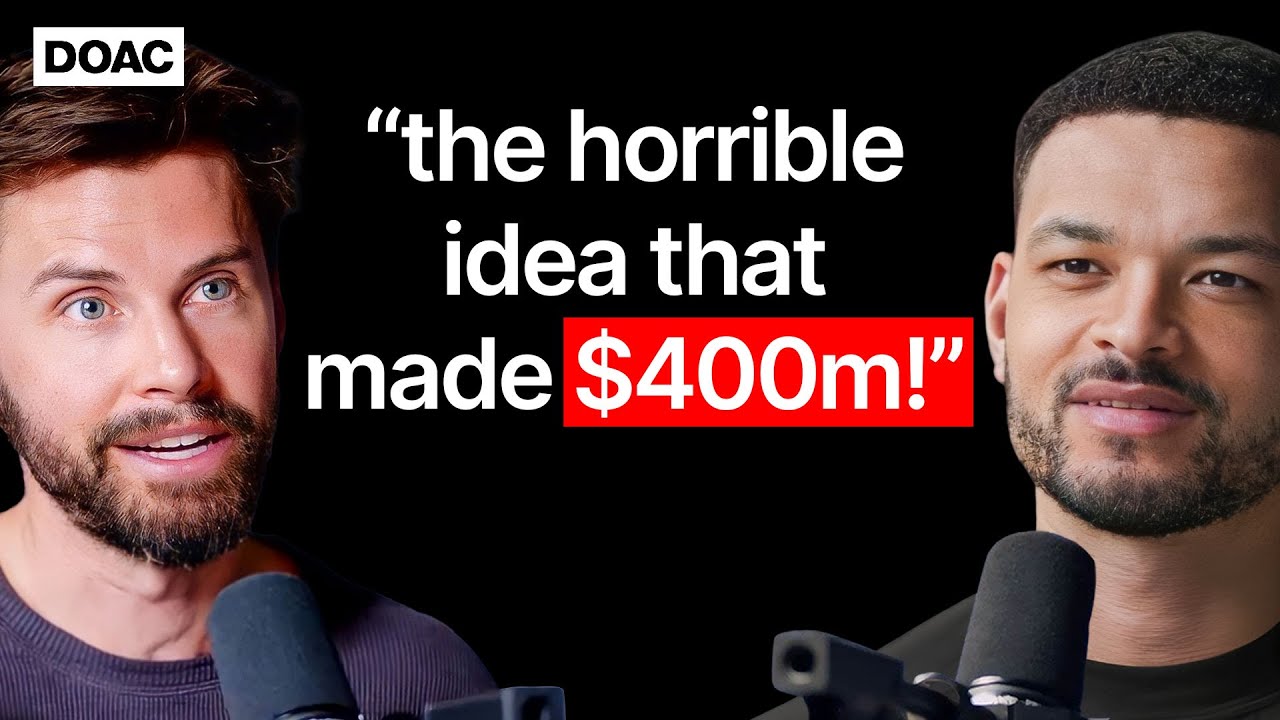
Hinge Cuts Swiping to Boost Matches as Revenue Scales On Intent
The Diary Of A CEO
Hinge CEO Justin McLeod argues that restricting rapid-fire swiping and prioritizing vulnerability drives long-term relationship success while fueling sustainable business growth through word-of-mouth referrals.
## Background
This video was published on YouTube by The Diary Of A CEO on February 15, 2024. According to the page description, it features Justin McLeod, the CEO and founder of the dating app Hinge, discussing dating app mechanics, attraction, and finding love.
## TL;DR
Justin McLeod shares his personal journey from battling drug and alcohol addiction to founding Hinge, detailing how his turbulent love life and eventual reunion with his college girlfriend inspired the app's relationship-focused redesign. He explains how Hinge challenged industry norms by shifting away from high-volume swiping toward quality dates, giving rise to its slogan 'Designed to be deleted.' McLeod also addresses common dating traps, corporate culture, and how artificial intelligence can transform dating apps into modern digital matchmakers.
## Atmosphere & style
The interview feels remarkably candid, intimate, and deeply reflective, striking a thoughtful balance between vulnerable personal storytelling and high-level business strategy. Justin McLeod speaks with quiet humility, openly revisiting his past struggles with addiction and heartbreak, while host Steven Bartlett guides the conversation with engaging curiosity and warmth. The overall mood is inspiring and analytical, offering listeners a grounded, human perspective on both entrepreneurship and modern romance.
## Key takeaways
- [02:16](https://www.youtube.com/watch?v=AVSn8EYQ43I&t=136s) Before achieving success with Hinge, founder Justin McLeod struggled with severe drug and alcohol addiction, finally achieving sobriety on the exact day he graduated from college.
- [12:31](https://www.youtube.com/watch?v=AVSn8EYQ43I&t=751s) The idea for Hinge was sparked at Harvard Business School after a campus crush event was canceled, inspiring McLeod to create a platform connecting people through mutual friends on Facebook.
- [19:00](https://www.youtube.com/watch?v=AVSn8EYQ43I&t=1140s) Hinge almost went bankrupt early on, staking its final $25,000 on a massive Washington D.C. launch party that successfully broke the social stigma around using dating apps.
- [27:37](https://www.youtube.com/watch?v=AVSn8EYQ43I&t=1657s) A pivotal interview with a journalist and a dramatic flight to Zurich to reconnect with his college ex-girlfriend completely altered McLeod's approach to relationships and app design.
- [24:24](https://www.youtube.com/watch?v=AVSn8EYQ43I&t=1464s) In 2015, Hinge executed a radical pivot—firing half its staff and rebuilding the app from scratch—to prioritize long-term relationships over gamified swiping, adopting the tagline 'Designed to be deleted'.
- [39:05](https://www.youtube.com/watch?v=AVSn8EYQ43I&t=2345s) Research from Hinge Labs shows that showing authenticity, vulnerability, and personal imperfections on a profile is the primary driver of successful real-world connections.
- [43:00](https://www.youtube.com/watch?v=AVSn8EYQ43I&t=2580s) Common dater pitfalls like over-curated photos, low-effort responses, and holding overly narrow checklists cause people to filter out up to 98% of potential compatible matches.
- [51:57](https://www.youtube.com/watch?v=AVSn8EYQ43I&t=3117s) Internal culture at Hinge relies on 'Radical Trust' and transparent principles, balancing decentralized decision-making with deliberate leadership oversight to maintain innovation as the team scales.
- [01:09:32](https://www.youtube.com/watch?v=AVSn8EYQ43I&t=4172s) To address severe power curves where top profiles receive a disproportionate amount of attention, Hinge aims to use AI as a digital matchmaker and coach to 'flatten the curve' and focus on quality over quantity.
- [50:40](https://www.youtube.com/watch?v=AVSn8EYQ43I&t=3040s) Hinge's ultimate long-term mission is to foster intimate, one-to-one human connections to actively combat the modern loneliness epidemic.
## Detailed walkthrough
Here is a detailed, faithful walkthrough of Part 1 of the transcript:
---
### [00:00](https://www.youtube.com/watch?v=AVSn8EYQ43I&t=0s) Teaser & Introduction
The preview highlights the underlying mission of Hinge: leveraging extensive deep-dive research to help people become more successful daters and find partners who fit what they are looking for. Justin McLeod, the founder and CEO of Hinge, reflects on building the app out of a desire to find a girlfriend, enduring significant failure before reaching success. He addresses common dating mistakes—such as using filtered photos with sunglasses, group shots, and one-word prompt responses—and discusses how narrow mental models hinder serial daters. Looking toward the future, McLeod dismisses pessimistic AI tropes like sex robots, focusing instead on moving toward a matchmaker model that drastically reduces the effort needed to secure a date (from 1,000 swipes down to roughly 50 likes).
---
### [02:16](https://www.youtube.com/watch?v=AVSn8EYQ43I&t=136s) My Addiction & Going to Rehab
McLeod describes Hinge's massive scale, noting that the platform sets up a date approximately every two seconds and has generated millions of relationships and marriages. Tracing the early catalysts of his life, he shares his background as an only child with an entrepreneurial father and a mother who worked for his father's business. Naturally skilled at math and computer science, he spent childhood summers at "nerd camp" learning to code. However, a deep desire to be cool and fit in fueled an addiction to drugs and alcohol during his youth.
By the end of his freshman year at university, McLeod realized he had not gone to bed sober a single night since school started. He voluntarily visited a campus drug and alcohol counselor named Jane. When she empathetically advised him that he had a severe problem and needed to quit, his immediate 19-year-old reaction was disbelief:
> "Whoa, whoa, whoa, whoa, whoa... like what are you talking about? I'm like a 19-year-old kid."
Despite ignoring her initial advice, he accumulated numerous write-ups with campus safety for drinking, ultimately forcing him to spend the summer after his freshman year in rehab just to be allowed back to school for his sophomore year.
---
### [05:27](https://www.youtube.com/watch?v=AVSn8EYQ43I&t=327s) 12 Step Programme for Addiction
During his struggles, McLeod occasionally attended local 12-step program meetings in town, where he was typically the only college student present. He officially stopped drinking on the exact day he graduated from college. Waking up the morning after a party, facing graduation and an impending move to Washington D.C., he experienced a profound moment of clarity where he felt the "steering wheel" of his life was broken.
Although he wanted a big career, impactful work, and deep friendships, his addiction kept deferring his aspirations with the promise of "tomorrow I'll start putting my life together." He realized his trajectory was completely off course—he had missed out on his dream job in investment banking at Goldman Sachs (landing a role at an obscure management consulting firm instead) and had lost his college girlfriend, Kate. Desperate to regain control, he chose to step into the unknown without alcohol.
- **Major in College:** Mathematical Economics.
- **Dream Career Target:** Goldman Sachs (Investment Banking).
- **Post-Graduation Job:** Management consulting firm in Washington D.C.
---
### [07:45](https://www.youtube.com/watch?v=AVSn8EYQ43I&t=465s) How My Love Experiences Influenced My Entrepreneurial Journey
McLeod recounts meeting his college girlfriend, Kate, in Louisville, Kentucky. After getting out of rehab at 8:00 p.m. one night, he drove all night back to campus and decided to celebrate his release by drinking. On her very first day of freshman year, Kate found him passed out on the landing of a stairwell. They later shared a class, started sitting together, and formed an intense, magnetic connection. Although their relationship wasn't an instantaneous "she's the one" moment, it built rapidly through getting to know each other.
Their dynamic was turbulent, resulting in them breaking up and getting back together six or seven times throughout college before permanently parting ways. During his early years of sobriety, McLeod frequently dialed her number on his phone, only to stare at the screen and hit the end button without calling, feeling he was too unhealthy for her.
Four years into his sobriety, while attending business school at Harvard, McLeod wrote Kate a heartfelt apology letter seeking to reconnect. Kate, who was living in London working in finance, called him back. Initial plans to meet during Christmas were quickly called off when Kate realized the emotional risk:
> "Listen, I just... if I see you, I don't know what's going to happen... I have a stable life now, I have a partner, we just bought a flat... I just can't."
Devastated and single at Harvard, McLeod struggled to meet new people. Sobriety made it difficult to navigate the heavy drinking culture of business school, as alcohol had previously been his social crutch.
---
### [12:31](https://www.youtube.com/watch?v=AVSn8EYQ43I&t=751s) Founding Hinge
Heartbroken and feeling out of place in business school's party-centric environment, McLeod searched for a meaningful project. While initial business plan competition entries felt like tedious homework, inspiration struck around Valentine's Day during his second year. Harvard had planned a "last chance dance" party where students could anonymously submit their campus crushes, with mutual matches revealed before the event. However, student body president Brett informed McLeod that the event was cancelled because manually managing matching for a thousand students was logistically overwhelming.
Recognizing an opportunity, McLeod drew on his programming background and Facebook's newly opened API for canvas apps (popularized by games like FarmVille). Teaming up with a friend named Frances, he rapidly coded a Facebook application allowing students to list their crushes and receive alerts for mutual matches.
While the app successfully created initial matches, its utility expired as soon as users discovered whether their crushes were mutual. However, it sparked a larger idea: building a platform that introduced people through mutual friends-of-friends. At the time, existing online dating platforms carried significant social stigma, required long desktop forms, and charged high subscription fees, leaving a void for a simple, accessible solution for younger generations.
[15:20](https://www.youtube.com/watch?v=AVSn8EYQ43I&t=920s) Identifying the Right Idea to Pursue
When entrepreneurs and creatives wonder how to distinguish a good idea from the one truly worth pursuing, Justin McLeod points to the stark contrast between intellectual interest and emotional pull. Earlier startup concepts felt to him like doing tedious homework—projects he had to force himself to work on. The idea for Hinge, however, felt less like a conscious choice and more like a obsession that took hold of him. He describes feeling "possessed" and infected by the concept, convinced it was going to define the future of dating despite the lack of mobile-first dating platforms at the time.
This conviction was immediately tested by widespread skepticism. When McLeod entered Hinge into a business plan competition, it failed to place; professors gave his class paper on the subject poor feedback, and venture capitalists repeatedly turned him down, asserting that Match.com owned the market and that the space was completely saturated. McLeod saw past their objections, recognizing that the market only appeared saturated because existing online dating services carried a heavy social stigma. In 2011, young people rarely used or discussed online dating, viewing users of legacy sites like Match.com as "lonely weirdos." McLeod realized that if he could build a fun, lightweight, and stigma-free service, an untapped generation of users would adopt it.
* VCs initially dismissed the market as fully saturated and dominated by Match.com.
* Pre-mobile online dating in 2011 was dominated by desktop platforms like Match.com and OkCupid, missing the term "dating app" entirely.
* McLeod's central thesis was that removing social stigma would unlock a massive, unused market among young people.
---
[19:00](https://www.youtube.com/watch?v=AVSn8EYQ43I&t=1140s) The Early App & The $25,000 Launch Party Gamble
Hinge originally began in 2011 as a Facebook canvas app called "Secret Agent Cupid." It attempted to introduce users to friends of friends, but it suffered from an overly complex user interface filled with social rankings and questions about friends, leaving users confused about why they were answering surveys instead of going on dates. By late 2012, having raised only about $100,000 from friends, family, and angel investors, the company was running out of money and making little progress. Around Thanksgiving, McLeod made the tough decision to throw out the entire codebase, embrace mobile as the future, and simplify the product into a simple interface where users logged in via Facebook, viewed photos and brief profiles, and voted yes or no.
With only two and a half months of cash remaining, the team rebuilt the app from scratch and decided to stake their final $25,000 on a massive, open-bar launch party in Washington, D.C., where app installation was required for entry. The gamble nearly turned into a catastrophe when the app spent weeks stuck in Apple's App Store review process. The night before the party, with 2,000 people expected and no app available to download, McLeod found himself weeping on the floor of a co-working space under his jacket, believing two years of work had been wasted. Miraculously, the app was approved the following morning just hours before the event.
* **Initial Name:** Secret Agent Cupid (Facebook canvas application).
* **Initial Capital:** Approximately $100,000 raised from angel investors, friends, and family.
* **The Pivot:** Rebooted in late 2012 to a simplified mobile-first interface using Facebook accounts for verification.
* **The Final $25k All-In:** Expended the last $25,000 of runway on a 2,500-person open-bar launch party in Washington, D.C.
---
[22:00](https://www.youtube.com/watch?v=AVSn8EYQ43I&t=1320s) Breakout Success and Scaling Through Launch Parties
The launch party proved to be the ultimate catalyst for breaking the social stigma surrounding dating apps. Because prominent influencers and key figures in the Washington, D.C. social scene attended the event and downloaded the app together in public, using Hinge instantly became acceptable and trendy. The day after the party, Hinge registered over 400 independent logins and generated more matches in a single day than it had throughout its entire previous history.
This created an immediate snowball effect driven by organic word of mouth. Users in Washington, D.C. began hyping the app to friends in New York, where a massive waitlist began to form, which then spread to San Francisco. McLeod scaled the platform city by city, launching only when a market reached sufficient liquidity. His primary expansion strategy was repeating the launch party playbook, traveling from city to city—including Boston, New York, San Francisco, and Los Angeles—to host open-bar launch events during what he describes as the "golden age of apps" in 2012.
* **Launch Results:** 2,500 attendees at the D.C. event led to 400 spontaneous logins the next day.
* **Growth Mechanism:** City-by-city waitlists paired with sponsored open-bar launch parties in major metro areas.
* **Network Effect:** Rapid viral growth carried the product from D.C. to New York, San Francisco, Boston, and Los Angeles.
---
[24:24](https://www.youtube.com/watch?v=AVSn8EYQ43I&t=1464s) Tinder's Rise, Raising $20M, and the 2015 Pivot
Around the time of Hinge's D.C. launch, Tinder entered the market out of Los Angeles. While Tinder focused strictly on location proximity, Hinge relied on mutual Facebook friends, positioning Hinge as a platform for more intentional, serious dating similar to meeting someone at a house party or wedding. Tinder's explosion in popularity helped legitimize the entire dating app category, causing investor sentiment to flip dramatically. Instead of begging for capital, McLeod was suddenly turning down investors, eventually raising an almost $20 million funding round.
By 2015, however, growth had stalled. Tinder's fast, casual experience had largely won the cultural momentum, leaving Hinge looking like an inferior clone. The breaking point arrived with a viral *Vanity Fair* article titled "Tinder and the Dawn of the 'Dating Apocalypse,'" which heavily featured Hinge and critiqued dating apps for destroying romance and healthy dating culture. Realizing the product no longer aligned with his personal values or his original desire to help people find real connections, McLeod had a candid conversation with his Head of Marketing, Katie, at a New York cafe. When she asked what was stopping him from fixing it, McLeod decided to execute a radical second reboot of the company, laying off half the staff, scrapping the codebase, and redesigning Hinge specifically for long-term relationships.
* **Competitive Dynamic:** Tinder used geographic location; Hinge used mutual Facebook friend connections.
* **Fundraising Turnaround:** Transitioned from struggling to raise small seed checks to securing a $20 million venture round.
* **Catalyst for Change:** A critical *Vanity Fair* piece on the "Dating Apocalypse" prompted McLeod to purge half the company's staff and rebuild the app specifically for relationship seekers.
---
[27:37](https://www.youtube.com/watch?v=AVSn8EYQ43I&t=1657s) The Interview with Deborah That Changed Everything
The seed for Hinge's relationship-focused reboot was planted during a pivotal 2014 interview with a journalist named Deborah from cafe.com. Deborah had downloaded Hinge in New York and matched with the very first profile recommended to her, quickly falling in love with him. She met McLeod for an interview in Madison Square Park to understand how the app worked. After McLeod admitted that her instant match was mostly pure luck, Deborah wrapped up the formal interview and asked a personal question: "Have you ever been in love?"
McLeod admitted he had been in love once, eight years prior, but had realized it too late. Deborah turned off her voice recorder and shared a deeply personal story about a past connection she had lost and later re-encountered, urging McLeod not to make the same mistake. "You just have to do something dramatic," she advised. "You have to just go over there and like pour your heart out and like put yourself on the line." Encouraged by her words, McLeod sent a brief message to his college ex-girlfriend ahead of an upcoming trip to London for a Hinge launch party, asking for 15 minutes to say goodbye properly. Though she no longer lived in London and had moved to Switzerland, she offered to talk on the phone over the weekend—setting off a sequence of events where McLeod immediately bought a plane ticket to chase after her.
> "Listen, I have to tell you a story... you don't have to make the same mistake I did. Like you can still be with the one. You just have to do something dramatic."
> — Deborah to Justin McLeod
* **The Meeting:** An interview in Madison Square Park with Deborah from cafe.com, who had met her partner on her first Hinge match.
* **The Personal Dilemma:** McLeod confessed he had been out of contact with the love of his life for nearly eight years.
* **The Turning Point:** Deborah's advice prompted McLeod to send a reaching-out email right before a London trip, laying the groundwork for a romantic reunion.
[30:17](https://www.youtube.com/watch?v=AVSn8EYQ43I&t=1817s) Reuniting in Zurich and a Life-Changing Decision
Justin McLeod describes flying to Zurich, Switzerland, to meet his ex-girlfriend—the woman he had pined over for years—after she reached out to chat. At the time, she was engaged and literally just one month away from getting married. Justin was torn between the lingering fantasy of getting her back and the realistic expectation that, after eight years apart, they were entirely different people. He had gotten sober and was running a growing company, while she had built a full life in Europe with a fiancé. Going into the meeting at a local café, he assumed they would simply laugh about the past, catch up, and say goodbye.
Instead, the moment they sat down, their deep, long-standing connection immediately resurfaced. They sat at the café talking continuously for seven or eight hours without getting up once—not even to order another coffee. By the end of that marathon conversation, she looked at him and said, "I think I'm calling off the wedding." Within a week, she ended her engagement, packed up her life in Zurich, and moved back to New York City to live in Justin's 300-square-foot apartment in the West Village.
- **Time apart before meeting:** 8 years.
- **Fiancée status:** She was 1 month away from her scheduled wedding in Europe.
- **Marathon date length:** 7–8 hours straight in a Zurich café without leaving the table.
- **New York apartment size:** 300 square feet in the West Village.
---
[32:03](https://www.youtube.com/watch?v=AVSn8EYQ43I&t=1923s) The Spark for the New Hinge: From "Numbers Game" to True Intimacy
While the story sounded like a fairy-tale romance on the surface, the reality of living together in a tiny apartment after an eight-year gap quickly set in. After a honeymoon phase of two or three months, friction arose as two people with years of separate personal growth had to figure each other out. Justin admits that under normal dating circumstances, he would have run away at the first sign of imperfection. However, knowing she had given up her entire life in Switzerland to move into his 300-square-foot space, he couldn't just walk away. They had to put in the hard emotional work—vulnerability, open communication, and real intimacy.
> "Fairy tale endings are made for movies because there's a lot of work that happens after the credits roll."
This experience radically transformed Justin's perspective on dating and app design. He realized that the prevailing industry belief—that dating was purely a "numbers game" where finding the right person instantly leads to a effortless "happily ever after"—was fundamentally flawed. It made him realize how many potential soulmates people skate right past simply because neither party is being vulnerable enough to establish a real connection. This insight formed the philosophical foundation for redesigning Hinge: if an app is truly built for relationships, it must force users to slow down, put themselves on the line, and show genuine vulnerability.
- **Honeymoon phase length:** 2 to 3 months before real relationship friction began.
- **Core design realization:** Dating apps needed to shift from high-volume swiping to encouraging vulnerability and deliberate engagement.
---
[34:23](https://www.youtube.com/watch?v=AVSn8EYQ43I&t=2063s) Redesigning the App and Challenging User Habits
Designing an app that encourages users to slow down and exert effort was a major product challenge, especially in a culture that expects technology to be quick, easy, and frictionless. Justin highlights the delicate balance between what users *think* they want (instant, low-effort gratification like fast food) versus what actually works (a deliberate, nutritious process that requires effort). When Hinge introduced its new design, the concept was theoretically celebrated as a necessary antidote to superficial dating culture.
However, forcing users to change their habits created friction. People were initially resistant when they found out they couldn't just swipe quickly through photos; instead, they had to fill out three prompts, explicitly like specific pieces of content, and attach comments to spark a conversation. Despite the learning curve, this structure proved far more effective at creating real connections, shifting Hinge's focus away from traditional tech vanity metrics toward real-world results.
> "We wanted something that's like a little bit less like fast food and more like a nice nutritious meal when it comes to dating."
- **User friction points:** Filling out 3 detailed prompts, liking specific profile elements rather than full profiles, and leaving mandatory or encouraged comments.
- **North Star Metric shift:** Abandoned classic VC user engagement/retention metrics (like total matches or app time) in favor of one core metric: *getting people out on good real-world dates*.
---
[37:05](https://www.youtube.com/watch?v=AVSn8EYQ43I&t=2225s) The VC Rejection, Near-Bankruptcy, and the Match Group Deal
Transitioning to a model focused on quality dates rather than high app engagement caused Hinge's active user count to drop sharply from its previous version. As the company burned through its remaining cash to build and launch the rebooted app, Justin went on a fundraising tour to pitch venture capitalists on their new, highly effective product. While Hinge's brand was prominent enough to secure meetings with top firms across the country, VCs overwhelmingly rejected the narrative of a shrinking user base, ignoring the higher quality of real-world outcomes.
With only a week or two of cash left in the bank after 50 to 60 rejections from traditional VCs, Justin began talks with Match Group. Unlike traditional investors, Match Group recognized the strategic value of Hinge's differentiated, high-intent model. They negotiated an initial investment that saved Hinge from bankruptcy and established a path toward Match Group's eventual full acquisition of the company.
- **User drop during reboot:** User base fell from ~400,000–500,000 down to 100,000–150,000.
- **VC Pitching effort:** ~50 to 60 VC meetings resulting in zero investment offers.
- **Runway remaining before Match Group deal:** Approximately 1 to 2 weeks of cash left.
- **Growth Timeline:** Slow refinement during 2016–2017; explosive word-of-mouth and marketing-driven growth starting in 2018 leading into the 2019 full acquisition by Match Group.
---
[39:05](https://www.youtube.com/watch?v=AVSn8EYQ43I&t=2345s) Hinge Labs and the Science of Successful Dating
Justin explains the premise of **Hinge Labs**, an internal research unit dedicated to studying dating behaviors. Unlike traditional software platforms where the user experience is strictly defined by code and UX design, a dating app's success depends heavily on how its users behave toward one another. Because technology can only guide behavior so far, Hinge Labs conducts deep-dive behavioral research to identify what differentiates successful daters from those stuck in endless cycles of unfulfilling dates.
When asked about classifying daters into distinct behavioral categories (such as the "serial dater"), Justin notes that while profiles exist, rigid buckets fail because human attraction is inherently complex and individual. However, the overarching takeaway from Hinge Labs' research—echoed by dating experts like Logan Ury—is that authenticity and vulnerability are the primary drivers of successful long-term connections.
- **Role of Hinge Labs:** Conducts behavioral studies on successful vs. unsuccessful daters to inform product design, algorithm updates, and user coaching guides.
- **Key finding:** Authenticity and vulnerability directly correlate with finding higher-quality connections faster.
---
[41:48](https://www.youtube.com/watch?v=AVSn8EYQ43I&t=2508s) Why Vulnerability and Imperfection Drive Real Connections
Justin details two core reasons why being honest and vulnerable on a dating profile is crucial on a human level. First, it accelerates an accurate assessment of compatibility. When users post hyper-curated photos or try to appear "cool," they attract people who are interested in a fake persona—a dynamic that inevitably crumbles once the real person emerges. Being upfront about who you are, what you want, and even your flaws immediately filters out incompatible matches and attracts people who like the genuine you.
Second, vulnerability provides "hooks" for conversation and emotional attachment. Perfect, polished, and invulnerable profiles leave potential matches with nothing meaningful to say or relate to. Human connection relies on shared flaws and relatable quirks rather than immaculate presentations.
- **The mechanism of connection:** People connect over "the cracks and little imperfections" rather than polished perfection.
- **Profile hooks:** Honest prompts and authentic photos give matches specific, meaningful topics to bring up in messages.
---
[43:00](https://www.youtube.com/watch?v=AVSn8EYQ43I&t=2580s) How to Be the World's Worst Dater
To illustrate what *not* to do, Steven Bartlett asks Justin how someone could deliberately become the most unsuccessful dater on Hinge. Justin outlines the exact behaviors that sabotage a user's chances on dating apps, pointing out that many people fall into these traps unintentionally.
- **Posting filtered photos:** Hiding behind face-altering filters, wearing sunglasses in every picture, or only using group photos where it's hard to identify you.
- **Low-effort responses:** Giving lazy, one-word answers to profile prompts that provide no conversational hooks.
- **Passive behavior:** Waiting passively for likes to come to you, or blindly liking every single profile without reading it.
- **Algorithm disruption:** Liking everyone indiscriminately ruins the app's recommendation engine, preventing the algorithm from learning your actual taste and matching you with compatible partners.
---
[44:12](https://www.youtube.com/watch?v=AVSn8EYQ43I&t=2652s) The Traps of Serial Dating and Broken Relationship Models
Addressing the phenomenon of "serial daters"—people who go on dozens or even a hundred dates a year without finding a partner—Justin shares his own past dating patterns. Before his personal breakthrough, he rarely went on endless first dates; instead, he cycled through short, two-to-six-week relationships. As soon as a minor flaw emerged or the initial excitement faded, he would break things off, assuming the relationship was fundamentally wrong.
Justin attributes this behavior to holding an unrealistically romanticized fantasy of what a relationship should feel like. Many serial daters try to force real human interactions to fit an idealized mental template—expecting every moment to remain effortlessly fun, sexy, and completely conflict-free. Because no real person can live up to an impossible "happily ever after" fantasy, serial daters continually pass over great potential partners.
- **Justin's past pattern:** A continuous cycle of short-term relationships lasting 2 to 6 weeks.
- **The fantasy flaw:** Expecting a relationship to be 100% friction-free, constantly exciting, and free of any disagreements.
[45:42](https://www.youtube.com/watch?v=AVSn8EYQ43I&t=2742s) The Trap of Narrow Dating Models and Criteria
Justin McLeod highlights that many singles hold overly strict, artificial criteria in their heads when looking for a partner. People often demand extremely specific traits—such as requiring a partner to be over six feet tall, work in a particular career, or fit a precise demographic profile—and end up actively searching for excuses to reject candidates because they fail to match that rigid mental template. He emphasizes that the most impactful mindshift for daters is to widen their aperture, abandon arbitrary checklists, and give potential matches an actual chance to see where things lead.
Steven Bartlett brings up the ubiquitous "six-foot tall" preference, wondering if the vast majority of women genuinely require a partner to meet that specific height threshold. Justin clarifies that while people generally prefer a partner who is taller than themselves, six feet is merely an illustrative example of how narrow these requirements get. Steven recalls an online calculator where users input their exact preferences—salary, height, race, and relationship status—only for the statistical probability tool to reveal a horrifying "0.0% chance" of finding that human being, illustrating how easily people filter out 98% of the dating pool before even having a conversation.
- Rigid criteria and arbitrary checklists cause daters to filter out up to 98% or more of potential matches.
- Successful long-term couples routinely admit their partner did not match the initial "shopping list" of traits they thought they wanted.
---
[47:39](https://www.youtube.com/watch?v=AVSn8EYQ43I&t=2859s) Designed to Be Deleted: Aligning Incentives with User Success
Addressing the widespread skepticism surrounding dating app business models—specifically the accusation that dating companies intentionally keep users single to retain paying customers—Justin explains Hinge’s fundamental counter-thesis. The app’s famous tagline, **"Designed to be deleted,"** originated during a session with a branding agency. When asked what Hinge's gimmick was compared to Tinder, Justin asserted that there was no gimmick; every component of the product was built specifically to get people off their phones and out on great dates.
Despite initial internal pushback that the phrasing sounded overly technical or uncommunicative, Hinge embraced the slogan because it captured their core operating philosophy. From a business strategy perspective, Justin believes that maximizing successful relationships generates powerful, low-cost word-of-mouth growth. So long as single people exist in the world, they will gravitate toward an app that functions as an effective utility rather than a gamified distraction.
- **Tagline Origin:** Created to emphasize that Hinge is an outcome-oriented utility rather than a gamified swipe app.
- **Growth Strategy:** Relies on high-intent word-of-mouth referrals from couples who successfully met on the app.
---
[49:32](https://www.youtube.com/watch?v=AVSn8EYQ43I&t=2972s) Shifting Cultural Dynamics and Gen Z Vulnerability
The dating landscape has evolved dramatically since Hinge first launched. In the company's early years, online dating carried a strong societal stigma, but it eventually became the primary default method for meeting partners. More recently, Justin observes a distinct shift among Gen Z daters, who are actively moving away from superficial, rapid-fire swiping in favor of authenticity and emotional depth.
This generational shift mirrors the broader cultural transition from the hyper-polished aesthetic of Instagram to the unvarnished, vulnerable nature of TikTok. Gen Z users are far more willing to display their imperfect selves, share real personality traits, and accept vulnerability, which directly aligns with what is required to build meaningful romantic relationships.
- **Culture Shift:** Gen Z prefers unpolished authenticity and vulnerability over curated, perfect online personas.
- **Market Impact:** Hinge's growth accelerated as users sought alternatives to low-intent, superficial swiping apps.
Justin outlines Hinge's company mission: **"To foster intimate connection to create a less lonely world."** He contrasts this with conventional social networks, which originally set out to connect friends and loved ones but ultimately transformed into ad-driven media platforms. These networks realized that influencers, sensational content, and viral outrage maximize screen time far more effectively than quiet personal interactions.
Justin stresses that Hinge intentionally rejects this ad-supported, attention-grabbing paradigm. Even if the company expands into new lines of business in the future, its north star remains strictly anchored to deep, one-to-one human connections rather than maximizing time spent inside the application.
> "Hinge at its core, even if we were expanding new business lines or doing something in the future, like we are a company about intimate connection, about one-to-one deep connections between people, and we don't ever want to deviate from that as our core because it's really what the world needs right now."
---
[51:57](https://www.youtube.com/watch?v=AVSn8EYQ43I&t=3117s) Cultural Reboot and "Radical Trust"
Justin shares the backstory behind Hinge's internal culture book, titled *How We Do Things*. When Justin rebooted the company between late 2015 and early 2016, the team was downsized by half—shrinking to roughly 30 employees. At the time, Justin had never consciously thought about corporate culture, assuming it simply emerged naturally around the founder. Following the downsizing, the remaining team held an emotional, tearful offsite to conduct a transparent post-mortem on what had gone wrong.
They recognized that they had spent too much time copying competitors instead of serving their users, and that decision-making was far too centralized at the top. To fix this, Justin created an open-source Google Doc documenting his personal "management algorithm"—making his decision-making framework completely transparent. As the company grew past 100 employees, this document evolved into the principle of **Radical Trust**, which explicitly pushes decision-making authority down to front-line employees by giving them full context and operational transparency.
- **The 2015–2016 Reboot:** Downsized 50% of the company, re-evaluated culture, and eliminated competitive copycatting.
- **Radical Trust Principle:** Empowers front-line employees to make autonomous choices by providing total top-down transparency on business goals and operational challenges.
---
[54:55](https://www.youtube.com/watch?v=AVSn8EYQ43I&t=3295s) "Love the Leap" and Embracing Product Failure
The third principle discussed, **Love the Leap**, addresses the necessity of taking large innovation risks rather than relying solely on minor, incremental optimizations. Justin points out a common flaw in modern tech culture, where teams default to low-risk A/B testing: trying a minor feature, discarding it if it doesn't immediately show positive metrics, and moving on. He argues that true breakthroughs require strong thesis-driven conviction and the willingness to trudge through a long series of failed iterations to reach success.
When Steven asks how a CEO can encourage employees to embrace failure when corporate incentives usually reward playing it safe, Justin explains that leaders must actively model vulnerability from the top. Executives must publicly admit their own mistakes, discuss their personal development areas, and remove the stigma surrounding failure.
- **Incremental vs. Leap Innovation:** Small optimization tests cannot substitute for bold, thesis-driven product changes.
- **Refinement to "Love the Problem":** Hinge is evolving this principle to focus on conducting deep research on a problem, developing strong conviction, and persevering through multiple failed attempts to solve it.
---
[58:14](https://www.youtube.com/watch?v=AVSn8EYQ43I&t=3494s) Decision-Making via "Guided by Principles"
The principle **Guided by Principles** stems directly from Justin’s personal recovery journey with alcoholism and addiction, as well as his growth as an executive. Success requires continuous self-reflection, actively soliciting feedback, and analyzing what went wrong after every major project or milestone.
To eliminate top-down directive management—where decisions are made simply "because the CEO said so"—Hinge requires leaders to make the underlying principles behind every choice explicit. Meetings at Hinge routinely begin by agreeing on the core assumptions, values, and principles guiding the project before diving into execution. This alignment builds institutional trust and enables employees across all levels to make consistent, high-quality decisions independently.
- **Anti-"CEO Dictator" Approach:** Decisions are anchored to explicit, shared principles rather than executive preference or authority.
- **Personal Origins:** Rooted in Justin's 12-step recovery practice of continuous self-assessment and rigorous reflection.
[01:00:29](https://www.youtube.com/watch?v=AVSn8EYQ43I&t=3629s) Evolving Company Culture and the Myth of Unlimited Decoupling
Steven Bartlett and Justin McLeod discuss how company culture evolves as an organization grows, challenging post-pandemic trends where leaders reduced culture to hybrid schedule debates. Bartlett suggests that culture shouldn't be made up from scratch; rather, founders can reverse-engineer it from the core mission—identifying the exact behaviors and values required to become the best in their industry, and then building operational systems around them.
McLeod agrees, explaining that while defining existing positive behaviors works when a company is small (30 to 50 people), maintaining culture becomes a continuous "pruning process." As Hinge grew from a small team in one room to over 300 employees, McLeod realized that earlier approaches—such as "radical trust" and pushing all decision-making completely down to junior employees—no longer worked. Without central coordination, decentralized teams create silos and focus purely on micro-optimizations rather than cohesive strategic leaps.
Drawing parallels to an interview Bartlett had with Airbnb CEO Brian Chesky, McLeod notes that staying innovative at scale requires pulling decision-making back toward leadership while keeping an open dialogue with junior staff. When Hinge was small, the founder was naturally involved in daily conversations with junior designers and engineers. As the company scaled, maintaining that cohesion required deliberate executive oversight and alignment across departments rather than hoping decentralized teams would stay aligned on their own.
- Post-pandemic management often trivialized culture into superficial policy debates like deciding between two or three mandatory office days per week.
- Culture early on acts like a "game of telephone"—if not clearly defined and actively pruned, bad habits multiply as headcount grows.
- McLeod revised his stance on "radical trust," moving away from total autonomy toward centralized strategic alignment to avoid organizational silos.
- Effective leadership requires ongoing "parenting-style" feedback—actively catching and praising behaviors aligned with company values while correcting those that diverge.
[01:07:30](https://www.youtube.com/watch?v=AVSn8EYQ43I&t=4050s) The Modern Loneliness Epidemic and the Media Dislocation
The discussion shifts to the broader social landscape, where despite hyper-connectivity, loneliness metrics continue to reach historical highs. Bartlett notes that over 52% of Americans report feeling lonely, and 57% eat their meals alone. McLeod highlights that digital media consumption has steadily displaced face-to-face social interaction over the last 20 years.
McLeod points out that while consuming podcasts or media isn't inherently negative, real-life interactions where people feel "seen and heard" have been replaced by passive doomscrolling and digital consumption. This structural shift in how humans spend their free time has accelerated a crisis-level loneliness epidemic, making Hinge's core mission—getting people off their screens and out on real dates—increasingly urgent.
- 52% of Americans report feeling lonely, and 57% report eating meals alone.
- Over the last two decades, real-life time spent with friends has been almost entirely displaced by digital media consumption and work.
- Passive media consumption lacks the emotional depth and mutual recognition of in-person relationships, directly contributing to social isolation.
[01:09:32](https://www.youtube.com/watch?v=AVSn8EYQ43I&t=4172s) The Dating App Inequality: Power Curves and Disillusioned Men
Bartlett brings up the stark disparity in how men and women experience dating apps, sharing his personal experience of having only been on five dates in his life. He contrasts his own early lack of success as a "scruffy, broke 20-year-old" with his friend Logan, who looked like a "Calvin Klein model" and easily got matches. Bartlett highlights how many young men feel completely forgotten or excluded on dating platforms.
McLeod acknowledges this structural inequality, noting that some people are naturally datable in real life but simply struggle to present themselves effectively on dating apps. He addresses the extreme "power curve" skewing app dynamics: statistics show the top 1% of men receive over 16% of all likes on Hinge (compared to 11% for top women), while broader studies show men send significantly more messages (13 per day vs. 3 per day from women) with lower return rates. Bartlett references insights from commentators like Scott Galloway regarding how a large cohort of disenfranchised, lonely men poses a broader societal challenge.
To solve this, McLeod outlines Hinge’s internal initiative dubbed "flatten the power curve." Rather than letting a tiny minority of users accumulate all the attention, Hinge aims to use AI to act as a personal dating coach. By helping struggling users select better photos, write engaging prompts, and shift from high-volume swiping to intentional matching, the platform seeks to level the playing field. McLeod notes that during Hinge's initial redesign, they reduced the average effort needed to get a date from 1,000 swipes down to roughly 50 likes, and generative AI represents the next major leap in matching quality over quantity.
> "Some people are just good at dating apps, and some people are quite datable, but they're just not good at dating apps. The question is: how do we help make it a much more focused quality over quantity experience?"
- Top 1% of men on Hinge receive >16% of total likes, while top 1% of women receive ~11%.
- On Bumble, men send an average of 13 messages per day compared to 3 per day sent by women.
- Historical Hinge redesign successfully reduced the threshold for getting a date from 1,000 swipes to approximately 50 likes.
- Internal Hinge initiative "flatten the power curve" focuses on coaching users out of bad profile habits (e.g., one-word prompt answers, poor photo selections) using AI guidance.
---
<ElicitationsGroup message="Explore related topics from this discussion:">
<Elicitation label="Analyze Hinge's product strategy shift from swiping to intent" query="Explain how Hinge redesigned its product strategy from high-volume swiping to quality-focused matching, including the key metrics and mechanics involved."/>
<Elicitation label="Examine corporate decision-making models as startups scale" query="Compare the centralized vs. decentralized decision-making models in high-growth tech startups, referencing insights from CEOs like Brian Chesky and Justin McLeod."/>
</ElicitationsGroup>
[01:14:37](https://www.youtube.com/watch?v=AVSn8EYQ43I&t=4477s) Using AI to Evolve Dating Apps into Digital Matchmakers
Justin McLeod outlines how artificial intelligence can transform the dating experience beyond basic profile optimizations like picking better photos or crafting replies. While public discussion around AI in relationships often leans pessimistic—focusing on sci-fi extremes like sex robots—Hinge is exploring a matchmaker model. Instead of putting the entire burden on users to build personal advertisements, endless swiping, and self-manage conversations, AI can act like a traditional matchmaker: interviewing individuals to understand their true preferences, proactively setting up dates, and gathering post-date feedback to refine future recommendations.
- The entire onboarding and matching pipeline presents friction points, from signing up and profile creation to transitioning from match to chat, and ultimately moving offline onto an actual date.
- The goal of AI integration at Hinge is to streamline the funnel and deliver higher-probability dates rather than over-engaging users on the platform.
---
[01:17:25](https://www.youtube.com/watch?v=AVSn8EYQ43I&t=4645s) Hiring Principles, Culture, and Building Trust
When reflecting on early operational mistakes, McLeod explains how Hinge revolutionized its hiring process by analyzing high-performing versus underperforming employees. They established specific success attributes and introduced a mandatory "culture interview" for every candidate. This strategy dramatically increased employee retention, leading to exceptionally low voluntary attrition because staff feel deeply aligned with their peers. When asked which values he would keep if forced to choose, McLeod emphasizes that while Hinge relies on a core trifecta of authenticity, courage, and empathy, authenticity combined with empathy forms the ultimate foundation for organizational trust.
- **Hinge's 3 Core Values:**
* **Authenticity:** Encourages people to show up as themselves and speak candidly.
* **Courage:** Drives taking risks and facing difficult truths.
* **Empathy:** Balances authenticity so honest feedback is constructive rather than blunt or harsh.
- **Trust as Lifeblood:** McLeod notes that authenticity paired with empathy is the primary driver of internal trust within a company culture.
---
[01:19:51](https://www.youtube.com/watch?v=AVSn8EYQ43I&t=4791s) The 10-Year Vision for Hinge and Dating Culture
Looking a decade into the future, McLeod envisions Hinge expanding its societal impact beyond simple match-making to active relationship coaching. By guiding users on how to become better daters and build more harmonious, long-lasting partnerships, the company aims to fundamentally elevate broader dating culture.
---
[01:21:42](https://www.youtube.com/watch?v=AVSn8EYQ43I&t=4902s) The Last Guest Question: Instilling Intrinsic Worth
Following the show's tradition, Steven Bartlett presents a question left by the previous guest: *"If you could go back in time and give one piece of advice to your 10-year-old self, what would it be?"* McLeod pauses before sharing that he wishes he could have instilled a core sense of intrinsic worth—reassuring his younger self that he was worthy regardless of rejection or being ostracized. However, recognizing that those early painful experiences ultimately paved the way for his marriage to Kate and the creation of Hinge, he offers a pragmatic piece of advice: "Buckle up."
> "Buckle up, because it's going to be a really wild ride and it does have a way of working out in the end."
---
[01:22:56](https://www.youtube.com/watch?v=AVSn8EYQ43I&t=4976s) First Principles and the Long-Term Success of Hinge
Steven Bartlett commends McLeod for rejecting industry shortcuts and staying true to first principles, noting that while competitors focused on immediate retention, Hinge prioritized meaningful, long-term bonds. McLeod agrees, acknowledging that taking an unconventional path is difficult initially because there is no established blueprint. However, building an effective product yields massive compound returns through word-of-mouth growth over time.
- **Market Position:** Hinge is the fastest-growing major dating app, holding the #1 position in the UK and Australia while expanding rapidly across Europe.
- **Foundational Commitment:** The app's core mission, summarized by its motto "designed to be deleted," directly targets modern loneliness by focusing on real-world outcomes over infinite swiping.
## Notable quotes
> [02:16](https://www.youtube.com/watch?v=AVSn8EYQ43I&t=136s) Whoa, whoa, whoa, whoa, whoa... like what are you talking about? I'm like a 19-year-old kid. — Justin McLeod
> [07:45](https://www.youtube.com/watch?v=AVSn8EYQ43I&t=465s) Listen, I just... if I see you, I don't know what's going to happen... I have a stable life now, I have a partner, we just bought a flat... I just can't. — Kate
> [27:37](https://www.youtube.com/watch?v=AVSn8EYQ43I&t=1657s) Listen, I have to tell you a story... you don't have to make the same mistake I did. Like you can still be with the one. You just have to do something dramatic. — Deborah
> [32:03](https://www.youtube.com/watch?v=AVSn8EYQ43I&t=1923s) Fairy tale endings are made for movies because there's a lot of work that happens after the credits roll. — Justin McLeod
> [34:23](https://www.youtube.com/watch?v=AVSn8EYQ43I&t=2063s) We wanted something that's like a little bit less like fast food and more like a nice nutritious meal when it comes to dating. — Justin McLeod
> [50:40](https://www.youtube.com/watch?v=AVSn8EYQ43I&t=3040s) Hinge at its core, even if we were expanding new business lines or doing something in the future, like we are a company about intimate connection, about one-to-one deep connections between people, and we don't ever want to deviate from that as our core because it's really what the world needs right now. — Justin McLeod
> [01:09:32](https://www.youtube.com/watch?v=AVSn8EYQ43I&t=4172s) Some people are just good at dating apps, and some people are quite datable, but they're just not good at dating apps. The question is: how do we help make it a much more focused quality over quantity experience? — Justin McLeod
> [01:21:42](https://www.youtube.com/watch?v=AVSn8EYQ43I&t=4902s) Buckle up, because it's going to be a really wild ride and it does have a way of working out in the end. — Justin McLeod
## Mentioned
Justin McLeod, Steven Bartlett, Hinge, Hinge Labs, Match Group, Tinder, Match.com, OkCupid, Bumble, Goldman Sachs, Harvard Business School, Facebook, Secret Agent Cupid, Vanity Fair, Logan Ury, Scott Galloway, Brian Chesky, Airbnb, TikTok, Instagram, Apple App Store
Hinge减少划卡促成高质量匹配,依托真诚意向拉动营收
Hinge首席执行官Justin McLeod认为,限制高频快速划卡并倡导袒露真实自我,不仅能促成持久恋爱关系,还能通过口碑传播推动业务的可持续增长。
Justin McLeod分享了他从与毒瘾和酒瘾抗争到创立Hinge的心路历程,详细讲述了他跌宕起伏的感情经历以及最终与大学女友复合的经历,是如何启发该应用针对长期恋爱关系进行重新设计的。他阐释了Hinge如何打破行业惯例,从海量划卡转向注重约会质量,并由此诞生了“旨在被删除”(Designed to be deleted)的品牌口号。此外,McLeod还探讨了常见的约会误区、企业文化,以及人工智能如何将约会软件重塑为现代数字红娘。
Hinge 创始人 Justin McLeod 曾深陷严重的毒瘾与酗酒危机,直到大学毕业当天彻底戒酒,并在哈佛商学院求学期间受到启发,创立了最初基于 Facebook 共同好友关系的配对平台。 (2:16)
初创时期的 Hinge 一度濒临破产,团队孤注一掷将最后 2.5 万美元资金投入华盛顿特区的一场盛大发布派对,成功打破了早期约会软件在年轻人中的社交污名并引发病毒式传播。 (19:00)
2015 年,受一篇批判约会软件破坏浪漫的报道触动,加上自身跨国挽回真爱的真实经历,McLeod 裁掉半数员工并将 Hinge 彻底重构,放弃游戏化滑动模式,确立了专注于长期恋爱关系的战略与“Designed to be deleted”的核心理念。 (24:24)
Hinge Labs 的行为研究表明,在个人主页展示真实、脆弱与不完美一面,是促成高质量线下约会的最关键驱动力;相反,过度修图和机械死板的择偶清单会导致用户错失高达 98% 的潜在合适对象。 (39:05)
Reading summary
Hinge founder and CEO Justin McLeod argues that modern dating culture has been degraded by superficial swiping mechanics, contending that lasting romantic connection requires deliberate friction, emotional vulnerability, and software designed to move users off their phones.
Product Redesign and the Anti-Engagement Model (34:23)
Following initial viral traction generated through open-bar launch parties, McLeod recognized that high-volume swiping turned dating into an addictive, low-commitment game. Catalyzed by a critical 2015 Vanity Fair article on the dating apocalypse and his own personal reconciliation with his now-wife, McLeod executed an existential company pivot. Hinge discarded its codebase, laid off half its staff, eliminated the swipe mechanic in favor of mandatory prompts and targeted commenting, and shifted its core business metric away from app retention toward facilitating quality real-world dates under the ethos 'designed to be deleted.'
This deliberate friction initially caused active users to plunge from 400,000–500,000 down to 100,000–150,000. Traditional venture capitalists overwhelmingly rejected the narrative of a contracting user base, resulting in roughly 50 to 60 pitch rejections. Operating with only one to two weeks of remaining cash, Hinge secured a life-saving investment from Match Group, which fully acquired the company in 2019. McLeod reports that this structural redesign reduced the average user effort required to secure a date from 1,000 swipes to roughly 50 likes.
Behavioral Sabotage and Rigid Partner Checklists (45:42)
According to findings from Hinge Labs, the company’s internal behavioral research unit, profile authenticity directly correlates with dating success, while hyper-curated self-presentation backfires. Daters frequently sabotage their prospects by using face-altering filters, wearing sunglasses, displaying only group photos, and providing lazy, one-word prompt responses that offer no conversational hooks. Furthermore, indiscriminately liking every profile distorts the algorithmic recommendation engine, preventing it from accurately learning a user's authentic taste.
McLeod also cautions against serial dating driven by rigid, superficial checklists. Daters routinely filter out over 90% of prospective partners by demanding narrow criteria, such as strict height or income thresholds, while seeking effortless, conflict-free romance. In McLeod's view, real intimacy requires navigating imperfections; he notes that long-term couples frequently acknowledge their partner failed to match the initial shopping list of traits they believed they required.
Power Curves and Modern Dating Inequality (69:32)
The discussion highlights how dating apps exacerbate broader social isolation, with host Steven Bartlett noting that 52% of Americans report feeling lonely and 57% report eating meals alone. In dating platforms, this dislocation is compounded by an acute inequality of attention. On Hinge, the top 1% of male profiles capture more than 16% of total likes, while the top 1% of women receive roughly 11%. Across platforms, men send an average of 13 messages per day compared to 3 per day from women, yielding low return rates and pervasive disillusionment among young men.
To address this imbalance, McLeod details an internal initiative termed 'flatten the power curve.' Rather than allowing attention to pool within a hyper-selected elite, Hinge aims to coach struggling users out of self-defeating profile habits, helping daters who are charismatic offline present themselves more effectively online.
Evolving Beyond Swiping with AI Matchmaking (74:37)
Looking to the future, McLeod dismisses speculative AI trends like sex robots, predicting instead that artificial intelligence will transform dating apps into proactive digital matchmakers. Rather than requiring users to construct personal advertisements, browse endless feeds, and initiate cold messaging, an AI agent could interview individuals to understand their core values, coordinate dates directly, and incorporate post-date feedback to refine future recommendations.
Over a ten-year horizon, McLeod envisions the company shifting from simple match introductions into relationship coaching. This institutional focus also informs Hinge's internal culture. While McLeod initially championed 'radical trust' and decentralized autonomy, expanding past 300 employees revealed that complete decentralization created organizational silos. Sustaining long-term innovation required re-establishing centralized strategic oversight while maintaining candid, principle-driven communication across teams.
McLeod contends that prioritizing successful relationship outcomes over screen time creates a sustainable, word-of-mouth business model, citing Hinge's position as the leading dating app in the UK and Australia. An unresolved question remains whether AI-driven matchmaking can successfully decode the unpredictable, vulnerable chemistry of human relationships without introducing new modes of detachment.
精炼阅读摘要
Hinge 创始人兼 CEO Justin McLeod 认为,约会软件若仅依赖快速滑动的游戏化机制将破坏真实亲密关系的建立;该平台主张以促成线下优质约会为核心指标,通过强调真实脆弱性与引入 AI 媒人机制,旨在帮助用户摆脱虚拟界面的算法沉迷。
个人救赎与真诚脆弱性的产品化映射 (32:03)
McLeod 的创业理念深受其戒瘾经历与情感曲折的影响。早年在经历严重的酒精依赖并进入戒断康复后,他在大学毕业当天正式戒酒,并在哈佛商学院就读期间体会到戒酒者在派对社交文化中的疏离感。此后,他与分别八年且即将步入婚姻的大学前女友在苏黎世的一家咖啡馆长谈七至八小时,促使女方在一周内解除婚约并搬至纽约与其同住。在仅有300平方英尺的狭小公寓中,两人在度过两三个月的磨合期后遭遇了现实冲突,使 McLeod 意识到童话般“毫不费力的完美结合”并不存在,维系深度关系必须直面摩擦并展现真实的脆弱面。
这一感悟推翻了传统约会平台将恋爱视为“纯概率数字游戏”的底层逻辑。McLeod 指出,许多单身者由于不敢暴露真实自我,往往在快节奏的浅层互动中与真正契合的对象擦肩而过。Hinge 的重构初衷由此确立:如果一款产品真正服务于长期关系,就必须改变鼓励海量滑动的交互方式,迫使用户放慢脚步、放下防备,通过展露不加掩饰的自我来筛选并吸引同频的伴侣。
颠覆指标:“专为被删除”的重构代价 (34:23)
2015年《名利场》刊发了一篇题为《约会启示录的降临》的文章,直指约会软件助长了轻浮和快餐化的约会文化,促使 McLeod 重新审视产品定位并执行了激进的推倒重来。他解雇了一半的员工并废弃原有代码,彻底放弃了主流的滑动匹配机制,改用必须填写三道个人回答提示、针对具体资料内容进行点赞并鼓励留言的强交互设计。这一设计将 Hinge 的核心北极星指标从用户停留时长和滑动频次,转向促成现实中的优质约会,并确立了“专为被删除而设计”(Designed to be deleted)的品牌口号。
这种反商业惯性的调整让公司经历了严峻的生存危机。在产品转型期间,Hinge 的活跃用户从40万至50万骤降到10万至15万,McLeod 在向50至60家传统风投机构融资时全部遭到拒绝,投资人普遍对收缩的用户盘子表示悲观。在公司现金流仅够支撑一至两周的濒临破产节点,Match Group 看中了其专注于高意向用户和长期关系的差异化价值,出手投资解困,并在2019年完成了全资收购,为 Hinge 随后的爆发式口碑传播提供了资金支撑。
行为学诊断:破除完美幻想与严苛清单 (45:42)
针对平台上一年约会数十次却难以建立关系的“序列约会者”,McLeod 指出这往往源于用户在脑海中设定的刻板模板和严苛清单。许多人抱着挑刺的心态审视候选人,例如坚持要求另一半身高必须达到六英尺以上或拥有特定职业背景。然而现实数据模型显示,当用户将多项绝对条件叠加时,统计学匹配概率往往会骤降至 0.0%,在开口交谈之前就过滤掉了 98% 的潜在对象。Hinge 内部行为研究机构 Hinge Labs 的观察显示,长久相伴的伴侣往往承认另一半并不符合他们最初预设的“购物清单”。
McLeod 进一步归纳了导致线上匹配失败的高频错误行为。在资料呈现上,过度依赖修容滤镜、墨镜遮挡或全为多人合照,以及在个人问答中仅给出缺乏信息增量的单字回答,都会剥夺潜在匹配者展开对话的“挂钩”。此外,为了广撒网而不加筛选地批量点赞,不仅无法带来优质互动,还会干扰推荐算法对用户真实偏好的学习。研究表明,真实的人际吸引力建立在个人的独特瑕疵与真实特质之上,而非毫无破绽的虚假完美。
平衡算法分化:从游戏化匹配走向 AI 媒人 (69:32)
约会应用生态中长期存在严重的注意力不平等。McLeod 披露的数据显示,Hinge 上排名前 1% 的男性吸纳了超过 16% 的总点赞量(排名前 1% 的女性约占 11%),男性的主动发信频率显著偏高但回复转化率极低,导致大量男性用户陷入被边缘化的挫败感中。为此,Hinge 启动了“平缓幂律曲线”计划,试图通过早期迭代将用户获得一次现实约会所需的门槛从1000次滑动缩减至约50次点赞,并借助技术指导受挫用户改善资料质量与互动策略。
展望未来演变,McLeod 驳斥了性爱机器人等消极的 AI 构想,主张将生成式 AI 塑造为数字化传统媒人。在这一构想下,系统将代替用户承担 profile 包装、无休止滑动和破冰搭讪的沉重负担,通过直接与用户深度对话理解其真实偏好,主动安排线下约会并收集反馈以持续校准推荐。与此同时,随着公司团队突破300人,McLeod 在管理层面也放弃了早期推行的极端去中心化放权,转而在明确原则的前提下强化核心领导层的战略协同,以确保组织在产品创新中不陷入低价值的局部优化泥潭。
McLeod 坚持认为,在数字媒体不断挤占现实社交并加剧社会性孤独的背景下,约会平台必须摆脱注意力经济的局限,回归促成现实亲密关系的工具属性。尽管 Hinge 在英国和澳大利亚已确立市场领先地位并在欧洲快速扩张,但 AI 媒人化模式能否从根本上扭转现代年轻群体的社交倦怠并重塑健康的恋爱文化,仍需长期的社会学观察与机制检验。
Detailed notes — zh
## Background
该视频由 YouTube 频道 The Diary Of A CEO(主持人为 Steven Bartlett)于 2024 年 2 月 15 日发布。节目聚焦约会软件 Hinge 的创始人兼 CEO 贾斯汀·麦克劳德(Justin McLeod),探讨其拥有超 2000 万用户、平均每几秒促成一次约会的平台背后的创业历程、当代约会心理学以及在 2024 年如何寻获真爱。
## TL;DR
Justin McLeod 深度复盘了自己从大学时期严重的酒精成瘾、经历十二步计划康复,到创立 Hinge 的波折历程。经历早期增长放缓与《名利场》对“约会末日”的伦理抨击后,他受自身跨越八年找回挚爱 Kate 的情感顿悟启发,毅然裁员半数并重构代码,确立了“旨在被删除”(Designed to be deleted)与聚焦线下真实约会的第一性原理。对谈深入剖析了展示脆弱对亲密关系的决定性作用、连环约会者的认知误区,以及 Hinge 如何通过设立 Hinge Labs、“抚平幂律曲线”对抗约会不平等,并利用 AI 媒人模式帮助现代人在数字孤独时代建立深层真实的连接。
## Atmosphere & style
整场对话兼具坦诚撕开伤口的私密感与高维商业哲学的清醒感,气氛深沉、自省而充满真挚的温度。主持人 Steven Bartlett 以极富共情力与敏锐度的提问,引导 Justin 毫无保留地剖析早年成瘾的至暗时刻、追回初恋的戏剧化冒险以及创业濒死边缘的决绝选择。访谈在关于现代人数字孤独的沉重反思与对真实爱情的笃定信仰之间起伏,带给听众一种既像旁听好友深夜敞开心扉、又似接受了一堂关于人际联结与长期主义大师课的心灵触动。
## Bulletin
- [00:00](https://www.youtube.com/watch?v=AVSn8EYQ43I&t=0s) Hinge 确立了以“线下高质量约会”而非屏幕使用时长为核心的北极星指标,平台平均约 50 次点赞即可促成一次线下约会,远高于传统滑卡软件约 1000 次滑动的门槛。
- [01:11:37](https://www.youtube.com/watch?v=AVSn8EYQ43I&t=4297s) 针对约会软件前 1% 男性吸走 16% 以上点赞的马太效应,Hinge 启动“抚平幂律曲线”战略,借助生成式 AI 探索向“AI 媒人”转型,弱化展示面壁垒以保护受挫的普通用户。
- [26:59](https://www.youtube.com/watch?v=AVSn8EYQ43I&t=1619s) 在 2015 年获得大额融资后,创始人贾斯汀·麦克劳德力排众议裁员 50% 并重写全部底层代码,将产品转型为专注于长期亲密关系的“旨在被删除”(Designed to be deleted)模式。
- [01:22:56](https://www.youtube.com/watch?v=AVSn8EYQ43I&t=4976s) Hinge 已跃升为英国和澳大利亚市场排名第一的约会应用,印证了摒弃即时快感、依赖真实口碑传播的第一性原理商业闭环具有长期复利价值。
## Key takeaways
- [17:03](https://www.youtube.com/watch?v=AVSn8EYQ43I&t=1023s) 创业初期关于 Hinge 的核心构想遭到了学术界、商学院竞赛与 VC 投资机构的全盘否定,但创始人坚信消除在线约会的病耻感(stigma)蕴藏着巨大未被满足的需求。
- [20:24](https://www.youtube.com/watch?v=AVSn8EYQ43I&t=1224s) 2013 年初在资金仅剩 2.5 万美元的绝境下,Hinge 借助华盛顿特区的畅饮发布派对打破了约会软件的社交羞耻感,当晚产生的匹配量超过了此前一年的总和。
- [22:32](https://www.youtube.com/watch?v=AVSn8EYQ43I&t=1352s) Tinder 的爆发并未击垮 Hinge,反而承担了市场教育角色,而 Hinge 凭借熟人二度人脉建立了真诚严肃的差异化定位并顺势敲定近 2000 万美元融资。
- [25:37](https://www.youtube.com/watch?v=AVSn8EYQ43I&t=1537s) 《名利场》发表的《约会末日的降临》尖锐批评约会软件异化情感文化,促使麦克劳德反思并毅然决定彻底重启公司、推倒重构产品体验。
- [27:37](https://www.youtube.com/watch?v=AVSn8EYQ43I&t=1657s) 麦克劳德飞赴苏黎世追回已订婚的前女友凯特的真实经历,促使他意识到深度关系需要暴露脆弱,彻底推翻了“约会软件是数字概率游戏”的预设。
- [37:05](https://www.youtube.com/watch?v=AVSn8EYQ43I&t=2225s) 将北极星指标由 App 内黏性转为促成现实约会后,活跃用户腰斩至 10-15 万且遭遇 50 余次风投拒绝,最终在资金见底前获 Match Group 战略注资挽救。
- [40:30](https://www.youtube.com/watch?v=AVSn8EYQ43I&t=2430s) Hinge Labs 的研究表明,展现真实且暴露脆弱(vulnerability)是构建高质量连接的最快路径,而漫无目的的无脑右滑会彻底摧毁推荐算法的学习基准。
- [44:12](https://www.youtube.com/watch?v=AVSn8EYQ43I&t=2652s) 连环约会者往往被脱离现实的狭隘认知模型与条条框框束缚,在约会中一门心思找借口拒绝,导致错失真正契合的深层缘分。
- [47:39](https://www.youtube.com/watch?v=AVSn8EYQ43I&t=2859s) “Designed to be deleted”并非营销噱头,而是通过切实促成良缘来建立坚实的口碑增长飞轮,将工具属性置于游戏化停留之上。
- [49:32](https://www.youtube.com/watch?v=AVSn8EYQ43I&t=2972s) 当代年轻人尤其是 Z 世代正在主动厌弃快餐式的浮躁滑动,更倾向于接纳不完美与真实袒露,这契合了消弭社会孤独感的产品使命。
- [54:55](https://www.youtube.com/watch?v=AVSn8EYQ43I&t=3295s) 公司将创新原则从“热爱跨越”(Love the Leap)迭代为“热爱问题”(Love the Problem),主张以深度研究为基础在失败中坚韧跋涉,而非盲目测试迭代。
- [58:14](https://www.youtube.com/watch?v=AVSn8EYQ43I&t=3494s) 践行“原则驱动”决策体系,将管理逻辑沉淀为公开透明的决策算法,使各级员工在没有创始人介入的情况下依然能独立做出高质量决策。
- [01:03:00](https://www.youtube.com/watch?v=AVSn8EYQ43I&t=3780s) 企业规模突破 300 人后,“彻底放权”可能导致战略碎片化与部门孤岛,管理者须如同育儿般在宏观视野拉通与基层微观倾听间保持动态平衡。
- [01:09:32](https://www.youtube.com/watch?v=AVSn8EYQ43I&t=4172s) 约会软件存在残酷的两极分化,前 1% 头部群体垄断关注,而大量适合恋爱却不擅长展示面规则的普通用户被算法边缘化。
- [01:15:06](https://www.youtube.com/watch?v=AVSn8EYQ43I&t=4506s) 生成式 AI 的终极潜力在于取代用户制作广告展位与尬聊破冰的沉重负担,打造类似传统媒人(Matchmaker)模式的全流程深度撮合体验。
- [01:17:25](https://www.youtube.com/watch?v=AVSn8EYQ43I&t=4645s) 招聘体系贯彻由“真实、勇气与同理心”构成的三位一体文化考核,通过价值观的高度对齐实现团队内部的深度信任并大幅降低流失率。
## Detailed walkthrough
### [00:00](https://www.youtube.com/watch?v=AVSn8EYQ43I&t=0s) 约会软件的本质与速配陷阱
在对话开篇,Hinge 创始人兼 CEO 贾斯汀·麦克劳德(Justin McLeod)探讨了约会软件的核心逻辑。Hinge 进行了大量深度研究,探索如何帮助用户成为更成功的约会者。在麦克劳德看来,成功的关键在于尽快展现真实的自我,从而更快筛选出认可并渴望与你相处的人。
针对“世界上为什么还需要另一款约会软件”这一疑问,麦克劳德直言,市场并不需要成百上千款平庸的软件,而是需要一款真正切实有效的工具。针对许多人在软件上毫无斩获的现象,他反讽式地描摹出“最糟糕的约会软件用户”画像:充斥着戴墨镜或跟一群朋友合影的过度滤镜照片、个人 Prompt(提示问题)只回一个词,以及机械式地右滑所有人。此外,他还指出了“连环约会者”(Serial daters)常见的心理陷阱:头脑中预设了极度狭隘的模型(例如必须身高 6 英尺以上、从事特定职业),带着挑剔的眼光去约会,一门心思只想找借口拒绝对方。对此,他的建议是放下刻板模型,给彼此更多的机会。
谈及人工智能在亲密关系中的应用,麦克劳德澄清 Hinge 绝不会涉足性爱机器人这类赛道,而是借助 AI 更快靠近“现代红娘”(Matchmaker)模式,大幅提升线下约会的成功率。数据显示,过去在传统软件上可能需要滑卡一千次才能促成一次约会,如今在 Hinge 上平均点赞约 50 次即可成行。
### [02:16](https://www.youtube.com/watch?v=AVSn8EYQ43I&t=136s) Hinge 的真实规模与童年成长的多米诺骨牌
在主持人史蒂芬·巴特利特(Steven Bartlett)插播订阅呼吁后,访谈正式进入麦克劳德的个人旅程。谈到产品如今的社会影响力,麦克劳德给出了惊人的具体数据:Hinge 目前大约每 2 秒钟就会在线下促成一场约会,平台迄今已经缔造了数以百万计的情侣关系与跨入婚姻的伴侣,规模远远超出了他创业最初的想象。
探寻这一切背后的“第一张多米诺骨牌”,麦克劳德回顾了自己的成长历程。他是一名独生子,父亲是一位经营小型企业的小企业主,母亲也在父亲的公司工作。童年时期的麦克劳德展现出了对数学和计算机科学的天赋,整个暑假都在所谓的“极客夏令营”(nerd camp)中度过,很小就自学编程。然而,天才儿童的内心却充斥着渴望变酷、极度想要融入群体的迫切渴望,这一未被满足的心理诉求,最终演变成了他人生中毁灭性的成瘾问题。
### [03:51](https://www.youtube.com/watch?v=AVSn8EYQ43I&t=231s) 大学的成瘾泥潭与强制戒断
进入大学后,麦克劳德身上原本优等生、追求卓越的一面开始失控瓦解,他彻底沉溺于酗酒、吸毒和派对之中。到了大一学年结束时,他猛然惊觉一个可怕的事实:自从开学第一天起,自己竟然没有哪怕一个晚上是完全清醒着入睡的。
他隐隐意识到自己可能出了严重问题,于是主动前往学校心理辅导中心,找到了一位名叫简(Jane)的药物与酒精咨询师。简极其富有同理心地倾听后,直截了当地指出麦克劳德的药物和酒精成瘾问题已经相当严重,必须立刻停止饮酒并持续接受咨询。麦克劳德当时年仅 19 岁,对这一诊断感到抗拒并置若罔闻,继续花天酒地。但由于数次被校园安保人员抓获违规饮酒并记过,校方最终勒令他必须在升入大二前的暑假前往戒毒戒酒康复中心(Rehab)接受封闭式治疗,否则不得返校复学。
```mermaid
flowchart TD
accTitle: 麦克劳德的成瘾与觉醒历程
accDescr: 展示麦克劳德从大一沉沦、强制戒毒,到大学毕业典礼当天彻底戒断的转折过程。
subgraph 沉沦与干预
A["大一整年夜夜宿醉与滥用药物"] --> B["主动寻求辅导员 Jane 评估"]
B --> C["因多次被记过被强制送往康复中心"]
end
subgraph 彻底失控与转折
C --> D["出康复中心当晚即复饮"]
D --> E["学业偏离预期与痛失女友 Kate"]
E --> F["毕业典礼清晨觉醒:感觉人生方向盘已彻底失控"]
end
subgraph 重生
F --> G["毕业当天彻底戒酒"]
G --> H["践行十二步康复计划重掌人生"]
end
```
### [05:27](https://www.youtube.com/watch?v=AVSn8EYQ43I&t=327s) 毕业典礼清晨的当头棒喝与十二步计划
在漫长的戒断历程中,“十二步戒瘾计划”(12-step program)对麦克劳德后续的人生重塑起到了决定性作用。然而,真正让他下定决心彻底戒酒的那一刻,发生在大学毕业典礼的当天清晨。
前一夜的宿醉未消,麦克劳德在清晨醒来。本应是意气风发的毕业日,他却感到“人生的方向盘已经彻底断裂脱手”。曾经规划的宏伟蓝图——在顶尖机构开创远大事业、深刻改变世界、拥有真挚深厚的友谊,全都被每天“再喝一杯”、“明天再重新做人”的自欺欺人所粉碎。他本是数理经济学(Mathematical Economics)专业的高材生,身边的顶尖同学纷纷斩获高盛(Goldman Sachs)等顶级投行的 Offer,而他却只在华盛顿特区一家名不见经传的管理咨询公司拿到一份普通工作。更痛心的是,他还彻底失去了相恋多年的大学女友凯特(Kate)。绝望中,他问自己:“如果不喝酒,我不知道活着的意义是什么,但我愿意去试着找找答案。”从那一天起,他彻底告别了酒精,通过严格的十二步计划逐步扭转了生命航向。
### [07:45](https://www.youtube.com/watch?v=AVSn8EYQ43I&t=465s) 命运般的相遇:楼梯间邂逅凯特
谈到贯穿其情感与创业历程的核心人物——前女友凯特,麦克劳德分享了两人极具戏剧性的初遇。结束在肯塔基州路易斯维尔(Louisville, Kentucky)的戒瘾治疗后,麦克劳德在晚上 8 点获准离开,随即通宵驾车赶回大学校园。令人啼笑皆非的是,次日清晨为了庆祝自己“成功出院”,他又立刻喝得酩酊大醉。
大二开学第一天的早晨,大一新生凯特入学报道,在宿舍楼梯的平台处,赫然撞见了因宿醉断片而不省人事、瘫倒在地的麦克劳德。这正是两人的初次相遇。随后在同一年,他们选修了同一门课程并成为同桌,伴随着深入的交流,彼此之间迅速爆发出了难以抗拒的强烈吸引力与磁场。回顾这段过往,麦克劳德指出,自己与凯特的关系并非电影里那种一见钟情的“瞬间认定”,而是在日复一日的彼此了解中迅速升温并深植心中的真实连接,这也深刻影响了他后来对亲密关系本质与 Hinge 匹配机制的理解。
### [09:20](https://www.youtube.com/watch?v=AVSn8EYQ43I&t=560s) 慢火与执念:戒瘾初期的克制与断联
贾斯汀·麦克劳德(Justin McLeod)提到此前参与过节目的 Hinge 恋爱关系科学家罗根·乌里(Logan Ury)。他指出,那种瞬间迸发的情感火花往往极易熄灭,人们在亲密关系中真正需要的其实是细水长流的“慢火”(slow burn)。回顾大学时代,他与女友凯特(Kate)分分合合达六七次之多,直至临近毕业,两人才彻底分道扬镳。在成功戒断酒精与药物后的头一两年里,复合的念头无时无刻不在他脑海中盘旋。
然而,清醒后的理智硬生生将他拉回现实。他清楚地意识到,自己过去的成瘾状态已经把女孩的生活折腾得足够痛苦,再次打扰只会重蹈覆辙,极为不健康。在戒瘾满一年、两年的日子里,他常常在手机上按下凯特的电话号码,随后只是死死盯着屏幕,最终默默按断通话。他内心深处始终充斥着一种自卑与负疚,觉得自己配不上她,唯一能做的就是克制冲动、保持距离。
### [10:15](https://www.youtube.com/watch?v=AVSn8EYQ43I&t=615s) 伦敦的道歉信与彻底的心碎
保持清醒状态第四年,麦克劳德进入哈佛商学院(Harvard Business School)深造。彼时他终于鼓起勇气提笔,给远在伦敦金融圈工作的凯特寄去了一封真诚的道歉信,试图重新建立联系。收到信件的次日,凯特回了电话,表示自己圣诞假期会回国,或许可以在那时见上一面。当时凯特已经有了新的交往对象。
然而仅仅过了一天,凯特再次打来电话,彻底打碎了他的期望。她在电话中坦言自己无法赴约:“听着,如果我见到你,我不知道会发生什么事情。我现在的生活非常稳定,我有伴侣,我们刚买了一套公寓……我真的不能见你。”这一刻让麦克劳德痛彻心扉。在他内心最深处的角落里,始终认定他们是命中注定的一对,坚信有朝一日终会破镜重圆。而凯特的拒绝如当头棒喝,让他猛然惊醒:过去造成的伤害已经无法挽回,两人之间再无回头的可能。
### [11:27](https://www.youtube.com/watch?v=AVSn8EYQ43I&t=687s) 商学院的清醒者:脱离酒精后的社交困境
恢复单身并在哈佛求学的麦克劳德,陷入了极为尴尬的社交孤立之中。过去他完全依赖酒精与药物作为社交拐杖;大学毕业后,他又全身心扑在工作上逃避现实。当他满怀期待进入商学院,本以为是去钻研商业知识,却发现这里弥漫着疯狂的派对文化,同学之间的维系与破冰全盘围绕着酗酒和狂欢展开。
对于一个正在戒瘾的人而言,置身于这种充斥酒精的环境痛苦不堪。无论是拓展人脉还是结识异性,他都寸步难行,不得不一次又一次地向递过来的酒杯说“不,谢谢,我不喝酒”。这一处境也折射出当代年轻人的普遍困境:许多人并不真正热爱饮酒,但在社交机制高度依赖酒水文化的现实下,不喝酒就仿佛会被视作不可理喻的“怪人”。
### [12:31](https://www.youtube.com/watch?v=AVSn8EYQ43I&t=751s) “最后机会舞会”与最初的 Facebook 匹配雏形
失恋的打击与社交的闭塞,恰好撞上了哈佛商学院的商业计划大赛。麦克劳德当时尝试构思了几个创业方案,但每一个方案都枯燥得像是“不得不硬着头皮应付的家庭作业”,始终无法让他产生真正的动力,也毫无进展。
转机出现在二年级情人节前夕的“最后机会舞会”(Last Chance Dance)。这项传统活动允许学生们各自列出自己暗恋的对象名单,若两人名字互相匹配,系统便会在舞会前夕私下通知双方。这本是让性格拘谨、缺乏社交拐杖的麦克劳德兴奋不已的机会,但某天在上学路上,学生会主席布雷特(Brett)却告诉他活动被迫取消,理由是人工整理上千名学生互填的暗恋名单过于繁琐复杂。
坐在教室里的麦克劳德脑中灵光一闪。他早年懂得写代码,而当时 Facebook 刚刚向第三方开放了 Canvas API(支持如《FarmVille》等社交游戏接入)。他心想,完全可以用代码快速搭建一个 Facebook 应用,让大家直接勾选好友来做暗恋匹配。他迅速拉来同学弗朗西丝(Frances)合力开发。项目上线后反响热烈,促成了许多配对,但这种基于单一事件的产品生命周期极其短暂,热潮过后便无人问津。
### [14:53](https://www.youtube.com/watch?v=AVSn8EYQ43I&t=893s) 二度人脉与去污名化:Hinge 核心构想的诞生
尽管暗恋匹配工具迅速沉寂,但一个更为庞大的构想在麦克劳德脑海中生根发芽:为什么不做一款能将用户介绍给“朋友的朋友”(二度人脉)的产品?在当时的技术环境下,PC 网页端的 Match.com 和 OkCupid 占据主导,年轻群体不仅鲜少使用,反而对其抱有强烈的社会病耻感(stigma)。传统婚恋网站要求用户在电脑前填写冗长繁复的问卷、支付高昂的订阅费,且往往被视作走投无路者的选择。
在智能手机尚未普及移动约会概念、甚至“约会软件”(dating app)这一名词都尚未诞生的年代,麦克劳德坚信,一个轻量化、简单有趣且基于熟人社交链的平台,必将颠覆人类寻找伴侣的方式。这一灵感彻底占据了他的身心,让他陷入前所未有的狂热创作状态。
```mermaid
flowchart TD
accTitle: 传统婚恋网站与早期 Hinge 构想对比
accDescr: 对比传统 PC 婚恋网站的痛点与 Hinge 基于移动端及二度人脉的核心构想
subgraph Traditional["传统在线约会模式 (Match.com / OkCupid)"]
T1["使用载体:PC 桌面网页端"]
T2["流程繁琐:冗长枯燥的深度心理问卷"]
T3["使用门槛:高昂订阅费用"]
T4["社会心理:强烈的病耻感与被审视压力"]
end
subgraph HingeConcept["Hinge 的初始原型理念"]
H1["社交网络:基于 Facebook 朋友的朋友 (二度人脉)"]
H2["体验升级:轻量化、趣味性、无压力"]
H3["文化转变:去除污名化,年轻化表达"]
H4["未来形态:向移动端社交快速演进"]
end
Traditional -.->|"颠覆与重构"| HingeConcept
```
### [15:55](https://www.youtube.com/watch?v=AVSn8EYQ43I&t=955s) 如何辨别真正值得追随的想法:从“做作业”到“被附身”
面对许多创业者和创作者关于“如何在众多想法中挑出真正值得追随的那一个”的疑问,麦克劳德根据切身体会给出了清晰的界限划分:
- **理智型想法**:在逻辑上听起来合理可行,但无法激起情感共鸣,推进过程如同被逼着完成枯燥的家庭作业。
- **附身型想法**:直击心灵深处,带来生理层面的亢奋。构想 Hinge 时,他形容自己仿佛“被病毒感染”、“被某种力量附身”,即便想停都停不下来,产品如同必须从自己体内挣脱出来一样。
他认为,寻找方向的关键在于保持开放的探索状态。当大脑持续保持思考与尝试时,一旦那个命定的正确灵感降临,它甚至不会给人留下权衡选择的余地,推动着你不得不去实现它。
### [17:03](https://www.youtube.com/watch?v=AVSn8EYQ43I&t=1023s) 铺天盖地的否定与不可动摇的信念
即便信念坚定,现实中的阻力却铺天盖地。在项目萌芽阶段,麦克劳德几乎没有收到过哪怕一句正向反馈:
- **商学院竞赛**:带着该项目参加商业计划大赛,不仅名落孙山,更被评委直斥为“糟糕透顶的想法”。
- **学术评估**:在以此为课题撰写的课程论文中,教授同样给出了极差的评价。
- **身边圈子**:身边的朋友纷纷劝退,断言约会软件毫无前途。
- **风险投资人(VC)**:在随后的融资过程中,投资机构一致认为在线约会市场早已是一片红海,坚称“Match.com 已经垄断了整个市场,新产品绝无胜算”。
面对外部的一致唱衰,麦克劳德始终抱持着最底层的一阶假设:只要能彻底剥离约会交友的病耻感,打造出一款真正轻松、愉悦且轻量级的产品,年轻一代就一定会涌入这个全新的领域。正是这种对底层人性的洞察,支撑他在全盘否定的逆境中开辟出一条崭新的道路。
### [18:08](https://www.youtube.com/watch?v=AVSn8EYQ43I&t=1088s) 撕掉“网络交友”的污名:从秘密丘比特到极简移动端
在 2011 年左右,整个社会对“在线约会”普遍抱有一种强烈的耻病感(Stigma)。当时主流的约会网站如 Match.com,在大众心目中几乎被贴上了“孤独怪胎”(Lonely weirdos)才去使用的标签。智能手机与 App Store 刚刚兴起不久,在网上结识陌生人并线下见面被视作一件极其诡异的事。正因如此,当时的投资人都认为在线交友市场已经饱和,但贾斯汀·麦克劳德(Justin McLeod)却意识到,市场根本没有饱和,人们不用只是因为心理障碍和负面舆论,只要能解决“污名化”的问题,这个领域就拥有无法估量的增长空间。
Hinge 的前身可以追溯到 2011 至 2012 年间构建的一款名为“秘密丘比特”(Secret Agent Cupid)的 Facebook 网页应用。贾斯汀坦言自己当时既不懂产品设计,也没有品牌概念,把应用做得极度臃肿:用户要在上面回答关于好友的问题、为朋友打分、查看哪位朋友在社交圈“最抢手”。这种试图套用社交游戏机制的设计让真正的约会者感到无比困惑:“我来这里是为了找对象,为什么要给朋友做问卷?”到 2012 年底,团队仅靠亲友和天使投资人凑来的约 10 万美元资金已消耗殆尽,产品毫无起色。在当年的感恩节前后,贾斯汀召集团队做出了一个破釜沉舟的决定:彻底抛弃旧代码推倒重来,全面拥抱正在崛起的移动端(Mobile),把界面做到极致简单——只需绑定 Facebook 账号,展示一张照片、年龄、一两句简介,用户仅需回答“感兴趣(Yes)”或“不感兴趣(No)”。
```mermaid
flowchart TD
accTitle: Hinge 早期演进与战略转折
accDescr: 展现 Hinge 从 Facebook 网页应用到移动端破局、借力 Tinder 融资再到遭遇约会末日危机的历程
subgraph WebEra ["2011-2012 网页雏形"]
A["Secret Agent Cupid<br/>(Facebook 网页应用)"] --> B["机制过度复杂<br/>(好友评分/人气排行榜)"]
B --> C["资金濒临枯竭<br/>(仅剩约10万美元且增长停滞)"]
end
subgraph MobilePivot ["2012-2013 移动转型与破局"]
C --> D["感恩节决定:彻底推倒重来<br/>(聚焦移动端极简 Yes/No 匹配)"]
D --> E["最后2.5万美元孤注一掷<br/>(华盛顿特区畅饮发布派对)"]
E --> F["App Store 惊险过审<br/>(2500人入场验证/打破社交羞耻)"]
end
subgraph ExpansionCrisis ["2013-2015 扩张与危机"]
F --> G["差异化破局<br/>(Tinder主打附近位置 vs Hinge主打二度人脉)"]
G --> H["资本反转<br/>(从四处碰壁到超额认购近2000万美元)"]
H --> I["2015 增长放缓与《名利场》<br/>('约会末日'伦理拷问)"]
I --> J["重构前夜<br/>(高管灵魂发问:'你是CEO,谁能拦你?')"]
end
```
### [20:24](https://www.youtube.com/watch?v=AVSn8EYQ43I&t=1224s) 华盛顿首发派对:孤注一掷与 App Store 审核生死劫
团队当时剩下的现金储备仅够维持两个半月。贾斯汀做出了一个近乎疯狂的营销赌博:他们拿出账上最后的 2.5 万美元,在华盛顿特区举办了一场规模宏大的无限畅饮(Open Bar)发布派对,而入场的唯一门槛就是“现场下载这款全新的 App”。
然而,团队在派对前两周就将应用提交至 App Store 审核,本以为几天就能通过,却遭遇了漫长的石沉大海。随着活动临近,苹果方面毫无音讯。贾斯汀甚至试图直接联系 App Store 的业务负责人,但作为一个默默无闻的小创业者,他的电话完全无人理睬。到了派对前一晚,活动场地已花光所有预算、2000 多名宾客确认到场,可产品依然无法上架。贾斯汀崩溃地坐在共享办公空间的地上,用夹克蒙住头失声痛哭,深感自己两年的拼搏即将沦为一场空前的大笑话。奇迹却在派对当天早晨降临——苹果审核团队在最后一刻批准了应用。
当晚,2500 名年轻人涌入派对现场。这套“必须下载才能入场”的策略奇迹般地瓦解了网络约会的耻病感:
- 当华盛顿特区社交圈里最活跃、最时尚的一群人在公开场合互相看着对方下载并使用这款 App 时,使用约会软件不再是一件见不得人的事。
- 极简的交互逻辑让用户迅速上手,派对当晚产生的匹配数量直接超过了该软件过去一整年历史的总和。
- 派对次日,有 400 名真实用户自发登录应用;随后几天,每天都有数百名新用户涌入,彻底打破了过去靠创始人死守后台日志、盯着单个用户点击事件发呆的惨淡局面。
### [22:32](https://www.youtube.com/watch?v=AVSn8EYQ43I&t=1352s) 滚雪球式扩张与借力 Tinder 的融资狂潮
从华盛顿特区起步,Hinge 形成了强大的口碑传播效应。华盛顿的用户开始推荐给纽约的朋友,纽约形成排队等待名单(Waitlist)后又向旧金山扩散。贾斯汀随后的创业生活演变成了在各大城市之间“连环开派对”:波士顿、旧金山、纽约、洛杉矶……每当一个城市的候补名单积累了足够的流动性(Liquidity),团队就通过一场大型落地派对点燃当地市场。
就在同一时期,Tinder 在洛杉矶上线。两款软件在上线时间与极简匹配逻辑上极为相似,但 Tinder 的爆发非但没有击垮 Hinge,反而成为整个品类腾飞的东风:
- **市场教育红利**:Tinder 迅速普及了“滑动匹配”的文化,打破了大众对移动约会的心理防线,做大了整个赛道的用户盘子。
- **差异化品牌认知**:Tinder 主打基于地理位置的即时探索(Location-based),氛围更偏向夜店狂欢与轻量级快餐社交;而 Hinge 从一开始就绑定 Facebook 的二度人脉(Friends of friends),用户感觉更像是“在家宴、朋友聚会或婚礼上结识朋友的朋友”,因而自然确立了“更严肃、更具真诚意图”的品牌形象。
- **资本市场的反转**:此前对贾斯汀避之不及、坚称“约会市场已死”的风险投资机构(VC)瞬间态度大逆转。贾斯汀不再需要四处低声下气求人,而是开始主动拒绝资金,最终顺利敲定了一轮近 2000 万美元的巨额融资。
### [25:37](https://www.youtube.com/watch?v=AVSn8EYQ43I&t=1537s) 增长停滞与“约会末日”的价值观拷问
然而,商业曲线并非一帆风顺地上扬。进入 2014 年底至 2015 年,Hinge 的增长曲线开始明显放缓。在纯粹拼快、拼爽快感和游戏化体验的战场上,Tinder 彻底占据了主导地位,而 Hinge 仅仅被大众视作一款“加了熟人关系链的 Tinder 仿制品”,失去了持续突破的动力。
更严峻的危机来自道德层面的冲击。2015 年,《名利场》(Vanity Fair)刊登了一篇引起轩然大波的重磅报道——《约会末日的降临》(Dawn of the Dating Apocalypse)。文章犀利地抨击以滑动匹配为代表的约会软件彻底摧毁了年轻一代的浪漫文化、承诺意识与恋爱礼节,将人际交往异化为廉价的快餐式肉体消费,而 Hinge 在这篇报道中被多次点名批判。
这篇报道击中了贾斯汀的软肋,引发了他极大的内心痛苦。他创业的初心本是因为自己渴望拥有一段真挚的爱情,绝非想要制造一个让人麻木冷酷的“情感荒原”。在当年的感恩节前夕,贾斯汀与时任市场营销负责人的凯蒂(Katie)坐在纽约一家小咖啡馆里。贾斯汀神情沮丧地倾诉,坦言这根本不是自己想做的企业,内心甚至巴不得将一切全部废弃从头再来。听完这番苦闷的倾诉后,凯蒂平静地看着他,问了一句彻底改变公司命运的话:“既然如此,你可是 CEO,到底有谁能拦着你呢?”("Well, you're the CEO. Like what's stopping you?")
### [26:59](https://www.youtube.com/watch?v=AVSn8EYQ43I&t=1619s) 破釜沉舟的二次重启:砍掉一半团队与重写底层代码
在刚刚完成一笔巨额融资、手握充足资源的关键节点,贾斯汀·麦克劳德(Justin McLeod)却没有顺着原有的产品轨道惯性狂奔,反而陷入了深刻的反思。他意识到当前市面上的产品形态根本无法真正帮助人们建立深度联结。于是,继 2012 年的初次调整后,他做出了一个堪称壮士断腕的决定——对公司进行彻底的“二次重启”。为了重塑品牌愿景,他痛下决心裁掉了公司一半的员工,将原先积累的旧代码库全部废弃,完全从零开始重写。
这次重构的核心目标,是将 Hinge 塑造成一个专注于长期亲密关系的品牌。贾斯汀带领团队彻底推翻了过往的交互设计、个人资料页面以及整个用户配对流程,将所有产品细节重新对齐那些“真正渴望找到对的人”的严肃约会者。这种完全颠覆常规指标的冒险举动,其背后的心理动因不仅源于商业直觉,更源于一场彻底重塑他人生观与爱情观的奇妙偶遇。
```mermaid
flowchart TD
accTitle: Hinge二次重启与战略重构流程
accDescr: 展示Hinge在获得巨额融资后推倒重来、重塑产品核心定位的完整路径
subgraph Decision["战略决断"]
A["完成大额融资,手握充沛资源"] --> B["意识到现有模式背离长期关系本质"]
B --> C["决定推翻重来:启动公司二次重启"]
end
subgraph Execution["断腕执行"]
C --> D["裁撤 50% 团队成员"]
C --> E["彻底废弃旧代码库,从零搭建"]
end
subgraph Pivot["全新定位"]
D & E --> F["重塑交互界面与资料卡设计"]
F --> G["转向专注长期关系的严肃品牌"]
end
```
---
### [27:37](https://www.youtube.com/watch?v=AVSn8EYQ43I&t=1657s) 改变命运的咖啡馆采访:一场跨越八年的瑞士追爱冒险
当被问及若没有那场访谈是否还会做出重启决定时,贾斯汀分享了 2014 年那段如同好莱坞电影般的真实经历。当时媒体 cafe.com 的记者黛博拉(Deborah)主动联系采访他。黛博拉生活在纽约,刚下载 Hinge 不久,系统向她推荐的第一个男生就让她陷入热爱。虽然当时的 Hinge 在纽约小有名气,但贾斯汀坦言这纯粹是“盲打误撞的运气”。两人相约在麦迪逊广场公园(Madison Square Park)的一家咖啡馆完成常规专访。就在采访结束、贾斯汀准备起身离开时,黛博拉抛出了最后一个问题:“你曾经深爱过一个人吗?”贾斯汀愣了一下,回答道:“很久以前爱过一次,但当我意识到的时候,一切都已经太迟了。”
听到这个回答,黛博拉立刻按下了录音笔的停止键,直视着他说:“听着,我必须给你讲个故事。”她分享了自己年轻时与真爱擦肩而过、多年后历经波折才重新走到一起的遗憾与醒悟,并近乎严厉地告诫贾斯汀:“你完全不必重蹈我的覆辙。只要你肯做出孤注一掷的壮举(dramatic action),倾尽所有去坦白真心,你完全能够把属于你的那个人找回来。”贾斯汀起初觉得这简直是天方夜谭——他与大学时的初恋女友凯特已经断联整整八年,彼此的生活早已毫无瓜葛。
然而,彼时贾斯汀正准备飞往伦敦参加 Hinge 的英国发布会派对。带着一丝侥幸,他给她发去了一条简短的信息,表示自己会在伦敦,希望能见上 15 分钟道个别,“想到这辈子可能再也见不到了,感觉挺不可思议的”。对方很快回复,告知她已经不在伦敦,而是搬到了瑞士苏黎世,但表示周末有空可以通电话。收到消息的贾斯汀在机场做出了冲动的决定:直接改签机票飞往苏黎世。当飞机落地苏黎世海关时,他才给对方发消息:“我已经到苏黎世过海关了。”两人相约在当地一家小咖啡馆见面。
当时的局面其实极为尴尬且凶险:两人分别已有八年,贾斯汀经历了戒瘾、清醒与创业,而女方此时不仅已有未婚夫,距离步入婚姻殿堂更是仅仅只剩下一个月的时间。贾斯汀原本以为两人最多相视一笑、化解遗憾,然而当两人在咖啡馆坐下后,那种刻骨铭心的情感火花瞬间重燃。他们在咖啡馆里连续畅谈了整整七八个小时,期间甚至未曾起身去多点一杯咖啡。对谈的尾声,女方平静而笃定地对他说:“我想,我得把婚礼取消了。”仅仅一周之后,她便毅然搬出苏黎世,拖着行李跨越大西洋,住进了贾斯汀位于纽约西村(West Village)仅有 300 平方英尺(约 28 平方米)的微型公寓里。
---
### [32:04](https://www.youtube.com/watch?v=AVSn8EYQ43I&t=1924s) 从童话破灭到情感修行:产品哲学背后的顿悟
这段破镜重圆的追爱神话,构成了 Hinge 彻底重启的精神底座。但真实的生活从来不是电影,聚光灯熄灭后才是考验的开始。正如主持人史蒂文·巴特利特(Steven Bartlett)所感慨的,“童话式的圆满结局只存在于电影里,因为片尾字幕滚动之后,大量繁重的现实磨合才刚刚拉开序幕”。
在极度狭窄的 300 平方英尺公寓里,最初一到三个月的甜蜜蜜月期迅速消退。两个分开了八年、各自有着截然不同生活习惯的成年人,被迫在同一个逼仄空间里直面彼此的棱角与缺陷。贾斯汀坦言,如果这只是一段普通的现代约会,他早就落荒而逃了——因为现实并不完美,不符合自己幻想中的无瑕爱情。然而,眼前的女人为了他退掉了既定的婚礼、斩断了原本在瑞士建立的全部人际网络与生活轨迹,他绝对不能轻易抽身。
正是这种“退无可退”的境地,逼迫双方直面彼此,开启了关系中真正艰巨的修行:
- **从逃避转向沉淀**:卸下防备,展现出最真实、最脆弱的自我,在磕碰与矛盾中建立真正的亲密感(intimacy)与无保留的脆弱性(vulnerability)。
- **打破“数字游戏”的迷思**:贾斯汀幡然醒悟,过去他一直以为约会软件是一场冷冰冰的概率游戏(numbers game)——只要机械地刷足够多的人,总会撞见所谓的“对的人”,然后自然而然地迎来幸福结局。
- **正视错失的代价**:现代人在约会中习惯了迅速滑过、表面略过,根本不敢向他人展露软肋,结果让无数潜在的深层缘分在轻浮的滑动中白白溜走。
这场切肤之痛彻底重塑了贾斯汀对约会软件的设计信条:如果一款应用真心是为了促成长久关系,它就绝不能鼓励走马观花的轻浮消费,而必须引导用户“慢下来”,鼓励他们呈现真实、展现脆弱,并甘愿在初次互动中承担一部分自我暴露的情感风险。
---
### [34:23](https://www.youtube.com/watch?v=AVSn8EYQ43I&t=2063s) 打造“约会界的营养正餐”:在即时快感与深度连接间破局
带着这种近乎理想主义的产品构想,Hinge 迈入了一个全新时代。然而,史蒂文敏锐地指出,创业者构想的人性理想模型与大众实际的行为偏好往往存在巨大的鸿沟:当今人们沉溺于快速、轻松、毫无负担的即时满足,让用户慢下来付出精力,本质上是在逆人性而行。
贾斯汀对此深表认同,并指出这正是团队长期面临的拉锯战——在“用户真正愿意做的事”与“用户应当做的事”之间寻找微妙的动态平衡。他解释道,建立深度连接从来没有捷径,感情的收获完全取决于付出的心力("You get out what you put in")。如果只是为了商业数据,团队完全可以做一款迎合大众惰性的产品,让一切变得轻快、肤浅且极具娱乐性;但要真正帮用户找到伴侣,就必须施加良性的摩擦力(positive friction),引导他们在心理可承受的范围内尽可能多地展示自我。
当这一套截然不同的产品范式推向市场时,公众的反馈展现出了极其复杂的两面性:
| 评估维度 | 理念层面(In Theory) | 实践层面(In Practice) |
|:--- |:--- |:--- |
| **用户心理** | 大获赞同与喝彩 | 充满抵触与抱怨 |
| **形象比喻** | 渴望告别快餐式的浮躁滑动,迎来滋养长久关系的“营养正餐” | 发现获取正餐需要自己挽起袖子切菜做饭,心生倦意 |
| **功能摩擦** | 认同真诚交流需要展示多维度的真实自我 | 抱怨“为什么非要填写 3 个提示问题(Prompts)?” |
| **交互阻力** | 认可打破看脸滑动的浅层匹配 | 震惊于“不能随意右滑,必须针对特定照片或文字点赞,甚至要附带留言?” |
| **隐私暴露** | 赞成打破双盲猜忌、坦诚相见 | 难以适应“只要我点了赞,对方就能直接看到,毫无遮掩”的心理暴露感 |
尽管初期让习惯了滑动模式的用户感到无所适从,但这套全新机制带来的成效却极其显著。这次彻底重构标志着 Hinge 核心理念的根本性跃迁:团队彻底放下了对纯粹“用户使用时长”、“活跃度”以及“用户留存率”这些传统硅谷毒药指标的盲目崇拜,转而将真正促成现实连接作为产品终极的衡量标尺。
### [36:27](https://www.youtube.com/watch?v=AVSn8EYQ43I&t=2187s) 确立北极星指标:从应用内黏性转向“高质量约会”
在决定彻底重塑产品时,Hinge 面临着与传统硅谷投资逻辑的根本冲突。绝大多数风险投资人评估社交类 App 时,紧盯的是匹配量、停留时长和日活跃度等典型的用户黏性指标。但 Justin McLeod 和团队做出了一个违背行业惯性的决定:他们将“能否帮用户促成更多的高质量现实约会”作为唯一的北极星指标(North Star metric)。这一转变的底层逻辑在于,只要用户真的在线下获得了美好的约会体验,产品就能完全依靠最真实的口碑效应实现自然增长。
为了达成这一目标,团队主动放弃了对算法沉迷和虚荣指标的追求。新版 Hinge 削减了海量无效匹配,界面内停留时间也大幅缩短,整体效率却迎来了质的飞跃。然而,这一大刀阔斧的重构在短期内带来了巨大的代价:随着彻底摒弃旧有的滑动匹配模式,新版上线后整体用户规模不升反降,数据面板出现了明显缩水。
### [37:05](https://www.youtube.com/watch?v=AVSn8EYQ43I&t=2225s) 用户骤降与50余次闭门羹:Match Group 在生死边缘入局
指标的下滑很快引发了生存危机。为了打造全新架构的 App,Hinge 几乎耗尽了账上的全部现金储备。Justin 再次踏上融资之路,试图向投资人推销“虽然用户少了,但产品效率奇高、用户极度喜爱”的故事。然而在现实的资本市场面前,这种叙事显得苍白无力:平台的注册用户数直接从以往的 40 万到 50 万腰斩至仅剩 10 万到 15 万左右。投资人的反应非常直接:“你的业务正在萎缩,我们凭什么相信你?”
彼时的 Hinge 虽已具备一定的行业知名度,足以让绝大部分 VC 愿意安排会面,但没有任何一家机构愿意开出支票。Justin 辗转各地连续约谈了五六十家风投机构,换来的却是一场接一场的拒绝。就在公司账面资金只够维持一两周运营的绝境时刻,Match Group 注意到了他们。与普通 VC 不同,同在婚恋行业的 Match Group 敏锐地洞察到了 Hinge 的差异化壁垒与长期潜力,随即出手注资。这笔救命资金不仅让 Hinge 绝处逢生,也为 Match Group 最终在 2019 年全资收购 Hinge 埋下了伏笔。
```mermaid
flowchart TD
accTitle: Hinge 重组与被收购时间线
accDescr: 展示 Hinge 从确立新北极星指标、经历资金危机,到获 Match Group 投资并最终被收购的全过程。
subgraph CRISIS ["转型与阵痛 (2016)"]
A["确立北极星指标<br/>关注线下高质量约会"] --> B["用户流失:50万降至10-15万<br/>资金消耗殆尽"]
B --> C["遭遇50+次VC拒绝<br/>仅剩1-2周现金储备"]
end
subgraph TURNAROUND ["Match注资与模型调优 (2016-2018)"]
C --> D["Match Group 发现差异化价值<br/>完成初始战略投资"]
D --> E["2016-2017: 商业与产品模型持续调优"]
E --> F["2018: 口碑爆发与自然增长验证"]
end
subgraph SCALE ["规模化与终局 (2018-2019)"]
F --> G["加大市场营销投入<br/>实现指数级增长加速"]
G --> H["2019: Match Group 正式全资收购"]
end
```
- **用户规模剧震**:重塑产品初期,活跃用户从 40~50 万骤降至 10~15 万,导致常规 VC 普遍因“指标萎缩”而拒绝投资。
- **谈判底牌濒临归零**:达成 Match Group 首笔战略注资协议时,公司距离彻底断粮仅剩 7 至 14 天的现金周转期。
- **增长拐点历程**:2016 至 2017 年处于商业模型打磨期,增长相对缓慢;2018 年口碑效应全面释放,配合营销投放实现了爆发式扩张,进而促成 2019 年的全面收购。
### [39:05](https://www.youtube.com/watch?v=AVSn8EYQ43I&t=2345s) 成立 Hinge Labs:为什么约会软件必须“教用户谈恋爱”
在谈到产品生态时,主持人提到业内几乎没有任何其他约会软件设立像“Hinge Labs”这样的专门部门。Justin 解释道,约会软件与其他纯科技工具存在本质区别:它的用户体验并不单纯取决于前端界面设计、交互动效或底层技术,而是重度依赖平台上**真实用户的群体行为与互动方式**。哪怕技术和 UX 做到了极致,如果平台上的用户充斥着不良习惯、敷衍互动或错误预期,整个体验依然会彻底崩塌。
仅靠产品 UI 引导无法完全规范人的社交行为,因此平台必须主动承担起“约会导师”的角色。Hinge Labs 应运而生,其核心使命是通过深度调研与数据分析,对比成功约会者与受挫约会者的行为模式,提炼出切实可行的方法论,并将这些洞察转化为产品功能迭代以及面向用户的实操指南,全方位提升群体的约会素养。
### [40:30](https://www.youtube.com/watch?v=AVSn8EYQ43I&t=2430s) 成功约会的底层逻辑:真实与脆弱的力量
针对“是什么决定了约会的成败”,Justin 指出,尽管每个人背景各异、难以用刻板标签分类,但 Hinge Labs 提炼出了一条核心准则:越是敢于在个人资料中展现**真实(honest)、脆弱(vulnerable)且不加粉饰的自我**,用户建立高质量深度连接的速度就越快。Justin 建议观众去听 Hinge 行为科学总监 Logan Ury 的专访,称其为约会成功学的顶级“大师课”。
Justin 进一步拆解了为什么“暴露脆弱”在人际吸引中至关重要:
1. **缩短真实评估周期**:如果一味伪装出完美无缺、风趣酷炫的人设来迎合大众或收割 Likes,对方总有一天会看穿假象。尽早开诚布公地亮明自己的特质、诉求以及“不完美之处”,才能精准筛选出真正接纳并渴望与你相处的人,同时过滤掉那些仅仅被虚假外壳吸引的看客。
2. **制造人际互动的“锚点”(Hooks)**:一个看似无懈可击、刀枪不入的完美形象往往让人无从开口。人与人之间产生深层共鸣与羁绊的契机,恰恰藏在那些性格裂痕与真实瑕疵之中。暴露脆弱不仅不是缺陷,反而是向对方递出的社交切入点,能让人迅速放下戒备,建立扎实的情感链接。
### [43:00](https://www.youtube.com/watch?v=AVSn8EYQ43I&t=2580s) 最糟糕的约会做法:算法厌恶“无脑海王”
当被问及“如何成为全网最失败的约会软件用户”时,Justin 描绘了一副典型的反面画像:满屏幕都是戴着墨镜、过度滤镜的集体聚会合影;资料问答题(prompts)只用一个词敷衍应付;要么守株待兔坐等被喜欢,要么毫无筛选地疯狂右滑批量点赞。
Justin 特别强调,随意、漫无目的的点赞不仅会破坏自身的匹配体验,还会彻底“毁掉”推荐算法。Hinge 依赖用户每一次深思熟虑的点赞来学习其真实审美偏好与择偶标准。如果用户对所有资料一通乱点,算法就会彻底失去学习基准,无法判断用户的心之所向,最终导致推荐质量断崖式下跌。因此,精选能够展现真实个性的照片、用心填写能开启对话的 Prompts、并克制而真诚地送出每一次互动,才是提升匹配效率的唯一正解。
### [44:12](https://www.youtube.com/watch?v=AVSn8EYQ43I&t=2652s) 给连环约会者的忠告:警惕脑海中“完美童话”的投射
针对现实中那些一年能相亲上百次、每周赶三场局却始终无法推进亲密关系的“连环约会者”(serial daters),Justin 坦言自己过去就是其中一员。他虽然不一定会频繁开启初次约会,但过去总陷入持续两到六周的“短命恋情”循环中:只要在对方身上挑出一点所谓的“毛病”,或者关系中稍有不适感,他就会立刻判定“这段感情不合适、全错了”并抽身离去。
Justin 剖析这种心理的根源在于:这类人脑海中往往装着一个完全脱离现实的错误亲密关系模型。他们固执地试图把复杂的现实生搬硬套进幻想里——幻想伴侣之间必须永远保持性感与趣味,幻想双方从不争吵、时刻契合,宛如永远定格在“王子和公主从此幸福生活在一起”的童话高光里。然而,一旦现实展现出凡俗和平淡的本质,那套脆弱的精神模型就会瞬间崩解。
### [45:37](https://www.youtube.com/watch?v=AVSn8EYQ43I&t=2737s) 破除狭隘的择偶认知模型
许多人在寻找伴侣时,脑海中往往带着极其狭隘且僵化的“择偶模型”。人们常常预设对方必须达到特定的硬性门槛——例如身高超过 6 英尺(约 183 公分)、从事某种特定类型的工作,或是必须符合某些外在特征。这种预设导致人们在约会时不是在探索可能,而是在下意识地挑毛病,四处寻找“说不”的理由。若要找到真正契合的伴侣,最关键的一步是主动转变思维,放宽心中的这扇“光圈”,给对方更多了解的机会,看清事情的全面样貌。许多最终走入美满关系的人往往会感叹:如果当初严格按照一张“购物清单”式的条目去筛选各色小特征,他们很可能会与眼前的伴侣失之交臂。
主持人提到网上有一种测算找到理想伴侣统计概率的网站,用户在上面输入预期的薪资、身高、种族以及是否单身等苛刻条件后,系统算出的匹配概率往往直接显示为令人心凉的“0.0%”。这种严苛的筛选直接在第一关就刷掉了 98% 以上的潜在人选。对于这种择偶现象,Justin 指出,与其说是对某一具体数字的执念,不如说是人们脑中那些过于具体且狭窄的标准在作祟;当人们被这些条条框框束缚时,真实的情感连结就很难自然发生。
### [47:39](https://www.youtube.com/watch?v=AVSn8EYQ43I&t=2859s) “为了被删除而设计”的商业闭环
外界对约会软件公司及创始人普遍存在一种质疑:约会软件是否暗中希望用户保持单身,因为一旦用户结婚离开,平台就会失去客户?对此,Justin McLeod 明确给出了否定的回答,并阐述了 Hinge 的核心品牌口号——“Designed to be deleted”(为了被删除而设计)。这一理念诞生于早期与一家品牌机构的合作沟通中。当时机构询问 Hinge 到底有什么独特的噱头(Gimmick),而 Justin 坚决认为产品绝无花哨噱头,整个 App 的每一个环节都是为了促成线下美好约会而量身定制的。
尽管内部曾围绕这个听起来偏技术化、可能会让用户费解的口号产生过激烈争论,但公司最终坚持将其作为核心定位,因为只有它精准代表了 Hinge 的本质追求。Hinge 的所有设计与功能优化指标都围绕一个问题展开:“我们是否帮助人们走出了屏幕、去奔赴了一场美妙的约会?”从商业逻辑来看,Justin 坚信“口碑传播”(Word of mouth)是最高效、最具性价比的增长引擎。只要世上仍有源源不断的单身群体,一款真正像实用工具一样高效促成良缘的产品,远比那些让人沉迷其中的“游戏化”软件更能赢得长久的信任与市场。
```mermaid
flowchart TD
accTitle: Hinge基于口碑的正向商业循环
accDescr: 展示Hinge如何通过帮助用户成功脱单并删除应用,反而实现可持续的口碑用户增长循环。
subgraph ProductLoop["产品目标:真实约会"]
A["拒绝游戏化滞留"] --> B["优化算法与档案"]
B --> C["促成高质量线下约会"]
end
subgraph Outcome["用户结果"]
C --> D["建立恋爱关系"]
D --> E["删除 App<br/>'Designed to be deleted'"]
end
subgraph GrowthEngine["增长飞轮"]
E --> F["极高信任度的真实口碑传播"]
F --> G["吸引新一代单身用户加入"]
G --> A
end
```
- **核心优化目标**:衡量成功的唯一指标不是用户在屏幕上划动的时长,而是能否高效促成一次精彩的线下见面。
- **增长逻辑**:用解决问题的工具属性替代博取注意力的游戏属性,依靠成功牵手用户的口碑带动源源不断的新增单身客群。
### [49:32](https://www.youtube.com/watch?v=AVSn8EYQ43I&t=2972s) Z 世代约会文化的转变与深度连结的使命
随着约会文化和环境的变迁,用户的心态经历了一场深刻的洗牌。在 Hinge 创立之初,约会软件曾伴随着巨大的社会偏见(Stigma),多数人根本不敢使用;随后几年,软件迅速普及,成为人们结识伴侣的默认主流途径。然而近期 Hinge 增速的再度爆发,则是因为当代年轻人(尤其是 Z 世代)正在主动厌弃过去那种“快速滑动、浅尝辄止”(Quick hit, superficial swipe)的浮躁模式。与 Instagram 时代追求完美、精心修饰的人设不同,Z 世代更倾向于 TikTok 风格的真实与袒露——他们愿意展现脆弱、接纳不完美,而这种放下防备、做回真我的心态,恰恰是成功约会最需要的土壤。
这种文化转向也深度契合了 Hinge 的终极企业使命:“Foster intimate connection to create a less lonely world”(培养亲密连结,创造一个不那么孤独的世界)。Justin 指出,早期的很多社交网络起初也都打着连接重要之人的旗号,但最终几乎全部退化为了贩卖流量的“社交媒体”(Social media)公司。因为在商业利益驱动下,品牌、网红和博眼球的猎奇内容显然比真实朋友更容易诱导停留和广告曝光。Justin 明确表示,Hinge 绝不偏离其最纯粹的核心——无论未来开拓何种业务线,都必须矢志不渝地服务于人与人之间一对一的深度亲密连结,因为这正是当前充满孤独的现实世界最稀缺的解药。
### [51:57](https://www.youtube.com/watch?v=AVSn8EYQ43I&t=3117s) 重启 Hinge 与文化基石:极度信任
在谈到 Hinge 的五项第一性原则时,Justin 透露这些文化理念源自公司一本名为《How We Do Things》(我们的做事法则)的手册。2015 年底至 2016 年初,公司经历了生死存亡式的彻底重启(Reboot)。在那之前,团队仅有 30 余人,Justin 从未刻意管理过企业文化,认为那只是围绕创始人自然浮现的产物。在重启过程中,Hinge 不得不裁掉了一半的员工,Justin 带着留下的半数团队前往外地召开闭门反思会(Offsite)。在充满坦诚乃至数度落泪的深谈中,大家全面剖析了过往的失误:过度紧盯竞争对手、盲目照搬竞品功能,而忽略了真正满足用户需求。
这次复盘催生了一个全员协作的在线文档,Justin 将自己的“管理算法”与决策逻辑条理化地记录下来,最终演变为团队超过百人时依然奉行的行动准则。这一反思奠定了两条核心原则的具体内涵:
- **Designed to be deleted**:彻底告别跟随竞品的思维定势,Justin 甚至一度严禁员工在手机中安装竞品应用,要求全员将所有创新精力绝对聚焦于“促成优秀约会”这一个指标。
- **Radical Trust(极度信任)**:打破过去创始人自上而下掌控、导致团队感到失权与反复摇摆(Whiplash)的决策模式。公司推行高度透明的机制,将一线面临的实际业务数据与难题彻底下放,充分赋能前线员工直接做出决策。
### [54:55](https://www.youtube.com/watch?v=AVSn8EYQ43I&t=3295s) 热爱跨越(Love the Leap)与在失败中艰难跋涉
Justin McLeod 深入探讨了 Hinge 的核心原则之一——“热爱跨越”(Love the Leap)。他指出,渐进式的小幅优化固然重要,但真正带来深远影响的事情必须依靠更大胆的创新飞跃。做出这种跨越的前提是不能害怕失败,因为大幅度的突破往往伴随着极高的失误率;更关键的是,团队必须愿意在无数次失败中艰难跋涉(trudge through failure),最终才能抵达成功。科技行业(尤其是大型成熟科技企业)往往盛行一种“测试并迭代”(test and iterate)的文化:丢出一个功能进行 A/B 测试,行就留,不行就立马转去做下一个。
但在 Justin 看来,优秀的创业者与普通员工的思维差异恰恰体现在信念上。如果当年在做 Hinge 时他也只是抱着“做个约会软件试试水,不行就转去做打车软件”的心态,Hinge 根本不可能活下来。Hinge 经历了数不清的版本迭代才摸索出正确的路径。随着企业规模扩大,克服大公司的文化惯性变得越来越艰难——人类天生害怕犯错、害怕让自己“看起来很蠢”。为了打破这种防御心理,Justin 在公司内部手册中坦诚记录了自己犯过的所有错误,向团队传递出“我们都是正在完善中的半成品,人人都在学习”的信号。他强调,高管必须在最顶层以身作则,主动承认错误并公开自己的个人提升计划,否则员工在既有的考核机制下根本不会冒着丢脸或受罚的风险去推陈出新。
目前,Hinge 正在进一步打磨和合并这套原则。他们计划将这一条与第一条原则合并,重命名为“热爱问题”(Love the Problem)。Justin 解释道,在公司当前的体量下,不能再纯粹依靠创始人的野蛮直觉进行毫无根据的盲目冒险,而是要对问题本身进行极其深入的研究与剖析,形成坚定的核心论点(thesis)。一旦团队深刻理解了问题的本质并确立了信念,即便在寻找解法的过程中接连碰壁,也能充满底气地继续前行。
```mermaid
flowchart TD
accTitle: 从盲目试错到深度理解问题的创新演进
accDescr: 展示了大公司浅层试错、创始人直觉冒险以及成熟阶段以问题为导向的创新路径对比。
subgraph BigTech["大公司常规路径"]
A["浅层测试与迭代"] --> B{"是否有立竿见影效果?"}
B -- 否 --> C["迅速放弃,转做其他项目"]
end
subgraph HingeEvolution["Hinge 的原则演进"]
D["热爱跨越 (Love the Leap)<br/>创业初期:凭直觉冒险,历经多次失败硬扛到底"]
--> E["热爱问题 (Love the Problem)<br/>成熟期:深度用户研究与论点验证"]
E --> F["对真实问题建立深度认知与信念"]
F --> G["承受探索过程中的连续失败"]
G --> H["实现颠覆性创新突破"]
end
```
### [58:14](https://www.youtube.com/watch?v=AVSn8EYQ43I&t=3494s) 原则驱动(Guided by Principles):从个人戒瘾到团队决策算法
接下来被重点保留的原则是“原则驱动”(Guided by Principles),这也是 Justin 个人成长轨迹与创业历程的核心纽带。他谈到,无论是在戒除酒精和药物成瘾的康复过程中,还是在跌跌撞撞成为企业家的路上,最关键的习惯就是诚实自我反思、主动寻求反馈并思考“哪里搞砸了、哪里做得好、下次如何改进”。当需要反思和总结的事情多到大脑无法承载时,他便把这些反思沉淀在公开的 Google Doc 中,将其变成一套供全公司监督与对照的“管理算法”(management algorithm)。
Justin 强调,团队必须摆脱“因为 CEO 喜欢这样”或者“因为某位总监想要这样”的随意决策模式。如果大家不知道拍板背后的深层原因,组织内部就只有被动遵从,而无真正领导力。领导者必须将决策背后的底层假设、价值观和思考原则清晰公开地表达出来:
- **建立内部信任**:员工能够理解公司为何优先选择方案 A 而非方案 B。
- **推动去中心化授权**:一旦员工掌握了底层逻辑,即便创始人不在会议室里,他们也能基于相同的一套原则独立做出高质量的决策,甚至建立属于他们自己的业务决策原则。
- **统一认知对齐**:如今 Hinge 的大部分重大会议都会以“我们在开展这项工作前达成的核心原则是什么”作为开场,先拉齐底层共识,再深入具体细节。
当企业从二三十人扩张至几百人时,CEO 已经无法掌握一线的所有微观细节,更不可能掌握所有答案。Justin 坦承:“我现在的首要工作,是建立并培育一种能够持续做出优质决策的组织文化,而不是由我自己来做每一个决定。”
### [01:00:47](https://www.youtube.com/watch?v=AVSn8EYQ43I&t=3647s) 逆向工程与修剪企业文化(Defining and Pruning Company Culture)
对话随后转向了“企业文化到底是如何形成的”。Steven Bartlett 分享了他之前与 Airbnb 联合创始人 Brian Chesky 交流时的见解:疫情之后,很多公司的管理者面对混合办公不知所措,开始凭空头脑风暴所谓的文化——比如机械地争论“到底是一周来两天、还是周一周三必须到办公室”,这种流于表面的讨论缺乏根基。Bartlett 认为,企业文化其实可以从“你想在这个世界上解决的核心问题”进行逆向工程(reverse engineering):如果 Hinge 的使命是成为世界上最优秀的约会软件,那么要实现这个目标,团队就必须展现出特定的行为范式;而这些行为范式又需要一套明确的价值观来支撑;企业再依据这套价值观去建立考核系统、流程并招聘相应的人才。
Justin 对此表示认同,但他补充了另一个关键维度:在企业规模还小(比如30至50人左右)、尚未失控且紧密围绕在创始人身边时,真实的文化其实早就自然存在了。此时管理者的任务不是凭空“发明”文化,而是将其精准提炼并清晰定义出来:
- **对抗“传话游戏”损耗**:随着组织快速膨胀,口口相传的信息会严重变形,如果不及时把核心文化落于文字并清晰界定,早期纯粹的组织特质就会被迅速稀释。
- **文化的本质是持续“修剪”(Pruning)**:定义文化实际上是在明确“当我们处于最佳状态时,我们是如何行动的”以及“当我们处于最糟糕状态时,我们是如何表现的”。任何一家公司在日常中都会同时出现这两种行为,管理者的职责不是把几句空话挂在办公室墙上,而是像园艺师一样,不断把那些糟糕、变形的枝节修剪剔除,同时让全员不断复制和放大表现优异时的行为模式。
### [01:03:00](https://www.youtube.com/watch?v=AVSn8EYQ43I&t=3780s) 企业文化如同育儿:从“彻底信任”到决策权的动态平衡
随着企业规模从几十人扩张至数百人,企业文化绝非靠创始人凭空规定一套教条就能凭空塑造的。贾斯汀·麦克劳德(Justin McLeod)打了个生动的比方:维护企业文化就像育儿,你无法单纯给孩子立下一堆死板的规矩就撒手不管,而是必须时刻保持观察,在日常中给予细微的指引和轻推(nudges)——当看到员工践行文化时及时予以赞赏,在偏离轨道时给予建设性的反馈。文化是一个有生命的有机体,当 Hinge 从 10 人的车库状态走到 50 至 100 人,再到现在突破 300 多人,原先写在员工手册里的信条也必须经历阵痛式的重塑与迭代。
贾斯汀坦言,重新审视过去推崇的“彻底信任”(radical trust)让他感到有些隐痛,因为随着团队规模扩大,这种管理方式暴露出严重缺陷。过度将决策权下放给基层,往往会导致各部门各自为政、陷入信息孤岛(silos),所有人都在局部做无关痛痒的“微观优化”(micro-optimizations),从而丧失了跨学科、全局性的重大创新突破。贾斯汀特别提到 Airbnb 创始人布莱恩·切斯基(Brian Chesky)关于“收回决策权”的采访,认为在高成长企业中,高层必须拥有贯穿全公司的宏观视野。过去在百人规模时,大家共处一室、宛如共享的“蜂巢思维”(hive mind),创始人和初级工程师随口聊几句就能对齐方向,管理层误以为那是完全放权的结果;如今为了兼顾初创公司的敏捷与凝聚力,贾斯汀反而花更多时间深入基层一线与年轻员工直接对话,确保战略大方向在自上而下与自下而上的反复碰撞中保持高度一致。
```mermaid
flowchart TD
accTitle: 决策模式随企业规模的演变
accDescr: 展示初创期、失控期与成熟期三种不同的决策机制对比
subgraph Early["早期小团队(10-50人)"]
E1["同处一室 / 蜂巢思维"] --> E2["非正式对话自然对齐"]
end
subgraph Trap["盲目完全放权(100-200人)"]
T1["决策权全盘下推"] --> T2["各自为政产生部门孤岛"]
T2 --> T3["陷入局部的微观优化"]
end
subgraph Scale["规模化新范式(300人以上)"]
S1["高层把控宏观战略与视野"] --> S2["高频跨级沟通与战略对齐"]
S2 --> S3["贴近业务一线的人做出高凝聚力决策"]
end
```
- **50–100人阶段与300人阶段的落差**:规模较小时全员互相认识名字,非正式交流足以替代流程;规模突破300人后,若缺乏全局协同,盲目下放只会导致战略碎片化。
- **两种极端的危害**:一端是创始人独裁包揽所有细节,导致全员丧失自主权(disempowered);另一端是高层只定宏观口号全盘撒手,导致产品失去整体协同与颠覆性跨越。
- **当前决策模型**:决策权依然归属于最贴近具体业务的人,但前提是创始人与高层必须持续拉通战略,频繁参与基层讨论,确保动作不偏航。
---
### [01:07:30](https://www.youtube.com/watch?v=AVSn8EYQ43I&t=4050s) 孤独流行病:被数字屏幕吞噬的现实社交
尽管现代社会的网络连接速度越来越快、社交与约会工具层出不穷,但人们内心的孤立感却愈演愈烈。史蒂芬·巴特利特(Steven Bartlett)援引数据指出,如今有 52% 的美国人常态化感到孤独,57% 的人习惯独自进餐,数字科技对真实人际关系的承诺显然出现了巨大的背离。贾斯汀对此深表认同,指出“孤独”正是 Hinge 创立使命的核心靶点。这一危机并非一日之寒,但在最近几年呈现出可怕的断崖式加速。
贾斯汀描述了一组触目惊心的对比趋势线:过去二十年里,“现实中与朋友相聚的时长”几乎被“在 App 和数字媒介上消耗的时长”彻底吞噬替代。人类曾经每天平均花费数小时与朋友面对面相处,体验真实世界中“看见彼此与被彼此看见”的深度连结;而如今,人们不是在工作,就是在各类屏幕前被无休止的信息流所包裹。即便是去健身房运动,耳朵里也塞着耳机听音乐或播客,时刻处于媒介消费中。虽然贾斯汀打趣澄清“并非说听播客或消费内容本身是坏事”,但当整日无休止的“刷屏内耗”(doomscrolling)彻底挤占了现实交流时,人类社会便已深陷前所未有的心理与情感危机。
- **52% 的美国人**自述经常感到孤独,**57% 的人**习惯独自就餐。
- **二十年社交习惯断层**:线下真实朋友面对面社交的时长断崖式下跌,对应的是数字媒介使用时长的几何级攀升。
- **“看见与被看见”(Seeing and being seen)**:数字化互动无法替代真实肉身在场带来的深层情感确认与归属感。
---
### [01:09:32](https://www.youtube.com/watch?v=AVSn8EYQ43I&t=4172s) 约会软件的残酷分化:底层男性的挣扎与“质胜于量”的破局
在谈到约会生态的现实困境时,史蒂芬将焦点引向了约会软件中男女之间以及男性群体内部极其严酷的两极分化。史蒂芬罕见地剖析起自己年轻时的自卑经历:他坦言自己早年几乎不用约会软件,因为当时自己只有十八九岁,身无分文且胡子拉碴、不修边幅,在软件上完全没有任何优质匹配;而他的挚友罗根(Logan)长着一张宛如 Calvin Klein 广告模特的俊美面孔,哪怕同样囊中羞涩,在约会软件上却能“通杀全场”(clean up)。史蒂芬坦白自己在现实中一辈子其实只认真约会过五次,他的策略是“孤注一掷”——现任女友刚答应约会,他就立刻拉出一份详尽的 3 天 Excel 行程表全情投入。正是因为这段过往,当此前邀请 Bumble 创始人惠特尼·沃尔夫·赫德(Whitney Wolfe Herd)做客播客时,评论区涌现出大量被约会软件抛弃、充满幻灭感的底层男性的心声,让他极具共鸣。
面对这一尖锐的痛点,贾斯汀承认软件生态背后既有庞大的社会文化力量在起作用,也有产品机制需要承担的责任。现实中存在大量极其适合谈恋爱、性格极具魅力的人(datable),仅仅因为他们“不擅长玩转约会软件的展示面规则”,就在残酷的算法筛选中被边缘化,沦为排在底层的沉默多数;反之,少数深谙规则或外形出众的人则垄断了绝大部分注意力。贾斯汀指出,这正是 Hinge 当前倾力攻克的方向:不再助长无限刷屏的浮躁数字游戏,而是通过机制引导用户从“追求数量”转向“追求质量”,利用新技术与算法辅导,帮助那些在传统展示面上吃亏但在真实生活中闪闪发光的用户找到属于他们的真诚连接。
- **史蒂芬的坦白**:人生总共只经历过 5 次约会,年轻时在约会软件上一无所获,面对模特般的好友产生过深刻的被剥夺感。
- **极端马太效应**:约会软件上排名前 1% 到 2% 的男性吸引了绝大多数女性注意力,而底部 50% 乃至更广大的普通男性则长期处于无反馈的荒漠中。
- **Hinge 的产品破局点**:打破“擅长玩软件”与“适合谈恋爱”之间的错位,弱化无意义的匹配数量,通过聚焦高质量深度互动以及 AI 等新技术手段,重构更公平、更有温度的匹配体验。
### [01:11:37](https://www.youtube.com/watch?v=AVSn8EYQ43I&t=4297s) 破解约会不平等:Hinge 的“抚平幂律曲线”计划
贾斯汀·麦克劳德(Justin McLeod)探讨了生成式人工智能(Generative AI)为约会软件带来的质变契机。他回顾道,当年 Hinge 重组的核心理念就是“质量重于数量”——在旧时代的滑卡模式下,用户往往需要滑过近 1000 次卡片才能促成一次约会;而重组后的新版 Hinge,用户平均送出约 50 次喜欢(Likes)就能获得一次线下约会。如今随着 AI 的引入,产品能够更深地理解每位用户、进行精准的一对一匹配,从而打破以往“整个房间的注意力都被极少数人吸走”的糟糕体验,让普通用户不再感到边缘化。
主持人史蒂芬·巴特利特(Steven Bartlett)随即抛出了一组关于约会应用中“极端不平等”的数据:根据 Hinge 自身 2021 年的研究,平台上前 1% 的男性获得了超过 16% 的喜欢,而前 1% 的女性获得了超过 11% 的喜欢;Bumble 2022 年的数据同样显示,男性平均每天发送 13 条私信,女性仅发送约 3 条,表明男性在发起对话上承担了极不成比例的沉重负担。史蒂芬进一步引述了此前嘉宾斯科特·加洛韦(Scott Galloway)的尖锐论断:社会上排名前 10% 的男性占据了绝大部分的性资源与关注,而底层那些无法建立亲密关系、深感幻灭与孤独的年轻男性群体,正演变为巨大的社会不稳定因素。
面对这一严峻现实,贾斯汀坦言约会软件还有大量工作要做。Hinge 内部正在推进一项名为“抚平幂律曲线”(Flatten the power curve)的核心计划,力求通过算法和产品设计修正社会层面的注意力断层。其路径包含两大维度:一方面充当“约会教练”,帮助受挫用户提升自己,避免他们在个人资料中“开枪打自己的脚”——例如选错照片或在回答提示问题(Prompts)时敷衍地只写一个单词;另一方面,平台限制过度点赞与无效匹配,通过更优质、更有温度的推荐机制引导用户聚焦,防止头部人群过度占用平台资源,从而让陷入困境的普通人也能精准匹配到彼此喜欢的人。
- **旧版滑卡 vs 重启后的 Hinge**:换取一次线下约会的门槛从 1000 次滑动大幅缩减至约 50 次喜欢。
- **性别与关注度失衡数据**:Hinge 平台前 1% 的男性吸走 16% 以上的点赞,前 1% 的女性吸走 11% 以上;Bumble 上男性日均发信 13 条,女性仅为 3 条。
- **内部核心战略**:“抚平幂律曲线”(Flatten the power curve),旨在通过技术与机制扭转约会领域的马太效应。
---
### [01:15:06](https://www.youtube.com/watch?v=AVSn8EYQ43I&t=4506s) 从“广告货架”到“AI 媒人”:颠覆约会社交模型
当谈及从线上匹配走向现实世界时,史蒂芬直言自己一直觉得迈出奔现这一步“极其吓人”。贾斯汀对此表示理解,并强调“帮助用户走入现实生活”正是 Hinge 存在的全部意义。整个产品漏斗的每个环节——从注册、资料建立,到从匹配转为聊天,再到最终敲定线下约会——都充满阻力和心理关卡。针对社会上谈到 AI 与情感关系时往往联想到“性爱机器人”等悲观异化的偏见,贾斯汀斩钉截铁地表示,这绝非 Hinge 会涉足的领域。
贾斯汀将 AI 在约会领域的应用划分为浅层与深层两个阶段。浅层应用类似于 Whoop 等健康监测软件内置的 AI 指导,主要用于微调体验:辅助用户挑选最佳照片、指导回复技巧,以及在适当时机建议双方脱离屏幕走向约会。然而,贾斯汀更为看好的巨大飞跃,是将产品演进为类似传统的“专业媒人模式”(Matchmaker model)。
```mermaid
flowchart TD
accTitle: AI Matchmaker Model
accDescr: A comparison showing the evolution from traditional dating apps to an AI matchmaker paradigm.
subgraph Traditional["传统货架模式:用户负担沉重"]
A["制作个人广告展位"] --> B["海量无休止评估"]
B --> C["尬聊破冰与促成约会"]
end
subgraph Matchmaker["AI 媒人模式:直通高质量奔现"]
D["AI 深度访谈了解自我"] --> E["算法双向寻找匹配对象"]
E --> F["直接安排线下约会"]
F --> G["约会后回访与反馈指导"]
end
```
在贾斯汀看来,现行约会软件的本质依然是在让用户为自己制作“个人宣传广告”,并强迫他们在茫茫人海中费力淘金。而在真实的媒人服务中,用户只需要坐下来接受一次深度访谈,让媒人充分掌握你的特质与需求;媒人随后去物色合适的人选,直接促成匹配并敲定约会;约会结束后,媒人还会主动回访,收集双方感受并提供反馈。借助生成式 AI,Hinge 正致力于无限逼近这种体验:绕过耗费心神的自我推销与漫长网聊,直接促成成功率更高、契合度更深的现实约会。
---
### [01:17:25](https://www.youtube.com/watch?v=AVSn8EYQ43I&t=4645s) 团队招聘法则:真实、勇气与同理心的“三位一体”
话题随后转向企业组织与团队建设。史蒂芬引用了 Hinge 的第五条原则——“全心投入的人才:招募践行核心价值观的伙伴”(People with heart: Hire people who embody the core values),并询问贾斯汀如果能向 2012 年刚起步的自己传话,在招聘上会有何教训。贾斯汀坦率承认团队早期在用人上犯过大量错误,后来他们采用了提炼产品原则的方法来重构招聘:系统复盘在 Hinge 取得巨大成功的人身上有哪些特质,未能适应而被淘汰的人又具备哪些行为特征。
基于这些画像,Hinge 为所有岗位量身定制了一套“文化面试”(Culture interview),每一位进入公司的候选人都必须通过这项考核。这一举措立竿见影,彻底杜绝了新员工在入职第一年内频繁辞职或被辞退的恶性循环,使 Hinge 如今的员工流失率(尤其是主动离职率)极低。贾斯汀指出,当团队成员在核心价值观上完全对齐时,彼此共事会产生极强的归属感,让大家愿意长久留下来。
当被问及若只能保留一项核心价值观时会选什么,贾斯汀给出了由“真实(Authenticity)、勇气(Courage)、同理心(Empathy)”构成的三位一体准则。他强调这三者缺一不可:
- 倘若一个人只拥有极致的“真实”,说话毫不避讳、过于直接,就会沦为伤人与无礼,因此必须有“同理心”来制衡;
- 真实展现自我、坦率说出想法,搭配上设身处地体恤他人的同理心,才是构建人际信任的真正基石;
- 贾斯汀总结道,正如一段健康美满的恋爱关系一样,“信任是组织的命脉”,而真实与同理心的平衡,正是催生持久信任不可替代的两大关键要素。
### [01:19:55](https://www.youtube.com/watch?v=AVSn8EYQ43I&t=4795s) 塑造恋爱文化:Hinge 未来十年的愿景
当被问及 Hinge 对世界产生的深远影响以及未来的发展方向时,贾斯汀·麦克劳德(Justin McLeod)勾勒了一个超越普通撮合软件的宏大图景。他认为,Hinge 能够带来的“下一层级的影响力”不仅在于帮助人们相遇,更在于深远地塑造当代的约会与恋爱文化。这包括为用户提供指导与辅导,让他们不仅成为“更好的约会者”,更成为“更好的人”,学会如何在亲密关系中建立和谐、稳固且深入的连接。
在贾斯汀看来,引导人们经历情感建立的全过程存在着巨大的契机。他希望在十年之后回望时,Hinge 真正从本质上改变了人们对待约会的方式,让每一个人都能在寻找真爱的旅程中获得更高的成功率与幸福感。这正是团队目前全力奔赴的核心愿景。
### [01:20:42](https://www.youtube.com/watch?v=AVSn8EYQ43I&t=4842s) 中场赞助与健康洞见:睡眠剥夺对决策力的损耗
播客中场插入了赞助商 Whoop 的健康洞见分享。主持人史蒂文·巴特利特(Steven Bartlett)提到自己作为该公司的投资人,近期与 Whoop 的体能表现副总裁克里斯汀·霍姆斯(Kristen Holmes)进行了深度对话,探讨了昼夜节律与睡眠质量对人类认知行为的决定性作用。
研究数据表明,人体每累积 45 分钟的“睡眠欠债”(sleep debt),认知决策能力就会下降高达 10%。长期的慢性睡眠不足会让一个人在职场领导力、亲密伴侣、朋友或管理者角色中大打折扣,只能发挥自身潜能的一小部分。这也是为什么他推崇能够实时追踪并提供睡眠指导的工具,以帮助人们在各项事业中保持最佳状态。
### [01:21:42](https://www.youtube.com/watch?v=AVSn8EYQ43I&t=4902s) 上位嘉宾的提问:致十岁的自己
播客进入了招牌收尾环节——上一位受访嘉宾在完全不知道下一位是谁的情况下,为贾斯汀留下了一个问题:“如果你能穿越时空回到过去,给 10 岁时的自己一句建议,你会说什么?”
听到这个问题,贾斯汀陷入了深思与感慨。他坦言,内心最先浮现的念头,是希望当年的自己能够尽早明白“内在价值”(intrinsic worth)的含义——让他确信无论遭遇谁的抛弃或冷落,无论被怎样的群体排挤孤立,自己本身都是有价值、值得被爱的。
然而,贾斯汀话锋一转,流露出一种对生命历程的豁达与接纳。他意识到,正是童年与青年时期的种种痛苦、迷茫与挫折,彻底塑造了他的一生,成为了他创立 Hinge 的灵感基石,也最终指引他找到了妻子凯特(Kate)。因此,比起试图抹去过去的苦难,他更想对十岁的自己说一句:“系好安全带(Buckle up)。”因为前路注定是一场跌宕起伏的疯狂旅程,但这一切在终点处自会迎来圆满。
```mermaid
flowchart TD
accTitle: 贾斯汀人生旅程的因果循环
accDescr: 展现从童年挫折到内在觉醒,最终成就产品愿景与个人幸福的闭环路径
subgraph Growth["成长阵痛与内在反思"]
A["童年创伤与被排斥感"] --> B["对内在价值的追寻"]
B --> C["戒瘾与个人蜕变"]
end
subgraph Creation["使命转化"]
C --> D["创立 Hinge 并坚持第一性原理"]
D --> E["产品理念:旨在被删除,重塑恋爱文化"]
end
subgraph Fulfillment["生命圆满"]
E --> F["业务爆发与全球扩张"]
C --> G["找回挚爱凯特 Kate 组建家庭"]
end
```
### [01:22:56](https://www.youtube.com/watch?v=AVSn8EYQ43I&t=4976s) 第一性原理与“旨在被删除”的长期复利
史蒂文由衷赞叹贾斯汀打造出了一家截然不同的企业。在竞争极其激烈、同质化严重的约会软件赛道中,大多数平台都在追求显而易见的商业套路和唾手可得的短期红利。而从长远视角来看,Hinge 显然从始至终都在贯彻“第一性原理”(first principles)。
史蒂文指出,随着整个社会对浮躁、浅薄的快餐式社交产生审美疲劳,无数用户在其他软件上滑动浏览三四年后陷入深切的绝望与虚无,这些平台原本承诺的“帮你找到真爱”彻底沦为空谈。而 Hinge 从一开始就选择了一条反常识的道路:
- **注重深度与意义**:鼓励用户放慢节奏,花时间了解彼此,建立真正真实、稳固的纽带;
- **兑现最初的承诺**:“旨在被删除”(Designed to be deleted),把帮助用户成功离开软件作为产品的终极目标;
- **抗拒同质化竞争**:不盲目借鉴竞品的功能微调,而是从零重构产品逻辑。
贾斯汀完全认同这一分析。他坦承,选择从零推导第一性原理在早期极其艰难,因为缺乏现成的市场蓝本,外界往往会质疑其“奇怪且与众不同”,难以在短期内看到爆发式的成效。然而,一款真正能帮用户解决问题的高效产品,所沉淀下的口碑传播就像“复合利息”(compound interest)一样,随着时间推移展现出惊人的威力。
如今,这份长期的耐心换来了丰硕的回报:
- Hinge 已经成为全球增长最快的主流约会应用;
- 在英国和澳大利亚跃居市场第一应用(#1 dating app);
- 正在欧洲各大核心市场迅猛扩张,稳步晋升为欧洲顶尖的约会平台。
史蒂文最后致谢道,正如优秀的医疗机构或顶级科技创始人一样,贾斯汀将个人的切身经历转化为深刻的产品哲学,在当今这个前所未有需要彼此联结的时代,为消弭孤独感做出了切实的贡献。
### [01:25:25](https://www.youtube.com/watch?v=AVSn8EYQ43I&t=5125s) 赞助商与结语:忙碌生活中的营养平衡
节目尾声,史蒂文回应了观众经常问及的代餐品牌 Huel 在其个人生活中的角色定位。他坦言,在理想状态下,自己也希望能亲自下厨房备餐烹饪;然而在快节奏、高强度的差旅生活中,饮食往往会被迫向繁忙的工作妥协,从而导致暴饮暴食或选择不健康的垃圾快餐。Huel 的即饮系列(RTD)为他提供了一种在奔波中兼顾营养完整性与便携性的解决方案,目前已在各大零售渠道普及。
在真诚的致谢与告别声中,本期对话圆满落幕,史蒂文也在结尾推荐了听众去收听与本期深度访谈相关的延展内容。
## Notable quotes
> [05:27](https://www.youtube.com/watch?v=AVSn8EYQ43I&t=327s) 如果不喝酒,我不知道活着的意义是什么,但我愿意去试着找找答案。 — 贾斯汀·麦克劳德
> [10:15](https://www.youtube.com/watch?v=AVSn8EYQ43I&t=615s) 听着,如果我见到你,我不知道会发生什么事情。我现在的生活非常稳定,我有伴侣,我们刚买了一套公寓……我真的不能见你。 — 凯特
> [25:37](https://www.youtube.com/watch?v=AVSn8EYQ43I&t=1537s) 既然如此,你可是 CEO,到底有谁能拦着你呢? — 凯蒂
> [27:37](https://www.youtube.com/watch?v=AVSn8EYQ43I&t=1657s) 很久以前爱过一次,但当我意识到的时候,一切都已经太迟了。 — 贾斯汀·麦克劳德
> [27:37](https://www.youtube.com/watch?v=AVSn8EYQ43I&t=1657s) 你完全不必重蹈我的覆辙。只要你肯做出孤注一掷的壮举,倾尽所有去坦白真心,你完全能够把属于你的那个人找回来。 — 黛博拉
> [27:37](https://www.youtube.com/watch?v=AVSn8EYQ43I&t=1657s) 我想,我得把婚礼取消了。 — 凯特
> [37:05](https://www.youtube.com/watch?v=AVSn8EYQ43I&t=2225s) 你的业务正在萎缩,我们凭什么相信你? — 投资人
> [47:39](https://www.youtube.com/watch?v=AVSn8EYQ43I&t=2859s) Designed to be deleted(为了被删除而设计) — 贾斯汀·麦克劳德
> [49:32](https://www.youtube.com/watch?v=AVSn8EYQ43I&t=2972s) 培养亲密连结,创造一个不那么孤独的世界(Foster intimate connection to create a less lonely world) — 贾斯汀·麦克劳德
> [58:14](https://www.youtube.com/watch?v=AVSn8EYQ43I&t=3494s) 我现在的首要工作,是建立并培育一种能够持续做出优质决策的组织文化,而不是由我自己来做每一个决定。 — 贾斯汀·麦克劳德
> [01:17:25](https://www.youtube.com/watch?v=AVSn8EYQ43I&t=4645s) 信任是组织的命脉 — 贾斯汀·麦克劳德
> [01:21:42](https://www.youtube.com/watch?v=AVSn8EYQ43I&t=4902s) 系好安全带(Buckle up) — 贾斯汀·麦克劳德
## Mentioned
贾斯汀·麦克劳德 (Justin McLeod), 史蒂芬·巴特利特 (Steven Bartlett), Hinge, Hinge Labs, 凯特 (Kate), 黛博拉 (Deborah), 凯蒂 (Katie), 罗根·乌里 (Logan Ury), Match Group, Tinder, Bumble, 惠特尼·沃尔夫·赫德 (Whitney Wolfe Herd), 布莱恩·切斯基 (Brian Chesky), Airbnb, 斯科特·加洛韦 (Scott Galloway), 克里斯汀·霍姆斯 (Kristen Holmes), Whoop, Huel, Facebook, Match.com, OkCupid, 《名利场》(Vanity Fair), 哈佛商学院 (Harvard Business School), 高盛 (Goldman Sachs), 《How We Do Things》
## Video description
Justin McLeod is the CEO and founder of the dating app Hinge, which has over 20 million users and sets up a date every 3 seconds.
00:00 Intro
02:16 My Addiction & Going to Rehab
05:27 12 Step Programme for Addiction
07:45 How My Love Experiences Influenced My Entrepreneurial Journey
12:31 Founding Hinge
15:55 How Do We Know Which Ideas to Go After?
19:00 When Did the App Form?
23:44 Tinder and How It Impacted Hinge
27:37 The Interview That Changed My Life
34:23 The New Era for Hinge
37:05 How to Be Successful on Hinge
39:05 What Is Hinge Labs?
43:00 The Worst Things to Do in Dating Apps
44:12 Advice for People Going on Loads Of Dates
47:39 Dating Apps Want People to Stay Single to Have More Customers…
49:32 How Has the Dating World Changed in the Last Few Years?
50:40 Hinge First Principles
51:57 The Importance of Taking Risks
01:00:47 How to Have Great Company Culture
01:17:25 Biggest Hiring Mistakes
01:19:51 What the Future of Dating Apps Looks Like
01:21:42 The Last Guest Question
Are you ready to think like a CEO? Gain access to the 100 CEOs newsletter here: https://bit.ly/100-ceos-newsletter
Get tickets to The Business & Life Speaking Tour: https://stevenbartlett.com/tour/
Follow me:
https://beacons.ai/diaryofaceo
Sponsors:
Huel: https://g2ul0.app.link/G4RjcdKNKsb
WHOOP: https://join.whoop.com/en-uk/CEO
[Source](https://www.youtube.com/watch?v=AVSn8EYQ43I)
Source quotes
[5:27] 贾斯汀·麦克劳德: 如果不喝酒,我不知道活着的意义是什么,但我愿意去试着找找答案。
[10:15] 凯特: 听着,如果我见到你,我不知道会发生什么事情。我现在的生活非常稳定,我有伴侣,我们刚买了一套公寓……我真的不能见你。
[25:37] 凯蒂: 既然如此,你可是 CEO,到底有谁能拦着你呢?
[27:37] 贾斯汀·麦克劳德: 很久以前爱过一次,但当我意识到的时候,一切都已经太迟了。
[27:37] 黛博拉: 你完全不必重蹈我的覆辙。只要你肯做出孤注一掷的壮举,倾尽所有去坦白真心,你完全能够把属于你的那个人找回来。
[27:37] 凯特: 我想,我得把婚礼取消了。
[37:05] 投资人: 你的业务正在萎缩,我们凭什么相信你?
[47:39] 贾斯汀·麦克劳德: Designed to be deleted(为了被删除而设计)
[49:32] 贾斯汀·麦克劳德: 培养亲密连结,创造一个不那么孤独的世界(Foster intimate connection to create a less lonely world)
[58:14] 贾斯汀·麦克劳德: 我现在的首要工作,是建立并培育一种能够持续做出优质决策的组织文化,而不是由我自己来做每一个决定。
[77:25] 贾斯汀·麦克劳德: 信任是组织的命脉
[81:42] 贾斯汀·麦克劳德: 系好安全带(Buckle up)
Source quotes
[2:16] Justin McLeod: Whoa, whoa, whoa, whoa, whoa... like what are you talking about? I'm like a 19-year-old kid.
[7:45] Kate: Listen, I just... if I see you, I don't know what's going to happen... I have a stable life now, I have a partner, we just bought a flat... I just can't.
[27:37] Deborah: Listen, I have to tell you a story... you don't have to make the same mistake I did. Like you can still be with the one. You just have to do something dramatic.
[32:03] Justin McLeod: Fairy tale endings are made for movies because there's a lot of work that happens after the credits roll.
[34:23] Justin McLeod: We wanted something that's like a little bit less like fast food and more like a nice nutritious meal when it comes to dating.
[50:40] Justin McLeod: Hinge at its core, even if we were expanding new business lines or doing something in the future, like we are a company about intimate connection, about one-to-one deep connections between people, and we don't ever want to deviate from that as our core because it's really what the world needs right now.
[69:32] Justin McLeod: Some people are just good at dating apps, and some people are quite datable, but they're just not good at dating apps. The question is: how do we help make it a much more focused quality over quantity experience?
[81:42] Justin McLeod: Buckle up, because it's going to be a really wild ride and it does have a way of working out in the end.
Original transcript
[0:00] We've done deep dive research studies on
[0:02] how can we help everyone to become more
[0:04] successful daters.
[0:05] So, what makes daters successful?
[0:07] So, the faster that you can
[0:09] the faster you're going to find someone
[0:11] who's like, yes, this is the type of
[0:12] person that I want to be with.
[0:15] Justin McLeod, the founder and CEO of
[0:18] the fastest growing dating app, Hinge.
[0:20] I built Hinge because I wanted a
[0:21] girlfriend, but we had to suffer through
[0:23] a lot of failure to finally get to
[0:24] success. Why does the world need another
[0:27] dating app?
[0:28] I think it just needs one really that
[0:29] works well.
[0:30] I'm going to be completely honest. Much
[0:32] of the reason why I never used dating
[0:33] apps is I had no success. So, if I
[0:35] wanted to be the world's worst dating
[0:37] app user, what would I have to do? A lot
[0:39] of filtered photos with you in
[0:41] sunglasses or hanging out with a lot of
[0:42] friends, one-word answers to your
[0:44] prompts, just like everyone. And what
[0:46] about serial daters?
[0:47] Some of us have models in our head that
[0:49] are exceedingly narrow. They have to be
[0:51] over 6 ft and need to work in this type
[0:53] of job. And so, you go out and you're
[0:55] just looking for some reason to say no
[0:57] because it doesn't fit your model. Give
[0:59] people more of a chance.
[1:00] AI, the conversation around AI and
[1:02] relationships has always been quite
[1:04] pessimistic. Sex robots and stuff.
[1:05] Yeah, that's certainly not going to be
[1:07] what Hinge is working on.
[1:11] The bigger leap though is to move much
[1:13] closer to a matchmaker model and setting
[1:15] up dates with a much higher likelihood
[1:16] of success. It's happening already. It
[1:18] used to take a thousand swipes in order
[1:20] to get on a date and now about 50 likes.
[1:23] Have you seen any changes in the dating
[1:25] culture? Yeah, in order to get on a
[1:27] date, people need to know this. So,
[1:32] Quick one. This is really, really
[1:33] fascinating to me. On the back end of
[1:35] our YouTube channel, it says that 69.9%
[1:39] of you that watch this channel
[1:40] frequently over the lifetime of this
[1:41] channel haven't yet hit the subscribe
[1:43] button. I just wanted to ask you a
[1:45] favor. It helps this channel so much if
[1:47] you choose to just subscribe. Helps us
[1:49] scale the guests, helps us scale the
[1:50] production, and it makes the show
[1:52] bigger. So, if I could ask you for one
[1:53] favor, if you've watched this show
[1:55] before and you've enjoyed it and you
[1:56] like this episode that you're currently
[1:57] watching, could you please hit the
[1:59] subscribe button? Thank you so much and
[2:01] I will repay that gesture by making sure
[2:04] that everything we do here gets better
[2:05] and better and better and better. That
[2:06] is a promise I'm willing to make you. Do
[2:08] we have a deal?
[2:16] Justin,
[2:17] what is your job title?
[2:20] And
[2:21] founder and CEO of Hinge. And to
[2:24] quantify what Hinge is and the impact it
[2:28] has on the world, how many people use it
[2:29] as a product, its reach, can you give me
[2:32] some color towards that? Uh, like I can
[2:35] say that today we're setting up a date
[2:37] about every 2 seconds. So, every other
[2:39] second someone's going on a date because
[2:41] of Hinge.
[2:42] Um, we've created
[2:44] millions of relationships and it's I'd
[2:47] say marriages at this point. The scale
[2:49] is far beyond I think what I imagined
[2:51] when I when I started this thing.
[2:53] I probably need to understand you a
[2:55] little bit better because it's so
[2:57] abundantly clear from all the CEOs that
[2:58] I've interviewed that
[3:00] there's often a series of catalyst
[3:02] moments that send them on the path
[3:04] indirectly. I mean, it's like the first
[3:06] domino that falls in their life that
[3:08] brings them to be sat here today for for
[3:10] us to be talking about it. What are
[3:11] those first dominoes in your life that
[3:13] fell?
[3:14] I I don't I think there are a number of
[3:15] them that probably like ended up
[3:17] defining my my life. I was an only
[3:20] child. Um, had a entrepreneur father who
[3:24] had a ran a small business. And um, and
[3:28] my mom worked for my dad.
[3:30] I was sort of naturally as a kid good at
[3:33] math. I was good at computer science.
[3:36] Uh, I would spend my summers at nerd
[3:37] camp
[3:38] uh, going and learning how to like code
[3:40] as a kid. And I will say addiction is
[3:43] the last piece cuz I I wanted I like was
[3:45] desperate to be cool, was desperate to
[3:46] fit in.
[3:48] And that actually became like a huge
[3:50] piece of it as well for me. In your
[3:51] first year of university, you went to
[3:53] see a drug and alcohol counselor. Is
[3:54] that correct? I did. So, when I went to
[3:56] college, you know, it was I would say
[3:59] the overachieving part of me started to
[4:01] slip away and I just kind of just
[4:03] doubled down on the uh, drinking and
[4:06] drugs and partying. My freshman year, at
[4:09] the end of my freshman year, I thought
[4:10] to myself like, gosh, you know, like I
[4:12] haven't been to bed sober since school
[4:14] began. Like not one single night. And
[4:18] maybe I have a problem. Like maybe
[4:20] something's going on here. So, I I
[4:22] voluntarily went in to see this drug and
[4:23] alcohol counselor. It's like very sweet
[4:25] woman named Jane.
[4:27] And she listened to me empathetically
[4:29] and heard me out and she was like,
[4:31] Justin, you know, I I think that you
[4:33] probably have a pretty serious problem
[4:35] with drugs and alcohol. I think that you
[4:36] should definitely keep coming back and
[4:38] seeing me and I think you should stop.
[4:40] And I was like, whoa, whoa, whoa, whoa,
[4:42] whoa. Like that's that was like, what
[4:44] are you talking about? I'm like a
[4:45] 19-year-old kid. So, I just kind of
[4:48] ignored that and went about the the
[4:50] partying. Um, but I had some inkling at
[4:53] that point that like probably something
[4:54] was not good.
[4:57] You had to rehab eventually.
[4:59] I did. I had to spend my summer in rehab
[5:02] after my freshman year in order to even
[5:04] come back to school because I had I
[5:05] would I'd still get in trouble a lot at
[5:08] like with campus safety or whatever,
[5:10] getting caught drinking or
[5:13] uh, and I'd been written up so many
[5:14] times that I actually got referred back
[5:16] to that same drug and alcohol counselor
[5:17] for an assessment. She's like, well,
[5:19] I've already actually assessed this kid.
[5:20] He's clearly has a problem. So, I had to
[5:22] spend my summer in rehab in order to
[5:24] even come back my sophomore year. So
[5:27] many people I've spoken to had an
[5:28] alcohol addiction at some point in their
[5:29] life. Speak about the 12-step program
[5:32] and the role that that played in them
[5:34] turning their lives around.
[5:36] Did you When did did you learn about the
[5:37] 12-step program at all and did it help?
[5:40] I did and I would occasionally go to
[5:41] meetings and they were like
[5:44] people from the town. Like no one no no
[5:46] one from like college was going to
[5:47] these. I was literally only college
[5:49] student. I did stop drinking the the and
[5:53] the day that I graduated from college.
[5:55] And um, and 12-step programs was like a
[5:59] a huge piece of of my recovery after
[6:02] that time. Why that day?
[6:06] I woke up that morning
[6:08] after being out at a party the night
[6:09] before. Was graduating that day. I'd
[6:12] gotten a okay job in Washington D.C.
[6:15] where I was going to move in the in once
[6:17] school ended.
[6:19] But I just remember thinking to myself
[6:21] like
[6:23] that the steering wheel of my life was
[6:25] broken. That's kind of how I and I think
[6:26] that gets back to your sort of
[6:27] enslavement idea or that you just don't
[6:29] have control anymore. Like I envisioned
[6:31] my life going like this direction. Like
[6:33] I I wanted to have a big career. I
[6:36] wanted to go make an impact in the
[6:37] world. I wanted to have like deep
[6:38] friendships. I wanted all these things
[6:40] and yet every day it was like one more
[6:42] drink. Right? One more drug and tomorrow
[6:46] I'll like start putting my life
[6:47] together. And I've been telling myself
[6:49] that for years at that point. And I
[6:52] remember thinking to myself like, I
[6:53] don't know what the point of living is
[6:54] if if like without drinking.
[6:57] But I'm going to try to find out.
[7:00] And it was just like, how much longer am
[7:02] I going to allow this to continue to to
[7:04] go? Like I I
[7:06] I didn't get the job that I wanted,
[7:07] right? I wanted I wanted to go work at a
[7:10] you know, Goldman Sachs in banking,
[7:12] which is the and that's just like what
[7:14] the I was a mathematical economics major
[7:16] and that's what all like the top math
[7:17] econ majors went and did.
[7:19] And
[7:21] and I didn't I didn't get the job. I got
[7:22] some like, you know, decent job at some
[7:25] management consulting firm that no one's
[7:27] ever heard of in Washington D.C.
[7:29] And uh, I'd lost the girl, which we
[7:32] haven't talked about Kate yet, but my I
[7:35] had a girlfriend all through college and
[7:36] I'd like lost her. It's just It's just
[7:38] my life was like not headed in a good
[7:41] direction. It was so clear and I just
[7:43] viewed that as a moment to like change
[7:45] it. When did you meet Kate?
[7:47] I met Kate the
[7:49] basically like literally the day I got
[7:51] out of rehab. I like got out of rehab at
[7:53] 8:00 p.m. one night
[7:55] in Louisville, Kentucky. I drove all
[7:57] night back to school. And
[8:00] uh, and I woke up the next day and
[8:02] decided to celebrate getting out of
[8:03] rehab by going out and partying and
[8:05] drinking. And
[8:07] uh, Kate found me passed out in a
[8:09] stairwell, like on the landing of a
[8:11] stairwell. Uh, the first day of my
[8:14] sophomore year. It was her first day of
[8:15] school, first
[8:16] day of her freshman year.
[8:18] Later in that year, we had a class
[8:20] together. We started sitting together.
[8:21] We started getting to know each other
[8:22] and we just had this incredible like
[8:24] magnetic connection.
[8:26] When you reflect on meeting her and
[8:30] how you felt and all of those things. I
[8:32] mean, you now uh, working in the
[8:34] industry.
[8:36] When you look back, is there anything
[8:39] that is consistent with, you know, all
[8:41] the people that Hinge has brought
[8:42] together today that happened in that
[8:44] moment? Cuz, you know, you see on the
[8:45] movies they say you'll feel this thing
[8:47] in your belly and there'll be
[8:48] butterflies and there'll be crazy, you
[8:49] know, all this kind of stuff.
[8:51] What was your experience like? Did you
[8:52] have butterflies? Did you know she would
[8:53] they were the one?
[8:55] Um,
[8:57] I think I
[8:58] I'm not sure it was like the moment I
[8:59] saw Kate like I knew she was the one,
[9:01] but I think the
[9:03] our our like relationship really started
[9:06] to build as we got to know each other
[9:07] better. Um, so, it wasn't for me like
[9:09] one of those like instantaneous like
[9:10] this person is the person.
[9:12] It just grew really, really quickly as
[9:14] we got to know each other better.
[9:17] Whether that spark is a good thing or a
[9:19] bad thing, I think has been debated. I
[9:20] know you had Logan, our our relationship
[9:22] scientist on um, from Hinge and I think
[9:25] the spark can sort of like burn out and
[9:27] what you're looking for is really like a
[9:28] nice slow burn. Within 2 years you had
[9:31] broken up.
[9:32] Uh, we'd broken up like we were on and
[9:34] off
[9:35] you know, six or seven times I think
[9:37] during college. And then finally by the
[9:38] end of college we'd really like gone our
[9:40] separate ways. Once I gotten sober, um,
[9:43] I would think about reaching back out to
[9:45] her all the time. But I just wouldn't
[9:48] cuz I had enough sense to realize that
[9:49] like I had probably like messed up this
[9:52] girl's life enough and um, it just like
[9:56] wasn't healthy and so I would
[9:58] I remember being like a year two years
[10:00] sober, and I would like
[10:02] you know, dial her number on my phone,
[10:04] and I would just like stare at it,
[10:06] and then I would just like hit the end
[10:07] button, and
[10:08] I just didn't feel
[10:11] I just didn't feel like I was good for
[10:12] her, and I and I just needed to stay
[10:14] away.
[10:15] And when you ultimately end up reaching
[10:16] out to her when she's living in London
[10:18] and working in finance?
[10:21] Yeah, so I I
[10:23] 4 years in,
[10:25] I'm sober, I'm at business school, and I
[10:29] I
[10:30] finally I'm like, okay, I'm going to
[10:31] like write her a letter, like an apology
[10:33] letter,
[10:35] um
[10:36] and see if we can reconnect, and I I
[10:40] wrote her this letter, and she was
[10:41] living in she'd moved to London at that
[10:42] point.
[10:44] And she called me back the next day, and
[10:46] she was with someone at the time,
[10:48] and she's like, well, I'm going to be
[10:50] home for Christmas time, so maybe I can
[10:51] see you at Christmas time.
[10:53] And
[10:54] then she called me back the next day,
[10:56] and she's like, listen, I just if I see
[10:58] you, I don't know what's going to
[10:58] happen, and
[11:01] I just
[11:04] uh
[11:05] I have a stable life now, I have a
[11:06] partner, we just bought a flat, like I
[11:09] just can't. And so I was just totally
[11:12] heartbroken, cuz I really thought in the
[11:13] back of my mind like someday we'd I just
[11:16] felt like we were like meant to be
[11:17] together, and I thought like one day
[11:19] we're we're going to end up back
[11:21] together, and I think in that moment I
[11:22] realized like, wow, I've really messed
[11:24] this up, like there's no there's no
[11:26] going back.
[11:27] You were at Harvard at the time. Yeah.
[11:29] You're single. Mhm.
[11:31] You're sober.
[11:33] Which makes it hard to meet people, I
[11:35] guess.
[11:35] Precisely. I mean, that's the thing is I
[11:36] is I
[11:37] um both it was very special with her,
[11:40] and also I really had trouble meeting
[11:41] other other people. Like I really relied
[11:44] on drugs and alcohol as a crutch, and
[11:46] then when I graduated, I threw myself
[11:48] into work, and then I but then I arrive
[11:50] at business school, where I think by the
[11:52] way we're there to like study business,
[11:53] but it's like a huge party atmosphere,
[11:55] and like everyone connects around
[11:56] drinking and and partying, and I just
[11:59] couldn't
[12:00] it was like
[12:01] just too hard for me to be around any of
[12:03] that.
[12:04] Also hard for me to meet new people. I
[12:06] mean, that's the case for so many of us
[12:07] today. So many people who much of the
[12:11] reason it feels like they continue to
[12:12] drink and do those things which they
[12:13] don't necessarily love is because it's
[12:16] almost unavoidable if you want to it
[12:18] seems unavoidable if you want to
[12:19] socialize and be
[12:21] not be perceived as a weirdo.
[12:23] Yeah, and just the whole culture and the
[12:24] whole like the it was just all revolved
[12:26] around drinking. So it's it was just
[12:27] constantly saying no, constantly saying,
[12:29] no, thanks, I don't drink, like
[12:31] Is this at all correlated? You know,
[12:33] you're in that situation where you're
[12:34] you've given up drinking, you're a bit
[12:36] heartbroken. Does this also
[12:39] explain why you were so compelled to do
[12:41] something in the dating space?
[12:44] There was a business plan like a
[12:45] business school like
[12:47] business plan competition, and so I was
[12:49] working on like a few ideas for that.
[12:52] And nothing really hit. Like I was
[12:54] trying to work on I had like various
[12:56] little silly ideas, and I tried to work
[12:58] on them, but it always just felt like
[13:00] homework, and I just like wasn't getting
[13:01] much traction.
[13:02] And this was kind of shortly after
[13:06] everything had happened with Kate, and
[13:08] she'd, you know, told me in so many
[13:09] words that like
[13:11] it was time to move on.
[13:12] And
[13:13] there was this last chance dance party
[13:16] happening at at Harvard, where people
[13:19] were going to like list all their
[13:20] crushes, and then if two people like
[13:23] listed each other, they would like let
[13:25] you know right before the dance. So this
[13:27] was like a moment of like, okay, like
[13:29] we're heading towards the end of school.
[13:30] I think it was around Valentine's Day,
[13:31] and so this is like your last chance
[13:33] your second year. If there's anyone that
[13:34] you had a crush on, this is like your
[13:35] moment to find out.
[13:37] I was actually like pretty excited about
[13:38] this, cuz like I again I was like so
[13:40] awkward. Like I didn't know how to like
[13:42] connect with people or meet new people.
[13:43] I just like I didn't know how to do that
[13:44] without the crutch of of alcohol and
[13:46] drugs, and I was walking to class one
[13:48] day with the with the um student body
[13:51] president, this guy Brett,
[13:54] and he was like, yeah, we actually
[13:55] decided to scrap the whole thing. It was
[13:56] just too complicated. Like a thousand
[13:58] people all listing each other. Like how
[13:59] are we going to manage all the
[14:01] you know, like too hard. Like we just
[14:03] scrapped that whole thing.
[14:05] I I I went to class, I started sitting
[14:07] there, I started thinking, and I was
[14:08] like,
[14:10] I bet I could just like build this
[14:12] really quick on Facebook. Like I I I
[14:14] used to code. I like knew how these kind
[14:16] of things got worked, and Facebook had
[14:18] recently opened up their API for canvas
[14:19] apps like FarmVille and things like
[14:21] that. I was like, you could just like go
[14:23] through and just check your friends that
[14:24] you liked, and you can just build
[14:25] something like this really quick on
[14:26] Facebook. So I enlisted a friend, um
[14:29] her her name is Francis, and we got
[14:31] together, and we built this thing, um
[14:34] where people could like list their
[14:35] crushes on Facebook, and it would tell
[14:37] you if two people matched, and we
[14:38] launched it,
[14:40] and it made a bunch of matches, and it
[14:41] was fun, and people had like a good
[14:43] time, but
[14:44] then
[14:46] it was
[14:47] you know, you find out if you have a
[14:48] crush, you either do or you don't, and
[14:51] then everyone's done with it.
[14:53] But the idea then started to to like
[14:55] percolate in my mind like, what if you
[14:57] could actually introduce people to their
[14:59] friends of friends? Because at the time
[15:02] there was there were online dating
[15:03] sites, but no one my age used them.
[15:05] There was a lot of stigma around it, cuz
[15:07] it was like a long arduous process you
[15:09] did on desktop computers, you answered
[15:11] like deep questions about yourself, you
[15:14] paid a lot of money usually to use them.
[15:17] And the idea of like creating something
[15:18] like really simple and easy that would
[15:20] just connect you to friends of friends
[15:21] suddenly just like popped in my mind,
[15:23] and I don't know how to describe it. I
[15:25] just like I was so excited about this
[15:27] idea. I was just convinced this is going
[15:28] to be the future of how people were
[15:29] going to date, and I like couldn't stop
[15:31] working on it. And to set the scene
[15:33] there a little bit, this is a time which
[15:34] is hard to remember where there's like
[15:36] OKCupid and match.com, but there's not
[15:39] like mobile dating apps. Right. That's
[15:40] exactly right. There were no nothing was
[15:42] mobile, and nothing no one really used
[15:44] it, or if you used it, you didn't really
[15:45] talk about it. Like people my age just
[15:47] like didn't use or talk about online
[15:50] dating services. That was just not a
[15:51] thing. The term dating app was not even
[15:54] a term yet.
[15:55] Do you think that's it? Cuz I so many
[15:57] people
[15:58] ask me the question about how to know
[16:00] which idea to pursue.
[16:02] Many entrepreneur types, creatives have
[16:04] lots of ideas. They have a shelf full of
[16:06] them. Yeah.
[16:08] Um
[16:09] how do we know which one is the one
[16:11] worth pursuing?
[16:13] I I can only speak to my experience.
[16:14] Like I don't know what the right what
[16:16] the right answer is, but I will say that
[16:17] when I was I had other ideas that were
[16:19] interesting to me like intellectually.
[16:21] Like, yeah, like this is a good idea, um
[16:25] but it just didn't hit me in my heart,
[16:27] and I would I would like try to work on
[16:29] it, but like I said, it felt like it
[16:31] felt like doing homework. Like, okay,
[16:32] I'll like force myself to work on this,
[16:34] but it just wasn't
[16:35] I don't know. And then when the idea for
[16:37] Hinge hit me,
[16:39] I don't I just don't know how to
[16:40] describe it except to say like it it was
[16:43] like it like infected me, and this this
[16:45] this service this app was like going to
[16:47] come out of me no no matter what, and
[16:49] it's like I like was almost possessed to
[16:51] have to work on it.
[16:52] But I think there was a the the magic of
[16:54] me being open and like thinking about
[16:55] ideas and trying to work on ideas, and
[16:57] then I was like open, and then when the
[16:58] right idea hit,
[17:00] it almost didn't even feel like a
[17:01] choice. Like I just had to work on this.
[17:03] So many people have the idea, so many
[17:05] people feel infected by their belief in
[17:08] that idea, but then
[17:10] the vast majority will
[17:11] be
[17:13] incarcerated by fear and
[17:15] you know, loads of naysayers telling
[17:17] them, you can't make an a dating app.
[17:19] What the hell is that?
[17:20] Yeah.
[17:22] Which is exactly the feedback that I
[17:23] got, by the way. Like I entered it in
[17:24] the business plan competition. We were,
[17:27] you know, we didn't place at all. We
[17:29] were told like this is a horrible idea.
[17:30] I wrote a paper on it for our class.
[17:32] They told me it was a horrible idea. I
[17:35] um I had friends telling me it was a
[17:36] horrible idea.
[17:38] I would later try to raise money, and
[17:39] VCs would tell me it was a horrible like
[17:40] everyone was like there was very little
[17:42] positive feedback I was getting on the
[17:43] idea for Hinge.
[17:45] I just had this
[17:46] thesis that if you could make a a dating
[17:49] service that was stigma-free, if you
[17:50] could make something that was really fun
[17:52] and easy and lightweight, then young
[17:54] people would use it. I would I would I'd
[17:56] always hear that the dating market is
[17:58] full, it's saturated. This is what VCs
[18:00] would tell me when I would try to raise
[18:02] money. They'd be like, match.com owns
[18:03] this market, you'll never be able to
[18:04] beat them.
[18:06] And I remember thinking to myself like,
[18:08] it's not how could you say a market is
[18:10] saturated? Like I don't I almost know no
[18:12] one who uses dating services. Like it's
[18:14] not saturated. You just have to fix the
[18:16] problem why people don't use it, and
[18:18] people don't use it because it it has
[18:20] stigma to it. We we can't remember that.
[18:22] Yeah. This this generation can't
[18:24] remember that there was a stigma around
[18:26] dating on the internet. In fact, what's
[18:28] so funny is as you said the word stigma,
[18:30] I said to myself, what stigma? And I
[18:32] thought and then I thought back to my
[18:34] childhood, and and I remember the
[18:37] what I thought of people that used
[18:38] match.com. Yeah.
[18:40] Lonely weirdos.
[18:41] Totally. And that was definitely that
[18:42] was that's how people
[18:45] that's how people thought about it in
[18:46] 2011. It was just not
[18:49] you know, the iPhone had just come out a
[18:51] few years ago. The App Store was
[18:52] relatively new. Yeah, and people did not
[18:55] meet strangers on the internet to go
[18:57] date. That was just weird. So when did
[18:59] it go from
[19:01] Facebook to an app?
[19:04] Uh so we started working on it. It was
[19:06] originally this yeah, Facebook canvas
[19:08] app, and
[19:10] that was 2011 to 2012, and um
[19:14] but it was really having trouble
[19:17] getting people to adopt this thing. I
[19:19] was not a good product designer, not a
[19:21] good brand. It was originally called
[19:22] Secret Agent Cupid. It would uh
[19:25] introduce you to friends of friends,
[19:27] but it was really a complex
[19:30] user interface. You'd like answer
[19:32] questions about your friends. There were
[19:33] like little rankings. Like it was try to
[19:36] be really social and like show you which
[19:37] of your friends are most in demand. It
[19:39] had like all these different components
[19:40] to it. It was like way overcomplicated.
[19:42] People would come in, and they like
[19:43] wouldn't understand like, why am I
[19:44] answering questions about my friends?
[19:45] Like, what's this? I'm here to date.
[19:47] Around the end of 2012, I'd raised a
[19:49] little bit of money from just like
[19:51] angels and friends and family, like
[19:52] $100,000 or so.
[19:54] We're running out of money, not making a
[19:57] lot of progress. I made the call around
[19:59] Thanksgiving. I got together with my
[20:01] team and I was like, we just need to
[20:02] start over from scratch. Let's throw
[20:04] this whole thing out. Mobile is the
[20:06] future.
[20:07] That's more things are trying to come
[20:08] out on the App Store around this time.
[20:10] So, let's redesign it for mobile and
[20:12] let's make it just like a dead simple.
[20:14] We'll just you connect your Facebook
[20:16] account, we'll show you a photo, you
[20:18] know, their age, like one or two lines
[20:20] about them, and then you just say yes or
[20:22] no, are you interested in this person?
[20:24] We had literally like 2 and 1/2 months
[20:26] left of cash to like tear everything
[20:28] down, rebuild it from scratch, and then
[20:30] take our remaining money and throw a
[20:32] giant launch party in Washington D.C.
[20:35] With your remaining money? Yeah, that's
[20:37] it. Literally took our last $25,000 and
[20:38] threw a giant open bar party in D.C. And
[20:43] you had to download the app to get in.
[20:45] We had submitted our app to the App
[20:47] Store
[20:48] with what we thought was like plenty of
[20:49] time, about 2 weeks. Um, and App Store
[20:52] review times were typically like just a
[20:53] couple days at that point.
[20:56] And then a few days go by, we don't hear
[20:57] anything back. A week goes by, we still
[20:59] haven't heard anything back.
[21:01] Uh, I started trying to reach out to
[21:03] like the head of the App Store, but no
[21:05] one who they don't care I'm like some
[21:06] random kid like with a app idea.
[21:09] No one would return my calls.
[21:11] It is now the night before the launch
[21:13] party and we still have no we don't have
[21:15] actually have an app to launch. So, I
[21:16] like literally have like my last
[21:19] $25,000 spent on this launch party with
[21:22] no app. I remember being
[21:25] literally like sitting we had a little
[21:27] co-working space and that night I was
[21:29] just like sitting on the floor like
[21:31] covered up my head in the in my jacket
[21:35] and just crying on the floor thinking
[21:37] like, wow, these last 2 years have been
[21:38] for like nothing. I've worked so hard
[21:41] and I'm going to launch an app tomorrow
[21:43] there's no App Store like there's 2,000
[21:44] people are coming and there's no app.
[21:48] And then I went home that night and um,
[21:50] woke up the next morning and somehow
[21:51] miraculously
[21:53] uh, the app had been approved in the App
[21:54] Store.
[21:55] And so, we had the party that night.
[21:58] 2,500 people came. They all saw each
[22:00] other using the app.
[22:02] The next day people we made more matches
[22:04] than we'd made in the entire history of
[22:06] the app up until that point.
[22:07] And they had to download it to get in.
[22:09] They had to download it to get in.
[22:11] And that helped overcome I think you had
[22:12] to like jump-start the stigma cuz we had
[22:15] a lot of like the very like the cool
[22:16] people in the social scene in Washington
[22:19] D.C. coming and all downloading it in
[22:21] front of each other and talking about
[22:22] it. And so, the fact that it was like
[22:25] really really dead simple and the fact
[22:26] that everyone saw each other using it, I
[22:28] think like started to like jump-start
[22:30] and get over that stigma problem. And
[22:32] then we had like 400 people log in the
[22:34] next day and we're like, okay, wow, if
[22:35] you 400 people on their own came in. I
[22:37] mean, up until that point it was such a
[22:39] like literally a trickle of users coming
[22:41] into our like little app. Like I would
[22:43] I'd I remember I would like sit there
[22:44] and like look at the logs and people
[22:46] like a user would come in and like, oh,
[22:48] okay, like a there's a user using the
[22:50] app. And then we're like, okay, then he
[22:51] just clicked this button and like then
[22:53] he like passed and then and then he
[22:54] would leave and I'm like, okay, wait for
[22:56] the next user to come in like sitting
[22:57] just like watching the logs.
[22:59] So, hundreds of people coming the next
[23:01] day,
[23:02] few hundred more the next day, and then
[23:04] it just started to like build and build
[23:05] and build after that.
[23:06] Was it like a snowball effect?
[23:09] Yeah, it really was. And and once once
[23:11] we'd hit it with the with the product,
[23:14] it started to spread through word of
[23:15] mouth.
[23:16] Then people in D.C. started to tell
[23:18] their friends in New York and then we
[23:19] started to build up a waitlist there and
[23:21] then people in New York told their
[23:22] friends in San Francisco and they would
[23:23] like build the waitlist up there.
[23:25] And then we would start opening cities
[23:27] one at a time once we felt like we had
[23:28] enough liquidity. And how would you open
[23:29] those cities? Was it the same
[23:31] We'd throw another launch party. Like
[23:32] no, literally my life was just like
[23:34] throwing launch parties in cities like
[23:35] we would we would, you know, from Boston
[23:38] and San Francisco and um, New York and
[23:42] L.A. We were just like
[23:43] I remember 2012 well and there was
[23:46] that was kind of the golden age of
[23:49] apps in a way. I remember cuz we worked
[23:51] a lot quite a lot on um,
[23:53] on apps back then and uh,
[23:56] there wasn't many apps. The App Store
[23:58] was was grow felt like it was growing
[24:00] very quickly. I was, you know, people
[24:01] were discovering lots of new apps all
[24:03] the time. Feel like people are
[24:04] discovering less apps at the moment. I
[24:05] don't know if that's true or not, but it
[24:07] just felt like that was kind of the app
[24:08] boom moment. So, things like a launch
[24:10] party I can you know, I can see how
[24:12] those things would work then, but I I
[24:13] question whether people listening to
[24:15] this right now that have got an app and
[24:17] they've got $25,000 for a launch party
[24:19] and like that's that's what solves all
[24:20] their problems. Probably not. Yeah.
[24:22] So interesting. And then Tinder around
[24:24] that time starts to emerge a bit bit
[24:26] foot further on, right?
[24:28] Yeah, right about that time. So, right
[24:29] around the time we threw that launch
[24:30] party, I think Tinder had launched just
[24:32] a couple months prior out in L.A. So,
[24:35] almost the exact same time. We had a
[24:36] very similar model.
[24:38] They took off hugely
[24:41] and we started to grow as well. In fact,
[24:42] their growth helped our growth because
[24:44] it would like the category was emerging
[24:45] and now people were like um, seeing
[24:48] Tinder and Tinder was a
[24:50] was an app that was all about location
[24:53] and ours was all about friends of
[24:54] friends. And that was really the the
[24:55] main difference.
[24:57] But, as a result, people viewed Hinge as
[24:59] like this sort of like
[25:01] more serious intent dating app because
[25:04] it was friends of friends, people you
[25:05] meet at a house party or dinner or
[25:06] wedding, whereas like the other one was
[25:07] a little bit more of like a casual
[25:09] reputation and like meeting at a club.
[25:13] And as a result, all of a sudden the VCs
[25:15] who were telling me there's no way this
[25:16] market's totally saturated, now I was no
[25:19] longer begging for money. I was like
[25:20] turning away. There were people were
[25:21] trying to send like like trying to raise
[25:23] around at that point. Um, we went from
[25:25] like
[25:26] you know, begging for scraps to like
[25:29] raising almost a $20 million round where
[25:30] I was turning away money because I just
[25:32] couldn't take anymore. So, it really
[25:35] that changed the game.
[25:37] And was it a straight line up from
[25:39] there? Huh. Uh, no, definitely not.
[25:42] So, we had some good success in 2013,
[25:45] 2014.
[25:47] 2015 growth started to level out. Um,
[25:50] Tinder had definitely gotten successful.
[25:52] Beat us at the game of like overcoming
[25:54] stigma. Like
[25:56] that it was cool to use. It was cool it
[25:58] was it was quick. It was easy. It was
[26:00] fun.
[26:01] Ours was just like
[26:04] a Tinder
[26:06] copy that was friends of friends, but we
[26:07] weren't we were like the growth just
[26:09] like wasn't there and um, and more
[26:13] importantly though,
[26:15] around that time there was an article
[26:16] that came out in Vanity Fair called like
[26:18] the dawn of the dating apocalypse. It
[26:20] was all about how dating apps had
[26:21] destroyed dating culture and romance and
[26:24] and Hinge was featured like
[26:26] pretty heavily in that article.
[26:28] I always remember just thinking like,
[26:28] gosh, this is not what I
[26:30] like I built this because I like wanted
[26:32] a girlfriend. Like this is not what I
[26:35] what I wanted to build from a like a
[26:37] values perspective.
[26:39] I I remember going out with my
[26:41] my head of marketing at that time, her
[26:43] name was Katie, and I was I was about to
[26:44] head home for Thanksgiving and we sat at
[26:45] a little cafe in New York and
[26:48] I I was just telling her like, gosh, I I
[26:50] like
[26:51] I wish I could just start over from
[26:52] scratch. Like this is not the company I
[26:53] want to build. This is not what I want
[26:55] to do. And she's like, well, I mean,
[26:56] you're the CEO. Like what's stopping
[26:58] you?
[26:59] I went home and I thought about that
[27:00] and, you know,
[27:02] nothing was stop like what was stopping
[27:03] me? We just raised a big round. We had
[27:05] resources. And so,
[27:07] uh, I decided to reboot the company
[27:10] again. So, we first reboot 2012. Uh,
[27:13] this reboot let go of half the company
[27:16] and then threw out the old code base and
[27:18] built something new from scratch that
[27:20] would be about
[27:22] really helping people who wanted to find
[27:24] their person with like a long-term
[27:26] relationship brand
[27:28] and totally changed the user interface
[27:31] and the profiles and the whole flow and
[27:34] design it for people who actually like
[27:35] really want to find their person.
[27:37] If you hadn't have had that interview
[27:39] with Deborah from cafe.com Mhm. before,
[27:43] right? Yeah.
[27:45] Do you think you would have made that
[27:46] decision? Tell me about that interview
[27:48] with Deborah from cafe.com and how
[27:51] changed changed things for you. So, in
[27:53] 2014,
[27:55] someone reached out to me, her name was
[27:57] Deborah, and she had downloaded Hinge.
[28:01] She lived in New York.
[28:03] And the very first person that she that
[28:06] like we suggested to her, she liked and
[28:08] matched with and then fallen in love
[28:10] with. And so, she'd reached out and was
[28:12] like, how did you like I want to learn
[28:14] more about you, want to learn about your
[28:15] company. We were just, you know, we were
[28:17] getting popular in New York, but not
[28:18] hugely popular.
[28:20] So, we met up for an interview one day
[28:22] in Madison Square Park near my office
[28:24] and
[28:25] um,
[28:26] and I you know, I didn't have my I like
[28:28] it was dumb luck. Like I don't know the
[28:30] like the first person that happened to
[28:31] show up on her app. Like we didn't we
[28:33] didn't
[28:34] it was just we were lucky. But,
[28:37] as we chatted, um, you know, kind of a
[28:39] standard interview, at the very end of
[28:41] the interview, we were getting up and
[28:42] she's like, you know, one last question,
[28:44] have you ever been in love? And I was
[28:45] like, well,
[28:46] once a long time ago, but I, you know, I
[28:48] just didn't realize it until it was too
[28:50] late.
[28:51] And Deborah turns off the tape recorder
[28:53] and she's like, listen, I have to tell
[28:54] you a story.
[28:55] And she tells me
[28:57] the story of of how actually she sort of
[29:00] had this misconnection moment. She
[29:02] wasn't with someone that she had met
[29:03] much younger and they had found each
[29:06] other all these years later and realized
[29:07] they should have been together.
[29:09] And she was like,
[29:10] you know,
[29:11] you don't have to make the same mistake
[29:13] I did. Like you can still be with the
[29:14] one. You just have to do something
[29:15] dramatic. You have to just go over there
[29:16] and like pour your heart out and like
[29:18] put yourself on the line.
[29:19] And I was like, listen, lady, like
[29:23] you know, it's been almost 8 years since
[29:25] I've even seen her. It's it's kind of
[29:27] over. There's there's no way.
[29:30] That said, I was about to head over to
[29:32] the um,
[29:34] launch party for Hinge in London
[29:37] and I thought,
[29:39] okay, like
[29:40] I'll just shoot her one last note. And
[29:42] so, I reached out to her and I said,
[29:44] hey, I'm going to be in London.
[29:47] Would love 15 minutes just say hi and
[29:48] goodbye. It's just weird to think that
[29:49] we're never going to see each other
[29:50] again.
[29:52] And she wrote back and she was like,
[29:55] uh for the first time, so and and now
[29:57] another 4 years. And
[30:00] uh
[30:01] she was like, "Listen, I don't live in
[30:02] London anymore. I live in Switzerland,
[30:04] but
[30:05] um I'll be around this weekend and um
[30:08] happy to hop on the phone."
[30:11] So, I
[30:13] like got that message. I went to the
[30:15] airport. I got the I got a ticket to
[30:17] Switzerland. I got on a plane to Zurich.
[30:20] And um
[30:22] and she
[30:23] reached out the next day. She's like,
[30:24] "Hey, I'm around if you want to chat."
[30:26] And I'm like, "Great, cuz I'm going
[30:27] through customs in Zurich right now."
[30:29] And she agreed to meet me at a little
[30:31] cafe.
[30:32] And uh we sat down with each other. And
[30:35] I I think at that time I
[30:39] you know, part of me thought like I
[30:40] really want the girl back. Like this is
[30:42] it. And part of me thought like
[30:44] it's been 8 years. Like I've changed so
[30:45] much as a person. Like I'm sober now.
[30:47] I'm like running this company. Like
[30:49] she's
[30:51] with someone else now. And by the way,
[30:53] it was literally like a month away from
[30:54] getting married at that point. She was
[30:56] She had a fiance. She had a fiance,
[30:58] yeah. And and to be married in a month.
[31:00] Like
[31:00] uh so
[31:02] like on the verge of getting married.
[31:06] So, I thought we'd see each other and
[31:07] kind of just like
[31:09] laugh it off and glad we saw each other
[31:11] and and you know, I just did I honestly
[31:13] didn't know what was going to happen. It
[31:14] was like it felt
[31:15] but there was this hope in me that like,
[31:17] "Wow, maybe she really is the one. Maybe
[31:18] we'll like realize it." And we sat down
[31:20] at this little cafe and um
[31:24] and it was just like
[31:27] uh
[31:28] I think we both felt like an incredible
[31:29] amount of
[31:31] that connection that we'd always had.
[31:33] And we sat and we we talked for like 7
[31:35] or 8 straight hours in this cafe. Never
[31:37] even got up to get a coffee. And
[31:40] at the end of that conversation she's
[31:41] like,
[31:43] "I think I'm calling off the wedding."
[31:44] And um
[31:47] And so
[31:49] uh about a week later she moved out of
[31:51] Zurich and moved from
[31:53] um back into back to New York into my
[31:55] like 300-sq-ft apartment in the West
[31:58] Village.
[31:59] And
[32:01] and my
[32:03] and this is a long way of getting back
[32:04] to your question, which is like how does
[32:05] this relate to Hinge and would I have
[32:07] done the reboot? Because
[32:09] here I am and I've like gotten
[32:12] the person. Like this is the person that
[32:13] I've always want like wanted. Like I
[32:15] finally got her back. And it was totally
[32:18] amazing for
[32:21] like a month or 2 or 3 months maybe max.
[32:24] And then the honeymoon period ended and
[32:27] we're two people living in this little
[32:29] tiny apartment together in New York who
[32:31] haven't seen each other in 8 years.
[32:33] And we've got to like start figuring
[32:35] each other out. And it wasn't perfect.
[32:38] And
[32:39] the part of me like I would have if I
[32:42] were just dating this person, I would
[32:43] have run, right? I would have like cut
[32:45] it off and been like, "Okay, like not
[32:47] the right person. Like
[32:49] it's not it's not perfect like I
[32:50] imagined it was going to be." But she'd
[32:52] called off this life. She like cut She
[32:54] you know, she'd left a her person. She'd
[32:56] left um
[32:58] her whole existence over there. So, I
[33:00] couldn't just like break up with her.
[33:03] And that's when I think the real work of
[33:05] the relationship started and like real
[33:08] intimacy and vulnerability and like love
[33:11] started to form. And I realized like I
[33:12] would have just passed over this person.
[33:14] And I think it just totally changed my
[33:17] my mentality of how
[33:20] a dating app should be designed. Because
[33:22] I think up until that point I thought
[33:24] you know, it's a it's a numbers game.
[33:25] You just got to like get through enough
[33:27] people and once you find your person,
[33:28] then it's
[33:29] then it's kind of happily ever after
[33:30] after that.
[33:32] And
[33:33] realizing that like how many people, you
[33:36] know, we all must just skate right past
[33:39] because we don't because we're not
[33:41] vulnerable, because they're not
[33:42] vulnerable and we failed to like make
[33:44] that connection.
[33:46] And so I wanted to like rebuild an app
[33:48] if it were really for a relationships,
[33:51] um you just it would be a very different
[33:53] kind of app. You would have to like have
[33:54] people slow down. You would have to have
[33:56] people be more vulnerable. You'd have to
[33:57] people share about themselves and put
[33:59] themselves on the line a bit more in
[34:01] order to form that initial connection.
[34:03] And so that was the foundation and sort
[34:04] of like the design principles for
[34:07] what we wanted to
[34:09] build with the new Hinge.
[34:12] Fairy tale endings are made for movies
[34:15] because there's a lot of work that
[34:16] happens when the credits after the
[34:17] credits roll. Totally.
[34:20] Yeah, we were just getting started. I
[34:21] had no idea.
[34:23] And you also when you talk about this
[34:25] new vision for Hinge, it's quite
[34:27] idealistic. You know, this idea of just
[34:28] being able to create an app where people
[34:30] slow down and they give more information
[34:31] and then more vulnerable. It tends to be
[34:33] the case that your ideal scenario for
[34:36] how humans behave isn't actually how
[34:38] they want to behave. Right. Especially
[34:41] these days because we're all we all
[34:42] believe things should be like quick and
[34:43] easy.
[34:45] And it's not quick and easy. You get you
[34:47] get out what you put in. And so we were
[34:51] always fighting this balance of like
[34:52] what people are willing to do and what
[34:54] they should do. You know, and and we
[34:56] were trying to to like we could of
[34:58] course build an app that's just like
[35:01] makes it like what people think that
[35:03] they want, which is like quick and easy
[35:04] and fun.
[35:05] But you have to slow people down, get
[35:08] them to put in a little bit more effort.
[35:10] And it's a real
[35:12] it's a real balance of of like
[35:14] getting people to be
[35:16] vulnerable as much as at least they can
[35:19] tolerate.
[35:20] And because the more that they are, the
[35:22] more effective their experience is, the
[35:24] better chance that they have of finding
[35:25] their person. How was that received when
[35:27] you come up with this new vision for
[35:28] Hinge, which is going to be slower, much
[35:29] more meaningful, and much more deeper,
[35:31] and really based on forming long-term
[35:32] connections? How was that received by
[35:34] people?
[35:35] Uh
[35:35] I think in theory
[35:37] it was
[35:39] it was
[35:40] celebrated, right? In theory I think
[35:41] people are like, "Yes, the world needs
[35:43] this kind of this kind of new thing.
[35:44] Like we definitely want something that's
[35:46] like a little bit less like fast food
[35:47] and more like
[35:49] you know, a nice nutritious meal when it
[35:50] comes to dating."
[35:52] You know, it was it was still hard to
[35:54] really get people like they like it in
[35:56] theory, but then they're like, "Wait, I
[35:57] have to fill out like three prompts?
[35:58] Like wait, I don't just swipe on people.
[36:00] I have to like like something about
[36:01] them? Um wait, if I like someone,
[36:03] they're just going to see it? Like
[36:05] you're just going to tell them? I have
[36:06] to add a comment and like say something
[36:08] about them?"
[36:09] So, it was like a lot to get people's
[36:11] head around who are used to something
[36:12] that was quite different. But it was
[36:15] effective. And that's what mattered the
[36:17] most. And you know, the that was a it
[36:19] was such a huge mindset and shift for us
[36:23] to stop thinking about user engagement
[36:25] and user retention and all these like
[36:27] classic metrics that you know, VCs look
[36:30] for when they look at like social media
[36:31] apps.
[36:32] And to just think, are we getting people
[36:34] out on more good dates or not? And
[36:36] that's going to be our North Star metric
[36:37] and we'll grow through word of mouth
[36:39] because people are actually going to go
[36:40] on good dates and they're going to tell
[36:41] their friends about it. And so that was
[36:42] our North Star.
[36:44] And so we didn't worry so much about
[36:46] like all those engagement metrics and
[36:49] you know, we didn't there weren't as
[36:50] many matches and there wasn't as much
[36:52] whatever engagement on the app. It was
[36:54] actually way more efficient and
[36:56] effective at getting people out on good
[36:57] dates. And so we launched this new
[37:00] thing. Our user numbers actually started
[37:01] to decline initially from the old
[37:03] version of the app.
[37:05] And what about money?
[37:06] Yeah, and so right about that time we're
[37:08] starting to we've burned through all
[37:10] that cash in order to build this new app
[37:11] and we're starting to run out. And so I
[37:13] went out to start fundraising again and
[37:16] telling the story of like, "Look at
[37:17] these
[37:18] like we were way more effective now.
[37:20] People love the product."
[37:22] But on the other hand, we used to have I
[37:25] don't know at the time 400, 500,000
[37:27] users and now we're down to like
[37:28] 100,000, 150,000 users. And that's a
[37:30] pretty tough
[37:32] story to tell to venture capitalists.
[37:34] And But you're shrinking. Yeah, we're
[37:36] shrinking. But
[37:37] But we're going to grow because look at
[37:39] how amazing these and no one like really
[37:42] bought that story. And I was flying
[37:44] around everywhere talking to every VC.
[37:47] And I could talk to you know, at that
[37:48] point Hinge has gotten popular enough
[37:50] that any VC would like take my meeting
[37:51] and talk to me.
[37:52] But it was just I probably had 50 or 60
[37:55] VC meetings and like not a single not a
[37:58] single yes. But at right on that time we
[38:00] also started talking to um Match Group.
[38:04] They saw they could see what I saw. They
[38:08] saw, "Wow, this is actually something
[38:09] that's different. It's differentiated
[38:11] and it has real promise."
[38:14] And so when we were down to like once
[38:16] again like days of cash, while like a
[38:18] week or two left of cash, we negotiated
[38:21] a a deal for like an initial investment
[38:22] from them.
[38:24] That would set the stage for them to
[38:25] eventually acquire the company.
[38:28] And between 2016
[38:30] and 2019 when they acquired the company,
[38:32] what was growth like?
[38:34] Uh it was slow at first. 2016, 2017 we
[38:37] were kind of still figuring out the it
[38:39] was a completely new model. And so we
[38:41] were figuring out how to really make
[38:43] that new model work. And we were like
[38:45] you know, um tuning it.
[38:47] And around 2018 we felt like, "Okay,
[38:49] we've really started to like now people
[38:51] are really starting to love this app.
[38:53] It's starting to really grow through
[38:54] word of mouth."
[38:56] And and then we started to
[38:58] like pour on marketing money and at that
[38:59] point it was showing like how much that
[39:01] could accelerate the growth. And that's
[39:02] when Match Group invested. Hinge Labs.
[39:05] Mhm. What is Hinge Labs? I don't believe
[39:08] any other dating apps have something
[39:09] like Hinge Labs. Yeah, and it's all part
[39:12] of this idea that we want to build like
[39:14] we're just focus on user effectiveness.
[39:17] And does this actually get people out on
[39:19] good dates? And a huge piece of the you
[39:23] know, a dating app is is relatively
[39:25] unique. It's not just a piece of
[39:26] technology. It's
[39:29] you know, what what it's the people that
[39:32] are on there and how they're behaving
[39:33] and the technology. Like that's your
[39:35] experience as a user. It's not just like
[39:37] we it no matter how good we get at
[39:39] product and product design or whatever.
[39:40] Like we have to control for the
[39:41] behaviors of other people and making
[39:43] sure that we have the right people on
[39:44] who are behaving the right way. You
[39:45] know, we can only guide them so much
[39:47] with um
[39:49] you know, UX. We also have to like kind
[39:51] of coach people and guide people and
[39:52] teach people how to become better
[39:54] daters.
[39:55] And so, Hinge X or I'm sorry, Hinge Labs
[39:57] was developed to sort of study daters
[40:00] who are successful, study daters who are
[40:02] not successful, figure out what are the
[40:04] patterns, what do we see, and how can we
[40:07] help level up everyone to become better
[40:10] and more successful daters. And so,
[40:13] Hinge Labs really does, you know, deep
[40:15] dive research studies on just what is
[40:19] what makes daters successful,
[40:21] um and and gives us the fuel to be able
[40:24] to um
[40:26] build better product or build user
[40:28] guides, things like that.
[40:30] So, what makes daters successful?
[40:33] Makes dating successful? Yeah, like, you
[40:35] know, I've got friends that seem to be
[40:36] successful at dating and friends that
[40:38] are just those prolific serial daters
[40:40] that go on 100 dates a year and never
[40:41] seem to make any progress. Yeah. And
[40:44] also, are there like categories of
[40:46] daters that you talk about? You must
[40:47] have got like categories like the serial
[40:49] dater that's never going to be
[40:50] successful. They're just doing it for
[40:51] the fun of it. Yeah.
[40:52] like one-hit wonder. We We definitely
[40:55] have different profiles, but we Anytime
[40:57] we try to like just put people into
[40:59] discrete categories, it never works cuz
[41:00] people are complex and they have
[41:01] different Everyone's story is kind of
[41:04] unique. And so, it's hard to put people
[41:05] just like into buckets.
[41:07] Um
[41:08] and
[41:10] there are I think some general
[41:11] principles that I've learned
[41:14] and we've learned through Hinge Labs.
[41:15] And, you know, again, you had Logan here
[41:17] relatively recently. And if if people
[41:19] are interested, they should definitely
[41:20] go listen to her podcast because with
[41:22] you because it's like a master class in
[41:24] how to become successful in dating.
[41:26] Yeah.
[41:27] But, I would say like the more that you
[41:29] are willing to be
[41:31] honest and vulnerable and real, like the
[41:34] quicker you can find those connections
[41:36] and the higher quality connections that
[41:37] you're going to get.
[41:40] I think that's the kind of upshot and
[41:41] the way that we really try to
[41:43] design Hinge to help people maximize
[41:46] their success on that front.
[41:48] Why does that matter at a human level,
[41:50] being honest and vulnerable?
[41:53] Uh I think
[41:55] two reasons. One is that you get to an
[41:59] accurate assessment more quickly of
[42:01] someone, right? Like, if you're trying
[42:02] to be pretend to be someone you're not
[42:04] or you're just trying to be cool or get
[42:05] a lot of likes or whatever,
[42:08] people aren't seeing the real you. And
[42:09] they're going to eventually see the real
[42:11] you. So, the faster that you can just
[42:13] put like be clear about who you are and
[42:16] what you're looking for and what you
[42:17] want and what's not perfect about you,
[42:20] then
[42:22] I think the faster you're going to find
[42:23] someone who's like, "Yes, this is the
[42:24] type of person that I want to be with."
[42:26] And you're going to avoid all those
[42:27] people that were attracted to the kind
[42:28] of veneer that you'd put up, but then
[42:30] they get to know the real you and then
[42:31] that's not And then I'd say the second
[42:33] piece is that it gives people like
[42:36] hooks to grab onto. Like, there's just
[42:37] nothing to talk about with someone who's
[42:40] perfect and and invulnerable and
[42:42] invincible. Like, what do you like what
[42:44] do you have to say? Like, we connect
[42:46] over the the cracks of and the little
[42:48] imperfections. And that's how we connect
[42:50] and relate to one another. And so,
[42:51] you'll form a much better and deeper and
[42:54] quicker bond with someone when you open
[42:56] up like that versus try to
[42:59] impress.
[43:00] Okay, what about this then? So, if I
[43:02] wanted to be the world's worst dater,
[43:05] if I wanted to be the world's worst um
[43:07] most unsuccessful Hinge user or dating
[43:09] app user more generally,
[43:11] what would I have to do?
[43:13] Uh So, I've got your first point, which
[43:15] is about be really inauthentic. Pretend
[43:16] I'm perfect and use fake photos or you
[43:19] just portray myself in a way that's not
[43:20] authentic.
[43:21] of like filtered photos with you in
[43:24] sunglasses or hanging out with a lot of
[43:25] friends, one-word answers to your
[43:27] prompts, you know, just like everyone or
[43:31] no one or wait for likes to come to you.
[43:33] I think like that that's the kind of
[43:35] mentality they're trying to get people
[43:36] out of. We want to We want people to
[43:37] like fill out deeper Like, that's so
[43:39] much of our work is like helping people
[43:41] select better photos that show more of
[43:42] their personality, help people answer
[43:44] prompts,
[43:46] which are these short questions designed
[43:48] to get you into a conversation,
[43:50] and answer them thoughtfully uh to
[43:54] uh be really thoughtful with your likes
[43:56] because the more thoughtful you are with
[43:57] your likes, the better our algorithm
[43:58] gets cuz we actually understand who you
[44:00] like and who you don't like.
[44:02] So, don't just like
[44:03] you know. No, because then we can't we
[44:05] can't learn your taste, right? And we're
[44:08] not going to get closer and closer to
[44:09] the type of person that you like. Okay,
[44:11] interesting. And what about these um
[44:13] these serial daters? Cuz I've got some
[44:16] friends that are like those serial
[44:17] daters, literally 100 dates a year. And
[44:20] I'll sit with them and we'll chat and
[44:21] they'll tell me, "Oh, yeah, I've been on
[44:22] like three dates this week, etc." For
[44:24] those people, I'd love to be able to
[44:25] give offer them some advice. Thinking of
[44:27] one one of my friends in particular,
[44:29] who I know was is going to watch this.
[44:31] Yeah. I mean, I was one of those people,
[44:33] right? I mean, I was a person who um
[44:36] uh
[44:38] you know, constantly was I wouldn't
[44:40] necessarily just go on a whole lot of
[44:41] first dates, but I would go on a whole
[44:42] I'd had a whole lot of
[44:44] two- to six-week relationships. And um
[44:49] and then as soon as I would find
[44:51] something
[44:53] quote-unquote wrong or I wouldn't feel
[44:55] good in the relationship, then I was
[44:56] like, "Well, this doesn't work. Like,
[44:58] this is wrong." Cuz I think I had such a
[45:02] I such a fantasy about what a good
[45:05] relationship looked like. I like my
[45:06] model was totally broken. And I think
[45:08] for so many of us, we're like we're
[45:10] trying to fit
[45:11] like a model in our head
[45:14] with the real with the reality that
[45:16] we're trying to like match this reality
[45:18] to like some model in our head about
[45:19] what a good relationship is or should
[45:21] look like. And I think my model was like
[45:24] you know, it stays sexy and fun every
[45:26] single time we're together. Um we don't
[45:29] fight. There's never any You know,
[45:31] there's like I I think I just had this
[45:32] like very happily ever after moment in
[45:35] my mind. And
[45:37] so, I skipped over and passed over so
[45:39] much because it just didn't fit this
[45:41] like model I had in my head. And I think
[45:42] some of us have
[45:44] models in our head that are exceedingly
[45:46] narrow. They have to be like over 6 ft
[45:49] and they need to work in this type of
[45:50] job and they need to be like this. And
[45:52] so, you go out and you're just looking
[45:54] for some reason to say no because it
[45:56] doesn't fit your model.
[45:58] And I think the biggest thing is for us
[46:00] to
[46:01] um
[46:02] like change the model in our head that
[46:05] we're that like of like what we're
[46:06] trying to look for
[46:08] and like widen that aperture a bit and
[46:11] give people more of a chance and like
[46:13] see things through a bit more.
[46:16] People have to
[46:18] um people this high height thing you
[46:20] mentioned, the 6 ft thing, seems to be a
[46:22] lot of conversation because
[46:24] I think the vast majority of people
[46:28] the the vast majority of women, I
[46:30] imagine, would want someone that's more
[46:32] than 6 ft. Is that correct?
[46:34] Uh no, I don't I don't know if that's
[46:36] actually true. But, people like someone
[46:38] taller than them. Taller than them,
[46:39] okay.
[46:40] Yeah.
[46:41] Um
[46:42] 6 ft seems to
[46:43] just one example. I mean, I don't know
[46:44] about the height, but I think it's just
[46:45] the point is like we have very specific
[46:48] and narrow models. And I think a lot of
[46:49] people who end up in successful
[46:51] relationships say, Mhm.
[46:53] "This isn't uh you know, if I were
[46:56] making a shopping list and like you
[46:57] know, writing down all my like little
[46:59] features that I'm looking for in a
[47:01] partner, like this person didn't
[47:02] necessarily
[47:04] that like I would have I would have
[47:06] missed this person." There's a website,
[47:07] isn't there? I can't remember the name
[47:09] of it, but you go on there and you say
[47:10] what you're looking for in a partner and
[47:11] it shows you your statistical
[47:13] probability of finding that person.
[47:14] Okay. Yeah, I don't know about that, but
[47:16] yeah, I think if people saw that It's
[47:18] horrifying. Yeah, it'd be pretty
[47:19] horrifying like how you're cutting out
[47:21] 98% of people based on your criteria.
[47:25] The salary, the height, the way um
[47:28] the race you put on there. And then it
[47:30] shows you it goes like you have a 0.0%
[47:32] chance of finding this person.
[47:34] right. Um and you obviously want them to
[47:35] be single as well as another criteria.
[47:37] Um which I find interesting. One of the
[47:39] things people say about dating apps and
[47:41] like dating app companies and founders
[47:42] and CEOs is they want people to stay
[47:44] single because then you've got more
[47:46] customers.
[47:46] Mhm. And surely, if every if you have
[47:49] this metric where people are becoming
[47:51] um
[47:51] they're getting married, you're losing
[47:53] customers.
[47:54] Yeah. So, our belief on that, which has
[47:58] always been um
[48:00] we we like our motto our our tagline is
[48:02] designed to be deleted. And that came
[48:04] from, by the way,
[48:06] we were working with a branding agency
[48:09] and
[48:10] they were like, "What's Hinge's
[48:12] stick? You know, like what makes you
[48:14] different? Like, you're Tinder, but
[48:16] what?" And I was like, "I don't There's
[48:18] no gimmick. Like, there's no like, 'Oh,
[48:21] we're Tinder, but like X or Tinder, but
[48:23] Y.'" Like, every single part of the app
[48:26] is like designed to be different and
[48:29] like designed to help get people out on
[48:31] great dates.
[48:33] And that's kind of where this like
[48:34] designed to be deleted, which by the way
[48:35] was like there's so much debate
[48:36] internally about that cuz it's so
[48:38] it sounds so technical like design like
[48:40] in your own tagline like designed to be
[48:42] like that and it's people won't
[48:43] understand it.
[48:45] But, we kind of went with it because
[48:46] it's the only thing that really
[48:46] represented what makes Hinge
[48:49] um
[48:50] really different.
[48:51] And what does that mean? And it means
[48:53] that do we get people out on great dates
[48:55] or not? And that's what's driven every
[48:57] design decision and why Hinge looks
[48:59] different than all the other apps is
[49:00] like that optimization function.
[49:03] And
[49:05] so,
[49:06] in terms of a business model,
[49:08] the belief is that like we will grow
[49:09] through word of mouth, which is the most
[49:11] effective and efficient and
[49:12] cost-effective way to grow
[49:14] if we just create more great dates and
[49:16] more relationships. And
[49:18] the thesis is like as long as there are
[49:19] single people in the world, which I'm
[49:20] pretty sure there are plenty of single
[49:22] people left in the world, that they'll
[49:24] want to use Hinge, which feels more like
[49:26] a utility that's truly effective versus
[49:28] like perhaps what something that feels
[49:29] like a little bit more like a game.
[49:32] Since the
[49:33] company started, have you seen any
[49:35] changes in the dating environment, the
[49:37] dating landscape, dating culture? Yeah.
[49:40] Yeah, Gen Z, for lack of a better term,
[49:42] has different dating patterns. I think
[49:45] in some sense, like when I started
[49:47] Hinge, people were There was a lot of
[49:48] stigma around dating apps because um
[49:52] uh people just didn't use them at all.
[49:54] Then I feel like everyone started to use
[49:56] them and it became sort of the default
[49:58] way to meet people. And I think this is
[50:00] why we've actually like Hinge's growth
[50:02] has accelerated so much even recently.
[50:06] Is that there actually is a desire to
[50:08] move away from the sort of like quick
[50:10] hit, superficial Swipe, swipe, swipe.
[50:12] Yeah, yeah, and moving to something
[50:14] that's
[50:14] People are willing to share more about
[50:17] themselves and be more like I think like
[50:19] Gen Z's generally
[50:21] willing to like, you know, it's like the
[50:23] Tik Tok instead of the Instagram kind of
[50:25] feel of
[50:27] being vulnerable, putting yourself out
[50:29] there. You don't have to look so
[50:30] polished and so perfect. And that's
[50:31] actually great for
[50:34] for
[50:35] uh dating cuz that's exactly the kind of
[50:36] ethos that we actually need for people
[50:38] to be successful.
[50:40] And Hinge, as I was reading, is got
[50:42] these sort of five first principles.
[50:46] What is the um current company mission
[50:48] statement?
[50:49] Well, so
[50:51] the we want to foster intimate
[50:53] connection to create a less lonely
[50:54] world. And
[50:57] a lot of social We'll call them like
[50:59] social networks. They started social
[51:00] networks.
[51:02] We're also I think had a similar
[51:03] mission. Like you wanted to get you
[51:04] connected to the people who matter most
[51:06] to you.
[51:07] And they've all kind of like
[51:10] like they all became social media
[51:12] companies instead because it turns out
[51:13] that like brands and influencers and
[51:15] outrageous people are just more
[51:16] interesting than your friends. And it's
[51:19] easier to get you to spend more time in
[51:21] app and more time looking at ads if we
[51:24] like show you much more sensational
[51:25] content than
[51:27] than like
[51:28] you know, real um
[51:31] like creating real moments of connection
[51:32] with the people who matter most to you.
[51:34] And that's what I wanted to drive home
[51:36] like really clearly in our mission is
[51:38] that
[51:39] like Hinge at its core, even if we were
[51:41] expanding new business lines or do
[51:43] something in the future, like we are a
[51:45] company about intimate connection, about
[51:47] one-to-one deep connections between
[51:49] people and we don't ever want to deviate
[51:51] from that as our core cuz it's really
[51:54] what the world needs right now.
[51:57] First principle two, radical trust. So
[51:59] you've got designed to be deleted.
[52:01] Number two is radical trust. Yeah. Which
[52:03] means? So radical trust is our
[52:05] commitment to And so these cultural
[52:07] principles that you're reading off came
[52:08] from this book um called How We Do
[52:11] Things. And so when I when we rebooted
[52:14] the company in 2015,
[52:18] beginning of 2016
[52:20] we um
[52:22] at that point I didn't think about
[52:23] company culture. Kind of thought oh, it
[52:25] was just like
[52:26] it's just we're a bunch of people in a
[52:28] room trying to solve problems. Like
[52:29] that's And we were only 30 people. So
[52:31] culture just kind of emerges naturally
[52:33] among that group of people. It really
[52:34] rotates around the founder. But I didn't
[52:36] think consciously about it.
[52:39] When we did that reboot, we we let go of
[52:41] half the company. We took the remaining
[52:42] half and we went and did an offsite and
[52:45] we did a a breakdown and a really had
[52:47] like some really honest at times tearful
[52:50] conversations about like what had gone
[52:51] wrong.
[52:52] What did we do right? What What didn't
[52:54] we do right? What do we wish we had done
[52:56] better?
[52:57] Um and a
[52:59] a lot of them were of course like
[53:00] product decisions. Like oh, we focused
[53:02] too much on the competition and copying
[53:03] the competition and not focusing enough
[53:05] on our customer.
[53:07] But a lot of it was like how we operated
[53:09] as a company.
[53:10] And coming out of that, we actually
[53:12] started a like open source Google Doc
[53:17] that listed our kind of what we believed
[53:21] and how we think sh- things should
[53:22] should get done around Hinge.
[53:24] And originally it was just like a long
[53:26] doc of just all kinds of principles. It
[53:28] was me just trying to like
[53:29] put my management algorithm
[53:32] like down and on piece of paper so that
[53:34] everyone was very clear about how I made
[53:36] decisions and how we should all make
[53:37] decisions and how we should prioritize
[53:39] and what we should do.
[53:40] So then eventually as Hinge got a little
[53:41] bit bigger and we started to you know,
[53:43] have more than 100 employees
[53:45] that model didn't make as much sense
[53:46] anymore and we put it in this book
[53:48] called How We Do Things, which was at
[53:50] that point just a list of
[53:52] all our lesson It's really about It's a
[53:54] story of our lessons learned. It's like
[53:55] we did it all the wrong ways
[53:57] and that led us to learn to do it the
[53:59] right way.
[54:00] And so that's where just to give the
[54:02] context on where these principles came
[54:03] from. So designed to be deleted was like
[54:05] we used to focus on the competition and
[54:07] focusing on like what features our
[54:09] competitors had.
[54:10] When we did the reboot, we just focused
[54:12] on
[54:13] you know, making our one metric
[54:16] getting people out on great dates and I
[54:17] like prohibited people from looking at
[54:19] the competition. I didn't want any of
[54:21] their apps on my phone. Like I just just
[54:23] focus on
[54:24] novel innovation in service of our
[54:26] customer.
[54:27] Radical trust was about
[54:29] a lot of the decision-making was like
[54:31] very top-down
[54:33] and um and I think people felt
[54:35] disempowered. They felt a lot of
[54:37] whiplash and radical trust was about how
[54:40] do you push decision-making down to the
[54:41] front lines?
[54:43] And how do you empower people with the
[54:46] information that they need? So have a
[54:47] lot of transparency from the top down
[54:49] about like where we are as a business,
[54:51] what our needs are, what our problems
[54:52] are so that people on the front lines
[54:53] can go solve it.
[54:55] Love the leap.
[54:57] Love the leap is this idea that small
[54:59] incremental optimizations can be can be
[55:01] great, but real uh
[55:05] the the things that matter require like
[55:07] a level of um a much bigger innovation
[55:11] leaps and we have to not be afraid of
[55:13] failure because when you make those much
[55:14] bigger innovation leaps, a lot of them
[55:16] like won't of course land or you have to
[55:21] I think even more importantly trudge
[55:23] through a whole lot of failure to
[55:24] finally get to success. I think there's
[55:26] a culture of like that comes from people
[55:29] especially who have worked in tech
[55:30] companies and much larger tech companies
[55:31] of like oh, you just test and iterate.
[55:33] Like you test this thing and then if it
[55:35] works, great. And then if it doesn't,
[55:36] then you just like move on and try the
[55:37] next thing. I think the difference
[55:39] between that and then the way that like
[55:41] often a founder and entrepreneur will
[55:42] think is like I believe in this thesis
[55:44] and I'm going to get there no matter
[55:45] what and if I had like
[55:48] I mean think about how many iterations
[55:49] of Hinge I had to eventually get to the
[55:50] successful Hinge. If I just been like
[55:52] oh, I'm thinking about building a dating
[55:53] app. I'll throw something out there and
[55:54] see if people use it.
[55:57] Oh gosh, they're not really using it. I
[55:58] guess a dating app's not a good idea.
[55:59] I'll go like build a
[56:01] you know, whatever uh a car hailing app.
[56:05] You have to like trudge through that. So
[56:06] that's Love the Leap is like you have to
[56:08] suffer through a lot of failure to make
[56:10] like the big innovation leaps.
[56:12] Do you see a variance in even your team
[56:14] members, but other people you work with,
[56:16] they're biased towards failure? They're
[56:18] at different failure appetites. Yeah,
[56:20] and it gets harder and harder as you get
[56:22] bigger and and bigger and you're
[56:24] fighting against like larger cultural
[56:25] inertia. Like and this is very human by
[56:27] the way to like not make mistakes and
[56:29] not um
[56:31] look
[56:32] bad. And that's why by the way this
[56:34] whole book is written as like here's all
[56:35] the mistakes that we made and how we did
[56:37] it all wrong just to give people the
[56:38] permission know like we're all works in
[56:40] progress. We're all trying to learn.
[56:42] Um so you are overcoming like a much
[56:44] larger cur- cultural inertia to get
[56:46] people to take risks and and make
[56:48] mistakes. How do you do that?
[56:50] Uh you exhibit failure from the top.
[56:54] Like you admit I think when you've when
[56:56] like
[56:57] when you've made mistakes like when I've
[56:59] made mistakes or even talking about
[57:02] you know, my development plan or things
[57:03] that I'm working on. I just think it is
[57:05] like you almost all of these cultural
[57:07] attributes have to be modeled from the
[57:09] very top.
[57:11] Super interesting. Cuz most people are
[57:12] just incentivized to just do their job.
[57:14] So when you bring along a a new idea or
[57:16] a new innovation
[57:18] you know, incentive structures mean oh,
[57:20] listen, I'm not getting paid to take
[57:21] that [ __ ] risk and then maybe be made
[57:23] to look stupid. Yeah. So I'm not doing
[57:25] that. Yeah, I think that's right. And
[57:27] that's why I think we're and we're
[57:29] continuing to evolve these principles
[57:30] and and and refine them. In fact, we're
[57:33] going through a process right now. It's
[57:34] kind of ironic cuz we're we're walking
[57:35] through these and I'm about to release a
[57:37] new version of these to the company and
[57:39] there has been a bit of a refinement and
[57:41] we're actually kind of changing this one
[57:43] and combining it with the first one to
[57:44] call it Love the Problem because so much
[57:45] of about what we're really trying to get
[57:47] across through this is that you have to
[57:49] go like really deep and develop a deep
[57:51] thesis on a problem and that's what you
[57:53] do I think at this stage of a company.
[57:54] You don't take like wild leaps based on
[57:56] the intuition of a founder anymore.
[57:58] You like do deep research on a problem.
[58:00] You get conviction around it and then
[58:02] you're not afraid to
[58:04] like fail again and again trying to
[58:06] solve that problem because you are
[58:07] convinced that it's a real problem and
[58:08] you understand a lot about it and you're
[58:09] making a very informed decision You're
[58:11] taking a very thoughtful approach to
[58:12] solving it.
[58:14] Number four was and it currently is in
[58:16] my iPad here, guided by principles. And
[58:18] that one's definitely staying and that's
[58:19] one of the biggest um
[58:22] uh
[58:24] my own personal journey and I would say
[58:26] like this journey and it just it it's
[58:28] sort of what I talked about when I
[58:30] talked about how this got created in the
[58:31] first place is that
[58:33] if you keep making the same mistakes
[58:34] over and over again and you're not
[58:35] having an honest self-assessment about
[58:37] where you are and how things are
[58:38] working, you won't get better. And so
[58:40] both of my own personal journey and this
[58:42] has happened through
[58:44] you know, recovery through alcohol and
[58:45] addiction and getting better and better
[58:47] as an entrepreneur is like I was always
[58:49] self-reflecting and thinking about like
[58:51] okay, like seeking feedback. Like what
[58:53] didn't go well there? What did go well
[58:54] there? How can I do that better next
[58:55] time?
[58:57] And it became like I said, too arduous
[58:59] for me to even to track all these things
[59:00] in my mind. So I started putting them in
[59:02] that Google Doc so that everyone at the
[59:04] company could hold me accountable to
[59:06] this like management algorithm I was
[59:07] developing.
[59:08] And what I wanted us is to do as a
[59:11] company is always make decisions based
[59:13] on principles. Like what's the
[59:15] underlying reason? Like if I'm making a
[59:16] decision, no one should ever think well,
[59:17] that's just cuz Justin likes it that way
[59:19] or that's just because
[59:21] some other leader at the company, that's
[59:23] just what they want. So let's just do it
[59:24] their way. We want people to think like
[59:25] to understand
[59:27] like how am I making these decisions?
[59:29] What's underneath that? What principles
[59:30] do I believe in that made me to choose
[59:32] this over that? Because if you make that
[59:35] really explicit and clear, then you gain
[59:37] trust, people understand like why you're
[59:40] making the decisions, and two, they can
[59:41] start making decisions on their own
[59:42] without you needing to be in the room,
[59:44] and start developing their own
[59:45] principles
[59:46] for how they make decisions.
[59:48] And so so many of our meetings start off
[59:49] with like, well, here are the principles
[59:50] that we sort of aligned on as we started
[59:53] to make, you know, think about this body
[59:55] of work. And it just
[59:57] aligns everyone on the
[59:59] um
[60:00] What's the What are What are What was
[60:01] the like the core set of assumptions and
[60:03] beliefs and values that we have before
[60:05] we get into the details of the work. And
[60:07] that kind of counteracts the whole CEO
[60:10] because I said so,
[60:11] you know, vibe, which might get, I
[60:13] guess, um might get compliance, but it
[60:15] probably won't deliver upon whatever
[60:18] someone calls leadership. Yeah, it's not
[60:20] scalable. And maybe some CEOs always
[60:22] know the right thing to do, but I don't
[60:23] always know the right thing to do. I I
[60:25] think my job, once we got past 20 or 30
[60:28] people, which by the way, I didn't know
[60:29] the right thing to do even when we were
[60:30] that small, but
[60:32] I thought I did. Um but as we got much
[60:35] bigger, like I can't be close enough to
[60:37] the
[60:38] to the information to like make really
[60:40] great decisions. And so my job primarily
[60:42] is is building and fostering the culture
[60:44] that makes good decisions.
[60:47] I've been thinking a lot about company
[60:48] culture, and I threw this at Brian
[60:49] Chesky when he was here. This idea of
[60:50] how you create company culture. Like how
[60:52] do you decide?
[60:53] I think some people think, especially
[60:55] post-pandemic, which caused all of these
[60:57] companies and businesses to start
[60:58] thinking about what their company
[61:00] culture was way.
[61:02] You'd see CEOs and managers
[61:06] almost like brainstorming a
[61:08] principle-less culture. And it was more
[61:10] like how What days do you want people to
[61:12] come in? Mondays and Wednesdays? Should
[61:14] we say Tuesdays two days a week, one day
[61:15] a week? Should we, you know, um
[61:18] And that just doesn't feel right. It
[61:19] doesn't feel like it's based on
[61:20] anything. So I said to Brian, I said,
[61:22] one of the things I'm thinking about is
[61:23] maybe culture is
[61:25] already there, and you just kind of have
[61:26] to reverse engineer it from the problem
[61:28] you're trying to solve in the world.
[61:29] Which means, for example, if we want to
[61:32] be the best dating app in the world,
[61:33] then there's a set of behaviors we're
[61:35] going to have to exhibit to get there,
[61:36] which is going to require a set of
[61:37] values. And then with those values,
[61:39] we're going to use those values to
[61:40] create systems, processes, and hire the
[61:43] people that we need. And so you can
[61:44] almost reverse engineer your mission as
[61:46] a company
[61:48] um backwards to figure out what your
[61:49] culture is.
[61:52] You said something about like you're
[61:53] just describing the culture that already
[61:54] exists. And I think that's kind of true,
[61:57] especially if you do it early enough
[61:58] where it's not out of control yet. Um
[62:00] when it's like relatively close around
[62:03] the founder, you've only got like 30 or
[62:04] 40 or 50 people, then you definitely
[62:06] have some sort of culture. And at that
[62:09] point though, I think you want to start
[62:10] defining
[62:12] defining it so that everyone's clear on
[62:14] what it is, cuz it will start you'll
[62:16] start losing as it starts expanding and
[62:18] people start It's a game of telephone,
[62:19] right? And it will like it will get lost
[62:21] over time. So you want to get really
[62:22] clear on like what it is.
[62:24] I think it's the the best of what is as
[62:26] well, right? Cuz I think you're you're
[62:28] trying to like
[62:30] articulate when we're at our best, this
[62:33] is how we're acting.
[62:35] And when we're at our worst, this is how
[62:37] we're acting. Cuz both are always
[62:38] happening within a company, like and you
[62:40] don't want to
[62:41] you want to constantly prune away the
[62:43] stuff that's not
[62:45] that's sort of not great, and start
[62:47] having more on people replicate what is
[62:49] great. So it's that It's more like a
[62:50] pruning process, and not just like a
[62:52] here's our culture, like describe it and
[62:55] and put it out the door. But you On the
[62:56] other hand, you can't just like
[62:58] throw it up on a wall and invent it from
[63:00] scratch. Like once an organization is
[63:02] big, you can't just say like, our
[63:03] culture suddenly is going to be X, Y,
[63:05] and Z. It'll be so inauthentic to what's
[63:06] actually going on on the ground that no
[63:09] one would ever follow it. I almost think
[63:11] about like parenting in a way. Like you
[63:12] can tell a kid a rule or tell a kid like
[63:16] a but you always have to be watching and
[63:18] like giving those little guidances like
[63:20] here and there. You always have to be
[63:22] giving those little nudges when you see
[63:25] when you see people acting with in
[63:27] accordance with the culture and praising
[63:28] it or not in accordance with the culture
[63:30] and giving them constructive feedback.
[63:33] Cuz it's such It's this living,
[63:34] breathing thing. Like defining it is
[63:36] just like one one step, but a very
[63:37] important step. And as the company grows
[63:40] and scales,
[63:42] I was thinking about this idea of um
[63:44] the best of what is.
[63:47] Is it possible that the best of what is
[63:49] when there's 10 of you, and you're
[63:51] potentially sleeping under a table like
[63:52] the stereotype goes,
[63:54] is not going to be the right culture for
[63:56] when there is like
[63:58] 200 of you?
[63:59] Yeah, totally. And you know, the the
[64:01] book you're reading from right now is
[64:02] when we were, you know, 50 to 100
[64:03] people. And
[64:06] and now we're 300 and something people,
[64:08] and and we're evolving them, and we're
[64:10] actually changing some of them because
[64:12] I've learned things over time that like
[64:14] no longer work at a company this big.
[64:17] I'll give you an example.
[64:19] One is that idea of radical trust, which
[64:21] we just talked about, which actually
[64:22] kind of pained me to talk about because
[64:25] that's not I've learned that's like not
[64:27] right for a company this big anymore.
[64:30] You want to push decision-making down
[64:32] somewhat, but if you do it too much,
[64:34] especially in a larger organization, you
[64:36] start getting like a lot of silos and
[64:37] everyone just doing micro-optimizations.
[64:39] And there's
[64:41] there's you actually want to be
[64:43] there needs to be much more of a
[64:44] conversation. And actually watch the the
[64:47] the Brian interview when he talks about
[64:48] pulling decision-making in. And that
[64:50] actually is, I think, more in line with
[64:53] where you have to be if you want to stay
[64:55] innovative and still think like a
[64:57] startup even at a big scale. So there's
[64:59] things that I took for granted, because
[65:01] when we were 100 people,
[65:03] that was happening already, but I didn't
[65:05] see it because I just had I knew
[65:07] everyone's name. We were all in the same
[65:09] room, and so there was a lot of
[65:10] CEO and executive team influence on the
[65:13] team that that was kind of hidden cuz it
[65:14] just happened naturally. So we thought
[65:17] we were pushing decision-making down.
[65:19] However, I was I was in conversation
[65:21] with junior developers and junior
[65:22] engineers and junior designers all the
[65:24] time giving them like little nuggets of
[65:26] feed like I was like I was involved,
[65:28] just not officially.
[65:30] And I think as we got much bigger, we
[65:31] realized like, oh gosh, you can't just
[65:32] like push decision-making down and like
[65:34] hope for the best. You have to like pull
[65:36] it people in and coordinate. And there
[65:38] are people at the top that have a view
[65:40] across what's going on across the whole
[65:41] company that need to actually be making
[65:44] decisions. We can't just like push it
[65:45] down.
[65:46] Just to be super clear on that for
[65:48] someone who is, you know, in their first
[65:50] month of business, um pulling
[65:52] decision-making in in that regard is
[65:55] empowering people to make decisions, but
[65:57] those decisions coming again through the
[65:59] central lens of the company's mission.
[66:01] When you're really small, it's it's it's
[66:03] happening already, right? If you're If
[66:05] you're a team of 10 people or 12 people,
[66:07] like you're all aware of what each other
[66:08] are doing, you're talking, and you're
[66:09] being conscious about if I'm the
[66:11] marketing person and the and the product
[66:13] person over here working on this product
[66:14] feature, I I'll think like, oh, I should
[66:16] probably market that product feature.
[66:17] Like I There's just this like
[66:19] understanding of what's going on. So you
[66:21] are making You're like set kind of a
[66:22] hive mind.
[66:24] You just take that for granted. And as
[66:26] you get much bigger,
[66:27] you can either
[66:29] make you know, I think the extremes are
[66:32] you you just have like a founder who
[66:33] makes all the decisions. Everything just
[66:35] gets brought into them.
[66:36] Which I think makes a lot of people feel
[66:38] disempowered. And the other hand, you
[66:40] push decision-making completely down,
[66:42] and you say, you all just handle it.
[66:43] I'll just articulate the high-level
[66:44] vision and strategy, and you But then
[66:46] you usually don't make great sort of
[66:50] uh interdisciplinary
[66:53] or major cohesive
[66:54] leaps that are that feel cohesive.
[66:56] Everything starts like
[66:58] So it's this balance of
[67:00] having just like a constant
[67:02] conversation, opportunity for feedback.
[67:03] I still Ultimately, the decision-makers
[67:05] are the people who are close to the
[67:06] work. However, we are like pulling it in
[67:10] and articulating strategy and and
[67:11] generating conversation. I'm in the room
[67:13] with more junior people
[67:16] a lot now than I Frankly, more now than
[67:18] I used to be, so that we can continually
[67:21] um
[67:22] bring people along on what the strategy
[67:24] is, what are the big leaps we're making,
[67:26] and what are all the little ways that we
[67:27] keep this cohesive.
[67:30] It's interesting because in the age of
[67:31] the internet, um and the age of dating
[67:33] apps and all these other tools and
[67:34] technologies,
[67:36] even though we have better internet
[67:37] connections, the stats continue to show
[67:39] that we're getting lonelier and
[67:40] lonelier. Yeah. Which is a word you used
[67:43] central to your mission, the word
[67:44] loneliness.
[67:45] 52% of Americans report to feeling
[67:47] lonely, and 57% of Americans report to
[67:50] eating their meals alone, etc. So
[67:52] something's clearly failing, isn't it?
[67:54] Something's clearly not working in this
[67:56] pursuit of connection and social
[67:57] connection and social media, etc. Yeah,
[67:59] and I think So loneliness has been a
[68:01] problem that I think has been creeping
[68:03] up on us for a while, but
[68:05] it's really started to accelerate in the
[68:07] last few years.
[68:08] And if you look at
[68:11] you know, I've seen charts that show
[68:12] like
[68:13] time spent together in real life
[68:16] with friends and time spent consuming
[68:18] media consuming like digital media on
[68:21] apps. And it's like over the last like
[68:23] 20 years, the one is almost completely
[68:27] displaced the other. We used to spend
[68:29] hours a day with friends
[68:32] in real life on average,
[68:34] um
[68:35] and make like having genuine
[68:38] connections, seeing and being seen.
[68:41] And now, people are virtually almost
[68:44] always consuming some form of digital
[68:46] media or they're working. So even when
[68:49] you're at the gym, you're probably like
[68:51] listening to, you know, a uh like
[68:54] whatever, like a music or a podcast, or
[68:57] you are
[68:57] with that, Justin.
[69:00] Nothing wrong with that. Listen, that
[69:00] get rid of my cuz we're not designed to
[69:02] be deleted every day.
[69:03] you're because because you're conscious
[69:04] I mean, so in I'm not saying all media
[69:07] consumption is bad. I'm saying that like
[69:09] when you are But when you're pulled in
[69:11] all day and it's completely displaced,
[69:13] like you're no longer talking with
[69:14] friends because you're just like
[69:15] doomscrolling on social media platform
[69:18] X, Y, or Z,
[69:20] you've you've really we've really lost
[69:22] something, and I think it's that, I
[69:24] think, more than anything has led to
[69:25] this like
[69:27] crisis level acceleration in in
[69:29] loneliness. I'm so interested in the
[69:32] disparity between men and women in
[69:35] dating. We've had lots of conversations
[69:37] over the years on this podcast about
[69:38] this, but
[69:39] even in your app, you see a big
[69:41] disparity between like the bottom 50% of
[69:44] men or the bottom group of men on dating
[69:46] apps and like the top one or two percent
[69:48] of men on dating apps.
[69:50] I'm going to be completely honest.
[69:52] Much of the reason why I never used
[69:53] dating apps is I had no success. Mhm. I
[69:55] would get like no good matches. I was a
[69:58] 18, 19, 20-year-old kid that had
[70:01] nothing, was super scruffy, had no
[70:03] money. I had no chance on these apps.
[70:06] And I had this best friend called Logan
[70:08] Mhm. who looks like he comes out of like
[70:09] a Calvin Klein ad. We were both broke.
[70:12] Yeah, yeah. But he
[70:13] could go on those apps and he would he
[70:16] would clean up. And I look over at him
[70:18] and I think, "Jesus Christ, like what's
[70:19] left for me?" I genuinely believe, and
[70:21] people might find this quite shocking,
[70:23] in my life, I've been on five dates.
[70:25] Mhm. In my entire life.
[70:27] My strategy is I go all in. So, the
[70:29] minute my current girlfriend said she
[70:31] wanted to go on a date with me, I pulled
[70:33] up an Excel document and it was a
[70:34] three-day
[70:36] like itinerary. I just
[70:38] I just went all in. I've only been on
[70:40] five dates in my life. But I but I
[70:42] emphasize with men that really struggle
[70:44] with dating apps and have become
[70:45] disillusioned. In fact, when we had, I
[70:48] think it was Whitney Wolfe Herd on from
[70:49] Bumble,
[70:50] um
[70:52] I was really surprised because
[70:54] those men showed up in the comment
[70:55] section Mhm. and they felt like they've
[70:58] been forgotten about.
[71:01] So, uh it's a big I mean, it's a big
[71:03] focus for us and we I mean, part of this
[71:07] is like larger cultural forces that I
[71:09] think are at work, but um part of it are
[71:11] things that we can really address, I
[71:12] think, within dating apps. And
[71:15] some people are just
[71:17] good at dating apps and some people, I
[71:21] think, are quite datable, but they're
[71:22] just not good at dating apps. And I
[71:24] think I think the question is like how
[71:26] do we help
[71:27] really make it a much more focused
[71:30] quality over quantity experience. How do
[71:32] we help the people that are struggling?
[71:34] And this is where I actually think a lot
[71:35] of the promise of of what's being
[71:37] unlocked through AI and generative AI is
[71:40] going to like really help us coach
[71:43] people who aren't finding success and
[71:45] help them find better success and create
[71:47] matches that are much more like quality
[71:50] over quantity. I mean, that when we
[71:52] rebooted Hinge, we wanted to make it
[71:54] more quality over quantity. And
[71:56] we went from a world where people used
[71:57] to like it used to take a thousand
[71:59] swipes in order to get on a date, and
[72:01] then the new Hinge it took about 50
[72:03] likes.
[72:04] So, we made a big leap back then in
[72:06] terms of helping people get on on good
[72:08] dates.
[72:10] I think now with AI, I think there's
[72:12] like a whole other leap of focus in
[72:14] terms of learning about you, learning
[72:16] about who's out there, helping match
[72:18] people up in a in like a really nice
[72:20] one-to-one way, and you don't feel like
[72:21] you're in this like
[72:23] very crowded room where you know, some
[72:25] every all the attractions, you know, are
[72:27] all the attention's going to just a
[72:28] certain group of people. And so, I think
[72:31] there is a like
[72:33] I think the future's getting brighter
[72:34] for us to be able to solve that problem.
[72:36] What are the what is that disparity? I
[72:37] read, and this might not be accurate, um
[72:39] 2021 study by Hinge found that the top
[72:42] 1% of men on the app receive more than
[72:44] 16% of all of the likes, while the top
[72:47] 1% of women receive just over 11%. This
[72:50] indicates a significant disparity in the
[72:51] level of attention men and women receive
[72:53] on dating apps. And similar things
[72:55] from Bumble, um a 2022 study by Bumble
[72:58] found that men send an average of 13
[73:00] messages per day on the app, while women
[73:01] only send roughly three messages per
[73:03] day. This suggests that men are putting
[73:06] in significantly more effort to initiate
[73:07] conversations on dating apps. And then
[73:09] more broadly from that, we've had people
[73:11] on this podcast like
[73:12] Scott Galloway that talks about how the
[73:14] very
[73:15] top 10 10% or the top group of men
[73:18] having all the sex and basically there's
[73:21] this kind of like disillusion,
[73:22] disenfranchised group at the bottom of
[73:23] men who are having no sex and are aren't
[73:26] finding relationships, are not having
[73:28] intimate connection. And it's that group
[73:30] of men that he says are the most
[73:31] dangerous of all cuz they're like
[73:33] lonely, broke, disillusioned young men.
[73:35] Mhm. We still have work to do to there's
[73:37] like a major opportunity to help those
[73:39] people that are struggling to find their
[73:40] person by helping them
[73:43] zero in better on
[73:45] the person that they like and and the
[73:47] person who will like them back, helping
[73:48] them put their best foot forward and
[73:51] make sure that they are not shooting
[73:53] themselves in the foot by like choosing
[73:54] the wrong photos or like not putting
[73:56] getting one-word answers on prompts or
[73:58] any of those types of things.
[74:00] So, that I think is the
[74:02] the key is
[74:04] like
[74:05] so like a a big effort at at Hinge right
[74:08] now internally, we're calling it flatten
[74:09] the power curve, but it's it's it's
[74:10] essentially that. It's like how do you
[74:12] help the people who aren't getting to
[74:13] success? How do you level them up to get
[74:16] to success? And then how do you focus
[74:18] the people so that
[74:20] um there's not that kind of like power
[74:22] curve behavior on in society and on
[74:25] dating apps. We think we can actually
[74:26] correct what's going on and more largely
[74:29] in society through dating apps.
[74:32] And so I'm clear, we do that by coaching
[74:35] people to be better at dating apps,
[74:37] basically like picking better pictures,
[74:39] understanding better ways to reply. We
[74:41] do that by
[74:43] helping them match with people that are
[74:44] more suitable to them and that are more
[74:46] likely to Yeah, and I think giving like
[74:48] better, more warm introductions so that
[74:51] people have a people have more focus and
[74:53] more of a chance. And you also limit
[74:55] like what's going on in terms of um
[74:58] people sending too many likes or
[74:59] matching too much and getting them to
[75:01] focus on the people that they actually
[75:02] really want so that you don't
[75:04] over-engage the rest of the user base.
[75:06] Is there a challenge in getting people
[75:07] to go from the app to the real world?
[75:09] Cuz I would I would always be super
[75:10] scared of that.
[75:11] Yeah, I mean, there's uh
[75:13] that's the whole point of our app and
[75:16] that's very much what we're like pushing
[75:17] people towards.
[75:19] Um
[75:20] but yeah, I mean, the whole the whole
[75:22] funnel is a challenge in terms of
[75:23] getting, you know, getting people to
[75:24] sign up, getting people to like create
[75:25] profiles, getting people to like move
[75:28] from a match to conversation and
[75:30] conversation to date. You mentioned AI,
[75:33] big topic of conversation this year, of
[75:35] course. Um generative AI and how that
[75:37] might be able to help people find their
[75:39] person. I mean, the conversation around
[75:42] AI and relationships and dating has
[75:43] always been quite pessimistic because
[75:45] people are thinking about sex robots and
[75:46] stuff.
[75:47] Yeah.
[75:52] Yeah, that's not the that's certainly
[75:54] not going to be what Hinge is working
[75:55] on.
[75:56] How how can you use AI to You mentioned
[75:59] it briefly there, but I want to make
[76:00] sure I'm clear.
[76:02] How specifically?
[76:05] You can give me feedback. Kind of like
[76:07] Whoop does. They have that they've
[76:08] released their AI feature.
[76:10] one level of it is like just thinking
[76:12] like how do you make the the dating app
[76:14] experience better? How do you help
[76:16] people build better profiles? How do you
[76:18] help coach people through the
[76:19] conversation process and help them move
[76:21] them off to a date? So, you can
[76:22] certainly
[76:23] like coach people, be like, "Hey, you
[76:25] should choose these types of photos or
[76:26] whatever." Like all that is possible
[76:28] with AI.
[76:29] What I think like the bigger leap though
[76:31] is to move much closer to what feels
[76:33] like a matchmaker model. And that I
[76:34] think starts to solve some of the
[76:35] problems that that what you were just
[76:38] talking about where
[76:39] it's less like you're just sitting there
[76:41] evaluating and that that whole idea of
[76:43] like creating a profile, matching,
[76:46] trying to chat, trying to move it off to
[76:49] a date. Like when you work with a
[76:50] matchmaker, you just have an interview
[76:52] and they learn who you are. They go out
[76:53] and interview other people and they say,
[76:55] "Hey, we think you all should meet.
[76:57] We'll set up the date. And then after
[76:58] the date, I'm going to follow up to see
[76:59] how it went and provide some feedback."
[77:01] Interesting.
[77:02] we can get closer and closer to that
[77:04] model where we're like going almost
[77:06] straight to setting up dates that are
[77:09] with a much higher likelihood of success
[77:11] than sort of leaving it on the user to
[77:13] create a personal advertisement for
[77:14] themself and, you know, do all the work
[77:17] to sort of
[77:19] find through people that are going to
[77:20] like them, that are going to that will
[77:22] like them back, etc.
[77:25] The word company, by definition,
[77:27] means group of people. Um you talk about
[77:30] hiring in your principles quite often
[77:33] and just generally
[77:34] in this book. Principle number five here
[77:36] is people with heart. Hire people who
[77:38] embody the core values.
[77:40] I I I've come to learn, longer I've been
[77:41] in business, that hiring is really
[77:43] central to everything. Um culture being
[77:45] the thing that binds those group of
[77:46] people together, but
[77:48] what have you learned about hiring and
[77:49] what would your message be to maybe your
[77:51] younger self that is 2012, when you were
[77:54] relaunching the new Hinge? What would
[77:55] you say to that guy that you know now
[77:56] about hiring?
[77:58] We made a whole lot of hiring mistakes
[77:59] in the beginning and um and it was still
[78:02] it we sort of did it like we did the
[78:03] principles, which is we looked at,
[78:05] "Okay, who are the people who have
[78:06] succeeded at Hinge? What are their
[78:08] attributes? Who are the people who have
[78:09] not succeeded at Hinge and like what are
[78:10] their attributes?" And then we started
[78:12] to just create attributes for like
[78:16] who like who succeeds and who doesn't.
[78:18] And then we started to design an
[78:19] interview, which we call the culture
[78:20] interview, which still everyone goes
[78:21] through at Hinge,
[78:22] which is essentially like assesses for
[78:24] those attributes.
[78:26] And
[78:27] um
[78:28] that led to a dramatic increase in
[78:30] success, making sure that we, you know,
[78:32] when people came, they didn't quit or
[78:35] weren't fired within their first year.
[78:37] And um now we have extraordinarily low
[78:40] attrition at Hinge, especially voluntary
[78:42] attrition.
[78:43] Um and I think it's because we focus so
[78:45] much on making sure we get people in who
[78:47] have those values. And then once you
[78:48] have people in who have those values and
[78:50] they're all around other people who have
[78:51] those values,
[78:52] it's like a place they want to stay
[78:54] because it feels
[78:55] it they feel so aligned with the people
[78:58] that they work with. And if there was if
[79:00] you had to get rid of every value but
[79:01] keep one, when it comes to hiring a
[79:03] Hinge person, which one would you keep?
[79:06] Our three core values are authenticity,
[79:08] and courage, and empathy. That's like
[79:10] and it and they are a bit of a trifecta
[79:11] because one without another
[79:14] is like is very imbalanced, I think. So,
[79:17] um you want people to be authentic.
[79:19] You don't want them to like be so
[79:21] authentic and so blunt that they like
[79:23] are rude and mean to people, right?
[79:25] There's that the level of empathy.
[79:27] But I think like those two values
[79:28] especially that like authenticity,
[79:30] showing up, being who you are, saying
[79:32] what's on your mind,
[79:34] and that level of empathy is ultimately
[79:36] what builds trust. And I think trust
[79:38] like within an organization is really
[79:40] the lifeblood of the organization. And
[79:42] those two values I think build more
[79:46] trust than anything else. They're like
[79:48] the two ingredients of a great
[79:49] relationship.
[79:51] 10 years from now we sit here and we
[79:52] have another conversation and we talk
[79:54] about what Hinge is,
[79:55] the impact it's had on the world.
[79:58] What do you tell me?
[80:00] I think the
[80:02] the
[80:03] next-level impact that we can have
[80:07] in terms of shaping dating culture and
[80:09] coaching and teaching people to become
[80:12] not just better daters, but like we
[80:13] become it's
[80:15] better better people, really. And
[80:17] coaching people how to like have more
[80:19] harmonious relationships, form better
[80:21] relationships. Like I think there's so
[80:23] much opportunity
[80:24] to guide people on that process.
[80:27] And
[80:29] and so the idea that 10 years from now
[80:30] we like really shaped
[80:33] dating culture
[80:35] in a way that just made everyone more
[80:36] successful. That I think is like the
[80:38] vision for where where we're headed.
[80:42] As you know, Whoop are sponsors of this
[80:44] podcast and I'm an investor in the
[80:46] company. And last month I had the chance
[80:47] to sit down with Kristen Holmes. She's
[80:49] the VP of performance at Whoop and I
[80:50] learned so much from our conversation
[80:52] about circadian rhythms and things like
[80:54] sleep. Study show that for every 45
[80:56] minutes of sleep debt that you accrue,
[80:58] that your decision-making ability will
[81:00] drop by up to 10%. And when you're
[81:03] chronically underslept, you'll only be a
[81:05] fraction of the person, the fraction of
[81:07] the boss, partner, friend, manager that
[81:09] you can be. That's why I'm obsessed with
[81:12] Whoop, which not just tracks, but
[81:13] coaches you on how to get better at
[81:15] sleep so you can bring your best to
[81:17] everything that you choose to do. If
[81:19] you're not convinced, you can try Whoop
[81:21] for 30 days completely risk-free with
[81:24] zero commitment just by going to
[81:26] join.whoop.com/ceo.
[81:32] That's join.whoop.com/ceo.
[81:34] And let me know how you get on. If you
[81:36] don't like it, there's no commitment.
[81:38] Join.whoop.com/ceo.
[81:42] We have a closing tradition on this
[81:43] podcast where the last guest leaves a
[81:45] question for the next guest not knowing
[81:46] who they're going to leave it for.
[81:48] And the question that's been left for
[81:49] you is
[81:52] if you could go back in time and give
[81:54] one piece of advice
[81:57] to your 10-year-old self,
[82:00] what would it be?
[82:05] Ah.
[82:07] Well, what comes to mind if I could have
[82:08] impressed on myself that like
[82:12] uh
[82:15] you are
[82:17] I mean impressed on myself that idea of
[82:19] intrinsic worth. If I could have like
[82:21] let myself know that I was worthy no
[82:23] matter what, regardless of like who
[82:25] dumped me or who ostracized me.
[82:29] Um
[82:30] that's what I wish. In some sense I wish
[82:32] I could have understood and then on the
[82:34] other sense it's like shaped my entire
[82:35] life and is the reason that I have Hinge
[82:37] and the reason that I have Kate.
[82:40] So I think maybe the advice I would give
[82:42] is just buckle up.
[82:44] Because it's going to be a really wild
[82:45] ride and it it uh
[82:48] it um
[82:51] you know, does have a way of working out
[82:53] in the end. Thank you so much.
[82:55] Thank you. Thank you so much. It's a
[82:56] pleasure.
[82:56] You've built a really incredible company
[82:58] and you've built a different business.
[83:00] And that's that's so evident in the
[83:03] product that is Hinge. In a market where
[83:04] there's a lot of people doing the same
[83:06] obvious thing, going for the low-hanging
[83:08] fruit. It was so clear to me from a very
[83:11] long distance that at some point someone
[83:13] was being guided by first principles.
[83:15] Mhm. Because you went an an obvious
[83:18] route which has turned in your favor as
[83:21] society has evolved and we've got sick
[83:22] of surface-level things and people are
[83:24] dissatisfied with not actually
[83:28] the promise of these apps not being
[83:30] realized which was you told me you were
[83:32] going to help me find love. Yeah. And
[83:33] I'm still using and swiping on this app
[83:35] three or four years later and feeling
[83:37] despair, maybe even feeling worse than I
[83:38] did when I started. But Hinge took a
[83:40] different route and when you describe
[83:41] Hinge to someone, you say
[83:43] it's an app that cares more about
[83:45] meaning, that cares more about fostering
[83:46] deep connections, and that as you say in
[83:48] your own words, slows things down a
[83:50] little bit so you can take the time to
[83:51] find a much more um real, authentic,
[83:56] potentially successful bond than
[83:59] the rest of the dating market. And
[84:01] that's why Hinge has always been I think
[84:03] has always represented the future.
[84:04] Because at the end of the day people are
[84:06] coming on these apps to find love. And
[84:08] it's clear to me, this whole designed to
[84:09] be deleted thing, that and from
[84:11] everybody that I've met at Hinge, that
[84:12] that is a promise you are genuinely
[84:14] trying to deliver upon.
[84:16] Yeah, I mean it's totally true. And that
[84:18] idea of first principles is exactly
[84:19] right. I think you have to just like
[84:21] rethink from the ground up like how
[84:23] would I build this and stop thinking
[84:24] like oh, other apps do this, we'll do
[84:25] this with this twist. And that I think
[84:28] is what
[84:29] initially
[84:31] you don't find success through that path
[84:32] cuz everyone's like well, this is
[84:33] different, this is weird. There's no
[84:34] blueprint.
[84:35] Right. And um but over time that like
[84:38] the the compound interest that comes
[84:40] from actually building an effective
[84:41] product that grows through word of mouth
[84:43] is
[84:44] is you just And now today Hinge is, you
[84:47] know, the fastest-growing major dating
[84:49] app, we're the number one app in the UK
[84:50] and Australia and and
[84:53] quickly growing in in Europe to become
[84:54] like a top dating app in in Europe. So
[84:57] it's
[84:58] it pays off eventually. You have to be
[85:00] very patient. I see that in Great Ormond
[85:02] Street, you know, I see it sort in the
[85:03] Whoop founder. These unobvious decisions
[85:05] that they made because they're so guided
[85:07] by their first principles, usually based
[85:09] on the founder's personal experience.
[85:10] And that's what I see in Hinge. So thank
[85:12] you for creating an app that I consider
[85:13] to be a really great one and a really
[85:15] important one. And being someone who's
[85:16] driven to end loneliness ultimately and
[85:18] bring people together cuz it's never
[85:20] been more important than it is now.
[85:21] Thank you, Justin. Thank you.
[85:25] Quick one from one of our sponsors. A
[85:27] lot of you have asked me the question
[85:28] about Huel over the years about where
[85:31] Huel fits into your life. Is it the most
[85:34] healthy choice one can make when they're
[85:35] thinking about what their nutrition. And
[85:37] here's what I would say to all of those
[85:39] people. I think in an ideal world, I
[85:41] would be able to sit down and cook and
[85:43] prepare all of my meals. I think that
[85:45] would be my ideal option. But it because
[85:48] of the nature of my life, because I'm
[85:49] moving around often, what used to happen
[85:51] before Huel was I'd end up making bad
[85:55] choices. I'd end up snacking, I'd have
[85:57] junk food options on the go because I
[85:59] was busy and my nutrition would come
[86:01] second to whatever my professional
[86:02] priority was. What Huel allows you to do
[86:05] is to have a healthier option on the go
[86:07] that is convenient, that contains a lot
[86:09] of the nutrients that you need to have a
[86:11] complete diet. And that's exactly where
[86:13] it fits in my life. They've now expanded
[86:15] the range. If you haven't yet checked
[86:17] out the Huel RTD, I highly recommend you
[86:19] do. Go to your local Tesco, Boots, or
[86:21] Sainsbury's or online and you can grab
[86:23] and try one there.
[86:26] Do you need a podcast to listen to next?
[86:28] We've discovered that people who liked
[86:30] this episode also tend to absolutely
[86:32] love another recent episode we've done.
[86:34] So I've linked that episode in the
[86:36] description below. I know you'll enjoy
[86:38] it.