Dr. Karen Gurney Redefines Sex Frequency and Orgasm Gap Drivers
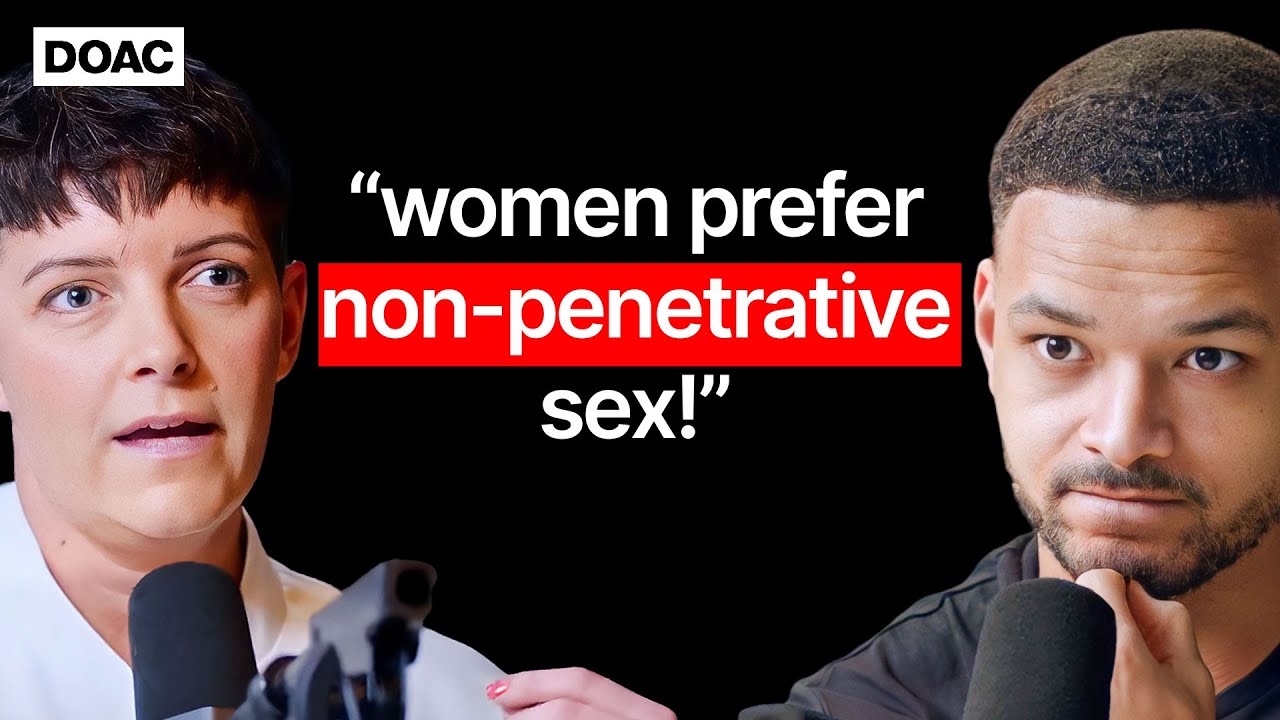
The Orgasm Expert: THIS Is How Often You Should Be Having Sex & Stop Inviting Pets Into The Bedroom! — The Diary Of A CEO

The Diary Of A CEO

Long-term intimacy fails due to predictable initiation and systemic orgasm inequality rather than low sexual frequency, requiring exploratory behaviors and shared domestic labor to recover desire.

AI-assisted summary of The Orgasm Expert: THIS Is How Often You Should Be Having Sex & Stop Inviting Pets Into The Bedroom! — original source. Check the original for full context.

Source published:

Detailed notes

## Background This video was published on YouTube by The Diary Of A CEO on February 19, 2024. The episode features Dr. Karen Gurney, a Clinical Psychologist, Psychosexologist, and Couples Therapist with over 20 years of experience, discussing the truth about desire and actionable advice on maintaining a healthy sex life based on her books.

## TL;DR Dr. Karen Gurney and host Steven Bartlett explore the psychological and physiological dynamics that shape human sexual relationships. The discussion debunks common myths around sexual frequency, monogamy, and spontaneous desire, while addressing practical challenges like the orgasm gap, initiation mistakes, and performance anxiety. Dr. Gurney offers actionable strategies for couples to maintain intimacy through parenthood, age-related changes, and evolving personal fantasies.

## Atmosphere & style The conversation maintains an open, clinical, yet deeply candid and empathetic tone throughout. Steven Bartlett engages with personal anecdotes and vulnerable queries, creating a supportive dialogue with Dr. Gurney's grounded, evidence-based expertise. The dynamic feels like an insightful, non-judgmental masterclass that unpacks sensitive intimate topics with clarity, humor, and psychological rigor.

## Key takeaways - [49:15](https://www.youtube.com/watch?v=E5swtIjpxxA&t=2955s) Sexuality exists independently within an individual and does not need to be entirely fulfilled by one partner, requiring explicit communication about sexual personalities and boundary-pushing. - [51:31](https://www.youtube.com/watch?v=E5swtIjpxxA&t=3091s) Penetrative sex is statistically women's least favorite act for pleasure induction, with nearly 80% failing to reach orgasm without direct clitoral stimulation. - [53:21](https://www.youtube.com/watch?v=E5swtIjpxxA&t=3201s) Desire issues are often initiation problems caused by partners using overly coded moves or blunt, unsexy transactional requests. - [56:40](https://www.youtube.com/watch?v=E5swtIjpxxA&t=3400s) Spontaneous desire is largely a long-term relationship myth, requiring couples to navigate the transition between willingness to engage and active arousal. - [58:34](https://www.youtube.com/watch?v=E5swtIjpxxA&t=3514s) Erectile dysfunction is frequently caused by performance anxiety and arousal non-concordance, which can be mitigated by removing penetration as the primary goal. - [01:02:51](https://www.youtube.com/watch?v=E5swtIjpxxA&t=3771s) There is no statistical correlation between sexual frequency and overall relationship satisfaction, making depth and exploration more meaningful than routine intimacy. - [01:05:19](https://www.youtube.com/watch?v=E5swtIjpxxA&t=3919s) The persistent orgasm gap directly erodes women's long-term desire, contributing to widespread sexual dissatisfaction among women. - [01:08:30](https://www.youtube.com/watch?v=E5swtIjpxxA&t=4110s) Unequal distribution of the mental load in households generates resentment that diminishes sexual desire by placing one partner in a parental role. - [01:14:02](https://www.youtube.com/watch?v=E5swtIjpxxA&t=4442s) Sleep deprivation and interrupted REM sleep directly impair the hormonal and neural pathways required for sexual arousal. - [01:21:22](https://www.youtube.com/watch?v=E5swtIjpxxA&t=4882s) Allowing pets in the bedroom creates physical and mental distractions that disrupt intimacy and focus during sex. - [01:27:03](https://www.youtube.com/watch?v=E5swtIjpxxA&t=5223s) Monogamy requires active effort and moving away from routine 'set menu' sex because the human brain naturally craves novelty.

## Detailed walkthrough ### [00:00](https://www.youtube.com/watch?v=E5swtIjpxxA&t=0s) Introduction to Sexual Dissatisfaction and Misconceptions

Dr. Karen Gurney, a clinical psychologist and psychosexologist with over 20 years of experience who leads an award-winning NHS sex clinic, reveals a startling statistic: **52% of women and 42% of men** are dissatisfied with their sex lives. She explains that this widespread unhappiness stems from societal misconceptions. Society portrays desire as purely spontaneous, passionate, and lustful, leading people to wait endlessly for a spark that may not naturally occur. Instead, desire can be actively triggered using what she terms "sexual currency."

Furthermore, conventional societal scripts dictate that intercourse (penis-in-vagina sex) is the primary act, even though research shows it is often women's least favorite sexual activity, resulting in less pleasure and lower rewards for women. Additionally, while most people assume couples should have sex around **three times a week**, the actual average is closer to **three times a month**. Dr. Gurney emphasizes that there are concrete steps couples can take to guarantee great sex, but it requires dismantling false expectations around initiation, scheduling, fetishes, and navigating intimacy after having children.

---

[01:39](https://www.youtube.com/watch?v=E5swtIjpxxA&t=99s) Steven Bartlett's Channel Update and Subscriber Milestone

Podcast host Steven Bartlett takes a moment to address his audience, expressing immense gratitude for reaching **5 million subscribers** on YouTube—a milestone far exceeding his original expectations of hitting 100,000 subscribers when starting *The Diary Of A CEO* three years prior. In exchange for the audience's continued support, he promises to elevate the show's production value, invite even higher-profile global guests, and deliver a major surprise project he has been developing over the past nine months. He asks viewers to support the channel's mission simply by hitting the subscribe button.

---

[02:43](https://www.youtube.com/watch?v=E5swtIjpxxA&t=163s) Why Sex Matters and How Modern Life Is Hijacking Attention

Dr. Gurney articulates her mission: helping people rebuild their relationship with sex. Far from being a frivolous recreational activity, good sex is essential for psychological well-being and relationship longevity. Research indicates that couples with great sex lives enjoy longer-lasting relationships, and individuals even experience higher workplace productivity the following day. Despite its importance, sexual topics remain heavily stigmatized, making clients carry immense emotional weight and embarrassment when entering therapy.

When reflecting on how sexual problems have evolved over her 20-year career, Dr. Gurney notes that while low desire remains the most frequent complaint, overall sexual frequency in the UK has steadily declined decade after decade. She attributes this to the modern pace of life, demanding work-life balances, and constant device usage. Attention is a crucial prerequisite for sexual response; individuals must be present in their minds and bodies. Today's couples frequently spend their limited free time co-existing while multi-tasking—scrolling on phones, watching TV, or checking work emails before bed—which places them in a high-stress cognitive state that leaves no room for desire to emerge.

- **Key Benefit:** Great sex leads to longer relationship longevity and increased workplace productivity the next day. - **Societal Shift:** Sexual frequency has declined continuously over the past three decades due to modern distractions and digital devices.

---

[06:36](https://www.youtube.com/watch?v=E5swtIjpxxA&t=396s) The Power of Mindfulness and How Stress Destroys Sexual Response

Drawing from her book, *How Not to Let Having Kids Ruin Your Sex Life*, Dr. Gurney highlights that women who practice mindfulness in daily life find it significantly easier to achieve orgasms and remain present during sex. Distraction during intimacy is extremely common—over **90% of people** report having non-sexual thoughts during sex. However, when these distractions are "cognitively salient" (worrying or stressful thoughts like performance anxiety or questioning a partner's enjoyment), they actively suppress physical arousal, making it harder to stay aroused, feel pleasure, or reach climax.

Steven shares a personal anecdote, describing moments when work stress and reviewing to-do lists on his phone right before bed completely blocked his ability to get an erection, leaving him worried his partner would misinterpret the issue as a lack of attraction. Dr. Gurney validates this experience, explaining that checking emails late at night triggers a cortisol spike that shuts down sexual function. She dispels the common myth that men are always ready for sex, emphasizing that both men and women require the right mental headspace and physical conditions to become aroused.

- **Mindfulness Link:** Women who practice daily mindfulness experience easier orgasms and better presence during intimacy. - **Distraction Statistic:** Over **90% of individuals** experience non-sexual thoughts while engaging in sex. - **Physiological Impact:** Stress and worry activate the sympathetic nervous system, releasing chemicals that actively shut down genital blood flow and arousal.

---

[10:33](https://www.youtube.com/watch?v=E5swtIjpxxA&t=633s) The Paradox of Thinking Too Much About Sex

Dr. Gurney explains the physiological phenomenon of "attentional narrowing" during sexual arousal. As blood flows to the genitals, the brain naturally narrows its focus to block out external stimuli, keeping the individual immersed in the moment. However, if a person is anxious, this mechanism backfires by hyper-focusing attention directly onto the anxiety itself.

This creates a destructive double-whammy: 1. It diverts attention away from erotic sensations, lowering arousal and pleasure. 2. It triggers the sympathetic nervous system (fight-or-flight response). The primitive brain cannot distinguish between a modern stressor (such as a bad work email) and a life-threatening threat (like a saber-tooth tiger), causing it to immediately switch off sexual response.

This dynamic frequently leads to performance anxiety in future encounters, as individuals enter sex fearing their bodies will fail again.

---

[12:26](https://www.youtube.com/watch?v=E5swtIjpxxA&t=746s) The Impact of Expectations, Pressure, and "Sexual Scripts"

Pressure and rigid expectations act as major passion killers. Steven notes how struggling with sex creates a silent tension where couples feel nervous going to bed, paralyzed between the fear of disappointing their partner or attempting sex and having it go poorly. Dr. Gurney agrees, pointing out that the root cause of this pressure is an inability to communicate openly about sexual stress.

In the absence of open conversation, people rely on "social learning theory" and "sexual script theory"—concepts established by sex researchers Gagnan and Simon in the 1970s. Because people do not observe real-world sex, they construct mental "scripts" derived from media, pornography, and societal norms. These rigid scripts wrongly define "real sex" as strictly penis-in-vagina intercourse, reducing other intimate acts to mere "foreplay" or using terms like "virginity" exclusively in relation to intercourse. While these scripts exist to lower social anxiety by offering a predictable framework, they ultimately harm intimacy by imposing rigid expectations without accounting for individual desires or pleasure.

- **Social Learning & Script Theory:** Concept developed by Gagnan and Simon (1970s) explaining how societal norms and media shape unwritten rules about how sex "should" happen. - **Language Barriers:** Terms like "foreplay" and "virginity" structurally minimize non-intercourse sexual activities, despite their value for pleasure and connection. - **Research Fact:** When reporting their total number of lifetime sexual partners, men are statistically more likely to round their number up to a figure ending in **0 or 5**.

[16:28](https://www.youtube.com/watch?v=E5swtIjpxxA&t=988s) Pornography, "Sexual Scripts," and the Orgasm Gap

Dr. Karen Gurney explains how society inadvertently creates broken expectations surrounding sex due to the media and pornography. Often, our "sexual scripts"—the unwritten rules of what sex should look like, who it prioritizes, and when it ends—are heavily shaped by porn. She references a landmark study examining the top 100 most popular videos on PornHub: a staggering 78% depicted acts focused primarily on male pleasure (centered on penis-vagina intercourse), while acts designed specifically for female pleasure appeared in only about 18% of the top content.

This stark contrast presents a massive practical problem: penis-in-vagina sex is statistically men's favorite sexual act, yet it ranks as women's least favorite in terms of reliably producing orgasms. When people consume these scripts as standard sexual instruction, male pleasure becomes the default priority and endpoint. Dr. Gurney emphasizes that this conditioning directly fuels the persistent "orgasm gap" in heterosexual relationships.

- **PornHub Study Stats**: Female pleasure acts appeared in only ~18% of the top 100 videos, whereas male pleasure acts appeared in ~78%. - **Impact on Norms**: Media scripts teach partners that sex ends when the man orgasms, leaving women's pleasure as an afterthought.

---

[17:46](https://www.youtube.com/watch?v=E5swtIjpxxA&t=1066s) How to Talk About Sex: Scaffolding and Rules of Engagement

Steven Bartlett agrees that talking about sex is notoriously difficult, acknowledging that bringing up sexual performance or preferences often sounds like personal criticism. Dr. Gurney confirms that open sexual communication is one of the single highest predictors of long-term sexual satisfaction, relationship satisfaction, and maintaining desire—ranking even higher than matching sex drives or having identical sexual preferences. Yet, people avoid it because they lack the vocabulary, feel clumsy, or fear risking their partner's feelings.

Dr. Gurney likens avoiding sex talks to going to the exact same hairdresser for your entire life, sitting in silence, receiving a haircut you hate, paying, tipping, and walking out without saying a word. To overcome this, she outlines a step-by-step "scaffold" for couples:

1. **Fix General Communication First**: If everyday non-sexual topics devolve into arguments, fix overall communication rules. Dr. Gurney references the Gottman Institute's research for establishing healthy "rules of engagement" (listening vs. expressing). 2. **Bring in External Topics (Low Risk)**: Introduce conversations about sex using third-party media—podcasts, movies, or articles. For instance, saying: *"I listened to a podcast about porn research today, and it made me realize we don't really talk about what we like. Would you ever be open to talking about that?"* 3. **State the Positive Intent**: Frame the conversation around long-term relationship commitment: *"I want our sex life to stay great for the rest of our lives, which is why I want to talk about this."* 4. **Discuss What Goes Well**: Only transition to discussing your actual sex life after moments of emotional intimacy (e.g., a good date night or after a positive sexual experience) by highlighting what was enjoyable. 5. **Set Future Goals (More vs. Less)**: Frame changes as a forward-looking goal setting rather than pointing out past flaws—focusing on *"What do we want more of?"* rather than *"What did I dislike?"*

> "It's a bit like going to the hairdressers—the same hairdresser for the rest of your life—and every time you sit down, not saying anything and just hoping that they'll give you the haircut that you want... and you continually get a bad one, and you just keep coming back and you say thanks, you tip them, and you go."

---

[23:45](https://www.youtube.com/watch?v=E5swtIjpxxA&t=1425s) The Loss of Attraction and Unhelpful Relationship Dynamics

When Steven asks what happens when the core issue is a total lack of physical or romantic attraction, Dr. Gurney admits this is one of the toughest clinical hurdles. While attraction fluctuates over time, starting a relationship with high attraction makes maintaining long-term desire far easier. If attraction was never present from the beginning—or if a partner's eyes have already wandered—building a fulfilling sex life requires immense effort.

Dr. Gurney stresses that attraction is deeply psychological rather than purely physical. A major driver of attraction loss in long-term relationships (especially for heterosexual women after having children) occurs when a partner begins to feel like "another child." Tasks like making their lunches, buying their clothes, or constantly cleaning up after an adult partner create a caretaking dynamic. Research confirms that parent-child dynamics within a romantic partnership are deeply unsexy and destroy sexual attraction. Addressing and correcting these domestic imbalances can sometimes allow attraction to recover.

- **Dynamic Impact**: Caretaking an adult partner triggers a maternal/paternal dynamic that actively repels sexual desire. - **Contextual Recovery**: Attraction can return if underlying relationship resentments or unfair domestic loads are addressed.

---

[26:32](https://www.youtube.com/watch?v=E5swtIjpxxA&t=1592s) How Kids Impact Sex and the Reality of Parental Sex Lives

Dr. Gurney's book, *How Not to Let Having Kids Ruin Your Sex Life*, directly targets what she identifies as the lowest point of sexual satisfaction in most people's lives: the period when children are under five years old. Having children amplifies every underlying friction point in a relationship. Couples are usually already dealing with the natural decline of desire that comes with cohabitation and long-term commitment, often compounded by fertility struggles, miscarriages, or uncomfortable pregnancies.

Once the baby arrives, chronic sleep deprivation, elevated stress, and an extra 37–40 hours of domestic labor per week (essentially a second full-time job) leave little energy or time for intimacy. Dr. Gurney notes that parents make up a significant portion of her clinical practice, largely because even standard attempts at sexual initiation are perceived as clumsy or burdensome demands by an overwhelmed partner.

- **Statistical Low**: Sexual satisfaction drops to its lowest recorded levels when couples have children under the age of five. - **Parenting Workload**: Raising children adds roughly 37 to 40 hours of extra work per week to a household.

---

[28:52](https://www.youtube.com/watch?v=E5swtIjpxxA&t=1732s) Spontaneous vs. Responsive Desire & "Desire Management"

Steven shares a personal "Desire Management" theory: his close friend moves partners in almost immediately, which smothers romance and quickly kills desire, whereas Steven maintained a long-distance relationship across the world for two years before cohabiting, keeping desire exceptionally high. Dr. Gurney validates Steven's theory, explaining that proximity, familiarity, and competing life roles inherently dilute sexual desire over time.

She breaks down the fundamental scientific misunderstanding of how sexual desire works: * **The Legacy Myth (1950s/60s)**: Traditional sex science claimed humans have a "sex drive" or spontaneous libido that strikes out of nowhere, prompting us to seek sex. People sit around waiting to "feel in the mood" before initiating. * **Spontaneous Desire**: This spontaneous urge is real, but it primarily exists in the early stages of a relationship (the first 12 to 18 months), when a partner is novel, or when distance keeps the relationship fresh. * **The Reality of Long-Term Relationships**: Over time, spontaneous desire naturally fades. In the UK, **34% of women and 15% of men** report worrying that they "don't feel like sex enough" because they are expecting spontaneous desire to operate like it did at the beginning. * **Non-Sexual Motivations**: Long-term desire relies on choosing sex for non-sexual reasons—such as wanting emotional closeness, stress relief, fun, affection, or wanting to feel desired—rather than waiting for sudden physical horniness.

- **Spontaneous Desire Drop**: Typically declines noticeably between 12 and 18 months into cohabitation or a relationship. - **UK Survey Stats**: 34% of women and 15% of men worry about low sex drive due to misunderstanding how spontaneous desire works over time.

[033:03] The Truth About Responsive Desire and Triggering Sexual Interest

Many people make the critical mistake of waiting until they naturally "feel like" having sex before engaging in it. Research shows that for women in long-term relationships, it is completely normal to almost never experience spontaneous desire—feeling like sex out of the blue with a long-term partner. When surveyed, many women report experiencing spontaneous desire only once or twice a month, or even never.

Instead, desire in long-term relationships is predominantly **responsive desire**, which emerges only *after* starting a sexual activity or being exposed to sexual stimuli (such as a passionate kiss, flirtatious text, or being naked together). The brain codes these inputs as sexual stimuli, triggering physical arousal, which in turn generates mental desire. This explains why people so often report not feeling like sex initially, but enjoying it thoroughly once it begins and wondering why they do not do it more often.

- Spontaneous desire occurs out of nowhere, whereas responsive desire requires initial sexual stimuli to be triggered. - Long-term relationships fail when couples expect spontaneous desire to drive their sex lives rather than actively creating triggering conditions.

---

[035:27] The Role of "Sexual Currency" in Long-Term Relationships

In long-term relationships, sexual desire often declines because of a drop in **sexual currency** combined with high levels of familiarity. Sexual currency represents everything a couple does that marks them out specifically as a sexual pair apart from actual intercourse—the behaviors, affection, and banter that would never be shared with friends, family, or children (such as passionate kissing, playful bottom grabs, or suggestive compliments).

When couples treat sex like a rigid on/off switch—relying solely on the average 18-minute window of intercourse—their brain stops coding their partner as a sexual stimulus. This loss of sexual charge can lead partners to seek that "frisson of excitement" through pornography or outside affairs. Elevating sexual currency creates an ongoing, low-pressure sexual atmosphere that acts as scaffolding, making it much easier to transition into sex naturally.

> "If you think of your sexual relationship as something which is always happening, something which you're always nurturing, you can imagine the power that that can have on both triggering desire but also meeting those sexual needs."

- **The Lift Example:** A female partner pushed her boyfriend against the wall of an elevator and passionately kissed him for 10 seconds before attending an event. He reported feeling more desired and sexually connected from that brief gesture than from routine sex the previous week. - High sexual currency lowers the pressure on individual sexual encounters, removing the fear of performance or rejection.

---

[039:10] Overcoming the Initiation Problem: "Trivial and Often" Sex

When a couple has low sexual currency, initiating sex carries immense psychological weight. The initiating partner often holds back for weeks, waiting for a high-stakes moment like an anniversary or a getaway. This creates overwhelming pressure on the other partner, acting as a direct "desire killer." If the attempt fails, initiation becomes even rarer, creating a vicious cycle of mounting pressure and avoidance.

To fix this, sex should be treated as "trivial and often" rather than "rare and crucial." Couples should establish an environment where inviting each other into sexual touch is effortless and turning each other down carries no shame or drama. Frequent, low-pressure flirtations—such as sending a playful message during the workday—allow partners to express sexual interest without demanding an immediate or high-stakes commitment.

- Therapy goals are met when partners can easily invite each other into sex and equally easily turn each other down without resentment. - High pressure turns sex into a chore, whereas frequent, low-stakes initiations keep communication light and adaptable.

---

[040:57] Why You Shouldn't Schedule Sex (and What to Schedule Instead)

Directly scheduling sex on a calendar often fails because it reinforces rigid expectations and pressure. It is nearly impossible to guarantee in advance that someone will feel sexually receptive at a specific hour, and failing to perform when the scheduled time arrives only adds frustration. However, in today's busy world, couples *should* schedule physical intimacy and opportunities for sexual currency.

Scheduling shared intimate activities—such as taking a bath together, giving massages, or lounging in bed—creates space for desire to emerge without demanding intercourse as the mandatory outcome. While partners might recognize that a shared bath could lead to sex, framing the invitation around the activity itself removes the demand, allowing both people to comfortably enter a sexual mindset.

- **Date Night Pressure:** Parents with only one date night a week often build up huge expectations for sex afterward, creating an anxious environment that undermines natural desire. - **The "Scattergun" Approach:** Initiating multiple low-pressure intimate activities throughout the week results in a far higher success rate for satisfying sex than relying on a single scheduled window.

---

[043:41] Three Key Strategies to Maintain High Desire

To maintain a thriving sex life over time, Dr. Karen Gurney highlights three actionable rules:

1. **Kiss More for Kissing's Sake:** Kissing frequently drops off in long-term relationships, often becoming reduced to a brief prelude to sex. Regular passionate kissing triggers desire and fulfills physical connection needs on its own. 2. **Schedule Intimacy Triggers:** Intentionally build in physical connection—such as watching movies with romantic scenes, taking baths, or giving massages—to spark responsive desire. 3. **Understand How Desire Actually Works:** Let go of the myth that sex must always start with spontaneous urge; realize that difficulty getting into the right headspace is entirely normal.

---

[045:09] Navigating Personal Dynamics, Fantasies, and Fetishes

As relationships evolve, partners can become emotionally stuck in rigid roles—such as feeling cast purely as a "parent" or "carer"—which smothers their sexual identity. Over time, people may feel suffocated if they believe they can only express themselves sexually in one specific way to satisfy their partner's expectations. This frustration sometimes drives individuals to cheat simply to experience a different side of their own sexuality.

When partners have vastly different sexual fantasies, fetishes, or desires, silence usually reigns. Most couples avoid speaking up about their true preferences out of fear of judgment, hoping their partner will magically guess what they want.

Dr. Karen Gurney utilizes a structured exercise called **Conditions for Good Sex** to help couples communicate safely: - Partners independently reflect on their **top three best sexual experiences** to pinpoint what worked for them. - They evaluate three specific areas: **Psychological arousal** (mental turn-ons and dynamics), **Physical stimulation** (preferred touch and positions), and **Mindfulness/Presence** (factors that help them stay in the moment versus distractions). - Partners then compare their lists to find common ground. Where preferences differ, they negotiate compromise or explore alternative ways to meet those needs safely within the relationship.

<ElicitationsGroup message="Explore more practical insights from Dr. Karen Gurney's discussion:"> <Elicitation label="Explain the 'Conditions for Good Sex' exercise in step-by-step detail" query="Explain the 'Conditions for Good Sex' exercise in step-by-step detail based on Dr. Karen Gurney's methodology."/> <Elicitation label="Summarize Dr. Karen Gurney's advice on navigating sex after having kids" query="Summarize Dr. Karen Gurney's advice on how having kids impacts sex lives and how couples can protect their intimacy."/> </ElicitationsGroup>

Here is a detailed, faithful walkthrough of this transcript section, preserving all the facts, nuances, humorous exchanges, and emotional texture.

---

[49:15](https://www.youtube.com/watch?v=E5swtIjpxxA&t=2955s) Negotiating Sexual Personalities and Experimentation

Steven Bartlett and Dr. Karen Gurney discuss the internal nature of sexuality and how couples can navigate differing desires for experimentation. Dr. Gurney emphasizes that a major myth around sexuality is that it only exists between partners. In reality, one's sexuality exists within oneself individually, and people should feel allowed to express it in their own minds or alone in whatever way they choose. Sexual needs do not have to be met exclusively by a single person.

Steven shares a personal story about being with a partner who was initially reluctant to experiment. He recalls thinking, *"Oh, this is boring, this is going to be really boring,"* and feeling tempted to walk away when his partner initially dismissed his ideas with, *"Oh no, that's weird, I don’t want to do that."* However, by introducing new things slowly, he was able to open her eyes, leading to them enjoying the best sex of their lives. Dr. Gurney points out that if his ex-partner had completed her "conditions for good sex" inventory, under the psychological arousal section she likely would have written that she needs deep trust and familiarity before stepping outside the standard sexual script.

Dr. Gurney explains that couples need to understand the overarching "sexual personality" of their relationship. For some people, thrill, boundary-pushing, and novelty are the essential engines that keep their sex life ticking along. For others, the goal is predictability, quiet intimacy, and close connection without anything out of the ordinary. Establishing a culture of open communication is the only way partners can discover where they overlap and how to make each other feel most alive.

- Sexuality exists independently within an individual and does not need to be entirely fulfilled by one partner. - Experimentation requires establishing high trust and psychological safety, especially for partners hesitant to deviate from standard scripts. - Couples should explicitly discuss their relationship's "sexual personality"—whether they thrive on novelty and thrill or predictability and warm intimacy.

---

[51:31](https://www.youtube.com/watch?v=E5swtIjpxxA&t=3091s) The Orgasm Gap and the Problem with the Standard "Set Menu"

The conversation shifts to the dominant cultural script surrounding sex and why it disproportionately disadvantages women. Dr. Gurney reiterates a point mentioned earlier: penetrative penis-in-vagina sex is actually women's least favorite sexual act in terms of pleasure induction. Society has constructed a rigid "set menu" for sex—often framed via the classic baseball analogy (first base, second base, main course)—that treats penetration as the definitive endpoint of sexual encounters.

Research consistently shows that this script suits male anatomy far better than female anatomy. Approximately 80% of women do not reach orgasm through penetrative sex alone because female climax relies primarily on clitoral stimulation. Consequently, women consistently rate activities like manual clitoral stimulation or receiving oral sex as their most pleasure-inducing acts. For men, penetrative sex ranks highest alongside masturbation. Dr. Gurney explains that human desire relies on the anticipation of a reward; when women are expected to engage in sex that does not suit their anatomy, resulting in a massive "orgasm gap," their desire naturally plummets.

- Roughly **80% of women** do not orgasm from penetrative sex alone, relying instead on clitoral stimulation. - Women rank manual clitoral stimulation and oral sex as their most pleasure-inducing acts, whereas penetrative sex ranks lowest for them. - For men, penetrative sex and masturbation rank as the highest pleasure-inducing acts. - Sexual desire requires an expectation of reward; a persistent orgasm gap directly erodes a partner's long-term desire.

---

[53:21](https://www.youtube.com/watch?v=E5swtIjpxxA&t=3201s) The Dynamics and Missteps of Sexual Initiation

Addressing who initiates sex, Dr. Gurney notes that while it doesn't matter who takes the lead, the initiator statistically experiences higher levels of sexual satisfaction during the encounter than the person following. Many couples who seek therapy believing they have a desire problem are actually suffering from an initiation problem. Initiation is a vulnerable piece of communication that effectively asks, *"I'd like to have sex now, would you?"*

People typically fail at initiation in one of two ways: 1. **Subtle/Coded Initiation:** Due to fear of rejection, a partner tests the waters with extremely subtle, coded moves (e.g., placing a hand in a specific spot). The other partner frequently misses the hint entirely, causing the opportunity to be lost and leaving the initiator feeling quietly rejected. 2. **Direct/Unsexy Initiation:** Women initiating with men tend to be extremely direct, using blunt phrases like, *"Should we have sex then?"* or *"Do you fancy a shag?"* While clear, this approach is inherently unsexy. It relies on the false societal myth that men are always ready for sex. In reality, research shows most men need intimacy, emotional warmth, and the feeling that their partner desires them enthusiastically rather than just out of routine or obligation.

Furthermore, partners frequently fall into repetitive initiation styles. A routine that was cute during the first six months of a relationship becomes predictable, irritating, and unsexy by month 60. Dr. Gurney advises couples to explicitly discuss how they actually like sex to be initiated.

- Initiators generally report higher sexual satisfaction in an encounter than the partner who follows. - Women initiating with men tend to use direct, utilitarian phrasing (*"Do you fancy a shag?"*), assuming men are always ready. - Men report needing emotional intimacy, feeling desired, and seeing genuine female enthusiasm rather than transactional initiation. - Repetitive initiation tactics become anti-triggers over time, replacing excitement with pressure and annoyance.

---

[56:40](https://www.youtube.com/watch?v=E5swtIjpxxA&t=3400s) Navigating the Awkward Space Between Willingness and Desire

Steven and Dr. Gurney challenge the cultural myth—fueled by movies and pornography—that sex in a healthy relationship should just "flow" effortlessly every day or two without awkwardness. When sex fails to spontaneously happen, couples assume something is broken and look for someone to blame.

Dr. Gurney describes the transition between **willingness** (agreeing to be open to sex) and **desire** (the actual onset of sexual arousal) as a inherently uncomfortable, awkward space to occupy. People wrongly expect to feel fully turned on before anything starts. Learning to get comfortable sitting in that uncertain intermediate space—where a person thinks, *"I don't know if I'm in the mood yet, but let's start touching and see what happens"*—is crucial. Utterances like *"Shall we have sex?"* force a binary yes/no decision, stripping away the grace period needed to transition into an aroused headspace.

- The belief that sex should always be spontaneous, effortless, and frequent creates unnecessary relationship panic. - Arousal develops *after* entering a sexual scenario; partners must learn to be comfortable occupying the awkward middle space between willingness and active desire. - Binary, upfront questions prevent partners from gently exploring whether their desire can be awakened.

---

[58:34](https://www.youtube.com/watch?v=E5swtIjpxxA&t=3514s) Erectile Difficulties, Arousal Non-Concordance, and Lowering the Pressure

Steven opens up about his own experiences, sharing that he has faced moments in his life where he couldn't get an erection, describing the acute embarrassment and the agonizing question of *"What do I say?"* when a partner realizes what is happening. He notes that in heterosexual dynamics, male arousal is visually obvious—*"we've got to get the Eiffel Tower up"*—which adds intense spotlight pressure.

Dr. Gurney validates his experience, explaining that this phenomenon is called **arousal non-concordance**: a state where psychological desire and physiological body responses do not line up. A person can mentally want to have sex, yet their body fails to respond. While non-concordance happens across all genders, it is visually exposed in people with penises, bringing immense pressure. The moment a man worries about his erection, his focus shifts to performance anxiety, which acts like turning down the volume on arousal, guaranteeing the erection will fail.

To resolve this, Dr. Gurney outlines immediate steps for both partners: 1. **Believe the verbal reassurance:** The partner must accept that a soft penis does not mean a lack of attraction or desire. Taking it personally creates catastrophic pressure. 2. **Dethrone penetrative sex:** Shift focus away from the erection entirely. Because penetrative sex is not the only (or even primary) source of pleasure—especially for women—the couple can shift to other sexual acts like oral sex, using vibrators, or enjoying sensory touch.

Steven agrees, noting that if partners don't communicate, they lie dormant in bed in uncomfortable silence while their mental to-do lists race. Dr. Gurney adds that if a female partner confidently initiated by saying, *"All I want tonight is for you to make me come, I don't need penetration,"* the performance pressure would vanish, and an erection would likely return naturally as the process becomes genuinely fun and arousing.

- **Arousal Non-Concordance:** A normal state where mental turn-on and bodily responses (like erections or lubrication) do not align. - Performance anxiety triggers a sympathetic nervous system response that actively kills erections. - Taking the focus off penetration and placing it on oral sex, toys, or tactile pleasure removes performance pressure, which often allows erections to return naturally.

---

[01:02:51](https://www.youtube.com/watch?v=E5swtIjpxxA&t=3771s) Practical Conditions: Sex Before vs. After Meals & The Myth of Frequency

Steven brings up a lighthearted debate from his group chat: a friend insisted on having sex *before* going out on date nights, claiming sex after food is a terrible idea. Dr. Gurney validates the friend's strategy. Full stomachs, alcohol, fatigue, and feeling bloated late at night create terrible physical conditions for good sex. She advises keeping outside date nights focused purely on emotional connection and fun, while planning separate "in-home date nights" dedicated specifically to physical intimacy.

Finally, they tackle the biggest myth in sex therapy: the idea that frequency dictates a healthy sex life. When asked how often couples *should* be having sex, most people reflexively answer **three times a week**. Dr. Gurney reveals that this is a complete urban myth. Extensive research in the UK and globally shows **zero correlation** between the frequency of sex and overall sexual satisfaction. Quality, depth, and exploration far outweigh how often it occurs.

- Full meals, alcohol, and late hours make post-date sex physically unappealing; scheduling sex *before* eating or hosting dedicated physical date nights at home is far more effective. - **Three times a week** is a pervasive myth used as an arbitrary yardstick for relationship health. - Statistical research confirms there is **no correlation** between sex frequency and sexual satisfaction. - Having deeply exploratory, connecting sex once a year yields far higher satisfaction than engaging in uninspired, routine sex once a day.

[01:05:19](https://www.youtube.com/watch?v=E5swtIjpxxA&t=3919s) Sexual Dissatisfaction, Frequency, and the Gender Gap

Discussion turns to the frequency of sex and the widespread dissatisfaction surrounding it. In the UK, the average sexual frequency for couples sits at roughly three times a month. However, Dr. Karen Gurney emphasizes that there is huge variation: many long-term couples go months without sex and are completely content, while others engage in it far more often. What stands out in the data is a profound gap between expectations and reality. According to UK data surveying 15,000 adults, huge numbers of people across all genders are dissatisfied with their sex lives. Over 40% of women explicitly report wanting to have more sex than they currently do. Overall, roughly 52% of women and 42% of men express unhappiness with their current sex lives.

Men are typically more satisfied than women in long-term heterosexual relationships because men generally find it easier to maintain spontaneous desire for the same partner over time. In contrast, women frequently experience a drop in spontaneous desire and mistakenly label it as a personal flaw. Additionally, heterosexual relationships suffer from an "orgasm gap," meaning women experience less pleasure and physical reward on average, further contributing to higher levels of sexual dissatisfaction.

* **UK Average Frequency:** Approximately three times a month, though individual variation is massive. * **Dissatisfaction Statistics:** 52% of women and 42% of men in the UK are unhappy with their sex lives. * **Desire Dynamics:** Men maintain spontaneous desire for a long-term partner more easily; women rely heavily on responsive desire, which is highly effective when triggered by sexual stimuli but often misunderstood. * **The Orgasm Gap:** Lower rates of female orgasm during partnered sex directly lower women's overall sexual satisfaction and reward.

---

[01:08:30](https://www.youtube.com/watch?v=E5swtIjpxxA&t=4110s) How Parenthood Impact Sex Lives and the Division of Labor

The conversation shifts to the immense pressure that parenthood exerts on intimacy. Host Steven Bartlett reflects on his brother—who has three children under six—and considers how fatigue, remote work, and constant domestic demands derail intimate life. Dr. Gurney explains that global studies from countries like Japan, Australia, Finland, and the US show general declines in sexual frequency, a trend heavily amplified when children enter the picture. The first year of a newborn’s life often sets a trajectory characterized by a drastic loss of "sexual currency" and the build-up of unspoken resentments.

A critical factor in how parenthood impacts sex is the "mental load"—the unequal division of domestic labor and household management that disproportionately falls on women. When one partner feels like the "CEO of the house" who must manage every detail—including treating their partner like a third child—resentment builds rapidly. Studies show a direct correlation between an equitable, transparent division of household labor and higher sexual satisfaction. When domestic responsibilities feel fair, attraction and intimacy are far easier to maintain.

* **Global Trends:** Declines in sexual frequency are observed internationally across developed nations. * **The Mental Load:** Taking on the cognitive burden of running the home breeds resentment and destroys sexual interest, making one partner feel like a parent to the other. * **Equity and Satisfaction:** Couples who divide household labor transparently and equitably report significantly higher sexual satisfaction.

---

[01:12:30](https://www.youtube.com/watch?v=E5swtIjpxxA&t=4350s) Navigating the "Parenthood Storm" and Course-Correcting Intimacy

Dr. Gurney compares the journey of parenthood to navigating a ship through a storm. Certain phases, such as the newborn stage, require couples to "baton down the hatches" and temporarily stop worrying about sex altogether. However, as time passes, couples must take stock of their relationship trajectory. If a ship shifts its course by just a degree or two, it lands in an entirely different destination years down the line; similarly, small positive adjustments prevent a sex life from becoming permanently unrecoverable.

Crucially, improving a couple's sex life during parenthood does not necessarily require having more sex immediately. Instead, it involves changing daily habits to rebuild connection. Small actions—such as learning to turn down a partner's sexual invitation gently without making them feel rejected, or regularly exchanging small gestures of "sexual currency"—keep intimacy alive until parents have the physical time and mental bandwidth for sex.

> "Parenthood is basically a jug of priorities... there's always something else you should be doing, and so the sex that you have has to be enticing enough for your brain to say, 'Yeah, I'm going to sacrifice that for sex.'"

---

[01:14:02](https://www.youtube.com/watch?v=E5swtIjpxxA&t=4442s) The Physical and Psychological Impact of Sleep Deprivation

Sleep deprivation plays a massive role in suppressing sexual desire. For the general population, getting a good night's sleep increases the probability of having sex the following day by 14%. For parents, the number of nighttime awakenings directly correlates with sexual dissatisfaction and lower libido.

Waking up repeatedly to comfort a crying child causes acute psychological stress and severe cognitive disruption. Specifically, it disrupts REM sleep, which is essential for healthy sexual functioning and neurological priming for arousal. Dr. Gurney advises that when one parent is repeatedly getting up at night while the other sleeps soundly, the resulting disparity in energy and desire creates friction; sharing nighttime parenting duties equally is one of the most effective ways to protect the relationship's intimate health.

* **Sleep-Sex Connection:** A good night's sleep boosts the chance of having sex the next day by **14%**. * **REM Sleep Disruptions:** Frequent night wakes interrupt REM sleep, impairing the hormonal and neural pathways required for sexual response. * **Recovery Timeline:** Sleep quality generally begins to improve when children reach around six years old, though having multiple children resets this timeline. * **Habit Traps:** The speed at which couples resume sex after having children depends heavily on whether they fell into habits of high awkwardness, low priority, and minimal sexual currency.

---

[01:17:15](https://www.youtube.com/watch?v=E5swtIjpxxA&t=4635s) Reaching Out for Help and Recognizing Unrecoverable Relationships

Dr. Gurney urges couples to seek help from a sex therapist much earlier rather than waiting until their relationship reaches a crisis point. She views a sex therapist as a "personal trainer for your sex life"—someone to consult for skill-building, optimization, and maintenance rather than just emergency intervention. When couples wait years, negative habits, deep-seated awkwardness, and polarized defensive positions become deeply ingrained, making the therapeutic process far more difficult.

When asked if some relationships are truly unrecoverable, Dr. Gurney confirms that she sees such cases in her clinical practice. Citing John and Julie Gottman's research on the "Four Horsemen" of relationship breakdown, she highlights contempt and deep resentment as primary indicators that a relationship may not survive. However, she notes that identifying a relationship as unrecoverable can actually be a positive outcome. Social convention dictates lifelong monogamy, but if a couple was fundamentally incompatible or has carried decades of resentment, splitting up to pursue a healthy sexual relationship with someone else is often the healthiest resolution.

* **Therapy as Prevention:** Couples should view sex therapy like seeing a personal trainer—aimed at maintenance and improvement early on. * **Signs of Unrecoverable Dynamics:** Heavy resentment, contempt, long-term polarization, and fundamental, unaddressed sexual incompatibility. * **Positive Separation:** A breakup that allows both individuals to find fulfilling sexual partnerships elsewhere can be a successful clinical outcome.

---

[01:19:21](https://www.youtube.com/watch?v=E5swtIjpxxA&t=4761s) The Most Common Sexual Complaints in Therapy

When couples sit down in Dr. Gurney's therapy office, the single most common sentence she hears is: *"We have a great relationship, but..."* These couples usually possess immense mutual love, respect, and deep partnership, yet struggle with a total absence of sex, severe initiation imbalances, or mismatched desire.

The second most common category of complaints involves specific bodily issues and physical discomfort during intimacy. These include medical and physical challenges such as pain during sexual activity—particularly painful penetration—and deep-seated anxiety surrounding body image or physical performance.

* **Top Complaint:** Strong emotional partnership paired with a breakdown in sexual initiation or desire. * **Second Top Complaint:** Physical pain during sex (such as painful penetration/vaginismus) and physical performance anxiety.

[01:20:11](https://www.youtube.com/watch?v=E5swtIjpxxA&t=4811s) Navigating Change and Growth in Relationships

Worrying about erections and orgasms are incredibly common experiences, but the third major category of sexual issues centers on navigating personal and relational change. Sexual relationships need to be flexible enough to allow growth for both individuals. However, because couples frequently struggle to communicate about these shifts, growth often happens for one person in isolation, leading to a sudden realization that their sexual needs are no longer being met. For instance, an individual might discover a new interest or fantasy they wish to explore but feel entirely unable to discuss with their partner. Without open dialogue, the sexual relationship can quickly hit a crisis point. Couples must actively create a "culture of growth" and allow space to see if their connection can withstand and adapt to these natural personal evolutions.

[01:21:22](https://www.youtube.com/watch?v=E5swtIjpxxA&t=4882s) The Disruptive Impact of Pets in the Bedroom

When asked about the most unexpected things she has encountered in her 20 years of practice, Dr. Karen Gurney points to the massive impact pets have on people's sex lives. This revelation surfaced recently when an Instagram post she shared blew up with comments from followers explaining how their pets constantly ruin the mood by watching, trying to get involved, or putting one of the partners off entirely. Steven Bartlett laughs and admits that his own dog loves to watch, explaining that the dog seems genuinely concerned that Steven's partner is being attacked. When the dog was younger, he would even experience nervous urination out of fear that "mummy and daddy are fighting." Dr. Gurney confirms this is a widespread challenge, noting that pets introduce a significant distraction at a time when focused attention is crucial. Simply putting them outside the room often fails, as both dogs and cats will bark and scratch at the door. "Pets should come with a warning label for your sex life," she half-jokes, suggesting that they are best kept out of the bedroom, a sentiment echoed strongly by her social media audience following the lockdown pet boom.

* **Pet Distractions:** Pets frequently ruin the mood by staring, trying to interact, or reacting protectively to the physical movements of sex. * **The Door Barrier:** Locking pets out often results in disruptive barking or scratching at the door, presenting a lose-lose scenario for couples. * **Lockdown Effect:** The surge in pet ownership during lockdown has made this an unexpectedly prominent modern sexual complaint.

[01:23:19](https://www.youtube.com/watch?v=E5swtIjpxxA&t=4999s) Sex Positivity and the Impact of First Experiences

Dr. Gurney feels highly optimistic about the future trajectory of sex, citing a major boost in sex positivity across traditional media, social media, and popular TV shows like *Sex Education*. People are developing a broader understanding of sex, becoming more assertive, recognizing that intimacy does not have to look just one way, and exploring diverse relationship structures beyond mandatory monogamy and heterosexuality. However, she notes a distinct lag, as this cultural shift has "not yet trickled down to the therapy room" where traditional anxieties still dominate. Bridging this gap is crucial, especially for the younger generation. As a mother of two boys, Dr. Gurney finds this cultural evolution exciting because a person's very first sexual experience heavily influences their lifelong sexual satisfaction. Giving young people the knowledge to ensure their first experience is positive, rather than a negative milestone, is one of the greatest gifts society can offer.

[01:24:40](https://www.youtube.com/watch?v=E5swtIjpxxA&t=5080s) How Menopause and Body Image Alter Sexual Desire

Long-term relationships must continuously adapt to major biological and physical changes, with the menopause and perimenopause being chief among them. The physical and emotional symptoms—such as hot flashes, bodily aches, pains, and volatile mood changes—can severely disrupt a person's interest in sex. Alongside these hormonal shifts, complex psychosocial factors within a long-term relationship come into play. A major component of therapy involves untangling how much of the drop in desire is directly caused by menopause, and how much stems from pre-existing relationship dynamics that have simply been exacerbated by menopausal symptoms. Hormonal fluctuations are vital to track for anyone with a menstrual cycle, as receptiveness to sex and the specific types of intimacy desired naturally shift throughout the monthly cycle.

Another seismic shift occurs after having children, as significant changes to a person's body can deeply impact self-confidence and body image. Many individuals harbor intense anxieties that stretch marks or altered body shapes will kill their partner's attraction to them. Because couples rarely voice these vulnerabilities, the anxiety festers. Dr. Gurney highlights that a major triumph of therapy is creating a safe space where people can speak the unspeakable. Often, simply vocalizing these fears removes the problem instantly; partners frequently respond with reassurance, clarifying that their attraction is holistic and not solely dependent on a specific body part like a flat belly.

[01:27:03](https://www.youtube.com/watch?v=E5swtIjpxxA&t=5223s) Debunking the Monogamy Myth and Exploring Open Relationships

When asked point-blank if humans are meant to be monogamous, Dr. Gurney answers with a definitive "no." Acknowledging that this is a highly unpopular answer that people often hate to hear on social media, she clarifies that while she is monogamous herself, humans are not evolutionarily designed to maintain automatic sexual interest in a single person forever. Human brains naturally crave novelty and grow bored with predictability. Consequently, sustaining a vibrant sex life within a long-term monogamous framework requires deliberate effort, nurturing, and a willingness to allow the relationship to evolve. Monogamy is a pervasive historical, political, and economic social construct that people blindly fall into without questioning. Choosing monogamy is perfectly fine, but couples must do so with their eyes wide open, understanding that spontaneous desire will naturally drop as a partner becomes highly familiar. To combat this, couples must resist ordering the "set menu" of predictable sex, opt for a "buffet" of varied experiences, and intentionally bring different versions of themselves into the bedroom.

* **Brain Chemistry:** The human brain naturally rejects predictability and requires novelty to maintain sexual excitement over decades. * **The Set Menu Analogy:** Long-term couples often default to a repetitive routine ("the set menu"), whereas maintaining desire requires variety and experimentation ("the buffet"). * **Alternative Structures:** While statistics show only a small percentage of people explicitly identify with non-monogamous structures, open relationships and consensual non-monogamy are steadily rising.

Dr. Gurney finds great joy in working with couples transitioning from monogamy to an open relationship structure. These couples are often highly adept at thinking outside the box, possessing the unique ability to completely separate their deep love and commitment for each other from their purely physical sexual interests. Because they do not view outside sex as a threat to their core connection, they unlock an entirely new set of solutions. However, much like monogamy, open relationships only succeed if the partners work hard at them. While they may not struggle with predictability, they must exert constant effort toward managing strict boundaries, maintaining hyper-clear communication, and navigating the emotional flux of their arrangement.

For couples looking to broker the conversation about opening up their relationship, Dr. Gurney advises against a sudden, jarring declaration over dinner, which Bartlett notes would feel like a "dagger in the heart" to a partner who assumes it simply means they want to sleep with someone else. Instead, she suggests testing the waters gently by referencing external media, such as a podcast discussion, to explore how both partners feel about the concept of monogamy as a choice. This fear of non-monogamy stems from a cultural belief that romantic love and desire are finite resources—an assumption we do not apply to our children or our friends, whom we can love simultaneously and equally.

[01:32:27](https://www.youtube.com/watch?v=E5swtIjpxxA&t=5547s) The Last Guest's Questions and Final Advice

Following the traditional closing ritual of the podcast, Dr. Gurney answers two questions left anonymously by the previous guest. The first question asks for the worst advice she has ever received. Dr. Gurney reveals it came from her very first clinical supervisor early in her career when she was just 19 or 20 years old, who bluntly told her not to become a psychologist because she lacked all the necessary qualities to succeed in the field. "I'm glad to have proved her wrong," Dr. Gurney smiles.

The second question asks for the best advice she can offer Steven Bartlett specifically on how he can improve his own sex life. Her tailored prescription for Steven is threefold: "create a culture of talking about sex often, initiate freely, and be really comfortable with being turned down." Steven thanks her deeply, noting that her perspective is incredibly refreshing because it focuses on dismantling the underlying psychological barriers and reframing our fundamental definitions of sex, which prevents upstream symptoms and misunderstandings from forming. He highly recommends her bestselling books, including *Mind The Gap* and her new release, *How Not to Let Having Kids Ruin Your Sex Life*, as essential, inclusive, and highly readable guides for couples navigating these challenges.

[01:35:17](https://www.youtube.com/watch?v=E5swtIjpxxA&t=5717s) Sponsor Message: Eight Sleep

Steven Bartlett concludes the episode by sharing a personal revelation about how Eight Sleep has transformed his daily life. He explains that the system automatically regulates temperature throughout the night, allowing for deeper, more restorative sleep. This improved sleep quality leaves him feeling noticeably more energized and far better prepared to pursue his goals each day.

Emphasizing his commitment to authenticity, Steven highlights that all podcast sponsors are brands he personally uses and genuinely loves, explicitly placing Eight Sleep among his top technological game-changers. He encourages listeners to experience the benefits for themselves by checking out [8sleep.com/steven](https://8sleep.com/steven) to take advantage of special holiday savings.

## Notable quotes > [49:15](https://www.youtube.com/watch?v=E5swtIjpxxA&t=2955s) Oh, this is boring, this is going to be really boring — Steven Bartlett

> [49:15](https://www.youtube.com/watch?v=E5swtIjpxxA&t=2955s) Oh no, that's weird, I don’t want to do that. — Steven's Ex-Partner

> [53:21](https://www.youtube.com/watch?v=E5swtIjpxxA&t=3201s) I'd like to have sex now, would you? — Dr. Karen Gurney

> [53:21](https://www.youtube.com/watch?v=E5swtIjpxxA&t=3201s) Should we have sex then? — Dr. Karen Gurney

> [53:21](https://www.youtube.com/watch?v=E5swtIjpxxA&t=3201s) Do you fancy a shag? — Dr. Karen Gurney

> [01:12:30](https://www.youtube.com/watch?v=E5swtIjpxxA&t=4350s) Parenthood is basically a jug of priorities... there's always something else you should be doing, and so the sex that you have has to be enticing enough for your brain to say, 'Yeah, I'm going to sacrifice that for sex.' — Dr. Karen Gurney

## Mentioned Dr. Karen Gurney, Steven Bartlett, John Gottman, Julie Gottman, Eight Sleep, Mind The Gap: The truth about desire and how to future proof your sex life, How Not to Let Having Kids Ruin Your Sex Life, Sex Education, The Diary Of A CEO

[Source](https://www.youtube.com/watch?v=E5swtIjpxxA)

中文简报

Karen Gurney 博士重新解读性频率与高潮差距成因 长期亲密关系受挫源于可预见的求欢方式及系统性的高潮不平等,而非性生活频率低下;重燃欲望需要探索性尝试与共同分担家务。 Karen Gurney 博士与主持人 Steven Bartlett 共同探讨了塑造人类性关系的心理与生理机制。本次讨论打破了围绕性生活频率、一夫一妻制和自发性欲的常见误区,同时直面了高潮差距、求欢误区以及表现焦虑等现实挑战。Gurney 博士为伴侣们提供了切实可行的策略,帮助他们在经历为人父母、年龄增长及个人性幻想演变的过程中持续维系亲密关系。 自发性性欲通常在同居或恋爱12至18个月后自然衰退,长期关系主要依赖“反应性性欲”与日常维护的“性资本”(如亲吻和挑逗),而非被动等待突发冲动。 (28:52) 约80%的女性无法仅凭阴道插入式性交达到高潮,该方式反而是女性获得快感最低的途径;这种忽视阴蒂刺激的既定“性剧本”拉大了高潮差距,直接侵蚀了女性对性生活的期待与欲望。 (51:31) 许多伴侣误将发起障碍当成性欲缺失:过于隐晦的肢体暗示容易被错过并引发挫败感,而机械直白的发起又缺乏吸引力,双方应建立低压力、高频次且包容拒绝的发起机制。 (53:21) 家庭琐事与育儿负荷的不均容易让夫妻滑向“母子/父女”般的照料关系,这种非平等的相处模式会严重扼杀性吸引力,尤其在孩子5岁以下阶段,夫妻性满意度往往降至谷底。 (23:45)

Reading summary

According to clinical psychologist and psychosexologist Dr. Karen Gurney, widespread sexual dissatisfaction stems from unrealistic cultural scripts that treat desire as purely spontaneous and equate sex exclusively with penetrative intercourse. She argues that sustaining long-term intimacy requires couples to understand responsive desire, build low-pressure sexual currency, and actively adapt to life transitions. Rethinking Spontaneous Urges and Responsive Desire (28:52) Dr. Gurney observes that while couples often assume healthy relationships require sex roughly three times a week, UK survey data indicates an average of three times a month, with 52% of women and 42% of men expressing dissatisfaction with their sex lives. A central cause of this discontent is the assumption that sexual desire should occur spontaneously. Gurney explains that spontaneous desire typically fades after 12 to 18 months of cohabitation. Consequently, 34% of women and 15% of men in the UK worry about their libido because they mistakenly wait to feel spontaneous urge before initiating. In established partnerships, desire is predominantly responsive, emerging only after exposure to erotic stimuli or physical touch. Rather than rigidly scheduling intercourse—which introduces anxiety and performance pressure—Gurney advises couples to schedule intimacy triggers and cultivate ongoing "sexual currency." This involves affectionate kissing, playful banter, and physical touch without mandatory intercourse. She recommends treating sexual invitations as "trivial and often" rather than "rare and crucial," establishing a dynamic where partners can invite intimacy easily and decline without guilt or rejection. Rigid Sexual Scripts and the Orgasm Gap (51:31) Modern sexual expectations are heavily shaped by cultural scripts and mainstream media that disproportionately center male pleasure. Gurney cites an analysis of the top 100 PornHub videos showing that 78% depicted acts focused on male pleasure, while only 18% featured female pleasure acts. In heterosexual partnerships, penetrative intercourse is statistically men's favorite activity but ranks as women's least favorite for reliably inducing climax. Approximately 80% of women do not reach orgasm through penetrative intercourse alone, relying instead on clitoral stimulation. Because sexual desire depends heavily on anticipated reward, the persistent orgasm gap steadily erodes women's desire over time. Furthermore, defining intercourse as the only "real sex" creates acute performance anxiety. For men, stress often induces arousal non-concordance, where mental turn-on does not translate into an erection. Gurney emphasizes that prioritizing non-penetrative pleasure—such as oral sex, manual touch, and vibrators—relieves performance pressure, eliminating anxiety and allowing physical arousal to return naturally. Scaffolding Communication and Individual Sexual Profiles (17:46) Gurney asserts that open sexual communication predicts long-term satisfaction far more reliably than matching libidos or identical preferences. To overcome the awkwardness of discussing sex, she outlines a structured "scaffolding" approach: establish healthy general communication rules, use external media like podcasts to broach sensitive topics safely, state positive intent regarding long-term commitment, and focus on forward-looking goals of what partners want more of rather than past grievances. To align differing sexual desires and fetishes, Gurney uses a clinical exercise called "Conditions for Good Sex," where partners analyze their best past experiences across psychological arousal, physical stimulation, and mindfulness factors. This exercise clarifies whether a relationship's sexual personality thrives on novelty and thrill or security and predictability. Challenging the idea that humans are biologically wired for lifelong monogamy, Gurney argues that sustaining monogamous desire requires deliberate effort to avoid the predictable "set menu" in favor of varied experiences. Managing the Domestic and Physiological Toll (6:36) Sexual frequency has steadily declined across developed nations due to digital distractions and high-stress lifestyles. Gurney notes that over 90% of individuals experience non-sexual thoughts during intimacy. When thoughts center on salient stressors, such as late-night work emails, the sympathetic nervous system triggers cortisol spikes that inhibit genital blood flow. Conversely, practicing daily mindfulness significantly improves one's ability to stay present and climax. Intimacy reaches its lowest statistical point when children are under five years old. Raising young children introduces severe sleep deprivation—disrupting the REM sleep necessary for sexual priming—and adds roughly 37 to 40 hours of domestic labor weekly. When one partner carries an unfair "mental load" and assumes a caretaking role over their spouse, romantic attraction collapses. Gurney notes that equitable domestic division correlates with higher sexual satisfaction. Even unexpected modern disruptions, such as pets demanding attention in the bedroom, present cognitive barriers that couples must actively mitigate. While Dr. Gurney advocates treating sex therapy as proactive maintenance rather than emergency intervention, she acknowledges that relationships entrenched in contempt or fundamental incompatibility may be unrecoverable, making separation a valid and healthy resolution. Her broader conclusion emphasizes that sustaining intimacy requires continuously adapting to personal growth, hormonal shifts like menopause, and lifestyle changes, rather than expecting effortless, spontaneous passion to endure on its own.

精炼阅读摘要

临床心理学与性心理学家 Karen Gurney 博士指出,广泛存在的性生活不满意主要源于将欲望误解为纯粹的自发冲动,以及将性狭隘地等同于活塞式阴茎插入。她主张长期伴侣应依托“反应性欲望”、积累日常的“性货币”并重构沟通模式,以摆脱性脚本带来的焦虑与高压。 破除自发欲望与固有性脚本的神话 (0:00) 根据英国约15,000名成人的调查,52%的女性与42%的男性对现有性生活不满意,但公众往往将问题归咎于个人缺陷。Gurney 解释称,1950至1960年代的传统性观念将性欲视作凭空降临的生理本能(自发性欲望),这种状态通常只在恋情初期的12至18个月内或由于距离感而活跃。在长期伴侣关系中,自发欲望自然消退,34%的女性与15%的男性因此担忧自身性冲动不足;事实上,女性更多依赖“反应性欲望”,即先接触接吻、爱抚或情调等刺激后,大脑才唤醒身体与心理欲望。 此外,基于 Gagnan 与 Simon 在1970年代提出的“性脚本理论”,大众对性的认知深受色情片与影视的片面塑造。一项针对 PornHub 排名前100视频的研究显示,78%的画面聚焦于男性快感,而专注女性快感的仅占约18%。这强化了“阴茎插入即主菜”的偏见。生理数据显示,约80%的女性仅通过单纯的插入无法达到高潮,主要依靠阴蒂刺激,而插入往往被女性列为引发快感效果最低的方式之一。这种快感回报的极度不对称,进一步拉大了长期亲密关系中的“高潮差距”(orgasm gap)。 压力与注意力收窄对生理唤醒的破坏 (6:36) 良好的性生活对心理健康和伴侣长久性具有明确益处,还能提升次日的工作效率,但现代压力与电子设备构成了持续的阻碍。Gurney 指出,性唤醒高度依赖当下心神的存在感,然而超过90%的人承认在性过程中会产生无关杂念。当涉及工作担忧或表现焦虑等高认知负荷想法时,人体的交感神经系统被激活,产生等同于应对远古猛兽的“战斗或逃跑”应激反应,促使皮质醇激增并阻断生殖器血流。 在唤醒过程中,大脑本会发生“注意力收窄”以过滤外界干扰;但若个体陷入焦虑,这种机制会反向放大对表现失利的聚焦,引发“唤醒不一致”(arousal non-concordance)——即心理上渴望,身体却无法勃起或润滑。宿主 Steven Bartlett 分享了睡前查阅工作便签导致勃起失败的经历,Gurney 强调男性并非时刻准备好性交,一旦将插入从性快感的核心位置移开,转向口交、抚摸或器具,卸下“必须勃起”的表现焦虑,身体反应往往能自然恢复。 积累“性货币”与低压力的日常发起 由于英国伴侣的平均性频率实则接近每月3次,将“每周3次”视作健康标杆纯属认知误区,研究证实性频率与满意度并无直接相关。为打破僵局,Gurney 提倡在日常中积累“性货币”(sexual currency)——即仅属于性伴侣之间、有别于亲友互动的专属亲昵举动,例如充满激情的吻、轻拍臀部或挑逗话语。若仅把性局限于平均18分钟的机械插入,大脑便会停止将伴侣标记为性刺激源,甚至促使个体在婚外或色情作品中寻找刺激感。 在发起方式上,伴侣往往陷入两极:要么因害怕被拒而采取隐晦暗示,导致对方无法接收;要么使用过于直接、事务性的言语(如“要来一次吗”),忽视了双方均需要温存与被渴望的感觉。Gurney 建议将性视作“微不足道且频繁”的日常邀请,而非数周甚至数月才规划一次的高压大事,伴侣需建立能轻松发起且拒绝时不带内疚或怨怼的安全文化。针对日程安排,直接给性爱定点定时常导致预期焦虑,更好的策略是安排洗澡、按摩等容易唤起亲密的活动,给予彼此进入状态的缓冲空间。 结构化沟通工具与应对育儿及生理巨变 公开探讨性好恶是维持长期欲望的核心预测指标,但常因担心伤害伴侣而被规避。Gurney 提出了“良好性的条件”(Conditions for Good Sex)这一梳理练习:伴侣各自回顾过往最美妙的3次经历,从心理唤醒(幻想与心理动态)、身体刺激(偏好的触碰方式与姿势)以及当下专注度(助益或干扰因素)三个维度进行对比与协商,从而理顺双方属于寻求新奇边界型还是偏好安全预测型的“性人格”。 该沟通框架在面临人生转折时尤为关键。在拥有5岁以下幼儿的阶段,伴侣的性满意度常跌至谷底。每周新增约37至40小时的家务劳动若过度失衡,极易使一方产生照料“巨婴”的母职/父职心理,从而彻底抹杀性吸引力;且夜间频繁醒来会严重破坏与性冲动密切相关的 REM 睡眠。此外,更年期伴随的潮热、情绪波动及产后体型变化亦会动摇自信。通过将隐秘担忧坦诚表达,并公平分担家务与育儿,能有效瓦解怨怼,避免亲密关系在慢性消耗中陷入绝境。 卧室外干扰与长久关系中的人性进化 (81:22) 除心理机制外,外部微观环境同样对性体验产生直接干扰。Gurney 指出,在封锁期宠物热潮之后,宠物在卧室内的走动、注视甚至因误以为伴侣受袭而产生的应激反应,成为高频的“破坏气氛者”,建议伴侣在亲密时将宠物移出卧室。放眼更宏观的层面,Gurney 认为人类在进化上本就不具备对单一伴侣终身保持本能性冲动的机制,大脑天生渴望新奇,因此长期一夫一妻制需要后天刻意投入与精心经营。 伴侣应将性从单调重复的“固定套餐”调整为允许尝试多元体验的“自助餐”。对于小部分尝试知情同意非一夫一妻制(CNM)或开放式关系的伴侣,虽然摆脱了单调性,但也需要设立更为严格的边界与高密度的情绪沟通。无论是恪守一夫一妻还是探索其他结构,将性视为两个人各自独立性意识的交汇,并在关系中留出共同成长的空间,是维持生机的根本所在。 Gurney 总结认为,提升性生活质量的核心在于建立日常化谈论性的关系文化、敢于轻松发起并完全接纳被拒绝。尽管改善亲密技术能解决大量困扰,但在严重存在 Gottman 理论中“轻蔑”与持久怨怼的情形下,关系的裂痕可能不可逆转;此时理智地结束关系以追求各自的健康性生活,亦是具备临床价值的正向选择。

Detailed notes — zh

## Background 本期内容由主持人 Steven Bartlett 于 2024 年 2 月 19 日在 YouTube 频道的《The Diary Of A CEO》栏目发布。对话嘉宾为英国知名临床心理学家、性心理学家兼畅销书作者 Karen Gurney 博士,拥有超过 20 年的伴侣性治疗经验。视频简介指出,本期节目深入探讨了大众对性频率与欲望的认知误区、如何打破僵化的性脚本、育儿与数字化生活对伴侣亲密关系的冲击,以及如何科学地维持终身满意的性生活。 ## TL;DR Dr Karen Gurney 结合临床数据与神经科学,颠覆了大众将性欲视为“必须纯粹自发”的传统迷思,指出长期关系中“响应性欲望”才是核心常态。她强调注意力被数字设备与工作焦虑劫持是现代人性欲消退的主因,并深入剖析了以阴道插入为中心的性脚本如何制造巨大的男女高潮差距。对话还拆解了男性勃起焦虑背后的“身心唤醒不一致”、育儿阶段心理负荷与睡眠剥夺对亲密度的毁灭性打击,并提出了通过积累低压日常的“性货币”、预约身体亲密而非机械排期等切实可行的改善策略。最终,她呼吁伴侣建立常态化的性沟通文化,理性看待单配偶制的局限与关系弹性,将性满意度视为需要主动经营的心理与生理契合。 ## Atmosphere & style 整场对话在严谨的临床科学与极具温度的人性关怀之间取得了精妙平衡,毫无谈论性话题时的低俗或轻浮,反而充满专业、祛魅且直击本质的坦诚。主持人 Steven Bartlett 毫不避讳地分享个人在亲密关系中的困惑与生理尴尬,嘉宾则以温和、通透且极具说服力的专家视角进行耐心拆解,两人互动张弛有度、默契十足。听众在聆听过程中不仅能感受到卸下沉重耻感后的释然与共鸣,更能在科学工具的启发下获得重塑亲密关系的底层信心与顿悟感。 ## Bulletin - [00:00](https://www.youtube.com/watch?v=E5swtIjpxxA&t=0s) 统计显示 52% 的女性与 42% 的男性对性生活不满意,大众普遍误以为“每周三次”是常态,但实际社会平均水平仅为“每月三次”,且性生活频率与满意度之间并无必然关联。 - [51:30](https://www.youtube.com/watch?v=E5swtIjpxxA&t=3090s) 约 80% 的女性无法单纯通过阴茎-阴道插入式性交达到高潮,阴蒂刺激才是女性快感的核心,但传统以插入为主导的性脚本严重放大了男女之间的“高潮差距”。 - [32:39](https://www.youtube.com/watch?v=E5swtIjpxxA&t=1959s) 在长期关系中,自发性欲望往往自然消退,伴侣应转向依赖接触刺激后触发的“响应性欲望”,并借助日常无目的的“性通货”来维持两性吸引力与张力。 - [01:14:02](https://www.youtube.com/watch?v=E5swtIjpxxA&t=4442s) 育儿和睡眠剥夺对性生活具有毁灭性打击,优质睡眠能让次日发生性生活的概率提升 14%,而家庭心理负荷分配不均滋生的怨恨是扼杀性欲的元凶。 - [40:57](https://www.youtube.com/watch?v=E5swtIjpxxA&t=2457s) 专家坚决反对预排性生活时间表,主张将性爱视作“微不足道且频繁”的日常互动,预约“身体亲密”而非强求性交结果。 ## Key takeaways - [00:00](https://www.youtube.com/watch?v=E5swtIjpxxA&t=0s) 社会广泛存在性认知偏差:大众误将性欲视为必须自发降临的激情,导致无数伴侣在等待“性冲动”中陷入长期性冷淡。 - [07:07](https://www.youtube.com/watch?v=E5swtIjpxxA&t=427s) 注意力是性唤起的“音量旋钮”,数字屏幕、工作邮件与多任务处理劫持了大脑带宽,导致交感神经兴奋而抑制生理唤起。 - [10:33](https://www.youtube.com/watch?v=E5swtIjpxxA&t=633s) 正念训练有助于阻断性爱中的“认知显著性杂念”,将焦点拉回身体触感与情欲体验,从而改善勃起障碍与高潮困难。 - [14:40](https://www.youtube.com/watch?v=E5swtIjpxxA&t=880s) 僵化的性脚本以男性阴茎插入阴道为中心,贬低了非插入式亲密互动,造成严重的性表现压力与期望落差。 - [17:46](https://www.youtube.com/watch?v=E5swtIjpxxA&t=1066s) 伴侣间谈论性的沟通能力是维系长期满意度与欲望的核心指标,其重要性远胜于单纯的做爱频率。 - [23:45](https://www.youtube.com/watch?v=E5swtIjpxxA&t=1425s) 母职泛化与照料式动态(将伴侣视作大儿子)会迅速毁灭两性吸引力,长久关系的保鲜依赖一定的心理边界与独立空间。 - [32:39](https://www.youtube.com/watch?v=E5swtIjpxxA&t=1959s) 自发性欲望随相处时间增加而必然下滑,长期伴侣应认识到“响应性欲望”才是后期的常态与主力机制。 - [35:27](https://www.youtube.com/watch?v=E5swtIjpxxA&t=2127s) “性通货”涵盖除性交外所有确认两性吸引力的言行(如深吻、挑逗、赞美),能打破非黑即白的性爱开关模式。 - [38:51](https://www.youtube.com/watch?v=E5swtIjpxxA&t=2331s) 性爱应当是“微不足道且频繁的”,伴侣应建立低压发起文化,做到随心发出邀请并坦然接纳被拒绝。 - [40:57](https://www.youtube.com/watch?v=E5swtIjpxxA&t=2457s) 切勿强行预约具体的做爱时间,但应定期预约不带强制结果的身体亲密与互动空间。 - [59:25](https://www.youtube.com/watch?v=E5swtIjpxxA&t=3565s) 身心唤起不一致是普遍现象,男性心理渴望但阴茎疲软并非失去吸引力,卸下插入式执念可有效缓解勃起焦虑。 - [01:02:51](https://www.youtube.com/watch?v=E5swtIjpxxA&t=3771s) 传统晚餐约会往往因饱腹与疲惫不利于性爱,应将外出增进感情与居家的身体亲密分别独立规划。 - [01:10:10](https://www.youtube.com/watch?v=E5swtIjpxxA&t=4210s) 家庭琐事的“心理负荷”不公会导致承担者产生强烈怨恨,公平透明的分工能显著提升伴侣的性满意度。 - [01:21:22](https://www.youtube.com/watch?v=E5swtIjpxxA&t=4882s) 宠物进入卧室会严重分散注意力甚至破坏气氛,性爱需要绝对专注的环境支持。 - [01:27:03](https://www.youtube.com/watch?v=E5swtIjpxxA&t=5223s) 人类大脑天生追求新鲜感,单配偶制需要伴侣打破刻板流程并主动发掘自我的不同面向来对抗可预测性。 - [01:17:15](https://www.youtube.com/watch?v=E5swtIjpxxA&t=4635s) 性咨询应被视作“性生活的私人健身教练”,尽早介入维护能有效防止伴侣关系滑向不可逆的怨恨深渊。 ## Detailed walkthrough ### [00:00](https://www.youtube.com/watch?v=E5swtIjpxxA&t=0s) 性观念的误区、性满意度现状与核心争议 现代社会中几乎人人都渴望拥有更多、更好的性生活,并且存在许多切实可行的方法能够保障终身的优质性体验,而英国国家医疗服务体系(NHS)屡获殊荣的性诊所首席心理学家、拥有 20 年从业经验的临床心理学家兼性心理学家 Karen Gurney 博士正是这一领域的权威。令人震惊的统计数据显示,当下有 52% 的女性和 42% 的男性对自己的性生活感到不满。这种普遍的失望源于全社会对性机制的根本性认知偏差:大众文化总是将性欲塑造成充满原始渴望(lust)、激情四射且完全自发的冲动,但这在现实中根本不是常态。无数伴侣坐在那里苦苦等待这种“天雷勾地火”的冲动降临,结果往往一等就是几个月甚至数年。Gurney 博士指出,人们真正需要掌握的是如何利用所谓的“性货币”(sexual currency)来主动触发欲望。 社会的刻板剧本还充斥着其他严重偏见。例如,传统的阴茎-阴道性交(PIV)在各项调查中往往是女性满意度最低的性行为形式,然而社会文化却顽固地将其定义为性的终极标准与核心,直接导致女性在亲密关系中体验到的快感与心理奖赏大打折扣。此外,公众对于性频率也存在荒谬的脱节:当被问及“正常人应该多久做一次爱”时,大多数人脱口而出的答案都是“一周三次”;但大样本统计数据所呈现的冰冷现实却是“一个月三次”。这种期望与现实的巨大鸿沟,引发了广泛的焦虑。围绕这些困惑,对话抛出了一系列尖锐议题:性生活是否应该提前做日程排期?当伴侣排斥自己的性幻想或癖好时该如何沟通?面对孩子出生后陷入停滞的亲密关系,伴侣该如何打破僵局?如果有一天猛然发现自己不再觉得伴侣有性吸引力,又该如何开口? - **性生活不满意度**:52% 的女性与 42% 的男性对自身性生活现状表示不满意。 - **性频率的认知偏差**:大众普遍认为合理的频率为每周 3 次,而实际社会平均统计仅为每月 3 次。 - **性唤起常态认知**:大众误以为性欲必须是纯粹自发、充满激情的冲动,导致大量伴侣陷入无休止的被动等待。 --- ### [01:39](https://www.youtube.com/watch?v=E5swtIjpxxA&t=99s) 频道五百万订阅里程碑与突破承诺 面对演播室的镜头,主持人 Steven Bartlett 难掩激动地分享了一个不可思议的频道里程碑:《The Diary Of A CEO》在 YouTube 上的订阅用户正式突破了 500 万大关。Steven 回忆道,播客始于三年多前,在当时最狂野的想象中,团队觉得三年能积累 10 万名订阅者就已经是了不起的奇迹了,如今 500 万这个庞大的数字完全超出了他最初的理解范畴。他向每周抽出宝贵时间守候在屏幕前倾听深度对话的全球观众表达了诚挚的感谢。 为了回报观众的支持,Steven 提到了他与受众之间的约定:观众选择点击订阅,节目组就必须不断“提高标杆”(raise the bar)。他透露自己在过去九个月里一直在秘密筹备一份献给所有订阅者的惊喜,2024 年节目的制作水准将迎来前所未有的升级,团队将打破以往的界限,邀请更多全球重磅嘉宾,挖掘更具普世价值的深度故事。作为互惠,他再次向观众发出了那个简单而真诚的请求:如果喜欢频道创造的内容,只需顺手点击那个免费的订阅按钮,共同见证这一段持续升级的探索之旅。 --- ### [02:43](https://www.youtube.com/watch?v=E5swtIjpxxA&t=163s) 改变人与性的关系:打破羞耻、污名与诊室背后的重量 谈及自己的日常工作,Karen Gurney 博士直言,她每周的核心使命就是改变人们与性之间的关系。在传统观念中,性往往被贬低为一种可有可无、轻浮消遣性质的娱乐追求(frivolous recreational pursuit),但科学事实恰恰相反——性是人类心理健康与亲密关系质量的基石。临床证据明确表明,拥有美满性生活的伴侣,其亲密关系往往更加稳固长久;令人意外的是,前一晚享受优质性爱的人,次日在职场上的工作效率甚至都会显著提升。尽管性对个人福祉如此关键,社会文化的误导却造成了英国乃至全球范围内居高不下的性压抑与不满率。 当被问及当初为何对性领域产生浓厚兴趣时,Gurney 博士表示性是一个充满未解之谜且极具张力的领域,其中包含海量公众闻所未闻的前沿科学。更重要的是,性在人类社会中背负着沉重的污名。每次来访者推开心理诊室的门时,那种无形的沉重心理包袱清晰可见,人们极度难为情,甚至难以启齿。许多人在诊室里坦白的隐秘困惑,可能连相伴数十年的挚友或伴侣都从未听说过。能够为他们创造一个安全、舒适、完全接纳的环境,并在这一至关重要却深陷泥沼的生命领域促成实质性的改变,是一份成就感极高的事业;同时,性治疗跨越了十几岁青涩少年到九十岁耄耋老人的全部年龄光谱,无论是单身个案还是复杂伴侣关系,都充满了人性的丰富与深度。 --- ### [04:32](https://www.youtube.com/watch?v=E5swtIjpxxA&t=272s) 二十年临床演变:注意力被数字时代劫持与性欲消亡 回顾自己长达二十年的临床生涯,Gurney 博士分析了求诊问题谱系的“变与不变”。亘古不变的是,“欲望减退与脱节”(problems with desire)始终是伴侣走进诊室寻求帮助的首要原因。然而,人群的整体行为模式却发生了深刻而令人担忧的滑坡。英国跨越数十年的长周期社会数据揭示了一个残酷的事实:现代人的性生活频率在逐代递减,如今这十年人群的做爱频率远低于上一代,更低于上上代。 结合前沿研究与临床观察,Gurney 博士指出这一滑坡的核心推手在于社会生活节奏的极度加速、工作生活界限的彻底崩塌、电子屏幕的无孔不入,以及由此引发的“注意力劫持”。在性反应机制中,“专注力”(attention)扮演着决定性的生理开关角色——人必须具备感知身体内在生理变化的大脑带宽,以及沉浸于当下心智体验的专注能力。但现代人却在不知不觉中丧失了专注的本能,沦为多任务与即时刺激的奴隶。许多前来看诊的夫妻委屈地抱怨彼此“根本没有性生活”,但当 Gurney 博士帮他们梳理真实的一周时间表时,却发现他们几乎零共处时间;即便好不容易并排坐在一起,两人也都在忙着刷手机,一边看着 Netflix 剧集一边漫无目的地滑动社交媒体,甚至在睡前还要查收工作邮件。这种行为瞬间将大脑拖入高度应激的工作压力场,根本没有留给性欲萌发所需的任何心理与生理间隙。 ```mermaid flowchart TD accTitle: 注意力被劫持导致性欲衰退的机制 accDescr: 展示睡前使用电子设备和工作压力如何通过注意力分散和皮质醇飙升,最终压抑性反应与性欲。 subgraph External["外部环境诱因"] A["睡前查阅工作邮件 / 屏幕多任务切换"] end subgraph Psychological["认知与内分泌连锁反应"] B["注意力被夺走 / 认知显著性担忧"] C["皮质醇与压力水平飙升"] end subgraph Physiological["性唤起生理抑制"] D["调低性唤起'音量旋钮'"] E["身体反应受阻<br/>(勃起障碍 / 润滑不足 / 快感缺失)"] F["长期性欲丧失与回避亲密"] end A --> B B --> C C --> D D --> E E --> F ``` --- ### [07:07](https://www.youtube.com/watch?v=E5swtIjpxxA&t=427s) 正念的力量:注意力是性唤起的“音量旋钮” 在讨论注意力与性反应的内在机制时,Steven 引用了 Gurney 博士新书《How Not to Let Having Kids Ruin Your Sex Life》中的核心观点:日常生活中善于践行正念(mindfulness)的女性,往往更容易在性爱中达到性高潮,因为她们天然具备锚定当下体验的能力。Gurney 博士对此深度阐释道,正念不仅在慢性疼痛管理、睡眠障碍和食欲调节上被证实有效,在性领域更是一剂强心针。研究显示,超过 90% 的普通人在亲密过程中都会产生与性无关的杂念,偶尔分心纯属正常;真正的危机发生于当分心演变成一种习惯性常态,或者分心内容具有高度的“认知显著性”(cognitively salient)——即充满焦虑和自我怀疑的有害杂念。 这些杂念往往表现为“我今晚肯定到不了高潮”、“天啊,如果我软下去了怎么办”、“她现在这样子到底享不享受”。Gurney 博士生动地将专注力比作电视机的音量控制器:当负面杂念侵入大脑时,神经系统就像是把性唤起的“音量旋钮”一路拧到最低,导致身体的生理唤起通道被直接掐断——快感被屏蔽、勃起难以维持、高潮受阻,日积月累最终彻底摧毁个体的性冲动。相反,如果能通过正念训练将注意力重新收束到身体的实际触感、愉悦体验与性幻想上,就等于把快感音量重新调大。 这段分析让 Steven 产生极其强烈的共鸣,他罕见地袒露了自己生活中的私密经历:有几次他在睡前躺在床上,手里拿着手机不断整理当天的待办清单(to-do list),即便后来放下了手机,脑海中依然像放电影一样全是未完成的工作。就在那个时刻,他的伴侣试图主动发起亲密接触,而他的身体毫无生理反应,完全无法勃起。Steven 回忆起当时的极端恐惧与尴尬:“那一刻我脑子里想的全是:‘天啊,她一定会觉得是她失去了吸引力、是她自身的问题’,但实际上我的大脑完全被待办事项彻底占据了,根本毫无唤起的可能。”Gurney 博士对此确认道,这正是现代生活重塑人类生理的典型案例——三十年前的人不会在被窝里看邮件,而如今睡前扫一眼工作便会引发一连串失控的思绪狂潮,使皮质醇瞬间飙升,从生理神经递质层面上彻底封杀了性兴奋的发生通道。 - **性爱中的非性杂念**:超过 90% 的人群在做爱过程中会出现非性相关的杂乱思绪。 - **认知显著性杂念的杀伤力**:如“能否持久”、“是否能高潮”、“伴侣是否满意”等自我审视念头,直接充当了生理唤起的抑制刹车。 - **正念调节效应**:将大脑焦点从焦虑外物转移至身体当下触感与性刺激,被临床医学证实能显著改善勃起功能与高潮获取能力。 ### [09:54](https://www.youtube.com/watch?v=E5swtIjpxxA&t=594s) 破除“男性随时待命”的神话与良好性爱的基本条件 社会上普遍存在一种刻板印象,认为男性在任何时候都渴望性爱、随时处于准备就绪的状态。Dr. Karen Gurney 直截了当地指出这完全是一场误解,每个人无论男女,都需要具备适合自己的“良好性爱条件”(conditions for good sex)。这不仅要求个体进入恰当的心理状态、排空杂念,更需要一个能让人感到安全、放松且不受外界干扰的环境。 Steven Bartlett 对此深有共鸣,并提出了一个普遍的困惑:性爱似乎存在某种残酷的悖论——当你越是在脑海中盘算、越是为此担忧时,事情反而变得越发艰难。这一观察恰恰揭示了许多人独处或躺在伴侣身旁时内心的真实纠结。 --- ### [10:33](https://www.youtube.com/watch?v=E5swtIjpxxA&t=633s) 性唤起的生理机制与焦虑劫持:注意力窄化效应 Dr. Karen Gurney 从神经生物学和认知心理学层面拆解了这一悖论。当人产生生理性唤起(血液流向全身,尤其是生殖器官)时,大脑会出现一种极其特殊的现象——**注意力集中窄化**(attentional focused narrowing)。在正常状态下,这是一种令人愉悦的生理机能:它能帮助人屏蔽周遭的一切杂音与干扰,百分之百沉浸在当下的肉体愉悦中,体验完全的“身临其境”。 然而,这种机制是一把双刃剑。如果个体的注意力在性爱前夕被某项担忧“劫持”,注意力窄化就会全盘聚焦在负面焦虑上。一旦大脑陷入担忧,便会通过两条致命路径摧毁性反应: ```mermaid flowchart TD accTitle: 焦虑破坏性反应的双重机制 accDescr: 展示心理担忧如何通过认知分心和激活交感神经系统抑制生理性反应并导致恶性循环 subgraph Trigger["焦虑触发"] A["心理担忧与压力<br/>(工作邮件 / 表现焦虑)"] end subgraph Pathways["生理与认知破坏路径"] B["认知转移:注意力偏离色情刺激<br/>(色情敏感度与快感骤降)"] C["生理警报:激活交感神经系统<br/>(原始战斗或逃跑反应)"] end subgraph Consequence["负面后果与恶性循环"] D["性反应关闭<br/>(唤起困难 / 麻木 / 生理失常)"] E["强化预期焦虑:<br/>下次面临性爱时预设失败"] end A --> B A --> C B --> D C --> D D --> E E -.->|恶性循环反馈| A ``` 人类原始的大脑无法分辨现代职场的一封紧急催命邮件与迎面扑来的一只“剑齿虎”有什么本质区别,神经系统只会粗暴地将其判定为危险降临,进而关闭被视为非生存必需的性功能。身体无法如愿响应后,下一次亲密接触时“万一这次又不行”的灾难化预想便会如影随形。 - **认知层面阻断**:思绪从诱人的性感刺激中抽离,直接拉低了身体的快感接收阈值。 - **生理层面关闭**:交感神经系统被激活,释放化学信号向全身宣告“现在有危险,绝不能做爱”。 --- ### [12:26](https://www.youtube.com/watch?v=E5swtIjpxxA&t=746s) 期望与压力:卧房里心照不宣的激情杀手 谈及亲密关系中的张力,Steven 提到 Dr. Karen Gurney 书中的核心观点:“期望与压力会让性爱变得更糟。”对他而言,美妙的性爱本质是无拘无束(carefree)、毫无心理负担的自发互动;而僵化死板的预期与压力则是十足的激情杀手。 Steven 坦言自己在过去的恋爱经历中曾体验过这种窒息感:当性生活出现问题,它就会被无限放大为整段关系的重头戏。每天晚上上床就寝都演变成一场无声的折磨——伴侣双方心知肚明地并排躺着,空气中弥漫着尴尬与未言明的心思,“如果我翻身睡着,就会让他们感到失望;但如果我主动尝试,场面又会走向崩塌”。 Dr. Karen Gurney 指出,这种恶性循环的根基在于**沟通的彻底缺席**。伴侣双方内心真正想表达的其实是“我为目前的性状况感到非常焦虑”,但由于羞于启齿,这股无形的压力就悬停在两人之间,将本该亲密的身体互动彻底冻结。 --- ### [14:40](https://www.youtube.com/watch?v=E5swtIjpxxA&t=880s) 社会学习、性脚本与被扭曲的“正统性爱” 人们之所以难以开口,是因为人类学习性的方式极其畸形。根据心理学中的“社会学习理论”(Social Learning Theory),人在日常生活中根本无法亲眼目睹其他真实伴侣是如何过性生活的,唯一的信息输入源被限制在电视、色情片以及朋友真假莫辨的吹嘘之中。 > “在有关性行为的研究中有一个非常有趣的统计事实:男性在被问及性伴侣数量时,极其倾向于将数字向上凑整到以 0 或 5 结尾。” 在缺乏坦诚交流的真空地带,人们的生活被社会学家 Gagnon 与 Simon 在 20 世纪 70 年代提出的**性脚本理论**(Sexual Script Theory)深深绑架。大众文化和日常用语无意识地灌输了一套僵化的范式: - **阴茎入阴道(PIV)被确立为绝对核心**:只有异性插入式性交才被看作“真正发生的性爱”,其他形式均被贬低。 - **排他性的语言指涉**:“前戏”(foreplay)这个词在潜意识里把非插入式的所有亲密互动降级为次要铺垫;而“童贞/处女”(virginity)的概念在传统语境中几乎唯独用来衡量插入式行为。 - **日常对话中的自我矮化**:情侣们常说“我们除了那件事把其他都做了”(we did everything but),潜台词仿佛是“我们并没有做爱”,而抹杀了彼此之间早已建立的高质量性互动。 性脚本原本的功能在于降低未知带来的焦虑,给人们提供行为参照;但在缺乏沟通时,它反而演变成一副沉重的枷锁,替伴侣擅自预设了“应该做什么”与“对方想要什么”,最终引爆失落。 --- ### [16:32](https://www.youtube.com/watch?v=E5swtIjpxxA&t=992s) 色情片研究揭示的高潮差距与男性中心范式 性脚本在流行文化与商业色情作品中被进一步畸变。针对色情平台 PornHub 上观看量最高的 100 部热门视频的内容分析研究揭示了令人触目惊心的不对称现象: | 评估维度 | 女性快感与取悦行为 | 男性快感与取悦行为 | |:--- |:--- |:--- | | **高频视频描摹比例** | 约 **18%** | 约 **78%** | | **主导行为类型** | 常常被虚焦或边缘化 | 绝大多数围绕阴茎进入阴道展开 | | **体验偏好反差** | 现实中女性最难达到高潮的单一行为 | 现实中异性恋男性最偏好的性行为 | 当全社会都在通过这类媒介完成性启蒙时,人们潜移默化地接受了“男性的释放标志着性爱的终结”这一隐性剧本。这种以男性快感为绝对优先级的认知模式,正是异性恋伴侣之间横亘着巨大“高潮差距”(Orgasm Gap)的罪魁祸首。 --- ### [17:46](https://www.youtube.com/watch?v=E5swtIjpxxA&t=1066s) 为什么跟伴侣谈性如此艰难?“终生理发师”的比喻 在破局之道上,Dr. Karen Gurney 强调,与伴侣谈论性的能力,在长期研究中被证实是与**性满意度、关系持久满意度以及维系长久欲望**最强相关的关键指标,其重要性甚至远远超越了做爱的频率本身。然而,这恰恰是绝大多数人最恐惧跨越的雷区。 沟通之所以异常艰难,原因在于人们从未接受过谈论性的语言社会化训练,缺乏安全舒适的词汇库,一旦吐露出来便显得笨拙甚至生硬;更重要的是,任何表达不满的说辞,听起来都极其容易演变成对伴侣吸引力或能力的指责与冒犯。 Dr. Karen Gurney 打了一个生动的比喻来击碎这种逃避心理: > 这就像你一辈子都去同一个理发师那里剪头发。每一次你坐下,闭口不言,心里暗自祈祷对方这次能剪出你梦想的发型。结果理发师每次都剪得很糟,你却依然一言不发地付钱、给小费,下一次接着光顾并期望奇迹发生。在日常生活中没人会这么荒谬,但在性爱里,所有人都在这么做。 人的性偏好并不是一成不变的石碑。15、16 岁时的自己与当下的自己天差地别,而未来 10 到 15 年后又会产生新的生理与心理转变。一段长久健康的关系必须具备“包容生长与弹性的能力”(growth and flex),而唯一能够赋予这种弹性的工具,就是打破沉默、学会如何对话。 ### [19:59](https://www.youtube.com/watch?v=E5swtIjpxxA&t=1199s) 建立伴侣间的性沟通文化:从第三方话题到正向反馈 谈论性话题的难度往往反映了伴侣日常沟通的底色。卡伦·格尼(Dr Karen Gurney)指出,如果一对伴侣在日常生活中遇到稍具挑战性的话题就会演变成争吵,那么首先需要解决的是基础沟通机制,而不是急于直奔性问题。她强烈推荐戈特曼夫妇(The Gottmans)的研究与沟通工具,先确立“你倾听、我表达”的基本沟通准则(Rules of Engagement)。只有在双方能够彼此倾听、坦诚分享希望与担忧的基础上,才有可能进一步建立一种将“谈论性”视为常态的关系文化。这种无压力、无巨大变革预期的轻松沟通氛围,正是维系长久性满意的根本途径。 为了让性交流起步而不显尴尬,最保险的策略是引入外界的中立话题作为切入点。例如,可以借由收听播客后的日常闲聊开启对话:“今天我听了《CEO日记》(The Diary Of A CEO),里面聊到了色情片中关于快感的描绘,我觉得挺有意思。我突然意识到我们平时很少聊色情片,你会介意聊聊你看不看、喜欢什么类型吗?”如果这依然让人感到局促,也可以退一步说:“我听了个播客讲沟通对性的重要性,我觉得我们很少谈这个。听说常聊这些能保障一辈子的绝佳性生活,我希望我们的关系一直很好,虽然聊这个可能有点尴尬,但我们能试试吗?”关键在于明确表达这项沟通的初衷是为了彼此的幸福。 当伴侣习惯了以外界内容(如影视剧中的激情戏或播客观点)为话题后,下一步便是探讨彼此之间“表现良好”的性经历。最佳时机并非在糟糕的体验之后,而是在一次愉快的性爱之后,或是在外出度假、烛光晚餐等情感高度联结的时刻,聊聊自己刚才或之前真正喜欢什么、为什么喜欢。随着性话题像谈论健身、工作或饮食一样自然,伴侣便可以像制定年度健身目标一样探讨性生活的未来走向——重点聚焦于“我们希望未来增加什么、延续什么”,而非充满指责地列举“我不喜欢什么”。 ```mermaid flowchart TD accTitle: 伴侣性沟通进阶路径 accDescr: 展示从基础日常沟通逐步过渡到性期望规划的四个层级演进过程。 subgraph Phase1["基础建设"] A["日常沟通规则建立<br/>(借鉴戈特曼理论)"] end subgraph Phase2["外部破冰"] B["引入中立第三方话题<br/>(播客、电影桥段、色情片现象)"] end subgraph Phase3["巩固正向体验"] C["复盘愉快的性经历<br/>(在情感亲密时刻探讨彼此喜好)"] end subgraph Phase4["前瞻规划"] D["设立性生活目标<br/>(积极探讨想要更多什么,而非抱怨)"] end A --> B B --> C C --> D ``` - **性沟通的分阶段进阶**:从外界客观讨论起步,过渡到复盘成功的性体验,最后再进入对未来性模式的协商与期望管理。 - **积极框架导向**:避免在性体验不佳后立即进行负向批评;在制定目标时,采用“我们想要更多什么”的积极提问,代替“你哪里做得不好”的指责。 --- ### [23:45](https://www.youtube.com/watch?v=E5swtIjpxxA&t=1425s) 当性吸引力消失:心理层面的动态与“多养了一个巨婴”的倦怠 针对史蒂文·巴特利特(Steven Bartlett)提出的临床难题——如果个案坦白自己不再与伴侣做爱纯粹是因为“彻底失去了对对方的性吸引力”,该如何破局?卡伦解释道,这取决于性在当事人关系中的核心比重。在双方承诺排他性的传统一夫一妻制(Monogamy)关系中,如果性是核心诉求,那么吸引力的高低至关重要。科学研究表明,关系初期拥有极高吸引力的情侣,随着时间推移维系欲望会容易得多;而在缺乏吸引力的前提下维系长期满意的性生活,虽然并非不可能,但需要付出极其艰巨的努力。 卡伦特别强调,吸引力并非仅仅关乎外貌与身材的物理属性(Physical),它更是一种深层的心理机制(Psychological)。吸引力会随着关系动态的变化而剧烈起伏。例如伴侣正处于特殊的人生低谷或困境,可能会暂时遮蔽其魅力光芒,这种情境通过调整是可以恢复的;但如果吸引力从未存在过,或者一方的心思早已完全移情别恋,那么直面现实可能更为健康。 在临床与现实中,扼杀吸引力最典型、最具杀伤力的心理动态之一,莫过于伴侣在心理上变成了“另一个需要照顾的孩子”。在异性恋家庭中,孩子出生后,女性往往承担起过量的隐性家务——为伴侣准备便当、挑选购买衣服、跟在身后收拾残局。卡伦直言,性学研究证实这种“母职泛化”去照料成年伴侣的互动模式在性心理上是“极度倒胃口且毫不性感的”(super unsexy dynamic)。当女性在潜意识中将伴侣视作需要料理起居的大儿子时,浪漫的荷尔蒙与性吸引力便会迅速归零。 - **性科学的初始吸引力效应**:初期强烈的性吸引力是长期欲望的天然缓冲垫;低吸引力基底的长期关系需要额外大量的刻意经营。 - **动态心理机制**:照料式关系(Care-taking dynamic)会迅速毁灭性欲望,尤其是伴侣退化为“依赖性儿童”角色时,两性之间的张力荡然无存。 --- ### [26:32](https://www.youtube.com/watch?v=E5swtIjpxxA&t=1592s) 育儿对性生活的毁灭性冲击:长期同居与过载负荷的双重挤压 卡伦的新书直截了当地命名为《如何不让育儿毁掉你的性生活》(*How Not to Let Having Kids Ruin Your Sex Life*),她笑称书名之所以如此直白,是因为现实情况正是如此严峻。统计数据显示,伴侣在拥有5岁以下幼儿的阶段,性满意度往往处于整个人生周期的最低谷。育儿本身并不会凭空制造所有问题,但它会极度放大长期关系中原本就存在的欲望杀手。 在长期关系中,“相处日久”与“同居生活”本身就是科学上已被证实的两个会随时间自然侵蚀性欲望的主要因素。在此之上,许多夫妻在要孩子前经历过备孕压力、不育困扰、流产痛苦,将性爱变成了掐算排卵期的机械公事,导致性生活变得无趣;随后的孕期虽然对部分人是探索期,但对很多人来说性频率大幅下滑;最后,新生儿的降临伴随着深度的睡眠剥夺、精神压力,以及每周相当于额外承担37至40小时全职工作量的育儿劳动。在身心俱疲且时间被极度压缩的情况下,伴侣却还盲目指望性能自然回归从前,这无疑是雪上加霜。 - **数据支撑的生活重压**:抚育幼儿相当于每周凭空增加近40小时的工作周(Parenting week),对身心能量构成严重榨取。 - **复合欲望杀手叠加**:长期同居的熟悉感消耗 + 备孕阶段的工具化性爱 + 产后严重的慢性睡眠剥夺与压力。 --- ### [28:01](https://www.youtube.com/watch?v=E5swtIjpxxA&t=1681s) 门诊核心人群与“欲望管理”:物理距离对激情的保鲜作用 虽然卡伦在诊所中接待各个年龄段的来访者,但寻求她帮助的绝大多数都处于长期关系中,尤其是正在遭遇欲望难题的父母。因为时间被极限压缩,性爱的发起变得极其困难,甚至在另一方精疲力竭、事务缠身时,一次笨拙的求欢往往会被对方视为沉重的额外负担。这种求欢与拒绝的碰撞在父母群体中尤为尖锐,成为长期关系中最难啃的一块硬骨头。 对此,史蒂文深有共鸣,并分享了他与好友探讨的“欲望管理”(Desire Management)假说。两人的亲身经历呈现出鲜明的两极对照:他的好友在恋爱中习惯采取“窒息式”推进,刚认识就极速与伴侣同居,这种毫无缓冲的黏腻状态导致性欲望在极短时间内便消磨殆尽;而史蒂文自己的恋爱模式则恰恰相反,在现任关系中,前两年他们一直保持着横跨半个地球的跨国远距离恋爱(Long-distance relationship),直到第三年左右才正式同居。正是这种物理空间上的距离感、独立性与留白,反而为双方维系长久而强烈的性欲望创造了绝佳的心理温床。 ### [29:34](https://www.youtube.com/watch?v=E5swtIjpxxA&t=1774s) 距离产生美与欲望管理(Desire Management) 史蒂文(Steven Bartlett)提到自己因经常在全球各地出差,与伴侣聚少离多,而这种距离恰恰成为他们“欲望管理”的核心——保持适当的距离,既不能因过远、过少见面而疏离,也不能天天黏在一起导致审美疲劳。凯伦·格尼博士(Dr Karen Gurney)十分赞同这一理论,并指出欲望是性学中最迷人却又被公众集体潜意识严重误解的领域之一。 公众普遍信奉 20 世纪五六十年代的性学理论:人类拥有一种类似“性冲动”(libido/sex drive)的机制,它会在脑海中突然浮现并提示“现在该做爱了”,随后人们才采取行动。这种将欲望置于性反应周期开端的旧观念深入人心,导致大家普遍采取“等感觉来了再做”的被动模式。然而现代性学研究表明,欲望的运作方式截然不同。在恋爱初期或分居两地时,这种“自发性欲望”(Spontaneous Desire)确实较为旺盛,因为伴侣身上带着新鲜感与不熟悉感,彼此的关系也没有被其他生活角色稀释。一旦同居,伴侣就变成了室友;生孩子后,又重叠了共同育儿者的身份,大脑便不再将对方单纯视为性对象。 - 随着相处时间变长,自发性欲望的衰退几乎不可避免,通常在恋爱 12 到 18 个月左右就会显著下降。 - 女性在维持自发性欲望方面比男性更为困难:英国数据显示,34% 的女性和 15% 的男性曾因觉得自己“不够渴望性生活”而感到焦虑。 - 大众文化与影视媒体常常将欲望塑造成必须立刻宣泄的狂热、激情与冲动,但这只是少数人在特定情境下的体验,绝非长期伴侣关系的常态。 --- ### [32:39](https://www.youtube.com/watch?v=E5swtIjpxxA&t=1959s) 自发性欲望 vs 响应性欲望:我们究竟为何做爱? 在长期关系中,促使人们发生性行为的往往不是单纯的“性饥渴”(horniness),而是非性动机(nonsexual motivations)。这些动机包括:想要感受亲密、缓解压力、渴望被他人需要与渴望、表达爱意与温情、单纯为了好玩,甚至可能仅仅是因为“已经很久没做”而产生的责任感。如果伴侣双方总在原地苦等突如其来的性欲,他们可能会等上无尽的岁月。现代性学调查显示,对于长期关系中的女性而言,“平白无故、毫无征兆地突然想做爱”的频率甚至趋近于零,或者一个月仅有一到两次,而这在生理与心理上是完全正常的。 与之相对的核心机制是“响应性欲望”(Responsive Desire)。现代性学表明,欲望往往并非先于性行为产生,而是在性刺激出现、性互动开启之后才被唤醒。激情的深吻、相互调情、赤裸相拥,或是收到一条充满暗示的短信,大脑将这些线索编码为性刺激,进而引发唤起(arousal),最终激活欲望。这正是许多人在性治疗中常说的:“我一开始其实根本没心情,但我们还是做了,感觉棒极了,事后我还纳闷为什么我们平时不多做几次。” ```mermaid flowchart LR accTitle: 欲望产生的两种模式对比 accDescr: 对比传统观念中的自发性欲望与现代科学证实的响应性欲望路径 subgraph OLD["传统旧观念(自发性欲望)"] A["自发性性冲动 / 脑海突然想做"] --> B["付诸行动 / 发生性关系"] end subgraph NEW["现代性学发现(响应性欲望)"] C["性刺激或亲昵行为<br>(深吻/调情/裸体相拥)"] --> D["身体与心理唤起<br>(Arousal)"] --> E["涌现性欲望<br>(Responsive Desire)"] end ``` --- ### [35:27](https://www.youtube.com/watch?v=E5swtIjpxxA&t=2127s) 唤醒沉睡的关系:什么是“性筹码”(Sexual Currency)? 长期关系面临的最大威胁在于“性筹码”(Sexual Currency)的严重缩水。许多情侣把性生活过成了一个“开/关”分明的机械开关:要么正在进行那平均只有 18 分钟的实质性爱,要么其余所有时间完全不处于性互动状态。没有日常的激情深吻,不再互发暧昧挑逗的信息,周末早晨也不再赤裸地在床上依偎。当高度的熟悉感笼罩一切,大脑便不再把朝夕相处的那个人视为性刺激源,这往往导致某些人转而寻求出轨或沉迷色情片来找回那种兴奋的战栗感。 史蒂文询问“性筹码”是否类似于金融概念,指某人在自己心中具有很高的性吸引力价值。凯伦澄清道,这里的“筹码”更接近于一种“能量或电荷”(charge)。性筹码指的是:**除了实际发生性交之外,所有能将你们确立为‘性伴侣’而非普通亲友的一切言行**。人们可以对朋友、家人或孩子展现肢体温情(拥抱、摸头),但绝不会与他们做那些具有性意味的事——比如热吻、拍抓臀部、充满暗示的挑逗,或者由衷夸赞一句“你穿这件上衣简直性感极了”。 - 性筹码打破了非黑即白的性爱开关,将性关系转变为一种时刻流动、时刻被滋养的日常背景。 - 在时间极度紧缺的育儿期,提升性筹码是在无法增加做爱次数的前提下提高性满意度的最佳方式。 - **电梯热吻案例**:一对异性恋夫妻中,丈夫因妻子对性生活缺乏主动而深感焦虑,担忧妻子不再渴望自己、婚姻亮起红灯。然而有一次两人去参加活动,在短短 10 秒钟的电梯上升过程中,妻子突然将他推到轿厢壁上激情热吻,出电梯后便若无其事地继续参加活动。这短短 10 秒的“性筹码”让丈夫感受到强烈的被渴望感与性连接,其心理满足度甚至远胜一周前那次例行公事般敷衍的性爱。 --- ### [38:51](https://www.youtube.com/watch?v=E5swtIjpxxA&t=2331s) 降低发起门槛:性应该是“微不足道且频繁的” 性筹码不仅能满足被渴望的心理需求、让彼此之间保留一份外人无法窥探的“性秘密”,它更构成了走向实质性爱的心理脚手架。当一对伴侣的日常互动中充斥着高水平的性筹码时,任何亲昵行为都不会背负“必须推进到底”的巨大压力,因为它本身就具有独立的意义,而不是为了发起性行为而设的圈套。 消除这种心理障碍的核心在于营造一种“低压力文化”。正如书中所提倡的理念:**性应该是“微不足道且频繁的”(trivial and often),而不是“稀有且至关紧要的”(rare and crucial)**。凯伦指出,衡量伴侣治疗成功的终极标志,就是双方能够极其轻松、自然地向对方发出性邀请,同时也能极其坦然、毫无心理负担地拒绝对方。相反,在性筹码极度匮乏的关系中,性被赋予了过于沉重的意义,发起者因为害怕被拒而不断隐忍,非要等到某个极其重要的节点(如结婚纪念日或度假周末)才孤注一掷地发起,从而让双方都陷入了巨大的焦虑与窒息感之中。 ### [03:09:50](https://www.youtube.com/watch?v=E5swtIjpxxA&t=11390s) 发起性爱的恶性循环与“低压接触”的日常解法 当性爱被赋予过高的期待和孤注一掷的意义时,它往往会走向反面。许多伴侣只有在特定情境下——比如难得出门度假、放下一切杂事时——才觉得“今晚必须做点什么”。一旦某一方在这种氛围下主动发起,双方心里都很清楚这一刻赌注有多大;随之而来的巨大压力瞬间化身“欲望杀手”,最终不仅什么都没发生,反而让下一次的发起变得更加艰难、更加稀缺,陷入“越少发生越承压、越承压越无法发生”的死循环。 Karen Gurney 博士指出,打破僵局的核心在于建立一种“琐碎且高频”的性联结方式。伴侣之间应当维持高频的“性通货”(sexual currency),让发起变得随性而轻盈。比如在工作日冷不丁发一条消息:“今天在公司时,我一直在想回家后要对你做某件事……”伴侣如果当晚被明日的晨会搞得焦头烂额,完全可以轻松接话:“听起来太火辣了,可惜我满脑子都是明天的汇报,咱们留到周末好不好?”这样一来,既让对方知道彼此在渴望着对方,又完全不带强迫感;一个深吻、或是一句“今晚早点上床聊聊天”,都是低压力的性刺激与脚手架,能自然触发性唤起和欲望。 ```mermaid flowchart TD accTitle: 高压孤立发起与高频低压性通货的对比模式 accDescr: 流程图展示了高压低频发起导致的性欲熄灭循环,与高频低压性通货带来的良性互动循环。 subgraph HighPressure ["高压低频模式(恶性循环)"] A["仅在特定时刻发起<br/>(如度假、周末大餐)"] --> B["心理包袱极重<br/>双方感受到巨大表现压力"] B --> C["压力扼杀欲望<br/>性爱失败或草草收场"] C --> D["发起频率进一步骤降<br/>下一次赌注更高"] D --> A end subgraph LowPressure ["高频低压模式(良性联结)"] E["日常高频积累'性通货'<br/>(挑逗短信、不带目的的拥吻)"] --> F["发出低门槛邀请<br/>无强制结果预期"] F --> G{"对方当前是否有心力?"} G -- "压力大/疲惫" --> H["轻松推迟至之后<br/>彼此依然感到被渴望"] G -- "产生共鸣" --> I["唤起响应式欲望<br/>水到渠成发生亲密"] end ``` --- ### [04:00:57](https://www.youtube.com/watch?v=E5swtIjpxxA&t=14457s) 绝对不要预约性爱,但必须预约“身体亲密” 针对大众常听到的“把性爱排进日程表(scheduling sex)”建议,Karen Gurney 给出了非常明确且坚决的反对态度:“永远不要预约性爱。”在传统观念中,“自发的性爱(spontaneous sex)才是最好的”早已成为根深蒂固的性脚本。虽然 Karen 并不盲信自发性就一定高人一等,但她坚决反对预排性爱,因为人类根本无法提前断定自己在周五晚上九点那一刻是否会有性欲,这种强制性约定只会让所有人背上沉重的心理负担。 然而,在当代高压忙碌的生活节奏下,如果不刻意留出时间,亲密接触就极易彻底归零。因此,明智的做法是**预约“身体亲密”(physical intimacy)与性通货,而不是直接预约性交**。面对主持人 Steven Bartlett 提出的顾虑——“如果每周固定排一个约会之夜(Date night)或者一起泡澡,到最后不还是会演变成‘泡完澡就该做爱’的潜规则和压力吗?”Karen 作出了精辟的区分: - **邀请的边界**:如果你邀请对方一起泡澡,邀请的内容就纯粹只是“一起泡个澡”,绝不能暗含“泡完澡必须发生性关系”的绑架条款。 - **作为心理脚手架**:伴侣双方心知肚明泡澡“可能”会引向下一步,这种默契其实非常有用,它能给大脑一个信号,让人从日常琐事切换到情欲心智中。 - **避免秋后算账**:最糟糕的破坏性反应是事后埋怨“你明明答应跟我泡澡,结果最后却没做”。只要发起方能够坦然接受“没引向性爱也很美好”,那么采取这种高频撒网式(scattergun approach)的低门槛身体接触,反而比单次重压之下的约会夜更容易自然催生性冲动。 --- ### [04:03:41](https://www.youtube.com/watch?v=E5swtIjpxxA&t=14621s) 维持长期关系欲望的三大基石与“角色固化”的窒息感 当被问及长期伴侣维持高欲望的最简要法则时,Karen 列出了三条核心支柱: 1. **纯粹为了接吻而接吻**:接吻是长期关系中流失最严重的行为。接诊过无数相伴数十年的伴侣,Karen 发现他们几乎只在做爱时、或将接吻作为做爱的前奏才去碰对方的嘴唇。脱离性目的的亲吻本身就能极大满足性需求并点燃欲望。 2. **主动为身体亲密留出空间**:欲望必须靠性刺激来唤醒。无论是裸体靠在沙发上看一部带有火辣镜头的电影、相互按摩、一起泡澡,还是安排需要身体互动的约会,缺乏这些身体接触的触发器,一味干等欲望凭空降临只会是徒劳。 3. **理解欲望的运作机制**:真正的欲望模式往往是响应式的,与大众媒体和影视作品所兜售的“随时干柴烈火”大相径庭;有时难以迅速进入状态完全是正常现象。 此外,两人深入探讨了亲密关系中的距离感与角色动力。如果伴侣过度陷入照料者(carer)或父母的角色,性通货就会被严重稀释。除了明显的冲突会摧毁性生活外,更隐秘的杀手在于**角色的类型化(typecasting)**与情感界限的丧失。在一段长久的单一关系中,人们容易觉得自己在性层面上被钉死在特定人设里(例如“你永远是主导方,我永远是被动的”或“我们的性爱只能是温柔体贴的,不能狂野暴烈”)。当人们感到被窒息、无法在伴侣面前展现另一面自我的可能性时,往往就会向外寻求出轨,试图通过换一个人来重新体验全新的自己。 --- ### [04:06:31](https://www.youtube.com/watch?v=E5swtIjpxxA&t=14791s) 破除性幻想沉默:良好性爱的三个核心条件 在两性关系中,伴侣双方对理想性爱的构想、幻想乃至特殊癖好(fetishes)往往存在巨大错位。然而绝大多数人对待性就像对待一次糟糕的理发——哪怕心里极其不满、渴望完全不同的体验,也宁愿咬牙保持沉默,暗自指望对方能读懂微弱的暗示,或者碰巧撞大运摸索出自己想要的方式。 为了打破这种近乎荒谬的沉默,Karen 在其性治疗工作中开发了一套名为**“良好性爱的条件”(Conditions for good sex)**的练习(在其官网与社交媒体上均有免费分享)。伴侣双方各自独立写下自己心中的完美性爱框架,重点审视三大维度: - **心理唤起(Psychological arousal)**:在精神层面究竟什么能点燃你?你期望双方处于怎样的关系张力与互动模式中?你需要在这次性体验中如何看待并感受自己? - **身体刺激(Physical stimulation)**:具体到身体的哪些部位喜欢被抚弄、偏好何种亲密形式以及哪种姿势体位。 - **沉浸当下(Being in the moment)**:梳理在过程中容易在脑海里冒出来、导致自己分心出戏的各种杂念与阻碍。 引导来访者完成该清单的最佳方式,是让他们在脑海中深度重放人生中**最美妙的三次性体验**:反复回味那些令人魂牵梦萦的细节——当时你对自己的感觉如何?你们是如何相处的?具体做了什么?环境是怎样的?当双方各自梳理出属于自己的清单后,下一步便是寻找彼此的重叠区间(overlap)。通常情况下,双方会惊讶地发现原来彼此都有未曾言说的兴奋点;即使无法百分之百重合,也能在此基础上明确分歧,理性探讨如何在坚守界限或开放协议之间找到契合点。 ### [49:14](https://www.youtube.com/watch?v=E5swtIjpxxA&t=2954s) 探索与性偏好:性是个人的独立存在,还是关系的产物? 在亲密关系中探讨性偏好时,往往伴随着双方的沟通与博弈。凯伦·格尼博士(Dr Karen Gurney)指出,关于性存在一个普遍的误区——人们常以为性只存在于自己与伴侣之间。事实上,个体的性本质上是属于每个人自己的,每个人都完全有权在独自一人时、在自己的头脑中或通过个人自慰以任何想要的方式去表达它。一个人在私密状态下的性表达,完全可以与伴侣互动时截然不同;我们不必强求所有的性需求都必须由单一伴侣来满足,还有其他健康宣泄的渠道。 主持人斯蒂芬·巴特利特(Steven Bartlett)分享了自己的亲身经历:他本人非常喜欢在性生活中进行尝试与探索,曾经交往过一位在初期极度抗拒新鲜尝试的伴侣。斯蒂芬坦言,当时他的第一反应是“这太无聊了,以后肯定会索然无味”,甚至差一点就因为对方一句“这太奇怪了,我不想做”而放弃这段关系。然而随着时间推移,他开始循序渐进地引入新鲜事物,最终对方彻底打开了新世界的大门,不仅爱上了探索,两人更拥有了“人生中最棒的性体验”。 对此格尼博士分析,如果那位伴侣当时写下自己的“优质性爱前提条件”(conditions for good sex),在心理唤醒一栏很可能会写着:“我需要非常了解、极度信任一个人,才能跳出常规的性脚本去尝试出格的事。”这本质上关乎每对伴侣想要塑造怎样的“性人格”(sexual personality)。有些人需要靠打破边界、追求刺激与新鲜感来维系激情;而另一些人则渴望性是可预测的、亲密温存的,远离任何离经叛道之举。建立一种坦诚谈论性爱的伴侣文化,才能摸清彼此到底想要什么样的性生活。 ```mermaid flowchart TD accTitle: 探索与性偏好的沟通逻辑 accDescr: 展示伴侣之间从认知独立性到建立安全感,再到探索多元性人格的过程 subgraph Mindset["认知转变"] A["打破误区:性不仅存在于关系中"] --> B["个体的性属于自己<br/>(不必由单一伴侣满足所有幻想)"] end subgraph Trust["探索前提"] B --> C["心理唤醒门槛:信任与安全感"] C --> D["循序渐进打破常规性脚本"] end subgraph Personality["确定关系的性人格"] D --> E["探索与刺激型<br/>(推陈出新、探索边界)"] D --> F["温存与可预测型<br/>(亲密熟悉、安全稳定)"] end ``` --- ### [51:30](https://www.youtube.com/watch?v=E5swtIjpxxA&t=3090s) 女性真正想要的是什么:颠覆以插入为中心的“既定脚本” 斯蒂芬向格尼博士求证之前提到的一个惊人说法——阴道插入式性交实际上是“女性最不喜欢的性行为”。格尼博士明确证实了这一点。她解释道,社会主流文化早已形成了一套根深蒂固的“性脚本”(sexual script),通常按照一套标准的“固定菜单”运行:先是前戏铺垫,接着进入核心大菜——即阴茎插入阴道(PIV,Penis-in-Vagina)。在欧美文化中,人们常借用棒球术语来类比垒包推进,全世界的影视和文化也都在强化这种观念。 然而这种标准化脚本完全是顺应男性生理结构设计的,严重违背了女性的身体解剖学特征。性学研究数据显示,绝大多数女性(约 80%)根本无法单纯通过插入式性交达到高潮,因为女性快感的核心完全依赖于阴蒂。因此在各项调查中,女性最享受的性行为是通过伴侣用手刺激阴蒂或接受口爱;而阴道插入式性交在所有性行为中被女性评为“引发快感最低”的项目。相反对男性而言,插入式性交与自慰并列为快感最高的行为。这种巨大的“高潮差距”(orgasm gap)直接摧毁了女性的性欲:行动需要奖赏机制的驱动,当一场性爱无法带来肉体奖赏,女性自然会丧失主动靠近的动力。 - 约 80% 的女性无法单纯通过阴道插入式性爱获得高潮。 - 女性快感评分最高的行为是阴蒂的手部刺激与接受口爱。 - 阴道插入式性爱在女性快感排名中垫底,而在男性快感排名中高居榜首。 --- ### [53:21](https://www.youtube.com/watch?v=E5swtIjpxxA&t=3201s) 发起性行为的艺术与陷阱:微妙暗号与直白突兀 在探讨伴侣互动时,发起性行为(Initiation)的方式起着决定性作用。研究表明,在性爱过程中,主动发起的一方往往比被动顺从的一方体验到更高的性满意度。格尼博士指出,许多长期伴侣带着“性欲减退”的问题前来就诊,但在剖析后往往会发现,核心症结根本不是生理欲望消失,而是**发起性行为的沟通方式严重脱轨**。发起本身是一次高风险的情感沟通,很多人因为害怕被拒绝,往往走向两个极端: 1. **过度隐晦的加密暗号**:为了试探水温,许多人发起时过于隐蔽,例如轻轻把手搭在对方某个部位,心想“对方应该懂我的意思”。然而伴侣往往完全捕捉不到这个微弱的信号,一次性爱契机就此无声无息地溜走。 2. **过于直接而丧失性张力**:女性在向男性发起时往往非常直白,张口就是“咱们来做爱吧?”(Should we have sex then?)或是“想不想来一发?”(Do you fancy a shag?)。虽然这符合直接沟通的原则,但在情境上极其扫兴(inherently unsexy)。这种现象源于社会刻板印象——认为男性随时随地都性冲动旺盛,只要一句话就能“就位”。 然而男性的真实心理并非如此简单。研究证实,大多数男性同样渴望在前戏中感受到亲密感、被渴望感以及伴侣发自内心的热情,而不是一种“我是在为了满足你而履行公事”的例行公事感。此外,伴侣在长期相处中极易陷入发起方式的“定型化”(typecast)——在恋爱前六个月可能很可爱的一个动作,到了第 60 个月就变得陈旧无趣,甚至变成一种引发窒息感与压力的信号。因此,开诚布公地讨论彼此究竟喜欢怎样被挑逗和发起,是重塑激情的关键。 --- ### [56:40](https://www.youtube.com/watch?v=E5swtIjpxxA&t=3400s) 从意愿到欲望的过渡:打破即兴流畅的神话与勃起焦虑 大众往往受到色情作品和电影的误导,认为美满的性爱应该像行云流水般自然发生——下班推开门,互道一句问候,便能自然而然滚上床单,并且每隔一两天就能顺畅上演一次。一旦现实出现停滞或尴尬,人们便立刻陷入自我怀疑或责怪伴侣,认为彼此的关系坏掉了。 格尼博士特别强调了一个关键概念:**从“意愿”(willingness)跨越到“欲望”(desire)之间的过渡地带**。当伴侣提出想法时,你心里可能觉得“这个主意不错,但我现在身体还没感觉”,这个悬空的状态会让许多人感到极其尴尬和不适。如果直接问一句“要不要做爱”,就等于粗暴地逼迫对方在还未进入状态时给出一个“做”或“不做”的二元判断。真正健康的性发起,应该允许双方共同沉浸在那个略带笨拙的过渡空间里,不必强求开始前就欲火焚身,给身心留出慢慢滑入情欲状态的余地。 ```mermaid flowchart LR accTitle: 欲望发生的真实路径对比 accDescr: 对比影视神话中的即时流畅模型与科学的意愿到反应性欲望模型 subgraph Myth["影视流行神话(不切实际)"] M1["自发冲动"] --> M2["自然流畅"] --> M3["即刻高潮"] end subgraph Reality["科学现实路径(需要过渡)"] R1["意愿<br/>(心理上愿意尝试)"] --> R2["过渡空间<br/>(容忍尴尬与慢热)"] R2 --> R3["身心唤醒与刺激"] --> R4["反应性欲望唤起"] end ``` 谈及身体反应,斯蒂芬指出异性恋中男性的压力往往更为显性化:男性是否唤醒,有如“埃菲尔铁塔”般一目了然,根本无法隐藏;而女性的生理反应相对不易被直接窥见。格尼博士解释,这正是所谓的“身心唤醒不一致”(arousal non-concordance)——大脑中主观感受到的渴望程度,与肉体的生理唤醒反应往往并不同步。男性完全可能在大脑中极度渴望亲热,但阴茎却无法勃起。因为勃起是视觉可见的硬指标,伴侣极易将其视为对自身吸引力的否定,进而质问“是不是我对你没有吸引力了?” 斯蒂芬在节目中坦诚剖析了自己的人生经历:“为了坦诚起见,我必须承认在我的生命中曾多次出现无法勃起的情况。那种场面太尴尬了,尤其是对方意识到你无论如何都硬不起来的那一瞬间,整个气氛瞬间凝固了。”这种生理与心理的错位,正是长期困扰无数男性与伴侣的核心焦虑源头。 ### [59:25](https://www.youtube.com/watch?v=E5swtIjpxxA&t=3565s) 唤起不一致与勃起困境:当身体跟不上大脑 在性生活中,常常会出现心理上渴望发生关系,身体却没有产生相应生理反应的情况。凯伦·格尼(Dr Karen Gurney)指出,这种现象在心理学和性学上被称为“唤起不一致”(arousal non-concordance),它在各种性别的人群中都会普遍发生。然而,对于拥有阴茎的男性而言,这种不协调会显得尤为严峻和刺眼,因为勃起与否是肉眼可见的。这种可见性直接带来了巨大的心理压力——一旦焦虑产生,男性的注意力就会被迅速分散,担忧与自我怀疑随之加剧。格尼打了个生动的比方:这种压力就像是有人把欲望的电视音量调小了一样,瞬间扼杀了勃起的可能性。 ```mermaid flowchart LR accTitle: 唤起不一致与勃起障碍的恶性循环 accDescr: 展示心理唤起不一致如何因可见性引发压力与焦虑,进而转移注意力并抑制生理勃起。 subgraph MindBody["身心状态"] A["心理产生性冲动"] --> B["身体未即时反应<br/>(唤起不一致)"] end subgraph NegativeSpiral["恶性循环"] C["肉眼可见软疲<br/>(引发尴尬)"] --> D["压力与担忧剧增<br/>(注意力被带跑)"] D --> E["唤起程度大幅降低<br/>(无法勃起)"] end B --> C ``` 面对这种尴尬的时刻,男性往往不知所措,不知道该说什么,也不清楚伴侣应当如何协助。格尼强调,伴侣首先必须理解:没有勃起绝对不代表不想发生性关系。如果伴侣真诚地表示“我真的很想亲近你,只是身体还没准备好”,另一方务必全盘接纳并相信这句话,切忌将其解读为对方觉得自己缺乏吸引力或爱意减退。 解决这一困局的关键在于打破“性爱固定脚本”,不再将阴茎坚挺视为发生性行为的唯一前提。如果心中仍渴望亲密,完全可以转向其他能够激发性兴奋的活动,从而把注意力拉回到情欲本身: - **转移关注点**:许多男性表示,为女方进行口交(oral sex)、拿出震动棒(vibrator),或者专注观察伴侣享受高潮的模样,本身就能带来强烈的性唤起。 - **接纳软疲状态下的触碰**:许多人习惯排斥阴茎在柔软状态下接受抚弄,如果能慢慢学会享受这种非勃起状态的身体接触,心理防御就会卸下。 - **卸下时间与表现的压力**:当不再紧盯着勃起不放、伴侣也不表现出“算了,那就下次吧”的扫兴与施压时,生理反应往往会在放松的互动中自然而然地回归。 --- ### [01:01:42](https://www.youtube.com/watch?v=E5swtIjpxxA&t=3702s) 破除“插进式性爱”假定与沟通的力量 史蒂文·巴特利特(Steven Bartlett)指出,很多时候最致命的是沉默:一旦阴茎疲软,男性选择闭口不言、像休眠一样僵硬地躺在床上,女方也默默躺着互不理睬,最后双双带着沮丧入睡,问题从未被坦率拆解。事实可能仅仅是男性的待办清单(to-do list)还在脑子里盘旋,导致大脑暂时无法聚焦。 格尼深刻地揭示了这背后的核心谬误:整个过程都建立在“性爱必须是阴道插入(penis-in-vagina penetration)”的潜意识假设之上。然而,这甚至可能不是女方当晚真正想要的。如果双方在发起性行为时能够更直接、清晰地表达各自的需求,情况将截然不同: - **主动坦白自身欲望**:试想如果能坦诚沟通:“我现在兴致很高,今晚我最想做的事情是某某体验,能完全以我的愉悦为中心吗,你愿意配合吗?” - **消除男性的表现焦虑**:如果女性在一开始就自信而明确地说:“其实今晚我只想要你帮我弄到高潮,我不想做插入式的性交。”格尼保证,男性的勃起问题将不药而喻——因为压在身上的表现重担被彻底移除了,整个过程转变为纯粹的情欲享受,勃起自然会在唤起过程中水到渠成。 --- ### [01:02:51](https://www.youtube.com/watch?v=E5swtIjpxxA&t=3771s) 饭前还是饭后:性爱与约会之夜的现实悖论 史蒂文分享了他和朋友在群聊中争论的一个奇葩话题:到底应该在饭前做爱还是饭后做爱?他的朋友坚持必须在出门约会吃晚餐**之前**发生关系,这让史蒂文一度觉得不可思议。然而,格尼却对这一做法表示高度认同。现实中,绝大多数人在饱餐一顿后都会感到腹胀、迟钝、昏昏欲睡,觉得自己毫无性吸引力,身体状态往往极其糟糕。 格尼进一步剖析了传统“约会之夜(date night)”的误区: - **外出约会不适宜安排性生活**:在外就餐通常伴随着饮酒、吃得过饱,而且回到家时时间往往已经很晚,这根本不是发生性关系的良好生理条件。 - **将情感联结与肉体亲密分开规划**:如果安排了外出约会,就应将其重心纯粹放在趣味、情感联结和增进伴侣满意度上;至于注重身体亲密的性接触,应该另行专门规划一场“居家约会之夜(at-home date night)”,避免强行将两类截然不同的需求捆绑在同一个疲惫的夜晚。 --- ### [01:03:58](https://www.youtube.com/watch?v=E5swtIjpxxA&t=3838s) 频率的谎言:破解“每周三次”的都市神话 性生活频率是困扰伴侣最深的问题之一。当格尼询问大众认为通常“应该”多久做一次时,史蒂文脱口而出:“每周三次(three times a week)。”格尼表示,这几乎是所有人脱口而出的标准答案,但它纯粹是一个毫无根据的“都市神话(urban myth)”,却被牢牢刻进了人们的性脚本里,让无数低于该频率的人陷入盲目的自责与焦虑。 实际的统计数据与大众感知存在巨大鸿沟: - **频率与满意度毫无关联**:格尼斩钉截铁地指出,性生活的**频率**与个人的**性生活满意度**之间“没有任何关联(no correlation whatsoever)”。性爱绝对是质胜于量(quality over quantity)。一年一次令人神魂颠倒、感受深刻联结与探索的极致性爱,远远好于每天一次漫不经心、感受疏离且机械尴尬的应付。 - **真实的平均频率**:在英国乃至全球多项调查中,成年人实际的平均性生活频率大约是**每月三次(around three times a month)**。此外,个体之间的差异极大:有许多处于长期关系中的伴侣数月没有性生活却依旧感到非常快乐,也有人频率更高,每月三次仅是一个揭开现实迷思的参考均值。 --- ### [01:05:52](https://www.youtube.com/watch?v=E5swtIjpxxA&t=3952s) 欲望维度的男女差异:自发性与响应性欲望 根据《Mind The Gap》一书中所引用的英国大型调查(覆盖约 15,000 名成年人),人群中存在着广泛的性不满意: - **整体不满意比例**:约 52% 的女性对自己目前的性生活感到不满意,而男性这一比例约为 42%;同时,有超过 40% 的女性明确渴望拥有比现状更多的性生活。 | 性别 | 对性生活不满意比例 | 长期关系中自发性欲望表现 | 响应性欲望(Responsive Desire)表现 | |:--- |:--- |:--- |:--- | | **男性** | 约 42% | 相对更容易长期维持对同一伴侣的自发性欲望 | 依赖相对集中的视觉/生理刺激 | | **女性** | 约 52% | 长期关系中自发性欲望显著下降,易产生问题归因 | 机制极为出色,极易被广泛而多样的情境与感官刺激激发 | 格尼分析指出,异性恋群体中女性的不满意度略高,部分原因在于“高潮差距(orgasm gap)”导致女性在性交中获得的快感和奖赏反馈偏低。更深层的原因则在于欲望类型的机制差异: - **自发性欲望(Spontaneous Desire)的衰退**:在长期伴侣关系中,男性通常更容易保持对同一伴侣的自发性欲望(部分源于睾酮等雄激素的作用,但社会心理因素同样显著)。而女性的自发性欲望极易在稳定关系中消退,且常常被女性误判为“自己出了问题”或“不爱对方了”。 - **响应性欲望的非凡潜力**:女性往往忽略了自身的“响应性欲望”。事实上,女性的响应性欲望极易在丰富多元的性刺激下被迅速点燃,其敏锐与丰富程度甚至超越男性。只要摆脱“必须毫无征兆地主动产生性冲动”的迷思,女性完全可以通过优质的性前奏和情绪唤起获得极高品质的性体验。即使如此,格尼最后也提醒,约有 15% 的男性同样面临着欲望低下的困扰,这同样是不容忽视的真实群体。 ### [01:08:11](https://www.youtube.com/watch?v=E5swtIjpxxA&t=4091s) 响应性欲望的澄清与育儿对性生活的现实冲击 在深入讨论育儿话题之前,Karen Gurney 博士首先澄清了“响应性欲望”(reactive desire)与“自发性欲望”(spontaneous desire)的区别:自发性欲望并非所有男性在长期关系中都能一直保持;而响应性欲望则是在接触到某种性刺激或“性通货币”(sexual currency)之后才被触发的,它发生在身体被唤起之后,而非凭空出现。 紧接着,Steven 提到了为人父母对性生活的巨大挑战。他坦言自己目前还没有孩子,但他哥哥育有三个六岁以下的孩子。从哥哥的经历中,他亲眼目睹了父母的现实困境:极度缺乏睡眠、孩子半夜哭闹惊醒、巨大的工作压力,加之现代人居家办公的普及对睡眠和心理健康的进一步负面影响。更何况,即使抛开孩子不谈,现代社会的伴侣们在性生活上本就举步维艰——统计数据显示,无论是相较于过去的十年,还是纵观日本、澳大利亚、芬兰、美国等国家,全球各地的性生活频率都在普遍下滑。 Steven 带着些许忧虑和幽默反思道,如果连普通伴侣都在减少性生活,那么当一个需要满世界奔波、管理多家企业的忙碌 CEO 迎来一个“完全不关心你日程安排的小家伙”时,性生活又该何去何从:“当这个小家伙成为我理所应当的第一优先级时,性欲到底该往哪儿放?” ```mermaid flowchart TD accTitle: 育儿对长期性关系轨迹的影响模型 accDescr: 展示了新生儿阶段的分工与睡眠剥夺如何通过心理负荷和怨恨影响性生活轨迹 subgraph Phase1["风暴期:新生儿与生存阶段"] A["新生儿降临 / 睡眠剥夺"] --> B["半夜多次起夜 & 疲惫不堪"] A --> C["心理负荷不均 (Mental Load)"] end subgraph Phase2["关系动态异化"] C --> D["滋生怨恨 (Resentment)"] D --> E["伴侣被视作'第三个孩子'"] B --> F["身体唤起机制受阻 (REM睡眠受损)"] end subgraph Phase3["长期轨迹分歧"] E & F --> G["恶性循环:性通货币归零 / 尴尬疏离"] G --> H["10-15年后性生活彻底不可逆"] G -.->|"微调航向 (温和拒绝 / 增加性通货币)"| I["重获高质量性满意度"] end ``` ### [01:10:10](https://www.youtube.com/watch?v=E5swtIjpxxA&t=4210s) 心理负荷、家庭分工与无处安放的怨恨 面对 Steven 的疑虑,Karen 解释了自己撰写相关书籍的核心初衷:首先,必须向父母们明确一点——“这一切完全是正常的”。性生活出现滑坡,既不是伴侣个人的问题,也不是这段关系出了毛病,更不意味着两个人不合适;家有幼童对任何人的性生活都是极大的考验。 其次,大众往往低估了最初阶段所定下的“生活轨迹”。人们知道备孕、怀孕本身会影响性生活,但常常意识不到生下新生儿的第一年,夫妻间会怎样迅速减少“性通货币”,并不知不觉中滋生怨恨。其中最核心的破坏因素是“心理负荷”(mental load)的不平等。在异性恋关系中,家务与育儿的琐碎思考往往沉重地压在女性身上。数据明确表明,**家庭劳作分配透明且公平的伴侣,其性满意度显著更高**。这并不意味着家务必须绝对五五平分,但只要一方能真切感受到伴侣在主动承担责任,而不是将琐碎杂务理所当然地丢给自己,性生活的质量就会大幅提升。 如果缺乏这种分工意识,伴侣关系往往会发生畸变。承担过多心理负荷的一方会觉得家里就像多了一个“第三个孩子”: > “你成了家里的主管、家里的 CEO,脑子里必须时刻盘算着每一件待办事项,甚至包括替伴侣操心。对方什么也不装在心上,记不住孩子的生日,也想不到去买礼物,全得靠你来操持。这不仅彻底剥夺了你对性的注意力,还会让内心的怨恨节节攀升,性满意度自然一落千丈。” ### [01:12:30](https://www.youtube.com/watch?v=E5swtIjpxxA&t=4350s) 航海隐喻:不必急于做爱,只需微调一两度航向 为了让父母们更好地理解这一阶段,Karen 在书中把为人父母的旅程比作一场“横渡风暴之海”的航行。育儿就是一场席卷所有人的风暴,面对风暴有不同的应对阶段: * 在最初的“新生儿阶段”,首要目标是“关紧舱门”(batten down the hatches),保全自我,平稳度过风暴,此时完全不必为没有性生活而感到焦虑自责。 * 但在随后的旅程中,很多伴侣容易被风暴彻底带偏航向。此时需要停下来审视整艘船:“照目前的轨迹走下去,10 到 15 年后我们的性关系可能会陷入不可逆转的绝境;但如果现在就做出微小的调整——哪怕只是向左或向右微调一两度——长远来看,整艘船最终抵达的将是一个截然不同的彼岸。” 令人意外的是,Karen 强调这些微小的调整**并不是强迫自己去进行更多次的性生活**,而是采用其他低门槛的方式来提升性满意度: - **温和地拒绝性要求**:当一方没有精力时,学会以充满善意和体贴的方式温和拒绝对方,能有效维系亲密感,避免冷漠拒绝造成的挫败感。 - **持续投入“性通货币”**:通过日常不耗费太多时间的言语调情、肢体温存或亲昵互动,保持两性之间的吸引力与张力。 通过这些微小的举措,即使眼下精力和时间被育儿完全挤占,伴侣之间也能确保感情之船始终保持在正确的航向上。 ### [01:14:02](https://www.youtube.com/watch?v=E5swtIjpxxA&t=4442s) 睡眠剥夺与半夜起夜对性唤起的生理打击 Steven 随即提出关于生理消耗的核心疑问:如果半夜三点被哭闹的孩子吵醒,第二天睡眠严重不足,这是否会直接扼杀一个人的性冲动? Karen 给出了斩钉截铁的肯定答复。对于所有人来说,睡眠与性欲之间都存在着密不可分的联系:**只要能睡一个好觉,第二天的性生活几率就会直接提升 14%**。而对于家有幼童的父母,夜间起夜的数据更为残酷: - **起夜次数与性欲倒挂**:伴侣半夜起身走向婴儿床安抚哭闹孩子的次数越多,对性生活的满意度和自发性欲望就越低。 - **生理与化学机制受损**:睡眠不足会干扰身体为性唤起做好准备的激素与化学物质分泌。 - **快速眼动睡眠(REM)遭破坏**:被尖锐的哭声惊醒并强行处理突发状况所带来的认知干扰,会严重割裂性功能正常运转所必需的 REM 睡眠。 因此,Karen 建议正处于频繁起夜阶段的伴侣暂时把性生活的包袱彻底放下。夫妻俩此刻能为彼此性生活所做的最有效努力,就是**更平等地分担起夜任务**。如果一人整夜安睡、欲火焚身,而另一人一晚爬起来三次、疲惫不堪,性就会成为两人之间的鸿沟。 ### [01:15:42](https://www.youtube.com/watch?v=E5swtIjpxxA&t=4542s) 孩子多大才能恢复?关键在于习惯与权衡优先级 当被问及“孩子到几岁时性生活才会自然回归”时,Karen 指出,通常在孩子六岁左右,父母的睡眠质量才会开始有明显好转;但如果在这期间生了二胎或三胎,整个疲惫的周期就会重新洗牌。尽管孩子年龄越大对性生活的恢复越有利,但不同伴侣之间的差异极其巨大: - 有的伴侣在婴儿出生后短短三个月内就能重新开始性生活,即便频率降低,也不会对整体关系造成太大冲击。 - 有的伴侣则可能长达一年甚至更久都无法恢复性生活,且随后很长一段时间都维持极低的频率。 伴侣能否快速重拾亲密,往往不在于生理恢复的快慢,而在于他们是否已经跌入了负面的“性习惯模式”:例如极低的性通货币、伴侣之间弥漫的尴尬感、以及完全不再优先为彼此保留二人时间。 归根结底,为人父母就是一场“优先级的杂耍游戏”(a juggle of priorities),生活中永远有做不完的琐事在排队。伴侣之间所维持的性,必须足够诱人、足够让人感到享受,大脑才会心甘情愿地作出权衡:“是的,我愿意为了享受这次性爱,而暂时放下手头的那些琐事。” ### [01:17:15](https://www.youtube.com/watch?v=E5swtIjpxxA&t=4635s) 寻求性治疗师介入的时机与“不可挽回”的关系 Karen 强调,日常中围绕性生活养成的拖延与回避习惯,直接决定了伴侣重新建立亲密连接的难易程度。当 Steven 问及人们究竟应该在什么时候寻求像她这样的专家帮助时,Karen 感慨地表示:“我真希望大家能来得更早一些。”现实情况是,绝大多数人都会一直拖延,直到问题演变得极其严重、积怨深重时才肯就医。尽管即便到了那一步依然可以扭转局面,但尴尬、压力和怨恨早已根深蒂固,双方往往已经走向了高度对立的阵营。Karen 更希望大众能将性治疗师视为“性生活领域的私人健身教练(personal trainer for your sex life)”——去健身房并不一定是因为身体垮了,而是为了维持状态或追求更好的表现。 谈到“不可逆转”的话题,Steven 追问她在临床实践中是否一眼就能直觉判断出某段关系已经彻底“不可挽回”。Karen 坦言确实存在这种情况。她引用了著名关系心理学家约翰·戈特曼夫妇(John & Julie Gottman)提出的“末日四骑士(Four Horsemen)”理论,指出当沟通中弥漫着强烈的怨恨(resentment)与轻蔑时,往往意味着这段关系极其难以修复。但 Karen 提出了一个颠覆性的视角:有时候,关系“不可挽回”反而是一个积极的结果。社会习俗往往灌输给大众一种必须从一而终的观念,但人类并不一定生来就注定要恪守严格的一夫一妻制;对于某些伴侣而言,双方起初可能就缺乏性吸引力与契合度,在经历了几十年的怨恨消耗之后,体面地分开并在新的人身上重获美满的性体验,反而是最健康的选择。 ```mermaid flowchart TD accTitle: 伴侣寻求性治疗的时机与演变路径 accDescr: 展示了伴侣过晚求医导致负面情绪循环,与早期介入如私人教练般维持健康性生活的对比路径。 subgraph LateIntervention["常规拖延就医模式"] A["性生活习惯滑坡与回避"] --> B["尴尬、压力与极化对立"] B --> C["滋生强烈怨恨(戈特曼四骑士)"] C --> D{"评估关系契合度"} D -- "积重难返" --> E["和平分手并重塑新生活"] D -- "尚可扭转" --> F["艰难逆转与深度创伤修复"] end subgraph EarlyIntervention["理想的健康维护模式"] G["出现轻微摩擦或成长困惑"] --> H["视咨询为'私人健身教练'"] H --> I["保持沟通弹性与欲望维护"] end ``` ### [01:19:21](https://www.youtube.com/watch?v=E5swtIjpxxA&t=4761s) 诊室中最常见的三大性问题 当被问及执业二十年来伴侣坐下后最常脱口而出的开场白时,Karen 梳理了排名前三的核心困扰。其中绝大多数案例的第一句话几乎如出一辙:“我们的感情非常好,但是……”伴侣双方通常深爱彼此、相互尊重,伙伴关系坚不可摧,唯独在性方面出现了巨大的断层,主要集中在性冲动缺乏或无法主动发起性行为。第二大类问题集中在身体层面的生理障碍与焦虑,最典型的包括女性在插入过程中的疼痛(如性交疼痛),以及男性对勃起困难和高潮障碍的严重忧虑。 第三类挑战则源于伴侣在生命历程中如何应对彼此的个人成长与变化。性关系需要具备足够的弹性来容纳个体的自我探索,但由于社会文化中缺乏坦诚谈论性的语言,往往是一方在性偏好、幻想或探索欲望上发生了转变,却因害怕被评判而不敢向伴侣吐露半句。这种需求的长期压抑会将性关系推向危机边缘,治疗的核心正在于为双方创造一个能够承载这种变化与成长的沟通空间,检验这段关系是否具备接纳新自我的韧性。 - **最常见的诉求模式**: - **情感良好但性停滞**:“我们深爱对方,但就是没有性生活,或者完全不是我们想要的方式。” - **身体与功能障碍**:阴道痉挛/插入疼痛、男性勃起功能障碍(ED)焦虑、射精或高潮延迟/缺失。 - **个体成长与性偏好分歧**:单方性偏好演变或产生特殊癖好,因沟通阻滞演变为关系危机。 ### [01:21:22](https://www.youtube.com/watch?v=E5swtIjpxxA&t=4882s) 宠物对性生活的意外破坏与注意力分散 在被问及从业生涯中最意料之外的发现时,Karen 分享了一个近年来在社交网络上引发轩然大波的现象——宠物对伴侣性生活的毁灭性干扰。她坦言,虽然自己执业二十余年,各类怪癖与离奇案例屡见不鲜,但当她在 Instagram 上随手发布了关于宠物的话题后,评论区瞬间被大量被宠物破坏气氛的控诉淹没。宠物们要么是在一旁死死盯着看,要么是在关键时刻试图跳上床参与其中,让其中一方瞬间兴致全无。 Steven 对此感同身受并分享了自家爱犬的真实糗事:他的狗在看到他和伴侣亲热时表现得极为警惕和焦虑,似乎误以为女主人正在遭受攻击;而在狗狗年纪还小的时候,甚至会因为目睹两人缠绵而紧张到“当场尿裤子”。Karen 指出,性爱极度依赖注意力的聚焦,而在卧室里强行塞进一个“第三者”无疑是巨大的分心源。更棘手的是,伴侣即便将宠物关在门外,猫狗往往也会在门外疯狂抓门、吠叫抗议,根本无法被彻底隔绝。Karen 打趣道:“宠物在领养时真应该附带一份关于影响性生活的警告标签。” ### [01:23:19](https://www.youtube.com/watch?v=E5swtIjpxxA&t=4999s) 对性观念未来的乐观展望与性教育的滞后 谈及现代社会性观念的发展走向,Karen 展现出了相当乐观的态度。她观察到,伴随着社交媒体的普及以及《性爱自修室》(*Sex Education*)等流行影视作品的推动,“性积极(sex positivity)”文化正在迅速升温。人们开始更深入地理解性的多样面貌,在性表达上变得更加坚定自信,不再默认性只能有一种固定模式,同时也开始接纳非一夫一妻制或多元性取向等不同的关系结构形态。 然而,Karen 也指出了现实的温差:这种线上的观念繁荣尚未真正全面渗透到线下的治疗室中,传统观念带来的羞耻感依然普遍。作为两个儿子的母亲,她依然对未来的代际变革抱有极大期待。科学研究表明,一个人的“初次性体验”对于其一生的性满意度具有极其深远的影响;如果新一代年轻人能够在拥有充分性知识和自主意识的前提下去开启第一次亲密体验,让初体验成为一段美好而非糟糕的经历,那将是社会能够赋予下一代最珍贵的礼物。 ### [01:24:40](https://www.youtube.com/watch?v=E5swtIjpxxA&t=5080s) 更年期生理剧变与生育后的身体适应 随着长期关系的推进,生理层面的巨变必然会给性生活带来巨大考验,其中最显著的转折点便是围绝经期与更年期(perimenopause and menopause)。Steven 指出这一阶段的荷尔蒙剧变常让女性备受困扰,Karen 对此表示高度认同。潮热、关节酸痛、情绪剧烈波动等更年期症状会直接摧毁一个人对性的兴致。而在临床治疗中,治疗师往往需要像剥洋葱一样抽丝剥茧,分清性欲望的减退究竟有多少纯粹源于荷尔蒙水平的下跌,又有多少是长期关系原有的心理社会问题(如沟通障碍、欲望消退模式)在更年期症状催化下的集中爆发。 此外,Karen 指出任何拥有月经周期的女性都会受到每月荷尔蒙节律的显著影响,其对性的接纳程度以及具体渴望的性行为类型都会随着生理周期发生波动。与此同时,生育后女性身体形态的变化也是摧毁性自信的重要诱因。许多女性在产后极度担忧身体的走形会导致伴侣丧失性吸引力,然而在现实中,由于双方往往选择将这些外貌焦虑和自卑深埋心底、避而不谈,原本可以通过真诚沟通消除的疑虑最终演变成了横亘在两人之间的冷漠与隔阂。 ### [01:26:19](https://www.youtube.com/watch?v=E5swtIjpxxA&t=5179s) 身体形象的变化与打破沉默的沟通 许多人在成为父母或随着岁月流逝后,内心会产生巨大的容貌与身材焦虑。Karen Gurney 博士指出,大量来访者向她倾诉,担心伴侣因为自己肚子上的妊娠纹或松弛变样的身体而不再感到吸引。然而,令人吃惊的是,大多数人从未当面与伴侣谈论过这一恐惧。心理治疗之所以能够产生显著成效,很大程度上是因为它提供了一个安全的场域,让人们把那些从未在任何地方说出口的阴暗、羞耻与担忧倾诉出来。 往往只需要一次坦诚的对话,这种盘旋已久的心魔便会瞬间烟消云散。当一方鼓起勇气表达“我担心你觉得我的肚子变丑了”时,伴侣通常会坦然回应:“我确实能看出你的身体变了,但我对你的吸引力绝不是仅仅建立在你的肚子长什么样的基础上;身体变了,并不意味着我对你的吸引力减少了分毫。”Karen 强调,身体形象(Body Image)的改变不仅影响一个人在性爱过程中的自信与沉浸感,伴侣内心的真实看法更常常被当事人无端妖魔化,这对于产后父母来说是一个极为普遍且关键的心结。 --- ### [01:27:03](https://www.youtube.com/watch?v=E5swtIjpxxA&t=5223s) 人类天生适合从一而终的“一夫一妻制”吗? 当 Steven 抛出核心问题——“人类天生就该是从一而终的单配偶制(Monogamous)吗?还是说这是一个糟糕的提问?”时,Karen 斩钉截铁地回答:“不,我们从来没有被注定必须成为任何模式。”Karen 坦言,这并不是一个讨喜的答案,每当她在社交媒体上发布这一观点时,总会引来激烈的抨击甚至反感,因为这彻底动摇了绝大多数人赖以生存的生活结构。即便 Karen 本人也是单配偶制的践行者,但她从生物学和演化心理学角度明确指出,人类的生理构造根本没有被设定为“可以对同一个人长久地维持旺盛的性兴趣”。 人类的大脑天生需要“新鲜感(Novelty)”,而厌恶“可预测性(Predictability)”。长期与同一个伴侣相处,如果不刻意经营、不去悉心呵护并允许关系动态成长,维持性欲将变得极其艰难。单配偶制在很大程度上并不是生理本能,而是一个在政治、经济和历史进程中逐渐稳固的社会建构(Social Construct)。人们往往未经审视就默认跌入其中。Karen 认为选择单配偶制完全没有问题,但绝不能天真地认为“结了婚、在一起了,对伴侣的性吸引力就会自然而然地永葆青春”。 在长期的单配偶关系中,必须清醒面对以下规律与经营原则: - **自发性欲望(Spontaneous Desire)必然会断崖式下滑**:熟悉度越高,神秘感与唤起力就越低,依靠身体本能的主动冲动会显著减少。 - **性货币(Sexual Currency)的消耗**:伴侣之间彼此完全看透,失去了探索的张力。 - **拒绝“固定套餐”,拥抱“自助餐模式”**:性爱不能永远遵循同一套刻板流程(Set Menu),必须主动发掘多样性(Buffet),把不同面向的自我(Different Versions of Yourself)带入卧室。 - **警惕制度带来的理所当然**:误以为“法律契约或婚姻承诺能够自动维持性欲望”是一种极其有害的幻想。 ```mermaid flowchart TD accTitle: 长期单一伴侣关系中性欲维持的机制 accDescr: 对比人类大脑天性与单一伴侣制要求之间的冲突,以及维持性生活所需的应对方案 subgraph Nature["人类大脑的天性设计"] A["渴求新鲜感 (Novelty)"] B["厌恶过度的可预测性"] end subgraph MonogamyCrisis["长期单配偶制的自然衰退"] C["伴侣高度熟悉 / 神秘感消退"] D["自发性性欲自然下降"] end subgraph Delusion["致命误区"] E["误以为一纸婚约就能自动保鲜性欲"] end subgraph Solution["有意识的经营策略"] F["打破固定流程 (告别Set Menu)"] G["引入多元探索 (拥抱Buffet)"] H["展现未被日常束缚的自我面向"] end A & B --> C C --> D D -.-> E D ==> F & G & H ``` --- ### [01:28:56](https://www.youtube.com/watch?v=E5swtIjpxxA&t=5336s) 开放式关系结构的崛起与爱的本质 谈及非一夫一妻制,Steven 提到有统计显示仅有约 4% 到 5% 的人认同自己属于非传统专一配偶模式。Karen 指出,如今各种形式的知情同意非一夫一妻制(Consensual Non-Monogamy)及开放式关系(Open Relationships)正在持续上升,而这其实是一种健康的社会进步。过去社会存在一种“强迫性异性恋与强迫性单配偶”的默认文化——除非你竭力证明自己不同,否则每个人出生就被默认是异性恋且必须从一而终。理想的社会状态应当是让每个人在审视所有可能的关系架构后,自主做出最适合自己的选择。 在 Karen 的诊所里,越来越多的伴侣前来寻求专业咨询,希望从传统单一伴侣制过渡到开放式关系,同时确保原有的“核心/主要关系(Primary Relationship)”不受伤害。Karen 非常喜欢与这些伴侣合作,因为他们展现出了极具突破性的思维能力:他们能够将彼此之间的深厚爱意、情感承诺与单纯的性兴趣剥离开来,不再将伴侣在别处的性渴望视为对自己关系的生存威胁。 面对 Steven“开放式关系真的行得通吗”的疑问,Karen 回答道:它确实行得通,但它并不会比单配偶制更轻松。它带来了一套“全新的解决方案”,同时也伴随着“全新的挑战”: - **无需经营新鲜感,但必须极限沟通**:开放式关系不需要在主伴侣身上苦苦制造性新鲜感,因为外部伴侣自然提供了新鲜体验。 - **高难度的边界与动态平衡**:伴侣双方必须在规则设立、界限划分、嫉妒情绪处理以及安全感维护上投入海量的心力与沟通成本。 --- ### [01:30:46](https://www.youtube.com/watch?v=E5swtIjpxxA&t=5446s) 如何与伴侣开启开放式关系的试探? 当被问及若一方想尝试开放式关系该如何开启对话时,Steven 开玩笑地模拟了一种直接摊牌的场景:“嘿宝贝,吃晚饭时聊聊吧,我想搞开放式关系。”随后 Steven 坦言,如果伴侣这样对自己说,那感觉简直就像“心口被扎了一刀”,光是听到就会极度恐慌,因为对方潜台词分明就是“我想去跟别人上床”。 Karen 建议采取一种更温和、探索性的沟通方式。例如借助外部媒介开启探讨:“我最近听了一个播客,发现很多人没有经过任何深思熟虑就直接选择了从一而终的单配偶制。你当年也是这样吗?你确定这种模式最适合你吗?我最近也在反思,我当年为什么会这样选择。” Karen 深入剖析了人类对伴侣提出开放关系感到极度恐惧的根源: 1. **浪漫爱的“资源有限论”错觉**:我们在文化中建立了一种根深蒂固的假设,认为性吸引力、性欲望以及浪漫爱是一种“有限的总量”。如果伴侣将这份爱或性欲给予了别人,就意味着从自己这里被彻底剥夺了。 2. **与其他爱意形式的反差**:这种资源有限的焦虑仅仅存在于浪漫关系中。在亲子关系中,父母生了二胎绝不会停止爱头胎,爱反而会翻倍;在友情中,一个人可以同时拥有许多挚友,并以不同的方式真诚爱着他们。 3. **爱与多重联结的能力**:Karen 坚定地认为人类完全具备“同时深爱多个个体”的情感能力,但人们之所以感到巨大的恐惧,纯粹是因为大脑将伴侣与其他人的性联结视作对自身“依恋安全与关系存续的绝对威胁”。 --- ### [01:32:27](https://www.youtube.com/watch?v=E5swtIjpxxA&t=5547s) 上期嘉宾的提问与给主持人的建议 访谈临近尾声,Steven 拿出了播客的招牌环节——上一期神秘嘉宾留给 Karen 的两个盲盒问题。 **第一问:“你听过最糟糕的建议是什么?”** Karen 笑着回忆,那是她职业生涯初期(大约 19 或 20 岁)时,她的第一位临床督导对她说的:“不要去当心理学家,因为你根本就不是这块料。”那位督导冷酷地断言:“成为一名优秀的临床心理学家需要许多特质,不幸的是,你身上连一个都不具备。”这段打击巨大的评价成为了 Karen 心中永远的警醒,而她如今的成就无疑漂亮地击碎了当年的偏见,她还在节目中打趣希望那位督导此刻正在收听。 **第二问:“你对主持人 Steven Bartlett 有什么能提升自我的最佳建议?”** 由于自己的专业背景,Karen 毫不犹豫地将建议定焦在“性生活”领域,并总结了三条至理名言: - **建立经常畅谈性的家庭文化(Create a culture of talking about sex often)**:把性当成日常可以轻松讨论的话题,而不是禁忌或战役。 - **完全自由随心地发起求欢(Initiate freely)**:不带包袱、不带预设立场地去发起亲密接触。 - **对被伴侣拒绝感到坦然与自洽(Be really comfortable with being turned down)**:彻底放下被拒绝后的受挫感和自尊受损,把它视为亲密互动中的常态。 Steven 随后真挚地表达了对 Karen 的感谢,称赞她的理论彻底重塑了大众对“性”的底层认知——与其在下游处理各种性功能障碍和性冷淡的症状,不如回到上游去解除心理枷锁与认知误区。Steven 大力推荐了 Karen 的两本著作(《Mind The Gap》以及针对父母群体的《How Not to Let Having Kids Ruin Your Sex Life》),认为这是现代人改善亲密关系的必读书籍。 节目最后伴随着 Steven 对赞助商智能温控睡眠床垫 Eight Sleep 的常规介绍落下帷幕,他分享了自己对深度睡眠的执着,以及利用设备实现床垫两侧双温分区调节、追踪体温与睡眠质量的日常体验。 ### [01:35:14](https://www.youtube.com/watch?v=E5swtIjpxxA&t=5714s) 赞助商 Eight Sleep:智能温控与深度睡眠革新 Steven Bartlett 在节目的尾声分享了赞助商 Eight Sleep 智能床垫给生活带来的颠覆性改变。他由衷地表示,这款产品堪称自己生活中的一次“启示”("a bit of a revelation in my life")。它不仅能精准监测和评估人体在不同睡眠阶段的表现,更关键的是能够自动感知并智能调节体温。这种动态的温度控制帮助使用者获得更深层次的睡眠,从而在早晨醒来时感到精力彻底恢复、活力充沛,更有能力与动力去投入日常工作并追求目标。 Steven 强调,他在播客中所接受并推荐的赞助品牌,无一例外都是自己日常生活中真正热爱且长期坚持使用的产品。在他体验过的众多改变生活形态的技术产品中,Eight Sleep 绝对算得上是一次重大的科技突破与“颠覆性改变”("technological game changers")。他在片尾引导听众访问专属网站链接 8sleep.com/steven,获取专属的节日优惠福利。 - **核心功能体验**:全面监测不同睡眠周期的状态,并通过自动化温控技术维持适宜体温,有效增加深度睡眠时间,让醒来后的精力与恢复感大幅提升。 - **个人真实反馈**:Steven Bartlett 明确表示赞助产品均为个人实测并钟爱的工具,评价 Eight Sleep 为提升生活品质的关键科技利器。 - **专属特惠通道**:观众可通过 8sleep.com/steven 享受专属的节日折扣与特惠方案。 ## Notable quotes > [07:07](https://www.youtube.com/watch?v=E5swtIjpxxA&t=427s) 那一刻我脑子里想的全是:‘天啊,她一定会觉得是她失去了吸引力、是她自身的问题’,但实际上我的大脑完全被待办事项彻底占据了,根本毫无唤起的可能。 — Steven Bartlett > [14:40](https://www.youtube.com/watch?v=E5swtIjpxxA&t=880s) 在有关性行为的研究中有一个非常有趣的统计事实:男性在被问及性伴侣数量时,极其倾向于将数字向上凑整到以 0 或 5 结尾。 — Dr Karen Gurney > [17:46](https://www.youtube.com/watch?v=E5swtIjpxxA&t=1066s) 这就像你一辈子都去同一个理发师那里剪头发。每一次你坐下,闭口不言,心里暗自祈祷对方这次能剪出你梦想的发型。结果理发师每次都剪得很糟,你却依然一言不发地付钱、给小费,下一次接着光顾并期望奇迹发生。在日常生活中没人会这么荒谬,但在性爱里,所有人都在这么做。 — Dr Karen Gurney > [38:51](https://www.youtube.com/watch?v=E5swtIjpxxA&t=2331s) 性应该是“微不足道且频繁的”(trivial and often),而不是“稀有且至关紧要的”(rare and crucial)。 — Dr Karen Gurney > [56:40](https://www.youtube.com/watch?v=E5swtIjpxxA&t=3400s) 为了坦诚起见,我必须承认在我的生命中曾多次出现无法勃起的情况。那种场面太尴尬了,尤其是对方意识到你无论如何都硬不起来的那一瞬间,整个气氛瞬间凝固了。 — Steven Bartlett > [01:10:10](https://www.youtube.com/watch?v=E5swtIjpxxA&t=4210s) 你成了家里的主管、家里的 CEO,脑子里必须时刻盘算着每一件待办事项,甚至包括替伴侣操心。对方什么也不装在心上,记不住孩子的生日,也想不到去买礼物,全得靠你来操持。这不仅彻底剥夺了你对性的注意力,还会让内心的怨恨节节攀升,性满意度自然一落千丈。 — Dr Karen Gurney > [01:17:15](https://www.youtube.com/watch?v=E5swtIjpxxA&t=4635s) 我真希望大家能来得更早一些。 — Dr Karen Gurney > [01:21:22](https://www.youtube.com/watch?v=E5swtIjpxxA&t=4882s) 宠物在领养时真应该附带一份关于影响性生活的警告标签。 — Dr Karen Gurney > [01:26:19](https://www.youtube.com/watch?v=E5swtIjpxxA&t=5179s) 我确实能看出你的身体变了,但我对你的吸引力绝不是仅仅建立在你的肚子长什么样的基础上;身体变了,并不意味着我对你的吸引力减少了分毫。 — Dr Karen Gurney > [01:27:03](https://www.youtube.com/watch?v=E5swtIjpxxA&t=5223s) 不,我们从来没有被注定必须成为任何模式。 — Dr Karen Gurney > [01:32:27](https://www.youtube.com/watch?v=E5swtIjpxxA&t=5547s) 不要去当心理学家,因为你根本就不是这块料。成为一名优秀的临床心理学家需要许多特质,不幸的是,你身上连一个都不具备。 — Karen Gurney 的临床督导 ## Mentioned Dr Karen Gurney(凯伦·格尼博士), Steven Bartlett(史蒂文·巴特利特), The Diary Of A CEO(CEO日记), 英国国家医疗服务体系(NHS), 《Mind The Gap: The truth about desire and how to future proof your sex life》, 《How Not to Let Having Kids Ruin Your Sex Life》, 约翰·加农(John Gagnon), 威廉·西蒙(William Simon), 约翰·戈特曼与茱莉·戈特曼(The Gottmans), PornHub, Netflix, 《性爱自修室》(Sex Education), Eight Sleep ## Video description Dr Karen Gurney is a Clinical Psychologist, Psychosexologist and Couples Therapist, she has been helping couples tackle sex problems for over 20 years. She is the author of the bestselling book, ‘Mind The Gap: The truth about desire and how to future proof your sex life’. 0:00 Intro 02:43 What Do You Do and Why Do You Do It? 04:32 Our Attention Is Being Hijacked Which Is Affecting Our Sex Lives 10:33 Why Does Sex Get Harder the More We Think About It 12:26 Why Expectations and Pressure Make Sex Worse 16:32 Our Society Has Created a "Sexual Script" That's Wrong 17:46 How to Talk About Sex with Your Partner 23:45 How to Tell Your Partner You're Not Attracted to Them Anymore 26:32 How to Not Let Kids Ruin Your Sex Life 28:01 The Demographic That Comes to You More Than Any Other 28:52 Why Desire Goes in a Relationship 34:49 How to Trigger Desire in Your Relationship 39:10 The "Initiation" Problem 40:57 Should We Schedule Sex? 43:41 What Should We Be Doing to Keep Desire High in Our Relationships 46:31 How to Talk About Your Fetish with Your Partner 51:30 What Women Really Want During Sex 53:21 Does It Matter Who Initiates Sex? 56:40 If Our Idea of What We Want From Sex Isn't Happening What Should We Do? 59:07 If Men Can't Get It Up, What Should We Do? 01:00:32 If Men Can't Get It Up, What Should We Do? 01:01:51 Should We Have Sex Before or After We Eat? 01:03:58 The Optimal Amount of Times to Have Sex 01:05:52 Sexual Dissatisfaction Between Men and Women 01:08:30 How to Deal with a Sex Life as a Parent 01:12:30 What You Can Do as a Parent to Ensure Your Sex Life Doesn't Go Off Track 01:14:02 The Relationship Between Poor Sleep and Sex 01:17:15 At What Point Should People Reach Out to You? 01:17:57 Have You Ever Seen Relationships That Are Unrecoverable? 01:19:21 The Top 3 Most Common Sexual Problems 01:21:22 The Impact of Pets on Our Sex Lives 01:23:19 Are You Hopeful for the Future of Sex? 01:24:40 How Menopause Affects Our Sex Lives 01:25:57 Our Bodies Changing Over Time and How That Impacts Our Sex Lives 01:27:03 Are We Meant to Be Monogamous? 01:32:27 The Last Guest’s Question You can pre-order Karen’s book, ‘How Not to Let Having Kids Ruin Your Sex Life’, here: https://amzn.to/49mvtnx Follow Karen Twitter - https://bit.ly/4bEnROQ Instagram - https://bit.ly/49i1AEP Get tickets to The Business & Life Speaking Tour: https://stevenbartlett.com/tour/ Join this channel to get access to perks: https://www.youtube.com/channel/UCGq-a57w-aPwyi3pW7XLiHw/join Follow me: https://beacons.ai/diaryofaceo Sponsors: https://www.eightsleep.com/uk/steven/ CODE: STEVEN (save $150 on the Pod Cover) [Source](https://www.youtube.com/watch?v=E5swtIjpxxA)

Source quotes

[7:07] Steven Bartlett: 那一刻我脑子里想的全是:‘天啊,她一定会觉得是她失去了吸引力、是她自身的问题’,但实际上我的大脑完全被待办事项彻底占据了,根本毫无唤起的可能。 [14:40] Dr Karen Gurney: 在有关性行为的研究中有一个非常有趣的统计事实:男性在被问及性伴侣数量时,极其倾向于将数字向上凑整到以 0 或 5 结尾。 [17:46] Dr Karen Gurney: 这就像你一辈子都去同一个理发师那里剪头发。每一次你坐下,闭口不言,心里暗自祈祷对方这次能剪出你梦想的发型。结果理发师每次都剪得很糟,你却依然一言不发地付钱、给小费,下一次接着光顾并期望奇迹发生。在日常生活中没人会这么荒谬,但在性爱里,所有人都在这么做。 [38:51] Dr Karen Gurney: 性应该是“微不足道且频繁的”(trivial and often),而不是“稀有且至关紧要的”(rare and crucial)。 [56:40] Steven Bartlett: 为了坦诚起见,我必须承认在我的生命中曾多次出现无法勃起的情况。那种场面太尴尬了,尤其是对方意识到你无论如何都硬不起来的那一瞬间,整个气氛瞬间凝固了。 [70:10] Dr Karen Gurney: 你成了家里的主管、家里的 CEO,脑子里必须时刻盘算着每一件待办事项,甚至包括替伴侣操心。对方什么也不装在心上,记不住孩子的生日,也想不到去买礼物,全得靠你来操持。这不仅彻底剥夺了你对性的注意力,还会让内心的怨恨节节攀升,性满意度自然一落千丈。 [77:15] Dr Karen Gurney: 我真希望大家能来得更早一些。 [81:22] Dr Karen Gurney: 宠物在领养时真应该附带一份关于影响性生活的警告标签。 [86:19] Dr Karen Gurney: 我确实能看出你的身体变了,但我对你的吸引力绝不是仅仅建立在你的肚子长什么样的基础上;身体变了,并不意味着我对你的吸引力减少了分毫。 [87:03] Dr Karen Gurney: 不,我们从来没有被注定必须成为任何模式。 [92:27] Karen Gurney 的临床督导: 不要去当心理学家,因为你根本就不是这块料。成为一名优秀的临床心理学家需要许多特质,不幸的是,你身上连一个都不具备。

Source quotes

[49:15] Steven Bartlett: Oh, this is boring, this is going to be really boring [49:15] Steven's Ex-Partner: Oh no, that's weird, I don’t want to do that. [53:21] Dr. Karen Gurney: I'd like to have sex now, would you? [53:21] Dr. Karen Gurney: Should we have sex then? [53:21] Dr. Karen Gurney: Do you fancy a shag? [72:30] Dr. Karen Gurney: Parenthood is basically a jug of priorities... there's always something else you should be doing, and so the sex that you have has to be enticing enough for your brain to say, 'Yeah, I'm going to sacrifice that for sex.'

Original transcript

[0:00] everyone wants more sex better sex and [0:02] there is huge amount that we can do that [0:04] can guarantee great sex for the rest of [0:06] your life so that the best place to [0:08] start is Dr Karen gurny she is a [0:11] clinical psychologist and psychos [0:13] sexologist that has been helping [0:14] individuals and couples overcome sexual [0:17] problems for 20 years she's lead [0:19] psychologist in an award-winning NHS sex [0:22] clinic this might be surprising to some [0:24] people 52% of women and 42% of men are [0:27] unhappy with the sex lives that they [0:28] have and that's because as a society [0:31] we've got sex all wrong for example the [0:33] way desire is represented to us is lust [0:37] passion spontaneity but it's not the [0:39] norm and the problem is a lot of people [0:41] are waiting to feel like that and [0:43] they're waiting a really long time what [0:45] we need to do instead is be aware that [0:47] our desire can be triggered using what I [0:49] call sexual currency I'll go into that [0:52] we also know that penis and vagina sex [0:54] is women's least favorite sexual act but [0:56] that's how we see how sex should be so [0:59] we see less pleasure and less reward for [1:01] women but also if you ask most people [1:04] how often they should be having sex [1:05] everyone says three times a week it's [1:07] actually drastically different than that [1:10] three times a month and that shows the [1:12] way we understand sex is all wrong so I [1:15] have questions do you think you should [1:16] schedule sex no what you should do [1:19] though is fantasies fetishes what if [1:21] your partner says I don't like it well I [1:23] can talk you through that if you like [1:24] parents who are struggling with sex what [1:26] should they do we know that people start [1:28] having sex again from when their kid is [1:31] about six and that's because what if [1:33] you're in a relationship right now and [1:34] you no longer found them attractive what [1:36] do I say I would [1:39] say it's absolutely crazy to me that so [1:42] many of you have decided to watch our [1:43] show um and so many of you have decided [1:45] to subscribe to our show we now have [1:47] five million subscribers on YouTube [1:49] which is a number that I just can't [1:50] comprehend and it's a dream that I [1:52] absolutely never could have had we [1:54] started the dire of a CO just over 3 [1:56] years ago now and in my wildest [1:58] expectations we might have had 100,000 [2:00] subscribers by now so you can imagine [2:02] how shocked I am that so many of you [2:05] have chosen to tune into these [2:07] conversations every week um and spend [2:09] some time with us so thank you and I [2:11] made a deal with you I made a deal that [2:13] if you subscribe to this show that we [2:15] would continue to raise the bar and in [2:18] 2024 we're going to raise the bar like [2:20] never before I've been working for the [2:22] last nine months on a surprise for all [2:24] of you that have subscribed to the show [2:26] and I'm very excited to deliver that for [2:28] you the production is going to change [2:30] we're going to go even further with our [2:32] guests and we're going to tell even more [2:34] Global stories so as always if you [2:36] appreciate what we're doing here the [2:38] simple free favor I'll ask from you is [2:40] to hit the Subscribe button let's get on [2:42] with the [2:43] [Music] [2:49] episode Dr Karen gy [2:53] hi what you do and why' you do it I [2:57] spend my working week trying to change [2:59] people's relationships with sex and the [3:02] reason I do that is because although we [3:05] might think that sex is a kind of [3:07] frivolous recreational Pursuit it [3:09] actually isn't it's super important for [3:12] our psychological well-being for our [3:14] relationship well-being we know that [3:16] when people have great sex their [3:18] relationships last longer we know that [3:21] when people have great sex they're even [3:22] more productive in work than next day [3:24] there are so many reasons why sex is [3:26] important but unfortunately as a society [3:29] we've kind of got it all wrong about how [3:32] sex Works about what we should be doing [3:35] and because of that we have hugely High [3:37] rates of dissatisfaction with people's [3:40] sex lives in the UK but also worldwide [3:43] why did Sex take your fancy there's so [3:45] much about sex that's fascinating I [3:47] think there's loads we don't know um [3:49] there's loads we do know but no one [3:50] talks about people find it so hard to [3:53] talk about sex and it's so [3:56] stigmatized that you know when people [3:58] come into the room you can really see [4:01] the weight of it on their shoulders it's [4:03] hard for them to speak about it's [4:05] embarrassing for them and to be the [4:07] person that makes that feel comfortable [4:10] and to be the person that can create [4:11] change in a part of their life that [4:14] matters so much but is perhaps something [4:16] they've never told their closest friend [4:18] about is hugely rewarding you also get [4:21] to work with people across all ages so [4:24] you know from their teens to their '90s [4:25] you get to work with couples individuals [4:29] um you get everything with Sex Therapy I [4:31] love it since you started your work what [4:34] was almost what 20 years ago did you 20 [4:36] what have you seen in terms [4:38] of changes in the problem set M that [4:43] you're dealing with now I what are the [4:46] new problems that you're you're [4:47] confronted with in your clinical [4:48] practice when couples or people come to [4:50] you yeah that's a good one because lots [4:53] of things have stayed the same right so [4:55] we we we know that for example problems [4:57] with desire Remain the most common [4:59] reason why people end up in my clinical [5:01] room um but lots of things have also [5:03] shifted data actually shows those shifts [5:06] over the last few decades so we have [5:08] long-term um data into the lives of um [5:12] people in the UK in terms of their sex [5:14] lives and we know that we're having less [5:15] sex this decade than we were the decade [5:18] before and the decade before that so the [5:21] amount of sex we're having for example [5:22] is going down from my clinical hunches [5:25] but also from what's been written about [5:26] in the research we have a good idea that [5:29] that's our pace of life our work life [5:32] balance our distractability our use of [5:35] devices um it's become evident in the [5:38] last kind of two decades that when it [5:41] comes to sex attention is a really key [5:43] part of it it's really key so being able [5:46] to pay attention to what's happening in [5:48] your body or being able to pay attention [5:50] to what's happening in your mind is [5:53] crucial but as a society I think we're [5:55] getting less and less able to pay [5:58] attention we're getting getting more and [6:00] more in pursuit of distraction and that [6:03] shows itself all the time in Sex Therapy [6:05] you know couples who come to see me [6:08] because they feel that they're never [6:09] having sex but yet when you look at [6:11] their week they actually have very [6:13] little time together and the time [6:15] together they do have they're both busy [6:17] scrolling they're watching Netflix and [6:19] scrolling they're perhaps doing three [6:21] things at once they're checking their [6:23] work emails that's taking them to a [6:25] whole new cognitive place of stress and [6:27] so it's no wonder that people don't have [6:30] space for their desire to emerge and [6:32] that's definitely a newer phenomenon it [6:34] kind of made me think of some of the [6:36] things I was reading about in your books [6:38] where you you say that couples and [6:40] individuals who do mindfulness practices [6:43] um are those that typically have the [6:45] most desire the I think the quote is [6:47] from your newest book which is the book [6:49] is called how not to let having kids [6:52] ruin your sex life yeah it's a bit of a [6:53] mouthful it's a it's a great great title [6:57] it says research tells us that women who [6:58] find easier to have orgasms are [7:00] typically more mindful in everyday life [7:03] and find it easier to be in the moment [7:05] during sex which is chapter three that's [7:07] right so there's an enormous amount of [7:09] data about attention and sex and [7:12] obviously one of the ways in which we [7:13] can sharpen our attention is mindfulness [7:16] we know that mindfulness Works across a [7:18] range of challenges that we face whether [7:20] it's pain management whether it's sleep [7:22] whether it's about apti regulation all [7:24] kinds of things but when it comes to sex [7:26] it's super powerful so when you're [7:29] distracted during sex um and we know [7:32] that over 90% of people have nonsexual [7:35] thoughts during sex okay so everyone [7:36] gets distracted we know that from the [7:38] research but what happens when we start [7:41] to get distracted most of the time or [7:44] when those distractions are what we call [7:46] cognitively Salient which means they're [7:48] worrying or they're particularly [7:49] stressful like oh I'm not going to calm [7:52] or what if I don't stay hard or is she [7:53] enjoying this those types of [7:55] distractions what happens is our [7:58] distraction is basically basically [7:59] turning down our arousal like turning [8:02] down the volume on the TV so it becomes [8:05] harder for our bodies to respond so to [8:07] stay aroused for example it becomes [8:10] harder for us to feel anything so our [8:12] pleasure is turned down it becomes [8:14] harder for us to come and ultimately [8:17] over time it gets in the way of our [8:19] desire on the contrary if we work on [8:22] that distraction either by trying to [8:25] remove them or trying to tackle the [8:27] worries that their root cause or trying [8:30] to promote our ability to pay attention [8:33] where we want it to be so that's sexual [8:35] thoughts sexual Sensations pleasure then [8:39] it's like turning up the volume and [8:41] we've seen plenty of research that [8:43] demonstrate the enormously powerful [8:45] impact of mindfulness on sexual response [8:49] I can think of times in my life where [8:52] because I was stressed or worried when I [8:54] got in bed I was worrying about [8:56] something or stressing about something [8:57] at work yeah my partner tried to have [8:59] sex with me and I had zero chance of [9:01] getting aroused I could not get an [9:03] erection and it's I remember those [9:05] moments and thinking oh God she's going [9:06] to think that it's about her but really [9:08] it's because of this thing I have on my [9:09] to-do list that's exactly right i' I'd [9:12] got in bed doing my to-do list so I I [9:14] like I was holding my to-do list and I [9:16] was doing it on my phone and I put the [9:18] phone down and then I lay back and I'm [9:21] still thinking about my to-do list and [9:23] then she tries to initiate and there's [9:25] zero chance that's it and that's also [9:27] exactly what we were talking about late [9:29] earlier on right which is that our [9:32] society has changed the way we work has [9:34] changed so perhaps three decades ago you [9:37] wouldn't have been checking your emails [9:39] just before bed which means that [9:41] wouldn't have started that Cascade of [9:43] thoughts about work which would then [9:45] perhaps Peak your cortisol your stress [9:47] levels and then cut off your ability to [9:50] get turned on so that is one of the [9:52] major things that has shifted for all of [9:54] us and I think you know one of the myths [9:57] that we you know would benefit from [9:59] quashing about sex is this idea that [10:02] particularly men are always up for it [10:05] are always ready to have sex it's just [10:07] not [10:08] true in fact everybody needs their kind [10:12] of conditions for good sex as I call it [10:14] to be right they need to be in the right [10:16] kind of headp space they need to be not [10:18] distracted um they need to know that the [10:21] environment is an environment that works [10:23] for them it's quite important so yeah [10:27] your experience is mirrors what a lot of [10:30] people are probably sat at home thinking [10:32] about just now do you think there's a [10:34] bit of a a paradox with sex in the sense [10:36] that the more you think about it mhm and [10:40] worry about it the harder it becomes yes [10:43] absolutely so what do you do just not [10:45] think about it and worry about like so [10:48] it's quite interesting because there's [10:50] also something else that happens when we [10:51] get turned on which is that we get this [10:53] attentional focused narrowing so one of [10:57] the features of physiological arousal so [10:59] so when blood flows around the body [11:00] particularly to the genitals is that we [11:02] know it kind of sharpens our attention [11:05] it makes us basically want to block out [11:07] the rest of the world and I'm sure we've [11:09] all had experiences when we've been [11:11] completely in the moment during sex when [11:14] we've not thought about a single other [11:16] thing that might be happening around us [11:19] so that attentional narrowing is great [11:22] unless your attention has been hijacked [11:24] by a worry because then you get [11:27] attentional narrowing on the worry MH [11:30] and what happens when we worry about [11:31] something is that it interferes with [11:33] sexual response in two main ways the [11:36] first is that it takes our attention [11:38] away from what's erotic and that turns [11:40] down the arousal and pleasure like we [11:43] talked about earlier on the TV um the [11:45] second thing that happens is that when [11:47] we worry about something that activates [11:49] our sympathetic nervous system sending [11:51] chemical messages around the body saying [11:54] don't have sex there's something to [11:55] worry about you know it can't tell the [11:57] difference between a modern day worry [11:59] like this email has come through that's [12:01] ruined my day versus you know a [12:04] saber-tooth tiger has just walked in you [12:06] know our brains are still primitive in [12:08] that regard so what happens is that [12:10] switches off our sexual response might [12:13] mean that you struggle to get turned on [12:15] it might mean that you struggle to feel [12:17] anything it might mean that your body [12:18] doesn't work in the way you want it to [12:20] and then of course the next time you go [12:22] into it what are you thinking you're [12:24] thinking what if it doesn't work you [12:27] talk a lot about expectations um and the [12:29] role that they play in sex expectation [12:32] and pressure make sex worse that's a [12:35] quote from your new book chapter 3 I [12:37] know maybe that's not a quote but that's [12:38] basically the gist of what it said um [12:40] but it's also the G gist of my [12:41] experience I think it's always felt to [12:43] me like the opposite of great sex is [12:47] expectation and like rigidity yes and [12:50] great sex for me is some sometimes [12:52] spontaneous but it's Carefree yes and [12:56] it's worry free yeah yeah I mean [12:58] pressure is a total passion killer but [13:01] pressure it's like that's again the kind [13:03] of compounding Paradox because the more [13:05] there's a problem with our sex the more [13:07] it becomes a focal point in our [13:08] relationship the more pressure the more [13:10] expectation every night you go to bed [13:12] you're thinking you know I've had [13:13] moments in past lives and past [13:15] relationships where because the sex [13:17] wasn't great I would feel nervous going [13:19] to bed because it was going to be one of [13:21] those moments where we kind of both are [13:22] sat there thinking about it but we're [13:24] not saying anything to each other and [13:25] then if I fall asleep I'm going to [13:27] disappoint them but if I try it's going [13:29] to go badly so what the hell do I do yes [13:33] pressure um is not good for our sex [13:35] lives and one of the challenges with [13:36] pressure is that when you think about [13:39] initiation it's often very much bound up [13:41] in pressure and perhaps we'll talk about [13:42] initiation in a second but actually the [13:45] foundation of those problems with [13:47] expectation and pressure is not being [13:49] able to talk about it okay because if [13:51] you think about it what we really want [13:53] to say is I'm feeling quite stressed [13:56] about the sex situation and the fact [13:58] that we don't talk about it means that [14:00] those things are hanging between us and [14:03] we know with sex that one of the [14:05] fascinating things about it is like [14:07] other ways in which we learn we learn [14:10] about sex by what we witness in the [14:14] media and what we pick up from social [14:17] learning something psychologists call [14:19] social learning theory when it comes to [14:21] sex we don't witness how anyone else is [14:24] doing it really we only see what happens [14:27] on TV and what happens in porn and maybe [14:30] hear from our friends but we don't [14:32] really know if they're telling the truth [14:33] or [14:33] not so what that means is we've all my [14:36] friends all lie about it yeah everyone [14:38] does they're all stallion in that now [14:39] I'm joking they're all very honest [14:40] there's actually a fascinating sex [14:42] research fact which is one of my [14:43] favorite facts which is that men uh when [14:46] they say the number of sexual partners [14:47] that they've had are more likely to [14:49] round it up to a zero or a five a number [14:52] ending in 05 I think that's a great sex [14:54] fact um so what that means then is is [14:58] that we're all living our sex lives [15:00] based on something we call sexual script [15:02] Theory this is a concept that [15:04] organically came out of the work of some [15:06] sex researchers in the 70s called gagnan [15:08] and Simon and they discovered that [15:10] actually in the absence of talking about [15:12] sex we all have quite set ideas about [15:16] what our sex lives should look like and [15:18] we've picked this up from uh from the [15:21] media from how people talk about sex in [15:24] popular culture and and how we've Ed [15:26] language what this means is that we have [15:29] a set of ideas and this includes things [15:32] like penis and vagina is the main cause [15:35] of sex and everything else isn't really [15:37] sex and language backs that up doesn't [15:39] it with the use of the word foreplay [15:42] kind of relegating any other type of sex [15:44] to less than and the use of the word [15:46] virginity which we only really use to [15:48] refer to penis and vagina sex so all of [15:51] these things tell us well that's what [15:54] real sex is and then you hear people [15:56] talking about that and backing that up [15:59] with things like well we did everything [16:01] but which is like we didn't have sex you [16:03] did have sex because you were sexual [16:05] together so what happens with these [16:07] sexual scripts is that they benefit us [16:10] to some degree because they reduce our [16:11] anxiety that's what sexual scripts are [16:14] there for to give us some idea of what's [16:17] expected but what they do to us in the [16:19] absence of communication is they give us [16:22] an idea about what we should be doing or [16:25] what someone else wants to do without us [16:28] having to talk about it which often [16:30] means that problems arise for examp one [16:33] of the examples you give in your book is [16:34] about orgasms yes and pornography giving [16:37] us a sexual script that men are [16:39] basically meant in a heterosexual [16:41] relationship men are meant to orgasm and [16:44] that there was some crazy stat from some [16:46] PornHub research yes yeah that's really [16:49] interesting research there was some [16:50] research that talked about depictions of [16:52] female pleasure and pleasure inducing [16:56] acts for women from the hund most [16:58] popular videos on PornHub and they found [17:01] that um women's pleasure was shown in [17:03] about 18% of those top hund videos and [17:08] men's pleasure or act that produce [17:10] pleasure for men mainly around penis and [17:12] vagina sex because that's men's most [17:14] favorite sexual act it's women's least [17:17] favorite sexual act that was depicted in [17:20] about 78% of cases so it's quite [17:24] interesting then when you think about [17:25] the fact that we're learning from what [17:28] we see because what does that then tell [17:31] us about what sex should look like about [17:34] when sex ends about whose pleasure is [17:38] prioritized and it's one of the reasons [17:40] that we have an orgasm Gap when men and [17:42] women have sex together because that's [17:44] how we learn about sex on that I just [17:47] want to pick up on two things you said [17:48] there that were really interesting to me [17:50] the first one was about us not talking [17:53] why we don't talk um it's very difficult [17:56] to talk about sex with your partner very [17:58] very difficult I've been there very [18:00] difficult because the plethora of [18:03] reasons why you might not be functioning [18:06] well or enjoying it can often sound like [18:08] you're blaming them communication is so [18:12] important we know that being able to [18:14] talk about sex is one of the most highly [18:17] correlated factors with long-term sexual [18:20] satisfaction and relationship [18:22] satisfaction and maintaining desire over [18:24] time it's more important than the amount [18:27] you have set [18:28] liking the same thing sexually it's so [18:31] important but it's so hard to do and we [18:35] know why it's hard right it's because [18:36] we're not socialized to talk about it [18:38] we're not often given the words that [18:40] feel comfortable we are out of practice [18:43] getting those words out of our mouth so [18:45] they feel kind of clumsy and [18:47] awkward there's a lot of worry and risk [18:50] involved what if I say this and they [18:52] don't like it and because of that it's [18:54] easier to avoid but the most fascinating [18:57] thing about about sex I think is that [18:59] it's constantly evolving for us so you [19:02] and I we're not the same people sexually [19:04] than we were when we were 15 16 and we [19:07] won't be the same sexual people in [19:09] another 10 15 years than we are now so [19:13] we need to be able to have the ability [19:15] for growth right growth and flex in our [19:19] sexual relationships but how do you do [19:21] that if you can't talk about it it's a [19:24] bit like going to the hairdressers same [19:25] hairdresses for the rest of your life [19:27] and every you sit down not saying [19:30] anything and just hoping that they'll [19:31] give you the haircut that you want you [19:33] wouldn't do it right and they [19:35] continually give you the bad you one and [19:37] you just keep coming back and you say [19:38] thanks and you tip them and you go so we [19:41] need to get better at talking about it [19:44] and it's not easy it's easy for me I [19:46] talk about it all day every day but I [19:48] know that that's not the norm and part [19:50] of the work that I do is to try and help [19:52] people try and give people the scaffold [19:54] to talk about it and I can talk you [19:56] through that if you like please so it [19:59] might be that the best place to start is [20:01] to find out how people find talking [20:03] about challenging topics anyway with [20:05] their partner so if you can't talk about [20:08] other things outside of sex without it [20:10] going into an argument then it might be [20:12] worth just looking at communication full [20:14] stop forget sex for the moment just talk [20:16] about that are you creating some like [20:18] Rules of Engagement for how we [20:20] communicate you listen I express myself [20:21] absolutely and I always recommend the [20:23] Gans um I don't know if you know their [20:25] work I do yeah um I recommend them [20:27] because they have some great resources [20:28] around General communication it's [20:30] important to have a good basis if you're [20:32] going to talk about sex but if people [20:34] can talk about other things and they [20:36] find it relatively easy to hear each [20:38] other and to share their kind of hopes [20:40] and fears then it might be useful to [20:43] start to create a culture where talking [20:45] about sex becomes the norm this is [20:47] always the place you want to end up [20:49] right we all want to end up with a [20:51] relationship culture that supports easy [20:54] communication about sex that's the [20:56] guaranteed route to sexual satisfaction [20:58] and to do that we have to make it [21:00] something that we do frequently without [21:03] any pressure without any expectation [21:06] that something big has to change so an [21:09] early way to start that might be for [21:11] example to bring in some novelty in your [21:14] Communications about sex so people might [21:16] be listening to this podcast and they [21:18] might say oh how was your day today [21:21] great oh I heard this thing on Diary of [21:23] a CEO podcast and it was about [21:26] depictions of pleasure in porn and I [21:28] thought it was really interesting and it [21:30] occurred to me we don't talk about porn [21:33] much you know is that something you'd be [21:35] open to talk about whether you watch it [21:37] whether you like it what you like that [21:39] might feel too much for some people and [21:41] it might be I heard a podcast about sex [21:43] and it talked about the importance of [21:44] talking and I thought we don't do that [21:46] much so there's ways of bringing it in [21:49] which are saying look this I think would [21:51] be good for us the key point is stating [21:54] the impact that you think it will have [21:56] so I would like like to talk more about [21:58] this because I heard it means you can [22:00] guarantee great sex for the rest of your [22:02] life so I think that would be good for [22:04] us you know I'm committed to this [22:05] relationship I want our sex to stay [22:07] great this might be awkward for us but [22:09] can we do it so the starting point if [22:12] you're nervous is always to talk about [22:14] things outside of your sexual [22:15] relationship things you've heard on [22:17] podcasts films you saw with good sex [22:19] scenes in them bring things in rather [22:22] than talking about the two of you after [22:25] that if you get good at that it might be [22:27] worthwhile talking about your own sex [22:29] when it goes well so a good time to do [22:32] this is after sex that's gone well or at [22:35] another time when you're feeling really [22:36] emotionally connected maybe you're out [22:38] for dinner maybe you're having a weekend [22:40] away and talk about what you really [22:43] liked and why okay so don't talk about [22:46] it when it's bad no no not at this stage [22:49] not at this stage if you feel confident [22:51] with that and you get into a habit of [22:53] talking about sex talking about what's [22:55] gone well talking about sex as if if [22:58] it's any other topic of conversation [23:00] like business or exercise or Diet then [23:03] you might want to start to talk about [23:05] things you'd like to be different and in [23:08] an idal world I try and encourage [23:11] couples to have a kind of regular [23:12] practice of this so if you think about [23:15] your goals for your exercise your work [23:18] your diet often you'll set yourself [23:20] goals right and you might tell your [23:22] partner about them you know in six [23:23] months from now I want to do this or [23:25] this year I'm working on this it's quite [23:28] good to get into the habit of saying [23:29] where do we want our sex life to go how [23:31] would we like things to be what do we [23:33] want to continue what do we want more of [23:36] and what do we want less of and that's a [23:39] really positive conversation you don't [23:41] need to talk about what you don't like [23:43] you're talking about what you want more [23:45] of instead what if the issue in your [23:49] sexual relationship is one of Attraction [23:51] and I I've asked a few guests this [23:53] because I think it's one of the the [23:54] hardest challenges to overcome and I [23:58] don't know in a clinical setting what [24:00] you would say if you're sat there with [24:02] an individual and they're telling you [24:04] that the reason they aren't having sex [24:06] with Dave right now is because they're [24:08] no longer attracted to them what what is [24:10] their path forward there do they dump [24:11] Dave or do they go tell Dave it depends [24:15] how important sex is to them if it's [24:17] important say it's important and for [24:20] them a relationship they're in a [24:21] monogamous relationship so they can't [24:23] get sex elsewhere or they've agreed to [24:25] not get sex elsewhere and is important [24:29] then it's quite important that [24:31] attraction is part of it um we know that [24:35] the sex science tells us that when [24:37] attraction is high at the beginning it's [24:40] really easy to maintain desire over time [24:43] when attraction is low it can be really [24:46] challenging It's Not Unusual for me to [24:48] see couples who've been together decades [24:50] with very low levels of Attraction but [24:52] the work they need to do to maintain a [24:54] sex life that works for them both is [24:56] tough so so you need to kind of have [24:58] your eyes open I guess about what you're [25:00] signing up for if sex is important to [25:02] you then attraction is fairly important [25:05] I think it's also maybe useful to say [25:07] that attraction can work some Wayne and [25:10] it might be worth examining what's going [25:13] on there and whether you know there is a [25:15] certain situation that you find [25:17] yourselves in as a couple or whether [25:19] they're at the moment going through some [25:21] stuff that maybe makes it harder for you [25:23] to see them in that light yeah sometimes [25:25] attraction can come back when those [25:28] relationship contexts are worked on but [25:30] if it's never been there from the outset [25:32] if it's a very strong sense of a lack of [25:34] Attraction if someone's eyes have [25:36] already moved to someone else then it [25:38] may be useful to address it and [25:41] attraction's not just a physical thing [25:42] people think of Attraction as being [25:44] physical it's a psychological thing as [25:45] well absolutely absolutely and you know [25:48] attraction can vary in relationships [25:51] depending on what's happening in the [25:52] relationship Dynamic so a common thing [25:55] that I've written about in the new book [25:57] it's to book for parents really is [25:59] around the dynamic of what it feels like [26:02] to have a partner who feels like a [26:04] another child so the idea that you might [26:08] be having to care for them as well you [26:09] know make their lunches kind of buy [26:12] their clothes um tidy up after them that [26:16] we know from sex research that's a super [26:18] unsexy Dynamic and that is something [26:21] which often falls on women in straight [26:23] relationships once kids arrive and that [26:26] kind of dynamic can shift attraction and [26:29] may well shift back if that Dynamic is [26:31] addressed so your new book is called how [26:33] not to let having kids ruin your sex [26:35] life that's right why did you title it [26:37] that I just thought let's say what it is [26:40] and that's exactly what it is it's a [26:42] guide to not let having kids ruin your [26:44] sex life does that tend to happen kids [26:47] so oh yeah so it's so common sexual [26:49] dissatisfaction is that it's lowest for [26:52] couples in the period after having kids [26:55] so if you've got an under five-year-old [26:56] at home it's pretty likely that your sex [26:59] life is suffering for it it doesn't have [27:02] to but many of the kind of reasons why [27:06] our sex life struggles when kids come [27:08] along are um amplifications of dynamics [27:13] that we struggle with outside of kids so [27:15] for example quite often but of course [27:17] not always people are in a long-term [27:19] relationship quite often they're living [27:21] together being in a long-term [27:22] relationship and living together are two [27:24] factors which reduce your desire over [27:26] time so you've already you're already [27:28] starting from that point you may have [27:30] also been trying to conceive you might [27:32] have had problems with fertility with [27:34] miscarriage sex might have got boring [27:36] but you might have had to do it anyway [27:38] you've then got pregnancy which for some [27:40] people is a golden time of sexual [27:41] exploration but for some people means [27:43] for one reason or another they don't [27:45] have much sex and then you're expecting [27:47] to get back to your sexual life when [27:49] you've getting no sleep when you're [27:50] stressed and when you've got another [27:52] kind of 37 40 hours of work a week to do [27:56] which is the parenting week so there's [27:57] so many reasons why it's challenging and [28:00] that's why I wrote the book is there a a [28:01] certain demographic of person that [28:04] you're most likely to see in your [28:06] clinical practice and is it is it [28:08] parents I see people of all ages I see I [28:12] probably see people mostly in long-term [28:13] relationships I think people know that [28:15] desire is my specialist subject so [28:17] people tend to seek me out particularly [28:19] around desire um I see a lot of parents [28:23] I also see a lot of non-parents but you [28:25] know Parenthood brings additional child [28:27] Alles for people to navigate even if you [28:29] think about the time available to have [28:31] sex it's much more limited it can be [28:34] really difficult to initiate when you [28:36] initiate it the other person might [28:38] experience it as a really clumsy [28:39] initiation when they've got a lot on [28:41] their plate these are all just as I said [28:43] amplifications of what you might get in [28:45] long-term relationships generally but it [28:47] tends to be the more challenging wedge [28:50] of the [28:51] pie desire this idea of Desire is really [28:54] fascinating to me I actually speak to [28:56] one of my best friends about [28:58] um what we call Desire management and it [29:00] was a theory that we developed based on [29:03] just looking at both of our lives and [29:04] how we' manag to maintain sexual desire [29:07] in our respective relationships he has [29:09] an approach to dating which we all laugh [29:12] at him for where he meets someone and he [29:15] moves them in really really quickly like [29:16] moves them in it's a very like [29:18] smothering approach to like finding Love [29:21] and Desire very quickly goes out the [29:23] window whereas I'm probably the opposite [29:25] of that where in my current relationship [29:27] with it was a longdistance relationship [29:28] for 2 years she lived on the other side [29:29] of the world eventually in maybe year [29:31] three or something we like moved in [29:32] together but we're still we still both [29:34] fly all over the world so we don't see [29:36] each other much which I think is proven [29:38] to be quite Central to our desire [29:40] management we don't see each other much [29:42] and that's that's the theory of Desire [29:44] management keep some distance keep keep [29:46] the right amount of distance there's [29:47] probably absolutely there's probably two [29:49] too far away and too in frequently [29:51] seeing them and then there's seeing them [29:53] too much absolutely it's a great Theory [29:56] so desire is possibly one of the most [29:59] fascinating aspects of sex that is [30:01] grossly misunderstood by our kind of [30:04] collective psyche and it's quite [30:07] interesting because if you ask most [30:09] people um on the street how desire works [30:13] or what desire is they'll tell you that [30:15] we have such a thing as a sex drive or [30:18] libido which kind of comes into our mind [30:21] and tells us it would be a good idea to [30:22] have sex that is an idea that came from [30:25] sex science in the 50s and 60s when we [30:29] believed that desire was the first part [30:31] of the sexual response cycle so you you [30:34] first had the idea to be sexual and then [30:36] you acted on it and that's kind of [30:38] seeped down into our Collective psyche [30:41] and that's how we all operate our sex [30:42] lives we generally wait to feel like it [30:45] and then we act on it but actually we [30:48] now know that desire doesn't work like [30:50] that and that in the early stages of a [30:53] relationship or if we live apart there's [30:55] your desire management we manage to [30:58] maintain higher levels of that kind of [31:00] Desire it's called spontaneous desire [31:02] and it happens when a partner is novel [31:04] or less familiar to us or perhaps when [31:07] our Dynamic with them isn't diluted by [31:10] other roles so for your friend that [31:13] moves someone in that person then [31:14] becomes a [31:15] flatmate so that the role of them as a [31:18] sexual partner is diluted for other [31:20] people it's diluted also by being a [31:23] co-parent so our brain starts to see [31:25] that person less as a sexual object [31:28] this is an inevitable part of being with [31:30] someone for a number of years and we can [31:34] pretty much guarantee that for most [31:35] people spontaneous desire will start to [31:38] decline about a year or 18 months into a [31:41] relationship obviously it depends how [31:42] often you see each other and it sounds [31:44] like your desire management fantastic [31:46] might keep that going a bit longer for [31:48] most people they have this experience [31:51] and we know that this happens for [31:53] everyone but that women struggle to [31:55] maintain this more than men so in the UK [31:58] we know that 34% of women and 15% of men [32:02] are worried that they don't feel like [32:04] sex enough and that's because they've [32:07] seen a drop in the spontaneous desire we [32:09] talked about sexual scripts earlier and [32:11] we talked about how we learn about sex [32:13] from what we see the way desire is [32:15] represented to us in the media is lust [32:19] passion [32:20] spontaneity that sexual urge that you [32:23] absolutely have to act on and yes that [32:26] is how it works for some of us some of [32:28] the time perhaps after we've not seen [32:31] each other for a long time perhaps at [32:32] the start of a relationship and for some [32:34] people you know lifelong with the same [32:37] person but it's not the norm actually [32:39] what the norm is is that that type of [32:41] Desire tends to diminish and it's other [32:44] motivations other than horniness that [32:46] we're seeking out through sex so we call [32:49] these nonsexual motivations and there [32:51] may be things like wanting to feel close [32:54] stress relief wanting to feel desire [32:57] ired um wanting to demonstrate love or [33:00] affection wanting to have fun um out of [33:03] a sense of obligation because it's been [33:05] a while these are all nonsexual [33:07] motivations which lead us to the [33:10] behavior of [33:11] sex the problem is a lot of people are [33:14] waiting to feel like it before they act [33:16] on it and for those people they're [33:18] waiting a really long time we know that [33:22] for women particularly uh it should be [33:24] considered normal to never feel like sex [33:28] out of the blue with your long-term [33:30] partner never how do we know that from [33:33] sex research so when we ask women how [33:35] often do you feel like sex with your [33:38] partner they say either never or maybe [33:41] once or twice a month this is [33:43] spontaneous [33:45] desire but we're asking the question [33:49] about only one type of Desire responsive [33:52] desire is desire that emerges out of us [33:55] beginning sexual activity or or having [33:57] what we call sexual stimuli in front of [33:59] us a passionate kiss a flirtation being [34:02] naked together um a text that suggests [34:06] something that we might do later [34:08] on the later versions of sex research [34:12] tell us that actually desire emerges out [34:15] of being sexual okay so it comes from [34:18] doing something to trigger it but if [34:21] your understanding of Desire is that you [34:23] should wait until you feel like it [34:25] there's a large proportion of people in [34:26] longterm relationships that are just [34:28] never feeling like it and never doing [34:30] anything about it what we need to do [34:33] instead is be aware that our desire can [34:35] be triggered and find ways to trigger it [34:38] and have a relationship context that [34:40] supports triggering it in that context [34:42] we know that people's desire works [34:44] perfectly well that means they can have [34:46] desire feature as much as they want in [34:49] their relationship just by knowing how [34:51] desire works so our brains code things [34:55] as sexual and this could be physical [34:58] touch it could be kiss it could be being [35:00] naked together it could be the sight of [35:02] someone's naked body it could be a [35:03] suggestive text it's different for [35:05] everybody but essentially sexual content [35:08] triggers our arousal which triggers our [35:11] desire it's the reason why the most [35:13] common thing people say to me in Sex [35:15] Therapy is I didn't really feel like it [35:17] but we had sex and it was great and [35:19] afterwards I said why don't we do that [35:21] more that's responsive desire it emerges [35:24] out of sexual activity the problem of [35:27] long-term relationships is that we see a [35:29] decline in what I call sexual currency [35:32] so how we relate to each other as sexual [35:35] beings we start to see sex a bit like an [35:38] onoff switch so we're either having sex [35:41] or the rest of the time we're not being [35:43] sexual together you know we're not [35:44] passionately kissing unless it's part of [35:46] sex we're not sending each other those [35:48] flirty messages we us to do at the [35:50] beginning we're not spending time [35:52] lounging around in bed on a Sunday [35:54] morning being naked together in a way [35:56] that might kickstart [35:57] desire so these low levels of sexual [36:00] currency and these high levels of [36:03] familiarity seeing the same person every [36:05] day means our brains just don't code [36:08] them as sexual stimuli in the same way [36:11] and then we go cheat or we go look for [36:12] porn or something else yeah absolutely [36:15] because we want to have that kind of [36:17] frison of excitement can I just clarify [36:20] that sexual currency this definition [36:22] basically means if I think this of this [36:24] in a financial context [36:27] if you see someone as being highly [36:29] sexually desirable they have a high [36:30] sexual currency in your mind not quite [36:33] okay so think currency more like charge [36:36] oh okay like a thatp yeah so sexual [36:39] currency my definition of it would be [36:41] it's everything that you do that marks [36:43] you out as a sexual couple apart from [36:45] having sex so this is the stuff that you [36:48] wouldn't do with your friends you [36:50] wouldn't do with your family you [36:52] wouldn't do with your kids so you're [36:53] physically affectionate with all those [36:54] people right M but the seual side of it [36:58] the passionate kissing the bum grabs the [37:00] flirtation the saying you look super hot [37:02] in that top these things are sexual [37:05] currency so if we think about our sex [37:07] lives not as this onoff switch of the [37:11] you know 18 minutes that's the average [37:13] for men and women when they have sex [37:14] together it's 18 minutes of having sex [37:17] however often you're doing it if you [37:19] think of your sexual relationship as [37:20] something which is always happening [37:23] something which you're always nurturing [37:25] you can imagine the power that that can [37:27] have on both triggering desire but also [37:30] Meeting those sexual needs I'll give you [37:32] an example that I wrote about in the new [37:34] book actually um because parents [37:36] obviously have limited time available to [37:38] have sex and raising sexual currency is [37:41] one of the ways you can increase sexual [37:43] satisfaction even when you can't have [37:45] any more sex so if you think about an [37:47] example of um a straight couple whereby [37:51] he is feeling that her lack of interest [37:53] in sex means that she doesn't desire him [37:55] as much as she used to and he's worried [37:58] about that because for him that means [38:00] the relationship is in crisis uh she [38:02] might look elsewhere and also he doesn't [38:05] feel so good about himself he wants to [38:06] feel desired we all do right he gave me [38:09] an example of a time when they perhaps [38:12] attended a function and they were in the [38:14] lift and as they went up in the lift to [38:16] get to this function she pushed him [38:18] against the lift and kissed him really [38:21] passionately for the 10 seconds they [38:23] were in the lift and then they got out [38:25] the lift and They carried on with the [38:26] function [38:27] this is sexual currency and that made [38:29] him feel more desired more connected to [38:32] her sexually than a week before the sex [38:35] they had that felt like going through [38:36] the motions so you've got something [38:39] which meets your sexual needs which [38:41] makes you feel desired attractive close [38:43] like a sexual couple like you've got [38:45] some sexual secret between you that no [38:47] one else can see sexual currency does [38:49] all of that but it also acts as [38:51] scaffolding to help us move easily into [38:54] sex because we talked about expect [38:56] expectation and pressure earlier and if [38:59] you have high levels of sexual currency [39:01] there's low pressure for it to go [39:02] anywhere because it is your sexual [39:05] relationship for its own right it's not [39:07] someone initiating sex the way to [39:10] overcome this potential psychological [39:12] barrier is to create a culture of low [39:14] pressure between you you say that sex [39:16] should be trivial and often not rare and [39:19] crucial absolutely yeah soal and often I [39:22] always know that my work with couples is [39:24] done when they find it really easy to [39:26] invite each other into sex and really [39:28] easy to turn each other down because [39:31] what happens when uh we have low levels [39:33] of sexual currency and when sex has [39:35] become an issue is that everything's [39:36] riding on initiation so the person [39:39] initiating Waits they they ignore all [39:42] the other times they want to initiate it [39:44] because it's quite stressful and they [39:45] wait until the time it really matters [39:48] maybe it's an anniversary or a weekend [39:50] away or something where it feels like [39:51] you should have sex and they initiate it [39:53] and there's so much riding on it that [39:55] the other person knows there's so much [39:57] writing on it they feel pressure [39:58] pressure is a desire killer it doesn't [40:00] happen and then the initiation will be [40:03] even rarer moving forward more pressure [40:06] for more pressure exactly what we want [40:09] instead is a kind of trivial and often [40:12] way of sexually relating high levels of [40:14] sexual currency high levels of [40:16] initiation so you find it easy to say to [40:18] your partner by the way at work today I [40:21] was thinking about doing this to you [40:23] when when we get home and your partner [40:25] can say that sounds really hot if only I [40:27] didn't have this meeting tomorrow on my [40:29] mind let's come back to that on the [40:31] weekend so you can let somebody know [40:34] that sex is on your mind you can invite [40:35] someone into something which might be a [40:38] passionate kiss might be let's go to bed [40:40] early and talk about our day knowing [40:42] that that is sexual stimuli which might [40:44] trigger arousal and desire but also it [40:47] acts as a way of [40:50] triggering that um initiation it makes [40:53] it easy to initiate if you're doing it [40:55] often and if there's low pressure do you [40:57] think you should schedule sex no never [40:59] ever schedule sex cuz you said let's [41:01] come back to on the weekend I was [41:02] thinking that's just ruin the weekend [41:03] I'd like to I like it to be spicy and [41:05] spontaneous so um it's one of our sexual [41:08] scripts that sex spontaneous sex is [41:10] better and I don't necessarily agree [41:12] with that but I do agree with the idea [41:15] that scheduling sex just creates [41:17] pressure for everyone how can you in [41:19] advance agree to something that you [41:22] don't know if you're going to feel like [41:23] when you get there and all that does is [41:24] create pressure what you should do [41:26] though in today's day and age is [41:29] schedule physical intimacy schedule some [41:32] type of sexual currency because we're so [41:35] busy if you don't do that when is it [41:37] going to happen the issue I have though [41:39] is if I schedule physical intimacy MH [41:43] then okay and I keep doing that [41:47] eventually the expectation comes in that [41:48] we have sex after the physical intimacy [41:50] it's also the same thing with like date [41:52] night if you're parents and you get one [41:53] date night a week we all know when we [41:56] need to get this we need to make this [41:57] thing happen so it becomes scheduling [42:00] sex because you're scheduling date night [42:01] once a week you know what I mean yeah so [42:04] you've got two options haven't you one [42:06] is that you wait until it's really high [42:08] pressure and you don't initiate it very [42:10] often you wait for this date night I [42:12] don't know once a week once a month and [42:14] everyone knows there's all kinds of [42:15] stuff riding on it and that makes it [42:18] possibly the worst set of circumstances [42:20] to for everyone to feel like sex lots of [42:22] high pressure sex that might feel [42:23] formulaic everyone's distracted means [42:26] they can't get into it it's not great [42:28] sex the other option is that you keep [42:31] high levels of sexual currency and you [42:34] try your best to schedule brief moments [42:36] of physical intimacy which could act as [42:38] scaffolding to take it further you're [42:40] right in that you may start to build up [42:43] an expectation that oh every time we say [42:46] we'll have a bath together we end up [42:47] having sex that might happen but when [42:50] you invite someone into the bath you are [42:53] inviting them into the bath right so [42:54] you're not inviting them saying let's [42:56] have a bath and have sex afterwards [42:58] you're saying do you fancy having a bath [43:00] together the fact that you both know [43:03] where the bath might lead is fine [43:05] because it allows you to get into that [43:07] head space Oh okay I hadn't thought [43:09] about sex tonight but the bath might [43:11] lead to sex so let me get into a sexual [43:14] head space for a minute so that's quite [43:17] useful the problem comes when you say to [43:20] them afterwards you said you wanted a [43:22] bath and we've not had sex well that [43:24] wasn't what you invited them into you [43:25] invited them into the B so you have to [43:27] be okay if it doesn't lead to that but [43:29] if you initiate these types of things [43:32] more if you think about it scattergun [43:34] approach more of them are likely to go [43:36] where you want them to go versus that [43:39] one time of high pressure if you were to [43:41] give me a couple of pieces of simple [43:43] advice on how to keep desire high in my [43:46] relationship what would you say I would [43:49] say kiss more kiss for kissing's sake [43:52] okay kiss kissing often falls off the [43:55] agenda in longterm [43:56] relationships the number of times I see [43:58] that um with couples I'm working with [44:00] who've been together decades they only [44:03] kiss as part of sex or as initiation of [44:05] sex so kissing is a great way of [44:07] triggering Desire it's also a great way [44:09] of getting our sexual needs met so that [44:11] would be one the second would be you [44:14] have to make time to schedule physical [44:16] intimacy of some type because remember [44:19] that desire is triggered by that kind of [44:21] sexual stimul whether it's um getting [44:24] naked on the couch and watching film [44:26] together that you know it's got good sex [44:27] scenes in it whether it's massage [44:29] whether it's the bath whether it's um [44:32] some kind of date night that involves [44:34] use of your bodies without that there [44:36] are no triggers to your desire so you're [44:39] just kind of waiting to feel it the [44:41] third is understand how desire works [44:44] it's drastically different than what [44:45] you've been sold and you're normal if [44:48] you struggle to get in the head space [44:50] sometimes what about distance and you [44:52] know this idea of like you talked about [44:54] how they kind of your partner can lose [44:56] their sexual currency if they become a [44:58] carer or you know I've heard before if [45:00] they become like too much of a mom or a [45:04] dad in your mind and they stop becoming [45:06] a sort of sexual partner relationship [45:09] Dynamics are quite fascinating U as you [45:11] say because when we talk about them we [45:14] often hear things like well obviously if [45:16] you're experiencing great amount of [45:18] relationship conflict it's going to [45:19] affect your sex life I mean that's of [45:21] course right we all know that to be true [45:24] but actually it's the subtle dyam [45:25] dynamics that are quite important it's [45:29] um having distance from each other and [45:32] being able to bring in novelty and [45:34] newness a bit like you do with kind of [45:37] having that that physical distance but [45:39] it's also an emotional separation isn't [45:41] it because you're having experiences [45:43] separately and then coming back together [45:44] to talk about them it's also about what [45:47] roles you might get typ cast into in [45:50] your relationship so something I talk [45:52] about often is the idea that when we [45:55] have sex with the same person for a long [45:57] time we can start to feel as though [46:00] there's only one way for us to be [46:01] sexually and that's the way they're kind [46:03] of expecting us to be so it can feel [46:05] quite suffocating and sometimes that's [46:07] the reason that people go outside of a [46:09] monogamous relationship is because they [46:11] want to experience themselves [46:13] differently they want to be a different [46:15] person sexually and because they can't [46:17] talk to their partner about that and [46:19] they feel typ cast in that Dynamic you [46:21] know you're the dominant one I'm not or [46:24] um the sex that we have is really kind [46:25] of sensual and caring and I want it to [46:27] be passionate and [46:28] animalistic it's really difficult you [46:31] must come across so many couples in um [46:34] your clinical practice that have two [46:36] different visions of what sex should [46:38] look like yes fantasies fetishes you [46:40] know this one wants this person to do [46:42] this to me but this person thinks that's [46:44] you know horrific MH how does one bridge [46:47] the gap and how does one go about even [46:49] communicating those things because I [46:50] imagine so many people in so many [46:51] relationships it's kind of like what you [46:53] said earlier having really bad haircuts [46:55] having really bad sex and I saying [46:57] nothing about it and oh yeah I've been [46:59] in relationships before where I've [47:00] thought you know what I really want to [47:01] do that but I think she'll think that [47:03] I'm a little bit you know trust me no [47:05] one is talking about it everyone stays [47:07] silent and just hopes that the other [47:08] person will either get the hint or will [47:11] accidentally stumble upon the thing they [47:13] really want them to do it is fascinating [47:15] really when you think about it because [47:17] so much of our satisfaction our life [47:19] satisfaction depends on how sex goes but [47:20] we just almost leave it to Chance by not [47:23] talking about it one of the things we [47:25] might do in Sex Therapy is by getting [47:28] people separately to write down what [47:30] their perfect sex looks like um I have a [47:34] um an exercise it's actually free you [47:36] can find it on my social media or my [47:37] website which is called conditions for [47:39] good sex which guides people through the [47:41] process of doing that and it looks at [47:43] three main areas one is psychological [47:45] arousal what turns you on in your head [47:47] what kind of dynamic between you and the [47:49] person works for you how do you need to [47:51] feel about yourself and your Optimum [47:53] sexual experience one is physical [47:55] stimulation and that could be anything [47:57] from where you like to be touched to the [47:59] types of sex you like to um the type of [48:02] positions you like to be in the third is [48:05] being able to be in the moment so you [48:06] might right there the kinds of things [48:08] that go through your mind to distract [48:09] you and I would get people to do that [48:12] separately um the way I guide people [48:14] through that is by getting them to think [48:16] about their three best sexual [48:18] experiences and really replay those in [48:20] their mind what were the aspects of that [48:23] sexual experience which you play over [48:26] and over again what was it about how you [48:28] felt about yourself about how you could [48:31] be with that person what was it about [48:33] what you were doing what was it about [48:35] the environment and people are able to [48:38] then develop their own perspective their [48:40] own um list if you like of the things [48:43] that really work for [48:45] them what if your partner says I don't [48:47] like it well that's what we come to next [48:49] then we look for the overlap so is there [48:51] overlap if there's not then there's a [48:53] little bit of work to do right are you [48:55] going to stay in a monogamous [48:56] relationship and if so how are you going [48:58] to make this work are you going to open [49:00] it up so you can get your sexual needs [49:01] met elsewhere plenty of people do that [49:03] often there is enough overlap for people [49:06] to say okay I didn't realize that that [49:08] was a thing for you I don't I like that [49:11] thing but maybe not quite to that degree [49:14] can we do this instead so there's a [49:15] little bit of negotiation that happens [49:17] in the middle but I think perhaps one of [49:19] the myths around our sexuality is that [49:22] it exists between us and our partner and [49:25] actually our sexuality just exists [49:27] within us alone and we should be allowed [49:29] to express that alone or in our minds in [49:33] whatever way that we want and that could [49:35] look quite different what we do alone [49:37] perhaps with others to what we do with [49:40] another person so we don't have to get [49:42] all of our sexual needs met by that one [49:45] person there may be other ways of doing [49:46] it should we remain open-minded to the [49:49] um desires and requests of the other I I [49:52] remember you know I like experimenting [49:54] you know and I think I was once upon a [49:57] time with someone who was less Keen to [49:59] experiment and I remember think oh this [50:00] is boring this is going to be really [50:02] boring and then over time I think I was [50:06] able to introduce things slowly that [50:09] open their eyes to experimentation and [50:11] they love they love experimentation we [50:13] had the best sex of Our Lives okay [50:15] because we introduced things we [50:16] experimented more but um I I remember [50:18] reflecting in that moment that I could [50:19] have easily walked away from the [50:20] relationship when this person said oh no [50:22] that's weird I don't want to do that [50:24] yeah and it may be that if this other [50:26] person had done their conditions for [50:27] good sex they may have written down [50:29] under the psychological arousal part I [50:32] really need to know someone or I really [50:33] need to trust someone before I can do [50:35] things that are outside of the normal [50:37] sexual script right sense and [50:40] experimentation could be part of that um [50:43] I think it also comes down to how you [50:46] want the kind of personality of your sex [50:48] life together to be so I think for some [50:50] of us um experiencing kind of thrill or [50:55] joy or pushing boundaries or [50:56] experimentation in sex is a key part of [51:00] what really tis ticks us along what [51:02] really keeps us going for other people [51:04] it's just not it's it's that they want [51:06] sex to be predictable um intimate fun [51:10] but close without anything outside of [51:13] the ordinary so I think it can be quite [51:15] useful to think about what do we see as [51:17] the sexual personality of our [51:19] relationship how do we how do we want it [51:22] to be what would make us feel most alive [51:24] and that's where creat a culture of [51:26] talking about sex is helpful because [51:29] without that how do you know earlier you [51:31] used a phrase you said it's when we were [51:33] talking about vaginal um penetration you [51:35] said it's women's least favorite act yes [51:38] it is yeah so we talked about sexual [51:41] scripts um penis and vagina sex being [51:43] the main course of sex is very much a [51:47] dominant sexual script and there are [51:48] many reasons that's dominant and it's [51:51] something that we know from sex research [51:52] that if you ask people and they have [51:54] done many times in sex research to [51:56] recount what sex looks like people will [51:59] recount a set menu of sex that is you [52:02] start with this then you do a bit of [52:03] that then you go to the main course of [52:05] penis and vagina sex um the kind of [52:08] American audience will know that as a [52:09] kind of baseball analogy and I think [52:11] worldwide we know that analogy too right [52:14] that's how we see how sex should be but [52:17] what's Most Fascinating about that is [52:19] that suits men's Anatomy more than [52:21] women's we know that the majority of [52:25] women about 80% um don't orgasm from [52:28] penetrative sex because obviously it's [52:30] all about the clitoris and so that's why [52:32] for women their most favorite sexual [52:34] acts are things like people using their [52:37] hands to stimulate their clitoris or [52:39] receiving oral sex not penis and vagina [52:42] sex they rate rate that the least [52:44] pleasure inducing sexual [52:46] act for men it's different it's the [52:49] highest pleasure inducing sexual act [52:52] right alongside masturbation actually [52:54] what's f fascinating is we talk a lot [52:57] about desire particularly between men [52:59] and women when they have sex together [53:01] but we don't always talk about the fact [53:02] that to move towards sex we have to be [53:05] motivated to feel that there's going to [53:06] be a reward and so when we're having sex [53:09] that perhaps doesn't suit our anatomy as [53:11] much as we'd like it to or when there's [53:13] a big orgasm Gap and someone else is [53:16] reliably experiencing more pleasure than [53:17] we are of course our desire [53:20] suffers does it we've used the word [53:22] initiate a lot does it matter who [53:24] initiates [53:26] it doesn't matter but we know that the [53:28] person initiating often experiences [53:30] higher levels of sexual satisfaction in [53:32] the encounter than the person who's [53:34] following there are some really [53:36] interesting things with initiation and I [53:39] actually think that when it comes to sex [53:42] with long-term Partners when it comes to [53:44] many of the couples that I see people [53:47] often walk through the door saying [53:48] there's a problem with desire sometimes [53:51] there is it's usually in their [53:53] understanding of Desire not desire [53:54] itself but often it's an initiation [53:57] actually because if you think about it [54:00] initiation is a [54:02] communication you're basically saying [54:05] I'd like to have sex now would you and [54:08] there are a variety of ways that people [54:10] initiate and in my experience they can [54:12] be wildly off theark so one scenario is [54:16] that the person initiates and it's so [54:19] subtle that the other person just [54:20] doesn't pick up on it at all and it's [54:23] quite difficult to put yourself out [54:25] there with initiation right so people [54:26] test the waters with this coded subtle [54:30] I'll put my hands there and and they'll [54:32] know what that means and often that is [54:35] completely missed by the other person [54:37] and so the opportunity for sex is [54:39] lost the other side of the coin is when [54:43] people initiate in a really direct way [54:45] so um we know that women having sex with [54:48] men initiate much more directly and when [54:52] men are initiating with women or when [54:54] women are initiating with women they [54:56] initiate much more indirectly so this [54:59] direct initiation from women to men [55:01] often looks like should we have sex [55:05] then do you fancy a shag that kind of [55:08] thing which although it's direct and you [55:10] could give it points for being direct [55:12] communication people say that all the [55:14] time time all the time they say it it's [55:18] direct it's getting a point across but [55:20] it's inherently [55:22] unsexy and it's quite interesting [55:26] because the social script of men are [55:28] always up for sex means that in women's [55:32] Minds often they can just say that and [55:34] that will do it for their partner yeah [55:37] and actually that's not the case and [55:40] what we know from research is that most [55:42] men actually say I need a bit more than [55:45] that I need to feel intimacy I need to [55:47] feel desired I need to feel as though [55:50] she's initiating it because she's [55:52] enthusiastic about doing it not because [55:54] she's doing it for me we also know that [55:57] people fall into styles of initiation [55:59] and just in the same way that I [56:01] mentioned getting typ cast around how [56:02] you are sexually with a partner you can [56:04] get typ cast in terms of how you [56:06] initiate so there might be one way that [56:10] you do it always the same always and [56:12] maybe it was cute for the first six [56:14] months but in month 60 it starts to [56:17] become quite irritating it starts to [56:19] become not a sexual trigger but oh here [56:21] we go again yeah unsexy it's kind of [56:23] like yeah predictable yeah pressure so [56:27] it can be a really useful thing to have [56:29] a conversation with somebody else [56:31] somebody you're having sex with around [56:33] how you actually like sex to be [56:35] initiated and whether that matches with [56:38] how each other does it you know what's [56:40] interesting when we think about sex and [56:42] what we assume it must be like we all [56:45] have a bit of an idea in our head maybe [56:46] from pornography or something else or [56:48] movies that it should just flow yes that [56:51] it should just you know and so when our [56:53] sex doesn't flow we think something is [56:55] broken and wrong with it m we should we [56:57] just walk in hi babe how's work oh off [57:00] we go we're off to the like every day [57:02] and it should happen every every other [57:04] night um and if it's not flowing and [57:07] happening every other night we think we [57:08] need to go and like yeah you know fix [57:11] this someone's to blame something's [57:13] wrong with me or him or so let's come [57:15] back to frequency because that's a big [57:17] one but before we get on to [57:19] that occupying the space in between [57:22] willingness so that's a nice idea that [57:25] I've had or you've had but I'm not there [57:26] yet and desire when your desire kicks in [57:30] is actually quite an uncomfortable space [57:32] to occupy and one of the things I like [57:34] to do in in my work with people is to [57:36] try and help them get comfortable in [57:37] that space because as you say we have [57:40] this idea that we should be feeling it [57:41] before we start that's wrong we know [57:43] that now but also that it should be easy [57:46] for us just to slip into that sexual [57:48] head space to lose that awkwardness to [57:51] lose that sense of I don't actually know [57:53] if I'm going to feel like it I might do [57:55] can we just continue what we're doing [57:57] and I'll see occupying that space in [57:59] between willingness and desire is really [58:02] a key part of initiation because if you [58:04] initiate with shall we have sex it [58:07] doesn't really give you a chance to see [58:10] if you can occupy that space does it you [58:12] have either have to say yes or no do you [58:14] know think it's harder for men as well [58:15] in some regards because like we got to [58:18] get you know the Eiffel Tower up in in [58:20] in a heteros sexual relationship there's [58:23] like it's very easy to see if the man is [58:25] aroused whereas it's less obvious I mean [58:28] it is there's ways to tell obviously yes [58:30] without getting too detailed but it's [58:32] it's so clear if the man is aroused [58:34] there's no hiding it for all of us our [58:37] body's arousal response and the degree [58:40] with which we're turned on in our minds [58:42] so desire don't actually always match as [58:45] much as we'd like them to so I don't [58:47] know if you've ever had this experience [58:48] or any of your listeners have but it can [58:50] be quite common for men to want to be [58:54] getting in a sexual head space or [58:56] actually be feeling desire but not be [58:59] hard and because it's a visual sign [59:03] sometimes their Partners whether they're [59:04] male or female Partners can take that [59:06] really personally MH what does that mean [59:08] about me I I'm going to be honest [59:09] because that's the whole point of this [59:11] podcast was I've had multiple times in [59:13] my life where I've not been able to get [59:14] an erection and uh it's so awward and [59:20] it's the minute they realize that you [59:22] you're not going to be able to get an [59:23] erection [59:25] what do I say you know what do I say [59:27] yeah I'm so glad you mentioned it [59:29] because it's so common and it's common [59:31] because this is called arousal [59:33] non-concordance so an idea that our [59:35] bodies don't always do what our brains [59:37] are thinking so you might think you want [59:39] to have sex but your body doesn't always [59:41] respond and that happens for people of [59:44] all genders it's just more challenging [59:46] for people with penises right because [59:47] you can see it that's I'm saying yeah so [59:50] it brings with it that extra level of [59:51] pressure as soon as you've got that [59:53] pressure then as we know your attention [59:55] goes elsewhere your worry increases that [59:58] turns down arousal like turning down the [59:59] tv less chance of inter rection so can I [60:02] ask then what do I do in that moment and [60:04] what should they do as in like how do [60:06] they help me in that very embarrassing [60:08] moment and what do I say yeah so they [60:10] first need to understand that no [60:12] erection doesn't mean that you don't [60:14] want to have sex it might sometimes of [60:16] course but if you're saying look I'm I'm [60:19] really Keen for this I'm just not there [60:21] yet then they need to take that at face [60:23] value okay that's really important [60:24] otherwise you end up feeling as though [60:26] it's a judgment on your attraction or [60:28] your desire for them which it's not um [60:30] the second thing [60:32] is there needs to be less focus on the [60:35] need for the penis to be hard and that [60:37] comes from delineating this idea of this [60:41] set menu of sex which means a hard penis [60:44] has to be part of it there's plenty of [60:45] other things that you could do sexually [60:48] if you're feeling like you want to be [60:50] sexual which will move your attention [60:53] back to sexual things things that might [60:55] really turn you on so for example giving [60:57] oral sex is often something that a lot [60:58] of men say really turn them on obviously [61:00] it's not for everyone vibrator out yeah [61:02] all kinds of things watching someone [61:04] else's sexual pleasure can really turn [61:06] us on for some people it's really hard [61:08] for them to get used to um enjoying [61:11] sensation when their penis is soft they [61:13] they kind of want to avoid it be great [61:15] if they didn't and they could be [61:17] comfortable with enjoying that touch [61:18] even then but it might mean moving [61:21] moving your attention to another person [61:24] what usually happens then is that at [61:26] some point it comes back MH but it only [61:29] comes back if you don't worry about it [61:30] and if you don't put pressure on it that [61:32] has to be not just about you it has to [61:34] be about the person you're with as well [61:36] because you know if they're oh never [61:38] mind then we'll just do it another time [61:40] okay so that's really interesting so the [61:42] foundation of all of that though is [61:43] communication absolutely because without [61:46] that if if I go flatted and then I don't [61:49] say anything about it and I just lay [61:51] there like dormant and then she's laying [61:53] there dormant and then we try and go to [61:55] sleep and then we never address we never [61:57] get to communicate cuz maybe I did want [61:58] to have sex but maybe for some reason my [62:00] to-do list was still on my mind exactly [62:02] and notice that the Assumption behind it [62:05] is that the sex that you're going to [62:07] have is penis and vagina penetration is [62:09] that even what she wants and if we could [62:12] initiate sex in a way that was clearer [62:14] if we could say to our partners easily [62:17] um and really horny what I'd really like [62:19] to do is X and it all be about me are [62:23] you up for that that's quite different [62:26] if we're able to be clear about that [62:27] what would that do to your confidence [62:30] with your actions does that make sense [62:32] if she'd actually gone into that sexual [62:34] encounter saying you know what all I [62:36] want you to do is make me come I'm I'm [62:38] I'm not I not feel like penetrative sex [62:40] tonight if she'd felt confident to say [62:42] that I can guarantee there would have [62:44] been no problem with the erection the [62:46] erection would have come as part of it [62:48] because the whole process would have [62:49] been arousing this is a bit of a left [62:51] field one but I just remembered a debate [62:54] me and my friends had in our little like [62:56] mates [62:58] chat is it better to have sex before or [63:01] after you eat because he was like oh no [63:04] I this I thought this was weird he was [63:06] like I have sex before we go on the date [63:09] I'm like what you have sex before the [63:11] day he was like yeah no sex after no sex [63:13] after food that is a good idea to be [63:15] fair a lot of people say they struggle [63:18] really when they're full they feel quite [63:20] unsexy they feel a bit lethargic they [63:23] feel a bit bloated they don't feel great [63:25] about their body perhaps um a lot of [63:27] people do that if they're going to have [63:29] a date night I mean I never like date [63:30] nights because I think by the time you [63:32] get home from a date night you've maybe [63:35] had a bit to drink you've maybe had a [63:36] bit to eat it's maybe quite late it's [63:38] not the best conditions for having sex [63:40] actually I'd rather if you had a date [63:42] night you kept it on fun emotional [63:44] connection relationship satisfaction and [63:46] then you plan an in at home date night [63:49] that's more about physical intimacy okay [63:51] do you know what I mean because it's not [63:52] it's not that easy to do the two so your [63:54] friend's probably right probably before [63:56] food is better but you want to come back [63:58] to frequency sure yeah because we talked [64:01] about that earlier and this is one of [64:02] the big myths that people talk about [64:05] around sex life which is that the amount [64:07] of sex that you have matters and it [64:10] really [64:10] doesn't so what I mean by that is that [64:14] if you ask most people how often they [64:16] should be having sex a week I mean what [64:17] do you think they would say your friends [64:19] or people on the street how much they [64:21] should be having sex yeah a week a month [64:24] how much do you think they'd say three [64:26] times a week everyone says three times a [64:28] week really it's this kind of urban myth [64:31] that again forms part of our sexual [64:33] scripts if we're not having sex three [64:35] times a week there's a problem it's [64:37] actually drastically different than that [64:39] the average times people in in the UK [64:42] and actually it's kind of replicated [64:43] around the world but what's fascinating [64:46] is that we're using frequency as a yard [64:49] stick of a good sex life and there is no [64:52] correlation between the fre frequency of [64:54] sex and sexual satisfaction none [64:57] whatsoever so you're saying it's quality [64:59] over quantity absolutely you could be [65:01] having sex you know once a year that [65:04] completely blows your socks off makes [65:05] you feel alive makes you feel super [65:07] connected um that's really exploratory [65:10] where you lose yourself in it and that [65:12] is better than having sex once a day [65:15] where you're not enjoying it your mind's [65:17] not in it it's not pleasurable you're [65:19] feeling disconnected you're feeling [65:21] awkward so it's so interesting that we [65:24] get so hung up on frequency in fact the [65:27] average amount of times people are [65:29] having sex in the UK If people are [65:31] interested is around about three times a [65:33] month but there is huge amount of [65:36] variation there so plenty of people in [65:38] relationships that haven't had sex for [65:39] months and I'm quite happy with that and [65:41] plenty of people having sex more but I [65:43] think having that average is quite [65:46] useful to talk about because actually [65:49] it's a it's quite surprisingly different [65:52] to how most people perceive it should be [65:54] over 40% of women want to be having more [65:57] sex than they are currently having which [66:00] is in chapter two of this book in front [66:01] of me mind the gap MH what about men so [66:03] women are women want to be having over [66:05] 40% of them want to be having more sex [66:07] than they're currently having yeah [66:09] there's there's huge levels of sexual [66:11] dissatisfaction for people of all [66:12] genders everyone wants to be having more [66:15] sex better sex than they're currently [66:17] having we know that for women it's [66:19] around about what just over half of [66:21] women 52% and for men it's about 42% are [66:25] unhappy with the sex lives that they [66:26] have enormous numbers that's UK data [66:29] 15,000 adults between the ages men are [66:32] typically more satisfied yeah and I [66:35] suggest that the reason for that is that [66:38] although men experience challenges with [66:40] desire as well men find it easier on [66:43] average to maintain desire for the same [66:45] person and as we've already talked about [66:48] women struggle to access their [66:49] spontaneous desire and label that as a [66:51] problem when it's not you know I'm aware [66:53] we're talking very much about straight [66:54] couples because that's where we see the [66:55] majority of sexual problems but when we [66:57] talk about men and women having sex [66:59] together we also see that orgasm Gap so [67:02] we see less pleasure and less reward for [67:04] women which I think accounts for that [67:06] slightly higher number so you said [67:08] something in between there that was [67:09] curious to me just to confirm over [67:11] long-term relationships the man is more [67:14] likely to maintain their desire for the [67:16] woman in a heterosexual relationship [67:17] that's right the woman is more likely to [67:19] lose desire for her partner that's right [67:23] and we're talking here remember about [67:24] spontaneous desire okay okay is that [67:27] remember there there the responsive [67:29] desire we talked about earlier and we [67:31] know that this is the interesting bit [67:33] when it comes to women's desire it's [67:35] actually much more easier to trigger [67:37] with a wide range of sexual stimuli than [67:39] men's so women's responsive desire works [67:41] brilliantly you could say it works even [67:43] better than men's so spontaneous desire [67:46] is only one type of Desire it's that [67:48] feeling of out of the blue lust [67:50] horniness want to rip your clothes off [67:52] it's partly attributable to to higher [67:54] levels of androgens like testosterone [67:56] but certainly not exclusively there's a [67:58] massive social component to it as well [68:01] so yes men find it easier to maintain [68:03] that um but I think it's really [68:05] important to say because there will be [68:06] men listening to this that will be [68:07] worried about their desire as we've said [68:09] earlier 15% is actually quite a large [68:11] number it's not all men some men really [68:14] struggle to keep hold of that [68:15] spontaneous desire in a long-term [68:17] relationship and just to clarify the [68:19] reactive desire is the desire that kicks [68:21] in once you've begun basically yeah some [68:24] kind of sexual stimuli some kind of [68:25] sexual [68:26] currency um it comes after [68:29] arousal I want to close off on the [68:31] subject of parents um I'm not a parent [68:34] yet but my brother has three kids and [68:37] they're under the age of six they're six [68:40] and under he's got three of them I'm [68:42] going to send in my book yes I'm going [68:44] I'm sure he's he's going to listen [68:45] anyway um and from that I've I've been [68:48] able to understand on a surface level [68:51] the plight of a parent sleep um kids [68:54] waking up in the middle of the night [68:56] work pressures a lot of people are [68:58] working at home now as well so that that [69:00] has impacts on sleep and how you're [69:01] feeling and your mental health and all [69:03] those things and to think that couples [69:06] irrespective of children are struggling [69:07] with sex you you said at the start of [69:09] this conversation but it says in your [69:10] book as well that we're having less and [69:13] less sex um when you compare one decade [69:17] to the previous decade and there was [69:19] another study that I saw that said [69:21] there's been General declines in sexual [69:22] frequency in other count around the [69:24] world as well like Japan Australia [69:25] Finland and the USA mhm so we know that [69:28] like we're we're having less sex with [69:30] each other anyway and then you throw [69:32] kids into the mix which I just I don't [69:34] know I've not been there yet so I've not [69:36] crossed that bridge but I'm trying to [69:38] figure out when I do come to that bridge [69:40] how on Earth I'm going to be able to [69:43] have sexual desire when I'm a very busy [69:45] CEO running multiple businesses [69:48] traveling all over the world seeing my [69:49] partner currently not very much you know [69:51] and trying to make those moments where [69:53] we do spend time together special then [69:55] you throw in little Timmy who's [69:57] going and he's not going to care about [70:00] my schedule no and to it's going to [70:03] become my priority for rightfully so if [70:05] he behaves himself and then where sex [70:08] going to go where you know yeah this is [70:10] why it's it's a real challenge for [70:12] parents and I think one of the key [70:13] things one of the reasons I wrote the [70:15] book actually is because the first thing [70:16] that we can do for parents is talk about [70:19] the fact that it's normal okay it's not [70:21] you it's not your relationship it's [70:23] nothing about the two of you together [70:24] that means you shouldn't be together [70:26] it's challenging to have a good sex life [70:28] when you've got young kids at home it's [70:30] challenging for everyone I think the [70:33] second thing that we can do is explain [70:36] to people what the factors are that tend [70:39] to make a difference [70:41] so people know about pregnancy people [70:44] know about trying to conceive they [70:45] understand that these things will impact [70:47] on their sex life but I think the things [70:50] that they don't acknowledge or don't [70:51] realize as much is the trajectory that [70:54] that sets them on in the early stages [70:57] and the trajectory that that first year [70:59] of having a newborn baby will set you on [71:02] in terms of that reduction in sexual [71:04] currency in terms of resentments that [71:07] might start to breed and how your [71:09] relationship Dynamic becomes in terms of [71:12] how equal the mental load is and we know [71:14] that the mental load so that's kind of [71:16] the unequal division of labor which [71:18] often falls on women in heterosexual [71:20] relationships particularly when kids [71:21] come along we know that there's a direct [71:24] correlation between couples who divide [71:27] that household labor in a kind of [71:30] Equitable and transparent way and sexual [71:33] satisfaction so it seems quite hard to [71:35] believe but actually it doesn't have to [71:36] be completely equal but if you feel as [71:38] though your partner is pulling their [71:39] weight if you feel as though it's not [71:41] all automatically falling to you we know [71:44] that people generally tend to have [71:45] better sex so there's all kinds of [71:48] things which parents need to know about [71:50] their sex life that they don't is that [71:52] about resentment though is that yeah [71:54] it's resentment and it's about what I [71:56] mentioned earlier about seeing your [71:57] partner almost as a third child you're [72:00] you're you're the captain of the house [72:02] right you're the boss of the house and [72:04] you have to hold in your mind everything [72:06] you're the CEO of the house you have to [72:08] hold in your mind everything that needs [72:09] doing even for your partner yeah that [72:12] they they're not holding anything [72:13] they're not remembering the kids' [72:15] birthdays they're not thinking they need [72:16] to buy a present you're having to do [72:18] that that takes your attention away from [72:20] sex and it also raises your resentment [72:23] and sexual satisfaction can really [72:25] suffer but there are a few other things [72:27] that I like to talk about in the book [72:28] that I think are really important for [72:30] parents and one of them is I compare the [72:32] Journey of Parenthood a little bit like [72:35] um a kind of navigation across the seas [72:38] right so Parenthood is the storm and [72:40] it's a storm for everyone and there are [72:42] different phases of the storm and some [72:44] of it you just need to Baton down the [72:45] hatches and get through it as unscathed [72:48] as you can and not worry about sex so [72:50] much that might be like the newborn [72:51] phase but then there are also parts of [72:54] the journey where you might have found [72:56] yourself knocked off course a little bit [72:58] and what you actually need to do is take [73:00] stock of the boat and say hold on what [73:02] what's going on here what are we doing [73:04] if we continue on this trajectory 10 15 [73:07] years down the line we're likely to be [73:10] in a place where sex is [73:12] unrecoverable versus if we make a small [73:15] change a degree or two to the left or [73:17] right very small changes over the long [73:20] term we might end up in an entirely [73:22] different destination [73:24] and so the book is all about what are [73:26] those small changes and this might be [73:28] surprising to some people it's not [73:29] having more sex it's other ways of [73:33] increasing sexual satisfaction so for [73:35] example we know that when we turn each [73:39] other down gently for sex it increases [73:42] sexual satisfaction we know that when we [73:44] increase sexual currency which doesn't [73:46] have to take much time we increase [73:47] sexual satisfaction so there are many [73:50] things that people can do even if they [73:52] don't feel they have time or head space [73:54] for sex or until they have the time and [73:56] head space for sex that can just keep [73:59] that boat kind of heading in the right [74:02] direction what about what's the [74:03] relationship there with sleep and sex [74:05] then because obviously if if I've got [74:07] little Timmy crying at night time at [74:08] 3:00 a.m. uh I'm going to be poorly [74:10] slept the next day which means will that [74:12] have an impact on how horny I am yes [74:15] yeah big relationship between sleep and [74:17] sex for all of us we know that if you [74:18] get a good night's sleep your chances of [74:20] having sex the next day increase by 14% [74:22] so that's for all of us when it comes to [74:25] parents there is some quite interesting [74:27] data about the impact of nighttime [74:30] waking on your sex life we know that the [74:33] number of times you get up in the night [74:35] to tends to a child like to go to the [74:37] cot or the bed to see to a crying child [74:40] the number of times you get up has an [74:42] impact on what's happening in your sex [74:45] life and for your desire so we tend to [74:47] see the more times you get up the less [74:49] happy you are with your sex life and the [74:51] reason for that is because not not [74:53] getting a good night's sleep disrupts um [74:55] how the body responds to sexual response [74:58] so how the chemicals in the body that [75:00] help us be prepared for arousal to build [75:03] but also it's the cognitive distraction [75:06] of being woken up by something quite [75:09] upsetting someone else crying and having [75:11] to deal with it which we know disrupts [75:14] the part of our sleep the RM sleep which [75:16] actually we need for our sexual [75:18] functioning so even just knowing that as [75:21] a parent and knowing that [75:23] look if you're getting up many times a [75:25] night don't worry about your sex life [75:27] for the time being what you can do as a [75:30] couple is focus on sharing that more [75:32] equally because if one of you is getting [75:33] a good night's sleep and feeling horny [75:35] all the time and another one's getting [75:36] up three times and sex is the last thing [75:38] on their mind probably the best thing [75:40] that you can do is try and share it is [75:42] there a certain age [75:44] where sex comes back in in terms of your [75:47] children's age is there like when you [75:48] get to I don't know 10 years old then [75:51] sex comes back in typically yeah so we [75:54] know that people start getting sleep [75:55] from when their kid is about six but [75:57] obviously if you've got another one [75:58] that's a bit younger um then you might [76:00] be starting the process all over again [76:02] so given that sleep's so important the [76:04] older they get the better that is for [76:06] people's sex lives I mean it's hugely [76:09] variable so there are plenty of people [76:12] that start having sex again um you know [76:14] within three months of their baby being [76:17] born and yes it may be less frequent [76:20] than before but it doesn't disrupt their [76:22] sex lives as much much and then there's [76:24] plenty of people whereby it might take [76:25] them a year to even start having sex [76:28] again and then the frequency of having [76:30] sex might stay quite infrequent for some [76:32] time what's interesting though in how [76:35] quickly people get back to it is that [76:38] how quickly people get back to it is [76:40] often about the habits that they've then [76:42] fallen into as a sexual couple so low [76:45] levels of sexual currency high levels of [76:48] awkwardness not prioritizing time [76:50] together you know Parenthood is [76:52] basically a jug of priorities right all [76:54] the time there's always something else [76:55] you should be doing and so the sex that [76:58] you have has to be enticing enough for [77:01] your brain to say yeah I'm going to [77:03] sacrifice that for sex because there's [77:06] always something else that you should be [77:07] doing with your time so it's those [77:10] habits that we fall into around our sex [77:12] lives that dictate how quickly people [77:14] get back into it at what point does [77:16] someone should they reach out to a [77:18] person like you for help I wish people [77:20] would do it sooner they always wait [77:23] until it's got really bad and by that [77:25] time it's fine we can still reverse it [77:28] there's a lot we can do but all these [77:30] habits have kind of settled in all of [77:32] this awkwardness pressure resentment [77:35] people have moved to quite polarized [77:37] positions it would be great if people [77:39] came earlier I'd like people to think of [77:42] someone like me a bit like a personal [77:44] trainer for your sex life that you don't [77:46] necessarily go to a personal trainer [77:48] just when I don't know things are [77:50] terrible you go because you want to [77:52] improve something [77:53] maintain yeah or maintain um I'd love [77:56] people to see it that way you use the [77:58] word we can always reverse it but then a [78:00] couple of moments before you use the [78:01] word unrecoverable now I wanted to know [78:04] is is there ever a situation have you [78:07] ever seen patients in your practice [78:10] where you knew intuitively this is [78:12] unrecoverable oh of course of course [78:14] what were the Hallmarks of unrecoverable [78:16] um so the Gans talk about the four [78:19] horsemen and they talk about resentment [78:21] as being um an aspect of a relationship [78:24] Dynamic that often means that it can be [78:27] quite hard for people to recover from [78:29] that and for the relationship to survive [78:31] sometimes when you're talking about sex [78:33] if resentment comes across quite [78:35] strongly in the way that people talk to [78:37] each other it gives you a good [78:38] indication that this is going to be [78:39] quite challenging I would say though [78:42] that sometimes unrecoverable is a good [78:45] outcome because we're not necessarily [78:48] destined to be monogamous we're not [78:51] necessarily destined to be with one [78:52] person person yes social convention [78:54] makes us feel that that should be the [78:56] case but for some people a good outcome [78:58] is having a split and a good sexual [79:01] relationship with someone else so [79:03] sometimes identifying that it's [79:05] unrecoverable because it's gone so far [79:08] it's been so long perhaps they were [79:09] never that sexually compatible in the [79:11] first place decades later there's tons [79:13] of resentment maybe it is the best thing [79:16] at that point and perhaps that is a good [79:18] outcome for some [79:20] people point of curiosity what are the [79:22] the types of problems that people come [79:25] to you with the types of challenges they [79:26] come to you with what what is you know [79:28] you see a couple sit down um the first [79:32] sentence out of their mouth what are [79:34] those sort of five most popular [79:36] sentences that come out of their mouth [79:38] um it would be the first one and by far [79:40] the most popular is we have a great [79:43] relationship but and it's a problem with [79:46] sex usually a problem with initiation or [79:48] desire that is by far the most common [79:51] presentation we love each other [79:53] immensely you know we have so much [79:55] respect for each other we have a great [79:56] partnership but sex just doesn't happen [79:58] or it doesn't happen in the way that we [80:00] want the second is probably specific [80:03] problems that people have with their [80:05] bodies and sex so people that are [80:07] experiencing pain particularly painful [80:09] penetration people who are worrying [80:11] about erections worrying about orgasms [80:14] these things are all quite [80:15] common the third is probably navigating [80:19] change so we talked earlier about how [80:22] sexual relationships need to be able to [80:24] flex and allow growth for us as [80:26] individuals and quite often because we [80:29] can't talk about it growth happens for [80:32] one person and then they're suddenly not [80:34] getting their sexual needs met so for [80:37] example they might suddenly decide that [80:40] there's something that they're into or [80:41] want to explore that they do not feel [80:44] able to talk about with their partner [80:45] and without it the sexual relationship [80:48] is a crisis point and so we need to be [80:51] able to [80:53] allow space for that sexual relationship [80:55] to see whether it can withstand that [80:57] change and growth and create that [80:59] culture of growth I'm I was just playing [81:01] in my mind all the all the really [81:03] incredible things you must have heard [81:04] from people about like their fantasies [81:07] and stuff like that and [81:13] um I'm trying not to break your client [81:15] patient [81:16] confidentiality just thinking about the [81:18] other like the unexpected things that [81:20] people come to you and ask you about you [81:22] know what's one of the most unexpected [81:24] things after 20 years of doing my job [81:27] one of the things that has come up a lot [81:30] recently that has surprised me and it [81:33] may not surprise you I don't know if [81:34] you've got any but the impact of pets on [81:37] people's sex lives oh my have you got [81:39] any pets I've got a dog and he loves to [81:41] watch there you go you know this was a [81:43] massive surprise to me I've been doing [81:44] this job decades and only recently I [81:47] something came up on my insta and it [81:49] blew up with people saying yeah my pet's [81:52] con constantly ruining the mood they're [81:54] either trying to get involved or they're [81:56] watching or they're in the room or it [81:58] puts the other person off this was one [81:59] of the biggest surprises to me honestly [82:01] so what's the so people are saying that [82:03] what the pet is jumping in or my pet my [82:05] my dog um I think he was concerned about [82:10] my partner I think he thinks that she's [82:12] being attacked or protective yeah he's [82:15] very very protective so sometimes I [82:17] think he thinks he looks really upset [82:18] and then when he was younger he used to [82:20] like wee himself oh when he was watching [82:22] which is like a nervous Wing cuz money [82:24] and Daddy are fighting it's like well I [82:27] think it was we it was I mean it's it's [82:29] a big deal when you think about what we [82:31] talked earlier about attention and [82:33] distraction because nobody really wants [82:36] to have to take account of a third [82:39] person in in well unless you want a [82:41] third person in the room but you know a [82:42] pet in the room basically it's quite [82:44] distracting right it is yeah and if you [82:47] put them outside my understanding [82:49] because I've heard this as cats as well [82:50] my understanding is that they will bar [82:52] and scratch at the door it's not like [82:54] you can keep them away very easily this [82:56] is a massive challenge pets should come [82:57] with a warning label for your sex life [83:00] so you think pet should not be invited [83:01] into the I would say not but I mean some [83:04] people are obviously fine with it but [83:06] the reaction I got from people on my [83:09] social media was this is a major problem [83:11] and I've never heard of it before I've [83:12] never seen it written in research it's a [83:15] new thing maybe it's lockdown everyone [83:17] got pets are you hopeful for the uh [83:20] trajectory of sex in this world I really [83:23] am actually there is I think there's [83:25] been a a boost of sex positivity um in [83:30] the media on social media on TV shows [83:34] like sex [83:35] education I think what I've noticed is [83:38] that's not yet trickled down to the [83:39] therapy room so you know what I see and [83:43] think is happening I guess because I'm [83:44] plugged into those things and the types [83:46] of people I follow on social media I [83:48] really feel like it's changing and [83:50] people are understanding more about sex [83:53] feeling more assertive about sex [83:55] understanding that it doesn't have to [83:57] look one way looking at different [83:58] relationship structures not just [83:59] assuming monogamy not just assuming [84:02] heterosexuality but actually what I see [84:04] in the therapy room is that's not [84:06] trickled down yet and so my hope is that [84:09] in the decade that follows we'll be in [84:12] quite a different place and you know for [84:14] me as a parent of two boys that's quite [84:17] an exciting place to be because we know [84:19] that our first sexual experience is [84:21] actually quite influential in dictating [84:24] our sexual satisfaction lifelong so to [84:28] be able to go into sex with more [84:30] knowledge to be able to have an [84:31] experience that is good rather than bad [84:34] which is most people's first experience [84:36] I think that's a great gift that we can [84:38] give younger people you use the word [84:41] change there talking about how we have [84:43] to sort of grow and adapt through our [84:44] sexual Journey with a long-term partner [84:46] one of the changes that I've come to [84:48] learn that takes place from doing this [84:50] podcast is menopause M and that cans on [84:53] someone's sexuales has an on our [84:56] hormones and how we're feeling I'm [84:57] learning more and more about menopause [84:59] but I imagine some of the people that [85:00] come to you and talk about their sexual [85:02] desire are referencing the impact that [85:04] menopause has had or paropa AB [85:05] absolutely the symptoms of menopause can [85:07] be um really unpleasant for a lot of [85:10] people not for everyone of course but [85:12] things like hot flushes and um aches and [85:14] pains and mood changes they obviously [85:17] can really disrupt your interest in sex [85:19] there's also other things going on in [85:21] menopause that are more [85:22] kind of Psychosocial as well often [85:24] around stay long-term relationships all [85:27] the things we've talked about around [85:29] desire and sometimes the work is [85:31] figuring out how much of it is to do [85:33] with menopause which some of it might be [85:35] how much of it was there before and is [85:37] exacerbated by those symptoms of [85:38] menopause but it's really important in [85:40] fact hormonal fluctuations for all [85:43] people with menstrual cycles actually [85:46] are quite important when it comes to sex [85:48] and we do see changes across the monthly [85:50] cycle in um people's receptiveness to [85:54] sex and also the types of sex that [85:56] they're interested in changes one of the [86:00] changes that happens when we have kids [86:01] is our bodies change yeah hugely and [86:04] that can have a big impact I imagine on [86:06] self-confidence but also potentially [86:09] attraction yeah I think there's often a [86:12] big worry that those body changes will [86:15] influence attraction and again because [86:17] we don't talk about it people never get [86:19] to find out so a lot of people tell me [86:22] that they're worried that their partner [86:23] won't find them as attractive because [86:25] they've got stretch marks or because [86:26] their body looks different and actually [86:28] they've never voiced that part of the [86:30] success of therapy is people speak the [86:32] things that they don't speak elsewhere [86:35] and sometimes just having a conversation [86:36] about those things means that the [86:38] problem is removed instantly by someone [86:41] saying well actually no like I can see [86:43] your body's change but you know the way [86:45] your belly looks isn't the sole [86:47] attraction that I have for you so yes [86:49] it's changed but no it's not shifted my [86:52] attraction for you so so yeah changes um [86:56] to body image and how that affects you [86:58] during sex but also what you were AA [87:00] partner might think can be a huge thing [87:02] for parents are we are we meant to be [87:04] monogamous no is that a shitty question [87:07] are we meant to be anything no you know [87:09] it's not a very popular answer this and [87:12] actually when I post about this on my [87:14] socials people hate it because it really [87:16] disrupts what a lot of us are doing I'm [87:18] monogamous myself right but we are not [87:21] destined to be ogous we there isn't [87:23] anything about humans that means that [87:26] we're designed to maintain sexual [87:28] interest in the same person for a long [87:30] amount of time that's why if we have sex [87:33] with the same person forever if you [87:36] don't work at it if you don't nurture it [87:37] if you don't allow growth it's going to [87:39] be challenging because we're not [87:41] designed to do it our brains they get [87:43] bored they need um novelty they don't [87:46] like [87:47] predictability so we're not designed to [87:49] be monogamous and I think what's [87:52] fascinating is that we all just kind of [87:54] fall into it because it's a social [87:56] construct that is kind of politically [87:58] and economically and historically [88:00] present we just think that's what we [88:02] should do it's fine if people choose it [88:05] of course it is but I think if you [88:07] choose monogamy I think you have to have [88:09] your eyes open to the fact that you [88:11] can't expect that that means you'll [88:13] maintain sexual interest for that person [88:16] without any [88:17] effort that's what we know about [88:19] long-term monogamy spontaneous desire [88:21] will drop sexual currency will drop [88:24] person will become very familiar you'll [88:25] need to find ways to keep sex novel [88:28] you'll need to not order the set menu [88:30] you'll need to go for the buffet you [88:32] need to bring different versions of [88:34] yourself into sex there's so many things [88:36] that you need to be conscious of if you [88:38] choose monogamy if you want a good sex [88:40] life and I think monogamy tends to bring [88:44] with it an idea that that person will [88:46] just always remain sexually interested [88:48] in you because you've married them or [88:52] perhaps you don't need to work at it and [88:54] I think those things can be quite [88:55] harmful those [88:56] ideas I've read like only four or five% [88:59] of people identify as being polygamous [89:03] is that the right word polygamy so I [89:06] mean there are many different words but [89:07] um in terms of open relationship [89:10] structures of which there are many I [89:12] think I think they're on the rise and I [89:15] think that's a good thing because I [89:16] think all of us a bit like as I said [89:19] earlier that idea of compulsory [89:20] heterosexuality you're kind of [89:22] monogamous and straight unless you prove [89:24] otherwise or choose otherwise right it'd [89:26] be great if we all had an idea that well [89:28] you could be any of those things and [89:30] there is not a one that's best or right [89:33] but why don't you look at all the [89:34] options before you make your mind up do [89:36] you have people come and see you that [89:37] are in those polygamous relationships [89:40] yeah absolutely and I have plenty of [89:42] people come and see me that are moving [89:44] from monogamy into opening up and want [89:47] to think about how they can do that in a [89:49] way that privileges their kind of Prim [89:51] primary relationship so that that's [89:55] actually a really wonderful thing to [89:56] work with I love working with those [89:58] couples because actually they're really [90:00] able to think outside the box and they [90:04] can separate their love from each other [90:06] and their commitment to each other from [90:07] their sexual interests and they cannot [90:10] be threatened by the idea of sex [90:12] elsewhere um it's yeah it's really fun [90:15] to work with a new set of problems and [90:19] does it work I would say a new set of [90:21] solutions interesting does it does it [90:23] work yes but like monogamy it only works [90:26] if you work at it because there are [90:28] another set of things that you might [90:29] need to work at that are you know you [90:31] might not need to work on novelty you [90:32] might not need to work on predictability [90:35] um because you you're getting that with [90:36] different partners but you do need to [90:38] work on boundaries communication um how [90:41] you manage it together and the constant [90:43] flux of that so it all requires work [90:46] what if you're in a relationship right [90:47] now and you want an open relationship [90:50] what is the best way to broker that [90:52] conversation with your partner is it [90:54] just a hey babe let's sit down and have [90:56] dinner um I'd like to have an open [90:58] relationship I think you know direct is [91:01] good but also if you want to test the [91:03] waters you might say like we talked [91:06] about earlier with communication I was [91:08] listening to this podcast turns out that [91:10] you know a lot of us choose monogamy [91:12] without even thinking it through did you [91:14] do that did you choose monogamy did you [91:16] know that was right for you I've been [91:18] thinking about this for myself recently [91:20] I don't know why I chose it my partner [91:22] said that to me it would be like a [91:23] dagger in the heart I'd be oh gosh got [91:28] nervous even hearing that cuz it because [91:30] you know what they're implying they're [91:31] implying that they want to go shag [91:33] someone [91:34] else yeah and we you know one of our [91:36] ideas about sex and sexual relationships [91:41] is that the attraction and desire we [91:43] have for our partner or the romantic [91:44] love we have for our partner is finite [91:47] MH and that if it moves to someone else [91:49] it's lost from us MH and it's it's a [91:51] really interesting concept that we only [91:53] really have with romantic love like we [91:55] don't have it with love for our children [91:57] we don't think if we have another one [91:58] we'll stop loving the first one and we [92:00] don't have it for our friends right we [92:02] can have multiple friends and love them [92:03] all equally or love them all differently [92:05] so you think we can love multiple people [92:07] absolutely yeah but I think we are we [92:09] feel fear about the concept of it simply [92:12] because in our mind that is a threat to [92:15] our connection I think you know it's a [92:18] really it's a really interesting concept [92:19] and it'd be it'll be fascinating to see [92:22] where we go with different relationship [92:23] structures in in the decades that follow [92:27] Dr Karen [92:28] gurny we have a closing judici on this [92:31] podcast where the last guest leaves a [92:32] question for the next guest not knowing [92:33] who they're leaving it for and there's [92:35] two questions that have been left for [92:36] you the first one is what's the worst [92:39] advice you've ever [92:41] received the worst advice I've ever [92:43] received was to not become a [92:46] psychologist cuz I wasn't cut out for it [92:48] who gave you that advice my first [92:50] supervisor I hope she's [92:54] listening what when she said you're not [92:56] cut out for it MH what did she mean she [92:59] said to me there are many qualities [93:01] required to be a good clinical [93:02] psychologist unfortunately you don't [93:04] have any of them what a thing to say to [93:06] somebody it was very early on in my [93:08] career I must have been you know 19 20 [93:11] um so yeah I'm glad to have proved her [93:13] wrong and the second question is what's [93:16] the best advice you can offer Steven [93:19] bartler on how he can improve [93:22] well I'll obviously have to focus it on [93:24] sex okay and it's going to be create a [93:26] culture of talking about sex [93:29] often initiate freely and be really [93:33] comfortable with being turned down thank [93:35] you so much it's been an absolute um [93:37] honor to go on this journey of sex with [93:39] you I mean that sounds a little bit [93:40] strange but you know what I me go with [93:42] it yeah um to learn about your [93:44] perspective on sex it's really [93:45] refreshing I've spoken to a few people [93:47] that are experts on the subject matter [93:48] of sex and orgasms and everything in [93:50] between but your perspective is um [93:53] really refreshing because it focuses on [93:56] first reframing what sex is and some of [93:59] the like underlying um psychological [94:02] barriers that we create about our [94:04] perceptions of what sex is and if we [94:06] start there then we probably won't have [94:08] a lot of these other Upstream symptoms [94:10] of that like misunderstanding that's [94:12] exactly of what sex is um and also I've [94:16] from doing this podcast had tons of [94:17] parents that have contacted me asking [94:19] about when you become a parent what [94:21] happen in your sex life so your book has [94:23] come at a fantastic time in culture I [94:25] recommend people go and get both books [94:27] um both of which are available now both [94:29] are incredible reads they're really [94:30] inclusive and easy to read and your new [94:32] book how not to let having kids ruin [94:34] your sex life is essential reading for [94:36] all parents that might be struggling [94:38] with this so thank you really appr thank [94:40] you it's been a [94:42] pleasure I think it was about a year ago [94:44] I became obsessed with sleep to the [94:46] point that as many of you know I pretty [94:48] much have it as a non-negotiable one of [94:50] the things that I found is's a brand [94:51] called Eight sleep that sponsor this [94:54] podcast and that is the cover that I [94:55] have on my bed some of you will know [94:57] that in order to have optimal sleep our [94:58] bodies need to be a certain temperature [95:00] and there's slight variance between all [95:02] of us that's exactly what eight sleep [95:04] does it learns my body and regulates [95:06] both sides of my bed with two people on [95:08] it so that we both have optimal sleep [95:10] and on the app you can also see how much [95:12] you've slept if you've underslept and [95:14] how you've performed across multiple [95:15] stages of sleep it is a bit of a [95:17] revelation in my life I have to be [95:18] honest it automatically regulates our [95:20] temperature so we sleep deeper and [95:23] therefore wake up feeling more restored [95:25] more energized and more capable to [95:27] pursue our goals the podcast sponsors [95:29] that I have are brands that I love and [95:31] use and eight sleep is one of them I've [95:33] had so many technological game changes [95:35] in my life and eight sleep is certainly [95:37] one of them check it out at 8sleep.com [95:40] stepen for Holiday [95:42] [Music] [95:50] savings [95:53] [Music] [96:02] [Music] [96:05] oh