Priestley Outlines Formula to Scale Startups to 10 Million Pounds
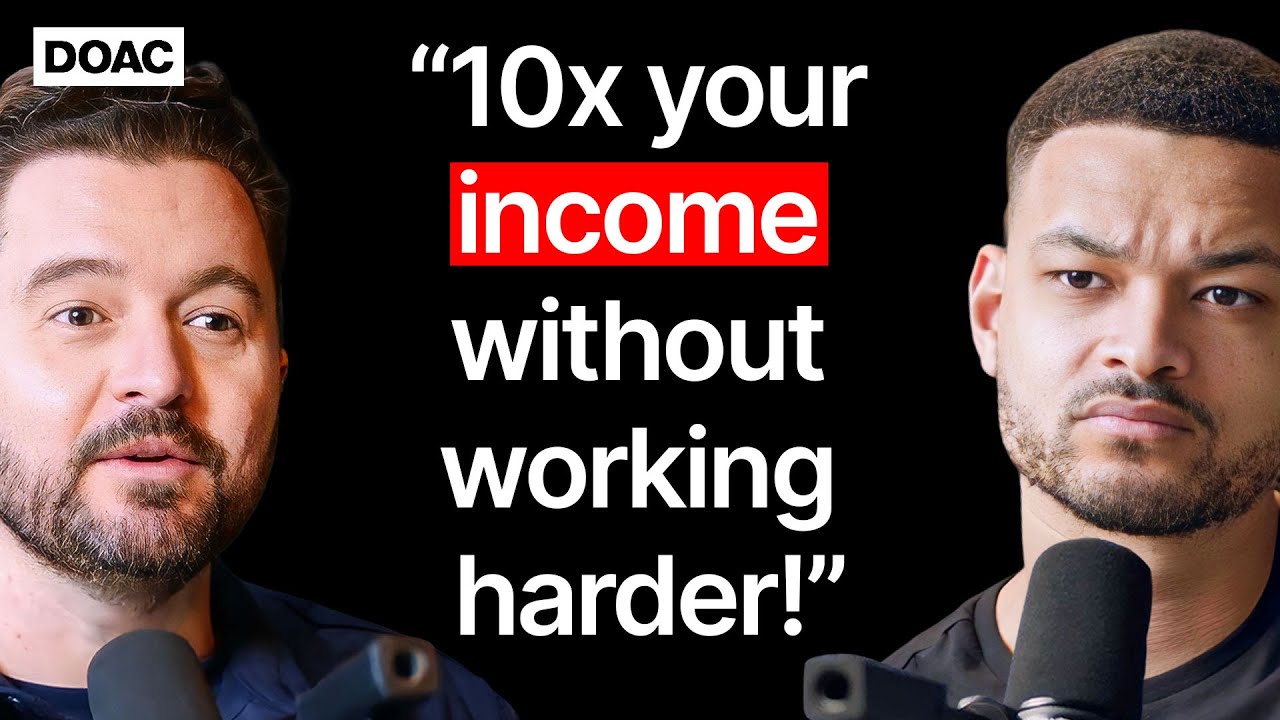
The Money Making Expert: The Exact Formula For Turning $100 into $100k Per Month! - Daniel Priestley — The Diary Of A CEO

The Diary Of A CEO

Leveraging generative artificial intelligence, small executive teams, and waitlist-driven demand allows companies to scale rapidly without traditional capital investments.

AI-assisted summary of The Money Making Expert: The Exact Formula For Turning $100 into $100k Per Month! - Daniel Priestley — original source. Check the original for full context.

Source published:

Detailed notes

## Background This video was published on YouTube by The Diary Of A CEO on February 22, 2024. It features serial entrepreneur and author Daniel Priestley discussing strategies and formulas for starting, scaling, and selling businesses.

## TL;DR Daniel Priestley breaks down the transition from launching small ventures to building scalable, high-value enterprises. He advocates for testing market demand through waiting lists and scorecards before building supply, emphasizing that income follows assets rather than simple labor. Priestley presents frameworks for high-performing teams, advocates acquiring established Boomer businesses via vendor financing, and outlines how generative AI amplifies small executive teams while making human vitality and context the ultimate differentiators.

## Atmosphere & style The conversation is highly energetic, pragmatic, and insightful, blending strategic rigor with actionable entrepreneurial wisdom. Priestley speaks with charismatic authority and contagious enthusiasm, grounding complex deal structures and scaling models in vivid real-world anecdotes. The atmosphere feels like an empowering masterclass, combining candid reflections on failure with visionary optimism for the modern digital economy.

## Key takeaways - [32:21](https://www.youtube.com/watch?v=u0o3IlsEQbI&t=1941s) 'With or without you' energy creates momentum and prevents rejection by signaling that a project will proceed regardless of individual participation. - [37:27](https://www.youtube.com/watch?v=u0o3IlsEQbI&t=2247s) Testing demand before building supply using waitlists, interactive scorecards, and communities reduces capital risk and significantly boosts conversions. - [48:35](https://www.youtube.com/watch?v=u0o3IlsEQbI&t=2915s) Ideas hold minimal market value on their own; early-stage execution and high-level sales leadership drive actual success. - [50:18](https://www.youtube.com/watch?v=u0o3IlsEQbI&t=3018s) As AI handles routine functional tasks, business value increasingly hinges on human vitality, contextual understanding, and 'life force energy'. - [01:04:39](https://www.youtube.com/watch?v=u0o3IlsEQbI&t=3879s) Personal branding should focus on promoting ideas and shared values rather than self-promotion. - [01:07:49](https://www.youtube.com/watch?v=u0o3IlsEQbI&t=4069s) Solopreneurship is ineffective; sustainable scaling requires structured, balanced teams with complementary energies (Visionaries, Implementors, Connectors, Financials). - [01:10:30](https://www.youtube.com/watch?v=u0o3IlsEQbI&t=4230s) Directing capital into personal skills, relationship-building, and business creation yields far higher returns than small passive stock or crypto investments. - [01:19:16](https://www.youtube.com/watch?v=u0o3IlsEQbI&t=4756s) Liquid capital is safest when kept in simple index funds like the S&P 500, freeing focus for expansive business creation. - [01:25:21](https://www.youtube.com/watch?v=u0o3IlsEQbI&t=5121s) Early-stage startups require multi-disciplinary generalists, whereas scaling companies must transition to specialized functional experts ('overlings'). - [01:30:25](https://www.youtube.com/watch?v=u0o3IlsEQbI&t=5425s) Acquiring established, traditional businesses through vendor financing is a low-risk alternative to building tech startups from scratch. - [01:31:36](https://www.youtube.com/watch?v=u0o3IlsEQbI&t=5496s) Modernizing acquired traditional businesses with digital scorecards, cloud tools, and targeted marketing unlocks rapid revenue growth. - [01:41:17](https://www.youtube.com/watch?v=u0o3IlsEQbI&t=6077s) Small executive teams leveraging generative AI tools can match the output of hundreds of traditional workers. - [01:47:30](https://www.youtube.com/watch?v=u0o3IlsEQbI&t=6450s) Burnout stems from exhausting labor that fails to generate long-term asset value or equity.

## Detailed walkthrough ### The Core Formula: Proving Ideas Fast and Cheap

Daniel Priestley kicks off the conversation by challenging conventional wisdom, noting that he has started seven businesses that went from zero to a million in their first 12 months, and three that went north of 10 million. Despite these high stakes, he stresses that anyone can replicate this success through a systematic approach. The biggest mistake aspiring entrepreneurs make is building in isolation—raising money, booking offices, and buying computers before verifying if anyone actually cares.

Priestley emphasizes that entrepreneurs must sharpen their ideas in the market rather than in their own minds. To avoid wasting years and capital, founders need to conduct cheap, fast experiments where they can fail quickly without severe consequences. He points to waiting lists as the ultimate validation tool, noting how high-profile innovators leverage this exact mechanism.

- **Elon Musk:** Used waiting lists to validate market demand for the Model 3, the Cybertruck, and even a flamethrower. - **Rolex:** Achieved a massive strategic breakthrough by pivoting from simply selling watches to selling access to a waiting list. - **Core Principle:** Ideas themselves are virtually worthless; the real value belongs entirely to the person who executes them.

---

The Golden Era of Entrepreneurship and a Personal Blueprint

Transitioning into the macro-environment, Priestley argues that humanity is currently living through the most exciting time in history for building a business. While Baby Boomers secured affordable housing, modern generations have access to affordable, global small businesses. Technology allows solo creators and small teams to operate with the same leverage that multinational corporations once held. He outlines his own extensive background: launching his first company at 21 after spending two years working for a mentor from ages 19 to 21, scaling that initial venture to millions in revenue, and subsequently building multiple multi-million-pound ventures.

For the past 12 years, Priestley has run an entrepreneur accelerator designed to help founders position themselves as a "Key Person of Influence," build personal brands, digitize their value, and surround themselves with high-performing peers. Over 4,500 companies have passed through this ecosystem, weathering global financial crises and pandemics. He describes the accelerator as "dancing classes for entrepreneurs"—a high-performance accountability environment that strips away the guesswork and replaces it with a structured map.

---

Demystifying the Entrepreneurial Spirit and Beating Sofa Paralysis

Priestley asserts that the entrepreneurial spirit is innate, rooted in the human desire to create value for others, take creative risks, and express oneself. However, aspiring founders frequently suffer from "sofa paralysis," where brilliant business concepts remain trapped in their minds because the perceived cost of failure is too high.

To break this paralysis, founders must adopt the mindset of a scientist conducting a low-stakes experiment. Instead of risking three years of reputation and hundreds of thousands of dollars, an entrepreneur should set up a simple landing page advertising an upcoming launch and gather sign-ups.

- **The Market Reality:** There are roughly 6 million businesses in the UK and 30 million in the USA, meaning many niches already have established players. If a waiting list campaign yields total silence ("crickets"), it is a clear market signal to pivot to a fresh concept. - **Data Collection in Action:** Priestley shares a recent experiment where his team proposed an AI tool to help people write books. Instead of building code, he posted once on LinkedIn, expecting 150 sign-ups, only for 750 people to join. The waiting list form surveyed users on pricing, timeline expectations, success metrics, and alternative solutions. - **The Result:** Armed with robust market data and user metrics, Priestley approached angel investors and raised £300,000 under the EIS (Enterprise Investment Scheme) at a £3 million valuation—all before a single line of code was written or designed.

---

Redefining Passion Through Origin, Mission, and Vision

Tackling the cliché of "following your passion," Priestley cuts through superficial hobbies like baking or snowboarding to explain why genuine intrinsic drive is mandatory for survival. Business is inherently difficult and filled with painful valleys where gratification is heavily delayed; passion is what carries a founder through those dark phases.

He introduces a rigorous framework for true entrepreneurial passion defined by the alignment of three distinct pillars:

- **Origin Story:** The deep background connecting back to early childhood (around age 10) featuring recurring themes and small wins that naturally point toward the current venture. Priestley illustrates this with his own childhood memory of running a garage sale at age 10 following a house fire, transforming a personal tragedy into a profitable, positive business experience. - **Vision:** A clear picture of what the world will look like 10 or 20 years into the future if the mission succeeds globally. - **Mission:** The highest-value action an entrepreneur can take in the present moment to actively bridge the gap toward that vision.

When these three elements align, the entrepreneur projects an infectious energy that causes top-tier talent to quit their jobs and join the team. Conversely, the opposite of passion is chasing superficial trends—such as pumping crypto-coins or flipping property purely because someone else got rich doing it, completely detached from personal history or genuine interest. Such ventures are destined to fail because they lack an authentic story and utterly fail to attract or inspire a committed team.

By the way, to unlock the full functionality of all Apps, enable [Gemini Apps Activity](https://myactivity.google.com/product/gemini).

[016:01] Attracting Talent, Taking Risks, and Dropping Out

Entrepreneurship is fundamentally a team sport. Ultimately, success and personal fulfillment stem from an entrepreneur's ability to attract talented people who genuinely want to collaborate with them. If a founder communicates in a way that repulses others, high-performing talent will leave and avoid getting involved; conversely, when a founder articulates a vision that feels resonant, aligned, and inspiring, people get enrolled in the story and success becomes inevitable as more great people join the mission.

Reflecting on how entrepreneurs navigate choices early in their careers, there is a clear distinction between the frameworks used by novices versus experienced founders. Younger individuals should lean heavily into saying "yes" to broad opportunities, experimenting, and embracing a phase of trial and error before pivoting when something isn't working. Daniel shares his own experience dropping out of university after realizing it wasn't leading toward his goals—a choice that required stepping away from his friend group and embarking on an uncertain, non-traditional path.

``` * Key Mindset Shift: Younger entrepreneurs benefit from a high bias toward action, saying "yes" to varied opportunities, and quickly course-correcting when an avenue proves unviable. * The Isolation of Non-Conformity: Leaving the well-worn tracks of university or corporate 9-to-5 life requires facing a "dark valley" of uncertainty and social friction. ```

---

[017:53] The Three Mindset Modes: Reptile, Autopilot, and Visionary

Navigating the unknown requires understanding three distinct mental operational states: **Reptile**, **Autopilot**, and **Visionary**. Reptile mode is driven by fight, flight, freeze, or freak-out responses—manifesting as tantrums, irrational anger, and victim mentality. Autopilot mode simply repeats past behavior to ensure basic survival and comfort. In contrast, Visionary mode is expansive, long-term, and optimistic, viewing the world as an interconnected place full of accessible opportunities and resources.

``` ┌─────────────────────────────────────────┐ │ VISIONARY MODE │ │ • Long-term thinking (10-20 yrs) │ │ • Abundance & resource mobility │ │ • High cognitive function (IQ/EQ) │ └────────────────────┬────────────────────┘ │ │ Shifts under stress / scarcity ▼ ┌─────────────────────────────────────────┐ │ REPTILE MODE │ │ • Fight, flight, freeze, freak-out │ │ • IQ drops (~15 points under scarcity) │ │ • Reactive, destructive behavior │ └─────────────────────────────────────────┘ ```

The physical state of scarcity directly degrades cognitive performance. Research on Indian farmers paid in annual lump sums revealed that their IQ scores dropped by approximately 15 points near the end of the financial cycle when money ran short compared to right after receiving their payout. Living in constant financial or emotional distress forces people into Reptile mode, dragging down both logical IQ and emotional intelligence. Daniel recalls blowing up over a $40 parking ticket when money was tight—planning to live on cereal for weeks—because he was completely locked in Reptile survival mode.

- **Reptile Mode Traits:** Reactive outbursts, short-term panic, fixed-mindset anger, and degraded decision-making due to high stress. - **Visionary Mode Traits:** Long-term horizons (10–20 years), high empathy, global perspectives, and an understanding that resources are fluid. - **The Scarcity Penalty:** Financial stress drains cognitive bandwidth, causing a measurable drop in IQ equivalent to losing a full night's sleep.

---

[020:27] The Visionary Perspective on Resources & Bending Reality

A Visionary approaches resource constraints fundamentally differently than someone in Reptile mode. A Visionary recognizes that resources—money, equipment, or access—already exist somewhere on the planet and are usually only a couple of strategic conversations away. Instead of viewing lack of capital as an absolute barrier, they focus on finding who holds the resource and pitching a value-exchange plan to mobilize it.

To illustrate this, Daniel shares the story of the movie *Top Gun*. The filmmakers were building tiny toy models of military gear until someone asked whether anyone had simply called the U.S. Navy. Upon reaching out, the Navy general immediately offered full access to real jets, aircraft carriers, and bases because the movie aligned with their goal of boosting military recruitment.

Steven echoes this mindset with a story from his teenage years. At age 16, he saw a classmate choosing vending machines for his school. Recognizing an audience of 2,000 captive students, Steven cold-emailed five vending machine companies. By the end of the day, a company CEO—who happened to be an alumnus—sent a representative with a tape measure to install the machines for free while giving the school a cut of the revenue. By age 14, Steven already believed that even getting to the Moon was just a matter of contacting the right person with a compelling pitch.

> "Someone woke up this morning with the resource that you want, and if you have a conversation about how that resource gets used, essentially it's as good as you having the resource."

---

[024:11] Pitching as the Engine of Entrepreneurship

Pitching is the fundamental mechanism entrepreneurs use to bring ideas into existence and advance them in the real world. It is not merely explaining a concept; it is the act of enrolling others into a specific vision and persuading them to take actions they had no intention of taking when they woke up that morning.

``` [Raw Idea] ───► [Refined Pitch] ───► [Enrolled Stakeholders] ───► [New Reality] ```

This ability to enroll people relies on escaping the destructive loop of Reptile mode and the rigid repetition of Autopilot mode. While Reptile mode lashes out and destroys relationships, and Autopilot defaults to "that's not my job," Visionary mode sees every platform—like a CEO asking for employee ideas—as a golden opportunity to mobilize resources and expand influence. This Visionary mindset can be cultivated intentionally by surrounding oneself with forward-thinking people, reading expansive books, and consuming inspiring content.

- **The Purpose of Pitching:** Sharpening an idea through dialogue while actively enrolling investors, employees, and partners into a shared vision. - **The Reinforcing Cycle:** Successfully pitching builds confidence and evidence, creating an upward spiral that enables founders to pitch progressively larger concepts (e.g., Elon Musk scaling from software to brain chips and Mars rockets). - **Destructive Autopilot/Reptile Defaulters:** Fear of rejection leads individuals to slouch back and stay silent, missing crucial opportunities to build influence.

---

[028:20] The CAPSTONE Pitching Framework

To craft a compelling pitch that consistently moves listeners to action, Daniel developed the **CAPSTONE** framework—a structured sequence designed to build logical clarity, personal authority, and emotional resonance:

``` C ── Clarity Clear, unconfusing explanation of the core concept. A ── Authority Demonstrated background, data, or mentorship credentials. P ── Problem Specific pain point or friction identified in the market. S ── Solution The distinct insight or product solving the problem. T ── The Why Personal conviction showing why you care enough to drive it. O ── Opportunity The broader scale and upside for anyone getting involved. N ── Next Steps Direct, actionable operational instructions. E ── Essence The lasting emotional feeling left with the audience. ```

A common mistake in pitching is stopping immediately after delivering the logistical "Next Steps," which leaves the audience feeling uninspired by a dry task list. Ending instead on the **Essence** grounds the conversation back in the overarching mission, leaving a memorable emotional imprint long after the technical details and financial numbers have been discussed.

---

[030:51] The Power of Asking and the "Three Calls" Rule

Radically increasing the frequency of requests can completely transform an individual's trajectory. When Steven was 18 years old, broke, and shoplifting food to survive, he needed camera gear to launch his startup, Wallpark. He sent cold emails to 20 camera companies proposing a sponsorship deal. Within 72 hours, Samsung shipped £10,000 worth of camera equipment directly to his door—all because a manager had returned items sitting unused in a warehouse and Steven's email offered a clear problem-solving opportunity.

While Steven relied heavily on email outreach, Daniel favored telephone outreach at that age, relying on his personal "Make Three Calls" rule to create immediate momentum whenever he needed to solve a problem or build an opportunity.

- **The Ask Gap:** Most people fail to achieve their goals simply because they do not ask often enough or directly enough for what they need. - **Leveraging Unused Assets:** Pitching often solves the other party's hidden problems (e.g., clearing out returned inventory, fulfilling corporate social responsibility goals, or meeting recruitment targets). - **Execution Channels:** Reaching out via cold calls or high-volume cold emails bridges the gap between having zero resources and launching a major initiative.

<FollowUp label="Want to continue with part 3 of the transcript?" query="Please provide a detailed, faithful walkthrough of Part 3 of the transcript from 'The Money Making Expert: The Exact Formula For Turning $100 into $100k Per Month!' following the same style guidelines."/>

[32:21](https://www.youtube.com/watch?v=u0o3IlsEQbI&t=1941s) Pitching an Under-18 Nightclub and the Power of "With or Without You" Energy

Daniel Priestley recalls a defining moment from his early career when he noticed teenagers hanging out in an area with nothing to do. When they asked him what going to a nightclub was like, he realized there was an untapped demand and decided on the spot to organize an under-18s nightclub event during the school holidays. He phoned a local venue, presented himself as a promotions company, and pitched the idea as a pre-selected opportunity for the venue. The pitch resulted in a series of sold-out events where 1,000 teens paid $10 each, generating $10,000 cash in a single night for the first time in his life—all from simply asking.

Reflecting on the thousands of pitch messages both he and Steven Bartlett receive weekly, Daniel breaks down the critical element that separates a great pitch from a poor one: **"With or Without You" energy**.

* **"With or Without You" Energy:** The project, event, or business is moving forward regardless of whether the recipient participates. The prospect is simply being offered an exclusive opportunity to jump on board before it happens anyway. * **Needy Energy:** The sender acts desperate, signaling that if the recipient says no, the venture will fail and be abandoned. Needy pitches trigger immediate rejection.

``` [ Proposed Pitch / Project ] │ ┌──────────────┴──────────────┐ ▼ ▼ "With or Without You" Needy Pitch • Momentum is real • Desperate for approval • Happening anyway • Fails if target says "No" • Creates FOMO & pull • Triggers rejection & pushback ```

To illustrate, Daniel shares his arrival in the UK with nothing more than a suitcase, a credit card, and zero contacts above the equator. Within two weeks, he messaged top industry leaders to invite them to a 30-person dinner party celebrating his arrival from Australia. Because the invite framed the dinner as an impending event showcasing the "who's who" of the industry, all 30 spots filled up quickly, bringing together leaders with massive audiences (including one with a 600,000-person database).

> "People like to get involved in something that they feel is happening... Humans respond to the idea that they don't want to miss out on something that's going to happen."

At the £1,500 dinner party, Daniel stood up, introduced his plans to launch in the UK, and asked to schedule follow-up 1-on-1 meetings. Because each attendee saw the momentum and knew he was meeting 28 other key players, he secured 28 individual meetings. These partnerships led to a massive joint-venture launch campaign that generated **£4 million in sales** in its first few months across Manchester, Birmingham, Milton Keynes, and London.

---

[37:27](https://www.youtube.com/watch?v=u0o3IlsEQbI&t=2247s) The Psychology of Scarcity, Waiting Lists, and Micro-Commitments

Steven Bartlett shares a practical example from an early startup investment. After noticing a button on their website reading **"Become a Member Now"**, Steven suggested changing the text to **"Join the Waiting List"**. That minor copy adjustment produced dramatic results:

* **Inquiries/Clicks:** Increased by **500%**. * **Conversions:** Increased by **300%**. * **Show-Up Rate:** Previously, prospects frequently missed scheduled facility tours. After joining a waiting list and receiving a "queue-jump" notification, prospects almost never missed a tour—and texted frantically to apologize if delayed by even an hour.

Daniel explains the underlying buyer psychology behind this shift:

> "In order for someone to want to buy something, they have to be about 100% certain. In order to join a waiting list, you only have to be 5% or 10% certain."

A waiting list lowers the initial friction, allowing prospective buyers to make a small micro-commitment. It creates an "uncertainty gap" (*Will I get in or not?*) that builds anticipation and raises the perceived value of the offer through scarcity and social proof.

Daniel highlights major global brands that rely on this strategy:

* **Glastonbury Festival:** Rather than directly selling tickets, they require 700,000 people to register their interest first. They gradually release lineup news and announce registration tallies before making 140,000 tickets available at 5:00 a.m. to reward the most dedicated fans. * **Rolex:** Rolex transformed its brand by selling access to the waiting list rather than selling watches directly in stores. Customers sign up and wait up to six months before receiving a window of just 3 days to collect their watch, prompting immediate sales.

Steven notes a psychological study cited in his book: two groups were given access to the exact same online community forum. The group allowed in immediately rated the forum as boring and low-value. The group forced to pass through a rigorous screening process rated the exact same forum as highly valuable and engaging—a psychological bias seen in institutions like Harvard University, where exclusivity drives perceived value.

---

[42:56](https://www.youtube.com/watch?v=u0o3IlsEQbI&t=2576s) Testing Demand Before Supply: Waiting Lists, Discussion Groups, and Scorecards

For early-stage entrepreneurs, Daniel emphasizes that businesses must test the **demand side** before spending time or money building the **supply side**. Manufacturing demand must come first; there is no point in manufacturing supply if no one wants it. Too many founders spend 3 to 6 months acquiring certifications, renting offices, and buying equipment before discovering zero market interest.

To run fast, low-cost experiments, Daniel recommends three primary lead-generation mechanisms:

| Strategy | Mechanism | Example | |:--- |:--- |:--- | | **Waiting Lists** | Form with 5 key data-gathering questions. | Testing customer willingness to pay, fears, and alternatives before launching. | | **Discussion Groups** | Community channels (e.g., WhatsApp) centered on a topic. | Launching a "Weight Loss Wandsworth" group to build a 4,000-person audience before opening a physical gym. | | **Scorecards & Readiness Assessments** | Interactive 10-question online quizzes. | "Are you ready to launch a podcast?" or "Are you ready to build your personal brand?" |

To illustrate the point, Steven and Daniel playfully debate testing a bizarre product concept: **chili and basil-flavored ice cream**. Rather than renting a commercial kitchen or designing packaging, a founder should test the idea for free using these tools:

* **Step 1 (Waiting List):** Set up a landing page inviting people to join a waiting list for an exclusive taste-testing event in central London. * **Step 2 (Survey & Data Collection):** Ask applicants which wild flavors they are most excited to try (e.g., savory vs. sweet ice cream). * **Step 3 (Discussion Group):** Move waitlisted prospects into a WhatsApp group to host daily polls and discuss crazy ice cream flavor profiles. * **Step 4 (Readiness Scorecard):** Run a quiz to identify the user's "ice cream personality."

If the campaign generates crickets and only yields 12 disinterested participants, the founder can abandon or pivot the concept without losing money on physical production. If demand surges, the founder can confidently proceed with cold outreach to target online communities and launch the product.

[48:35](https://www.youtube.com/watch?v=u0o3IlsEQbI&t=2915s) The Fear of Idea Theft and the Value of Sales

Addressing the common fear early-stage founders have about people stealing their business ideas, Daniel Priestley dismisses the anxiety by pointing out a practical reality: until you own a Ferrari, nobody is interested in stealing your ideas. People only steal concepts from proven, successful individuals. Starting from zero with no followers or visible status is actually a massive advantage because no one is watching closely enough to care. Furthermore, raw ideas carry virtually zero inherent value on their own. For example, proposing to tear down every old building in London to construct brand-new ones sounds like a multi-trillion-dollar idea, but the financial payoff belongs entirely to whoever possesses the execution capability to actually carry it out. If a competitor steals a concept and executes it better or faster, they deserve the financial reward; the original creator should simply move on to their next idea and focus on executing better next time.

In media formats like podcasts—where millions of shows exist—the core idea itself is rarely where the financial value is derived. Value comes from pitching, backstage commercial operations, crafting the right offers, and consistently closing deals. Because of this, Priestley urges early-stage founders to drop the vanity title of "entrepreneur" and embrace their true role in the opening years: being a dedicated salesperson. If the founder cannot sell their own vision, no one else will do it for them.

* **The "Ferrari Bias":** People steal ideas from proven winners, not unknown beginners with zero followers. * **The Execution Principle:** An idea is worthless without execution; whoever successfully executes a concept deserves the rewards. * **Role Transition:** Early-stage founders must consider themselves the "Chief Salesperson" rather than focusing on abstract titles.

---

[50:18](https://www.youtube.com/watch?v=u0o3IlsEQbI&t=3018s) Failure, Functionality, and Life Force Energy

The conversation pivots to how an entrepreneur's relationship with failure directly correlates with their ultimate success. Steven Bartlett notes that high-performing entities—such as Amazon (where Jeff Bezos aims for the company to be "the best place in the world to fail"), Booking.com, and early IBM—treat failure as essential experimentation. Priestley explains that traditional schooling was engineered to produce "component labor" within rigid systems where individual components are not permitted to fail. However, in an AI-driven economy, standard functional skills easily replicated by machines are rapidly losing value.

To thrive in this new era, individuals must understand the difference between *functionality* (reliably performing a routine task) and *vitality* (bringing irreplaceable "life force energy" into a project). When a founder brings life force energy to their work, failure stops being a sources of shame; it becomes a routine series of experiments that uncover what doesn't work so they can find what does. This process mirror learning to ride a bicycle or raising a child—when a child stumbles, you pick them back up and keep going. Conversely, if an individual ties their personal self-worth strictly to their functional reliability, failure feels catastrophic.

``` +------------------+----------------------------------+------------------------------------+ | Attribute | Functionality | Vitality | +------------------+----------------------------------+------------------------------------+ | Definition | Reliably performing a routine | Irreplaceable life force energy | | | task or procedure | brought into a project | +------------------+----------------------------------+------------------------------------+ | Relationship | Avoids failure because errors | Embraces failure as a necessary | | to Failure | ruin functional output | experimental process | +------------------+----------------------------------+------------------------------------+ | AI-Era Value | Rapidly declining due to | Highly prized and increasingly | | | automation and standard routines | irreplaceable | +------------------+----------------------------------+------------------------------------+ ```

- **IBM Historical Example:** When an IBM employee made a mistake costing $600,000, Thomas Watson refused to fire them, famously remarking, "Fire them? I just spent $600,000 training them." - **Definition of Vitality:** A dual property consisting of being *irreplaceable* and acting as a *life force*. - **The Magic Trick Analogy:** Two magicians can use the exact same plastic fake thumb gadget (the functional tool), but only the one who breathes genuine charm, conviction, and life force into the performance creates real magic and captures the audience's belief.

---

[55:08](https://www.youtube.com/watch?v=u0o3IlsEQbI&t=3308s) Becoming a Key Person of Influence

Reflecting on concepts from his book *Key Person of Influence*, Priestley describes how certain individuals naturally cause things to happen around them simply by bringing their energy into the room. When these people are involved, projects flourish; when they depart, momentum dissipates. Referring to Bartlett’s involvement across 40 different companies, Priestley highlights that Bartlett isn't functionally operating those businesses day-to-day—instead, he serves as an irreplaceable catalyst whose presence transforms outcomes.

> "You're not functionally involved in 40 different companies, but you're breathing a life force energy into 40 different companies... that's what people want from you, and it's not functionality. No one's saying 'can you come and work in the office?'"

---

[56:24](https://www.youtube.com/watch?v=u0o3IlsEQbI&t=3384s) The Power of Environment and Social Shedding

Discovering one's vitality requires placing oneself in high-vibration environments alongside vital, energetic people. In low-vibration settings focused purely on functional routine, individuals naturally suppress their own life force to fit in. Priestley shares an example from his work with the prison charity *Key for Life*: many incarcerated young men possess sharp entrepreneurial skills, but because their immediate environment only featured drug dealers as successful figures, they applied their drive to illegal trade. Exposing those same individuals to tech or publishing environments redirected their natural entrepreneurial spirit into legitimate ventures.

Changing environments triggers a challenging phenomenon that Bartlett terms "social shedding." When an individual starts trying new things—such as taking up Latin Jive dance classes (as Priestley did at age 21) or launching a new business—their existing social circle often responds with mockery, subtle resistance, or veiled jokes. This friction happens because personal growth holds up an uncomfortable mirror to peers who prefer stasis. Stepping into a new identity often requires the courage to let go of old social circles that drag you back into stagnation.

- **Environment Rule:** Environment dictates performance; you cannot cultivate new behaviors outside of settings that normalize them. - **Key for Life Example:** Incarcerated youth often default to illegal avenues because drug dealers are the only visible model of financial success in their immediate environment. - **Social Shedding Dynamics:** Old social groups mock change ("disguised as a roast") because an individual's self-improvement threatens the group's collective identity and highlights their own lack of progress.

---

[01:02:03](https://www.youtube.com/watch?v=u0o3IlsEQbI&t=3723s) The Empire Shift: Transitioning to the Digital Cloud

Priestley highlights a massive historical transition currently underway: humanity is moving away from a location-bound, geographically constrained system to a global, digital-first economy ("in the cloud"). For thousands of years, an individual's network was restricted to roughly 1,000 people living in their immediate town. Today, anyone can step past local gatekeepers and build a global media presence or company based on shared values, vision, and purpose.

This macro shift is clearly illustrated by modern digital businesses like Priestley's company, ScoreApp. Launched in London during the COVID-19 pandemic without a physical headquarters, ScoreApp operates completely remotely with a distributed team. By leveraging digital connectivity, the company attracts over 100 new sign-ups daily and serves clients across 152 countries, demonstrating that modern value creation no longer requires physical roots.

- **Historical Social Reach:** Historically, human social networks were capped at approximately 1,000 local acquaintances over a lifetime. - **The "Empire Shift":** The migration from physical geography-based networks to cloud-based networks united by shared purpose. - **ScoreApp Scaling Metrics:** Fully remote operation with no physical offices, gaining 100+ new users a day across 152 countries.

[01:04:39](https://www.youtube.com/watch?v=u0o3IlsEQbI&t=3879s) Idea Promotion vs. Self-Promotion: Building a Personal Brand

The conversation transitions into the concept of personal branding and what it truly takes to build a meaningful online presence today. Daniel Priestley points out that modern businesses exist largely in the cloud, held together by intangible elements like vision, values, and ideas. A personal brand is a powerful tool because it eliminates the need for permission; anyone can go straight to the market and build a audience around their story and mission. However, both Daniel and Steven Bartlett emphasize that personal branding is widely misunderstood. It is not about vanity, showing off on camera, or "doing dances."

Steven references organizational psychologist Adam Grant's distinction between self-promotion and "idea promotion." True personal branding is about shining a light on a belief, a perspective, or a project, inviting like-minded people to join the journey. Self-promoters constantly demand, "Look at me," whereas effective brand builders say, "Look at this." Steven notes that his podcast has been the ultimate catalyst for his personal brand because it operates like a digital campfire—democratizing elite, high-level conversations that used to happen exclusively behind closed doors.

* Personal branding is not about chasing the spotlight; it is about *becoming* a spotlight for ideas that matter. * "Idea promotion" builds an audience around shared values, while self-promotion only seeks shallow validation. * Modern platforms democratize access to world-class insights, allowing creators to gather people around a virtual campfire.

---

[01:07:49](https://www.youtube.com/watch?v=u0o3IlsEQbI&t=4069s) The Myth of Solopreneurship and the British Military Team Framework

When discussing what drives long-term business success, Daniel firmly rejects the concept of the "solopreneur." He argues that entrepreneurship is inherently a team sport, and real growth requires assembling the right group of people around a mission. While some founders start with ordinary teams that grow into extraordinary ones, no one builds a significant enterprise completely alone.

To structure business growth, Daniel adopts a team-scaling model directly inspired by the British Military. Drawing on four centuries of human resources experimentation, the military organizes its forces into distinct, functional units. Daniel adapts this exact progression to scale new business initiatives risk-appropriately:

* **2-Person Scout Team:** A founder plus an assistant or two co-founders who test and prove a new concept. * **4-Person Fireteam:** Formed once the initial concept is validated to build initial momentum. * **8-Person Section:** Deployed when the operation is up and running and needs structured execution. * **30-Person Platoon:** Activated when the business achieves standalone enterprise value and full performance scaling.

---

[01:09:19](https://www.youtube.com/watch?v=u0o3IlsEQbI&t=4159s) Balancing Complementary Energies: The Four Suits Framework

To build a high-performing team, Daniel looks for complementary personality types and functional skill sets rather than hiring carbon copies of himself. He uses a four-suit playing card analogy to represent the distinct operational energies required inside any company:

``` ┌──────────────────────────────────────────────────────────┐ │ THE FOUR SUITS MODEL │ ├──────────────┬───────────────────────────────────────────┤ │ ♣ CLUBS │ Visionaries (Head in the clouds, ideas) │ │ ♠ SPADES │ Implementors (Doing the heavy work) │ │ ♥ HEARTS │ Connectors (Relationships & community) │ │ ♦ DIAMONDS │ Financials (Data, money, asset retention) │ └──────────────┴───────────────────────────────────────────┘ ```

A common failure mode in start-ups occurs when one or more of these energies are missing. For example, a "Clubs" visionary without a "Spades" implementor will generate endless ideas but execute none of them. Similarly, an incredible "Hearts" networker without a "Diamonds" financial mind will create vast relational value but fail to retain any monetary return for the business. Balancing all four energies ensures both value creation and value capture.

---

[01:10:30](https://www.youtube.com/watch?v=u0o3IlsEQbI&t=4230s) How Money Flows: Assets, Skills, and Relationship Investments

Addressing the global cost-of-living concerns and economic recessions, Steven asks how individuals should approach financial growth depending on their starting capital. Daniel asserts that the primary principle of wealth creation is that **income follows assets**. To generate passive or recurring streams of revenue, one must first build or acquire income-generating assets—whether physical property for rent, stocks for dividends, or digital assets like databases, brand positioning, and proprietary content.

``` ┌────────────────┐ ┌────────────────┐ │ Accumulate or │ ──────> │ Effortless │ │ Build ASSETS │ │ INCOME Flows │ └────────────────┘ └────────────────┘ ```

For someone starting with modest disposable income (e.g., $100 or £100 a month), traditional stock market or crypto investing will not move the needle. Instead, that money yields the highest return when invested into personal skills or relationship-building:

* **Skill Acquisition:** Investing in targeted courses—such as negotiation, sales closing, or public speaking—directly increases individual earning potential. * **Relationship Capital:** Money flows through networks. Investing in dinners, meetings, or shared experiences with successful, accomplished people creates high-value connections. * **The "Burgers on a Boat" Anecdote:** Early in his career in Dubai, Daniel wanted to host an exclusive networking event without owning expensive assets. He asked a contact who owned an underutilized 100-foot yacht if he could host a casual burger party on it. By leveraging someone else's idle asset with "With or Without You" energy, Daniel brought high-value guests together and expanded his core network at minimal personal expense. * **Cold Outreach Strategy:** When reaching out to prospective mentors or high-value contacts, standard praise rarely works. Successful outreach requires doing deep research, spotting a unique area where you can add immediate value, and leading with a thoughtful, low-friction gesture.

---

[01:19:16](https://www.youtube.com/watch?v=u0o3IlsEQbI&t=4756s) Investment Thesis: S&P 500 vs. Expansive Business Creation

Steven inquires about Daniel's personal asset allocation and wealth-building strategy. Daniel candidly reveals that his traditional investment portfolio is intentionally "boring." He directs any spare liquid capital straight into an S&P 500 index fund, pointing out that global currency inflation eventually flows into the top 500 U.S. corporations, making it almost impossible for average investors to beat the market over time.

However, Daniel stresses that he views himself as an optimistic builder rather than a cautious investor. Traditional value investing requires a pessimistic mindset focused on downside risk and financial analysis, whereas entrepreneurship demands expansive, romantic vision. Rather than trying to pick winning stocks, Daniel prefers to pour his energy into creating highly valuable, investable businesses that attract capital from other people.

> "I hate investing... I like expansive business creation. Great investors are often pessimists—they're very good at thinking what could go wrong. I want to create something that's investable for other people to put money into, because that's how you really make money."

[01:21:12](https://www.youtube.com/watch?v=u0o3IlsEQbI&t=4872s) The Key Stages of Scaling: Concept, Audience, Offer, and Sales

Every business navigates distinct evolutionary phases, beginning with the initial foundational struggle. The first four stages where almost everyone gets stuck form the "Chaos" phase: **Concept, Audience, Offer, and Sales**. First, you develop and validate a solid concept through real-world experiments, ensuring personal alignment and genuine market excitement. Second, you build an audience using engaging touchpoints like waiting lists, dinner parties, ScoreApp scorecards, quizzes, and discussion groups. Third, you construct a packaged-up offering so your audience has something tangible to buy. Finally, you establish sales predictability by maintaining a disciplined weekly "rhythm of laps"—rigorously tracking metrics across leads, appointments, presentations, and closed sales. Master these four components, and you can reliably push a business into six-figure revenue.

* **Concept**: Validate ideas through structured experimentation, market alignment, and initial enthusiasm. * **Audience**: Gather prospective clients via ScoreApp quizzes, waitlists, hosted dinner parties, and niche discussion groups. * **Offer**: Package core value into clear, actionable, and purchasable products or services. * **Sales Pipeline Metrics**: Track the "rhythm of laps" weekly by measuring leads $\rightarrow$ appointments $\rightarrow$ presentations $\rightarrow$ closed sales.

---

[01:22:16](https://www.youtube.com/watch?v=u0o3IlsEQbI&t=4936s) From Core Team to Enterprise Scale: The Journey from 8 to 30+ Employees

Once initial revenue is secured, scaling requires structuring a core team around a Key Person of Influence (KPI) who embodies the brand public-facing while an operations director or general manager keeps internal systems running smoothly. As the company grows to about eight people—spanning specialized roles across GM, sales, finance, media, admin, IT, and operations—the primary goal becomes digitizing every core business asset. Transitioning client relationships into a CRM, formalizing IP, standardizing organizational culture, and building repeatable online lead-generation systems raises the key benchmark: revenue per employee. Increasing output per person from £100,000 to £130,000 creates the leverage necessary to safely hire more staff.

The most difficult organizational transition occurs when growing from **12 to 30 employees**—a phase where a business is "too big to be small, and too small to be big." This journey requires transforming a scrappy startup team of "rebels and misfits" into a professionalized organization with formal recruitment and onboarding processes. At 30 employees, structured into five executive leaders, a non-executive director, an advisor, and cohesive "teams of teams," a business hits the sweet spot: generating £10 million in revenue and £3 million in profit, making it highly valuable and ready for exit.

* **Core Team Structure (8 People)**: Key Person of Influence (brand ambassador), General Manager / Ops Director, Marketing & Sales, Finance, Admin, IT, Media, and Operations. * **Digitization & Asset Creation**: Moving physical contact sheets into CRM databases, establishing formal corporate culture, standardizing IP, and building digital lead systems. * **Revenue Benchmark**: Maximize revenue per employee (e.g., driving £100k/person up to £130k/person) before expanding headcount. * **Target Scale Metrics**: 30 employees, 5 executive leaders, 1 non-executive director, £10 million revenue, £3 million profit.

---

[01:25:21](https://www.youtube.com/watch?v=u0o3IlsEQbI&t=5121s) Knowing Your Stage: Swiss Army Knives vs. Specialists

The early employees who excel in a 10-person startup rarely possess the skill set needed when the company scales to 50 or 100 people. Small teams require multi-disciplinary "Swiss Army knives"—versatile generalists who can do 25 things passably well. As companies scale, they require dedicated specialists—like "bread knives"—who perform one specific role exceptionally well. Founders and employees alike must honestly evaluate whether their passion lies in going from 0 to 1 or scaling from 1 to 100.

Daniel shares his personal journey, admitting that he adores the initial push to £2 million in revenue, but becomes "pathologically distracted" once a company hits that milestone, yearning for the blank page again. Recognizing this, he partners with leaders like Glenn Carlson at Dent Global, who excels at driving the professionalization phase from £2 million to £20 million by rigorously recruiting and filtering talent.

> "I personally absolutely adore the first 2 million of revenue... I become almost pathologically distracted once we hit 2 million of revenue and I have to remind myself, 'Oh wait a second, we've got a fast growth business here, stop thinking about other things.'"

---

[01:27:54](https://www.youtube.com/watch?v=u0o3IlsEQbI&t=5274s) Ego vs. Winning: Bringing in "Overlings"

Building an exceptional company requires founders to value winning over ego by surrounding themselves with superior talent. Steven highlights a moment of profound humility from his podcast producer, Jack, who built the podcast from zero to 5 million subscribers. Despite that massive success, Jack admitted he wasn't the world's best lighting expert and hired a top specialist to redesign the studio set, proving that placing results ahead of pride drives excellence.

Daniel builds on this concept by distinguishing between hiring "underlings" (people less capable than you) and "overlings" (specialists who are far better at their specific roles than you are). A great founder acts like an orchestra conductor: they may not play every instrument expertly, but their talent lies in bringing together world-class musicians and orchestrating them toward a shared vision.

* **Underling**: Someone hired who is less skilled than the founder in that domain. * **Overling**: An expert who significantly outperforms the founder in their specific functional area. * **The Conductor Metaphor**: A leader's primary skill is enrolling and guiding talent far superior to themselves rather than mastering every operational instrument.

---

[01:30:25](https://www.youtube.com/watch?v=u0o3IlsEQbI&t=5425s) The Boomer Business Opportunity: No-Money-Down Acquisitions

One of the largest wealth-creation opportunities today rests with aging Baby Boomers seeking retirement. Roughly 65% of all business equity in the UK and USA is held by Baby Boomers. Many run solid companies that peaked at millions in revenue but have drifted into decline as the founders semi-retire. Because these businesses are often off-trend or deemed "boring"—like elevator repair or specialized manufacturing—tech-focused young entrepreneurs overlook them, leaving them nearly unsalable through traditional channels.

Instead of starting from a blank page, ambitious operators can perform vendor-financed acquisitions (or management buyouts) with no money down. By structuring a deal where the retiring owner is paid out over 5 to 7 years from future business cash flows—secured against the business itself—a buyer takes over an established enterprise without personal capital. The seller gets a steady retirement yield, while the buyer gains an established customer base and immediate operational cash flow.

> "65% of the value of all business equity in the economy is owned by Baby Boomers right now... all of those businesses have to be passed on somewhere. Now all of these young people, they all want to have the latest psychedelic startup... and they're like 'Oh, I don't want the elevator repair business that does 8 million a year.'"

* **Equities Market Reality**: 65% of business equity is currently owned by Baby Boomers entering retirement age. * **Vendor Finance Structure**: Agree on a fixed purchase price (e.g., £1.2M), paying the founder over time (e.g., £120k/year for 7 years) funded directly from company revenues. * **Deal Security**: The business itself serves as collateral; if payments are missed, the original owners retain the asset along with all modern improvements.

---

[01:31:36](https://www.youtube.com/watch?v=u0o3IlsEQbI&t=5496s) Revitalizing "Boring" Businesses

Acquiring an established, traditional business allows new owners to unlock rapid growth simply by modernizing operations. Daniel shares the story of a friend who acquired Kit King, a business where orders were still being printed and stuck onto physical metal spikes. By investing just £25,000 into digital automation systems, hosting online customer events, and re-energizing the team, the business grew by 500% within two years.

A business may perform a routine service, but the internal culture, mission, and application of profits can be deeply compelling. Boring companies can fund social impact initiatives, offer second-chance employment programs for ex-offenders, or support global charities—such as client Sebastian Bates, who used profits from his martial arts business (Warrior Academy) to open academies for homeless children in Kenya and Nepal. Steven reflects on his early, broke days in Manchester, realizing he spent years chasing speculative tech ideas inspired by *The Social Network* when he could have acquired an unsexy, cash-flowing business and transformed it into a digital-first enterprise.

* **Kit King Case Study**: Transformed a 30-year-old paper-spike ordering operation into a fully automated digital brand, driving 500% growth in 2 years. * **Modernization Playbook**: Implement cloud software, launch digital scorecards and email marketing, update visual branding, and establish active customer communication. * **Purpose-Driven Culture**: Combine steady operational cash flow with high-impact initiatives (e.g., Warrior Academy expanding life-skills martial arts training to homeless youth in Kenya and Nepal).

Here is a detailed walkthrough covering Part 7 of the transcript:

### [01:37:25](https://www.youtube.com/watch?v=u0o3IlsEQbI&t=5845s) How to Acquire Existing Businesses and Structure Deals Daniel Priestley explains that instead of starting a company completely from scratch, an entrepreneur can buy an established business to lower their risk and create a launching pad. For example, rather than launching a brand-new social agency from zero, one could acquire an existing marketing agency generating $2 million in revenue—perhaps down from its $4 million peak, but still possessing a core team, a 20-year reputation, and existing contracts with major clients like Amazon Web Services (AWS) and HarperCollins. Starting from that $2 million baseline allows an entrepreneur to layer their new agency concepts on top rather than starting at $0.

Steven Bartlett emphasizes that wealth creation relies heavily on two paramount skills: persuasion/sales and deal structuring. Priestley agrees, noting that "everything that you want is on the other side of a structure that exists." He shares how he applied this with his company, ScoreApp, when AI emerged in 2022. Realizing ScoreApp needed AI leadership immediately, Priestley created an AI Advisory Board and recruited Professor Andy Pardoe (Head of AI at Warwick University and a PhD with 25 years of experience). Within two weeks, ScoreApp went from zero AI integration to having top-tier academic expertise and a team of backend researchers, simply by putting the right organizational framework in place.

- **Acquisition Strategy**: Buy a distressed or plateaued business with a long track record (e.g., 20 years) and enterprise clients rather than starting from scratch. - **ScoreApp AI Expansion**: Onboarded Professor Andy Pardoe from Warwick University onto an AI Advisory Board in just two weeks. - **Two Core Wealth Skills**: High-level sales/demand creation and complex deal structuring.

---

### [01:40:05](https://www.youtube.com/watch?v=u0o3IlsEQbI&t=6005s) Using AI to Structure M&A Transactions When asked how a beginner can structure complex mergers and acquisitions (M&A) without high-priced advisors or deep finance backgrounds, Priestley points directly to generative AI tools like ChatGPT. Rather than needing a full-time CFO right away, a founder can prompt AI to act as a CFO and ask how to structure a "no money down" acquisition where the seller finances the deal.

Priestley outlines how ChatGPT can draft heads of terms, review agreements for omissions, refine negotiation positions, and draft persuasive emails to financial directors requesting initial meetings. This drastically reduces the cost of sales, communication, and legal deal preparation.

- **AI Prompt Strategy**: Ask AI to act as a veteran CFO to draft heads of terms, check for contract errors, and write outreach emails. - **Vendor Financing**: Structuring purchases where existing owners finance the takeover, requiring zero upfront cash from the buyer.

---

### [01:41:17](https://www.youtube.com/watch?v=u0o3IlsEQbI&t=6077s) The Iceberg Moment: AI and the Future of Team Structures Priestley compares the business world's current attitude toward AI to the passengers on the *Titanic* dancing right after hitting the iceberg. While many people pretend nothing has changed, AI represents a fundamental, general-purpose technology that will force every industry to completely reorganize. Addressing Sam Altman’s prediction that AI will soon yield the first one-person billion-dollar company, Priestley agrees directionally but argues that business remains a team sport.

He contends that a 5-person AI-empowered team—comprising a CEO, CTO, COO, CMO, and CFO—will consistently outperform a single individual. A lean 5-person team leveraging large language models can perform the work previously requiring 500 employees. He notes that AI excels at **content**, but humans are required to provide **context** and purpose.

Priestley also warns of a coming societal divide driven by AI: 1. **Consumers**: Those who allow algorithms (e.g., TikTok) to hypnotize them into consuming endlessly. 2. **Creators**: Those who harness AI as a lever to produce superhuman levels of creative output and business assets.

- **Titanic Analogy**: Business leaders are ignoring the massive structural shift caused by AI general-purpose tech. - **5 vs 500**: Five executives using AI tools will achieve the productivity of a 500-person traditional company. - **Context vs. Content**: Humans provide the vital context, purpose, and human "vitality/life force," while AI executes the functional content.

---

### [01:47:30](https://www.youtube.com/watch?v=u0o3IlsEQbI&t=6450s) The Myth of Work-Life Balance and Asset Creation Discussing work-life balance, Priestley argues that most gurus who advocate for it only do so after working relentlessly to achieve their massive breakthroughs. He highlights statistics showing that people earning over £100,000 per year typically work around 55 hours a week. However, he distinguishes between grueling physical or repetitive labor and creative, fulfilling work. For passionate entrepreneurs, working long hours on podcasts, deals, or media doesn't feel like labor because it is digital, flexible, and intrinsically rewarding.

The critical factor in avoiding burnout is whether hard work builds an **asset**: * **Asset-Building Work**: Creating podcasts, acquiring company equity, or renovating real estate generates long-term compounding value that eventually operates independently of the creator's time. * **Non-Asset Work**: Roles like driving for Uber or working fast-food shifts generate immediate income, but at the end of a 16-hour day, no lasting equity or system has been accumulated.

- **Earning & Hours**: High earners (£100k+) average 55 working hours per week. - **Burnout Cause**: Working hard without building equity or an underlying asset leads to exhaustion; building assets leads to optionality. - **Definition of an Asset**: Anything with a life of its own—reputation, proprietary skills, software equity, media content, or real estate—that continues creating value after the work is done.

---

### [01:51:17](https://www.youtube.com/watch?v=u0o3IlsEQbI&t=6677s) Closing Question: Relationships, "With or Without You" Energy, and Outro Answering the traditional closing question left by the previous podcast guest—*"What is the one thing you wish you'd known about sex and relationships in your youth?"*—Priestley shares that in his youth, he viewed intimacy in a compartmentalized, functional way. Over time, he learned that genuine fulfillment stems from love, deep connection, and shared life experiences.

He reflects on how young men often feel unattractive and attempt to rely on pickup lines or tricks. Once he built his self-confidence, business success, and personal identity, he developed **"With or Without You" energy** in his personal life. When he met his wife, both possessed that same independent confidence. Recognizing each other as an extraordinary partnership where "one and one equals 11," Priestley knew within 12 hours that he was going to marry her.

Steven Bartlett concludes the interview by praising Priestley's ability to distill complex entrepreneurial ideas into actionable concepts across his best-selling books and content.

- **Relational Framework**: Intimacy operates on human "vitality and life force" rather than mere transaction or functionality. - **Partnership Synergies**: Bringing independent confidence ("With or Without You" energy) into a relationship creates a exponential 1 + 1 = 11 multiplier effect.

[01:55:01](https://www.youtube.com/watch?v=u0o3IlsEQbI&t=6901s) Shopify Sponsor Message and Closing

Steven Bartlett wraps up the episode by sharing a sponsor message for Shopify, reflecting on how accessible e-commerce has become for his own brand. He highlights that when he first began podcasting, opening an online store was the furthest thing from his mind. However, Shopify made the entire selling process remarkably simple, allowing his team to seamlessly sell products worldwide—including the recent launch of the second version of their "Diary of a CEO" conversation cards.

He notes that Shopify features "the internet's best converting checkout," which performs 36% better on average when compared to other leading commerce platforms. To close out the segment, Steven encourages all business owners who haven't tried the platform yet to test it out for themselves by signing up for a special promotion.

- **Product Launched:** Second version of the *Diary of a CEO* conversation cards hosted on Shopify. - **Conversion Performance:** Shopify's checkout converts 36% better on average compared to other major commerce platforms. - **Promotional Offer:** Listeners can start a $1 per month trial period by visiting `[shopify.com/bartlett](https://shopify.com/bartlett)`.

## Notable quotes > [37:27](https://www.youtube.com/watch?v=u0o3IlsEQbI&t=2247s) In order for someone to want to buy something, they have to be about 100% certain. In order to join a waiting list, you only have to be 5% or 10% certain. — Daniel Priestley

> [32:21](https://www.youtube.com/watch?v=u0o3IlsEQbI&t=1941s) People like to get involved in something that they feel is happening... Humans respond to the idea that they don't want to miss out on something that's going to happen. — Daniel Priestley

> [50:18](https://www.youtube.com/watch?v=u0o3IlsEQbI&t=3018s) Fire them? I just spent $600,000 training them. — Thomas Watson

> [55:08](https://www.youtube.com/watch?v=u0o3IlsEQbI&t=3308s) You're not functionally involved in 40 different companies, but you're breathing a life force energy into 40 different companies... that's what people want from you, and it's not functionality. No one's saying 'can you come and work in the office?' — Daniel Priestley

> [01:19:16](https://www.youtube.com/watch?v=u0o3IlsEQbI&t=4756s) I hate investing... I like expansive business creation. Great investors are often pessimists—they're very good at thinking what could go wrong. I want to create something that's investable for other people to put money into, because that's how you really make money. — Daniel Priestley

> [01:25:21](https://www.youtube.com/watch?v=u0o3IlsEQbI&t=5121s) I personally absolutely adore the first 2 million of revenue... I become almost pathologically distracted once we hit 2 million of revenue and I have to remind myself, 'Oh wait a second, we've got a fast growth business here, stop thinking about other things.' — Daniel Priestley

> [01:30:25](https://www.youtube.com/watch?v=u0o3IlsEQbI&t=5425s) 65% of the value of all business equity in the economy is owned by Baby Boomers right now... all of those businesses have to be passed on somewhere. Now all of these young people, they all want to have the latest psychedelic startup... and they're like 'Oh, I don't want the elevator repair business that does 8 million a year.' — Daniel Priestley

## Mentioned Daniel Priestley, Steven Bartlett, Glastonbury Festival, Rolex, Harvard University, Amazon, Booking.com, IBM, Thomas Watson, Jeff Bezos, Key Person of Influence, Key for Life, WhatsApp, Adam Grant, ScoreApp, British Military, Dubai, S&P 500, Dent Global, Glenn Carlson, Jack, Kit King, Sebastian Bates, Warrior Academy, Kenya, Nepal, Amazon Web Services (AWS), HarperCollins, Professor Andy Pardoe, Warwick University, ChatGPT, TikTok, Sam Altman, Shopify, The Diary Of A CEO

[Source](https://www.youtube.com/watch?v=u0o3IlsEQbI)

中文简报

普里斯特利解析初创企业规模扩展至千万英镑的公式 利用生成式人工智能、小型执行团队以及候补名单驱动的需求,使企业无需传统资本投资即可实现快速扩张。 Daniel Priestley 深入剖析了从创办小型项目转型为构建可扩展、高价值企业的全过程。他主张在构建供应之前,通过候补名单和评分表测试市场需求,并强调收入取决于资产而非单纯的劳动力。普里斯特利提出了高效团队的运作框架,提倡通过卖方融资收购婴儿潮一代创立的成熟企业,并阐述了生成式人工智能如何在赋能小型执行团队的同时,让人的活力与语境理解成为最根本的差异化优势。 “无论有没有你(With or without you)”的心态能为项目建立不可阻挡的势能;向潜在合作者展示计划无论其是否加入都将如期推进,反而更能激发对方害怕错失(FOMO)的合作意愿。 (36:21) 在投入重金构建供给端前必须先验证市场需求:通过候补名单(Waiting Lists)、社群互动和评估测试表低成本测试意向,能极大降低试错风险并成倍提升转化率。 (42:56) 商业想法本身几乎毫无市场价值,执行力才是决定成败的根本;初创阶段的创始人应放下虚名,把自身定位为首席销售员全力推进业务落地。 (48:35) 在 AI 快速接管常规功能性任务的时代,单纯的机械执行力正迅速贬值,商业的核心竞争优势将转向不可替代的人类洞察与“生命力能量(Life Force Energy)”。 (50:18) 所处环境直接决定个人发展上限;迈向新层级往往伴随着“社交蜕变(Social Shedding)”,需要有勇气脱离阻碍成长、制造阻力的旧圈子,融入更高势能的人群。 (56:24)

Reading summary

Daniel Priestley argues that building a high-value enterprise does not require large initial capital or speculative risk, but rather validating market demand before creating supply, assembling complementary teams, and acquiring or structuring income-generating assets. Validating Demand Through Waiting Lists and Micro-Commitments (37:27) Priestley asserts that the primary failure of early-stage entrepreneurs is building in isolation—investing time and capital into offices, equipment, and development before confirming whether anyone cares. Instead, founders should act as scientists conducting low-stakes experiments using tools like waiting lists, discussion groups, and interactive scorecards. For example, Priestley validated an AI book-writing platform by collecting 750 waitlist responses from a single LinkedIn post, surveying prospective users on pricing and feature expectations, and subsequently raising £300,000 at a £3 million valuation under the UK Enterprise Investment Scheme before writing code. Steven Bartlett notes that changing an invitation button from "Become a Member Now" to "Join the Waiting List" increased inquiries by 500% and conversions by 300% for a portfolio company. Priestley explains the underlying buyer psychology: committing to a purchase requires near-total certainty, whereas joining a waiting list requires only 5% to 10% certainty. This low-friction micro-commitment creates an anticipation gap and signals exclusivity, a dynamic utilized by institutions and global brands like Rolex, Tesla, and Glastonbury. Mobilizing External Resources and Pitching Frameworks (32:21) Priestley argues that capital and operational constraints are rarely absolute barriers because the required resources already exist elsewhere. Mobilizing them requires leaving fear-driven, short-term "Reptile mode"—which research on income-constrained farmers links to cognitive drops equivalent to losing 15 IQ points—and adopting a long-term "Visionary mode." Visionaries look for mutual value exchanges with existing resource holders, such as the producers of *Top Gun* securing U.S. Navy aircraft carriers by aligning the film with military recruitment goals, or Bartlett cold-pitching camera manufacturers as an impoverished teenager to secure £10,000 in surplus gear from Samsung. To enroll stakeholders, Priestley insists that founders project "With or Without You" energy, which conveys momentum and shows the project is moving forward regardless of whether a particular recipient participates. Needy pitches, by contrast, signal desperation and prompt rejection. Structurally, pitches should follow his CAPSTONE sequence (Clarity, Authority, Problem, Solution, The Why, Opportunity, Next Steps, and Essence), ensuring presentations conclude with a durable emotional imprint rather than a flat procedural checklist. Team Architecture and Organizational Scaling Progression (67:49) Rejecting the concept of the solopreneur, Priestley describes entrepreneurship as an inherently collaborative endeavor and adapts the British Military's operational structure to scale companies. Ventures progress from a two-person scout team (concept testing) to a four-person fireteam (initial traction), an eight-person section (digitizing operations into CRM and IP systems), and ultimately a 30-person platoon. At the 30-person threshold, a business ideally operates with five executive leaders and an advisor, targeting £10 million in revenue and £3 million in profit. High-performing organizations require balancing four distinct operational energies: visionary idea generators (Clubs), operational implementors (Spades), relationship builders (Hearts), and financial administrators (Diamonds). Priestley emphasizes that scaling also requires shifting from early generalists ("Swiss Army knives") to functional specialists ("bread knives"). Founders must manage their egos and hire "overlings"—specialists who outperform the founder in their specific disciplines—acting as conductors who harmonize superior talent rather than attempting to perform every operational role themselves. Asset Accumulation and Vendor-Financed Business Acquisitions (90:25) Priestley maintains that lasting financial growth relies on the principle that income follows assets—such as proprietary software, media, CRM databases, or business equity—rather than billable labor. For individuals starting with limited monthly capital, he advises against small-scale stock picking in favor of investing in high-return sales, negotiation, and relationship skills, while placing surplus liquidity into broad index funds like the S&P 500. Rather than launching startups from scratch, Priestley identifies a major wealth transfer opportunity in acquiring profitable, unglamorous businesses owned by retiring Baby Boomers, who hold approximately 65% of UK and US business equity. Buyers can execute vendor-financed acquisitions with zero cash down, structuring deals where the purchase price is paid out over five to seven years directly from the company's operating cash flow. Modernizing these neglected businesses with cloud tools and digital marketing can unlock substantial gains, illustrated by a 30-year-old uniform business that grew by 500% in two years after replacing physical paper-spike ordering with digital automation. Priestley envisions a macroeconomic shift where five-person executive teams leveraging artificial intelligence will produce the output historically requiring 500 employees, using models to draft heads of terms and negotiate complex mergers. However, his thesis assumes that retiring business owners are broadly open to vendor-financed buyouts, that digital waitlists reliably translate into paying customers, and that founders can consistently sustain the personal conviction needed to close deals without capital.

精炼阅读摘要

连续创业者Daniel Priestley在与Steven Bartlett的对话中指出,创业的核心在于先低成本验证市场需求而非闭门造车,并主张通过打造资产、借助AI赋能小团队及收购成熟业务来实现商业规模化。 低成本验证需求与等待名单策略 Priestley认为,初创者最常犯的错误是在没有确认市场需求前就大量投入资金、租办公室和开发产品。想法本身缺乏价值,真正的商业回报属于执行者。创始人应像科学家做实验一样,通过极低成本的方式在市场上快速测试概念。等待名单是验证需求的核心工具,其门槛极低,只需潜在用户投入5%到10%的确定性即可建立微承诺,不仅能测试出真实意向,还能营造稀缺性与期待感。 在具体实践上,可以通过设置包含5个关键问题的等待名单表单、建立社群或提供在线测评工具来收集市场反馈。Priestley分享了一款AI写作工具的测试案例:在未编写任何代码的情况下,他在LinkedIn发布单条动态便收集到了750名意向用户,借此数据成功按300万英镑估值向天使投资人融资30万英镑。若市场反响冷淡,创业者则应及时调整方向,避免陷入资金与时间的巨大浪费。 说服力构建与资源撬动的思维模式 Priestley提出人类处于三种心理模式之中:“爬行动物模式”由恐惧和匮乏驱动,研究表明财务匮乏会使人智商下降约15点;“自动驾驶模式”机械重复旧习惯;而“远见者模式”具有长期视角,深知所需资源已存在于世界某处,只需通过有效沟通进行交换。沟通时需传递“有你没你都会继续推进”的从容势头,而非由于过度依赖引发对方抵触的匮乏感。 为了系统化提升提案与推介效果,Priestley提出了CAPSTONE框架,即依次建立清晰度(Clarity)、展现权威(Authority)、界定问题(Problem)、给出方案(Solution)、表达个人初衷(The Why)、揭示潜在机遇(Opportunity)、明确下一步操作(Next Steps),并最终传递打动人心的精神内核(Essence)。他与Bartlett均强调主动提出诉求的重要性,许多企业存在未充分利用的闲置资产,精准发起商业提议往往能低成本撬动数额可观的资源。 团队配置与从混沌到规模化的演进 (67:49) Priestley反对单一的独角戏创业概念,认为商业本质上是团队合作。针对团队能量搭配,他提出了四种花色模型:梅花代表构想愿景、黑桃代表落地执行、红桃代表维系关系、方块代表财务与资产沉淀,四者齐备才能实现价值创造与留存。在规模化进程中,企业通常历经2人侦察小队、4人火力组、8人班组再到30人排组的演进。从8人过渡至30人往往最艰难,企业必须完成从全能通才向专业分工的转型。 在企业管理上,创始人需要克服个人虚荣,扮演好乐队指挥的角色,敢于招募在特定专业领域远超自己的“上位者”。当企业规模达到约30人、年收入1000万英镑并产生300万英镑利润时,即具备了独立的企业价值和良好的退出基础。这一过程中,企业应持续推进流程数字化,将业务知识沉淀为系统,以此提高人均产出。 代际业务交接与传统企业的数字化重塑 (90:25) 目前英美两国约65%的企业股权由即将退休的婴儿潮一代持有。许多年收入数百万元的成熟传统业务(如电梯维修、专业制造)因被年轻创业者视作乏味而面临转让困难。Priestley提出,创业者可采用卖方融资等零首付模式收购这类企业,通过未来5至7年的经营现金流分期偿付收购款,企业资产本身即作为担保,从而在无需初始大额资金的情况下接手成熟的客户群和现金流。 这类传统企业通常只需简单的数字化升级即可释放巨大增长潜力。例如,一家原本依赖纸质单据插在铁刺上流转订单的老牌企业Kit King,在引入2.5万英镑的自动化软件系统并开展线上营销后,两年内业绩增长了500%。对于没有巨额初始资本的人群,Priestley建议将初期资金投入到能直接提高收入的硬技能与高价值人际关系上,而不是盲目进行二级市场散户投资。 AI时代的团队重构与可复利资产积累 (100:05) Priestley将当前商业界对AI的态度比作泰坦尼克号撞击冰山后继续起舞的乘客,警告技术变革将颠覆传统组织架构。他预测未来社会将分化为算法内容的被动消费者与善用AI超级杠杆的创作者。尽管Sam Altman预测将出现一人十亿美元企业,但Priestley认为,一个由CEO、CTO、COO、CMO和CFO组成的5人AI赋能团队将更具竞争力,其产出能够匹敌过去500人的传统组织,其中人类主要负责提供不可替代的语境、使命和生命力,而AI则负责处理功能性内容。 在个人精力分配方面,高收入群体通常每周工作约55小时,避免倦怠的关键在于所从事的劳动是否在构建“资产”。单纯出售时间的非资产型工作无法产生复利,而将精力投入到内容版权、软件系统、企业股权或人际网络等脱离个人劳动后仍能自主运转并产生收益的资产上,才是达成长期财务自由的关键路径。 本期节目的核心主旨在于拆解低风险创业与规模化的底层规律,主张从市场验证、资产积累、团队互补及AI应用等多维度建立系统杠杆。不过,文中所提及的卖方融资并购及AI驱动小团队模式,高度依赖执行者的专业沟通与结构设计能力,其在不同监管环境与复杂行业中的实际落地难度依然存在不确定性。

Detailed notes — zh

## Background 本期节目由知名商业访谈频道《The Diary Of A CEO》(主持人 Steven Bartlett)于 2024 年 2 月 22 日在 YouTube 平台发布。节目特邀连续创业家兼五本畅销商业书作者 Daniel Priestley,深入探讨如何从零起步打造年入千万的企业,并系统拆解从低成本验证点子到规模化退出的实操心智框架。 ## TL;DR Daniel Priestley 指出当今是创办全球微型企业的最佳时代,创业者应摒弃“先做供给、闭门造车”的旧思维,转而借助等候名单(Waiting List)和讨论社群在需求端快速、低廉地完成市场验证。他系统阐述了 CAPSTONE 演讲模型、团队四花色配置以及从 0 到数千万英镑退出的阶段路线图,强调商业本质上是团队协作而非孤胆单打。同时,Daniel 剖析了利用“卖家融资”收购婴儿潮老牌企业的代际套利机会,并指出在 AI 时代,人类的核心壁垒在于不可替代的“生命力能量”与宏观语境搭建能力,真正的财务自由依赖于持续沉淀自主生息的数字资产与个人品牌。 ## Atmosphere & style 整场对话节奏紧凑且干货密集,在 Steven Bartlett 敏锐好奇的追问与 Daniel Priestley 连珠炮式的框架输出之间形成了极佳的思想共振。对谈兼具商战前线的实战锐气与深刻的认知哲学,从滑稽接地气的实操趣闻自然过渡到对人性匮乏感与时代浪潮的宏大反思。聆听过程如同围坐在深夜的精神篝火旁接受顶级商业智囊的倾囊传授,既有打破思维舒适区的痛快冲击,又充满让人跃跃欲试、重塑现实的充沛能量。 ## Bulletin - [02:50](https://www.youtube.com/watch?v=u0o3IlsEQbI&t=170s) 创办“全球微型企业”成为当今最大时代红利:对比婴儿潮一代享有的低价房产红利,现代创业者能以极低成本和数字工具,搭建具有全球影响力和自由度的小型商业体。 - [07:33](https://www.youtube.com/watch?v=u0o3IlsEQbI&t=453s) 用等候名单与问卷实现低成本科学验证:初创者应在市场上磨砺想法而非闭门造车,在未写一行代码或采购设备前,先通过等候名单与社群收集付费意愿及规格需求,以极低代价证伪或推进构想。 - [01:34:33](https://www.youtube.com/watch?v=u0o3IlsEQbI&t=5673s) 婴儿潮交接潮蕴含 65% 的商业并购套利红利:英美大量成熟传统企业正面临创始人退休,年轻一代可通过“卖家融资”实现零首付接盘,叠加现代数字化运营与团队活力激活存量现金流。 - [01:41:17](https://www.youtube.com/watch?v=u0o3IlsEQbI&t=6077s) AI 重构企业协作范式,核心团队从小队制胜出:AI 擅长批量生产内容与执行功能,但无法构建使命与语境;未来主流商业形态将是由 5 人跨职能核心团队驱动 AI 工具完成原先 500 人的业务体量。 ## Key takeaways - [01:01:56](https://www.youtube.com/watch?v=u0o3IlsEQbI&t=3716s) 从地理帝国迁徙至云端帝国:现代商业脱离了物理距离的限制,任何人都可以无需许可地建立数字化资产与自媒体,基于核心使命和价值观直连全球受众。 - [07:33](https://www.youtube.com/watch?v=u0o3IlsEQbI&t=453s) 用等候名单击碎“沙发创业家”的决策瘫痪:将创业视为科学实验,利用阻力极小的微承诺测验真实市场,无人问津时体面放弃,有人买单时快速推进。 - [11:44](https://www.youtube.com/watch?v=u0o3IlsEQbI&t=704s) 真正的创业热情是“起源、愿景与使命”的三位一体:起源故事决定个人基因,愿景勾勒未来图景,使命指引当下动作;三者契合产生的气场才能感召顶尖人才。 - [17:41](https://www.youtube.com/watch?v=u0o3IlsEQbI&t=1061s) 认知模式决定资源调动能力:长期的匮乏焦虑会把大脑拖入智商与情商骤降的“爬虫脑模式”,而“远见者模式”坚信世上所有资产与自己不过是几场有效对话的距离。 - [29:06](https://www.youtube.com/watch?v=u0o3IlsEQbI&t=1746s) 商业推介的 CAPSTONE 框架:涵盖清晰度、权威背书、痛点、解法、初心、机遇和下一步,且必须以“精髓与情绪(Essence)”升华收尾,唤起持久共鸣。 - [33:08](https://www.youtube.com/watch?v=u0o3IlsEQbI&t=1988s) “有你没你我都干得成”(With or Without You)的能量法则:顶级的合作请求传递的是大船已启航的笃定信号,彻底摆脱索取感与匮乏感,从而对关键人物产生强大吸引力。 - [37:22](https://www.youtube.com/watch?v=u0o3IlsEQbI&t=2242s) 排他门槛与稀缺效应带来价值跃升:将官网文案从“立即加入”改为“加入候补名单”,能利用心理沉没成本大幅提高咨询意向、成单转化率以及客户尊重度。 - [44:09](https://www.youtube.com/watch?v=u0o3IlsEQbI&t=2649s) 需求端必须先于供给端:商业的一切核心都在获客引流下游,在投入场地与开发前先通过测评工具和讨论群组验证需求;初创期创始人首先要扮演首席销售员。 - [50:18](https://www.youtube.com/watch?v=u0o3IlsEQbI&t=3018s) 从工业零件的“功能性”转向 AI 时代的“生命力”:AI 正在淘汰标准化劳动,创业者不应再用零差错的齿轮定义自己,而应像魔术师赋予道具灵魂那样为项目注入不可替代的生命力。 - [58:10](https://www.youtube.com/watch?v=u0o3IlsEQbI&t=3490s) 环境决定表现与“社交蜕壳”:打破职场麻木可从每周抽身 1 到 2 小时进入全新场域起步,并勇于承受旧社交圈在面对反差时的嘲弄与心理拉扯。 - [01:05:42](https://www.youtube.com/watch?v=u0o3IlsEQbI&t=3942s) 个人品牌的核心是“理念推广”而非“自我吹捧”:顶级的影响力不是把聚光灯打在自己身上炫耀,而是化身聚光灯照亮重要的趋势与理念,汇聚同行者。 - [01:07:36](https://www.youtube.com/watch?v=u0o3IlsEQbI&t=4056s) 商业是团队运动,推行英军编制的 2-4-8-30 团队递进法:从 2 人侦察组、4 人攻坚队、8 人核心班到 30 人独立业务体,并保持扑克牌“四花色”(远见、执行、人脉、财务)特质互补。 - [01:10:29](https://www.youtube.com/watch?v=u0o3IlsEQbI&t=4229s) 财富底层逻辑为“收入跟随资产”:手头结余微薄时盲目理财徒劳无功,应将资金投入自身高杠杆技能(谈判、成交、演讲)以及进入高净值人脉网络。 - [01:20:53](https://www.youtube.com/watch?v=u0o3IlsEQbI&t=4853s) 企业从零到千万退出的生命线:建立稳定的 LAPS 销售节奏,借助关键影响力人物与运营总监搭档,以数字化提升人均创收并跨越 12 到 30 人的组织转型断层。 - [01:27:43](https://www.youtube.com/watch?v=u0o3IlsEQbI&t=5263s) 招募能力远胜自己的高手(Overlings):创始人应像交响乐团指挥家那样放下个人虚荣,专注于甄选并协调细分领域的顶尖专家协同作战。 - [01:31:36](https://www.youtube.com/watch?v=u0o3IlsEQbI&t=5496s) 收购成熟企业比从零创业更具战略杠杆:直接接盘拥有数十年声誉、固定合同与核心团队的老牌“无聊企业”,利用卖家借款分期付款完成零首付收购并实施数字化改造。 - [01:48:08](https://www.youtube.com/watch?v=u0o3IlsEQbI&t=6488s) 工作生活平衡的本质是劳动与资产创造的区别:从事无法沉淀资产的机械劳动极易导致职业倦怠,而工作成果若能沉淀为股权、内容和系统等长效资产,才能走向真正的自由。 ## Detailed walkthrough ### [00:00](https://www.youtube.com/watch?v=u0o3IlsEQbI&t=0s) 开场预告与五百万订阅里程碑 访谈在一组充满冲击力的数据与核心观点中拉开序幕:Daniel Priestley 曾创办过 7 家在成立首年营收就从零突破 100 万英镑的企业,并有 3 家公司的营收超过了 1,000 万英镑。但他强调,创业并不仅是少数天才的特权,几乎任何人都可以掌握这套系统化的路径。许多初创者常陷入“先租办公室、采购电脑、疯狂融资,最后却无人问津”的误区;而真正聪明的创业者(如 Elon Musk 推出 Model 3 和 Cybertruck,甚至劳力士改变销售模式)都会通过“候补名单”(waiting list)来进行低成本的快速市场验证。 随后,主持人 Steven Bartlett 表达了对观众的诚挚感谢。频道《The Diary Of A CEO》上线仅三年多,YouTube 订阅人数便突破了 500 万大关。Steven 直言这完全超出了他当初“能有 10 万订阅就不错了”的狂野预期。为了回馈观众,团队在过去九个月中筹划了全新升级,承诺在 2024 年以更高的制作水准、更深度的全球故事回馈受众,并呼吁观众顺手点击订阅。 --- ### [02:50](https://www.youtube.com/watch?v=u0o3IlsEQbI&t=170s) 历史上创办商业的最佳时代 ```mermaid flowchart LR accTitle: 世代机遇对比与全球微型企业优势 accDescr: 对比婴儿潮世代获得低价房产与现代人获得低门槛创办全球小企业的优势 subgraph Boomers["婴儿潮世代 (Baby Boomers)"] B1["易于获取低价房产"] end subgraph Modern["当今时代 (Modern Era)"] M1["低门槛工具与技术"] --> M2["创办全球微型企业"] M2 --> M3["兼具趣味、自由、热情与灵活性"] end ``` 当被问及听众为什么要留在播客中听完这场长达两小时的对话时,Daniel 明确指出:我们正身处人类历史上最不可思议的商业黄金期。过去几十年里,婴儿潮世代(Baby Boomers)享有了低门槛购买廉价房产的历史红利;而在当今时代,普通人获得的最大红利则是能够以极低的成本,创办一家兼具自由度、灵活性与全球影响力的“全球微型企业”(Global Small Business)。这种过去只有跨国巨头才能调动的全球化运营能力,如今在数字技术普及下,人人皆可触达。 Daniel 解释道,许多人对创业怀有深深的恐惧,认为它是不可预测且充满巨大风险的孤注一掷。但实际上,只要遵循既定的实验方法、保持正确的心态并践行标准化流程,创业是一个高度具有“预测性与安全性”的过程。整场对话的目的就是为听众提供一张清晰的创业路线图:第一步该做什么、如何跨入下一个阶段、怎样实现规模化增长以及沿途该寻找怎样的关键伙伴。 - **核心对比**:婴儿潮世代获得了“低门槛购房”(Affordable Housing),现代人获得了“低成本创办全球小企业”(Affordable Global Small Businesses)。 - **受众获得感**:将原本模糊、令人畏惧的创业冒险转化为可分步执行、高确定性的实操地图。 --- ### [04:24](https://www.youtube.com/watch?v=u0o3IlsEQbI&t=264s) 20年创业实战与4500家企业的加速器经验 Daniel 分享了自己超过 20 年的商业历程。他 19 岁至 21 岁跟随一位商业导师工作,在两年内协助其将一家初创企业做到了数百万元的营收规模;21 岁那年,他选择独立门户,创办了自己的第一家小型公司。这家公司首年营收便突破 100 万英镑,第三年更是一举突破 1,000 万英镑。在此之后,他连续创办了 7 家在 12 个月内实现 0 到 100 万英镑营收的企业,以及 3 家规模超千万英镑的公司。 大约 12 年前,敏锐察觉到“全球小企业”兴起趋势的 Daniel 创立了创业加速器,旨在帮助创始人成为其所在领域的“关键意见领袖”(Key Person of Influence,KPI)、打造个人品牌、组建核心团队,并将个人价值全面数字化。迄今为止,已有约 4,500 家企业完成了该加速器的辅导体系。在这个过程中,他们不仅见证了学员实现从零起步到数千万英镑退出的成功神话,也陪伴企业经历了全球金融危机与新冠疫情的极限考验。Daniel 将加速器形象地比喻为“针对创业者的舞蹈训练班”,为创业者提供了一个拥有共同目标的高绩效同侪环境、执行标准与问责网络。 --- ### [06:14](https://www.youtube.com/watch?v=u0o3IlsEQbI&t=374s) 人人皆有企业家精神,拒绝“沙发创业家” 关于“是否每个人都能成为创业者”这一经典议题,Daniel 坚信企业家精神是每个人与生俱来的本能。从本质上说,创业就是“为他人创造价值、承担适当的创造性风险以及进行自我表达”。商业世界里从来不存在某种单一固定画像的“标准创业者”:有人精通财务预算,有人长于运营落地,有人是天马行空的梦想家(Visionary),有人则是脚踏实地的执行者(Doer)。关键不在于把自己削足适履地塞进某个刻板印象,而是找到自我特质,并匹配最适合自己的商业形态。 Steven Bartlett 对此深有共鸣并补充道,无论走在路上、搭乘出租车,还是查看社交媒体私信,他发现几乎所有人都有自己的商业创意,没有人缺乏点子;但绝大多数人却陷入了严重的决策瘫痪(paralysis),沦为“沙发创业家”(sofa-preneurs)——他们的创意诞生在沙发上,也终其一生被困死在沙发上。人们之所以动弹不得,正是因为总是犹豫不决:“这是不是最完美的那个主意?我选这个到底对不对?”这种对未知的患得患失让很多人终步不前。 --- ### [07:33](https://www.youtube.com/watch?v=u0o3IlsEQbI&t=453s) 走出大脑测试市场:用候补名单击碎决策瘫痪 ```mermaid flowchart TD accTitle: 候补名单商业想法验证模型 accDescr: 说明如何通过简单落地页与候补名单快速以低成本验证商业想法 A["产生商业构想 (Idea)"] --> B["搭建简易候补名单落地页 (Landing Page)"] B --> C["向潜在目标人群发送邀请"] C --> D{"市场反馈如何?"} D -- 数百人涌入名单 --> E["需求获验证:迅速投入推进开发"] D -- 无人问津 (一片死寂) --> F["快速且低廉地失败:体面放弃并换下一个点子"] ``` 针对“沙发创业家”的决策瘫痪,Daniel 提出了一个核心法则:“我们必须在市场上磨砺想法,而不是在自己的脑海里闭门造车。”("We need to sharpen our ideas in the market, not in our minds.")创业的真谛不在于死磕某个未经检验的设想,而在于设计出一种能够“快速失败、廉价失败”(fail fast and fail cheap)的测试机制。 具体而言,最行之有效的方法就是搭建一个极为简易的“候补名单”(waiting list)落地页。创业者只需向外界宣布:“我计划在某某细分领域开展一项业务,预计今年晚些时候正式推出。如果你感兴趣,请加入候补名单。”Daniel 结合宏观市场数据解释道:仅英国就有 600 万家注册企业,美国更是超过 3,000 万家,这表明市面上绝大多数你能想到的品类早就有人在做了;如果邻里街区早已有极棒的咖啡馆或纸杯蛋糕供应商,市场自然不会为重复的供给买单。当你群发了 3,000 条信息却无人加入名单时,市场就已经给出了明确答案——此时体面地翻篇,换一个点子测试即可。 Steven 赞叹该策略的心理学价值:许多创业者之所以不敢迈出第一步,是因为他们把“决定创业”等同于“押上自己未来三年的青春、个人声誉以及数十万英镑的积蓄或投资人资金”。当沉没成本被预设得如此高昂时,害怕犯错的巨大心理阻力就会让人彻底僵直;而一个毫无技术门槛的候补名单落地页,不承诺任何沉重代价,仅凭最轻量的手段就在第一时间把“决策瘫痪”彻底粉碎。 ### [09:21](https://www.youtube.com/watch?v=u0o3IlsEQbI&t=561s) 科学家心态与等候名单:低成本高速度的商业验证 在创业初期,最聪明的做法绝不是过早投入大量资金盲目开发,而是像一名正在做实验的科学家那样行事。科学家不会对单次实验的结果产生过度的情感执念;如果市场不喜欢这个点子,那完全没问题,换下一个想法继续尝试;如果人们展现出浓厚的兴趣,再迈向下一步。在所有早期的商业验证手段中,“等候名单”(Waiting List)是成本最低、速度最快且最强大的实验工具。 商业奇才如埃隆·马斯克(Elon Musk)就深谙此道。无论是特斯拉 Model 3、Cybertruck 电动皮卡,还是 Boring Company 推出的火焰喷射器,他都在产品面世前设立了等候名单。史蒂文·巴特利特笑着调侃自己“把马斯克的等候名单全给加了一遍”。丹尼尔·普里斯特利指出,当初马斯克带着 Cybertruck 这样外形激进怪异的产品去找投行时,全球几乎没有任何一家投资银行愿意给工厂注资;然而当马斯克手握“100 万人每人支付了 100 美元定金”的数据重新走上谈判桌时,银行只要按 5% 的最终转化率测算账目,就能痛快点头:“好,数据完全算得过来,我们投。” 丹尼尔分享了自己团队近期的一个实操案例。当时团队成员提议做一个协助用户写书的 AI 创业项目,丹尼尔起初并不确定是否真有市场需求,于是决定先发布一个等候名单测试水温。他在 LinkedIn 上仅仅发了一条动态,原本预期能有 150 人报名,结果却收到了 750 份申请。更关键的是,他在等候名单中埋入了深度问卷: - “你每月愿意为此支付多少钱?” - “你预计写完整本书需要几个月?” - “你心目中成功的标准是什么,怎样的体验算失败?” - “如果这个工具不存在,你目前会选用什么替代方案?” 通过这份调查,丹尼尔在没写一行代码、没有产品原型与视觉设计的前提下,搜集了海量的用户需求与定价数据,不仅迅速理清了产品规格(Spec),更凭借这些扎实的验证数据,在英国 SEIS(种子企业投资计划)下以 300 万英镑的估值成功向天使投资人募集了 30 万英镑资金,在极短时间内便完成了上线筹备。 ```mermaid flowchart TD accTitle: 商业构想验证流 accDescr: 展示从初步设想到验证再到融资的产品孵化流程 subgraph Experiment ["低成本科学验证"] A["提出商业设想"] --> B["发布等候名单<br/>(Waiting List)"] B --> C["设计关键问题调查<br/>(痛点、定价、竞品)"] end subgraph Validation ["数据沉淀与定型"] C --> D["获取真实市场反馈与数据指标"] D --> E["明确产品规格与用户边界"] end subgraph Capital ["融资与落地"] E --> F["凭硬核验证数据对接天使投资人"] F --> G["免去无效代码,高效启动项目"] end ``` --- ### [11:44](https://www.youtube.com/watch?v=u0o3IlsEQbI&t=704s) 重新定义“热情”:起源、使命与愿景的三位一体 面对史蒂文关于“追随热情是否是一句陈词滥调”的尖锐提问,丹尼尔直言热情对于创业成功至关重要,但大众对热情的理解往往停留在浅薄的表象。创业是一场充满痛苦与挫折的持久战,创业者必须在漫长而煎熬的“低谷期”(Valleys)中忍受极度延迟的满足感。因此,热情绝不是让你在顺风顺水时沾沾自喜的锦上添花,而是在你身陷泥潭、万念俱灰时支撑你挺过去的精神支柱。 丹尼尔摒弃了“我喜欢滑雪”或“我热爱烘焙”这种 superficial(肤浅)的兴趣定义,提出了他对热情的底层逻辑拆解:**热情是“起源”(Origin)、“使命”(Mission)与“愿景”(Vision)的高度契合。** ```mermaid flowchart LR accTitle: 热情的核心三要素模型 accDescr: 解释起源、愿景与使命相互对齐形成的热情模型 O["起源 (Origin)<br/>贯穿成长经历的胜任力与复现主题"] --- M["使命 (Mission)<br/>当下最能践行愿景的高价值行动"] M --- V["愿景 (Vision)<br/>10至20年后渴望共同庆祝的未来"] V --- O ``` - **起源故事(Origin Story)**:必须与你骨子里的经历一脉相承,最好能追溯到 10 岁左右的童年记忆。丹尼尔提到,当他考察创业者时,最希望听到创业者讲述从小到大那些不断复现的“小胜利”(Little Wins)。例如他自己在 10 岁那年遭遇了惨痛的房屋火灾,但他随即组织了一场车库旧货义卖(Garage Sale),不仅赚到了钱,还通过商业手段把一场灾难扭转成了积极的人生体验。这种“用商业作为向善的力量”的母题,贯穿了他此后的每一次创业。 - **愿景(Vision)**:如果一切顺利,且其他同行也加入进来,10 年或 20 年后的世界会变成什么样?大家围坐在一起庆祝时,究竟在庆祝什么? - **使命(Mission)**:为了实现这个长远愿景,你当下所能采取的最具价值、最相符的行动究竟是什么? 当起源、使命与愿景完全重合时,创业者身上会自然流露出一股截然不同的气场——谈吐神态、坐姿气魄乃至声音能量都会彻底改变。这种纯粹的共鸣具有极强的感染力,甚至能促使优秀人才毅然辞去稳定高薪的工作,主动奔赴并加入团队。 --- ### [14:53](https://www.youtube.com/watch?v=u0o3IlsEQbI&t=893s) 远离投机者陷阱:为什么缺乏内驱力的项目注定失败 当探讨这种热情的反面时,丹尼尔勾勒出了典型的“投机者肖像”:听闻某人炒加密货币发了财,就急不可耐地打听怎么去炒币割韭菜;听闻有人靠房屋翻新转卖(Property Flipping)赚得盆满钵满,就立刻报名房产速成班。这类人对所涉领域毫无内在热忱,既没有相关的成长积累,也提不出除“暴富”之外的任何愿景。 这种创业模式之所以注定走向瓦解,根源在于商业本质上是一项“团队运动”(Team Sport): - **缺乏感召力**:单凭利欲熏心的说辞,不仅无法给旁人带来价值,反而会引发本能的反感(repulsed)。丹尼尔直言:“光是听他们高谈阔论,就会让你觉得未来两年都不想再见到这人一面。” - **人才流失**:顶尖人才绝不会被单纯的投机算计所打动。如果创始人的言论令人生厌,高素质的人才只会离席而去;反之,若创业者言行合一、满怀清晰愿景,真正懂行且优秀的伙伴才会源源不断地聚拢过来。 --- ### [16:41](https://www.youtube.com/watch?v=u0o3IlsEQbI&t=1001s) 年轻时的试错特权与跳出既定轨道的勇气 针对年轻阶段的路径选择,史蒂文提出疑问:在资源相对匮乏的青年时期,是否更应该采取一种“有事就答应”、凡事先去试探碰壁("fuck around and find out")的开放态度?丹尼尔对此给出了极其肯定的回答。 年轻阶段正是建立敏锐嗅觉的黄金期,应当放手探索,同时必须保持果断止损的魄力——一旦察觉到方向错误,就要勇敢承认“这不是我要的”,转身尝试新可能。丹尼尔以亲身经历现身说法:当年他怀揣极高的期待迈入大学校园,然而一旦看清大学教育无法通往自己心之所向的目标时,他顶住了巨大的不确定性,毅然选择退学,告别了熟悉的朋友圈与生活舒适圈。 面对离开名校光环或朝九晚五体制、独自穿过满是荆棘与未知丛林所带来的恐慌,丹尼尔坦言自己甚至非常享受这种“迷失”的状态,因为他打心底里坚信迷茫本身就是自我求索不可或缺的一部分。 --- ### [17:41](https://www.youtube.com/watch?v=u0o3IlsEQbI&t=1061s) 爬虫脑与远见者:认知带宽对商业格局的重塑 丹尼尔将人们在面对不确定性与生存压力时的心智状态划分为三种模式: 1. **爬虫模式(Reptile Mode)**:受制于原始本能,表现为战、逃、僵(Fight, Flight, Freeze)以及全面崩溃、歇斯底里大发脾气;将怒火发泄在无辜之人身上,怨天尤人,时刻深陷在“全世界都在与我为敌”的受害者心态中。 2. **自动驾驶模式(Autopilot)**:按部就班、缺乏反思的常规运作状态。 3. **远见者模式(Visionary Mode)**:拥有极度开阔的全局视野,坚信一切皆有可能。远见者以 10 年、20 年的宏大时间跨度思考问题,把地球视为一颗在宇宙中围绕太阳运转的小球,深知处处皆是市场,处处蕴藏着协作与商机;其内心充满关怀、同理心与积极乐观,因而能在人际圈中产生深远的号召力与影响力。 为了佐证心态如何受到生存压力的生理学钳制,丹尼尔引用了一项针对印度蔗农的认知科学研究:这群农民每年仅在收获后一次性获得一整年的巨额报酬,随后需要依靠这笔资金维持接下来一整年的生计。研究人员在农户周期初(资金充裕、无生存焦虑)和周期末(资金耗尽、经济极度窘迫)分别对他们进行了智商测试。结果显示,在濒临断粮、满脑子被生存困境占据的周期末期,同一批农民的智商表现竟比资金充裕时整整低了 15 分,这充分说明了匮乏心态与“爬虫脑”是如何大幅削弱一个人的思维与决策带宽。 ### [19:21](https://www.youtube.com/watch?v=u0o3IlsEQbI&t=1161s) 匮乏感与“爬虫脑模式”的认知代价 当人处于长期的资源匮乏与财务压力下时,认知能力和情商会遭受直接打击。Daniel 指出,当人们拥有充裕感并感到生活美好时,他们在智商测试中的表现会明显上升,具备做长远规划的能力;而一旦财务耗尽、陷入朝不保夕的窘境,大脑就会迅速跌落进“爬虫脑模式”(Reptile Mode)。在生存本能支配下,智商与情商均会急剧缩水,让人陷入狭隘短视的应激反应。 Daniel 分享了一段深刻的亲身经历:他年轻时曾收到一张 40 美元的违章停车罚单,在那个手头拮据的阶段,这笔钱对他无异于晴天霹雳。他当场情绪崩溃,和朋友爆发了剧烈争吵,甚至在极度恐慌中暗自决定“接下来几周只能顿顿吃麦片充饥”。这种近乎失控的“爬虫脑大崩溃”,就是个体在极度匮乏感吞噬下所做出的典型本能反应。 ### [20:26](https://www.youtube.com/watch?v=u0o3IlsEQbI&t=1226s) 远见者思维:世界上所有的资源都不过是几场对话之隔 相较于陷入恐慌的爬虫脑,一个具备“远见者模式”(Visionary Mode)的人在面对同样的 40 美元罚单时,会有完全不同的世界观。远见者坚信:只要地球上还存在这项资源,它与你之间的距离实际上就只有“几场对话而已”。如果缺 40 美元,远见者会思考谁手里有这笔钱、对方目前需要什么帮助——无论是帮对方洗车、剪辑视频还是解决某种业务痛点,彼此通过资源置换就能化解难题。 在远见者眼中,世界上的各种资产与资源并不存在不可逾越的绝对壁垒,谁拥有什么原本就是一个充满弹性的灰色地带,一切都可以通过沟通来调配。正因如此,优秀的远见者在融资和募集资金时得心应手,因为他们深知投资人手里有闲置资本且急于投入运作,自己只需递上一份清晰落地的执行方案。Daniel 举了电影《壮志凌云》(Top Gun)制作幕后的经典案例:当年主创团队在构思如何拍摄空战大片时,原本正对着微缩飞机和舰船模型发愁,突然有人提议“我们为什么不直接给军方打电话,问问能不能用他们的真机和军舰?”结果制片方致电美国海军,将军爽快地答复说,军方正愁招募不到足够的新兵,非常乐意好莱坞拍一部征兵级的商业大片。最终,军方大方出借了喷气式战斗机、舰艇乃至整艘航空母舰供剧组拍摄。 - **远见者的核心认知**:每天清晨醒来,这颗星球上都有人正手握着你所需的资源;只要你能给出一个互利共赢的理由,就完全等同于你即刻调动了那项资源。 ### [22:13](https://www.youtube.com/watch?v=u0o3IlsEQbI&t=1333s) 史蒂文·巴特利特的自动售货机实验与“弯曲现实”的信念 Steven 对此产生了强烈的共鸣,并分享了自己高中时的亲身经历。在 16、17 岁读高中六年级(Sixth Form)时,他看到女学生会主席正在为全校挑选自动售货机品牌。Steven 当时灵光一闪:全校有 2000 名极具消费潜力的学生,必定会有自动售货机运营商愿意免费入驻并给予学校分成。他立刻跑去机房,根据 Google 搜索结果群发了 5 封邮件。令人震惊的是,当天下午就有一家公司的业务人员带着卷尺来到学校测量安装尺寸——其中一封邮件恰好寄到了一位已担任售货机公司 CEO 的校友手上,对方正想找机会回馈母校。 Steven 探讨了这种敢于“弯曲现实”(Bend Reality)的自信究竟源自何处。作为家里四个孩子中最小的一个,他在童年拥有充裕的探索空间去“放手折腾、探求结果”(Fuck around and find out)。这种持续的正向试错让他坚信世界是可以被重塑的。他在 14 岁时就曾对同龄人说:哪怕现在有人要求他下周必须登月,他也坚信行得通,因为世上一定存在即将发射的火箭,自己要做的就是找到相关负责人并完成一次极具说服力的 Pitch(说服展示)。 ```mermaid flowchart TD accTitle: 三种认知模式与行动反馈螺旋 accDescr: 解释远见者、自动驾驶与爬虫脑三种认知模式及其带来的不同行动后果 subgraph Mindsets["人类认知的三种运行模式"] R["爬虫脑模式 (Reptile Mode)<br/>恐惧逃避、破坏性发泄、智商情商骤降"] A["自动驾驶模式 (Autopilot Mode)<br/>重复过往循环、拒绝改变、缩回舒适区"] V["远见者模式 (Visionary Mode)<br/>弯曲现实、调动资源、寻找创造性方案"] end subgraph Spirals["信念与结果的演化机制"] Upward["正向增强螺旋<br/>大胆发起 Pitch → 拿到成果验证 → 信念倍增"] Downward["负向反馈/停滞<br/>缺乏正向反馈 → 丧失表达欲 → 困于固有轨道"] end V --> Upward A --> Downward R --> Downward ``` ### [24:11](https://www.youtube.com/watch?v=u0o3IlsEQbI&t=1451s) 调动资源的底层工具:Pitch 的本质与三种认知模式 创业者推动世界前行的核心机制就是不断地 Pitch,将其构想“说服并注入”现实之中。Pitch 绝非单向的技术细节解释,其本质是“招募”(Enrolling)——将听众吸引并卷入到你所勾画的企业愿景里,引导人们在当下做出他们早晨出门时完全没打算做的事。在商业竞技场和知名创投节目《龙穴之屋》(Dragon's Den)中,创业者向投资人 Pitch 的能力就是叩开合作之门的决定性杠杆。 Daniel 将人类行为在演化层面划分为三个清晰的运行维度: 1. **爬虫脑模式(Reptile Mode)**:大脑最底层的战斗、逃跑或僵死(Fight, Flight, Freeze)机制。处于该模式下的人具有极强的破坏性,甚至会情绪失控、向试图帮助自己的人大发雷霆,做出最糟糕的决断。 2. **自动驾驶模式(Autopilot Mode)**:依赖过往惯性维持运转,遵循“只要上周没死,这周就继续照旧”的死循环。例如在会议中被 CEO 点名是否有新想法时,下意识往后缩并抱持“这不归我管”的态度。 3. **远见者模式(Visionary Mode)**:主动思考创新与破局路径,视每个公共发言或挑战为扩大个人影响力、成为核心枢纽人物(Key Person of Influence)并调动各方资源的绝佳跳板。 人们往往并不缺少成为远见者的潜质,这种能力深植于每个人的演化机制中。借助优质的社交圈层、书籍与播客的滋养,个体完全可以主动唤醒这种感知力,获取更高的智商和情商增益。 ### [28:06](https://www.youtube.com/watch?v=u0o3IlsEQbI&t=1686s) 卓越 Pitch 的核心支柱:清晰度与权威感 既然与关键人物的对话是跨越现状的核心途径,而 Pitch 则是促成对话落地的总钥匙,那么打造一场无可挑剔的 Pitch 需要具备哪些基本功?基于对大量商业推介的观察,Daniel 剖析了卓越演讲者的底层结构: - **清晰度(Clarity)**:作为 Pitch 的基石,第一准则是绝对不能让受众产生困惑与理解障碍,必须以最直白的语言传达核心意图。 - **权威感(Authority)**:迅速向受众证明“自己值得被倾听”的能力。这可以依托个人的专业履历、过往成就、独家掌握的行业数据,或是身后的资深导师阵容,确立你在该领域的合法话语权。 - **痛点与见解(Problem & Insight)**:敏锐定义出目标客户或现实世界中真实存在且亟待解决的痛点,并拿出极具穿透力的独到洞察与解决方案。 ### [29:06](https://www.youtube.com/watch?v=u0o3IlsEQbI&t=1746s) CAPSTONE 演讲模型:为何要以“精髓与情绪”收尾 在阐述一个能够打动人心的商业演讲(Pitch)时,Daniel Priestley 总结出了一套被称为“CAPSTONE”的完整演说弧线。这个缩写涵盖了卓越演讲的全部关键要素:**清晰度(Clarity)、权威性(Authority)、痛点问题(Problem)、解决方案(Solution)、初心与动机(The Why)、长远机会(Opportunity)、下一步行动(Next Steps)以及最终留存的精髓与情绪(Essence)**。Daniel 坦言,这套记忆法是他为自己量身定制的,因为他在创业生涯中需要面对投资人和合作伙伴进行无数次推介,必须拥有一套随时能够调用的心智模型。 ```mermaid flowchart LR accTitle: CAPSTONE商业演讲框架 accDescr: 展示从清晰传达到精髓情绪收尾的八步演讲弧线结构 subgraph Phase1["基础确立与痛点剖析"] C["Clarity<br/>清晰度"] A["Authority<br/>权威背书"] P["Problem<br/>核心痛点"] S["Solution<br/>解决方案"] end subgraph Phase2["深度共鸣与价值转化"] T["The Why<br/>初心使命"] O["Opportunity<br/>未来商业机遇"] N["Next Steps<br/>后续行动步骤"] E["Essence<br/>情绪共鸣与精髓"] end C --> A --> P --> S --> T --> O --> N --> E ``` 在这套模型中,最常被人忽视却至关重要的便是收尾的“精髓(Essence)”。Steven Bartlett 对此深感好奇,追问缺乏情绪的演讲会是什么样子。Daniel 指出,大量平庸的推介往往在讲完“下一步行动(Next Steps)”后便戛然而止——演讲者展示完财务预测,接着抛出一张冷冰冰的“待办事项清单”,告诉听众接下来需要开会、签协议,结果整场演讲瞬间沦为索然无味的行政流程汇报,气氛彻底垮掉。真正顶级的演讲必须用情绪收尾,因为“人们最终记住你的方式,取决于你给他们留下了怎样的感受”。即便通篇都在讨论商业回报与执行细节,最后的落脚点依然必须回归到“我们究竟为何而战、我们要给世界带来什么改变”,让听众带着澎湃的共鸣离开。 - **CAPSTONE 框架拆解**: - **C (Clarity)**:用最易懂的语言讲清核心逻辑。 - **A (Authority)**:证明为什么你有资格领衔这件事。 - **P (Problem)**:明确市场中真正痛苦的症结。 - **S (Solution)**:给出无可替代的产品或服务解法。 - **T (The Why)**:传达你对这件事情的热忱与执念,让人愿意押注于你。 - **O (Opportunity)**:向参与者展示更大的宏观红利与商业机会。 - **N (Next Steps)**:清晰指明后续推进的具体动作。 - **E (Essence)**:用愿景与情绪升华主题,确立品牌的灵魂记忆点。 --- ### [30:47](https://www.youtube.com/watch?v=u0o3IlsEQbI&t=1847s) 敢于开口的力量:从穷困潦倒到免费获取万元设备 关于如何将想法付诸现实,Steven 分享了一条深有感触的底层法则:如果普通人能将自己向世界“开口请求(Ask)”的频率提高五倍,整个人生轨迹都会发生逆转。他回忆起自己 18 岁在曼彻斯特创办社交平台 Wallpark 时的至暗时刻——当时他身无分文,甚至沦落到要去超市偷冷冻的 Chicago Town 披萨填饱肚子。为了给网站拍摄大学校园街访视频,他急需昂贵的专业摄录设备。 身处绝境的 Steven 没有退缩,而是列出清单,一口气向各家摄影器材厂商发送了 20 封合作邮件。他在信中坦率地写道:“我们即将上线一个全新网站,会在各大高校拍摄视频,我们需要一些相机支持。如果你愿意借给我们设备,我们会在所有校园视频中显著露出你们的品牌 Logo。”令人难以置信的是,短短 72 小时之内,三星(Samsung)便将价值 10,000 英镑的专业摄影器材直接送到了他的公寓门口。随后他收到一封邮件解释道,这些其实是仓库里积压的退换货库存,对方正愁无处安放,Steven 的提议恰好帮库管人员解决了一个大麻烦。Steven 感叹,当一个人一无所有、跌入谷底,只要手中拥有一台连网的电脑和一个 Gmail 邮箱,没有任何借口不去每天发出 20、30 乃至 50 封邮件去大胆开口。 Daniel 对此极其共鸣,并补充道,自己 18 岁时还没有普及电子邮件,他靠的是“拿起电话就打”。他当时恪守一条“每天至少拨出三个电话”的原则。那一年他刚满 18 岁,热爱去夜店跳舞,偶遇街头一群玩滑板的 15 岁少年正满眼向往地向他打听夜店是什么样子。Daniel 灵机一动:“应该有人专门为 18 岁以下的未成年人办一场假期夜店派对,让你们也体验一把。”少年们激动地欢呼这是个绝妙的主意。Daniel 随即拨通了自己常去的那家夜店的电话,底气十足地声称自己经营着一家派对推广公司,专门在学校假期承办未成年专场,并告知对方:“我们经过筛选,选定你们的场地作为本次假期的合作场馆之一,不知道你们是否有兴趣探讨一下?”对方信以为真,立刻让他提交策划案。最终,这场派对吸引了整整 1,000 名年轻人入场,每人门票 10 美元。那是 Daniel 人生中第一次单夜进账 10,000 美元现金,而这一切奇迹的起点,仅仅源于一个主动拨出的电话。 --- ### [33:08](https://www.youtube.com/watch?v=u0o3IlsEQbI&t=1988s) “有你没你我都干得成”的能量场与伦敦破局之战 作为长期处于聚光灯下的企业家,Steven 和 Daniel 每周都会在 LinkedIn、Instagram 等渠道收到成千上万条寻求合作或投资的私信,对于“卓越的开口请求”与“糟糕的乞讨式请求”有着极其敏锐的鉴别力。Daniel 一针见血地指出,最顶级的请求方式必须自带一种**“有你没你我都干得成”(With or Without You)的能量**。 这种能量的本质在于向外界清晰传递一个信号:这艘大船已经启航,这件事情百分之百会落地;邀请你上船是给你一个分享红利的契机,你可以选择入局共享成果,也可以选择袖手旁观,但绝不会影响大局的分毫。相反,最糟糕的请求则充斥着匮乏感与依赖心——“我迫切需要你的施舍,如果你不点头,这事就彻底完了,我也只能放弃”。人性本能地厌恶乞求与索取,而渴望追随那些充满笃定感、自带引力的关键影响力人物(Key Person of Influence)。 Daniel 用自己当年初涉英国的经典破局战例阐释了这种心理机制: - **初来乍到,空手套白狼**:当年他带着一个行李箱和一张信用卡初抵伦敦,从未在北半球生活过,在当地毫无根基。 - **策划高端行业私享宴**:在落地两周内,他联络了行业内所有最具影响力的头部大咖,声称自己刚从澳大利亚迁来,准备在伦敦推出全新业务,特意攒了一场仅限 30 位行业顶尖精英的高端晚宴,邀请对方出席。两周之内,30 个珍贵席位被抢订一空,到场嘉宾背后坐拥庞大的用户资产,其中一位嘉宾独占高达 60 万的精准邮箱数据库。 - **现场顺势收割合作**:在晚宴上,Daniel 仅花费约 1,500 英镑的餐饮成本。他起身发表了简短致辞:“我是 Daniel Priestley,初来乍到,即将在此开展业务。我随身带了日程表,稍后会逐一走过来与各位敲定未来两周的一对一面谈时间,探讨在启动期如何展开商业合作或联营。” - **营造势不可挡的稀缺感**:他当场敲定了 28 场一对一商务会谈。每位参会者都心知肚明 Daniel 在这两周内还会见其他 27 位巨头,生怕错失良机。最终,拥有 60 万数据库的行业巨头率先同意全力支持其业务启动。 - **商业爆发**:借由这批合作伙伴的邮件联合推广,他们在曼彻斯特、伯明翰、米尔顿凯恩斯以及伦敦接连举办了多场爆满的大型活动,在短短数月内斩获了超过 400 万英镑的惊人销售额。这整场逆袭的核心,正是“有你没你我都干得成”的底气所释放的聚拢效应。 --- ### [37:22](https://www.youtube.com/watch?v=u0o3IlsEQbI&t=2242s) 心理杠杆:从“立即注册”到“加入候补名单”的翻倍奇迹 Steven 紧接着 Daniel 的观点,从消费心理学和稀缺机制的角度分享了一个极具代表性的实战投资案例。大约五六年前,他投资了一家早期公司。在第一次董事会沟通中,他敏锐地察觉到这家公司的官方网站转化率存在瓶颈。当时网站上的转化按钮平铺直叙地写着“立即加入会员”(Become a Member Now)。Steven 当即建议管理层做 A/B 测试,将按钮文案修改为极具排他感与稀缺感的**“加入候补名单”(Join the Waiting List)**。 在随后的董事会上,管理层由衷地向 Steven 表示,这是他对公司做出的最具财务价值的战略调整。看似微不足道的几个单词替换,在用户心理层面引发了翻天覆地的连锁反应: | 衡量维度 | 原文案:“立即加入会员” | 改后文案:“加入候补名单” | 核心心理驱动机制 | |:--- |:--- |:--- |:--- | | **点击与咨询意向** | 基准水平 | **飙升 500%** | 从被动推销转变为主动争取入场资格,激发好奇与渴望 | | **最终成单转化率** | 基准水平 | **提升约 300%** | 门槛感赋予产品更高溢价与心理估值 | | **到访履约与尊重度** | 预约线下参观后频繁爽约、无故缺席 | **零爽约;迟到 1 小时会极其恐慌并连发短信致歉** | 获得准入被视为特权(如收到“恭喜插队获准参观”邮件),沉没认知成本极高 | Steven 强调,这绝非简单的文案微调,而是彻底击中了人类深层的决策心理:当一件物品唾手可得时,客户潜意识里会认定它毫无价值、无人问津;而一旦它被赋予了稀缺性、排他感以及“需要排队审核”的属性,消费者不仅会趋之若鹜,更会在潜意识中完成自我说服,极度珍视每一次交互机会。 ### [38:49](https://www.youtube.com/watch?v=u0o3IlsEQbI&t=2329s) 等候名单(Waiting List)的心理学与造势艺术 Daniel Priestley 指出,购买产品往往需要客户达到 100% 的确定性,但加入等候名单(Waiting List)只需要 5% 到 10% 的微弱意向。人们天生喜欢循序渐进地了解事物,等候名单正是一种阻力极小的“微承诺”(micro-commitment)。一旦用户提交了信息,这种未确定感("我到底能不能入选?")反而会在心理上形成一道鸿沟,激发他们想要获得确切结果的欲望。这不仅不会劝退潜在客户,反而为商家争取到了极佳的时间窗口去逐步预热市场,让受众在“我到底能不能通过”的悬念中不断加深期待。 这种制造悬念与稀缺性的策略在顶级商业案例中屡试不爽: - **Glastonbury 音乐节**:主办方并不直接售票,而是要求所有人先进行“意向登记”(Registration of interest)。他们会逐步公布报名的火爆程度——“已有 50 万人登记”、“60 万人登记”、“70 万人登记”,随后公开阵容并宣布:“我们只有 14 万张门票,开票时间定在清晨 5:00”。这一机制直接将购票变成了狂热乐迷的朝圣仪式,早起设闹钟、抢夺稀缺席位让每一位参与者都沉浸在极度的期待中。 - **劳力士(Rolex)**:劳力士成为奢侈品巨头的一个关键转折点,在于他们停止直接售卖手表,转而“售卖排队资格”。顾客走进门店无法立刻买到心仪的表款,唯一的选择是登记进入等候名单。大约六个月后,专柜才会通知顾客:“您的表到了,但我们只能为您保留 3 天,逾期将转售他人。”这种机制引发了强烈的紧迫感,几乎所有人都会毫不犹豫地冲进店内付款提货。 这种“先名单、后销售”的模型适用于几乎所有早期创业项目。无论计划发射火星火箭、创办杯子蛋糕工坊、成立时尚品牌,还是提供会计与代账服务,创业者都可以使用现成模板以近乎零成本搭建等候名单页面。更重要的是,创业者可以借此收集关键数据:不要让用户仅仅留下姓名和邮箱,而是设置 5 个精准问题——“你愿意为此付多少钱?”、“你最想通过它解决什么问题?”、“你最担心出现什么意外情况?”、“如果没有这项产品,你会寻找什么替代方案?”。在不花大钱的情况下,你已经掌握了最有价值的潜在客户画像。 --- ### [41:52](https://www.youtube.com/watch?v=u0o3IlsEQbI&t=2512s) 准入门槛效应与讨论群组验证法 Steven Bartlett 提到,很多人直觉上会认为设置繁琐的问题门槛会吓跑大部分潜在用户。但他援引了自己在上一本书中写到的一项心理学实验:研究人员让两组人去评估同一个原本非常无聊的在线社区论坛。第一组人无需任何门槛、直接获准进入,事后调研中他们普遍反馈该论坛“乏善可陈、毫无价值”;第二组人则必须经过极其严苛的筛选、答题与考核才能进入,令人惊讶的是,这组人在进入同一个枯燥论坛后,却在调研中高度评价其价值,认为它“棒极了”。这正是人类心理学上的沉没成本与认知失调偏差——凡是历经艰难争取来的东西,人们自然会赋予其更高的价值。Daniel 随即精辟地补充道:“这正是哈佛大学(Harvard University)的逻辑,他们教的课程其实和其他大学大同小异,但因为门槛极高、极难考入,所以其价值被无限放大。” 除了等候名单,Daniel 强烈推荐的另一个创业低成本验证利器是**讨论群组(Discussion Groups)**。Daniel 强调,在筹备新业务时,千万不要一上来就去开发产品或提供服务,而是应该先建立讨论群组: ```mermaid flowchart TD accTitle: 讨论群组商业验证流程 accDescr: 展示如何通过低成本的讨论群组测试市场需求并最终推出实体业务 subgraph Phase1 ["第一阶段:冷启动与需求测试"] A["设立垂直主题讨论群<br/>(例如:旺兹沃思减脂群)"] --> B["全网推广并沉淀精准人群"] B --> C["群内答疑筛选<br/>收集痛点与受众数据"] end subgraph Phase2 ["第二阶段:产品市场匹配度校验"] C --> D{"验证受众画像与偏好"} D -->|"假设:男性增肌<br/>实际:女性CrossFit"| E["动态修正 PMF 与产品定位"] end subgraph Phase3 ["第三阶段:顺水推舟商业化"] E --> F["群内聚集数千目标用户"] F --> G["顺势落地实体/线上业务<br/>(例如:顺理成章开设线下健身房)"] end ``` 如果计划在伦敦旺兹沃思(Wandsworth)开一家健身房,最聪明的做法绝不是直接租门面、买器械,而是在 WhatsApp 上建一个名为“旺兹沃思减脂俱乐部”的交流群,然后倾尽全力去推广这个社群。当群内聚集了 4,000 名本地真实用户时,再顺水推舟推出一家线下健身房,成功率就会极高。这种方式极速、低风险且成本极低,创业者在通过问卷审核入群者的同时,能深入了解真实的“产品市场匹配度”(Product-Market Fit, PMF)。很多时候创始人会大吃一惊:原以为目标客群是想练大肌肉的男性,进群问卷却显示大多是热衷 CrossFit 的女性;原以为客户喜欢红色,其实大家都偏爱蓝色。早期的敏捷验证能彻底避免自以为是的沉没成本。 --- ### [44:09](https://www.youtube.com/watch?v=u0o3IlsEQbI&t=2649s) 需求端先于供给端:先做引流,再做交付 在商业运作中,一切环节都处在“引流获客”(Lead Generation)的下游。Daniel 指出,初创者常犯的一个致命错误就是过于执着于**供给端(Supply Side)**——即如何交付产品、如何伺候好客户、如何做技术实现。然而,商业的本质必须从**需求端(Demand Side)**出发。如果创业者连需求都无法凭空创造或激发出来,那么构建供给端就毫无意义。许多创业者耗费 3 到 6 个月时间去考取各种专业资质证书、拉投资、租高档写字楼、采购苹果电脑、装修场地,全部准备就绪后将产品推向市场,迎来的却是一片死寂,最后守着一堆昂贵的硬件不知所措。 Daniel 进一步以“开发一款辣椒罗勒味(Chili and Basil)冰淇淋”的荒诞设想为例,生动拆解了如何在“不挖一勺冰淇淋、不进任何商业厨房”的前提下彻底摸清市场反应: 1. **测试 Readiness(就绪度评估问卷 / 在线测评系统)**: 在线测评或打分表(Scorecard)是测验想法的最佳工具。例如设计一个“冰淇淋人格测试”——你是重口味猎奇派还是传统甜食党?或者测试“你准备好尝试全新风味了吗?”,以此给出 30% 或 40% 的就绪评分,快速吸引注意力并收集第一批意向。 2. **设立等候名单与悬念活动**: 上线极简网页宣传:“我们正在研发颠覆传统的怪异风味冰淇淋(辣椒罗勒、黑胡椒海盐、章鱼冰淇淋等),感兴趣请加入等候名单,未来将获得伦敦市中心独家试吃品鉴会的专属邀请函。”在表单中设计趣味投票,测算哪种风味的真实点击率最高。 3. **沉淀到 WhatsApp 讨论群组**: 将填写表单的人引入群聊,每天发起风味投票与日常互动,观察社群活跃度与用户的讨论热情。 通过这一套组合拳,创业者甚至连包装盒都没印、厨房都没租,就完全摸清了真实的市场需求。如果穷尽推广手段后,群里最终只有惨淡的 12 个人在面面相觑地问“罗勒冰淇淋在哪”,这就意味着该产品在商业上根本行不通,应当立即掉头放弃。针对 Steven 提出的“如果群里来的都是亲朋好友或老妈来捧场怎么办”,Daniel 直言必须依靠**主动触达(Cold Outreach)**去接触真实的陌生市场,通过梳理线上已有的相关社群、垂直账号与精准群体进行全面推广,才能检验出最客观的市场温度。 ### [48:29](https://www.youtube.com/watch?v=u0o3IlsEQbI&t=2909s) 没人会偷走你的点子,创业初期你就是首席销售员 Daniel Priestley 直面许多初创者最常见的顾虑:“如果别人偷了我的点子怎么办?”他的回答辛辣而直接:在你的车库里停上一辆法拉利之前,根本没人会来偷你的点子。大众有一种认知偏差——人们只会去抄袭那些已经取得巨大成功、拥有豪车名利之人的点子;当你一无所有、Instagram 账号甚至没有几个粉丝时,根本没人会多看你的想法一眼。因此,白手起家反而是最安全的保护伞。更本质的是,点子本身毫无价值。正如“把伦敦的所有老建筑全拆了重建”这个想法可能价值数万亿,但真正的价值只属于把这件事落地执行的人。如果有人剽窃了你的点子且执行得比你更好、更快,那本就该对方赚这笔钱,“把钱给他们吧,赶紧换下一个点子,下次在执行上胜过他们即可”。 Steven Bartlett 对此深表赞同,提到全球有大约三百万个播客,单凭“做个播客”的点子根本不值一文。真正的核心在于提案能力(Pitching)、商业构想、打造吸引人的产品服务组合以及背后的销售变现。Daniel 借此呼吁所有早期创业者:立刻丢掉“企业家”(Entrepreneur)这个虚荣的头衔,把你自己的身份定义为“销售员”(Salesperson)。在创业最初的几年里,创始人就是首席销售员。如果你自己都无法把产品卖出去,指望谁能帮你卖掉它? - **点子的真正价值**:单纯的点子估值为零,商业世界里的全部财富都来源于执行力与销售兑现。 - **初创者的角色认知**:前一到两年不要沉迷于“企业家”的光环,必须坦然承认并履行自己作为“首席销售”的核心职责。 --- ### [50:18](https://www.youtube.com/watch?v=u0o3IlsEQbI&t=3018s) 面对失败的态度:从学校的“零件思维”到 AI 时代的“生命力” Steven Bartlett 指出,创业中所有关于实验与主动发起的讨论,最终都指向了人们对“失败”的态度。往往是那种快速测试、从不拖延内耗的人取得最终成功。他列举了诸多商业巨头的范例:杰夫·贝佐斯(Jeff Bezos)在亚马逊致股东信中将亚马逊定义为“全球最适合失败的地方”;Booking.com 因厌倦了董事会里无休止的功能争论而上线实验测试平台;IBM 的老托马斯·沃森(Thomas Watson)面对因工作失误导致公司损失 60 万美元的员工,不仅拒绝开除,反而直言:“开除他?我刚刚才花了 60 万美元培训他!” Daniel 剖析指出,大众恐惧失败的根源在于传统学校教育。学校系统的本质是培养标准化的“零件型劳动力”(Component Labor),而零件是绝对不允许出现差错或损坏的。然而在 AI 时代,凡是学校教育能传授的标准化任务都在迅速贬值。人类的价值正在经历从“功能性”(Functionality)向“生命力”(Vitality)的彻底转移: ```mermaid flowchart LR accTitle: 功能性与生命力的转变对比 accDescr: 展示从工业时代的标准化功能性转向AI时代的不可替代生命力能量 subgraph OLD["传统学校/工业模式"] A["功能性 (Functionality)"] --> B["可靠执行既定任务"] B --> C["严禁出错,视失败为灾难"] end subgraph NEW["AI 时代/创业模式"] D["生命力 (Vitality)"] --> E["不可替代的生命能量"] E --> F["将失败视为必要实验"] end ``` 如果一个人将自我价值捆绑在“功能性”上,失败就会变成毁灭性的打击;但当你是在向一个项目注入“生命力能量”时,失败不过是寻常的试错过程。正如刚学会走路的孩子摔倒、学习骑自行车必然会从车上摔下来一样,探索成功的路径必然包含经历 900 种行不通的方法。创业者必须停止用“可靠的零件”来定义自己,转而依靠注入生命力创造价值。 --- ### [53:09](https://www.youtube.com/watch?v=u0o3IlsEQbI&t=3189s) 什么是生命力能量:魔术师的假拇指法则 当 Steven 询问“生命力能量”(Life Force Energy)的具体定义时,Daniel 指出“Vitality”(活力/生命力)包含两层核心含义:**不可替代性**与**生命能量**。拥有生命力的人能够把事物“提案”并创造进现实中,全面展现自我,并且充满热情地带领他人加入其中。这就像一个 5 岁的孩童,当大人们都在严肃交谈时,他突然兴奋地蹦进屋子喊着“快看我找到了什么泥巴”,瞬间打破沉闷,让整个房间充满生机。 Daniel 用“魔术师与假拇指”的比喻生动阐明了功能性与生命力的鸿沟: | 维度 | 功能性(Functionality) | 生命力能量(Life Force Energy) | |:--- |:--- |:--- | | **道具/工具视角** | 一个普通的魔术道具“假拇指” | 魔术师的情绪调动、叙事节奏与掌控力 | | **执行结果** | 拙劣地展示手法,观众一眼识破:“你只是戴了个塑料假指套” | 彻底让观众沉浸其中,坚信奇迹与魔法真实发生 | | **商业映射** | 坐班、机械执行指令、充当组织中可替代的齿轮 | 调动他人信念、赋予愿景、驱动事情向前推进的关键人物 | 正如 Daniel 在《关键影响力人物》(*Key Person of Influence*)一书中所写,总有那么一类人,无论他们参与什么,项目都会充满生机;而一旦他们退出,一切就会萎缩停滞。Steven 自身同时参与了 40 多家公司,外界常好奇他是如何做到的。答案就在于他并非在 40 家公司里处理琐碎的功能性工单,而是作为不可替代的“生命力能量源”,带来了不可替代的催化效应。 --- ### [56:13](https://www.youtube.com/watch?v=u0o3IlsEQbI&t=3373s) 环境决定表现:从低频消耗到高能成长 在被问及如何发掘自身的生命力能量时,Daniel 强调了“环境”(Environment)的绝对主导地位。要想唤醒内在的生命力,唯一的途径就是脱离压抑天性的“功能性低频环境”,将自己置身于充满生机与高能量的人群之中。Steven 运营这档播客的过程就是典型范例——与全球顶尖、富有生机的人物深度对话,每一次互动都在潜移默化中拉升自身的气场与认知频率。 相反,在全员都在为了维持“可靠功能”而压抑自我的低频环境里,人们只会逐渐同化,不敢设想愿景,更不敢轻易尝试。Daniel 提出了核心格言:“**环境决定表现**”(Environment dictates performance)。他以自己参与的慈善机构 Key for Life 深入监狱帮扶青年的经历做例证:许多在押青年天生具备极佳的商业与销售天赋,但在他们成长的贫民区和原生环境中,身边唯一能接触到的“成功创业者”全都是毒贩。环境决定了他们只能把过人的商业才华浪费在非法生意上。换言之,一个人能否发掘并施展正向的生命力,首要取决于他所生存与交往的土壤。 - **高能量环境的标准特征**:在这样的圈子中,畅谈使命愿景、积极发起实验试错、主动推进销售以及成为行业关键影响力人物,都会被视作理所应当的常态。 - **环境重塑的力量**:才华与野心如果被困在单一有毒的参照系中便会走向歧途;改变物理与社交圈层,是唤醒个人真正潜能的前提。 ### [58:10](https://www.youtube.com/watch?v=u0o3IlsEQbI&t=3490s) 环境决定表现:每周抽出两小时,打破窒息的停滞感 环境对于一个人的塑造往往具有决定性的力量。许多年轻人拥有极其旺盛的创业精神与充沛的精力,但如果他们身处的环境里唯一正在“崛起”的榜样是个毒贩,他们就会把这股冲劲消耗在毒品交易中;相反,如果环境向他们展示的是一家 IT 服务公司或图书出版机构,他们便会投身于创办一家 IT 公司或成为出版商。正如 Daniel 所指出的,“环境决定表现(environment dictates performance)”,人们真正需要做的是寻找那些能够托举、激发自己的环境。 现实中,成千上万在城市高楼里打拼的职场人正处于被抽干灵魂的状态。他们在大型企业的固定工位上坐了十年,背负着房贷,在体制化中甚至想象不出外面的世界究竟长什么样。他们能深刻感受到所谓“生命力能量(Life Force Energy)”的反面——一种近乎窒息的停滞与枯竭。面对这种困局,Daniel 并没有轻率地建议所有人立刻辞职,而是给出了一个门槛极低却极其管用的行动策略:哪怕每周只抽出一个或两个小时,彻底把自己置换到一个崭新的环境里。 - **榜样镜像效应**:年轻人的冲劲会无意识模仿环境中触手可及的“成功者”;改变轨迹的第一步是更换可参考的坐标系。 - **走出制度化枯竭**:打破长达数年的职场麻木,并不需要立刻砸碎饭碗,每周一至两小时的微型环境迁移足以点燃火种。 --- ### [59:17](https://www.youtube.com/watch?v=u0o3IlsEQbI&t=3557s) 拉丁舞启示与“社交蜕壳”:打破旧圈子的拉扯与嘲弄 Daniel 分享了自己 21 岁时的亲身经历来证明环境的奇迹。当时他的生活常态就是和哥们泡酒吧喝得酩酊大醉。某个夜晚,酒吧里突然来了一群跳拉丁摇摆舞(Latin Jive)的人,舞姿惊艳全场。Daniel 看着一两个小伙子被六个漂亮姑娘围着排队等待旋转共舞,深受震撼,忍不住上前询问对方是怎么做到的。对方随口回了一句:“来上舞蹈课吧。”对于当时视跳舞为不可思议之事的 Daniel 来说,去舞蹈班简直匪夷所思,但他还是硬着头皮去了。一踏入那个教室,他发现跳舞就是这里的“绝对常态”:音乐一响,自然而然地拉起舞伴,跟着老师做动作。刚开始示范整套动作时,Daniel 满脑子想的都是“我练三个月也绝对学不会”;然而在这个全员起舞的氛围浸润下,短短两个小时的课程结束时,他居然已经能顺畅自如地完成整套动作。 ```mermaid flowchart TD accTitle: 突破圈子阻力的社交蜕壳过程 accDescr: 展示从尝试新环境、遭遇旧圈子阻力,到最终完成社交蜕壳的心理与行为跃迁过程。 subgraph Phase1 ["第一阶段:跨入新场域"] A["身处旧常态环境<br/>(如酒吧买醉、常规职场)"] --> B["每周抽出两小时<br/>踏入全新环境(如舞蹈班/创业聚会)"] B --> C["新环境的‘常态’迅速同化认知<br/>(短时间内掌握新技能与思维)"] end subgraph Phase2 ["第二阶段:遭遇旧圈子阻力"] C --> D["认知觉醒,看到更广阔世界"] D --> E["旧圈子感到威胁并反弹<br/>‘以玩笑为掩护的嘲弄’(Roast)"] end subgraph Phase3 ["第三阶段:社交蜕壳"] E --> F["识别‘痛苦喜欢结伴’的心理机制"] F --> G["果断实行‘社交蜕壳’(Social Shedding)<br/>筛选并拥抱志同道合的新圈子"] end ``` 这种“在场即习得”的规律同样适用于商业。想要创业,你很难孤立在原有的非创业圈子里凭空摸索,必须主动扎进创业聚会、导师社群或线上行业活动中,因为全球任何主流城市几乎每晚都有创业活动在发生。与此同时,Steven 提出了一个极具共鸣的隐秘痛点——“社交蜕壳(Social Shedding)”。当你跨出第一步、窥见了另一个世界的幕后,你便会逐渐与旧有的朋友圈产生隔阂。原本的朋友会开始以开玩笑为掩饰对你冷嘲热讽:“哟,Dan 现在成芭蕾舞男演员了啊!”俗话说“痛苦喜欢结伴(misery loves company)”,没有人真心希望你改变。他们竭力将你拽回原本的身份设定中,因为你的蜕变如同一面残酷的镜子,逼迫他们直面自身的平庸与落后。无论是开始做个人品牌,还是尝试开一家纸杯蛋糕店,几乎所有初创者都会遭遇现有社交圈的强烈阻力,而唯有敢于在人际关系上进行“脱壳断舍离”,才能完成真正的跃升。 --- ### [01:01:56](https://www.youtube.com/watch?v=u0o3IlsEQbI&t=3716s) 帝国大迁徙:从地理束缚走向云端数字时代 人类社会的底层组织形态正在发生一场不可逆转的深刻巨变。如果出生在历史上的任何其他时期,一个人的整个人生都会被严格禁锢在本地狭小的地理范围内:在出生的城镇长大、在当地上学、在本地找一份糊口的工作,终其一生所认识的人可能不会超过一千个,周遭的一切思考都围绕着本地的鸡毛蒜皮打转。这种紧密绑定的小型地方社群深深烙印在人类的演化基因里,因此当我们打破这种模式时,直觉上甚至会感到某种陌生与违和。 然而,我们正处于过去五千年未曾有过的壮阔时代拐点:一场从“地理帝国”向“云端数字帝国”的文明大迁移。在传统的地理体系中,人的连接由物理距离决定;而在云端的新帝国规则下,人们完全脱离了地理的绳索,转而依靠核心价值观、使命感、共同愿景与文化源流进行跨国界的自由共振。 ```mermaid flowchart LR accTitle: 地理帝国与云端帝国的演进对比 accDescr: 对比传统地理模式的封闭狭窄与现代数字云端模式的全球自由连接。 subgraph OldEmpire ["旧帝国体系:地理驱动"] direction TB O1["物理空间限制<br/>(终生仅识约千人)"] O2["传统媒体守门人<br/>(极少数报纸与电台垄断)"] O3["受限于本地规则与身份认同"] O1 --- O2 --- O3 end subgraph NewEmpire ["新帝国体系:数字与云端驱动"] direction TB N1["全球无界连接<br/>(基于价值观与使命)"] N2["个人媒体去中介化<br/>(无需许可即可直连受众)"] N3["云端无限协同与价值数字化"] N1 --- N2 --- N3 end OldEmpire ==>|"时代范式跃迁"| NewEmpire ``` 在云端,任何事情都有可能发生,任何人都可以调用全球的信息资产、连结地球另一端的灵魂。摆在现代人面前最核心的抉择,已不再仅仅是“更换几个老朋友”,而是有没有“迁徙至新帝国的勇气(the courage to Empire)”——敢于承认并顺应时代潮水的方向,彻底告别旧世界的规则,纵身跃入云端冲浪。 --- ### [01:03:34](https://www.youtube.com/watch?v=u0o3IlsEQbI&t=3814s) ScoreApp 的云端奇迹:无需准入许可的个人品牌与全球连接 从旧帝国向新帝国的过渡,在“个人品牌”与“数字企业”的崛起上体现得尤为淋漓尽致。在旧时代,声誉与媒介的话语权被极少数报纸、电台等守门人死死把守,一个人想要被世界听见,必须走运得到他们的首肯;而在当下的云端世界,任何人都可以围绕自己建立起一家无需向任何人申请许可(permission-free)的自媒体机构,将自身的价值数字化,直连全球所有能产生共鸣的用户。 Daniel 以自己创立的 SaaS 软件企业 ScoreApp 为例,生动诠释了这一运作范式: - **零物理办公室**:公司在疫情期间于伦敦创立,从创立至今从未设立任何实体办公场地,全部员工分散在全球各地远程协作。 - **全球业务渗透**:在没有任何实体招牌、用户无处可“登门拜访”的情况下,平台每天新增超过 100 家付费客户,业务已席卷全球 152 个国家和地区。 - **无形资产聚合**:支撑这样一家跨国运转企业的核心纽带,完全是诸如价值观、愿景、产品实用价值以及背后的品牌叙事等无形资产(intangible assets)。 在此背景下,个人品牌绝非肤浅地在镜头前扭捏作态、跳网红舞,而是向世界发射一道清晰纯粹的信号:“这是我正在投身的事业,你是否也对这场探索抱有热情?愿不愿意搭上这趟列车同行?”它不是被反复念叨的人设口号,而是一张诚恳发起、邀人共赴征程的入场券。 --- ### [01:05:42](https://www.youtube.com/watch?v=u0o3IlsEQbI&t=3942s) 理念推广而非自我炫耀:从“看我”到“看这里” 谈及许多人对“个人品牌”的严重误解,Steven 援引了知名组织心理学家 Adam Grant 的真知灼见:大众往往误以为打造个人品牌就是追逐名气与自我吹捧,但真正顶级的个人品牌从来不是“自我推广(self-promotion)”,而是“理念推广(idea promotion)”。 | 维度 | 自我推广(低质个人品牌) | 理念推广(顶级个人品牌) | |:--- |:--- |:--- | | **核心诉求** | “看看我有多棒”(Look at me) | “看看这有多重要”(Look at this) | | **典型行为** | 晒奖杯、秀健身打卡、拍撒了辣椒碎的牛油果吐司 | 剖析行业洞察、输出世界观、提供解决方案 | | **聚光灯角色** | 拼命追逐聚光灯,渴望自己成为唯一的焦点 | 将自己化作一束聚光灯,照亮更重要的现象与理念 | | **受众心理** | 产生审美疲劳与疏离感 | 激发认同感,自发聚集在共同理念的篝火旁 | 那些在社交网络上令人反感的自我吹嘘者,无时无刻不在试图证明自己的优越感;而真正具备持久吸引力的人,永远在对公众说:“别光看我,请看看这里,看看这个世界上正在发生的剧烈变化,这才是你们应当感到兴奋的事物。” Steven 坦言,这正是《CEO日记》(The Diary Of A CEO)播客能飞速壮大的底层秘密:播客的核心并不是展示 Steven 本人多么聪明,而是他倾尽全力去倾听嘉宾,创造出一个当代版的“精神篝火”。在二十年前,这种重量级思想家与商业领袖之间的顶尖对话,只能紧闭在戒备森严的特权密室里,仅供极少数精英阶层专享;而如今,它被彻底民主化,让全世界渴望成长的人都能围坐在同一簇智慧的火堆旁。 ### [01:07:36](https://www.youtube.com/watch?v=u0o3IlsEQbI&t=4056s) 商业是团队运动:借鉴英军的“2-4-8-30”团队递进法 面对 Steven Bartlett 关于“组建团队对商业与人生成功有多关键”的提问,Daniel Priestley 斩钉截铁地否定了如今大行其道的“一人公司”(Solopreneurship)风潮。在他看来,商业本质上是一项不折不扣的团队运动,“根本不存在单打独斗的创业者这回事”。伟大的创业者都是出色的团队组织者,他们善于凝聚优秀的人才;哪怕在创业之初身边只是一群平凡之辈,优秀的领导者也能带领他们蜕变为非凡之才。企业从零起步,最健康的开局通常是两个人的联合创始人模式,或者一位创始人搭配一名全能助理。 ```mermaid flowchart LR accTitle: 英军编制与企业规模化团队模型对照 accDescr: 展示从2人到30人的团队扩张阶段划分 subgraph Phase1["验证与测试阶段"] A["2人 侦察小组 / 联合创始人"] --> B["4人 火力小组 / 战役攻坚"] end subgraph Phase2["成型与规模化阶段"] B --> C["8人 作战班 / 核心运营团队"] C --> D["30人 排级规模 / 独立业务实体"] end ``` 在团队搭建与扩张的节奏上,Daniel 极力推崇英国军方经过数百年实战沉淀的编制体系。他幽默地指出,既然军方已经进行了整整400年的组织行为学实验,创业者完全没有必要重新发明轮子,直接借用其成熟的架构即可: - **2人侦察小组(Scout Team)**:对应商业中探索全新点子或验证新假设的小分队,也可以是两位联合创始人或创始人配助理。 - **4人火力小组(Fire Team)**:当点子被初步验证有效后,扩充至4人组成战役团队(Campaign Team),集中攻坚并推动项目落地。 - **8人作战班(Section)**:业务进入稳定运营轨道后,扩展为8人的核心骨干团队(Core Team),负责日常业务的持续运转。 - **30人排级编制(Platoon)**:当该业务板块发展为具备独立市场估值与稳定造血能力的实体时,配备约30人的高效执行团队(Performance Team)。 --- ### [01:09:19](https://www.youtube.com/watch?v=u0o3IlsEQbI&t=4159s) 扑克牌的“四花色法则”:打造能量互补的团队 当 Steven 追问那些顶级合作伙伴和杰出员工身上是否存在某种共通品质时,Daniel 给出的答案是“互补的能量”(Complimentary Energies)。他以一副扑克牌的四种花色为隐喻,描绘了一个完美团队必须兼备的四种角色特质: * **梅花/云朵(Clouds / 远见者)**:总是仰望星空,具备大局观与宏大愿景,负责构思未来的可能性。 * **黑桃(Spades / 铁锹与执行者)**:手握铁锹脚踏实地,专注于攻坚克难与落地执行,把空想转化为成果。 * **红心(Hearts / 情感连接者)**:极具亲和力与社交感染力,善于维系人际关系、凝聚团队人心并开拓外部人脉。 * **方块(Diamonds / 财富与数字掌控者)**:对金钱、财务结构和数据极度敏感,专注于商业价值的捕捉、留存与资产化。 Daniel 感慨道,商业世界中屡见不鲜的悲剧往往源于能量失衡:空有满脑子宏大愿景却一事无成的空想家,是因为身边缺少挥动黑桃的执行者;而那些八面玲珑、人脉通达的社交达人,身边每天都有海量交易在发生,自己却分不到一杯羹,就是因为缺乏懂方块(财务与数据)的搭档帮其将人际网络转化为实实在在的资产。唯有当这四种能量在一支团队中同时迸发并相互制衡时,价值创造与财富留存才会真正发生。 --- ### [01:10:29](https://www.youtube.com/watch?v=u0o3IlsEQbI&t=4229s) 财富的底层逻辑:收入跟随资产,技能重于理财 话题转入当下英国及全球面临的生活成本危机与经济衰退阴影,Steven 提出了无数读者和听众最焦虑的核心疑问:如果一个人每月仅有100英镑/美元的结余,或者手头仅有1,000到10,000英镑,究竟该如何实现财富增长与财务自由? Daniel 直言不讳地打破了常规幻想:如果每月只有100块闲钱,把精力耗费在买基金、做股票投资这类理财手段上完全是徒劳的,"这根本不可能改变你的命运"。面对拮据的现状,首要任务是打破思维定式,全力提升赚钱能力——大部分人都严重低估了自己潜在的赚钱上限。 关于财富积累,Daniel 提出了一个核心公理:“收入跟随资产”(Income follows assets)。 - 想要获得稳定的租金收入,前提是你得先拥有一套房产; - 想要获取股息分红,前提是你得先持有优质公司的股票; - 想要作为品牌代言人赚取代言费,前提是你必须先建立起个人的影响力与品牌资产。 资产越多,财富的流入就越轻松自如。Daniel 在其著作《24 Assets》中系统梳理了新经济时代下的各类数字资产,包括品牌定位、客户数据库、甚至公司文化本身都是可量化的资产。因此,当你每月只有100元时,唯一的出路是投资自己这项最重要的核心资产,定向攻克能带来现金流的高杠杆技能: - 缺乏商务谈判能力,就花100元去报一门顶级的谈判课程; - 不懂得促成交易,就去系统学习销售成交的心理学与技巧; - 害怕在众人面前表达,就去参加公开演讲的专项训练。 --- ### [01:12:31](https://www.youtube.com/watch?v=u0o3IlsEQbI&t=4351s) “金钱即关系”:从600磅开户到游艇汉堡派对 除了个人专业技能,Daniel 强调的另一大核心投资方向是“人脉关系”,因为“金钱本质上就是人际关系”(Money is relationships)。一个人之所以贫困,通常是因为其社交圈层极为狭窄,或者从未进入过具有高频资金流转的人群网络。一旦你置身于资金充沛流动的人脉网络中,金钱自然而然就会流向你。 为了说明这一点,Daniel 分享了自己初到英国时的大胆操作:当时他虽不具备高净值门槛,却主动走进一家顶级私人银行,气定神闲地向对方宣称自己即将创立一家前途无量的企业,并询问是否有针对企业家的扶持项目。虽然当时开户花费了他整整600英镑,但这笔投资立即为他打开了高净值圈层的大门——银行迅速邀请他出席各类高端晚宴与社交酒会,让他在短时间内链接到了顶尖的商业资源。 ```mermaid flowchart TD accTitle: 游艇汉堡派对的资源整合飞轮 accDescr: 展示如何利用闲置资产与低成本构想撬动高质量人脉网络 A["发现闲置资产:朋友常年停泊的百尺游艇"] --> B["提出低门槛方案:办一场轻松的游艇汉堡聚会"] B --> C["借船主与场地背书:邀请各界杰出但未被熟知的精英"] C --> D["现场交付价值:建立深度信任与高价值人际关系"] ``` 在迪拜,Daniel 还曾上演过一出绝妙的资源借力实验:他得知一位朋友拥有一艘100英尺长的豪华游艇,平时常年空置在码头。Daniel 便向船主提议:“我们在你的船上办一场汉堡派对怎么样?召集一群有趣的人,大家一起吃吃汉堡、吹吹海风。”船主欣然应允并反问自己能否参加,Daniel 幽默回应:“那是你的船,你当然得来!”随后,Daniel 顺理成章地向圈子里那些平日极难邀约的优秀人士发出请帖:“我们正在组织一场游艇汉堡聚会,要不要来和一群有趣的人聊聊天?”这场低成本却极具吸引力的活动不仅让各方尽兴而归,更让他在顶级圈层中深深扎下了根基。 Daniel 指出,即使一个月只有100元,最好的投资也是请一个比自己优秀的人吃顿饭。但他特别提醒:千万不要去打扰那些家喻户晓的超级明星或公众人物,因为他们每天都会收到成百上千条邀约;应当把目标锁定在那些“成就卓著、务实笃行、比你领先几个身位的行业导师型人物”。一封真诚的邀约信——“我深入了解过你的经历,非常钦佩你的成就,希望能自掏腰包请你吃顿便饭,向你当面请教”——往往能带来受用终身的认知回报。 --- ### [01:15:28](https://www.youtube.com/watch?v=u0o3IlsEQbI&t=4528s) 破冰触达的艺术与挫折法则 面对 Daniel 关于请客吃饭的建议,Steven 从自身经历出发提出了现实难题:作为每天被无数求见私信淹没的公众人物,究竟什么样的信息才能真正打动人,促成一次面对面的咖啡之约? Daniel 随即分享了当天早晨刚发生的一个鲜活案例:一位陌生吉他老师给他发来私信,写道:“Daniel,我在你某张照片的背景里注意到了一把非常惊艳的 Fender Stratocaster 电吉他。我是教吉他的,非常希望能有机会为你上一堂专属吉他课,教你如何用这把琴弹奏出惊艳的全场速弹(Shred)。” 这封私信之所以能精准击中 Daniel,是因为对方做足了功课: 1. **深度调研与观察**:对方看过了以往的播客和内容,敏锐地捕捉到了背景里鲜为人注意的细节; 2. **切中真实需求并主动提供价值**:对方没有空洞地索取时间,而是精准提供了 Daniel 潜在渴望的吉他提升价值; 3. **展现“有没有你我都在做事”的从容气场(With or without you energy)**:翻看对方的主页,能看出他本身就是一个极具行动力、热爱生活且有自己事业的阳光青年,没有任何卑微乞求的姿态。 Steven 极为认同这一逻辑。他坦言自己对陌生触达(Cold Outreach)的回复率只有 0.1%,而能得到回复的极少数信息无一例外满足两个特质:一是对方做足了背景功课,满足了接收者的被尊重感与自尊心;二是以极高情商提供了对等的互惠价值。 谈及此处,Daniel 笑着揭露了一段两人的陈年往事:当年在某场峰会同台演讲时,两人曾在电梯偶遇。Daniel 当时精心准备了一款高档定制皮质公文包,并在上面特意烫印了 Steven 的畅销书《Happy Sexy Millionaire》的名字,以此作为结缘礼物。Daniel 打趣道:“当然你当时也不算独一无二,我们给所有演讲嘉宾都准备了礼物。”但现实的幽默之处在于,那次接触后双方既没有跟进也没有立即促成合作。Daniel 借此总结道:这就是冷启动的常态——哪怕你做到了极致的用心与准备,有时由于时机或缘分未到依然可能石沉大海;商业的法则永远是带着从容的能量,持续且大规模地向世界发出真诚的信号。 ### [01:17:52](https://www.youtube.com/watch?v=u0o3IlsEQbI&t=4672s) 商务触达的豁达心态与“成不成由你”气场 Daniel Priestley 与 Steven Bartlett 聊起了他们之间一次早期的线下互动。当时 Daniel 在一场公众演讲活动中递给 Steven 一个公文包,里面是一套精心定制的物料——他们团队为 Steven 提前搭建好的落地页营销方案。Steven 依稀记得在车里看到时觉得“这挺酷的”,但随后转手交给团队后,就被淹没在日常待办的杂物堆里没了下文。 Daniel 借这个插曲解释了商务触达(VIP Outreach)中至关重要的心态:千万不要把全部希望寄托在某一个人身上。在那场活动中,他们把同样的定制礼物送给了另一位拥有数百万粉丝的知名人士,对方立刻采用了该方案,如今已成为他们的重要客户。这就是所谓的“成不成由你”(With or Without You)气场: - 团队在做重点客户或大咖触达时,通常会精挑细选 30 到 40 个高质量目标对象。 - 他们的心理预期其实非常务实:只要有两三个人回复就算成功。 - 别人没回复绝不是世界末日,继续联络下一个人即可。商界的人际缘分往往兜兜转转,只要事情合拍,未来总会再次产生交集。 --- ### [01:19:16](https://www.youtube.com/watch?v=u0o3IlsEQbI&t=4756s) 个人投资哲学:无聊的标普500与创造“可被投资的资产” 当被问及如果手头有闲置资金会如何投资、投资组合是什么样时,Daniel 直言自己的投资方式“极其无聊”:他会把所有可支配资金直接丢进标普500指数基金(S&P 500)。他阐述了一套宏观逻辑:世界上任何政府增发货币、推高通胀,那些新增的流动性最终都会通过消费或投资回流到美国前 500 强企业的口袋中。因此,被动跟随这套机器几乎是无法被超越的策略。 ```mermaid flowchart LR accTitle: 货币流向与投资逻辑 accDescr: 全球通胀与货币增发最终流向标普500公司的循环机制。 subgraph Macro["宏观货币流动"] Gov["政府增发货币/通胀"] --> Eco["资金注入实体经济与消费"] end subgraph Market["资本汇聚"] Eco --> SP500["流向美国前500强企业<br/>(S&P 500)"] end SP500 -. "被动定投".-> Daniel["Daniel 的个人配置<br/>(极度省心/无聊)"] ``` 更核心的原因在于,Daniel 坦言自己从骨子里厌恶传统投资: - **优秀的投资人本质上往往是悲观主义者**:他们擅长推演“哪里可能出错”并精密计算风险; - **而 Daniel 自认是个彻头彻尾的乐观主义者**:他热衷于从零创造业务,对“某家公司理应存在于这个世界”抱有一种浪漫的执念。 - 他的赚钱逻辑从来不是在赌桌上下注(Placing chips),而是**打造一个极具吸引力、让别人争先恐后往里下注的商业实体**(Creating something investable)。 --- ### [01:20:53](https://www.youtube.com/watch?v=u0o3IlsEQbI&t=4853s) 从零到千万退出的创业全景路线图 以从零创办一家“智利罗勒冰淇淋”公司并最终实现数千万退出为例,Daniel 提炼出了企业成长的标准生命周期: ```mermaid flowchart TD accTitle: 企业从零到退出的演进路径 accDescr: 展示从混乱四要素到8人核心团队、数字化资产提升人效,再到30人专业化退出的完整阶段。 subgraph Stage1["第一阶段:突破混沌 (破6位数营收)"] direction TB C["概念 Concept"] --> A["受众 Audience"] A --> O["产品/报价 Offer"] O --> S["销售节奏 LAPS"] end subgraph Stage2["第二阶段:构建核心团队 (8人)"] direction TB KPI["关键影响力人物 (KPI)<br/>个人品牌/前台拓展"] GM["总经理 / 运营总监<br/>后台兜底运维"] Team8["8人核心矩阵<br/>营销/销售/财务/行政/IT/媒体/运营"] end subgraph Stage3["第三阶段:全面数字化与跨越断层 (12至30人)"] direction TB Digi["价值数字化<br/>CRM/IP/品牌/在线获客系统"] Metric["拉升单兵产值<br/>人均创收突破10-13万+"] Gap["12-30人组织蜕变<br/>淘汰草莽杂牌军,引入专业正规军"] end subgraph Stage4["第四阶段:迈向退出 (30人规模)"] Exec["5人高管团队 + 独立董事/顾问"] --> Scale["营收超千万 / 利润约300万 / 具备并购退出资质"] end Stage1 --> Stage2 Stage2 --> Stage3 Stage3 --> Stage4 ``` #### 1. 混乱期(突破六位数营收) 绝大多数创业者卡在此处,必须跑通“概念、受众、报价、销售”四个核心环节: - **概念(Concept)**:经过市场验证、做过小规模实验,且自己与市场均对其充满热情。 - **受众(Audience)**:通过等候名单(Waiting lists)、晚宴私享会、评分问卷(Scorecards)、测验与研讨小组来深度聚集受众。 - **报价(Offer)**:打包出清晰、标准化、能让受众立刻采取购买行动的方案。 - **销售(Sales)**:建立稳定可预测的转化管道,推行 **LAPS** 节奏机制,即每周追踪:线索(Leads)→ 预约(Appointments)→ 宣讲演示(Presentations)→ 成交(Sales)。 #### 2. 核心团队期(8人矩阵) 确立一位**关键影响力人物(Key Person of Influence, KPI)**。此人代表品牌形象,奔赴前线登台演讲、产出内容、对接战略合作;同时搭配一位负责保障后方不崩盘的总经理/运营总监,并围绕其搭建涵盖营销、销售、财务、行政、IT、媒体和运营的 8 人核心团队。 #### 3. 资产数字化与拉升单兵产值(8-12人) 在规模扩张前,必须将公司内一切有价值的环节数字化: - 将人脉关系固化至 CRM 数据库,沉淀知识产权(IP),规范组织文化与合规治理。 - 关键指标是**提升人均创收(Revenue per person)**。例如 10 个人创造 100 万营收(人均 10 万),必须通过数字化系统与工具把产值拉升至 120 万或 130 万(人均 13 万)。只有当人均产值递增时,扩充人员才能产生乘数效应。 #### 4. 危险跳跃与正规化(12-30人) 从 12 人到 30 人是极其艰难的“高不成低不就”阶段。早期那些仅仅因为“有心跳、能喘气”就招进来的草莽杂牌军,很多无法适应正规化管理,不得不离开并流转到其他初创公司;企业必须通过专业猎头与规范流程招募高素质专业人才。 - 当达到约 30 人规模时,企业通常具备 5 人执行高管层、非执行董事与外部顾问团队,分设不同职能部门。 - 此时往往能达到 1000 万左右的年营收与约 300 万的净利润,从而真正成为具备资本退出价值的优质资产。 --- ### [01:25:21](https://www.youtube.com/watch?v=u0o3IlsEQbI&t=5121s) “瑞士军刀”与“切面包刀”:认清自己的职业生态位 Steven Bartlett 对早期团队的更替深有共鸣。他指出,前 10 号员工极少能适应 30 到 100 人的公司环境: - **初创期(10人以内)需要“瑞士军刀”型通才**:一人身兼数职,能把 25 样杂活干得马马虎虎,但每项都不顶尖; - **成熟期(50人以上)需要“切面包刀”型专才**:整天只专精一项技能,但能将其做到极致。 这也给每个人提了一个职业生涯的定位问题:自己究竟是适合 0 到 1 的“瑞士军刀”,还是适合 1 到 100 的专业螺丝钉? Daniel 以自身经历剖析,他极度享受企业从 0 到 200 万营收的拓荒期,“那才是我觉得好玩、兴奋的阶段”。一旦营收破了 200 万,他就会产生近乎病态的注意力分散,满脑子又开始憧憬一张白纸、想着去构思下一个“要是我们做这个会怎样”的新想法。 但商业的奇妙之处在于各司其职。Daniel 提到掌舵 Dent Global 的合伙人 Glenn Carlson(两人 14 岁便相识)。他们近期才惊喜地发现,Glenn 的核心天赋恰恰是操盘从 **200 万跨越到 2000 万营收** 的专业化进程。Daniel 总结了三个鲜明的跃迁梯度: - **0 到 20 万**:敏捷测试期; - **20 万到 200 万**:验证模式成立、业务开始起跑的扩张期; - **200 万到 2000 万**:推动制度规范化、组建正规军、打造具备真正市场估值企业的成熟期。 ### [01:27:43](https://www.youtube.com/watch?v=u0o3IlsEQbI&t=5263s) 招募超越自己的高手(Overlings)与放下自我 在讨论企业规模化时,Steven 谈及许多人难以跨越的瓶颈:创始人很难承认自己在某些领域的平庸。他分享了一个身边的真实故事——他的播客团队负责人 Jack,一手将《The Diary Of A CEO》从零订阅带到了 500 万订阅的庞大规模。然而在达到 500 万里程碑时,Jack 却主动坦白:“我并不是世界上最懂灯光布景的人。”于是 Jack 专程找来业内最顶尖的专业灯光师重新设计录影棚灯光,并向对方虚心请教。Steven 感慨,当一个人已经站在行业巅峰、备受外界赞誉时,依然能展现出极致的谦逊,这体现了一种极其稀缺的品质——“把赢得胜利置于个人虚荣(ego)之上”。 Daniel 对此深表赞同,并提出了一个核心用人理念:平庸的管理者喜欢招募下属(underlings,能力不如自己的人),而卓越的领袖则敢于引入“超越者”(overlings,在专业领域远胜于自己的人)。Daniel 坦言自己所有成功的企业全靠这类高手来运转,团队里的每个人在各自负责的领域都远比他出色。他将创始人的角色比喻为交响乐团的指挥家:指挥家不需要精通每一种乐器,甚至只需勉强掌握一种即可,其真正的核心价值在于辨识并招募全球顶尖的演奏家,将他们凝聚在一起共同完成壮丽的乐章。Daniel 进一步指出,商业世界并非只有“从零到一”的创作者才有价值,懂得将企业从 200 万带到 2000 万,或是从 2000 万推向 2 亿英镑的人,同样能创造出难以估量的财富。 - **指挥家法则**:创始人无需成为业务多面手,核心竞争力在于招募并协调比自己更专业的顶级专家。 - **阶段价值**:许多人误以为只有白手起家的创业者才能发财,实际上在 200 万至 2000 万英镑以及 2000 万至 2 亿英镑规模扩张阶段的专业操盘手,同样享有巨大的财富空间。 --- ### [01:31:36](https://www.youtube.com/watch?v=u0o3IlsEQbI&t=5496s) 婴儿潮退休潮与老牌企业的“零首付”收购机制 Daniel 指出,当前全球商业界正迎来历史上罕见的财富转移风口:婴儿潮一代(Baby Boomers)正集体进入退休年龄。许多六七十岁的老板经营着年营收曾达数百万、如今滑落至几十万或百余万英镑的成熟企业。他们身心疲惫、缺乏精力迭代业务,渴望彻底退隐安享晚年,却发现因业绩下滑导致公司难以按传统方式挂牌出售。这为富有执行力的新生代创业者提供了“零首付”(No money down)接盘的绝佳契机。 Daniel 以朋友收购老牌公司 Kit King 的真实案例进行了深入剖析。那是一家经营了长达 30 年的成熟业务,当年轻的接盘人走进公司时,发现里面竟然还采用原始的插纸钉针(Spike)处理订单——新订单打在纸上扎进第一个钉针,履约后再拔下来扎进完成钉针;十多名老员工长期没有开过团队例会、毫无愿景,数年未与客户深入沟通。接盘人仅花费约 2.5 万英镑聘请专业技术人员,便将整套订单流程全面数字化与自动化。随后他重聚团队士气、拜访客户、举办线上活动并重塑品牌,短短两年内让该业务爆发出 500% 的惊人增长。 ```mermaid flowchart TD accTitle: 卖家融资收购模式流程图 accDescr: 展示买方如何通过卖家借款协议以企业现金流分期付款完成零首付收购 subgraph DealStructure ["交易结构搭建"] A["老牌企业<br/>(估值120万英镑 / 创始人欲退休)"] --> B["订立分期收购协议<br/>(无高额前端现金首付)"] B --> C["企业自身资产作为还款抵押"] end subgraph Execution ["运营赋能与兑现"] D["新管理者注入精力<br/>(数字化、品牌重塑、团队激活)"] --> E["企业现金流大幅回升"] E --> F["每年支付创始人分期款<br/>(如12-20万/年,持续6-7年)"] end subgraph Safeguard ["违约保障与退出"] F -- 顺利付清 --> G["买方获得完全控股权"] F -- 无法偿还 --> H["创始人收回包含所有升级投入的企业"] end DealStructure --> Execution ``` 这种模式通常借助“卖家融资”(Vendor Financing / Seller Financing)实现。既然钱本质上是衡量价值的数据库,买家无需向苛刻的银行贷款,最理解且愿意为这笔交易提供资金支撑的反而是原店主夫妇(如“比尔与莎拉”)。协议架构清晰有力:双方认可例如 120 万英镑的合理估值,买方以未来 6 到 7 年内每年固定分期支付(如 12 万至 20 万英镑);原店主保留董事会主席席位,公司资产本身即为贷款担保。一旦新团队运营失误违约,创始人可以立刻收回全部升级后的企业;而一旦成功,老夫妇便能毫无顾虑地奔赴法国南部度假、陪伴子孙,稳稳获取充沛的退休现金流。 - **资金运作逻辑**:利用企业未来的盈利能力反哺收购成本,以时间换股权。 - **风险兜底机制**:买方投入精力和改良资本,卖方以企业资产质押控制违约风险,在无第三方竞争对手时达成利益极度绑定。 --- ### [01:34:33](https://www.youtube.com/watch?v=u0o3IlsEQbI&t=5673s) 65% 股权交接潮:“无聊企业”中的巨大套利红利 Daniel 抛出了一个令人震撼的宏观经济数据:当前英国和美国整个经济体中,高达 65% 的企业股权资产掌握在婴儿潮一代手中。如果在这两国的商业版图上随机投掷一枚飞镖,有 65% 的概率击中一家由婴儿潮老人控股的公司。然而,绝大多数年轻创业者都扎堆挤向充满泡沫的前沿科技概念(如前卫的迷幻药创业等),对传统实体不屑一顾,却往往忽视了一家年营收 800 万英镑的电梯维修公司背后蕴藏的惊人利润与护城河。Daniel 幽默地将这类标的称为“无聊婴儿潮企业”(Boring Boomer Businesses,简称 BBBs),甚至打趣团队赶紧去抢注这个域名商标。 这些看似“无聊”的传统行业,恰恰构成了当今商业中最大的套利空间。Daniel 强调,业务性质无聊,并不意味着企业的运营方式必须无聊。新一代管理者不仅能依靠现代化工具、数字化运营和鲜活的团队文化让企业重焕生机,更可以将其庞大的现金流与令人振奋的使命结合。他举了客户兼好友 Sebastian Bates 创办的武术学校 Warrior Academy(遍及英国和迪拜)为例:Sebastian 利用极其丰厚的商业利润成立了慈善基金会,将武术学校开到了肯尼亚和尼泊尔的贫困地区,为无家可归的街头流浪儿童提供生活技能与自信训练;接盘传统企业后,管理者同样可以启动公益项目,或专门雇佣刑满释放人员提供二次人生机遇。 当老一辈创始人因操劳三四十年而耗尽激情、任由业务缓慢滑坡时,这种代际交替的缺口便是最容易攻破的商业宝藏。Steven 听后深有感触地坦言,当年自己在曼彻斯特身无分文且极具说服力时,脑海里唯一的财富路径就是去盲目兜售一个全新的科技概念,完全未曾意识到收购并盘活一家成熟传统企业所具备的降维打击优势。 - **核心资产集中度**:英美经济体中 65% 的商业股权由婴儿潮一代持有,面临迫切的代际更迭。 - **“无聊企业”(BBBs)的重塑维度**: - **流程数字化**:引入敏捷管理、自动化订单系统与现代营销漏斗; - **组织文化复兴**:引入清晰愿景,激活停滞数十年的沉寂老员工; - **社会价值赋能**:将传统业务充沛的现金流投入慈善、社区再造或边缘人群就业,形成强大的品牌认同。 ### [01:37:13](https://www.youtube.com/watch?v=u0o3IlsEQbI&t=5833s) 站在巨人的肩膀上:收购与从零创业的差距 Daniel Priestley 指出,许多初创者脑海中总幻想着类似电影《社交网络》(The Social Network)中扎克伯格那样的浪漫桥段——必须一切从零做起。但事实上,Steven Bartlett 完全可以直接找到一家现成的公司,带着年轻人拥有的数字化、社交优先(social-first)全新愿景与其洽谈,替老一辈创始人化解业务下滑与转型的风险。 以 Social Chain 的创办为例,更具战略眼光的路径甚至可以是:直接收购一家已有 20 年声誉、年营收曾达到 400 万美元高点但过去六七年缩水至 200 万美元的传统营销机构。这类企业往往拥有成熟的核心团队,手中掌握着诸如 AWS、HarperCollins(哈珀柯林斯)等重磅客户的长期合同。创业者以此为起点完成收购,再将社交媒体新玩法叠加进去,直接从数百万美元的营收基盘向上拉升,而不需要为了获取第一张支票而在泥潭里苦苦摸索。 - **存量资产的威力**:拥有历史积淀的老牌业务具备初创企业最欠缺的信任资产(团队、长期声望、头部企业合同背书)。 - **复合增长的杠杆**:以成熟现金流打底叠加全新商业模式,其增长胜率与容错率远高于纯白手起家。 ```mermaid flowchart LR accTitle: Acquisition vs Zero to One Strategy accDescr: 比较从零创业与通过收购老牌企业再叠加创新模式的发展路径对比 subgraph GroundUp["传统从零起步"] A["从零构思"] --> B["获取首批客户与团队"] B --> C["漫长且高风险的规模化"] end subgraph Acquisition["杠杆式收购路径"] D["锁定年营收200万存量公司"] --> E["保留核心团队与长期合约"] E --> F["叠加新愿景与数字化业务"] F --> G["快速跃升至千万营收量级"] end ``` --- ### [01:38:08](https://www.youtube.com/watch?v=u0o3IlsEQbI&t=5888s) 顶尖创富者的双核心能力与“结构”的力量 Steven 与 Daniel 达成共识:商业世界中最关键的两项能力,一是**销售力(Sales)**,即创造需求与劝服说服的能力;二是**交易结构设计力(Deal Structuring)**。过去数年间,凡是能持续创造惊人财富的顶尖高手,无一例外都精通如何把控交易结构。 Daniel 强调:“你所渴望的一切成果,都隐藏在某个既有的架构背面(Everything that you want is on the other side of a structure that exists)。”他分享了自身运营 SaaS 企业 ScoreApp 的真实案例:2022 年大模型席卷全球时,他敏锐意识到 AI 将从底层颠覆软件行业,公司必须第一时间引入顶级专家。他没有盲目寻找全职外包或组建庞大团队,而是设计了“AI 顾问委员会(AI Advisory Board)”这一架构,直接向华威大学(University of Warwick)AI 负责人 Andy Pardoe 教授发出邀请,明确开出年度顾问薪酬。 仅用两周时间,ScoreApp 就完成了从毫无 AI 技术储备到将拥有 25 年 AI 经验的顶尖博士及其实验室研究团队接入公司后端架构的跃迁。这一切的高效落地,完全取决于是否懂得如何搭建一个让双方共赢的商业结构。 --- ### [01:40:08](https://www.youtube.com/watch?v=u0o3IlsEQbI&t=6008s) 用 AI 扮演首席财务官:零元收购的实操提示词 对于缺少人脉、缺乏并购经验的新手,Daniel 认为 AI 彻底打碎了过去的认知壁垒。在过去,设计交易架构必须聘请收费高昂且精通并购的资深 CFO,而如今借助 ChatGPT 就能完成全套推演。 他现场演示了如何向 AI 下达精准指令进行交易架构设计的具体链路: 1. **角色设定与方案构思**:“请扮演一名资深 CFO,指导我如何零首付收购一家拥有 20 年历史的成熟企业,并让原股东为我的新所有权提供卖方融资(Seller Financing)支持。” 2. **生成与审查条款清单**:让 AI 起草首轮条款清单(Heads of Terms),并进一步指令:“请以审计和买方视角复盘这份条款,检查是否有遗漏、风险或需要规避的漏洞,你会提出什么修改建议?” 3. **商业推演与沟通落地**:指令 AI 针对修改后的条款起草正式邮件,发送给标的企业财务总监(FD),诚恳请求面对面会议,以专业话术提出无首付款整合收购方案。 过去需要数万美元和几周时间才能完成的沟通、叙事、谈判草案与销售成本,在生成式 AI 时代被压缩到了几分钟之内。 --- ### [01:41:17](https://www.youtube.com/watch?v=u0o3IlsEQbI&t=6077s) 泰坦尼克号警钟:AI 时代的“内容与语境”法则 Daniel 用《泰坦尼克号》中的经典场景做比喻:当巨轮撞上冰山后,甲板上的宾客依旧在欢声笑语、载歌载舞,坚信这是一艘“永不沉没之船”;唯独那个面色惨白的设计师清楚知道——它通体由钢铁铸成,注定沉没。AI 就是那座迎面撞上的巨型冰山,它是一项底层通用技术(General Purpose Technology),正在彻底重构每一个行业的运转逻辑,而绝大多数人仍在装作一切如常。 针对 Sam Altman(OpenAI 首席执行官)在 WhatsApp 群中打赌“不久后必将诞生史上第一家仅有 1 人的十亿美元估值独角兽公司”,Daniel 提出了审慎看法。他承认这在方向上成立,但强调商业从本质上永远是**团队运动**: - **组织效率的重塑**:未来的主流形态不会是孤胆英雄,而是由 CEO、CTO、COO、CMO、CFO 组成的“5 人核心小队”,借助 AI 工具完成过去 500 人团队才能承担的工作负荷。 - **语境与内容的鸿沟**:**AI 极度擅长生产“内容(Content)”,但完全无法自主构建“语境(Context)”**。AI 没有自我意志与使命,它必须依赖人类去界定“为什么要做这件事”。几个拥有共同语境、紧密讨论并互补视角的真人团队,永远会击败孤身一人与大模型协作的单兵。 - **功能性 vs. 生命力**:AI 掌管的是极致的功能性(Functionality),但商业与创意必须由人类注入生命力(Vitality / Life Force)。 ```mermaid flowchart TD accTitle: Human Context vs AI Functionality accDescr: 展现人类构建语境与生命力,AI提供内容生成与功能性的协作分工模型 subgraph HumanRole["人类核心优势 (Human Life Force)"] H1["确立宏观愿景与使命 (Why)"] H2["多维度共识与语境构建 (Context)"] H3["注入情感与生命力 (Vitality)"] end subgraph AIRole["AI底层引擎 (LLM Functionality)"] A1["海量功能性执行 (Execution)"] A2["自动化内容填充 (Content)"] A3["超人类级工作量交付 (5人抵500人)"] end HumanRole -->|提供指令与方向| AIRole ``` - **社会的二元分化警示**:AI 算法既可以把人推向**极度消费**的悬崖(例如精准推荐让人沉迷于短视频十几个小时),也可以把人推向**超级创造**的顶峰。未来社会将被不可逆地切分为两类人:被算法深度催眠的“被动消费者”,以及操纵 AI 达成超人级产能的“主动创造者”。 --- ### [01:45:52](https://www.youtube.com/watch?v=u0o3IlsEQbI&t=6352s) 播客赞助与投资动态插播 - **Flight Fund**:Steven Bartlett 宣布其创立的私募股权基金 Flight Fund 现已正式在投资平台 Seedrs(现更名为 Republic Europe)上线,该基金过往投资案例包括 SpaceX、ZOE、Huel、WHOOP 等突破性创新公司。 - **ZOE**:倡导摒弃极端的节食与减重风潮,利用个性化营养学(Personalized Nutrition)建立可持续的日常饮食习惯,并提供专属优惠码 `CEO10`。 --- ### [01:47:30](https://www.youtube.com/watch?v=u0o3IlsEQbI&t=6450s) 揭穿“工作与生活平衡”的神话 当话题转入备受争议的“工作与生活平衡(Work-Life Balance)”时,Steven 询问是否真的有人能在不极度拼命工作的前提下取得非凡成功。 Daniel 毫不留情地戳破了这一谎言:那些在社交媒体上大谈平衡的“人生导师”,其真实轨迹高度雷同——他们无一不是在人生前中期拼命工作到濒临崩溃(Burnout)的极端边缘,而后借由巨量劳动所带来的巨大突破彻底翻身;在功成名就、跨过资本门槛之后,才顿悟产生所谓的“见上帝时刻(Come-to-Jesus moment)”,并以事后诸葛亮的姿态向大众布道工作生活平衡。大众看到的是他们成名后的松弛感,却忽视了那是前期超负荷劳动所换来的特权阶梯。 ### [01:48:08](https://www.youtube.com/watch?v=u0o3IlsEQbI&t=6488s) 工作与生活的平衡:劳动与资产创造的本质区别 Daniel Priestley 指出,从统计数据来看,年收入超过 10 万英镑(约 100 Grand)的人平均每周工作约 55 个小时。然而,“工作”与“工作”之间存在本质的不同。他和 Steven Bartlett 虽然工作时间极长,但他们并不是在路上挖沟、铺设电缆或从事乏味机械的重复性劳动。在绝大多数情况下,他们的工作关乎创造力:发布内容、敲定合作交易、坐在《龙穴之创业投资》(Dragons' Den)节目中深入分析项目,或是进行深度访谈。这是一种全新风格的工作方式。 很多人之所以对“工作与生活的平衡”(Work-Life Balance)感到愤怒,是因为在他们的认知中,工作本身是一种极其负面的负担,是迫于生计不得不承受的折磨。当听到有人说自己每周工作 55 小时并且乐在其中时,许多人会指责对方“有病”或“心态有毒”(Toxic)。但 Daniel 解释,这完全是两码事(Apples and oranges)。如果一个人从事的是极具成就感、充满激情的工作,可以在家通过数字化网络完成,工作间隙还能随时陪伴孩子,那么他根本不会觉得自己在“苦熬”,而是纯粹在享受过程。 更为关键的分水岭在于:你的工作是否在同步创造“资产”(Asset)。如果长期从事高强度的辛苦工作,却没有沉淀出任何资产,人迟早会陷入倦怠甚至彻底崩溃;反之,如果工作能同步累积资产,资产本身的复合价值最终会接管一切,让人彻底转入“完全凭自主意愿而工作”的自由状态。以 Steven Bartlett 制作播客为例,节目发布到 YouTube 后,一年、两年甚至三年后依然有人观看并带来收益,这就形成了一个脱离创作者肉身、能持续自行产生价值的独立资产。 ```mermaid flowchart TD accTitle: 工作模式与资产沉淀对比 accDescr: 对比单纯出售劳动力与同步沉淀资产的两种工作路径及其长期结果 subgraph PureLabor["纯劳动力模式(无资产沉淀)"] L1["高强度工作 / 出售即时时间"] --> L2["获得单次微薄/固定报酬"] L2 --> L3["停止工作则收入归零"] L3 --> L4["容易产生职场倦怠与耗竭"] end subgraph AssetCreation["资产创造模式(同步沉淀资产)"] A1["富有激情与创造力的工作"] --> A2["获得当期现金流"] A1 --> A3["沉淀持久资产(股权/内容/声誉/系统)"] A3 --> A4["资产产生复利与被动价值"] A4 --> A5["实现自主选择工作的自由"] end ``` - **资产的多维形态**:资产不限于金融资本,也可以是个人创办的公司股权、YouTube 上的长尾内容、房产翻新改造(如 Daniel 妻子将破旧房产重塑为高溢价资产),或是个人声誉(Reputation)与深层不可替代的核心技能(Deep skills)。 - **缺乏资产沉淀的反例**:Uber 司机每天可以连开 16 个小时,但 16 小时结束后除了微薄的车费外,没有任何留存资产;与之对比,Daniel 与 Steven 都曾在麦当劳短期打过工,Daniel 幽默地表示他在麦当劳获得的“资产”是对标准化商业系统运作机制的深刻认知与赞赏。 --- ### [01:51:11](https://www.youtube.com/watch?v=u0o3IlsEQbI&t=6671s) 传统提问:关于性、亲密关系与“有你没你都行”的能量 按照播客的收尾传统,前一位嘉宾在未知下一位访客身份的前提下留下了一个问题:“你在年轻时对性与亲密关系的认知中,有哪些关键是后来才真正领悟的?”Daniel 坦言,年轻时他常将性视为一件孤立、割裂的事情,单纯觉得“只要能搭讪成功并发生关系就是赢了”。然而,这种脱离深层联结的性往往极其空虚、毫无意义,次日清晨还会陷入无所适从的尴尬。真正美好的性体验,其实深深植根于两人在日常生活中建立的深厚联结——共同分享高光与低谷、彼此真正相爱,性会像一种美妙的成分,自然而然地渗透并升华整段人生。 Steven 追问这是否也契合 Daniel 此前分享的“功能性(Functionality)与生命力(Vitality)”框架。Daniel 认同这一点:亲密关系要么建立在机械的功能性需求上,要么源于纯粹的爱与生命力能量。Daniel 还坦诚分享了年轻男性的心理历程:在十几岁到二十岁出头时,他曾觉得自己缺乏吸引力、不值得被爱,甚至认为别人绝不可能主动喜欢自己,因而总想依赖各种搭讪技巧去诱导对方。但随着他逐渐建立内在自信、看清自我价值,一切都转变为自然而然的相处。 这一蜕变正呼应了他早先阐述的“有你没你都行”(With Or Without You Energy)的能量场。当他在商界崭露头角、站在万人演讲台、出版畅销书并建立起完整的自我后,他在面对亲密关系时彻底摆脱了匮乏感。与妻子相遇时,两人都带着这种圆融独立、毫不匮乏的“有你没你都行”的从容气场。他们敏锐地察觉到彼此在价值观与能量上的高度契合,意识到这种合伙关系会让“1 + 1 等于 11”,以至于相识不到 12 小时,Daniel 便无比笃定自己一定会娶她为妻。 --- ### [01:53:52](https://www.youtube.com/watch?v=u0o3IlsEQbI&t=6832s) 结语与商业规模化赞助:Shopify Steven Bartlett 对 Daniel Priestley 带来的倾囊相授致以由衷感谢,盛赞 Daniel 笔下的多本商业著作经久不衰、历久弥新。Steven 特别指出,Daniel 最大的天赋在于极其擅长将极其宏大、错综复杂的商业逻辑与战略思考,提炼为通俗易懂、生动接地气且具备高度实操性的核心框架,无论在书籍、播客还是社交媒体内容中都极富穿透力。Daniel 对此诚挚致谢,称能获得 Steven 这样的顶尖对谈者的认可意义重大。 在节目的最后赞助环节,Steven 强调了商业规模化(Scalable)扩张的核心逻辑在于尽早接入能够承载高速增长的系统平台,并分享了旗下《The Diary Of A CEO》对话卡牌第二版依托 Shopify 开展全球销售的真实体验。 - **结账转化效率**:Shopify 作为支撑全球数百万商户的商业平台,拥有全网转化率最高的结账系统(Checkout),平均转化表现比其他主流电商平台高出 36%。 - **专享优惠机制**:听众可通过专属链接以每月仅需 1 美元的试用价格开启独立电商业务。 ## Notable quotes > [07:33](https://www.youtube.com/watch?v=u0o3IlsEQbI&t=453s) We need to sharpen our ideas in the market, not in our minds. — Daniel Priestley > [11:44](https://www.youtube.com/watch?v=u0o3IlsEQbI&t=704s) 热情是‘起源’(Origin)、‘使命’(Mission)与‘愿景’(Vision)的高度契合。 — Daniel Priestley > [20:26](https://www.youtube.com/watch?v=u0o3IlsEQbI&t=1226s) 只要地球上还存在这项资源,它与你之间的距离实际上就只有‘几场对话而已’。 — Daniel Priestley > [29:06](https://www.youtube.com/watch?v=u0o3IlsEQbI&t=1746s) 人们最终记住你的方式,取决于你给他们留下了怎样的感受。 — Daniel Priestley > [48:29](https://www.youtube.com/watch?v=u0o3IlsEQbI&t=2909s) 在你的车库里停上一辆法拉利之前,根本没人会来偷你的点子。 — Daniel Priestley > [50:18](https://www.youtube.com/watch?v=u0o3IlsEQbI&t=3018s) 开除他?我刚刚才花了 60 万美元培训他! — Thomas Watson > [56:13](https://www.youtube.com/watch?v=u0o3IlsEQbI&t=3373s) 环境决定表现(environment dictates performance)。 — Daniel Priestley > [01:05:42](https://www.youtube.com/watch?v=u0o3IlsEQbI&t=3942s) 顶级个人品牌从来不是‘自我推广(self-promotion)’,而是‘理念推广(idea promotion)’。 — Adam Grant > [01:10:29](https://www.youtube.com/watch?v=u0o3IlsEQbI&t=4229s) 收入跟随资产(Income follows assets)。 — Daniel Priestley > [01:12:31](https://www.youtube.com/watch?v=u0o3IlsEQbI&t=4351s) 金钱本质上就是人际关系(Money is relationships)。 — Daniel Priestley > [01:27:43](https://www.youtube.com/watch?v=u0o3IlsEQbI&t=5263s) 平庸的管理者喜欢招募下属(underlings),而卓越的领袖则敢于引入‘超越者’(overlings)。 — Daniel Priestley > [01:38:08](https://www.youtube.com/watch?v=u0o3IlsEQbI&t=5888s) Everything that you want is on the other side of a structure that exists. — Daniel Priestley > [01:41:17](https://www.youtube.com/watch?v=u0o3IlsEQbI&t=6077s) AI 极度擅长生产‘内容(Content)’,但完全无法自主构建‘语境(Context)’。 — Daniel Priestley ## Mentioned Daniel Priestley, Steven Bartlett, The Diary Of A CEO, Elon Musk, Tesla Model 3, Cybertruck, The Boring Company, Rolex, Glastonbury Festival, Jeff Bezos, Amazon, Booking.com, Thomas Watson, IBM, Adam Grant, Dent Global, Glenn Carlson, ScoreApp, KPI Scorecard, Wallpark, Samsung, Kit King, Warrior Academy, Sebastian Bates, Andy Pardoe, University of Warwick, ChatGPT, Sam Altman, OpenAI, Flight Fund, Seedrs, Republic Europe, SpaceX, ZOE, Huel, WHOOP, Shopify, Key for Life, Dragons' Den, Happy Sexy Millionaire, Key Person of Influence, 24 Assets, Scorecard Marketing ## Video description Daniel Priestley is an award-winning serial entrepreneur who has built and sold several successful businesses and written 5 books on starting and scaling businesses. 00:00 Intro 02:50 The Most Exciting Time Of History For Businesses 04:57 Growing Small Businesses & Making Them Millions 06:14 Can Anyone Be An Entrepreneur? 06:55 How To Know If It's A Good Business Idea 11:44 How Important Is Passion In Being A Successful Entrepreneur 14:53 Don't Pursue Entrepreneurship For This Reason! 23:17 How To Be A Visionary 28:40 How To Be Great At Pitching Business Ideas 36:21 The Magic Of 'With Or Without You' Energy 41:52 The Steps To Know If It'll Be A Good Business 50:18 Fear Of Failure 53:09 Life Force Energy & Bringing Stories To Life 58:34 The Importance Of Changing Environments Regularly 01:03:34 Starting A Business/Personal Brand 01:07:46 Soloentreneurship Doesn't Work 01:10:30 How To Make Money 01:16:36 Your Team Is Essential In Your Business 01:19:16 How Do You Invest Your Money 01:20:53 How To Build A Business From Scratch 01:25:21 Should You Work For A Big Company Or A Start Up 01:27:54 The Humility Of Accepting Others Are Better Than You 01:31:36 What's A Management Buyout? 01:38:08 How To Structure And How To Sale A Deal 01:41:17 AI Will Revolutionize How Businesses Work! 01:48:00 Work-Life Balance 01:51:39 Last Guest Question You can check out some of Daniel’s businesses below: KPI Scorecard: https://bit.ly/49mYu2w Scoreapp: https://bit.ly/3OQ0lVg You can order Daniel’s most recent book, ‘Scorecard Marketing’, here: https://amzn.to/4bNIGqY Follow Daniel Twitter - https://bit.ly/49qhSMa Instagram - https://bit.ly/49EioWr Join this channel to get access to perks: https://www.youtube.com/channel/UCGq-a57w-aPwyi3pW7XLiHw/join Get tickets to The Business & Life Speaking Tour: https://stevenbartlett.com/tour/ Flight Fund: https://flight-fund-manager.seedrs.com Follow me: https://beacons.ai/diaryofaceo Sponsors: Shopify: http://shopify.com/bartlett ZOE: http://joinzoe.com with an exclusive code CEO2024 for 10% off [Source](https://www.youtube.com/watch?v=u0o3IlsEQbI)

Source quotes

[7:33] Daniel Priestley: We need to sharpen our ideas in the market, not in our minds. [11:44] Daniel Priestley: 热情是‘起源’(Origin)、‘使命’(Mission)与‘愿景’(Vision)的高度契合。 [20:26] Daniel Priestley: 只要地球上还存在这项资源,它与你之间的距离实际上就只有‘几场对话而已’。 [29:06] Daniel Priestley: 人们最终记住你的方式,取决于你给他们留下了怎样的感受。 [48:29] Daniel Priestley: 在你的车库里停上一辆法拉利之前,根本没人会来偷你的点子。 [50:18] Thomas Watson: 开除他?我刚刚才花了 60 万美元培训他! [56:13] Daniel Priestley: 环境决定表现(environment dictates performance)。 [65:42] Adam Grant: 顶级个人品牌从来不是‘自我推广(self-promotion)’,而是‘理念推广(idea promotion)’。 [70:29] Daniel Priestley: 收入跟随资产(Income follows assets)。 [72:31] Daniel Priestley: 金钱本质上就是人际关系(Money is relationships)。 [87:43] Daniel Priestley: 平庸的管理者喜欢招募下属(underlings),而卓越的领袖则敢于引入‘超越者’(overlings)。 [98:08] Daniel Priestley: Everything that you want is on the other side of a structure that exists. [101:17] Daniel Priestley: AI 极度擅长生产‘内容(Content)’,但完全无法自主构建‘语境(Context)’。

Source quotes

[37:27] Daniel Priestley: In order for someone to want to buy something, they have to be about 100% certain. In order to join a waiting list, you only have to be 5% or 10% certain. [32:21] Daniel Priestley: People like to get involved in something that they feel is happening... Humans respond to the idea that they don't want to miss out on something that's going to happen. [50:18] Thomas Watson: Fire them? I just spent $600,000 training them. [55:08] Daniel Priestley: You're not functionally involved in 40 different companies, but you're breathing a life force energy into 40 different companies... that's what people want from you, and it's not functionality. No one's saying 'can you come and work in the office?' [79:16] Daniel Priestley: I hate investing... I like expansive business creation. Great investors are often pessimists—they're very good at thinking what could go wrong. I want to create something that's investable for other people to put money into, because that's how you really make money. [85:21] Daniel Priestley: I personally absolutely adore the first 2 million of revenue... I become almost pathologically distracted once we hit 2 million of revenue and I have to remind myself, 'Oh wait a second, we've got a fast growth business here, stop thinking about other things.' [90:25] Daniel Priestley: 65% of the value of all business equity in the economy is owned by Baby Boomers right now... all of those businesses have to be passed on somewhere. Now all of these young people, they all want to have the latest psychedelic startup... and they're like 'Oh, I don't want the elevator repair business that does 8 million a year.'

Original transcript

[0:00] I've started seven businesses that have gone  0 to a million in their first 12 months three [0:03] businesses that went north of 10 million but  here's a crazy thing anyone can do this and [0:08] I'm going to take you step by step through the  best ways to start making that life-changing [0:11] amount of money Daniel pry money and business  Expert that's helped thousands of people start [0:16] scale and grow their own multi-million pounds  businesses from scratch these are the best ways [0:21] to start a business we start with an idea but  we need to sharpen our ideas in the market not [0:26] in our minds I see so many people that raise money  book an office buy computers but after all of that [0:30] no one's interested in their idea so we have to  conduct tests where we fail fast and fail cheap [0:35] for example waiting lists is one of the fastest  ways to test an idea and this is what really [0:39] smart entrepreneurs do like Elon Musk launched a  waiting list for the model 3 he launched a waiting [0:44] list for the Cyber truck validating the idea in  fact Rolex had a massive breakthrough when they [0:49] stopped selling Rolexes and they started selling  the waiting list but if it's crickets okay fair [0:54] enough let's have another idea but what if someone  steals my idea ideas aren't worth anything the [0:59] value is for the person who does it what are the  fundamentals of being an exceptional salesperson [1:03] pitcher first you will have to you said business  is a team sport is there anything you found that [1:08] is consistent across all of the best people you've  partnered with so here's what I'm looking for and [1:12] there's a lot more to go through but one of  the other strategies for building a business [1:16] is and that should get you into the six figures of  Revenue just by doing that it's shocking because [1:21] it's so simple let's talk about money let's talk  about if someone's out there and they've got £100 [1:26] or £1,000 worth of disposable income what should  I be about to making myself financially free the [1:32] truth is that there's incredible wealth to be  created one of the biggest opportunities in [1:36] the world at the moment is it's absolutely crazy  to me that so many of you have decided to watch [1:43] our show um and so many of you have decided to  subscribe to our show we now have five million [1:48] subscribers on YouTube which is a number that  I just can't comprehend and it's a dream that [1:52] I absolutely never could have had we started the  dire of a CEO just over 3 years ago now and in [1:58] my wildest expectations we might have had 100,000  subscribers by now so you can imagine how shocked [2:03] I am that so many of you have chosen to tune into  these conversations every week um and spend some [2:09] time with us so thank you and I made a deal with  you I made a deal that if you subscribe to this [2:14] show that we would continue to raise the bar and  in 2024 we're going to raise the bar like never [2:20] before I've been working for the last nine months  on a surprise for all of you that have subscribed [2:25] to the show and I'm very excited to deliver  that for you the Productions going to change [2:30] we're going to go even further with our guests and  we're going to tell even more Global stories so [2:35] as always if you appreciate what we're doing here  the simple free favor I'll ask from you is to hit [2:41] the Subscribe button let's get on with the [Music]  episode Daniel if someone has just clicked on this [2:54] podcast can you tell me the reason why they should  stay around and listen and what you think they're [3:01] going to get from this conversation I think we're  living through the most incredible time in history [3:07] never before have people had the opportunity to  build something that is a global business full of [3:13] fun freedom and flexibility full of passion and  purpose and today that is accessible to almost [3:20] anyone who'd be listening to this podcast the Baby  Boomers they got access to affordable housing we [3:26] get access to Affordable Global small businesses  now the entrepreneurial journey is scary to a lot [3:32] of people but if you conduct the right experiments  have the right mindset follow the right process [3:38] it's really predictable and safe for people to  get involved in entrepreneurship and I think [3:42] anyone who's listening to this is going to see  that it's a lot more process driven then I think [3:46] that we can go step by step to build a business  that you absolutely love on the other end of [3:52] this conversation in an hour's time or two hours  time or you know whenever this podcast finishes [3:57] what are they going to have that they didn't  have before this conversation we're going to [4:01] talk about the entrepreneurial Journey as a set  of steps predictable steps and they're going to [4:05] be able to have a map of how do you move through  that entrepreneurial Journey like what do you do [4:09] first what do you do next how do you go to the  next level and scale up and who do you contact [4:15] uh and it's based upon literally coming across  thousands and thousands of entrepreneurs at each [4:20] stage of the journey so ideally what I want people  to walk away with is just that Clarity around how [4:24] this entrepreneur thing works and who are you  what's your experience so my backgr is over 20 [4:30] years of Entrepreneurship I started my first  company when I was 21 years old I did 2 years [4:34] working for a mentor from 19 to 21 uh we built  a business from scratch to millions of Revenue [4:40] I then left that Mentor I went out on my own  started my own first small business uh it grew [4:45] very rapidly we went from Z to a million in the  first year and then 10 million in year three I've [4:50] started uh seven businesses since that have gone  Z to a million in their first 12 months I've done [4:55] three businesses that went north of 10 million  and what about this accelerator I I read that [4:59] you have an accelerator where you have thousands  and thousands of entrepreneurs who come to your [5:03] accelerator for business advice coaching from  getting from zero to you know up on that um up [5:08] to their trajectory yeah so 12 years ago I noticed  this trend um around this idea of global small [5:14] businesses and I basically saw that technology  was making it possible for anyone to do the things [5:18] that multinational corporations were doing and I  started an entrepreneur accelerator designed for [5:23] people to positions as a key person of influence  to build their personal brand to build a core [5:28] team of people around them to digitize the value  that they offer um and to take the most or make [5:33] the most of the times that we're living in and  since then about 4 and a half thousand companies [5:37] have gone through this whole process um we've seen  people go from zero to multi- multi-million pound [5:43] exits we've seen people build the business of  their dreams where they get to live and work from [5:46] anywhere and you know we've also seen what people  struggle with and what they've found difficult [5:51] we've gone through pandemics and Global Financial  crisises and all of this sort of stuff with our [5:55] clients it's dancing classes for entrepreneurs  it's it's a high performance environment where [6:00] you get to be around people who want the same  sort of things that you want uh you get to have [6:05] some accountability some best practices uh you  get a community or a network around you uh and [6:10] you go through that entrepreneurial Journey with  other people who who are going through it as well [6:14] do you think anyone can be an entrepreneur I think  entrepreneurial spirit is something that we're all [6:19] born with um entrepreneurship is this idea that  we want to create value for others that we want to [6:24] take a little bit of a creative risk that we want  to do something that represents self-expression [6:28] there are different stages to the entrepreneurial  journey and everyone can go through those stages [6:34] um there's also not one type of entrepreneur  there are people who are very good at Finance [6:38] there are people who are good at operations there  are people who are Visionaries there are people [6:41] who are doers and get the stuff done and there are  businesses that suit those types of people so it's [6:46] about finding out who you are finding out what  kind of business would actually be well suited [6:51] to that person and then making sure that you're  doing the thing that you're you're well suited [6:55] to how does one know that a business would be  suited to them CU if you you know gauged on [7:01] the the people that come up to me in the street  or the taxi drivers I speak to or my friends or [7:05] the DMS that I get everyone's got an idea nobody  seems to be short of ideas but so many people seem [7:12] to be stuck at that moment of making a decision  to pursue a particular idea that they almost get [7:16] like paralysis like sofar preneurs you know all  of their ideas stay on the sofa that they were um [7:23] conceived on but they never seem to get out of the  sofa because of like that paralysis I don't know [7:27] if this is the one I get that the time is this the  idea the the thing is we need to sharpen our ideas [7:34] in the market not in our minds so what we have to  do is go make contact with other people and see [7:40] what they say and see what they think so we have  to conduct uh tests where we fail fast and fail [7:45] cheap if we fail at all so here's an example of  what I like to do when someone has an idea I say [7:50] set up a very simple waiting list landing page  and essentially let people know I'm thinking of [7:56] starting something in this particular space or  we're launching something in this space later [8:00] in the year if you're interested join the waiting  list now that waiting list concept essentially if [8:05] people will join the waiting list and if you get  hundreds of people joining a waiting list it's a [8:09] pretty good indication that it is a good good idea  uh if you launch a waiting list and you message [8:13] 3,000 people and say I'm launching I'm launching  this thing do you want to join the waiting list [8:17] and no one joins then it's a good indication  that's not the idea right cuz we have to have [8:22] a good marriage between what we're passionate  about what we want to do and what the market [8:26] wants um there's 6 million businesses in the UK  30 businesses in the USA and that basically means [8:32] there's a lot of businesses doing a lot of things  that already exist so the market might not have an [8:37] unmet need the market might say hey I already have  a great cupcake Supply there's already someone who [8:41] makes great coffee in my neighborhood we don't  need another one okay fair enough let's have [8:45] another idea right you can always have plenty  more ideas so you got a test the faster you [8:50] can get on with conducting a fast and cheap test  the better you're going to you know go with your [8:55] entrepreneurial idea because that's one of the big  sort of mental barriers that people have is they [8:58] see that committing to any of these ideas is going  to cost them three years their reputation and [9:03] potentially hundreds of thousands of their money  or or an Investor's money so that again creates [9:07] paralysis because the discomfort associated with  being wrong when you think there's so much on the [9:12] line will hold you in place but your idea there  of just throwing up a landing page immediately [9:16] kills the Paris and also just a landing page of a  waiting list so you're not even saying that this [9:21] thing's are dead certain you're just saying we're  going to be launching something if we get enough [9:25] interest um and here's the waiting list and by  the way this is what really smart entrepreneurs [9:30] do like Elon Musk launched a waiting list for  the model 3 he launched a waiting list for the [9:34] Cyber truck I think he launched a waiting list  for a flamethrower I joined all waiting lists [9:40] yeah and he he's you know he's essentially what  he's doing is a very smart process of validating [9:46] the idea one of the best mindsets that we have as  an early stage entrepreneur is the mindset of a [9:50] scientist conducting a little experiment and what  we're trying to do is not be emotionally attached [9:56] to what happens one way or another what we what  we want to do is we want to say you know what if [10:00] people don't like this okay I'll have another idea  if people do like this I'll go to the next step um [10:05] so a scientist is just kind of like conducting an  experiment and the best experiments are cheap and [10:10] fast a waiting list is probably the most powerful  early stage experiment you could um you could go [10:16] with Elon Musk when he launched the waiting list  for cybertruck I don't think there would have been [10:21] an investment Bank on the planet that would have  backed a factory for something that looked like [10:25] cybertruck but when he walked in and said I've got  a million people who have put down a $100 deposit [10:31] if only 5% of them go ahead they can crunch the  numbers on that and say yeah okay we'll fund [10:36] that fair enough let's build it um so it's very  powerful I did this recently I I had my team come [10:42] up to me and say hey we could do a startup around  um an AI that helps people write a book and um I [10:50] said well I'm not sure if anyone would like that  but let's launch a waiting list so I launched a [10:54] waiting list put one post on LinkedIn 750 people  joined the waiting list list I was expecting 150 [11:01] uh and in the waiting list we actually asked  questions like how much would you pay for it [11:05] per month and how many months do you think it  would take you and what would success look like [11:10] and what would failure look like and what else  would you try instead of this if this didn't [11:13] exist what would you use so we asked all these  questions we collected a ton of data uh and then [11:19] off the back of that we speced out the product I  also went to Angel Investors and said do you guys [11:24] want to co-invest in this one we raised £300,000  on the seis um scheme uh at A3 million valuation [11:32] for an idea no lines of code nothing built nothing  designed uh and essentially we got ourselves ready [11:38] to to launch in a couple of months just simply  off the back of that waiting list and all the data [11:42] that we uh that we collected so interesting the  the other point you said within there was about [11:48] you said there's kind of two things what you're  passionate about and what the market wants now [11:52] on the point of passion it's so cliche people say  follow your passions do things you're passionate [11:55] about Etc how role how important do you think the  role of passion is in actually succeeding at any [12:03] of these ideas so if I've got four ideas cupcake  business floristry business soccer business and [12:08] I don't know AI business what role does my own  intrinsic passion of any of these areas matter [12:14] in the chances of success passion matters a lot  because business is hard and you have to stick [12:21] with it through the Downs so the reason passion  is valuable is because you are going to go through [12:25] valleys um and they're going to be painful and  they're going to be the the gratification is going [12:30] to be very much delayed uh in any business Journey  so passion is the thing that gets you through it's [12:37] not the thing that you ride high on it's the thing  that you get through the hard times with um I have [12:42] a very weird definition of passion I kind of like  tried to strip it back to its bones and I look for [12:47] an alignment between origin mission and vision so  I essentially say what is your origin story what's [12:52] your background I want to see that you're doing  something that aligns to what you've always been [12:57] doing I want to see that this goes back to age 10  um for me when I ask people about why you're doing [13:03] this thing I want them to start the story a long  time ago and I want them to tell me about little [13:07] wins that they've had along the way that have led  to this moment which is why they're starting this [13:12] business to me that's great because anything that  we keep coming back to as a recurring theme is [13:18] what we're meant to be doing so for me I've going  right back to age 10 I have experiences throughout [13:24] um my teenage years and going back to age 10 that  were about business as a Force for good um and it [13:29] goes right back to a garage sale that I did when  I was 10 years old we had a house fire it was a [13:33] horrible experience but it turned into a positive  experience because I set up this garage sale and [13:38] made some money and something bad happened and I  turned it into something good through business and [13:43] for me there's this recurring theme that all of  my little winds line up to these these themes so [13:49] the origin story is really powerful the vision for  the future is what do I want to see happen in the [13:55] future if all of this goes well and other people  are doing it too what would this look like in the [14:00] future what would 10 years from now 20 years from  now be if we were celebrating what would we love [14:04] to be celebrating and then the mission is what is  the most high value thing that I could possibly [14:09] do that's in alignment with that Vision so  essentially if there is a strong alignment between [14:15] origin mission and vision something happens where  you you carry yourself in a different way you you [14:21] you sit differently you speak differently you're  you're in this alignment other people pick up on [14:25] it they want to quit their job and come and work  on your team um they hear about the vision they [14:30] hear about your origin story they hear about the  mission and they go oh I'm going to leave what I'm [14:35] doing and come and join that and that's the magic  of Entrepreneurship so for me that's passion it's [14:41] not about like superficially I like snowboarding  or um oh I've always enjoyed baking a cake it's [14:49] the uh alignment of origin mission and vision  interestingly there um I was trying to think [14:57] about what the opposite of everything you've said  just looks like what's the opposite of passion [15:02] in your definition what's the misalignment look  like so can you give me a an an example of what [15:08] the opposite of that definition looks like the  opposite is I heard about some guy who pumped a [15:14] cryptocoin and made millions of dollars so I want  to go and find out how to pump crypto coins or uh [15:20] I heard someone who made money flipping property  so I need to flip property and I'm going to do a a [15:25] course on Flipping property I've got no interest  in property uh I've never been interested in [15:30] property I've never shown any interest in in any  of these things I just want to make money and it's [15:34] got nothing to do with my background I've got no  little wins in this I I have no real vision for [15:39] the future other than being rich um so essentially  this is of no value to anyone listening no one [15:45] cares in fact when people hear that they're  repulsed by it in most cases just hearing someone [15:50] talk about that makes you feel I definitely don't  want to see you for the next two years why are [15:55] they destined to fail because they can't attract a  team team uh essentially all of business and life [16:01] is a team sport and it's your ability to attract  great talented people around you who want to work [16:05] with you that is ultimately the reason we succeed  and it's ultimately the reason we feel good so if [16:11] you're saying things that repulse people then  talented people leave and talented people don't [16:17] want to be involved if you're saying something  that feels resonant that it feels aligned and it [16:21] feels like um something's happening it feels  like this guy's up to something or this you [16:26] know this woman is up to something she's in  rolling people in this Vision that she's got [16:31] and people love her story it's destined to succeed  because good people are getting involved and more [16:35] and more good people are getting involved do you  knowing what's a good opportunity and what's not [16:41] a good opportunity do you think that when you're  younger you should be saying yes to more stuff [16:47] cuz like in the position you're in now you're  bombarded with opportunity so you have to use a [16:51] kind of a different mental framework yeah do you  think when people are younger they should have a [16:54] different bias towards accepting opportunities or  [ __ ] around and finding out yeah definitely we [17:00] we should definitely go through that phase um and  also be willing to say oh that wasn't it I'm going [17:05] to stop and go try something else so you dropped  out of University I dropped out of University I [17:09] was so excited to go to university and then as  soon as I realized it's this is not going where [17:14] I want to go I had to make the decision to leave  all my friends um and walk away from University [17:20] that that sort of dark Valley you have to walk  through of uncertainty when you make the decision [17:24] to leave the um well worn track of University  or corporate job or the 9 to5 that how how does [17:32] one prepare mentally like what's the mindset of  someone that goes you know what I'm going to go [17:36] through the stinging nettles through the bushes  and be lost and find my own way I always enjoyed [17:41] all of this by the way so the my mindset was  that I was always quite excited that um being [17:48] lost I felt was probably going to be part of the  process I have a simple view around mindset which [17:53] is you're either being a reptile an autopilot or a  Visionary what's that reptile thing you mentioned [17:58] what's the definition of that oh well reptile mode  is fight flight freeze freak out um throw Tantrums [18:06] uh be angry at the people you should not be angry  at um feels unfair that the world's against you um [18:12] all of that and the Visionary what the definition  of that so the Visionary I don't know if you've [18:16] had these moments where you feel anything is  possible um and you feel very expansive um you [18:22] think in long time frames so you think in maybe 10  20 years out you also might see the World As One [18:29] Small Place so you might uh mentally your mental  model might be that the world is just one little [18:34] ball that flies around the Sun and there's markets  everywhere and that there are opportunities [18:39] everywhere and that there are people trying  to get stuff done and I could have a business [18:42] that's anywhere and you feel a sense of love and  compassion and optimism uh and you typically uh [18:51] become more influential in your circles the other  strange thing about the Visionary mindset is that [18:57] um they did some research with Indian farmers and  they found that uh these particular people they [19:03] got paid their yearly salary in one lump sum and  then they had to make that last for the whole year [19:09] and as they were getting close to the end of that  cycle they had uh an IQ test which showed that [19:15] they were 15 points of IQ lower than when they  had just been paid the lump sum so the lump sum [19:21] allowed them to think long term it allowed them to  feel affluent and abundant and their IQ the scores [19:27] on the IQ test went up um as a result of feeling  good and feeling amazing and feeling affluent and [19:33] then by the time the money had run out and  they you know not sure whether they're even [19:37] going to make it to the next one their emotional  intelligence their actual IQ intelligence had [19:42] dropped significantly so one of the things that  is a real challenge if you're doing it tough is [19:48] that you're essentially regularly putting yourself  into these uh situations where your IQ is right [19:53] down um your your emotional intelligence and your  IQ suffers as a result of being in reptile mode I [19:59] remember a time where I got a parking ticket for  $40 and I I freaked out like I flipped out I had a [20:06] massive fight with my friend and um you know like  I was in a place where $40 was was seriously an [20:13] issue um and I remember thinking I'm just going  to eat cereal for for weeks um to try and get [20:20] through this um and so full reptile meltdown mode  what would the uh Visionary have responded to the [20:27] parking ticket well the Visionary has a different  view of life and the the first thing is that if [20:32] a resource exists on the planet anywhere that  resource is really just a couple of conversations [20:37] away so essentially a Visionary would say well  someone's got $40 I just have a talk with them [20:42] and and see what they need and I'll help them  with whatever they need they can help me with [20:46] the $40 that I need um maybe I need to wash their  car maybe I need to you know help them with their [20:51] video editing or something so the Visionary is  all about the idea that there's really not a [20:56] lot of boundaries between the resources on the  planet that it's just a gray Zone around who [21:01] owns what and Who's got what and we can just have  conversations about that so Visionaries can easily [21:06] raise money and raise funds because they just  think well someone's got the money and they want [21:10] to put it to use so I'll just give them a plan  as to how we're going to put it to use there's [21:13] a great story that I love which is I think it  was the producers of Top Gun were creating these [21:19] little models of airplanes and boats and they're  trying to figure out how they would do like a Star [21:23] Wars style Top Gun movie and someone said have  we actually called the and us whether we can use [21:29] their planes and their boats and everyone's like  no it's like well they've got planes and boats [21:34] let's see if they want to do it so they ring up  the Navy as you do and they speak to the general [21:39] and the general says oh yeah we want to enroll  more people in the Navy so we would love for you [21:43] to make a Hollywood Blockbuster film what do you  need and they basically say well here have the [21:47] Jets have the boats have the aircraft carriers  what whatever you want to do so it's kind of [21:52] weird to think that someone woke up this morning  with the resource that you want and if you have a [21:57] conversation about how that resource gets used  right essentially you are now as it's as good [22:03] as you having the resource someone woke up with an  aircraft carrier if you've got a good use for that [22:08] aircraft carrier why not have a conversation about  how that aircraft carrier gets used today it's [22:13] shocking because it's so simple and and but it's  so resonant with me there's two examples I'll give [22:18] the first I've talked about many times was when I  was 16 17 in six form saw Carly Stoke sat in front [22:24] of me who was a girl in my school I think she was  head girl but she was picking the vending machines [22:28] we were going to get in the school and in my brain  I thought um we have 2,000 paying customers here [22:32] surely there's a vending machine company that  would love to put these machines for free and [22:36] give us a cut went to the computer room sent five  emails based on Google search rankings by the same [22:41] day and Mr sprinkle who was our head of keystage  5 has confirmed this on live TV someone showed up [22:46] with a tape measure to fit the machines because  one of my emails had gone to a former student who [22:50] was now the CEO of a vending machine company and  he had been looking to give back to the school [22:54] example uh B comes in that one yeah did you feel  what it felt like to be a Visionary where it's [23:00] like anything is possible like why are we not  just of course we've got 2,000 CL like like [23:05] did you feel cuz you must have felt reptile versus  Visionary in your life you've had reptile moments [23:11] where you're like 100% I hate everyone I want to  kill everyone you know and then you've had moments [23:16] where it's like oh you know we can bend the  world yeah we we can bend reality exactly we have [23:20] conversation about how reality works and we'll  just you know bend it yeah and so my question has [23:25] always been like where does that come from because  is I view our beliefs all of our beliefs as a [23:31] stack of evidence we either have or don't really  have and for me the youngest of four siblings I [23:36] had so much space compared to my siblings when  I was young that I got to like we said earlier [23:40] like [ __ ] around and find out I got to conduct  experiments and that led me to believe that the [23:44] world is bendable I used to say when I was 14  that if someone said to me that we need to go [23:48] to the Moon next week I believe there's a way cuz  I think there's probably a rock rocket going and [23:54] all I need to do is contact the person and make a  compelling pitch that's how I get to the the moon [23:58] next week you thought that at 14 yes I used to say  this all the time like my my difference between [24:02] myself and my peers they were academically better  but in my head there was the only thing that stood [24:07] in the way of where I am now and where I want to  be is a bunch of people bunch of conversations [24:11] yeah pitching essentially pitching is in Rolling  people into new ideas so what entrepreneurs do [24:17] to advance their ideas is we pitch them into  existence we start with an idea and we pitch [24:21] it and we pitch it and we pitch it we sharpen our  pitch by talking to people but what we're doing [24:27] that's different is we're not just explaining  the idea to people we're trying to enroll them [24:32] into that Vision we're enrolling people into this  Vision that we've got for the business and that [24:38] um process of getting people to do something that  they didn't wake up thinking they would do that [24:42] day is pitching right that's and that's one of  the first tools that you learn as an entrepreneur [24:47] and actually on Dragon's Den that is the main  tool that people are given in order to enroll [24:51] the dragons into investing or getting involved or  not so um where does it come from I think was your [24:57] question uh I believe it's built into every single  individual that it's an evolutionary function that [25:03] essentially at the very base of our brain is this  reptile mode which is fight flight freeze which [25:07] is rarely appropriate but in a survival situation  probably is appropriate and then there's autopilot [25:13] mode which is essentially just do what you've  always done repeat the past you know just get into [25:18] a loop uh if it worked last week and and I didn't  die last week well then I might as well do the [25:23] same week again um and then there's Visionary mode  which is what could I do different ly what you [25:28] know what might what would be a creative way to  solve this problem so I feel that a lot of people [25:34] think they're missing something and actually it's  all built in and if you can get yourself into that [25:38] Visionary mode often it's the people you hang out  with um it's the books that you read the podcasts [25:42] that you listen to if you can get into that mode  then a lot more becomes possible you get more IQ [25:49] points you get more EQ points um and you see  the world in a in a very different way the key [25:55] question there is like how do you get into that  mode I have a very one-dimensional biased um [26:01] Journey so I'm not sure if my journey is the the  best one to take um notes from but from what I've [26:07] seen personally people are either in some kind  of upward spiral towards being more Visionary [26:13] because it's compounding in their favor they're  sending the email and then it's working which [26:18] means they have the evidence to send more they're  more likely to send emails with more conviction [26:23] and more frequency because it worked last time  and then more work they get more responses so [26:28] they send more emails it's this upward wonderful  reinforcing spiral upwards and they become more [26:32] and more Visionary like Elon Musk is at the very  top now he's like space ships to Mars yeah he's [26:37] like chips in your brain that monkeys can control  computers with that's someone at the very top of [26:43] that Visionary cycle and at the the bottom of the  reptile cycle is someone who you know at work the [26:49] CEO says does anyone want to stand up and share  their ideas and they just slouch back in the chair [26:54] because they've had their confidence um negatively  reinforced maybe last time they tried it didn't [26:59] go bad maybe their father or their mother gave  them bad feedback one day and they're in this [27:04] downward spiral where when they do show up they  show up with low confidence they put in a bad [27:09] performance it goes bad less likely show I would  actually call that autop pilot mode which is I've [27:14] never done this before so I won't do it next time  um reptile mode is is very destructive you're act [27:20] you're actively breaking your world so it's it's  where you do the worst possible thing okay um so [27:28] you are throwing tantrums and you're lashing  out against the people who you should you're [27:34] actually lashing out against the people who are  trying to help you probably um so that's that's [27:38] where you're really at the bottom of reptile mode  very destructive autopilot in your situation where [27:43] you said about the person who you know is given an  opportunity to speak and they say oh well you know [27:48] it's not what I do is the autopilot response  the Visionary is like oh this is a chance to [27:53] mobilize resources um I've got an opportunity here  to expand my sphere of influence and become a key [27:59] person of influence in this room you know so the  Visionary is like oh great this is this is a good [28:03] opportunity I can do more with this if the pitch  is the keys to everything you want to be because [28:09] if we were saying that it's really conversations  that stand in the way of where you want to go [28:13] and it's the pitch that is essentially the key to  wherever you want to go what are the attributes of [28:20] a perfect pitch what are the fundamentals of being  an exceptional salesperson pitcher well you've [28:27] seen some great pictures on the den um lot of bad  ones too yeah so here's what I look for clarity [28:33] is the base level you just don't want to confuse  people um Authority is the ability to communicate [28:41] that you are worth listening to that there's  something about your background or what you've [28:45] done or the data that you're possessing or the  mentor that you've got that gives you some sort [28:50] of authority to be talking about this so Clarity  and Authority uh defining some sort of a problem [28:56] that the customer has or some some sort of problem  that exists in the world that needs solving and [29:00] that you've identified an Insight or a solution  for that problem then the why which I would say [29:06] is about communicating why you care enough about  this that people would buy into you as the person [29:13] to drive this forward you then want to define  the opportunity what is the bigger opportunity [29:19] for anyone who gets involved the next steps what  should someone do next and then the emotion or [29:25] the essence that you want to leave people with  so that they remember remember you based on that [29:28] essence or that emotion that you made them feel  so that's the great Arc of a of a of an inspiring [29:33] pitch what was the last one there was that the  emotion so Clarity Authority problem solution [29:38] the why opportunity next steps and the essence and  it spells out Capstone so that's how I remember [29:45] a great pitch I've I had to come up with a way of  remembering this because I was pitching so often I [29:49] had to be able to come back to okay how do I pitch  this so the essence that's the one I I wanted some [29:54] more definition people remember you based on how  you made them feel so you want to think how do I [29:59] want to leave people feeling what's the emotion  that I want people to remember when I'm pitching [30:04] yeah so you want to finish the pitch on an emotion  you want to finish the pitch by expressing um what [30:10] it is that you uh essentially what is the emotion  or the feeling that you want um you want this [30:17] business to be about and what's the opposite of  that then the emotional piece so what's a pitch [30:21] that is lacking uh well a lot of pitches finish  on next steps and it's very logistical um so I've [30:26] seen lot of pictures that are going great and then  they go and then here's what we need to do next [30:30] blah blah blah and then it becomes a little to-do  list and everyone goes oh that kind of landed flat [30:35] and if you finish on the essence then you actually  just bring people back to this is what it's really [30:40] about so that we even though we've talked about  opportunities and next steps and the finances and [30:44] all that sort of stuff you want to finish on this  is what we're really about this is what we're up [30:47] to in the world I've been thinking a lot about  you know some adjacent subjects to what we're [30:51] talking about here but this idea that if you just  asked five times more than you're currently ask [30:57] asking your life would change um the secondary  example I was going to give after my coffee um [31:03] machine example from when I was 16 was when I was  18 and I was completely broken that's when I was [31:07] shoplifting those Chicago Town pizzas to feed  myself and I need I start I was starting this [31:11] business called wallpark and I needed camera  equipment I sent 20 emails to camera company [31:16] saying hey I've got um this website I'm going to  launch we're going to record videos on campus I [31:21] need some cameras if you lend us the cameras we'll  put your logo on all the videos we make on campus [31:26] within 7 hours Samsung had sent £10,000 worth of  camera equipment to my front door in my side I got [31:33] an email the day after the cameras arrived and it  said these are um returns send them back when you [31:37] don't need them anymore and I'd solved someone's  problem for him because he had returned cameras [31:42] in a warehouse that he didn't know what to do with  he sent me £10,000 worth of camera equipment for [31:46] free within 72 hours you just asked and I go oh  my God like when you're at the bottom and you [31:51] have nothing to lose and you have an internet  connection and a Gmail account why aren't you [31:56] sending out 20 30 50 emails a day yeah asking you  think in emails I think in calls um cuz when I [32:05] was 18 you pick up the phone and make a call um I  always had this rule called make three calls and [32:11] I remember a nightclub party that I I saw these  15-year-olds um sitting in the street I just [32:16] turned 18 and I was um loving going to nightclubs  and I saw these 15y olds and they're skateboarding [32:21] and they're hanging out in this little area  and um they were asking me what it's like to [32:25] go to a nightclub and I said oh some should put  on an under 18's nightclub party so that you can [32:29] experience it and see what it's like they're like  oh that would be amazing and and I thought oh I'm [32:34] going to do it so I called the nightclub I'd been  going to and said oh I have a promotions company [32:40] and we run nightclub parties for under 18s during  the school holidays we've selected your Venue to [32:44] be one of our venues um for the next holidays  would you be interested in discussing that he [32:49] said like yeah send through a proposal and then  I'm like oh okay yeah we'll send it we'll send [32:53] through a proposal and anyway we ran we ran a  series of nightclub at that thing and we it was [32:59] the first time I'd ever made 10 grand in a night  because we had a th people pay 10 bucks ahead and [33:04] that was a lot of money and it was all cash and  uh it was it was wild and it was just literally [33:08] just asking I have to say a lot of people send  me messages I get um many thousands of messages [33:14] a week across my inboxes LinkedIn Instagram the  podcast Etc and because I'm exposed to so many [33:20] thousands of messages as I'm sure you are you get  to see the variance in a good ask versus a bad ask [33:28] yeah now I want to drill down on that what are  the core components of a great ask the best ask [33:32] has With or Without You energy With or Without You  energy is the energy that you have when this is [33:38] going to happen with or without you so essentially  when you say we're going to be doing this filming [33:44] and do you want to send some cameras and we'll  put your logo at the bottom it's happening with [33:48] or without you you can be the company that gets  the logo or not um but it is happening with or [33:52] without you um the worst asks are I desperately  need this to happen and if you don't say yes yes [33:57] no one will ever say yes and and therefore I'll  give up so if I think about the best asks that [34:03] come through something is going to happen and it's  going to happen whether I'm involved or not and [34:10] I get to choose whether I want to jump onto that  or not um and those are the most compelling most [34:15] exciting uh opportunities that that get pitched  so I'll give you I'll give you an example when [34:19] I first arrived in the UK I had a suitcase and a  credit card and I'd never been above the equator [34:24] I arrive in London and I'm going to launch a  business in London and within the first two weeks [34:29] I message all the people who are influential in in  my industry and I basically say I'm I'm hosting a [34:35] dinner party there's going to be about 30 amazing  people there who are The Who's Who of the industry [34:40] um I've just arrived from Australia if you'd like  to come along to the dinner party let me know [34:44] and I'll um allocate a spot to you and within two  weeks I'd filled 30 spots at my at my dinner party [34:51] and they were all people who had massive databases  the biggest database was like 600,000 people so [34:56] so I've got this dinner party and I stand up and  I say I'm Daniel Priestley and I've just arrived [35:01] from Australia and I'm going to be launching  a business here I thought I'd put together a [35:05] dinner party just to kind of get to know everyone  I've got my diary with me I'd love to make a time [35:11] uh in the next couple of weeks to sit down  and have a chat with you about how we could [35:14] do a commercial partnership or a joint venture  um as part of our launch I'll just come around [35:19] and I'll make a time and um and and and then other  than that enjoy the evening so I walk around and [35:25] I book 28 one:1 me meetings for the following 2  weeks and everyone who I had a one toone meeting [35:31] with knew that I had 28 other one to one meetings  and they could see that I'd hosted this party mind [35:36] you the party this dinner party cost like 1,500  quid it wasn't it wasn't nothing but it wasn't a [35:40] lot so I then end up having these uh meetings and  everyone starts agreeing to support my launch so [35:46] I'm pitching into existence that we're launching  this thing uh and then the biggest database with [35:51] 600,000 people they say yeah we'll support your  launch so when we did the launch email campaign [35:56] cign to everyone's database we booked hundreds  and hundreds and hundreds of people we did two [36:02] nights in Manchester two nights in um Birmingham  Milton keing and then we did like three or four [36:08] events in a row in London we did4 million pound  worth of sales off the back of it in the first few [36:12] months it was interesting that whole experience of  just putting together a dinner party and getting [36:18] everyone involved but it had with or without  you energy what what's the sort of psychology [36:22] underpinning that is it like scarcity what is it  that's causing with or Without You energy to make [36:28] people choose to buy from you or go with you I  think people like to get involved in something [36:33] that they feel is happening um and it also  demonstrates that you're a key person of influence [36:40] that you're actually an influential person in your  industry that you have the confidence to say I'm [36:44] I'm putting this on and it's going to happen we're  going to make the movie we're going to launch the [36:47] business we're going to do the thing we're going  to raise the fund you you're free to join or not [36:52] uh totally fine uh it's there's no neediness and  humans respond to the idea that they don't want [36:59] to miss out on something that's going to happen um  very rarely exciting things happen right most of [37:04] the time for most people everything's humdrum and  then occasionally something exciting is happening [37:09] and you don't want to miss out on something  that's happening so you know I don't like no [37:13] one likes neediness people like things that  are happening and people like to flock around [37:18] key people of influence so by demonstrating that  you're a key person of influence who's putting [37:22] something together people just naturally gravitate  around that it's interesting it reminded me of an [37:27] example from a company that uh I invested in  five or six years ago and in one of my first [37:34] meetings with them I looked at their website and  they had this button on there that said um become [37:39] a member now and I said we should try changing  that to join the waiting list and when I had [37:44] my first board meeting with this company they  said Stephen of all the things you've done for [37:47] us the most valuable thing you did was getting  us to change that button from become member now [37:53] to join the waiting list and I said why they  said two two things happened the first is the [37:58] amount of inquiries we got the amount of people  clicking that number Rose by 500% the second [38:04] thing is conversion went up by about 300% because  previously just by changing a couple of words on [38:11] that um button people would click the button they  would then get scheduled an appointment to have [38:16] a tour of this um facility they would then not  even show up for their tour they would because [38:21] they didn't value it the minute we changed it  to join the waiting list and then they got an [38:24] email saying hey you've been selected for Q jump  or whatever they would never ever miss the tour [38:31] and if they were late for the their scheduled Tour  by 1 hour they would profusely text and apologize [38:37] and try and reschedule tiny shift tiny shift in  just a couple of words not a tiny shift because [38:44] if you look at how human psychology works in order  for someone to want to buy something they have to [38:49] be about 100% certain in order to join a waiting  list you only have to be 5 10% certain that you [38:54] want to do something and people like to warm  up to things a little bit slowly so join the [38:58] waiting list means that hey you only have to be  slightly sure that you want to do this then the [39:04] uncertainty of do I get through or not I've joined  the waiting list I've made a micro commitment now [39:10] it's there's a an uncertainty Gap and it's like  oh I need the certainty I need to know whether [39:15] I'm off the waiting list or I'm through to the  next phase so now we enter a different like oh [39:20] will I will I or won't I get through but it also  gives the business a great opportunity to warm [39:25] people up so you talked about doing a tour of  the club let me give you some other examples um [39:30] glastenbury music festival they tell people that  they can't book a ticket they can only register [39:35] for a ticket um that they're interested in a  ticket so a registration of interest but not [39:39] a ticket sale so what they do is they get 700,000  people to register interest and then they tell you [39:45] slowly who are some of the bands and they warm  you up to will you get it or not and they tell [39:49] you 500,000 people are now registered 600,000  are registered 700,000 are registered and they [39:55] said but there's only 4,000 tickets so then they  say we're going to make the tickets available at [40:01] 500 a.m. so only the True Believers are going to  be there only the true music fans who are willing [40:07] to get up early and then there's this whole  like suspense and excitement of like will I [40:12] get a ticket or not people set their alarm  in the morning they know that 700,000 have [40:16] registered 140,000 will get through so they just  fight for those tickets Rolex had a massive uh [40:23] breakthrough in the way that they uh in becoming  a Big Brand when they stopped selling Rolexes and [40:28] they started selling the waiting list so you can't  buy a Rolex the way it works with a Rolex is you [40:33] go into a Rolex retail store and the only thing  they will sell you is getting onto the waiting [40:39] list so they won't actually sell you a watch  so first you will have to get on the waiting [40:44] list and register and then about 6 months later  they'll say good news uh we have the watch that [40:51] you want available but it's only available for 3  Days right other than that we can hold it for you [40:55] for 3 days but after that that we'll have to sell  it to somebody else and essentially everyone goes [41:00] rushes down and gets the Rolex so that cycle of  join the waiting list and then make the sale is [41:07] brilliant and this translates perfectly for people  at the early stage of the entrepreneurial Journey [41:12] because it doesn't matter whether you want to do  a rocket to Mars or whether you want to launch a [41:17] cupcake business or you want to do a fashion brand  or you want to do uh a service of bookkeeping and [41:22] accounting all of those you can launch a waiting  list with minimal cost um set it up very simply [41:27] and basically um you use a template boom you  you've got a waiting list and you can also collect [41:32] the data so you can't just join the waiting list  name email answer five questions to get on the [41:37] waiting list how much are you willing to pay what  are you trying to achieve what's your biggest fear [41:42] of that could go wrong what would you try if this  didn't exist so you ask a few of these questions [41:47] and then people get on the waiting list you've  got all that data when people hear that they'll [41:53] think that putting someone through a set of sort  of rigorous questions to give them access to the [41:57] product on the other side would would deter most  people but it reminds me of a psychology study [42:02] that I read about then wrote about in my last book  where they got two groups of people um and it they [42:08] had a boring Community Forum online as the sort of  the product they let one group of people straight [42:15] into the boring Community forum and then they  asked them how much they appreciated and found [42:20] value in the boring Community Forum that group  of people said it was boring right then they had [42:26] this other group of people in this study and they  didn't let them into the boring Community Forum [42:31] they made them go through a rigorous selection  process and the people that got into the boring [42:37] the same boring Community Forum when asked in  surveys after how much do you value the boring [42:41] Community Forum they said it's great yeah and it's  the psychological bias because you've had to fight [42:45] for something what you what you're describing is  Harvard yeah it's Harvard University it's exactly [42:51] that it's the same University subjects that  everyone teaches but it's hard to get in yeah [42:56] um I use one of the other strategies for building  a business is waiting list but also discussion [43:01] groups so one of the things we do when we launch a  business is we don't launch the product or service [43:05] we launch the discussion group so the first thing  is um let's say let's say I was going to launch [43:12] a gym in wesworth I might say we're going to  do weight loss wesworth an online discussion [43:17] group on WhatsApp and we' just promote the hell  out of that group and if we had 4,000 people in [43:21] that group we could then launch a gym pretty  easily off the back of the discussion group so [43:26] I'm a big believer like in weight list discussion  groups anything like that that is super fast low [43:32] risk low cost these are the best ways to start  businesses that that you you you know and you're [43:37] collecting data you're getting people to answer  questions to get in and you're learning about [43:41] what the product Market fit probably is going  to be the right product for those people in ones [43:44] worth exactly and sometimes you get very surprised  you you find out that Oh I thought that this was [43:49] going to be for men who want to build big muscles  but it's actually for women who are excited about [43:54] CrossFit it's like oh okay didn't didn't know that  like now I've asked the questions I'm finding out [43:59] that it's slightly different to what I thought  I thought everyone would love red but everyone [44:02] loves blue uh okay we we can we can do that so  in those early stages of of business you want to [44:09] when I said uh before about conducting fast cheap  experiments waiting lists discussion groups online [44:14] assessments are amazing so an online scorecard or  an online assessment great way to think of them is [44:19] a Readiness assessment so Readiness assessment  like are you ready to launch a podcast answer [44:24] 10 questions to find out are you ready to build  your brand answer 10 questions to find out are you [44:29] ready to be an investor in this type of investment  answer 10 questions to find out so it's an online [44:34] assessment where you answer a series of questions  to get a Readiness score and then based on the [44:39] Readiness score uh you people will then find  out if they're 30% ready 40% ready and people [44:46] love these Readiness scores this is one of the  fastest ways to test an idea and getting signals [44:51] of Interest everything is Downstream from lead  generation in business so you essentially have [44:55] to uh you have to generate leads and then you  figure out if you've got a business or not so [45:01] the fastest you can get into the lead generation  the better one of the worst things that people [45:07] do when they're starting a business is that they  think that having a business is about the supply [45:13] side of what they're doing supply side means  your ability to look after a customer and keep [45:17] a customer happy but actually a business has to  start with the demand side it's you've got to test [45:21] the demand side before you test the supply side  if you can't manufacture demand there's no point [45:26] manufacturing Supply it doesn't matter you know if  you say oh I you I've come up with this chili and [45:31] basil flavored ice cream great you can make that  but does anyone want that right you got to check [45:36] out whether you have the ability to to get that um  product into a market so what I see so many people [45:44] they take qualifications they get certifications  they might raise money they might set up a venue [45:50] they might book an office they might buy laptop  computers all of this stuff and they might spend [45:55] SP 3 to 6 months doing that and then finally  after all of that they then experience oh no [46:01] one's interested in this now what do I do with  all that stuff so in the Chilean ice cream example [46:06] what should they have done join the waiting list  we're launching Chile and bzel ice cream if you'd [46:10] like to try it and taste it join the waiting list  people don't know what they want though because in [46:15] the ice cream example it's a taste thing right so  it sounds good but in reality it could be re like [46:20] so I mean this is a crazy idea it's a terrible  idea that we're but but anyway let's let's go [46:25] with it um so you you create a waiting list where  we're doing really wild flavored ice creams and [46:30] it's crazy flavors like chili and Basel ice cream  and salt and pepper ice cream and blah blah blah [46:36] if you're interested in really different exciting  new flavors of ice cream join the waiting list and [46:42] we will invite you to a taste tester um when  it's ready you'll get to come to an exclusive [46:47] event where you get to try and test our latest  recipes in in central London so now you promote [46:53] the waiting list and you see can I get lots of  people and some of the questions might be which [46:57] flavor are you most looking forward to are you  looking forward to octop octopus ice cream are [47:01] you looking forward to you know which one right  so you go through and you they answer all the [47:06] questions and then they join the waiting list then  you say join the ice cream Discovery discussion [47:11] group right so now they're in there talking about  their favorite ice creams and what crazy flavors [47:15] they like and you can actually have a daily poll  and you're doing that all in WhatsApp and then you [47:20] say now come to the the event that we've got the  taste testing event you could launch the ice cream [47:25] assess all right what kind of what which type are  you are you the Savory ice cream person or the [47:30] sweet ice cream are you the you know so you could  have four ice cream personalities and they take [47:35] the test and find out which ice cream personality  they have so you can do all of this stuff for free [47:39] or almost for free without making a scoop of ice  cream right none of this stuff involves actually [47:44] any commercial kitchens none of it involves  packaging or branding or any of the expensive [47:49] stuff you're just doing the things that's testing  whether people are actually interested in this and [47:53] if it's crickets if you put a lot of effort into  trying to get people interested in this and you've [47:58] got 12 people in your little group and they're all  you know sadly looking at each other going where's [48:03] the basil ice cream you know this is never going  to fly if it you know I was thinking there some [48:09] people might come to the discussion group you know  your friends whatever your mom comes down she goes [48:13] yeah your ice cream's great Daniel well you want  to do cold Outreach cold Outreach I don't know [48:19] how long we're going to talk about ice creams  but cold Outreach is is where you essentially [48:24] make um a list of all the communities and groups  that exist online all the all the accounts that [48:29] already have followers and you just cold Outreach  a thousand people and and get them involved but [48:35] Daniel what if someone steals my idea well my my  experience tells me until you've got a Ferrari no [48:43] one steals your idea yeah people steal ideas from  people who have Ferraris right so it's that bias [48:48] towards if you've been successful in the past then  your ideas are worth stealing the beauty of having [48:53] nothing is no one's going to steal your ideas ever  they're going to look at your account on Instagram [48:57] and go oh you got no followers and you know you  haven't got a Ferrari so I'm not going to steal [49:01] your idea so you've got this great Advantage when  you're starting from zero that no one no one will [49:06] steal the idea and here's the other thing ideas  aren't worth anything uh here's a great idea [49:12] let's rip down all the old buildings in London  and build brand new buildings what's that idea [49:16] worth trillions well it would be worth trillions  if we did that well actually no the value is for [49:22] the person who does it so if someone else steals  your idea does it they deserve the money right [49:27] let them have it they're better at executing get  on with the next idea and be better at executing [49:31] next time so if someone's able to execute better  and faster than you they deserve that money that's [49:36] fine let them have it get on to the next idea  thinking about it like this podcast there's lots [49:40] of there's like three million podcasts a lot of  podcast the idea itself to start a podcast isn't [49:45] where the value is derived from no so much of it  is pitching and um and also the commercials behind [49:51] the scenes you know creating the right offers  making sales so this is the other other thing [49:55] that early stage businesses need to do you got to  stop calling yourself an entrepreneur and start [49:59] calling yourself a sales person you're going  to get out there and make sales in the early [50:04] days so a lot of people are really uncomfortable  with the idea of making sales but that's what an [50:08] entrepreneur does an entrepreneur is a salesperson  especially in those first couple of years you you [50:14] are the chief salesperson if you can't sell it  nobody's going to sell it I've the heard of a lot [50:18] of these topics is this idea of failure because  you're talking about experimentation we're talking [50:24] about ask with all these things and people's  relationship with failure seems to correlate to [50:29] their eventual success over the last couple of  years in particular especially from doing this [50:33] podcast and a lot of other more recent businesses  that I run I've realized that that experimental [50:39] mindset the type of person that quickly runs the  test versus sits and procrastinates for years [50:44] is really the winner in most Pursuits and then I  studied Amazon and Jeff bezos's shareholder letter [50:51] says this has to be the best place in the world  to fail I looked at booking.com and they have that [50:55] moment where they launched their experimentation  platform because they were sick of arguing about [50:59] what the best feature was in the boardroom  I look at Thomas Watson back in I think 1950 [51:04] or 60 where he says um one of his employees had  just made a huge mistake which cost the company [51:10] $600,000 and he's asked in an interview are you  going to fire them and he goes fire them I just [51:15] spent $600,000 training them these people  seem to have a different attitude towards [51:20] the value of failure yeah this goes back to the  school system the school system is designed for [51:24] component labor and you don't want components to  fail um what we're doing now is different so we're [51:30] especially now we're entering entering the age  of AI so in in a post AI world most of the things [51:36] that we think of as valuable that the school  system could possibly teach us are not going [51:40] to be very valuable very long so functionality  versus Vitality when something is functional it [51:47] performs a task reliably when something is vital  it's Irreplaceable life force energy so what we [51:53] have to do is recognize that the value has swung  from something that is reliably able to perform a [51:59] task to something that breathes life force energy  into into a project so I know this is kind of [52:04] woooo but essentially this is the difference  when you are breathing life force energy into [52:11] something you're okay with failure we're we're  just conducting experiments we're finding the way [52:15] that works and we just found 900 ways that don't  work and now we're going to find the next one and [52:19] you you're bringing something into existence it's  just like being a parent you know when when you [52:24] see the child P down you you get the child back  up and you get them on to the next thing and when [52:29] we learn riding a bike we have to go through  falling off the bike so there's all of these [52:34] experiences that you know what it's like to bring  life force energy to something and that involves [52:41] a process of failure um and then functionality  if we're really um putting our value around the [52:49] idea that something has to be functional or that  I have to be functional that my value is in my [52:52] functionality then failure is such a bad thing so  this is a big difference in how the pendulum is [52:58] now swinging we have to remove the idea that you  are valuable because you're reliably functional we [53:03] have to swing it back to this idea that you're  valuable because you breathe life force energy [53:07] into something for someone that doesn't know  the definition of Life Force energy how would [53:11] you define that so this word Vitality has two  definitions Irreplaceable and life force so [53:17] if something is vital it's Irreplaceable and it's  life force so you need to find something that you [53:21] are the Irreplaceable life force you pitch it into  existence you create it you innovate it um you [53:27] take ownership of it you enroll others into it um  that's the alignment kind of thing you're talking [53:32] about you're aligned to that thing yeah you fully  expressed your life you're enjo you're enjoying [53:36] this because it's your life Journey um and uh  you know we're so tuned out from from the idea of [53:43] this that that essentially we have to relearn what  the hell does this even mean this definition life [53:48] force energy is what kids do right think about you  know everyone's talking and everyone's serious and [53:53] then a 5-year-old bounces into the room look what  I found right and it's like look there's mud and [53:58] there's this and there you know it's like whoa  and suddenly everyone's disrupted and they bring [54:02] energy into the house they bring energy into a  room so they just know what it's like to fully [54:07] Express themselves and breathe life force energy  into something let me give you another example [54:12] they're magicians and they have these like fake  thumbs and these things those fake thumbs are [54:20] functional things right there's a functional  thing called a fake thumb and that's how you do [54:24] the magic trick but it doesn't mean that everyone  who has that fake thumb can do the magic trick in [54:30] fact some people do the magic trick and people go  you're just wearing a fake thumb right then there [54:35] are magicians who completely make you believe in  the magic and they're using just the fake thumb [54:40] as well they're just doing the same functional  thing as the other magician but they're so good [54:43] at doing it they're so good at enrolling you in it  they're so good at getting you your attention and [54:48] your engagement and your beliefs align to what  they want you to believe that suddenly bringing [54:53] that magic trick to life is what the magician  is doing when you study magicians you realize [54:58] that it's not about the gadgets it's not about the  functionality it's about the way they do the trick [55:02] it's the way they breathe the life force into the  trick so the the life force is the magic it's the [55:08] way you it's the way you bring it to life so the  idea that I noticed years ago when I wrote the [55:13] book key person of influence was that there are  these people who make stuff happen around them [55:18] um and the these people they build reputation  their names come up in conversation they have [55:23] more fun they build reputation all that sort stuff  happens and when they're involved in something it [55:27] all comes to life and when they're not involved in  it it almost dissipates it get something magically [55:32] doesn't happen um your involvement in 40 different  country uh companies people would ask the question [55:37] but how are you involved in 40 different companies  and the thing is that you're not functionally [55:42] involved in 40 different companies but you're  breathing a life force energy into 40 different [55:46] companies there's something that your your energy  brings that stuff happens with you involved that [55:52] wouldn't happen if you weren't involved you're  the IRL life force and if that Irreplaceable life [55:58] force comes gets gets removed the result won't  be the same if you're involved the result will [56:04] be different and that's what people want from  you and it's not functionality no one's saying [56:09] can you come and work in the office it's very  very interesting very very true and I the two [56:13] sub questions that spiraled off that were how  does one know and does one need to know what [56:19] their Vitality their life force energy is do we  need to know and is there a way for us to find [56:24] out what it is we need to get into environments  where it becomes normal to explore this stuff and [56:31] we need to be around people who are full of life  so when you are around vital people you discover [56:37] things about your own Vitality you've had this  experience of launching a podcast that gives [56:41] you access to the world's most interesting people  and me um and you've got this uh I bet from every [56:48] single person you've raised your energy you've  raised Your vitality something inside you was [56:53] awoken in each and every interaction that lifted  your vibration up when you're in a low vibration [56:59] environment where everyone's functional everyone  is suppressing their life force in order to be [57:04] functional you essentially just resonate with that  and you suppress your life force in order to be [57:09] functional so we need to get into environments  where Vitality is the norm uh where we raise [57:14] our energy where we feel good about thinking  about vision mission and values and we feel [57:18] good about exploring origin and what what value  that might add to the world um it feels normal [57:23] to be conducting experiment it feels normal to  be making sales um it feels normal to want to [57:28] be a key person of influence in your industry um  it feels normal to have a conversation about what [57:34] resources already exist on the planet and how they  could be used differently so all of those things [57:39] happen inside the right environment so I have  a saying that environment dictates performance [57:44] I went into a number of Prisons with a charity  called key for life and what we discovered is that [57:50] a lot of these young men are entrepreneurs but in  their environment the product that you would sell [57:56] is an illegal product but they in that environment  the only successful entrepreneurs they come across [58:01] and the only successful entrepreneurs they meet  are selling drugs so they go oh that is my pathway [58:06] that's what I do that's my mentoring that's  the environment if you were to take these same [58:10] entrepreneurial spirit that these young men have  and showed them oh here's an IT services company [58:15] they'd go start an IT services company or here's a  book publishing business oh okay now I'm going to [58:19] be a book publisher so these their entrepreneurial  Spirit the only place they saw in the environment [58:25] of someone who's on the rise was this drug dealer  friend so they got involved in it so environment [58:29] dictates performance what we need to do is we need  to find environments that lift us up what if we're [58:35] not in an environment that lifts us up because  there's going to be a couple of million people [58:39] right now that are that when you've described the  definition of Life Force energy and you've also [58:43] used the word stagnation as almost the antithesis  of that they're thinking oh my God I would love [58:48] some life force energy I'm in a corporate job  in the city I've been doing it for 10 years I'm [58:54] I'm institutionalized in this place because I've  been here so long that I don't even know what the [58:59] outside world would look like and I've got these  ideas but I've been they can feel their soul has [59:03] been drained to some degree got a mortgage change  well change environments for at least an hour or [59:08] two a week and what I mean by that is I'll give  you an example when I was 21 I was going out to [59:17] pubs drinking with friends all the time we're  getting drunk and that was the normal night and [59:20] there was this one night where these people turned  up who did laop uh Latin Jive dancing and I looked [59:26] across the room and I saw them Jive dancing and I  went oh that's incredible and I get talking to the [59:31] the guy and I say how did you how do you do this  and there's like six beautiful girls and this one [59:36] or two guys who they're all waiting for a spin  and I'm like how do how are you doing this he [59:41] goes come to dance classes so I'm like go to dance  classes that's I would never go to dance classes I [59:47] rock up at dance class and then when I was there  I was in this environment where it was completely [59:51] normal to dance that was just the normal thing in  that environment you grab a partner and you the [59:57] music comes on and they show you the moves and  you do the moves when they demoed the moves and [60:01] I can vividly remember this from 20 years ago  when they demoed the moves I thought to myself [60:05] there is no way I'll learn that in 3 months and  then by the end of that first 2hour session I'm [60:11] doing the whole routine and I'm comfortable with  it I'm like wow I can do this so being in the you [60:17] can't do it outside of the environment you can  only do it in the environment so entrepreneurship [60:21] is an environment thing you you do it inside an  environment and you it's very hard to do that [60:27] outside of the environment so you basically have  to find entrepreneur meetups entrepreneur groups [60:33] um you you find a mentor uh you you know in  every city around the world right now there [60:38] are entrepreneur meetups every night of the week  uh online there are entrepreneurial events every [60:42] day of the week so you just get in you just get in  the environment there's this thing called social [60:47] shedding which I've never actually shared with  anybody before but it's this idea that when you [60:51] take that first step into dance class and you  get to see behind the curtain of another world [60:56] you slowly no longer resonate with your other  friendship group and what and there's often a [61:01] friction there where they say oh Dan you Dan's D  they start cracking the jokes oh Dan's a ballet [61:06] dance and now Lads and what they're doing there  is it's somewhat linked to this phrase misery [61:11] loves company they don't want you to leave no  one wants you to change you're Dan Priestly we [61:16] know you as this do not change your identity if  you try to change your identity we will mock you [61:22] we will disguised as a roast and we will try  and hold you back because if you change what [61:27] does that say about us what that's that's holding  a mirror up to me it means that I'm less than you [61:34] in some way and I hear this from entrepreneurs  or startup entrepreneurs that when they that [61:38] decision to start building a personal brand or  starting that cupcake business typically causes [61:45] resistance from their existing Social Circle and  then this decision whether they want to socially [61:50] shed which means letting some of those people  go if we were born at any other time in history [61:56] you would grow up in a town get a job in that  local Town go to school in that local Town um [62:03] and everything would revolve around just the  local issues of of that particular place you [62:07] probably would know a thousand people for your  entire lifetime and you'd have this very tight [62:11] Circle there's something in our Evolution about  being part of these little local communities and [62:16] for the first time in history you can choose to be  tapped into a global Community anyone in the world [62:22] who who shares values or you want to share their  values it's now freely available to to us there's [62:27] something that feels very foreign about that  because it's never happened for the last 5,000 [62:31] years and then there's something very exciting  about this where you go actually I'm living in [62:35] a different time now this is an incredible moment  I think that what's happening is that we're going [62:39] through an Empire shift and the current Empire  shift is this Empire shift away from geography [62:44] to digital which means that we connect on values  and we connect on purpose and we connect on Origin [62:49] Mission Vision and those sorts of things so what  the larger shift that that's actually happening is [62:55] this shift of do I want to play by the old rules  of the geographical based system or do I want to [63:01] play by the new rules of being in the cloud and  in the cloud anything is possible because I can [63:06] go anywhere I can do anything I can access any  information I can connect with any person on the [63:11] planet and as soon as you make this shift into  the new Empire that's where everything starts [63:16] to shift and now you so we all have to make that  shift so the big shift is not even just changing [63:21] your friendship group it's the courage to Empire  it's the courage to say actually you know what [63:26] the world is a very different place than what I  was born into it's now going through a big change [63:30] the faster I can actually get into this wave and  surf this wave the better that's so interesting [63:35] and one of those shifts from the old Empire to  the new Empire is seen in building a personal [63:41] brand because the old Gatekeepers of media and  reputation were just newspapers and the radio [63:48] and there was like you know 10 of those so you  got to be lucky to get on one of those now in [63:52] the new Empire in the clouds you can build your  own Media company around you per Mission free you [63:58] can digitize your value um you can connect with  anyone in the world who resonates with what it [64:02] is that you do so when we launched the most recent  business um score app we launched it in London but [64:08] because it was the pandemic um we ended up with  employees all over the world and we've never had [64:14] an office and we still don't have an office  and it's this incredible business and what's [64:18] happening is that we now have clients signing up  every single day over 100 people sign up and we [64:23] have clients in 152 countries I checked yesterday  and they resonate with a message and there's no [64:30] the business doesn't exist anywhere there's no  actual place that you can go to visit score app [64:34] it's just a digital business the employees are  everywhere the customers are everywhere but what [64:39] holds it together are these intangible things such  as values and vision and the value that we offer [64:44] and the ideas and the you know all the stories  and all of that intangible stuff now exists in [64:49] the cloud and the whole business exists in the  cloud so it is an incredible time time personal [64:55] brand is one of these incredible things where you  don't need permission you can just go straight [64:59] to the market you've done that um and anyone who  resonates with your story your ideas you know your [65:06] the things that you want to get done in the world  they can just follow along um I I hate the idea of [65:12] personal brand being like showing up and doing  dances it's actually it's about sending out a [65:17] signal of this is what I'm up to in the world and  do you want to come along for the ride do you want [65:21] to be part of that like are you up for this game  that I'm playing do you want to do you want to [65:25] take part in what I'm interested in so it's it's a  connection it's it's not an image it's not like a [65:32] voice or a a message that gets repeated over and  over it's I'm up to something in the world and I [65:37] would love more people to be part of that come  with me I think him I heard Adam Grant speak in [65:42] one of his books about the big misconception  with personal branding is it that it's this [65:48] kind of pursuit for fame whereas great personal  branding isn't self-promotion it's idea promotion [65:54] it's this is what I believe this is my perspective  gather around if you think the same self-promotion [65:59] sounds like we just won an award last night at  the marketing Awards and you're all on the table [66:02] taking the selfie we are amazing that doesn't  cultivate a personal brand personal brand is this [66:07] is my perspective on the world um if you've got  the same perspective which we call idea promotion [66:12] come join me it's not look at me it's look at this  yes it's not chasing the spotlight it's becoming a [66:18] spotlight and spotlighting the thing that matters  most and it's it's shining the light on something [66:23] else especially on an idea so we see people online  who are Shameless self-promoters I went to the gym [66:29] today look at my avocado on toast with chili  flakes and they're saying look at me look at [66:34] me look at me and the people that we most want  to follow are the ones who say don't look at me [66:39] look at this this is what's going on in the world  and this is what you should you should be excited [66:43] about this um and and that's the difference  because on the surface we might see you and say [66:49] oh you know Steven's all about like look at Steven  it's like no no no you're missing the point if if [66:54] you think it's about that you've missed the point  he's shining a light on something that's going on [66:57] in the world and he's bringing stuff into the  spotlight he's not trying to say check me out [67:02] he's saying check this out it's interesting that  the podcast was the most accelerating thing for [67:07] my personal brand and it's really bringing people  here and then do my very best to listen as much [67:12] as I can which is interesting right because  we've kind of cultivated it's almost like the [67:15] campfire we've cultivated more people sat around  the campfire listening to conversations like this [67:19] it is incredible that these times that we're in  these are the conversations that would have been [67:24] behind closed doors 20 years ago and you would  have been incredibly privileged to be able to sit [67:31] and listen in on those chats and now they've been  democratized these type of high level conversation [67:36] the types of conversations you have that you  share with the world uh you've democratized [67:41] something that was once a very elite activity and  you've made it freely available people I've I've [67:49] come to learn especially over the last couple of  years about the importance of people you talked [67:52] about people at the very beginning of this  conversation hiring people finding the right [67:56] people to join you in your mission how Central  to being successful in both business but just [68:01] more broadly in life is assembling the right group  of people so business is a team sport there's no [68:08] there's no getting around it I don't believe in  solopreneurship I don't believe that you can be [68:12] a oneperson entrepreneur I think entrepreneurs are  team players and that they assemble teams um they [68:17] put together teams of amazing people sometimes  they put together teams of ordinary people at [68:21] the beginning and then they become amazing people  so I'm a believer that two person co-founders or [68:26] a Founder plus an assistant is a great place to  start four person campaign teams eight person [68:33] core teams 30 person performance teams so I love  the British military's approach to team building [68:39] uh so in the British military they have two person  scout team four person fire Team 8 person section [68:44] 30 person platoon so they go 2 4 830 and um I I've  used that myself in my own scaleup approach where [68:53] if if there's a new idea we put two people on it  once it's proven four people are on it once it's [68:58] up and running eight people are on it once it  becomes a business that has its own Standalone [69:02] value 30 people are on it so it's 24830 um and  that's been um that's been a British military [69:09] learning uh that that I that I kind of went well  if they've done 400 years of HR experiments why [69:14] wouldn't I just learn from how they organize  their teams is there anything you've found [69:19] that is consistent across all of the best people  you've hired worked with co-founded a company with [69:25] partnered with is there any consistent thing I'm  I'm always looking for complimentary energies so [69:31] here's what I'm looking for uh in the deck of  cards there's four suits so you got clouds so [69:37] head in the clouds Spades doing the work Hearts  connecting with people diamonds money Finance [69:43] data so I always look for a balanced team of  someone who's Visionary with someone who's a [69:49] Spades person doing the work Implement someone  who's heart connector with someone who money [69:55] or or data so I'm looking to try and perfectly  balance my team with the four suits and I've seen [70:01] Visionary people who get nothing done because they  don't have an implementor around I've seen amazing [70:05] connectors who don't have anyone balancing them  out so they never retain any of the money that's [70:11] flowing around them because they're an amazing  networker people are doing deals around them [70:15] but they're not involved in any of it so for me  it's the it's the connection between those four [70:22] energies and when you get all four en firing um  and in one team then you get the value creation [70:29] and retention let's talk about money let's talk  about it we're in a cost of living crisis in the [70:35] UK and many countries around the world are either  in or on the brink of recession so one of the most [70:41] popular questions we've had at the dire of a  CEO in the last 3 to six months is about money [70:46] people's concern about their own money spending  finance and saving if I'm someone out there now [70:51] that has I don't know $100 or1 worth of disposable  income every month or if I have a, or 0,000 what [70:59] should I be thinking about as it relates to  creating more money and making myself financially [71:04] free the first thing is you just want to earn more  um people massively settle for how much they could [71:11] earn um so the first place to I think to invest  is in yourself but here's the first principle [71:19] the first principle is uh income follows assets  income follows assets means that the more assets [71:24] you have the more income you'll earn if I own if I  want rental income first I need a house if I want [71:29] dividend income I need shares um if I want to be  paid as a brand ambassador first I need a brand [71:36] so essentially the more we can accumulate assets  the more easy and effortless the money flows so um [71:44] we have to figure out well what assets could you  accumulate and what assets could you formalize and [71:48] own I wrote a book called 24 assets and I listed  out all the different digital assets that are [71:52] new economy assets that people could have things  like brand and positioning things like databases [71:57] things like company culture is an asset now so I  talk about how do you formalize those things if [72:03] someone's just starting out and they've got 100  a month to be to be perfectly honest trying to [72:08] invest 100 a month or any of that it's not going  to do anything it's not going to change your [72:12] life but if you put that into your own skills and  your own development um let's say you don't have [72:17] negotiation skills well there are courses that you  can take for $100 that give you negotiation skills [72:22] let's say you don't know how to close sales you  can take a a course on how to make sales let's say [72:27] you don't feel confident public speaking you could  do a public speaking course um so there are things [72:31] that allow you to gain your skills the other  thing too is money is relationships so if you [72:37] don't have a lot of money you typically don't have  a lot of relationships um you might have a limited [72:42] number of relationships or a limited number of  relationships with people who have a flow of [72:46] money when you have a high degree of relationships  with people who've got money flowing it's very [72:51] effortless for that to flow to and from you as  well so you might have to invest in relationships [72:56] um when I arrived in the UK I knew that uh one of  the places that I would meet interesting people [73:03] would be private Banks so I didn't qualify for  private bank but I went into a private bank and [73:08] I said I'm going to be launching a business and  of course it's going to be great and successful [73:11] I want to bank with a private bank um can I do you  have an entrepreneurs program oh yeah we did and [73:16] they start selling me joining the entrepreneurs  program now it cost me £600 to open an account [73:22] with that private bank but they immediately  invited me to dinners and they invited me to [73:27] networkingsocial [73:44] people for a dinner party uh we're going to have  had burgers on the boat and he and he said oh [73:56] great can I come and I said of course you can  come it's your boat right and so he said great [74:01] that'll be exciting so he basically said you can  you can host this party on on my 100 foot boat so [74:07] I reached out to all the people who I didn't know  and I said hey we're putting together burgers on [74:10] the boat would you like to come along and have  some burgers with interesting people and then [74:15] they came along and I made the investment into  relationship um now the funny thing is a lot [74:20] of people will say oh but you know someone with  100 foot yacht funny thing is I I think plenty [74:25] of people who have a boat especially in Dubai  it sits empty most of the time you could reach [74:29] out to 30 people and say we're going to do it on  someone's boat would you like it to be your boat [74:33] with or without your energy so making investments  into relationships is a really powerful thing for [74:39] $100 a month personally what would I do with  $100 a month take people out to dinner that [74:43] would be my number one investment i' I'd probably  be taking people out to dinner why the investment [74:49] into the relationship so I would be inviting the  most interesting people I could possibly invite [74:55] uh if I had the ability for $100 a month I guess  that's one dinner so I would reach out to someone [75:01] interesting and say I've seen your story I've  seen what you're interested can I take you out [75:05] for lunch can I take you out for dinner it's my  shout I'd love to get to know you a little bit [75:09] better obviously don't do that with someone who's  famous you get a hundred of those a day I get [75:13] plenty of those a day reach out to someone who's  not famous but who's accomplished who's successful [75:17] who's who's a mentores type person not necessarily  a superstar but someone who's a few ahead take [75:24] those people out to lunch take them out to dinner  would you say in that message that you know you [75:28] talk about calls I talk about emails what what  would someone have to say to you considering where [75:33] you are in your life now with all the inquiries  you get for you to actually go for a coffee with [75:39] them um so bear in mind everyone's going to  email you and say this yeah well it happened [75:49] today actually someone said um Daniel I noticed in  the background of one of your photos that you have [75:54] an amazing Fender Strater I teach people how to  play guitar um I would love the opportunity to do [76:01] a guitar lesson with you and help you to shred on  that guitar and it was really nice he had watched [76:06] my podcasts in the past he had noticed the guitar  he reached out with something that was valuable [76:11] for me and he said I'd love to have a chat with  you and teach you how to play some guitar and I [76:15] obviously I'll have a chat with him while we  do that but that was a really it was it was a [76:19] very sense uh it was very it felt like a a good  connection I also had a look at his um profile [76:27] and he looked like a really lovely person you know  who's who's getting on with doing stuff there's a [76:31] bit of With Or Without You energy as well in terms  of you know I can see this person's up to stuff so [76:37] I look at that and I go he did some research on  you mhm he offered you value in an area where you [76:42] were potentially seeking or looking for the value  yep oh that's definitely true if you've seen me [76:48] play guitar but that's that's like the corol  component and I I feel the same way that I I I [76:54] try and figure out why sometimes I reply to these  cold Outreach messages but 99.9% of the time I [77:00] don't and it tends to be the case that the person  will say they'll show that they've done some kind [77:04] of research on me which is good for your ego like  everyone has an ego you want to feel like someone [77:09] actually cares and then they'll offer me something  in return for by way do you know I did this to you [77:16] I don't know even know if you remember you and  I were both speakers at a conference right and [77:20] we were in the elevator and i' prepared for you a  really nice leather um briefcase and it had your [77:29] I created the happy sexy millionaire thing and we  we gave all the speakers one of those you weren't [77:34] that special we had we had something for all the  but anyway it was interesting cuz I actually have [77:40] done that with you and we never ended up following  up with you and you never followed up with us but [77:44] here's here's the thing I want to share that  no I want to share that because sometimes it [77:47] doesn't work right sometimes you have to send  out like when I sent out 3,000 cold DMS to LA [77:52] launch a business I didn't expect 3,000 people to  respond I expected 30 or 40 people to come back to [77:58] me when I gave gave that to you do you remember it  I remember getting a briefcase and I'm trying to I [78:02] do I do quite a lot of public speaking these days  so um we only had like a five like a two-minute [78:07] interaction and I said hey this is a little gift  for you inside we've created something for you [78:11] have a look um was it something I had to scan  was there something scannable in there yeah we' [78:16] we'd built you a little landing page campaign yes  I remember yeah I remember getting in the car and [78:20] saying to my team oh this is cool yeah and then  of course it gets past of the team and they're [78:24] like yeah yeah fair enough put that on the pile  of cool things um so the point is is I'm saying [78:30] that to say these things you don't want to get  hung up on the idea that one person's like in [78:36] that same event we gave that same thing to another  really well-known person they've gone with it and [78:41] they're like um you know millions of followers and  they're one of our clients now so we have wither [78:47] without you energy which is when when my team do  this we pick 30 or 40 people who'd make a amazing [78:53] connections and contacts in our VIP Outreach team  and then we reach out to them and we expect maybe [78:59] two or three of them to get back to us so it's  that idea of you know don't like if someone [79:05] messages you and you don't message back it's not  the end of the world there are other people you [79:08] can message and there's a and look what happens  there you go it comes around again it always [79:13] comes around again if it's if it's meant to happen  it'll happen so what about people you know so many [79:18] members of my team speak to me and ask me about  investing they have tens of thousands to invest [79:24] or whatever but I'm curious about your personal  investment thesis with a with a capital that you [79:28] have spare what do you do with it to create more  money so what does your portfolio look like it's [79:35] extremely boring I stick any available Capital  into S&P 500 what's the S&P 500 for anyone that [79:44] doesn't yeah the top 500 stocks in the US so  essentially any government that inflates its [79:48] currency anywhere in the world that money will  hit the economy and it will eventually make its [79:54] way back to the top 500 companies in the US  through spending or that Capital will end up [80:00] being put into the S&P 500 which inflates so  one way or another it's going back to the top [80:05] 500 companies in the US so it's almost impossible  to beat the S&P 500 I hate investing it's not my [80:12] thing I like expansive business creation I'm an  optimist uh great investors are often pessimist [80:18] they're very good at thinking what could go wrong  and they analyzing risk I hate that [ __ ] so [80:23] for me personally I want to as much as possible  expand the portfolio of businesses that I think [80:27] should exist in the world and I've always made  my money by just saying I romantically like the [80:34] idea of this business existing and I'm going to  pour my energy into it and it's going to become [80:38] worth millions rather than think about where I  want to invest money I want to create something [80:42] that's investable for other people to put money  into because that's how you really make money so [80:46] the exciting thing is not placing my own chips the  exciting thing is creating something where others [80:51] want to place chips in into that so let's talk  about that Journey then yep that Journey from got [80:57] an idea want to start that ice cream business that  Chilean basil ice cream business whatever except [81:02] for tens of millions except for tens of millions  it I I get off the ground people love my chile and [81:06] basil ice cream what what is the journey that  anrea goes on from zero up until they exit so [81:12] there's there's a key stages the first four stages  where everyone gets caught is called chaos concept [81:17] audience offer sales so you have to develop your  concept so it's a good concept youel Val ated it [81:23] you've conducted some experiments you're aligned  to it other people are excited about it audience [81:28] is that you engage an audience waiting lists  dinner parties uh scorecards quizzes discussion [81:35] groups all of those are great audience Builders  y um offer is that you construct a packaged up [81:41] offering so that people can buy something and that  they that audience can now act on something and [81:46] buy and then sales which is the ability to talk  and discuss with your interested parties to Clos [81:53] deals to actually get sales across the line and  to do that predictably and reliably so for sales [81:57] we established something called a rhythm of laps  leads appointments presentations and sales and we [82:03] measure our pipeline every week how many leads  how many appointments how many presentations [82:06] how many sales so those are the first four things  concept audience offer sales and that should get [82:11] you into the six figures of Revenue just by doing  that the next thing is about team building you've [82:16] got to establish a key person of influence who's  got a personal brand Who's lead the leader of the [82:20] company who's going to embody the brand and you  got to build a team of eight people around them [82:25] um a general manager Marketing in sales Finance  admin um uh it media and operations those kind [82:31] of roles and essentially you now build this core  team of eight and um the key person of influence [82:38] job is to engage bigger and bigger audiences and  so they get out there and tell the story of the [82:42] business they get on stages they pitch um they  publish content they raise their profile they do [82:47] joint ventures and Partnerships so they're leading  from the front while the general manager or Ops [82:51] director is making sure things don't fall apart  behind once you hit about eight people you now [82:57] have to digitize absolutely everything of value  in that business so now you go through the whole [83:01] process of digitization of the value so you're  getting ready to scale which means for example [83:06] moving physical relationships to a CRM some kind  of data database or building a CRM uh formalizing [83:12] your intellectual property um building a brand a  company brand um formalizing your organizational [83:18] culture uh getting into um really good investor  relationship and and documentation governance [83:27] so all of these are developing systems developing  assets of the business um having online marketing [83:32] and sales systems having an online way of  generating a lot of leads reliably having [83:37] an online way of making customers mostly happy  most of the time so you're basically trying to [83:42] build as many assets as possible what you're  trying to do at about 8 to 10 people is raise [83:48] revenue per person so let's say you got 10 people  with 100,000 per person so you got a million of [83:52] Revenue 10 people times 100,000 million of Revenue  if you can add assets and get it to go to 1.1 1.2 [84:01] 1.3 million now you've got 130,000 per person so  what you're trying to do is add as many digital [84:06] assets as possible to get the revenue per employee  or the revenue per person up once you see that the [84:12] revenue per person is going up now you can add  people because the more digital assets there are [84:18] times by the number of people now you're going to  be successful now the really hard jump is from 12 [84:25] to 30 from 12 people to 30 you're too big to  be small too small to be big very difficult [84:30] time in any business's life um and what you have  to do is go through a transformation of a small [84:35] team of rebels and misfits to a professional  team that's that's manufacturing value a lot [84:41] of people have to go unfortunately some of the  earlier people who were there because they could [84:46] breathe and had a pulse and all of that sort of  stuff they uh unfortunately have to go find a [84:52] new startup and you now have to go and bring on  team members who come through recruiters with a [84:57] proper process and who they go through an an an  entire process of how they join the team they're [85:03] on boarded correctly and now you transform into a  more valuable Professional Organization once you [85:10] hit 30 you've got a five person executive team  plus a non-executive director and an advisor and [85:15] then you've got some teams of teams and now  you're doing 10 million of Revenue 3 million [85:19] of profit and now you're exible have you got  to make a decision earli that was a mouthful [85:24] it's so true it's so it's so funny did you agree  with that all of it I agreed with all of it the [85:28] interesting thing as well is the part you said  about of the first 10 people you hire very few [85:33] of them are equipped or ready or able to adjust  to the environment you have at 30 40 50 60 100t [85:40] and it's and part of the re what I've noticed is  that when there's 10 people you're requiring a [85:44] different set of skills and you're you're thinking  more about multi multidisiplinary individuals that [85:50] can kind of wear a few hats but not do anything  exceptionally well Swiss Army knives they can do [85:54] 25 things badly yeah exactly and then when you get  to like 50 60 70 people it's really Specialists [86:00] Specialists bread knife bread knife Cuts bread  really well just that so on this then when we're [86:05] thinking about our own careers we've got to  ask ourselves that question which is are we [86:08] a specialist that should be going into a company  where there's 50 60 70 people or are we that kind [86:12] of Swiss army knife that should be playing in  startups and then going from zero to one versus [86:17] like one to two yeah I have I've had to wrestle  that with that myself I personally absolutely [86:22] adore the first 2 million of Revenue that's that  is where my fun that for me is fun it's where I [86:28] find it exciting I become almost pathologically  distracted once we hit 2 million of Revenue and I [86:36] have to remind myself oh wait a second we've got  a fast growth business here stop thinking about [86:41] other things I really enjoy getting businesses  past that first couple hundred thousand a month [86:48] and then for whatever reason I'm like dreaming  of a blank page I just want some like what if [86:55] we did this what if we did that but here's the  cool thing there are so many amazing people who [87:00] are phenomenal at the 2 to 20 million jump so at  the moment the person who's leading Dent Global [87:05] is Glenn Carlson Glenn is I've known him since I  was 14 years old and actually what he's phenomenal [87:12] at at the moment we've discovered is that he's  really really good at driving that next jump the [87:18] 2 to 20 million jump so there's the Z to there's  the 0 to 200 Grand like testing there's the 200 [87:24] Grand to 2 million which is like yeah okay this  thing's got some legs there's the 2 million to [87:29] 20 million jump which is we're professionalizing  we're become a proper business um we're becoming [87:34] valuable we're getting all the right people  what's shocked me because I've known Glenn [87:38] for so many years is that we've just recently  discovered that that's what he's suited to he's [87:43] really good at the 2 to 20 million jump he's so  good at recruiting talented people he's so good [87:48] at pushing them through a process that weeds  out like 15 amazing people down to two amazing [87:53] people down to one how would you make the case  to someone that's just heard what you've said [87:57] about your companies and that you like that 0  to2 million phas what case would you make to me [88:03] to admit what I'm not good at for the sake of my  business because everyone can relate like I don't [88:11] mean to share this without asking him but I'm  sure like he's in control of the edit so he can [88:15] take it out if he doesn't like it did you think I  was going to do it Jack turned around to our team [88:19] the other day and it was I've actually spoken to  so many people about this moment since he said [88:23] it Jack said you know what um Jack's run this  podcast from zero so zero subscribers to where [88:29] it is now 5 million subscribers Jack turned around  at 5 million subscribers and was like I'm not the [88:34] best in the world at doing lighting so what I've  done is I've gone out and I found someone who's [88:38] the best at lighting and they're going to teach  me they're going to redesign my set 5 million [88:43] subscribers he's getting someone else to redesign  a set so that the lighting is amazing it takes a [88:47] certain kind of person to put winning over ego I  love that yeah you know what I mean and and I I [88:54] think about there's so many You Know Jack probably  didn't know the profoundness of that moment to me [88:59] but someone who is applauded from every oh you've  built the best you know whatever for him to go you [89:03] know what there's so much I don't know he he role  modeled humility and he role modeled um the idea [89:09] of winning is better than uh being right right  yeah um and overing is not underlings that a great [89:17] company is great because you bring in overing not  underlings uh so an underling is someone who's not [89:21] as good as you are and an overing is someone who's  way better than you are so it's that confidence [89:26] to bring in the overing um all of my businesses  have been great because overing run them uh every [89:32] everyone who is in my organization is way better  than me at the thing they're doing and I feel like [89:38] like the conductor in the orchestra can't play  all the instruments and probably maybe is okay [89:42] at one instrument but actually their ability  to bring in the best in the world uh at that [89:47] instrument is what is what makes them a great  conductor the ability to enroll people so the [89:52] first thing I'd say is that there's value to be  made at every level if you're watching this and [89:58] you're you know you're not a founder and you're  sitting there going all the people who make the [90:02] money are the people who start from scratch and  get something off the ground and look at Daniel [90:06] and look at Steven those guys are the zero to one  guys wouldn't it be great if I was one of those [90:11] but I'm not well actually that's not true the  truth is that there's there's incredible wealth [90:16] to be created if you can take something from  2 to 20 million there's amazing wealth if you [90:21] can take something from 20 to 200 million do you  know this is worth mentioning one of the biggest [90:25] opportunities in the world right now biggest there  there's two major opportunities in the world but [90:29] one of the biggest opportunities in the world at  the moment is Baby Boomers who want to retire and [90:35] a typical scenario is you get someone who's late  60s early 7s the business had a high Watermark of [90:41] a couple of million and now it's dropped down  to maybe a million or six High six figures [90:46] because the person's semi-retiring and because the  business has been on decline it's almost unsalable [90:53] the person wants to retire and they just want  to hand over the keys and they just want that [90:57] business to go to someone who's fresh um and what  they're willing to do is to do a vendor sale exit [91:04] Cody Sanchez who had she talks about this I've  done deals like this um and actually Jeremy with [91:09] the 100 foot yacht that's how that's how he does  it so you essentially you buy a business that [91:14] the person wants to retire and you take over that  business with fresh energy and you bring it back [91:18] to its high Watermark so there are so many people  who what would be suited for is not starting with [91:24] a blank sheet of paper like me but they would  actually go and find you know Bill and Sarah who [91:29] want to retire and they want to do a deal where  they get paid out over five years to hand over the [91:35] keys to the business let's zoom in on this because  a lot of people don't understand the concept of [91:39] like a management buyout so I see Bill and Sarah  they're running a laundry mat yeah well here's [91:45] a real life example a real life example from a  friend of mine uh is called kit King and basically [91:51] he uh approached someone who had that business  they built it up to I think a few million and then [91:56] he the guy was ready to retire when when he walked  in the orders would get printed out and put onto [92:02] a spike and Spike number one was like this is an  order and then when it was fulfilled it goes onto [92:07] the fulfilled Spike uh piece of paper and then you  know he this young guy comes in and he digitizes [92:13] the business and he gets all the automated order  thing flowing cost about 25 Grand to get in a [92:18] specialist who could do all of that and then he  basically re-engage the team the team were totally [92:25] un I think there's about a dozen people and they'd  not had a team meeting in ages they' not they [92:29] was no vision for the business they' not gone  and spoken to customers in in forever and then [92:34] he comes in goes and talks to customers starts  hosting some online events starts um sending out [92:40] messages starts digitizing builds a bit of the  brand and that business has I think grown like [92:45] 500% in like 2 years it's massively successful but  he started with something that had been going for [92:52] 30 years in that example you don't necessarily  need any money no no no this was no money down [92:56] so you can create a multi-million pound business  theoretically starting with zero money remember [93:03] that remember that money is just a database so  it's a database of the value so what you do is [93:10] like if I want to buy a house I go to the bank  and they lend me the money to buy the house if [93:14] I want to buy a business the person who already  owns the business is probably the most likely [93:19] person to see the value in funding the business a  bank probably won't but the person who is selling [93:25] it let's say I let's say I go to Bill and Sarah  I say look there's no question your business is [93:29] worth 1.2 million I don't have 1.2 million I have  a little bit of money that I'm going to invest [93:34] into the business to grow it uh can I pay you the  1.2 million over 6 years 7 years and what we will [93:41] do is this is my business plan you will be the  board members chairperson of the board and the [93:48] business will uh be the security for that loan so  if we screw grew up and we can't make our payments [93:53] you take the whole business back with everything  that we've thrown at it everything that we've done [93:56] at it you'll be able to take it back and sell  it to somebody else if we skip our payments um [94:01] so you're securing the purchase of the business  with the business itself you're doing a business [94:05] plan where it makes sense that the business could  make the payments now think about it from Bill and [94:09] Sarah's point of view they've got this thing  that's driving them crazy they want to retire [94:12] they want they want to go south of France they  want to go spend time with the grandkids and now [94:16] someone's coming along and saying yeah we're going  to pay you 120 Grand a year for the next s years [94:20] and if we don't then you your business back and  if we don't you get the business back and if they [94:24] believe you which is the key part if they believe  in your ability to execute because and if there's [94:28] and if there's no one else offering anything else  they believe you and there's no other options it's [94:32] a great deal now there are here's here's a crazy  thing 65% of the value of all business equity in [94:39] the economy is owned by Baby Boomers right now so  if you were to take if you were to throw a dart [94:44] board at all the valuation of every company in the  UK or the USA there's a 65% chance that you hit a [94:50] baby boomer right so it's it's it's incredible  now all of those businesses have to be passed [94:55] on somewhere now all of these young people they  all want to have the latest psychedelic startup [95:00] or you know something like that and they're like  oh I don't want the elevator repair business that [95:04] does 8 million a year you know it's like go get  get involved in that right so that that's a huge [95:10] opportunity mive the Arbitrage and opportunity  here is boring businesses boring businesses that [95:15] you can you can bring something to it you can  digitize it you can make it interesting you can [95:20] create a culture that's exciting the thing about  a boring business boring Boomer business boring [95:24] Boomer business right that get the URL I said  that first trademark yeah could you guys grab [95:33] the URL wait a second I'll get so the boring B  business uh the bbbs what you know a business [95:41] can be exciting it can do a boring thing but  still be an exciting business you the way you [95:46] run the team and the culture the the the the money  that it spits out can be exciting you can use that [95:53] business to sponsor a charity you know I've got  a a friend and a client called Sebastian Bates [95:57] he's got an amazing martial arts school that's  in the UK and Dubai called Warrior Academy and [96:02] he's used all of his he's very profitable he's now  set up martial arts schools in Kenya Nepal all of [96:09] these different areas that are um struggling areas  now have a martial arts academy he set up his own [96:15] charity and he's basically doing martial arts uh  schools for kids who have never had any look out [96:21] for them they're often Street kids and homeless  kids they come into martial arts and they get [96:25] taught life skills and martial arts and confidence  and character but the point is is you can take a [96:29] boring business and the way that you run it you  can do you can launch a charity uh associated [96:35] with it you could hire young people who are coming  out of prison and give them a second chance to get [96:40] started and that could be part of the excitement  of the business there are so many ways to make [96:44] a boring business an exciting business most of  the times Bill and Sarah have given up on that [96:48] they're just you know they've been doing it for 20  30 years they're not fresh um and the business has [96:53] been in Decline anyway that's a huge opportunity  massive way bigger than starting something new [96:57] like if if I was starting from scratch that's  probably actually where I'd probably start it's [97:02] so funny that that never dawned on me when I was  penniless in Manchester and I was very persuasive [97:07] but my strategy for World creation was to pitch a  brand new tech company because i' just seen that [97:13] Social Network movie with Mark Zuckerberg whereas  really I could have just you as you'd said gone [97:18] for Bill's business and presented a young fresh  dig to social First Vision um and and mitigated [97:25] his Risk by and even if you wanted to do social  chain you could have started by buying a marketing [97:30] agency that was was already doing 2 million that's  high water mark was 4 million and it's hared over [97:36] the last six s years but it still has a core team  and it's got a 20-year reputation and it has a [97:41] contract with AWS and it has a contract with  Harper Collins and it's like oh yeah we've got [97:46] all these things in place you buy that business  that's doing 2 million as a starting point point [97:52] and then you say now I'm going to do social chain  on top of that so now you go from two to you know [97:57] whatever but rather than starting from absolute  scratch you could you could actually start with [98:02] a couple of million of Revenue just by just by  going in and doing a deal with someone who's [98:06] already got a starting point two key skills here  the first skill is sales we've talked about that [98:12] you have to be persuasive and the second key skill  is even understanding the structuring of that deal [98:19] MH you know and those are two different things  but they're imperative what I've come to learn [98:23] over the last 5 years is the people in my life  that are the best wealth creators have those [98:28] two skills they understand how to structure a deal  and they understand how to sell the deal yes yeah [98:35] sales is sales that demand creation the the doing  the deal and structuring uh phenomenal skills um [98:43] and everything that you want is on the other side  of a structure that exists so with scor app uh 20 [98:51] 22 AI comes out and I go oh my God AI changes the  fundamental nature of this business we need to be [98:58] on AI I thought the first thing I want to do is  bring someone onto the team who is an AI expert [99:06] so I approach Professor Andy parau who's the head  of AI for war University and I say we're setting [99:11] up an AI Advisory Board would you like to be on  our AI Advisory Board here's how much we pay per [99:17] year and would you like to join the board and  he's like yeah I'll join The Advisory board so [99:22] he comes and joins our Advisory board he starts  making some recommendations about how we adapt [99:27] to the AI challenge we didn't need anyone else  that was absolutely perfect he brought with him [99:31] a team of researchers who came in and worked on  the back end of our system as well but what was [99:36] interesting is that that happened in two weeks so  from two weeks we went from no AI uh integration [99:43] to having Professor Andy poto who's a PhD of AI  who's got 25 year background of AI as our adviser [99:51] because we set up an Advisory Board um so I just  knew what structure to structure it is MH you know [99:58] so how do I say can you help me I need to figure  this out yeah you no but how do you someone that's [100:05] you at the very start of their Journey they don't  understand all these they don't have structures I [100:08] mean it's hard because in theory you you know  you go talk to a CFO and you basically talk to [100:14] an experience CFO who's done a lot of m&a and you  just say oh actually do you know it's even wild [100:20] today you don't even need a CFO you go on chat DV  act as a CFO explain to me what structures I would [100:27] use to to do this um how would I structure a deal  how would I structure a deal with this explain to [100:32] me I would like to buy a business uh an existing  20-year-old business I would like to buy it so [100:38] that um I don't have to pay anything up front and  that the owners of the business finance my new [100:44] ownership of the business act as a CFO and advise  me on how to do that transaction and uh what's [100:49] amazing is chat gbt will do a good job of that or  a good starting point draft the heads of terms you [100:55] can ask chaty PT today yeah dra draft the heads of  terms for that deal review the draft of heads of [101:00] terms to see if there's any emissions or mistakes  would you have ch now that you've seen that would [101:05] you do anything differently yeah I would change  this send the email draft an email to the finance [101:11] director of this company proposing that we acquire  the business with no money down right asking for a [101:17] meeting yeah yeah isn't it crazy that we live in  this new era where the possibilities in terms of [101:23] communication storytelling persuasion and the cost  of um a sale have completely completely changed [101:31] Dynamics have shifted a is changing everything  we haven't realized yet have we if you think [101:36] about how we're behaving no no no we haven't quite  realized the potential of the technology we have [101:41] we are like on the movie the Titanic when they hit  the iceberg and they're all just like dancing on [101:46] the thing and someone says oh it's an unsinkable  ship and the guy with a white face uh says it's [101:53] made of steel it will go down it'll sink when I  first saw AI do what AI does I had that moment of [102:00] like oh no this changes everything we've just hid  an iceberg this is a fundamental general purpose [102:07] technology that is going to change everything  it's going to change every industry top to bottom [102:11] everything's going to have to reorganize itself  around an AI landscape but we're all pretending [102:16] like it doesn't exist we're all pretending like  this thing isn't doing what it's doing um but [102:21] yeah there's one thing that AI disagrees with you  on when I say AI I means Sam Alman um from chat [102:26] GPT you said earlier business is a team sport now  he has a WhatsApp group Sam mman the founder of [102:32] chat GPT and in that WhatsApp group he's got a bet  with some friends that they'll be the first ever [102:39] one person billion doll company soon and they're  guessing on the date of the first ever one person [102:45] billion dollar company because with AI the team  sport becomes you and a large language model like [102:51] a chat P2 I think that it's directionally correct  what he's saying the one person AI business will [102:59] be beaten by the 10 person AI business and that  like yes it probably will happen it like assuming [103:06] out of course it will happen there will be a  person who creates something using Ai and it and [103:10] it'll be a standout thing but to replicate that  again and again having what we will see a lot of [103:17] is five person teams with a CEO CTO coo CMO CFO  who work together as five people doing the work [103:25] of 500 people using AI that'll happen definitely  and that'll be rep you know that'll reproduce but [103:31] to a degree business is is always going to be a  team sport that essentially five or six people [103:37] will always beat one because they're they're  they're talking to each other and they're covering [103:42] different angles and whatever AI strengths AI is  very good at content but not context and having [103:49] five people who share context and create a context  together then the content can happen using ai ai [103:57] without that context it doesn't know what to do  so it doesn't have any purpose right now yeah [104:04] to a degree it can start to it still needs a first  mover on what is the context why are we doing this [104:10] in the first place right now so well that's the  one person um yeah I I agree with you that there [104:18] is like we are at a time in where we can't see  around the corner um we don't know what Society [104:24] will look like but here's a few things I do know  about I do know that as it as it stands right [104:30] now humans are great at context and AI is good at  content and if you can provide AI with an amazing [104:37] context of to what it's meant to be doing it will  fill in all the blanks but it needs the context [104:41] first I know that Vitality versus functionality  AI is great at functionality but it needs someone [104:47] to breathe life force into it it's the human life  force that we that we breathe that we breathe into [104:52] things so it still needs Vitality even though  AI does a lot of functionality and the warning [104:56] that I have for people is that AI is very good  at turning you into a Creator or a consumer so [105:02] it essentially figures you out and it says oh Tik  Tok huh uh how about we get you to spend 16 hours [105:08] on Tik Tok um and and hypnotize you into spending  way longer than you thought on this thing and the [105:14] AI is really good at saying we'll drive you down  the to the edges of how much someone can consume [105:20] but it will also drive you to the edges of how  much someone can create and one thing that is [105:24] going to happen in the next few years is everyone  is going to have to make a conscious decision do [105:29] I want to be a Creator or a consumer when it in  relationship to AI because if if you allow AI to [105:36] use you it'll just turn you into a consumer you'll  listen to more stuff watch more stuff do more like [105:41] spend more money because AI is good at that  or if you use it to build stuff and make stuff [105:46] and produce stuff you will be doing super human  levels of creativity because of AI but it's going [105:52] to divide Society into consumers and creators okay  very important announcement waited a long time to [105:58] tell you about this last year I launched my very  own private Equity Fund called flight fund with [106:03] the aim of investing in great companies that  are working to bring about a better future at [106:07] flight fund we're committed to empowering the  most Innovative Founders by providing not just [106:10] funding but mentorship guidance and a network that  fuels their growth since launching the fund we've [106:16] invested in disruptors like SpaceX Zoey Hu whoop  until and many many more and today I'm excited to [106:24] announce that flight fund is now live on Cedar  head to the link in the description below on [106:29] this episode it will say flight fund and you  can learn more about flight fund and why we've [106:49] you're about to hear a lot of jargon and words  across all types of media when it comes to diet [106:55] culture please don't get caught up in the fads  when it comes to your own health you must listen [107:01] to experts and that's exactly what Zoe has Zoe  isn't about restriction or removing foods from [107:06] your diet it's about building sustainable daily  habits that will make your life better forever [107:12] they'll help you to discover how eating in the  right way for your body with what they call [107:17] personalized nutrition will have you feeling the  benefits almost instantly and far into the future [107:23] if you're looking to pick up new habits this year  then use my code ce10 to get 10% off of your Zoe [107:30] kit and do it right now work life balance Daniel  oh work life balance um is it a thing is there is [107:39] it possible to be wildly successful and not work  exceptionally hard the people who talk about work [107:44] life balance as a as an important thing they  normally worked their asses off to the extent [107:49] that they almost burnt themselves out then they  had a to Jesus moment and then they now espouse [107:55] work life balance in hindsight after having a  massive breakthrough from the massive amounts [107:59] of work that they did and that is typically the  pathway towards the work life balance Guru so [108:08] here's the unfortunate thing you've got to look at  what you got to look at the statistics people who [108:12] earn over 100 Grand uh typically work 55 hours but  per week but there's work and there's work so you [108:21] and I work enormous amounts of hours but we're not  digging up roads we're not laying cables we're not [108:28] doing boring repetitive stuff in most cases our  work is creativity it's publishing things it's [108:33] pitching deals it's sitting there in Dragon's Den  analyzing what's going on it's doing interviews [108:39] so there's a new style of work so when people get  angry about work life balance and they say damn it [108:45] work life balance has to be a thing it's normally  because their Association to work is that work is [108:50] such a negative thing and work is something you  have to do in order to make money and when people [108:55] say oh I do 55 hours a week and I love it they go  well something's deeply wrong with you it's like [109:01] you're toxic yeah you're toxic well actually  it's app apples and oranges yeah I'm enjoying [109:07] I'm doing something that's deeply fulfilling and  passionate and I could do it from home and I do it [109:12] online and it's digital and I see my kids all the  time while I'm doing it and I actually don't feel [109:16] like I even work that hard I'm just enjoying it  but I am but I am doing that stuff keep in mind [109:20] this if you're doing a lot of hard work that  doesn't develop an asset simultaneously it's [109:26] probably going to end up toxic you may burn out  if you do a lot of hard work that simultaneously [109:31] develops an asset the asset value eventually takes  over and then you're working completely by choice [109:37] so simplify that as if I was a 10-year-old if  you create podcasts and those podcasts go onto [109:44] YouTube and that people can watch them a year  later 2 years 3 years later you've developed [109:49] something that has a life of its own and it's  going to continue to create value without you [109:53] having to physically be there so if your work is  creating a byproduct of an asset if you own the [109:59] company that you started and you own the shares  in that company and that company becomes more and [110:03] more successful and the equity value becomes  more and more valuable you're building your [110:08] work is creating a valuable asset um if uh like my  wife you renovate horrible properties into amazing [110:14] properties her work creates income and an asset  simultaneously what's the opposite of that where [110:20] you're working but you're not creating any assets  well Uber driver I used to work in McDonald's for [110:25] two days I worked in McDonald's as well I loved  working at McDonald's the asset that I created [110:29] was a deep uh appreciation for systems but the the  problem with being an Uber driver is that you can [110:37] actually do 16-hour days however at the end of 16  hour days that's it you've earned that amount of [110:43] money and you've not developed any additional  asset uh you've just performed a role um so [110:50] you're not building simultaneously an asset the  people who love their work and don't burn out are [110:55] the people whose work creates income and asset at  the same time and they're doing something that's [110:59] fulfilling and passionate and an asset could  be reputation skill deep skills yeah something [111:05] something that has a life of its own something  that lives beyond the the day that you created it [111:11] Daniel thank you so much um we do have a closing  tradition on this podcast where the last guest [111:15] leaves a question for the next guest not knowing  who they're leaving it for and the question left [111:19] for you is what is the one thing you'd wish  you'd known about sex and relationships in your [111:27] youth that you later learned the the a lot of the  enjoyment of sex is the relationship that you're [111:36] having with someone outside of that moment um so  in my youth I saw sex as a standalone thing that [111:44] was a compartmentalized thing and essentially you  know if you can pick up and have sex then that's [111:49] a win but you discover pretty quickly it's  actually empty and meaningless and and also [111:55] awkward and really awkward the following day and  all of that sort of stuff whereas when you find [112:00] someone who you really love and you're building  a life with them and you're uh sharing highs and [112:04] lows with them and there's a deep connection then  it's actually something that is it's almost like [112:11] an ingredient that is infused through all of that  um so it's it's very linked to love and connection [112:17] and life does that fit into your framework of  function and functionality and vitality yes so [112:22] so it's either done from a space of love and life  force energy or it's done as something that's [112:26] functional probably something that people have to  go through to experientially learn I think that um [112:32] you know that there's you know the the other thing  for for young men is that that that the the way [112:40] that sex happens for a man is different to how it  happens for a woman and that you you know you may [112:45] have a feeling or I had a feeling when I was uh a  young young guy in my late teens early 20s that I [112:51] was lovable and unattractive and um and that no  one would want to have sex with me so I'd have [112:56] to trick them into you know having sex through  pickup lines or things like that and actually [113:02] when I built my confidence and when I built who I  was as a person then it actually became much more [113:08] of a natural experience um and uh I'm not sure  what I'm trying to say here it's not go energy [113:14] you were describing the way you don't necessarily  need the sale yeah with or without you energy that [113:19] definitely happened um yeah so you know when I  became an entrepreneur and I was speaking in front [113:24] of big audiences and wrote bestselling books and  all of those sorts of things I had much more With [113:28] or Without You energy and the beauty was is that  when I met my wife I was in a really great space [113:33] where I you know she was she had wither without  you energy I had wither without you energy and we [113:36] recognized each other as um great an amazing force  of collaboration and partnership and we realized [113:47] that one and one would be 11 in this situation and  actually it was it was uh a magic moment I knew [113:52] I was going to marry her within about 12 hours  Daniel thank you so much for your time you have so [113:58] many the incredible books um that are real Smash  Hits and it's funny that these books are growing [114:03] in popularity despite the fact that times are  changing which I think speaks to how Timeless they [114:08] are and you create a lot of content so I think if  people want to hear more from you on an ongoing [114:12] Bas basis and continue with this sort of Education  that we've had today then they should definitely [114:16] check out your social media channels because I  followed them and the way that you create content [114:20] is very much like the way you speak very good  at taking large complex ideas distilling them [114:24] down into sort of simple relatable understandable  Concepts and delivering them to people in a way [114:28] that's actionable and accessible that's what your  books do that's what your content does and that's [114:32] what you do so well so thank you Daniel for being  on my show there is a huge compliment coming from [114:36] you thank you oh no you're you're a master of  what you do so I appreciate you Daniel thank you [114:39] cheers the key to growing a business is making  sure that it's scalable and this comes with [114:47] integrating into the right platforms early in  the game to support your growth a platform that's [114:52] helped me and my team to do this is Shopify  who I'm sure you know by now because they [114:56] do sponsor this podcast Shopify is a Commerce  platform revolutionizing millions of businesses [115:01] worldwide we recently launched our second version  of the diio conversation cards on Shopify which [115:07] would not have been possible without Shopify  when I started podcasting an online store was [115:13] the furthest thing from my mind but now thanks  to how simple it is to use the platform it's [115:18] made this whole process so unbelievably easy  it's actually the internet's best converting [115:23] checkout 36% better on average compared to other  leading Commerce platforms if you guys haven't [115:30] tried Shopify and your business owners go and try  it now because you can sign up for a $1 per month [115:36] trial period just by heading to shopify.com  Bartlet and you can get started for [Music] [115:47] $1 [Music] oh