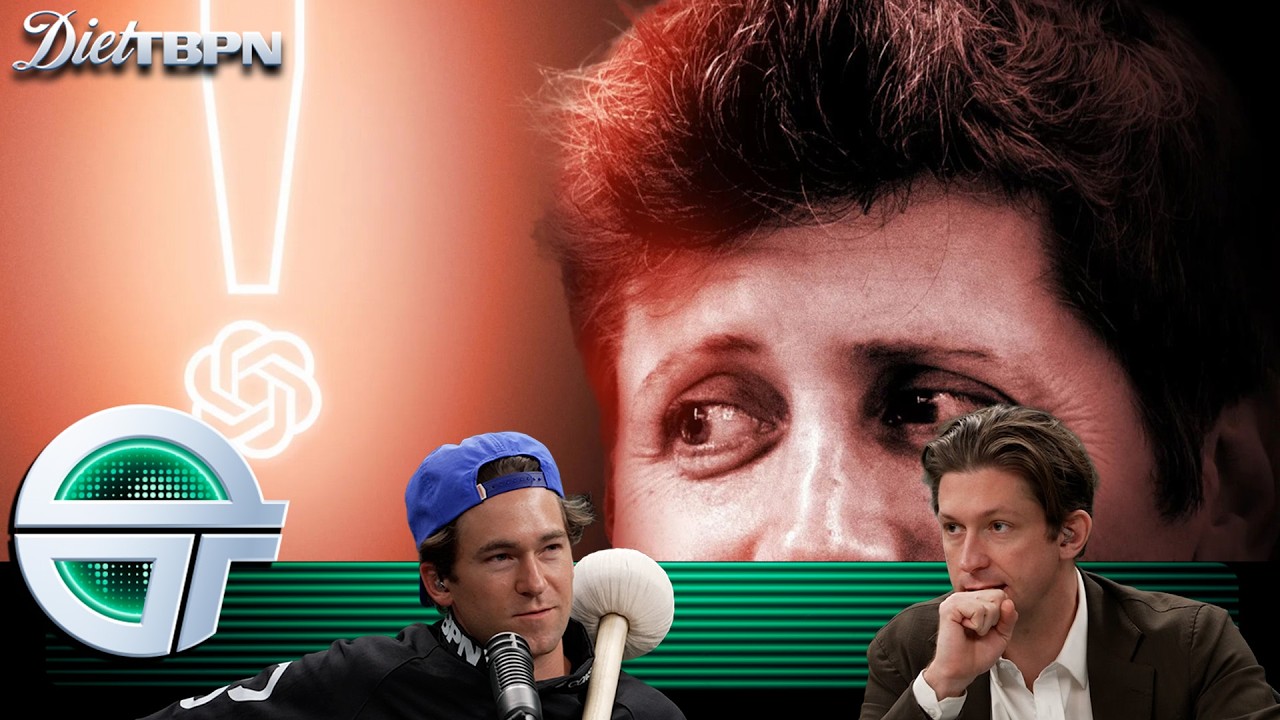
Blue Origin Raises $10B as Apple Scraps Low-Cost Vision Pro Screen
TBPN
Jeff Bezos's space venture landed its first outside capital at a $130 billion valuation while Apple abandoned cheaper Vision Pro displays due to poor demand and low manufacturing yields.
## Background
Diet TBPN published this video on YouTube on July 9, 2026. The page description outlines the show as a 30-minute recap of the daily live tech talk show hosted by John Coogan and Jordi Hays, which covers major technology news, business deals, and Silicon Valley trends.
## TL;DR
The hosts break down major tech and business developments, starting with Blue Origin raising $10 billion in its first-ever outside funding round at a $130 billion valuation. They examine Apple cancelling plans for a cheaper Vision Pro display due to supply chain yields and low market demand, followed by the collapse of Getty Images and Shutterstock's $3.7 billion merger after UK regulatory intervention. Additionally, the episode covers the viral Urbex trend at an abandoned IBM campus, OpenAI's launch of the GPT Live voice model, and the upcoming public release of GPT-5.6 models.
## Atmosphere & style
The show carries an energetic, conversational, and lighthearted vibe typical of daily tech industry podcasts. The hosts balance sharp business analysis with humorous tangents, bantering effortlessly as they switch from multi-billion-dollar valuation debates to joking about using VR for classic movies or setting up a villainous AI headquarters in an abandoned office. Listening feels fast-paced, insightful, and plugged into Silicon Valley chatter, blending genuine technical curiosity with casual camaraderie.
## Key takeaways
- [00:03](https://www.youtube.com/watch?v=TeqsmQtDWnE&t=3s) Jeff Bezos's Blue Origin is raising $10 billion in its first-ever outside funding round at a $130 billion valuation, with Bezos contributing $2 billion and Coatue taking $4 billion.
- [00:03](https://www.youtube.com/watch?v=TeqsmQtDWnE&t=3s) Despite Blue Origin's $5 billion projected annual burn rate and $27 billion burned to date, its valuation reflects its rare technical capability as a reusable orbital rocket operator.
- [00:43](https://www.youtube.com/watch?v=TeqsmQtDWnE&t=43s) Apple has reportedly cancelled plans for a lower-cost Vision Pro display and is ending its display partnership with Samsung due to high costs and weak consumer demand.
- [00:43](https://www.youtube.com/watch?v=TeqsmQtDWnE&t=43s) Subsidized single-digit display yields enabled Apple to deliver top-tier visual fidelity in the Vision Pro, but failed to drive mass consumer adoption, leading R&D to pivot toward everyday smart glasses.
- [00:56](https://www.youtube.com/watch?v=TeqsmQtDWnE&t=56s) The $3.7 billion merger between Getty Images and Shutterstock collapsed after the UK's CMA demanded the divestiture of Shutterstock's editorial business.
- [00:56](https://www.youtube.com/watch?v=TeqsmQtDWnE&t=56s) Regulatory intervention in the Getty-Shutterstock deal ignored the existential competitive threat posed by generative AI image models, which caused both companies' market caps to crash to ~$300M.
- [15:43](https://www.youtube.com/watch?v=TeqsmQtDWnE&t=943s) Past regulatory decisions, such as the UK CMA blocking Meta's acquisition of Giphy in 2022, highlight aggressive antitrust actions in dynamic tech markets.
- [16:59](https://www.youtube.com/watch?v=TeqsmQtDWnE&t=1019s) The former IBM campus in Somers, New York, has become a prominent focal point for the viral urban exploration ('Urbex') trend on social media.
- [19:57](https://www.youtube.com/watch?v=TeqsmQtDWnE&t=1197s) OpenAI launched GPT Live, a full duplex real-time voice model capable of simultaneous listening, speaking, and background reasoning task delegation.
- [23:24](https://www.youtube.com/watch?v=TeqsmQtDWnE&t=1404s) OpenAI announced the upcoming public release of GPT-5.6 Soul, Terra, and Luna following global preview access.
- [23:24](https://www.youtube.com/watch?v=TeqsmQtDWnE&t=1404s) Emerging AI models like GPT-5.6 Soul demonstrate distinct personality and performance capabilities driven by proprietary datasets and refined distillation protocols.
## Detailed walkthrough
### [00:03](https://www.youtube.com/watch?v=TeqsmQtDWnE&t=3s) Blue Origin Raises $10 Billion in First-Ever Outside Funding Round
The hosts kick off the show energized by the *Invest Like the Best* intro song before diving into major space tech news: Jeff Bezos’s Blue Origin is raising outside capital for the first time in its 25-year history. The company is securing a massive $10 billion funding round at an estimated $130 billion valuation. Bezos is doubling down by personally contributing $2 billion, while investment firm Coatue—where Bezos’s family office is a major LP in their Innovative Strategies fund—is taking a $4 billion allocation. Andrew Ross Sorkin broke the story in *The New York Times*, leading the hosts to speculate whether the news leaked directly out of the Sun Valley conference.
The hosts marvel at the changing dynamics of private market valuations. They recall an anecdote involving investor Gavin Baker (during his time at Fidelity) and Uber founder Travis Kalanick, where a $14 billion to $17 billion valuation for Uber was once seen as unprecedented and crazy. Today, in an era of multi-trillion-dollar giants, a $17 billion or even $60 billion private valuation looks "quaint." While critics argue Blue Origin’s valuation implies an astronomical revenue multiple—given its estimated $5 billion annual burn rate and $27 billion burned to date—the hosts argue it is being valued on its rare technological capabilities as the second entity to orbit and land a reusable rocket, outpacing Chinese competitors.
- **Key Transaction Details:** $10 billion total raise at a $130 billion valuation; Jeff Bezos putting in $2B; Coatue taking $4B.
- **Historical Burn:** Blue Origin has burned approximately $27 billion over 25 years (~$1 billion/year average) and is projected to burn $5 billion this year.
- **Market Comparables:** Publicly traded space comps include Rocket Lab (sitting at just under $50 billion) and AST SpaceMobile (around $27 billion to $30 billion).
---
[00:43](https://www.youtube.com/watch?v=TeqsmQtDWnE&t=43s) Apple Reportedly Scraps Cheaper Vision Pro Display Plans
Moving to consumer tech, the hosts share "heartbreaking news" for the small circle of dedicated Apple Vision Pro enthusiasts: Apple has reportedly cancelled plans for a lower-cost Vision Pro display and is winding down its display partnership with Samsung. Despite high-end hardware, the Vision Pro struggled to find product-market fit due to its high price tag, heavy weight, and a lack of developer traction. The hosts joke about their own extensive use of the device for cinematic movie watching—highlighting titles like *Lawrence of Arabia*, *Dunkirk*, *The Godfather Part II*, and *Master and Commander*.
The discussion dives into the supply chain economics behind the original Vision Pro. Apple had leapfrogged Meta’s incremental VR screen improvements by approaching Samsung for displays that were originally 4 years away from mass manufacturing. Because these early-stage displays suffered from single-digit yields, Apple agreed to pay exorbitant prices to corner the market on cutting-edge visual fidelity. While the strategy yielded an incredible screen, the expected cost commoditization over time failed to ignite consumer demand. The hosts suggest that today's users prefer interactive, multi-tasking "doom scrolling" on phones over isolated, passive VR movie-watching, leading Apple to pivot its long-term R&D toward everyday smart glasses.
- **Supply Chain Pivot:** Samsung Display is expected to formally conclude the low-cost display project by September.
- **Manufacturing Dynamics:** Traditional tech production aims for 90% to 99.9% yields, but Apple originally subsidized ultra-low single-digit yield prototypes to achieve top-tier screen resolution.
- **Industry Callout:** The hosts highlight Bigscreen and its founder as examples of unyielding dedication to the AR/VR category despite recurring industry hype cycles.
---
[00:56](https://www.youtube.com/watch?v=TeqsmQtDWnE&t=56s) Getty Images and Shutterstock $3.7B Merger Collapses Over UK Regulation
The final segment covers the collapse of the proposed merger between stock photography giants Getty Images and Shutterstock. Originally announced in January 2025 and cleared by the U.S. Department of Justice in April, the $3.7 billion transaction was officially terminated by Getty after the UK’s Competition and Markets Authority (CMA) demanded the divestiture of Shutterstock’s editorial business. Getty’s board rejected the condition, choosing instead to walk away from the deal entirely.
The hosts criticize the regulatory block, arguing that stock photo companies are facing existential pressure from generative AI image models (such as Meta's Muse, OpenAI's image tools, and Nano Banana Pro). In an environment where media outlets can generate custom images instantly, consolidating to gain pricing power and market efficiency was a logical survival strategy. The CMA defended its decision by citing potential price increases and reduced choices for UK media outlets. However, the hosts point out that both companies have seen their valuations crater since the deal was struck—with both Getty and Shutterstock now sitting at market caps around $300 million to $340 million—making the regulatory intervention seem out of touch with market realities.
- **Deal Timeline & Regulatory Stance:** Deal announced January 2025; cleared by US DOJ in April; terminated July 2026 due to UK CMA conditions.
- **Market Cap Collapse:** The initial $3.7 billion deal figure was based on early 2025 stock prices; today, Shutterstock sits at a $329 million market cap and Getty at $340 million.
- **Regulatory Parallels:** The hosts compare the UK's move to past U.S. regulatory actions, such as blocking Meta from acquiring a VR fitness startup to prevent a monopoly in a market that ultimately never materialized.
[15:43](https://www.youtube.com/watch?v=TeqsmQtDWnE&t=943s) Regulatory Blockades and AI Labeling in Stock Media
The hosts kick off this segment looking back at weird regulatory antitrust actions, specifically highlighting how the UK blocked Meta from acquiring Giphy back in 2022—presumably to "prevent a monopoly in GIFs." They ponder how GIF search actually works across messaging platforms, noting that Apple's iMessage GIF feature via hashtag images is actually powered by Bing rather than Giphy, proving there is plenty of competition in the space.
The discussion pivots to stock media platforms when a viewer named Amanda points out that Canva does not label AI-generated content within its stock image library. The hosts find this omission annoying, noting how seamless it is for users to pull a standard stock photo of a forest for a greeting card without knowing whether it was artist-shot or generated by AI.
- In 2022, the UK Competition and Markets Authority blocked Meta from acquiring Giphy.
- Search features like hashtag images in Apple iMessage rely on Bing rather than Giphy.
- Users note that Canva currently does not label AI-generated stock images in its media library.
[16:59](https://www.youtube.com/watch?v=TeqsmQtDWnE&t=1019s) Abandoned IBM Campus and the Surge of Urbex Culture
The hosts review a feature from *The Wall Street Journal* covering "the world's creepiest office," the former IBM campus located in Somers, New York—about an hour outside Manhattan. Joking that it would make the perfect villainous headquarters or micro data center for a hypothetical AI startup named "Ominous Intelligence," they envision the eerie atmosphere of walking its vast, empty halls late at night. The site formerly housed operations tied to IBM Watson's Jeopardy-winning era of machine intelligence, but today it stands completely abandoned.
The complex has become a prime target for the global "Urbex" (urban exploration) trend, where thrill-seekers breach unused structures like factories, malls, and power plants to post viral content on TikTok and Instagram. The article recounts 62-year-old retired engineer Robert Carlton stopping a group of fleeing teenage boys in April, leading to New York State Police troopers arresting seven juveniles for trespassing. Similar warnings have recently been issued by police departments in Livingston, New Jersey, regarding the shuttered Livingston Mall, and in Jacksonville Beach, Florida, concerning the closed Adventure Landing amusement park.
- The abandoned IBM facility in Somers, New York, sits roughly one hour outside Manhattan.
- Retired engineer Robert Carlton intercepted fleeing teenagers on the grounds, resulting in New York State Police arresting seven juveniles for criminal trespass.
- Police in Livingston, NJ (Livingston Mall) and Jacksonville Beach, FL (Adventure Landing) have issued public warnings against viral Urbex TikTok challenges.
[19:57](https://www.youtube.com/watch?v=TeqsmQtDWnE&t=1197s) OpenAI Launches GPT Live Voice Model
OpenAI launched GPT Live, a new generation of real-time voice models integrated directly into ChatGPT. Built on a full duplex architecture, the model can listen and speak simultaneously, allowing natural interruptions and seamless back-and-forth dialogue. It can also route complex tasks to reasoning models in the background while keeping up the real-time conversation. The hosts express excitement for how this technology elevates voice interaction from a clunky dictate-and-wait process to an authentic, multi-threaded conversational partner.
The conversation turns to creators who rigorously test voice models, comparing their efforts to "white hat hackers" like Pliny the Liberator. By pushing these models to their limits—exposing missing tools, lack of timers, or context window drops—these testers establish practical benchmarks for developers. Looking ahead, the hosts speculate on a future where users can delegate complex background research (such as generating a full report on IBM Watson) while casually chatting with the AI about daily news and organizational tasks in a single continuous thread.
- GPT Live features a full duplex architecture, enabling simultaneous listening, speaking, and background query routing.
- Testers evaluate voice models on missing capabilities like native tool use, countdown timers, and context retention.
- Multi-threaded voice AI allows users to delegate deep research or coding tasks without pausing the primary verbal conversation stream.
[23:24](https://www.youtube.com/watch?v=TeqsmQtDWnE&t=1404s) The Anticipated Rollout of GPT-5.6 Soul, Terra, and Luna
OpenAI announced that GPT-5.6 Soul, along with Terra and Luna, will officially launch to the public this Thursday following expanded global preview access. The tech community on X has been abuzz with reactions and jokes. Tech founder John Palmer quipped that while he wasn't an official tester, "this will probably be my default model from here on," while developer Kit Langton joked that he has been using it for "many months, if not decades."
Commentators highlight a growing divergence in model personalities and performance. While earlier frontier models like Fable offered raw, planetary speed ("light speed across the galaxy"), Soul is described as more engaging and refined, akin to "a Porsche on the Nürburgring." Commentators like Ethan, Dean, and Leo emphasized that Soul and Fable represent a massive leap over legacy models, creating a wide performance gap. The distinct traits of these models stem from tighter distillation protocols, proprietary datasets, and varied research tastes rather than relying solely on generic web scrapes.
- GPT-5.6 Soul, Terra, and Luna are set for public release this Thursday following global preview access expansion.
- Analysts attribute the growing differentiation between top models to distinct distillation pipelines, proprietary training corpora, and specialized fine-tuning tastes.
- Preview users report that GPT-5.6 Soul features world-leading computer-use capabilities, prompting jokes about using the model to rank up in *Counter-Strike*.
## Notable quotes
> [23:24](https://www.youtube.com/watch?v=TeqsmQtDWnE&t=1404s) this will probably be my default model from here on — John Palmer
> [23:24](https://www.youtube.com/watch?v=TeqsmQtDWnE&t=1404s) many months, if not decades — Kit Langton
## Mentioned
Blue Origin, Jeff Bezos, Coatue, Andrew Ross Sorkin, The New York Times, Gavin Baker, Fidelity, Uber, Travis Kalanick, Rocket Lab, AST SpaceMobile, Apple, Vision Pro, Samsung, Samsung Display, Meta, Bigscreen, Getty Images, Shutterstock, U.S. Department of Justice, UK Competition and Markets Authority, Giphy, Bing, Apple iMessage, Canva, The Wall Street Journal, IBM, Robert Carlton, New York State Police, Livingston Mall, Adventure Landing, OpenAI, ChatGPT, GPT Live, Pliny the Liberator, GPT-5.6 Soul, GPT-5.6 Terra, GPT-5.6 Luna, John Palmer, Kit Langton, Fable, John Coogan, Jordi Hays, TBPN
Blue Origin融资100亿美元,苹果放弃低成本Vision Pro屏幕
Jeff Bezos旗下的太空探索公司以1300亿美元估值斩获首笔外部投资,而苹果因需求疲软及制造良率过低放弃了廉价版Vision Pro显示屏。
主持人深入剖析了多项重大科技与商业动态:首先是Blue Origin在其首轮外部融资中以1300亿美元估值募集了100亿美元;接着探讨了苹果因供应链良率和低迷的市场需求而取消更廉价Vision Pro显示屏计划;随后分析了Getty Images与Shutterstock在英国监管机构干预后宣告破裂的37亿美元合并案。此外,本期节目还涵盖了废弃IBM园区引发网络热潮的城市探险(Urbex)趋势、OpenAI推出GPT Live语音模型,以及GPT-5.6模型即将向公众发布等内容。
Jeff Bezos 创立的蓝色起源(Blue Origin)正以 1300 亿美元估值寻求 100 亿美元的首轮外部融资,其中 Bezos 个人出资 20 亿美元,投资机构 Coatue 出资 40 亿美元。 (0:03)
因面临高昂制造成本及大众消费需求疲软,苹果据报已取消平价版 Vision Pro 显示屏开发计划,并正逐步终止与三星的显示屏合作。 (0:43)
因英国竞争与市场管理局(CMA)要求剥离 Shutterstock 的编辑业务,Getty Images 正式终止了双方价值 37 亿美元的合并交易,而生成式 AI 的崛起已导致两家公司市值双双暴跌至约 3 亿美元。 (0:56)
OpenAI 宣布 GPT-5.6 Soul、Terra 和 Luna 将于本周四正式向公众发布,测试者反映该系列模型在交互体验和计算机操控能力上均展现出巨大飞跃。 (23:24)
Reading summary
TBPN explores major shifts across deep tech, consumer hardware, antitrust regulation, and artificial intelligence, highlighted by Blue Origin's $10 billion outside capital raise and OpenAI's expanding model portfolio.
Blue Origin's Milestone Outside Funding Round (0:03)
Jeff Bezos's Blue Origin is securing $10 billion in its first external funding round across its 25-year history, achieving an estimated $130 billion valuation. The transaction includes a personal $2 billion commitment from Bezos and a $4 billion allocation from investment firm Coatue. While critics note that Blue Origin's valuation comes against an estimated $5 billion burn rate this year and roughly $27 billion burned to date, commentators argue the company is being priced on its rare technological status as the second entity capable of orbiting and landing a reusable rocket, outpacing Chinese rivals and standing alongside public space peers like Rocket Lab and AST SpaceMobile.
Hardware Retreats and Mixed-Reality Reality Checks (0:43)
In consumer hardware, Apple has reportedly scrapped plans for a lower-cost Vision Pro display and is ending its development partnership with Samsung Display by September. Apple originally subsidized early-stage, single-digit yield displays from Samsung to gain an edge in visual fidelity, but high unit costs, device weight, and limited developer momentum have dampened consumer adoption. Commentators observe that consumer preferences continue to favor interactive mobile devices over isolated VR experiences, nudging Apple's long-term R&D toward everyday smart glasses.
Regulatory Intervention and Legacy Media Disruption (0:56)
The planned $3.7 billion merger between stock media firms Getty Images and Shutterstock collapsed after the UK's Competition and Markets Authority required Shutterstock to divest its editorial division. Getty's board rejected the condition and abandoned the transaction, despite earlier clearance from the US Department of Justice. The hosts criticize the regulatory block, pointing out that both firms have seen their market caps tumble to around $330 million to $340 million under existential competitive pressure from generative AI image tools. The decision was compared to previous interventions, such as the UK blocking Meta's acquisition of Giphy, while platforms like Canva face criticism for failing to label AI-generated imagery within stock libraries.
OpenAI Expands Real-Time and Flagship Models (19:57)
OpenAI introduced GPT Live, a full-duplex voice model capable of concurrent listening, speaking, and background reasoning, shifting real-time interaction toward multi-threaded conversations. Simultaneously, OpenAI scheduled the public rollout of GPT-5.6 Soul, Terra, and Luna following preview testing. Early testers and commentators note distinct behavioral personalities across new frontier architectures, driven by specialized distillation pipelines and proprietary data rather than uniform web scraping, with Soul noted for responsive handling and advanced computer-use capabilities.
Across tech sectors, massive capital continues to flow into capital-intensive frontiers like orbital spaceflight and advanced AI architectures, while consumer hardware and legacy media platforms grapple with shifting user habits and regulatory headwinds.
[23:24] John Palmer: this will probably be my default model from here on
[23:24] Kit Langton: many months, if not decades
Original transcript
[0:03] It's great to be back.
[0:04] >> Yes, the invest like the best hype song
[0:07] really
[0:08] it really has
[0:10] I don't know, it just burned its way
[0:12] >> Yeah, puts me in the zone in an
[0:13] incredible
[0:14] >> Yeah.
[0:14] >> mental state.
[0:15] >> Uh 100% 100%. You know who else is in a
[0:18] good mental state? Jeff Bezos cuz he's
[0:20] getting a markup on the 25 billion he's
[0:24] putting into
[0:24] >> himself up.
[0:25] >> himself up.
[0:26] >> Alongside Coatue.
[0:27] >> Yeah, the news is that Blue Origin is
[0:30] raising outside capital for the first
[0:32] time. He's participating. A fund Coatue
[0:35] who he is also invested in through his
[0:37] family office is also participating. Um
[0:39] but there will be an opportunity for
[0:41] some other true outsiders to get their
[0:43] first slice of of Blue Origin. Uh Andrew
[0:46] Ross Sorkin had the scoop in the New
[0:48] York Times today. You have to wonder if
[0:51] this is
[0:52] gossip coming out of Sun Valley. Uh the
[0:54] company's raising $10 billion. This is
[0:56] the first outside fund raise. Uh it's
[0:59] hilarious to think about this
[1:00] 25-year-old company as being previously
[1:03] bootstrapped, but that's technically
[1:04] what it is basically. Uh one founder's
[1:07] capital just uh chipping away at a
[1:10] really hard problem for a quarter
[1:11] century and now we are here. Bezos has
[1:15] been funding this basically solo on his
[1:18] uh quest to visit the stars. Uh he's
[1:21] doubling down.
[1:22] >> People can't really complain about the
[1:23] valuation cuz he's a big
[1:25] >> Yeah.
[1:25] >> part of uh setting the price.
[1:27] >> Yeah, yeah. So uh he's doubling down.
[1:30] He's putting in $2 billion directly and
[1:32] Coatue is getting twice as much
[1:34] allocation, $4 billion. Uh there's
[1:36] another interesting Coatue tidbit I
[1:38] alluded to earlier from the New York
[1:40] Times piece. Bezos's family office is a
[1:43] major investor in Coatue's innovative
[1:45] strategies fund which is focused on
[1:47] emerging technology startups. So I'm not
[1:49] sure if the money's coming out of that
[1:51] fund specifically, but there is a
[1:52] connection there. He's been building a
[1:54] relationship with Coatue for a long time
[1:56] and they are optimistic about Blue
[1:58] Origin's prospects. The valuation is
[2:00] expected to be a hundred and thirty
[2:01] billion dollars. Big for a private
[2:04] company. I was listening to Gavin Baker
[2:06] and Travis Kalanick talk about how crazy
[2:08] it was when Gavin was at Fidelity and
[2:12] the he wanted to value Uber at fourteen
[2:14] billion and everyone thought he was
[2:16] crazy. The valuation turned into an
[2:17] auction, came in at seventeen and
[2:19] everyone was like this is unprecedented.
[2:22] We've never seen a private company this
[2:24] big and now uh seventeen billion, even
[2:26] sixty billion in the private markets
[2:28] looks quaint by modern standards in an
[2:30] era where we have uh several trillion
[2:33] dollar private companies, uh many up in
[2:36] the hundred billion plus range. Uh it's
[2:38] a wild wild time. The Elon bulls are
[2:41] saying oh SpaceX is underpriced now
[2:43] because you have to imagine I don't know
[2:45] if there's an exact revenue figure
[2:47] that's leaked for Blue Origin, but based
[2:49] on the size of that business it has to
[2:50] be small and so this has to be a very
[2:53] high multiple, but you're not really
[2:55] valuing this company on cash flow or
[2:57] even revenue. You're valuing it on the
[2:59] capability which is it's the second
[3:02] company in the world I believe to uh
[3:04] bring a rocket to orbit, land it
[3:06] successfully,
[3:08] you know, prove you reusability. They
[3:10] got there before China which has been
[3:12] trying to copy SpaceX for years and so
[3:14] lots of really solid progress. Of course
[3:16] there was that setback with the uh
[3:19] launchpad that exploded, but they
[3:21] figured out a solution to that and
[3:23] things are chopping along just uh just
[3:25] fine. The company's estimated to burn
[3:27] five billion this year. So, this looks
[3:30] like a pretty standard twelve to
[3:32] eighteen month fundraise at ten billion
[3:34] and it's burned something like
[3:35] twenty-seven billion to date which, you
[3:38] know, a billion a year on average over
[3:39] twenty-five years, not too bad for such
[3:42] an ambitious project. Still a lot of
[3:43] money, uh but a big opportunity. And uh
[3:47] and you have to imagine um
[3:49] there are a number of other comps like
[3:51] AST space mobile as you like to call
[3:53] them.
[3:54] >> [laughter]
[3:54] >> AST space mobile
[3:56] >> the AST
[3:57] space mobile.
[3:57] >> ASTS market cap
[3:59] >> 27, 28 billion dollar market
[4:00] >> 30 billion dollar company and I don't
[4:02] believe that they've gotten much to
[4:03] orbit yet. They've done some
[4:05] experiments, some tests. They're still
[4:06] early, but it's a huge market and we've
[4:08] seen how fast
[4:10] >> of mass to orbit.
[4:11] >> Yeah, and and and we've seen how fast
[4:13] Rocket Lab and various uh it's a big
[4:15] really it's a really really big market
[4:16] and so when you're going after big
[4:18] opportunity and you've been working on
[4:19] it a long time and you got Jeff Bezos
[4:22] funding it uh lots of reasons to be
[4:24] optimistic.
[4:25] >> Another comp uh investors would
[4:27] certainly look at would be Rocket Lab
[4:29] sitting at just under 50 billion.
[4:32] >> We have some heartbreaking news.
[4:34] Heartbreaking news. Apple has scrapped
[4:37] plans for a cheaper Apple Vision Pro
[4:39] display and is winding down work at
[4:42] Samsung. This is from MacRumors. Really
[4:45] hits me and the other three Apple Vision
[4:47] Pro fans particularly hard. Uh
[4:50] >> Brutal.
[4:50] >> I did I Who did I talk to? I talked to
[4:52] somebody who said that they they
[4:53] actually are a daily user of the Apple
[4:56] Vision Pro. I thought I was in the top
[4:57] 1%
[4:58] >> the the founder that's making
[5:00] >> Yes, that's right. Yeah. He says he
[5:02] watches it he watches he uses it every
[5:04] night or something like that. That's a
[5:05] lot of Apple Vision Pro use. Obviously
[5:08] the the the product never really found
[5:09] product market fit. Uh although we have
[5:11] one in the studio, we've been having fun
[5:13] with it. Uh I still think it's a it's
[5:15] it's an incredible piece of technology,
[5:17] but a little bit of a chicken and an egg
[5:19] problem. The developers never showed up
[5:21] and it was very expensive, very heavy,
[5:22] very cumbersome. It requires a lot to
[5:25] put that thing on to watch Lawrence of
[5:26] Arabia, but when you do, it's worth it.
[5:29] It's worth it. What did I watch most
[5:31] recently? I watched Dunkirk in it and I
[5:33] watched Godfather Part II and Master and
[5:36] Commander. Master and Commander, that's
[5:38] a great movie especially in Vision Pro.
[5:40] Really, you want to be in the cinematic
[5:42] feel. Feel like you're on a on a on a
[5:45] warship. Uh so Apple has has reportedly
[5:48] stopped development on a cheaper display
[5:50] for a low lower cost Vision Pro. This
[5:52] feels like what the industry needs to
[5:55] move forward. The actual display was
[5:57] fantastic. It just needed to be cheaper
[5:59] and lighter so more people could get
[6:00] them. That at least was my thesis, but
[6:02] Apple disagrees with me. What do I know?
[6:04] So, uh supplier Samsung Display expected
[6:07] to formally end the project by
[6:08] September. And if you remember, there
[6:10] were rumors of the crazy hoops that
[6:13] Apple had to jump through to get that
[6:15] incredible display because they really
[6:17] leapfrogged Meta, who had been working
[6:19] with the acquisition of Oculus, and
[6:20] they'd been improving the
[6:23] uh the the display fidelity. They got
[6:25] rid of the screen door effect. They were
[6:27] increasing the resolution per eye.
[6:29] Everything was getting better about that
[6:31] display, but on a very linear trend. And
[6:34] allegedly, uh what Apple did was they
[6:36] went to Samsung and said, "We know that
[6:39] you are working on next year's display.
[6:41] You're also working on displays 2 years
[6:43] out, 3 years out, 4 years out." Now,
[6:46] what's the problem with the one that's 4
[6:47] years out? Well, it's amazing, but it's
[6:49] not ready for manufacturing at scale.
[6:51] It's not on an automated line. It needs
[6:53] a lot of manual work to get it to
[6:56] actually produce, and there's some crazy
[6:58] low yield. So, in in in chips, in
[7:01] displays, yield rules everything. If you
[7:05] run the machine a bunch of times, you
[7:07] want to get 99.9%
[7:10] yield, 90%. In the early days, when
[7:12] you're prototyping a new technology, you
[7:14] might be getting just a few percent
[7:16] yield. And Apple said, "That's fine.
[7:18] We'll just jack up the price and pay a
[7:20] ton for these cutting-edge displays,
[7:22] jump to the front of the category with
[7:24] the best display technology. We'll
[7:26] charge a fortune for it, but we'll have
[7:27] the best product, and that will be our
[7:28] market entry strategy." And so, I was
[7:30] waiting for that display technology to
[7:32] commoditize because it's been a few
[7:34] years. Uh I thought it would just
[7:36] naturally get cheaper. It probably has,
[7:38] but it has not solved the the
[7:40] of virtual reality, augmented reality.
[7:43] We haven't seen someone pick up
[7:45] >> they're just bearish on the near term of
[7:48] people watching movies?
[7:50] >> Maybe. Yeah.
[7:51] >> In in in VR because I don't They're
[7:54] They're certainly not stopping
[7:55] [laughter]
[7:56] R&D on their specs and their and their
[8:00] sort of everyday glasses product. And
[8:02] so, it might just be that that they
[8:04] studied you and found that you're built
[8:07] different. You're one of one, the only
[8:09] person on Earth.
[8:11] >> No, no. I mean, truly, like sitting down
[8:12] and watching a full movie is a is a rare
[8:14] experience today. People aren't reading,
[8:16] they're not watching movies, they're
[8:18] just scrolling, and people seem to be
[8:20] satisfied with their phone. And also,
[8:22] the nature of a doom scroll is is
[8:25] somewhat interactive, somewhat
[8:26] multiplayer. Although, obviously, people
[8:29] see it as brain rotting and very
[8:30] isolating, there is a game to
[8:34] >> [clears throat]
[8:34] >> be played by
[8:35] actively scrolling, which is something
[8:38] that doesn't require virtual reality.
[8:39] Certainly not enhanced by virtual
[8:41] reality. But then also, sometimes you
[8:43] want to read the comments. Sometimes you
[8:44] want to send it to a friend. Sometimes
[8:46] you want to fact-check it and ask AI
[8:48] about it or spin off and do something
[8:50] else and go to someone's profile. So, I
[8:53] I think that the number of taps and user
[8:55] interaction experiences in a doom scroll
[8:58] session are obviously much much higher
[9:01] than watching a film, which you just put
[9:02] on and hopefully you don't pause it at
[9:04] all because you're engrossed the entire
[9:06] time from start to finish.
[9:07] And so, if that becomes as scrolling
[9:10] means more and more, maybe the the VR
[9:12] experience is less less and less
[9:14] relevant. So,
[9:15] >> VR really attracts these
[9:18] >> visionary visionary chats,
[9:21] >> that are willing to go that that seem
[9:23] No, no. I'm actually
[9:25] I could make that joke, but I won't. But
[9:28] just just people that are willing to
[9:30] just continually look silly for a long
[9:34] time to ride through the hype cycles and
[9:36] just like
[9:37] >> True.
[9:37] >> keep building. I think Bigscreen is an
[9:39] is an example of that. The founder that
[9:41] we had on that has a very cool glasses
[9:44] uh demo product. He's I from my
[9:46] understanding probably using uh AR and
[9:49] VR more than anyone else on the planet.
[9:51] Like so committed to just like winning.
[9:53] >> Yeah.
[9:53] >> Um and so I really appreciate that about
[9:55] the category.
[9:56] >> Yeah.
[9:56] >> Here is a crazy story. I mean it's such
[9:58] a minor story, but uh it certainly
[10:00] grinds my gears. I think we're going to
[10:03] dig into it and see what you think, what
[10:04] I think once we dig into it. But Getty
[10:06] Images, we know and love them from their
[10:09] trove of silicon of Silicon Valley
[10:12] titans photographed
[10:13] >> at Sun Valley.
[10:14] >> at Sun Valley, which is happening now.
[10:16] If you don't have a Getty Images
[10:17] subscription, sign up now because you're
[10:19] going to be first to know when the new
[10:21] Josh Kushner uh
[10:24] paparazzi photo drops. Getty Images was
[10:26] planning to merge with Shutterstock.
[10:28] These are two essentially stock photo
[10:31] sites. In theory, they should be
[10:33] absolutely decimated by AI image
[10:35] generation. Meta put out a new one, Muse
[10:39] Muse image. Uh
[10:41] Nano Banana Pro has been fantastic.
[10:44] Images too from Open AI has been really
[10:46] good. And like they're they're honestly
[10:48] getting to the point where a lot of the
[10:50] example images are just like, okay,
[10:52] that's just a photo. I saw Adam Mosseri
[10:54] posted some on Instagram and I was like,
[10:56] is this AI or did you just take this
[10:58] photo? Like it's just you. And then he
[11:00] did a couple with filters and hair and
[11:03] crazy hair. And those were cool. And and
[11:04] that breeds creativity. So I think
[11:06] there's a lot of value in the
[11:07] technology. But in terms of just like
[11:09] I'm trying to illustrate I'm trying to
[11:11] make a point visually, uh I need a
[11:13] picture of a forest. AI image generation
[11:16] is very, very competitive with the stock
[11:18] image industry. And this should have
[11:21] this should be a business that's sort of
[11:23] affected like the way
[11:25] >> Yeah, I imagine a lot of a lot of these
[11:27] businesses
[11:27] >> cheating website check.
[11:28] >> move their net new revenue over the last
[11:30] couple years is just working with labs
[11:32] that need
[11:33] >> licensing, yeah, all sorts of things.
[11:35] So, um certainly in the face of growing
[11:38] competition, consolidation of an
[11:40] industry is very normal. That makes a
[11:42] lot of sense. This doesn't This doesn't
[11:44] seem like it should raise any regulatory
[11:45] flags, and yet it did in the United
[11:47] Kingdom. Uh Getty Images has called off
[11:50] the Shutterstock deal after the UK uh
[11:53] created some uh barriers around it. So,
[11:56] the $3.7 billion deal would have created
[11:59] a visual content company able to offer a
[12:01] more expansive library to users, says
[12:03] the Wall Street Journal. On Tuesday,
[12:05] Getty delivered a written notice to
[12:07] Shutterstock terminating their planned
[12:09] tie-up, which was first announced in
[12:10] January of 2025, and was and received
[12:12] clearance from the Justice Department in
[12:14] America in April. So, pretty quick
[12:17] turnaround in the United States. Uh the
[12:18] $3.7 billion deal would have created a
[12:20] visual content company able to deliver a
[12:22] more expansive library to users, helping
[12:25] meet booming demand for licensed images
[12:27] and videos as artificial intelligence
[12:29] disrupts the business of content
[12:30] creation. Getty stock slipped 1.7% in
[12:34] pre-market trading. Uh shares of
[12:36] Shutterstock ticked up 1%. So, maybe the
[12:39] Shutterstock shareholders are happy
[12:40] about remaining an independent company.
[12:43] The termination came after Getty last
[12:45] week said that its board voted to not
[12:48] proceed with the deal if it meant shut
[12:50] selling [snorts] Shutterstock's
[12:52] editorial business, a condition required
[12:55] by the UK Competition and Markets
[12:57] Authority. So, the decision to uh a uh
[13:01] by Getty to abandon its merger with
[13:02] Shutterstock was ultimately a commercial
[13:04] choice, said the chair of independent
[13:06] inquiry group that led the CMA's
[13:08] investigation of the deal. The inquiry
[13:10] group found that a loss of competition
[13:12] between the two businesses would reduce
[13:14] choice for UK media outlets and could
[13:16] lead to higher prices. And I would I
[13:18] would assume that this would give them
[13:20] some sort of pricing
[13:22] power in the face of, you know,
[13:24] essentially unlimited free editorial
[13:27] images in the form of AI generated
[13:29] images. If you want to go with the real
[13:31] thing, you have to pay a little bit
[13:33] more, but that sort of offsets all the
[13:36] pressure of the customers that are
[13:37] leaving and no longer paying because
[13:38] they don't need to pay because they're
[13:40] generating them with generative AI. So,
[13:42] this felt like a very logical story, um
[13:46] and I'm I'm a little bit uncertain that
[13:49] this is a good decision for the UK to
[13:52] help these businesses. [clears throat]
[13:53] It feels like it's just going to wind up
[13:55] hurting both of them.
[13:55] >> Yeah, are UK media outlets not allowed
[13:58] to use AI content?
[14:00] >> I don't think that there's any broad
[14:01] rule against it, no. So, they
[14:06] you would it would be a deliberate
[14:07] choice, and I'm sure there's plenty I I
[14:09] can imagine that the Financial Times
[14:11] does not use AI images, and that's by
[14:13] choice, and they make that very clear,
[14:15] and there's probably a disclosure. And
[14:17] if they Of co- Of course, they will use
[14:18] an AI image if they're talking about the
[14:20] AI image industry, but in terms of what
[14:22] you see on the front page of the
[14:23] Financial Times, it's almost always
[14:25] editorial
[14:26] >> that Yeah, that image.
[14:28] >> This is from Reuters.
[14:29] >> Okay, so I was trying to figure out why
[14:32] that the headline number here was 3.7
[14:34] billion because it was based on the
[14:36] January 6th, 2025 share prices, not
[14:39] today's prices, which are far, far, far
[14:42] lower.
[14:43] >> Yeah.
[14:43] >> Shutterstock is sitting at $329 million
[14:47] market cap. Getty is at $340 million
[14:50] market cap.
[14:51] >> Woah.
[14:51] >> So, these businesses have been
[14:53] >> Okay.
[14:53] >> really, really beat up.
[14:55] >> So,
[14:55] >> over the period since they decided,
[14:57] "Hey, we should
[14:58] >> Yeah.
[14:58] >> tie up."
[14:59] >> Interesting. So, is there is there a
[15:01] potential
[15:02] >> UK, I think regulators are actually
[15:04] trying to just kick these companies
[15:05] while they're down.
[15:06] >> Is that what's happening? Or or is it a
[15:08] situation where Getty I mean, that that
[15:10] is possible. I mean, it could just be
[15:12] like a just a complete mistake. I mean,
[15:14] as you go back to Meta, and you think
[15:15] about the US regulators blocked Meta
[15:18] from buying a VR fitness company that
[15:22] they said would create a monopoly in the
[15:23] VR fitness industry. And of course, like
[15:25] the VR fitness industry like never
[15:27] happened. Like it's not a it's not a not
[15:29] an industry worth monopolizing. And so,
[15:31] if you think about you know, the
[15:33] business model of Quest, like would it
[15:35] have been advantageous? Maybe, but it's
[15:38] worth letting Meta take a shot at that
[15:41] and see if having a
[15:43] VR fitness company in the portfolio will
[15:45] actually get that product to you know,
[15:48] to scale. Tyler, what do you have
[15:50] >> Uh another interesting anecdote is the
[15:52] UK blocked Meta from buying Giphy in
[15:54] 2022.
[15:55] >> Yes.
[15:55] >> So,
[15:56] to prevent a monopoly in GIFs, I
[15:58] presume.
[15:59] This could be pretty dangerous.
[16:00] >> Yes, which is also odd. What what does
[16:03] Giphy power the GIFs that you see in
[16:06] iMessage? Do you know what I'm talking
[16:07] about? When you go to
[16:10] you you go to there's Genmoji, there's
[16:13] stickers, and then there's also hashtag
[16:16] images. And you can find images
[16:19] and you can send you know, different
[16:21] pictures and and GIFs. I wonder if these
[16:23] are from Giphy or
[16:24] >> It's powered by Bing, not Giphy.
[16:26] >> Okay, so there's competition in this
[16:28] market.
[16:28] >> Yeah.
[16:29] >> I don't know. It's it it seems
[16:31] >> Amanda says Canva doesn't label AI in
[16:33] their stock images. That's so annoying.
[16:34] [clears throat]
[16:35] So, yeah, I didn't even know Canva was a
[16:37] player here.
[16:37] >> Mhm.
[16:38] >> But it would make sense to like
[16:40] >> you're in Canva and you want to you
[16:42] know, have a picture of a forest on your
[16:44] greeting card and you can pick from a
[16:47] library. Some of them will be generated,
[16:48] some of them won't and they probably
[16:49] also have a a generative AI tool where
[16:51] you can generate a new image, but if
[16:54] you're just got looking for a generic
[16:55] stock image that's already been
[16:56] described, you can probably pull from
[16:58] whatever library is out there. Anyway,
[16:59] on the cover of the Wall Street Journal,
[17:01] it's the world's creepiest office and
[17:03] people won't stay away. This is the the
[17:06] New York complex vacated by IBM has
[17:08] become a magnet for urban explorers. We
[17:11] have a video of this place. If you're a
[17:13] scrappy startup looking to expand, this
[17:16] might be the key to success, the
[17:19] ultimate lock-in factory in sort of
[17:22] rural New York, I think. Well, we'll get
[17:25] into it. So, this is in Somers, New
[17:28] York. I don't know exactly how far away
[17:29] that is from Manhattan.
[17:30] >> Yeah, so if you were like a neo-lab and
[17:33] your name was like ominous intelligence.
[17:35] >> Yeah, there we go.
[17:37] >> be a great sort of HQ, potentially, you
[17:39] know, your first uh little micro data
[17:42] center. Very James Bond villain sort of
[17:46] vibe.
[17:48] Uh and yeah, it looks looks like you
[17:50] could make it, you know, really, really
[17:51] homey.
[17:52] >> It is 1 hour. You can be in the city in
[17:54] an hour. That's
[17:55] >> And imagine walking these halls
[17:57] late at night after a long day at work.
[18:00] >> Yes.
[18:01] >> It wouldn't be It wouldn't be creepy at
[18:03] all.
[18:03] >> Yes. Robert Carlton was getting the mail
[18:06] one day in April when he saw a group of
[18:08] teenage boys sprinting away from nearby
[18:11] woods. He cut them off at the road and
[18:13] raised his arms. I just said, "Stop.
[18:15] It's over." The 62-year-old retired
[18:18] engineer recalled. Soon, he said, "Three
[18:21] pur- uh pursuing New York State Police
[18:23] troopers emerged from the tree line and
[18:25] arrested seven juveniles." The criminal
[18:28] charge, trespassing on the former IBM
[18:31] campus here. Disrespecting International
[18:34] Business Machines. Don't do it, folks.
[18:36] The long vacant site has become a magnet
[18:38] for so-called urban explorers who prowl
[18:40] abandoned malls, hospitals, power
[18:43] plants, amusement parks, factories, and
[18:45] any other unused uh disused structure
[18:48] they can breach.
[18:49] >> of the graffiti.
[18:50] >> Do you think putting a data center here?
[18:52] We got to figure out how much power
[18:53] >> write all over
[18:56] >> [clears throat]
[18:56] >> the former
[18:57] office of International Business
[18:58] >> Yeah, exactly.
[18:59] >> What was the What was the IBM AI?
[19:02] Watson? Watson, the machine
[19:04] intelligence.
[19:05] >> Was probably first
[19:06] >> Still at the frontier.
[19:08] >> It still at the frontier. It was super
[19:10] intelligent at
[19:11] at Jeopardy. The global Urbex, which is
[19:15] short for urban exploration phenomenon,
[19:18] Urbex isn't new, but it's been turbo
[19:20] charged by artsy videos on Instagram and
[19:23] TikTok that spur others to create their
[19:25] own posts luring more curiosity seekers.
[19:29] Police in Livingston, New Jersey
[19:30] recently warned people to stay out of
[19:32] the closed Livingston Mall property.
[19:34] Jacksonville Beach, Florida police
[19:36] issued a similar caution in April about
[19:38] the shuttered Adventure Landing
[19:39] amusement park. Going into an abandoned
[19:42] amusement park, that is thrill seeking
[19:43] at its best. We are aware of a TikTok
[19:46] challenge to explore to explore the
[19:48] property. Who's doing these TikTok
[19:50] challenges and should they should they
[19:52] be allowed to post those? This is this
[19:54] is dangerous for some people. GPT Live,
[19:57] a new generation of voice models for
[19:59] natural human AI interaction, launched
[20:02] today from OpenAI rolling out to ChatGPT
[20:04] starting today. Taking shots at that guy
[20:07] on Instagram who's unsatisfied with
[20:10] legacy voice models. It's a lot smarter.
[20:13] >> a feeling he's going to find a way to
[20:15] keep using the old models.
[20:17] >> Oh, maybe. Or he'll just become Who's
[20:19] the Pliny the Liberator? He's sort of
[20:22] the Pliny the Liberator of voice models
[20:24] in that I know he's taking shots and
[20:25] he's like very unhappy with the quality
[20:29] of the voice models, but at the same
[20:30] time he does a great job of actually
[20:33] exposing and finding limitations, not
[20:35] necessarily jailbreaks, but he he By
[20:37] watching those videos, you can very
[20:39] clearly understand, "Okay, I understand
[20:41] what's going on here. It's not It
[20:43] doesn't have tool use, so it can't
[20:44] count. It can't set a timer. It doesn't
[20:47] have you know, a long running context
[20:49] window that can stay with you for a long
[20:51] time, so it gets it gets lost. It can't
[20:53] talk to each other." There's a whole
[20:54] bunch of different ways. And once you
[20:55] have all of those documented by just a
[20:58] He's basically like a white hat hacker.
[21:00] He's he's he's
[21:01] >> a bunch of benchmarks.
[21:02] >> Oh, wait, what?
[21:03] >> He found a bunch of like good
[21:04] benchmarks.
[21:04] >> Yeah, yeah, yeah. Basically benchmarks.
[21:05] Like if you can satisfy his his videos
[21:08] and run those experiments again in a
[21:10] satisfying way, you probably have a
[21:12] better product at the end of the day.
[21:14] So, I don't know. I think it's I think
[21:16] it's cool. I'm excited.
[21:17] >> Very Yeah, super excited for this one. I
[21:20] I wonder if the Yeah, the real-time
[21:22] nature unlocks like like almost like a
[21:25] new kind of like pod like real-time like
[21:28] podcast format where you can just
[21:29] actually have a conversation about a
[21:31] topic, right?
[21:32] >> Yeah, we should have it sitting right
[21:33] here. It has a full duplex architecture,
[21:36] which means that it can listen and speak
[21:39] at the same time. So, it can jump in
[21:41] appropriately. And it can also route
[21:43] like certain questions to smarter models
[21:46] to run in the background. You can still
[21:47] have a conversation. It's very cool.
[21:49] Which is great because my default flow,
[21:52] like if I'm driving, which I don't think
[21:54] I should be doing, but I will tap the
[21:57] record button, not the voice mode, and I
[22:00] will dictate a really long prompt. And
[22:04] then I will click send, and then I will
[22:06] wait for it to cook, and then I will
[22:07] have it read that back to me. And that's
[22:09] all just like a couple extra clicks, a
[22:11] couple extra steps to get what I really
[22:13] want, which is
[22:15] a conversation. I was interested about
[22:16] the idea of
[22:18] where this goes. Like is there a world
[22:20] where you are talking to a model and you
[22:23] can have sort of multiple threads of
[22:25] conversations going within one
[22:28] conversation. So, you can say, "Hey, I
[22:30] need you to go and do a deep research
[22:32] report on
[22:35] you know, IBM Watson." And it goes and
[22:37] cooks on that. And then while it's doing
[22:39] that, you're still talking to it, and
[22:40] you're still having a conversation. But
[22:42] then you also might say, "Well, catch me
[22:44] up on the latest news." And it has that
[22:46] at the fingertips. So, it can talk to
[22:48] you about the latest news. And then you
[22:50] can go and it can say, "Hey, by the way,
[22:52] I'm done with the report." Or "I'm done
[22:54] with the the code that I wrote, but
[22:56] you're talking to me about other
[22:58] problems in your organization, other
[22:59] decisions, other research projects that
[23:01] you have." And it's all done in one
[23:03] continuous conversation like you know,
[23:06] me interacting with you. Like, you know,
[23:07] we might we you might delegate something
[23:10] and then continue the conversation and
[23:12] then move on. Oh, I got to text this
[23:13] person. Okay, I'll text them. They'll do
[23:14] that. They'll come back to me in 25 20
[23:17] minutes with a revision to the the the
[23:19] thing that we're working on. But, in the
[23:20] meantime, let's talk about whatever else
[23:22] we got going on today. So, interesting
[23:24] to see where this goes. In other OpenAI
[23:26] news, GPT-5.6 Soul, along with Terra and
[23:29] Luna, will will launch publicly this
[23:32] Thursday. Preview access is expanding
[23:35] globally. Lots of people having fun with
[23:37] this. Some people got early access.
[23:38] Other people were joking about clearly
[23:41] not getting early access, but wanting
[23:43] early access. But, a lot of people are
[23:45] having fun.
[23:46] >> Yeah, what did what did
[23:48] what did John Palmer [clears throat]
[23:48] say?
[23:49] >> What did he say?
[23:50] >> And he says,
[23:51] "It seems I'm allowed to talk about 5.6
[23:53] now. I wasn't one of the testers, but I
[23:55] heard it's really good. Again, I haven't
[23:57] used it yet, but this will probably be
[23:58] my default model from here on when I get
[24:01] access."
[24:02] >> It's a good one.
[24:02] >> Uh people are having a lot of fun.
[24:04] Uh Kit Langton says, "Uh I can finally
[24:07] talk about GPT-5.6. I've been using it
[24:09] for many months, if not decades. And
[24:11] what is glaringly obvious to me now as I
[24:13] look back on my life is that you did not
[24:15] have access to it."
[24:17] Uh it's very fun. Uh people are very
[24:19] happy with it. Interesting, there's a
[24:21] there's a little bit of a fork around
[24:23] like when how the the vibe around 5.6 is
[24:27] different than Fable 5, when how
[24:30] interactive it is versus uh somebody
[24:33] said like uh Fable is like
[24:35] light speed across the galaxy and uh and
[24:39] Soul is like a Porsche on the
[24:41] Nürburgring, more engaging. I don't
[24:42] know. Uh it seems like it we're we're
[24:44] entering uh some some fragmentation in
[24:47] like the right tool for the job.
[24:49] >> Yeah, Ethan says, "My big takeaway is
[24:50] that both Soul Ethan had access." So, he
[24:52] says, "Both Soul and Fable represents
[24:54] represent jumps over previous models and
[24:57] have opened a large gap with the next
[24:59] best AIs. People will have preferences
[25:01] for one of the other, but if you're
[25:03] doing any work where better intelligence
[25:04] matter, these two those two models are
[25:07] your only choices. Dean says, I think
[25:09] for me, the main takeaway with Soul and
[25:11] Fable is that I can't remember a time
[25:13] when the leading models were A, so
[25:15] decidedly ahead of everything else, and
[25:16] B, so distinct from one another. So,
[25:19] yeah, a lot of people are talking about
[25:21] >> [clears throat]
[25:21] >> how they're using the models together.
[25:24] >> It's probably a function of
[25:25] just tighter tighter distillation
[25:29] protocols. Like there's less pollution.
[25:31] Like also, like not everyone's training
[25:33] on the exact same data anymore because
[25:36] it used to just be everyone just trains
[25:38] on the entire web corpus, and now each
[25:41] company has different data sets,
[25:43] different data brokers, different usage
[25:45] patterns that they can train on, and
[25:47] then you different sort of research
[25:48] tastes. So, go give it a try
[25:51] >> Leo says, I forgot to mention this. GPT
[25:53] 5.6 Souls world leading in computer use
[25:56] have made me use it 100x more. When we
[25:58] lost access to 5.6, I quickly started to
[26:00] go insane without it. So, yeah, people
[26:01] in the early access program obviously
[26:03] lost access for a couple weeks
[26:05] >> Sure.
[26:06] >> due to the DC action.
[26:10] But yeah, I saw some people saying like,
[26:11] what are some good uses for computer
[26:13] use? And it's like, anything on your
[26:15] computer.
[26:16] What do you use your computer for?
[26:18] They're not all going to be great uses,
[26:19] but
[26:20] I'm curious.
[26:22] >> I still think it's worth It's worth it.
[26:23] It's always worth like popularizing
[26:25] those like
[26:27] genuinely useful
[26:29] patterns. I mean, like deep research was
[26:32] that in many ways. Just a very like it
[26:35] gave you a 20-page PDF report on the
[26:39] topic that you were asking for, and it
[26:40] did a lot of the work for you. And I
[26:42] still think the the come up with a good
[26:45] prompt idea, find the right reason to
[26:49] use AI is a problem for a ton of people.
[26:52] There there there are there are plenty
[26:54] of people that
[26:55] adopt the latest AI tools, immediately
[26:57] find what the model's good at, how to
[26:59] use it, how to use it profitably,
[27:02] effectively, not waste tokens, not waste
[27:05] their time.
[27:06] Um but other people need ideas. They
[27:08] need to know that there's a new
[27:10] capability. You see this with the with
[27:11] the chat app you see this with the voice
[27:13] mode where people are like judging a
[27:15] model based on hallucinations that
[27:17] disappeared a year ago or judging a
[27:18] model based on some oh it has a cutoff
[27:21] window and then that hasn't been a thing
[27:23] for a year but it's still burned its
[27:26] burned its way into like the the memes
[27:28] of the online culture and thus
[27:31] uh people need to be updated on that.
[27:33] And so
[27:34] uh I'm I'm in favor of coming up with
[27:37] good computer use uh demos. The real one
[27:40] is just can it play Counter-Strike
[27:43] effectively? That's the real computer
[27:45] use test. Can it rank me up to global
[27:48] elite?
[27:49] Can it down rank me so I can smurf a
[27:51] little bit? This is this is the future.
[27:53] This is what I want. And we'll see you
[27:54] >> Ooh, a wing flashback.
[27:55] >> tomorrow. Goodbye.
[27:57] >> Cheers. Love you.