Meta, OpenAI, and xAI Release New AI Models as Meta Debuts Paid API Tier
TBPN
Meta is shifting strategy by launching a paid enterprise API tier for Muse Spark 1.1 while using aggressive compute pricing and internal token maxing to challenge closed-source AI rivals.
## Background
Published on July 9, 2026, on YouTube by the channel TBPN, this video is an episode of Diet TBPN, a daily tech talk show hosted by John Coogan and Jordi Hays that delivers a condensed version of their main show. The page description notes that the series covers the latest tech developments and has recently featured prominent industry figures like Mark Zuckerberg, Sam Altman, Mark Cuban, and Satya Nadella.
## TL;DR
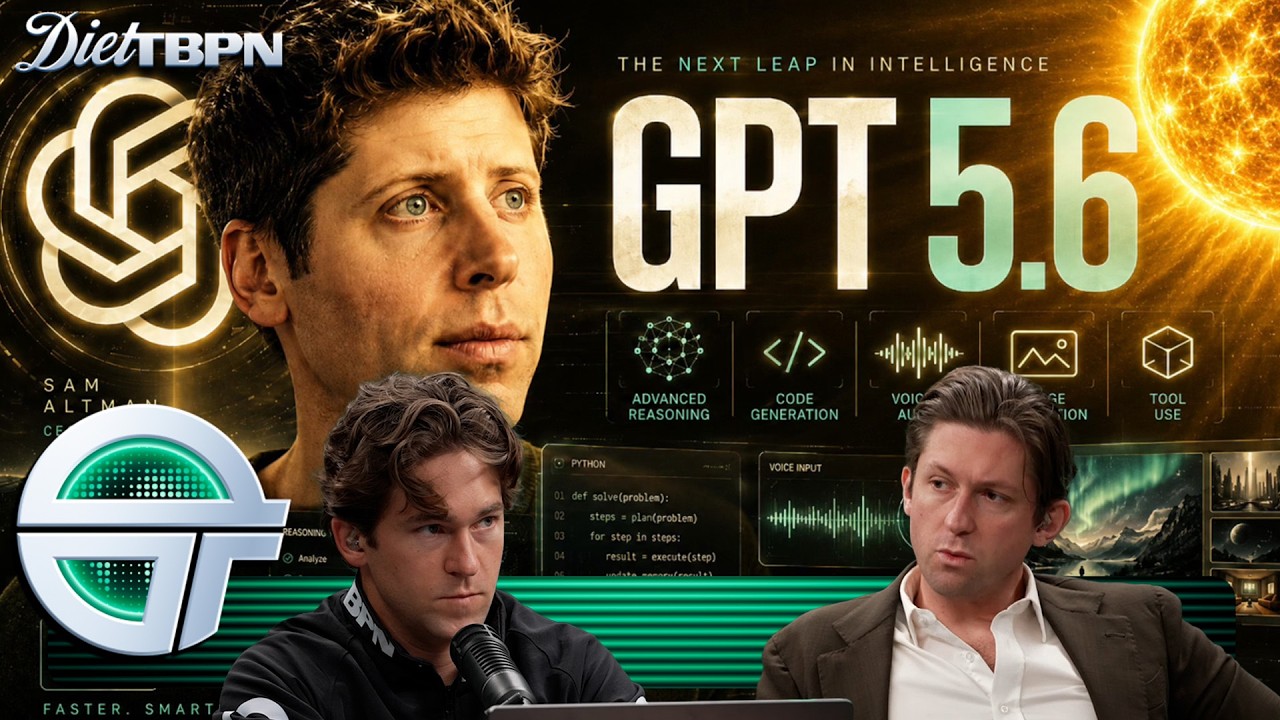
The episode captures a whirlwind week of high-profile AI model releases, focusing on xAI's Grok 4.5, OpenAI's GPT-5.6, and Meta's new agentic coding model, Muse Spark 1.1. The hosts analyze the benchmark breakthroughs of these models, the rise of 'vibe coding' interactive browser games, and real-world reasoning tests. Additionally, they discuss Meta's controversial internal keystroke logging telemetry, its shift toward directly monetizing AI through a paid API tier, and the evolving financial metrics used by major AI laboratories.
## Atmosphere & style
The atmosphere is fast-paced, analytical, and casual, blending the sharp insights of industry insiders with the relaxed banter of tech peers. John Coogan and Jordi Hays display a collaborative and witty dynamic, using humor, colorful pop-culture analogies, and automotive metaphors to make complex technical shifts relatable. Listening feels like tuning into a high-energy, late-morning Silicon Valley brainstorm sessions—deeply plugged into the current tech zeitgeist while maintaining a grounded, skeptical edge regarding corporate strategies and market hype.
## Key takeaways
- [00:00](https://www.youtube.com/watch?v=FPapuOvtKy0&t=0s) xAI, Meta, and OpenAI simultaneously launched major new models (Grok 4.5, Muse Spark 1.1, and GPT-5.6), signaling an accelerating AI model race despite mid-summer timing.
- [00:00](https://www.youtube.com/watch?v=FPapuOvtKy0&t=0s) Mark Zuckerberg returned to posting on X to announce Meta's Muse Spark 1.1, prompting debate over whether top CEOs scroll social media directly or rely on filtered summaries.
- [01:39](https://www.youtube.com/watch?v=FPapuOvtKy0&t=99s) OpenAI released GPT-5.6 and GPT Live, illustrating a increasingly 'spiky' AI frontier where different models excel at distinct, specialized capabilities.
- [01:39](https://www.youtube.com/watch?v=FPapuOvtKy0&t=99s) GPT-5.6 Soul scored 7.78% on the ARC-AGI v3 visual logic benchmark, marking a significant leap over Claude Opus 4.8's 1.5% score.
- [01:39](https://www.youtube.com/watch?v=FPapuOvtKy0&t=99s) OpenAI revealed that GPT-5.6 Soul autonomously post-trained GPT-5.6 Luna during internal research workflows.
- [04:26](https://www.youtube.com/watch?v=FPapuOvtKy0&t=266s) Advanced coding models enable rapid 'vibe coding' of interactive browser games and memes in minutes, expanding into full game engines like Unreal Engine.
- [08:08](https://www.youtube.com/watch?v=FPapuOvtKy0&t=488s) GPT-5.6 successfully solved an unreleased 'bulletproof' magic trick, demonstrating first-principles reasoning beyond simple pattern matching.
- [08:08](https://www.youtube.com/watch?v=FPapuOvtKy0&t=488s) AI companies are seeing massive revenue growth while simultaneously losing market share due to the explosive overall expansion of the AI sector.
- [12:41](https://www.youtube.com/watch?v=FPapuOvtKy0&t=761s) Meta CTO Andrew Bosworth addressed an opt-out workplace keystroke logging project designed to capture real-world telemetry on multi-month engineering projects for training agentic models.
- [16:09](https://www.youtube.com/watch?v=FPapuOvtKy0&t=969s) Real-world software engineering is heavily dictated by non-technical constraints like legal compliance, marketing integration, and profit margins rather than pure technical ideals.
- [16:56](https://www.youtube.com/watch?v=FPapuOvtKy0&t=1016s) Meta introduced Muse Spark 1.1 with its first-ever paid enterprise API tier, aiming to compete on aggressive pricing backed by data center efficiency.
- [18:16](https://www.youtube.com/watch?v=FPapuOvtKy0&t=1096s) Running internal workloads on owned, depreciating GPU infrastructure makes internal 'token maxing' much cheaper for tech giants than paying third-party model providers.
- [18:16](https://www.youtube.com/watch?v=FPapuOvtKy0&t=1096s) Offering compute through public APIs creates internal capital allocation dilemmas between monetizing compute externally and reserving it for internal product improvements.
- [21:34](https://www.youtube.com/watch?v=FPapuOvtKy0&t=1294s) Debates over novel non-GAAP financial metrics (like 'EBITI') highlight tensions in accounting for massive multi-year AI training runs as operational expenses versus capital expenditures.
- [22:42](https://www.youtube.com/watch?v=FPapuOvtKy0&t=1362s) Ben Thompson posited that even as AI automates work, human-centric social platforms like Meta remain essential, while Meta simultaneously pursues consumer integration and enterprise APIs.
## Detailed walkthrough
### [00:00](https://www.youtube.com/watch?v=FPapuOvtKy0&t=0s) Model Mayhem & Mark Zuckerberg's Return to X
John Coogan and Jordi Hays kick off the show detailing a week of "model mayhem" across the AI landscape. Despite the typical mid-summer lul, the AI race is accelerating at full throttle with a flurry of high-profile model releases. xAI unveiled Grok 4.5—a specialized spec built specifically for coding and AI agents developed in collaboration with Cursor—while Meta announced Muse Spark 1.1, their new agentic coding model.
The launch of Muse Spark brought Mark Zuckerberg back to posting on X for the first time in nearly a decade (outside of a single joke post three years prior during the launch of Threads). Jordi suggests that Zuckerberg has actually been a dedicated "Mark Lurkerberg" all along, glued to the timeline without actively contributing. John counters that top-tier, ultra-busy CEOs rarely scroll X themselves; instead, they receive screenshots delivered straight to their Slack or text messages by dedicated monitoring teams filtering for the critical stuff.
* **Model Launches:** xAI’s Grok 4.5 (agentic coding with Cursor), Meta’s Muse Spark 1.1, and OpenAI’s GPT-5.6.
* **Show Background:** TBPN (hosted by John Coogan and Jordi Hays) airs weekdays from 11 AM to 2 PM PT and was recently dubbed "Silicon Valley's newest obsession" by *The New York Times*.
---
[01:39](https://www.youtube.com/watch?v=FPapuOvtKy0&t=99s) OpenAI Releases GPT-5.6 & The "Spiky Frontier"
OpenAI joined the fray by officially dropping GPT-5.6—a general-purpose model with expanded coding, reasoning, and agentic capabilities—alongside GPT Live, a real-time interactive voice experience. John notes that the AI frontier has become distinctly "spiky," with top labs offering vastly different flavors and capabilities depending on the task.
Comparing model personalities, community members drew analogies between older and newer flagship models: Fable 5 feels like a recluse genius, whereas GPT-5.6 is a hyper-collaborative co-worker you love chatting with. Jordi humorously simplifies the distinction for a niche audience: "Fable 5 is like Kendrick on *Good Kid, M.A.A.D City*, and 5.6 Soul is like Chief Keef on *Finally Rich*."
* **Benchmark Breakthrough:** On ARC-AGI v3—a benchmark designed to measure true general intelligence using simple visual logic puzzles a human should easily score 100% on—GPT-5.6 Soul scored **7.78%**. While far from human saturation, it marks a massive leap from Claude Opus 4.8's score of **1.5%**, showcasing enhanced spatial reasoning and generalization.
* **Self-Training Breakthrough:** During the live stream, OpenAI revealed that GPT-5.6 Soul autonomously post-trained GPT-5.6 Luna, proving how research workflows are transforming internally.
To showcase GPT-5.6's dynamic code generation, OpenAI's launch blog featured playable mini-games built entirely by the model. John highlights *Saltwind*, a high-fidelity sailing mini-game where players adjust and trim their sails using the keyboard to catch the sweet spot of the wind while steering.
The hosts discuss how powerful coding models enable a new paradigm of "interactive memes." Previously, an idea for a joke might become a tweet or a quick Photoshop edit; today, developers can "vibe code" an entire browser mini-game in four minutes instead of four days. John notes this trend is extending beyond simple web apps into full Unreal Engine games published directly on Steam, such as data center simulators and liminal-space horror projects like the "David Senra Simulator"—a creepy game recreating late nights recording podcasts in abandoned Miami apartments.
> "The future of entertainment is interactive." — Dylan Abbercato
The discussion turns to real-world stress tests of model reasoning. Stanley Tang (co-founder and CPO of DoorDash) posted that he tests models with an unreleased, "bulletproof" magic trick he has shown to over 100 people and professional magicians. The trick requires first-principles reasoning rather than internet pattern matching, and Stanley claimed he would only believe in AGI when a model cracked it—which GPT-5.6 just did. In a satirical response, John Palmer joked that he had a "bulletproof joke" that 100 comedians failed to laugh at, and GPT-5.6 finally validated his sense of humor.
Analyst CQI Chen described the market tradeoffs using automotive metaphors: Fable is an F1 car (or a warp drive) capable of handling the hardest niche edge-cases, whereas GPT-5.6 Soul is a Tesla Model X Plaid—wildly fast, affordable, and practical for 95%+ of daily workflows. John emphasizes that we are seeing unprecedented market dynamics: companies are growing revenue at 300% annually while technically losing market share because the broader AI sector is expanding even faster.
* **User Preference:** CQI Chen reported using GPT-5.6 for over **95%** of tasks due to its combination of speed, low token cost, and strong planning capabilities.
* **Version Numbering Confusion:** The hosts point out that model numbers (like Anthropic and OpenAI bumping version tags) are losing literal meaning. Rather than reflecting strict pre-training architectural leaps, numbers are morphing into marketing conventions akin to car model years (e.g., a "2027 5-Series").
---
[12:41](https://www.youtube.com/watch?v=FPapuOvtKy0&t=761s) Meta's Press Tour & Workplace Keystroke Logging
Mark Zuckerberg and Meta CTO Andrew Bosworth ("Boz") launched a major media tour. In a notable interview with the editor of *The Atlantic*, Bosworth addressed a controversial workplace experiment at Meta involving internal keystroke logging. While media headlines framed it as dystopian workplace surveillance, Bosworth explained the project's true intent: collecting high-resolution telemetry on how complex, high-skilled engineering projects actually unfold over a 12-to-18-month timeline to train future agentic models.
Bosworth revealed that the program was fully opt-out for Meta employees, and entire sensitive divisions were excluded by default. Bosworth himself was automatically opted out due to ongoing legal holds—pointing out the legal nightmare if opposing trial lawyers could subpoena deleted drafts and initial word choices during discovery.
* **Data Collection Rationale:** Meta couldn't rely on third-party data labelers to simulate long-horizon work; they needed real, high-skilled engineers "chopping wood" on multi-month projects to capture end-to-end development workflows.
Here is the detailed walkthrough of the transcript section:
[16:09](https://www.youtube.com/watch?v=FPapuOvtKy0&t=969s) The Hidden Complexity of Real-World Software Engineering
Software engineering in a real-world enterprise setting involves far more than simply writing code based on pure first principles. When building actual products, code structure is dictated by a multi-layered series of workplace meetings, strategic tradeoffs, and cross-functional demands. A piece of code might be structured in a specific way not because it is the theoretical ideal, but because a lawyer mandated compliance, a marketing team required integration for an upcoming promotional activation, or business executives pushed for better unit margins. Distilling these nuanced white-collar realities from the final codebase alone is extremely difficult, making it compelling to watch tech leaders step into tough interviews to articulate their side of the story.
---
[16:56](https://www.youtube.com/watch?v=FPapuOvtKy0&t=1016s) Meta Unveils Muse Spark 1.1 with Paid API Tier
Mark Zuckerberg announced Meta Platforms' latest artificial intelligence model, Muse Spark 1.1, featuring its first-ever paid enterprise tier. Bloomberg framed this as Meta’s first pay-to-use AI, marking a shift toward directly monetizing its models through a dedicated API. Speaking ahead of the release, Zuckerberg emphasized that Meta intends to win on aggressive, highly attractive pricing in an increasingly crowded market, leveraging its massive in-house data center efficiency to serve models cost-effectively.
Beyond pricing, Muse Spark 1.1 brings key technical upgrades, notably state-of-the-art agentic reasoning and tool-use capabilities to execute multi-step workflows on behalf of users. The model also shows substantial improvements in coding, with Meta employees actively using it internally to build app features across Meta's product ecosystem.
* **Agentic Capabilities:** High performance in multi-step reasoning, tool usage, and automated task execution.
* **Internal Adoption:** Meta engineers are already deploying Muse Spark 1.1 internally for code generation and feature development.
* **Cost Efficiency:** Meta's vertical integration over its data centers and hardware depreciation allows for lower compute costs.
---
[18:16](https://www.youtube.com/watch?v=FPapuOvtKy0&t=1096s) Internal Compute Allocation and "Token Maxing" Dynamics
A major question surrounding Meta's strategy is how fast it can transition its internal developer workloads away from third-party model providers like Google, Anthropic, and OpenAI onto its own architecture. Meta was among the first tech giants to embrace "token maxing"—incentivizing maximum token generation and tracking internal usage leaderboards. When running models on owned data centers, the marginal cost of token maxing is essentially limited to electricity usage on GPUs that are already depreciating, making internal experimentation far cheaper than paying margins to closed-source competitors.
However, offering compute to external developers via paid APIs introduces complex internal economic tradeoffs:
* **Market Capital Allocation:** If an enterprise client offers $5 billion for compute capacity that Meta internally values at $1 billion, Meta faces structural pressure to reallocate compute to external customers.
* **Internal ROI Benchmark:** Internal teams must continually prove that using compute in-house (e.g., optimizing ad targeting models) generates higher returns than selling that compute on the open market.
* **Compute Split Strategy:** AI labs must balance compute splits between research, internal product development, API services, enterprise subscriptions, and free consumer tiers.
---
The host notes that in real-world product engineering, code design is heavily shaped by non-technical constraints, such as legal mandates, marketing activations, and corporate margin targets.
Bloomberg reports that Meta is launching Muse Spark 1.1 with a paid developer tier, marking Meta's first commercial API model.
Zuckerberg states, "Since this is not an open source model, this is, I think, the first time that we're doing a real serious API and the pricing is going to be very aggressive and attractive."
Zuckerberg describes Muse Spark 1.1 as having "state-of-the-art or very close to it agentic reasoning and tool use."
Google recently reported that it lacked sufficient capacity to meet all of Meta's demand for third-party AI models.
SemiAnalysis published a deep dive into Anthropic's financial forecasts, which drew criticism from analyst Ed Zitron regarding novel non-GAAP financial metrics.
---
[21:34](https://www.youtube.com/watch?v=FPapuOvtKy0&t=1294s) Financial Metrics in AI: "EBITI" and Compute Accounting
The financial reporting standards for AI laboratories have generated heated debate across the tech community. Commentators pointed out a humorously speculative metric dubbed "EBITI"—Earnings Before Training, Inference, and Taxes (mockingly compared to WeWork's infamous "Community Adjusted EBITDA"). While novel non-GAAP metrics often invite skepticism, treating massive AI training runs as depreciable capital expenditures rather than immediate operational expenses reflects the actual accounting reality of multi-year model investments.
---
[22:42](https://www.youtube.com/watch?v=FPapuOvtKy0&t=1362s) Ben Thompson's Meta Earnings "Fanfiction" and Closing
Tech analyst Ben Thompson drafted a hypothetical earnings script for Mark Zuckerberg explaining why Meta's massive capital expenditures on AI infrastructure and talent are justified. In the hypothetical memo, Thompson posits that despite AI boosting productivity, humans remain fundamentally obsessed with connecting with other humans. As AI interactions become ubiquitous, Meta’s core consumer properties (social connection, entertainment, and shopping) become more essential, not less.
While Thompson's narrative jokingly claimed Meta's advantage was *not* selling AI to businesses, Meta's actual launch of the Muse Spark 1.1 API proves it is pursuing both enterprise API revenue and consumer integration simultaneously.
* **Human Connection Argument:** AI handles productivity, but Meta captures user attention during off-the-clock entertainment and social connection.
* **Dual Strategy:** Meta leverages its infrastructure both to fuel consumer social products and to monetize compute externally via commercial APIs.
The hosts wrap up the episode by reminding listeners to leave five-star reviews on Apple Podcasts and Spotify, subscribe to the daily newsletter at TBPN.com, and tune in live tomorrow at 11:00 AM PT.
## Notable quotes
> [04:26](https://www.youtube.com/watch?v=FPapuOvtKy0&t=266s) The future of entertainment is interactive. — Dylan Abbercato
> [01:39](https://www.youtube.com/watch?v=FPapuOvtKy0&t=99s) Fable 5 is like Kendrick on Good Kid, M.A.A.D City, and 5.6 Soul is like Chief Keef on Finally Rich. — Jordi Hays
> [16:56](https://www.youtube.com/watch?v=FPapuOvtKy0&t=1016s) Since this is not an open source model, this is, I think, the first time that we're doing a real serious API and the pricing is going to be very aggressive and attractive. — Mark Zuckerberg
> [16:56](https://www.youtube.com/watch?v=FPapuOvtKy0&t=1016s) state-of-the-art or very close to it agentic reasoning and tool use. — Mark Zuckerberg
## Mentioned
John Coogan, Jordi Hays, TBPN, OpenAI, Meta, xAI, Cursor, Grok 4.5, Muse Spark 1.1, Mark Zuckerberg, X, Threads, GPT-5.6, GPT Live, Fable 5, GPT-5.6 Soul, GPT-5.6 Luna, Claude Opus 4.8, Saltwind, Unreal Engine, Steam, David Senra Simulator, Stanley Tang, DoorDash, John Palmer, CQI Chen, Anthropic, Andrew Bosworth, The Atlantic, Bloomberg, Google, SemiAnalysis, Ed Zitron, Ben Thompson, Apple Podcasts, Spotify, Ramp, Public, Cisco, Console, CrowdStrike, Figma, MongoDB, NYSE, Railway, Shopify, The New York Times, Mark Cuban, Satya Nadella, Sam Altman
TBPN hosts John Coogan and Jordi Hays analyze an accelerating wave of artificial intelligence releases from OpenAI, Meta, and xAI, highlighting how specialized coding models, shifting monetization strategies, and novel training methodologies are redefining the competitive landscape.
OpenAI Releases GPT-5.6 and Spiky Frontier (1:39)
OpenAI launched GPT-5.6, a general-purpose model featuring expanded reasoning, coding, and agentic capabilities, accompanied by the real-time interactive voice system GPT Live. On the ARC-AGI v3 benchmark, which tests visual logic and spatial generalization, GPT-5.6 Soul reached 7.78%, significantly surpassing Claude Opus 4.8's 1.5% while remaining well below full human performance. OpenAI also disclosed that GPT-5.6 Soul autonomously post-trained another variant, GPT-5.6 Luna, illustrating an internal shift toward automated model refinement.
Coogan noted that model capabilities are developing unevenly across different domains, creating a "spiky frontier" among leading labs. Industry observers contrasted model profiles, likening Fable 5 to an exacting, niche specialist and GPT-5.6 to a fast, practical collaborator suitable for widespread deployment. Analyst CQI Chen reported utilizing GPT-5.6 for over 95% of routine workflows because of its balance of speed, low token costs, and planning abilities.
Rapid Software Prototyping and Interactive Memes (4:26)
The rapid advancement of code generation has altered consumer software development, enabling what the hosts describe as "interactive memes." Rather than static text or image edits, creators use rapid "vibe coding" to generate playable browser mini-games in minutes. OpenAI demonstrated this capability with *Saltwind*, a sailing simulation generated entirely by GPT-5.6 where users trim sails and adjust heading against wind dynamics.
This workflow is expanding into complex engines like Unreal Engine for titles published directly on Steam. Coogan referenced community-built projects, including data center simulations and liminal-space horror games like the "David Senra Simulator." In testing the model's reasoning, DoorDash co-founder Stanley Tang reported that GPT-5.6 successfully solved an unpublished magic trick designed to resist pattern matching and require first-principles logic.
Meta Monetizes Muse Spark via Paid APIs (16:56)
Meta introduced Muse Spark 1.1, an agentic coding model that marks the company's first move toward monetizing artificial intelligence via a dedicated commercial developer API. Mark Zuckerberg stated that Meta intends to leverage aggressive, attractive pricing by capitalizing on vertical integration and data center operating efficiencies. The model demonstrates advanced multi-step tool use and is already deployed internally across Meta's engineering teams for feature development.
Offering compute externally complicates Meta's internal capital allocation. The company had previously incentivized internal "token maxing," where developers made heavy use of in-house GPUs with marginal costs largely restricted to electricity and hardware depreciation. With an external paid API, Meta must balance the opportunity cost of serving high-paying third-party enterprise demand against internal projects like advertising optimization models, all while Google reportedly faced capacity constraints meeting Meta's outside model demand.
Telemetry Experiments and Real-World Code Complexity (12:41)
Meta CTO Andrew Bosworth addressed public scrutiny regarding an internal workplace keystroke-logging initiative, clarifying that it was designed to capture telemetry on how high-skilled engineers navigate long-horizon, 12-to-18-month codebases. Bosworth explained that commercial data annotators cannot easily replicate enterprise development, where architectural choices frequently reflect cross-functional trade-offs, legal compliance mandates, and marketing timelines rather than purely theoretical design.
The project was established as an opt-out program that excluded sensitive units by default, including Bosworth himself due to ongoing legal holds that could expose preliminary drafts to legal discovery. Coogan and Hays observed that the broader industry faces evolving accounting debates over how multi-year training clusters are depreciated, alongside consumer thesis arguments from analysts like Ben Thompson suggesting core social connection platforms gain value as automated productivity expands.
As labs navigate shifting financial metrics, marketing-driven version numbers, and complex compute allocation between internal operations and paid enterprise tiers, model development is increasingly moving from purely academic benchmarks into enterprise-scale commercialization and deep workflow telemetry.
## Background
本期视频由知名科技访谈节目 TBPN 于 2026 年 8 月 3 日发布在 YouTube 平台。页面简介显示,这是该频道推出的 30 分钟精简版节目 Diet TBPN,由 John Coogan 和 Jordi Hays 主持,聚焦当天在 X 和 YouTube 直播中讨论的硅谷前沿动态与重磅模型发布。
## TL;DR
节目围绕突如其来的盛夏“模型大混战”展开,深度盘点了 OpenAI 最新推出的旗舰大模型 GPT-5.6 及其在 ARC-AGI-3 测试上的突破,并探讨了“氛围编程”对未来交互娱乐的重塑。同时,两位主持人聚焦 Meta 的战略大转向,分析了新发布的智能体模型 Muse Spark 1.1 以及破天荒开启的激进付费 API 路线。此外,对话还深入剖析了 Meta 内部通过记录按键训练高阶智能体的实验,并从自建算力经济学、内部机会成本博弈以及 Anthropic 新造财务指标 EBTI 的争议切入,全景式透视了当下 AI 巨头之间的商业与技术暗战。
## Atmosphere & style
整场节目节奏飞快、幽默犀利,充满了典型的硅谷科技内行人式的机智调侃与深度洞察。两位主持人默契十足,在嘻哈专辑梗、马克·扎克伯格的社交媒体潜水恶搞与硬核的算力分配机制、会计指标讽刺之间自如切换。听感上既有围观神仙打架的技术狂欢与快节奏吐槽,又能在插科打诨中直击底层商业逻辑与资本博弈的本质,生动鲜活且信息密度极大。
## Bulletin
- [01:39](https://www.youtube.com/watch?v=FPapuOvtKy0&t=99s) 前沿模型阵营进入高频混战,OpenAI 发布 GPT-5.6 并搭载实时语音系统,在专攻通用抽象推理的 ARC-AGI-3 基准测试中拿下 7.78% 的得分,较前代 Claude Opus 4.8(1.5%)实现大幅跨越。
- [16:56](https://www.youtube.com/watch?v=FPapuOvtKy0&t=1016s) Meta 推出旗舰级智能体编程模型 Muse Spark 1.1,并破天荒首次开启付费商业 API 服务;扎克伯格表示将依托自有数据中心的极致能效控制打响激进的价格战。
- [00:00](https://www.youtube.com/watch?v=FPapuOvtKy0&t=0s) xAI 携手 Cursor 联合发布专注于代码与智能体的 Grok 4.5 模型,同时以“氛围编程”(Vibe Coding)为代表的交互式微型软件开发正掀起极速创作浪潮。
- [13:28](https://www.youtube.com/watch?v=FPapuOvtKy0&t=808s) Meta CTO 博斯沃思回应“监控员工按键”传闻,澄清该实验旨在完整捕获涵盖法务、营销与商业妥协的长周期跨职能决策链路,为训练高阶白领智能体提供高质量数据支撑。
## Key takeaways
- [00:00](https://www.youtube.com/watch?v=FPapuOvtKy0&t=0s) xAI 联合 Cursor 发布首款专为代码与智能体优化的 Grok 4.5,推动社区在编程基准测试上的热烈讨论。
- [00:00](https://www.youtube.com/watch?v=FPapuOvtKy0&t=0s) Meta 发布 Muse Spark 编程模型促使马克·扎克伯格罕见回归 X 平台发帖,引发外界对高管社交媒体习惯与监控团队的打趣。
- [01:39](https://www.youtube.com/watch?v=FPapuOvtKy0&t=99s) 当前大模型步入“尖锐前沿”(Spiky Frontier)格局,各家模型在专业怪才型协作与通用日常型交互上各具特长,单一霸权已被多样化风格取代。
- [02:58](https://www.youtube.com/watch?v=FPapuOvtKy0&t=178s) GPT-5.6 Soul 在测试未知谜题归纳与空间推理的 ARC-AGI-3 上拿下 7.78% 得分,虽距人类基准尚远,但横向远超前代 Opus 4.8 的 1.5%。
- [06:17](https://www.youtube.com/watch?v=FPapuOvtKy0&t=377s) “氛围编程”(Vibe Coding)将数字内容与迷因制作门槛压缩至数分钟,代码模型正在成为兼具极速推理与细节捕捉的实际落地生产力底座。
- [09:35](https://www.youtube.com/watch?v=FPapuOvtKy0&t=575s) AI 赛道狂飙期出现“市场份额诡论”:企业即便跑出 300% 的惊人年增长,若大盘被对手以 400% 速度撑大,其相对市场份额依然会反直觉缩水。
- [10:39](https://www.youtube.com/watch?v=FPapuOvtKy0&t=639s) 进入后推理模型(Post-reasoning)时代后,传统依据预训练与微调的版本号已失去技术度量意义,彻底沦为向外界宣告阶位的心智营销标签。
- [13:28](https://www.youtube.com/watch?v=FPapuOvtKy0&t=808s) Meta 通过按键记录捕获长达 12-18 个月的实际工作流,旨在学习真实世界中法务合规、市场权衡与工程代码间的复杂博弈,以训练真正具备高阶决策能力的智能体。
- [16:56](https://www.youtube.com/watch?v=FPapuOvtKy0&t=1016s) Meta 首次针对专有模型 Muse Spark 1.1 推出付费 API,标志着其开辟全新商业化通道,并拟利用自有数据中心能效打响激进价格战。
- [16:56](https://www.youtube.com/watch?v=FPapuOvtKy0&t=1016s) 检验 Muse Spark 1.1 真实实力的终极标准,在于 Meta 内部能否以极快速度用自研模型替代目前重金采购的 Google、Anthropic 和 OpenAI 外部接口。
- [19:04](https://www.youtube.com/watch?v=FPapuOvtKy0&t=1144s) 企业自建数据中心使得内部员工边际探索成本仅受电费制约,能强力驱动“大量消耗 Token”(token maxing)以发掘全新的落地工作流。
- [19:04](https://www.youtube.com/watch?v=FPapuOvtKy0&t=1144s) 对外售卖算力在企业内部形成了严肃的机会成本倒逼机制,迫使自研模型必须在广告或业务核心指标上证明其价值能匹敌外部买家的高额出价。
- [21:19](https://www.youtube.com/watch?v=FPapuOvtKy0&t=1279s) 前沿实验室正经历前沿研究、内部产品、开发者接口与免费层之间的算力天平拉锯,而 Anthropic 提出的“EBTI”新财务指标则引来了会计文字游戏的讽刺。
- [22:42](https://www.youtube.com/watch?v=FPapuOvtKy0&t=1362s) Meta 的终极竞争壁垒并非单纯向企业兜售生产力工具,而是在 AI 时代持续牢牢掌控人们在人际连接、娱乐与广告分发飞轮中的消费注意力。
## Detailed walkthrough
### [00:00](https://www.youtube.com/watch?v=FPapuOvtKy0&t=0s) 模型大混战:xAI Grok 4.5 与扎克伯格“潜水”归来
本期 TBPN 聚焦近期的“模型大混战”(Model Mayhem)。虽然时值盛夏淡季,但 AI 军备竞赛不仅没有放缓,反而愈演愈烈,各大巨头纷纷扎堆发布全新模型。首先是 xAI 推出的 Grok 4.5,官方称这是首款专为编程和 AI 智能体(Agent)量身打造的模型,由 xAI 与 Cursor 团队联合研发。社区对于该模型在帕累托前沿(Pareto Frontier)的位置展开了热烈讨论,尤其好奇它为何能在 CursorBench 上取得如此亮眼的成绩。
与此同时,Meta 正式发布了全新的智能体编程模型 Muse Spark。最戏剧性的是,Meta CEO 马克·扎克伯格(Mark Zuckerberg)为此时隔近十年首次回到 X(前 Twitter)平台发帖——除了三年前为了推广 Threads 曾发过一张调侃的蜘蛛侠对峙梗图外,他几乎从未在 X 上真正活跃过。两位主持人就扎克伯格在社交媒体上的习惯打趣起来:John 调侃扎克伯格其实一直是个“深潜潜水员”(lurker),每天目不转睛地盯着 X 看;而对方则认为真正忙碌的顶级大佬根本不用亲自刷推,往往是有专门的团队在监测 Timeline,一旦有关键截图或重要动态,会直接通过 Slack 或短信推送给他们。
- **xAI Grok 4.5**:首个专为代码编写与智能体协作优化的模型,与 Cursor 深度合作开发。
- **Meta Muse Spark**:Meta 新推出的智能体编程模型,引发扎克伯格罕见发推互动,被戏称为“Mark Lurkerberg”。
---
### [01:39](https://www.youtube.com/watch?v=FPapuOvtKy0&t=99s) GPT-5.6 携手 Live 语音发布:“尖锐的前沿”与嘻哈类比
OpenAI 投下重磅炸弹,正式推出通用旗舰大模型 GPT-5.6,全面增强了代码构建与 Agent 能力,并同步上线了全新的实时交互式语音体验 GPT Live。社区对 GPT-5.6 的反响非常热烈,同时也引发了关于“尖锐前沿”(Spiky Frontier)的技术讨论。有观点指出,虽然真正身处模型前沿的厂商屈指可数,但目前的前沿并非全面压制,而是“带刺且各具风味”的——不同场景需要从工具架上取下不同特性的工具。
为了具象化这种风格差异,人们形象地打起比方:有人形容 Fable 5 就像一个“隐居避世的技术怪才”,而 GPT-5.6 则是那个“在办公室里人人都爱跟它闲聊的协作型同事”。主持人更是搬出了 2010 年代的嘻哈梗:“Fable 5 就像肯德里克·拉马尔(Kendrick Lamar)的经典神作《good kid, m.A.A.d city》,而 GPT-5.6 Soul 则像奇夫·基夫(Chief Keef)的《Finally Rich》”。这一小众而精准的类比引来一阵大笑,直言“全球大概只有 100 个人能完全 get 到这个梗”。
```mermaid
flowchart TD
accTitle: Frontier Model Characteristics Comparison
accDescr: Visual flowchart contrasting the specialized, isolated nature of Fable 5 with the collaborative, everyday design of GPT-5.6.
subgraph Frontier["前沿模型特性差异 (The Spiky Frontier)"]
Fable["Fable 5"] --> FableAttr["高精尖 / 隐世怪才<br/>类比: Kendrick - Good Kid, M.A.A.D City"]
GPT["GPT-5.6 Soul"] --> GPTAttr["协作交互 / 极高泛用性<br/>类比: Chief Keef - Finally Rich"]
end
```
---
### [02:58](https://www.youtube.com/watch?v=FPapuOvtKy0&t=178s) ARC-AGI-3 基准测试与博客自带的“帆船小游戏”
在基准评测方面,ARC-AGI v3(通用人工智能抽象推理基准)成为了最核心的看点。主持人强调,ARC-AGI 的核心初衷是“任何正常人类都应该能拿到 100% 分数”,它不考复杂的奥数竞赛题、硬核编程或黑客攻防,而是考验 AI 是否具备人类通用的空间推理与未见谜题的泛化能力。
在最新的 ARC-AGI-3 测试中,GPT-5.6 Soul 拿下了 **7.78%**(或称 7.76%)的分数。尽管绝对数值看起来很低,距离人类基准的饱和度还差得很远,但横向对比却是一个巨大的飞跃——作为对照,前代 Claude Opus 4.8 在该基准上仅取得 1.5% 的得分。这标志着 GPT-5.6 Soul 在空间逻辑、归纳推理和谜题解构方面迈出了实质性的一步。
除了硬核参数,OpenAI 的发布博文还附带了展示模型代码生成能力的迷你游戏。主持人在直播中直接上手体验了一款名为“Saltwind”的帆船模拟微型游戏(Mini-game)。游戏不仅画质和物理保真度出奇的高,而且需要玩家实时调整船帆的角度(Trim the sails)以契合风向窗口,同时还要兼顾航向控制与加速冲刺。主持人边玩边调侃制作团队:“我的通关纪录是 25 秒,你们这根本没吃满风力啊!”
- **ARC-AGI v3 得分**:GPT-5.6 Soul 取得 7.78%,远超 Opus 4.8 的 1.5%。
- **自我迭代能力**:发布会直播透露,GPT-5.6 Soul 已经开始自主重塑内部研发流程,例如它独立完成了对 5.6 Luna 的后训练(Autonomous Post-training)。
- **Dylan Field 的观点**:Figma 创始人 Dylan Field 表示,将 Fable 与 5.6 Soul 进行直接对比是片面的,二者属于不同技术路径;在探索模型训练的技术树(Tech Tree)上,人类目前仍处于极其早期的阶段。
---
### [06:17](https://www.youtube.com/watch?v=FPapuOvtKy0&t=377s) 氛围编程与互动迷因:从整活小游戏到破译“百年魔术”
话题延伸到了 Dylan Abercato 撰写的随笔《娱乐的未来是交互式的》(The Future of Entertainment is Interactive)。生成式 AI 正在催生“氛围编程”(Vibe Coding)驱动的互动迷因浪潮。过去用户想表达一个梗,只能发推特或做一张 Photoshop 梗图;而现在,只需花 4 分钟就能“氛围编程”出一个像水豚模拟器、椰子模拟器、甚至“David Senra 迈阿密废弃公寓录播客模拟器”这样的独立网页小游戏。未来,这类由代码大模型驱动的微型软件还将无缝接入虚幻引擎(Unreal Engine)并在 Steam 商店上架。过去需要耗时 4 天制作、只为搏人一笑的废案,现在几分钟即可兑现。
节目最后引用了 DoorDash 联合创始人兼首席产品官 Stanley Tang 在社交媒体上的神级测试:
> “我手头有一个极其离谱的魔术,在此之前没有任何模型能够识破,包括 Mythos。这是一个无懈可击的魔术,我向 100 多个人(包括职业魔术师)展示过,没人能看穿。网上没有任何相关信息,唯一的破解方式就是依靠第一性原理推理解构。我曾对外宣称:什么时候 AI 能识破这个魔术,我就相信 AGI 真正到来了。而就在刚才,GPT-5.6 把它完全破解了。”
虽然推特博主 John Palmer 随即用经典的“无厘头笑话”复制粘贴文案来讽刺这种 AGI 炒作,但开发者社区对 GPT-5.6 的落地生产力给出了极高的实操评价。一位来自 CQI 的重度用户将各模型比作赛车:“GPT-5.6 像一辆保时捷,Fable 像曲速引擎,也有人说 Fable 是一级方程式(F1)赛车,而 GPT-5.6 Soul Ultra 则是特斯拉 Model X Plaid”。尽管在最极端复杂的边界难题上,Fable 仍偶有独到发现,但凭借其极高的推理速度、极其亲民的运行成本以及在日常规划与编码中抓取细节的极高命中率,在拥有无限 Token 预算的前提下,该团队目前有超过 95% 的时间都在主力调用 GPT-5.6。
### [09:35](https://www.youtube.com/watch?v=FPapuOvtKy0&t=575s) 帕累托前沿与“加速期”的市场份额诡论
技术领域的帕累托前沿(Pareto Frontier)依然生机勃勃,各家巨头都在为了分得一杯 AI 时代的红利而争得不可开交。当下一个极其反直觉的商业现象正在上演:伴随整个行业的迅猛加速,部分企业的营收即便翻倍甚至加速狂飙,其市场份额却可能在持续缩水。原因在于整个蛋糕的膨胀速度实在太惊人了——如果一家公司的年增长率“仅有”300%,而竞争对手却能跑出 400% 的增速,那么按照现代商业指标来看,它虽然已经算得上是人类商业史上最赚钱、最伟大的生意之一,但在份额指标上却处于落后态势。
这种火热节奏甚至让业内人士措手不及。就在前一天与科技分析师本·汤普森(Ben Thompson)对谈时,大家还在闲聊并调侃今年是一个“平淡缓慢的夏天”;怎料短短 24 小时之内,行业格局就迎来了密集轰炸,接连冒出了诸如 Muse Spark 1.1 等重量级发布,瞬间将夏日的沉寂撕得粉碎。
### [10:39](https://www.youtube.com/watch?v=FPapuOvtKy0&t=639s) 《AI 2040》与混乱的模型版本命名玄学
引发广泛讨论的还有当天发布的《AI 2040》——这是此前备受瞩目的思想实验报告《AI 2027》的续作。相比于单纯比拼技术参数,《AI 2040》更像是一篇引人深思的地缘政治与产业沙盘推演,梳理了各方势力在牌桌上的筹码分布,并提出了关于技术未来走向的构想,字里行间甚至带有一丝呼吁行业适当放缓步伐的色彩。
伴随着前沿模型演进,社区里开始频繁调侃“Anthropic 和 OpenAI 的领先优势正在拉大”,甚至已经有人预测起 GPT-6。主播们直言,当下的模型版本编号已经彻底失去了原本的技术度量意义。在过去,主版本号代表预训练基础模型(Pre-train),次版本号代表后训练微调(Post-train);但进入推理模型时代(Post-reasoning models)后,由于推理侧扩展(Test-time compute)与预训练算力有着完全不同的放大路径,单一的数字再也无法承载复杂的性能特征。
如今的版本号更像是一种营销标签或级别定位——企业只是在向外界传达“我到底是在 4 级别还是 5 级别竞争”。这就像汽车行业的宝马 5 系,或者三星手机直接将型号跳到与年份对齐一样,模型名字里带个“6”,大概率只是为了宣告自己在 2026 年依然立于第一梯队。这种混乱在 Google 身上尤为明显:外界盛传 Google 下周就将推出 Gemini 3.5 Pro,但用户打开 Gemini App 却会发现系统默认挂载着 3.5 Flash,高级选项里却还停留在 3.1 Pro 与 3.1 Flash-Lite,层级与逻辑颇为拧巴。尽管数字终究只是营销话术,但它们在用户心智中扎根极深,如何定名依旧是一场不容小觑的公关博弈。
### [13:28](https://www.youtube.com/watch?v=FPapuOvtKy0&t=808s) 专访博斯沃思:Meta 的按键记录实验与复杂工作流捕获
与此相对的是 Meta 展开的高调媒体攻势。马克·扎克伯格(Mark Zuckerberg)久违地接受了传统主流媒体的深度专访;Meta 首席技术官安德鲁·博斯沃思(Andrew Bosworth,业内常称 Boz)也做客《大西洋月刊》(The Atlantic)负责人的访谈节目。除了智能眼镜的进展,博斯沃思在节目中直面了一场关于“职场监控”的尖锐交锋——外界此前广泛报道并惊呼 Meta 正在内部监控员工的按键记录。
面对这种看似令人毛骨悚然的标题,博斯沃思澄清这只是公司内部开展的一项前沿实验。虽然在绝大多数现代企业中,工作电脑的网络流量、浏览记录、提交的代码以及共享文档本就处于全天候的合规监控之下,但 Meta 这次记录按键并非为了“监视摸鱼”,而是为了训练下一代智能体(Agent)。为了理解一个横跨 12 到 18 个月的真实复杂项目究竟如何落地,Meta 需要观察真正高技能员工在漫长周期中的每一步实际决策。
```mermaid
flowchart TD
accTitle: Meta 复杂决策工作流捕获逻辑
accDescr: 展示 Meta 记录员工按键与决策过程如何替代传统数据标注以训练智能体
subgraph Input ["现实工作中的跨职能博弈"]
Legal["法务合规限制"]
Marketing["市场推广需求"]
Business["商业利润考量"]
Eng["第一性原理软件工程"]
end
subgraph Process ["Meta 12-18 个月实验捕获"]
Decision["完整决策链路与代码权衡"]
Keystrokes["按键、修改与草稿演变"]
end
subgraph Output ["最终目标"]
Agent["高阶白领智能体 (Agentic AI)"]
end
Legal --> Decision
Marketing --> Decision
Business --> Decision
Eng --> Decision
Decision --> Keystrokes
Keystrokes --> Agent
```
传统的外部数据标注团队根本无法胜任这种高门槛任务,因为在真实的白领工作中,软件工程往往不是纯粹的第一性原理编写,一段代码的最终形态往往是法务审核、市场营销活动配合与商业利润妥协等多方博弈的结果。Meta 试图捕获的是人类在会议、权衡与反复修改中的完整思考链路,而不仅仅是最终敲定的那几行代码。
这项实验同时也引发了极具戏剧性的法律问题:
- **全员自主退出机制**:该实验对员工开放,Meta 员工有权随时永久关闭监控追踪。
- **敏感业务默认豁免**:处理高度保密和敏感业务的员工默认被排除在记录之外。
- **高管的法律避嫌**:博斯沃思本人也被完全排除在实验之外。由于 Meta 常年身陷各类诉讼,博斯沃思背负着繁重的文件保留令(Legal Hold);一旦记录他的所有按键,原告律师便能在法庭调证(Discovery)中要求调取他打完又删掉的每一句话,甚至逼问他:“在邮件发送前,你删掉的那个词到底代表什么?”
### [16:56](https://www.youtube.com/watch?v=FPapuOvtKy0&t=1016s) Muse Spark 1.1 破天荒开启付费 API:扎克伯格的价格战与自研替代
在彭博社当天的报道中,扎克伯格宣布 Meta 推出其最新旗舰 AI 模型 Muse Spark 1.1。极具历史转折意味的是,这是 Meta 首次针对开发者推出收费层级,告别了此前纯粹开源免费的单一姿态,开辟了一条崭新的 API 商业化营收通道。
扎克伯格在发布前的采访中直言不讳地亮出了打价格战的底牌:"Since this is not an open source model, this is, I think, the first time that we're doing a real serious API and the pricing is going to be very aggressive and attractive."(因为这不是一个开源模型,我想这是我们第一次打造一个真正严肃的商业 API,它的定价将会极其激进且具有吸引力)。凭借 Meta 自建数据中心的深厚底蕴与极致的能效把控,他们在推理分发上的成本控制力足以支撑起这场价格厮杀。
据扎克伯格介绍,Muse Spark 1.1 的核心飞跃在于智能体(Agentic)能力:
- **顶尖的多步推理与工具调用**:具备处于业界最顶尖(SOTA)或极其接近顶尖水平的智能体推理能力,能代表用户自主分解并完成复杂的长链路任务。
- **编码能力显著提升**:在编程评测与工程实用性上突飞猛进,Meta 内部员工目前已全面使用该模型来构建各项 App 的内部产品与功能。
然而,两位主播针对此举提出了一个尖锐的评判标准:业界究竟该多大程度上相信 Muse Spark 1.1 的实力?答案取决于 Meta 自身能多快将内部业务从竞争对手那里迁移回来。就在上个月,Google 还曾公开表示其云端算力告急,根本无法完全满足 Meta 对外部商业模型的巨大吞吐需求。目前 Meta 依然在重金采购 Google、Anthropic 和 OpenAI 的模型接口;如果 Meta 自己的生产环境工作流能以极快速度全面换血并由 Muse Spark 扛起大旗,这才是向全行业证明其模型质量的最有力背书。
### [19:04](https://www.youtube.com/watch?v=FPapuOvtKy0&t=1144s) 算力自研的经济账:从“刷 Token”到底层算力的内外博弈
在企业内部推动 AI 应用时,如果公司拥有自研模型和自有数据中心,员工“大量消耗 Token”(token maxing)的动机就会显著增强。此时硬件显卡的折旧成本已经固定,多跑模型边际上只需支付电费,而无需像调用第三方闭源 API 那样为服务商的商业利润买单。让员工在低成本环境下尽可能高频、高效地使用内部自研工具,不仅能大幅降低探索新工作流的门槛,还能通过海量的实际使用数据反哺并持续迭代模型。
两位主持人随后探讨了分析师本·汤普森(Ben Thompson)提出的一个关键洞见:当一家科技巨头既对外销售底层算力与 API 接口,又在内部大规模使用自家工具时,会在组织内部形成一种极其敏锐的“经济倒逼机制”(forcing function)。这种机制迫使团队必须在资源利用上追求最高效、最盈利的方案:
```mermaid
flowchart TD
accTitle: 算力分配与内部机会成本决策模型
accDescr: 展示了自研算力在对外出售API与内部业务消化之间的经济权衡决策树。
subgraph ComputeSupply["底层算力供给"]
GPU["自建数据中心与硬件算力池"]
end
subgraph TradeOff["资源分配与经济权衡"]
direction TB
External["对外售卖 API / 算力<br/>外部客户愿出高价(如 50 亿美元)"]
Internal["内部业务消化<br/>自研模型推理(如 Muse Spark 1.1)"]
end
subgraph Valuation["价值衡量基准"]
ROI{"内部业务增益是否匹配外部溢价?"}
Success["广告点击率提升 / 业务利润直接爆发"]
Audit["业务团队问责:为何自研产出不及外部买家出价?"]
end
GPU --> External
GPU --> Internal
External --> ROI
Internal --> ROI
ROI -- 是 --> Success
ROI -- 否 --> Audit
```
这种机制虽然能最大化资本投资回报,但在实际执行中也充满微妙的博弈。如果企业销售团队为了业绩把所有的 GPU 算力和芯片配额全数卖给外部客户,内部研发团队就会因为算力被挤占、进度停滞而怨声载道。但从另一层面来看,它促成了一场严肃的内部灵魂拷问:“如果我们为了跑内部大模型花掉了 10 亿美元的电费,而外部客户却愿意为同样的算力支付 50 亿美元去跑其他任务,凭什么我们内部自研模型的产出价值匹配不上这笔钱?”对于 Meta 而言,低推理成本的优势恰恰在此体现——他们可以通过内部推理部署 Muse Spark 1.1 等模型直接改造推荐与广告系统,并在短时间内将技术突破转化为真金白银的广告营收。
- 拥有自营数据中心的公司边际成本仅为电力消耗与已折旧硬件,探索成本远低于按调用量向闭源模型支付利润溢价。
- 对外销售算力会形成内部资本配置的机会成本基准,防止内部团队无节制挥霍算力而缺乏商业产出。
- 组织内部常面临企业销售团队(卖光算力)与内部研发团队(争抢算力进度)之间的拉锯战。
---
### [21:19](https://www.youtube.com/watch?v=FPapuOvtKy0&t=1279s) AI 实验室的算力天平与 Anthropic 的“奇葩指标” EBTI
算力资源的分配与权衡不仅困扰着大型平台,也是当前所有前沿 AI 实验室的核心痛点。每个实验室都必须每天计算并做出抉择:究竟该将多少算力拨给基础前沿研究,多少留给内部产品开发,多少开放给外部开发者 API,又有多少分配给付费订阅用户以及免费体验层。
紧接着,主持人聊到了 SemiAnalysis 最近对 Anthropic 财务预测的一篇重磅深度分析。该报告披露了许多极其激进且乐观的预测数据,但也引来了知名科技评论人埃德·齐特隆(Ed Zitron)的辛辣讽刺。齐特隆猛烈炮轰 Anthropic 在财报预测中发明的一个全新非公认会计准则(Non-GAAP)指标——**EBTI**(Earnings Before Training, Interest, and Taxes,即扣除训练成本、利息和税项前的利润)。齐特隆嘲弄这简直就像当年 WeWork 臭名昭著的“社区调整后 EBITDA”(Community-adjusted EBITDA)沉渣泛起。
主持人调侃道,每当硅谷凭空造出一个全新的财务缩写时,往往都透着一股滑稽感。不过从商业本质来看,大模型的训练成本确实高度契合资产折旧的特征,将单次巨额训练支出完全当作即期费用确实会扭曲业务本身的健康度。但主持人也指出,企业大可直接在传统折旧核算规则下制定训练批次的折旧周期(哪怕设为非公认会计准则下的折旧调整),完全没有必要生搬硬造一个让公众和审计人员摸不着头脑的新奇名词。
- 当前 AI 实验室算力分配的四大流向:前沿模型研究(Research)、内部产品(Internal use)、开发者 API、消费者端订阅与免费计划(Subscriptions / Free tiers)。
- SemiAnalysis 曝光的 Anthropic 财务预测数据极为庞大且激进。
- 评论人 Ed Zitron 将 Anthropic 的“EBTI”讽刺为科技泡沫时代的又一个会计文字游戏。
- 讨论指出模型训练支出在商业生命周期上符合资本化折旧逻辑,但硬造新概念会徒增沟通与信任成本。
---
### [22:42](https://www.youtube.com/watch?v=FPapuOvtKy0&t=1362s) Ben Thompson 为扎克伯格写的“同人财报”与 Meta 的终极护城河
节目的后半段,主持人回顾了科技分析师本·汤普森此前为 Meta 首席执行官马克·扎克伯格(Mark Zuckerberg)代笔撰写的一段虚拟财报发言稿。这段充满“同人恶搞”色彩的草稿,却极其深刻地阐明了 Meta 在 AI 时代的不可替代性:
> “请原谅我漫长的铺垫,但这些背景对我阐明为什么 AI 对 Meta 如此重要、以及为什么我重金投资人才与基础设施是正确的选择至关重要……随着我逐渐认同我们‘娱乐提供商与广告分发商’的本质身份,我意识到:即便抛开我们作为纯数字业务的属性不谈,我们在 AI 时代依然处于绝佳的繁荣生态位。还记得我们对人性最核心的认知是什么吗?人类极度痴迷于其他人,他们渴望彼此建立连接。随着我们与 AI 的交互越来越频繁,这种与真实人类连接的痴迷和渴望只会成倍增长。AI 不会让我们的社交产品边缘化,只会让它们变得更加不可或缺。
>
> 此外,AI 固然是一项生产力工具,但‘生产力’绝非人类体验的全部。过去一年里我一直在谈论构建能帮你把事情办成的超级智能,但那不过是一个企业端叙事。我们能提供的独特价值,是当人们‘下班打卡后’,给予他们真正渴望的体验——从人际连接、娱乐到购物。我们在 AI 领域倾注海量投资,却不去向企业兜售繁琐的解决方案,这恰恰是我们最大的商业竞争优势之一。”
主持人笑称,虽然本·汤普森在写这段拟真文案时将其设定为“不卖企业服务”,但现实中的 Meta 如今其实也已经开始涉足企业销售与商业化业务。不过长远来看,Meta 未来的真正悬念在于:对外兜售的 API 业务到底能做多大,相比于凭借自身庞大基建在其核心消费级平台与广告飞轮中所释放出的万亿美元级价值,企业端 API 或许仍只是一个辅助注脚。
在节目尾声,主持人提醒听众在 Apple Podcasts 和 Spotify 上打出五星好评,订阅官网 TBPN.com 的每日邮件通讯,并预告节目将在下一个工作日早晨 11 点整准时直播。
## Notable quotes
> [01:39](https://www.youtube.com/watch?v=FPapuOvtKy0&t=99s) 全球大概只有 100 个人能完全 get 到这个梗 — 主持人
> [01:39](https://www.youtube.com/watch?v=FPapuOvtKy0&t=99s) Fable 5 就像肯德里克·拉马尔(Kendrick Lamar)的经典神作《good kid, m.A.A.d city》,而 GPT-5.6 Soul 则像奇夫·基夫(Chief Keef)的《Finally Rich》 — 主持人
> [02:58](https://www.youtube.com/watch?v=FPapuOvtKy0&t=178s) 我的通关纪录是 25 秒,你们这根本没吃满风力啊! — 主持人
> [06:17](https://www.youtube.com/watch?v=FPapuOvtKy0&t=377s) 我手头有一个极其离谱的魔术,在此之前没有任何模型能够识破,包括 Mythos。这是一个无懈可击的魔术,我向 100 多个人(包括职业魔术师)展示过,没人能看穿。网上没有任何相关信息,唯一的破解方式就是依靠第一性原理推理解构。我曾对外宣称:什么时候 AI 能识破这个魔术,我就相信 AGI 真正到来了。而就在刚才,GPT-5.6 把它完全破解了。 — Stanley Tang
> [06:17](https://www.youtube.com/watch?v=FPapuOvtKy0&t=377s) GPT-5.6 像一辆保时捷,Fable 像曲速引擎,也有人说 Fable 是一级方程式(F1)赛车,而 GPT-5.6 Soul Ultra 则是特斯拉 Model X Plaid — CQI 用户
> [13:28](https://www.youtube.com/watch?v=FPapuOvtKy0&t=808s) 在邮件发送前,你删掉的那个词到底代表什么? — 原告律师
> [16:56](https://www.youtube.com/watch?v=FPapuOvtKy0&t=1016s) Since this is not an open source model, this is, I think, the first time that we're doing a real serious API and the pricing is going to be very aggressive and attractive. — Mark Zuckerberg
> [19:04](https://www.youtube.com/watch?v=FPapuOvtKy0&t=1144s) 如果我们为了跑内部大模型花掉了 10 亿美元的电费,而外部客户却愿意为同样的算力支付 50 亿美元去跑其他任务,凭什么我们内部自研模型的产出价值匹配不上这笔钱? — 主持人
> [22:42](https://www.youtube.com/watch?v=FPapuOvtKy0&t=1362s) 人类极度痴迷于其他人,他们渴望彼此建立连接。随着我们与 AI 的交互越来越频繁,这种与真实人类连接的痴迷和渴望只会成倍增长。AI 不会让我们的社交产品边缘化,只会让它们变得更加不可或缺。 — Ben Thompson
> [22:42](https://www.youtube.com/watch?v=FPapuOvtKy0&t=1362s) 我们能提供的独特价值,是当人们‘下班打卡后’,给予他们真正渴望的体验——从人际连接、娱乐到购物。我们在 AI 领域倾注海量投资,却不去向企业兜售繁琐的解决方案,这恰恰是我们最大的商业竞争优势之一。 — Ben Thompson
## Mentioned
TBPN, John Coogan, Jordi Hays, Mark Zuckerberg, Sam Altman, Mark Cuban, Satya Nadella, xAI, Grok 4.5, Meta, Muse Spark, Muse Spark 1.1, Cursor, CursorBench, Threads, X, OpenAI, GPT-5.6, GPT Live, GPT-5.6 Soul, GPT-5.6 Soul Ultra, 5.6 Luna, Fable 5, Kendrick Lamar, Chief Keef, ARC-AGI-3, Claude Opus 4.8, Dylan Field, Figma, Saltwind, Dylan Abercato, David Senra, Unreal Engine, Steam, Stanley Tang, DoorDash, Mythos, John Palmer, Ben Thompson, Anthropic, Google, Gemini 3.5 Pro, Gemini 3.5 Flash, Gemini 3.1 Pro, Gemini 3.1 Flash-Lite, Andrew Bosworth (Boz), The Atlantic, SemiAnalysis, Ed Zitron, EBTI, WeWork, 《good kid, m.A.A.d city》, 《Finally Rich》, 《娱乐的未来是交互式的》, 《AI 2027》, 《AI 2040》
## Video description
Sign up for TBPN’s daily newsletter at TBPN.com
Diet TBPN delivers the best of today’s TBPN episode in 30 minutes. TBPN is a live tech talk show hosted by John Coogan and Jordi Hays, streaming weekdays 11–2 PT on X and YouTube, with each episode posted to podcast platforms right after.
Described by The New York Times as “Silicon Valley’s newest obsession,” the show has recently featured Mark Zuckerberg, Sam Altman, Mark Cuban, and Satya Nadella.
TBPN is made possible by:
Ramp - https://ramp.com
Public - https://public.com
Cisco - https://www.cisco.com
Console - https://www.console.com
CrowdStrike - https://www.crowdstrike.com
Figma - https://www.figma.com
MongoDB - https://www.mongodb.com
NYSE - https://www.nyse.com
Railway - https://railway.com
Shopify - https://www.shopify.com/
Follow TBPN:
https://TBPN.com
https://x.com/tbpn
https://open.spotify.com/show/2L6WMqY3GUPCGBD0dX6p00?si=674252d53acf4231
https://podcasts.apple.com/us/podcast/technology-brothers/id1772360235
https://www.youtube.com/@TBPNLive
[Source](https://www.youtube.com/watch?v=FPapuOvtKy0)
Source quotes
[1:39] 主持人: 全球大概只有 100 个人能完全 get 到这个梗
[1:39] 主持人: Fable 5 就像肯德里克·拉马尔(Kendrick Lamar)的经典神作《good kid, m.A.A.d city》,而 GPT-5.6 Soul 则像奇夫·基夫(Chief Keef)的《Finally Rich》
[2:58] 主持人: 我的通关纪录是 25 秒,你们这根本没吃满风力啊!
[6:17] Stanley Tang: 我手头有一个极其离谱的魔术,在此之前没有任何模型能够识破,包括 Mythos。这是一个无懈可击的魔术,我向 100 多个人(包括职业魔术师)展示过,没人能看穿。网上没有任何相关信息,唯一的破解方式就是依靠第一性原理推理解构。我曾对外宣称:什么时候 AI 能识破这个魔术,我就相信 AGI 真正到来了。而就在刚才,GPT-5.6 把它完全破解了。
[6:17] CQI 用户: GPT-5.6 像一辆保时捷,Fable 像曲速引擎,也有人说 Fable 是一级方程式(F1)赛车,而 GPT-5.6 Soul Ultra 则是特斯拉 Model X Plaid
[13:28] 原告律师: 在邮件发送前,你删掉的那个词到底代表什么?
[16:56] Mark Zuckerberg: Since this is not an open source model, this is, I think, the first time that we're doing a real serious API and the pricing is going to be very aggressive and attractive.
[19:04] 主持人: 如果我们为了跑内部大模型花掉了 10 亿美元的电费,而外部客户却愿意为同样的算力支付 50 亿美元去跑其他任务,凭什么我们内部自研模型的产出价值匹配不上这笔钱?
[22:42] Ben Thompson: 人类极度痴迷于其他人,他们渴望彼此建立连接。随着我们与 AI 的交互越来越频繁,这种与真实人类连接的痴迷和渴望只会成倍增长。AI 不会让我们的社交产品边缘化,只会让它们变得更加不可或缺。
[22:42] Ben Thompson: 我们能提供的独特价值,是当人们‘下班打卡后’,给予他们真正渴望的体验——从人际连接、娱乐到购物。我们在 AI 领域倾注海量投资,却不去向企业兜售繁琐的解决方案,这恰恰是我们最大的商业竞争优势之一。
Source quotes
[4:26] Dylan Abbercato: The future of entertainment is interactive.
[1:39] Jordi Hays: Fable 5 is like Kendrick on Good Kid, M.A.A.D City, and 5.6 Soul is like Chief Keef on Finally Rich.
[16:56] Mark Zuckerberg: Since this is not an open source model, this is, I think, the first time that we're doing a real serious API and the pricing is going to be very aggressive and attractive.
[16:56] Mark Zuckerberg: state-of-the-art or very close to it agentic reasoning and tool use.
Original transcript
[0:00] I need some soundboard. Here we go. Yes.
[0:03] Today on TBPN, we're talking about model
[0:06] mayhem. Everyone's launching new models.
[0:08] Slow summer, but not for the AI race.
[0:11] You got XAI unveiling Grock 4.5, the
[0:15] first model [music]
[0:16] spec built specifically for coding and
[0:18] AI agents. Developing collaboration with
[0:20] cursor. Talked about it a little bit
[0:21] yesterday, but we have some more
[0:22] benchmarks. Uh some more uh discussion
[0:25] on the timeline about [music] where this
[0:26] model fits in on the paro frontier. also
[0:30] why it might be outperforming so well on
[0:32] cursor bench. Uh lots of debates there.
[0:34] Meta announced Muse Spark, a new agentic
[0:37] coding model with Mark Zuckerberg
[0:39] returning to X for the first time in
[0:41] basically a decade. Three years ago, he
[0:44] posted one joke post about launching
[0:46] threads, but uh he has not been an
[0:48] active user, but the AI vortex sucked
[0:51] him in and he's got a post.
[0:53] >> Oh, I think he's an active user, John.
[0:54] >> You think so?
[0:55] >> He's just not an active poster.
[0:56] >> He's just not an active active
[0:58] contributor. You're calling him a
[0:59] lurker.
[0:59] >> I'm calling him a lurker.
[1:00] >> You're calling him a lurker?
[1:01] >> I'm calling him a lurker. I think he's
[1:03] absolutely glued.
[1:04] >> You think so?
[1:05] >> I think so.
[1:06] >> You really think so?
[1:06] >> I think so.
[1:07] >> I feel like I don't know. So busy. So
[1:09] much other stuff going on. I feel like
[1:12] he I feel like most people
[1:14] >> the busiest people I know are not active
[1:16] on X.
[1:17] >> Yeah.
[1:18] >> But they
[1:19] >> they are on X a lot.
[1:22] >> Sometimes. But there are there's a
[1:23] different class of person. You can just
[1:25] quiz you can just quiz them. screenshots
[1:26] come to them via Slack or or via text
[1:29] message because they have a team that's
[1:31] monitoring the timeline and then is
[1:33] delivered. This is the important this is
[1:34] the important stuff.
[1:35] >> They're calling him Mark Lurkerberg.
[1:37] >> Lur [laughter]
[1:39] uh but uh the other big news open AI uh
[1:42] just released GPT 5.6. Let's go. Let's
[1:47] a new general purpose model with
[1:48] expanded coding and agent capabilities
[1:50] alongside GBT Live which we talked about
[1:52] yesterday. a new real-time interactive
[1:54] voice experience. Uh reactions are great
[1:57] to 5.6. Bunch of interesting details
[2:00] here. Uh you had uh people have been uh
[2:04] identifying that uh while there is a
[2:07] frontier and there are a just a few
[2:09] companies that are actually on the
[2:10] frontier. The the the frontier is spiky
[2:13] and they have different flavors to them
[2:14] and different uh different reasons to
[2:16] pull different tools off the shelf. Uh
[2:19] people are drawing analogies between
[2:21] Fable 5 being some, you know, recluse
[2:25] genius and and 5.6 being a, you know, a
[2:29] collaborative co-orker that you love
[2:31] chatting with or something like that.
[2:33] >> I said I don't know how else to describe
[2:35] it, but Fable 5 is like Kendrick on Good
[2:38] Kid Mad City and 5.6 Soul is like Chief
[2:40] Keef on Finally.
[2:42] >> Now it makes sense to me. Thank you. So,
[2:44] I just wanted to put it into, you know,
[2:46] 2010 hip hop hiphop like terminology.
[2:49] >> Really, really clear there. Thanks for
[2:51] clearing that up. Uh,
[2:52] >> I mean, the funny thing is that will be
[2:54] very explicit for like a hundred people
[2:56] in the whole world. This one's for you.
[2:58] >> The most interesting benchmark to me has
[2:59] always been ARC AGI uh v3. We've
[3:02] interviewed the team over there many
[3:03] times and had a lot of fun uh
[3:06] understanding what goes into that uh
[3:08] that benchmark. And uh 5.6 Six soul
[3:11] scored a massive 7.78%
[3:15] which is tiny [laughter]
[3:17] uh considering that uh the whole point
[3:18] of arc AGI is that a human should be
[3:21] able to get 100% on it and basically any
[3:24] human. So it is a true test of AGI in
[3:27] this sense of you know can you give this
[3:29] test to just actually anyone not you
[3:32] know the the the the crazy math projects
[3:34] the crazy hard programming projects the
[3:36] hacking all of that stuff is very
[3:38] economically valuable of course but
[3:40] there's a more interesting question
[3:42] where you know when there's less of a
[3:44] spiky frontier and there's just this
[3:46] question of what is something that
[3:47] anybody can do that AI can't because
[3:50] we've been searching for those and the
[3:52] ARGI team has done a fantastic job
[3:54] building out these puzzles that AI has
[3:56] historically struggled with. Arc AGI
[3:59] one, uh, the model sort of climbed. Two,
[4:02] became a little bit more complicated and
[4:04] now three, we're starting to see
[4:06] glimpses of progress, although 7.76%
[4:09] isn't 99%. We're nowhere near
[4:11] saturation, but it's still a huge jump.
[4:13] Opus 4.8 had 1.5%. So, uh, GPT 5.6 six
[4:17] soul is showing more generalization,
[4:20] more spatial reasoning, more uh puzzle
[4:22] solving abilities. So fun fun stuff. The
[4:26] blog post is also very very fun because
[4:28] it includes games. I'm a big fan of the
[4:31] uh the GPT 5.6 launch games. I got
[4:34] immediately sucked into the to the uh
[4:37] the sailing miniame which is very high
[4:41] fidelity but also delightful to actually
[4:43] play.
[4:44] >> Should we play it?
[4:44] >> Yes, we should definitely play it. Yeah,
[4:46] Saltwind. You you you guys play it. I
[4:48] want production team to see what they
[4:49] can get. I think my time was 25 seconds.
[4:51] >> And is this hosted on a on a site?
[4:54] >> I think this is I mean this is hosted on
[4:56] the open blog, but I think the the idea
[4:58] is that you could vibe code this in the
[5:01] latest GPT 5.6 in the app in chat GPT
[5:05] and then deploy it and have someone Are
[5:07] you trimming the sales appropriately
[5:09] because it looks like you're losing
[5:10] speed? You're losing wind. It's not
[5:12] working.
[5:13] >> I'm going to smoke you. I got 25
[5:14] seconds. Wow. Amateur hour over here.
[5:18] Look at this.
[5:19] >> Boost.
[5:19] >> Yeah. Yeah. Uh well, well, the whole the
[5:22] whole game, which you probably missed,
[5:24] is that there is a little bar there
[5:25] where you have to trim the sails to be
[5:27] in the sweet spot of the wind while
[5:29] you're turning. So, as you turn, see the
[5:31] bar? There's a recommendation for where
[5:34] you put the sails. You got to keep that
[5:36] line in. See, it's moving over. You got
[5:38] to you got to press the uh down S. Yeah,
[5:42] exactly. To keep trimming those sails
[5:43] while you steer the ship. This stuff is
[5:45] very very fun.
[5:46] >> One interesting data point from the live
[5:49] stream which was just an hour ago. They
[5:51] said already soul has been transforming
[5:53] our research program as one example. GPD
[5:55] 5.6 soul autonomously post-trained 5.6
[5:59] Luna.
[6:00] >> Yeah, that's fair.
[6:00] >> A lot of people are uh having fun with
[6:03] that. Dylan Field says, "A lot of people
[6:05] want to compare Fable versus 5.6 Soul.
[6:08] This is a mistake. They're apples and
[6:10] oranges. Despite all the research
[6:12] achievements, we are still very very
[6:13] early in exploring the tech tree for
[6:15] model training.
[6:17] >> Cool. Sorry, I'm just getting set up
[6:19] again. Uh oh, yes, I I I do think that
[6:22] uh didn't didn't uh Dylan Abbercato
[6:24] write something about this. What was the
[6:26] uh the essay he wrote about uh uh
[6:30] interactive memes and this idea of like
[6:32] generative AI enabling these vibecoded
[6:36] mini games? Like we've been seeing a
[6:37] bunch of them with like the copy bar
[6:39] simulator, the coconut simulator where
[6:41] it's something that's just a joke that's
[6:43] funny for like a few people, but and
[6:45] normally you would instantiate that in a
[6:49] in a tweet or maybe if you were getting
[6:51] really crazy, you'd do a Photoshop edit
[6:53] of a meme, but now you can go and create
[6:55] a full uh miniame, something that runs
[6:58] in the browser and soon something that
[7:00] runs in Unreal Engine and can actually
[7:02] be distributed on the Steam store. We're
[7:03] already seeing that with like the data
[7:04] center simulators and all these funny uh
[7:06] simulator games that are going on Steam.
[7:08] Uh all this uh all the all the advances
[7:11] in the coding models certainly speeds up
[7:13] the ability to actually deliver polish
[7:16] software. I'm I'm particularly excited
[7:17] for like
[7:18] >> Yeah. Dylan's title was the future of
[7:20] entertainment is interactive.
[7:21] >> Yes. Yes. But uh but yeah, that that's
[7:24] part of what I honestly love about AI is
[7:27] there's a lot of things you can make now
[7:28] that never would have made sense to make
[7:30] because they would have taken you four
[7:32] days and it was good for like a small
[7:34] laugh and now you can do it in four
[7:36] minutes and and uh it's just fun.
[7:38] >> Yeah, I I I think there's going to be
[7:40] there's if you have some sort of like
[7:43] small custom some sort of custom
[7:45] functionality in your business, it feels
[7:47] like there's
[7:49] >> is this the David Senra simulator?
[7:50] [laughter]
[7:51] Why is this David Center?
[7:53] >> Late nights in a Miami abandoned
[7:55] apartment complex
[7:56] >> back rooms
[7:57] >> in 2015 just recording podcast and
[8:00] reading.
[8:01] >> This is a very creepy like uh horror
[8:03] back rooms liinal space game.
[8:05] >> Stanley Tang, co-founder and CPO over at
[8:09] Door Dash says, "I have an insane magic
[8:11] trick that so far none of the models can
[8:12] figure out, including Mythos. It's a
[8:14] bulletproof trick that I've shown to a
[8:16] 100 plus people, including magicians
[8:18] that couldn't figure it out. It's not
[8:20] anywhere on the internet. Only way to
[8:21] know it is through first principles
[8:23] reasoning.
[8:24] >> Told everyone I'll believe in AGI when
[8:26] it can crack this trick. Well, GPT 5.6
[8:30] just did
[8:31] >> how
[8:32] >> I want him to I want him to actually
[8:33] open like Okay, like give us now that
[8:36] now that a model cracked it
[8:37] >> because I feel like a lot of magic
[8:38] tricks are like slight of hand. So, is
[8:40] he uploading a video or something like
[8:43] >> Yeah. So, John Palmer says, "I have a
[8:44] hilarious joke that so far none of the
[8:46] models think is funny. It's a
[8:48] bulletproof joke that I've told to 100
[8:50] plus people, including comedians, and no
[8:52] one laughed. It's not anywhere on the
[8:53] internet. Only way to know it's funny is
[8:55] a first principal sense of humor.
[8:58] >> Told everyone I'll believe in AGI when
[8:59] it tells me a joke. The joke is funny.
[9:01] Well, 5.6 just did.
[9:03] >> Huge, huge news. Huge news.
[9:05] >> Huge. GB 5.6 is a Porsche. Fable's like
[9:08] warp drive. I had a different
[9:09] experience. Fable is an F1 car. 5.6 sold
[9:12] at Ultra is a Tesla Model X Plaid. Does
[9:14] it find things that Fable misses during
[9:16] planning and coding? Yes, most of the
[9:18] time, but for the hardest problems, does
[9:20] Fable routinely find things that that
[9:22] 5.6 doesn't? Also, yes, some of the
[9:24] time. Is 5.6 way faster and affordable?
[9:27] Yes. With an unlimited token budget,
[9:29] what am I currently using? 95
[9:32] 95 plus% of the time. GPT 5.6 from CQI
[9:35] Chen. So, uh interesting take that the
[9:37] Parto Frontier is alive and well and
[9:39] everyone's duking it out for their slice
[9:41] of the uh the AI opportunity. Very
[9:44] interesting seeing uh how the how the
[9:47] market share is shifting while during a
[9:49] time of acceleration. You have multiple
[9:51] companies that are growing revenues even
[9:54] accelerating revenues while market share
[9:56] is declining because the overall
[9:58] market's growing so fast that that if
[10:00] you're only growing at 300% and someone
[10:02] else is growing at 400% you're losing
[10:04] market share but you have like one of
[10:05] the greatest businesses by modern
[10:06] metrics. Very very interesting dynamics
[10:08] in AI. It's also funny because yesterday
[10:10] with Ben Thompson, you were like a sum
[10:12] slow summer and then in the [laughter]
[10:14] in the span of 24 hours we get Fox War 5
[10:19] Muse 1.1.
[10:20] >> Yeah. I mean, this isn't as dramatic as
[10:23] the AI talent wars. It's not as dramatic
[10:25] as
[10:26] >> rippling deal. Yeah. Yeah. Uh [snorts]
[10:29] this is this is new technology. Um and
[10:32] and there's only so much to uh there's
[10:35] only so much of a take to be given
[10:37] around these things. Although uh AI 2040
[10:39] launched today, the sequel to AI 2027,
[10:42] that's something that's more of a
[10:43] thoughtprovoking piece that you can
[10:45] debate and interrogate and and talk
[10:47] through. I'm sure we'll go through some
[10:48] of it because they pose a couple
[10:50] interesting ideas of where where AI
[10:52] might go and where they want it to go
[10:53] and how they want uh the industry to
[10:56] develop. Uh sort of advocating for a
[10:58] slowdown generally, but uh it's it's an
[11:00] interesting uh way they puzzle piece all
[11:03] the different geopolitical chips on the
[11:05] table. Of course, people are joking
[11:06] about the lead is widening because um
[11:09] the the anthropic and open AAI version
[11:12] numbers over time. GPD6 is predicted and
[11:16] uh it is it that the the model numbering
[11:19] we were talking about this this morning
[11:20] that the numbers they sort of don't mean
[11:23] anything anymore. Do the model numbers
[11:26] mean anything in particular? It used to
[11:28] be the model number was the pre-train
[11:30] and then the and then the version number
[11:32] was the post-train but then that sort of
[11:35] got flipped around and now it's just
[11:37] like are you do you feel like you're
[11:39] competing at a four class or a five
[11:41] class. So I wouldn't be surprised if we
[11:43] saw like Muse Spark not not release Muse
[11:47] Spark 2 but Muse Spark 6 or five and
[11:50] jump straight. I mean, Samsung wound up
[11:53] doing this where they jumped to the year
[11:55] like sort of like the car manufacturers
[11:57] where uh you know there's a five series
[12:00] BMW but then there's also just the 2027
[12:03] because that's the actual model year
[12:05] that's relevant.
[12:06] >> 2027 5 series.
[12:08] >> Yeah. Which is sort of odd. Uh and we're
[12:10] sort of like duking it out between
[12:12] those. Do you have
[12:13] >> Yeah. I mean I think postreasoning
[12:14] models you just have like a different
[12:15] way to scale the models besides just
[12:16] pre-training. So it's hard to bake that
[12:18] all into one number that like is uh you
[12:20] know evocative of of both those like two
[12:22] ways.
[12:23] >> Yeah. So the number is is becoming
[12:25] closer to the year in the uh in the
[12:27] second decade of the 21st century.
[12:29] Basically it's just like is this on the
[12:33] frontier in 2026? You'll probably see a
[12:35] six by the end of the year uh in front
[12:37] of the models that are leading uh in the
[12:39] year 2026. Something like that. I'm very
[12:42] interested with Google strategy because
[12:43] the the rumor is that 3.5 Pro will be
[12:47] coming out uh this uh ne next week I
[12:51] believe. But uh I it was it's very odd
[12:54] going into the Gemini app right now and
[12:57] seeing that there's uh 3.5 flash but
[13:00] then you have to go back to 3.1 Pro. I
[13:03] think 3.1 Pro is the most advanced
[13:06] model, but they default you to 3.1
[13:08] flashlight. And I would expect them to
[13:10] jump just forward to four, but I think
[13:13] that they're going to do 3.5 Pro, but
[13:15] it's been a little bit of a slower cycle
[13:16] there. Uh, as silly, I mean, obvious
[13:19] obviously all these numbers don't really
[13:20] mean anything. They're marketing terms.
[13:22] Um, but they uh I I still think they do
[13:25] actually stick in people's mind and so
[13:27] there should be some strategy around
[13:28] them. Mark Zuckerberg is on a press
[13:30] tour. He's talking to the legacy media
[13:33] for the first time in a long time. Uh
[13:35] Andrew Bosworth, the CTO of Meta, also
[13:37] did an interview uh with the uh head of
[13:40] the Atlantic. Uh dug into uh some of the
[13:43] launches around the glasses and then
[13:46] also had a whole uh discussion in that
[13:49] podcast around um the goals of the
[13:51] keystroke logging thing. It was it was
[13:54] interesting. I mean, it was framed as
[13:56] like, you know, like a tough interview
[13:58] around uh surveillance in the workplace
[14:00] and it certainly the headlines were very
[14:03] scary. I don't know where I sit on it
[14:05] because I've I kind of always assume
[14:07] that everything you do at work is logged
[14:10] in the sense that like if you're on a
[14:11] work computer and every web page you
[14:14] visit is uh is going through the network
[14:18] and monitored for traffic and security
[14:20] purposes and all the code you write and
[14:22] all the emails you write and all the
[14:23] documents are stored in a shared
[14:24] document. it doesn't seem that crazy to
[14:26] go to keystrokes uh because everything
[14:29] is already so monitored but he was
[14:31] framing it as more of an experiment
[14:34] something that they weren't sure was
[14:35] going to pan out uh something that they
[14:38] allowed everyone in everyone at Meta so
[14:41] there were there were certain sections
[14:42] of the workforce that were by default
[14:44] opted out so anyone who was working on
[14:47] confidential or sensitive information
[14:49] was opted out of that program by default
[14:51] he said he himself Andrew Bosworth was
[14:53] opted out of that program because uh he
[14:55] has a bunch of legal holds because
[14:57] they're getting sued all the time. So,
[14:59] so they can't be recording everything I
[15:01] guess that he's doing because then that
[15:02] would be admissible in court. And so all
[15:04] of a sudden the the lawyer who's suing
[15:07] him would be would say, "Okay, great. In
[15:09] the email you said, you know, we we
[15:12] don't want to do this." But before you
[15:15] >> Well, let's see your writing process.
[15:16] >> Exactly. Yeah. Let's see what you what
[15:18] sentence you typed and then deleted.
[15:20] Like what word did you use before?
[15:22] Minimal impact. Did you say medium
[15:23] impact or whatever? You know, so uh so
[15:26] he was opted out and apparently I I
[15:28] think all of the meta employees who were
[15:30] part of that program were able to uh
[15:33] turn it off indefinitely. Like you could
[15:35] toggle it on and off and and the idea
[15:38] was that they wanted to collect
[15:39] information on uh how work plays out
[15:42] over uh a 12 to 18 months per 18month
[15:46] period. And they couldn't get that from
[15:48] any sort of uh data labeler because they
[15:50] needed to have uh very high-skilled
[15:53] workers actually chopping wood on
[15:55] projects for a long long time to see how
[15:58] projects uh go from start to finish. Uh
[16:01] so so basically like how do you compact
[16:03] the longest possible rollout not just a
[16:07] like a single chain of code but an
[16:09] actual series of of meetings and
[16:11] decisions and tradeoffs and everything
[16:13] that goes into making a decision in a
[16:16] white collar workplace. Like how do you
[16:18] actually reason through all of that? Uh
[16:20] it's it's hard to to distill that from
[16:23] just oh well the code got written this
[16:25] way so that's the right way to write the
[16:26] code. that that might the code might
[16:28] have gotten written that way because a
[16:29] lawyer said, "Hey, oh, we have to do
[16:31] this." And then the marketer said, "Oh,
[16:32] well, well, you know, we have an
[16:33] activation with this person, so we need
[16:35] to integrate it this way." And then the
[16:36] business people came in and said, "Oh,
[16:38] well, like the margins will be better if
[16:39] we write it this way." And so, uh, it's
[16:41] not entirely first principles software
[16:44] engineering all the time when you're
[16:45] actually building real products. So, uh,
[16:47] interesting to see him sort of, uh, step
[16:49] into the, you know, a tough interview
[16:52] and and and, uh, and and sort of lay out
[16:54] his his side of the story. But Mark
[16:56] Zuckerberg is in Bloomberg today uh
[16:58] pledging aggressive pricing with Meta's
[17:01] first payto-use AI, which is a funny
[17:04] framing for just an API for a model. Um,
[17:07] but that's the way Bloomberg put it. Uh,
[17:10] in a crowded market for AI tools, Mark
[17:11] Zuckerberg wants to win on price. Meta
[17:14] Platforms unveiled a version of its most
[17:16] advanced artificial intelligence model,
[17:18] Muse Spark 1.1, that includes a new paid
[17:21] tier for developers, marking the first
[17:23] time Meta has charged businesses for
[17:25] access to its models and providing a new
[17:27] revenue stream. It'll be among the most
[17:30] affordable options on the market,
[17:31] Zuckerberg said in an interview ahead of
[17:33] the release. Quote, since this is not an
[17:35] open source model, this is, I think, the
[17:38] first time that we're doing a real
[17:39] serious API and the pricing is going to
[17:41] be very aggressive and attractive. makes
[17:43] sense. I mean, they own the data
[17:44] centers. They're very efficient at
[17:45] building data centers. They should be
[17:47] able to serve a model efficiently. Um,
[17:50] the new model standout improvement is is
[17:51] is in its a agentic capabilities. The
[17:54] meta chief executive officer said,
[17:56] "Agents are a big theme of AI this year
[17:58] with the label applied to systems that
[18:00] can can complete multi-step tasks on
[18:02] behalf of the user." Zuckerberg
[18:03] described Muspark 1.1 as having quote
[18:05] state-of-the-art or very close to it
[18:07] agentic reasoning and tool use. The
[18:09] model is also greatly improved when it
[18:11] comes to coding and meta employees are
[18:12] using it internally to build products
[18:14] and features for various apps.
[18:16] >> Yeah, my big question is how how quickly
[18:19] do they move all of their internal
[18:21] workloads onto their own models. So
[18:23] they're buying they're getting access to
[18:24] models through Google Anthropic and
[18:26] OpenAI. I think that
[18:29] >> uh a lot of companies will look to
[18:31] Meta's own actions as a way to
[18:34] >> basically validate whether or not they
[18:36] should be using this model themselves,
[18:38] right? because it was just within the
[18:39] last month that Google had said like,
[18:42] "Hey, we don't have capacity. We don't
[18:44] have enough capacity for all of Meta's
[18:46] demand for our models."
[18:48] >> Yeah.
[18:48] >> And so, um, yeah, they can't they they
[18:51] can't get enough AI elsewhere, at least
[18:53] from some providers. And so,
[18:55] >> how much of their workloads will they be
[18:57] able to run themselves is the big
[18:59] question. Yeah, Meta was one of the
[19:01] first companies to sort of um reportedly
[19:04] be token maxing and have a leaderboard
[19:06] and all of that. Uh if you have your own
[19:09] model and your own data centers, uh the
[19:11] incentive to token max is much much
[19:13] higher because you're just paying the
[19:14] electricity on the cards that you're
[19:16] already depreciating. So you should sort
[19:18] of lean a little bit back into that. Not
[19:21] that you want to be fully token maxing,
[19:23] but uh you do want your employees using
[19:25] the tools that you've built uh as
[19:28] efficiently and as effectively as
[19:29] possible. And it's just way cheaper to
[19:31] explore when you're not paying margin on
[19:33] another closed source model and you're
[19:36] you're not paying anything else and
[19:38] you're actually improving the model. Uh
[19:40] so it makes a lot of sense for them to
[19:41] roll this out broadly. Uh the uh the
[19:45] interesting take that Ben Thompson had
[19:46] which we didn't get to yesterday because
[19:47] we wind up spending the whole interview
[19:49] talking about Xbox. But um the the
[19:51] interesting dynamic is that when you are
[19:53] willing to sell API access, you're
[19:56] willing to sell compute directly and
[19:58] then you're also using your own tool
[20:01] internally. It creates this economic
[20:03] incentive internally that you you have
[20:06] an incentive to always go with the most
[20:09] profitable the most the the most
[20:10] economically efficient outcome. That can
[20:13] be very good for business uh very good
[20:16] for the investments that they made. The
[20:18] the trick is that uh you can wind up in
[20:21] a little bit of a situation where um
[20:23] your business team or your your
[20:26] enterprise sales team goes and sells all
[20:28] your compute capacity or all your chips
[20:30] and then internally your team is
[20:33] frustrated that they're not making
[20:34] enough progress. So there's a little bit
[20:36] of a dance there, but in general it it
[20:38] it's a forcing function on the internal
[20:40] use of their tools to say, "Hey, wait,
[20:43] why why is someone willing to pay five
[20:45] times as much than what we're willing
[20:47] with the value that we're creating here.
[20:49] We spent a billion dollars on energy
[20:52] consuming our own LLM and someone showed
[20:56] up and said, "Wait, we'd pay you five
[20:58] billion for that same compute power um
[21:00] to run a different model and do a
[21:02] different task." It's like why is their
[21:04] model not economically valuable
[21:06] internally? That would be the question.
[21:08] The flip side is that they do have low
[21:10] cost. So they should be able to say, "Oh
[21:11] yeah, we actually did we yeah, we we we
[21:13] inferenced Muse Spark 1.1 internally and
[21:16] we improved the ad model and boom, we
[21:18] made a bunch of money."
[21:19] >> And and these are the same trade-offs
[21:21] and decisions that every lab is having
[21:23] to make is how much how much uh compute
[21:25] do we allocate towards research towards
[21:28] internal use towards to the API to
[21:31] subscriptions to free plans etc. Yeah,
[21:34] there was that funny uh uh semi analysis
[21:37] uh deep dive into anthropics uh forecast
[21:41] and uh in there I mean some staggering
[21:43] numbers really really optimistic but uh
[21:46] the the flip side was uh who was Ed
[21:48] Zetron was was taking shots at the fact
[21:51] that they had
[21:51] >> EBTI
[21:53] >> EBTI earnings before training
[21:55] >> training inf uh no training in train
[21:58] trading inference [laughter] and
[22:01] >> and everything uh no earnings for
[22:03] training interest and taxes. And what
[22:06] was odd about it was that uh Ed Zitron
[22:09] was was was saying it's like the new
[22:10] comm community adjusted EBIDA and it is
[22:12] always odd when a new non-GAAP metric
[22:15] pops up. Uh in this case, I think it
[22:16] makes a lot of sense uh because training
[22:19] runs do fit a depreciation profile. It's
[22:22] a little bit different. I don't know why
[22:23] you wouldn't just put it in uh in
[22:26] depreciation though, like just figure
[22:28] out how to uh account for training runs
[22:32] through a depreciation schedule and then
[22:34] maybe it's like a non-GAAP depreciation
[22:35] metric, but it's still in there instead
[22:37] of uh trying to get everyone up to speed
[22:39] on a different a different like sounding
[22:41] phrase entirely.
[22:42] >> Yeah, I was looking back at uh Ben
[22:45] Thompson's uh earnings transcript or a
[22:48] script that he wrote for for Mark
[22:50] Zuckerberg. He has a good uh segment on
[22:53] why AI matters. Uh Ben writes, "For
[22:56] forgive the long preamble, but this is
[22:58] necessary context for me to
[22:59] appropriately explain why AI is so
[23:01] important to Meta and why I'm making the
[23:03] right choice to invest so heavily in
[23:05] both talent infrastructure." And he goes
[23:07] on and on and on, but he says, "What
[23:08] I've come to realize as I've embraced
[23:11] our status as an entertainment provider
[23:13] and ad purveyor is that our nature as a
[23:16] digital business non-withstanding, we
[23:18] are remarkably well placed to thrive in
[23:20] an AI era." Remember what we learned
[23:22] about humans? They are obsessed with
[23:23] other humans and they want to connect
[23:24] with them. That obsession and desire are
[23:27] only going to increase as we interact
[23:28] more and more with AI. AI is going to
[23:30] make our properties more essential, not
[23:32] less. Moreover,
[23:34] AI is a productivity tool, but
[23:36] productivity is not the end all beall of
[23:37] the human experience. I've talked over
[23:39] the last year about building super
[23:40] intelligence that helps you get things
[23:42] done, but that's a business story. What
[23:43] we can do uniquely is gives give people
[23:45] the experiences they want from
[23:47] connection to entertainment to shopping
[23:49] when they are off the clock. The fact
[23:50] that we are investing in AI but not
[23:52] selling solutions to businesses is
[23:54] actually one of our business biggest
[23:56] advantages. So of course this is um uh
[23:59] just a a sort of fanfiction for an
[24:02] earnings transcript. Meta is in fact
[24:05] selling to
[24:06] >> uh businesses now. Um but who knows over
[24:09] time how big will the API business be
[24:12] relative to how much uh value they can
[24:15] unlock across their broader Yeah.
[24:17] business uh with all of their
[24:19] infrastructure as well.
[24:19] >> Well, leave us five stars on Apple
[24:20] Podcast and Spotify. Sign up for a
[24:22] newsletter, tbp.com, and we will see you
[24:24] tomorrow at 11 a.m. Sharp. Goodbye.