## Background
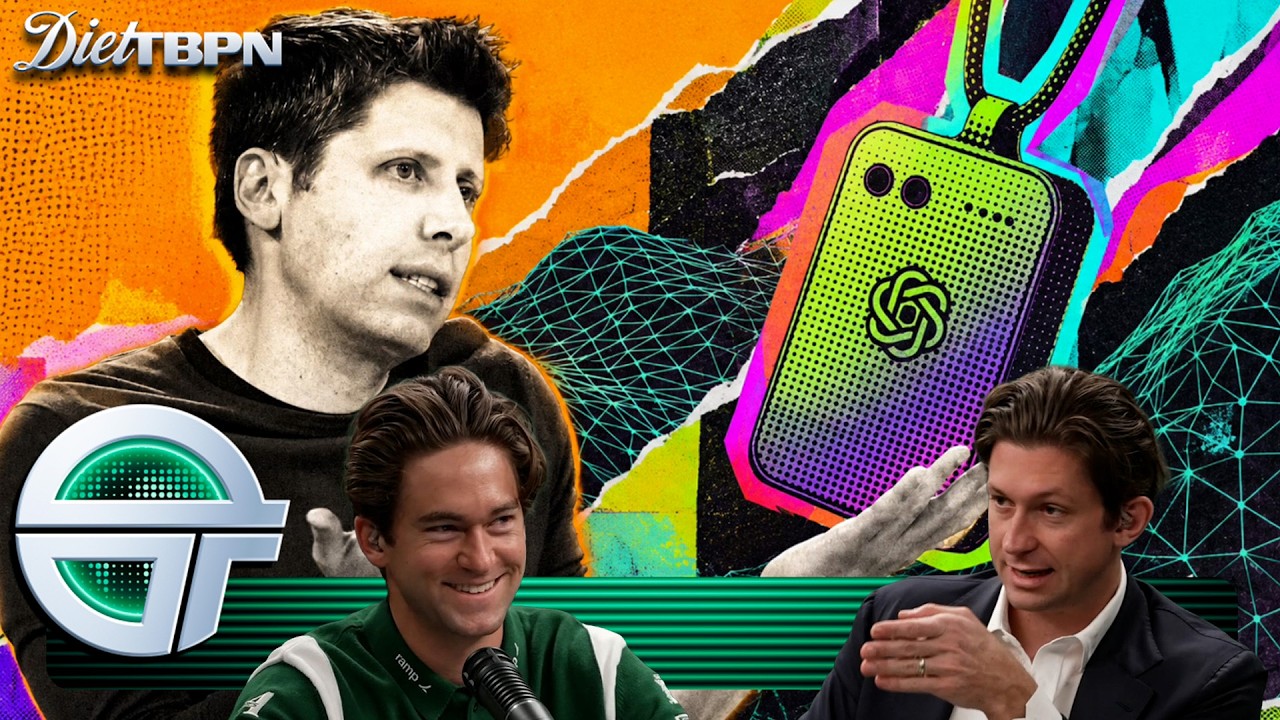
Published on YouTube by TBPN on July 16, 2026, this episode of Diet TBPN delivers a condensed 30-minute breakdown of the top tech stories from TBPN's live show hosted by John Coogan and Jordi Hays. According to the page description, the show is a live tech talk show covering major industry news, startup ideas, and discussions with prominent Silicon Valley figures.
## TL;DR
The hosts break down Stripe's massive $53 billion offer to acquire PayPal, weighing its financial yield against the technical debt and cultural hurdles of absorbing a legacy giant. They also discuss OpenAI's upcoming hardware debut, a screenless movable AI companion speaker designed alongside Jony Ive. The episode then turns to a mix of satirical pitch ideas—like an oral wearable called Melt and an insider-trading-guaranteed laptop detailing service—before analyzing real micro-EV concepts like Chip Motors and the broader EV manufacturing landscape.
## Atmosphere & style
The show carries a fast-paced, banter-filled, and tongue-in-cheek atmosphere where serious tech analysis blends seamlessly with sharp satire. Hosts John and Jordi exhibit a relaxed, dynamic chemistry as they pivot from grounded commentary on high-stakes FinTech deals to poking fun at outrageous hardware mock-ups. The overall experience feels like hanging out with witty Silicon Valley insiders who take the tech industry seriously without taking themselves too seriously.
## Key takeaways
- [00:01](https://www.youtube.com/watch?v=big23meTcHQ&t=1s) Stripe submitted a $53 billion acquisition offer for PayPal at $60.50 per share, offering a 28% premium backed by bank financing and Advent International.
- [00:01](https://www.youtube.com/watch?v=big23meTcHQ&t=1s) PayPal presents a valuable distressed opportunity due to its $5.5 billion annual free cash flow and 400 million consumer accounts, despite an 80% stock decline from pandemic highs.
- [00:01](https://www.youtube.com/watch?v=big23meTcHQ&t=1s) Acquiring PayPal poses significant technical and cultural hurdles due to its 25,000-person workforce and extensive legacy technical debt.
- [00:01](https://www.youtube.com/watch?v=big23meTcHQ&t=1s) Activists like Michael Burry and new PayPal CEO Enrique Lores show resistance to the $53B buyout, favoring an internal turnaround strategy.
- [10:05](https://www.youtube.com/watch?v=big23meTcHQ&t=605s) OpenAI's flagship consumer hardware device will reportedly be a screenless, movable companion speaker developed with Jony Ive and powered by GPT Live.
- [10:05](https://www.youtube.com/watch?v=big23meTcHQ&t=605s) OpenAI's desktop apps and CodeX integrations are actively transitioning users toward autonomous local agent workflows.
- [13:42](https://www.youtube.com/watch?v=big23meTcHQ&t=822s) The hosts introduced 'Melt,' a satirical oral wearable pitch that converts developer AI notifications into distinct taste sensations on the palate.
- [15:18](https://www.youtube.com/watch?v=big23meTcHQ&t=918s) TBPN pitched a subscription laptop detailing service for SF startups, featuring a 'No Insider Trading Guarantee' to reassure clients on data privacy.
- [17:56](https://www.youtube.com/watch?v=big23meTcHQ&t=1076s) Product experiments included 'Paradox Toothpaste' in a glass jar and 'Kedra,' a cyberpunk water bottle equipped with a built-in keyboard.
- [20:13](https://www.youtube.com/watch?v=big23meTcHQ&t=1213s) Chip Motors launched a $15,000 autonomous micro-EV featuring interactive LED screen displays and conversational capabilities.
- [23:38](https://www.youtube.com/watch?v=big23meTcHQ&t=1418s) US hardware startups face regulatory and timeline pressure to match China's rapid EV innovation and feature delivery cycles.
## Detailed walkthrough
### [00:01](https://www.youtube.com/watch?v=big23meTcHQ&t=1s) Stripe's $53B Hostile Bid for PayPal and Shiel Mohnot’s Analysis
Stripe has made a massive $53 billion acquisition offer to buy PayPal at $60.50 per share, representing a 28% premium over its prior closing price. PayPal's stock has taken a beating over the last five years, dropping over 80% from its pandemic highs. While 2020–2021 saw an anomalous boom in e-commerce, PayPal's public market performance has struggled ever since. FinTech investor Shiel Mohnot had presciently called PayPal one of the great distressed value opportunities in FinTech history back in February 2026, pointing out that despite being heavily discounted, the $50 billion company still generates $5.5 billion in annual free cash flow—a 10% free cash flow yield.
PayPal brings staggering consumer distribution to the table, including 400 million consumer accounts with deeply integrated bank info and Know Your Customer (KYC) verification, alongside a massive merchant checkout presence and the Venmo peer-to-peer brand. While Shiel previously identified Stripe and Apple as the most logical suitors, he pointed out that taking on a legacy giant with 25,000 employees and decades of technical debt presents a immense culture fit challenge. Other potential buyers mentioned in his breakdown included Visa and Mastercard (who face severe antitrust roadblocks), Elon Musk (a early Stripe angel investor who originally wanted PayPal named X), and JPMorgan Chase (which could leverage Venmo to win over younger consumers).
- **Offer Details:** $53 billion total valuation at $60.50 per share, backed by $50 billion in committed bank financing and a 50/50 equity partnership with private equity firm Advent International.
- **Financial Metrics:** PayPal yields $5.5 billion in free cash flow across 400 million consumer accounts.
- **Market Standing:** Stripe's latest tender offer valued the private giant at $159 billion, making it significantly larger than PayPal.
- **Pushback & Resistance:** Activist investor Michael Burry posted on Substack that he refuses to sell at this price, believing PayPal can recover its former valuation. Newly appointed PayPal CEO Enrique Lores is reportedly reluctant to accept an early buyout rather than executing his own corporate turnaround plan.
---
[10:05](https://www.youtube.com/watch?v=big23meTcHQ&t=605s) OpenAI's First Hardware Device: The Movable AI Companion Speaker
OpenAI's upcoming consumer hardware debut will reportedly be a screenless, movable AI companion speaker designed alongside former Apple chief designer Jony Ive. According to Bloomberg reports, the device acts as a home computer for the AI era, using mechanical elements to move on its own, observe its surroundings via built-in cameras, and hold lifelike conversations powered by GPT Live (OpenAI's real-time voice mode). It relies on an onboard rechargeable battery so users can carry it around the house.
The hosts poke fun at the concept by presenting a mock-up image of a literal one-ton, concert-level Funktion-One speaker system equipped with motorized wheels to follow the user around and "deafen you in any room." Beyond the jokes, they note that OpenAI's hardware division is currently working on roughly five distinct devices, with this smart speaker targeted for a reveal later this year ahead of a planned 2027 consumer release.
- **Desktop & Mobile Integration:** OpenAI's desktop applications and CodeX integration are already bridging the gap to autonomous agent workflows (like OpenClaw), executing tasks across local Chrome browsers and personal email without requiring command terminal setup.
- **Hardware Roadmap:** OpenAI's team is developing ~5 AI devices, with the Jony Ive-designed speaker slated as the flagship release.
---
[13:42](https://www.youtube.com/watch?v=big23meTcHQ&t=822s) Satirical AI Pitch: "Melt" The Oral Wearable
Playing off OpenAI co-founder Greg Brockman's statement that "taste is a new core skill," the hosts unveil a satirical pitch for OpenAI's next revolutionary device: **Melt**, a custom-fit oral wearable that translates AI agent notifications directly into taste sensations. Designed for developers who want to reduce screen time and ditch terminal windows, Melt allows users to feel the exact execution status of a ChatGPT CodeX background run directly on their palate.
- **Flavor Notification Protocol:**
- **Clean Sour Pulse:** Indicates an agent run has finished successfully and is ready for review (reminiscent of a Sour Patch Kid).
- **Flash of Heat / Spicy:** Signals that a build broke or an exception occurred, forcing the developer to immediately lock in.
- **API Rate Limit / Errors:** Triggers distinct sensory updates without needing audio or visual displays.
<ElicitationsGroup message="Explore further from this video:">
<Elicitation label="Summarize Part 2 of this transcript" query="Please provide the walkthrough for Part 2 of this TBPN episode."/>
</ElicitationsGroup>
[15:18](https://www.youtube.com/watch?v=big23meTcHQ&t=918s) Gamified Workflows and SF Laptop Detailing
Continuing their banter on playful UI/UX ideas, the hosts describe a gamified feedback loop for tracking tasks or shipping features: if your balance hits zero, you get a bitter flavor taste in your mouth forcing you to refill, but if everything is green and shipping appropriately, you get a "sweet pop" in your mouth that rewards the win and creates a Pavlovian loop for the next burst of flavor. Moving on to real start-up concepts, the hosts reveal that over at TBPN HQ, virtually any idea they hatch immediately gets spun up into a website. One of those concepts is the "Laptop Detailing Company of San Francisco," an idea born out of personal suffering. John recounts cleaning his laptop the previous week with a standard screen wipe that, unbeknownst to him, required gloves—resulting in severe chemical burns and his skin peeling off his fingers.
To solve this, they propose a subscription computer detailing service for San Francisco startups and enterprise companies, keeping employee devices polished and clean on-site. Analyzing their mock website, John takes issue with the low pricing ($29.99), jokingly alleging that screen cleaners subsidize the service by stealing insider trade secrets off laptop displays. To counter this, their site highlights a strict "No Insider Trading Guarantee"—promising detailers will not photograph, transcribe, trade upon, or tip off a roommate about any unreleased earnings reports or ticker symbols visible on screen.
- **Laptop Detailing Pricing:** Debate over a $29.99 pricing tier and the necessity of on-site visits.
- **Insider Trading Guarantee:** "We clean screens. We do not read them."
---
[17:56](https://www.youtube.com/watch?v=big23meTcHQ&t=1076s) Paradox Toothpaste and the "Kedra" Water Bottle Keyboard
The hosts pivot to another absurd product website called *Paradox Toothpaste*, created to challenge the classic phrase "you can't put toothpaste back in the tube." Housed in a luxurious frosted glass jar, Paradox turns toothpaste into a twice-daily ritual where users scoop a "precise pearl" with a small spoon to avoid crusty caps and wasted squeezes. However, the hosts quickly realize the flaw—dipping a used spoon back into the jar—and declare the idea dead on arrival despite its humorous attempt to solve an age-old idiom.
Producer Tyler then presents his own hardware pitch for OpenAI called "Kedra"—a water bottle with a physical keyboard wrapped around its body. Tyler explains that while taking a sip of water, a user cannot speak into OpenAI's Whisper voice feature or use a regular keyboard, so wrapping a physical keyboard around the bottle allows seamless typing while drinking. While the functional premise is debated, the hosts praise its sleek, cyberpunk aesthetic, comparing it to the famous clear plastic Nvidia GPU purse that displays an A100 circuit board inside as functional art.
- **Paradox Toothpaste Concept:** Refillable frosted glass jar eliminating tube squeezes, undone by hygienic spoon issues.
- **Kedra Hardware Concept:** A water bottle encased in a keyboard for uninterrupted productivity during drink breaks.
---
[20:13](https://www.youtube.com/watch?v=big23meTcHQ&t=1213s) Chip Motors and the New Wave of Micro-EVs
The hosts introduce a "New Car Alert" featuring Chip Motors, founded by CEO Jameson, which advertises "the next great American car" as a small, cute, autonomous robot EV starting at $15,000. Reaction footage displays Chip interacting conversationally with its owners, displaying custom messages on its front LED screen, driving itself to park, and running off autonomously to pick up forgotten snacks at the market.
While praising the LED customizable front screen and cute form factor, the hosts note that autonomous self-driving without a passenger will face significant regulatory hurdles. Channeling car reviewer Doug DeMuro, they acknowledge that while $15k is the base pitch, upgrades will likely drive the actual purchase price closer to $20,000–$30,000—a range that still competes effectively with high-end neighborhood golf carts. They contrast Chip's tech-forward approach (AI, screens, self-parking) with rival micro-EV maker Amble, which bets on extreme analog simplicity.
- **Chip Motors Specs:** Custom factory liveries (e.g., American flag), self-parking capabilities, front LED display, targeted $15k base price.
- **Micro-EV Market Dynamics:** Highlighting how neighborhood golf carts already sell in the $20k–$30k range.
---
[23:38](https://www.youtube.com/watch?v=big23meTcHQ&t=1418s) Startup Speed and the Evolution of the EV Market
Reflecting on the EV landscape, the hosts express hope that time-to-market for niche hardware startups accelerates. They recount how Tesla broke the original barrier to entry, turning the Model Y into a global bestseller in the US and China. However, subsequent EV startups like Nikola struggled with bankruptcy or required years and billions in capital without finding market traction. By the time companies like Lucid launched their premium sedans and SUVs, legacy automakers had already caught up with vehicles like the Porsche Taycan and Mercedes-Benz EQS, stripping away the decade-long EV monopoly Tesla once enjoyed.
Comparing American manufacturing timelines to China—where EV manufacturers rapidly ship wildly inventive vehicles capable of crab-walking, tank-turning, and jumping—the hosts argue that regulatory friction and supply chain delays must be overcome so American hardware startups can ship within two to three years instead of lingering in development hell. Closing out the episode, they invite the Chip Motors team onto the show, plug their daily newsletter at `TBPN.com`, and sign off wishing their viewers the "best Wednesday afternoon of your life."
- **Tesla Model Y:** Cited as the benchmark success story that held a virtual monopoly in EVs before legacy competition arrived.
- **Chinese EV Innovation:** Mentioned for rapid shipping cycles and eccentric features like crab-walking and jumping suspension.
## Notable quotes
> Silicon Valley’s newest obsession — The New York Times
> [10:05](https://www.youtube.com/watch?v=big23meTcHQ&t=605s) deafen you in any room.
> [13:42](https://www.youtube.com/watch?v=big23meTcHQ&t=822s) taste is a new core skill — Greg Brockman
> [15:18](https://www.youtube.com/watch?v=big23meTcHQ&t=918s) We clean screens. We do not read them.
> [17:56](https://www.youtube.com/watch?v=big23meTcHQ&t=1076s) you can't put toothpaste back in the tube.
> [20:13](https://www.youtube.com/watch?v=big23meTcHQ&t=1213s) the next great American car — Chip Motors
> [23:38](https://www.youtube.com/watch?v=big23meTcHQ&t=1418s) best Wednesday afternoon of your life.
## Mentioned
Stripe, PayPal, Shiel Mohnot, Advent International, Michael Burry, Enrique Lores, Visa, Mastercard, Elon Musk, JPMorgan Chase, Venmo, OpenAI, Jony Ive, GPT Live, Funktion-One, OpenClaw, CodeX, Greg Brockman, Melt, Sour Patch Kid, Laptop Detailing Company of San Francisco, John Coogan, Jordi Hays, TBPN, Paradox Toothpaste, Tyler, Kedra, Whisper, Nvidia, Chip Motors, Jameson, Doug DeMuro, Amble, Tesla, Tesla Model Y, Nikola, Lucid, Porsche Taycan, Mercedes-Benz EQS, Ramp, Public, Cisco, Console, CrowdStrike, Figma, MongoDB, NYSE, Railway, Shopify, X, YouTube, Apple
TBPN examines Stripe's proposed $53 billion acquisition of PayPal alongside reporting on OpenAI's upcoming movable hardware companion, while analyzing the regulatory hurdles and production timelines confronting modern electric vehicle startups.
Stripe's Distressed Valuation Play for PayPal (0:01)
Stripe made an unsolicited $53 billion offer to acquire PayPal at $60.50 per share, representing a 28% premium over its prior closing price. The bid is supported by $50 billion in committed bank financing and a 50/50 equity partnership with private equity firm Advent International. FinTech investor Shiel Mohnot had characterized PayPal as a prime distressed asset in February 2026: although its stock had dropped more than 80% from pandemic highs, the company still generates $5.5 billion in annual free cash flow across 400 million verified consumer accounts and controls the Venmo brand. With Stripe's own valuation pegged at $159 billion in a recent tender offer, the private company is substantially larger than its public target.
Significant operational and corporate hurdles stand in the way of a completed transaction. Mohnot pointed out that absorbing PayPal requires integrating 25,000 legacy employees and decades of technical debt. On the governance front, activist investor Michael Burry publicly stated on Substack that he refuses to tender his shares at the offered price, anticipating an independent recovery. Additionally, newly installed PayPal CEO Enrique Lores is reportedly resistant to an early buyout, preferring to execute his own operational turnaround.
OpenAI's Hardware Roadmap and Screenless Interfaces (10:05)
OpenAI is developing approximately five hardware devices, led by a screenless, movable companion speaker designed with former Apple design chief Jony Ive. According to Bloomberg reporting, the battery-powered home device uses mechanical elements to navigate physical spaces, integrates cameras to observe surroundings, and runs on OpenAI's GPT Live voice model. OpenAI plans to preview the device later this year ahead of an expected 2027 commercial release, building on current desktop CodeX tools that automate workflows across local browsers and applications.
Reflecting on the industry's push toward screenless computing, the hosts satirized multimodal feedback loops by pitching 'Melt,' a hypothetical oral wearable inspired by Greg Brockman's remark that 'taste is a new core skill.' The fictional device translates developer status updates into palate sensations—such as a sour pulse for successful code runs or heat for build failures. The program also highlighted 'Kedra,' a concept water bottle wrapped in a physical keyboard to let users type while drinking without breaking their workflow.
Micro-EV Commercialization and Chip Motors (20:13)
Chip Motors, led by CEO Jameson, unveiled a small autonomous electric vehicle promoted as an entry-level American car with a targeted $15,000 base price. Promotional footage features the vehicle speaking conversationally with owners, displaying text on a customizable front LED screen, parking itself, and performing unmanned errands such as picking up groceries. The hosts contrasted Chip's software-centric design with rival micro-EV brand Amble, which focuses on minimalist, analog hardware.
While praising the vehicle's form factor, the hosts questioned the feasibility of the advertised price and autonomy claims. Unmanned street driving faces strict regulatory approval hurdles, and optional equipment upgrades will likely push the real purchase price to between $20,000 and $30,000. Even at that adjusted level, the hosts noted the vehicle directly competes with the pricing of modern neighborhood golf carts.
Manufacturing Cycles and Global EV Competition (23:38)
The hosts reviewed the historical trajectory of the electric vehicle market, noting that early pioneers faced far less incumbent competition than today's entrants. While Tesla established the Model Y as a global bestseller, subsequent American startups suffered prolonged setbacks: Nikola underwent bankruptcy, and Lucid spent years and billions in capital before launching, only to enter a market where legacy manufacturers like Porsche and Mercedes-Benz had already introduced competing luxury EVs.
Drawing contrasts with Chinese automotive manufacturers—who rapidly bring to market vehicles with features like crab-walking and active jumping suspensions—the hosts argued that American hardware startups must overcome domestic supply chain and regulatory friction. In their view, hardware companies must condense delivery cycles to two or three years to avoid lingering in protracted development phases.
The discussion illustrates how massive scale functions simultaneously as an attractive asset and a strategic barrier, leaving unresolved whether Stripe can overcome PayPal's entrenched technical debt or whether nascent hardware ventures can navigate the regulatory friction required to ship physical products.
The New York Times: Silicon Valley’s newest obsession
[10:05] deafen you in any room.
[13:42] Greg Brockman: taste is a new core skill
[15:18] We clean screens. We do not read them.
[17:56] you can't put toothpaste back in the tube.
[20:13] Chip Motors: the next great American car
[23:38] best Wednesday afternoon of your life.
Original transcript
[0:01] Big news in the fintech world, not
[0:04] related to to ramp actually, but Stripe,
[0:07] another uh founders fund project. It's
[0:10] founders fund day. Stripe is offered to
[0:12] buy PayPal. This was rumored and on the
[0:15] timeline uh on and off over the past
[0:17] year as uh as PayPal's been a little
[0:20] beat up. We can pull up the fiveyear
[0:23] chart. It's down over 80% since the
[0:26] pandemic highs. Uh if you go back
[0:28] further, the 2020 to 2021 era for PayPal
[0:32] was like sort of an anomaly because of
[0:34] the big shift to e-commerce during the
[0:37] uh the pandemic boom. But uh things have
[0:39] not been looking good for the last five
[0:42] years. And so uh just a couple was it a
[0:44] couple months ago, Shield Monot posted
[0:47] in February of 2026, he posted a little
[0:49] uh a little question for the timeline.
[0:51] He said, "So who's buying PayPal?" He
[0:53] [snorts] says it has the opportunity of
[0:55] being one of the great distressed value
[0:57] opportunities in fintech history. It's
[1:00] down 85% at the time. Still still
[1:03] generating $5.5 billion in free cash
[1:06] flow. This is a $50 billion company.
[1:09] We'll go through the PayPal the Stripe
[1:11] offer which is at 53 billion. But uh you
[1:13] know you're getting a 10% free cash flow
[1:16] yield. I'm unaffected.
[1:18] >> Sorry. I'm still working through these
[1:20] these new uh [clears throat]
[1:22] >> s
[1:23] We got new ones. Um, but if you think
[1:26] about it, it's like you have a $50
[1:27] billion company printing 5.5 billion in
[1:31] free cash flow. You can use a lot to
[1:33] finance debt, obviously, which is what's
[1:34] proposed here. Uh 400 million uh
[1:37] consumer accounts. So, lots of consumers
[1:40] have PayPal accounts, have Venmo
[1:42] accounts. Maybe they're not fully
[1:43] active, but they're ready to be engaged.
[1:45] It's a huge footprint and huge
[1:47] distribution mechanism. Uh, and they
[1:49] have bank info attached. That's
[1:50] difficult. You can't get that from many
[1:53] other consumer applications. That's sort
[1:56] of the the white whale of consumer. How
[1:58] deep can you go in the KYC flow in the
[2:00] consumer bank relationship? You really
[2:02] know these customers uh which is
[2:04] valuable for for for a potential buyer
[2:06] like Stripe in this case. So checkout
[2:08] buttons are on millions of merchant
[2:10] sites although that has been uh slowing
[2:12] and uh and that's part of the reason why
[2:14] uh a change of ownership might make
[2:16] sense at this point. And they also have
[2:17] this peer-to-peer brand with Venmo,
[2:19] which was bought by Brian Johnson,
[2:20] Brainree, and then sold to PayPal. Old
[2:22] lore. So, Shield, the first company he
[2:25] calls out is Stripe. He says they have a
[2:27] lot of desirable assets for Stripe, a
[2:29] consumerf facing checkout, bank account
[2:30] details for hundreds of millions of
[2:32] consumers that you could integrate into
[2:33] Stripe's checkout flow. Uh, and they
[2:35] have a and they have a consumer brand in
[2:37] Venmo. Uh, Apple would also be a
[2:38] potential buyer, says Shiel. Uh, good
[2:41] complent to Apple Pay for e-commerce
[2:42] penetration. They never got social
[2:44] payments going. Shield says those are
[2:46] the two logical options from a business
[2:48] value creation perspective, but he
[2:50] identifies a problem. He says uh in both
[2:53] cases, Apple and Stripe, uh the culture
[2:56] fit makes them a non-starter.
[2:57] >> I take it back. They actually did buy a
[2:59] BNPL platform.
[3:00] >> Which one?
[3:00] >> That I've never heard of called Payey.
[3:02] Okay. 2021 for 2.7 billion.
[3:04] >> Okay. So they so so they do have an
[3:06] asset there that they are uh hopefully
[3:08] trying to grow,
[3:09] >> but prior to that they had already built
[3:11] their own.
[3:11] >> Got it. So Sheiel calls out that culture
[3:13] fit might be a problem with PayPal
[3:16] integrating into Stripe. Uh PayPal is a
[3:18] quote sprawling legacy fintech with
[3:21] 25,000 employees. That's a huge company.
[3:23] Decades of technical debt. Neither
[3:25] Stripe nor Apple would want to absorb
[3:27] that. Although technical debt, you can
[3:28] clean it up. Coding agents not too bad
[3:30] these days. Apple also might face big
[3:33] tech antitrust with this type of thing.
[3:34] That's a good call out. And yeah, you do
[3:37] have to you do have to wonder. Stripe
[3:39] incredible on the product side, on the
[3:41] innovation side, on the on the uh just
[3:43] building a fantastic massive 159 billion
[3:47] dollar as of the last tender offer uh
[3:49] business. Um but are they the are they
[3:52] the team to be the ruthless cost cutters
[3:54] if that's what it takes to turn PayPal
[3:55] around? That might be a different
[3:57] challenge culturally. Same thing for
[3:58] Apple. They're not this private equity
[4:00] firm that goes in and buys and uh legacy
[4:02] assets and turns them around. So little
[4:04] bit of an of a culture shift that I
[4:06] think uh Sheila is correct to call out.
[4:07] He also identifies Visa and Mastercard
[4:09] as potential buyers. Said they could
[4:11] both afford it and they've been creeping
[4:12] into merchant acquiring and checkout.
[4:14] Also, we talked about that the the big
[4:16] banks are now taking a shot across the
[4:18] bow of Visa and Mastercard with their
[4:20] own uh card network. So, there's
[4:23] potential that Visa and Mastercard might
[4:24] want to uh expand into a different
[4:27] territory, although that's not what's
[4:28] playing out right now, but who knows
[4:29] what other biders will come out of the
[4:31] woodwork now that Stripe has made this
[4:32] offer to buy PayPal for 53 billion. So,
[4:35] PayPal's checkout button placement is
[4:37] enormously valuable real estate for
[4:39] either Visa or Mastercard. The networks
[4:41] have been trying to move beyond
[4:42] interchange into direct merchant
[4:44] relationships and PayPal could
[4:45] accelerate that by years. I think they
[4:47] they may be burned out on antitrust.
[4:49] Either network acquiring the largest
[4:50] independent online checkout provider
[4:52] would and should face brutal regulatory
[4:54] scrutiny, says Shield. Uh he goes on, he
[4:56] says, "What about Elon? Elon co-founded
[4:58] PayPal and always wanted it to be called
[5:00] X. So, there's some poetry in it coming
[5:02] back under his fold as X. Of course, he
[5:04] is a Stripe shareholder, I believe. I
[5:06] think he was an angel investor. One of
[5:07] his very rare angel investments was
[5:09] Stripe. So, you know, he might be
[5:11] getting a slice of PayPal with this. Not
[5:12] too bad. His bandwidth is spread
[5:14] impossibly thin across Tesla, SpaceX,
[5:16] XAI. This is pre- merger X uh politics
[5:19] and uh replying concerning to post at
[5:21] 3:00 a.m. never been a problem for Elon,
[5:23] but uh he said, but you could have made
[5:26] the case he was spread too thin before
[5:27] he started acquired the last several
[5:29] companies too. Technical debt at PayPal
[5:31] is a big challenge that he knows. I
[5:33] would never count him out. I just don't
[5:34] see it though. Uh and then he says in
[5:37] his opinion, Shield says JP Morgan makes
[5:39] the most sense. They've spent heavily on
[5:40] payments and acquisition. Uh and an
[5:42] acquisition could get them closer to
[5:43] building a consumer super app alongside
[5:46] Chase. Uh 50 billion would be a huge
[5:49] acquisition even for them, but they
[5:50] could stomach it assuming they could get
[5:52] regulatory approval. Venmo gives them a
[5:53] P2P brand that they've never been able
[5:55] to build, especially among younger
[5:56] consumers. PayPal's branded checkout
[5:58] button sits on millions of merchant
[5:59] sites. remember didn't JP Morg was it JP
[6:02] Morgan that bought that company that uh
[6:04] Charlie Javis founded and then she went
[6:06] to jail or was accused of crimes because
[6:10] and that pitch for her company was
[6:12] >> consumerf facing consumer
[6:13] >> facing they had a relationship with
[6:15] alleged uh I guess they positioned yeah
[6:19] they positioned it as having a lot of
[6:21] relationships with
[6:22] >> with younger consumers college students
[6:24] and so uh I think the deal came in like
[6:26] north of hund00 million and then it was
[6:28] later alled alleged or discovered that
[6:31] uh those accounts were maybe generated
[6:34] programmatically. I I think this was the
[6:36] preAI era. Now it's even easier if you
[6:38] need to generate a bunch of fake data.
[6:40] But don't do that cuz it's fraud.
[6:41] >> Yeah. The qu the question is like Stripe
[6:44] makes so much sense because to be able
[6:47] to pull off an acquisition like this to
[6:49] be able to get the the level of debt
[6:51] needed to do this, you need to have so
[6:53] much confidence that they're going to
[6:55] actually be able to I'm I'm assuming
[6:57] they'll end up reducing headcount pretty
[6:59] dramatically. I'm assuming Stripe looks
[7:01] at this and says, "Hey, I don't think we
[7:02] need 25,000 people running this
[7:05] business." So, who has the operational
[7:08] strength and knowhow to make PayPal run?
[7:12] If you could make PayPal even run half
[7:14] as well as as Stripe, that's probably
[7:17] worth double what it's currently uh
[7:20] worth. So, um yeah, if you're if you're
[7:22] a lender here, I don't I don't see or a
[7:25] partner, I don't see that you can find a
[7:28] better partner than than Stripe on a
[7:30] deal like this, period.
[7:31] >> Uh Stripe is a fun option. I agree with
[7:32] this. Funny, this tealbacked fintech
[7:34] company buying a teal founded company.
[7:36] Full circle. The first offer is already
[7:39] facing some push back. Michael Burray, I
[7:41] believe, is a shareholder and he posted
[7:43] on his Substack about why he's not
[7:44] selling at this current price. Uh he
[7:47] thinks that uh PayPal can get back to
[7:49] their previous share price from a year
[7:50] ago. Uh but the basic structure of the
[7:53] deal is as follows. 53 billion for all
[7:55] of PayPal, $60.50 50 cents per share
[7:58] offered 28% premium over yesterday's
[8:01] closing price. Uh but it's a steep
[8:04] discount to last year's valuation. 50
[8:06] billion has been committed in bank
[8:07] financing. Uh and uh the FT is reporting
[8:10] that PayPal has been reluctant to engage
[8:12] with the offer thus far. Stripe is much
[8:16] bigger than PayPal at this point. Also
[8:17] interesting, this offer was apparently
[8:20] sent over to PayPal weeks ago, maybe a
[8:22] full month ago based on the reporting,
[8:24] and it didn't leak. So, whoever's
[8:26] working on his team, good job. Kept it.
[8:28] >> They're taking it public. They're taking
[8:29] it public. Enrique Laur
[8:32] CEO over at PayPal just got the gig. Uh
[8:36] even over at HP. Yep.
[8:38] >> And you can't imagine that he's, you
[8:40] know, took the job wanting to just
[8:42] basically be acquired in a short period
[8:45] of time. Exactly.
[8:46] >> I would imagine he wants to get credit
[8:47] for a proper
[8:48] >> turnaround here. Uh, and so I think
[8:51] they're going public with this now in
[8:54] part to try to put pressure.
[8:55] >> So Stripe is partnering with private
[8:57] equity firm Advent International for the
[8:58] deal. They have a lot of dealm
[9:00] experience in fintech specifically. Uh,
[9:04] and I think they're going to go 50/50 on
[9:05] the equity portion, but then there's a
[9:07] whole bunch of bank financing coming in.
[9:09] Uh, and they they they will point in
[9:12] their offer to uh, the fact that branded
[9:15] PayPal checkouts are slowing. There's
[9:16] fierce competition from Apple Pay, Shop
[9:18] Pay, CLA. These are reasons to sell.
[9:21] PayPal will likely fall fire back
[9:23] saying, "Hey, we just brought in a fresh
[9:25] CEO. Uh we have a restructuring plan in
[9:29] place. We're executing against that.
[9:31] Once that happens, once we're
[9:32] successful, we will get back to the 70s
[9:34] for our share price, which we traded at
[9:36] just a year ago." So, yeah, maybe we're
[9:38] not going to go back to the pandemic
[9:39] highs anytime soon, but uh this offer is
[9:42] just too low for right now. But we will
[9:45] see. Uh overall, I mean, Stripe has done
[9:47] an excellent job expanding into many
[9:48] adjacent markets. Atlas is a great
[9:50] example, and they've never cracked
[9:52] consumer, but also they've never really
[9:54] tried, in my opinion, and so I think
[9:56] it'd be really awesome to watch this
[9:58] play out, see what they do with it, but
[10:00] it does seem like it it'll take a few
[10:01] more rounds of negotiation before
[10:02] anything fully materializes. Um anyway,
[10:05] there is uh news out of OpenAI. The
[10:08] first consumer hardware device will
[10:10] reportedly be an AI companion speaker.
[10:13] According to Bloomberg, the device will
[10:14] be screenless and movable, designed to
[10:18] serve as a new kind of home computer for
[10:21] the AI era. And I believe uh Tyler has a
[10:24] mockup of what we think it would look
[10:26] like. I think I sent it to you. Did that
[10:27] make it into the timeline? Let's pull
[10:28] that up when we have a second. Uh it
[10:29] will be able to answer questions,
[10:31] control smart home devices, play music,
[10:33] and tap into GPT's capabilities. But the
[10:35] bigger goal is for it to become
[10:37] increasingly personalized over time.
[10:39] OpenAI envisions it as an AI companion
[10:41] that gets to know its owner, understands
[10:43] their habits, and can even draw on
[10:45] personal information like email to
[10:46] provide more useful assistance. And
[10:48] >> we have the image here.
[10:49] >> Oh, yes. Let's pull up what what I think
[10:51] it probably looks like based on this
[10:54] description that it's screenless,
[10:55] movable, and designed to serve as a new
[10:58] kind of home computer for the AI. That's
[11:00] what I'm hoping for. Sort of a function
[11:01] one concert level speakers that have
[11:04] wheels and can be wheeled around. It's
[11:06] movable smart speaker. It weighs It
[11:09] actually weighs one ton. Yes. Yes.
[11:12] Because on board onboard battery system,
[11:15] they want it to be mobile. They don't
[11:16] want you to worry about plugging.
[11:18] >> Exactly. Exactly. Imagine just wheeling
[11:20] this around and just pumping out uh
[11:23] Tiestto at concert level volumes
[11:25] throughout your
[11:26] >> inside any room in your home.
[11:28] >> Any room in your home. Ideally, those
[11:29] wheels would be motorized. It could
[11:31] follow you around and and deafen you in
[11:32] any room. Sort of Brian Johnson's worst
[11:34] nightmare. uh not to call back Brian
[11:36] Johnson, but uh unlike today's smart
[11:38] speakers, the device will is designed to
[11:40] feel more lifelike
[11:41] >> and uh yes, that is a bit this is a
[11:44] joke. This is a joke.
[11:45] >> Um but
[11:46] >> we have not been uh intentionally not
[11:49] been read in on anything in device land
[11:51] because we want to figure out what's
[11:54] happening in real time with you guys.
[11:57] But if you've been using codecs and you
[11:58] are running codecs on or just the new
[12:00] chatt app which is fully codeexified
[12:03] um if you've been running it on your
[12:05] computer it's pretty remarkable when
[12:07] you're on your phone and you're and you
[12:09] remote into your computer and you can
[12:11] have it go and just open your actual
[12:14] email and if you're logged into a new
[12:16] site it will just use your actual login
[12:19] to go and open the website in your
[12:22] Chrome browser which is logged in and
[12:25] get you whatever information you need.
[12:26] So having the full control I think that
[12:29] people are with the chatpt app on iOS
[12:32] integrating to codeex or chatt app on
[12:35] Mac. We're now crossing the chasm of
[12:37] like the openclaw experience for people
[12:39] that weren't ready to set up the
[12:42] openclaw whole like agentic workflows
[12:45] and do all of the stuff jump through all
[12:46] the hoops there. These are just apps
[12:48] that you can install. You never really
[12:49] get hit with a a terminal window
[12:51] whatsoever. So uh like the next wave of
[12:54] consumers are adopting effectively these
[12:57] I don't even know they're they're agents
[12:58] but it's more like computer use plus
[13:00] agents plus desktop integration that
[13:02] makes it uh ultimately more usable. So
[13:06] uh unlike today's smart speakers the
[13:08] device is designed to feel more like
[13:10] lifelike according to Bloomberg and it
[13:12] will include mechanical elements that
[13:14] move on their own along with a camera
[13:16] and other sensors to understand it
[13:17] surroundings. Powered by GPT Live,
[13:19] OpenAI's new real-time voice mode. It
[13:21] should be able to hold more natural
[13:23] conversations and recognize when you
[13:24] enter a room. You'll also be able to
[13:26] take it around the house thanks to its
[13:28] rechargeable battery. Johnny IV is
[13:31] helping design the product. Bloomberg
[13:32] says OpenAI's hardware team is
[13:33] developing roughly five AI devices with
[13:35] the speaker expected to be the first,
[13:36] targeting an unveiling this year ahead
[13:38] of a planned 2027 release. We have
[13:42] another example of what we think they
[13:45] should do in the device in the device
[13:47] battle. The the new smart device that I
[13:50] want from OpenAI is of course the you've
[13:53] heard Greg Brockman say this, taste is a
[13:56] new core skill, right?
[13:57] >> Yep.
[13:58] >> So, what can computers what are they
[14:00] uniquely bad at doing?
[14:01] >> Taste.
[14:02] >> Creating tastes for you. Yeah. Right.
[14:04] There's no real smellvision yet. There's
[14:06] no computer device. There's no smart
[14:08] device that actually puts a taste in
[14:11] your mouth to signal what's going on
[14:13] with your AI agent. So, I put together
[14:16] Melt My Pitch for the next AI device
[14:19] from OpenAI. Uh,
[14:20] >> a custom fit oral wearable that turns AI
[14:23] agent status into flavor so you can feel
[14:26] a chat GBT codeex run without watching
[14:29] the terminal.
[14:29] >> Yes. So, you don't need to look at a
[14:31] screen. This is perfect if you're trying
[14:33] to cut back on your screen time. You
[14:35] don't need to hear anything. you can
[14:36] just listen to the beautiful
[14:38] surroundings of wherever you are and yet
[14:40] you're still tapped in. You still know
[14:42] whether your build is failing or not
[14:44] because you pair it with you pair with
[14:46] codecs. It maps the signals and it ships
[14:47] by taste. So, uh when your agent is
[14:50] done, a clean sour pulse tells you that
[14:53] it's time to review the work if
[14:54] something breaks.
[14:55] >> A good good like a good
[14:57] >> Yeah. Sort of like a Sour Patch Kids.
[14:58] It's nice. It's a little sweet, but it's
[15:00] sour, you know. It lets you know, hey,
[15:01] it's time to go check on what's
[15:03] happening. Review some code. Make sure
[15:04] everything's shipping as you hope it is.
[15:07] Uh, if something breaks, you get a flash
[15:09] of heat. It gets spicy in your mouth.
[15:11] This pulls your attention. You gota you
[15:13] got to lock in. So, you have some spicy
[15:15] flavor in your mouth. Uh, if your API
[15:18] balance hits zero, you get this bitter
[15:19] taste. It's not good. You got to go
[15:21] refill this.
[15:22] >> Bitter note makes the problem impossible
[15:24] to ignore.
[15:25] >> Yes. But if everything is green,
[15:27] everything is shipping appropriately,
[15:29] everything's good to go, you get a sweet
[15:32] pop in your mouth that rewards the win.
[15:34] And it's also a Pavlovian feedback loop
[15:36] because you're just on the hunt for the
[15:38] next burst of flavor. And it can also
[15:40] look like an iced out grill, which might
[15:41] be nice.
[15:42] >> Uh, more seriously, we were over here at
[15:44] TVPN HQ. Any any idea that we have
[15:48] immediately gets turned into a website
[15:50] now.
[15:51] >> Yes. Um, we have uh the laptop detailing
[15:55] company of San Francisco.
[15:56] >> Yes.
[15:57] >> And and this is a business that we
[15:59] actually think should be built. Yes.
[16:01] John was cleaning his laptop last week
[16:03] and whatever product you had ordered off
[16:06] of
[16:06] >> I didn't order it. Team ordered it. It's
[16:08] a it's a normal like screen wipe, but I
[16:10] didn't realize that you're supposed to
[16:11] use gloves when you use these screen
[16:14] wipes. And it gave me a chemical burn
[16:17] all over my hands. Don't be very
[16:19] careful. Like my whole wanted on my
[16:22] fingers peeling off. It's been terrible.
[16:24] >> So, we think that there is a silly but
[16:27] real business opportunity to make a
[16:28] laptop computer, you know, like a
[16:30] computer detailing service, like a car
[16:32] detailing service for laptops. You sign
[16:35] up a bunch of companies, startups in San
[16:37] Francisco, you know, early stage
[16:39] companies, enterprise, etc. uh you give
[16:42] them a monthly plan to keep all of their
[16:45] employees laptops uh clean and polished
[16:50] and u yeah this was this was one shot
[16:53] and I think it gets the job done. So no
[16:56] excuses. I think that for the only thing
[16:58] I disagree with on the site is the the
[17:00] pricing.
[17:01] >> The pricing. How much would
[17:02] >> I think I think 20 $29.99.
[17:05] >> Well, you know why this is so
[17:06] subsidized? Because the screen cleaners
[17:08] are looking for trade secrets and then
[17:11] trading off of them. But of course, if
[17:13] you're doing this, you need to have the
[17:14] the no insider trading guarantee which
[17:18] is featured here. To be extremely clear,
[17:21] our detailers will not photograph,
[17:23] memorize, transcribe, trade upon, tiff
[17:25] off a roommate, or otherwise profit from
[17:28] anything visible on your screen. 100%
[17:30] information is not used, right?
[17:32] >> That's let them know. That's a great
[17:34] >> You got to let them know.
[17:35] >> That's a great offer.
[17:36] >> We clean screens. We do not read them.
[17:38] It's almost like uh he doth she doth
[17:41] protests too much. Even if your screen
[17:42] contains an unreleased earnings report,
[17:44] even if the font is very large, even if
[17:46] the ticker symbol is impossible to miss,
[17:49] our detailers will not be trading on
[17:51] your inside.
[17:52] >> I think I think these have to be on-site
[17:54] visits.
[17:55] >> Yeah.
[17:55] >> Yep.
[17:56] >> Uh what's another big problem in the
[17:58] world? Big problem is that everyone
[18:00] knows the phrase, you can't put the
[18:02] toothpaste back in the tube. Well, what
[18:05] if you could? What if you could? What if
[18:09] toothpaste came in a luxurious jar? Uh,
[18:12] the company's called Paradox Toothpaste
[18:14] out of the tube. It's a refillable
[18:16] frosted glass jar that turns the most
[18:19] ordinary part of your morning into a
[18:21] ritual worth displaying. Do you think
[18:23] this would sell? Paradox. [laughter]
[18:26] Most toothpaste is designed to be
[18:27] hidden. Paradox is designed to be seen
[18:30] and used with intention. Twice a day.
[18:32] Scoop one precise pearl. No crusty cap.
[18:35] No guesswork. No wasted squeeze. brush
[18:38] your teeth. Then you
[18:39] >> What do you do with the spoon though?
[18:40] You're You just
[18:41] >> You dip it back in the toothpaste.
[18:43] Luxurious toothpaste.
[18:45] >> It's over for this idea.
[18:46] >> This is a bad idea.
[18:47] >> It's funny though.
[18:48] >> It solves the problem. You can't put
[18:49] toothpaste back in the tube. Everyone's
[18:51] been clamoring.
[18:52] >> Everyone's been clamoring for this
[18:54] >> to put the toothpaste back in the tube.
[18:55] Now you can. Uh Tyler made one. Uh he
[18:58] has a pitch for uh for Kedra.
[19:02] >> Yeah, this was another um idea I had for
[19:04] an open eye device. So basically it's a
[19:07] water bottle with a keyboard wrapped
[19:09] around it. Okay.
[19:09] >> So if we can pull this up here.
[19:11] >> Um you can see like you know a lot of
[19:13] times you're typing and then you go to
[19:14] grab water, you're thirsty.
[19:15] >> You want to keep typing.
[19:16] >> Yeah. And this also is especially
[19:18] pressing it now because of everyone's
[19:20] using whisper, right? You got to talk
[19:21] and you can't talk while you're
[19:23] >> drinking water, right?
[19:24] >> So why not just put a microphone on here
[19:25] instead of a keyboard?
[19:26] >> No. No. That's the whole point. When
[19:27] you're in the act of drinking water, you
[19:29] can't
[19:29] >> Oh, so you got to switch to typing.
[19:30] >> So you have to start typing. That's
[19:31] right. It's almost like a a flute kind
[19:33] of. Yeah, that makes a lot of sense.
[19:35] >> But um
[19:36] >> I think um
[19:37] >> can be pretty promising.
[19:38] >> I actually think that when when you
[19:40] showed me this image, I think just
[19:42] aesthetically it's a cool looking
[19:43] bottle. Even if the keyboard isn't
[19:45] functional whatsoever, I think people
[19:47] would just rock this type of bottle
[19:48] because they like the aesthetics of a
[19:50] keyboard. Uh sort of like that Nvidia
[19:52] purse. So, you've seen the GPU purse
[19:54] that's uh it's clear plastic and then
[19:57] inside is a A100 or some sort of Nvidia
[20:00] GPU and it just sort of shows you the
[20:02] circuit board and the circuit board is
[20:03] the art is the design of the purse. I
[20:06] thought it was pretty cool. Uh I I would
[20:08] pick one of these up if you manufactured
[20:09] one. What do you think?
[20:10] >> Absolutely not. We have another new car
[20:13] alert.
[20:13] >> New car.
[20:14] >> This one car is called Chip.
[20:17] >> Chip Motors.
[20:18] >> Let's play this.
[20:19] >> It is It is funny. It is funny. I want
[20:21] to see their a year ago,
[20:24] >> you could have been sitting there
[20:25] thinking, why has no one made
[20:28] >> a cute EV car for getting around your
[20:32] town or your neighborhood? Why is no one
[20:34] done?
[20:34] >> And now there's like seven companies.
[20:36] There's a bunch of companies.
[20:37] Apparently, a lot of people had the same
[20:38] idea.
[20:39] >> Okay.
[20:39] >> Um Jameson from the CEO of Chip Motor
[20:43] says, "The next great American car is a
[20:45] robot. It talks, parks itself. More
[20:47] customized than your coffee. Eat chip.
[20:50] You can reserve today.
[20:51] >> Let's play this video. I want to see it.
[20:54] >> Yes. Saturday's here. I'm Chip, by the
[20:58] way. Let's get moving.
[21:01] >> Hi, Chip. Hey, Chip.
[21:03] >> Hey, my crew's here.
[21:08] >> Ready to roll.
[21:17] >> Oh, he's got crazy FOMO. That's right.
[21:20] >> Bye, Chip. Go get him, guys.
[21:22] >> Have fun. Love you, too.
[21:24] >> And I'm talking to myself.
[21:26] >> Um, hi.
[21:27] >> Go, Park Chip.
[21:28] >> You got it, boss.
[21:29] >> I like the LED screen on the front.
[21:32] >> I've seen demos of that in uh like
[21:35] Chinese car.
[21:36] >> Chip. I forgot the snacks again. Can you
[21:37] run to the market
[21:39] >> on it?
[21:40] >> Drives itself.
[21:43] This is bold. This is going to take some
[21:45] regulatory approval.
[21:47] >> Yeah. Yeah. Okay. So, I love the vision.
[21:50] Yeah. And I think as just the base model
[21:53] in its current design will sell units,
[21:55] right? Uh I
[21:57] >> I mean there's like to channel Doug
[21:59] Demiro, he'd say it's no there's no way
[22:01] it's going to wind up shipping at 15K.
[22:03] There's going to be a bunch of upgrades.
[22:04] It's going to be difficult. But yes,
[22:05] like it at 15K with these features like
[22:08] 100%. But this is a demo. Even at even
[22:11] at even at somewhere in the range of,
[22:13] you know, 20 to 30, I think these things
[22:15] sell because I know what these sort of
[22:18] like higherend neighborhood golf carts
[22:20] go for. They're already all in that
[22:21] range. So, yes, I I agree. It's probably
[22:24] >> But at this point, you said like, "Yes,
[22:26] I will buy this this neighborhood golf
[22:27] cart to like seven different golf
[22:29] carts." And you're like 400k in the hold
[22:31] on golf carts and you could have just
[22:33] got a luche and chopped the top.
[22:35] >> Chopped the top on the lucha.
[22:36] >> You got to chop the top.
[22:38] >> It's not a bad idea. Um, imagine your
[22:42] the example I think they used was like a
[22:44] kid's soccer practice. Can you imagine
[22:46] like parking for a kid's soccer practice
[22:49] or a soccer game and being like, "Yeah,
[22:51] robot that I just bought. Like, go park
[22:54] yourself." Like that just sounds like
[22:55] the
[22:56] >> sketchiest situation.
[22:57] >> This customizer is so cool. You can you
[22:59] can get livery of like an American flag
[23:02] from the factory.
[23:03] >> It It's taking a different direction
[23:04] than Amble. Amble is betting that you're
[23:07] going to want something that uh has less
[23:10] technology, right? More more simplicity.
[23:12] They're going very tech forward.
[23:14] >> Everything from autonomous driving to,
[23:17] you know, screens and AI in the device.
[23:20] >> Yep.
[23:20] >> Different different bets, different
[23:23] customer bases. I think they can both
[23:25] work. Um
[23:26] >> we're we're in touch now with uh with
[23:30] the chip team. So, we'll we'll look to
[23:31] get them on on the show at some point
[23:33] soon and hopefully they can just drive
[23:35] this thing
[23:36] >> right right behind the horse and get on
[23:38] the set.
[23:38] >> I'm excited. I mean, I I do really
[23:40] really hope that the time to market for
[23:45] startup these weird uh like sort of
[23:48] niche vehicles and these new EV makers
[23:51] shortens because we had this moment
[23:53] where it was impossible to start a new
[23:56] car company. Then Elon built Tesla into
[23:59] what it is, the number one selling car
[24:01] in I think the US and in China, the
[24:04] Model Y. So huge success. And then there
[24:06] were a number of followons that were
[24:08] like Nicola and a few others that that
[24:12] either ended very poorly or went
[24:15] bankrupt or didn't really get to break
[24:17] through and they took you know years and
[24:19] years and years and billions of dollars
[24:21] in capital to ship something and they
[24:23] didn't weren't really able to find their
[24:24] footing in the in the market because at
[24:27] the time when for example like Lucid
[24:29] Lucid you know eventually launched a a
[24:32] premium EV SUV or a premium eventually
[24:35] launched an SUV but a sedan and by that
[24:37] time like the TYON was out and and a few
[24:39] other and Mercedes had the EQS and so
[24:42] there were a lot of other uh major
[24:44] brands that had been able to deliver on
[24:45] a similar promise on a similar timeline
[24:48] whereas Tesla's advantage was that they
[24:50] were able to be the first EV and they
[24:53] had like a monopoly on EVs for like a
[24:55] decade basically it was the only viable
[24:57] one it was like that or like the Nissan
[24:58] Leaf and now there's more competition
[25:00] but there's but they're established I'm
[25:01] interested to see can this come to
[25:03] market in two-year time frame or three
[25:06] years something as opposed to I would be
[25:08] really I'd be really disappointed and
[25:10] that might be regulatory failure that
[25:11] might just be the supply chain there
[25:13] might be a variety of different things
[25:14] but based on the speed with which we see
[25:16] China shipping all sorts of vehicles
[25:18] that crab walk and spin around and do
[25:20] jump and all these crazy features uh I
[25:23] would certainly hope that uh startups
[25:25] are able to bring cars like this to the
[25:28] market much faster. We'll see you
[25:30] >> tomorrow. Do us a small favor and have
[25:33] the best Wednesday afternoon of your
[25:35] life.
[25:35] >> Indeed. Indeed.
[25:36] >> Just do it.
[25:36] >> Sign up for our newsletter at tbpn.com.
[25:38] >> It's the least you could do.
[25:39] >> Yeah.
[25:40] >> Please.
[25:40] >> And we'll see you tomorrow.
[25:42] >> We love you.
[25:42] >> Goodbye.