Psychiatrist Alok Kanojia Attributes Male Suicide to Disconnection
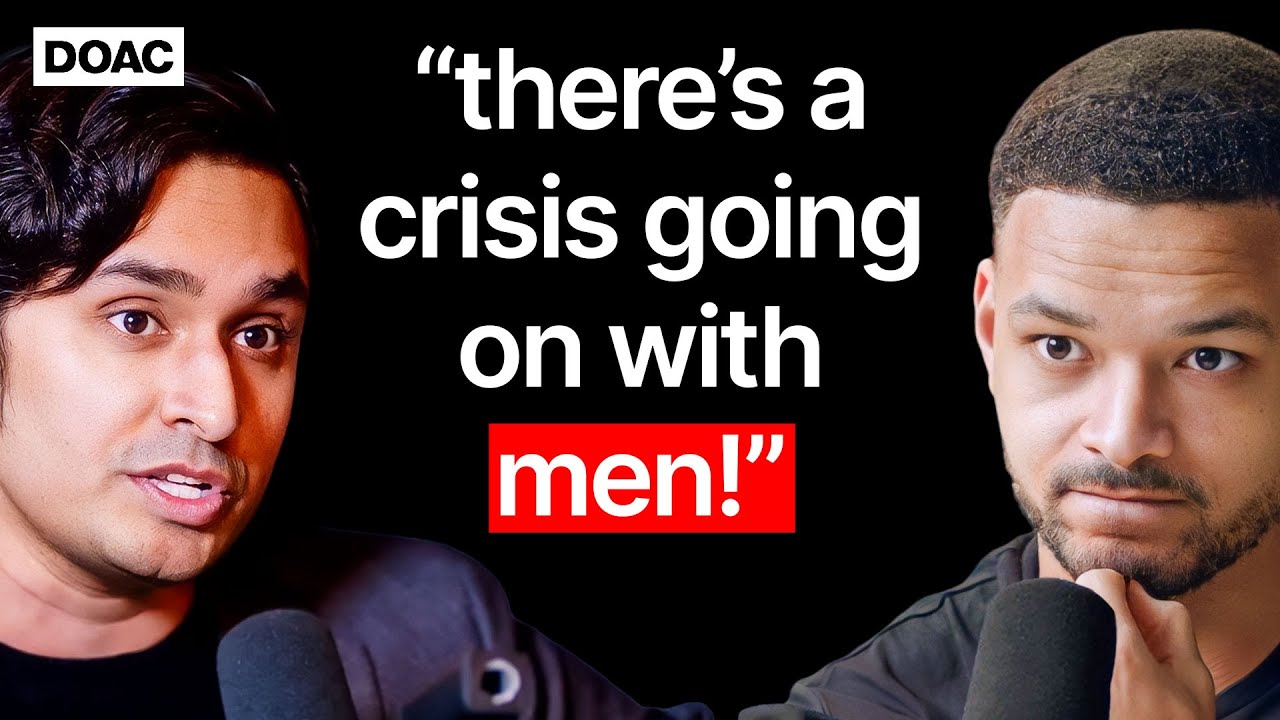
Dr K: "There Is A Crisis Going On With Men!", “We’ve Produced Millions Of Lonely, Addicted Males!” — The Diary Of A CEO

The Diary Of A CEO

Unaddressed isolation and social rejection rather than diagnosed mental illness drive the male suicide crisis, requiring introspection and direct community connection over external success or toxic online figures.

AI-assisted summary of Dr K: "There Is A Crisis Going On With Men!", “We’ve Produced Millions Of Lonely, Addicted Males!” — original source. Check the original for full context.

Source published:

Detailed notes

## Background This interview was published on YouTube by The Diary Of A CEO on March 7, 2024. According to the page description, psychiatrist and Healthy Gamer co-founder Dr. Alok Kanojia (Dr. K) discusses modern stressors facing young men, including social media, video game addiction, online dating, and male mental health.

## TL;DR Dr. Alok Kanojia explores the underlying drivers of the modern male mental health crisis, arguing that isolation, externalized attention, and societal dismissiveness push vulnerable men toward addiction and toxic online subcultures. He breaks down the neurobiology of addiction, the misuse of success as a coping mechanism, and the mechanics of meditation, advocating for internal introspection over external validation. Drawing on clinical experience and Eastern philosophy, he highlights how compassion, personal responsibility, tailored mindfulness techniques, and incremental goal-setting enable profound personal transformation.

## Atmosphere & style balances deep clinical authority with vulnerable personal reflection, moving seamlessly between raw candid anecdotes and grounded neuroscientific explanations. The host, Stephen Bartlett, maintains an empathetic, highly engaged presence, allowing Dr. K space to unpack complex psychological concepts with warmth, wit, and clarity. The conversation carries a contemplative yet urgent emotional arc, shifting from tragic systemic realities surrounding male isolation to empowering, practical strategies for healing and self-discovery.

## Key takeaways - [03:16](https://www.youtube.com/watch?v=B_5N_aDu3u0&t=196s) External achievements such as promotions, wealth, and status do not solve internal emotional pain or guarantee lasting happiness. - [17:34](https://www.youtube.com/watch?v=B_5N_aDu3u0&t=1054s) A major driver of male suicide is thwarted belongingness and isolation, with half of men who take their own lives having no prior diagnosed mental illness. - [21:04](https://www.youtube.com/watch?v=B_5N_aDu3u0&t=1264s) Men are often conditioned to suppress primary emotions like sadness and fear, leaving anger as their primary socially acceptable outlet. - [27:20](https://www.youtube.com/watch?v=B_5N_aDu3u0&t=1640s) Fringe or toxic online influencers gain traction among young men because they are among the few validating their pain and modern struggles. - [46:10](https://www.youtube.com/watch?v=B_5N_aDu3u0&t=2770s) Modern technological conveniences allow physical self-sufficiency, but the human mind still biologically requires deep interpersonal connection to stay healthy. - [41:11](https://www.youtube.com/watch?v=B_5N_aDu3u0&t=2471s) Social media weaponizes social comparison and feeds self-doubt, requiring strong internal introspection rather than total digital escape. - [56:06](https://www.youtube.com/watch?v=B_5N_aDu3u0&t=3366s) Meditation should be tailored to an individual's unique cognitive profile rather than forced through a single rigid practice. - [51:44](https://www.youtube.com/watch?v=B_5N_aDu3u0&t=3104s) True meditation consists of stages: regulating physical impulses (Dhāraṇā), achieving focused attention, and entering a spontaneous state of pure awareness (Dhyāna). - [01:06:40](https://www.youtube.com/watch?v=B_5N_aDu3u0&t=4000s) Relentless success obsession functions as a socially accepted addiction used to numb internal dissatisfaction and emotional discomfort. - [01:13:42](https://www.youtube.com/watch?v=B_5N_aDu3u0&t=4422s) Over-functioning for struggling loved ones can create learned helplessness; recovery requires individuals to take responsibility and have personal skin in the game. - [01:17:06](https://www.youtube.com/watch?v=B_5N_aDu3u0&t=4626s) Effective addiction interventions rely on compassionate dialogue and Motivational Interviewing to resolve internal ambivalence rather than forced programs or waiting for 'rock bottom'. - [01:18:37](https://www.youtube.com/watch?v=B_5N_aDu3u0&t=4717s) The 25% Rule breaks daunting long-term goals into smaller operational milestones to protect motivation and build momentum.

## Detailed walkthrough ### [00:00](https://www.youtube.com/watch?v=B_5N_aDu3u0&t=0s) Introduction: A Crisis in Men's Mental Health and Addiction

The episode opens with a stark, unsettling statistic: half of all men who take their own lives have no documented history or standard diagnostic evidence of mental illness. Dr. Alok Kanojia (known online as "Dr. K") emphasizes that the primary trigger driving men to suicide is often a failed attempt to connect with others—putting themselves out there only to be met with severe rejection. He speaks with palpable empathy regarding the immense loss and silent hurt experienced by young men across the world.

Dr. K—a Harvard Medical School instructor, psychiatrist, and former monk who used his own past battle with video game addiction to launch Healthy Gamer—explains that modern society has neglected men's unique struggles. While men face plummeting well-being, mainstream narratives frequently dismiss their pain under the banner of male privilege, calling traditional masculinity "toxic" and attributing aggressive behavior solely to elevated testosterone. This cultural void leaves men feeling unheard, creating fertile ground for fringe toxic figures to step in with promises of solutions. For many, this unaddressed pain drives substance use, technology dependence, and compulsive behaviors like screen-based pornography as temporary escapes.

[02:43](https://www.youtube.com/watch?v=B_5N_aDu3u0&t=163s) The Mind as the Ultimate Instrument

Podcast host Stephen Bartlett launches the conversation by asking Dr. K what he hopes listeners will take away from their discussion. Dr. K expresses his wish that people come to recognize themselves—their mind and body—as the core instrument of their lives. Mastering and understanding this internal instrument is the true key to accomplishing anything one desires, rather than endlessly seeking external validation.

[03:16](https://www.youtube.com/watch?v=B_5N_aDu3u0&t=196s) External Accomplishments Will Not Heal Internal Pain

When asked about the prevailing alternative to viewing oneself as the central instrument, Dr. K highlights the common misconception that external milestones can fix internal brokenness. Most people live under the illusion that a job promotion, the ideal romantic partner, or a specific net worth will automatically yield lasting happiness.

Dr. K admits that this subject is deeply personal because he lived that exact reality for years. Describing his early life as an "absolute failure" by standard metrics, he struggled through his twenties, failed out of college, and only finished his training around the age of 35 or 36. He spent years blaming external factors—unfair professors, biased circumstances, or women who supposedly couldn't see his inner worth—before realizing that his internal state was the root cause of his repeated failures.

[04:49](https://www.youtube.com/watch?v=B_5N_aDu3u0&t=289s) Moving Beyond the Illusion of Happiness Through Achievement

Tracing his journey from rock bottom to becoming a practicing physician, Dr. K reframes failure as the essential catalyst that set his transformation in motion. Following his college failure, he traveled to India to stay in an ashram for three months, an experience that fundamentally reshaped his worldview.

He reflects on how his original ambition—to attend Harvard and become a doctor as a typical high-achieving Indian youth—was largely driven by ego and the false belief that high marks equaled self-worth. In India, he realized that no amount of external achievement guarantees enduring happiness. In his clinical practice today with high-performing bankers, doctors, and content creators, he witnesses the exact same pattern: as soon as a goal is achieved, the mind instantly moves the goalposts. Paradoxically, once Dr. K relinquished his obsessive pursuit of grand achievements and focused instead on modest targets and inner discipline, true success followed naturally.

- At age 22, Dr. K attempted to renounce his worldly life and take monastic vows in India. - His spiritual teachers rejected his request, telling him: *"You have nothing worth giving up... go back to the United States, rise as high as you can... actually get something worth giving up, and then at the age of 30, if you still want to take vows, we'll take you."*

[07:25](https://www.youtube.com/watch?v=B_5N_aDu3u0&t=445s) Hitting Rock Bottom with Video Game Addiction

Dr. K candidly recounts the severe video game addiction that derailed his youth. Starting at a young age, his gaming habit progressively damaged his high school grades and completely overwhelmed his college years. He spent entire days playing games instead of attending classes, recalling one morning when he woke up on the day of his Spanish final, realized he was unprepared, turned off his alarm, and went back to sleep—effectively guaranteeing he would fail the course.

He describes the agonizing disconnect between his conscious goals and his behavior. Every morning he would promise himself that he would catch up on his studies, yet his brain continuously prioritized gaming. Living in a state of deep depression and occasional suicidality, he routinely gamed until absolute physical exhaustion. Passing out was his only defense against the crushing wave of self-loathing thoughts that hit the moment his head touched the pillow.

[09:20](https://www.youtube.com/watch?v=B_5N_aDu3u0&t=560s) Discovering a True Calling in Psychiatry

After returning from India to attend medical school, Dr. K initially intended to combine Eastern medicine with Western oncology to become a traditional cancer specialist. However, rotating through medical specialties revealed two crucial insights: his true passion lay in understanding the human mind, and the culture of hospital medicine felt increasingly sterile, leaving doctors glued to computer screens for eight hours a day with minimal patient interaction.

Crucially, Dr. K realized that mental health is the sole field of medicine where outcomes are consistently worsening despite massive scientific advances. While modern surgical techniques can successfully transplant hearts, kidneys, and livers, rates of depression, addiction, and suicide continue to climb globally. Driven by a sense of *dharma* (duty) rather than personal ambition, he decided to channel his unique 15-year background—combining seven years of summer monastic training with a Harvard medical education—toward solving this systemic mental health crisis. Instead of running a lucrative private practice catering exclusively to corporate executives, he chose to focus on underserved young men on the fringes of society, including so-called "incels" and gaming addicts.

[12:45](https://www.youtube.com/watch?v=B_5N_aDu3u0&t=765s) The Spectrum of Disconnection and What It Means to Be a Man

Dr. K outlines the broad array of people he has treated in one-on-one clinical settings, spanning high-performing entrepreneurs and founders from MIT incubators to unemployed 25-year-olds living in their parents' basements playing video games or experiencing homelessness. Bartlett asks whether the current societal confusion surrounding male identity, coupled with the digital world's endless distractions, is driving the sharp rise in male suicide—noting that suicide remains the leading cause of death for men under 45 in parts of Europe.

Dr. K confirms that a severe crisis is unfolding among men, though he notes it is not entirely new. Historically, men have comprised approximately 80% of suicides for decades without sufficient public attention. What has changed is how modern technology compounds the problem by constantly externalizing human attention. Centuries ago, after an intense event—such as a hunting trip where one person succeeded and another missed—men had hours of silent downtime to process negative feelings and ego hits naturally. In contrast, modern life leaves zero room for emotional processing. Dr. K shares his own past experience of being "idiotically efficient," filling every spare second—exercising, cooking, or walking—with podcasts, lectures, and digital audio, leaving his mind no space to process underlying emotional friction.

[15:54](https://www.youtube.com/watch?v=B_5N_aDu3u0&t=954s) Externalizing Attention and the Loss of Self

Dr. K explains how modern constant stimulation—such as listening to news or podcasts while showering—prevents people from directing their attention inward. Because the mind is an efficient organ that operates on a "use it or lose it" principle, failing to pay attention to internal signals causes self-awareness to atrophy, akin to a child raised in a dark cave whose photoreceptors fail to develop.

When men lose touch with their internal sense of identity, they look outward to figure out who they are supposed to be. This leads to confusion due to contradictory societal messaging: men are simultaneously told to be fit providers, to pursue many sexual partners or strictly stay faithful, and that their masculinity or testosterone makes them toxic, privileged, or inherently part of a harmful patriarchy.

* Any capability or internal signal the mind does not access will eventually atrophy. * Contradictory external messaging creates deep confusion for men seeking direction outside themselves.

---

[17:34](https://www.youtube.com/watch?v=B_5N_aDu3u0&t=1054s) Male Suffering, Thwarted Belongingness, and Suicide

Dr. K highlights that men in modern society are rarely allowed to express suffering. When a successful or privileged man complains, he is often viewed as arrogant or told he has no right to feel bad. He compares this dynamic to a child raised in an abusive household whose expressions of pain are met with anger and invalidation from parents. Over time, being unable to articulate suffering creates profound isolation.

Addressing male suicide, Dr. K notes that 80% of suicides are men, making self-harm the leading cause of death for men under 45. Citing clinical experience and research, he points out that 50% of men who commit suicide have no prior history or diagnosis of mental illness. Rather than a mind "malfunctioning" or experiencing pathology, many suicidal men view their life circumstances objectively and see no viable way out. The strongest statistical predictor of male suicide is not depression, but **thwarted belongingness**—a specific psychological state where repeated attempts to connect or join a community are met with rejection.

> "Anytime you have a human being who is suffering in some way and they cannot find connection... that person is going to feel isolated."

> "50% of men who kill themselves have no history or evidence of mental illness... Their mind isn't malfunctioning; they genuinely have a life that is no longer worth living."

* **80%** of all suicides are committed by men. * Suicide is the leading cause of death for men under the age of **45**. * **50%** of men who die by suicide show no clinical evidence or history of mental illness. * **Thwarted belongingness**—the experience of attempting to join a group or community and being rejected—is the primary driver correlating with male suicidality.

---

[21:04](https://www.youtube.com/watch?v=B_5N_aDu3u0&t=1264s) Emotional Conditioning: The Suppression of Everything Except Anger

While society claims men should be more emotional, Dr. K emphasizes that society only tolerates certain emotions like sadness or crying, while strictly demonizing anger. In relationships, if a woman expresses sadness through tears and a man expresses anger by shouting, the man is instantly framed as the villain. Host Stephen Bartlett highlights a viral search engine experiment illustrating this asymmetry: searching "my husband is yelling at me" yields domestic violence helpline popups, whereas searching "my wife is yelling at me" displays standard search results.

Dr. K explains that men are conditioned from childhood to suppress all primary emotions—fear, shame, sadness, and grief—and filter them through anger. For instance, a bullied child learns quickly that crying leads to further victimization, leaving physical resistance or anger as the only viable defense. As a result, anger functions as an "umbrella emotion." When men experience a breakup or hardship, they default to anger and vent on the internet, which frequently devolves into misogyny.

``` [ Primary Emotions ] (Fear / Sadness / Shame / Grief) │ ▼ [ Social Conditioning ] │ ▼ [ Umbrella Emotion ] (Anger) │ ▼ [ Expression / Outbursts ] (Aggression / Misogyny) ```

---

[24:57](https://www.youtube.com/watch?v=B_5N_aDu3u0&t=1497s) The Evolutionary Nature of Anger and Defensive Aggression

Responding to a quote suggesting that "the source of aggression is insecurity," Dr. K offers an evolutionary distinction. While he agrees that insecure men often express their feelings through anger, he disagrees that all anger stems from insecurity. In nature, defensive anger serves a clear biological purpose: protecting territory, offspring, or physical integrity.

Biologically, anger alters perception and physiology to prepare an individual for conflict: * **Accelerated cognitive processing:** Thoughts speed up to react quickly to threats. * **Tunnel vision:** Peripheral vision collapses down to approximately **30 degrees** to maintain focus on the immediate threat. * **Pain suppression:** Nociceptors (pain receptors) are temporarily suppressed so physical injuries do not hinder defense during the fight.

Because men are taught that standing up for themselves with aggression is the only way to resolve challenges, insecure or ashamed men default to confrontation to re-establish control.

---

[27:22](https://www.youtube.com/watch?v=B_5N_aDu3u0&t=1642s) Introspection vs. Toxic Masculinity Influencers

When asked about remedies, Dr. K clarifies that the solution is not merely "self-expression," but deep **introspection**. Most men derive 90% of their definition of manhood from external sources rather than internal reflection. True motivation, duty, and moral clarity come from looking within rather than chasing external markers dictated by social media.

Stephen Bartlett brings up the rise of internet influencers who promote extreme wealth, sports cars, and multiple women as the definition of manhood. Dr. K notes that the broad hostility toward these figures actually fuels their growth. When mainstream society tells struggling men that they are privileged, toxic, or need to "shut up," these influencers are often the only voices that acknowledge their pain. Even if harsh or demanding, these influencers validate the young man's reality by agreeing that his life is tough and offering a path forward.

> "There is one group of people on the planet who says, 'Yes, your life does suck,' and that's these toxic masculine people. They're the only people that truly validate men's experiences."

[30:57](https://www.youtube.com/watch?v=B_5N_aDu3u0&t=1857s) Understanding the Root of Toxic Male Online Influences

Dr. Alok Kanojia explains that men drawn to figures promoting toxic masculinity are often seeking a place that validates their struggles—something mainstream society frequently denies them. Drawing a parallel to his medical background, Dr. K recalls patients experiencing severe pain from undetected internal bleeding who were repeatedly dismissed by doctors, noting that ignoring someone's suffering inevitably leads to severe consequences. Similarly, society has ignored the challenges facing men, leaving online figures as the only group welcoming them with open arms. When parents or partners post online asking how to stop a son or boyfriend from consuming toxic content, Dr. K advises against immediate suppression or banning devices, emphasizing that one must first seek to understand why these figures resonate.

To reach young men trapped in these cycles, guardians and society must offer an alternate space where they feel heard and understood rather than reflexively judged. Judgment creates immediate mental closure, and the label "toxic" itself functions as a harsh condemnation. Reflecting on his clinical experience with adolescents—including an extreme case of a boy smearing feces on school walls—Dr. K notes that punitive measures fail because no one asks what trauma drives the behavior. In his professional practice, 100% of individuals who follow incel ideology or toxic masculinity started down that path after being deeply hurt, taken advantage of, or neglected. While they hold personal responsibility, men raised with genuine love, connection, and compassion rarely fall down these rabbit holes.

- **The Dating & Socioeconomic Gap**: Men face crushing expectations, such as data indicating that 70% to 80% of women prefer a male partner who earns more than they do, even though 60% of modern college graduates are women. - **Systemic Trauma**: Dr. K emphasizes that 100% of the toxically masculine men or incels he has treated clinically began their journey due to underlying trauma or perceived unfair sacrifices.

---

[34:52](https://www.youtube.com/watch?v=B_5N_aDu3u0&t=2092s) Safe Havens, Double Standards, and Individual Responsibility

Discussing the hypocrisy in public perception, Dr. K shares his experience working as a psychiatrist in a prison for three months. When people learn he treated incarcerated individuals—including convicted rapists and pedophiles—they praise his immense compassion. Yet, when he attempts to engage with and support toxically masculine young men online to prevent further harm, critics accuse him of "giving them a platform." He argues that demonizing these individuals fails to solve the crisis. While society sometimes requires boundaries or firm consequences, true progress requires offering safe havens for hurting individuals before their behavior escalates.

Addressing the broader male mental health crisis, Dr. K stresses that society cannot rely on abstract institutions or governments to fix fundamental issues like loneliness, touch starvation, and high suicide rates. The core challenge for men is that they are conditioned to be completely self-reliant and solve their own problems. Men have successfully addressed issues they can fix independently, leaving behind problems that inherently require other human beings—such as connection, intimacy, and physical affection. Because one cannot give themselves a hug, solving male isolation requires individuals within the community to step up and actively extend connection to the men in their lives.

* "Unless we are willing to be what these people need, they're going to continue going down the toxic masculinity route." * "You need another human being to hug you—like, you can't hug yourself. It just doesn't work."

---

[39:17](https://www.youtube.com/watch?v=B_5N_aDu3u0&t=2357s) Rising Female Suicidality and Shared Technological Struggles

Addressing gender disparities in mental health, Dr. K highlights a concerning shift: while historically distinct issues separated male and female mental health, rates are increasingly converging in harmful ways. Young women represent the fastest-growing demographic for suicide rates, while male body dysmorphia and female addiction rates are escalating sharply. Rather than a zero-sum pendulum where one gender suffers at the expense of another, both men and women are facing catastrophic mental health crises simultaneously due to shared technological and societal pressures.

The modern daily experience of men and women has aligned closely—both struggle with demanding workplaces, toxic dating dynamics on platforms like Tinder, and pervasive digital influences. Dr. K points out that biases exist against both sexes within psychiatry and broader society, and acknowledging the crisis among men does not minimize the severe struggles women face.

- **Fastest-Growing Suicide Demographic**: Young women are currently experiencing the steepest increase in suicidality. - **Converging Gender Disparities**: Discrepancies in mental health issues are shrinking, marked by rising male body dysmorphia and increasing female addiction rates.

---

[41:11](https://www.youtube.com/watch?v=B_5N_aDu3u0&t=2471s) The Role of Social Media, Ego, and Internal Fortitude

Comparing social media to an invasive species without natural checks and balances, Dr. K explains that digital platforms outgun the human brain by weaponizing social comparison and distorting reality. Constant exposure to curated, highly attractive faces recalibrates the brain's baseline for normality, leading directly to body dysmorphia and deep insecurity. Similarly, social media feeds generate severe Fear Of Missing Out (FOMO); seeing a different person attend a birthday party every day tricks the mind into believing that everyone else is living a continuous celebration while the individual is left out.

To counteract these harmful psychological mechanisms, Dr. K points to the yogic concept of *Ahamkara* (the ego). Social media operates by constantly amplifying the ego through comparison. Through meditative and yogic practices, individuals can learn to dissolve the ego, rendering themselves far more resilient to digital manipulation. While admitting that fully dissolving the ego is an impossible lifelong pursuit—and joking that claiming complete success would itself be an egotistical statement—Dr. K maintains that internal introspection remains the ultimate tool for achieving peace in the digital age.

* "Every time I log on, everyone is having a blast. But this is 365 people who each have one birthday party... When we see it, we see everyone's having fun and I'm not having fun." * "We don't need to run away from technology; we just need to get better at dealing with it."

---

[44:42](https://www.youtube.com/watch?v=B_5N_aDu3u0&t=2682s) Navigating the Digital Future Without Escapism

When asked if the rise of virtual reality, augmented reality (such as the Apple Vision Pro), rising sexlessness, and declining marriage rates mean people should abandon Western society to become reclusive gurus, Dr. K firmly rejects radical escape. Drawing from his book *How to Raise a Healthy Gamer*, he argues that technology and video games are not inherently evil; humanity has simply created "fire" for the first time without yet learning how to control it.

Rather than fleeing from advancing tech, society must adapt through a combination of thoughtful regulation and individual training of the self. By building internal awareness and developing healthy boundaries, individuals can harness digital tools without succumbing to addiction or social alienation.

[046:10] The Decay of Human Relationships & Modern Independence

Dr. Alok Kanojia explains that human relationships are currently decaying because the fundamental evolutionary driver behind them has vanished. Historically, human beings were bound together by mutual necessity— survival required interdependence. Today, technology and modern infrastructure allow people to live completely self-sufficiently without ever leaving their homes. Women no longer depend on men for financial survival, and men no longer depend on women for companionship or basic needs, relying instead on conveniences like food delivery, porn, Fleshlights, or AI girlfriends.

However, Dr. K highlights a critical biological irony: while organs like the heart, liver, or kidneys can remain perfectly healthy in isolation, the human mind uniquely requires connection with another human being to stay healthy. Because we no longer need each other to survive, society must deliberately evolve. We have to consciously prioritize deep human relationships and adopt practices like yoga and meditation to resist the isolating influences of modern technology.

* "Human relationships evolutionarily were predicated on the fact that humans needed each other for survival... what's happening in the world today is we no longer need each other." * "The human mind is the only organ of the body that in order for it to be healthy, it requires another human being."

---

[047:53] Teaching Self-Control to Children: Games and "Trataka"

When asked whether yogic and meditation skills should be taught in schools, Dr. K answers with an enthusiastic "100%." He notes that children pick up these practices far faster than adults because their minds are still flexible and unformed, much like learning a second language. He shares that he taught his own children to meditate starting as early as age two, beginning with basic impulse control.

Dr. K breaks down how he introduces these concepts to young children through gamification, such as a game called "Sniffer Gobbler." He plays a monster attempting to make his four-year-old daughter move or laugh while she stays completely still. On a neurological level, as he tickles her, her body sends signals to move, but her prefrontal cortex is trained to suppress that impulse.

For adults, Dr. K recommends a foundational practice called *trataka* (fixed-point gazing) to build mental discipline:

* **Trataka Practice:** Gazing continuously at a candle flame without blinking. * **Initial Reaction:** After about 10 seconds, the brain generates strong impulses to blink as the eyes burn and water. * **Neurological Benefit:** Overcoming the urge to blink acts like "lifting weights for self-control," strengthening the frontal lobes. * **Real-World Application:** Building this prefrontal strength directly improves impulse control in daily life, such as resisting late-night food cravings.

---

[050:50] The Two Steps Before Meditation: Impulse Control and Single-Point Focus

Dr. K outlines the two foundational stages required before a person is actually ready for true meditation:

1. **Restraining Impulses:** Learning to ignore bodily urges and mental distractions so the mind stops wandering in a thousand directions. 2. **Single-Pointed Focus:** Directing the mind to stay anchored on one specific sensory object or task.

To demonstrate the second step, Dr. K describes how he has his daughter chant "Om" while focusing entirely on maximizing the physical feeling of vibration in her chest. By attuning her mind strictly to that physical sensation, she trains her attention to stay fixed on a single point without drifting.

---

[051:44] What Meditation Actually Is: Dhāraṇā, Dhyāna, and Samādhi

Dr. K clarifies a major societal misunderstanding: people confuse focusing techniques with meditation itself. In English, the word "meditation" collapses three distinct Sanskrit terms into one concept:

``` +-----------------------------------------------+ | 1. Dhāraṇā (Focusing Technique / Action) | +-----------------------------------------------+ │ ▼ +-----------------------------------------------+ | 2. Dhyāna (State of Pure Awareness / No-Mind) | +-----------------------------------------------+ │ ▼ +-----------------------------------------------+ | 3. Samādhi (Transcendental / Absorbed State) | +-----------------------------------------------+ ```

* **Dhāraṇā:** A focusing action or technique you *do* (e.g., staring at a candle flame or focusing on a sound). * **Dhyāna:** A state of consciousness that *happens to you* once the mind settles—a state of pure, alert awareness devoid of active thoughts or emotions. * **Samādhi:** Advanced transcendental states of deep spiritual absorption and transformation, similar to experiences induced by psychedelics.

To illustrate the difference between an action and a state of consciousness, Dr. K asks host Stephen Bartlett if he can explain *how* to sleep. Stephen describes getting into a cold bed, putting on a blanket, closing his eyes, and hoping for the best—highlighting that going to bed is an action you perform, but sleep is a state that occurs naturally when the conditions are right. Similarly, *dhāraṇā* creates the conditions, while *dhyāna* is the resulting state.

* "Going to bed is something that you do, and then sleep happens to you. This is the biggest misunderstanding about meditation—everyone's focused on meditation techniques." * "Dhyāna is a state of consciousness... you have awareness, but you have no thoughts, no emotions." * Common everyday glimpses of a thoughtless, fully present state include the exact moment of sexual orgasm, or looking at a sunset on a beach.

---

[054:53] How Meditation Transformed Dr. K's Life

Reflecting on his personal journey, Dr. K credits meditation with fundamentally altering the trajectory of his life. At age 25, he was struggling and failing out of college with nothing to show for his efforts. Today, he is a Harvard-trained psychiatrist, entrepreneur, clinical practitioner, author, father, and popular content creator.

He emphasizes that his underlying character did not change; rather, meditation gave him the ability to control his mind and body effectively. He uses a gaming metaphor to explain the shift: living without mental discipline is like playing a video game with an unplugged controller where the character moves randomly despite your inputs. Meditation is the process of plugging that controller back in, giving you direct control over your desires, ego, and actions.

* "It's like when you're living life, it's like you're playing a video game and the controller is unplugged... What meditation is, is the process of plugging in your controller." * Terms like "loser" or "successful" are merely external trappings and manifestations of the ego.

---

[056:06] Matching Meditation to Your "Cognitive Fingerprint"

When Stephen brings up the common frustration—*"I tried meditating and it didn't work because my brain is too busy"*—Dr. K reassures that the fault lies with poor instruction, not the individual. The quality of meditation teaching has degraded, leaving people relying on basic apps or brief podcast descriptions where they sit in a room, close their eyes, and try to think of nothing.

Dr. K points out that there are **112 distinct meditation techniques** in classical traditions. Because every person possesses a unique "cognitive fingerprint," success depends entirely on choosing a technique suited to their specific mind rather than forcing a one-size-fits-all approach.

``` Traditional Approach ADHD-Friendly Technique ┌──────────────────────────────┐ ┌──────────────────────────────┐ │ Try to force a busy mind │ │ Intentionally speed up │ │ to sit still and be quiet │ │ sensory processing │ └──────────────┬───────────────┘ └──────────────┬───────────────┘ │ │ ▼ ▼ ┌──────────────────────────────┐ ┌──────────────────────────────┐ │ Results in frustration, │ │ Mind grows tired and │ │ resistance, and quitting │ │ naturally settles into Dhyāna│ └──────────────────────────────┘ └──────────────────────────────┘ ```

#### Tailoring Meditation for ADHD When working with ADHD patients who struggle to sit quietly, Dr. K avoids forcing them to slow down. Instead, he applies the principle of letting a hyperactive child run around a playground until tired:

* He takes the patient to a noisy cafeteria. * He instructs them to listen to as many distinct background sounds as quickly as possible (e.g., target 10 distinct sounds in 3 seconds). * By forcing the mind to run at maximum speed, it rapidly tires itself out and naturally settles into a calm, meditative state (*dhyāna*).

Dr. K draws an analogy to physical exercise: if someone who cannot float were told that swimming is the *only* form of exercise, they would incorrectly conclude that exercise isn't for them. In the same way, people assume meditation doesn't work simply because they haven't found the specific style that fits their mind.

[01:01:14](https://www.youtube.com/watch?v=B_5N_aDu3u0&t=3674s) How Meditation Recovers Brain Circuits Hijacked by Addiction

Addressing how meditation breaks the cycle of compulsive habits, Dr. Alok Kanojia framing gaming and other addictions through a unified neurobiological model. An addiction fundamentally serves two functions: it operates as a source of pleasure and an antidote to pain. Whether dealing with opiates or video games, the underlying brain mechanics are strikingly similar. While opiates shut down the amygdala and limbic system while sparking dopamine release, video games similarly suppress negative emotional circuitry while delivering dopamine surges. Over time, individuals become dependent on these dopamine spikes, finding themselves unable to control the impulse whenever the mind demands gratification.

``` +-------------------------------------------------------------------+ | THE DUAL MECHANISM | | | | 1. Dopamine Surge (Pleasure) ---> Drives compulsive wanting | | 2. Limbic Suppression (Pain) ---> Numbs negative emotions | +-------------------------------------------------------------------+ ```

Meditation serves as direct strength training for the very brain structures vulnerable to addiction. From a neuroscience standpoint, meditation strengthens the frontal lobes, reinforcing the cognitive "brakes" needed to resist impulses—such as sitting with the urge to scratch an itch without acting on it. Simultaneously, it transforms an individual's relationship with emotional pain. Rather than running away from discomfort, meditation fosters acceptance. Dr. K illustrates this using his own book release: publishing a book opens him up to potential success or failure. If it fails, he will feel sad, but avoiding that potential sadness by never writing the book is no way to live.

As an addiction psychiatrist treating patients dependent on everything from fentanyl and heroin to video games, food, pornography, and social media, Dr. K finds that teaching emotional tolerance allows the brain to heal without needing external numbing agents.

* **Core Neurobiology**: All addictions function by simultaneously firing dopamine reward centers and dampening negative emotional circuitry in the amygdala and limbic system. * **Frontal Lobe Conditioning**: Weak frontal lobes create fertile ground for addictions; meditation systematically strengthens executive control regions to resist impulse cravings. * **The Karma of Risk**: Engaging in meaningful life pursuits inherently accepts a dual outcome—opening oneself up to potential pleasure also requires accepting the risk of pain and disappointment.

---

[01:04:00](https://www.youtube.com/watch?v=B_5N_aDu3u0&t=3840s) The Traps of Success, Ambition, and Pornography Addiction

When asked to identify the most pervasive unrecognized addiction in modern society, Dr. K highlights society's obsession with success. While smartphone addiction ranks at the top of psychiatric technology concerns, the relentless chase for external success functions as a widespread culturally sanctioned addiction. People compulsively pursue achievement as an antidote to internal pain and a source of fleeting validation.

This leads to a critical distinction between ambition and purpose—concepts that are often confused. Ambition and purpose lie on opposite ends of the spectrum. A lack of purpose often manifests as feeling lost or stuck, where an empty life drives the brain to seek quick dopamine hits.

``` [ Empty / Meaningless Life ] │ ▼ [ Negative Emotions / Stress ] │ ▼ [ Pornography (Suppresses Amygdala) ] │ ▼ [ Shame & Low Self-Worth ] ──┐ ▲ │ └────────────────┘ (Downward Spiral) ```

In clinical research, life meaninglessness ranks as one of the strongest correlates with pornography addiction. Pornography usage is rarely just about pleasure or sexual desire; rather, it primarily acts as a coping mechanism to avoid negative emotions. The higher a person's emotional distress, the more compulsively they engage with pornography to turn off an overactive limbic system. Dr. K notes it is remarkably common for clients experiencing intense workplace stress to keep pornography playing on a second monitor while working, simply to numb real-time anxiety.

* **Pornography as Emotional Numbing**: Watching pornography shuts down negative emotional processing; masturbation provides the dopamine hit, but the viewing itself serves to mute stress and anxiety. * **The Shame Cycle**: A severe downward spiral forms when addiction creates deep personal shame, which the individual then attempts to soothe by returning to the addiction. * **The Upward Spiral**: Breaking the addiction involves expressing and "venting" shame in a therapeutic space, metabolizing underlying trauma, and learning alternate emotional regulation skills.

---

[01:10:20](https://www.youtube.com/watch?v=B_5N_aDu3u0&t=4220s) Case Study: Rebuilding a Life After Opiate Addiction

Demonstrating that dramatic personal transformation is possible even after years of severe dysfunction, Dr. K shares a generalized case study from his clinical practice. He treated a client who fell into opiate addiction during their teenage years, spending over a decade caught in the grip of substance abuse and lost potential.

Through steady therapeutic work over four years, the individual systematically processed underlying emotional distress and turned their life around. At age 32, they returned to school, pursued their lifelong passion for writing, published a book that became a major bestseller by age 36, and established a successful dual career.

> "In the four years that we worked together, they got to writing, which is what they always wanted to do, published a book... and the book was very, very successful."

---

[01:11:09](https://www.youtube.com/watch?v=B_5N_aDu3u0&t=4269s) Navigating the First Conversation and the Myth of "Rock Bottom"

When initiating a conversation with someone struggling with an addiction or destructive life path, the approach must be entirely non-judgmental and grounded in curiosity. A foundational truth of addiction treatment is that "you can't cure an addiction for someone else." Forcing people into 30-day rehabilitation programs against their will rarely yields lasting results because genuine change requires internal motivation. When opening a conversation, one must enter with compassion and acknowledge that if a person continues a behavior, their brain currently perceives more benefit than harm from it.

``` [ DEBUNKING "ROCK BOTTOM" ]

Traditional View: Linear Decline ───────────────► Rock Bottom ──► Recovery

Clinical Reality: Level 1 ──► Level 2 ──► Level 3 (Jackhammer) ──► Rebound Point ```

Dr. K challenges the popular notion of "rock bottom" as a fixed, mandatory threshold for change. Quoting one of his patients, he explains: "When you hit rock bottom, you can always pull out a jackhammer and break down to the next level." There is no absolute bottom; there is simply the lowest point a person reaches before choosing to turn around.

* **Empathy in Dialogue**: To connect with someone engaging in self-destructive behavior, ask open-minded questions like, *"Help me understand what is going on in your life,"* rather than offering judgment. * **Internal Motivation**: Long-term recovery cannot be imposed from the outside; the individual must personally decide that the cost of their addiction outweighs its comfort. * **The "Jackhammer" Concept**: Waiting for a loved one to hit a theoretical "rock bottom" can be dangerous, as life circumstances can almost always worsen if the underlying drivers remain unaddressed.

---

[01:13:42](https://www.youtube.com/watch?v=B_5N_aDu3u0&t=4422s) The Extra Mile Rule: Why Over-Helping Creates Helplessness

Well-meaning bystanders often enable self-sabotage by stepping in to fix problems for struggling loved ones—paying for their therapy, covering gym memberships, or managing their responsibilities. Dr. K recalls a formative lesson from a mentor at Massachusetts General Hospital: "The extra mile is a mile too far." As a general principle, anything a person can do for themselves should not be done for them by others, as over-functioning on their behalf instills learned helplessness.

Dr. K illustrates this principle with the case of a patient who was diagnosed with perinatal HIV exposure as an infant during the early days of the epidemic. Because caregivers and institutions felt deep sympathy for the child's tragic circumstances, they repeatedly excused poor behavior, waived deadlines, and handled tasks on the child's behalf throughout their upbringing.

By the time the patient reached their late 20s, they were remarkably incapable of navigating basic adult tasks—such as filling out a simple application—without relying on nursing staff to sit beside them and complete it. By constantly intervening out of compassion, well-intentioned adults had stripped the individual of self-efficacy and independence.

> "Anything that someone can do for themselves, you should not do for them... what we had done is engendered some degree of helplessness."

### [01:15:41](https://www.youtube.com/watch?v=B_5N_aDu3u0&t=4541s) Letting Go of Over-Protection and Enabling Dr. K explains that the single biggest mistake parents and loved ones make when dealing with someone struggling with addiction is accepting responsibility for them. Driven by love and a desperate desire to protect them from the consequences of their choices, family members step up and do more. However, the dynamics of human behavior dictate that the moment you do more, the addicted individual will start doing less. Dr. K illustrates this with a simple analogy of a shared apartment: if you continuously wash the dirty dishes in the sink, your roommate will naturally stop taking responsibility for them.

The same principle applies to addiction, mental health, and therapy. Out of intense fear—worrying that a child will ruin their life if they aren't forced into treatment—parents rush in to arrange and pay for everything. Dr. K urges a fundamental shift in strategy: let the individual face the choice and come to you to ask for help. When someone actively asks for assistance—saying they want to conquer their issue and need financial help for a specific therapist—the long-term outcomes improve drastically.

To illustrate the importance of having "skin in the game," Dr. K shares an observation from his own psychiatric practice. At one point in his career, 70% of his practice was provided for free to give patients a break. Counterintuitively, he discovered that patients who received free care had the highest rate of no-shows. Conversely, those who paid for his services out of their own pockets consistently showed up and engaged in the work.

- **Key Takeaway on Responsibility:** Protecting someone from negative consequences removes their drive to change. - **The Free Therapy Paradox:** Patients receiving free psychiatric sessions had higher no-show rates compared to those paying full price with personal skin in the game.

---

### [01:17:06](https://www.youtube.com/watch?v=B_5N_aDu3u0&t=4626s) Motivational Interviewing and Ambivalence When starting a conversation with someone facing an addiction or behavioral issue—whether it's gaming, phone use, or substance abuse—Dr. K recommends opening with curiosity rather than judgment. Ask open-ended questions like, "Tell me how you feel about your gaming?" or "Help me understand what's going on with your life." Every person dealing with an addiction experiences internal conflict, or *ambivalence*: a part of them wants to change, and a part of them resists change.

The trap most loved ones fall into is overreacting to any spark of desire for change. When a person hints at getting better, friends or family jump in enthusiastically ("Yay, let's do it!"), which instantly triggers the person's internal counter-argument and resistance. Dr. K demonstrates this through a roleplay with Stephen: if someone says they are thinking about going to the gym and you eagerly push them to come along, their immediate reaction is to pull back. As a psychiatrist, Dr. K does the exact opposite—he gently pushes back in the other direction, saying, "You're thinking about going, but do you really need to?"

This counter-intuitive approach relies on a clinical technique known as **Motivational Interviewing**. Science shows that when you push someone experiencing ambivalence toward one side, they naturally defend and move toward the opposite side. Loved ones must let the individual take the lead so that the drive to change originates from their own internal motivation. While encouragement is vital when they make positive moves, pushing them strips away their agency; ultimately, the choice must remain entirely theirs.

- **Definition of Ambivalence:** The internal tug-of-war between wanting to change a behavior and wanting to keep it. - **Clinical Technique:** Motivational Interviewing leverages gentle pushback or neutral reflection to encourage the patient to argue for their own positive change.

---

### [01:18:37](https://www.youtube.com/watch?v=B_5N_aDu3u0&t=4717s) The 25% Rule for Goal Setting When host Stephen Bartlett asks about the "25% Rule," Dr. K breaks down how human motivational circuitry works and why traditional goal setting often backfires. When an individual sets a massive goal—such as becoming a millionaire—and puts in effort that yields a small reward (like earning $10 today), the brain compares the outcome against the ambitious target. Recognizing how far away the goal remains, the brain interprets the small win as negligible, which tanks motivation. The grander and more ambitious the goal, the harder it is for the brain's neurobiology to stay engaged.

To bypass this hurdle, Dr. K introduces the 25% Rule: take any goal you want to achieve, cut it in half, and then cut it in half again. That 25% target—or even smaller, like 12.5%—should be your initial baseline. Ambitious long-term dreams are achievable only if they aren't the primary operational goal in your day-to-day mind. Reflecting on his youth, Dr. K shares that when he was 18, he desperately wanted to go to Harvard and become a doctor. He only began making genuine progress when he stopped obsessing over the distant outcome and focused strictly on the task directly in front of him. Getting to the top of Mount Everest requires the exact same physical action whether you are staring at the peak or looking down at your feet: taking one step at a time.

Stephen validates this concept by sharing an anecdote about Sir Dave Brailsford, former Performance Director of Team Sky (and British Cycling). Brailsford famously banned his cyclists from focusing on podium finishes or winning gold medals, forcing them to concentrate entirely on their daily training and pedal strokes. That shift transformed them into one of the most dominant cycling teams in history. Stephen notes how uncomfortable traditional five- or ten-year corporate plans feel, as setting overly distant targets can trick people into wasting today under the illusion that there is endless time remaining.

- **The 25% Formula:** Divide your primary goal by two, and divide it by two again; make that reduced target your initial milestone. - **Neuroscience of Motivation:** Small wins measured against massive targets trigger disappointment, whereas small wins measured against modest targets build momentum. - **Team Sky Example:** Sir Dave Brailsford banned athletes from thinking about medals, directing 100% of their focus toward daily execution.

---

### [01:22:57](https://www.youtube.com/watch?v=B_5N_aDu3u0&t=4977s) A One-Page Message to the World and 20 Sutras Transitioning to the podcast's signature closing tradition—where the previous guest leaves a mystery question for the next—Stephen asks Dr. K: *"If you could write one more book and that book was one page long, and it was the last message that you could send to the world and your family, what would you use that page to say?"*

Dr. K pauses to reflect on his primary life objective: helping people at scale. He admits his single greatest potential regret if he died tomorrow would be failing to pass down to his own children the core truths he teaches the rest of the world. If given a diagnosis of a terminal illness with a year to live, he would spend that time writing a short text for his kids that distills neuroscience, spirituality, and psychology into unified principles. Given a strict constraint of roughly 16 to 20 lines on a single page, he would write 20 core *sutras* (aphorisms).

Probed by Stephen on what those specific lines would cover, Dr. K outlines several core ancient concepts: * **The Ego:** Understanding the ego as the component of the mind that constantly compares the self to others. * **Introspection:** Recognizing that self-knowledge frees you from external expectations, preventing the outside world from dictating your identity. * **Klesha (Coloring):** Realizing that most emotional suffering does not stem from external events, but from the subjective filter and interpretation the mind projects onto those events. * **Vasana (Latent Tendencies):** Understanding the origin of human desires, internal drives, and how to achieve genuine, lasting happiness without endlessly chasing external achievements.

To illustrate *klesha*, Dr. K offers two concrete examples. If a stranger calls you a "loser," the raw input consists merely of sound waves and words; whether it causes deep pain depends entirely on your mind's internal interpretation. Similarly, if you text someone you are dating and they don't reply within 10 minutes, there are a thousand neutral reasons for the delay—yet the mind fabricates catastrophic stories that cause immediate anxiety.

> "Once you start to know yourself, you won't look to the outside world to tell you who you should be. And as long as you're listening to the outside world to tell you who you should be, you'll never be happy because they keep changing."

- **The 20 Sutras:** A condensed framework covering ego, introspection, desire, and mental coloring. - **Klesha Example:** Emotional pain from a late text message or an insult is generated by the mind's subjective coloring, not the event itself.

---

### [01:26:30](https://www.youtube.com/watch?v=B_5N_aDu3u0&t=5190s) A Last Message to His Children and Past-Life Memories When Stephen asks what the final paragraph written specifically to his two children would say, Dr. K becomes visibly emotional. After a long pause, he reveals his exact words: *"I'm sorry I have to go, and I wish I had more time with you... I love you... I may be gone in this body, but I'll be around, and we'll meet again."*

Dr. K explains that this emotional beat is not merely a hypothetical scenario for him. Through deep meditation and past-life regression work, he experienced a vivid realization of having lived before as a mother who lost a child. He carries a profound, non-hypothetical sense of grief and trauma from that experience. He reflects that the very act of choosing to love his children opens him up to the immense vulnerability and pain of potential loss—much like publishing a book opens an author up to potential failure or success.

Stephen asks whether this experience reflects inherited generational trauma or an actual past life. Dr. K notes that from a scientific standpoint, the distinction is largely semantic. Epigenetic studies demonstrate that human beings inherit memories and instinctive fears across generations—such as an innate, immediate fear of snakes upon first sight without prior exposure. Whether one views inherited memory through the lens of DNA expression or spiritual continuity, the lived emotional reality remains identical. Stephen adds that his own girlfriend—a breathwork practitioner running retreats in Costa Rica—has tapped into similar past-life emotional releases through meditation, which initially seemed difficult to believe but gained credibility through deeper research and open-minded reflection.

- **Epigenetic Inheritance:** Scientific evidence shows that memories and behavioral adaptations (like instinctual fear) are passed down genetically across generations. - **The Paradox of Attachment:** Loving deeply inherently requires accepting the risk and pain of loss.

[01:30:13](https://www.youtube.com/watch?v=B_5N_aDu3u0&t=5413s) Closing Remarks and Reflections on *How to Raise a Healthy Gamer*

Stephen Bartlett brings the conversation to a warm conclusion, expressing deep appreciation for Dr Alok Kanojia's intense passion and ability to distill complex psychological concepts into accessible, science-based advice. Reflecting on Dr K’s book, *How to Raise a Healthy Gamer*, Stephen points out that while the subtitle promises to "end power struggles, break bad screen habits, and transform your relationship with your kids," the work is actually far broader in scope. It addresses addictions, the mechanics of the human mind, and the fundamental ways people relate to technology and to one another. Calling Dr K "one of the most effective communicators I've ever encountered," Stephen highly encourages viewers to check out the Healthy Gamer YouTube channel.

Dr K graciously accepts the praise, sharing that he feels privileged to be "a tiny slice" of Stephen's life. Expressing genuine admiration for Stephen's platform and character, Dr K remarks, "I'm very excited that you exist in the world today and I get to see what you continue doing."

* Stephen Bartlett praises Dr K as one of the most engaging and effective communicators he has ever interviewed due to his deep passion and ability to break down complex science. * The book *How to Raise a Healthy Gamer* extends beyond parenting to cover broader topics like behavioral addictions, relationship dynamics, and technology habits. * Dr K expresses mutual admiration for Stephen's impact and work in the world.

[01:31:34](https://www.youtube.com/watch?v=B_5N_aDu3u0&t=5494s) Sponsor Message: Shopify

Stephen transitions to a closing sponsor message, emphasizing that the key to growing any scalable business lies in integrating with the right platforms early on. He highlights Shopify as a crucial tool that helped his team launch the second version of *The Diary Conversation Cards*, noting that setting up an online store was originally the furthest thing from his mind when he first began podcasting.

He notes that Shopify features the internet's best-converting checkout, which performs 36% better on average compared to other major commerce platforms. Stephen encourages business owners to take advantage of a $1 per month trial offer available through a custom sign-up link.

* Shopify powers millions of businesses worldwide, including the store for *The Diary Conversation Cards*. * Features an industry-leading checkout that converts 36% better on average than competing platforms. * Offers a $1 per month trial period for new business owners via `[shopify.com/bartlett](https://shopify.com/bartlett)`.

## Notable quotes > [04:49](https://www.youtube.com/watch?v=B_5N_aDu3u0&t=289s) You have nothing worth giving up... go back to the United States, rise as high as you can... actually get something worth giving up, and then at the age of 30, if you still want to take vows, we'll take you. — Spiritual Teachers in India

> [17:34](https://www.youtube.com/watch?v=B_5N_aDu3u0&t=1054s) Anytime you have a human being who is suffering in some way and they cannot find connection... that person is going to feel isolated. — Dr. Alok Kanojia

> [17:34](https://www.youtube.com/watch?v=B_5N_aDu3u0&t=1054s) 50% of men who kill themselves have no history or evidence of mental illness... Their mind isn't malfunctioning; they genuinely have a life that is no longer worth living. — Dr. Alok Kanojia

> [27:22](https://www.youtube.com/watch?v=B_5N_aDu3u0&t=1642s) There is one group of people on the planet who says, 'Yes, your life does suck,' and that's these toxic masculine people. They're the only people that truly validate men's experiences. — Dr. Alok Kanojia

> [34:52](https://www.youtube.com/watch?v=B_5N_aDu3u0&t=2092s) Unless we are willing to be what these people need, they're going to continue going down the toxic masculinity route. — Dr. Alok Kanojia

> [34:52](https://www.youtube.com/watch?v=B_5N_aDu3u0&t=2092s) You need another human being to hug you—like, you can't hug yourself. It just doesn't work. — Dr. Alok Kanojia

> [41:11](https://www.youtube.com/watch?v=B_5N_aDu3u0&t=2471s) Every time I log on, everyone is having a blast. But this is 365 people who each have one birthday party... When we see it, we see everyone's having fun and I'm not having fun. — Dr. Alok Kanojia

> [41:11](https://www.youtube.com/watch?v=B_5N_aDu3u0&t=2471s) We don't need to run away from technology; we just need to get better at dealing with it. — Dr. Alok Kanojia

> [46:10](https://www.youtube.com/watch?v=B_5N_aDu3u0&t=2770s) Human relationships evolutionarily were predicated on the fact that humans needed each other for survival... what's happening in the world today is we no longer need each other. — Dr. Alok Kanojia

> [46:10](https://www.youtube.com/watch?v=B_5N_aDu3u0&t=2770s) The human mind is the only organ of the body that in order for it to be healthy, it requires another human being. — Dr. Alok Kanojia

> [51:44](https://www.youtube.com/watch?v=B_5N_aDu3u0&t=3104s) Going to bed is something that you do, and then sleep happens to you. This is the biggest misunderstanding about meditation—everyone's focused on meditation techniques. — Dr. Alok Kanojia

> [54:53](https://www.youtube.com/watch?v=B_5N_aDu3u0&t=3293s) It's like when you're living life, it's like you're playing a video game and the controller is unplugged... What meditation is, is the process of plugging in your controller. — Dr. Alok Kanojia

> [01:13:42](https://www.youtube.com/watch?v=B_5N_aDu3u0&t=4422s) Anything that someone can do for themselves, you should not do for them... what we had done is engendered some degree of helplessness. — Dr. Alok Kanojia

> [01:22:57](https://www.youtube.com/watch?v=B_5N_aDu3u0&t=4977s) Once you start to know yourself, you won't look to the outside world to tell you who you should be. And as long as you're listening to the outside world to tell you who you should be, you'll never be happy because they keep changing. — Dr. Alok Kanojia

## Mentioned Dr. Alok Kanojia, Dr. K, Stephen Bartlett, The Diary Of A CEO, Healthy Gamer, HealthyGamerGG, Harvard Medical School, Andrew Tate, Apple Vision Pro, Tinder, How to Raise a Healthy Gamer, MIT, Massachusetts General Hospital, Sir Dave Brailsford, Team Sky, Shopify, The Diary Conversation Cards

[Source](https://www.youtube.com/watch?v=B_5N_aDu3u0)

中文简报

精神科医生Alok Kanojia将男性自杀归因于人际脱节 未被正视的孤立感与社会排斥(而非确诊的精神疾病)推动了男性自杀危机,这需要向内反思与直接的社群联结,而非依赖外在成功或追随有毒的网络人物。 Alok Kanojia博士探讨了现代男性心理健康危机的深层诱因,认为孤独、注意力外化以及社会的漠视将脆弱男性推向了成瘾与不良网络亚文化。他剖析了成瘾的神经生物学机制、将成功误用为应对手段的现象以及冥想的运作机制,主张以内省取代寻求外在认可。结合临床经验与东方哲学,他阐明了同理心、个人责任感、定制化正念技巧以及渐进式目标设定如何促成深刻的个人转变。 外部层面的成就如升职、财富与社会地位并不能抚平内心的痛苦,也无法带来持久的幸福。 (3:16) 男性自杀的主要推手往往是归属感受挫与长期孤立;在选择轻生的男性中,有一半人此前从未被诊断出患有精神疾病。 (17:34) 现代社会文化通常训练男性压抑悲伤与恐惧等原生情绪,这使得愤怒成了他们少数被社会认可的情绪宣泄出口。 (21:04) 现代便利科技虽让人在物质生活上完全自给自足,但人类的大脑在生理演化上依然极度依赖深层的人际联结来维持心理健康。 (46:10) 真正的冥想包含清晰的阶段:首先通过专注技巧(Dhāraṇā)约束生理冲动与注意力,随后自然进入无杂念的纯粹觉察状态(Dhyāna)。 (51:44)

Reading summary

Psychiatrist Dr. Alok Kanojia argues that modern males face an acute mental health and addiction crisis fueled by societal dismissal, technological isolation, and thwarted belongingness, which cannot be solved through external achievement alone. Roots of Male Suicidality and Emotional Suppression (17:34) Dr. K highlights that men account for 80% of all suicides, making it the leading cause of death for men under 45 in parts of Europe. Notably, 50% of men who die by suicide have no documented history or diagnostic evidence of mental illness. Rather than standard pathology, Dr. K identifies thwarted belongingness—a state where repeated attempts to connect are met with rejection—as the strongest predictor of male suicide. Modern society often dismisses male suffering under the banner of male privilege and labels traditional masculinity as toxic, leaving men without healthy outlets for emotional processing. From childhood, males are conditioned to suppress primary vulnerabilities such as fear, sadness, and grief, filtering them almost exclusively through anger. Biologically, anger acts as an evolutionary defense mechanism that accelerates cognition, narrows visual focus to roughly 30 degrees, and suppresses pain receptors. Because mainstream culture simultaneously demonizes male anger and invalidates their pain, disenfranchised young men frequently turn to fringe online influencers who validate their hardships, or they channel unaddressed distress into aggression, screen-based pornography, and video game addiction. Technological Isolation and Neurobiology of Addiction While past generations depended on mutual cooperation for daily survival, modern technology and infrastructure enable complete self-sufficiency. However, Dr. K stresses that the human mind remains uniquely dependent on interpersonal connection to remain healthy. The erosion of forced interdependence, combined with pervasive digital distractions, leaves individuals touch-starved and disconnected. Modern attention is perpetually externalized by devices, preventing the internal downtime necessary to process emotional friction naturally. This disconnection fuels behavioral and chemical addictions. Dr. K outlines a shared neurobiology across addictions, including video games, pornography, and opiates: substances and behaviors deliver dopamine surges while simultaneously dampening the amygdala and limbic system to mute distress. For instance, pornography addiction correlates strongly with perceived meaninglessness, functioning primarily as an emotional numbing agent to blunt workplace or existential anxiety. The resulting shame triggers a cyclical retreat back into the addictive behavior. Internal Mastery Through Meditation and Introspection Dr. K argues that external milestones, such as wealth or romantic partners, cannot resolve internal brokenness, as the human mind predictably moves the goalposts after every achievement. Lasting stability requires treating the mind as the primary instrument of life through deep introspection and yogic practices. Dr. K differentiates between the action of focusing (dhāraṇā), the spontaneous thought-free awareness that arises once the mind settles (dhyāna), and deep transcendental absorption (samādhi). Meditation acts as direct resistance training for the frontal lobes, reinforcing the cognitive control necessary to manage cravings and sit with emotional discomfort. Because individuals possess unique cognitive profiles, practices must match their specific wiring; for example, individuals with ADHD may fail when forced to sit silently, but thrive by rapidly processing multiple auditory stimuli until the mind fatigues and settles. Foundational exercises like trataka (candle-flame gazing) help train the prefrontal cortex to resist reflexive urges, re-establishing executive control over impulsive behavior. Facilitating Recovery Without Enabling Helplessness (73:42) When assisting individuals caught in addiction, Dr. K cautions caregivers against over-functioning on their behalf. Drawing on the clinical principle that 'the extra mile is a mile too far,' he notes that shielding people from the natural consequences of their choices engenders learned helplessness. In his own clinical experience, patients receiving free psychiatric care had higher no-show rates than those who paid out of pocket and held personal skin in the game. To help loved ones navigate ambivalence—the internal tug-of-war between wanting to change and wanting to stay comfortable—Dr. K recommends motivational interviewing. Instead of aggressively pushing for change, which triggers reflexive defensiveness, supporters should ask open-ended questions and gently probe the behavior with neutral curiosity. Furthermore, he rejects the concept of a fixed rock bottom, citing patient insight that one can always use a 'jackhammer' to sink deeper, and suggests the 25% Rule: breaking grand objectives down to a quarter of their size so that modest, immediate execution sustains motivational neurobiology. Dr. K concludes that escaping technological society is neither feasible nor necessary; instead, individuals must balance modern tools with rigorous internal discipline, self-knowledge, and authentic human relationships. A lingering tension remains between the individual's duty to cultivate mental resilience and society's collective failure to provide safe, empathetic spaces for hurting men before their isolation turns destructive.

精炼阅读摘要

精神科医生兼哈佛医学院教员阿洛克·卡诺吉亚(Dr. K)指出,现代男性正陷入由情感压抑、外部评价过度绑定及真实人际纽带断裂所引发的深刻心理危机。他主张,化解困境不能依赖外在成就的代偿或对抗性批判,而必须依托基于神经科学的内在自省、前额叶冲动控制训练以及重建现实社群的真实联结。 男性危机与受挫归属感的致命代价 (17:34) Dr. K 强调,自杀已成为部分地区45岁以下男性的首要死因,占自杀总人数的80%左右。关键在于,其中50%的自杀男性并无既往精神病史或临床诊断,其行为并非单纯的大脑病理缺陷,而是基于客观现实困境作出的绝望反应。临床与统计研究显示,预测男性自杀最强烈的指标并非抑郁症,而是“受挫归属感”(thwarted belongingness)——即个体反复尝试融入群体或建立联结却持续遭遇排斥与拒绝的心理状态。 与此同时,社会文化自幼训练男性压抑恐惧、脆弱与悲伤,将所有负面情绪折叠过滤为“愤怒”这一保护伞情绪。当主流舆论将男性痛苦简单归咎于“男性特权”或斥为“有毒男子气概”时,极端的网络红人便成为极少数公开肯定其艰难处境的声音。Dr. K 结合临床经验指出,其接诊的极端男性或“非自愿独身者”(incel)中,100%均源于早期的创伤、不公对待与被忽视,缺乏同理心的道德评判只会将其进一步推向深渊。 成就陷阱、注意力异化与人际消解 大众普遍存在一种认知错觉,认为职场晋升、理想伴侣或财富积累能自动愈合内在创伤。Dr. K 结合自身从学业失败到成为医生的经历指出,外在成就带来的满足极其短暂,大脑会在目标达成后迅速拔高预期。现代数字设备通过持续的信息刺激,彻底挤占了大自然原先赋予人类消化受挫情绪的静默期;由于神经系统遵循“用进废退”法则,长期向外倾注注意力会导致内在自我感知能力萎缩,使个体陷入对外界标准的被动盲从。 此外,现代便利工具(如外卖、网络色情、AI虚拟陪伴)消解了人类以往为求物质生存而被迫维系的人际相互依赖。然而,大脑是人体中唯一必须依赖与另一个人产生互动才能维持健康的器官。生存独立性与心理依赖性的脱节,加剧了现代男性的普遍孤独与接触匮乏。Dr. K 强调,仅靠制度无法解决这一困境,唯有依靠个体与社群主动重建非功利的人际联结才能破局。 成瘾的双重神经机制与逃避循环 (61:14) 从神经生物学视角看,无论是电子游戏、阿片类药物还是网络色情,各类成瘾的核心机制均包含双重功能:激活多巴胺释放带来即时快感,同时抑制杏仁核与边缘系统以麻痹负面情绪。临床研究表明,生活意义感的缺失与色情成瘾高度相关;个体在承受巨大工作压力时频繁观看色情内容,往往将其作为关闭焦虑的钝化工具,随之引发的深层羞耻感又促使其再次依赖成瘾,形成恶性循环。 针对成瘾干预,Dr. K 强调必须破除“必须跌入谷底(rock bottom)才能反弹”的传统迷思,指出生活并不存在绝对的底线,当事人随时可能“拿出风镐向更深处挖掘”。长效康复无法从外部强加,必须由当事人主动意识到成瘾的代价值得改变。在此过程中,亲友最常见的错误是以爱之名承担责任、包办生活,这种过度介入反而会剥夺其自我效能,造成习得性无助。 科学解构冥想与前额叶回路重塑 大众常将冥想误解为一种强迫清空大脑的技巧,而在古典体系中,冥想包含清晰的三个阶段:从作为主动专注行为的“聚焦技巧”(Dhāraṇā),自然过渡至纯净警觉且无杂念的意识状态(Dhyāna),最终达到深度合一的吸收状态(Samādhi)。这如同上床就寝是人为动作,而入睡则是条件成熟后的自然呈现。冥想的神经学本质是锻炼前额叶皮层,增强冲动控制的认知“刹车”,使大脑学会在不适感中保持定力而非本能逃避。 针对“思维杂乱无法静坐”的困扰,Dr. K 指出古典传统拥有112种冥想技巧,必须匹配个人的“认知指纹”。例如针对注意力缺陷多动障碍(ADHD)患者,强行静坐会引发强烈抗拒,反而在嘈杂环境中高强度加速其感官输入(如数秒内辨识多种声音),能迅速耗尽神经冗余能量,使其自然平复至 Dhyāna 状态。通过系统训练,个体能够逐步恢复对欲望和行动的主导权。 边界支持、动机访谈与25%目标法则 (73:42) 在协助面临成瘾或行为偏差的亲友时,Dr. K 提出“多走一步即是越界”的原则。替他人包办其力所能及之事会摧毁其自我效能;其临床经验显示,免费心理咨询患者的缺勤率远高于自费患者,唯有让当事人承担切身成本(skin in the game)才能激发治疗动力。面对改变与抗拒并存的“矛盾心态”(ambivalence),家属盲目催促往往会引发当事人的防御性反弹;科学的做法是采用动机式访谈(Motivational Interviewing),通过温和探询或反向反诘,促使当事人主动为积极改变辩护。 此外,针对行动阻滞与目标挫败,Dr. K 提出了“25%法则”:将宏大目标连续两次减半,以原目标的25%甚至更小幅度作为初始基准,避免微小进步在宏大目标反差下引发挫败感。通过将注意力严格锚定在眼前切实可行的单一步骤上,个体能够顺应动机回路的生物学机制,通过持续的小胜维持长期执行力。 Dr. K 总结认为,人生的多数痛苦并非由外部客观事件本身造成,而是源于大脑主观投射的过滤与诠释(Klesha)。然而,尽管这一融合神经生物学与东方哲学的框架指明了自省、前额叶强化与边界支持的康复路径,但在社会结构性支持匮乏、择偶经济预期错配以及数字技术持续加剧人际疏离的现实下,个体层面的心智修习能否在大规模人群中逆转数百万男性的系统性危机,仍是留待检验的严肃命题。

Detailed notes — zh

## Background 本期视频由 YouTube 频道《The Diary Of A CEO》(主持人 Steven Bartlett)于 2024 年 3 月 7 日发布。节目邀请了精神科医生兼 Healthy Gamer 联合创始人 Dr. Alok Kanojia(Dr K),围绕当代男性面临的孤独与成瘾危机、现代科技与社交媒体对心智的侵蚀,以及通过冥想与内省重塑自我等核心议题展开深度对话。 ## TL;DR 访谈深度剖析了当代年轻男性自杀率攀升与普遍孤独的根源,指出外部社会的标签化与情感漠视将男性推向了成瘾与极端的边缘。Dr K 结合自身从重度网瘾辍学到哈佛精神科医生的转变历程,阐明了成瘾作为“痛苦解药”的神经心理机制,并拆解了社交媒体如何利用小我(Ahamkara)制造虚假的比较与焦虑。他提出通过系统的瑜伽冥想训练额叶自控力、运用动机式访谈与 25% 法则逐步破除成瘾与宏大目标的绑架,最终号召人们从向外追逐转向内在审视,在现实中重建真实的人际联结。 ## Atmosphere & style 整场对话沉稳、真挚且极具启发性,两位对谈者在思想的碰撞中保持着高度的专注与同理心。Dr K 将前沿神经科学与深奥的东方灵性修行举重若轻地融为一体,既有直击当代社会痛点的犀利剖析,又有坦承自身失败经历与深层情感脆弱的动人时刻。聆听过程宛如一场洗涤浮躁的心灵疗愈之旅,既充满了发人深省的知性穿透力,又洋溢着温暖而坚定的现实救赎力量。 ## Bulletin - [18:45](https://www.youtube.com/watch?v=B_5N_aDu3u0&t=1125s) 精神医学与流行病学数据显示,约 50% 自杀身亡的男性生前没有任何精神疾病史或临床诊断,男性自杀的最强预测变量是“受阻的归属感”(Thwarted Belongingness)而非病理性思维混乱。 - [28:20](https://www.youtube.com/watch?v=B_5N_aDu3u0&t=1700s) 社会舆论长期压制男性表达痛苦的权利并贴上特权标签,这种情感否认反向助推了以 Andrew Tate 为代表的极端网络博主迅速蔓延,因其是唯一公开承认年轻人现实痛苦的群体。 - [01:01:06](https://www.youtube.com/watch?v=B_5N_aDu3u0&t=3666s) 现代成瘾的核心机制是“提供快感同时屏蔽负面情绪”,色情成瘾的最大诱因之一为生活的无意义感;而冥想通过增强前额叶厚度与冲动抑制,能从生理神经回路层面瓦解对逃避行为的依赖。 - [01:13:42](https://www.youtube.com/watch?v=B_5N_aDu3u0&t=4422s) 在帮助成瘾者与目标达成方面,过度包办会剥夺其切身痛感并催生习得性无助;设定宏大长远目标容易挫伤神经奖赏回路,应用“25% 法则”将起步目标大幅缩减并专注当下踩踏。 ## Key takeaways - [02:43](https://www.youtube.com/watch?v=B_5N_aDu3u0&t=163s) 你本身就是人生的终极仪器:外在的事物、职位或金钱永远无法修复内在的残缺,将心智平静寄托于外部成就会陷入无休止追逐的“移动球门效应”。 - [09:44](https://www.youtube.com/watch?v=B_5N_aDu3u0&t=584s) 精神医学正成为人类唯一“节节败退”的学科:在生理器官移植等技术飞速发展的当下,抑郁、成瘾与自杀率却全面恶化,根源在于心智研究与现代生活方式的严重脱节。 - [14:13](https://www.youtube.com/watch?v=B_5N_aDu3u0&t=853s) 数字时代的“病态高效”将注意力长期外包,剥夺了大脑自然消化代谢负面情绪的空白,导致男性向内感知信号的神经回路萎缩退化。 - [21:04](https://www.youtube.com/watch?v=B_5N_aDu3u0&t=1264s) 愤怒在男性心理中充当了“保护伞情绪”:在禁止男孩示弱哭泣的社会化训练下,悲伤、恐惧与羞耻被强行转化为唯一的出口——愤怒与网络攻击性。 - [32:08](https://www.youtube.com/watch?v=B_5N_aDu3u0&t=1928s) 走向极端男子气概和非自愿单身(Incels)的根源 100% 始于创伤,妖魔化受害者并道德说教只会将其推向深渊,建立提供接纳与倾听的安全避难所才是解药。 - [36:57](https://www.youtube.com/watch?v=B_5N_aDu3u0&t=2217s) 男性陷入泥潭的问题普遍属于无法凭个人独立自愈的关系维度(如孤独、皮肤饥渴),这需要现实中具体的人主动走出门去给予真实的关怀与拥抱。 - [39:08](https://www.youtube.com/watch?v=B_5N_aDu3u0&t=2348s) 男女两性的心理健康指标正在恶化方向上趋同:年轻女性自杀率急剧飙升,两性都在承受由社交媒体诱发的小我(Ahamkara)膨胀、身体意象障碍及 FOMO 侵蚀。 - [46:05](https://www.youtube.com/watch?v=B_5N_aDu3u0&t=2765s) 人类大脑是全身唯一必须依赖与另一个人类产生真实连接才能维持健康的器官,数字世界的便利打破了生存刚需,却将心智推向病态孤立。 - [48:23](https://www.youtube.com/watch?v=B_5N_aDu3u0&t=2903s) 儿童与成人的注意力训练应从额叶冲动抑制(如 Trāṭaka 一点凝视法)起步,再进阶至单一感知对象的深度锚定。 - [51:44](https://www.youtube.com/watch?v=B_5N_aDu3u0&t=3104s) 大众对冥想的最大误解是将“技术”当成“状态”:执持(Dhāraṇā)是可主动练习的技术,禅那(Dhyāna)与三摩地(Samādhi)则是条件成熟时水到渠成降临的无念觉知状态。 - [57:40](https://www.youtube.com/watch?v=B_5N_aDu3u0&t=3460s) 冥想没有统一模版,个体应根据自身“认知指纹”因材施教;例如对 ADHD 患者应顺应其思维高速运转、通过极限信息捕捉耗尽动能再自然入定。 - [01:06:46](https://www.youtube.com/watch?v=B_5N_aDu3u0&t=4006s) 成瘾双屏现象背后是患者借助色情屏蔽职场与生活重压;戒瘾的核心在于代谢早年未经处理的情感创伤(关闭油井),并建立替代性的情绪排解机制。 - [01:12:55](https://www.youtube.com/watch?v=B_5N_aDu3u0&t=4375s) “人生谷底”(Rock Bottom)并不存在客观基准,人随时都能拿出手提钻凿向更深一层;援助者切忌过度代劳剥夺对方的切身痛感与生活主导权。 - [01:17:05](https://www.youtube.com/watch?v=B_5N_aDu3u0&t=4625s) 运用“动机式访谈”应对成瘾者的内在矛盾心理:不要用力推对方改变,反向轻推或提出疑问能促使患者潜意识主动论证改变的必要性。 - [01:18:37](https://www.youtube.com/watch?v=B_5N_aDu3u0&t=4717s) 践行“25% 法则”对抗宏大长远目标的虚无感:将宏伟构想削减至极微小的执行单元,隔绝远景干扰并专注于脚下当下的每一次踩踏。 - [01:25:06](https://www.youtube.com/watch?v=B_5N_aDu3u0&t=5106s) 痛苦并非客观事实本身,而是心灵加诸其上的“烦恼”(Klesha)与“习气”(Vasana)渲染;唯有通过内省认清虚妄的小我,才能摆脱外界变幻莫测的评价体系。 ## Detailed walkthrough ### [00:00](https://www.youtube.com/watch?v=B_5N_aDu3u0&t=0s) 男性危机与成瘾的根源:被忽视的痛苦与“解药” 当今社会正面临一场触目惊心却极少被正视的男性心理健康危机:在自杀身亡的男性中,高达 50% 在生前没有任何精神疾病的病史或诊断记录。导致他们走向绝路的根源,往往是当他们试图与他人建立真诚连结时所遭遇的残酷拒绝。与此同时,主流舆论却不断给男性贴上负面标签,宣称身为男性就意味着“有毒(toxic)”、代表着特权与父权制,甚至将睾酮素直接等同于暴力倾向。当男性在现实生活中苦苦挣扎时,世界给他们的反馈却是:“不,你没有受苦,你是个既得利益者。” 这种集体失语与无视正在将大量男性推向绝境,因为几乎没有人愿意倾听他们的真实痛苦——除了极少数打着“有毒男子气概”旗号的极端意见领袖。这群人会直白地对他们说:“你的生活确实糟透了,但我能带你走出来。”这也正是无数人滑向成瘾深渊的心理机制:成瘾物质或行为技术本质上是用来麻痹内在痛苦的“解药”。许多陷入严重色情成瘾的人,甚至会在双显示器上一边放着工作报表,另一边全屏播放色情影片。更令人忧心的是,这种孤独与精神危机不仅吞噬着年轻男性,年轻女性的自杀率同样在急剧飙升,整个世代都被前所未有的孤独感所笼罩。 - 50% 自杀身亡的男性此前从未有过精神疾病史或临床诊断记录。 - 成瘾的本质是机体对抗无法承受的内在痛苦时所采取的自我疗愈代偿机制。 ```mermaid flowchart TD accTitle: 现代男性心理危机与代偿循环 accDescr: 展示男性在遭受社会误解后寻求代偿并滑向极端或成瘾的心理发展路径。 subgraph S1["现实困境与求助受挫"] A["现实困境与连结渴望"] --> B["遭遇人际拒绝与社会标签化"] B --> C["痛苦被漠视:'你拥有特权'"] end subgraph S2["不良代偿途径"] C --> D["倒向极端男子气概社群"] C --> E["行为/物质成瘾麻痹痛苦"] end D --> F["陷入更深的精神绝境"] E --> F ``` --- ### [01:32](https://www.youtube.com/watch?v=B_5N_aDu3u0&t=92s) 频道突破500万里程碑与对观众的承诺 在正式切入深度对谈前,主持人 Steven Bartlett 与观众分享了一则具有里程碑意义的喜讯:《The Diary Of A CEO》频道的 YouTube 订阅人数正式突破了 500 万大关。回顾三年多前创办节目的初衷,Steven 坦言自己当时最乐观的设想也不过是达到 10 万订阅,如今面对这笔巨大的关注与信任,他感到难以置信且无比谦卑。 为了回馈每周如约守候的听众,Steven 宣布节目制作将在 2024 年迎来全方位升级。团队在过去九个月中秘密筹备了一份特别的惊喜,未来不仅将采用更高规格的摄制标准、走向全球挖掘更多元的故事,还将与受访嘉宾展开前所未有的深度思想碰撞。他向大家提出一个真诚的请求:只要喜欢这些长篇对话,就请顺手点击订阅,继续与节目共同成长。 --- ### [02:43](https://www.youtube.com/watch?v=B_5N_aDu3u0&t=163s) 人生的终极工具:向内审视与破除“外部拯救”的幻觉 当 Steven 询问听众能从这场对话中获得的最核心启示是什么时,Dr. Alok Kanojia(Dr. K)直截了当地指出:每个人必须意识到“你本身就是你生命的仪器(You are the instrument of your life)”。无论是你的身体还是你的心灵,它们都是你用以体验世界、达成目标的唯一媒介;只有真正透彻理解并调校好这台内在仪器,你才能在世间实现你真正想要的一切。 大多数人终其一生都在受制于一种完全相反的思维误区——他们坚信“外部的某种事物可以修复内在的残缺”。人们总在幻想着“只要我升职了就会快乐”、“只要我和那个人确立了恋爱关系就会安心”、“只要银行账户里的数字达到某个标准就会满足”。这种将内心平静寄托于外部成就的心态,不仅无法根除内心的空虚与焦虑,反而会让人在无休止的向外追逐中彻底迷失。 --- ### [04:49](https://www.youtube.com/watch?v=B_5N_aDu3u0&t=289s) 印度修道院的当头棒喝:“你甚至没有值得放弃的东西” Dr. K 坦言这个议题之所以触及灵魂,是因为他自己早年就是一个彻头彻尾的“失败者”。他大学遭到退学,直到 35、36 岁才算勉强完成学业、理顺人生。曾经的他将所有过错统统推给外部环境:考试挂科是教授带着偏见,追求受挫是女方“瞎了眼看不出我有多优秀”,他一直在逃避责任,以为外在的辉煌成就才是救赎。 大学退学跌入谷底后,Dr. K 前往印度的一座修道院(Ashram)生活了三个月,这彻底重构了他的世界观。他意识到自己过往所谓“考上哈佛医学院、悬壶济世”的宏伟理想,不过是自我(Ego)的狂妄伪装。在修道院里他参透了世俗成就的残酷真相:外界成就带来的快感极其短暂,心灵总会无情地将目标线向前推移——当上副总裁就想当总监,当上总监就想当董事总经理,欲望永远没有尽头。当他学会放下对外在结果的执念、转向专注内在灵性修习时,现实中的成功反而自然而然地随之而来。 荒诞的是,当 22 岁的他满怀崇高感表示要斩断红尘、出家为僧时,修道院的导师们却毫不客气地拒绝了他,并给出了极其辛辣的当头棒喝:“你的人生毫无意义,你根本没有积累任何值得放弃的东西。先滚回美国去,拼尽全力爬到最高处,去拿一个博士学位回来。等到 30 岁你手里真正有了可以放弃的分量,如果还想出家,我们才收你。” - 逃避责任的心态特征:将考试失利归咎于教授偏见,将情感碰壁归结为对方无法洞察自己的优秀。 - 目标的“移动球门效应”:人在达成升职或财富目标后,大脑会立刻设定更高的标准,致使外在追逐永远无法兑现持久的幸福感。 --- ### [07:25](https://www.youtube.com/watch?v=B_5N_aDu3u0&t=445s) 逃避与沉沦:重度游戏成瘾与直面自我的恐惧 在远赴印度修道院之前,21 岁的 Dr. K 正处于极度绝望的混乱泥潭中。他深陷严重的电子游戏成瘾,游戏从高中起侵蚀他的学业,到了大学阶段更彻底主宰了他的生活。他每天旷课通宵打游戏,甚至有一年西班牙语期末考试当天清晨,他在床上醒来意识到自己毫无准备,索性关掉闹钟翻身继续大睡,用这种近乎自毁的方式主动选择挂科。 在那段黑暗的日子里,他的意愿与身体彻底脱节:每天醒来脑海中都在声嘶力竭地催促自己去学习、去补救,但身体和神经系统却完全不受控制地走向电脑屏幕。他每天睡到中午,打游戏打到身体极限昏厥过去为止。他之所以必须玩到极度疲惫才肯上床,是因为一旦意识清醒地躺在枕头上,那些被游戏强行压抑的心声就会如山洪暴发般涌现,逼他直面“自己正在一天天毁掉整个人生”的窒息现实。为了逃避这口无法自拔的深渊,他只能用游戏构筑虚假的避难所,直至彻底被恐惧和抑郁吞噬。这种直面自我的剧烈痛苦,也成为他日后重返医学院并探索东西方医学结合的最初动机。 ### [09:44](https://www.youtube.com/watch?v=B_5N_aDu3u0&t=584s) 弃肿瘤选精神医学:唯一一场人类正在节节败退的医学战役 在医学院求学期间,Kanojia 医生最初渴望成为一名肿瘤科医生,做传统意义上那种在生死线上“拯救生命、攻克癌症的真正医生”。然而,一位导师建议他在肿瘤科、普通内科和精神科各轮转一个月,以认清内心的真正所向。这段经历让他看清了两件事:首先,所谓的“成为救世主般的良医”更多只是追逐外在荣誉的虚荣欲望;其次,现代内科很大程度上退化成了“对着电脑坐满八小时”,医生与病人面对面沟通的时间被压缩得微乎其微。更重要的是,他在印度修习时爱上的正是“心智(Mind)”与内在自我,他发现自己的同类都在精神医学领域。 更触动他的是现代医学的巨大反差:在生理医学层面,人类取得了惊人的成就——医生可以切开胸膛实施心脏搭桥,甚至把别人体内的心脏、肾脏或肝脏完整移植到另一个人身上,替换掉坏死器官就能让人活下去;然而,唯独精神医学成了人类唯一一门正在“节节败退”的学科。尽管神经科学突飞猛进,抑郁症发病率、药物成瘾率和自杀率却在节节攀升。这种“全人类心智都在普遍生病、我们必然漏掉了某种根本解法”的危机,彻底激发了他的使命感。 这也促使他将追求从“欲望(Desire)”转向了印度哲学中的“达摩(Dharma,意为天职或天命)”。他意识到自己有着极其独特的背景:既花了七年时间在印度来回奔波、利用每年暑假修行为一名僧侣,又在哈佛医学院接受了顶尖的现代精神病学训练。在波士顿开设高档私人诊所期间,他的客户全都是极其成功的精英人士。但他很快反问自己:倾注整整 15 年探索人类心智运作规律,难道就为了服务这群人吗?“社会上从来不缺排着队给 CEO 做心理咨询的人,但绝对没人愿意去帮那些流连在互联网上、满嘴厌女言论、人人喊打想把他们扔进监狱的 25 岁非自愿单身汉(Incels)。”去拯救那些被社会遗忘和唾弃的年轻群体,正是他的天命所在。 - **生理医学 vs. 精神医学的反差**:器官移植能从他人体内取下心脏、肝脏或肾脏替换衰竭器官,几乎所有常规医学的预后都在稳步提升;唯独精神健康领域,成瘾、抑郁与自杀率在神经科学高度发达的今天全面恶化。 - **背景与天职(Dharma)**:7 年印度僧侣修行磨炼内在心智视角,结合哈佛医学院专业训练,从服务波士顿名流与科技孵化器创业者,转向填补年轻人心理援助的空白。 --- ### [12:45](https://www.youtube.com/watch?v=B_5N_aDu3u0&t=765s) 从麻省理工精英到“地下室青年”:被撕裂的男性全光谱 当 Steven Bartlett 问及他在私人诊所接待过的具体人群谱系时,Kanojia 医生指出他接触的患者跨度极大:一端是来自 MIT 孵化器的硬核创始人、顶级 CEO 和高绩效企业家;而另一端,则是社会传统意义上贴着“失败者(Losers)”标签的人——包括常年蜷缩在母亲地下室、除了打游戏什么都不干的 25 岁年轻人,甚至是流落街头的无家可归者。 这番对话引出了一个沉重的核心议题:在欧洲,45 岁以下男性最主要的死因竟然是自杀。数字化生活为逃避现实提供了完美的避难所,而社会对于“何为男性”的定义却陷入了前所未有的混乱与模糊。这一身份认知与存在意义的动摇,是否正是催生大量极度沮丧、陷入厌世状态的非自愿单身者(Incels)的根源?Kanojia 医生对此给出了无比坚定的肯定回答,并直言当代男性正深陷一场系统性危机之中。 ```mermaid flowchart LR accTitle: 患者光谱对比图 accDescr: 展示 Kanojia 医生在私人执业中接触到的极端患者群体 subgraph HighEnd["高绩效精英圈层"] A["MIT 创业孵化器创始人"] B["企业 CEO 与高管"] end subgraph Marginalized["被边缘化的男性群体"] C["住在母亲地下室的沉迷网瘾青年"] D["流落街头的无家可归者"] E["网络上愤怒发泄的 Incels 群体"] end HighEnd --- Marginalized ``` --- ### [14:13](https://www.youtube.com/watch?v=B_5N_aDu3u0&t=853s) 注意力外包与感官萎缩:为什么男人不再了解自己? Kanojia 医生指出,男性心理危机并非当今独有的新鲜事:早在五六十年前,自杀人口中就有 80% 是男性,一个世纪以来男人们一直在默默走向自我毁灭,只是社会直到数据攀升到触目惊心的程度才开始关注。这场危机的催化剂之一,是数字技术对人类大脑认知的彻底重构——它彻底“外包(Externalize)”了我们的注意力。 他以原始狩猎打了个生动的比方:一千年前,两个猎人外出打猎,如果其中一人射偏而另一人一箭命中猎物,射偏的人在心理上承受了强烈的挫败与自尊打击;但随后在扛着猎物走回村落的两到三个小时里,他们没有任何电子产品打扰,大脑拥有充足的空白与空间去自然消化、代谢掉这种负面情绪。反观现代人,生活被追求极致效率塞得满满当当:早上起床健身要听播客,做饭要听学术讲座,通勤戴着耳机听课,乘火车刷书,甚至连洗澡都要放新闻。这种看似极其充实的“病态高效(Idiotically Efficient)”,剥夺了大脑所有向内审视的间隙。 当注意力长期被锁死在外部世界时,内在神经感知就会像长期关在暗室里退化萎缩的视网膜感光细胞一样,彻底丧失感知内在情绪信号的能力。大脑作为一台极其讲究资源配置的器官,遵循“用进废退”的生理法则:正如很久不练西班牙语就会忘光,长期切断向内觉察的练习,男性就会彻底迷失“我是谁”。 ```mermaid flowchart TD accTitle: 注意力外包与内在信号萎缩机制 accDescr: 展现从病态追求效率、注意力向外投射,到内在感知萎缩并依赖外部定义的恶性循环 A["病态高效习惯<br/>(洗澡/做饭/通勤全天候塞满播客与资讯)"] --> B["注意力长期锚定于外部世界"] B --> C["缺乏情绪消化时间<br/>内在信号感知能力萎缩(用进废退)"] C --> D["彻底迷失自我:“我是谁?”"] D --> E["从外界寻找关于“何为男人”的定义"] E --> F["遭遇混乱撕裂的外部规训"] ``` --- ### [16:58](https://www.youtube.com/watch?v=B_5N_aDu3u0&t=1018s) 相互矛盾的外在规训与被剥夺的痛苦表达权 当一个男人因为内在感知退化而无法由内而外定义自己时,他只能将头转向外部世界,狂热地寻找关于“男人究竟该怎么做”的剧本。然而,当今社会塞给男性的指令充满了剧烈的撕裂与精神分裂: - 一派声音要求你必须练就强健体魄、赚大钱成为合格的养家糊口者(Provider); - 另一派极端观念教唆你尽可能多地去物化并睡更多的女人; - 与此同时,传统道德又要求你必须从一而终、当一个沉稳可靠的好丈夫与好父亲; - 与这些期望并行的,是另一种普遍的社会批判——告诉你男性的雄激素本质上充斥着暴力与罪恶,男性代表着“特权阶级”、“有毒男子气概(Toxic Masculinity)”与“父权压迫”。 更毁灭性的是,社会剥夺了男性表达痛苦的权利。如果一个生活看似优渥或拥有一定社会地位的男性试图抱怨生活艰难,外界只会投来冷嘲热讽:“这个自大狂在无病呻吟什么?他根本不知道底层疾苦,有什么资格抱怨?”长此以往,男性的自我内化了这种羞耻感,连自己的大脑也会反复警告自己“我没有资格感到痛苦”。 Kanojia 医生将这种心理机制比作遭受严重虐待的家庭创伤:当一个满身伤痕的孩子哭喊着对父母说“爸爸妈妈,我好痛”时,父母却狠狠抽了他一耳光说:“你个不知足的白眼狼,你根本不知道我为你牺牲了多少,你有什么脸叫痛?”这种当痛苦被呼喊出来却遭到无视与惩罚的绝望,正在整整一代男性身上重演。一百年来,80% 的自杀者都是男性,45 岁以下男性最大的敌人就是他们自己,而这一切的根源,正是因为他们的痛苦长久以来被彻底禁音、从未被真正倾听。 ### [18:45](https://www.youtube.com/watch?v=B_5N_aDu3u0&t=1125s) 男性自杀危机:被阻断的归属感而非精神疾病 当一个承受痛苦的人无法在同类身上找到连接与同情时,不可避免地会陷入深深的孤独。这种现象在男性群体中尤为严峻——甚至连世俗意义上极其成功的男性,也被剥夺了抱怨和倾诉脆弱的权利。Kanojia 医生指出,与男性自杀相关性最高的因素其实并不是抑郁症。一项引人深思的研究显示,高达 50% 自杀身亡的男性生前没有任何精神疾病的病史或临床证据。他在自己的精神科门诊中深切验证了这一点:精神疾病意味着大脑或心智的功能失常(如抑郁症或双相情感障碍的病理性发作),但在他接触的大多数有自杀倾向的男性中,心智并未发生故障,而是他们客观审视现实生活后,认定眼前的处境完全没有出路,人生已不再值得过下去。 在多元回归分析等统计学研究中,与自杀最强相关的心理学变量被称为“受阻的归属感”(Thwarted Belongingness)。当一个人竭尽全力试图融入社群、与他人建立真实连接,却反复遭遇冷酷的排斥与拒绝时,与群体的联结纽带就会被硬生生阻断。当今社会的男性面临着双重绞杀:一方面,世俗文化认为暴露痛苦就等于“不够男人”;另一方面,人们的注意力被严重外部化,男性习惯于向外寻找何为“真正的男人”,借用他人的模版来生活,从而彻底切断了与自我内心的沟通。当他们既无法接纳内在真实的自己,外部世界又处处将他们拒之门外时,绝望便悄然滋生。 - **自杀与精神病史脱节**:约 50% 自杀男性没有精神疾病史,其行为并非出于病理性思维混乱,而是面对残酷客观现实时的绝望选择。 - **核心风险指标**:多变量分析表明,预测自杀的最关键诱因是“受阻的归属感”(Thwarted Belongingness),即多次尝试融入群体却持续遭遇拒绝与孤立。 --- ### [21:04](https://www.youtube.com/watch?v=B_5N_aDu3u0&t=1264s) 情绪双标与“保护伞情绪”:被单一塑造成愤怒的男性 当谈到这一困境的解药时,Kanojia 医生认为第一步必须是与内在自我重新建立连接。现代人脑中关于“赚大钱、功成名就”的成功定义,绝大多数来自外部灌输,尤其是 Instagram 等社交媒体的精心编造——网红们展示着光鲜亮丽的微笑,甚至雇佣年轻漂亮的模特摆拍,制造虚假完满的幻觉。社会虽开始倡导“男性也可以流泪”,但在实际亲密关系中,对男性情绪的包容依然存在严重的双重标准。Kanojia 医生以自己的婚姻经历为例:如果夫妻争吵时妻子表现出悲伤、哭泣,而丈夫表现出愤怒、提高嗓门,男方就会在瞬间被定性为“加害者”与恶人。主持人 Bartlett 也补充了一个网络热议现象:在谷歌搜索“丈夫对我大吼大叫我该怎么办”时,弹出的首个结果往往是反家庭暴力求助热线;而搜索“妻子对我大吼大叫我该怎么办”时,却没有任何干预提示。 ```mermaid flowchart TD accTitle: 愤怒作为男性的保护伞情绪 accDescr: 展示男性如何将悲伤、羞耻和恐惧压抑并转化为愤怒,进而导致网络厌女言论与污名化。 subgraph Raw["原始真实情绪"] A["悲伤 (Sadness)"] B["羞耻 (Shame)"] C["恐惧 (Fear)"] end subgraph Conditioning["社会化驯化机制"] D["严禁示弱:哭泣会被变本加厉霸凌<br/>求助被视为软弱无能"] end subgraph Manifestation["唯一被许可的情绪出口"] E["愤怒 (Anger)<br/>『保护伞情绪』"] F["攻击性与对抗<br/>网络发泄 / 厌女情绪 (Misogyny)"] G["遭受社会谴责与妖魔化"] end A & B & C --> D D --> E E --> F --> G ``` 这种双标让男性陷入了残酷的情感陷阱:男性从小到大所受到的社会化训练,恰恰把他们塑造得“只懂得表达愤怒”。在成长环境中,愤怒是男孩唯一被允许且被鼓励保留的情绪。Kanojia 医生回忆自己学生时代遭受校园霸凌的经历:男孩面对霸凌时,唯一的正确选项只有“狠狠打回去”;如果去找老师告状、向人求助或当场哭泣,只会招致更残忍的嘲笑和变本加厉的欺凌。 因此,愤怒在男性心理机制中演变成了一种“保护伞情绪”(Umbrella Emotion)。男性习惯性地将悲伤、羞耻、恐惧等所有脆弱情绪通通压抑,并全部置换为愤怒输出: - 遭遇失恋分手时,内心明明满是羞耻与受挫,嘴上表达出来的却只有“气炸了,她怎么敢这么对我”; - 面对恐惧与挑战时,男性被灌输“像个男人一样硬起来”(Man up),靠调动愤怒与好胜心来强行压制怯懦; - 当这些无法消化的底层痛苦转化为纯粹的愤怒并倾泄在网络上时,往往异化为仇恨与厌女症(Misogyny),进而遭到社会的全面妖魔化。 --- ### [24:57](https://www.youtube.com/watch?v=B_5N_aDu3u0&t=1497s) 愤怒的进化本能与真正的解药:从外部定义走向内在审视 针对 Bartlett 引用的观点——“一切攻击行为的本质都是不安全感,人因无法保证自身社会地位而深感无助,进而将不安全感化为攻击性”——Kanojia 医生给出了精辟的辨析。他承认男性在遭遇不安全感时确实习惯以对抗作为唯一武器,但并不认同“所有愤怒都源于不安全感”。从演化生物学来看,愤怒具有极其原始且必要的保护性机制,动物争夺领地或母熊保护幼崽时的狂怒,绝非源自心理上的自我怀疑: * **思维与感知剧变**:愤怒爆发时,思维运算急剧加速; * **视野收窄**:周边视野会迅速收缩聚焦至约 30 度,视线牢牢锁定正前方的威胁; * **痛觉抑制**:机体的痛觉感受器(Nociceptor)受到生理性抑制,使个体在肉搏互殴的瞬间感受不到肉体痛苦(往往直到次日痛感才会全面爆发)。 因此,愤怒在本质上是进化赋予生命用来捍卫边界与领地的防御反应。然而,当代男性的悲剧在于,当他们经历无助、羞耻和不安全感时,其整个成长史从未提供过第二套应对工具箱。男性唯一学会的策略就是“给对方一点颜色看看”,挺身硬刚,因为示弱与退让在他们的经验里得不到任何严肃对待。 在谈到解决男性心理危机的出路时,Bartlett 误听为需要更多的“自我表达”(Self-expression),Kanojia 医生随即纠正,核心关键不是对外表达,而是**内在审视**(Introspection,内省)。绝大多数男性如果坦诚解剖自己脑海中“何为男子汉”的标准,会赫然发现有整整 90% 的构想完全来自外界社会的规训与灌输,仅有极小一部分真正源于内心的真实渴望。要走出当下的危机,男性必须停止向外部模版乞求认同,转向审视真实的自我内心。 ### [27:49](https://www.youtube.com/watch?v=B_5N_aDu3u0&t=1669s) 内在的善与现代世界的注意力拉扯 真正的向善之心与深层动机从来不是别人灌输给你的,而是当外界向你传递某种观点时,你向内心深处审视,并确认了那是真实的。无论是责任感,还是生活中真正值得为之拼搏的美好事物,其源头都在于一个人的内心深处,而非对身外之物的盲目追逐。然而,现代社会最大的困境就在于,整个世界都在竭尽全力将我们的注意力从自己的内心拉扯开去。 ### [28:20](https://www.youtube.com/watch?v=B_5N_aDu3u0&t=1700s) 妖魔化与反弹:为何“安德鲁·泰特主义”会迅速蔓延 当话题转向以安德鲁·泰特(Andrew Tate)为代表的互联网男性博主现象时——那些展示着布加迪超跑、香车美女、巨额财富与极致身体力量,宣称这才是“真正男人”的网红群体——他们迅速吸引了整整一代年轻男性信徒。Dr. K 指出,自己通常不公开评判未曾亲自接触过的人,但从社会机制来看,正是那些极度仇视“有毒男子气概”(toxic masculinity)的人,在亲手把这群年轻人推向那个阵营。社会习惯于将这些受众妖魔化,指责他们本质邪恶,可越是妖魔化,这个群体就变得越庞大、越坚固。 其核心症结在于情感的彻底否定:在今天的社会语境下,一个男人如果站出来公开表达“我正在承受痛苦”,得到的社会普遍反馈往往就是一句冰冷的“闭嘴”。这种压制不仅来自言语,更来自整个舆论环境。人们一旦听到男人倾诉痛苦,本能反应常常是反驳:“那不是真的,你享有特权,社会存在父权制,你凭什么抱怨?”Dr. K 强调,他并不是在否定宏观社会学上的特权与不平等,但在微观的个体心理体验上,这种漠视是毁灭性的。全世界只有这群主打极端男性气质的网红会对他们说:“是的,你现在的日子确实很烂,你是个失败者,但你打算怎么做?我教你怎么变强。”他们是唯一愿意在这些年轻人所处的实际处境中接纳他们的人,而其他所有人都在指责他们无病呻吟。 Dr. K 举了临床医学上的一个鲜明例子:曾有女性患者因未被检出的子宫内壁出血而极度剧痛,不停呼喊“我好痛”,却长期被医护人员忽视并判定为无病呻吟,最终导致病情急剧恶化。对年轻男性痛苦的长期无视也是同样的道理。在这个群体越陷越深时,周围的人只会惊慌失措地发帖询问“我男朋友/我儿子开始迷恋这些有毒内容了,我该怎么阻止他?”却从未有人愿意坐下来问一句:“你为什么喜欢看这个?这对他究竟意味着什么?”越是用力禁止,情况就越会失控。 ```mermaid flowchart TD accTitle: 男性心理边缘化与极端网红吸引力机制 accDescr: 展示年轻男性如何因现实困境被社会漠视,从而被提供情感认同的极端男性网红所吸引的闭环。 subgraph Society["主流社会语境"] A["现实困境与生存压力"] --> B["男性表达痛苦与无助"] B --> C["社会道德压制与否认<br/>'你享有特权,闭嘴,别抱怨'"] end subgraph Extremes["极端男性网红阵营"] C --> D["情感共鸣与现实承认<br/>'你的生活确实很烂,你是弱者'"] D --> E["提供虚幻解法与行动路径<br/>金钱、豪车、极端支配欲"] end subgraph Backlash["外部干预失效"] E --> F["外界进一步道德谴责与封杀"] F --> C end ``` ### [32:08](https://www.youtube.com/watch?v=B_5N_aDu3u0&t=1928s) 拆解不可能的预期:面对毒性文化的正确沟通之道 如果一位母亲发现自己的儿子深陷于这类网络博主的思想中,最糟糕的做法就是直接没收电脑并斥责这些内容“有毒”。有效的切入点必须是带着好奇去理解对方的生存现实。当今社会的年轻男性正面临着近乎不可能达成的现实矛盾:统计数据显示,约有 70% 至 80% 的女性希望男方收入高于自己,但与此同时,大学毕业生中女性占比已经达到约 60%。这意味着数以百万计的年轻男性在踏入社会之初,就在数学概率上面临着“根本没有胜算”的死局。 面对这种从根本上看不到成功希望的绝望感,人们需要的是一个能被倾听、理解与支持的避难所,而不是居高临下的道德评判。一旦心智下了“此人有毒”的判决,就等于关上了探索事实的大门。为了说明这一点,Dr. K 分享了一个令人震惊的临床案例:他曾接诊过一名在学校四处涂抹粪便的青少年。校方和家长的反应是一次又一次地施加惩罚,却从未有人停下来问问这个孩子:“你心里到底发生了什么?你为什么要做这种事?”心智健康的孩子绝不会做出这种极端行为,其背后必然潜藏着巨大的创伤。 在 Dr. K 治疗非自愿单身者(incels)和崇尚极端男性气质者的临床经验中,这些人走向极端道路的起点 100% 都源于创伤——要么曾遭受严重的情感伤害,要么曾被人恶意利用,要么付出了巨大牺牲却换来全盘皆输。虽然他们自身必须承担属于自己的行为责任,绝非毫无过错的无辜受害者,但如果一个人是在爱、同理心与真实联结的环境中长大的,就绝对不会走上这条自毁毁人的极端道路。 - **择偶与学历错位**:约 70% 至 80% 的女性期望伴侣比自己赚得多,而目前大学毕业生中女性已占 60%,导致大量年轻男性面临无法打破的现实预期落差。 - **极端行为背后的创伤**:在 Dr. K 的个案接触中,年轻男性滑向极端男性主义群体的起始原因 100% 与心理创伤或被剥夺感有关。 ### [34:28](https://www.youtube.com/watch?v=B_5N_aDu3u0&t=2068s) 双重道德标准、避难所与孤独危机的个体责任 公众在道德审判上往往存在着荒谬的双重标准。Dr. K 提到,当他试图去接触、倾听并支持那些陷入有毒男性文化的年轻人时,常会遭到外界严厉的指责,人们抨击他在“为坏人提供发声平台”、“让世界变得更糟”;然而,当他提到自己曾在监狱里为犯人提供过三个月的心理支持时,同一个人群却对他赞不绝口,赞美他“充满仁慈与大爱”。公众往往意识不到,监狱里关押的是真正犯下罪行的强奸犯和恋童癖,而在网上发表极端言论的年轻人远没有达到那种罪恶的程度。这种本能的认知偏见不仅无法解决问题,反而阻碍了救赎的可能。 针对当前男性危机的解药,除了引导他们找回内在联结外,更需要直面当下严重的男性孤独与孤立危机。现实中,绝大多数人(无论男女)看到没有朋友、陷入孤立的男性时,即便承认这是一场巨大的悲剧,下一句话也往往是:“但这不是我的责任去解决它。”从法理和个人边界上讲,没有人必须为另一个成年人负责,可如果全社会每个人都遵循这一逻辑,将责任推卸到底,那么这些深陷孤独与被遗弃感的个体最终会滑向何方?唯有在社会中建立起能够提供接纳与支持的“安全避难所”,才能阻止这种恶性循环的蔓延。 ### [36:57](https://www.youtube.com/watch?v=B_5N_aDu3u0&t=2217s) 无法自愈的危机:为何拥抱无法通过个人独立来解决 现代男性正深陷于“皮肤饥渴”(touch starvation)、自杀倾向攀升以及无性化(sexlessness)的困局之中。阿洛克·卡诺吉亚医生(Dr Alok Kanojia,即 Dr K)深刻地指出,这并不是某一个具体个人的过错,但真正棘手的地方在于:这些问题根本无法由男性独自去解决。长久以来,社会文化教育男性要绝对独立,遇到任何麻烦都必须“靠自己搞定”。于是,男性拼尽全力修复了所有凭一己之力能修复的事情——无论是脱发、肥胖还是世俗事业,这些都并非男性真正打败仗的根源。男性之所以陷入泥潭,是因为剩下的全是那些**必须依赖他人才能解决**的困境。 ```mermaid flowchart TD accTitle: 男性孤立与社会连接困境循环 accDescr: 展现传统独立观念如何将男性逼入无法自愈的关系孤岛 subgraph Solitary["个人独立维度"] A["传统男性教养:独立解决一切"] --> B["能独自解决的已尽力修复<br/>(健身、事业、外表)"] B --> C["剩下无法自愈的问题:<br/>孤独、皮肤饥渴、情感联结缺失"] end subgraph Relational["关系维度:必须依赖他人"] C --> D["悖论:一个人无法拥抱自己"] D --> E["社会层面无人愿承担责任<br/>(空谈政策无济于事)"] E --> F["唯一解法:每个倾听者<br/>走向现实去真正拥抱他人"] end F -.->|重建现实连接| C ``` “你不可能自己拥抱自己,这在生理上就行不通。”Dr K 强调,在关系与情感连接层面,社会中几乎没有谁愿意真正去为另一个男性的身心状态承担责任。尽管他在专业上极为重视内省(introspection),认为内省是如释迦牟尼所领悟的“银色子弹”一般能够带来彻底内省和平静的武器,但现实中的导师指导(mentorship)、榜样和人际接触同样不可或缺。 针对主持人史蒂文·巴特利特(Steven Bartlett)追问“是否意味着整个社会应当承担更多责任”,Dr K 给出了出人意料的否定回答。他明确指出,绝不能将希望寄托在模糊的“社会”或政府干预上,因为“社会”只是抽象概念,等待政策解决几十年来早已证明无效。真正的责任落在了具体的人身上——每一位听众如果不能在现实中走出门、去亲手拥抱一个男人,就永远不会有人来做这件事。 - 男性文化崇尚“独立解决”,导致男性在所有需要他人参与的维度(如人际亲密感、触碰需求)陷入孤立无援。 - 仅靠内省可以获得内心的平静与解脱,但在物理现实中,人际关系和情感交互必须有实打实的外部支持。 - 把改变寄托于抽象的“社会”或“政府干预”是徒劳的,唯有每个个体主动在日常生活中采取具体行动。 ### [39:08](https://www.youtube.com/watch?v=B_5N_aDu3u0&t=2348s) 恶化的共鸣:男女心理困境的“趋同”与年轻女性自杀率飙升 社会的整体精神健康指标正急剧恶化,尤其是孤独感与自杀率。史蒂文指出,年轻女性的自杀倾向正以惊人的速度暴增,甚至成为了当前增长最迅猛的群体。Dr K 确认了这一令人痛心的趋势,并提出了一个反直觉的洞察:男女两性在许多心理健康维度上正变得“越来越平等”,然而这种平等却是朝着恶劣的方向趋同。 过去属于男性高发的某些心理与健康危机,如今女性正在“追赶”上来;而曾经被视为女性特有的心理困扰,在男性群体中也急剧蔓延。比如: - **女性自杀倾向与成瘾问题飙升**:传统上男性自杀死亡率和成瘾率更高,但如今女性在这些方面的比例急剧攀升。 - **男性身体意象障碍(Body Dysmorphia)泛滥**:男性对自身体型、容貌的病态焦虑大幅增加,实际严重程度可能远超统计数据。 谈及年轻女性自杀率飙升的根本原因,许多人往往单方面归咎于社交媒体,但 Dr K 认为这只是冰山一角。本质上,现代社会中男性与女性的“日常生存轨迹”正变得前所未有的趋近:双方都在同样高压的环境下工作打拼,双方都在诸如 Tinder 等约会软件上遭受折磨(尽管原因各异),并且双方都无差别地暴露在数字科技的强大侵蚀之下。“我们所有人其实都在被同一套系统摧毁,只是具体受苦的切入点不同。”精神医学界常犯的错误,就是将男女问题看作非此即彼的摆钟,误以为关注了男性的痛苦就会忽视女性,而现实是两性正在同时承受灾难性的精神创伤。 ### [41:11](https://www.youtube.com/watch?v=B_5N_aDu3u0&t=2471s) 社交媒体如同入侵物种:自我比较、身体意象障碍与“小我”的消解 当讨论转向 Dr K 的新书《如何培养健康的玩家》(*How to Raise a Healthy Gamer*)时,史蒂文提出,当代社交媒体的机制与电子游戏几乎没有区别,都在争夺人类的注意力。Dr K 对此作出了极为生动的比喻:社交媒体和现代数字科技的闯入,就像是在生态系统中引入了**完全不受约束的“外来入侵物种”**。它没有天敌,没有任何制衡机制,而人类的大脑在进化上根本没有做好准备,双方的实力完全是“武器悬殊”(outgunned)。 社交媒体最致命的机制在于它重新校准了人类认知中的“常态”。平台算法只会把最顶尖、最漂亮、最光鲜的面孔推到屏幕前: 1. **外貌常态的畸变**:大脑在连续目睹无数张无可挑剔的漂亮面孔后,会错误地将这种极端特例计算为“社会平均水平”,从而不可避免地感到自己丑陋不堪,最终诱发严重的身体意象障碍乃至自杀倾向。 2. **错失恐惧(FOMO)的数学错觉**:每次打开应用,似乎每个人都在狂欢、举办生日派对或庆祝成功。但大脑没有意识到,那是 365 个人在一年中各自唯一的某一天;在个体的感知中,却成了“所有人每天都过得极其精彩,唯独我被排除在外”。 ```mermaid flowchart LR accTitle: 社交媒体诱发心理痛苦与内省对策 accDescr: 对比社交媒体激化小我与瑜伽内省消解小我的两种心理机制 subgraph ModernTrap["社交媒体的算法陷阱"] M1["展示极端光鲜案例"] --> M2["大脑误将特例当作常态"] M2 --> M3["激化 Ahamkara(小我)"] M3 --> M4["无休止的自我比较与 FOMO"] M4 --> M5["身体意象障碍 / 自卑 / 绝望"] end subgraph YogicAntidote["瑜伽与内省的化解路径"] Y1["冥想与内省训练"] --> Y2["觉察认同感与自我执念"] Y2 --> Y3["消解 Ahamkara(瓦解比较欲)"] Y3 --> Y4["对算法刺激产生免疫力"] end M3 -.->|内省介入阻断| Y2 ``` 从传统瑜伽哲学来看,这个过程的本质是社交媒体在极度放大人的 **Ahamkara(小我 / 自我认同)**。小我的核心标志就是“比较”,而比较正是痛苦与自卑的温床。唯一的精神解药是通过冥想等内省修行来消解小我。 面对史蒂文半开玩笑的质疑——“既然你修行了这么多年,你的自我消解了吗?”,Dr K 坦诚且风趣地回答:“我的自我确实比过去小多了,但哪怕我宣称‘我已经完全消解了自我’,这句话本身就是一句极其自大(egotistical)的话。”他清醒地承认,在这个时代成佛得道是不现实的,与小我的对抗是一场注定无法取得彻底胜利的终身战役,坦然接受这一点并尽力而为,恰恰是放下执念的第一步。 ### [44:42](https://www.youtube.com/watch?v=B_5N_aDu3u0&t=2682s) 数字化逃离还是掌控火焰?在孤立时代重建真实连接 科技的发展正一步步将人类推向更加逼真的虚拟世界。史蒂文提到自己刚买的苹果 Vision Pro,指出虚拟现实(VR)和增强现实(AR)的飞速演进让人不得不担忧:当数字化体验日益丰富,现实世界中的人际连接却在急速萎缩。结婚率骤跌、无性生活比例飙升,人类文明的前进方向显得极为暗淡。史蒂文不禁发问:“面对这种现实,难道我们应该彻底逃离西方数字世界,像古代古鲁(大师)那样带着孩子隐居山林吗?” Dr K 断然否定了这种虚无主义的逃避策略。在阐述《如何培养健康的玩家》的核心理念时,他提出了一个极具启发的历史隐喻: > “人类如今就像是第一次制造出了‘火’,但我们还根本不知道该如何控制火。” 现代科技本身并不是天生邪恶的,它之所以表现得像一场毁灭性的灾难,仅仅是因为人类尚不具备驾驭它的心智和机制。 - **逃离不是答案**:人类文明不可能通过退回原始状态来解决问题,离开数字世界既不现实也不可取。 - **学会控制火焰**:解决危机的核心在于提高人类应对技术的能力,这既包含宏观层面的政策和行业监管,更包含微观层面个人心智的训练,使下一代能够在数字火焰旁安全生存而不被其灼伤。 ### [46:05](https://www.youtube.com/watch?v=B_5N_aDu3u0&t=2765s) 人际关系的瓦解与心理生存的新危机 现代社会中人际关系的普遍瓦解,根源在于进化机制与现实环境的脱节。在人类演化史上,人与人之间的联结完全建立在生存刚需之上——“我需要你,你也需要我,否则我们都无法活下去”。然而在当今世界,这种纯粹的物理生存需求已被彻底打破:足不出户就能点外卖、网购生活用品、居家办公,一个人完全可以隐居在卧室内,不与任何真人产生交集。女性在经济与社会层面拥有了完全的独立,不再需要依附男性;男性也不再依赖女性来满足欲望,成人玩具、AI 虚拟女友和网络色情唾手可得。生存必需性一旦从等式中被剔除,人际关系的基石便随之崩塌。 然而,人体结构的独特性造就了深刻的现代困境:人类的大脑与心灵是全身唯一必须依赖另一个人类才能保持健康的器官。人的心脏、肾脏、肝脏在孤身一人时都可以运转完好,唯独大脑和心智若缺少真实的人际联结,就必然陷入病态。因此,人类社会必须完成一次心智认知上的进化——我们必须清醒地意识到,虽然在物理生存上我们已不再绝对需要彼此,但若放弃了深度联结,所有人都将承受精神上的巨大折磨。学会社交与冥想等心智技能,不仅是为了抵御负面科技力量的侵蚀,更是为了在“非必需”的时代主动去守护和优先发展人际关系。 - **进化的悖论**:外卖、远程工作与数字娱乐消除了对同类的生存依附,但人类大脑在神经生物学层面依然是高度社会化的器官。 - **健康唯一性**:其他内脏器官均可在隔绝环境中维持正常生理指标,只有心智健康必须通过与他人的交互来维系。 --- ### [47:53](https://www.youtube.com/watch?v=B_5N_aDu3u0&t=2873s) 在学校普及瑜伽与专注训练:儿童早期的心智塑造 当被问及学校是否应当系统性传授瑜伽与冥想技巧时,这无疑是进行早期干预的最佳契机。成年人由于心智模式早已定型,学习这些技能往往充满阻力;但对儿童而言,专注力训练就像学习母语一样自然迅速。这种训练甚至早在两岁左右就可以开始。 成年人常常误以为冥想是某种深奥玄妙的宗教仪式,但从神经科学与心理学视角来看,冥想的本质就是“对心智注意力的精准掌控”——让注意力停留在指令所在的地方,而不是任由思绪随波逐流。要实现这种掌控,心智训练必须经历清晰的进阶步骤:第一步是抑制冲动(restraining impulses),第二步是将注意力稳定锚定在单一对象上。 ```mermaid flowchart TD accTitle: 专注力与冥想进阶体系 accDescr: 从抑制身体冲动到进入深层意识状态的三阶段心智训练流程 subgraph Step1 ["第一阶段:冲动抑制"] A["身体或感官产生移动/眨眼冲动"] --> B["额叶激活:主动压制条件反射"] B --> C["神经抗干扰力与自控力增强"] end subgraph Step2 ["第二阶段:单点聚焦"] C --> D["锁定单一感知锚点(如胸腔振动)"] D --> E["心智稳定驻留,杜绝涣散"] end subgraph Step3 ["第三阶段:意识跃迁"] E --> F["专注技术(Dhāraṇā / 执持)"] F --> G["无念觉知(Dhyāna / 禅那)"] G --> H["超然转化(Samādhi / 三摩地)"] end ``` --- ### [48:23](https://www.youtube.com/watch?v=B_5N_aDu3u0&t=2903s) 专注力第一步:抵御冲动与“一点凝视法”(Trāṭaka) 训练专注力的首要任务是学会抗拒内心的各种冲动。在家庭日常中,这可以通过趣味游戏轻松实现。例如与四岁女儿玩一个名为“嗅嗅吞食怪(Sniffer Gobbler)”的游戏:孩子躺在地上必须保持绝对静止,父亲扮演怪物试图逗弄她、挠她痒痒,一旦她忍不住动弹就会被“吃掉”。在这一刻,孩子外周神经不断向大脑发射“快躲开、快动一下”的神经电信号,但她的大脑额叶(Frontal Lobes)正在全力运作以克制躯体冲动。这种微小的游戏,本质上就是高强度的额叶自控力训练。 针对成年人,同样原理的高效训练方法是传统瑜伽中的“一点凝视法”(Trāṭaka): 1. 在面前点燃一根蜡烛,将目光完全聚焦在烛焰上,努力保持不眨眼。 2. 前10秒或许轻而易举,但很快眼部神经就会发出强烈的眨眼指令,眼睛可能产生灼烧感并开始流泪。 3. 泪水实际上是眼球在进行自然的润滑保护,练习本身是安全的;此时关键在于抵抗眨眼的神经冲动,继续凝视。 这种练习就像是大脑额叶的“抗阻力量训练”。一旦通过这种方式强化了额叶神经回路,个体的整体自控力就会发生质的飞跃。当深夜11点突然涌起暴饮暴食的冲动时,经过训练的额叶便能轻松压制欲望。绝大多数传统冥想之所以要求静坐不动,正是为了在物理层面斩断身体冲动对心智的干扰。 --- ### [50:52](https://www.youtube.com/watch?v=B_5N_aDu3u0&t=3052s) 专注力第二步:从排空杂念到深度单点锚定 在克服了走神与冲动之后,第二步是将心智主动拉向并固定在某一个特定的知觉对象上。排除干扰与主动聚焦在认知机制上存在明显差别。 例如指导孩子在静坐中持续念诵“唵(Om)”声,并要求她将全部感知集中在胸腔产生的震动上,尝试把这种共振感放大到极致。此时,心智不再是被动地防御外部刺激,而是带着极高的敏锐度深入身体内部。她的注意力完全被胸腔的微细物理振动所占据,既不向外涣散,也不陷入空想。这一阶段彻底教会了心智如何停留在单一锚点上,为真正步入深度冥想打下神经生理学基础。 --- ### [51:44](https://www.youtube.com/watch?v=B_5N_aDu3u0&t=3104s) 冥想的真相:Dhāraṇā、Dhyāna 与睡眠的隐喻 在英语等现代语言中,“冥想(Meditation)”一词往往笼统涵盖了梵文中的三个不同层级概念:**执持(Dhāraṇā)**、**禅那(Dhyāna)** 与 **三摩地(Samādhi)**。这正是公众对冥想产生最大误解的根源所在。 | 梵文概念 | 本质定义 | 行为属性 | 核心特征与类比 | |:--- |:--- |:--- |:--- | | **Dhāraṇā (执持)** | 专注的技术与手段 | **可主动执行的“动作”** (Doing) | 如长时间凝视烛焰、关注呼吸;如同“躺在床上闭上眼睛”。 | | **Dhyāna (禅那)** | 心智的自发觉知状态 | **自然降临的“状态”** (State of mind) | “无念之境”:拥有纯粹清醒的觉知,但无思绪与情绪;如同“进入睡眠”。 | | **Samādhi (三摩地)** | 超验的转化意识状态 | **深层精神跃迁** (Transcendental) | 具有深层心智重塑效应,体验强度与神经重构类似于致幻剂的作用。 | 为了厘清技术与状态的区别,可以用“入睡”作为生动比喻。如果有人问“教我怎么睡觉”,我们能给出的所有指导——去卧室、调低室温、躺上床、闭上眼睛——都只是“准备动作”,却无法直接制造出“睡眠本身”。睡眠是一种自然降临的意识状态,我们无法用意志力强行“做”出睡眠;同样地,我们无法直接“做冥想”,我们所能做的只有持续练习专注技巧(Dhāraṇā),当条件成熟时,禅那(Dhyāna)状态便会自发诱发。 普通人对 Dhyāna 最接近的体验往往是心流(Flow State),但心流中依然存在活跃的思维运转。真正的 Dhyāna 是彻底的“无心/无念(No-mind)”状态:觉知极度清晰,但没有任何杂念、判断与情绪波动。这种体验在世俗生活中极为罕见,最典型的瞬间是性高潮(Orgasm)发生的那一刹那——在那个瞬间,思维完全停滞,既没有过去也没有未来,只有纯粹的存在感与愉悦;又或是独自伫立在海滩凝视夕阳的片刻,既非入睡也非白日梦,唯有纯粹的觉知。在长时间处于 Dhyāna 之后,心智便有可能跃迁至三摩地(Samādhi),产生深刻而彻底的内在人格蜕变。 --- ### [54:53](https://www.youtube.com/watch?v=B_5N_aDu3u0&t=3293s) 从大学挂科退学到哈佛精神科医生的内在蜕变 谈及这些心智训练对自己人生的具体影响,其力量是彻底颠覆性的。在25岁时,他曾是一个大学挂科、前途黯淡、一事无成的边缘青年;而如今,他成长为哈佛医学院训练的精神科医生、创业者、诊所创办人、畅销内容创作者与父亲。 这种转变并非源于外在基因或生理硬件的突变,因为站在现在的成功者位置上审视内心,他依然是当年那个经历过无数次挫败的孩子。失败者与成功者之间的根本分水岭,既不在于智商也不在于天赋,而在于是否掌握了对自身心智冲动、注意力和深层意识状态的掌控权。正是冥想体系赋予的内在自我主导权,将原先深陷泥潭的人生彻底扭转。 ### [05:19](https://www.youtube.com/watch?v=B_5N_aDu3u0&t=319s) 冥想的本质:把“脱节的游戏手柄”重新插上 许多人将人生的起伏归结为个人的成败,但无论是自视为“失败者”还是自诩为“成功人士”,本质上都是自我(Ego)的投射与外在的伪装。从根本上讲,人内在的本质并没有改变,唯一的区别在于是否学会了掌控自我的心智工具。生活在很多时候就像是在玩一款游戏,而手里的游戏手柄却根本没有插上——屏幕上的游戏角色随心所欲、不受控制地乱跑,玩家拼命想要输入指令、传递信号,角色却充耳不闻。 所谓的冥想,正是把那个断开的手柄重新插回主机的过程。借由这种训练,个体重新夺回了对生命这台精密仪器的控制权:深入理解身体的运作方式、看清思绪的起伏脉络、洞悉欲望源自何处并学会战胜它们,同时也识破自我的虚妄伪装。冥想不是脱离现实的空想,而是建立这种内在掌控力的基石。 ### [56:06](https://www.youtube.com/watch?v=B_5N_aDu3u0&t=3366s) 为什么大多数人觉得冥想对自己无效? 当提到冥想时,最常见的反驳往往是:“我试过,但根本没用”、“我停不下来胡思乱想”、“我的大脑运转太活跃了,根本没法静下来”。然而,这并不是冥想本身失效,也不是尝试者自身的问题,而是由于缺乏合格的引导者。现代人学习冥想的典型路径通常极其草率:在播客里听到了相关概念,回到房间闭上双眼,试图强行清空大脑、什么都不想,一旦遭遇失败便彻底放弃。当唯一的指导老师变成了一款正念 App 时,学习的深度便大打折扣。就像一个从未上过医学院的人不可能单凭直觉成为优秀的外科医生一样,缺乏专业指导去练习冥想,受挫几乎是必然的。 事实上,传统的冥想体系中包含 112 种不同的修行技法,其中必然存在一种能够与任何个体的心理特质自然契合的方法。人们之所以在冥想上受挫,最主要的原因在于大众教学没有因材施教,未能为特定的头脑匹配合适的方法。 ```mermaid flowchart TD accTitle: 传统冥想与针对 ADHD 的顺势冥想机制对比 accDescr: 对比强行抑制思绪与顺应思维高速运转耗尽精力进入冥想的两种不同机制 subgraph WrongWay["传统/无效的尝试"] A["思维高度活跃 / 多动倾向"] --> B["强行要求大脑减速、完全放空"] B --> C["注意力反复游离与受挫"] C --> D["得出结论:'冥想对我没用'"] end subgraph RightWay["顺应特质的高速冥想(以 ADHD 为例)"] E["高频活跃的大脑"] --> F["食堂听音训练:全力捕捉所有声音"] F --> G["强制以极高速度切换注意焦点"] G --> H["思维运转至精力耗竭并自然沉淀"] H --> I["水到渠成进入禅那(Dhyāna)"] end ``` ### [57:40](https://www.youtube.com/watch?v=B_5N_aDu3u0&t=3460s) 认知指纹与 ADHD 患者的“顺势冥想” 对于多动症(ADHD)患者而言,他们常抱怨心智无法减速或定注于一处。这正如对待一个在屋里到处乱跑的孩子:如果只是严厉呵斥让他“坐下别动”,孩子或许会僵坐片刻,但很快又会四处疯跑;最有效的方法反而是顺应其充沛的精力,带他去游乐场疯玩跑跳一小时,筋疲力尽后孩子自然会渴望坐下休息。对待 ADHD 患者活跃的心智也是同样的逻辑:与其强求大脑降速,不如命令它全速运转。 在具体的临床实操中,会把患者带到嘈杂喧闹的食堂,并给出极其反直觉的指令:不要放慢思绪,而是要在 3 秒内捕捉并分辨出 10 种以上的声音,尽可能快地在碗碟碰撞声、脚步声、各种杂音之间跳跃切换,不要理会谈话的内容,只去捕捉纯粹的声响。当思维被推向极致的高速运转后,它会彻底耗尽动能,随后不可避免地自然沉静下来,从而顺利进入禅那(Dhyāna)的状态。 这一逻辑与身体锻炼完全相通: - 锻炼的方式有举重、跑步、游泳等上千种;如果全世界将运动狭隘地定义为“游泳”,而一个人由于浮不起来不会游泳,他就会误以为自己“不适合运动”。 - 世界上绝大多数冥想导师往往只固守自己单一的流派,当学员无法适应时,只会一味要求其“继续死磕”,很少有人能坦然承认自己的方法不适合该学员。 - 每个人都拥有独特的“认知指纹”(Cognitive Fingerprint),冥想入门的关键在于根据自身的心智指纹,挑选出完全契合的那一种技术。 ### [01:01:05](https://www.youtube.com/watch?v=B_5N_aDu3u0&t=3665s) 冥想如何瓦解成瘾:直面痛苦与强化前额叶 任何形式的成瘾——不论是社交媒体、网络色情、电子游戏,还是阿片类药物——核心机制都由两部分构成:一是“快感的源泉”,二是“痛苦的解药”。以阿片类药物或电子游戏为例,它们一方面促使大脑分泌大量多巴胺带来瞬时快感,另一方面直接抑制杏仁核(Amygdala)与边缘系统(Limbic System)的活跃度,从而强行掩盖负面情绪。成瘾者深陷其中,是因为其前额叶皮层对即时冲动的抑制能力薄弱,既无法抵御多巴胺飙升的诱惑,又缺乏承受痛苦的耐受力,本能地选择逃避。 冥想在神经科学层面上恰好精准重构了这两大防御机制: - **强化冲动控制**:在冥想练习中,当身体产生极其强烈的本能冲动(例如鼻子发痒想去抓挠)时,练习者有意识地克制这种动作,神经科学研究证实这能显著增强前额叶皮层的厚度与功能,从生理上筑牢抵抗快感诱惑的防线。 - **重塑痛苦耐受**:冥想并不让人麻木不仁,而是终结对痛苦的本能逃避。正如出一本书,作者在动笔的那一刻,便在因果层面上同时接纳了两种可能性:成功的喜悦与惨败的剧痛;若想彻底杜绝失败的痛苦,唯一的办法就是不去动笔,但这绝非活着的方式。 - **打破成瘾循环**:在戒瘾精神医学的临床实践中,这一套法则同样适用于对抗海洛因、芬太尼等极度危险的毒瘾。一旦个体学会坦然接纳痛苦并承受悲伤,大脑便不再需要借助毒品、色情或游戏来麻痹现实,从而在根本上斩断成瘾对心智的寄生。 ### [01:04:07](https://www.youtube.com/watch?v=B_5N_aDu3u0&t=3847s) 现代社会最大的隐形瘾症:对“成功”的执念与手机依赖 所有的成瘾行为虽然外在表现各异,但其神经与心理的核心机制完全一致——“提供快感,并带走痛苦”。当主持人史蒂芬·巴特利特(Steven Bartlett)问及在当今社会中,绝大多数人深受其害却浑然不觉的最普遍瘾症是什么时,他首先提到了阿洛克·卡诺吉亚博士(Dr. Alok Kanojia,即 Dr. K)在其新书《如何培养健康的玩家》(*How to Raise a Healthy Gamer*)第七章中所阐述的手机成瘾。史蒂芬感慨道,大家往往不把手机当成一种瘾,但只要查看一下自己的屏幕使用时间,就会惊呼不可思议。 Dr. K 赞同手机成瘾的泛滥与严重性,但紧接着提出了一个更深层次、甚至超越传统精神病学诊断定义的社会性隐疾:我们对“成功”的成瘾(addiction to success)。在现代文化中,几乎所有人都在把“成功”当作治疗内心痛苦的解毒剂和获取快乐的唯一源泉。人们马不停蹄地追逐一个又一个目标,陷入“为了成功而成功”的无尽循环。然而,若从纯粹的技术工具与精神医学视角来看,手机确实稳居成瘾源的榜首。 --- ### [01:05:12](https://www.youtube.com/watch?v=B_5N_aDu3u0&t=3912s) 野心不等于人生意义:色情成瘾背后的虚无与多巴胺机制 面对现代年轻人的挣扎,史蒂芬表达了长久以来的困惑:社会普遍认为,那些困在母亲地下室、整天打游戏、自我评价极低且缺乏自尊的22岁年轻人,最欠缺的是“目标、野心和为之奋斗的事物”。Dr. K 敏锐地指出了这种日常语言中的概念混淆:“人生目标/意义”(purpose)与“野心”(ambition)根本不是一回事,甚至处在光谱的两极。 科学研究表明,在预测色情成瘾(pornography addiction)的所有变量中,相关性最高的核心因素之一正是“生活的无意义感”(meaninglessness in life)。如果一个人想战胜色情成瘾,首要条件是在现实中拥有一个“不让自己整天沉迷手淫看片”的充分理由,即构建一个有实质内容的生活。当生活一片空虚、大脑无所事事时,神经机制就会走捷径:“反正我们什么也没干,不如来点多巴胺吧。”这正是许多人不知不觉深陷色情成瘾泥潭的开端。 ```mermaid flowchart TD accTitle: 成瘾与治愈的双向循环模型 accDescr: 展示负面情绪驱动的成瘾下行循环与心理代谢带来的向上康复路径 subgraph Downward["恶性下行循环 (成瘾回避)"] A["生活空虚 / 创伤根源"] --> B["负面情绪与压力爆发"] B --> C["沉迷成瘾行为 (如色情/游戏)"] C --> D["暂时麻痹痛苦 / 获得多巴胺"] D --> E["随之而来的羞耻感与自责"] E --> B end subgraph Upward["积极上行循环 (疗愈解困)"] F["非评判性对话与倾诉"] --> G["宣泄并代谢深层创伤 (关闭油井)"] G --> H["学习替代性情绪调节技能"] H --> I["建立有意义感、值得过的生活"] end ``` --- ### [01:06:46](https://www.youtube.com/watch?v=B_5N_aDu3u0&t=4006s) 逃避负面情绪的避难所:双屏工作下的色情瘾与心理代谢 史蒂芬进一步询问,手淫或看片的高发期是否与当事人生活中经历的危机存在直接对应。Dr. K 明确指出,两者的关联极为紧密。神经生物学数据显示,当个体的杏仁核(amygdala)与边缘系统(limbic system)活跃度越高,其经历的负面情绪越激烈,摄入色情内容的频率就越高。 许多人误以为看片纯粹是为了追逐多巴胺的快感,但 Dr. K 强调,色情最核心的功能是“屏蔽负面情绪”(shut off negative emotions)。手淫确实释放多巴胺,但色情画面的持续刺激主要扮演着情绪止痛药的角色。Dr. K 分享了他在临床中接触到的真实案例:有些严重色情成瘾的患者在居家办公时,一块电脑屏幕处理工作,另一块屏幕则全天不间断地播放色情视频。这种现象远比公众想象的普遍。每当被问及何时会双屏播放色情内容时,患者的答案惊人一致:“正是工作压力最大、生活最糟糕的日子。” 针对这类群体,心理干预的核心包含两大部分: - **掌握替代性情绪调节技巧**:人类的生物学本能使我们对性刺激极为敏感,因此色情成为关闭负面情绪极度高效的工具;一旦患者学会了其他处理压力和情绪的方式,对色情的刚性依赖就会大幅削减。 - **代谢情绪根源与深层创伤**:顺藤摸瓜找到深藏在底层的创伤源头,通过治疗将其彻底消化代谢。Dr. K 将未处理的创伤比作“一口源源不断向上喷涌黑色黏液的油井”,只有将这口油井彻底关闭,驱动成瘾的底层动力才会真正瓦解。 --- ### [01:08:44](https://www.youtube.com/watch?v=B_5N_aDu3u0&t=4124s) 羞耻感的恶性循环与情绪排解的向上飞轮 几乎所有严重的色情成瘾者都有一个共同特征:早年经历过未解决的情感创伤,并且过早接触了色情内容,体内积压着未经代谢的情绪毒素。更致命的是,成瘾会催生极度强烈的“羞耻感”(shame)。成瘾者因无法自控而自惭形秽,而当这种羞耻感压顶而来时,他们脑海中唯一熟悉且立竿见影的“解毒剂”,偏偏又是色情本身。这便形成了一个自我强化的下行绝望漩涡。 要打破这种死循环,必须通过治疗构建向上的正向飞轮: - **安全的情感宣泄通道**:当羞耻感来袭时,患者不再独自躲进成瘾行为中,而是选择在安全的关系中倾诉。正如弗洛伊德(Sigmund Freud)早年的发现:即使面对非眼前发生的事情,只要能将真实的情感体验彻底宣泄出来(比如在心理咨询室痛痛快快地哭一场),情绪能量就会离开身体,个体会立刻感到释怀和轻松,情绪的破坏力也随之减弱。 - **重建值得过的人生**:在关闭痛苦喷涌的“油井”并掌握情绪调节工具的同时,协助患者重新投入现实,去打造真正具有掌控感和价值感的生活。 --- ### [01:10:20](https://www.youtube.com/watch?v=B_5N_aDu3u0&t=4220s) 破局案例:从十余年阿片类药物成瘾到畅销书作家 为了证明人生的全面蜕变是完全可能的,史蒂芬请 Dr. K 分享一个极具代表性的临床成功案例。在严格隐去隐私细节的前提下,Dr. K 讲述了一位令人惊叹的个案: - **起点**:该患者从十几岁的青少年时期便深陷阿片类药物(opiates)成瘾,人生一度跌入谷底,荒废了十余年的光阴。 - **转折与重塑**:直到32岁那年,在接受治疗后,当事人终于重返校园接受系统教育,并重新拾起了自己深埋心底的梦想——写作。 - **四年巨变**:在双方紧密合作的短短四年内,该患者在36岁时不仅顺利出版了书籍,更一举登上了畅销书排行榜,同时还在图书之外开辟了另一番欣欣向荣的事业版图。 这个案例有力地证明,无论一个人曾经沉沦得有多深、成瘾时间有多长,只要找到正确的疏导路径,彻底翻盘的人生转变始终触手可及。 --- ### [01:11:09](https://www.youtube.com/watch?v=B_5N_aDu3u0&t=4269s) 开启第一场对话:放下评判,理解成瘾行为背后的“获益” 针对《如何培养健康的玩家》第五章所强调的“初次对话”,史蒂芬提出,要与成瘾者开启关于戒瘾的第一次深谈往往是最艰难的,这不仅适用于游戏或网络成瘾,也适用于各类男性困境或非自愿独身者(incels)。 Dr. K 指出,在戒瘾领域有一个极其残酷却颠扑不破的铁律:**“你无法替别人戒瘾”(You can't cure an addiction for someone else)**。过去他曾在两家提供30天封闭戒断的康复中心工作,目睹了无数被亲友强行送进来的患者,其结局无一例外是复吸失败。成瘾者必须从内心深处自己生发出停止和战胜瘾症的渴望,改变才有可能发生。 因此,面对身边受困的亲友,任何强行说服和讲大道理都是徒劳的。有效开启对话的关键准则在于: - **以绝对非评判的姿态切入**:内心可以有自己的评估,但表现出来的态度必须是全然开放、包容与同理的。 - **抱持纯粹的好奇心去探寻原因**:尝试去理解对方的生活到底经历了什么,探寻他们为何会死死抓住这个行为不放。 - **认清大脑的底层经济学原理**:必须明白,大脑绝不会平白无故维持一项纯受害的行为;成瘾者之所以反复沉溺,是因为在他们大脑的认知权衡中,从该行为里获得的痛苦屏蔽或心理代偿,在当下依然远远大于其所带来的实际伤害。 正当对话深入到成瘾者究竟在何时才会迎来态度转变、以及人们是否必须经历所谓的“跌落谷底”(rock bottom)才能醒悟时,两人的讨论步入了下一阶段。 ### [01:12:55](https://www.youtube.com/watch?v=B_5N_aDu3u0&t=4375s) 所谓“人生谷底”的真相:你随时能拿出手提钻凿向下一层 面对 Steven 关于“人是否必须跌入谷底(Rock Bottom)才能下定决心做出重大改变”的提问,Dr K 引用了一位患者极具洞察力的原话作答:“当你跌入谷底时,你随时都能掏出一把手提钻(jackhammer),凿穿地面落到更深的一层。”因此,世界上根本不存在客观意义上的“绝对谷底”,那只不过是每个人在掉头向上之前所触及的最低点。Dr K 回顾自己过去的低谷时坦言,外人看他那时可能觉得他已坠入深渊,但他清楚自己随时可以滑落到更糟糕的境地。很多人的转变看似始于“触底”,但本质上只是他们决定不再向下沉沦的那个转折瞬间。 ### [01:13:42](https://www.youtube.com/watch?v=B_5N_aDu3u0&t=4422s) 别做过度保护的救助者:剥夺责任只会催生习得性无助 面对身边反复自我毁灭、光喊口号却毫无实际行动的亲友,旁观者最常犯的错误就是急于介入拯救——替对方找心理医生、代付咨询费或健身房会员费。Dr K 回忆起在麻省总医院(Massachusetts General Hospital)接受培训时一位杰出导师的告诫:“作为医生,你永远不要为病人‘多走一里路’(go the extra mile),因为多走一里就是走得太远了。”凡是病人自身有能力做到的事,绝不要代劳。 为了说明过度保护的危害,Dr K 分享了一个在艾滋病(HIV)刚被发现时期确诊的围产期感染儿童的案例。周围所有人出于巨大的同情,毫无原则地纵容这个可怜的孩子——迟到没关系、不交作业也没关系,所有人都竭尽全力为他兜底。然而,当 Dr K 在对方快 30 岁时担任其主治医生时,震惊地发现这位成年人已经彻底丧失了最基本的生存自理能力,甚至连一份简单的申请表都需要护士全程陪同代填。过度包办在无形中滋生了严重的习得性无助。 在家庭关系与亲密关系中,爱往往让人忍不住替成瘾者遮掩后果,但这种“多做一步”往往会带来毁灭性的反效果: - **室友洗碗效应**:你越是主动把水槽里的脏碗洗干净,室友就越不可能主动去洗碗;同理,你越主动替成瘾者承担生活责任,他们自身的努力就越少。 - **让求助动机内生**:不要主动掏钱为成瘾者预约治疗,而要等待他们主动开口:“我想解决这个问题,我找到了合适的咨询师,但我承担不起费用,你愿意资助我吗?”主动权在谁手里,结果会有天壤之别。 - **利益攸关(Skin in the game)与出勤率**:Dr K 透露自己的私人执业曾有 70% 的比例是免费接诊,但他发现那些享受全免照顾的患者失约率最高;反而是那些自掏腰包支付昂贵诊费的患者,每一次都会准时出席并认真投入。 ```mermaid flowchart TD accTitle: 援助成瘾者的两种模式对比 accDescr: 对比过度保护导致的习得性无助与建立界限激发的内在动力 subgraph 过度代劳的恶性循环 A["目睹亲友陷入困境"] --> B["代付费用 / 兜底后果"] B --> C["剥夺对方的切身痛感"] C --> D["滋生习得性无助与依赖"] D --> E["亲友做得越少 / 持续沉沦"] E --> A end subgraph 划定界限的良性引导 F["倾听并理解对方现状"] --> G["允许其承担行为后果"] G --> H["引发内心矛盾与痛点"] H --> I["主动提出求助并利益攸关"] I --> J["产生可持续的内在改变动力"] end ``` ### [01:17:05](https://www.youtube.com/watch?v=B_5N_aDu3u0&t=4625s) 动机式访谈:为什么用力推对方反而会引发反弹? 当成瘾者或消极怠惰的亲友流露出一丝向好的念头时,亲友本能的反应通常是兴奋地推波助澜。例如对方说“我最近在考虑去健身房”,周围人往往会迫不及待地喊道:“太棒了,跟我一起去吧!”然而现实往往是,对方下一秒就会缩回去。Dr K 指出,成瘾者内心普遍存在强烈的“矛盾心理”(Ambivalence)——既有一部分渴望变好,也有一部分想要沉沦。一旦旁人过早站上积极改变的阵营全力施压,对方的潜意识就会自动退到相反的一端去平衡内部冲突。 在临床精神病学中,Dr K 会运用“动机式访谈”(Motivational Interviewing)技术进行策略性推拉: - **反向轻推**:当患者试探性地说“我在考虑去健身房”时,Dr K 不会盲目鼓励,反而会平静地反问:“你只是想想而已,但你真的有必要去吗?” - **诱发自主论证**:由于人类天然的防御心理,医生退一步并提出质疑,患者反而会站到积极面去据理力争,主动向医生列举自己为什么必须去改变。 - **牢牢守住界限**:“不要推着他们走,选择权始终属于他们自己。”医生和亲友的角色是支持对方迈出的步伐,但绝不能剥夺对方引领改变的主导权。 ### [01:18:37](https://www.youtube.com/watch?v=B_5N_aDu3u0&t=4717s) 25% 法则:粉碎宏大目标对神经奖赏回路的绑架 在应对目标设定与动力匮乏的问题上,Dr K 提出了“25% 法则”(The 25% Rule)。人类大脑的神经奖励回路存在一个致命缺陷:如果一个人设定的目标是成为百万富翁,而今天拼尽全力只赚到了 10 美元,大脑会立即比对投入的努力与遥不可及的终点,从而得出“今天毫无进展”的结论,瞬间击垮继续前进的动力。目标越宏大,大脑的启动阻力就越强,甚至即使达成了宏伟目标的 50%,大脑依然会将其判定为彻底的失败。 “25% 法则”的操作核心极为干脆:将你想要达成的目标砍掉一半,然后再砍掉一半,以这 25% 的规模作为最初的起步门槛;如果依然觉得艰难,甚至可以继续砍到 12.5%。Dr K 以自身经历举例:他在 18 岁时一心想考上哈佛并成为医生,但他真正实现这一成就的转折点,反而是彻底放下这个宏大执念、专注于眼前具体事务的时刻。这就像攀登珠穆朗玛峰,站在山脚下仰望峰顶喊口号,与完全不看峰顶只盯着脚下,最终登顶的物理路径完全一样——都是一步接一步地走。 Steven 对此深有共鸣并补充道,英国天空车队(Team Sky)的前任主管戴夫·布雷斯福德(Dave Brailsford)也曾向他分享过完全一致的管理哲学:布雷斯福德严禁自行车运动员在训练和比赛中去幻想登上领奖台或争夺奖牌,而是强迫他们把全部注意力锁定在自行车踏板当下的每一次踩踏动作上。正是这种隔绝宏大结果干扰、专注微观执行的策略,让该车队从一支屡战屡败的边缘队伍蜕变为了史上最强大的自行车劲旅。 ### [01:21:10](https://www.youtube.com/watch?v=B_5N_aDu3u0&t=4870s) 拒绝宏大规划:为何长远目标会毁掉“今天” 在探讨个人成长与行动力时,史蒂文·巴特利特(Steven Bartlett)坦言自己早已放弃设定宏大的人生目标。每当有人问起他的“五年或十年规划”时,他总觉得这类回答像在胡说八道,因为对他而言,最真实、最本质的答案不过是“每天都竭尽全力做到最好”。阿洛克·卡诺吉亚医生(Dr. Alok Kanojia)对此表示百分之百的赞同,并指出设定过于遥远的十年目标看似能激发动力,实则往往会扰乱当下的判断,甚至沦为拖延与迷茫的温床。 卡诺吉亚医生分析道,如果一个人把目标定在“五年赚到一千万”,那么今天在网上认真学习一门课程的微小努力,就会显得微不足道、毫无意义。更危险的是,长达十年的时间跨度会给人一种时间极其充裕的虚假安全感,让人产生“今天荒废一下没关系,明天偷懒也没事”的懈怠心态。宏大构想不仅无法指导每日的具体行动,反而剥夺了人们对当下的专注力。 ```mermaid flowchart TD accTitle: 宏大目标与当下行动的脱节机制 accDescr: 阐述宏大长期目标如何导致认知脱节与拖延,而专注当下如何驱动持续行动。 subgraph 远期目标陷阱 A["设定五年或十年宏大目标"] --> B["时间看似无限充裕"] B --> C["认为今天与明天可以荒废"] A --> D["微小努力显得微不足道"] D --> E["拖延与行动迷茫"] end subgraph 专注当下路径 F["专注今日行动:竭尽全力"] --> G["清晰的执行反馈"] G --> H["日拱一卒的实质积累"] end ``` --- ### [01:21:59](https://www.youtube.com/watch?v=B_5N_aDu3u0&t=4919s) 赞助商插播:LinkedIn Jobs 的全球招聘网络 巴特利特在此处插播了节目赞助商 LinkedIn Jobs 的推介。他提到,关注他领英动态的听众可能会注意到他的公司 Flight Group 目前正处于扩张期,积极在世界各地延揽顶尖人才。而在他多年创业历程中,招聘的首选渠道始终是领英。 - **庞大人才库**:LinkedIn 拥有超过 10 亿职场专业人士的网络,能够触达其他常规招聘网站难以覆盖的高素质候选人。 - **高效匹配功能**:平台持续优化招聘体验,功能直观便捷。数据显示,86% 的小型企业在发布招聘需求后,能在 24 小时内收获合格候选人。 - **专享链接**:雇主可通过访问专用链接免费发布首个招聘职位(受条款与条件约束)。 --- ### [01:22:57](https://www.youtube.com/watch?v=B_5N_aDu3u0&t=4977s) 最后一页书:留给世界的二十条灵性箴言 播客进入压轴的传统提问环节——由上一位匿名嘉宾为下一位访客留下盲盒问题:“如果你这辈子只能再写一本书,篇幅仅有一页纸,那是你留给世界和家人的最后讯息,你会用那一页写些什么?”面对这一直击心灵的假设,卡诺吉亚医生陷入了沉思。他坦言要把毕生所学浓缩进一页纸极其艰难,但他确实曾严肃思考过生死的课题:如果自己明天就会死去,他人生唯一的遗憾,就是未能像教导全世界那样,将自己领悟的智慧完整传授给自己的孩子。 卡诺吉亚医生表示,假若自己身患绝症、仅剩一年寿命,他会倾尽这一年为孩子们写一本书,将动机心理学、神经科学与灵性修行的精髓融会贯通。在他看来,这三者本质上是对同一种终极真理的不同诠释——古代的瑜伽士正是凭借人类大脑的自我内观,先于现代科研一步洞悉了神经科学的运行法则。一页纸大约有十六到二十行,他会写下二十条核心箴言(Sutras): - **关于自我(Ego)**:认清自我是产生比较与虚妄身份认同的根源。 - **关于内省(Introspection)**:内省是摆脱外界世俗期待的唯一道路。一旦你真正认识自己,就不会再依赖外界的评价来定义自己;而只要你还在任由外部世界指指点点,你就永远无法获得真正的平静与快乐,因为外部世界的标准瞬息万变。 --- ### [01:25:06](https://www.youtube.com/watch?v=B_5N_aDu3u0&t=5106s) 烦恼与习气:心灵如何为现实“着色” 巴特利特追问那一页纸上还会包含哪些具体内容。卡诺吉亚医生指出,他必定会写入源自印度哲学的两个核心概念:**烦恼(Klesha,即心灵的着色与认知扭曲)**与**习气(Vasana,深层的潜在倾向与记忆印痕)**。他强调,人类在生活中经历的大多数痛苦,根本不是来自客观外部事实本身,而是源自心灵加诸于事实之上的主观渲染。 为了具象化这一观点,他举了两个日常例子: 1. **言语攻击的本质**:如果有人当面骂你是个“失败者”(loser),那些音节本质上只是空气振动与客观词汇;它究竟能否刺痛你,完全取决于你的大脑如何诠释和认同这句话。 2. **未回信息的焦虑**:给心仪的女孩发发短信后十分钟未见回复,客观现实仅仅是“手机暂时没有收到回复”,背后可能存在上千种客观原因。但大脑却会立刻编造出“她讨厌我、一切都搞砸了”的负面叙事。正是大脑擅自涂抹的这层底色,成了折磨人们心灵的真正元凶。 因此,那一页箴言将教导人们认清欲望的源头以及通往幸福的真正路径——向外追逐物质或外部成就,永远无法带来持久而稳固的心灵富足。 --- ### [01:26:28](https://www.youtube.com/watch?v=B_5N_aDu3u0&t=5188s) 告别之语与前世体验:爱即是敞开受伤的可能 当巴特利特把问题聚焦到私人情感层面,询问卡诺吉亚医生倘若生命走到尽头,会对自己的一双儿女说出怎样的最后一段话时,现场气氛变得深沉而肃穆。卡诺吉亚医生沉默片刻后坦言,他可能会对孩子们说:“很抱歉我不得不离开了,我真希望有更多的时间陪伴你们。我爱你们。虽然我在这副肉身中的生命已经结束,但我依然在你们身边,我们终会再次相聚。” 卡诺吉亚医生随之分享了自己在深层冥想中获得的特殊心智体验。他提到弗吉尼亚大学长期对前世记忆进行实证研究,而自己在临床上也曾为患者实施过前世心理回溯。他坦承在一次极度深度的冥想中,他内心深处涌现出一种极其具体、不可动摇的丧亲之痛——仿佛自己曾作为一名母亲亲眼失去了孩子。这种撕心裂肺的创伤感并非逻辑推演出的概念,而是一种刻骨铭心的生理与心理体验。他自省道,这或许是大脑神经元构建的一种深刻隐喻或想象,但他真实地背负着这份沉重的痛感。正如他出版书籍就意味着要承受可能被否定或失败的风险一样,选择深爱自己的孩子,本质上就是主动将自己暴露在未来可能会失去他们的巨大痛苦之中。 针对这种深层体验是源于前世还是代际创伤(Generational trauma),卡诺吉亚医生认为二者在某种维度上指向同一机理:现代表观遗传学(Epigenetics)已经证实,人类基因会代代遗传未曾亲身经历的情感与环境印痕(例如人类天生对蛇类产生的本能恐惧)。如果基因携带着前人的记忆,那么这些记忆是否构成“自我”的一部分,便成了一个深刻的哲学命题。巴特利特对此深有共鸣并补充道,自己的女友同样在深度冥想中体验到极其强烈、似乎来自前世的创伤感,尽管这类概念对于理性思维而言极难接受,但他见证了女友因此产生的情绪决堤,并在一次次事实与反思中意识到,那些直觉与情感力量绝非无稽之谈。 ### [01:30:06](https://www.youtube.com/watch?v=B_5N_aDu3u0&t=5406s) 总结与致谢:超越游戏的心灵成长指南 在谈及一位正在哥斯达黎加举办静修营的呼吸法导师后,斯蒂芬·巴特利特(Stephen Bartlett)正式向 Dr K(阿洛克·卡诺吉亚博士,Dr Alok Kanojia)表达了由衷的感谢。斯蒂芬坦言,Dr K 是他人生中遇到过最引人入胜的对话者之一,因为 Dr K 对所探讨的领域抱有极深的热忱。谈及 Dr K 的新书《如何培养身心健康的游戏玩家》(*How to Raise a Healthy Gamer*),斯蒂芬指出,尽管书名聚焦于游戏,封面也写着“终结权力斗争、打破不良屏幕习惯并重塑与孩子的关系”,但其内涵远不止于育儿或游戏成瘾;它本质上探讨的是人类的心智运作机制、成瘾本质,以及我们在数字时代如何重新处理与科技、与他人乃至与自我的关系。 斯蒂芬极力向观众推荐 Dr K 的线上频道与平台,称赞 Dr K 拥有极其罕见的卓越表达才能,能够将深奥复杂的心理学与精神医学机制,提炼成通俗易懂且极具科学依据的实用建议。面对这份盛赞,Dr K 也真诚地表达了感激与敬意。Dr K 表示自己非常荣幸能成为斯蒂芬生命历程中的一小部分,并由衷赞叹斯蒂芬展现出的非凡人格魅力,直言“当今世界有你的存在令人感到兴奋”,非常期待见证斯蒂芬在未来继续创造的深远影响。 - **著作深度**:《如何培养身心健康的游戏玩家》(*How to Raise a Healthy Gamer*)以破解屏幕依赖为切入点,底层逻辑贯通了成瘾心理学、动机机制与现代人际关系的重塑。 - **沟通艺术**:斯蒂芬高度评价 Dr K 是他所遇过最优秀的沟通者之一,成功将前沿精神医学与神经科学转化为具有实操性的行动指南。 ### [01:31:34](https://www.youtube.com/watch?v=B_5N_aDu3u0&t=5494s) 商业扩展与赞助致谢:Shopify 的赋能 在访谈尾声,斯蒂芬转入节目的商业赞助环节,分享了关于企业扩张与工具选择的心得。他强调,企业实现持续增长的核心在于具备“可扩展性”(Scalability),而这依赖于在创业早期就接入能够支撑业务快速扩张的成熟平台。作为本期播客的赞助商,Shopify 正是帮助其团队实现业务落地的关键电商平台。 斯蒂芬回顾道,在刚开始做播客时,经营线上商城对他而言完全是不可想象的事情;但得益于平台的简洁易用,整个运营与上线流程变得难以置信的轻松。团队近期在 Shopify 上成功推出了第二代《CEO日记》对话卡片(DOAC Conversation Cards)。数据显示,Shopify 拥有全网转化率最高的结算结账系统,其平均转化表现比其他主流电商平台高出 36%。最后,斯蒂芬为听众提供了专属的商业试用福利,鼓励有志于开展线上业务的企业主前往专属链接体验该平台的赋能服务。 ## Notable quotes > [02:43](https://www.youtube.com/watch?v=B_5N_aDu3u0&t=163s) 你本身就是你生命的仪器(You are the instrument of your life)。 — 阿洛克·卡诺吉亚医生(Dr. K) > [04:49](https://www.youtube.com/watch?v=B_5N_aDu3u0&t=289s) 你的人生毫无意义,你根本没有积累任何值得放弃的东西。先滚回美国去,拼尽全力爬到最高处,去拿一个博士学位回来。等到 30 岁你手里真正有了可以放弃的分量,如果还想出家,我们才收你。 — 印度修道院导师 > [09:44](https://www.youtube.com/watch?v=B_5N_aDu3u0&t=584s) 社会上从来不缺排着队给 CEO 做心理咨询的人,但绝对没人愿意去帮那些流连在互联网上、满嘴厌女言论、人人喊打想把他们扔进监狱的 25 岁非自愿单身汉(Incels)。 — 阿洛克·卡诺吉亚医生(Dr. K) > [28:20](https://www.youtube.com/watch?v=B_5N_aDu3u0&t=1700s) 是的,你现在的日子确实很烂,你是个失败者,但你打算怎么做?我教你怎么变强。 — 极端男性气质网红(引述) > [36:57](https://www.youtube.com/watch?v=B_5N_aDu3u0&t=2217s) 你不可能自己拥抱自己,这在生理上就行不通。 — 阿洛克·卡诺吉亚医生(Dr. K) > [44:42](https://www.youtube.com/watch?v=B_5N_aDu3u0&t=2682s) 人类如今就像是第一次制造出了‘火’,但我们还根本不知道该如何控制火。 — 阿洛克·卡诺吉亚医生(Dr. K) > [01:11:09](https://www.youtube.com/watch?v=B_5N_aDu3u0&t=4269s) 你无法替别人戒瘾(You can't cure an addiction for someone else)。 — 阿洛克·卡诺吉亚医生(Dr. K) > [01:12:55](https://www.youtube.com/watch?v=B_5N_aDu3u0&t=4375s) 当你跌入谷底时,你随时都能掏出一把手提钻(jackhammer),凿穿地面落到更深的一层。 — 戒瘾患者(引述) > [01:13:42](https://www.youtube.com/watch?v=B_5N_aDu3u0&t=4422s) 作为医生,你永远不要为病人‘多走一里路’(go the extra mile),因为多走一里就是走得太远了。 — 麻省总医院导师(引述) > [01:17:05](https://www.youtube.com/watch?v=B_5N_aDu3u0&t=4625s) 不要推着他们走,选择权始终属于他们自己。 — 阿洛克·卡诺吉亚医生(Dr. K) ## Mentioned 阿洛克·卡诺吉亚医生(Dr. Alok Kanojia / Dr. K), 史蒂芬·巴特利特(Steven Bartlett), 《CEO日记》(The Diary Of A CEO), Healthy Gamer (HealthyGamerGG), 《如何培养身心健康的游戏玩家》(How to Raise a Healthy Gamer), 安德鲁·泰特(Andrew Tate), 戴夫·布雷斯福德(Dave Brailsford), 西格蒙德·弗洛伊德(Sigmund Freud), 哈佛医学院(Harvard Medical School), 麻省总医院(Massachusetts General Hospital), 麻省理工学院(MIT), 弗吉尼亚大学(University of Virginia), 英国天空车队(Team Sky), Flight Group, Apple Vision Pro, Tinder, Instagram, YouTube, LinkedIn Jobs, Shopify ## Video description Dr Alok Kanojia (HealthyGamerGG) is a psychiatrist and co-founder of the mental health coaching company 'Healthy Gamer', which aims to help with modern stressors, such as social media, video games, and online dating. 00:00 Intro 02:43 Achieve Whatever You Want 03:16 External Success Won't Fix You Inside 04:49 This Won't Lead To Happiness 07:25 I Had A Gaming Addiction 09:20 How To Identify Real Needs From Desires? 12:45 What Sort Of People Have You Worked With? 13:25 What Does It Mean To Be A Man? 21:04 What Is The Remedy For Men’s Mental Health & Suicide Issues? 24:57 Men Get Upset Based On Their Insecurities 27:22 Men Need Self-Expression 28:20 What Are Your Thoughts On Andrew Tate? 32:08 How To Stop People From Following Toxic Masculinity? 36:01 Do Men Need More Positive Role Models? 38:59 Why Are Women's Suicide Rates Increasing? 41:11 The Role Of Social Media In Our Mental Health 47:53 Should Yoga Be Taught At School? 51:44 What Is Meditation And The Biggest Misunderstanding? 54:53 The Important Impact Of Meditation On Our Lives? 56:06 What Stops People From Meditating? 01:01:06 How Does Meditation Help With Addiction? 01:04:00 Our Biggest Addiction Is Success 01:07:09 Dissatisfaction Leads To Watching Pornography 01:07:41 How To Help People With Addiction? 01:08:43 Does Addiction Create Shame? 01:10:20 Case Study: How Any Transformation Is Possible? 01:11:09 Having The First Conversation With An Addict 01:12:41 Do We Need To Hit Rock Bottom To Realise How Bad It Is? 01:13:42 Don't Protect People; Let Them Accept Their Responsibilities. 01:17:43 Motivational Interviewing 01:18:37 The 25% Rule To Achieve Your Goals 01:22:57 Last Guest Question You can pre-order Dr Alok’s book, ‘How to Raise a Healthy Gamer’, here: https://bit.ly/4c0Wmz9 Follow Dr Alok: Twitter - https://bit.ly/3V59nS4 Instagram - https://bit.ly/49GFrQN Youtube - https://www.youtube.com/@HealthyGamerGG Confidential helplines and sources of support: Samaritans 116 123 samaritans.org Papyrus Prevention of Young Suicide 0800 068 41 41 www.papyrus-uk.org Maytree A sanctuary for the suicidal 02072637070 https://www.maytree.org.uk Calm Campaign Against Living Miserably 0800 58 58 58 www.thecalmzone.net Follow me: https://beacons.ai/diaryofaceo Follow our Shorts channel for more content: https://www.youtube.com/@TheDiaryofaCEOShorts Join this channel to get access to perks: https://www.youtube.com/channel/UCGq-a57w-aPwyi3pW7XLiHw/join Sponsors: Shopify: http://shopify.com/bartlett Linkedin Jobs: https://www.linkedin.com/doac This episode of The Diary Of A CEO was filmed at Gold Tree Studios, located in the heart of the Sunset Strip, West Hollywood, California [Source](https://www.youtube.com/watch?v=B_5N_aDu3u0)

Source quotes

[2:43] 阿洛克·卡诺吉亚医生(Dr. K): 你本身就是你生命的仪器(You are the instrument of your life)。 [4:49] 印度修道院导师: 你的人生毫无意义,你根本没有积累任何值得放弃的东西。先滚回美国去,拼尽全力爬到最高处,去拿一个博士学位回来。等到 30 岁你手里真正有了可以放弃的分量,如果还想出家,我们才收你。 [9:44] 阿洛克·卡诺吉亚医生(Dr. K): 社会上从来不缺排着队给 CEO 做心理咨询的人,但绝对没人愿意去帮那些流连在互联网上、满嘴厌女言论、人人喊打想把他们扔进监狱的 25 岁非自愿单身汉(Incels)。 [28:20] 极端男性气质网红(引述): 是的,你现在的日子确实很烂,你是个失败者,但你打算怎么做?我教你怎么变强。 [36:57] 阿洛克·卡诺吉亚医生(Dr. K): 你不可能自己拥抱自己,这在生理上就行不通。 [44:42] 阿洛克·卡诺吉亚医生(Dr. K): 人类如今就像是第一次制造出了‘火’,但我们还根本不知道该如何控制火。 [71:09] 阿洛克·卡诺吉亚医生(Dr. K): 你无法替别人戒瘾(You can't cure an addiction for someone else)。 [72:55] 戒瘾患者(引述): 当你跌入谷底时,你随时都能掏出一把手提钻(jackhammer),凿穿地面落到更深的一层。 [73:42] 麻省总医院导师(引述): 作为医生,你永远不要为病人‘多走一里路’(go the extra mile),因为多走一里就是走得太远了。 [77:05] 阿洛克·卡诺吉亚医生(Dr. K): 不要推着他们走,选择权始终属于他们自己。

Source quotes

[4:49] Spiritual Teachers in India: You have nothing worth giving up... go back to the United States, rise as high as you can... actually get something worth giving up, and then at the age of 30, if you still want to take vows, we'll take you. [17:34] Dr. Alok Kanojia: Anytime you have a human being who is suffering in some way and they cannot find connection... that person is going to feel isolated. [17:34] Dr. Alok Kanojia: 50% of men who kill themselves have no history or evidence of mental illness... Their mind isn't malfunctioning; they genuinely have a life that is no longer worth living. [27:22] Dr. Alok Kanojia: There is one group of people on the planet who says, 'Yes, your life does suck,' and that's these toxic masculine people. They're the only people that truly validate men's experiences. [34:52] Dr. Alok Kanojia: Unless we are willing to be what these people need, they're going to continue going down the toxic masculinity route. [34:52] Dr. Alok Kanojia: You need another human being to hug you—like, you can't hug yourself. It just doesn't work. [41:11] Dr. Alok Kanojia: Every time I log on, everyone is having a blast. But this is 365 people who each have one birthday party... When we see it, we see everyone's having fun and I'm not having fun. [41:11] Dr. Alok Kanojia: We don't need to run away from technology; we just need to get better at dealing with it. [46:10] Dr. Alok Kanojia: Human relationships evolutionarily were predicated on the fact that humans needed each other for survival... what's happening in the world today is we no longer need each other. [46:10] Dr. Alok Kanojia: The human mind is the only organ of the body that in order for it to be healthy, it requires another human being. [51:44] Dr. Alok Kanojia: Going to bed is something that you do, and then sleep happens to you. This is the biggest misunderstanding about meditation—everyone's focused on meditation techniques. [54:53] Dr. Alok Kanojia: It's like when you're living life, it's like you're playing a video game and the controller is unplugged... What meditation is, is the process of plugging in your controller. [73:42] Dr. Alok Kanojia: Anything that someone can do for themselves, you should not do for them... what we had done is engendered some degree of helplessness. [82:57] Dr. Alok Kanojia: Once you start to know yourself, you won't look to the outside world to tell you who you should be. And as long as you're listening to the outside world to tell you who you should be, you'll never be happy because they keep changing.

Original transcript

[0:00] this is super scary 50% of men who kill [0:03] themselves have no history or evidence [0:05] of mental illness what causes people to [0:06] kill themselves is they try to connect [0:08] with others and they get rejected you [0:11] know it's it's I I can feel the hurt I [0:13] can feel the [0:19] loss Dr Alo kenoia he's a psychiatrist [0:23] Harvard medical school instructor real [0:25] life monk who uses his own addictive [0:27] past to help millions of people improve [0:29] their own mental Heth everyone is [0:31] getting screwed but there's a crisis [0:33] with people telling us that being a man [0:34] means that you're that you're toxic that [0:37] there's patriarchy that your [0:38] testosterone level makes you violent so [0:40] men are struggling right now and the [0:42] rest of the world says no you're not [0:44] you're privileged and these people have [0:46] been literally killing themselves [0:48] because no one has been listening to [0:49] them except there is one group of people [0:51] who says your life your life sucks and [0:54] that's these toxic masculine people and [0:55] these guys say I will show you a way to [0:57] make it better and that's when things go [0:58] back and this by the way is how people [1:00] wind up with addiction because when you [1:01] look at addiction what happens is we use [1:04] a substance or a technology as an [1:06] antidote to pain so I've worked with [1:08] people who have pornography addiction [1:09] for example that will have work on one [1:11] screen and they will literally have [1:13] pornography on the second screen you're [1:15] joking no very common and this is where [1:17] there's a big problem in the world today [1:19] now you've got this young generation of [1:20] women as well that are exploding in [1:21] their suicidality loneliness seems to be [1:23] getting worse and worse what is the [1:25] remedy to this so this is something [1:27] that's very important to understand [1:28] everyone who is listening to this [1:30] podcast needs [1:32] to it's absolutely crazy to me that so [1:35] many of you have decided to watch our [1:36] show um and so many of you have decided [1:38] to subscribe to our show we now have [1:40] five million subscribers on YouTube [1:42] which is a number that I just can't [1:43] comprehend and it's a dream that I [1:45] absolutely never could have had we [1:47] started the dire of a CO just over three [1:49] years ago now and in my wildest [1:51] expectations we might have had 100,000 [1:53] subscribers by now so you can imagine [1:55] how shocked I am that so many of you [1:58] have chosen to tune into the these [2:00] conversations every week um and spend [2:02] some time with us so thank you and I [2:04] made a deal with you I made a deal that [2:06] if you subscribe to this show that we [2:08] would continue to raise the bar and in [2:11] 2024 we're going to raise the bar like [2:13] never before I've been working for the [2:15] last 9 months on a surprise for all of [2:17] you that have subscribed to the show and [2:19] I'm very excited to deliver that for you [2:22] the production's going to change we're [2:23] going to go even further with our guests [2:25] and we're going to tell even more Global [2:27] stories so as always if you're [2:29] appreciate what we're doing here the [2:31] simple free favor I'll ask from you is [2:33] to hit the Subscribe button let's get on [2:35] with the [2:36] [Music] [2:42] episode Dr K Stephen with all of your [2:46] work and all of the content you've [2:49] produced if someone's just clicked on [2:51] this podcast [2:53] now what do you think they're going to [2:55] get out of this conversation what do you [2:57] think they're going to walk away with uh [2:59] I hope what they'll walk away with is [3:01] the realization that you are the [3:04] instrument of your life and [3:07] understanding that fundamental [3:08] instrument that you use to live your [3:10] life your body your mind will ultimately [3:13] help you accomplish whatever you want [3:16] and what is the opposite mindset to that [3:18] to understanding that you're the [3:19] instrument of your life what is the [3:20] typical mindset that people have that go [3:22] through their lives think without the [3:24] realization that they are the instrument [3:25] of their life I think it's assuming that [3:27] something outside of them will fix [3:30] things inside of them right so people [3:33] will think like okay if I get a [3:34] promotion then I'll be happy if I date [3:36] this person then I will be happy if I [3:38] have this amount of money I will be [3:39] happy everyone assumes that exter things [3:43] outside of you will fix things inside of [3:47] you why is this subject close to home [3:50] for [3:51] you uh because I used to believe that so [3:55] I I struggled a lot I mean I'm I'm by [3:58] all definitions of the word an absolute [4:01] failure um I failed out of college uh [4:05] was finished school at the age of 35 or [4:08] 36 you know it took me a long time to [4:11] kind of get on my feet and figure out [4:12] what I was doing in my life and I [4:14] realized that like the reason that I was [4:16] screwing up so much is because I I [4:18] always thought that accomplishing [4:20] something outside of me or achieving [4:22] some kind of goal would make me happy [4:25] and I didn't understand that all of my [4:28] problems came from me I also BL bled all [4:30] kinds of things outside of me so I would [4:32] blame circumstances I would blame my [4:34] professor is biased this girl [4:38] is you know she she doesn't see the the [4:41] goodness that I have in me she can't [4:43] recognize how awesome I am so I kept on [4:45] blaming things outside of me instead of [4:48] accepting [4:49] responsibility take me from that point [4:50] onwards so what [4:52] happened that that brings you to sit [4:54] here today as an accomplished individual [4:56] as a doctor and so on so I I think my [5:00] journey starts with failure so I I think [5:02] we think about failure as a negative [5:04] thing but I think that that's what [5:05] actually got me started on my journey [5:08] after failing out of college I went to [5:09] India and I stayed in a monastery or [5:13] asham for about 3 months and it [5:15] completely changed the way that I looked [5:17] at the world so what I sort of realized [5:20] is that kind of like what I was saying [5:22] is that see I had assumed that things [5:26] outside of me were responsible for [5:28] things ins side of me so as a simple [5:31] example I attached my n my sense of [5:34] selfworth to getting an A so I when I [5:37] went to when when when I went to college [5:39] I was planning on becoming a doctor and [5:42] as any Indian kid wants to do I wanted [5:44] to go to Harvard and so I had sort of [5:46] all these Grand dreams of what I wanted [5:48] to accomplish in life and how I wanted [5:50] to be a good force in the world and all [5:52] this kind of stuff it's all ego and and [5:54] so what sort of happened is even though [5:57] I wanted all of these things I assumed [5:59] that all of that accomplishment would [6:00] bring me happiness it's when I went to [6:02] India that I sort of discovered that [6:04] like no amount of external [6:06] accomplishment will bring you lasting [6:08] happiness and this is what we sort of [6:10] see these are the people that I work [6:11] with now you know I'll work with someone [6:13] like a banker or a doctor or a content [6:15] creator and for all of these people it's [6:18] like once you accomplish your goal your [6:20] mind moves the goal posts so you got [6:23] promoted a vice president now you need [6:24] to be director then you need to be [6:26] managing director then you need to be [6:27] you know there's always more the Mind [6:30] always wants more so chasing after all [6:33] of that will never lead to Lasting [6:35] happiness so once I sort of started to [6:37] realize that I kind of gave up all of my [6:41] desires for accomplishment um and the [6:43] real Paradox there is that as I let go [6:46] of all of my goals I started to become [6:48] more successful and so instead of trying [6:51] to be something great I just focused on [6:55] you know small targets I sort of focused [6:57] on my spiritual practice I tried to [6:59] become a monk and take vows at the age [7:01] of like 22 and my teachers rejected me [7:04] so they said I said I'm ready to forsake [7:06] my life and they said you have nothing [7:09] worth giving up you have your life is [7:11] meaningless like you have nothing worth [7:13] giving up so go back to the United [7:15] States rise as high as you can finish a [7:18] doctoral degree actually get something [7:20] worth giving up and then at the age of [7:22] 30 if you still want to take vows we'll [7:24] take you what situation must you have [7:26] been in at that point though before you [7:27] went off at sort of 21 years to that [7:30] ashram to be so prepared to give [7:33] everything up cuz cuz I heard that [7:35] reading through your story that you were [7:37] you had addictive behaviors at that [7:39] point already yeah so I I struggled a [7:41] lot with video game addiction um so I I [7:44] started playing video games when I was [7:45] very young and then in high school it [7:48] really started to impact my grades in [7:50] college I was basically playing video [7:52] games all day long instead of like going [7:54] to class and stuff like that like I [7:55] remember waking up the morning of my [7:58] Spanish final so this is my final exam [8:01] and then realizing that I like wasn't [8:02] very prepared for it so I just turned [8:04] off my alarm clock and went back to [8:06] sleep and therefore guaranteed failure [8:09] and so where I was mentally was just in [8:11] a really bad place so I I had all of [8:14] these goals and aspirations and I was so [8:16] frustrated with myself that I couldn't [8:18] bring myself to do what I wanted right [8:21] so I I I knew that I had to study more [8:24] every single day I would wake up and be [8:25] like I have to study more I have to [8:27] catch up I've fallen behind and so I'd [8:30] have all of these thoughts and no matter [8:32] how much I wanted something it seemed [8:35] like my body or my brain would just not [8:37] listen to me it Wanted the video game [8:39] more it wanted something else more and [8:41] so what I really was was in I had no [8:43] control over my life I was probably [8:45] depressed if I had seen a psychiatrist [8:47] I'm sure I would have gotten diagnosed [8:48] with something um brief periods of [8:51] suicidality basically waking up at noon [8:53] every day playing video games all day [8:56] long and I also remember like before I I [8:58] had to play to the point of absolute [9:00] exhaustion because if I put my head on [9:03] the pillow and I did not pass out all of [9:06] the thoughts that I was keeping at Bay [9:08] with the video games would come rushing [9:10] back about how I'm ruining my life day [9:12] after day after day after day and I was [9:15] just sort of sinking deeper and deeper [9:16] and like falling into a pit that I could [9:18] not climb out [9:20] of so the ashram in India tells you that [9:24] you can't give up your life what [9:26] happened then and why did you specialize [9:28] in psychiatric [9:30] so when I went to med school I mean when [9:32] I when I was in med school I was I still [9:35] had ego so I mean I still have ego now [9:37] but so I I was going to like like [9:39] combine Eastern medicine and sort of [9:40] focus on evidence-based complimentary [9:42] and alternative medicine and I was going [9:44] to be oncologist and be a real doctor [9:46] and save lives but what I really found [9:49] is that in med school um a couple of [9:51] things one [9:53] is my my favorite organ was the mind so [9:56] what I fell in love with in India was [9:59] the mind and sort of the internal sense [10:01] of self and all this kind of stuff so I [10:04] I really liked that and then I think [10:05] that my people were in Psychiatry so the [10:07] other thing that happened is I was [10:10] trying to decide between internal [10:11] medicine and oncology and Psychiatry and [10:14] so one of my mentors in med school told [10:16] me like do this so do one month of each [10:18] and then just ask yourself which one do [10:20] you enjoy more so on the one hand when I [10:22] was thinking about oncology this was [10:24] also chasing a desire right I had this [10:26] idea that I wanted to be a real doctor [10:28] right cuz those are like I want to cure [10:29] cancer like that's like let's let's be [10:31] like a real solid doctor and do that and [10:34] then what I noticed was that now what [10:35] internal medicine has become is very [10:37] like sitting in front of a computer so [10:39] when you work in a hospital like eight [10:40] hours of the day I'm sitting in front of [10:41] a computer and you spend very little [10:43] time with your patients and then over [10:44] time I started to to realize that like [10:47] Psychiatry is the only field of medicine [10:49] that we're losing the war in so if you [10:52] look at Medical outcomes for things like [10:55] bypass surgery and stuff like that those [10:57] are really good and this is really [10:58] insane to really think about so we can [11:00] take your body stepen and we can give [11:03] you a heart from a different human being [11:05] we can give you a kidney from a [11:06] different human being we can give you a [11:07] liver from a different human being if [11:09] you have a part of your body that [11:10] doesn't work we can literally rip it out [11:13] of you stick in a new one and you will [11:15] survive so outcomes in every field of [11:18] medicine are improving except for mental [11:20] health so mental health is the one area [11:22] where addictions are getting worse [11:24] depression is getting worse suicidality [11:26] is getting worse and this is in spite of [11:28] ADV an es in Neuroscience so something [11:31] has happened where we've missed [11:33] something about the mind and everyone is [11:36] getting sicker so like this was the [11:38] problem that really attracted me and [11:40] this isn't about my desire this is sort [11:42] of where we introduce a concept of [11:44] Dharma or Duty so I recognize that I'm [11:47] lucky I I'm I'm this kid who got to [11:50] spend seven years studying to become a [11:51] monk in India so I travel back and forth [11:53] but I spent my Summers there so I had [11:55] this really unique perspective and then [11:57] I got to train at Harvard Medical school [11:59] and what am I supposed to do with this [12:00] knowledge right like this is 15 years [12:03] that I've devoted to understanding how [12:05] human beings work and like I had this [12:08] very kind of you know Chic Private [12:10] Practice in Boston where I worked with [12:12] very very successful people and helped [12:13] them achieve and then I sort of realized [12:16] like that's not what I'm here for right [12:19] so I've gotten 15 years to learn all of [12:21] this stuff and like there's no shortage [12:23] of people lining up to help CEOs with [12:26] their mental health there's absolutely a [12:28] shortage people helping TW 25-year-old [12:31] incels who are like on the internet who [12:33] everyone wants to throw in jail because [12:35] they're very hateful and misogynistic [12:37] and things like that so I sort of [12:39] realized that like okay like this is [12:41] what I'm supposed to do so I'm going to [12:43] do it okay so I've got a big question [12:46] but before I just to te up that big [12:48] question you said you had this practice [12:49] in Boston where you working with sort of [12:51] high profile individuals Etc what is the [12:54] full spectrum of individuals that you've [12:57] spent time working with on a one-onone [12:58] one basis with threey your practice I [13:00] worked with people out of MIT incubators [13:03] CEOs entrepreneurs things like that so a [13:05] lot of high performance people but then [13:07] I've also worked with like losers let's [13:10] say so this is also more intensely this [13:12] is everything from 25-year-old kid who's [13:14] living in this mom's basement playing [13:15] video games all day two people who are [13:18] even homeless um so I worked with like [13:21] basically like the whole spectrum and [13:24] yeah you used the word losers there and [13:26] you did little air quotes for anyone [13:28] that can't see you um right now I'm [13:30] really interested when you talked about [13:31] in cells as well whether the way Society [13:35] is and the way that we're heading in [13:36] terms of clarity over what it is to be a [13:40] man has had any impact [13:43] on those people that you refer to as [13:45] incels like I'm I'm you know like [13:47] because we now have this digital world [13:49] that we can live our lives in as a [13:51] distraction from The Real World and [13:53] there's now more confusion than ever [13:54] over what it is to be a man and the role [13:57] of a man in a you know and then we look [13:59] at the stats around suicidality and I [14:01] think in Europe the biggest killer of [14:03] men under the age of 45 is themselves [14:05] currently is the shifting idea of what [14:08] it is to be a man having an impact on [14:10] people's sense of self and their purpose [14:13] 100% so there's a there's a crisis [14:15] that's going on in men and people think [14:18] that this is new but I don't think it's [14:19] new it's always been there so if you [14:20] look at like you know even 50 60 years [14:22] ago 80% of [14:24] suicides are still going to be men so [14:26] historically men have been killing [14:28] themselves for like 100 years and no [14:29] one's been paying attention we're just [14:31] noticing now because the problem seems [14:33] to be getting worse so there's a couple [14:36] of things that are really interesting to [14:38] understand so one is that if we look at [14:41] what technology is doing to our brains [14:43] the first thing that it's doing is it is [14:45] externalizing our attention so if you [14:47] look back like let's say a thousand [14:49] years ago as human beings we spent a lot [14:52] more time with ourselves so let's say [14:54] that you and I go out hunting and then [14:57] let's say you shoot an arrow at a deer [14:59] and you miss and then I shoot an arrow [15:01] at a deer and I hit so in this moment [15:03] I'm superior to you and then we pick up [15:05] the deer and we're carrying it back and [15:07] then we have about two or three hours to [15:09] take that emotional insult and we kind [15:11] of process it we just give our mind [15:13] space to process it which it does [15:16] automatically now if you look at what [15:18] happens in people's days they don't [15:20] actually have any time to process what [15:23] happens to them because we are so [15:25] constantly distracted by external things [15:27] so I I don't know if you're like this [15:29] but I was in this point where I was [15:31] idiotically efficient so I would wake up [15:34] in the morning and I would listen to a [15:35] podcast while I'm like doing my exercise [15:39] or whatever and then even when I'm [15:40] cooking I'm listening to a lecture and [15:42] then like when I'm walking to the train [15:44] I have ear uh you know earbuds in and [15:46] I'm listening to a lecture there on the [15:48] train I'm reading I wanted my life to be [15:50] completely efficient I didn't want to [15:52] waste a single moment I literally listen [15:54] to the news in the shower it's right so [15:56] we don't want to waste time and so if [15:57] you really think about it where's the [15:59] attention of your mind your mind is [16:01] pointed outside of you and so then what [16:03] happens is once we do not pay attention [16:06] to ourselves we lose sight of our [16:09] internal signals literally in the same [16:11] way that if you raise a child in a dark [16:14] cave the the photo receptors in their [16:16] eyes won't develop they will atrophy so [16:19] any anything that the Mind does not get [16:21] access to will start to atrophy if I [16:23] don't practice Spanish I'm going to [16:24] forget Spanish the mind is very brain is [16:26] a very efficient organ so as we [16:29] externalize our attention we lose sight [16:31] of our internal signals we don't know [16:33] who we are anymore and now if I don't [16:36] know who I [16:37] am how do I figure out who I'm supposed [16:40] to be I pay attention to the outside [16:42] where are the answers they're on the [16:43] outside so this person is talking about [16:45] masculinity this person is talking about [16:47] what it means to be a man this person is [16:48] talking about what it means to be a man [16:50] and now since I don't have any internal [16:51] source of information I'm trying to [16:53] figure out what it means to be a man [16:56] from the outside world and this is when [16:58] men get truly because what it [17:00] means to be a man we getting all kinds [17:02] of mixed signals so on the one hand it [17:04] means being physically fit on the other [17:06] hand it means being a provider on one [17:08] hand it means having sex with as many [17:10] women as you can find on the other hand [17:12] it means having sex with um just one [17:15] woman and being a really solid man and [17:16] being a good father and then there's [17:18] also people telling us that being a man [17:19] means that you're right that you're [17:21] toxic that your testosterone level makes [17:24] you violent that you're evil that you're [17:26] privileged that there's a patriarchy all [17:28] the kind of stuff so we're we're getting [17:29] all this information from the outside [17:32] about what it means to be a man and so [17:34] the other like there are all kinds of [17:36] interesting ramifications of this so men [17:39] in today's society are not allowed to [17:40] complain so if you complain and you're a [17:43] successful person or a privileged person [17:44] everyone is going to think you're [17:45] arrogant everyone is going to think oh [17:47] my God who's this guy this guy [17:48] doesn't know what my life is like how [17:50] does he have any right to complain and [17:52] even your mind will tell you this you'll [17:54] look at these people you'll be like yeah [17:55] I don't have a right to complain but now [17:56] we need to stop for a second and think [17:58] about what it does to your psychology [18:00] when you as a human being are not [18:02] allowed to articulate your suffering [18:04] I've worked with people who have grown [18:05] up in abusive households where children [18:08] will say to their parents Mommy Daddy [18:10] I'm hurting and the the parent smacks [18:12] them across the face how dare you you're [18:14] so lucky you don't realize the [18:16] sacrifices I make for you it's [18:17] traumatizing to the child when they say [18:20] I am suffering and no one listens this [18:22] is what we're doing to the generation of [18:24] men people are saying I am suffering for [18:26] a hundred years men have been killing [18:28] themselves 80% of suicides are men the [18:31] most dangerous thing for a man under 45 [18:34] is themselves and these people have been [18:36] literally killing themselves because no [18:37] one has been listening to them so in the [18:39] same way that you grow up with a as a [18:41] child in a household that's abusive [18:43] where no one takes you seriously no one [18:45] listens to your suffering and now we [18:47] even have successful men who are not [18:49] allowed to complain so the psychological [18:51] impact is the same anytime you have a [18:53] human being who is suffering in some way [18:55] and they cannot find connection with [18:57] another human being they cannot find [18:59] compassion with another human being that [19:00] person is going to feel isolated and if [19:03] you look at the statistics on suicide [19:04] it's very interesting so the number one [19:07] thing that correlates with male suicide [19:09] is not depression and this is super [19:11] scary there's one study I saw recently [19:13] that suggests that 50% of men who kill [19:16] themselves have no history or evidence [19:18] of mental illness and this I I believe [19:20] this statistic in in my clinical [19:21] practice because I know what depression [19:23] looks like I know what bipolar disorder [19:25] looks like and half the men that I've [19:27] worked with at least [19:29] are not actually mentally ill see mental [19:31] illness means a pathology of the mind [19:33] which means that the mind is [19:34] malfunctioning most of the suicidal men [19:36] that I work with they're not ma their [19:39] mind isn't malfunctioning they genuinely [19:41] have a life that is no longer worth [19:42] living they're looking at things in [19:44] objectively realizing that there's no [19:46] way out of the situation so they turn to [19:48] Suicide so I know it's kind of like a [19:50] very controversial statement but I think [19:52] that's what my clinical practice has [19:54] shown and there's some research to even [19:55] back that up so if we sort of look at [19:57] what's going on with men were sort of [19:59] they have nowhere to turn to and the [20:01] number one thing that correlates with it [20:02] is not Mental Illness but is a sense of [20:04] thwarted belongingness so this is kind [20:06] of like fact uh multivariate regression [20:10] analysis but basically what happens is [20:12] what causes people to kill themselves is [20:14] they try to connect with others and they [20:16] get rejected so it's specifically a very [20:18] specific research term called thwarted [20:20] belongingness so I try to belong to a [20:23] group and that group or multiple groups [20:26] usually will will thwart my attempts to [20:29] join the tribe to join the community and [20:31] this is what actually correlates a lot [20:33] with [20:34] suicidality so what's going on with men [20:36] right now is that we really don't allow [20:38] them to suffer you know because then [20:40] you're not manly and we're so [20:42] externalized with our attention that [20:43] we're not connecting with ourselves and [20:46] so we're looking to other people to tell [20:48] us what it means to be a man but that [20:51] may or may not work for you right that [20:53] may have been what worked for them so [20:55] then we kind of get into this problem [20:56] where we're disconnected from ourselves [20:58] and then like the world doesn't accept [21:00] us we're not allowed to suffer and [21:02] that's what creates the problem what is [21:04] the remedy to this so I think the first [21:06] thing is we must reconnect with [21:08] ourselves right so when you're kind of [21:10] saying like why do does everyone think [21:12] oh I I need to like achieve this and I [21:14] need to make this money and things like [21:16] that where did you learn that you should [21:17] do all that you learned all that from [21:19] the outside Instagram Instagram right so [21:21] we get we get fed all of these ideas [21:24] because if you look at all these [21:25] influencers what are they doing they're [21:27] never crying [21:28] they're smiling some of them will even [21:31] pay very attractive women to take [21:33] pictures with them well some of them are [21:34] crying but they're crying and uploading [21:36] it for ulterior motives right absolutely [21:38] and I think a lot of them are genuinely [21:40] suffering too but then it's it's also [21:42] like I mean there's all kinds of weird [21:43] stuff going on so one thing is like [21:45] people say that men we don't allow men [21:46] to be emotional nowadays but say people [21:49] say oh men are allowed to cry so this is [21:51] something that I experienced even in my [21:52] marriage where we allow men to cry but [21:54] we don't allow men to be angry but why [21:56] is it are men no longer allowed to be [21:58] angry you just think about it for a [21:59] second so anger is just a completely [22:01] normal emotion right but if I'm in a [22:05] situation where I'm in an argument with [22:07] my wife and I feel emotion a and I [22:10] express emotion a and she feels emotion [22:12] B and she expresses emotion be these two [22:15] things should be equal right we as both [22:17] human beings get to express what we feel [22:20] now in the case of me expressing anger [22:22] and her expressing sadness she's crying [22:25] and I'm yelling suddenly I've become a [22:27] villain it's so interesting I saw a [22:29] viral tweet yesterday it was someone [22:33] Googling my wife is yelling at me what [22:36] should I do and then my husband is [22:38] yelling at me what should I do when they [22:39] Googled my husband is yelling at me what [22:41] should I do domestic violence help line [22:44] comes up as like a Google um popup when [22:48] you Google my wife is yelling at me what [22:50] should I do nothing comes up yeah [22:52] because obviously as you said in the [22:54] case of villainization I know that most [22:56] domestic violence comes from men but [22:59] it's it's interesting that we see the [23:00] emot we interpret the emotions entirely [23:02] differently because of that absolutely [23:05] right so we as a society will say like [23:07] oh men men need to be in touch with [23:08] their emotions but not anger and then [23:11] this is what really screws men because [23:13] as men we are socialized and conditioned [23:16] to only feel anger this is the only [23:18] emotion you're allowed to feel as a man [23:20] growing up and this is the one emotion [23:22] that gets demonized when you're older so [23:24] I'll give you a simple example so like I [23:26] used to get bullied a lot right so when [23:27] I get bullied in school like what am I [23:29] supposed to do Stephen in school well it [23:31] depends if you can fight back absolutely [23:34] right it's fighting back like you didn't [23:36] say talk to the teacher you didn't say [23:39] ask for help you didn't say cry about it [23:42] because if I cry about it what's going [23:43] to happen Stephen you're going to get [23:44] bullied more absolutely so we turn every [23:47] emotion so men experience anger is [23:49] something called an umbrella motion we [23:51] literally suppress and are conditioned [23:54] to suppress all other emotions except [23:56] for anger and then if you talk to men [23:58] about their experience of Life anger is [24:01] always the first thing that comes out of [24:02] their mouth someone breaks up with you [24:04] how do you feel about it do you feel [24:05] ashame no that's not what we say I feel [24:07] pissed off how could she do this to me [24:09] and then we vent that anger on the [24:11] internet and then this turns into [24:13] misogyny right and then we get demonized [24:15] for it and it's not that there [24:17] isn't we should be harshly judged if we [24:20] act on those kinds of emotions I'm not [24:22] saying that that's the case but what we [24:24] also need to consider is that the men [24:26] who are saying these kinds of toxic [24:28] things are saying that for a reason this [24:30] is because of their upbringing this is [24:32] because of the world that they lived in [24:34] right so we're conditioned to only [24:36] experience anger even sadness gets [24:38] turned into anger shame gets turned into [24:40] anger fear gets turned into anger right [24:42] so if I'm afraid of something happening [24:44] what do I need I man up get angry right [24:46] like let's go son let's go this is the [24:49] emotion that we tap into to overcome [24:51] fear so we don't feel any of those other [24:54] emotions and we're left only feeling [24:56] anger at the the very heart of [24:58] aggression um I heard someone say to me [25:00] once that at the very heart of [25:02] aggression is some kind of insecurity [25:04] but for men when they encounter that [25:06] insecurity they only know how to sort of [25:10] manifest it as aggression so I wouldn't [25:12] agree with the first thing that at the [25:14] heart of all anger is insecurity but I [25:16] would absolutely agree with the second [25:17] thing that the way that we the only way [25:21] we know how to respond is with anger [25:22] because here's the exact quote just [25:24] found it the source of aggression is [25:26] insecurity as we are consciously aware [25:28] that our position in life is never [25:30] secure people feel in increasingly [25:32] insecure and helpless so they will be [25:35] increasingly aggressive and [25:37] confrontational at a personal and a [25:39] social level so let's tunnel down into [25:42] that for a second okay so I think that [25:44] that is true on some level but also I [25:46] would disagree so the first thing is [25:48] that we have parts of our brain even [25:50] animals feel anger but I think that like [25:52] when two dogs are fighting over [25:54] territory I don't think that that's born [25:57] of some kind of identity of insecurity [25:59] right so if we really look at like The [26:01] evolutionary purpose of anger this is my [26:03] opinion is that anger is the emotion [26:06] that we feel to protect our territory [26:08] it's a protective emotion so if I slap [26:10] you across the face what's the first [26:12] thing that you're going to feel it's [26:13] going to be anger so if I insult you [26:15] you're going to feel angry it it's [26:17] fascinating the way that it works so [26:18] anger causes our thoughts to be faster [26:22] anger causes our peripheral vision to [26:24] collapse to 30° so I only see what's in [26:27] front of to me and it also makes me less [26:31] uh sensitive to pain so like my no [26:33] receptors will actually like start to be [26:35] suppressed when I feel angry right so if [26:37] I get into a fight I'm going to feel it [26:39] tomorrow but like while I'm getting hit [26:41] I'm not going to feel it so I don't [26:42] think it's born of all insecurity I [26:44] think anger is simply an evolutionary [26:46] response it it's it's something that we [26:50] experience to protect ourselves that's [26:52] why we feel angry right so if I attack [26:54] Baby Bear Mama Bear is going to come out [26:56] angry so it's it's really a protective [26:58] emotion now I agree with the second part [27:01] of the statement 100% that when we feel [27:03] insecure especially as men the only way [27:06] we are taught to deal with our problems [27:08] is through anger right so if I'm feeling [27:10] insecure if I'm feeling ashamed of [27:11] myself if someone's bullying me what do [27:13] I do I put them in their place right I [27:15] don't try to make peace I don't complain [27:17] to someone because no one's going to [27:18] take me seriously right I have to stand [27:21] up for myself so we've got the first [27:23] point there about how we remedy this [27:25] challenge which is about self-expression [27:27] more self expression that's what I heard [27:29] not self-expression introspection [27:31] introspection getting to know ourselves [27:32] right so so it's very simple so if you [27:34] look at your idea of what it means to be [27:37] a man what percentage of that idea comes [27:40] outside of you and what percentage of [27:42] that idea comes from within you about [27:44] 90% comes from outside of me and that's [27:46] why 90% of people we're 90% right [27:49] so and if you look and I'm sure you know [27:51] this and you've probably done this too [27:52] if you look at where is the goodness in [27:55] your life where does it come from [27:56] Stephen it doesn't come from what what [27:57] other people have told you they may have [27:59] told you something but then you looked [28:01] within yourself and then you found that [28:03] to be true yeah the goodness in you the [28:06] motivation the really good motivation in [28:08] you not chasing things but the the duty [28:11] that you have you know everything that [28:12] you really strive for all that good [28:14] stuff comes from inside you and the [28:16] problem is that we live in a world that [28:17] pulls our attention away from ourselves [28:20] what do you think of Andrew taism then [28:22] so as a general rule I don't comment on [28:24] people that I don't speak to mhm so what [28:27] what tell me the features of what you're [28:30] talking about okay so the recent wave [28:34] of Internet masculine influencers who [28:38] have like Bugattis and lots of women and [28:42] sports cars and there's there's many of [28:44] them there's many of them and they seem [28:45] to be resonant for some kind of Reason [28:48] um that are kind of saying that the way [28:50] to become be a man is to have loads of [28:52] money lots of women these kind of cars [28:55] physical strength and there just this [28:57] huge sort of generation of young [29:00] typically men that are now Disciples of [29:03] that religion yeah so I think if you [29:05] dislike that toxic masculinity what we [29:08] need to understand is it's the people [29:10] who hate that toxic masculinity that are [29:12] driving these people to towards it so I [29:15] know this is kind of crazy so what's [29:16] happened is this is grown right and as [29:19] it's grown what have we done we've [29:20] demonized these people we've said these [29:22] people are bad and as we demonize them [29:24] what's happened they've grown stronger [29:26] so this is something that's very [29:28] important to understand if you are a man [29:31] and you say I am suffering today what is [29:33] the response that you're going to get [29:35] shut up absolutely not in those exact [29:38] words but that's whatever the words are [29:40] that's what they mean now I want us to [29:42] be very very careful right so if you [29:44] listening to step say people tell you to [29:47] shut up and your first thought as a [29:49] listener is no that's not true that's [29:52] the problem so e if people agree with [29:54] you they understand what you're saying [29:55] but if they disagree with you that's the [29:57] problem [29:57] you we literally have a man who is [29:59] telling telling us right now that your [30:02] experience is when I say I'm suffering [30:03] people tell you to shut up and then [30:05] people are going to be judging you for [30:07] saying that and they're going to be [30:08] saying no that's not true they're going [30:09] to be saying shut up [30:11] absolutely right so this is exactly the [30:14] problem so men are struggling right now [30:16] and that the rest of the world says no [30:18] you're not you're privileged you're a [30:21] man there's a patriarchy and I'm not [30:23] commenting on the sociology of it there [30:25] is a patriarchy whatever there's men [30:26] have many advantages in life I've [30:28] experienced many advantages of being a [30:29] man it's absolutely true I'm not let's [30:31] not go there I'm talking about the [30:32] individual experience of men so there is [30:35] one group of people on the planet who [30:38] says yes your life does suck and that's [30:41] these toxic masculine people they're the [30:42] only people that truly validate men's [30:45] experiences because everyone else says [30:47] why are you complaining and these guys [30:49] say yeah you're a loser what are [30:51] you going to do about it they at least [30:53] meet you where you're at and they say [30:55] yes your life is hard and I will show [30:57] you a way to make it better whereas the [30:59] rest of the world says no your life [31:01] isn't hard what are you complaining [31:02] about and I've seen this as a doctor [31:05] I've seen patients who are complaining [31:07] about pain women who are complaining [31:09] about pain because they have an internal [31:11] bleed within the wall of their uterus [31:14] that cannot get detected and they're [31:15] saying I'm hurting I'm hurting I'm [31:17] hurting and we ignore this person's pain [31:19] and that's when things go bad so for [31:22] years and years and years we have [31:24] ignored the struggles of men and there's [31:26] one group on the planet who accepts them [31:28] with open arms and the more that we [31:30] demonize them so when someone starts [31:32] believing in this toxic masculinity what [31:34] is the response do people ever ask like [31:37] help me understand what your life is [31:39] like like what do you like about this [31:41] person because everyone's going to them [31:42] for a reason but we never we never [31:44] bother to ask why are you listening to [31:47] this person what does this mean to you I [31:48] see these we see these posts all the [31:50] time in our community my boyfriend is [31:51] getting into this stuff my son is [31:53] getting this stuff how do I stop it hold [31:56] on a second don't try to stop it [31:58] understand it first because everyone's [32:00] trying to stop it and no one is [32:02] bothering to listen to what the [32:03] experience of these men men are and [32:05] that's why it's getting worse and worse [32:06] and worse as we try to stop it so if I'm [32:09] the mother of a son who is watching a [32:13] lot of these sort of toxic male [32:15] influences [32:16] online what would be a better approach [32:18] versus just Banning the computer and [32:20] telling them that that's toxic and not [32:22] to look at it help me understand what [32:24] you like about this what is it like to [32:26] be in today's day and age how do you [32:29] feel about yourself how does it feel [32:32] knowing that 70 to 80% of women want you [32:35] to make more money than them and yet 60% [32:37] of people who graduate from college are [32:38] women so men are faced are living in a [32:41] world today where there are are [32:43] impossible expectations to [32:46] meet and [32:47] so like what is it like to be someone [32:51] who fundamentally has no chance at [32:54] success right these are the kinds of [32:56] things that you need to say to these [32:58] people you need to give them an [32:59] alternate place to go where they can be [33:02] heard and helped supported and [33:05] understood see anytime we make a [33:07] judgment our mind already has a [33:09] conclusion there's nothing left to learn [33:11] anytime we're judgmental so what do we [33:13] what do we do to all these people who [33:14] are toxic men we even create the word [33:16] toxic we literally label them as bad in [33:20] some way and I'm not saying that the [33:22] behavior isn't toxic but what I'm [33:24] pointing what I'm trying to point out is [33:25] that even in our language there is so [33:28] much harsh judgment so I once had a [33:30] patient we both just did it didn't we [33:33] absolutely so I once had a patient who [33:35] is smearing feces over the all over the [33:38] school so adolescent kid right and when [33:40] you have a kid who's literally taking a [33:42] and wiping it on the walls and [33:44] stuff what happens the kid gets punished [33:46] kid gets punished again and again and [33:47] again the one really sad thing is no one [33:49] ever asks why are you doing this what's [33:52] going on inside you because healthy kids [33:55] don't do this it's only kids whove been [33:57] traumatized in some way and as I've [34:00] worked with incels as I've worked with [34:01] people who are toxically masculine it [34:03] always starts with trauma and when I say [34:05] always this is a clinical experience but [34:06] I'm talking about 100% so 100% of people [34:09] start on this path by getting hurt in [34:12] some way by getting taken advantage of [34:14] in some way by sacrificing something and [34:16] not getting something in return and they [34:18] have their share of responsibility too [34:20] I'm not saying that they're Hess victims [34:21] but I think that people who are raised [34:23] with love and compassion and do have [34:26] connections don't go down this [34:28] road you're so passionate about this [34:30] aren't you because I feel like your eyes [34:32] have seen in your practice some pretty [34:35] heartbreaking things yeah I mean I think [34:39] it's [34:40] like see unless we are willing to be [34:44] what these people need they're going to [34:45] continue going down the toxic [34:47] masculinity route someone needs to start [34:49] offering these people safe haven no [34:52] matter what they say or not no matter I [34:54] think there should be consequences for [34:56] actions but [34:57] so this as someone who's worked in a [34:59] jail right so and this is what's kind of [35:00] interesting if you really think about it [35:02] people will judge me for talking to or [35:06] even trying to support people who are [35:07] toxically masculine and they're like oh [35:09] my God you're such an you're [35:10] giving these people a platform how could [35:12] you make the world a worst place and [35:14] then I tell them I worked for in a jail [35:16] for three months and they're like oh [35:17] look at you you're so compassionate [35:19] you're working with these people who are [35:20] like criminals and like oh my God we I [35:22] don't think they realize that anyone you [35:24] see on social media is 10 times better [35:26] than the people that I worked with in [35:27] jail these are people who are actual [35:29] pedophiles actual rapists right not just [35:32] talking about it maybe the people on [35:33] social media are too I don't know and so [35:35] it's really interesting the way that our [35:36] mind automatically judges things and so [35:39] if we really want to fix this problem [35:41] and I think we need to fix this problem [35:43] I it's just my take I mean I'm I'm not a [35:46] you know I'm a big fan of like [35:48] compassion and trying to support other [35:50] human beings I'm not saying that that's [35:51] always the right answer I think [35:52] sometimes you may need things like war [35:53] or violence or whatever I mean there may [35:55] be causes for it but generally speaking [35:58] I think that like demonizing these [36:00] people isn't working is there anything [36:02] else that we haven't covered in the [36:04] remedies to this sort of male crisis [36:07] we've talked about getting in more in [36:08] touch with yourselves is there anything [36:10] else do we need more positive role [36:13] models or is it really not about the [36:14] external at all no I mean so I think all [36:17] that stuff is true so we know that for [36:19] example like there's like a loneliness [36:20] crisis and things like that I think that [36:22] we all it's not just Role Models like we [36:24] need individual responsibility [36:27] so like for example everyone will say [36:28] yeah like I I know it's a real tragedy [36:30] that men don't have friends but it's not [36:32] my job to fix I will hear this from both [36:35] men and women that like it's a real [36:37] tragedy but it's not my responsibility [36:39] it's sad that this thing happened but [36:40] it's not my my which makes sense right [36:43] no no human being is responsible for [36:45] another human being but then the [36:46] question kind of becomes like okay let's [36:48] play that tape through to the end what [36:50] happens to that person whose [36:51] responsibility is it so if you look at a [36:53] lot of what's going on with men right [36:55] now it's loneliness it's isolation it's [36:57] touch starvation it's suicidality [37:00] sexlessness as well sexlessness and it's [37:02] it's no individual person's [37:04] responsibility but the real problem with [37:06] this is that these are not problems that [37:08] men can solve on their own this is [37:09] exactly why this is the problem that men [37:11] are experiencing because as men we are [37:13] taught to be independent we are taught [37:15] to be you should fix everything on your [37:16] own and so men have fixed all of the [37:20] things that we can fix on our own the [37:22] only thing that's left is the things [37:23] that we must rely on other people for [37:26] right so no one's complaining about you [37:28] know I mean a lot of men are obese but [37:29] there's not like an obesity there is a [37:31] crisis but that's not what's bothering [37:32] people that's not where we're losing the [37:34] war we're not losing the war on baldness [37:37] right so there are lots of things as a [37:39] man that you can fix in your own life [37:41] it's just the real challeng is that no [37:43] one is willing to take responsibility [37:45] for any level of connection with men and [37:48] so that's not something that is going to [37:50] get fixed because you need another human [37:51] being to hug you like you can't hug [37:53] yourself it just doesn't work so I and [37:56] my area of focus tends to be on [37:58] introspection because I think that's [37:59] like really really powerful but there's [38:01] all kinds of other stuff that's [38:02] important mentorship role models all [38:04] that kind of stuff but I think [38:06] ultimately through introspection you can [38:08] attain complete peace no matter who you [38:10] are what your what your path is [38:14] circumstances I think it's kind of like [38:15] the Silver Bullet which is what the [38:16] budha discovered so are you saying there [38:19] that as a society we should take on more [38:21] of the responsibility for some of these [38:22] big fundamental issues that that men and [38:24] people in crisis can't solve for [38:26] themselves subtly no not a society [38:29] because as a society who's part no I [38:32] mean you I mean your in L listeners as [38:37] individuals need to take responsibility [38:39] and it's not that you you have to take [38:41] responsibility it's not fair to you to [38:43] be responsible for someone else but [38:45] unless any everyone who is listening to [38:47] this podcast goes out and literally hugs [38:50] a man no one else is going to do it [38:52] because if you don't do it who's going [38:53] to do it you can't rely on society we've [38:55] been relying on societ soet to fix the [38:57] problem it's not working Society can't [38:59] do so you're saying me forget [39:01] Society don't don't wait for government [39:03] to have some kind of intervention how's [39:05] it working out not great I mean this the [39:08] direction of travel as it relates to [39:09] these sort of key issues like loneliness [39:12] are only getting worse and worse [39:13] suicidality seems to be getting worse [39:15] and worse M now you've got this young [39:17] generation of women as well that are um [39:20] exploding in their suicidality yes young [39:23] women I think it's the fastest growing [39:24] group at the moment if my stats are [39:26] correct [39:27] yeah so we have one really interesting [39:28] thing is that that men and women are [39:30] becoming more equal in many ways but [39:32] unfortunate in unfortunate ways so [39:35] female suicidality is getting worse um [39:37] we're also seeing like male body [39:38] dysmorphia On The Rise and I suspect [39:41] it's way worse than we realize but I [39:44] think that what we're starting to see is [39:46] less of a discrepancy in gender related [39:48] health issues so the the things that [39:50] used to be predominantly men are now [39:53] women are catching up which is a bad [39:54] thing and things that were predominantly [39:56] women now men are catching up so body [39:58] dysmorphia in men addictions in women [40:01] are on the Rise um so I and and yeah so [40:04] there's things are getting worse what [40:06] explains that specifically the the [40:08] suicidality in young women I hear so [40:12] social media is a leading cause of that [40:13] but yeah so I think if we look at it [40:16] it's not just social media so I think [40:17] what's happened is that the fundamental [40:20] day of a man and W and a woman I believe [40:22] I don't know if this is factually [40:23] correct is getting closer and closer so [40:26] like you know women are working now men [40:28] are working now like dating is hard like [40:30] being on Tinder sucks if you're a dude [40:31] or a woman for different reasons um we [40:34] get we have a lot of technological [40:36] influence so like everyone's kind of [40:38] getting screwed and we're all kind of [40:40] getting screwed together and just [40:41] because things are getting bad or worse [40:43] for men and men are in crisis does not [40:46] has no relation to the fact that women [40:49] are struggling for a whole different set [40:51] of reasons so there's plenty of biases [40:53] that I see as a psychiatrist there's [40:55] biases against men in psychiatrist [40:56] there's biases against women in [40:57] Psychiatry I think one of the biggest [40:58] mistakes that we make is that we seem to [41:00] think that it's like a pendulum where [41:02] it's like if we're biased against men we [41:04] can't also be biased against women but I [41:07] think both groups can suffer at the same [41:09] time [41:10] catastrophically and they are yeah I [41:12] want to talk about the role of social [41:13] media your book is called how to raise a [41:15] healthy gamer and when I think about [41:17] gaming I think some people think about [41:18] it like holding a controller and being a [41:20] I don't know a character in a video game [41:22] or shooting something or whatever but [41:24] many of these social media apps are [41:26] almost indistinguishable from gaming in [41:28] many respects so the role of social [41:31] media in our mental health in the modern [41:33] world um good bad and [41:37] different so bad right now so let's [41:40] understand something so social media and [41:43] technology is kind of like introducing [41:45] an invasive species so there's no [41:47] there's no checks and balances right now [41:49] so I don't think gaming is evil so so I [41:52] I struggled with video game addiction I [41:53] play video games with my kids now so the [41:56] the main problem with social media and [41:57] technology is that it's completely [41:59] unregulated and we don't know how to [42:01] fight against it so what's happening [42:03] right now is especially if you look at [42:04] social media is that like it is [42:06] affecting our brains and we're outgunned [42:09] so if you kind of like look at for [42:11] example we're talking about masculinity [42:13] right and what's my antidote to that [42:14] it's introspection so if we sort of look [42:17] at these yogic or meditative skills as [42:20] we train ourselves in these skills we [42:23] will become impervious to the negative [42:25] effects of Technology [42:27] the problem is that these things are so [42:29] good at literally shaping our thoughts [42:32] so as an example if we look at social [42:33] media you know body dysmorphia and [42:36] insecurity about the way that we feel [42:38] about ourselves can lead to things like [42:40] suicidality okay so as we look at you [42:43] know all these pretty people on social [42:45] media you look at all these people who [42:46] are not normal right so social media [42:49] will show you the prettiest people and [42:52] so we start as I see pretty face after [42:54] pretty face after pretty face I start to [42:57] think that that is normal my brain makes [42:58] this calculation and then I start to [43:00] feel ugly so I this results in body [43:03] dysmorphia so if we sort of look at that [43:06] the more we see pretty things the more [43:08] that we have fomo because everyone is [43:10] having fun right if I log on to Facebook [43:12] or Instagram this person is having a [43:14] birthday party this person is having [43:16] every every time I log on everyone is [43:17] having a blast but this is 365 people [43:21] who each have one birthday party I get [43:22] one birthday party a year but anytime I [43:24] look at in social media it seems like [43:27] everyone is always having fun it's not [43:28] everyone it's just one person is having [43:30] fun today one person is having fun [43:31] tomorrow everyone just gets one birthday [43:33] a year but when we see it we see [43:35] everyone's having fun and I'm not having [43:36] fun so this makes us feel bad about [43:38] ourselves so what is the antidote to [43:40] that so in the yogic tradition we have [43:42] this concept of a hump God or ego so you [43:44] have particular meditative practices [43:46] that help you dissolve your ego and [43:48] essentially what social media does is [43:50] amplifies our ego makes us feel really [43:53] bad about ourselves remember that one of [43:55] the key marks is comparison of ego so [43:58] social media induces a lot of comparison [44:00] so as we train our mind we will become [44:03] free from those problems so if I learn [44:05] how to dissolve my ego then social media [44:08] is not a [44:10] problem easier said than done absolutely [44:13] you even said that you've still got an [44:14] ego [44:16] 100% and you've done all this practice [44:18] and you've still got an ego yeah have [44:19] you dissolved it at all oh absolutely so [44:23] I mean it's it's way smaller than it [44:24] used to be but even to say that I have [44:27] completely dissolved my ego is an [44:29] egotistical statement so this is a this [44:31] is a battle that I will never win and [44:33] I've just accepted that right so I'm [44:35] there's no way to win I'm not going to [44:36] become enlightened in this day and age [44:38] so I'm just going to do the best that I [44:40] can and I'll never succeed that's okay [44:42] there's so many shocking stats that kind [44:43] of links to two things we've talked [44:44] about here around connection and [44:46] relationships um I think we all know [44:48] intuitively now especially with all the [44:50] research and data that's come out how [44:52] important relationships are for mental [44:54] health gaming social media the digital [44:56] world The Vision Pro I bought one [45:00] yesterday virtual reality augmented [45:02] reality as we head more towards these [45:05] digital [45:06] worlds are you concerned at all that [45:09] we're losing sight of connection and I I [45:11] sit that in in comparison or alongside [45:14] the stats that we know about sexlessness [45:17] people having less sex marriage is [45:19] seeming to get um worse and worse and [45:21] more difficult the direction of travel [45:23] here doesn't feel like it's very [45:25] optimistic [45:26] yeah it's not and and what what do we do [45:29] about that did you do you think we just [45:31] become gurus and leave the digital world [45:34] and the Western World and try and escape [45:36] and take our kids with us I had someone [45:37] talk talk to me about that idea no so I [45:39] don't think so right so so my book is [45:41] how to be a how to raise a healthy gamer [45:43] what I believe is that the these things [45:45] are only evil if we don't know how to [45:48] deal with them so what's happened is [45:50] human beings have created fire for the [45:52] first time but we don't know how to [45:53] control fire so we don't don't need to [45:56] run away from technology we just need to [45:58] get better at dealing with it and [46:00] getting better at dealing with it is [46:01] everything from maybe government [46:03] regulation or whatever to even training [46:05] our like personal sense of self so if [46:08] you sort of look at like why your [46:10] relationship is decaying it's for a [46:12] number of reasons the first is that see [46:14] Human Relationships evolutionarily were [46:17] predicated on the fact that humans [46:19] needed each other for survival so [46:21] fundamentally what has always bound [46:23] human beings together is like I need you [46:25] and you need me otherwise we're not [46:26] going to survive but what's happening in [46:28] the world today is we no longer need [46:30] each other for survival so I never even [46:32] need to leave my house I can order [46:33] groceries I can order food I can work [46:35] from home I can literally stay in my [46:37] home or in my room and I never need to [46:39] walk out of the house I never need to [46:41] interact with someone so once you remove [46:44] necessity from the equation as to why [46:47] human beings form [46:49] relationships so we're seeing a decay in [46:51] relationships because we no longer need [46:53] each other right so women no longer need [46:54] men you can have an indep dependent Life [46:56] as a man you no longer need a woman you [46:58] can get a Fleshlight if you want to you [46:59] can have an AI girlfriend you have [47:00] pornography you don't you don't we don't [47:02] need each other and yet the the human [47:05] mind is the only organ of the body that [47:08] in order for be it to be healthy it [47:10] requires another human being so we don't [47:13] need our heart can be healthy without [47:15] another human kidneys can be healthy [47:16] liver can be healthy our whole body can [47:18] be healthy except for the brain and [47:20] except for the mind we need someone else [47:22] to be mentally healthy so now what we're [47:24] going to have to do is Society is evolve [47:28] we're going to have to start to realize [47:30] that we don't need relationships anymore [47:33] in order to survive but without them we [47:35] will all suffer and so what we need to [47:37] do is evolve as humans and I think part [47:40] of that is like learning some of these [47:41] yogic and meditation skills so that we [47:43] can resist the influences the negative [47:46] influences of Technology but that also [47:47] means prioritizing relationships even [47:50] when we don't need to do you think they [47:53] should teach these skills in school the [47:55] yog % it would be a good time to [47:57] intervene wouldn't it yes 100% And I've [48:00] taught these kids uh these these skills [48:02] to kids and it's amazing how quickly [48:04] they pick it up it's hard for me and you [48:06] to learn because we're already formed [48:08] but just like a language like if you [48:10] teach it to a child I'll teach you know [48:12] like I I'll you know I taught infants to [48:14] meditate my own children I taught them [48:15] to meditate when they were like two what [48:17] does that mean what are what are these [48:18] skills if you were trying to teach a [48:20] grown-up like me where would you begin [48:23] so I'll tell you where I began with my [48:25] kids and then we'll yeah so let's [48:27] understand what meditation is so [48:29] meditation is controlling the attention [48:31] of your mind so if I tell my mind to [48:33] focus on this it's going to focus on [48:35] this so if we look at meditation there [48:37] are a couple of key steps the first is [48:40] ignoring impulses so if I tell my mind [48:43] to focus on this object it will have an [48:46] Impulse to focus on something else so we [48:48] have to train the mind to stop thinking [48:50] about other things so I teach this to my [48:53] four-year-old in a very fun way I tell [48:55] her to lay down down on the ground and [48:56] we play this game called sniffer gobler [48:58] where I'm a monster called a sniffer [48:59] gobler and she has to be perfectly still [49:01] so the sniffer gobler is going to try to [49:03] get her to move and if she moves then [49:05] she gets gobbled so this becomes a game [49:07] so I'm kind of trying to get her to move [49:09] I'm tickling her a little bit I'm [49:11] sniffing or whatever I'm playing some [49:12] kind of game with her and she's being [49:14] perfectly rigid because it's part of a [49:15] game so what's going on in her brain In [49:18] This Moment there's as I tickle her [49:19] there's an Impulse to move the [49:21] peripheral body is sending nervous [49:23] signals to the brain let's move let's [49:25] let's shift let's do something let's [49:26] let's do something but her frontal loes [49:29] in that moment are learning to restrain [49:31] her mind and literally control her [49:33] impulses so this is Step number one is [49:35] stop your [49:37] impulses you can learn this very simply [49:39] by for example I would recommend for [49:41] someone like you a practice called [49:43] trataka so trataka is fixed Point gazing [49:45] so you take a candle and you look you [49:48] gaze at the candle without blinking so [49:50] the first 10 seconds will be easy but [49:52] then you'll start to get signals let's [49:54] blink let's blink let's blink let's [49:56] blink it's going to start to burn [49:57] they're going to start to tear up you [49:58] probably won't get hurt don't worry [49:59] about it safe practice um because then [50:01] your eyes will start to water and [50:02] they'll lubricate which is usually what [50:04] our eyelids need to do and so you'll [50:06] start to have tears but then you focus [50:07] your mind and now what you're literally [50:09] doing is controlling your impulses your [50:11] restraining your impulses so that's the [50:13] first step of meditation is to not let [50:15] your mind wander into a thousand [50:17] different things now if you do this one [50:19] practice which is not even real [50:21] meditation your life will be transformed [50:23] so you will literally it's like lift [50:25] weights for self-control so now you're [50:28] sitting down to to eat a meal 11: p.m [50:31] rolls around you have those Cravings but [50:33] if you've done thoa your frontal lobes [50:34] will be strengthened and as your frontal [50:37] loes become strengthened you are able to [50:38] resist your impulses you will gain [50:41] control over yourself that's step one [50:43] just resist your impulses this is [50:45] usually why meditation practices involve [50:47] sitting and focusing and like not moving [50:50] even the second step is a little bit [50:52] different there's a difference between [50:54] avoiding distraction and then pushing my [50:57] mind to focus on a different thing so [51:00] then for example what I'll do with my my [51:01] daughter is I'll tell her to chant M and [51:06] maximize the feeling of vibration in [51:08] your chest so now what she's doing is [51:11] she's attuned to her body she's chanting [51:13] M and then she's trying to maximize the [51:15] vibration So In This Moment she's using [51:18] something to focus the attention of her [51:20] mind because her mind is fully on the [51:22] chest and feeling that vibration and [51:24] then she's kind of experimenting a [51:25] little bit but she's really tuned in and [51:27] that trains our mind to focus on one [51:30] thing so these are steps number one and [51:32] two so the first thing you've got to do [51:33] is avoid impulses and distractions and [51:35] the second thing is teach your mind how [51:36] to sit on one thing and don't go any [51:39] anywhere [51:40] else that's step one and two and then [51:42] you'll be ready for meditation and what [51:44] is meditation so medit the word [51:47] meditation in English has three Sanskrit [51:50] words that get translated into [51:53] meditation DH and samti so dhana is [51:57] technically a focusing technique it's [51:59] something that you do so I can tell you [52:01] gaze at a candle flame without blinking [52:04] this is a DH it is a focusing technique [52:06] this is what's confusing for a lot of [52:07] people the second uh word for meditation [52:10] is Dian so danan is not something you [52:13] can do it's a state of mind so I'll [52:15] explain this very simply do you know how [52:17] to go to sleep me no I mean well I go to [52:21] bed and I lay lay down and EV I usually [52:23] put something on so I can listen to as I [52:24] fall asleep how I sleep no how should I [52:28] sleep pretend I don't know how to sleep [52:29] can you teach me how to [52:32] sleep go to the bedroom um make sure [52:36] it's nice and cold okay lay there in the [52:39] bed and close your eyes Okay and wish [52:43] for the best so I I laid there and I [52:45] closed my eyes I have a blanket over me [52:46] it's cold and I'm not asleep yet what am [52:48] I doing wrong what do I need to do to go [52:50] to sleep maybe you're not tired enough [52:53] have you slept before yeah have you done [52:55] it a lot yeah but you can't tell me how [52:57] to do it not really no absolutely so [53:00] sleep is a state of consciousness so [53:03] going to bed is something that you do [53:06] and then sleep happens to you this is [53:09] the biggest misunderstanding about [53:10] meditation everyone's focused on [53:12] meditation techniques these are dhas if [53:15] you are in a dhar as you gaze at the [53:17] candle for an extended period of time [53:20] your mind will enter a state of [53:22] consciousness in the same way that you [53:24] enter sleep but you can't control it you [53:26] can't do it you can't evoke it you just [53:28] have to create the right environment and [53:30] then the Consciousness will trigger the [53:32] closest thing that many people [53:33] experience is the Flow State but even in [53:36] the Flow State there is mental activity [53:39] so the flow state is like the early [53:41] stage of meditation and then after you [53:43] enter danan which is a state of [53:45] consciousness which is of no mind so you [53:48] have awareness but you have no thoughts [53:51] no emotions you're just simply aware the [53:54] best example of this that that some [53:55] people have experienced a couple of [53:57] things one is orgasm the moment of [53:59] orgasm is one where you have no thoughts [54:02] thoughts come afterward thoughts come [54:04] before but in that moment of orgasm you [54:06] are aware you are present you are [54:09] Blissful but you have no thoughts or no [54:12] mental activity sometimes also like [54:14] looking at the sun like watching a [54:16] sunset walking along the beach there's [54:18] some moments where you're present you're [54:19] not really thinking about anything but [54:20] you're not asleep you're not daydreaming [54:23] this is what Beyond is this is the [54:24] second state meditation after you sit in [54:27] Dean for a while then you will attain [54:29] something called samadi so these are the [54:31] transcendental states of meditation this [54:33] is the kind of stuff that psychedelics [54:35] does to you so when you enter these Sami [54:37] States this is when you start to get [54:39] transformed and all this weird stuff [54:40] that's very hard to describe so I would [54:42] say that meditation is these three [54:43] things it's a focusing technique [54:45] followed by a state of consciousness [54:47] that fingers crossed get induced and [54:50] once you're in that state then you can [54:51] kind of start climbing and what impact [54:53] has has it had on your life [54:55] transform it completely changeed my life [54:57] I mean I I used to be a 25-year-old kid [55:00] with nothing to show for it and now [55:02] arguably I'm successful right so I'm an [55:04] entrepreneur I'm a Harvard trained [55:06] psychiatrist I have a clinical practice [55:08] I'm a dad I'm a content creator and it's [55:11] like I'm the same kid that was failing [55:12] out of college like I haven't changed [55:15] the only difference between the loser [55:17] and the successful person which neither [55:19] of those are true by the way those are [55:20] both manifestations of ego I'm neither a [55:22] loser nor am I successful these are [55:25] external trappings but fundamentally I'm [55:27] the same person that I've always been [55:29] and the only difference is that [55:31] meditation taught me how to control this [55:34] thing it's like when you're living life [55:38] it's like you're playing a video game [55:39] and the controller is unplugged so the [55:42] character on the screen does whatever [55:44] the it wants to and you're trying [55:46] to send its signals but it's not [55:48] listening to you so what meditation is [55:50] is the process of plugging in your [55:51] controller so that you start controlling [55:54] the instrument of your life you [55:56] understand how your body works you [55:57] understand how your mind works you [55:59] understand where your desires come from [56:00] you understand how to conquer them you [56:02] understand what your ego is you [56:03] understand all of these kinds of things [56:04] and meditation is what helped me do that [56:06] the thing with meditation that the sort [56:08] of instant rebuttal is I tried it and it [56:10] didn't work or I tried it and I can't [56:12] stop myself from thinking about things [56:13] that's like what I hear all the time oh [56:14] I can't meditate I tried it my B my [56:16] brain's too busy okay great so let's [56:19] reot those as i' I've helped at least a [56:23] thousand people overcome this so let's [56:24] understand a couple of [56:25] fundamentals see if you've tried [56:27] meditation it didn't work for you it's [56:29] not your problem and it's not that [56:31] meditation doesn't work for you it's [56:33] that you had a crappy teacher so if we [56:36] understand okay like this is something [56:37] that we how do people learn how to [56:39] meditate they hear a podcast like this [56:42] and then they go sit in their room at [56:44] some point and then they close their [56:46] eyes and try and think of nothing and it [56:47] doesn't work so they stop okay great so [56:50] like who is their teacher the dire of a [56:52] CEO right but this is what I mean so so [56:55] the quality of meditation teaching has [56:57] degraded so profoundly everyone has [57:00] mindfulness apps what's your teacher [57:01] it's an app yeah so if I were to say [57:03] like okay like you know Stephen you're a [57:06] pretty crappy surgeon but you've never [57:08] gone to medical school how would you [57:10] expect to ever be a decent surgeon [57:12] unless you literally had people teach [57:13] you so there are a couple of things that [57:16] I learned how to meditate because I had [57:17] expert teachers the reason that I teach [57:19] meditation successfully is because I'm a [57:21] decent teacher I'm not even the best [57:22] teacher out there so a couple of things [57:24] to say about meditation one is that [57:27] there are 112 meditation techniques one [57:30] of which will work very naturally for [57:32] every person on the planet okay so the [57:35] number one reason that people suck at [57:36] meditation is because we're not teaching [57:38] them the right kind of meditation as a [57:40] simple example so I have patients with [57:42] ADHD and I try I teach them very [57:44] successfully to meditate now a lot of [57:46] these patients when they come to me they [57:47] say meditation doesn't work for me [57:49] because I can't get my mind to slow down [57:51] and focus on one thing it always wanders [57:53] to which I say that's great no problem [57:55] we're going to teach you meditation [57:56] that's going to feel so easy for you so [57:58] let me ask you this if I if I've got a [58:00] kid okay who's running around and I want [58:02] my kid to sit still how do I get the kid [58:04] to sit [58:06] still how do people typically do that [58:08] they shout they Shout at the kid okay so [58:10] the kid sit still for a little while [58:11] then what happens runs off again [58:13] absolutely so how do I get a kid to sit [58:14] still when does a child [58:16] sit when it's playing a game okay so we [58:20] can engage it in some way so like if [58:23] like this is why I don't know if you've [58:24] seen this but airports that'll have like [58:25] these little play places so the best way [58:27] to get a child to sit down is to tell to [58:30] run you run go to the playground go to [58:32] the playground for an hour and then [58:34] what'll what'll the child do naturally I [58:36] want to sit down so when I'm teaching my [58:38] patients with ADHD how to meditate I [58:40] don't tell them to slow down their mind [58:42] I tell them to move it as fast as you [58:43] can so I'll literally take my my [58:45] patients to a cafeteria and we sit in [58:48] the cafeteria and I tell my patient you [58:51] have to pay attention to as many sounds [58:53] as you can is quickly as you can I want [58:56] you to hear every sound in the cafeteria [58:59] don't miss a single one don't pay [59:01] attention to what people are saying but [59:03] hear the words hear this sound hear this [59:05] sound hear this sound hear this sound so [59:06] what I'm really telling their their mind [59:08] to do is run instead of sit still [59:10] eventually what happens is they're [59:12] paying attention to sound number one [59:13] then sound number two sound number three [59:14] not fast enough faster you need to [59:16] listen to 10 sounds in three seconds go [59:19] faster go faster go faster go faster and [59:21] eventually the mind gets tired and then [59:24] the mind naturally sits down easiest [59:26] meditation in the world then they enter [59:28] Dian so what are they doing in DH [59:31] they're paying attention to sound number [59:32] one 2 3 4 5 6 7 8 9 10 11 12 13 14 and [59:36] then eventually the mind will calm down [59:38] it'll get exhausted and then they'll [59:41] enter the on and then they've learned to [59:42] meditate so I think the reason that [59:44] meditation doesn't work for people is [59:46] because they haven't tried the right [59:48] technique so you look like a guy who [59:50] exercises you exercise yeah how do you [59:52] exercise go to the gym lift the weights [59:54] okay what about running yeah sometimes [59:57] swimming no can't swim why not think [60:00] it's just a story I've told myself but I [60:02] just can't float okay great right so so [60:05] if all exercise was swimming you would [60:08] have concluded that exercise is not for [60:10] me but there are a thousand ways to [60:12] exercise because human beings are [60:14] different so you just have to find the [60:16] right kind of exercise for you and it's [60:18] fun for you people will look at you [60:20] they'll say I don't understand how you [60:21] exercise oh my God it's awful I [60:23] personally I hate lifting weights but I [60:25] love swimming I love hiking I love [60:27] rafting so learning how to meditate is [60:29] not about doing one particular tradition [60:31] and this is where there's a big problem [60:33] in the world today which is that most [60:35] meditation teachers just know their one [60:37] tradition and so if a student comes to [60:40] them and they don't do it right the [60:42] teacher tells them you need to keep [60:43] trying keep trying keep trying I've seen [60:45] very few meditation teachers say you [60:46] know what I'm not the teacher for you [60:49] this is not the right app for you you [60:50] should go use this different app because [60:52] based on your mind this is what what [60:54] will suit your mind we each have a [60:57] cognitive fingerprint and learning how [60:58] to meditate very easily is about [61:01] choosing the right meditation for your [61:03] cognitive [61:05] fingerprint and does meditation help us [61:07] with these addictions we've been talking [61:09] about social Med social media addictions [61:12] uh porn addictions you talk about as [61:14] well um gaming addictions I I think it I [61:19] I I would go as far as to say that it [61:21] conquers them all so that's kind of a a [61:23] grandio statement but if we really look [61:25] at what is an addiction an addiction is [61:27] two things it is a source of pleasure [61:30] and it is an antidote to pain so anytime [61:33] we look at any addiction so opium for [61:36] example gives me pleasure and it also [61:38] numbs out it shuts off the functioning [61:40] of my amydala and my lyic system video [61:43] games shut off my amydala and my lyic [61:44] system make my negative emotions go away [61:46] and release dopamine so we have dopamine [61:48] release and we have suppression of our [61:49] negative emotional circuitry all [61:51] addictions do this so if you sort of [61:53] look at it how do we why do we fall into [61:56] an addiction it's because we become [61:59] dependent on this dopamine surge on [62:02] giving into our wants right so our mind [62:05] says I want this thing and we can't [62:07] control that impulse when it wants [62:09] something I have to give it I can't [62:11] control it I'm too weak the other thing [62:13] that happens is that when anytime we [62:15] have pain we have to run away from it [62:17] but meditation is literally the process [62:19] of training those two skills so when I [62:22] have a want I learn to resist I want to [62:25] scratch my nose no scratching your nose [62:27] and what we sort of know from a [62:28] neuroscience standpoint is that we know [62:30] that meditation strengthens our frontal [62:32] loes and weak frontal loes are fertile [62:35] ground for addictions so we know that we [62:37] literally strengthen the parts of the [62:39] brain that will help you resist an [62:41] addiction from the pleasure side the [62:43] other cool thing about meditation is [62:45] that it makes us not impervious to pain [62:48] but we stop avoiding pain so you ask me [62:50] like am I nervous about how the book is [62:52] going to no if it's if it if it's if it [62:53] crashes and burns then I will be sad so [62:56] what right so I'm going to be sad will [62:58] I'll be sad forever well that depends on [63:00] whether I base my sense of identity on [63:03] this one book I'll be sad for some [63:05] amount of time and that Sadness by the [63:07] way is karmically what I bought when I [63:08] wrote the book and I think this is [63:10] something that a lot of people Miss but [63:11] the moment that I write the book I open [63:13] myself up to the pleasure of it being a [63:16] success and the pain of it being a [63:18] failure does that make sense so if I [63:20] really wanted to avoid the pain the only [63:22] solution is to not write the book in the [63:23] first place but that's not the way to [63:25] live life so meditation teaches us how [63:27] to tolerate pain how to accept pain and [63:30] then once you can accept pain oh my God [63:33] your life will become so much easier and [63:35] then something beautiful happens now I [63:38] don't have to use the Opium I don't I my [63:41] day job is an is as an addiction [63:43] psychiatrist so I teach this stuff to [63:45] people who are addicted to heroin and [63:46] Fentanyl and video games and stuff like [63:48] that it works for all of them not all of [63:50] them most of them and so meditation [63:53] absolutely helps because it it literally [63:54] strengthens the parts of our brain that [63:57] addictions prey [63:59] on and these are all addictions so like [64:01] food addictions and porn addictions [64:03] gaming addictions and social media [64:04] addictions so each addiction has a [64:07] slightly different manifestation but the [64:09] core aspect of providing pleasure and [64:11] taking away pain is true of all [64:14] addictions what what is the most popular [64:16] Addiction in your mind that the vast [64:19] majority of society are currently [64:22] um prayed to but don't really realize I [64:25] mean I reading through your book I think [64:26] phone [64:27] addiction which you talk about in [64:29] chapter 7 is maybe the thing that none [64:31] of us see as an addiction but we're [64:34] probably addicted if I look at my screen [64:35] time I Think Jesus CH most popular yeah [64:37] so I think phone addiction is really bad [64:40] I mean in a weird way I'd say this [64:42] doesn't really qualify as an addiction [64:43] but the biggest problem I think is is [64:45] our addiction to [64:48] success right so if we sort of think [64:51] about it like I I don't know if that's [64:52] kind of the context of the just where my [64:54] my mind goes but if we sort of think [64:55] about it everyone is using success as an [64:57] antidote to their pain and a source of [65:00] their pleasure and so here we are [65:01] chasing all of these things for success [65:04] for success for success but in terms of [65:06] like technology or like from a [65:08] psychiatric perspective I think phone is [65:10] probably at the top of the list I think [65:12] I've been quite confused about something [65:14] in my life but just generally because I [65:16] when I think about those young men that [65:17] are struggling or young women that are [65:19] struggling I often think what their life [65:21] is lacking is a sense of purpose and [65:24] ambition and something to strive for [65:26] this is kind of what we say but now I'm [65:28] kind of confused based on what you said [65:29] because is that what that there they're [65:32] missing do like you see a kid he's 22 [65:35] years old he's in his mom's basement he [65:39] you know low self-esteem playing video [65:41] games all day doesn't respect himself [65:44] low self-worth in my head I used to [65:46] think okay well what that kid's need [65:48] what that kid needs is a big goal to [65:50] strive for fair enough so but let's [65:53] let's pay attention to your specific [65:54] language so she said what that kid needs [65:56] is purpose ambition and something to [65:59] strive for are those three things the [66:01] same no right so this is the big core of [66:04] the problem is this is why things get [66:06] modeled and this is why people get [66:07] confused because ambition is very [66:09] different from purpose they're like at [66:10] opposite ends of the spectrum if we look [66:13] at it from a scientific perspective the [66:14] number one thing that correlates or one [66:16] of the two most popular or two variables [66:18] that correlate the most with pornography [66:20] addiction is meaninglessness in life so [66:23] if you want to conquer your pornography [66:24] addiction you have to have a reason to [66:27] not jerk off and watch porn all day so [66:30] you have to have a life that like makes [66:33] it so that you just don't do that [66:35] because what happens is if you have a [66:36] empty life and your brain is kind of [66:39] sitting there and it's like okay we're [66:40] not doing anything anyway so let me get [66:42] some dopamine like let's just do that [66:44] and that's how people become addicted to [66:45] pornography is there correlation there [66:46] between when people masturbate and what [66:50] they're going through in their life [66:52] absolutely so so it's not even [66:53] masturbation pornography addiction but [66:55] what we find is that the more emotional [66:57] the more their amygdala and libic system [66:59] gets activated the more pornography they [67:01] will use so the more negative emotion [67:04] you experience the more pornography you [67:06] will watch why because I want dopamine [67:09] no no so this is where it avoids the [67:11] pain so pornography shuts off our [67:13] experience of negative emotions it's not [67:15] even the pleasure it's the avoidance of [67:17] the negative emotion so if I'm really [67:18] stressed and I'm going through a lot of [67:19] at work I will I have a higher [67:22] chance of masturbating that day not even [67:23] asting watching pornography okay so [67:25] masturbation is what leads to the [67:27] dopamine but watching pornography will [67:29] shut off the negative emotions so I've [67:30] worked with people who have pornography [67:32] addiction for example that will have [67:34] work on one screen and they will [67:36] literally have pornography open and [67:38] playing on the second screen you're [67:40] joking no very common so we don't talk [67:44] about pornography [67:46] addiction so so like and and the worse [67:49] their life is the more stress they have [67:51] that's when I'll ask them you know when [67:53] are the days that you have porn open on [67:55] the second screen and they'll say it's [67:56] like it's the day the stress the worse [67:59] their stress gets the worse their use [68:00] gets so how do you help that person you [68:03] teach them a couple of things one is [68:05] that you have to understand what the [68:07] pain is right so and and then you teach [68:10] them alternate emotional regulation [68:12] skills so if you teach them other ways [68:15] to manage their emotions they won't need [68:16] the pornography the reason that porn is [68:18] so addictive is because from a [68:20] biological perspective we're so wired [68:21] for sex that it is a very effective way [68:25] to shut off our negative emotions but if [68:27] you can teach them how to manage their [68:29] negative emotions and the second thing [68:31] that we do is we metabolize the source [68:33] of your negative emotions so if there is [68:36] some kind of trauma at the root as we [68:38] heal that trauma the drive for the [68:41] addiction will melt away interesting [68:44] have you dealt with a lot of people that [68:45] have a pornography addiction [68:48] sure and the sort of Common Thread is [68:51] that they all have some kind of early [68:53] trauma and they I've read in your book [68:55] as well that those people are typically [68:56] exposed to pornography at a younger age [68:58] yes so there's all kinds of stuff that [68:59] happens but yeah usually people have [69:01] what I would say is they have [69:03] unmetabolized emotions or a source of [69:06] constant streaming of negative emotions [69:09] does it create shame 100% in those [69:12] people is that one of the that's the [69:13] problem right so as I become addicted to [69:15] pornography I feel ashamed of myself and [69:17] what's my antidote to shame Stephen [69:20] pornography there we go so the that's [69:22] the downward spiral upward spiral looks [69:25] like like getting out of there so I'm [69:27] watching pornography I do something I [69:29] need less pornography yeah so so often [69:31] times what the upward spiral looks like [69:33] is when you feel shame come and talk to [69:35] me right so we're going to talk about [69:36] what you feel ashamed of you're going to [69:38] vent that negative emotion so we also [69:40] know this is something that Freud [69:42] discovered is that [69:44] experiencing emotion even if it's not [69:47] related to a real event weakens the [69:49] emotion so what he sort of found is that [69:52] if you can get someone to cry in your [69:53] office as a psychotherapist and they [69:55] vent that emotion out they feel lighter [69:57] they feel better the emotional energy is [69:59] left their body in some way so that and [70:02] then we often times will get to the [70:03] source of their trauma and we're going [70:05] to metabolize that emotion that's really [70:07] deep down there and that's kind of like [70:09] it's kind of like an oil well that's [70:10] just pumping up this black stuff so we [70:13] shut off the Oil Well we teach them [70:15] alternate emotional regulation skills [70:17] and we work on building a life that is [70:19] worth living what is one example from [70:21] your practice where someone has gone [70:23] from [70:24] really zero to a remarkable place is [70:26] there a case study that comes to mind [70:28] where you go oh my God that is proof [70:29] that any transformation is possible sure [70:34] so there's a privacy concern so I'm [70:35] happy to be a little bit General here [70:37] but um you know so I had someone who was [70:41] started [70:42] using opiates in their teenage [70:45] years uh and at the age of 32 went back [70:49] to [70:50] school um and has developed a career and [70:53] and became a best-selling author by the [70:55] age of 36 so in the four years that we [70:58] worked together they got to writing [71:01] which is they what they always wanted to [71:03] do published a book and like the book [71:04] was very very successful and then they [71:07] actually have a separate career on top [71:08] of that chapter five the first [71:11] conversation the hardest thing about [71:13] talking to someone about an addiction [71:14] they have is that the first conversation [71:16] has to be open without it affecting [71:18] their gaming Addiction in this case that [71:21] first conversation is the most difficult [71:23] often [71:24] yeah so it's not just for addiction so [71:26] if we sort of understand like the first [71:29] conversation that you have with someone [71:31] about something that they're not doing [71:33] well in their life and this relates to [71:35] like men or incels or whatever you have [71:37] to approach that non-judgmentally so if [71:39] you want to connect with someone and a [71:41] big part of what I believe about [71:42] addiction and I learned not believing [71:44] this is true is that you can't cure an [71:47] addiction for someone else so they have [71:49] to want to stop so I've had people you [71:53] know I used to work at two rehabs and [71:55] these are like 30-day rehabs where [71:57] people get forced into rehab never going [71:58] to work the person themselves has to [72:01] want to stop the addiction conquer the [72:03] addiction quit the addiction in order [72:05] for it to be successful so how do you [72:07] convince someone that okay this is a [72:10] problem and like you need to stop this [72:12] you can't you can't really convince them [72:14] but the best that you can do is approach [72:16] them non-judgmentally right so like help [72:18] me understand what is going on in your [72:21] life help me understand why you this [72:23] thing like you can have judgments in [72:25] your mind that's okay but be open-minded [72:27] and be compassionate recognize that if [72:29] this person is doing something they are [72:32] doing it for a reason if they didn't get [72:34] if their brain did not get more benefit [72:37] than harm out of it then their brain [72:39] would not be doing [72:40] it on that first [72:44] conversation and also that moment of [72:47] sort of change where they realize that [72:49] they want to make a change in their life [72:50] and it's you know enough is enough [72:51] people often refer to that as The Rock [72:53] botom [72:55] is it true that people need [72:58] to because I I spoke to a few people [73:01] about this whether we need to get to a [73:02] rock bottom in order to make those big [73:04] changes in our lives or if there's a way [73:05] to not get to Rock Bottom before we [73:07] decide to make the change so I'll give [73:09] you an answer from one of my patients [73:11] who I think knows this way better than I [73:13] do see when you hit rock bottom you can [73:16] always pull out a jackhammer and break [73:17] down to the next level so there's no [73:20] such thing as Rock Bottom there's just [73:22] as low as go before you start moving up [73:24] that's honestly what I believe so you [73:26] could say that I hit rock bottom but you [73:29] could easily I mean I'm sure I could [73:31] have done worse right and so a lot of [73:33] people for them it is hitting rock [73:34] bottom but I I I think really I I trust [73:37] my patience that it's just as far down [73:38] as you go before you turn around and [73:40] that's your lowest point we can all [73:42] think of people in our lives that we [73:43] want to help change and I I guess in [73:45] what I just said is part of the problem [73:47] because we want to intervene in their [73:48] lives and create change for them but we [73:51] we sometimes watch them sell self [73:53] sabotaging and self-sabotaging and then [73:55] telling us they have this goal they want [73:56] to be this or that or the other but then [73:58] their their behavior continues to follow [74:00] a similar pattern where they continue to [74:01] self-sabotage and as byst standards [74:04] sometimes we try and intervene we try [74:05] and help them in various ways I'll pay [74:07] for your therapist I'll take care of [74:09] your gym membership whatever what should [74:11] we be doing as byst standards of someone [74:14] who's saying they want to change but is [74:16] showing no sign of doing anything about [74:18] it great question so what we should do [74:22] is not be bystanders but also not quite [74:24] pay for therapy so this is something [74:26] that's very important so I once had a [74:27] very brilliant teacher at Massachusetts [74:29] General Hospital who told me that as a [74:31] doctor you should never go the extra [74:33] mile for a patient and then I was kind [74:35] of confused by that right because I was [74:37] taught that oh my God like as a doctor [74:39] you should sacrifice you need to go the [74:40] extra mile and he said the extra mile is [74:43] a mile too far so anything that someone [74:46] can do for themselves you should not do [74:48] for them so what I sort of really found [74:51] is that you know there there's really [74:52] interesting case of a patient that I had [74:54] that had was a child with HIV so this is [74:56] when HIV was first discovered they got [74:58] diagnosed as an infant so they had a [75:01] perinatal HIV exposure and so this is [75:03] when we were really discovering HIV and [75:05] so everyone bent over backwards for this [75:07] kid because this a poor this is a [75:08] seven-year-old kid with HIV so if they [75:10] ever did anything wrong it's not their [75:12] fault the kid has HIV they'd come late [75:14] to appointments they wouldn't do their [75:16] homework oh there's always people [75:17] bending over backwards to help this [75:19] person help this person help this person [75:21] so I was this uh person's doctor when [75:23] when they were in their late 20s and I [75:25] was stunned by how incapable they are [75:28] they can't do even the most basic things [75:30] like fill out an application for a [75:32] particular thing that they needed they [75:34] needed the nursing staff to sit with [75:35] them and fill out the application [75:37] because what we had done is engendered [75:39] some degree of helplessness by doing [75:41] everything for them so the biggest [75:42] mistake that a lot of parents make is [75:45] that they accept responsibility for [75:47] their kids and if we love someone who [75:49] has an addiction we want to protect them [75:52] from the consequences of that addiction [75:56] so we actually step up and we do more [75:59] the problem is that the moment that you [76:01] start doing more they will start doing [76:03] less so if you look at something as [76:07] simple as let's say you've got a [76:08] roommate and there's dishes in the sink [76:10] the more you take responsibility for the [76:12] dishes what is your roommate going to do [76:13] they're going to do them less the same [76:15] is true so what I sort of find is that [76:18] instead of because we're so afraid oh my [76:20] God like if I don't help them with this [76:21] if I don't pay for your therapy then [76:23] going to be you're so afraid and [76:24] so who's taking responsibility for it [76:26] you are let them ask you to pay let them [76:29] come to you and say you know what I [76:30] really want to conquer this I found [76:32] someone but I can't afford it will you [76:34] help me the outcomes that you see will [76:36] be drastically different in my own [76:39] practice sometimes I charge a lot of [76:41] money and what I have found 70% of my [76:43] practice at one point was free what I [76:44] found is the number of people who know [76:46] show for their appointments which I'm [76:49] giving them a big break the more of a [76:53] break I give them and if they're free [76:54] they show up the least if someone has [76:57] skin in the game they will actually do [76:59] it so my my patients who are actually [77:01] paying for my services they're the ones [77:03] who always show up so what we want to do [77:06] is we want to start by asking these [77:08] people hey tell me how you feel about [77:11] your addiction or not addiction just [77:12] tell me what's going on with your gaming [77:14] right like how do you feel about your [77:15] life like help me understand what's [77:16] going on with you start by just [77:18] understanding the person and if you do [77:21] that everyone has ambivalence that means [77:24] internal conflict there's a part of them [77:25] that wants to quit and there's a part of [77:26] them that doesn't want to quit the [77:28] problem is that anytime we see a flash [77:31] of them wanting to get better what do we [77:33] do we're like Yay let's do it and then [77:36] what happens we get that resistance from [77:37] them so if if I'm like if I come to you [77:39] Stephen I'm like hey man I'm thinking [77:41] about going to the gym what do you say [77:43] yeah come on come with me right and then [77:45] what do people do when you say that they [77:47] don't [77:48] come right so what's kind of interesting [77:51] so what we do is what I do as a [77:52] psychiatrist is like you know you're [77:54] just thinking about going to the gym but [77:55] like do you really need [77:57] to oh really you push back yeah right so [78:00] so whatever side you take they're going [78:02] to take the opposite side why' you do [78:04] that because that's what the science [78:06] tells us so there's this technique [78:07] called motivational interviewing and [78:09] anytime you're dealing with something [78:11] called ambivalence which is internal [78:13] conflict if you push them in one way [78:17] they're not moving in that way they're [78:18] going to move in the opposite way I'm [78:20] not saying that you can't encourage them [78:21] but let them take delad that's the big [78:23] difference let it be their motivation [78:25] let it be their motivation and anytime [78:27] they move in the right direction you [78:29] want to support that but don't ever push [78:30] them the choice is theirs and the less [78:34] that I do for my patients the better [78:36] that they end up doing last question you [78:39] talk about this 25% rule what is the 25% [78:43] Rule and how does one apply it so see we [78:47] all all think about goals where I want [78:49] to be now there's a really tricky [78:51] problem in our brain so if I have a goal [78:53] that I want to be a millionaire and I [78:55] work today and I earn [78:57] $10 how does my brain interpret that it [79:00] looks at the effort that I put in it [79:02] says $10 is nowhere near my goal and it [79:05] actually tanks my motivation because it [79:06] looks at this situation it says I have [79:08] not moved sufficiently close to my goal [79:11] so the bigger our goal is the harder it [79:14] is for our brain to get on board with [79:16] doing it so the 25% rule is take [79:19] anything that you want to accomplish and [79:21] cut it in half and then cut it and half [79:23] again and this should be your first goal [79:25] at a minimum you can even go smaller [79:26] than that you go 12.5 there's there's no [79:29] amount that is too small but generally [79:31] speaking if you really look at it the [79:32] more ambitious your goals are the harder [79:35] they will be to achieve and I know that [79:37] sounds kind of weird but you can still [79:39] achieve it but only if it's not your [79:40] goal that's been my experience so [79:42] there's Neuroscience to back this up but [79:43] even then you know when I went when I [79:45] was 18 years old I wanted to go to [79:46] Harvard and I wanted to be become a [79:47] doctor when I gave up on the goal and I [79:49] focused on the task at hand so if you [79:52] really look at how do you accomplish [79:53] great things not by wanting to [79:56] accomplish great things I can be at the [79:58] bottom of Mount Everest and I can look [79:59] at the top and I can say I want to climb [80:02] to the top of Mount Everest or I cannot [80:04] even look at the top of Mount Everest [80:06] whether I'm looking at the top or not [80:07] looking at the top the way to get to the [80:09] top is the same one step at a time so [80:12] it's really interesting because everyone [80:13] is so focused on goals what I've sort of [80:15] learned as a psychiatrist and even in my [80:17] own life is like focus on today focus on [80:20] doing something today and be super [80:22] careful about setting a big goal because [80:25] then even if you set a huge goal and you [80:28] do 50% of it you'll feel like oh my God [80:31] like I didn't accomplish my goal and [80:32] even 50% progress will feel like a [80:35] failure because you didn't hit your goal [80:37] right it's really weird the way that our [80:39] motivational circuitry works so cut your [80:41] goal in half and then cut it in half [80:42] again and focus on that one it makes [80:44] sense it's what um the performance [80:45] director of I think team Sky said David [80:46] braford talked to me about many years [80:48] ago he said that he used to ban the [80:50] athletes from thinking about the podium [80:52] and just focused them on their pedal [80:53] Strokes today on their bikes and that [80:55] team went on to become the greatest [80:57] cycling team of all time pretty much um [80:59] from being down and out and I always [81:00] wondered why he would he yeah he said he [81:02] banned them thinking about the medals [81:04] and stuff like that because it would [81:05] form as a distraction from today's [81:08] performance but it's difficult to do so [81:10] okay I'll stop setting goals oh or set [81:13] them 25% or set them with awareness no I [81:15] do anyway I to be honest I I don't set [81:18] big goals in my life I find it really [81:19] difficult when people ask me what's your [81:21] 5ye or your 10y year plan you feel like [81:22] you're bullshitting because the answer [81:24] in reality is I'm just going to do my [81:26] very very best every day exactly right [81:28] so I I agree with that 100% because what [81:30] more than can you do yeah like setting a [81:32] 10-year goal doesn't I mean we can sort [81:35] of think that it makes us work harder [81:37] and it can in some ways but it's not the [81:39] ideal way it's it's going to confuse [81:41] today and cause a lot of procrastination [81:42] and confusion about what I should be [81:44] doing today because if my goal is 10 [81:45] million in 5 years like what like [81:48] absolutely doing a course online today [81:50] doesn't feel like yeah so if you have a [81:51] 10-year plan you can afford to waste [81:53] today and you can afford to waste [81:56] tomorrow because you have so much time [81:57] exactly and that's not useful if you've [81:59] seen my most recent post on LinkedIn you [82:01] probably have seen that I'm on a bit of [82:02] a hiring spree at the moment across my [82:04] company flight group trying to find the [82:05] world's best talent and throughout these [82:07] years of building these businesses my [82:09] first Port of Call for hiring has always [82:11] been LinkedIn jobs who are a proud [82:13] sponsor of this podcast this is because [82:15] of two reasons number one LinkedIn isn't [82:17] just another job board it has a vast [82:18] network of more than a billion [82:20] professionals and quality candidates [82:22] which I believe makes it the best place [82:23] to find and hire professionals you can't [82:25] find anywhere else and number two their [82:27] process and features LinkedIn is [82:29] constantly finding ways to make the [82:30] hiring process easier with super easy [82:33] and intuitive features hiring is easy [82:36] when you have that many quality [82:37] candidates in fact 86% of small [82:39] businesses get a qualified candidate [82:41] within 24 hours through Linkedin jobs [82:44] post your job for free at linkedin.com [82:47] doac that's linkedin.com [82:51] doac to post your job for free right now [82:54] and of course terms and conditions apply [82:57] we have a closing tradition where the [82:58] last guest leaves a question for the [82:59] next guest not knowing who they're going [83:00] to be leaving it for okay and the [83:03] question that's been left for [83:05] you if you could write one more book and [83:08] that book was one page long and it was [83:11] the last message that you could send to [83:13] the world and your family what would you [83:16] use that page to say so I I can tell you [83:19] what I would want it to say but I think [83:21] writing it in one [83:23] page would be very difficult like I I [83:25] would do it but so I've thought about [83:28] this that you know if I die tomorrow I [83:30] basically only have one regret about [83:32] life I only have one thing that I want [83:34] to accomplish which is that I'm trying [83:37] very hard to help a lot of people in the [83:40] world and the one regret that I would [83:43] have if I died tomorrow is that I would [83:45] not have taught my children what I teach [83:47] the rest of the world so I've even [83:50] thought about this that if if I got [83:51] diagnosed with cancer and I had one year [83:53] to live how would I spend that year I [83:55] would write a book for my kids that [83:57] distills everything that I've learned [83:59] about this sort of motivation [84:01] Neuroscience spirituality it's all the [84:03] same thing it's all the same truth see [84:04] the yogis learned this stuff and they [84:07] were using the same brains that we [84:08] learned so they discovered all the [84:10] principles of Neuroscience through [84:11] internal observation so I would put on [84:14] that one page probably one page is how [84:16] many lines 16 lines 18 lines 20 lines [84:19] maybe so I'd probably write 20 sutras [84:23] that [84:24] are like the core of what I've learned [84:27] and that may be things like you know [84:28] like one of the sentences will be like [84:30] what is the ego the ego is that which [84:32] Compares in the sense of self how does [84:35] one introspection is the way to shed [84:37] yourself of like worldly expectations [84:40] like once you start to know yourself you [84:42] won't look to the outside world to tell [84:45] you who you should be and as long as [84:47] you're telling the outside world as long [84:49] as you're listening to the outside world [84:51] to tell you who you should be you'll [84:52] never be happy because they keep [84:54] changing right so some of this stuff it [84:56] would be something like that but that's [84:58] probably what I would do i' try to [84:59] distill everything that I've learned [85:00] into 20 lines I was hoping that I I can [85:02] do it in a book but one page would be [85:04] tough I'm curious about what some of [85:06] those other lines would be so You' [85:08] talked about introspection about ego uh [85:11] yeah so I would probably include um one [85:13] line about glisha and one line about [85:15] vasana so glisha is coloring so the [85:19] realization that most of what you [85:20] experience in life doesn't come from the [85:22] outside world it comes from what your [85:24] mind adds to the equation so I'll give [85:27] you an example so if I met you for the [85:29] first time and I called you a loser if I [85:31] said Stephen you're a [85:33] loser the impact of that these are just [85:35] words but whether that hurts you or [85:38] doesn't hurt you B is based on the [85:40] interpretation of your mind so another [85:43] good example is let's say I'm like [85:44] talking to a girl and I text her and she [85:46] doesn't text me back there are a [85:48] thousand reasons why she may not text me [85:50] back in 10 minutes but it is what my [85:53] mind adds to the reality of the world [85:56] that actually me the most and most [85:58] people don't realize this they think [86:00] that oh this person dislikes me and this [86:02] thing is going wrong and this thing is [86:03] going no it's not actually like that it [86:05] is your mind that is actually coloring [86:08] all of your [86:09] experiences so there' be one sentence on [86:11] Kisha one sentence on Vasa you know an [86:15] understanding of the ego an [86:16] understanding of where desires come from [86:18] how to be happy this whole idea that [86:21] chasing an external thing for happiness [86:23] will not ever achieve it in a lasting [86:26] way you got two kids [86:30] yeah what would be the last paragraph [86:32] you'd ever say to [86:39] them probably I'm sorry I have to [86:42] go and I wish I had more time with [86:45] you that's probably what I would say and [86:48] then I love you and [86:51] uh [86:52] I may be gone in this body but I'll be [86:55] around and we'll meet [86:58] again it's interesting because you know [87:01] when you [87:04] meditate we have this idea that we only [87:06] live this life and that's because of the [87:09] conditioning of our brain and there are [87:11] lots of studies there's a guy at [87:12] University of Virginia who who's done [87:14] research on past lives and I've even [87:15] done like past life Psychotherapy with [87:17] my [87:18] patients and when I was meditating I I [87:21] realized one day that I in a past life I [87:25] know this is going to sound completely [87:26] insane but I've I've done that what [87:29] you're hearing now is not a hypothetical [87:30] I've lost a child before I've been a [87:32] mother before and it took me some time [87:33] to figure this out but when you meditate [87:35] you start to discover things about [87:37] yourself and I have this very deep sense [87:40] of loss in me that I've lost a child [87:42] this is not hypothetical I know what [87:44] it's like to lose a child and it's [87:47] happened to me before and I still carry [87:49] that hurt with me from a past life so [87:51] when you ask me this hypothetical this [87:53] is not a hypothetical for me this is a [87:55] trauma that I've experienced just not in [87:57] this life so I I'm lucky that so far it [88:01] hasn't happened I hope it doesn't happen [88:02] but I've chosen to be attached to my [88:04] kids and in the same way that we talked [88:07] about you know the the moment that I [88:09] write the book is the moment that I open [88:11] myself up [88:13] to success of the book or disappointment [88:15] in the book in the moment that I choose [88:17] to love my kids I open myself up to the [88:19] hurt of losing them because I could lose [88:21] them one day [88:23] and so that's one question that I think [88:25] I've answered before it's first person [88:28] that's ever asked me that but you know [88:29] it's it's I I can feel the hurt I can [88:32] feel the loss and just in my own [88:34] experience maybe it's an imagination or [88:36] a construction from the neurons in my [88:38] brain but just what I've learned I think [88:40] it's like I've been there before and [88:42] it's very painful and I still carry that [88:44] pain with [88:45] me do you think that's some kind of [88:47] generational trauma or do you believe [88:49] that that was you in another life oh [88:51] same thing so I I think now we know from [88:53] EP studies of epigenetic inheritance [88:56] that we as human beings we actually all [88:58] inherit memories so I think it's really [89:00] interesting because even if you look at [89:01] your aversion to snakes how does you how [89:04] do you have a fear of snakes even the [89:06] first time you see see a snake you'll be [89:07] scared of it so we know scientifically [89:10] that we inherit memories that are not [89:12] our own so now the question is just a [89:14] little bit intellectual or philosophical [89:16] that if you inherit a memory was it you [89:18] I I don't know I mean it's part of your [89:20] DNA it's part of your EP genetic [89:22] expression would you consider that part [89:24] of you or not I think most people would [89:26] consider your DNA part of you so I I [89:28] think yeah we even have scientific [89:30] evidence of that you could argue is is [89:33] sort of a mechanism through which we [89:34] inherit memories from the past for sure [89:37] whether it's your life or not is Up For [89:38] Debate my girlfriend said this to me she [89:40] she's talked about traumas that she [89:43] feels like come from a past life it's [89:46] very difficult to [89:49] to believe very very difficult to [89:52] believe but my girlfriend always seems [89:53] to be right about everything eventually [89:55] I eventually come to learn through lots [89:57] of research that what she's saying isn't [90:00] crazy and she's she's she's gotten very [90:02] very emotional at times about things [90:03] that she thinks she's tapped into from [90:05] her past life through meditation she's a [90:06] breath work practitioner she's actually [90:08] in Costa Rica now doing some um some [90:10] Retreats and stuff it's so interesting [90:13] I'd love to I'd love to learn a lot more [90:15] about that but for now Dr K thank you so [90:17] much for um so much yeah you're one of [90:19] the most engaging people I've ever [90:20] spoken to in my life because you're so [90:22] deeply passionate about the things that [90:23] you speak on and your book is about much [90:25] more than gaming the book is called how [90:27] to raise a healthy gamer but it's about [90:28] everything it's about addictions it's [90:30] about our mind it's about our [90:32] relationships with both the technology [90:34] that we have and each other um the top [90:38] of the book it says end power struggles [90:39] break bad screen habits and transform [90:41] your relationship with your kids but [90:42] it's it's much more than just about kids [90:44] it's about um it's about all our [90:47] relationships with all things and all [90:48] people fundamentally because it's about [90:49] the human mind and that's why it's so [90:51] incredibly important [90:52] and if nobody has uh discovered you [90:55] online before I would highly recommend [90:56] they go and check out your YouTube [90:57] channel because you managed to distill [90:59] some of these complex things into highly [91:01] engaging science-based advice and it's a [91:04] remarkable talent that you have you're [91:06] one of the most effective communicators [91:07] I've ever encountered so thank you for [91:08] your time today thank you so much [91:10] Stephen it's been awesome being here um [91:14] I feel privileged to be a tiny slice uh [91:18] to be a tiny slice of your life cuz I I [91:21] can see [91:22] you're such an amazing dude and like I'm [91:25] very excited that you exist in the world [91:27] today and I get to see what you continue [91:29] doing oh what a compliment thank [91:34] you the key to growing a business is [91:36] making sure that it's scalable and this [91:38] comes with integrating into the right [91:40] platforms early in the game to support [91:42] your growth a platform that's helped me [91:44] and my team to do this is Shopify who [91:47] I'm sure you know by now because they do [91:48] sponsor this podcast Shopify is a [91:50] Commerce platform revolutionizing ing [91:52] millions of businesses worldwide we [91:54] recently launched our second version of [91:56] the D conversation cards on Shopify [91:58] which would not have been possible [92:00] without Shopify when I started [92:02] podcasting an online store was the [92:04] furthest thing from my mind but now [92:06] thanks to how simple it is to use the [92:08] platform it's made this whole process so [92:10] unbelievably easy it's actually the [92:13] internet's best converting checkout 36% [92:17] better on average compared to other [92:19] leading Commerce platforms if you guys [92:21] have haven't tried Shopify and your [92:22] business owners go and try it now [92:24] because you can sign up for a $1 per [92:27] month trial period just by heading to [92:30] shopify.com [92:32] Bartlet and you can get started for [92:35] [Music] [92:50] $1 [92:52] [Music] [92:58] oh