## Background
Published on YouTube by the channel The Diary Of A CEO on March 11, 2024, this episode features host Steven Bartlett interviewing psychotherapist and bestselling author Lori Gottlieb. According to the show notes, the discussion focuses on relationship dynamics, the psychological factors influencing divorce risk and partner selection, as well as strategies for personal growth, overcoming heartbreak, and living an authentic life.
## TL;DR
In this insightful conversation, Lori Gottlieb explores how modern isolation and overly rigid expectations undermine romantic relationships, highlighting research on how the age at marriage impacts divorce risk. She contrasts 'maximizers' with 'satisficers' in dating, explaining how high standards for core character traits—rather than superficial checklists—lead to lasting compatibility. The discussion also addresses gender dynamics around income and vulnerability, the psychological defenses that hinder self-improvement, and the emotional recovery process following heartbreak. Ultimately, Gottlieb emphasizes the importance of emotional flexibility, self-compassion, and nurturing deep human connections.
## Atmosphere & style
The episode maintains an intimate, deeply reflective, and candid tone that blends professional therapeutic insights with relatable human experience. Host Steven Bartlett and guest Lori Gottlieb share an empathetic, intellectually stimulating dynamic, navigating sensitive topics like vulnerability, marital strain, and loneliness with both warm humor and directness. Listening feels like sitting in on a profound, highly insightful mentoring session—moving seamlessly from analytical research and case studies to tender, emotionally grounding revelations about personal growth and connection.
## Key takeaways
- [02:42](https://www.youtube.com/watch?v=SNuHbJbuUZE&t=162s) Lori Gottlieb views therapy's main goal as helping people identify self-imposed barriers rather than attempting to change other people.
- [05:40](https://www.youtube.com/watch?v=SNuHbJbuUZE&t=340s) Modern isolation puts unsustainable pressure on romantic partners to fulfill all emotional needs and act as a sole best friend.
- [10:21](https://www.youtube.com/watch?v=SNuHbJbuUZE&t=621s) Men face societal resistance and double-binds when opening up emotionally, as partners may feel anxious despite desiring vulnerability.
- [17:08](https://www.youtube.com/watch?v=SNuHbJbuUZE&t=1028s) Healthy partner selection requires prioritizing core character traits and emotional flexibility over superficial checklists and tall height preferences.
- [20:13](https://www.youtube.com/watch?v=SNuHbJbuUZE&t=1213s) Dating apps encourage hyper-critical maximizer behavior, whereas long-term relationship happiness relies on shared practical values rather than initial instant chemistry.
- [37:23](https://www.youtube.com/watch?v=SNuHbJbuUZE&t=2243s) Rising economic independence among women creates dating pool imbalances, making income disparities and changing gender expectations common sources of relationship friction.
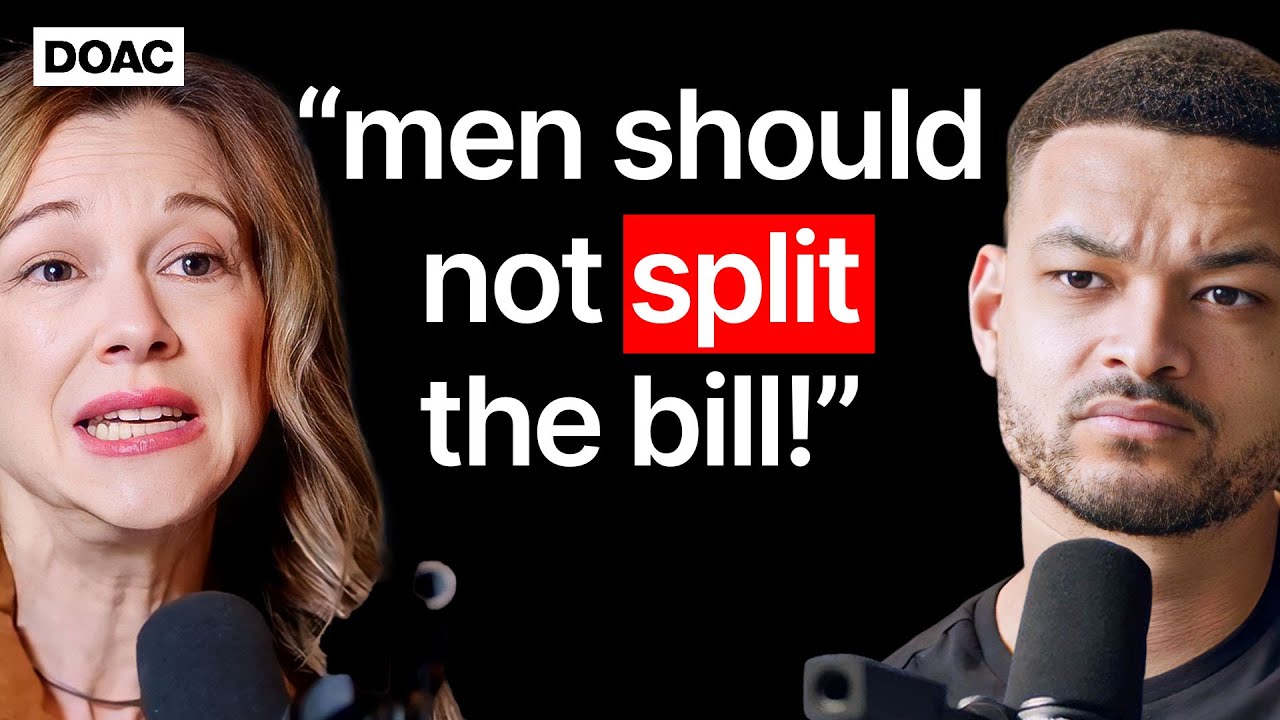
- [51:42](https://www.youtube.com/watch?v=SNuHbJbuUZE&t=3102s) Small early behaviors, like splitting small first-date bills, act as signals of emotional generosity and care during early relationship dynamics.
- [59:30](https://www.youtube.com/watch?v=SNuHbJbuUZE&t=3570s) Divorce risk follows a U-curve relative to age at marriage: marrying between 25 and 32 yields the lowest risk, while marrying after 32 increases divorce risk by 5% each year.
- [01:05:33](https://www.youtube.com/watch?v=SNuHbJbuUZE&t=3933s) Workaholism serves as a defense mechanism for low self-worth, while long-term relationship health depends on maintaining high ratios of positive interactions.
- [01:12:56](https://www.youtube.com/watch?v=SNuHbJbuUZE&t=4376s) Friends and partners may sabotage personal change because self-improvement acts as an uninvited mirror reflecting their own unaddressed habits.
- [01:15:56](https://www.youtube.com/watch?v=SNuHbJbuUZE&t=4556s) 'Wise compassion' requires showing people their own role in recurring problems, contrasting with 'idiot compassion' which blindly validates self-serving narratives.
- [01:21:20](https://www.youtube.com/watch?v=SNuHbJbuUZE&t=4880s) Visible emotional expressions like crying can function as non-verbal manipulation when used to deflect accountability and silence a partner's concerns.
- [01:26:17](https://www.youtube.com/watch?v=SNuHbJbuUZE&t=5177s) The true opposite of depression is vitality—a deep sense of inner aliveness—the loss of which frequently drives extramarital affairs and midlife re-evaluations.
- [01:30:28](https://www.youtube.com/watch?v=SNuHbJbuUZE&t=5428s) Heartbreak involves deep grief over lost daily routines and projected futures, which benefits from dedicated daily grieving time rather than minimizing platitudes.
- [01:38:27](https://www.youtube.com/watch?v=SNuHbJbuUZE&t=5907s) Despite digital connectivity, declining face-to-face interaction exacerbates human loneliness, which can be counteracted by initiating adult friendships through simple curiosity.
## Detailed walkthrough
### [00:00](https://www.youtube.com/watch?v=SNuHbJbuUZE&t=0s) Teaser, Intro, and The Statistically Best Age to Marry
The episode opens with a provocative statistical hook regarding relationship longevity: data indicates that for individuals who get married after the age of 30, each additional year of age increases their likelihood of divorce by 5%. Psychotherapist and bestselling author Lori Gottlieb breaks down the modern paradoxes surrounding dating, cultural expectations, and the heavy emotional weight placed on contemporary relationships.
Short clips highlight common dating pitfalls, such as dismissing potential partners over trivial "icks"—like ordering tap water or doing an *Austin Powers* impression—and demanding that a single partner fulfill every role from financial provider to ultimate emotional confidant.
Host Steven Bartlett takes a moment to express his gratitude to the audience as *The Diary Of A CEO* hits a milestone of 5 million subscribers on YouTube. Reflecting on the show's origins three years prior, when reaching 100,000 subscribers felt ambitious, he promises enhanced production quality, more global stories, and bigger guests in 2024 as a token of appreciation for the community's support.
- **Divorce Risk Statistic:** Getting married after age 30 is linked to a 5% increase in divorce risk for every additional year.
- **YouTube Milestone:** *The Diary Of A CEO* hit 5 million subscribers after starting roughly 3 years prior.
---
[02:42](https://www.youtube.com/watch?v=SNuHbJbuUZE&t=162s) How to Live the Life You Want
Lori Gottlieb summarizes her core mission over two decades of practice as helping people identify and overcome the self-imposed barriers that prevent them from living the life they truly desire. While her work touches all domains of human experience, she emphasizes that relationships—starting with one's relationship with oneself—form the foundation of personal well-being.
```
"I help people to learn what gets in their way from living the life that they want to live."
```
When clients seek therapy, they often arrive demanding that someone else in their life change—a spouse, a parent, or a colleague. Gottlieb addresses this by pointing out that while difficult people certainly exist, real transformation only occurs when individuals inspect their own agency, boundaries, and repetitive behavior patterns.
- **Primary Driver for Seeking Therapy:** A desire for external circumstances or other people to change.
- **Core Therapeutic Focus:** Developing self-awareness around personal choices, boundary-setting, and internal self-talk.
---
[05:40](https://www.youtube.com/watch?v=SNuHbJbuUZE&t=340s) Lack of Human Connections Leads to Relationship Pressure
Gottlieb notes a profound shift in the clinical issues presented today: an overwhelming sense of isolation. Historically, individuals relied on broader community networks, extended family, and long-standing friendships to meet various emotional and social needs. Today, many people lack a single close confidant.
```
"It used to be that your community was there to meet all different kinds of needs... Now your partner has to be your best friend where they are there to meet all of your emotional needs."
```
This erosion of community places immense pressure on romantic partners. Modern dating culture expects a single person to simultaneously be a best friend, an ambitious provider, a dedicated co-parent, an intellectually stimulating companion, and an extraordinary lover. Because no single human can fulfill all these demands, couples often falsely conclude that their relationship is fundamentally broken.
- **Social Isolation Trend:** Research shows a dramatic shift over recent decades, with a growing majority of people reporting zero close confidants compared to several in past generations.
- **Relationship Overload:** Expecting a romantic partner to replace the role of an entire historical community creates unsustainable relationship standards.
---
[06:55](https://www.youtube.com/watch?v=SNuHbJbuUZE&t=415s) Why the Majority Aren't Satisfied with Their Relationships
The widespread dissatisfaction in modern romantic relationships stems largely from unrealistic expectations of what it means to be loved and supported. Because people frequently move away from their hometowns and lack deep-rooted historical connections, they miss out on the grounding experience of being fully known by others over time.
Gottlieb shares a striking story from a couples therapy session that illustrates the fundamental human desire for deep connection over mere romantic declarations:
> A wife asked her husband, *"You know what three words I really want to hear?"*
> Her husband replied, *"I love you."*
> She responded, *"No, I understand you."*
This exchange underlines how much deeper the craving for understanding goes compared to conventional expressions of love.
- **The Root of Dissatisfaction:** Expecting a single partner to supply total emotional nourishment without a supporting social framework.
- **The Core Need:** The psychological need to be understood outweighs basic declarations of affection.
---
[08:35](https://www.youtube.com/watch?v=SNuHbJbuUZE&t=515s) The Need to Be Understood
Feeling understood drastically reduces psychological loneliness. When individuals believe no one understands their specific struggles, they feel isolated, even though thousands of others are enduring identical experiences. Gottlieb notes that this phenomenon is especially pronounced among men.
```
"If you feel like you're the only one who understands what's going on for you, you're all alone."
```
Men typically enter therapy in one of two ways: reluctantly as part of a couple trying to resolve a relationship crisis, or secretively on their own. When men open up in private, they frequently share vulnerabilities that women openly discuss over lunch with friends. Because societal norms restrict where men can safely process their emotional lives, they suffer from a distinct and pervasive form of loneliness.
- **Therapy Entry Paths for Men:** Couples therapy (driven by relationship distress) or confidential individual therapy.
- **Gender Disparity in Processing:** Women tend to share emotional vulnerabilities within friend groups, whereas men often suppress them until reaching a private therapeutic setting.
---
[10:21](https://www.youtube.com/watch?v=SNuHbJbuUZE&t=621s) Why Men Struggle More Opening Up in the Relationship
While women frequently express a desire for their male partners to be more emotionally open and vulnerable, real-world dynamics can be far more complicated. Gottlieb observes in her practice that when a man actually breaks down and cries, his female partner sometimes experiences an unintended feeling of insecurity or discomfort due to deeply ingrained cultural programming about masculinity and protection.
```
"I don't feel safe when he doesn't open up to me because I don't feel connected to him, but I don't feel safe when he's that vulnerable with me either."
```
Steven plays a viral clip from social media depicting a woman describing her ideal man as a hyper-masculine protector who can "beat someone's butt" while simultaneously possessing extreme spiritual depth, tenderness, and emotional sensitivity. Gottlieb highlights this clip as an exaggerated representation of the contradictory expectations men face in modern dating.
- **The Vulnerability Double-Bind:** Men are encouraged to show vulnerability, yet doing so can trigger subconscious alarm or feelings of unsafety in partners accustomed to traditional gender roles.
- **Contradictory Partner Profiles:** Demands for extreme physical toughness paired with delicate emotional sensitivity create mixed signals for men attempting to open up.
---
[17:08](https://www.youtube.com/watch?v=SNuHbJbuUZE&t=1028s) Setting Unreal Expectations When Looking for a Partner
These contradictory demands carry over directly into how people evaluate potential mates. Gottlieb discusses her book *Marry Him: The Case for Settling for Mr. Good Enough*, clarifying that the title was chosen by the publisher and is often misunderstood. The core premise is not about settling for poor treatment, but rather about raising standards for traits that genuinely predict long-term relationship success while discarding superficial dealbreakers.
```
"It's not about settling at all. It's actually about having higher standards, not lower standards, but having higher standards about the things that actually matter."
```
Through extensive research with behavioral economists, sociologists, and divorce lawyers, Gottlieb identified key psychological traits that actually predict whether a relationship will endure. Foremost among these is **flexibility**—the capability to adapt, yield, and make space for a partner's individuality rather than enforcing rigid, uncompromising conditions disguised as "boundaries."
- **Key Predictor of Relationship Success:** Emotional flexibility vs. rigid expectations.
- **Misinterpretation of "Settling":** True relationship satisfaction requires prioritizing core character traits over superficial checklists (such as height or hyper-specific lifestyle matches).
Here is a detailed, faithful walkthrough of the transcript section provided.
---
[15:46](https://www.youtube.com/watch?v=SNuHbJbuUZE&t=946s) Emotional Maturity and the Reality of Relational Needs
Lori Gottlieb highlights that healthy relationships require partners to move beyond selfish desires and consider what the relationship as a whole needs, as well as what the other person needs. Crucially, "emotional generosity"—giving a partner the benefit of the doubt and avoiding projecting past emotional wounds onto them—serves as the foundation of long-term compatibility. She stresses that emotional maturity and stability are frequently overlooked during the dating process. Clients often come into therapy bewildered by a partner's unreliable behavior, clinging to the idea that they love them despite constant flakey actions like canceling plans or failing to call. Gottlieb directly challenges these clients to separate a person's attractive traits (such as humor, intelligence, or appearance) from how that person actually treats them in a relationship.
Rather than chasing surface-level charm, individuals must hold higher standards for foundational character traits like loyalty, reliability, and emotional stability. A crucial test of emotional generosity is whether a partner can truly be supportive when things are going well for you. Expanding on this shift in expectations, host Steven Bartlett cites statistics inspired by Gottlieb's book *Marry Him*:
- **Height Preferences vs. Reality:** 80% of women express a desire to date men over 6 feet tall, even though only 15% of men meet that height threshold.
- **Physical Appearance Dealbreakers:** An eHarmony study indicates that 40% of single people hold dealbreakers strictly associated with physical appearance.
- **The Idealized Partner:** A Match.com study found that 50% of singles expect their partner to simultaneously act as their best friend, soulmate, and the sole fulfiller of all their emotional needs.
---
[17:40](https://www.youtube.com/watch?v=SNuHbJbuUZE&t=1060s) Balancing Idealized "Soulmates" with Practical Values
Discussing generational shifts, Bartlett asks whether earlier generations held such rigid or impossible standards. Gottlieb explains that while society has progressed by choosing partners out of genuine enjoyment rather than mere practical necessity, the pendulum has swung too far toward romantic idealism. Today, people demand an all-encompassing "soulmate" who constantly moves them, often ignoring whether their underlying values and life plans align. A successful partnership requires a balance between being attracted to a person's core "essence"—their holistic self rather than just their peak physical attractiveness—and practical compatibility.
Gottlieb notes research showing that most people end up choosing partners who are not the absolute most attractive individuals they have ever dated, precisely because overall compatibility matters more than surface looks. When building a life together, practical considerations become paramount:
- **Life Goals & Family:** Shared views on whether to have children, how many to have, and where to live.
- **Daily Living & Aspirations:** Mutual expectations regarding lifestyle, activities, and personal goals.
- **Worldview & Beliefs:** While differing political party affiliations may not destroy a relationship, fundamentally divergent ways of viewing the world will inevitably dictate how partners treat each other during everyday conflicts.
---
[20:13](https://www.youtube.com/watch?v=SNuHbJbuUZE&t=1213s) The App Trap: Petty Dealbreakers and the Illusion of Choice
Bartlett shares that while Gottlieb's logical approach makes complete sense, many of his single friends over 35 struggle because they are "hardwired" to search for perfection. He shares an anecdote about a close female friend of over a decade who rejected a man on a dating app simply because his profile picture showed cardboard storage boxes stacked on top of his wardrobe.
Gottlieb explains how men and women navigate dating apps differently, often to their own detriment. Men tend to swipe based on immediate physical attraction without evaluating long-term suitability. Women, conversely, inspect profiles as if deciding whether to marry the person on the spot, rather than simply deciding if they want to share a 45-minute coffee. This hyper-critical mindset carries over into first dates; people frequently discard promising matches after a fun evening simply because they did not feel immediate "butterflies" or chemical "sparks."
Gottlieb references a longitudinal study cited in *Marry Him* that followed couples from their first date across 20 years, checking in every 5 years:
- **Happily Married Couples:** Frequently rewrote their history, claiming they felt "instant chemistry" or knew immediately that their spouse was "the one." However, their original real-time evaluations from date one revealed they were initially unsure and merely viewed the match as a "nice person."
- **Divorced Couples:** Retroactively claimed they were never attracted to their ex-partner or saw red flags immediately, contradicting their initial enthusiasm recorded on date one.
Because dating apps create the illusion of an infinite pool of candidates, serial daters cycle through dates continuously—often swiping on apps while walking to their cars right after a date. Gottlieb advises that the only question one should ask at the end of a first date is: *"Did I have a good time?"* If the answer is yes, a second date is always warranted to allow real connection to develop.
---
[25:33](https://www.youtube.com/watch?v=SNuHbJbuUZE&t=1533s) Maximizers, Satisficers, and the Paradox of Dating
When assessing who holds higher expectations between genders, Gottlieb clarifies that both sexes struggle, albeit in different areas. Young men often hold unrealistic physical expectations driven by curated social media "thirst traps" and heavily filtered photos that obscure real-life appearance. Women's expectations, sometimes misattributed to feminism, can turn into non-human checklists of demands.
To explain this dynamic, Gottlieb references psychologist Barry Schwartz's concept from *The Paradox of Choice*, contrasting **maximizers** with **satisficers**:
- **The Jam Experiment:** When presented with 30 varieties of jam in a store, consumers experience choice paralysis and anxiety, often walking away without buying. Those who do make a choice remain less satisfied, constantly wondering if another flavor was better. When presented with only 2 choices, decision-making is simple and satisfaction is high.
- **The Sweater Metaphor:** A *satisficer* knows what they want in a sweater (fit, material, style, price). When they find one that meets their high criteria, they purchase it and enjoy it. A *maximizer* finds the sweater, but leaves it on the shelf to search every other store in the mall to see if a slightly better option exists—ending up exhausted, anxious, and perpetually dissatisfied with their final choice due to Fear Of Missing Out (FOMO).
In dating, Gottlieb urges people to act as *satisficers*—holding genuinely high standards for key values, but stopping the endless search once those standards are met, rather than constantly scanning for the next best option.
---
[29:40](https://www.youtube.com/watch?v=SNuHbJbuUZE&t=1780s) Hyper-Critique and Misinterpreting First-Date Behaviors
While gender dynamics vary individually, Gottlieb notes that survey data from *Marry Him* indicates women are generally more prone to maximizer behavior in dating. Once men move past idealized visual fantasies, they tend to evaluate prospective partners more holistically, asking pragmatic questions about whether they enjoy the person's company. Women, however, frequently reject potential partners over trivial assumptions and minor missteps on early dates.
Examples of absurd, real-world reasons women refused second dates include:
- **Ordering Tap Water:** A man ordered tap instead of sparkling water, leading his date to jump to the conclusion that he was "cheap," rather than simply accommodating or indifferent.
- **Mismatched Accessories:** Rejecting a man entirely because the color or style of his shoes did not match his belt.
- **Nervous Humor:** A man did an impression from the movie *Austin Powers* on a first date. His date found it extremely "cringing" and embarrassing, failing to recognize that he was simply nervous and attempting to make her laugh.
Gottlieb emphasizes that small awkward moments or awkward jokes on a first date are usually just symptoms of nerves, not fundamental character flaws, making it essential to give people a second chance.
---
<ElicitationsGroup message="Where would you like to go next with this content?">
<Elicitation label="Explore the next part of the transcript walkthrough" query="Please provide the detailed, faithful walkthrough for the next part of the transcript."/>
</ElicitationsGroup>
[031:00] Avoiding Intimacy and the Repetition of Childhood Traumas
When evaluating early dating behaviors, Lori Gottlieb cautions against jumping to quick conclusions based on minor quirks—such as a bad impression on a first date—which often just stem from nerves. However, when an individual repeatedly finds reasons to reject partners or habitually pursues superficial, non-committal arrangements like one-night stands, deeper psychological mechanisms are usually at play. Oftentimes, these behaviors stem from an underlying fear of intimacy and deep-seated feelings of unlovability. By chasing unavailable partners or cutting off potential connections early, individuals operate under a self-protective mindset of "you can't fire me, I quit," effectively shielding themselves from the vulnerability required for genuine emotional attachment.
This pattern is often rooted in childhood dynamics. In her book *Maybe You Should Talk to Someone*, Gottlieb illustrates this through the case of a young, successful patient named Charlotte. Unconsciously guided by a subconscious "radar" for the familiar, Charlotte repeatedly selected partners who mirrored her parents' dysfunctions—an emotionally unavailable, depressed mother and a father who cycled between love-bombing, abandonment, and alcohol abuse. Even though these dynamics caused her pain, they represented her baseline understanding of what love felt like. In therapy, overcoming these cycles requires confronting the core fear of vulnerability, shifting from a mindset of seeking approval ("will they choose me?") to exercising agency ("do I choose them?"), and rewriting internal narratives built on past emotional wounds.
* Charlotte repeatedly chose men who recreated her childhood home environment, despite intending to find partners who were completely different from her parents.
* During her therapeutic transition, Charlotte initially felt a lack of chemistry when dating healthier, non-volatile partners because her system was conditioned to associate anxiety with attraction.
* Defensive self-talk often reframes avoiding intimacy as an act of empowerment (e.g., believing one is "above feelings"), masking a profound dread of being judged as inherently unlovable.
---
[037:23] Shifting Gender Roles, Financial Expectations, and the Dating Pool
The evolving landscape of societal and economic gender roles creates complex friction in modern relationship dynamics. According to data from Pew Research, $71\%$ of people state that it is very important for a man to be able to support a family financially to be considered a good husband or partner, whereas only $32\%$ say the same for a woman. Simultaneously, women have made significant educational and economic gains—earning $83\%$ of what men made by 2020 (up from $60\%$ in 1980) and earning college degrees at a rate roughly $10\%$ higher than men. Despite these macro shifts, traditional expectations persist: many highly educated, high-earning women still desire partners who match or exceed their level of educational attainment and earning power, creating a sharp inventory imbalance in the dating pool.
```
+-----------------------------------------------------------------------+
| Key Trends in Dating & Gender Dynamics |
+------------------------------------+----------------------------------+
| Socioeconomic Trend | Impact on Relationship Dynamics |
+------------------------------------+----------------------------------+
| 71% believe men must provide | High financial expectations on |
| (vs. 32% for women) | men persist despite income parity|
+------------------------------------+----------------------------------+
| Women's relative earnings grew | Traditional provider metrics no |
| from 60% (1980) to 83% (2020) | longer match economic realities |
+------------------------------------+----------------------------------+
| Women hold ~10% more college | "Inventory problem" for women |
| degrees than men | seeking higher-degree partners |
+------------------------------------+----------------------------------+
```
Gottlieb addresses the narrative that successful women over 30 struggle in dating solely because men are "intimidated" or "emasculated" by their success, clarifying that career success itself is inherently attractive and fulfilling. Instead, the core issue lies in rigid selection criteria and time constraints. High-achieving women seeking high-achieving men frequently discover that two career-obsessed partners struggle to carve out space for emotional nurturance and relationship maintenance. Furthermore, Gottlieb notes that egalitarian relationships do not require identical tasks or identical incomes; true equality is defined by a lack of power differentials, where both partners feel valued regardless of how domestic duties or financial contributions are split.
* A study cited from *Sage Journals* indicates that men showed less attraction toward women who outsmarted them in testing scenarios, highlighting persistent ideological friction.
* Broadening the definition of intelligence beyond formal academic credentials is vital for high-achieving women seeking compatible partners.
* When two high-achieving individuals partner up, conflict often arises if both expect the other to yield professional priorities to handle household logistics and emotional upkeep.
[46:28](https://www.youtube.com/watch?v=SNuHbJbuUZE&t=2788s) Gender Differences and Earning Power in Relationships
Lori Gottlieb highlights how financial dynamics between partners can deeply affect a relationship's balance of power. Even when a woman earns a significant income, she often still desires a partner who earns more, reflecting a lingering cultural and biological conditioning. Conversely, many men state that they want an independent, accomplished partner, yet silently struggle when their partner's income surpasses their own. In therapy, these unspoken expectations frequently manifest as seemingly unrelated conflict—such as perpetual arguing or a lack of intimacy—when the core issue is actually an unaddressed shift in relationship power dynamics.
The conversation expands into the evolving definition of modern masculinity and the confusion men face regarding societal expectations. Steven Bartlett notes that suicide remains the leading cause of death for men under 45 in the UK, pointing to debates over whether men are struggling due to a lack of traditional masculinity or an inability to express emotional vulnerability. Gottlieb shares her experience raising an 18-year-old son who finds standard dating etiquette confusing—such as whether offering to pay for a date will be received as chivalrous or offensive. She emphasizes that because individual preferences vary so widely, couples must openly communicate about what specific behaviors mean to them rather than relying on assumed roles.
- Gottlieb observes that women frequently hesitate to date men who earn less than them, even when the woman is already financially independent.
- Unresolved income disparities often surface in couples therapy as arguments over sex, chores, or communication rather than direct conversations about money.
- Suicide is highlighted by Bartlett as the single biggest killer of men under 45 in the UK.
- Gottlieb stresses that the key to navigating changing gender roles is direct conversation about intentions and expectations.
---
[51:42](https://www.youtube.com/watch?v=SNuHbJbuUZE&t=3102s) The First Date Bill and the Search for Safety
The discussion shifts to the cultural debate surrounding who should pay on a first date. Bartlett shares his traditional perspective, admitting that he feels a strong, almost hardwired impulse to pay for every bill and open every door for his partner, despite her running a successful business and earning her own income. Gottlieb candidly admits that if a man asked to split the bill on a first date, it would be a major turnoff ("ick") for her. While acknowledging that this expectation may seem irrational on paper, she explains that paying serves as an essential signal of generosity, interest, and emotional safety.
Gottlieb illustrates this dynamic with a story from her therapy practice involving a young woman who went on a cafe date. The date was going exceptionally well until the bill arrived for two $5 coffees, at which point the man asked her to split the cost. Although the man later asked her out again—proving he was interested—the woman declined, viewing his gesture as a sign of stinginess and a lack of care. Both Gottlieb and Bartlett agree with the woman's decision, viewing the moment as a subtle reveal of character and generosity rather than just a transaction over money.
- Bartlett admits that he struggles to let his partner pay, viewing taking care of expenses as core to his role in a relationship.
- Gottlieb notes that for many women, a man offering to pay on a first date acts as an unspoken signal of romantic interest and emotional safety.
- A $5 coffee date breakdown is cited as an example where splitting a tiny bill destroyed romantic momentum despite a great initial connection.
---
[57:09](https://www.youtube.com/watch?v=SNuHbJbuUZE&t=3429s) Identifying Early Red Flags and Relationship "Cement"
Gottlieb addresses how early behaviors on dates serve as indicators of broader character traits. She draws a distinction between minor quirks—such as opting for free tap water at a restaurant—and fundamental red flags like a lack of basic generosity or disappearing for days without communication. She warns against two common extremes in dating: declaring every trivial preference a dealbreaker, or ignoring genuine warning signs in the early stages of courtship.
To describe relationship progression, Gottlieb uses the metaphor of wet cement. In the early stages of a relationship, the cement is soft, leaving room to address behaviors, negotiate habits, and adjust how two people interact. Once time passes and the cement dries, established patterns become significantly harder to change. Bringing up concerns early prevents long-term resentment and allows couples to test whether a partner possesses the flexibility to adjust.
- Gottlieb compares new relationships to wet cement, noting that habits must be addressed before the dynamic hardens and becomes difficult to change.
- Minor quirks (like ordering tap water) should not be confused with true red flags (like an absence of generosity or poor communication).
- Addressing minor friction points early tests whether a partner is open to feedback and capable of growth.
---
[59:30](https://www.youtube.com/watch?v=SNuHbJbuUZE&t=3570s) The Optimal Age Window for Marriage and Divorce Risk
Bartlett introduces statistical data showing that more people over 30 are unmarried today than at any point in history. He highlights research from the Institute for Family Studies demonstrating a clear "sweet spot" for the age at which getting married yields the lowest statistical risk of divorce. Getting married too young carries a high risk of divorce, but contrary to popular belief, delaying marriage past a certain age in one's early 30s actually causes the risk of divorce to rise again.
Gottlieb explains the underlying psychological reasons behind this trend. Marrying too young (under 23) often fails because individuals lack emotional maturity, financial stability, and a clear self-identity. Conversely, marrying in one's mid-to-late 20s provides an optimal balance: individuals have a firm sense of identity and career direction, yet remain flexible enough to grow together, blend lives, and build shared experiences as a couple.
- **Under 20 to 22:** Marrying at 25 reduces the likelihood of divorce by over 50% compared to marrying at age 20.
- **25 to 30/32:** Each additional year of age at marriage reduces the odds of divorce by 11% up until around age 32.
- **After 32:** Each additional year past age 32 increases the statistical risk of divorce by 5% per year.
- Source cited: Study data from the Institute for Family Studies on age at marriage and divorce risk.
[01:01:57](https://www.youtube.com/watch?v=SNuHbJbuUZE&t=3717s) Dating Baggage and the Unknowing of Oneself
Continuing their exploration of relationship dynamics, Lori Gottlieb explains how accumulating a long history of dating can inadvertently undermine future relationships. As people age, they become more rigid in their ways and carry a heavier emotional footprint from past heartbreaks and betrayals. Gottlieb uses the vivid analogy of "punishing our current partner for a crime they didn't commit"—such as remaining overly guarded or untrusting with a new, innocent partner because a previous ex cheated. While many counterintuitively assume that having a vast dating history makes them a better partner, accumulating too much baggage (such as having five or more failed serious relationships) often creates unspoken friction. She quips that "if a fight breaks out in every bar you're going to, maybe it's you," urging individuals to look inward and address underlying unhealthy patterns rather than repeatedly cycling through bad dynamics.
This leads into a discussion about Gottlieb’s popular TED Talk topic: the concept that getting to know oneself requires first "unknowing" oneself. In therapy, patients often arrive with ingrained, faulty self-narratives—such as "I'm unlovable," "I can't trust anyone," or "I'm not smart"—which frequently stem from childhood bullying, misunderstood learning differences like ADHD, or family dynamics. Drawing on her background as a professional author, Gottlieb frames therapy as an editing process where the therapist helps the patient revise their internal story, reassess supporting characters, and decide what happens in the next chapter.
* Counterintuitive Dating Impact: A couple of past relationships can offer valuable lessons, but entering a marriage with extensive dating baggage (e.g., five-plus failed relationships) often imports unaddressed baggage into the partnership.
* Narrative Editing in Therapy: Gottlieb views clients as the protagonists of their own stories, examining whether they are going in circles or moving forward, and re-evaluating whether certain major characters should become minor ones.
---
[01:06:11](https://www.youtube.com/watch?v=SNuHbJbuUZE&t=3971s) Workaholism, Self-Worth, and the Bank of Goodwill
The conversation shifts to a personal reflection as the host confesses to identifying heavily as a workaholic whose self-worth has long been tied to productivity and achievement. He reveals how this deep-seated drive originated in his youth as a coping mechanism for feeling like he didn't fit in, but acknowledges that as an adult, this hyper-focus on work risks jeopardizing his personal relationships and long-term happiness. Gottlieb explains that this is a classic psychological defense mechanism—taking an underlying insecurity about self-worth and channeling it into a socially praised outcome like career success. She notes that people similarly channel unresolved anger into acceptable containers like boxing or even becoming a surgeon who cuts into people, masking the core issue under the guise of productivity or skill.
To help rebuild self-worth outside of professional achievements, Gottlieb outlines a practical exercise used on her podcast, *Dear Therapists*. She asks clients to construct two columns detailing non-work qualities: one listing what others appreciate about them, and the other listing what they genuinely appreciate about themselves. She emphasizes that while career success is a meaningful part of life, placing all of one's self-esteem into a single bucket is dangerous. To illustrate this, she shares Gottman Institute research on the "bank of goodwill" in relationships, noting that healthy couples maintain a ratio of 20 positive interactions for every 1 negative interaction (and at least a 5 to 1 ratio during times of distress). Just as couples need constant small deposits, individuals must make daily self-worth deposits by acknowledging non-work moments, such as being funny at dinner or showing kindness to a stranger.
* The Goodwill Ratio: In healthy relationships, couples maintain a 20:1 ratio of positive to negative interactions during normal times, and a 5:1 ratio during conflict.
* Two-Column Self-Worth Exercise:
1. *Column 1:* Qualities and actions that other people appreciate about you that have nothing to do with work.
2. *Column 2:* Traits and behaviors you appreciate about yourself that others might not even notice.
---
[01:12:56](https://www.youtube.com/watch?v=SNuHbJbuUZE&t=4376s) Why Friends and Partners Sabotage Personal Change
Addressing why individuals hesitate to start therapy, Gottlieb explains that people are often terrified of the actual requirement to change. Stripping away defense mechanisms like avoidance means confronting uncomfortable truths and abandoning easy, unhealthy habits. The host references a striking concept from Gottlieb’s bestselling book, *Maybe You Should Talk to Someone*, where friends or partners actively sabotage a person's self-improvement because it disrupts the established social dynamic.
Gottlieb illustrates this with the story of Charlotte, a young client in her twenties who realized her heavy drinking was damaging her life. When Charlotte decided to stay sober and suggested celebrating her birthday somewhere other than a bar, her friends reacted defensively, complaining, "You're no fun anymore." Gottlieb points out that Charlotte's positive shift unintentionally held up an uncomfortable mirror to her friends' own drinking habits. Similarly, when one partner in a relationship starts waking up early to exercise, the sedentary partner often feels threatened and accuses them of being "obsessed," subtly trying to pull them back into shared unhealthy habits to avoid examining their own choices.
* Sabotage Dynamics: Personal growth or breaking an addiction often acts as an uninvited mirror to those around us, prompting loved ones to resist or sabotage changes that threaten their own comfort zones.
* The Precontemplation Stage: Real change begins subtly; before taking action, individuals often start in "precontemplation," where they aren't even consciously aware that they need to make a change until an external trigger highlights it.
[01:15:56](https://www.youtube.com/watch?v=SNuHbJbuUZE&t=4556s) The Stages of Change and the Trap of "Idiot Compassion"
Lori Gottlieb outlines the stages of behavior change, explaining that people often seek therapy during contemplation or preparation—when they are thinking about making a shift or taking initial logistical steps, like looking into a gym membership, taking an anger management class, or planning a breakup. However, the most critical and misunderstood stage is **maintenance**. Maintenance is not a linear upward trajectory where a single setback equals complete failure. Slipping up—such as texting an ex at midnight out of loneliness—is a normal part of the process. Rather than assuming the relationship is back on or engaging in self-flagellation, the goal is to acknowledge the underlying emotional state, offer oneself compassion, and implement healthier coping mechanisms next time.
Gottlieb references an impactful cartoon her own therapist shared with her: a prisoner desperately shaking the bars of a cell, completely unaware that the walls to the left and right are wide open. This visual captures why making a shift is so difficult—people often prefer the familiar misery of their current situation over the terrifying responsibility and freedom required to step around the bars. Self-compassion is what bridges this gap, serving as a far more effective driver for long-term accountability than self-criticism.
```
[ PRISON BARS ]
[ (Shaking frantically) ]
<-- OPEN OPEN -->
(Freedom & Responsibility)
```
Transitioning to how friends handle our struggles, Gottlieb distinguishes between **"idiot compassion"** and **"wise compassion."** Idiot compassion occurs when friends unconditionally validate our side of a story ("They're terrible! You're completely right!"), reinforcing a single, narrow perspective without offering real growth. Wise compassion, on the other hand, involves gently holding up a mirror to help a friend see their own contribution to a recurring problem.
* **Stages of Change:** Contemplation, Preparation, Action, and Maintenance (the habit-building phase).
* **The Prisoner Analogy:** Highlighted by Gottlieb's therapist; illustrates how humans stay trapped in familiar pain to avoid the burden of freedom.
* **Idiot Compassion:** Unconditional, blind validation of a friend's narrative that stifles personal growth.
* **Wise Compassion:** Constructive honesty that illuminates one's own role in a pattern, mirroring the function of a therapist.
---
[01:21:20](https://www.youtube.com/watch?v=SNuHbJbuUZE&t=4880s) Emotional Manipulation and "Playing the Victim"
When discussing gender dynamics in couples therapy, Gottlieb acknowledges that women often express more visible emotions, such as crying, during sessions. However, she cautions that tearfulness can sometimes function as a form of non-verbal manipulation. When a partner attempts to raise a constructive concern, crying can shift the dynamic so that the person raising the issue feels guilty and shuts down.
In these dynamics, adopting the role of the victim acts as a subtle position of power. By presenting oneself as deeply wounded, it becomes nearly impossible for the other person to address ongoing relational issues without coming across as cruel. In therapy, Gottlieb actively interrupts this cycle by reassuring the crying partner while encouraging the other to keep speaking, removing the burden of emotional management from the partner bringing up the issue.
* **Emotional Weaponization:** Crying can be used unintentionally to halt difficult conversations or avoid accountability.
* **The Power of the Victim Role:** Playing the victim paralyzes the other partner, turning the partner attempting to communicate into the functional victim of the dynamic.
* **Therapeutic Intervention:** Reframing crying so the speaking partner can express their feelings without needing to soothe the other immediately.
---
[01:23:12](https://www.youtube.com/watch?v=SNuHbJbuUZE&t=4992s) Dream Analysis and the Subconscious "Self-Confession"
Addressing the psychological function of dreams, Gottlieb explains that while some dreams are random, many act as narratives about topics we avoid while awake. They serve as a form of subconscious "self-confession," allowing hidden fears, unacknowledged guilt, or deep anxieties to surface safely.
Gottlieb shares a personal experience from her own therapy journey. After entering therapy following an unexpected breakup, she mentioned offhandedly, "Half my life is over." Shortly after, she had an elaborate dream where she ran into her ex and his new, older girlfriend, feeling petty satisfaction—until she looked in a mirror and saw her own heavily wrinkled, 80-year-old face. The dream revealed that her primary crisis was not merely the breakup itself, but a deep-seated terror surrounding mortality, aging, and how she was choosing to live her life.
* **Self-Confession:** Dreams reveal truths about our lives before we are consciously ready to admit them.
* **Journaling Technique:** Write down remembered dreams immediately upon waking in the **present tense** (e.g., "I am walking down a hallway...") to unlock deeper psychological connections.
* **Gottlieb's Aging Dream:** A vivid dream following a breakup that exposed her underlying panic regarding aging and mortality.
---
[01:26:17](https://www.youtube.com/watch?v=SNuHbJbuUZE&t=5177s) Vitality, Regret, and the Impact of Menopause
Gottlieb emphasizes that most people live without a clear awareness of how they spend their daily time, often underestimating empty habits like endless scrolling on social media. Beginning therapy sessions by auditing the last 24 hours helps ground patients in how they actually live, bringing awareness to the reality that human life has a "100% mortality rate." Rather than inspiring dread, this realization can transform regret from a tool for self-punishment into a powerful engine for intentional change.
Quoting author Andrew Solomon, Gottlieb notes that "the opposite of depression is not happiness, but vitality"—a sense of inner aliveness. The pursuit of lost vitality, rather than simple lust or dissatisfaction with a partner, is frequently what drives people to have extramarital affairs. Rather than confronting their own internal emptiness, individuals often misattribute it to their marriage, expecting a new partner to restore their feeling of being alive.
| Concept | Traditional View | Psychological Reality |
|:--- |:--- |:--- |
| **Opposite of Depression** | Happiness | **Vitality** (a deep sense of aliveness) |
| **Primary Driver of Affairs** | Falling out of love / Seeking someone new | Seeking lost internal **vitality** misattributed to the spouse |
| **Regret** | Unproductive self-flagellation | A high-leverage **engine for intentional change** |
This drive for vitality often peaks during menopause. Beyond biological shifts, menopause acts as a stark psychological marker signaling that a major life chapter has closed and "half of life is over." Because many women spend decades prioritizing the needs of children, partners, or aging parents, menopause often sparks a sharp reevaluation of their remaining time. This wake-up call can lead to higher expectations, a demand for genuine connection, and, in many cases, the decision to initiate a divorce if vitality and mutual respect are lacking.
* **Vitality vs. Happiness:** Referencing Andrew Solomon's work; true psychological health centers on feeling alive rather than constantly happy.
* **The Root of Affairs:** Infidelity is often an attempt to escape internal numbness rather than a simple defect in the primary partner.
* **Menopause as a Catalyst:** Triggers a existential audit of remaining time, causing women to shed caretaker roles and demand genuine fulfillment or end unsatisfactory marriages.
[01:30:28](https://www.youtube.com/watch?v=SNuHbJbuUZE&t=5428s) The Grief of Heartbreak and How to Recover
Steven Bartlett opens this section by sharing a personal story about a friend who recently reached out in deep distress, describing heartbreak as a "big dark cloud" hanging over everything they do, think, and say. Asking Lori Gottlieb how to navigate this heavy state, Lori explains that the core element people often fail to grasp about heartbreak is **grief**. It is not simply the loss of the present relationship; it is the sudden death of the future you had mentally constructed. When a relationship ends, you lose the "daily-ness" of being known—the person who knew your quirks, how you take your pizza, the specific look in your eyes when excited, and your shared history.
Lori highlights how society treats heartbreak with a frustrating lack of depth compared to other forms of loss. When someone loses a child, society gathers around them with supportive rituals; yet when someone suffers a miscarriage, a breakup, or a divorce, people frequently offer invalidating platitudes like *"At least you can get pregnant again"* or *"You'll find someone else."* In her book *Maybe You Should Talk to Someone*, Lori includes a chapter titled "What Not to Say to a Dying Person" to address how people routinely attempt to minimize grief, cheer up the grieving party, or avoid sitting with them in their pain. What a heart-broken person truly needs is someone who will actively sit in the loss with them and validate how profound it is.
```
+-----------------------------------------------------------------------------------+
| WHAT WE ACTUALLY LOSE IN HEARTBREAK |
+-----------------------------------------------------------------------------------+
| 1. The Daily-ness: Spontaneous updates, tiny daily details, shared jokes |
| 2. Being Truly Known: Quirks, facial expressions, history, vulnerabilities |
| 3. Community: Mutual friends, extended families, joint social circles |
| 4. The Mental Future: The projected timeline of aging, moving, or growing together |
+-----------------------------------------------------------------------------------+
```
- When Steven reflects on his own instinct to immediately jump into "fix-it" mode or cheer people up, Lori notes that while holding hope for a friend is valuable, you should not force cheerfulness.
- Lori suggests a practical cognitive strategy for those suffering from intense breakup rumination: allocate **30 minutes a day** specifically to grieve, cry, and reflect on everything that sucks, setting a strict "stop sign" for the rest of the day to help neurologically rewire the nervous system's response to sadness.
---
[01:38:27](https://www.youtube.com/watch?v=SNuHbJbuUZE&t=5907s) Why Connection is a Matter of Survival
Turning to the evolutionary origin of heartbreak, Steven asks whether heartbreak is an internal device designed to force humans to stay connected and avoid isolation. Lori agrees, emphasizing that in early human history, belonging to a group was a literal survival requirement—without a tribe, an individual could not secure food, shelter, or safety. Belonging remains hardwired into human biology to this day.
Lori cites classic psychological studies on institutionalized infants suffering from "failure to thrive." Even when provided with adequate food, shelter, and clean diapers, infants who lacked physical affection and love stopped meeting developmental milestones and frequently died. Beyond societal narratives about success, status, or social media aesthetics, the primary human objective remains **to love and be loved**. When a core connection breaks, an individual's worldview shrinks into a black-and-white state of feeling utterly unloved and unsafe.
- Studies on infants in orphanages demonstrated that a lack of physical touch and emotional bonding directly leads to fatal developmental failure.
- Modern society frequently confuses cultural markers of success (wealth, appearance, social reach) with core psychological health, hiding the fundamental requirement for human attachment.
---
[01:40:40](https://www.youtube.com/watch?v=SNuHbJbuUZE&t=6040s) The Modern Epidemic of Disconnection and Making Friends
Steven and Lori explore the paradox of modern connectivity: while technology links everyone globally, genuine human connection is rapidly declining. Decades ago, roughly 80% of young people saw their friends multiple times a week, a statistic that has now dropped dramatically to 30–40%. Steven recalls a recent public speaking event with over 500 attendees where a young man raised his hand in front of the entire crowd and simply asked, *"I'm lonely—how do I make friends?"* Steven notes that men constantly approach him in private or send DMs asking this exact question.
```
+-----------------------------------------------------------------------------------+
| SURFACE CONNECTIVITY VS. TRUE VULNERABILITY |
+-----------------------------------------------------------------------------------+
| DIGITAL / SURFACE CONNECTIVITY | TRUE IN-PERSON VULNERABILITY |
+-----------------------------------------+-----------------------------------------+
| Sending Snapchat photos back and forth | Face-to-face interaction without masks |
| Texting emojis or short messages | Shared real-time physical experiences |
| "Vulnerable" public posts for praise | Expressing fear, shame, or deep needs |
| Low stakes / validation-seeking | High stakes / real risk of rejection |
+-----------------------------------------+-----------------------------------------+
```
Lori notes that younger generations often mistake digital interaction—like sending daily Snapchats or broadcasted Instagram posts—for authentic socialization. True vulnerability requires taking off your emotional mask in front of another person where the stakes are real, exposing your true self with the risk of rejection.
- When Steven shared his response to the young man—praising his bravery and telling him that "vulnerability is a magnet, not a repellent"—Lori agreed, but added an actionable exercise: prompt the entire room to turn to the person on their right, introduce themselves, and share one meaningful thing they want the other to know.
---
<ElicitationsGroup message="To explore these psychological topics further:">
<Elicitation label="Explore strategies for setting healthy relationship boundaries" query="What are Lori Gottlieb's key insights and practical strategies on setting healthy boundaries in relationships?"/>
<Elicitation label="Analyze the statistical link between marriage age and divorce" query="What does research say about the optimal age to get married to minimize the risk of divorce?"/>
</ElicitationsGroup>
Here's a detailed walkthrough of this portion of the video:
[01:45:16](https://www.youtube.com/watch?v=SNuHbJbuUZE&t=6316s) Making Friends Through Curiosity
Lori demystifies the process of forming adult friendships for people who find it overwhelming. Many assume that connecting with others requires mastering complex social tactics or techniques, but she emphasizes that it comes down to basic curiosity. The key is simply asking someone about themselves and gauging their response.
She notes that those who are receptive and open to genuine inquiry might become friends, whereas those who do not respond warmly simply are not worth worrying about.
[01:45:38](https://www.youtube.com/watch?v=SNuHbJbuUZE&t=6338s) The Last Guest Question: 60 Days Left on Earth
Steven introduces the podcast’s signature tradition where the preceding guest leaves an anonymous question for the next visitor. Lori reads the prompt: "If you had 60 days left on Earth, what would be the first and last thing that you'd do?" Without hesitation, Lori answers, "Hug my son. No question."
She reflects on the broader philosophy of her life and her book *Maybe You Should Talk to Someone*. Lori explains that she makes a conscious effort to live in alignment with her true desires now, rather than postponing meaningful actions for the future. Her goal in therapy is to guide people to live their ideal life in the present moment, so that when faced with a hypothetical short deadline, they do not feel the urge to overhaul their lives completely. "Why? What are you waiting for? We shouldn't have to wait," she notes.
[01:46:44](https://www.youtube.com/watch?v=SNuHbJbuUZE&t=6404s) Closing Praise and Farewell
Steven expresses deep gratitude to Lori, reading a praise quote from Katie Couric off the front cover of her book: "Rarely has a book challenged me to see myself in an entirely new light and was at the same time laugh-out-loud funny and utterly absorbing."
He commends Lori for making profound psychological work accessible, grounded in real-world human experiences, and focused on core fundamentals rather than surface-level symptoms. Recognizing that Lori cannot personally be everyone's therapist due to time constraints, he highlights her books, column, and podcast as impactful tools that serve millions.
- **Katie Couric Quote**: Praised the book for challenging readers to see themselves in a new light while being "laugh-out-loud funny and utterly absorbing."
Steven transitions to a closing sponsor message for ZOE, a personalized nutrition and gut health company in which he is an investor. He praises their rapid growth and scientific breakthroughs, highlighting that recent research allows their gut health test to analyze 100 distinct bacteria types, up from the 30 bacteria types previously measured.
- **Bacteria Identification**: ZOE's upgraded gut health test now analyzes 100 gut bacteria types (up from 30).
- **Promotional Offer**: Listeners can get 10% off at `[zoe.com/steven](https://zoe.com/steven)` using the exclusive code `CEO10`.
## Notable quotes
> [02:42](https://www.youtube.com/watch?v=SNuHbJbuUZE&t=162s) I help people to learn what gets in their way from living the life that they want to live. — Lori Gottlieb
> [05:40](https://www.youtube.com/watch?v=SNuHbJbuUZE&t=340s) It used to be that your community was there to meet all different kinds of needs... Now your partner has to be your best friend where they are there to meet all of your emotional needs. — Lori Gottlieb
> [08:35](https://www.youtube.com/watch?v=SNuHbJbuUZE&t=515s) If you feel like you're the only one who understands what's going on for you, you're all alone. — Lori Gottlieb
> [10:21](https://www.youtube.com/watch?v=SNuHbJbuUZE&t=621s) I don't feel safe when he doesn't open up to me because I don't feel connected to him, but I don't feel safe when he's that vulnerable with me either. — Lori Gottlieb
> [17:08](https://www.youtube.com/watch?v=SNuHbJbuUZE&t=1028s) It's not about settling at all. It's actually about having higher standards, not lower standards, but having higher standards about the things that actually matter. — Lori Gottlieb
> [01:00:00](https://www.youtube.com/watch?v=SNuHbJbuUZE&t=3600s) if a fight breaks out in every bar you're going to, maybe it's you — Lori Gottlieb
> [01:12:56](https://www.youtube.com/watch?v=SNuHbJbuUZE&t=4376s) You're no fun anymore — Unspecified friend of client
> [01:23:12](https://www.youtube.com/watch?v=SNuHbJbuUZE&t=4992s) Half my life is over — Lori Gottlieb
> [01:26:17](https://www.youtube.com/watch?v=SNuHbJbuUZE&t=5177s) the opposite of depression is not happiness, but vitality — Andrew Solomon
> [01:40:40](https://www.youtube.com/watch?v=SNuHbJbuUZE&t=6040s) vulnerability is a magnet, not a repellent — Steven Bartlett
> [01:45:38](https://www.youtube.com/watch?v=SNuHbJbuUZE&t=6338s) Hug my son. No question. — Lori Gottlieb
> [01:45:38](https://www.youtube.com/watch?v=SNuHbJbuUZE&t=6338s) Why? What are you waiting for? We shouldn't have to wait — Lori Gottlieb
> [01:46:44](https://www.youtube.com/watch?v=SNuHbJbuUZE&t=6404s) Rarely has a book challenged me to see myself in an entirely new light and was at the same time laugh-out-loud funny and utterly absorbing. — Katie Couric
## Mentioned
Lori Gottlieb, Steven Bartlett, The Diary Of A CEO, Maybe You Should Talk to Someone, Mr Good Enough, Marry Him: The Case for Settling for Mr. Good Enough, Dear Therapists, eHarmony, Match.com, Barry Schwartz, The Paradox of Choice, Austin Powers, Pew Research, Sage Journals, Institute for Family Studies, Gottman Institute, Andrew Solomon, Katie Couric, WHOOP, ZOE, Gold Tree Studios
Lori Gottlieb指出晚婚与更高离婚风险相关
32岁后结婚会使年离婚风险增加5%,原因是固化的行为习惯降低了情绪灵活性。
在这场发人深省的对话中,Lori Gottlieb探讨了现代人的孤独感与过于严苛的期望如何破坏恋爱关系,并重点提到了关于结婚年龄如何影响离婚风险的研究。她对比了约会中的“最大化者”与“满足者”,解释了为何对核心性格特质而非表面条件清单设定高标准才能促成持久的契合。讨论还涉及围绕收入与展露脆弱的性别动态、阻碍自我提升的心理防御机制,以及心碎后的情绪康复过程。最终,Gottlieb强调了保持情绪灵活性、自我关怀以及维系深层人际连结的重要性。
心理治疗师 Lori Gottlieb 指出,现代人因缺乏广泛的社会支持网络,往往将所有情感需求、倾诉欲与最佳好友的角色全部施加在伴侣一人身上,这种不切实际的重压是造成亲密关系普遍不满的核心原因。 (5:40)
男性在表达脆弱时面临文化与心理上的“双重困境”:尽管伴侣渴望情感共鸣,但当男性真正展现失声痛哭等极度脆弱的一面时,潜意识中受传统保护者角色影响的伴侣常会感到不安,促使男性选择压抑情感。 (10:21)
约会软件催生了过度挑剔的“最大化者”(Maximizers)心态,许多人常因喝自来水或蹩脚模仿等微小琐事而一票否决潜在对象;长期关系的满意度取决于核心价值观与情感包容度,而非初期的即时化学反应。 (25:33)
在第一次约会中争论是否平摊账单往往不仅关乎金钱,主动买单在潜意识中被视作衡量一个人是否具备情感慷慨度、真诚兴趣与提供安全感能力的重要行为信号。 (51:42)
统计数据揭示结婚年龄与离婚风险存在拐点:25岁结婚比20岁结婚的离婚概率降低50%以上,但32岁之后每推迟一年结婚,离婚风险反而每年上升5%。 (59:30)
Reading summary
Psychotherapist Lori Gottlieb contends that modern relationship dissatisfaction stems from loading the emotional functions of an entire community onto a single romantic partner, combined with hyper-critical mate selection that overlooks the psychological traits required for long-term stability. She highlights that delaying marriage past one's early thirties correlates with rising divorce rates as accumulated baggage and behavioral rigidity erode relational flexibility.
The Collapse of Community and Romantic Overload (5:40)
Gottlieb observes that an unprecedented epidemic of social isolation has altered clinical therapy, with many clients lacking even one close confidant outside of romance. Historically, individuals distributed their social, practical, and emotional needs across extended families, neighbors, and enduring friendships. Today, cultural expectations dictate that a single romantic partner must concurrently serve as best friend, intellectual peer, co-parent, financial provider, and passionate lover. This impossible expectation leads couples to misdiagnose normal human limitations as fundamental relationship failure.
Furthermore, relationship dissatisfaction is exacerbated by a deficit of being deeply understood. Gottlieb notes that while partners often express love through standard declarations, the deeper psychological hunger in intimate partnerships is feeling known. When individuals lack outside social frameworks to process emotional burdens—a tendency particularly acute among men who suppress emotional vulnerability outside of therapy—the romantic relationship buckles under unsustainable emotional weight.
The Maximizer Trap and Trivial Dealbreakers (25:33)
Modern dating culture, driven by app algorithms and curated online profiles, encourages single people to act as 'maximizers' rather than 'satisficers.' Drawing on psychologist Barry Schwartz's work, Gottlieb explains that maximizers exhaustively search for absolute perfection, suffering from decision paralysis and persistent regret. In contrast, satisficers define clear, high standards for foundational values and commit once those criteria are met. On dating platforms, this maximizer tendency manifests in trivial dealbreakers—such as dismissing partners over shoe-and-belt coordination, ordering tap water, or displaying awkward first-date nerves like an Austin Powers impression.
Citing data from her book 'Marry Him', Gottlieb notes that 80% of women seek men over six feet tall despite only 15% of men reaching that height, while 40% of singles hold rigid physical dealbreakers. Furthermore, longitudinal research following couples over 20 years revealed that happily married spouses often initially viewed their future partner as merely 'nice' rather than experiencing instant fireworks, whereas divorced couples frequently reported immediate initial chemistry. Gottlieb warns that mistaking early anxiety for chemistry causes daters to discard compatible partners while seeking an idealized soulmate.
The Statistical Sweet Spot for Marriage (59:30)
Addressing relationship timing, host Steven Bartlett cites demographic findings from the Institute for Family Studies showing a distinct window where marriage carries the lowest statistical risk of divorce. Marrying at age 25 reduces divorce probability by more than 50% compared to marrying at 20, with each additional year up to roughly age 32 decreasing divorce risk by 11%. However, past age 32, each additional year of delay increases the statistical likelihood of divorce by 5%.
Gottlieb explains this dynamic through the developmental balance between self-identity and adaptability. Individuals marrying in their mid-to-late twenties possess clear career and personal foundations while retaining the psychological flexibility to merge lives and grow together. By contrast, delaying marriage into one's mid-to-late thirties frequently coincides with hardened habits, unaddressed personal trauma, and extensive dating baggage—such as a history of five or more failed serious relationships—which foster distrust and defensiveness in future partnerships.
Conflicted Gender Expectations and Vulnerability (10:21)
Shifting societal roles have created contradictory expectations within dating and marriage. Pew Research data shows that 71% of respondents still consider financial provision essential for a man to be a good partner, compared to 32% for women, even as women hold roughly 10% more college degrees and closed the wage gap to 83% by 2020. Gottlieb notes that high-earning women frequently struggle with an inventory imbalance when demanding partners who exceed their educational or financial status, while income disparities can trigger latent power struggles over domestic logistics and relationship control.
Simultaneously, men face conflicting signals regarding emotional openness. While modern dating discourse encourages male vulnerability, Gottlieb reports that in clinical practice, a man breaking down emotionally can inadvertently trigger discomfort or a loss of perceived safety in a female partner conditioned by traditional protector archetypes. When vulnerability is defensively avoided, partners often retreat into unhelpful coping mechanisms or blame external circumstances instead of confronting their underlying fear of true intimacy.
Gottlieb concludes that building enduring partnerships requires moving beyond consumerist dating checklists, tolerating the discomfort of personal change, and prioritizing emotional generosity and flexibility over surface-level perfection. However, navigating the friction between evolving socioeconomic realities and deeply ingrained cultural scripts surrounding gender, status, and emotional expression remains an unresolved challenge for modern couples.
精炼阅读摘要
心理治疗师 Lori Gottlieb 指出,现代亲密关系的破裂与择偶焦虑,本质上源于社会孤立背景下对单一伴侣的“全能过度期待”、挑剔防御的约会心理机制以及对真实脆弱的恐惧;统计与临床证据表明,维系持久关系的核心并不在于追逐瞬时的化学反应,而在于双方的心理弹性、核心价值观契合以及在关键年龄窗口内共同成长的能力。
结婚年龄与离婚概率的统计拐点 (59:30)
家庭研究所(Institute for Family Studies)的数据揭示了结婚年龄与离婚风险之间反直觉的非线性关系。长期以来,公众普遍倾向于认为推迟结婚越久关系越稳固,然而统计显示,20岁结婚相较于25岁结婚,离婚风险高出50%以上;在25岁至30或32岁之间,结婚年龄每增加一岁,离婚风险便会下降11%。然而,一旦跨过32岁这一临界窗口,每晚结婚一年,离婚的统计风险反而以每年5%的幅度持续递增。
Gottlieb 解释了该数据背后的心理学逻辑:23岁以下的过早结合常因个体心智未成熟、经济不稳定以及自我认知不清而走向破裂;而在20岁中后期至30岁初,个体不仅确立了清晰的职业与自我认同,更重要的是依然保留了足够的情感弹性去融入伴侣的生活。相比之下,过晚结婚往往伴随着更多以往恋爱挫折累积的情感包袱,思维模式与生活习惯趋于僵化,甚至让无辜的现任为前任留下的创伤买单,从而削弱了伴侣间共同磨合的契机。
社交网络退化与伴侣全能化的虚妄 (5:40)
现代人对伴侣关系的普遍不满,很大程度上源于传统社区与多层次支持系统的瓦解。过去人们依赖广阔的社区网络、扩展家族与长期友谊来分担多样化的情感与社交需求;然而现状是越来越多的人报告自己没有知心朋友,转而苛求唯一的伴侣必须同时扮演挚友、经济支柱、灵魂知己、育儿搭档和完美情人的角色。Match.com 的研究显示,多达50%的单身人士期待伴侣能满足自己所有的情感需求,这种对单一关系的极端负荷注定会导致失望与误判。
面对这种压力,约会文化陷入了不切实际的完美主义陷阱。受到交友软件无限选择幻觉的驱动,许多人在择偶时表现得像心理学家 Barry Schwartz 所定义的“最大化者”(maximizers),因极度微小的瑕疵(如约会时点免费自来水、鞋带与皮带不搭、紧张时模仿搞笑电影台词)便草率否决潜在对象。Gottlieb 强调,一项为期20年的纵向追踪研究显示,许多最终幸福结合的伴侣在初次约会时并未感受到强烈的即时“火花”,最初仅仅觉得对方是个不错的人;将表面琐事与真正的人格特质混为一谈,只会让人深陷永无休止的挑剔与孤独之中。
经济角色演变与男性脆弱的双重束缚
经济格局的变迁与陈旧性别期待之间的错位,构成了现代伴侣关系的深层摩擦。皮尤研究中心(Pew Research)数据显示,71%的人认为男性必须具备养家糊口的能力才算得上好伴侣,而对女性持此观点的仅为32%;然而现实中,女性在大学学位拥有率上高出男性约10%,薪资差距也在持续缩小。许多高学历高收入女性仍倾向于寻找收入与地位匹配的男性,造成约会市场供需失衡;而当高成就伴侣双方都将事业置于首位时,关系的滋养与照料空间便被急剧挤压。
与此同时,男性在情感表达上面临着自相矛盾的文化束缚。一方面,社会鼓励男性卸下防备展露脆弱;另一方面,临床个案显示,当男性真正失声痛哭时,部分女性由于传统保护者角色的潜意识期待,反而会产生不安全感或生理不适。在初次约会支付账单的细节上,要求AA制常被潜意识视作缺乏慷慨与情感安全感的信号。Gottlieb 指出,健康的平等并不是机械化的收入或分工对等,而是在于权力差别的消除,以及双方放下虚饰角色对各自意图进行的透明沟通。
创伤重演机制与个人改变的阻力
惯常因细枝末节拒绝伴侣或沉溺于快餐式关系的人,底层往往潜藏着对亲密的深层恐惧和自认“不被爱”的防御心态。Gottlieb 结合临床案例指出,许多人带着源于童年创伤的心理雷达,在潜意识中主动选择冷漠、不稳定或具备虐待倾向的伴侣,因为这种焦虑感反而符合他们自幼习得的“熟悉之痛”。为了打破这种创伤重演,个体必须经历心理认知的全面重构,学会从被动的“对方是否会选择我”转向主动的“我是否选择对方”。
实现长久的情感健康,还需要识破人际中的假性安慰与自我破坏。Gottlieb 区分了两种同情:一味盲目附和对方委屈的“愚蠢同情”(idiot compassion),以及能够如实指出当事人在关系中自身责任的“明智同情”(wise compassion)。同时,高特曼研究所(Gottman Institute)的数据显示,健康伴侣在日常中会维持20比1的积极与消极互动比率(即便在冲突期也维持在5比1)。自我成长往往会引起既有社交圈或伴侣的不适甚至潜意识阻挠,唯有通过自我慈悲与确立真实界限,才能走出封闭自我的牢笼。
Gottlieb 与 Bartlett 指出,现代亲密关系的终极危机与失恋带来的毁灭感,其根源是对共同构建的未来以及“被深度理解”之日常的丧失。在孤立感蔓延与生命终点确定的现实下,个体不应将自我价值完全绑架于职业成就,更不应被动等待救赎或将生活推迟到未来;建立真实联结的关键在于保持好奇心、敢于在现实人际中暴露脆弱,并在当下找回作为生命本底的活力(vitality)。
Detailed notes — zh
## Background
该视频由 YouTube 频道《The Diary Of A CEO》(主持人 Steven Bartlett)于 2024 年 3 月 11 日发布。视频邀请了知名心理治疗师、畅销书作家及《Dear Therapists》播客联合主持人 Lori Gottlieb,围绕约会择偶误区、结婚黄金年龄与离婚风险的统计关联,以及如何走出心碎与建立真实的心理连接展开深度对话。
## TL;DR
节目深入剖析了现代人在亲密关系中的诸多心理症结与认知陷阱。Lori Gottlieb 指出,现代人将过多情感期待寄托于单一伴侣,并在约会软件中陷入“最大化者”的过度挑剔,误以为火花必须瞬间迸发,却忽视了灵活性与情感宽厚度才是长久婚姻的核心基石。结合数据,她解释了过早结婚与 32 岁后推迟结婚均会推高离婚率的深层原因,包括生活方式固化与情感创伤的跨期投射。此外,对话还探讨了改变背后的心理阻抗、心碎作为深层哀伤的神经科学应对法则,以及在数字化原子化时代如何通过展现真实的脆弱来重建人际归属感。
## Atmosphere & style
整场对话兼具心理学临床洞察的犀利与人性层面的温暖关怀,气氛既坦诚通透又引人深思。Steven Bartlett 善于从个人经历与当下年轻人的集体迷茫切入发问,而 Lori Gottlieb 则以生动的真实案例与敏锐的心理剖析层层拆解生活剧本,两人在理性探讨统计数据与感性共情心碎哀伤之间自如切换。聆听体验如同一场深度的心理漫步,不仅毫不留情地击碎了流行文化中的浪漫神话,更以温和而坚定的“智慧同情”赋予受众直面现实与重构自我的内在力量。
## Bulletin
- [59:29](https://www.youtube.com/watch?v=SNuHbJbuUZE&t=3569s) 家庭研究所数据显示结婚年龄与离婚率呈非线性关系:32岁前每推迟一岁结婚离婚风险下降11%,但32岁后每推迟一岁,离婚概率反而每年增加5%。
- [04:30](https://www.youtube.com/watch?v=SNuHbJbuUZE&t=270s) 现代人对伴侣寄予了过重的情感承载,试图让单一伴侣兼具挚友、知己、激情与精神支柱等全功能,这种全能化期待注定导致失望。
- [25:33](https://www.youtube.com/watch?v=SNuHbJbuUZE&t=1533s) 择偶中“最大化者”(追求最优解、时刻患得患失)比“满足者”(符合高标准后即安心投入)更难获得幸福,更容易因琐碎瑕疵错失良缘。
- [43:27](https://www.youtube.com/watch?v=SNuHbJbuUZE&t=2607s) 亲密关系中的平等本质上是消除权力倾斜,而非机械化的家务与责任“五五分账”;女性收入反超后引发的隐秘权力博弈是常见的咨询痛点。
- [01:30:24](https://www.youtube.com/watch?v=SNuHbJbuUZE&t=5424s) 心碎在本质上是深重的哀伤(Grief),其痛苦不仅在于失去了当下的日常连接,更在于瞬间粉碎了此前在脑海中规划好的共同未来。
## Key takeaways
- [02:41](https://www.youtube.com/watch?v=SNuHbJbuUZE&t=161s) 心理治疗的核心不是改变他人,而是找回自我掌控力(Agency),觉察自身陈旧的行为模式并设立清晰的个人边界。
- [07:02](https://www.youtube.com/watch?v=SNuHbJbuUZE&t=422s) 相比“我爱你”,“我懂你”是对抗深层孤独更有力的良药;深层理解是建立真正亲密连接的核心基石。
- [09:26](https://www.youtube.com/watch?v=SNuHbJbuUZE&t=566s) 男性在亲密关系中面临展现脆弱的双重困境:封闭时被抱怨缺乏沟通,真正落泪展露软弱时又容易触发伴侣潜意识里的不安全感。
- [13:57](https://www.youtube.com/watch?v=SNuHbJbuUZE&t=837s) 决定伴侣长久相处的最关键品质是心理灵活性(Flexibility)、情感宽厚度(Emotional Generosity)与情绪稳定性,而非外在条件或瞬间的浪漫火花。
- [22:35](https://www.youtube.com/watch?v=SNuHbJbuUZE&t=1355s) 幸福夫妻的初见往往平静如水,其浪漫的“一见钟情”通常是多年爱意滋养后大脑重构的“修正主义历史”;第一次约会只需评估是否度过愉快时光。
- [29:40](https://www.youtube.com/watch?v=SNuHbJbuUZE&t=1780s) 因微小细节(如点自来水、柜顶放箱子)武断淘汰相亲对象,往往是潜意识中恐惧亲密、掩饰深层不配得感的防御机制。
- [37:23](https://www.youtube.com/watch?v=SNuHbJbuUZE&t=2243s) 社会传统对男性经济供养能力的期望(71%认同度)与女性学历、收入超越男性的现实产生结构性错位,造成了择偶市场的供需脱节。
- [51:42](https://www.youtube.com/watch?v=SNuHbJbuUZE&t=3102s) 初次约会中男方主动买单在现代女性心中仍常被视作真诚与风度的潜规则,过早要求AA制往往会传递情感吝啬与缺乏诚意的负面信号。
- [58:05](https://www.youtube.com/watch?v=SNuHbJbuUZE&t=3485s) “水泥理论”指出关系初期模式具有可塑性,应及早沟通不良习惯;一旦模式固化变硬,日后再行改变将引发剧烈冲突与怨恨。
- [01:04:08](https://www.youtube.com/watch?v=SNuHbJbuUZE&t=3848s) 真正的自我重塑需要学会“解构已知”(Unknow yourself),主动卸下童年或过往经历强加给自我的失真负面叙事。
- [01:06:10](https://www.youtube.com/watch?v=SNuHbJbuUZE&t=3970s) 工作狂往往是将低自尊与童年创伤升华为社会赞许成就的防御机制,需要通过“善意银行”在职场外积累对细微品质的肯定。
- [01:13:19](https://www.youtube.com/watch?v=SNuHbJbuUZE&t=4399s) 当你开始做出积极改变(如戒酒或健身)时,身边人的阻挠往往源于你的蜕变如镜子般映照出他们自身的停滞与隐性压力。
- [01:17:30](https://www.youtube.com/watch?v=SNuHbJbuUZE&t=4650s) 自我同情比严厉的自我鞭挞更能驱动持久的行为蜕变;而“智慧的同情”要求我们在朋友陷入困境时敢于温和诚实地指出其盲区。
- [01:21:21](https://www.youtube.com/watch?v=SNuHbJbuUZE&t=4881s) 在关系中频繁扮演“脆弱受害者”落泪,往往是一种占据权力高位、逃避问责与实质沟通的情绪操控手段。
- [01:34:46](https://www.youtube.com/watch?v=SNuHbJbuUZE&t=5686s) 应对心碎可通过设立每日固定30分钟的“专属反刍时间”在感受与行为间树立心理停止牌,重塑大脑神经反射回路。
- [01:43:03](https://www.youtube.com/watch?v=SNuHbJbuUZE&t=6183s) 社交媒体上的精心排演并非真正的脆弱;真正的脆弱发生在面对面互动中坦白真实渴求与恐惧,而脆弱恰恰是建立真实友谊的强力磁铁。
## Detailed walkthrough
### [00:00](https://www.youtube.com/watch?v=SNuHbJbuUZE&t=0s) 开场预告与高光片段
对话由一组关于亲密关系、约会与心理的犀利观察拉开序幕:
研究数据表明,30岁之后结婚,每推迟一岁,离婚的几率就会上升 5%。知名心理治疗师、畅销书作家及伴侣咨询师 Lori Gottlieb 指出,这背后存在着多层深层次原因。
现代人在约会中往往抱有极其僵化、甚至不切实际的期望。许多人把初次约会当成一种“要么必须感受到电击般的火花,要么立刻淘汰”的试金石,经常有人走进咨询室说:“我对那个人没有心动(butterflies)的感觉,所以我不打算再去第二次了。”不仅如此,一些微不足道的细节也会被无情放大成“扣分项(ick)”:有人因为对方在餐厅点了普通的自来水(tap water),就断定对方“极度抠门”;有人因为对方在约会中模仿电影《王牌大贱谍》(Austin Powers)里的搞怪台词“Yeah, baby!”而反感,却忽略了对方可能只是因为紧张才试图逗人发笑。谈到第一次约会是否该 AA 制时,Lori Gottlieb 直言“如果男方不付钱,对我来说确实是个大减分项”,但她强调理解背后的心理机制更为重要。
现代人不仅要求伴侣是最好的朋友,还要具备完全相同的兴趣、在床事上无比契合、既要有极强的事业心又要十分顾家,甚至还能“读懂人心”。Lori 直言:“没有任何一个普通人类能同时做到这一切。”此外,面对分手的心碎与心理阴霾,该如何走出这种至暗时刻,也是她长期致力于引导人们去探索的核心议题。
### [01:31](https://www.youtube.com/watch?v=SNuHbJbuUZE&t=91s) 频道里程碑与主持人致谢
主持人 Steven Bartlett 向观众分享了频道突破 500 万 YouTube 订阅用户的里程碑。他回顾《The Diary of a CEO》在三年多前刚创立时的情景,当时自己最大胆的设想也仅仅是发展到 10 万订阅者,如今的成就远远超出了想象。
为了回馈观众每周的准时守候,Steven 提到团队已经秘密筹备了 9 个月,将在 2024 年全方位升级节目制作水准,邀请更多重量级嘉宾,并探寻更为广阔的全球故事。作为交换,他恳请认可节目价值的听众动动手指点击免费订阅,随后正式开启了与嘉宾 Lori Gottlieb 的深入探讨。
### [02:41](https://www.youtube.com/watch?v=SNuHbJbuUZE&t=161s) 改变别人还是改变自己:心理治疗的核心是“自我掌控力”
当被问及过去数十年间她究竟为来访者提供了什么核心帮助时,Lori Gottlieb 总结道:她帮助人们看清究竟是什么阻碍了他们过上自己真正想过的生活。这涵盖了人生的各个维度,而其中最关键的,是“关系”——尤其是与自己的关系。包括一个人如何与自己内心对话、如何做抉择、又是如何无意识地限制与束缚自己,继而延伸到与朋友、伴侣、家人及职场同事的关系。
```mermaid
flowchart TD
accTitle: 心理求助模式的思维转变
accDescr: 展示来访者从最初期望改变他人,到转变为向内审视自我行动和边界的心理治疗过程。
subgraph External["初始求助诉求(向外投射)"]
A["感到痛苦与停滞"] --> B["强烈渴望现状改变"]
B --> C["试图改变他人与外界环境"]
end
subgraph Internal["治疗洞察与觉察(向内探索)"]
C --> D["识别生活中的有毒关系与困难人物"]
D --> E["找回自我掌控力 (Agency)"]
E --> F["审视自我选择与旧有互动模式"]
F --> G["建立清晰个人边界,停止无效共舞"]
end
```
谈到来访者最常寻求帮助的根源问题,Lori 揭示了一个非常普遍且讽刺的现象:绝大多数人推开咨询室大门时,初衷都是“我迫切希望生活有所改变”,但他们内心真正想改的,其实是“别人”。
- 承认周围确实存在难相处的人:心理学界常有一句俏皮话,“在确诊某人患有抑郁症之前,先确保他们周围没有混蛋(assholes)”。
- 关键在于审视自我的主动权(agency):面对难缠之人,你为自己做了什么选择?你是否建立了明确的个人边界?
- 觉察双方陷入的“互动之舞”:你是否在不自觉地重复某种陈旧的行为模式,从而推波助澜了彼此间的紧张对立?真正的自我觉察,是看清自己每天的所作所为究竟是在推着自己靠近理想的生活,还是在拉着自己远离它。
### [04:30](https://www.youtube.com/watch?v=SNuHbJbuUZE&t=270s) 深刻连接的消失与浪漫伴侣承受的“过度承载”
回顾职业生涯中人们所面临困扰的变迁,Lori 指出,现代人最为深层的匮乏是对真正“人际连接”的渴求。许多人表面上在社交网络上拥有无数泛泛之交,但内心却笼罩在挥之不去的孤立与羞耻感中,觉得自己是唯一一个焦虑、抑郁的人,深陷无处诉说的困境。
跨越数十年的社会学研究显示了一个触目惊心的对比:几十年以前,当被问及“你是否有一个可以随时打电话倾诉心事的亲密之人”时,绝大多数人都能列出至少一个、甚至好几个名字;而在当下的调查中,越来越多的现代人填写的数字是“0”——他们找不到任何一个能够进行深度倾诉的人。
这种社会连接的瓦解,直接导致了亲密关系面临前所未有的压力:
- 情感承载过度集中:在过去,个人的不同需求是由家庭、宗族、邻里、各色朋友等广泛的社区网络共同承担的;不同爱好有不同的朋友陪伴。
- “一体化伴侣”的神话:如今人们却期望伴侣既是最好的朋友,又要包揽所有的情绪价值,既要在床上激情四射,还要兴趣高度一致、能做心灵感应式的猜心游戏。
- 失望的必然性:没有任何一个个体能够胜任如此苛刻的全能角色。一旦伴侣无法满足其中某项需求,现代人就会轻易得出结论:“这段感情出问题了。”
### [07:02](https://www.youtube.com/watch?v=SNuHbJbuUZE&t=422s) “我理解你”胜过“我爱你”:被理解是驱散孤独的解药
现代人在亲密关系中难以感到满足的另一大根源,在于现代社会的高流动性切断了深厚的生命历史。许多人远离家乡、漂泊在外,身边的圈子不断洗牌,极度缺乏那种“见证过彼此青春年少与生命蜕变”的深刻联结——那些了解你从16岁一路走来的朋友,往往赋予你一种被彻底看清与接纳的归属感。
在谈到人们为何对“被理解”有着如此强烈的渴求时,Lori 分享了一个令她极为震撼的伴侣咨询真实片段:
在一次咨询中,妻子认真地对丈夫说:“你知道我最想听到的三个字是什么吗?”丈夫脱口而出:“我爱你(I love you)?”妻子回答:“不,是‘我懂你’(I understand you)。”
Lori 解释说,被理解之所以具有如此巨大的心理力量,是因为它是对抗孤独最直接的良药:
- 孤独的本质:如果你觉得这世界上只有你自己经历着这一切、没有任何人能体会你的感受,你就会处于绝对的孤独之中。
- 虚假的孤岛感:无论是在她的播客还是专栏里,成千上万的听众和读者发来一模一样的痛苦与困惑,人人都以为自己是唯一的异类,但实际上所有人都经历着相似的心灵折磨。
- 认同的性别差异:这种“觉得自己无人理解”的感受在男性身上尤为普遍和沉重。许多男性之所以难以敞开心扉,正是因为他们默认“没有人能够、也没有人愿意真正理解自己”,这往往构成了男性走向心理咨询或在亲密关系中陷入僵局的深层原因。
### [09:26](https://www.youtube.com/watch?v=SNuHbJbuUZE&t=566s) 男性脆弱性的双重困境与表达门槛
在心理咨询室中,经常出现一种鲜明的性别差异:男性往往带着极大的隐秘感走进诊室,关上门后仿佛带着卸下千斤重担的语气说:“我从没对任何人说过这件事。”然而,当他们倾诉之后,治疗师往往会发现,那些被男性当作绝密的心事,其实女性在午餐时就能轻松地与闺蜜聊起。女性若在咨询中表示“我从未跟任何人说过”,通常紧接着还会补上一句:“除了我妈、我姐和我最好的闺蜜以外。”这并不意味着男性的内心缺乏深度,而是因为男性往往面临更深刻的孤独感,社会文化并未像接纳女性那样,为男性提供一个可以自然倾诉与连接的安全场域。
这种文化隔阂也渗透到了亲密关系之中。女性常常期待伴侣能够像闺蜜那样向自己敞开心扉、倾诉内心情感,而当男性无法做到时,便会被视作冷漠或缺乏情感沟通能力。然而,现实中的情侣治疗常常暴露出一个尖锐的悖论:女性口头上渴望伴侣展现脆弱,可一旦男方真正卸下防备并在对方面前落泪痛哭,女方内心深处潜藏的文化程序便会被触动——她会感到不安,甚至产生“无法依靠”的危险感。她既因为男人的封闭而感到缺乏连接与安全感,又因为男人的极度脆弱而失去对伴侣角色的安全感。这种矛盾的心理机制,让男性在亲密关系中展现真实的脆弱变得更加如履薄冰。
```mermaid
flowchart TD
accTitle: 伴侣沟通中的脆弱性困境
accDescr: 展示女性对男性脆弱性的矛盾期待如何导致男性在亲密关系中更加封闭
subgraph FemaleDilemma ["女性的双重矛盾"]
A["期待伴侣敞开心扉<br/>'展现脆弱才能建立深度连接'"] --> B{"男性真正敞开并落泪"}
B -->|触发文化潜意识| C["失去安全感<br/>'面对软弱伴侣感到不安'"]
end
subgraph MaleDilemma ["男性的表达困境"]
C --> D["感知到负面反馈"]
D --> E["加固情感防御<br/>更不敢轻易敞开"]
E -->|伴侣封闭| F["缺乏连接感<br/>'为什么你不愿意沟通'"]
F --> A
end
```
### [11:58](https://www.youtube.com/watch?v=SNuHbJbuUZE&t=718s) 矛盾的择偶期待:强硬与柔软的割裂
主持人分享了一段近期在 Twitter 上引发热议的视频,视频中一位女性直言不讳地描述了自己理想中充满矛盾的伴侣标准:既要极度热爱圣经、虔诚到能说方言,又要兼具帅气文身;既要有能在外替自己出头打架的强悍保护欲,回到家又要细腻体贴、随时顾及妻子的情绪。这种在同一人身上追求“极致刚强与极致柔软”的要求,虽然听起来幽默甚至荒唐,却生动地映射出了当下当代人在约会市场中的普遍心态。
当人们坐在约会桌前筛选对象时,往往会被这类看似矛盾的要求所困:既要求对方雄心勃勃、事业有成,又希望对方能把全部精力倾注在家庭陪伴上;或者个子不高的女性却执着于对方身高必须达到六英尺以上。雄心勃勃的人必然要将大量时间与精力投入到工作当中,而人们却在潜意识里期盼兼得鱼与熊掌。这种充斥着脱离现实的“双重标准”,使得无数人在甚至还没开始第一次约会前,就亲手扼杀了潜在的可能性。
### [13:57](https://www.youtube.com/watch?v=SNuHbJbuUZE&t=837s) 真正决定关系长久的品质:从“将就”到“提升标准”
Lori Gottlieb 提及她曾撰写的著作《Marry Him: The Case for Settling for Mr. Good Enough》(《嫁给他:适可而止的艺术》)。这本书常因书名而被误解为劝人“妥协将就”,但它真正的核心在于倡导人们在“真正重要的事情上提升标准”。在写作期间,她系统梳理了数据,访谈了行为经济学家、社会学家、历史学家以及专攻离婚和伴侣治疗的专业人士,发现如今的择偶观念已经严重走偏——人们将注意力全部耗费在外在条件与浪漫幻想上,却忽视了真正能预测婚姻稳定与幸福的性格特质。
在一段健康长久的关系中,最重要的品质首先是**灵活性(Flexibility)**。一个行事僵化、凡事都必须按照自己规矩来的人,常常借用社交媒体上流行的“设定边界(Boundaries)”来包装自己的固执,却忘记了边界的前提是给对方留出做自己的空间。其次是**情感宽厚(Emotional Generosity)**与**情绪稳定性(Emotional Stability)**——即愿意给伴侣无罪推定(Benefit of the doubt)的善意,而不是把过去受过的心理创伤投射到对方身上。很多人常在咨询室里困惑地抱怨:“他总是不回电话、频繁爽约,可我真的很爱他。”此时更该反问自己:你爱的究竟是他在现实中对待你的方式,还是仅仅迷恋他幽默、帅气或聪明的表面光环?
- **灵活性(Flexibility)**:不僵化死板,在发生冲突和日常相处时,能够兼顾“伴侣的需求”与“这段关系本身的需求”,而非单纯以自我为中心。
- **情感宽厚度(Emotional Generosity)**:善意解读对方的言行,在面对伴侣取得成就时能发自内心地支持与喝彩,不将旧有创伤发泄在新关系中。
- **关系行为高于个人光环**:幽默、高学历、好看等外在魅力属于“个人特质”,而守时、可靠、情绪稳定才属于“关系中的相处特质”。
### [17:08](https://www.youtube.com/watch?v=SNuHbJbuUZE&t=1028s) 摆锤效应:从纯粹务实到“灵魂伴侣”的极致幻想
主持人和 Lori 探讨了当代约会市场中令人咋舌的统计数据,这些数据展现了理想与现实之间巨大的认知鸿沟:
| 调研机构 / 来源 | 调研内容与数据表现 | 现实反差与痛点 |
|:--- |:--- |:--- |
| **《Marry Him》援引数据** | 约 80% 的女性希望寻找身高 6 英尺(约 183 cm)以上的男性伴侣 | 现实中仅有约 15% 的男性身高能达到 6 英尺以上 |
| **eHarmony 调研** | 40% 的单身人士把“外貌与身体特征”作为不可妥协的一票否决项(Deal breaker) | 过度关注外在皮相,忽略内在人格契合度 |
| **Match.com 调研** | 50% 的单身人士期待伴侣必须同时扮演**最好朋友、灵魂伴侣并满足自己所有情感需求** | 将整个生活的情感寄托全部压在单一伴侣身上 |
谈及这种历史性转变,Lori 分析指出,上一代或祖父母一辈的婚姻模式往往倾向于“纯粹的务实与搭伙过日子”。社会的进步让人们摆脱了单纯为了生计而结合的桎梏,让双方能因为彼此真心喜爱、渴望共同经历生活而走到一起。然而,当下的文化摆锤却直接荡到了另一个极端的过度状态——从完全务实走向了完全沉溺于“对方是否是命中注定的灵魂伴侣”、“对方是否能时刻撼动我的心灵”。健康的关系需要务实的价值观契合与对伴侣核心本质(Essence)的相互吸引并存;事实上,绝大多数陪伴一生的伴侣,回过头来看往往都不是对方人生中遇到过外表最光鲜夺目的那个人。
### [18:59](https://www.youtube.com/watch?v=SNuHbJbuUZE&t=1139s) 全面吸引力与被琐碎细节困住的现代相亲
在探讨伴侣选择时,洛里·戈特利布(Lori Gottlieb)强调,人们不应只纠结于对方是否是自己约会过“最火辣的人”,而应建立一种“整体性吸引力”(holistic attraction)。两个人之所以走到一起并选择彼此,是因为对彼此整体的认可。现实层面的契合度至关重要:双方对未来生活是否有相似的构想、是否想要孩子以及要几个、计划在哪里定居、平时热衷于做什么,以及彼此的三观与政治理念。戈特利布特别指出,政治观点的差异往往不在于党派标签本身,而在于看世界的方式;如果两人对世界的理解天差地别,这种分歧迟早会转化为日常相处中对待彼此的方式。
主持人史蒂芬·巴特利特(Steven Bartlett)对此深表认同,但也指出现实往往极其骨感。他身边许多在婚恋中苦苦挣扎的朋友——尤其是年过三十五且从未真正进入过长期亲密关系的人——几乎被“寻找完美伴侣”的执念彻底固化。他们拒绝给潜在对象机会的理由荒唐且微不足道。巴特利特分享了一个让他哭笑不得的真实例子:他有一位认识超过十年的女性好友,在翻看约会软件上的男士主页时,竟然因为对方展示照片背景里的衣柜上方堆放了几个收纳纸箱,就断然将其淘汰,嫌弃地抱怨:“天哪,他居然把箱子堆在柜子顶上!”这种对琐碎细节的病态挑剔,暴露出许多单身人士在潜意识里给自己设置的层层路障。
- **生活愿景的现实契合点**:包含生育意愿与数量、居住城市、日常志趣及核心价值观。
- **政治与世界观分歧的实质**:并非单纯关于政治观点对错,而是看待世界的深层认知差异最终会演变成“双方在关系中如何对待彼此”。
- **荒谬的淘汰机制**:约会者往往因细枝末节(如“柜顶放纸箱”)直接否决一段潜在良缘。
---
### [21:18](https://www.youtube.com/watch?v=SNuHbJbuUZE&t=1278s) 约会软件上的性别差异与“火花”迷信
```mermaid
flowchart TD
accTitle: 约会软件与初次约会的心理误区
accDescr: 对比男女在浏览约会软件时的不同思维,以及初次约会后对感觉的认知误区与长远现实
subgraph AppBehavior["软件浏览模式"]
Men["男性思维:看外表是否吸引<br/>直接快速右滑"]
Women["女性思维:深度剖析每张照片与文字<br/>误以'能否结婚'标准苛求单次咖啡"]
end
subgraph DateReaction["初次约会后评估"]
Myth["常见误区:未感受到触电或'蝴蝶飞舞'<br/>即便相处愉快也拒绝二次见面"]
Reality["健康标准:只需自问'我度过了愉快时光吗?'<br/>若是,就给彼此第二次相处机会"]
end
AppBehavior --> DateReaction
```
戈特利布分析了男女在滑动约会软件时的显著心理差异。男性的逻辑往往简单粗暴——“这个女孩吸引我吗?喜欢就右滑”,但这并不能帮他们找到真正适合共度一生的伴侣;女性则常常走向另一个极端,她们逐字阅读个人介绍、反复审视每一张照片,仿佛在决定“我是否要和这个人结婚”,而不是单纯考虑“我是否愿意花45分钟和他喝杯咖啡”。这种沉重的审查心态同样延续到了第一次约会。许多来访者甚至戈特利布的朋友常说:“约会挺开心的,人也很有趣,长相也不错,但我就是没感觉到所谓的‘化学反应’(chemistry),胃里没有小鹿乱撞的‘蝴蝶飞舞’(butterflies),所以我不打算再见他了。”
面对这种执念,戈特利布常常反问:“既然相处愉快,为什么不肯再花一个小时多见一面,看看感情是否会慢慢萌发呢?”然而大多数人依然断然拒绝。人们总以为真爱必须在初次见面时如被丘比特之箭射中般轰轰烈烈。但在现实中,那些真正走入长久幸福婚姻的伴侣,其初遇往往平静如水,甚至可能先从普通朋友做起。现代约会者过分迷信瞬间迸发的火花,从而剥夺了深入了解彼此的宝贵契机。
---
### [22:35](https://www.youtube.com/watch?v=SNuHbJbuUZE&t=1355s) “修正主义历史”:幸福夫妻的初见真相
戈特利布在其畅销书《嫁给他》(Marry Him)中引用了一项极具震撼力的纵向追踪研究。该研究追踪了一批伴侣从初次约会开始的长达20年历程,每隔5年进行一次深度回访。研究发现了一个奇特的心理现象——“修正主义历史”(revisionist history):
那些携手走过漫长岁月且婚姻极度幸福美满的夫妻,在回顾往昔时往往信誓旦旦地表示:“我第一次见到对方时立刻就知道了!我们瞬间产生了火花,我知道这就是命中注定的那个人。”然而,调取他们在20年前第一次约会当天的原始记录却发现,他们当时写下的真实感受不过是:“挺不错的一个人,但不确定合不合适。”随着后来岁月里爱意的滋养,大脑擅自重构了最初的记忆。相反,那些最终走向离婚或关系破裂的人,则在事后宣称“我从一开始就对他没感觉,我早该发现那些红旗警示”,但当时的记录却显示他们初见时曾狂热地惊呼“这个人太棒了”。
这项数据狠狠打破了“初次约会定乾坤”的浪漫神话。现代人将初次约会当成必须产生顿悟的试验场,一旦达不到情绪高潮便直接否决;加之约会软件制造了源源不断的“选择假象”,许多人同时周旋于多个对象之间,走出餐厅甚至还没走到车门就迫不及待地开始重新滑动屏幕。对于频繁约会的“连环约会者”(serial daters),戈特利布给出了极为务实的建议:初次约会结束时,唯一需要问自己的问题只有“我刚才度过了一段愉快的时光吗?”如果答案是肯定的,就应该去赴第二次约会,而不是要求第一次见面就带来惊天动地的灵魂蜕变。
- **20年纵向追踪研究**:幸福伴侣事后倾向于美化初遇感受(记忆重构为“一见钟情”),而不幸破裂者则倾向于倒推“初见即有隐患”。
- **选择假象与连环约会**:过度频繁换人导致无法深入任何一段连接,评分即便达到“7分”也因幻想着“下一个更好”而轻易放弃。
- **二次约会的黄金准则**:只要初次约会体验良好、相处舒适,就值得再给一次见面的机会。
---
### [25:33](https://www.youtube.com/watch?v=SNuHbJbuUZE&t=1533s) 过高的期待与选择的悖论:最大化者 vs 满足者
谈及两性在择偶标准上的高低与妥协意愿,戈特利布认为男女的高标准体现在完全不同的维度。男性的高要求绝大多数集中在生理外貌上,这在年轻一代中尤为严重。在社交媒体“擦边内容”(thirst traps)、精修滤镜以及耗费几十张抓拍才凑出的一张完美照片的浸泡下,年轻男性对现实中女性真实的日常状态产生了极其不切实际的幻想。而女性的过高期望则常常与女权主义产生混淆;真正的女权主义是争取平等与力量,而非罗列出一长串脱离现实、非人性化的严苛硬件标准。
```mermaid
flowchart LR
accTitle: 选择的悖论(果酱实验模型)
accDescr: 展示选择数量对个体决策与满意度的影响机制
subgraph LowChoice["少量选择(2种果酱)"]
L1["轻松抉择"] --> L2["满意度极高<br/>无悔恨心理"]
end
subgraph HighChoice["过量选择(30种果酱)"]
H1["决策焦虑/放弃选择"] --> H2["最大化者倾向:<br/>即使购买也反复怀疑<br/>'另一种会不会更好'"]
end
```
戈特利布引入了学者巴里·施瓦茨(Barry Schwartz)在《选择的悖论》(The Paradox of Choice)中提出的经典理论——“最大化者”(maximizers)与“满足者”(satisficers)的心理差异。著名的“果酱实验”直观地展示了这一点:
| 实验维度 | 30种果酱陈列组 | 2种果酱陈列组 |
|:--- |:--- |:--- |
| **决策行为** | 面对琳琅满目的货架,大多数人陷入焦虑,最终空手而归 | 能够轻松、果断地做出购买决定 |
| **购后心理** | 最大化者即便买了也常常患得患失,总在猜测“没买的那种会不会更好喝” | 顾客对所选的果酱非常满意,没有心理内耗 |
| **婚恋映射** | 约会软件上数以万计的候选人让最大化者永远在寻找“最优解”,深陷择偶疲劳 | 明确核心需求,适度知足,更容易建立长久稳定的亲密关系 |
戈特利布接着以买毛衣作为比喻:如果一个人心中预设了一件完美的毛衣,要求材质必须丝毫不扎人、版型分毫不差,并在海量货架前不断挑剔,其结果往往是永远找不到合心意的一件。同样的逻辑折射在婚恋市场中,试图把所有理想化条件“最大化”的现代人,反而最难获得真正的幸福。
### [28:07](https://www.youtube.com/watch?v=SNuHbJbuUZE&t=1687s) “满足者”与“最大化者”:为什么追求极致反而带来痛苦
在挑选物品或伴侣时,人们通常会展现出两种截然不同的决策模式:“满足者”(satisficer)与“最大化者”(maximizer)。洛里·戈特利布(Lori Gottlieb)用买衣服打了个生动的比方:假设你走进一家服装店,看到一件衣服颜色衬你、尺码合适、价格在预算内,而且款式正是你想要的。“满足者”会果断买下,为自己的发现感到由衷高兴,并长久地享受穿这件衣服的快乐。然而,“最大化者”在看到这件衣服后虽然也觉得不错,却会想:“既然我都来商场了,不如先把它放回货架,再去另外几家店逛逛,看看能不能找到颜色更好一点、有折扣、或者面料稍微不同一点的。”他们不停地搜寻,耗费了巨大的心力和焦虑,即便最终买到了一件在理智上“稍微好一点”的衣服,其幸福感反而大打折扣。因为他们始终在“回头张望”,时刻担心窗外或下一家店里还有更好的选择,深陷错失恐惧症(FOMO)之中。
这种模式在约会中同样适用。洛里指出,在恋爱关系中我们应当争取成为“满足者”——这并不意味着降低标准委曲求全,满足者同样可以拥有极高的标准。两者的本质区别在于,满足者在找到符合自己高标准的对象后,能够全然安心,不会永远带着 FOMO 的心态回头张望,焦虑自己是否错过了更优质的选择。最大化者误以为倾注所有精力去多方比较就能换来最大的幸福,但这种精益求精的煎熬过程,反而从一开始就剥夺了他们的快乐。
```mermaid
flowchart TD
accTitle: 决策模式对比流程图
accDescr: 对比满足者与最大化者在面对符合标准的选择时的心理路径与最终体验
subgraph Satisficer["满足者 (Satisficer)"]
S1["确立高标准"] --> S2["发现契合对象/物品"]
S2 --> S3["果断选择并深度投入"]
S3 --> S4["获得持久的满意与幸福感"]
end
subgraph Maximizer["最大化者 (Maximizer)"]
M1["确立高标准"] --> M2["发现契合对象/物品"]
M2 --> M3["暂搁选择,继续搜寻更优解"]
M3 --> M4["伴随巨大焦虑与心力消耗"]
M4 --> M5["陷入 FOMO,时刻担忧错失更好选择"]
end
```
---
### [29:40](https://www.youtube.com/watch?v=SNuHbJbuUZE&t=1780s) 约会中的性别差异与微小瑕疵的“一票否决”
当史蒂文·巴特利特(Steven Bartlett)问及男女之间是否存在决策风格差异时,洛里提到,尽管因人而异,但在她撰写《嫁给他》(Marry Him)时的调研数据显示,女性往往比男性更容易成为“最大化者”。男性在跨越了年轻时“非超模不可”的虚幻阶段后,往往会脚踏实地回归现实,提出更加整体性(holistic)的核心问题:“我和谁相处最开心?谁让我真正感到心动与吸引?”
相比之下,不少女性在约会中容易被琐碎的细枝末节困住,甚至因此直接拒绝二次约会。洛里在书中列举了大量令人啼笑皆非的真实案例:
- **点自来水还是气泡水**:男士在服务员询问水质时随口要了免费的自来水(tap water),女方立刻武断地推导:“他连气泡水都不点,为人肯定极其抠门。”但实际上,对方可能只是觉得自来水挺好,或者在随和地配合当下的情境。
- **服饰搭配**:因为男方脚上的鞋子和腰带风格不搭,就被扣上“毫无时尚品味”的帽子一票否决。
- **尴尬的模仿秀**:某位男士在初次约会中模仿了电影《王牌大贱谍》(Austin Powers)里的桥段,女方觉得尴尬无比(cringey),当场宣判死刑。洛里对此反驳道,男方很可能只是初次约会过度紧张,拼命想逗女方笑而已;如果整个约会的其余部分都很合拍,完全值得给第二次机会。
这些基于单一细节就全盘否定对方的行为,表面上是在筛选品味,实际上往往隐藏着深层的心理防御。
---
### [31:30](https://www.youtube.com/watch?v=SNuHbJbuUZE&t=1890s) 潜意识的雷达:夏洛特的故事与童年创伤的重演
针对那些因一点尴尬就彻底否定对方的现象,史蒂文直言:“这背后真的只是因为一次模仿秀吗?是不是他们本身就有亲密关系恐惧,或是有更深层的承诺问题?”洛里完全赞同这一针见血的推断:当一个人在潜意识中极度回避亲密时,他们会本能地抓取任何借口,在伴侣身上挑出毛病,以此筑起高墙。
为了剖析这种心理机制,洛里分享了她在畅销书《也许你该找个人聊聊》(Maybe You Should Talk to Someone)中记录的一位来访者——夏洛特(Charlotte)。夏洛特二十多岁,年轻貌美、职场成功,是一个各方面都极具吸引力的女性,但她在感情上却屡屡重蹈覆辙,总是爱上那些会复制她童年创伤的男性:
- **潜意识的原型印记**:夏洛特的母亲常年深陷抑郁、情感冷漠,宛如受害者般无法给予关爱;父亲则情绪极不稳定,酗酒严重,经常暴怒,对待夏洛特的方式更是走极端——要么浓烈关注,要么彻底冷落甚至抛弃。对夏洛特而言,这种痛苦与混乱就是她对“爱”的唯一体验,大脑潜意识中已经烙印下“这就是爱”的错误蓝图。
- **精准的“创伤雷达”**:夏洛特在结识新对象时,起初总以为对方与父母截然不同。可相处一段时间后,潜意识的雷达就会显形——她惊讶地发现,对方要么同样是个隐性酗酒者,要么脾气暴躁,要么上一秒还在进行狂轰滥炸式的表白(love bombing),下一秒就玩起人间蒸发,让她时刻处于患得患失的悬空状态。
- **打破循环的阵痛期**:当夏洛特在心理咨询中逐渐看清家庭创伤对自身的影响后,她开始尝试接触那些真正对她好、情绪稳定的健康伴侣。然而在过渡期内,她痛苦地向洛里抱怨:“这个人似乎真的非常适合我,但我对他完全不来电。”这是因为她体内的“吸引力雷达”仍然被不可靠、易怒且情感匮乏的原型所激活,平和与健康的反而在初期被误认为“乏味”。
心理治疗的意义正在于此:帮助人们觉察自己究竟为何难以遇到合适的人,以及在进入一段关系后,为何无法维持健康的情感连接。
---
### [34:18](https://www.youtube.com/watch?v=SNuHbJbuUZE&t=2058s) “你开除不了我,因为我先辞职了”:害怕亲密与不配得感
史蒂文进一步追问:如果一个人反复选择那些明摆着会伤害自己、次日绝不可能回电话的人,甚至一再陷入纯粹露水情缘(one-night stands)的交易式循环中,该如何理解其背后的心理成因?
洛里指出,这种行为的本质是极端的亲密恐惧与深层的不配得感(feeling unlovable)。这类人潜意识里认定没有人会真正爱上真实的自己,因此演化出了一种“先发制人”的防御姿态——“你开除不了我,因为我自己先辞职了”(You can't fire me, I quit)。他们通过只参与不需要真情流露的一夜情来筑起保护屏障,并向自己编织一套虚假的女王/强者叙事:“我毫无期待,我极其独立自主(empowered),看吧,我能完全超越情绪,根本不会陷进去。”但事实上,他们不是高高在上,而是被对亲密的恐惧完全支配。他们不敢冒险去建立依赖,唯恐一旦全心投入后遭遇抛弃或冷淡,就会坐实心底最可怕的诅咒:“你看,我果然是不配被爱的。”
面对陷入这种死循环的来访者,洛里会直奔问题的核心——自尊与配得感:
- **直面脆弱的恐惧**:引导他们去感知内心的真实情绪,正视“向他人产生情感依恋”这件事究竟让他们感到多么恐惧。
- **收回自我价值的裁决权**:许多人习惯将约会对象视为自己价值的终极裁判(arbiter of worth)。咨询的关键是将视角从被动等待宣判的“他们会喜欢我吗?”转变为主动探索的“我对他们感兴趣吗?我想不想和这个人共度时光?”
- **成为选择者,而非被挑选的客体**:让来访者意识到自己完全可以成为那个“选择者”(the chooser)。在健康的互动中,你可能会选中一个没有回应你的人,也可能会有人选择你而你并无感觉,这只是匹配度的问题,绝不代表对方在判定你的个人价值。
- **重构童年叙事**:去追溯那种根深蒂固的不配得感究竟源自何处。每个人在走进治疗室时都背负着一套关于自己的既定故事,那些故事往往是童年养育者通过言语(如“你不够优秀、不够好”)或冷漠疏离的行为强加给他们的印记。唯有剥离这些外来的负面叙事,才能真正建立稳固的自我价值。
### [37:23](https://www.youtube.com/watch?v=SNuHbJbuUZE&t=2243s) 社会期望与两性现实的错位:收入、学历与传统择偶观的冲突
斯蒂芬·巴特利特(Steven Bartlett)将话题转回到现代男女之间日益加深的脱节现象。随着女性主义的兴起,整个社会对男女在职场和亲密关系中的角色定位发生了剧变,但某些古老的观念却依然根深蒂固,直接影响了当下的约会满意度。皮尤研究中心(Pew Research)的数据显示,高达 71% 的人认为男性必须具备养家糊口的经济能力才算是一个好丈夫或好伴侣,而认为女性需要承担同等经济责任的比例仅为 32%。与此同时,《SAGE 期刊》(SAGE Journals)的一项研究指出,男性普遍对那些比自己更聪明的女性表现出更低的吸引力。从宏观经济来看,1980 年女性收入约为男性的 60%,到 2020 年这一比例已跃升至 83%。女性在学历和财富上显著提升,但社会依然要求男性作为经济顶梁柱,而男性又往往回避比自己更优秀的女性,两者之间形成了难以调和的张力。
洛里·戈特利布(Lori Gottlieb)指出,这种矛盾在女性的择偶诉求中表现得尤为剧烈。许多女性会明确表示自己追求事业,但绝不想成为家庭中唯一的经济支柱;如果坦诚以待,大多数女性依然希望丈夫挣得比自己多。然而现实是,获得大学甚至研究生学位的女性比例已经超越男性,当受过高等教育的女性坚持要寻找学历至少与自己相当的伴侣时,市场上符合条件的男性在客观数量上出现了严重不足("low inventory")。洛里强调,解决这一困境绝不是劝女性“降低标准”,而是要拓宽对“智慧”的定义——学历并不等同于智力,伴侣之间最核心的是能否产生共鸣、展开有深度的对话,而非一纸证书。
- **家庭经济支柱认同差距**:皮尤研究显示,71% 的受访者认为男性支撑家庭经济对成为好伴侣“非常重要”,而对女性有此要求的比例仅为 32%。
- **两性收入差距缩小**:女性收入与男性收入之比从 1980 年的约 60% 增长至 2020 年的 83%。
- **教育库存失衡**:女性获得高等学位的增速与总数反超男性,导致要求“同等或更高学历”的择偶池出现结构性缺口。
```mermaid
flowchart TD
accTitle: 现代择偶困境中的结构性矛盾
accDescr: 展示女性教育与收入增长与传统社会角色期望冲突导致的择偶难题
subgraph 现实趋势
A["女性教育与收入显著提升<br/>(收入升至男性83%,高学历反超)"]
B["同等学历与高收入男性<br/>在人口基数上相对不足"]
end
subgraph 传统期望滞后
C["传统认知:71%的人仍认为<br/>男性必须具备充足经济抚养力"]
D["女性择偶偏好:希望伴侣收入与学历<br/>与自己相当甚至更高"]
end
subgraph 现实困局
E["双高成就伴侣精力透支<br/>关系中缺乏情感滋养与后勤支持"]
F["两性心理受挫:女性找不到理想伴侣<br/>男性感到自尊受损与能力不足"]
end
A --> B
C --> D
B & D --> F
A & D --> E
```
### [40:21](https://www.youtube.com/watch?v=SNuHbJbuUZE&t=2421s) 成功女性的择偶困境:并非“太重事业”,而是结构性短缺与精力冲突
针对 30 岁以上成功女性在约会中屡屡碰壁、被指责“让男性感到自尊受挫(emasculating)”的现象,洛里坚决驳斥了“女性因为太专注于事业而找不到对象”的文化叙事。她认为这一论调完全脱离了现实:积极投身职场的女性每天都在接触真实世界,她们在工作中认识异性、结识能引荐人脉的朋友,并且因拥有明确的人生目标和热爱的事业而极具个人魅力。真正的问题不在于女性过于投入工作,而在于“数量上的数学逻辑不成立”——顶尖优秀的女性数量庞大,但同等层次的男性数量无法覆盖,造成了严重的供需脱节。
更隐蔽的陷阱存在于高成就男女结合的实际互动中。洛里观察到,高成就女性往往一心想找高成就男性,但这些男性在亲密关系中常常是“糟糕的伴侣”。他们往往无暇顾及感情,缺乏细腻的滋养能力,甚至早已“与工作结了婚”。当两个人都极度以职业为核心时,关系便陷入了僵局:双方都在外部拼杀,回到家却都期盼对方能退让一步、扮演支持自己的后盾角色,结果谁也无法为家庭生活付出必要的时间与关怀。这种时间与精力的双向透支,最终将原本被光环包裹的高门槛恋爱拖入疲惫的泥潭。
- **打破工作狂偏见**:走出家门投入职场是拓展人脉与展现个人魅力的渠道,“太专注于事业导致没人要”是一个虚假的文化指责。
- **高成就男性的伴侣短板**:高成就男性往往缺少情感投入的时间与滋养力,容易引发两性期待落差。
- **双职高压困境**:当伴侣双方都将重心放在职业并期望对方做自己的“后盾”时,关系内部往往会失去维系运转的情感与精力资源。
### [43:27](https://www.youtube.com/watch?v=SNuHbJbuUZE&t=2607s) 平等不是五五分账:重新审视伴侣分工与权力平衡
斯蒂芬结合当前的社会走势提出担忧:女性学历已经比男性高出约 10%,薪资差距也在逐步抹平;但社会对男性的要求居高不下,现实与期望的脱节让大批女性求而不得,同时也让男性深感“自己不够好、不够聪明、赚得不够多”,进而导致晚婚甚至不婚不育的现象加剧。洛里对此深感忧虑,她指出,许多人盲目遵从严苛的社会模版,女性因为对方“不够成功”而拒绝约会,男性则因为“自惭形秽”或“害怕对方太强势”而提前放弃,双方甚至连互相了解的机会都未曾展开。
很多寻求伴侣咨询的夫妻最初都坚信“我们一模一样”是最大的优势,但在步入柴米油盐后才震惊地发现,彼此因为在职场上承担一模一样的高压工作,家里竟然没有任何人负责情感滋养、日常后勤和家庭琐事。面对斯蒂芬对“平权是否意味着分工完全均等”的疑问,洛里给出了清晰的界定:亲密关系中的平等(equality)并不等于每项杂务都要机械式地“五五开”——绝非“我一周洗 3.5 天衣服,你洗 3.5 天”。平等的本质在于“消解权力差异(power differential)”,即一方不凌驾于另一方之上。只要双方享有同等的尊重与自主选择权,哪怕一方全权承担家务、另一方专注于外部工作,抑或是女性出于自愿选择转为兼职,都依然属于健康、平等的平等主义婚姻(egalitarian marriage)。
- **筛选预设的危害**:过早依据单一的财富或职位标签设立高门槛,会直接扼杀双方本可高度互补的契合机会。
- **“镜像伴侣”的盲区**:两个完全同质化的高成就个体组合,往往由于缺乏互补的角色支持,导致家庭生活陷入功能性瘫痪。
- **平等的真实内涵**:平等关乎家庭地位中权力倾斜的消除,而非所有家务事项在时间上的机械对半切割。
### [46:26](https://www.youtube.com/watch?v=SNuHbJbuUZE&t=2786s) 女性收入高于男性时的隐秘权力博弈
在亲密关系中,经济权力的倾斜往往会触动人类极其原始的神经。Lori Gottlieb 指出,尽管现代社会倡导男女平等,但当女性收入超过男性时,依然会引发独特的摩擦与怨怼。现实中存在着非常微妙的双重标准:一位高收入女性往往不愿意与收入持平的伴侣交往,甚至要求对方赚得更多,但她很少会把这种要求说出口;反之,许多男性嘴上宣称“我希望伴侣有自己的生活,在世界上做有意义的事”,内心深处却难以接受女方的收入超过自己。
这种矛盾很少在一开始就摊开在台面上。很多伴侣在恋爱初期男方赚钱更多,随着职业发展,女方的收入反超,两人的互动模式随之被打破。他们走进伴侣心理咨询室时,通常带着“我们一直在争吵”或“性生活完全停止了”之类的表面诉求,互相对抗的由头也千奇百怪。然而深入剖析后才会发现,所有矛盾的核心往往只有一个隐秘的主题——在这段关系里,究竟谁掌握了主导权。
- **隐秘的怨怼**:女性可能因为独自承担过重的经济责任而产生怨气,而男性的自尊心容易因经济主导地位的丧失受损。
- **转移的冲突点**:伴侣往往不会直接讨论收入差距,而是将权力失衡的焦虑转化为生活琐事上的摩擦与亲密关系的疏离。
```mermaid
flowchart TD
accTitle: 收入差距导致关系冲突的心理机制
accDescr: 展示当女性收入超过男性时,未言说的权力失衡如何转化为表面冲突
A["职业与收入变动<br/>(女方收入反超男方)"] --> B["原始心理受挫与双重标准<br/>(女方隐秘怨怼 / 男方自尊受损)"]
B --> C["权力失衡未被直接沟通<br/>(不愿承认对金钱与权力的焦虑)"]
C --> D["行为表征与代偿冲突<br/>(频繁吵架、性生活停滞、琐事挑刺)"]
D --> E["伴侣治疗核心揭示<br/>(权力关系重新洗牌)"]
```
---
### [47:58](https://www.youtube.com/watch?v=SNuHbJbuUZE&t=2878s) 迷失的现代男性角色与沟通的破局
如今的社会语境让许多男性以及家有男儿的父母深感迷茫,不再清楚在当代社会中究竟该“如何成为一个男人”。Steven Bartlett 提到,在英国乃至整个西方世界,自杀已成为45岁以下男性的头号死因。舆论场对此有两种截然对立的叙事:一种认为是因为男性“不够阳刚”,另一种则批评他们“缺乏温柔共情的女性特质”。Lori 对此表示,尽管有人用自杀手段的致命性来解释男性自杀率偏高,但这并未触及心理层面的痛苦本质——许多走进诊室的男性正处于深刻的身份认同冲突中,过去清晰明确的男性角色定义虽然包含着不健康的权力压迫,但如今规则完全模糊,男人既想卸下独自养家糊口的沉重担子,又害怕袒露脆弱后会让女方丧失安全感。
Lori 以抚养自己18岁儿子的经历为例,说明当代年轻男性的进退两难:儿子在约会时总想主动买单以展现绅士风度,但有些女孩会视之为好意,另一些女孩却会将其解读为带有控制欲的权力凌驾,觉得受到冒犯。如果买单会得罪人,不买单同样会惹人不快,年轻人便彻底陷入了困惑。Lori 强调,打破这种僵局的关键在于建立透明的沟通:
> “重要的不是买单这件事在宏观上意味着什么,而是它对你眼前这个特定的人意味着什么。如果不去沟通彼此的理解,两个人就只能在混乱中盲目打转。”
- **男性的多重困境**:既被期望承担保护与供养的角色,又被要求展现脆弱;但真正袒露内心时,又常遭遇对方“缺乏安全感”的审判。
- **破解之道**:将买单等传统行为转变为开放对话的契机,例如男方可以真诚提出“我今天很想请客,但如果你不舒服,我们可以平摊,不过我很想听听你怎么看”。
---
### [51:42](https://www.youtube.com/watch?v=SNuHbJbuUZE&t=3102s) 初次约会买单争议:难以言说的安全感与“令人下头”的行为
谈及约会文化中的潜规则,Steven 坦白自己骨子里是个“老派浪漫主义者”,从小看着父亲照顾母亲,保护和供养伴侣的本能几乎刻在了 DNA 里,即便女友拥有成功的个人事业和丰厚收入,他在生活中依然坚持为她开门、抢着付清所有账单。当 Steven 提问 Lori,如果初次约会男方要求 AA 制或不主动买单,是否会觉得“下头”(ick)并被劝退时,Lori 坦诚地承认:“这对我来说绝对是个巨大的下头点。”
尽管 Lori 承认在理性逻辑上这一观点站不住脚,甚至自己都能把它全盘推翻,但在情感本能上,男方买单是一种“我很珍惜这段时光、我对你很感兴趣”的情感信号。更深层次的原因在于两性之间深植的原始心理机制——许多女性在男方不主动买单时,会感到潜在的“不安全感”。在当下社会,公开表达对男方买单的期待往往被视为政治不正确,但私下里,异性恋约会中男方如果主动提出分摊账单,几乎就等于自断后路,绝无可能获得第二次约会的机会。
Lori 进一步分享了最近在咨询中遇到的真实案例:一位年轻女性与相亲对象去咖啡馆,两人仅仅点了几杯咖啡,男方竟然就主动提出要 AA 制。这种连几块钱咖啡费都要分摊的斤斤计较,在女方看来不仅缺乏起码的诚意与风度,更直接击碎了继续了解对方的所有可能。
- **浪漫本能与理性认知的冲突**:即便受过高等教育、经济独立的现代女性,在面对男方主动买单时,仍会下意识将其与体贴、诚意以及原始的“被保护感”联系在一起。
- **初次约会的“潜规则”**:女方可以主动提议分摊费用,但如果由男方主动要求 AA 制或把账单推到桌子中间,在绝大多数私下社交语境中都会被判定为出局。
### [55:39](https://www.youtube.com/watch?v=SNuHbJbuUZE&t=3339s) 五美元的咖啡账单与“跑调”的相亲信号
在探讨伴侣初次约会的动态时,洛莉·戈特利布(Lori Gottlieb)分享了一位来访者的真实案例:这位女士与一位男士初次约会喝咖啡,整个聊天过程非常愉快融洽,直到账单送上来的那一刻。面对区区五美元的咖啡,男士完全没有买单的意思,这让女士大为震惊,并立刻将其归结为自己的问题,心想:“他肯定是觉得跟我在一起糟糕透顶,才会连一杯五美元的咖啡都不愿意替我买。”令人意外的是,约会结束后男士竟然再次向她发出了约会邀请。女士百思不得其解地向洛莉诉苦:“既然他对我有好感,为什么连一杯五美元的咖啡都不肯买单?”最终,她坚决拒绝了第二次邀约。
当主持人史蒂文·巴特利特(Steven Bartlett)询问洛莉是否赞同这位女士的决定时,洛莉给出了“百分之百赞同”的斩截回答。洛莉解释说,这并不是站在心理治疗师的角度去做出道德评判,而是从洞察人性的角度出发。一个对你表达了好感、却连五美元咖啡都不愿主动承担的人,身上有着一种微妙的违和感,就像是“音乐里走调了半个音符”(a half note off)。根据这位来访者的回忆,服务生曾两三次走过来询问“准备好结账了吗”,男士一直拖延说“还没呢”,最后竟然转头对女方说:“你打算刷信用卡吗?”这种在初次互动中显露的吝啬与不体贴,往往并非无心之失,而是其内在性格底色的冰山一角。
史蒂文追问,这是否代表了某种更深层的人格缺陷或“红旗”(危险信号)。洛莉指出,如果一段关系在一开始就显得格外别扭和艰难,这绝不是好兆头。她特别区分了“节俭”与“不慷慨”的本质区别:如果一个人在餐厅点免费的自来水(tap water),这或许只是生活习惯偏于精打细算,需要进一步了解;但如果在明确对对方有意且仅是一杯平价咖啡的情境下斤斤计较,所折射出的是极度匮乏的情感慷慨度。
---
### [58:05](https://www.youtube.com/watch?v=SNuHbJbuUZE&t=3485s) 水泥未干时的沟通:如何应对关系初期的危险信号
洛莉进一步阐述了人们在面对关系初期危险信号时的两种极端倾向:一种人是“草木皆兵型”,把所有细枝末节都当成不可容忍的红旗(比如对方点自来水);另一种人则是“视而不见型”,哪怕对方连续几天失联、或者每次约会都严重迟到,他们也会自我合理化并选择默默忍受。洛莉强调,初期的不良习惯不一定意味着要立刻全盘否定或终止关系,但它绝对是一个必须尽早拿出来沟通探讨的警示信号。
```mermaid
flowchart TD
accTitle: 关系水泥理论演变流程
accDescr: 展示关系初期灵活沟通与后期固化僵化的对比
subgraph InitialPhase ["初期阶段:水泥未干"]
A["出现摩擦/不良习惯<br/>(如习惯性迟到)"] --> B{"尽早沟通提出"}
B -->|"有弹性/愿意调整"| C["确立健康相处模式"]
B -->|"拒绝改变/无动于衷"| D["及时止损离开"]
end
subgraph LaterPhase ["后期阶段:水泥固化"]
A -.->|"隐忍不发 数月后爆发"| E["指责:每次都迟到!"]
E --> F["抗拒:我向来如此,<br/>为什么现在成了问题?"]
F --> G["恶性循环与怨恨积累"]
end
```
为了形象地说明这一机制,洛莉提出了著名的“水泥理论”:亲密关系就像尚未凝固的水泥,在刚开始的时候,它还具有高度的可塑性与移动空间(wiggle room),双方的习惯与互动模式都可以进行调整与协商。如果在这个阶段你坦诚表达“我不喜欢每次约会都要干坐着等半个小时”,对方就有机会去觉察并做出改变。
然而,如果任由时间推移,一旦“水泥彻底干透”,人与人之间的互动舞蹈就会变得僵硬无比。如果隐忍了数月乃至数年才在某一天爆发,质问对方“我受不了你每次都迟到”,对方往往会理直气壮地反驳:“我向来如此,过去几个月你都没意见,凭什么现在成了问题?”在关系刚起步时测试彼此的弹性,远比日后强行砸开坚硬的水泥要明智得多。
---
### [59:29](https://www.youtube.com/watch?v=SNuHbJbuUZE&t=3569s) 结婚黄金年龄窗口:为什么三十岁后结婚离婚率反而上升?
谈及长期关系的缔结,史蒂文指出当下年轻人不仅结婚数量骤减,初婚年龄也显著推迟,30岁以上未婚人群的比例达到了历史新高。与此同时,史蒂文展示了一份来自家庭研究所(Institute for Family Studies)的数据图表,该研究表明结婚年龄与离婚率之间并非简单的线性关系,而是存在一个非常奇特的“黄金年龄窗口”:
- **过早结婚的高风险**:20岁左右结婚的人离婚概率最高;而25岁结婚的人,其离婚风险比20岁结婚者低了整整50%以上。
- **32岁前的保护效应**:在约32岁之前,结婚年龄每增加一岁,未来的离婚风险就会降低11%。
- **32岁后的拐点反弹**:然而一旦超过32岁,结婚年龄每推迟一岁,离婚的几率反而每年递增5%。
面对史蒂文关于“为何30多岁成熟后结婚反而更易离婚”的困惑,洛莉深入剖析了背后的多重心理与社会动因。过早结婚(20岁出头)的失败原因显而易见:个体尚未形成心智成熟度,生活缺乏基石,甚至根本不清楚自己是谁、未来想要什么,很容易在心智定型后发现彼此志不同道不合。而在25岁至30岁左右结婚则是最理想的平衡点:此时人们对自我有了相对清晰的认知,心智趋于稳定,同时依然保有着向彼此敞开、共同成长的柔软身段。在这个阶段步入婚姻,双方有更多时间深度融入彼此的生命旅程,共同经历人生初期的起伏,双方父母长辈大多健在,家庭网络交织得更加紧密自然。
反观随着年龄继续增长,阻碍亲密关系长久的负面因素开始显著增加:
- **性格与生活方式的僵化(Rigidity)**:人越年长,行为模式和生活边界越固定,包容性与开放度普遍下降,对生活细节和伴侣的要求更为严苛,很难再为另一个人打破自身的生活节奏。
- **沉重的情感包袱与“跨期惩罚”**:年长者往往经历过更多次分手、背叛或情感创伤。洛莉指出,人们极其容易陷入一种心理陷阱——“惩罚当下的伴侣,只因上一任犯下的罪过”(punishing our current partner for a crime they didn't commit)。曾遭遇背叛的人会对现任抱持戒心与过度防御,导致关系难以建立深层信任。
- **不良恋爱模式的重复循环**:拥有过多的恋爱史有时不仅不能转化为恋爱智慧,反而说明个体可能长期深陷不健康的择偶盲区。“就像如果你每走进一家酒吧都会跟人打架,那问题大概率出在你身上,而不是酒吧。”如果在过去的四五段感情中屡屡碰壁却从未反思自身模式,即便最终步入婚姻,那些未被觉察的破坏性习惯依然会迅速摧毁新建立的家庭。
---
### [01:04:08](https://www.youtube.com/watch?v=SNuHbJbuUZE&t=3848s) 心理治疗的核心:学会“忘却自我”
对话延伸至自我认知与转变的核心命题。史蒂文提及洛莉在TED演讲中提出的一个发人深省的观点:真正认识自我的一个关键前提,是要学会“忘却自我”(unknow yourself)。
洛莉对此解释道,绝大多数人踏入心理咨询室时,都抱有一种美好的期待,认为自己即将在治疗中学习到大量关于自己的全新知识。这固然没错,但自我探索中最艰难也最关键的一步,其实是去识别并卸下那些你背负了数十年的“错误叙事”(faulty narratives)。这些深植潜意识的叙事往往表现为极具破坏性的绝对化信念,诸如“我是不值得被爱的”、“我永远无法真正信任任何人”、“我在某方面天生一无是处”,或者“我身上一定有某种致命缺陷”。这些刺骨的内心独白并非客观真理,而是人们在很久以前的早年经历中被动吸收的产物——它们可能源自原生家庭,也可能源于学生时代遭受的校园霸凌。想要重塑健康的关系与人生,必须先学会将这些陈旧、失真的自我设定逐一瓦解与遗忘。
### [01:04:51](https://www.youtube.com/watch?v=SNuHbJbuUZE&t=3891s) 学会“解构已知”:重写自己的人生命题
Lori Gottlieb 谈到,许多人自幼就背负着关于自己的沉重叙事。例如,某些人在学校里患有未被诊断的 ADHD(注意缺陷多动障碍),老师或家长误以为他们只是学习方式与众不同,就轻易给他们贴上“不够聪明”的标签,导致他们终其一生都在坚信自己智力平平。心理治疗的关键一步,往往就是“解构已知”(unknow):当来访者走进咨询室自怨自艾地说“其实我不太聪明”时,治疗师必须引导他们打破这一成见,去检验事实的真相。
作为一名在成为心理治疗师前就从事写作、至今依然是作家的专业人士,Lori 将文学创作的叙事与编辑手法深度融入了心理治疗之中。她引导来访者审视自己的人生剧本:身为故事的主角,你是在原地兜圈子,还是在向前推进?你身边的配角扮演着怎样的角色——是否有些主要角色应该降格为次要角色,而某些边缘人其实更值得占据舞台中心?下一章的故事该走向何方?作家如果设定主角“不聪明、古怪、不讨人喜欢”,就会写出一条悲观的人生轨迹;但如果重新将角色设定为“聪敏、可爱、充满魅力”,故事的全新篇章便会彻底重写。
```mermaid
flowchart TD
accTitle: 人生叙事重塑流程
accDescr: 展示从被动接受消极故事到通过治疗重写下一章的人生叙事转变流程。
subgraph OldStory["既有负面叙事"]
A["外界负面标签<br/>(如:不聪明、不受欢迎)"] --> B["限制性自我认同<br/>(主角停滞兜圈)"]
end
subgraph TherapyProcess["叙事编辑与解构"]
B --> C["学会'解构已知'<br/>(质疑旧信念)"]
C --> D["调整配角权重与边界"]
end
subgraph NewStory["人生新篇章"]
D --> E["赋予角色正面属性<br/>(聪明、可爱、值得被爱)"]
E --> F["主角开启全新发展方向"]
end
```
### [01:06:10](https://www.youtube.com/watch?v=SNuHbJbuUZE&t=3970s) 工作狂与升华防卫:当成就沦为自我价值的遮羞布
对话中,主持人剖析了自己的心结:他自认效率极高,但本质上是个工作狂,因为他的自我价值感完全与工作深度绑定。他坦言,当拼命工作、极富产出时,内心深处才会觉得自己“更有价值”或“终于融入了群体”,这根源于年少时觉得自己格格不入的创伤。然而迈入成年后,当他渴望拥有健康的亲密关系时,这种工作狂倾向便成了绊脚石——倘若不能适度为工作降温,他终将错过真正让人幸福的情感联结。这种“一旦踏上列车就无法停下”的状态,也是当今无数职场人与播客听众的真实写照。
Lori 随即从心理学机制切入,指出这是一种典型的心理防御机制——将源自不健康心理创伤的冲动,转化为表面上社会极度赞许的行为(即升华)。例如:
- 内心深处觉得自己毫无价值,于是通过斩获惊人的世俗成功来代偿;
- 满腔愤怒无处排解的人,可能会去打拳击;
- 甚至有许多内在压抑巨大愤怒的人,会选择去当外科医生,在手术台上名正言顺地切开人体。
这些行为本身无可厚非——社会需要顶尖的外科医生,热爱工作并取得卓越成绩也值得肯定。然而,将心理问题装进“社会认可的容器”并不等于真正解决了底层的创伤。一旦脱离了能带来赞赏的光环,深埋的愤怒与空虚的自我价值感依然会原形毕露。
### [01:08:49](https://www.youtube.com/watch?v=SNuHbJbuUZE&t=4129s) 善意银行与两条清单:如何在工作之外重建自我价值
针对主持人提问“面对我这样的来访者,你会如何帮助其重建自我价值”,Lori 提出了一个极为具体的实操练习:列出两栏清单,且所有条目必须**完全脱离工作**:
1. **他人眼中的闪光点**:其他人会认为你身上最美好的品质是什么?他们最欣赏你的哪些特质?
2. **自我眼中的私密珍宝**:你最欣赏自己身上哪些不为人知、外界或许看不见的优秀特质?
Lori 指出,大多数人一开始在这两栏前会茫然无措,因为人们习惯了追逐“数百万粉丝”、“播客下载量”等耀眼的外在光环,却忽视了细碎微小的自我闪光点。例如:“朋友生病时我主动打了问候电话”、“自己富有幽默感能逗乐别人”、“在极端高压下能保持冷静”、“能细心关注到伴侣并为对方做体贴的事”。
Lori 借用了亲密关系中的“善意银行”(Bank of Goodwill)理论:
- 在健康的亲密关系中,积极互动与消极互动的黄金比例应达到 **20:1**;
- 即使在关系遭遇波折时,底线也需维持在 **5:1**。
- 散步时牵起伴侣的手,就是一次微小而实在的积极“储蓄”。
自我价值感同样需要这样的储蓄机制。如果把所有价值筹码都存进“工作”这单一账户,其他账户就会彻底干涸。人们必须学会留意并肯定那些日常的微小存款——在聚餐中幽默健谈、对路上的陌生人展现善意,这些同样是构筑坚固自我的基石。
### [01:12:03](https://www.youtube.com/watch?v=SNuHbJbuUZE&t=4323s) 畏惧蜕变:为什么有人抗拒治疗?
谈及人们为何会对心理治疗心存顾虑,主持人提问:人们是否害怕一旦通过心理治疗疗愈了童年创伤,就会失去赖以成功的野心与前进动力?
Lori 直言,这种恐惧的实质并非害怕丧失斗志,而是害怕**不得不做出改变**。走进治疗室意味着摘下长期伪装的人格面具,直面自己赤裸的真实模样。一旦看清真相,就必须直面艰难的选择——不得不卸下那些早已习惯但并不健康的心理防御机制(例如回避型依恋),也不得不放弃那些虽然有害但由于“走捷径很省事”而长期赖以为生的行为模式。蜕变必然伴随着不适,这才是人们止步不前的深层原因。
### [01:13:19](https://www.youtube.com/watch?v=SNuHbJbuUZE&t=4399s) 当你试图改变时,身边人为何会暗中阻挠与破坏
主持人谈到 Lori 书中的一个极具冲击力的现象:当一个人戒掉酒瘾或下定决心做出积极改变时,身边的密友甚至伴侣有时反而会暗中破坏,比如硬塞给他们酒或拉他们去酒吧。Lori 证实了这一点,并以她书中的来访者夏洛特(Charlotte)为例。夏洛特是一位二十多岁、正在寻找伴侣的年轻女性,当她意识到自己的酗酒问题已经严重影响到正常生活和日常功能时,决心戒酒。然而,在夏洛特筹办生日聚会时,朋友提议去酒吧,夏洛特婉拒并表示想换个地方以远离酒精诱惑,朋友们却抱怨道:“你现在变得一点都玩不起了(You're no fun anymore)”,甚至指责她不再和大家一起出去玩。
Lori 解释说,这种阻挠的真正根源在于,夏洛特的改变在无形中给她的朋友们“立起了一面镜子”。朋友们潜意识里意识到自己可能也存在不健康的饮酒问题,但他们并不想正视这一点;只要把夏洛特拉回过去的旧生活方式,他们就不用面对自己的问题。这种动态在亲密关系中也屡见不鲜:当伴侣中的一方决定改善健康开始晨跑或去健身房时,不运动且生活不健康的另一方往往会心生抱怨,指责对方“为什么起这么早去健身房?你变得太无趣了,简直对健身着了魔”。事实上,健身的人只是以正常节奏锻炼,并未强迫伴侣参与,但不健身的一方却感受到了威胁——原本双方都缺乏锻炼,如今伴侣变得苗条健康、更有吸引力,这不仅改变了两人之间的权力平衡,还给另一方施加了一种隐性的自我审视压力:“我也必须改变,但我还没准备好。”许多人之所以抗拒心理治疗,正是因为害怕面对镜中那个需要做出改变的自己。
```mermaid
flowchart TD
accTitle: 个人改变引发的群体阻抗动力学
accDescr: 展示一个人做出健康改变如何打破系统平衡并引发身边人阻抗的心理机制
subgraph Self ["自我蜕变过程"]
A["个体觉醒并做出健康改变\n(如戒酒、规律健身)"] --> B["打破原有的平衡与互动关系"]
end
subgraph MirrorEffect ["镜像投射效应"]
B --> C["如一面镜子映照出身边人的不健康习惯"]
C --> D["身边人产生威胁感与隐性被审视压力\n('我也必须改变,但我还不想面对')"]
end
subgraph Resistance ["防御与破坏行为"]
D --> E["采取抱怨、嘲讽或阻挠手段\n('你真无趣'、诱惑其破戒)"]
E --> F["企图拉回旧模式以维持心理舒适区"]
end
```
---
### [01:15:23](https://www.youtube.com/watch?v=SNuHbJbuUZE&t=4523s) 行为改变的五个阶段:维持与接纳反复
Lori 指出,大多数人的“新年愿望(New Year's resolutions)”之所以失败,是因为人们普遍误以为改变只是“做决定—执行—成功或失败”这样非黑即白的线性过程。事实上,人的改变必须经历心理学上的渐进阶段:
```mermaid
flowchart LR
accTitle: 行为改变的五个关键阶段模型
accDescr: 从前深思期到维持期的五阶段行为转变流程
A["1. 前深思期\n(Precontemplation)\n尚未意识到问题"] --> B["2. 深思期\n(Contemplation)\n意识到问题但未准备好行动"]
B --> C["3. 准备期\n(Preparation)\n做实质筹备与规划"]
C --> D["4. 行动期\n(Action)\n正式落实改变行为"]
D --> E["5. 维持期\n(Maintenance)\n内化为日常习惯并应对复发"]
```
- **前深思期(Precontemplation)**:当事人甚至没有意识到自己需要改变。这就像伴侣突然开始锻炼时,另一方内心深处可能隐约闪过改变的念头,但还完全不想去触碰。
- **深思期(Contemplation)**:个体意识到自己需要改变,但尚未准备好采取实际行动。这通常是人们寻求心理治疗的节点,内心充满纠结与摇摆。
- **准备期(Preparation)**:个体开始进行实质性的筹备工作,例如办理健身房会员卡、报名情绪管理课程,或者在打算与消耗自己的伴侣分手时,开始规划具体该如何沟通以及处理分手的后勤细节。
- **行动期(Action)**:正式执行改变,如正式提出分手、走进健身房锻炼、递交心仪已久的求职申请或重返研究生院深造。
- **维持期(Maintenance)**:改变中最关键也最漫长的阶段。改变不是一条永远向上的直线,偶有倒退并不代表前功尽弃,维持的核心在于“如何将这种新行为变成生活中的稳固习惯”。
在维持期中,滑步与反复是完全正常的。例如一个人刚结束了一段有毒的关系,在某个孤独难熬的深夜感到崩溃,于午夜给前任发了短信或打了电话。许多人会在此刻陷入绝望,心想“完了,我又搞砸了,看来我们只能复合了”。但正确的态度是接纳这一次暂时的失误,告诉自己:“我当时太孤单了,不知道该怎么应对。没关系,我可以预约一次加急心理咨询,或者打电话给朋友、看一部喜欢的剧、读一本喜欢的书,天亮之后心情就会好转,下次我知道该怎么处理了。”
---
### [01:17:30](https://www.youtube.com/watch?v=SNuHbJbuUZE&t=4650s) 敞开的牢笼隐喻:用自我同情替代严苛自责
谈及改变为何如此艰难,Lori 认为根本原因在于人们习惯于待在“熟悉”的领域,即使那种熟悉伴随着痛苦。她在接受心理咨询时,她的咨询师曾向她描绘过一幅生动的漫画形象:一名囚犯在牢房里拼命摇晃着面前冰冷的铁栅栏,绝望地想要逃出去;然而只要仔细一看,铁栅栏的左侧和右侧其实空空如也,根本没有任何阻拦。这正是许多人的真实写照:人们嘴上渴望改变,但内心其实更愿意呆在痛苦却熟悉的“牢房”里,因为一旦绕过栅栏走向自由,就必须为自己的人生负起全责。
要打破这种心理枷锁,关键在于学会“自我同情(Self-compassion)”,而不是严苛的自我鞭挞。很多人存在认知误区,以为狠狠痛骂自己、惩罚自己是个失败者就能督促自己重回正轨。Lori 直言,自我鞭笞在短期内或许有一点点刺激作用,但从长远来看完全无效;真正能让人承担起责任并建立持久改变的是自我同情。这就好比面对一个考试不及格跑回家的孩子,怒吼惩罚绝不可能让他在下次考试中考得更好;唯有父母坐下来耐心引导:“我们来看看究竟发生了什么?你觉得问题出在哪里?”孩子才能放下防御,诚实地承认“这道题我确实没理解”或“我复习的时间不够”,进而商讨制定计划、寻找学习伙伴来解决问题。
---
### [01:19:18](https://www.youtube.com/watch?v=SNuHbJbuUZE&t=4758s) “愚蠢的同情”与“智慧的同情”:打破单一视角的盲区
针对同情心,主持人提到了 Lori 经常区分的两个概念:“愚蠢的同情(Idiot compassion)”与“智慧的同情(Wise compassion)”。Lori 详细拆解了两者的区别:
- **愚蠢的同情(Idiot compassion)**:我们在朋友倾诉时最常采取的应对方式。当朋友抱怨伴侣、同事、父母或兄弟姐妹的恶劣言行时,我们不假思索地全盘支持:“他们太差劲了!完全是他们的错,你怎么能受这种委屈!”这种盲目的声援虽然提供了即时的情绪价值,但本质上只是在迎合单一的叙事。正如 Lori 在 TED 演讲中所阐述的,同一个故事可以有许多完全不同但各自真实的叙述版本;单凭一方之词,听到的只是狭隘的切面。在伴侣咨询中,两个人叙述同一场冲突,双方都在讲述各自体验到的绝对真实,但都遗漏了对方的体验。如果朋友一味提供愚蠢的同情,当事人就永远无法从失败的经历中吸取教训。
- **智慧的同情(Wise compassion)**:敢于温和而诚实地为对方立起镜子,指出其未曾看见的盲区。例如面对一个屡次被男方提出分手的朋友,愚蠢的同情会骂“那些男人都是混蛋,你值得更好的”;而智慧的同情则会客观指出:“或许你在恋爱初期表现得有些太强的占有欲了,这可能让对方感到了窒息和压力。如果你能在刚开始接触时试着安抚自己的焦虑感,不要给对方施加那么大的压迫感,下一次恋爱可能会有完全不同的结果。”
Lori 强调,心理咨询的核心正是提供这种“智慧的同情”:像镜子一样帮助来访者看清自己在困境中扮演的角色,看到他们过去不愿或无法正视的真相。很多时候我们自以为在当一个好朋友,实际上却用“愚蠢的同情”剥夺了对方成长的机会。
### [01:21:21](https://www.youtube.com/watch?v=SNuHbJbuUZE&t=4881s) 情感表达的“受害者陷阱”:眼泪如何成为操控工具
在亲密关系中,女性通常比男性表现出更多的情绪和眼泪,但心理治疗师洛里·戈特利布(Lori Gottlieb)指出,情绪有时会被当作一种无意识的操控手段。一个典型的互动模式是:男方态度温和地提出两人之间需要解决的问题,女方一听到批评就委屈落泪;男方被伴侣的眼泪吓退,以为自己深深伤害了对方,随即选择闭嘴并封闭内心。在本质上,这种眼泪成了“逃避问责”的屏障——通过哭泣将自己塑造成脆弱的受害者,以此阻断任何对自身行为的探讨。
戈特利布深刻剖析了“扮演受害者”背后的权力动力学:在关系中扮演受害者实际上占据了极具控制力的“权力上位”(power position)。一旦你成为受害者,对方若继续坚持沟通就显得残忍无情,导致双方根本无法正视深层矛盾。在咨询室中,戈特利布会直接打破这种死循环,明确对男方说:“继续说你想说的,她可能会哭,但她不会有事。你不需要为她管理情绪,专注于表达你自己的感受,我会在现场协助处理她的情绪。”如果不通过外部干预打破该模式,真正陷入无助绝境的反而是那个试图沟通的伴侣——**在一段关系中,必须与“专业受害者”周旋的那个人,才是事实上的真正受害者**。
```mermaid
flowchart TD
accTitle: 关系中情绪操控的受害者循环
accDescr: 展示伴侣一方提出问题后,另一方以眼泪扮演受害者导致沟通中断的互动回路
subgraph 操控与回避循环
A["伴侣提出需解决的问题"] --> B["另一方落泪并陷入受害者姿态"]
B --> C["伴侣产生内疚与恐慌('我伤害了她')"]
C --> D["伴侣退缩并封闭沟通"]
D --> E["实质矛盾被搁置回避"]
E --> A
end
```
### [01:23:12](https://www.youtube.com/watch?v=SNuHbJbuUZE&t=4992s) 梦境的隐喻:通往潜意识自我招供的途径
谈及戈特利布畅销书《也许你该找个人聊聊》(*Maybe You Should Talk to Someone*)中关于梦境的探讨,她认为梦境兼具随机性与深刻的心理意义。梦往往是我们在清醒状态下“不敢允许自己去思考的故事”。例如,一个在财务操作上处于违法边缘的人,可能会梦见自己在高速公路上超速驾驶并被交警拦下——梦的内核不是交通违章,而是潜意识中对未公开不法行为的巨大焦虑与自责。
戈特利布分享了自己在遭遇分手后进入心理治疗时的亲身梦境。当时在首场咨询中,她向治疗师随口说了一句:“我半辈子已经过完了。”治疗师立刻敏锐地抓住这句话,指出分手只是她寻求治疗的导火索,更深层的核心危机在于她对自身生命意义、衰老与死亡的焦虑。不久后她做了一个梦:在梦里她撞见了前男友,发现对方的新女友比自己年纪还大,这让她暗自产生了一种狭隘的优越感;然而当她在梦中照镜子时,却赫然看见自己变成了一个80岁、满脸皱纹的老妇人。这个梦直接揭示了她清醒时极力逃避的真相——对衰老与生命流逝的刻骨恐惧。梦是**“自我招供”(self-confession)**的前哨,它在人们清醒的大脑愿意承认现实之前,抢先揭开真相。
- **梦境记录法则**:清醒后若想剖析梦境,应立即记录下来,且必须使用**现在时态**(例如写“我站在房间里,看到某人对我说”,而非过去式的“我们去了那里,发生了某事”),这样能唤醒更多潜意识细节,连接未被直面的现实议题。
- **梦境的释放功能**:尽管梦境有时令人惊恐,但它提供了一个安全的试炼场;醒来直面真相后,人便从被动的梦境流程转变为拥有主动选择权的行动者。
### [01:26:17](https://www.youtube.com/watch?v=SNuHbJbuUZE&t=5177s) 24小时日常与后悔的力量:追寻生命力而非虚幻的快乐
戈特利布在咨询初期常要求来访者如实复述过去24小时的具体日程。大多数人对自己的时间消耗完全缺乏感知——例如指责某人每天刷3小时 Instagram 时,对方通常会本能否认。这种对时间消耗的审视直指生命的终极现实:人生的死亡率是100%,每个人都在靠借来的有限时间活着。审视24小时不是为了制造恐慌,而是唤醒“有意识地活着”(living with intention)的觉知。面对流逝的时间,“后悔”可以导向两种完全不同的轨迹:一种是陷入自责并被困在过去,另一种则是成为**推动人生蜕变的最强大引擎(an engine for change)**。
戈特利布在书中的第24章引用了安德鲁·所罗门(Andrew Solomon)的名言:“抑郁的反面不是快乐,而是生命力(vitality)。”没有人能够处于恒常的快乐之中,人们在虚无中真正渴望的是一种充满生机的鲜活感(sense of aliveness)。戈特利布指出,这也是许多人出轨的深层心理机制:那些在婚姻中出轨的人往往并不是不再爱伴侣,而是“在自己的生活中感受不到生命力”。他们将缺乏鲜活感的责任推卸给婚姻和伴侣,误以为第三者能带来重生,但这种通过外遇获得的刺激通常转瞬即逝。
### [01:28:48](https://www.youtube.com/watch?v=SNuHbJbuUZE&t=5328s) 更年期危机:女性生命后半程的自我觉醒
针对播客主持人史蒂文·巴特利特(Steven Bartlett)提出的“更年期或绝经后女性离婚率上升、预期发生转变”的现象,戈特利布从心理学角度进行了深度解析。更年期带来的不仅是生理和荷尔蒙剧变,更是一个极具冲击力的心理分水岭:它以不可逆的生理信号宣告人生的一个重要章节彻底终结,再次敲响了“半辈子已经过去、留给自己的时间所剩无几”的警钟。
长期以来,女性在社会和家庭中往往承担着主要照顾者的角色,不断迎合伴侣、子女和年迈父母的需求,习惯于将自我搁置。更年期促使她们从长期的隐忍中惊醒,开始严厉审视当前的婚姻质量。如果现有婚姻本身缺乏滋养且充满妥协,女性会毅然提升对生活质量的标准,不再愿意将余生继续耗费在缺乏活力的关系中。这种离婚潮本质上是一场延迟的自我确立——她们在直面生命有限性后,决定把剩余的时光夺回给自己,全力追寻属于自我的生命力。
### [01:30:24](https://www.youtube.com/watch?v=SNuHbJbuUZE&t=5424s) 心碎的本质是哀伤:不仅失去当下,更失去了未来
几乎没有人能逃过心碎的折磨,那是世上最糟糕的感受之一。史蒂文·巴特利特(Steven Bartlett)提到,最近有一位朋友向他求助,倾诉自己正陷入心碎的深渊:“这就像一团巨大的乌云,笼罩在我所做、所想、所说的一切之上,怎么也散不去。”面对这种难以自拔的痛苦,人们往往不知道该如何给予有效的建议。
洛里·戈特利布(Lori Gottlieb)指出,人们面对心碎时往往忽略了其本质其实是**深重的哀伤(grief)**。正如她在畅销书《也许你该找个人聊聊》(*Maybe You Should Talk to Someone*)中所剖析的那样,心碎之所以如此撕心裂肺,是因为你失去的不仅仅是与对方共处的“当下”,更是你在脑海中早已构建好的“未来”。
在这种亲密关系里,你失去的是日常琐碎中的“被全然知晓(being truly known)”:
- **琐碎日常的见证者**:那是你每天愿意分享细枝末节的人——对方知道你爱吃哪种披萨、知道你古怪的生活小习惯、知道你爱看的电视剧,甚至知道你兴奋时眼睛会做出的微小动作。
- **深厚的情感连接**:哪怕这段关系只维持了六个月或一年,你们已经建立起共享的记忆,熟悉彼此的过往、家庭与朋友圈。
- **对未来的幻灭**:在相处过程中,你早已不自觉地开始规划未来——“明年我们要去哪”、“五年后会怎样”、“我们要一起慢慢变老”。当关系终结,你不仅失去了身体上的亲近、陪伴与扩大的社交圈,更残酷的是,此后的每一天,你都在面对一个与原先设想截然不同的现实。
```mermaid
flowchart TD
accTitle: 心碎的双重剥夺机制
accDescr: 展示心碎时人们失去的日常即时连接与对未来的投射构想
subgraph PresentLoss ["失去当下的日常感(The Daily-ness)"]
A["琐碎细节的知晓<br/>(习惯、喜好、微表情)"]
B["陪伴与身体触碰"]
C["共享的社交圈与共同记忆"]
end
subgraph FutureLoss ["失去脑海中的未来构想(The Future)"]
D["一到五年后的生活蓝图"]
E["执子之手、与子偕老的期待"]
F["现实与预期的巨大落差日夜煎熬"]
end
PresentLoss --> G["深层哀伤(Grief)"]
FutureLoss --> G
```
---
### [01:32:42](https://www.youtube.com/watch?v=SNuHbJbuUZE&t=5562s) 为何心碎与隐性丧失总被轻视与盲目安慰
社会文化对于“丧失”往往有一套不成文的评判标准,导致某些痛苦被严重低估。洛里对比了不同类型的失去:
- 如果一段婚姻走向**离婚**,人们会觉得是一件大事;但如果是**恋爱分手**,大家却往往轻描淡写地认为“这没什么大不了的”,然而二者在心理层面上带来的丧失与哀伤毫无二致。
- 如果有人不幸**失去孩子**,周围的人会纷纷环绕给予支持,社会也有一套完整的哀悼仪式;但如果一位女性经历**流产**,旁人却常说:“至少你还能怀上,以后还可以再生。”
洛里在书中专门写过一章《千万不要对临终之人说什么》(What Not to Say to a Dying Person)。书中有一位三十出头、新婚不久却确诊癌症晚期的年轻女患者,身边人出于好意却往往说着最荒谬的话。面对心碎也是如此:旁人总是急于**最小化痛苦(minimize)**、试图立刻逗对方开心,却唯独不肯静静地陪伴他们面对这份丧失。
人们回避去触碰别人的悲伤,通常是因为害怕谈论会让对方“陷入沉沦”或状态变得更糟。但事实恰恰相反,处于心碎中的人最迫切需要的,是自己的痛苦被真正“看见(seen)”并被承认其深沉性。唯有痛楚被看见,疗愈才会真正开始并加速。
谈及心碎对自己个人的影响,洛里坦言那是一记深刻的警钟。它逼迫自己直面“人生已过半”的事实:自己往后的人生究竟想要什么?为什么当初在关系中明明看到了不可调和的红线与端倪,却选择视而不见?为了走出阴霾,洛里选择去接受心理咨询,正是通过在治疗中重新认识自我,她才找到了疗愈与向前迈进的力量。
---
### [01:34:46](https://www.youtube.com/watch?v=SNuHbJbuUZE&t=5686s) 如何支持心碎的朋友:“抱持希望”与“神经重塑”
很多人的本能反应是扮演“问题解决者(fixer)”,急于给建议、灌鸡汤,或者不断强调“未来一定会更好”。洛里指出,陪伴心碎者有更科学且温暖的方式:
1. **分享自身经历**:心碎者在理智上知道别人也失恋过,但在情感体验上,每个人都会觉得自己经历的是世上最痛的折磨。真诚分享你曾经的心碎、漫长的恢复过程以及当时的痛苦,能让他们感受到自己并不孤单。
2. **替对方抱持希望(Holding Hope)**:处于极度痛苦中的人失去了感知希望的能力。作为支持者,不需要拼命给他们打气逗乐,而是成为希望的“容器”——明确告诉他们:“我知道一切都会好起来的,哪怕你现在完全看不到任何希望。”
3. **陪他们坐在悲伤里(Sit in the Grief)**:给予他们倾诉的空间,去真诚地询问:“告诉我,现在生活有什么不同?你最想念对方的什么?”让他们的痛苦被深刻理解。
为了防止倾诉演变成无休止的精神反刍(rumination),洛里提供了一套**神经科学层面的应对策略**:
- **设立专属反刍时间**:每天给自己留出固定的 **30分钟**(例如下午6点),在这个时间窗口内,你可以尽情回忆、痛哭、抱怨一切有多糟糕。
- **建立心理“停止牌”**:在白天的其他时间,一旦悲伤或思念袭来,立刻告诉自己:“停下,下午6点我有整整半小时可以沉浸其中。”
- **重塑神经回路**:在感受(悲伤)与行为(反刍)之间竖起一面“停止牌”,打断原有的冲动通路。久而久之,大脑神经系统会形成新的条件反射,在思维出现与陷入沉溺之间拉开更长的时间缓冲,从而帮助神经系统逐步复原。
---
### [01:38:27](https://www.youtube.com/watch?v=SNuHbJbuUZE&t=5907s) 归属感与心碎的演化生物学根源
史蒂文提出一个深层问题:从人类演化与生物本能来看,心碎这种机制为何会被深植于我们的身体内部?这是否是一种逼迫我们保持连接、避免脱离群体的机制?
洛里对此表示高度认同。她解释道:
- **生存的硬性条件**:在早期人类社会中,个体若想生存,就必须依附于群体。如果脱离部落或不被接纳,你将无法获取食物,失去庇护所,最终面临死亡。
- **归属感的出厂设置**:因此,**归属感(belonging)**早已刻入了人类的基因底层,它是维系生命的生存机制。
- **现代生命仍需连接**:即便在现代社会,人类对连接的依赖依然关乎生死。科学研究表明,缺乏情感抚触与社会联结的婴儿,其生存和发育都会受到致命影响。心碎之所以带来如同身体撕裂般的物理疼痛,正是因为演化机制将“失去连接”等同于“面临生存危机”。
### [01:39:22](https://www.youtube.com/watch?v=SNuHbJbuUZE&t=5962s) 爱的生理必需性与失恋带来的绝对真空感
人类对爱的渴望并非文化灌输的附属品,而是最原始的生存本能。洛莉·戈特利布(Lori Gottlieb)提到了早期孤儿院的一项严酷观察:当时看护人员认为婴儿只要满足生理需求即可——定时喂食、提供充足营养、更换干净尿布。然而,这些从未被拥抱过的婴儿却停止了发育,许多甚至走向了死亡。在医学上,这被称为“发育停滞”(failure to thrive)。婴儿们仅仅因为缺乏身体触碰和爱,就拒绝进食、无法达成生长里程碑,字面意义上“死于爱的匮乏”。这种生理与心理的衰竭,在经历严重创伤的童年中同样屡见不鲜。
洛莉指出,人没有爱是无法生存的。这种爱并不局限于浪漫伴侣之爱,但人一生最核心的驱动力就是“去爱与被爱”(to love and be loved)。现代文化与社交媒体不断向大众兜售成功、外貌、财富等虚幻指标,让人误以为那些才是生活的终极意义,但脱去一切外壳后,底层最真实的渴望始终如一。因此,当一段亲密关系破裂、爱的来源被骤然切断时,个体会陷入极端的“非黑即白”心理陷阱,甚至遗忘自己身边依然存在其他深爱着自己的人,只觉得世界瞬间坍塌为“我曾被爱着,而现在我彻底不被爱了”。
```mermaid
flowchart TD
accTitle: 爱的基本需求与断裂影响
accDescr: 展示人类对爱的生理需求及其在关系破裂时的认知失真路径
subgraph SurvivalNeed ["基本生存机制"]
A["生理供给(食物 / 照料)"] --> C["婴儿与人类发展"]
B["拥抱与情感联结(爱)"] --> C
C -->|缺乏拥抱与爱| D["发育停滞 (Failure to thrive) / 死亡"]
C -->|获得爱与联结| E["健全生命与心理发展"]
end
subgraph HeartbreakReaction ["失恋后的极端认知偏差"]
E -->|亲密关系破裂| F["情感供给骤断"]
F --> G["极端二元认知:从‘被爱’跌入‘完全不被爱’"]
G --> H["忽视来自亲友的其他爱意与支持网络"]
end
```
---
### [01:40:40](https://www.youtube.com/watch?v=SNuHbJbuUZE&t=6040s) 现代社会的隐秘流行病:“我该如何交朋友?”
史蒂文·巴特利特(Steven Bartlett)指出,当前整个社会正在不可逆转地走向原子化与疏离。几十年前,大约 80% 的年轻人每周至少能和朋友线下聚会一到两次;而如今这一比例已腰斩至 30% 到 40% 左右。史蒂文分享了最近在一场 500 到 600 人演讲中的震撼经历:台下一名年仅 18 岁左右的年轻人举起手,在全场数百名同龄人注视下公开提问:“我非常孤独,我到底该如何交到朋友?”史蒂文坦言,在线下活动和后台私信中,数不清的年轻男性会极为低声地凑到耳边,倾诉同样的社交绝望与困惑。
洛莉对此深有共鸣,表示在自己的播客与咨询专栏里,“我很孤独,该如何建立联结并交到朋友”是最常见的高频问题之一。她以自己刚满 18 岁的儿子为例,剖析了数字社交制造的虚假幻觉:年轻一代以为在 Snapchat 上来回互发照片、互丢表情包就是在“见朋友”,但这种由屏幕中介的互动与真实面对面的相处存在云泥之别。经历过新冠疫情的大众早已明白,置身于同一个物理空间中,共同经历事件、让对话自然流淌,与在屏幕前敲击碎片符号完全是两码事。当代年轻人不仅不知道如何“结识”朋友,更普遍丧失了“身处一段真实友谊中”(how to be in friendship with someone)的能力。
---
### [01:43:03](https://www.youtube.com/watch?v=SNuHbJbuUZE&t=6183s) 社交媒体的“表演式脆弱”与真实的面对面联结
面对数字交往的虚浮,洛莉犀利地区分了“线上表演式脆弱”与“真正的脆弱”。在 Instagram 或 TikTok 上,常常有人声称“我要向所有人展示我最脆弱的一面”,随后发出精心编排的帖子,收获成百上千条夸赞“你太勇敢了”的爱心表情。洛莉指出,在公开平台上向陌生受众展示伤痕根本不是真正的脆弱;真正的脆弱,恰恰是那位在数百人面前承认自己孤独无助的少年所做的事。真正的脆弱发生在你与伴侣、挚友或家人面对面相对的时刻,当你摘下面具,坦白自己在关系中的真实渴求、深藏心底的羞耻感,或是那些令你感到恐惧的阴暗面。
真实脆弱的代价极高,因为赌注就在眼前:“如果对方知道了真正的我是这副模样,还会继续爱我吗?”这种对可能被拒绝的恐惧,才是脆弱的本质所在。当史蒂文询问该如何回应那位孤独的年轻人时,他分享了自己当时凭直觉给出的建议:“继续做你刚刚做的事情。”因为脆弱是一块强大的磁铁,而非人们所恐惧的驱逐剂;它天然具备吸引真实联结的魔力。洛莉对此极度赞同,并补充了一个现场互动练习:
- 让现场所有人转向右边的陌生人进行自我介绍。
- 提出一个具体而真诚的问题:“告诉我一件你希望我了解你的事情。”
- 交友不需要复杂的套路或技巧,底层核心永远是“保持纯粹的好奇心”(be curious)。
- 认真倾听并对反馈作出回应,能产生共鸣的人自然会成为朋友,而无法产生共鸣的人也无须纠结强求。
---
### [01:45:38](https://www.youtube.com/watch?v=SNuHbJbuUZE&t=6338s) 压轴提问:若生命仅剩 60 天,你会做什么?
按照播客的传统惯例,上一位匿名嘉宾为洛莉留下了一个深沉的终极问题:“如果你在地球上只剩下最后 60 天生命,你做的第一件事和最后一件事会是什么?”
洛莉没有丝毫犹豫,脱口而出:“拥抱我的儿子。毫无疑问(Hug my son. No question)。”
洛莉进一步阐述了她的生命哲学:如果读者翻阅过她的著作《也许你该找个人聊聊》(*Maybe You Should Talk to Someone*),就会发现她一直努力确保自己“现在”就在做自己真正想做的事,而不是将其拖延到未来。因此,即便生命只剩下短短两个月,她的生活轨迹也不会发生剧烈改变。这也正是她在心理咨询中极力引导来访者达成的境界——去过你当下就渴望的生活,这样当被问及“生命若只剩 60 天”时,你才不会悔恨地感叹“我要把一切全部推倒重来”。洛莉反问:“你到底还在等什么?我们本就不该等待。”
节目尾声,史蒂文引用了著名主持人凯蒂·库里克(Katie Couric)对洛莉畅销书的经典评价:“极少有一本书能挑战我用全新的视角审视自己,同时又让人捧腹大笑并彻底沉浸其中。”史蒂文真挚地感谢洛莉,赞誉她的作品始终建立在深刻的真实经历之上,能够直击问题本质而非浮于表面,正通过书籍、专栏和播客如同全民心理咨询师一般治愈着千千万万人。
### [01:48:09](https://www.youtube.com/watch?v=SNuHbJbuUZE&t=6489s) 赞助商 ZOE 肠道健康检测与独家优惠
节目结尾处,主持人 Steven 介绍了赞助商 ZOE 带来的最新肠道健康检测技术。他强调这是目前市面上在科学层面最先进的肠道健康检测方案。以往这项检测只能分析人体肠道中的 30 种不同细菌类型,但得益于最新科学研究的突破,如今他们已经能够精准识别出 100 种细菌类型。Steven 表示这是一个巨大的飞跃,当前市面上根本没有任何同类产品能够与之匹敌。
随后,Steven 引导听众访问专属链接以开启个人的 ZOE 健康之旅,并幽默地分享了独家优惠代码,提醒听众使用专属折扣享受优惠,随后在片尾背景音乐中结束了本期播客。
- **科学检测技术升级**:ZOE 将肠道细菌类型的识别与分析能力从原先的 30 种大幅提升至 100 种。
- **独家折扣与访问入口**:听众可前往 `zoe.com/steven`,使用专属折扣码 `CEO10` 享受 10% 的减免优惠。
## Notable quotes
> [00:00](https://www.youtube.com/watch?v=SNuHbJbuUZE&t=0s) 如果男方不付钱,对我来说确实是个大减分项 — Lori Gottlieb
> [00:00](https://www.youtube.com/watch?v=SNuHbJbuUZE&t=0s) 没有任何一个普通人类能同时做到这一切。 — Lori Gottlieb
> [02:41](https://www.youtube.com/watch?v=SNuHbJbuUZE&t=161s) 在确诊某人患有抑郁症之前,先确保他们周围没有混蛋 — Lori Gottlieb
> [07:02](https://www.youtube.com/watch?v=SNuHbJbuUZE&t=422s) 不,是‘我懂你’(I understand you)。 — Lori Gottlieb
> [34:18](https://www.youtube.com/watch?v=SNuHbJbuUZE&t=2058s) 你开除不了我,因为我自己先辞职了 — Lori Gottlieb
> [47:58](https://www.youtube.com/watch?v=SNuHbJbuUZE&t=2878s) 重要的不是买单这件事在宏观上意味着什么,而是它对你眼前这个特定的人意味着什么。如果不去沟通彼此的理解,两个人就只能在混乱中盲目打转。 — Lori Gottlieb
> [59:29](https://www.youtube.com/watch?v=SNuHbJbuUZE&t=3569s) 惩罚当下的伴侣,只因上一任犯下的罪过 — Lori Gottlieb
> [01:21:21](https://www.youtube.com/watch?v=SNuHbJbuUZE&t=4881s) 在一段关系中,必须与“专业受害者”周旋的那个人,才是事实上的真正受害者。 — Lori Gottlieb
> [01:26:17](https://www.youtube.com/watch?v=SNuHbJbuUZE&t=5177s) 抑郁的反面不是快乐,而是生命力(vitality)。 — Andrew Solomon
> [01:45:38](https://www.youtube.com/watch?v=SNuHbJbuUZE&t=6338s) 拥抱我的儿子。毫无疑问(Hug my son. No question)。 — Lori Gottlieb
> [01:45:38](https://www.youtube.com/watch?v=SNuHbJbuUZE&t=6338s) 你到底还在等什么?我们本就不该等待。 — Lori Gottlieb
## Mentioned
Lori Gottlieb, Steven Bartlett, The Diary Of A CEO, Maybe You Should Talk to Someone, Mr Good Enough, Marry Him: The Case for Settling for Mr. Good Enough, Dear Therapists, Austin Powers, Barry Schwartz, The Paradox of Choice, Pew Research, SAGE Journals, Institute for Family Studies, TED, Andrew Solomon, Katie Couric, ZOE, WHOOP, Snapchat, Instagram, TikTok
## Video description
Lori Gottlieb is a psychotherapist and a bestselling author, she is also the co-host of the ‘Dear Therapists’ podcast. Her New York Times bestselling books include, ‘Maybe You Should Talk to Someone’ and ‘Mr Good Enough’.
00:00 Intro
02:42 How to Live the Life You Want
05:40 Lack of Human Connections Leads to Relationship Pressure
06:55 Why the Majority Aren't Satisfied with Their Relationships
08:35 The Need to Be Understood
10:21 Why Men Struggle More Opening Up in the Relationship
17:08 Setting Unreal Expectations When Looking for a Partner
20:14 We're Too Picky on Dating Apps
25:33 High Expectations, Can They Be Lowered?
29:40 Gender Differences in Dating
34:18 The Type of People That Seek Bad Partners
35:45 How to Help Those People
37:23 Financial Differences in Dating
43:27 People Are Choosing Not to Have Kids and Get Married
49:36 What Happens When a Woman Earns More in the Relationship
51:42 The Big Debate on a First Date
57:09 Red Flags in First Dates
01:00:27 The Age You Marry Is Linked to Divorce Risk
01:04:08 You Need to Learn to Unknow Yourself
01:06:11 The Impact of Seeking Approval
01:12:56 When Your Friends Sabotage You When You Try to Change
01:21:20 Do Women Express More Emotion Than Men?
01:23:12 Do Our Dreams Have True Meanings?
01:25:44 The Safety of Self-Compassion
01:27:31 The Opposite of Depression Isn't Happiness
01:30:22 The Grief of Heartbreak and How to Recover
01:38:27 How to Help Someone Going Through Heartbreak
01:45:38 The Last Guest Question
You can find the link to the graph on age and divorce risk here: https://bit.ly/49KpKrM
You can pre-order Lori’s book, ‘Maybe You Should Talk to Someone’, here: https://amzn.to/4a9IVv8
Follow Lori
Twitter - https://bit.ly/434PAEB
Instagram - https://bit.ly/3PeOVup
Follow our Shorts channel for more content:
https://www.youtube.com/@TheDiaryofaCEOShorts
Join this channel to get access to perks:
https://www.youtube.com/channel/UCGq-a57w-aPwyi3pW7XLiHw/join
Follow me:
https://beacons.ai/diaryofaceo
Sponsors:
WHOOP: https://join.whoop.com/en-uk/CEO
ZOE: http://joinzoe.com with an exclusive code CEO2024 for 10% off
This episode of The Diary Of A CEO was filmed at Gold Tree Studios, located in the heart of the Sunset Strip, West Hollywood, California
[Source](https://www.youtube.com/watch?v=SNuHbJbuUZE)
Source quotes
[0:00] Lori Gottlieb: 如果男方不付钱,对我来说确实是个大减分项
[0:00] Lori Gottlieb: 没有任何一个普通人类能同时做到这一切。
[2:41] Lori Gottlieb: 在确诊某人患有抑郁症之前,先确保他们周围没有混蛋
[7:02] Lori Gottlieb: 不,是‘我懂你’(I understand you)。
[34:18] Lori Gottlieb: 你开除不了我,因为我自己先辞职了
[47:58] Lori Gottlieb: 重要的不是买单这件事在宏观上意味着什么,而是它对你眼前这个特定的人意味着什么。如果不去沟通彼此的理解,两个人就只能在混乱中盲目打转。
[59:29] Lori Gottlieb: 惩罚当下的伴侣,只因上一任犯下的罪过
[81:21] Lori Gottlieb: 在一段关系中,必须与“专业受害者”周旋的那个人,才是事实上的真正受害者。
[86:17] Andrew Solomon: 抑郁的反面不是快乐,而是生命力(vitality)。
[105:38] Lori Gottlieb: 拥抱我的儿子。毫无疑问(Hug my son. No question)。
[105:38] Lori Gottlieb: 你到底还在等什么?我们本就不该等待。
Source quotes
[2:42] Lori Gottlieb: I help people to learn what gets in their way from living the life that they want to live.
[5:40] Lori Gottlieb: It used to be that your community was there to meet all different kinds of needs... Now your partner has to be your best friend where they are there to meet all of your emotional needs.
[8:35] Lori Gottlieb: If you feel like you're the only one who understands what's going on for you, you're all alone.
[10:21] Lori Gottlieb: I don't feel safe when he doesn't open up to me because I don't feel connected to him, but I don't feel safe when he's that vulnerable with me either.
[17:08] Lori Gottlieb: It's not about settling at all. It's actually about having higher standards, not lower standards, but having higher standards about the things that actually matter.
[60:00] Lori Gottlieb: if a fight breaks out in every bar you're going to, maybe it's you
[72:56] Unspecified friend of client: You're no fun anymore
[83:12] Lori Gottlieb: Half my life is over
[86:17] Andrew Solomon: the opposite of depression is not happiness, but vitality
[100:40] Steven Bartlett: vulnerability is a magnet, not a repellent
[105:38] Lori Gottlieb: Hug my son. No question.
[105:38] Lori Gottlieb: Why? What are you waiting for? We shouldn't have to wait
[106:44] Katie Couric: Rarely has a book challenged me to see myself in an entirely new light and was at the same time laugh-out-loud funny and utterly absorbing.
Original transcript
[0:00] Some of the studies I was looking at
[0:01] shows that if you get married after 30,
[0:03] each additional year of age increases
[0:05] your chance of divorce by 5%.
[0:08] I couldn't figure out why. Oh, I think
[0:10] there are several reasons for this. So,
[0:12] first of all Lori Gottlieb
[0:14] renowned psychotherapist
[0:16] bestselling author
[0:17] couples counselor
[0:18] who's helped thousands of people find or
[0:20] save their relationships. People use the
[0:22] first date as I'm supposed to feel this
[0:24] one thing or else forget it and people
[0:26] will come into therapy and say, "I
[0:28] didn't feel like butterflies, so I'm not
[0:30] going to go out with him again." People
[0:31] said they wouldn't go on a second date
[0:33] with somebody because he ordered tap
[0:35] water. He must be really cheap. There
[0:37] was one where somebody said, "Oh, he did
[0:38] this impression from Austin Powers."
[0:40] Yeah, baby. He's just nervous. He was
[0:43] trying to make you laugh.
[0:44] What about he asks to split the bill?
[0:46] Would that be an ick?
[0:47] If he doesn't pay, that would be a huge
[0:50] ick for me. Really? But it's really
[0:52] important to understand why, which is
[0:55] interesting. Now your partner has to be
[0:57] your best friend, have the same
[0:58] interests, has to rock my world in bed
[1:00] or someone who's really ambitious, but
[1:02] also really family oriented. No one
[1:04] human could possibly do that. If you
[1:07] look at what are the most important
[1:08] things that would predict whether a
[1:10] relationship is going to last. is really
[1:12] important
[1:14] are very important. And then emotional
[1:17] is really important.
[1:18] What does that mean? It means
[1:21] You went to therapy because of
[1:22] heartbreak. Yes.
[1:23] How do we navigate through that dark
[1:25] cloud? One strategy that might be
[1:27] helpful is
[1:31] It's absolutely crazy to me that so many
[1:33] of you have decided to watch our show um
[1:35] and so many of you have decided to
[1:37] subscribe to our show. We now have 5
[1:39] million subscribers on YouTube, which is
[1:40] a number that I just can't comprehend
[1:42] and it's a dream that I absolutely never
[1:45] could have had. We started The Diary of
[1:46] a CEO just over 3 years ago now and in
[1:49] my wildest expectations, we might have
[1:51] had 100,000 subscribers by now. So, you
[1:53] can imagine how shocked I am
[1:55] that so many of you have chosen to tune
[1:57] into these conversations every week um
[2:00] and spend some time with us. So, thank
[2:02] you. And I made a deal with you. I made
[2:04] a deal that if you subscribe to this
[2:05] show, that we would continue to raise
[2:07] the bar and in 2024
[2:10] we're going to raise the bar like never
[2:11] before. I've been working for the last 9
[2:13] months on a surprise for all of you that
[2:16] have subscribed to this show and I'm
[2:17] very excited to deliver that for you.
[2:20] The production's going to change. We're
[2:21] going to go even further with our guests
[2:23] and we're going to tell even more global
[2:25] stories. So, as always, if you
[2:27] appreciate what we're doing here, the
[2:29] simple free favor I'll ask from you is
[2:32] to hit the subscribe button. Let's get
[2:33] on with the episode.
[2:34] [Music]
[2:41] Lori,
[2:43] if you had to summarize what it is
[2:46] you have done for people over the last
[2:49] couple of decades, how would you
[2:51] summarize that? I would say that I help
[2:53] people to learn what gets in their way
[2:56] from living the life that they want to
[2:58] live. And what departments of their life
[3:00] do you tend to focus on? All of them.
[3:02] They're all so important, but I think
[3:04] it's really about people's relationships
[3:06] and I mean relationship to self. What is
[3:09] going on with the way that I talk to
[3:11] myself, the way that I make decisions
[3:13] and choices, the way that I hold myself
[3:16] back, relationships with friends, with
[3:18] romantic partners, with family members,
[3:21] with um professional colleagues, all of
[3:24] it. And of all of those subcategories,
[3:27] what are the categories within that that
[3:29] people come to you advice for
[3:31] most often through your podcast, through
[3:33] your articles, through your therapy
[3:34] work? Well, it's interesting because
[3:36] it's usually somebody coming in and
[3:38] saying, "I really want something in my
[3:39] life to change." And what they want to
[3:41] change is someone else.
[3:45] Right? And so, I think what they're
[3:47] surprised to find is that yes, there are
[3:49] difficult people in their lives. You
[3:52] know, we like to say that before
[3:53] diagnosing someone with depression, make
[3:54] sure they aren't surrounded by
[3:56] So,
[3:58] um you know, there are really difficult
[4:00] people out there. But the question is,
[4:02] where's your agency? What are the
[4:04] choices that you're making? Um are you
[4:07] setting boundaries with these people?
[4:09] Are you adding to the tension between
[4:12] the two of you because you're kind of in
[4:14] a dance and you're doing some old
[4:17] pattern that you're in with this person.
[4:19] So, I think it's really important to
[4:20] become self-aware and say, "What am I
[4:23] doing in the world that gets me closer
[4:25] to the way that I want to live and what
[4:27] am I doing in the world that keeps me
[4:28] from getting there?"
[4:30] And since you got into this line of work
[4:32] and since your sort of education in this
[4:34] area began,
[4:35] what changes have you seen in the types
[4:37] of questions and the types of issues
[4:39] that are being presented to you in a
[4:40] sort of clinical setting or online or
[4:43] through your DMs, etc.? I think most
[4:45] people are really seeking connection of
[4:47] some sort that they don't have in their
[4:49] lives.
[4:50] And there's a sense of being alone,
[4:53] whether it's I'm the only person who
[4:54] feels this way, I'm so ashamed, I don't
[4:56] know why I'm so anxious or I'm so
[4:58] depressed or it's a feeling of I feel
[5:02] like I'm I have all these sort of
[5:03] friends, you know, kind of peripherally
[5:06] or friends in the world, if you look at
[5:08] their social media, but they don't
[5:11] really have someone that they could call
[5:13] and say, "I really need to talk to you
[5:15] about this." Who's this person you can
[5:17] confide in? You know, there are these
[5:18] studies that have been done where they
[5:20] they looked at, you know, several
[5:21] decades ago, how many people said, "I
[5:24] have someone close that I can call." And
[5:27] most people had at least someone,
[5:30] usually a few people. Now most people
[5:32] have zero people. They have said zero,
[5:35] "I have nobody that I can call and
[5:37] confide in in that deep way." Does that
[5:39] mean that there's a greater pressure now
[5:42] put on our romantic partners to meet
[5:45] more of our needs? Yes, absolutely. And
[5:48] that's one of the things that I think
[5:50] you see in dating, especially with
[5:51] younger generations, because it used to
[5:54] be that your community was there to meet
[5:57] all different kinds of needs. So, now
[5:59] it's, you know, people like to say,
[6:01] "Well, my partner is my best friend."
[6:03] Well, but you also have a best friend.
[6:05] Most people also have a best friend,
[6:07] right? So, so what happened or maybe
[6:09] they don't anymore because of what we've
[6:10] been talking about. So, the question is
[6:12] now your partner has to be your best
[6:13] friend where they are there to meet all
[6:15] of your emotional needs. Whereas before
[6:17] you had, you know, I could talk to this
[6:18] friend about this and I had this friend
[6:20] that my partner doesn't like this hobby,
[6:22] but I get to go. My partner doesn't like
[6:24] move these kinds of movies, but I could
[6:25] go to these kinds of movies with this
[6:27] person or, you know, whatever it is. And
[6:30] now it's like we have to kind of have
[6:32] the same interests and we have to be
[6:33] able to talk about all the same things
[6:35] and we have to, you know, he has to rock
[6:37] my world in bed or she has to rock my
[6:38] world in bed or they have to um read my
[6:41] mind. Right? And so, no one human could
[6:45] possibly do that. There is no human who
[6:47] can do that. And so, what happens is we
[6:49] think something's wrong with this
[6:50] relationship if I'm not getting that
[6:53] from this person. And what are the other
[6:55] sort of big picture items that are
[6:56] making it harder for us to be satisfied
[6:59] romantically these days? I think again
[7:02] the sort of expectations of what it
[7:04] means to be loved. I think that when
[7:06] people really put everything into this
[7:09] other person, they aren't getting the
[7:11] the kinds of emotional nourishment that
[7:13] they would be getting from the larger
[7:15] community. So, whether it's extended
[7:17] family that used to be around, most
[7:19] people a lot of people don't even live
[7:21] where their fam where they grew up
[7:22] anymore. So, they're kind of putting
[7:24] down roots somewhere else. Um they are
[7:27] kind of, you know, they they have to
[7:28] form like a whole new group of people.
[7:31] There's something to be said for the
[7:32] people who knew you when you were young.
[7:34] There's something about that about
[7:36] really being known because I think in
[7:37] relationship, people really want to know
[7:40] and be known. I remember I had a couple
[7:43] come in and this was so striking to me
[7:46] where um she said to her husband, "You
[7:48] know what three words I really want to
[7:50] hear?" And he said, "I love you." And
[7:53] she said, "No, I understand you." And
[7:57] that was so profound that how deep a
[8:00] yearning we all have to want to be
[8:03] understood. And I think that that comes
[8:06] from, you know, you have history with
[8:07] people and you have shared experiences
[8:10] with people, but we're moving around so
[8:12] much nowadays that we don't have that
[8:14] history or those shared experiences and
[8:16] people didn't know us at different times
[8:18] in our lives. When you're truly known,
[8:21] oh, you went through this transformation
[8:22] or you went through this difficult time
[8:24] or I remember that fun time we had when
[8:27] we were 16 years old.
[8:30] And so, a lot of people just don't have
[8:32] those kind of deeper connections
[8:34] anymore. What is it about being
[8:36] understood that
[8:39] we want? Like what is it what is the
[8:40] fundamental there? Is it does it make us
[8:42] feel psychologically safer or what what
[8:45] is it?
[8:45] Oh, it makes us less lonely. Okay. If
[8:48] you feel like you're the only one who
[8:50] understands what's going on for you,
[8:53] you're all alone.
[8:54] And that's why it's so interesting, you
[8:56] know, having the Dear Therapists podcast
[8:57] or having the column, where most people
[9:00] write in and think that they are alone
[9:02] and yet I have thousands of people
[9:03] writing in the same exact thing. So,
[9:06] they're not alone, but they think that
[9:08] they're alone. They feel no one
[9:10] understands or no one would understand.
[9:12] And I see this more with men also than
[9:15] with women, although both I get that,
[9:18] but it it's interesting because I think
[9:20] that with with men, you know, often
[9:21] they'll come into therapy. Men get into
[9:23] therapy sort of one of two ways. They
[9:25] either come in because they're in a
[9:26] couple and there's a problem in the
[9:28] relationship and so they come into
[9:29] therapy or they come in kind of
[9:32] secretively. Like, you know, no one
[9:35] knows I'm here. And they'll say, "I've
[9:38] never told anyone this before." And the
[9:41] thing that they tell you is something
[9:43] that women will talk about quite easily.
[9:46] And it's not that men are less deep than
[9:48] women. It's that women feel more
[9:50] comfortable to over lunch with a friend
[9:52] say something like that. And when women
[9:54] come in and they say, "I've never told
[9:56] anyone this before." They'll say,
[9:57] "Except for my mother, my sister, my
[9:59] best friend." So, they've told a few
[10:02] people. Maybe one person, maybe two,
[10:03] maybe three.
[10:05] And so, I think it's interesting because
[10:06] I think that, um, you know, men can be
[10:09] particularly lonely because they really
[10:12] don't have the place to kind of connect
[10:15] in the way that women are more
[10:16] culturally
[10:18] acceptable to do so. Women sometimes
[10:21] have an expectation that their partner
[10:24] will open up in the same way that their
[10:26] best friends will open up. Yeah. And
[10:29] many men fall short of that expectation.
[10:31] I,
[10:32] you know, I think there's often a
[10:34] narrative that women want a man to kind
[10:35] of sit down and talk about his problems
[10:38] and open up and listen and all those
[10:41] kinds of things that a woman might do
[10:42] with her best friends, but men for some
[10:44] reason tend to struggle with that. Yeah.
[10:47] Well, they they women want that and they
[10:49] don't want that. So, women say they want
[10:52] that and they think that they truly mean
[10:53] it when they say they want that. But in
[10:55] couples therapy, I'll I'll see something
[10:57] like a woman will come in and and, you
[10:59] know, she'll say that exact thing to her
[11:02] partner, you know, I really want you to
[11:04] open up. I feel like we're not
[11:05] connecting. I want you to be more
[11:07] vulnerable with me. I want you to tell
[11:08] me what's going on inside.
[11:10] And if he does, and let's say he starts
[11:14] crying,
[11:15] tears up, or really starts crying, she
[11:19] inevitably will have this reaction of,
[11:21] "I don't feel safe when he doesn't open
[11:23] up to me because I don't feel connected
[11:25] to him, but I don't feel safe when he's
[11:27] that vulnerable with me either because
[11:30] there's something just some cultural
[11:31] programming in her around what it's like
[11:35] to be with a man who's crying or a man
[11:37] who is vulnerable. And so, I think
[11:39] that's that's really problematic and I
[11:40] think that makes it, you know, kind of
[11:43] harder for men to feel like, "Well, I
[11:45] have a safe space to open up." Like it
[11:47] takes a lot for a man to really feel
[11:50] like, "Oh, this is something that I want
[11:52] to share." Whereas I think women just
[11:54] feel a lot more free to do that with
[11:56] their partners. I saw a video yesterday
[11:58] that I'm actually going to play to you
[11:59] cuz I saved it
[12:01] ahead of this conversation. It caused a
[12:02] lot of discussion online on Twitter.
[12:04] Okay. So, this is the video, okay? Yeah.
[12:07] I just want somebody who's so obsessed
[12:10] with the Bible and so obsessed with
[12:12] Jesus and who understands and like you
[12:14] said, like who can teach us things.
[12:16] Yeah. Like I want my dude to speak in
[12:18] tongues and have tattoos. I just want a
[12:21] good man. Like a nice classic man. I
[12:24] want somebody who will literally protect
[12:26] me and beat someone's butt if they need
[12:28] to, but also will sit there with
[12:30] compassion and just like a good-hearted
[12:32] man. That's what a true man is. There
[12:34] has to be that dichotomy. It's the same
[12:36] thing with feminine women, too. There's
[12:38] always a dichotomy. But there's a
[12:40] softness and a strength. And for men,
[12:43] being masculine is being able to beat
[12:45] someone's butt, you know, maybe not
[12:47] physically, but like being a protector
[12:48] and like doing what he needs to do to
[12:50] protect his family, but then also being
[12:52] soft enough to like be able to tend to
[12:54] his wife's feelings and like to be able
[12:58] That's hilarious. But that's that's, you
[13:01] know, people would say, "Well, I'm not
[13:02] like that."
[13:03] But yet, when you actually talk to
[13:06] people about when you when they're
[13:08] dating and you're talking to them about
[13:09] what's going on and why they're not
[13:11] going out on another date with somebody
[13:12] or, you know, why they won't even go on
[13:14] a first date with somebody, um, those
[13:17] are the kinds of things that's an
[13:18] exaggerated version of the kinds of
[13:20] things that you will hear. Which is what
[13:22] kind of things? Like they're they're
[13:23] they're not 6'4", they're not strong and
[13:26] soft at the same time.
[13:27] Yeah, yeah, it's you know, they have to
[13:28] be this and this, these two, you know,
[13:31] they want someone who's, you know, "I
[13:32] want someone who's really, really
[13:33] ambitious, but also really
[13:35] family-oriented. I want someone Right?"
[13:38] The these kinds of things that are hard
[13:39] to find both of those in equal measure
[13:42] in the same person. Someone who's
[13:43] extremely ambitious is probably going to
[13:45] spend a lot of time at work. You know, I
[13:47] want some, you know, someone So, I'm
[13:48] 5'2" and it would be, you know, someone
[13:50] like me saying, you know, "And and he
[13:52] has to be over 6' Really?"
[13:55] You know, just all all of these kinds of
[13:57] things I So, in in my book Marry Him, I
[13:59] I wrote a whole book about this because
[14:01] I was looking at how do we date today?
[14:04] And what are the expectations that we
[14:06] have? And, you know, the the publisher
[14:10] called it Marry Him, The Case for
[14:11] Settling for Mr. Good Enough. It's not
[14:12] about settling at all. It's actually
[14:14] about having higher standards, not lower
[14:16] standards, but having higher standards
[14:19] about the things that actually matter.
[14:21] So, I looked at all of the data and I
[14:24] talked to uh, behavioral economists and
[14:26] sociologists and historians and I talked
[14:29] to, um, you know, people therapists who
[14:31] specialize in divorce, who specialize in
[14:33] couples therapy. And it was really
[14:35] interesting to hear, um, to see like how
[14:38] expectations have changed over time. And
[14:40] then also
[14:42] to see what it is that actually matters
[14:45] to have a happy, fulfilling,
[14:48] long-lasting relationship and how when
[14:50] we're dating, we're not even looking at
[14:52] those qualities.
[14:54] And so, for example, the character
[14:55] qualities. If you look at what are the
[14:57] most important things that would predict
[14:59] whether a relationship is going to last,
[15:02] what qualities do you want in a partner?
[15:04] Flexibility is really important. What
[15:07] does that mean? So, flexibility meaning
[15:09] you're not a really rigid person. People
[15:12] who are really rigid, it has to be this
[15:13] way. I need it this way. Um, I expect
[15:16] this of you, right? You know, on social
[15:18] media, we might call that, uh,
[15:20] boundaries
[15:23] right now. And boundaries are really
[15:25] important. Don't get me wrong. Healthy
[15:27] boundaries are very important, but
[15:29] rigidity is when you say that, "Well,
[15:32] I'm just very boundary," but you're
[15:33] actually really have room for the person
[15:35] to also be them.
[15:37] And that you are a separate person from
[15:39] the person that you're with. And often
[15:41] times, it's hard for people to see that
[15:44] because they're so focused on what I
[15:46] need without thinking about what does
[15:48] this relationship need? And what does
[15:50] the other person need, too?
[15:52] Emotional generosity
[15:54] is really important that you give
[15:56] someone the benefit of the doubt, that
[15:57] you're not bringing your your old wounds
[16:01] into the relationship and projecting
[16:03] them onto your partner. Um, so I would
[16:05] call emotional maturity or emotional
[16:07] stability. So many times people overlook
[16:10] that when they're dating. So, that looks
[16:11] like, you know, someone comes into
[16:13] therapy and they say, "I don't
[16:14] understand why, you know, I I I love him
[16:18] so much and I don't understand why he
[16:19] didn't call when he said he would or I
[16:21] don't understand why he canceled."
[16:23] And I will say, "What do you love
[16:25] exactly? Do you Is this
[16:27] how you want your life to go? To always
[16:29] be on edge? To always wonder? To be with
[16:31] someone who's unreliable? Who doesn't do
[16:34] what they say they were going to do?
[16:36] What what part of this do you love? Oh,
[16:38] but he's so funny and attractive and,
[16:41] you know, um, he's so smart. You like
[16:43] qualities about him, but you don't like
[16:46] the way he is with you in relationship."
[16:50] And so, people need to have higher
[16:52] standards about the character qualities,
[16:55] things that are important to them like
[16:56] loyalty, reliability, emotional
[16:59] stability,
[17:00] um,
[17:01] again, emotional generosity. Can they be
[17:03] supportive of you when things are going
[17:05] well for you? Uh, on that point of
[17:08] expectations and how expectations are
[17:09] evolving, I I found some stats. I think
[17:11] some of them are very much inspired by
[17:13] your first book, um, Marry Him.
[17:15] One of them is that 80% of women want to
[17:17] date a man over 6' tall when only 15% of
[17:20] men are over 6' tall. Yes, that's that's
[17:23] in the book.
[17:24] Um, I found some other studies. Uh,
[17:26] an eHarmony study found that 40% of
[17:28] single people have deal breakers that
[17:30] are associated with physical appearance.
[17:32] And 50% of singles expect their partner
[17:34] to be their best friend, soulmate, and
[17:36] to fulfill all of their emotional needs.
[17:37] That was a study done by match.com.
[17:40] Um, and then the other ones that I found
[17:42] quite interesting were
[17:44] you talk about in the book how this sort
[17:46] of generational shift in expectations
[17:48] and where that's come from. But in, like
[17:49] my my granddad's generation or even my
[17:53] dad's generation,
[17:55] I would assume they wouldn't have had
[17:56] the same set of impossible expectations.
[18:00] I would assume. Is that Is that what you
[18:02] found in your research? I think
[18:03] everybody wants to feel that really deep
[18:07] connection with their partner. And so, I
[18:09] think that the way that society has
[18:10] improved is that we are not just
[18:13] marrying for sort of practicality, but
[18:15] we are also marrying because we
[18:17] genuinely enjoy being with this person
[18:20] and want to go through life with this
[18:21] person. But I think what we're losing a
[18:23] little bit is do our values align? Like
[18:26] the practical part matters. So, I think
[18:28] the pendulum swung in the other
[18:30] direction, went from almost pretty much
[18:32] all practical Mhm. to now it's all like,
[18:35] "Is this person my soulmate and do they
[18:37] move me?" And I think you have to have
[18:40] both. I'm really attracted to this
[18:43] person's essence. And what I mean by
[18:45] essence is you're, you know, most people
[18:47] will say, this is I I I I don't know
[18:50] where the study came from, but I
[18:51] remember reading this study, that most
[18:53] people will say that the person that
[18:55] they are that they chose to spend their
[18:56] lives with is not the most attractive
[18:59] person they ever dated.
[19:01] And I think that a lot of people say,
[19:02] "Well, I wouldn't want my partner to
[19:04] think that." But you're a you're more
[19:06] attracted to your partner holistically.
[19:09] That's why they chose you. That's why
[19:10] you chose them. That's why you're
[19:11] together. So, it's not just about is
[19:14] this the person who was the most, you
[19:16] know, the hottest person you've ever
[19:17] dated. And so, I think we really have to
[19:20] think about holistically who do we want
[19:22] to be with. And that's what kind of
[19:24] trips us up because the practical side
[19:27] matters. Do you have similar ideas about
[19:30] the kind of life you want to live? Do
[19:33] you have similar ideas about, um, how if
[19:36] you want to have kids or if you don't
[19:38] want to have kids and how many you might
[19:39] want to have, where you want to live,
[19:42] um, what kinds of what kind of things
[19:44] you want to do in your lives. Um, what
[19:47] matters to you, who you are in the
[19:48] world, um, political beliefs. Often
[19:51] people say, "Well, that doesn't matter
[19:52] as much. Um I think when you have very
[19:55] different views, not necessarily about
[19:57] like what political party you're with,
[19:59] but more about how you see the world, if
[20:02] you see the world very, very
[20:03] differently, that can cause a lot of
[20:05] problems in the relationship later on.
[20:07] Not cuz you're fighting about the world,
[20:09] but because those differences will show
[20:11] up in the way you treat each other. I
[20:13] hear you saying all of that, and I have
[20:15] to say I agree, and I think everyone
[20:16] would really agree because it makes
[20:17] perfect sense. But in reality,
[20:20] I was thinking about if I turn to some
[20:22] of my friends that are really struggling
[20:23] with dating
[20:24] right now, and I said all of that to
[20:26] them,
[20:27] um I don't think any of it would work
[20:29] because they are so hardwired
[20:33] to
[20:34] to be
[20:35] in search of this like perfect person.
[20:38] You know, when I when I speak to some of
[20:39] my friends who are single and they're
[20:40] say they're over 35, they've really like
[20:42] never been in a relationship before.
[20:44] This The things that they say
[20:46] as reasons for why they're not giving
[20:47] this person a chance are so unbelievably
[20:50] petty. Like I have one friend, and she
[20:52] knows who she is. She's a really good
[20:53] friend of mine. She's been a good friend
[20:54] of mine for over a decade. Shout out to
[20:56] your friend.
[20:56] Yeah. But I was I was on her profile
[20:59] once, and she told me that the reason
[21:00] she wasn't going to give this guy a
[21:01] chance on this dating app was because in
[21:04] the back of the picture that he his
[21:06] display picture, he had boxes on top of
[21:08] his cupboard. Mhm. And she was like, oh
[21:11] god, he's he puts boxes on top of his
[21:13] cupboard like
[21:14] And she So that's why she didn't give
[21:16] him a chance. So here's here's the
[21:18] thing. What happens is people look at
[21:19] dating profiles when they're going
[21:21] through the apps, and I think, you know,
[21:23] men and women tend to do this a little
[21:24] bit differently. Men are like, am I
[21:26] attracted to this person? Swipe.
[21:28] Which also doesn't necessarily work out
[21:31] for them. Like they're not really
[21:32] looking for who do I want to be with?
[21:35] And women do the opposite. They look at
[21:38] it at, you know, they look at all the
[21:39] pictures, they'll read everything that
[21:40] the person wrote as if, do I want to
[21:43] marry this person potentially or not? As
[21:45] opposed to, do I want to spend 45
[21:48] minutes having coffee with this person?
[21:50] Mhm. That's really different. And also,
[21:52] on a first date, it's the same mentality
[21:54] where a lot of people think, oh, you
[21:56] know, like people will come in to
[21:58] therapy, or even friends will say,
[22:01] you know, I went on this date. I had a
[22:03] good time. It was fun.
[22:05] I just I don't know. I didn't feel
[22:08] chemistry. I didn't feel like
[22:09] butterflies. I didn't I wasn't didn't
[22:12] feel that that what I feel like I should
[22:13] feel. So, I'm not going to go out with
[22:15] him again.
[22:17] And I'll say, well, why don't you just
[22:19] go spend, you know, another hour with
[22:22] this person and get to know this person
[22:24] and see if something develops. No, no,
[22:26] no, no, no, right? And so, but it's like
[22:28] you had a good time. You did think you
[22:30] know, they said, I did think he was
[22:32] attractive, but I didn't feel chemistry.
[22:35] So it's interesting because there's a
[22:36] study in Marry Him where
[22:38] it was a longitudinal study, and it
[22:40] followed people from the time that they
[22:42] met their partner, like that first date,
[22:45] all the way through. They checked in
[22:46] with them every 5 years for I think 20
[22:48] years. And what happened was they found
[22:52] that the people who were very happy
[22:55] together
[22:56] had kind of revisionist history about
[22:58] what it was like on their first date. So
[23:00] people who were really happily married
[23:02] said, oh yeah, I knew immediately. I
[23:05] felt immediate chemistry with this
[23:06] person. I knew this person was the one.
[23:08] But if you go back to what they reported
[23:10] at the time, often they reported at the
[23:12] time, yeah, nice person, not sure.
[23:15] Okay? So so but they've changed the
[23:17] story. They really truly believe that
[23:19] they felt something different, but we
[23:20] have data saying, no, you didn't. On the
[23:23] other hand, if people did not last, if
[23:26] people are divorced, that kind of thing,
[23:28] um they will say, oh, I was never
[23:30] attracted to the person, or I knew there
[23:31] were red flags in the beginning, but
[23:33] that's not what they reported at the
[23:35] time. At the time, they reported, wow,
[23:38] this person's amazing. So it's really
[23:40] interesting that people use the first
[23:42] date as as like, I'm supposed to feel
[23:45] this one thing, or else forget it. When
[23:48] people who are very, very happy
[23:49] together, totally in love, totally
[23:51] attracted to each other, often didn't
[23:53] feel those sparks on the first one, two,
[23:55] three dates. You know, maybe they were
[23:57] even friends for a while.
[23:59] But people don't give each other the
[24:01] chance to get to know the other person,
[24:04] or to let the other person get to know
[24:06] you. And I think that because the apps
[24:08] give this illusion of um so many people
[24:11] are juggling multiple people at a time.
[24:13] So someone will go on a date with
[24:14] someone, and then they'll say, yeah,
[24:16] that was fine. Uh not, you know,
[24:19] maybe it was like a seven. So, nah.
[24:22] And then they they're like, I have
[24:23] another date tomorrow. Or they just
[24:25] they're leaving the date and they're
[24:26] walking to their car and they're swiping
[24:28] on the apps
[24:29] already.
[24:30] Because they have the illusion that
[24:32] there's so many people out there, but if
[24:33] you just keep juggling people, you're
[24:35] never going to get to know anybody and
[24:37] to know if that person is someone that
[24:38] you want to be with.
[24:40] So what would you say to a serial dater
[24:42] then? You would say to
[24:43] go on the second date even if the person
[24:45] is a seven? Or is there Cuz I know so I
[24:47] know people that have gone to go on
[24:48] hundreds of dates a year, and I think
[24:50] statistically they must have met someone
[24:52] that they would have been happy with
[24:54] by now. Yeah, maybe. It depends if
[24:56] they're making good choices about who
[24:57] they go on dates with. So some people
[24:59] will just go on dates to go on dates.
[25:01] Other people, if they're being really,
[25:03] you know, if if they're saying, hey,
[25:05] this person seems like someone I would
[25:06] want to be with, and that's who they
[25:07] choose to go on a first date with, then
[25:09] yes. But I would say the question you
[25:12] ask yourself at the end of a first date
[25:14] is,
[25:14] did I have a good time? The answer is
[25:17] yes, I would go on a second date.
[25:19] Doesn't have to be I had a
[25:20] life-changing, transformative,
[25:23] you know, I was Cupid's arrow shot me.
[25:26] No, it just, did I have a good time with
[25:28] this person? Yeah, go on a second date.
[25:31] See what happens the second time.
[25:33] Who has higher expectations typically,
[25:34] men or women? And who is most likely or
[25:37] most willing to adjust their
[25:38] expectations? Mhm.
[25:41] Um I think it really depends on the
[25:43] person. And I think that the
[25:45] expectations are higher in different
[25:47] areas. I think for men, um the
[25:50] expectations are very high around
[25:53] physical appearance.
[25:54] And and I think for the younger
[25:56] generation especially because they're
[25:58] growing up on all of these thirst traps
[26:01] that are posted on social media, and
[26:03] they're seeing all of these girls just
[26:05] posting, you know, all of these really
[26:08] provocative pictures that have been
[26:09] filtered, that have been, you know, it
[26:11] took them 30 shots to get that one shot
[26:13] that they put up. And so when they see
[26:15] people in real life and what they really
[26:17] are like on a day-to-day basis, they
[26:19] have these very unrealistic
[26:21] expectations. And I think that's
[26:23] different from in the past when you saw
[26:27] many more people in real life than you
[26:30] do now, where you're seeing more people
[26:32] online most of the time. And I think for
[26:34] women, the expectations
[26:36] are, you know, I think it's confused
[26:38] with feminism. So feminism is great. I'm
[26:41] a feminist. Um but I think that feminism
[26:44] is not this person has to meet all of
[26:48] these criteria that are not really
[26:50] human. And I go through them in the
[26:51] book. You know, the kinds of things that
[26:53] people say, and I have all these surveys
[26:55] in the book about the kinds of things
[26:56] people say they're looking for and
[26:59] they're not finding the right person.
[27:01] And I talk about this study that Barry
[27:03] Schwartz did. He wrote The Paradox of
[27:04] Choice, and he looked at the difference
[27:06] between maximizers and satisficers.
[27:09] And this applies to dating as much as
[27:11] anything else. But, you know, the way it
[27:14] doesn't apply the way that you can look
[27:16] at it, the way he did in his study was,
[27:17] he said, look, if you go into a store
[27:20] and you want to get some jam, and they
[27:23] have 30 different varieties, most people
[27:26] just leave because they can't choose.
[27:29] They're just they get they get anxious,
[27:31] they don't know what to pick. It's not
[27:33] like more is better. If you have two
[27:35] different choices, it's easy. You say,
[27:37] oh, I like this one, and you're really
[27:38] happy with it. The people who did choose
[27:40] from the 30, they're less happy because
[27:43] they they're trying to maximize, and
[27:44] then when they taste it and they go home
[27:46] with it, they think, oh, I wonder what
[27:48] that other one would have tasted like.
[27:49] You know, because there were so many
[27:50] choices. The person who picked from one
[27:53] of the two is very happy with their
[27:54] choice. So if you look at the kind of
[27:56] dating analogy, it's like I I like to
[27:59] use In the book, I talk about a sweater.
[28:01] Say you want a sweater, and you know
[28:02] exactly what you want. It needs to be
[28:05] this material, so it's not itchy, this
[28:07] color looks good on you, this is the
[28:09] right size, this is the right price,
[28:11] this is the style you're looking for.
[28:13] You go into a store and you find it. The
[28:15] satisficer will buy it, be really happy
[28:18] that they found it, and really enjoy it
[28:21] for a very long time. The maximizer will
[28:23] say, oh, I found this, but while I'm at
[28:25] the mall, I might as well just put this
[28:28] one, you know, back on the on the shelf,
[28:30] and I will go look at a few other stores
[28:32] to see if I can find something that's
[28:33] maybe a little like the color is a
[28:35] little bit better, or the the price is
[28:39] maybe there's something on sale, or
[28:41] maybe there's something that's a
[28:42] slightly different material,
[28:44] and they keep looking, and then they
[28:45] find something that's maybe slightly
[28:47] better in their mind,
[28:49] and they buy it, they're less happy with
[28:52] it because then it took them all this
[28:54] anxiety and energy to find it, and then
[28:58] they find it, and they're always looking
[29:00] over their shoulder, well, maybe there's
[29:01] another one, maybe there's a better one,
[29:02] maybe there's a different one. And the
[29:04] next time they're walking and they pass
[29:05] a store window, they think, oh, I should
[29:06] have gotten that one. So maximizers
[29:09] think that they're putting in all the
[29:11] research to find the thing that's going
[29:12] to make them happiest, but going through
[29:14] that process makes them unhappy, not
[29:17] only by going through that process, but
[29:19] when they get the thing that they decide
[29:21] on.
[29:22] So with dating, we want to be
[29:24] satisficers, which means we have very
[29:26] high standards. It's not like, oh, I'm
[29:29] satisfied, that's enough. It's like,
[29:30] you're satisfied because your standards
[29:32] are very high, but you're not always
[29:34] looking over your shoulder to wonder
[29:36] what you're missing out on. You're not
[29:37] always in this state of FOMO. Do you see
[29:39] a gender difference between satisficers
[29:42] and maximizers at all? Again, it depends
[29:45] on the person. It really does. I mean, I
[29:47] think that when you when when you look
[29:49] at the surveys in Marry Him, women do
[29:51] tend to be maximizers more than men.
[29:54] But, I think that I think that men do
[29:56] have very high standards, but I think
[29:57] that men are also like after they get
[29:59] over the oh, I need to be with a
[30:02] supermodel and then they come back down
[30:04] to earth and they say, "Oh, I need to be
[30:05] with someone that I'm really attracted
[30:06] to." which is different thing.
[30:08] They're much more holistic. Like, who do
[30:10] They ask the right questions. Who do I
[30:12] enjoy being with?
[30:13] And I think for women, it's there's so
[30:15] many different things. There are, you
[30:16] know, in Marry Him, I talk about the
[30:18] things that people said they wouldn't go
[30:20] on a second date with somebody over and
[30:22] it was like, "He ordered tap water
[30:25] instead of sparkling water. He must be
[30:27] really cheap."
[30:28] You know, these assumptions that people
[30:30] make. Like, when they came by and said,
[30:31] "Which kind of Which kind of water do
[30:32] you want?" And maybe he's just
[30:33] accommodating. Maybe he just said, "Tap
[30:35] water's fine." Um or, you know, he wore
[30:38] this he wore those kinds of uh shoes
[30:41] with that kind of belt. He doesn't have
[30:43] any fashion sense.
[30:46] There was one where somebody said, "Oh,
[30:47] he did this impression from Austin
[30:49] Powers, this movie. He did this
[30:50] impression and it was really
[30:51] embarrassing and I I I was so cringey."
[30:54] And it was like, he was just nervous. He
[30:56] was on a first date and he was trying to
[30:57] make you laugh. Why don't you go on a
[30:59] second date and if he does something
[31:00] cringey on the second date, okay, then
[31:02] you know. But, a lot of times on a first
[31:04] date, people are just really nervous.
[31:07] So, they did one thing, but the rest of
[31:09] the date was great, go on another date
[31:11] with them. Do you think it's really that
[31:13] like in the case of the like the Austin
[31:15] Powers impression or whatever it was, is
[31:16] that really the truth? Is it Was it
[31:18] really that or is there something else
[31:20] going on in their psychology where that
[31:22] they've got commitment issues or, you
[31:24] know, the
[31:26] cuz I just think surely it can't be
[31:29] that. Yeah. Yeah, I I think you're
[31:31] right. I think when you really get down
[31:33] to it, you see that, you know, there are
[31:35] reasons that people will find something
[31:36] wrong with a partner if they are
[31:39] avoidant of intimacy.
[31:42] So, you do see that. But, also I I write
[31:43] about in Maybe You Should Talk to
[31:45] Someone, one of the patients that I
[31:47] write about is this young woman uh who I
[31:49] call Charlotte in the book. And
[31:51] Charlotte is somebody who is in her 20s,
[31:54] she's attractive and professionally
[31:57] successful, and um you know, like a
[32:00] lovely person, but she keeps going after
[32:04] men who replicate her childhood. And
[32:08] she's not alone in that. Most of us, if
[32:10] we haven't really worked through
[32:11] whatever it was that that we didn't get
[32:14] growing up or that we got too much of or
[32:16] not enough of, what happens is we end up
[32:19] seeking out the familiar. We end up Our
[32:21] unconscious has Our subconscious has
[32:24] radar for people who are like the person
[32:28] that hurt us in childhood because it's
[32:31] our experience of love. Even if it
[32:33] wasn't a positive experience, it's the
[32:35] only experience that we have had of
[32:37] love. And so, the imprint that we have
[32:39] is, "Oh, that's love." So, what happened
[32:42] for Charlotte was she would meet
[32:43] somebody and he would seem very
[32:46] different from her parents. Her mother
[32:47] was very depressed. Her father was very
[32:50] kind of either
[32:51] very present for her or then abandoning
[32:54] her. And um
[32:56] he also drank too much and had alcohol
[32:59] issues. So, she would find somebody. She
[33:02] would think, "Oh, this person's so
[33:03] different from either of my parents."
[33:05] Then she'd get to know him and realize,
[33:07] "Oh, wow, he drinks a lot, too. Didn't
[33:10] realize that." Um except her
[33:12] subconscious did. Like, she somehow had
[33:15] radar for that person. Or, this person
[33:17] yells a lot, too. Or, this person's
[33:18] really inconsistent with me. They're
[33:19] either love bombing me or they're
[33:22] disappearing and I never know where I
[33:24] stand with them. That was her experience
[33:26] of her father. So, if Once she really
[33:29] kind of processed what happened with her
[33:31] family, she started going out with
[33:32] different kinds of people. Meaning, she
[33:34] started being attracted to different
[33:36] kinds of people. In that transition
[33:37] period, she was like, "Oh, I'm going out
[33:39] with this person, but I'm not He seems
[33:40] really good for me, but I'm not really
[33:43] attracted to him." That was because she
[33:44] was still attracted to sort of the
[33:47] father and the mother, the different
[33:48] qualities, the victimy mom and the and
[33:51] the unavailable mom and then the dad who
[33:53] was kind of inconsistent with his
[33:55] availability and also his temper and his
[33:56] drinking. So, it's interesting to see
[33:58] that she would date people just like
[34:00] that without realizing it at first that
[34:01] she was choosing them. So, I think that
[34:03] one thing that therapy can really do for
[34:05] people is to help you see, why is it
[34:07] that you're having trouble meeting
[34:08] someone? Why is it that you're having
[34:11] trouble once you're in relationship with
[34:12] someone, if you get that far,
[34:14] maintaining that relationship or finding
[34:16] someone who's good for you? If you sat
[34:18] down with someone who had repeatedly
[34:20] made the choice to date and have
[34:23] one-night stands with people that were
[34:25] clearly
[34:27] going to hurt them or were clearly not
[34:29] going to call them back the next day,
[34:30] but they had this pattern of continually
[34:32] going for people that were clearly
[34:34] either not interested in them or saw
[34:35] them as like a one-night stand
[34:37] transaction.
[34:38] What would your assumption be about that
[34:40] individual's
[34:43] backstory? You know, I hate to make
[34:45] assumptions, but I would say in general
[34:46] what I would probably find would be that
[34:49] this person um
[34:51] is terrified of intimacy.
[34:54] This person doesn't feel that anybody
[34:57] will love them. They feel unlovable.
[34:59] They feel like nobody would would want
[35:01] to be in a relationship with them. So,
[35:03] it's you can't fire me, I quit.
[35:05] Right? So, it's I'm not even going to
[35:08] put myself in that position. I know this
[35:10] is going to be a one-night stand. I
[35:12] don't have any expectations. I'm
[35:14] empowered, right? This is the story they
[35:16] tell themselves is, "I'm so empowered
[35:18] that I don't have to feel. I don't have
[35:21] to get attached. Look at me. I I am
[35:24] above my feelings." But, the thing is
[35:27] they're really terrified of their
[35:28] feelings. They're terrified of being
[35:30] attached. They're terrified of seeing
[35:32] whether somebody can love them.
[35:35] Because they're worried that they're
[35:36] going to get what's confirmed uh by
[35:39] somebody else, which would be the
[35:41] confirmation would be, "Oh, look, I
[35:43] tried. I got attached to this person and
[35:45] they didn't reciprocate it. Or, we dated
[35:47] for a month and then they broke up with
[35:49] me. So, see, that proves that I am
[35:52] unlovable."
[35:53] And that doesn't prove anything. It just
[35:54] proves that this person was not the
[35:56] right person for you. Where would you
[35:58] start with trying to help somebody that
[35:59] was in that situation? I would go
[36:01] straight to the the question of
[36:02] lovability. I would go straight to the
[36:04] question of, you know, what would it be
[36:06] like to feel your feelings and how
[36:08] terrifying is that for you? To feel
[36:10] attached to someone, how scary is that?
[36:12] To feel like they are the arbiter of
[36:15] your worth. And how can we switch that?
[36:17] So, when you go on a date, it's not will
[36:19] they love me, but am I interested in
[36:22] them?
[36:23] Do I want to spend time with them? So,
[36:25] it's not about am I going to be chosen,
[36:27] but I get to be the chooser. What is
[36:30] that like? Because that person has never
[36:32] been able to be the chooser. And yes,
[36:34] sometimes you will choose someone who
[36:36] doesn't reciprocate that, but you also
[36:38] get to choose someone. Sometimes you
[36:40] will choose some You someone will choose
[36:42] you, but you don't reciprocate that. So,
[36:45] you just you know, so it's not the this
[36:47] person is not saying, whoever you go out
[36:49] with, they are not determining your
[36:51] worth, that you know what your worth is,
[36:53] no matter what happens. And I think you
[36:55] really have to work on the self-worth
[36:57] part and where the story came from
[36:58] because we all come into therapy with
[37:00] narratives about ourselves. And there's
[37:02] stories that someone told us about
[37:04] ourselves, either verbally they told us
[37:06] like, "You're not good enough. You're
[37:08] not this enough. You're not that
[37:09] enough." Or, they told us with their
[37:12] actions like they they weren't nurturing
[37:14] to you. They didn't love you in the way
[37:16] that you you saw other kids being loved.
[37:19] And so, you took in the story of I must
[37:21] not be lovable. Jumping back to
[37:23] something you said earlier cuz I was
[37:24] thinking about this the the the disc the
[37:26] general disconnect amongst men and women
[37:27] these days. You used the word feminism
[37:29] earlier. Mhm. There's been a lot of
[37:30] changes in societies'
[37:33] expectations and um views of the role of
[37:37] a man and a woman
[37:39] in a relationship, but more broadly in
[37:42] the workplace and society. And this has
[37:45] caused a lot of
[37:47] interesting dynamics that I think might
[37:49] be having a an impact on
[37:51] um people's expectations and the amount
[37:54] of satisfaction in dates.
[37:56] Some of the studies I was looking at
[37:57] ahead of your arrival today was one
[37:59] study that shows that 71% of people say
[38:01] it's very important for a man to be able
[38:03] to support family financially, to be a
[38:06] good husband or partner, but by
[38:07] comparison, only 32% say it's very
[38:10] important for a woman to do the same
[38:12] thing and that's Pew Research survey.
[38:15] Um but also, another study that said
[38:18] this is on Sage Journals that men showed
[38:20] less attraction towards women who
[38:21] outsmarted them.
[38:23] And when you look at the changes in
[38:26] income and intellect, in 1980, women
[38:29] earned about 60% of what men did, but by
[38:32] 2020, that had risen to 83%.
[38:35] Um there's obviously still issues with
[38:37] gender pay gaps and and such, but what
[38:40] we're seeing here is the kind of macro
[38:41] trend is that women are more educated
[38:43] and have more money.
[38:45] The expectation that a man is going to
[38:47] be the provider in the household still
[38:49] persists.
[38:51] And men don't want to date again,
[38:53] speaking generally, according to some
[38:54] studies that show attraction
[38:56] preferences, women that outsmart them.
[38:58] Right. So, the the interesting thing is
[39:01] that
[39:02] when people say, you know, I want I want
[39:05] to have flexibility, meaning a lot of
[39:08] women will say this. I want to have
[39:10] They'll say, "I absolutely expect that
[39:12] I'm going to have a career,
[39:14] but I also don't want to be the sole
[39:17] provider for the family."
[39:19] Um and if they're really honest, a lot
[39:21] of women will say, "I would like my
[39:22] husband to earn more than me." At the
[39:24] same time, more women are getting
[39:27] college degrees. More women are getting
[39:29] graduate degrees. More women are getting
[39:32] ahead of men in those areas. And so,
[39:35] women will also say, "And I want someone
[39:37] who's as educated as I am." But, there
[39:39] aren't as many men, just number-wise.
[39:42] So, if there are more women who are
[39:44] educated, meaning college, graduate
[39:46] school, than men, but those women want
[39:51] men who have those degrees, they're not
[39:53] the There's low inventory of men who
[39:55] have that. And so, there's a There's
[39:57] sort of a problem with that.
[39:59] Um and so, what I really want to
[40:01] encourage people to do is when they're
[40:03] dating, and this is not about lowering
[40:05] your standards, it's about saying to
[40:06] women, there are lots of kinds of
[40:08] intelligence. So, you Yes, you want to
[40:11] be with someone who is equally
[40:13] intelligent,
[40:14] but that doesn't mean that they have the
[40:16] same degrees that you have. Who do you
[40:18] want to talk to? Who do you have
[40:19] interesting conversations with? Is this
[40:21] causing an issue for successful women
[40:24] that are that are over 30? I was reading
[40:25] an article, I think it was in the
[40:26] Washington Post, where um a lady was
[40:29] interviewing another lady who'd written
[40:30] a book called, I think it's called like
[40:32] The Gender Gap or something, and they
[40:34] concluded that much of the reason why
[40:37] successful women above the age of 30
[40:39] were struggling in dating is because of
[40:42] this issue that men don't want to be
[40:43] with a woman that is like better than
[40:45] them, and it's somewhat emasculating to
[40:46] a man.
[40:48] And so, I I've had lots of private
[40:49] conversations with very successful
[40:51] women. I know for men a lot of
[40:52] successful women that are very
[40:53] exceptional in their relationships, but
[40:55] I've also got a small cohort of women
[40:58] that tell me
[40:59] that they're struggling in dating
[41:00] because they're too successful and men
[41:02] don't like it and are emasculated. Is
[41:04] that true? I think there's this
[41:06] narrative in our culture that
[41:09] women are Women who are successful are
[41:11] not finding men because they're focused
[41:13] too much on their career, and I think
[41:14] that's absolutely false. I think that
[41:17] when you are out there in the work
[41:19] environment, you are meeting men.
[41:21] And that's where you're And you're
[41:22] meeting other people, you're meeting
[41:24] other women who maybe are married and
[41:26] their husbands have friends. You're out
[41:28] there in the world and people are seeing
[41:29] you. So, I think And also, you have
[41:32] meaning and purpose in your life and
[41:33] you're doing something you enjoy, and I
[41:36] think that that's very attractive. I
[41:37] think that there are, you know, I think
[41:39] that people
[41:41] are wanting someone who can not live
[41:44] their work,
[41:45] which is different from being
[41:46] successful.
[41:48] And because you want a partner who's
[41:49] also available to you, but I don't think
[41:51] that it's because women are too focused
[41:53] on their careers that that's what's
[41:54] happening. I think it's because of this
[41:56] gap that the women who are maybe
[41:59] achieving certain things in the world
[42:01] are not finding men who are achieving at
[42:03] the same level, and so they're not
[42:05] They're just aren't enough men for those
[42:06] women.
[42:07] The numbers just don't work out. And so,
[42:10] then there's this question of
[42:13] as a woman who is a very high-achieving,
[42:16] do you have to be with somebody who is
[42:18] high-achieving in the same way?
[42:21] And that's a very hard cultural shift
[42:23] for a lot of women to make. And the
[42:25] other problem is that when
[42:27] high-achieving women want to be with
[42:29] high-achieving men, a lot of those
[42:31] high-achieving men are not great
[42:34] partners. And that's the thing that So,
[42:36] so they might be dating a lot of
[42:38] high-achieving men, and they maybe they
[42:39] are finding them, but then they find
[42:41] that this person doesn't have time for
[42:43] me, or this person isn't really
[42:45] nurturing, or this person is, um you
[42:49] know, married to his job, and I don't
[42:51] like that. I think it's hard when you
[42:52] have two people who are extremely
[42:56] focused on their professional lives, and
[42:59] neither one of them has time for the
[43:01] relationship. So, I'm not saying, you
[43:03] know, there are a lot of relations where
[43:04] that works really well, where both
[43:05] people are very focused on their
[43:06] careers, but they also understand each
[43:08] other in a way that helps them.
[43:11] And then there are the relationships
[43:13] where you have two very high-achieving
[43:14] people, and they both expect that the
[43:15] other person is going to be more
[43:17] involved in the relationship to help
[43:19] them support their own career, and they
[43:21] can't because they're supporting the
[43:23] their career. So, you can't You can't do
[43:25] both. Yeah, just with this stat in mind
[43:28] that 71% of people say it's very
[43:29] important for a man to be able to
[43:31] support a family financially to be a
[43:32] good husband or partner.
[43:34] If we get to the point a point, which is
[43:35] kind of the the trajectory we're on,
[43:38] where women and men are earning the
[43:40] same, women already have more sort of
[43:41] college degrees than men by about, I
[43:43] think it's roughly about 10% at the
[43:45] moment, roughly.
[43:46] We're going to find ourselves where,
[43:48] yeah, expectations
[43:50] for what a man can offer are really,
[43:53] really high, but reality is really low,
[43:55] and then you that it feels like that
[43:58] the amount of women that are not finding
[43:59] what they want is going to continue to
[44:01] increase.
[44:02] And the amount of men that don't feel
[44:03] like they are good enough for a woman
[44:06] because they're not smart enough, they
[44:07] don't have enough money, they can't
[44:08] contribute in the same way, is also
[44:10] going to increase. But then also, with
[44:12] general working dynamics, we're seeing
[44:14] that people are getting married later
[44:15] and later, they're having less and less
[44:16] kids.
[44:18] So, are you at all concerned about this
[44:20] trajectory? Yes, very.
[44:23] Um because I think it leaves a lot of
[44:24] people who really want a partner and and
[44:26] could really enjoy having a partner who
[44:28] maybe is different from what this
[44:30] cultural norm is,
[44:32] they don't go after that. So, a woman
[44:35] will say, "Oh, I'm not going to even go
[44:36] on a date with this guy because he's not
[44:38] successful enough."
[44:40] Um you know, "We're too different." And
[44:42] a man, on the other hand, might say,
[44:43] "I'm not going to even go on a date with
[44:44] her because she's so focused on her
[44:46] career, or, you know, she Or I'm not
[44:49] good enough for her." So, they they
[44:50] don't even get a chance to even see if
[44:52] they might be a good match. And And
[44:55] sometimes it's a great match because you
[44:57] don't necessarily want two people who
[44:59] are exactly the same. And I see this all
[45:02] the time with couples who come in for
[45:04] couples therapy, where they thought that
[45:06] what was so good about the relationship
[45:09] when they first got together was, "We're
[45:10] so the same." And then they find that,
[45:12] "Wait a minute, but there's no one here
[45:15] to be more of the nurturer, or there's
[45:17] no one here to spend more time with the
[45:20] household, or there's no one here to do
[45:22] more of kind of the logistical things in
[45:24] the house because we're both doing
[45:25] exactly the same job."
[45:27] I was going to say, isn't that sort of
[45:28] essential to the equality narrative that
[45:29] you should share the responsibilities?
[45:32] Right. So, equality doesn't mean that
[45:33] you have exactly the same
[45:35] responsibilities. It means that you feel
[45:38] that there's not a power dynamic. So,
[45:40] equality means one person doesn't have
[45:41] more power than the other person, but
[45:44] that doesn't mean that, you know, I do
[45:46] laundry 2.5 days of the week, or 3.5
[45:49] days of the week, and you do laundry 3.5
[45:52] days of the week. Maybe someone only
[45:53] does their Their responsibility is the
[45:55] laundry. That doesn't mean that there's
[45:57] a power dynamic. It means the other
[45:58] person maybe they're always doing the
[46:00] dishes, or whatever it is. It doesn't
[46:02] have to be split up in this way. So, I
[46:05] think that when people think about
[46:06] having an egalitarian marriage, we're
[46:08] talking about that there's not a power
[46:10] differential, but you still get to
[46:12] choose. Like, a woman might say, and I'm
[46:14] being stereotypical here, it might be
[46:16] the man, but often it's the woman who
[46:18] says, "You know what? I want to do I
[46:21] want to switch to part-time with my
[46:23] work." So, that doesn't mean she has
[46:24] less power in the marriage because he
[46:26] makes more now because he's working
[46:28] full-time. It means that they've divided
[46:30] up things differently because that was
[46:32] their choice.
[46:34] That was That was something that was
[46:35] chosen. It wasn't like, "You can't
[46:37] work." It was, "I would like to do
[46:40] less." Do you tend to see issues unique
[46:43] to relationships when a woman is earning
[46:45] more than a man? Yeah, I do. I still
[46:48] think this is something that is is very
[46:51] primal for us around, um you know, what
[46:54] it means. I think that women sometimes
[46:56] feel resentful. That's why they want to
[46:59] be with someone. It's funny because a
[47:00] woman can be making a lot of money, and
[47:02] she won't even go out with someone who
[47:03] makes the same amount. She has to go out
[47:05] with someone who makes more, which is
[47:07] interesting because she won't
[47:08] necessarily say that. I think it's hard
[47:10] to acknowledge the contradictions. And I
[47:13] think for men, the same thing, that a
[47:14] man will say, "You know, I want a woman
[47:16] who has her own life. I want somebody
[47:17] who is doing something in the world that
[47:19] is important to her, but I don't want
[47:21] her to make more money than me." It's
[47:23] hard to say that out loud. This comes
[47:25] out in couples therapy where people
[47:26] start talking about, "Wow, there is this
[47:28] difference." And maybe it didn't even
[47:29] start out that way. Maybe it started out
[47:31] where he was making more, and then
[47:33] things shifted, and then she started
[47:35] making more, and it changed something in
[47:37] their dynamic. And so, they start
[47:39] fighting a lot, but they're not fighting
[47:40] about that. They're fighting about all
[47:42] different kinds of things, and so it
[47:43] comes out in different behaviors, and
[47:45] they come to couples therapy saying,
[47:46] "We're having a We're fighting all the
[47:47] time, or we're not having sex, or here's
[47:49] what's happening." And it turns out it
[47:51] was really about this issue of who has
[47:53] power now.
[47:55] But they didn't realize it was about
[47:56] that, or they weren't willing to kind of
[47:58] look at that. Do you think it's getting
[48:00] increasingly harder to know what the
[48:01] role of a man and a woman are? Cuz I
[48:03] think, you know, I I've had so many
[48:05] conversations on and off this podcast
[48:07] with people who
[48:08] uh have sons or daughters. It's often
[48:10] the the ones that have sons. I'm
[48:12] thinking about a lady that I know, and
[48:14] she says she's so confused by what to
[48:16] tell her son a man is these days. And,
[48:19] you know, when I think about suicidality
[48:21] and how how much of a a big killer it
[48:23] is, especially in the UK, I I know it's
[48:25] a sort of a Western trend, but uh I
[48:27] think it's the biggest killer of men
[48:28] under the age of 45 is themselves. I'm
[48:31] thinking, you know, there's often a
[48:32] narrative that that's because
[48:35] masculinity is changing, they're not
[48:37] being masculine enough. And then there's
[48:39] another narrative that says, "No, it's
[48:40] because they're not being feminine
[48:41] enough."
[48:42] What's typically associated with sort of
[48:44] feminine traits? Yeah. Well, it's true
[48:46] that more men die by suicide than women
[48:49] do, and some people say, "Well, that's
[48:51] because the method that men choose is
[48:53] more lethal." But I also think that
[48:56] that's only part of the story because
[48:58] when men do come into therapy, they they
[49:01] truly, truly feel that conflicted about
[49:06] exactly what you said, that I don't know
[49:09] how to be a man in today's world. It
[49:12] used to be much more clear. Now, I'm not
[49:13] saying that was a good thing that it
[49:14] used to be much more clear because there
[49:16] were all kinds of power dynamics that
[49:17] that weren't so healthy for men and
[49:19] women. But I think now what men are
[49:21] saying is, um you know, I maybe don't
[49:25] want to be the person solely responsible
[49:27] for, you know, like I would like my
[49:29] partner to also bring in some income,
[49:32] but, you know, that creates all kinds of
[49:33] problems, or I want to be able to,
[49:36] again, open up to and talk to my partner
[49:39] in this way, but I'm afraid that it
[49:42] makes her feel unsafe. So, so what do we
[49:45] do? What what does it mean? And and I'm
[49:47] raised so I could say I'm raising a boy
[49:49] who is now 18 years old and even things
[49:51] like, you know, does he still pay? He
[49:54] always wants to pay on a date and then
[49:57] some people don't like that. And he
[50:00] thinks, well, I'm just being I'm just
[50:02] being sort of chivalrous or, you know,
[50:04] but but there are all these ways in
[50:06] which you don't know sort of like what
[50:08] is expected of you. So, it's like if he
[50:11] pays, then some people take offense. If
[50:13] he doesn't pay, then some people take
[50:15] offense and he just doesn't know what to
[50:17] do. You know, like how much of these
[50:19] things that I feel are being sort of the
[50:21] role of a man in a nice way. Like
[50:24] protecting, taking care of,
[50:26] will be offensive to some people because
[50:29] they see it as kind of a power dynamic.
[50:32] So, what is the role of the of a man?
[50:33] It's really unclear. I mean, that's the
[50:36] thing and I think that that it really
[50:38] needs to be discussed and that's where I
[50:39] think there's hope is that when people
[50:42] can actually say, "Hey, I'd really like
[50:44] to pay on this date and, you know, if
[50:47] she says, well, I don't feel comfortable
[50:48] with that." I think a question is,
[50:50] "Okay, that's fine. You we can split it,
[50:52] but I want to let's talk about why." And
[50:54] to be able to talk about, you know, what
[50:56] are what does this mean that I pay? What
[50:59] does that mean to you? You know, I think
[51:01] a lot of people would say, "Oh, well, it
[51:03] means like, you know, that that you
[51:04] expect something back from me. You
[51:06] expect, you know, that that we're going
[51:07] to have sex or you expect, you know,
[51:09] whatever these old ideas are."
[51:11] Yeah. And and I think that we need to be
[51:13] having these conversations. That's my
[51:15] point is that it's not so important that
[51:17] we that we know what it means. It's more
[51:19] important that we know what it means to
[51:20] the person that we are interested in.
[51:22] What does it mean to them? It's going to
[51:23] mean something different to everybody.
[51:25] So, if we can't talk to this person that
[51:27] we're interested in about what it means,
[51:30] then we're just going to both people are
[51:32] going to be mired in confusion. Yeah,
[51:34] I'm a bit of a old school romantic, as
[51:37] they say. My my partner, she has a a
[51:39] great job. She has her own money.
[51:41] But I just absolutely feel the need to
[51:43] open up every door for her, pay for
[51:45] every bill for her. I would absolutely
[51:47] not have it any other way. Maybe that's
[51:48] cuz I'm insecure or something, I don't
[51:49] know. But I just
[51:52] I watched my dad do it for my mom
[51:54] and it's like hardwired into my DNA that
[51:57] my role is to
[52:00] protect, take care of, do everything I
[52:02] can to support and if she
[52:05] I I yeah, God, I I
[52:08] I really struggle with her paying for
[52:09] me.
[52:10] And she's got her own money. She's she's
[52:11] got her own business, her own job. But
[52:13] have you talked about it or it just
[52:14] worked out that way? She never said she
[52:16] never said, "Can I pay this once or can
[52:18] I
[52:19] Yeah. Yeah. Yeah. She pays she pays. You
[52:21] know, she's she it's like a bit of a
[52:23] competition. She'll like sneak off to
[52:24] the bathroom and pay and stuff. But
[52:26] generally I I think it's I've always
[52:29] wanted to do that on dates and I I
[52:30] think, you know, if you sat people down
[52:33] and asked them the question, you go on a
[52:35] first date with a guy
[52:36] and he asks to split the bill or he asks
[52:39] you know, he doesn't immediately pay,
[52:40] Mhm. would that be an ick for you? Would
[52:43] that turn you off them? That would be a
[52:45] huge ick for me. Yes. Even for you it
[52:48] would be? Yes. Yes. If you go on a first
[52:50] date with a guy and he didn't pay? Yes.
[52:53] Would you
[52:53] Absolutely. Why? It's hard to articulate
[52:56] because and this is what people, you
[52:59] know, will say all women will say of all
[53:00] ages.
[53:02] I think for my age we grew up with that
[53:04] was the expectation. I think for younger
[53:06] generations maybe it's not the
[53:07] expectation, but I think a lot of people
[53:10] still like it or want it. Mhm. There's
[53:13] something there's something about it
[53:15] that that says, I really
[53:18] I really valued our time together. I
[53:19] care. I'm interested. Mhm. It's a way of
[53:21] signaling interest, but I think even if
[53:23] the person isn't interested and you're
[53:25] never going to see each other again,
[53:26] it's just a nice gesture. Mhm. But I
[53:28] don't have any any rational
[53:31] way of explaining why.
[53:34] And if and if I were to get rational
[53:36] about it, I would talk myself out of it.
[53:38] Yes. I think that's a very honest
[53:40] answer. And then the counter sort of
[53:43] rebuttal to that means okay, so if men
[53:45] are expected to pay, then
[53:48] we're going to need more money. Yes.
[53:51] Yes, and it gets very expensive to date.
[53:53] Yeah, really does.
[53:54] I mean, you know, people will say, "Oh,
[53:55] you can go on a hike. It doesn't doesn't
[53:57] cost anything. You can do a picnic. You
[54:00] can,
[54:01] you know, watch a movie." There are all
[54:03] kinds of things you can do, but the
[54:06] reality is it's kind of like I remember
[54:08] that that old Chris Rock joke in the
[54:09] first 3 months of a relationship you're
[54:11] not you, you're the ambassador of you.
[54:13] So, you know, you want to impress
[54:15] somebody. You're you're trying to show
[54:16] interest in somebody.
[54:18] But I do think there is that that really
[54:20] primal
[54:22] need for safety that is gender based
[54:26] that we don't like to talk about or
[54:28] acknowledge, but that I think women
[54:30] really I think if if somebody doesn't
[54:33] pay on a first date if a guy doesn't pay
[54:34] on a first date, I think a lot of women
[54:36] don't feel safe. That's what it comes
[54:38] down to. It's a it's a tricky world and
[54:41] it's getting increasingly trickier it
[54:42] feels, you know. It it feels like an
[54:44] insult almost that the person doesn't
[54:47] pay. Not many people. Some people would,
[54:49] but no one would really publicly say
[54:50] that though because it's like not
[54:52] socially acceptable to say that you
[54:53] expect them to say that. But in private
[54:54] conversations, of course, everyone I
[54:56] know is that if they went on a date with
[54:58] with a man, so in a heterosexual
[54:59] relationship and the man either asked to
[55:01] split the bill
[55:03] or to or suggested that you might pay,
[55:05] Mhm.
[55:06] this person's not going to get a second
[55:08] date. Of course not. No.
[55:10] No, unless it was the woman who said,
[55:13] "Oh, no, let me split that with you."
[55:14] But if he it was his decision
[55:17] and he said, "Oh, let's split this." Or
[55:19] he put it in the middle. No.
[55:21] No. I I I in therapy the young woman
[55:24] came to me recently and she said she
[55:26] went out with this guy and they went to
[55:28] a cafe and they got
[55:31] coffees.
[55:32] And he
[55:34] uh
[55:35] asked her to split it. Coffee.
[55:37] And she said and she was having so much
[55:39] fun on the date until the bill came.
[55:42] And she was shocked and she thought,
[55:45] "Okay, well,
[55:46] she made it was very personal to her. At
[55:48] first she thought, I must he must really
[55:51] really have had a horrible time with me
[55:53] to have want to not pay for my $5
[55:56] coffee."
[55:58] And then he asked her out again. And she
[56:00] said to me, "I don't understand this at
[56:02] all. So, he was interested in me and he
[56:05] didn't pay for my coffee."
[56:07] And she did not go out with him again.
[56:10] So, these are the kinds of signals that
[56:11] it it very much is emblematic of
[56:13] something.
[56:14] Who pays on that first date? Do you
[56:17] agree with that decision that she made?
[56:18] 100%.
[56:21] And I I didn't say that as her
[56:22] therapist. It's really about
[56:24] understanding it for her, but but I I do
[56:27] agree with that decision and I and I
[56:29] think it's because
[56:30] there's something there's something
[56:33] like a half note off
[56:35] about a person who doesn't even see that
[56:39] it's a $5 coffee and you're interested
[56:42] in this person
[56:44] and she wasn't making any moves to pay.
[56:46] She was just sitting there for a very
[56:48] long time and the the she said, this is
[56:50] the way she told the story was that the
[56:52] person came around and couple times and
[56:54] said, "Are you ready?" And the guy said,
[56:56] "Oh, no, we're not ready yet." And then
[56:58] at a certain point he said to her, "Oh,
[56:59] do you want to
[57:00] put your credit card down, right?" to
[57:02] her. And so, she just said I could never
[57:04] go out with somebody like that.
[57:06] Even though they had a really good time
[57:08] before that.
[57:09] So, if we zoom back out then, Mhm. so is
[57:11] are you saying that that is a
[57:14] tell tale sign of a broader character
[57:16] issue that this individual has cuz
[57:17] earlier you said that we really should
[57:18] be focusing on like character traits. Is
[57:20] that a red flag of some kind of other
[57:23] character trait? I think that when
[57:25] things are hard in the beginning, that's
[57:27] not a good sign.
[57:29] So, I think that when there's like a big
[57:31] disconnect in the beginning, that you
[57:34] should pay attention to that. So, a a
[57:36] big disconnect is not he, you know, the
[57:38] example I gave earlier of, you know, he
[57:40] said yes to the tap water. Mhm. That's
[57:42] different from he didn't pay for my
[57:46] coffee. That's that's different. The tap
[57:48] water might be, "Oh,
[57:49] I don't know. Is he is he cheap? I don't
[57:51] know. Let's see. Let me get to know him
[57:53] better." This is
[57:55] this is about generosity.
[57:57] They're different things. And so, you
[57:59] know, I I feel like relationships, I
[58:01] always say to people when they when they
[58:03] overlook things in the beginning, I
[58:05] think there are two camps on this.
[58:06] There's the people who think everything
[58:07] is a red flag that's not like the tap
[58:10] water, not a red flag. But there are
[58:12] people who don't pay enough attention to
[58:16] the red flags in the beginning. So, they
[58:17] say, "Yes, this person they kind of
[58:20] disappeared for a couple days and I
[58:22] didn't like that and, you know, but but
[58:24] or they they were they're late all the
[58:26] time or,
[58:28] you know, whatever it is. It doesn't
[58:29] necessarily mean it's a deal breaker,
[58:30] but it's kind of a
[58:32] a flag that you want to discuss early
[58:35] on. So, what what happens is if you
[58:37] don't discuss it is a person will say,
[58:39] you know, after they're now they're in a
[58:40] relationship and they've been dating for
[58:42] several months and and and they're
[58:43] moving along and the person says, "I
[58:46] can't stand it when you're late every
[58:48] time." Mhm. And he says, "Why is this a
[58:49] problem? I've always been late. Why is
[58:51] this a problem now?" Mhm. Right? So, if
[58:54] you bring it up early before the cement
[58:56] dries. So, you know, I always say
[58:58] relationships are like cement that
[59:00] there's room for things to move in the
[59:03] beginning before things kind of really
[59:05] get hard and difficult to change. But
[59:07] once the cement dries, it's much harder
[59:09] to change those habits or those
[59:10] interactions or the dance that you're
[59:12] doing with the other person. So, if you
[59:14] don't like something in the beginning,
[59:16] you might want to bring it up to see how
[59:19] much wiggle room is there here. Can this
[59:21] person
[59:22] be more aware of being on time because I
[59:25] don't like sitting there for half an
[59:26] hour every time we make plans.
[59:29] We're getting married a lot less and
[59:30] we're getting married
[59:31] later later. Yeah, so there was a stat
[59:34] that I I found that said
[59:36] for the first time ever,
[59:37] people over the age of 30 have been
[59:40] haven't been married in high numbers
[59:41] than ever before. So, yeah, marriage is
[59:44] getting later and later in people's
[59:45] lives. But, I also found this really
[59:47] interesting graph, which I printed out,
[59:50] which shows that there seems to be an
[59:51] optimal time to get married.
[59:53] Yes, I was just going to mention that.
[59:55] That there's a window. So, I'll put it
[59:56] up on the screen for anyone that's
[59:58] looking, and I'll put it in the
[59:59] description below.
[60:00] But, it essentially shows that if you
[60:03] get married after 30,
[60:04] Mhm. you're more likely to get divorced
[60:06] than if you got married between 25 and
[60:08] 30. Right. So, there's a sweet spot. So,
[60:11] if you get married too young,
[60:13] you're more likely to get divorced.
[60:14] Meaning, if you get married sort of
[60:16] under 20, I think it's 22 or 23, Mhm. um
[60:20] but if you get married over, I think
[60:21] it's 28,
[60:23] you have more likelihood of getting
[60:25] divorced. So, this study, which I have
[60:27] in front of me by the Institute for
[60:29] Family Studies, says there is an optimum
[60:31] age to get married if you want to
[60:33] statistically avoid a chance of divorce.
[60:35] And it seems to be around ages 25 to
[60:38] 30-ish. Someone who marries at 25 is
[60:40] over 50% less likely to get divorced
[60:42] than someone who weds at age 20. Mhm.
[60:45] Before the age of 32 or so, each
[60:47] additional year of age at marriage
[60:49] reduces the odds of divorce by 11%.
[60:53] However, after 32 years old,
[60:56] um every year increases your chance of
[60:58] divorce by 5%.
[61:00] And I couldn't figure out why.
[61:02] Oh, I think there are several reasons
[61:03] for this. So, first of all, I think it's
[61:06] sort of obvious about marrying too
[61:07] young, that you you don't necessarily
[61:10] have the skills, you aren't really um
[61:12] established in your own life, and uh you
[61:15] don't necessarily have the maturity to
[61:17] do what you need to do to be in that
[61:19] kind of relationship for the long term.
[61:22] You also don't really know who you are
[61:23] yet. And so, you might think that you
[61:25] want a certain kind of life, and you
[61:27] find out your partner wants something
[61:29] very different. But, once you get into
[61:31] your mid-20s and even sort of later 20s,
[61:35] it's an optimal time because you have a
[61:38] better sense of who you are, um you know
[61:41] more of what you want, and you can grow
[61:44] together
[61:46] as a couple.
[61:47] And I think that's really important.
[61:48] You're going to have more shared
[61:49] experiences. You're going to know more
[61:52] of each other's families. Your parents
[61:53] are probably still alive on each side.
[61:56] Um you're going to get to know each
[61:57] other's siblings, if you have siblings.
[61:58] You're going to be more integrated into
[62:01] each other's lives as you get older.
[62:04] First of all, you're more sort of set in
[62:05] your ways. You're We talked about
[62:07] rigidity earlier. You're more rigid.
[62:10] Um you have different expectations. I
[62:13] think when you're younger, you're more
[62:14] flexible in terms of uh just being more
[62:18] open-minded. We get less open-minded,
[62:20] generally, as we get older
[62:22] um around relationship, around the
[62:24] things that we expect.
[62:26] And we also have a history as we get
[62:28] older. So, we have more negative
[62:30] experiences
[62:32] of maybe heartbreak, being broken up
[62:34] with, breaking up with people, um
[62:36] relationships that didn't work out that
[62:39] then inform the way we behave in our
[62:42] relationships. And I like to say it's
[62:43] almost like we're we're punishing our
[62:45] current partner for a crime they didn't
[62:47] commit. So, if you were in a
[62:49] relationship before where maybe you were
[62:51] cheated on or someone didn't treat you
[62:52] well, then you are less trusting of the
[62:55] partner that you're with, or you're more
[62:57] on guard or more closed off because
[63:00] you're worried you're not going to get
[63:00] treated well. So, it's almost like the
[63:03] the more dating experiences that you
[63:06] have, some people would think,
[63:07] counterintuitively, they would think, um
[63:10] you know, if I have more dating
[63:11] experience, then I'm going to be a
[63:12] better partner later on. But, often
[63:14] because those were not great dating
[63:16] experiences, sure you might have learned
[63:18] something in them. But, if you have too
[63:20] many of them, it's good to maybe have a
[63:22] relationship or two before you get
[63:24] married, but to have five, um it's
[63:27] harder, right? Because you have all this
[63:29] baggage that you're bringing in, and the
[63:31] other person, who's also your age, has
[63:33] all this baggage that they're bringing
[63:35] in. And there might also be something
[63:37] It's kind of like if a fight breaks out
[63:38] in every bar you're going to, maybe it's
[63:40] you, that maybe you are doing something
[63:43] in relationship, and that is why. It's
[63:45] not that you haven't been able to meet
[63:47] someone, it's that you've been pairing
[63:49] up with people in a way that is not
[63:52] really healthy. So, you and you haven't
[63:54] spent the time to really figure it out.
[63:55] So, you're just going to keep repeating
[63:56] and repeating those not-great
[63:58] relationships. Even if you marry the
[64:00] person, it might not last because
[64:03] something has not been working in those
[64:04] last five relationships, and you haven't
[64:06] figured that out yet.
[64:07] In your TED Talk, you talk about
[64:10] part of getting to know yourself is
[64:12] getting to unknow yourself.
[64:14] Why do we have to get to unknow
[64:15] ourselves?
[64:17] Well, I think that so many people think,
[64:20] I'm going to come into therapy, and I'm
[64:22] going to learn so much about myself. And
[64:25] you do, but part of learning about
[64:28] yourself is learning what the faulty
[64:30] narratives are that you've been carrying
[64:32] around, whether it's I'm unlovable, or I
[64:35] can't trust anyone, or I'm no good at
[64:37] this, or this thing is wrong with me.
[64:41] These, again, are stories that you
[64:44] picked up about yourself from a long
[64:47] time ago. And it might not even have
[64:49] been your parents, it might have been at
[64:50] school. Maybe you were bullied in
[64:51] school, or maybe you were in an
[64:53] environment that maybe you had ADHD, and
[64:56] you were told you weren't smart because
[64:58] people didn't realize that you learned
[65:00] differently, and you actually are quite
[65:01] intelligent. So, you have these stories.
[65:03] So, it's to unknow. People will come in
[65:05] and say, "Well, I'm not that I'm not
[65:07] really smart." Well, you have to unknow
[65:09] that because that might not be true.
[65:11] Let's find out.
[65:13] So, it's really, you know, I it's
[65:14] interesting because I was a writer long
[65:16] before I was a therapist, and I still am
[65:18] a writer, but I use so much of of
[65:21] writing and narrative in the therapy to
[65:23] kind of help people edit their stories.
[65:26] Let's look at, you know, is the
[65:28] protagonist going in circles, or is the
[65:30] protagonist moving forward? Who are the
[65:32] supporting characters, and and do the
[65:34] major characters need to be more minor
[65:36] characters in your life, and do some of
[65:38] the minor characters need to be more
[65:39] major characters, and and
[65:42] what is going to be the next chapter?
[65:44] How do we look at where the story is
[65:46] going? So, a lot of this is unknowing
[65:48] stuff about the character, which is you.
[65:51] You know, if you come up with a
[65:52] character as a writer, and you say,
[65:53] "Well, this person's not very smart, and
[65:55] they're kind of weird, and they're
[65:56] unlovable."
[65:58] Well, you're going to write the story a
[66:00] certain way thinking the character has
[66:01] those traits. But, if you say,
[66:03] "Actually, this person's quite smart,
[66:04] and they're quite lovable, and they're
[66:05] quite attractive." Well, you're going to
[66:07] write a different next chapter for them.
[66:10] I've always, on that point about sort of
[66:12] narratives we've written, I've always
[66:15] considered myself to be
[66:17] very productive.
[66:19] Maybe the more honest answer is a bit of
[66:20] a workaholic to some degree. I think
[66:23] that my work is fundamentally
[66:26] attached and associated with my own
[66:27] self-esteem.
[66:29] So, I think when I'm working really,
[66:31] really hard, and I feel really
[66:32] productive, I think at some deep level,
[66:34] I think I'm worth more, or I'm like I
[66:37] fit in. It kind of it goes back to when
[66:39] I was younger and I felt like I didn't
[66:40] fit in. It feels like I'm more valuable.
[66:43] Now, the problem you have as an adult
[66:45] when you're trying to achieve a
[66:46] different set of goals, like have a
[66:48] healthy relationship, is this kind of
[66:50] gets in your way. And I I think I found
[66:51] that in myself, that I still have this
[66:54] urge to be really successful and work
[66:55] really hard because at some level it's
[66:57] making it's doing something for my image
[66:59] of myself.
[67:00] But, as I get older, I kind of need to
[67:01] figure out a way to drop that down a
[67:04] little bit, or else I'm going to miss
[67:05] out on something that's going to make me
[67:06] happy, which is relationships. And a lot
[67:08] of people that I speak to, a lot of
[67:09] people that listen to this podcast, are
[67:11] in a similar situation where they just
[67:13] can't get off the train in terms of
[67:15] their work. Yeah. Yeah, so we were
[67:17] talking about defense mechanisms. And
[67:19] so, one of the defense mechanisms is
[67:21] where you take something that comes from
[67:24] an unhealthy place, and you put it into
[67:26] something that looks on the surface
[67:28] healthier. So, I don't feel worthy, uh
[67:32] or as worthy as I would like to, so I'm
[67:34] going to succeed in this incredible way.
[67:37] So, on the surface, it looks great. It
[67:39] looks like you're doing something really
[67:40] healthy. But, actually, you're not
[67:42] really working on that self-worth piece.
[67:45] Another example might be um somebody who
[67:47] has a lot of anger, and they take up um
[67:50] boxing, right?
[67:51] Mhm. Um or they become a surgeon because
[67:53] they cut into people. You see this a
[67:55] lot. Um where somebody takes their
[67:58] anger, so they put it into something
[67:59] that looks healthy.
[68:01] But, they're not really dealing with the
[68:02] underlying issue, which is the anger.
[68:04] You see that a lot, that people that
[68:06] have anger issues sometimes take up
[68:07] roles like surgeons? Sure. Yeah. Really?
[68:10] Yeah. Anything where you where you can
[68:12] do Again, boxing, it could be anything
[68:15] where you where you're putting it into a
[68:17] socially acceptable container
[68:20] as opposed to dealing with the issue.
[68:22] So, there's nothing wrong with being a
[68:23] great surgeon. There's nothing wrong
[68:25] with being somebody who succeeds in work
[68:27] that they love. But, then what happens
[68:31] is
[68:31] when you're not doing the thing that
[68:34] gets the societal approval, then where
[68:37] does, you know, what do you do with in
[68:38] one case your anger, and the other case
[68:40] your self-worth? And so, I'm glad that
[68:41] you're looking at at the self-worth
[68:43] piece because that's going to be
[68:44] important because you're not always
[68:46] going to get it from your work. How do
[68:49] you improve your self-worth? What would
[68:50] you do with a patient like me?
[68:52] I would you know, I I think it's we we
[68:54] do this on the podcast where we do
[68:55] something very practical, where we have
[68:57] people make a list of the things that
[69:01] other people would say So, there's two
[69:05] columns. There's one, what would other
[69:06] people say are your best qualities that
[69:08] have nothing to do with your work? Okay.
[69:10] What do they appreciate most about you?
[69:12] And then, what do you appreciate most
[69:14] about yourself that has nothing to do
[69:15] with work that you think other people
[69:17] don't see? And when you when you start
[69:19] to look at those, they're very quiet at
[69:20] first. You know, people don't have a
[69:22] long list. They're kind of like, "I
[69:24] don't really know." And and I'm looking
[69:26] for really tiny things like this person
[69:28] really appreciated that when they were
[69:29] sick I called them.
[69:31] This person really appreciates that I'm
[69:34] funny, that I make them laugh. I
[69:36] appreciate that about myself, you might
[69:38] say, right? You might say like I really
[69:39] appreciate that about myself or I
[69:40] appreciate that I can be calm under
[69:43] really stressful circumstances.
[69:45] Um I appreciate that I um
[69:49] I notice my partner.
[69:51] And I do nice things for my partner. I
[69:53] appreciate not my partner appreciates
[69:55] that, that'll be on one column, but the
[69:56] other column is I appreciate that about
[69:58] myself. So looking at how can I pay more
[70:01] attention to some of these areas that I
[70:04] I don't pay enough attention to because
[70:06] I can only see the real shiny thing out
[70:07] there, which is how many people, you
[70:09] know, how many millions of people follow
[70:11] me or how many people um you know,
[70:13] download the podcast, those kinds of
[70:15] things. And is there a reason why okay,
[70:17] the reason why you separate work from
[70:18] that is because you're trying to find
[70:20] your self-esteem in other places outside
[70:21] of the work. Right, so it's both and.
[70:23] It's not to say don't get don't don't
[70:26] feel worthy because of what you do with
[70:28] your work. That's a big part of what we
[70:29] do with our lives. Think of the number
[70:30] of hours that we spend in work. We're
[70:34] spending most of our days doing work. So
[70:36] of course we want to get self-worth from
[70:39] that. But we also want to know that we
[70:41] have other areas in which we are worthy.
[70:44] And that we don't pay enough attention,
[70:46] we don't give ourselves enough credit.
[70:48] It's kind of like in a relationship,
[70:50] there's a statistic about the bank of
[70:52] goodwill. So in a healthy relationship
[70:54] there are that we think of deposits of
[70:56] how many positive interactions do you
[70:58] have with your partner to how many
[71:00] negative interactions do you have? And
[71:02] so you want to have 20 positive
[71:05] interactions for every one negative
[71:08] interaction
[71:10] in a relationship.
[71:12] Hm. And when things are not good, you
[71:14] want to have you you know, you you hope
[71:16] you can do five positive ones to one
[71:19] negative one.
[71:20] But that's that's a lot. So it's it's
[71:22] really noticing. These are these are
[71:23] small little deposits that you make.
[71:25] Like I held I I took my partner's hand
[71:28] when we were walking down the street.
[71:30] You know, those are like small positive
[71:31] interactions. You're not counting them.
[71:33] It's just a way of being. But what
[71:35] happens is when your self-worth is all
[71:37] in one bucket, you don't notice. You're
[71:39] not making enough deposits to yourself
[71:42] of into the self-worth bank. So it's it
[71:45] really is about noticing what are the
[71:46] deposits that I'm making. So I'm making
[71:48] a lot of deposits in the in the work
[71:49] bucket, but I'm not making a lot of
[71:51] deposits and noticing that was really I
[71:53] really liked that. I was really funny in
[71:55] at that dinner that was really fun. Um I
[71:58] was really kind to that stranger on the
[72:01] street. That was really nice of me.
[72:03] Do you think that some people are scared
[72:05] to go to therapy because they think
[72:07] if they are to heal from something,
[72:09] whatever that means, it will rob them of
[72:11] something that they value. I if I go to
[72:13] therapy and I work through my childhood
[72:15] trauma, then maybe I won't be as
[72:16] ambitious or successful or driven etc. I
[72:20] think the fear is I will have to change.
[72:23] I will have to change and I will have to
[72:25] do something different and I might not
[72:27] like that. Hm. And that's why people are
[72:30] like if I go to therapy and I take off
[72:32] my mask and this person sees the truth
[72:35] of who I am and I see the truth of who I
[72:37] am, I might need to do something
[72:39] difficult and I might need to get rid of
[72:41] one of my defense mechanisms like I'm
[72:43] avoidant maybe, right? Or I'm or I might
[72:47] not be able to um you know, to do things
[72:50] that maybe I get away with that are not
[72:52] very healthy
[72:54] because they're easier.
[72:56] In your book you you say something in
[72:57] your new
[72:58] book
[72:59] maybe
[73:00] you should talk to someone. You say
[73:02] something that really surprised me,
[73:04] which is that sometimes when someone
[73:06] changes, those around them will sabotage
[73:08] them and basically get in the way of
[73:11] that change because it changes the
[73:13] dynamic that that relationship has with
[73:15] a person. And I mean we see this
[73:16] generally when someone becomes
[73:17] successful for example, their friends
[73:19] from their hometown might be a little
[73:21] bit resistant because they want to keep
[73:22] the dynamics the way that they are. But
[73:24] the examples that you talk about in the
[73:26] book about like, you know, someone gets
[73:28] over their alcohol addiction and then a
[73:29] friend might sabotage them by I don't
[73:32] know, giving them alcohol or taking them
[73:33] to a bar. Yeah. Which is really really
[73:35] striking. Yeah, that happened with
[73:36] Charlotte in the book when she realized
[73:38] that her drinking was a problem. She was
[73:39] the young woman who's in her 20s and was
[73:41] dating and she realized that she drinks
[73:44] too much and it's really affecting her
[73:46] life and her functioning. And so she
[73:48] decided that she was going to do
[73:50] something about that and then when her
[73:53] she was having a birthday party and her
[73:55] friend said, "Oh, let's do it at this
[73:56] bar." And she said, "No, I'd rather do
[73:58] it at this other place because I don't
[74:00] want to be in that environment." And her
[74:02] friends were just like, "You're no fun
[74:03] anymore." And you don't come out with us
[74:06] anymore. But the but the real issue is
[74:08] that she was holding up a mirror without
[74:11] realizing it to her friends because they
[74:14] were saying, "Oh, maybe we aren't
[74:16] drinking in a healthy way." And they
[74:17] didn't want to look at that. So if they
[74:20] could get her to go back to the old way.
[74:21] You see this in couples a lot. When one
[74:23] person decides they're going to get
[74:24] healthy in a certain way. Like I'm going
[74:26] to start exercising and the person
[74:28] starts exercising and the other person
[74:30] doesn't exercise at all and they're
[74:31] really unhealthy and that person says,
[74:33] "Why do you get up early and go to the
[74:35] gym? You're no fun anymore. You know,
[74:38] you're obsessed with exercise." When
[74:40] they're not, they're just going to the
[74:41] gym in a normal way. And really they're
[74:44] feeling threatened. They're like, you
[74:45] know, this is changing the dynamic
[74:46] between us cuz we used to be both unfit
[74:48] and now my partner's looking really
[74:50] healthy and hot and now it's really
[74:52] clear that I'm not really healthy and I
[74:54] don't look as good as I could look. And
[74:57] maybe I'm going to have to do this and
[74:58] they don't really want to, they're
[75:00] resistant to doing that. And the
[75:01] partner's not asking them to do to go to
[75:03] the gym. They're saying, "I'm going to
[75:05] the gym. You do what you want." But
[75:07] there's this
[75:08] implicit pressure
[75:10] of I have to look at myself. That's why
[75:13] people again don't come to therapy is
[75:15] because I'm going to have to look at
[75:16] myself and maybe make some changes that
[75:18] are healthier and I'm not sure I'm ready
[75:20] to do that yet. And I write in the book
[75:23] about the stages of change because I
[75:25] think it's so important that people
[75:26] understand that New Year's resolutions
[75:29] for example, don't often work because
[75:31] people think I just decide this thing, I
[75:33] have this goal, I'm going to do it and I
[75:35] either succeed or I fail.
[75:37] And that's just not true. There are
[75:39] these stages that people go through and
[75:41] it starts with precontemplation where
[75:43] you don't even know you're thinking of
[75:44] making a change. And that's usually like
[75:46] if your partner starts exercising you
[75:48] didn't realize that maybe in the back of
[75:50] your mind that that was something you
[75:52] had been thinking about but weren't
[75:53] ready to deal with. Contemplation is you
[75:55] know you're thinking about making a
[75:56] change but you're not ready to do it
[75:58] yet. That's usually when people come to
[76:00] therapy. They're thinking about it but
[76:01] they don't really they're not really
[76:03] ready. Preparation is when you you start
[76:06] to get ready, you're preparing, you're
[76:08] you're maybe getting a gym membership or
[76:10] you're taking an anger management class
[76:13] or whatever you're doing.
[76:15] And then action is when you put the
[76:18] change and and it might also be like
[76:20] you're preparing to break up with
[76:21] someone who's not good for you. So
[76:22] you're getting thinking about how am I
[76:24] going to do this, what are the logistics
[76:25] of this? And then when you action is you
[76:28] actually do the thing. You break up, you
[76:30] go to the gym, you change jobs, you
[76:33] apply for a job that you always wanted,
[76:35] you go back to grad school, you do the
[76:36] thing you wanted to do. But then the
[76:39] next stage is the most important stage,
[76:41] which is maintenance. And maintenance is
[76:43] it's not like you're on this upward
[76:45] trajectory and and if you if you you go
[76:48] off the trajectory, then you failed.
[76:49] It's not like that. Maintenance is how
[76:52] does this become more habitual in my
[76:54] life? So let's use the breakup example.
[76:57] You broke up with this person, you're
[76:58] having a really bad day, you're feeling
[77:00] really lonely. You called them at
[77:01] midnight or you texted them at midnight
[77:04] because oh, I don't know, you know, like
[77:07] and so now you say, "Oh, well, I better
[77:08] get back in a relation I guess I'm back
[77:10] in a relationship with them." No, no,
[77:11] no, no, you you slipped off, it's okay.
[77:14] Then you say, "You know what? I was
[77:15] feeling really lonely. I didn't know how
[77:17] to cope with it. I'm going to go to
[77:18] therapy. I'm going to have an extra
[77:20] session. I'm going to call my friend.
[77:22] I'm going to watch a TV show that that
[77:25] that I like. I'm going to read a book
[77:26] that I like. It will feel different in
[77:27] the morning. Next time that's what I'm
[77:29] going to do."
[77:30] And so you you have to get used to, you
[77:32] know, we talked about the familiar
[77:34] earlier about going toward familiar
[77:35] partners. Making a change is really hard
[77:37] because we're changing something that
[77:38] was familiar to us. It's like when I was
[77:41] in therapy um
[77:43] my therapist said, "You know, you remind
[77:45] me of this cartoon." And it's of a
[77:46] prisoner shaking the bars desperately
[77:49] trying to get out. But on the right on
[77:51] the left it's open. No bars. So that's
[77:55] us where we think you know, I would like
[77:58] to make a change but I'm really afraid
[78:00] of going outside I'm more comfortable
[78:02] being in jail in this miserable
[78:03] situation than knowing that I have
[78:06] freedom but I have to change. I'm going
[78:07] to have to take responsibility for my
[78:09] life if I walk around those bars.
[78:11] And so I think with change it's really
[78:13] about
[78:15] how do I give myself self-compassion
[78:18] when I
[78:20] have trouble making the change and help
[78:22] myself get back on track and what kind
[78:23] of support do I need. People think if I
[78:25] beat myself up, if I self-flagellate, if
[78:27] I tell myself I'm awful and I'm a
[78:29] failure, I'm going to get back on track
[78:31] because that's going to help me. No,
[78:32] it's not going to help you. In the short
[78:33] term it might help you a little bit, but
[78:35] what's really going to help you is to
[78:36] have self-compassion because that
[78:38] actually gives you more accountability.
[78:40] You're more able to say to yourself,
[78:42] "Okay, let me think about what I can do
[78:44] differently." It's kind of like if your
[78:46] kid comes home from school and says, "I
[78:48] did really badly. I failed this test."
[78:50] Are you going to scream at them? Is that
[78:52] going to help them do better on the next
[78:54] test? Or are you going to say, "Let's
[78:56] sit down and figure this out. What do
[78:58] you think happened here?" And your kid
[78:59] might say
[79:01] "I didn't really understand it and I
[79:02] didn't get help." Or your kid might
[79:04] really be honest and say, "I didn't
[79:05] study enough."
[79:07] So we can say, "Okay, well, what can you
[79:09] do next time? Let's kind of think about
[79:10] can you make a schedule? Can you do you
[79:12] need to study with a study partner? What
[79:14] do you need to do?" That's what helps
[79:16] people make long-term change. Is that
[79:18] the wise compassion that you spoke about
[79:20] versus the sort of idiot compassion,
[79:23] which you talk about as well. Idiot
[79:25] compassion is what we tend to do with
[79:27] our friends. So, your friend says,
[79:29] "Listen to what my partner, my
[79:32] co-worker, my you know, my sibling, my
[79:34] parent did or said." And we say, "Yeah,
[79:37] they're wrong. You're right. How dare
[79:39] they?" Cuz we're just validating their
[79:42] perspective. And like we were talking
[79:44] about in my TED Talk, there are many
[79:46] different versions of a story, all of
[79:48] which are true. So, you you're only
[79:51] getting one narrow perspective when
[79:53] you're hearing one one person's
[79:55] perspective. That's why couples therapy
[79:57] is so great, because I can hear the same
[79:59] incident told by two different people
[80:02] who were there, both of whom are telling
[80:04] the absolute truth of their experience.
[80:07] But they're leaving out the other
[80:08] person's experience.
[80:10] And that's where things get dangerous.
[80:11] So, in idiot compassion, we don't
[80:13] consider what the other person's
[80:14] perspective might be when our friend is
[80:16] telling us something. We just back up
[80:18] our friend. But they're not learning
[80:20] anything from that experience. It's And
[80:22] And when you hear them over and over,
[80:24] you kind of get a sense that maybe
[80:25] they're doing something. Like an example
[80:27] would be
[80:28] um
[80:29] your friend keeps getting broken up
[80:31] with. And
[80:33] we can say, "Yes, these men are jerks.
[80:36] They're terrible. You deserve better."
[80:38] Or we can say, "You know, I think that
[80:40] sometimes you're a little bit too
[80:42] possessive early on in the relationship,
[80:44] and I think they start to feel
[80:45] overwhelmed, and then they break up with
[80:48] you. But if you could just hold your
[80:49] anxiety a little bit more at the
[80:51] beginning of the relationship and not be
[80:54] so
[80:55] overwhelming to them, that you might
[80:58] develop something different the next
[80:59] time. That would be wise compassion.
[81:01] That's what they're going to hear in
[81:02] therapy. So, in therapy, we hold up a
[81:04] mirror to them and help them to see
[81:06] something about their role in the
[81:07] situation that maybe they haven't been
[81:10] willing or able to see.
[81:12] And so, we think we're being a good
[81:13] friend by offering idiot compassion, but
[81:15] we're not actually helping our friends.
[81:17] And that's where therapy I think could
[81:18] be really helpful. When you sit with a
[81:20] man and a woman in a therapy session, do
[81:21] you typically find that the woman
[81:25] expresses more emotion
[81:27] tears than the man? Sometimes, yes,
[81:30] often.
[81:31] I also think that emotions can be used
[81:34] as manipulation. So, an example is
[81:37] uh a pattern in a relationship might be
[81:39] that he brings up something that he
[81:41] wants to talk about. She cries because
[81:45] of what he said.
[81:46] And he said it nicely, but it's
[81:48] something they need to deal with.
[81:50] And she cries, and then he gets
[81:53] terrified by her crying. He thinks, "Oh
[81:55] my gosh, I've hurt her."
[81:57] And so, then he shuts down.
[81:59] And so, really her crying is a
[82:00] manipulation. It's a I don't want to
[82:03] hear anything that I'm {quote} doing
[82:05] wrong.
[82:07] And so, I'm going to shut that down by
[82:08] crying and being the victim and being
[82:10] hurt. Being a victim is actually a power
[82:12] position, because you are making it
[82:14] impossible for anyone to deal with
[82:18] whatever is going on between the two of
[82:20] you. Because now you're the victim, and
[82:22] now they look like a horrible person if
[82:23] they're making you cry. So, I will call
[82:25] that out in therapy, and I will say,
[82:27] "You know what? He's going to talk,
[82:29] and we're going to do something
[82:31] different. He's going to be able to say
[82:33] what he wants to say. She might cry, but
[82:34] if she cries, I want you to please go
[82:37] on. She's going to be fine. I'm going to
[82:39] be here with her,
[82:41] and you don't have to manage her
[82:42] feelings. You're going to tell her about
[82:44] your feelings. I will be here to help
[82:46] manage her feelings." Mhm. Interesting.
[82:50] And you see that if you're not in
[82:51] therapy, you'll see that pattern where
[82:53] it's just, you know, someone will play
[82:55] the victim in the relationship. And it
[82:57] could go either way. It could be anyone
[82:59] in the relationship. But when someone
[83:00] plays the victim, the other person
[83:02] actually becomes the victim. They become
[83:05] so helpless in the relationship. The
[83:06] true victim is the person who has to
[83:09] interact with the person who plays the
[83:11] victim. Dreams. Something I was quite
[83:13] surprised to find in your book, but
[83:14] pleasantly surprised. Yes. Do our dreams
[83:17] have meaning, or are they just random? I
[83:19] think both, but I I think that dreams
[83:22] are really helpful. And in the book, I
[83:24] do give examples of dreams where dreams
[83:26] are often
[83:28] kind of a story that we tell ourselves
[83:30] that we aren't giving ourselves
[83:32] permission to think about when we're
[83:35] awake. So, an example might be somebody
[83:37] who has been who is worried that they
[83:40] have been doing something financially
[83:42] that is not legal.
[83:44] They have a dream that they were
[83:45] speeding on the highway, and they got
[83:47] caught.
[83:48] Well, what is that dream really about?
[83:50] It's this I don't really want to think
[83:51] about this thing that I'm doing that's
[83:53] not quite above board, and I know I
[83:56] shouldn't be doing it, but I'm not going
[83:58] to think about that. Um you know, the
[84:01] dream that that I have in the book,
[84:02] where so I come into therapy because of
[84:05] a breakup, and um and I have a dream
[84:08] that I ran into my ex,
[84:11] and uh
[84:12] and it's this very elaborate dream, but
[84:15] the the point is that in my first
[84:16] therapy session, I had said to my
[84:19] therapist when I was talking about the
[84:20] breakup, I said, "Well, half my life is
[84:22] over." And he really glommed onto that
[84:24] statement that that was really why I was
[84:25] in therapy. What was this about for me?
[84:27] It wasn't so much about the breakup. The
[84:29] breakup got me into therapy, but this
[84:31] whole question of what am I doing with
[84:33] my life and how I'm living my life, and
[84:35] this question of mortality was really
[84:37] what was on my mind. And so, in the
[84:39] dream,
[84:40] I think I see that he has a new
[84:42] girlfriend, and I see that she's older
[84:44] than me, and I feel very self-satisfied
[84:47] by that in this petty way.
[84:49] And then I look at myself in the mirror
[84:51] in the dream, and I'm like this
[84:53] 80-year-old
[84:55] wrinkled person.
[84:57] And I realize, "Oh, this is really about
[84:59] this fear that I have about getting
[85:01] older and that half my life is over."
[85:03] And so, dreams really do inform our
[85:05] biggest fears and our biggest
[85:08] preoccupations that feel too
[85:12] scary to think about in our waking life.
[85:16] And if we pay attention to our dreams,
[85:17] and what I mean by that is, when you
[85:19] wake up and you remember your dream, if
[85:21] you write it down immediately, but you
[85:23] write it in the present, not we were
[85:25] here and this happened, but I'm here and
[85:28] I see so-and-so, and so-and-so says to
[85:31] me. If you write it in the present, it
[85:32] will bring back more of the dream for
[85:34] you, and it will help you understand
[85:37] what connection it has to something that
[85:39] you really do need to be dealing with in
[85:41] your life that you're probably not
[85:42] dealing with.
[85:43] Dreams can be a precursor to
[85:45] self-confession. Yes, that's what I say.
[85:48] Self-confession. They can tell you
[85:49] things about yourself before you're
[85:51] willing to admit them about yourself
[85:53] into yourself. Yes, and and and it's so
[85:55] liberating. I think that there's
[85:58] something about the safety of a dream.
[85:59] Sometimes our dreams are really scary,
[86:01] but you wake up and you say, "Okay, now
[86:04] I can deal with it. Now that I've
[86:07] acknowledged it to myself, I can deal
[86:09] with it. In the dream, I just had to go
[86:10] with the flow of the dream. But now I
[86:12] can actually make choices about what I
[86:15] want to do in my waking life." At the
[86:17] beginning of each therapy session, um
[86:19] you'll often ask your patients to
[86:21] describe their last 24 hours. What Why
[86:24] is that useful
[86:25] to know what someone's been doing for
[86:26] the last 24 hours? I think most of us
[86:28] don't realize how we spend our time. We
[86:31] have no idea. If you said to somebody,
[86:34] "You spend 3 hours a day scrolling on
[86:36] Instagram," they would say, "No, I
[86:37] don't."
[86:40] We don't realize And I think that at the
[86:42] end of the day, most of us want to live
[86:44] our lives with intention.
[86:46] And what I mean by that is, I think that
[86:49] knowing that life has a 100% mortality
[86:52] rate, that all of us
[86:54] has a limited time here. We're living on
[86:56] borrowed time. That's not to freak
[86:58] people out. It's to make people say,
[87:01] "How are you actually spending this
[87:02] borrowed time that you have here?"
[87:04] Because one day you might look back and
[87:07] wonder why. And I always say that regret
[87:10] can lead us in one of two directions. It
[87:12] can be a way of self-flagellating and
[87:16] living in the past, or it can be an
[87:17] engine for change.
[87:20] And I really think regret is the most
[87:21] powerful engine for change. I regret
[87:24] that I lived my life this way. So, if we
[87:26] don't realize how we are living our
[87:27] lives, we don't have the engine for
[87:29] change. In that chapter 24, you say the
[87:31] opposite of depression isn't happiness,
[87:34] but vitality. Yeah, that's Andrew
[87:36] Solomon that I'm quoting there. Um and
[87:39] I thought that that really struck me
[87:40] when he said that in his own book, in
[87:43] his own TED Talk, because I think that
[87:45] people think about, "Well, I'm either
[87:47] happy or I'm sad."
[87:49] And And
[87:51] I think what we're There's no You can't
[87:53] be happy all the time.
[87:55] There's no such thing. You would never
[87:56] know any other emotion if that's all you
[87:58] were feeling.
[87:59] So, I think that that vitality is what
[88:02] people are looking for in life.
[88:03] What is vitality?
[88:05] It's a sense of aliveness. Okay. And
[88:07] this is why people have affairs, by the
[88:09] way.
[88:10] Often, when you ask people, "Why did you
[88:12] cheat when you love your partner?"
[88:15] I didn't feel vitality in my life. I
[88:17] felt this sense of aliveness and a
[88:20] wokeness when I was with this other
[88:22] person.
[88:23] And it wasn't had not much to do with
[88:25] the other person, and it really didn't
[88:27] have much to do with your partner. It
[88:28] had to do with you didn't feel vitality
[88:31] in your own life. And instead of looking
[88:34] at yourself and saying, "What can I do
[88:35] to create vitality in my life?" I blamed
[88:38] it on my marriage. I blamed it on my
[88:40] partner. I said I was going to find it
[88:42] with this other person. And what they
[88:44] find is, yeah, that works for a little
[88:45] while, but not very long. Does menopause
[88:48] play a role in this in terms of I heard
[88:51] a a stat from um someone that was on the
[88:53] podcast previously, where they said
[88:55] postmenopausal women, but also women
[88:57] going through menopause, will often
[88:58] divorce their partner because they um
[89:01] have a lot of sort of
[89:03] psychological
[89:05] doubts about themselves, and they maybe
[89:07] their expectations I think someone said
[89:09] to me that their expectations go up. So,
[89:10] they end up divorcing their partner
[89:11] because they're clearer on what they
[89:12] want now.
[89:13] But I was just wondering what role
[89:15] menopause will play in someone's
[89:17] marriage and their expectations, their
[89:20] view of themselves, their chance of
[89:22] maybe getting a divorce. And if you see
[89:23] anything in therapy associated with
[89:25] this?
[89:26] I think what menopause does is it goes
[89:27] back to this idea of I don't have
[89:30] forever here. And if they weren't happy
[89:33] with the marriage that they were in,
[89:36] then I think people really wake up and
[89:37] they really say, "What do I want in my
[89:39] life?"
[89:40] It's a It's a very There's a lot of
[89:42] psychological changes that come with.
[89:45] It's not just the hormonal changes, but
[89:47] it's what does that represent? That I am
[89:50] done with that chapter of my life. And
[89:53] I'm now I'm I'm, you know, halfway
[89:55] through. Again, half my life is over.
[89:58] And what do I want to do to more
[90:01] intentionally? Because often women have
[90:03] been serving others.
[90:04] So, that's what they've been doing.
[90:05] They've been taking care of other
[90:07] people's needs, whether it's their
[90:08] partners or their children or their
[90:10] parents.
[90:11] Um, you know, they tend to be the
[90:12] caretakers.
[90:14] And now they're saying, "Wait a minute.
[90:15] I only have this much time left and I
[90:19] really want to find that vitality in my
[90:21] life." You went to therapy because of
[90:23] heartbreak. Yes. I've been through
[90:24] heartbreak. Who has not? It's one of the
[90:28] It's one of the worst feelings in the
[90:29] world. And it's it's really hard to give
[90:31] someone advice when they're going
[90:32] through heartbreak. I had a friend reach
[90:33] out to me recently and said, "Listen,
[90:34] I'm going through a heartbreak and I
[90:35] just don't know what I who else to turn
[90:37] to. It's this big dark cloud that hangs
[90:40] over everything I do, think, and say
[90:42] that just won't go away." What have you
[90:43] come to learn about heartbreak from your
[90:45] own experience, but also from your your
[90:47] patients? How do we navigate through
[90:49] that dark cloud?
[90:50] I think what people don't understand
[90:52] about heartbreak is the grief.
[90:55] And And so, this is why I talk about it
[90:57] so much in Maybe You Should Talk to
[90:58] Someone because it's not just that you
[91:00] lost the present with that person. It's
[91:03] that you lost the future that you had
[91:05] created in your mind. So, you're losing
[91:08] the daily-ness. There's something
[91:10] really profound about the person you
[91:13] tell all the minutia of your day. The
[91:16] person you you know you know so much
[91:18] about each other and you know each
[91:20] other's habits and quirks. This again,
[91:22] being understood, being truly known.
[91:24] That's such a delicious feeling, being
[91:26] truly known.
[91:28] And so, this person knows like what you
[91:29] what kind of pizza you like or or, you
[91:32] know, this quirky habit you have or what
[91:34] TV shows you watch or that that thing
[91:36] that you do with your eyes when you're
[91:39] excited. They know all those little,
[91:42] seemingly, trivial details that are so
[91:44] important about being known. And they
[91:47] know your history and they know about
[91:48] your family and they know who your
[91:49] friends are and they You've had shared
[91:51] experiences with this person. So, you
[91:53] have all that history together. Even, by
[91:55] the way, if it was only 6 months. Mhm.
[91:57] You have a lot together or a year.
[91:59] And so, in that time you started to
[92:01] imagine
[92:03] "Oh, and then this is going to happen
[92:05] next year and then in 5 years this will
[92:07] happen or we're going to grow old
[92:08] together." Whatever you imagine will
[92:10] happen. And you become attached to their
[92:12] friends and they attached to your
[92:13] friends. And then you lose the
[92:16] daily-ness of being known, you lose the
[92:18] bigger circle that you had, and you lose
[92:21] the companionship, you lose the physical
[92:23] connection.
[92:24] You lose all of that, but you also lose
[92:26] this idea of what was to come.
[92:29] And so, every day you're living in this
[92:31] future that is radically different from
[92:34] that day as it would have been if you
[92:36] were in that relationship. So, it's very
[92:38] hard. People think, "Well, how's it been
[92:39] this long? How come you're not over this
[92:41] person?" It's kind of like the same
[92:42] thing when um
[92:44] you know, someone has a breakup instead
[92:46] of a divorce.
[92:47] People think, "Well, it's not that big
[92:48] of a deal." Why? Why is it less of a big
[92:50] deal? It's still loss and grief. Or um,
[92:53] you know, it's like when if if someone
[92:55] loses a child, everyone surrounds them.
[92:57] There are all these rituals for How do
[92:59] we help people through that kind of
[93:01] loss? Someone has a miscarriage. People
[93:03] are like, "Well, you can still get
[93:04] pregnant again. At least you got
[93:06] pregnant, you know." Or the the the
[93:08] things There's a chapter in the book
[93:09] called What Not to Say to a dying person
[93:10] because one of the patients that I work
[93:13] with in the book is um is somebody who's
[93:15] a young person in her 30s who is is new
[93:17] newly married and then gets a cancer
[93:19] diagnosis. And people say the most
[93:21] well-meaning, but ridiculous things to
[93:24] her. And so, I think the same thing
[93:26] happens in heartbreak where people try
[93:29] to minimize it, they try to cheer you
[93:31] up, they they won't sit with you in your
[93:34] loss. And that's what you really need is
[93:37] someone to sit with you in your loss and
[93:39] to acknowledge how profound the loss is.
[93:43] And people don't do that. They don't
[93:44] They either don't see how profound it is
[93:46] or they do, but they they feel like,
[93:48] "Well, we don't want the person to
[93:49] wallow in it or if I bring it up, you
[93:51] know, they're going to be worse." No,
[93:54] what they need to be seen and actually
[93:55] that's going to make them better and
[93:56] it's going to make them heal faster.
[93:58] What impact did it have on you? The way
[94:00] people reacted or The heartbreak.
[94:03] The heartbreak.
[94:04] I think for me it was a big wake-up call
[94:06] again around this idea of half my life
[94:09] is over and what do I want in my life
[94:13] and why was I willing to overlook
[94:17] certain things in my relationship that
[94:20] were clearly there,
[94:22] but that I didn't want to see.
[94:24] And how
[94:26] did you go about recovering is not the
[94:29] right word. Moving forward.
[94:32] How did you go about moving forward?
[94:34] That's That's the whole narrative of the
[94:36] book. Um, I went to therapy and it's
[94:38] really about what I learned about myself
[94:41] in therapy that that helped me heal and
[94:44] helped me move forward.
[94:46] I was thinking about the uh the advice
[94:48] that I could give to
[94:50] my friend and how I could have been a
[94:52] better support act cuz my natural
[94:54] disposition is to try and fix. And from
[94:56] what you've said, that's not necessarily
[94:59] the best approach to take.
[95:01] It You know, cuz my my natural um
[95:03] inclination is to go tell them the
[95:05] future will be better. Mhm. Share my
[95:07] experience of my heartbreak. And those
[95:10] are all good because as a therapist, I
[95:12] want to hold hope for somebody who's
[95:14] really really dealing with a difficult
[95:16] situation, whether it's a breakup or
[95:17] something else. I want to hold hope that
[95:19] they can't access. They can't access any
[95:22] hope at that point. So, I'm going to
[95:23] hold the hope for them.
[95:25] But I'm not going to try to cheer them
[95:26] up. I'm just going to be the container
[95:28] for that hope. So, that they know that
[95:30] someone else is holding that hope. So,
[95:33] you did two things really well. One was
[95:36] that you shared your experience so that
[95:37] this person knows this happens. This
[95:39] person isn't alone in this. They Cuz I
[95:41] think when you go through a heartbreak,
[95:43] intellectually, you know other people
[95:44] have gone through it, but you feel like
[95:45] yours is so much worse than anybody
[95:47] else's.
[95:49] And so, to know that that you went
[95:51] through it, too,
[95:53] and here's what helped you. Mhm. And it
[95:56] also took time and it sucked and all of
[95:58] those things. And then I know that it
[96:01] will get better even if you can't see it
[96:03] right now. To let them know that piece.
[96:05] I know it will get better for you even
[96:08] if you can't see it right now. And the
[96:10] third But the So, those are the two
[96:11] things that that went well. The third
[96:14] thing, though, is to be able to sit in
[96:16] the grief with them.
[96:18] To say, "Tell me about how things are
[96:21] different for you. Tell me what you
[96:23] miss. Tell me" And people think, "Oh,
[96:24] they're just going to stir up all the
[96:26] stuff. They're just going to ruminate.
[96:27] This isn't helpful."
[96:29] You need to give them a place where they
[96:31] can feel understood. And you can say One
[96:34] strategy that might be helpful is you
[96:37] can give yourself 30 minutes a day
[96:40] to go through all the things you miss,
[96:43] everything that sucks, how horrible it
[96:45] is. You get that 30 minutes so that the
[96:47] rest of the day they're not ruminating
[96:48] cuz every time they catch themselves
[96:49] thinking about it, they say, "Wait a
[96:50] minute. At 6:00, I get to do this
[96:53] non-stop for 30 minutes." And so, if you
[96:55] can hold it, you're you rewire your
[96:58] nervous system neurologically. This
[96:59] actually happens. Where
[97:02] that pathway gets interrupted. If we can
[97:04] put a stop sign up between the feeling
[97:09] and the behavior, which is the
[97:11] rumination. I feel sad. Oh, now I'm
[97:13] going to ruminate on this. We put a stop
[97:15] sign up and say, "I get to go there
[97:17] later." Then later, when we start having
[97:19] more of these feelings, we have a stop
[97:20] sign that we're used to now. Now we're
[97:22] wired that way. So, we put more time
[97:24] between the thought and the rumination.
[97:28] As you know, Whoop are sponsors of this
[97:29] podcast and I'm an investor in the
[97:31] company. And last month I had the chance
[97:32] to sit down with Kristen Holmes. She's
[97:34] the VP of performance at Whoop and I
[97:36] learned so much from our conversation
[97:38] about circadian rhythms and things like
[97:39] sleep. Studies show that for every 45
[97:42] minutes of sleep that that you accrue,
[97:44] that your decision-making ability will
[97:45] drop by up to 10%. And when you're
[97:48] chronically under-slept, you'll only be
[97:50] a fraction of the person, the fraction
[97:52] of the boss, partner, friend, manager
[97:54] that you can be. That's why I'm obsessed
[97:57] with Whoop, which not just tracks, but
[97:59] coaches you on how to get better at
[98:01] sleep so you can bring your best to
[98:03] everything that you choose to do. If
[98:04] you're not convinced, you can try Whoop
[98:07] for 30 days completely risk-free with
[98:09] zero commitment just by going to
[98:11] join.whoop.com
[98:15] /ceo.
[98:17] That's join.whoop.com/ceo.
[98:20] And let me know how you get on. If you
[98:21] don't like it, there's no commitment.
[98:23] join.whoop.com
[98:25] /ceo.
[98:27] On on the point of heartbreak,
[98:29] at
[98:30] the deepest human level,
[98:33] is it about You know, you talked about
[98:35] the the bigger picture, the loss of the
[98:36] future, etc. in the past.
[98:38] Is the fundamental reason we have
[98:40] heartbreak as a device built inside of
[98:42] us because we are creatures that need
[98:45] connection and it's a mechanism to make
[98:49] us stay connected and avoid becoming
[98:52] disconnected? You literally could not
[98:54] survive in early societies without being
[99:00] part of the group.
[99:01] You had to belong. If you did not
[99:03] belong, you couldn't survive. You
[99:04] wouldn't get food, you wouldn't get
[99:05] shelter, you wouldn't survive. So,
[99:08] belonging is just hardwired in us. It's
[99:11] It's something that keeps us alive.
[99:13] And we actually do need it to stay alive
[99:17] even now. And what I mean by that is you
[99:19] take for example when they did these
[99:20] studies and they looked at babies who
[99:22] were in orphanages and they thought all
[99:25] they need is they need they need food
[99:27] they need you know they need to get they
[99:29] need to be fed they need to be nourished
[99:31] they need to have their diaper changed
[99:33] they need those things. These babies
[99:35] didn't develop and many of them died.
[99:37] It's called failure to thrive because
[99:38] they weren't held.
[99:40] They weren't held. They needed love.
[99:42] They literally died from lack of love.
[99:45] They just they couldn't they couldn't
[99:47] survive no matter how much you could
[99:48] they just stopped eating. They
[99:50] failure to thrive. They wouldn't meet
[99:52] their developmental milestones. This
[99:54] happens this happens in really traumatic
[99:55] childhoods even. Um so you actually
[99:59] cannot live without love. You need some
[100:01] kind of love. It doesn't have to be
[100:02] romantic love but you need love.
[100:05] So we need that. So our main goal in
[100:07] life is to love and be loved. We may
[100:09] think it's about success and it's about
[100:11] appearance and all the things that we
[100:12] see on social media. We may think that's
[100:14] what life is about and everything that
[100:15] our culture sells us but ultimately what
[100:18] we need is we need love. We need to love
[100:20] and we need to be loved. And so when
[100:23] that gets cut off we forget that we have
[100:25] other people who love us.
[100:27] Um we forget everything else everything
[100:29] just feels extremely
[100:32] black or white.
[100:33] It's like I I was loved and then I
[100:35] wasn't loved.
[100:37] And that's how it's going to feel for a
[100:38] little while.
[100:39] Mhm.
[100:40] It's scary. It's scary because so much
[100:42] of your work is centered on connection
[100:44] at like the fundamental level and we're
[100:46] living in a world that feels like it's
[100:48] getting more and more disconnected than
[100:49] ever before.
[100:50] Um if you go back a couple of decades
[100:52] young people used to see their friends
[100:55] once a week or twice a week about about
[100:57] 80% of peop- people did. Now it's
[101:00] getting down to about 30 40% which is
[101:02] really really crazy.
[101:03] I did a talk on stage the other day and
[101:06] and there was five 600 people in the
[101:07] audience and a kid sat to my far bottom
[101:10] left here raised his hand and his
[101:12] question in front of 600 people was
[101:14] essentially I'm lonely and how do I make
[101:16] friends?
[101:17] Mhm. He sat in a room with 700 people
[101:19] that are his exact age and he's asking
[101:22] me in front of all of them which I I
[101:23] respect.
[101:25] He's asking me the question how do I
[101:26] make friends? A lot of people ask that.
[101:29] A lot of men come up to me and whisper
[101:30] it to me at talks. They'll say it to me
[101:32] so they'll they'll make cuz we film a
[101:34] lot. They'll come up really close to me
[101:35] and and basically express that. They'll
[101:37] say it in my DMs. How do I make friends?
[101:39] Yeah. I get that all the time to the
[101:41] podcast to the column. That is one of
[101:44] the most frequent questions is I'm
[101:47] lonely how do I make connections how do
[101:49] I make friends from younger people
[101:50] especially but older people too and I
[101:53] think that it's really frightening
[101:55] because when I watch my son who's 18
[101:58] um
[101:59] people think look going back to your
[102:02] graph that they are quote seeing their
[102:05] friends because they're sending pictures
[102:08] of themselves back and forth on Snapchat
[102:10] to their friends and they think that
[102:11] that's socializing but it's so
[102:13] different. We learned this during COVID
[102:14] that there's such a difference between
[102:16] being in a room with someone
[102:18] and you know being mediated by a screen
[102:21] but they're not even having
[102:22] conversations like you would if you were
[102:24] with your friend. Things happen you have
[102:25] shared experiences you're doing things
[102:28] together conversation just more
[102:30] naturally flows. Um they're literally
[102:33] you know they're sending texts to each
[102:34] other that are just emojis or you know a
[102:37] picture of this. They're not really
[102:40] learning. So it's not just how do I meet
[102:41] friends but it's how do I be in
[102:43] friendship with someone? And it's hard
[102:46] because a lot of people aren't
[102:47] interested in doing that. Like if you
[102:50] said at that age you know let's hang out
[102:53] sometimes people will but really more
[102:56] people are just
[102:57] on their phones 24/7 and they think
[103:00] they're super social but they're not.
[103:03] It's like the difference between
[103:05] vulnerability online and true
[103:07] vulnerability. So a lot of people in
[103:09] fact I was just on Instagram and I saw
[103:11] somebody saying
[103:13] I'm going to be so vulnerable. I see
[103:14] this all the time. I'm going to be so
[103:16] vulnerable with all of you and share
[103:17] this thing and
[103:19] all their followers say you know that
[103:21] was so brave and and lots of heart
[103:24] emojis and all of that. That's not
[103:26] vulnerability to put that out on a
[103:29] public platform. True vulnerability is
[103:33] what this kid was asking you which is
[103:36] when you are face to face with someone
[103:37] if you're with your partner or a close
[103:39] friend or a family member and you want
[103:42] to share something you need in the
[103:43] relationship or something that you feel
[103:45] shame about or something that is scary
[103:48] for you to take the mask off and
[103:51] and share with somebody. That's true
[103:53] vulnerability because the stakes are
[103:55] high. What is this person going to think
[103:58] of me again going back to I need to be
[104:00] loved. We all need to be loved. What is
[104:02] this person going to think of me? How
[104:03] will they love me if they know the truth
[104:05] of who I am this thing that I'm about to
[104:07] share?
[104:08] Very different from sharing it on
[104:10] Instagram or
[104:11] TikTok or whatever. So I think that it's
[104:14] really important that we as adults look
[104:19] at how much face time do we have face
[104:20] time in person time do we have with
[104:22] people? Are we really prioritizing that
[104:25] and are we modeling that for the next
[104:27] generation? What would you have said to
[104:28] him? Cuz what I ended up saying to him
[104:30] cuz it really took me off guard. No one
[104:32] had asked me that obviously in front of
[104:33] a huge group of people. I said to him um
[104:38] what you've just done
[104:40] do more of that. And what I meant by
[104:42] that is he had been so vulnerable and
[104:44] open and I've come to learn that
[104:45] vulnerability in and of itself is a
[104:47] magnet not a repellent that we think it
[104:49] is. So I I said do more of that but I I
[104:51] thought maybe that's not the best
[104:52] possible answer I could have given him.
[104:53] I love that answer. That's a great
[104:55] answer. I also might have said um turn
[104:58] to the I want everybody in this room to
[105:00] turn to the person on your right
[105:03] and introduce yourself to them
[105:05] and ask them about one thing that they
[105:08] want you to know about them. Because
[105:10] that's how you're going to start making
[105:11] friends. We don't do that anymore.
[105:13] Yeah but we can. You see they're simple
[105:15] things. It's not like you know people
[105:16] say it feels so overwhelming. How do I
[105:18] make friends?
[105:20] And they think they're going to have to
[105:22] learn all these tactics and techniques
[105:24] when really it's just about be curious.
[105:27] Ask someone about themselves.
[105:29] And the people who are receptive to that
[105:32] they might become your friends. People
[105:34] who aren't I'm not really interested in
[105:36] them. Doesn't really matter.
[105:38] Lori we have a closing feature on this
[105:40] podcast where the last guest leaves a
[105:41] question for the next guest not knowing
[105:42] who they're going to be leaving it for.
[105:44] Ooh.
[105:45] Ooh this is a fantastic question.
[105:47] If you had 60 days left on Earth
[105:54] what would be the first and last thing
[105:57] that you'd do?
[105:59] Mhm. Hug my son.
[106:02] No question.
[106:05] It's simple for me.
[106:07] There are so many things that I would I
[106:09] would like to do but I think that if you
[106:11] read maybe you should talk to someone
[106:12] you'll see that what I did was I made
[106:14] sure that I'm already doing the things
[106:16] that I want to do now
[106:19] instead of putting them off for later.
[106:21] So there's nothing that that I would be
[106:23] doing in these 60 days that would be
[106:25] drastically different from what I'm
[106:27] doing now and I think that that's where
[106:28] I'm trying to get people in therapy is
[106:31] to live the life that you want to be
[106:32] living now so that you don't when you
[106:35] get these questions about if you only
[106:36] had 60 days left you're not like I would
[106:38] do things entirely differently. Why?
[106:41] What are you waiting for?
[106:42] We shouldn't have to wait.
[106:44] Lori thank you so much. Thank you for
[106:45] writing a book. There's this quote on
[106:46] the front of the book which I think
[106:47] perfectly encapsulates
[106:49] how many people will feel if they
[106:52] get this book which is rarely has a book
[106:54] challenge me to see myself in an
[106:56] entirely new light and was at the same
[106:58] time laugh out loud funny and utterly
[107:02] absorbing. It's a quote by Katie Couric
[107:04] on the front of the book. And the
[107:06] remarkable thing about all of your work
[107:07] is that it's both so incredibly
[107:09] accessible
[107:10] but it it's so clearly built on real
[107:12] world experiences that I think so many
[107:14] people can relate to and you really tend
[107:16] to focus on the fundamentals of a
[107:17] problem not the things that just appear
[107:19] on the surface. And an ability to get to
[107:21] the fundamental of the problem I think
[107:24] is a really magical thing to be able to
[107:26] do.
[107:27] And I just wish there was you know I
[107:28] would
[107:29] I wish you could be everyone's therapist
[107:30] but I think the book can be if you can't
[107:33] be because you only have a certain
[107:34] amount of time in the day. It's really
[107:35] really remarkable the mission that
[107:37] you're on and how many people you're
[107:38] serving by your column by your podcast
[107:40] by the books that you've written um and
[107:43] everything that you continue to do.
[107:44] Thank you so much. Appreciate it.
[107:46] Thank you.
[107:48] [Music]
[107:50] Let's talk about Zoe who you may know
[107:53] because they're a sponsor of this
[107:54] podcast and I'm an investor in the
[107:56] company. You guys know health is my
[107:58] number one priority. Zoe's growth story
[108:00] has been absolutely incredible so far.
[108:02] They're doing science at a scale that
[108:03] I've never seen before. Because of their
[108:06] numbers and recent breakthroughs in
[108:07] research they can now continue to offer
[108:09] the most scientifically advanced gut
[108:11] health test on the market. Previously
[108:15] the test allowed them to analyze 30
[108:17] bacteria types in your gut but now
[108:19] thanks to new science they've identified
[108:21] a hundred bacteria types. This is a huge
[108:24] step forward and there's nothing else
[108:26] that's available even close to it on the
[108:28] market at all. So to find out more and
[108:30] to get started on your Zoe journey visit
[108:32] zoe.com/steven.
[108:35] You can use my exclusive code CEO10
[108:39] for 10% off. Don't tell anybody about
[108:41] that okay? Just for you guys.
[108:42] [Music]