Represent Co-Founder Plans Global Retail Expansion After $100 Million Sales
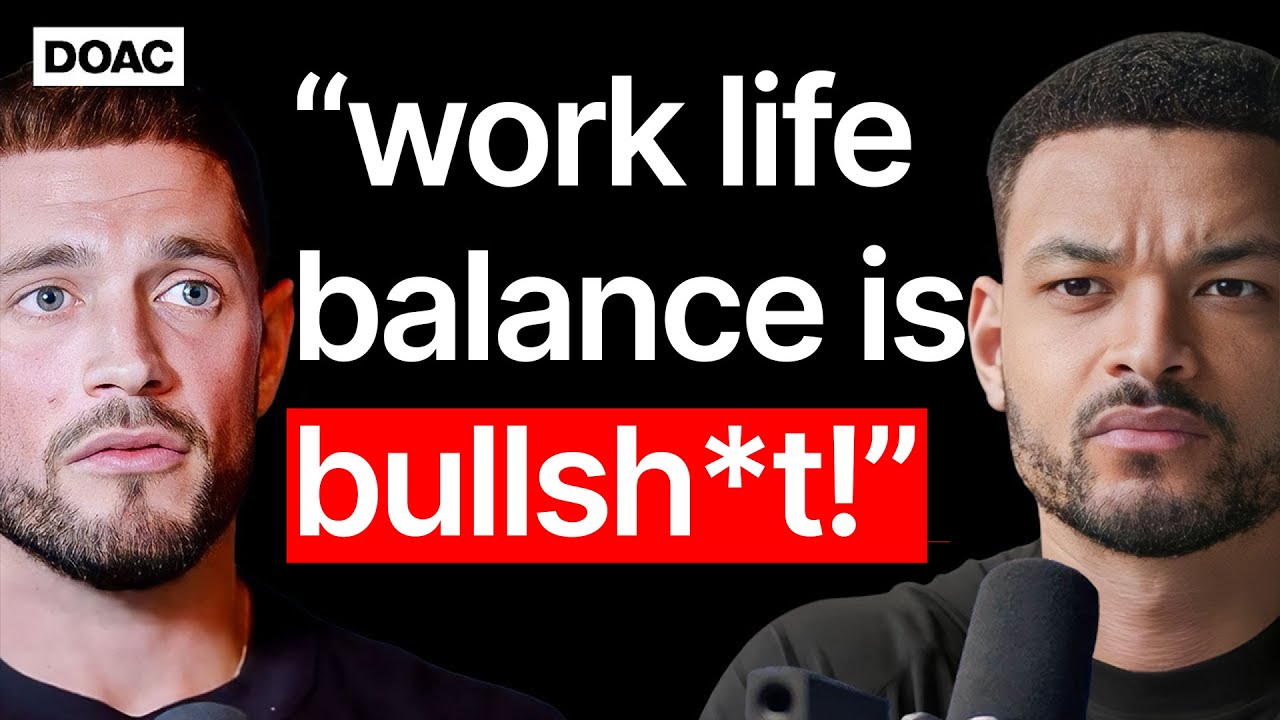
The Diary Of A CEO
George Heaton credits abandoning wholesale for direct-to-consumer drops and hiring experienced executives with turning his shed-built startup into a luxury fashion brand.
AI-assisted summary of From My Garden Shed To $100m Business Empire! “That Letter Was The End Of Represent” - George Heaton — original source. Check the original for full context.
Source published:
Detailed notes
## Background This episode was published on YouTube by The Diary Of A CEO on March 25, 2024. The page description outlines an interview with George Heaton, owner and creative director of the British luxury streetwear brand Represent, detailing his journey from starting out in a garden shed to building a $100 million business empire.
## TL;DR George Heaton shares the story of co-founding Represent alongside his brother Mike, growing it from a college side project in their father's garden shed to a luxury streetwear brand generating around $100 million in revenue. He reflects on surviving a existential two-year trademark legal battle, overcoming personal burnout, and implementing intense mental discipline like the 75 Hard challenge to rebuild his habits. Heaton also discusses stepping aside as CEO to hire experienced leadership, rejecting traditional work-life balance, and scaling Represent into an all-encompassing lifestyle brand.
## Atmosphere & style The conversation carries an intense, raw, and candid tone, balancing high-stakes business strategy with deep personal introspection. Heaton speaks with unapologetic ambition and stoic vulnerability, reflecting on periods of intense loneliness, anxiety, and the psychological weight of tying his entire identity to his brand. Host Steven Bartlett guides the discussion with steady, probing curiosity, creating a focused, high-energy environment that feels like an unvarnished blueprint for extreme dedication and performance.
## Key takeaways - [00:00](https://www.youtube.com/watch?v=sb2kXdfJmww&t=0s) George Heaton co-founded British luxury streetwear brand Represent with his brother Mike in their father's garden shed at age 18, scaling it into a business generating around $100 million in sales. - [02:40](https://www.youtube.com/watch?v=sb2kXdfJmww&t=160s) George's intense work ethic was influenced by his father's stoic daily discipline in his transport business and his mother's emotional encouragement and belief in his artistic talent. - [05:28](https://www.youtube.com/watch?v=sb2kXdfJmww&t=328s) The foundation for Represent was built on George's early fascination with garment fit—influenced by his tailor grandmother—and his brother Mike's graphic design talents. - [07:09](https://www.youtube.com/watch?v=sb2kXdfJmww&t=429s) After questioning the financial return of a traditional university degree compared to average graphic designer salaries, George launched Represent as a project to create a British counterpart to US West Coast streetwear brands. - [12:07](https://www.youtube.com/watch?v=sb2kXdfJmww&t=727s) During the early 'shedding phase' (2012–2015), George and Mike reinvested all revenue back into product quality and inventory without taking salaries for seven to eight years. - [26:44](https://www.youtube.com/watch?v=sb2kXdfJmww&t=1604s) In 2018, Represent faced a major operational plateau, falling into unprofitability due to wholesale issues, misaligned pricing, and personal fatigue, prompting a complete personal and operational reset. - [32:03](https://www.youtube.com/watch?v=sb2kXdfJmww&t=1923s) George turned his personal health and mental discipline around by completing Andy Frisella's 75 Hard challenge, using a self-drawn daily blueprint to realign his leadership and life habits. - [36:32](https://www.youtube.com/watch?v=sb2kXdfJmww&t=2192s) Represent pivoted its business strategy away from wholesale toward a Direct-to-Consumer (DTC) model built around weekly product drops, which triggered rapid financial scaling. - [46:23](https://www.youtube.com/watch?v=sb2kXdfJmww&t=2783s) Between 2018 and 2020, Represent survived an existential European trademark lawsuit that threatened to shut down the company before eventually acquiring the name rights. - [40:29](https://www.youtube.com/watch?v=sb2kXdfJmww&t=2429s) To scale beyond early limits, George stepped down as CEO to focus on his role as Creative Director, bringing in seasoned executives like Paul 'Spenny' Spencer to build professional corporate structure. - [01:00:08](https://www.youtube.com/watch?v=sb2kXdfJmww&t=3608s) George views brand identity like an iceberg, where design is only the tip while community, ethos, and lifestyle form the uncopyable foundation that protects against knockoffs. - [01:02:38](https://www.youtube.com/watch?v=sb2kXdfJmww&t=3758s) George openly embraces financial ambition, rejecting exit strategies in favor of building Represent into a long-term multi-billion-dollar brand that generates generational wealth. - [01:15:40](https://www.youtube.com/watch?v=sb2kXdfJmww&t=4540s) George completely dismisses the concept of work-life balance, believing that achieving legendary success requires total immersion, personal sacrifice, and relentless discipline over fleeting motivation. - [01:17:05](https://www.youtube.com/watch?v=sb2kXdfJmww&t=4625s) To preserve brand equity and avoid luxury dilution, Represent limits distribution to high-end global stockists, avoids deep-discount outlet channels, and expands organically into adjacent lifestyle verticals like activewear (247) and beverages (Cadence).
## Detailed walkthrough ### [00:00](https://www.youtube.com/watch?v=sb2kXdfJmww&t=0s) Introduction and the Philosophy of Extreme Work Ethic
The episode opens with a candid discussion on the concept of work-life balance and the personal sacrifices required to achieve world-class excellence. Reflecting on high performers, the narrative invokes Kobe Bryant's legendary late-night practice sessions, emphasizing that relentless dedication carries a steep personal toll. Host Steven Bartlett introduces George Heaton, the co-founder and creative director of Represent—a global British luxury streetwear brand worn by high-profile cultural icons such as The Weeknd, Post Malone, and Justin Bieber.
``` "Kobe Bryant wasn't doing free throws at 3:00 a.m. for no reason, but there's a cost to that, right?" ```
George traces his humble beginnings back to when he was 18 years old, working alongside his brother in their father's garden shed. Together, they slowly figured out garment production, moving from a handful of daily sales to an explosive surge of several thousand orders per day. After scaling past $35 million in revenue during their early twenties—a period marked by heavy partying, cars, and fast living—they realized that owning a business is vastly different from truly knowing how to scale one professionally. Surpassing $100 million in revenue required stepping aside to let experienced leaders build foundations for a billion-dollar brand, a transition nearly derailed by a critical legal crisis that threatened Represent's survival.
* **Key Milestones:** Scaled from a garden shed operation to $35M in revenue, eventually passing $100M. * **Celebrity Endorsements:** Worn by major artists including Justin Bieber, Post Malone, and The Weeknd.
---
[02:40](https://www.youtube.com/watch?v=sb2kXdfJmww&t=160s) Upbringing, Family Dynamics, and Childhood Influences
When asked about his overarching mission, George explains that it simply boils down to being the best version of himself and performing at the highest possible level every single day. His drive was heavily influenced by his parents' contrasting styles. His father was a quiet, stoic figure who ran a minibus business alongside George's grandfather. He drove a Range Rover, never got drunk, and consistently showed up to take the kids to school and football training every night, setting an unspoken baseline for discipline and personal ambition.
``` "I've never seen him drunk... he was a role model, like a stoic guy that would just work hard, show up, drop his kids off at school, come to football training every single night." ```
In contrast, George's mother was intensely supportive, constantly instilling words of affirmation. Every night, she would sit on the edge of his bed and tell him that he needed to "make it" and carry the family forward. Though this was a heavy responsibility to digest at a young age, her belief in his artistic talents gave him early confidence. While his older brother Mike was more introverted and kept to himself, George expressed himself outwardly, leading his mother to view him as the anchor for the family's future success.
* **Father's Work Ethic:** Ran a family minibus sales business; provided a stoic example of daily discipline and reliability. * **Mother's Affirmation:** Continually reinforced George's responsibility to lead the family and validated his artistic skills.
---
[05:28](https://www.youtube.com/watch?v=sb2kXdfJmww&t=328s) Early Fascination with Tailoring and Brotherly Inspiration
George's obsession with clothing started from a hyper-sensitivity to fit and materials during childhood. Suffering from sensitive skin, he was easily irritated by scratchy back-neck tags, stiff fabrics, or poorly fitted trousers. He took these garments to his grandmother, who was a professional tailor. She would alter his clothes by tapering legs and removing itchy collar labels, while teaching him to check fabric composition labels before buying anything. This early attention to detail directly shaped Represent's focus on quality and garment construction.
``` "She was a tailor, so she would taper things and take necks out... being that particular so young kind of stemmed into how I've built the brand and what it stands for." ```
Growing up in Bolton, where most kids wore tracksuits, had shaved heads, and hung out on street corners, George looked up to his older brother Mike as his ultimate idol. Mike was into California skate and surf culture, heavy metal, and rock music. The brothers stood out in their hometown, riding skateboards down cobbled streets wearing long hair, skinny jeans, and oversized DC shoes. Mike was naturally gifted at graphic design and art, leading George to follow in his footsteps by studying art and graphic design at college.
---
[07:09](https://www.youtube.com/watch?v=sb2kXdfJmww&t=429s) The Spark of Represent and the Drive to Outperform
During his college years, George was tasked with a project requiring students to create and sell art. Seeing his brother Mike previously hold a gallery exhibition to sell drawings, George began questioning the conventional career path. When a teacher noted that the average graphic designer salary was around £30,000 to £40,000, George realized that spending £9,000 a year on university tuition for a standard salary wouldn't allow him to achieve the lifestyle or success he envisioned.
Inspired by West Coast streetwear pioneers like Shepard Fairey (OBEY), Nicky Diamonds (Diamond Supply Co.), and Keith Hufnagel (HUF), who built successful empires selling graphic tees online, George set out to create a British counterpart. He combined his tailored design sensibilities with the emerging power of Instagram and YouTube, launching the college project that would become Represent.
``` "If University is going to cost me £9k a year and the average salary is £40k... I can't buy myself a Range Rover with that." ```
Driven by an explicit desire to make his family proud and equal—or exceed—his father's financial standing, George channeled his ambition into proving doubters wrong. Many around him doubted that an art background could lead to a viable, lucrative career, expecting the brothers to join the family minibus business instead.
* **Inspirational Brands:** OBEY (Shepard Fairey), Diamond Supply Co. (Nicky Diamonds), HUF. * **Economic Reality Check:** Rejected the standard designer path (£30k–£40k average salary) in pursuit of entrepreneurial scale.
---
[09:38](https://www.youtube.com/watch?v=sb2kXdfJmww&t=578s) The "Shedding Phase" and Overcoming Local Skepticism
George reflects on what he calls the "shedding phase"—the awkward transitional period when an entrepreneur strays from the societal norm and faces friction from peers and community. Early on, local acquaintances laughed at the venture, dismissing the business as a hobby or assuming their father was secretly funding the inventory.
``` "I remember getting a message on Facebook saying, 'That car your dad's bought you is packed up here, he's going to get a ticket on them yellow lines.'" ```
He vividly recalls an incident at age 19 or 20 when his Audi R8 broke down in his hometown. A local acquaintance sent him a snide Facebook message mocking him and claiming his father had bought the supercar for him. Rather than discouraging him, this skepticism fueled George's determination to scale Represent to a level so massive that it would completely drown out the local noise and prove his independence. Over time, those same critics eventually turned around to become loyal customers and supporters.
---
[12:07](https://www.youtube.com/watch?v=sb2kXdfJmww&t=727s) The Shed Years (2012–2015): From £10k to a Half-Million Business
In 2012, George officially started the brand, running everything out of his father's garden shed while attending university. Soon after, his brother Mike joined him. They spent their days balancing classes, sketching designs, liaising with factories in China, packing orders, and hand-delivering packages to the local post office.
``` "It was just going to the back garden where my dad's shed was... speak to some suppliers in China, go to university... pack orders, speak to customers, do it all again every single day." ```
The financial trajectory of Represent grew steadily across its formative years in the shed: * **Year 1:** Generated roughly **£10,000** in turnover. * **Year 2:** Scaled to approximately **£50,000** in revenue. * **Year 3:** Reached around **£500,000** (half a million pounds).
By the third year, the brothers formally incorporated as a limited company and hired an accountant. During an audit of their finances, the accountant bluntly told them that if they didn't have at least £100,000 cash in the bank, they were wasting their time and should shut it down. Luckily, they had significantly more than £100,000 saved, giving them the confidence to turn Represent into a full-time, professional venture.
---
[14:37](https://www.youtube.com/watch?v=sb2kXdfJmww&t=877s) Why Most People Fail to Start and the Long Horizon of Success
When discussing why aspiring entrepreneurs hesitate to launch their ideas, George points to the intense fear of failure, self-doubt, and the risk of wasting time—especially for those managing full-time jobs or family obligations. Building a brand requires an enormous investment of time before seeing any meaningful return, aligning with the cliché that it takes a decade to become an "overnight success."
``` "It takes so long... I know a lot of people say it takes 10 years to become an overnight success, and I think that's true." ```
For George and Mike, the years between 2012 and 2015 were a blend of trial-and-error learning and fun. They didn't take a salary for the first seven or eight years, reinvesting everything back into product quality and inventory. Success in those early days wasn't defined by personal payouts, but by the excitement of product launches—watching 500 to 1,000 people log onto their website simultaneously to buy a new drop.
[16:05](https://www.youtube.com/watch?v=sb2kXdfJmww&t=965s) Persistence in the Shed and the Catalyst of Failure
Reflecting on the early years operating out of his father's garden shed, George Heaton recalls the psychological dynamic of running a brand in complete obscurity. In those initial three years, no real revenue was coming in, yet he and his brother operated under the conviction that "everyone was watching us" and that Represent was destined to become the next fashion powerhouse. When asked why he didn't give up and get a "real job" under pressure, Heaton explains that his ultimate driver was proving doubters wrong and validating his own vision. The only alternative available to him at the time was working for his father's transport and vehicle business—a job he had done throughout his teens and deeply disliked.
Heaton's memories of those early products are a mix of pride and painful lessons. In the beginning, he bought wholesale blank clothing from the United States, printed on it in the UK, and sold it at zero profit. To fix his margins, he attempted to manufacture a collection in China. When the shipment arrived months later, the fabrics were completely wrong, the garments fit poorly, and the entire production run was ruined. Heaton vividly remembers collapsing onto his mother's kitchen floor and crying for hours that night. Ultimately, he credits those excruciating early mistakes with teaching him every operational layer of the fashion business from the ground up.
- **Early Financial Realities:** Represent operated for nearly three years without generating meaningful profit. - **Alternative Career Path:** Working for his father involved cleaning mini-buses, peeling stickers off windows, and bidding at car auctions—tasks he actively despised. - **Initial Supply Chain Pivot:** Transitioned from printing on imported US blanks to overseas manufacturing in China to achieve profitability, leading to a catastrophic quality-control failure.
[17:49](https://www.youtube.com/watch?v=sb2kXdfJmww&t=1069s) Long-Term Mindset and the £7 Million Plateau
For aspiring creators who feel intimidated comparing their early attempts to Represent's current polished output, Heaton offers a direct reality check: "You've got to put the work in. It's going to be 10 years." He emphasizes that regardless of the industry, founders must abandon short-term two-to-three-year horizons and adopt a decade-long commitment. Between 2012 and 2018, Represent scaled steadily from zero to around £6 million to £7 million in revenue. However, between 2015 and 2017, sales flatlined completely, creating an internal panic that the brand had hit its absolute ceiling.
Recognizing that doing more of the same would lead to failure, Heaton realized the brand needed a complete strategic overhaul. The missing key was direct alignment with their community. Instead of guessing what would sell or chasing arbitrary luxury trends, Represent had to actively talk to its core consumers and design specifically for what they wanted.
- **Growth Stagnation:** Revenue remained flat at £6–7 million annually from 2015 through 2017. - **Strategic Turning Point:** Rebuilding the brand required moving away from insular decision-making to deep, direct engagement with their core community.
[19:48](https://www.youtube.com/watch?v=sb2kXdfJmww&t=1188s) The Evolution of Hiring: "Hire Fast, Fire Faster"
When Represent began, Heaton hired exclusively from his circle of close friends because he lacked hiring experience and couldn't imagine bringing strangers to interview inside his father's garden shed. In the early stage, everyone wore fifty different hats with no defined job titles or accountability. While two of those original friends successfully evolved with the company and remain top executives today with a team of over 100 employees, Heaton admits the strategy broadly failed. He placed friends into specialized fashion roles they were unequipped for, stalling the brand's progress.
Looking back, Heaton's primary hiring advice to his 18-year-old self is to "hire fast, fire faster." He cautions against early founder biases, such as refusing to hire candidates who don't visually look the part or share identical personal tastes in streetwear. Furthermore, he addresses the common founder insecurity of feeling unqualified to manage people with superior industry experience.
- **Early Workforce Dynamics:** Initially staffed entirely by close friends working in an unstructured environment without official roles. - **Friendship Transition:** Out of the original shed team, only two friends scaled with the company into long-term executive positions. - **Overcoming Insecurity:** Realizing that bringing in top-tier talent from larger organizations accelerates growth rather than undermining founder authority.
[23:59](https://www.youtube.com/watch?v=sb2kXdfJmww&t=1439s) Bringing in Senior Leadership and Transparent Mentorship
Highlighting the transformative power of experienced hires, Heaton details the impact of recruiting a seasoned CEO who had previously managed a $500 million enterprise. At the time of the hire, Represent was generating roughly £20 million. The new CEO introduced institutional retail mechanics that Heaton and his original team had no awareness of—such as structuring product lifecycles, managing geographic distribution, and maintaining multi-year steady sales on core carryover items rather than relying solely on quick, hype-driven sell-outs.
Because Heaton lacked mentors when starting out at 18 and views paid online business courses as "the biggest load of [expletive] ever," he uses YouTube and Instagram to document his exact operational processes behind the scenes. He encourages young entrepreneurs to study public digital footprints, note past execution styles, and leverage the abundance of transparent, authentic content now available online.
- **Executive Impact:** Bringing in a CEO from a $500M background unlocked the path to scale Represent from £20 million to £50 million and beyond. - **Shift in Product Strategy:** Transitioned from a purely limited-drop model to balancing hype releases with sustained core carryover inventory. - **Open-Source Learning:** Heaton rejects paid "how-to" courses, advocating instead for studying long-form behind-the-scenes documentaries and historical social media archives.
[26:44](https://www.youtube.com/watch?v=sb2kXdfJmww&t=1604s) Hitting Personal and Financial Rock Bottom in 2018
Around 2018, just before the COVID-19 pandemic, Heaton experienced a profound personal and professional crisis. Driven by negative feedback from press outlets, rejection from wholesale buyers, failed runway attempts, and misaligned price points, he lost his motivation. Compounding the issue, the brand turned unprofitable after years of solid revenue. Heaton admits that during his early twenties, making good money led to "messing around" and taking his eye off the operational execution of the business.
This commercial setback coincided with a personal low point. At age 25 or 26, Heaton struggled with intense insecurity, shyness, bad eating habits, an unhealthy physical appearance, and a persistent negative mindset. A painful breakup with his girlfriend further solidified this period as his personal "rock bottom." He notes, "the best view of Heaven is from Hell," explaining that hitting the absolute bottom was the necessary catalyst to trigger a radical overhaul of both his life and his brand.
- **Financial Reality Check:** After years of profitability, 2018 marked a shift into unprofitability, serving as a wake-up call to stop slacking off. - **Personal Struggles:** Battle with low self-confidence, extreme shyness, unmanaged anger, poor health habits, and a major relationship breakup. - **The Redesign Process:** To force a complete identity shift, Heaton—drawing on his artistic background—literally drew a physical sketch of the idealized version of himself he wanted to become, using it as a daily blueprint to rebuild his habits, appearance, and leadership.
Here is a detailed, faithful walkthrough of this section of the interview.
---
[32:03](https://www.youtube.com/watch?v=sb2kXdfJmww&t=1923s) Personal Transformation and the 75 Hard Challenge
Steven Bartlett brings up how a close friend named Anthony completely turned his life around after hitting rock bottom—quitting alcohol, going to the gym, and following a set of strict daily rules stored in his phone's notes app. George Heaton reveals that he did the exact same thing to reshape his own life and still receives those daily pops and reminders on his phone every morning. He discovered Andy Frisella’s "75 Hard" challenge, a 75-day mental toughness program designed around extreme daily discipline.
The strict regime required him to eliminate alcohol entirely, drink a specific amount of water daily, write down five key tasks every morning, complete two daily workouts (one outdoors and one indoors), and read 10 pages of a book every night before bed. He spent those late nights reading works by Ryan Holiday and Robert Greene. As he adhered to this structure, he saw rapid, dramatic transformations in his energy levels, sleep quality, cardiorespiratory endurance, and physical strength. This personal transformation ran parallel to a turnaround in the business; as the brand started succeeding, Heaton became addicted to the cadence of total optimization, controlling his exact daily calorie intake and sleep schedule down to the detail.
* **75 Hard Routine:** 2 daily workouts (1 outdoors, 1 indoors), no alcohol, strict water intake, 5 written daily goals, and 10 pages of reading per night. * **Reading List:** Ryan Holiday and Robert Greene. * **Public Perception vs. Reality:** Heaton notes that people often view his 5:00 a.m. runs and 20-mile training sessions as "genetics" or "steroids," but he admits he used to make those same excuses when he was overweight and struggling. He emphasizes that big life changes simply require consistent, incremental steps—whether starting with 10,000 daily steps or a simple 20-minute workout.
---
[36:32](https://www.youtube.com/watch?v=sb2kXdfJmww&t=2192s) Reinventing Represent: The Pivot to Direct-to-Consumer and Weekly Drops
Around 2018, while the business was stagnant, George and his team undertook a complete reinvention of Represent. They stripped away their wholesale distribution network to focus entirely on Direct-to-Consumer (DTC) sales through a weekly drop model. Right before the pandemic, James, the Chief Product Officer, advocated moving production out of the UK and Italy—where margins were nonexistent—over to Portugal. Heaton initially fought James aggressively over this shift, but James pushed through a nine-month overhaul of the supply chain that saved the company's margins.
Concurrently, Mike began designing fresh graphic styles, while George brought back design inspirations from Los Angeles trips, focusing on fit-tested vintage t-shirts and cargo pants. They brought on a developer named Stefan to rebuild the website's functionality and aesthetic, wiped their social media accounts clean, and executed a complete brand reset.
> "We put like 300 t-shirts online and we sold 300 in a minute. And then the next week Mike did another design and we sold 600 in a minute, and then 900 in a minute... We've gone from doing 10, 15 sales through the day to like a thousand every single Wednesday, 2,000, 3,000, 4,000."
* **Key Team Roles:** James (Chief Product Officer) overhauled production to Portugal; Mike led graphic design changes; Stefan managed website infrastructure; George brought core product fits (LA-inspired tees and cargo pants). * **Direct-to-Consumer Model:** Shifted to a weekly drop system every Wednesday, which provided instant liquidity and rebuilt brand momentum. * **Financial Scaling:** The company surged from small daily volume to generating £30 million to £35 million in revenue with a core team of only 20 people, operating at high velocity without a full corporate structure in place.
---
[40:29](https://www.youtube.com/watch?v=sb2kXdfJmww&t=2429s) Evolving Culture and Stepping Aside as CEO
Reflecting on those high-growth years, Heaton admits that as a young founder, insecurity led him to overcompensate by trying to manage everything. He realized he would hold the business back if he remained in the CEO position. To sustain the growth from £35 million toward £50 million and beyond, they brought in Paul "Spenny" Spencer as CEO. Spencer, who joined after five years of relationship-building while working at Puma, brought a human-centered "people over profit" philosophy that transformed company culture.
Heaton stepped aside into the Creative Director role, allowing him to stay in his zone of genius alongside his brother Mike while letting operational experts build scalable corporate infrastructure.
* **Key Hire:** Hired Paul "Spenny" Spencer (formerly at Puma) as CEO. * **Company Culture Perks:** In-house employee gym with collective 6:00 a.m. workout sessions. * **Creative Protection:** Heaton actively shields his brother Mike from operational stress, feedback loops, and business negativity so Mike can focus entirely on designing without creative burn-out. * **The Creative Dilemma:** Heaton notes that sitting in business board meetings drains his creative energy after 15 minutes, whereas he can happily spend 12 hours straight in a room with Mike designing new collections.
---
[46:23](https://www.youtube.com/watch?v=sb2kXdfJmww&t=2783s) The Trademark Lawsuit That Nearly Ended the Brand
Heaton reveals that the single hardest period in Represent's history occurred between 2018 and 2020. They received a legal letter from another company in Europe operating under the name "Represent," claiming exclusive ownership of the trademark across the European continent. The entity demanded monetary damages exceeding everything the business owned and threatened to halt their operations completely.
For roughly two years, every single day was filled with existential dread while waiting for legal updates. Heaton, Mike, and James kept the existential crisis hidden from the rest of the team and their family to avoid spreading panic. The ongoing legal battle severely restricted their daily decision-making, inventory purchases, and strategic moves until it was ultimately resolved.
* **Timeline:** 2018 to 2020. * **The Legal Threat:** European trademark dispute with another company named Represent claiming ownership and seeking damages. * **Impact:** Threat of complete shutdown and potential financial wipeout during the critical pivot phase of the company.
[47:48](https://www.youtube.com/watch?v=sb2kXdfJmww&t=2868s) The Trademark Battle That Almost Ended Represent
During the brand's darkest period between 2018 and 2020, George Heaton and his brother faced an existential legal crisis. Although they held the trademark for Represent in the UK and across much of the world, another individual owned the European trademark rights under Section 25 (the clothing category). What Heaton initially assumed was a dormant trademark turned out to belong to someone who refused to negotiate, repeatedly ignoring outreach from lawyers and shutting down every attempt to settle. The situation hung over Heaton's head like "the devil that woke you up every night," creating a constant "Dark Cloud" of dread.
The legal standoff forced Represent into functional hiding. Unsure if they would have to completely scrap and rebrand the company, Heaton and his team spent months sitting in their back office trying to brainstorm alternative brand names. They were forced to maintain complete silence on social media, terrified that showing growth or profitability would signal to the trademark owner that he could demand a higher price. Communication from the opposing party's lawyers arrived agonizingly slowly—often taking three months to respond, only to deliver stressful news on the final day of a deadline while Heaton was traveling abroad on production trips to Portugal.
The psychological toll was overwhelming, bleeding into every facet of life and creating constant anxiety. Heaton felt like he could not even buy a simple sandwich without feeling like he was spending money that wasn't truly his. However, he transformed this immense pressure into fuel, channeling it into running. He began running 15K routes in 2020, making a mental pact that stopping or giving up during a run was equivalent to letting the trademark owner defeat them. Finally, around March 2020—just as Represent began to experience explosive growth and build sufficient capital—the trademark holder agreed to sell the name for millions of pounds.
* The trademark dispute centered around "Section 25", which represents the official clothing classification category in trademark law. * At the time of the dispute, Represent had roughly 20 employees who faced losing their jobs if the brand was forced to shut down or start over. * The legal settlement was signed in March 2020, costing millions of pounds to secure the global name rights. * "Every decision you make, whether it's buying a sandwich from the shop, it's like that's not your money to buy that sandwich 'cause someone else owns the name where you're making that money." * "I was like, 'I'm going to go out and run 15K, and if I stop, that's like him coming for us.' You know, he's like, I have to do it. I have to win at everything we do."
---
[53:39](https://www.youtube.com/watch?v=sb2kXdfJmww&t=3219s) Dealing with Anxiety and the Pressure of Business
Reflecting on the psychological burden of the trademark ordeal, host Steven Bartlett shares his own first memory of business anxiety—the overwhelming dread he felt sitting in his Manchester apartment before flying to New York to fire his managing director. Bartlett notes that 95% of anxiety stems from the vivid terror of one's imagination before an event actually occurs. Heaton candidly admits that while he generally considers himself mentally resilient and goal-driven, the trademark dispute caused him real anxiety. However, he has learned to view moderate anxiety as a constructive learning signal rather than a crippling roadblock.
Heaton explains that his primary method for coping with high-stress situations—whether firing an employee or facing public appearances—is exhaustive preparation. By thoroughly understanding the rationale, the best outcomes for both parties, and all potential scenarios, the fear of the unknown dissipates. He admits to feeling deep anxiety before coming onto major podcasts despite having completed roughly a hundred media appearances, proving that nervous energy never truly disappears, but can be managed through structured preparation.
* Bartlett highlights that 95% of anxiety is driven by imagination prior to an event taking place. * Heaton stresses that preparation is the ultimate antidote to business anxiety: understanding every detail removes unpredictable variables during tough conversations. * "I kind of now... enjoy the bits of anxiety I get because you learn from it... Once that's done, you have that relief and then you know next time you do it, this is how it goes."
---
[55:55](https://www.youtube.com/watch?v=sb2kXdfJmww&t=3355s) What Makes Represent Special: Cult, Community, and Quality
Bartlett, an avid fan who wears Represent head-to-toe—including his staple 24/7 pants—asks Heaton to define the elusive "secret sauce" behind Represent's ascension from an £8 million revenue business into a cult phenomenon. Heaton attributes it to the raw authenticity of two brothers from Manchester who defied traditional luxury fashion rules. Represent created a tight-knit global community where customers feel an immediate, unspoken bond with one another—such as two strangers wearing an "Owner's Club" hoodie acknowledging each other in public.
Beyond brand identity, the foundation of Represent’s cult-like following is a relentless commitment to over-delivering on quality. Heaton operates with an innate desire to exceed customer expectations at every single touchpoint. Whether someone orders a hoodie expecting average streetwear quality or receives a package days ahead of schedule, the physical product and customer experience are intentionally engineered to surprise them, converting casual buyers into brand evangelists.
* Represent's popular sub-line, the "Owner's Club" range, acts as an instant identifier of shared identity and community within the brand's global ecosystem. * Heaton views quality as the primary conversion tool to turn curious social media followers into lifelong brand loyalists. * "Two brothers that from Manchester that don't really belong in fashion have come up and done this really cool thing where they're proving that we don't need to just follow the rule book."
---
[58:09](https://www.youtube.com/watch?v=sb2kXdfJmww&t=3489s) The Invisible Work Behind the Scenes
When asked about the hidden efforts that outsiders fail to see, Heaton highlights his brother Michael's dedicated, low-profile creative leadership. Michael spends every day locked in design rooms alongside his graphics team, fine-tuning garments and aesthetics away from the public spotlight. Beyond the core creative vision, Represent’s success relies on a highly synchronized ecosystem encompassing logistics, garment technicians, production teams, and content creators who are completely bought into the company's long-term vision.
Heaton emphasizes that visitors to Represent’s headquarters—whether retail partners, collaborating brands, or guest creators—are consistently blown away by the intensity, culture, and operational scale inside the building. The leadership team has successfully instilled a unified mission across all departments to build a brand designed to endure well beyond the founders' personal lifetimes.
* Michael Heaton works hands-on daily with the internal graphics team, garment technicians, and design production specialists. * Heaton stresses that the internal company culture operates as an ecosystem where every department—from logistics to content creation—is completely aligned with the brand's long-term mission.
---
[01:00:08](https://www.youtube.com/watch?v=sb2kXdfJmww&t=3608s) Dealing with Design Knockoffs and Building an Uncopiable Brand
Addressing the widespread copying of Represent’s designs across the fashion industry, Heaton admits that early in his career, knockoffs made him feel angry, as if competitors were "taking food off your table." However, his perspective has matured. He now views design theft as an inevitable validation that their work is leading the market. He candidly acknowledges that when starting out, Represent also drew inspiration from established brands, but notes that even high-luxury fashion houses frequently copy independent designers.
Both Heaton and Bartlett agree that while competitors can duplicate a logo or a silhouette, they can never replicate what lies beneath the surface—the "underwater portion of the iceberg." A brand’s true power is not its physical text or design graphics, but its overarching lifestyle, prestige, fitness culture, and community values. A counterfeit brand cannot replicate the emotional payoff of belonging to the Represent lifestyle.
* Represent's revenues scaled from £8 million in 2018 to approximately $100 million in 2023. * Heaton views brand identity as an iceberg: physical designs are merely the visible tip, while community, ethos, and lifestyle represent the uncopiable base beneath the surface. * "They're not buying into this word... they're buying into this essence of like them becoming part of this club... The most important stuff they can't copy. No one can copy that."
---
[01:02:38](https://www.youtube.com/watch?v=sb2kXdfJmww&t=3758s) Unapologetic Ambition and Views on Money
As Represent crossed the $100 million revenue mark, Heaton rejects the conventional modesty often expected of successful entrepreneurs regarding financial gain. He openly embraces money as a powerful motivator, criticizing the societal tendency to view wealth creation negatively. While acknowledging that many high-net-worth individuals publicly claim to act solely out of passion while privately admitting a desire to build massive wealth, Heaton chooses to be transparent about his financial goals.
His vision extends beyond personal enrichment; Heaton wants Represent to scale into a multi-billion-dollar enterprise that generates generational wealth for his entire executive team and employees. He believes in creating immense value for everyone involved in building the business, pushing the brand toward global dominance without shame or hesitation.
* Represent achieved roughly $100 million in sales in the year prior to the interview. * Heaton openly states his goal is to scale Represent into a multi-billion-dollar brand. * "I want Represent to be doing billions. I want everyone in the business to be extremely wealthy. I want the leadership team to be able to have generational wealth."
[01:03:31](https://www.youtube.com/watch?v=sb2kXdfJmww&t=3811s) "Money Never Has a Negative Impact": Wealth, Happiness, and Exit Strategies
Steven asks George if having an extra £100 million in his bank account would truly make him any happier. George reflects candidly, stating that he doesn't measure his life on happiness alone—doing hard, painful things like running until his legs are completely ruined or sitting in design sessions for six hours straight is what brings him satisfaction. While money itself doesn't guarantee joy, George firmly pushes back on the idea that wealth is pointless: "Money never has a negative impact." A billion dollars would allow him to permanently set up his family and team for life. Being able to walk up to his father, who worked tirelessly his whole life, and hand him complete financial security is a source of profound happiness.
When Steven presses him on an exit strategy and how he plans to attain that wealth without selling, George clarifies that he doesn't need a billion dollars sitting in a personal bank account and prefers growing through profits. Looking at Steven's own exit from his business, George notes that Steven had another passion and platform (his podcast) lined up. In contrast, George has no desire to leave Represent because he has nothing else he'd rather do. Represent is inextricably woven into every facet of his life, from his daily conversations to his fitness regimen, which sparked the creation of his 247 line as a passion project.
- George emphasizes that 247 allows him to collaborate with top-tier athletes and absorb invaluable knowledge, making the brand a vehicle for personal growth rather than just a commercial enterprise. - He sees no logical reason to sell a company that doubles as his primary life passion.
---
[01:05:38](https://www.youtube.com/watch?v=sb2kXdfJmww&t=3938s) The Toll of Identity Fusion and the Anxieties of Launch Day
Steven points out the hidden cost of tying one's personal identity completely to a corporate brand: if the brand stumbles, goes out of style, or drops in revenue, an entrepreneur's self-esteem takes a direct hit. George agrees "100%," acknowledging that whenever product launches go wrong or fail to meet expectations, it messes with his confidence. These moments serve as stark reminders that he isn't superhuman and that not everything he touches turns to gold, forcing him back to the drawing board.
During those tough periods, George turns to his CEO, Paul Spencer ("Spenny"), to talk through the setback over a couple of days. Spenny helps put things back into perspective, reminding George that minor failures are merely small bumps along a ten-year learning curve. Rather than dwelling on single product stumbles, George focuses on the long-term vision of building a brand that endures.
- Launch days that underperform inflict a real psychological hit that can take several days to process. - Constant communication with trusted executives like Spenny helps anchor George during low points.
---
[01:07:03](https://www.youtube.com/watch?v=sb2kXdfJmww&t=4023s) "Lonely, But I Didn't Know It": Isolation and Weekend Distractions
Reflecting on the personal cost of his obsession, George admits that for over a decade he had no life outside of Represent. Steven recalls his own days of spending seven days a week in an empty office simply because he had no outside social circle. George resonates deeply with this, describing Sundays as his absolute worst days. Because the rest of the team was off spending time with their families, George would train at a local gym from 6:00 a.m. to 9:00 a.m. and then sit at home waiting impatiently for Monday to arrive.
Looking back, George realizes he was using extreme exercise—like working out for five hours or putting on headphones to listen to audiobooks—and superfluous work tasks to fill empty hours on weekends, summer evenings, and holidays. While he didn't feel lonely in the moment, hindsight reveals that he was using "pointless work" to distract himself from his isolation. Realizing that he could accomplish nothing without his team, he recognized that he was essentially "pretending to work" on Sundays.
> "I was lonely, but I didn't know it at the time... I only know it in hindsight because I look back at the way I was living."
---
[01:09:34](https://www.youtube.com/watch?v=sb2kXdfJmww&t=4174s) Curating the Social Environment and "Shedding" Negative Influences
When asked about how much environment impacts personal and professional success, George asserts, "I think it's everything." Creating the right ecosystem ranges from practical details—like proximity to the gym—to strict management of one's digital feed. He argues that spending even 20 seconds a day watching an old school acquaintance out drinking on social media is a complete waste of focus. Instead, people should ruthlessly prune their social media feeds to follow only those who inspire them or have achieved what they aspire to accomplish.
George admits he actively unfollowed and removed negative or uninspiring influences from his own life, which naturally led to backlash. Former acquaintances sent him bitter messages asking why he unfollowed them, to which George gave direct, unvarnished responses: "I don't want to watch you sit anymore."
- George advocates for aggressively curating both physical environments and social media feeds to protect mental headspace. - He values brutal transparency over politeness when cutting ties with non-aligned influences.
---
[01:11:01](https://www.youtube.com/watch?v=sb2kXdfJmww&t=4261s) Dating, Avoidant Attachment, and the Guilt of Taking Time Off
Turning to romantic relationships, George reveals that romance was virtually non-existent for most of his twenties. He attempted a relationship around age 25 or 26, but it failed because he was completely obsessed with work, disliked who he was, and lacked a stable sense of identity. Up until recently, he refused to entertain dating altogether to avoid letting partners down due to his overwhelming work schedule.
When Steven jokingly quizzes George on whether he currently has a girlfriend, George playfully stammers, leading Steven to diagnose him with an avoidant attachment style. George explains that hiring Spenny and relocating part of his focus to Los Angeles freed up his schedule, allowing him to finish work by 2:00 p.m. or 3:00 p.m. However, stepping back into dating brought a new psychological burden: intense guilt. Spending four hours on a date leaves George feeling anxious the next morning, feeling as though he wasted time that could have been invested into building Represent.
> "I have this [__] feeling where I'm not fulfilling what I should be doing, and I'm kind of giving myself a disservice if I'm out doing something else... It feels like your passion's become a bit of a prison."
---
[01:15:40](https://www.youtube.com/watch?v=sb2kXdfJmww&t=4540s) Work-Life Balance as a Myth and Kobe Bryant Motivation
When asked about his stance on work-life balance, George doesn't pull his punches: "Bullshit." He strongly believes that building something truly legendary that stands the test of time requires total dedication. Side projects, three-hour workdays, or half-hearted attempts will never produce elite results or make someone a true winner. To reach the top tier, an entrepreneur must be willing to sacrifice everything necessary.
George draws inspiration from Kobe Bryant's legendary work ethic, pointing out that Kobe wasn't practicing free throws at 3:00 a.m. for no reason—he did it to be the best. While George is open to the idea of having a family later in life when he can step back further, he is currently content giving every waking hour to his mission. He views learning to relax without anxiety as a muscle he is slowly trying to build.
- George rejects the standard concept of work-life balance for high achievers, arguing that greatness demands absolute immersion. - He acknowledges the heavy personal sacrifices—such as delaying family life—as necessary trades for success.
---
[01:17:05](https://www.youtube.com/watch?v=sb2kXdfJmww&t=4625s) Protecting Brand Equity: Managing Growth and Over-Exposure Risk
Steven raises the cautionary tale of Burberry, illustrating how luxury brands can suffer from their own success when over-exposure, mass-market counterfeit culture, and rapid popularity strip away their aspirational status. George acknowledges this classic brand life-cycle challenge but explains why Represent is not currently at risk. Compared to giant fashion houses, Represent is still relatively small, with a deeply understood, highly targetable core customer base.
George highlights that mainstream brand dilution generally doesn't become a serious threat until a company reaches around $250 million to $300 million in revenue. With Spenny having previously managed a $500 million business, the executive team maintains a clear perspective: Represent is barely scratching the surface of its global potential. For instance, the U.S. market accounts for only $20 million of their business, meaning products are still rare enough that someone could walk around Los Angeles for six months without seeing another person wearing the brand.
- George actively manages scarcity by restricting distribution to high-end global stockists rather than mass-market retailers. - He notes that luxury positioning is protected by high price points and deliberate retail placement.
[01:19:02](https://www.youtube.com/watch?v=sb2kXdfJmww&t=4742s) Tiering, Pricing, and Brand Identity
George Heaton and Steven Bartlett examine how legacy brands manage product tiering without cheapening their core identity. They analyze Nike's strategy of selling ultra-exclusive, five-thousand-dollar Travis Scott or Virgil Abloh Jordan 1s alongside twenty-dollar basic tracksuits worn universally from Gold's Gym to Equinox. They debate whether this strategy succeeds because sportswear is driven by utility rather than pure fashion, contrasting it with luxury houses like Ralph Lauren. Heaton points out that despite Ralph Lauren's high-end flagship stores in London, New York, and Los Angeles, a massive portion of their business comes from outlet sales offering heavily discounted polo shirts.
Rather than relying on "smoke and mirrors" or pushing extreme mass-market discounts to generate volume, Heaton emphasizes that Represent maintains strict clarity around its marketplace positioning and price points. Represent prefers to build equity through steady, organic brand building rather than aggressive down-market tiering.
- **Nike's Tiering Model:** Balances $5,000 limited-edition sneakers (e.g., Travis Scott / Virgil Abloh collaborations) with $20 mass-market tracksuits. - **Ralph Lauren's Sales Distribution:** Maintains elite boutique presences, but reportedly generates roughly 60% of sales through outlet channels (e.g., $15–$20 polo shirts). - **Represent's Strategy:** Avoids deep-discount outlet models in favor of protecting brand equity and main-line pricing structure.
---
[01:20:27](https://www.youtube.com/watch?v=sb2kXdfJmww&t=4827s) The Core Principles of Building a Cult Brand
When asked what core principles an eighteen-year-old entrepreneur should follow to scale a cult brand, Heaton highlights the necessity of establishing and protecting a distinct "brand DNA." Rather than constantly changing directions to chase fleeting trends, a founder must cultivate an unwavering look and aesthetic that endures across market cycles. He uses Represent's activewear line, 247, as an example: rather than imitating established activewear giants like Lululemon, 247 was designed to look and feel authentically like Represent.
Heaton explains that this brand DNA is rooted in personal authenticity—creating clothes that he, his brother Mike, and their internal team genuinely love and want to wear themselves. He argues that filling genuine gaps in your own wardrobe creates a far more compelling product than trying to guess what a generic consumer wants.
- **Brand Consistency:** Stick to a core brand DNA through all market cycles rather than changing aesthetic directions based on short-term trends. - **247 Sub-Brand Example:** Built as a direct performance extension of Represent's existing aesthetic rather than mimicking competitors like Lululemon. - **Product Origin:** Products stem directly from the personal tastes and needs of George, Mike, and their core team.
---
[01:22:11](https://www.youtube.com/watch?v=sb2kXdfJmww&t=4931s) Hard Work, "Toxic" Culture, and Choosing All-In Focus
Heaton rejects the modern habit of spreading oneself thin across multiple ventures. He frequently encounters people who own tiny minority stakes in numerous businesses without working hard on any single one, leading to negligible results. For Heaton, building something extraordinary requires going completely "all in" on a business you truly own and care about deeply.
When Bartlett notes that telling young people to work hard is often criticized as "toxic" or a fast track to burnout, Heaton bluntly dismisses the critique: "That word just makes no sense." He contends that pushing through tough, high-pressure periods actually expands an individual's capacity. Coming out the other side of extreme effort builds resilience and brings back energy once results start showing up.
- **Focus vs. Diversification:** Going "all in" on a majority-owned venture beats holding 1% shares in multiple passive investments. - **Perspective on Burnout:** Pushing through tough, high-pressure working periods increases personal capacity rather than causing permanent damage. - **Rejection of "Toxic" Labels:** Views societal pushback against extreme hard work as an unproductive narrative that discourages real achievement.
---
[01:23:46](https://www.youtube.com/watch?v=sb2kXdfJmww&t=5026s) Discipline Over Motivation
Addressing young people who struggle to find "motivation" on the couch, Heaton states bluntly, "Fuck motivation." He views motivation as a fickle, fleeting emotion that might last two minutes after hearing a song on an iPod. True achievement relies entirely on discipline: the willingness to get up and execute every single day over years, knowing how long the process takes.
Heaton defines discipline as an "instruction manual"—a strict list of daily non-negotiable actions required to become the person you want to be. Bartlett adds that discipline means living by a predefined set of core values rather than reacting to how one feels on a given morning. Over time, practicing these principles builds a mental "muscle" that transforms temporary habits into permanent identity.
- **Motivation vs. Discipline:** Motivation is brief and unpredictable; discipline is the daily commitment to execution regardless of mood. - **Discipline as an Instruction Manual:** A self-imposed checklist of actions required to achieve long-term goals. - **Habit Formation:** Repeated disciplined actions build identity: "Thoughts become habits, habits become principles, and that becomes you."
---
[01:26:16](https://www.youtube.com/watch?v=sb2kXdfJmww&t=5176s) Business Doubts and the Dynamic with Co-Founder Mike
Despite his self-confidence, Heaton admits to having constant business doubts—fearing that revenue might plateau, the brand might become overexposed, or a competitor might emerge from nowhere to take market share. However, when Bartlett poses the ultimate hypothetical—what if his brother and co-founder Mike decided to quit—Heaton grows visibly emotional, stating he would probably cry and do everything in his power to get him back.
"I'd fucking die for Mike," Heaton shares, explaining that if forced to choose between leaving the business himself or having Mike forced out, he would gladly step aside. He reflects on how their shared journey since school forms the core emotional engine of Represent. Sharing the excitement of a new design with Mike provides the energy that fuels the entire business, making a trusted co-founder an invaluable buffer against startup loneliness.
- **Founder Insecurities:** Constant awareness of business risks, including sudden market shifts, brand fatigue, and emerging competitors. - **Brotherhood and Co-Founder Bond:** George views his partnership with his brother Mike as the fundamental reason for building the business. - **Mitigating Loneliness:** Having a complementary co-founder provides essential emotional support and shared excitement during high-stakes growth.
---
[01:30:28](https://www.youtube.com/watch?v=sb2kXdfJmww&t=5428s) Hiring Hard Truths and Managing Company Growth
Discussing executive recruitment and employee performance, Heaton identifies the single worst quality in a teammate: being "stuck in old ways" and resistant to change. He highlights advice given to him by Represent's chairman, Paul Spencer (referred to as "Spenny"): different stages of business growth require entirely different capabilities. The people who take a company to £50 million are rarely the same people who can take it to £250 million or £1 billion.
Bartlett and Heaton discuss the friction that inevitably occurs when a fast-growing company hires experienced senior talent above early-stage employees. Often, "The Originals" view incoming executives as a threat or a barrier to their own promotion. Heaton explains that while ego and comfort zones make people resist these changes, open-minded employees realize they can learn from senior leaders and ultimately accelerate their own long-term career growth.
- **Paul Spencer's ("Spenny") Hiring Rule:** Acknowledges that different talent is required at different revenue milestones (£50m vs. £250m vs. £1b). - **Managing "The Originals":** Bringing in senior executives above early employees frequently creates friction and ego clashes. - **Key Employee Trait:** Adaptability and open-mindedness are essential for employees navigating rapid company scaling.
---
[01:32:40](https://www.youtube.com/watch?v=sb2kXdfJmww&t=5560s) Opening Physical Retail Stores and Expanding 247
Looking ahead, Heaton outlines Represent's immediate expansion plans, which include scaling women's wear, building out a dedicated team for the 247 activewear line, and opening the brand's first three physical flagship stores. While industry trends lean heavily toward pure e-commerce, Heaton sees physical retail as a massive strategic advantage. Just as Represent capitalized on factory capacity during COVID-19 lockdowns while competitors pulled back, opening physical stores offers a tangible touchpoint for their passionate global community.
Rather than treating stores as simple transactional spaces with clothes hanging on racks, Represent aims to create immersive physical hubs for their community. These locations will serve as physical headquarters for their popular global run clubs—already active in cities like Los Angeles and Dubai—allowing customers to fully smell, touch, and experience the lifestyle world of Represent.
- **First Physical Retail Stores:** Launching three standalone flagship stores globally. - **Strategic Contrarianism:** Expanding physical footprint while competitors rely solely on digital channels, echoing their growth strategy during COVID-19. - **Community Hub Strategy:** Retail locations will host community events and run clubs (building on activations in LA and Dubai) to deepen brand immersion. - **Key Growth Areas:** Scaling the women's wear line and establishing a dedicated division for 247 activewear.
[01:34:17](https://www.youtube.com/watch?v=sb2kXdfJmww&t=5657s) Launching Cadence and Expanding into Gyms
George reveals that he is expanding beyond apparel by developing gyms and a new beverage company called Cadence. Cadence is a high-sodium, ready-to-drink electrolyte beverage in a can, which he spent a year and a half developing alongside a collaborator named Ross. The idea stems back to 2019 and 2020, when George deeply committed to fitness, lifestyle, and overall health. Since making electrolyte consumption a daily routine, he hasn't been sick a single day, maintaining elevated energy levels, improved sleep quality, and complete relief from headaches. Loving flavored drinks himself, he wanted to formulate a tailored version, which was validated through a successful trial collaboration last year.
Rather than treating Represent as merely a clothing company, George envisions it as a broader lifestyle and ecosystem. He emphasizes that he wants the clothing itself to become almost a byproduct of an overarching culture, stating, "I want Represent to be a lifestyle and not a brand... I want it to be unconventional and I want it to be more than just clothes."
- Cadence is designed as a canned, ready-to-drink electrolyte beverage featuring high sodium. - Gym concepts under the brand umbrella are slated for potential development next year. - George attributes his unbroken streak of good health, energy, and lack of headaches since 2019/2020 directly to daily electrolyte supplementation.
---
[01:36:09](https://www.youtube.com/watch?v=sb2kXdfJmww&t=5769s) The Mission vs. The Exit Strategy
When asked about the ultimate finish line or financial exit strategy for Represent, George rejects the traditional corporate approach of building to sell. He notes that the journey started with 25 screen-printed T-shirts and has no artificial ceiling over the next century. He references Gymshark founder Ben Francis, who remained deeply involved in his business even after reaching a billion-dollar valuation, as proof that true passion transcends monetary gain. George criticizes early-stage founders who obsess over multi-billion-dollar exit strategies within three years, calling that mindset a "shit way of thinking" that rarely succeeds.
The host agrees, contrasting short-term business ventures with genuine life missions. True entrepreneurs, he notes, "buy into their own shit brand" and live it every day without looking for a quick payout.
- George rejects building the business toward a specific acquisition price or yacht-buying exit. - Real entrepreneurial success comes from living the brand's mission rather than treating the company as a short-term means to an end.
---
[01:37:53](https://www.youtube.com/watch?v=sb2kXdfJmww&t=5873s) Operational Skills and the Essence of Starting
George openly addresses his operational capabilities, admitting that he is not naturally skilled at traditional corporate functions like finance, operations, or strict administrative processes. Instead, his strength lies in understanding the broader business vision and recognizing his own blind spots. He shares that the true turning point for Represent occurred when he began bringing in domain experts who were significantly better at those specific functions than he was.
- George candidly clarifies that he is not an operations or finance expert. - Scaling the business required bringing in talented people to handle areas outside his personal expertise.
---
[01:38:38](https://www.youtube.com/watch?v=sb2kXdfJmww&t=5918s) Alien Theories and Simulation Realities
During the podcast's closing tradition, George answers a question left by the previous guest: "What is something in your life that you assume to be true but you haven't yet deeply questioned?" George surprisingly pivots away from business to discuss his fascination with extraterrestrial life and whether "aliens are amongst us." He ponders how global society would react if a governing body publicly confirmed the presence of extraterrestrial life.
The conversation quickly expands to simulation theory, artificial intelligence, and cutting-edge visual tech like OpenAI's Sora and the Apple Vision Pro. Watching hyper-realistic, AI-generated HD video from simple text prompts led him to contemplate whether human existence itself might be a simulation or video game. He references Elon Musk banning simulation talk because "you fall into a little bit of a hole," leaving one to wonder whether humanity is living in an alternate universe or "just living in someone else's head."
- Sora's text-to-video capabilities and Apple Vision Pro tech sparked discussions on whether reality itself is indistinguishable from a simulation. - George mentions Elon Musk's rule of banning simulation debates due to how easily people get lost in the existential rabbit hole.
---
[01:40:45](https://www.youtube.com/watch?v=sb2kXdfJmww&t=6045s) Host's Gratitude and Final Thoughts
The host concludes the interview with deep personal gratitude for George and his brother Michael, noting that he has worn Represent exclusively for the past three years. He praises the brand's commitment to first principles, detail, and quality, which sets it apart from competitors who copy trends without passion. He commends George and Michael for remaining humble, grounded human beings despite their massive commercial success, concluding that the authentic mission they are on serves as a profound inspiration for future entrepreneurs.
## Notable quotes > [00:00](https://www.youtube.com/watch?v=sb2kXdfJmww&t=0s) Kobe Bryant wasn't doing free throws at 3:00 a.m. for no reason, but there's a cost to that, right? — George Heaton
> [02:40](https://www.youtube.com/watch?v=sb2kXdfJmww&t=160s) I've never seen him drunk... he was a role model, like a stoic guy that would just work hard, show up, drop his kids off at school, come to football training every single night. — George Heaton
> [05:28](https://www.youtube.com/watch?v=sb2kXdfJmww&t=328s) She was a tailor, so she would taper things and take necks out... being that particular so young kind of stemmed into how I've built the brand and what it stands for. — George Heaton
> [09:38](https://www.youtube.com/watch?v=sb2kXdfJmww&t=578s) I remember getting a message on Facebook saying, 'That car your dad's bought you is packed up here, he's going to get a ticket on them yellow lines.' — George Heaton
> [14:37](https://www.youtube.com/watch?v=sb2kXdfJmww&t=877s) It takes so long... I know a lot of people say it takes 10 years to become an overnight success, and I think that's true. — George Heaton
> [47:48](https://www.youtube.com/watch?v=sb2kXdfJmww&t=2868s) I was like, 'I'm going to go out and run 15K, and if I stop, that's like him coming for us.' You know, he's like, I have to do it. I have to win at everything we do. — George Heaton
> [58:09](https://www.youtube.com/watch?v=sb2kXdfJmww&t=3489s) Two brothers that from Manchester that don't really belong in fashion have come up and done this really cool thing where they're proving that we don't need to just follow the rule book. — George Heaton
> [01:00:08](https://www.youtube.com/watch?v=sb2kXdfJmww&t=3608s) They're not buying into this word... they're buying into this essence of like them becoming part of this club... The most important stuff they can't copy. No one can copy that. — George Heaton
> [01:02:38](https://www.youtube.com/watch?v=sb2kXdfJmww&t=3758s) I want Represent to be doing billions. I want everyone in the business to be extremely wealthy. I want the leadership team to be able to have generational wealth. — George Heaton
> [01:07:03](https://www.youtube.com/watch?v=sb2kXdfJmww&t=4023s) I was lonely, but I didn't know it at the time... I only know it in hindsight because I look back at the way I was living. — George Heaton
> [01:11:01](https://www.youtube.com/watch?v=sb2kXdfJmww&t=4261s) I have this [__] feeling where I'm not fulfilling what I should be doing, and I'm kind of giving myself a disservice if I'm out doing something else... It feels like your passion's become a bit of a prison. — George Heaton
> [01:23:46](https://www.youtube.com/watch?v=sb2kXdfJmww&t=5026s) Fuck motivation. — George Heaton
> [01:23:46](https://www.youtube.com/watch?v=sb2kXdfJmww&t=5026s) Thoughts become habits, habits become principles, and that becomes you. — Steven Bartlett
> [01:26:16](https://www.youtube.com/watch?v=sb2kXdfJmww&t=5176s) I'd fucking die for Mike — George Heaton
> [01:34:17](https://www.youtube.com/watch?v=sb2kXdfJmww&t=5657s) I want Represent to be a lifestyle and not a brand... I want it to be unconventional and I want it to be more than just clothes. — George Heaton
## Mentioned George Heaton, Mike Heaton, Steven Bartlett, Kobe Bryant, Justin Bieber, Post Malone, The Weeknd, Andy Frisella, Ryan Holiday, Robert Greene, James, Stefan, Paul 'Spenny' Spencer, Ross, Ben Francis, Virgil Abloh, Travis Scott, Elon Musk, Represent, OBEY, Shepard Fairey, Diamond Supply Co., Nicky Diamonds, HUF, Keith Hufnagel, Puma, Owner's Club, 247, Cadence, The Diary Of A CEO, Burberry, Nike, Ralph Lauren, Lululemon, Gymshark, OpenAI, Sora, Apple Vision Pro, Gold Tree Studios, Shopify
[Source](https://www.youtube.com/watch?v=sb2kXdfJmww)