Ronda Rousey Blames Concussions, Vince McMahon Culture for Combat Exit
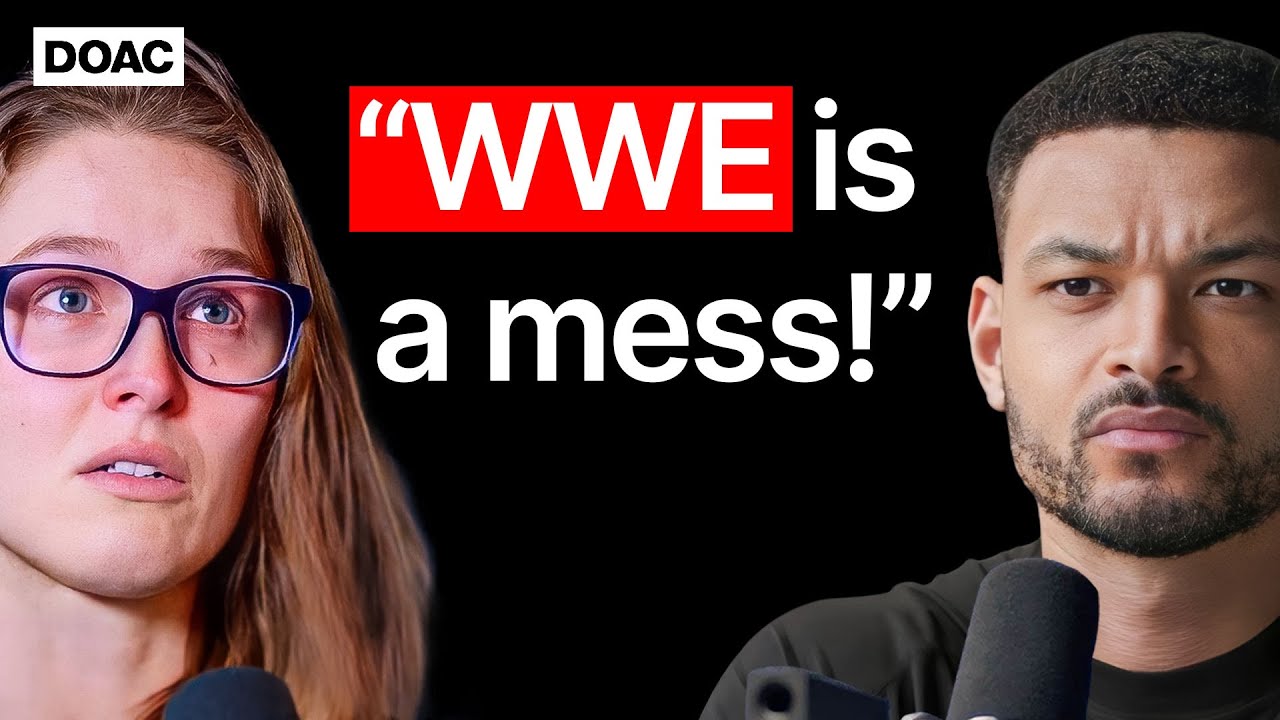
Ronda Rousey: I Kept This A Secret My Entire Career! WWE Is A Mess! — The Diary Of A CEO

The Diary Of A CEO

The former champion argues that years of unrevealed brain injuries and WWE's toxic workplace practices forced her premature retirement from competitive sports.

AI-assisted summary of Ronda Rousey: I Kept This A Secret My Entire Career! WWE Is A Mess! — original source. Check the original for full context.

Source published:

Detailed notes

## Background This interview was published by The Diary Of A CEO channel on YouTube on April 08, 2024. According to the page description, it features Ronda Rousey—the first American woman to win an Olympic medal in judo and former UFC champion—discussing her career transitions across Judo, the UFC, and WWE, alongside her personal life struggles.

## TL;DR Ronda Rousey opens up about her childhood health challenges, her father's suicide, and the severe concussion history she kept hidden throughout her combat sports and professional wrestling career. She reflects on the intense pressure, systemic abuse, and weight-cutting struggles she faced during her rise to martial arts dominance, as well as her difficult losses in the UFC. Moving past her competitive career, she discusses navigating miscarriages and IVF, her critical views on WWE management, and finding contentment in screenwriting, regenerative farming, and family life.

## Atmosphere & style The conversation carries an intimate, raw, and unapologetically candid tone as Rousey reflects deeply on her personal traumas and professional triumphs. Grounded by a introspective narrative style, the discussion moves through a poignant emotional arc—ranging from the heaviness of tragic loss and systemic abuse to a sense of peaceful resolution. It feels like a vulnerable yet resilient exchange, stripping away the public fight persona to reveal a thoughtful, reflective individual who has come to terms with her past.

## Key takeaways - [02:10](https://www.youtube.com/watch?v=ojNTQRW-SXM&t=130s) Ronda Rousey was born with the umbilical cord wrapped around her neck, leaving her with neurological damage and a severe motor speech disorder called childhood apraxia of speech. - [05:27](https://www.youtube.com/watch?v=ojNTQRW-SXM&t=327s) Tragedy struck her early childhood when her father committed suicide to avoid physical decline from a rare blood disorder following a sledding accident. - [10:38](https://www.youtube.com/watch?v=ojNTQRW-SXM&t=638s) Her mother, AnnMaria De Mars—the first American World Judo Champion—heavily influenced her combat career by teaching her specialized armbar submission techniques. - [15:59](https://www.youtube.com/watch?v=ojNTQRW-SXM&t=959s) Driven by intense perfectionism and hyperfocus, Rousey developed a unique ground fighting (ne-waza) system that launched her success in competitive Judo. - [21:55](https://www.youtube.com/watch?v=ojNTQRW-SXM&t=1315s) Rousey struggled with severe bulimia and body image issues due to strict Judo weight classes and public teasing over her athletic physique. - [25:49](https://www.youtube.com/watch?v=ojNTQRW-SXM&t=1549s) Despite earning a bronze medal at the 2008 Beijing Olympics, Rousey faced extreme financial instability, highlighting the lack of financial support for Olympic athletes. - [29:32](https://www.youtube.com/watch?v=ojNTQRW-SXM&t=1772s) A history of accumulated, unacknowledged concussions led to severe neurological limits, forcing Rousey to rely on an aggressive, sub-60-second fight strategy to prevent taking head damage. - [37:43](https://www.youtube.com/watch?v=ojNTQRW-SXM&t=2263s) Rousey experienced abusive coaching dynamics in combat sports, including physical intimidation and excessive control over her personal life. - [47:34](https://www.youtube.com/watch?v=ojNTQRW-SXM&t=2854s) Becoming the first female fighter signed to the UFC, Rousey carried the immense pressure of validating women's MMA while defending her title six consecutive times. - [51:20](https://www.youtube.com/watch?v=ojNTQRW-SXM&t=3080s) Her first MMA loss against Holly Holm was compounded by an early concussion and lost depth perception, triggering backstage suicidal ideation and deep emotional trauma. - [01:06:57](https://www.youtube.com/watch?v=ojNTQRW-SXM&t=4017s) Transitioning to WWE provided a creative outlet as 'martial arts storytelling,' though she criticized the organization's toxic culture, lack of rehearsal safety, and leadership under Vince McMahon. - [01:16:05](https://www.youtube.com/watch?v=ojNTQRW-SXM&t=4565s) Rousey went through multiple miscarriages and four grueling IVF cycles to have her daughter, prompting her transition into full-time family life, screenwriting, and regenerative farming.

## Detailed walkthrough ### [00:00](https://www.youtube.com/watch?v=ojNTQRW-SXM&t=0s) Intro & Career Overview

Ronda Rousey opened her career with extraordinary achievements, yet behind her public success were heavily guarded secrets. Beyond her athletic accolades, she was dealing with severe, recurring concussions. Because each head injury made her progressively more susceptible to the next, she had to adopt an exceptionally aggressive fighting style in mixed martial arts (MMA), aiming to finish her opponents almost instantly to limit damage.

Her rise to global fame was backed by unprecedented dominance, setting records for the fastest wins, submissions, and title defenses. However, her sudden and dramatic loss to Holly Holm completely turned her world upside down, forcing her to step away from the sport temporarily. When she later transitioned to WWE, she encountered what she describes as a fundamentally toxic environment cultivated by Vince McMahon, which left a lasting negative impression.

- **Fastest Win & Submission:** Rousey achieved some of the quickest finishes in UFC history, including a 14-second submission victory over Cat Zingano and a 16-second knockout against Alexis Davis. - **Historic Title Reign:** She was the inaugural UFC Women's Bantamweight Champion, defending the title six times consecutively between 2012 and 2015. - **Olympic History:** Rousey was the first American woman to earn an Olympic medal in Judo, winning bronze at the 2008 Beijing Games.

---

[02:10](https://www.youtube.com/watch?v=ojNTQRW-SXM&t=130s) Being Born With a Rare Condition

Rousey's life began with a life-threatening medical emergency. At birth, the umbilical cord was tightly wrapped around her neck, cutting off oxygen and resulting in an APGAR score of zero. She was completely blue and unresponsive, requiring critical medical intervention to be revived. This initial oxygen deprivation caused subtle neurological damage that manifested as apraxia, a motor speech disorder that creates a disconnect between the brain's intent and the physical execution of speech.

Throughout her early childhood, the condition made verbal communication difficult. Her brain formulated thoughts clearly, but the words were distorted upon spoken delivery. To regain functional speech, she underwent years of intensive speech therapy. While she eventually managed the condition well enough that it became unnoticeable in daily life, subtle challenges lingered into adulthood. High-pressure public speaking situations—such as live WWE wrestling promos—retriggered intense self-consciousness, as any slight slip, stutter, or mispronunciation felt amplified under public scrutiny.

> "I was born with the umbilical cord around my neck and I was like a zero on the APGAR scale... I was blue, like thought I was dead. It took a while to revive me and I had some neurological damage which expressed itself as a motor speech disorder called apraxia."

- **APGAR Score:** Rousey was rated a 0 at birth due to severe oxygen deprivation. - **Diagnosis:** She suffered from childhood apraxia of speech, which impairs the motor sequencing needed to pronounce words correctly. - **Public Speaking Impact:** In live environments like WWE, mispronouncing a single syllable would cause her significant distress due to her past trauma with speech.

---

[03:46](https://www.youtube.com/watch?v=ojNTQRW-SXM&t=226s) Early Childhood Struggles and Apraxia

During her early years, Rousey’s speech difficulties led to diagnostic confusion. Medical professionals tested her extensively for hearing impairment and autism before eventually understanding her condition. At the time, childhood apraxia was not widely recognized or diagnosed as a distinct motor speech disorder.

It was only much later in her life that a fan—a mother of a child with apraxia—approached Rousey with informational materials about the condition. Reviewing the description, Rousey realized it matched her early childhood experiences precisely. This revelation led her to advocate for apraxia awareness, participating in community walks and connecting with young children facing similar speech challenges.

Her early communication struggles directly fueled her passion for physical sports. In Judo, verbal communication was unnecessary; instead, connection happened physically on the mat through touch, leverage, and movement. When her family relocated to California and she struggled to socialize with peers, combat sports provided a natural outlet and a non-verbal language for building relationships.

- **Intelligible Speech:** She did not speak in clear, fully understandable sentences until around the age of five. - **Diagnostic Timeline:** Apraxia was not formally identified in her case during early childhood; her family only recognized the specific condition years later through a fan's pamphlet. - **Non-Verbal Connection:** Judo served as a crucial bridge for socialization, allowing her to interact without the barrier of her speech disorder.

---

[05:27](https://www.youtube.com/watch?v=ojNTQRW-SXM&t=327s) Father's Sledding Accident and Illness

Rousey's early childhood felt warm and loving, but that stability vanished due to a tragic sequence of events involving her father, Ron. After the family moved to North Dakota, her father suffered a severe back injury in a sledding accident. His recovery was severely complicated by a pre-existing, rare blood disorder called Bernard–Soulier syndrome, which affects blood platelets and prevents normal blood clotting and tissue healing.

Despite surgical intervention—including the placement of a stabilization rod in his spine—his vertebrae continued to deteriorate. Doctors eventually delivered a bleak prognosis: the degeneration would render him a paraplegic, progress to quadriplegia, and ultimately end his life within a short timeframe. Facing severe chronic pain and refusing to remain heavily medicated, her father chose to keep the full extent of his terminal diagnosis hidden from his young children so they could enjoy a normal childhood.

- **Medical Condition:** Bernard–Soulier syndrome, a rare inherited blood bleeding disorder characterized by abnormally large platelets and low platelet counts. - **Location of Accident:** North Dakota, shortly after the family moved there. - **Prognosis:** Progressive spinal breakdown leading to total paralysis and death.

---

[07:35](https://www.youtube.com/watch?v=ojNTQRW-SXM&t=455s) Loss of Her Father to Suicide

When Rousey was eight years old, her father died by suicide. He expressed a desire to protect his family from watching his physical decline, refusing to let their final memories of him be confined to a hospital bed dependent on life-support equipment. Rousey's mother, who held a PhD in educational psychology, chose to explain the reality of his death directly and factually to her young daughter.

The sudden loss destroyed Rousey’s sense of emotional safety. The abrupt transition from believing her father was healthy to discovering he was gone created a persistent underlying fear that disaster could strike at any time, even when everything seemed secure. During her early years, Rousey was particularly close to her father. Because her sisters frequently spoke on her behalf at home, her speech therapist had recommended dedicated one-on-one time with a parent to force her to communicate independently. As a result, Rousey spent continuous individual time with her father during his weekday commutes to Devil's Lake, forming a deep bond.

In the immediate aftermath, Rousey coped with the loss by telling herself her father had simply gone away on an extended business trip. She later discovered that suicide had touched her family in a previous generation as well, as her maternal grandfather had also taken his own life.

> "He said he didn't want our last memories of him to be lying in a bed with tubes running in and out of him... In the long run, I felt like it just gave me this feeling that even if I feel like everything is okay, everything can come crashing down at any moment."

- **Age at Loss:** Rousey was eight years old when her father passed away. - **Family History:** Her father was a second-generation suicide victim in the family lineage. - **Father's Work Routine:** He worked in Devil's Lake, North Dakota during the week, spending dedicated one-on-one time with Ronda to assist her speech therapy.

---

[10:38](https://www.youtube.com/watch?v=ojNTQRW-SXM&t=638s) Influence of Her Mother, AnnMaria De Mars

Rousey's mother, AnnMaria De Mars, was an exceptionally accomplished figure who served as a primary role model. De Mars scored a perfect score on her SATs at age 16, graduated from college at 19, and went on to earn a PhD in educational psychology. Alongside her academic and engineering career, she achieved historic success in Judo, becoming the first American—male or female—to win a Gold Medal at the World Judo Championships in 1984.

De Mars achieved her world championship while raising children as a single mother and recovering from severe physical injuries. Having torn her knee ligaments at age 17, De Mars had adapted her fighting style to focus heavily on ground work (*ne-waza*), becoming renowned for her execution of the armbar submission. She passed these technical details directly down to Rousey, turning the armbar into a central signature technique of Rousey's future MMA career.

As a parent, De Mars deliberately avoided becoming an overbearing matside coach. Instead, she acted as the strategic architect of Rousey's career, seeking out top-tier coaches and training environments while instilling a strong work ethic in her daughter.

- **SAT & Academic Achievements:** Perfect SAT score at 16, college graduate at 19, PhD in Educational Psychology. - **Judo Benchmark:** First American to win gold at the World Judo Championships (1984, -56 kg category). - **Technical Legacy:** Adapted to major knee injuries by mastering ground submissions, passing her specialized armbar technique down to Rousey as a "family heirloom."

---

[11:46](https://www.youtube.com/watch?v=ojNTQRW-SXM&t=706s) Psychological Drivers and Early Judo Training

Reflecting on her early childhood, Rousey noted how early adversity shaped her drive for success. Referencing psychological concepts—such as those explored in Malcolm Gladwell's writing regarding the statistical resilience of children who lose a parent early—she recognized that her early traumas generated an intense need to prove herself. Being the youngest sister made her tough and eager to earn respect, while her speech challenges directed her energy into physical mastery.

At age ten, after the family relocated to the Santa Monica and Venice area in California, Rousey tried competitive swimming. However, she found the repetitive nature of swimming pool routines tedious. Her mother then introduced her to local Judo clubs run by former teammates. Rousey immediately connected with Judo’s dynamic, problem-solving nature, viewing every match as a physical chess game.

When she began winning regional Judo tournaments, the thrill of victory created a lasting drive for achievement. By age 16, fully committed to her athletic goals, she dropped out of traditional high school and moved away from home to dedicate herself entirely to full-time elite Judo training.

- **Relocation:** Moved to the Santa Monica / Venice area around age 10-11. - **Transition:** Dropped competitive swimming in favor of Judo due to Judo's complex strategic and mental engagement. - **Major Life Decision:** Left high school and moved out at age 16 to pursue Judo training full-time.

---

[15:59](https://www.youtube.com/watch?v=ojNTQRW-SXM&t=959s) Developing Judo Mastery and Strategic Evolution

Rousey displayed a natural talent for Judo early on, winning her initial tournaments predominantly through *ippon*—a full-score throw that instantly ends a match by landing an opponent flat on their back. Her rapid progress quickly earned her a reputation as a child prodigy within the American Judo community.

Her competitive success was fueled by an intense intolerance for losing. Following her first tournament loss, she isolated herself for a week, devastated by the result. This vulnerability allowed her to invest fully in her athletic pursuits, driven by a deep desire to excel.

By age 16, Rousey experienced a major technical breakthrough in her ground fighting (*ne-waza*). Rather than treating individual holds, transitions, and joint locks as isolated techniques, she began to see how the completion of one technique naturally set up the entry for the next. This shift allowed her to weave attacks into a continuous, interconnected system, laying the technical foundation for her future dominance in combat sports.

> "I realized while I was doing *ne-waza*, which is fighting on the ground, that the end of one move was the beginning of another... I moved from trying to memorize all these separate techniques to trying to combine them into a path and a web."

- **Ippon:** The highest score in Judo, instantly ending a match upon executing a perfect throw or submission. - **Ne-waza:** Ground fighting techniques in Judo, focusing on submissions, chokes, and joint locks. - **Strategic Concept:** Viewing grappling as an interconnected web where defensive responses trigger immediate offensive counters.

Here is a detailed walkthrough covering the provided transcript section:

[17:44](https://www.youtube.com/watch?v=ojNTQRW-SXM&t=1064s) Creating a Fighting System and Obsessive Mastery

Ronda discusses how ground fighting made up only a small fraction of Judo—perhaps 20% or less—and unlike Gracie Jiu-Jitsu, which provided a rigid structural framework, Judo was far more open-ended. This forced her to invent her own system, fighting style, and underlying philosophy. She explains how she would become so completely absorbed in piecing techniques together that she could train for hours without noticing fatigue. She describes a personal trait she calls "opposite ADD," where she hyperfixates on a single technical detail—like refining a specific throw or punch—for hours on end. While this intense focus enabled her to train relentlessly, it also had a downside, causing her to obsessively dwell on past mistakes for years.

To illustrate this lifelong tendency, Ronda recalls a story her mother told her about her childhood drawings. She would draw the exact same picture thousands of times: a bunny in the center, flanked by two bushes and two trees, with a sun wearing sunglasses overhead. When her mother asked why she kept drawing the same image, Ronda replied that she was simply trying to make the drawing match the precise picture inside her head. She views this trait not as perfectionism—noting she can tolerate living in "squalor"—but as a deep need for mastery and complete understanding, comparing an unsolved technical problem to an unfinished puzzle that constantly nags at her.

[20:30](https://www.youtube.com/watch?v=ojNTQRW-SXM&t=1230s) Moving Out at 16 to Train with "Big Jim"

At 16 years old, Ronda left home to train under "Big Jim" (Jim Pedro Sr.) and his son "Little Jimmy" (Jim Pedro Jr.), who had won the 1999 World Judo Championships. Because high-level Judo training in the United States was scarce, Pedro's Judo school was one of the few places offering world-class coaching. Moving away at such a young age was isolating and emotionally tough. Ronda suffered from frequent homesickness and spent all her time around older athletes, as no peers her age were at her skill level. Despite the loneliness, she viewed the sacrifice as part of her personal "montage," fueled by the dream that she was going to shock the world and become the first American to win an Olympic gold medal in Judo at 17.

- **Key Figure:** Jim Pedro Sr. ("Big Jim") and Jim Pedro Jr. ("Little Jimmy"), 1999 Judo World Champion. - **Location/Facility:** Pedro's Judo Club. - **Goal:** Becoming the first American Olympic gold medalist in Judo.

---

[21:55](https://www.youtube.com/watch?v=ojNTQRW-SXM&t=1315s) Battles with Bulimia and Weight Cutting

Ronda details her struggle with bulimia, which began around age 16 due to the constant pressure to meet rigid weight class limits while her adolescent body was growing rapidly. She describes developing a deeply unhealthy relationship with food—hoarding candy bars while cutting weight, only to binge on them immediately after weigh-ins. Lacking guidance or resources on healthy nutrition, her eating habits quickly spiraled into a full-blown eating disorder.

She recalls that the first time she ever made herself throw up was when an early childhood coach took her out and pressured her to drink a chocolate milkshake, telling her she needed to relax. Overwhelmed by intense guilt and terrified of missing an upcoming weight deadline, she purged the milkshake. Because it was cold and did not hurt, she mistakenly thought it was harmless. Purging soon became her "panic button" whenever she overate ahead of weight-in deadlines. She emphasizes the physical strain of fighting her natural biology, having grown 4 inches and doubled her weight in a short span while facing relentless external pressure to stay in a lower weight category.

---

[24:33](https://www.youtube.com/watch?v=ojNTQRW-SXM&t=1473s) Body Image, Bullying, and Society’s Changing Standards

Before dropping out of high school at 16, Ronda was heavily teased for her muscular physique. Schoolmates mocked her, calling her "Miss Man" and grabbing at her arms. The bullying was so persistent that she wore a zip-up hoodie everywhere—regardless of how hot it was—to conceal her muscle mass. During the early 2000s, pop culture promoted extremely narrow and thin beauty standards for young girls, making her feel completely out of place.

Reflecting on that era, Ronda notes how drastically societal standards have shifted today, where athletic, muscular, and toned female bodies are celebrated in fashion and fitness culture. Reclaiming her body image and proving that muscularity in women is not inherently masculine became a major personal mission for her as an adult.

---

[25:49](https://www.youtube.com/watch?v=ojNTQRW-SXM&t=1549s) Olympic Medal, Financial Reality, and the "Dark Side" of Success

At age 21, Ronda competed in the 2008 Beijing Olympics, achieving history as the first American woman to win an Olympic medal in Judo (bronze). However, the financial payout was shockingly meager: she received $10,000 for her medal, which was reduced to $6,000 after a $4,000 tax deduction. She notes that she later complained about this "math tax" so loudly in the media during her MMA career that the government eventually eliminated taxes on Olympic prize money for US athletes.

Ronda reflects on how her need for validation and respect acted as a double-edged sword—serving as the initial fuel for her success, but ultimately becoming an unsustainable mindset for long-term happiness. Discussing insights from trainer Tim Grover (who trained Kobe Bryant and LeBron James), she agrees that an athlete's "dark side"—their traumas, insecurities, and painful experiences—is intrinsically linked to their greatness. She realized that continually hoarding achievements and bucket-list experiences (such as flying with the USAF Thunderbirds) did not bring lasting happiness. Ultimately, she had to learn to find daily contentment rather than believing a single milestone would make her happy forever.

- **2008 Beijing Olympics:** First American woman to capture an Olympic medal in Judo. - **Financial Details:** $10,000 bonus minus $4,000 in taxes = $6,000 net payout.

---

[29:32](https://www.youtube.com/watch?v=ojNTQRW-SXM&t=1772s) Hidden Concussions and the Breaking Point

Ronda reveals a long-kept secret that impacted her entire fighting career: a severe history of concussions and concussion-related brain injuries dating back to her Judo years. During her decade in Judo—long before Chronic Traumatic Encephalopathy (CTE) was widely understood—she sustained dozens of concussions. Instead of being allowed to rest, coaches told her to stop being weak and keep training. Her symptoms, including photophobia (light sensitivity) and severe head pain, would persist for weeks at a time, meaning she spent years experiencing continuous concussion symptoms.

By the time she transitioned into MMA, her vulnerability to concussions had accumulated significantly. Even though her MMA fights were notoriously short (often ending in under 60 seconds), training camps involved over 50 rounds of hard sparring. She notes that wearing 14-ounce gloves and protective headgear actually increased the risk of concussions because the extra weight creates more force when the brain sloshes inside skull fluid. She hid these symptoms from everyone—including Dana White, her coaches, and even herself—forcing herself to craft an ultra-efficient fighting style aimed at never taking damage.

The injury reached a critical breaking point during her fight with Sara McMann, where even a light touch left her with a severe concussion, forcing her team to turn off all the lights in her room afterward. The vulnerability became so extreme that when Stephanie McMahon slapped her during a WWE angle, the impact triggered a concussion, signaling to Ronda that her body could no longer sustain high-impact combat sports.

- **Concussion Cumulative Effect:** Accumulation of dozens of Judoka concussions created a low threshold for head trauma in MMA and WWE. - **Sparring Mechanics:** 14 oz gloves and headgear absorb superficial cosmetic damage but transmit force, making brain rotation and concussions more likely during 50+ sparring rounds per camp.

---

[33:00](https://www.youtube.com/watch?v=ojNTQRW-SXM&t=1980s) The Reality Behind Her First MMA Loss

Ronda breaks down the actual circumstances surrounding her first career loss (against Holly Holm), addressing public misconceptions about her performance. About a week before the fight, Ronda suffered a severe accidental knock-out when she fell down the stairs at her home. She kept the incident completely secret, went into the fight following a terrible weight cut, and accidentally wore the wrong mouthguard—one that lacked proper shock protection for her bottom back teeth.

When her opponent landed an early strike, Ronda's teeth were knocked loose, immediately leaving her "out on her feet." The trauma destroyed her depth perception and severely restricted her brain function. Knowing that showing weakness would lead to an immediate finish, she forced herself to keep moving forward blindly, unable to gauge how far away her opponent was, hoping her brain would clear up. It deeply frustrated her for years that critics attributed the loss to a poor game plan, unaware that she was operating in pure survival mode without basic physical facilities.

"When I say out on my feet, it means that I have no depth perception basically, and I'm at a very limited capacity of what information my brain can give me... I was just trying to survive."

### [34:36](https://www.youtube.com/watch?v=ojNTQRW-SXM&t=2076s) Living with Compounded Concussions and the Secret Toll Ronda Rousey recounts the moment she realized her fighting career was severely compromised by brain trauma. After taking time off to recover and attempting to return to competition—ensuring her mouthguard fit perfectly and taking every precaution not to sustain damage before entering the cage—she was knocked out on her feet almost instantly. Scientifically and tactically, she had never been a more skilled fighter; she was faster and stronger than ever before. However, her brain could no longer tolerate physical impact. Neurologically, she simply "didn't have the hardware to continue fighting at that level."

She explains why she kept these debilitating neurological symptoms a secret for years. Entering professional wrestling (WWE) meant navigating a sport already embroiled in controversy surrounding CTE and long-term head injuries; disclosing her concussion history would have ended her career before it began. Disclosing her condition before her final UFC fights would have painted a massive target on her head. Consequently, she chose silence, allowing the media and public to make harsh assumptions about her character, labeling her a "quitter" when her body was simply refusing to function.

* She suffered from severe neurological symptoms and repeated knockouts on her feet despite being at the absolute peak of her physical skill and strength. * The foundational damage to her brain was accumulated long before her MMA career, stemming from thousands of head impacts absorbed as a child practicing judo. * She maintained total public silence regarding her concussion history to protect her standing in combat sports and her transition into the WWE.

### [36:15](https://www.youtube.com/watch?v=ojNTQRW-SXM&t=2175s) The 60-Second Fight Strategy Because Rousey was acutely aware of her vulnerability to head trauma while her coaches remained completely in the dark, she adapted a hyper-aggressive style aimed at ending fights within seconds. Her goal in the Octagon was not merely dominance, but self-preservation: she had to finish her opponents instantly to avoid taking any counter-strikes to the head.

She kept this strategy and her neurological condition entirely to herself. She notes that her head coach, Edmond Tarverdyan, would have forced her to stop fighting if he had known the extent of her symptoms. Rousey refused to hand over control of her destiny to coaches or athletic commissions, choosing instead to carry the burden alone and fight on her own terms.

* Her famous rapid-finish style—submitting or knocking out opponents in under a minute—was explicitly designed to avoid taking physical damage to her head. * She concealed her concussions from Edmond Tarverdyan, her family, and the UFC out of fear that they would force her into retirement.

### [37:43](https://www.youtube.com/watch?v=ojNTQRW-SXM&t=2263s) Systematic Coaching Abuse and Institutional Power Imbalances Reflecting on her journey through martial arts, Rousey reveals that she cannot recall a single healthy relationship with a coach. She explains that the coaching philosophy of her upbringing was heavily influenced by old-school, Eastern European regimes—akin to legendary gymnastics coach Béla Károlyi—where emotional and physical abuse were believed to be necessary ingredients for forged greatness. As a young athlete trapped in sports controlled by single national governing bodies, she felt she had no choice but to tolerate mistreatment to survive.

She details specific instances of physical abuse from her youth judo trainers. Her first coach, "Little Jimmy," dislocated her jaw after she threw him in practice and laughed, throwing her across the room onto wooden benches in front of the entire gym. Another trainer, "Big Jim," once grabbed her by the throat to forcibly demonstrate his belief that women could not defend themselves. These early experiences conditioned her to normalize toxic behavior, making her tolerate her later volatile relationship with Edmond Tarverdyan because he seemed less extreme by comparison.

* **Béla Károlyi Mentality:** Her coaches emulated harsh, authoritative regimes that sought to "beat the emotion out of you" to create champions. * **Incidents of Physical Abuse:** * **"Little Jimmy" (First Judo Coach):** Dislocated her jaw and threw her onto benches over a table in front of onlookers after she successfully threw him in practice. * **"Big Jim":** Choked her by the throat to prove his point that women were naturally defenseless against men. * **Institutional Privilege:** She argues that sports coaching operates in unmonitored "fiefdoms" without oversight or accountability, creating severe power imbalances that lead to systemic abuse.

### [41:44](https://www.youtube.com/watch?v=ojNTQRW-SXM&t=2504s) Setting Boundaries with Edmond Tarverdyan To keep her career functioning without collapsing under the weight of her coach's controlling tendencies, Rousey had to establish strict, rigid boundaries with Edmond Tarverdyan. She notes that coaching dynamic issues often stem from lines becoming blurred when a trainer attempts to act as a parent, sibling, and manager all at once—a boundary conflict her own mother actively avoided by refusing to be her formal judo coach.

Tarverdyan frequently crossed personal boundaries, demanding to know her whereabouts at all times and initiating arguments if she was not constantly accessible. Rousey had to enforce strict operational rules—such as banning him from calling her via FaceTime—to reclaim her privacy. Navigating these dynamics consumed tremendous emotional energy, but she tolerated the dysfunction for years because the training produced championship results.

* She explicitly banned Edmond Tarverdyan from using FaceTime so he could not constantly monitor her location and private life. * Rousey emphasizes that a coach cannot simultaneously act as an overbearing family member without creating an unhealthy environment. * She compares her childhood collection of male coaches to a line from *Kill Bill*: "Bill lost his father early, so he collected father figures."

### [46:05](https://www.youtube.com/watch?v=ojNTQRW-SXM&t=2765s) Crying on the Mat and Emotional Suppression Contrary to her public persona as a cold, "emotionless robot" in the Octagon, Rousey reveals that she was an extraordinarily emotional athlete who cried constantly during training. She would weep on the mat during almost every practice out of sheer frustration when a technique failed or when she got thrown.

This emotional expression was met with harsh punishment from her coaches, creating a vicious cycle where she would get berated for crying, causing her to cry even harder. She recalls an early judo tournament where she was pushed into the double-elimination bracket; she walked into every single match sobbing, threw her opponents to the mat, won the match, bowed out crying, and ultimately stood atop the podium at number one, still crying because she was angry about her earlier loss. Over time, learning not to break down mid-fight became one of her hardest psychological battles.

> "Every single match I would come out crying, bow in, throw the other girl on her ass, beat her, bow out crying... until I beat everybody... on top of the podium number one, crying still because I lost that first match earlier in the day."

### [47:34](https://www.youtube.com/watch?v=ojNTQRW-SXM&t=2854s) Breaking into the UFC and the Weight of Being the First In November 2012, UFC President Dana White reversed his long-standing stance against female fighters by signing Ronda Rousey as the promotion's first-ever woman athlete, publicly praising her as a generational "game-changer." Between 2012 and 2015, Rousey went on a historic run, defending her title, finishing 15 consecutive fights, and setting records for the fastest submission and title defenses in UFC history.

Unlike other champions who fought once a year on major pay-per-view dates like July 4th or New Year's Eve, Rousey accepted fights whenever Dana White called—frequently stepping in on short notice in February, August, or November to save cards damaged by injuries. She felt an immense personal obligation to fulfill her promise to White and carry the financial and promotional weight of women's MMA on her shoulders. During this era, her massive cultural crossover opened doors in Hollywood, leading to roles in *The Expendables 3* and *Furious 7*, where she pursued action cinema with the ambition of becoming "the next Bruce Lee."

* **Historic UFC Record:** * Signed as the first female fighter in UFC history (announced late 2012). * UFC Bantamweight Champion from 2012 to 2015 with 15 consecutive fight victories, most lasting only seconds. * Awarded Best Female Athlete of All Time in a 2015 ESPN fan poll. * **Workhorse Schedule:** Frequently fought 3 times in 9 months to rescue low-performing fight cards and cover for injured male fighters. * **Hollywood Crossover:** Featured in major blockbuster franchises including *Furious 7* and *The Expendables 3*. * **Perspective on Her Journey:** When asked what advice she would whisper to her younger self on the day she signed her UFC contract, she asserts: "I wouldn't change anything... time travel is not possible and I led myself to where I am now... so I wouldn't fuck with it."

[051:20] The Fall in Melbourne and the Public Backlash

Reflecting on UFC 193 in Melbourne, Australia, the conversation turns to the pivotal fight against Holly Holm that brought Ronda Rousey’s undefeated MMA streak to an abrupt end. Rousey addresses the mechanics of that loss, reiterating that an early blow—an elbow from Holm—compromised her depth perception instantly. From that first contact, her ability to judge spatial distance was severely damaged, culminating in the iconic head-kick knockout. Returning to the medical room afterward, Rousey felt utterly soul-crushed as her entire identity was bound up in being the undefeated champion. Forced to face the end of her reign before she was ready, what stung most was watching the public and media revel in her defeat.

Rousey expresses a deep sense of injustice regarding how her defeat was framed. She emphasizes that her body and brain had simply reached their absolute limits after years of relentless physical trauma and concussions. "My brain just couldn't take what I asked of it anymore, and my body took as much as it could until it literally broke," she explains. Having given everything she had to the sport, she felt hated by fans for not having more left to give. The aftermath exposed who her true friends were as many fair-weather companions abandoned her, ultimately liberating her from a lifelong dependence on external validation and the public's approval.

* Rousey describes being so disoriented in the medical room while getting her lip stitched up that she bit off a piece of her own inner lip flesh and spat it out like chapped skin. * She believes that at full physical capacity, no opponent could beat her, but she had been "running on fumes" for years until running out live in front of millions. * Frustrated by media outlets seeking clicks rather than accurately telling her story, Rousey wrote her memoir *Our Fight* as the only authentic medium to convey what she endured. * She reflects on how retiring undefeated in pro wrestling vs. MMA differs, noting that her loss ultimately benefited women's MMA by passing equity to the next generation of fighters. * She references her mother, AnnMaria De Mars (the first American world champion in Judo in 1984), who taught her that personal self-knowledge of greatness matters far more than public recognition.

[058:14] Suicidal Thoughts and the Burden of Loss

The discussion delves into the severe emotional toll of the loss, referencing Rousey's famous interview with Ellen DeGeneres where she revealed experiencing suicidal ideation immediately following the fight. Rousey clarifies that these dark thoughts surfaced instantly upon returning backstage. Having lost two prior generations of her family to suicide—including her father—she explains that suicide is something that lingers as an option in one's mind once it has been introduced into a family's history.

Despite the overwhelming pain, her love for her partner (now husband), Travis Browne, kept her tethered to life. Having experienced the grief of her father's suicide, Rousey understood that suicide merely transfers one's inner agony onto the surviving family members. Because her father was terminally ill and facing unavoidable physical suffering before he died, Rousey felt she lacked any similar justification to end her life. She made a conscious decision to endure the emotional devastation and live for her family so they would not have to carry her pain.

> "Suicide is the kind of thing that becomes more prevalent if you know it's in your family... You get to relieve yourself of that pain, but you pass it on to everybody else."

[01:00:15](https://www.youtube.com/watch?v=ojNTQRW-SXM&t=3615s) The Dark Interlude: Depression, Crepes, and Hiding Away

Following her final UFC fight against Amanda Nunes at UFC 207 in December 2016, Rousey stepped away from mixed martial arts completely. She describes the period between her MMA departure and her eventual arrival in WWE as a dark, year-long stretch of deep grieving, exhaustion, and depression. She spent months inside her home—getting high, eating crepes, playing video games, and avoiding the outside world. After chasing athletic greatness since age six, reaching two Olympics, and winning 15 consecutive MMA fights, she was completely depleted physically, mentally, and emotionally.

During this period, Rousey sought total isolation to escape aggressive paparazzi and unwanted public fame, viewing celebrity status strictly as a promotional tool that she no longer needed. She notes that the bone-deep fatigue she experienced was not something a long night of sleep could fix, but a profound burnout that required an entire year to process.

* Rousey describes herself as a "Gollum cave creature" who naturally retreats into her den when overwhelmed. * Her husband, UFC heavyweight Travis Browne, played a pivotal role in her recovery by bringing her crepes, offering unconditional patience, and gently forcing her to leave the house to interact with human beings. * She shares anecdotes of her emotional fragility during this recovery period, such as breaking down in tears over accidentally breaking an egg yolk while cooking. * Rousey highlights Travis's own fighting career—entering MMA at age 26 and quickly becoming a top contender—and expresses deep gratitude for his steady support even when he couldn't fully relate to her lifelong Olympic-level pressure.

[01:06:57](https://www.youtube.com/watch?v=ojNTQRW-SXM&t=4017s) Discovering Pro Wrestling and The Four Horsewomen

Rousey explains how her transition to professional wrestling in WWE pulled her out of isolation and gave her a renewed sense of passion. Though she inherently dislikes public speaking and being in front of large crowds, she fell in love with the art of combat storytelling. Her interest was sparked through her close group of friends—known as "The Four Horsewomen" (Ronda Rousey, Shayna Baszler, Jessamyn Duke, and Marina Shafir)—who had transitioned from judo and MMA into professional wrestling.

Training alongside her closest friends purely for fun revealed a collaborative environment that contrasted sharply with the cutthroat world of competitive MMA. She viewed professional wrestling as the purest form of martial arts storytelling—similar to action movie fight choreography executed live in front of an audience without camera cuts. Rousey found herself entering a deep "flow state" during five-hour training sessions, rediscovering her love for intense dedication and athletic creativity.

* Rousey met Marina Shafir through judo, and met Shayna Baszler and Jessamyn Duke through MMA. * She describes "passion as my passion," explaining how getting lost in physical practice provided a therapeutic escape from her post-UFC depression. * Originally, Rousey intended to join WWE for just a few months as a fun experiment before stepping away to start a family, which eventually snowballed into a major full-time run.

[01:09:32](https://www.youtube.com/watch?v=ojNTQRW-SXM&t=4172s) Unexpected Career Paths and the Rise of E-Commerce

Ronda Rousey reflects on how her professional journey evolved into an unexpected path rather than a calculated pursuit. What started as a goal to achieve before starting a family gradually snowballed into an entirely different life trajectory.

---

[01:10:44](https://www.youtube.com/watch?v=ojNTQRW-SXM&t=4244s) Social Media Pressure and the Reality of Online Validation

Rousey opens up about the psychological toll of public feedback and how she managed online comments during her combat sports career. In the early days of her success, checking social media comments and tagged photos felt like reading a morning newspaper—an unhealthy habit driven by a need for external validation. However, following her first loss, she quit reading online commentary cold turkey to break her emotional dependence on internet opinion.

Transitioning to professional wrestling presented a unique challenge: performing live in front of crowds that functioned as a real-time, physical embodiment of an internet comment section. Rousey explains that this dynamic was precisely why she enjoyed playing a heel (villain). Embracing a heel persona allowed her to actively provoke the audience rather than appease or pander to them, providing a far more liberating and authentic experience.

* Rousey checked social media comments daily early in her career, treating them like the morning paper until her first loss forced her to stop cold turkey. * She preferred playing a villain (heel) in professional wrestling because it relieved the pressure to pander to hostile crowds.

> "At first, when everything was going great, I'd wake up in the morning and look at my comments... after my first loss, I quit cold turkey."

> "Pro wrestling you're literally in front of a crowd that is like the embodiment of a comment section... that's why I really enjoyed being a heel."

---

[01:12:35](https://www.youtube.com/watch?v=ojNTQRW-SXM&t=4355s) Behind the Scenes at WWE: Chaos, Vince McMahon, and Organizational Culture

Discussing the operational reality of WWE, Rousey describes an environment marked by last-minute script rewrites, lack of preparation, and systemic disorganization. Contrary to the external perception of a polished media giant, backstage operations often forced performers to execute complex visual spots without rehearsal, leading to preventable injuries. Rousey notes that both UFC and WWE treated talent as fundamentally expendable contractors responsible for their own healthcare.

Rousey criticizes the long-standing corporate culture established by former WWE CEO Vince McMahon, referencing the severe sexual misconduct allegations and financial improprieties that led to his formal resignation. She points out that despite formal leadership changes, McMahon's influence persisted through long-time executives like Bruce Prichard, whom she characterizes as an "avatar" executing McMahon's directives. While expressing respect for female talent in the locker room and executives like Paul "Triple H" Levesque and Stephanie McMahon, Rousey asserts that new parent company leadership (such as Endeavor's Ari Emanuel) must completely clean house to fix the workplace culture.

* Performers were often forced to execute un-rehearsed moves due to last-minute script changes, significantly increasing injury risks. * WWE talent are classified as independent contractors who must cover their own health insurance. * Rousey characterizes Bruce Prichard as "Vince's avatar," asserting that McMahon continued running the company informally through loyalists after his initial departure.

> "A lot of times you see them outside performing, they've only talked about it and they're doing it for the first time... a lot of these injuries happen because people just weren't able to rehearse."

> "I think if Ari Emanuel is going to be able to make this multi-billion dollar dysfunctional organization into one that functions, he's got to clean out all of Vince's cronies."

---

[01:16:05](https://www.youtube.com/watch?v=ojNTQRW-SXM&t=4565s) Pregnancy Struggles, Miscarriages, and the IVF Journey

Rousey speaks candidly about her painful experiences with pregnancy loss and fertility treatments after marrying Travis Browne. While filming the television show *9-1-1*, Rousey discovered she was pregnant shortly before suffering a severe on-set injury where a boat door severed part of her finger. Though initial medical checks showed the pregnancy intact, she miscarried two weeks later, leading to intense feelings of self-blame. A subsequent second miscarriage followed shortly after during a period of depression.

To build their family, Rousey and Browne underwent four rounds of in vitro fertilization (IVF) to freeze eight healthy embryos, eventually leading to the birth of their daughter, La'akea (Thea). Rousey shares the emotional burden of undergoing fertility treatments, highlighting the secrecy, hormone treatments, physical changes, and online harassment from internet trolls. She reveals receiving news just a day prior to the interview that a recent embryo transfer cycle had failed while on her book tour.

* Rousey suffered two miscarriages—one following an on-set finger injury during the filming of *9-1-1*, and another shortly after. * She completed 4 IVF retrieval cycles to yield 8 tested embryos before successfully carrying her daughter, La'akea. * Rousey manages a blended family of five, acting as stepmother to husband Travis Browne's two sons alongside their daughter. * Genetic pre-implantation testing in IVF allowed them to screen embryos for viability prior to transfer.

> "It's a grind, and it's really hard on you mentally and physically... you're on all these kind of hormones and going through this emotional roller coaster."

> "As a woman, you have to choose: am I going to go for a career during my peak years, or am I going to go for kids?"

---

[01:20:03](https://www.youtube.com/watch?v=ojNTQRW-SXM&t=4803s) Life After Competition: Finding Happiness in Family and Writing

Reflecting on her current life, Rousey states that her primary source of happiness comes from daily family life with her husband and children. Being financially secure and retired from full-time competition in her mid-30s allows her to focus entirely on being present at home without the immediate pressure of paying bills.

To channel her mental energy constructively and prevent self-destructive fixations, Rousey transitioned into creative writing and screenwriting. This practice serves as a productive outlet for internal focus, leading to the publication of her memoir *Our Fight*, the development of her fourth feature screenplay, and an adaptation of her first script into a graphic novel.

* Rousey considers herself retired from full-time competition in her mid-30s, focusing on family and creative projects. * She uses screenwriting as a cognitive strategy to redirect internal stress into creative output. * At the time of recording, Rousey was working on her fourth screenplay and converting her first script into a comic book.

> "My happiness is every day with my family... I'm so lucky that I get to be retired in my mid-30s and be able to spend all my time with my husband and my kids."

> "I started writing as just a way to help me from fixating on myself... to turn my mind towards something creative and actually make something out of all that mental energy."

[01:25:59](https://www.youtube.com/watch?v=ojNTQRW-SXM&t=5159s) Post-Fighting Life, Interning, and Regenerative Farming

Ronda details her current pursuits, emphasizing that she engages in projects out of genuine interest rather than a desire for wealth or public praise. She reveals that she is interning in the story department at WME—a task she was actively working on in the car on her way to the interview. She is learning script coverage and mastering the "dark art" of distilling screenplays down to their essential elements to sharpen her own writing skills. Additionally, she and her husband operate a ranch in Oregon where they practice regenerative agriculture with Wagyu cattle and poultry, restoring land that was previously degraded and mismanaged. Seeing the soil and grass thrive provides her far greater fulfillment than reading positive online comments. She summarizes her current state by noting that while she is retired from fighting, she remains constantly busy.

* **WME Internship:** Learning to write coverage and analyze scripts to become a better writer. * **Oregon Ranch:** Restoring degraded land using regenerative practices with Wagyu cattle and poultry. * **Retirement Philosophy:** Focuses on intrinsic satisfaction and mastery rather than external validation, money, or social media praise.

---

[01:27:32](https://www.youtube.com/watch?v=ojNTQRW-SXM&t=5252s) The Process of Mastery and Blocking Out Crowds

When the host asks about transitioning from packed arenas to a quiet farm in Oregon, Ronda clarifies that massive crowds were never the primary draw for her. She actually prefers performing in front of small, non-televised crowds. During her fighting career, she completely blocked out the audience, explaining that the arena atmosphere did not alter the reality of the fight itself. Drawing from her background in judo—a sport without massive fanbases—she notes that athletes aiming for Olympic gold are driven by a desire to be the best rather than a quest for fame. For her, the true joy lies in the "process of mastery"—the journey from knowing nothing about a discipline to mastering it completely.

* **Crowd Dynamics:** Prefers intimate, untelevised venues; blocked out audience noise completely during competition. * **Driven by Mastery:** Views Olympic-level ambition as a pursuit of excellence rather than a search for public acclaim. * **Flow State Across Disciplines:** Finds total immersion in fighting, judo, pro wrestling, and now writing, where no outside distractions exist.

---

[01:28:54](https://www.youtube.com/watch?v=ojNTQRW-SXM&t=5334s) Internal Struggles, Rumination, and Views on Therapy

Ronda addresses her ongoing struggle with self-destructive thoughts and rumination, explaining how these mental patterns served as a double-edged sword during her athletic career. The intense internal environment drove her into a deep "flow state" where nothing else existed except the immediate task. She admits that she still experiences nagging, self-critical thoughts—often waking up and cringing over past missteps or social media posts. When asked if she has ever sought professional help, Ronda shares that she tried therapy a few times but never felt a strong connection with a therapist, largely because her mother is a psychologist and set an exceptionally high bar. She ultimately concluded that traditional therapy is not the right fit for her.

* **Ongoing Rumination:** Compares persistent intrusive thoughts to the classic mental paradox of trying "not to think of a blue duck." * **Therapy Experience:** Attempted therapy several times without success, noting that having a psychologist for a mother made it hard to find a match.

---

[01:31:11](https://www.youtube.com/watch?v=ojNTQRW-SXM&t=5471s) Remembering Her Father and His Lasting Belief

Looking at a photograph of her late father, Ron Rousey, Ronda reflects on the profound impact he had on her life despite the few tangible mementos remaining. She recalls how deeply in love her parents were, often making out over the breakfast table, which gave her a clear benchmark for what a loving marriage looked like and helped her wait until meeting her husband, Travis Browne. Her father was also her fiercest advocate when others worried about her early speech and developmental delays. He consistently referred to her as a "sleeper" who would surprise everyone, instilling an unshakeable self-belief that carried her throughout her life and career.

"Ronnie's a sleeper, she's going to show everybody." — *Ron Rousey (as recalled by Ronda's mother)*

* **Naming History:** She was originally going to be named Ronald John Rousey Jr., but was named Ronda Jean Rousey I after being born a girl. * **Relationship Model:** Her parents' strong marriage taught her what to look for in a partner, leading her to her husband, Travis Browne. * **Early Encouragement:** Her father's belief in her potential counteracted early developmental delays and shaped her self-worth.

---

[01:33:04](https://www.youtube.com/watch?v=ojNTQRW-SXM&t=5584s) The Human Cost of Greatness and Final Thoughts

The host expresses his gratitude as a fan, acknowledging the tremendous sacrifice and human cost behind Ronda's legendary career. He highlights her role in pioneering the women's bantamweight division in the UFC, changing the landscape of combat sports, and writing her memoir *Our Fight* with retrospective clarity. Moving to the podcast's tradition, the host reads a question left by the previous guest asking for the most fun moment of her entire life. Ronda playfully responds that her absolute most fun moments are intimate ones spent with her husband that she cannot share publicly, though she gives him a warm shout-out.

* **Memoir:** *Our Fight* details her life journey, career struggles, and transition into motherhood. * **Legacy:** Credited with opening the door for women in the UFC and redefining female athletics in combat sports. * **Closing Tradition Answer:** Cites private, intimate moments with her husband as the most fun experiences of her life.

## Notable quotes > [02:10](https://www.youtube.com/watch?v=ojNTQRW-SXM&t=130s) I was born with the umbilical cord around my neck and I was like a zero on the APGAR scale... I was blue, like thought I was dead. It took a while to revive me and I had some neurological damage which expressed itself as a motor speech disorder called apraxia. — Ronda Rousey

> [07:35](https://www.youtube.com/watch?v=ojNTQRW-SXM&t=455s) He said he didn't want our last memories of him to be lying in a bed with tubes running in and out of him... In the long run, I felt like it just gave me this feeling that even if I feel like everything is okay, everything can come crashing down at any moment. — Ronda Rousey

> [15:59](https://www.youtube.com/watch?v=ojNTQRW-SXM&t=959s) I realized while I was doing ne-waza, which is fighting on the ground, that the end of one move was the beginning of another... I moved from trying to memorize all these separate techniques to trying to combine them into a path and a web. — Ronda Rousey

> [33:00](https://www.youtube.com/watch?v=ojNTQRW-SXM&t=1980s) When I say out on my feet, it means that I have no depth perception basically, and I'm at a very limited capacity of what information my brain can give me... I was just trying to survive. — Ronda Rousey

> [46:05](https://www.youtube.com/watch?v=ojNTQRW-SXM&t=2765s) Every single match I would come out crying, bow in, throw the other girl on her ass, beat her, bow out crying... until I beat everybody... on top of the podium number one, crying still because I lost that first match earlier in the day. — Ronda Rousey

> [47:34](https://www.youtube.com/watch?v=ojNTQRW-SXM&t=2854s) I wouldn't change anything... time travel is not possible and I led myself to where I am now... so I wouldn't fuck with it. — Ronda Rousey

> [51:20](https://www.youtube.com/watch?v=ojNTQRW-SXM&t=3080s) My brain just couldn't take what I asked of it anymore, and my body took as much as it could until it literally broke — Ronda Rousey

> [58:14](https://www.youtube.com/watch?v=ojNTQRW-SXM&t=3494s) Suicide is the kind of thing that becomes more prevalent if you know it's in your family... You get to relieve yourself of that pain, but you pass it on to everybody else. — Ronda Rousey

> [01:10:44](https://www.youtube.com/watch?v=ojNTQRW-SXM&t=4244s) At first, when everything was going great, I'd wake up in the morning and look at my comments... after my first loss, I quit cold turkey. — Ronda Rousey

> [01:10:44](https://www.youtube.com/watch?v=ojNTQRW-SXM&t=4244s) Pro wrestling you're literally in front of a crowd that is like the embodiment of a comment section... that's why I really enjoyed being a heel. — Ronda Rousey

> [01:12:35](https://www.youtube.com/watch?v=ojNTQRW-SXM&t=4355s) A lot of times you see them outside performing, they've only talked about it and they're doing it for the first time... a lot of these injuries happen because people just weren't able to rehearse. — Ronda Rousey

> [01:12:35](https://www.youtube.com/watch?v=ojNTQRW-SXM&t=4355s) I think if Ari Emanuel is going to be able to make this multi-billion dollar dysfunctional organization into one that functions, he's got to clean out all of Vince's cronies. — Ronda Rousey

> [01:16:05](https://www.youtube.com/watch?v=ojNTQRW-SXM&t=4565s) It's a grind, and it's really hard on you mentally and physically... you're on all these kind of hormones and going through this emotional roller coaster. — Ronda Rousey

> [01:20:03](https://www.youtube.com/watch?v=ojNTQRW-SXM&t=4803s) My happiness is every day with my family... I'm so lucky that I get to be retired in my mid-30s and be able to spend all my time with my husband and my kids. — Ronda Rousey

> [01:31:11](https://www.youtube.com/watch?v=ojNTQRW-SXM&t=5471s) Ronnie's a sleeper, she's going to show everybody. — Ron Rousey

## Mentioned Ronda Rousey, Holly Holm, Vince McMahon, WWE, UFC, Cat Zingano, Alexis Davis, Ron Rousey, AnnMaria De Mars, Malcolm Gladwell, Jim Pedro Sr., Jim Pedro Jr., Pedro's Judo Club, Tim Grover, Kobe Bryant, LeBron James, USAF Thunderbirds, Dana White, Sara McMann, Stephanie McMahon, Edmond Tarverdyan, Béla Károlyi, Amanda Nunes, The Expendables 3, Furious 7, Bruce Lee, ESPN, Our Fight, Ellen DeGeneres, Travis Browne, The Four Horsewomen, Shayna Baszler, Jessamyn Duke, Marina Shafir, Bruce Prichard, Paul 'Triple H' Levesque, Ari Emanuel, Endeavor, 9-1-1, La'akea (Thea), WME

[Source](https://www.youtube.com/watch?v=ojNTQRW-SXM)

中文简报

Ronda Rousey将退出格斗界归咎于脑震荡与Vince McMahon职场文化 这位前冠军指出,多年来隐瞒的脑损伤以及WWE的不良职场文化,迫使她过早从竞技体育退役。 Ronda Rousey坦承了自己童年时期的健康困境、父亲的自杀,以及在格斗与职业摔角生涯中一直隐瞒的严重脑震荡病史。她回顾了在成长为格斗巨星过程中所承受的巨大压力、系统性虐待和艰难减重,还有在UFC遭遇的沉重打击。告别竞技赛场后,她分享了经历流产和试管受精(IVF)的波折历程、对WWE管理层的尖锐批评,以及如何在编剧、再生农业和家庭生活中找到满足与安宁。 隆达·罗西出生时因脐带缠颈严重缺氧并留下儿童言语失用症,8岁时因父亲在雪橇事故并发罕见血液病后自杀,童年承受巨大心理创伤。 (2:10) 作为美国首位奥运女子柔道奖牌得主,她在2008年北京奥运夺得铜牌,但长期深受体重控制引发的暴食症折磨,且税后仅拿到6,000美元奖金。 (25:49) 罗西首次公开披露其职业生涯长期隐瞒累积性脑震荡病史,因柔道时期累积的严重脑损伤,迫使她在综合格斗中采取60秒内速胜的战术以避免头部承受打击。 (29:32) 关于对阵霍利·霍尔姆的首场失利,罗西澄清赛前一周曾摔下楼梯遭遇脑震荡,且赛中佩戴了错误护齿,开局受击后便丧失深度知觉,是在大脑功能受限下盲目坚持。 (33:00)

Reading summary

Ronda Rousey attributes her combat sports dominance to a concealed history of severe concussions and early developmental trauma, which forced her to adopt a hyper-aggressive style aimed at finishing bouts within seconds. Reflecting on systemic abuse in judo and institutional dysfunction in WWE, she describes stepping away from the pursuit of public validation in favor of family life, screenwriting, and regenerative farming. Concealed Concussions and the Rapid-Finish Strategy (29:32) Rousey reveals that dozens of concussions sustained during her youth judo career left her with severe, compounding neurological vulnerability long before entering mixed martial arts. Because disclosing her head injuries would have prompted athletic commissions or coaches to mandate her retirement, she concealed persistent symptoms, including weeks of photophobia and severe head pain. To protect herself from absorbing strikes, she engineered a fighting style aimed at finishing opponents almost instantly, resulting in record UFC victories such as a 14-second submission of Cat Zingano and a 16-second knockout of Alexis Davis. Rousey states that prior to her 2015 defeat against Holly Holm, she suffered an undisclosed concussion from falling down stairs and entered the cage with an ill-fitting mouthguard. An early strike knocked her teeth loose and eliminated her depth perception, reducing her bout to basic survival. She asserts that subsequent attempts to compete proved her neurological capacity had run out, noting that her brain could no longer tolerate physical impact despite her being in peak physical and technical condition. Developmental Trauma and Early Athletic Drive (2:10) Born unresponsive with an APGAR score of zero due to severe oxygen deprivation, Rousey developed childhood apraxia of speech, which prevented her from speaking clearly until age five and led her to seek non-verbal connection through combat sports. At age eight, her father died by suicide following a terminal spinal prognosis complicated by Bernard–Soulier syndrome. Rousey notes that this sudden loss destroyed her sense of security and created a persistent fear of impending catastrophe, fueling an intense drive to prove herself. Guided by her mother, AnnMaria De Mars—the first American to win a World Judo Championship in 1984—Rousey adopted an elite work ethic and mastered the armbar submission. She left high school at 16 to train full-time, enduring severe bulimia and weight-cutting strain. Although she became the first American woman to earn an Olympic judo medal in 2008, the meager $6,000 net payout and persistent feelings of emptiness showed her that accumulating athletic milestones could not resolve internal insecurities. Institutional Abuse and WWE Workplace Toxicity (37:43) Rousey characterizes Olympic and martial arts systems as unmonitored "fiefdoms" where authoritarian coaching regimes subject young athletes to physical and emotional abuse without accountability. She details youth experiences where a coach dislocated her jaw after being thrown and another choked her by the throat to argue women were defenseless. These environments conditioned her to normalize toxic behavior, which later required her to enforce strict personal boundaries with UFC trainer Edmond Tarverdyan to prevent him from intruding on her private life. Rousey extends this critique to WWE, describing backstage operations under former CEO Vince McMahon as disorganized and unsafe. She contends that talent, classified as independent contractors lacking employer-provided healthcare, were routinely forced to execute complex physical maneuvers without rehearsal due to last-minute script changes. She argues that despite corporate ownership transitions under Endeavor, meaningful cultural reform requires removing long-standing executive loyalists who perpetuated McMahon's directives. Post-Fighting Recovery, Screenwriting, and Regenerative Farming (60:15) Following back-to-back MMA losses, Rousey entered a year-long depression marked by suicidal ideation, which she resisted to avoid passing generational trauma onto her family. To reclaim emotional balance, she stopped reading online commentary cold turkey, joined WWE temporarily to collaborate with friends, and eventually retired from full-time competition in her mid-30s. Alongside husband Travis Browne, she navigated two miscarriages and four IVF cycles before having their daughter, La'akea. Rousey now directs her focus into creative writing and agriculture. She is interning in the story department at WME to master screenplay analysis, working on feature screenplays and graphic novels, and managing an Oregon ranch using regenerative practices for Wagyu cattle and poultry. She emphasizes that restoring degraded soil and practicing writing provide a lasting sense of fulfillment that arena acclaim never offered. Rousey's account illustrates how elite combat sports incentivize athletes to conceal severe neurological damage to maintain commercial viability while operating under unregulated coaching environments. Her transition leaves open the broader question of whether combat organizations will ever implement sufficient institutional oversight to safeguard athletes from cumulative head trauma and systemic exploitation.

精炼阅读摘要

前UFC女子雏量级冠军Ronda Rousey在访谈中披露,她职业生涯中标志性的闪击战术实则是为了掩盖多年柔道训练遗留的严重脑震荡损伤;退役后,她摆脱了对外界认可的依赖,转向影视创作与农场生活以追求真正的内心掌控。 童年创伤与高压驱动力 (2:10) Rousey出生时因脐带缠颈导致严重缺氧,APGAR评分为零,神经受损导致了儿童言语失用症(apraxia),直到五岁左右才学会说完整的句子。言语障碍使她将注意力转移到无需语言交流的身体格斗上。八岁时,她的父亲因雪橇事故引发Bernard–Soulier综合征恶化,为了不让家人目睹自己逐渐瘫痪走向死亡而选择自杀。这一悲剧打破了她的安全感,但也促使她形成了一种必须通过不断证明自己来应对灾难预期的心理机制。在母亲(1984年美国首位柔道世锦赛冠军AnnMaria De Mars)的引导下,Rousey继承了十字固技巧,并于16岁离家全职练习柔道,在严酷训练和减重压力中克服了暴食症,最终在2008年北京奥运会上夺得女子柔道铜牌。 隐秘脑震荡与极速终结战术 (29:32) 外界普遍将Rousey在MMA中迅速降服或击倒对手的战术视作压倒性统治力的体现,但她澄清这实质上是一种身体自我保护机制。早年在柔道队训练期间,她经历了数十次被忽视的脑震荡,造成了长期畏光和神经易损性。进入综合格斗后,即便在营地高强度实操对抗中佩戴头盔和14盎司拳套,脑部晃动带来的创伤仍在累积。为了防止头部遭受打击,她对教练Edmond Tarverdyan隐瞒了症状,刻意追求在几十秒内速胜对手。在Sara McMann之战后,轻微撞击便足以让她陷入昏厥状态;在WWE演出中,哪怕是Stephanie McMahon的剧情耳光也能诱发脑震荡症状。她表示,若提前公开脑损伤,自己的职业资格将被赛事委员会终结,因此她选择独自承受身体的硬件极限。 神话终结与心理崩溃的重建 在UFC 193对阵Holly Holm前一周,Rousey在家中意外跌下楼梯遭遇昏迷,加之临场使用了缺乏后牙减震保护的错误牙套,比赛初期遭遇肘击后牙齿松动,瞬间丧失了深度知觉,只能依靠生存本能盲目向前压制,最终遭遇KO告负。这场失利引发了公众和媒体的铺天盖地抨击,使她陷入了严重的抑郁与自杀意念之中。由于家族中两代人均有自杀经历,她深知自杀会将痛苦转嫁给活着的人,在丈夫Travis Browne的陪伴与支持下,她选择面对现实并彻底戒断了查阅社交媒体评论的习惯。随后转战WWE期间,她通过扮演反派角色(heel)摆脱了迎合观众的压力,同时也公开批评了WWE在Vince McMahon治理下缺乏排练、忽视选手安全以及将选手归类为独立承包商的混乱文化。 后竞技生涯与专注自我掌控 (80:03) 告别高强度竞技后,Rousey退居俄勒冈州的农场,与家人共同经营和牛与家禽的再生农业,通过修复土地寻找成就感。在经历了两次流产和四轮试管婴儿(IVF)治疗后,她与丈夫迎来了女儿La'akea。为了避免陷入无止境的精神内耗和反刍思维,她将注意力投向编剧和创意写作,撰写了回忆录《Our Fight》并参与WME故事部门的剧本分析实习。Rousey总结称,自己对名气与观众呼声并无执念,无论是在格斗擂台还是文学创作中,她最享受的始终是把一项技能从零推向极致的纯粹掌握过程。 Rousey的经历揭示了顶级格斗运动员在光鲜战绩背后承受的神经创伤与体制冷漠。虽然她通过个人意志和家庭支持走出了公众舆论反噬的阴影,但格斗运动中对脑震荡与心理健康监管机制的系统性缺失,依然是行业尚未解决的核心议题。

Detailed notes — zh

## Background 本期内容由著名商业与访谈播客《The Diary Of A CEO》(主持人 Steven Bartlett)于 2024 年 4 月 8 日发布在 YouTube 平台上。页面简介指出,嘉宾隆达·罗西(Ronda Rousey)是美国历史上首位夺得奥运柔道奖牌的女性,曾于 2012 至 2015 年间统治 UFC 女子雏量级,随后跨界征战 WWE 职业摔角,本期访谈配合其回忆录《Our Fight》展开,深度揭开她职业生涯背后的惊人秘密与跌宕起伏。 ## TL;DR 在访谈中,隆达·罗西首次向公众坦白了隐瞒整个职业生涯的严重脑震荡病史,这一脑部创伤不仅解释了她为何总在八角笼中寻求闪电终结,也揭示了她两场惨烈失利的真正生理内幕。她深入回顾了童年出生缺氧导致的言语失用症、8岁时深爱的父亲因绝症自杀带来的代际创伤,以及严苛甚至虐待性的格斗教练文化。此外,罗西不仅无情揭露了 WWE 内部视选手为耗材与麦克马洪影子统治的混乱生态,还敞开心扉分享了经历两次流产与试管婴儿(IVF)的痛苦煎熬,以及最终在丈夫特拉维斯的陪伴、剧本创作与生态农场中重构自我价值的涅槃历程。 ## Atmosphere & style 整场访谈呈现出一种极度坦诚、刺痛与治愈交织的深沉基调。斯蒂芬·巴特利特以极具同理心且克制的倾听方式,一步步引导罗西卸下昔日“格斗女王”冷酷坚硬的防线,现场多次出现罗西眼含热泪、声音微颤的动情时刻。观众能真切感受到一位曾被推上神坛的血肉之躯,在经历系统性压榨、舆论反噬与生死深渊后的灵魂独白,既有对体育体制黑暗面的冷峻审判,也有重归家庭平静生活后的温情与智慧。 ## Bulletin - [00:00](https://www.youtube.com/watch?v=ojNTQRW-SXM&t=0s) 隆达·罗西(Ronda Rousey)首次公开承认整个综合格斗生涯中隐瞒了严重的脑震荡隐患;为避免头部再遭重击,她被迫开创了开局数十秒内以闪电战速胜的降服打法。 - [32:48](https://www.youtube.com/watch?v=ojNTQRW-SXM&t=1968s) 在 UFC 193 遭霍利·霍尔姆 KO 前一周,罗西曾因在家中摔倒昏迷,开赛初期的重击导致其完全丧失深度知觉,并在赛后立刻产生了严重的自杀念头。 - [01:12:43](https://www.youtube.com/watch?v=ojNTQRW-SXM&t=4363s) 罗西抨击 WWE 内部管理是一场混乱灾难,高层将选手视为可随时替换的“耗材”,且文斯·麦克马洪虽表面辞职但仍通过代理人维持影子统治。 - [01:24:23](https://www.youtube.com/watch?v=ojNTQRW-SXM&t=5063s) 三十多岁退役后,罗西彻底远离八角笼聚光灯,通过剧本创作、在经纪公司 WME 故事部门实习以及经营俄勒冈再生农业牧场重获专注与心流。 ## Key takeaways - [02:10](https://www.youtube.com/watch?v=ojNTQRW-SXM&t=130s) 罗西出生时因脐带绕颈缺氧致新生儿阿普加评分仅为 0 分,幼年患有言语失用症(Apraxia of speech),直到 5 岁才能讲出完整句子,柔道成为了她最早的身体沟通媒介。 - [05:27](https://www.youtube.com/watch?v=ojNTQRW-SXM&t=327s) 8 岁时患有罕见血液病的父亲在雪橇事故脊椎骨折后选择自杀离世,家族中连续两代死于自杀的阴影永久摧毁了罗西内心的安全感。 - [10:38](https://www.youtube.com/watch?v=ojNTQRW-SXM&t=638s) 母亲安·玛丽亚·德马斯(AnnMaria De Mars)作为美国首位女子柔道世界冠军与心理学博士,将标志性的十字固倾囊相授,对罗西的胜负欲与坚韧人格产生了决定性塑造。 - [15:59](https://www.youtube.com/watch?v=ojNTQRW-SXM&t=959s) 16 岁时罗西顿悟出“一招终点即为下一招起点”的地面连招哲学,展现出超常的专注力(Hyperfocus),她认为推动自己登顶的核心是对掌控力(Mastery)的偏执而非单纯的完美主义。 - [21:55](https://www.youtube.com/watch?v=ojNTQRW-SXM&t=1315s) 青少年时期频繁的降重压力催生了严重的暴食症(Bulimia),在 2000 年代因肌肉体格饱受霸凌与嘲弄,成年后她极力打破女性健壮即等于男性化的刻板印象。 - [25:49](https://www.youtube.com/watch?v=ojNTQRW-SXM&t=1549s) 2008 年北京奥运会为美国夺得女子柔道历史首枚铜牌,但实际到手奖金仅 6,000 美元,这促使她转入 MMA 后公开抗议并推动取消了奥运奖金税。 - [31:01](https://www.youtube.com/watch?v=ojNTQRW-SXM&t=1861s) 长达十年的柔道生涯累积了频繁且缺乏治疗的脑部震荡,实战对练中厚重大拳套产生的颅脑惯性冲击加速了神经损伤,迫使罗西必须打出毫无瑕疵的快攻以求自保。 - [36:13](https://www.youtube.com/watch?v=ojNTQRW-SXM&t=2173s) 竞技体育中教练权力长期失衡且缺乏外部监管,许多教练奉行摧残和羞辱选手的虐待式执教理念,罗西童年时曾被教练暴力对待致下巴脱臼或被掐住喉咙。 - [45:47](https://www.youtube.com/watch?v=ojNTQRW-SXM&t=2747s) 面对外界冠以的“冷血格斗机器”刻板印象,罗西自曝实际上极度情绪化且敏感,多年训练中常因挫败而哭泣,冷酷的面容是刻意训练出来的防线。 - [47:34](https://www.youtube.com/watch?v=ojNTQRW-SXM&t=2854s) 罗西以统治级表现逆转了白大拿“UFC 绝不接纳女选手”的断言,并在巅峰期甘当救场先锋、啃淡季票房硬骨头,奠定了女子综合格斗的先锋地位。 - [51:16](https://www.youtube.com/watch?v=ojNTQRW-SXM&t=3076s) UFC 193 遭遇爆冷击溃后,公众与媒体的幸灾乐祸和背叛对罗西造成了直击灵魂的毁灭,但也逼迫她斩断了向外索取认同感的心理依赖。 - [58:14](https://www.youtube.com/watch?v=ojNTQRW-SXM&t=3494s) 赛后走入更衣室时自杀念头曾瞬间袭来,但罗西因不愿将极度剧痛转嫁给丈夫特拉维斯和家人,最终凭借亲情支持熬过了为期一年的抑郁与枯竭期。 - [01:06:57](https://www.youtube.com/watch?v=ojNTQRW-SXM&t=4017s) 转战 WWE 最初是出于备孕前体验格斗叙事(Combat Storytelling)的纯粹乐趣,而在擂台中扮演“反派(Heel)”让她摆脱了讨好观众的枷锁,感受到前所未有的自由。 - [01:12:43](https://www.youtube.com/watch?v=ojNTQRW-SXM&t=4363s) WWE 选手在法律上被定性为“独立承包商”需自费医疗保险,剧本与高危动作经常临场变更缺乏彩排,文斯·麦克马洪一手打造了极度病态且缺乏保障的运营机制。 - [01:16:05](https://www.youtube.com/watch?v=ojNTQRW-SXM&t=4565s) 退役后求子之路历经两次自然流产与多次试管婴儿(IVF)受挫的折磨,罗西呼吁社会消除对女性生育困境的污名化与过度苛责。 - [01:32:05](https://www.youtube.com/watch?v=ojNTQRW-SXM&t=5525s) 罗西深情回忆父亲自幼给予她“你是一匹潜伏黑马、注定非凡”的无条件信任,父亲树立的高标杆伴随了她的一生并指引着如今的平静生活。 ## Detailed walkthrough ### [00:00](https://www.youtube.com/watch?v=ojNTQRW-SXM&t=0s) 职业生涯背后的惊人秘密与跌宕起伏 访谈开篇便揭示了隆达·罗西(Ronda Rousey)在辉煌战绩背后不为人知的巨大代价。作为被票选为“有史以来最伟大的女性运动员”之一的格斗传奇,她保持着终极格斗冠军赛(UFC)历史上最快获胜、最快降服和最快卫冕头衔等多项纪录。然而,罗西坦白自己整个职业生涯都保守着一个秘密——她长期受到严重脑震荡的困扰。"人们对此一无所知,我总是脑震荡,而每得一次,下一次就会来得更容易。" 正是出于对自己受创大脑的隐忧,逼迫她在综合格斗(MMA)比赛中一开场就必须以闪电战彻底终结对手。 罗西的成长经历同样布满荆棘。8岁时父亲自杀离世,童年在学校备受霸凌,16岁便辍学离家接受全职训练。然而训练环境充斥着虐待性文化,教练们坚信暴力虐待才能磨砺出最优秀的运动员,她的首位教练甚至曾打脱臼过她的下巴。随后,在以极具统治力的姿态统治女子雏量级数年后,对阵霍利·霍尔姆(Holly Holm)的爆冷失利令她的整个世界瞬间崩塌,她不得不彻底隐退疗伤。转战世界摔角娱乐(WWE)后,等待她的同样不是平静,罗西毫不避讳地直言文斯·麦克马洪(Vince McMahon)在公司内部构建了一个“从根源上就病态透顶的环境”,即便离开后该体系的阴影也依然挥之不去。 --- ### [02:10](https://www.youtube.com/watch?v=ojNTQRW-SXM&t=130s) 死里逃生的降生与儿童语言失用症 在探讨塑造性格的人生起点时,罗西回忆起自己出生那一刻便遭遇的致命危机。出生时脐带紧紧缠绕在她的颈部,导致严重窒息与缺氧。当时新生儿阿普加评分(Apgar scale)甚至被评估为0分,身体完全呈青紫色,一度被判定已经没有生命迹象。医生经过漫长的急救才将她从死亡线上拉了回来,但严重的缺氧依然对她的大脑神经造成了不可逆的损伤,进而表现为一种被称为言语失用症(Apraxia of speech)的运动性言语障碍。 这种神经系统障碍导致罗西的大脑思维与发音器官之间存在脱节——即便词汇在脑海中清晰成型,喉咙和嘴唇却无法准确执行神经信号,说出口的声音完全走样。直到大约5岁,罗西才勉强能说出完整且能让人听懂的句子。童年时期,家人带着她频繁穿梭于医院,排查失聪或自闭症,而“语言失用症”在当时甚至还没有明确的医学诊断定义。直到罗西成年成名后,一位带着女儿的粉丝递给她一份医学宣传册,她才惊愕地发现自己童年的痛苦全都被准确描述在上面。多年的言语治疗让她在日常交流中能够对付过去,但童年的发音阴影从未完全消失;后来在 WWE 进行无脚本的麦克风演讲(Promo)时,外界对她任何一个音节的磕巴或发音失误都会百般苛责,这常让她感到如芒在背。 - **出生险境**:因脐带绕颈缺氧,阿普加新生儿健康评分仅为 0 分,出生时皮肤发紫、濒临死亡。 - **言语失用症**:大脑与口腔运动出现神经脱节,直至 5 岁左右才能讲出完整的句子。 - **医学确诊历程**:童年曾被误以为是听力障碍或自闭症,直到成名后才因粉丝提供的资料正式了解自身病症。 --- ### [04:57](https://www.youtube.com/watch?v=ojNTQRW-SXM&t=297s) 柔道:超越言语障碍的肉体沟通桥梁 言语表达上的阻碍直接导致罗西在童年难以与同龄人顺畅社交。当全家搬回洛杉矶后,她感到孤立无援,而柔道恰恰在这个时期成为了她与现实世界重新连接的绝佳窗口。在柔道垫上,语言不再是必不可少的社交工具,选手必须通过双手抓住对手的衣襟,依靠重力、杠杆与肌肉碰撞展开直接的“身体对话”。 罗西解释道,柔道是一种极具肉体互动的运动,迫使她必须主动将双手搭在别人身上、与人互动。这项对抗性极强的运动充当了一种沟通管道,不仅治愈了她社交时的自卑与笨拙,更给予了她一种能够被同龄人认可与尊重的表达方式。 --- ### [05:27](https://www.youtube.com/watch?v=ojNTQRW-SXM&t=327s) 父亲的绝症:隐藏在笑容背后的崩塌 在10岁之前,罗西原本以为自己的家庭生活幸福完美,但平静的表象在8岁那年被残酷撕碎。当时全家刚搬到北达科他州,父亲在一次带孩子们玩雪橇时遭遇意外摔断了脊椎。雪上加霜的是,父亲患有一种名为伯纳德-苏利耶综合征(Bernard-Soulier syndrome)的罕见血液遗传病,该病导致血小板形态异常且功能缺陷,血液无法正常凝固。 为了固定骨折,医生在父亲的脊柱内植入了金属支架,但在凝血障碍的侵蚀下伤口根本无法愈合,他的脊柱开始像沙子一样“逐渐崩解粉碎”。医学专家给出的诊断极其绝望:他将先面临下半身截瘫,接着恶化为高位截瘫,并最终在无法忍受的痛苦中走向死亡。然而,为了保护年幼的孩子,父亲将所有病痛与诊断完全隐瞒了下来,日复一日地忍受着剥皮蚀骨般的慢性剧痛,甚至拒绝大剂量服用止痛药以免神志昏沉。在罗西眼中,父亲依然是那个带给她无限快乐的坚强依靠,直到悲剧猝不及防地降临。 ```mermaid flowchart TD accTitle: 父亲病情恶化与自杀决策链 accDescr: 展示父亲自雪橇意外到最终自杀的因果发展过程 subgraph 疾病与意外 A["北达科他州雪橇事故<br/>(摔断脊椎)"] --> B["患有罕见凝血疾病<br/>(伯纳德-苏利耶综合征)"] B --> C["伤口无法愈合<br/>脊柱植入金属支架后骨骼崩解"] end subgraph 绝望预后 C --> D["医学终审判定:<br/>截瘫 ➔ 高位截瘫 ➔ 最终死亡"] D --> E["拒绝长期昏睡于止痛药中<br/>不愿插管卧床给家人留下凄惨记忆"] end subgraph 悲剧结局 E --> F["8岁时父亲选择以自杀方式解脱"] end ``` --- ### [07:35](https://www.youtube.com/watch?v=ojNTQRW-SXM&t=455s) 父亲自杀与永久丧失的童年安全感 父亲8岁离世时选择以自杀结束生命。他生前曾向妻子表达,绝不想让孩子们对他的最后记忆是“浑身插满管子、奄奄一息地瘫痪在病床上”,他渴望以自己的方式体面地离场。父亲去世后,拥有教育心理学博士学位的母亲几乎没有做情绪掩饰,而是以一种极其冷静、客观的事实罗列方式向年仅8岁的罗西坦白了父亲自杀的细节与前因后果。母亲解释说,父亲之所以隐瞒病情,是为了让孩子们能够尽可能多享受无忧无虑的童年。 然而,这种突如其来的灭顶之灾对罗西的心理造成了不可磨灭的创伤。在母亲坦白后的很长一段时间里,8岁的罗西因无法消化自杀的真正含义,只能在心中编织防御性的谎言,自欺欺人地认为父亲只是“去出差了”,终有一天会推门回家。更为沉重的是,她后来得知外祖父同样死于自杀,父亲竟是家族中第二代自杀离世的成员。这场变故永久剥夺了罗西内心的安全感: > “这在漫长的岁月里给我留下了一种感觉:即便我觉得一切都好,所有东西也可能在下一秒分崩离析……我彻底失去了安全感,即便万事顺遂,我也总觉得悬在头顶的靴子马上就要掉下来。” 不仅如此,由于童年言语治疗的需要,罗西必须与父母单对单相处以强迫自己开口说话,避免姐姐们替她“翻译”乱码般的词句。因此,平日在德维尔斯莱克(Devils Lake)工作、周末才回米诺特(Minot)家中的父亲,特意在工作日带着罗西单独生活。在这对父女独处的时光里,父亲曾是罗西的“整个世界”,他的离去直接促成了整个家庭不可逆转的沉默与重构。 - **家庭秘密**:罗西是典型的“爸爸的小棉袄”,父亲在工作地单独带她生活以配合言语康复训练。 - **家族代际创伤**:外祖父同样死于自杀,自杀阴云在家族中延续了两代。 - **创伤后应激心态**:一生都在与“灾难随时会降临、美好转瞬即逝”的潜意识恐慌作斗争。 --- ### [10:38](https://www.youtube.com/watch?v=ojNTQRW-SXM&t=638s) 传奇母亲:硬核的世界柔道冠军 谈及母亲安·玛丽亚·德马斯(AnnMaria De Mars),罗西展现出由衷的敬佩与崇拜。在罗西眼中,母亲是一位无论在智力还是体育竞技上都无可匹敌的绝对王者。她不仅智商超群,在16岁时便在 SAT 考试中取得了满分,年仅19岁就完成了大学学业并顺利毕业。 在体育领域,母亲更是开创了美国历史的先河——她是美国历史上首位夺得女子柔道世界锦标赛冠军的运动员。更为不可思议的是,她取得这一世界级巅峰荣誉的同时,正身兼单身母亲、工程技术人员等多重繁重身份,并同步攻读教育心理学的博士学位。这种极端自律、坚韧且近乎超人的母亲形象,深深烙印在罗西的童年认知中,不仅为她树立了不可逾越的榜样,也潜移默化地塑造了她日后在格斗赛场上冷酷、不屈与追求极致的胜负欲。 ### [11:04](https://www.youtube.com/watch?v=ojNTQRW-SXM&t=664s) 母亲的“传家宝”十字固与童年创伤的烙印 主持人提到在研究 Ronda 的母亲(AnnMaria De Mars)时,觉得她简直是一位“女超人”,并拿出一张她当年的硬核照片。Ronda 笑着赞同,称母亲才是“初代十字固女王(the original armbar lady)”。母亲在 17 岁时双膝重伤韧带撕裂,因此不得不转入纯地面作战,凭借这一绝招几乎所向披靡。母亲不仅将十字固倾囊相授,Ronda 也在其基础上不断拓展改良,让十字固成为了这个家庭代代相传的“传家宝”。 谈及童年经历与创伤对成年后人格的深远塑造,Ronda 坦言,幼年丧父是一场巨大的转折点。她提到马尔科姆·格拉德威尔(Malcolm Gladwell)的畅销书《眨眼之间》(*Blink*),书中统计发现 10 岁前失去父母的孩子,往往在成年后表现出反常的高成就倾向。除了失去父亲的冲击,童年时期因失语症/言语失用症(apraxia)而转向依靠肢体与体育表达自我,以及身为家中最小的妹妹总被姐姐们“教训”的成长环境,都逼着她变得无比强悍。她时刻渴望证明自己不仅是个小婴儿,更配得上真正的尊重。父母给予她的鼓励也是毫无保留的——一旦她说想练游泳,父母就会鼓励她去拿奥运金牌;当她转战柔道,父母同样灌输给她“你无所不能”的坚定信念。 --- ### [13:34](https://www.youtube.com/watch?v=ojNTQRW-SXM&t=814s) 接触柔道:从无聊的泳池到思维的博弈 10 岁那年,全家搬到了加利福尼亚州的圣莫尼卡(Santa Monica)。此前 Ronda 一直在练游泳,尽管成绩能在全州名列前茅,但她极度厌恶游泳的枯燥乏味,更讨厌在清晨跳进冰冷刺骨的泳池。母亲在 1980 年代曾在此地练柔道,于是便带着她拜访老队友们开设的武道馆。Ronda 第一次踏上柔道垫时甚至连发绳都没带,头发凌乱不堪,却瞬间体会到了前所未有的乐趣。 与机械重复的游泳截然不同,柔道没有死板的唯一解法——“只要管用,它就是对的”。这在心智上极具吸引力,对抗的过程如同解谜,又如同一场高手之间的无声对话。不久后,当她在首场比赛中夺冠时,那种初尝胜利的狂喜让她彻底上了瘾。到 16 岁时,为了能够全职投入柔道训练,她甚至果断选择退学,搬出家门全身心备战。 虽然母亲是世界柔道冠军,但母亲并不想成为赛场边令人窒息的“专横教练妈(overbearing coach Mom)”。她敏锐地察觉到了女儿在柔道上的非凡天赋,选择退居幕后担任职业生涯的“总建筑师”,统筹女儿去不同的道馆跟随最顶尖的教练训练,同时在技术上毫无保留地指引她。 --- ### [15:59](https://www.youtube.com/watch?v=ojNTQRW-SXM&t=959s) 对极致掌握的执念:反向注意力缺陷与无限连招 在初次参赛中,Ronda 便全部以利落的“一本”(Ippon,即干净利落地将对手后背完全摔在垫上直接取胜)横扫夺冠,被外界视作不可多得的柔道神童。回顾当年的脱颖而出,Ronda 认为除了父母赋予的运动基因外,核心在于她对胜利极度偏执的心态——她不仅渴望赢,而且极度憎恨失败。童年第一次输掉比赛后,她把自己反锁在房间里整整哭了一星期。她甘愿为了热爱之事被彻底击碎心扉,甚至认为只有做到无人能及,才能证明自己是独特且有价值的。 到了 16 岁,Ronda 在寝技(Ne-waza,地面压制与降服技术)上迎来了一次关键顿悟:她突然意识到“一个动作的终点,恰恰是下一个动作的起点”。她不再孤立记忆单个招式,而是将所有技术交织成一张连贯严密的网络。由于柔道比赛重心在站立投摔,寝技训练通常占比不足 20%,不像格雷西柔术那样有着固化严密的传承体系,这反倒逼得 Ronda 凭借直觉开辟出一套自成一派的格斗哲学。 ```mermaid flowchart LR accTitle: Ronda's Tactical Shift accDescr: 展现 Ronda 在 16 岁时从孤立技术记忆到网状攻防系统的思维转变 subgraph Early["早期技术认知"] A["孤立记忆单个招式"] --> B["机械拆分应对"] end subgraph Breakthrough["16岁顿悟突破"] C["一招终点即为下一招起点"] --> D["构建动态反应网络"] D --> E["独创专属地面哲学体系"] end Early --> Breakthrough ``` 她将自己的思维特质形容为“反向注意力缺陷(opposite ADD)”,即极度超常的专注力(Hyperfocus)。如果是跑步这种枯燥的体能训练,她会每一秒都在心里抱怨疲惫;但若是推敲一个冲拳的角度或摔法的支点,她能浑然忘我地死磕数小时。她回忆起童年时曾画过成千上万次同一张画——中间是一只兔子,两旁各有一丛灌木和一棵树,天上挂着戴墨镜的太阳。母亲曾困惑地问她为何反复画同一张画,幼小的 Ronda 回答道:“我只是想让纸上的画跟脑海里的画面完全吻合。” 当主持人询问这是否属于“完美主义”时,Ronda 纠正道,这并非完美主义,而是对“掌控(Mastery)”的偏执追求。她坦言自己在生活杂物上完全可以不修边幅、忍受凌乱,但面对心中的未知领域,若不能百分之百将其参透与吃透,那种未竟之谜便会如附骨之疽般不断折磨她,逼她不断重返战场直至彻底掌控。 --- ### [20:30](https://www.youtube.com/watch?v=ojNTQRW-SXM&t=1230s) 奔赴名师“大吉姆” 为了在柔道上追求极致掌控,16 岁的 Ronda 决定背井离乡,前往顶尖名帅“大吉姆”(Big Jim Pedro Sr.)门下受训。大吉姆是全美最卓越的柔道教练之一,刚刚培养出自己的儿子“小吉米”(Jimmy Pedro)夺得世界级殊荣。在接下来的数年间,Ronda 在那里断断续续受训生活,正式踏上了一条严苛残酷的高强度精英进阶之路。 ### [20:53](https://www.youtube.com/watch?v=ojNTQRW-SXM&t=1253s) 16岁离家与佩德罗柔道馆的集训生活 在美国,柔道并非主流运动,拥有顶级教练和高水平训练伙伴的场馆少之又少。由于佩德罗柔道馆(Pedro's Judo)在1999年世锦赛等国际大赛中战绩斐然,隆达·罗西(Ronda Rousey)在16岁时便做出了极不寻常的决定——离开家前往该馆受训。这段少年离家的经历让她倍感孤立与思乡。作为一名体育神童,同龄人中无人能达到她的水准,她每天的生活除了日复一日的高强度训练,就是与比自己年长的选手打交道。 尽管孤独,她当时却觉得这一切完全值得。她形容自己就像处在一部励志电影的“训练蒙太奇”中,坚信自己将一鸣惊人,成为在17岁就夺得奥运柔道金牌的第一位美国人。这种宏大的抱负支撑着她熬过了单调而艰苦的集训生活。 ```mermaid flowchart TD accTitle: 青年时期的训练与心理循环 accDescr: 展现隆达·罗西从离家受训、减重压力引发暴食症,到最终获得奥运奖牌的历程 subgraph Training ["高压集训环境"] A["16岁离家前往佩德罗柔道馆"] --> B["与年长选手高强度训练"] B --> C["频繁面临降重达标期限"] end subgraph EatingDisorder ["饮食失调恶性循环"] C --> D["过度节食与囤积高热量零食"] D --> E["达标后暴饮暴食"] E --> F["愧疚心理与催吐行为"] F --> C end subgraph Outcome ["竞技结果"] E --> G["2008年北京奥运会夺得铜牌"] end ``` --- ### [21:55](https://www.youtube.com/watch?v=ojNTQRW-SXM&t=1315s) 极端降重压力与暴食症的纠缠 频繁的称重达标期限让16岁的隆达陷入了严重的暴食症(Bulimia)。当时她正处于身体发育期,不仅身高猛长了4英寸,体重也迅速增加。然而,外界竞技环境却逼迫她维持在根本无法健康保持的低体重级别,这种对抗生理自然规律的要求催生了极度不健康的饮食关系。在减重期间,她会偷偷囤积巧克力棒等零食;一旦过秤通过,便会毫无节制地暴食。在缺乏专业指导和支持资源的情况下,她的饮食问题迅速演变成一种心理与生理的双重失调。 隆达清晰地回忆起自己第一次催吐的经历:当时一位童年时期的教练带她外出,执意劝她放松并喝下一杯巧克力奶昔。由于周末马上就有称重任务,强烈的负罪感和超重恐慌让她冲进洗手间将奶昔吐了出来。发现催吐过程并不痛苦且能快速消除热量后,催吐便成了她的“恐慌应急按钮”——只要吃多或面临称重危机,她就依赖这种方式来维持体重。 --- ### [24:33](https://www.youtube.com/watch?v=ojNTQRW-SXM&t=1473s) 被嘲讽为“男人婆”与对身体意象的重塑 在2000年代初期的审美标准下,年轻女孩拥有肌肉往往被视作缺乏女性魅力。在16岁退学专心训练之前,隆达在学校因肌肉发达而饱受霸凌与嘲讽,同学们甚至给她起了“男人婆”(Miss Man)的外号,并不时拉扯她的手臂取笑。为了掩盖体型,无论天气多么炎热,她上学时总是穿着带拉链的连帽衫遮挡手臂。 这段被审判的青春期经历,促使她在成年后极力打破“肌肉等于男性化”的刻板印象。她对比了过去与现在的审美变化:在早期狭隘的审美标准下,健壮的女性饱受歧视;而如今,模特和年轻女性纷纷练习拳击、追求腹肌线条与紧致身形。 --- ### [25:49](https://www.youtube.com/watch?v=ojNTQRW-SXM&t=1549s) 北京奥运摘铜、微薄收入与暗黑驱动力 21岁时,隆达出征2008年北京奥运会,成为美国历史上首位夺得女子柔道奥运奖牌的选手。然而,取得这项历史性成就后,她仅获得了10,000美元的奖金,扣除1,000美元税款后实际到手只有6,000美元。她后来在转战综合格斗(MMA)期间不断在媒体上公开抗议这一不合理现象,最终推动了相关部门取消对奥运奖金征税的规定。 主持人和隆达探讨了这种渴望被认可和尊重的“好胜心/不服输心理”(chip on the shoulder)。知名训练师蒂姆·格罗弗(Tim Grover,曾执教科比和勒布朗)曾提出,伟大赛场表现背后的“暗黑面”(创伤、痛苦)与“光明面”密不可分。隆达认同这种心理机制曾是推动她登顶的强大引擎,但长期来看它并非可持续的幸福来源。 - **奥运奖金明细**:官方奖金10,000美元,扣除1,000美元税款后净得6,000美元(加上其他扣除项),后来她公开抗议促成取消奥运奖金税。 - **关于幸福的认知转变**:她曾误以为只要成为奥运冠军或不断达成“人生清单”(如与雷鸟飞行表演队同飞),就能一劳永逸地获得永久幸福;但最终发现,累积成就无法兑换持久的快乐,唯有在日常生活的当下找到满足感。 --- ### [29:32](https://www.youtube.com/watch?v=ojNTQRW-SXM&t=1772s) 柔道生涯累积的脑震荡与隐秘脑损伤 在柔道生涯的大部分时间里,运动界对慢性创伤性脑病变(CTE)知之甚少。在长达10年的柔道训练中,隆达频繁遭受脑震荡。每当她向教练反映头痛、眼前出现光斑或视觉异常时,得到的反馈往往是斥责她“别软弱”,并被强令继续训练。 由于从未得到充分的休息与恢复,脑震荡症状常常持续数周,导致她在柔道生涯中处于脑震荡状态的时间比正常状态还要多。脑部创伤具有累积效应,每次受创都会使下一次脑震荡更容易发生。这种在早期柔道时期埋下的隐患,成了她进入MMA赛场前一直隐瞒的重大秘密——在实战对练中,只要头部遭到重击,她眼前就会冒出金星。 ### [31:01](https://www.youtube.com/watch?v=ojNTQRW-SXM&t=1861s) 脑震荡隐患与毁灭性的连锁反应 朗达·罗西(Ronda Rousey)坦承,她的大脑在早年经历过多次创伤后,变得极易出现脑震荡症状。尽管在转入综合格斗前她曾休息了两年,起初情况尚可,但随着时间推移,这种损伤在不断累积并急剧恶化。即便公众看到她在八角笼里创下短短14秒即闪电击败对手、毫发无损的纪录,但在看似轻松的胜利背后,是一次训练营中多达50个回合的高强度实战对抗(sparring)。实战中所佩戴的护头齿套和14盎司大拳套表面上是为了防止面部破损等外伤,但由于拳套更重、体积更大,大脑悬浮在颅内脑脊液中承受的惯性冲击力反而更强,极易引发闭合性颅脑损伤。 面对身体发出的严重警报,罗西当时选择自我隐瞒和强行压制。她不愿承认自身存在任何软弱,甚至给自己施加了极端的要求:必须打出毫无瑕疵、极端高效的完美格斗风格,做到完全不被对手触碰到分毫。然而,身体的崩溃不可避免。在与萨拉·麦克曼(Sara McMann)的对决中,罗西仅仅被对手轻微擦碰了一下,赛后就立刻出现了严重的脑震荡反应——她完全无法忍受现场刺目的灯光,不得不要求身边所有人把灯全部关掉。此时的她已经在暗中寻找退路,因为她深知这种身体状态根本不可能长久维系。到后期,她的脑部敏感脆弱到了极点,甚至在职业摔角(WWE)中被完全没有格斗背景、早已过了身体黄金期的斯蒂芬妮·麦克马洪(Stephanie McMahon)打了一记耳光后,都引发了脑震荡。这让她彻底清醒地意识到:自己的格斗生涯已经无法再继续下去了。 - 实战中14盎司的厚重拳套虽然能防止面部皮肉裂伤,但其沉重的质量更容易造成强烈的脑震荡晃动。 - 罗西在与萨拉·麦克曼对决后出现严重的畏光症状,必须在全黑环境中才能缓解。 - 在WWE剧情中被斯蒂芬妮·麦克马洪扇耳光直接引发脑震荡,成为她意识到必须彻底停止搏击对抗的关键警示。 --- ### [32:48](https://www.youtube.com/watch?v=ojNTQRW-SXM&t=1968s) 坚守秘密与在迷雾中崩塌的比赛 罗西向身边的所有人彻底隐瞒了自己的脑震荡问题,包括教练埃德蒙·塔弗迪安(Edmond Tarverdyan)、UFC总裁白大拿(Dana White),甚至在心理上也在对自己隐瞒。最让她感到痛苦和委屈的,是遭遇职业生涯首场失利(对阵霍莉·霍姆,Holly Holm)背后的真实隐情。在比赛前一周左右,罗西在自家楼梯上意外摔倒,直接摔晕了过去;但为了比赛能够如期进行,她只字未提。带着极度糟糕的减重状态,加上佩戴了缺乏下颌后牙保护的错误护齿,霍姆在开场的第一击就直接震松了她的牙齿。 那一击让罗西瞬间陷入了“行尸走肉”般的失神状态(out on her feet)。她彻底丧失了深度知觉与距离感,大脑的信息处理能力极度受限,根本无法判断对手究竟离自己有多远。为了不让对手察觉自己已受重创,她只能凭借本能不断盲目压上,希望大脑能在缠斗中逐渐恢复运转,但奇迹并未发生。外界事后纷纷苛责她的战术策略愚蠢,指责她是“逃兵”(quitter),但公众完全不知道当时她处于完全丧失知觉的残疾状态。此后在准备下一场复出战时,尽管她换上了完美的护齿、休整了身体、确保赛前没有受伤,但一被对手触碰,神经系统依然不可逆地瞬间宕机。罗西强调,当时作为格斗家的自己在技术、体能和力量上都处于前所未有的顶峰,但硬件(大脑与神经系统)却已彻底损毁。为了后续转战职业摔角(WWE)不被当时风口浪尖的脑部慢性创伤(CTE)争议阻拦,同时也为了不在比赛中成为对手攻击的活靶子,她只能被迫封口多年,默默吞下所有的误解与舆论谩骂。 ```mermaid flowchart TD accTitle: 罗西头部创伤的恶性循环 accDescr: 展示罗西从童年柔道损伤到首败过程中隐瞒脑部伤势的演变过程。 subgraph EarlyDamage ["早期累积与掩盖"] A["童年柔道生涯的密集头部冲击"] --> B["神经系统受损:极易诱发脑震荡"] B --> C["形成闪电终结风格<br/>(竭力避免被击中)"] C --> D["对教练、白大拿与外界严守秘密"] end subgraph UFC193Tragedy ["失利溃败过程"] D --> E["赛前一周家中摔落导致击昏昏迷"] E --> F["严重减重不良 + 护齿不当"] F --> G["比赛开场遭轻击即致大脑宕机<br/>(丧失深度知觉)"] G --> H["神经系统硬件损毁导致职业生涯落幕"] end ``` --- ### [36:13](https://www.youtube.com/watch?v=ojNTQRW-SXM&t=2173s) 畸形的教练文化与系统性霸凌 罗西指出,她在UFC之所以打出几十秒内极速降服或击倒对手的恐怖风格,绝非偶然,而是因为“毫发无伤”成了她唯一的生存法则。如果她的教练知晓她脆弱的神经病况,必会强行阻止她参赛,而她绝不肯让掌控自己命运的权力从手中被夺走。随后,话题转向了她与主教练埃德蒙·塔弗迪安的复杂关系,乃至搏击界教练长期存在的虐待文化。在她的职业生涯中,几乎找不出一位关系良好的教练。那个时代的体育界深陷诸如贝拉·卡罗伊(Béla Károlyi)式高压虐待模式的余毒之中,教练们普遍笃信“唯有摧残和羞辱运动员才能榨出最佳成绩”,而作为别无选择的体制内运动员,只能为了晋级和出头忍气吞声。 罗西透露,相比于早期的教练,埃德蒙甚至算相对温和的,因为她起码还敢顶嘴反抗。而在她还是个小女孩时,第一任教练“小吉米”(Little Jimmy)就曾因她在众人面前漂亮地摔倒了他并笑出声,直接把她狠狠砸向场边的长凳和桌子,甚至导致了她的下巴脱臼;而另一位教练“大吉姆”(Big Jim)甚至曾直接掐住她的喉咙,以此向她灌输“女性根本无法自卫”的极端观念。自幼在暴力与精神压迫中长大的罗西,早早学会了察言观色、奉承讨好以化解教练的暴怒失控。罗西深刻地指出,这不仅仅是个别教练的人品问题,而是整个竞技体育机制的系统性溃败——教练们在各自封闭的小王国里享有不受监管的绝对强权,没有任何外部督导机制来评估或约束他们的执教行为,最终导致权力失衡不可避免地沦为对运动员的长期虐待与压榨。 - 极速终结比赛的战术核心是为了规避任何 ### [041:25] 教练权力失衡与确立边界的艰难拉锯 朗达·鲁西(Ronda Rousey)深入剖析了体育界普遍存在的教练与运动员之间的权力失衡现象。她指出,这种情况并非单一教练或单项运动特有,而是整个竞技体育中无处不在的结构性难题。很多时候,教练既是严苛的施压者,又扮演着类似父母或兄长的关怀角色,导致边界严重模糊,演变成令人窒息的控制狂式“家庭成员”。朗达的母亲正因明白“兼任母亲与教练必然会走向不健康”,当年才果断拒绝亲自执教她。后来,朗达为了将自己与格斗教练埃德蒙·塔弗迪安(Edmond Tarverdyan)濒临破裂的关系拉回正轨,不得不划定极其严格的职业界限——明确规定工作范围,绝不容许任何越界。 在边界确立之前,这种越界几乎无孔不入。埃德蒙极度渴望时刻掌控她的行踪,要求她随时待命,稍有不顺便会爆发激烈争吵。为了避免冲突蔓延并影响次日的训练,朗达最初不得不百般讨好与顺从,因为争执带来的负面情绪会直接渗入擂台备战,耗费她极大的心力。她甚至不得不专门立下一条硬性规矩:“禁止向我打 FaceTime 视频电话”,借此捍卫自己的隐私与生活空间。朗达坦言,虽然自己从未拥有过一段完美的教练关系,但因为当时成绩在不断提升,她只能选择忍耐妥协。 - 这种权力不对等让教练容易越界干涉运动员私生活,将掌控欲包裹在“关心”的外衣下。 - 朗达划定的核心底线是:教练仅限在工作职责内沟通,私生活与行踪绝无义务汇报。 - “训练出成绩”成了容忍不健康关系的唯一诱因,因为竞技体育中缺乏完美无瑕的选择。 --- ### [044:23] 寻找父亲的影子与“抹杀情绪”的残酷执教文化 主持人提到,朗达自幼与父亲关系极深,而在父亲离世后,填补这一男性长辈角色的几乎全都是她的教练们。朗达对此深表认同,并引用了电影《杀死比尔》(*Kill Bill*)里的台词作为比喻:比尔因为早年丧父,于是一生都在“收集父亲的替代品”(collected father figures),朗达坦承自己也在不断收集这种父亲形象,渴望从中获得认可,尽管“没有一个人能比得上最初的那位”。 与这种心理依赖并存的,是残酷的执教哲学。朗达回忆道,她经历过的大多数教练都奉行铁血压榨风格,就像当年外界看到的俄罗斯花样滑冰选手或体操运动员一样——他们脸上毫无笑容,宛如被硬生生打造成冰冷的钢铁。许多教练将贝拉·卡罗伊(Béla Károlyi)这类的铁血教头奉为偶像,试图效仿其做法,将运动员所有的喜怒哀乐与软弱情绪彻底从体内“敲打剔除”。 ```mermaid flowchart TD accTitle: 朗达早年心理缺失与铁血教练控制的形成闭环 accDescr: 展示父亲去世导致的心理认同缺失与高压执教模式之间的恶性循环 subgraph PsychologicalGap["童年创伤与心理投射"] A["父亲早逝留下巨大创伤"] --> B["渴求如父般教练的认可"] end subgraph ToxicCoaching["高压铁血执教哲学"] C["教练效仿铁血教头模式"] --> D["试图抹杀一切情感波动"] end subgraph ViciousCycle["赛场与心理冲突"] E["高压掌控下产生强烈窒息感"] F["为了竞技成绩不断妥协隐忍"] end B --> C D --> E E --> F F -.-> B ``` --- ### [045:47] 泪洒垫褥:钢铁面具背后的极度敏感与眼泪 针对主持人群体对她擂台上“钢铁般冷酷面孔”的深刻印象,朗达彻底打破了外界对她是“冷血格斗机器”的刻板印象。她透露自己实际上是一个情绪极度充沛的人,作为格斗选手,她曾在训练垫上连续数年“几乎每次练习都哭得稀里哗啦”。 更折磨的是,由于掉眼泪,教练会立刻对她严厉斥责,从而陷入极其痛苦的恶性死循环:“我因为沮丧而哭泣,接着因为被骂而哭,最后又因为痛恨自己还在哭而哭得更凶”。她的眼泪从未因为肉体疼痛而流,纯粹源于技术受阻或被对手摔倒时的极度挫败。朗达分享了一件童年柔道比赛的往事: - 在一场全双败淘汰制锦标赛中,她当天很早便输掉了一场比赛。 - 随后的每一轮战斗,她都是一路痛哭着走上赛垫鞠躬,接着把对手狠狠摔翻在地制胜。 - 赢了之后又哭着下场,接着哭着进入下一轮继续暴打对手,整个比赛日眼泪从未停歇。 - 最终,她一路杀回决赛,连胜此前击败过自己的女孩两次夺得冠军;甚至站在最高领奖台上时,她依然在为当天早些时候输掉的第一场对决委屈痛哭。 朗达表示,大众看到的那个杀气腾腾、毫无波澜的面部表情,是她耗费了漫长岁月刻意训练出来的防线,才勉强能控制住自己在赛场中央不当场落泪。 --- ### [047:34] 叩开UFC大门:逆转白大拿偏见与密集作战的承诺 白大拿(Dana White)曾公开断言“八角笼内永远不会允许女性打拳”,但朗达以其无与伦比的表现迫使对方彻底改写了规矩。2012年9月,白大拿宣布签下UFC历史上首位女性选手——朗达·鲁西,并称赞她为无可替代的“规则颠覆者”(game changer)。朗达在2012至2015年间统治了女子雏量级,缔造了连续终结对手的连胜神话,狂揽包括最快终结、最快降服及最短卫冕间隔在内的多项世界纪录,被评选为历史最佳女子运动员与21世纪标志性运动员之一。 谈及当年常人难以想象的密集赛程(甚至在9个月内连续出战3次,而多数顶级拳手一年仅战一场),朗达揭示了背后的忠诚与契约精神: - **随叫随到,从不推托**:她向白大拿承诺过,只要UFC需要救场,她随时待命。每当有大牌男选手因伤退赛或突发状况导致头条主赛告急,朗达总是第一个顶上去力挽狂澜。 - **专挑淡季啃硬骨头**:与其他只求在7月4日独立日或跨年夜等高收视率黄金档出战的明星拳手不同,朗达经常在收视低谷的2月、8月或11月出战,纯粹是为了帮赛事托底票房。 - **无怨无悔的自我选择**:当被问及若能穿越时空回到签约那天,会对自己耳语什么建议时,朗达斩钉截铁地回答:“我什么都不会改变。穿越不可能发生,而过去的一切将我带到了今天的位置,我很满意现在的自己,绝不会去插手篡改。” 签约UFC的消息传来时,朗达感受到的是一种极致的认可与心照不宣的兴奋,仿佛自己守护了一个整个世界尚未察觉、但即将轰动天下的巨大秘密。 --- ### [050:33] 跨界好莱坞:以李小龙为标杆的野心 在作为UFC统治级冠军的鼎盛时期,朗达受邀参演了《速度与激情7》(*Furious 7*)和《敢死队3》(*The Expendables 3*)等好莱坞商业大片。尽管涉足大银幕并非预先规划的职业路径,而是一次顺势而为的契机,但机会一旦出现,她便展现出了毫不掩饰的雄心壮志。 朗达自信地认为,凭借顶级的格斗身体素质与极富张力的表现欲,自己完全有机会成为“下一个李小龙”(the next Bruce Lee)。她坚信自己能以前所未有的方式将极致的肢体动作与荧幕表演融为一体,并以对待终极格斗完全相同的绝对自信,强势进军好莱坞动作影坛。 ### [51:16](https://www.youtube.com/watch?v=ojNTQRW-SXM&t=3076s) UFC 193 陨落:神话破灭与冰冷的舆论反噬 在墨尔本举行的 UFC 193 上,隆达·罗西(Ronda Rousey)迎战霍利·霍尔姆(Holly Holm)。在这场比赛前,罗西在 UFC 和全球粉丝眼中是几乎不可战胜的战神,整个公关宣传机器将她捧至云端。然而比赛开局不久,霍尔姆的一次肘击击中罗西,直接导致她丧失了深度知觉(depth perception),无法准确判断对手的距离。最终,霍尔姆以一记标志性的高扫踢(head kick)KO 终结了比赛。当罗西步出八角笼回到医务室时,整个世界瞬间坍塌。 罗西坦言,成为“不败冠军”曾是她全部的身份认同,那场失利对她而言是直击灵魂的毁灭(soul crushing)。令她最痛苦的不仅是肉体和神话的破灭,而是大众的反应——外界仿佛早就在等待这一刻,无数人对她的倒下幸灾乐祸、落井下石。她感到极度委屈与不公,因为她早已倾尽所有,身体与大脑已经承受到了生理机能的绝对极限,直到彻底崩解。人们非但没有体谅她长久以来的透支,反而因为她“拿不出更多”而转为怨恨。这一刻也成了残酷的人性试金石,她目睹了身旁许多自以为是朋友的人迅速倒戈,却也因此看清了什么是真正的友谊,以及向外索取认同感(outward validation)是多么虚妄。 - **深度知觉受损**:霍尔姆开场的打击让罗西瞬间丧失空间距离感,视觉判断失效。 - **神话营销的代价**:罗西被包装为“无坚不摧”,但无论拳王阿里还是现代格斗选手,每个人终究只是血肉之躯。 - **人际断崖**:失利后大量曾经簇拥她的人瞬间翻脸,让她彻底打破了对外界掌声的执念。 ```mermaid flowchart TD accTitle: UFC 193 心理与生理崩解路径 accDescr: 描述从赛场遭受重创、外界舆论反噬到最终心理认知转变的过程 subgraph Fight["八角笼重创"] A["开局遭肘击"] --> B["深度知觉丧失"] B --> C["高扫踢终结比赛"] end subgraph Aftermath["赛后冲击"] C --> D["医务室极度抑郁"] D --> E["大众落井下石与友人背叛"] end subgraph Realization["认知觉醒"] E --> F["打破外在认同执念"] F --> G["认识到长久透支的生理极限"] end ``` --- ### [54:40](https://www.youtube.com/watch?v=ojNTQRW-SXM&t=3280s) 医务室的血肉、媒体嗜血与历史定位的妥协 回想起比赛当晚八角笼后的场景,充斥着无尽的痛哭与狼狈。罗西的嘴唇伤势严重,需要由内至外缝合肌肉与表皮。当时她整个人陷入严重的脑震荡与意识涣散状态,甚至咬下一块嘴唇上的肉直接吐在地上,仿佛那只是一小块干裂的死皮。最让她难以释怀的,是公众在她神志不清的状态下对她比赛决策的恶意嘲讽与指责。大众以为她“根本不会打拳”,却不知道她早已彻底耗尽了油箱(running on fumes)。那一瞬间的生理透支,在数十亿人面前现场直播,随后被铺天盖地的臆测和误解淹没。面对为了点击率不择手段的媒体,罗西深感无法信任任何人,因此这本回忆录成了她多年来唯一能原汁原味吐露心声的出口。 罗西坚信自己开创了历史上最高效的格斗体系,并自认巅峰状态下无人能敌。但在涉足职业摔角(WWE)后,她的心态发生了微妙的转变:如果她当时带着全胜战绩退役并带走所有声誉资本(equity),对女子综合格斗的发展反而是一种伤害。唯有冠军更迭,后来的女性选手才能真正获得行业与大众的尊重。虽然这种牺牲和未被全面公认为“GOAT”(历史最佳)的事实至今仍隐隐刺痛她,但她想起了母亲的名言。母亲作为 1984 年美国第一位柔道世界冠军,从不在意全世界是否知晓,唯独在乎自己心中是否清楚。罗西意识到,自己不知不觉陷入了过分在意外界评价的泥潭,而这次惨痛的跌落,反而强迫她找回了内心的锚点。 - **嘴唇撕裂伤**:深度创伤导致罗西咬下碎肉吐出,伴随极其严重的脑震荡状态。 - **媒体信任破裂**:采访者只求博眼球与点击率,导致罗西长年封口,将真相留至自传。 - **母亲的格言**:1984 年柔道世锦赛冠军的母亲告诫她,内心的自知远比外界的虚名更重要。 --- ### [58:14](https://www.youtube.com/watch?v=ojNTQRW-SXM&t=3494s) 后台的自杀念头与跨越代际的创伤 当主持人提到罗西在艾伦秀(The Ellen DeGeneres Show)上曾披露赛后产生自杀念头时,罗西澄清,那并不是赛后数天或数小时后慢慢滋生的想法,而是刚走回后台休息室的一瞬间,强烈的自杀冲动就已立刻袭来。在她的人生背景中,自杀并不是一个遥远的词汇——她的家族已经连续两代人死于自杀。对她来说,一旦这种极端解脱的方式在家族血脉中被具象化,它就会像一个时刻潜伏在脑海中的常备选项。 然而,当时陪伴在她身旁的特拉维斯·布朗(Travis Browne,现为她的丈夫)拉住了她走向深渊的脚步。在罗西的认知里,自杀固然解除了自身的痛苦,却是将这份痛苦成倍转移给了活着的人。她的父亲当年因绝症身心饱受折磨、且生命已不可逆转,罗西能够理解父亲的选择;但她清楚自己并没有类似的绝境借口,她不能自私地把无尽的剧痛转嫁到特拉维斯和家人身上。因此,她做出了为家人活下去的决定。罗西承认,UFC 193 的失利是她职业生涯中最艰难的时刻,但若论及整个人生,失去父亲依然是她心中永远无法比拟的至痛。 - **家族代际创伤**:罗西家族已有连续两代自杀先例,使自杀念头在危机时刻极易浮现。 - **痛苦转移理论**:罗西克制自杀念头的核心动机,是不愿将剧痛转嫁给深爱她的特拉维斯和家人。 - **痛苦层级界定**:职业生涯最低谷是 UFC 193,人生最沉重打击始终是父亲的离世。 --- ### [01:00:15](https://www.youtube.com/watch?v=ojNTQRW-SXM&t=3615s) UFC 207 后的隐退:悲伤、煎饼与极度透支后的放空 在 2016 年底的 UFC 207 中,罗西复出对决阿曼达·努涅斯(Amanda Nunes),比赛再度以失败告终。这场比赛为她的 UFC 生涯画上了句号,随后她转战 WWE。在两段职业生涯之间,有大约一整年的空白期。当被问及那一年里她在做什么时,罗西坦率地形容那段日子就是“沉浸在悲伤中、抽大麻、打电子游戏、吃法式薄饼(crepes)”。她指出,外界总是催促经历重创的人尽快走出来,但她认为给予自己充分的时间去哀悼和消化悲伤是极其必要的。 那段时间,罗西深陷狗仔队的无休止骚扰,名气对她而言早已不是追逐的目标,而仅仅是以前用来推广赛事的工具;既然不再打比赛,她只想彻底远离聚光灯。在那一整年里,她几乎完全闭门不出。罗西解释,外界根本无法想象她究竟有多么疲惫——为了连续征战两届奥运会并打出连续 15 场职业连胜,她多年来每日强迫自己从床上爬起,在身体与精神的极致边缘透支拼杀。那些在外人眼中只是轻描淡写的一串数字,在她身上却是无数次将生命逼入绝境的沉重消耗,她当时唯一的渴望就是彻底停下来,不再向世界付出任何一分力气。 - **隐居生活常态**:闭门不出、悲伤消化、打电子游戏以及吃薄饼,拒绝被外界的节奏催促复原。 - **成名观念转变**:声名只是推广比赛的副产物,失去比赛目的后成为一种沉重负担。 - **身体消耗账单**:连续征战两届奥运会与 15 场高强度职业连胜,耗尽了最后一丝精力储备。 ### [01:02:41](https://www.youtube.com/watch?v=ojNTQRW-SXM&t=3761s) 惨败后的至暗时刻:特拉维斯的不离不弃与治愈 在经历职业生涯的沉重打击后,隆达·鲁西(Ronda Rousey)陷入了一种彻底的枯竭状态。她形容自己当时“身体里空无一物,连下床都极其费劲”。这绝非睡个长觉就能恢复的疲倦,而是一种“需要整整一年才能缓过来的疲惫”。当主持人史蒂文·巴特利特(Steven Bartlett)问这是否算是一种抑郁症时,鲁西坦承可以这么称呼它,但她当时并没有去看医生或接受临床诊断。鲁西本能地缩回了自己的“洞穴”中,将自己比作《指环王》里躲在迷雾山脉下的咕噜(Gollum),只想闭门不出,完全与世隔绝。 在长达一年多的低谷期里,鲁西的丈夫特拉维斯·布朗(Travis Browne)成了她唯一的支柱与拯救者。鲁西自幼便有社交障碍,当初练柔道很大程度上就是为了学会与人交流,而在低谷期,她退回到了极端的隐士状态。特拉维斯则像一只“社交蝴蝶”,不断为她做可丽饼,硬生生把她从黑暗的深渊里拽出来,逼着她去接触人类。特拉维斯虽然也是一名顶尖格斗选手(26岁才开始练习格斗,并以极快速度成为UFC头号挑战者),但他不像鲁西那样从六岁起就把“成为伟大运动员”作为毕生追求。尽管他或许无法完全感同身受那种“终生无缘奥运金牌、无法以不败战绩退役”的刺骨绝望,但他从未对鲁西长时间的消沉表现出丝毫厌烦。 鲁西回忆起那段日子,常常因为极小的事情崩溃,比如煎蛋时把蛋黄弄破了,就会号啕大哭说“我连个煎蛋都做不好”。每当这时,特拉维斯总是展现出难以置信的爱与耐心,默默走上前将她拥入怀中。说到动情处,鲁西忍不住眼含泪光,直言“他是发生在我身上最美好的事”。巴特利特深有共鸣地表示,往往正是穿过人生最幽暗的峡谷时,我们才能彻底看清谁才是真正重要的人。鲁西也赞同,他们刚走到一起时所经历的风雨足以让任何情侣分道扬镳,但这些磨难反而将他们的心紧紧拧在了一起。 - **身心耗竭**:这种疲惫非睡眠所能治愈,耗费了整整一年多才逐步恢复。 - **情感依附**:特拉维斯包容了鲁西包括因“煎破蛋黄”而崩溃在内的所有脆弱情绪,成为将她拽出自我封闭洞穴的关键力量。 --- ### [01:06:57](https://www.youtube.com/watch?v=ojNTQRW-SXM&t=4017s) 转战WWE:从纯粹的热爱到格斗叙事的魅力 将鲁西最终拉出幽暗洞穴的,是职业摔角(WWE)。令人意外的是,天生厌恶聚光灯、讨厌面对成千上万观众和公开演讲的鲁西,竟然一头扎进了这个最具舞台表演性质的行业。这一转变最初源于友谊——鲁西与她在柔道和综合格斗圈结识的好友谢娜·贝斯勒(Shayna Baszler)、贾斯敏·杜克(Jessamyn Duke)以及玛丽娜·沙菲尔(Marina Shafir)组成了著名的摔角“四骑士”(The Four Horsewomen)。看着姐妹们相继投身职业摔角,鲁西也抱着尝试的心态开始参与训练。 一接触摔角,鲁西便被其独特的魅力彻底俘获。她发现这与以往残酷的生死竞逐完全不同:这里不是你死我活的搏杀,而是选手们彼此协作、共同呈现一场精彩表演的合作过程。在鲁西眼中,职业摔角是“格斗叙事(combat storytelling)最纯粹的形式”。在好莱坞动作电影中,叙事与打斗往往是割裂的;而在职业摔角里,选手只能依靠擂台上的肢体动作与摔角技巧来推动情节、传递情绪。怀揣着“李小龙梦”的鲁西对此如痴如醉,常常在训练馆一练就是五个小时而浑然不知时间的流逝。 这段经历让鲁西重拾了对生命的热情。她直言“我的激情本身就是我的热情所在”,极为享受那种全神贯注的心流状态(Flow State)。最初,她向WWE自荐的想法非常单纯:她计划在不久后生孩子,只想在怀孕前打两三个月的摔角过过瘾。然而,事情的发展出乎她的意料,这项尝试迅速滚雪球般演变成了一场庞大而全新的事业,鲁西感叹道:“这与其说是一种功利的追求,不如说是一场命中注定的召唤。” ```mermaid flowchart LR accTitle: 转战WWE的心态演变路径 accDescr: 展示隆达·鲁西从低谷走入摔角、体验纯粹乐趣再到开启WWE生涯的全过程 subgraph 萌芽阶段 A["闺蜜圈带动<br/>四骑士成员入行"] --> B["纯粹出于好玩<br/>尝试摔角训练"] end subgraph 沉浸阶段 B --> C["沉迷格斗叙事<br/>全员协作替代对抗"] C --> D["进入心流状态<br/>单次训练超5小时"] end subgraph 职业转变 D --> E["初衷:备孕前玩几个月"] E --> F["顺势滚雪球<br/>成为全新职业生涯"] end ``` --- ### [01:10:44](https://www.youtube.com/watch?v=ojNTQRW-SXM&t=4244s) 网络评语的毒瘾与扮演“反派(Heel)”的解脱 巴特利特谈到,荧幕上的格斗选手往往被塑造成无坚不摧的二维形象,发布会上的嚣张跋扈某种程度上也像在演戏,但他很惊讶地在鲁西的自传《我们的战斗》(*Our Fight*)中读到,网络评论和报纸言论曾对她造成过极大的伤害。对此,鲁西毫无保留地剖析了自己的心理历程。在全胜时期,她对外界的评价产生了严重依赖,甚至像每天早晨看报纸一样刷社交媒体上的评论和被标记的照片,整个人陷入了对外部认可的病态渴望与情绪内耗中。 首场失利后,鲁西做出了一个果断的决定:彻底断网戒断(cold turkey),停止浏览一切评论。她意识到自己必须斩断对外部认同的依赖,否则情绪会被互联网彻底撕碎。然而,进入职业摔角界后,这种舆论压力被无限放大——站在现场的数万名狂热观众,本质上就是“互联网评论区具象化地站在了你的眼前”。 在这种环境下,鲁西找到了让自己最为自如的方式:扮演“反派”(Heel)。她坦言,在WWE最快乐的时光就是扮演反派的时候,只可惜公司没能让她多演反派。因为做反派时,她不再需要费尽心思去讨好、迎合台下的观众,而是可以名正言顺地故意激怒他们、挑起他们的情绪。这种摆脱了“讨好型人格”的表演,反而让她在擂台上感受到了前所未有的自由与轻松。正当两人深入探讨WWE的幕后运作时,巴特利特惊异地提及,像WWE这样规模庞大的商业娱乐巨头,竟然经常在最后一刻临时大幅修改剧本,其幕后剧本的仓促与混乱程度令人咂舌。 - **网络戒断**:在首度被KO击败后,鲁西彻底戒掉了起床刷评论和被圈推文的恶习,摆脱对外界认可的病态依赖。 - **反派的自由**:鲁西更喜欢演“反派(Heel)”而非“正派(Face)”,因为不必去刻意迎合观众,主动挑衅与激怒观众反而带来了心理上的解脱。 ### [01:12:43](https://www.youtube.com/watch?v=ojNTQRW-SXM&t=4363s) WWE 的混乱管理与“耗材”待遇 朗达·鲁西(Ronda Rousey)毫不留情地揭露了 WWE 幕后的混乱现状,直言它是一个彻头彻尾的“一团乱麻”(clusterfuck)。许多观众看到的精彩动作戏,在后台实际上极度危险且缺乏基本保障。选手们往往根本没有时间彩排,剧本和安排总是在最后一刻发生变动;观众在台上看到的惊险动作,往往是选手们仅在口头上沟通后,第一次在擂台上实操。这种仓促和缺乏排练直接导致了大量伤病的发生。 公司高层对此漠不关心,因为在他们眼里,所有选手都只是“可以随时被替换的消耗品”(expendable)。这种消耗品的心态被公司刻意灌输给所有人,目的是防止任何人自视过高(get above your station),确保大家乖乖听话、逆来顺受。不仅如此,选手在法律意义上全部被归类为“独立承包商”(independent contractors)而非正式员工,连基本的医疗保险都必须自掏腰包承担。主持人指出这种剥削性质的制度在英国等国家根本不可能合法存在,它完全就是文斯·麦克马洪(Vince McMahon)一手打造的畸形帝国。 ```mermaid flowchart TD accTitle: WWE 后台运作与选手处境流程图 accDescr: 展示 WWE 临时变更、缺乏彩排导致选手受伤,以及公司高层将选手视为消耗品的内部生态。 subgraph Operations["幕后运作混乱"] A["最后一刻临时修改安排"] --> B["完全缺乏实操彩排"] B --> C["擂台上首次尝试高危动作"] end subgraph Impact["选手面临的恶果"] C --> D["频发严重伤病"] D --> E["自费承担医疗保险<br/>(独立承包商身份)"] end subgraph Culture["高层控制手段"] F["灌输『每个人都是耗材』心态"] --> G["压制自我意识与反抗"] G --> H["绝对服从指令"] end Operations --> Culture Culture --> Impact ``` --- ### [01:13:48](https://www.youtube.com/watch?v=ojNTQRW-SXM&t=4428s) 文斯·麦克马洪的丑闻与影子统治 当谈到文斯·麦克马洪因丑闻辞职时,鲁西直言不讳地指出,表面上文斯因被发现挪用公司公款掩盖性丑闻——包括在办公室里让女性遭受屈辱行为以及与约翰·劳里奈蒂斯(John Laurinaitis)进行三人性行为等指控——而被迫退居幕后,但他在 WWE 的阴影与实际控制力从未真正消失。虽然劳里奈蒂斯因在丑闻诉讼中被直接点名而被开除,但麦克马洪的亲信死党们依然牢牢把持着公司。 鲁西特别点名了创意总监布鲁斯·普理查德(Bruce Prichard),并将其形容为“文斯的人偶化身”(Vince's Avatar)。鲁西表示在 WWE 期间,她从未听布鲁斯发表过任何属于他自己的独立见解,他的嘴里永远只有“文斯说这个、文斯说那个”。即便文斯在形式上已经辞职,整个公司的创意与决策依然是文斯在幕后隔空发号施令,通过这些代理人实行影子统治。 鲁西强调,自己非常喜爱女更衣室里的姑娘们,也认为斯蒂芬妮·麦克马洪(Stephanie McMahon)和 Triple H(保罗·莱维克)在尽最大努力维系局面,但文斯·麦克马洪打造的是一个“从骨子里就病态的环境”(fundamentally sick environment)。她认为,即使 Ari Emanuel(WME-Endeavor 掌门人)出资数十亿美元收购了 WWE,如果想让这个失调庞大的机构真正走向健康,唯一的办法就是“彻底清洗门户”(clean house),将文斯的所有亲信清理得一干二净,彻底斩断文斯的控制根基。 --- ### [01:16:05](https://www.youtube.com/watch?v=ojNTQRW-SXM&t=4565s) 两次心碎的流产经历 话题转入鲁西退役后的家庭生活。鲁西与丈夫特拉维斯·布朗(Travis Browne)结婚后一直渴望生育自己的孩子,然而求子之路充满常人难以想象的苦涩与自责。在拍摄电视剧《911》(9-1-1)期间,鲁西在开拍前得知自己怀孕,但在一次拍摄中,她的手指意外被船门砸断。虽然就医检查时胎儿初期看似正常,但由于当时仍坚持参与危险动作戏,几周后她不幸遭遇了人生中的第一次流产。鲁西内心深处始终无法原谅自己,深深自责是因为自己当时为了“显得很酷”、在孕期坚持逞强做高危动作才害死了孩子。 流产后,鲁西陷入了极度抑郁,通过抽大麻和酗酒自我麻痹,身体健康严重恶化。在没有好好休养调理的情况下,她很快再次怀孕。然而在第二次产检时,超声波甚至从未探测到胎心。鲁西坦言,由于当时自己在身心俱碎的状态下没有善待自己的身体,她甚至都不意外会有这个结果,接连两次流产给她留下了巨大的创伤。 --- ### [01:17:38](https://www.youtube.com/watch?v=ojNTQRW-SXM&t=4658s) 试管婴儿(IVF)的折磨与社会对女性的苛责 为了能组建一个拥有三到四个孩子的大家庭,鲁西和特拉维斯走上了试管婴儿(IVF)的艰难道路。鲁西一共接受了四个周期的促排取卵,最终冷冻了八枚胚胎。幸运的是,第一次胚胎移植顺利成功,生下了女儿劳雅(La'akea Makalapuaokalanipō Browne)。然而试管的残酷并未结束,在接受此次采访的前一天,她刚刚得知最新一次移植周期宣布失败。即便内心渴望着在巡回签售时已经怀有身孕,她也不得不强忍失落,等待巡回结束后重新再来。 鲁西和主持人共同感慨,流产与试管受挫在社会中其实极度普遍,但几乎没有人在公开场合探讨,导致无数女性在遭遇失败时陷入孤立无援的绝望与自责。女性的黄金生育期恰恰是顶级运动员的黄金竞技期,鲁西选择将最好的年华献给搏击事业,等到步入高龄生育时,就必须借助现代医学来弥补时间。 面对 IVF 带来的身心摧残,鲁西用“残酷的折磨”(a grind)来形容: - **身体剧变与活动受限**:由于高剂量激素治疗,她常常被禁止运动数周之久,整个人在物理形态上甚至变得面目全非、无法辨认。 - **精神内耗与情绪过山车**:体内激增的激素伴随着随时可能破灭的希望,心绪备受煎熬,却往往无法对外倾诉。 - **网络暴民的残酷审判**:作为聚光灯下的公众人物,网络喷子会追着她嘲讽其未能怀孕;如果公开抱怨,又会被指责“不知感恩”。 - **失去女性特征的心理打击**:鲁西创造了一个词汇“消磨女性尊严”(eminating,对应 emasculating),用来形容无法自然受孕给女性心理带来的巨大打击。虽然科学提供了兼顾事业与家庭的可能,但这绝不意味着这条路轻松无痛。 ### [01:22:48](https://www.youtube.com/watch?v=ojNTQRW-SXM&t=4968s) 生育的科学与心碎:试管婴儿与流产真相 主持人史蒂芬·巴特利特(Steven Bartlett)提到,自己在录制前一天刚刚与两位不同的生育专家深入交流过。大众普遍误以为不孕不育主要是女方的问题,但临床数据显示试管婴儿(IVF)受孕失败的原因基本是对半开:50%源于男性因素,50%源于女性因素。随着现代人职业生涯拉长、精子数量与睾酮水平逐年走低,IVF 机构在过去几年需求激增约 90%,这类挑战正变得越来越普遍。 隆达·罗西(Ronda Rousey)对此深有感触。谈及自己曾经历过的两次流产,医生明确告知她:流产既不是因为她早前拍戏弄断了手指,也不是因为抽烟或喝酒,本质上是因为胚胎自身存在染色体或基因缺陷,无法存活于世。罗西指出,虽然 IVF 技术可以通过胚胎植入前基因检测(PGT)排查严重的基因疾病,让父母不必在怀孕 20 周的大排畸检查中面临两难抉择,但这项流程同样残酷——当你付出了全部的心血、时间与期望,最终却依然未能着床受孕时,那种打击同样是撕心裂肺的。 ```mermaid flowchart TD accTitle: 辅助生殖与流产认知的心理与医学路径 accDescr: 展示罗西对流产认知及试管婴儿利弊权衡的过程 subgraph Medical["医学事实与基因检测"] A["经历自然流产"] --> B["医生解惑:非行为过失<br/>(基因缺陷导致无法存活)"] B --> C["IVF 试管基因筛查"] C --> D["提前排查染色体异常<br/>避免孕中期艰难抉择"] end subgraph Emotional["心力消耗与心理落差"] D --> E["投入巨大心血与身体代价"] E --> F["受孕失败带来精神重创"] end ``` ### [01:24:23](https://www.youtube.com/watch?v=ojNTQRW-SXM&t=5063s) 退役后的生活重塑:剧本写作、WME 实习与俄勒冈牧场 谈到如今的幸福感来源,罗西直言自己现在的快乐完全来自于每天陪伴家人。能在三十多岁宣告退役,不再为了支付账单而焦虑度日,把所有时间留给丈夫特拉维斯·布朗(Travis Browne)与孩子们,是极其幸运的特权。但退役并不意味着无所事事,为了防止大脑陷入自我内耗与挑剔,她开始涉足编剧和写作。创作成为她转化负面心智力量的出口,将原本可能攻击自己的精神能量转化为有形的作品。目前她正在创作第四个剧本,处女作正被改编为漫画书,同时还出版了自己的回忆录。 为了真正掌握讲故事的手艺,罗西甚至低调地在知名经纪公司 WME(William Morris Endeavor)的故事部门实习做审稿人(Reader)。即使在驱车前来录节目的路上,她也在研读剧本并撰写剧本评估报告(Coverage)。这项不公开的“幕后黑艺术”要求用最精炼的文字提炼剧本精髓,这种纯粹的学习与技能进阶让她深感充实。此外,夫妇俩在俄勒冈州经营着一座牧场,利用和牛(Wagyu)等家畜进行再生农业实践。面对曾经土壤退化、杂草稀疏的荒废土地,亲手见证其恢复生机,带给她的成就感远远胜过在社交媒体上阅读一整个上午的点赞好评。 - **编剧与创意输出**:正在打磨第四部电影剧本,个人首个剧本已推进漫画化。 - **WME 故事部门实习**:研读大量剧本并撰写专业评估意见,系统学习好莱坞幕后故事提炼法则。 - **俄勒冈再生牧场**:养殖和牛与波尔山羊(Pyggies/Pygmy),通过生态轮牧让退化土地重现生机。 ### [01:27:32](https://www.youtube.com/watch?v=ojNTQRW-SXM&t=5252s) 从万人擂台到寂静农场:对“精通与心流”的终极成瘾 针对主持人提出的疑问——从全球万人体育馆震耳欲聋的尖叫声,骤降到俄勒冈安静的农田,是否会产生巨大的肾上腺素落差?罗西坦白,她从来不是为了万众瞩目的喝彩而战。在职业摔角时期,她最喜欢的是不带电视转播、观众极少的室内巡演;在格斗擂台上,她甚至觉得在衣橱里打和在几万人体育馆里打没有任何区别。登上拳台后,观众的声音会被她彻底过滤隔离在外,获胜时全场的沸腾固然美妙,却从未构成她的行动动机。柔道等纯粹的竞技体育本身就没有狂热的人群追捧,追求奥运金牌的人往往只是狂热地想成为领域内的最强者。 罗西承认自己真正迷恋的是从一无所知到彻底掌控的“精通的过程”(The process of mastery),以及全然忘我的“心流状态”(Flow State)。以前练习游泳时,脑海容易不受控制地胡思乱想;但在柔道、综合格斗与职业摔角中,眼前发生的一切需要百分之百的专注,周遭世界瞬间消失。这种彻底沉浸于当下、追求极致表现的心流体验具有致命的吸引力,也是她如今通过写作和牧场劳动继续追寻的快乐源泉。 ```mermaid flowchart LR accTitle: 罗西专注力与心流驱动力演变 accDescr: 展现罗西从竞技格斗心流过渡到写作与农耕心流的内在逻辑 subgraph InternalDrive["内在驱动:追求精通与专注"] A["隔绝外部观众噪音"] --> B["沉浸心流状态 (Flow State)"] B --> C["完全专注于眼前当下"] end subgraph LifeStages["不同阶段的表现形式"] C --> D["格斗时期:柔道 / UFC / WWE 擂台搏击"] C --> E["退役时期:剧本创作 / 土地生态修复"] end ``` ### [01:29:08](https://www.youtube.com/watch?v=ojNTQRW-SXM&t=5348s) 脑海中的自毁闪回、心理治疗与父亲的榜样 谈及那些挥之不去的负面或自毁想法,罗西坦白它们至今仍会不时冒头。有时早晨一醒来,大脑会突然跳出几年前说过的某句蠢话、或是发过的某条荒唐推文,狠狠地进行自我羞辱。这种体验如同心理学上的“不要去想那只蓝色的鸭子”,即便身处极度美好的时刻,心里一旦闪过“千万别想坏事”的念头,消极想法便会立刻趁虚而入,形成难以自拔的思想反刍。 当被问及职业生涯中是否尝试过心理咨询时,罗西表示自己试过几次但从未成功建立连接。她的母亲安玛利亚·德马斯(AnnMaria De Mars)本身就是心理学博士,这导致罗西面对外界的咨询师时,内心总会冒出“你可没有我妈妈聪明”的想法;她认为心理治疗并非万能药,至少对自己并不奏效。最后,巴特利特展示了一张她童年时与父亲的珍贵合影,询问她从父亲身上学到了什么。罗西动容地接过照片仔细端详,遗憾地表示父亲早逝,家中甚至没有留下他的视频,仅存零星的照片。但父亲用生命给她树立了关于“何为真正的男人与优秀的丈夫”的最好示范——父母当年恩爱非凡,甚至会在做早餐时当着孩子的面忘情接吻,父亲对家庭全心全意的爱与陪伴,深深烙印在了她的灵魂深处。 - **侵入性思维(Intrusive Thoughts)**:经常突发性地对过往公开言行产生强烈的自责与反刍,呈现“越想压制越活跃”的心理现象。 - **心理咨询尝试受挫**:因母亲是心理学专家的家庭背景,导致其对常规心理治疗产生认知壁垒与抵触。 - **父亲的精神遗产**:虽记忆因早逝而残缺,但父亲生前展现的深情、担当与对母亲真挚的爱,构成了她对健康两性关系与家庭角色的最初认知。 ### [01:32:05](https://www.youtube.com/watch?v=ojNTQRW-SXM&t=5525s) 父亲给予的信念与名字的由来 隆达·罗西(Ronda Rousey)深情地回忆起父母之间的爱情,以及父亲对她深远的影响。她的父母彼此深爱着对方,正是父亲展现出的那种深情丈夫与合格父亲的模样,树立了极高的标杆,让她在感情上保持清醒,直到遇见现任丈夫特拉维斯·布朗(Travis Browne)才决定走进婚姻。更重要的是,在隆达童年时期因发育迟缓而让母亲倍感忧虑时,父亲始终是那个坚定不移相信她的人。母亲后来告诉隆达,当年父亲总是宽慰道:“朗妮(Ronnie)只是一匹潜伏的黑马(sleeper),她终有一天会让所有人刮目相看。”正是父亲自幼灌输的信念,让她深信自己注定非凡,必将成就一番令人惊叹的伟业,而这份信念伴随了她的一生。 主持人斯蒂芬·巴特利特(Steven Bartlett)提到隆达的名字正是源自父亲罗恩(Ron)。隆达笑着证实了这一渊源:因为父亲名叫罗纳德(Ronald),原本父母以为会生下一个男孩并起名为小罗纳德·约翰·罗西(Ronald John Rousey Jr.),但当她作为一个女孩降生时,便被赋予了“隆达·让·罗西”(Ronda Jean Rousey)这个名字。她自豪地调侃道,自己是家族里的“第一代”,但绝不会是最后一代。 ### [01:33:05](https://www.youtube.com/watch?v=ojNTQRW-SXM&t=5585s) 聚光灯背后的代价与全新的生命篇章 斯蒂芬向隆达致以真挚的敬意与感谢。作为一名长期的 UFC 拳迷,他回忆起当年在英国经常熬夜到凌晨三四点,只为守在屏幕前看隆达的比赛。他感叹隆达开创了女子在 UFC 比赛的先河,重新定义了量级,并展现出了前所未见的格斗风格。然而,在读完隆达的回忆录《我们的战斗》(Our Fight)并与她深入交谈后,斯蒂芬坦言自己意识到了粉丝所享受的娱乐背后所隐藏的“极其沉重的人性代价”。聚光灯后站着的是一个极度渴望胜利、追求极致掌控力(Mastery)的斗士,而粉丝享受胜利的狂欢,却不必承担台下从六岁起便经历的创伤、痛苦与挣扎。 斯蒂芬称赞隆达的新书不仅坦诚透彻,而且出版的时机恰到好处。如今的隆达已经跨越了职业格斗与 WWE 摔角手的光环与喧嚣,以母亲和普通人的全新身份站在了人生的另一侧。这种退后一步的从容,让她能够带着难能可贵的清晰与智慧审视过往的一切。这本回忆录不仅仅是关于体育与追求卓越的故事,更揭示了在历经千帆之后,家庭、幸福以及人生中真正重要的事情到底是什么。 - **先驱地位**:隆达不仅是 UFC 首位女子冠军,更以标志性的十字固和快攻风格彻底改变了女子综合格斗的面貌。 - **粉丝心声**:外界往往只看到她60秒内摧枯拉朽击败对手的辉煌,却长期忽略了她自幼年丧父、发育障碍到职业生涯脑震荡所承受的沉重代价。 - **回忆录《Our Fight》**:记录了隆达从巅峰、坠落到在家庭与母爱中重获新生的心路历程。 ### [01:35:31](https://www.youtube.com/watch?v=ojNTQRW-SXM&t=5731s) 压轴提问:人生中最快乐有趣的时刻 按照播客的传统,上一位嘉宾在不知道下一位是谁的情况下,在笔记本中留下了一个问题。当斯蒂芬翻开笔记本时,隆达开玩笑地表示大家面对这个未知的小本日记都会本能地感到紧张。斯蒂芬念出了上一位嘉宾留下的问题:“你整个人生中最快乐、最有趣的时刻(most fun moment)是什么?” 听到这个问题后,隆达忍不住大笑起来。她沉思片刻后幽默而坦白地表示,自己一生中经历过很多有趣的时刻,但最快乐的大概是与丈夫特拉维斯在一起时的那些私密瞬间,“那些细节我可不能在镜头前分享”。现场在一片会心的笑声中洋溢着温馨与轻松,斯蒂芬也打趣说特拉维斯听到这次公开示爱一定会非常开心。最后,斯蒂芬向听众大力推荐了隆达的新书《Our Fight》,隆达也向节目组致谢,访谈在真诚而温暖的气氛中圆满落幕。 ## Notable quotes > [00:00](https://www.youtube.com/watch?v=ojNTQRW-SXM&t=0s) 人们对此一无所知,我总是脑震荡,而每得一次,下一次就会来得更容易。 — Ronda Rousey > [07:35](https://www.youtube.com/watch?v=ojNTQRW-SXM&t=455s) 这在漫长的岁月里给我留下了一种感觉:即便我觉得一切都好,所有东西也可能在下一秒分崩离析……我彻底失去了安全感,即便万事顺遂,我也总觉得悬在头顶的靴子马上就要掉下来。 — Ronda Rousey > [13:34](https://www.youtube.com/watch?v=ojNTQRW-SXM&t=814s) 只要管用,它就是对的 — Ronda Rousey > [15:59](https://www.youtube.com/watch?v=ojNTQRW-SXM&t=959s) 一个动作的终点,恰恰是下一个动作的起点 — Ronda Rousey > [15:59](https://www.youtube.com/watch?v=ojNTQRW-SXM&t=959s) 我只是想让纸上的画跟脑海里的画面完全吻合。 — Ronda Rousey > [45:47](https://www.youtube.com/watch?v=ojNTQRW-SXM&t=2747s) 我因为沮丧而哭泣,接着因为被骂而哭,最后又因为痛恨自己还在哭而哭得更凶 — Ronda Rousey > [47:34](https://www.youtube.com/watch?v=ojNTQRW-SXM&t=2854s) 我什么都不会改变。穿越不可能发生,而过去的一切将我带到了今天的位置,我很满意现在的自己,绝不会去插手篡改。 — Ronda Rousey > [01:02:41](https://www.youtube.com/watch?v=ojNTQRW-SXM&t=3761s) 他是发生在我身上最美好的事 — Ronda Rousey > [01:06:57](https://www.youtube.com/watch?v=ojNTQRW-SXM&t=4017s) 我的激情本身就是我的热情所在 — Ronda Rousey > [01:06:57](https://www.youtube.com/watch?v=ojNTQRW-SXM&t=4017s) 这与其说是一种功利的追求,不如说是一场命中注定的召唤。 — Ronda Rousey > [01:13:48](https://www.youtube.com/watch?v=ojNTQRW-SXM&t=4428s) 文斯说这个、文斯说那个 — Ronda Rousey > [01:32:05](https://www.youtube.com/watch?v=ojNTQRW-SXM&t=5525s) 朗妮(Ronnie)只是一匹潜伏的黑马(sleeper),她终有一天会让所有人刮目相看。 — Ronda Rousey 的父亲 ## Mentioned Ronda Rousey, Steven Bartlett, The Diary Of A CEO, UFC, WWE, AnnMaria De Mars, Travis Browne, Holly Holm, Amanda Nunes, Sara McMann, Dana White, Edmond Tarverdyan, Jim Pedro Sr. (Big Jim), Jimmy Pedro (Little Jimmy), Vince McMahon, Stephanie McMahon, Triple H (保罗·莱维克), Bruce Prichard, John Laurinaitis, Ari Emanuel, WME (William Morris Endeavor), Béla Károlyi, Shayna Baszler, Jessamyn Duke, Marina Shafir, The Four Horsewomen, Tim Grover, Malcolm Gladwell, Our Fight, Blink, Furious 7, The Expendables 3, 9-1-1, Kill Bill, The Ellen DeGeneres Show, La'akea Makalapuaokalanipō Browne, Ronald John Rousey, 言语失用症 (Apraxia of speech), 伯纳德-苏利耶综合征 (Bernard-Soulier syndrome), 慢性创伤性脑病变 (CTE), 试管婴儿 (IVF) ## Video description Ronda Rousey was the first American woman to win an Olympic medal in judo, and UFC women's bantamweight champion from 2012 to 2015, she was also a professional wrestler in the WWE from 2017 to 2019, returning in 2022 before leaving in 2023. 00:00 Intro 02:10 Being Born With A Rare Disease 03:46 Ronda's Struggles as a Child 05:27 Her Father’s Death When She Was A Child 07:35 Finding Out About Her Dad's Suicide 10:38 Ronda's Mother 11:46 What's Been Ingrained in Her as a Kid 13:34 Becoming a Prodigy of Judo 15:59 Her Competitive Nature for Fighting 20:30 Moving in With Her Coach At 16 21:55 Her Struggles With Bulimia 24:33 Getting Bullied for Her Physique 25:49 Ronda Competing in the Beijing Olympics 26:30 Lack of Pay 27:01 Our Dark Side Becomes The Driver Of Our Success 29:32 How Her Concussions Affected Her Career 36:15 Defeating People in 60 Seconds 37:43 Having Very Strict/Abusive Coaches 39:56 How Did It Impact You? 42:53 Coaches Crossing the Line... 47:34 What Dana White Said About Ronda 48:55 Why Were You Fighting So Frequently? 50:15 Being The First Woman to Appear on the UFC 50:33 The New Jackie Chang 51:14 UFC 193 Ronda Vs Holly Holm 54:40 How Did You Feel After Losing? 58:14 Suicidal Thoughts 01:00:15 Ronda's Last Fight in the UFC 01:03:13 Her Husband Support During Tough Times 01:06:57 When Did WWE Come In? 01:10:44 Social Media Pressure 01:13:09 Did She Feel Expendable to the WWE? 01:13:30 Vince McMahon and Sexual Allegations 01:16:05 Ronda Suffering Two Miscarriages? 01:20:03 Where Does Her Happiness Come From? 01:27:32 Did Her Traumas Make Her Who She Is Today? 01:31:11 What She Learned From Her Dad? 01:33:04 Last Guest Question You can purchase Ronda’s memoir, ‘Our Fight’, here: https://amzn.to/3vMPF3i Follow Ronda: Twitter - https://bit.ly/4cI3SPP Instagram - https://bit.ly/3J4Tjc3 YouTube - https://bit.ly/3J2Qrwl Follow me: https://beacons.ai/diaryofaceo Follow our Shorts channel for more content: https://www.youtube.com/@TheDiaryofaCEOShorts Join this channel to get access to perks: https://www.youtube.com/channel/UCGq-a57w-aPwyi3pW7XLiHw/join Sponsors: Shopify: https://www.shopify.com This episode of The Diary Of A CEO was filmed at Gold Tree Studios, located in the heart of the Sunset Strip, West Hollywood, California [Source](https://www.youtube.com/watch?v=ojNTQRW-SXM)

Source quotes

[0:00] Ronda Rousey: 人们对此一无所知,我总是脑震荡,而每得一次,下一次就会来得更容易。 [7:35] Ronda Rousey: 这在漫长的岁月里给我留下了一种感觉:即便我觉得一切都好,所有东西也可能在下一秒分崩离析……我彻底失去了安全感,即便万事顺遂,我也总觉得悬在头顶的靴子马上就要掉下来。 [13:34] Ronda Rousey: 只要管用,它就是对的 [15:59] Ronda Rousey: 一个动作的终点,恰恰是下一个动作的起点 [15:59] Ronda Rousey: 我只是想让纸上的画跟脑海里的画面完全吻合。 [45:47] Ronda Rousey: 我因为沮丧而哭泣,接着因为被骂而哭,最后又因为痛恨自己还在哭而哭得更凶 [47:34] Ronda Rousey: 我什么都不会改变。穿越不可能发生,而过去的一切将我带到了今天的位置,我很满意现在的自己,绝不会去插手篡改。 [62:41] Ronda Rousey: 他是发生在我身上最美好的事 [66:57] Ronda Rousey: 我的激情本身就是我的热情所在 [66:57] Ronda Rousey: 这与其说是一种功利的追求,不如说是一场命中注定的召唤。 [73:48] Ronda Rousey: 文斯说这个、文斯说那个 [92:05] Ronda Rousey 的父亲: 朗妮(Ronnie)只是一匹潜伏的黑马(sleeper),她终有一天会让所有人刮目相看。

Source quotes

[2:10] Ronda Rousey: I was born with the umbilical cord around my neck and I was like a zero on the APGAR scale... I was blue, like thought I was dead. It took a while to revive me and I had some neurological damage which expressed itself as a motor speech disorder called apraxia. [7:35] Ronda Rousey: He said he didn't want our last memories of him to be lying in a bed with tubes running in and out of him... In the long run, I felt like it just gave me this feeling that even if I feel like everything is okay, everything can come crashing down at any moment. [15:59] Ronda Rousey: I realized while I was doing ne-waza, which is fighting on the ground, that the end of one move was the beginning of another... I moved from trying to memorize all these separate techniques to trying to combine them into a path and a web. [33:00] Ronda Rousey: When I say out on my feet, it means that I have no depth perception basically, and I'm at a very limited capacity of what information my brain can give me... I was just trying to survive. [46:05] Ronda Rousey: Every single match I would come out crying, bow in, throw the other girl on her ass, beat her, bow out crying... until I beat everybody... on top of the podium number one, crying still because I lost that first match earlier in the day. [47:34] Ronda Rousey: I wouldn't change anything... time travel is not possible and I led myself to where I am now... so I wouldn't fuck with it. [51:20] Ronda Rousey: My brain just couldn't take what I asked of it anymore, and my body took as much as it could until it literally broke [58:14] Ronda Rousey: Suicide is the kind of thing that becomes more prevalent if you know it's in your family... You get to relieve yourself of that pain, but you pass it on to everybody else. [70:44] Ronda Rousey: At first, when everything was going great, I'd wake up in the morning and look at my comments... after my first loss, I quit cold turkey. [70:44] Ronda Rousey: Pro wrestling you're literally in front of a crowd that is like the embodiment of a comment section... that's why I really enjoyed being a heel. [72:35] Ronda Rousey: A lot of times you see them outside performing, they've only talked about it and they're doing it for the first time... a lot of these injuries happen because people just weren't able to rehearse. [72:35] Ronda Rousey: I think if Ari Emanuel is going to be able to make this multi-billion dollar dysfunctional organization into one that functions, he's got to clean out all of Vince's cronies. [76:05] Ronda Rousey: It's a grind, and it's really hard on you mentally and physically... you're on all these kind of hormones and going through this emotional roller coaster. [80:03] Ronda Rousey: My happiness is every day with my family... I'm so lucky that I get to be retired in my mid-30s and be able to spend all my time with my husband and my kids. [91:11] Ron Rousey: Ronnie's a sleeper, she's going to show everybody.

Original transcript

[0:00] people don't know about [0:01] this I had to keep it a [0:05] [Music] [0:08] secret uh it's really really [0:17] difficult [0:21] Ronda Ronda you have voted the best [0:24] female athlete of all time what was it [0:26] that made you the person that sits in [0:28] front of me today so when I was a kid it [0:31] was tough my dad he ended up taking his [0:34] life when I was eight and in school I [0:36] got picked on a lot I actually dropped [0:39] out when I was 16 and moved away from [0:42] home to train full-time but a lot of the [0:44] coaches thought that being abusive to [0:46] the athletes is what gave them the best [0:48] results my first coach just located my [0:50] job people don't know about this but I [0:53] get concussions all the time and every [0:55] time you get a concussion it's easier to [0:57] get another one so by the time I got [0:59] into MMA I had to be able to finish the [1:01] person off immediately it was those [1:04] experiences that made me the world [1:06] champion and you stacked up a bunch of [1:08] records including the fastest ever [1:10] win fastest submission fastest title [1:13] defense but then that loss to hly just [1:17] like [1:18] that yeah my whole world turned upside [1:22] down I had to disappear for a while and [1:24] um you decided to move on to the WWE you [1:27] don't have nice things to say about it [1:29] Vin man just created a fundamentally [1:31] sick environment and I think he still is [1:33] running the company to this day [1:37] why before this episode starts I have a [1:40] small favor to ask from you two months [1:42] ago 74% of people that watched this [1:44] channel didn't subscribe we're now down [1:46] to [1:47] 69% my goal is 50% so if you've ever [1:51] liked any of the videos we've posted if [1:52] you like this channel can you do me a [1:54] quick favor and hit the Subscribe button [1:56] it helps this channel more than you know [1:57] and the bigger the channel gets as [1:59] you've seen the bigger the guests get [2:01] thank you and enjoy this [2:02] [Music] [2:09] episode wonda when I interview people I [2:12] often ask them to tell me the most sort [2:14] of pertinent first event in their story [2:17] that went on to shape who they are and [2:20] with you from reading through your story [2:22] it's quite clear that the first [2:24] potentially significant event happened [2:27] as you were being [2:28] born yeah I uh I was born with the UL [2:31] cord around my neck and uh I was like a [2:34] zero on the epar scale which is like the [2:37] health of a baby when they're born I was [2:39] blue like thought I was dead um had to [2:42] it took a while to revive me and um I [2:45] had uh some damage from that um some [2:49] neurological damage which expressed [2:51] itself as a motor speech disorder called [2:54] proxia which is basically I would have [2:57] words formed in my head and try to say [2:59] say it but there was kind of Disconnect [3:01] between my brain and my mouth and it [3:02] would come out differently than how I [3:05] said it so um ended up having to do many [3:07] years of speech therapy to be able to [3:09] get over it and sometimes I uh I [3:11] struggle a little bit but uh um I've [3:15] I've you know dealt with it well enough [3:16] where people don't notice but uh you [3:18] know doing things like pro wrestling [3:20] promos and stuff where everybody like [3:22] will uh scrutinize you for like saying a [3:24] single syllable or you know not [3:27] producing every single not pronouncing [3:29] every single word per perfectly like if [3:31] I just stuttered like I did just now or [3:34] mispronounced something like I did just [3:35] now in a wrestling promo I would be like [3:38] hung over it and so um you know there's [3:40] little things like that that still [3:42] Express themselves to this day but [3:44] mostly it's not noticeable now the [3:46] umbilical cord was wrapped around your [3:47] neck the doctors gave you a zero out of [3:50] 10 in terms of your health when you were [3:53] a baby what age did you learn to speak [3:57] properly um I didn't really speak like [4:00] in full intelligible sentences until I [4:03] was like around 5 or so when they did [4:05] brain scans did they notice anything [4:07] different in your brain at that point [4:08] because of your because of the umbilical [4:10] cord incident no no one ever like did a [4:12] brain scan or anything like that I got [4:14] tested for deafness for a long time [4:16] autism um aoia didn't exist as a [4:19] diagnosis until after I'd kind of really [4:22] gotten over it um it was actually like a [4:25] a like a fan a mom and her daughter that [4:28] uh brought me like a pamphlet and was [4:31] like we've heard your story it's been so [4:33] inspirational to us we think what you [4:35] had is this thing called a proxia and um [4:39] and I was like oh my God this actually [4:40] fits everything that we experiened [4:43] perfectly and uh we ended up having a [4:45] walk for a proxy here I got to like meet [4:47] a bunch of different kids and stuff that [4:48] were dealing with similar things but [4:50] yeah it's kind of like newer on uh on in [4:54] the field people being aware of it but I [4:57] think that's what made me um delve into [5:00] sport so much because um you know with [5:03] Judo especially you like communicate [5:06] physically with a person you have to put [5:07] your hands on another person you have to [5:09] talk and interact with that person and [5:11] so when I was having a hard time uh when [5:13] we moved back to LA like really [5:15] socializing with other kids sports you [5:18] know specifically Judo made it like kind [5:21] of it was like a conduit for me to be [5:23] able to like connect with other kids and [5:25] have something to talk about what was [5:27] home life like for you before the age of [5:30] 10 I mean I thought everything was [5:33] perfect and awesome uh my my dad passed [5:36] when I was eight though and um I didn't [5:39] know but he had broken his back in a [5:43] suing accident when we'd first moved to [5:46] North Dakota and um he had like a rare [5:49] blood disorder where he couldn't heal [5:50] from it and so um he had been receiving [5:55] uh diagnoses basically saying he'd [5:58] become like a paraplegic in the then a [5:59] quadriplegic could eventually die and um [6:02] we didn't know that he was going through [6:03] this or dealing with chronic pain or [6:05] anything like that so he ended up taking [6:06] his life when he was when when I was [6:09] eight but he'd been going through that [6:11] for years but had kept it from us and [6:15] so then like my kind of my whole world [6:17] turned upside down and then my mom ended [6:20] up re remarrying a couple years later [6:22] and then when I was around 10 11 is when [6:25] we moved to um right in the border of [6:28] San mon Venice your father had a [6:31] sledding accident he he's told that he's [6:34] going to be a quadriplegic soon yes at [6:38] some point he broke his back and um his [6:41] disease called bardar syndrome makes it [6:43] difficult to clot your blood it's like a [6:46] platelet you know your platelets are Mal [6:48] malformed and uh so he wasn't able to [6:51] heal basically and uh they put a rod in [6:54] his back to try and help it heal but his [6:55] spine was just crumbling away so his [6:57] spine was basically like falling apart [7:00] he died by Suicide yeah he uh he said he [7:04] didn't want his our last memories of him [7:06] to be a laying in a bed with tubes [7:08] running in and out of him he was in a [7:11] lot of pain all the time but didn't like [7:13] being you know doped up on painkiller so [7:15] he just wanted to go out his own [7:18] way did you have any idea that he was [7:20] suffering at that time none at [7:23] all completely kept it from [7:27] us so so one minute he's there and and [7:29] then the next minute he's not [7:34] yeah how did you find out that he had [7:37] died by [7:38] Suicide um my mom told me right you know [7:42] right after it [7:44] happened how how how does a mother [7:47] explain that to an 8-year-old [7:51] child I mean she's a PhD in educational [7:54] psychology so very you know technically [7:57] I guess you know she just kind of laid [8:00] laid the facts out of this is what [8:02] happened and this is what's going on and [8:04] we wanted to keep it from you cuz uh she [8:07] said that my dad just wanted us to be [8:10] kids and not have to worry about it she [8:12] told you the details of his his suicide [8:16] yeah what impact does that have on you [8:21] um I mean in the long run I felt like it [8:23] just kind of gave me this feeling that [8:25] even if I feel like everything is okay [8:27] that everything can come crashing down [8:28] at any moment [8:30] and uh I guess I like lost any feeling [8:32] of security of even when everything's [8:33] going great I feel like like the ball's [8:36] about to drop you know and [8:39] um that's something that I had to like [8:41] you know work through till this day and [8:44] I feel like mostly I'm I can feel pretty [8:47] secure with my life and where I'm at but [8:49] yeah it plagued me for a long time you [8:51] were close to him yeah I was Big Time [8:53] Daddy's girl yeah but part of the speech [8:56] therapy was that my sisters were talking [8:58] for me and so [9:00] uh he had to work uh a little bit of a [9:03] drive from the house so he would be um [9:06] in Devil's Lake during the week and we'd [9:08] come home to my not on the weekends and [9:09] so um the speech therapist said I just [9:12] spend one-on-one time with a parent so [9:13] that I'm forced to speak so my sisters [9:15] can't translate my gibberish for me and [9:18] so we would it'd be me and him during [9:20] the week and we'd come home on the [9:21] weekend so he was like you know my whole [9:27] world it's um it's almost done [9:29] imaginable for an 8-year-old to try and [9:31] process that in reality and like the [9:33] because I think at 8 years old you don't [9:35] understand the concept of suicide or why [9:38] you know why a human could die by [9:41] Suicide and at that age what is the [9:45] story you you tell yourself in the book [9:47] you talk you talk about how you would [9:49] tell yourself that he's going he's just [9:50] gone away on business and that he's [9:51] going to return at some point yeah well [9:54] that's the only time that he would [9:55] really be gone away from the house for [9:57] extended periods of times cuz he had [9:59] like a business trip or something and so [10:00] that was just kind of like what I told [10:02] myself to cope for for a while but then [10:05] I found out later that uh my grandfather [10:08] committed suicide as well so he was a [10:10] second generation [10:15] suicide your siblings and your mother [10:18] the impact of the loss on your dad on [10:20] them was that noticeable did you notice [10:23] a change in [10:24] them my my like sister didn't ever [10:27] really want to talk talk about it and I [10:29] I think you know my [10:32] uh yeah no one really wanted to talk [10:34] about it at all it wasn't like the kind [10:36] of thing that we would bring up all the [10:37] time your mother at this time she's um a [10:42] champion in her own right yeah in [10:44] everything she um got a perfect score on [10:47] the SATs at 16 graduated college at [10:50] 19 um then she won the World [10:52] Championships in Judo the first American [10:54] to ever win the World Championships in [10:55] Judo while she was working as a single [10:58] mother engineer and getting her PhD in [11:00] educational psychology wow yeah she's [11:04] incredible she when I was reading about [11:06] her and doing some research on her she [11:07] sounds like a little bit of a superwoman [11:08] so I went and found um I wanted to see [11:12] her and I found this picture of [11:15] her y That's mom she looks like a badass [11:19] bad she was the original armar lady she [11:22] uh actually tore her knees out when she [11:24] was 17 and had to learn how to win [11:26] basically just on the ground so um [11:29] she was the one that would always win by [11:31] armar oh really yeah and she was kind of [11:33] like taught me how she did it and you [11:36] know I add added to and learned things [11:38] as well but it's become like kind of a [11:40] family heirloom as the armar [11:42] yeah the family [11:45] armar I I often think that um our [11:48] childhoods and those sort of early [11:49] formative experiences and the traumas [11:51] that we experience they leave [11:53] fingerprints on us in various ways that [11:55] follow us for the rest of our lives um [11:58] for good for bad bad and sometimes for [12:00] ugly when you think about those sort of [12:02] first 10 years of your life and the [12:03] fingerprints it left on you as an adult [12:05] and the person that sits in front of me [12:06] today what are those things that are um [12:10] most sort of ingrained in you from that [12:12] time of your life what's most ingrained [12:15] in me from being a [12:17] kid um well I think like you know like [12:21] losing a parent is a huge format of [12:23] event have you ever read a blink by [12:24] Malcolm Gladwell no but I've spoken to [12:27] him on the podcast but no I haven't yeah [12:28] he mentions that uh that kids that lose [12:31] a parent before they're 10 actually end [12:33] up being uh more successful [12:36] statistically later in life and uh it's [12:38] like well he he's the one that delved [12:41] into into his book but um you know when [12:43] I was reading I'm like oh you know I I [12:45] could see I could see that that makes [12:47] sense in a way and um the the aoia and [12:50] stuff like really pushing me towards [12:52] Sports and like being physical and and [12:54] things like that and being the youngest [12:56] of the sisters so you know I was the one [12:58] that was that getting beat on at the [12:59] house so it made me tougher and want to [13:01] constantly be able to like prove myself [13:04] as you know not just being a little baby [13:07] but deserving of respect and stuff like [13:09] that and those kind of like made me into [13:13] um the kind of kid that would when I [13:15] first started swimming I wanted to win [13:17] the Olympics and swimming when I first [13:18] started Judo I was like I just still [13:20] want to win the Olympics in this now and [13:22] um but that was just how encouraging my [13:24] parents were you know if they're like oh [13:27] you want to swim you're going to you can [13:28] win the Olympics and swimming you know [13:30] and so I was just always fed that [13:32] expectation that I could do everything [13:34] and at sort of 10 years old you moved to [13:36] Santa Monica um and you had your [13:39] first attempt and try at Judo is that [13:43] right yeah I um well I was swimming [13:46] here but I wasn't so much into swimming [13:48] it's kind of [13:51] boring and uh I didn't like waking up in [13:53] the morning and jumping in a cold pool I [13:56] didn't blame me yeah so after a little [13:57] bit of that I was like h [14:00] I want to do something else and my mom [14:02] uh she trained here in the 80s back when [14:04] she did Judo and so she went to go visit [14:06] a bunch of her old teammates that had [14:07] all gone and opened up clubs of their [14:09] own and I went and tried it and I [14:11] remember my first day I didn't even have [14:12] a hair tie my hair was all over the [14:14] place crazy and I was like trying to [14:15] figure out how to do Judo and uh I had [14:17] the most fun that I ever had cuz I love [14:20] that there was no one way to do it if it [14:23] you know if it worked it was right and [14:24] it was kind of like mentally intriguing [14:27] you have to figure it out you're like [14:28] solving a puzzle or like having a [14:30] conversation with the other person you [14:31] know and so um because it was so like [14:34] mentally engaging I think that's why I [14:37] liked it so much and uh uh when I won my [14:40] first tournament I got that feeling of [14:42] winning that I didn't quite get in in [14:44] swimming I was one of the top kids in [14:45] the state but I wouldn't like really win [14:47] swimming meets and so um first time I [14:50] won something I got like addicted to [14:53] that feeling I guess so I actually [14:55] dropped out of school when I was 16 to [14:58] be able to train and do Judo full-time [15:00] and move away from home to train [15:02] full-time what was your mother's opinion [15:05] on you doing Judo seeing as she was a a [15:07] champion in Judo herself when her [15:09] daughter turns around and says mom I [15:10] want to do Judo [15:12] too um I mean I can't really say how she [15:14] felt but I mean I was kind of like [15:17] identified as being like a prodigy of [15:19] Judo pretty young and uh [15:23] she wanted to kind of take an outside [15:27] role of making sure that I was training [15:28] with all the right people at the right [15:30] time she wasn't the person that was on [15:32] like she of course taught me everything [15:33] that that she could and um but she [15:36] didn't really want to be that [15:38] overbearing coach Mom on the match you [15:41] more of like was like you go here train [15:43] with this person you go here train with [15:44] that person was like the overarching [15:45] like architect of my career and [15:48] everything like that you um you went to [15:50] your first tournament and you win the [15:52] tournament with instant wins ions I [15:55] don't know what an ion is but ion is [15:56] like if you throw someone flat on their [15:58] back okay right so you win that first [16:00] tournament people start considering you [16:02] to be this child prodigy in Judo what [16:04] was it about when you look back on [16:06] yourself now with all the wisdom you [16:07] have what was it about you that made you [16:12] Excel above your peers Judo what was it [16:14] about your character something that you [16:16] did uh I mean there had to be some sort [16:19] of genetic Factor cuz like my mom and my [16:22] dad are both like good athletes um but I [16:26] think yeah part of it was personality [16:27] wise but I just really wanted to win I [16:29] had that I cared why I mean winning felt [16:33] good but I also it really hurt for me to [16:36] lose I hated like my first tournament I [16:37] lost I like locked myself in a room for [16:40] like a week I was so upset but I was [16:44] willing to get my heart broken I was [16:46] willing to care about something so much [16:49] that my heart would be broken if I [16:50] didn't you know achieve it and I don't [16:53] know I think I felt like the idea of [16:55] being better at something than everybody [16:57] else like made me special somehow it was [16:59] like proof and it was also it wasn't [17:02] like I was dragging myself through doing [17:04] it to be great at something because [17:06] that's what it was I I really enjoyed [17:10] like mastering the art of Judo like [17:12] figuring it out it was like endlessly [17:15] intriguing to me at the time and I [17:16] remember when I was [17:18] 16 I like realized while I was you know [17:22] doing nawaza which is fighting on the [17:24] ground that the end of one move was the [17:28] beginning have another one and that's [17:30] when I moov from like trying to memorize [17:33] all these separate techniques to trying [17:34] to um combine them into like a path and [17:38] like a web and I um I didn't come up and [17:41] you know naaza and Judo is not the focus [17:44] of the sport really um maybe it's like [17:46] 20% of the time people spend on the [17:48] ground maybe less but it wasn't like [17:51] Gracie Jiu-Jitsu where they like show [17:54] you like oh this is the way and this is [17:56] the structure and I was very open-ended [17:58] and so I was kind of like I had to [18:00] create like my own like system basically [18:02] my own fighting style and everything [18:04] like that and that was I think the most [18:06] interesting to me that I was like [18:08] creating a philosophy and everything and [18:11] Concepts and how how did I piece [18:13] everything together and so um I think [18:16] that was the most interesting part I I [18:18] could train for hours and hours and [18:19] hours and hours and not realize that I'm [18:21] tired because I'm trying to piece [18:23] something together um but I also I think [18:26] we call it like opposite add where I [18:29] like fixate on things for like hours on [18:31] end and I can't get off of it and uh but [18:34] if you tell me to like run you know I'm [18:35] like oh my God the whole time I'm like [18:37] okay I'm tired I'm tired I'm more tired [18:38] than I was but if you tell me like if I [18:41] had to try and figure out how to like do [18:42] a certain punch a certain right way or [18:44] do a certain throw a certain right way I [18:47] would do it for hours on end trying to [18:49] get it absolutely perfect and not [18:51] realize all that time had passed so and [18:54] sometimes that's like a negative thing [18:55] or I'll fix dat on something like [18:57] something stupid I did like several [18:58] years ago and not be able to stop myself [19:00] from thinking about it but it's also the [19:02] same thing that would keep me training [19:04] on a single technique for hours on end [19:06] just trying to get it right and my mom [19:08] said when I was a kid I would draw the [19:11] same picture over and over and over [19:13] again I would I remember it was like a [19:16] bunny in the middle and there was like a [19:18] bush a bush and a tree and a tree and [19:20] each side and like a sun with the cool [19:21] glasses right my mom would be like what [19:24] why do you keep drawing this picture [19:25] over and over thousands of times I would [19:27] draw the same drawing [19:29] and uh she said my answer was that I'm [19:32] just trying to get it to match the [19:33] picture in my head I couldn't understand [19:36] why when I thought of a bunny and a [19:37] bushes and all this stuff and I drew it [19:39] it didn't look exactly like a bunny and [19:41] so I would keep drawing it over and over [19:42] and over again to try and get it and uh [19:45] I guess that's like you know my [19:47] personality I guess it's something that [19:49] I can't really control for For Better or [19:51] For Worse and is that perfectionism is [19:53] that how You' kind of Define that this [19:56] sort of obsessive um [19:59] pursuit of making the thing perfect as [20:01] you see it I don't think it's so much [20:03] perfectionism as it is Mastery I want to [20:05] like master and understand something [20:07] completely it's kind of like an [20:10] unfinished puzzle you [20:11] know cuz I can live in squalor like I [20:16] don't think like the perfectionism of [20:17] everything around me is really uh um so [20:21] so important but yeah being able to to [20:24] understand something completely is [20:25] something that nags me if I don't [20:26] completely understand it I have to like [20:28] keep going back to it big jimm you go [20:31] and train with big Jim at 16 years old [20:33] you leave home at 16 years old and go [20:36] and train with big Jim who's Big Jim and [20:38] why did you go and live with him what [20:39] for eight months roughly oh God mean on [20:43] and off for like years I was up there [20:46] um uh well Big Jim was one of the best [20:49] coaches in the country and he trained [20:51] his son little Jimmy who had just won [20:53] the 1999 World Championship as in Judo [20:57] and um I know Judo is not that big in [21:00] the US so the places that are good at it [21:03] and have good coaches and good people to [21:04] train with are few and far between and [21:07] um Pedro's Judo was one of those [21:09] places yeah leaving home at 16 is [21:13] um is unusual to say the least yeah what [21:17] impact did that have on you it was tough [21:20] it was hard I remember being homesick a [21:23] lot um I was really isolating you know I [21:27] uh all I did was train all day there [21:28] wasn't any other kids my age I was [21:30] always around people older than me um [21:33] you know part of being like a sport [21:35] Prodigy is no one your age is on your [21:37] level you know so I was always training [21:38] with people older I also at the same [21:41] time felt like I was in the middle of my [21:43] Montage to do something like amazing you [21:45] know my um I thought I was going to [21:47] shock the world and be the first [21:49] American to win the gold medal in Judo [21:50] at 17 and so no it was worth it to me [21:55] and at this time you're 16 you're you [21:58] have your first experience with what we [22:00] call [22:01] bulimia you talk about this in the book [22:03] where because of the pressure for to [22:06] make way almost every week you struggled [22:09] with bulimia for the first time can you [22:11] what do I need to understand about that [22:13] because I I don't understand what bimar [22:15] is in my in Full full entirety but I [22:18] also don't understand the circumstances [22:20] that would lead a 16-year-old to make [22:24] decisions [22:25] to that would be categorized as Bic [22:29] um well basically I had to be await on a [22:32] deadline very often and it's not really [22:37] a weight that I could healthily stay at [22:41] and so I would have to cut weight to get [22:43] there and um I just it started to give [22:45] me like a really unhealthy relationship [22:47] with food where I would like hoard food [22:50] while I was cutting weight like candy [22:52] bars and stuff like that and then after [22:55] I made weight I would like Gorge myself [22:56] on it like I didn't know any I didn't [22:59] have any um resources to help me out [23:01] with it and so uh it just kind of [23:03] spiraled into a [23:05] disorder and that sort of would mean um [23:09] throwing up your food after you to eaten [23:10] it on occasion [23:12] MH yep I remember the first time I did [23:15] it was uh I had like a childhood coach [23:18] or something took me out one day and he [23:20] like basically like forced me to have a [23:24] chocolate shake and he was like no you [23:27] got to have a chocolate shake come on [23:28] it's fine you train it all the time you [23:30] need to relax you have a chocolate shake [23:31] and I felt like so guilty about the [23:33] chocolate shake that I and I had to be [23:36] like make weight or something like that [23:38] weekend or something I there's no way I [23:40] would be able to make it and so like uh [23:42] I made myself throw up the chocolate [23:44] shake and it was actually like it was it [23:48] was cold it didn't hurt it was that bad [23:50] you know and I was like oh well it's [23:52] that wasn't even that terrible and so uh [23:55] I thought it was like a one time thing [23:56] but the next time I like ate two to much [23:58] and I felt like really guilty about it [24:00] it just became like you know the panic [24:03] button of if I ate too much and I had a [24:05] deadline coming up where I had to be a [24:07] certain weight I felt like it was the [24:08] only thing I could do and I was a little [24:10] girl that was growing you know I like [24:13] grew 4 in and like doubled my weight in [24:15] a short period of time and so I just [24:18] couldn't stay at a lower weight so um [24:22] but you have all this outside pressure [24:24] to be able to maintain the the same way [24:27] even though as an athlete you're growing [24:28] and putting on muscle and even getting [24:30] taller so it was kind of like fighting [24:32] nature I read in your book that they [24:34] called you [24:36] missman yeah in school it wasn't cool [24:39] for you know little girls to be muscular [24:42] back then and so uh before I dropped out [24:44] at 16 you know I [24:46] uh I was really muscular and um people [24:51] would like grab at my arms and make fun [24:52] of me all the time to the point that I [24:54] would just kind of like I would wear a [24:56] zipup hoodie all the time no matter how [24:58] hot I was I always Tred to like cover up [25:00] my arms or how muscular I was which is [25:03] one reason why when I got older that [25:05] trying to like fight that that uh idea [25:09] that being muscular or was masculine was [25:11] something that became important to me [25:13] because that you know if you were a [25:16] teenage girl in the early [25:18] 2000s it was a a pretty unhealthy [25:20] standard that was presented to us so [25:23] yeah I uh I didn't fit the the very [25:26] narrow scope of what was considered [25:27] attractive at that that time and um and [25:30] now it's like considered like really [25:32] cool for you know women to have muscles [25:35] now all the model models have like [25:37] stomach definition and stuff like that [25:39] and like are doing boxing and all this [25:41] stuff and want to look toned but um that [25:43] that wasn't the case back and that [25:45] wasn't the case back then that was [25:47] something that I got teased for a lot by [25:49] 18 you leave home and you go off to um [25:52] you leave home as you say because you [25:54] felt like you wanted to have some [25:55] control over your life um and I think [25:58] you on route to the Olympics at this [26:00] point you were thinking about going to [26:02] the Olympics at 21 years old you [26:04] actually competed in the Beijing [26:06] Olympics and were the first American [26:08] women to get an Olympic [26:10] medal and then what I found really [26:12] shocking is that you made $6,000 from [26:15] from winning that medal at the Olympics [26:17] yeah after I got taxed on it $1,000 and [26:20] got taxed on it actually bitched about [26:22] it so much in the media when I was doing [26:24] MMA that they got rid of that tax but [26:27] still you would only get [26:29] $110,000 is there like a bit of a [26:30] through line in your story that starts [26:32] very young about this idea of um the [26:34] importance of validation and respect [26:37] from other people this kind of bit of a [26:40] chip on your shoulder that was driving [26:41] you yeah I think it it started out of [26:44] something that drove me and then it [26:46] ended up being something that held me [26:48] back that I had to kind of shake myself [26:50] from but you know I also benefited [26:52] greatly from it so I'm not saying I [26:54] regret anything but I know that it [26:56] wasn't like a sustainable model for for [26:58] me to you know be happy in the long run [27:01] CU I spoke to Tim Grover who trained [27:02] LeBron and um Kobe and he said the same [27:06] thing to me he said you know when he's [27:07] talking about Kobe and all those years [27:09] training him to To Be A Champion that [27:11] our dark side and our light light side [27:13] are interconnected when he's talking [27:14] about our Dark Side he's basically [27:15] saying like the trauma the the difficult [27:18] things about us the things that we would [27:20] probably keep in the shadow if we could [27:22] um they end up creating the greatness [27:24] that we see on our screens and it's like [27:26] you can't separate out the two you can't [27:27] just have this person and not this [27:29] person unfortunately but like he he [27:31] makes the case to me that we all have a [27:33] dark side and unfortunately it's it as I [27:36] say it's responsible for our light side [27:38] I I see that throughout your story this [27:40] sort of Journey to understanding that [27:41] part of you and as you say in your book [27:43] like liberating yourself from it um [27:46] which is really interesting because I [27:47] feel like I've been through this trying [27:48] to been I've been trying to do the same [27:50] thing in my life I've been trying to [27:51] take back the control of some of it [27:54] because as you said there it can lead [27:56] you to the top of the mountain and then [27:57] it can sometimes bring you down the [28:00] other side or it can make you miserable [28:02] at the top of the mountain I think I had [28:05] to get to the top of several mountains [28:07] to realize that like the mountain [28:11] climbing wasn't really going to be what [28:13] made me happy and I had this idea that [28:15] if I like if I collected or hoarded [28:17] achievements that somehow well someday [28:20] they would all add up to happiness that [28:22] I would be able to like I did this thing [28:24] so now I could be happy forever like my [28:25] idea was if I'm like the first American [28:27] to win the Olympic [28:28] in Judo then I will be happy for the [28:31] rest of my life and it's not it it it [28:34] didn't really work like that like I [28:36] could yeah achieve these great things [28:37] and it would make me happy for a time [28:39] but your life goes on past that and so I [28:42] kind of had to um figure out after [28:46] hoarding all these bucket list [28:48] experiences that um that I would [28:51] actually end up just forgetting at times [28:54] like someone had to remind me the other [28:55] day remember when you flew with the [28:56] Thunderbirds I'm like oh yeah [28:59] and and then and then they didn't equate [29:01] to to the actual happiness and I had to [29:04] um I thought that if I like could make [29:06] my past into something that i' I'd done [29:08] all these great things that it would it [29:10] would dictate my future but I had to [29:13] kind of figure out that like making [29:14] myself happy with every day that I'm wi [29:17] that that I'm living individually is [29:19] what I needed to do and there's no [29:21] amount of accomplishments that you can [29:23] like add to you know your your trophy [29:26] shelf that are going to acquaint to [29:28] being happy forever in the future it [29:30] just it just is impossible and it sounds [29:32] like you you were living with a bit of a [29:34] secret throughout your sort of early MMA [29:36] career and the fact that you had what [29:39] appeared to be a bit of a concussion [29:40] based brain injury of sorts because in [29:43] your book you talk about how you realize [29:45] that in inspiring if someone hit you [29:48] pretty hard in the head you'd end up [29:49] seeing [29:50] Stars yeah I mean I people didn't really [29:54] know about CTE back when I was doing [29:55] Judo and um I get concussions all the [29:59] time and just be told that you know hey [30:01] I my head hurts I have photo Vision I [30:04] would say it like stuff like that and [30:05] then' be like just stop being a [ __ ] [30:08] and like keep training and so um I would [30:11] get you know dozens and dozens of [30:15] concussions and never be allowed to stop [30:17] and I would have to keep training [30:18] through them and the symptoms would [30:21] persist for weeks so the point that I [30:24] was experiencing concussion symptoms [30:26] more often than I wasn't for 10year Judo [30:29] career I mean that's the kind of thing [30:33] that like you know leads to CTE all [30:35] these football players that we we're [30:37] dealing with were having concussions [30:40] repeatedly and not being allowed to rest [30:43] and so by the time I got into MMA like [30:46] this is the kind of injury that [30:47] accumulates over time you don't you know [30:51] it doesn't go away every time you get a [30:53] concussion it's easier to get another [30:55] one and so by the time I got into MMA I [31:01] um it was really easy for me to to get [31:04] concussion symptoms and um i' I'd rested [31:08] for a couple years you know so at first [31:11] it wasn't so bad but it it just got [31:13] worse and worse and worse with time even [31:14] if I'm winning a fight and you know 14 [31:17] seconds and the other person doesn't [31:18] touch me there's uh 50 rounds of [31:20] sparring that went into that training [31:22] camp and you're wearing like a headgear [31:24] and gloves which are meant to protect [31:26] you cosmetically but these gloves are 14 [31:29] ounces and you're wearing this head gear [31:30] so your brain is you know suspended in [31:32] fluid the the larger the thing is like [31:35] it's a 14 o ounces it's easier actually [31:37] to give you a concussion um when you're [31:40] sparring and it's the kind of thing that [31:42] I just didn't want to like say anything [31:45] about you know I didn't want and I [31:46] didn't want to address it myself or any [31:49] kind of weakness in myself and I just [31:50] kept telling myself that I you know I [31:52] just have to be perfect and not allow [31:54] these people to touch me I have to [31:55] create this fighting style that's so [31:56] efficient [31:58] that I don't take any damage and um it [32:03] got to a point where I fought Sarah [32:04] McMahon and she barely tapped me and I [32:06] obviously had a concussion afterward I [32:08] couldn't bear to look at the lights I [32:10] had to have everyone turn the lights off [32:13] and [32:14] um I was looking for a way out you know [32:17] cuz I know I couldn't sustain that [32:20] forever um but yeah it's got to it got [32:23] to the point where if I got like tapped [32:25] at all um with the you know said the [32:29] point say Stephanie McMahon slapped me [32:31] and gave me a concussion you know and uh [32:34] the you know a woman [32:37] then that has never been a fighter in [32:40] her life and even you know is uh passed [32:43] her slapping Prime if she can slap me [32:45] across the face and give me a concussion [32:46] you know I shouldn't be fighting anymore [32:48] did you keep this a secret I had to keep [32:50] it a secret from everybody um my coaches [32:53] Dana even like myself I just didn't want [32:55] to face face up to it I just thought [32:57] thought that I could keep it going [32:59] forever and [33:00] so that like I think was the most [33:03] frustrating thing to me that like in [33:05] my uh my first loss I got tapped in the [33:08] beginning and I'd fallen down the stairs [33:12] a week or so like maybe a week or so [33:15] before that knocked myself out falling [33:17] down the stairs at my house and then [33:20] didn't say anything went into the fight [33:21] anyway had a horrible weight cut had the [33:23] wrong mouth guard with that which didn't [33:24] have the protection on the back of the [33:27] bottom teeth [33:28] so the first time she Taps me my teeth [33:31] get knocked loose and I'm out on my feet [33:34] like when I say out on my feet it means [33:36] that like like I have no I have no depth [33:40] depth perception basically and I'm at a [33:43] very limited capacity of what my brain [33:45] can [33:47] um the information that it could give me [33:50] and so I knew that if she knew that I [33:54] was hurt I wouldn't be able to defend [33:56] myself and so I had to keep [33:58] coming forward without knowing how far [34:00] away she was and not being fully you [34:03] know hold of my facilities just to keep [34:07] them the fight going hoping that I would [34:09] recover but I just couldn't and so I [34:12] think that that's one of the things [34:13] that really dug like dug at me for so [34:17] long that so many people were like [34:18] saying like oh Rhonda's game plan was [34:20] bad or whatever this and like they [34:22] didn't know that like I wasn't like [34:26] present I I was like just trying to [34:28] survive I couldn't see how far away she [34:30] was I [34:32] um it wasn't like that was my game plan [34:36] or anything like that I was like [34:37] completely disabled and uh when I tried [34:41] to fight again and I was like okay I [34:43] give myself a break and I'll make sure [34:45] the mouth goge is perfect and this time [34:46] I'm not going to knock myself out right [34:48] before the fight and all those things [34:49] and the same thing I just got tapped and [34:51] I was I was out you know even if I was [34:53] out on my feet I was [34:55] out so I just like just didn't have the [34:59] hardware to continue fighting and a lot [35:01] of people would say like oh you're a [35:02] [ __ ] quitter you're this this or that [35:04] and and it's really difficult because i' [35:06] never had been more skilled as a fighter [35:08] I'd never been better in my life but I [35:10] just you know I just neurologically [35:14] wasn't capable of continuing it to fight [35:16] at that level and I couldn't say [35:18] anything about it then because I wanted [35:19] to go and do pro wrestling and they [35:21] already have their own controversy that [35:23] they had to deal with with uh wrestlers [35:26] having you know CTE all kinds of damage [35:28] from concussions and so it's such a [35:30] volatile subject that I [35:32] just I couldn't say anything about it [35:34] and I couldn't say anything about it [35:36] leading into my my my last fight because [35:40] then I'd be basically telling the other [35:42] person that um you know the putting a [35:45] Target on my head literally so I just [35:48] had to stay silent about it for years [35:50] and let people make their their own [35:52] assumptions about me and um you know it [35:56] was it was tough because like [35:58] in some ways like I've never been better [36:00] as a fighter I've never had a better [36:01] grasp of everything than I ever had I'd [36:03] never been faster stronger everything [36:05] else but you know you only have so many [36:08] hits that you can take and unfortunately [36:10] I took the vast majority of them as a [36:12] kid doing [36:13] Judo I want to make sure I completely [36:16] understand the context of the what it's [36:18] like to get a concussion and to live [36:20] with a concussion that ends up [36:21] compounding to make it even more [36:23] sensitive you you you take those big [36:25] hits when you're younger they they ask [36:27] you to fight through the concussion by [36:29] the time you're in the UFC you've [36:31] developed this incredible style where [36:33] you basically get people out of there [36:34] instantly I mean in the leading up to [36:36] your fight with Amanda Holmes I think I [36:39] remember the commentator saying at the [36:40] time that you'd knocked or you'd [36:42] submitted everyone within sort of 30 [36:45] seconds of the fight starting so your [36:47] your style had kind of adapted to become [36:49] I'm going to get this person out of [36:50] there immediately that yeah that wasn't [36:52] an accident that was the goal that was [36:54] the goal the goal was I had to be able [36:56] to finish the person off immediately [36:58] because that was the only way that I [37:00] could fight is to not take any damage [37:02] because if they had hit you in the head [37:03] at that point there was a risk that you [37:06] you would get a concussion and you were [37:07] aware of that risk but your coaches [37:09] weren't no were any of your coaches [37:12] aware of it no was Edmund aware of it [37:16] yourbody I didn't tell anybody I didn't [37:20] it was one of those things I just didn't [37:21] want to [37:23] like face up to that to having any [37:26] weakness in myself and also like like [37:29] Edan would have made me stop I didn't [37:31] want to stop I didn't want anyone to be [37:34] making that decision for me I didn't [37:35] wanted to tell the company that I was [37:37] having neurological symptoms cuz then [37:39] they wouldn't let me continue to fight I [37:40] didn't want those decisions to be taken [37:42] out of my [37:43] hands in your book you talk about the [37:45] relationship you had with Edmund and it [37:47] wasn't always great in terms of his [37:51] approach to coaching you talk about how [37:52] he would physically strike you during [37:55] training but more potentially even more [37:57] he would emotionally abuse you during [38:00] training I mean [38:03] honestly I [38:05] can't think of single coach [38:08] that I had like a great like a like a [38:12] great relationship with like this is [38:15] like a lot of the coaches were of that [38:19] like Bella Cori kind of generation of [38:22] like they thought that being abusive to [38:25] the athletes is what gave them the best [38:27] result and that was kind of what was [38:29] like in Vogue at the time so [38:34] um and like that as an athlete you're [38:36] just kind of like all right well this is [38:38] what I have to deal with in order to be [38:41] the best and especially with like [38:44] these these Sports where you have no [38:48] other choice like this is the national [38:49] team coach and you have to get their [38:51] approval and put up their [ __ ] to be [38:53] able to to fight at this level and so [38:56] like Edmund [38:59] was I think not as bad as previous [39:03] coaches so that's why I um put up with a [39:07] lot cuz I felt like I at least had a say [39:09] that I could I could talk back the other [39:12] coaches would just you know um like [39:16] little Jimmy my first coach literally [39:18] like dislocated my jaw as I was a little [39:20] kid I threw him once in front of [39:21] everybody and and laughed because I [39:23] thought it was awesome and he threw me [39:25] on the benches on top of the table at [39:26] everybody else's in front of all these [39:28] people and uh you know Big Jim had like [39:31] grabbed me by the throat before to like [39:32] drive his point home that women can't [39:34] defend themselves and so this is like [39:36] behavior that I've been conditioned to [39:38] tolerate since I was like a little [39:41] girl and um Edmund was of that same like [39:46] Eastern European kind of like school of [39:48] thought of like you have to be like [39:50] really tough and in order to bring the [39:53] best out of people and um what does that [39:56] do to your emotions though because we [39:57] develop you know at the age when most of [39:59] us are developing our emotions you're [40:02] having yours suppressed and you're being [40:03] made into this really quote unquote [40:06] tough [40:07] person I think it kind of taught me from [40:09] a young age to just [40:12] like how to diffuse like coaches that [40:17] were like getting out of hand and to not [40:20] because if I st stood up for myself it [40:22] would just make it worse and so it just [40:25] kind of like taught me to like okay I [40:28] got to like get this person in a good [40:29] mood all the time or I had to like [40:30] butter them up or I have to like [40:32] strategically find my way to like out [40:34] out of being bered or something like [40:37] that and so um I think it's not so much [40:42] one individual that's a huge problem I [40:44] think like the whole system is the [40:46] problem and that it really reinforces [40:48] these like in these power IM balances [40:52] that are um inevitably taken advantage [40:55] of that all these coaches have free [40:57] reign of their little their little [40:59] foms and [41:02] um a lot of these athletes don't have [41:04] any other option and so like I don't see [41:08] how like in school you can have like a [41:11] teacher someone comes in to watch the [41:13] teacher teach to grade them on their [41:15] teaching like nobody does this for [41:17] coaching and you know so I would hear [41:19] these stories about like these Sumo [41:20] coaches that like would kill their [41:22] Athletes Training them and I'd be like [41:24] yeah you know I could see how that going [41:25] happen and it's just it's it's not one [41:29] person it's not one sport it's [41:31] everywhere and there's [41:34] like I can't say that I have all the [41:36] answers for it but I can say that like [41:39] coaching in general creates a really [41:41] like unhealthy power like in inbalance [41:44] that what I was [41:47] able how I was able to take my [41:50] relationship with my coach Edmund and [41:53] take it from off the rails back on track [41:55] is to to have very distinct boundaries [41:59] you know a lot of times your coach is [42:02] someone that you're you know is tough on [42:04] you but they're also like they care [42:06] about you they're a parent they're a [42:07] brother they're they're a coach too but [42:09] a lot of times it it becomes like an [42:14] overbearing family member and a coach [42:16] and you can't be both that's why my mom [42:18] didn't want to be my coach she didn't [42:20] want to have to be my mom and my coach [42:22] because being both of those at the same [42:23] time is inevitably [42:25] unhealthy and [42:27] when we put boundaries in place of like [42:31] okay this is what your job is and you do [42:33] not do anything outside of that [42:36] then you know I training was better than [42:39] ever our relationship was better than [42:40] ever but I think like a lot of these [42:42] lines and these boundaries get blurred [42:44] and they need to be very you know very [42:48] defined in order for for it to work out [42:52] and how were those Lines Blurred with [42:54] your coach um just just [42:57] he was crossing them in terms of the [42:59] things he was able to say and do yeah I [43:02] mean a lot of it was like he just wanted [43:03] to know where I was all the time and um [43:08] like I needed to be constantly available [43:10] and and stuff like that and uh or else [43:13] it would like end up turning into like a [43:15] big argument or something like that and [43:17] I would just end up just trying to like [43:18] do anything I could to not get in an [43:21] argument and [43:23] um but yeah like I had to like make a [43:26] rule at one point I was like you're not [43:27] allowed to FaceTime me cuz I don't want [43:28] you to just FaceTime me and know where I [43:30] am at all times and what I'm doing cuz [43:32] like it's my [ __ ] business it's my [43:33] privacy and it was just he was always [43:36] trying to push that [43:37] boundary um now was always pushing back [43:40] and stuff like that and um but I was [43:43] like I don't know I A lot of times I [43:46] like I'm like I just want to train like [43:47] I don't I would be just trying to like [43:50] plate him because if I like just stopped [43:54] talking to him and an argument then it [43:56] would end up leaking into training the [43:57] next day and so it just became like [44:00] really like taxing of like my my energy [44:03] in general but like I mean I can't [44:06] really think of a single like coach [44:08] relationship that I that I had that was [44:10] like perfect but it worked you know [44:13] that's the one problem that I'd always [44:15] had like debating I'm like well it's [44:16] working I'm getting better and so you [44:19] would just put up with it because [44:21] there's there was no perfect option out [44:23] there you said at the very start that [44:24] you were very very close to your father [44:26] and then when your father the past these [44:28] other men that almost take on what [44:31] someone could like into a fatherly role [44:32] are all [44:33] coaches yeah yeah no I mean they were [44:36] all like uh what was it in in Kill Bill [44:39] that was talking about uh that bill lost [44:42] his father early so he collected father [44:44] figures yeah I collected them um none of [44:48] them were as good as the [44:50] original but yeah I think that that [44:52] constant need for you know um validation [44:56] from a father fig it was something that [44:57] I was constantly like pursuing but um [45:01] you know that like that philosophy of [45:04] coaching of you [45:06] know you see like the like the Russian [45:08] figure skaters the gymnast that never [45:10] smile because they've been like beaten [45:12] into iron that was basically the [45:14] philosophy of all the coaches that I had [45:16] they would see someone like B coroli and [45:18] be like oh my God like he was their Idol [45:20] and so they're all trying to like [45:21] emulate that beating the emotion out of [45:24] you this is something that I that I've [45:26] always wondered about you because you [45:28] you've always had a [45:29] Steely um [45:31] exterior you know no you have especially [45:34] when in the in the fight in the UFC days [45:35] I watched some of you your Clips to [45:37] remind myself of your fighting days [45:39] before this and you know that you came [45:40] in with that face that that face and um [45:44] just in interviews around that time and [45:45] so on and this is why I asked the [45:47] question about emotion and how as [45:49] because you got into this at such a [45:50] young age and you're dealing with these [45:51] men who call you you know you're lack [45:53] lacking discipline if you miss weight [45:55] and all of these kinds of things [45:57] um you go through that the loss of your [45:59] father the unprocessed grief I'm [46:00] wondering what happens to Ronda Rousey's [46:03] relationship with her own emotions I [46:05] mean I was always really emotional [46:06] actually as a fighter I would cry on the [46:08] mat all the time all the time I I cried [46:11] on the mat like every practice for years [46:13] straight and I would get yelled at for [46:14] crying you get yelled at for crying I [46:16] yelled at for crying so I would cry and [46:18] then I would cry because I was crying [46:20] and I would cry because I was being [46:21] yelled at for crying and um yeah I just [46:25] uh but it wouldn't be because something [46:26] hurt it would because you know something [46:28] I was frustrated by something I couldn't [46:30] I got thrown or I couldn't make [46:31] something work I was trying to make work [46:33] and I would cry out of frustration and [46:35] my uh mom said I had a tournament where [46:38] it was full double elimination so I [46:39] ended up winning the tournament but I [46:40] lost a match earlier in the day and [46:43] every single match I would come out [46:44] crying bow in throw the other girl on [46:47] her ass beat her bow out crying come [46:50] into the next match still crying beat [46:52] the [ __ ] out of the other girl B out [46:53] crying the whole day crying until I beat [46:56] everybody beat the same girl that beat [46:57] me twice in order to win on top of the [47:00] podium number one crying still because I [47:03] lost that first match earlier in the day [47:05] and so yeah I was always very [47:08] emotional I was extremely emotional as a [47:11] fighter and in training and everything [47:12] like that and that was something I was [47:14] constantly trying to like battle was [47:16] like if you get thrown in a tournament [47:18] don't start crying because that was just [47:21] something that would happen to me all [47:22] the time very yeah and that it's so [47:24] funny people think that I'm like yeah [47:27] this emotionalist robot whatever I fight [47:28] it took a long time to to be able to get [47:31] there to stop like crying in the middle [47:32] of a match wow yeah Dana says he's never [47:35] going to allow women into the UFC to [47:38] fight but then Dana changes his mind and [47:41] he changes his mind because of you [47:43] effectively so in September 2012 I [47:45] remember the I remember it very fondly I [47:47] remember where I was when I watched the [47:49] first um woman fight in the UFC Dana [47:52] says that he's signing the first ever [47:54] woman fighter in the UFC lady called [47:57] Ronda Rousey and despite saying a year [47:59] earlier that he wouldn't but he called [48:01] you a game changer and so you did end up [48:04] changing the game and you became UFC [48:06] champion between 2022 and [48:10] 2015 you won 15 fights back to back most [48:13] of them finished within seconds you [48:16] stacked up a bunch of records including [48:17] the fastest ever win fastest submission [48:19] fastest title defense [48:21] turnaround and you were voted the best [48:23] female athlete of all time in a 2015 PN [48:27] fan pole and Fox Sports called you one [48:29] of the defining athletes of the 21st [48:34] century part of that sort of 15 fights [48:37] back to back was you know when I think [48:39] about that period is the amount of times [48:41] you were fighting was really unusual [48:42] you're fighting I think there sometimes [48:44] you're fighting three times in nine [48:46] months which is kind of unheard of for [48:47] anyone in the UFC I mean there's [48:49] Fighters today that seem to just fight [48:50] once a year why were you doing that why [48:53] were you fighting so frequently I was [48:55] fighting that frequently because that's [48:56] how often Dana called and I told him [48:59] that you no if you sign me I will be [49:01] there to fight whenever you need me and [49:03] I never said no and so anytime that I [49:05] got an offer or anytime one of the guys [49:07] got hurt or fell out I was always the [49:10] one that would fill in and um you know [49:13] if there was like a I always fought on [49:15] like uh Fe like februaries and augusts [49:19] and November like the worst times of the [49:21] years is to fight because that's when [49:23] they needed somebody to come in and pick [49:24] up the numbers so I wasn't somebody like [49:26] like holding out to only fight on the [49:29] fourth of July card or New Year's card [49:31] which are the best you know viewer um [49:33] the highest view of the year I um I [49:37] would do whatever was best for the [49:39] company because that's what I promised [49:41] the role that I would fulfill that was [49:42] like the deal that I made when I came in [49:45] and um you know nobody else has to do [49:47] that but I felt like I I owed it to Dana [49:50] I I I promised him I would be there [49:53] anytime that he needed me and I was if [49:55] you could go back and give yourself [49:56] advice on that day when you signed your [49:58] UFC contract now you could time travel [50:01] back to that Ronda and give her a little [50:03] bit of advice whisper in a what would [50:04] you say I wouldn't change anything you [50:06] wouldn't change anything time travel is [50:07] not possible and I led myself to where I [50:10] am now and I'm happy with where I'm at [50:12] so I wouldn't [ __ ] with it when you got [50:14] the news that you're going to be signing [50:16] for the UFC as the first ever woman to [50:18] fight in the [50:19] UFC how did how did that feel um [50:23] validating really yeah and I was just [50:26] really excited I just felt like I was in [50:27] on a secret that the whole world didn't [50:29] know and they were just starting to find [50:32] out and throughout that period while you [50:34] were the UFC champion you take up acting [50:36] and you you feature in a couple of films [50:37] like the Fast and Furious The [50:38] Expendables Etc was that something that [50:41] you always had planned or is that [50:42] something that just arose as an [50:44] opportunity uh the movie stuff just kind [50:46] of arose as an opportunity um but you [50:50] know once it became a possibility I was [50:53] like of course I could be the next Bruce [50:55] Lee you know of course I could do great [50:57] at this and um uh I felt like I was good [51:01] like performer and you know great [51:04] physical performer as well and I could [51:07] combine the two in a way that nobody [51:08] else could so I went after it with the [51:11] same kind of confidence I went after [51:13] everything on the 14th of November 2015 [51:16] you had UFC 193 where you were lined up [51:19] to fight Holly Holmes in Melbourne [51:20] Australia I remember where I was when [51:22] that fight happened I I didn't miss many [51:24] UFC fights and I still don't miss many [51:26] but it was a really sort of um a huge [51:28] turning point for a number of reasons [51:31] you were [51:32] indestructible basically that's how the [51:35] whole UFC community and I think the fan [51:37] base saw you but in that moment as you [51:39] said earlier on there was an initial [51:41] contact and I watched the clip again [51:42] earlier on there's an initial contact I [51:44] think it was with um Holly holm's elbow [51:46] if if I can't remember if I remember [51:48] correctly and then you talked about [51:50] having this sort of issue with dep death [51:52] percept depth perception because of that [51:54] initial contact and that's actually what [51:56] I see in that clip I see from that first [51:59] sort of strike that there is an issue [52:02] with kind of understanding where where [52:04] um Holly is and that fight ends in a [52:07] head kick from that moment when you [52:10] leave the O the [52:12] Octagon how does how does your life and [52:14] perception of everything change because [52:16] it's interesting the way that you were [52:18] built up to that you were I was going to [52:19] say the top of the mountain and you up [52:21] in the clouds at that point like it was [52:23] it was framed to everyone that you were [52:25] fundamentally indestructible [52:27] you know and that's kind of what the [52:29] marketing machine does it does to [52:30] everyone they're fundamentally [52:32] indestructible but to everyone with from [52:34] mamad Ali to my friend Israel um in the [52:37] UFC everyone has their day where we find [52:39] out that everyone is a human being to [52:40] some degree from the moment you leave [52:42] the UFC what is life like from that [52:44] point onwards when you get back into the [52:46] medical [52:47] room um extremely [52:50] depressing you know that was my whole [52:52] identity was uh uh being champion and [52:56] defeated and um it's just like Soul [53:00] crushing really was it was I was just [53:04] kind of like forced to face music before [53:07] I was ready to and I knew that [53:14] um it was going to catch up to me at [53:16] some point but I was [53:19] more think upset that there were so many [53:21] people out there that were like reveling [53:23] in [53:24] it and um [53:31] and I don't know it just felt so like [53:33] unjust in a way because I just felt like [53:35] it was [53:36] just there's so much of it it just [53:38] wasn't my fault you know I just couldn't [53:41] like my brain just couldn't take what I [53:44] asked of it anymore and my body took as [53:48] much as it could until it literally [53:49] broke and I gave everybody everything [53:52] that I had and [53:55] um and that wasn't enough for them they [53:58] they hated me for not having [54:01] more so I mean it was tough it was um I [54:05] saw a whole bunch of people that I [54:06] thought were friends just you know turn [54:09] on me and [54:11] um it was uh really eye opening in a way [54:15] though you know [54:17] to who TR who had CH who to who true [54:20] friends are and what is what true [54:23] happiness is and that outward validation [54:25] wasn't it [54:26] and so I think maybe he might have saved [54:28] me in a way from going down the path of [54:30] trying to like chase that high of [54:32] everybody's you know approval [54:34] forever but um so I guess it was [54:36] liberating in a way in the long run if I [54:39] was a fly on the wall that night when [54:41] you left that octagon what would I have [54:43] seen a lot of [54:46] crying you [54:48] know [54:50] um I had to get my lip sewed up the [54:54] muscle underneath and then the the [54:56] skin I remember I was so out of it that [54:59] I like bit off a chunk of my lip and [55:01] spit it out like it was like a piece of [55:03] chap like you know like a chapped lip [55:07] like that's how out of it I was I was [55:08] biting and Che like spinning out chunks [55:10] of like fles in my lip and people [55:14] judging me for the decisions I was [55:16] making while while in that state I think [55:18] is what bothered me the most it wasn't [55:20] so much that I lost it was just that [55:22] people thought that I didn't know how to [55:25] fight and um you know if I was at my [55:28] full capacity I don't think anyone could [55:30] ever beat me but I [55:32] just you know I was [55:34] spent I I was running on fumes for so [55:38] long that I didn't have any fumes left [55:40] and [55:41] um and the moment that I ran out of [55:44] fumes was um you know broadcast live to [55:47] billions of people everywhere who all [55:49] had their own assumptions about it and [55:50] none of them are right and I felt like I [55:53] couldn't speak up or say anything and on [55:56] honestly like whoever I tried to talk to [56:00] they didn't care [56:01] about um helping me communicate what I [56:05] was trying to communicate they just [56:07] cared about getting as many clicks as [56:08] possible so I couldn't trust anyone to [56:11] speak through so I feel like this book [56:13] was the only way that I could really [56:15] communicate everything that I'd been [56:17] holding on to for years because I [56:21] mean yeah it was really tough but I [56:23] literally fought until I couldn't fight [56:25] anymore [56:27] and maybe that's not enough for a lot of [56:28] people but I feel like I created the [56:31] most efficient fighting style that ever [56:33] created that that was that's ever [56:36] existed and um I had to realize that [56:40] only people that are truly great can [56:42] recognize greatness I wanted to be so [56:44] great that only that even an idiot [56:46] couldn't um deny it but [56:51] um but then I realized after going into [56:54] pro wrestling that retiring undefeated [56:56] and taking the equity that I had with me [56:58] wouldn't have been what was best for the [57:00] sport even though I know that I'm better [57:02] than all these girls and by [ __ ] long [57:05] shot and I always will [57:08] be taking my Equity away from me so that [57:11] everybody is knows that wouldn't would [57:15] actually tarnish my legacy it wouldn't [57:17] make everybody take the the women after [57:20] me seriously and so it it had to happen [57:23] for the for you know the the betterment [57:27] of the sport but you know sometimes it [57:30] it still stings a little bit that it's [57:33] you know I'm not recognized as the [57:34] greatest ever what I know I am but my [57:37] mom said all the time really quick you [57:40] have this picture here that she didn't [57:42] care if everybody knew she was the best [57:44] in the world she only cared if she knew [57:47] she didn't care if that nobody knew who [57:49] was the first American world champion of [57:51] Judo back in 1984 it was important to [57:54] her and um [57:56] I think like somewhere along the way um [57:59] I it started to matter more what other [58:02] people thought than what I thought and [58:04] so um I think being being forced back to [58:10] to that was actually the best thing that [58:11] could have happened to me I don't think [58:14] people realize the extent of they see it [58:17] as kind of just a game you fighting they [58:19] see it's some kind of game that they're [58:21] watching like they're playing on Xbox or [58:23] Playstation but I don't think they [58:25] understand the extent of the devastation [58:28] on a human level that you kind of [58:30] experience after that loss and I think [58:32] until you did that interview with Ellen [58:34] where you revealed that you'd gone back [58:37] to your changing room and you had the [58:38] sort of this sort of suicidal ideation [58:40] about the [58:41] future most people didn't realize the [58:43] extent of it until then did you [58:46] literally have suicidal [58:48] ideation in the days and hours following [58:51] the fight no it was basically like [58:53] instantly when I came backstage [58:57] uh but you know [58:59] um suicide is the kind of thing that [59:02] becomes more prevalent if you know it's [59:06] in your family and I've literally had [59:10] two generations of suicide ahead of me [59:12] it's just something that um it's always [59:15] a like a an option in your mind once [59:18] it's shown to you you [59:20] know um but I think that the fact that I [59:23] was with Trav then my husband now [59:28] that I just didn't want to like take the [59:32] pain that I had in me and give it to him [59:34] because that's what how I experienced [59:36] suicide was like okay it's you get to [59:39] relieve yourself of that pain but you [59:41] have to you passed on to everybody else [59:44] and um my my you know but my dad was [59:47] dying anyway he wouldn't have been able [59:49] to prevent his his death and he was you [59:52] know physically suffering every day and [59:54] so that so I understand that [59:57] and um I didn't feel like I had that [59:59] same kind of justification that I wasn't [60:01] going to die anyway so um I was going [60:06] going to live for him and for my family [60:08] so that they wouldn't have to to to take [60:11] the pain that I was feeling onto [60:14] them was that the hardest moment in your [60:16] professional [60:18] career professionally [60:20] yeah was it the hardest moment in your [60:23] personal life no losing my dad was [60:27] course you went on to fight Amanda Nunes [60:29] as at UFC 207 in 2016 and the the fight [60:35] um ends again and after this you come to [60:39] the decision that your time at the UFC [60:41] is over and you decide to to move on to [60:43] the WWE there's a sort of a two-year Gap [60:47] I believe between about a one-year gap [60:48] between the Nunes fight and the WWE [60:50] announcement what happens in your life [60:52] in that Gap um I was mostly just being [60:56] sad I was just like sad and high and [60:58] playing video games and eating [61:00] Crepes I mean everybody wants to rush [61:03] you through grieving things but you know [61:06] I think it's important and so I took [61:09] that time to myself I was also just so [61:11] worn out from you know like I said [61:15] Running on Fumes for years on end and [61:17] like literally dragging myself out of [61:19] bed every morning and like having to dig [61:21] deep every second of the day that I just [61:24] you know wanted to dig deep and just [61:28] disappear I had you know Paparazzi and [61:31] all kinds of crazy [ __ ] happening at the [61:33] time and I [61:34] just just like didn't want to be famous [61:39] anymore [61:40] so um it was always more of a tool than [61:43] a goal and now that I didn't have fights [61:44] to promote I didn't need it anymore but [61:46] I guess it wasn't done with me so I kind [61:48] of had to like um disappear for a while [61:52] to be left alone were you doing anything [61:54] professionally during that period we [61:56] just at home um I mean I [62:02] um oh just at home I feel like I just [62:06] needed to [62:07] not give [62:10] anymore I don't think anyone can [62:13] understand how exhausted I was and how [62:14] much it had been asked of me for so long [62:16] that I just needed to rest I needed a [62:20] mentally and physically [62:22] rest and um but people of you know dug [62:27] deep enough to make it to two Olympics [62:29] and win 15 fights in a row you know not [62:32] people a lot of people understand how [62:33] much effort that takes and um just [62:37] sounds like numbers when you say it but [62:38] when you live it it's just like I [62:41] literally had nothing left in me I could [62:43] barely get out of bed so I [62:47] mean it's not the kind of like tired [62:49] that you can take a long sleep from and [62:52] wake up refreshed you know like it's [62:55] like the kind attire that takes like a [62:57] year to recover from is that is that [62:59] depression in your yes so you could you [63:02] could call it [63:04] depression um but you know I I didn't [63:08] see anyone get [63:10] diagnosed your your husband was there [63:12] throughout that period with you yeah he [63:14] was there the whole time he was the one [63:15] supplying the [63:19] Crepes yeah he's amazing he he really [63:22] was you know helped drag me out of my [63:25] own hole [63:26] and I'm very much like you know like a [63:28] Gollum cave creature in general like I [63:30] just will [63:32] like not not leave my my little Den um [63:37] but he's like very much a social [63:38] butterfly and he would make sure that [63:40] like okay you need to go out and [63:42] interact with human beings and I'm like [63:44] no which you know it's always kind of [63:47] been how I was I I always struggled [63:49] socially and stuff like that um which is [63:52] why I got into Judo was to be able to [63:54] like socialize and just be able to talk [63:55] and communicate and so um I just kind of [63:59] reverted back to like my my hermit [64:02] Tendencies and yeah Trav literally had [64:04] to like drag me out of my hole and um [64:07] I'm glad you did but um yeah I would [64:10] easily SL slide back into the Misty [64:13] Mountains anytime I was allowed did he [64:16] understand what you were going through [64:17] psychologically in that period were you [64:18] able to communicate it Tim um I think he [64:21] understood to an extent like he uh he [64:24] had a different kind of incredible story [64:26] where he started fighting at 26 and then [64:29] was the number one contender in at the [64:32] UFC in as much time it is it took me to [64:34] be the number one contender in the UFC [64:36] so he was like incredibly naturally [64:38] talented but he hadn't been you know [64:42] um pursuing a goal of athletic greatness [64:45] since he was six the way that I had and [64:48] so um just the disappointment of you [64:51] know never going never winning an [64:53] Olympic gold medal and never being able [64:56] to retire undefeated and those kind of [64:58] like lifelong goals um I don't think a [65:02] lot of people understand that but he [65:04] also was still like so supportive and [65:06] there for me you know and he never got [65:08] fed up with me moping around and [65:10] literally crying over like eggs if I [65:12] like know broke the Yol and be like I [65:15] can't even make you eggs you know and [65:18] like just being like that for like yeah [65:21] over a year and stuff and his like he's [65:24] just such incredible love patience it [65:27] was just like there for me all the time [65:29] and just like bring me in and hold me [65:31] when I needed it even if he didn't like [65:33] understand why I was so sad he was like [65:35] there for it anyway so yeah he's the [65:40] best thing that ever happened to me I [65:42] love him so [65:43] much but yeah he might not have [65:45] understood it so much but he was still [65:48] there for [65:50] me you knew you're going to get me at [65:53] some point I told you I'm emotional no I [65:58] no it's often in those moments um our [66:01] hardest moments that we [66:02] realize as you said earlier who we've [66:04] got around us but also the value of [66:06] certain people in our lives I think in [66:07] my hardest times in my life that's [66:09] that's following those times is when I [66:11] realized who really really mattered and [66:13] my partner in particular through my [66:14] hardest moments I've you go through the [66:17] the Dark Canyon of these tough times in [66:19] life and you emerg that person walked [66:22] through it with you and you go [ __ ] [66:23] hell this person now I understand how [66:25] much they mean to me sometimes it takes [66:27] that to understand what someone means to [66:29] you um and it certainly sounds like that [66:33] moment crystallized what Travis means to [66:35] you in your life as well yeah I think [66:38] when we first got together we went [66:40] through so much stuff that would have [66:41] driven anybody else apart but it really [66:44] just brought us all brought us brought [66:46] the two of us closer together and I'm [66:48] just so glad that we were with each [66:50] other when we were going through the [66:51] hardest times that we didn't have to go [66:52] through it [66:53] alone what is the WWE come in so that's [66:57] ultimately what sort of I guess pulled [66:59] you out of your little cave there but [67:02] yeah I I had to get out of the cave and [67:04] in front of like a crowd of thousands of [67:07] people alive of course which is really [67:09] funny because I really don't like it I [67:12] don't like being in front of crowds and [67:14] a bunch of people and I hate public [67:18] speaking but I just love the stuff that [67:20] I get to do while doing it you [67:23] know um but yeah I like kind of my [67:27] friends uh the the four hseen Shea [67:30] Jasmine and Marina that were like of [67:33] friends that I made I mean I knew Marina [67:35] back from Judo and I met cha and jasine [67:37] through MMA and like we really became [67:40] like really close in that group and you [67:42] know for me for how hard it was for me [67:43] to like socialize and make friends like [67:45] these were like my girls you know and [67:48] they all started getting into pro [67:49] wrestling and um I just started doing it [67:53] for fun and it was just so fun and like [67:56] it wasn't a competition it was everyone [67:59] working together to try and do something [68:01] great together and so it reminded me [68:02] more of like you know like filming [68:05] action movies and doing fight [68:06] choreography except for it was kind of [68:08] like in its purest form where you have [68:10] to tell the story like the movie you [68:12] have like the movie part and then [68:14] there's a fight and then the story and [68:16] like usually the fight is like separate [68:18] from that and I feel like pro wrestling [68:20] is like the the purest form of combat [68:23] storytelling because you can only tell [68:24] the story through the com that I was [68:26] just fascinated with that especially you [68:28] know want to be Bruce Lee and um and it [68:32] became that thing that like I started to [68:34] fixate on and wanted to be better and [68:37] better at it and just would um go into [68:40] training and lose track of time and [68:41] realized that I've been going for 5 [68:42] hours kind of a thing and um and I love [68:46] that feeling of being lost in something [68:48] uh told my friend I was telling somebody [68:51] like passion is my passion I'd just love [68:53] to be passionate about things and you [68:55] know know I guess that flow state is fun [68:59] and I just love being in it and um so um [69:03] yeah then I started just training for [69:05] fun and then [69:07] um then uh ended up you know getting I [69:12] didn't really get an opportunity to go [69:13] to WWE I was kind of like hey guys I [69:15] want to do [69:16] this and then they were like okay um and [69:21] yeah then just kind of snowballed into [69:24] cuz at first I was like okay I want to [69:26] have a baby soon [69:28] and it'd be kind of cool to go and do [69:30] some pro wrestling for a couple months [69:32] before I go and have my baby and then it [69:34] just kind of like snowballed into this [69:36] whole beast and this whole like other [69:38] life that I didn't know that um I was [69:41] going to have but it was very much like [69:43] like a calling much more than a Pursuit [69:46] if that made sense you know once upon a [69:48] time if you had a business idea it was [69:51] exceptionally difficult to get going but [69:53] now in the age of Shopify it is [69:57] exceptionally easy as many of you will [69:59] know Shopify are a sponsor of this [70:01] podcast if you don't know Shopify it's [70:03] an exceptionally simple web platform for [70:05] anybody that's got an idea that wants to [70:07] transact on a global scale so things [70:10] like these conversation cards which we [70:11] sell we've sold using Shopify and it [70:14] only took us a couple of clicks to get [70:17] going so why did we choose Shopify for a [70:19] number of reasons but I think one of the [70:20] big ones which goes unappreciated is [70:22] their checkout system converts 36% [70:25] better compared to other platforms and [70:28] here's what I'm going to do to remove [70:29] the cost for you if you go to [70:31] shopify.com Bartlet you'll be able to [70:34] try Shopify for [70:35] $1 a month I've seen Shopify completely [70:39] change people's lives and for many of [70:41] you I think it could change [70:43] yours one of the things that surpris [70:46] surprised me and again it's because if [70:47] we only get to see this sort of 2D [70:49] representation of someone on a screen [70:50] whether they're you know through your [70:52] wrestling career or UFC career which is [70:54] kind of like it's kind of like all of [70:56] it's kind of like acting the press [70:57] conferences the bravado is in your book [71:01] you talk about how comments online and [71:03] com newspaper comments and stuff would [71:05] get to [71:06] you I mean you know starts off like [71:11] that but yeah um at first you know um [71:17] when everything was going great it was [71:18] like I would look at my comments like [71:20] the morning newspaper I'd wake up in the [71:22] morning and look at my comments I look [71:23] at my tag photos and it's so [71:27] unhealthy but um but after my first loss [71:31] I quit cold turkeying which I feel like [71:35] that was one thing that I needed to do [71:36] was to like not constantly need that um [71:40] outside validation and stuff like that [71:42] especially from the internet and social [71:44] media and stuff and I was kind of like [71:47] spiraling in a way and and kind of like [71:51] giving that way too much stock in my [71:53] like emotional you know State and stuff [71:55] stuff like that and um and then pro [71:58] wrestling you're literally in front of a [72:00] a crowd that is like the embodiment of a [72:03] comment section in front of [72:06] yourself um but um you know that's also [72:10] why I really uh enjoyed being a heel [72:13] which I you know wish they would have [72:15] let me be a heel more often because um [72:19] that's why I feel like I was happy [72:21] happiest when I wasn't trying to plate [72:23] to the crowd purposely try to you know [72:25] piss them off and get a rise out of them [72:28] and not trying to um constantly you know [72:32] um Pander I was surprised to hear about [72:35] the WWE that they kind of rewrite the [72:37] script last minute and that it's not I [72:39] don't you think of such a big business [72:40] you imagine they got script writers and [72:41] the scripts are written you would think [72:43] it wouldn't be an absolute cluster [ __ ] [72:45] [ __ ] show and you would be wrong [72:48] wow yeah yeah it and it's so needlessly [72:52] dangerous like no one can is like a lot [72:55] of times people can't rehearse things [72:56] have changed last minute a lot of times [72:58] you see them outside they're performing [72:59] they've only talked about it and they're [73:01] doing it for the first time so a lot of [73:02] these injuries happen because people [73:04] just weren't able to rehearse and the [73:06] company doesn't give a [ __ ] because [73:07] we're all Expendable to them did you [73:09] feel Expendable to the UFC to the WWE [73:12] yes yeah I think you all we all did and [73:17] they they made sure to make us feel that [73:19] way why they made sure to make you feel [73:22] that way yeah so that you wouldn't get [73:24] above your station or something or so [73:26] that you would just do whatever you're [73:27] told yeah just do whatever you're told [73:29] just take it and you're all contractors [73:31] at at the WWE as well so you're not [73:33] employees you have to pay for your own [73:34] health care and all these kinds of [73:36] things from what I read in your book yep [73:38] which is pretty crazy I mean that would [73:40] never be allowed in uh where I'm from in [73:43] the UK and it's sort of Vince McMahon's [73:46] Kingdom [73:48] yeah well I mean supposedly he's out now [73:52] because they you know caught him paying [73:55] py company funds so he can show on some [73:57] girls head in the office and you know do [73:59] a threesome with her Johnny laurenitis [74:01] but um his cronies are still there and [74:04] so when that stuff started coming out [74:06] and Vince was gone before he was still [74:11] basically just calling it in and running [74:12] the company and um but yeah like Bruce [74:16] Pritchard who's there now who's still [74:18] like the head of creative or whatever [74:21] title they gave him um is basically just [74:24] taking orders from Vince and still [74:25] running the company through him and so [74:29] when Vince was uh [74:32] uh resigned formally because of all [74:35] these like sexual allegations and stuff [74:37] that were coming out um he was still [74:39] running the company informally and I [74:41] think he still is to this day you don't [74:44] have a a whole lot of nice things to say [74:46] about these people I mean depends on who [74:48] the girls in locker room I absolutely [74:50] love them the people at the top running [74:52] yeah I mean Stephen Triple H I think [74:54] they're honest ly doing their best but I [74:56] mean I think that Vince McMahon just [74:58] created a fundamentally sick environment [75:00] and uh I think if if Ari is going to be [75:03] able is going to be able if Ari Emanuel [75:06] who bought it out from WME is going to [75:07] be able to actually make this [75:10] multi-billion dollar dysfunctional [75:12] organization into one that functions [75:14] he's got to clean out all of Vince's [75:16] cronies he's got to completely clean [75:18] house and uh remove Vince's influence [75:22] completely but um you know no one's [75:24] asking me [75:25] but that's just what I experienced when [75:28] Vince was gone he was still running the [75:30] show through um you know people that [75:33] he'd hired in the past Bruce Pritchard [75:35] being number one of them Bruce [75:37] pritchard's still there I believe yeah [75:39] John laurenitis took like he he was uh [75:43] he was cut loose because he got named [75:45] specifically in in the Scandal but uh [75:49] yeah Bruce pitchard is literally I'd [75:50] never heard him say a single one of his [75:53] own opinions he'd only said that Vince [75:55] says this Vince says that Vince says [75:56] this Vince says this Vince Vince Vince [75:58] Vince and so he's literally just like [76:00] you know I I called him Vince's Avatar [76:03] that's basically what he is you returned [76:05] to the UFC after you left in [76:08] 2019 um you were there till from 2017 to [76:12] 2019 and um in 2017 you is when you got [76:17] married with Travis I couldn't figure [76:19] out from the from the dates I didn't [76:21] think the date was in your book but at [76:22] some point during this journey you you [76:24] start trying to have children mhm um [76:28] something I'm trying now with my partner [76:30] on that process as well and you talk in [76:32] the book about a really heartbreaking [76:34] incident where you're filming a TV show [76:36] with 911 the TV show [76:38] 911 um and there was a a fight scenes [76:41] and various stunts in that movie and a [76:43] day after that you suffered a [76:46] miscarriage yeah I um well I found out I [76:49] was pregnant right before the show [76:50] started filming and then I um my finger [76:54] got chopped off from a boat door falling [76:56] on it and [77:00] um but you know the we got we went and [77:03] checked out and there's you know the [77:05] baby seemed just fine uh but then I [77:08] miscarried a couple weeks later so I [77:11] kind of always felt like that was my [77:13] fault that I wanted to keep doing [77:16] dangerous stuff while I was pregnant [77:18] because I thought it made me cool and [77:19] then [77:20] um and then I was just like depressed [77:23] and like drinking and smoking not taking [77:25] care of myself and then got pregnant [77:27] right away again and then we never even [77:29] saw a heartbeat that time but I wasn't [77:31] expecting anything more cuz I just [77:33] wasn't taken care of myself so you had [77:34] two miscarriages two miscarriages yeah [77:38] and then I went through IVF four Cycles [77:40] to IVF to be able to get eight embryos [77:42] CU we wanted to have like three or four [77:44] kids and the first one that we used um [77:48] actually worked that that's you know [77:51] Thea my daughter now but [77:53] um but yeah we're in the process of [77:56] doing it right now and I just got news [77:57] yesterday that our first cycle didn't [78:00] work so it's tough anyone going through [78:03] is tough and like people just don't talk [78:06] about it but you know it's hard CU you [78:09] have like so much hope every time [78:13] and and um yeah I don't know I'll just [78:15] have to wait till the end of this book [78:16] tour to try again but I was really [78:20] hoping to be pregnant [78:23] today [78:25] but you know it's the kind of thing that [78:27] like nobody talks about so and so so [78:30] many women think they're going through [78:31] it alone but [78:36] um uh it's really really [78:39] common but it's just it's really hard [78:42] when things don't work [78:46] out so many women and couples are going [78:49] through this and as you as you say it's [78:51] not something we talk about because the [78:53] mixture of feelings Sur in it are comp [78:56] complex to say the least yeah I think [78:59] like you know no one wants to burden [79:02] anybody else with what they're going [79:04] through but a lot of times it's not [79:06] you're not burdening other people [79:09] you're you [79:13] know I don't know if it's like [79:15] camaraderie but you're offering [79:17] something to to other people that are [79:18] going through the same thing and a lot [79:20] of times it's like a woman you can feel [79:23] like it's you know your fault but you [79:26] know your Peak productive years are your [79:29] Peak Athletic years so I I decided to [79:32] use those on my career and um you know [79:35] thankfully I was able to get a bunch of [79:36] embryos when I was young and hopefully [79:39] you know we'll be able to still have a [79:41] couple more kids but you know I still I [79:43] got my PO and I got my boys so you know [79:47] I got a lot more than than most than a [79:50] lot of people that have been through it [79:52] but you [79:53] know so you got three kids in total two [79:56] of them are from Travis's previous [79:58] relationship with his previous partner [80:00] where you're now the stepmother and [80:01] you've had a daughter of your own yeah [80:03] people don't understand the because [80:06] there are people that have gone through [80:07] this and they understand although [80:09] because no one's talking about it [80:10] they've not had their feelings echoed by [80:12] someone publicly before and then there's [80:14] this other group of people that have [80:15] never been through the sort of IVF [80:16] journey of success failure failure [80:18] success failure etc for those people [80:21] that have never experienced it what what [80:23] is that like what the complexity of the [80:25] emotions that you you experience in [80:26] thoughts it's just a grind It's a Grind [80:30] and it's really hard on you mentally and [80:32] physically your body and um [80:36] like like um this last cycle I wasn't [80:39] allowed to like you know work out or [80:42] anything for weeks on end and so it's [80:44] like my first time around when I had to [80:47] do like four Cycles in a row and then [80:49] the transfer cycle I mean like I I was [80:53] like just not recognizing able [80:55] physically and [80:57] um and uh just mentally so worn out [81:00] you're on all these kind of hormones and [81:02] you're going through this like emotional [81:03] roller coaster and stuff and you just [81:05] you can't really talk about it you know [81:08] and [81:10] um and uh yeah sometimes [81:13] like like I would you know have just [81:16] people that are like psychotic trolls [81:18] that like try and follow me around [81:21] online and like braak me about these [81:22] kind of things about like at the time [81:24] mind like not not having a a kid when I [81:27] was trying and and stuff like that and [81:30] that's I guess the the way you have to [81:32] live with being a public figure but and [81:35] you're not supposed to say anything [81:36] about it because how dare you not be [81:38] grateful for your good fortune but man [81:41] it um it it sucks when you're going [81:44] through it and you feel like you know [81:46] the world is also still looking over [81:48] your shoulder and you're not living up [81:50] to you know your own expectations I [81:53] don't know um if there's [81:56] a I don't know if there's a feminine [81:58] word for emasculating but is uh you know [82:03] eminating it feels like if you if you [82:05] can't naturally have like a baby like I [82:07] mean my doctor was like if you probably [82:10] if you stopped smoking and drinking you [82:12] could have a baby like you know smoke a [82:13] bunch of weed and drinking you naturally [82:15] have a baby but because we wanted to [82:17] have so many he was like you should get [82:20] all your embryos now so when you're [82:22] older you can take your time and and do [82:25] it and so it's just like yeah it's tough [82:29] because as a woman you have to choose am [82:31] I going to go for a career during my [82:33] Peak years or am I going to like go for [82:36] kids and so know luckily you know [82:38] science makes it so you can have both [82:40] but it doesn't make it [82:42] easy this has been very front to mind [82:44] for me because um because I'm trying now [82:48] and uh I've actually sat here yesterday [82:49] with two fertility doctors two different [82:51] fertility doctors because I really [82:52] wanted to understand the whole process [82:54] and [82:55] understand because you know I think [82:56] people typically think that fertility is [82:58] a a female thing but the fertilities do [83:00] doctors told me quite clearly that when [83:02] they go through the IVF rounds it's [83:04] 50/50 typically as to why sort of a baby [83:06] isn't conceived it's 50% of the time [83:08] it's the man 50% of the time it's the [83:10] woman and so I I'm really grateful that [83:13] you share that because lots of people [83:15] are struggling and increasingly the IVF [83:17] clinics I think I think of the top of my [83:18] head have grown 90% in popularity over [83:21] the last couple of years and because [83:22] we're having our careers are being [83:24] extended further and um a variety of [83:27] other things but sperm counts are [83:28] dropping testosterone levels are [83:29] dropping it's only going to get more [83:31] common yeah and one thing I will say [83:34] that's great about it is because I did [83:36] go through twoe pregnancies that you [83:38] know my my doctor told me it was [83:41] probably because it wasn't because you [83:43] chopped your finger off it wasn't [83:45] because if you were drinking or smoking [83:46] like it was because there [83:48] were um genetically not conducive to [83:52] life and so the great thing with IVF is [83:54] you get these embryos and you can have [83:56] them tested first and then you you don't [83:58] have to make a decision at 20 weeks long [84:00] of like oh your baby has this kind of [84:02] you know disorder Mal formality and have [84:05] to make that decision and so you know [84:06] that they're they're healthy going into [84:08] it but then when you put all that effort [84:10] into it and you you finally do it and [84:12] then it doesn't work out I mean that's [84:14] that's crushing in itself too you know [84:16] so it's it's tough I mean science is [84:19] amazing but um it is like a really [84:22] difficult process to go through what is [84:23] your happiness from these days you've [84:25] had a real sort of uh a pivot in terms [84:28] of where you look for happiness over the [84:30] last couple of years yeah I mean my [84:32] happiness is every day with my family [84:34] that's that's what it is and I'm so [84:37] lucky that I get to be like you [84:40] know retired in my mid-30s and um be [84:44] able to spend like all my time with my [84:47] my my husband and my kids and like to be [84:50] there for them and to be able not have [84:52] to like worry about so much you know and [84:56] get to just focus on them and um yeah I [85:00] don't know just day to day I I just I [85:02] mean I say like I'm retired but like I [85:04] still do stuff but I don't do stuff with [85:07] the intention of like I have to pay the [85:08] bills with this and so yeah I mean I'm [85:11] not like only like only my my husand [85:14] only a wife and mom like I started uh uh [85:17] writing as just a way to like kind of [85:19] help me from you know not fixating on [85:22] like my myself or picking at myself and [85:24] got into like screenwriting and um which [85:28] is just like a really great way [85:31] for if I'm having like just you know not [85:35] like a destructive thought process or [85:37] something like that that I can like turn [85:38] my mind into towards something creative [85:41] and actually like make something out of [85:43] all of that you know mental energy that [85:46] I'm just turning Inward and like hurting [85:48] myself with and so um so then came out [85:51] with this book and I've actually I'm [85:53] working on my [85:54] fourth script right now and my first [85:56] one's being made into a comic book and [85:59] um which I touch on in another book too [86:01] but it's also like doing these kind of [86:03] things not with the intention of like [86:05] making millions of dollars or you know [86:07] impressing a bunch of people but just [86:09] that the act of it is so fun like I'm a [86:12] I'm interning right now at the story [86:13] department at WME that's what I was [86:15] working on in the car yeah I'm learning [86:17] um how to be a reader and write [86:19] coverages and just you know read lots of [86:22] lots of scripts and make me a better [86:23] writer and like learn like the Dark Art [86:25] of like writing coverages which people [86:27] don't see they're not at public but to [86:30] be able to just still a script down to [86:31] his few words as possible and know what [86:33] you're looking for and all these things [86:34] and just kind of like learning these [86:36] skills that I'm really fascinated in and [86:39] um that's just like validating in [86:42] themselves you know and like and with [86:45] our Ranch and everything like that and [86:47] raising our cows and like my favorite [86:49] part is we took this land in Oregon that [86:52] was like completely degraded you know [86:54] had been mismanaged for years there was [86:56] more dirt than there was grass and to be [86:58] able to we're using regenerative [86:59] practices with our wagu and our and our [87:01] py to be able to like bring this land [87:04] back to life you know so that was like [87:07] been more rewarding to me than reading a [87:09] whole morning of positive comments on a [87:12] freaking picture is actually like going [87:15] out and like seeing this land become [87:17] better and um like that kind of stuff is [87:19] like really rewarding and I don't have [87:21] to worry about you know uh promoting it [87:25] or what people will think of it or how [87:26] much money I'm making from it so yeah [87:28] like I'm retired but I'm busy it must be [87:32] difficult to go from those Arenas that I [87:33] watched you in all around the world with [87:35] all those people screaming and cheering [87:37] to this Farm in Oregon because I don't [87:39] know I don't know one assumes that the [87:41] ADR we always talk about this adrenaline [87:43] rush that you get from fighting and [87:45] competing the opposite of that is a farm [87:47] and Oregon I guess so but I mean I love [87:51] my favorite crowds to like wrestle in [87:53] front of are like small crowds I love [87:56] being like in a small non-televised [87:58] crowd that's my favorite and like fight [88:02] I could fight in a closet I could fight [88:04] in Arena it's not making it better to me [88:07] you know I just want to win the fight [88:09] like the fight itself is what I care [88:11] about that's what gave me the joy I was [88:12] completely blocking them out I mean [88:14] they're they're welcome to be there but [88:16] they're it's but they're not that [88:19] they're not part of my actual experience [88:22] of the fight itself I mean winning and [88:23] everyone being like w i mean that's an [88:25] incredible feeling that's great but um [88:28] but that's not why I got into it I [88:29] didn't get into like you know Judo isn't [88:32] like a big sport that there's going to [88:34] be crowds of people cheering for you for [88:36] you know you anyone that's crazy enough [88:38] to want to win Olympic gold medal and [88:39] anything it's not because they want to [88:41] be famous or they want a whole bunch of [88:42] people to know or cheer for them it's [88:44] because they want to be the best at [88:45] something and I just love that process [88:48] of go going from knowing nothing about [88:50] something to mastering it I love the [88:52] process of Mastery you you used the word [88:54] earlier on self-destructive thoughts am [88:57] I right in thinking that your [88:58] self-destructive thoughts which appear [89:00] to still be with you today are the [89:02] reason in part why you you were so great [89:06] when it came to the UFC and fighting [89:08] yeah I guess like you know enter that [89:11] that flow State I guess of being like so [89:15] um lost in doing something that you [89:17] can't think of anything else everything [89:19] else just appears like that was always [89:22] my favorite place to be you know in [89:24] swimming I didn't have that your mind [89:26] was left to wander while you're swimming [89:28] or in Judo you know there's nothing [89:30] happening except for what's happening in [89:32] front of you and fighting there's [89:33] nothing going on except for what's going [89:35] on in front of you and in pro wrestling [89:36] there's nothing going on except for the [89:38] the reality you created in this match [89:40] that you're in and um yeah I I love [89:44] being completely lost in the in the task [89:46] of doing something the best that you can [89:48] like that's something that's addicting [89:50] and I guess something that I still do [89:52] now you know trying to do like through [89:53] through writing and and everything like [89:55] that but um I don't know I just [90:00] uh I guess it's just U where my where my [90:04] happy place is but you know do you still [90:07] have those self-destructive thoughts [90:08] today oh yeah I mean all the time but I [90:11] mean it's just kind of like something [90:12] you'll like wake up and be like oh my [90:14] God I remember that thing that you said [90:15] several years ago that was so stupid [90:17] remember that thing you tweeted you [90:18] stupid [ __ ] like you know like just [90:21] things that like come up that you can't [90:22] do anything about it [90:24] but um just you know ruminate and [90:28] sometimes it's like you know try not to [90:29] think of a blue duck kind of a thing [90:31] yeah and a lot of times it's like that [90:33] it's sometimes I'll be in in the middle [90:35] of something great and I'll just be like [90:36] don't think of something bad and then [90:38] because of that it'll like pop up in my [90:40] head and yeah I don't know did you go to [90:42] therapy at any point in your [90:45] career I mean I've tried but I'm you [90:48] know my mom's a psychologist so you know [90:52] uh anyone that I went to talk too I was [90:54] just kind of like you're not as smart as [90:56] my [90:59] mom yeah but I I tempted but I've never [91:02] found anyone that I really like clicked [91:04] with but I've given it a couple shots [91:07] but Ian I mean maybe it's not for [91:09] everybody I don't think it's for me the [91:12] other picture that I found when I was [91:12] doing my research is this beautiful [91:14] picture here and the question I have for [91:16] you is about the lessons you learned [91:19] from this [91:22] man oh I'm going to keep this you can [91:26] keep both of them ah lessons I [91:30] learned you know I wish I remembered [91:32] more we don't even have video or [91:35] anything you know very few [91:38] pictures um but I don't know [91:43] like it's just more of like examples [91:46] that he gave me of how to actually like [91:48] be a man and how to be a great husband [91:50] like my mom and dad were so in love with [91:53] each other I remember they would like [91:55] make out over our breakfast and be like [92:00] e yeah I know but um he was like so in [92:05] love with my mom and she was so in love [92:07] with him and um I think that's why I was [92:11] smart enough to wait until Trav to get [92:14] married because I knew what I was [92:16] looking for and so he showed me what a [92:18] loving husband and father is and you [92:21] know he's the one that when my mom was [92:23] so worried about you know me being late [92:26] developmentally and all these things my [92:28] mom said he was the one that was always [92:30] like you know Ronnie's as sleeper she's [92:32] going to show everybody and so he was [92:35] always the one that like believed that I [92:37] was going to be like exceptional and put [92:39] that belief in my mind that I am [92:41] exceptional and I'm going to do [92:43] incredible things and so yeah so didn't [92:47] never forgot it I guess I think he was [92:50] right you named after him right he's [92:52] called Ron yeah I was supposed to be [92:54] Ronald John Rousey Jr but I'm a girl so [92:58] I'm Ronda Jee Rousey the [93:01] first not the [93:03] last and you did show everyone that's [93:05] exactly what you did in your career you [93:07] showed everyone and um you know it's [93:09] funny because I I'm a big UFC fan so I [93:12] watched your career enjoyed it so much [93:14] you gave me some incredible moments [93:16] throughout all of the the sort of those [93:18] major fights that you had and it's [93:21] interesting because from reading your [93:22] book and speaking to you today I [93:24] realized the very human cost of the [93:26] entertainment that I enjoyed as a fan I [93:29] behind that sat someone who is quite [93:32] clearly pretty obsessed with winning [93:35] being Mastery in your own words and [93:37] being the very best at everything you [93:39] apply yourself to and with that comes a [93:40] cost you know we don't have to pay the [93:42] cost as fans we just get to enjoy the [93:44] entertainment and so it's very easy I [93:47] think without the full picture being [93:48] illuminated to not pay tribute to [93:52] someone who gave us so much fans but in [93:55] behind the scenes had to struggle in [93:58] really profound ways from the age of 6 [94:00] years old um for that joy that you [94:03] brought to all of our lives so on behalf [94:04] of fans that do understand the full [94:07] piture i' personally want to say thank [94:08] you so much for that because um yeah you [94:11] know I I used to step up at 3:00 4 a.m. [94:13] in the morning in the UK to watch you [94:14] fight because you were like nothing I'd [94:17] ever seen you know you defined the [94:18] division you you basically created the [94:21] the concept of women fighting in the UFC [94:24] and you did it in a way with a style [94:26] that I'd never seen before and frankly [94:27] haven't really seen since so thank you [94:29] for that I know it's difficult I I can [94:31] tell from when you talk about those [94:32] moments how difficult it still is but [94:34] that's what I would expect from someone [94:36] who is one of the real goats of the [94:39] sport thank you for writing this book as [94:41] well it's um incredibly honest and I [94:44] think it's perfectly written in many [94:47] respects but the timing of it is perfect [94:48] because you're in a certain chapter of [94:49] your life where you're able to look back [94:50] on all of these experiences with a [94:52] certain retrospect Ive Clarity and [94:55] wisdom that is incredibly helpful and [94:58] you found yourself on the other side of [94:59] all of this stuff now as a as a mother [95:02] and as a as a normal human away from the [95:06] the WWE and the UFC and from that [95:09] perspective I think everyone can learn a [95:10] tremendous amount about life about [95:13] happiness about family about committing [95:16] yourselves to Something in the way in [95:17] with the form of Mastery that you had um [95:20] but also more more than anything what I [95:23] take from it is what really matters in [95:25] life and I think that's if I've [95:27] interpreted it correctly as the real [95:28] objective of the book we have a closing [95:31] tradition on this podcast where the last [95:32] guest leaves a question for the next [95:33] guest not knowing who they're leaving it [95:34] for uh oh why does everyone get scared [95:37] when I when I go to this diary okay I [95:38] don't know okay interesting fear the [95:40] unknown it's not it's not it's not [95:42] terrifying sometimes they're horrific um [95:46] what was the most fun moment of your [95:48] entire life of my entire life yeah most [95:52] fun [95:55] God I mean I've had a lot of [95:57] [Laughter] [95:59] fun um they're probably intimate moments [96:02] with my husband that I can't [96:04] share but we have a good [96:09] time he'll be happy for the shout out I [96:12] think that's what [96:14] matters Ronda Rousey AR fight out [96:17] available everywhere right now um an [96:20] incredible book and I recommend everyone [96:21] to go and get it thank you so much Ronda [96:22] thank you for having me [96:24] [Music] [96:47] oh