## Background
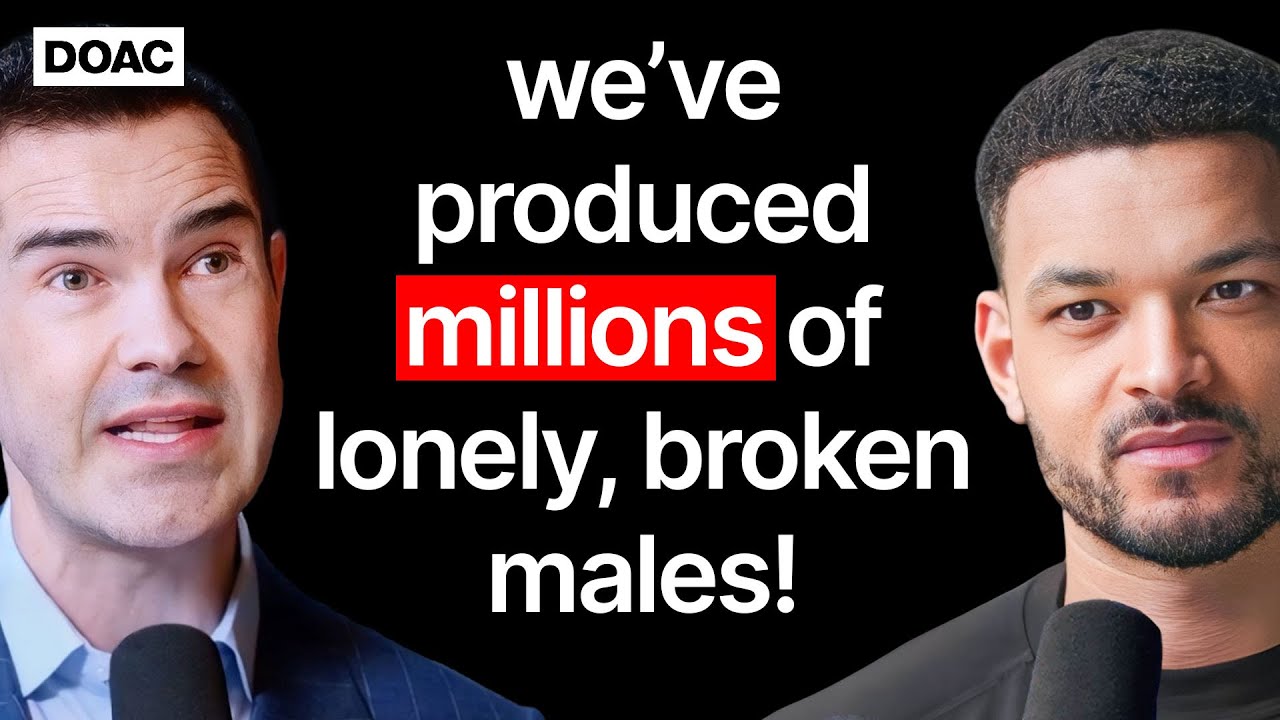
This video was published on YouTube by the channel The Diary Of A CEO on April 15, 2024. According to the page description, it features award-winning comedian, writer, and TV host Jimmy Carr discussing topics ranging from men's mental health, grief, and comedy to dealing with rejection, cancel culture, and artificial intelligence.
## TL;DR
In this wide-ranging interview, Jimmy Carr reflects on modern mental health challenges, the crisis of agency facing young men, and how comedy serves as a structured discipline for self-expression and communication. He candidly explores personal experiences with grief, body dysmorphia, and depression, while sharing lessons learned from his transition from corporate marketing to stand-up. Carr also addresses broader societal topics, including the mechanics of public speaking, cancel culture, the limitations of artificial intelligence, and the importance of maintaining an internal locus of control.
## Atmosphere & style
The conversation carries a deeply reflective yet lively and intellectual tone, blending Carr's sharp comedic wit with vulnerable, grounded introspection. Host Steven Bartlett creates an intimate, conversational space that allows Carr to balance lighthearted anecdotes with profound observations on mortality, career discipline, and human connection. Watching the interview feels like a candid, unfiltered deep dive into the mind of a seasoned performer who navigates heavy existential themes with humor, clarity, and pragmatic wisdom.
## Key takeaways
- [02:01](https://www.youtube.com/watch?v=uHLAazKUU68&t=121s) Modern society suffers from 'life dysmorphia,' where living standards and physical comforts are at historical highs, yet subjective happiness and satisfaction remain low.
- [12:35](https://www.youtube.com/watch?v=uHLAazKUU68&t=755s) True fulfillment comes from voluntary challenge and active pursuit rather than passive relaxation, as extended leisure quickly loses its appeal.
- [15:00](https://www.youtube.com/watch?v=uHLAazKUU68&t=900s) Imposter syndrome should be interpreted as a positive indicator or 'compass' showing that a person is leveling up, stepping out of their comfort zone, and growing.
- [25:46](https://www.youtube.com/watch?v=uHLAazKUU68&t=1546s) Young men face a crisis characterized by rising suicidality, lack of direction, and reliance on digital proxies like video games, pornography, and hyper-masculine influencers.
- [30:30](https://www.youtube.com/watch?v=uHLAazKUU68&t=1830s) Religious rituals historically united communities, but modern secular society has replaced these structures with political movements, sports, and a pursuit of fame.
- [33:52](https://www.youtube.com/watch?v=uHLAazKUU68&t=2032s) Grief is cumulative, with each new loss resurfacing past grief, while confronting mortality directly increases personal agency and lowers tolerance for nonsense.
- [45:53](https://www.youtube.com/watch?v=uHLAazKUU68&t=2753s) Ambition requires taking personal responsibility to close the gap between current reality and goals, whereas entitlement expects external sources to fix it.
- [01:01:24](https://www.youtube.com/watch?v=uHLAazKUU68&t=3684s) Self-esteem should be rooted in internal character rather than external reputation, especially in a culture where respectability and political correctness can become restrictive.
- [01:03:43](https://www.youtube.com/watch?v=uHLAazKUU68&t=3823s) Authentic relationships and meaningful media thrive in the absence of filters, bridging the gap between public performance and raw human reality.
- [01:09:10](https://www.youtube.com/watch?v=uHLAazKUU68&t=4150s) Anxiety represents an overactive, creative mind trying to solve future problems in the present moment, which can be managed by focusing intensely on action today.
- [01:15:30](https://www.youtube.com/watch?v=uHLAazKUU68&t=4530s) Artificial intelligence acts like a glorified 'covers band' that reorders existing information rather than demonstrating original human consciousness or authentic creativity.
- [01:24:45](https://www.youtube.com/watch?v=uHLAazKUU68&t=5085s) Free speech and comedy expand the Overton window to help society process taboo subjects, whereas historic censorship has rarely served the public good.
- [01:27:59](https://www.youtube.com/watch?v=uHLAazKUU68&t=5279s) Uninhibited open dialogue and a willingness to engage with opposing viewpoints are vital for breaking out of confirmation bias and preventing societal polarization.
- [01:31:44](https://www.youtube.com/watch?v=uHLAazKUU68&t=5504s) Substance use like marijuana can deplete ambition and personal agency in young adults, whereas self-control and clear-headedness maximize focus.
- [01:42:19](https://www.youtube.com/watch?v=uHLAazKUU68&t=6139s) Self-confidence is built through small, consistent commitments made and kept to oneself over time, establishing trust in one's own character.
## Detailed walkthrough
### [00:00](https://www.youtube.com/watch?v=uHLAazKUU68&t=0s) Intro and Welcoming Jimmy Carr
Host Steven Bartlett kicks off the episode with a high-energy trailer featuring memorable quotes from comedian Jimmy Carr, teasing conversations on public speaking, dealing with anxiety, handling cancel culture, and the nature of success. After brief channel updates, Steven welcomes Jimmy back to *The Diary Of A CEO*, setting an eager and warm tone for the conversation.
* Steven notes that **63%** of regular listeners are not yet subscribed to the channel (down from **69%**), reiterating the goal to reach **50%**.
---
[02:01](https://www.youtube.com/watch?v=uHLAazKUU68&t=121s) "Life Dysmorphia" and the Practice of Gratitude
Jimmy reflects on his excitement and nervousness about returning to the show. He introduces a thought experiment on gratitude: if you were offered all the material wealth you will own 25 to 30 years from now in exchange for returning to your exact current age and health, almost anyone would trade it all without hesitation. From this, Jimmy argues that modern society suffers from a cultural "life dysmorphia"—where subjective happiness is at an all-time low despite objective living standards being the highest in human history.
> "Life has never been objectively better and subjectively worse."
Jimmy highlights that throughout human history—encompassing roughly **100 billion** people who have ever lived—current generations enjoy unprecedented luxuries like hot showers, abundant calories, low infant mortality, and advanced medicine. However, because human desires are inherently mimetic, happiness is constantly eroded by comparison. Jimmy summarizes happiness with a simple formula: **Quality of Life minus Envy**. To combat life dysmorphia, he practices intentional gratitude by reframing everyday moments—like taking a hot shower—and remembering that even historical icons lived without such basic daily comforts.
* Out of approximately **100 billion** human beings throughout history, modern individuals live in the top percentile of global comfort and physical safety.
* The historical benchmark of simple luxuries: hot showers were unavailable to almost everyone until around **50 years ago**.
---
[05:20](https://www.youtube.com/watch?v=uHLAazKUU68&t=320s) Suffering, Self-Assignment, and Future Sacrifices
Responding to the idea of a modern "comfort crisis," Jimmy delivers a blunt reality check: "You can't have an easy life and a great character." Referring to Steven’s personal journey from childhood poverty in Plymouth to immense business success, Jimmy emphasizes that real fulfillment comes from *getting* things rather than simply *having* them. It is not the pursuit of happiness, but the "happiness of the pursuit"—and ultimately, who you become along the way.
Jimmy explains that adulthood is entirely self-assigned. Once formal education ends, individuals must choose between a short-sighted easy path or a challenging path that builds true character. He links this to the psychological roots of religion, where God serves as a proxy for the future—demanding current sacrifice in exchange for a better tomorrow. Sharing a framework developed alongside his friends Chris Williamson and George Mack, Jimmy suggests focusing on a daily question: *"What could you do today that your 24-hour-future self would be happy you did?"*
---
[08:59](https://www.youtube.com/watch?v=uHLAazKUU68&t=539s) Being a Stand-Up Comedian and the Immediate Feedback Loop
Steven asks Jimmy whether reaching the absolute peak of his profession—25 years after leaving a career in advertising—causes him to question the ultimate goal of all his relentless work. Jimmy reframes the concept of being at the top, stating that stand-up comedians always stand on the shoulders of giants and are only ever "as good as the next joke." Rather than obsessing over status, Jimmy embraces a stoic approach: doing less, but doing it better, and honoring the world's need for authentic stand-up comedy.
For Jimmy, stand-up provides a rare and joyous immediate feedback loop that requires no corporate committee approval. Testing jokes in front of a live audience acts like software A/B testing or an eye exam ("Is this wording better, or this wording?"). This iterative process gives rise to stand-up projects like his Netflix special, *Natural Born Killer*, which he views as irrefutable proof of his ongoing growth as a craftsman.
* Jimmy transitioned out of his corporate job in marketing/advertising in his mid-20s (around 25 years old) to commit fully to stand-up comedy.
* He emphasizes that self-esteem doesn't come from achieving a static result (like having a six-pack), but from being the *kind of person* who consistently shows up to do the necessary work every day.
---
[12:35](https://www.youtube.com/watch?v=uHLAazKUU68&t=755s) What Is Our End Goal?
Steven questions why high achievers continue to push themselves through stress and long hours when they already possess the financial means to retire comfortably on a boat. Jimmy explains that voluntary challenge is necessary to avoid empty comfort; extended periods of passive relaxation lose their appeal quickly. He jokes that holidays are intentionally set to two weeks so that by day ten, people naturally realize, "I've got to get back to work and do something meaningful."
Addressing the tension between relentless striving and present-moment enjoyment, Jimmy cites Chairman Mao's quote: *"You can't smell the roses from a galloping horse."* While it is essential to enjoy the process and avoid deferring happiness indefinitely, true career satisfaction requires loving the unglamorous aspects of the job—such as travel, administration, and preparation—rather than just envying the end results achieved by others.
<ElicitationsGroup message="Explore more topics from this interview:">
<Elicitation label="Read Part 2: Handling Hecklers, Rejection & Public Speaking" query="Write a detailed walkthrough of Part 2 of the Jimmy Carr interview on The Diary Of A CEO."/>
<Elicitation label="Read Part 3: Comedic Technique & Dealing with Cancellation" query="Write a detailed walkthrough of Part 3 of the Jimmy Carr interview on The Diary Of A CEO."/>
</ElicitationsGroup>
[15:00](https://www.youtube.com/watch?v=uHLAazKUU68&t=900s) Rethinking Imposter Syndrome: Why You Should Feel Uncomfortable
When lookers-on assess success, they envy the end outcome rather than the demanding labor required to get there. Nobody sits around wishing they possessed the exact mental pathology necessary to sit alone for ten hours a day writing one-liners. Rather than fearing imposter syndrome, high achievers should view it as a positive, necessary compass. Feeling out of place every 18 months simply indicates that you are leveling up and pushing past your comfort zone. The moment comfort sets in is precisely when you need to push yourself further.
To illustrate how universal this feeling is, Jimmy shares a story told to him by Brandon Flowers of The Killers. While filming a video with rock icon Lou Reed, Flowers caught Reed looking in the mirror—wearing his signature leather jacket and mirrored sunglasses—and whispering softly to his own reflection, "I wish I was that guy." If a rock legend who had been an icon for 40 years could still feel like he wasn't quite "that guy," then imposter syndrome is not a flaw; it is the natural state of anyone trying to do great things.
* **Work vs. Play:** What looks like extreme, exhausting labor to an outsider (like performing 300 comedy shows a year in cities like Johannesburg, Paris, Istanbul, Budapest, and Vienna) actually feels like play to the person doing it.
* **The Currency of Memory:** People do not truly crave a longer life as much as they crave *more memories*. Monotonous routines—like commuting the same route 300 days a year—collapse into a single memory, whereas novelty and varied experiences expand your perception of time.
---
[18:45](https://www.youtube.com/watch?v=uHLAazKUU68&t=1125s) Making Mom Laugh: The Roots of Comedy
Comedy can often function as a low-level, functional mental health issue transmuted into a lucrative career. Standing on a stage in front of thousands of strangers sounds terrifying to most people, but for Jimmy, it serves as a primary source of joy. The underlying drive traces back to his childhood and his relationship with his mother—a vibrant, larger-than-life Irish woman who suffered quietly from deep depression.
As a young boy, Jimmy didn't realize his home life was atypical; if his mother remained in her dressing gown all day, he assumed that was just what mothers did. He dedicated his childhood to entertaining her and making her laugh, often acting silly or grabbing the steering wheel while she was driving to elicit a reaction. That compulsive drive to lift someone out of darkness ultimately laid the foundation for his entire career as a stand-up comedian.
---
[20:20](https://www.youtube.com/watch?v=uHLAazKUU68&t=1220s) Trading the Measurable for the Immeasurable
Achieving long-term fulfillment requires shifting focus from *measurable metrics* (views, revenue, tour numbers, resume bullet points) to *immeasurable metrics* (relationships, presence, and quiet moments). Drawing on a concept from writer George Mack, Jimmy points out that people constantly trade immeasurable things—like sitting down for lunch with their parents—for measurable work achievements. The tragedy of this trade is that you often don't realize the value of the immeasurable until the counter hits zero and a parent passes away.
Jimmy references author Warren Farrell (*The Myth of Male Power*), who shared a story about an immensely successful corporate executive who realized he had completely missed his son's childhood. To fix this, the man decided to walk away from his career entirely for five years just to be present at home with his child. That man was John Lennon, taking time away from music to raise his son Sean.
> "No matter how important you think your job is, you're not John Lennon... And he didn't put it off. He didn't go, 'I'll get to a million subscribers and then I'll do that.' He did it. Isn't that beautiful?"
* **Mortality and Darkness:** The Islamic concept of death as "the certainty" serves as a reminder of our finite existence—a brief shaft of light between two vast oceans of darkness.
* **Mark Twain on Death:** As Mark Twain famously observed, he was dead for billions of years before he was born and was not inconvenienced in the slightest; it is the brief, lighted interlude of living that demands our full presence.
---
[24:29](https://www.youtube.com/watch?v=uHLAazKUU68&t=1469s) Sadness vs. Clinical Depression
Depression requires a clear distinction from situational sadness. Clinical depression is a physical, heritable disease rooted in neurochemical imbalances, where suicide manifests as a tragic symptom of the illness—a permanent solution to a temporary problem when someone desperately wants to stop feeling constant pain.
By contrast, circumstantial sadness, while painful, is actually fortunate because it means your environment or life situation can be modified. Constant self-absorption can breed melancholy, but if your unhappiness stems from how your life is currently set up, you possess the power to change it.
---
[25:46](https://www.youtube.com/watch?v=uHLAazKUU68&t=1546s) The Modern Crisis of Young Men
There is an undeniable crisis affecting young men today, characterized by rising suicidality, lack of direction, and the sudden rise of hyper-masculine online influencers. Pointing to Andrew Tate, Jimmy frames his appeal through a parallel once drawn by comedian John Mulaney: if Donald Trump is a poor person's idea of what a rich person looks like (with gold-plated faucets), Andrew Tate is a 14-year-old boy's cartoonish idea of what a man looks like.
These figures flourish because nature abhors a vacuum. Society has stripped away physical male elders and rites of passage; young men no longer learn how to shave from their fathers, but from YouTube videos. In his stand-up special *Natural Born Killer*, Jimmy directly addresses a young male audience member to give him frank, hilarious, yet deeply necessary advice about relationships, consent, and how to treat women properly—sugaring the conversational pill so young men can actually digest it.
> "Be a gentleman. Be a mensch. That's it. That's it, it's done... A gentleman is never rude by accident."
---
[28:00](https://www.youtube.com/watch?v=uHLAazKUU68&t=1680s) Cheap Dopamine vs. Real-World Risk
Jimmy’s primary advice to young men is simple: get the *real thing* in real life rather than accepting digital substitutes. Modern young men spend thousands of hours immersed in video games because gaming acts as a artificial proxy for a career and achievement. Similarly, compulsive consumption of online pornography functions as a hollow proxy for real sexual intimacy.
Borrowing from dystopian literature, society's power won't be stripped away by a totalitarian regime as George Orwell envisioned in *1984*; instead, people are willingly trading their agency away for cheap dopamine. The real issue stems from overprotective "helicopter parenting" that denies kids real-world risk and autonomy.
* **The Babysitter Shift:** Decades ago, 14-year-olds worked as babysitters responsible for others; today, 14-year-olds frequently *need* babysitters.
* **Inverted Needs:** Society has inverted Maslow's hierarchy of needs. We have mastered the base layers (food, warmth, hot showers) to the point of taking them for granted, yet we have lost the top of the pyramid—clear identity, purpose, and genuine communal connection—leaving individuals adrift as isolated units.
<ElicitationsGroup message="Where would you like to explore next in Jimmy Carr's interview?">
<Elicitation label="Explore Part 3: Losing faith, comedy mechanics, and handling public backlash" query="Show me the detailed walkthrough for Part 3 of the Jimmy Carr interview transcript."/>
</ElicitationsGroup>
[30:30](https://www.youtube.com/watch?v=uHLAazKUU68&t=1830s) Individualism, Risk, and the Search for Meaning
Carr reflects on human connectivity by citing a psychological and developmental truth: "there's no such thing as a baby." A baby isolated on its own cannot survive—it only exists in relationship to a mother, a father, or a caregiver. He argues that adults are fundamentally no different; we remain dependent on our connections. A significant portion of who we are resides out in the world, mediated through our relationships with other people. Carr warns that modern digital life isolates individuals, encouraging them to become "self-authored" entities behind screens who fail to take real-world risks or build deep connections.
When Bartlett asks if this isolation stems from the rise of atheism and agnosticism, both reflect on losing their religious faith in their early to mid-20s. Carr observes two categories of "fools" regarding religion: those who take the scriptures literally, and those who dismiss religion as having zero value. In reality, religious rituals work not because they please a deity, but because they bring communities together. In its absence, people seek proxies for religion—such as football, environmentalism, or political movements—to fill the void and give their lives purpose.
```
Religious / Community Void
│
├── Football / Sports Fanaticism
├── Environmental Movements
└── Political Ideology & Systems
```
Bartlett admits for the first time that he misses the comfort of religion, noting that losing his faith felt like putting on a "backpack full of weights"—the heavy burden of total personal responsibility and individualism. For Carr, abandoning faith felt like a "rush of blood to the head," realizing this life is all we have and that we must make good on it.
* **Heaven vs. Modern Proxies:** In modern secular culture, fame and fortune have replaced the traditional concept of heaven as the ultimate "land of milk and honey" where everything is taken care of.
* **The "Next Life" Concept:** Carr clarifies that while he does not believe in an afterlife, he believes in a "next life"—a radical shift in one's earthly existence, such as starting a family, which completely alters a person's identity and daily routine.
---
[33:52](https://www.youtube.com/watch?v=uHLAazKUU68&t=2032s) Navigating Grief and the Loss of Sean Lock
The conversation turns to grief, which Carr experienced early when his mother passed away when he was 28—an event that profoundly shaped his life and career. He explains that grief is cumulative: every subsequent loss, even the death of a household pet, triggers memories of past losses and forces a confrontation with one's own mortality. It moves a person into a melancholy state, re-evaluating what truly matters. Instead of focusing on a resume or CV, the ultimate hidden metric of a life is what people will say at your eulogy.
Carr discusses the death of his close friend and fellow comedian, Sean Lock, who died of cancer at a young age. Carr describes suppressing his pain by immersing himself in work—using laughter as a sanctuary to avoid facing the reality that Lock was "gone forever." Yet, he recalls feeling a bittersweet cognitive dissonance on the day the news broke: crying over the loss while simultaneously belly-laughing at the flood of comedy clips fans and friends were sharing online.
```
Loss of a Loved One / Peer
│
┌─────────┴─────────┐
▼ ▼
Grief & Shock Shared Memory / Joy
(Melancholy, Pain) (Clips, Eulogies, Laughter)
└─────────┬─────────┘
▼
Confrontation with Mortality
(Climbs "Agency", Drops Tolerances)
```
Facing mortality acts as the ultimate catalyst for high agency. Carr points out that if you want to meet someone with maximum agency and zero tolerance for nonsense, talk to someone who has six months to live. Seeing a peer die young reinforces the imperative to prioritize family, spend time with loved ones, and pursue what you love without delay.
* **Sean Lock's Legacy:** The overwhelming digital tribute to Sean Lock demonstrated the rare positive side of social media, uniting people through shared joy and hilarity during a period of mourning.
* **Living with Urgency:** People often only learn what matters most when time has almost run out; witnessing the death of a close friend offers a vicarious lesson to realign priorities immediately.
---
[38:27](https://www.youtube.com/watch?v=uHLAazKUU68&t=2307s) Agency, Business, and the Science of Comedy
Transitioning back to the overarching theme of the podcast, Carr playfully teases Bartlett for running a "storytelling podcast" under the title *The Diary Of A CEO*, calling him an "old hippie" in the vein of Steve Jobs. However, both agree that business and life are fundamentally identical: both center on communication, mental health, relationships, and progress.
Carr links this to the mental health crisis affecting young people today, asserting that the core issue is a lack of agency. Young people are not given enough control over their own destiny, which leads to feelings of helplessness. In contrast, serial entrepreneurs demonstrate high agency—they rarely succeed on their first venture, but their willingness to be self-starters keeps them moving forward through failure.
To address this, Carr reveals he has spent two years co-writing a book with Amanda Baker aimed at teaching comedy as a structured discipline. He argues that modern stand-up is a young art form whose origins trace back to George Carlin and Richard Pryor in the early 1970s. Because stand-up lacks the formal academic vocabulary of music, it is often surrounded by "magical thinking" rather than systematic analysis.
> "The great tragedy of life is most people live and die and never hear their own voice."
* **Why Teach Comedy in Schools?** Just as learning music theory helps students appreciate music and express themselves, learning comedy teaches individuals to find their authentic voice, structure their thoughts, and communicate complex ideas effectively.
* **Public Speaking vs. Listening:** Carr shares a story about speaker Julian Treasure, whose TED talk on speaking received tens of millions of views, while his talk on listening received far less attention—proving that everyone craves becoming a more compelling communicator.
---
[42:38](https://www.youtube.com/watch?v=uHLAazKUU68&t=2558s) The Mechanics of Delivery and Entering "No Man's Land"
When Bartlett asks for concrete advice on becoming a more effective public speaker, Carr shares a precise metric: **92 beats per minute**. Many world-class public speakers speak at or near a rhythm of 92 BPM, regardless of their surface speed. To prepare his mind and rhythm before stepping onto stage, Carr listens to a tailored music playlist locked exactly to 92 BPM. This cadence aligns with the audience's internal "proximal speed of cognition," making the message uniquely digestible and engaging.
```
92 BPM Rhythm
│
├── Sets baseline pace for delivery
├── Matches "proximal speed of cognition"
└── Connects with audience flow
```
This leads to a discussion on Donald Trump's effectiveness as an unscripted orator. Carr presents a lighthearted theory that Trump's political career is ultimately Gwen Stefani's fault: while hosting *The Apprentice*, Trump discovered Stefani was earning more on a rival show (*The Voice* / *X Factor*). To boost his commercial relevance, he launched a presidential exploratory campaign expecting to drop out after three months. However, after descending the golden escalator at Trump Plaza and seeing 10,000 cheering supporters at his first Make America Great Again rally, he realized he could actually win.
Bartlett then references a concept he calls **"No Man's Land"**—a framework inspired by Carr's original career leap from a secure corporate marketing role at Shell into stand-up comedy. Leaving comfort requires stepping into a 6-to-12-month void where an individual risks looking foolish and losing social connections.
* **The 5 Buckets of Life:** Bartlett categorizes personal assets into five buckets: *Knowledge*, *Skills*, *Network*, *Resources*, and *Reputation*.
* **The "No Man's Land" Trade-off:** When an individual enters "No Man's Land" to pursue a radical career pivot, they fill the first two buckets (*Knowledge* and *Skills*) through rapid learning, but temporarily drain the remaining three (*Network*, *Resources*, and *Reputation*).
[45:53](https://www.youtube.com/watch?v=uHLAazKUU68&t=2753s) Leaving a Safe Life and Making Friends with Failure
The transition from a stable career into stand-up comedy—or any unpredictable artistic path—requires a fundamental shift in perspective. Choosing to leave a conventional life and tell jokes for free often looks like bravery from the outside, but in reality, it is born from an internal realization. Jimmy quotes Confucius to illustrate this pivot point: "Every man has two lives, and his second begins when he realizes he only has one." While quitting a marketing career leads to plenty of sleepless nights at 4:00 AM filled with panic and doubt, taking that risk allows a person to build a completely new relationship with failure. Stand-up comedy is a continuous masterclass in failing forward, forcing performers to make peace with the reality that many ideas will fall completely flat in front of a quiet audience.
Modern society often treats failure as something to be shielded from, which deprives people—especially children—of learning how to lose gracefully. When sports programs or educational systems ensure that everyone is treated as a winner, young people fail to build the resilience necessary for real-world challenges. Learning to handle rejection acts as a crucial test of how much someone actually desires a goal. Experiencing a terrible performance or a harsh rejection forces a choice: either walk away forever, or treat it as a lesson that moves you forward.
- **The Law of Averages in Telesales**: Steven shares that working in a call center at age 16 built his "muscle" for rejection, teaching him that every "no" brought him statistically closer to a sale (even if it was selling double glazing).
- **Misguided Kindness**: Jimmy argues that shielding kids from discomfort is being "kind on the wrong time scale." Giving children only what they want in the moment leads to poor long-term outcomes, whereas true kindness focuses on their future potential through discipline, homework, and healthy habits.
- **Nietzsche on Resentment**: Quoting Friedrich Nietzsche, Jimmy notes that if you believe someone else has ruined your life, "you're right—it's you." Gratitude is the ultimate antidote to this mindset.
- **Ambition vs. Entitlement**: Entitlement is defined as wanting to close the gap between where you are and where you want to be, but expecting someone else to solve it for you. Ambition is taking full personal responsibility to bridge that gap yourself.
- **Dave Attell's Advice**: When comedians backstage were complaining at length about their management hindering their success, veteran comedian Dave Attell overheard them and offered a simple, stoic summary: "Ooh, be funnier."
[52:38](https://www.youtube.com/watch?v=uHLAazKUU68&t=3158s) Specialization vs. Portfolio Careers and the Illusion of Hobbies
Splitting focus across multiple completely different careers—often glorified as portfolio working—can severely limit a person's ability to reach the top of any single domain. Competing against individuals who dedicate 100% of their energy to a single craft while only committing part-time effort rarely yields elite results. Success comes from leaning into specialization and understanding personal limitations rather than trying to polish every weakness. Attempting to master everything ignores the power of delegation, which top entrepreneurs rely on to build massive organizations.
When Steven mentions buying DJ equipment and wondering if he should pursue DJing or musical theater alongside host duties, Jimmy humorously cuts him off, reminding him that having an enjoyable flow state doesn't mean it needs to be monetized into a business. It is perfectly healthy to keep a hobby as just a hobby rather than trying to turn every passion into a commercial enterprise.
- **Richard Branson's Delegation Strategy**: Following a meeting in New York, Steven highlights how Richard Branson built his empire not by trying to fix his weaknesses, but by recognizing what he was bad at and delegating those exact tasks to experts.
- **Finding Your Focus**: Jimmy advises that to figure out what you should do in life, look at what you naturally think about all the time—that ongoing obsession dictates where your true career potential lies.
- **Thomas Sowell's Trade-Offs**: Referring to economist Thomas Sowell's famous principle that "there are no solutions, only trade-offs," pursuing a high-level career means accepting the sacrifice of alternative paths (such as an Olympian forfeiting a traditional childhood).
- **Lost Pace in Stand-Up**: Jimmy notes that when brilliant comedians start dividing their attention across five different industries, they inevitably lose a step on stage because crafting an extraordinary show requires immense, concentrated effort with zero wasted space.
[58:44](https://www.youtube.com/watch?v=uHLAazKUU68&t=3524s) Rethinking Luck, Talent, and Hard Work
The public perception of success often relies on an oversimplified view of luck versus hard work. People tend to assign physical beauty or sudden opportunities to luck, while viewing high intellect or an extraordinary work ethic purely as earned achievements. In reality, drive, obsession, and capacity for work are heavily influenced by genetics and environment. True elite accomplishment never comes down to an isolated factor; it is consistently the combination of raw aptitude, heritable drive, and thousands of hours of relentless application working in tandem. Viewing human capability through this lens fosters a more forgiving and realistic perspective on how achievement actually happens.
- **Margot Robbie vs. J. Robert Oppenheimer**: Jimmy contrasts how society views Margot Robbie's success as "luck" due to her physical appearance—often overlooking her exceptional acting talent—while J. Robert Oppenheimer's 170 IQ and intense work ethic are rarely categorized as genetic luck, despite both being inherited traits.
- **The Myth of the Single Factor**: High achievers are almost never just "talented" or just "hardworking"; it requires a near-pathological combination of both elements working simultaneously.
- **Historical Randomness**: The conversation shifts to the incredible role of chance in history, referencing how if the asteroid that wiped out the dinosaurs had struck Earth just a minute later, dinosaurs might still exist, or how Kyoto was spared from the atomic bomb in World War II simply because U.S. Secretary of War Henry L. Stimson had enjoyed his honeymoon there two decades prior and urged President Truman to remove it from the target list.
### [01:00:45](https://www.youtube.com/watch?v=uHLAazKUU68&t=3645s) First and Second-Order Effects
Jimmy Carr and Steven Bartlett discuss the complex chains of cause and effect that shape global history, referencing historical moments like the atomic bombing of Hiroshima after clouds obscured Kokura. Small, seemingly insignificant occurrences—what Carr terms the "butterfly effect"—can completely alter human destiny. This unpredictability creates a profound sense of powerlessness, as an individual's survival or success might ultimately hinge on someone else's random choice or vacation. Bartlett notes that people naturally focus on the first-order effects of their actions while routinely failing to anticipate second- and third-order consequences.
---
### [01:01:24](https://www.youtube.com/watch?v=uHLAazKUU68&t=3684s) Personal Agency, Character, and "Cancel Culture"
The conversation turns to personal responsibility and agency—striving to keep one's locus of control internal rather than external. Carr distinguishes between *reputation* (what the world thinks of you) and *character* (what you know about yourself), asserting that self-esteem should be rooted in character because reputations inevitably take hits. Comedians serve as the "canary in the coal mine" for free speech, pushing boundaries in an era where "respectability is a prison" that people rush to inhabit. Carr accepts that his edgy, magnet-like jokes will attract some and repel others. When a comedy special drops on Netflix, the "pathogen escapes the lab" to reach casual viewers who demand to "ban this filth." He views cancel culture not as valid criticism of ideas, but as a modern form of book burning—analogous to burning Beatles records in the 1960s.
- **Character vs. Reputation**: Reputation is fragile and subject to public whims; character is internal self-knowledge that withstands public outcry.
- **The Magnet Metaphor**: Transgressively funny jokes naturally pull in a dedicated fanbase while repelling those who dislike edgy humor.
- **Cancel Culture as Book Burning**: Canceling individuals mirrors historic moral panics, such as burning Beatles records, which look foolish in hindsight.
> "I sort of view it as respectability is a prison, and the gates are open, and people are desperate to be inside."
---
### [01:03:43](https://www.youtube.com/watch?v=uHLAazKUU68&t=3823s) Friendship, Authenticity, and Public vs. Private Discourse
Carr shares how being canceled acts as an unexpected filter for genuine relationships, revealing who is truly "ride or die" versus who only shows up when you're throwing a party. Friendship, he notes, is fundamentally defined by the absence of a filter. While colleagues or strangers require significant filtering, best friends share deep, unfiltered truths. Stand-up comedians and long-form podcasters are thriving precisely because the gap between public performance and private discourse has never been wider. Viewers crave raw vulnerability—such as discussions about mental health and depression—because polished social media feeds fail to reflect private human reality.
- **Reframing Cancelation**: Carr quips that controversy can simply be recalibrated as "free publicity."
- **The Filter Scale**: Strangers at a bus stop require maximum social filter, colleagues require moderate filtering, and true friends require no filter.
- **Why Podcasts & Comedy Boom**: Audiences flock to authentic, unfiltered voices (like Dave Chappelle or Chris Rock) because mainstream public discourse feels synthetic.
---
### [01:06:12](https://www.youtube.com/watch?v=uHLAazKUU68&t=3972s) "Right-Sizing" Traumatic Events and Managing Anxiety
Bartlett introduces the "eraser test"—a concept showing that roughly 95% of people, despite enduring intense trauma or public controversy, would choose not to erase their worst moments because doing so would destroy their present character. Carr recounts advice he received during a past controversy: a friend asked him to define "Who is Jimmy Carr?" (an edgy stand-up comedian), making him realize his actions were entirely consistent with his identity. Another friend urged him to "right-size" the situation, reducing public outrage to its basic reality: "You told a joke and some people didn't like it."
Addressing anxiety, Carr describes it as the dark flip side of creativity—an overactive, un-turn-off-able mind that generates brilliance during the day but churns out worst-case scenarios and counterfactuals at 4:00 AM. His practical tool for managing anxiety is staying intensely active in the present moment, because anxiety is the mind's futile attempt to solve future problems right now.
- **The Eraser Test**: Painful experiences build character; erasing past struggles strips away personal growth.
- **The Gym Analogy**: Working out cures momentary anxiety because lifting a heavy weight presents an immediate, unavoidable present-moment problem.
- **Rootless Anxiety**: Anxiety rarely stems from a single specific trigger; if career or personal issues are quiet, the anxious mind simply glues itself to new concerns like global affairs or parenting.
> "Anxiety, you're trying to solve a problem in the future now, and you can't. Cuz there's no problem in the now. The problem is in the future."
---
### [01:10:08](https://www.youtube.com/watch?v=uHLAazKUU68&t=4208s) The Three Lives and Changing Mindsets
Bartlett brings up a concept shared by a former CIA agent: every person lives three distinct lives—a *public* life (the persona on camera), a *private* life (what family and partners see), and a *secret* life (one's internal, solitary mind). Carr feels long-form podcasts and his autobiographical book *Before & After* capture his genuine self, bridging the gap between his private identity and his performative stage persona.
When asked about recent shifts in his beliefs, Carr reveals he has changed his perspective on environmental policy. He advocates for nuclear power as the ultimate solution to the energy crisis, arguing that political short-termism prevents long-term investment. He proposes a radical policy pitch: deploying compact, submarine-style nuclear reactors in every town across Britain.
- **The Three Lives**: Public (the TV persona), Private (the family man), and Secret (the solitary mind).
- **Political Short-Termism**: Democratic systems operate on 5-year election cycles, discouraging politicians from backing 20-year nuclear projects that yield massive long-term benefits.
- **The Nuclear Energy Pitch**: Burn fossil fuels while building compact nuclear reactors nationwide over 20 years, then transition to 100% clean, essentially free energy to attract global business.
[01:14:34](https://www.youtube.com/watch?v=uHLAazKUU68&t=4474s) Politics, American Prosperity, and Artificial Intelligence
Jimmy Carr reflects on the state of global politics and economic future, particularly regarding the United States. He notes that while Donald Trump appears poised for a potential return to power and Joe Biden struggles in polls, the U.S. will thrive regardless of who wins the presidency. Geographically and economically, America is uniquely blessed: it is a net exporter of both food and fuel, boasts ideal neighbors in Canada and Mexico, and is set to double its industrial base as the world shifts away from globalism toward more localized production. Carr quips that America can afford to have a dysfunctional political system because it is fundamentally so well-positioned.
Turning to artificial intelligence, Carr dismisses widespread panic, describing AI as a glorified "covers band." He points out that current AI represents artificial *intelligence*, not artificial *consciousness*. While an AI model can regurgitate or reorder material that humans have already written, it cannot generate truly original ideas or master authentic human creativity. Even when Steven Bartlett counters that AI's capabilities are compounding annually and could produce exceptional original humor within five to ten years, Carr remains unbothered, comparing AI's attempts at humor to a "bootleg Beatles" tribute act.
Carr draws a distinction between two definitions of genius: innate, generational genius (like Bach or Beethoven) and "hyper-accelerated rationality." While people often mistake stand-up comedy for hyper-accelerated rationality, Carr asserts that AI is nowhere close to mastering either form. Rather than destroying society, AI will simply displace old roles and give rise to completely new career paths—much like podcasts or YouTube redefined global media landscape without traditional institutions even noticing.
* "America can afford to have a terrible political system because it is so blessed."
* "AI is a covers band. It's artificial intelligence. It's not artificial consciousness."
* "The biggest TV channel in the world is YouTube, and no one noticed."
---
[01:17:54](https://www.youtube.com/watch?v=uHLAazKUU68&t=4674s) Innovation Frameworks and the Podcasting Paradigm
Discussing economic shifts, Carr references Clayton Christensen’s book *The Innovator's Dilemma* to explain how incumbent industries continuously miss massive opportunities. Innovation typically branches into two paths: the "upward opportunity" (sustaining innovations that existing customers ask for) and the "downward opportunity" (disruptive, unglamorous ideas that incumbent leaders dismiss). Using an 1880s analogy, an upward opportunity was breeding faster horses, whereas the downward opportunity was the crude, slow, 10 mph automobile that required someone to walk in front of it holding a red flag. Incumbents consistently choose the upward path because their operational incentives align with delivering incremental improvements.
Carr applies this logic to modern entertainment and podcasting. Traditional media companies assumed audiences simply wanted larger or thinner TV screens to watch network broadcasts. In reality, the downward opportunity in media was long-form, uninterrupted, authentic human connection. In an increasingly isolated world, listeners tune into podcasts to vicariously engage in conversation. Drawing from longevity studies in global "Blue Zones," Carr emphasizes that community and social connection during meals matter far more to human health than dietary details like olive oil.
The conversation naturally shifts to why podcasts resonate so strongly with audiences. Comedians and detectives both think backward; while most people look forward to "what's next," comedians reverse-engineer human behavior to understand how things came to be. This backward-thinking perspective allows podcasters to explore raw human truths rather than polished corporate narratives. Carr highlights Joe Rogan as the ultimate example of authenticity in the space—someone who remains the exact same person talking about comedy, MMA, and philosophy as he was backstage at the Comedy Store twenty years ago.
* "Throughout history, the incumbents always ignore the downward opportunity because their incentives are set up to pursue what we call the sustaining innovation."
* "The olive oil isn't making any difference. The connection to other human beings is."
* "Comedians have got an interesting way of thinking. I think we're very similar to detectives because we think backwards."
---
[01:22:08](https://www.youtube.com/watch?v=uHLAazKUU68&t=4928s) The "Diary of a CEO" Identity and Audience Pressures
Steven Bartlett reflects on the nature of his own show when Carr playfully teases him about calling *The Diary of a CEO* a business podcast. Bartlett defends the title, arguing that a true CEO's diary doesn't contain profit-and-loss statements or financial forecasts; it contains marital troubles, panic attacks, self-doubt, and deep existential questions. For Bartlett, exploring health, psychedelics, or personal psychology is the ultimate reflection of a leader's reality.
Bartlett reveals the intense external pressure he faces from viewers and online petitions demanding he return to interviewing corporate executives or feature "normal people at the start of their journey." However, he chooses to follow the precedent set by creators like Joe Rogan, prioritizing his genuine curiosity over public demand. If he catered solely to what the audience claimed to want, he would be offering "faster horses" rather than evolving the show.
Carr agrees, noting that giving an audience exactly what they ask for is a path to stagnation. Both hosts reflect on how audience dynamics work across different mediums: while Bartlett navigates audience feedback through comments and petitions, stand-up comedians receive immediate, real-time feedback in room acoustics, letting them know instantly what resonates and what fails.
* "What would you find in the diary of a CEO? You wouldn't find forecasts and P&Ls... You'd find problems with his wife, anxiety attacks, and that he doesn't know what he's doing."
* "The single biggest request I have on this podcast is to quote, 'Interview normal people.'"
---
[01:24:45](https://www.youtube.com/watch?v=uHLAazKUU68&t=5085s) Free Speech, Censorship, and the Overton Window
Carr explains why live stand-up comedy remains a powerful and essential cultural outlet. In modern society, overt censorship is rare, but self-censorship is rampant. People censor themselves at work, in social settings, and even at home, leading to inaccurate opinion polls because people no longer speak or vote in ways that reflect their public posture. Attending a comedy show acts as a cathartic release because audiences watch a performer speak entirely without a filter or fear of social reprisal.
Carr addresses the concept of the Overton window—the range of ideas tolerated in public discourse. Comedy plays a vital role in expanding this window, allowing people to process difficult, taboo, or uncomfortable subjects through humor. Leaving a show, audience members feel looser and freer to engage in authentic, uninhibited conversations.
Addressing the broader landscape of "wokeism," cancel culture, and speech restrictions over the last decade, Carr takes a firm stance against censorship from both sides of the political spectrum. Historical precedent shows that "the good guys have never censored stuff." Whether it is traditional right-wing moral panics or modern left-wing attempts to classify words as "violence," suppressing speech only causes dark thoughts to fester underground rather than being examined in the open air.
* "If you want to see who has power in a society, who can't you criticize?"
* "There's no time in human history where the good guys have censored stuff. It's never happened."
* "Words as violence... is what people say when they've never experienced real violence."
* Free speech prevents thoughts from being suppressed; open discussion remains a vital release valve for society.
[01:27:59](https://www.youtube.com/watch?v=uHLAazKUU68&t=5279s) Why We Must Be Willing to Talk to Anyone
The section kicks off with a sponsor message for Fiverr before Steven Bartlett opens up a question about podcasting boundaries. He admits to constantly grappling with where to draw the line when audience members ask if he would interview figures like Donald Trump or Vladimir Putin. Jimmy Carr responds with conviction, arguing that shutting out controversial or uncomfortable voices is a mistake. "I think you have to speak to everyone," Carr stresses, explaining that while bad incentives and toxic ideas exist, very few people are entirely beyond redemption or understanding. Engaging in open dialogue—even through a dialectical exchange where you fundamentally disagree—is the only mechanism by which society moves forward and minds are changed.
Carr criticizes the political landscape's refusal to listen, pointing to Hillary Clinton's infamous "basket of deplorables" comment as a prime example of an urban elite writing off an entire working-class demographic instead of addressing their legitimate grievances. He argues that changing one's mind in light of new facts—far from being political hypocrisy—is basic common sense, citing Barack Obama's evolving stance on same-sex marriage as a positive example of progress. Steven adds that people naturally avoid content they disagree with to escape cognitive dissonance, creating self-soothing echo chambers. To combat this tendency, Steven shares that he deliberately follows people online whose views viscerally repulse him, while Carr reiterates that difficult, challenging conversations make for far more compelling and valuable dialogue than comfortable agreement.
- Hillary Clinton's "deplorables" remark is cited as an example of elitist dismissal that alienates voters with real concerns.
- Barack Obama's shifting position on gay marriage is highlighted as proof that changing political views over time is natural and necessary.
- Steven Bartlett shares his personal rule of following people online who repulse him to break out of confirmation bias.
---
[01:31:44](https://www.youtube.com/watch?v=uHLAazKUU68&t=5504s) Body Dysmorphia, "Low-Level" Eating Disorders, and Straight Edge Living
Steven steers the conversation toward a candid admission Carr made off-camera: feeling like he suffers from a "low-level eating disorder." Carr clarifies that while severe eating disorders are deeply serious clinical conditions, he is hyper-conscious of his weight, physical appearance, and image. Referencing a podcast conversation with Chris Williamson, Carr notes a striking trend where male body dysmorphia is rapidly rising among young men bombarded with hyper-curated images on social media like Instagram. For Carr, being constantly on television and Netflix specials amplifies this pressure, admitting that his cosmetic work—including getting his teeth and hair done—is rooted in a desire for control over his visual presentation.
```
"I've kind of a theory around drugs... Marijuana takes away your ambition and agency... What we should be sort of promoting is almost like prohibition."
— Jimmy Carr
```
This discussion leads Carr into his broader philosophy on mind-altering substances and discipline. He views marijuana not as a harmless recreational pastime, but as a "performance-inhibiting drug" that robs young men in their twenties of raw ambition and agency when they need it most. Reflecting on his own career, Carr shares that he voluntarily went completely teetotal for 12 years—embracing the punk-rock term "straight edge"—to maintain sharp focus, avoid hangovers while driving between comedy gigs, and protect his momentum. While he now drinks socially in moderation, he strongly advocates that young people protect their drive, suggesting half-jokingly that weed is far better suited for 50-something workaholics who actually need to slow down.
- Male body dysmorphia statistics cited from Chris Williamson indicate a massive rise among young men driven by social media platforms like Instagram.
- Jimmy Carr went completely "straight edge" (teetotal) for 12 straight years during his early comedy career to maximize focus and avoid hangovers.
- Carr draws a firm distinction between "performance-enhancing" habits and "performance-inhibiting" drugs like cannabis.
---
[01:35:31](https://www.youtube.com/watch?v=uHLAazKUU68&t=5731s) Unobvious Advice for the Next 20 Years
Steven, age 31, asks the 51-year-old comedian for non-obvious life advice for navigating the next two decades. Carr's first response is hilariously pragmatic: "Stay out the sun. Sun damage is 90% of aging... you'll save a fortune on plastic surgeons." Flipping the question, Carr invites Steven to imagine himself at age 51 and list the exact gifts he wants his future self to receive. Steven outlines a simple vision: being physically fit, having a happy and healthy family with a wife and four children, and still hosting a successful podcast.
```
"Make yourself happy, and that's good for the people around you. But I don't think someone else's happiness can be your responsibility."
— Jimmy Carr
```
Carr playfully breaks down Steven's wish list. Physical fitness, he notes, is entirely within Steven's control—requiring three gym sessions a week and understanding that 80% of results come from diet. However, when it comes to family happiness, Carr offers a profound boundary: you cannot make other people's happiness your personal responsibility. He emphasizes maintaining an internal locus of control, arguing that making yourself healthy and happy creates the conditions for loved ones to thrive without taking on an impossible burden. Furthermore, Carr gently teases Steven about his ideal family size of four kids, joking that he's already in "minivan territory," while affirming that continuing his podcast for another 20 years of open communication will be an extraordinary journey.
- "Stay out of the sun" is highlighted as the most effective anti-aging strategy to prevent 90% of skin damage.
- Physical fitness ratio: Carr notes that achieving a fit physique is 80% diet and only 20% gym work.
- Locus of control: Carr warns against taking responsibility for a partner's or children's personal happiness.
---
[01:38:25](https://www.youtube.com/watch?v=uHLAazKUU68&t=5905s) Sweating the Important Stuff and the "Self-Story"
Reflecting on his own 50th birthday, Carr shares a transformation in his craft that stemmed from a simple routine change while on tour in Australia. He committed to writing new material every day and performing it on stage that night at every single show. A year later, he had effortlessly generated an entirely new stand-up special simply through "little and often" consistency. When Steven asks whether high achievers succeed by "sweating the small stuff," Carr refines the premise: it isn't about sweating *everything*, but obsessing over the exact details that actually matter—in his case, writing jokes and performing on stage.
```
"How you do anything is how you do everything."
— Jimmy Carr
```
Steven illustrates this obsession with detail by recalling a conversation with biographer Walter Isaacson about Steve Jobs and Elon Musk. Jobs famously insisted that the circuit boards inside iPhones be aesthetically beautiful and well-designed, a habit learned from his father, who taught him to paint the back of a wooden fence even if no one would ever see it. Steven connects this to the concept of the "self-story"—the internal narrative shaped by whether we keep promises to ourselves when no one is watching. He cites boxer Chris Eubank Jr., who will physically limp the final 8 kilometers of a 20 km treadmill run through severe cramp in an empty gym, purely because he gave his word to himself. Carr enthusiastically agrees, noting that keeping small internal commitments builds self-trust, whereas breaking them pathologically undermines self-worth.
- Jimmy Carr built an entire new stand-up special in one year by enforcing a daily rule of writing and testing new material every night on tour.
- Walter Isaacson's biography on Steve Jobs highlights how Jobs designed the internal, hidden circuit boards of Apple products with aesthetic precision.
- Chris Eubank Jr.'s gym rule: completing all 20 km on a treadmill despite severe injury or cramp, proving that internal discipline dictates character.
Here is a detailed, faithful walkthrough of the transcript section.
---
[01:42:19](https://www.youtube.com/watch?v=uHLAazKUU68&t=6139s) Having Confidence and Keeping Commitments to Yourself
The conversation touches upon personal accountability and long-term self-improvement. Jimmy notes that while everyone tries to stay fit, healthy, and build a family, you cannot beat yourself up over every single flaw. Instead, you must actively "choose where to suffer" by identifying the few things that truly matter to you and refusing to let yourself down on those specific priorities.
When asked if this intentionality is the root of genuine confidence, Jimmy agrees. He defines self-confidence as the cumulative result of keeping the promises you make to yourself. Building character requires giving both yourself and the world "irrefutable proof" of who you are by making small, manageable commitments and following through on them. Because failing yourself damages self-trust, he warns against grand, unrealistic declarations like typical New Year's resolutions, advising people to start small instead.
- **Definition of Confidence:** A combination and culmination of the commitments you keep to yourself.
- **Key Strategy:** Pick small, doable commitments to build character rather than setting large, unachievable goals that lead to self-disappointment.
---
[01:43:40](https://www.youtube.com/watch?v=uHLAazKUU68&t=6220s) Evolving Stand-Up and Favorite Comedians
Reflecting on an ambition he mentioned in a past conversation about wanting to attempt longer-form storytelling similar to Dave Chappelle, Jimmy shares that his new special includes a 20-minute chunk about becoming a father. He deliberately wrote the material to reflect his sharp, unfiltered perspective, avoiding the sentimental shift that often affects comedians after having children.
When asked to name his favorite comedian of all time, Jimmy immediately cites Chris Rock. Having worked with him directly, Jimmy expresses deep admiration for Rock's technical precision—praising his rhythm, cadence, setup mechanics, and punchline execution. He emphasizes that despite being a legendary, next-level performer for over 30 years, Chris Rock continues to work just as hard as anyone in the industry.
- **New Special Content:** Features a 20-minute, deliberately "brutal" and funny routine about fatherhood.
- **All-Time Favorite Comic:** Chris Rock, praised for his technical comedic mechanics and relentless 30-year work ethic.
---
[01:45:03](https://www.youtube.com/watch?v=uHLAazKUU68&t=6303s) The Will Smith Slap and On-Stage Security Incidents
The discussion turns to high-profile incidents of live comedy disruption, beginning with Will Smith slapping Chris Rock at the Academy Awards. Jimmy expresses shock at the event, jokingly remarking that Will Smith must be "the greatest actor of his generation" because he pretended to be an entirely different human being for 40 years before the mask finally slipped. Conversely, Jimmy marvels at Chris Rock's unbelievable composure immediately after being hit, comparing his calm demeanor to that of a "Hindu cow" as he seamlessly proceeded to hand out the award.
Jimmy then recalls being present at the Hollywood Bowl when Dave Chappelle was tackled on stage. Standing backstage alongside Jeff Ross, Jimmy rushed toward the commotion. He notes that the attacker carried a replica firearm equipped with a spring-loaded blade—jokingly describing it as a "knife that identified as a gun." Addressing why the attacker was severely beaten by security, Jimmy clarifies that it was not done out of malice, but because the assailant stubbornly refused to drop the weapon, forcing security to break his arm to disarm him. Despite these incidents, Jimmy dismisses the idea that violence against comedians is a permanent trend, agreeing with Eddie Murphy's observation that Will Smith simply "rang the dinner bell for crazy" for a brief period.
- **Will Smith Oscar Slap:** Highlights Chris Rock's extraordinary composure under pressure.
- **Dave Chappelle Incident:** Jimmy was backstage with Jeff Ross during the Hollywood Bowl attack; clarifies that security broke the attacker's arm specifically because he refused to release his replica gun/knife weapon.
- **Industry Perspective:** Views these events as isolated occurrences fueled by a temporary wave of copycat behavior.
---
[01:48:24](https://www.youtube.com/watch?v=uHLAazKUU68&t=6504s) Addressing Cancellation and the *Natural Born Killer* Special
Addressing his own experiences with public outrage and potential future controversies, Jimmy reveals a bit from his special detailing his pre-planned response for the next time he gets "cancelled." His plan involves making a prompt public statement saying "I'm sorry." When offended critics inevitably claim he does not really mean the apology, he plans to respond: *"So, you're saying I could say something and not mean it. Now you're getting it."* He reinforces that comedians cannot go around genuinely apologizing for jokes.
The conversation pivots to Jimmy's Netflix special, *Natural Born Killer* (released April 16, 2024). The host notes that the special showcases a refined, highly iterated version of Jimmy built over 51 years, offering more than just quick-fire punchlines. Jimmy explains that the special incorporates more of his authentic self and allows him to slip important social messages "under the wire"—such as delivering valuable perspectives on sex education and consent to young men through comedy.
- **Cancellation Plan Joke:** Apologizing publicly to demonstrate that spoken statements (including jokes) are not always literal declarations of belief.
- **Netflix Special Details:** *Jimmy Carr: Natural Born Killer* uses his distinct comedy format to tackle broader societal topics, including sex education and consent.
---
[01:50:38](https://www.youtube.com/watch?v=uHLAazKUU68&t=6638s) Advice to a 20-Year-Old Self and the Value of University
Answering the traditional closing question left by the previous guest—asking what advice he would give his 20-year-old self to avoid unnecessary pain—Jimmy states he would tell his younger self to "enjoy yourself more" and focus less on the results. Reflecting on his university years, he admits he was overly consumed by academic grades, hard work, and imposter syndrome when he should have prioritized personal growth and having fun.
This leads to a discussion on the modern value of higher education. Jimmy views university today as a "luxury item," comparing a degree from Cambridge to a "Louis Vuitton bag"—a status symbol that signals prestige rather than essential knowledge, given that anyone can access the reading lists independently. Remembering that university was free during his youth, Jimmy argues that higher education for STEM fields should be completely free in the UK. Furthermore, he proposes that international students who complete a STEM degree should automatically receive a British passport to retain global talent.
- **Advice to Younger Self:** Focus on the process, be present, worry less about academic outcomes, and enjoy life.
- **Views on University:** Sees elite degrees as status symbols; advocates for making STEM degrees free in the UK and attaching British citizenship to foreign STEM graduates.
---
[01:53:10](https://www.youtube.com/watch?v=uHLAazKUU68&t=6790s) Parental Guidance and Closing Reflections
When asked how he would respond if his child expressed a desire to pursue an unconventional career path—such as becoming a magician or an NBA player—Jimmy references a line from Chris Rock: *"Follow your dreams if they're hiring."* While remaining pragmatic about career realities, he states that his primary goal as a parent is to raise a child who is happy and equipped with solid critical thinking skills.
In closing, the host expresses deep gratitude for Jimmy's openness, noting how their conversations demonstrate that people are far more complex than the public masks or stage personas they wear. Jimmy echoes the sentiment, sharing how much he enjoys dropping his comedic shield to engage in authentic, meaningful discussions before thanking the host and promoting his special.
- **Parental Philosophy:** Focus on instilling critical thinking and happiness rather than dictating specific career tracks.
- **Closing Takeaway:** The value of looking past public personas to connect with the authentic individual beneath.
<ElicitationsGroup message="Where would you like to go next?">
<Elicitation label="Summarize the core takeaways from the entire transcript" query="Summarize the main insights and key takeaways across all sections of this interview with Jimmy Carr."/>
<Elicitation label="Analyze Jimmy Carr's views on comedy and free speech" query="Provide a detailed breakdown of Jimmy Carr's perspective on stand-up comedy, cancel culture, and pushing boundaries."/>
</ElicitationsGroup>
## Notable quotes
> [02:01](https://www.youtube.com/watch?v=uHLAazKUU68&t=121s) Life has never been objectively better and subjectively worse. — Jimmy Carr
> [05:20](https://www.youtube.com/watch?v=uHLAazKUU68&t=320s) What could you do today that your 24-hour-future self would be happy you did?
> [12:35](https://www.youtube.com/watch?v=uHLAazKUU68&t=755s) You can't smell the roses from a galloping horse. — Chairman Mao
> [15:00](https://www.youtube.com/watch?v=uHLAazKUU68&t=900s) I wish I was that guy. — Lou Reed
> [20:20](https://www.youtube.com/watch?v=uHLAazKUU68&t=1220s) No matter how important you think your job is, you're not John Lennon... And he didn't put it off. He didn't go, 'I'll get to a million subscribers and then I'll do that.' He did it. Isn't that beautiful? — Jimmy Carr
> [25:46](https://www.youtube.com/watch?v=uHLAazKUU68&t=1546s) Be a gentleman. Be a mensch. That's it. That's it, it's done... A gentleman is never rude by accident. — Jimmy Carr
> [38:27](https://www.youtube.com/watch?v=uHLAazKUU68&t=2307s) The great tragedy of life is most people live and die and never hear their own voice. — Jimmy Carr
> [45:53](https://www.youtube.com/watch?v=uHLAazKUU68&t=2753s) Every man has two lives, and his second begins when he realizes he only has one. — Confucius
> [45:53](https://www.youtube.com/watch?v=uHLAazKUU68&t=2753s) you're right—it's you. — Friedrich Nietzsche
> [45:53](https://www.youtube.com/watch?v=uHLAazKUU68&t=2753s) Ooh, be funnier. — Dave Attell
> [01:01:52](https://www.youtube.com/watch?v=uHLAazKUU68&t=3712s) I sort of view it as respectability is a prison, and the gates are open, and people are desperate to be inside. — Jimmy Carr
> [01:09:10](https://www.youtube.com/watch?v=uHLAazKUU68&t=4150s) Anxiety, you're trying to solve a problem in the future now, and you can't. Cuz there's no problem in the now. The problem is in the future. — Jimmy Carr
> [01:15:30](https://www.youtube.com/watch?v=uHLAazKUU68&t=4530s) AI is a covers band. It's artificial intelligence. It's not artificial consciousness. — Jimmy Carr
> [01:26:40](https://www.youtube.com/watch?v=uHLAazKUU68&t=5200s) There's no time in human history where the good guys have censored stuff. It's never happened. — Jimmy Carr
> [01:27:10](https://www.youtube.com/watch?v=uHLAazKUU68&t=5230s) Words as violence... is what people say when they've never experienced real violence. — Jimmy Carr
> [01:39:10](https://www.youtube.com/watch?v=uHLAazKUU68&t=5950s) How you do anything is how you do everything. — Jimmy Carr
## Mentioned
Jimmy Carr, Steven Bartlett, The Diary Of A CEO, Chris Williamson, George Mack, Natural Born Killer, Chairman Mao, Brandon Flowers, The Killers, Lou Reed, Warren Farrell, The Myth of Male Power, John Lennon, Sean Lennon, Mark Twain, Andrew Tate, John Mulaney, Donald Trump, George Orwell, 1984, Sean Lock, Steve Jobs, Amanda Baker, George Carlin, Richard Pryor, Julian Treasure, Gwen Stefani, The Apprentice, The Voice, X Factor, Trump Plaza, Confucius, Friedrich Nietzsche, Dave Attell, Richard Branson, Thomas Sowell, Margot Robbie, J. Robert Oppenheimer, Henry L. Stimson, Harry S. Truman, The Beatles, Dave Chappelle, Chris Rock, Before & After, Joe Biden, Clayton Christensen, The Innovator's Dilemma, Joe Rogan, Fiverr, Vladimir Putin, Hillary Clinton, Barack Obama, Instagram, Netflix, Walter Isaacson, Elon Musk, Chris Eubank Jr., Will Smith, Jeff Ross, Eddie Murphy, University of Cambridge
Comedian Jimmy Carr argues that modern individuals suffer from a subjective crisis of meaning and agency despite unprecedented physical comfort, urging a shift from passive digital consumption toward voluntary discomfort, authentic connection, and personal accountability.
Life Dysmorphia and the Comfort Trap (2:01)
Carr contends that contemporary society experiences 'life dysmorphia,' where subjective well-being reaches historic lows even as objective material conditions rank in the top percentile of the roughly 100 billion people who have lived. Modern comforts, such as hot showers—widely accessible only in the last 50 years—are quickly taken for granted because human desire is mimetic, eroding satisfaction through social comparison. Carr defines happiness as quality of life minus envy, warning that excessive comfort softens character.
To counter this malaise, Carr advocates intentional gratitude and voluntary challenge. Because adulthood is self-assigned once formal schooling ends, true fulfillment requires embracing the difficult path over the easy one. He proposes evaluating choices by asking what action taken today will benefit one's self 24 hours in the future, maintaining that self-esteem is earned through consistent, daily effort rather than static achievements.
The Crisis Facing Young Men (25:46)
Addressing the rising rates of male despair and the popularity of hyper-masculine online influencers like Andrew Tate, Carr suggests these figures thrive because modern culture has removed real-world male elders and traditional rites of passage. He compares Tate's appeal to an adolescent cartoon of manhood, filling a vacuum left by overprotective parenting that denies young men exposure to autonomy and healthy risk.
Carr identifies digital pacifiers as a central hazard, arguing that young men substitute video games for career achievement and online pornography for sexual intimacy. He characterizes marijuana as a 'performance-inhibiting drug' that dulls youthful ambition and agency, recounting that he remained entirely teetotal for 12 years to maintain sharp focus on his career. He urges young men to pursue real-world risk, adopt basic gentlemanly decencies, and take full personal responsibility for their trajectories rather than falling into passive resentment.
Stand-Up Comedy, Free Speech, and Resilience (8:59)
Reflecting on his transition from a corporate job at Shell to stand-up comedy at age 25, Carr describes his craft as an iterative process with immediate audience feedback, akin to software A/B testing. For Carr, developing a routine requires embracing public failure and navigating the uncomfortable period of career reinvention, which Steven Bartlett terms 'No Man's Land'—where existing network and reputation are depleted while building new skills. Carr views periodic imposter syndrome as a reliable indicator of professional growth.
Carr rejects modern cancel culture, analogizing it to historic book burnings that will appear shortsighted in hindsight. He distinguishes fragile external reputation from durable internal character, arguing that comedians operate as an essential release valve in a society dominated by self-censorship. While public controversies can act as a filter that reveals authentic friends, Carr stresses that genuine dialogue requires engaging with people across conflicting viewpoints rather than isolating within echo chambers.
Mortality, Relationships, and Immeasurable Metrics (20:20)
Carr cautions against trading immeasurable values, such as family presence and authentic friendships, for measurable metrics like wealth, views, or professional titles. He cites John Lennon's five-year hiatus to raise his son Sean as an example of prioritizing unquantifiable bonds over ongoing career success. Following the death of his mother when he was 28 and the passing of his close friend Sean Lock, Carr notes that grief serves as a cumulative confrontation with mortality that inevitably sharpens personal agency.
Facing mortality clarifies what truly matters, prompting individuals to cut out trivial distractions and focus on meaningful relationships. When asked for guidance over a 20-year horizon, Carr emphasizes that while one must manage personal health and fitness, an individual cannot make someone else's happiness their own responsibility, cautioning against setting unachievable expectations that undermine internal well-being.
Carr locates the antidote to contemporary malaise in high personal agency, disciplined commitments, and direct human engagement, though questions remain about how broader societal institutions can systematically restore purpose to young demographics without relying on traditional religious or community structures.
精炼阅读摘要
脱口秀演员 Jimmy Carr 与主持人 Steven Bartlett 在《The Diary Of A CEO》访谈中指出,现代人身处物质极其充裕却普遍感到空虚的“生活畸形症”之中,并深入剖析了青年群体的意义丧失、自我突破的心理机制以及公众言论环境的演变。
繁荣时代的“生活畸形症”与自选磨砺 (2:01)
Jimmy Carr 认为,现代社会正遭受一种文化层面的“生活畸形症”:在人类历史约1000亿人口的参照下,当代人享有热水淋浴、充足热量与先进医疗等前所未有的舒适条件,但主观幸福感却跌入低谷。他将幸福概括为“生活质量减去嫉妒”,指出由于人类欲望本质上具有模仿性,对物质终点的盲目攀比持续侵蚀着满足感。为了打破这一困境,个人需要有意识地践行感恩,并在日常中意识到许多现代基础便利在半个世纪前仍是罕见的奢侈品。
针对当下的“舒适危机”,Carr 直言“轻松的生活无法塑造伟大品格”。成年的本质在于摆脱既定轨道后的“自我委派”,真正的成就感来自获取的过程而非单纯的占有。他借用与 Chris Williamson、George Mack 探讨的框架主张,个体应将牺牲当下作为投资明天的支点,每天审视“今天做什么能让24小时后的自己感到欣慰”,通过主动选择艰难路径来对抗虚无的被动安逸。
现代年轻男性的指引缺失与虚幻代偿 (25:46)
访谈重点讨论了当代年轻男性面临的方向迷失与心理危机。Carr 观察到,现实生活中男性长辈与成人礼仪式的缺位,使网络上诸如 Andrew Tate 等极端男性气质博主迅速填补了真空;他借用喜剧演员 John Mulaney 的比喻指出,如果说唐纳德·特朗普是穷人眼中对富豪的刻板想象,那么这类网红就是14岁男孩对成年男性的卡通化幻想。社会对儿童的过度保护(如直升机式育儿)剥夺了年轻人承受现实风险和自主决策的机会,导致许多原本具备照看能力的青少年反而丧失了基本自立。
与此同时,数字技术提供的廉价多巴胺进一步削弱了年轻人的现实能动性。Carr 强调,沉迷网络游戏常被用作职业奋斗的虚拟替代品,而成瘾性网络色情则成为真实人际亲密的空虚代偿。现代社会在满足了马斯洛需求底层的温饱和安全后,却倒置或遗失了顶层的身份认同、社群联结与真实使命感,使年轻人沦为缺乏现实锚点的孤独个体。他呼吁年轻一代重返现实世界,承担风险并追求真实的成就与人际交往。
穿越“无人区”的技艺迭代与自我契约 (42:38)
Carr 回顾了自己在25岁前后离开壳牌公司营销岗位转向脱口秀的历程。Bartlett 将这种跨界转型概括为跨入“无人区”:在此阶段,个体的知识与技能迅速填充,但既有的人脉、资源和声誉会阶段性流失,必须承受长期的不确定性与失败洗礼。Carr 指出,脱口秀是一门没有捷径的手艺,其核心在于敏捷的即时反馈机制——如同软件的 A/B 测试,直接在观众面前打磨每一个字句。在公共表达技术上,他透露许多顶级演讲者的语速节奏维持在约每分钟92拍(92 BPM),这一频率恰好契合受众认知理解的舒适区间。
对于个人成长与拖延,Carr 与 Bartlett 强调了“自我故事”与建立信心的机制。Carr 将自信定义为“个人对自身信守承诺的积累”;树立威信不需要宏大的空洞宣言,而是由每天兑现微小承诺构成的无可辩驳的事实证据。通过专精于核心领域并拒绝在无关细节上消耗精力,个体才能在面对冒充者综合征与外界质疑时维持内在的专注力。
言论边界、取消文化与内在品格认知 (61:24)
在探讨公众舆论与喜剧功能时,Carr 严格区分了“声誉”与“品格”:声誉是外界对你的瞬时看法,脆弱且容易受公关风波影响;品格则是内心对自我的确知,唯有将自尊建立在内在品格上才能抵御外界的围剿。他将脱口秀演员比作言论自由矿井里的金丝雀,而将试图全盘抹杀争议表达的“取消文化”比作现代版的焚书运动。他认为,带有冒犯色彩的幽默本质上是一块磁铁,在吸引特定受众的同时必然会排斥另一部分人,从业者无须为戏剧表演中的非字面言论向公众做虚伪道歉。
针对当前普遍存在的自我审查趋势,Carr 警告称,健康的公共生活依赖于开放对话,而专制历史证明“正义的一方从未推行过审查”。喜剧的核心功能在于拓展奥弗顿之窗(Overton window),让人们能够在安全的情境下审视禁忌与严肃议题,从而释放现实生活中的压抑情绪。Bartlett 与 Carr 一致认为,拒绝与不同阵营交流只会催生自我安慰的信息茧房,社会进步始终依赖于直面分歧与开展挑战性对话的能力。
Carr 的核心观点表明,战胜现代精神困境的关键在于重建真实的自主能动性:勇于在现实人际中承担风险、以严格的日常纪律兑现自我承诺,并依靠内在品格而非外部声誉立足。然而,访谈也揭示出高成就驱动与当下生活体验之间的永恒张力,即如何在追求极致技艺的同时,不将亲情与健康等“不可量化”的人生支柱作为代偿牺牲品。
Detailed notes — zh
## Background
该视频由 YouTube 频道《The Diary Of A CEO》(主持人 Steven Bartlett)于 2024 年 4 月 15 日发布。节目围绕著名单口喜剧演员、编剧兼电视节目主持人吉米·卡尔(Jimmy Carr)展开深度对话,探讨当代男性的精神危机、单口喜剧的技艺与哲学、面对死亡与悲伤的心态,以及他在 Netflix 推出的全新专场《天生杀手》(Natural Born Killer)。
## TL;DR
吉米·卡尔深入剖析了现代人普遍患上的“生活畸形症”与享乐适应,指出过度安逸与网络虚拟代孕正在剥夺年轻男性的现实能动性。他将单口喜剧解构为类似硅谷 A/B 测试的即时反馈系统,倡导每隔 18 个月主动拥抱“冒名顶替综合征”以实现个人进化,并强调不可衡量的生命价值远胜于可见的成功指标。面对取消文化、衰老与挚友肖恩·洛克的离世,卡尔以斯多葛式的豁达提出将关注点放回内在品格与享受当下,给未来的自己持续赠送自律的礼物。
## Atmosphere & style
整场对话在犀利讽刺与深刻哲思之间自如切换,既有英式单口喜剧演员标志性的毒舌拆台与爆笑互动,又有直面生死、抑郁症与童年创伤时的极度坦诚与克制。吉米·卡尔彻底卸下了电视荧幕上的毒舌面具,与主持人巴特利特形成了亦师亦友、彼此信任的精神共振。听众在密集的金句和思想实验中,既能体会到解构现实荒诞的幽默快感,又能感受到关于生命有限性与真诚自洽的深沉疗愈力。
## Bulletin
- [03:07](https://www.youtube.com/watch?v=uHLAazKUU68&t=187s) 吉米·卡尔提出“生活畸形症”概念,指出当代人物质极其富足却因享乐适应和模仿性欲望而主观幸福感严重恶化,并总结出“幸福度 = 生活品质 - 嫉妒心”的公式。
- [27:19](https://www.youtube.com/watch?v=uHLAazKUU68&t=1639s) 现代年轻男性面临严重的自主能动性危机,电子游戏和网络色情正成为真实事业与亲密关系的虚拟代孕品,剥夺了年轻人的现实探索与抗挫力。
- [40:07](https://www.youtube.com/watch?v=uHLAazKUU68&t=2407s) 吉米·卡尔将单口喜剧系统化解构为类似乐理的可教授框架,旨在帮助普通人找到自己的声音,并指出优秀公共演讲的内在韵律通常维持在每分钟 92 拍。
- [01:01:24](https://www.youtube.com/watch?v=uHLAazKUU68&t=3684s) 针对公众人物常面临的取消危机,卡尔主张区分外部易碎的“声誉”与内部坚韧的“品格”,并提出了“橡皮擦测试”与将舆论事件降维归位的应对策略。
- [01:13:41](https://www.youtube.com/watch?v=uHLAazKUU68&t=4421s) 谈及未来能源与技术,卡尔提出了利用成熟核潜艇反应堆技术在各城镇地下深埋小型装置的20年核能规划,同时将目前的生成式 AI 定性为缺乏真正原创意识的“翻唱乐队”。
## Key takeaways
- [02:01](https://www.youtube.com/watch?v=uHLAazKUU68&t=121s) 通过“时间旅行”思想实验认知当下价值:30年后历经衰老的老年自我,愿倾尽所有物质财富赎回如今健康的平凡一天,因此当下拥有无价的财富。
- [03:07](https://www.youtube.com/watch?v=uHLAazKUU68&t=187s) 现代人深陷“生活畸形症”与舒适危机,物质条件远超古人却因横向嫉妒与享乐适应抹杀了日常幸福,人生的真正尊严源自追求奋斗本身而非安逸。
- [05:24](https://www.youtube.com/watch?v=uHLAazKUU68&t=324s) 用“24小时未来思维”践行自律:宗教与世俗自我提升本质上都是为了未来牺牲当下,日常行动应聚焦于“今天做些什么能让明天的自己感到庆幸”。
- [09:17](https://www.youtube.com/watch?v=uHLAazKUU68&t=557s) 单口喜剧如同硅谷的 A/B 测试:脱口秀演员依赖舞台上观众最真实的即时反馈打磨作品,真正的自尊源于日复一日伏案创作的修行过程而非单一结果。
- [15:26](https://www.youtube.com/watch?v=uHLAazKUU68&t=926s) 每12至18个月应主动经历一次冒充者综合征:不适感是个人向上突破舒适区的催化剂,连卢·里德等摇滚传奇一生都在与冒名顶替感共存。
- [20:21](https://www.youtube.com/watch?v=uHLAazKUU68&t=1221s) 人生下半场应学会从追逐“可衡量的指标”(如点击量、财富)转向珍视“不可衡量的价值”(如陪伴家人),正如约翰·列侬在巅峰期退隐五年陪伴儿子。
- [24:29](https://www.youtube.com/watch?v=uHLAazKUU68&t=1469s) 厘清临床抑郁症与情境性悲伤的界限:悲伤是因遭遇生活挫折带来的情境反应,而真正的抑郁症是严肃的生物学疾病,自杀往往是该疾病的致命症状而非自私。
- [29:39](https://www.youtube.com/watch?v=uHLAazKUU68&t=1779s) 现代社会倒置了马斯洛需求层次:底层温饱轻易解决却丧失感恩,顶层群聚连接与身份归属断裂,个体沦为屏幕前漂浮孤独的原子。
- [33:51](https://www.youtube.com/watch?v=uHLAazKUU68&t=2031s) 悲伤具有累积性效应,至亲或宠物的离去会唤醒所有过往创伤,正视死亡能够消除一切虚妄废话并赋予人极高的自主能动性。
- [40:07](https://www.youtube.com/watch?v=uHLAazKUU68&t=2407s) 单口喜剧是一门年轻且可被系统化教学的艺术,能够教会大众理清思路、自信表达并找寻属于自己的声音,克服被剥夺掌控感的时代病。
- [41:52](https://www.youtube.com/watch?v=uHLAazKUU68&t=2512s) 优秀公众演讲的黄金韵律是每分钟 92 拍,该节奏契合人类大脑认知舒适区,能迅速拉近演讲者与听众的心理距离。
- [48:07](https://www.youtube.com/watch?v=uHLAazKUU68&t=2887s) 确立自我认知需要向现实拿出不容置辩的真材实料,自信绝非空洞口号,而是日常言出必行、不断兑现自我承诺后书写的内心叙事总和。
- [50:28](https://www.youtube.com/watch?v=uHLAazKUU68&t=3028s) 警惕特权心态并认清能力边界:抱负是亲手缩小现状与目标的差距,而特权心态则是怪罪他人;业余爱好无需强行商业变现,应把舞台留给全力以赴的人。
- [55:03](https://www.youtube.com/watch?v=uHLAazKUU68&t=3303s) 世上没有完美的灵丹妙药只有权衡取舍,极致的人生必须拒绝过度跨界的诱惑,保持单一主业的核心专注。
- [01:01:24](https://www.youtube.com/watch?v=uHLAazKUU68&t=3684s) 区分声誉与品格的护城河:声誉受外界舆论摆布,而品格源于自我认同;取消文化如同现代焚书,脱口秀演员应通过去滤镜化的真实击碎虚伪。
- [01:19:53](https://www.youtube.com/watch?v=uHLAazKUU68&t=4793s) 播客长谈填补了现代人际联结的真空,传统媒体错判了受众对大屏幕的需求,观众真正渴望的是真实无修饰的长篇深度对谈。
- [01:26:36](https://www.youtube.com/watch?v=uHLAazKUU68&t=5196s) 人类历史上正义的一方从未搞过言论审查,将语言等同于暴力的审查思维只会将矛盾压入地下,开放坦诚的公共对话才是社会演进的动力。
- [01:33:10](https://www.youtube.com/watch?v=uHLAazKUU68&t=5590s) 年轻人的核心竞争力在于未被驯服的原生野心与精力,吸食大麻和酗酒作为表现抑制剂会过早剥夺青年的冲劲与掌控力。
- [01:52:12](https://www.youtube.com/watch?v=uHLAazKUU68&t=6732s) 现代顶尖大学文凭已异化为类似“路易威登手袋”的阶层信号奢侈品,父母应更注重培养下一代健康的批判性思维与务实快乐的心态。
## Detailed walkthrough
### [00:00](https://www.youtube.com/watch?v=uHLAazKUU68&t=0s) 开场预告与欢迎
本期节目在一系列极具冲击力和感染力的谈话切片中拉开帷幕。吉米·卡尔(Jimmy Carr)回忆起听到好友肖恩·洛克(Sean Lock)离世消息的那一天:独自待在家中,情绪在又哭又笑间剧烈翻涌,直到悲痛彻底击中内心,感叹对方是如此无与伦比的幽默大师。
镜头一转,史蒂芬·巴特利特(Steven Bartlett)以“单口喜剧界的单行笑话之王(King of one-liners)”隆重介绍吉米·卡尔入场。吉米随即抛出一连串犀利观点:
- 他计划开班传授脱口秀技巧,因为喜剧本质上是训练人形成原创思考、寻找自我声音的最好方式;
- 人应该每隔18个月主动拥抱一次“冒充者综合征(Imposter Syndrome)”,在失败与体面认输中检验自己对目标的渴望程度;
- 针对史蒂芬半开玩笑地提出“要不要转行去当 DJ”的困惑,吉米毫不客气地当场回绝:“去你的,绝对别干!”并点破史蒂芬凡事都想商业变现的心态;
- 针对公众表达的节奏,吉米给出了精确的黄金法则:优秀演讲者的语速往往维持在每分钟 92 拍;
- 他直言焦虑其实是创造力的反面,并调侃自己的全新 Netflix 专场即将上线,“我估计这会儿网上已经有人在发起抵制抵消我了(Canceled)”,但自己早已准备好了应对方案。
随后,主持人史蒂芬向听众汇报播客数据进展:常客未订阅比例已从 69% 降至 63%,并呼吁大家顺手点击订阅,助力频道向 50% 的目标迈进。
---
### [02:01](https://www.youtube.com/watch?v=uHLAazKUU68&t=121s) 思想实验:时间旅行与终极财富
正式访谈开启,面对史蒂芬的热情寒暄,吉米坦言重返这档体量巨大的顶尖播客让自己略感紧张,因此提前做了详尽的笔记和深思。他选择以“感恩是所有美德之母”作为开篇切入点,并向史蒂芬提出一个深刻的思想实验:
假想在 25 到 30 年后,面对衰老与时光的流逝,如果给你一台时间机器,代价是交出未来你在物质上所拥有的一切,只为了换取回到当下这一刻——拥有现在的年轻岁数、充沛活力与健康体魄——你绝对会毫不犹豫地倾囊相赠。
这一冥想练习揭示出当下健康与生命的无价:我们此刻看似平凡无奇的一天,正是未来那个历尽沧桑、财富满身的老年自我梦寐以求、愿倾尽所有赎回的奇迹。
```mermaid
flowchart LR
accTitle: 时间置换价值对比
accDescr: 对比30年后的财富与当下的青春健康,凸显当下的无价价值。
subgraph Future["30 年后"]
F1["坐拥全部物质财富"]
F2["身体衰老 / 精力减退"]
end
subgraph Present["当下瞬间"]
P1["年轻的岁月"]
P2["巅峰的健康与活力"]
end
Future -->|"愿倾尽所有物质交换"| Present
```
---
### [03:07](https://www.youtube.com/watch?v=uHLAazKUU68&t=187s) 生活畸形症与享乐适应
吉米深入剖析了现代人为何普遍缺乏幸福感。他提出了“生活畸形症(Life Dysmorphia)”这一概念:就像人们常说的躯体变形障碍或性别不安一样,西方现代社会的人们普遍患上了生活畸形症——明明置身于人类历史上最富足的时代,却主观上坚信自己的生活糟糕透顶。
究其根源,在于人类心理的“享乐适应(Hedonic Treadmill)”。吉米引述好友乔治·马克(George Mack)的观点指出:五十年前普通人甚至很难洗上舒适的热水澡。在纵观人类历史诞生的千亿人口中,当代人享有的卡路里供应、极低的婴儿夭折率、现代医学和日常娱乐,早已超越了百年前帝王的标准,稳居顶层幸运之巅。
然而,客观条件的极大改善却导致了主观幸福感的严重恶化。吉米给出了一条精辟的幸福度公式:
$$\text{幸福度} = \text{生活品质} - \text{嫉妒心}$$
人类的欲望具有模仿性(Memetic Desire),当我们习惯了舒适并不断横向比较他人的风光时,便瞬间抹杀了属于自己的纯粹乐趣。
- 现代人往往忽略了触手可及的微小特权,甚至连“拧开就有热水淋浴”这种百年前不可想象的奇迹都习以为常;
- 舒适生活的普及反而催生了“舒适危机(Comfort Crisis)”,抑郁与自杀率等数据佐证了物质繁荣并未直接带来心理层面的满足。
---
### [05:24](https://www.youtube.com/watch?v=uHLAazKUU68&t=324s) 磨难的价值、宗教的本质与给未来的礼物
面对史蒂芬关于“生活是否因过于舒适而变糟”的追问,吉米给出了强硬却诚恳的回答:“你不可能一边过着安逸的生活,一边拥有伟大的人格。”他直言,那些含着金汤匙出生的信托基金二代,往往承受着巨大的精神折磨;反观史蒂芬从普利茅斯的底层贫困中一步步攀登,这种挣扎与奋斗的过程才是真正让人获得尊严的来源——“重要的不是追求幸福,而是追求本身带来的幸福(It's the happiness of the pursuit)”。
人生的残酷之处在于它是“自主出题、自我指派(Self-assignment)”的。离开象牙塔后,选择轻松坦途虽然当下舒坦,长远看却缺乏回味与成长;选择充满挑战的险途,才是在塑造旅途中更强大的自我。
吉米进一步分享了自己对宗教与自律本质的晚悟洞察:
1. **上帝是“未来”的代名词**:宗教教导人们现在忍耐苦难、克制欲望以换取未来进入天堂;这与世俗的自我提升(Self-help)完全相通——工作与自律的本质,就是为了更美好的未来而牺牲当下。
2. **24小时未来思维法则**:吉米与好友克里斯·威廉姆森(Chris Williamson)、乔治·马克总结出一个日常行事准则:“你今天做些什么,能让明天的自己感到庆幸?”与其设定遥远宏大却难以维系的5年目标,不如依靠具体的系统(“人不会上升到目标的高度,而是会跌落到系统的水平”)。无论是去健身房挥汗换来第二天的酸胀充实感,还是苦熬写出10个新笑话供当晚登台检验,都是在给未来的自己赠送一份礼物。
正当吉米总结财富、六块腹肌、幸福家庭等成果都需要当下付出艰难代价来换取时,史蒂芬顺势将话题引向吉米的职业生涯:从25岁左右毅然离开广告业投身未知,到如今傲视群雄、站在脱口秀行业的绝对顶峰,这背后究竟承载了怎样的意义与心态蜕变。
### [09:17](https://www.youtube.com/watch?v=uHLAazKUU68&t=557s) 站立喜剧的斯多葛哲学:像硅谷 A/B 测试一样打磨笑话
当被问及攀登事业高峰时是否会质疑“这一切的意义何在”时,吉米·卡尔(Jimmy Carr)坦言,身处任何行业,你永远都不会觉得自己真正站上了顶峰,因为你始终是“站在巨人的肩膀上”。在外人看来,他事业如日中天,手握 Netflix 特辑,巡演一场接着一场,但他内心的真实声音却是:“我的水平仅仅取决于我写出的下一个笑话。”因此,他努力秉持斯多葛式的处世哲学,践行“把更少的事情做得更好”(do less, better)。这个世界需要单口喜剧演员,而他的天职就是去满足这份期待——走上舞台、创作段子、逗笑观众并试探边界。
卡尔认为,整个世界的底层逻辑建立在激励机制之上:“撒下白糖,就会引来蚂蚁;讲好笑话,观众尽兴而归,下次就会再次买票。”对他而言,这种职业带来的最大回报是自我实现,以及极其罕见的“即时反馈闭环”。喜剧演出不需要冗长的会议去讨论某句话是否合适、是否冒犯,舞台就是最直接的试验场。他将这种打磨过程比作硅谷的双向测试(A/B testing),甚至戏称自己就像一名验光师,一遍遍向观众确认:“是这个好,还是那个好?这种措辞好,还是那种措辞好?”而台下的观众,就是最终裁定效果的天才。
谈到新推出的 Netflix 特辑《天生杀手》(*Natural Born Killer*),卡尔表示推出一部作品就像是在货架上摆放了一份“无可辩驳的证据”,证明自己名副其实。上一期节目中,他曾提到自己擅长犀利的单行线短笑话(fastball),却缺少细腻铺垫的慢速变化球(knuckleball)。在这次的新特辑中,他刻意挑战自己去创作篇幅更长、更具观点的段落,最终呈现出一部更加成熟、全面的作品。他强调,人真正追求的永远不是最终的那个物件,而是过程本身:“你的自尊并非来自在健身房练出的六块腹肌,而是来自你成为了‘每天坚持去健身房的那种人’。分量并不会变轻,只是你的脊梁变硬了。”
- **即时反馈闭环**:单口喜剧无需多方审批,段子行不行,现场观众在几秒钟内便会给出最诚实的答案。
- **技艺的进化**:从一击即中的单行线短段子(fastball)拓展到具有更长叙事与深刻观点的内容(knuckleball)。
- **过程优于结果**:特辑是一份阶段性的答卷,但真正的价值在于每天坐在书桌前打磨素材的日常修行。
---
### [12:35](https://www.youtube.com/watch?v=uHLAazKUU68&t=755s) 人生的终极目标:英雄之旅与“十四天假期法则”
史蒂芬·巴特利特(Steven Bartlett)探讨了功成名就者的内心困境:在物质条件已完全满足幸福需求、随时可以退休买艘游艇出海躺平的情况下,为何大脑依然会不断拷问自己“终极目标到底是什么”,甚至在很多层面上近乎自虐地继续拼搏。卡尔对此给出了不同的解读——这种所谓的“折磨”,实际上是在通过设立挑战来塑造更强大的人格。正如所有神话故事中的“英雄之旅”一样,人活着必须拥有某种前行的目标,去探索自己在世界中的角色。
单纯坐在沙滩上虚度光阴无法赋予人存在的意义。卡尔风趣地提出了“十四天假期法则”:人们通常把度假定为两周,恰恰是因为十天通常就足够彻底放松了,而多出来的三天,正好能让人由衷产生一种“我该回去工作了,我得做点正事”的焦虑与渴望。在职业生涯中,前路永远有更高的标杆矗立在那里——即使你做到了播客领域的顶尖,前面可能还有乔·罗根(Joe Rogan);哪怕超越了罗根,传统电台的影响力依然庞大。给自己设立一个哪怕略带人造色彩的目标,其意义在于为生命提供持续校准的前进方向。
```mermaid
flowchart LR
accTitle: The Loop of Purpose and Challenge
accDescr: A diagram showing how artificial goals and challenges build character and drive action over idle comfort.
subgraph Mindset["动机机制"]
A["设立未来目标<br/>(标杆与挑战)"] --> B["踏上英雄之旅<br/>(拒绝纯粹躺平)"]
end
subgraph Growth["成长反馈"]
B --> C["承受磨砺与历练<br/>(塑造更强人格)"]
C --> D["享受行动过程<br/>(渴望重返工作)"]
D --> A
end
```
---
### [14:08](https://www.youtube.com/watch?v=uHLAazKUU68&t=848s) 盲目艳羡与创作病理:你只是渴望结果,而非过程
针对巴特利特提出“不断追求未来目标是否等于推迟当下幸福”的心理学观点,卡尔引用了一句名言:“快马飞奔,嗅不到玫瑰芬芳。”他赞同人在狂奔途中必须学会享受当下,但这绝不意味着只贪恋光鲜的终点。现实中有太多人对成功者的成就充满嫉妒,但他们嫉妒的往往只是“你所拥有的地位与光环”,而非“你获取这一切的过程与代价”。
卡尔毫不避讳地指出,单口喜剧圈里从来没有任何同行会嫉妒他获得成功背后的艰辛:“没有任何一个喜剧演员会坐在那儿感叹:‘真希望我也能每天坐冷板凳十个小时,疯狂写段子。’”人们只是渴望站在同等规格的顶级剧场里演出,渴望拥有同等影响力的 Netflix 特辑,但没人愿意承担背后的病态执念——究竟需要怎样一种大脑病理结构,才愿意日复一日地死磕成百上千个短笑话,并对每个字的重音和节奏较真到极致?真正的热爱必须包容整份职业的全貌,包括漫长的旅途颠簸、繁琐的行政事务和枯燥的重复性劳作。
---
### [15:26](https://www.youtube.com/watch?v=uHLAazKUU68&t=926s) 拥抱“冒名顶替综合征”:卢·里德的更衣室镜子
在卡尔看来,社会上普遍将“冒名顶替综合征”(Imposter Syndrome)视为一种心理负累,这完全是一种误解;事实上,它反而是个人成长的最佳催化剂。他认为,只要你还在向上突破,每隔12到18个月就理应经历一次强烈的冒名顶替感。当你站上全新台阶、面对规格更高的舞台或对话更顶尖的嘉宾时,那种“我真的配坐在这里吗?”的不适感,恰恰说明你打破了舒适区,正在向更高的极限发起冲击。一旦你在某个环境里感到全然的自如和舒适,就意味着你该逼自己更进一步了。
为了佐证这一观点,卡尔分享了杀手乐队(The Killers)主唱布兰登·弗劳尔斯(Brandon Flowers)亲口讲述的幕后轶事。大约十年前,乐队与摇滚传奇卢·里德(Lou Reed)合作拍摄 MV。在后台休息室里,卢·里德身穿标志性的皮裤、皮夹克和背心,戴着经典的蛤蟆反光墨镜,浑身散发着纯正的摇滚巨星气场。然而,当这位叱咤乐坛四十余年的传奇人物凝视着镜中的自己时,却低声自言自语道:
> “我真希望自己就是镜子里那个家伙。”("I wish I was that guy.")
这个故事极具震撼力:连卢·里德这样名载史册的符号级人物,内心深处都依然饱受冒名顶替综合征的困扰,普通人又何必为此感到自责?这种不适感正是驱动顶尖创作者不断探索边界的燃料。
- **成长周期律**:健康的事业进阶应当伴随着周期性的惶恐与自我审视(每18个月一次)。
- **舒适即停滞**:一旦在既有圈层中感到绝对胜任,往往意味着挑战不足,需要寻找下一个突破口。
- **大师的常态**:顶级成就并不会自动消解自我怀疑,传奇如卢·里德同样在身份认同与自我期望之间拉扯。
---
### [17:21](https://www.youtube.com/watch?v=uHLAazKUU68&t=1041s) 一年三百场演出的职业底色
巴特利特惊叹于卡尔惊人的工作伦理:在早已财务自由、功成名就的阶段,他每年依然要在全球巡演中登上舞台将近300场。面对这种在常人眼中难以想象的“拼命”,卡尔的回答却显得格外平淡而清醒。他反问:世界上绝大多数普通人难道不是每天都要打卡上班吗?
他指出,如果随机挑选一名普通的播客听众,向对方提出交换人生的条件:“你每天只需要真正高强度工作两个小时,而工作的内容就是站在聚光灯下给台下的人群讲笑话、传递纯粹的快乐”,绝大多数人都会毫不犹豫地接受。将舞台视为日常工作的坚守,而非高高在上的特权消耗,正是卡尔能够二十年如一日保持高频输出与创作激情的根本所在。
### [17:51](https://www.youtube.com/watch?v=uHLAazKUU68&t=1071s) 看起来像工作,感觉却像玩耍:记忆与生活的丰富度
在许多人眼中,Jimmy Carr 的日程表紧凑得令人窒息,甚至常有人感慨他“工作太拼命了”。但对他而言,这种评价宛如一个玩笑,因为他从事的事情在别人眼里是繁重的工作,在他自己心里却纯粹是玩耍。单是在过去的一周里,他的足迹就跨越了南非、巴黎、伊斯坦布尔、布达佩斯和维也纳。Jimmy 指出,人们本质上追求的并不是单纯活得更久,而是渴望拥有更多记忆。
获取更多记忆的关键在于不断尝试新鲜、有趣的事物。如果一个人日复一日走着同一条通勤路线上下班,整整一年下来,他拥有的不是三百个记忆,而仅仅是一个重复了三百次的单一记忆。相反,每天接触不同的人、去往不同的城市、体验截然不同的世界,这种生活的丰富多样性才会真正拉长生命在心理上的跨度,让人感到自己活得更加充实。
### [18:45](https://www.youtube.com/watch?v=uHLAazKUU68&t=1125s) 逗笑患抑郁症的母亲:喜剧演员的心理起点
当主持人聊到某种心理上的“病态驱动力”时,Jimmy 坦承喜剧演员这份工作本身或许就是一种“被成功转化为职业的轻度心理健康问题”。在大多数普通人看来,独自站上舞台对着台下成百上千人讲笑话是一件令人恐慌的事,但他却乐在其中。追溯其心理机制的根源,Jimmy 谈到了自己的童年以及他与母亲之间极度紧密甚至可以说“纠缠交织”(enmeshed)的关系。
他的母亲是一位身材高大、极其幽默风趣的爱尔兰女性,但长期深受抑郁症的折磨。在童年时期,孩子根本分不清什么是心理疾病,只觉得自己的家就是整个世界的标准——即便放学回家看到母亲依然穿着睡袍、整个人处于崩溃混乱的状态,也只会觉得天底下的母亲大概都是这样。为了让母亲开心,Jimmy 的整个童年都在拼命变着法子逗她发笑,甚至在母亲开车时为了博她一笑去抢方向盘。那种取悦母亲、驱散阴霾的冲动,在不知不觉中塑造了他一生的表达方式。
### [20:21](https://www.youtube.com/watch?v=uHLAazKUU68&t=1221s) 可衡量的指标与不可衡量的价值:约翰·列侬的选择
面对主持人关于如何在人生的新阶段(如组建家庭、成为父亲)转换驱动力的困惑,Jimmy 提出了一个核心建议:人生必须学会从追逐“可衡量的指标”过渡到珍视“不可衡量的指标”。一个人过去的履历可能极其耀眼,满是看得见的数据——点击量、银行账户里的数字、创立的公司,但那些无法被数字量化的事物才是人生下半场的关键。
Jimmy 引用了 George Mack 的观点:人们常常在不知不觉中用不可衡量的东西去交换可衡量的东西,比如用陪伴父母的时间去换取工作上的忙碌与产出。然而,陪伴父母这种不可衡量的价值,往往只有在它突然“归零”的那一刻才会被人惊觉其珍贵——当母亲离世,无论你愿意付出多少代价,都无法再与她共进一次午餐。成为父亲同样也是一场学会用可衡量交换不可衡量的修行。
```mermaid
flowchart TD
accTitle: 可衡量与不可衡量的人生价值交换
accDescr: 展示追逐可衡量指标与珍视不可衡量价值之间的对比与人生失衡风险
subgraph Measurable ["可衡量指标(容易被追逐)"]
M1["网站点击量 / 商业营收"]
M2["简历成就 / 巡演场次"]
end
subgraph Immeasurable ["不可衡量价值(常被牺牲)"]
IM1["陪伴父母的午餐时光"]
IM2["陪伴孩子成长的童年阶段"]
end
M1 -- "过度投入工作以换取指标" --> Loss["直到不可衡量指标归零才惊觉损失(亲人离世、错失童年)"]
IM1 -. "懂得主动交换与平衡".-> Fulfillment["真正充实的人生与无悔的记忆"]
```
为了阐释这一点,Jimmy 分享了著名学者 Warren Farrell(著有《男性权力的神话》)曾讲述过的一个真实故事:一位极其成功的商业巨擘因长年忙于工作而错过了儿子的童年,深感痛苦的他找到心理专家,做出了一个破釜沉舟的决定——彻底放下手头工作整整五年,专心在家陪伴儿子。
- 这位毅然停工五年的父亲正是 John Lennon,他陪伴的正是年幼的 Sean Lennon。
- 无论普通人认为自己的工作多么重要,其社会影响力都很难超越 John Lennon,但他依然选择在巅峰期为家庭彻底退隐五年。
- 考虑到 John Lennon 随后遭遇枪击不幸早逝,这五年全身心的陪伴显得尤为珍贵与凄美,他没有把陪伴推迟到“再多卖几张唱片”或“再开一次巡演”之后。
### [23:38](https://www.youtube.com/watch?v=uHLAazKUU68&t=1418s) 死亡的确定性与两片黑暗之海中的微光
谈到生命的短暂与无常,Jimmy 对伊斯兰教中用“必然之事 / 确定性”(The Certainty)来指代死亡的说法深有感触。他形容人生不过是“两片黑暗汪洋之间一道短暂的光芒”。绝大多数人往往只执着于生命终点之后会发生什么,却很少停下来认真审视当下的存在。
他引用了作家马克·吐温(Mark Twain)的名言:“在我出生之前的数十亿年里我都未曾存在,而这丝毫没有给我带来过任何困扰。”死后的虚无与生前的虚无并无二致,正是因为前后都是无尽的黑暗,中间这一束短暂绽放的光芒才显得格外瑰丽与壮阔。
### [24:29](https://www.youtube.com/watch?v=uHLAazKUU68&t=1469s) 厘清边界:病理性抑郁与情境性悲伤
当主持人提到“抑郁本质上是过度关注自我”的说法时,Jimmy 委婉但明确地表达了反对意见,指出这种定性对真正的病患过于苛刻。他强调,抑郁症是一种极其严肃的生理与心理疾病,而自杀并非孤立事件,它是抑郁症这种疾病的致命症状。社会上常说自杀是“用永久的方法去解决暂时的痛苦”,但深陷其中的人其实并不是想一死了之,他们只是极度渴望结束痛苦、渴望能够重新好起来。
过度沉溺于自我反思确实容易诱发忧郁和感伤,但那与临床意义上的抑郁症不能混为一谈:
- **情境性悲伤(Sadness)**:源于生活不如意或现实遭遇挫折。能够感到悲伤在某种意义上甚至是一种“幸运”,因为它是情境性的,个人完全有空间和能力通过改变现实来走出低谷。
- **临床抑郁症(Depression)**:往往源于大脑血清素失衡等神经生物学机制,甚至具有遗传性,属于不可仅凭主观意愿轻易摆脱的疾病。
### [25:46](https://www.youtube.com/watch?v=uHLAazKUU68&t=1546s) 年轻男性的精神真空与导师角色的缺失
话题随后转向了当代年轻男性普遍面临的精神危机。自杀率上升、方向感缺失,导致大批年轻男性被极端的网络男性意见领袖(如 Andrew Tate)所吸引。Jimmy 精辟地借用了脱口秀演员 John Mulaney 的比喻:正如有人评价唐纳德·特朗普是“穷人想象中富人该有的样子”(满屋金灿灿的水龙头),Andrew Tate 则是“十四岁小男孩眼中男性气质该有的样子”。
自然界厌恶真空,当现代社会缺乏真正的长辈(Elders)引领时,伪领袖便会趁虚而入:
- 现代年轻男性不再跟随父亲学习如何剃须,取而代之的是观看冷冰冰的 YouTube 教学视频,父子代际间的情感纽带与成人礼随之断裂。
- 在他的 Netflix 喜剧特辑《Natural Born Killer》中,Jimmy 专门设置了一个长段落,在现场对一名年轻男观众展开严肃而露骨的互动喊话。
- 尽管充斥着粗粝的幽默与冒犯,但其内核是在用“给苦药裹上糖衣”的方式,向年轻一代传递关于两性相处、知情同意(Consent)和真正责任感的正确指引。
### [27:19](https://www.youtube.com/watch?v=uHLAazKUU68&t=1639s) 当代男性的困境:廉价多巴胺与现实生活的替代品
谈及当代男性的困境以及社会上频繁讨论的“有毒男子气概”(toxic masculinity),Jimmy Carr 给出了一个极为干脆的解药:“做一个绅士,做一个体面厚道的人(mensch),就这么简单。”他引用了 Christopher Hitchens 的名言来说明绅士的定义:“一个绅士绝不会无意中冒犯他人”(a gentleman is never rude by accident)。
在给当代年轻人的建议中,Jimmy 尖锐地指出,最大的危机在于年轻人没有真正“生活在现实世界中”。如今很多年轻男性极度沉迷于电子游戏,在网上耗费无数小时,其本质是把游戏关卡当成了现实中“事业”的代孕品(proxy for career);而沉迷于色情网站(如 Pornhub、YouPorn)频繁自慰,则是对真实“性与亲密关系”的代孕品。
Jimmy 直言乔治·奥威尔(George Orwell)的预言其实并未言中——剥夺我们力量的并非某个极权统治者,而是我们自己为了“廉价多巴胺”(cheap dopamine)心甘情愿拱手让出的。我们通过直升机式的过度育儿(helicopter parenting)剥夺了年轻人在现实中冒险的自由,过去 14 岁的孩子可以替别人照看婴儿(babysitters),现在他们自己反倒需要保姆看管。现实里连去公园闲逛都不被允许,却任由他们在网络世界随心所欲,这无疑是一场糟糕透顶的社会实验。
```mermaid
flowchart TD
accTitle: 现代虚拟代孕对现实生活的侵蚀
accDescr: 展示现实风险受限如何导致年轻人转向虚拟世界的廉价多巴胺
subgraph RealWorld["现实生活的受限"]
A["直升机式育儿与过度保护"] --> B["剥夺现实冒险与探索自由"]
end
subgraph VirtualProxy["虚拟代孕与廉价多巴胺"]
B --> C["沉溺网络虚拟空间"]
C --> D["电子游戏:替代真实事业晋升"]
C --> E["网络色情:替代真实性与亲密关系"]
end
subgraph Consequence["代价"]
D --> F["拱手交出个人掌控力与生命力"]
E --> F
end
```
---
### [29:39](https://www.youtube.com/watch?v=uHLAazKUU68&t=1779s) 倒置的马斯洛需求与人类连接的本质
Jimmy 提出了一个对马斯洛需求层次理论的深刻洞察:现代社会似乎把整个金字塔倒过来了。在底层需求上(温饱、住所、暖气、随时能洗的热水澡),现代社会已经基本解决,但人们对此习以为常且毫无感恩之心,看不到第三世界或两百年前祖先生活的艰难。然而,两百年前的人们虽然物质匮乏,却早已解决了金字塔的顶端——每个人都知道自己是谁、自己在这个群体中的使命与位置,彼此紧密相连。
反观当下,现代人变成了漂浮孤立的个体,甚至对“极度个人主义”产生了一种虚妄的崇拜,误以为人可以脱离群体而独立生存。Jimmy 用一个精妙的比喻阐述了人性的社会属性:
> “世上根本没有单独的‘婴儿’这回事。世上只有‘婴儿与母亲’、‘婴儿与父亲’、‘婴儿与阿姨’。单独的一个婴儿什么都不是,它会死掉,它必须被照料。而我们在本质上依然都是婴儿,我们永远都需要与他人的连接。”
自我的一大部分并不存在于躯体内部,而是存在于外部世界、存在于与他人的关系之中,这种连接塑造并调和着“你认为自己是谁”。当一个人仅仅生活在屏幕前、自我虚构身份且不敢在现实中承担任何风险时,生命最关键的纽带便断裂了。
---
### [31:15](https://www.youtube.com/watch?v=uHLAazKUU68&t=1875s) 宗教的缺失与现代替代品
围绕宗教信仰的崩塌,Steven Bartlett 与 Jimmy 发现他们都在二十多岁(二十分之初至中叶)失去了宗教信仰。Jimmy 指出,对待宗教有两种典型的蠢人:一种是死板地字面迷信经文的人,另一种则是认为宗教毫无价值的人。宗教仪式的奏效,根本原因不在于上帝是否高兴,而在于“人们因为仪式走到了一起”。
失去宗教之后,人们开始疯狂寻找宗教的替代品(proxies for religion):
- **足球/体育**:提供集体归属感与激情释放;
- **环保主义**:人们需要崇高的使命感,觉得“拯救地球”能赋予生命不可替代的价值;
- **政治意识形态**:许多人把政治当成通往天堂的途径,幻想设计出某种完美的乌托邦系统,但这无异于给政治施加了不可承受的重负。
Steven 坦言自己听到这里也意识到自己很怀念宗教,失去信仰就像背上了一个装满沉重铁块的背包,个体必须独自承担所有责任。Jimmy 也赞同在失去至亲时,“天堂”是一个极其美好的念想。在当今文化中,“名望与财富”成了现代人的新天堂(牛奶与蜜之地),但它终究不是真正的天堂。Jimmy 强调自己不相信“死后有来世”(afterlife),但他相信人生可以拥有“下一段人生”(next life)——比如成家立业生子,步入一个完全陌生的全新生命阶段。
---
### [33:51](https://www.youtube.com/watch?v=uHLAazKUU68&t=2031s) 悲伤的累积与肖恩·洛克(Sean Lock)的离世
当话题转向人生中不可避免的丧亲之痛,Steven 提到 Jimmy 在 28 岁时经历了母亲的离世(那不仅对他的个人生活产生了巨大冲击,也是他决定转行从事喜剧事业的最大推手),而近期失去爱犬同样带来了巨大的痛苦。
Jimmy 剖析道,悲伤是具有累积性的(grief is cumulative)。每一次失去亲人、朋友甚至是宠物,都会唤醒过往所有的失去经历。很多人轻视失去宠物的打击,但在办公室等日常场景之外,那是一种极为深切的哀伤——它不仅让你缅怀失去的生命,更将你拉入对自身死亡的凝视,让你看清终有一天自己也必须告别这个世界。
针对人生的价值衡量,Jimmy 提出了一个发人深省的对比:
> “你可以拥有一份耀眼的简历(CV),上面堆满了辉煌的成就。但真正重要、真正有价值的隐藏指标是:在你的葬礼上,人们在悼词里会怎样评价你?”
谈到自己如何应对悲伤,Jimmy 坦承自己有点习惯性地选择压抑情感,倾向于一头扎进工作,用欢笑的场景来转移注意力。然而,当挚友、著名喜剧演员肖恩·洛克(Sean Lock)因癌症去世时,那种巨大的悲痛依然让他深受触动。
在收到肖恩死讯的那天,Jimmy 坐在家中体验到了强烈的认知失调(cognitive dissonance):他一边痛哭流涕,一边看着网络上人们疯狂转发的肖恩生前搞笑片段,忍不住破涕为笑。全网自发分享的无数精彩片段,让肖恩留下的欢笑与生命力得以长存。尽管社交媒体平时饱受诟病,但在悼念肖恩的那一天,那些跨越屏幕的欢笑与共鸣展现出了抚慰人心的巨大力量。
### [36:38](https://www.youtube.com/watch?v=uHLAazKUU68&t=2198s) 面对死亡带来的终极能动性与生活真相
吉米·卡尔(Jimmy Carr)谈及肖恩·洛克(Sean Lock)英年早逝带来的触动时坦言,面对死亡并没有什么惊天动地的顿悟,核心无非是那句朴素的真理:好好享受当下、享受你的时间,因为一切都转瞬即逝。生命对于过早离世的肖恩来说实在太短暂了。这一切最终都会归结到家庭、陪伴所爱之人,以及去做自己热爱的事情上。吉米提出了一个关于自主能动性(agency)的深刻比喻:“如果你想见识什么是极高自主能动性(high agency)的人,去见一个只剩六个月生命的人吧。他们对废话和破事的容忍度低到了极致。”如果得知自己只剩六个月可活,你选择做的事情,正是你当下本就应该去做的事。
主持人史蒂芬·巴特利特(Steven Bartlett)对此深表认同,指出正视死亡能让人看清生命的优先次序,但残酷之处在于,人们往往要等到没时间付诸实践时才明白这个道理;而身边亲近之人的离去,则让活着的人间接体会到了生命的有限与感恩的意义。中途吉米幽默地打破录制节奏,起身上前续了杯咖啡并开玩笑说要“洗一下手里的备忘笔记”,让沉重的生死话题自然地过渡到轻松的闲聊中。
### [38:27](https://www.youtube.com/watch?v=uHLAazKUU68&t=2307s) 商业即生活:年轻人群体的能动性缺失
当主持人提到这档节目最初定位为商业播客时,吉米直接拆台笑道:“你听过自己的节目回放吗?这根本不是商业播客,你已经有差不多三年没在播客里真正聊商业了,最多偶尔顺带一句‘当你刚创业时感觉如何’,你本质上就是个老嬉皮士(old hippie)。”史蒂芬则辩解道“商业就是生活”,沟通、心理健康、奋斗、进步与人际关系在本质上与商业完全相通,像史蒂夫·乔布斯(Steve Jobs)这样的成功创业者也同样有着嬉皮士内核。
顺着商业对人的塑造,两人探讨了年轻一代面临的心理危机。吉米指出,当前年轻男性(包括年轻女性)正处于巨大的困境中,居高不下的自杀率令人触目惊心。问题的根源在于年轻群体被剥夺了足够的能动性,失去了对生活的掌控感。与之相对的是连环创业者(serial entrepreneurs)的心态——极少有人能在第一家公司就大获成功,他们往往在经历第二、第三、第四次尝试后才有所收获,骨子里坚信“我绝不替别人打工,我要自己主导命运”。社会往往认为培养自主能动性(self-starter)在逻辑上是矛盾的,但吉米认为缺乏能动性教育正是当前危机的症结所在。
### [40:07](https://www.youtube.com/watch?v=uHLAazKUU68&t=2407s) 喜剧体系化:帮更多人找到自己的声音
为了解决这种表达与能动性的缺失,吉米透露自己正计划教授喜剧写作。他梳理了单口喜剧的发展史:现代形式的单口喜剧(单人站在大剧院舞台上面向买票观众演出)起源其实非常晚近,可以追溯到20世纪70年代初的乔治·卡林(George Carlin)和理查德·普赖尔(Richard Pryor)。在吉米看来,相比音乐和电影,喜剧是一门极为年轻的艺术形式,卡林和普赖尔犹如喜剧领域的“施洗约翰”,而行业甚至还没迎来真正的“救世主”,也缺乏像乐理那样严谨的专业术语与结构体系。
大众对脱口秀存在太多“灵光一闪”的玄学迷思,但吉米强调喜剧是可以被分析、归类和系统化的。他与曾协助撰写其首本书籍的阿曼达·贝克(Amanda Baker)合作,花了几年时间将喜剧创作拆解为教学体系。吉米打了个比方:就像学校普及钢琴课能让孩子理解并欣赏音乐一样,喜剧教育甚至更具现实意义。它教会一个人如何理清思路、组织语言并自信地输出观点,从而“找到自己的声音”。他感叹道:“人生最大的悲剧,莫过于绝大多数人度过了一生,却从未真正听过自己的声音。”
```mermaid
flowchart TD
accTitle: 喜剧系统化教学框架
accDescr: 展示吉米·卡尔将单口喜剧从神秘灵感转化为类似乐理的系统化表达训练流程
subgraph Analysis["理论奠基与去神秘化"]
A["打破玄学迷思<br/>摒弃纯粹灵感说"] --> B["解构幽默机制<br/>分类笑话模型与文本结构"]
end
subgraph SkillBuilding["能力训练与表达"]
B --> C["思想梳理与观点提炼"]
C --> D["建立个人表达风格<br/>找到真实自我声音"]
end
subgraph RealWorldImpact["现实赋能"]
D --> E["赋能生活与商业沟通<br/>对抗失控感与能动性危机"]
end
```
### [41:52](https://www.youtube.com/watch?v=uHLAazKUU68&t=2512s) 公共演讲的秘诀:92拍节奏与懂沟通的特朗普
当主持人转而请教作为常年巡演的顶尖脱口秀演员,有何可迁移到商业与公开演讲中的沟通秘诀时,吉米给出了一个极其精确的技术指标:**每分钟 92 拍(92 beats per minute)**。
- **92 BPM 的认知节奏**:吉米研究发现,绝大多数卓越的公共演讲者在开口时,不论语速快慢,其内在韵律都高度契合 92 BPM。这符合人类大脑认知的舒适速度(proximal speed of cognition),能让听众极快地步入同一频率。吉米甚至透露,自己在登台前会专门听一张歌曲全为 92 BPM 的播放列表来校准节奏。
- **倾听与演讲的反差**:史蒂芬分享了此前采访沟通专家朱利安·特雷谢(Julian Treasure)的趣事——特雷谢关于“如何说话”的 TED 演讲斩获数千万播放,而关于“如何倾听”的演讲却鲜有人问津,佐证了大众对掌握表达能力的极度渴求。
- **唐纳德·特朗普的即兴演讲风格**:吉米明确肯定特朗普是一位极为出色的公开演讲者。不同于传统政客罗列事实和数据,特朗普完全依靠即兴发挥,擅长利用夸张的故事叙述和强烈的情绪调动听众。吉米还打趣了一个流行理论:特朗普参选或许要怪格温·史蒂芬妮(Gwen Stefani)——当年主持《飞黄腾达》的特朗普得知同台选秀节目的格温片酬比自己高,为了在三四个月内大幅拉升身价与话题度,才策划了从特朗普大厦黄金扶梯下楼宣布竞选的噱头;未料在第一场“让美国再次伟大(MAGA)”集会上看到上万名狂热高呼的支持者时,他自己才猛然意识到“这可能成真了”。
### [45:00](https://www.youtube.com/watch?v=uHLAazKUU68&t=2700s) 跨入“无人区”:放弃安稳与五大资产重置
在欢笑之余,史蒂芬重新将话题拉回商业与人生的交汇点,提到了他从吉米过往经历中领悟到的概念——“无人区”(no man's land)。吉米早年曾在市场营销行业拥有一份体面安稳的工作,但他却毅然切断退路,投身于前途未卜的单口喜剧界,在常人看来无异于“彻底疯狂”。
史蒂芬将人生的核心资本归纳为五个要素:知识(knowledge)、技能(skills)、人脉网络(network)、资源(resources)和声誉(reputation)。当一个人决定踏出舒适区、跨入“无人区”去开创新事业时,往往会经历一段长达 6 到 12 个月的至暗时期:在此期间,人脉可能会断裂,积攒的社会资源和原有声誉会被迅速清空,周围的人甚至会觉得你荒唐可笑;但与此同时,这也是一个人疯狂吸收新知识、锤炼核心硬技能以完成重塑的决定性阶段。
### [45:52](https://www.youtube.com/watch?v=uHLAazKUU68&t=2752s) 放弃稳定与拥抱失败:脱口秀的严酷馈赠
对许多人而言,放弃按部就班的体面职业、转头去追逐看起来毫无经济保障的梦想,在外人眼里往往被贴上“勇敢”的标签。史蒂文·巴特利特提到达伦·布朗(Derren Brown)明明有光明的职业前景,却选择在布里斯托尔的餐桌边变了十年扑克牌戏法;吉米·卡尔也曾毅然辞掉原本的营销工作。对此吉米引用了孔子的名言:“人有两条命,第二条命始于你意识到自己只有一条命的那一刻”,并强调“优渥是卓越的死敌”(the good is the enemy of the best)。
但吉米坦言,在那个转变的节点上,真实的心理状态绝非外界想象的那么英勇。在辞职后的许多个凌晨四点,他常常惊慌地自问:“我究竟干了什么?这太疯狂了。”尤其是在脱口秀行业,刚入行时根本拿不出一个小时的高质量段子,手里只有区区二十分钟“勉强算是有个笑话轮廓”的生涩素材。然而,正是这种看似荒谬的开局造就了单口喜剧最宝贵的馈赠——学会与失败做朋友。在舞台上,演员必须习惯于写出大量完全不起作用的笑话;自以为精彩绝伦的包袱抛出去,观众可能只回以冷漠的沉默,逼着你重新再试。
吉米批评现代社会普遍视失败为耻辱,甚至不愿让孩子在体育活动中体验输的滋味。这种“人人都是赢家”的保护主义剥夺了年轻人体面接受失败(lose gracefully)的能力。遭遇糟糕的演出后,一个人究竟是说“我再也不干了”,还是意识到“不是输就是学”(you lose or you learn),恰恰是检验其对某件事渴望程度的试金石。
### [48:07](https://www.youtube.com/watch?v=uHLAazKUU68&t=2887s) 与“拒绝”建立健康关系与真正的自信
史蒂文分享了自己早年从事电话销售(telesales)的经历,正是那段岁月帮他建立了与“被拒绝”(the word no)的健康关系。十六岁时的他在呼叫中心工作,学会了运用“平均律法则”:每一次听到客户的“不”,都仅仅意味着自己距离下一次成交的“是”又近了一步。每次接连碰壁,他都会对自己说:“下一个家伙肯定会买这该死的双层玻璃窗。”而如今许多孩子被过度保护,听不得一声拒绝,社会把“No”看作对自尊心的毁灭性打击,却忽略了直面拒绝其实是磨砺心理韧性的肌肉。
吉米深表认同,并直言没有真才实学的“盲目自信”(confidence without competence)简直是疯癫。人必须向世界拿出不容置辩的证据(irrefutable proof),证明自己确实名副其实。比如通过推出一部扎实的专场喜剧或举办巡演,真真切切地确立自我认同。吉米进一步指出,如今很多人对人的善意完全用错了时间尺度:
```mermaid
flowchart TD
accTitle: 短期溺爱与长期善意对比
accDescr: 对比针对当下的放任纵容与针对未来的严格管教所导致的不同结果
subgraph ShortTerm["错误时间尺度的善意(放任当下)"]
A["即时满足欲望<br/>(麦当劳、冰淇淋、打游戏)"] --> B["短期快乐却无成长"]
B --> C["长远后果:平庸且无竞争力的下一代"]
end
subgraph LongTerm["正确时间尺度的善意(投资潜能)"]
D["坚持必要磨炼<br/>(西兰花、做功课、跑步锻炼)"] --> E["克服枯燥与抗拒"]
E --> F["长远收获:健康、自律且释放全部潜能"]
end
```
这种善意同样适用于对待“24小时后的自己”或“20年后的自己”——不要只顾眼前的舒服,而要对未来的潜在自我负责。
### [50:28](https://www.youtube.com/watch?v=uHLAazKUU68&t=3028s) 怨恨、特权心态与戴夫·阿特尔的警句
在探讨心态对人生的影响时,吉米指出感恩的反面正是“怨恨”(resentment)。他引用了尼采的名言:“如果你认为有人毁了你的一生,你是对的——那个人就是你自己。” 随后,吉米给出了关于“特权心态/理所应当感”(entitlement)与“抱负/野心”(ambition)的精辟定义:
- **抱负(Ambition)**:看清你现在的处境与你想达到的目标之间的差距,并下定决心自己动手去改变它。
- **特权心态(Entitlement)**:看清你现在的处境与你想达到的目标之间的差距,却认为缩短这个差距是别人的责任。
在演艺圈,吉米见过太多发展不如意的人成天抱怨“我得换个经纪人”。吉米提到了备受脱口秀同行尊崇的传奇喜剧大师戴夫·阿特尔(Dave Attell)的真实轶事:后台有一群演员没完没了地抱怨自己的经纪团队有多差劲,坐在一旁的戴夫·阿特尔听得不耐烦,冷冷地抛下一句:“哦,那就演得更有趣点吧(Ooh, be funnier)。”
这正暗合了斯多葛学派的极简原则:做你该做的事,不要把失败怪罪于外部环境。吉米同时表达了对所谓“多重职业/组合式工作”(portfolio working)的怀疑:脱口秀绝非兼职能够做好的领域。如果有人打算一半时间写小说、一半时间讲脱口秀,想要挑战那些倾注100%心力的人,几乎绝无可能攀上金字塔的顶峰,剩下的只会被不平衡带来的怨恨与特权心态吞噬。
### [52:35](https://www.youtube.com/watch?v=uHLAazKUU68&t=3155s) 认清局限,别把每项爱好都变成生意
在谈到扬长避短时,史蒂文回忆起两人之前的对话——吉米曾说“世界不需要更多物理考及格的人”,这深深启发了他。史蒂文后来在纽约见到理查德·布兰森(Richard Branson),发现布兰森正是极其卓越的授权者:他清楚自己不擅长什么,绝不在弱项上死磕,而是直接交由专业人士处理,把整个商业帝国建立在承认自身短板的基础之上。
然而认清自己需要时间,年轻一代常常被过快地催促去确定身份与职业路径。吉米建议年轻人大可以多尝试不同的领域,因为一旦踏入真正属于自己的航道,感觉就像顺水行舟,而不是逆水挣扎。
对话在这里发生了一段充满幽默张力的碰撞。史蒂文坦承自己虽然热爱现在的主持工作,但有时脑子里会冒出奇怪的念头,怀疑自己是不是该去当个职业DJ,甚至跑去演音乐剧。吉米立刻打断并大声吐槽:“我可以帮你回答这个问题,走大运了你——不,你他妈绝对不该去!”面对吉米连珠炮般的质问(“你是在惊恐发作吗?你到底在胡扯什么?”),史蒂文解释说自己买了一套DJ设备,练习了一年,非常享受打碟的快感。吉米毫不客气地当头棒喝:
> “太棒了,你拥有了一项爱好(YOU'VE GOT A HOBBY)!不是所有的东西都必须是一门生意!我知道这是《CEO的日记》,你做任何事脑子里都在想‘哦,说不定我们能靠这个赚上几块钱’。不,停下吧!”
吉米提醒他,此时此刻正有年轻人独自在卧室里苦练了12个小时DJ技巧,对方把史蒂文做播客的那种全部心血倾注在音乐中;请把那个舞台留给真正全力以赴的人。人生能够进入心流状态是件幸事,对某些人来说心流来自工作,对另一些人则来自纯粹的业余爱好,不必强行把爱好变现。正如吉米自己也很享受打网球,但绝不会去妄想打职业赛。
### [55:03](https://www.youtube.com/watch?v=uHLAazKUU68&t=3303s) 放弃的艺术:聚焦当下与取舍哲学
Jimmy 幽默地调侃自己今年恐怕拿不到温网(Wimbledon)的外卡资格了,所以干脆放弃了这个念头,权当打网球是个业余爱好。他接着打趣主持人 Steven:“你或许能成为下一个 Calvin Harris,我也许在把你往错误的方向引,你搞不好极具天赋,但听我一句劝——打住吧。专心做你现在的节目就行,这已经非常棒、非常充实了。你每天在和各行各业最顶尖、最有趣的人对话(当然,除了在座的我以外),这就足够了。”
当被问及“如何判断现有的生活是否真的足够”时,Jimmy 展开讨论了“放弃(Quitting)”这一议题。现实中很多人过着分裂的生活——白天穿着西装在摩根大通(JP Morgan)这类金融机构上班,一旦在手机上展示自己的副业或手工爱好,整张脸瞬间就亮了起来。Jimmy 引用了一句耐人寻味的话:“如果你想知道自己一生真正应该做什么,就看你脑子里整天在想什么,那就是你的‘上帝’。”没有人会一天二十四小时都在琢磨投行里的杂事;但如果你对足球痴迷到无法自拔,你的天职必然存在于足球相关的行业中。
真正的生活充满选择与放弃。一个人如果想过一种极致有趣的生活,就必然要放弃其他所有本可能经历的精彩人生。Jimmy 援引经济学家托马斯·索维尔(Thomas Sowell)的名言:“世上没有灵丹妙药,只有权衡取舍(There are no solutions, only trade-offs)。”就像奥林匹克运动员注定要放弃世俗意义上的童年,学者注定要舍弃大量狂欢派对一样。面对成名后纷至沓来的跨界邀请——演电影、写书、搞音乐剧,甚至转行当 DJ,Jimmy 始终坚守脱口秀的主业。他提到许多原本极其耀眼的脱口秀演员,因为分心去涉足五六个不同的领域,舞台步调明显慢了一拍。在他看来,自己从事着世界上最棒的工作,任何分心都是不可理喻的浪费。
```mermaid
flowchart TD
accTitle: 人生职业选择与专注的取舍逻辑
accDescr: 展示从内心痴迷定位天职,到做出生存取舍,再到拒绝跨界诱惑、坚守核心专注的过程。
subgraph InternalDrive ["内在动力与定位"]
A["寻找内在上帝<br/>『脑海中每时每刻在想什么』"] --> B["锁定热爱领域<br/>(如足球、喜剧、艺术)"]
end
subgraph TradeOffs ["取舍与专注"]
B --> C["接受权衡取舍<br/>(放弃其他可能发生的平行人生)"]
C --> D["坚守单一赛道(脱口秀)"]
E["跨界机会诱惑<br/>(拍电影/写书/音乐剧/DJ)"] -.->|"分散精力导致丧失水准"| D
end
D --> F["极致打磨作品<br/>(如法拉利与LV般耗费心血)"]
```
- 核心名言:“如果你想知道这辈子该干什么,看看你脑子里全天候在想什么,那就是你的上帝。”
- 引用学者:托马斯·索维尔(Thomas Sowell)关于“只有权衡取舍,没有完美解法”的论述。
- 匠心比喻:正如法拉利(Ferrari)跑车或路易威登(Louis Vuitton)的手工皮具之所以昂贵是因为凝聚了海量工时,一场毫无水分、字字珠玑的顶尖脱口秀专场,背后同样是无数心血的结晶。
---
### [58:44](https://www.youtube.com/watch?v=uHLAazKUU68&t=3524s) 运气、天赋与努力的迷思
谈到成功人士时,外界常常将其归结为“他们拥有某种与生俱来的动力”。Jimmy 认为大众对“运气”的认知存在严重偏见。他用热门电影《芭比》(Barbie)与《奥本海默》(Oppenheimer)进行绝妙对照:人们看到玛格特·罗比(Margot Robbie)会感叹“她真走运,生来就美若天仙”,外貌的光芒甚至掩盖了她作为演员的硬实力;但面对奥本海默,却没人会说“他真走运,生来就有 170 的超高智商与惊人的职业道德”。
事实上,惊人的智商与不知疲倦的奋斗伦理同样是高度遗传的先天条件。成功从来不是单选题,非要在“天赋异禀”或“后天勤奋”之间二选一完全是无稽之谈——顶尖成功永远是两者的紧密结合,甚至伴随着某种近乎病态的强迫驱动力。如果能从基因和先天的角度来审视所谓的运气,人反而会对他人与自身更加宽容。
随后,Steven 补充了关于“运气与蝴蝶效应”的微观历史案例,揭示出个体的无力感:
- 假如 6600 万年前撞击地球的小行星晚到仅仅一分钟,恐龙很可能至今依然统治地球。
- 二战末期美军轰炸长崎与广岛的决策中,原本选定的第一目标是京都,但因一位美国军政要员二十年前曾与妻子在京都度假并深爱这座城市,因而劝说杜鲁门总统将京都移出目标清单;而第二目标小仓(Kokura)上空因云层过厚无法瞄准,轰炸机才最终改飞广岛投弹,瞬间带走数万生命并改变了无数世代的命运。
面对这种不可预测的微小变故对宏观世界的剧烈塑造,人类往往只能看清行为的一阶效应,却根本无法洞察第二层、第三层连锁反应带来的深远代价。
---
### [01:01:24](https://www.youtube.com/watch?v=uHLAazKUU68&t=3684s) 抵御取消文化:角色与声誉的护城河
面对充满随机性的世界,个体唯一的着力点在于找回“主观能动性(Agency)”与内在的控制点。Jimmy 严谨地区分了“声誉(Reputation)”与“品格(Character)”的界限:
- **声誉**是外界对你的看法,脆弱且容易受外界舆论摆布;
- **品格**是你对自己内心本质的确知与认同。
一个人的自尊应当稳稳构筑在品格之上,只分出极少的一部分留给声誉。因为声誉注定会不时遭受打击——尤其是作为一名脱口秀演员,几乎每隔 18 个月就得经历一次舆论的“取消(Cancel)”风暴。录制当天正值 Jimmy 的全新 Netflix 专场上线,他调侃道:“我估计此刻在某个地方,我又正在被全网取消呢。”
脱口秀演员往往是社会言论气候中的“矿井金丝雀”。Jimmy 并不追求成为世俗标准中备受尊崇的人,他直言:“体面与受人尊敬是一座监狱,牢门敞开着,但所有人都拼了命想钻进去。”优秀的笑话就像磁铁,必然在强烈吸引一部分拥趸的同时,狠狠排斥另一部分人。
他把脱口秀作品上线流媒体形容为“病原体从实验室泄漏”:当原本专属于剧场付费观众的冒犯性内容被截取成网络切片、推送到那些本不打算消费它的人眼前时,必然会引发“封禁这团污秽”的道德声浪。Jimmy 严正指出,对观点的公开批评是完全正当的,但“取消文化(Cancel culture)”针对的却是具体的人,其本质就如同现代版的“焚书运动”,与当年在街头当众焚烧披头士(The Beatles)黑胶唱片的狂热蒙昧如出一辙。
### [01:03:22](https://www.youtube.com/watch?v=uHLAazKUU68&t=3802s) 逆境作为人际关系的过滤器与喜剧的去滤镜化
Jimmy Carr 谈到社会对言论接受度的标准随着时代演变而潮起潮落,比如 60 年代被视为离经叛道的事物如今看来平淡无奇。作为脱口秀演员,他认为自己属于当下这个时代,只需站在台上讲好笑话,赢得观众的掌声与笑声。当主持人 Steven Bartlett 询问这种豁达视角是天生还是后天历练而来的心理肌肉时,Jimmy 坦承自己曾被多次“取消”(canceled),但逆境实则是一种宝贵的过滤器。顺境中所有人都在派对上簇拥着你,唯有身处艰难时刻,才能看清谁是真正患难与共的“生死之交(ride or die)”。
Jimmy 认为现代人常将焦点放在伴侣和孩子身上,却低估了真正友谊的力量。脱口秀之所以在当下迎来爆发期,本质上与深刻的友谊非常相似——它们都具有“无滤镜”的特质。一个人对不同社交对象的防备程度体现了关系的亲疏:对公交站的陌生人充满戒备,对职场同事维持着客套滤镜,唯有在挚友面前才敢袒露最深层、最阴暗的真实想法。现代观众在 Dave Chappelle 或 Chris Rock 的专场中感受到强烈的共鸣,正是因为脱口秀演员在台上卸下了一切社会滤镜,展现了极致的真诚与脆弱。
- 友谊的过滤器法则:在顺风顺水时人人都爱你,唯有深陷困境时仍然留下来的人才是真朋友。
- 滤镜梯度理论:陌生人(重度滤镜) $\rightarrow$ 同事(常规滤镜) $\rightarrow$ 挚友与顶尖喜剧人(完全去滤镜化)。
---
### [01:05:11](https://www.youtube.com/watch?v=uHLAazKUU68&t=3911s) 公共话语与私密生活的割裂:取消与“橡皮擦测试”
Steven Bartlett 指出,现代社会中充满了虚假精致的供给,例如社交网络上千篇一律在夏威夷度假、手握鸡尾酒的完美网红照,而大众内心深处对脆弱与真实的渴求却极度匮乏。当公众在播客或喜剧中听到他人坦白自己的抑郁与心理困境时,会产生极强的情感共振。当下公共话语与私人真实生活之间的鸿沟从未如此巨大,这也是播客和脱口秀大受欢迎的根本原因。Jimmy 甚至打趣道,所谓的被“取消”完全可以被重新定义为一次大规模的“免费宣传”。
接着,Steven 提到了一个经典的心理学概念——“橡皮擦测试”(Eraser Test):如果给你一个按钮,让你能够彻底抹去人生中最痛苦、最具创伤性的经历,你会按下它吗?调查显示,约 95% 经历过重大创伤的人都选择了不抹去。Jimmy 深表认同,并分享了自己上一次身陷取消危机时两位朋友给予的至理名言:
```mermaid
flowchart TD
accTitle: 应对取消危机的思维重构流程
accDescr: 展现从被取消的恐慌到自我认知重塑与降维归位的思维转变过程
subgraph Step1 ["第一步:确立身份认同"]
A["陷入被取消的恐慌与危机感"] --> B["朋友发问:'谁是 Jimmy Carr?'"]
B --> C["自我确认:'我是个风格前卫尖锐的脱口秀演员'"]
end
subgraph Step2 ["第二步:事实降维归位 (Right-size)"]
C --> D["朋友提醒:'还原事情本质'"]
D --> E["客观事实:'你讲了一个笑话,有些人不喜欢而已'"]
end
subgraph Step3 ["核心结论"]
E --> F["认知释怀:'不能苛求轻松的人生还能兼具坚毅的人格'"]
end
```
Jimmy 总结道:“你不可能既拥有轻松顺遂的人生,又塑造出坚毅伟大的人格(You can't have an easy life and a great character)。”选择保留那些至暗时刻,本质上是在选择保留自己千锤百炼后的人格。
- 橡皮擦测试数据:约 95% 经历过重大创伤的人选择不消除过去最艰难的记忆。
- 应对舆论危机的核心原则:“摆正事件尺寸(Right-size)”——褪去灾难化想象,认清本质不过是有人不喜欢某个笑话。
---
### [01:07:45](https://www.youtube.com/watch?v=uHLAazKUU68&t=4065s) 焦虑的本质与行动解法
谈及困扰许多现代人的焦虑感,Jimmy 提出了独到的个人见解:焦虑本质上是创造力的硬币反面。一个能够源源不断写出精妙笑话的大脑,拥有无法自主关闭的飞速运转机制;然而在凌晨四点无事可做时,这个大脑依然在高速自转,陷入各种“假想反事实”(counterfactuals)中。人们最害怕的往往不是意外失足坠崖,而是内心那股可能主动跃下的冲动与对失控的恐惧。
Jimmy 认为,焦虑的实质是大脑试图在“当下”去解决“未来”的问题,但未来的麻烦在此时此刻根本不存在,导致认知系统空转过载。他目前对抗焦虑的核心策略是“给自己找事做”:
- 健身房效应:人在举铁时绝不会感到焦虑或抑郁,因为胸口压着沉重的杠铃是一个极其迫切的“眼前危机”,身心完全被锁定在此时此刻。
- 焦虑的漂移机制:焦虑并不是因为某一具体问题而产生的,它是体内固有的心理底噪。如果当下没有巡演或事业危机,大脑就会自动把焦虑转移到环境变化、孩子前途等其他事物上;认清焦虑并不附属于特定事件,才能避免被其绑架。
---
### [01:10:08](https://www.youtube.com/watch?v=uHLAazKUU68&t=4208s) 三重人生:播客与真我的暴露
Steven 提到此前与一位前 CIA 特工交流时的观点:每个人其实都活在三重人生中——聚光灯下的“公开生活(public life)”、伴侣所熟知的“私人生活(private life)”,以及仅存在于自己脑海深处的“隐秘生活(secret life)”。针对“大众是否真正了解 Jimmy Carr”的提问,Jimmy 认为像《The Diary Of A CEO》、Joe Rogan 或《Modern Wisdom》这样的长视频播客是极其重要的载体,其自我暴露程度非常高。
Jimmy 强调,自己在台上的毒舌与尖锐并非虚伪,那是面对 3,000 名每人花了 30 英镑买票期待被逗乐的观众时所展现的极致状态;而他在自传兼成长指导书《Before and After》以及在深度访谈播客中所展现的谈吐,与私下里和朋友面对面共进午餐的状态几乎毫无二致。相比之下,传统的电视宣传类通告(如登上《The Graham Norton Show》)则是高度精密计算的表演——备好三个精炼段子、锁定四次爆笑点、找准时机插话接梗。而长音频长播客则剥离了这种电视包装的紧绷感,让大众能够真正触及他卸下防备后的私人底色。
### [01:11:41](https://www.youtube.com/watch?v=uHLAazKUU68&t=4301s) 政治制度短视与激进的核能设想
吉米·卡尔(Jimmy Carr)谈到人们通过自我审视、心理治疗来理解自己的内心世界。当主持人史蒂芬·巴特利特(Steven Bartlett)问他自上次交谈以来是否推翻了以往的某些观点时,吉米提到自己最喜欢的问题正是“你最近一次改变想法是什么时候”。他表示,自己对环保主义的看法发生了一些转变:他完全承认气候问题的严重性,但认为最终的解决路径就在眼前——那就是“分裂原子”,大力投资核能。
吉米指出,当前体制最大的死结在于“充斥着政客,却没有真正的政治家(statesmen)”。由于西方政治运转在五年左右的选举周期上,所有激励机制都绑定在短期利益上,没有政客愿意投资需要20年才能见效的核电项目。他认为必须拉长任期,或者找到一种机制,让政客能够因其在20年前做出的英明决策而获得回报。对于“英国单方面做核能无济于事,因为中国或印度不会跟进”的论调,吉米反驳称,如果英国敢于采取激进举措走向全面核能化,将为全世界树立一个极佳的榜样。
随后,吉米抛出了一个大胆的“政治构想”:
- **借鉴核潜艇经验**:核潜艇安全运转了50年,船员常年在紧挨着核反应堆的环境下生活,证明小型核装置完全成熟且安全。
- **化解“邻避效应”(NIMBY)**:不再搞集中式的大型核电站,而是“放入每个人的后院”——在英国每个城镇和城市地下都深埋一个类似核潜艇动力装置的小型核反应堆。
- **20年能源过渡规划**:未来20年内不再纠结于COP等气候峰会的条条框框,继续使用化石燃料并筹集资金建设核网络;20年后某一天全面切断化石能源(仅保留小部分用于化肥等化工品),并在随后的10年内让全国能源彻底免费。
- **打造全球商业洼地**:当能源变得免费时,尽管英国劳动力成本高昂,却能向全球顶尖巨头(如 Google、Amazon)抛出橄榄枝,成为未来极具吸引力的制造业与计算产业中心。
```mermaid
flowchart TD
accTitle: Jimmy Carr's 20-Year Nuclear Energy Strategy
accDescr: A phased plan showing the transition from short-term fossil fuels to distributed nuclear power and free energy.
subgraph Phase1["第一阶段:建设与过渡(0-20年)"]
A["维持常规能源保障基础"] --> B["在各城镇地下深埋小型核反应堆"]
B --> C["借用成熟的核潜艇反应堆技术"]
end
subgraph Phase2["第二阶段:切断与转型(第20年)"]
D["单日全面停用化石燃料"]
C --> D
end
subgraph Phase3["第三阶段:免费能源红利(20-30年)"]
D --> E["实现全社会电力免费"]
E --> F["吸引全球高耗能巨头(Google/Amazon)落户"]
end
```
### [01:14:38](https://www.youtube.com/watch?v=uHLAazKUU68&t=4478s) 美国的独特地缘优势与 AI 的本质
话题转向地缘政治与美国大选。主持人提及特朗普(Donald Trump)可能重返白宫,而拜登(Joe Biden)在民调中表现乏力。吉米引用政治名言“在政治中,一周的时间已经足够漫长”,认为局势难以预测,但他坚信无论谁当选,美国在未来20年都会非常繁荣。因为美国拥有得天独厚的地缘与资源优势:既是粮食和燃料的净出口国,南北又有加拿大和墨西哥这样极佳的邻国。在全球化退潮、转向区域化和内向型经济的浪潮中,这种转变虽然对全球未必是好事,但对美国却极为有利,甚至能够让其在未来20年内工业基础翻倍。正因老天眷顾、资源极其丰富,美国甚至“承受得起糟糕的政治体制”。
当主持人提到美国在 AI 竞赛中占据垄断地位时,吉米直言自己对 AI 的威胁完全不感到焦虑。他打了一个形象的比方:**“AI 就是个翻唱乐队(covers band)。”**
- **智能而非意识**:AI 具备的是人工“智能”而非人工“意识”,它只是将人类写过的东西咀嚼后稍作重组反馈出来。
- **天才的两种定义**:吉米区分了“天生真正的天才”(如巴赫、贝多芬)与“超加速理性”(Hyper-accelerated rationality,即常人所称的喜剧天才)。他认为当前的 AI 距离这两者都极其遥远,缺乏产生真正原创内容的人类创造力。
- **技术进化的历史常态**:面对主持人“复合增长率会让 AI 在5至10年内讲出顶级原创笑话”的质疑,吉米认为这类似于当年的勒德分子砸毁织布机。技术会淘汰旧职业,但也会创造全新的职业形态——就像10年前“全职播客主”还根本不被大众所理解,而如今最大的电视台是 YouTube,传统媒体如 BBC 和 ITV 在争夺周六晚间收视率时,餐桌上的蛋糕早已被悄然崛起的流媒体瓜分。
### [01:17:56](https://www.youtube.com/watch?v=uHLAazKUU68&t=4676s) 创新者的窘境与喜剧演员的反向推理
主持人巴特利特引入了克里斯坦森的经典著作《创新者的窘境》(*The Innovator's Dilemma*),解释技术颠覆的机制:
- **延续性机会(向上机会)**:现存行业巨头习惯于听从老客户的需求,沿着已有供应链改进产品。例如1880年代的马车公司,面对客户想要“更快的马”,管理层自然会顺理成章地投入研发培育更快的马匹。
- **破坏性机会(向下机会)**:早期的汽车速度慢(时速仅10英里,前面还得有人举红旗引路)、不可靠且没有老客户索要,但它代表了全新的范式。在位者受制于短期的绩效与激励机制,几乎总是忽视这种破坏性的创新,最终被时代淘汰。
主持人借此反思播客行业的“破坏性机会”会是什么。吉米则回应称,想要看清这些颠覆,应该多去请教喜剧演员。他认为喜剧演员的思维模式与侦探(如夏洛克·福尔摩斯)极为相似——常人总在思考“接下来该发生什么”(向前看),而喜剧演员则是观察眼前的既成事实,然后追问“这到底是怎么演变而成的”,通过大量的“逆向工程(Reverse Engineering)”来拆解世界。
谈到这里,吉米不忘发挥单口喜剧演员的幽默本色,调侃起这档访谈节目:“只要你真的肯下功夫,我坚信你偶尔也是能聊一聊商业话题的。”巴特利特笑着承认,自己确实在尽一切可能把商业思维穿插进日常对话之中。
### [01:19:53](https://www.youtube.com/watch?v=uHLAazKUU68&t=4793s) 播客的兴起与人际联结的真空
Jimmy Carr 指出,当今社会人们生活里最匮乏的其实是真正的交谈与联结。所谓“自然厌恶真空”,播客的爆炸式增长恰好填补了这一心理缺口。他以全球各地的“长寿蓝区”(Blue Zones)为例,人们往往归因于生活方式细节,说“他们吃大量橄榄油和鱼,这一定是秘诀”;但吉米犀利地指出:“橄榄油根本起不到半点该死的作用”,真正起作用的是他们与他人共进晚餐、参与社区交流,并且拥有活下去的目标。播客看似是听众在偷听两个人的对话,但在潜意识里,听众也在脑海中与嘉宾展开对话,将讨论的内容代入自己的现实生活。
传统广播电视机构(如 BBC)完全错判了这种心理需求。电视台的管理层以为大众想要的是更薄、屏幕更大的电视机,方便在更轻薄的设备上继续收看传统节目。然而,观众真正的“向下缺口”(down opportunity)是人际联结、长篇深度对谈,以及不再被每隔六秒就蹦出来的电视广告粗暴打断。吉米强调,没有人会提前主动向电视台申请看三个小时吉米·卡尔聊人生,但发现市场空白并抓住机会的人,正是通过做真实的自己脱颖而出的。
```mermaid
flowchart TD
accTitle: 播客连接机制
accDescr: 展示长寿区社区连接与传统电视误区,对比播客如何通过真实对话建立心理共鸣。
subgraph Problem["认知误区 vs 真实需求"]
A["传统电视认知:观众要更薄更大的屏幕"] --> B["真实渴求:深度联结与无广告长对话"]
C["长寿区迷思:橄榄油与鱼肉"] --> D["核心要素:人际联结与社区共餐"]
end
subgraph Solution["播客形态的成功逻辑"]
B & D --> E["播客长谈模式"]
E --> F["听众在脑海中完成自我对话与共鸣"]
end
```
### [01:21:18](https://www.youtube.com/watch?v=uHLAazKUU68&t=4878s) 真实性、乔·罗根与《CEO日记》的本质
提到做播客的典范,吉米盛赞了乔·罗根(Joe Rogan)。罗根展示了什么叫做绝对的真实(entirely authentic):他在节目里聊喜剧、综合格斗(MMA)、人生哲学以及自己真正感兴趣的一切,这与二十年前他在“喜剧专场后台”(Comedy Store)闲聊时的状态分毫不差。观众愿意整天收听,就是因为他是彻头彻尾的本色演出。接着,吉米开玩笑地调侃斯蒂芬·巴特利特(Steven Bartlett),指出斯蒂芬内心深处可能还以为自己的播客是个“商业播客”,但实际上它早就不是了,它更应该被叫做《斯蒂芬·巴特利特的再教育》(The Education of Steven Bartlett)。
斯蒂芬为自己的定位辩护道,日记里从来不会写冰冷的预测报告和损益表(P&L),真正的《CEO日记》写的必然是家庭婚姻问题、突发的焦虑症发作,以及“老子根本不知道自己在干什么”的恐慌与迷茫。吉米反驳说那些根本不是商业,而是生活本身。斯蒂芬坦言,很多听众不断留言要求“让商业大亨回来”,但他无法把同样的内容连做十年;能够支撑他做三四十年的,只有跟随内心的好奇心——今天对司美格鲁肽(Ozempic)感兴趣就聊减肥药,明天对迷幻药(psychedelics)好奇就去探索迷幻疗法,不喜欢的观众大可去听其他三百万个播客。
- 斯蒂芬提到,罗根跟随兴趣和保持真实的蓝图给了他巨大的抗压力量,因为随着节目受众规模扩大,外界试图改变播客风格的压力与日俱增(包括 LinkedIn 上的联署抗议)。
- 斯蒂芬收到的**最普遍听众诉求**是去采访“处于人生起步阶段的普通人”,但他认为若在自己18岁时采访自己,根本聊不出深度,初出茅庐的普通人更适合充当提问的学生而非嘉宾。
### [01:24:45](https://www.youtube.com/watch?v=uHLAazKUU68&t=5085s) 自我审查、奥顿之窗与脱口秀的治愈价值
谈到是否面临外部压力去改变内容或讲迎合大众的笑话,吉米指出,脱口秀拥有极其迅捷的即时反馈机制,现场观众的笑声会直接告诉演员什么才是真正好笑的。当下社会最大的问题不是体制性的强行审查,而是普遍存在的“自我审查”(self-censorship)。人们在办公室甚至在家中都无法畅所欲言,民意调查屡屡失准正是因为大众在现实生活中的真实想法与表面表达完全脱节。
在这种压抑氛围下,脱口秀现场成了极具宣泄感(cathartic)的安全岛:台上的人毫无顾忌、口无遮拦,说出了所有人憋在心里的话。吉米提到了“奥顿之窗”(Overton window)理论,即社会在特定时期所能接受的话语与政策范围;喜剧的重要价值恰恰在于打破假正经,松动并拓宽这个窗口。观众走出脱口秀剧场时往往能展开更开放深入的讨论,就是因为舞台上的无拘无束感染了他们。
```mermaid
flowchart LR
accTitle: 喜剧与奥顿之窗的关系
accDescr: 描述社会自我审查导致思想压抑,脱口秀通过无顾忌表达松动奥顿之窗并带来群体宣泄。
A["社会普遍自我审查<br/>(职场/家庭不敢说真话)"] --> B["公众言论与真实想法割裂<br/>(民调失准)"]
B --> C["脱口秀无滤镜表达"]
C --> D["拓展'奥顿之窗'<br/>(拓宽可谈论界限)"]
D --> E["实现心理宣泄<br/>观众获得思想解绑与松弛"]
```
### [01:26:36](https://www.youtube.com/watch?v=uHLAazKUU68&t=5196s) 言论自由与审查的荒谬性
针对过去十年愈演愈烈的政治正确(wokeism)与取消文化(cancellation),斯蒂芬感叹二十年前的喜剧演员几乎想说什么就说什么。吉米一针见血地回应:“在人类历史上,正义的一方从来没有搞过言论审查,一次都没有(There's no time in human history where the good guys have censored stuff)。”无论是过去来自右翼道德卫士(如玛丽·怀特豪斯 Mary Whitehouse 的“禁绝秽色”运动),还是如今来自左翼关于“仇恨言论”乃至“言语即暴力”的指控,本质上都是审查思维的作祟。
吉米讥讽道,只有那些从未经历过真正暴力的人,才会把语言等同于暴力;社会仿佛对暴力的需求过大,以至于不得不把词汇也硬拉进来充数。强行审查言论只会适得其反,因为哪怕压制了表达,被禁锢的思想也绝对不会凭空消失,只会被压抑进潜意识并滋生隐患。唯有保障充分的言论自由,允许人们无拘无束地公开讨论,才是化解矛盾、推动社会心智成熟的最宝贵途径。随后,斯蒂芬顺势切入到创业过程中组建团队时对不可替代技能的需求这一话题。
### [01:27:56](https://www.youtube.com/watch?v=uHLAazKUU68&t=5276s) 赞助支持与播客对谈的底线:对话所有人的价值
史蒂芬·巴特利特(Steven Bartlett)首先分享了使用平台 Fiverr 的体验,提到初创企业往往会浪费大量时间自行摸索新技能,而通过该平台可以灵活且低成本地对接全球经过检验的顶尖人才,不必受限于必须招聘全职员工入驻办公室的旧模式。随后,话题转向了播客主持人的伦理考量:如果作为一名播客创作者,是否应该设立受邀嘉宾的底线?史蒂芬表示自己常被听众问及是否会邀请唐纳德·特朗普(Donald Trump)或弗拉基米尔·普京(Vladimir Putin)等争议人物。
吉米·卡尔(Jimmy Carr)对此给出了非常明确的态度:主持人应当与所有人展开对话。吉米认为,世界上固然存在错误乃至糟糕的思想,但真正的“坏人”其实少之又少,更多是糟糕的激励机制驱使人们行事。哪怕从马克思主义的辩证法角度来看,社会向前发展的前提也正是同观点相左的人对话。如果怀着开放的胸襟与心智去交谈,不仅有可能改变对方的看法,更能推动公共议题的进展。
```mermaid
flowchart TD
accTitle: 对话推动社会前行
accDescr: 展示从排斥异见转向开放对话、避免群体极化的逻辑循环
subgraph 封闭路径
A["拒绝倾听异见"] --> B["标签化与道德审判 ('人渣/可悲者')"]
B --> C["政治身份认同固化与两极分化"]
end
subgraph 开放路径
D["与所有人对话"] --> E["直面认知失调与不同利益诉求"]
E --> F["事实驱动的观点修正与社会渐进"]
end
```
吉米进一步剖析了政治语境中所谓“伪善者改变主意”的现象,强调当事实和世界发生改变时,改变立场本就是理所应当的——例如贝拉克·奥巴马(Barack Obama)早年竞选时也曾反对同性婚姻,但世界总在向前演进。他痛批将不同群体直接定性为不可接触的傲慢态度,指出希拉里·克林顿(Hillary Clinton)当年败选的一大根源就在于使用“可悲者”(deplorables)一词给工薪阶层贴标签,将其排除在沟通之外。如果城市精英拒绝倾听蓝领群体的切实担忧,只会让社会各方陷入身份政治的阵壕战中。史蒂芬对此表示赞同,指出人们在社交媒体上极力规避反对声音以逃避认知失调,而他自己两三年前便决定主动去关注那些让自己“在生理层面上反感”的人,并在播客中进行具有挑战性的深度交谈,因为一味随声附和毫无价值。
---
### [01:31:44](https://www.youtube.com/watch?v=uHLAazKUU68&t=5504s) 身体意象、轻度进食障碍与男性的外貌焦虑
当史蒂芬提及吉米曾透露自己可能有“轻度进食障碍”时,吉米坦诚回应,自己对体重和个人外貌确实保持着高度敏感。虽然严肃医学定义上的进食障碍非常严峻且复杂,自己或许尚未达到严格的病理标准,但他始终对此心怀警惕。吉米提到前不久与克里斯·威廉姆森(Chris Williamson)交流时得知的一项数据:由于社交媒体(特别是 Instagram)的普及,年轻男性对身材和形象呈现的焦虑急剧攀升,男性躯体变形障碍(body dysmorphia)的发生率甚至即将在次年反超女性。
吉米并不掩饰自己在容貌管理上的投入,大方谈及自己曾做过医美手术、整了牙齿并植了发。他分析认为,这种对外貌近乎苛刻的关注一方面源于一种“控制欲”,另一方面则是长期暴露在电视和流媒体镜头下的职业副产品:
- 长期出镜会强制放大一个人对自我形象呈现的审视。
- 男性的外貌焦虑正随着社交媒体的视觉化审美被极度催化。
- 这种对体型和外表的严格控制,实质上反映出一种潜意识里的自律与秩序感掌控。
---
### [01:33:10](https://www.youtube.com/watch?v=uHLAazKUU68&t=5590s) 毒品、酒精与年轻人的“原生野心”
从身体控制延伸开去,吉米深入阐述了他对毒品与酒精的哲学思考。针对社会上普遍对大麻抱持的轻浮态度(“只是抽点大麻,没什么大不了”),吉米提出了尖锐的反驳:大麻绝非“提升表现的药物”(performance enhancing drug),而是一种“抑制表现的药物”(performance inhibiting drug)。它会剥夺一个人的雄心壮志与主动作为的能力(agency),让人陷入过早的安逸与松弛之中。对于二十多岁的年轻男性或青少年而言,这种抑制是极具破坏性的,因为青年期真正需要的恰恰是锐气与表现欲。
吉米分享了自己在喜剧生涯早期的个人经历:为了专注于事业,他曾彻底戒酒长达12年,滴酒不沾。当时他需要自驾往返于各个脱口秀演出现场,不仅要杜绝宿醉带来的精力损耗,还要抵抗周围人不断劝酒的社交压力。他极为推崇朋克摇滚文化中的“全戒律”(straight edge)概念,认为这种彻底的清醒不仅酷,更能赋予人极度的专注力与生活掌控感。直到后来,他才恢复了小酌的社交性饮酒。
在吉米看来,不同年龄段对精神状态的需求截然不同:
- **五六十岁的职场工作狂**:或许可以适量接触大麻来帮助神经放松、放下过重的负荷。
- **二十多岁的青年人**:最核心的竞争优势在于充沛的精力与未被驯服的野心,吸食大麻会彻底蚕食这一本钱。年轻人往往只羡慕50岁人群积累的财富与财务安全感,却往往忽视自身在20岁时拥有的那股横扫职场的生命能量。
---
### [01:35:31](https://www.youtube.com/watch?v=uHLAazKUU68&t=5731s) 给31岁史蒂芬的跨代建议:在51岁时你想送自己什么礼物?
面对正好比自己小20岁的史蒂芬(31岁向51岁请教),史蒂芬询问有哪些在当前年龄段看似不明显、但在未来二十年极其关键的建议。吉米脱口而出的第一条实用建议便是:“离太阳远一点。”他直言紫外线损伤构成了90%的皮肤老化,防晒能够为未来省下一大笔整形手术的开支。
随后,吉米将建议升华到一个长远的思维模型——“跨时空赠礼”:设想在自己51岁生日那天,你希望收到31岁的自己送给未来的自己什么样的礼物?
- 当史蒂芬回答希望未来依然拥有健康的体魄时,吉米化身为有求必应的“阿拉丁神灯”,给出了极为务实的拆解:每周保证去健身房三次,并且时刻牢记“80%靠饮食,20%靠锻炼”。
- 只要从当下开始践行自律,未来的健康状态就是一个完全可以兑现并亲手送给自己的确凿礼物。
### [01:36:39](https://www.youtube.com/watch?v=uHLAazKUU68&t=5799s) 幸福的控制点与二十年后的愿景
斯蒂芬·巴特利特(Steven Bartlett)向吉米·卡尔(Jimmy Carr)描绘了自己对二十年后的期许:拥有一个健康快乐的家庭、与伴侣建立稳固的婚姻,并且希望伴侣和孩子们都能过得幸福。然而,吉米立即对这种期待提出了不同看法,指出一个人根本无法替他人做决定。在吉米看来,每个人唯一能够掌控的只有自己的快乐,他人的幸福至多只是这种自我状态的副产物。吉米强调,心理学上的“控制点”(locus of control)必须落在自己内心:照顾好自己的情绪、让自己活得快乐,自然会对周围的人产生积极影响;但如果把别人的幸福当作自己的责任,哪怕你倾尽全力创造最好条件,最终也只会背上无法承受的重担。
听到巴特利特提到未来想要生四个孩子,吉米忍不住开启毒舌模式,调侃道:“四个孩子?天呐,你直接进入了开七座保姆车(minivan)的阶段,连普通轿车都开不了了,这简直疯了。”当巴特利特补充说自己二十年后还想继续做商业播客时,吉米笑着戳穿:“你现在做的根本不算商业播客!这里面几乎没聊什么商业,从没有人谈论过供需关系,净扯闲篇。”不过吉米随后认真表示,这种坚持本身带有斯多葛主义的色彩。如果巴特利特能在二十年间持续坐在麦克风前与各行各业的人对谈、保持开放倾听的沟通渠道,在这个观点极度两极分化的时代,将是一件极其珍贵且意义深远的事情。
### [01:38:25](https://www.youtube.com/watch?v=uHLAazKUU68&t=5905s) 每日微习惯与“只对重要的事情吹毛求疵”
巴特利特询问吉米,在跨过五十岁门槛时,给自己送上的最重要“礼物”是什么。吉米分享了去年在澳大利亚巡演时的经历:当时他给自己定下了一个看似随意的规矩——告别以往单纯靠热身场试新段子的习惯,强制要求自己在巡演的“每一场演出”中都加入新内容。他白天写段子,当晚就直接拿到几千名观众面前测试。这种微小而持续的节奏形成了一种倒逼机制,迫使他进入不断创作的高产状态。仅仅一年之后,一套完整的新单口喜剧专场就水到渠成般诞生了,整个过程轻松得令人惊讶。
巴特利特由此引申出两种截然不同的人生哲学:一派认为必须“注重细节、对细枝末节吹毛求疵(sweat the small stuff)”,另一派则认为小事无足轻重。吉米对此做出了极为清晰的界定:关键不在于纠结“琐事”,而在于辨明什么是“核心要务”。
- **分清主次**:对脱口秀演员而言,唯一值得全力以赴、严苛对待的核心就是“写段子”和“舞台表演”,除此以外的一切杂务都是无需内耗的琐事。
- **持续的力量**:创作不是等待灵感爆发,而是通过“少量且频繁(little and often)”的日常微习惯,日拱一卒地完成庞大作品。
### [01:40:11](https://www.youtube.com/watch?v=uHLAazKUU68&t=6011s) 内部故事与自律承诺:信心的真正本质
巴特利特提到传记作家沃尔特·艾萨克森(Walter Isaacson)在近距离观察史蒂夫·乔布斯(Steve Jobs)和埃隆·马斯克(Elon Musk)后的发现。乔布斯甚至要求将 iPhone 内部根本无人能见的电路板设计得极具美感,这种极致源于乔布斯父亲的教诲——“就算别人看不见篱笆的背面,你也必须把它漆得同样漂亮”。巴特利特指出,外部评价构成了名誉,但我们日常的一举一动却在悄然书写我们“对自己的叙事(self story)”。
巴特利特分享了著名拳击手小克里斯·尤班克(Chris Eubank Jr.)的例子:尤班克在空无一人的健身房跑步机上跑步,跑到腿部剧烈抽筋,但因为此前对自己承诺过要跑完 20 公里,他哪怕一瘸一拐也硬生生把最后 8 公里拖完。吉米对此深表共鸣,指出“你对待一件事的方式,就是你对待一切事情的方式(how you do anything is how you do everything)”。一个人对自己许下承诺并坚决兑现,就会形成牢固的自我信任;反之,若在小事上习惯性失信,自我认知就会被悄然侵蚀。
针对巴特利特关于“自信是否就是对自己守信的总和”的追问,吉米表示完全赞同。建立信心的关键是给自己和世界提供无可辩驳的证据,证明“你就是你所声称的那个人”。因此,吉米告诫大家不要轻易许下宏大却虚无的承诺(例如不切实际的新年愿望),与其在违背誓言后打击自尊,不如挑选力所能及的小事并严格执行,在有意识选择的痛苦中塑造人格。
```mermaid
flowchart TD
accTitle: 建立自我信心的行动闭环
accDescr: 展现从微小承诺、严格执行、塑造内心叙事到最终建立坚实信心的循环机制。
subgraph Commitments["自我承诺与执行"]
A["拒绝空洞承诺 / 设定微小可行目标"] --> B["在无人监督下兑现对自己的承诺"]
end
subgraph Perception["内心叙事重塑"]
B --> C["获得无可辩驳的自我证明<br/>(证明自己言出必行)"]
C --> D["重构积极的'内心叙事'与自我信任"]
end
subgraph Outcome["长效结果"]
D --> E["形成坚不可摧的自信与人格力量"]
E --> A
end
```
### [01:43:40](https://www.youtube.com/watch?v=uHLAazKUU68&t=6220s) 突破短笑话边界与推崇克里斯·洛克
巴特利特回忆起两人上次交谈时,吉米曾表达过向戴夫·查普尔(Dave Chappelle)看齐、尝试更长篇幅叙事性段子的野心。吉米透露,在即将推出的全新 Netflix 专场中,他就包含了一段长达 20 分钟关于“为人父亲”的长篇内容。他坦言,许多喜剧演员在为人父之后往往会变得温情泛滥,从而丧失原本锐利的锋芒;但他绝不允许这种情况发生,他在专场中对育儿体验的剖析依然极其残酷辛辣,既保留了他一贯冷峻尖刻的舞台人设,又开拓了崭新的长篇叙事维度。
当被问及心目中有史以来最伟大的喜剧演员时,吉米毫不犹豫地给出了克里斯·洛克(Chris Rock)的名字。吉米曾与洛克有过密切合作,并对他的专业技巧推崇备至:
- **技术造诣**:洛克在舞台上的节奏感(rhythm)、抑扬顿挫的声调(cadence)、铺垫材料的角度以及抛出笑点包袱(punchline)的精准度,在技术层面上无可挑剔。
- **职业道德**:洛克已经处于行业神级地位长达三十年,却依然像新人一样不知疲倦地刻苦打磨段子,这种持续的敬业精神令人高山仰止。
正当两人惊叹于洛克的才华与勤勉时,巴特利特将话题引向了震惊全球的奥斯卡掌掴事件(The Slap),试图探讨吉米对这一事件的看法。
### [01:45:11](https://www.youtube.com/watch?v=uHLAazKUU68&t=6311s) 奥斯卡掌掴事件与克里斯·洛克的极致沉着
在谈到名利场上的突发冲突时,吉米·卡尔(Jimmy Carr)对威尔·史密斯(Will Smith)在奥斯卡颁奖典礼上的掌掴事件表达了极大的震惊。他语带讽刺地调侃道,威尔·史密斯或许是“这一代人中最伟大的演员”,因为在过去的四十年里,他一直在完美扮演一个截然不同的体面人设,直到那一刻面具彻底滑落,公众才看清了他的另一面。然而更让吉米叹服的,是被当众掌掴的克里斯·洛克(Chris Rock)。
吉米形容洛克当时展现出的从容克制简直“如同一头印度神牛般波澜不惊”。面对一个体型健硕的成年男子全力扇来的一耳光,洛克不仅没有慌乱或情绪失控,反而大脑飞速运转,立刻意识到这将会成为电视史上的一大轰动时刻,紧接着神色自若地继续主持并颁发奖项。这种在高压与羞辱瞬间表现出的超凡定力,赢得了吉米的极高敬意。
- 威尔·史密斯的人设面具在掌掴瞬间彻底剥落,暴露出截然不同的一面。
- 克里斯·洛克在众目睽睽之下挨了结结实实的一巴掌,但瞬间调整好心态,以近乎禅定的沉着完成了颁奖流程。
---
### [01:46:09](https://www.youtube.com/watch?v=uHLAazKUU68&t=6369s) 戴夫·查普尔遇袭风波与喜剧演员的安全边界
掌掴事件发生数月后,戴夫·查普尔(Dave Chappelle)在好莱坞露天剧场演出时也遭遇了观众冲上台袭击。主持人提到当时在现场后台看到了吉米的身影,吉米看起来神情紧绷、随时准备冲上去,颇有几分安保人员的架势。吉米回忆道,当时他和喜剧演员杰夫·罗斯(Jeff Ross)正站在舞台侧翼,袭击发生得猝不及防,现场极其惊险凶兆,情况极有可能演变成一场致命悲剧。
袭击者当时携带了一把外形伪装成手枪的弹簧折叠刀——吉米打趣道这把凶器“仿佛是一把自我认同为枪支的刀”。袭击者冲上台后迅速被现场安保人员合力制伏并痛揍一顿。吉米澄清说,现场人员并不是出于恶意下狠手,而是因为袭击者死死攥住那把假枪真刀不肯松手;为了夺下武器排除致命威胁,安保人员在争夺过程中甚至折断了袭击者的手臂。
针对脱口秀演员是否正面临日益严峻的暴力威胁这一问题,吉米并不认为这是整体环境恶化的常态,而只是偶发的孤立事件。他援引埃迪·墨菲(Eddie Murphy)极其辛辣的金句评价道:威尔·史密斯那一巴掌,“就像是给所有的疯子敲响了开饭的铃声”,引得某些蠢蠢欲动的极端分子在接下来的几周里纷纷效仿。不过,查普尔在事后虽然受到了一定惊吓,但很快便以哲学般的豁达心态消化了这场风波。
```mermaid
flowchart TD
accTitle: 喜剧舞台突发暴力事件连锁反应
accDescr: 描述奥斯卡掌掴事件后对演出安全及后续个案的心理与安保连锁影响
subgraph S1["引爆点:奥斯卡掌掴事件"]
A["威尔·史密斯掌掴克里斯·洛克"] --> B["埃迪·墨菲神评:'给疯子敲响了开饭铃'"]
end
subgraph S2["后续风波:查普尔演出遇袭"]
B --> C["好莱坞剧场袭击者持刀伪装枪冲台"]
C --> D["台侧吉米·卡尔与杰夫·罗斯目击"]
D --> E["安保紧急制伏并夺取凶器"]
end
subgraph S3["行业常态反思"]
E --> F["演出暴力纯属孤立偶发事件"]
F --> G["查普尔与喜剧同行保持超然豁达"]
end
```
---
### [01:48:15](https://www.youtube.com/watch?v=uHLAazKUU68&t=6495s) 构想“被取消”的反讽预案与新专场《天生杀手》
谈及喜剧演员面临的人身威胁与舆论声讨,吉米坦言自己虽然偶遇言语恐吓,但这本就是身处这一行的家常便饭。他在2024年4月16日上线的新 Netflix 单口喜剧特辑《天生杀手》(*Jimmy Carr: Natural Born Killer*)中,专门设计了一段关于“下一次被取消”时的绝妙应对台词。吉米深知被公众口诛笔伐在未来依然无法避免,因此他预先排练了一套逻辑自洽的讽刺剧本:
当丑闻爆发当天,他会第一时间发表公开声明诚恳表示:“我很抱歉(I'm sorry)。”当愤怒的大众反驳斥责“你根本不是真心道歉”时,他便会顺水推舟地反问:“所以你们的意思是,我说了一句话,但我心里根本不是那个意思?——瞧,这下你们终于理解脱口秀笑话的本质了吧!”吉米强调,笑话就是笑话,脱口秀演员绝不应该为了舞台上的笑话四处低头道歉。
主持人对吉米在这部新特辑中展现出的演进表示极度赞赏。历经51年的打磨与无数次迭代,吉米不仅没有停留在舒适圈,反而展现出更加深厚、细腻且不同以往的表演风格。吉米表示,自己如今处于一个极具特权的地位,拥有忠实的受众群体,这让他能够通过标志性的冒犯幽默,将一些平时难以在公众场合展开的关键议题——例如两性关系中的性教育与“知情同意(Consent)”——巧妙地传达给年轻男性群体,在逗笑观众的同时完成有价值的社会对话。
- 应对取消文化的讽刺闭环:用“假道歉”反向证明舞台言论“并非字面本意”。
- 拒绝为艺术表演中的笑话本身道歉。
- 新特辑《天生杀手》注入了更多个人真实特质,借幽默外壳包裹关于性教育与知情同意等严肃社会议题。
---
### [01:50:43](https://www.youtube.com/watch?v=uHLAazKUU68&t=6643s) CEO日记盲盒提问:如果回到20岁
在播客传统的“上一位嘉宾为下一位留问题”环节,吉米在毫不知情的情况下拆开了前任嘉宾留下的纸条:“你会对20岁的自己说些什么,既是你当时渴望知道的,又能积极改善你的人生并帮你免受不必要的痛苦?”
吉米沉思后给出了真挚的答案:**“多享受生活,学着更加活在当下。”**
回顾青春期与大学岁月,吉米意识到当年的自己深陷于对结果的焦虑中,全然忽视了享受过程。他当时把所有精力都耗费在担忧自己能否拿到顶级学位、拼命逼迫自己苦干上,却唯独忘记了去体会年轻的快乐。他分析道,这种痛苦源于深层的“冒充者综合征(Impostor Syndrome)”,在学术氛围浓厚的环境里,人很容易觉得“我不属于这里、我智商不够、我必须付出双倍努力”。尽管这种自卑促使人勤奋,但吉米在年过半百后领悟到,大学的核心目的其实并不是死磕试卷,而是为了体验生活、完成心理上的“长大成人”。
---
### [01:52:12](https://www.youtube.com/watch?v=uHLAazKUU68&t=6732s) 大学学位的奢侈品异化与对子女的职业期许
基于对教育的反思,吉米对现代大学制度提出了十分尖锐的见解。他指出,现如今大学的内在教育价值已被严重稀释,其功能已经退化为纯粹的“身份信号”。在他看来,一张剑桥大学的毕业文凭在本质上与一个“路易威登(Louis Vuitton)手袋”毫无二致——它是一个昂贵的奢侈品标签,仅仅用来对外宣告拥有者的社会阶层,但如果只是为了获取知识,任何人完全可以对照大学书单去自己阅读。
吉米对比了自己当年上大学的时代:彼时英国高等教育实行严格的精英准入制,极难考入,但实行全额免费。他强烈主张政府应当恢复免费高等教育政策,尤其是对于英国本土学习科学、技术、工程与数学(STEM)专业的学生,学费应当完全免除;不仅如此,任何在世界其他地区获得 STEM 学位的高精尖人才,都应当附带发给英国护照,以吸纳全球精英推动技术创新。
当主持人问到如果他的儿子长大后宣称想成为一名“魔术师”或者“NBA职业球员”该如何回应时,吉米引用了克里斯·洛克的一句箴言:“追求你的梦想吧——前提是他们在招人(Follow your passion if they're hiring)。”吉米认为父母应当引导孩子选择切合实际的目标:如果儿子未来真的长到了7英尺(约2.13米),去打篮球自然无可厚非,否则还是务实为上。在谈到对儿子的职业偏好时,吉米坦然承认没有人能预测30年后的就业形态与市场需求,作为父亲,他唯一的奢求并非让儿子从事某项特定工作,而是希望他能保持身心快乐,并从小打牢独立批判性思维的根基。
- 现代顶尖名校文凭被吉米比作“路易威登手袋”,象征意义远大于实质教学价值。
- 政策主张:英国应对本土 STEM 学生免收学费,并对全球 STEM 优秀毕业生附赠英国护照以吸引科技人才。
- 教育理念:父母难以预知未来职业形态,培养孩子务实的态度、快乐的心态以及底层“批判性思维能力”才是关键基石。
### [01:54:27](https://www.youtube.com/watch?v=uHLAazKUU68&t=6867s) 卸下面具:真实的吉米·卡尔与第二张“艰难专辑”
史蒂芬·巴特利特深情回顾了两人过往的交流,坦言那次对话不仅深深震撼了他,甚至从根本上定义了《CEO日记》(The Diary Of A CEO)这档播客的核心基调——它让史蒂芬彻底明白,每个人冰山之下的内在远比肉眼所见的表象要丰富得多。他回忆起上一次录制的情景,当时是在他旧居楼上的厨房里。团队发来信息说吉米刚刚骑着自行车赶到现场,一下车就在楼下拿别人的妈妈开起了玩笑。史蒂芬当时心里暗想,来者果然就是大家在电视节目《十有八九》(8 Out of 10 Cats)里看到的那个标志性的吉米·卡尔。然而,当两人真正坐到楼上推心置腹地长谈时,吉米所展现出的深度与真诚完全颠覆了史蒂芬的预想,彻底震撼了他的心灵。
面对史蒂芬的高度评价,吉米幽默地借用音乐圈的行话调侃道:“那这次就算是‘艰难的第二张专辑’(the difficult second album)了,我表现得怎么样?”史蒂芬毫不犹豫地连连称赞“精彩绝伦”。史蒂芬感慨道,那次经历教会了他一件事:人往往远不止于日常佩戴的那副面具。在这个世界上,每个人都会戴着一副人格面具去应付生活,有时候戴上面具甚至比直面真实的自我要轻松得多;而正是那场对话,让他有幸结识了面具背后那个真真切切的人。吉米也温情地表示,自己其实非常喜欢向外界分享这样真实的一面,并由衷享受这次录制,祝愿史蒂芬与节目未来一切顺利。对话在温馨的氛围中收尾,史蒂芬诚挚向观众推荐吉米在 Netflix 上线的全新单口喜剧特辑《天生杀手》(Natural Born Killer)。
- **初遇反差**:吉米在上一季录制时骑自行车到达现场并在楼下随口开长辈玩笑,原以为会是一场纯粹的电视艺人通告,却最终演化为奠定整档播客深度的深度访谈。
- **关于人格面具的共鸣**:日常人格(Persona)是人们应对现实生活的防御机制,但剥离面具后的真实自我才是触动人心的关键。
- **推荐作品**:吉米·卡尔于 Netflix 推出的全新单口喜剧特辑《天生杀手》(Jimmy Carr: Natural Born Killer)。
## Notable quotes
> [05:24](https://www.youtube.com/watch?v=uHLAazKUU68&t=324s) 你不可能一边过着安逸的生活,一边拥有伟大的人格。 — 吉米·卡尔
> [05:24](https://www.youtube.com/watch?v=uHLAazKUU68&t=324s) 人不会上升到目标的高度,而是会跌落到系统的水平。 — 吉米·卡尔
> [09:17](https://www.youtube.com/watch?v=uHLAazKUU68&t=557s) 分量并不会变轻,只是你的脊梁变硬了。 — 吉米·卡尔
> [15:26](https://www.youtube.com/watch?v=uHLAazKUU68&t=926s) I wish I was that guy. — 卢·里德
> [23:38](https://www.youtube.com/watch?v=uHLAazKUU68&t=1418s) 在我出生之前的数十亿年里我都未曾存在,而这丝毫没有给我带来过任何困扰。 — 马克·吐温
> [29:39](https://www.youtube.com/watch?v=uHLAazKUU68&t=1779s) 世上根本没有单独的‘婴儿’这回事。世上只有‘婴儿与母亲’、‘婴儿与父亲’、‘婴儿与阿姨’。单独的一个婴儿什么都不是,它会死掉,它必须被照料。而我们在本质上依然都是婴儿,我们永远都需要与他人的连接。 — 吉米·卡尔
> [45:52](https://www.youtube.com/watch?v=uHLAazKUU68&t=2752s) 人有两条命,第二条命始于你意识到自己只有一条命的那一刻 — 孔子
> [52:35](https://www.youtube.com/watch?v=uHLAazKUU68&t=3155s) 太棒了,你拥有了一项爱好!不是所有的东西都必须是一门生意! — 吉米·卡尔
> [55:03](https://www.youtube.com/watch?v=uHLAazKUU68&t=3303s) 如果你想知道自己一生真正应该做什么,就看你脑子里整天在想什么,那就是你的‘上帝’。 — 吉米·卡尔
> [55:03](https://www.youtube.com/watch?v=uHLAazKUU68&t=3303s) 世上没有灵丹妙药,只有权衡取舍(There are no solutions, only trade-offs)。 — 托马斯·索维尔
> [01:26:36](https://www.youtube.com/watch?v=uHLAazKUU68&t=5196s) 在人类历史上,正义的一方从来没有搞过言论审查,一次都没有(There's no time in human history where the good guys have censored stuff)。 — 吉米·卡尔
> [01:52:12](https://www.youtube.com/watch?v=uHLAazKUU68&t=6732s) 追求你的梦想吧——前提是他们在招人(Follow your passion if they're hiring)。 — 克里斯·洛克
## Mentioned
吉米·卡尔 (Jimmy Carr), 史蒂芬·巴特利特 (Steven Bartlett), 肖恩·洛克 (Sean Lock), 克里斯·威廉姆森 (Chris Williamson), 乔治·马克 (George Mack), 卢·里德 (Lou Reed), 布兰登·弗劳尔斯 (Brandon Flowers), 杀手乐队 (The Killers), 乔·罗根 (Joe Rogan), 约翰·列侬 (John Lennon), 西恩·列侬 (Sean Lennon), 沃伦·法雷尔 (Warren Farrell), 马克·吐温 (Mark Twain), 安德鲁·泰特 (Andrew Tate), 约翰·木兰尼 (John Mulaney), 克里斯托弗·希钦斯 (Christopher Hitchens), 乔治·奥威尔 (George Orwell), 乔治·卡林 (George Carlin), 理查德·普赖尔 (Richard Pryor), 阿曼达·贝克 (Amanda Baker), 唐纳德·特朗普 (Donald Trump), 格温·史蒂芬妮 (Gwen Stefani), 朱利安·特雷谢 (Julian Treasure), 达伦·布朗 (Derren Brown), 戴夫·阿特尔 (Dave Attell), 理查德·布兰森 (Richard Branson), 加尔文·哈里斯 (Calvin Harris), 托马斯·索维尔 (Thomas Sowell), 玛格特·罗比 (Margot Robbie), J·罗伯特·奥本海默 (J. Robert Oppenheimer), 戴夫·查普尔 (Dave Chappelle), 克里斯·洛克 (Chris Rock), 乔·拜登 (Joe Biden), 史蒂夫·乔布斯 (Steve Jobs), 埃隆·马斯克 (Elon Musk), 沃尔特·艾萨克森 (Walter Isaacson), 小克里斯·尤班克 (Chris Eubank Jr.), 威尔·史密斯 (Will Smith), 埃迪·墨菲 (Eddie Murphy), 杰夫·罗斯 (Jeff Ross), 希拉里·克林顿 (Hillary Clinton), 贝拉克·奥巴马 (Barack Obama), 玛丽·怀特豪斯 (Mary Whitehouse), Netflix 特辑《天生杀手》 (Natural Born Killer), 书籍《Before and After》, 书籍《创新者的窘境》 (The Innovator's Dilemma), 书籍《男性权力的神话》 (The Myth of Male Power), 播客《The Diary Of A CEO》, 电视节目《8 Out of 10 Cats》, 电视节目《The Graham Norton Show》, Fiverr, BBC, ITV, YouTube
## Video description
Jimmy Carr is an award-winning comedian, writer and TV host for shows including, ‘8 Out Of 10 Cats’, ‘Roast Battle’, and ‘Big Fat Quiz Of The Year’.
00:00 Intro
02:01 How Are You, Jimmy?
03:07 Every Single Person Has Life Dysmorphia
08:59 What Is the Point of All This Work?
12:35 What Is Our End Goal?
14:08 People Crave the Success Not the Journey
16:47 You Should Be Feeling Imposter Syndrome
18:45 I Entertained My Sick Mother
19:54 The Unmeasurable Stuff Is the Important One
24:29 Depression
25:46 Men's Mental Health
27:30 What Is It to Be a Man
33:25 Losing My Religion
33:52 How Do You Deal with Grief in Your Life?
35:19 The Passing of Sean Lock
38:27 Business Is Life
39:12 The Issue Is Young People Are Not Given Enough Agency
41:52 How Comedy Teaches You to Be a Good Communicator
45:06 The Importance of Taking Risks
52:38 How To Deal with Rejection
55:31 Knowing Who You Are & What You Want to Do
58:44 Is It Motivation, Luck or Talent?
01:02:14 Being Cancelled
01:06:12 Would You Erase Your Worst Moments?
01:15:26 Artificial Intelligence
01:26:37 Self Expression
01:30:51 Jimmy's Eating Disorder
01:35:31 Advice to Younger People
01:38:25 Why You Should Sweat the Small Stuff
01:42:45 Having Confidence
01:43:40 Netflix Special
01:46:09 Dave Chapelle Attack
01:50:38 What Would You Tell Your Kids?
You can watch Jimmy’s new Netflix stand-up special, ’Jimmy Carr: Natural Born Killer’, out on the 16th April 2024.
You can purchase tickets for Jimmy’s brand-new international tour, ’Jimmy Carr: Laughs Funny’, here: https://bit.ly/49u9iex
Follow Jimmy:
Twitter - https://bit.ly/4awtUEe
Instagram - https://bit.ly/3PULKbt
YouTube - https://bit.ly/3xrXsEc
Join this channel to get access to perks:
https://www.youtube.com/channel/UCGq-a57w-aPwyi3pW7XLiHw/join
Follow our Shorts channel for more content:
https://www.youtube.com/@UCEvqPcb1lJsn07ok1QRr2kw
My new book! 'The 33 Laws Of Business & Life' is out now - https://smarturl.it/DOACbook
Follow me:
https://beacons.ai/diaryofaceo
Sponsors:
Fiverr: https://www.fiverr.com/diary
[Source](https://www.youtube.com/watch?v=uHLAazKUU68)
Source quotes
[5:24] 吉米·卡尔: 你不可能一边过着安逸的生活,一边拥有伟大的人格。
[5:24] 吉米·卡尔: 人不会上升到目标的高度,而是会跌落到系统的水平。
[9:17] 吉米·卡尔: 分量并不会变轻,只是你的脊梁变硬了。
[15:26] 卢·里德: I wish I was that guy.
[23:38] 马克·吐温: 在我出生之前的数十亿年里我都未曾存在,而这丝毫没有给我带来过任何困扰。
[29:39] 吉米·卡尔: 世上根本没有单独的‘婴儿’这回事。世上只有‘婴儿与母亲’、‘婴儿与父亲’、‘婴儿与阿姨’。单独的一个婴儿什么都不是,它会死掉,它必须被照料。而我们在本质上依然都是婴儿,我们永远都需要与他人的连接。
[45:52] 孔子: 人有两条命,第二条命始于你意识到自己只有一条命的那一刻
[52:35] 吉米·卡尔: 太棒了,你拥有了一项爱好!不是所有的东西都必须是一门生意!
[55:03] 吉米·卡尔: 如果你想知道自己一生真正应该做什么,就看你脑子里整天在想什么,那就是你的‘上帝’。
[55:03] 托马斯·索维尔: 世上没有灵丹妙药,只有权衡取舍(There are no solutions, only trade-offs)。
[86:36] 吉米·卡尔: 在人类历史上,正义的一方从来没有搞过言论审查,一次都没有(There's no time in human history where the good guys have censored stuff)。
[112:12] 克里斯·洛克: 追求你的梦想吧——前提是他们在招人(Follow your passion if they're hiring)。
Source quotes
[2:01] Jimmy Carr: Life has never been objectively better and subjectively worse.
[5:20] What could you do today that your 24-hour-future self would be happy you did?
[12:35] Chairman Mao: You can't smell the roses from a galloping horse.
[15:00] Lou Reed: I wish I was that guy.
[20:20] Jimmy Carr: No matter how important you think your job is, you're not John Lennon... And he didn't put it off. He didn't go, 'I'll get to a million subscribers and then I'll do that.' He did it. Isn't that beautiful?
[25:46] Jimmy Carr: Be a gentleman. Be a mensch. That's it. That's it, it's done... A gentleman is never rude by accident.
[38:27] Jimmy Carr: The great tragedy of life is most people live and die and never hear their own voice.
[45:53] Confucius: Every man has two lives, and his second begins when he realizes he only has one.
[45:53] Friedrich Nietzsche: you're right—it's you.
[45:53] Dave Attell: Ooh, be funnier.
[61:52] Jimmy Carr: I sort of view it as respectability is a prison, and the gates are open, and people are desperate to be inside.
[69:10] Jimmy Carr: Anxiety, you're trying to solve a problem in the future now, and you can't. Cuz there's no problem in the now. The problem is in the future.
[75:30] Jimmy Carr: AI is a covers band. It's artificial intelligence. It's not artificial consciousness.
[86:40] Jimmy Carr: There's no time in human history where the good guys have censored stuff. It's never happened.
[87:10] Jimmy Carr: Words as violence... is what people say when they've never experienced real violence.
[99:10] Jimmy Carr: How you do anything is how you do everything.
Original transcript
[0:00] I remember the day, I remember being at
[0:01] home, and and getting the news, and
[0:04] laughing and crying. And then it hits
[0:06] you.
[0:07] I was very uh
[0:09] very upset by it, and
[0:11] he was just
[0:15] just so funny. You are a fantastic
[0:17] crowd. Thank you very much.
[0:23] Would you please welcome Jimmy Carr!
[0:26] One of the most respected and best loved
[0:28] comedians in the world. The king of
[0:31] one-liners. Okay, strap in everyone. You
[0:33] ready?
[0:34] I'm going to start teaching comedy,
[0:36] because it teaches you how to come up
[0:38] with original thoughts, to find your
[0:39] voice. You'll be chasing imposter
[0:40] syndrome, and it's great. You should
[0:42] feel it every 18 months. You learn that
[0:44] failure is one of the great gifts of
[0:46] stand-up comedy. And to learn how to
[0:47] lose gracefully. It's a good test of how
[0:49] much you want something.
[0:50] How do we know what we actually want? I
[0:51] love what I do now, but often question
[0:53] whether I should go be like a DJ.
[0:55] Do you what? I can answer that question
[0:56] for you. No, you [ __ ] shouldn't.
[0:59] I know everything you do, you think,
[1:00] "Oh, maybe we can make a few quid out of
[1:01] this." No. As a guy that's touring the
[1:04] world 300 days a year, what advice would
[1:05] you give me on how to be a better
[1:07] communicator? Speak at 92 beats a
[1:09] minute. When you look at the great
[1:10] public speakers, they all seem to be
[1:11] hitting that rhythm of 92 beats a
[1:13] minute. Anxiety.
[1:14] It's the flip side of creativity. So, I
[1:16] think the cure for managing my anxiety
[1:19] is
[1:20] Hang on. The Netflix special drops
[1:22] today, so I imagine I'm being canceled
[1:23] right now. How have you come to deal
[1:25] with that? So, the next time I get
[1:26] canceled, I've got a plan. Here's what
[1:27] I'm going to do. I'm going to say,
[1:31] Congratulations, Diary of a CEO gang.
[1:32] We've made some progress. 63% of you
[1:35] that listen to this podcast regularly
[1:37] don't subscribe, which is down from 69%.
[1:41] Our goal is 50%. So, if you've ever
[1:44] liked any of the videos we've posted, if
[1:46] you like this channel, can you do me a
[1:47] quick favor and hit the subscribe
[1:49] button. It helps this channel more than
[1:50] you know, and the bigger the channel
[1:51] gets, as you've seen, the bigger the
[1:53] guests get. Thank you, and enjoy this
[1:55] episode.
[2:00] Jimmy, it's great to be back. What have
[2:02] you been up to? I've been, you know,
[2:04] I've been around. I've been working. I
[2:06] very much enjoyed this last time and I'm
[2:08] kind of I was a bit nervous coming back
[2:11] because yeah, it's a big show and I I
[2:14] really enjoy it. I really enjoy
[2:15] listening. So, I I've given it quite a
[2:17] lot of thought. I've kind of made loads
[2:18] of notes and uh and you know,
[2:21] here's what I'll kick off with. I've
[2:23] been thinking a lot about gratitude as
[2:25] the mother of all virtues.
[2:27] And I think, I'm right in saying this, I
[2:30] think you would give me
[2:32] everything you own
[2:34] in 25 years time
[2:36] to be the age you are now and as healthy
[2:38] as you are right now.
[2:41] And I think it's a really interesting
[2:43] meditation to think about
[2:45] right, if you had a time machine, if you
[2:47] were 30 years in the future, if you
[2:49] could be this healthy and feel this good
[2:52] and
[2:53] be this age,
[2:55] you'd give everything materially that
[2:57] you own in 30 years time to be back
[2:59] here.
[3:00] And just that just to take that in for a
[3:02] minute, just to take a moment to think
[3:03] about, wow,
[3:04] with
[3:06] this is amazing. What does that inspire
[3:08] in terms of behavioral change in the
[3:09] moment? Well, I think it's that thing of
[3:10] like I try and I think gratitude is such
[3:13] an important virtue
[3:14] um and it's people talk about gratitude
[3:17] practice
[3:18] and it does take some practice and it
[3:20] often takes like it's a like it's a way
[3:21] of reframing the way that you see the
[3:24] world. So, I think that we suffer in the
[3:26] West a little bit from life dysmorphia.
[3:29] You hear a lot about body dysmorphia or
[3:30] gender dysmorphia. We've got life
[3:32] dysmorphia.
[3:34] A lot of people think their life is
[3:35] terrible
[3:36] because there's kind of the the hedonic
[3:38] treadmill. You get used to how great
[3:41] your life is.
[3:42] No one had a hot shower until 50 years
[3:44] ago.
[3:45] So, I try and do this thing when you
[3:46] stand in a hot shower. George Mack, my
[3:48] friend, pointed this out to me when
[3:49] Well, then when you stand in a a shower,
[3:50] just for a moment, just go, well, no one
[3:53] that you admire from 100 years ago had
[3:55] this simple pleasure in life." And when
[3:58] you look at the world that we live in,
[4:00] where where like you're doing there's
[4:01] been 100 billion people ever, right?
[4:05] We are in the top top percentile in
[4:08] terms of the luck that we have had.
[4:11] The the lives like the the the calorific
[4:13] intake that we just take for granted,
[4:14] the fact that our children don't die uh
[4:16] you know, in the first year, the the
[4:18] modern medicine and our lives and our
[4:21] the entertainment that we get. We're
[4:22] living like kings.
[4:24] And yet
[4:26] life has never been objectively better
[4:28] and subjectively worse. Because
[4:31] the nature of humanity is our desires
[4:33] are memetic. So, we've got this thing
[4:35] where we we sort of, you know, how happy
[4:37] are you? Well, it's it's your quality of
[4:39] life
[4:41] minus envy.
[4:42] That's how happy you are.
[4:44] And it's easy to look
[4:47] at everyone else and how they're doing
[4:49] and and not take pleasure in what you
[4:51] have.
[4:53] It's funny cuz there's a cost to a hot
[4:54] shower, isn't there? And we that's
[4:56] exactly what you're describing there
[4:57] because subjectively, I think a lot of
[4:59] people don't feel like they are very
[5:02] happy. And I think objectively, if you
[5:03] look at some of the stats around
[5:05] suicidality and depression and mental
[5:06] health, it doesn't appear that people
[5:08] are any happier. So, even though we have
[5:10] sort of
[5:11] materially improved our lives, we have
[5:13] hot showers now, there's a cost to the
[5:15] hot shower in the sense that um
[5:18] maybe it's made life too easy?
[5:20] Maybe it's made life too comfortable.
[5:22] Maybe we're in a comfort crisis. Yeah, I
[5:24] mean there's there's a there's a lot to
[5:25] be said on that. I mean, it's very I
[5:27] suppose it's very tough love, but you
[5:30] can't have an easy life and a great
[5:31] character.
[5:33] Sh- Show me a trust fund kid that
[5:34] inherited a bunch of money and I'll show
[5:36] you someone mentally tortured.
[5:39] It's It's true, right? Everyone's like
[5:42] your your struggle, what where you've
[5:44] come from in Plymouth,
[5:46] uh you know, in living in poverty to now
[5:49] having stuff isn't fun, getting stuff is
[5:51] fun.
[5:52] Right? It's not the pursuit of
[5:53] happiness,
[5:55] it's the happiness of the pursuit.
[5:56] Right? It's It's just It's that thing
[5:58] and it's not like, you know, that the
[6:00] self-help is not the journey, it's the
[6:01] destination. It's not either the journey
[6:03] or the destination, it's who you become
[6:05] on the journey. And here's the terrible
[6:07] thing about life, it's self-assignment.
[6:10] Like, you know, there's school and
[6:12] college and then you get dropped into
[6:13] the the real world at some point and
[6:16] look and you go would you you have to
[6:18] decide what you're going to do and you
[6:19] can take an easy path and it's it's
[6:22] ultimately less fun. It's short money.
[6:24] Or you take a hard path and you give
[6:26] yourself a challenge and it's great. And
[6:28] I think, you know, a lot of the times
[6:30] it's that thing of like it it's hard to
[6:32] do.
[6:33] That's it it's it's life is life is
[6:35] really really tough. Those are tough
[6:37] things to hear
[6:38] uh and it's
[6:39] it's easy for us
[6:41] because we're sort of on that road.
[6:43] But then, you know, the thing I love
[6:44] about this podcast is you're sort of
[6:46] trying to there's so much kind of wisdom
[6:48] in it, so many stories that you're sort
[6:49] of you're giving people this kind of
[6:51] road map for okay, well, make your life
[6:53] a little bit harder in the short term
[6:56] and
[6:57] and and get somewhere. I mean, it's
[6:59] really I I didn't really get what
[7:00] religion was
[7:02] until comparatively late in life.
[7:04] Like the idea that God is a proxy for
[7:06] the future.
[7:09] Right? So so So God represents the
[7:11] future. So work hard now
[7:13] for a better life in heaven. Right? So
[7:15] that's it's kind of it's the same as all
[7:18] self-help. Like do you Okay, so so
[7:20] sacrifice
[7:22] the present for the future. Work is kind
[7:24] of the same. It's a sacrifice of the
[7:25] present for something better in the
[7:27] future.
[7:28] That's like it's a it's it's an
[7:30] interesting thing to sort of think
[7:31] around, isn't it?
[7:32] That like what you're going to do now.
[7:34] So I've got this um Chris Williamson,
[7:35] you know Chris Williamson, he's a really
[7:37] good friend of mine, he's a lovely guy
[7:38] and we came up with this idea. So me,
[7:39] him, and George Mack were chatting about
[7:43] what what should you do today
[7:45] that you tomorrow would be happy you
[7:47] did.
[7:48] So, sort of 24 hours in the future.
[7:51] How best to live? Cuz people sort of say
[7:53] it like, "Oh, well, I'm going to do
[7:54] something for 5 years, you know?" So,
[7:55] it's this huge goal. But you won't rise
[7:58] to your goals, you'll fall to your
[8:00] systems, right? So, that thing of like,
[8:02] "What could you do tomorrow
[8:04] uh what could you do today rather that
[8:06] you'd be happy you did tomorrow?"
[8:07] Whether it's the food you eat, the
[8:09] exercise you take, the work you do. What
[8:11] do you do that is Oh, right, I went to
[8:12] the gym yesterday. I feel great. Like a
[8:14] a little bit of DOMS. Or oh, I wrote 10
[8:17] jokes. And tonight I'm on stage trying
[8:19] those jokes. Oh, well, I'm
[8:21] Oh, well, thanks, me yesterday.
[8:24] I you know, I did something that was
[8:26] good. So, you can kind of time's going
[8:27] to pass whatever you do.
[8:29] And you can give yourself gifts in the
[8:30] future.
[8:31] You can be rich and you can have a
[8:34] six-pack, and you can be successful, and
[8:37] you can be in a happy long-term
[8:38] relationship with a beautiful family.
[8:40] You can give to yourself those those
[8:41] gifts, but that there's some tough times
[8:44] in the present to give yourself that
[8:45] gift in the future. There's something I
[8:47] really wanted to ask you about is you've
[8:49] climbed to the very peak of your
[8:51] profession. Like you really
[8:53] generational talent, this guy. That's
[8:54] what I'm saying.
[8:55] true. It's true. You really have You
[8:56] really have. You think about where you
[8:57] started off at sort of 25 years old in
[9:00] your mid-20s when you decided to leave
[9:02] that I think advertising business and
[9:04] pursue comedy.
[9:05] Like where you are now really is must be
[9:08] the
[9:09] a dream you like never imagined could
[9:11] come true. You're at the very peak of
[9:13] your profession. And I think at the peak
[9:15] of your profession, I wonder sometimes
[9:17] if you wonder more than other people who
[9:20] are still on their journey up the
[9:21] mountain, what the point in all of this
[9:23] is. Well, I think that's that's
[9:25] incredibly interesting. Okay, so there's
[9:27] a couple of things to unpack there. So,
[9:28] you never feel like you're at the top of
[9:30] your profession because you're A, you're
[9:32] standing on the shoulders of giants in
[9:34] whatever industry you're in. So, you
[9:36] might think, "Oh, well, doing he's doing
[9:37] very well. Uh you know, he's got a
[9:39] Netflix special and a new tour and da da
[9:40] da all of the you know all of the
[9:42] things." But then inside you're going,
[9:43] "Well, I'm as good as the next joke I
[9:45] write." So, the the thing that I try and
[9:47] do is be quite stoic.
[9:49] I'm trying to be I'm trying to do less
[9:51] better. I'm trying to just be a stand-up
[9:53] comedian. The world ordered a stand-up
[9:54] comedian and I'm trying to honor that.
[9:57] Right? That's what people want, right?
[9:58] Go out, write jokes, tell jokes,
[10:01] push the boundaries. Great, that's your
[10:02] little role in the world. Do that. So,
[10:05] the more I focus on that, the the the
[10:07] better it gets. More people come to the
[10:10] show. It's that thing of like
[10:12] I suppose the whole of the world is
[10:14] built on incentives, right? So, you you
[10:17] you put down sugar, you get ants.
[10:20] You tell jokes, you deliver on a show,
[10:22] and people come and they enjoy it and
[10:23] then they come back next time. What do
[10:24] you get out of that? I mean, the
[10:26] self-actualization, I suppose. The idea
[10:29] of going, "Well, I do this thing that I
[10:30] I very much enjoy comedy because it's an
[10:34] immediate feedback loop.
[10:36] It's a It's a very lucky business to be
[10:38] in
[10:39] because I don't have to wait. Like I
[10:40] don't have to discuss with someone, "Oh,
[10:42] do you think this joke's going to work
[10:44] or not? And do what do you think do you
[10:45] think it's too offensive or do you think
[10:47] it's ah
[10:48] Tell it. Test it.
[10:50] It's It's kind of it's the Silicon
[10:51] Valley the um you know uh the the dual
[10:55] testing. Is Is this better than this?
[10:57] This or this? I'm like an an optician.
[10:59] Like just is this this or this? Or this
[11:01] or this? This wording or this wording?
[11:03] And the audience is a genius. The
[11:04] audience tell me what works. So, it's
[11:07] it's kind of
[11:08] Yeah, it's it's it's a joyful thing to
[11:10] kind of to write a new show. And then to
[11:12] put something on the on the shelf like
[11:14] the new Netflix special, Natural Born
[11:16] Killer,
[11:17] now streaming on Netflix,
[11:18] is is like
[11:20] it it feels like I've given people
[11:21] irrefutable proof I am who I say I am.
[11:25] And that feels really good. Like that's
[11:27] what I do. That's better than the last
[11:30] one. And the last time I was on the
[11:31] show, I talked about wanting to write
[11:33] longer bits, longer form. Like I got a
[11:35] great fastball, but I haven't got a
[11:37] knuckleball. And I wanted to try and
[11:40] write some different bits that maybe
[11:41] made some points.
[11:43] And I went away and I did it. And for
[11:44] better or for worse, it's there. And I I
[11:46] gave it a shot and I think it's a
[11:48] better, more rounded comedy special than
[11:51] the previous one. And I And I don't hate
[11:53] the previous one. It's got really good
[11:54] jokes in it. It's really funny.
[11:56] I like it. And then the new tour, I
[11:57] think will be better again. I think you
[11:59] can see You see progress. And what are
[12:02] you chasing?
[12:03] You're not chasing the the thing. It's
[12:07] you're you're enjoying the process. It's
[12:08] It's being. So,
[12:10] I don't think you get self-esteem from
[12:13] the six-pack you get at the gym. I think
[12:15] you get self-esteem from being the kind
[12:16] of person that goes to the gym every
[12:17] day.
[12:18] And I don't think you get anything from
[12:20] the from the show, from having done the
[12:22] Netflix special, but being the person
[12:24] that put that together is the That's
[12:27] That's the enjoyable thing.
[12:29] And you get You get kind of better at
[12:30] it. You You know, the light The weight
[12:32] doesn't get lighter. Your back gets
[12:33] stronger.
[12:34] I think about this with myself a lot. I
[12:36] look at what I'm doing in business and
[12:37] stuff and with the podcast and other
[12:38] things. And I go, there are moments
[12:40] where my brain will ask myself the
[12:42] question, like, what's the end goal
[12:43] here? Because I've got the things that I
[12:46] materially need need to be happy. I
[12:47] could retire and just go chill on a
[12:49] boat. But for some reason, I'm sort of
[12:52] torturing myself in many respects.
[12:54] But torturing yourself? Sometimes You
[12:56] know what you're doing? You're giving
[12:58] yourself a better character because
[13:00] you're giving yourself a challenge.
[13:01] Right? We all need the challenge. So,
[13:04] it's like you know, with any kind of
[13:05] mythological story, it's the hero's
[13:08] journey. And you're on a journey to to
[13:10] to do something, to become something,
[13:11] right? And you're What's your What are
[13:13] you doing here? What's your role in the
[13:14] world?
[13:15] But going and sitting on a beach isn't
[13:17] anything. Like you There's a reason
[13:19] holidays are two weeks. It's so you have
[13:22] 3 days of going, "Ah,
[13:24] we should get back."
[13:26] Like holiday should be 10 days.
[13:28] But somehow we we've made it 2 weeks and
[13:30] that's great because it allows people
[13:31] sort of 3 days to go, "Do you know what?
[13:32] I've got to get back to work. I've got
[13:34] to do something." I like that thing of
[13:36] like the top of your profession. Well,
[13:37] you're always be looking ahead, right?
[13:39] Someone that's, you know, if it's for
[13:41] you probably Joe Rogan. You go, "Well,
[13:43] Joe's got the biggest podcast in the
[13:44] world." And what are you? Number two?
[13:47] And you'll And so you're you've got
[13:48] something to aim at. And even if you're
[13:50] number one, then you're going to go,
[13:52] "Yeah, but radio's still bigger." So,
[13:54] huh.
[13:55] I I like that thing of you'll be chasing
[13:57] something, giving yourself maybe an
[13:58] artificial
[13:59] um goal in the future. But it's a it's a
[14:03] it's just a um
[14:06] uh something to point you in the right
[14:07] direction. Is there a little bit of
[14:08] unhappiness as sort of voluntary
[14:10] unhappiness involved in wanting to that
[14:14] thing off in the future, do you think?
[14:15] You know, cuz if there's I sat with a
[14:17] psychologist a psychiatrist the other
[14:18] day who was on a podcast and he said,
[14:20] "If you live your life continually
[14:22] wanting, you're essentially deferring
[14:23] your happiness and replacing it with
[14:25] sort of discontent in the moment."
[14:27] Well, this is I mean, listen, even the
[14:29] worst people say great things.
[14:31] Chairman Mao said you can't smell the
[14:33] roses from a galloping horse.
[14:35] So, when you're moving at that kind of
[14:37] speed,
[14:38] you don't take any time to enjoy life,
[14:40] right? So, you have to just just enjoy
[14:43] the moment. But you enjoy these
[14:44] conversations. You enjoy the thing that
[14:46] you do. Now, the hard work is a lot of
[14:48] the stuff around it. You know, the
[14:50] travel and the the admin or whatever.
[14:51] But you have to love the whole job.
[14:53] You can't just go, "Well, I want that
[14:55] bit." Because in the same way that
[14:56] people are jealous of you, there'll be
[14:57] other podcasters that are very jealous
[14:58] of what you've got. But they're jealous
[15:00] of what you've got. They're not jealous
[15:01] of how you got it.
[15:03] No comedians are jealous of how I got
[15:05] it.
[15:06] No one sits there and goes, "Oh, I wish
[15:08] I could sit for 10 hours a day and write
[15:09] jokes." Oh.
[15:11] They think I want to play that venue or
[15:13] I'd I'd love to have that Netflix
[15:14] special. But they don't sit there going,
[15:16] "Well, what pathology would you need in
[15:17] your head to write that many one-liners
[15:20] and to care that much about it? Who
[15:22] would you have to be to do that?
[15:25] And we're all chasing something, right?
[15:26] I think we're chasing imposter syndrome.
[15:29] I think imposter syndrome's got a bad
[15:30] reputation and it's great. You should
[15:32] feel it every 18 months.
[15:35] As you level up, you should feel like,
[15:37] do I belong here?
[15:39] Right?
[15:40] I This show's much bigger than it was
[15:41] when I was last on. Congratulations,
[15:43] you. Why is it bigger? Well, because you
[15:45] pushed yourself and you worked harder,
[15:46] right?
[15:47] And now, sometimes you feel like, oh my
[15:49] god, I'm interviewing this person. Huh.
[15:51] Uh great. Don't feel comfortable.
[15:54] Lovely.
[15:55] As soon as you start to feel
[15:56] comfortable, you need to push yourself a
[15:57] little bit further.
[15:58] There's a great story my friend told me.
[15:59] This is a very name-droppy story. You
[16:01] mind? Good. All right. Brandon Flowers
[16:03] told me this story. So, he's filming a
[16:04] video with Lou Reed like 10 years ago.
[16:06] They did a song with Lou Reed, which is
[16:07] pretty cool for The Killers.
[16:09] And they're filming this video. And
[16:11] they're backstage. They're in the
[16:12] They're in the uh the
[16:15] the green room.
[16:16] And Lou Reed's there. He's got leather
[16:17] trousers on. He's got a leather jacket
[16:19] and a vest. He's got mirrored
[16:21] sunglasses.
[16:22] He's Lou Reed.
[16:24] And he looks in the mirror and Brandon
[16:25] sort of sees him just like checking
[16:27] himself out.
[16:28] And Lou Reed just goes,
[16:30] "I wish I was that guy."
[16:34] Lou Reed's got imposter syndrome and
[16:36] he's Lou Reed. There's nothing the
[16:38] matter with it. You know, a guy that's
[16:39] been a rock star and a legend for 40
[16:41] years is still feeling that thing of
[16:42] like going, "I don't feel like I'm that
[16:44] guy."
[16:45] Great. That's how you should feel.
[16:47] So, if you haven't felt imposter
[16:48] syndrome in the last 12 18 months, you
[16:50] think there's something probably What?
[16:52] Push yourself a little bit harder. I
[16:53] mean, it depends. It depends what you
[16:54] want to do. You can have an easy life.
[16:56] Some people, you know,
[16:59] work to live. Some people live to work.
[17:01] It's It's There's different ways of
[17:02] doing things. It's not necessarily You
[17:04] don't necessarily need to push yourself
[17:06] in that way.
[17:07] Like, you're listening to us and and you
[17:09] know, there might be a psychiatrist
[17:10] listening going, "Well, these guys are
[17:11] pathologically
[17:13] ambitious. This isn't healthy. They
[17:15] should just be, you know, chilling out."
[17:17] And I maybe they have a good point.
[17:21] I look at your work ethic and I just
[17:23] feel like I've never seen anything like
[17:24] it for someone who is incredibly
[17:26] successful. I look at your tour dates
[17:28] and I'm like this guy spends how many
[17:30] dates a year on stage? Maybe 300 shows a
[17:33] year, something like that.
[17:33] 300 shows a year.
[17:35] While most people turn up to work every
[17:36] day, don't they? I mean,
[17:39] you know, it's also most people like get
[17:42] your average listener to this show and
[17:44] go, "Okay, do you want to swap lives?
[17:46] You You have to work for 2 hours a day,
[17:48] but you'll be telling jokes to people
[17:49] and it's joyful."
[17:51] It's what what looks like work
[17:54] to other people and feels like play to
[17:56] you.
[17:57] There you go.
[17:58] There's There's like It's a really happy
[18:00] life that people go, "Oh my god, he
[18:01] works so hard." and I'm going, "You're
[18:03] joking, aren't you? You are literally
[18:04] joking." And then you go, "Oh, the tour
[18:06] dates." Like this last week I was in, I
[18:08] don't know, South Africa, Paris,
[18:10] Istanbul, Budapest, Vienna.
[18:13] What a life.
[18:15] What a life cuz really That's the other
[18:16] thing about life. People don't want to
[18:17] live longer, they want more memories.
[18:20] And And really how do you get more
[18:21] memories? Well, it's it's doing novel,
[18:24] interesting things. So, if you commute
[18:26] to work every day the same commute for a
[18:29] year, you don't have 300 memories of
[18:31] that commute. You've got one memory.
[18:34] Right? But if you do different things
[18:35] every day, you go to different places,
[18:36] you talk to different people, you you
[18:38] experience the world. That's a fantastic
[18:40] that variety in life gives you more
[18:42] memories, more life.
[18:45] You pointed at your head a second ago
[18:46] and said,
[18:47] "We must be pathological in some way."
[18:49] Yeah. Do you think you are? Yeah.
[18:52] Yeah, I'm not sure I'm the I don't know.
[18:54] I mean, I'm not sure if I'm not entirely
[18:55] sure if comedy isn't a
[18:57] some sort of low-level mental health
[18:58] issue that you can turn into a career. I
[19:00] mean, it's you know, cuz like for most
[19:02] people it seems quite strange to want to
[19:03] stand on stage and
[19:05] and tell jokes.
[19:06] I think it's It sounds terrifying to a
[19:08] lot of people, but I find it very, very
[19:10] fun. Have you ever figured out why you
[19:12] are wired in such a way?
[19:14] Not really. I mean, I suppose that thing
[19:15] of it goes back to childhood. It goes
[19:18] back to my mother was an incredibly
[19:21] funny, larger than life Irish woman. I
[19:23] was very, very close to her. I believe
[19:24] they call it enmeshed when you have like
[19:26] a very close relationship with your
[19:28] mother.
[19:29] And
[19:30] she suffered with depression. And I
[19:32] didn't know. You don't know as a kid.
[19:34] Your house is just your house. You think
[19:35] it's normal, right? So, if your mom's in
[19:37] a dressing gown when you get home from
[19:38] school and she hasn't got herself
[19:40] together, you just think, "Well, that's
[19:41] what moms are like."
[19:42] So, my whole childhood was aimed at
[19:44] making her laugh, especially when
[19:45] driving.
[19:47] Fun thing to do. Make your mom laugh,
[19:49] grab the steering wheel, drive, and you
[19:51] know.
[19:52] Have you had to unpack that to stop that
[19:56] getting in the way, whatever that
[19:58] driving force is getting in the way of
[19:59] your adult life? Cuz I thought about
[20:01] that a lot myself. I think the things
[20:02] that have driven me here aren't
[20:04] necessarily the same
[20:07] things that are going to help me succeed
[20:08] in the next phase of life, whether it's
[20:09] being a father, like I know you're a,
[20:10] you know, you've had a kid I think in
[20:12] 2019.
[20:13] Um or whether it's being in a romantic
[20:15] relationship. I've had to kind of really
[20:17] work hard to unpack
[20:20] things so that I can succeed in a new
[20:21] season. Listen, I'm not a therapist, but
[20:23] here's what I would say. I think you're
[20:25] going to have to make a transition from
[20:27] looking at
[20:28] measurable metrics to immeasurable
[20:31] metrics.
[20:32] I think you've got an amazing resume.
[20:34] You've got an incredible CV of stuff
[20:36] you've done and achievements and stuff
[20:38] you can point at and and the the amount
[20:40] of views on the website and the money
[20:41] that you've made and the businesses
[20:43] you've started. Great. And I think the
[20:45] immeasurable stuff
[20:47] is going to become much more important.
[20:49] So, George Mack has this kind of theory
[20:51] on we trade in life the measurable for
[20:54] the immeasurable. So, you trade work
[20:57] for, I don't know, time with parents.
[20:59] Can't really measure time with parents.
[21:01] And it's kind of
[21:03] it's tough to lunch with your parents as
[21:05] opposed to the job and the thing and the
[21:06] work and that I'm busy, I'm busy, I'm
[21:07] busy.
[21:08] And you only notice it when it goes to
[21:10] zero.
[21:13] So, mom dies and you go, "Well, I'll
[21:14] never see her again."
[21:15] What wouldn't you give now for another
[21:17] meal, another time, another thing? So,
[21:19] you go trying to find that balance in
[21:21] life. And I think
[21:23] parenting and being a father
[21:26] is about that, isn't it? It's about
[21:27] that.
[21:29] It's about trading the the measurable
[21:31] for the immeasurable. Warren Farrell
[21:34] tells a great story. Do you know Warren
[21:35] Farrell? It's like the myth of male
[21:36] power. I think a lot of his writing's
[21:38] been used by
[21:39] nefariously by people sort of that are a
[21:41] bit Anyway,
[21:43] he's a very interesting guy and he's
[21:44] he's very authentic. Um
[21:47] and he told the story. I heard him tell
[21:48] the story. He said said this guy came to
[21:50] me and
[21:52] very successful man.
[21:54] You know, head of head of a business
[21:55] that makes millions. Really doing very
[21:57] well.
[21:58] And he said he was
[22:00] unhappy because he had worked all the
[22:04] way through his son's childhood and he
[22:07] didn't he hadn't bonded with his son
[22:09] because he'd just been away
[22:11] at work.
[22:13] And he went he went to see Warren
[22:15] Farrell and he's a, you know,
[22:16] psychiatrist and whatever and he says
[22:18] he says, "Okay, what are you going to
[22:19] do?" He said, "Well, I'm going to I'm
[22:20] going to give up my job
[22:22] for 5 years and I'm going to be at home
[22:25] with my kid.
[22:26] I'm I'm
[22:27] [ __ ] it. I'm not doing any of that. I'm
[22:29] going to be with my kid
[22:31] for 5 years.
[22:33] Just be in that moment."
[22:35] And he did it.
[22:36] And he was very happy that he did it.
[22:40] It was John Lennon.
[22:45] And no matter how important you think
[22:47] your job is,
[22:49] you're not John Lennon.
[22:51] You know, I'm sure he could have done
[22:52] great things in those 5 years,
[22:54] but you think, "Oh my god, I'm so glad
[22:56] he did that." I'm so glad cuz what
[22:59] incredible artist he was. He'd given us
[23:01] so much.
[23:02] And that he had those years for himself.
[23:04] And that's for him.
[23:06] I mean I I imagine his kid imagine Sean
[23:08] Lennon's very glad he did that.
[23:10] But he got that time.
[23:12] And I imagine he didn't regret it.
[23:16] And his life was cut short tragically.
[23:20] And you think it's even more powerful
[23:21] when you consider that.
[23:23] That he he didn't put it off.
[23:25] He didn't go well I'll do that. I'll do
[23:26] I'll get to I'll get to a million
[23:28] subscribers and then I'll do that. I'll
[23:29] sell a few more records and then one
[23:31] more tour and then I'll spend time with
[23:32] the family. He did it. Isn't that
[23:35] beautiful?
[23:38] There's a lot of emotion in your face
[23:39] when you tell that story.
[23:40] Beautiful story, isn't it?
[23:42] I mean I could
[23:43] when you think about it you go that's
[23:45] kind of that's life, isn't it? And the
[23:47] and mortality I think is something we
[23:50] don't think about enough.
[23:52] I love that the Muslim
[23:54] phrase for death,
[23:56] the certainty.
[23:59] You know we're we're in this brief shaft
[24:02] of light between two oceans of darkness.
[24:05] Everyone always thinks about the tail
[24:06] end, right? Everyone thinks about what
[24:07] happens after you die.
[24:09] Mark Twain had this great quote, you
[24:10] know, we we
[24:12] he said he said I wasn't alive for
[24:14] billions of years before my birth.
[24:17] And it didn't inconvenience me in the
[24:18] least.
[24:22] But this brief shaft of light's kind of
[24:24] magnificent, isn't it?
[24:26] I think so.
[24:28] I think it can be.
[24:30] This idea of um
[24:32] you know, depression is essentially
[24:33] thinking about yourself too much. You
[24:35] last time we spoke on the podcast you
[24:36] talked about
[24:38] I would say yeah, sorry that that feels
[24:40] to me maybe a little bit too harsh.
[24:43] Because I think people suffer with
[24:44] depression and that's a it's a disease.
[24:47] And it's incredibly serious and we think
[24:50] of suicide as being something that
[24:52] stands alone. It's not it's a symptom of
[24:54] a disease called depression, right? So
[24:55] it's the it's the permanent solution to
[24:58] a temporary problem. You don't want to
[24:59] feel this way anymore.
[25:02] But actually, you don't want to feel
[25:04] nothing anymore.
[25:06] Uh you'd like to feel better. So, it's
[25:07] that thing of like I don't we talk about
[25:09] it enough, but I think that thing of you
[25:11] know, thinking about yourself all the
[25:12] time, I think you just leads to a can
[25:15] lead to a a melancholy a sadness. I
[25:17] think depression is maybe a slightly
[25:18] separate thing. Not to
[25:20] nitpick, but it feels like it feels like
[25:21] that's a disease. Yeah. And there's also
[25:24] a lot of sadness in the world.
[25:26] And you're lucky if you're sad.
[25:28] Because if you're if you're sad, it's
[25:29] circumstantial.
[25:31] And you can do something about it.
[25:33] You know, are you depressed because you
[25:34] have serotonin imbalance in your head
[25:37] and it's a heritable trait? Or are you
[25:39] sad because your life hasn't worked out
[25:41] the way you want it to work out? Well,
[25:42] if that's the case, the latter, you're
[25:45] in luck cuz you can change that. It does
[25:47] feel like there's a bit of a crisis
[25:48] going on within young men at the moment.
[25:50] And I think your new show on Netflix
[25:52] shines a light on many of the
[25:54] difficulties that young men are facing.
[25:56] I I was really excited to talk to you
[25:57] about this particular topic cuz I've
[25:58] been trying to arrive at a position
[26:00] myself on why so many young men appear
[26:03] to be lost and suicidality has increased
[26:06] and there's you know, these new
[26:10] masculine influences
[26:12] or masculine influencers that are really
[26:14] rounding up this cohort of young men.
[26:16] Who who are you talking about? Andrew
[26:18] Tate? Andrew Tates of the world.
[26:19] Tate is interesting, isn't he? Cuz
[26:21] who made the I think John Mulaney made
[26:22] the observation Trump is a poor person's
[26:25] idea of what a rich person looks like.
[26:27] Yeah, I've got gold taps. And I think so
[26:29] Andrew Tate is like a 14-year-old boy's
[26:32] idea of what masculinity might look
[26:34] like.
[26:36] Like it's really it's it's And And And
[26:37] of course, nature abhors a vacuum. And
[26:40] there's a real vacuum for
[26:43] elders. Like we now, we don't learn how
[26:46] to shave from our fathers. It's a
[26:47] YouTube video. And so, you lose
[26:50] something in that in that bonding. So,
[26:52] And there's a big bit in the new show
[26:54] where I give a young guy, an audience
[26:55] member, a pretty tough time. Like we
[26:57] have the talk and I give them advice on
[27:02] how to uh be with a woman.
[27:05] And it's I'm not wrong about anything.
[27:07] It's really funny and it's really rude.
[27:09] But I'm not wrong about stuff.
[27:11] It's like it's about consent and it's
[27:13] it's I think it's really it's really
[27:14] good cuz it's I've sugared the pill of
[27:16] the message because people don't want to
[27:17] talk about it. People go, "It's obvious
[27:19] what consent is." Yeah, not to
[27:20] 17-year-old boys or girls. It's like
[27:23] actually what what does that look like
[27:24] and how should that be? So, it's uh
[27:26] yeah, it's a it's a really fun routine.
[27:27] It's really fun routine to perform and
[27:29] to write. What is it to be a man these
[27:31] days cuz it's quite confusing in time
[27:33] even the conversation around like
[27:34] chivalry and understanding, you know
[27:37] talk about toxic masculinity and easy
[27:39] fix.
[27:40] Be a gentleman. Be a mensch.
[27:43] That's it. That's it. It's done. Be a
[27:45] gentleman. Be a mensch. Uh you know, a
[27:47] gentleman is never rude by accident.
[27:50] It's Christopher Hitchens' line. Great.
[27:53] I I I don't know. I mean, my thing about
[27:54] young men today, if I was going to give
[27:56] young men advice, it would be
[27:59] get the right drugs
[28:01] and the real thing.
[28:03] Right?
[28:04] In real life. Live in real life, right?
[28:06] So, why young men are obsessed by video
[28:08] games, right? Obsessed. They're spending
[28:10] hours and hours and hours online playing
[28:12] video games. Why?
[28:14] Well, that's a proxy for career.
[28:16] Right? Video games, you think about the
[28:17] levels of video games and what people do
[28:19] on video games. It's that's a proxy.
[28:21] That's like a It's a It's a substitute
[28:23] for the career that they're not having.
[28:25] And then they spend a lot of time, uh
[28:27] you know, fapping to to
[28:29] Pornhub or YouPorn or whatever.
[28:32] And that's a proxy for sex.
[28:35] And my thing would be
[28:38] George Orwell wasn't right.
[28:41] Our power won't be taken away from us by
[28:42] some authoritarian master. We're going
[28:45] to give it away for cheap dopamine.
[28:48] And the cheap dopamine of video games
[28:50] and online porn and living online is is
[28:54] is getting in the way of real life. So,
[28:57] it's risk, right? That's that's what
[28:59] we're not allowing young people to do
[29:01] because we're we're saying to young
[29:02] people, "You can't take risks in real
[29:05] life. We're we're helicopter parenting.
[29:07] We're not giving them the freedom." How
[29:09] much freedom should you give a kid? As
[29:10] much as they can cope with, right?
[29:13] 14-year-olds used to be babysitters.
[29:15] They now need babysitters.
[29:17] That's not good, right? So, you should
[29:19] allow them more freedom in in the real
[29:21] world because otherwise, the only place
[29:24] they get freedom is online.
[29:26] No freedom in the real world. You're not
[29:28] allowed to go to the park and hang out,
[29:30] but you're allowed to do whatever you
[29:31] want online. Well, that's a that feels
[29:33] like a very bad social experiment.
[29:36] That feels like a bad idea.
[29:39] Yeah, it feels like we've inverted
[29:41] um Ma- You know Maslow's this pyramid
[29:44] pyramid of hierarchy of
[29:46] needs and you go, "Well, food and
[29:49] shelter and warmth and to do all the
[29:51] We've got all the bottom stuff worked
[29:52] out in our society, right? We we kind of
[29:54] can't see it. We're not grateful for
[29:55] that because we can't see The hot
[29:57] shower. The hot shower. We can't see the
[29:58] third world and we can't see the people
[30:00] in the past having a tougher time than
[30:01] us. So, we take it for granted. But,
[30:02] we've worked out that stuff.
[30:04] They hadn't worked that stuff out 200
[30:06] years ago.
[30:07] But, they had the top of the pyramid
[30:09] sorted. Everyone knew who they were.
[30:11] They had their identity and they knew
[30:13] what their purpose was.
[30:14] Everyone knew
[30:16] who they were, what they were about, and
[30:18] they were connected to to the others in
[30:20] the in the group. And now we're kind of
[30:22] free-floating individuals. We kind of
[30:24] worship the individual as if as if we
[30:27] can survive as individuals.
[30:29] I always think of that thing of like
[30:30] there's no such thing as a baby.
[30:34] There's a baby and a mother. There's a
[30:36] baby and a father. Baby and an auntie.
[30:38] But, there's no such thing as a baby
[30:39] because a baby on its own isn't
[30:40] anything.
[30:42] It's dead. It's you It needs taking care
[30:44] of.
[30:45] We're all still babies.
[30:47] We all need the connections.
[30:50] You you yourself Yeah, sure there's
[30:51] there's a lot of yourself that's that's
[30:53] within you,
[30:54] but a lot of it is out in the world.
[30:56] It's connected to other people, and it
[30:58] kind of it mediates who you think you
[30:59] are.
[31:00] And that's, you know, that's that's
[31:02] slightly missing from society where you
[31:04] kind of live online and you're kind of a
[31:06] self-authored thing. You're just on on
[31:08] the computer on the screen, and you're
[31:10] not connected, and you're not taking
[31:11] risks. Taking risks is really important.
[31:15] Is this in part due to the rise in
[31:16] atheism and agnosticism? I think we we
[31:19] both, me and you, lost our sort of
[31:21] religious faith around the same age.
[31:23] Mhm. I think sort of early
[31:24] Early mid mid 20s. I think it's a weird
[31:26] thing where you go You can lose your I I
[31:29] certainly don't believe in the stories.
[31:30] There's two types of fools, right?
[31:32] There's people that take religion
[31:33] literally,
[31:34] and there's people that think it has no
[31:35] value.
[31:37] Okay? Both both idiots for different
[31:39] reasons. Like it works as a thing,
[31:42] religion. I quite I miss it because the
[31:45] reason the ceremony works isn't because
[31:46] God's pleased, it's because the people
[31:48] came together.
[31:49] And so I think we look for things that
[31:51] that are um proxies for religion.
[31:54] And sometimes that's Good.
[31:56] football. It could be environmentalism.
[31:58] You know, because you go, "Well, I I
[32:00] need something. I need purpose in my
[32:01] life. I need to feel like I'm I'm adding
[32:03] value, and what a great cause. I'm going
[32:05] to save the planet." It's a big thing to
[32:07] think about. So it's got a religiosity
[32:09] to it.
[32:10] But I don't think that's the you know, I
[32:12] don't think that's necessarily the
[32:13] answer. You know, some people do it with
[32:15] politics. They think politics is going
[32:16] to
[32:17] is going to be heaven. They're going to
[32:18] They're going to come up with some
[32:19] perfect system.
[32:21] I think you're putting too much pressure
[32:23] on politics.
[32:25] First time I've ever said this,
[32:26] actually, but when you just said I I
[32:27] think I miss religion, I think I miss
[32:29] religion. It's nice, wasn't it? It was.
[32:31] It's a lovely thought when you lose
[32:32] someone that you love very much. It's a
[32:34] lovely thought.
[32:35] I mean, heaven is just it's a lovely
[32:37] thought. And I think in a way in our
[32:39] culture fame and fortune has replaced
[32:42] heaven.
[32:43] It's the land of milk and honey and
[32:46] where you can feel like you're
[32:49] everything's okay. Everything's taken
[32:51] care of.
[32:52] And it is good.
[32:55] But it's it's not it's not heaven. I
[32:57] don't believe in an afterlife. I believe
[32:59] in a next life.
[33:02] So you don't think anything happens
[33:03] after you die, but I think you can have
[33:04] a next life.
[33:05] A very different life. So it's
[33:07] interesting you're at this point of your
[33:09] your life when you're thinking about
[33:10] well I might we might start a family.
[33:12] It's a whole other life. It's a whole
[33:14] other you'll hardly recognize yourself.
[33:17] You and your partner will be saying what
[33:18] did we do? What did we do all day?
[33:21] Now we're not at Peppa Pig World or
[33:22] wherever you find yourselves.
[33:25] It's really just struck me that I do
[33:26] kind of miss religion, but it feels like
[33:28] when I lost my religion I put a backpack
[33:30] on a backpack full of weights on and I
[33:32] think that's what the responsibility and
[33:33] individualism is. I mean for me the the
[33:36] loss of religion was a rush of blood to
[33:38] the head. It was like oh I I this is my
[33:41] life and I need to make good on this and
[33:43] I need to live it.
[33:45] The tragedy is most people don't have
[33:47] that kind of they don't get to kind of
[33:49] follow their their their dream.
[33:51] When you were 28 years old your mother
[33:53] died who had a you know a profound
[33:55] influence on you for many reasons but
[33:56] also is very much the inspiration or at
[33:58] least the
[33:59] singular biggest causal factor of your
[34:01] career. When I read through your story
[34:03] even more recently you've undergone
[34:05] quite a lot of grief even the loss of
[34:07] your dog I believe which had a
[34:09] pretty large impact on you.
[34:11] I think grief is cumulative. So every
[34:14] time you lose someone or something
[34:16] and actually losing a pet can be it's a
[34:18] weird thing cuz people lose pets and
[34:19] it's like I don't know the other people
[34:20] in the office can be a bit
[34:22] okay.
[34:23] Oh well, what we doing for lunch? It's
[34:24] like it can be a really affecting thing
[34:26] because it's not just
[34:28] everyone you've lost and you think about
[34:30] mortality but you think about your own
[34:31] mortality And you think about, you know,
[34:34] you kind of think about it it takes you
[34:36] to a very melancholy place of like,
[34:38] at some point you're going to say
[34:38] goodbye. And I guess you think about
[34:41] those things of going, what are the, you
[34:43] know, in life as we were talking about
[34:45] the the the great you can have great
[34:47] a great resume, great CV with loads of
[34:49] stuff on it.
[34:51] But
[34:52] what are people going to say at your
[34:53] eulogy?
[34:54] That's the important thing.
[34:56] That's the stuff that really matters.
[34:58] And it's a very different It's again,
[35:00] it's the it's the it's a hidden metric
[35:03] of what people going to say at your
[35:05] your funeral. What are What are people
[35:06] going to say when you when you pass?
[35:09] Uh I don't know. I think grief's it's a
[35:11] it's very interesting. It's very It is
[35:13] that thing of it, you know, kind of
[35:14] comes in waves and, you know, I don't
[35:16] think about it for a long time and then
[35:17] it and then it hits you.
[35:19] How have you dealt with grief in your
[35:20] life?
[35:22] I mean, I I I think when my uh
[35:25] I don't know. I think
[35:27] I think I'm slightly guilty of,
[35:29] you know, suppressing it a little bit. I
[35:31] think when
[35:32] uh I think when Sean Lock died, I was
[35:33] very uh
[35:36] I was very upset by it. And
[35:38] you just go to work. You just kind of
[35:40] go, well, I'll I'll put myself in this
[35:41] joyful place of laughter and maybe not
[35:44] have to think about it as much. But it's
[35:46] a
[35:48] Yeah, it's you know, like they're gone
[35:50] forever and there was something really
[35:52] amazing about when Sean died because
[35:54] people shared so much online. So, you
[35:58] had these
[36:00] clips of like I remember the day I
[36:02] remember being at home and and getting
[36:04] the news and
[36:05] laughing and crying kind of real kind of
[36:08] um
[36:08] cognitive dissonance of like feeling
[36:10] really upset. And then they played just
[36:12] all the funniest
[36:13] clips of Sean. Like people just sending
[36:15] me clips, clips, clips. And he was just
[36:18] so funny.
[36:19] And that joy
[36:22] is kind of there. It's It's It's really
[36:24] lovely. It's a really like for all of
[36:26] social media's ills on that day,
[36:30] my god, it made a difference.
[36:33] What did it make you realize about both
[36:35] Shawn and life when he passed?
[36:38] I I don't know whether there's any great
[36:41] revelation in it. I think it's that
[36:42] thing of just, you know, enjoy
[36:44] it you know, enjoy your time. Enjoy the
[36:46] Enjoy this
[36:47] because it's fleeting.
[36:49] I mean,
[36:50] all too fleeting for for Shawn who's
[36:52] very young. Uh
[36:54] But it's you know, I think that that
[36:55] thing of
[37:02] you know, family and and you know,
[37:04] spending time with the people that you
[37:05] love and and doing what you love.
[37:07] I think prioritizing that. It's If you
[37:09] want to meet someone high agency, meet
[37:11] someone that's got 6 months to live.
[37:14] I'd say their tolerance for [ __ ] is
[37:16] is about as low as it gets.
[37:19] I think living your life like that is
[37:20] not a bad idea. It really shows you what
[37:22] your priorities would be.
[37:23] Someone said you had 6 months to live,
[37:24] what would you do?
[37:26] That's how what you should be doing
[37:27] anyway.
[37:30] Yeah, that's really what I'm what I'm
[37:31] getting at is there's something that
[37:33] facing our own mortality teaches us.
[37:36] Um but unfortunately, we have to we
[37:37] often learn that when we we haven't got
[37:39] a lot of time to implement it and
[37:41] sometimes when we when someone close to
[37:43] us passes away, we can vicariously learn
[37:45] that message about our own mortality and
[37:47] what really what our priorities should
[37:49] be and really how we should be living
[37:50] our life and really what mattered the
[37:51] most. And I imagine losing someone that
[37:54] was was as close to you as Shawn was
[37:57] sends you some kind of message about
[37:59] priorities and life and
[38:02] gratitude and all these things we talked
[38:03] about.
[38:05] Yeah.
[38:06] I think it's Yeah, I think gra-
[38:07] gratitude's a big part of it as well.
[38:09] That idea of kind of going, "Wow, that
[38:10] was That was pretty special."
[38:15] You You were so so I might grab I might
[38:17] grab another coffee. Can I grab the rest
[38:18] of my coffee?
[38:19] Yeah. Yeah. Is that all right? Am I
[38:20] allowed? Yeah. He said breaking with the
[38:22] format.
[38:23] I might shuffle my notes as well. I
[38:24] might shuffle my notes.
[38:28] This is a business podcast or at least
[38:30] that's how it started. And
[38:32] have you have you listened back? Cuz I
[38:35] don't think it is. No, I'll be honest
[38:37] with you, it's it's not. This is But
[38:39] business is life. You know what I mean?
[38:41] And they're the same thing. The same
[38:43] communication, mental health, striving,
[38:45] progress, people, relationships. It's
[38:48] all business at the end of the day.
[38:50] I mean, you are I mean
[38:53] I mean I know it's still called Diary of
[38:55] a CEO, but I don't think you've talked
[38:56] about business on this for like 3 years.
[38:59] And even then it was like a passing. So,
[39:01] when you started your business, how did
[39:03] that make you feel?
[39:05] This isn't You're an old hippie is what
[39:07] you are.
[39:08] You know, this is a great podcast, but
[39:09] this is a storytelling podcast. So many
[39:12] of So many entrepreneurs are old
[39:14] hippies. I think of Steve Jobs, he was
[39:15] an old hippie.
[39:17] You know, and it's interesting. I think
[39:18] that thing of like
[39:20] what does business teach people? Like
[39:21] we're talking about like young men and
[39:23] and and kind of there's a bit of a
[39:24] crisis going on out there with young
[39:26] men. And and listen, young women are not
[39:28] having an easy time either. But it's
[39:30] that thing of like the the suicide rate
[39:32] whatever
[39:33] is horrific with young men. And you go,
[39:35] "Well, what's going on?" And it's
[39:37] agency. I don't think we're giving young
[39:39] people enough agency. So they don't feel
[39:41] like they have they have control. And
[39:43] really I think the thing of like serial
[39:46] entrepreneurs. Like no one ever seems to
[39:47] hit on their first company.
[39:50] It's the second and third and fourth and
[39:51] but they just keep going. They go,
[39:52] "Well, I'm never going to work for
[39:53] anyone. I'm going to do it myself."
[39:55] That's kind of I don't think we're
[39:55] teaching enough of that.
[39:57] It's we think it's like teaching someone
[39:59] to be a self-starter is kind of a
[40:02] contradiction in terms. But it's it
[40:04] it kind of works, right? There's I think
[40:06] we're teaching the wrong things. I've
[40:07] got a theory. I think I'm going to start
[40:08] teaching comedy.
[40:11] I I
[40:12] Okay, so
[40:13] comedy is very new. It really you could
[40:15] trace its roots back to George Carlin
[40:17] and Richard Pryor in the early 70s as
[40:20] like one guy on stage in a big theater
[40:22] and he's selling tickets and people are
[40:23] just seeing him, right? You can trace it
[40:25] back
[40:26] to the dawn of time, but really the
[40:28] modern stand-up early 70s is a good good
[40:31] starting point. Right? So it's a very
[40:32] new medium compared to music and film,
[40:34] right? It's very new. So I sort of view
[40:36] George Carlin and
[40:38] Richard Pryor as the John the Baptist,
[40:40] right? And and Jesus isn't here yet. And
[40:43] it's this new evolving medium and unlike
[40:46] music we don't have a language yet.
[40:49] So we need a language of like, okay,
[40:50] what are the joke types and how could
[40:52] you how do you how do you write that
[40:53] down? How do you configure it? There's
[40:55] too much magical thinking around
[40:56] stand-up comedy.
[40:58] You know that idea that oh I I I just I
[41:00] just came up with it. It's just yeah, I
[41:01] just but actually learning how jokes
[41:04] work and systematizing and analyzing
[41:08] them, I think really helps. So I've been
[41:09] working on a book with
[41:11] Amanda Baker who helped me on my first
[41:13] book. We've been working on a thing
[41:14] together for the last couple of years
[41:16] trying to teach comedy and I think I
[41:18] think there's a real benefit to it cuz
[41:19] if you think about music in schools,
[41:20] right? We'd all argue learning music's
[41:23] great, right? It's a great idea teach a
[41:24] kid the piano grade three, they learn
[41:27] something about music and they'll
[41:28] appreciate music much more in life. I
[41:30] think comedy's much more relevant,
[41:31] right? What does comedy teach you,
[41:32] right? It teaches you you would you
[41:33] learn to kind of you find yourself and
[41:36] you find your voice and you learn to
[41:38] communicate your ideas and to order them
[41:39] and write them down and
[41:42] to communicate.
[41:43] It's very valuable.
[41:45] Like the the great tragedy of life is
[41:46] most people live and die and never hear
[41:49] their own voice.
[41:52] Everybody wants to be a better speaker,
[41:53] a better communicator.
[41:55] You know, it's funny cuz I sat with a
[41:56] guy called
[41:58] Julian Treasure who has I think a TED
[42:00] Talk on communication and speaking that
[42:02] did I don't know
[42:03] 30 40 million views and he said I also
[42:05] did a TED Talk on listening.
[42:07] [ __ ] no one listened to it. Everyone
[42:09] listened to the talk about being A
[42:10] BETTER SPEAKER.
[42:12] THAT'S THAT'S THAT'S THAT'S PRETTY
[42:14] FUNNY. UH THE UH YEAH, WELL now I could
[42:16] imagine that. You as a as a guy that's
[42:18] touring the world 300 days a year, you
[42:20] must have really
[42:21] been able to break down the science of
[42:23] communication and being a good speaker
[42:25] that's transferable to business, public
[42:27] speaking, life, sales, etc.
[42:30] What would What advice would you give me
[42:32] on how to be a better speaker?
[42:34] Communicator. All right, okay.
[42:38] 92 beats a minute.
[42:41] What's that mean? Speak at 92 beats a
[42:42] minute.
[42:43] That's
[42:44] There you go. I mean, there's kind of a
[42:46] science behind it and I've looked into
[42:48] it, but most great public speakers sort
[42:50] of speak in a rhythm. Well, it doesn't
[42:51] matter how fast they're speaking, but
[42:53] they're kind of hitting 92 beats a
[42:55] minute. So, I tend to listen to a
[42:57] playlist of songs that are all 92 beats
[42:59] a minute before going on stage.
[43:01] I know that sounds like madness.
[43:03] Uh you know, and it's it maybe it is,
[43:05] but I think there's something about that
[43:07] rhythm that just the audience that kind
[43:10] of um
[43:11] the proximal speed of cognition, that
[43:13] idea everyone kind of gets into that
[43:15] rhythm.
[43:16] And when you look at the great public
[43:17] speakers, they all seem to be hitting
[43:19] that that rhythm of 92 beats a minute.
[43:21] Do you think Trump's a good public
[43:22] speaker? He's an excellent public
[43:24] speaker.
[43:25] Of course.
[43:27] I don't know why people would have a
[43:28] problem admitting that. It's I mean,
[43:30] he's kind of and he's freestyling. It's
[43:32] like There's nothing planned. This is
[43:34] This is insane.
[43:36] Um
[43:37] Yeah, it's uh
[43:39] Cuz he really leads into
[43:41] sort of exaggerated storytelling and
[43:42] emotion much more than facts
[43:45] and figures
[43:46] than most politicians. I mean, it's a
[43:48] it's You know, there's a theory that
[43:50] this is all Gwen Stefani's fault.
[43:53] What do you mean?
[43:54] Okay, so Donald Trump was present was
[43:56] hosting The Apprentice.
[43:58] Uh and Gwen Stefani was on uh
[44:01] America's Got Talent or one of the
[44:03] singing shows. Maybe it was X Factor,
[44:05] anyway, one of those big singing shows.
[44:07] He found out she was getting paid more
[44:09] than him.
[44:10] And so, he wanted to build his
[44:12] relevance, right? So,
[44:14] he decided, well, I know, I'll run for
[44:16] president. I'll become incredibly
[44:18] relevant for like 3 months. He's a
[44:21] contender, he's whatever, and then you
[44:23] drop out of the race, no problem at all.
[44:24] So, he hires all those people in Trump
[44:27] Plaza, and he comes down the gold
[44:28] escalator, and he does the speech, and
[44:29] great, okay? Nothing.
[44:32] He then goes, and there's footage of
[44:33] this, he then goes and does
[44:36] the first Make America Great Again
[44:38] rally.
[44:39] And they've got footage of him walking
[44:40] up the steps, and he sees like 10,000
[44:42] people all chanting.
[44:46] And there's the realization,
[44:49] oh,
[44:50] oh, this could be real.
[44:53] It's kind of a yeah.
[44:54] I think that's I think that's actually
[44:55] Gwen Stefani did it.
[44:57] Get her.
[45:00] I was The reason I was I was talking
[45:01] about business is because
[45:03] Cuz this is not about CEO. It's about a
[45:05] podcast about business. No, no,
[45:06] what it is is because you taught me last
[45:09] time
[45:10] sort of indirectly about something that
[45:12] I've now developed and I called myself
[45:13] no man's land, which is that moment when
[45:15] you make a decision to leave the comfort
[45:18] and security of your identity, your
[45:20] professional
[45:22] you know, endeavor, what it whatever it
[45:23] is. You you were working in marketing,
[45:25] and then like I always reference how it
[45:27] objectively insane it was for you to
[45:29] leave that and go and become a comedian.
[45:31] And I've I've dubbed that no man's land.
[45:33] That sort of 6 to 12 months of looking a
[45:36] bit stupid, of losing your friends,
[45:39] losing you know, I refer to these five
[45:41] buckets in life. You have your
[45:42] knowledge, skills, your network, your
[45:44] resources, and your reputation. And when
[45:46] you go into no man's land, you fill the
[45:48] first two buckets of your knowledge and
[45:49] skills, but you empty the last three.
[45:51] You lose your network, you lose your
[45:52] resources often, you lose your
[45:53] reputation, whatever that was at the
[45:55] time, but you fill these first two
[45:57] buckets. You made that for whatever
[45:59] reason decision to leave a normal life
[46:02] and go and tell jokes for no money.
[46:06] Some people, for some reason, and I've
[46:07] seen consistently on this podcast, like
[46:09] Derren Brown, who was had a great
[46:10] professional life ahead of him, and
[46:12] decided to go do card tricks on tables
[46:14] in Bristols for 10 years.
[46:16] I What what is it about these people
[46:18] that's making them I think they've had
[46:20] the realization, right? They've They've
[46:21] had the Confucius moment.
[46:23] Every man has two lives, and his second
[46:25] begins when he realizes he only has one.
[46:29] And
[46:30] the good is the enemy of the best.
[46:34] Cuz you know when people are on podcasts
[46:35] like this, that moment looks like
[46:38] bravery.
[46:39] But I
[46:40] I wonder if to you in when you quit your
[46:43] sort of marketing job
[46:44] No, there's plenty of 4:00 in the
[46:45] morning,
[46:47] "What have I done? This seems This seems
[46:49] crazy." Especially when you really kind
[46:51] of when you broke it cuz when you leave
[46:52] as well, you don't have like an hour of
[46:54] great stuff of like that you've written.
[46:57] You've got like 20 minutes of stuff that
[46:59] you kind of look back and go,
[47:01] "It's kind of joke-shaped. There's
[47:02] something there." But really, it's it's
[47:05] insane. Yeah, but I think that's great.
[47:08] I think failure is one of the great
[47:10] gifts of stand-up comedy.
[47:12] You You sort of make friends with
[47:14] failure as a stand-up because you write
[47:16] so many things that don't work. You
[47:18] write so many jokes that you think are
[47:19] just going to be great, and then you
[47:20] tell them and the audience goes, "No,
[47:21] that isn't anything."
[47:22] Guess again.
[47:23] And that idea of going Yeah, failure
[47:26] Failure is kind of frowned upon in our
[47:28] society. We don't let kids fail.
[47:30] We don't let kids lose at sports. We
[47:32] don't let You know, that It It's It's
[47:34] really silly because we're sort of
[47:36] teaching them if you If everyone's a
[47:37] winner, then you don't learn how to
[47:39] lose.
[47:40] And to learn how to lose
[47:42] gracefully is That's a great skill to
[47:45] have, isn't it?
[47:47] And And you kind of you know, it it
[47:49] checks your ego and you you some Not
[47:52] everything in life is going to work out
[47:53] for you. And it's Okay, so you you test
[47:55] it. And it It's a good test of how much
[47:56] you want something.
[47:58] You go and have you have a terrible gig
[47:59] and you go, "Well, I'm never doing that
[48:00] again."
[48:01] Or you have a terrible gig and go,
[48:02] "Well,
[48:03] you know,
[48:04] you you lose or you learn."
[48:07] You develop your relationship with no.
[48:10] I've Someone said this to me the other
[48:11] day and it really stuck with me that you
[48:12] need you know, I worked in telesales for
[48:14] a couple of years and it really helped
[48:16] me develop my relationship with the
[48:17] answer no.
[48:18] And so now in life I've I think I have a
[48:20] much healthier relationship with the
[48:22] word no because for me in cool in it's
[48:25] that the law of averages where in the
[48:27] call center all it meant was that I was
[48:29] one step closer to getting the yes.
[48:31] So I'd get you know, you get loads of
[48:33] no's in a row and you sit there and go,
[48:33] "Fuck no, this next guy's going to buy
[48:35] these [ __ ] double glazing."
[48:37] And I think I don't 16 years old I
[48:38] developed that relationship with no
[48:39] which meant in my head that it it was
[48:41] getting me closer to a a positive
[48:42] outcome. Lots of kids don't have that
[48:44] these these days cuz we shield them from
[48:46] no. No is you know, seen as a
[48:48] self-esteem hit. For me it was building
[48:50] some kind of muscle in me. I don't know
[48:52] but self-esteem on its own like
[48:55] confidence without confidence is
[48:57] madness.
[48:59] It's madness. You you have to give the
[49:01] world irrefutable proof you are who you
[49:03] say you are, right? So you
[49:06] release a comedy special whatever you
[49:07] go, "Yeah, that's me. That's what I do.
[49:08] The new tour, that's me. That's what I
[49:10] do." It's it's irrefutable evidence,
[49:12] right? I am who I say I am. And I think
[49:14] that idea of going taking away the the
[49:17] negatives, you can't just I mean I mean
[49:20] you can but then I think we're I think
[49:21] it's very cruel. I think we're being
[49:23] kind on the wrong time scale
[49:25] to people.
[49:27] If you're kind, you want to be kind to
[49:29] your kids, right? I want to be kind to
[49:30] my kids. What do my kids want? Well,
[49:31] they want McDonald's and they want ice
[49:33] cream and they want to watch TV and play
[49:34] video games. Well, okay, downstream are
[49:37] some fat stupid kids.
[49:40] Who wants fat stupid kids? No one. So
[49:43] you have to be kind to their potential,
[49:46] to who they're going to be, right? And
[49:48] that involves
[49:49] you know, broccoli and homework. And
[49:51] they're
[49:52] boring, going on a walk. Do some
[49:54] exercise. Nah.
[49:56] Okay, but but you're being kind later.
[49:59] And I think that it's very easy to see
[50:01] that when you're a parent.
[50:03] Uh and it's hard to see that with an
[50:05] 18-year-old that's maybe struggling.
[50:08] It ties to your point about being kind
[50:10] to
[50:11] you in 24 hours, I guess.
[50:13] It's a similar thing, right?
[50:14] Like like seeing the potential in in
[50:16] someone. Seeing the potential in
[50:18] yourself, in a child, in anyone. But
[50:19] that in yourself. That's kind of the
[50:21] thing of going, "Well, you could be
[50:22] incredible in 20 years' time."
[50:25] Cuz really that thing of like it's it's
[50:28] the um I suppose what's the what's the
[50:30] opposite of gratitude?
[50:32] It's resentment.
[50:35] And who had the great line? Nietzsche
[50:37] had the great line on resentment.
[50:39] He said, "If you think someone's ruined
[50:40] your life, you're right.
[50:43] It's you."
[50:46] Like that's a mic drop, isn't it?
[50:48] That's such a great line.
[50:50] And you know, gratitude is the cure for
[50:52] that. There's a There's a great
[50:53] definition of entitlement.
[50:56] Uh
[50:57] which is
[50:59] where you are now and where you want to
[51:00] be. If you want to do something about
[51:02] it, that's ambition.
[51:05] Where you are now, where you want to be,
[51:06] if you think that's someone else's
[51:08] problem,
[51:09] that's entitlement.
[51:12] And I think if we're honest,
[51:14] there's always a little bit of that
[51:16] going on. Like there's a lot of people
[51:18] in my industry that
[51:19] would you know, their their career isn't
[51:21] where they think it should be. And ah, I
[51:22] need to get a new agent.
[51:25] Really?
[51:26] You know, that might be the problem.
[51:29] I remember there's a great story of uh I
[51:31] wasn't there, but uh David Tell
[51:33] is sort of the comedians' comedian. Is a
[51:36] works out in New York late night. Uh
[51:38] he's I mean, really one of the greats.
[51:40] One of the one of the most influential
[51:42] voices in comedy. And these guys
[51:43] backstage were like moaning about their
[51:45] management.
[51:47] And he's kind of overhearing this
[51:48] conversation. It's going on for far too
[51:49] long.
[51:50] And he just he went "Ooh,
[51:53] be funnier."
[51:57] Often very simple. That stoic thing of
[51:59] going, what's the thing you're meant to
[52:00] be doing? Just do that.
[52:03] I'm not sure I approve of portfolio
[52:06] sort of uh working.
[52:08] The idea of having lots of different
[52:09] things that you do. Because really
[52:11] you're going to do comedy part-time?
[52:14] What are you going to do half comedy and
[52:16] half
[52:17] novel writing? Oh, so you're going to
[52:19] compete?
[52:21] I'm doing 100% of the time, and you
[52:22] think you can compete 50% of the time.
[52:25] All the best. I see how you do.
[52:28] You're never going to get to the top of
[52:29] the pyramid doing it 50% of the time,
[52:31] right? Yeah. And there'll probably be a
[52:32] lot of resentment and as you say,
[52:34] entitlement.
[52:35] Be you know, be a be a specialist.
[52:38] It's one of the favorite parts of my
[52:40] previous conversation that I had with
[52:41] you where you where you talk about the
[52:42] world doesn't need more people that are
[52:43] [ __ ] in physics. And it really helped me
[52:45] understand a lot of things. I also then
[52:46] shortly after met Richard Branson in New
[52:48] York, and he's the most you know,
[52:50] incredible delegator. He's not trying to
[52:52] get good at things that he's not good
[52:53] at. He's built his whole business and
[52:55] life on realizing what he's [ __ ] at
[52:58] and just handing that over to other
[52:59] people. Whereas so many people are
[53:00] fighting to polish something that
[53:02] they're
[53:03] not so good at. Yeah. I think knowing
[53:05] who you are is quite important for that,
[53:06] isn't it? It's like being honest about
[53:08] it. Like, well, I'm not good at that,
[53:09] but I can do this.
[53:11] It's hard to know who you are, though.
[53:12] Clouded by who you want to be.
[53:13] Yeah, it's well, yeah, it's it's also
[53:16] that thing of uh it takes a bit of time.
[53:19] I'm not sure whether we're not kind of
[53:19] rushing people on that a little bit.
[53:23] I'm I I would so often think of like the
[53:25] listeners to this show, right? It's a
[53:27] like so the certainly the younger ones
[53:29] have kind of going, well, do I need to
[53:31] know now
[53:32] who I am and what I want to do? Exactly.
[53:34] It's like, no, you could you know, try a
[53:36] few different things if you like. Cuz I
[53:37] think that thing when you get into the
[53:38] stream that you're meant to be in, it
[53:40] just feels very easy.
[53:42] It's like you're not you're not you know
[53:43] swimming against the tide.
[53:45] It just feels like it's carrying you
[53:46] along.
[53:48] I
[53:49] love what I do now, but I often question
[53:51] whether I should go be like a DJ or do
[53:53] musical theater or something. It What's
[53:55] that?
[53:56] Do What? I can answer that question for
[53:58] you. That's a bit of luck. No.
[54:00] No, YOU [ __ ] SHOULDN'T.
[54:02] WHAT WHAT?
[54:04] You think you maybe should do musical
[54:05] theater?
[54:07] What?
[54:09] Are you having a panic attack?
[54:10] What?
[54:11] What are you talking about?
[54:14] What would make you think that? I I
[54:16] bought some DJ equipment and I spent
[54:17] about a year learning and I thought I
[54:18] [ __ ] love doing this. Great, YOU'VE
[54:20] GOT A HOBBY.
[54:23] YOU'VE GOT A HOBBY. NOT EVERYTHING'S A
[54:24] BUSINESS.
[54:25] I KNOW IT'S Diary of a CEO and
[54:27] everything you do you think, "Oh, maybe
[54:28] we can make a few quid out of this." No,
[54:30] stop it.
[54:32] What are you talking about?
[54:34] You know who's You know who's being a DJ
[54:36] right now? There's someone right now in
[54:38] their bedroom, they've been there for 12
[54:40] hours already today and they're just
[54:42] loving it and they're putting everything
[54:44] into it. They're putting the work you
[54:46] put into the podcast into DJing.
[54:49] Let them have that.
[54:50] It's nice to have stuff where you're in
[54:51] a flow state in life. And for some
[54:53] people that's work and for some people
[54:55] that's a hobby. And And some Some of us
[54:57] are very lucky and we get to do it in a
[54:58] few different things. So, I play a
[55:00] little bit of tennis.
[55:03] I don't think I'm going to get the wild
[55:04] card at Wimbledon this year.
[55:06] There, I've given up on that. It's just
[55:08] a hobby.
[55:10] And listen, I mean you might be the next
[55:11] Calvin Harris. I might be steering you
[55:12] in the wrong direction. You might be
[55:14] incredible, but stop it.
[55:16] Stop it. Just do this.
[55:18] This is great. This is enough.
[55:21] This is lovely. You're talking to the
[55:22] most interesting people, I mean, present
[55:23] company accepted, but you you know, you
[55:25] speak to all these different people from
[55:26] different worlds and it's it's
[55:29] it this is enough, right?
[55:31] How do you know if it isn't enough?
[55:33] Well, I I want to talk to you about
[55:34] quitting cuz there's going to be a
[55:35] cohort of people that listen to them. I
[55:37] meet them. I met a lot of them last
[55:38] night at a show I was doing and they are
[55:39] working in finance and they'll tell me
[55:41] their job, then they'll show me their
[55:43] hobby on their phone and their face
[55:44] lights up when they show me their I
[55:46] don't know, their papier-mache business
[55:48] or whatever it is on their phone.
[55:49] great line? It's the uh you know, if you
[55:51] if you want to find out what you should
[55:52] do in life,
[55:56] what do you think about all the time?
[55:57] That's your God.
[56:00] What working in the city with a shirt
[56:02] and tie on at JP Morgan or something?
[56:03] No, but no one's thinking about that all
[56:05] the time. You know, so what what do you
[56:07] What do you think about all the time?
[56:08] What do you What are you engaged in all
[56:09] the time? Like if it's if it's football,
[56:11] if you're absolutely obsessed by
[56:12] football, well, something in that
[56:13] industry is going to be the job for you
[56:15] because you're obsessed by that and
[56:17] that's what you think about all the
[56:18] time. So, the um the idea of quitting
[56:20] Quitting is quite interesting
[56:22] because
[56:24] all the things that you won't do.
[56:26] Like if you're going to have an
[56:28] interesting life,
[56:30] you can't have all the other interesting
[56:32] lives you would have had, right? So,
[56:34] there's all the counterfactuals of the
[56:35] different sliding doors that you could
[56:37] have done. Like, well, you know, if
[56:39] you're going to be an Olympian,
[56:41] you're going to have to give up an awful
[56:42] lot of stuff. Like, you're not really
[56:44] going to have a childhood in the
[56:45] traditional sense, but you're going to
[56:47] be an Olympian. Great. And if you're if
[56:50] you're going to be an academic, then
[56:52] you're probably not going to be
[56:54] have to go to as many parties. Okay,
[56:55] well, that's you know, there's there's
[56:57] no solutions, only trade-offs.
[56:59] You know, Thomas Sowell, isn't it?
[57:02] You have to make a lot of trade-offs
[57:04] because not only you know, are you on
[57:05] the road 300 days a year, but you have
[57:07] so much opportunity. There's so many
[57:09] things being offered to you to do
[57:10] movies. Why don't you try and be an
[57:11] actor or why don't you write five more
[57:13] books or why don't you do I don't know,
[57:15] a comic comical musical or whatever it
[57:17] might be. Why don't you become a DJ?
[57:18] DJ and musical theater, those are my two
[57:20] prime loves. Um yeah, I mean, there's
[57:23] there's a few There's not as many as you
[57:24] would think. I don't No one's banging
[57:26] down my door saying, "Do you want to be
[57:27] in a movie?" Um
[57:29] and I don't know if I'd be I don't know
[57:30] if I'd be great at that. I don't know.
[57:32] I I mean, listen, I like getting out of
[57:34] my comfort zone and, you know,
[57:36] opportunities come along and sometimes,
[57:37] you know, you get offered a TV show that
[57:38] you go, "Oh, I'll give it a go. Why
[57:39] not?" Um I think sticking to what you
[57:42] do, that stoic thing has really
[57:44] paid dividends. That really has paid
[57:46] off.
[57:47] And I think you have to listen to that.
[57:50] You know, and I see other comics, you
[57:51] know, mentioning no names, there's some
[57:53] great stand-up comics that were like
[57:54] absolutely amazing and they're doing
[57:57] five other things now
[57:58] and they've lost a yard of pace.
[58:00] And for me, that feels crazy. Like
[58:03] you've cuz I'm looking at it going,
[58:04] you've got the best job in the world.
[58:07] Why are you allowing yourself to be
[58:08] distracted?
[58:11] Because ultimately, it's going to be
[58:12] hard work.
[58:14] You know, ultimately, I mean, people can
[58:15] see it, I suppose, that the, you know,
[58:18] something costs more, like a
[58:20] a Ferrari costs a lot of money cuz a lot
[58:21] of work goes into it, right? There's a
[58:23] lot of work goes into that thing. That's
[58:24] a, you know, the beautiful handmade a
[58:26] Louis Vuitton thing is it's going to be
[58:28] expensive because a lot of work went
[58:29] into it. People understand that. I sort
[58:31] of feel the same about shows.
[58:33] You go see a show and you go, "Wow, that
[58:34] really took some time."
[58:36] Every single line in that is brilliant.
[58:38] He's not wasting any time. It's no
[58:39] There's no fat. It's just
[58:41] it's a lot of work.
[58:44] When people look at you and they look at
[58:45] successful individuals, they think, "Oh,
[58:47] they just must be innately motivated in
[58:48] some way that I'm not."
[58:50] Why do you think that's it's slightly
[58:52] unfair that we think about luck
[58:55] in a very
[58:56] fixed way, right? So,
[58:58] a Barbie and Oppenheimer are great to
[59:00] talk about this, right? So, people see
[59:02] Margot Robbie and they go, "Well, she's
[59:04] just lucky, right? She was born she's
[59:06] that beautiful, right?" She's so
[59:08] beautiful people can't see how good an
[59:09] actress she is, right? People just can't
[59:11] cuz she's just like sort of this
[59:12] stunning thing.
[59:14] And and you look Oppenheimer, right? No
[59:16] one thinks, "Oh, he's so lucky born with
[59:19] an IQ of 170."
[59:21] A- and born with a work ethic.
[59:23] Because a work ethic is heritable,
[59:26] right? So, he was born
[59:28] incredibly clever and an incredible work
[59:30] ethic, right? And no one thinks of him
[59:32] as being lucky, but they think of her as
[59:34] being lucky.
[59:36] Weird
[59:37] thing, right? That's odd.
[59:39] In the our perception of of luck and how
[59:41] much is how much is your factory
[59:43] settings.
[59:45] You know that this it's always I talked
[59:47] to you about this before, but it's
[59:48] always like some some [ __ ]
[59:51] If someone's very successful, you either
[59:52] go wow, incredible talent, or oh, he
[59:55] worked so hard. No.
[59:58] Always both together.
[60:01] Always both together.
[60:03] And or like you said earlier, maybe a
[60:05] bit pathological in some way, which I
[60:06] don't know whether you put Again,
[60:08] again, you put the pathological, the
[60:10] work ethic, the the striving,
[60:12] a lot of that is heritable.
[60:14] You know, so what are you what are you
[60:16] going to do? I think when you when you
[60:18] see luck in that way, I think you become
[60:20] much more forgiving.
[60:21] Of
[60:22] okay.
[60:24] It's quite crazy this idea of luck. I've
[60:25] I've been thinking a lot about it
[60:27] lately. I was reading some stories about
[60:30] even the asteroid hitting earth if it
[60:32] had been a minute later than the
[60:33] dinosaurs would still be here and the
[60:35] story of Nagasaki and Hiroshima being
[60:37] bombed because one guy went to Kyoto 20
[60:39] years earlier and he really liked it, so
[60:40] he told President Truman not to bomb it.
[60:42] And if he hadn't been on holiday there
[60:43] with his wife, then Kyoto would have
[60:45] been hit with by the nuclear bomb and
[60:47] then they went over Kokura, I think a
[60:49] city in Japan and that had a cloud, so
[60:51] they so [ __ ] it, we'll go bomb Hiroshima
[60:53] and 100,000 people over there lost their
[60:54] lives. And every generation that would
[60:56] have come lost You think these tiny
[60:58] little things that are going on in the
[60:59] world at all times kind of like this
[61:01] this idea of the butterfly effect are
[61:02] shaping our world and it can make you
[61:04] feel a little bit powerless in some way
[61:06] because if I'm the you know, if if
[61:07] someone's holiday can be the difference
[61:09] between me being alive or dead, Yeah.
[61:12] it's uh you know, That's very difficult
[61:13] to you know, we we always you know,
[61:15] think about the first order effects of
[61:17] what we do, not the second and third
[61:18] order effects. Yeah.
[61:20] So, yeah, I mean,
[61:22] that's a that's a lot to that's a lot to
[61:23] take in.
[61:24] With this idea of luck in mind,
[61:27] personal responsibility seems to sit on
[61:28] the other side of the conversation of
[61:30] luck, which is how much can I control
[61:32] where I'm going in my life? How much
[61:34] control do I have? How much should I
[61:35] show up and [ __ ] fight for positive
[61:38] outcomes? Yeah, well, that's agency. You
[61:41] you should you should strive to have the
[61:44] locus of control
[61:45] within yourself.
[61:47] Like, so there's there's character and
[61:48] there's reputation. And reputation's
[61:51] what the world thinks of you, and
[61:52] character's what you know about
[61:53] yourself. And your self-esteem should be
[61:55] largely based on your character,
[61:57] and a little bit based
[61:59] on reputation.
[62:01] Because reputation's
[62:02] you could you could take a hit every now
[62:04] and then.
[62:05] You get canceled once in a while.
[62:07] Well, once every 18 months. Why, hang
[62:08] on, the the Netflix special drops today,
[62:11] so I imagine I'm being canceled right
[62:12] now somewhere.
[62:14] How have you come to deal with that? Cuz
[62:15] as a comedian, you guys get it worse
[62:17] than anybody. I don't know if we get it
[62:18] worse than anyone. I think we're sort of
[62:19] the canary in the mine. It's It's
[62:22] I don't know. I sort of view it as
[62:24] respectability is a prison, and the
[62:26] gates are open, and people are desperate
[62:28] to be inside.
[62:30] Right? I'm not a respectable guy. I tell
[62:32] very edgy, out-there jokes. And jokes
[62:34] are like magnets. They attract some
[62:36] people. I've got a big following. I've
[62:38] got a lot of people who watch my shows,
[62:39] and and they really enjoy it.
[62:42] And like magnets, they
[62:44] the jokes attract people, and they repel
[62:46] people. Some people are repelled by my
[62:47] jokes, and they think they're terrible.
[62:49] I'm not for everyone. I think you have
[62:50] to accept that. And, you know, it's it's
[62:54] when it comes out on Netflix, when it
[62:55] drops, that's when it kind of the
[62:57] pathogen escapes the lab. Because people
[63:00] that didn't pay to see this are suddenly
[63:02] exposed to it. Someone puts a clip
[63:03] somewhere and goes, "This is ban this
[63:04] filth." Okay.
[63:06] I mean,
[63:07] banning stuff is like I sort of view
[63:09] cancel culture as the new And this isn't
[63:10] saying criticism isn't valid. You can
[63:12] criticize ideas, but you cancel people.
[63:15] And I think the cancel culture thing I
[63:17] think it's the new book burning.
[63:19] It's no different the people that burned
[63:20] The Beatles records
[63:22] in the '60s.
[63:24] How do they feel now?
[63:25] You feel like a dummy? I bet they feel
[63:27] like dummies. It's like and and
[63:29] obviously the basket of things that are
[63:30] acceptable and unacceptable change and
[63:32] ebb and flow through time.
[63:34] But really
[63:36] it's it's uh you know, I'm I'm a
[63:37] creature of my time. I'm going to I'm
[63:39] going to tell these jokes and if I get
[63:40] big laughs then then great.
[63:43] Have you always had this perspective or
[63:44] is there something that's developed like
[63:45] a muscle over time?
[63:46] No, I think I think there's um
[63:49] I think that adversity of it I've been
[63:50] canceled quite a few times and there's I
[63:53] try and see the positives in life,
[63:54] right? So adversity is a filter
[63:57] and you find out who your friends are
[63:58] and who stands by you and who's you
[64:01] know, who's ride or die.
[64:03] Great. It turns out I got loads of great
[64:05] friends. And a couple of people fell by
[64:07] the wayside.
[64:08] And great. I don't have to waste any
[64:10] time on them.
[64:11] Because
[64:13] everyone loves you when you're throwing
[64:14] a party.
[64:15] But in the tough times, you're a bit
[64:17] more difficult to love. And if people
[64:19] stand by you then, then they're friends.
[64:21] That's That's That's what it is. You
[64:23] know, friendship's such an important
[64:24] thing. It's something that we don't
[64:25] really think about. We think about a lot
[64:27] about our partners in life and our
[64:29] children and that side of family.
[64:31] Friendship for me is such an important
[64:33] thing. It's such a huge part of my life.
[64:35] And really when you think about it, why
[64:37] why do why is comedy having this moment?
[64:39] Well, because comedians it's a little
[64:41] bit like a friendship, right? There's
[64:42] there's a there's no filter.
[64:44] And really your best friend is the
[64:46] person you have the least filter with.
[64:48] Your deepest, darkest, you share, you're
[64:50] open.
[64:51] And a colleague, you know, quite a lot
[64:53] of filter. And someone you meet at the
[64:54] bus stop
[64:56] tons of filter, right?
[64:57] Comics, currently there's no there's no
[64:59] filter.
[65:00] You see Chappelle on stage, he's
[65:02] it's him.
[65:04] Great. You see Chris Rock on stage,
[65:05] that's him.
[65:07] Like you feel connected.
[65:10] Lovely.
[65:11] There's really something in that of as
[65:13] you're saying there that
[65:16] there's so little authenticity and
[65:18] vulnerability and openness in the world
[65:19] that when we encounter it we feel so
[65:21] connected to it cuz it caters to the
[65:25] demand that we have that's not being met
[65:27] with supply. There's so much supply of
[65:29] like filter, girl on holiday in Hawaii
[65:31] drinking cocktail. But it But in our
[65:33] sort of private and our secret lives
[65:35] there's very little
[65:37] um reflection of what we think about in
[65:39] our private and secret lives in the
[65:41] world. So when we hear someone talking
[65:43] about their depression or their mental
[65:44] health we go, "Oh my god, that you know,
[65:45] I can resonate." Or Is this not why the
[65:48] podcast is so big? Why comedy is so big
[65:49] at the moment? Because the the gap
[65:51] between public and private discourse has
[65:53] never been wider and we both we're both
[65:55] living in that space. We go, "Yeah, have
[65:58] a have a real conversation with
[65:59] someone."
[66:00] Great. And the you know, the the
[66:02] canceling thing is is great, but really
[66:05] what happens? I mean, you could you can
[66:07] recalibrate it and just call it free
[66:08] publicity. Like people are talking about
[66:10] you. Well, great. Okay.
[66:12] There's this thing called the eraser
[66:13] test which one of my guests talked to me
[66:14] about before Merzbow doubt where he
[66:16] said, "If you could go back." And he
[66:17] asked I think he asked or there was a
[66:19] study done where they asked people if
[66:20] they could go back in time and erase
[66:22] their most difficult moment, would you
[66:23] press the button and erase it?" And like
[66:25] nine These are like really traumatic
[66:26] events. About 95% of people said they
[66:28] wouldn't. When you think about your most
[66:30] traumatic moments of sort of being
[66:31] canceled or something like that.
[66:33] The best best advice I got um actually
[66:35] last time I got canceled I found a
[66:36] friend of mine who's been canceled. And
[66:40] he said, "You only got to
[66:41] You only got to answer one question.
[66:44] Who's Jimmy Carr?"
[66:47] And I I'm a a a Anyone? No, who's Jimmy
[66:50] Carr? Well, I'm
[66:52] edgy stand-up comedian.
[66:55] Okay.
[66:58] Fine, then.
[66:59] You haven't got a problem.
[67:03] It's great.
[67:04] And then another friend of mine just
[67:05] went, "Well, you need to just right-size
[67:07] this."
[67:08] And I went, "What? What's And you went,
[67:10] "You've got to right-size it." She said,
[67:13] "What's happened here?
[67:15] You told a joke and some people didn't
[67:16] like it."
[67:20] Yeah, that's what happened.
[67:23] I
[67:24] Didn't Didn't seem like that big a deal
[67:25] when you put it like that.
[67:28] And yet in the moment sometimes it
[67:29] feels, you know, catastrophic.
[67:32] But those hard times, you know, you
[67:33] wouldn't erase the hard times because
[67:35] again,
[67:36] I would say, and it's a it's a You can't
[67:38] have an easy life and a great character.
[67:40] And what they're saying there by not
[67:41] erasing that moment is, "I'll keep my
[67:43] character, thanks."
[67:45] Anxiety.
[67:46] We talked about this last time.
[67:48] Anxiety is It's a very interesting
[67:50] thing. I mean,
[67:51] my kind of original thought on anxiety
[67:53] was the it's the flip side of
[67:55] creativity. So, you have a mind that is
[67:57] whirring, and that's given me every gift
[67:59] I've ever received, right? The ability
[68:01] to write jokes and to to be funny,
[68:02] whatever, is from that
[68:04] I can't turn it off mind. And sometimes
[68:06] at 4:00 in the morning when you got
[68:07] nothing to do, that mind is still
[68:09] whirring, so you get involved in
[68:11] counterfactuals. You start to think of
[68:13] all the other things that could have
[68:14] happened that haven't happened in life.
[68:16] And,
[68:18] you know, people are not worried about
[68:19] falling off a cliff. They're worried
[68:21] about jumping.
[68:22] It's the the the madness within all of
[68:24] us of like, "Well, what the what could
[68:25] happen?" And the worst-case scenario and
[68:27] these terrible things, and you allow
[68:28] that to to get ahead of you. I think the
[68:31] cure for it for me at the moment uh how
[68:33] I'm managing my anxiety is giving myself
[68:35] more to do.
[68:37] Because I think anxiety, you're trying
[68:38] to solve a problem in the future now,
[68:41] and you can't.
[68:43] Cuz
[68:44] the There's no problem in the now. The
[68:45] problem is
[68:46] in in the future.
[68:48] So, you you're you're kind of ahead
[68:50] there trying to trying to figure out
[68:52] something because you
[68:54] there's a demand for um for
[68:57] problem-solving in the moment, and you
[68:59] don't have a problem.
[69:00] Yeah, that I think of like people don't
[69:01] get depressed when they to the gym,
[69:02] right? If you're in the gym,
[69:04] you can't be anxious while you're
[69:05] working out because you have an
[69:07] immediate problem. I've got to lift this
[69:08] damn thing off my chest. You've got an
[69:10] immediate thing to deal with. You're in
[69:12] that moment, so it's hard to be anxious.
[69:14] Because you've got something to do right
[69:15] now.
[69:16] So, give yourself something to do right
[69:18] now if you're suffering with anxiety.
[69:21] And don't let your mind kind of drift
[69:22] into the future. It kind of I suppose
[69:24] it's quite sort of um
[69:26] Buddhist in a way.
[69:27] Is your anxiety triggered by anything?
[69:30] Or is it just kind of a noise in the
[69:33] background? I I don't think it is. I
[69:34] think you often I think I
[69:37] I think there's an illusion that when
[69:39] you feel anxiety, it's about this thing.
[69:41] I think actually you've just got a
[69:43] a level of anxiety and you will you
[69:45] know, so you
[69:46] if I've got nothing to worry about
[69:48] career-wise or show-wise or I'm not
[69:51] currently being canceled,
[69:52] you might worry about the environment or
[69:54] you worry about your kids or you worry
[69:56] about, you know, you'll worry about
[69:57] something else. So, I think you just it
[70:00] just it attaches onto whatever's front
[70:02] of mind and you logically go, "Oh, it's
[70:04] anxiety about this." It isn't. It's just
[70:06] anxiety.
[70:08] Do you think people know who you are?
[70:10] Truly. You know, I met with a CIA agent
[70:13] a couple of weeks ago and he said we
[70:14] have three lives. We have our our secret
[70:16] life. We have our private life and then
[70:17] we have our public life. Public life is,
[70:19] you know, the guy in the suit on camera.
[70:20] Your private life might be what your
[70:22] wife knows, but then maybe your secret
[70:23] life is who you are when there's like
[70:25] absolutely nobody there in your mind and
[70:28] in your own space. Do you think people
[70:30] know who you are? I think so. I think
[70:32] actually weirdly um
[70:34] this podcast is quite important in that.
[70:36] You know, going on this, going on Joe
[70:37] Rogan, going on Modern Wisdom and
[70:40] talking as myself is very exposing.
[70:43] Uh and writing the book Before and
[70:44] After, which is kind of a um
[70:46] autobiography, but also a bit
[70:48] self-helpy, uh is very much
[70:49] authentically who I am. So, I think
[70:51] reading the book, listening to this,
[70:53] this is kind of what it would be like if
[70:55] we knew each other, if we were having
[70:56] lunch. You know, for the listeners, it's
[70:58] like this is yeah, it's kind of what I'm
[70:59] like. And then I've got an ability to be
[71:01] funny on stage, which is another side of
[71:03] me. So, I think that's like it's not
[71:06] it's not inauthentic what I do on stage,
[71:07] it's just like that's who I am in front
[71:08] of 3,000 people that have all paid £30
[71:11] to be entertained.
[71:12] Here we go. What's the side of you that
[71:14] your wife might know, but we don't?
[71:16] Well, this This. This. This is
[71:19] yeah, you know, you you're slightly more
[71:21] um
[71:22] I think on this it's it's very much you
[71:24] take down
[71:25] the uh it's not like doing a TV show to
[71:29] publicize something. So, if you go on
[71:32] you know, Graham Norton, you're very
[71:33] much like, okay, well, I've got three
[71:34] anecdotes and I'll get them out and I'll
[71:35] try and get four laughs and then I'll
[71:36] try and snipe her in on the other guests
[71:38] and be funny. And it's a it's very
[71:41] performative. Whereas this is
[71:43] performative but in a slightly different
[71:44] way, where you're kind of going, well,
[71:45] this is kind of what I think about the
[71:46] world and this is this is what it's like
[71:49] inside my head. Mhm. And quite I don't
[71:52] know, I suppose when you step back from
[71:53] it, it's kind of okay, well,
[71:55] a lot of self-help, a lot of uh a lot of
[71:59] uh
[72:00] I guess therapy, a lot of yeah, that's
[72:03] that's what I'm like.
[72:04] Since we spoke last time,
[72:07] is there anything you thought then that
[72:09] you no longer believe?
[72:11] I'm interested I'm asking that question
[72:12] because
[72:12] My favorite question. What was the last
[72:14] thing you changed your mind about? Mhm.
[72:15] Um I think I've changed my mind about
[72:17] environmentalism a little bit.
[72:20] I think I'm I absolutely acknowledge the
[72:22] problem
[72:24] and I think the solution is just there.
[72:25] I think it's I think it's splitting the
[72:27] atom. I think we should all be I think
[72:29] nuclear is kind of the is the future.
[72:31] That's what we should be investing in.
[72:33] That's
[72:34] We've got an issue that we have a system
[72:37] that is full of politicians and we we
[72:40] haven't got statesmen.
[72:43] We need longer terms.
[72:45] Longer terms?
[72:46] We need longer terms because we need
[72:48] people to make decisions. Like
[72:50] everything's about um about rewards,
[72:53] right? So, what do we reward? It's on a
[72:55] 5-year cycle. So, no one's ever going to
[72:57] invest in nuclear because it's going to
[72:58] take 20 years to pay off.
[73:00] But, they should be rewarded for that.
[73:03] Somehow, we need to find a way to reward
[73:04] politicians for
[73:07] what they did 20 years ago.
[73:09] Because if we do that, it's there's a
[73:11] there's a better future, right? And I I
[73:14] don't know if Britain doing it makes any
[73:16] difference. Like, people often say,
[73:17] "Well, if Britain does it, it doesn't
[73:19] make any difference because well,
[73:20] China's not going to do it or India's
[73:21] not going to do it." You go, "Well,
[73:22] actually, if we did it if we did
[73:24] something radical and went all nuclear,
[73:29] it'd be an incredible example to set to
[73:31] the rest of the world."
[73:32] Here's what I do. Here's my You want to
[73:34] hear my pitch? All right, here's my
[73:35] political pitch, right?
[73:37] Nuclear submarines have been testing
[73:38] this for 50 years. They're perfectly
[73:40] safe, right? People can live in a
[73:41] nuclear sub next to the reactor. They're
[73:43] fine, right? So, we build one of those.
[73:45] There's no not in my backyard. We put it
[73:47] in everyone's backyard. There's a
[73:49] nuclear reactor like a submarine in
[73:50] every city. Bury it. Have a small power
[73:53] unit in every city and town in Britain,
[73:56] okay?
[73:57] And then, it's quite expensive. So, you
[73:59] pay your fuel bill and in 20 years'
[74:00] time, we don't worry about COP23. We we
[74:03] burn all the fossil fuels we want for 20
[74:04] years and then in one day,
[74:06] we go totally green, right? No more
[74:08] fossil fuels. Well, a little bit for
[74:10] fertilizers and stuff, but no more
[74:11] essentially. And then, fuel over the
[74:14] next 10 years power becomes free.
[74:18] So, we say to businesses around the
[74:20] world, "Do you want to set up a business
[74:21] in Britain? It's quite expensive to
[74:22] employ people, but energy's free."
[74:24] Do you think we live in a world where
[74:25] energy will be a value in 20 years'
[74:27] time? Yeah, of course.
[74:29] Is it going to be the thing? Yes.
[74:32] So, you say to your Amazons and your
[74:34] Googles, "Do you want to set up the
[74:34] place here?" Yeah, great.
[74:37] If I ruled the world, that's what I
[74:38] would do. Trump's probably going to come
[74:40] back into power, isn't he? By the looks
[74:41] of things. Biden's not doesn't seem to
[74:43] be very compelling to people, according
[74:44] to some of the polls. I mean, a week is
[74:46] a long time in politics. Who knows who
[74:48] knows what will happen. I think America
[74:50] will be fine regardless. America is um
[74:54] geographically
[74:56] economically uh it's a net exporter of
[74:58] fuel and of food. It's got incredible
[75:02] neighbors in Canada and Mexico. It is
[75:05] it's going to have the most incredible
[75:07] 20 years regardless of who gets in.
[75:09] They're going to double their industrial
[75:11] base in the next 20 years because
[75:14] everything that was globalized is
[75:16] becoming more insular uh which isn't
[75:18] necessarily good for the world but very
[75:19] good for America. America can afford to
[75:21] have a terrible political system because
[75:23] it is so blessed.
[75:26] They're going to own much of the AI race
[75:27] as well. All the big AI companies seem
[75:28] to be based in America and that feel
[75:30] feels like that's going to really
[75:31] I'm not worried about AI.
[75:33] No? AI is a covers band.
[75:36] It's
[75:37] it's artificial intelligence. It's not
[75:38] artificial consciousness. Right? So, if
[75:40] you tell it to write a joke, it can spit
[75:42] back stuff that you've already written
[75:44] and reorder it slightly. Like, but nah.
[75:47] Don't worry about it. But, if you
[75:48] imagine
[75:48] aren't worried about the bootleg
[75:49] Beatles.
[75:51] But, if you imagine it at sort of even a
[75:52] 20% rate of improvement every year, it's
[75:55] only going to take and you know that
[75:56] compounds. It's only going to take us 5
[75:58] or 10 years before there's a [ __ ] AI
[75:59] that can
[76:00] crack a joke
[76:02] really really [ __ ] well. Great.
[76:04] and an original joke.
[76:06] Mm, I don't know whether it's going to
[76:07] be original. I think there is something
[76:09] about I mean,
[76:10] uh you know, I don't know a genius is an
[76:12] over overused term, right? So, there's
[76:14] there's uh
[76:15] there's two types of genius, right?
[76:17] There's there's um
[76:18] there's innate
[76:20] actual genius. There's you know, Bach
[76:23] or Beethoven or whatever, you know,
[76:24] genius. And then there's um
[76:27] hyper-accelerated rationality.
[76:29] And it's kind of what, you know, people
[76:31] talk about comic genius and think
[76:32] everything That's what they're talking
[76:33] about. Hyper-accelerated rationality.
[76:35] And I think AI is a long way from either
[76:38] of them. Like, of coming up generating
[76:41] something that's genuinely original.
[76:44] No, it's a covers band.
[76:46] It can It It can It can go, well, that's
[76:49] the genre and I can do something that's
[76:50] a bit similar.
[76:51] But, there's something about human
[76:52] creativity that I don't think it's
[76:54] getting close to.
[76:55] And maybe I'm being naive,
[76:57] but I think it'll be an incredible thing
[76:59] for the world because I think
[77:02] new jobs will come along.
[77:05] This wasn't a job 10 years ago, right?
[77:07] Being a podcaster. You tell someone
[77:09] you're going to do do sort of a long
[77:11] radio show, but people but it's an
[77:13] individual thing.
[77:14] You'd have to explain it.
[77:16] You know, it things change and it's only
[77:18] when you sort of look back you go, oh,
[77:20] wow, that's interesting.
[77:22] The biggest TV channel in the world is
[77:24] YouTube
[77:25] and no one noticed.
[77:27] The BBC were battling with ITV about
[77:29] who's going to get the higher ratings on
[77:31] a Saturday night and YouTube stole their
[77:33] lunch cuz they weren't paying attention.
[77:36] Is that not AI?
[77:37] Well,
[77:38] it's the world it's the world progresses
[77:41] and things move on and it's always been
[77:43] fine. I think people worrying about AI,
[77:45] it really strikes me as the people
[77:47] going, well, these we've got to smash up
[77:48] these these cotton making machines
[77:50] because this is this is this can't
[77:53] happen. There'll be no new jobs. They'll
[77:54] just be different jobs. I read a book
[77:56] called The Innovator's Dilemma and it
[77:57] really
[77:59] changed my mind on a few things. They go
[78:00] back through history and they look at
[78:02] all of the big steps forward in
[78:03] innovation and they basically categorize
[78:05] two types of innovation. I'll call it
[78:07] the upward opportunity and the downward
[78:08] opportunity. So, if you're selling
[78:10] horses back in the 1880s, the upward
[78:13] opportunity is the thing that all your
[78:15] customers are asking for. It is the
[78:16] thing that you know how to do. It is the
[78:18] thing that you have your supply chain
[78:19] set up to deliver on, which is faster
[78:21] and better horses. You know, you can
[78:22] imagine the meeting that you're the CEO
[78:24] of a horse company. I come and I go,
[78:25] listen, boss, got an idea. They go, what
[78:27] is that? I go, faster horses. You go,
[78:29] people asking for it? I go, yeah. Do we
[78:30] know how to do it? Yeah. Um do you have
[78:32] a customer base? Yeah.
[78:33] Let's do that then. Then another A comes
[78:35] in and says, Jimmy, I've got an idea.
[78:37] Cars, are they better? No. You have to
[78:40] walk in front of it with a red red flag
[78:41] and it goes 10 miles an hour. Do we know
[78:43] how to do it? No. Is anyone asking for
[78:45] it? No one. None of our customers have
[78:47] asked for a horse." Yeah, that is the
[78:49] downward opportunity and throughout
[78:50] history, the incumbents always ignore
[78:53] the downward opportunity because their
[78:55] incentives, as you said, their
[78:56] incentives are set up to pursue what we
[78:58] call the sustaining innovation, the
[79:00] obvious thing in front of them. Become a
[79:01] better comedian or become a better
[79:03] podcaster, get another camera. The
[79:05] downward opportunity, I ask myself, what
[79:07] is the downward opportunity in
[79:08] podcasting? Listen, you should ask you
[79:10] should ask comedians. Comedians have got
[79:12] an interesting way of thinking. I think
[79:13] we're very similar to detectives
[79:16] because we think backwards.
[79:18] Most people think about what's next,
[79:19] right? Which is what you're talking
[79:20] about that is the what's next, what's
[79:21] the next thing, what's the next thing.
[79:23] And we go, well, this is the state of
[79:24] affairs, how did this happen?
[79:26] And it's the same as it's like being
[79:27] Sherlock Holmes. You go, well, how the
[79:28] how the hell did that you kind of you're
[79:30] reverse engineering a lot of the time.
[79:32] It's very interesting that. This is this
[79:34] may yet be a business podcast.
[79:39] I think I I honestly think with the
[79:41] right amount of work, if you really put
[79:43] yourself into this, I genuinely think
[79:44] you can occasionally talk about
[79:45] business.
[79:47] I try to. I try and weave it in where I
[79:48] can.
[79:49] Yeah. But that's interesting that the
[79:50] the podcast thing of going no one saw
[79:53] podcast coming. Nobody.
[79:55] And yet what's missing from our lives,
[79:57] right? What's what's missing? What's the
[79:59] nature abhors a vacuum. Well, people
[80:01] aren't having conversations. People are
[80:04] When you look around the world, all
[80:05] those people that live to 100, all of
[80:06] those zones, and people go, "Oh yeah,
[80:08] they eat loads of olive oil and fish.
[80:09] Maybe that's the answer." No, it isn't.
[80:11] They eat with other people. They have a
[80:13] conversation. They're part of a
[80:15] community. That's the difference.
[80:17] They've got something to live for. The
[80:19] olive oil isn't making any [ __ ]
[80:21] difference.
[80:22] The connection to other human beings is.
[80:24] What are you doing here? You're
[80:25] connecting to people. You're having a
[80:27] conversation. So, people are
[80:28] eavesdropping on a conversation, but in
[80:30] their heads, they're having a
[80:31] conversation. and they're with the stuff
[80:33] we're talking about they're relating to
[80:35] their lives.
[80:36] Great.
[80:37] Nobody was asking for this though.
[80:38] Nobody was saying do you know what I
[80:39] want? 3 hours of Jimmy Carr talking
[80:42] about life. No one was like demanding
[80:44] that in the like BBC
[80:45] You know someone is
[80:47] rolling their eyes as they listen to
[80:48] this. Yeah, and I'm turning off now.
[80:50] But in that industry they probably
[80:51] thought people want bigger TVs and
[80:53] thinner TVs. That's what they want. They
[80:55] want to watch the BBC on a thinner
[80:56] bigger television. So we're going to
[80:58] deliver it to them. Whereas the the down
[81:00] opportunity was in fact they wanted
[81:02] connection. They wanted it to be longer
[81:04] form. They didn't want loads of ads
[81:05] every 6 seconds inside of it.
[81:07] not the great sort of If you're
[81:10] listening to this and you're thinking
[81:11] right, what am I going to do?
[81:13] It's like it's not like someone has
[81:14] spotted the gap in the market. You could
[81:16] be the person.
[81:18] You know, and it's it's that thing of
[81:19] like do what you do authentically. Um I
[81:22] I always think like Joe Rogan's a really
[81:23] interesting example of that of someone
[81:25] that's entirely authentic. What does he
[81:27] talk about?
[81:28] Comedy and MMA and life and slightly
[81:33] kind of you know
[81:35] philosophy. Stuff that he's interested
[81:37] He's exactly the same guy he was 20
[81:39] years in the comedy store 20 years ago
[81:41] in the comedy store back backstage
[81:42] chatting. He's exactly that guy. Totally
[81:45] authentic. And people
[81:47] people just Yeah, great.
[81:50] I'll listen to that all day. You're
[81:51] exactly who you are. I mean I love the
[81:53] idea that you think there's still a bit
[81:54] of you that thinks this is a business
[81:55] podcast.
[81:57] It's not.
[81:58] It's not you you have a thing where you
[82:00] love stories and you love chatting to
[82:02] people and you love learning.
[82:04] And that's what it is. This is just it's
[82:06] the this should be called the education
[82:08] of Steven Bartlett. Well, I The reason I
[82:10] think this is a business podcast is
[82:11] because of what I said. I think business
[82:13] is mental This is called the diary of a
[82:15] CEO, right? What would you find in the
[82:17] diary of a CEO? You wouldn't find
[82:19] [ __ ] forecasts and P&Ls, would you?
[82:21] You'd find problems with his wife and
[82:23] you'd find that he's having anxiety
[82:24] attacks and you'd find that he's doesn't
[82:26] know what the [ __ ] he's doing. So, the
[82:28] whole point of this was to go into the
[82:30] Diary of a CEO what the things you Just
[82:32] that's not business.
[82:33] That's the rest of his life.
[82:36] This is about life. I mean, I I love it.
[82:37] I absolutely love it. I'm not breaking
[82:39] your balls, but it's like it's it's
[82:41] it's it's great the way that it's kind
[82:42] of developed, I think.
[82:44] Yeah, it's been led by as you say
[82:46] curiosity. I get people all the time who
[82:48] say, "Steve, we want the [ __ ] CEOs
[82:49] back. We want to listen to the business
[82:52] people or whatever." And I just go, "You
[82:53] know, I can't do that for a decade."
[82:55] What I can do for a decade is follow my
[82:57] curiosity. Like I could do that for the
[82:58] next 30, 40 years. And at some point I'm
[83:01] going to care about Ozempic, and I cared
[83:03] about psychedelics, and so that's what
[83:05] I'm going to talk about. And if you
[83:06] don't like it, then there are three
[83:07] other million other options. Yeah, I
[83:10] think that thing about that's
[83:12] going with your gut is going to be the
[83:14] way to go.
[83:15] Because if you like the show and if
[83:17] you're having interesting conversations,
[83:18] I think the listener will will go with
[83:20] that. And if you try and give them what
[83:22] they wanted, I think again it's the it's
[83:25] the exactly that thing of going, "We
[83:26] need better, faster horses, not a car."
[83:28] And you're going, "Well, you need a
[83:29] car." Cuz whatever this is in 10 years
[83:31] time, it's going to be different, right?
[83:33] It's going to be it'll be something
[83:34] else.
[83:35] and I'll be thinking about a different
[83:36] set of problems, and I'll be speaking to
[83:37] parental psychologists about what [ __ ]
[83:39] to do with my kids and stuff. Yeah. Um
[83:42] but Rogan was the blue I have to say it,
[83:44] and I I think I've DM'd him it. I don't
[83:45] think he replied, but I just said to him
[83:46] one day that the blueprint he set about
[83:49] authenticity and following whatever it
[83:51] is you're interested in has helped me so
[83:53] much because there's more pressure to
[83:56] change
[83:57] when there's more people watching. And
[83:59] they can I've seen petitions, and I've
[84:01] seen little movements on LinkedIn trying
[84:03] to get me to have more of these kind of
[84:04] people on. The single biggest request I
[84:06] have on this podcast is to quote,
[84:09] "Interview normal people."
[84:11] that are at the start of their journey.
[84:12] That's the quote. That's what they say
[84:13] to me.
[84:14] Um
[84:15] and I go, "Well, if you'd interviewed
[84:18] Steven at 18,
[84:20] yeah. Not a lot to talk about. Um
[84:23] you know, so it'd really be them
[84:24] interviewing me, maybe. If that tends to
[84:26] what happens. He would be the student in
[84:28] that situation.
[84:29] Um but it's that's the most popular
[84:32] request I get. Is to go and interview,
[84:34] quote and quote, normal people.
[84:37] Yeah. So Yeah. Ignoring that, I mean, as
[84:39] you must have been able had to ignore
[84:41] the external pressure of changing or
[84:43] telling a certain type of joke or being
[84:44] a certain type of person.
[84:45] No, I think I think I think the audience
[84:47] though, for me, cuz of that immediate
[84:49] feedback loop, they tell me what they
[84:50] find funny.
[84:52] And that kind of leads you down a road
[84:53] of going, well, that's that's
[84:54] interesting. People want to hear this. I
[84:56] think the reason people are drawn to my
[84:58] comedy is partly because there's not a
[85:00] lot of censorship in our society.
[85:03] There's quite a lot of self-censorship.
[85:05] So people aren't speaking freely in the
[85:08] office or even at home.
[85:10] They're not saying what they really
[85:11] think. Have you noticed anything?
[85:12] Opinion polls don't seem as accurate as
[85:14] they once were.
[85:15] And that's because people don't feel
[85:16] like they don't vote
[85:19] in the same way as they as they
[85:22] as they express themselves in the world.
[85:25] So they come and see me live and there's
[85:27] no filter and this guy's saying whatever
[85:29] he wants. This guy doesn't seem to give
[85:30] a [ __ ] Very cathartic.
[85:33] If you're spending your days going,
[85:35] well, I know what the right thing to say
[85:36] is, so I'll say the right thing, you
[85:37] know. If you want to see who has power
[85:39] in a society, who can't you criticize?
[85:42] And making jokes and making light of all
[85:44] of that stuff is is powerful. Because it
[85:47] it
[85:48] it's about free speech. And it's about
[85:50] um the Overton window. You know that
[85:53] Overton window of what is and what isn't
[85:55] acceptable to speak about. You know. So
[85:57] there's an Overton window in politics of
[85:59] what what is and what isn't acceptable
[86:01] policy. And then there's an Overton
[86:02] window of what is and what isn't
[86:04] acceptable to talk about in polite
[86:05] society. And I think comedy has a really
[86:08] valuable role in moving that Overton
[86:10] window
[86:11] in what what people can discuss, what
[86:12] people can talk about. I've always very
[86:14] interested in like uh it happens where
[86:17] you'll overhear the audience leaving a
[86:19] comedy show
[86:20] and have such great conversations.
[86:23] It's really interesting how it like just
[86:24] taps into they just feel a bit freer and
[86:26] looser.
[86:28] Cuz they've listened to someone on stage
[86:29] being very loose.
[86:31] And they're not buttoned down. They're
[86:32] not trying to self-censor or say the
[86:34] right thing.
[86:36] Self-expression and expression generally
[86:38] has just been on such a journey. Like,
[86:40] you know, this whole idea of wokeism and
[86:42] what you can and can't say. It's I mean,
[86:44] it really accelerated in the last 10
[86:45] years.
[86:46] To the point that it's it's quite you
[86:47] know
[86:48] it's quite If I look back at comedy
[86:50] videos from 20 years ago,
[86:52] they really seemed to just be able to
[86:53] say whatever the [ __ ] they wanted to
[86:54] say.
[86:55] And then we went through this era of
[86:56] like censorship and cancellation and
[86:59] There's no time in human history where
[87:02] the good guys have censored stuff.
[87:05] It's never happened.
[87:06] So,
[87:07] wherever that's coming from, whether
[87:09] it's the right, you know, the Mary
[87:11] Whitehouse ban this filth, which used to
[87:13] be the case,
[87:14] or the left, the idea that they there's
[87:16] um you know
[87:18] hate speech or or the idea that
[87:20] something can be words can be violence,
[87:23] um which is, you know,
[87:25] what people say when they've never
[87:26] experienced real violence, I guess. Um
[87:28] the there's such demand for violence we
[87:30] had to we had to co-opt words into it.
[87:32] But the idea of going the this you're
[87:35] trying to censor stuff is is a bad idea.
[87:37] Free speech is a very good idea. Because
[87:39] those thoughts don't go away
[87:41] if people don't express themselves. They
[87:42] just get they get suppressed. And and
[87:45] actually just speaking freely about
[87:46] stuff and talking about it is
[87:48] is very very valuable.
[87:50] When you're trying to build something,
[87:51] the problem that we all face is we need
[87:54] talent and skills that we don't have
[87:56] ourselves. And we can waste so much time
[87:59] trying to learn a new skill when really
[88:01] what we should be doing is using a
[88:03] platform like fiverr.com where you have
[88:06] global access to reviewed, tried and
[88:09] tested, world-class talent at your
[88:12] fingertips that you can access in a
[88:14] flexible and affordable way. Fiverr for
[88:17] me when I was starting out in business
[88:18] was a real unlock. It was a bit of a
[88:20] hack because I used to think that the
[88:22] only way for me to add skills to my
[88:24] project was by hiring full-time staff
[88:27] and bringing them into the office.
[88:29] fiverr.com changes that. And if you're
[88:31] in that position now where there's a
[88:32] skill you're missing for a project that
[88:34] matters to you, here's what you have to
[88:36] do. Visit fiverr.com/diary
[88:38] to learn more. And here's the great
[88:40] thing. If it doesn't go well, Fiverr
[88:42] offer a pretty amazing money-back
[88:43] guarantee. So, what are you waiting for?
[88:48] If you were a podcaster, would you have
[88:50] anyone on the podcast? Would there be
[88:51] any limits you would set? It's something
[88:53] I think about a lot. Where are my
[88:54] limits? Cuz I get a lot of messages
[88:55] saying, "Would you have this person on?
[88:57] Would you speak to Trump? Would you
[88:58] speak to Vladimir Putin? Would you speak
[89:00] to a, you know, Yeah, I mean, I think I
[89:02] think you're I think you have to speak
[89:04] to everyone. I think the idea of going
[89:07] that there's there's people that are
[89:08] beyond the pale. People have got like
[89:10] There's people with bad ideas, right? I
[89:11] don't know if there's that many bad
[89:12] people, but there's bad incentives and
[89:14] people that follow them. And talking to
[89:17] everyone seems incredibly valuable to
[89:19] me. And the idea that you go, "Yeah,
[89:21] that's how life moves forward." You
[89:23] know, there's You know, even if you want
[89:24] to be a Marxist, it's the dialectic of
[89:26] going, "Well, this person I don't agree
[89:27] with." And you have the conversation.
[89:29] And with an open mind and an open heart
[89:31] and maybe you change their mind. And how
[89:33] do you move the conversation forward? I
[89:35] mean, the great mystery for me in
[89:36] politics is the idea that people talk
[89:38] about um
[89:40] hypocrites in politics changing their
[89:42] mind about things.
[89:44] Of course, he changed his mind. The
[89:46] facts have changed. The The world's
[89:48] changed. You move on.
[89:51] Obama ran on an anti-gay marriage
[89:53] ticket.
[89:55] But the world moves on and things
[89:57] progress. And you know, I'm I'm you
[89:59] know,
[90:00] a progressive. But I think the idea of
[90:02] not listening to people is
[90:05] poison.
[90:06] You know, you think You think why
[90:07] Hillary
[90:08] lost the election, right? It was that
[90:11] deplorables thing. Remember when she
[90:12] talked about the deplorables?
[90:14] And
[90:15] you can't talk to those people. And it
[90:16] was like
[90:17] No, there's a There's a just working
[90:19] class people and they've got They've got
[90:21] worries.
[90:22] And you need to talk to them about those
[90:24] worries. You can't just write them all
[90:26] off and go, "Well, they're despicable
[90:28] people." You know, that urban elite kind
[90:30] of thing. You've got to
[90:32] bring them in, have the conversation.
[90:33] You You'll get somewhere with it.
[90:36] You You know, you have to listen to
[90:37] that. You have to listen to all the
[90:38] different sides of the argument.
[90:40] Otherwise, we're entrenched. We're just
[90:42] in these little
[90:43] you know, and it's it's that thing of
[90:45] like it becomes identity, you know,
[90:48] which party that you follow.
[90:50] Crazy.
[90:51] People don't like to follow people that
[90:52] they disagree with online in particular
[90:54] because that's creating cognitive
[90:55] dissonance, isn't it? It's the constant
[90:57] confrontation of a set of ideas that
[91:00] threaten or challenge you in some way.
[91:01] So, we'd rather just create this little
[91:02] echo chamber of individuals that will
[91:04] confirm my set my set of existing
[91:07] beliefs.
[91:08] And that's what you know, one of the
[91:09] things I I made the decision to do about
[91:11] two or three years ago was just to
[91:12] follow everyone that I
[91:14] um viscerally sort of repulsed by,
[91:16] should I say? Yeah. And have you had
[91:18] them on the show? Have you had people on
[91:19] the show that you go, "I don't really
[91:20] agree with what they say, but"
[91:21] Yes. Yeah, it's it's I I'm I feel like
[91:24] I'm quite It was great TO BE BACK.
[91:27] THE THAT'S THAT'S INTERESTING. I THINK
[91:29] THAT'S REALLY I THINK that's really
[91:30] valuable. I think that's a more
[91:31] interesting conversation as well.
[91:33] Because if you're just going to nod
[91:34] along with some someone and go, "Well,
[91:36] he's talking sense. That's great." It's
[91:38] like
[91:39] you know, and it I think to have those
[91:40] kind of difficult conversations, it's
[91:41] really It's a valuable thing.
[91:44] One thing you said which surprised me
[91:45] because
[91:47] it didn't come at all up at all in our
[91:49] previous conversation at all, and even
[91:51] in my prior research was you said that
[91:53] you feel like you have a low-level
[91:54] eating disorder.
[91:56] Yeah. I think I'm very very conscious of
[91:58] my uh weight and my appearance.
[92:03] And I think that's maybe
[92:05] uh, and that eating disorder is a very
[92:07] they're very very serious things and I'm
[92:08] not um,
[92:10] I'm not really in that category, but I'm
[92:11] very aware of it. Like as a as a man as
[92:14] well. I was chatting to um,
[92:16] uh, Chris Williamson on about this on
[92:18] uh, on Wednesday. I think I think he was
[92:20] like quoting the stat of saying men's
[92:23] uh, body dysmorphia overtakes women's I
[92:25] think in the next year.
[92:27] In terms of kind of young men looking at
[92:29] Instagram wanting to look a certain way
[92:30] and presenting themselves a certain way.
[92:32] I think there there is kind of an issue
[92:33] around it. I think that weird thing
[92:35] about like I've had a bit of work done.
[92:37] You know, and I had my teeth done and my
[92:40] hair done and I think there is kind of a
[92:43] there's something about being on screen
[92:45] all the time that you get very conscious
[92:47] of kind of uh, and maybe it's slightly a
[92:49] control thing.
[92:51] Have you always had that? Um,
[92:53] it developed? I think it's kind I think
[92:54] it's slightly developed through sort of
[92:56] you know, I think if I wasn't on TV or
[92:59] on Netflix or whatever, I think you
[93:00] probably wouldn't be as aware of how you
[93:03] how you present yourself.
[93:05] Um, So that it's it's it's it's slightly
[93:07] odd,
[93:08] I think. It's slightly odd relationship
[93:10] with I mean I
[93:12] I've kind of a theory around
[93:15] um,
[93:16] around drugs.
[93:18] Right? Drugs and alcohol. So I think
[93:21] marijuana when you think about it, like
[93:23] weed,
[93:24] uh, is people are very carefree about
[93:27] oh, it's just a bit of weed, fine.
[93:30] But think about what it is, right? It's
[93:32] not a performance enhancing drug. It's a
[93:34] performance inhibiting drug, right? It
[93:36] takes away your ambition and agency and
[93:40] it just makes you very chilled and
[93:42] relaxed. And I don't think that's
[93:44] appropriate for men in their 20s
[93:48] or teenagers, right? Actually what you
[93:50] want is the performance enhancing. And I
[93:52] think what we should be sort of
[93:53] promoting is almost like prohibition. I
[93:55] mean I did it kind of
[93:57] organically. I found comedy and I gave
[93:59] up drinking for 12 years.
[94:01] I didn't touch a drop. And that was
[94:04] mainly because of lifestyle, because I
[94:05] was driving to gigs and driving back and
[94:08] then I didn't want a hangover the next
[94:09] day because I I wanted to and everyone
[94:12] was trying to buy you drinks all the
[94:13] time and it just felt like it was like
[94:14] enough already. I'm going to be I'm
[94:16] going to be straight edge, which I
[94:18] always like the term straight edge. It's
[94:19] a punk rock term for being teetotal.
[94:22] Straight edge. It's cooler, right?
[94:24] Mhm.
[94:25] I like the idea of going, right, I'm
[94:27] going to control that. I mean, I drink a
[94:29] little bit now, kind of socially, but
[94:32] not in a problem way, but giving up was
[94:34] quite an important thing.
[94:36] Because it was also the focus that it
[94:38] gives you.
[94:39] So, I don't know. I I kind of I'm
[94:40] slightly
[94:42] slightly anti-drugs for young people. I
[94:44] slightly think men in their 50s and 60s
[94:46] that that are workaholics, maybe some
[94:48] marijuana wouldn't be a bad idea.
[94:52] But it's the it's the idea of kind of
[94:53] young people taking it and not having
[94:56] and it's What does it take from you?
[94:58] Takes away that kind of that that raw
[95:00] ambition. And that's a such a sort of
[95:03] valuable thing in those years. It's
[95:04] almost like that advantage that young
[95:06] people can't see the advantage that they
[95:08] have.
[95:09] They see the the
[95:12] the wealth and the you know, the
[95:14] financial
[95:16] security of being 50.
[95:18] And when you're 20, what you don't
[95:20] recognize is the energy that you have
[95:21] when you're 20. That incredible
[95:23] advantage you have over everyone else in
[95:26] the office in that you're just
[95:28] you you're just full of energy. You're
[95:31] 20 years older than me exactly.
[95:33] What advice would you give to me that's
[95:35] unobvious as a 31-year-old? You're 51, I
[95:37] believe. Yeah. What advice would you
[95:39] give to me that's would be probably
[95:40] quite unobvious to me at my age about
[95:43] the next sort of 20 years of my life?
[95:46] Stay out the sun.
[95:48] Stay out the sun. Sun damage is is 90%
[95:50] of aging. Stay out of sun.
[95:52] Honestly, you'll save a fortune on
[95:53] plastic surgeon.
[95:55] Uh
[95:56] the
[95:57] I don't know. I mean, I think that you
[95:59] know, I don't know if you could be in a
[96:00] better place right now than you are.
[96:04] But, you can certainly give yourself
[96:05] gifts
[96:07] when you're 50. What gifts do you want
[96:09] to give yourself? Let's talk about what
[96:10] gifts you would like to receive on your
[96:12] 51st birthday from you.
[96:17] Interesting. What would you like to
[96:19] have?
[96:19] I'd like to be physically fit.
[96:21] So
[96:22] Done. No problem at all. You will need
[96:25] to go to the gym three times a week.
[96:27] And 80% of it is going to be diet, not
[96:30] exercise.
[96:32] Okay? So, you're going to need to do
[96:33] that, but no problem at all.
[96:36] I'm the genie.
[96:37] You got it. What else would you like? I
[96:39] would like a happy, healthy family and
[96:41] relationship with my partner. I'd like
[96:43] to be married, and I'd like her to be
[96:45] happy.
[96:46] And I'd like my kids to be happy.
[96:48] Okay.
[96:50] That's great.
[96:52] I don't think you get to call that.
[96:54] I think you get to be happy, and you're
[96:56] in charge of that.
[96:57] And their happiness is maybe a byproduct
[97:00] of that.
[97:01] But, you need to I my perception would
[97:03] be you need the a locus of control to be
[97:05] within you.
[97:07] You could be happy. Make yourself happy,
[97:09] and that's good for the people around
[97:10] you.
[97:11] But, I don't think someone else's
[97:12] happiness can be your responsibility.
[97:14] I think you can set up all the
[97:15] conditions, and you can you can make it
[97:17] as easy as you can, but
[97:20] you know, that's that's a that's a lot.
[97:21] But, but I get the idea of it. The
[97:24] How many kids?
[97:25] Four.
[97:26] Four. Jesus Christ.
[97:29] All right. So, four four kids. So,
[97:30] you're in you're in minivan territory
[97:32] already. You can't even drive a regular
[97:33] car. This is crazy. This is madness.
[97:36] Um four kids, so one of each? One of
[97:38] each, yeah. It's a modern world.
[97:41] Uh
[97:41] I love that. All right. What else would
[97:43] you What else would you want in 20
[97:44] years' time?
[97:44] I'd like to still be doing a business
[97:45] podcast.
[97:47] You're not doing a business podcast now.
[97:49] Very little business in this.
[97:51] No one ever talks about supply and
[97:52] demand. Nonsense.
[97:55] Um I think yeah, the the that stoic
[97:58] thing of like you still doing this in 20
[98:00] years time, what a journey that will be.
[98:03] Like think about the people that you
[98:05] will speak to. Think about the things
[98:06] that you will learn. Think about the the
[98:08] road that you're on and and and actually
[98:09] if you're open to speaking to everyone,
[98:12] then the the lines of communication are
[98:14] kept open.
[98:15] And that's incredibly important in the
[98:17] modern world where people are uh uh uh
[98:19] in these, you know, divided camps.
[98:23] It's important.
[98:25] What gifts were most important for you
[98:27] when you turned 50?
[98:29] That you either had or hadn't given
[98:31] yourself when you turned 50. You know,
[98:33] you look around on your on your 50th
[98:34] birthday about the gifts that you either
[98:36] have or that you wish you had. What are
[98:38] those things?
[98:40] I was in Australia last year on tour and
[98:43] I
[98:45] fairly arbitrarily. I mean, I was always
[98:46] very good at trying new material and
[98:48] doing sort of warm-up gigs.
[98:50] And I just went, "Oh, I'm going to try
[98:51] something new. I'm going to do new [ __ ]
[98:53] at every show."
[98:55] I'm going to try I'm going to write
[98:55] jokes during the day and then I'll try
[98:56] them that night at every single show.
[99:00] And
[99:01] a year later,
[99:03] I've got a new show.
[99:04] And it was so easy to put together
[99:07] because it was just like
[99:08] every night you're you're you're trying
[99:10] new new new new and it forces you into
[99:13] that space of writing more more more
[99:15] more and
[99:17] I feel like I'm getting better.
[99:19] You know, a year on you go,
[99:21] "Oh, it's yeah, that was that was easy."
[99:24] And it was just little and often.
[99:27] How important is that? The the routines.
[99:30] You know, the small things cuz I think
[99:31] there's kind of two camps of people
[99:32] typically. There's those that think
[99:34] sweating the small stuff matters and
[99:36] there's those that think sweating the
[99:37] small stuff is inconsequential and it's,
[99:41] you know, meh.
[99:42] But it seems that, you know, the people
[99:44] that I seem to sit here with that are
[99:46] really successful at what they do have a
[99:47] real obsession with the detail. I
[99:49] remember Walter
[99:50] know if it's the small stuff. I think
[99:52] it's the important stuff.
[99:54] So, I wouldn't sweat anything other than
[99:55] the joke writing and the performing on
[99:57] stage.
[99:59] Everything else
[100:01] it's all small stuff. That's the
[100:03] important stuff and focusing on that.
[100:04] Like knowing what's important I guess
[100:06] would be the first stage there. But then
[100:08] yeah, that's that seems absolutely
[100:09] critical.
[100:11] Remember I sat here with Walter Isaacson
[100:12] who followed Elon Musk for 2 years and
[100:14] followed Steve Jobs for 2 years before
[100:15] Steve Jobs died.
[100:17] Um both two business people. He's not
[100:18] connected though. No one thinks it's his
[100:20] fault.
[100:21] No, no, you're not casting any No, no,
[100:23] no, I'm not saying he did it. I'm not
[100:24] saying he did it. But he said something
[100:25] to me about how Steve Jobs would even
[100:28] make the circuit board inside the iPhone
[100:30] look beautiful. And this came from Steve
[100:32] Jobs' father who
[100:34] who told him that he had to paint the
[100:35] back of the fence as well even though no
[100:37] one would ever see the back of the fence
[100:38] cuz it was covered. But he said that
[100:40] truly great individuals care equally
[100:43] about the parts that are unseen.
[100:45] You know, the things you'll never see.
[100:46] And I always thought that's incredible
[100:47] that Steve Jobs would care so much about
[100:49] making the
[100:50] the circuit board inside this iPhone
[100:52] look beautiful.
[100:54] And why is he doing that? Well, is he
[100:55] doing that because he will know.
[100:57] You know, and I and that made me think
[100:59] about this concept of your self story.
[101:01] We have the you said reputation Ali
[101:03] which is the external story of what
[101:04] people think of you. But everything we
[101:06] do writes this self story about who I
[101:08] am. Like when you leave this room
[101:09] I I I love this concept. The idea that
[101:11] we are a story we tell ourselves. Yeah,
[101:13] and everything I'm doing is telling me
[101:14] who I am. So, Chris Eubank Jr. the the
[101:16] son of the famous boxer, great boxer
[101:18] himself, says that he if he's on a
[101:19] treadmill and he gets cramp in his leg,
[101:22] like really painful cramp in his leg, no
[101:24] one's in the gym,
[101:25] but he told himself he was going to do
[101:27] 20 km. He says I I will physically limp
[101:30] the last 8K. Yeah. Even though no one's
[101:32] there.
[101:33] Of course.
[101:34] Why of course? Because
[101:36] you you you are who you who you who you
[101:39] are. You like that's that how you do
[101:42] anything is how you do everything.
[101:45] So he's all in.
[101:46] He's he's that guy. Great.
[101:48] That's
[101:49] that's great. That's a good that's a
[101:51] great story because you go yes well of
[101:53] course. You say you're going to do it
[101:54] and then you're the kind of person that
[101:56] does the thing you say.
[101:59] Powerful, right? If you keep a little
[102:00] promise to yourself, that's powerful.
[102:03] That changes your self-perception of
[102:05] yourself. You can trust yourself a
[102:06] little bit more.
[102:08] A lot of us pathologically let ourselves
[102:10] down in small ways and don't really
[102:11] think those promises matter. We break
[102:12] commitments to ourself pathologically.
[102:14] Okay, but but you can you can change
[102:17] that, right? You can build that up a
[102:19] little bit and we'll see the results in
[102:21] 20 years time.
[102:23] Fit and healthy and you got a family and
[102:24] kids and you're doing great.
[102:27] You're still doing this.
[102:29] It's great.
[102:30] We'll see it. I think you probably you
[102:32] can't beat yourself up over everything,
[102:34] right? You you have to choose where to
[102:36] suffer.
[102:37] You have to choose what's the thing that
[102:38] matters to you and don't let yourself
[102:40] down on that.
[102:41] So maybe you're not going to do
[102:42] everything, okay?
[102:44] Fine.
[102:45] Do you think that's what confidence is?
[102:47] Confidence in
[102:49] Yeah, confidence in yourself is just
[102:51] a combination and a culmination of the
[102:53] commitments you kept to yourself
[102:56] and what you prove to yourself about
[102:57] yourself.
[102:58] I think that's a I haven't thought about
[103:00] it like that, but that seems like a very
[103:02] uh logical conclusion.
[103:04] You you know, it's that thing of you
[103:05] want to give the world
[103:07] irrefutable proof you are who you say
[103:09] you are. Well, the world and yourself.
[103:12] There's a mirror up as well.
[103:13] Are you who you say you are? Yeah.
[103:16] Well, great. That's a that's a lovely
[103:18] thing to be and to build that up in
[103:20] small ways, I mean that's really you're
[103:21] talking about building character of
[103:22] going well I'm going to make that
[103:23] promise to myself and then I'm going to
[103:25] I'm going to do it.
[103:26] So you don't make [ __ ] promises to
[103:28] yourself. You know, New Year's
[103:29] resolutions are not a good idea.
[103:31] Because
[103:33] if you're going to let yourself down,
[103:33] that's more damaging.
[103:36] Pick something that you can do.
[103:38] Pick something small.
[103:41] Last time we spoke, you expressed an
[103:43] aspiration, an ambition you had. You
[103:45] said I think we were talking about Dave
[103:46] Chappelle and you said you wanted to do
[103:48] longer form jokes.
[103:50] Yeah.
[103:51] Yeah. So, there's there's some stuff in
[103:52] the new show. So, there's like 20
[103:54] minutes on being a dad.
[103:56] Um that I think is really funny and I
[103:58] wanted it to fit within my persona as
[104:00] well. Because a lot of people sort of
[104:02] become fathers and they get a bit
[104:03] sentimental and they lose some of their
[104:05] edge. So, the stuff that I've got about
[104:06] being a father is uh
[104:08] is brutal. But, it's funny. It's funny.
[104:10] It's it's a funny thing to to kind of
[104:12] experience as well. It's something kind
[104:13] of new to talk about.
[104:15] Who's your favorite comic of all time?
[104:17] Chris Rock. Really? Chris Rock by yeah,
[104:19] Chris Rock I think. The uh
[104:21] the the I've I've I've I've had the
[104:23] great pleasure of working with Chris as
[104:24] well and he's an extraordinary talent.
[104:27] The uh the the rhythm and cadence and
[104:31] the points that he makes and the way
[104:33] that he sets up material um the way that
[104:35] he delivers a punchline that just
[104:37] everything about it from sort of a
[104:38] technical point of view, I admire. And I
[104:40] love what he says. I I I just think he's
[104:43] he's he's just [ __ ] hilarious.
[104:46] And I see the work. I see what he does.
[104:48] I see the work that he does now. He's
[104:50] He's been a legendary next level
[104:53] performer for
[104:55] 30 years and
[104:57] he's still working just as hard.
[104:59] And
[105:01] you got to love that.
[105:03] What did you make of the slap?
[105:06] What I mean, obviously it's just I mean
[105:07] it's it's there's no
[105:09] there's no um
[105:11] there's no argument.
[105:13] That's it's uh
[105:15] it's a uh
[105:17] I I was I was shocked, you know. It It
[105:20] strikes me that uh
[105:22] Will Smith may be the greatest actor of
[105:23] his generation.
[105:26] Because he was pretending to be an
[105:27] entirely different human being for the
[105:28] last 40 years.
[105:31] And the mask slipped.
[105:35] And we saw a a yeah, a different side.
[105:39] And I think Chris, really the
[105:40] extraordinary thing about that moment
[105:42] was Chris Rock got slapped in the face.
[105:45] His level of composure
[105:48] was
[105:50] He was like a Hindu cow.
[105:52] Get slapped in the face by a big dude,
[105:54] right hard.
[105:56] I just got slapped in the face. That's
[105:58] going to be a huge TV moment. Here's the
[106:00] award.
[106:04] He's to be admired.
[106:06] Incredible man.
[106:09] You were on stage as well, you know, a
[106:11] couple of months after when Dave
[106:13] Chappelle
[106:14] was attacked. I I actually saw you in
[106:16] the background. I remember seeing you
[106:17] sort of come out and just you were you
[106:19] kind of looked a little bit like
[106:19] security, but maybe not the most.
[106:21] Yeah, me and me and well, security So,
[106:24] when when Dave
[106:26] I rushed.
[106:27] Uh, and it's very scary. Because it you
[106:29] know, it could have gone another way.
[106:31] Um, you know, the guy had a knife,
[106:33] albeit
[106:34] a knife in a gun.
[106:36] It was it was a it was a kind of a fake
[106:37] gun that pressed a button and a knife
[106:39] came out.
[106:40] It was a it was a um, yes, it was
[106:44] It was a it was a it was a knife that
[106:45] identified as a gun, maybe. I don't
[106:47] know. Anyway, so um, yeah, I remember I
[106:49] was standing with Jeff Ross on the side
[106:50] of the stage and then and then this this
[106:52] thing happened and it was yeah, it was
[106:54] it's crazy.
[106:55] Crazy. Scary.
[106:58] Had he got his ass beat, the the person
[107:00] that ran out and
[107:02] got stomped out by like Well, he got The
[107:04] reason he got stomped out wasn't it
[107:06] wasn't um,
[107:07] uh, malice. It was he wouldn't let go of
[107:10] the gun knife. Oh, really? The guy had a
[107:13] gun what looked like a gun. I mean, it
[107:14] was a gun. And he wouldn't let go of it.
[107:17] And they I think the security guys um,
[107:21] uh, broke his arm trying to get get
[107:23] getting the getting the gun off him.
[107:25] Yeah, but
[107:26] what are you going to do?
[107:27] Let the guy have the gun? Yeah. Like
[107:29] it's a it's, you know, it's very very
[107:31] you know, pretty scary, uh,
[107:33] scary thing.
[107:34] Are trying times changing in terms of
[107:36] violence towards comedians? Is No, I
[107:38] don't think so. I think that
[107:40] They're isolated incidents. Uh, Eddie
[107:41] Murphy had the best line on it.
[107:43] Eddie Murphy said, uh, he said Will
[107:45] Smith, when he slapped Chris Rock, rang
[107:48] the dinner bell for crazy.
[107:51] All the crazies came out for a couple of
[107:53] couple of weeks. The guy in Russia's,
[107:55] um, Chappelle.
[107:57] It's not
[107:58] It's not a great situation. I mean, it's
[108:00] like it's a it's a scary thing when you
[108:01] think, you know, friends getting rushed
[108:03] by someone with a knife and you sort of
[108:05] think of well, what could have happened.
[108:07] But
[108:08] he was fine and obviously, you know, was
[108:10] shaken in the moment, but he was pretty
[108:12] pretty philosophical about it. Anyone
[108:14] ever attacked you on stage?
[108:16] No. I mean, threatened you or
[108:19] No, I've Yeah, I've been I've been
[108:20] threatened a little bit, but
[108:22] okay.
[108:24] It's all part of the game, I guess.
[108:26] I mean, it's like
[108:27] it's that weird thing of like
[108:29] when you There's a There's a routine in
[108:31] it. I talk a little bit about, uh, being
[108:32] canceled on the on the special.
[108:35] And you talk about like what I'm going
[108:37] to do next time cuz it's going to happen
[108:38] again, right? So, the next time I get
[108:40] canceled, I've got a plan. Here's what
[108:41] I'm going to do. I'm going to say,
[108:43] I've rehearsed this. I'm going to make a
[108:44] public statement on the day the news
[108:45] story breaks. I'm going to say,
[108:47] "I'm sorry."
[108:49] And the people that are offended will
[108:50] say, "You don't really mean that
[108:51] apology." And I'll say, "So, you're
[108:53] saying I could say something and not
[108:55] mean it. Now you're getting it."
[108:58] Ah, smart.
[109:00] Ah.
[109:02] But it's that it's they're jokes. You
[109:03] can't go around apologizing for jokes.
[109:06] I'm exceptionally excited to sit down
[109:08] and watch your Netflix special, Natural
[109:10] Born Killer, which came out on April
[109:12] 16th. There's been a lot of conversation
[109:14] around it because I think a lot of
[109:16] people are acknowledging that you've
[109:17] adopted a slightly different style to
[109:18] the past and everyone's excited to see
[109:20] this
[109:21] this newer Jimmy this this
[109:24] heavily iterated at optimized version of
[109:26] Jimmy that's taken 51 years to produce
[109:29] and I always talk to people about our
[109:31] last conversation and you telling me
[109:32] that even you at at the peak of the
[109:34] mountain in many people's eyes are still
[109:36] trying to find small marginal gains and
[109:39] and challenge yourself and come out of
[109:41] your comfort zone and I think that's
[109:43] exactly what you do in this special.
[109:45] I've been fortunate enough to see some
[109:46] of the the jokes and the angles in the
[109:48] special and I think for some reason it
[109:50] feels to me like society
[109:52] needs to have some of these
[109:53] conversations as well. So what even
[109:54] though there is humor there underneath
[109:56] the the jokes you tell there's
[109:59] I think there's an underlying important
[110:00] message that's greeting society at the
[110:01] right moment.
[110:03] I very much appreciate that.
[110:05] Is that accurate? Is that an accurate
[110:06] assessment? I think it is. I think it's
[110:08] it has it is
[110:09] different to the last special and it's
[110:11] got more of me in it and it's like I'm
[110:14] in a very privileged position where
[110:17] people you know some people listen to me
[110:19] and I have my audience I know what my
[110:20] audience are. So I can I can get a
[110:23] message in under the wire
[110:25] that other people can't really talk
[110:26] about. And so that thing of going if I'm
[110:29] doing sex ed I do sex ed in my way and
[110:32] it's very funny but it's getting a
[110:33] message across to young men that I think
[110:35] is very valuable.
[110:38] I'm excited to listen specifically about
[110:40] the stuff about consent very very
[110:42] excited.
[110:43] Jimmy we have a closing tradition on
[110:44] this podcast where the last guest leaves
[110:45] a question for the next guest not
[110:46] knowing who they're going to be leaving
[110:47] it for.
[110:48] Oh well I've given this literally no
[110:50] thought so right. Okay. I don't get to
[110:53] see it either which is funny. People
[110:55] don't believe me when I say that but
[110:56] Okay what's the
[110:57] Have I got a question? You have got a
[110:59] question that's been left for you. The
[111:00] question that's been left for you is
[111:03] what would you tell your 20-year-old
[111:04] self that you wish you knew and that
[111:07] would have positively impacted your life
[111:10] and helped you to avoid unnecessary
[111:13] pain.
[111:18] I think I would have
[111:19] said enjoy yourself more.
[111:23] Try and be more present. I think I was
[111:26] uh
[111:27] I think I was worried about the results
[111:29] and not the process at that age. I think
[111:31] I was worried about what kind of degree
[111:32] I would get uh and working hard and I
[111:35] should have been worried about having
[111:37] more fun.
[111:39] What's telling you in hindsight
[111:40] is that that's the important thing you
[111:42] needed to hear at that point. What was
[111:44] the symptom of not hearing that?
[111:46] I think it was I think there's a there's
[111:48] a weird thing in uh
[111:50] if you're in academia and you have that
[111:52] imposter syndrome and you feel like oh
[111:55] oh god,
[111:56] what's what's I don't belong here. I'm
[111:58] not bright enough. I need to work
[111:59] harder. That's valuable in one sense. It
[112:01] makes you kind of work harder, but
[112:02] actually, you know, should have
[112:04] what's what's what's college for? It's
[112:07] It's for growing up.
[112:09] And being a man.
[112:11] What do you think of university?
[112:13] I think university is a luxury item now.
[112:17] I think the intrinsic value of
[112:18] university is less important than the
[112:22] what it signals about you. So, I think a
[112:25] degree from Cambridge is a Louis Vuitton
[112:27] bag.
[112:28] It's a luxury item that says oh I have
[112:30] this.
[112:32] Um you can just get the reading list and
[112:33] read the books. I'm not sure whether
[112:36] whether academia's
[112:38] you know, I don't know. I've got strong
[112:39] views on academia because I was
[112:42] when I went to university it was free,
[112:43] right? It was very difficult to get in,
[112:45] but it was free.
[112:46] And I think we should bring that back.
[112:49] I think if you're doing let's say STEM,
[112:51] right? Let's say you're studying any
[112:52] STEM subject, university should be free
[112:54] in the UK.
[112:55] And if you get a STEM degree from
[112:58] anywhere else in the world,
[112:59] it should come with
[113:02] um a British passport attached.
[113:05] Come, spend some time here. Great.
[113:07] It's not a bad policy.
[113:10] Your kid turns to you one day and says,
[113:12] "Daddy,
[113:13] I'm
[113:15] I want to be a magician."
[113:19] What do you say to your kid? They want
[113:20] to be a magician or they say that I want
[113:23] to be an NBA player. Let's do that one.
[113:25] What do you say to your kid?
[113:26] Wait, go back. Become a magician. Um
[113:30] I I don't know. I mean, listen, it's
[113:32] it's
[113:33] uh
[113:34] I suppose there's that thing of like
[113:35] follow your dreams
[113:38] if they're hiring.
[113:40] It's Chris Rock's line, isn't it?
[113:42] Yeah, follow your passion if they're
[113:43] hiring. If you If If you're good at that
[113:47] if you're I don't know. If my kid winds
[113:49] up being 7 ft, I'll be surprised. But if
[113:51] he is, then maybe then maybe you know
[113:53] maybe there's a maybe there's a future
[113:54] in it. But the
[113:55] Yeah, pick something that seems
[113:58] realistic to you.
[114:00] Have you got a a bias about what you'd
[114:02] want your son to do? Uh Honestly. I
[114:05] Cuz we all have I would have a bi- I
[114:07] would have a bit of a bias. I I mean
[114:10] I don't know. I don't know what jobs are
[114:11] going to be in 30 years' time, right?
[114:14] You You want your kid to be happy and
[114:16] maybe maybe to have some sort of
[114:19] uh grounding in critical thinking. And
[114:21] beyond that, I don't know.
[114:23] Good luck.
[114:25] Jimmy, thank you. Our first conversation
[114:27] really blew me away and it it taught me
[114:29] something about actually about this
[114:32] podcast. You're one of the real defining
[114:34] conversations I had
[114:36] that everyone
[114:38] is much more than
[114:40] the surface that you see. And it's funny
[114:42] cuz when last time when we recorded it
[114:44] was upstairs in my kitchen, my previous
[114:46] kitchen. And the team text me when you
[114:48] arrived and they said, "Oh, Jimmy Carr's
[114:49] just arrived." I think you arrived on
[114:50] your bicycle or something. And I like,
[114:51] "Oh god, he's just cracked a joke about
[114:53] someone's mom downstairs." And I
[114:54] thought, "Oh,
[114:55] this is this is Jimmy Carr, the Jimmy
[114:56] Carr I've seen on 9 out of 10 Cats." And
[114:57] then we went upstairs and had that
[114:59] conversation and it just blew my mind.
[115:02] It just absolutely blew my mind. Well,
[115:04] this is the difficult second album. How
[115:05] did I do? Oh, fantastic. Oh, great.
[115:08] Fantastic. Absolutely. But no, it really
[115:10] blew me. It taught me that um people are
[115:11] much more than
[115:13] than just the the mask that we wear. And
[115:15] we all wear a mask. You know, the
[115:16] persona to get through life and we find
[115:18] it easier sometimes to wear the mask
[115:19] than to confront who we actually are.
[115:21] But in that conversation, I feel like I
[115:23] got to meet the man behind the mask, per
[115:25] se. Well, I I really like sharing that
[115:27] side of myself. I I I really enjoyed
[115:29] this having really enjoyed the show. I
[115:31] wish you every success. Thank you so
[115:32] much, Jimmy. Thank you for everything
[115:34] and I highly recommend everybody go and
[115:35] see Natural Born Killer, which is on
[115:36] Netflix right now. I'm going to put the
[115:38] link to the Netflix special in the
[115:39] description below.