Charlamagne tha God Credits Therapy, Media Breaks for Overcoming Anxiety
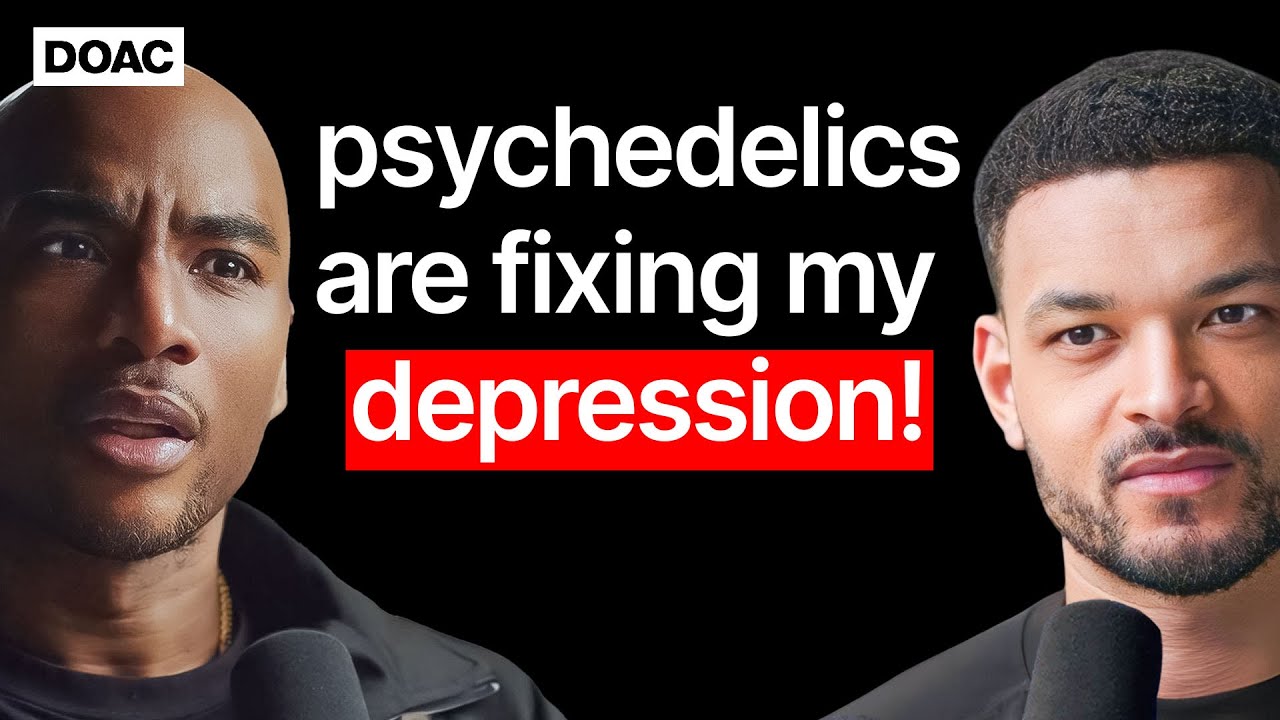
The Diary Of A CEO
The radio host says confronting childhood trauma and disconnecting from social media algorithms are essential steps to overcoming depression, panic attacks, and living an authentic life.
AI-assisted summary of Charlamagne tha God Opens Up About His Depression & Childhood Trauma! — original source. Check the original for full context.
Source published:
Detailed notes
## Background Published on YouTube by the channel 'The Diary Of A CEO' on May 27, 2024, this video features an interview with Charlamagne tha God, co-host of the American radio programme ‘The Breakfast Club’. The page description highlights his reach of 8 million monthly listeners, his status as a New York Times best-selling author, and his role as CEO of the Black Effect Podcast Network.
## TL;DR Charlamagne tha God opens up about his journey from a troubled youth in South Carolina to becoming an influential radio personality, detailing his early struggles with sexual abuse, a harsh upbringing conditioned by fear, and severe anxiety. He reflects on his professional resilience through four radio firings before achieving massive success with The Breakfast Club, which paradoxically amplified his internal panic and pushed him toward therapy. Ultimately, he discusses breaking cycles of infidelity, managing generational trauma with his father, navigating modern politics, and shifting his life's purpose from material success to community service and mental health advocacy.
## Atmosphere & style The interview carries a deeply intimate, vulnerable, and reflective tone, moving away from Charlamagne's provocative radio persona to reveal his raw human story. The dynamic between host Steven Bartlett and Charlamagne is grounded in mutual respect and emotional intelligence, shifting smoothly from painful childhood disclosures to profound realizations about healing. It feels like a confessional yet empowering conversation that balances the heavy weight of trauma, grief, and survival remorse with a clear, inspiring sense of purpose and spiritual alignment.
## Key takeaways - [00:00](https://www.youtube.com/watch?v=1Rd9Iuxjb5k&t=0s) Charlamagne's new book, 'Get Honest or Die Lying', addresses how social media encourages people to project false security to mask internal panic and fear. - [04:09](https://www.youtube.com/watch?v=1Rd9Iuxjb5k&t=249s) Growing up in Moncks Corner, South Carolina, Charlamagne experienced a strict, fear-based upbringing from his father, who feared his son would repeat his mistakes. - [08:56](https://www.youtube.com/watch?v=1Rd9Iuxjb5k&t=536s) Learning about his father's hidden mental health struggles, suicide attempt, and infidelity helped Charlamagne contextualize his own trauma and relationships. - [12:11](https://www.youtube.com/watch?v=1Rd9Iuxjb5k&t=731s) Childhood sexual abuse at age eight led to persistent people-pleasing habits and boundary issues that took years of therapy to unpack. - [15:59](https://www.youtube.com/watch?v=1Rd9Iuxjb5k&t=959s) Bullying in middle school drove Charlamagne to turn to street life and drug dealing as a defense mechanism to feel secure. - [24:28](https://www.youtube.com/watch?v=1Rd9Iuxjb5k&t=1468s) Charlamagne emphasizes that modern men must distinguish between material wealth and genuine character when seeking positive role models. - [30:41](https://www.youtube.com/watch?v=1Rd9Iuxjb5k&t=1841s) Unpredictable and physical childhood discipline contributed significantly to Charlamagne's long-term struggles with severe anxiety and impostor syndrome. - [38:30](https://www.youtube.com/watch?v=1Rd9Iuxjb5k&t=2310s) After being fired four times in radio, Charlamagne realized that professional success and money could not cure his underlying panic attacks and depression. - [48:17](https://www.youtube.com/watch?v=1Rd9Iuxjb5k&t=2897s) Losing a close friend to suicide during the pandemic intensified Charlamagne's battle with intrusive thoughts and survivor's remorse. - [58:20](https://www.youtube.com/watch?v=1Rd9Iuxjb5k&t=3500s) Charlamagne decided to commit to therapy and break patterns of infidelity to save his marriage and avoid repeating his father's mistakes. - [01:06:03](https://www.youtube.com/watch?v=1Rd9Iuxjb5k&t=3963s) Disconnecting from social media noise and mob mentality is essential for preserving original thoughts, nuance, and mental clarity. - [01:14:19](https://www.youtube.com/watch?v=1Rd9Iuxjb5k&t=4459s) Charlamagne shifts his primary motivation toward service and community empowerment through initiatives like the Mental Wealth Alliance. - [01:21:42](https://www.youtube.com/watch?v=1Rd9Iuxjb5k&t=4902s) Materialism offers an empty sense of fulfillment compared to using personal wealth to fund scholarships and support others. - [01:26:25](https://www.youtube.com/watch?v=1Rd9Iuxjb5k&t=5185s) Social media platforms function like modern idols that amplify toxic emotions, fuelling widespread anxiety and low self-esteem.
## Detailed walkthrough ### [00:00](https://www.youtube.com/watch?v=1Rd9Iuxjb5k&t=0s) Intro & Get Honest or Die Lying
Charlamagne tha God opens the discussion by recalling the realization that, as a child, he was molested—a truth he only fully processed later in life. Host Steven Bartlett introduces him as the co-host of *The Breakfast Club* and one of America’s most influential radio personalities. Charlamagne reflects on his youth, recalling how his father warned him that if he didn't change his lifestyle, he would end up "in jail, dead, or broke." Despite his father’s warnings, Charlamagne fell into drug dealing—discovering his father was doing the same—and eventually landed in jail following a shooting incident. Overcoming a 12-year period of professional rejection and getting fired four times, he ultimately transformed his life through radio.
The title of Charlamagne's book, *Get Honest or Die Lying: Why Small Talk Sucks*, is a direct homage to 50 Cent’s iconic album *Get Rich or Die Tryin'*, alongside nods to Mobb Deep (*Shook Ones*). Beyond the hip-hop reference, the title reflects a core personal mantra born out of his struggles with panic and anxiety. During a spiritual retreat with his wife, Charlamagne realized the critical importance of stopping the habit of lying to oneself and volunteering those lies to others. He notes that social media exacerbates this dynamic, forcing people to constantly "feed the beast" and perform modified versions of themselves to mask deep-seated fears and insecurities.
* Charlamagne's previous book, *Shook One: Anxiety Playing Tricks on Me*, paid homage to the hip-hop duo Mobb Deep. * He emphasizes that social media creates an environment where people regularly volunteer lies to project security and conceal internal panic.
[04:09](https://www.youtube.com/watch?v=1Rd9Iuxjb5k&t=249s) What Made Charlamagne?
Steven Bartlett notes that despite following Charlamagne on *The Breakfast Club* for over a decade—where he often played an antagonistic role with guests—he rarely saw the vulnerable human story behind the public persona. Charlamagne traces his origins back to Moncks Corner, South Carolina, where he grew up in a single-wide trailer on a dirt road. He reflects on his complex relationship with his parents, noting that while he views his father as a great man today, he spent years in therapy questioning whether he even liked him as a person.
Charlamagne explains that his father raised him "out of fear and not love," driven by a terrifying dread that his son would repeat his mistakes or end up stuck under a tree in their small town. When parents see their own flaws mirrored in their children, that fear often translates into strictness rather than warmth.
* **Origin**: Moncks Corner, South Carolina, raised in a single-wide trailer on a dirt road. * **Parental Dynamic**: His father's harsh parenting style was rooted in fear—desperately wanting to keep Charlamagne from making the same destructive life mistakes.
[08:56](https://www.youtube.com/watch?v=1Rd9Iuxjb5k&t=536s) Charlamagne's Father's Impact On His Relationships
In 2018, during the week of Thanksgiving, Charlamagne experienced a pivotal moment regarding his father. A 24-year-old cousin tragically completed suicide on his fourth attempt. Around the same time, Charlamagne’s father read *Shook One* and called him to disclose his own hidden past: 30 years prior, his father had attempted suicide, attended therapy multiple times a week, and taken up to 12 different mental health medications. This revelation helped Charlamagne contextualize his father's historical absence, substance abuse, and emotional volatility.
His father’s infidelity also severely distorted Charlamagne’s understanding of romantic relationships. Growing up, Charlamagne idolized the nuclear families he saw on television—such as those in *The Cosby Show*, *Martin*, *Family Matters*, and *Good Times*. However, when he confronted his father about cheating on his mother, his father looked him in the eye and challenged his commitment to monogamy: "So you only got one woman, huh? When you get older, you'll understand." This planted a seed of self-doubt that led Charlamagne to spend years playing the "player" role to seek his father's validation, only for his father to later admit that leaving Charlamagne's mother was the biggest mistake of his life.
* **2018 Thanksgiving Revelation**: His father revealed a history of severe depression, a suicide attempt 30+ years prior, and taking 10–12 medications. * **TV Role Models**: Inspired by classic TV households (*The Cosby Show*, *Martin*, *Family Matters*, *Good Times*, *The Jeffersons*). * **Father's Advice**: His father initially scoffed at monogamy, driving Charlamagne to keep a "roster" of women before eventually retracting his stance years later.
[12:11](https://www.youtube.com/watch?v=1Rd9Iuxjb5k&t=731s) Charlamagne's Sexual Abuse
At eight years old, Charlamagne was molested by his cousin's ex-wife, an adult woman in her 30s or 40s. At the time, he did not understand the nature of the abuse. When he tried to resist her advances by throwing small firecracker poppers at her, she retaliated with psychological abuse, repeatedly calling him ugly and telling people his nose was swollen—to the point where his grandmother applied cream to his nose to try to reduce the non-existent swelling.
For years, Charlamagne rationalized the experience as a joke or a premature "sexual encounter," even bond-discussing similar childhood experiences with young friends who were also being abused by older women without realizing it. It wasn't until he saw Tyler Perry crying on *The Oprah Winfrey Show* over his own childhood molestation that Charlamagne began questioning his own emotional numbness. Through therapy, he unraveled how this early trauma manifested in adult life: he developed a severe, chronic need to be a people-pleaser, enduring discomfort and boundary violations just to avoid being criticized or rejected.
* **Age of Incident**: 8 years old; perpetrator was an adult woman in her 30s–50s (his cousin's ex-wife). * **Psychological Impact**: Developed persistent people-pleasing behaviors as a defense mechanism to avoid verbal abuse and rejection. * **Realization Catalyst**: Watching Tyler Perry speak candidly about abuse on *The Oprah Winfrey Show* forced him to re-evaluate his own traumatic childhood encounters.
[15:59](https://www.youtube.com/watch?v=1Rd9Iuxjb5k&t=959s) Confronting Past Trauma and Early Behavioral Shift
Charlamagne reflects on occasionally seeing the older woman who sexually abused him as a teenager around his hometown. She approached him at a house party prior to the COVID-19 pandemic, complimenting his appearance ("Oh, you so handsome"), to which he dismissed her, responding, "Beat it... knock it off."
The conversation shifts to the root of his troubled youth, which escalated around age 15 in 1993. Charlamagne clarifies that his behavioral issues actually started earlier in middle school around the seventh grade. Raised as an academically focused student in advanced classes—wearing glasses, carrying a fanny pack, and being one of only two or three Black kids in those tracks—he became a target for bullying. Crucially, the main perpetrators were his own older cousins on his father's side of town.
His father was well-known locally for running a "Sugar Shack" where he sold alcohol and dealt drugs. Because his father had a street reputation, Charlamagne's cousins expected him to be tough and street-smart. Feeling isolated and constantly picked on, Charlamagne reached a breaking point when his glasses were knocked off and shattered. He decided that if he could not beat them, he had to join them—and to gain acceptance, he felt compelled to act even wilder and more disruptive than his peers.
- Charlamagne was placed in high-track classes (labeled "A") alongside mostly white students in middle school. - His father ran a local "Sugar Shack" involved in the neighborhood bootlegging and drug trade. - The psychological shift to join his bullies happened after his eyeglasses were repeatedly knocked off and permanently broken.
---
[18:30](https://www.youtube.com/watch?v=1Rd9Iuxjb5k&t=1110s) Escalating Academic Trouble and First Arrest
Charlamagne’s attempt to fit in quickly spiraled into class clown behavior and severe academic disruption. He was sent to summer school twice during seventh and eighth grades, was held back in the ninth grade, and was eventually expelled from Berkeley High School in the tenth grade. In an effort to curb his behavior, he was transferred to Stratford High School, where his mother worked as an English teacher.
However, his primary issues shifted from the classroom to the streets. His high school trajectory came to an abrupt end when he was involved in a street shooting alongside his friends. Police came directly to Stratford High School and arrested him.
Following the arrest, Charlamagne sat in jail for approximately 45 days. Although his father had the financial means to post bail, he deliberately left him in jail to teach him a lesson. While Charlamagne describes the stint in jail as a wakeup call, he notes that it was only temporary: "I woke up, but then I hit the snooze button," going back to his old habits shortly after his release.
- **Schools attended:** Berkeley High School (expelled), Stratford High School (mother's school; arrested here). - **Time spent in jail:** Approximately 45 days after his father refused to post bail. - **Academic setbacks:** Attended summer school twice and repeated the ninth grade.
---
[20:00](https://www.youtube.com/watch?v=1Rd9Iuxjb5k&t=1200s) The Quest for Security and Hypocrisy in Male Role Models
Reflecting on his teenage years from an adult perspective, Charlamagne notes that despite having a mother who was a Jehovah's Witness and English teacher, and a grandmother who was a devout Baptist, knowing right from wrong was not enough to keep him on the right path. He believes his choices were driven by a fundamental human need for security. Having suffered from severe bullying, becoming aggressive and turning to the streets was his survival mechanism.
His relationship with his father was complicated by hypocrisy. When Charlamagne began selling drugs himself and discovered his father was doing the same, he resisted his father's discipline, feeling he couldn't take orders from someone saying "don't do as I do, do as I say." During one confrontation, his father simply told him he couldn't hustle out of his house because he was "making me hot" (bringing unwanted police attention).
The host, Steven Bartlett, brings up conversations with figures like Busta Rhymes and Ashley Walters regarding the absence or emotional detachment of fathers in young Black men's lives. Charlamagne emphasizes that while he had a present father, words alone were ineffective without active modeling. For instance, he reveals that he did not even believe men were capable of being faithful in relationships until he physically witnessed men in the entertainment industry actively turn down temptations when their wives were not around.
> "I was just a young, impressionable kid who wanted what every single human being wants, and that's just simply security. And if you don't get security from people, you will find a way to get it."
---
[24:28](https://www.youtube.com/watch?v=1Rd9Iuxjb5k&t=1468s) Redefining Masculinity and Role Models in the Modern Era
Charlamagne observes that his generation (he is 45 years old) is the first to possess the "luxury of healing." While previous generations of parents were consumed purely by economic survival—keeping food on the table and a roof overhead—the current generation has the bandwidth to address intergenerational trauma and emotional well-being.
Steven Bartlett raises the issue of modern male role models, referencing figures like Andrew Tate and the confusion surrounding masculinity in 2024, citing high suicide rates among young men in the UK (where suicide is the leading cause of death for men aged 18 to 45). He shares a story about a 25-year-old man at a Brooklyn gym who asked where to find genuine male role models.
Charlamagne cautions against idolizing online personalities based on material possessions like Lamborghinis, Rolexes, or jewelry, remarking that doing so means "you're modeling the man's things," not the man himself: "You might as well be looking up to mannequins." True role models, he argues, are evaluated by their internal character, values, and morals, which are rarely visible on social media platforms.
- **Charlamagne's Age:** 45 years old. - **UK Suicide Statistic (cited by host):** Suicide is the leading killer of men under 45 (ages 18–45) in the UK. - **On Social Media Role Models:** Warning against confusing material wealth (cars, watches) with a person's core character or moral integrity.
---
[27:58](https://www.youtube.com/watch?v=1Rd9Iuxjb5k&t=1678s) Striving for Authenticity and Navigating Parenthood
When asked what kind of man he is striving to be through therapy and self-work, Charlamagne answers simply: "A good man... somebody who is who they say they are." He wants his public truth to match his private reality completely, ensuring no hidden double lives surface.
He describes himself as a faithful husband and a "learning father" to four daughters with his wife. Managing children across vastly different developmental stages—ages 15, 8, 5, and 2—presents unique challenges daily. He admits that he and his wife frequently lie awake at night questioning if they are doing a good job, insisting that anyone claiming to have parenting completely figured out is lying.
Charlamagne speaks candidly about "parental paranoia" and how his personal struggles with anxiety interfere with raising his children. He describes the difficulty of letting his 15-year-old daughter go out with friends in a world filled with news of random violence, emphasizing that he must consciously choose faith over worry and fear.
- **Family structure:** Married; father to four daughters aged 15, 8, 5, and 2. - **Parenting Philosophy:** Aiming to be the present adult he needed as a child, striving to raise his daughters out of love rather than fear.
---
[30:41](https://www.youtube.com/watch?v=1Rd9Iuxjb5k&t=1841s) Root Causes of Anxiety and Irrational Discipline
Charlamagne traces the roots of his severe anxiety and depression back to specific traumatic milestones: being sexually molested at age 8, childhood bullying, and an upbringing conditioned by fear rather than love. Through therapy, he realized a major source of his emotional confusion was that his father frequently disciplined him for things he had never actually taught him how to do.
To illustrate this, Charlamagne recounts an incident from when he first received his driver's license. His father instructed him to follow his car coming off Gippy Road onto Highway 52 in Moncks Corner, South Carolina, saying, "Follow me, do what I do." At the stop sign, his father pulled straight onto the highway without stopping. Charlamagne followed directly behind him, inadvertently cutting off an oncoming car that had to swerve out of the way.
Unaware of the near-miss, Charlamagne pulled over behind his father when signaled. His father walked up to his car window, slapped him hard across the face, and simply said, "Wake up," leaving Charlamagne stunned and confused about what he had done wrong.
- **Location of driving incident:** Gippy Road merging onto Highway 52 in Moncks Corner, South Carolina. - **Key Therapeutic Realization:** Recognizing that his childhood anxiety stemmed in part from being punished for unlearned skills and navigating unpredictable discipline.
<ElicitationsGroup message="To explore more from this interview series:"> <Elicitation label="Summarize Part 1 (Childhood trauma and early life)" query="Provide a detailed, faithful walkthrough of Part 1 of the Charlamagne tha God interview on The Diary Of A CEO."/> <Elicitation label="Summarize Part 3 (Radio career and getting fired)" query="Provide a detailed, faithful walkthrough of Part 3 of the Charlamagne tha God interview on The Diary Of A CEO."/> </ElicitationsGroup>
Here is a detailed, faithful walkthrough of this portion of the interview.
---
[32:29](https://www.youtube.com/watch?v=1Rd9Iuxjb5k&t=1949s) "He Discipled Me for Things He Never Taught Me"
Charlamagne reflects on the flawed nature of his father’s parenting style, explaining that his father would punish him severely without ever actually offering guidance or explanation. He recalls his father telling him to follow his example, yet when Charlamagne emulated him—such as running a stop sign—his father would react with physical violence, slapping him without explaining what he had done wrong. Charlamagne notes that this pattern of being disciplined for things he was never taught created a deep-seated foundation of insecurity, impostor syndrome, and persistent anxiety.
While he attributes his bouts of depression to a possible chemical imbalance, Charlamagne describes the daily mental effort required to maintain his emotional baseline. He relies heavily on prayer, daily affirmations, and consciously reminding himself that he belongs. Looking back at his childhood, he recalls his earliest personal affirmation: repeating "I love Jehovah God and his son Jesus Christ" three times, followed by saying "Fuck Satan" three times. That ritual gave him the mental fortitude to face whatever challenges the day might present.
- **Key Factors of Internal Struggle:** Insecurity, impostor syndrome, and chronic anxiety stemming from unpredictable parental discipline. - **Childhood Affirmation Routine:** Reciting declarations of love for Jehovah God and Jesus Christ three times, followed by cursing Satan three times to prepare for the day.
---
[33:50](https://www.youtube.com/watch?v=1Rd9Iuxjb5k&t=2030s) The Early 20s Pivot & Choosing a Different Path
By his early twenties, Charlamagne began seeing his father’s ominous warnings manifest in real time. His father had warned him that if he did not change his lifestyle, he would end up dead, in jail, or broke sitting under a tree doing nothing. After serving his own time in jail, Charlamagne watched friends receive long prison terms of five years or more, saw others getting killed, and noticed older men he had once looked up to trapped in a cycle of sitting under trees all day drinking or doing drugs.
Recognizing that he was heading toward the exact same fate, Charlamagne adopted a forward-thinking mindset: whatever actions he took today would directly dictate where his life ended up five years later. In 1998, he secured a radio internship, an environment that immediately ignited his desire for a long-term career. Prior to that, he had struggled to figure out his path, looking to male figures in his family for inspiration—such as an uncle who worked for UPS or a cousin named Bruce who served in the military. To get by, he worked a string of odd jobs, including telemarketing, working at a flower garden, holding a position at a warehouse named Industrial Acoustics, spending a few weeks at Taco Bell where his sister was the manager, and working at a mall clothing store called Demo alongside his future wife.
``` +-----------------------------------------------------------------------+ | Charlamagne's Odd Jobs (1990s) | +-----------------------------------------------------------------------+ | • Mall Clothing Store (Demo) • Warehouse (Industrial Acoustics) | | • Telemarketing • Flower Garden | | • Taco Bell (Managed by sister) • Radio Intern (1998) | +-----------------------------------------------------------------------+ ```
- **Father's Warning:** "If you don't change your lifestyle, you're going to end up in jail, dead, or broke under the tree." - **First On-Air Opportunity:** Started hosting on-air radio segments around 1999 following his 1998 internship.
---
[36:53](https://www.youtube.com/watch?v=1Rd9Iuxjb5k&t=2213s) Rapping Aspirations and the Symbolism of His Tattoo
Growing up in the rural town of Moncks Corner, South Carolina, Charlamagne initially believed that becoming a rapper was his only path to success. For a young Black man in the late 1990s, media representation offered few examples of wealth outside of hip-hop and athletics. To anchor his ambition, at age 18 or 19 he had a local South Carolina tattoo artist named T. Willis ink a prominent graphic on his arm in an apartment—during a time when tattooing was still illegal in the state.
The tattoo depicts Wolverine from the X-Men holding a microphone. Charlamagne explains that even as a young comic book fan with no concept of therapy or future mental health struggles, he was drawn to Wolverine’s superpower of rapid physical healing. He paired the character with a microphone because he knew the microphone would be the tool that transformed his life, even though he initially assumed that transformation would come through rap music rather than radio broadcasting.
- **Origin Town:** Moncks Corner, South Carolina. - **Tattoo Artist:** T. Willis (inked in an apartment when tattoos were illegal in South Carolina). - **Tattoo Meaning:** Wolverine holding a microphone—symbolizing rapid healing powers combined with the vocal tool that would change his destiny.
---
[38:30](https://www.youtube.com/watch?v=1Rd9Iuxjb5k&t=2310s) Fired Four Times and the Reality of Making a Living
Charlamagne’s road to national prominence was marked by over a decade of continuous instability and rejection. Between starting his radio internship at age 20 and co-hosting *The Breakfast Club* at age 32, he was fired from four different radio stations. He began his career at Z93, the primary heritage station in Charleston, but left for an up-and-coming station called Hot 98.9 because program director George Cook offered him his first full-time gig—working Monday through Saturday, 7:00 PM to midnight, for around $19,000 a year.
Securing a salaried job was a major point of pride, allowing him to present a physical contract to his mother. His mother offered him a piece of grounding advice that remained with him for life: to stay humble and simply be happy to be making a living. Reflecting on her words, Charlamagne emphasizes how many people struggle with basic survival needs—such as buying food or paying for daycare—and how crucial it is to keep financial stability in perspective. Despite achieving local success on the radio, Charlamagne notes that he and his father never had in-depth conversations about his career or his transformation from delinquency, whereas his mother frequently placed his accomplishments in historical perspective, even showing him tax records of the land his grandfather once paid taxes on.
- **First Full-Time Radio Contract:** Hot 98.9 (Monday–Saturday, 7 PM–Midnight) paying $19,000 per year. - **Station Progression:** Started at Z93, left for Hot 98.9, got fired 4 times across various stations, and eventually returned to Z93 via national syndication with *The Breakfast Club*.
---
[42:21](https://www.youtube.com/watch?v=1Rd9Iuxjb5k&t=2541s) Panic Attacks and Seeking Therapy
Despite entering the radio industry, Charlamagne suffered severe panic attacks that he initially failed to recognize as psychological. His first severe panic attack occurred in first grade at Moncks Corner Elementary School, where he broke down sobbing uncontrollably after his mother dropped him off. Years later, after getting fired from radio for the fourth time in his early thirties, he suffered a massive panic attack while driving down Interstate 26 toward Orangeburg, South Carolina, to see comedian Little Duval perform at a college show.
Living back at his mother's house with a toddler daughter, while his now-wife was living back with her own parents in Moncks Corner, Charlamagne experienced classic panic symptoms: an intensely racing heart, dry mouth, sweaty palms, and lightheadedness. He pulled over, drank water, and went to the emergency room—a routine he frequently repeated because he felt like he was dying of a heart attack. A doctor evaluated him, confirmed his heart was as healthy as an athlete's, and diagnosed him with anxiety, asking if he was under extreme stress. At the time, Charlamagne convinced himself that securing another job and moving out of his mother's house would fix the problem. However, after joining *The Breakfast Club* in 2010 and achieving unprecedented financial success and fame, the panic attacks and depressive episodes escalated, prompting him to finally begin therapy around 2015–2016.
> "I'm having more success than I've ever had in my life. I'm making more money than I've ever made in my life. Everything is going great, but nothing's changed. I'm still having the panic attacks, probably even more so now... that's what finally made me decide to start going to therapy."
- **Location of Major Panic Attack:** Driving on I-26 toward Orangeburg, SC. - **Therapy Timeline:** Joined *The Breakfast Club* in 2010; started formal therapy around 2015 or 2016 after realizing professional success did not cure his underlying trauma.
---
[48:17](https://www.youtube.com/watch?v=1Rd9Iuxjb5k&t=2897s) Grief, Intrusive Thoughts, and Survivor's Remorse
Addressing the severity of his depression during his thirties, Charlamagne talks about dealing with intrusive suicidal thoughts that would surface out of nowhere during normal moments. The gravity of these feelings was heightened during the COVID-19 pandemic when his close friend and strategic collaborator, Jazz Waters (known as "Jazz Fly"), died by suicide. Charlamagne describes Jazz as his "wartime general"—the person he would spend three to four hours talking to in his backyard on Sundays, analyzing life, career strategies, anxiety, and mental health.
Following her death, Charlamagne experienced a haunting moment while sitting in his backyard, hearing her voice in his head asking, *"You still here?"* The experience shook him to his core, triggering deep questions about why he remained alive while others were gone. He processes these recurring intrusive thoughts as a manifestation of survivor's guilt or survivor's remorse rather than an active desire to end his life, noting that reflecting on the "million reasons" he has to live immediately dispels the dark thoughts.
> "When it was like really time to get busy and really strategize some stuff, that's who I would pick up the phone and call... when she did it, I remember sitting in my backyard and I heard her voice in my head, and it was like she literally said to me, 'You still here?'"
- **Loss of Jazz Waters ("Jazz Fly"):** Close friend, mental health confidante, and strategic partner who died by suicide during the pandemic. - **Coping with Loss:** Framing intrusive thoughts through the lens of survivor's remorse and countering them with reasons to live.
[04:48:59](https://www.youtube.com/watch?v=1Rd9Iuxjb5k&t=17339s) Processing Grief, Suicide, and Guilt
Charlamagne reflects on the unbearable, complex weight of losing someone close to suicide. He cautions against punishing oneself or falling into the trap of idolizing people without knowing what they carry beneath the surface. Reflecting on a dear friend who passed away, he describes her as "one of the most intelligent, brilliant, creative, strategic human beings" he ever met—someone whom everyone leaned on for advice and comfort. Charlamagne notes that while he never blamed himself or felt guilt because he was always an open ear and truly tried everything to help her, navigating loss of this nature is a brutal rollercoaster of sadness, anger, happiness, frustration, and obsessing over those final moments.
He addresses the natural human reaction to replay the past and wish for one last conversation. Everyone close to the situation—whether it is him, her mother, father, or sister—thinks, *"If I would have spoke to her that day... I probably could have got her in a better place."* Yet, Charlamagne acknowledges that the universe did not design it that way. The emotions surrounding grief cannot be neatly boxed into a single feeling, nor should they be suppressed; they must be confronted, even when they defy explanation.
[05:11:37](https://www.youtube.com/watch?v=1Rd9Iuxjb5k&t=18697s) Unchecked Success and Traumatized Survival Mode
Transitioning to his career takeoff, Charlamagne unpacks the paradox of rising to massive fame on *The Breakfast Club*. While his external world changed dramatically with money, status, and recognition, his internal state remained unchanged—if not actively deteriorating into panic attacks, severe anxiety, and crippling depression. He explains that getting the dream radio job did not magically wipe away his trauma. Instead, he was operating out of pure survival mode, deeply traumatized by his journey from 1998 up to that point—a stretch where he had been fired four separate times and was living back home with his mother in Monks Corner, South Carolina, collecting his final unemployment check.
That lingering insecurity and fear of losing everything fueled the aggressive, ruthless, "anybody can get it" persona that listeners saw on air. Driven by pain and a desire for vengeance against an industry that had repeatedly discarded him, his mentality was: *"Now all of y'all got to feel my wrath."* The toxic cycle was further amplified because the media industry continuously rewarded and praised him for that destructive behavior. It wasn't until around 2015 that he took a step back and realized that this wasn't who he wanted to be.
- **Key Timeline Milestones:** - **1998–2010:** Struggled through radio firings (4 total), eventually broke, living with his mother in Monks Corner, SC. - **2010:** Co-founded *The Breakfast Club* on Power 105.1 in New York City. - **2014:** Got married to his long-time partner. - **2015:** Reached a personal turning point with a 7-year-old daughter and a newborn baby, realizing he was miserable despite external success.
[05:53:20](https://www.youtube.com/watch?v=1Rd9Iuxjb5k&t=21200s) Breaking the Cycle of Infidelity and Saving His Marriage
Charlamagne speaks candidly about the fear of repeating his father's mistakes and becoming a caricature of himself. He saw himself slipping into the trap of the "radio star" lifestyle—getting consumed by women, alcohol, drugs, and the protective alter-ego he created to shelter "a vulnerable young man named Lenard." Looking at his family, he realized he was on a trajectory toward crashing his life and losing his soulmate—his wife of 26 years, with whom he had grown up since childhood.
He recounts their deep history together: she was the one who drove him to fill out his very first radio application because his driver's license was suspended, attended his graduations, and followed him through radio moves from South Carolina to New York. Recognizing that being unfaithful was threatening to destroy his family, Charlamagne chose to pivot toward a righteous path. He reflects on how people often pray for their dream partner or success, but fail to prepare themselves to handle those blessings responsibly when they arrive.
- "God can't bless who you pretend to be." - He stresses that professional success in radio would mean nothing if it cost him his wife and family, calling that trade an unfair exchange.
[05:58:34](https://www.youtube.com/watch?v=1Rd9Iuxjb5k&t=21514s) Choosing Therapy and Holistic Healing Methods
Opening up about his mental health journey, Charlamagne shares that he began attending therapy around late 2015 or early 2016. He acknowledges the historical disparity in Black communities regarding seeking mental healthcare, noting how watching the TV show *Girlfriends* as a young man was his first exposure to therapy. Later, conversations with figures like comedian Neal Brennan, Pete Davidson, and mindfulness leader Devi Brown encouraged him to seek professional help.
Beyond traditional talk therapy, Charlamagne embraced an all-encompassing toolkit for personal healing, incorporating breathwork, meditation, Reiki, crystals, plant-based medicine, and spiritual ceremonies. He details a transformative Ayahuasca journey he undertook in the United States, which completely shattered his internal falsehoods and forced him to confront himself. The core revelation from that experience was clear: *"Stop lying to yourself, and stop volunteering those lies to other people."*
[01:02:07](https://www.youtube.com/watch?v=1Rd9Iuxjb5k&t=3727s) The Pitfalls of Social Media and Safeguarding Authenticity
Charlamagne details the heavy cost of living with lies and internal falsehoods, linking them directly to depression, anxiety, impostor syndrome, and deep insecurity. He expresses concern over how social media is stripping away people's originality, observing highly educated academics, media personalities, and podcasters who lose their authentic voices by constantly seeking online validation. Instead of cultivating unique perspectives, they spend all day on Twitter and Reddit, letting public opinion dictate how they think, feel, and speak.
Illustrating this dynamic, he brings up how people bombarded his phone with their opinions right after the release of a high-profile album (such as Kendrick Lamar's *Mr. Morale & the Big Steppers*), attempting to influence what he would say on the radio the next day. To protect his mental clarity and preserve his distinct point of view, Charlamagne intentionally tunes out the noise, relies on his own discernment, and focuses on expressing his genuine self.
<ElicitationsGroup message="Explore related discussions from Charlamagne's interview:"> <Elicitation label="Explore Charlamagne's early radio career and firings" query="Detail Charlamagne tha God's story about getting fired 4 times and breaking into radio."/> <Elicitation label="Unpack Charlamagne's childhood trauma and relationship with his father" query="Summarize Charlamagne tha God's discussion on his childhood trauma and his relationship with his father."/> <Elicitation label="Examine Charlamagne's perspectives on politics and Trump" query="What are Charlamagne tha God's views on Donald Trump and American politics from the interview?"/> </ElicitationsGroup>
[01:06:03](https://www.youtube.com/watch?v=1Rd9Iuxjb5k&t=3963s) Disconnecting from Social Media to Preserve Originality and Nuance
Charlamagne reflects on why his career continues to reach new heights while others plateau. He observes that many creators spend their time obsessing over social media feedback, catering their thoughts and talking points to appease online commentators instead of nurturing their own instincts. By constantly trying to "water someone else's garden," they let their audience's demands grow louder while their own personal growth stalls out. Steven Bartlett notes how terrifying it can feel to step away from online consensus, especially in a culture that heavily rewards conformity with claps, likes, and immunity from cancellation.
In response, Charlamagne emphasizes that he frequently catches backlash simply for refusing to bend to online mob mentality. He insists he is not a contrarian for the sake of it; rather, he strongly believes that truth lives in the gray areas. For him, common sense requires listening to both sides of an issue and extending objective empathy before passing judgment. In a hyper-polarized world where algorithms amplify extreme hot takes for viral reach, Charlamagne argues that genuine nuance has been lost.
- Charlamagne’s core metaphor for avoiding social media consensus is "watering your own garden" rather than catering to online commentators. - The prevailing digital culture heavily incentivizes conformity through likes, public praise, and protection from cancel culture. - Truth is rarely black-and-white; objectivity requires actively investigating nuance and middle-ground perspectives.
[01:08:00](https://www.youtube.com/watch?v=1Rd9Iuxjb5k&t=4080s) Political Realities, Donald Trump, and the Nuance of Voters
When asked directly about his view on Donald Trump ahead of the election year, Charlamagne candidly states that he views Trump as an explicit threat to American democracy. He argues that a leader who attempted an actual coup—and publicly suggested suspending the U.S. Constitution to overturn election results—should never hold the presidency again. Furthermore, Charlamagne highlights the stark double standard of a presidential candidate running while facing dozens of felony counts, pointing out that an ordinary citizen under that many indictments couldn't even secure a job at Walmart.
At the same time, Charlamagne refuses to flatten Trump voters into a monolith. He shares that he has close friends—including Black, non-conservative, pro-Black individuals—who voted for Trump for specific, targeted self-interests. He emphasizes that voters make decisions based on different priorities, whether it is economic policy, student loan forgiveness, or specific legislative records. Charlamagne notes that every political figure has a complex record; for instance, while President Joe Biden has passed significant legislation like student loan relief, he also authored the 1994 Crime Bill, mandatory minimum sentencing laws, and crack cocaine penalties that harmed communities for decades.
- Charlamagne references the approximately 88 criminal charges Trump has faced across multiple indictments as a disqualifying factor for high office. - Over 70 million Americans voted for Donald Trump in the 2020 presidential election for varied personal, economic, and political reasons. - Biden's political history includes the 1986 Anti-Drug Abuse Act (crack cocaine sentencing disparity) and the 1994 Violent Crime Control and Law Enforcement Act.
[01:11:50](https://www.youtube.com/watch?v=1Rd9Iuxjb5k&t=4310s) Healing and Rebuilding the Relationship with His Father
Steven draws a parallel between political empathy and Charlamagne's personal journey with his father. Charlamagne agrees that sitting down to understand his father's lived experience completely transformed his emotional healing process. For years, Charlamagne harbored resentment over not having the relationship he wanted. However, deep conversations revealed that his father was doing the best he could while struggling with severe mental health issues, taking 10 to 12 different medications, attending therapy multiple times a week, and receiving disability checks from the state of South Carolina.
Charlamagne reveals that his father had even attempted suicide, a reality his family largely swept under the rug at the time—his mother originally assumed his father was just "playing crazy" to receive state checks. Charlamagne reflects that if his father had been open about his bouts of depression and anxiety when Charlamagne was a child, it would have given him a vital blueprint to recognize his own genetically inherited struggles much earlier in life. He now views a parent's vulnerability about their mental health battles as a powerful form of positive role modeling.
- Charlamagne's father was prescribed 10 to 12 medications and attended therapy two to three times a week while dealing with severe mental illness. - His father attempted suicide, a traumatic event that went unaddressed during Charlamagne's youth due to stigma surrounding mental health. - Early transparency about generational trauma and mental illness acts as an essential guide for children facing similar genetic dispositions.
[01:14:19](https://www.youtube.com/watch?v=1Rd9Iuxjb5k&t=4459s) How Charlamagne Is Doing and the Power of Service
When asked how he is doing on a personal level, Charlamagne enthusiastically shares that he is "blessed, Black, and highly favored." He recounts returning from Atlanta, Georgia, where he hosted the second annual Black Effect Podcast Festival. Bringing together a thriving community of creators and fans from 11:00 AM to 7:00 PM with food trucks, vendors, and live shows from major podcasts brought him immense joy. During the festival, they featured students from Historically Black Colleges and Universities (HBCUs) who participated in the Thrill of Possibility Summit in Nashville—an event sponsored by Nissan where 50 HBCU students are flown out for mentorship and panels.
Charlamagne explains that his ultimate fulfillment now comes entirely from serving others. Guided by Dr. Wayne Dyer’s book *The Power of Intention*—a concept he read over 20 years ago but only recently fully understood—he lives by the rule that if a venture only benefits him, "it's not big enough." Through his joint audio enterprise with Kevin Hart at Audible (SBH Productions), his book imprint at Simon & Schuster (Black Privilege Publishing), his nonprofit (The Mental Wealth Alliance), and his annual Mental Wealth Expo in New York, Charlamagne focuses on creating jobs, granting book deals, and offering free therapy to Black and brown communities.
In an incredible moment of alignment, Steven mentions that he has owned the domain name `mentalwealth.com` for five years. After seeing Charlamagne's work with the Mental Wealth Expo, Steven offers to hand the domain over to him completely free of charge, which Charlamagne gratefully accepts.
- The Black Effect Podcast Network hosts over 30 shows, including *The 85 South Show*, *Horrible Decisions*, *Carefully Reckless with Jess Hilarious*, and *All the Smoke* with Matt Barnes and Stephen Jackson. - The Thrill of Possibility Summit flies 50 HBCU students to Nashville, Tennessee, for a full weekend of professional mentorship. - The Mental Wealth Alliance aims to provide free therapy to 10,000 Black and brown individuals over five years. - Steven Bartlett gifts the domain name `mentalwealth.com` to Charlamagne live during the interview to support his mental health outreach.
[01:18:06](https://www.youtube.com/watch?v=1Rd9Iuxjb5k&t=4686s) Overcoming Materialism and Rediscovering Purpose
Steven reflects on how modern society has shifted away from faith, community, and higher purpose toward extreme individualism and material consumption. He shares his own experience of dropping out of university broke, obsessing over acquiring a Range Rover Sport, a Lamborghini, and a mansion, only to feel a profound sense of emptiness once he acquired them. Charlamagne validates this, recalling how growing up poor taught him the fundamental value of service long before he had wealth.
Recalling his childhood in South Carolina, Charlamagne remembers how his grandmother could always whip up a meal to feed anyone hanging out in the yard, and how his father would host fish fries for the entire neighborhood. That spirit of hospitality showed him early on that "you got to give to receive." Now that he possesses significant financial resources and influence, Charlamagne sees his wealth simply as a tool to amplify that same childhood spirit of community care on a massive scale.
- Charlamagne highlights Dr. Wayne W. Dyer's book *The Power of Intention* as the cornerstone text that shifted his mindset toward living a life of service. - Both speakers discuss the "anticlimax" of achieving material success (luxury cars and mansions) without a deeper underlying purpose or community focus. - Charlamagne credits his working-class upbringing, specifically his grandmother feeding neighbors and his father throwing local fish fries, for instilling his philosophy of service.
[01:20:42](https://www.youtube.com/watch?v=1Rd9Iuxjb5k&t=4842s) Philanthropy and Giving Back to South Carolina
Charlamagne tha God reflects on how his perspective on giving money away has shifted over time. In his younger days, he used to look at people's bios or philanthropic efforts and wonder what giving money even meant. Now, he fully understands the deep value of using his resources to create tangible opportunities. A prime example was returning to his mother's alma mater, South Carolina State University, to establish "The Ford Family Endowment Scholarship" in her honor.
He recalls a humorous moment during the donation announcement alongside South Carolina Congressman Jim Clyburn, whose late wife Emily—from Charlamagne’s hometown—also attended the university. Congressman Clyburn insisted that Charlamagne go first to present his check. Charlamagne obliged and presented a quarter-million dollars ($250,000), feeling extremely blessed and proud. Immediately after, Congressman Clyburn stepped up and presented a check for $1.3 million, leading Charlamagne to joke, "You were right, I see why you wanted me to go first!" Despite being upstaged, being in a position to provide scholarships and serve others remains what he wants to do for the rest of his life.
- **Scholarship Name:** The Ford Family Endowment Scholarship at South Carolina State University. - **Donation Amounts:** Charlamagne donated $250,000; Congressman Jim Clyburn donated $1.3 million.
---
[01:22:19](https://www.youtube.com/watch?v=1Rd9Iuxjb5k&t=4939s) The Dangers of Materialism and "Fake" Success
Charlamagne and the host discuss how living a life of service is both selfish and selfless because giving provides a level of fulfillment that material goods can never match. Charlamagne points out that when you are broke and claim you don't want a luxury car like a Lamborghini, people dismiss you as a hater who simply can't afford it. The real test comes when you actually have the money to buy a Lamborghini, Bentley, or Rolls-Royce Phantom, but realize you still have no desire for one because it serves no meaningful purpose in your yard.
The host reflects on how rap videos and pop culture—like watching 50 Cent on MTV—modeled success for young Black men through spending money on luxury cars and expensive nightclub champagne, which often leads to financial ruin. Charlamagne agrees, noting that much of what was shown in those music videos was rented or borrowed anyway. He shares his own experience of driving around Miami in a Maybach owned by his friend and business partner E-Class (founder and CEO of The Licking restaurants), saying that getting a temporary fix was enough and that owning those status symbols does absolutely nothing for him.
---
[01:24:02](https://www.youtube.com/watch?v=1Rd9Iuxjb5k&t=5042s) Facing the Fear of Traumatic Grief
Following podcast tradition, the host reads a question left by the previous guest without knowing who it was for: "What are you most afraid of feeling?" Charlamagne answers immediately and emphatically: "Grief." Specifically, he fears the devastating grief associated with the death of a loved one. He notes that if he were an actor who had to cry on cue, he would tap into that exact fear, though he actively tries to push those thoughts out of his head because he believes in speaking and thinking into existence what you want, rather than what you dread.
While Charlamagne has seen traumatic losses happen to people close to him, he acknowledges with gratitude that he has not yet lost a parent, a spouse, or a child. He expresses deep empathy for anyone who has endured that level of pain. While he recognizes that loss is an inevitable part of the human experience, he sincerely hopes his children and his wife will eventually bury him when his time comes, far in the future.
---
[01:26:25](https://www.youtube.com/watch?v=1Rd9Iuxjb5k&t=5185s) Authenticity, Mental Health, and Idolizing the Internet
The host expresses deep appreciation for Charlamagne’s willingness to be vulnerable about his mental health struggles over the years. He shares how watching Charlamagne—a prominent Black male entertainer—openly talk about anxiety helped him realize during his own first bout with anxiety that he wasn't broken or inadequate, but simply human. Charlamagne responds that we are all spiritual beings having a human experience, but warns that too many people are currently submitting their will to social media.
Referencing Neil Gaiman's book *American Gods*—where the internet is depicted as one of the new gods—Charlamagne points out that Silicon Valley tech platforms are deliberately designed to thrive off the seven deadly sins. He argues that worshiping a tool fueled by toxic emotions is why anxiety, depression, insecurity, and imposter syndrome are so rampant today. He compares a smartphone to a hammer or a screwdriver, questioning why people obsessively stare at a tool all day or stay in "verbally abusive relationships" with social media by constantly reading hate comments online.
---
[01:29:35](https://www.youtube.com/watch?v=1Rd9Iuxjb5k&t=5375s) Why Small Talk Sucks and Closing Thoughts
The host highlights Charlamagne’s book, *Get Honest or Die Lying: Why Small Talk Sucks*, praising it as a powerful call to embrace true authenticity rather than performing virtue signaling. Charlamagne emphasizes that the subtitle—*Why Small Talk Sucks*—is the most crucial part of the message. He explains that modern society and social media constantly turn "micros into macros," elevating minor online outrage into massive distractions until you step into the real world and realize everyday people have no idea what is trending on X (Twitter).
Charlamagne clarifies that he isn't just criticizing casual daily chatter, but arguing against "small conversations" that keep people thinking and living small. He structures every chapter in his book to end with "Let's discuss" so readers can engage in larger, more meaningful dialogue. The host closes by sharing how learning to have "big talk" and uncomfortable, honest conversations saved his own five-year relationship, thanking Charlamagne for being an authentic role model for men everywhere. They wrap up with a lighthearted shoutout to Charlamagne's podcast *The Brilliant Idiots* with co-host Andrew Schulz.
- **Book Title:** *Get Honest or Die Lying: Why Small Talk Sucks* by Charlamagne tha God. - **Podcasts & Media Mentioned:** *The Brilliant Idiots* podcast (hosted by Charlamagne tha God and Andrew Schulz) and Andrew Schulz's comedy special *Infamous*.
## Notable quotes > [20:00](https://www.youtube.com/watch?v=1Rd9Iuxjb5k&t=1200s) I was just a young, impressionable kid who wanted what every single human being wants, and that's just simply security. And if you don't get security from people, you will find a way to get it. — Charlamagne tha God
> [42:21](https://www.youtube.com/watch?v=1Rd9Iuxjb5k&t=2541s) I'm having more success than I've ever had in my life. I'm making more money than I've ever made in my life. Everything is going great, but nothing's changed. I'm still having the panic attacks, probably even more so now... that's what finally made me decide to start going to therapy. — Charlamagne tha God
> [48:17](https://www.youtube.com/watch?v=1Rd9Iuxjb5k&t=2897s) When it was like really time to get busy and really strategize some stuff, that's who I would pick up the phone and call... when she did it, I remember sitting in my backyard and I heard her voice in my head, and it was like she literally said to me, 'You still here?' — Charlamagne tha God
> [04:48:59](https://www.youtube.com/watch?v=1Rd9Iuxjb5k&t=17339s) If I would have spoke to her that day... I probably could have got her in a better place. — Charlamagne tha God
> [05:11:37](https://www.youtube.com/watch?v=1Rd9Iuxjb5k&t=18697s) Now all of y'all got to feel my wrath. — Charlamagne tha God
> [05:53:20](https://www.youtube.com/watch?v=1Rd9Iuxjb5k&t=21200s) God can't bless who you pretend to be. — Charlamagne tha God
> [05:58:34](https://www.youtube.com/watch?v=1Rd9Iuxjb5k&t=21514s) Stop lying to yourself, and stop volunteering those lies to other people. — Charlamagne tha God
> [01:29:35](https://www.youtube.com/watch?v=1Rd9Iuxjb5k&t=5375s) Get Honest or Die Lying: Why Small Talk Sucks — Charlamagne tha God
## Mentioned Charlamagne tha God, Steven Bartlett, The Breakfast Club, Power 105.1, Black Effect Podcast Network, 50 Cent, Mobb Deep, Tyler Perry, Oprah Winfrey, Busta Rhymes, Ashley Walters, Andrew Tate, Little Duval, Jazz Waters, Neal Brennan, Pete Davidson, Devi Brown, Kendrick Lamar, Donald Trump, Joe Biden, Dr. Wayne Dyer, Kevin Hart, Audible, Simon & Schuster, The Mental Wealth Alliance, Jim Clyburn, Neil Gaiman, Andrew Schulz, Get Honest or Die Lying: Why Small Talk Sucks, Shook One: Anxiety Playing Tricks on Me, The Cosby Show, Martin, Family Matters, Good Times, The Jeffersons, The Oprah Winfrey Show, Mr. Morale & the Big Steppers, The Power of Intention, American Gods, The Brilliant Idiots, Infamous, Berkeley High School, Stratford High School, South Carolina State University, Moncks Corner, South Carolina
[Source](https://www.youtube.com/watch?v=1Rd9Iuxjb5k)