Dr. Mike Targets Unproven Health Advice and Social Media Scams
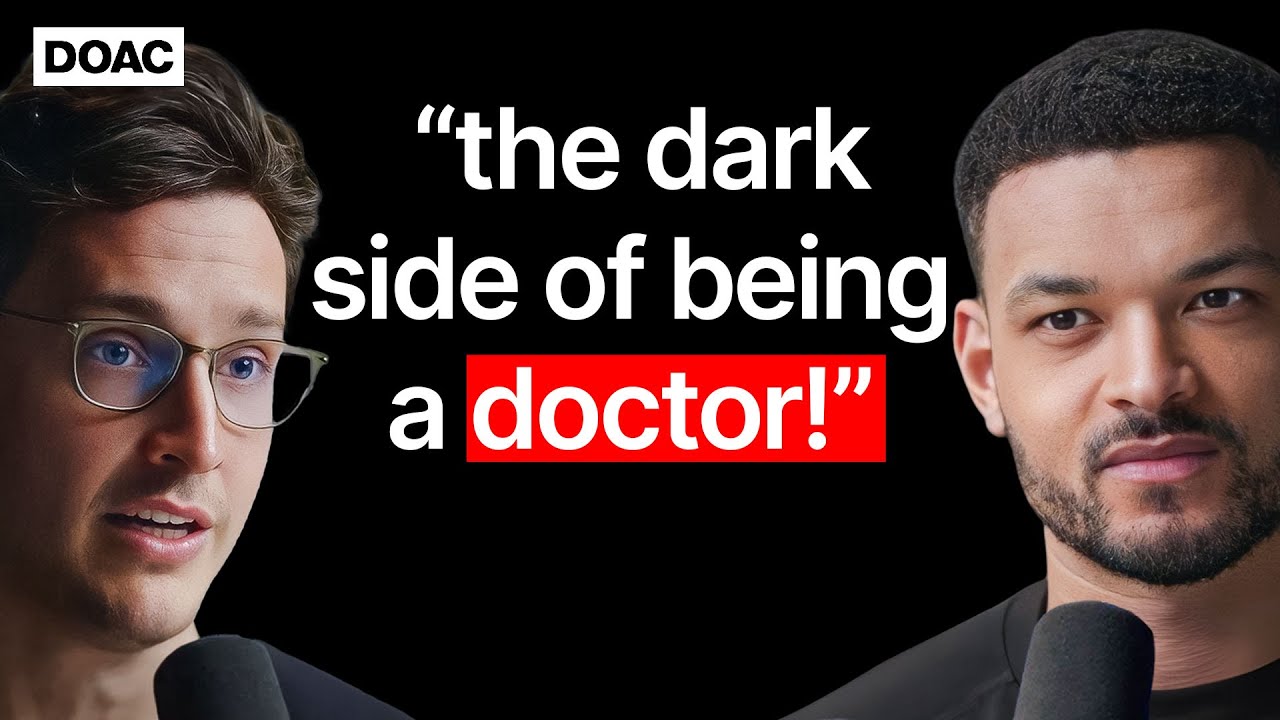
Dr Mike: The Top 10 Lies Health Experts Have Told You! — The Diary Of A CEO

The Diary Of A CEO

Popular online wellness claims often lack evidence and lead to direct harm, making evidence-based medicine, lifestyle basics, and regulatory oversight essential to public health.

AI-assisted summary of Dr Mike: The Top 10 Lies Health Experts Have Told You! — original source. Check the original for full context.

Source published:

Detailed notes

## Background Published on YouTube by The Diary Of A CEO on May 30, 2024, this page features an episode starring family medicine physician and social media creator Dr. Mike Varshavski. According to the page description, Dr. Mike discusses health misconceptions, medical misinformation, lifestyle interventions, mental health, and his personal journey through grief and public advocacy.

## TL;DR Dr. Mike addresses widespread health lies and online pseudoscience, stressing that true wellness relies on evidence-based lifestyle habits rather than unregulated supplements or quick-fix trends. He emphasizes the clinical nuances of medicine, the failure rate of non-human trials, and the importance of maintaining systemic trust despite corporate drug misconduct. Throughout the conversation, he also shares personal stories of tragic loss, processing grief through boxing, and leveraging his platform for public health initiatives like in-flight CPR awareness and phone-free schools.

## Atmosphere & style The conversation shifts dynamically between analytical health commentary and deeply intimate emotional disclosure. Host Steven Bartlett creates a grounded, candid environment that allows Dr. Mike to speak with empathetic authority, balancing rigorous scientific skepticism with vulnerability. The emotional arc moves from sharp critiques of health gurus to raw memories of losing his mother, giving the dialogue a reflective, earnest, and deeply human quality.

## Key takeaways - [34:51](https://www.youtube.com/watch?v=ToUpAWW7u4c&t=2091s) Vaping poses significant health risks, especially to developing adolescent brains, and vaping-related lung injury is now a recognized medical diagnosis. - [37:42](https://www.youtube.com/watch?v=ToUpAWW7u4c&t=2262s) Dr. Mike emphasizes patient autonomy, acknowledging that while physicians must explain medical risks, adult patients have the right to make decisions based on their own risk tolerance. - [44:08](https://www.youtube.com/watch?v=ToUpAWW7u4c&t=2648s) Taking simple, actionable steps—such as putting on shoes—can serve as a crucial first step toward moving through severe depression and grief. - [58:15](https://www.youtube.com/watch?v=ToUpAWW7u4c&t=3495s) Supplemental vitamins are largely unnecessary for healthy individuals without a diagnosed deficiency and carry risks like toxicity, financial loss, and lack of FDA oversight. - [01:03:51](https://www.youtube.com/watch?v=ToUpAWW7u4c&t=3831s) A whole-food diet rich in fiber naturally supports gut health, whereas over-the-counter probiotics lack evidence for replicating these results or curing digestive disorders. - [01:07:30](https://www.youtube.com/watch?v=ToUpAWW7u4c&t=4050s) Health promoters bear the burden of proof to demonstrate their claims through rigorous clinical trials rather than expecting the medical community to disprove them. - [01:09:14](https://www.youtube.com/watch?v=ToUpAWW7u4c&t=4154s) Public trust in medicine is often eroded when self-proclaimed health gurus offer simple, black-and-white answers over the inherent nuance and conditionality of sound medical science. - [01:11:01](https://www.youtube.com/watch?v=ToUpAWW7u4c&t=4261s) Though instances of pharmaceutical misconduct occur, Western medicine remains fundamentally strong due to its self-correcting scientific method when new evidence emerges. - [01:18:43](https://www.youtube.com/watch?v=ToUpAWW7u4c&t=4723s) Approximately 99% of medical treatments that show promise in animal models or laboratory settings fail when tested in human clinical trials. - [01:19:46](https://www.youtube.com/watch?v=ToUpAWW7u4c&t=4786s) Dr. Mike advocates for phone-free schools and tighter regulations on adolescent social media usage, drawing parallels to policies on alcohol, tobacco, and vaping. - [01:31:30](https://www.youtube.com/watch?v=ToUpAWW7u4c&t=5490s) After responding to an in-flight anaphylaxis emergency, Dr. Mike advocated alongside public officials and the FAA to mandate user-friendly auto-injectors on commercial flights. - [01:34:07](https://www.youtube.com/watch?v=ToUpAWW7u4c&t=5647s) CPR does not instantly restore life but serves to manually circulate oxygenated blood to buy critical time until emergency medical services arrive. - [01:42:24](https://www.youtube.com/watch?v=ToUpAWW7u4c&t=6144s) Understanding that healthcare workers require emotional distance to prevent burnout can help grieving families process casual behavior from medical staff. - [01:43:41](https://www.youtube.com/watch?v=ToUpAWW7u4c&t=6221s) Isolating oneself during times of tragedy can result in missed personal and professional connections, a regret Dr. Mike reflects on following his mother's death in medical school.

## Detailed walkthrough ### [00:00](https://www.youtube.com/watch?v=ToUpAWW7u4c&t=0s) Introduction and The Diary of a CEO Subscriber Raffle

Dr. Mike Varshavski, an actively practicing family medicine physician with over 25 million followers across his social media platforms, introduces the key themes of the conversation: combatting health misinformation, evaluating dietary principles like "calories in, calories out," understanding the risks of vaping and supplements, and navigating personal loss and grief. Following a brief preview of topics ranging from medical shortcuts to Dr. Mike's personal transition into boxing after his mother's death from cancer, host Steven Bartlett shares a milestone update for the podcast channel.

Celebrating *The Diary Of A CEO* reaching 6 million subscribers, Steven announces a monthly subscriber raffle as a gesture of gratitude. Every month, three active subscribers are selected at random to win distinct prizes: a $1,000 voucher, tickets to attend a live behind-the-scenes recording with the production team, or a 1-to-1 ten-minute phone call directly with Steven.

[02:15](https://www.youtube.com/watch?v=ToUpAWW7u4c&t=135s) Helping People Make Better Health Decisions

When asked to summarize the overarching mission driving his current work across podcasts, social media, and television, Dr. Mike explains that his core goal is to guide patients and viewers through a "sea of misinformation." By providing honest, transparent, and engaging medical evidence, he aims to empower individuals to make well-informed healthcare choices for themselves and their families.

This mission stems directly from his experiences as a medical student. He frequently observed top-tier medical experts—physicians with extensive credentials and published research—present detailed, evidence-based diagnoses to patients. However, the moment the attending physician left the room, the patient would turn to Dr. Mike as the medical student and ask, "What did he say?" or "What did she say?" This recurring communication disconnect revealed that vital medical messages were failing to register with patients, highlighting a severe need for better communicators in modern healthcare.

Dr. Mike initially believed traditional television media training would solve the issue, but during his residency, he witnessed TV physicians pushing "miracle solutions" and snake oil. Patients were actively lured into skipping necessary medications, treatments, and lifestyle changes in exchange for dubious quick fixes sold for "three easy payments of $19.99." Recognizing this as a systemic issue exacerbated by profit-driven actors in the medical space, Dr. Mike authored a blog post for the American Academy of Family Physicians in 2017. He warned that the absence of evidence-based doctors online would allow predatory actors to exploit the "gray zone"—medical conditions where modern science does not yet have definitive answers. Three years later, during the COVID-19 pandemic, this exact dynamic played out as public trust fractured and online health misinformation surged.

- Dr. Mike noted that despite having only five years of post-residency experience at the time, his YouTube channel became one of the primary sources people turned to for clear medical guidance during the pandemic over official bodies like the CDC.

[05:24](https://www.youtube.com/watch?v=ToUpAWW7u4c&t=324s) The Rise of "Doctor Mike" and Navigating Media Fame

Dr. Mike attributes his massive social media reach to a combination of early adoption, unexpected viral fame, and deliberate media strategy. He initially began posting on Instagram as a medical student to challenge the prevailing stigma that pursuing a medical degree requires sacrificing one's social, family, and athletic life. Gathering an initial following of 10,000 users was a significant personal milestone at the time, offering minor perks like free club entry for a struggling medical student.

His public profile skyrocketed during his residency when *BuzzFeed* published a viral feature titled "You Got Check Out This Sexy Doctor and His Awesome Dog." Virtually overnight, global news outlets from the UK, Budapest, Asia, and the United States competed for interviews, throwing Dr. Mike into the aggressive world of daytime television booking wars. Producers from *The Ellen DeGeneres Show* and *The Steve Harvey Show* demanded exclusivity. After choosing to appear on *The Ellen DeGeneres Show*, Dr. Mike was unexpectedly dropped the day before filming when Hillary Clinton chose the show to announce her US presidential bid alongside guests Pink and Jimmy Kimmel. When Dr. Mike called back *The Steve Harvey Show*, producers informed him the opportunity had passed, providing a stark lesson on the fleeting nature of "15 minutes of fame."

Rather than stepping away, Dr. Mike leveraged the sudden spotlight to redirect public attention toward accurate medical information. Observing how media figures historically "corrupted" health topics to generate views, he adopted a strategy of capturing attention through humor, lightheartedness, or viral interest, and then delivering solid, evidence-based science. Over the past five years, he has systematically studied the persuasive techniques used by commercial marketers and pseudoscience promoters, applying those same principles to make evidence-based medicine entertaining and accessible.

[10:08](https://www.youtube.com/watch?v=ToUpAWW7u4c&t=608s) Evaluating Research and Avoiding Extremes

When evaluating new medical studies and health claims, Dr. Mike employs a framework designed to avoid panic and oversimplification. Unlike traditional news outlets that treat single "breakthrough" studies as definitive answers, or social media commentators who isolate individual variables, Dr. Mike contextualizes new data within the existing body of medical literature built over decades.

He cautions against the common pitfall of epidemiological studies—such as those comparing plant-based diets to omnivorous diets—where confounding lifestyle factors are frequently left unisolated. A study showing poorer health outcomes in meat-eaters may simply reflect the consumption of highly processed fast food rather than unprocessed meat itself. Modern medicine rarely supports absolute extremes; human biology operates around homeostasis and balance.

- Dr. Mike warns that pushing for "hyper-optimization" or attempting to artificially boost biological systems disrupts natural homeostasis, noting that "the enemy of balance is bad, but also perfect."

[12:10](https://www.youtube.com/watch?v=ToUpAWW7u4c&t=730s) The Anti-Aging Trend, Capitalism, and the Shifting "Gray Zone"

Dr. Mike critiques the recent explosion of the longevity, anti-aging, and biohacking movement, acknowledging that while it stems from scientific progress, the sector has been heavily corrupted by commercial interests. Although he describes himself as pro-capitalism, Dr. Mike argues that health cannot be treated as an "on-demand" consumer commodity, because demanding specific medical interventions without professional expertise rarely yields good health outcomes.

A core issue with current online health trends is the misuse of preliminary science. Proponents regularly take early hypotheses, petri-dish experiments, or rodent studies and market them as immediate human cures. In true scientific practice, researchers actively attempt to *disprove* their own hypotheses, intentionally seeking out opposing views and rigorous testing. In contrast, social media algorithms encourage confirmation bias, amplifying influencers who claim absolute certainty in areas where science remains uncertain.

The nature of these uncertain areas—or "gray zones"—has shifted over time. Thirty years ago, the primary gray zone in health was weight loss, dominated by late-night infomercials selling dubious fat burners, grapefruit diets, and unsustainable regimens. The advent of FDA-approved GLP-1 medications like Ozempic fundamentally altered that space by providing a clinically validated tool for weight management. Consequently, commercial pseudoscience has migrated toward anti-aging and personalized genetic testing, selling absolute solutions for biological aging that modern medicine cannot yet back up.

- Dr. Mike highlights that true scientific rigor involves celebrating experts who openly admit "here's what we don't know," rather than influencers who sell absolute certainty.

[16:53](https://www.youtube.com/watch?v=ToUpAWW7u4c&t=1013s) Lifestyle Modifications as First-Line Medicine

Doctor Mike explains that family medicine training is rooted in evidence-based guidance platforms like UpToDate, which detail everything from epidemiology and diagnostic testing to first-, second-, and third-line treatments. For almost any chronic health condition—whether managing blood sugar in diabetes or controlling high blood pressure—the primary, first-line recommendation taught to all medical doctors is lifestyle modification.

Despite this training, clinical reality often diverges from recommendations due to human nature and systemic challenges. Patients naturally seek shortcuts, hoping a pill will do the hard work for them. While some individuals genuinely face overwhelming life circumstances—such as working three jobs, raising children as a single parent, or navigating a mental health crisis—many others simply prefer the easier path. Doctor Mike emphasizes that healthcare holds no true shortcuts; every intervention carries trade-offs and side effects. Even essential elements like water or healthy foods like carrots become dangerous or problematic in extreme quantities, illustrating why medical treatments cannot be painted with a broad brush.

- **UpToDate Platform:** A primary medical database used by physicians to guide diagnostic testing (labs, imaging) and line-of-treatment hierarchies. - **First-Line Protocol:** Lifestyle changes are the foundational requirement for chronic conditions like hypertension and type 2 diabetes before escalation to pharmaceuticals. - **Nuance in Health:** Nothing is universally "all good"—over-hydration can throw off electrolytes, damage the brain, or cause death (water intoxication), while excessive carrot consumption causes carotenemia (skin turning orange).

---

[19:48](https://www.youtube.com/watch?v=ToUpAWW7u4c&t=1188s) The Debate Over Weight Loss and "Calories In, Calories Out"

Addressing the endless debate around weight loss and popular dietary trends like Ozempic, Doctor Mike stresses the importance of understanding a patient's individual history. When evaluating a patient struggling with weight or pre-diabetes, he always asks what diets they have previously tried. Recommending general "dieting" to someone who has already failed extreme or unsustainable routines—such as the carnivore or keto diets—often leads to non-compliance. Identifying past failures gives doctors the opportunity to explain why those overly restrictive approaches set them up to fail and allows them to propose a sustainable alternative.

``` ┌─────────────────────────────────────────┐ │ SUSTAINABLE WEIGHT MANAGEMENT │ └────────────────────┬────────────────────┘ │ ┌──────────────────────────┴──────────────────────────┐ ▼ ▼ ┌──────────────────────┐ ┌──────────────────────┐ │ CALORIC BALANCE │ │ NUTRITIONAL QUALITY │ │ "Calories In / Out" │ │ Micronutrients │ │ Determines Weight │ │ Determines Health │ └──────────────────────┘ └──────────────────────┘ ```

When evaluating any diet, two core components must be held in balance: caloric intake and nutritional adequacy. The principle of "calories in, calories out" remains a scientific truth for managing body weight, even if it sounds "clinical, cold, and heartless." However, focusing exclusively on calories without considering nutrition creates severe health problems. For example, extreme restriction diets (like eating three grapefruits a day) produce weight loss via calorie deficits but cause malnutrition. Conversely, eating high-quality proteins and nutrients while over-consuming calories still results in metabolic dysfunction and excess weight gain.

- **Patient-Centric Approach:** Medical advice must account for budget, schedule, pre-existing conditions, and past dietary attempts. - **Dietary Tailoring:** Individualized nutrition is necessary; anemic patients require higher iron, while those prone to kidney stones or irritable bowel syndrome (IBS) need specific dietary modifications. - **The "Perfect Diet" Fallacy:** Generalized, extreme health claims fail because healthcare does not operate well in extremes.

---

[23:09](https://www.youtube.com/watch?v=ToUpAWW7u4c&t=1389s) The Myth of Exercising for Weight Loss

Doctor Mike addresses a widely held cultural misconception: that exercise is the primary driver of weight loss. While stating that "exercise for weight loss almost doesn't matter" sounds like a provocative, "buzzy statement," the underlying science shows that the vast majority of weight loss comes from dietary changes rather than physical activity. Society frequently equates visual appearance—such as big muscles or a magazine-cover physique—with health, but physical appearance alone does not provide a complete picture of an individual's internal metabolic state.

To illustrate why you cannot "out-exercise a bad diet," Doctor Mike shares a personal example from his childhood visits to the movie theater. Consuming a tub of popcorn, a small candy bar, and a soda easily totals over 1,000 calories. Burning off 1,000 extra calories through physical exercise is an immense task that most human bodies are not physically equipped or conditioned to achieve in a single workout session.

> "Health is not a magazine cover. They think that you need to have big muscles to be considered healthy... just looking at someone's appearance doesn't give you the full picture."

- **Caloric Math:** Consuming 1,000 calories takes minutes, whereas burning 1,000 calories through exercise requires hours of intense physical exertion. - **Exercise vs. Diet:** Nutrition drives body weight changes, while exercise builds systemic resilience and physical capacity.

---

[25:18](https://www.youtube.com/watch?v=ToUpAWW7u4c&t=1518s) Mindset, Misinformation, and "Perfect" Health

Host Steven Bartlett reflects on his own tendency to apply business mindsets—seeking optimizations, shortcuts, and hacks—to his diet by simply eating larger volumes of "healthy" foods, yet failing to lose weight. Doctor Mike points out that high-achieving, business-minded individuals are often the most vulnerable to simple health misinformation. The strategies that drive success in entrepreneurship and communication do not translate to human biology, because healthcare is not a commodity and cannot be optimized through extreme shortcuts or "miracle" supplements.

Chasing perfect health is not only an illusion; it is a "toxic illusion" that generates chronic anxiety, which itself exerts a physiological toll on the body. Doctor Mike warns against absolute statements on social media regarding concepts like "calories in, calories out." While the fundamental thermodynamics of energy balance are scientifically universal, the real-world *application* shifts dramatically based on an individual's pre-existing medical conditions, metabolic variance, and daily environment.

- **The Danger of Extremes:** Striving for absolute perfection in health routines creates toxic stress and anxiety. - **Dialectics in Medicine:** Two opposing ideas can be true simultaneously—the core science of energy balance is universal, yet individual medical conditions alter its practical application. - **Public Health vs. Individual Outcomes:** Controlling blood pressure across a population predictably reduces total heart attacks and strokes, but a doctor cannot guarantee a specific outcome for any single individual.

---

[29:04](https://www.youtube.com/watch?v=ToUpAWW7u4c&t=1744s) True Benefits of Exercise and Current Health Guidelines

While exercise is an inefficient tool for raw weight loss, its broader health benefits are unmatched by any pharmaceutical intervention. Doctor Mike notes that if the full range of exercise benefits could be bottled and sold, the creator would be the richest person on Earth. Exercise positively impacts mood, mental health, social connections, physical strength, cancer prevention, cancer recovery, and overall longevity.

``` ┌───────────────────────────────┐ │ BENEFITS OF EXERCISE │ └───────────────┬───────────────┘ │ ┌───────────────────┬───────────────┼───────────────┬───────────────────┐ ▼ ▼ ▼ ▼ ▼ ┌─────────┐ ┌──────────┐ ┌───────────┐ ┌───────────┐ ┌───────────┐ │ Mood & │ │ Mental │ │ Cancer │ │ Longevity │ │ Strength │ │ State │ │ Resilience│ │ Protection│ │ & Aging │ │ & Function│ └─────────┘ └──────────┘ └───────────┘ └───────────┘ └───────────┘ ```

Even as a health advocate, Doctor Mike candidly shares his own recent struggles with maintaining an exercise routine. Due to life stress, busy schedules, and mental health challenges, he gained weight and fell off his workout regimen over the preceding months. He uses his experience to emphasize that health journey fluctuations are normal, and framing anything short of perfection as a failure creates a dangerous mindset.

- **Exercise Guidelines:** Medical consensus recommends at least 150 minutes of moderate-intensity exercise per week (approx. 2.5 hours total). - **Moderate Intensity Test:** A practical gauge for "moderate intensity" is being able to speak only one sentence at a time before needing to catch your breath. - **Holistic Impact:** Regular physical activity reduces all-cause mortality, lowers the risk of developing chronic diseases, and improves psychological well-being.

---

[30:45](https://www.youtube.com/watch?v=ToUpAWW7u4c&t=1845s) Loss of Trust and the Hyper-Medicated Society

Comparing the roles of general practitioners and specialized researchers, Doctor Mike highlights the need for both broad-spectrum primary care doctors and single-point experts, such as neuroscientists. Primary care doctors rely directly on bench researchers who rigorously audit their own biases and publish empirical data. However, Doctor Mike identifies two major structural crises threatening modern Western healthcare:

1. **Erosion of Public Trust:** A rapid decline in public trust toward medical professionals, healthcare institutions, and government agencies over the last decade. 2. **The Hyper-Medication Cycle:** A societal pattern where modern environments create health problems, which are then treated with pharmaceutical interventions rather than addressing root causes.

Society has created hyper-palatable processed foods that prevent satiety, leading to widespread demand for weight-loss drugs. Similarly, short-form digital media platforms continuously fracture attention spans, driving an influx of requests for ADHD medications. Individuals party late into the night and take exogenous testosterone to maintain physical gains rather than adjusting their lifestyle habits. This cycle raises a critical question: how hyper-medicated can society become before the treatments themselves inflict widespread harm?

- **Interdisciplinary Dependence:** Primary care physicians depend on specialized laboratory researchers to translate basic science into clinical practice. - **Systemic Health Drivers:** Modern environments—engineered processed foods, addictive algorithms, and poor sleep hygiene—drive lifestyle diseases that are increasingly outsourced to prescription drugs.

---

[33:04](https://www.youtube.com/watch?v=ToUpAWW7u4c&t=1984s) Pandemics, Insidious Threats, and the Vaping Epidemic

When asked if he fears a future pandemic far deadlier than COVID-19, Doctor Mike offers a counterintuitive medical perspective: highly lethal viruses are often easier to contain. The original SARS virus had a significantly higher case fatality rate than SARS-CoV-2. However, because SARS made infected individuals visibly and severely ill almost immediately, it was easier to isolate. In contrast, SARS-CoV-2 spread rapidly and killed millions precisely because of asymptomatic and presymptomatic transmission—people felt fine or experienced mild sniffles while actively spreading the virus.

This phenomenon mirrors how health information and lifestyle habits operate. Insidious, subtle threats are often far more dangerous than obvious harm because low perceived threat levels foster widespread public complacency.

Doctor Mike draws a direct parallel between asymptomatic viral spread and the modern vaping epidemic. While e-cigarettes may appear less harmful than traditional combustible cigarettes on paper, their subtle nature makes them uniquely dangerous. E-cigarettes lack an offensive smell, are easy to conceal, and allow users to deliver higher, more frequent doses of nicotine throughout the day. The illusion of safety leads to higher consumption rates and deeper addiction, compounding population-level harm.

- **Pathogen Lethality vs. Transmissibility:** High lethality often restricts a virus's spread, whereas mild or asymptomatic presentation (as seen in SARS-CoV-2) enables global transmission. - **Mechanism of Misinformation:** Minor, plausible falsehoods ("insidious misinformation") alter behavior more effectively than extreme, obvious lies ("disinformation"). - **Vaping Risk Factors:** Reduced odor, discreet form factors, and high-concentration nicotine delivery systems increase daily exposure compared to traditional tobacco products.

<ElicitationsGroup message="Explore related medical insights from Doctor Mike's interview:"> <Elicitation label="Examine the medical evidence around vaping health effects" query="What are the specific physiological side effects and health risks of long-term vaping discussed by Doctor Mike?"/> <Elicitation label="Analyze Doctor Mike's view on supplements and vitamins" query="What does Doctor Mike say about the efficacy of everyday vitamin supplements, prebiotics, and probiotics?"/> </ElicitationsGroup>

[34:51](https://www.youtube.com/watch?v=ToUpAWW7u4c&t=2091s) The Hidden Dangers of Vaping and the Illusion of Safety

When asked directly if vaping is dangerous, Doctor Mike gives an unequivocal yes. The core issue, he explains, is that vaping hooks people who would otherwise be entirely turned off by traditional smoking. The chemical formulations inside vapes, with nicotine being a prime example, are highly rewarding to the brain. This poses a massive danger to children and teenagers whose frontal lobes—the area responsible for complex decision-making—are still developing. Their brains are incredibly susceptible to building tolerance, dependence, and long-term chemical changes. Doctor Mike stresses that vaping should strictly be used as a smoking cessation tool to transition away from cigarettes, rather than a novel gateway to nicotine.

For adults who never smoked, vaping carries zero health benefits and poses significant potential harm. While the host notes how difficult it is to study these relatively new devices, Doctor Mike points out that "vaping-related lung injury" has already become its own formal medical diagnosis code, with numerous pediatric hospitalizations documented. Beyond the internal medical risks, there have even been technical failures where devices have literally exploded in users' faces. The host shares an anecdote about being in Dubai a year prior with friends who were using disposable vapes. Out of curiosity, he tried one and found it so pleasant that he realized how easily he could have picked up the habit. He notes that he only backed away out of a healthy skepticism toward things with poorly understood side effects.

* **Key Takeaway:** Vaping is not a harmless lifestyle choice; it carries concrete medical risks, including documented lung injuries and severe addiction potential for developing brains. * **The "Nature Fallacy":** Doctor Mike warns against assuming things are safe just because they are marketed as "natural." He points out that vitamins are natural but synthesized in a lab, while lethal substances like arsenic and cyanide are entirely natural yet deadly.

---

[37:42](https://www.youtube.com/watch?v=ToUpAWW7u4c&t=2262s) Neurodiversity, Patient Autonomy, and the Risks We Choose

The conversation shifts to the massive rise in public awareness surrounding neurodiversity, specifically ADHD and autism spectrum disorders. The host asks if the medical community is seeing a genuine rise in the condition or if society is simply creating more ADHD. Doctor Mike admits the truth lies somewhere in the middle. He emphasizes that neurodivergence needs to be discussed openly, keeping in mind that while some individuals desire medical treatment for their condition, others do not. For Doctor Mike, this underscores the fundamental medical tenet of patient autonomy. Whether discussing a patient's choice to vape or their choices surrounding end-of-life care, a doctor’s job is to convey the risks accurately so the adult patient can make an informed decision based on their own risk tolerance.

To illustrate personal risk tolerance, Doctor Mike reveals that he became a professional boxer a few years ago. From a purely medical standpoint, he openly admits that boxing is not healthy, as it dramatically increases the risk of head injuries and Chronic Traumatic Encephalopathy (CTE). However, it was a risk he willingly accepted because he thoroughly analyzed the dangers, accepted them, and decided to pursue a sport he is deeply passionate about.

* **End-of-Life Discussions:** Doctor Mike frequently initiates end-of-life care discussions with healthy 30-year-old patients. While they are often shocked, he explains that the best time to think deeply about your medical desires is when you are healthy, not when you are facing an active crisis.

---

[39:45](https://www.youtube.com/watch?v=ToUpAWW7u4c&t=2385s) The Loss of a Mother and Finding Healing in Boxing

Doctor Mike shares that boxing essentially "chose him" during one of the darkest periods of his life. Having practiced Taekwondo for eight years growing up, he was already familiar with martial arts. However, while he was in medical school, his mother tragically passed away from cancer. He vividly recalls the agonizing reality of being a medical student in the room, having to look at the attending physicians and tell them to stop doing chest compressions on his own mother. It was made even more complicated because his father, who is also a doctor, was begging the team to keep going. Doctor Mike knew the efforts were futile and only causing more bodily harm.

Following her death, Doctor Mike fell into a severe, isolated depression, leaving his house only to attend medical school classes. After four months of crippling social isolation, he realized he needed to take his own clinical advice: action must precede motivation. He browsed a coupon app called Gilt City, found a voucher for a local boxing class, and attended a session. That single class sparked a ten-year love affair with the sport, eventually leading him to fight on a Showtime pay-per-view card in front of 15,000 people.

* **Verbatim Quote:** "Knowing what it's like to be in the room to ask the doctors to stop doing chest compressions on your mom... I mean that is not something that I wish on anyone. That's the worst thing you can experience."

---

[41:45](https://www.youtube.com/watch?v=ToUpAWW7u4c&t=2505s) A Sudden Tragedy: The Reality of Gram-Negative Sepsis

The host delves deeper into the painful circumstances surrounding his mother's passing, noting that she had previously been given the all-clear. Doctor Mike explains that she suffered from Chronic Lymphocytic Leukemia (CLL). While CLL is typically a slow-moving cancer of old age that patients usually outlive, his mother had a rare, highly aggressive form that required intensive treatment. The therapy ravaged her body. One afternoon, Doctor Mike went to pick her up from Memorial Sloan Kettering Cancer Center, where she accidentally fell in the waiting room. The physician kept her for observation but shook Doctor Mike's hand and joyfully declared that she was entirely cured of the cancer.

The elation lasted only a few days. His mother's post-treatment weakness left her vulnerable to a severe infection of gram-negative bacteria, which rapidly triggered gram-negative sepsis. Her blood pressure plummeted, and despite doctors administering heavy pressor medications to artificially raise her blood pressure and save her organs, she passed away. Watching his father navigate the loss was heartbreaking; his parents had completely sacrificed their lives in Russia—where his father was already a doctor and his mother held a PhD—to move to the United States as immigrants, forcing his father to attend medical school a second time and his mother to relearn English to teach mathematics.

---

[44:08](https://www.youtube.com/watch?v=ToUpAWW7u4c&t=2648s) The Psychology of Grief, a Siberian Husky, and the Power of Action

Reflecting on the tragedy, Doctor Mike notes that he never felt anger toward the doctor who told him she was cured; rather, it taught him a harsh lesson about how quickly life can pivot from joy to cruelty. He emphasizes that while repressing emotions can be a valuable acute coping mechanism to help a person function during high-stress situations or hold down a job, it becomes highly toxic when it becomes chronic. To cope, Doctor Mike moved back in with his father. In an effort to redirect his father's profound grief, Doctor Mike bought a Siberian Husky puppy—a dog his mother had always wanted.

Though his traditional, Soviet-style father initially cried and yelled about why a puppy was a terrible idea, the dog completely shifted his focus. Taking the puppy for walks forced his father out of the house and gave the two grieving men a chaotic, beautiful project to bond over. When asked what advice he would give to anyone currently trapped in the paralyzing fog of depression or grief, Doctor Mike’s answer is radically simple: "Put on your shoes."

* **Action Precedes Motivation:** Doctor Mike references advice from *Shark Tank* star Barbara Corcoran, who places her athletic shoes right next to her bed because simply putting them on creates a psychological cascade that makes exercising easier. * **The Reality of Severe Depression:** Doctor Mike notes that when you are truly suffering, basic tasks like grooming, showering, and making friends online feel impossibly heavy. Putting on your shoes is a simple, solitary step that requires no outside judgment.

---

[49:32](https://www.youtube.com/watch?v=ToUpAWW7u4c&t=2972s) The Stigma of Mental Health and the Toxic Loop of Social Media

Doctor Mike calls out the arbitrary societal stigma surrounding mental health, arguing it is entirely illogical that seeking help for a broken bone is viewed as normal, while seeking help for psychological suffering is deemed a sign of weakness. He notes that modern society is the most unnatural environment humans have ever inhabited, which has profoundly impacted his own mental health. Specifically, navigating the unnatural landscape of social media threw his mental state into a severe loop.

Even though he managed the platform from a place of seeking constructive criticism to improve his medical communication, checking it constantly triggered tremendous anxiety. He became chronically trapped in a state of fight-or-flight, anticipating negativity and constantly formulating responses, which destroyed his sleep and mental rest. He confesses that despite being a medical professional who counsels others on wellness, doctors are often the biggest hypocrites when it comes to managing their own health.

Here is a detailed, faithful walkthrough of this section of the transcript:

[052:33] The Cycle of Online Hostility and Mental Health Advice

Dr. Mike reflects on the reality of practice versus prescription, admitting that even top health experts and podcast guests frequently struggle with the very habits they advocate, such as proper sleep hygiene. His responsibility as a physician is to present the best available scientific evidence, even if he cannot adhere to it perfectly 100% of the time.

The host observes that a "chain of suffering" exists across humanity, where people inadvertently project their internal anxiety, unresolved trauma, or pain onto others online. Dr. Mike agrees with the common-sense adage that "hurt people hurt people," recognizing that social media harassers are often dealing with their own emotional turmoil.

To safeguard his own mental health from online harassment, Dr. Mike's therapist gave him crucial guidance: * **Log off completely:** Set strict boundaries and turn off devices at specific times of the day to break the compulsive habit of doom-scrolling hate comments right before going to sleep. * **Practice intentional consumption:** Avoid looking at comments or social media unless actively seeking a specific, constructive outcome.

He references Harvard’s long-running study on adult development (led by Dr. Robert Waldinger), which showed that passive consumption of social media drives unhappiness and loneliness, whereas using digital platforms actively to build community or learn can yield positive mental health benefits.

[056:08] Finding Purpose and Why Dr. Mike Refuses to Quit Social Media

When asked if personal traits make him more vulnerable to caring about online criticism, Dr. Mike explains that he views negative feedback as a direct threat to his core mission. Unlike many health influencers who leverage digital fame to launch high-priced concierge practices, abandon clinical medicine, or cater exclusively to wealthy clients, Dr. Mike continues to practice at a community health center where over 50% of his patients are completely uninsured.

He never intended social media to be a commercial venture; rather, it was born out of deep frustration with health misinformation. Although he has occasionally pondered quitting social media during moments of intense fatigue, he views his platforms as an irreplaceable public tool to educate the public. He acknowledges that his greatest strength—his practical, pragmatic nature—can sometimes be a personal weakness in relationships, but it remains his primary driver in serving everyday patients.

[058:15] The Dark Reality of the Supplement Industry

The discussion shifts to dietary supplements and vitamins. Dr. Mike breaks down the issue into several key points:

* **Vitamins vs. Supplements:** While vitamins are essential for human life, supplemental vitamin pills are completely unnecessary for the vast majority of healthy individuals. * **Capitalizing on Insecurity:** The supplement industry routinely preys on human fear, promising quick fixes and health shortcuts to generate massive profits. * **Missing Evidence:** Unless a patient has a medically diagnosed deficiency or specific clinical condition, high-quality evidence supporting routine supplementation is virtually non-existent.

He outlines four distinct harms associated with non-essential supplement use: 1. **Financial Drain:** Consumers waste limited healthcare dollars on expensive pills that offer no proven benefit. 2. **False Security:** People substitute supplements for essential, evidence-based lifestyle changes (like proper diet, sleep, and exercise). 3. **Severe Side Effects & Overdosing:** Excess intake can trigger toxic side effects. For instance, high doses of fat-soluble vitamins (like Vitamin A) accumulate in tissues and cause real harm, while excessive B-vitamins can paradoxically become pro-inflammatory. 4. **Zero Regulatory Oversight:** In the United States, the Food and Drug Administration (FDA) does not test or approve dietary supplements before they hit store shelves.

Dr. Mike points out that independent testing by consumer watchdogs (such as Consumer Reports and ConsumerLab) regularly reveals that retail supplements frequently fail to contain the advertised ingredients or contain hidden dosages 5x to 10x higher than stated on the label.

To demonstrate the lack of regulation, Dr. Mike and the host discuss how easy it would be to launch a "Miracle Formula" pill. As long as manufacturers avoid claiming that the product cures a specific disease (e.g., using broad wellness terms like "immunity support," "mood balance," or "happy natural" instead of "cures depression"), anyone can bottle unregulated powders, market them with zero scientific backing, and build a multi-million dollar business overnight.

[01:03:51](https://www.youtube.com/watch?v=ToUpAWW7u4c&t=3831s) Gut Health, Probiotics, and Preliminary Science

Addressing the growing trend around the gut microbiome, Dr. Mike acknowledges that while the trillions of microorganisms residing in the gut play an important role in overall health and disease, commercial products fail to deliver on their promises:

* **Diet vs. Pills:** Consuming a whole-food diet rich in dietary fiber and plant foods naturally supports beneficial gut microbiota. However, taking over-the-counter probiotic or prebiotic supplements has **not** been proven to replicate these health outcomes or successfully cure gut disorders. * **Lack of Reversibility:** Knowing that a medical condition alters gut bacteria does not mean that swallowing a probiotic pill will re-establish a healthy microbiome or reverse the disease. * **Microbiome & Genetic Testing:** Commercial at-home microbiome and direct-to-consumer genetic kits are extremely preliminary. Doctors currently lack actionable clinical guidance on how to use these raw test results to improve patient health outcomes.

Dr. Mike emphasizes that effective health advice remains deceptively simple: prioritize plant foods rich in fiber, get quality sleep, limit alcohol consumption, and avoid smoking. "The things that grandma told us still is what I say in my office," he notes, acknowledging that while basic lifestyle habits are not flashy, they remain the only interventions backed by undeniable evidence.

[01:07:30](https://www.youtube.com/watch?v=ToUpAWW7u4c&t=4050s) Calling Out Pseudoscience and Misleading Health Gurus

Dr. Mike addresses prominent online personalities—singling out biohacker and influencer Gary Brecka as a prime example—who promote untested health claims with extreme conviction. While acknowledging that such figures may speak with passion and potentially good intentions, Dr. Mike warns that passion without scientific accuracy leads to dangerous public health outcomes.

When the host asks whether these claims are simply "unproven" versus "disproven," Dr. Mike clarifies the scientific burden of proof: * **Burden of Proof:** If someone claims a specific juice or pill extends human life, the burden is on the promoter to prove it through rigorous clinical trials—not on the medical community to spend millions disproving every arbitrary claim. * **Public Confusion:** Unproven claims outpace real evidence, leading consumers to abandon proven medical interventions in favor of trendy, unvalidated shortcuts.

[01:09:14](https://www.youtube.com/watch?v=ToUpAWW7u4c&t=4154s) Disagreeing with Consensus, Nuance, and the Gary Brecka Example

Dr. Mike asserts that if someone chooses to go against established public health standards and scientific consensus—such as guidelines from the CDC, the WHO, or Harvard Health—they must present a valid, evidence-based reason. He welcomes genuine scientific breakthroughs, but warns against influencers who reject consensus simply "because I said so." To illustrate this, he points to a viral clip he reacted to on his podcast featuring wellness personality Gary Brecka, who claimed that headaches are caused by a deficiency in pink Himalayan sea salt.

Dr. Mike and host Steven Bartlett break down how absurdly reductionist Brecka's statement is. Bartlett notes that his own brother has suffered from chronic headaches since childhood, while Dr. Mike rattles off a long list of potential causes: concussions, stress, hormonal imbalances, brain tumors, migraines, or simple neck cramps. The danger, Dr. Mike argues, lies in the unearned confidence of such statements. Misinformation thrives because self-proclaimed gurus deliver absolute, black-and-white claims, whereas real medical science is nuanced, conditional, and full of "I don't know" or "it depends." This inherent lack of dogmatic certainty is paradoxically why the general public often loses trust in legitimate healthcare providers.

- **Consequences of absolute confidence:** Bold, simple promises (like pink salt curing headaches) attract listeners, whereas nuanced scientific truths can sound frustratingly indecisive to patients seeking quick answers. - **Common sources of headaches:** Concussions, stress, hormonal fluctuations, tumors, migraines, and muscular neck tightness.

[01:11:01](https://www.youtube.com/watch?v=ToUpAWW7u4c&t=4261s) Rebuilding Public Trust When Medical Science Changes Its Mind

Bartlett plays devil's advocate, asking how the public can be expected to trust doctors when medical guidelines shift over time and past recommendations are deemed wrong. He references the historical distrust surrounding pharmaceutical companies, citing a specific case highlighted by author Johann Hari regarding the antidepressant Paxil (paroxetine). In that situation, internal data allegedly showed the drug was ineffective and carried significant side effects in adolescents, yet the pharmaceutical company pushed it to market based on a single favorable study. Bartlett notes how such corporate greed and corruption drive the modern anti-establishment health movement.

Dr. Mike acknowledges that fraud and corporate greed do exist in healthcare, pointing to the devastating opioid epidemic as a prime example of pharmaceutical malfeasance. However, he strongly cautions against discarding the entire field of medicine due to isolated instances of corruption or evolving science. He explains that the fundamental strength of Western medicine is its self-correcting nature: it continuously audits itself, admits errors, and adapts when presented with superior data. Trust, he argues, should not be placed in static, overly confident figures, but in practitioners who openly admit what they do not know and adapt as new evidence emerges.

- **The Paxil controversy:** Mentioned as an example of pharmaceutical manipulation where negative clinical data was suppressed to bring an antidepressant to market. - **Opioid epidemic:** Cited by Dr. Mike as a major historical failure driven by corporate pharmaceutical profit motives. - **Self-correction in medicine:** Dr. Mike emphasizes that medicine relies on the scientific method, meaning recommendations *must* change when better data arrives.

[01:15:48](https://www.youtube.com/watch?v=ToUpAWW7u4c&t=4548s) Selective Outrage, Emotion, and Tylenol Toxicity

Dr. Mike notes that public outrage toward medical treatments is often driven by emotional triggers rather than objective risk statistics. He shares an experience from a recent podcast where he discussed hormonal birth control in an objective, neutral manner. The video received a barrage of hostile comments accusing him of ignoring severe side effects. While Dr. Mike conducted self-reflection and re-verified that birth control does indeed have documented side effects that doctors must manage, he realized the intense backlash stemmed from historical gender discrimination in medicine and the highly personal nature of reproductive health.

To highlight this emotional double standard, Dr. Mike brings up Tylenol (acetaminophen/paracetamol). Despite being a staple in almost every household, acetaminophen toxicity is one of the leading causes of drug-induced liver failure and hospitalizations in the United States. Yet, because Tylenol lacks emotional or political baggage, there are no viral outrage campaigns or conspiracy videos demanding its ban. Medicine always involves balancing potential benefits against known side effects, but public perception remains heavily skewed by emotion.

- **Acetaminophen (Tylenol/Paracetamol):** A leading cause of acute liver failure and drug-related hospitalizations in the US, despite being an over-the-counter staple. - **Risk perception:** Patients frequently fixate on side effects of emotionally charged drugs (like birth control) while ignoring significant risks associated with everyday medications (like pain relievers).

[01:18:43](https://www.youtube.com/watch?v=ToUpAWW7u4c&t=4723s) Why 99% of Animal Studies Fail in Humans

Addressing the common trend of health influencers citing rodent or cell-culture studies to sell diets or supplements, Dr. Mike details the massive failure rate in drug development. Pharmaceutical companies invest billions searching for viable compounds, but roughly 99% of treatments that show promise in animal models or petri dishes fail when advanced to human trials.

Because human biology is vastly more complex than a laboratory rodent's, jumping directly from an animal study to a human health recommendation is a massive scientific fallacy. While animal research provides useful mechanistic clues, it rarely translates directly to human outcomes.

- **Drug discovery failure rate:** ~99% of candidate compounds that show success in initial animal models fail to demonstrate safety or efficacy in human clinical trials. - **Logical fallacy:** Recommending supplements or lifestyle interventions to humans based strictly on mouse data ignores basic biological differences.

[01:19:46](https://www.youtube.com/watch?v=ToUpAWW7u4c&t=4786s) Ancestral Health Misconceptions and Banning Phones in Schools

When asked if humans should simply return to living like our prehistoric ancestors, Dr. Mike clarifies the role of evolutionary anthropology. While studying how early humans evolved helps us understand modern physiological traps—such as how ancient survival anxiety manifests as clinical anxiety in today's safe environment—it is a mistake to romanticize ancestral lifestyles. Making rigid dietary or lifestyle assumptions based on prehistoric cavemen introduces severe cognitive biases and flawed science.

Bartlett then asks Dr. Mike what sweeping macro-level policy change he would implement if he were President of the United States. Echoing the work of social psychologist Jonathan Haidt, Dr. Mike states his top priority would be removing smartphones from schools and strictly regulating social media for minors. Drawing a direct parallel to how society restricts addictive substances like alcohol, cigarettes, and vaping, he argues that unrestricted social media access offers virtually no benefit to a 13-year-old while inflicting immense psychological harm.

- **Evolutionary health perspective:** Evolutionary biology explains *why* our bodies react poorly to modern environments, but "paleo" or ancestral diets often rely on romanticized fallacies. - **Jonathan Haidt's thesis:** Dr. Mike cites Haidt when advocating for phone-free schools to protect adolescent mental health. - **Social media regulation:** Dr. Mike advocates treating social media access for teens with the same regulatory caution applied to alcohol, tobacco, and vaping.

[01:22:01](https://www.youtube.com/watch?v=ToUpAWW7u4c&t=4921s) Boundary Shifts: Navigating Personal Relationships in the Spotlight

The conversation turns to Dr. Mike's personal life and his status as a public figure, noting that in 2015 he was named *People* magazine's "Sexiest Doctor Alive." Bartlett asks about his current relationship status and how he manages romantic partnerships alongside a grueling medical and content-creation schedule. Dr. Mike candidly explains that balancing his public platform with his clinical practice has required a strict evolution of his privacy boundaries.

Early in his social media career, Dr. Mike was entirely open about his dating life and relationships. However, he quickly realized that oversharing eroded his professional clinical authority. When patients or online viewers focus heavily on a physician's private dating life, it derails critical medical discussions. Consequently, he made a conscious choice to pull back and keep his romantic life private. Regarding time management, Dr. Mike emphasizes that busyness is a choice of priorities: when he enters a meaningful relationship, he gladly sacrifices personal leisure time—such as watching sports—to prioritize his partner and core passions.

- **People Magazine title:** Nominated as the "Sexiest Doctor Alive" in 2015, which significantly accelerated his media presence. - **Clinical boundaries:** Oversharing personal dating details online disrupted doctor-patient interactions in his medical practice. - **Prioritization:** Dr. Mike gave up personal habits like watching evening sports events to balance his medical career, YouTube production, and personal life.

[01:25:15](https://www.youtube.com/watch?v=ToUpAWW7u4c&t=5115s) Self-Reflection, Cognitive Distortions, and CBT

Dr. Mike reflects on his internal process, characterizing himself not as a broad, high-level philosophical thinker, but as someone intensely focused on introspection and daily self-evaluation. He vividly recalls a habit starting at age 13 as an awkward high school freshman—returning home from school and endlessly replaying conversations with girls in bed, agonizing over what he should have said to appear "cool" like characters in movies. While that mental repetition was trivial as a teenager, it evolved directly into his adult career. Today, he automatically replays patient encounters, podcast interviews, and media appearances in his head to analyze how he could communicate more effectively.

However, Dr. Mike notes that this relentless mental review is a double-edged sword that fuels his underlying anxiety. When he feels his progress or personal standards are stagnating—such as realizing he hasn't been exercising enough—his mind immediately begins to ruminate and catastrophize. He starts worrying that missing workouts will cause him to become unhealthy or that his online audience will view him as a hypocrite. He points out that doctors are not immune to these automatic "cognitive distortions." He explains how Cognitive Behavioral Therapy (CBT), one of the most evidence-based forms of psychotherapy, works by identifying these catastrophic or black-and-white thoughts and actively challenging them with logic.

* "How true is that—that if you had all A's on your tests and then you got one C, that you're a failure? How true is it that if you don't exercise for three months, that means you're an out-of-shape slob?" * **The Anatomy of CBT**: CBT requires directly "talking back" to irrational, extreme labels and testing how grounded in reality those anxious claims actually are.

---

[01:27:53](https://www.youtube.com/watch?v=ToUpAWW7u4c&t=5273s) Emotional Weight in Medicine and Finding Public Health Impact

The conversation shifts to the heavy emotional burden doctors carry when dealing with critically ill patients and end-of-life decisions. Recalling his time as a resident working in the Intensive Care Unit (ICU)—where the sickest patients are treated—Dr. Mike describes having difficult conversations with family members about stopping CPR, transitioning from curative care to comfort care, and signing do-not-resuscitate orders. His approach in these delicate moments is grounded in "unbiased truth": fully sharing what he knows, explaining the clinical reasoning, and empowering families to make informed choices. He emphasizes that healthcare is as much an art as a science, meaning two doctors can see the exact same patient and propose different, equally valid treatment plans.

When asked about his single hardest day in medicine, Dr. Mike explains that it isn't usually one acute, dramatic catastrophe that wears on a physician; rather, it is the slow, cumulative burn of administrative burdens, severe time constraints, and feeling utterly helpless. What drains him most emotionally is seeing a patient choose a harmful path or get deceived by health scams when an effective medical treatment is readily available.

This deep frustration over patient deception is what originally drove him to launch his social media platform. He realized he was repeating the exact same foundational advice to 30 individual patients a day in the clinic, while watching them spend hard-earned money on useless "detox smoothies" promising to cure major diseases like cancer. Over time, his view of medicine expanded from one-on-one clinical care to a broader public health perspective, where his digital reach allows him to educate millions and influence health policy.

* **Public Health Reach**: Social media transformed his clinical practice into a public tool capable of addressing widespread health misinformation at scale. * **Systemic Exhaustion**: The primary driver of physician burnout is often the combination of heavy paperwork, limited patient face-time, and watching patients get misled by external sources.

---

[01:31:30](https://www.youtube.com/watch?v=ToUpAWW7u4c&t=5490s) Saving a Life at 30,000 Feet: The In-Flight Emergency

Dr. Mike shares a dramatic story illustrating how public health messaging and social media can translate into real-world systemic policy changes. While on an international flight over the Atlantic Ocean, an emergency announcement called for any medical professional on board. A young male passenger was experiencing severe anaphylactic shock due to an unknown, sudden allergy, and his throat was rapidly closing up. The passenger did not carry an EpiPen, and the pilot informed Dr. Mike that the plane was an hour away from the nearest island in Portugal and an hour and a half away from Canada—far too long for someone who had roughly five minutes left to breathe.

Upon opening the airplane's emergency medical kit, Dr. Mike was shocked to discover there was no EpiPen available. With no internet connection over the ocean to consult resources, he located ampules of epinephrine intended for cardiac arrests. Because cardiac epinephrine comes in a completely different formulation, dosage, and concentration, Dr. Mike had to perform rapid mental calculations to guesstimate the correct dose for anaphylaxis. Using a thick, long cardiac needle rather than a user-friendly auto-injector, he administered the life-saving injection directly into the screaming passenger's leg right in the first-class cabin. He stayed alongside the patient for eight hours, checking his vital signs every 15 to 30 minutes until they landed safely.

After returning home, Dr. Mike recounted the harrowing story in a YouTube video that gathered tens of millions of views. The story caught the attention of Senate Majority Leader Chuck Schumer's office. Partnering with lawmakers and calling on the Federal Aviation Administration (FAA), they pushed for regulatory changes requiring proper medical equipment on commercial aircraft. Today, the vast majority of commercial flights carry dedicated epinephrine auto-injectors on board.

* "His throat's closing... he's going to die in five minutes... There's no internet when you're over the Atlantic Ocean so there's nothing to Google." * **Policy Impact**: The viral YouTube video directly catalyzed legislative action that resulted in roughly 70% of commercial airplanes being equipped with user-friendly EpiPens.

---

[01:34:07](https://www.youtube.com/watch?v=ToUpAWW7u4c&t=5647s) Practical CPR Walkthrough: Chest Compressions and Common Myths

To demonstrate actionable health skills, the host brings out a CPR training mannequin—playfully dubbed "Baby Mike"—to walk through the life-saving basics of Cardiopulmonary Resuscitation (CPR). Dr. Mike first dispels the widespread myth created by movies that CPR is meant to magically shock or wake a person back up on the spot. Instead, CPR is performed on an unconscious, non-breathing, pulseless individual—someone who is clinically dead—to manually compress the heart and circulate remaining oxygenated blood to the brain and vital organs. The core objective of CPR is not to single-handedly revive someone, but to **buy them time** until First Responders arrive with Advanced Cardiac Life Support (ACLS).

Dr. Mike breaks down the critical first steps of emergency response, noting that the biggest mistake people make is shouting a generic "Someone call 911!" into a crowd. Due to the bystander effect, everyone assumes someone else is handling it, leaving no one to call emergency services. Instead, the responder must point directly at a specific person ("You in the blue shirt, call 911!") and immediately begin high-quality chest compressions.

``` EMERGENCY CPR RESPONSE FLOW

[ Unconscious & Pulseless Individual Found ] │ ▼ [ Single Out a Person: "You in blue, call 911!" ] │ ▼ [ Position Hands Center of Chest (Between Pecs) ] │ ▼ [ Compress 2 Inches Deep at 100-120 BPM Rate ] │ ▼ [ Maintain Until First Responders Take Over ] ```

When demonstrating the physical movement, the host is surprised by how much effort is required to depress the chest two inches (5 cm). Dr. Mike highlights proper technique: locking the elbows and using full upper-body weight rather than relying solely on arm muscle, which causes rapid exhaustion within two minutes. He also addresses a stark health disparity: women experiencing cardiac arrest in public settings are statistically far less likely to receive bystander CPR than men due to people's fear or hesitation around touching a woman's chest area.

* "You're not actually saving someone's life by doing CPR—you're buying them time." * **Target Depth**: Compressions must depress the sternum approximately 2 inches (5 cm) deep to physically squeeze the heart between the breastbone and spine. * **Proper Positioning**: Place the heel of one hand in the center of the chest directly between the nipples/pectoral muscles, interlocking the other hand on top. * **Bystander Equity**: Dr. Mike emphasizes that hesitation due to gender or anatomical differences costs lives; proper, aggressive chest compressions must be delivered immediately regardless of the victim's gender.

[01:40:28](https://www.youtube.com/watch?v=ToUpAWW7u4c&t=6028s) I Asked the Doctors to Stop Doing CPR on My Mother

When asked about the maximum duration he has performed CPR on a patient who ultimately survived, Dr. Mike notes that he has gone into double-digit minutes—and sometimes much longer—specifically for younger patients. He explains the agonizing clinical decision-making surrounding cardiopulmonary resuscitation. For an elderly patient in the intensive care unit who is already profoundly ill, the likelihood of achieving ROSC (return of spontaneous circulation) is extremely low. Even if restored, their quality of life is often far worse than before. In those circumstances, medical teams utilize statistical guidelines and objective scoring systems to hold real-time conversations with families mid-code, advising them that continued CPR is not beneficial. Conversely, when a 20-year-old suffers an unexpected cardiac arrest, doctors fight far longer because the young body retains the physiological reserve needed to heal if revived.

Dr. Mike then reveals that his very first encounter with this heartbreaking reality occurred during his own mother's final moments. He was the one who called off the CPR while in her hospital room. Years later, during his medical training in a simulation lab, hearing the exact same telemetry and monitor alarms triggered his first-ever visceral flashback. The pitch and tone instantly brought back the intense discomfort, grief, and emotional helplessness he had felt when his mother passed away.

- For elderly or critically ill ICU patients, continuing CPR often results in diminished quality of life even if circulation is restored. - Doctors rely on validated clinical scores and guidelines to counsel families mid-resuscitation about stopping CPR. - Younger patients receive prolonged CPR attempts due to higher physiological capacity for recovery. - Hearing simulation lab alarms during medical training triggered Dr. Mike's first post-traumatic flashback to his mother's death.

---

[01:42:24](https://www.youtube.com/watch?v=ToUpAWW7u4c&t=6144s) How Grief and Traumatic Loss Shaped Dr. Mike's Bedside Manner

Hearing hospital alarms remains a frequent occurrence in Dr. Mike's daily professional life, and the memory of his mother's death profoundly shapes how he approaches sensitive situations with medical colleagues. He vividly recalls standing in the waiting room after his mother died, waiting for paperwork, when he overheard doctors and nurses in a back work area laughing and joking together. In that moment of overwhelming grief, he felt an intense surge of anger, wondering how anyone could laugh while his world was collapsing. However, he forced himself to realize that healthcare workers face loss every single day; if they absorbed every patient death as personally as the family did, they would burn out and be unable to care for the next mother or child.

That painful memory gave him a unique perspective on professional empathy. Whenever he notices co-residents or junior colleagues laughing, making casual jokes, or discussing mundane personal matters within earshot of a grieving family after a loss, he refrains from harsh reprimands. Recognizing that it is not his place to lecture them, he simply shares his personal story as a family member who once stood on the other side of that door. By reframing the moment through his own experience, he transforms a potential conflict into a constructive teaching moment about bedside manner and emotional awareness.

- Dr. Mike initially felt immense anger upon hearing hospital staff laughing shortly after his mother passed away. - He recognized that emotional compartmentalization is a necessary coping mechanism for healthcare workers facing daily patient mortality. - Instead of scolding colleagues who act casually near grieving families, Dr. Mike gently shares his personal story as a patient's son to cultivate empathy.

---

[01:43:41](https://www.youtube.com/watch?v=ToUpAWW7u4c&t=6221s) The Pivotal Moment: Isolation, Loneliness, and Medical School Regrets

In response to the podcast's closing tradition—where the previous guest leaves a question asking what pivotal moment in life they would alter if given the chance—Dr. Mike reflects on the profound isolation he experienced following his mother's death. Grieving deeply, he completely shut himself off from his medical school class of roughly 300 students. He lived two hours away from campus, avoided social involvement, and failed to form meaningful friendships during those years, remaining entirely disconnected from his peers.

Looking back over a decade later, he considers this one of his biggest regrets. Many of his classmates built lifelong bonds, attended each other's weddings, and formed enduring personal and professional networks. Because he withdrew into his grief rather than seeking support from the university or opening up to classmates, he carries very few friends from his medical school era, relying instead on his close circle from high school and college. When asked directly if he feels lonely today, Dr. Mike candidly admits that he does at times, viewing it as a byproduct of modern societal structure exacerbated by the demanding, high-exposure nature of his career.

- The closing question left by the prior guest asked: "If you could go back to a pivotal moment in your life and make a different decision, what would that moment be and why?" - Dr. Mike regrets isolating himself from his ~300 medical school classmates after his mother died. - Living two hours away from campus and withholding his feelings left him completely detached from long-term social circles formed during medical school. - He openly acknowledges experiencing feelings of loneliness, attributing it partly to modern society and the nature of his work.

---

[01:45:49](https://www.youtube.com/watch?v=ToUpAWW7u4c&t=6349s) A Message of Gratitude and Navigating the Responsibility of Health Content

Host Steven Bartlett concludes the interview by offering heartfelt praise for Dr. Mike's unique role as one of the most accessible and balanced medical communicators online. Steven notes that medicine can often feel elitist or exclusionary, with experts speaking down to the public. In contrast, Dr. Mike tackles medical misinformation with fairness, rigor, and nuance. Steven shares his own internal struggle as a podcast host who frequently interviews health experts—the lowest tier on the hierarchy of scientific evidence—balancing the commitment to avoid censorship with the primary medical directive to "do no harm."

Dr. Mike expresses deep appreciation for the host's words, admitting that when he and his small production team sit in front of the camera, it is easy to forget the tangible, real-world impact of their work. Reminders of the lives improved and saved serve as the primary fuel that keeps him going despite the inevitable online hostility and criticism. Steven reassures him that while public commentary can be vicious, the net positive impact on hundreds of thousands of families—most of whom he will never meet—far outweighs the noise.

- Host Steven Bartlett commends Dr. Mike for breaking down traditional medical elitism and communicating complex health information accessibly. - Steven discusses the ethical dilemma of podcast hosting: upholding the principle of "do no harm" while presenting varied expert viewpoints without over-censoring. - Dr. Mike shares that hearing feedback about his real-world impact motivates his small team to keep producing evidence-based content despite online hate.

## Notable quotes > [39:45](https://www.youtube.com/watch?v=ToUpAWW7u4c&t=2385s) Knowing what it's like to be in the room to ask the doctors to stop doing chest compressions on your mom... I mean that is not something that I wish on anyone. That's the worst thing you can experience. — Dr. Mike Varshavski

> [44:08](https://www.youtube.com/watch?v=ToUpAWW7u4c&t=2648s) Put on your shoes. — Dr. Mike Varshavski

> [01:03:51](https://www.youtube.com/watch?v=ToUpAWW7u4c&t=3831s) The things that grandma told us still is what I say in my office — Dr. Mike

> [01:25:15](https://www.youtube.com/watch?v=ToUpAWW7u4c&t=5115s) How true is that—that if you had all A's on your tests and then you got one C, that you're a failure? How true is it that if you don't exercise for three months, that means you're an out-of-shape slob? — Dr. Mike

> [01:31:30](https://www.youtube.com/watch?v=ToUpAWW7u4c&t=5490s) His throat's closing... he's going to die in five minutes... There's no internet when you're over the Atlantic Ocean so there's nothing to Google. — Dr. Mike

> [01:34:07](https://www.youtube.com/watch?v=ToUpAWW7u4c&t=5647s) You're not actually saving someone's life by doing CPR—you're buying them time. — Dr. Mike

> [01:45:49](https://www.youtube.com/watch?v=ToUpAWW7u4c&t=6349s) do no harm — Steven Bartlett

## Mentioned Dr. Mike Varshavski, Showtime, Gilt City, Memorial Sloan Kettering Cancer Center, Barbara Corcoran, Shark Tank, Chronic Lymphocytic Leukemia, Chronic Traumatic Encephalopathy, Steven Bartlett, Dr. Robert Waldinger, Gary Brecka, Johann Hari, Jonathan Haidt, Chuck Schumer, Harvard, Food and Drug Administration (FDA), CDC, WHO, Consumer Reports, ConsumerLab, People Magazine, Federal Aviation Administration (FAA), Paxil, Tylenol

[Source](https://www.youtube.com/watch?v=ToUpAWW7u4c)

中文简报

Dr. Mike 直指未经证实的健康建议与社交媒体骗局 网络上盛行的养生言论往往缺乏依据并会造成直接伤害,这使得循证医学、基础生活习惯以及监管审查对公共健康至关重要。 Dr. Mike 探讨了广泛流传的健康谎言和网络伪科学,强调真正的健康依赖于有科学证据支持的生活习惯,而非缺乏监管的膳食补充剂或速效风潮。他着重指出了医学临床实践中的细微差异、非人体试验的高失败率,以及尽管存在药企不端行为、维持对医疗体系信任的重要性。在整场对话中,他还分享了痛失亲人的个人经历、通过练习拳击化解悲痛的过程,以及如何利用自身平台推动多项公共卫生倡议,例如提升机上 CPR(心肺复苏)认知和倡导无手机校园。 吸食电子烟会带来明确的健康风险,尤其是对大脑仍在发育的青少年危害极大,且“电子烟相关肺损伤”已成为正式的医学诊断。 (34:51) Mike 医生强调患者自主权的重要性,指出医生的职责是准确说明医疗风险,而成年患者有权基于自身的风险承受度做出选择。 (37:42) 在面对严重的抑郁与哀伤时,采取极其简单的具体行动(例如“穿上鞋子”)是打破心理停滞状态、推动自身前行的关键第一步。 (44:08) 没有确诊缺乏症的健康人群大多无需额外摄入维生素补充剂,滥用反而可能面临中毒隐患、经济损失及监管缺失带来的健康风险。 (60:45) 网络健康推手往往给出非黑即白的简单定论,掩盖了严谨医学中固有的严密条件与复杂细节,这在很大程度上侵蚀了公众对循证医学的信任。 (73:06)

Reading summary

Family medicine physician Dr. Mike Varshavski argues that genuine health requires nuanced, sustainable lifestyle interventions rather than commercial shortcuts, unvalidated supplements, or extreme biohacking trends. He emphasizes that restoring public trust requires physicians to communicate medical evidence transparently, acknowledge biological trade-offs, and prioritize patient autonomy over dogmatic certainty. Commercial Pseudoscience and the Supplement Illusion Wellness trends and the longevity industry often monetize human fear by presenting early-stage hypotheses as proven human cures. Dr. Mike points out that roughly 99% of preclinical drug candidates that show promise in animal models or cell cultures fail to prove safe or effective in human clinical trials, making human dietary advice based solely on rodent studies biologically unfounded. In the United States, dietary supplements enter store shelves without pre-market Food and Drug Administration (FDA) approval. Except for cases of clinically diagnosed deficiencies, routine vitamin supplementation provides no proven health benefit and introduces risks of toxicity, such as the accumulation of fat-soluble vitamins like vitamin A. Misinformation thrives when online personalities present unconditional, black-and-white assertions to public audiences. Dr. Mike highlights claims such as biohacker Gary Brecka attributing chronic headaches to a deficiency in pink Himalayan sea salt, noting that real medical practice requires considering varied underlying causes ranging from concussions to brain tumors. In scientific inquiry, the burden of proof rests on promoters making exceptional claims rather than on medical institutions to disprove untested theories. Dietary Balance, Exercise Reality, and First-Line Medicine (16:53) Evidence-based clinical guidelines, such as the UpToDate clinical database, establish lifestyle modification as the foundational first-line treatment for managing chronic conditions like hypertension and type 2 diabetes before resorting to pharmaceuticals. While the thermodynamic principle of 'calories in, calories out' accurately determines body weight changes, Dr. Mike cautions that evaluating health purely through calories neglects vital micronutrient adequacy. Restrictive regimens such as keto or carnivore diets frequently fail because their extreme parameters lead to patient non-compliance over time. Dr. Mike dispels the common assumption that exercise is the primary tool for weight reduction, noting that body weight changes are overwhelmingly driven by nutritional intake. Consuming 1,000 calories from movie theater snacks takes minutes, but burning that same caloric volume requires hours of physical exertion beyond the conditioning of most individuals. Nonetheless, exercise remains clinically irreplaceable: adhering to public health guidelines of at least 150 minutes of moderate-intensity exercise per week delivers protective benefits for mood, mental resilience, cancer prevention, and functional longevity that no medication can replicate. Modern Environmental Traps and Insidious Health Hazards (30:45) Western healthcare contends with an accelerating hyper-medication cycle, where modern environments induce physiological dysfunctions that society attempts to treat with drugs rather than structural changes. Ultra-processed, hyper-palatable foods erode natural satiety and spur demand for weight-loss medications like GLP-1 agonists, while digital media platforms continuously fracture attention spans, driving requests for ADHD prescriptions. Dr. Mike notes that subtle, low-perceived threats often cause the greatest population harm, drawing a parallel between the presymptomatic spread of SARS-CoV-2 and the contemporary vaping epidemic. Because e-cigarettes lack offensive smoke and are easily concealed, users perceive them as safe while delivering high, concentrated doses of nicotine to developing adolescent brains. This illusion of safety accelerates chemical dependence and has produced documented pediatric hospitalizations under formal diagnostic codes for vaping-related lung injuries. To counteract environmental drivers of adolescent mental health crises, Dr. Mike supports sweeping macro-level policy changes, specifically advocating for smartphone bans in schools and strict social media age regulations. Grief, Patient Autonomy, and Bedside Medical Realities (37:42) Ethical medical practice fundamentally relies on patient autonomy, where a physician's duty is to clarify clinical risks so individuals can make informed choices according to their personal risk tolerance. Dr. Mike applies this dialectic to his own decision to pursue competitive boxing: while medically acknowledging elevated risks of concussions and Chronic Traumatic Encephalopathy (CTE), he consciously accepted those hazards to engage in a discipline that restored his agency after severe depression. Dr. Mike's clinical bedside manner was profoundly altered by personal loss during medical school, when his mother died of gram-negative sepsis shortly after entering remission from Chronic Lymphocytic Leukemia (CLL). Being the family member who had to instruct the resuscitation team to cease futile chest compressions exposed him to the psychological reality of bereavement and the limits of emergency interventions like CPR. Experiencing the initial anger of hearing detached hospital staff laugh nearby taught him that emotional coping mechanisms in healthcare must be balanced with intense empathy toward grieving families. Dr. Mike concludes that medical trust cannot be rebuilt through claims of infallible expertise, but through practitioners who openly acknowledge scientific uncertainty, admit errors, and adapt when presented with superior data. Modern health outcomes depend on avoiding toxic pursuits of physiological perfection, resisting commercialized quick fixes, and committing to proven, non-glamorous lifestyle foundations.

精炼阅读摘要

家庭医学医生 Dr. Mike Varshavski 指出,现代公众健康深受商业利益驱动的伪科学与极端“生物优化”误导;真正的健康管理取决于扎实的基础生活方式调整与热量平衡,大众亟需依靠循证医学的自我纠错机制,摒弃追求速效的虚幻捷径。 警惕商业化伪科学与动物实验外推 (12:10) Dr. Mike 批评当前的抗衰老、长寿和生物黑客(biohacking)运动已被商业利益严重侵蚀。健康领域的投机“灰色地带”从三十年前的深夜减肥药广告,转移到了当下的抗衰老产品与个性化基因检测。许多自媒体网红热衷于将初步假设、培养皿实验或啮齿动物研究直接包装为针对人类的灵丹妙药。Dr. Mike 指出,新药研发中约 99% 在动物模型中有效的化合物最终都会在人体试验中失败,将小鼠实验直接套用至人类健康是严重的逻辑谬误。严谨的科学实践本应致力于主动证伪自身假设,而算法推荐却不断放大宣称拥有绝对确定性的网红声音。 针对部分网络人士(如 Gary Brecka)宣称“缺乏喜马拉雅粉盐会导致头痛”等言论,Dr. Mike 与主持人反驳指出头痛病因极其复杂,涉及脑震荡、压力、肿瘤或肌痉挛等,此类过度简化极具误导性。在循证逻辑下,宣称某种补充剂能够延年益寿的推广者负有临床举证责任,而非由医学界耗费巨资逐一证伪。尽管历史上存在 Paxil(帕罗西汀)抑郁药争议及阿片类药物危机等药企牟利丑闻,但 Dr. Mike 强调,现代医学的基石在于具备自我审计与纠错能力,公众应信任那些敢于承认未知并随新证据修正结论的专业实践。 能量平衡真相与运动的核心生理价值 (19:48) 在体重管理与饮食方面,Dr. Mike 表明“热量摄入与消耗”(Calories in, calories out)是决定体重的普遍热力学定律,但食物的微量营养素质量决定了身体的健康状况。医生在问诊时须先厘清患者过去的减重史,生酮或纯肉饮食等极端极简方案往往因缺乏可持续性而导致患者依从性崩溃。同时,社会文化常将大块肌肉或杂志封面身材等同于健康,但这无法反映真实的代谢指标。在减重问题上,单纯依靠运动往往收效甚微,因为摄入 1,000 卡路里(如影院爆米花和含糖饮料)只需数分钟,而通过高强度锻炼消耗 1,000 卡路里则需要数小时,绝大多数人的体能难以承受这种单次负荷。 然而,虽然运动对减重的直接贡献有限,其综合健康价值却没有任何药物可以替代。医学界共识建议每周至少进行 150 分钟中等强度运动。Dr. Mike 强调,运动能显著改善情绪、增强心理韧性、预防癌症并协助康复,同时延长寿命。追求绝对完美的健康是一种制造焦虑的“毒性幻想”,即便健康倡导者本人也会经历工作压力和作息波动;接纳身体常态的起伏并维持平衡,才是长期健康的关键。 隐形威胁、过度医疗与保健品迷思 (33:04) 在公共健康风险认知上,Dr. Mike 提出隐形、低威胁感的事物往往比急性剧毒更具危害。正如 SARS-CoV-2 凭借无症状和症状前传播造成大流行,电子烟因缺乏刺鼻气味且易于隐匿,诱导了本不吸烟的人群建立重度尼古丁依赖,对发育中的青少年大脑额叶危害尤甚,临床上已形成“电子烟相关肺损伤”专属诊断代码。现代社会正陷入“过度医疗循环”:高加工食品抑制饱腹感催生对减肥药的需求,短视频分散注意力推动 ADHD 药物处方激增,人们倾向于依赖外源药物而非改变病理诱因。 针对膳食补充剂与益生菌市场,Dr. Mike 直言健康人群常规服用补充剂几乎完全无益。美国食品药品监督管理局(FDA)并不对市售膳食补充剂进行上市前审批,消费者不仅面临财务消耗,盲目过量摄入脂溶性维生素(如维生素 A)还会蓄积中毒,过量 B 族维生素亦可能引发促炎反应。尽管肠道微生物对人体重要,但并无高质证据证明市售益生菌胶囊能复刻健康饮食的效果。真正有效的建议极为基础:摄入富含膳食纤维的全植物食物、保障睡眠、限酒与戒烟。 丧亲经验、行动哲学与急救决策本质 (39:45) Dr. Mike 分享了个人的重大创伤:其母亲在医学院期间因白血病治疗后并发革兰氏阴性菌脓毒症骤然离世。作为医学生,他在现场不得不主动要求抢救团队停止对自己母亲进行心肺复苏(CPR),避免无意义的组织破坏。这使他陷入数月重度抑郁,最终他践行“行动先于动力”的认知原则,通过练习拳击走出封闭,并用一只哈士奇犬帮助父亲重构生活焦点,学会了利用认知行为疗法(CBT)反驳灾难化与绝对化思维。 针对急救常识,Dr. Mike 纠正了影视剧中 CPR 能瞬间使人苏醒的误解。心肺复苏的操作对象是呼吸心跳骤停、临床死亡的个体,其核心目标不是立刻救活患者,而是通过人工胸外按压(深度约 2 英寸,频率每分钟 100 至 120 次)维持含氧血液向大脑及重要器官灌注,为专业抢救团队争取时间;呼救时应明确指定具体路人(如“穿蓝衣服的那位”)以打破旁观者效应。这段丧亲经历也深化了他的临床同理心:对衰弱的高龄重症患者过度抢救往往徒增创伤,而理解悲伤的家属与重压下医护的情绪反应,构成了医患沟通中不可或缺的艺术。 Dr. Mike 的核心洞见在于,现代医疗面临的根本挑战不仅是攻关前沿科技,更是在信息泛滥时代重筑公众对严谨科学的信任。生活方式干预始终是慢性病的一线医学方案,却因起效缓慢而频频让位于商业速效神话。医疗从业者如何在保障患者自主权的前提下,用兼具温度与理性的循证沟通击碎伪科学噪音,是现代公共卫生的关键议题。

Detailed notes — zh

## Background 本期视频由 YouTube 频道《The Diary Of A CEO》于 2024 年 5 月 30 日发布。节目邀请了拥有超过 2500 万全网粉丝的家庭医学医生、YouTube 知名医学科普创作者迈克·瓦尔沙夫斯基医生(Dr. Mike Varshavski),深度揭露健康领域的十大谎言并探讨科学决策。 ## TL;DR 迈克医生在访谈中系统拆解了当前网络健康领域的流行迷思与过度商业化炒作,澄清了减重核心、运动益处、电子烟隐患以及滥用营养补充剂与肠道益生菌背后的监管漏洞。他结合循证医学框架指出,生活方式干预永远是慢病防治的一线处方,并现场演示了徒手心肺复苏(CPR)的抢救逻辑与关键操作。此外,迈克医生罕见袒露了母亲因癌症离世的至暗时刻、他在抢救室亲手叫停心肺复苏的心灵创伤,以及拳击与宠物如何帮助他走出重度抑郁,展示了医学科学与人文共情的深层交织。 ## Atmosphere & style 整场对话在严谨求实的科学辨析与极具冲击力的个人情感流露之间自如切换,基调真诚、通透且充满力量感。主持人史蒂芬·巴特利特的提问步步深入,引导迈克医生从犀利拆穿伪科学骗局的权威专业视角,逐步过渡到对医患信任危机、丧母剧痛与社交孤立等脆弱心路历程的真情剖析。现场不仅有假人模型实操 CPR 时的紧张与顿悟,更有两位倾听者在触及生死伦理时的动容与共鸣,带给观众极具沉浸感与生命厚度的视听体验。 ## Bulletin - [20:17](https://www.youtube.com/watch?v=ToUpAWW7u4c&t=1217s) 医学减重的底层逻辑依然是热量平衡与营养结构,仅靠运动很难抵消糟糕饮食带来的热量盈余;相比之下,运动的真正价值在于全方位提升心肺、骨骼肌机能及心理健康。 - [58:15](https://www.youtube.com/watch?v=ToUpAWW7u4c&t=3495s) 膳食补充剂与抗衰老检测正成为新的商业炒作阵地,大部分健康人群并无额外补充维生素的指征,盲目过量摄入更可能产生促炎反应或毒性蓄积。 - [34:28](https://www.youtube.com/watch?v=ToUpAWW7u4c&t=2068s) 电子烟因便携与水果香气而具备极强的隐蔽性,不仅难以戒断,更会对青少年尚未发育成熟的前额叶皮层造成不可逆的神经生物学改变。 - [01:34:07](https://www.youtube.com/watch?v=ToUpAWW7u4c&t=5647s) 徒手心肺复苏(Hands-Only CPR)的本质不是当场让心跳复苏,而是机械维持含氧血液循环为专业医疗介入争取时间;施救时必须锁死手肘、利用上半身重量实施垂直深度按压。 ## Key takeaways - [02:15](https://www.youtube.com/watch?v=ToUpAWW7u4c&t=135s) 医学沟通断层促成了伪科学的滋生,医生需借助流行文化和生动表达作为特洛伊木马,向大众传递扎实的循证医学事实。 - [09:56](https://www.youtube.com/watch?v=ToUpAWW7u4c&t=596s) 医学不能被当作即时消费品来对待,健康的核心在于动态平衡(Homeostasis),片面追求超级优化和绝对完美反而会引发身心反噬。 - [16:32](https://www.youtube.com/watch?v=ToUpAWW7u4c&t=992s) 在权威临床指南中,高血压与糖尿病等慢性病的一线治疗方案永远是生活方式干预,医疗世界中不存在零副作用的捷径。 - [23:31](https://www.youtube.com/watch?v=ToUpAWW7u4c&t=1411s) 减重在生理学上高度依赖饮食营养重塑而非跑步机,单纯依靠大运动量无法抵消超加工食品带来的超额热量摄入。 - [29:03](https://www.youtube.com/watch?v=ToUpAWW7u4c&t=1743s) 世界卫生组织与临床指南推荐每周进行至少 150 分钟中等强度运动,运动对防癌、延寿和心肺机能的增益是任何药物无法替代的。 - [33:04](https://www.youtube.com/watch?v=ToUpAWW7u4c&t=1984s) 致死率较低但症状隐蔽的病毒往往比超高致死率病毒更容易演变为全球大流行,这与表面看似无害的隐蔽错误信息传播逻辑一致。 - [34:28](https://www.youtube.com/watch?v=ToUpAWW7u4c&t=2068s) 电子烟绝不应成为非吸烟青少年的尼古丁入口,其极易上瘾且已在临床上确立了电子烟相关肺损伤(EVALI)等实质伤害。 - [45:51](https://www.youtube.com/watch?v=ToUpAWW7u4c&t=2751s) 在遭遇心理创伤与严重抑郁时,应当遵循芭芭拉·科克兰的穿鞋法则,通过极低门槛的微小躯体行动来率先打破情绪僵局。 - [58:15](https://www.youtube.com/watch?v=ToUpAWW7u4c&t=3495s) 膳食补充剂在美国缺乏类似处方药的 FDA 严格审查,市售产品常借由免疫支持等模糊词汇规避监管,绝大多数健康人群无需盲目补充。 - [01:03:51](https://www.youtube.com/watch?v=ToUpAWW7u4c&t=3831s) 肠道微生态研究虽证实膳食纤维与健康正相关,但市售益生菌或益生元胶囊并不能直接等同于摄入天然膳食纤维的临床获益。 - [01:07:35](https://www.youtube.com/watch?v=ToUpAWW7u4c&t=4055s) 过度自信地给复杂病症下单一确定性结论(如将所有头痛归咎于缺盐)本身就是恶劣的虚假信息,科学的本质在于谨慎与自我纠错。 - [01:18:43](https://www.youtube.com/watch?v=ToUpAWW7u4c&t=4723s) 药物研发中动物实验初显前景的成分有 99% 会在实验室淘汰,进入临床后的候选药又有 99% 失败,不能将大鼠体外实验直接套用至人体。 - [01:20:48](https://www.youtube.com/watch?v=ToUpAWW7u4c&t=4848s) 为保护下一代免受高度成瘾性算法和虚假完美滤镜的侵害,应推动将智能手机彻底逐出校园。 - [01:25:22](https://www.youtube.com/watch?v=ToUpAWW7u4c&t=5122s) 高频的自我反思容易滑向灾难化思维陷阱,应当通过认知行为疗法(CBT)的理性自我质辩来重建心理平衡。 - [01:36:39](https://www.youtube.com/watch?v=ToUpAWW7u4c&t=5799s) 现场进行心肺复苏的首要步骤是明确指派特定人员拨打急救电话以破除旁观者效应,施救时应利用体重垂直深压约 5 厘米。 - [01:40:23](https://www.youtube.com/watch?v=ToUpAWW7u4c&t=6023s) 心肺复苏仅适用于无反应、无呼吸且无脉搏的心脏骤停患者,面对重症终末期患者,医生需要坦诚沟通有创抢救与安宁疗护的边界。 ## Detailed walkthrough ### [00:00](https://www.youtube.com/watch?v=ToUpAWW7u4c&t=0s) 精彩集锦与对话开篇 本期节目的开篇剪辑迅速勾勒出了家庭医学医生、全网拥有超过 2500 万粉丝的医学科普创作者迈克·瓦尔沙夫斯基医生(Dr. Mike Varshavski)所直面的一系列核心议题与人生转折。对话涉及当今大众最关心的健康议题:减肥的核心在于热量摄入与消耗法则,而绝大部分形体改变来自于营养而非跑步机;日常去健身房所带来的健康益处几乎涵盖生理与心理的“方方面面”;电子烟潜藏着公众浑然不知的风险;各类营养补充剂不仅容易让人忽视真正健康的生活习惯,过量摄入更会引发严重的副作用,然而这些弊端在商业营销的浪潮中被选择性隐瞒,因为“说实话根本卖不出产品”。 更具冲击力的是迈克医生个人生命体验的披露。在被问及作为一名极度注重健康的医生为何会选择走上拳击擂台时,他坦言这源于母亲因癌症离世带来的巨大心理创伤。在母亲生命的最后时刻,他不得不亲自要求急救医生停止对其进行胸部按压心肺复苏(CPR),这种痛苦至极的经历将他拖入了极不健康的心理深渊,最终是拳击选择了他,而非他选择了拳击。这段经历不仅重塑了他的心理韧性,也深刻改变了他审视医疗体制的视角。 ### [01:33](https://www.youtube.com/watch?v=ToUpAWW7u4c&t=93s) 频道里程碑与听众抽奖活动 主持人史蒂芬·巴特利特(Steven Bartlett)向观众宣布《CEO 日记》(The Diary Of A CEO)在 YouTube 上的订阅人数刚刚突破 600 万大关。为了答谢长期支持的听众与观众,史蒂芬与团队推出了一项专属抽奖活动:在该月发布的每期节目中,团队将在现有订阅者中随机抽取三位幸运观众。 - **千元礼券**:第一位中奖者将获得价值 1,000 英镑的礼品券。 - **现场探班**:第二位中奖者将获得演播室现场入场券,受邀与团队一起在幕后观看节目的实时录制。 - **一对一通话**:第三位中奖者将获得与史蒂芬本人进行 10 分钟私人电话畅聊的机会,主题完全由中奖者决定。 史蒂芬由衷地向观众表达了感谢,称能够全职投入自己与团队如此热爱的事业是他毕生最大的荣幸,随后正式切入本期深度访谈。 ### [02:15](https://www.youtube.com/watch?v=ToUpAWW7u4c&t=135s) 迈克医生的核心使命与行医初心的萌芽 迈克医生在梳理自己横跨播客、多平台自媒体网络以及传统电视节目的庞大内容生态时,明确概括了自己现阶段的人生使命:在如今充斥着伪科学与虚假信息的汪洋大海中,为患者和观众提供最诚实、透明且引人入胜的医学信息,使他们在面对自己和家人的健康抉择时,能够做出真正明智、科学的决定。 谈及为何对此抱有如此强烈的执念,迈克医生回忆起自己在医学院求学时受到的巨大心理冲击。当时他跟随全球顶尖的医学泰斗查房,那些教授拥有无数权威专著与头衔,用极其精确严谨的循证医学语言向患者解释病情与治疗方案。然而,往往在教授刚迈出病房门的那一瞬间,躺在病床上的患者就会一脸茫然地转过头,无助地看着作为医学生的迈克询问:“他刚才到底说了些什么?”这一幕让他深刻意识到,医学界顶尖的科学信息与普通大众的理解之间存在着巨大的断层,医生们必须成为更出色的沟通者。 住院医师规范化培训期间,现实的演变更让他感到触目惊心。许多患者受到电视名医和大众传媒的误导,深信那些号称能包治百病的“奇迹疗法”,纷纷掏钱购买劣质保健品与“万灵油”(snake oil)。部分患者甚至因此擅自停药、放弃正规医疗手段或拒绝做出真正有效的生活方式改变,只因电视广告宣称“仅需支付三期 19.99 美元就能解决一切健康问题”。迈克医生痛感循证医学不仅输在沟通技巧上,更在传播阵地上被唯利是图的商业营销彻底挤占。早在 2017 年,他就在为美国家庭医师学会(AAFP)撰写的博文中发出预警:如果具有循证医学素养的正规医生不主动占领网络阵地,大众健康领域必将被虚假信息彻底侵蚀,尤其是在现代科学尚未找到确定答案的“灰色地带”,伪科学贩卖者将如鱼得水。仅仅三年之后,COVID-19 疫情全面暴发,虚假信息大流行如期而至,许多官方权威机构(如 CDC)的公信力遭遇挑战,而迈克医生的频道在机缘巧合下成为了全球无数人获取权威疫情解答的破局阵地。 ```mermaid flowchart TD accTitle: 医疗信息传播困境与迈克医生的应对路径 accDescr: 展示传统权威医疗沟通的断层、伪科学填补空白的过程,以及迈克医生采取的通俗科普策略。 subgraph Problem["传播断层与伪科学侵蚀"] A["顶尖医生使用晦涩专业术语"] --> B["患者迷茫困惑:'他说了什么?'"] B --> C["未被满足的沟通需求与认知灰色地带"] D["电视假名医与商业利益集团"] -->|推销奇迹疗法与廉价神药| C C --> E["患者放弃正规治疗、停药、健康受损"] end subgraph Solution["迈克医生的科普破局策略"] F["利用高吸引力入口<br/>(幽默/生活方式/流行文化)"] --> G["建立广泛的大众关注度"] G --> H["注入严谨的循证医学知识与透明沟通"] H --> I["赋能患者做出科学、理性的健康决策"] end Problem -.->|倒逼改革| Solution ``` ### [05:24](https://www.youtube.com/watch?v=ToUpAWW7u4c&t=324s) 爆红历程、名气泡沫与“特洛伊木马”式科普 回顾自己从一名普通医学生成长为全网数千万粉丝关注的现象级科普医生的过程,迈克医生表示这绝非单一因素所致,而是多重现实交织的合力。在医学院早期,他是 Instagram 的早期入驻者,当时发帖的初衷十分单纯:打破大众对于医学生必须放弃社交、家庭和运动生活的刻板印象,展示医学生同样可以拥有丰富充实的生活。彼时在 Instagram 上获得 10,000 名粉丝已是极大的成功,足以让一个囊中羞涩的医学生在周末去夜店时免去门票费用。 真正的转折点发生在他担任住院医师期间。知名网络媒体 BuzzFeed 突然发表了一篇以他为主角的图文报道。迈克医生自嘲道,媒体根本不在意他是医院里最年轻的医生,不在意他做过的医学科研,更不在意他对循证医学的热忱,报道的标题直白地写着《你一定要看看这位性感医生和他超棒的狗》(You got check out this sexy doctor and his awesome dog)。原本他只把这篇报道当成朋友间的笑谈,不料该内容在全球范围内引爆了病毒式传播,来自英国、布达佩斯、亚洲乃至全美各大主流媒体的采访邀约瞬间如雪片般涌入。 突如其来的名声迅速让他领教了大众传媒娱乐产业的残酷竞争: - **脱口秀节目竞争抢人**:《艾伦秀》(The Ellen DeGeneres Show)与《史蒂夫·哈维秀》(The Steve Harvey Show)的制作团队同时抛出橄榄枝,并下达了彼此排他的最后通牒——上了对方的节目就不得参与己方录制。 - **遭遇临时解约**:在迈克医生选择接受《艾伦秀》并完成所有前期采访与对词后,就在正式录制的前一天,节目组突然来电通知取消他的录制安排,原因是在同一时期希拉里·克林顿(Hillary Clinton)正式宣布竞选美国总统,并将该节目定为她的首个日间谈话节目专访,在有限的时长内,作为素人医生的迈克只得为大牌政治家以及同台的当红歌手 P!nk、著名主持人吉米·坎摩尔(Jimmy Kimmel)让位。 - **名气来去匆匆的教训**:当迈克回过头联络《史蒂夫·哈维秀》团队表示自己可以履约时,对方冷淡地回复:“那是两周前的事了,我们现在已经不感兴趣了。” 这次经历让他彻底看清了安迪·沃霍尔所谓的“成名 15 分钟”法则——大众对猎奇热点的狂热极易退潮。但他并未因此退缩,反而找到了将大众注意力转化为医学教育价值的全新解法。他敏锐地观察到,过去二十年里在健康传媒领域大获成功的往往是那些为了收视率不惜扭曲科学事实的人;教科书与严谨的科学研究在大众眼中天然是枯燥乏味的。迈克医生决定将计就计,采取一种类似“特洛伊木马”的传播策略:如果公众因为“性感医生”的娱乐标签或是幽默段子而来,那么在他们聚集过来之后,递给他们的不是伪科学商品,而是扎实、严谨、生动的循证医学干货。通过把晦涩的医学机理转化为如同优秀教师授课般的引人入胜的探索旅程,听众在不知不觉中便掌握了足以受用终生的健康防范知识。在随后的五年里,迈克医生系统深入地研究顶尖营销者的沟通艺术,全力攻克大众健康传播的壁垒。 ### [09:56](https://www.youtube.com/watch?v=ToUpAWW7u4c&t=596s) 评估医学研究的框架:用证据对抗信息流言 主持人与 Doctor Mike 探讨了当前健康信息的混乱现状。很多流行研究(例如关于纯素饮食与健康关系的论文)在方法学上存在明显缺陷,例如未能有效控制单一变量:声称纯素更健康的研究往往忽略了对照人群的生活方式差异,比如肉食者可能同时摄入了更多伴随薯条和汉堡的加工肉类。 面对海量且质量参差不齐的研究,Doctor Mike 分享了他独特的评估框架。新闻媒体往往在看到某项“突破性研究”时,就立刻将其捧为解决人类所有难题的终极灵丹妙药;而他则是将新证据置于多年医学训练建立的既有知识框架中进行整合与定位。他指出,某些新研究可能会让他更倾向于建议患者采纳偏向植物性的饮食,但这绝不意味着每个人都必须彻底放弃其他食物。 在医学中,“极端极少是正确的”。如今网络上盛传的“超级优化”(hyper-optimization)和“提升免疫力”本质上都是极端思维。人体依赖动态平衡(homeostasis)运转,而平衡的敌人不仅是“糟糕”,同样也包括“追求完美”。 ```mermaid flowchart TD accTitle: 医疗证据评估模式对比 accDescr: 对比大众媒体对待突破性研究的极端态度与循证医学所倡导的平衡整合思维 subgraph MediaApproach ["大众媒体 / 商业炒作模式"] M1["单一突破性研究"] --> M2["宣称找到终极答案"] M2 --> M3["推向极端(如绝对饮食禁忌/超级优化)"] M3 --> M4["打破人体稳态与平衡"] end subgraph EvidenceApproach ["循证医学评估模式"] E1["新出现的科研数据"] --> E2["融入既有医学知识体系"] E2 --> E3["微调临床建议方向"] E3 --> E4["兼顾个体差异与动态平衡(Homeostasis)"] end ``` ### [12:10](https://www.youtube.com/watch?v=ToUpAWW7u4c&t=730s) 抗衰长寿热潮的资本异化与科学探究的本质 针对近两年来愈演愈烈的“抗衰老、长寿与永生文化”,Doctor Mike 表达了自己的警惕。他理解这种追求源自科学进步以及人类面对生命有限这一终极难题时的本能焦虑,但他指出这一领域已经被资本主义严重异化。 虽然 Doctor Mike 本人支持资本主义机制,但他坚信医疗绝不能被当成类似网约车(如 Lyft)那样的即时消费品。患者缺乏专业背景,一味依据自身主观诉求“按需索取”往往适得其反——临床中常有病毒感染患者硬性索求抗生素,或是要求开具并不存在的延寿神药。商人往往利用试管实验或动物模型中的初步数据,将其包装成现代版的“不老泉”或“蛇油”。这种伪科学最危险的地方在于混淆了大众对科学探究的理解:真正的科学是在提出假说后竭尽全力去“证伪”它,甚至邀请同行找漏洞;而社交媒体上的炒作却是在刻意筛选只符合自己利益的言论。 - 医疗不能套用消费品逻辑:患者自发要求的项目并不等同于对其健康有益的治疗。 - 伪科学套路未变:从几百年前的“蛇油推销员”到如今利用短视频兜售体外细胞实验结果,底层逻辑一脉相承。 - 科学思维的核心是“证伪”:提出“这杯水能延年益寿”后,科学家的第一反应应当是设计实验证明它无效。 ### [14:40](https://www.youtube.com/watch?v=ToUpAWW7u4c&t=880s) 商业灰区的转移:从减肥神药到抗衰基因检测 Doctor Mike 谈到最让他反感的网络言论是在充满不确定性的世界里伪造“确定性”。商业收割大众的“灰色地带”(gray zone)在过去几十年中发生了转移: 三十年前,灰色地带的核心是减肥。深夜电视广告中充斥着燃脂丸、西柚饮食法等荒谬偏方,这些方法不仅无效,甚至诱发了大量进食障碍。随着像司美格鲁肽(Ozempic)这样经过 FDA 批准、具有明确临床效果的药物问世,传统减肥偏方的生存空间被压缩。然而,炒作的阵地迅速转移到了新的灰色地带——抗衰老与基因检测。 目前科学界并没有阻止衰老的确定方案,人类对自身基因密码的掌握也远未完善,但市面上已经涌现出各类声称能“精准指导你避开特定食物”的昂贵商业基因检测。Doctor Mike 强调,坦白承认“我们目前还不知道”在流量时代并不讨喜,但他由衷敬佩那些敢于直言未知边界、并踏实寻找答案的严谨专家。 ### [16:32](https://www.youtube.com/watch?v=ToUpAWW7u4c&t=992s) 生活方式干预是第一处方:医疗世界没有捷径 主持人提到自己一贯倾向于通过自然方式而非药物来改善健康。Doctor Mike 明确表示,现代正规临床医学的指导方针也是如此。在权威循证医学数据库 UpToDate 的临床路径中,无论是高血压还是糖尿病等慢性病管理,首要的“一线治疗方案”(first-line treatment)永远是生活方式干预(lifestyle modifications)。 然而现实中往往出现脱节,核心原因在于人类天生渴望捷径。虽然部分患者因身兼数职、单亲抚养或心理危机而缺乏改变生活方式的客观条件,但更多人则是主观上希望借助药物替自己分担自律的痛苦。针对主持人关于医疗中是否存在捷径的提问,Doctor Mike 坚决否认:“没有任何东西是绝对有益无害的,凡事皆有副作用与权衡(trade-offs)。” - 水是生存必需,但过量饮水会导致电解质紊乱、脑水肿甚至危及生命。 - 胡萝卜是公认的健康食品,但摄入过量会导致胡萝卜素血症让皮肤发黄。 - 面对公众对减肥方法以及卡路里摄入输出的激烈争论,临床沟通必须基于个体的既往病史与具体生活情境进行细致权衡,任何一刀切的简单方案都是伪科学。 ### [20:17](https://www.youtube.com/watch?v=ToUpAWW7u4c&t=1217s) 询问患者既往史的意义与饮食调整的两大基石 在指导患者改善健康时,医生如果忽略了患者过去的尝试、时间安排与经济预算,往往会让医嘱沦为空谈。Dr. Mike 指出,许多患者曾尝试节食却以失败告终;如果接诊医生不询问具体细节,直接抛出一句“回去节食吧”,患者可能表面上点头迎合、扮作听话的“好病人”,离开诊室后却直接将其抛之脑后。相反,若能主动探寻患者过去究竟尝试了什么——是否跟风尝试了极度严苛且不可持续的极端饮食(例如纯肉饮食 Carnivore 或生酮饮食 Keto)——医生便能清晰地向其解释为何过去的尝试从一开始就注定了失败,并在此基础上量身定制更合理、能够长期坚持的饮食调整方案。 谈及究竟什么样的饮食模式才能真正持久有效,Dr. Mike 强调必须兼顾两个看似对立却缺一不可的维度:其一是体重维度的“热量平衡”(Calories In, Calories Out,简称 CICO),尽管这一法则听起来冰冷无情、枯燥且毫无噱头,但它是能量代谢的客观事实;其二则是食物的“营养成分”(Nutrients)。只顾其一而忽略其二会带来极度糟糕的后果: * **只看热量、不顾营养**:如某些风靡一时的“西柚减肥法”(Grapefruit Diet),号称每天只吃三个西柚。这种方法确实会让人掉秤,因为极度限制了热量,但从营养学角度来看,这完全是不可持续且极不健康的自我消耗。 * **只看营养、不控热量**:如果一个人摄入了足够的优质蛋白质和微量元素,却长期处于热量盈余状态,过剩的体重同样会诱发一系列代谢疾病与心血管风险。 此外,健康的营养均衡因人而异。贫血患者所需的特定微量元素与非贫血者不同;易患肾结石的人群与易患肠易激综合征(IBS)的人群,在膳食结构上的要求也大相径庭。因此,在医疗领域兜售“放之四海而皆准”的概括性建议往往适得其反,极易被提炼成迎合眼球却剥离了上下文的社交媒体噱头。 ```mermaid flowchart TD accTitle: 科学饮食调整的双维度模型 accDescr: 解释热量平衡与营养成分双管齐下才能达成长期健康 subgraph Evaluation ["核心考量维度"] A["热量平衡 (CICO)<br/>管理体重负荷"] B["营养质量 (Nutrients)<br/>维持机体代谢机能"] end subgraph Extremes ["单维度极端陷阱"] C["极端节食(如西柚饮食)<br/>热量达标但营养严重匮乏"] D["过度进食健康食物<br/>营养充足但面临代谢超重风险"] end subgraph Goal ["个性化平衡"] E["个体化健康饮食<br/>兼顾临床病史 (如贫血/肾结石/IBS)"] end A --> C B --> D Evaluation --> E ``` --- ### [23:31](https://www.youtube.com/watch?v=ToUpAWW7u4c&t=1411s) “健康不是杂志封面”:无法靠运动抵消不良饮食 Dr. Mike 曾在一档播客中提出一个极具争议的观点——“从减重角度来看,运动几乎无关紧要”。这一说法看似惊人,但其核心逻辑在于澄清大众对减重原理的根本误解。文化层面上,绝大多数人把去健身房跑步当成减重的主要手段;然而大量临床研究表明,若仅仅给受试者开出“去运动”的处方而不干预饮食,他们往往很难成功减重。大部分体重的改变最终必须来自营养结构的重塑。 大众之所以对运动减肥抱有执念,很大程度上是因为社会文化“将健康与时尚杂志封面画上了等号”。人们默认拥有大块肌肉就等于健康,但外表极具欺骗性:一个人可能浑身肌肉却处于严重的病理状态,单凭体型或体重数字根本无法窥见一个人的整体生理健康全貌。 在现实的能量计算面前,企图靠运动来抵消不良饮食完全是不切实际的幻想。Dr. Mike 举了一个生动的童年例子:小时候去电影院看电影,不知不觉吃下一大桶爆米花、一条巧克力棒外加一杯含糖汽水,热量轻松突破 1000 大卡。而要在跑步机或健身房里纯靠运动额外消耗掉这 1000 大卡,对绝大多数普通人的体能储备而言几乎是不可能完成的任务。人体本身的生理构造就决定了我们根本无法在维持糟糕饮食的同时,单靠“把热量练掉”来实现减脂。 --- ### [25:18](https://www.youtube.com/watch?v=ToUpAWW7u4c&t=1518s) 商业思维陷阱与“完美主义”毒性幻觉 许多在商界和职场上极其精明、擅长寻找效率工具与技巧(Hacks)的成功人士,在健康管理上却频频碰壁,甚至极易沦为最拙劣虚假健康信息的受害者。主持人提到自己也曾陷入这种误区:误以为只要一味吃“大量沙拉”等所谓健康食物就能解决一切。Dr. Mike 解释道,商界推崇的“走捷径”、“寻找单点突破的终极招式”在医学中完全行不通——现实中既不存在“吃一大盘就能抹平所有身体问题的万能沙拉”,也不存在“一粒见效的奇迹益生菌补剂”。 商业思维习惯将事物标准化、极端化追求产出,但人体并不是可以任意摆布的商品。在健康领域,走极端往往伴随着严重的副反应。如果一个人时刻强求“绝对完美”,不仅生理机能会发生反噬,更会催生出巨大的病理性焦虑与精神负担,而长期的焦虑本身对身体就是一种毒素: * **求“好”而非求“完美”**:健康追求的是在动态中维持良性平衡,而不是机械执行严苛教条。 * **完美主义的危害**:过分执着于毫无差错的健康生活方式,往往会转变为心理层面的毒性幻觉(Toxic Illusion),最终因无法长期维持而导致整个健康计划全面崩溃。 --- ### [27:01](https://www.youtube.com/watch?v=ToUpAWW7u4c&t=1621s) “热量守恒”(CICO)的辩证法与个体差异 针对社交媒体上关于“热量进出(CICO)法则”的激烈争论——一方声称“因为我有基础疾病,热量法则对我完全失效”,而网红健康博主反驳“这套法则对全人类无差别适用”——Dr. Mike 提出了医学中的“辩证思维”(Dialectics)。医学中经常出现两派看似针锋相对的观点在各自语境下同时成立的现象。从纯粹的物理与能量代谢科学来看,热量进出决定体重变动是不可动摇的底层规律;但若落实到“实际应用”层面,基础疾病确实会大幅改变个体的代谢率、激素水平及能量吸收效率,导致同样的数字计算在不同人身上表现出截然不同的结果。 基础疾病本身就是“现实应用”不可分割的一环。这种宏观科学与个体表现之间的落差,在临床医学中屡见不鲜: * **公共卫生层面的必然性**:以高血压治疗为例,医学界掌握着庞大的流行病学证据,明确知道在宏观人群层面上,把静息血压控制在特定安全区间内,能够显著降低心肌梗死、中风等心血管疾病的整体死亡率。 * **个体层面的不确定性**:但当医生面对眼前这“一位”具体的患者、为其开出降压药时,医生在当下其实根本无法百分之百保证这枚药丸一定能帮到该个体。 临床医学的本质并非绝对确定的数学公式,而是医生在掌握有限信息的前提下,运用现有科学证据为具体的人做出的最合理概率决策。 --- ### [29:03](https://www.youtube.com/watch?v=ToUpAWW7u4c&t=1743s) 运动的真正价值与每周150分钟的黄金标准 既然运动并非减重的最高效途径,那么坚持规律运动的生理学益处究竟何在?Dr. Mike 给出的回答毫无保留:“如果能把运动的全部功效浓缩装瓶成药丸出售,我将成为地球上最富有的人。”除了单纯的减重,运动对生命的几乎所有系统都有着无可替代的增益作用: * **心理与情感调节**:显著提升主观幸福感,改善情绪状态,并在集体运动中构筑宝贵的社交联结。 * **抗病与防癌能力**:显著降低多种癌症的发病风险,并在个体罹患恶性肿瘤时增强身体对抗癌症的生理韧性。 * **功能维持与长寿**:全方位增强骨骼肌力量与心肺功能,直接延长健康寿命(Healthspan)与整体寿命。 作为一名长期推崇运动的医生,Dr. Mike 坦承自己最近几个月的生活状态也有些失控:由于现实生活的重压和心理健康的低潮,自己的运动频次减少,体重也出现了上涨。他以此告诫大众,生活充满变故,没有人能永远保持在巅峰状态;一旦无法达到完美就将自己视为“失败者”,是一种极度危险的心理陷阱。 谈及大众应遵循的基础运动量,Dr. Mike 给出了通用的科学指导方针:建议每周进行 **150 分钟的中等强度运动**(折合每周仅需 2.5 小时)。关于如何判断是否达到“中等强度”,无需繁琐的心率监控,只需使用“谈话测试”(Talk Test)这一简易指标:在运动过程中,如果你喘息的程度使得你无法连续说出一整段长句,最多只能断断续续说出一句话,就说明身体已经进入了有效的中等强度运动区间。 ### [30:58](https://www.youtube.com/watch?v=ToUpAWW7u4c&t=1858s) 医疗系统的团队协作与现代社会的“过度医疗化”危机 谈及西方医疗保健体系的现状,Dr Mike 强调医疗界必须让两类专业人士共同参与并“平起平坐”:既需要具备宏观视野的全科/初级保健医生(Primary Care Physician),也离不开深耕单一细分领域的顶尖专家(例如上一期节目中请到的神经科学家)。他坦言,全科医生所掌握的知识库,全部仰赖于实验室研究人员在实验台前夜以继日地工作、严谨排查偏见、客观剖析研究缺陷;没有这些科研人员,临床医生将一无所成,因此医疗必须是一场团队协作。 然而,Dr Mike 指出当前医疗系统正面临两大严重危机: 1. **公众信任的严重崩塌**:过去十年间,民众对医疗机构、健康建议乃至医生的信任丧失达到了令人震惊的程度。 2. **现代社会的哲学困境与过度医疗化**:人类亲手打造了一个充满超加工食品、让人越吃越想吃且毫无饱腹感的世界,然后为了解决暴食与肥胖,研发出特效药;科技巨头开发出侵蚀注意力的应用程序,让人只能维持 10 到 15 秒的专注便急着划向下一个短视频,随之而来的便是大量人群排队要求开具 ADHD(注意力缺陷多动障碍)药物;许多年轻人为了整夜通宵狂欢却又想保住健身增肌成果,在毫无生理必要的情况下过早注射外源性睾酮。 这种“用药物去擦现代生活方式屁股”的循环引人深思:整个社会究竟要迈向何种程度的过度医疗化,最终反噬并伤害人类自身? ```mermaid flowchart TD accTitle: 现代社会的过度医疗化闭环 accDescr: 现代生活环境与商业产品引发身心问题,促使人们过度依赖药物进行修补的恶性循环。 subgraph Problem["现代环境的成瘾与刺激"] A["高糖高脂加工食品"] --> B["暴食、肥胖与无法饱腹"] C["短视频算法侵蚀注意力"] --> D["注意力骤降 (10-15秒)"] E["不良作息与派对熬夜"] --> F["肌肉流失与精力衰竭"] end subgraph Medicalization["过度依赖药物治疗"] B --> G["依赖减肥药物"] D --> H["盲目索取 ADHD 药物处方"] F --> I["盲目注射外源性睾酮"] end Medicalization --> J["终极隐患:社会走向极度过度医疗化与潜在自我伤害"] ``` --- ### [33:04](https://www.youtube.com/watch?v=ToUpAWW7u4c&t=1984s) 致命病毒悖论与“隐蔽错误信息”的危害 当被问及若爆发比新冠更致命十倍的疫情是否会因公众丧失信任而感到恐惧时,Dr Mike 提出了一个反直觉的病毒学规律:**在很多情况下,致死率越高的病毒,反而越不容易演变成失控的全球大流行**。 * **初代 SARS 与 SARS-CoV-2 的对比**:2003 年的 SARS 病毒致死率极高,患者感染后病情极其严重,许多人迅速丧失生命,因此疫情在较早期被阻截。而在面对引发 COVID-19 的 SARS-CoV-2 时,初期数据让人们产生误判:“它没有 SARS 那么致命,我们应该没事。”然而,恰恰是因为 COVID-19 存在大量无症状传播和轻微感冒症状感染者,导致人们在毫无知觉中大范围传播,最终夺走了全球数百万人的生命。 * **致命的松懈与安全错觉**:这种现象与“隐蔽的错误信息”(Insidious Misinformation)如出一辙——当一件危险事物看起来“没那么糟糕”时,人类会放松警惕陷入虚假的安全感,导致危害在宏观尺度上肆虐扩散,造成远超恶意假信息的灾难。 --- ### [34:28](https://www.youtube.com/watch?v=ToUpAWW7u4c&t=2068s) 电子烟的伪装陷阱:比香烟更隐蔽的健康杀手 Dr Mike 将电子烟(Vaping)的危害机制直接类比为上述病毒规律。纸质卷烟气味刺鼻、危害直观;而电子烟在纸面数据上看似没有传统卷烟恶劣,气味也不令人反感,便于隐匿随身携带,吸入剂量更大、起效更快。正因其外表无害,反而诱使无数原本排斥吸烟的人深陷其中。 ```mermaid flowchart LR accTitle: 电子烟成瘾与风险扩散对比 accDescr: 对比传统卷烟与电子烟在成瘾路径及青少年大脑影响上的差异。 subgraph Cigarette["传统卷烟"] A1["刺鼻焦油气味 / 直观危害"] --> B1["门槛高,阻退部分人群"] end subgraph Vape["电子烟的隐藏风险"] A2["水果香气 / 便携易吸"] --> B2["放松警惕,初次尝试"] B2 --> C2["尼古丁大脑高额奖励"] C2 --> D2["极度成瘾与更大摄入量"] end D2 --> E["青少年未发育完全的前额叶受到终身神经化学改变"] ``` 主持人提到身边的六位好友中有三人极度沉迷一次性电子烟,且他们此前从未抽过卷烟。Dr Mike 严肃指出这一现状的危险性: * **定位倒错**:电子烟唯一的医学价值应当是帮助传统老烟民戒烟的过渡工具,绝不该成为非吸烟者(特别是非吸烟青少年)接触尼古丁的敲门砖。 * **损伤青少年大脑**:未成年人的前额叶皮层尚未发育健全,掌管复杂决策的能力不足,对耐受性、生理依赖和成瘾物质极度敏感,尼古丁会永久改变他们的大脑神经化学结构。 * **临床伤害已成事实**:医学上已确立电子烟相关肺损伤(EVALI)的专属疾病诊断代码,不少儿童因此住院急救,甚至频繁发生烟具电池爆炸炸伤面部的事故。 主持人分享自己在迪拜尝试朋友的一次性电子烟后,感叹口味极好,差点误以为“毫无危害”而上瘾。Dr Mike 借此批判了所谓的“天然谬误”(Nature Fallacy)——人们常迷信“纯天然即无害”,但砒霜(Arsenic)和氰化物(Cyanide)同样纯天然却见血封喉,任何没有明确说明副作用的东西都值得高度警惕。 --- ### [37:46](https://www.youtube.com/watch?v=ToUpAWW7u4c&t=2266s) 神经多样性、自主决策权与医生的提前沟通 谈到近年来越发普遍的 ADHD 与“神经多样性”(Neurodiversity)诊断热潮,Dr Mike 认为这既源于社会公众意识的普及,也混杂着生活方式诱发注意缺陷的复杂现实。但无论在 ADHD、自闭症谱系障碍(ASD),还是在吸烟与个人习惯问题上,医学界都必须尊重**患者的自主决定权(Patient Autonomy)**。 * **风险承受度因人而异**:世界上没有任何人的生活策略是“承担零风险”。医生的职责并非强制命令,而是确保患者充分知悉风险;只要成人完全知情并愿意承担后果,他们有权为自己的人生做主。 * **未雨绸缪的临终关怀沟通**:Dr Mike 经常与自己年仅 30 岁左右的健康患者讨论“临终关怀”(End-of-life Care)的医疗意愿。面对患者“我才三十岁,是我得了什么绝症吗”的惊愕,他解释道:只有在思维清晰、身体健康、无需面临生死攸关紧急抉择的时刻,人们才能真正冷静思考自己在生命终点想要何种程度的医疗救治。 --- ### [39:19](https://www.youtube.com/watch?v=ToUpAWW7u4c&t=2359s) 走出至亲离世的阴霾:拳击如何救赎了我 作为一名专业医生,Dr Mike 在几年前做出了一个极其不符合常规医学建议的决定——成为一名职业拳击手,并登上了 Showtime 的付费转播拳击赛场(PPV)。他清楚这项运动极易导致严重的头部创伤与慢性创伤性脑病(CTE),但他深知风险并愿意坦然承受,因为拳击不仅是他的热爱,更是一场挽救他精神生命的救赎之旅。 * **母亲病逝的创痛**:Dr Mike 自幼练习了八年跆拳道。然而在医学院就读期间,母亲因癌症病危。在抢救病房里,身为医学生的他目睹了生命无可挽回的绝境;同样是医生的父亲在旁撕心裂肺地要求“继续做胸外按压”,但 Dr Mike 清楚继续抢救只会造成徒劳的身体破坏,最终忍痛做出“让医生停止对母亲做心肺复苏(CPR)”的痛苦决定。 * **重度抑郁与行动力法则**:至亲离世将他推入了极度自我封闭的深渊。长达三到四个月的时间里,他除了去医学院上课便足不出户,彻底与社会隔离。 * **以行动打破困局**:在极度沉沦中,他意识到必须践行自己常给患者的箴言——**“先有行动,动力随后才会到来”(Action before motivation)**。他在团购优惠软件 Gilt City 上买了一张拳击体验课优惠券,走出家门挥出了第一拳。这一去便是整整十年的拳击生涯,这项高强度的运动不仅重塑了他的精神支柱,也彻底带领他走出了丧母之痛的阴影。 ### [41:25](https://www.youtube.com/watch?v=ToUpAWW7u4c&t=2485s) 拳击的权衡与母亲的罕见白血病诊断 谈到此前在 15,000 名观众面前登台打拳击赛的经历,Doctor Mike 感慨这是一段非常独特的人生旅程。虽然大众往往容易把拳击妖魔化、认为它充满危险与问题,但对某些人来说,只要权衡好利弊与风险,它完全可以成为一种健康且有意义的参与方式。随后话题转入了他人生中最沉痛的章节——失去母亲。对于任何人而言,丧母之痛都是难以想象的,而在他的家庭里,这种痛苦尤为撕裂,因为母亲在离世前不久甚至曾被医生宣布彻底康复。 Mike 解释,母亲当年罹患的是一种罕见的慢性淋巴细胞白血病(CLL)。通常情况下,CLL 是一种多见于老年群体的缓慢进展型癌症,许多患者在确诊多年后最终因其他衰老原因离世,而非死于癌症本身。然而,他母亲所患的属于极其罕见且极具侵袭性的亚型,迫使医疗团队不得不采取高强度的激进疗法。这种治疗对她的身体造成了极其沉重的摧残:她容貌大变、形销骨立,整个人虚弱不堪,但全家人依然咬牙坚持,只为换来一个彻底治愈的希望。 - 母亲罹患的病症:罕见的侵袭性慢性淋巴细胞白血病(Chronic Lymphocytic Leukemia, CLL) - 治疗手段的高侵袭性对她的身体构成了不可逆的剧烈透支,导致体质极度虚弱 --- ### [42:38](https://www.youtube.com/watch?v=ToUpAWW7u4c&t=2558s) “体内已无癌细胞”后的猝然恶化与丧母剧痛 Mike 清晰地回忆起那段宛如过山车般残忍的日子。那天他前往纪念斯隆-凯特琳癌症中心(Memorial Sloan Kettering Cancer Center)准备接母亲出院。母亲在等候区等他时因身体虚弱不慎摔倒,值班医生下楼与 Mike 商量,建议让母亲再留院观察一两天,但紧接着医生微笑着握住 Mike 的手,给出了所有人梦寐以求的喜讯:“她痊愈了,她体内已经没有癌细胞了。现在我们只需要帮她从这些治疗的虚弱中彻底恢复过来。”听到这句话,Mike 心中的希望瞬间燃到了顶峰(10 out of 10)。 然而命运却极其残酷。仅仅几天之后,极度衰竭的免疫系统没能扛住病魔的反扑,一种罕见的革兰氏阴性菌(Gram-negative bacteria)侵入母亲的血液,引发了凶猛的革兰氏阴性菌脓毒症(Gram-negative sepsis),感染迅速在全身蔓延。医生不得不使用大剂量的血管升压药(pressor medications)来强行维持她的血压,以防止器官灌注不足衰竭坏死,但最终回天乏术,母亲撒手人寰。看着这一幕,最令 Mike 揪心的是他的父亲。当年父母为了给孩子铺路,作为移民毅然放弃在俄罗斯的一切来到美国:父亲在人到中年时不得不第二次读医学院重考执照,拥有博士学位的母亲则重新进大学进修英语,只为了能在美国当一名数学老师。看到如山般坚强的父亲彻底崩溃,在丧母后的头几个月里,Mike 几乎把所有的心力和关注点全部扑在照顾父亲身上,完全压抑了属于自己的悲伤。 ```mermaid flowchart TD accTitle: 母亲从宣布治愈到骤然离世的过程 accDescr: 展示了从医院宣布无癌到感染脓毒症不幸去世的发展阶段 subgraph 医疗与转折 A["高强度抗癌治疗"] --> B["斯隆-凯特琳医院宣布康复<br>(体内无癌细胞)"] B --> C["机体极度衰弱摔倒<br>留院观察"] end subgraph 致命感染与恶化 C --> D["感染革兰氏阴性菌"] D --> E["引发革兰氏阴性菌脓毒症<br>(Gram-negative sepsis)"] E --> F["使用升压药(Pressors)强撑血压"] F --> G["多器官衰竭不幸离世"] end ``` --- ### [44:11](https://www.youtube.com/watch?v=ToUpAWW7u4c&t=2651s) 面对残酷命运的心态转变与压抑情绪的双刃剑 当被问及“医生刚宣布治愈,母亲却因并发症去世,是否会因此对医学和整个医疗系统产生愤怒或幻灭”时,Mike 坦言自己从未怪罪过那位医生。在那种情境下,怨恨医生虽然是人之常情,但他从中得到的更深刻领悟是:生活本身有时就是如此冷酷无情,它能在你刚拿到好消息的瞬间将其无情夺走。他想起自己曾在 Instagram 上分享过的一个梗图——“你:我现在其实过得挺开心的;生活:你先等会儿(Hang on a second)。”生活就是这般充满荒谬与无常。 这次沉重的打击逼迫他学会在逆境中艰难复原,懂得哪怕日子再难也得“一步一步往前挪”(put one foot in front of the other),但同时也必须保留去感知痛苦的能力。Mike 从医学和心理学角度剖析,在遭遇重大危机的短期内,压抑情绪(emotional repression)是一项极其宝贵的应激生存机制:如果在高压剧变当下彻底失控,你可能会丧失判断力、丢掉工作、危及生命或伤害他人;然而,这种急性应对策略一旦被长期使用演变成慢性习惯,就会变得剧毒无比。当时的他正陷入这种慢性阻断之中——为了支撑家庭而严防死守自己的泪水,迟迟没有进入悼念母亲该有的悲伤疗愈进程。 --- ### [45:51](https://www.youtube.com/watch?v=ToUpAWW7u4c&t=2751s) 一只哈士奇与“行动先于动力”的治愈哲学 搬去和父亲同住后,家里的景象变成了“两个笨拙的男人试图狼狈地养大一只小狗”。为了帮父亲转移注意力、走出绝望的阴霾,Mike 买了一只西伯利亚哈士奇幼犬,因为养狗是全家人甚至包括母亲生前的夙愿。父亲因悲痛独自出门旅行悼念期间,Mike 在家突击给幼犬做定点如厕训练。当典型的传统苏联式父亲推开门看到小狗时,先是一阵怒吼呵斥他在胡闹,紧接着父亲当场落泪——这是 Mike 长这么大第一次看见父亲哭泣。但很快,父亲的态度融化了,主动问“我们该叫她什么好?” 照顾这只小狗成功把父亲的焦点转移了出去。父亲开始按时带狗出门散步,这迫使他走出封闭昏暗的房间,在行走中整理思绪与哀思。针对许多深陷抑郁、悲痛和绝望泥潭无法自拔的人,主持人提到 Mike 曾说过的核心原则:“行动往往先于动力”(Action comes before motivation)。对此,Mike 给出的最关键建议是:**穿上你的鞋子(Put on your shoes)。** - **穿鞋法则**:别去设想宏大漫长的计划,只要把运动鞋穿在脚上,下一步你自然就会走到某个地方——无论是去健身房、散步,哪怕是不带狗去一趟宠物公园。 - **宠物疗法(Animal Therapy)**:Mike 坦言自己在母亲去世后去宠物公园的治愈效果,甚至超越了传统的心理咨询。 - **灵感来源**:这句建议来自《创智赢家》(Shark Tank)的商业巨头芭芭拉·科克兰(Barbara Corcoran)。芭芭拉极度讨厌健身,她的办法就是每天把运动鞋摆在床头,只要穿上鞋,就会顺理成章地觉得“既然鞋都穿了,那就去动一动吧”。 - **门槛极低**:在极度重度抑郁时,洗澡、梳洗甚至最基础的生理维护都难如登天,更别提社交;而“把脚套进鞋里”不需要面对任何人的评判,它是开启正向连锁反应的第一道微小裂缝。 --- ### [49:31](https://www.youtube.com/watch?v=ToUpAWW7u4c&t=2971s) 破除心理健康病耻感与社交媒体带来的焦虑重负 Mike 强调,如果悲痛已经到了生活停滞的阶段,寻求专业医疗援助至关重要。当下社会依然存在严重的病耻感——人们会觉得去看心理医生代表你“软弱”,但如果一个人摔断了骨头去骨科打石膏,绝对没有任何人会认为他软弱,这种双重标准荒谬至极。生活在当今人类历史上最不自然的现代化社会中,心理出现问题实属寻常。 谈到自己的心理健康历程,Mike 坦白这同样充满了起伏,而其中最让他心力交瘁的正是他赖以成名的“社交媒体世界”。当今时代人人都是内容创作者,可是一个十六岁的青少年发布一条视频意外斩获数百万播放量时,其脆弱的心智根本无法招架伴随而来的网络风暴;每当有医护同仁向他请教“如何走红(go viral)”时,他的第一反应往往是反问对方:“你真的承受得了走红的代价吗?” Mike 承认自己曾深陷社交媒体的毒瘾之中,强迫性地一遍遍刷新评论区。促使他这样做的并非虚荣,而是一种扭曲的“成长焦虑”:他总觉得“即使负评里有 99% 是胡说八道的垃圾,但只要有 1% 的事实真相,我就能吸收它来改进自己”。尽管这种听取批评的方式确实让他改进了视频质量并规避了一些错误,但他最终不得不通过心理咨询建立严格的心理界限。那种时刻处于高度防御、强迫性想要预判恶评并提前构思回击的紧绷状态,导致他长期陷入“战斗或逃跑”(Fight or flight)的交感神经兴奋模式,大脑得不到丝毫喘息,严重损害了睡眠与身心修复机制。 ### [52:30](https://www.youtube.com/watch?v=ToUpAWW7u4c&t=3150s) 医生的“双重标准”与痛苦传递的恶性循环 医生在谈论自身健康时,往往是“最大的伪君子”。Doctor Mike 坦承,即使是那些在播客上大谈特谈睡眠管理或健康习惯的顶尖专家,私底下很可能自己就在饱受睡眠障碍的折磨;同样,他自己给患者提出的诸多医学建议,也未必能百分之百在个人生活中严格践行。医生的本职是呈现严谨的医学证据,知道该怎么做并不代表现实中能时刻做到无可挑剔。主持人由此联想到一个哲学层面的共鸣:人类似乎只是在彼此之间不断转移焦虑,就像能量守恒定律一样——能量无法被销毁,只能在人际间传递。在播客录制中,许多嘉宾彼此观点相左且各自承受着巨大的精神折磨,而这种痛苦往往又源于其他人施加的痛苦。 这种“焦虑循环”生动反映了人类的生存现状。那些在网络上留下恶评、肆意攻击他人的人,其内心本身也正在经历某种痛苦。童年创伤的经历显著增加了日后对他人造成创伤的风险,正如俗话所言:“受伤的人往往会去伤害别人”(Hurt people hurt people)。这种无需医学研究背书的生活常识,恰恰揭示了负面情绪与伤害在人群中蔓延的心理机制。 --- ### [54:19](https://www.youtube.com/watch?v=ToUpAWW7u4c&t=3259s) 心理治疗的良方:从被动窥探转向“有目的”的社交媒体使用 在谈及心理咨询师给予的最有效建议时,Doctor Mike 提到最关键的一点就是“强制下线”,避免在特定时间段浏览社交网络。过去,他曾深陷一个极具破坏性的恶性循环:在医院结束漫长的工作,回到家录制完当天的科普视频,本该准备就寝,却总忍不住在睡前最后看一眼手机,主动搜索社交平台上外界对自己的评价。这种行为在身心脆弱、处于低谷的时刻极具杀伤力。咨询师给出的核心法则是:除非你能从中获得切实有价值的东西,否则绝对不要看。现在,他只有在心理状态健康、带着明确的预防性或学习目的时,才会主动去接触相关反馈。 这种策略与哈佛大学开展的史上最长幸福感研究(Harvard Study of Adult Development)负责人 Robert Waldinger 博士的观点高度一致。社交媒体的使用方式决定了其对心理健康的效应: - **被动消费(Passive consumption)**:仅仅是盲目滑动屏幕、窥视他人生活与评论,容易让人沮丧失落、倍感不幸。 - **主动构建(Intentional usage)**:若将其作为建立社群、汲取知识、提升自我的工具,则能对心理健康带来积极影响。 每当看到负面评论时,他都会停下来做一次自我审查:我当下的审视究竟是有建设性的学习,还是一种纯粹的自我毁灭? --- ### [56:08](https://www.youtube.com/watch?v=ToUpAWW7u4c&t=3368s) 坚守社区诊所:为何不愿放弃行医与社交媒体 对于自己为何如此在意外界的评价,Doctor Mike 剖析了自己的心理驱动力。他在社交媒体上的影响力从未打算作为一个商业敛财项目,更不是为了实现某种宏大的个人名利野心,其起点仅仅是一名临床医生在体制内感到的深深挫败感。许多同行在社交媒体上走红后,往往会选择彻底脱离医疗一线,转去做高昂的私人礼宾医疗(Concierge practice)或服务好莱坞明星,但他至今依然坚持在一家社区健康中心工作,那里的患者有高达 50% 没有任何医疗保险。对他而言,医疗是他的根基,而社交媒体只是帮助基层患者、推广健康意识的放大器。当负面攻击袭来时,他在潜意识里将其视作对这一崇高医疗目标的威胁。 当被问及是否曾认真考虑过退出社交媒体时,Doctor Mike 表示自己确实思考过退网后的生活状态,但最终认定退网不仅对自己、对公众而言都是一种损失。放弃社交媒体就如同放弃行医一样,而他渴望成为一个能对他人产生实际价值的人。他坦言自己有时“过于务实”,这种特质虽然可能在处理伴侣、朋友和家庭关系时带来些许困扰,但正是这份刻在骨子里的实用主义,促使他竭尽全力去服务患者,守护自己的公众发声渠道。 --- ### [58:15](https://www.youtube.com/watch?v=ToUpAWW7u4c&t=3495s) 补充剂的暴利与隐患:缺失的监管与虚假的捷径 谈话转向了大众极为关注的维生素与膳食补充剂。主持人询问这些产品究竟是医学灰色地带还是纯粹的“蛇油”(江湖骗术)。Doctor Mike 指出,尽管很难用一句话概括所有细节,但核心真相十分明确:人体离不开维生素,但绝大多数人**完全不需要外源性维生素补充剂**。市面上琳琅满目的补充剂,绝大部分是在利用公众的健康焦虑、许诺虚假的健康捷径,其本质是商家的暴利收割工具。除了极少数有明确医学指征的缺乏症患者外,几乎所有补充剂都缺乏坚实的临床益处证据。在医学发展数百年的历程中,随意引入未经证实的补充剂只会分散公众注意力,让他们忽略真正有效的健康生活方式。 ```mermaid flowchart TD accTitle: 补充剂的潜在危害链路 accDescr: 展示滥用膳食补充剂带来的四大潜在风险维度 subgraph Harms["滥用补充剂的四大潜在危害"] A["替代真实医疗"] --> A1["延误正规治疗,轻信偏方"] B["经济负担过重"] --> B1["挤占有限的家庭医疗预算"] C["产生心理依赖"] --> C1["以为能走捷径,放弃健康生活习惯"] D["生理与药物风险"] --> D1["超量摄入引发毒性及药物相互作用"] end ``` 针对补充剂的危害与市场乱象,Doctor Mike 提出了多层深层次的警告: - **挤占预算与延误治疗**:许多普通家庭的医疗预算非常有限,高昂的补充剂不仅浪费金钱,更危险的是让人们误以为用药片就能代替正规的医疗手段。 - **副作用与有害蓄积**:医学上不存在“零副作用”的物质。例如,长期过量摄入被传统观念奉为健康的 B 族维生素或抗氧化剂,在体内反而会转化为促炎因子(Pro-inflammatory);脂溶性维生素(如维生素 A)无法随尿液排出,在体内蓄积可导致严重的毒性反应。 - **监管严重缺位**:补充剂在美国根本不受美国食品药品监督管理局(FDA)的严格处方药监管。第三方独立测评机构(如 ConsumerLab、Consumer Reports)多次抽检发现,货架上的补充剂往往与成分标签严重不符,甚至出现某些成分超标 5 到 10 倍的极端情况。 - **巨大的利益诱惑**:凭借其全网超千万的粉丝影响力,他完全可以拍几张健身拳击照片,宣称自己的身材归功于自己灌装的某种神药胶囊,借此轻松成为千万富翁。然而,面对这一完全没有监管部门抽查审核的暴利赛道,出于一名医生的良知,他绝不会向公众兜售这种虚幻的灵丹妙药。 ### [01:02:32](https://www.youtube.com/watch?v=ToUpAWW7u4c&t=3752s) 补充剂行业的“神奇配方”与暴利狂欢 主持人与 Doctor Mike 调侃起保健品行业的荒诞商业模式:如果他们想在桌上推出一款所谓的“奇迹配方”,只需要规避法律红线——只要不公开声称能“治愈某种需要专业医生诊断治疗的具体疾病”,就能合法上架。取而代之的是堆砌各种吸睛的模糊流行词(buzzwords),比如不直接写治疗抑郁,而是换成“提升情绪”、“免疫支持”、“纯天然”、“大地馈赠”、“简单纯净”。这样一款产品根本不需要通过任何严格审批,就能赚取难以想象的巨额利润。 Doctor Mike 感叹,正是这种唾手可得的暴利,让无数人趋之若鹜。许多人并非出于单纯的恶意,而是内心真的渴望相信这套说辞——人们太希望全社会的健康困境能靠几粒补剂轻松化解,就像幻想“每天吃八颗杏仁就能多活十年”一样简单。然而,这种将复杂生理机制简化为神奇药丸的做法,往往只是迎合了大众对健康捷径的执念。 ```mermaid flowchart TD accTitle: 补充剂营销与合规漏洞路径 accDescr: 展示保健品如何利用法规漏洞和模糊词汇将未经证实的配方包装成畅销暴利产品。 subgraph Regulation ["法规规避"] A["避免宣称治疗具体疾病"] --> B["规避医药监管审批"] end subgraph Marketing ["营销话术包装"] B --> C["堆砌模糊词汇<br/>(免疫支持/纯天然/身心愉悦)"] C --> D["贩卖简单健康捷径<br/>(迎合快速见效心理)"] end subgraph Outcome ["商业变现"] D --> E["产品大卖且获取暴利"] end ``` ### [01:03:51](https://www.youtube.com/watch?v=ToUpAWW7u4c&t=3831s) 肠道微生态的炒作:益生元与益生菌真的有用吗? 主持人谈到近年来大热的肠道微生态(Microbiome)话题,坦言自己在三年前甚至不知道肠道里生活着数以万亿计的微生物,并询问市面上铺天盖地的益生元(Prebiotics)与益生菌(Probiotics)补剂到底是不是真有奇效。Doctor Mike 澄清道,人体内存在庞大共生菌群、且菌群组成与人体疾病及感受密切相关,这确实是无可争辩的科学事实;多吃富含膳食纤维等有益菌群食物的人往往健康状况更好,这一点也得到证实。 但问题在于,大众被灌输了一个巨大的逻辑跳跃:**观察到关联不等于可以通过补剂随意操控**。科学界确切知道摄入天然膳食纤维能改善健康,但没有任何确凿证据表明吃益生元胶囊能达到同样的效果;我们知道罹患某些疾病会导致肠道特定细菌被破坏,但绝不代表吞下含有这些菌种的药丸就能治好该疾病。Doctor Mike 尖锐地指出,很多商家轻描淡写地表示“这只是想帮大家”,但这实际上是在缺乏高质量临床证据的情况下,对公众许下了无法兑现的健康承诺,临床上真正被证实能依靠益生菌获益的疾病其实少之又少。 - 关键事实区分: - 已证事实:膳食纤维与更低的患病风险呈正相关;特定疾病会破坏肠道菌群多样性。 - 未证假设:服用市售益生元补剂能替代天然纤维的健康获益;吞服益生菌胶囊能重建失衡的微生态并治愈疾病。 ### [01:05:33](https://www.youtube.com/watch?v=ToUpAWW7u4c&t=3933s) 奶奶的老派箴言 vs 商业炒作抢跑科研证据 当被问及如果诊所里有患者自述有肠道微生态失调该如何建议时,Doctor Mike 的回答出人意料地朴素:多吃富含膳食纤维的植物性天然食物,戒掉不良生活习惯,改善睡眠质量,避免过量饮酒和吸烟。"真正让健康建议显得无聊透顶的原因,就在于我在诊室里对病人讲的,依然是当年老奶奶叮嘱的那套老话。" 这种建议既不性感时髦,甚至能让人听得打瞌睡,但它才是被历史与科学反复验证有效的真理。 相比之下,目前市面上火爆的商业肠道菌群测试与各类基因检测,在临床医生看来完全属于“证据不足、为时过早”(preliminary)。大多数人根本无法根据检测报告得出切实有效的干预方案,长期的健康承诺也立不住脚。商业营销的狂热往往跑得比扎实的科学证据快得多(hype outpaces evidence)。虽然现代医学在极端情况下也会抢跑——例如针对致死性绝症的同情用药(compassionate use)或紧急使用授权(EUA)——但那是权衡生死代价后审慎做出的取舍,绝非商业补剂为了敛财而推崇的伪科学快车道。 ### [01:07:35](https://www.youtube.com/watch?v=ToUpAWW7u4c&t=4055s) 批判 Gary Brecka:过度自信本身就是虚假信息 Doctor Mike 谈到了健康长寿领域的网络红人 Gary Brecka,承认对方或许充满激情、并非心怀恶意,但其宣扬的许多观点根本没有科学根据。主持人随即提出辩论:所谓“未经证实”,是否只是科学界还没来得及做充分研究去验证,而并非被彻底“证伪”?Doctor Mike 拿手中的杯子打了个生动比方:“如果我声称‘喝下我杯子里的这杯果汁就能长生不老’,你明知这荒谬绝伦,但你能立刻证伪它吗?你必须耗费数年去设计临床试验才能反驳我。”医学不能建立在这种“谁主张谁免责”的逻辑上;如果有人想要挑战 CDC、世卫组织(WHO)或哈佛医学院等权威机构长期积累的公共卫生共识,就必须拿出过硬的实质证据,而不是仅凭一句“因为我说了算”。 Doctor Mike 重点剖析了 Gary Brecka 的一个全网疯传的经典言论——“如果你经常头痛,那是因为你缺喜马拉雅粉红海盐”。他直言这错得离谱: - 导致头痛的潜在病因数不胜数:脑震荡、生活压力、激素水平失衡、脑部肿瘤、偏头痛、颈部肌肉痉挛等等,可能性几乎是无限的。 - 危险的核心不在于盐本身,而在于那种不容置疑的断言姿态:"那种斩钉截铁宣称‘你缺的就是这个’的绝对自信,本身就是最恶劣的虚假信息(The confidence is the misinformation)。" Doctor Mike 坦言,这正是传统科学在传播上的劣势所在:严谨的医生面对提问往往只能回答“目前还不明确”、“这取决于具体个体与情境”、“需要看具体人群”,这种充满不确定性的审慎回答往往让大众感到繁琐厌烦,反倒让那些毫无科学依据却言之凿凿的网红赢得了公众的盲从。 ### [01:11:00](https://www.youtube.com/watch?v=ToUpAWW7u4c&t=4260s) 信任危机:当医生承认自己曾经犯错,大众该信谁? 主持人提出了一个尖锐的现实困境:过去几十年来,传统医学界也曾反复推翻过自己的结论,早年被医生推荐为健康的东西后来被证明有害,甚至在疫苗等重大公共卫生议题上也引发了剧烈的信任撕裂。很多怀疑论者常反驳:“你们以前言之凿凿说这是对的,现在又证明你们错了,我们凭什么还要相信医生?”如果医生自己都在不断推翻过去,普通人究竟该如何辨别真伪? Doctor Mike 回应道,面对这种知识的迭代,公众别无选择,必须走那条更艰难的道路:深入探究医学界“当年为什么会那么说”以及“如今是基于什么新的扎实证据改变了立场”。科学本质上是一个动态修正认知的过程,而非永恒不变的教条。主持人接着顺着这个话题,准备引用早期抗抑郁药物(如 Paxil)在试验数据和疗效争议上的具体危机案例,来进一步深入剖析医学研究是如何遭遇公信力风暴的。 ### [01:12:20](https://www.youtube.com/watch?v=ToUpAWW7u4c&t=4340s) 药企黑幕、抑郁症药物与对现代医学的信任危机 主持人斯蒂芬·巴特利特(Steven Bartlett)提出了公众对整个医疗体制深感怀疑的核心根源。他以一款轰动一时的抗抑郁药(即赛乐特 Paxil)为例:大药企的首席执行官(CEO)明知绝大多数研究都证明该药对青少年抑郁无效且伴随严重副作用,却依然刻意筛选出唯一一份结论有利的孤立研究强行推向市场。无数孩子服用了这种药物,直到十多年后真相才被公之于众。此前做客节目的作家约翰·哈里(Johann Hari)年轻时就是该药的受害者之一,连续服用了七八年才得知药企高层早就心知肚明其实际无效。斯蒂芬指出,正是这类丑闻彻底摧毁了人们对科研体系、现代医学和大药企(Big Pharma)的信任,促成了如今汹涌的反建制健康思潮——公众普遍认定药企为了暴利无恶不作,甚至操纵医生向大众兜售根本不管用的药品。 ### [01:13:30](https://www.youtube.com/watch?v=ToUpAWW7u4c&t=4410s) 科学的自我纠错机制与选择性愤怒 针对药企的信任危机,迈克医生(Doctor Mike)给出了辩证而犀利的剖析。他坦承欺诈确实存在,药企为了逐利存在极大弊端,无论是在药品高昂定价还是阿片类药物危机(Opioid Epidemic)的推波助澜上,药企都难辞其咎。然而,不能因为几十年前的一桩丑闻或某个领域的败类,就把整个现代医学全盘否定。迈克医生指出,现代西方医学最核心的优越性恰恰在于它具备极强的“自我纠错”能力;但讽刺的是,医学界越是公开坦承失误、展开反思,公众反而越容易丧失信任。真正的科学探索本就伴随着不确定性,一个值得信赖的专家应当坦率承认未知与局限,而不是摆出一副百分之百全知全能的姿态。此外,“追求商业利润”并不等同于“邪恶”,就像他自己的 YouTube 频道带来丰厚收入一样,不能一概而论。 迈克医生进一步指出了公众在健康议题上的认知偏差与“选择性愤怒”。他在做客节目探讨避孕药时,仅仅陈述了客观事实便招致铺天盖地的恶评,攻击他忽视副作用。迈克医生反思后指出,避孕药因涉及女性历史权益和医患矛盾,极易引发强烈的情绪反弹;然而在现实中,全美因药物导致住院和急性肝衰竭的首要元凶之一其实是极其普通的泰诺(Tylenol,即对乙酰氨基酚 / 扑热息痛 Paracetamol),每年造成庞大的住院人数,却几乎无人为此在社交媒体上大声抗议。这表明大众往往只对自己产生情感共鸣的事物群情激愤。迈克医生强调,所有药物都必然伴随副作用,医学从来无法做到尽善尽美,面对海量的不完整信息,临床决策在本质上就是科学界基于现有证据做出的“最佳推测”(our best guess)。 ```mermaid flowchart TD accTitle: 现代医学认知偏差与自我纠错机制 accDescr: 展示了公众情绪化认知与循证医学科学纠错之间的对比 subgraph Public["公众的认知偏差与情绪陷阱"] A["药企历史欺诈 / 争议议题<br/>(如阿片类药物、避孕药、Paxil)"] --> B["情绪化共鸣爆发<br/>(忽视普适风险,如泰诺致肝衰竭)"] B --> C["以偏概全:彻底否定整个现代医学"] end subgraph Science["科学医学的真实运作逻辑"] D["科学探索与临床试验"] --> E["发现错误与不良反应"] E --> F["同行评审与公开揭露自我纠错"] F --> G["基于不完整信息达成当前最佳推测"] end ``` ### [01:17:43](https://www.youtube.com/watch?v=ToUpAWW7u4c&t=4663s) 赞助商插播:步入三十岁后的个性化营养管理 主持人斯蒂芬插播了赞助商 Zoe 的内容。他谈到自己年满三十岁是一个重要的转折点,明显感觉到新陈代谢和精力状态的变化,促使他必须格外重视长期健康。作为投资人兼赞助品牌,Zoe 依托前沿科学和个人检测结果为他提供精准的饮食指导。即使点外卖,系统也会建议他先吃一份蔬菜垫底,或选择高纤维的餐品。斯蒂芬将 Zoe 形容为随身携带的 24 小时专属营养教练,并为听众提供了输入优惠码“CEO10”即可享受的专属九折优惠。 ### [01:18:43](https://www.youtube.com/watch?v=ToUpAWW7u4c&t=4723s) 从动物实验到人体临床的巨大鸿沟 广告结束后,斯蒂芬询问网络上许多健康专家经常引用的“大鼠及动物实验”到底有多大参考价值。迈克医生直接揭示了药物研发过程中极其残酷的淘汰率:药企为了给股东创造最大化投资回报,会精挑细选最具商业潜力的研究方向,但在动物实验阶段展现出前景的化合物中,有高达 99% 在后续进程中被证实无效并被淘汰;即便少数化合物成功在培养皿和动物模型中起效进入人体临床试验,其中又有 99% 会以失败告终。因此,某种成分在机制上有理论价值、能在体外或啮齿类动物身上见效,最终能跨越重重鸿沟并在普通人群身上安全起效的几率低得如同天文数字。直接把动物实验结果生搬硬套到人类生活,是对科学阶段的严重跳步。 随后斯蒂芬追问,既然现代人生活在一个不自然的环境中,解决之道是否是“回归原始人祖先的生活方式”?迈克医生澄清道,演化人类学的真正价值在于帮助我们理解当下的生理机能。例如,焦虑感在危机四伏的史前时代是极其关键的生存机制,但在当今和平安全的现代社会却会演变成严重的心理障碍。通过研究史前人类可以看清这种机制的成因,但如果盲目照搬远古穴居人的饮食和生活方式,必然会陷入无数的逻辑谬误与幸存者偏差。 - 动物实验研究中初显前景的药物,约有 99% 根本无法走出实验室阶段。 - 成功挺进人体临床试验的候选药物中,又有约 99% 最终宣告失败。 - 盲目推崇“原始人饮食”往往忽略了演化背景的巨大差异与认知偏差。 ### [01:20:48](https://www.youtube.com/watch?v=ToUpAWW7u4c&t=4848s) 重构社会健康秩序:让智能手机全面撤出校园 斯蒂芬向迈克医生抛出一个宏大的思想实验:如果由他担任美国总统、从零开始重构整个社会规则,以提升普通大众的健康水平,他会推行什么顶层制度改革?迈克医生毫不犹豫地借用著名社会心理学家乔纳森·海特(Jonathan Haidt)的核心观点,提出他的首要政策就是:“将智能手机彻底逐出校园”。 迈克医生解释说,社会深知香烟、电子烟和酒精等成瘾性物质对青少年的危害,因此设置了严格的年龄购买壁垒进行管控;面对同样具有高度成瘾机制的社交媒体,社会也必须采取相同的监管逻辑。让一个年仅 13 岁的孩子整天盯着屏幕上充斥的虚假完美形象,带给青少年的伤害远远超过其微弱的益处。尽管这一提议在当下可能极具争议甚至不招人喜欢,但他坚信为了下一代的心理健康,校园必须立刻采取断然的断联措施。 随后,斯蒂芬笑着话锋一转,将话题引向迈克医生过往的成名经历,提到了大约十年前的 2015 年,他被《People》(人物)杂志评选为全球最性感医生…… ### [01:22:07](https://www.youtube.com/watch?v=ToUpAWW7u4c&t=4927s) 个人感情生活与公众形象的界限 被《People》杂志评为“全球最性感在世医生”后,Mike 医生笑称自己其实不是被投票选出的,更像是被杂志直接提名的。当主持人谈及感情状态时,Mike 坦言维护人际关系和感情生活十分棘手。作为一名医务工作者,言谈举止必须保持专业素养,让患者在倾诉极其敏感的健康隐私时感到自在和安全。他一直在努力寻求平衡:一方面向公众展现真实的自己,让大家看到他也是个有血有肉的人——有家庭、养狗、热爱运动、有感情经历;另一方面又必须克制,避免因过度曝光个人生活而干扰实际的门诊诊疗。 在刚涉足社交媒体时,Mike 曾毫无保留地公开自己的约会对象和情感动态,甚至坚信“透明化绝无害处”。然而现实迅速给他上了一课,就像他曾误以为通读每条负面恶评会有帮助一样,这种过度透明带来了意想不到的负面影响。如果患者走进诊室满脑子都在好奇“医生在和谁约会”,门诊的焦点就会彻底偏离健康本身;在网上也是如此,公众的注意力会从严肃的医学科普转移到八卦绯闻上。为了避免喧宾夺主,他现在选择将大部分生活保持开放,但把关键的私人生活妥善保护起来。 谈及在繁重的工作日程中如何兼顾恋爱,Mike 认为“忙碌”不能成为借口,因为每个人都很忙,人总会为自己真正热爱的事物挤出时间。他经历过单身,也进出过几段恋情,深知遇到对的人就必须主动做出取舍。例如他曾经每晚必看体育比赛,如今除了偶尔看一场拳赛(如 Ryan Garcia 的对决),几乎彻底放弃了看球时间。他直言,如果伴侣总是以“太忙没时间”为由推脱,无论工作多繁重,双方都需要认真审视这段感情是否真的是彼此所渴望的。 ### [01:25:22](https://www.youtube.com/watch?v=ToUpAWW7u4c&t=5122s) 内省倾向与认知行为疗法(CBT)的对抗 主持人敏锐地指出 Mike 身上有一种深思、偏哲学的气质。Mike 澄清自己并非终日思考宏大的哲学终极问题,而是一个极度向内审视的“深度思考者”。每天夜深人静时,他都会在脑海中像放电影一样复盘一整天:今天有什么可以做得更好?未来需要注意什么?如何从今天的经历中汲取教训?这种习惯从他 13 岁刚上高中时就已形成。当年那个青涩笨拙的少年,每晚躺在床上都会反复纠结:“白天和班里女生说话时,我怎样回答才能显得更酷?我是不是该学电影里的酷哥保持沉默?”如今,这种本能被迁移到了医学与内容创作中:他会在脑海中反复回放与患者的沟通细节,以及播客访谈中的每一个提问与互动。 这种不由自主的高频复盘往往也是焦虑的温床。一旦察觉到自己停滞不前,大脑就会轻易陷入灾难化思维(catastrophizing)。例如一段时间没能坚持健身,思维便会迅速滑坡:“完了,这么久不锻炼身体要垮了,网民看到会不会觉得我根本不健康?”Mike 指出,这就是典型的人类大脑思维陷阱,即便是医生也无法对认知扭曲免疫。正因如此,他推崇认知行为疗法(CBT)的核心逻辑:识别出灾难化、非黑即白的贴标签思维,并主动向它们“反驳发问”——如果以前门门功课拿 A,偶然得了一次 C,真的就代表整个人是个失败者吗?三个月没健身,真的就意味着自己变成了一个无可救药的懒汉吗?通过理性的自我质辩,才能将失控的情绪拉回正轨。 ```mermaid flowchart TD accTitle: 认知扭曲与CBT反驳过程 accDescr: 展示了从高频内省触发极端灾难化思维,再通过认知行为疗法进行理性反思与辩驳的心智流程。 subgraph Trigger["日常内省与触发源"] A["高频日常复盘与内省"] --> B["生活出现偏离<br/>(例如:中断运动/门诊沟通不顺)"] end subgraph Distortion["认知扭曲陷阱"] B --> C["极端化与贴标签<br/>('我是不是个懒汉/彻底失败了?')"] C --> D["灾难化思维蔓延<br/>(引发无休止的焦虑与内耗)"] end subgraph CBT["CBT 认知行为干预"] D --> E["主动质疑思维真实性<br/>('这一推论有客观依据吗?')"] E --> F["重塑平衡视角<br/>(偶有起伏不代表全盘否定)"] end ``` ### [01:28:09](https://www.youtube.com/watch?v=ToUpAWW7u4c&t=5289s) 临床重压、临终沟通与投身公众健康的根源 面对生离死别,医生肩头的担子格外沉重。回顾在重症监护室(ICU)担任住院医生的经历,Mike 坦言面对那些病入膏肓的重症患者,常常需要与家属展开极其艰难的对话:讨论是否终止心肺复苏(CPR)、签署放弃进一步有创抢救并转为安宁疗护(Comfort Care)的知情同意书。面对这类关乎生死的沉重抉择,Mike 的原则是提供“不带偏见的客观事实”:毫无保留地告知医生掌握的所有医学信息,详尽解释临床推断的依据,随后将最终决定权交还给患者或家属。这种赋权让家属在迷茫中找到方向,而医疗往往兼具科学与艺术的双重属性,面对相同境遇,两位不同的医生或家属可能会做出截然不同却各自成立的正确选择。 被问及从医以来是否存在“最艰难的一天”时,Mike 表示击垮医生的往往不是某一个戏剧性的高光时刻,而是日复一日被体制消磨的漫长消耗感: - 堆积如山的行政文书工作,严重挤占了本应给予患者的问诊时间。 - 深深的无力感:明知某种标准疗法能挽救病人,但患者却因误信谣言或受外界蛊惑,坚决抗拒正规治疗。 每当看到患者拿着辛苦攒下的钱去买毫无依据的防癌果昔,以为找到了救命稻草,Mike 都会感到极度痛心。正是因为在诊室里每天要对着 30 位不同患者重复解释同样的辟谣逻辑,他才下定决心将科普战场搬上社交媒体。通过互联网发声,他的医学影响力得以从一对一的个体诊疗跃升为面向大众的公共卫生传播,避免更多普通人沦为伪科学与商业骗局的牺牲品。 ### [01:31:28](https://www.youtube.com/watch?v=ToUpAWW7u4c&t=5488s) 万米高空的生死营救:从机舱急救到推动航空政策改革 在谈及社交媒体的社会影响力时,迈克医生(Doctor Mike)分享了一段惊心动魄的亲身经历。在一次飞越大西洋的国际航班上,机舱广播突然响起紧急呼叫:“机上是否有医生?”面对要不要站出来的心理博弈,迈克医生最终选择挺身而出。病患是一名年轻男子,突发严重的过敏性休克(anaphylactic shock),喉头水肿正在迅速堵塞呼吸道。当迈克询问其随身携带的肾上腺素笔(EpiPen)在哪里时,年轻男子绝望地表示自己根本不知道自己有这种过敏,从未备药。迈克向机长询问能否立刻备降,机长表示返回加拿大需要一个半小时,备降葡萄牙的岛屿也需一小时——但病人的喉咙正在紧闭,五分钟内就会窒息死亡。 面对无法备降、大西洋上空毫无网络信号无法搜索资料的绝境,迈克迅速翻找机上急救包,发现里面根本没有自动注射的 EpiPen。万幸的是,急救包里备有用于心脏骤停(cardiac arrest)抢救的安瓿瓶装肾上腺素。然而这属于完全不同的剂型与浓度,配备的是又粗又长、用来给心脏穿刺或深部肌注的抢救针头,而非日常 EpiPen 那种小巧温和的皮下注射针。人命关天,迈克凭借医学积累快速心算并估算剂量,在头等舱走道当场褪下患者的裤子,将巨大的针头猛地扎入其大腿肌肉。患者疼得失声尖叫,伴随着渗出的鲜血,药物被推入体内。在接下来的八小时飞行中,迈克寸步不离地守在患者身旁,每隔15至30分钟就监测一次血压与脉搏,最终让飞机无需紧急改道安全降落,成功救回一条年轻的生命。 事情并未就此结束。迈克将这次万米高空抢救的经过制作成视频发布在 YouTube 上,迅速斩获了上千万的播放量。这段视频引起了美国参议院多数党领袖查克·舒默(Chuck Schumer)办公室的注意,舒默团队主动联系迈克,邀请他一同面向媒体发声,正式敦促美国联邦航空管理局(FAA)修改规定,要求所有商业客机必须常备简易 EpiPen。在持续推动下,如今大约 70% 的商业航班都已强制配备 EpiPen。迈克感慨,这就是社交媒体罕被提及的真正力量:它超越了诊室的围墙,转化为公共卫生层面的政策推动,甚至能提前拯救无数尚未陷入险境的陌生人。 - **高空急救困境**:大西洋上空无网络、备降最近机场需1至1.5小时,而过敏性休克导致窒息死亡仅需约5分钟。 - **替代给药决策**:由于无现成 EpiPen,迈克采用抢救心脏骤停用的粗长针头与高浓度肾上腺素,现场估算并配比剂量后进行大腿肌肉注射。 - **公共卫生影响**:视频获近千万播放后促成与参议院多数党领袖查克·舒默的合作,推动 FAA 改革,使全美约 70% 的客机配备了 EpiPen。 ### [01:34:07](https://www.youtube.com/watch?v=ToUpAWW7u4c&t=5647s) 心肺复苏的核心真相:你不是在救活他,而是在“买时间” 借由利用网络传播救命常识的话题,主持人史蒂芬·巴特利特(Steven Bartlett)请工作人员搬出了一个心肺复苏(CPR)半身训练假人(两人戏称为“小迈克” Baby Mike)。史蒂芬坦言,由于家族中有多位亲属因心血管疾病或心脏病发作离世,他一直渴望掌握这项能在千钧一发之际拯救生命的基础技能。在动手前,迈克医生特意向史蒂芬抛出了一个测试:“在你的理解中,进行心肺复苏的真正目的是什么?”史蒂芬猜测是在胸口按压、口对口吹气,直到把人救活,其机理应该是让血液循环维持体内氧气输送。 迈克医生肯定了后半句,但纠正了一个几乎全社会都存在的普遍认知误区:**普通人在现场做 CPR,根本不是为了当场把死者“救活”**。从临床定义来看,当一个人失去意识、没有呼吸且颈动脉无搏动时,他在临床医学上已经被判定为死亡。因此,施救者的按压行为“只可能提供帮助,绝不可能造成更糟的伤害——因为这个人本来就已经死了”。正常情况下人体血液中尚存留着一部分残留氧气,施救者通过有节奏的胸外按压,机械性地挤压心脏,将残存的含氧血液泵送到大脑、心脏等核心脏器,维持最基本的组织存活。 因此,CPR 的实质意义是**“争取时间”(buying time)**。它的使命是构筑一条生命走廊,维持组织不坏死,支撑到配备专业除颤仪和强心药的急救人员(First Responders)赶赴现场接管,实施高级心脏生命支持(ACLS)。迈克指出,正因如此,实施 CPR 的第一步绝对不是直接去碰病人,而是必须先确保外部专业救援已经启动。 ```mermaid flowchart TD accTitle: 心肺复苏的核心逻辑与救治链路 accDescr: 展示从识别患者状态、呼救、现场胸外按压争取时间,到专业急救人员接管实施高级生命支持的完整急救流程。 subgraph Phase1["第一阶段:识别与呼救"] A["患者倒地:无意识、无呼吸、无脉搏(临床死亡)"] --> B["指定明确对象拨打急救电话(破除旁观者效应)"] end subgraph Phase2["第二阶段:现场徒手抢救"] B --> C["立即启动徒手心肺复苏(Hands-Only CPR)"] C --> D["双掌交叠置于双乳连线中点,深度5厘米"] D --> E["利用上半身自重快速高频按压"] E --> F["维持残余含氧血流供应脑部与核心脏器(买时间)"] end subgraph Phase3["第三阶段:专业医疗接管"] F --> G["急救人员(First Responders)携设备抵达"] G --> H["实施高级心脏生命支持(ACLS)与电除颤,争取复苏"] end ``` ### [01:36:39](https://www.youtube.com/watch?v=ToUpAWW7u4c&t=5799s) 徒手心肺复苏实操要领:打破旁观者效应与按压误区 迈克医生随后系统拆解了实施徒手心肺复苏(Hands-Only CPR)的具体操作规范与公众心理障碍。首先是呼救策略:在突发事件中切忌向着人群漫无目的地大喊“谁来打个 911/120”,因为这会瞬间触发典型的“旁观者效应”(bystander effect)——每个人都以为别人会打,最后导致根本无人报警。施救者必须抬手直指特定个体:“穿蓝衣服的那位,戴粉色帽子的那位,请你立刻拨打急救电话!”只有指责明确,指令才能落地,而施救者本人则须分秒必争地投入胸外按压。 在按压手法上,施救者需将一只手的掌根放在患者两乳头连线中点的胸骨正中,另一只手交叠扣在上面。按压深度必须达到 2 英寸(约 5 厘米),频率要快,力量要大。史蒂芬在假人身上尝试时,本能地靠手臂肱三头肌发力。迈克立即叫停并纠正道:无论身体素质多好,光靠手臂肌肉做胸外按压撑不过两分钟就会力竭;在医院急救室中,医护人员每两分钟就必须强制轮换一次。正确的做法是双臂肘关节锁死,利用整个上半身的垂直重力向下冲击。当听到假人体内的弹性机械片发出清脆的“咔哒”声时,才代表深度真正达到了能够有效压缩心脏的标准。史蒂芬对此感到极为震惊,直言这种下压深度和所需的力道远远超出正常人的想象,甚至会让人担心把患者的胸骨压碎。 迈克强调,正是因为对骨折的恐惧、对按压力度缺乏认知,才导致大量院外心脏骤停患者错失生机。此外他还特别厘清了两个关键认知: 1. **心脏骤停(Cardiac Arrest)与心脏病发作(Heart Attack)的界限**:网上常有给还在说话、扭动呻吟的心脏病发作患者做胸外按压的荒谬视频。心肺复苏**仅适用于**毫无反应、没有呼吸且没有脉搏的心脏骤停;只要患者还能说话或有意识,说明心脏尚在泵血,绝不可做胸外按压。 2. **女性患者的性别急救困境**:统计显示,女性在公共场所突发心脏骤停时,获得路人实施 CPR 的概率显著低于男性。这背后是路人对触碰女性乳房部位的顾虑、尴尬与心理防线。迈克严肃指出,在生死关头,生命权高于一切顾忌,任何人都不应因为性别身体特征的差异而丧失被争取抢救时间的权利;同时,公众也必须抛弃影视剧中“压两下患者就猛咳一声活过来”的不切实际幻想,树立“持续高质按压直至专业医疗团队接棒”的科学急救观。 ### [01:40:23](https://www.youtube.com/watch?v=ToUpAWW7u4c&t=6023s) 心肺复苏的时长决策与面对终末期患者的艰难对话 心肺复苏(CPR)的核心目的在于为患者争取宝贵的时间,促使体内残留的氧气继续循环,直到更高级的专业救援介入以尝试重启心跳。当被问及抢救成功并最终存活的病例中,进行 CPR 的最长时间纪录是多少时,Doctor Mike 透露自己曾参与过持续“两位数”(数十分钟)的抢救过程,而这种情况通常发生于年轻患者身上。 医学团队在决定 CPR 持续时长与强度时,往往取决于患者的具体背景: - **年老体弱或重症监护室(ICU)患者**:若患者本身病情危重且心脏骤停,复苏成功的概率极其微弱;即使勉强恢复生命体征,其后续的生活质量也会大幅滑坡,甚至陷入极度痛苦的生存状态。因此,医护人员往往在施救的同时就会与家属沟通,依据临床评分和指南数据诚恳解释:继续按压可能已无实际获益,甚至会造成更大伤害,临床上并不建议过度施救。 - **年轻且原本健康的患者**:例如突发罕见心脏骤停的 20 岁青年,医务人员会竭尽全力抗争更长时间,因为年轻人一旦复苏,机体具备重新修复与康复的巨大潜力。 ```mermaid flowchart TD accTitle: CPR抢救决策与评估考量 accDescr: 流程图展示了医生在面对不同背景的猝死患者时,如何权衡心肺复苏的时长与终末期伦理沟通。 subgraph Evaluation["患者评估分流"] P["心脏骤停患者 / 启动 CPR"] P --> A["老年重症 / ICU 患者"] P --> B["年轻健康 / 突发猝死患者"] end subgraph Actions["临床考量与决策"] A --> C["复苏概率低且预后生活质量极差"] C --> D["依据评分指南与家属沟通,建议适时停止"] B --> E["机体修复能力强、预后潜力大"] E --> F["延长抢救时长,全力争取复苏机会"] end ``` ### [01:41:38](https://www.youtube.com/watch?v=ToUpAWW7u4c&t=6098s) 母亲离世的心灵创伤与医护冷漠感背后的心理防御 这种劝说家属放弃徒劳复苏的沉重对话,正是 Doctor Mike 自己年轻时经历的亲身惨痛遭遇。当他在抢救室看着急救警报疯狂作响、住院医和主治医生为他的母亲拼尽全力做 CPR 时,最终是他自己做出了喊停施救("called it off")的决定。那是他人生中第一次置身于如此残酷的医疗情境。这段经历留下了深切的心灵烙印:直到他后来进入医学培训、在模拟病人实验室中再次听到完全一样的抢救警报声时,他平生第一次体会到了强烈的心理闪回(flashback),那种警报声瞬间将他拉回失去至亲时的冰冷与无助。 母亲离世那天,他在等候室等待签署死亡文书,走到外面查看进度时,撞见后台工作区的医护人员在有说有笑。这一幕在当时让他怒不可遏——在他人承受毁灭性剧痛的时刻,旁人怎能笑得出来?然而随着自己从医经验的积累,他逐渐释怀并理解:这些医护人员每天都要目睹死亡,如果对每一个患者都承担家属那般撕心裂肺的悲痛,他们根本无法在精神上支撑下去,更无法继续救治下一个病人。这种幽默和说笑往往是高压行业抵御职业倦竭的心理防御机制。如今作为医生,当他看到年轻的住院医在刚失去亲人的家属耳闻范围内开玩笑、闲聊日常时,他不会严厉训斥,而是会主动分享自己当年的心碎感受,通过共情转化成极为深刻的从医人文教育。 ### [01:43:41](https://www.youtube.com/watch?v=ToUpAWW7u4c&t=6221s) 医学院的社交隔离与人生最后悔的抉择 根据《The Diary Of A CEO》节目的闭门传统,上一位嘉宾留下了一个未知受众的问题:“如果你能回到人生的某个关键转折点并做出不同选择,那会是什么时候?为什么?” Doctor Mike 毫不犹豫地提到了母亲病逝后自己所陷入的极度社交孤立与孤独感: - **错失同窗情谊**:母亲去世时正值医学院求学阶段,他在整个年级约 300 名同学中完全自我封闭,没有结交任何知心朋友,彻底游离于集体之外。 - **地理与心理的双重远离**:当时他搬到了距离学校两小时车程的地方居住,缺席了所有的社交活动。如今十多年过去,当年同窗许多人建立了一生的挚友关系,甚至步入婚姻殿堂,而他的社交圈仍然停留在高中和部分大学好友,医学院朋友几乎为零。 - **遗憾与现代孤独**:他坦承这是人生极其巨大的遗憾。如果重来一次,他会向学校寻求心理援助,或者勇敢敞开心扉与同学交流。当被问及如今是否依然感到孤独时,他承认确实“有时会感到孤独”,但这既是当下冷漠社会环境的副产物,也与自己高压且特殊的职业生活紧密相关。 ### [01:45:39](https://www.youtube.com/watch?v=ToUpAWW7u4c&t=6339s) 科学传播的责任与“不伤害原则”的共鸣 主持人 Steven Bartlett 对 Doctor Mike 表达了由衷的敬意与感谢,高度赞扬他是当今互联网上极具亲和力与包容度的医学声音: - **打破医学壁垒**:许多医学专家往往自视过高、谈吐过于专业孤傲而将大众拒之门外;而 Doctor Mike 兼具科学求真态度与平实亲和的表达,以公正、客观且不偏激的方式直面医疗虚假信息。 - **无形的影响力与救人**:他在 YouTube、播客及各社交平台的巨大受众,不仅挽救了门诊里的患者,更在无形中通过健康认知科普挽救并改善了成千上万从未谋面之人的生命。 - **内容创作者的最高准则**:Bartlett 分享了自己作为访谈者的困惑——每周接待多位观点冲突的专家,既不能轻率审查他人观点,又必须承担公共平台责任。他强调医疗与内容创作共同的核心底层逻辑正是“首要是不伤害”(First, do no harm),而 Doctor Mike 完美践行了这一原则。 面对这些赞誉,Doctor Mike 深受触动。他感慨自己和团队在镜头前制作内容时,有时容易被日常事务淹没,而忘记内容在真实世界引发的深远涟漪;主持人的这番话给予了他无比强大的前行动力。Bartlett 最后鼓励他无视网络恶评,坚定走下去,因为这项使命所产生的净正面影响是无价且不可估量的。 ## Notable quotes > [00:00](https://www.youtube.com/watch?v=ToUpAWW7u4c&t=0s) 说实话根本卖不出产品 — Doctor Mike > [02:15](https://www.youtube.com/watch?v=ToUpAWW7u4c&t=135s) 他刚才到底说了些什么? — 患者 > [02:15](https://www.youtube.com/watch?v=ToUpAWW7u4c&t=135s) 仅需支付三期 19.99 美元就能解决一切健康问题 — 电视广告 > [05:24](https://www.youtube.com/watch?v=ToUpAWW7u4c&t=324s) 那是两周前的事了,我们现在已经不感兴趣了。 — 《史蒂夫·哈维秀》制作团队 > [16:32](https://www.youtube.com/watch?v=ToUpAWW7u4c&t=992s) 没有任何东西是绝对有益无害的,凡事皆有副作用与权衡 — Doctor Mike > [29:03](https://www.youtube.com/watch?v=ToUpAWW7u4c&t=1743s) 如果能把运动的全部功效浓缩装瓶成药丸出售,我将成为地球上最富有的人。 — Doctor Mike > [39:19](https://www.youtube.com/watch?v=ToUpAWW7u4c&t=2359s) 先有行动,动力随后才会到来 — Doctor Mike > [42:38](https://www.youtube.com/watch?v=ToUpAWW7u4c&t=2558s) 她痊愈了,她体内已经没有癌细胞了。现在我们只需要帮她从这些治疗的虚弱中彻底恢复过来。 — 斯隆-凯特琳医院医生 > [45:51](https://www.youtube.com/watch?v=ToUpAWW7u4c&t=2751s) 穿上你的鞋子 — Doctor Mike > [01:05:33](https://www.youtube.com/watch?v=ToUpAWW7u4c&t=3933s) 真正让健康建议显得无聊透顶的原因,就在于我在诊室里对病人讲的,依然是当年老奶奶叮嘱的那套老话。 — Doctor Mike > [01:07:35](https://www.youtube.com/watch?v=ToUpAWW7u4c&t=4055s) 那种斩钉截铁宣称‘你缺的就是这个’的绝对自信,本身就是最恶劣的虚假信息 — Doctor Mike > [01:34:07](https://www.youtube.com/watch?v=ToUpAWW7u4c&t=5647s) 普通人在现场做 CPR,根本不是为了当场把死者‘救活’ — Doctor Mike > [01:36:39](https://www.youtube.com/watch?v=ToUpAWW7u4c&t=5799s) 穿蓝衣服的那位,戴粉色帽子的那位,请你立刻拨打急救电话! — Doctor Mike ## Mentioned 迈克·瓦尔沙夫斯基医生 (Dr. Mike Varshavski), 史蒂芬·巴特利特 (Steven Bartlett), The Diary Of A CEO, 美国家庭医师学会 (AAFP), 美国疾病控制与预防中心 (CDC), 世界卫生组织 (WHO), 哈佛医学院 (Harvard Medical School), 美国食品药品监督管理局 (FDA), 美国联邦航空管理局 (FAA), 纪念斯隆-凯特琳癌症中心 (Memorial Sloan Kettering Cancer Center), BuzzFeed, 《艾伦秀》 (The Ellen DeGeneres Show), 《史蒂夫·哈维秀》 (The Steve Harvey Show), 希拉里·克林顿 (Hillary Clinton), P!nk, 吉米·坎摩尔 (Jimmy Kimmel), 芭芭拉·科克兰 (Barbara Corcoran), 查克·舒默 (Chuck Schumer), 乔纳森·海特 (Jonathan Haidt), 加里·布雷卡 (Gary Brecka), 约翰·哈里 (Johann Hari), 罗伯特·瓦丁格 (Robert Waldinger), UpToDate, 司美格鲁肽 (Ozempic), 赛乐特 (Paxil), 泰诺 (Tylenol / 对乙酰氨基酚), 肾上腺素笔 (EpiPen), Zoe, ConsumerLab, Consumer Reports, Showtime ## Video description Doctor Mike is a family medicine doctor and YouTube’s #1 Doctor. He has over 25 million followers on social media and is also the host of ‘The Checkup with Doctor Mike’ podcast. 00:00 Intro 02:15 Helping People Make Better Health Decisions 05:24 Why Have People Resonated With You And Your Approach To Spotting Disinformation 10:08 How Do You Check The Evidence Of The Studies You Share? 12:10 The New Health Trends: Optimisation, Longevity, Anti-Ageing 16:31 The Online Health Advice You Hate The Most 18:27 Lifestyle Changes Is The First Doctor's Advice 20:24 Do Shortcuts Exist In Medicine? 21:13 What's Your Take On Calories In, Calories Out 23:12 How To Make A Diet Stick 25:26 The Illusion Of A Good Body Equals Good Health 29:06 Calories In And Calories Out Does Work 31:09 The Benefits Of Exercising 32:41 Where Is The Direction Of Travel With Our Health? 35:11 What Would Happen If There Was A Deadlier Pandemic Than Covid 37:01 Is Vaping Dangerous? 38:04 The Studies Around Vaping Side Effects 41:47 The Real And Painful Reason Why I Started Boxing 43:52 Losing My Mum 49:27 What's The Best Way To Heal From Grief? 52:09 Your Journey With Mental Health & Social Media Bullying 56:25 The Best Advice I Received From My Therapist 58:15 Are Certain People More Prone To Get Addicted To Social Media? 59:32 Have You Considered Quitting Social Media?? 01:00:45 Are Vitamin Supplements Good For Us? 01:02:05 Can We Get All Our Nutrients And Vitamins From Foods? 01:05:56 Do Prebiotics And Probiotics Work? 01:07:39 We Should Listen To The Health Advice Our Grandmothers Told Us 01:10:35 Mentioning Experts That Are Wrong 01:13:06 People Are Losing Trust In Doctors Because Of This 01:17:43 Ads 01:20:48 Look After Your Children, We Need This Out Of Schools 01:27:29 Are You A Deep Thinker? 01:29:59 How Do You Deal With So Much Loss And Grief? 01:31:21 What Was Your Hardest Day? 01:36:13 How To Save Someone's Life Doing CPR 01:43:43 I Asked The Doctors To Stop Doing CPR On My Mother 01:45:49 Last Guest Question Here is a link to an article discussing the inefficiency of the anti-depression drug, Paxil: https://bit.ly/3X867q2 Tylenol intake inducing liver failure statistics:https://www.ncbi.nlm.nih.gov/books/NBK441917/#:~:text=Acetaminophen%20toxicity%20is%20the%20second,year%20in%20the%20United%20States. Follow Doctor Mike: Instagram - https://bit.ly/3V4pJsy Twitter - https://bit.ly/4bVeidJ YouTube - https://bit.ly/3yPtKcQ Follow me: https://beacons.ai/diaryofaceo Sponsors: ZOE: http://joinzoe.com with an exclusive code CEO10 for 10% off [Source](https://www.youtube.com/watch?v=ToUpAWW7u4c)

Source quotes

[0:00] Doctor Mike: 说实话根本卖不出产品 [2:15] 患者: 他刚才到底说了些什么? [2:15] 电视广告: 仅需支付三期 19.99 美元就能解决一切健康问题 [5:24] 《史蒂夫·哈维秀》制作团队: 那是两周前的事了,我们现在已经不感兴趣了。 [16:32] Doctor Mike: 没有任何东西是绝对有益无害的,凡事皆有副作用与权衡 [29:03] Doctor Mike: 如果能把运动的全部功效浓缩装瓶成药丸出售,我将成为地球上最富有的人。 [39:19] Doctor Mike: 先有行动,动力随后才会到来 [42:38] 斯隆-凯特琳医院医生: 她痊愈了,她体内已经没有癌细胞了。现在我们只需要帮她从这些治疗的虚弱中彻底恢复过来。 [45:51] Doctor Mike: 穿上你的鞋子 [65:33] Doctor Mike: 真正让健康建议显得无聊透顶的原因,就在于我在诊室里对病人讲的,依然是当年老奶奶叮嘱的那套老话。 [67:35] Doctor Mike: 那种斩钉截铁宣称‘你缺的就是这个’的绝对自信,本身就是最恶劣的虚假信息 [94:07] Doctor Mike: 普通人在现场做 CPR,根本不是为了当场把死者‘救活’ [96:39] Doctor Mike: 穿蓝衣服的那位,戴粉色帽子的那位,请你立刻拨打急救电话!

Source quotes

[39:45] Dr. Mike Varshavski: Knowing what it's like to be in the room to ask the doctors to stop doing chest compressions on your mom... I mean that is not something that I wish on anyone. That's the worst thing you can experience. [44:08] Dr. Mike Varshavski: Put on your shoes. [63:51] Dr. Mike: The things that grandma told us still is what I say in my office [85:15] Dr. Mike: How true is that—that if you had all A's on your tests and then you got one C, that you're a failure? How true is it that if you don't exercise for three months, that means you're an out-of-shape slob? [91:30] Dr. Mike: His throat's closing... he's going to die in five minutes... There's no internet when you're over the Atlantic Ocean so there's nothing to Google. [94:07] Dr. Mike: You're not actually saving someone's life by doing CPR—you're buying them time. [105:49] Steven Bartlett: do no harm

Original transcript

[0:00] your mission at the moment to myth bust [0:02] and call out disinformation as it [0:04] relates to Health Care let's get into [0:06] that okay Dr Mike verski he's the [0:09] actively practicing medicine doctor with [0:11] over 25 million followers who's created [0:13] one of the largest health education [0:15] Platforms in the world Dr Mike what's [0:18] the key to finding a diet that's going [0:20] to stick there's two real things that [0:22] you need to think about one calories in [0:24] and calories out is true second and this [0:27] is important you need to have what about [0:29] the prevailing narrative that if you [0:31] want to lose weight you got to get on a [0:32] running machine nutrition that's where [0:34] the majority of the change will come [0:35] from what's the Medical Advantage if I [0:37] go to the gym every day literally [0:39] everything else is vaping dangerous yes [0:41] and no one knows this by the way this is [0:43] why I do what I do but the more [0:44] dangerous part of it is what's your p on [0:46] supplements they will make you skip on [0:48] doing things that are healthy for you [0:50] and supplements have side effects you [0:51] have too many of them we notice that [0:53] they but no one talks about that because [0:56] you can't really sell that and then [0:57] considering you care so much about your [0:59] health why would a doctor to choose [1:00] boxing cuz I unfortunately lost my mom [1:02] to cancer to ask the doctors to stop [1:05] doing chest compressions on your mom [1:07] that is not something that I wish on [1:10] anyone and I got into a very unhealthy [1:12] mental state so boxing chose me instead [1:15] of me choosing boxing in the [1:18] circumstances that you lost your mother [1:19] where she was giv the all clear yeah did [1:23] that experience change your perspective [1:25] of the medical industry in any way [1:33] we've just hit 6 million subscribers on [1:34] the D Co um so me and my team would like [1:36] to do something we've never done before [1:37] as little thank you and we're calling it [1:39] The dire coo subscriber raffle and here [1:42] is how it works every episode this month [1:44] we're going to pick three current [1:45] subscribers at random and we'll send one [1:47] of you a 1,000 voucher one of you [1:50] tickets to come and watch the D behind [1:52] the scenes live with our team and one of [1:54] you will have a 10-minute phone call [1:55] with me to discuss whatever you want to [1:56] talk about if you're a subscriber you're [1:59] in the raffle thank you from the bottom [2:02] of my heart for allowing me to do [2:03] something that me and my team love doing [2:05] so much it is the greatest honor of my [2:07] lifetime and I hope it I hope it [2:09] continues uh off into the Future Let's [2:11] get to the [2:12] [Music] [2:15] episode Dr [2:17] Mike considering everything you do from [2:20] your podcast to all of the content you [2:22] produce across your channels to the [2:24] stuff you do in TV everything social [2:27] media all of it [2:30] how do you summarize the overarching [2:32] mission that you're on at this in this [2:33] phase of your [2:34] life the mission is largely to make sure [2:38] that in the sea of [2:41] misinformation my [2:43] patients my viewers are getting the most [2:47] honest transparent and engaging [2:50] information so that hopefully they can [2:52] make the best decisions Healthcare wise [2:54] for themselves and their family [2:56] members why do you care [3:00] when I was a medical student I would go [3:03] into rooms with patients and they would [3:05] be being seen by some of the top doctors [3:08] in the world I mean experts upon experts [3:11] credentials published work and the [3:13] second the doctor would walk out after [3:15] presenting all this accurate [3:16] evidence-based information the patient [3:18] would look at me as the med student and [3:20] say what did he say or what did she say [3:25] and I realized that the message wasn't [3:27] hitting home and I realized we need to [3:29] do a better job as communicators in the [3:31] healthcare space and then I said well TV [3:34] must be the answer media training must [3:36] be the answer and then as I became a [3:38] practicing physician in my residency [3:40] program I started seeing people being [3:43] influenced by those TV physicians in the [3:46] wrong ways they would be promising [3:48] Miracle solutions to any problem they [3:52] would be having snake oil being sold to [3:55] them they would think that they can skip [3:57] out on taking their medications or going [3:59] for treatments or making Lifestyle [4:02] Changes because of a solution proposed [4:04] to them for three easy payments of [4:06] 1999 and I said oh man not only are we [4:10] not great communicators but we're being [4:12] edged by people who are trying to make a [4:16] profit in that in this Health Care space [4:18] and I viewed it as a mega problem I [4:20] remember in 2017 I wrote a blog post for [4:23] the American Academy of family [4:24] physicians and I said the lack of [4:27] evidence-based Physicians Online is is [4:29] going to create a world of a difference [4:33] in our patients lives it's going to [4:34] allow misinformation to come in [4:37] especially in this section I call the [4:39] gray Zone where modern science doesn't [4:41] yet have an answer to certain medical [4:44] problems to certain medical conditions [4:46] and they're going to come in and promise [4:48] you Solutions and they're going to be [4:49] quite successful at it what happened [4:51] three years later covid-19 pandemic [4:54] misinformation pandemic people confused [4:57] not knowing who to seek out for [5:00] information and for some very strange [5:02] reason a doctor with only 5 years of [5:05] experience uh after a residency was the [5:08] number one channel on YouTube being [5:09] watched and giving the answers when [5:12] people were not watching the CDC they [5:14] weren't listening to True experts in [5:16] said they were falling for [5:18] misinformation online and I had to be [5:20] there to set the record straight I [5:21] couldn't believe that that [5:23] happened for people that might not know [5:26] who you're referring to when you cite [5:28] that doct doctor that is you [5:30] you reach a lot of people every month [5:31] you have 12 million subscribers on [5:33] YouTube now you have other channels with [5:36] you millions of people following you [5:38] across the board and that's happened in [5:39] quite a short space of [5:41] time what is it about you that you think [5:45] has been so resonant with so many people [5:47] as it relates to sort of medical [5:48] information and spotting [5:51] disinformation I think it's not one [5:53] thing much like in healthcare this would [5:56] be a multifactorial situation I think [5:59] when I first started the reason why I [6:00] got popularity was because I was an [6:04] early adopter of Instagram and I would [6:06] share my medical Journey uh of being a [6:08] med student mostly because I wanted to [6:10] show people that you can have a life a [6:12] social life a family life a sports life [6:15] and still go through medical school [6:16] because I felt like there existed this [6:18] stigma you have to give up everything to [6:19] study medicine and while I was doing [6:22] that I got some followers on Instagram [6:25] and at that point having 10,000 [6:27] followers was a huge win because it was [6:28] so new and being a broke medical student [6:31] to go to a club and say oh my God I have [6:33] 10,000 followers let me in without [6:34] paying the admission that was a [6:37] win then fast forward just a couple [6:39] years later I'm in my residency program [6:42] BuzzFeed writes an article and they [6:45] didn't write an article about me being [6:47] the youngest doctor in my hospital they [6:49] didn't write an article about the fact [6:51] that I did some medical research they [6:53] didn't write about the fact that I was [6:54] passionate about putting out accurate [6:57] info they the title of the article was [6:59] you got check out this sexy doctor and [7:01] his awesome dog and I'm like oh that's [7:03] silly no one's going to read this I [7:05] thought it was cute I'd send it to some [7:06] friends and then boom that was the [7:09] moment everyone was going viral and it [7:12] seemed like every Outlet in the world [7:13] was reaching out and when I say in the [7:15] world I'm not exaggerating like Outlets [7:18] from the UK [7:20] from Budapest from Asia from the every [7:25] possible Outlet here in the United [7:27] States was calling for an interview and [7:29] I very vividly remember all the talk [7:31] show hosts were reaching out and I had [7:33] no idea about this world that there [7:35] existed so much competition where I [7:38] remember the Ellen degenerous show folks [7:40] reached out and they said if you do our [7:41] show you can't do the Steve Harvey Show [7:43] and Steve Harvey reached out and said [7:45] you know if you do our show you can't do [7:46] their show I talked to some friends I'm [7:48] like all right I'll do the own [7:49] degenerous show I think that'll be a [7:51] cool opportunity and they do the [7:53] pre-interviews I meet with the producers [7:54] I tell them about what I'm passionate [7:56] about and the day before filming they [8:00] call and they say hey we have some news [8:02] Hillary Clinton is announcing her bid [8:05] for the presidency of the United States [8:07] and she's doing our daytime talk show as [8:09] the first talk show and like the other [8:12] guests were like pink and Jimmy Kimmel [8:14] so you're the one getting kicked off and [8:17] I said no biggie I'll go on Steve Harvey [8:18] so I called Steve Harvey's people back [8:20] and they said oh no that was two weeks [8:22] ago we're not interested anymore and it [8:24] was such a wakeup call where the 15 [8:26] minutes of fame statement was true you [8:29] were hot for a second people were [8:31] interested about this unique story and [8:33] then they move on but I said no way I I [8:36] still have to push this because I viewed [8:38] it as an opportunity to get people to [8:42] care about the [8:43] information but drawing their attention [8:45] to something else first if you look at [8:48] who's successful in media 20 years ago [8:51] uh in the healthcare space it would be [8:54] unfortunately people who corrupted the [8:55] health information for the [8:57] viewership and it feels like you often [8:59] times have to corrupt something to get [9:02] views and I felt that if I could corrupt [9:06] and have people come for the scandal of [9:08] sexy doctor but when they come for that [9:11] I instead give them some accurate [9:12] information or maybe have them come for [9:15] some comedy and give them some health [9:17] information that was a way to get people [9:19] interested because if we're being honest [9:22] Healthcare information textbooks science [9:25] it can be boring if you're not [9:26] passionate about it but if you can [9:28] present it in a way like some of the [9:29] amazing teachers that I've had over the [9:31] years in a way where it's fun it's [9:33] engaging they make it um almost like a [9:36] journey that you're going on suddenly [9:38] you pay attention you have a few [9:40] takeaways and then from those takeaways [9:42] you're better equipped to handle some of [9:44] the things that could come up with it [9:45] during life and I really took that to [9:48] heart in the beginning and over the last [9:51] five years I've really studied what [9:53] marketers have done so well in the [9:56] commercial space or what those snake [9:59] oils salesmen have done so well in [10:00] pitching their misinformation and take [10:03] those same principles but bring them to [10:05] evidence-based medicine allow people to [10:07] have fun while they're learning there's [10:09] a lot of information out there as it [10:10] relates to health what is your sort of [10:12] framework for deciding what you share [10:15] and how you share it when there's so [10:17] many a lot of these studies as well the [10:20] the methodology of the studies is often [10:23] hard to trust because of the way that [10:25] that you know certain studies where they [10:27] look at kind of they don't [10:30] isolate one variable so you look you [10:32] look at the study and it could be [10:33] anything they say you know they you hear [10:35] these studies about like veganism for [10:36] example where they say veganism is is [10:38] healthier but that doesn't remove out [10:41] all the other factors in that person's [10:42] lifestyle maybe okay maybe they're [10:44] they're eating less meat but it's [10:45] processed meat that they're having with [10:46] fries and hamburgers Etc so how do you [10:48] what's your framework for deciding if [10:50] something is true in a SP in a sea of [10:54] information every time I look at some [10:56] new [10:57] research I [10:59] treat it differently than most people [11:02] would in the media space and I also [11:04] treat it differently than an individual [11:06] would treat it so if you're a news [11:10] outlet and a breakthrough study comes [11:12] out they treat it like it's the answer [11:15] to people's problems like it's the new [11:16] and best I take that research and I [11:20] apply it to the existing data and [11:22] knowledge that I've gotten over the [11:23] years through my medical education and [11:27] position it in where it belongs so some [11:31] research comes out it might make me lean [11:36] in saying we need to move closer to a [11:39] plant focused diet it doesn't mean that [11:42] everyone needs to be on it doesn't mean [11:43] we need to eliminate everything because [11:45] in medicine extremes are rarely right [11:48] even when we're talking about [11:50] optimization you'll hear oftentimes [11:52] people say oh you can boost your immune [11:54] system you could hyper optimize this no [11:56] no no hyper optimization is Extreme [11:58] whenever you're going to those extremes [11:59] you start creating problems because [12:01] that's how the human body works it works [12:03] in homeostasis it wants to be balanced [12:05] and the enemy of balance is bad but also [12:09] perfect so what do you make of this [12:11] optimization longevity anti-aging live [12:15] forever culture that's emerged in the [12:17] last couple years I understand where [12:19] it's coming from uh We've made a lot of [12:21] scientific progress we believe that we [12:23] should have the answers to the one [12:26] problem that is facing all of us and [12:28] that's that life is not forever but I [12:31] feel like the field has been [12:33] corrupted and it's actually the way that [12:36] healthc care has been corrupted across [12:37] the board so when we talk about health [12:40] insurance the Pharma [12:43] industry anti-aging industry a lot of it [12:46] has been [12:48] corrupted with capitalism and I take and [12:51] I say that as someone who's actually Pro [12:52] capitalism but I believe Healthcare is a [12:55] commodity that cannot be [12:59] lift I love the idea of being able to [13:00] call something on demand doesn't quite [13:03] work for healthcare you demanding what [13:06] you want for your body when you're not [13:08] the expert doesn't always yield the best [13:10] results we've seen that time and time [13:12] again I see it with my patients when [13:13] they come in and it's very clear that [13:15] they have a viral Illness but they [13:17] demand [13:18] antibiotics or they demand uh a [13:21] medication that's going to help them [13:22] live [13:23] longer doesn't exist we don't have yet [13:26] the evidence to sell these things to [13:28] people to explain them to people but [13:31] there will always be a person who will [13:33] take some new information some [13:35] preliminary data data from an animal [13:38] model from a petri dish and sell it as [13:40] the next great thing this happened with [13:43] the Fountain of Youth this happened with [13:45] literally snake oil hundreds of years [13:47] ago and now it's happening but with the [13:49] power of social media and the fact that [13:53] this misinformation a lot of times is [13:55] Insidious you don't realize that it's so [13:58] bad and so problematic because what it's [14:00] doing is it's actually tricking people [14:03] into not understanding how science Works [14:06] how when we put out a hypothesis an idea [14:08] of what we think could happen we [14:10] actually strive to disprove our [14:12] hypothesis so if I say this glass of [14:15] water here will help you live longer I [14:18] will actually as a scientist want to set [14:20] out to prove that it doesn't and I will [14:23] think of every way and I would bring on [14:25] people to disagree with me and find ways [14:27] that we could test that this doesn't [14:29] work but right now on social media what [14:31] you see is a lot of people just [14:33] supporting what agrees with them what [14:35] are some of those ideas that have [14:37] proliferated across social media that [14:40] irritate you the most and you think are [14:41] most harmful I think the ones that [14:45] create certainty in an uncertain world [14:49] and I think that could apply to pretty [14:51] much any field I talked about the gray [14:53] Zone earlier and I think the gray Zone [14:55] has [14:56] changed 30 years ago the gray Zone was [14:59] weight loss yeah and if you put on any [15:03] TV channel especially late at night [15:05] there would be a fat burner there'd be [15:07] some grapefruit diet or some next great [15:09] thing that someone came up with but [15:10] everyone forgets about all that people [15:13] used to sell you nonsense to try and [15:14] help you lose weight and all of it [15:16] didn't work it was not healthy even if [15:19] it made you lose weight it was in an [15:21] unhealthy way it ended up creating and [15:23] fueling this almost eating disorder like [15:25] cycle for most folks and then came out [15:28] some medic s like [15:30] OIC and people started actually losing [15:33] weight with an FDA approved medicine [15:35] that had Real Results now you see less [15:38] of those fat burner ads but you see more [15:41] of a new Gray Zone [15:44] anti-aging science doesn't have an [15:46] answer to stop us from aging we don't [15:49] have the answers perfectly to our [15:51] genetic code but boy there will be a [15:53] genetic test for sale that will tell you [15:55] exactly what you need to avoid but the [15:57] reality is we just don't know and it's [16:01] not sexy to say I don't know but I've [16:04] been passionate about encouraging folks [16:06] to celebrate those experts who come in [16:09] and say here's what we don't know but [16:11] here's how we're working to get to those [16:13] answers because that's what gets me [16:15] excited there's so many breakthroughs [16:17] being made in medicine and we don't talk [16:20] about those honest breakthroughs because [16:21] they're not always exciting but if we [16:24] could pair it with something cultural if [16:26] we could pair it with some comedy with [16:28] some fun I think we can get in front of [16:30] a lot of eyes one of the first things [16:32] you said there was was about weight loss [16:33] in a zmek and it's [16:35] a incredibly relevant and [16:39] um widely discussed subject at the [16:42] moment as zmek I I listen to the [16:45] research on a zek and I am someone that [16:49] typically has a bias towards not taking [16:51] medications if I can and pursuing a [16:53] natural route and and that is what we do [16:55] too yeah which is understated in most uh [16:58] circles [16:59] as doctors yeah yeah so our training for [17:03] example if you look at our we have a [17:05] reference called let's say up toate it's [17:08] a medical platform where we could go and [17:10] get guidance on any medical condition [17:13] and it could tell us what the [17:14] epidemiology is who gets sick with it uh [17:17] what is the diagnosis that we should do [17:19] to try and make it like what Laboratory [17:21] Testing what Imaging we should do uh [17:23] What treatments work first line Second [17:25] Line third line Etc if we look at pretty [17:28] much any crime disease treatment whether [17:30] it's high blood pressure um sugar [17:32] management from like [17:35] diabetes all of the first steps is [17:38] lifestyle [17:39] modifications that's what we're taught [17:42] is that because of the type of training [17:44] you had doctor you became or is that all [17:45] medical doctors that is all medical [17:47] doctors but what ends up happening is [17:50] twofold [17:52] one patients love a [17:55] shortcut they love having a medication [17:59] potentially do the work that they may [18:02] not be able to or don't want to you know [18:05] it's difficult to generalize here [18:07] because some patients truly have [18:09] difficult lives they have three jobs [18:12] they're a single parent they're uh [18:14] having a mental health crisis so they [18:16] may not be able to do those lifestyle [18:18] changes but then there's a portion of us [18:20] who could do it but prefer to take the [18:22] shortcut and that's pretty human of us [18:25] we we would like to get the shortcut we [18:26] would like to take the edge is there [18:28] such a thing as a shortcut in healthcare [18:31] no and I heard you actually say it on [18:34] your last podcast uh covering OIC that [18:36] there is no shortcut there are side [18:39] effects and trade-offs to everything and [18:41] you're absolutely right in that there is [18:43] no such thing as just something that is [18:45] all good [18:47] hydration you can't live without it over [18:50] drink you'll throw off your electrolytes [18:52] you could damage your brain you could [18:53] lose your life carrots healthy food I [18:57] would say eat enough you'll turn [18:59] orange same thing goes for medications [19:02] and that's why when people go and [19:03] villainize treatments [19:06] medications supplements it just depends [19:09] and there needs to be Nuance it's too [19:11] hard to paint medicine with a broad [19:13] brush but social media makes that really [19:17] tempting that that non aemp path if I'm [19:21] not going to take the the new sort of [19:22] fat burning magic pills or the appetite [19:24] I guess I guess they suppress appetite [19:26] um magic pills [19:29] that becomes another a bit of still is a [19:31] bit of a gray area in many respects [19:33] because we on the drug side of things [19:36] people now have an option that's FDA [19:37] approved but if they don't want to [19:39] pursue that path there's still all of [19:41] this other information around okay I [19:43] want to lose weight and there's lots of [19:45] opportunity for a lot of people to [19:46] present them with Solutions there's a [19:48] there's a roaring debate around calories [19:50] which seems to just be never ending and [19:52] um I wanted to get your take on that if [19:54] if someone was you know in your training [19:55] when you've been advised to suggest [19:58] Lifestyle Changes first and foremost if [20:00] I'm trying to lose a bit of weight I'm [20:02] you know at risk of being diabetic or [20:04] something what would you say to me as [20:05] your [20:06] patient it would be hard to generalize [20:09] it because it really depends on what [20:11] pre-existing conditions exist what have [20:13] you tried thus far what works what do [20:17] you have time for what do you have [20:20] budget for on that point of tried thus [20:22] far why is that why does that matter so [20:24] much if I have a patient who's tried [20:28] dieting [20:29] and [20:30] failed and I don't ask that question and [20:34] I recommend [20:36] dieting they may not take the advice [20:38] they may nod because they want to be a [20:40] quote unquote good patient and leave and [20:42] say not doing it but if I ask that [20:45] question they can say they tried and [20:47] failed then that gives me an opportunity [20:49] to ask what exactly did they try did [20:52] they try some really restrictive diet [20:54] that's out there carnivore keto what [20:56] have you and that set them up for fail [20:58] something that wasn't able to be [21:00] sustainable whereas now I can explain [21:02] that hey the thing you tried actually [21:05] set you up for failure and here's a more [21:07] reasonable recommendation that we can [21:09] try and now I can actually be a doctor [21:12] that recommends a dietary modification [21:15] that could help them what's the key to [21:17] finding a diet that is successful from [21:20] your experience what are the like the [21:22] foundational factors of that diet that's [21:23] going to typically make it stick there's [21:26] two real things that you need to think [21:28] about when it comes to dieting one [21:31] is its impact on your weight because [21:35] calories in and calories out as non-sexy [21:38] as it sounds as clinical and cold and [21:41] heartless as it sounds is [21:43] true second you also need to think about [21:45] the nutrients in your food because if we [21:49] just take one of those parts and ignore [21:51] the other we can get into a really bad [21:53] place I can uh even see those grapefruit [21:57] diets that people say like eat three [21:58] grap fruits a day and you'll lose weight [21:59] yeah you will because you're underc [22:00] consuming calories but is that healthy [22:02] from a nutrition side absolutely not on [22:05] the other side is you can get enough [22:07] protein enough nutrients but if you're [22:09] overeating calories you can get into a [22:12] metabolic problem where now you're [22:14] carrying excess weight and increasing [22:15] your risks of all sorts of conditions so [22:18] the goal is to get you in a place where [22:20] it's balanced in both a caloric weight [22:23] management standpoint but also an [22:25] ideally a healthy nutritional balance as [22:28] well well and what that means personto [22:30] person is going to vary it's going to [22:32] vary based on the medical condition they [22:34] have some patients who are anemic may [22:36] need certain nutrients that someone [22:38] who's not anemic doesn't need someone [22:40] who's prone to kidney stones may need a [22:42] slightly different diet than someone who [22:44] is IBS prone so we need to always take [22:47] into account that generalized advice [22:50] isn't great when it comes to Health Care [22:52] especially when it's very easy to create [22:56] Buzzy statements from truth [22:59] in healthare like I said on a podcast [23:02] not too long ago that exercise for [23:04] weight loss Almost Doesn't Matter and [23:07] that's a buzzy statement because on one [23:10] hand it's true but you also need to pair [23:13] it with some nuance and say exercise has [23:16] so many benefits outside of weight loss [23:19] of why it's important to participate in [23:22] exercise and the idea of weight loss [23:25] needs to come from [23:26] nutrition that's where the majority of [23:29] the change will come from Super [23:31] interesting cuz I've sat here with so [23:32] many people that have said that to me um [23:35] they've said that when you look at a lot [23:37] of the studies exercise as a if you if [23:40] you give prescribe someone exercise to [23:42] lose weight they probably won't lose [23:43] weight um but I would definitely say [23:46] that in culture people see exercise as [23:50] the many would see I reckon the primary [23:52] way you lose weight they think you have [23:54] to go for a run to lose weight and and [23:57] again you've Express the Nuance there [23:59] but I've even I've struggled with [24:00] understanding that because over here [24:03] people say exercise isn't super useful [24:05] for weight loss in the studies but then [24:08] the the prevailing narrative in society [24:10] is that if you want to lose weight you [24:11] got to get on a running machine that's [24:13] because they're equating in their [24:16] minds Health with a magazine [24:20] cover and health is not a magazine [24:23] cover they think that you need to have [24:25] big muscles to be considered healthy and [24:28] while you can have big muscles and be [24:29] healthy you could have big muscles and [24:31] be tremendously unhealthy so just [24:34] looking at someone's appearance doesn't [24:36] give you the full picture just like [24:37] looking at someone's weight doesn't give [24:39] you the full picture you need to know [24:41] more and when it comes to exercise and [24:45] weight loss let's just take for a very [24:46] simple example I used to go to the [24:48] movies when I was a kid I loved it I did [24:50] it all the time it is not unusual to eat [24:53] a tub of popcorn a little candy bar and [24:56] a soda well over over 1,000 calories do [25:00] you know how hard it is through exercise [25:02] to burn off a th000 extra [25:04] calories most of us are not physically [25:07] even equipped to burn a th000 calories [25:09] during an exercise session so it's just [25:12] about the science of not being able to [25:16] out exercise a bad diet what if I just [25:18] eat loads of salads I think I've been in [25:21] that mindset before where I thought well [25:22] I it's just really I could [25:25] have well I've been in periods of my [25:27] life where I've just just eaten more and [25:29] more and more good stuff quotequote good [25:31] stuff things that I thought were good um [25:34] but I also didn't lose [25:36] weight you are you're a really smart [25:39] person you're a person that wants to be [25:42] as effective as you can in your podcast [25:45] in your communication style and you're [25:47] amazing at it you want to do the same [25:49] thing with your diet and the hacks and [25:52] tricks that you use in your business [25:54] mind in your communication mind don't [25:56] work for healthcare you cannot find the [25:59] shortcut of the salad that's going to [26:01] fix everything that bothers you of the [26:04] probiotic Miracle supplement it's not [26:07] going to be there that's why some of the [26:10] minds that actually end up falling for [26:12] the most simplest forms of [26:14] misinformation are those who are really [26:16] good at [26:17] business because the things that work [26:19] very well in the business world and the [26:21] communication space don't work in [26:24] healthcare because Healthcare is not a [26:25] commodity healthare does not work well [26:28] with extremes you cannot do something so [26:32] good all the time without it having [26:34] negative repercussions you want to be [26:37] good not perfect when it comes to [26:40] healthare and the more you try and Chase [26:42] perfect number one you're going to get [26:44] the negative response but also number [26:46] two you're going to create anxieties [26:49] worries that are also toxic to your [26:53] body you have to be very careful so [26:56] perfect is not only Just an Illusion [26:57] it's a toxic [26:59] illusion I saw someone talking recently [27:02] about the calories in calories out thing [27:04] and the first comment was a lady who I [27:06] think had a pre-existing condition [27:08] basically saying because my because of [27:09] my pre-existing condition the calories [27:11] in calories out thing does not work for [27:13] me I've tried it and then the health [27:16] influencer responded and said it works [27:18] for [27:19] everybody both statements are true okay [27:23] dialectics are common in healthcare [27:25] we're two opposing ideas can both be [27:29] true someone can try and do calories in [27:33] calories out which through science works [27:37] but the application of it can fail well [27:41] I'm thinking not about the application [27:43] and like the science of it is it [27:45] regardless of whether I have a [27:46] pre-existing condition not [27:49] regardless pre-existing conditions is [27:51] part of the application okay the [27:53] individual is part of the application I [27:55] think she was making the case that [27:57] because of that existing condition that [27:59] the maths of it don't apply to her like [28:01] it doesn't actually work on her body it [28:03] shifts versus the applic okay it [28:06] absolutely shifts and that's the truth [28:08] for most medicine like when I try and [28:11] get my patients into a healthy blood [28:13] pressure range because we know that uh [28:16] having a resting blood pressure above a [28:18] certain number predisposes you to having [28:20] risks of heart attack stroke all these [28:22] cardiovascular [28:24] conditions when I treat them with a [28:26] medication after lifestyle changes [28:28] either didn't work or they weren't able [28:30] to go down that route [28:34] we have this really unique knowledge [28:38] public healthwise we know that [28:40] controlling the blood pressure on a [28:42] large scale will lower deaths [28:45] significantly we'll lower heart attacks [28:47] significantly but by me medicating this [28:49] one [28:50] patient I have no idea if it's going to [28:52] help this individual exactly but that's [28:55] because all we're doing in medicine is [28:58] doing our best with the limited [28:59] information that we have on [29:02] hand closing off on that point about [29:04] exercise so if if we shouldn't be [29:05] thinking about exercise as a way to lose [29:07] weight what what is the sort of Medical [29:09] Advantage the physiological Advantage [29:11] for me if I go to the gym every day and [29:14] I'm I'm active literally everything else [29:17] if I could bottle the effects of uh [29:21] exercise and sell it richest person on [29:26] Earth happiness [29:28] mood social connections strength ability [29:33] to decrease cancer risk decrease uh [29:37] increase ability to fight off cancer [29:40] increase longevity literally everything [29:42] else is the benefit of exercise and I [29:45] say that as someone who's been very [29:47] exercise focused but over the last few [29:49] months I've kind of fallen off I've [29:51] gained some weight I haven't been [29:52] exercising as much as I want because [29:54] sometimes life gets hard life gets in [29:55] the way things become problematic mental [29:58] health sometimes takes a struggle and we [30:02] need to be aware that that can happen [30:04] the idea that we need to make every [30:06] person perfect or if they're not perfect [30:08] they failure that's such a dangerous [30:11] Rabbit Hole to go into how much [30:14] exercise going to vary person to person [30:17] General guidelines say 150 minutes of [30:20] moderate intensity exercise per week [30:22] which isn't a lot two and a half hours [30:25] um moderate intensity meaning that you [30:28] shouldn't be able to speak full [30:30] sentences maybe one sentence at a time [30:32] until you're out of breath is a simple [30:34] way to put it when you you um have such [30:36] a broad view on medicine well I noticed [30:39] that in your content I was like this guy [30:40] really knows he really has a real much [30:42] more Broad View than the neuroscientist [30:43] I spoke to yesterday who's really [30:45] focused on you know maybe one part of [30:47] the body with that broad view what are [30:49] you concerned about in terms of macro [30:52] social trends the direction of travel [30:55] that we're going in with our health we [30:58] talked about misinformation and [30:59] disinformation but but actual realities [31:01] of the Western Health Care [31:05] condition first of all I think it's [31:06] important that we have both individuals [31:09] participating and having a seat at the [31:10] table the broad view primary care [31:13] physician and the single point expert [31:17] neuroscientist like you had on your [31:18] podcast before me we need both in fact [31:21] where I'm able to gather my information [31:23] from is from all those researchers that [31:26] are putting in those hours at the bench [31:29] making sure that they're checking their [31:30] biases showing the flaws of their own [31:33] research without them I am nothing right [31:36] like where did I get my knowledge from [31:38] from them so we absolutely need to do [31:40] this in a teamwork approach I think the [31:42] big problem that we face today is two [31:46] things one the loss of trust in our [31:50] health care world that's huge people [31:53] don't trust healthc care advice they [31:56] don't trust our agencies frankly the [31:58] loss of trust of doctors has been rather [32:00] shocking over the last decade and then [32:03] second is it's more of a philosophical [32:07] issue that I raise because I don't know [32:08] where it's going to go where we've [32:11] created this world of processed foods [32:14] unhealthy Foods foods that it caus us to [32:16] eat more and more and more and feel not [32:20] satiated and then we've come up with a [32:22] medication to solve that we've created [32:25] apps that pull our attention spans that [32:28] allow us to focus 10 15 seconds at a [32:30] time before we swipe to the next [32:32] thing now a lot of people are requesting [32:35] prescriptions for ADHD [32:37] medications there's people who want to [32:40] stay out all night and party and still [32:42] maintain their physical gains they get [32:45] on testosterone early when they don't [32:47] need [32:48] to how hyperm medicated are we going to [32:51] get as a [32:53] society to a point [32:56] of actually harming us and I don't know [32:59] the answer to it I'm not smart enough to [33:01] know the answer to that but I think it's [33:02] a good philosophical question to ask [33:04] ourselves are you scared about what [33:07] would happen if we had a pandemic that [33:10] is 10 times more deadly than the [33:12] previous pandemic break out now are you [33:14] scared because of that loss of trust the [33:17] more deadly the pandemic a lot of times [33:20] the less problematic it is isn't that [33:22] weird oh okay so initial SARS virus was [33:26] significantly moread than SARS Cove 2 [33:29] which is the virus that causes covid-19 [33:32] so initially when the reports came out [33:34] about The lethality rate of SARS Cove 2 [33:37] covid-19 we said oh well it's not as bad [33:40] as SARS we'll be okay because most [33:41] people with SARS got really sick they [33:43] lost their lives but because [33:46] asymptomatic spread was a thing with [33:48] covid meaning that you could feel fine [33:50] or maybe just have a sniffles and spread [33:52] it it killed Millions more [33:55] people and that's what that brings me [33:57] back to that point of when I said [33:59] Insidious misinformation can be more [34:02] problematic than true [34:04] disinformation because when something [34:06] doesn't seem so [34:08] bad that can we can allow it to go much [34:11] further and cause much more harm [34:13] complacency can complacency and feelings [34:16] of safety like oh well this one's not as [34:20] Hill we're good I I feel fine we're good [34:22] but when you look at it and you zoom out [34:24] macro oh my God it's Wrecking Havoc [34:26] across the world [34:28] and I've actually equated this to [34:31] vaping vaping is not as harmful [34:36] as cigarettes on [34:39] paper but because the odor is not as [34:43] offensive it's easier to hide you could [34:46] do it much quicker and get a bigger dose [34:49] because it feels like it's not as [34:51] harmful many more people can get hooked [34:53] on [34:54] it is vaping dangerous yes [34:58] why and how so many of my friends VIP I [35:00] think three three out of my six best [35:02] friends they're just like they're like [35:04] they're just absolutely addicted they [35:05] never smoked interestingly that's the [35:07] issue of it that it gets people who [35:11] maybe would have been turned off by [35:12] smoking to try and the chemicals found [35:16] inside are really rewarding to the brain [35:18] nicotine being prime example of it and [35:23] the more dangerous part of it is with [35:24] kids who have a developing frontal lobe [35:27] meaning that the part of their brain [35:29] that is responsible for complex [35:30] decision- making is not yet fully formed [35:33] so they're incredibly susceptible to [35:35] anything that can build a tolerance a [35:37] dependence uh an addiction to and it can [35:40] change the chemistry of their brain [35:41] moving forward so we don't want to make [35:44] it easier for them to start smoking [35:46] vaping should be used as a tool as a way [35:49] of getting you off of cigarettes not as [35:51] a way of introducing you to cigarettes [35:53] or nicotine at [35:55] all is it dangerous for adults as well [35:58] if you're coming off cigarettes no it's [35:59] a good choice but if you never all my [36:01] friends that Vape never smoked yep it's [36:03] not it's not something that carries [36:05] value healthwise and can only [36:07] potentially harm have they have they [36:09] done any I guess it's super difficult to [36:11] do studies on these kinds of things but [36:13] have is there any studies that have been [36:14] done around vaping yeah there's been [36:16] vaping related lung injury where that's [36:18] its own diagnosis code now um there's [36:21] been children that have been [36:22] hospitalized with it um there's been [36:25] even technical problems of the devices [36:27] blowing up in people's faces so it's not [36:31] the fact that I'm trying to fearmonger [36:33] here and say vaping is the devil I'm [36:36] here trying to explain that vaping can [36:40] be problematic because on the surface it [36:42] may not look as harmful by [36:45] comparison Everything is trade-offs [36:47] Everything is trade so interesting it's [36:49] like when I see all my friends vaping [36:50] they're all in we're all in Dubai a [36:51] couple of about a year ago and I thought [36:54] Poss me because they will have these [36:55] little like disposable Vape things now [36:56] so let me try I tried it and it was [36:58] really nice and I thought oh God I could [36:59] get into this and if it's not unhealthy [37:01] CU like we all know that smoking is [37:03] unhealthy I thought you know your head [37:05] you think oh what's the harm I could [37:07] have so easily gotten to it luckily I [37:09] just I'm always [37:11] skeptical when I don't know the side [37:14] effect I I would rather accept the side [37:16] effects yeah and it be super clear than [37:20] to someone say say to me there's no side [37:21] effects when someone says there's no [37:22] side effects I always well that's like [37:24] the whole nature fallacy when someone's [37:26] like oh but this is natural natural [37:28] first of all what does that mean because [37:31] like they say vitamins are natural but [37:33] they're made in a lab I don't know how [37:35] that's considered natural and also just [37:37] because something natural doesn't mean [37:38] it's safe arsenic cyanide natural but [37:42] deadly the ADHD point you mentioned Y [37:46] what are you seeing as a doctor you know [37:48] over the last couple of years the the [37:49] term ADHD neurodiversity has seems to [37:52] have become more and more prevalent [37:54] everywhere I look it feels like I'm [37:55] hearing a conversation around ADHD is [37:58] that because there's been a social sort [38:00] of heightened awareness to the subject [38:01] and now people are getting diagnosed [38:03] more are we creating more ADHD somehow [38:07] or is it somewhere in between yeah I I [38:09] assume it's something in between I don't [38:11] have a clear answer to it uh I do know [38:13] that neuro Divergence needs to be talked [38:15] about more and that's not just from the [38:17] ADHD perspective it's also from um [38:20] autism spectrum disorder uh situation as [38:23] well where it's folks are going to be [38:26] different and some people want treatment [38:28] for a condition others don't and we have [38:30] to respect people's autonomy even when [38:32] we talk about something like vaping if [38:34] an adult wants to vape as long as I can [38:38] convey to them as their doctor the [38:40] risks everyone's free to make their own [38:42] decisions no one lives a life where they [38:44] say I'm going to take no risks everyone [38:47] has a different risk tolerance level [38:49] everyone is comfortable with a different [38:50] level of care in life some people want [38:53] more care some people want less care [38:55] even at the end of life I have [38:57] discussions with my patients for end of [38:59] Life Care often and a lot of times [39:01] they're shocked by it they're like wait [39:03] do you think something's wrong with me [39:04] I'm 30 years old why are you talk this [39:06] is the time to talk about it when you're [39:08] healthy when you you aren't facing a [39:11] decision that you have to make right now [39:14] that's when you're going to be able to [39:15] spend some time and think about what [39:17] kind of medical care you want you know [39:19] I'm a doctor here that became a [39:20] professional boxer A couple of years ago [39:22] that is not healthy I do not recommend [39:24] it it increases all sorts of risks for [39:27] head and injury chronic traumatic incopy [39:29] all of that is true it's a risk that I [39:32] was willing to accept because I studied [39:34] the risks I accepted the risks I don't [39:36] doubt the risks but it's something that [39:38] I'm passionate about and uh I wanted to [39:39] go down that route enjoying it very much [39:43] so it's a great outlet for me why did [39:45] you choose boxing despite the risks yeah [39:48] I would say that boxing probably chose [39:50] me instead of uh me choosing boxing I uh [39:53] I did Taekwondo growing up so I was in [39:55] martial arts for8 years and then um when [40:00] I was in medical school I unfortunately [40:02] lost my mom to cancer and that was a a [40:06] really strong wakeup call for me being [40:07] in the medical field knowing what it's [40:09] like to be in the room to ask the [40:12] doctors to stop doing chest compressions [40:14] on your mom I mean that is not something [40:17] that I wish on anyone that's that's the [40:20] worst thing you can experience [40:21] especially when my father was there also [40:23] a doctor who was saying no keep going [40:27] but I knew was futile I knew we were [40:28] causing more harm and in going through [40:31] that journey I got into a very unhealthy [40:34] mental state I didn't leave my house [40:36] except to go to class I came home I was [40:39] socially isolated and after a period of [40:42] 3 four months where that was going on I [40:44] said I need to get out of this I need to [40:47] take the my own advice that I give to [40:49] people and take the advice that you need [40:52] to have action before you get motivation [40:56] and the action that I took was to go [40:58] on guilt City do you remember that app [41:01] it's like a group ones app where you can [41:04] get a coupon to a a class and I got a [41:07] coupon for a boxing class and I went and [41:10] did this boxing session and then I ended [41:14] up boxing for 10 years after that [41:16] session fell in love with the sport and [41:19] then a couple years ago I ended up [41:22] fighting on Showtime pay-per-view in [41:25] front of an audience of 15,000 people [41:27] wow and uh it's it's been a unique [41:30] Journey so while it's easier to vilify [41:34] boxing and say that it's problematic for [41:36] some people if the trade-off is right it [41:39] might be something that uh they could [41:41] participate in and it could be very [41:43] healthy for [41:45] them losing your [41:47] mother for anybody I think is just [41:50] something that is unimaginably [41:52] unimaginably painful but in the [41:54] circumstances that you lost your mother [41:56] where from what I understood she was [41:59] given the all clear at one point with [42:01] her yeah so um she had this unique form [42:05] of cancer called [42:07] CLL and this is usually a cancer of old [42:10] age where you get diagnosed with it and [42:13] you end [42:14] up dying of something else other than [42:17] that cancer but she had a unique more [42:19] aggressive form of CLL where they needed [42:21] to really ramp up treatment and her [42:25] treatment took a toll on her body [42:27] like she did not look the same post [42:29] treatment she did not feel the same but [42:31] it was all in the hopes of curing this [42:34] cancer and I remember very vividly I was [42:38] I was going to Memorial Sloan ketering [42:40] hospital to pick her up one day and she [42:45] actually fell waiting for me at the [42:47] waiting area so the doctor came down and [42:49] talked to me and said maybe we should [42:50] keep her observation for a day or so um [42:53] but overall she's doing great she's just [42:55] very weak from the treatment and he [42:57] shook my hand in that moment and said [42:59] she's cured there's no more cancer in [43:01] her body now we just got to get her to [43:03] recover from all these treatments and [43:05] that's the greatest news anyone can hear [43:08] your hopes 10 out of [43:10] 10 and just a few short days [43:14] later her weakness got so severe that [43:16] she got uh a very unique type of [43:19] bacteria called gram negative in her [43:20] blood causing gram negative sepsis [43:23] spread throughout her body she required [43:25] the use of Presser medication to [43:27] artificially raise her blood pressure to [43:30] prevent her organs from dying and it [43:32] didn't work and unfortunately she lost [43:34] her life and one of the hardest moments [43:37] there was watching my father go through [43:38] this who with my mom sacrificed their [43:41] lives to bring us to the United States [43:43] as immigrants gave up their lives he [43:46] went to medical school for a second time [43:48] in his life she went to University after [43:51] having a PhD in Russia to learn English [43:53] and be able to teach students math here [43:55] in the states [43:57] it it was um it was painful to watch my [44:00] dad go through it so I think for the [44:02] first few [44:03] months my focus was more on him than it [44:06] was even on [44:08] myself did that experience change your [44:11] perspective of medicine and the medical [44:14] industry in any way because in that [44:16] moment a doctor a doctor turned to you [44:18] and said your mother is cured and it [44:20] wasn't the it sounds like it wasn't the [44:23] cancer itself that did the harm it was [44:25] the treatment for the cancer that did [44:26] the harm [44:29] I never was mad at the doctor for saying [44:31] that it would have been easy to in a [44:33] situation like that where you thought [44:35] you were good but then it wasn't it [44:37] taught me a lesson about how life can be [44:39] cruel and take things away from you very [44:40] quickly after just receiving good news I [44:42] remember sharing a a meme on my [44:46] Instagram that it had like you colon I'm [44:50] actually happy right now and then life [44:53] colon hang on a [44:55] second and that's kind of kind of how [44:57] life [44:58] is so it taught me to be able to bounce [45:01] back from adversity and realize that you [45:04] have to put one foot in front of the [45:05] other while still being able to feel [45:11] because repressing emotions in the short [45:14] term is a valuable tool you know if [45:18] you're unable to function in terms of [45:20] high stress in the moment you could lose [45:23] your life you could make a really bad [45:25] decision you could harm others [45:27] you might not be able to successfully [45:29] hold down a job but if you do that for a [45:31] really long period of time even that as [45:34] a aute coping strategy can become toxic [45:37] and I was getting into that point where [45:39] it was becoming chronic and I was [45:40] blocking my feelings of not mourning my [45:45] mom not having the proper process and [45:48] for everyone that process will be [45:49] different you moved in with your father [45:51] after that yep if I was a if I was a fly [45:54] on the wall in that in that household at [45:56] that time what would [45:59] observed [46:01] two gentlemen trying to raise a dog very [46:05] poorly that's probably not what you [46:07] expected but I um in trying to always [46:12] find some kind of way to help um I [46:15] thought by helping my dad redirect his [46:17] feelings towards something else um I got [46:21] a Siberian Husky for him in that moment [46:23] which we always wanted a dog even my mom [46:25] wanted the dog and uh he took some time [46:29] to travel to more in my mother's [46:33] passing and while he was doing that I [46:35] raised a dog a little bit for a few [46:37] weeks got her at least potty trained and [46:39] then when he came home she was there he [46:41] was typical Soviet father yelling at me [46:43] and telling me why this is a bad idea [46:46] crying which I never saw in my father [46:49] before obviously until the loss of my [46:51] mom and [46:54] um then he started being happy [46:57] he started saying what should we call [46:59] her his Focus shifted his Focus shifted [47:03] to going for walks with her which [47:05] allowed him to think about my mom to not [47:08] be locked into the house as so many [47:10] people are when they're going through a [47:11] rough time so while I think it was [47:14] chaotic of us trying to raise this puppy [47:16] together it gave us something to bond [47:18] around in a moment of tough times there [47:21] will be a lot of people listening right [47:22] now that are maybe in the throws of that [47:25] grief or the throws of Their Own sadness [47:27] or depression for whatever reason right [47:29] and it's um when you're in the midst of [47:31] the storm when it's it's hard to see any [47:34] way out and you said something super [47:35] interesting which is you said you [47:37] realize that like action comes before [47:39] motivation yep if I if I'm someone [47:42] that's in that situation right now and [47:43] I'm listening what would you say to that [47:44] person put on your [47:50] shoes they'll you'll go somewhere [47:54] doesn't matter where you'll go Chim not [47:56] Jim walk dog park you can go to a dog [48:00] park without a [48:01] dog it's [48:03] therapy the biggest therapy that I think [48:05] I've ever had and I've gone through [48:06] traditional therapy was going to a dog [48:08] park with my dog after my mom passed [48:11] away it's such a weird thing but animal [48:14] therapy is [48:17] real and you know who actually gave me [48:19] that advice speaking of Dragons Den um [48:22] Barbara corkran oh really she said that [48:25] the way that she gets herself to [48:26] exercise cuz she doesn't like to she [48:27] hates it she's very vocal about it but [48:30] she says next to her bed are her shoes [48:32] her athletic shoes that if she puts them [48:34] on she's like all right well since I [48:35] have them on I may as well go exercise [48:37] and that one little step creates that [48:39] Cascade look will it work for everybody [48:41] is this the Miracle Solution no but it's [48:44] one step and even if you just do that [48:46] one step and nothing else the next time [48:49] it'll be easier to put on the shoes and [48:50] maybe try for the second [48:52] one putting on the shoes is hot as well [48:55] when you're in that in [48:57] showering is hard grooming is [49:00] hard the basics of all Basics is [49:04] hard that's why when I hear advice like [49:07] go make some friends online when you're [49:10] feeling down oh boy that's tough [49:12] advice that's not easy so the putting on [49:17] the shoes thing is simple in the sense [49:19] of doesn't require others to be around [49:22] you to judge you doesn't have any steps [49:25] after that just to put on the the shoes [49:28] and if you're at that point seeking help [49:31] from a medical professional is of utmost [49:33] importance because we've put this stigma [49:36] where if you go for mental health [49:39] treatment you're somehow weak but if you [49:41] go for treatment for a broken bone [49:44] you're not weak that stigma doesn't [49:46] exist for it and that's strange because [49:50] both things can have problems arise with [49:52] it especially from a mental health [49:54] standpoint especially with the society [49:56] we find ourselves in currently Society [49:59] is the most unnatural that's ever been [50:00] for [50:03] humans how would you describe the [50:05] journey you've been on with your own [50:06] mental [50:07] health I don't know how I would describe [50:10] the journey I I would say just like most [50:14] people it's had ups and [50:16] downs I would say the the thing that's [50:19] really thrown me for a loop is the [50:21] social media world of it all because of [50:24] how unnatural that that is but I feel [50:26] like a lot of people are working through [50:28] that without even having a social media [50:31] platform because at the end of the day [50:34] these days everyone's a content [50:36] creator right like when you make a video [50:39] and it gets millions of views you kind [50:42] of know what to expect being a content [50:44] creator you have experience but Johnny [50:47] Rebecca someone else putting out a video [50:50] on their social media at 16 years old [50:53] that too can get a million views and [50:55] they're not ready for what comes with a [50:57] million views in fact so many people [50:59] even in the medical community reach out [51:00] and say how do I go viral I'm like do [51:03] you want to go [51:06] viral that's thrown your your mental [51:08] heal through a bit of a loop yeah I was [51:11] obsessed with it checking it all the [51:12] time and I wasn't obsessed for it for [51:15] the reason most people think I was [51:17] obsessed with it from a place of growth [51:20] I was like even if they're 99% BS [51:23] there's some kind of truth there's a [51:24] kernel of Truth there that I could take [51:27] away and make myself better and you know [51:29] there is truth to that I did learn a lot [51:32] of things I did prevent some mistakes [51:34] I've improved my content as a result of [51:36] listening to negative feedback and [51:38] criticism but I've had to in working [51:41] with my therapist carve out moments [51:44] where I'm not in a place where that's [51:46] acceptable for me right now where you [51:48] just have to say this I'm not in a [51:49] healthy mindset to look what was the [51:52] symptom [51:54] of the impact it was having on [51:57] you um tremendous [52:00] anxiety where you're just worried at all [52:04] times and you're almost addicted to [52:06] checking it because you want to be ahead [52:10] of it you want to be safe you want to be [52:12] able to think of a [52:13] response and when you get to that point [52:16] you're never letting your mind rest [52:18] you're always in fight or flight and [52:20] when you're in fight or flight you're [52:21] not resting you're not repairing you're [52:23] not getting good quality sleep even so I [52:27] know how important that is I talk about [52:29] it all the time but as I said you know [52:30] we're all not perfect doctors are [52:32] probably the biggest Hypocrites when it [52:33] comes to their own health I guarantee [52:35] you some of the people that have come on [52:36] your podcast that talk about sleep or [52:38] talk about [52:39] this they struggle with sleep they don't [52:42] do those things just like how some [52:44] advice that I give I don't follow to the [52:46] tea my job is just to present the [52:48] evidence so I know certain things that I [52:50] should be doing better but just because [52:52] I know doesn't mean that I'm going to be [52:53] 100% following it all the time this is [52:56] interesting thing that I I was just [52:57] thinking about as you're saying that [52:58] that um at like a philosophical level I [53:01] think we're all kind of just passing our [53:02] anxiety on to someone else like it's [53:05] like energy cannot be destroyed and must [53:07] be transferred I I noticed this because [53:10] on my podcast I have multiple guests [53:12] that often disagree with each other and [53:14] if I was to do a map of how those people [53:16] are feeling they're all suffering well [53:19] that's just Humanity as a whole they're [53:21] all like really suffering and sometimes [53:22] those people are suffering because of [53:25] someone else who suffered and then [53:27] because of someone else's it's almost [53:28] like this this chain of suffering [53:30] because of misunderstanding a variety of [53:33] different reasons but I think as you say [53:34] Humanity as a whole the person that's [53:36] leaving those messages or you know [53:38] attacking you is probably also suffering [53:39] in their own way of course it's a real [53:42] shame but I can't see any way out it's [53:43] it's a like the circle of anxiety is an [53:45] artistic way to put it for sure um but I [53:48] think there's there's some truth to it [53:50] you know uh even from trauma the odds [53:54] are that if you've experienced a [53:56] traumatic childhood that you will also [53:58] potentially cause trauma to others goes [54:01] up that risk does go up and that's also [54:05] pretty Common Sense even if you're not [54:07] looking at the medical research you [54:09] could just say that if you've been hurt [54:11] ozar you can hurt people what do they [54:12] say hurt people hurt people too right um [54:15] I think that that's like uh that Common [54:17] Sense logic that does get it right [54:19] what's the um did your therapist give [54:21] you any advice that's proven to be [54:23] useful well the advice that you put [54:26] perfectly in in place of logging off not [54:31] looking at certain things at certain [54:32] times of the day like literally I had to [54:35] completely shut off my phone at certain [54:37] times of the day because otherwise what [54:39] happens is I would get into the cycle of [54:42] okay I just finished in the hospital I [54:43] just filmed my video for the day now [54:45] it's sleep time and just before going [54:48] into bed let's check my phone one last [54:49] time and search the social media sites [54:51] what people are saying and it's like [54:54] why that's ultim Ely what I think [54:57] probably got me healthier like not [54:58] looking at it was very good in moments [55:01] of Despair because during those moments [55:03] I was just so fragile and it would not [55:05] be a good time to look but really where [55:07] it got me is what got me is don't look [55:11] unless there's something valuable you're [55:14] getting from looking at it so now if I'm [55:17] in a healthy place and I feel like I'm [55:19] looking and I'm doing some kind of [55:21] preventive task I'm learning from it I'm [55:23] like okay I'm looking at it but I'm [55:25] looking at it with some kind of [55:27] intention and that's actually true for [55:29] all of social media I think um he was on [55:33] your show as well Dr Robert waldinger [55:35] who ran the largest uh the longest [55:37] running study at Harvard of Happiness [55:39] talked about the different usages of [55:41] social media how if you use social media [55:44] passively and you just look and consume [55:46] it can be rather disheartening and make [55:48] you unhappy but if you use it to form a [55:50] community to learn from it to better [55:52] yourself suddenly the social media may [55:55] not have as bad of a health impact and [55:56] can actually have a positive mental [55:58] health impact so if I'm looking at the [56:00] negative comments I'd have to do that [56:01] check-in with myself of am I doing this [56:04] because I'm actually benefiting from it [56:06] or is it destructive in [56:08] nature have you ever wondered if there's [56:10] something about you that makes [56:14] you more likely to look at that stuff or [56:19] to care about that stuff I've often [56:21] wondered about that myself yeah I I I [56:23] feel like I have I think it's a it's a [56:25] pretty natural thing I think most people [56:28] look um I think for me [56:32] I derive so much value in the work that [56:35] I do on social media because this was [56:38] never meant to be a financial Venture [56:41] this was not some Grand ideology that I [56:44] had to make myself successful this was [56:47] solely because of my frustration as a [56:49] practicing doctor which the first [56:52] question ever anyone ever asked me when [56:54] I got into social media is like now that [56:55] you're doing so well you must want to [56:57] quit medicine right like you're probably [56:58] out earning it yeah but that's not why I [57:01] do medicine I work at a community health [57:03] center most doctors that do really well [57:06] on social media either leave medicine or [57:08] maybe do concierge practice or you know [57:11] celebrity practice or something I work [57:13] at a community health center where 50% [57:15] of people don't have [57:16] insurance so that's been my goal and [57:19] social media is just a tool to help me [57:21] with that goal and when I see negative [57:24] comments I view it as a threat to that [57:25] goal have you ever considered quitting [57:28] social [57:29] media seriously I pondered what life [57:33] would be like um but I just viewed it as [57:36] a negative all around not just for me I [57:39] just VI view as social media such an [57:41] opportunity to help people it's like me [57:43] saying quitting medicine I don't want to [57:45] quit medicine I I want to be there for [57:47] people I want to be valuable and useful [57:50] I in fact I think about myself as like a [57:53] more practical useful person and every [57:56] strength that everyone has can also be [57:58] their weakness so sometimes I'm too [58:00] practical and that impacts you as a [58:02] friend as a partner as a family member [58:05] so sometimes being too practical is [58:07] problematic but because of my practical [58:09] nature I want to be useful to my [58:12] patients so let's continue with this um [58:15] this health related stuff supplements [58:18] and vitamins I wanted to get your take [58:20] on that there's a lot of you've [58:21] mentioned supplements and a few times in [58:22] this [58:23] conversation is that part of the gray [58:25] area is that snake oil what's your POV [58:28] on [58:31] supplements I want to say like one [58:33] sentence that is all-encompassing and [58:35] answers all those questions but it's [58:37] really hard because there's just so much [58:38] Nuance with it um [58:41] vitamins we can't live without them we [58:44] need them supplements supplemental [58:48] vitamins are not necessary the huge [58:51] majority of the time and are often sold [58:54] by people who are praying on [58:56] Securities promising [58:59] shortcuts and honestly people trying to [59:01] get [59:03] wealthy the evidence for almost all [59:05] supplements unless you have a very [59:07] specific reason for needing to take them [59:11] is [59:12] missing and what I've learned at through [59:16] my 10 years of being a physician [59:19] and the hundreds of years of practice of [59:22] medicine unless we're certain of some [59:26] benefit introducing new things [59:29] distracting people from things that work [59:31] is not a good solution is the harm of [59:34] supplements that they don't actually [59:36] work again with supplements is a broad [59:37] word so probably have to be is it the [59:39] harm that they don't work or is are you [59:42] saying that we should be getting all of [59:44] the things that we're supplementing from [59:46] our natural diet anyway or are you [59:48] saying both yes [59:49] and you can get all of your nutrients [59:52] again unless you have a specific medical [59:54] condition from foods [59:57] to they will make you skip out on doing [60:00] things that are healthy for you because [60:03] you think you can take a shortcut three [60:06] you're spending your limited health care [60:08] budget that many people have a very [60:10] limited health care Budget on things [60:12] that are very expensive making a lot of [60:14] promises and the thing that I'm most [60:16] worried about is when we enter the space [60:18] of people saying you need supplements [60:21] and not true Medical Treatments for [60:24] conditions that bother them or that [60:26] affect them if I'm someone that maybe [60:29] I'm not talking about myself here but if [60:30] I'm someone that has a very very limited [60:31] diet just because of my lifestyle [60:33] choices whatever would you recommend [60:34] that individual to take a multivitamin [60:36] supplement I probably [60:38] wouldn't but if they did I wouldn't [60:41] discourage them do they work that's what [60:43] I'm trying to figure out oh and then the [60:44] other point that I didn't mention is [60:46] that there's harm like you said [60:48] everything has trade-offs there's no [60:49] such thing as no side effects so [60:51] supplements have side effects they have [60:53] interactions with medications they can [60:56] create health conditions uh the term [60:59] antioxidants antioxidants are generally [61:02] healthy uh you know B vitamins are [61:05] traditionally labeled as healthy you [61:08] have too many of them we notice that [61:10] they become pro-inflammatory but no one [61:13] talks about that because you can't [61:14] really sell that so what instead gets [61:17] talked about is the promise of what they [61:20] could do but there's harms that come [61:22] from taking supplements especially in [61:24] our world where you know consumer labs [61:26] and Consumer Reports goes and pulls [61:28] supplements off the shelves to find out [61:30] that they don't have the ingredients [61:31] that are listed in them because they're [61:33] not regulated by the Food and Drug [61:34] Administration they have some [61:37] ingredients at 5 to 10x what's on the [61:41] label like vitamin A which is a fat [61:43] soluble vitamin and can actually be [61:45] really harmful so they're not regulated [61:48] they can cause potential harm their [61:50] benefit unless very clearly indicated is [61:54] in the air and not proven why recommend [61:56] them why sell [61:59] them and I say this as someone who can [62:02] make a [62:03] fortune I mean you said to yourself 12 [62:05] million [62:06] subscribers you know I take a little [62:09] boxing selfie fit and say the reason I'm [62:12] this fit is because I take whatever [62:14] thing I bottled up in my house put into [62:17] those pills whatever powder I want no [62:20] one checks it and I could sell it and [62:23] become a multi-millionaire is that sure [62:26] that no one checks it no one checks it [62:28] no one checks this no one checks it [62:29] these supplements [62:30] no like right now we could bottle up on [62:32] the table our Miracle formula we can [62:35] call it a miracle formula yeah as long [62:37] as we don't make a claim that it treats [62:38] a specific medical condition that [62:39] requires the treatment of a medical [62:41] doctor okay and I just put buzzwords on [62:44] it so instead of [62:45] saying this helps your depression I just [62:48] say depression immunity support just [62:53] buzzwords feel good feel good happy [62:56] happy natural simple from the earth we [63:00] could sell it how much we don't have to [63:01] get anything we don't have to get [63:02] anything cleared by anybody how much you [63:04] think we'd [63:06] make too much money and that's why it's [63:09] like man I understand why people do it [63:12] and there is the notion that they could [63:14] potentially work there's always like a [63:16] little bit of evidence coming out [63:17] that're just going to cut break for [63:19] miracle M which is [63:23] on it's so tempting I get it and I get [63:27] there's also I don't want to label [63:29] everyone with a broad brush and say [63:30] they're evil and just trying to make [63:31] money some people do believe that they [63:33] work they they want the belief that this [63:36] is what alss us as a [63:39] society and I wish that was true I wish [63:42] it was as simple as giving people some [63:44] supplements or that eating eight almonds [63:46] a day will extend your life by 10 years [63:48] I wish that was the case um the subject [63:51] around gut microbiome is something that [63:52] I've talked about a lot on this podcast [63:54] because I've just had a lot of experts [63:55] talking to me about subject and [63:56] something that I didn't even know [63:57] existed three years ago I didn't realize [63:59] there was loads of bugs in my belly [64:01] um there are prebiotics probiotics all [64:04] of these things coming out now for to [64:06] enhance the what do they call it it's [64:08] not gut Flora is it microbiota [64:10] encompasses all of it is there truth [64:12] that prebiotics and probiotics are [64:14] useful for well there's truth in the [64:16] fact that we have all of these living [64:18] organisms inside of us there's a very [64:21] strong [64:22] interconnectedness between how we feel [64:24] disease conditions and and what species [64:26] of those bugs exists in us the counts by [64:29] which they exist that people who [64:32] generally eat specific foods that are [64:34] rich in them may have better health [64:35] outcomes than those who [64:37] don't but [64:39] manipulating those bugs has not been [64:42] proven or clear in the majority of ways [64:46] that people promise they do like we know [64:49] consuming fiber correlates With Better [64:53] Health less negative health [64:56] outcomes do we know that taking a [64:58] Prebiotic supplement does the same we [65:01] don't know do we know that having [65:04] specific bacteria in the gut gets [65:07] destroyed if you have a health condition [65:09] we do know that but does that mean [65:11] reestablishing it by taking it in a pill [65:13] will fix that condition we don't know [65:15] that but people will make that jump and [65:18] say no big deal we're trying to help but [65:21] to me it's a big deal because we're [65:23] promising something that we're uncertain [65:25] of without even some good evidence for [65:28] it there's very few conditions that [65:30] probiotics can actually help with well [65:33] what advice would you give someone that [65:35] comes into your practice and you [65:36] identify that they have some kind of gut [65:38] related gut microbiome related issue is [65:40] there anything that you would recommend [65:41] that they do to improve that got micro [65:43] micro well it would be focusing on foods [65:45] that are considered healthy for uh the [65:47] microbiome so foods that are rich in [65:49] fiber plants essentially um avoiding bad [65:53] habits poor quality sleep over drinking [65:56] alcohol smoking all those things are [65:58] unhealthy um the the the thing that [66:01] makes Health advice so boring is that [66:04] the things that grandma told us still is [66:07] what I say in my office and it's not [66:09] sexy and it puts people to sleep but [66:11] it's true that's what we know works we [66:14] don't have a perfect answer as to why [66:16] and right now there's like tests on the [66:18] market to check your microbiome to know [66:21] what food too preliminary to recommend [66:24] we don't know what to do with the [66:25] information the promises that they make [66:28] don't hold up when we look at it long [66:30] term genetic tests potential is there [66:34] for a lot of value most of them are very [66:37] preliminary unless you're working with a [66:39] geneticist on a very specific condition [66:41] so I think the hype often times speeds [66:47] up the selling of the products before [66:50] the evidence is there it outpaces the [66:52] evidence and in some instances medicine [66:54] does that too like traditional medicine [66:57] but it does that with some thought in [66:59] mind for example if we create an [67:01] emergency use authorization or if we [67:05] allow someone to have a treatment [67:06] exemption for something that is not [67:08] proven for a disease that's already [67:11] lethal that they're going to lose their [67:12] life anyway or if we don't act now we're [67:15] going to lose so many lives in the [67:17] moment then yeah there might be [67:19] instances where we can speed up the [67:22] process of certain things we can uh [67:24] create some shortcuts because we're [67:25] taking that trade-off that's thought [67:27] about but with a lot of these products [67:30] they come and go and there's just so [67:32] much misinformation around them you know [67:35] like one of the uh big individuals that [67:37] does this in this space and hate to [67:39] single out but it's just been such a um [67:43] a a voice in this community is Gary Brea [67:46] you know I I talked about him on my show [67:49] have you spoke to him no [67:51] and seems like a really good person [67:54] seems very passionate about what he's [67:55] talking [67:57] about but the the promises that are [68:01] being made are not [68:03] proven and the intention may be good and [68:08] good intentions can have bad outcomes [68:10] but if the information is not accurate [68:12] No matter how passionate you are about [68:14] the subject long term it's going to have [68:16] negative outcomes when you use the word [68:18] proven there do you mean that there's [68:21] not a significant or a a a reliable sort [68:25] of basis of research that's been done [68:29] yet to validate the hypotheses or the [68:32] statements or you're not saying that [68:34] it's been disproven it just hasn't been [68:36] proven yeah so that's a good point to [68:39] bring up the things that I say that are [68:42] inaccurate largely have not been [68:44] disproven because if I say the juice [68:47] inside this cup will help you live [68:50] forever would you say that's true or [68:54] not I Theory would be that that's not [68:56] true right but can you disprove it no [68:59] you would have to run a study to [69:00] disprove it yeah and that's how I [69:01] function as a doctor so I can't disprove [69:04] what he's saying because then I would [69:07] have to run my own study but based on [69:09] what we do know based on remember how I [69:11] said at the beginning when a new study [69:13] comes out I try and bring it to the [69:14] already the established information that [69:16] we have it doesn't Vibe with what we [69:19] know to be true if you want to go [69:21] against public health standards from [69:23] what we've established as science you [69:26] better have a good reason for doing it [69:28] and if you do I'm all ears I'm excited [69:31] for that kind of stuff if you have some [69:32] breakthrough of why you disagree with [69:35] the CDC with the wh with uh Harvard [69:38] Health please tell me why you disagree [69:42] but if you disagree because you said so [69:45] that's where things get problematic like [69:47] I'll give you the simplest of examples [69:49] there's a very famous clip that I [69:50] reacted to on my podcast where Gary Brea [69:53] says if you have headaches it's because [69:55] you're low on pink Himalayan sea [70:00] salt how many reasons do you think [70:02] people get [70:04] headaches many reasons you're not even [70:07] you're not even a doctor right my [70:08] brother has my brother has had chronic [70:10] headaches since he was since he was a [70:11] kid just you got a concussion you have [70:14] stress you have a hormone issue you have [70:17] a tumor there's so many you have [70:19] migraines you have a neck cramp what the [70:23] possibilities are endless right [70:26] to have the confidence to say this is [70:30] what you're [70:31] missing everything else Almost Doesn't [70:33] Matter the confidence is the [70:37] misinformation like notice every time [70:39] you asked me a question today it was [70:41] either I don't know it depends Nuance [70:44] for who it's almost annoying because I [70:47] can never give a clear answer but that's [70:49] what science is and that's actually why [70:51] people have lost trust in science [70:54] because we're not as confident as Gary [70:56] Brea when he talks about salt for [71:00] headaches sometimes you've been wrong [71:02] right of course sometimes you've I [71:04] remember reading um something where you [71:06] said I admit that I I change I've [71:08] changed my mindset when presented with [71:10] new information and I've explained why I [71:12] think when we we think about [71:15] doctors this is the part I think that [71:17] some people struggle with is if you look [71:18] over the course of sort 10 20 30 40 [71:20] years some of the things we were told [71:21] were healthy back then are no longer [71:23] healthy and new information about I'm [71:25] well aware that this is a scientific [71:27] model but I'm I'm trying to the coun [71:28] trying to present the counter argument [71:30] put yourself in that shoe in that seat [71:31] yeah how do we know who to trust when [71:34] doctors say that they've been wrong and [71:35] they've changed their mind on really [71:36] critical things before and even you know [71:39] when we think about vaccine [71:41] disinformation right a lot of the [71:42] arguments you'll get from the right are [71:44] that you said this and now look what [71:46] happened so we'll never trust you again [71:49] how do we navigate and know who to [71:51] believe even doctors when doctors will [71:53] say information I gave you in the past [71:55] was actually no longer true you have to [71:58] take the hard route and do the work to [72:01] find out why they said what they said [72:04] then and why they're changing their mind [72:06] now so I'll give you an example y [72:09] actually maybe this isn't a doctor this [72:10] is um studies I remember having a guest [72:12] on my podcast that talked about I think [72:14] there was a bit of a crisis with um [72:17] depression drugs in the early years [72:18] where they had because of the way that [72:20] the tests had been done by the big [72:22] pharmaceutical [72:23] companies the CEO of the pharmaceutical [72:25] company knew that the depression drug [72:27] did not work and had all these side [72:28] effects but they pushed it through even [72:31] though the vast majority of the studies [72:33] had hadn't shown that the drug worked [72:35] they found one study that had they [72:36] pushed it through got to Market loads of [72:38] kids used it and then I think a decade [72:40] later I again I'm paraphrasing here I [72:41] link what I'm talking about below it was [72:44] discovered that the CEO of that company [72:45] knew it it didn't work but there was a [72:47] study and research that got it to Market [72:49] and people started using it I think [72:50] Johan hary who's been on my podcast [72:51] before he was the zmek episode we [72:53] released um he was one of the people as [72:55] a young man that started taking that [72:56] depression drug only to find out that [72:58] five six years seven eight years later [73:01] it didn't work and the CEO knew that it [73:03] wasn't really working so that was the [73:05] that was trust in the medical system it [73:07] that was trust in research that was [73:10] trust in big farmer much of the counter [73:13] movement we're seeing now is we think [73:14] big farmer is corrupt and we think [73:16] they're meddling with doctors to get [73:19] drugs into Market that maybe don't work [73:25] there's a lot of drugs on the market [73:28] agree [73:30] yeah if science is so problematic and we [73:33] shouldn't trust for all those reasons [73:36] why is it the one example that we're [73:38] stretching to find of the mistake that [73:40] was happened or the fraud that happened [73:42] with this one drug we're talking about [73:44] something that happened decades ago it [73:46] does happen fraud happens it happens in [73:49] healthcare it happens with policing it [73:51] happens politicians there is fraud but [73:55] pointing to that one episode and saying [73:58] we should throw the whole field away is [74:01] going to cause a loss for us and there [74:04] are issues with Pharma there's huge [74:07] issues with Pharma I frequently talk [74:10] about even from like the pricing [74:12] standpoint of Pharma how problematic [74:14] they are we've seen the issues with the [74:16] opioid epidemic how that was driven [74:18] largely by [74:20] Pharma but we're calling them out the [74:23] beauty of Western medicine of what we do [74:25] here is that we are the best at calling [74:29] ourselves out on our failures but [74:32] actually the more we call ourselves out [74:33] on our failures the more trust we've [74:37] lost and in fact when someone owes up to [74:41] their failures and seeks to learn from [74:44] them and seeks to make [74:46] change that's the person you want to [74:49] follow the person who is not confident [74:52] who is open to be transparent who [74:54] explains why these things are happening [74:56] without 100% confidence that's the [74:59] people that are giving you advice that's [75:01] true the same way that we said uh [75:03] earlier that everything is all natural [75:05] does not mean it's all [75:07] good everything for profit is not [75:09] necessarily evil my YouTube channel is [75:11] for profit I make a very healthy living [75:14] doing what I'm doing doesn't mean it's [75:16] evil so while it's easy to make [75:19] shortcuts and overgeneralize we have to [75:22] talk about specific instances and call [75:25] balls and Strikes as they are umpires [75:27] make mistakes healthcare industry has [75:30] made mistakes there's been vaccine [75:32] incidents in the past that have hurt [75:34] people we've learned from them we called [75:36] it out we've studied it we are con there [75:39] are doctors constantly [75:41] studying where we need to do better this [75:44] is ongoing at all times and the ironic [75:48] part is most people have no idea that [75:50] it's happening because we only find out [75:52] about it on issues we're passionate [75:54] about I recently did a video or I was on [75:56] a podcast where I was asked about birth [75:58] control I gave a very simple answer it [76:01] was [76:02] non motivated in any way it was just [76:05] kind of presenting the information as it [76:06] was there were a lot of very mean [76:08] comments in that information about how [76:11] birth control can potentially be harming [76:13] people that I don't believe the negative [76:15] side effects that can come with it all [76:16] these statements that were being made [76:19] and I found them to not be true I had to [76:22] do like a little soul searching to see [76:23] if they were true because I do that with [76:24] all the negative comments and I said no [76:27] birth control can have side effects just [76:30] like with any medication the reason why [76:33] birth control maybe is being brought up [76:36] is because this is a topic people are [76:38] very passionate about this is a topic [76:40] where doctors have discriminated in the [76:42] past about so it's a bit more triggering [76:45] to the emotional part of our brains but [76:47] if we look at what's leading [76:49] hospitalizations from a drug in the [76:52] United States Tylenol you don't see [76:55] anyone uproar making YouTube videos that [76:57] Tylenol is problematic what is Tylenol [77:00] acetamin paracetamol for you a [77:02] paracetamol [77:03] yeah the amount of hospitalizations for [77:06] Tylenol induced liver failure is skyh [77:08] high I'm sure we could pop up the [77:09] statistics on screen but no one gets [77:12] upset about Tylenol because it's not [77:13] emotionally triggering and that is true [77:15] for all of healthcare there's side [77:17] effects to taking [77:19] medications so it's easy to only focus [77:22] on one part of that equation say well [77:25] doctors used to say this what about this [77:28] why did doctors say it what got them to [77:31] say it there and the idea of us getting [77:33] it [77:34] perfect never going to be true we're [77:37] always working with incomplete [77:39] information all of medicine is just our [77:41] best [77:42] guess how many of you started thinking [77:44] about your long-term Health when you hit [77:46] 30 for me this was a wake up moment of [77:49] me thinking to myself okay I probably [77:51] need to start paying a little bit more [77:52] attention now I already felt a change [77:55] myself when I hit 30 with things like my [77:56] metabolism my energy levels so this year [78:00] is no different Zoe which is a company [78:02] I've invested in but also a company that [78:04] are a sponsor of this podcast helps me [78:06] to make smarter food choices all based [78:08] on their world leading science and my [78:10] own test results if I'm ordering food I [78:13] know how to make my takeaway so much [78:15] smarter by adding things like a side of [78:17] vegetables to eat first or choosing the [78:19] option with the most fiber Zoe helps me [78:22] to make that choice it guides me and [78:24] coaches me it's my personalized [78:26] nutrition coach that I have on me 24/7 [78:28] and to help you start your Zoe journey [78:30] and start making smarter food choices [78:32] I'm giving you guys 10% off when you [78:34] join Zoe now all you've got to do is use [78:36] code ce10 at the checkout when you sign [78:39] up enjoy and let me know how you get on [78:43] what about these animal studies a lot of [78:44] the research that's presented from [78:45] experts is from animal studies rats and [78:47] things like that yes so that's where [78:49] people like to skip steps the amount so [78:52] Pharma is out for money right that's [78:54] fair say that's their job they're trying [78:56] to create a return for their [78:58] stockholders they try and pick research [79:00] to do that hopefully will drive the best [79:03] profits 99% of the stuff that they start [79:06] researching on from the initial promise [79:08] of animal studies 99% of it fails and [79:12] they're only picking the top then you go [79:15] one step further once it works in animal [79:17] studies and Petri dishes and then it [79:18] goes into human trials another 99% of it [79:21] fails so the idea that something has [79:24] mechanistic value then Works in an in a [79:27] Petri dish then it works in an animal [79:29] model for it to make all those steps is [79:32] so astronomically rare that it ends up [79:34] working for the general [79:37] population the fact is that we shouldn't [79:39] jump to from animal model to human [79:43] because 99% of that is going to [79:46] fail so what are we saying then do we [79:48] have to you know go back to just living [79:51] like our ancestors lived and because you [79:52] said earlier on that the world we live [79:54] in is been more unnatural yeah so is the [79:57] is the antidote for all of this stuff [79:59] we're talking about is it to go back to [80:01] being human and like we always say our [80:04] ancestors were well I think what we need [80:06] to look at is the evolution of humans [80:09] and the anthropology aspect of it [80:11] because we can then better understand [80:13] ourselves now and why we're having [80:15] problems with this unnatural world right [80:18] so if you look at why anxiety was a a [80:22] survival benefit to us back then versus [80:26] how it could be very problematic to us [80:28] now in a safer World studying [80:31] prehistoric cavemen humans would be [80:34] beneficial but drawing conclusions from [80:37] their diets and potentially what they [80:39] ate all men you're going to get into so [80:41] many fallacies and biases that the [80:43] information is not going to be great and [80:45] not very applicable if you um if you [80:47] could redesign Society in such a way [80:49] that it would be in your mind more [80:53] healthier more healthier for the for the [80:55] average human you had to start from zero [80:57] so you're president of the United States [80:58] Trump doesn't get it Biden doesn't get [81:00] it Dr Mike gets it and you could really [81:03] rewire Society what are the some of the [81:05] sort of macro Topline changes you would [81:07] make okay I'm [81:08] taking I'm going to keep everything on [81:10] the table the first thing that I would [81:11] do and this is uh echoing one of the [81:15] authors and experts I I really enjoy [81:17] listening to and he's actually coming on [81:19] my podcast soon Jonathan height I would [81:21] get phones out of [81:22] schools I think that that much in the [81:26] same way that we uh regulate addictive [81:29] substances like cigarettes like vaping [81:32] like um alcohol to those of age we need [81:36] to start thinking about that for social [81:39] media and that's an unpopular thing to [81:42] say but I think if you really look at it [81:45] there's a lot of problems that can come [81:48] from it very limited benefit for someone [81:51] who's 13 to be looking at those images [81:55] so I think some major changes need to be [81:57] made uh in [81:59] schools you were voted in [82:02] 2015 you know that's a long time ago 10 [82:05] years ago in 2015 you were named people [82:07] Magazine's sexiest doctor [82:10] alive I don't think I was voted I think [82:13] they just nominated me well it's it is [82:15] something right yeah it is what it is um [82:18] your relationships mhm what's your [82:21] relationship status if you're able to [82:22] share it relationship ship have been [82:25] really tricky [82:27] um as a medical [82:29] provider [82:31] you have to carry yourself with an air [82:34] of professionalism you have to make [82:38] people feel comfortable in talking to [82:40] you uh about very sensitive subjects so [82:44] I've been very careful to balance the [82:47] world of showing my personal life to [82:49] some degree and showing people and [82:52] reminding them that I'm human I too have [82:53] relationships I to play sports I have a [82:55] family I have dogs but also not do it so [82:59] much that it actually can cause harm in [83:01] my clinical interactions so initially [83:03] when I started social media I was very [83:05] open about my relationships who I was [83:08] dating what my relationship status was [83:10] and I thought that I was under the firm [83:13] belief that there is no way this could [83:15] be detrimental and much in the same way [83:18] that I thought that reading every [83:19] negative comment can only be helpful boy [83:21] was I proven wrong not only does it [83:24] cause harm to potentially the clinical [83:26] interactions it can cause harm with my [83:28] audience [83:29] online not dating patients that's not [83:31] what I mean no no just a clinical [83:33] interactions piece I mean well like you [83:35] know if a patient is wondering who [83:37] you're dating or what you're dating that [83:39] that's going to derail the conversation [83:40] away from Health okay um the same way [83:43] that it would derail the conversation [83:44] from social media from people listening [83:46] to Medical talking points to then [83:48] talking about personal life um so before [83:51] while I was being very open with it now [83:54] I've kind of said my personal life to [83:56] some degree is my personal life when I [83:58] begin sharing everyone will know about [84:00] it it'll be everywhere but now I tend to [84:03] become a little bit more I have some [84:05] things for my personal life but the [84:07] majority of it is an open book that's I [84:08] was curious about your relationship [84:10] status because as someone who's so busy [84:12] and a content creator and going through [84:14] all of the things we described earlier [84:16] with your mental health and the feedback [84:17] and all of that sure how you manag to be [84:22] successful in that realm as well yeah so [84:24] like in in doing what I do I I feel like [84:28] I'm very busy because I'm involved in so [84:30] many different things but I feel like [84:32] everyone's busy you know you you make [84:35] time for what you're passionate about so [84:37] there was a period of time I was single [84:39] for a few years then I got into [84:40] relationships I got out of relationships [84:43] and it it really is if you meet the [84:45] right person and you want to dedicate [84:46] your time to them you'll sacrifice [84:48] something you know before I used to be [84:49] all about watching sports like that was [84:52] my nighttime routine now I can't even [84:55] tell you the last time I watched the [84:56] sporting event I've just been so busy [84:58] like maybe the Ryan Garcia fight boxing [85:00] match but um I don't I don't have the [85:03] time for it because I've made sacrifices [85:05] to do other things I'm passionate about [85:06] and I think if your partner consistently [85:09] I think this something I said before [85:11] that if your partner consistently says [85:12] they don't have time no matter how busy [85:15] they are you need to do a little [85:17] evaluation and see is is that something [85:18] that they truly want or at least bring [85:20] up that [85:22] conversation you're someone that strik [85:24] me as being [85:26] quite philosophical and deep thinking in [85:28] their downtime M and probably spends a [85:31] lot of time thinking about bigger [85:32] questions about life meaning purpose and [85:35] all of those things is that a accurate [85:38] and [85:40] B what are those big things that you're [85:43] considering in your mind um it's [85:46] accurate but not big picture big [85:48] philosophical questions it's [85:50] more I'm deep thinking from an [85:53] introspective standpoint point [85:55] of running back every day what could I [85:59] have done [86:01] better what can I improve on uh what [86:04] should I think about for the future how [86:06] can I grow from today so I spend a lot [86:09] of time doing that and that's not [86:10] something I taught myself to do when I [86:12] was a kid I remember this very vividly [86:15] in high school age 13 being very awkward [86:18] freshman year of high school um talking [86:20] to girls at my class and then coming [86:22] home and sleeping in my bed and as I'm [86:24] going to sleep thinking oh my God what [86:26] should I have said to look cool maybe I [86:29] should have just stayed quiet like those [86:30] cool guys in the movies and playing back [86:33] those scenarios throughout the day and [86:37] while that was silly when I was 13 now [86:40] as a doctor I play back my patient [86:42] encounters and think about what I could [86:44] do better in that communication sense I [86:46] play back my podcast interviews in my [86:48] head and think about what I could do [86:50] better so I'm constantly thinking about [86:52] that and again not by choice it just [86:54] kind of happening in my mind and that's [86:56] where the anxiety stems from I guess um [86:58] the anxiety can creep up there if you [87:00] feel like you're not improving or your [87:03] progress is stagnating like um the idea [87:06] that I told you I wasn't exercising a [87:07] lot I start ruminating and thinking oh [87:10] my God you haven't been exercising in so [87:12] long now you're going to not be healthy [87:14] what if people online start thinking [87:16] that oh that's not a healthy thing to do [87:18] and you could start catastrophizing very [87:20] easy this is what our human Minds do and [87:23] that's why C BT cognitive behavioral [87:25] therapy one of the more popular forms of [87:27] evidence-based therapy is taking those [87:30] cognitive distortions those [87:32] catastrophized black or white labeling [87:35] thoughts and just talking back to them [87:37] saying how true is that that if you had [87:39] all A's on your tests and then you got [87:41] one C that you're a failure how true is [87:44] it that if you don't exercise for three [87:45] months that means you're an out of shape [87:48] slob and you have to talk back to them [87:50] so doctors are not immune to cognitive [87:53] distortions I always wonder with doctors [87:55] when you're dealing with like People's [87:56] Health and their outcomes which [87:58] sometimes are positive and sometimes not [87:59] positive how that can sit on your [88:03] shoulders and how you can take that home [88:05] with you because you must deal with a [88:07] lot of people that are no longer here [88:09] yeah for sure um especially when I would [88:11] be a resident working in the ICU where [88:14] an intensive care unit patients are the [88:16] sickest so mo more likely for them to [88:19] lose their lives you're having [88:21] conversations with family members about [88:23] discontinuing CPR about signing certain [88:26] papers to say that we're not going to [88:27] give more medical care we're only going [88:29] to focus on comfort as opposed to [88:31] treatment and those conversations are [88:33] not easy conversations and the way that [88:35] I've approached them is with unbiased [88:39] truth just here's what I know I want you [88:42] to know what I know I'm explaining to [88:44] you why I think what I think now you [88:46] tell me what you'd like to do and [88:48] ultimately it gives [88:51] patients a sense of responsibility in a [88:54] good way where it empowers them or [88:55] empowers their family members to make [88:57] the right choice and the right choice is [89:01] not clear two people can make different [89:03] choices and they both be right choices [89:06] same thing with Healthcare like art uh [89:08] um Healthcare is as much art as it is a [89:09] science so so two doctors can see the [89:12] same patient and recommend two different [89:14] treatments and not be wrong is there was [89:16] there a hardest day when you think back [89:18] over your medical career was there a [89:19] hardest day in your practice [89:24] no nothing that specifically jumps out I [89:27] think it's it's how it wears on you from [89:30] a perspective of just length [89:33] of the amount of administrative work you [89:36] have to do the amount of time you want [89:39] to spend with the patient versus what [89:40] you're given um the ability of [89:44] helplessness where you can't fully help [89:46] a patient no matter how much you want to [89:48] when you know if a patient does a [89:51] specific treatment you know they'll get [89:52] better but they're not interested in it [89:54] or are being deceived or influenced in a [89:57] way where they're not going down the [89:58] right path those really really drain me [90:02] because I I think about those at night [90:04] of how can I be more effective so I can [90:07] help my patient come to the right [90:08] conclusion or at least help them make a [90:10] decision that is actively not [90:12] detrimental to their health your mission [90:16] at the moment to really help to myth [90:19] bust and um call out disinformation as [90:21] it relates to health care and advice is [90:24] that driven in part because as a doctor [90:26] you're seeing the consequences firsthand [90:28] of information your patients are [90:30] bringing to you that is patently false [90:33] or untrue or doesn't isn't quote unquote [90:35] proven um and then you're basically [90:37] arguing with them about that or or [90:38] something is that where it comes from [90:39] yeah that's why I started social media [90:42] because I was having a very similar [90:44] conversation with the 30 patients that I [90:46] saw in a day and I was like wow I got to [90:48] tell the world this so they can all know [90:51] this information so that they all don't [90:53] fall VI them to these scams where they [90:55] think doctor I had $100 this month to [90:58] spend on my health and I bought this [90:59] thing I bought these two smoothies and I [91:01] thought this is the answer this is going [91:03] to help me right this says it helps with [91:05] cancer and [91:06] it's that's not the answer and in having [91:09] those conversations over and over again [91:11] it's what drove the passion to being on [91:13] social media and now I think about [91:15] medicine differently than I did when I [91:16] first started I used to think medicine [91:18] is doctor and patient now I view it more [91:21] in a public health sense where my impact [91:24] on social media goes so much further [91:26] than patient interactions or viewer [91:28] interactions where now I can influence [91:30] policy had a medical emergency on a [91:32] flight and they made that call is there [91:34] a doctor on board and I was faced with a [91:37] moment like okay do I volunteer do I [91:39] just stay quiet I don't know what to do [91:40] but I volunteered and it turned out [91:43] after some investigation that a young [91:45] gentleman was going into anaphylactic [91:46] shock his throat was closing up to it an [91:49] allergy and I wasn't worried I said [91:51] where where's your EpiPen he said I [91:53] don't have one I didn't even know I had [91:54] this allergy so I asked the pilot can we [91:57] land pilot says well it's an hour and a [91:59] half back to Canada and an hour to [92:02] Portugal some Island in Portugal that's [92:04] not enough time his throat's closing [92:05] he's going to die in five [92:07] minutes so I'm like what can I do so I [92:09] opened the plan's emergency kit thinking [92:11] there's going to be some epinephrine in [92:13] there or an EpiPen and there's no [92:15] EpiPen and I'm like okay what do I do [92:18] now there's no internet when you're over [92:20] the Atlantic Ocean so there's nothing to [92:22] Google but um finding that there is [92:24] epinephrine which is the same medicine [92:26] that is found in an EpiPen in a [92:28] different formulation in a different [92:30] dosage for a cardiac arrest so when [92:33] someone's heart stops we also give the [92:34] same medicine if they're Flatline if [92:36] they have a specific Rhythm to try and [92:37] restart the heart so it's a much thicker [92:40] needle much longer not those cute little [92:42] EpiPen needles that just go into the [92:44] side of your thigh and I said okay well [92:46] I need to do some rough calculations [92:47] here and just uh guesstimate here [92:49] because otherwise he's going to lose his [92:51] life and right there in the first class [92:53] cabin we take off his pants we uh inject [92:56] them with this huge needle he's [92:58] screaming there's like a little bit of [92:59] blood coming out I inject the medicine [93:01] I'm praying that it's working and fast [93:04] forward that story uh I stayed with him [93:07] for eight hours for the rest of that [93:09] flight until he landed we didn't need to [93:10] divert I checked his blood pressure and [93:12] pulse every 15 to 30 minutes and uh we [93:16] saved his [93:17] life and you think that would be the end [93:19] of it you're like look at that I did my [93:21] doctor job and that's it but I went and [93:23] told that St Story on YouTube got almost [93:26] 10 million views if not more now I don't [93:27] know what it's at and um the Senate [93:30] Majority Leader Chuck Schumer calls from [93:32] his office or his office calls and says [93:34] hey uh I'd like to get epipens on planes [93:37] can you stand with us and tell us your [93:39] story to the [93:41] media yes we tell the story we call on [93:44] the FAA to make these changes and now [93:47] 70% of planes I don't know what the [93:50] exact number is but something like 70% [93:51] of planes have epip pens on board that [93:53] will never have to happen again that's [93:55] incredible and that's the power of [93:57] social media that people don't talk [93:58] about that's Public Health that's [94:01] helping people that aren't even needing [94:03] the help yet so that's the kind of [94:05] medicine I like to think about now well [94:07] you have a half a body lying over there [94:10] in the corner so in the in the sake of [94:12] helping people using social media um I [94:14] asked you if you could bring a I don't [94:17] even know what to call that it looks [94:18] like a half a mannequin or something a [94:19] mannequin it's a mannequin um because [94:22] early in my life I got told that [94:23] learning learning the skill of CPR is [94:25] one of the sort of simplest potentially [94:28] life-saving things that I could learn [94:30] because you never know and I've got [94:31] people in my family that died of various [94:33] cardiovascular related um conditions [94:36] heart attacks and things like that and [94:38] so I would love to learn again again [94:41] this is probably not an official [94:43] certification to learn the basics of CPR [94:46] and how to keep someone alive in such a [94:47] situation um could jack could you bring [94:49] the the what should we call him we'll [94:52] call him off Mike yeah we we'll call him [94:55] uh baby [94:58] Mike so I'm curious before we do any [95:02] kind of instruction on it what do you [95:04] know thus far about CPR and all wrong [95:06] answers are acceptable here um you push [95:08] on the chest roughly around the top of [95:11] the rib cage and then you blow into the [95:14] mouth and you just do that over and over [95:16] again until they come back to life okay [95:17] do you know what the reason of doing CPR [95:21] is H that's a very good and it's not a [95:24] trick question I'm just genuinely [95:25] curious because I like to know where [95:26] we're starting from and no one knows [95:28] this by the way this is why I do what I [95:30] do so this is not it's something to do [95:33] with keeping oxygen flowing around the [95:35] body through the blood you're right on [95:37] target okay so the purpose of CPR is if [95:41] you find someone who's unconscious not [95:42] breathing is pulseless that means their [95:44] heart's not beating that means [95:46] clinically they're dead so anything you [95:48] do here can only potentially hurt help [95:52] can't hurt right cuz the person is [95:53] already dead so by doing proper CPR what [95:57] you're doing is you're compressing the [95:59] chest chest compressions to squeeze the [96:02] heart which has some blood in it to [96:05] circulate the blood throughout the body [96:07] that still has some residual oxygen in [96:09] it to deliver oxygen to the vital organs [96:12] so you're not actually saving someone's [96:15] life by doing CPR you're buying them [96:18] time the purpose of doing CPR is to [96:21] allow time for First Response ERS to [96:24] arrive to then give Advanced cardiac [96:27] life support oh okay and that's why the [96:31] first step of doing CPR has nothing to [96:34] do with the person and has everything to [96:36] do with calling for help okay so I call [96:41] the First Responders or because that [96:43] would so ideally you never want to do [96:45] anything that will distract you from [96:47] starting chest compressions because the [96:49] faster you can get to doing chest [96:50] compressions the better are your [96:52] outcomes so tell someone else to call [96:54] ideally if you're alone obviously that's [96:56] not happening but you can't just say out [96:58] into the open hey someone call 911 [97:01] because what happens everyone assumes [97:03] the other person calls no one calls this [97:06] happened with many medical emergencies [97:08] and it's terrible when it happens [97:09] there's actually criminal cases about [97:11] that someone screaming for help and [97:13] everyone assuming the other neighbor [97:14] would call and then no one ends up [97:15] calling so you have to say Hey you in [97:18] the blue shirt you and the pink hat you [97:20] call 911 and they will call 911 and you [97:23] immediately start pushing hard and fast [97:26] in the center of the chest one hand on [97:29] top of the other when you say center of [97:30] the chest you mean in between the pecs [97:32] correct okay so right in between the [97:34] pecs one hand on top of the other on top [97:36] of the other what if I break whole body [97:38] doesn't person's dead so I can go as [97:40] hard as I want to go you want to go two [97:42] inches deep which means pretty hard [97:45] because in order to compress the heart [97:47] you need to go 2 in deep and two inch [97:49] deep is pretty 5 cm deep so one hand on [97:52] top of the other push hard and fast in [97:54] the center of the chest in between the [97:55] pecs and you're doing that until help [97:58] arrives okay so you see how you're uh [98:02] much like most people who are in really [98:04] good shape you're using your triceps [98:06] yeah try doing that for more than two [98:09] minutes you will fade no matter what [98:12] good shape you're in in fact when we're [98:14] in the hospitals the way that we do this [98:16] is maximum two minutes at a time and [98:18] then we tap out and get the next person [98:20] in because it's so tiring the way to Max [98:24] full body weight correct and you hear [98:26] the click that means you're doing it to [98:28] the correct depth and that way you will [98:30] get less tired and you'll be able to do [98:32] that for longer periods of time so that [98:34] click means I'm hitting the heart for [98:36] this little device yes I had to go down [98:38] a long way away I had to go down so far [98:41] that I would never have naturally done [98:42] that to somebody I would have thought [98:43] that I was going to do more damage [98:45] correct and because of that fear that [98:47] people have we unfortunately have worse [98:50] outcomes with people who have cardiac [98:52] arrest in the field and in fact most [98:54] cardiac arrests meaning heart stopping [98:57] happen not in hospital settings they [99:00] happen in community settings they happen [99:02] on the street at dinners with our loved [99:04] ones and the important point to remember [99:06] here this isn't what you do for someone [99:08] who's talking and is having a heart [99:10] attack this is for cardiac arrest [99:12] they're not talking they're not moving [99:15] they're not breathing because if they're [99:17] talking that means they have a [99:18] pulse because I've seen in some videos [99:21] online like someone's trying to talk or [99:22] moving around are doing chest I'm like [99:24] no stop he's doing chest compression but [99:26] if they're pulseless if they're not [99:28] breathing they're unconscious start [99:30] hands only CPR after calling for help I [99:32] can't I really want to emphasize how [99:33] hard I had to push down then it wasn't [99:35] just like pushing on the surface I had [99:37] to put all my weight and shove down on [99:39] the chest and you know that insecurity [99:41] about the amount of pressure that you [99:42] were talking about there's even worse [99:45] outcomes for women who have a cardiac [99:48] arrest because people are afraid of [99:50] pushing in between breasts ah if the [99:53] person's life can be saved when First [99:56] Responders ared because you bought them [99:58] time do it it's not fair that women are [100:02] less likely to receive CPR from [100:04] bystandard because of their bodies I [100:07] thought because I think again because [100:08] I've watched so many movies that when [100:09] you start doing the CPR the person comes [100:11] back to life it can happen Okay CU I [100:14] thought that's what you were doing I [100:15] thought you were like bringing them back [100:16] to life that's what if that's the notion [100:19] that some people have and that's why I [100:20] want them to make sure that you're not [100:21] actually bringing them back to life [100:23] you're buying them time and circulating [100:26] the residual oxygen so that help can [100:28] arrive to try and restart the heart how [100:30] long do you have to do what's the [100:32] longest you've had to do CPR on someone [100:34] for and then they've ended up [100:36] Surviving I've been in um double digits [100:39] before for young patients um because [100:43] young patients we will like if you have [100:46] a patient who's elderly who's in the ICU [100:49] who's already very sick when they're [100:52] hard stop [100:54] the odds are that you'll bring them back [100:55] are obviously very low but even if you [100:57] will bring them back to life they're [100:59] going to be in a worse quality of life [101:01] than they already were so many times we [101:05] actually have a conversation as the CPR [101:07] is ongoing with the families explaining [101:10] that and saying that this is not [101:12] beneficial that even if we bring them [101:14] back they might be in a worse State and [101:16] that we don't recommend it we actually [101:18] have scores and guidelines that we can [101:19] discuss with patients about statistics [101:21] on this but when someone's very young [101:24] let's say you have a 20-year-old who has [101:25] an unusual Cardiac Arrest we would fight [101:28] much longer because they have an [101:31] opportunity to heal once we bring them [101:33] back so it's very dependent on a on a [101:36] specific situation and you had to have [101:38] that exact same conversation when [101:40] someone was operate when treating your [101:42] mother of yep I that was the [101:44] conversation that was my first [101:45] interaction with that kind of [101:46] environment I actually remember um when [101:50] I [101:51] was in the the room and the alarms were [101:54] going off and the residents or the [101:55] doctors were doing CPR and I called it [101:57] off I remember the next time I heard [101:59] those alarms was during my training in a [102:02] patient simulation [102:03] lab and that was like the first moment I [102:06] ever had a [102:08] flashback where a sound brought back a [102:11] feeling where that sound of those alarms [102:13] brought me back to how I felt and how [102:15] uncomfortable I felt I've never felt [102:17] that before [102:24] you must have had that sound a lot since [102:26] then oh yeah and I've had some difficult [102:30] conversations with my fellow colleagues [102:32] because of it I remember very vividly [102:35] when my mom passed away we were in the [102:38] waiting room waiting for documentation [102:40] forms to sign and I came out to check [102:43] and see if they're finishing up and some [102:46] of the nurses and doctors I don't even [102:48] know what medical professionals they [102:50] were they were kind of laughing in their [102:51] little work area in the back now where [102:53] they were patient facing but hearing [102:55] those laughs got me so angry how could [102:57] anyone laugh during a time like this but [102:59] then I had to remind myself these are [103:01] people too these are people who are [103:03] losing patients every day and if they [103:06] took the loss the way that I'm taking [103:07] this loss they wouldn't last they [103:09] wouldn't be able to help my mom or other [103:12] moms so I had to remind myself about [103:14] that but what my take away from it was [103:18] when I saw co-residents of mine maybe [103:21] writing their notes after someone's [103:23] family passed away and I see the family [103:25] in earshot and they're talking about [103:26] their day or they're laughing or they're [103:28] giggling or saying some kind of joke not [103:30] related to the situation I I just I [103:33] don't correct them that's not my place [103:34] to do I just share my story of how I [103:36] felt and I thought it created a really [103:38] good learning [103:41] opportunity Dr Mike we have a closing [103:43] tradition on this podcast where the last [103:45] guest leaves a question for the next [103:46] guest not knowing who they leaving it [103:48] for if you could go back to a pivotal [103:51] moment in your life [103:54] and make a different [103:56] decision what would that moment be and [103:59] why I think about the social isolation [104:03] and loneliness that you described that I [104:06] felt when I lost my [104:08] mom and how I isolated myself from my [104:12] classmates to this day out [104:15] of [104:17] 300 students in my class or [104:19] so I didn't make a lot of friends in [104:22] fact any [104:24] friends and I was not [104:26] involved um I was fully disconnected [104:29] from my class and I I think it's because [104:32] of what I was going through at that time [104:34] and I wish that [104:36] um I either reached out for support from [104:39] the school [104:41] or created conversations amongst my [104:45] classmates because the friendships that [104:48] they've created have lasted to now this [104:52] is over a DEC decade um people got [104:55] married in those classes they've created [104:58] lifelong friends and I feel like because [105:01] I moved away and I was two hours away [105:03] from the school I wasn't a part of it [105:07] and I feel like that has significantly [105:10] impacted the number of friendships I [105:12] carry to this day that the friends that [105:14] I do have are my close friends from high [105:16] school maybe some from college but [105:18] almost none from medical school and I [105:20] feel like that's a really really big [105:22] missed opportunity do you feel [105:24] lonely yeah sometimes for [105:28] sure but I think that's a byproduct of [105:32] society these days and my work adds to [105:36] that as well Dr Mike thank you so much [105:39] thank you for all of the work you do and [105:41] the way you do it um you're the one of [105:44] the most accessible voices on the [105:45] internet as it relates to medical [105:47] information and I say accessible [105:48] intently because um sometimes doctors [105:51] can be a little bit um [105:53] exclusive they're too smart and they [105:56] don't really let us in but I think [105:57] you're both confronting disinformation [105:59] in a really honest fair balanced way but [106:02] at the same time you're providing [106:03] information in such an accessible way [106:04] and um you've drawn a tremendous [106:07] audience to you across YouTube and your [106:09] podcast and across your socials and [106:11] everywhere else and it's there's no [106:13] doubt in my mind that you've not just [106:15] saving the lives in your practice every [106:16] day but you're saving hundreds of [106:18] thousands of lives you'll never meet but [106:20] also you're improving so many lives [106:22] because your health helping us to [106:23] navigate towards um better information [106:26] or a better way to think about the [106:27] information we receive and I'm on that [106:28] Journey too I'm doing my very best to [106:30] try and navigate that and as someone [106:32] that sits here with a lot of experts [106:33] which is your lowest criteria of like [106:35] acceptable evidence experts and medical [106:37] practitioners and I'm doing this two [106:39] three times a week sometimes there's [106:41] often conflicting information um I'm I [106:44] always struggle with how to present that [106:46] information because on one hand you [106:48] don't want to censor people because that [106:49] assumes that I know what's right but on [106:51] the other hand you feel a sense [106:53] responsibility that the the platform [106:54] you're creating is is not doing any harm [106:57] and I think that's the first kind of [106:59] principle of anyone that's trying to [107:00] produce content is doing no harm so Mike [107:02] you're a prime example of someone that I [107:03] see doing no harm and a lot of good in [107:05] the world so thank you so much for your [107:06] very much appreciate you saying that it [107:07] means a lot you know a lot of days uh me [107:10] and my team my small team will sit in [107:11] front of the camera and talk and forget [107:13] the implications and the outcomes that [107:16] uh we can make in the world with the [107:17] content that we make so that's what [107:18] continually drives Us by reminders like [107:21] what you just said so I appreciate you [107:22] saying please keep going I know it's [107:25] difficult some sometimes and I know [107:25] people do are very vicious I've been on [107:27] the receiving end of that for much of my [107:29] life but I think um you know that I [107:32] don't have to tell you this but you know [107:33] that the net impact of your mission is [107:37] so unbelievable it's so you'll never see [107:40] it you'll never meet the people the [107:41] families the father the mother the [107:43] grandfather but I just wish you could [107:45] because I because I think if you could [107:48] see the the net impact it would put all [107:50] of that stuff um in in perspective where [107:53] it should be so Mike thank you thank you [107:55] appreciate you having me on [108:00] [Music]