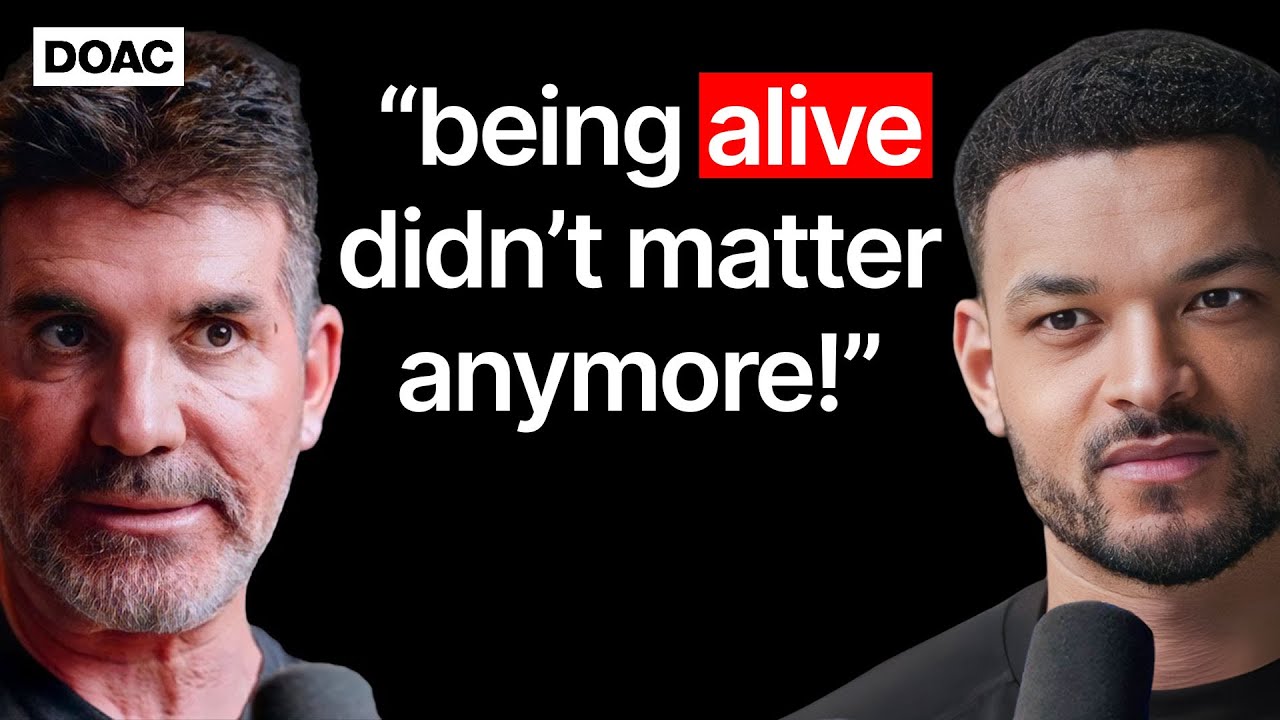
Simon Cowell Misses One Direction Tour Rights in Trademark Loss
The Diary Of A CEO
Simon Cowell says granting equal trademark ownership to One Direction's members permanently blocks future reunion tours without full unanimous consent.
## Background
This video was published on YouTube by The Diary Of A CEO on June 10, 2024. According to the page description, record producer, talent scout, and music mogul Simon Cowell sits down to discuss his life and career, including his role as a judge on iconic television shows like 'The X Factor', 'Britain's Got Talent', and 'American Idol'.
## TL;DR
Simon Cowell reflects on his multi-decade career, tracing his path from an EMI post room worker to an influential entertainment executive. He opens up about his early financial struggles, key career breakthroughs with acts like Sinitta, Robson & Jerome, and Westlife, and his approach to television and the music industry. Beyond his professional achievements, Cowell speaks candidly about personal loss, his battle with workaholism, a near-fatal e-bike accident, and how fatherhood and therapy fundamentally reframed his life priorities. He also shares insights on industry trends, artificial intelligence, and his regrets regarding One Direction's trademark ownership.
## Atmosphere & style
The conversation carries a reflective, vulnerable, and surprisingly intimate tone as Cowell moves past his famous sharp-tongued TV persona to share deep personal reflections. Hosted by Steven Bartlett, the dialogue shifts smoothly between lighthearted anecdotes about industry missteps and poignant discussions regarding grief, fatherhood, and mortality. The emotional arc transitions from gritty ambition and high-stakes business gambles to a quiet, grounded wisdom centered on work-life balance and health.
## Key takeaways
- [03:32](https://www.youtube.com/watch?v=BvsbCdCG8gE&t=212s) Simon Cowell developed a strong work ethic early in life, guided by his parents' core values regarding manners, respect, and avoiding corporate complacency.
- [16:24](https://www.youtube.com/watch?v=BvsbCdCG8gE&t=984s) Starting in an EMI post room for £18 a week, Cowell learned the music business from the ground up rather than pursuing higher-paying traditional jobs.
- [36:44](https://www.youtube.com/watch?v=BvsbCdCG8gE&t=2204s) Early financial success led to reckless spending, causing Cowell to accumulate nearly £500,000 in debt and move back in with his parents at age 30 before negotiating his way back.
- [29:19](https://www.youtube.com/watch?v=BvsbCdCG8gE&t=1759s) Cowell intentionally maintains a non-technical consumer perspective when creating music, focusing purely on audience appeal and alternative promotion strategies.
- [43:43](https://www.youtube.com/watch?v=BvsbCdCG8gE&t=2623s) Meeting Pete Waterman was a pivotal moment in Cowell's career, teaching him the value of patience and dedication in the studio.
- [47:41](https://www.youtube.com/watch?v=BvsbCdCG8gE&t=2861s) By tying music releases to popular TV properties like the WWF, Power Rangers, and Robson & Jerome, Cowell achieved massive commercial chart success.
- [01:06:34](https://www.youtube.com/watch?v=BvsbCdCG8gE&t=3994s) The death of Cowell's father deeply affected him, creating a perspective where no amount of career success outweighed family time.
- [01:14:41](https://www.youtube.com/watch?v=BvsbCdCG8gE&t=4481s) Following his mother's passing, Cowell suffered severe burnout and depression, which was turned around by the news of his son Eric's upcoming birth.
- [01:22:39](https://www.youtube.com/watch?v=BvsbCdCG8gE&t=4959s) To safeguard his mental health and work-life balance, Cowell cut out personal smartphones, set strict evening work boundaries, and prioritized sleep.
- [01:31:34](https://www.youtube.com/watch?v=BvsbCdCG8gE&t=5494s) After breaking his back in a 2020 e-bike accident, Cowell rebuilt his physical health through continuous daily walking regimens.
- [01:36:43](https://www.youtube.com/watch?v=BvsbCdCG8gE&t=5803s) Attending therapy helped Cowell re-evaluate his top life priorities and reframe how he evaluates personal and professional success.
- [01:43:00](https://www.youtube.com/watch?v=BvsbCdCG8gE&t=6180s) Cowell measures true career success by feeling excited for Monday morning rather than monetary reward.
- [01:46:43](https://www.youtube.com/watch?v=BvsbCdCG8gE&t=6403s) Driven by a negative childhood encounter with a celebrity, Cowell maintains a strict rule to never turn down a fan's request.
- [01:59:58](https://www.youtube.com/watch?v=BvsbCdCG8gE&t=7198s) Cowell believes live human performances and genuine physical experiences will always remain superior to AI-generated artists.
- [02:06:52](https://www.youtube.com/watch?v=BvsbCdCG8gE&t=7612s) Cowell's biggest professional regret is not retaining the trademark ownership of the name 'One Direction', which prevents potential reunion tours without unanimous group approval.
## Detailed walkthrough
### [00:00](https://www.youtube.com/watch?v=BvsbCdCG8gE&t=0s) Intro: Success, Regrets, and Struggles
The episode opens with a dramatic teaser featuring Simon Cowell reflecting on the darkest moments of his life and career. He candidly admits that he faced periods so devastating he questioned what he had left to live for, momentarily pausing as emotion overtakes him. The montage highlights his monumental impact on the global entertainment landscape alongside his earliest stumbles—from trying to launch a music publishing company in a car park to founding a record label at age 24.
Cowell recounts signing Sinitta, admitting he had no idea how records were made and couldn't read music, leading to repeated flops and owing £500,000 to the bank even after scoring a hit. He reflects on his intense workaholic tendencies, working until 7:00 AM, and his ongoing battle with depression. The preview concludes with him mentioning his sole regret regarding One Direction before host Steven Bartlett interrupts to launch the "Diary of a CEO Subscriber Raffle."
- **Financial Low Point:** Owning £500,000 to the bank despite scoring his first smash hit.
- **Work Habits:** Working until 7:00 AM during periods of extreme workaholism.
- **Regrets:** Holding specific unresolved regrets concerning the members of One Direction.
---
[02:16](https://www.youtube.com/watch?v=BvsbCdCG8gE&t=136s) Early Context and Childhood Drive
Steven asks Simon about the "oven" in which he was cooked—the early environment and upbringing that shaped the man he became. Simon explains that despite having a happy childhood, he was perpetually bored at school. He found the traditional academic environment miserable and felt dread whenever adults told him that school days were "the best days of your life." Driven by a desire to have fun and make his own money, he began working at a very early age.
When Simon was around seven or eight years old, his parents established a firm boundary: they would cover the cost of family holidays, but Simon and his siblings had to earn their own spending money. Simon embraced this by going door-to-door in his neighborhood to offer services like washing cars or mowing lawns.
- **First Earnings:** Earning £10 for washing a car felt like winning "bingo" and gave him a thrill for financial independence.
- **Early Mindset:** Motivated primarily by avoiding boredom and building his own income.
---
[03:17](https://www.youtube.com/watch?v=BvsbCdCG8gE&t=197s) His Parents: Julie, Eric, and "Manners Maketh the Man"
Simon speaks warmly about the profound influence of his parents, Julie and Eric Cowell. Losing them—particularly his mother—was the most devastating experience of his life. His mother acted as the primary disciplinarian in the household, instilling traditional values that shaped his adult perspective.
He fondly recalls a specific memory from when he was around three or four years old, sitting in the car with his mother. She turned to him and recited the old-fashioned adage, "Manners maketh the man." After explaining what it meant, the value of old-school respect stayed with him permanently. Both parents were exceptionally respectful to everyone they encountered, creating an environment where Simon always felt supported and knew he could seek their honest advice.
- **Mother's Core Lesson:** "Manners maketh the man" as an anchor for politeness and respect.
- **Son's Legacy:** Simon passed this exact phrase down to his son Eric, who successfully recited it back to him around age four.
---
[04:32](https://www.youtube.com/watch?v=BvsbCdCG8gE&t=272s) Where His Work Ethic Comes From
When asked where his renowned, almost "insane" work ethic originates, Simon attributes it to watching his father's career trajectory. His father worked faithfully for a large corporate conglomerate for most of his life. Before retiring, his father offered him a critical piece of advice: "Don't work for a large company because when you're 65, they're going to retire you and you'll never hear from them again."
Watching his loyal father retire with no money and be forgotten by his corporate employer broke Simon's heart. It instilled a deep-seated determination to work for himself and control his own destiny. Additionally, Simon feared working under a strict boss because of his poor academic track record and negative experiences with strict teachers. When Simon admitted he failed his exams and wouldn't go to university, his father gave him realistic counsel: pursuing a career in entertainment would require immense patience and could take 20 to 30 years to yield true success.
- **Father's Warning:** Avoid corporate employment where loyalty is unrewarded at retirement.
- **Patience Timeline:** His father warned him that building a career in entertainment could take 20 to 30 years of hard work.
---
[07:20](https://www.youtube.com/watch?v=BvsbCdCG8gE&t=440s) The Importance of Respect and Teamwork
Simon recalls a peculiar piece of advice his father gave him when he was 12 years old: "Everyone in life has a sign on their head that says, 'Make me feel important.'" Though confused by the statement at the time, Simon eventually understood its deeper meaning regarding leadership and respect. Achieving anything substantial requires a unified team effort, meaning every contributor deserves recognition.
This lesson shaped how Simon enters any room or production set. He consciously observes everyone present—from the person opening the door or serving coffee to the operators behind the cameras. Steven notes that upon entering the studio, Simon personally greeted and engaged all 10 crew members, contrasting it with other high-profile guests who ignore staff. Simon expresses disgust at hypocrisy in the industry, recalling how demeaning it felt early in his career when executives looked over his shoulder for "someone more important" while talking to him.
- **Key Philosophy:** Treat every single person in a room as an essential part of the team.
- **Pet Peeve:** Hypocrisy and industry figures who treat off-camera staff with disrespect.
---
[11:02](https://www.youtube.com/watch?v=BvsbCdCG8gE&t=662s) Making the Decision to Pursue Entertainment
Reflecting on his school days, Simon admits he did not excel at anything academically. Despite his lack of focus in the classroom—which included mischievous pranks like holding up a local bus with a spud gun—his passion was entirely consumed by music. He spent all his earned spending money on records, treasuring the experience of going to his bedroom to listen through entire albums track by track.
After failing his exams twice, his father suggested practical alternatives, including applying to work at Tesco. Simon attended a Tesco interview wearing jeans, which prompted the interviewer to scold him before he even sat down. Unbothered, Simon stood up, told the interviewer he was glad he wouldn't be working for him, mocked the appearance of his office, and walked out. Other potential paths—such as civil service law clerk applications or a two-year stint in the building trade—were equally unappealing.
- **School Pranks:** Once got the police called on him for holding up a bus with a spud gun.
- **Tesco Interview:** Walked out of a management interview after being reprimanded for wearing jeans.
- **Music Passion:** Spent all his earnings as a teenager buying vinyl records and singles.
---
[16:24](https://www.youtube.com/watch?v=BvsbCdCG8gE&t=984s) Working in the Post Room at a Record Label
Simon's first breakthrough came when he landed a two-month temporary job as a runner at Elstree Studios. Although the work was demanding, he loved the environment and began plotting a career path toward directing. When the mean executive producer refused to keep him on, the production assistants liked Simon so much that they secretly paid his salary out of their own pockets—forcing Simon to hide under their desks whenever the executive walked through the building.
Eventually, Simon faced a critical "sliding doors" choice: take a runner job on Stanley Kubrick's *The Shining* (having seen the Overlook Hotel set being built on the studio lot) or take a job in the basement post room at EMI Music Publishing, which his mother had applied for on his behalf. After seeing a line of hopeful, un-contracted freelancers waiting outside the film studio, Simon opted for the stability of EMI. Earning £18 a week in a dark, garage-like basement alongside older coworkers, Simon constantly popped into executives' offices demanding a better job.
- **Film Set Experience:** Saw the original sets for *The Shining* built on the Elstree Studios lot.
- **Starting Salary:** Made £18 per week sorting mail in the basement post room at EMI Music Publishing.
- **Initiative:** Walked into higher-ups' offices daily to ask for promotion opportunities.
[018:54] Curiosity and Asking Questions in the Post Room
Simon Cowell recounts his humble beginnings in the mail room at EMI Music Publishing. Far from being a quiet, passive worker, Simon used his entry-level role as an opportunity to constantly ask questions. Whenever he delivered mail to executives, he politely nudged them to explain their work. Through these conversations, he developed a foundational understanding of music publishing, copyright administration, and how songwriters earned royalties.
```
Mail Room Curiosity
│
┌────────────────────────────────┴────────────────────────────────┐
▼ ▼
Learning the Business Seeing Big Royalties
Explores music publishing, copyright Notices checks arriving for artists
administration, and royalty flows. like Kate Bush ("bloody hell... big money").
```
It was during this time that he glimpsed royalty checks coming through the mail for major artists like Kate Bush, realizing for the first time the immense financial scale of the music industry. Though he was known as the "company pet" due to his polite and punctual demeanor, he eventually grew frustrated by his modest pay and lack of promotion after 18 months.
- **Key Insights & Details:**
- Used his mail delivery routes to politely question company executives about music publishing, writer catalogs, and copyright flows.
- Noticed giant royalty checks arriving for artists such as **Kate Bush**, realizing how lucrative the industry could be.
- Realized his brother was making significant money as an estate agent while he remained stuck in the post room.
---
[021:11] Leaving EMI for Estate Agency and Returning for Song Plugging
Frustrated by the lack of advancement, Simon briefly left EMI to work as an estate agent at a firm called Hillier Parker May, a job arranged through his father's property connections. He quickly came to detest the snobbish, mean environment and left after just a month. Seeing his unhappiness, his parents stepped in: his father contacted the head of EMI Music Publishing, expressing surprise that Simon hadn't received a promotion, which led to an interview for an open position.
Simon landed a role as a song plugger in the international/country music division. The position paid roughly £30 a week and involved pitching EMI's vast song catalog to record labels to secure cover versions. However, because the role had been promised to someone else internally, colleagues resented him and assumed he benefited from nepotism. Resisted and ignored by his peers for the first six months, Simon locked himself in a room and listened to thousands of obscure country tracks, eventually compiling a curated list that he successfully pitched to A&R executives across London.
- **Key Insights & Details:**
- Brief stint at real estate firm **Hillier Parker May** lasted only a month due to the toxic environment.
- Returned to EMI as a **song plugger** earning approximately **£30 per week**.
- Overcame workplace isolation by listening to thousands of country tracks over six months to build a highly targeted catalog.
- Successfully placed multiple cover versions with A&R contacts despite initial hostility from colleagues.
---
[024:42] Launching E&S Music in an Underground Car Park
Around the age of 19, Simon's boss at EMI—a veteran of 16 years—proposed that they leave to launch their own independent music company, E&S Music (named after Ellis and Simon). Despite having strong reservations and feeling too inexperienced to run a business, Simon was persuaded during a meeting with potential backers who owned a recording studio.
The venture started with approximately £40,000 in seed money, but the working conditions were far from glamorous. Their offices were located inside an NCP car park, inside a room that Simon suspected had previously been a public toilet. Realizing early on that the business was struggling and improperly set up, Simon left E&S Music after about 18 months.
- **Key Insights & Details:**
- **Company:** E&S Music (Ellis and Simon).
- **Seed Capital:** Approximately **£40,000**.
- **Location:** An office inside an NCP underground car park (formerly a public lavatory).
- **Outcome:** Simon departed after ~18 months due to poor operations and lack of direction.
---
[026:34] Partnering at Fanfare Records and Meeting Sinitta
After leaving E&S Music, Simon connected with a manager who represented the dance troupe Hot Gossip and operated out of an office on South Molton Street. Wanting to start a proper record label, Simon negotiated a position with him for £55 a week (after initially being offered £40). This marked the early foundation of Fanfare Records.
Shortly after, Simon met Sinitta at the Embassy Club in London. Using the line "I run my own record label" as an icebreaker, he discovered she was a singer and arranged to listen to her demo tapes. Impressed by her recording voice and personality, Simon envisioned breaking her as an artist through the UK gay club scene, which was then driving a popular new wave of high-energy dance tracks originating from French Canada.
- **Key Insights & Details:**
- **Salary:** Agreed on **£55 per week** to build a record label within a South Molton Street management office.
- **Label:** Fanfare Records.
- **First Major Artist:** Sinitta, whom he met at London's Embassy Club.
- **Marketing Strategy:** Target dance tracks directly to gay night clubs across the UK to build grass-roots momentum.
---
[029:19] Crafting "So Macho" and the Art of Remaining a Consumer
Determined to create a hit, Simon commissioned a track titled "So Macho" for Sinitta (backed with the track "Cruising"). However, mid-way through the project, his business partner announced he was closing the record label to pivot into book publishing. Unwilling to let the track die, Simon persuaded his partner to give him a single £5,000 payout in lieu of a salary so he could personally fund the music video, manufacturing, and distribution.
```
"So Macho" Breakout Strategy
│
┌───────────────────────────────┴───────────────────────────────┐
▼ ▼
Consumer Mindset Strategy The Back-Order Strategy
Refused to learn studio mechanics to Instructed warehouse to hold orders,
maintain the audience's perspective. releasing them all at once to spike top-40 charts.
```
Reflecting on this era, Simon explains his unique philosophy regarding record production: he purposefully avoids learning how music is made or how studios operate. By remaining entirely ignorant of technical production details, he preserves the objective mindset of an everyday music consumer. Instead of trying to be a producer, he focused entirely on being an A&R executive who recognizes hit songs and knows how to market them.
To get "So Macho" into the UK Top 40 after two initial failures, Simon devised a clever supply strategy: he asked the distributor to hold back-orders over several months rather than fulfilling them piecemeal. When all stored orders were finally processed in a single week, the sales surge propelled the song into the charts, landing Sinitta a performance spot on *Top of the Pops* and turning the record into a massive smash hit.
- **Key Insights & Details:**
- **Budget:** Secured a final **£5,000** budget from his departing partner to cover the video, manufacturing, and promotion.
- **Single:** "So Macho" / "Cruising" by Sinitta.
- **Philosophy:** Intentionally stays out of music production details to maintain the perspective of the end consumer/buyer.
- **Chart Strategy:** Delayed order fulfillment to stack back-orders into a single week, squeezing the track into the UK Top 40 and securing a *Top of the Pops* appearance.
---
[036:44] Going Broke and Facing the Bank
Despite the eventual success of Fanfare Records, financial disaster struck. Cowell and his colleagues had been encouraged to borrow heavily to buy shares in the parent company under the promise of soaring valuations. Enticed by apparent success, Simon took out personal loans, bought a house, purchased a Porsche, and ran up debt on a high-interest gold credit card.
When the business collapsed, Simon personally owed the bank nearly £500,000. At age 30, virtually penniless with only £5 in his pocket, he was forced to sell his assets and move back in with his parents. During a tense meeting with bank officials—who employed a "good cop, bad cop" interrogation strategy—Simon candidly told them that declaring him bankrupt would yield nothing, as he had no remaining assets, job, or income.
- **Key Insights & Details:**
- **Personal Debt:** Owed nearly **£500,000** to the bank following the company's collapse.
- **Personal Assets Lost:** House, Porsche, and luxury items.
- **Age & Situation:** Moved back into his parents' home at age **30** with roughly **£5** left to his name.
<ElicitationsGroup message="Explore the next chapters of Simon Cowell's interview:">
<Elicitation label="Read about Pete Waterman and the turnaround" query="Show me the next transcript walkthrough where Simon Cowell meets Pete Waterman and rebuilds his career."/>
<Elicitation label="Explore the story of Westlife and One Direction" query="Show me the walkthrough section covering how Simon Cowell discovered Westlife and One Direction."/>
</ElicitationsGroup>
[39:13](https://www.youtube.com/watch?v=BvsbCdCG8gE&t=2353s) Losing Everything, Moving Back Home, and Negotiating Debt
Simon Cowell describes the painful aftermath of his company going under: everything he owned was wiped out. He had to sell his house, sell his Porsche, and even after liquidating his assets, he still owed money on his mortgage, rendering him essentially bankrupt on paper. He was forced to move back in with his parents. Far from scolding him, his parents offered unconditional emotional support. Neither of them ever told him that he had failed; instead, they framed the entire ordeal as a valuable "life lesson" that he would eventually get over.
Faced with massive liabilities, Cowell took matters into his own hands by negotiating directly with his creditors. He painstakingly calculated the breakdown between the capital sum and interest over time, persuading them to cut the total owed amount in half on the promise that he would pay them back. He then went bank-hunting to pitch himself. By leaning heavily on the success of his first hit record—which had sold a million copies—and arguing that his financial downfall was caused by factors outside his control, he convinced a bank manager to lend him enough money to settle his remaining debts, narrowly avoiding formal bankruptcy.
* **Remaining Cash:** Cowell recalls a defining story of taking a taxi ride from London's West End back to his parents' house with only £5 in cash left to his name—literally all the money he had left in the world—and having to tip the driver a mere 10p because he couldn't afford a single penny more.
---
[41:24](https://www.youtube.com/watch?v=BvsbCdCG8gE&t=2484s) The George Michael Lawsuit and the BMG Lifeline
In a stroke of irony, Cowell's career turned around thanks to a connection made through a lawsuit. He hired lawyer Tony Russell, whom he had met when Russell represented George Michael in a lawsuit *against* Cowell. At the time, Cowell was producing and exporting bootleg "mega mixes"—hiring session singers to re-record hit tracks by artists like Wham! and Kylie Minogue (selling 10,000 to 20,000 copies globally). Impressed by Russell's legal prowess during the dispute, Cowell had told him, "I'd rather you represent me next time."
When Cowell approached Russell while broke, the lawyer told him that going bust was actually "the best thing that's ever happened" because it forced him to rethink his business model. Russell pitched the idea that Cowell shouldn't just be an employee or produce one-off hits, but should enter into a joint-venture label deal with a major record company. Despite Cowell admitting he couldn't afford Russell's legal fees, Russell deferred payment, saying, "I believe in you, Simon. I think one day you will end up repaying me."
* **The Joint Venture Pitch:** Russell set up meetings on the same day with Universal and BMG. While Universal rejected Cowell, BMG agreed to a deal with a steep caveat: Cowell had one year to hit a specific record-sales quota or the contract would be void. He accepted the challenge and successfully hit his target.
---
[43:43](https://www.youtube.com/watch?v=BvsbCdCG8gE&t=2623s) Meeting Pete Waterman and the Hit-Making Formula
Cowell considers the day he met Pete Waterman of the legendary production trio Stock Aitken Waterman (SAW) to be "easily the most important day" of his career. Realizing he was unlikely to find or sign top singer-songwriters, Cowell knew he had to partner with the best pop writers in the world to craft hits for vocal artists. After hearing a flawlessly produced track on the radio, he tracked down Waterman at his studio, which was at the time an obscure, run-down venue filled with wooden crates.
During their initial meeting, Cowell played Sinitta's "So Macho." Waterman instantly declared it a hit, but when Cowell asked him to produce her follow-up single, Waterman refused, claiming he was "too busy." Waterman gave him a cryptic wink and said, "You'll see." Within six months, Stock Aitken Waterman exploded onto the global music scene with an unbroken stream of chart-topping hits.
| Executive / Producer | Core Philosophy / Approach | Key Outcome |
|:--- |:--- |:--- |
| **Pete Waterman** | Act like "the best DJ in the world"; match a great artist with an undeniably simple, high-energy pop record. | Dominant hitmaker; produced Sinitta's breakout hit "Toy Boy." |
| **Simon Cowell** | Trust instinct over industry orthodoxy; leverage mass media and non-traditional fanbases. | Built a multi-decade career based on television-driven record sales. |
Unwilling to take no for an answer, Cowell turned up at Waterman’s studio every single day for over a year, making tea and observing the production process without pay. Eventually, Waterman called Cowell into his office and played him the demo for "Toy Boy." The track became a massive international hit for Sinitta, cementing a long-term partnership and teaching Cowell that the secret to pop music lies in simplicity: taking a compelling artist and matching them with a phenomenal pop song.
---
[47:41](https://www.youtube.com/watch?v=BvsbCdCG8gE&t=2861s) Disrupting the Music Industry via Television and Non-Traditional Brands
While at BMG, Cowell began pushing the company toward an unconventional strategy: using television and mass-media pop culture as the primary engine for record distribution. Unconcerned with snobbery over what made a record "cool," Cowell focused entirely on commercial potential. His first major breakthrough in this space came after discovering that the American World Wrestling Federation (WWF) had sold out 80,000 seats at Wembley Stadium in just 27 minutes.
Cowell realized WWF fans were wildly fanatical and would happily buy an album. He pitched the idea to the WWF, offered an advance, and enlisted Pete Waterman to write and produce music for the wrestlers. They flew stars like Hulk Hogan and The Undertaker over to the UK to record in character. The project faced intense internal backlash at BMG; Cowell's boss literally fell to her knees to beg him not to release it, warning it would be a catastrophic embarrassment.
> "I took the view it didn't matter to me what the record was as long as it sold a lot of records."
Despite opposition from traditional A&R executives who claimed he was making a mockery of the label, Cowell trusted his ability to embody the end consumer—in this case, young kids and die-hard wrestling fans. The WWF music project proved to be a massive commercial success, selling millions of copies globally and topping the charts in 28 countries.
* **Other Pop-Culture Releases:** Following the success of the wrestling album, Cowell applied the exact same formula to other TV characters and children's properties, releasing hit records for the *Mighty Morphin Power Rangers* and the puppet duo *Zig and Zag*.
---
[53:17](https://www.youtube.com/watch?v=BvsbCdCG8gE&t=3197s) The Robson & Jerome Phenomenon and Trusting Your Gut
Cowell kept his finger on the pulse of public demand by routinely checking in with BMG's telesales team—the staff taking direct orders from record shops. One morning, the telesales team reported receiving an unprecedented flood of calls for a song featured on the ITV drama series *Soldier Soldier*, performed by actors Robson Green and Jerome Flynn.
Cowell aggressively pursued the duo to sign a record contract. Jerome Flynn was open to the idea, but Robson Green was deeply hesitant. Cowell relentlessly pursued Green, reaching out to his parents, friends, and associates to the point of receiving a formal legal notice demanding he stop harassing the actor. Undeterred, Cowell arranged a face-to-face meeting at a wine bar—confessing he didn't even know what Green looked like because he had never watched the show—and offered them an audacious deal: £50,000 each upfront just to record the vocals, which they could keep even if they chose not to release the track.
```
[Identify TV Buzz via Telesales]
│
▼
[Pursue reluctant actors (Robson & Jerome)]
│
▼
[Offer £50k Risk-Free Recording Deal]
│
▼
[Record "Unchained Melody" Cover]
│
▼
[#1 Hit for 7+ Weeks; Outsell Oasis]
```
The day after recording, Green confronted Cowell, jokingly calling him "a complete c-word" after hearing the final playback of "Unchained Melody." Green realized Cowell had tricked them with a track so undeniably good that they had no choice but to release it. The duo went on to become the UK's biggest-selling music act for two consecutive years, outselling major bands like Oasis.
* **Chart Performance:** Robson & Jerome's cover of "Unchained Melody" spent seven to eight weeks at number one on the UK Singles Chart, establishing television as the ultimate launchpad for record sales and proving to Cowell that he should always trust his gut over industry orthodoxy.
---
[57:37](https://www.youtube.com/watch?v=BvsbCdCG8gE&t=3457s) Advice for Emerging Artists: Making Noise Among the Noise
Addressing the frustrations of modern musicians who struggle to gain traction online despite their talent, Cowell stresses the importance of stepping away from the crowd. He warns against simply following industry trends or acting like "sheep," emphasizing that it is far better to be viewed as slightly unusual and commercially successful than safe and cool.
To cut through today's saturated market, Cowell advises artists to reimagine existing material rather than making direct copies. He recommends finding hidden gems—songs written decades ago that still sound fresh—and completely rearranging them to create something original that grabs the listener's attention.
* **Key Takeaway:** Success in a noisy market requires deliberate creative research, bold differentiation, and a willingness to operate outside conventional industry norms.
[59:28](https://www.youtube.com/watch?v=BvsbCdCG8gE&t=3568s) Pushing Past Skepticism and Conventional Paths
Stephen Bartlett reflects on the psychological toll of swimming against the stream in the entertainment industry. When someone breaks through the noise, it invariably invites skepticism, negativity, and demands to "get back in line." For people who were not naturally rebellious kids with an aversion to authority, straying from the well-trodden blueprint and pushing through the metaphorical "thorns and bushes" is terrifying. Simon Cowell agrees, offering direct advice to anyone taking a non-traditional route: do not be afraid of what others say about you, and never let critics define what is or isn't "cool."
When asked if the constant criticism from high-profile figures in the music industry ever bothered him or if he had to build a mental muscle to withstand it, Simon explains that he never cared about being mocked for being different—in fact, he would vastly prefer being criticized over being safe and bored. The only frustration that ever truly got to him was early in his career when Radio 1 producers refused to play his records. Realizing he could never change a "stuffy old producer's mind" directly, he realized he had to bypass their gatekeeping by manufacturing a chart hit through alternative channels. Once a song hit the Top 40 countdown, Radio 1 was forced to play it. Simon admits that part of the ongoing thrill in his career is the genuine risk that a project might fail. He describes his dramatic emotional swings while filming shows like *Britain's Got Talent* or *America's Got Talent*: on any given day, he will throw his hands up and think, *"It's over... I hate the acts, I'm bored,"* only to come back the very next morning declaring, *"My God, I love this show so much!"*
---
- Simon emphasizes that being mocked for being different is infinitely better than taking the safe path: "I would rather be mocked for being different than being safe. That would just bore me."
- His core strategy against industry gatekeepers was forcing their hand via the official charts, using alternative promotion methods to make songs undeniable.
- Simon acknowledges his inability to hide his emotions on set, fluctuating rapidly between complete despair and absolute passion for his television franchises.
[01:03:34](https://www.youtube.com/watch?v=BvsbCdCG8gE&t=3814s) The Chaotic Signing of Westlife and a World Record
Stephen brings out a single cover from Westlife, pointing out that Simon was around 39 years old when the Irish boy band launched their massive streak and secured a number-one album. Simon looks at the cover with deep nostalgia, describing this period as one of the most intensely bittersweet moments of his entire life, as it coincided directly with the sudden passing of his father. Simon shares a famous story about how Westlife—originally managed by Louis Walsh—was signed. Louis constantly called Simon, insisting he had "the best band in the world." Simon flew to Dublin to watch a private showcase, but he hated their look and turned them down cold, telling Louis, *"This is never going to work... I just think the answer is no."*
Three months later, Louis begged Simon to fly back to Dublin, claiming he had taken his advice and revamped the group. Simon attended the second showcase and within 30 seconds knew it was a smash hit, telling Louis, *"I'm in. Done. You'll hear from my lawyer."* A month after signing them, Simon discovered Louis had pulled a hilarious trick: to get one of the original members he had fired back into the group, Louis simply dyed all the members' hair blonde so Simon wouldn't recognize him. That member was Shane Filan. Despite the deception, the group went on to make pop history.
---
- Westlife achieved a historic record by having their first **seven consecutive singles** go straight to number one on the UK charts—a record Simon believes remains unbroken.
- Simon's father, Eric Cowell Sr., had a remarkable natural ear for hits; when Simon played him Westlife's early material, his father immediately predicted: *"I think they are going to be huge for you, sign them."*
- Shane Filan was sneaked back into the lineup after Louis Walsh dyed the entire band's hair blonde between auditions to trick Simon.
[01:06:34](https://www.youtube.com/watch?v=BvsbCdCG8gE&t=3994s) The Devastating Loss of His Father
The high point of Westlife's chart success was instantly shattered by tragedy. Simon had traveled to a major music conference in Germany to deliver a presentation on Westlife and celebrate their soaring record sales. While there, he phoned home and immediately sensed something was wrong. His family tried to keep the news from him until he returned, but his mother ultimately broke down and told him the truth: his father had died suddenly from a heart attack. Simon was completely crushed, having lived up to that point with the subconscious belief that his parents were immortal.
The flight back from America/Germany was the longest and most painful journey of his life. In the immediate aftermath of losing a parent, Simon explains, even thinking about them feels too painful to bear. Over time, however, he found comfort in his faith and in holding internal conversations with his parents whenever he faces a tough decision, knowing instinctively what advice they would give. He candidly admits that he would have traded all of his career success just to have kept his father around longer. Looking back, he finds solace in knowing his father got to see him succeed in business, even though he passed away just a few years before Simon became a household TV personality on *Pop Idol* and *American Idol*.
---
- Simon's father died from a heart attack right as Westlife's debut material was topping the charts.
- Describing the illusion of parental immortality: "I genuinely at that point in my life, I just believed my parents were going to live forever."
- Reflecting on the trade-off between wealth and family: "I would have swapped everything I'd succeeded... to have kept him around."
- Simon notes his father only raised his voice at him once in his entire life, and that single instance was so impactful that Simon "didn't want to go there again."
[01:11:02](https://www.youtube.com/watch?v=BvsbCdCG8gE&t=4262s) Navigating Grief, Dementia, and Spiritual Signs
Stephen and Simon discuss how the death of a parent completely upends one's priorities and sense of purpose. Simon addresses the common cliché that "time heals all wounds," noting that while it feels untrue at first, healing does happen if you hold onto the belief that your parents' presence remains with you. He opens up about his mother, Julie, who developed dementia later in life before passing away. Before she died, she was desperate for Simon to have a child, and she bought a specific brown blanket for his future baby.
Simon reveals an extraordinary emotional beat involving his son, Eric. Years after Julie's passing, when Eric was around two or three years old, he looked up at the night sky completely out of nowhere and said, *"I'm thinking about Grandpa Eric and Julie."* Hearing his toddler speak the names of the grandparents he never truly knew deeply affirmed Simon's belief that his parents are still spiritually present. Eric remains fiercely attached to that same brown blanket to this day, taking it everywhere. For Simon, seeing his love for his parents reflected in his love for Eric brought his entire life full circle.
---
- Simon recounts how losing his parents rendered traditional metrics of success—chart positions, record sales, industry showcases—completely meaningless.
- His mother, Julie, bought a special brown blanket for Simon's unborn child before she passed; his son Eric still treasures it as his most prized possession.
- Hearing young Eric spontaneously mention "Grandpa Eric and Julie" while looking at the stars solidified Simon's spiritual belief that his parents are still watching over them.
[01:14:41](https://www.youtube.com/watch?v=BvsbCdCG8gE&t=4481s) Pre-Eric Simon: The Workaholic Vampire and Darkest Days
Stephen asks Simon to reflect on the man he was before his son Eric was born in 2014, noting that Simon's team previously described him as a manic workaholic who stayed up until 8:00 AM, demanded absolute perfection, and made late-night phone calls seven days a week. Simon confirms this diagnosis with raw vulnerability, explaining that after his mother died, he entered a terrifying downward spiral. Feeling as though he had lost everything that truly mattered, he treated his material wealth and success as meaningless and attempted to numb his grief through extreme, obsessive work.
He describes becoming a literal "vampire"—working straight through until 7:00 or 8:00 in the morning, sleeping until 2:00 or 3:00 in the afternoon, putting on a significant amount of weight, and living off junk food. Though he was achieving astronomical professional success on global television, he was dying inside. He felt like a fake on screen, forced to play the entertainer while suffering from intense internal misery. It got so bad that he felt completely indifferent to his own mortality, admitting that if he had been hit by a bus, he wouldn't have cared. He reached a dark place where he questioned what he had left to live for.
---
- Simon describes his pre-fatherhood lifestyle as becoming a "vampire," routinely working until 8:00 AM and sleeping through the day to fill the void left by grief.
- The psychological toll of filming major TV shows during deep grief: "God, I feel like a clown here... because I'm dying inside."
- Simon admits to suffering from severe burnout, poor physical health, rapid weight gain, and passive suicidal ideation where he felt being alive no longer mattered.
[01:17:18](https://www.youtube.com/watch?v=BvsbCdCG8gE&t=4638s) The Phone Call That Saved His Life
The turning point in Simon's life came when his partner, Lauren Silverman, called him with the classic prelude: *"Are you sitting down?"* When she revealed that she was pregnant, everything shifted instantaneously. The news restored his happiness, snapped him out of his self-destructive cycle, and gave him a renewed sense of purpose. He fondly recalls sharing simple childhood milestones with Eric, such as watching *The Jungle Book* together for the first time and seeing the pure magic through his son's eyes.
When Stephen suggests that Eric literally saved his life, Simon agrees without hesitation: *"Without question. Without question."* Becoming a father forced him to dismantle his toxic work patterns, fix his health, and re-evaluate who he allowed into his inner circle, ultimately rescuing him from a trajectory that was slowly destroying him.
[01:19:31](https://www.youtube.com/watch?v=BvsbCdCG8gE&t=4771s) Depression, Thin Skin, and the Paramount Importance of Loyalty
Simon Cowell opens up candidly about his history with mental health, admitting that he has suffered from severe depression in the past and continues to navigate periods of low mood. While reflecting on dark times when he felt indifferent to whether something terrible happened to him, he emphasizes that everyone faces suffering; the critical key lies in learning how to cope and opening up about it publicly. Cowell admits that beneath his tough exterior, he is actually very thin-skinned—especially when it comes to personal disloyalty.
Host Steven Bartlett notes how frequently the word "loyalty" appeared throughout his research on Cowell, even citing music manager Louis Walsh once saying, "The thing Simon loves about me is I'm loyal." Cowell explains that because nothing was handed to him on a silver platter in his career, he relies heavily on the people around him. While 99% of those he has worked with have been fantastic, he feels deeply hurt when former friends rewrite history out of bitterness over their own fading success. Today, however, Cowell maintains a sense of peace, viewing his life through a lens of fate—realizing that even minor past misfortunes were part of a precise domino effect that ultimately led to the birth of his son, Eric.
- **Mental Health Stance:** Cowell advocates for open discussion surrounding men's mental health, acknowledging his own vulnerability to depression.
- **Root of Sensitivity:** Disloyalty cuts him deeply because his accomplishments were built collaboratively over decades alongside close allies.
- **Perspective on Past Betrayals:** He frames past career conflicts as necessary steps of destiny, observing that slight shifts in history would have altered his present happiness with his son.
[01:22:39](https://www.youtube.com/watch?v=BvsbCdCG8gE&t=4959s) Disconnecting to Live: Life Without a Smartphone
Turning to his post-paternity routine, Cowell clarifies several myths about his work-life boundaries. While rumors suggested he takes every Friday off, he refrains from strict scheduling rules, but he holds a firm boundary against checking emails after 5:30 or 6:00 p.m. Most strikingly, Cowell reveals that he does not own or carry a traditional mobile phone. His only cellular device sits permanently inside his car, and he quips that he rarely knows how to operate it, often relying on other people's phones if an urgent situation arises.
Cowell compares smartphones to home kitchen appliances, joking, "It's almost like for me it's like having a toaster with you all the time... toast is nice and occasionally a telephone call's nice, but not all the bloody time." His decision to ditch his device came after taking a three-to-four-month hiatus and realizing how much happier he felt without it. By removing the digital clutter, he shields himself from trivial gossip while remaining entirely reachable through his PA, partner, and close inner circle for any genuine emergencies.
- **Evening Boundaries:** Refuses to engage with work emails past early evening to prevent his mind from racing before sleep.
- **Car Phone & Landlines:** Prefers talking on landline phones due to the superior audio quality and intentionality of the conversation.
- **Filter for Priorities:** Notes that operating without a personal smartphone ensures he only hears about critical matters rather than superficial industry noise.
[01:26:19](https://www.youtube.com/watch?v=BvsbCdCG8gE&t=5179s) Advice to His Younger Self and Reevaluating Hard Work
Reflecting on what advice he would offer his 31-year-old self, Cowell emphasizes the need to differentiate between genuine passion and pure ego. Younger professionals often waste years attempting to force failed ideas to work simply because they refuse to abandon them. He underscores that true creativity requires a well-rested brain, revealing that even now he meticulously watches every television episode three or four times—the visual and auditory equivalent of reviewing two feature-length movies each week.
When asked if his historic 18-hour workdays dragged colleagues along against their will, Cowell laughingly admits, "Yes, I was... I did drag a few people along with me, and I apologize." However, he maintains that immense effort is non-negotiable for non-inherited success. While a 21-year-old quitting at 5:30 p.m. won't earn his professional trust, Cowell advises established achievers to protect their health once they find their stride. Sleep, he argues, is the ultimate physical medicine.
- **Creative Execution:** Reviews television cuts frame-by-frame, assessing sound cues and audience reactions with movie-level intensity.
- **The Weekend Dynamic:** Recommends a three-day weekend over a standard two-day break, arguing that focused energy on workdays yields superior output.
- **The Sleep Requirement:** Dismisses the hustle-culture mentality of sleeping four hours a night, stating he ideally needs up to 10 hours of peaceful rest to function at his peak.
[01:31:34](https://www.youtube.com/watch?v=BvsbCdCG8gE&t=5494s) Breaking His Back: The 2020 E-Bike Accident and Recovery
In 2020, amidst the global COVID-19 pandemic, Cowell suffered a catastrophic accident while riding an electric bicycle, breaking his back in three places. The injury required an intense six-hour surgery to insert a stabilizing metal rod along his spine. Cowell reveals the terrifying reality prior to entering the operating room: because of the severity of the trauma, he was forced to sign a consent form granting doctors permission to turn off life-support machines if the surgery went wrong.
> "I had to sign a form... 'If this doesn't work out, will you allow us to switch the machine off?' I'm like, well, that's encouraging just before I'm about to go under."
Despite the overwhelming pain when his spinal pain receptors reactivated post-surgery, Cowell found a silver lining in the ordeal. Delirious during his first three days of recovery—at one point trying to sell a TV show and calling his lawyer about his will while high on painkillers—he pushed through rehabilitation with the help of a strict nurse. Forcing himself out into the garden, he gradually scaled his daily movement from 20 painful steps up to 20,000 to 30,000 steps per day, ultimately realizing the accident was a necessary wake-up call regarding his underlying physical unfitness.
- **Medical Procedure:** Underwent six hours of spinal surgery to insert a metal stabilization rod.
- **Initial Recovery Delirium:** Attempted to conduct business deals and alter his legal will while heavily medicated immediately post-operation.
- **Aggressive Rehabilitation:** Weaned himself off prescription painkillers a month ahead of schedule, committing to intense daily walking regimens that reshaped his physical health.
[01:36:43](https://www.youtube.com/watch?v=BvsbCdCG8gE&t=5803s) Seeking Therapy and Mental Fitness
The forced isolation of both his debilitating back injury and the extended pandemic lockdowns provided Cowell with unprecedented time for quiet reflection. Realizing it would be foolish not to seek professional guidance after enduring such intense physical and psychological trauma, Cowell made the decision to attend therapy for the first time in his life. He equates taking care of one's mind through therapy to working out at the gym, noting that initial awkwardness quickly gives way to profound mental clarity and emotional relief.
[01:37:45](https://www.youtube.com/watch?v=BvsbCdCG8gE&t=5865s) Going to Therapy and Shifting Life Priorities
Simon Cowell opens up about his transformative experience with therapy, admitting that although he was initially hesitant, two friends in the entertainment industry persuaded him to give it a try. He realized that most people bottle up emotions and thoughts that they don't know how to express. Rather than viewing therapy as a sign of weakness, Simon emphasizes that seeking help is a genuine strength and a necessary release valve, comparing it to how society has gradually learned about proper nutrition and mental wellness. He speaks warmly about his therapist, Justin, jokingly thanking him and calling him "the best," while noting that he is eager to return to his sessions after a short hiatus caused by his busy schedule.
Through his work with Justin, Simon learned that he frequently overthinks things and needed to re-evaluate what truly mattered in his life. His therapist helped him completely shuffle his top ten list of priorities—taking things that were once ranked at number eight and moving them up to number three, while simplifying his entire thought process. Simon reflects on how men, in particular, often struggle to express emotion or show gratitude to those who help them before it is too late, and he credits therapy with giving him the clarity to speak openly without any embarrassment.
* **Couples Therapy:** Host Steven Bartlett shares that he attends couples therapy weekly with his partner, to which Simon humorously replies that broadcast hours of his own couples therapy sessions "would make the best reality show on the planet."
* **Mental Health & Social Media:** Simon notes that humans are not hardwired to process modern pressures and social media negativity so quickly, making mental maintenance as vital as physical health.
---
[01:43:00](https://www.youtube.com/watch?v=BvsbCdCG8gE&t=6180s) Foundational Career Advice for His Son, Eric
When asked what core career advice he would give to his son, Eric, if he decided to venture into the professional world, Simon stresses the importance of patience, mastery, and loving what you do. He reflects on his own journey, revealing that he has experienced every financial state—being at his happiest when he was completely broke, at his unhappiest during certain wealthy periods, and also deeply happy during times of success. To Simon, the ultimate indicator of a fulfilling career is having that "feeling of excitement" on a Sunday night because you are genuinely looking forward to Monday morning.
Simon cautions against measuring success by comparing oneself to others, as there will always be people with more or less. Instead, true happiness stems from personal achievement, strong belief, and a relentless work ethic. He advises taking full personal accountability rather than blaming others when plans fall short, and reminds Eric that finding a genuine passion is far more valuable than pursuing money alone. Revisitng his early career, Simon recalls how much more he enjoyed working in a label post room for lower pay compared to working at an estate agency for higher pay, simply because he hated the culture and the people at that specific agency.
> "I've been at my happiest when I'm broke. I've been at my unhappiest at times when I've been wealthy... The most important thing is on a Sunday night you want that feeling of excitement that Monday is coming."
---
[01:46:43](https://www.youtube.com/watch?v=BvsbCdCG8gE&t=6403s) Legacy, Treating People Well, and Modern Pressures
Turning to the topic of legacy, Simon reveals that it has been front of mind for him recently. Whenever he creates a show or edits a clip of a contestant, he treats that moment as their legacy, striving to make every second "beautiful and cinematic" because it lives online forever. On a personal level, Simon hopes his legacy will be defined by two things: achieving everything without a head start, and treating people with kindness and respect along the way.
He shares a formative childhood memory from when he was about six years old at the Ideal Home Exhibition. After recognizing a celebrity he was starstruck by, Simon walked over and asked for an autograph, only to be flatly rejected with a "No." That moment left him feeling crushed, and as a result, Simon made a lifelong rule never to say no to a fan requesting a photo or autograph—even if it interrupts a family dinner, which sometimes drives his partner Lauren and son Eric crazy. Addressing broader societal changes, Simon expresses deep concern over the rise of online bullying and the toxic mindset that young people need material items or instant success by age 21 to be happy.
* **Finding a Mentor:** Simon recalls a quote about keeping your eyes open wide enough to find the right mentor (referencing his former partner Pete Waterman), emphasizing that true intelligence is recognizing people smarter than you and proving you are willing to put in the hard work.
* **Family as Priority:** Host Steven Bartlett highlights how Simon's life shifted from his pre-Eric days to a post-Eric lifestyle built around clear boundaries, where family is unequivocally the number one priority.
---
[01:52:06](https://www.youtube.com/watch?v=BvsbCdCG8gE&t=6726s) One Direction and Searching for the Next Boy Band
Addressing the intense pressures of global stardom, Simon discusses the reality of managing mega-groups like One Direction. Host Steven Bartlett references a past conversation on the podcast with Liam Payne, who spoke about struggling with the sudden, overwhelming hysteria that no young person can fully prepare for. Simon maintains that while fame brings grueling schedules and a complete loss of privacy, he always gave the band candid advice: don't complain about paparazzi, long hours, or lack of privacy, because it comes directly with the territory of choosing an extraordinary career over a quiet job like accounting.
Simon reiterates his fondness for groups, noting that being in a band is far more fun than being a solo artist and serves as a launching pad for future solo careers. Driven by the belief that no group has matched One Direction's impact since their rise, Simon announces his new nationwide hunt to form a brand-new UK boy band. Looking at the current state of pop music, he observes a massive imbalance where solo artists vastly outnumber bands compared to historical eras like Motown.
* **Fame Advice:** Simon told the members of One Direction that if long hours or public attention ever felt unbearable, they should do something else, but maintained that the incredible trade-off is ultimate fulfillment and fun.
* **Industry Shift:** Simon highlights that during the Motown era, the music industry maintained an even balance between bands and solo artists, whereas modern pop is heavily dominated by solo acts.
[01:56:19](https://www.youtube.com/watch?v=BvsbCdCG8gE&t=6979s) Searching for a New Boy Band
Simon Cowell explains his sudden decision to launch a new nationwide search for a boy band: if he did not do it this year, he knew he would deeply regret it. This time around, he is documenting the entire process from start to finish so viewers can see every detail of how it works logistically—from the initial decision to how members are chosen. Unlike past television projects, there is no safety net or guaranteed record deal pre-arranged with a major label. He has to put his faith entirely in whether the group is talented enough to earn a deal on their own merits.
When asked about the "secret sauce" for finding a hit group, Cowell emphasizes that it comes down entirely to personality and charisma. Recalling the early days of One Direction, he reminisces about watching them walk up a beach in Spain right after forming the band. Although no one in the public knew who they were yet, people were turning their heads to stare at these five boys as if they were already global superstars—they simply had a unique "glow." Cowell acknowledges that even with all his experience, putting together a group always carries risk, and no amount of money can force a concept to succeed if the raw spark is missing.
- Cowell is documenting the entire creation process to show the behind-the-scenes logistics of forming a group.
- There is no safety blanket or pre-guaranteed record contract for this new project.
- He emphasizes that personality and natural charisma are the most critical ingredients for a boy band.
---
[01:58:15](https://www.youtube.com/watch?v=BvsbCdCG8gE&t=7095s) Trusting Gut Instinct Over Rehearsed Perfection
Discussing whether his talent-scouting ability has evolved, Cowell jokes that he could be "completely useless now," but admits he would still trust his own gut over anyone else's in the industry. He notes that building a group for teenagers requires predicting what a completely different generation will respond to without overthinking the process. A major flaw in many recent industry-manufactured bands is that they feel overly rehearsed, rigid, and micro-managed. Within seconds of seeing a group walk out, Cowell can usually spot if someone behind the scenes has dictated their styling, scripted their interviews, and stripped away their spontaneity.
Cowell recalls the foundational advice he gave to One Direction: manage your own style, influence your own music, don't try to dance if you can't, and never hire a stylist because their natural taste was already great. He warned them frankly about the inevitable trajectory of fame—noting that after a few years they would inevitably want to leave the band, despite their teenage promises to "be friends forever." His core advice was simply to enjoy the ride, as they would look back in ten years and realize what an incredible time they had.
- Cowell trusts pure gut instinct and intuition over data spreadsheets or algorithms when assessing acts.
- He strongly advises acts against using corporate stylists or rehearsed, scripted talk tracks.
- He warned One Direction early on that they would eventually want to split up, encouraging them to enjoy the journey while it lasted.
---
[02:00:52](https://www.youtube.com/watch?v=BvsbCdCG8gE&t=7252s) Harry Styles and the Changing Music Industry
Reflecting on Harry Styles' rise to mega-stardom, Cowell candidly admits he could not have predicted Harry would become one of the biggest music icons in the world when they first met. During his initial audition, Harry sang a Stevie Wonder song and chatted about working in a bakery with pies; Cowell simply saw an extraordinarily charismatic, funny teenager whom the audience immediately adored. After individual solo auditions didn't work out on *The X Factor*, the decision to combine the boys into a group gave each member a powerful launching pad to eventually pursue their true personal ambitions.
Cowell raises a stark observation about the modern music landscape: despite the ubiquity of social media, the UK music industry's ability to break global superstars has precipitously declined. Over the last seven years, he estimates that only about three British artists have successfully broken out onto the global stage, highlighting a surprisingly barren period for major star creation compared to prior decades.
- Harry Styles' initial audition featured a Stevie Wonder song and casual banter about pies.
- Cowell observes that the number of British artists breaking globally over the past seven years has "fallen off a cliff," estimating only around three have truly succeeded.
---
[02:02:58](https://www.youtube.com/watch?v=BvsbCdCG8gE&t=7378s) AI Within the Music Industry and the Value of Human Experience
When discussing artificial intelligence in music, Cowell views it as both a concern and an opportunity, though he maintains that virtual creations will never replace the genuine human experience. While acknowledging that virtual holographic performers—such as Japan's digital pop stars—can already sell out arenas, he argues that audiences ultimately crave physical proximity to real human beings. Steven Bartlett agrees, sharing insights from tech executives like OpenAI's Sam Altman and local biotech investors who predict a massive boom in real-world live entertainment and physical gatherings as digital automation frees up time and creates fatigue with screens.
This digital shift has sparked strong counter-trends, such as surging interest in vinyl records, retro board games, and legacy entertainment franchises like Lego, Super Mario, and Barbie. Cowell admits to feeling nostalgic at times, maintaining that classic artists like Queen, David Bowie, Elton John, and George Michael represent an unmatched peak of musical artistry. He fondly remembers George Michael as one of the kindest people he ever met in his life.
> "I don't think there's anybody in the world as good as George Michael today. I genuinely don't. I wish there was because, by the way, he was one of the nicest people I'd ever met in my life."
- Cowell believes live human experiences will always triumph over AI-generated artists because fans want physical connection.
- Highlighting cultural cycles, Bartlett notes that digital expansion is driving massive demand for real-life experiences like concerts and social venues.
- Cowell praises legacy artists and singles out George Michael as both an unmatched talent and a exceptionally kind individual.
---
[02:06:52](https://www.youtube.com/watch?v=BvsbCdCG8gE&t=7612s) Will One Direction Get Back Together?
Addressing whether One Direction will ever reunite, Cowell expresses strong skepticism, stating, "I doubt it." His single biggest professional regret regarding the band is that he did not keep ownership of the name *One Direction*. Because the five band members equal rights to the trademark—owning 20% each—any single member choosing not to tour effectively blocks the remaining members from touring under the group's name.
Cowell lightheartedly offers to buy the name back from the band members if they are listening, admitting that he was "very, very naive" during negotiations back then. For his upcoming boy band project, he states that maintaining ownership of the group's name will be a mandatory condition of the deal, even if the artists retain the vast majority of the financial revenue.
- Cowell doubts One Direction will ever reunite for a tour.
- His biggest regret is giving up ownership of the name *One Direction*; each of the five members owns an equal 20% share.
- Because of the name ownership structure, a single member's refusal to participate prevents the others from touring as One Direction.
- He intends to strictly retain name rights for his future music groups.
---
[02:08:18](https://www.youtube.com/watch?v=BvsbCdCG8gE&t=7698s) The Last Guest's Question
To close the podcast, Bartlett asks Cowell the traditional final question left by the previous guest without knowing who would answer it: "What one decision could you make today that would have the most positive impact on your life long term?"
Without hesitation, Cowell gives a direct and surprisingly practical health answer: "Don't eat sugar." He emphasizes that cutting out sugar and getting proper sleep are two of the most transformative choices anyone can make for their health and longevity, bringing the interview to a warm close.
- **Final Question Answer:** Cutting out sugar (along with prioritizing sleep) is the single most impactful decision for long-term well-being.
## Notable quotes
> [03:17](https://www.youtube.com/watch?v=BvsbCdCG8gE&t=197s) Manners maketh the man — Julie Cowell
> [04:32](https://www.youtube.com/watch?v=BvsbCdCG8gE&t=272s) Don't work for a large company because when you're 65, they're going to retire you and you'll never hear from them again. — Eric Cowell Sr.
> [07:20](https://www.youtube.com/watch?v=BvsbCdCG8gE&t=440s) Everyone in life has a sign on their head that says, 'Make me feel important.' — Eric Cowell Sr.
> [47:41](https://www.youtube.com/watch?v=BvsbCdCG8gE&t=2861s) I took the view it didn't matter to me what the record was as long as it sold a lot of records. — Simon Cowell
> [01:06:34](https://www.youtube.com/watch?v=BvsbCdCG8gE&t=3994s) I genuinely at that point in my life, I just believed my parents were going to live forever. — Simon Cowell
> [01:06:34](https://www.youtube.com/watch?v=BvsbCdCG8gE&t=3994s) I would have swapped everything I'd succeeded... to have kept him around. — Simon Cowell
> [01:14:41](https://www.youtube.com/watch?v=BvsbCdCG8gE&t=4481s) God, I feel like a clown here... because I'm dying inside. — Simon Cowell
> [01:22:39](https://www.youtube.com/watch?v=BvsbCdCG8gE&t=4959s) It's almost like for me it's like having a toaster with you all the time... toast is nice and occasionally a telephone call's nice, but not all the bloody time. — Simon Cowell
> [01:31:34](https://www.youtube.com/watch?v=BvsbCdCG8gE&t=5494s) I had to sign a form... 'If this doesn't work out, will you allow us to switch the machine off?' I'm like, well, that's encouraging just before I'm about to go under. — Simon Cowell
> [01:43:00](https://www.youtube.com/watch?v=BvsbCdCG8gE&t=6180s) I've been at my happiest when I'm broke. I've been at my unhappiest at times when I've been wealthy... The most important thing is on a Sunday night you want that feeling of excitement that Monday is coming. — Simon Cowell
> [01:59:58](https://www.youtube.com/watch?v=BvsbCdCG8gE&t=7198s) I don't think there's anybody in the world as good as George Michael today. I genuinely don't. I wish there was because, by the way, he was one of the nicest people I'd ever met in my life. — Simon Cowell
> [02:08:18](https://www.youtube.com/watch?v=BvsbCdCG8gE&t=7698s) What one decision could you make today that would have the most positive impact on your life long term? — Steven Bartlett
> [02:08:18](https://www.youtube.com/watch?v=BvsbCdCG8gE&t=7698s) Don't eat sugar. — Simon Cowell
## Mentioned
Simon Cowell, Steven Bartlett, Julie Cowell, Eric Cowell Sr., Eric Cowell, Sinitta, Pete Waterman, Stock Aitken Waterman, Tony Russell, George Michael, Robson Green, Jerome Flynn, Kate Bush, One Direction, Liam Payne, Harry Styles, Stevie Wonder, Stanley Kubrick, Hulk Hogan, The Undertaker, Louis Walsh, Shane Filan, Lauren Silverman, Sam Altman, OpenAI, Queen, David Bowie, Elton John, The Diary Of A CEO, EMI Music Publishing, BMG, Fanfare Records, E&S Music, Hillier Parker May, Elstree Studios, Tesco, WWF, Radio 1, Top of the Pops, Soldier Soldier, The Shining, Mighty Morphin Power Rangers, Zig and Zag, Britain's Got Talent, America's Got Talent, The X Factor, Pop Idol, American Idol
Simon Cowell因商标权问题错失One Direction巡演权益
Simon Cowell表示,由于将商标所有权平均分给了One Direction成员,若未经全员一致同意,未来重组巡演将被永久阻断。
Simon Cowell回顾了自己数十年的职业生涯,追溯了他从EMI收发室员工成长为极具影响力的娱乐业高管的历程。他坦陈了早年的财务困境,分享了打造Sinitta、Robson & Jerome以及Westlife等艺人时的关键事业突破,以及他在电视与音乐行业中的经营理念。除了专业成就,Cowell还坦诚地谈及失去至亲的经历、与工作狂倾向的抗争、险些致命的电动自行车事故,以及为人父和心理咨询如何彻底重塑了他的人生重心。此外,他还分享了对行业趋势及人工智能的见解,并表达了对One Direction商标权归属问题的遗憾。
Simon Cowell 自幼在父母关于礼貌与尊重的教诲下树立起职业道德,并因目睹父亲在大型企业的退休境遇而立志自立门户、掌控自身命运。 (4:32)
他早年以每周 18 英镑的薪水在 EMI 收发室工作,借由主动向管理层请教与观察,自基层深入学习音乐版权与发行机制。 (16:24)
首次成功后的过度消费使他在 30 岁时背负近 50 万英镑债务并搬回父母家中,随后他通过亲自协商债务重组并拿下 BMG 的合作协议成功逆风翻盘。 (36:44)
在知名制作人 Pete Waterman 的启发下,Cowell 坚持跳脱传统音乐圈审美,将唱片发行与 WWF 摔跤、Power Rangers 以及演员组合 Robson & Jerome 等电视热点深度绑定,接连创下数百万张销量的商业奇迹。 (47:41)
Reading summary
Simon Cowell reflects on how an outsider, consumer-first perspective drove his unconventional commercial music triumphs, while sudden personal bereavement and unchecked workaholism nearly derailed his health. Across decades of label management, his trajectory was reshaped by recovering from personal bankruptcy, establishing strict boundaries through fatherhood, and addressing unresolved management regrets.
Commercial Intuition and Disruptive Media Engines (47:41)
Cowell attributes much of his commercial success to preserving an everyday consumer mindset, deliberately avoiding technical studio mechanics so he could evaluate music from the listener's perspective. Early on, he bypassed traditional radio gatekeepers by engineering alternative sales spikes, such as holding back-orders on Sinitta’s "So Macho" to force a Top 40 entry. Later at BMG, Cowell ignored corporate snobbery by harnessing high-reach television and pop culture. Despite internal executive protests, he partnered with Pete Waterman to produce a World Wrestling Federation (WWF) album that sold millions of copies across 28 countries, and secured a lucrative vocal deal with *Soldier Soldier* actors Robson Green and Jerome Flynn, whose cover of "Unchained Melody" spent seven weeks at number one and outsold Oasis.
Financial Collapse and Restructuring Debt
Despite early chart successes at Fanfare Records, Cowell experienced catastrophic financial failure at age 30. Encouraged by apparent growth, he took out substantial loans to purchase parent-company shares, acquired a Porsche and a home, and accumulated credit debt. When the company collapsed, he personally owed roughly £500,000 to the bank. Left with only £5, he sold his assets and moved back into his parents' home. Cowell avoided formal bankruptcy by negotiating directly with bank creditors, calculating the split between capital and accumulated interest to persuade them to cut the total owed balance in half. He subsequently approached entertainment attorney Tony Russell—who had previously opposed Cowell in a bootleg mega-mix copyright dispute involving George Michael—to secure a performance-contingent joint-venture label agreement with BMG.
Boy Bands, Charisma, and Trademark Regrets (112:06)
In building pop groups, from revamping Westlife to assembling One Direction on *The X Factor*, Cowell prioritized authentic personality and natural styling over corporate choreography, warning acts against scripted media training. However, Cowell characterizes the commercial structure of One Direction as his foremost business regret: he allowed the five members to each own 20% of the band's trademark name. Because all five hold equal rights, a single member's refusal to tour effectively prevents the remaining members from performing under the group's moniker. For his current nationwide UK boy-band search—launched without pre-arranged broadcast distribution or guaranteed record contracts—Cowell stated that retaining the group's trademark name will be non-negotiable, even while leaving the vast majority of ongoing revenue to the performers. Cowell also observed that the UK music industry has stagnated globally, estimating only about three British acts have achieved worldwide breakout status over the past seven years.
Grief, Workaholism, and Psychological Reset (74:41)
The sudden death of his father Eric from a heart attack—which coincided with Westlife's early chart peaks—and the subsequent loss of his mother Julie following dementia severely disrupted Cowell's priorities. He entered an intense cycle of depressive workaholism, describing himself as a "vampire" who routinely worked until 8:00 AM, slept until mid-afternoon, and felt entirely indifferent toward his own mortality. This self-destructive pattern reversed in 2014 following the birth of his son, Eric, which led Cowell to introduce rigid lifestyle boundaries: he stopped carrying a smartphone, curtailed work emails past early evening, and eliminated dietary sugar. A severe electric bicycle accident in 2020 that broke his spine in three places and required a six-hour surgical stabilization prompted him to enter therapy for the first time, restructuring his day-to-day focus around mental well-being rather than ego-driven output.
While Cowell continues to rely on intuition over data analytics and argues that live human performances will withstand the rise of artificial intelligence, his new boy-band venture must navigate an entertainment landscape far more fragmented than the peak television era. Whether unvarnished charisma and strict trademark control can replicate his previous commercial peaks without guaranteed institutional distribution remains untested.
## Background
本期节目由主持人史蒂文·巴特利特(Steven Bartlett)主持的商业播客频道《The Diary Of A CEO》于 2024 年 6 月 10 日在 YouTube 平台发布。页面简介指出,西蒙·考威尔(Simon Cowell)作为享誉全球的唱片制作人、星探与音乐大亨,以《X音素》《英国达人秀》和《美国偶像》等现象级选秀评委闻名;本次访谈深入探讨了他在事业巅峰期痛失双亲的毁灭性打击、打造超级男团 One Direction 的最大遗憾,以及他在大起大落后对生活与商业哲学的重构。
## TL;DR
西蒙·考威尔在访谈中详述了自己从学业落榜、EMI 唱片收发室打杂起步,经历 30 岁身负 50 万英镑巨债彻底破产,再到凭借坚守“听众视角”与电视媒介红利逆风翻盘的跌宕人生。他极为坦诚地回忆了在西城男孩(Westlife)登顶之际痛失至亲父亲的心碎时刻,以及随后沦为日夜颠倒的极度工作狂并深陷抑郁的漫长低谷,直到儿子埃里克降生、车祸摔断脊椎和接受心理咨询后才真正领悟工作与生活的界限。此外,他首度复盘了对 One Direction 的管理经验与未保留商标所有权的商业教训,并宣布将顶住 AI 冲击重新发起不设安全垫的全国海选,誓要寻找并打造下一支现象级男团。
## Atmosphere & style
整场对话在深沉悲恸与快节奏的英式幽默之间自由流转,西蒙·考威尔完全褪去了荧幕上冷酷毒舌的评审标签,展现出极度罕见的脆弱、坦诚与赤子之心。回忆起至亲离世与生存虚无感时,他数度哽咽到需要暂停平复,而在复盘年轻时靠小聪明破局的草莽往事时又神采奕奕、充满机锋。主持人细腻共情的引导与现代商业视角的补充,与西蒙经受过破产与生死考验后沉淀的老派处世哲学深度共振,整期节目既像是一堂干货拉满的流行工业实操课,更是一部关于丧亲、心理健康与生命救赎的动人纪实。
## Bulletin
- [02:07:13](https://www.youtube.com/watch?v=BvsbCdCG8gE&t=7633s) Simon Cowell 坦言对 One Direction 最大的遗憾是没有保留乐队名字的商标所有权,五位成员各自持有 20% 产权导致局部重组无法使用原队名;他表示未来打造新组合时必将把名字所有权写入合同。
- [01:59:35](https://www.youtube.com/watch?v=BvsbCdCG8gE&t=7175s) 面对英国乐坛近七年打入全球视野的艺人出现断崖式下跌的现状,Cowell 宣布启动全国线下海选打造下一支现象级男团,并全程纪实跟拍,不设唱片公司保底合约。
- [36:44](https://www.youtube.com/watch?v=BvsbCdCG8gE&t=2204s) Cowell 透露自己在 30 岁时因加杠杆炒股与过度消费曾背负近 50 万英镑巨额债务陷入个人破产,最终通过精准谈判对折砍半债务并争取到 BMG 一年对赌协议翻盘。
- [01:31:34](https://www.youtube.com/watch?v=BvsbCdCG8gE&t=5494s) 经历 2020 年试骑电动摩托车严重摔断三处脊椎的大手术后,Cowell 重塑了健康观与生活边界,彻底弃用智能手机、每天保持充足睡眠并坚持戒糖。
## Key takeaways
- [04:32](https://www.youtube.com/watch?v=BvsbCdCG8gE&t=272s) 父亲一生的职场遭遇让 Cowell 彻底清醒:为大公司勤勉卖命至 65 岁可能落得毫无积蓄被遗忘,唯有为自己创业、成为自己的老板才能掌握人生主动权。
- [07:20](https://www.youtube.com/watch?v=BvsbCdCG8gE&t=440s) “举止造就人品”(Manners maketh the man)与“每个人头上都贴着‘让我觉得自己很重要’的隐形标签”,构成了 Cowell 待人处世与团队领导的核心基石。
- [30:01](https://www.youtube.com/watch?v=BvsbCdCG8gE&t=1801s) 在音乐制作上坚持纯粹的“消费者/听众视角”,刻意拒绝学习深层乐理和录音棚制作细节,以防耳朵被技术细节干扰而丧失对爆款金曲的天然敏锐度。
- [03:50:02](https://www.youtube.com/watch?v=BvsbCdCG8gE&t=13802s) 早年通过人为让仓库系统虚标“暂时缺货”积攒三到四个月订单并单周集中发货,成功操纵库存将 Sinitta 的单曲硬挤入全英 Top 40,从而登上电视舞台彻底打爆市场。
- [42:40](https://www.youtube.com/watch?v=BvsbCdCG8gE&t=2560s) 在濒临破产的低谷期,因高仿串烧被乔治·迈克尔起诉而结识的对方律师 Tony Russell 成为救命贵人,不仅免去律师费还为其穿梭谈判争取到 BMG 的一年合资厂牌对赌合约。
- [44:49](https://www.youtube.com/watch?v=BvsbCdCG8gE&t=2689s) 为了研究工业化爆款制造秘密,Cowell 在金牌制作人 Pete Waterman 的破烂录音棚里坚持义务打杂端茶倒水长达一年半,最终零酬劳换得改变命运的冠军新歌资源。
- [47:43](https://www.youtube.com/watch?v=BvsbCdCG8gE&t=2863s) 极力推崇电视媒介的分发爆发力,跨界操盘 WWF 摔角手专辑以及电视演员 Robson & Jerome,打破传统唱片业精英偏见并以销量奇迹碾压摇滚天团 Oasis。
- [01:03:48](https://www.youtube.com/watch?v=BvsbCdCG8gE&t=3828s) 西城男孩(Westlife)的签约极具戏剧性,经理人 Louis Walsh 仅靠把成员 Shane Filan 染成金发便在第二次试演中骗过 Cowell 成功签约,随后创下出道前 7 首单曲全部夺冠的纪录。
- [01:06:47](https://www.youtube.com/watch?v=BvsbCdCG8gE&t=4007s) 在西城男孩首张专辑登顶排行榜的人生辉煌时刻,突逢父亲因心脏病离世的噩耗,让他深刻体会到物质名利在生离死别面前的苍白与虚无。
- [01:14:41](https://www.youtube.com/watch?v=BvsbCdCG8gE&t=4481s) 痛失双亲后陷入日夜颠倒、暴饮暴食的极度工作狂“吸血鬼”状态,直到儿子 Eric 的意外降临才将他从抑郁绝望的边缘拯救出来,完成了爱的生命闭环。
- [01:23:11](https://www.youtube.com/watch?v=BvsbCdCG8gE&t=4991s) 建立物理信息防火墙以保护心智:下午五点半后不看邮件、彻底弃用随身智能手机,依靠身边圈层过滤冗余噪音,坚信唯有在身心健康、睡眠充足时才拥有真正的创造力。
- [01:31:34](https://www.youtube.com/watch?v=BvsbCdCG8gE&t=5494s) 严重车祸导致三节脊椎骨折成为其健康的“因祸得福”,在严苛护士的推动下从最初的花园 20 步恢复到日行两万至三万步,彻底扭转了曾经虚弱不堪的亚健康体质。
- [01:40:43](https://www.youtube.com/watch?v=BvsbCdCG8gE&t=6043s) 接受专业心理咨询(包括伴侣咨询)打碎常年过度思虑(Overthinking)与情感压抑,彻底重排了人生的前十大优先级,将家庭与陪伴置于绝对首位。
- [01:46:55](https://www.youtube.com/watch?v=BvsbCdCG8gE&t=6415s) 因六岁时索要签名遭粗暴拒绝的童年刺痛,立下永不对索要合影与签名的粉丝说“不”的誓言,坚信“善待大众与受众”是身处文娱行业的首要前提与精神遗产。
- [01:52:19](https://www.youtube.com/watch?v=BvsbCdCG8gE&t=6739s) 面对演艺圈成名代价秉持极其硬核务实的态度:欲戴王冠必承其重,如果无法忍受狗仔队、隐私侵犯与漫长工时,不如干脆去当普通会计师。
- [01:57:04](https://www.youtube.com/watch?v=BvsbCdCG8gE&t=7024s) 打造顶级男团的核心在于未被过度包装的“真实个性”,痛批当下充斥人造痕迹、台词与动作被幕后操控者严格指定的失败新团。
- [02:03:08](https://www.youtube.com/watch?v=BvsbCdCG8gE&t=7388s) 坚信 AI 浪潮替代基础工作带来闲暇时间后,反而会促使人们更加渴望“真实人性的近距离触感”,进而驱动现场音乐、老牌经典文化与实体娱乐的强烈反弹爆发。
- [02:08:31](https://www.youtube.com/watch?v=BvsbCdCG8gE&t=7711s) 给人生带来最深远长期积极影响的单一决定:彻底戒糖并保持充足睡眠,这对身体机能和精神精力具有不可替代的修复价值。
## Detailed walkthrough
### [00:00](https://www.youtube.com/watch?v=BvsbCdCG8gE&t=0s) 开场预告与巨星背后的至暗时刻
访谈在极其沉重而动情的气氛中拉开序幕。Simon Cowell 回忆起人生中那段最痛苦的低谷时几度哽咽,直言那是自己生命中发生过“最具毁灭性的事情”,甚至一度陷入“我活着还有什么意义”的绝望境地,不得不暂停录制、向主持人请求给自己一点时间平复情绪。随后的预告片段迅速串联起他大起大落的传奇生涯:从幼时怀揣着极度天真与盲目的冲动,试图凭借一家甚至在停车场就面临夭折的音乐出版公司对抗全世界;到 24 岁白手起家创办唱片公司,在夜店偶遇歌手 Sinitta 便决意为她制作唱片——尽管他当时既不懂唱片制作也根本看不懂五线谱。
紧接着,命运向他展示了残酷的一面:即便经历数次惨败后终于打造出风靡一时的冠军单曲,Simon 依然背负着银行 50 万英镑的巨额债务,沦落到彻底破产的边缘。而当旗下艺人的专辑登顶榜首的荣耀时刻来临,一通以“你现在坐稳了吗?”为开场的噩耗电话,又瞬间将他拖入万劫不复的深渊。他坦言自己从那时起陷入严重的恶性循环,变成一个日夜颠倒、工作到清晨七点的极度工作狂,并长期遭受抑郁症的折磨,直至今日抑郁的情绪依然偶有反复。镜头一转,话题还引出了他对一手打造的超级男团 One Direction 的唯一遗憾,以及对年轻人的寄语。
### [01:30](https://www.youtube.com/watch?v=BvsbCdCG8gE&t=90s) 频道突破 600 万订阅者的特别致谢
在正片正式展开前,主持人 Steven Bartlett 打断片刻,分享了播客频道《The Diary Of A CEO》刚刚突破 600 万订阅者的里程碑喜讯。为了向长期支持的观众表达谢意,团队首次推出了专属的订阅者抽奖活动:
- 本月的每一期节目都会在现有订阅者中随机抽取三位幸运观众。
- 第一位中奖者将获得价值 1,000 英镑的礼品券。
- 第二位中奖者将受邀前往录制现场,与幕后团队一同体验真实的节目录制过程。
- 第三位中奖者则能与 Steven Bartlett 进行时长 10 分钟的一对一私人电话交流,畅聊任何话题。
- Steven 向所有观众由衷致谢,感慨能够做自己热爱的事情是毕生莫大的荣幸。
### [02:16](https://www.youtube.com/watch?v=BvsbCdCG8gE&t=136s) 童年底色:厌恶学业与对赚钱的最初渴望
当被问及若要真正理解今天的 Simon Cowell、需要探寻怎样的早期成长土壤时,Simon 坦言自己的童年其实过得非常快乐,但唯一的常态就是“无聊”。他在学校里感到极其乏味,对死板的书本教育毫无兴趣。每当大人们语重心长地对他说“学生时代是你人生中最美好的时光”时,他内心都充满惊恐与抗拒,暗想如果这就是人生巅峰,那未来的生活未免太可怕了。这种对枯燥体制的反叛,反向激发了他强烈的求生欲——他迫切渴望拥有一份充满乐趣、能激发兴趣的生活,并极其渴望尽早开始自己赚钱。
父母对待金钱的态度也直接塑造了他的劳动观。在 Simon 七八岁的时候,街坊邻里的环境还非常淳朴安全,父母明确告诉他和兄弟姐妹:“我们可以负担全家的度假花销,但你在假期的零用钱必须自己去挣。”于是,年幼的 Simon 便挨家挨户敲开邻居的门,主动询问是否需要洗车或修剪草坪。他极为享受这种自食其力的过程;当凭借洗车赚到 10 英镑时,那种感觉就像中了大奖(Bingo)一样畅快,这也成为他商业意识与独立人格的最初启蒙。
### [03:17](https://www.youtube.com/watch?v=BvsbCdCG8gE&t=197s) 父母的烙印:“举止造就人品”
谈及父母 Julie 与 Eric 对自己的深远影响,Simon 的神情变得极其深情且庄重。他坦言失去父母——尤其是失去母亲的那一刻——是他人生中最具毁灭性的打击,因为那意味着某种永恒的终结。他与父母之间始终保持着极为亲密而深厚的情感联结。母亲在家庭中扮演着规矩制定者与严厉管教者的角色。Simon 清晰地记得自己大约四岁甚至更小的时候,坐在汽车后座上,母亲严肃地对他说出了一句古谚:“Manners maketh the man”(举止造就人品)。
当时的 Simon 完全不理解这句老派话语的含义,直到母亲耐心地向他拆解其中的意义。这句话深深烙印在他的脑海中,成为他一生信奉的准则。他的父母都是非常传统、守旧(old-school)的人,无论面对社会地位高低,他们对身边的每一个人都报以极大的尊重。父母不仅是他的精神灯塔,更是他随时可以倾诉并寻求指引的安全港湾,每当他在人生十字路口感到迷茫时,父母总能给予最正确的方向。
### [04:32](https://www.youtube.com/watch?v=BvsbCdCG8gE&t=272s) 疯狂工作狂的来源:父亲的告诫与对自主权的执念
针对外界乃至团队员工对他“近乎疯狂(insane)的工作狂特质”的评价,主持人好奇这是否源于某种童年创伤。Simon 解释称,这种拼劲其实源自他对父亲职业生涯的深刻观察。他的父亲曾为一家大型跨国集团勤勤恳恳效力了一辈子,极度忠诚且任劳任怨。然而在父亲退休前夕,他却对 Simon 留下了一句充满沧桑的警示:“千万不要为大型公司卖命,因为当你到了 65 岁退休时,他们会把你一脚踢开,你将再也听不到他们的任何音讯。”
```mermaid
flowchart TD
accTitle: Simon Cowell's Career Philosophy Origins
accDescr: Diagram illustrating how Simon's father's corporate experience shaped his entrepreneurial drive and work ethic.
subgraph FatherExperience["父亲的职场教训"]
A["为大型跨国企业效力一生"] --> B["保持高度忠诚与辛勤工作"]
B --> C["退休后被公司遗忘且毫无积蓄"]
end
subgraph SimonDeduction["Simon 的认知觉醒"]
C --> D["拒绝陷入同样的被动境地"]
D --> E["必须拥有自己的事业(独立创业)"]
E --> F["对打卡上班及讨好上司产生强烈抗拒"]
end
subgraph LongTermView["父亲的人生建议"]
G["学业考试失利,无缘大学"] --> H["明确选择投身娱乐行业"]
H --> I["做好打持久战准备:需要20至30年积累"]
end
SimonDeduction --> LongTermView
```
现实正如父亲所料,当父亲离世时,手头几乎没有留下任何积蓄,这种结局让 Simon 感到心碎。这让他彻底认清了两件事:第一,自己绝不能重蹈覆辙;第二,要避免这种宿命,唯一的出路就是为自己工作,成为自己的老板。他脑海中始终有一种荒谬却挥之不去的恐惧:如果在一个公司上班且不受老板待见,老板可能会邀请他去家里做客并没完没了地聊高尔夫球——在 Simon 看来,世界上没有比“被迫去巴结一个讨厌自己的老板”更糟糕的事了。鉴于他在学校成绩很差、经常被严厉的老师训斥,他理所当然地认为职场里的上级也绝不会喜欢自己。
当 Simon 的考试成绩公布、确定无法考上大学时,父亲并没有责备他,而是开诚布公地问他是否想好了未来的去向。Simon 表达了想进入娱乐行业的愿望,父亲随即给出了让他铭记一生的教诲:“无论你选择做什么,你都必须保持极大的耐心,成功绝不会在一夜之间发生。要想出类拔萃,你必须花时间掌握真正的本领。这个过程可能需要 20 年,甚至 30 年,你必须对此做好心理准备。”年轻的 Simon 毫不犹豫地接受了这份漫长的考验。
### [07:20](https://www.youtube.com/watch?v=BvsbCdCG8gE&t=440s) 尊重每一个人:“头上贴着标签的世界”
除了对长期主义的告诫,父亲在他 12 岁时讲过的一番话更是彻底改变了他的处世哲学。父亲曾对他说:“Simon,生活中的每一个人头上都贴着一个隐形标签,上面写着‘让我觉得自己很重要’(Make me feel important)。我希望你好好思考这句话。”当时年仅 12 岁的 Simon 完全听不懂,甚至怀疑父亲是不是喝多了在说胡话。直到多年以后踏入社会,他才恍然大悟:任何事业要想取得非凡成就,都必须依靠团队的整体协作;而作为领导者,必须看见并认可团队中的每一个成员。
如今的 Simon 练就了一种敏锐的洞察力——只要迈进任何一个房间,他能在瞬间纵观全局,看到推开门的工作人员,看到负责端茶倒水的后勤,看到调试机位的人员,把整个空间视作一个紧密运转的团队。主持人 Steven Bartlett 对此深有感触并当场证实:在节目录制前,Simon 刚进影棚便主动走向在场的十多名工作人员,逐一与调音师、摄像师、接待人员打招呼并真诚关怀,这在录制过数百期节目的 Steven 看来极为罕见。很多具有巨大公众影响力的名人往往目中无人,进门便对所有人视而不见、低头看手机或打电话。
Simon 对此表示,自己在娱乐行业见过了太多虚伪的“两面人”——在镜头前表现得光鲜亲和,一旦镜头移开便暴露出冷酷傲慢的原形。而在他早年四处碰壁、艰难起步的岁月中,最让他感到屈辱的经历,莫过于在与某人交谈时,对方的眼神却在越过他的肩膀四处张望,寻找房间里“更重要的人物”。这种被轻视的刺痛感让他立誓绝不成为那样的人。父母当年那些看似古板的说教与言传身教,最终成为了他在名利场中保持清醒与尊严的最坚固铠甲。
### [11:05](https://www.youtube.com/watch?v=BvsbCdCG8gE&t=665s) “礼仪造就男儿”:家庭教育与少年时期的叛逆与唱片狂热
西蒙·考威尔(Simon Cowell)首先谈到了他对儿子埃里克(Eric)的教育。他一直向儿子灌输“礼仪造就男儿”(manners maketh the man)的道理。埃里克两岁左右时,西蒙第一次对他说这句话,小家伙牙牙学语、颠三倒四地学舌;直到埃里克大约四岁时,在对别人非常有礼貌之后,西蒙夸奖道“埃里克,我真为你骄傲”,儿子转过头认真地回了一句:“爸爸,礼仪造就男儿。”西蒙当时心想:你终于领悟了。
谈到自己何时决定投身娱乐与音乐界,西蒙回忆自己大概在 12 岁时就向父亲表明了这一志向。他在学校里完全不是个用功的优等生,没有任何一门功课拿得出手。主持人史蒂文·巴特利特(Steven Bartlett)打趣提到西蒙小时候顽皮捣蛋的劣迹,甚至曾用一把土豆枪(spud gun)去“抢劫”公交车,以至于惊动了警察。西蒙虽然承认自己当年劣迹斑斑,且并不擅长演奏乐器,但他对音乐的热爱早已深入骨髓——他把所有的零花钱都攒下来去唱片店买黑胶唱片。西蒙至今仍清晰记得,当年攒够钱买到一张全新单曲或专辑后,飞奔回卧室、沉浸在音符里逐首细听整张唱片的兴奋与狂喜。
```mermaid
flowchart TD
accTitle: 西蒙·考威尔早年职业探索路径图
accDescr: 展示西蒙在学校受挫后尝试各行各业,最终在电影剧组与音乐出版收发室之间做出抉择的流转过程。
subgraph SchoolFailures ["学业受挫与早期尝试"]
A["两次考试全部落榜"] --> B["乐购 (Tesco) 门店管培面试<br/>(因穿牛仔裤与态度傲慢离场)"]
A --> C["公务员法务文员面试<br/>(看到64岁工资表后放弃)"]
A --> D["建筑工地学徒提议<br/>(直接拒绝)"]
end
subgraph StudioDays ["片场经历与重大抉择"]
E["埃尔斯特里制片厂杂役<br/>(合同2个月,制片人苛刻驱逐)"]
E --> F{"17岁的人生岔路口"}
F -->|"拒绝(人员不稳定/无合同排队)"| G["《闪灵》剧组片场杂工"]
F -->|"选择进入"| H["EMI 音乐出版公司收发室"]
end
B -.-> E
C -.-> E
D -.-> E
```
### [13:04](https://www.youtube.com/watch?v=BvsbCdCG8gE&t=784s) 屡屡碰壁的求职历程:从乐购牛仔裤风波到埃尔斯特里片场杂役
离开学校步入社会时,西蒙的学业成绩一团糟——他的所有考试整整挂科了两次。父亲无奈地对他说,既然没有任何文凭和资质,就必须找一份正经工作,并建议他去乐购(Tesco)超市从基层做起,或许未来能混个门店经理。西蒙硬着头皮去面试,当天穿了一条牛仔裤。他还没来得及坐下,面试官便大发雷霆斥责道:“你怎么敢穿牛仔裤来面试?”西蒙被对方的高高在上彻底激怒,当场回敬道:“你知道吗?我真庆幸自己今天来了,因为我这辈子都绝对不会为你或你的公司工作。顺便说一句,你的办公室看起来简直像坨屎!”说完摔门而去。
随后,母亲替他申请了公务员体系的法务文员面试,但对方在面试中拿出一张表格,精准列出一个人如果按部就班熬到 64 岁能挣多少薪水,西蒙看后心生绝望,立刻放弃;父亲又提议让他去建筑工地干上两年学习建造行当,他也果断拒绝。
兜兜转转后,西蒙终于在埃尔斯特里制片厂(Elstree Studios)找到了一份杂工跑腿(runner)的工作。他当时兴奋极了,虽然工作极其繁重,但他暗自盘算好了晋升路径:从三级助理导演、二级助理导演、第一助理导演做起,再去剪辑室熬上两年,一步步成为导演。然而,这份合同只有短短两个月。主管执行制片人为人极其刻薄冷酷,期满后直接让他走人。但剧组的几位制片助理(PAs)非常喜欢西蒙,甚至私自凑钱帮他付工资留他在组里打杂。为了避开刻薄的制片人,西蒙每次听到制片人进楼的脚步声,就不得不钻到助理们的办公桌底下藏起来。直到有一天他当场被抓个正着,制片人质问他在这里干什么、谁给他发薪水,得知没人付钱后直接将他轰出了大楼。
### [16:34](https://www.youtube.com/watch?v=BvsbCdCG8gE&t=994s) 人生岔路口:放弃《闪灵》剧组,走向 EMI 收发室的地下室
被赶走后不久,西蒙迎来了一个极具诱惑的机会——他获得了在斯坦利·库布里克(Stanley Kubrick)执导的经典恐怖电影《闪灵》(The Shining)剧组担任杂役的工作邀请。当时该片正在制片厂搭建那座著名的山顶酒店布景,西蒙亲眼见证了宏大布景的搭建过程。但与此同时,母亲也替 17 岁的他在 EMI 音乐出版公司(EMI Music Publishing)的收发室(post room)递交了工作申请。
在电影大片与唱片公司收发室之间,西蒙迎来了一个关键的人生十字路口:
- **电影剧组的残酷现实**:某天西蒙路过片场,看到门外排着望不到头的长队。他上前询问排队的人在等什么,对方回答:“等活干。这里没人有固定雇佣合同,只要新戏开拍,全凭先到先得。”这让西蒙感到影视行业的自由职业机制极不稳定,毫无安全感。
- **决定投身音乐出版**:相比之下,尽管 EMI 的岗位极其低微,但他最终决定押注音乐产业,前往收发室报到。
EMI 的收发室环境十分简陋逼仄,位于阴暗潮湿的地下室,西蒙形容那里感觉就像一间破旧的车库。收发室里还有两位年近七旬的老员工,其中一位名叫哈里(Harry)。17 岁的西蒙初来乍到时意气风发、趾高气昂,满脑子想着大展拳脚,老员工们却只是轻描淡写地吩咐他:“小子,先去给我们泡杯茶。”当时西蒙每周的薪水只有可怜的 18 英镑。
### [19:53](https://www.youtube.com/watch?v=BvsbCdCG8gE&t=1193s) “讨人喜欢的烦人精”:偷看版税支票与短暂的房产中介生涯
在收发室的日子里,西蒙并不安分。他坚信自己才华横溢,随时会被伯乐发掘,于是他几乎每天都敲开各个部门高管的门,自告奋勇地问:“能不能给我换个更好的职位?我真的很有热情。”甚至有一次他直接闯进总经理办公室推销自己,结果被当场轰了出来。但他利用送信的机会不断向同事请教行业知识,许多友善的员工耐心地向他讲解音乐出版的运作机制、如何代理词曲作者以及曲库版权的价值。
在分发信件的过程中,西蒙无意间瞥见了寄给音乐人的版税支票数额。当看到凯特·布什(Kate Bush)等巨星收到的巨额版税金额时,西蒙惊得目瞪口呆:“天哪,只要在这个行业做出成绩,竟然能赚这么多钱!”这彻底点燃了他的野心。
尽管西蒙天天用各种问题“轰炸”同事,但他态度谦逊守时,总是礼貌地问候“这是您的信件,先生/女士,还有什么需要我效劳的吗”,这种“讨人喜欢的烦人精”(charmingly annoying)性格让他成了公司的开心果。
然而,熬了整整 18 个月后,期待中的升职依然杳无音信,而西蒙的哥哥当时做房地产中介已经赚得盆满钵满。深感挫败的西蒙决定向现实低头,转行去做房产中介。在有地产人脉的父亲引荐下,他进入了名为 Hillier Parker May & Rowden 的老牌房产机构。然而,那里的工作氛围极其势利、冷酷且虚伪,西蒙痛苦万分。一个月后,母亲看出了他的消沉,直言:“你在这里一点都不快乐,对吧?”西蒙坦言自己讨厌极了这份工作。
得知儿子的痛苦后,西蒙的父亲找到了当年掌管 EMI 音乐出版的高层好友,质问对方:“我真不敢相信,西蒙在你们收发室任劳任怨干了 18 个月,你居然连个小小的升职都没给过他!”对方惊讶地表示自己之前根本不知道那个收发室小伙就是他的儿子。不久后,母亲满面春风地带给西蒙一个激动人心的消息:EMI 音乐出版出现了一个全新的职位空缺,正等待他回去面试。
### [22:39](https://www.youtube.com/watch?v=BvsbCdCG8gE&t=1359s) EMI 音乐出版部的乡村音乐推销员
在百代唱片(EMI)收发室工作约 18 个月后,西蒙·考威尔(Simon Cowell)迎来了转岗面试的机会,进入了 EMI 音乐出版的国际版权部门。该部门的职责是代理和管理海外签约创作者(如美国、德国等地)的版权。考威尔获得的职位是“歌曲推广员”(Song Plugger),核心工作是从公司持有的数十万乃至数百万首曲目中挑选作品,游说其他唱片公司和艺人翻唱,以此为公司赚取更多版权收入。
这不仅是一份难度极高的差事——他负责的是当时在英国极不受欢迎、几乎无人问津的乡村音乐部门,更棘手的是内部的人际阻力。该职位原本已经内定给另一位老员工,而西蒙能获得这个岗位,外界普遍归功于他父亲的内部人脉背景。尽管他此前已在收发室勤勤恳恳干了整整一年半,且这份工作周薪仅有约 30 英镑,同事们依然认定他全靠裙带关系上位。在刚上任的头六个月里,没有任何同事愿意开口与他说话。
面对这种冷暴力般的孤立,西蒙没有退缩,而是选择把自己反锁在小房间里,一头扎进海量的歌曲中。他打定主意:“既然没人理我,那我就听完所有这些难听的乡村歌。”在这半年时间里,他听了成千上万首乡村歌曲并逐一整理出潜力清单。随后,他带着这些挑出来的歌跑遍各大唱片公司,约见所有能见到的 A&R(艺人与曲目发掘)负责人,向他们推销:“我有首绝妙的歌,特别适合你们旗下的某某艺人。”凭借这股韧劲,他最终成功推动了大量歌曲的翻唱落地。
### [24:43](https://www.youtube.com/watch?v=BvsbCdCG8gE&t=1483s) 停车场的洗手间:初次创业 E&S 的惨败
大约在 18、19 岁时,西蒙的部门主管主动找到他,赞赏他的聪慧,并提出合伙自立门户开一家音乐出版公司。年轻的西蒙当时心里直打退鼓,觉得自己才 19 岁,创业实在为时过早。但这位在该行业干了 16 年的上司却以“继续打工永远挣不到大钱”为由不断怂恿他,并且声称已经找好了投资人——一家录音棚的老板。
西蒙在与那几位投资人会面时直觉非常糟糕,当场坦白自己经验不足、甚至不知道自己在干什么,更谈不上运营一家公司。然而主管深谙谈判策略,让他当面去回绝投资人,结果西蒙被对方一番说辞当场说服,答应签约。公司成立后命名为 E&S(Ellis and Simon),启动资金约 4 万英镑。现实却给了西蒙当头一棒:公司的办公室居然租在 NCP 多层停车场的角落,空间原本很可能就是个废弃的洗手间。在异味与汽车尾气中熬了大约 18 个月后,备受打击的西蒙终于认清现实,选择主动退出。
### [26:34](https://www.youtube.com/watch?v=BvsbCdCG8gE&t=1594s) 创立 Fanfare Records 与俱乐部邂逅塞妮塔(Sinitta)
离开 E&S 后,西蒙在南莫尔顿街(South Molton Street)结识了一位风趣幽默的艺人经理人(对方旗下代理着 Hot Gossip 等艺人)。西蒙被对方充满活力的酷炫办公室深深吸引,大胆走上前自荐:“我能为你工作吗?”对方反问他想干什么,西蒙毫无畏惧地回答:“我想开一家唱片公司。你有顶尖的艺人管理资源,而我知道怎么做唱片,我们干吧!”双方经过一番拉扯,最终敲定了每周 55 英镑的底薪(对方起初只出 40 英镑)。西蒙就此找回了直觉与信心,着手创办了 Fanfare Records。
西蒙坦言自己当时“天真到了极点”,一个毫无深厚背景的年轻人,刚在停车场的洗手间里创业受挫,转眼又信心爆棚地试图在 20 多岁时颠覆唱片工业。在著名的使馆俱乐部(The Embassy Club)里,西蒙偶遇了身材火辣、个性开朗的塞妮塔(Sinitta)。西蒙当时为了搭讪,随口吹嘘“我自己开唱片公司”,塞妮塔则回应自己是个歌手。二人二次碰面并试听 Demo 后,西蒙敏锐地察觉到塞妮塔拥有一副极具感染力的录音室嗓音。
西蒙捕捉到了当时从加拿大法语区兴起、席卷英国各大同性恋俱乐部的舞曲热潮。他为塞妮塔量身定做了一个通过俱乐部由下而上打响名气的突破方案,并突发奇想拟定了极具噱头的歌名单曲《So Macho》(B面为《Cruising》)。
```mermaid
flowchart TD
accTitle: 西蒙早期音乐职业生涯演进
accDescr: 展示西蒙从EMI歌曲推广员到独立创立Fanfare Records并打造首支单曲的过程
subgraph EMI["百代唱片(EMI)时期"]
A["歌曲推广员<br/>(Song Plugger)"] --> B["听完数千首冷门乡村歌<br/>成功推销多首翻唱"]
end
subgraph FirstStartup["首次创业挫折"]
B --> C["合伙创办 E&S<br/>种子轮约 4 万英镑"]
C --> D["办公室设在停车场废弃洗手间<br/>18 个月后退出"]
end
subgraph Fanfare["创立 Fanfare Records"]
D --> E["加入南莫尔顿街经纪公司<br/>周薪 55 英镑"]
E --> F["夜店结识 Sinitta<br/>捕捉俱乐部舞曲潮流"]
F --> G["录制《So Macho》"]
end
```
### [30:01](https://www.youtube.com/watch?v=BvsbCdCG8gE&t=1801s) 最后的 5,000 英镑与“消费者视角”的行业哲学
单曲刚制作完成,合作的投资人却因忙于拓展图书出版业务,并计划将公司整体出售给上市公司,突然通知西蒙要彻底关停这家唱片厂牌。眼看心血要付诸东流,西蒙在周末连环夺命追呼合伙人,苦苦哀求一笔最后的救命钱:“你已经赚了很多钱,马上还会赚更多,算我求你,给我 5,000 英镑就行!我不要薪水,这笔钱够我拍 MV、做发行宣发了。”合伙人最终松口给了这笔钱,这成为了西蒙人生的关键转折点之一。西蒙坚信这首歌一定会红,花了整整一年半的时间在底层俱乐部苦苦运作铺垫。
关于音乐制作,西蒙分享了一个反直觉的核心职业信条:**彻底拒绝了解唱片制作的专业技术**。当年录制第一张唱片时,制作人邀请他去录音棚现场,西蒙果断拒绝:
- **拒绝进录音棚与乐理学习**:西蒙坚持认为,一旦了解贝斯线如何铺设、键盘如何录制,耳朵就会被技术细节干扰,从而失去普通消费者的天然听感。
- **魔术比喻**:就像看魔术表演一样,西蒙从不探究背后的机关,“我选择相信魔术的存在”;对待流行音乐也是如此,他甘愿充当纯粹的听众。
- **“废话测量计”(Wacometer)轶事**:西蒙嘲讽许多不懂装懂的行内 A&R 总喜欢在混音台前指手画脚。有位金牌制作人专门在录音棚墙上挂了一截铁轨钢片当恶作剧道具,每当有不懂行的 A&R 抱怨“混音听着不对劲”时,制作人就装模作样地把那根铁杆拉下来调一下,对方立刻拍手称赞“简直是天壤之别”。
主持人史蒂芬·巴特利特(Steven Bartlett)一针见血地总结:西蒙的优势在于**刻意留在“听众/消费者”的位置,坚守终端买家的真实感官,而非扮演傲慢的“创作者”**。西蒙对此全盘认同:“我不会看谱,至今不知道一首歌具体怎么制作出来,但我对爆款金曲(Hit Record)有着绝对敏锐的直觉嗅觉。”
### [03:50:02](https://www.youtube.com/watch?v=BvsbCdCG8gE&t=13802s) 操纵库存压单:让单曲硬挤进英国排行榜前四十
在流行音乐实体唱片发行的年代,缺乏雄厚资本支持的独立厂牌想要突围异常艰难。西蒙·考威尔(Simon Cowell)回顾当时自己毫无信用额度,为了让工厂压制黑胶唱片,不得不与制造商百般周旋、软磨硬泡,勉强达成“先出货后付款”的协议,而单次起印量动辄高达一万张。当时所有的生死线都系于一张榜单——必须冲进全英排行榜前 40 名(Top 40)。然而,辛妮塔(Sinitta)的单曲《So Macho》前两次发行均以失败告终,虽然唱片一直零星售出,但销量分散在各个周次,根本无法累积到足以冲榜的阈值。
面对僵局,西蒙展现出打破常规的商业野路子。他直接找到仓储物流中心询问对策,当对方表示唱片确实在卖但单周体量不够时,他提出一个大胆甚至违规的策略:“我们为什么不把订单压下来?”尽管仓库人员提醒系统上不能无故扣单,西蒙依然坚持让他们在电脑系统里标注“暂时缺货”,以此蓄积待发订单(back orders)。他们将整整三到四个月内积攒的全部订单压在同一个周内集中交付发货。这招险棋瞬间起效,巨大的爆发量让单曲一举挤入前 40 名,并成功登上了英国殿堂级音乐节目《Top of the Pops》的新歌预告(breaker),随后这张唱片便彻底引爆市场。
- **实物压制门槛**:早期唱片制造最低起印量通常约为 10,000 张,对于没有充足现金流的小厂牌而言需要大量担保谈判。
- **库存延迟战术**:通过人为制造长达 3 至 4 个月的“缺货”假象积攒订单,并在单周内集中兑现,成功触发榜单效应。
- **电视媒介放大**:打入 Top 40 是登上《Top of the Pops》的前提,节目曝光后单曲销量实现指数级爆炸。
```mermaid
flowchart TD
accTitle: 实体唱片挤进排行榜的订单压单机制
accDescr: 展示西蒙·考威尔如何通过仓库压单让零散销量集中爆发冲入Top 40的过程
subgraph Problem["常规销售困境"]
A["唱片零散售出"] --> B["每周销量平缓"]
B --> C["无法达到Top 40门槛"]
end
subgraph Tactic["库存蓄水战术"]
D["仓库系统虚标缺货"] --> E["扣留3至4个月待发订单"]
E --> F["单周内集中释放并统一发货"]
end
subgraph Breakthrough["榜单突破"]
F --> G["单周销量短时间内暴增"]
G --> H["挤入全英单曲榜前40名"]
H --> I["登上Top of the Pops节目并彻底爆发"]
end
C -.->|"调整策略"| D
```
### [04:04:40](https://www.youtube.com/watch?v=BvsbCdCG8gE&t=14680s) 从豪车豪宅到负债五十万:三十岁破产与重返父母家
正当西蒙以为自己迎来人生巅峰时,不可控的灾难接踵而至。伴随着母公司与范法尔唱片(Fanfare Records)的轰然倒塌,年仅 30 岁的西蒙瞬间陷入毁灭性的个人财务危机。当时公司高层极力宣称企业前景大好,鼓动内部员工贷款认购股份,银行经理甚至几乎是强推着借钱给他去加杠杆炒股。深信自己前途无量的西蒙在短时间内迅速购置了房产、买下保时捷跑车,并挥霍着额度极高的金卡信用卡,全然不懂得背后高昂的复利利息。
企业崩盘后,西蒙背负了近 50 万英镑的个人银行巨债,面临“红白脸”银行清收人员的逼问。西蒙当时索性光脚不怕穿鞋的,直截了当地告诉银行:“就算让我破产我也无所谓,因为我一无所有、没有工作、毫无收入,只剩这一身债务。”名下的保时捷被全数没收变卖,连房产折价出售后都无法覆盖原本的抵押贷款,在账面上他已彻底破产。
口袋里只剩 5 英镑的西蒙不得不搬回父母家寄宿。然而,这恰恰让他见证了父母的高尚人格——面对人生跌至谷底的三十岁儿子,父母没有一句责备或贬低,只是平静地对他说:“这是一堂人生课,西蒙,你总会挺过去的。”西蒙凭借过人的胆识与说服力展开自救:他先是与原借贷银行展开残酷谈判,把利息与本金精算核对后直接砍掉一半;随后,他凭着《So Macho》百万销量的实打实战绩四处游说,奇迹般地说服了另一家银行的新经理为他提供重组贷款偿还原债,从而在法律层面上免于正式破产。
- **债务规模**:母公司爆雷叠加个人高杠杆购股与奢靡消费,个人负债一度逼近 500,000 英镑。
- **资产出清**:保时捷跑车被强制收缴变卖,房产即便售出也陷入负资产境地。
- **绝处逢生**:西蒙将债务本金与利息直接谈判对折砍半,并以自身过往成绩单作为无形资产,成功向另一家银行贷得救命资金。
### [04:12:40](https://www.youtube.com/watch?v=BvsbCdCG8gE&t=15160s) 靠五镑硬币打车与“不打不相识”的救命律师
西蒙回忆起自己人生中最困窘的一个瞬间:当时他必须从伦敦西区(West End)返回郊区父母的家中,浑身上下只剩下 5 英镑现金。在出租车后座上,他一路提心吊胆地盯着计价器,生怕这点钱根本不够支付车费;好不容易勉强到家,结清车费后西蒙只剩下了大约 10 便士(10p),只能万分抱歉地对司机说:“实在对不起,我真的没有更多钱付小费了。”
在人生至暗时刻,西蒙生命中的关键贵人——资深娱乐法律师托尼·拉塞尔(Tony Russell)登场了。两人的结识充满戏剧性:西蒙此前曾找伴奏歌手模仿凯莉·米洛(Kylie Minogue)的声音,把数首热曲串烧混音成“Mega Mix”销往全球,赚取一两万张的销量;后来他故伎重施制作了威猛乐队(Wham!)的混音版,结果被乔治·迈克尔(George Michael)告上法庭,而托尼·拉塞尔正是代表乔治·迈克尔起诉西蒙的律师。官司结束后,敏锐的西蒙当场对托尼说:“下次我更希望由你来代表我。”
当走投无路的西蒙坦白自己连律师费都付不起时,托尼却展现出非凡的器量:“我相信你,西蒙,我知道你总有一天能还我这笔钱。”托尼不仅免去前期费用,还敏锐地指出这场破产对于西蒙而言反而是“最好的礼物”,建议他以过往的操盘成功率去各大唱片公司争取合资厂牌协议(Label Deal)。托尼在同一天安排了环球音乐(Universal)与贝塔斯曼音乐集团(BMG)的两场谈判。虽然环球当天拒绝了西蒙,但 BMG 却拍板同意——条件是西蒙只有一年时间达成规定的唱片销售额。西蒙毫不犹豫地接下了这个对赌协议,不仅如期达标彻底翻盘,日后更与托尼展开了长达数年、金额巨大的商业合作,兑现了当年的所有承诺。
- **结识缘由**:因制作未授权的威猛乐队(Wham!)高仿合辑被乔治·迈克尔起诉,西蒙反向结识了对方的代理律师托尼·拉塞尔。
- **零报酬背书**:托尼·拉塞尔看好西蒙在唱片发行上的直觉,不仅允许拖欠律师费,还亲自带他去各大主流厂牌谈判。
- **BMG 翻身协议**:环球音乐拒绝接纳,而 BMG 则给出了带有“一年限期销量对赌”的合资厂牌合约,成为西蒙触底反弹的关键起点。
### [04:42:50](https://www.youtube.com/watch?v=BvsbCdCG8gE&t=16970s) 结识皮特·沃特曼:一年半端茶倒水换来的冠军金曲
在重组事业的过程中,西蒙认清了一个现实:以自己当下的资源,很难签下既能创作又能演唱的唱作型音乐人,唯一的出路是寻找具备明星潜质的表演者,并为他们找到全世界最顶尖的流行词曲作者。当时电台里播放的一首制作极为精良的歌曲深深震撼了他,打听之下得知是名不见经传的三人制作组合斯托克·艾特肯·沃特曼(Stock Aitken Waterman,简称 SAW)操刀,其中核心人物便是皮特·沃特曼(Pete Waterman)。
西蒙主动致电并登门拜访。那时的皮特·沃特曼窝在一间极其杂乱破败的工作室里,两人只能坐在装设备的木箱子上交谈。西蒙当场播放了辛妮塔的《So Macho》,皮特听完拔掉唱片,随口断言:“这是一首红歌。”西蒙乘胜追击,顺水推舟问他能否为辛妮塔操刀下一首新歌,自以为是给对方送业务。不料皮特却干脆利落地拒绝了他,理由是“太忙了”。看着周遭破烂的录音室,西蒙反问:“你到底在忙什么?”皮特只是露出一记狡黠的眨眼:“你以后就知道了。”
果不其然,随后的 3 到 6 个月内,斯托克·艾特肯·沃特曼的名字迅速风靡英伦流行乐坛,早先制作的大量作品接连夺冠。深知机不可失的西蒙索性拿出了无赖般的死磕精神:他连续一年半的时间几乎每天都泡在皮特的录音棚里,给录音师和歌手端茶倒水、打杂旁听,试图彻底研究出这群天才制造爆款的工业化秘密。由于工作室极其繁忙,大家起初根本顾不上管他。直到一年半后,皮特终于在控制台前转过身审视西蒙:“你为什么天天都在这里?”西蒙坦言:“我只想弄明白你们是怎么做出爆款金曲的。”皮特挑明自己绝不会付他一分工钱,西蒙答道:“我不要钱,我只要你未来某天能为辛妮塔写一首新歌。”
几个月后,西蒙在办公室里接到了皮特·沃特曼打来的电话:“哥们儿,我给你搞定爆款了。”西蒙立刻跳上出租车直奔录音室,终于拿到了改变命运的全新 Demo 小样。
- **商业模式转变**:放弃寻找自给自足的创作型歌手,转向“专业金牌词曲制作 + 纯偶像艺人演绎”的纯流行商业模式。
- **顶级制作天团**:斯托克·艾特肯·沃特曼(SAW)随后成为 80 年代末英国乃至全球最成功的流行音乐制作铁三角。
- **执着渗透**:西蒙在录音棚坚持义务端茶倒水长达 18 个月,以零薪酬打杂换取近距离观摩顶级流行乐工业化流程的机会,并最终打动制作人拿到新歌资源。
### [47:29](https://www.youtube.com/watch?v=BvsbCdCG8gE&t=2849s) 皮特·沃特曼的直觉与“电视分发”的新思维
西蒙·考威尔回忆起与音乐制作人皮特·沃特曼(Pete Waterman)的合作。当时皮特操刀了《Toy Boy》,西蒙敏锐地预感到这首歌在国际市场上必将成为一首现象级的热门单曲。在西蒙眼中,皮特虽然常戏称自己无所不知,但他真正的核心天赋在于“全世界最顶尖的DJ直觉”:哪怕在凌晨一点随便走进英国任何一座城市的任何一家夜店,皮特都能立刻凭借本能准确判断出此时此刻台下的观众想听什么。皮特将做音乐的逻辑简化到了极致——找到一位出色的艺人,为他们配上一首绝佳的流行金曲,事情就成了。
进入贝塔斯曼音乐集团(BMG)工作后,西蒙展现出一种在当时唱片界被视为异类的特质:他极度推崇电视这一媒介。在90年代初,传统音乐人极少将电视视为主流的音乐输出渠道和分发平台,但西蒙却极力向BMG的高层推销这种理念。在西蒙看来,他根本不在乎唱片本身贴着什么标签,也不搞所谓的“音乐纯洁性”,核心目标只有一个:尽可能卖出最多的唱片。
```mermaid
flowchart TD
accTitle: 西蒙·考威尔的电视流行音乐转化逻辑
accDescr: 展示西蒙如何跳过传统唱片工业宣发,将电视狂热受众直接变现为唱片销量的模式。
subgraph 传统唱片模式["传统唱片工业路径"]
A["电台打榜 / 音乐媒体"] --> B["建立小众口碑与酷炫标签"]
B --> C["高成本长周期转化"]
end
subgraph 西蒙的第一性原理["西蒙·考威尔的第一性原理"]
D["电视节目 / 流行文化现象"] --> E["已验证的狂热受众群体"]
E --> F["制作顶级商业流行金曲"]
F --> G["现象级销量与多国冠军榜"]
end
```
---
### [48:43](https://www.youtube.com/watch?v=BvsbCdCG8gE&t=2923s) 8万人27分钟售罄:操盘WWF摔角专辑与老板“下跪苦求”
西蒙打破常规的第一场硬仗来自美国职业摔角联盟(WWF)。当时有人告诉西蒙,WWF在英国温布利球场举办比赛,8万张门票在短短27分钟内被抢购一空。这个数字让西蒙大为震撼。他敏锐地意识到,既然摔角粉丝对这些选手痴迷到会去疯抢周边玩具、棋盘游戏甚至印着选手头像的早餐麦片,那么他们绝对也会为一张摔角选手的音乐专辑买单。
西蒙随即联系了摔角联盟,对方此前从未考虑过做音乐,西蒙开出预付款定下合作,转头立刻给皮特·沃特曼打电话:“你有没有兴趣给一帮摔角手做张专辑?”皮特瞬间心领神会。他们把一众美国顶级摔角手包机请到伦敦,送葬者(The Undertaker)、浩克·霍根(Hulk Hogan)等人全都全副武装、本色登场,整个录音棚场面既荒诞又极其热闹。然而,西蒙在BMG的女老板对此惊恐万分,甚至在办公室里当场双膝跪地、合十祈祷,苦苦哀求西蒙:“西蒙,我求求你千万别干这事,这绝对会是一场灾难性的惨败!”西蒙却毫不动摇地回答:“我一定要做,我不明白你为什么就是看不透其中的商业逻辑。”
- **第一性原理思考**:西蒙认为传统从业者缺乏换位思考的能力,他们用成年精英的审美来审视商业市场,而西蒙是将自己代入一个7岁小男孩的视角——那个狂热痴迷摔角、渴望拥有所有周边产品的消费者心理。
- **不拘一格的项目**:秉持这种逻辑,西蒙后续接连推出了《恐龙战队》(Power Rangers)周边单曲、木偶角色 Zig and Zag 的单曲,只要能卖爆,他从不在乎所谓“艺术家的清高”。
---
### [52:31](https://www.youtube.com/watch?v=BvsbCdCG8gE&t=3151s) 传统A&R的愤怒与电话销售部门的“民间情报”
这类项目上线后在商业上大获全胜,销量高达数百万张,但却彻底激怒了唱片公司内部自命不凡的高雅派。西蒙回忆,在BMG的A&R(艺人与制作)部门会议上,那些自诩严肃的音乐制作人们听着西蒙播放摔角手的洗脑神曲,气得满脸通红,拍桌子怒斥西蒙是在“侮辱整个厂牌、嘲弄整个音乐行业”。西蒙的回击则冷酷而直接:“那又怎样?这张唱片在28个国家拿下了榜单冠军。”
在BMG期间,西蒙建立了一个独特的情报网。他没有整天混迹于自视清高的高管圈子,反而经常跑到电话销售部门(Telesales),和那些负责接听全英国各大唱片店进货电话的姑娘们打成一片。西蒙亲切地称她们为“最懂普通民众的人”(the punters)。西蒙每天上班都会问她们:“今天早晨一线有什么动静?大家在疯狂要什么东西?”这种下沉到销售最前沿的敏感度,直接为他带来了职业生涯中最具爆发力的一次逆袭。
---
### [54:08](https://www.youtube.com/watch?v=BvsbCdCG8gE&t=3248s) 狂打官司也要签下的赌局:罗伯森与杰罗姆
某天早晨,电话销售部的姑娘们告诉西蒙,全英国的唱片店被打爆了电话,顾客都在疯抢昨晚热门英剧《兵旅迷情》(Soldier Soldier)里两位男主角合唱的一首歌(《奔放的旋律 / Unchained Melody》)。西蒙顺藤摸瓜,火速联系到剧中的两位演员罗伯森·格林(Robson Green)与杰罗姆·弗林(Jerome Flynn)。杰罗姆很快被说服,但罗伯森却极度抗拒跨界当歌手。
西蒙拿出了“跟踪狂”般的偏执劲头,给罗伯森的父母、朋友甚至保姆疯狂打电话施压,逼得对方律师发来警告信要求停止骚扰,西蒙却回复:“只要他答应,我马上停止。”最终罗伯森同意见面。去酒吧碰面的出租车上,西蒙才猛然惊觉自己根本没看过那部剧,连罗伯森长什么样都不知道。一进酒吧,西蒙只能大喊自己的名字,罗伯森举手相认。西蒙当场拍出霸道合同:“我给你们每人5万英镑的预付款去棚里录音。如果录完你们觉得不行、不想发,这10万英镑归你们,唱片直接作废。”两人以为白捡了5万英镑,次日便答应进棚。
录音完成后,西蒙接到罗伯森语气不善的电话:“我要见你。”西蒙赶到现场,罗伯森当面怒骂西蒙是个“彻头彻尾的混蛋(complete c-word)”。西蒙问其缘由,罗伯森咬牙切齿地说:“因为你早就料到了会是这个结果,对不对?”当最终成曲在音响中响起时,在场的两位演员瞬间意识到——这首歌必将席卷全英成为超级大热单曲,他们既为即将到来的巨大成功感到兴奋,又为被西蒙算计进局而愤怒不已。
---
### [56:28](https://www.youtube.com/watch?v=BvsbCdCG8gE&t=3388s) 击败绿洲乐队的销量神话:别做随大流的羊
《Unchained Melody》发行后蝉联英国单曲榜冠军长达七周,罗伯森与杰罗姆发行的唱片连破纪录,工人们甚至来不及压制黑胶和CD。在整整两年的时间里,这对半路出家的电视演员组合成为了全英国唱片销量最高的艺人,在商业表现上彻底碾压了当时如日中天的摇滚天团绿洲乐队(Oasis)。这次史诗般的成功让西蒙彻底坚信了两大准则:第一,无条件信任自己的直觉,敢于走非传统的偏门道路;第二,电视媒介蕴含着无与伦比的造星与分销爆发力。
针对当今许多创作者虽然才华横溢、把音乐传到流媒体却石沉大海的迷茫困境,西蒙给出了切身建议:
- **拒绝成为羊群中的一员**:如果一味追随主流公认的“酷”与“安全”,最终只会沦为任人宰割的绵羊。与其平庸地追逐潮流,不如做一个略显离经叛道但能拿到商业结果的破局者。
- **在喧嚣之中制造独特声响**:“必须学会在噪音中发出能够被听见的声响。”翻唱一首歌时切忌生搬硬套原版,要么去挖掘30年前写就却依然契合现代审美的冷门经典,要么通过激进的重新编曲赋予作品颠覆性的生命力,永远做与大众预期完全不同的动作。
### [59:24](https://www.youtube.com/watch?v=BvsbCdCG8gE&t=3564s) 坚持直觉与做叛逆者:宁愿因特立独行被嘲笑,也不随波逐流
面对外界的质疑、负面评价以及让人“回归正轨”的规劝,Simon Cowell 坚信在喧嚣中制造声浪必须付出代价。很多人习惯于按照现成的蓝图走常规道路,无法承受偏离轨道的压力,而他天生就带着一种愿意“披荆斩棘、穿越荆棘丛”的叛逆劲头。他指出,根本不需要在意外界对自己说三道四,更不必去纠结别人觉得某件事“酷不酷”,因为“酷”的定义从来没有标准答案;事业和热情完全属于自己,“宁愿因为与众不同而被嘲笑,也不愿为了安全而平庸,那样只会让我感到厌倦”。
谈及面对音乐界保守势力的阻力,Simon 分享了自己当年的破局思路。当他最初试图让自己的唱片在 BBC Radio 1 播放时,发现根本无法改变电台保守制作人的固执偏见,制作人甚至对自己评判的唱片一无所知。他意识到常规渠道走不通,便决定另辟蹊径:绕过电台把唱片直接推上排行榜,利用英国单曲榜前 40(Top 40 countdown)的播放机制,倒逼电台不得不播。此外,他坦言每次尝试新事物时,“可能失败”的不确定性本身就是一种巨大的刺激。哪怕在录制《英国达人秀》(BGT)或《美国达人秀》(AGT)时,他也会经历情绪的大起大落——前一天还在心烦意乱地抱怨“全完了,这些节目真无聊”,第二天又会由衷感叹“天哪,我太爱这个节目了”,因为他从来无法伪装自己的真实感受。
- 面对体制与权威的壁垒,如果常规道路受阻,就通过市场表现(打榜入圈)反向迫使传统渠道就范。
- 创新伴随着随时可能失败的风险,但正是这种不可预测性带来了真正的激情。
---
### [01:03:48](https://www.youtube.com/watch?v=BvsbCdCG8gE&t=3828s) 签下西城男孩:Louis Walsh 的金发骗局与空前纪录
当 Simon 39 岁时,爱尔兰流行男子组合西城男孩(Westlife)横空出世,但签约背后的过程极具戏剧性。当时经理人 Louis Walsh 频繁给他打电话,坚称自己手里有“全世界最棒的乐队”。Simon 飞到都柏林观看他们的初次试演,结果大失所望,直接回绝说这支组合根本行不通、外形也不对。尽管 Simon 坦承其中有几个人还不错,但他坚决不签。三个月后,Louis 再次致电称自己听取了建议并进行了调整,邀请他再飞一次都柏林。
第二次试演刚刚开始不到 30 秒,Simon 便当场拍板:“我加入,成交!接下来我的律师会联系你。”然而签约一个月后真相大白,原来 Louis 根本没有大换血,只是把成员 Shane Filan 的头发染成了金发,偷偷将他塞回了队伍中。西城男孩随后创造了不可思议的商业奇迹,其出道后的前 7 首单曲全部空降英国单曲榜冠军,创下了一项至今仍难被打破的行业纪录。
```mermaid
flowchart TD
accTitle: 西城男孩签约流程
accDescr: 展示西城男孩从初次试镜被拒到染发换造型后迅速签约并打破纪录的过程
subgraph Phase1["初次交锋"]
A["Louis Walsh 频繁力推<br/>'全球最棒的乐队'"] --> B["都柏林初次试演"]
B --> C["Simon 认为外形欠佳<br/>当场拒绝签约"]
end
subgraph Phase2["戏剧性转折"]
C --> D["Louis 谎称重组<br/>3个月后再次邀约"]
D --> E["Shane 染成金发蒙混过关<br/>试演30秒内敲定签约"]
end
subgraph Phase3["登顶纪录"]
E --> F["正式签约并出道"]
F --> G["创纪录:前7首单曲全部斩获冠军"]
end
```
---
### [01:06:47](https://www.youtube.com/watch?v=BvsbCdCG8gE&t=4007s) 荣耀与悲痛交织:在登顶之日痛失父亲
就在西城男孩的首张同名专辑勇夺榜首、事业攀上全新高峰的同时,Simon 迎来了人生中最苦涩的时刻。当时他正远在德国参加一场重要行业大会,为西城男孩做大型推介宣讲,现场反响极其热烈,前方也不断传来唱片大卖的捷报。然而当他满怀兴奋打电话回家报喜时,却敏锐地觉察到家里的气氛异常凝重。家人原本希望瞒着他等他回国,但最终母亲在电话里告知了他噩耗:父亲因突发心脏病离世。
Simon 坦言那一刻难以置信,因为在那之前他总觉得父母会永远陪在身边。在漫长而煎熬的返程航班上,悲伤彻底将他吞没;他甚至感叹,如果能换回父亲的生命,他愿意放弃自己取得的所有成功。即便深陷剧痛,他依然将父亲视作一生的精神支柱。父亲不仅极具商业眼光,早在西城男孩刚签约时就断言他们必将大火,更用极高的人格修养深深影响着他。虽然父亲一生中只对他发过一次火、提高过一次嗓门,却让他终生敬畏并懂得自律。虽然父亲未能亲眼见证他日后在电视屏幕上的辉煌,但看到儿子在音乐界站稳脚跟并取得成功,已经让父子二人倍感欣慰与骄傲。
- 西城男孩专辑登顶与唱片热销的消息,与父亲突发心脏病去世的消息几乎同时发生,成为 Simon 人生最痛苦的转折点。
- 父亲对音乐市场有敏锐的直觉,在西城男孩签约之初便预言他们会成为超级巨星。
- 即使父亲离开多年,Simon 遇到重大抉择时仍会在心中与父亲对话,思考“如果是父亲,他会怎么做”。
### [01:10:58](https://www.youtube.com/watch?v=BvsbCdCG8gE&t=4258s) 失去双亲的至暗时刻与信念:棕色毯子与爱的传承
失去双亲是西蒙·考威尔(Simon Cowell)生命中经历过最艰难、最痛苦的事情。人们在面对生死时,潜意识里总觉得自己的父母会永远陪伴在身旁,西蒙也曾一度这样活着。当至亲离去,周围的人总会宽慰说“随着时间的推移,一切都会好起来的”,但身处剧痛中的人往往对此嗤之以鼻。然而西蒙坦言,时间确实能抚平伤痕,前提是你必须坚信他们的存在从未真正消失——他们的气息与精神依然与你同在。
西蒙的母亲朱莉(Julie)晚年患上了阿尔茨海默病(认知障碍症),但令人欣慰的是,她生前见到了小孙子埃里克(Eric)。母亲一直非常渴望西蒙能有一个孩子,她曾送给埃里克一条棕色的毯子。如今这条毯子成了埃里克不可或缺的挚爱之物,生活里的方方面面都离不开它,总是追问“我的棕色毯子在哪儿?”。在母亲去世后不久,年仅两三岁的埃里克有一天晚上仰望着天空,冷不丁地说道:“我正在想念埃里克爷爷和朱莉奶奶。”这句话让西蒙内心深受震动,也正是从那一刻起,他打心底里确信逝去的父母依然以某种方式陪伴在身旁,这绝不是彻底的失去。西蒙与父母生前一直保持着无话不谈的挚友关系,那种纯粹的、只求对方幸福的深沉爱意,如今完整地倾注到了他对儿子埃里克的感情中,生命在此刻完成了真正的圆满循环。
```mermaid
flowchart TD
accTitle: 爱的传承与情感轮回
accDescr: 展示西蒙父母的爱如何跨越生死并在儿子埃里克身上完成情感闭环
subgraph Memory ["至亲的印记与陪伴"]
P["父母的离世与剧痛"]
B["奶奶赠送的棕色毯子"]
Sky["埃里克仰望星空的怀念"]
end
subgraph Healing ["生命闭环与救赎"]
Faith["坚信至亲从未真正离去"]
Love["纯粹无私的爱意传递"]
Son["注入对埃里克的抚育之中"]
end
P --> Faith
B --> Sky
Sky --> Faith
Faith --> Love
Love --> Son
```
### [01:14:41](https://www.youtube.com/watch?v=BvsbCdCG8gE&t=4481s) 沦为“吸血鬼”的极度工作狂:空虚、抑郁与濒临崩溃的心灵
在父亲与母亲相继离世后,西蒙的心理防线彻底崩溃,陷入了断崖式的消沉漩涡。父亲的去世让他看清了一切的本质:曾经被他视若珍宝的排行榜名次、带着乐队巡回展演以及名利场上的光环,在生离死别面前瞬间变得毫无意义。即便职业生涯取得过诸多辉煌,但与失去至亲的毁灭性打击相比,那些物质和成就显得苍白无力。
西蒙用“沦为一只吸血鬼(vampire)”来形容自己那段极度病态的生活。为了填补内心巨大的空虚与丧亲之痛,他彻底沦为了一个丧心病狂的工作狂,沉迷于日夜颠倒的高压节奏:
- **作息颠倒**:他常常持续高强度工作到清晨七八点才睡下,直到下午两三点才醒来,日复一日地靠这种极端的紧绷感来麻痹神经。
- **身心双重折磨**:他的体重急剧暴涨,整天胡乱塞进大量垃圾食品,健康状况一落千丈。
- **荧幕前后的分裂**:最残酷的折磨莫过于必须在电视镜头前露面。西蒙感到自己内心正在一点点死去,却不得不像个“小丑(clown)”一样强颜欢笑,硬撑着去完成那些巨额酬劳要求他扮演的评委角色。
在那段黑暗的日子里,西蒙陷入了深度的绝望与无意义感。尽管他没有主动结束生命的念头,但内心却被一种被动的毁灭欲吞噬——他甚至觉得如果明天出门被一辆大巴撞死也无所谓,因为他已经找不到活下去的寄托。回首往事,西蒙意识到社会尤其是男性心理健康问题亟需被正视,坦然承认脆弱与沟通倾诉才是唯一的解药。
### [01:17:18](https://www.youtube.com/watch?v=BvsbCdCG8gE&t=4638s) 儿子 Eric 的降临:那通改变一切的电话与生命的救赎
正当西蒙深陷人生的最谷底、被糟糕的人际建议包围时,劳伦(Lauren Silverman)打来了一通扭转命运的电话。任何以“你现在坐稳了吗?”(Are you sitting down?)为开头的来电,都预示着惊天大事的发生。当劳伦在电话那头告知他怀孕的消息时,西蒙的世界彻底被重塑,快乐与生机重新注入了他干涸的生命。
> “他毫无疑问拯救了我,这一点毋庸置疑。”
埃里克的到来彻底将西蒙从悬崖边缘拽了回来。西蒙清晰地记得第一次陪儿子看动画电影《森林王子》(The Jungle Book)时的情景:转头看着小埃里克眼中闪烁着的纯粹喜悦,西蒙仿佛看到了多年前那个充满童真的自己。此前他甚至因为打击过大而失去了很多那段灰暗岁月的记忆,但儿子的出生让他重新体会到了人生的美好,生活中的一切开始回到正轨。
### [01:20:13](https://www.youtube.com/watch?v=BvsbCdCG8gE&t=4813s) 对“忠诚”的极度看重与面对背叛的敏感
在访谈与行业交往中,“忠诚(loyalty)”是西蒙最常提及且最看重的品质。老友路易斯·沃尔什(Louis Walsh)就曾公开表示,西蒙最看重他的特质正是忠诚。这种执念深深植根于西蒙白手起家的拼搏历程中——他的成功并非从天而降,一路走来,正是有了像皮特·沃特曼(Pete Waterman)等良师益友的无私提携与团队的鼎力支持,他才能攀上事业顶峰,西蒙对这 99% 的同行者怀有巨大的感激。
然而,西蒙承认自己在某些方面其实非常“敏感脆弱(thin-skinned)”。一旦被视作挚友的人背叛,他会感到极度受挫:
- 他最无法容忍的是那些因为自身发展不顺,便试图事后篡改记忆与叙事(rewriting the narrative)、将所有失败归咎于他人的所谓朋友。
- 尽管商海沉浮留下了许多隐秘的伤痛,但如今西蒙学会了释然。他坚信冥冥之中的宿命论——如果当年某一天路口亮起的是红灯而非绿灯,或许埃里克就不会诞生。既然今天收获了平静与幸福,曾经吃过的苦与遭遇的背叛便都是通往当下的必经之路。
### [01:22:39](https://www.youtube.com/watch?v=BvsbCdCG8gE&t=4959s) 重新划定工作与生活的边界
伴随着埃里克的成长,这位曾经将工作视作唯一、随时随地在凌晨或周末夺命连环扣下属的狂人,开始在工作与家庭之间筑起严格的防线。主持人提及外界传言西蒙如今已经彻底告别了“周五工作制”,西蒙对此报以会心一笑并澄清了其中的细节,一场关于新生命如何颠覆其工作哲学的讨论就此展开。
### [01:23:11](https://www.youtube.com/watch?v=BvsbCdCG8gE&t=4991s) 告别智能手机与信息过载
西蒙·考威尔(Simon Cowell)透露了一套与现代商业高管截然不同的生活法则:他在下午五点半或六点之后绝不处理工作邮件,虽然拥有社交媒体账号却从不查看,更令人难以置信的是,他甚至连日常随身携带的智能手机都没有。他车里虽然配有一部老式车载电话,但那是美国制式的,他坦言自己连怎么操作都弄不明白。平时十次里有九次需要打电话时,他都得借用身边人的手机。考威尔对此给出了极其形象的比喻——手机对他而言就像随身揣着一台笨重的“烤面包机”(toaster):烤面包偶尔吃吃确实不错,接通一通电话偶尔也很惬意,但没有人会希望时时刻刻随身抱着一台烤面包机到处走。
```mermaid
flowchart TD
accTitle: 考威尔的信息过滤机制
accDescr: 展示西蒙·考威尔如何通过放弃手机来过滤冗余噪音并保留关键生活沟通的流程图
subgraph Input["外部信息涌入"]
A["突发要事 / 核心业务危机"]
B["八卦传闻 / 琐碎杂事"]
end
subgraph Filter["信息物理防火墙"]
C["无个人随身手机 / 不刷社媒"]
D["助理、伴侣与核心圈层筛选"]
end
subgraph Output["考威尔的接收端"]
E["家用座机 / 面对面深度交谈"]
F["自然屏蔽,毫不知情"]
end
A --> D --> E
B --> C --> F
```
他彻底弃用手机的决定始于一次长假体验。考威尔发现,自己一年中如果有三到四个月完全不碰手机,整个人会快乐得多;相反,每当假期结束必须重新开机时,内心就会充满恐惧。有一次他以为手机弄丢了,下意识惊呼“完了,我的整个人生都没了”,随即他猛然清醒,斥责自己是在小题大做:“停下这种戏剧化的反应,它不过就是个愚蠢的电话而已。”事实上,智能手机上 99% 的功能他根本用不到。相比冷冰冰的屏幕,他更享受面对面的交谈,即便是打电话,他也更偏爱声音质感更好、更清晰的家用固定电话。
史蒂文·巴特利特(Steven Bartlett)对此感到不可思议,追问在管理着庞大商业帝国、面对无数艺人与电视项目的重压下,失去手机岂不是会引发“存在主义危机”,甚至让企业陷入停摆。考威尔解释说,这种生活方式反倒成了最天然的过滤器:真正天塌下来的大事,不出几秒钟自然会有人通过助理、伴侣或朋友辗转通知到他;而无休止的娱乐八卦和琐碎闲言则会被彻底阻隔在外。如果有人真想联系他,只要打到家里的座机就能找到他——虽然这偶尔会把他的伴侣逼到抓狂。
---
### [01:26:19](https://www.youtube.com/watch?v=BvsbCdCG8gE&t=5179s) 给年轻“工作狂”的建议:直觉、止损与充足睡眠
面对同样身为“工作狂”的 31 岁主持人巴特利特,考威尔结合自己跌宕起伏的经历,为年轻时的自己以及年轻创业者们开出了一剂处方。他指出,首要课题是分清“直觉”与“盲目自我(ego)”的博弈:很多时候直觉已经清晰地发出预警,表明某项事务不值得继续投入精力,但个人的自尊心却在作祟,执拗地认为“这是我的点子,它必须成功”。学会尽早止损抽身,远比盲目硬撑更为明智。
此外,考威尔特别强调了身心状态对创造力(creativity)的决定性影响:
* **唯有在不疲惫时才具备真正的创造力**:只有在睡眠充足、身体健康、心情愉悦的前提下,人的思维格局才会完全打开。
* **极度专注需要高强度的精力储备**:考威尔至今仍会在节目播出前将每集内容完整审看三到四次。每集节目的时长堪比一部院线长片,这意味着他每周要像看两部电影一样,逐帧捕捉每个微小的声音提示(sound queue)与观众席镜头切换。
* **学会享受过程与适度留白**:与其为了凑满工时而强撑,不如把四天的工作做到极致,然后痛痛快快享受一个三天的周末。如果前四天效率卓著,强行拼命熬第五天对最终结果其实毫无助益。
---
### [01:28:57](https://www.youtube.com/watch?v=BvsbCdCG8gE&t=5337s) 勤奋的不可替代性与工作生活的边界
当巴特利特问起考威尔早年工作到清晨八点是否也连带“绑架”了身边的团队时,考威尔大笑着坦承当年确实拖着不少人连轴转,并对此表达了歉意。但他依然直言不讳地指出,想要在任何领域出类拔萃,高强度的汗水与时间投入(putting the hours in)是无可回避的硬道理。天上掉馅饼的暴富神话在全世界上百亿人中只是极少数的特例,他所见过的所有白手起家者,无一不是依靠过人的才华、敏锐的商业直觉以及成千上万个小时的极限付出才站上巅峰。
他举例说,如果一个 21 岁的年轻人初入职场便宣称“五点半下班,周末别找我”,那他绝不可能把重任押注在这样的人身上。考威尔回忆自己初入行当跑腿小弟(runner)时,每天高强度工作 18 个小时却乐在其中,因为每一分钟都在汲取新知。然而,随着事业走上正轨、组建起成熟的班底后,人必须学会设立防御界限,切忌“把自己的命给搭进去”。他在夜间连邮件都不会碰,因为哪怕晚上七八点接收到的是天大的好消息,大脑也会瞬间进入极度亢奋的超载状态,彻底摧毁宝贵的深度睡眠。对于考威尔而言,充足的睡眠是治愈身体的最佳良药,他甚至尽可能每天睡足 10 个小时,对那些鼓吹“每晚只睡 4 小时”的言论完全无法苟同。
---
### [01:31:34](https://www.youtube.com/watch?v=BvsbCdCG8gE&t=5494s) 严重车祸:摔断三节脊椎与健康觉醒
谈到“不要在奋斗中赔上性命”时,巴特利特提起了考威尔在 2020 年疫情期间遭遇的致命危机。当时考威尔在试骑电动摩托车时发生惨烈事故,背部脊椎三处骨折,随后接受了长达六个小时的高难度大手术,体内被植入了一根金属钢钉用以稳定脊柱。根据当时所有的报道与现场状况来看,他能保住性命已是万幸。
考威尔坦承那次意外严重至极,在摔倒落地的瞬间他就清楚地意识到大事不妙。然而,他却将这场灾难视为改变人生的“因祸得福”(silver lining)。在车祸发生前,考威尔自以为身材保持得不错就很健康,但事实恰恰相反——他虽调整了作息,但每天起床后便一头扎在电话机旁枯坐数小时,极度缺乏身体运动,日常步数寥寥无几,饮食结构也一团糟。
```mermaid
flowchart LR
accTitle: 考威尔术后康复与健康重塑历程
accDescr: 展示考威尔从严重车祸脊椎骨折到在护士推动下逐步建立步行习惯并重获健康的演变过程
A["严重车祸<br/>脊椎三处骨折 / 植入钢钉"] --> B["术后身体极度衰弱<br/>意识到此前虚假的健康状态"]
B --> C["严苛护士推向花园<br/>强撑完成最初 20 步"]
C --> D["日积月累拉升步数<br/>双脚由酸痛磨破到逐步适应"]
D --> E["彻底扭转亚健康<br/>实现全面身体机能重建"]
```
在漫长且极其痛苦的术后康复期中,一位行事严厉的护士起到了关键作用。就像杜鹃鸟狠心将幼鸟推向风雨一样,护士某天直接命令考威尔:“走到花园里去,你至少能走 20 步,现在就去走。”考威尔咬着牙迈出了艰难的第一步,随后以极其惊人的毅力日复一日累加行走距离。由于常年缺乏走路,他的双脚一度被磨得酸痛粗糙、几乎破皮。考威尔深有感触地总结道,假若必须重走一遍人生才能换来如今的身体素质与清醒认知,他宁愿再次承受摔断脊椎的剧痛;因为如果不是这场大祸临头,他可能永远也无法认清自己曾经的身体究竟有多么孱弱不堪。
### [01:34:12](https://www.youtube.com/watch?v=BvsbCdCG8gE&t=5652s) 严重背伤、病痛折磨与生死一线
在遭受严重的背部创伤后,长期的行动不便给人的心理状态带来了沉重打击。主持人史蒂文·巴特利特提到,歌手克雷格·大卫(Craig David)曾在这里回忆过,其人生中最黑暗的抑郁时期正是因背部受伤瘫痪无法行动引起的;而西蒙·考威尔不仅遭遇了粉碎性的三处脊椎骨折,还恰逢疫情封控,导致他在家中几乎整整卧床隔离了近一年之久。回忆起那段在鬼门关前徘徊的时光,西蒙透露,在被推进手术室前最后一刻,医护人员甚至递给他一份极端免责同意书,上面写着“如果手术失败,你是否允许我们拔掉生命维持系统”。尽管心中暗讽“在麻醉前让我看这个可真是鼓励人心”,但在剧烈难忍的痛苦下,他当时唯一的渴望只有:“求求你们,快把这种剧痛拿走。”
手术后的前三天,西蒙原本还暗自庆幸疼痛没有想象中可怕,但医生随即告诫他,那只是脊椎内临时注射的受体阻滞剂在起作用,几天后药效一过才是真正考验的开始。果不其然,当麻醉彻底褪去,如同巨浪般铺天盖地的剧痛将他吞噬。在大量强效止痛药的作用下,西蒙陷入了极度神智不清与谵妄的状态:他一边神思恍惚地疯狂致电律师追问“我的遗嘱在哪”,一边又试图打电话向买家推销自己的新节目;他的私人助理不得不耐心地配合应付,谎称对方不在,因为明眼人都看得出他正处于创伤后的意识混乱中。
幸运的是,主刀医生的精湛医术让他重获新生。西蒙展现出极强的意志力,比医生预估的时间整整提前了一个月彻底停掉了止痛药物,并开始逐步进行康复步行。当他终于能够一天迈出两万到三万步、双脚也不再感到要散架时,他由衷感慨,所有的煎熬与苦痛都是值得的。
- 术前生死协议:手术风险极高,需要本人签署在危急情况下允许拔管的同意书。
- 止痛药期的谵妄行为:在神志不清的状态下同时寻找遗嘱并打电话卖电视节目。
- 惊人康复进展:提前整整一个月戒除止痛药,并在后期每天恢复步行 20,000 至 30,000 步。
---
### [01:36:43](https://www.youtube.com/watch?v=BvsbCdCG8gE&t=5803s) 走进心理咨询室:打碎压抑与重构心智
长期的病痛休养让西蒙·考威尔第一次有了大把安静沉思的闲暇,他意识到经历了如此多的人生起伏与创伤,若不去寻求专业心理专家的帮助,那才真正是“不可理喻”。此前,他在娱乐行业结识的同行朋友也多次向他推荐心理咨询,并劝他“不妨去试一次”。西蒙抱着试一试的心态走进咨询室,结果体验彻底改变了他对心理健康的认知。他将心理咨询比作去健身房锻炼:刚开始或许会觉得别扭尴尬、不知如何开口,但优秀的咨询师训练有素,能迅速引导来访者释放内心深处常年压抑的情绪毒素。
在西蒙看来,现代社会的信息过载、社交媒体的负面冲击以及生活的高压节奏,早已超出了人类大脑最初被设计的负荷极限。承认自己需要帮助并非软弱,恰恰是展现勇气的核心力量;每个人都不完美且充满脆弱,向更有智慧的人求助本就是理所当然。西蒙还和伴侣一同参加伴侣咨询(Couples Therapy),并开玩笑称如果把他们俩的咨询过程拍下来,“绝对能成为这个星球上收视率最高的真人秀”。西蒙特别点名感谢了自己的治疗师贾斯汀(Justin),将其视作挚友与导师,直言不讳地赞叹对方彻底重塑了自己的生活哲学。
```mermaid
flowchart TD
accTitle: 心理咨询对西蒙思维模式的重塑
accDescr: 展示心理咨询如何帮助西蒙从过度思虑和压抑中走出,重整优先级并找回内心平静。
subgraph Before["咨询前的内在困境"]
A["长期压抑情绪与创伤"]
B["过度思虑 (Overthinking)"]
C["人生优先级排序混乱"]
A --> B
B --> C
end
subgraph Process["专业心理干预"]
D["寻找值得信赖的专家 (Justin)"]
E["释放被压抑的情感 (如同精神健身)"]
D --> E
end
subgraph After["思维与生活方式重构"]
F["精简思维,停止无意义内耗"]
G["打乱并重排人生 Top 10 优先级"]
H["坦然接纳脆弱与无常"]
F --> G
G --> H
end
C --> D
E --> F
```
贾斯汀带给西蒙最核心的转变,是彻底重排了他人生中的前十项优先次序(Top 10 priorities)。原本排在第八位的事情被提到了前三位,而许多曾经占据主要精力的琐事被直接剥离。治疗师直言不讳地指出:“西蒙,其实你在很多事情上都过度思虑了(Overthinking)。”这句话犹如当头棒喝,帮助他精简了思考链路,彻底卸下了不必要的心理包袱。
---
### [01:43:00](https://www.youtube.com/watch?v=BvsbCdCG8gE&t=6180s) 给儿子埃里克的职业信条:享受过程与周日之夜的期待
当主持人设想,倘若西蒙的儿子埃里克(Eric)未来走到人生十字路口,希望以父亲为榜样在职场上大展拳脚,前来询问成功的基石与职业建议时,西蒙会给出怎样的忠告。西蒙毫不犹豫地表示,他最核心的建议是:“精进你的业务,保持耐心,去享受学习的每一个步骤。”他坚信,在通往目标的旅途和学习成长中所获得的乐趣,绝不亚于抵达顶峰的那一瞬间。
西蒙以自己大起大落的人生体悟为鉴:他在身无分文、彻底破产时体会过极其纯粹的快乐,而在家财万贯的富足期却也经历过极度痛苦与迷茫;财富与物质的多寡并不是衡量幸福的标尺,因为无论身处何地,总有人拥有的比你更多,也总有人比你更少。真正的快乐与成就感,来源于在周日夜晚怀揣着期待与兴奋去迎接周一的清晨。找到一件自己发自内心热爱且坚信的事业,并全身心地投入其中,才是人生最核心的底色。
### [01:44:55](https://www.youtube.com/watch?v=BvsbCdCG8gE&t=6295s) 热爱本职与职业建议:不抱怨与长远眼光
西蒙·考威尔(Simon Cowell)坦言,自己至今仍感到无比幸运,因为他依旧深爱着自己的事业。尽管工作中难免会遇到精疲力竭的长日或诸事不顺的低谷,但他时常会“掐自己一下”来提醒自己是多么幸运——能够从事自己发自内心热爱的事情。对他而言,最迷人的莫过于构思创意并将其变为现实的过程;哪怕一个想法需要耗费整整十年去打磨和推进,只要内心的信念足够强烈,他就会竭尽全力去试一把。退一步说,即便最后未能如愿,至少也可以问心无愧地说一句自己曾经全情投入过。
谈及给初入职场者的忠告,西蒙特别强调了“不要把失败归咎于他人”。一个人必须学会信任自己的直觉,并保持极其过硬的职业道德(work ethic)。他再次拿自己年轻时的经历作对比:在唱片公司收发室(mail room)工作与去当房产中介之间,他在收发室的快乐程度要胜过做中介一千倍。当年他为了赚更多钱而跳槽去做中介,结果反而变得极度痛苦,因为他讨厌那份工作,也讨厌身边的人。西蒙借此总结道,为了金钱而放弃热忱往往会适得其反;无论面对喜欢还是不喜欢的人,他都会给出同样的忠告:“找到你真正热爱的事物,然后努力做到最好。”
### [01:46:55](https://www.youtube.com/watch?v=BvsbCdCG8gE&t=6415s) 遗产的意义、人生导师与永不拒签的童年烙印
当主持人将话题引向“遗产”(Legacy)时,西蒙承认这正是他近年来思考最多的事情之一。这种意识渗透到了他工作的方方面面——例如在剪辑节目选手的片段时,他会极度苛求每一秒的画面与视听质感,力求做到电影级的完美,因为他深知这些片段将在互联网上永久留存,这关乎选手一生的舞台遗产。在谈到人生的指引时,西蒙提及了一句深有感触的名言:只要你睁大双眼去生活,终究会遇到属于你的引路人——就像当年彻底改变他命运的制作人皮特·沃特曼(Pete Waterman)一样。西蒙告诫年轻人,切莫自以为拥有所有的聪明才智,真正的智慧在于找到那个比你更优秀、且愿意提携你的人;而要获得前辈的倾囊相授,你首先必须展现出愿意倾尽全力付出的决心。
谈到希望留给儿子埃里克(Eric)以及这个世界的精神遗产时,西蒙坦言,自己最本质的特质是“发自内心地喜欢人”。他深情地回忆起大约六岁时的一段往事:当时他在“理想家居展”(Ideal Home Exhibition)上偶遇一位令他崇拜不已的名人,年幼的他满怀激动地走上前礼貌询问能否签个名,对方却冷冰冰地甩了一句“不行”。那一瞬间,六岁西蒙的内心彻底碎了。正因亲身体验过被粗暴对待的刺痛,西蒙立下誓言,一生中绝不对任何索要签名或合影的人说“不”。即便如今在全家用餐的私密时刻被打扰,会让未婚妻劳伦(Lauren)甚至儿子埃里克感到抓狂,他也一定会微笑着答应。在他看来,粉丝上前打招呼是对自己作品的认可与赞赏,如果不喜欢与大众打交道,就根本不该涉足演艺行业。他希望埃里克记住的父亲是一个“白手起家赢得一切,且始终善待他人”的人。
```mermaid
flowchart TD
accTitle: 西蒙·考威尔的遗产与待人处世哲学
accDescr: 展示西蒙从童年受挫经历到形成待人原则,再到希望传递给儿子的精神遗产的闭环流程。
subgraph 童年烙印
A["6岁参加理想家居展"] --> B["向崇拜的名人索要签名遭拒"]
B --> C["内心受到巨大打击,体会到被粗暴对待的痛苦"]
end
subgraph 处世信条
C --> D["立下誓言:永不对粉丝说'不'"]
D --> E["无论吃饭还是私人行程,始终答应合影与签名"]
E --> F["深信'善待大众是从事文娱事业的前提'"]
end
subgraph 精神遗产
F --> G["传递给儿子 Eric 的遗产"]
G --> H["白手起家赢得所有成就"]
G --> I["在任何地位下都保持尊重、善待他人"]
end
```
### [01:50:18](https://www.youtube.com/watch?v=BvsbCdCG8gE&t=6618s) 社交媒体时代的霸凌与远离物欲的长期主义
如今,西蒙的生活方式已经发生了翻天覆地的转变。在治疗师的帮助下,他重新梳理了人生的十项优先级,并将家庭毫无悬念地置于绝对的首位,工作与其他事物退居其次。然而,看着当下的社会环境,他深感忧虑——尤其是由社交媒体引发的网络霸凌现象正在愈演愈烈。西蒙观察到,现代人普遍陷入了一种被物欲绑架的焦虑之中,盲目地认为必须拥有豪车、名牌等物质财富才能获得幸福。
西蒙直言不讳地指出,虽然“有钱确实比没钱好”,但金钱绝非一切。经历过破产搬回父母家、随后又东山再起的他,有充分的资格谈论这一点:富足固然更舒心,但身无分文也绝非世界末日。许多年轻人因为在学校成绩不好就感到前途灰暗,或者强求自己在21岁前就必须拥有一切,甚至因同龄人看似光鲜的工作而自怨自艾。西蒙呼吁大家要有足够的耐心,认清人生是一场长跑而非短跑;只要沉下心来深耕长远目标,最终的回报远比追逐眼前的虚浮更为丰厚。
### [01:52:19](https://www.youtube.com/watch?v=BvsbCdCG8gE&t=6739s) 单向组合(One Direction)与演艺圈的现实生存法则
主持人史蒂芬·巴特利特(Steven Bartlett)提到自己与单向组合(One Direction)成员莉安·佩恩(Liam Payne)的交流,谈及年少成名所带来的极端狂热如何对年轻人的心理造成剧烈冲击,并询问西蒙对于这种“成名代价”的看法是否有过转变。西蒙极其务实地回应:“成功总比不成功要好得多。”他回忆道,当年五个男孩在《X音素》(The X Factor)亮相的那一刻,只要配上正确的金曲,大红大紫是必然的——在西蒙眼中,他们简直就是最完美的男团典范。
- **给年轻偶像的现实警钟**:西蒙从一开始就给男孩们打预防针,告诫他们必须坦然接受成名的一揽子代价:
- “永远不要抱怨狗仔队,因为他们一定会拍你。”
- “不要抱怨隐私被侵犯,因为人们走到哪都会想和你合影。”
- “不要抱怨严酷的工作日程,因为超长的工作时长是注定的。”
- **“去当会计师”的硬核比喻**:西蒙直言,如果受不了狂热粉丝、漫长工时或吃顿晚饭都有镜头对准自己,那就趁早改行。“如果你想去当一名会计师,你绝不会遇到这些破事,但生活也不会有这么好玩。”演艺圈的隐私丧失与超高负荷,在他看来根本不能算作“牺牲”,而是享受聚光灯生活必须附带的基本条件。
- **重新发起全球寻星计划**:西蒙坚信组建乐团是新人起步的最佳途径,既比单打独斗有趣得多,还能在队友陪伴下彼此分担压力,并成为日后单飞的跳板。看到如今流行乐坛完全被个人歌手主导、自 One Direction 之后长达数年未曾出现过能与之媲美的现象级男团,西蒙宣布自己将在今年重返一线,开启全国海选,誓要寻找并打造出下一支震动乐坛的全新超级男团。
### [01:56:06](https://www.youtube.com/watch?v=BvsbCdCG8gE&t=6966s) 寻找下一支现象级男团:记录全过程且不留退路
西蒙·考威尔(Simon Cowell)指出,如今乐坛中组合与独唱歌手的比例严重失衡,显然在某个环节出了差错。在他看来,组建一支乐队的唯一有效途径依然是通过线下真实的海选。考威尔坦言,如果今年不付诸行动,自己日后一定会深感后悔,因此决定放手一搏,并且要把整个过程完整记录下来。观众将看到从最初决定做这件事、到后勤筹划、再到挑选成员的所有细节。
这次尝试没有任何“安全垫”(safety blanket)。考威尔并没有提前向任何唱片公司争取保底合约,他直言:“我不能跑去唱片公司说,‘我正在组一个团,你们能确保给他们发片吗?’我必须赌这支组合自身实力过硬,能够凭借表现赢得一纸唱片合约。”
```mermaid
flowchart TD
accTitle: 寻找新男团的运作模式
accDescr: 展示西蒙·考威尔启动新男团计划的逻辑流程与无保底机制
subgraph Preparation ["筹备与记录"]
A["意识到男团市场空缺"] --> B["决定启动全国海选"]
B --> C["全程纪实跟拍呈现细节"]
end
subgraph Challenge ["核心挑战与底线"]
C --> D["不设唱片公司保底合约"]
D --> E{"组合自身实力是否过硬?"}
E -- 是 --> F["赢得唱片合约并走向成功"]
E -- 否 --> G["市场淘汰,不强行注资拯救"]
end
```
### [01:57:04](https://www.youtube.com/watch?v=BvsbCdCG8gE&t=7024s) 男团的核心秘诀:个性、光芒与不做作
当被问及打造顶级男团的“独家秘诀”是什么时,考威尔毫不犹豫地回答:“是人,也就是个性。”他回忆起 One Direction 当年成立的场景:在五位成员刚被组合在一起后不久,考威尔在西班牙的一处沙滩上看见他们走过来。那时外界根本没有人认识他们,但沙滩上的所有人都不由自主地转头注视他们,仿佛他们已经是巨星一样,“他们身上散发着一种独特的光芒。”
考威尔坦言,自己在打造乐队的经历中有过爆款,也有过惨败。有时可能只是偏差了 1%,有时可能是偏了 80%。但有一点是确凿的:一旦一件事情行不通,世界上再多的钱也无法让它起死回生。被问及现在的鉴赏眼光是否比以前更厉害时,他笑着自嘲可能自己现在“彻底没用了”,但他依然坚信:“如果非要信任一个人来做这件事,我信自己胜过信任何人。”
这种判断无法依赖数据、AI 或 Excel 表格,必须依靠直觉。考威尔分析道,困难之处在于你的目标受众是一帮十几岁的青少年,作为年长者,你必须去推测他们会喜欢什么,但千万不能过度设计(overthink)。他痛批当前许多新男团的问题:
- 成员一走出来,不到一秒钟就能看出满身都是人造痕迹。
- 他们的服装显然是被人指定的,台词是提前背好的,动作毫无即兴感。
- 幕后的操控者剥夺了年轻人做自己的权利。
考威尔分享了当年对 One Direction 的忠告与管理哲学:
- **打好预防针**:“成功后会发生很多事,几年后你们大概率会想离队单飞。”面对他们反驳“我们永远是铁哥们”,考威尔只是淡定回应:“随便你们怎么说,遇到问题随时来找我。”
- **坚持真实自我**:“你们根本不会跳舞,那就千万别去跳;你们私下品味很好,永远别去请造型师;做你们自己,做出你们真正热爱的音乐。”
- **享受过程**:“工作很累、被聚光灯围剿的日子总会到来,但十年后回头看,你们会发现那是一段无与伦比的美好时光。”
### [02:00:52](https://www.youtube.com/watch?v=BvsbCdCG8gE&t=7252s) 哈利·斯泰尔斯的巨星之路与英国乐坛的断层危机
谈到哈利·斯泰尔斯(Harry Styles)如今取得的超级巨星地位,考威尔坦言没有任何人能够在十二年前预见到这一幕。初次见面时,哈利在海选中唱了一首史提夫·汪达(Stevie Wonder)的歌,两人还聊到了馅饼(pies),考威尔当时只觉得眼前这个少年“极具魅力、风趣幽默、讨人喜欢”。在当年的《X音素》(The X Factor)中,由于种种原因他们未能以个人身份突围,于是有了将其拼凑成组合的灵感。
考威尔强调,One Direction 的所有成员都极其聪明地将组合当作实现个人梦想的“跳板”。至于“没有 One Direction,哈利还会是今天的哈利吗?”考威尔认为没人能给出确切答案,但毫无疑问,组合的历练极大地铺平了他的道路。
话锋一转,考威尔指出大约七八年前,他曾以为社交媒体的爆发会让选秀节目彻底失去存在的必要。然而事实却令人震惊:近七年里,英国真正走向全球的巨星数量呈现断崖式下跌,“如果数一下过去七年真正打入全球视野的英国新艺人,可能只有三个人,这简直不可思议。”
### [02:03:08](https://www.youtube.com/watch?v=BvsbCdCG8gE&t=7388s) AI 浪潮下的反弹:现场娱乐与经典文化的永恒价值
面对 AI 对音乐产业的冲击,考威尔认为既是担忧也是机遇。虽然日本已经有了售罄整个体育场的虚拟偶像,AI 生成艺人迟早会大行其道,但他坚信虚拟产物永远无法取代真实的体验。观众买票去演唱会,渴望的是“与偶像近在咫尺的触感”,而不是面对一个不存在的代码。
主持人史蒂芬·巴特利特(Steven Bartlett)对此深表赞同,并补充了科技界的观察:
- **空闲时间与线下娱乐激增**:OpenAI 的萨姆·奥特曼(Sam Altman)以及一些生物科技与 AI 领域的亿万富翁均预测,随着 AI 替代大量基础工作(例如自动驾驶出租车在旧金山的普及将替代传统司机),人们将拥有海量的空闲时间,这反而会推动线下实体娱乐产业的大爆发。
- **两极并存现象(Polar Opposites)**:数字化程度越高,人们对实体体验的反弹就越强烈。例如流媒体爆发的同时黑胶唱片销量回潮,快时尚兴起的同时慢时尚抬头,酒吧投掷飞镖(Flight Club)和保龄球等注重面对面社交的场所重新火爆。
考威尔进一步指出,不仅线下娱乐迎来复苏,拥有五六十年历史的老品牌也在全面回潮,比如乐高(LEGO)、超级马力欧(Mario Brothers)和芭比(Barbie)。他感慨道,有时会担心自己是不是因为年纪变大、脾气变怪才觉得“过去的音乐更好”,但冷静下来对比就会发现,皇后乐队(Queen)、大卫·鲍伊(David Bowie)、埃尔顿·约翰(Elton John)乃至乔治·迈克尔(George Michael)确实就是历史上最顶尖的艺术家。
考威尔深情评价:“今天世界上没有任何人能达到乔治·迈克尔的水平,我打心底里这么认为。而且私底下,他也是我一生中见过的最好的人之一。”对于新技术,考威尔保持开放心态:“我们正处于一个非常奇妙的时代。我坚信要拥抱一切对你有帮助的技术,绝不要盲目排斥它,但核心依然是真实的人性。”
### [02:06:40](https://www.youtube.com/watch?v=BvsbCdCG8gE&t=7600s) One Direction 重组的可能性与成名金曲的意义
在回忆起当年打造 One Direction(单向组合)的经历时,西蒙·考威尔(Simon Cowell)提到自己曾明确告诉五位成员:“我们的目标是让你们拥有足够多的金曲。这样一来,即使未来你们重组,也能直接去开体育场级别的巡回演唱会;这意味着你们必须拥有大约 10 首大热单曲(Hit Singles)。”因为观众买票来到现场,核心诉求就是听那些耳熟能详的招牌金曲。考威尔认为,如果他们未来真的重组,这样的体育场盛况必然会再次发生。
然而,当主持人史蒂文·巴特利特(Steven Bartlett)问及他们究竟会不会重聚时,考威尔给出了非常冷静甚至悲观的判断:“我深感怀疑(I doubt it)。”尽管主持人拿辣妹合唱团(Spice Girls)在解散多年后依然能重聚巡演作为先例,考威尔依旧认为 One Direction 的情况大不相同,背后隐藏着复杂的现实阻碍。
### [02:07:13](https://www.youtube.com/watch?v=BvsbCdCG8gE&t=7633s) 职业生涯的最大遗憾:没有保留“One Direction”商标所有权
谈及 One Direction,考威尔直言自己唯一的遗憾就是当初没有保留“One Direction”这个名字的所有权。他承认版权并不在自己手中,而是完全归五位成员所有。这种产权划分带来了巨大的限制——考威尔感叹道,如果自己拥有名字的版权,他甚至可以围绕这个 IP 制作动画片或展开其他衍生开发;然而“一旦你把名字的归属权交给了艺人,它就不再属于你了”。
考威尔甚至半开玩笑地对着镜头喊话:“如果你们(成员们)在听的话,我愿意把它买回来。”他解释了核心困境所在:因为五位成员各自持有该名字均等的份额(每人 20%),只要其中任何一人出于某种原因拒绝巡演,其他成员的巡演计划就会随之搁浅。如果版权属于考威尔自己,即便只有三个人愿意参加,他也完全可以组织三人巡回演唱会。考威尔坦承,自己在处理这件事情上“有时非常非常天真”,这也成为了他极其深刻的一堂商业教训。他明确表示,在未来打造新男团时,协议里必须写明版权归属:“下一次这必须写入合同条款中——我必须拥有名字的所有权。他们依然可以拿走绝大部分的收益,但我必须掌控名字。”
```mermaid
flowchart TD
accTitle: One Direction 商标权分配现状与重组成团阻碍
accDescr: 展示五位成员各占20%商标权导致的决策僵局,以及西蒙·考威尔未来男团的版权控制思路。
subgraph Current ["现状:全员共同所有 (One Direction)"]
direction TB
M["5位成员各自持有 20% 商标权"] --> Dec{"是否全员同意演出?"}
Dec -- "只要有 1 人反对" --> Block["无法以原队名进行巡演或 IP 开发"]
Dec -- "全员一致同意" --> Tour["启动体育场巡演"]
end
subgraph Future ["未来方案:制作人掌控 IP"]
direction TB
Simon["西蒙·考威尔掌控商标所有权"] --> Flex["灵活调配阵容进行演出与开发"]
Simon --> Revenue["艺人仍可获得绝大部分商业收益"]
end
```
- **重组门槛**:按西蒙的设想,一支顶级流行乐团若要开办体育场级别巡演,手里必须积攒至少 10 首大热单曲。
- **产权制约**:五位成员(Harry Styles、Zayn Malik、Liam Payne、Louis Tomlinson、Niall Horan)各自拥有 20% 的名字股权,一票否决权导致任何局部重组均无法使用原队名。
- **未来商业协议调整**:在新男团的签约中,考威尔将坚持持有乐团名称的商标所有权,但承诺在分账上让艺人保留绝大部分商业收益。
### [02:08:31](https://www.youtube.com/watch?v=BvsbCdCG8gE&t=7711s) 上一位嘉宾的提问:对生活产生最深远影响的单一决定
在播客接近尾声时,主持人史蒂文拿出了该节目的固定传统环节——由上一位受访嘉宾在不知晓下一位访客身份的前提下留下一个问题。留给西蒙·考威尔的问题是:“你今天能做出的哪一个决定,会在长期层面对你的人生带来最积极的影响?”
考威尔不假思索地脱口而出:“不要吃糖(Don't eat sugar)。”面对主持人的惊讶反问,他极其严肃地再三确认:“真的,这是实话,糖对身体一点好处都没有。”此外,考威尔还补充了“充足睡眠”对于健康和人生的深远意义。在简短而深刻的健康心得交流中,本次深度访谈正式落下帷幕。
## Notable quotes
> [03:17](https://www.youtube.com/watch?v=BvsbCdCG8gE&t=197s) Manners maketh the man(举止造就人品) — Julie Cowell
> [04:32](https://www.youtube.com/watch?v=BvsbCdCG8gE&t=272s) 千万不要为大型公司卖命,因为当你到了 65 岁退休时,他们会把你一脚踢开,你将再也听不到他们的任何音讯。 — Eric Cowell (父亲)
> [04:32](https://www.youtube.com/watch?v=BvsbCdCG8gE&t=272s) 无论你选择做什么,你都必须保持极大的耐心,成功绝不会在一夜之间发生。要想出类拔萃,你必须花时间掌握真正的本领。这个过程可能需要 20 年,甚至 30 年,你必须对此做好心理准备。 — Eric Cowell (父亲)
> [07:20](https://www.youtube.com/watch?v=BvsbCdCG8gE&t=440s) Simon,生活中的每一个人头上都贴着一个隐形标签,上面写着‘让我觉得自己很重要’(Make me feel important)。我希望你好好思考这句话。 — Eric Cowell (父亲)
> [59:24](https://www.youtube.com/watch?v=BvsbCdCG8gE&t=3564s) 宁愿因为与众不同而被嘲笑,也不愿为了安全而平庸,那样只会让我感到厌倦 — Simon Cowell
> [01:17:18](https://www.youtube.com/watch?v=BvsbCdCG8gE&t=4638s) 他毫无疑问拯救了我,这一点毋庸置疑。 — Simon Cowell
> [01:31:34](https://www.youtube.com/watch?v=BvsbCdCG8gE&t=5494s) 走到花园里去,你至少能走 20 步,现在就去走。 — 护士
> [01:36:43](https://www.youtube.com/watch?v=BvsbCdCG8gE&t=5803s) 西蒙,其实你在很多事情上都过度思虑了(Overthinking) — Justin
> [01:43:00](https://www.youtube.com/watch?v=BvsbCdCG8gE&t=6180s) 精进你的业务,保持耐心,去享受学习的每一个步骤。 — Simon Cowell
> [01:44:55](https://www.youtube.com/watch?v=BvsbCdCG8gE&t=6295s) 找到你真正热爱的事物,然后努力做到最好。 — Simon Cowell
> [01:57:04](https://www.youtube.com/watch?v=BvsbCdCG8gE&t=7024s) 如果非要信任一个人来做这件事,我信自己胜过信任何人。 — Simon Cowell
> [02:03:08](https://www.youtube.com/watch?v=BvsbCdCG8gE&t=7388s) 今天世界上没有任何人能达到乔治·迈克尔的水平,我打心底里这么认为。而且私底下,他也是我一生中见过的最好的人之一。 — Simon Cowell
> [02:06:40](https://www.youtube.com/watch?v=BvsbCdCG8gE&t=7600s) 我深感怀疑(I doubt it) — Simon Cowell
> [02:07:13](https://www.youtube.com/watch?v=BvsbCdCG8gE&t=7633s) 下一次这必须写入合同条款中——我必须拥有名字的所有权。他们依然可以拿走绝大部分的收益,但我必须掌控名字。 — Simon Cowell
> [02:08:31](https://www.youtube.com/watch?v=BvsbCdCG8gE&t=7711s) 不要吃糖(Don't eat sugar) — Simon Cowell
## Mentioned
Simon Cowell, Steven Bartlett, The Diary Of A CEO, Eric Cowell (父亲), Julie Cowell (母亲), Eric Cowell (儿子), Lauren Silverman, Sinitta, Tony Russell, Pete Waterman, Stock Aitken Waterman (SAW), Louis Walsh, Shane Filan, Westlife, One Direction, Harry Styles, Liam Payne, Zayn Malik, Louis Tomlinson, Niall Horan, George Michael, Kylie Minogue, Kate Bush, Robson Green, Jerome Flynn, The Undertaker, Hulk Hogan, Craig David, Stanley Kubrick, Sam Altman, Tesco, Elstree Studios, EMI, EMI Music Publishing, Hillier Parker May & Rowden, E&S, Fanfare Records, BMG, Universal Music, WWF, BBC Radio 1, The X Factor, Britain's Got Talent (BGT), America's Got Talent (AGT), Pop Idol, American Idol, Top of the Pops, Spice Girls, Oasis, Queen, David Bowie, Elton John, The Shining, Power Rangers, The Jungle Book, So Macho, Toy Boy, Unchained Melody
## Video description
Simon Cowell is a world-renowned record producer, talent scout, and music mogul. He is best known for being a judge on some of the world’s most popular TV shows including, ‘The X Factor’, ‘Britain’s Got Talent’, ‘Pop Idol’, and ‘American Idol’.
00:00 Intro
02:16 Early Context
03:17 Your Parents
04:32 Your Work Ethic, Where Does That Come From
07:20 The Importance of Respect
11:02 Making the Decision to Pursue Entertainment
16:24 Working in the Post Room at a Record Label
20:03 Making His Way Up in the Music Industry
24:00 Starting a Record Label with Your Boss
29:19 Creating Your First Smash Hit Record
36:44 Going Broke Right After Creating Your First Smash Hit
43:43 Meeting Pete Waterman, a Moment That Changed Everything
47:41 Being an Early Adopter of TV
56:54 Following Your Gut Regardless of the Criticism
01:03:34 Finding Westlife
01:06:34 Your Father Passing Away
01:14:41 Your Life Changing After Your Son, Eric, Was Born
01:20:13 Loyalty, Why It's So Important to Me
01:22:39 Setting New Work Boundaries in My New Life
01:26:19 Advice for a Young Simon Cowell
01:28:57 The Importance of Hard Work
01:31:34 Your Accident, Breaking Your Back in 3 Places
01:36:43 Going to Therapy
01:43:00 Foundational Advice for Anyone Starting Out in Their Career
01:46:43 The Importance of Legacy
01:50:06 The Rise of Bullying
01:52:06 One Direction
01:55:15 Searching for a New Boy Band
02:00:37 Harry Styles
02:02:58 AI Within the Music Industry
02:06:52 Will One Direction Get Back Together?
02:08:18 The Last Guest's Question
Are you ready to think like a CEO? Gain access to the 100 CEOs newsletter here: https://bit.ly/100-ceos-newsletter
Follow Simon:
Instagram - https://bit.ly/4c5bKK0
Twitter - https://bit.ly/3yKu9xg
Simon Cowell Launches Nationwide Hunt For Next UK Boyband Phenomenon
Audition, sign up here - https://g2ul0.app.link/WnrZDXcwjKb
Watch the episodes on Youtube - https://g2ul0.app.link/3kxINCANKsb
My new book! 'The 33 Laws Of Business & Life' is out now - https://smarturl.it/DOACbook
Sponsors:
Linkedin Jobs: https://www.linkedin.com/doac
[Source](https://www.youtube.com/watch?v=BvsbCdCG8gE)
Source quotes
[3:17] Julie Cowell: Manners maketh the man(举止造就人品)
[4:32] Eric Cowell (父亲): 千万不要为大型公司卖命,因为当你到了 65 岁退休时,他们会把你一脚踢开,你将再也听不到他们的任何音讯。
[4:32] Eric Cowell (父亲): 无论你选择做什么,你都必须保持极大的耐心,成功绝不会在一夜之间发生。要想出类拔萃,你必须花时间掌握真正的本领。这个过程可能需要 20 年,甚至 30 年,你必须对此做好心理准备。
[7:20] Eric Cowell (父亲): Simon,生活中的每一个人头上都贴着一个隐形标签,上面写着‘让我觉得自己很重要’(Make me feel important)。我希望你好好思考这句话。
[59:24] Simon Cowell: 宁愿因为与众不同而被嘲笑,也不愿为了安全而平庸,那样只会让我感到厌倦
[77:18] Simon Cowell: 他毫无疑问拯救了我,这一点毋庸置疑。
[91:34] 护士: 走到花园里去,你至少能走 20 步,现在就去走。
[96:43] Justin: 西蒙,其实你在很多事情上都过度思虑了(Overthinking)
[103:00] Simon Cowell: 精进你的业务,保持耐心,去享受学习的每一个步骤。
[104:55] Simon Cowell: 找到你真正热爱的事物,然后努力做到最好。
[117:04] Simon Cowell: 如果非要信任一个人来做这件事,我信自己胜过信任何人。
[123:08] Simon Cowell: 今天世界上没有任何人能达到乔治·迈克尔的水平,我打心底里这么认为。而且私底下,他也是我一生中见过的最好的人之一。
[126:40] Simon Cowell: 我深感怀疑(I doubt it)
[127:13] Simon Cowell: 下一次这必须写入合同条款中——我必须拥有名字的所有权。他们依然可以拿走绝大部分的收益,但我必须掌控名字。
[128:31] Simon Cowell: 不要吃糖(Don't eat sugar)
Source quotes
[3:17] Julie Cowell: Manners maketh the man
[4:32] Eric Cowell Sr.: Don't work for a large company because when you're 65, they're going to retire you and you'll never hear from them again.
[7:20] Eric Cowell Sr.: Everyone in life has a sign on their head that says, 'Make me feel important.'
[47:41] Simon Cowell: I took the view it didn't matter to me what the record was as long as it sold a lot of records.
[66:34] Simon Cowell: I genuinely at that point in my life, I just believed my parents were going to live forever.
[66:34] Simon Cowell: I would have swapped everything I'd succeeded... to have kept him around.
[74:41] Simon Cowell: God, I feel like a clown here... because I'm dying inside.
[82:39] Simon Cowell: It's almost like for me it's like having a toaster with you all the time... toast is nice and occasionally a telephone call's nice, but not all the bloody time.
[91:34] Simon Cowell: I had to sign a form... 'If this doesn't work out, will you allow us to switch the machine off?' I'm like, well, that's encouraging just before I'm about to go under.
[103:00] Simon Cowell: I've been at my happiest when I'm broke. I've been at my unhappiest at times when I've been wealthy... The most important thing is on a Sunday night you want that feeling of excitement that Monday is coming.
[119:58] Simon Cowell: I don't think there's anybody in the world as good as George Michael today. I genuinely don't. I wish there was because, by the way, he was one of the nicest people I'd ever met in my life.
[128:18] Steven Bartlett: What one decision could you make today that would have the most positive impact on your life long term?
[128:18] Simon Cowell: Don't eat sugar.
Original transcript
[0:00] It was the most devastating thing that
[0:01] ever happened in my life. Thinking, what
[0:03] have I got to live for? And um
[0:07] Oh gosh.
[0:09] Have to give me a minute.
[0:16] Please welcome Simon Cow.
[0:19] The scale of his success is staggering.
[0:21] Who's changed the landscape of
[0:22] television and music.
[0:24] Absolutely dreadful.
[0:25] As a kid, you were quite naive, weren't
[0:27] you?
[0:27] Seriously naive. trying to take on the
[0:30] world with a music publishing company
[0:31] which fails in the car park. And then
[0:32] you go from there to I'm going to start
[0:34] my own record label at 24.
[0:36] I met Senita in this club and I thought
[0:39] I'm going to make a record with her. I
[0:41] don't know how a records made. I can't
[0:43] read music but let's just do it. The
[0:45] first time it flopped, second time it
[0:47] flopped. Even when I had the hit, I owed
[0:49] the bank £500,000
[0:52] and I'm broke. But I would rather be
[0:54] mocked for being different than being
[0:56] safe. Do you remember this single? Their
[0:59] album hits number one.
[1:00] Yeah, but this was a real bittersweet
[1:03] time because I get a phone call which
[1:05] starts with, "Are you sitting down?"
[1:07] And I was on a downward spiral from that
[1:09] period. Became a ridiculous workaholic
[1:12] working until 7:00 in the morning
[1:14] suffering from depression. And the truth
[1:16] is I still suffer from depression at
[1:18] times.
[1:21] What about One Direction? The one thing
[1:23] I regret about One Direction is, so
[1:26] boys, if you're listening,
[1:30] we've just hit 6 million subscribers on
[1:32] the Dire of Sio. Um, so me and my team
[1:34] would like to do something we've never
[1:35] done before as a little thank you. And
[1:36] we're calling it the Dire of Sio
[1:38] subscriber raffle. And here is how it
[1:40] works. Every episode this month, we're
[1:42] going to pick three current subscribers
[1:44] at random. And we'll send one of you a
[1:46] £1,000 voucher. one of you tickets to
[1:48] come and watch the DEIO behind the
[1:49] scenes live with our team. And one of
[1:51] you will have a 10-minute phone call
[1:52] with me to discuss whatever you want to
[1:54] talk about. If you're a subscriber,
[1:56] you're in the raffle. Thank you from the
[1:59] bottom of my heart for allowing me to do
[2:01] something that me and my team love doing
[2:03] so much. It is the greatest honor of my
[2:05] lifetime, and I hope it I hope it
[2:06] continues uh off into the future. Let's
[2:08] get to the episode.
[2:11] [Music]
[2:17] Simon, in order to understand the man
[2:20] that sits with me today, what is the
[2:23] early context that I must know about
[2:27] that will help me to
[2:30] understand the Simon cow that all of us
[2:32] know so well. What is that early context
[2:35] that the oven that you were you were
[2:38] cooked in?
[2:40] Well, I had a happy childhood. I was
[2:45] always bored though. Uh, really bored at
[2:47] school. I always wanted to have a life
[2:51] where I would be interested and have
[2:54] have fun. When I was told the school
[2:57] days are the best days of your life, I'm
[2:59] thinking, "Oh my god, this is terrible
[3:02] because I hate school." So, uh, I was
[3:06] really determined to do something where
[3:09] I would be actually just having fun.
[3:12] That's what I kept thinking to myself
[3:14] and I want to start making my own money.
[3:18] Um and and one thing my parents did do
[3:21] when we were very very young because in
[3:23] those days you could actually even at
[3:26] the age of about seven or eight, you
[3:27] know, in our neighborhood is go around
[3:31] to people's houses, knock on their door
[3:33] and say, "Can I can I wash your car? Can
[3:36] I mow the lawn?" Uh cuz my mom and dad
[3:38] said, "Um, if we pay for the holiday,
[3:42] you've got to earn your spending money."
[3:44] So I'm like, "Fine." So, but I used to
[3:47] love it. Um, if you if you got 10 quid
[3:50] for like washing a car, I mean, it was
[3:52] like bingo. It was the best feeling. So,
[3:56] you mentioned your mother there. Can you
[3:58] tell me about the influence that your
[3:59] mother and your father, Julie and Eric
[4:02] Mhm.
[4:02] had on you?
[4:04] When I lost them, um, particularly when
[4:07] I lost my mom because then it was kind
[4:09] of final. It was the most devastating
[4:11] thing that ever happened in my life. I
[4:12] mean, it was a very it was as bad as
[4:16] things could possibly be. Um, and we
[4:19] just had the most amazing relationship.
[4:22] Um, uh, my mom was the disciplinarian. I
[4:26] remember
[4:27] I must have been about four years old,
[4:30] maybe even younger. And, and I remember
[4:32] where I was. I was sitting in the car
[4:35] and she said something to me and she
[4:37] said, "Maners maketh the man." And I'm
[4:42] like, "What does that mean?" She goes,
[4:44] "Maners, make of the man." And then she
[4:47] explained what that meant. And it's
[4:48] always stuck in my head because it's
[4:50] such an oldfashioned way of saying be
[4:51] polite. Both my parents were very kind
[4:54] of uh old school. Um they were very
[4:59] respectful to everyone. I always
[5:01] remember that. And I looked up to both
[5:04] of them. And I always knew at any time I
[5:08] could go to them uh when I needed
[5:10] advice. Um and they would always give me
[5:13] the right steer and they were always
[5:15] there for me.
[5:16] Your work ethic is renowned.
[5:18] Yeah.
[5:19] I've spoken to a lot of people in your
[5:20] team currently. Um and one of the things
[5:23] they always described is through much of
[5:26] what got you to where you are today is
[5:27] an insane work ethic. And when I say
[5:29] insane, I mean insane with every sense
[5:32] of the word. M
[5:33] where does that come from? Because you
[5:36] know you said your childhood was happy
[5:39] and typically when someone has a pretty
[5:41] insane work ethic you there's some kind
[5:44] of trauma at somewhere you know but for
[5:46] you I couldn't quite identify what that
[5:47] was.
[5:49] It it probably comes from um my dad uh
[5:55] worked for a large corporation. Um and
[5:58] before he retired, he said to me, "Don't
[6:02] work for a large company because when
[6:04] you're, you know, 65 or whatever,
[6:07] they're going to retire you and you'll
[6:09] never hear from them again." And that is
[6:12] exactly what happened to my dad. And it
[6:14] was heartbreaking because he did work
[6:17] hard. He was a very loyal person, you
[6:20] know, to the company he worked for. When
[6:22] he passed away, you know, he didn't have
[6:25] any money. That's probably
[6:29] what made me realize a I don't want to
[6:31] be in that position. And secondly, the
[6:34] only way I can achieve that is by
[6:37] working for myself. And I always had
[6:39] this crazy vision of if I work for a
[6:44] company and I don't get on well with the
[6:46] boss,
[6:48] he's gonna probably invite me to his
[6:53] house and talk about golf. I just always
[6:57] had this in my head thinking I couldn't
[7:00] think of anything worse than having to
[7:03] suck up to a boss who doesn't like me.
[7:07] And the reason I kept thinking my boss
[7:08] would never like me is because I was so
[7:10] bad at school and my teachers were quite
[7:13] strict with me. So I thought work was
[7:15] probably going to be the same.
[7:17] Um so uh that's what drove me and you
[7:21] know my dad also you know he knew you
[7:24] know cuz I I I didn't do very well with
[7:26] my exam results and he did say to me
[7:30] it's quite clear some you're not going
[7:32] to make university. Um have you made up
[7:35] your mind what you want to do? And I
[7:37] said this, I want to do something I
[7:38] think in entertainment. I'm not sure
[7:40] what. And he said, "Look, whatever you
[7:43] do, you're going to have to be patient
[7:45] because it's not going to happen
[7:47] overnight. You if you want to do well,
[7:50] you got to learn to be good at it. And
[7:52] it could take 20 years, it could take 30
[7:55] years, but understand that." And I'm
[7:58] like, I'm fine with that. And I really
[8:00] was fine with that.
[8:02] Your dad seems like a man that gave a
[8:04] lot of actual advice. a lot of advice
[8:06] that frankly I read your book as well
[8:07] that you can still remember to this day
[8:09] because my parents taught me things but
[8:11] vicariously by watching them. I can't
[8:13] think of a single sentence that my my
[8:15] parents said to me that was advice. But
[8:17] you've got so much advice that you
[8:18] recite from your father which I think is
[8:20] pretty remarkable.
[8:21] Well, yeah, he I mean one of the um the
[8:25] things that always stuck in my mind and
[8:27] it was quite an odd thing to say to a
[8:29] 12-year-old. He said, "Everyone in life,
[8:32] Simon, has a sign on their head and it
[8:36] says, "Make me feel important and I want
[8:38] you to think about that." I'm thinking,
[8:41] "Sign on their head or I have no idea
[8:44] what that means. Why'd he say that?
[8:46] Maybe he's had a couple of drinks." Um,
[8:48] and then I forget when I realized what
[8:51] it meant, but boy did that stick in my
[8:53] mind, which was if you want to do one in
[8:56] life, it's going to be a team effort.
[8:59] and make sure you recognize
[9:01] every single person on that team. And so
[9:05] if I walk into a room, um I instantly
[9:10] um I think pretty much from the point I
[9:12] understood it is that I can walk into a
[9:15] room and I can see I see everything in
[9:19] one in in one moment. I see the person
[9:22] who's opening the door. I see the person
[9:25] who's doing a particular job. So in
[9:28] other words, I see the room always as a
[9:32] team.
[9:33] And you did that the minute you walked
[9:34] into this room because there was what 10
[9:36] people here from the person that opened
[9:38] the door, the person that got the
[9:39] coffee, the people, you know, taking
[9:40] care of the cameras and you and this is
[9:42] rare and obviously I've done 300 of
[9:44] these conversations. You went around to
[9:46] every single person in this room and
[9:47] took an interest in every single person,
[9:48] which is it's not typical,
[9:51] especially when you're dealing with
[9:52] people that are have a have of a big
[9:54] sort of public profile. We've had people
[9:56] walk in completely ignore me for 10
[9:58] minutes, sit down and text and take
[10:00] phone calls.
[10:01] Nice.
[10:02] Uh I unfortunately I've seen a lot of
[10:05] that as well.
[10:05] Yeah.
[10:06] Uh and I see an awful lot of hypocrisy
[10:10] which are people Yes. who who on the
[10:13] outside, you know, they they show one
[10:16] side of it. I then always see that
[10:19] person when they're off camera and who
[10:21] they really are and um and they are the
[10:24] opposite. they will just like you said
[10:26] completely ignore everybody. Um the
[10:29] worst thing is and I had this as I as I
[10:32] was you know trying to get my career
[10:34] started. There's nothing worse than when
[10:36] you're talking to somebody and as as
[10:39] they're talking to you that they're
[10:40] they're looking for someone more
[10:42] important than you. I I remember feeling
[10:44] that you know uh at an early age in my
[10:48] career and how that felt and it was very
[10:50] demeaning. And I suppose, you know,
[10:52] those two uh stories about my mom and
[10:55] dad, they were really really really
[10:57] important things and they must have
[10:59] known that I that that would uh mean
[11:03] something for me later on in life. And
[11:05] I've said the same thing uh to my son
[11:07] Eric. You know, I remember the first
[11:09] time I said to him, Eric, manners maketh
[11:12] the man. He was about two and he's like,
[11:14] give me and he repeated it back
[11:18] completely wrong. I said, no, say it
[11:20] again. And then eventually I think he
[11:22] must have been about four and he was
[11:25] very polite to someone and I and I said
[11:28] I'm very proud of you Eric and he went
[11:31] manners maketh the man daddy and I'm
[11:33] like you've got it.
[11:37] Maybe you need a little bit of patience
[11:38] trying to indoctrinate the 2-year-old.
[11:43] But you turn you turn to your father and
[11:45] you express that you'll pursue
[11:47] entertainment
[11:48] and music. at sort, a 12. How old were
[11:51] you when you first said that to your
[11:51] father?
[11:52] I probably I was Yeah, I would have been
[11:54] about 12ish. Um, there was nothing I
[11:58] excelled in at school at all.
[12:01] You were surrounded by music people and
[12:03] entertainment people where you lived. I
[12:05] think your dad at one point worked at
[12:06] EMI.
[12:07] Yeah, he he he worked for their real
[12:10] estate division.
[12:11] Is is that where music cuz I'm trying to
[12:12] figure out where music came from. I've
[12:14] I've got this kid that's naughty, not
[12:15] paying attention in school. I read the
[12:17] stories about you holding up a bus with
[12:18] a spud gun.
[12:21] Shouldn't have said that. You were
[12:22] dreaming, but they called the police
[12:25] because
[12:26] you were holding up a a bus with a spud
[12:27] gun. And I'm thinking, where does music
[12:29] come into it? Cuz it doesn't appear like
[12:31] you're playing a huge amount of musical.
[12:33] Well, I I loved buying records. Um, so
[12:36] just, you know, going into a record shop
[12:39] um and saving up enough money for your,
[12:41] you know, to buy a single or an album
[12:43] was just everything. So most of my
[12:46] spending money would go on on records. I
[12:50] I can vividly remember going into my
[12:54] bedroom with a brand new album and just
[12:57] loving listening to every single track
[13:00] on it. It was such an exciting feeling.
[13:04] So when you leave school and you go off
[13:06] and try and find your own career, you
[13:08] worked a few jobs. You were a trainee at
[13:09] Tesco, I think, at one point. Well, uh,
[13:14] my dad, uh, he said, uh, okay, uh, you
[13:20] failed all your exams, uh, twice. Uh, so
[13:26] you're going to have to get a job
[13:27] assignment. Um, uh, and since you're not
[13:30] qualified, uh, what about Tesco's? I
[13:33] don't know where that came from. I'm
[13:35] like, doing what? and he said, "Well,
[13:37] you know, you could uh end up maybe
[13:39] managing a store or something." And I'm
[13:41] like, "Okay." So, I turned up at this
[13:45] interview. And I remember I wore jeans.
[13:48] And before I even sat down, the guy
[13:50] said, "Uh, how dare you? Um, how dare
[13:54] you come in here wearing jeans?" And I
[13:56] like, "I'm sorry." He said, "Well, how
[13:58] dare you?" And I was so annoyed. I said,
[14:02] "You know what? I'm really glad I came
[14:05] here because I never want to work for
[14:08] you or your company. And by the way,
[14:11] your office looks like
[14:15] and walked out. So that didn't go down
[14:18] well. My mom uh made an application for
[14:21] me to work for the civil service. Um so
[14:24] I was interviewed to be I think like a
[14:28] law clerk or something. Um, and that and
[14:31] it actually had a chart which told you
[14:34] exactly how much money you would make at
[14:36] the age of 64. And I'm like, that's not
[14:39] going to happen. Then my dad thought I
[14:42] should be in the building trade and I
[14:43] was going to have to work at this sort
[14:46] of building site, whatever it was, for 2
[14:50] years to learn everything. And I
[14:52] thought, no. Um, and then eventually I
[14:56] got a job uh as a runner at um El Street
[15:01] Studios. And the second I got that job,
[15:04] it was like brilliant. Uh, I was so
[15:07] happy and and it and it was hard work.
[15:10] Why Why was that job the you described
[15:13] it, I think, as a sliding doors moment
[15:14] in in your life. Why was that job Why
[15:16] was that your to your heart? I'd kind of
[15:18] worked out that how to become a
[15:21] director, you know, you have to become a
[15:23] third assistant, second assistant, first
[15:25] assistant, two years in editing suites,
[15:28] blah blah blah. Uh, and I was I was up
[15:32] for that. I thought this is something I
[15:34] I think I would love. Unfortunately, the
[15:38] contract I had, it only lasted for 2
[15:40] months. And the executive producer
[15:45] uh was so mean uh that he said after two
[15:49] months, well, that's it. We don't need
[15:51] you anymore. But the PAs liked me so
[15:54] much they paid for my salary. Really? So
[15:57] every But he was so awful, this guy.
[15:59] every time he would come into the
[16:01] building, I used to have to hide under
[16:04] their desks and he caught me one day and
[16:07] he said, "What are you still doing
[16:08] here?" And I said, "Well,
[16:10] nothing." He said, "Well, who's paying
[16:12] you?" And I said, "Nobody." And he said,
[16:15] "Well, you're not allowed to be here."
[16:16] And he threw me out. And then I nearly
[16:22] got a job on
[16:25] actually I was offered a job as a runner
[16:27] on The Shining. They were just making
[16:30] that I I saw the hotel being built on
[16:32] the lot when I was a runner.
[16:34] Um my mom at the same time had made an
[16:37] application for me to work in the post
[16:39] room at EMI Music Publishing.
[16:41] You're how old at this point?
[16:42] I was 17. 17 point. Yeah. So, I had this
[16:46] choice of I could become a runner uh
[16:52] uh at a big film studio on what looked
[16:56] like a great movie.
[16:58] Mhm.
[16:59] Or I could go in the post room at EMY
[17:02] Music Publishing. And something made me
[17:04] go and I'll tell you what it was. I
[17:07] passed the studio where I was going to
[17:08] work as a runner one particular day and
[17:12] there was a queue of people just outside
[17:15] the building and I went up to someone
[17:17] and I said, you know, what's everyone
[17:18] queuing for? And they went work. I said,
[17:21] what do you mean? They said, well, um,
[17:23] no one here is on contract and, uh, when
[17:26] a new production, you know, uh, happens,
[17:30] uh, it's pretty much first come, first
[17:32] served. And I'm thinking, God, this
[17:35] doesn't sound very reliable. Um, I don't
[17:38] like the idea of that. So, I think I'll
[17:40] take my chances and I'll work in the
[17:43] music publishing post room.
[17:46] In the You say the post room?
[17:48] Yeah.
[17:48] Do you mean where the post is sent?
[17:50] Yeah.
[17:51] Yeah. Literally. So, it was it wasn't a
[17:53] very nice building. Um, uh, and our It
[17:57] was almost like being in a garage where
[17:59] we were. It was definitely a basement.
[18:01] Um
[18:03] uh the there were two guys who used to
[18:05] work I think one of them was called
[18:07] Harry or something. They were probably
[18:10] in their mid to late 60s and I'd turn up
[18:15] all cocky you know uh right I've got a
[18:18] job at the post room and I'm going to do
[18:20] this and I'm going to do that and they
[18:22] were like just make us a cup of tea son
[18:24] and blah blah blah. But it was it was
[18:26] good be uh because uh I did get a chance
[18:30] to understand what everybody did in in
[18:33] in the company and I I think I was
[18:36] making £18 a week at that point and as
[18:40] the months wore on because I thought
[18:42] someone's going to realize I'm really
[18:44] talented and offer me a great job and I
[18:47] literally would walk into everyone's
[18:49] offices pretty much every day and say
[18:52] can can I have a job a better job and
[18:54] there's nothing going. I I literally
[18:57] even the managing director I I just
[18:59] walked in one day and I said, "I'm
[19:00] Simon.
[19:02] Can I have a job because I'm really
[19:03] passionate and he just threw me out of
[19:05] this office." Um
[19:07] were you asking questions about the
[19:08] industry to those people in those
[19:09] offices
[19:10] always? Yeah. Every time. Every time.
[19:12] There were a few people who were really
[19:15] really kind to me and they explained
[19:17] what they did. They un they explained to
[19:20] me how music publishing worked, what
[19:22] they do for the writers, the cataloges,
[19:25] everything. So I started to get an
[19:27] understanding of how the music business
[19:31] worked. I also glimpsed some of the
[19:35] checks that were coming in being in the
[19:38] mail room. Uh and my jaw dropped. Um,
[19:44] seeing how much Kate Bush, for instance,
[19:46] earned, it was like, bloody hell. If you
[19:49] do one in this business, there's a lot
[19:51] of money. I had no idea.
[19:53] There's something about that in terms of
[19:56] like career advice because I really
[19:57] heard that you were, even though you're
[19:58] in the post room, you're peppering
[20:00] people with lots of questions. Yeah. Now
[20:02] there's a lot of you know there's a lot
[20:03] of people working a lot of jobs right
[20:04] now who might not have
[20:07] understood the importance of being
[20:10] curious even if you're at the very start
[20:12] of your career or the bottom of the
[20:13] proverbial ladder.
[20:14] Yeah.
[20:15] But that seemed to be really pivotal
[20:16] because there's a lot of people that
[20:17] would work in a post room and know
[20:18] nothing else but the but the post room.
[20:19] Yeah.
[20:20] But you you were annoying people.
[20:23] I was actually maybe in a kind of a
[20:26] charmingly annoying way. Um, I was
[20:29] always, you know, very polite. I was
[20:32] very on time. I would always say,
[20:35] "Here's your um, uh, mail, sir. Ma'am,
[20:38] is there anything else I can do for you?
[20:40] And while I'm here, blah blah blah blah
[20:42] blah." Uh, and so, uh, I was sort of
[20:45] like the company pet. However, it did
[20:49] start to go on me after a while about
[20:52] how little money I was making and my
[20:55] brother making a lot of money now being
[20:59] uh an estate agent. And I and and I
[21:02] wasn't offered a a job out of the mail
[21:04] room. I thought it was going to happen
[21:05] after about a year, after 18 months,
[21:08] nothing. And so
[21:11] I'm I said, "Right, nothing's happening
[21:13] here. I'm going to become an estate
[21:16] agent." And my dad because he did have
[21:18] connections with property he got me to
[21:21] work for a company called Hillia Parker
[21:24] May and now even by the name you can
[21:27] just tell the kind of people who I mean
[21:30] they were just awful awful people really
[21:36] snobby
[21:37] uh really mean really rude. And after a
[21:41] month, uh, my mom, uh, said to me,
[21:45] "You're really unhappy, aren't you?" And
[21:47] I said, "Yes, I'm really unhappy. I hate
[21:49] this." Um, and then my dad, uh, knew the
[21:56] guy who ran EMI music publishing that.
[21:59] Now, this is where I was in the post
[22:02] room. And I don't really think he
[22:05] connected me with my dad because my dad
[22:09] actually said to him, "I can't believe
[22:12] after 18 months you didn't, you know,
[22:15] give Simon at least a little promotion."
[22:17] He went, "I didn't realize that was your
[22:20] son." Or so he claims. I I'll never
[22:22] know. Um anyway, the next thing is an
[22:25] opening suddenly arrives and and my mom,
[22:28] I remember her face. She said, "I've got
[22:30] some really exciting news for you." And
[22:31] I said, "What?" She said, "I think uh
[22:35] there's a uh a better job for you at EMI
[22:37] music publishing and you got to have an
[22:39] interview." And it was working in the
[22:41] international department of EMI music
[22:44] publishing, which basically means that
[22:47] uh writers that were signed say in
[22:50] America, Germany, whatever, this
[22:53] department administered
[22:56] their copyrights,
[22:57] right? Um, and the job that became
[23:02] available was a song plugger, which
[23:04] meant um, all of the hundreds of
[23:08] thousands or if not millions of songs
[23:10] they published, my job was to get other
[23:13] people to cover those songs so they
[23:15] could generate more money.
[23:17] Oh, okay.
[23:18] Um, and to do that, uh, it was quite a
[23:22] difficult job because it was the country
[23:25] music division. Now, at that point,
[23:27] country was not very popular in the UK
[23:30] and a lot of these songs were unknown.
[23:32] And what made it really difficult was is
[23:35] that this job was actually promised to
[23:38] somebody else in the company. Um, and
[23:43] obviously it got out that I got the job
[23:47] because my dad helped me get the job.
[23:50] forgetting the fact I already worked
[23:52] there for 18 months. It just looked like
[23:54] I was given even though it paid I think
[23:57] 30 quid a week or something. It wasn't
[23:59] like a high paid job. And uh no one
[24:03] would talk to me for the first six
[24:04] months. So I'm like this terrible. So I
[24:09] locked myself into this room and I just
[24:13] thought no one's talking to me. I'm just
[24:14] going to listen to every one of these
[24:16] terrible country songs. Uh, and I
[24:20] listened to literally thousands and
[24:22] thousands of songs over six months,
[24:24] compiled a list, and then just went out
[24:27] to all the record labels, met up with
[24:30] all as many ANR people as I could and
[24:33] said, I think I've got a great song here
[24:36] and it will be perfect for one of your
[24:38] artists. And I did get a lot of the
[24:40] songs covered.
[24:42] And you were eight, what, 17, 18 years
[24:43] old?
[24:43] I was about probably about 18, 19 at
[24:46] that point. Um, and then uh my boss
[24:51] uh said, "I think you're really bright,
[24:54] Simon. Um, why don't we start a company
[24:58] together?" Uh, and I was like, "It's a
[25:01] bit early, isn't it? I'm like 19." And
[25:04] he said, "Uh,
[25:07] I've been here for 16 years. Uh, you're
[25:11] never going to uh make much money. Um,
[25:14] let's just do it." Uh, I've actually
[25:17] found he found someone to back us. So, I
[25:21] met these people. They owned a recording
[25:23] studio. I had a really really bad
[25:26] feeling. And I said, I I just I don't
[25:30] think I can do this. It's too early. I
[25:32] don't I don't even know what I'm doing
[25:34] at the moment, let alone run my own
[25:36] company. And he said, "Well, I think you
[25:39] better go and meet these people and tell
[25:40] them that the answer's no." And it was
[25:42] he did it. Tina, he knew what was going
[25:45] to happen because I went and they
[25:46] persuaded me and I and I I know I knew
[25:50] I'd made a mistake.
[25:53] So, we started this company. We had
[25:56] about £40,000
[25:58] um seed money. Uh our offices were in an
[26:01] NCP car park. Uh I think it actually
[26:06] used to be a L
[26:09] our office. It was just so bad. Um, and
[26:13] I'm like, "Oh god, what have I done? I
[26:17] just got this job with EMI and now I'm
[26:20] working in a loo in a car park and this
[26:22] is not going to work." Um, and
[26:27] after about 18 months, I just left
[26:31] your own company. Was it ENS?
[26:33] ENS. Yeah.
[26:34] Ellis and Simon, right?
[26:35] Yeah. But then I met somebody who was a
[26:39] manager who managed hot gossip.
[26:42] Um, and he had a really cool office in
[26:46] the South Molton Street. And I and I
[26:48] just really liked him. He was really
[26:50] funny. And I said, um, can I work for
[26:54] you? And he went, "Doing what?" I said,
[26:56] "I want to start a record label." And he
[26:58] went, "Seriously?" And I said, "Well,
[27:00] you got this great management company.
[27:03] Um, I think I I know how to make
[27:05] records. Um, let's just do it." and he
[27:09] went, "Uh, I'll pay you
[27:13] £40 a week." And we agreed on 55. And
[27:18] I'm like, "Brilliant." And I don't know,
[27:21] I just suddenly from feeling really this
[27:25] isn't working to I've really got a
[27:28] feeling this is going to work.
[27:31] You were quite naive, weren't you?
[27:32] Oh, yeah. I mean, seriously naive. Yeah.
[27:36] because it's like a kid is like trying
[27:38] to take on the world with like his own
[27:40] music publishing company which fails in
[27:42] the car park l and then he goes from
[27:44] there to I'm going to start my own
[27:45] record label at what 20 26 25 years old
[27:48] so you start this record label was is
[27:50] that fanf fair records
[27:51] yeah um so um I met Senita in this club
[27:57] the embassy club which is a brilliant
[27:59] nightclub um I liked her she liked me
[28:04] and Uh,
[28:07] I said, "Oh, I run my own record label."
[28:09] Nice.
[28:10] And I thought it's a great pickup line.
[28:13] And she said, "Oh, I'm an artist." I
[28:15] went, "Really?"
[28:18] I said, "Um, have you made any demos?"
[28:21] And she said, "Yeah." So I said, "Well,
[28:23] can I can we meet again?" And uh and we
[28:26] did meet again. And she did play me some
[28:29] demos. And I said, "Actually, you've got
[28:31] a really really good recording voice."
[28:35] Um, and at the time, uh, there was this
[28:40] particular kind of,
[28:42] uh, sound, uh, dance music which was
[28:46] really becoming popular in it was all
[28:48] originating from, I think, um,
[28:52] uh, the French part of Canada, uh, where
[28:54] a lot of these records were originally
[28:56] made. They were all breaking out of gay
[28:58] clubs across the UK. Um, and I just had
[29:03] this idea for Senita, which was she was
[29:06] so beautiful, so much fun, and I
[29:09] thought, I know what I'm going to do.
[29:11] I'm going to make a record with her, and
[29:13] I'm going to break it through
[29:16] uh through the clubs across the UK. Um,
[29:21] and I I just had this crazy idea in my
[29:24] head for a title. And I said to this uh
[29:27] guy I met, he hadn't had a hit before.
[29:29] Um,
[29:31] uh,
[29:33] this is Senita blah blah blah blah blah.
[29:36] Uh, I want a record. This is how I think
[29:39] I'm going to break it. I want it to be
[29:41] called So Matcha. And he looked at me
[29:45] like, right. So we made two records. One
[29:48] was called So Macho, the other one was
[29:50] called God, You've Got It. Is the other
[29:53] side Cruising?
[29:54] This is the record.
[29:55] That's it. My god, that's a great
[29:58] sleeve, by the way.
[29:58] It's It's fantastic.
[29:59] Yeah, that's right. So much and
[30:01] cruising. The problem was is the guy I
[30:05] was working with um says to me, um,
[30:10] I'm expanding into book publishing. I'm
[30:13] like, okay, fine.
[30:14] Um, so he didn't really take any notice
[30:17] of what I was doing. And then he said to
[30:20] me, um,
[30:23] I've been, uh, a public company, uh, you
[30:26] know, basically wants to buy my
[30:27] business, blah blah blah blah blah.
[30:29] Great. I'm shutting down the record
[30:31] label. I'm like, are you kidding? I've
[30:34] just I've just made this record. I think
[30:36] it's going to be a hit. And he went, no,
[30:38] I'm shutting it down. And I said,
[30:41] what does that mean for me? He said,
[30:42] "Well, you have a job." And I said,
[30:45] "Look,
[30:46] you I know you've made a lot of money.
[30:48] You're probably going to make a ton
[30:49] more. Do me a favor. Will you just give
[30:51] me £5,000? I don't want a salary, but
[30:55] with that money, I will make the video.
[30:59] I'll get it distributed, blah blah blah,
[31:01] recorded video, everything." And he
[31:04] went, "Let me think about it." And I
[31:06] kept calling him over the weekend and
[31:08] eventually said, "Okay, fine. 5,000 and
[31:10] that's it." So I thought okay that I
[31:12] think should be enough. Um and that
[31:17] was you know I suppose one of the
[31:20] biggest turning points in my life. If he
[31:23] had said no at that point I'm not sure
[31:27] what I would have done.
[31:28] What would you have done?
[31:29] Um I would have hustled it from
[31:32] somewhere. Um because I really did
[31:35] believe in this. The minute I heard the
[31:37] record from I just thought this is going
[31:40] to be a hit. How'd you know? I
[31:42] just felt it, you know. I I had a good I
[31:45] the the funny thing is when I first when
[31:48] I actually made my first record,
[31:51] the uh the producer said, "Do you want
[31:53] to come down to the studio?" And I said,
[31:55] "No." And he said, "Why?" I said,
[31:56] "Because I don't want to know how a
[31:59] record is made." He said, "Why?" He
[32:01] said, "I because I want to listen to it
[32:04] as anybody who buys records. If I know
[32:08] how a record's made, it's going to sound
[32:11] different to me. So, to this day, I
[32:14] don't know how a record is actually
[32:17] made. I don't know how it started. Does
[32:18] someone play a baseline or keyboard? I
[32:22] mean, I literally haven't got a clue.
[32:24] So strange.
[32:25] Uh because I know it would be an It's
[32:28] like when people do magic on on my
[32:31] shows.
[32:33] I'm not the person who goes, I know how
[32:35] you did that. I go I believe in magic
[32:39] and I will literally make myself believe
[32:41] in magic. Um and with music it was sort
[32:44] of the same thing which is I don't want
[32:46] to know too much. I just I don't want to
[32:49] pretend that I can read music cuz I
[32:52] can't. I don't want to make uh make
[32:54] myself believe that I can be a producer
[32:56] because I probably couldn't be a very
[32:58] good producer. But I think I could be a
[33:02] very good ANR person which is find an
[33:05] artist find them the right song and
[33:09] then, you know, break the record. And it
[33:13] took me about a year and a half to break
[33:16] that record. Um, it was tough.
[33:19] I just want to pause on that what you
[33:21] said there about not knowing anything
[33:22] about music or how a record is made.
[33:26] What I what I heard there I guess in
[33:28] between the lines is you want to remain
[33:30] the listener
[33:32] and not the creator because you think
[33:35] it's more valuable to maintain the
[33:37] perspective of the consumer.
[33:40] Completely 100% that. I mean you've hit
[33:43] the nail on the head. This is exactly
[33:45] that. And also I didn't want to ever,
[33:49] you know, because I'd met some
[33:51] successful producers, you know, over the
[33:53] years, you know, and I I I had this
[33:57] vision of
[33:59] because I'd heard stories of ANR people
[34:02] who went into studios pretending they
[34:05] understood how to make a record and
[34:07] hadn't got a clue. In fact, one guy
[34:10] actually had literally a piece of metal
[34:14] uh like a train track or something.
[34:17] Literally a piece of iron and he had it
[34:20] on his studio wall and he called it the
[34:23] wacometer because all these idiot ANR
[34:26] guys used to come in, yeah, don't really
[34:29] like the mix of the record. And he'd go,
[34:32] "Yeah, I know exactly what you mean. Let
[34:34] me just adjust this." And so he would
[34:37] just pull the lever down and the guys
[34:39] would go night and day. And I couldn't
[34:42] think of anything more embarrassing. So
[34:46] I've always been the first to say, I
[34:48] don't know how a record's made. I can't
[34:50] read music. Um I haven't really got a
[34:52] clue. But I think with I do have a good
[34:55] ear for a hit or a potential hit.
[34:59] There's something really transferable to
[35:01] marketing. I've obviously spent the last
[35:02] 10 years working in marketing and one of
[35:04] the the most passionate things I've said
[35:07] on stage a gazillion times to my teams
[35:09] is trying to get us out of the
[35:11] perspective of the creator and into the
[35:13] perspective of the person that's going
[35:14] to see it out in the world. And I have
[35:16] to say it is like an impossible task. It
[35:19] sounds so simple and what you're
[35:20] describing is
[35:21] is what I've fought so hard to try and
[35:23] con convey to people. Well, I think you
[35:27] can do that if if you believe it
[35:30] yourself. And and I did have this strong
[35:34] belief in myself that finally I'd found
[35:38] something I could do, which was
[35:41] um make a record, you know, make a
[35:44] terrible video. Um, and uh, I mean I cuz
[35:50] obviously we used to have to physically
[35:53] manufacture the records. So I didn't
[35:57] have a lot of credit. So I had to do a
[36:00] lot of deals, you know, with these
[36:02] people. Look, I'll pay you if you'll
[36:05] make me 10. I think 10,000 was the
[36:09] minimum or something. I mean the whole
[36:11] thing what I had to go through to get
[36:13] this record into the charts and it was
[36:16] all about getting it into the top 40.
[36:19] And it took me three times. First time
[36:21] it flopped, second time it flopped. And
[36:23] then what I did uh was I I said to the u
[36:27] uh warehouse I said what is the problem?
[36:29] They said, "Well, the record's selling,
[36:31] but it's not keep selling, Simon, but um
[36:36] it's not enough to get to get it into
[36:39] the 40." So, I said, "Well, why don't we
[36:42] hold the order?" And they said, "Well,
[36:45] we're not really supposed to do that."
[36:47] Does that mean uh in other words, just
[36:49] say it's out of stock um on the
[36:52] computer, but it's not out of stock.
[36:55] just don't let them have the record when
[36:58] they order it. In other words, let's
[37:00] build up the back orders. So, we built
[37:03] up whatever the back order was and then
[37:07] all the people who had ordered a record
[37:09] 3 months ago, four months ago, suddenly
[37:11] all these records arrived that week
[37:14] and it worked. It got the record into
[37:16] the top 40. squeezed in and I got a
[37:19] breaker on top of the pops and the
[37:22] record just exploded after that.
[37:25] Because of circumstances heavily outside
[37:26] of your control, FanFair Records
[37:29] collapses um owing the bank $500,000 and
[37:32] you're left with about £5 in your pocket
[37:34] and you move back in with your parents
[37:36] at 30 years old, my age.
[37:38] Well, it wasn't the label that owed the
[37:41] money. It was me. um
[37:45] uh because all of us were encouraged to
[37:47] buy shares in this company uh because we
[37:51] were told the company was doing really
[37:53] really well. So the bank manager was
[37:56] practically forcing me to borrow money,
[38:00] you know, because he said the shares are
[38:02] going to go up in value. Um and at the
[38:05] same time, um
[38:08] I thought everything was just going to
[38:10] be wonderful. So, I bought a house. Um,
[38:14] I bought a Porsche, of course. Uh, uh, I
[38:18] had a gold credit card, which no one
[38:21] explained to me how that works in terms
[38:23] of the interest rates. Um, so I'm living
[38:27] it up. Um, and when it all came crashing
[38:31] down, uh, yeah, I owed the bank nearly
[38:35] £500,000.
[38:38] Um, so I had to go in and see the bank
[38:42] and they had the nice guy and they had
[38:45] the not so nice guy and the not so nice
[38:48] guy was, "Okay, where's the money?"
[38:51] Right. Well, you lent it to me, you
[38:53] know, where it's just gone. And the
[38:56] other guy was like, "Yeah, well, you
[38:57] know, it was partly our fault and blah
[38:59] blah blah blah blah." So, I said, "Look,
[39:01] all I can tell you is, uh, if you
[39:04] bankrupt me, I don't care. Uh, because I
[39:07] don't have anything. Um, uh, I don't
[39:10] have a job. Uh, I don't have any income.
[39:13] I've just got this debt." Um,
[39:15] what about the Porsche?
[39:16] What about the Porsche?
[39:17] It all went the whole lot. Even when I
[39:19] sold the house, I still owed money on
[39:21] the mortgage. So, I I I was I was on
[39:26] paper bankrupt. Yes. So I moved back in
[39:28] with my mom and dad and that was really
[39:34] told me what great people they were
[39:35] because there wasn't one moment where
[39:37] either of them said you know you failed
[39:40] or this or that. It was like it's a life
[39:42] lesson Simon and you'll get over it. Um
[39:46] and I managed to find a bank amazingly
[39:49] to lend me cuz I basically I negotiated
[39:53] the debt down. We worked out what the
[39:55] interest was over the period of time,
[39:57] what the capital sum was and then I got
[40:00] them to half that and I said somehow
[40:03] I'll pay it back to you. So I found
[40:05] another bank who just backed me. I just
[40:08] sold myself and I said look you know I
[40:11] my first record I ever made went to
[40:14] number two whatever it was in the charts
[40:15] sold a million copies. This is what my
[40:18] career is going to be. Uh what happened
[40:20] was was out of my control. and he said,
[40:24] "I don't know. I've got a feeling about
[40:25] you. Um, I'm prepared to lend you some
[40:29] money to pay back the other bank, which
[40:33] meant I didn't become bankrupt." So, I
[40:38] went uh back to live with my mom and
[40:42] dad. And it was actually quite an
[40:45] interesting time because I I remember
[40:48] and I've told this story a lot is that I
[40:51] had to get from a particular destination
[40:54] in the West End to where my parents
[40:56] lived and I had about £5
[41:00] cash and I remember thinking it's
[41:03] literally all the money I've got left in
[41:06] in the world and I'm not sure the five
[41:08] quid's going to cover the taxi ride
[41:10] home. And I think we I know we just
[41:14] about made it. Yeah. And I said, "I'm
[41:16] sorry about the tip because I haven't
[41:18] got any more money." Um it was about 10p
[41:21] or something. Uh fortunately had a very
[41:24] very good lawyer guy called Tony
[41:27] Russell. Um and I said to Tony, um look,
[41:32] I'm in a not in a great place. I'd met
[41:35] him actually because he represented
[41:38] George Michael and he sued me. Uh uh
[41:43] when I'd made a mega mix of
[41:47] which we used to do, we used to
[41:50] literally get in session singers
[41:53] and say Kylie Mano just record
[41:57] eight Kylie Manow records with someone
[41:59] who sounded like Kylie Mano. Mix them.
[42:04] So we used to call them mega mixes and
[42:06] they would they'd sell about 10 20,000
[42:09] copies. is we used to export them all
[42:10] over the world. I did a wham one. We got
[42:13] sued by George Michael. That's how I met
[42:15] my lawyer cuz he was repres representing
[42:17] George and I said I'd rather you
[42:19] represent me next time. And he was
[42:22] brilliant because he said, "Look, I
[42:24] think Simon, weirdly, what's happened to
[42:27] you is the best thing that's ever
[42:29] happened." And I said, "Why?" I said,
[42:32] "I'm broke. I don't have a job." He
[42:35] said,
[42:37] he said, "But you succeeded so far,
[42:39] Simon, with everything you you've put
[42:42] out." Because I have had, you know,
[42:44] success with some other records along
[42:47] the way. Um, he said, "I think you
[42:50] should get a label deal, which means
[42:52] that you own uh part of the company with
[42:55] a major label." Um, so I'm like, "Okay.
[42:59] Uh, if you can get me if you can get me
[43:03] one, brilliant.
[43:05] And we went to meet two companies in on
[43:07] the same day uh BMG and Universal. And
[43:12] literally uh that day
[43:16] uh at the end of the day Tony calls me.
[43:18] He said I've had two calls. I mean go on
[43:21] Universal has said no. I'm like
[43:25] BMG has said yes. I'm like seriously
[43:28] there's a caveat. you got one year and
[43:31] within that one year you got to sell x
[43:33] amount of records and I'm like I'll do
[43:36] it and I did and that was kind of how I
[43:40] got myself back up and running again. By
[43:44] the way, the other thing I should
[43:45] mention is I said to Tony um by the way
[43:48] um I don't have any money to pay you. um
[43:53] the lawyer
[43:54] the lawyer. I said, "So, you know, I I'm
[43:56] not sure I can afford you." And he said,
[43:58] "Well,
[44:00] I I believe in you, Simon. I think one
[44:03] day you will end up repaying me." And
[44:05] I'll always remember that. Uh and uh
[44:10] years later, of course, you know, we did
[44:12] a lot of deals together and
[44:15] of course, I repaid him. But I mean the
[44:18] fact that he was there for me at that
[44:20] moment, I mean that was again a
[44:23] life-changing moment for me.
[44:25] There's these people throughout your
[44:26] story that seem to be so critical um
[44:28] mentors, people that were there to catch
[44:31] you when you fell and treated you in a
[44:34] pleasant way. One of those as well was
[44:35] Peter Waterman.
[44:36] You described meeting the day I met
[44:38] Peter Waterman was easily the most
[44:40] important day of my career. You said
[44:41] that in your book. I don't mean to be
[44:42] rude, but
[44:43] ah well, it was because um
[44:48] I I I I realized very very quickly um
[44:54] that it was unlikely I was going to be
[44:57] able to sign or find singer songwriters.
[45:02] So, I was going to have to find artists
[45:04] who needed songs written for them.
[45:07] Um so, I needed to find the best pop
[45:10] writers. um you know, literally in the
[45:12] world. I heard this record on the radio
[45:15] and I just thought, "Wow, whoever this
[45:18] is, this record is brilliantly made. Um
[45:22] and I found out it was produced by Stock
[45:26] Acre and Waterman. No one had heard of
[45:28] them at this point. So I call up and I
[45:32] said, "Hi, my name is Simon Cowell, blah
[45:34] blah blah." And can I meet you? And he
[45:36] went, "Yeah." So, I went down to his
[45:39] studios and we met. We were sitting on
[45:42] these literally wooden boxes. The studio
[45:44] was like a real mess. And I said, "I've
[45:48] got this um uh record uh I'm about to
[45:52] put out." And he put on So Macho, took
[45:56] it off. That's a hit. I went, "Yeah, I
[45:59] know. Will you produce her follow-up?"
[46:01] And he went, "No." I said, "What do you
[46:03] mean no?" I thought I thought I was
[46:05] doing him a favor. And he went, "Um, I'm
[46:08] too busy." And I said, "Doing what?" And
[46:11] literally the place was falling apart.
[46:14] And he gave me this awful wink. He went,
[46:16] "You'll see." And then the next 3 to 6
[46:20] months, the whole Stockhen and Waterman
[46:23] explosion just happened cuz obviously
[46:26] Pete had been ma making other records in
[46:28] the meantime, which no one had heard.
[46:30] and out of nowhere it all of his records
[46:34] were just hits. So I thought, okay, I've
[46:38] got to persuade him to write Senita's
[46:41] follow-up.
[46:42] So I just uh used to turn up at his
[46:44] studio literally every single day and uh
[46:49] make tea, um sit in the studios, blah
[46:52] blah blah. And they were so busy they
[46:54] didn't really notice me. And after about
[46:57] a year and a half, Pete was in the
[47:00] studio and he turns around. He go, "Why
[47:02] are you always here?" And I said, "Well,
[47:04] I'm trying to work out how you do it."
[47:06] And he went, "I'm not paying you." I
[47:09] said, "I I don't want to get paid. I
[47:11] just I want you to one day write her
[47:15] follow-up."
[47:17] And
[47:19] a few months after that, I was in my
[47:21] office. I get a phone call. I've got you
[47:24] hit, mate. and I got in a cab, went down
[47:28] to his studio and he played me the demo
[47:29] of Toy Boy and I thought that's going to
[47:33] be
[47:35] a gigantic record for her
[47:37] internationally as well. I could feel
[47:39] it. Um, and Pete, you know, made
[47:43] everything cuz Pete again, I mean, Pete
[47:46] will pretend
[47:48] unlike me, he'll say, "Oh, of course I
[47:50] know how to produce records, blah blah
[47:51] blah." He may do, but Pete's skill is
[47:55] I've always described Pete as the best
[47:58] DJ in the world. He would he could go to
[48:02] any city in England at 1:00 in the
[48:05] morning and he would know instinctively
[48:07] what records to play to the audience
[48:11] that were in that venue. and he made
[48:14] everything simple which is you find a
[48:16] great artist and you you match them with
[48:20] a great pop record and that was it.
[48:23] When you got that job at BMG, one of the
[48:25] things that I read was that you were
[48:27] really focused on television which was
[48:30] unusual television as an outlet for the
[48:32] music and as a distribution platform to
[48:34] make the music successful which is
[48:36] unusual at that time to think about
[48:38] television. Why did you think about
[48:39] television and why were you pushing that
[48:41] upon your bosses at BMG?
[48:43] I took the view it didn't matter to me
[48:47] uh what the record was as long as it
[48:51] sold a lot of records.
[48:53] So
[48:55] uh I it just occurred to me one day I
[48:58] forget what it was. It might have been
[49:02] I think it was the wrestling federation
[49:04] or something. Um, someone told me they'd
[49:06] sold out uh Wembley Stadium, you know,
[49:10] the the American wrestlers in
[49:11] WWF.
[49:12] Yeah.
[49:12] Yeah.
[49:13] In um 80,000 seats in like 27 minutes.
[49:17] And I'm like, what? And so I learned a
[49:21] bit more about them. You know, they're
[49:23] selling everything. And I'm thinking,
[49:25] actually, their fans are so crazy about
[49:28] them, they'll buy a they'll buy an
[49:30] album. So, I met with them and I said,
[49:33] "Have you ever considered doing this?"
[49:35] And they went, "No." And I said, "Well,
[49:38] I'll
[49:40] uh pay you X as an advance." I phoned up
[49:44] Pete Waterman. I said, "How do you fancy
[49:46] making an album full of wrestlers?" I'll
[49:48] do it. Instantly, he just got it. And um
[49:53] we we got all we flew all these
[49:55] wrestlers over from America. They all
[49:57] turned up as their characters. It was
[49:59] hysterical. The Undertaker, Hulk Hogan,
[50:02] you name it, they were all there. And uh
[50:06] uh my boss at the time was so desperate
[50:10] for me not to do this. She actually got
[50:12] down on her knees, seriously. And was
[50:15] praying. She said, "Look, Simon, I am
[50:17] begging you not to do this because it's
[50:20] going to be such a catastrophic
[50:22] failure." And I'm like, "Well, I'm doing
[50:24] it. I just don't see don't understand
[50:27] why you don't get it.
[50:29] Um,
[50:29] have you felt like that a lot in your
[50:31] career where you feel like you can see
[50:32] something others can't? Because you're
[50:34] thinking more from first principles
[50:35] there. You're thinking they sold out an
[50:37] arena, they have an avid fan base. We
[50:40] can attach music to an avid fan base
[50:42] equals hit.
[50:43] Yeah, you've summed it up very
[50:45] eloquently and that is exactly it.
[50:48] However, and you know this, what is very
[50:52] straightforward to us is not
[50:54] straightforward to other people. They're
[50:56] thinking
[50:58] you
[51:00] he's gone completely mad.
[51:03] I mean, no. But I'm thinking, yeah, but
[51:05] you're not a sevenyear-old boy, you
[51:08] know. This is who's going to buy the
[51:09] record, you know. This is somebody who's
[51:11] going to buy a board game or bl or, you
[51:14] know, uh, cereal with the wrestlers on
[51:17] it, whatever. You know, I did it with
[51:18] the Power Rangers, Zig and Zang. I I
[51:22] didn't care as long as it sold records.
[51:25] Um,
[51:26] wait for this one.
[51:33] That's it. It's brilliant. Oh my god, we
[51:37] had so much fun doing this. We really,
[51:40] really, really did.
[51:42] Um
[51:46] uh and you know what was interesting is
[51:47] actually when I made the video I I kind
[51:51] of turned myself into a kid again
[51:54] because I you sort of have to believe it
[51:58] for it to work, you know, because I I
[52:01] treated it as if this was a serious
[52:03] record. The record had to be a great
[52:07] record. Doesn't this go back to what you
[52:08] said earlier on about being able to
[52:10] embody the listener consumer?
[52:13] Yeah. Yeah.
[52:14] Because your boss at the record label
[52:15] there was saying, "No, this is not how
[52:17] it's done. This is not what we do here."
[52:19] Whereas you're thinking again from the
[52:20] mind of a seven-year-old or an
[52:22] 8-year-old.
[52:24] And that's hard.
[52:25] Um Yeah. Well, I didn't think I I
[52:28] thought logically it made a lot of
[52:29] sense. I used to sit in these ANR
[52:31] department um meetings with really
[52:34] really serious ANR people who would
[52:37] literally go bright red with anger when
[52:40] I would play them something like this.
[52:41] You're making a mockery of this label
[52:44] and the music business is like, well,
[52:46] who cares? It's number one in the charts
[52:48] in 28 countries. Um I just didn't
[52:52] understand why people would take it so
[52:54] seriously.
[52:55] And this sold millions and millions of
[52:56] copies. You sold millions of copies for
[52:58] a wrestling album. Yeah,
[53:00] using a passionate fan base as the
[53:03] and and and you know what? It was fun.
[53:06] It actually was a fun project. Um and
[53:10] when I worked um at BMG, I got to know a
[53:15] lot of the people in who worked in the
[53:17] teley sales department. Um, and these
[53:20] were the girls who would literally get
[53:23] uh um orders from the record shops and I
[53:26] got to know all of them and they were
[53:28] really really fun people and uh but they
[53:31] were they were like the back
[53:33] background you know but they were I used
[53:36] to call them the punters you know they
[53:39] completely got it and I always used to
[53:42] say if you hear of anything
[53:46] just let me know you know if is there a
[53:49] demand for something. I always just I
[53:51] just want to know what's going on every
[53:53] day. And one particular day, uh I said,
[53:56] "Anything happening this morning?" And
[53:58] they went, "Yeah, uh we're getting a lot
[54:00] of calls about um
[54:03] um something that was sung on Soldier
[54:05] Soldier last night." So anyway, cut a
[54:08] long story short, um I tracked down
[54:12] Robson and Jerome and I said, "Hi, I'm
[54:15] Simon Cow, blah blah blah." Um, I kind
[54:19] of got Jerome to say yes. Robson just
[54:22] wasn't having it. So, I was like a
[54:25] stalker. I would not let it go. I got
[54:28] hold of his parents,
[54:30] uh, everyone, his friends, baby. I mean,
[54:33] to the point I think I got a legal
[54:35] letter saying, "Can you stop harassing
[54:37] my client?" And it's like, "Well,
[54:39] when he says yes, I'll stop harassing
[54:41] him." Um, and eventually he agreed to a
[54:45] meeting. Um, and I'm so excited. Uh, I'm
[54:49] in the cab going to the meeting and then
[54:51] I suddenly went, Christ, I don't know
[54:54] what he looks like cuz I've never
[54:56] watched the show. Um,
[54:59] what do I do? So, and we were meeting in
[55:02] this wine bar or something. So, I just
[55:04] walk in and I'm like, "Hi, I'm Simon."
[55:09] And then this hand shot up, Robson. I'm
[55:11] hi. And we sit down. And I said, "Here's
[55:14] the deal. I'll pay you both £50,000 each
[55:18] to go into the recording studio, lay
[55:21] down your vocals, and if you say no, you
[55:24] keep 50 grand each." And he looked at me
[55:26] and he went, "You serious?" I went,
[55:27] "Yeah."
[55:29] So,
[55:31] literally the following day, they said,
[55:33] "Right, we'll do it." Thinking we're
[55:36] about to make 50 grand each for a day's
[55:39] work, and we're never going to put the
[55:40] record out. So,
[55:43] uh, I get them in as quickly as possible
[55:46] and, uh, I get a phone call from Robson.
[55:49] I want to see you. Oh, dear. So, I walk
[55:53] in, they've laid down the vocals and I
[55:56] said, what's the problem? And he goes,
[55:59] you are a complete c-word. And I went,
[56:03] why? He said, cuz you knew exactly what
[56:06] was going to happen, didn't you? And I,
[56:08] I don't know what you're talking about.
[56:09] He said, yes, you do. He said, "Put it
[56:12] on." And they played me the record. And
[56:16] they both realized at that moment the
[56:19] record was going to be a hit record. And
[56:22] that I kind of forced them into doing
[56:25] it. And they were happy and angry at the
[56:28] same time. For two years, they were they
[56:30] were the biggest selling artists in the
[56:32] UK. I mean, they they outsold Oasis,
[56:34] everyone. Really? Yeah. It was
[56:36] absolutely I cannot tell you. We had so
[56:40] we couldn't make enough records. It we
[56:42] sold so many records
[56:44] and this was this particular track was
[56:46] number one for I think seven or eight
[56:47] weeks or something.
[56:48] Yeah, something like that. At
[56:49] the time went to number one. I mean I
[56:52] think all their records went to number
[56:53] one. It was actually quite incredible.
[56:55] Um and that was probably the thing that
[56:59] really cemented this thing about my my
[57:04] career which was
[57:06] absolutely trust your gut.
[57:09] um go completely in an unconventional
[57:13] way. And and that more than anything
[57:16] else made me realize the power of TV
[57:20] because it also when I eventually did
[57:22] see the episode and I saw how it was cut
[57:25] and the storyline and just how
[57:27] everything worked and why there was such
[57:30] a demand for that record. It was wow
[57:33] that's that's a great lesson. But Simon,
[57:37] what about if your gut is wrong? Because
[57:39] you've worked with people that trust
[57:42] their gut and they're continually wrong
[57:44] that they just don't have it. They just
[57:45] don't have it right.
[57:47] Yeah.
[57:47] Whether they're musicians or they're
[57:49] ans, you know, um there'll be a lot of
[57:51] people listening now that are like,
[57:52] "Okay, Simon said, trust my taste. Trust
[57:54] my gut. Just go for it." And then in
[57:57] reality, they, you know, it's it's a
[57:59] question of like self-awareness, I
[58:00] guess, which is which is difficult.
[58:04] Well, I I can relate to what is
[58:07] happening to a lot of people in the
[58:09] music business right now, which is the
[58:12] frustration they must feel, which is I'm
[58:16] talented.
[58:17] I've uploaded my music and I'm not
[58:21] getting anywhere. What do I do next? And
[58:23] I I know what this that feeling is. And
[58:27] what I decided to do was why don't I go
[58:30] with a slightly different direction from
[58:33] everybody else? I don't want to be part
[58:35] of the herd. If I follow everyone else,
[58:38] I'm just going to be a sheep. And I
[58:39] don't want to be a sheep. I'd rather be
[58:42] somebody slightly unusual but successful
[58:46] rather than safe, cool, whatever. So I
[58:50] always say
[58:52] particularly today, you've got to make
[58:55] noise amongst the noise. And that means,
[58:59] you know, do your research. You know, if
[59:01] if you're going to cover a song, don't
[59:05] copy the original. You know, find a song
[59:08] that could have been written 12 months
[59:11] ago, but actually was written 30 years
[59:13] ago.
[59:14] Uh, and rearrange the song. Do something
[59:17] different with it. You know, there's so
[59:19] many things you can do um which are
[59:21] different to what other people are doing
[59:24] and because that really is about getting
[59:26] your the your first step step on the
[59:28] ladder which is prove that you can make
[59:33] some noise amongst everybody else. Um
[59:36] and I do know what that feeling of
[59:38] frustration felt like. However, it's
[59:41] also about trusting your gut as well.
[59:44] When you make noise amongst the noise,
[59:46] there's a cost. And you talked a little
[59:48] bit about the cost of that. It's the
[59:49] skepticism. It's the negativity. It's
[59:51] the criticism. It's the get back in
[59:53] line. And a lot of people,
[59:55] especially if they weren't rebellious
[59:57] kids that had a problem with authority
[59:58] and such, can't can't deal with straying
[60:02] from the conventional path where other
[60:04] people have walked the blueprint how
[60:05] things have always been done.
[60:07] You have to go through the thorns,
[60:09] through the bushes.
[60:10] Yeah. Yeah. And
[60:10] it takes a certain type of rebel, which
[60:14] one of which is sat in front of me, that
[60:15] is willing to go through the thorns in
[60:17] life.
[60:18] Yeah. And don't be afraid of what other
[60:20] people say about you for doing that, you
[60:23] know, because
[60:25] you know, when people say it's not cool
[60:27] or whatever, well, who defines what is
[60:30] cool or what isn't cool? you know it
[60:32] this is just about you, your career,
[60:36] uh your passion. Um and if other people,
[60:41] you know, mock you for being different,
[60:44] then it I would rather be mocked for
[60:47] being different than being safe. That
[60:50] would just bore me. I've been called so
[60:52] many terrible things from serious people
[60:56] in the music business, but it just
[61:00] doesn't really matter. You know, the
[61:02] most
[61:03] Did it ever bother you?
[61:04] Um,
[61:05] is it a muscle you've had to train?
[61:07] Do you know the only thing that bothered
[61:08] me was like I said when I first tried to
[61:11] get my record played on radio one and I
[61:13] saw the process and I thought this is an
[61:16] this this is something I can't change. I
[61:20] cannot change a stuffy old producers's
[61:22] mind about liking a record he knows
[61:25] nothing about. So I have to find a way
[61:28] to force that person to play the record.
[61:31] And the way I can do that is to get it
[61:34] into the charts. So I have to find a way
[61:36] to get it into the charts that forces
[61:39] them to play the record on the top 40
[61:41] countdown. That's always what I had in
[61:44] my head. Um, in other words, if you
[61:47] really really believe in it and the
[61:49] conventional path isn't open to you,
[61:51] then you've got to go right. Then how do
[61:53] we navigate a slightly different path um
[61:57] that eventually gets us what we want?
[62:00] Let's not go the the obvious route. And
[62:03] you know the I'm not going to lie, every
[62:06] time I do anything new, there's always
[62:08] part of the thrill is it may not work.
[62:12] Um, and you know, every time I I I film
[62:16] a series of BGT, AGT, whatever I'm
[62:18] filming, every year there is one day
[62:20] where I'm like, it's over. It's over. I
[62:24] hate the axe. I'm bored. Uh,
[62:28] uh, that's it. And then the following
[62:31] day, I'm like, my god, I love this show
[62:34] so much. I mean, I am so up and down
[62:37] like that because I I can't fake how I
[62:40] feel. You know, when when I'm bored,
[62:42] when I'm miserable, I it really shows. I
[62:45] I And when I'm happy, then, you know,
[62:49] I'm happy.
[62:50] You guys may have heard our most recent
[62:52] news, the launch of Flight Studio, which
[62:53] is our brand new podcast and media
[62:55] technology company. As we scale this new
[62:57] company, we also need to scale our team.
[63:00] And my first port of call for hiring
[63:01] across Flight Studio has been LinkedIn
[63:04] Jobs who are a sponsor of this podcast.
[63:06] We're hiring for around 30 to 60 roles
[63:09] right now. And LinkedIn has been me and
[63:11] my team's go-to. The platform makes the
[63:14] hiring process intuitive, smooth, and
[63:16] super efficient. LinkedIn has helped me
[63:18] and my team source professionals we
[63:20] can't get anywhere else. Even those who
[63:23] aren't actually searching for jobs right
[63:24] now, but might be open to the perfect
[63:26] role with us. In a given month, over 70%
[63:29] of LinkedIn users don't visit other
[63:31] leading job websites, they visit
[63:32] LinkedIn. So, if you're not looking on
[63:34] LinkedIn, you're looking in the wrong
[63:36] place. So, today I'm giving the Diary of
[63:38] a CEO community a free LinkedIn job
[63:40] post. Head to linkedin.com/doac
[63:43] now and let me know how you get on.
[63:46] Terms and conditions apply. I've got
[63:48] another single here. It's a single, but
[63:49] it's part of an album that
[63:52] Do you remember this one?
[63:55] Oh, yeah. Westife. So you're sort of I
[63:58] think 39 years old. Um and your band
[64:01] West Life, their album hits number one.
[64:04] Yeah. And do you know what? This is uh
[64:08] uh my dad passed away uh right at this
[64:12] time as well. So this was a real
[64:13] bittersweet time for me because
[64:17] my dad, he never knew this, but my dad
[64:20] was amazing at spotting hit records. You
[64:23] know, I would play him certain things I
[64:25] was making.
[64:27] Oh, bless you.
[64:28] We're afraid to have him here.
[64:31] Yeah.
[64:35] Yeah.
[64:39] He uh
[64:42] when I when I first started to have some
[64:44] success and my records went to number
[64:46] one, he he was so proud. Um and he again
[64:52] when I signed this band he said I think
[64:56] they were going to be huge for you sign
[64:58] them.
[64:58] Really?
[64:59] Yeah. And but this was a really crazy
[65:02] story about where how we signed the band
[65:05] because uh Louis Walsh was always
[65:07] calling me uh uh I've got the best band
[65:10] in the world. I've got the best in the
[65:11] world. And I said okay Lou okay
[65:15] I'll come to Dublin. I went to Dublin.
[65:17] He showcases this band. I I absolutely
[65:21] cannot bear them. And I said, "This is
[65:24] never going to work. They just don't
[65:26] look right, Louie. I don't think I I
[65:29] just The answer is no. I think a couple
[65:32] of them are okay." But you're wrong. And
[65:35] I said, "Okay, fine. I'm wrong, but I'm
[65:36] not signing them." And then 3 months
[65:38] later, he calls me and he goes, "Um,
[65:41] I've taken your advice. Uh, would you
[65:43] fly back?" And I'm like, "Okay." So, I
[65:45] fly back.
[65:48] Uh, they start the showcase for me.
[65:51] Within 30 seconds, I said, "I'm in.
[65:55] Done. Uh, you'll hear from my lawyer. Do
[65:59] you want to hear anymore?" "Nope. I I
[66:01] can see it. They sound great. They look
[66:03] great." Blah, blah, blah. We sign them.
[66:06] And then a month later, it turns out
[66:09] that he has dyed one of the guys hair
[66:12] blonde to sneak back into the band. Uh,
[66:17] and that's Shane because when when we uh
[66:20] auditioned them the second time, they
[66:21] all had blonde hair. I don't know why
[66:23] that made a difference, but uh it it's a
[66:26] typical Louis story. Um,
[66:29] they still succeeded though.
[66:30] They did fantastically well. Yeah. And
[66:32] in fact, I think we still have the
[66:34] record of
[66:37] uh for I think it was their first
[66:42] seven singles went to number one and I
[66:44] don't think that's ever happened again.
[66:47] You described that moment as as
[66:48] bittersweet. Um in your book I I read
[66:51] that you called home to tell your sort
[66:54] of family that
[66:55] Yeah.
[66:56] this album had gone to number one.
[66:57] Yeah.
[66:58] And the news that you got back was that
[66:59] your father had passed away from a heart
[67:00] attack. Yeah. Yeah. I I went to Germany
[67:04] to this um big conference and um uh you
[67:10] know I I did quite a big presentation on
[67:13] on the group and and the reaction in the
[67:16] room was huge and so and I I I I also
[67:21] was hearing the record was really
[67:24] selling and uh and I called and I could
[67:28] just tell something wasn't right
[67:32] And
[67:34] I I think someone said to my mom, "Don't
[67:37] tell Simon while he's there." And then I
[67:40] phoned back and she told me and I'm
[67:42] like, "God, I can't believe it." Cuz I
[67:45] genuinely at that point in my life, I
[67:47] just believed my parents were going to
[67:49] live forever. I mean, it was that
[67:52] um and yeah, it was
[67:56] it was tough.
[67:58] Um,
[68:02] however,
[68:04] I do believe in God and I do believe um
[68:09] uh cuz the hardest thing when you lose
[68:11] your parents is you you can't even think
[68:15] about them afterwards because it's too
[68:18] difficult, you know, everything is. And
[68:21] then after a while it's like when I have
[68:23] a question in my mind I do talk to them
[68:27] in my mind what would you do and I know
[68:30] what they would say. So that that I
[68:33] really do still believe they're with me,
[68:36] but that was very bittersweet moment,
[68:38] you know, um and and probably, you know,
[68:43] that, you know,
[68:46] I would have swapped everything. I'd
[68:48] succeeded, you know, take kept him
[68:50] around, you know. Um
[68:54] uh
[68:57] and all the things that you know he
[68:59] taught me over the years, it all just
[69:02] you know
[69:05] I it was the longest trip home from
[69:08] America. You know that that fly it was
[69:11] it was bad.
[69:19] It's a credit to the man.
[69:23] Yeah.
[69:24] And you know, like I said, look, thank
[69:27] God, you know, he he he was very wise
[69:30] and he he did give me a good steer. Um,
[69:35] and
[69:38] like I said, a lot of things I still do
[69:41] now. I still think of what would my dad
[69:44] say, you know, uh because he only lost
[69:48] his temper with me once and boy when he
[69:51] lost it. It was like I don't want to go
[69:53] there again. But, you know, he he never
[69:56] hit me. He you nothing like that, you
[69:58] know. But he raised his voice once at me
[70:00] and that was enough, you know. But he
[70:02] was very when he was angry you knew it.
[70:06] Um, but I also, you know, I think he
[70:10] would have got a real kick out of seeing
[70:13] me on a TV show. I know he would have
[70:15] just found the whole thing really,
[70:17] really funny.
[70:18] He didn't see you on a TV show.
[70:19] No, no, no. Um, that came a few few
[70:24] years later. Um,
[70:26] uh, but, you know, at least,
[70:30] uh, he'd seen me, you know, succeed, you
[70:34] know, and that meant as much to him. I
[70:36] know as it did to me.
[70:38] Does the the purpose and the meaning of
[70:40] all the work you're doing change when
[70:43] you lose someone who was so central to
[70:46] um why you are where you are? I'm
[70:49] thinking about your your the sort of
[70:50] immediate
[70:52] people often describe they understand
[70:54] the nature of what their priorities
[70:55] should have been in their life when they
[70:56] experienced the loss of a parent because
[70:58] you're right. We grew up and even now
[70:59] it's almost like I think my parents are
[71:00] going to live forever.
[71:01] Yeah. It
[71:02] hasn't crossed my mind. I'm living my
[71:04] life as if they're going to live
[71:04] forever. Yeah. Yeah. Well, like I said,
[71:08] having gone through, you know, which was
[71:11] no question in my losing, you know, both
[71:14] my parents was the hardest thing that
[71:15] ever happened to me. But I can sit here
[71:18] and honestly look you in the eye now and
[71:21] say
[71:22] cuz everyone says, you know, when you
[71:24] lose them, you know, in time it'll get
[71:27] better. And you think, no, it won't. And
[71:29] the truth is it does as long as you
[71:31] believe. And you have to believe that
[71:34] their presence is still there with you.
[71:36] And I do genuinely believe that with my
[71:38] mom and dad. And um
[71:42] Oh gosh.
[71:52] Okay.
[72:00] Um
[72:09] my mom um
[72:13] uh you know she started to get dementia
[72:16] but you know fortunately you know saw
[72:19] Eric she really wanted me to have a kid
[72:22] and she brought him this um uh brown
[72:25] blanket it and uh he still has it
[72:31] literally
[72:33] everything is about the brown blanket,
[72:35] you know, where's where's my brown
[72:37] blanket? And he said to me,
[72:41] uh, when he was about 2 or three after,
[72:44] you know, she passed away, he says, he
[72:48] just looked up, uh, at the sky one night
[72:52] and he said, I'm thinking about
[72:55] uh, Grandpa Eric and Julie. And it was
[72:58] just the way he said it. It was like,
[73:00] gosh, why would you say that now? and
[73:04] and that's when I genuinely really
[73:07] started to believe they are still
[73:10] somehow with us. You know, it's it's
[73:13] it's not a total loss.
[73:18] Um
[73:23] and I think you know maintaining that
[73:27] amazing relationship with both of them
[73:30] you know up until the point both of them
[73:32] passed away they were my best friends
[73:34] you know uh I could tell them anything
[73:37] we could talk about anything and you
[73:40] know it's it's how I feel for Eric you
[73:43] know it's just that pure love you know
[73:46] they just want the best for you And in
[73:48] return, do you feel the same about them?
[73:51] And it's how I feel about Eric. You
[73:53] know, it's everything starts to become
[73:55] full circle. Thank God. You know,
[74:00] you described the loss of your father um
[74:02] in an interview in your book where you
[74:04] said it put everything into perspective.
[74:06] All the things I thought were important,
[74:07] chart positions, doing showcases with
[74:09] the band, and everything else, none of
[74:11] it meant anything any more.
[74:14] Yeah, it's true.
[74:15] Really?
[74:15] Yeah. Genuinely. Um
[74:21] uh I can say that because of course I I
[74:27] really really enjoyed every successful
[74:30] moment of my career. Even when things
[74:32] haven't gone quite to plan, there's
[74:34] still a story, you know, or something to
[74:37] be learned from it.
[74:41] that combined joy versus the devastation
[74:45] you feel when you lose someone. It's
[74:48] there is,
[74:50] you know, it's it's it really is
[74:53] meaningless.
[74:54] Your life really seemed to change
[74:56] drastically when Eric was born.
[74:59] Yes. I think that's even like a bit of
[75:01] an understatement because
[75:02] yeah,
[75:03] when I speak to your team about
[75:06] Simon Pre, Eric,
[75:08] they describe a man that is a workaholic
[75:11] to say the least. I was reading about
[75:13] you staying up till 8:00 a.m. in the
[75:15] morning frequently to work and
[75:17] just this absolute obsession with detail
[75:20] and working Sunday, Saturday,
[75:23] Yeah.
[75:23] calling people at all hours. Um,
[75:28] pre Eric Simon, give me a true
[75:31] reflection of that man. If I was a fly
[75:33] on the wall in his life, what was what
[75:36] was I seeing every day?
[75:39] Well, I think particularly when I lost
[75:42] my mom, um, uh, I just was on a downward
[75:47] spiral at that point, you know. It was
[75:49] like uh I've lost
[75:53] everyone
[75:55] you know you know I I've lost my my my
[75:59] parent this finality now and what I said
[76:02] about
[76:04] the material things I've got everything
[76:07] just meant nothing at that point I I was
[76:10] desperately unhappy um I wasn't
[76:13] particularly enjoying my work and I just
[76:15] thought you know what I'm just gonna
[76:17] become a vampire
[76:18] and and I would work through till 7:00
[76:22] 8:00 in the morning. Um I would wake up
[76:27] at 2 or 3 in the afternoon and I
[76:29] actually got addicted to that kind of
[76:31] lifestyle which was I just loved the
[76:35] intensity of of it was almost like
[76:39] because of the the loss I'd had, I've
[76:42] got to find something else to fill it.
[76:44] And it was I'm just gonna become a
[76:46] ridiculous workaholic. And it and I was
[76:49] very successful, but I wasn't happy. Uh
[76:53] really really wasn't happy. Um
[76:57] uh and but it was like
[77:02] the the expression is this as good as it
[77:04] gets. That's how I felt. there were
[77:07] certain people in my life at that point
[77:09] giving me advice who would just
[77:12] shouldn't have been in my life. Um
[77:16] and
[77:18] uh and then when I got the call from
[77:22] Lauren which starts any call which
[77:25] starts with are you sitting down you
[77:27] know what's coming next. It was like are
[77:29] you sitting down?
[77:31] Yes.
[77:33] Well, and she told me and yes, it did uh
[77:37] uh absolutely uh change change
[77:40] everything in my life. I mean, it it
[77:42] made me happy again. For me, it was
[77:45] perfect because, you know, like I we
[77:48] were talking earlier on about our
[77:50] childhoods, you know, it was just
[77:51] brilliant. It's like fantastic. I
[77:53] remember the first time I watched Jungle
[77:55] Book with him and I'm looking over and
[77:58] seeing the joy he had watching that
[78:00] movie. It was like, oh my god. But I
[78:02] remember how I felt when I saw The
[78:04] Jungle Book.
[78:05] He saved you in many respects, didn't
[78:06] he?
[78:07] Without question. Without question.
[78:09] Yeah. I I really really had reached the
[78:12] point where nothing mattered. Even to
[78:15] the point where I almost can't even
[78:18] remember everything from that period. It
[78:21] hit me so hard. I was like, cuz the the
[78:26] hardest thing also was being on
[78:27] television as well. Uh because I'm like,
[78:31] God, I feel like a clown here, you know,
[78:34] because I'm dying inside. And yet, you
[78:38] know, I've still got to, you know, do
[78:40] what I'm being paid to do, you know, uh
[78:44] as best as I could, but you know, I I
[78:47] put on a ton of weight. Uh I was eating
[78:51] just junk. Um, it was like if I had got
[78:56] hit by a bus the following day, well, I
[79:00] I'd be dead, but I wasn't worried about
[79:02] anything like that, you know.
[79:04] Was there a darkest day in that period
[79:05] that you record?
[79:06] Yeah. The whole the whole time was dark.
[79:09] Yeah. Um, I can absolutely relate to uh
[79:14] when people reach the lowest levels, you
[79:18] know, you possibly can where
[79:20] essentially, you know, being alive
[79:23] doesn't matter anymore, you know,
[79:24] because you just go, what have I got to
[79:26] live for?
[79:27] Did you have those thoughts?
[79:28] Yeah. Yeah. Not not thinking I want to
[79:31] take my own life but thinking if I if if
[79:34] if if
[79:37] something terrible happened I it
[79:40] wouldn't bother me you know to myself
[79:42] what I what I have learned fortunately
[79:45] is unfortunately we are all going to go
[79:48] through this and it's how we cope with
[79:50] it and being able to talk about it you
[79:53] know I mean I've spoken you know
[79:55] publicly about mental health
[79:58] particularly men's mental health because
[80:00] there's no question uh I've had I do
[80:05] still suffer from depression at times.
[80:07] I've really suffered from depression in
[80:09] the past. Um I am actually very
[80:14] thin skinned at times. Uh uh
[80:18] particularly when someone
[80:20] is disloyal, you know that I I take
[80:23] things like that very very badly. I
[80:26] noticed this because I read it's
[80:28] interesting. I I read um I was reading
[80:29] loads of articles and loads of things
[80:31] trying doing all this research and the
[80:33] word loyalty came up over and over and
[80:36] over again as something you would say
[80:39] sometimes in interviews as being really
[80:42] critically important to you.
[80:43] Yeah.
[80:44] I was thinking why is of all the people
[80:46] I've interviewed, why is loyalty the
[80:47] word that he uses when he describes
[80:49] artists he's worked with and bands and
[80:52] Louis Walsh.
[80:53] Yeah. Lou, I watched an interview where
[80:55] Lou Walsh said um the thing Simon loves
[80:57] about me is I'm loyal.
[80:58] Yeah. Um
[81:01] uh because of um
[81:04] you know a lot of what we spoke about
[81:06] today, you know, my upbringing, my
[81:09] working life, you know, nothing was ever
[81:11] handed to me on a plate, you know. So,
[81:14] um, but when people took the time, you
[81:18] know, like Pete Waterman,
[81:20] um,
[81:22] that, you know, there have been
[81:23] fortunately a lot of people over the
[81:26] years who've been amazing, have come in
[81:29] and helped me achieve because I could
[81:31] never have done what I did without, you
[81:34] know, the people who worked with me over
[81:36] the years. I've just been very lucky in
[81:39] the main. 99% of the people have been
[81:42] just fantastic. Um, however, uh, I I
[81:48] yeah, I take it really badly when
[81:52] someone who you consider to be a friend
[81:56] rewrites the narrative afterwards and
[81:59] they become
[82:01] uh because things haven't worked out for
[82:03] themselves, they have to blame somebody
[82:05] else. Right.
[82:06] And it's like,
[82:07] but we're all in that position, you
[82:10] know. Um, there's certain things I can't
[82:13] talk I would talk to
[82:15] privately
[82:16] privately about why that particular time
[82:20] some other people I was working with um
[82:25] look again on the bright side, as long
[82:28] as you're happy today, which I am, thank
[82:30] God, and I'm I'm at peace today, thank
[82:33] God. Um then then
[82:36] a lot of the bad things that happened
[82:38] previously,
[82:40] it's like well
[82:42] that that's your destiny, you know. Uh
[82:45] if if the lights had been red instead of
[82:48] green on a certain day, Eric may not
[82:50] have been conceived. And that's how I
[82:51] look at life. You know,
[82:54] your your new work life balance. Um I
[82:56] found it quite interesting. You've put
[82:58] some a lot of sort of parameters and
[82:59] boundaries in place in this new with
[83:01] this new post Eric Simon Cow. Some of
[83:04] which are you know you don't work
[83:06] Fridays.
[83:07] I read that.
[83:08] Not really. No.
[83:09] Not really. Okay. Um you don't engage in
[83:11] emails after sort of 5:30 6 p.m. Really?
[83:14] Never.
[83:15] Interesting.
[83:16] Never have social media.
[83:18] I I have it but I don't look at it.
[83:22] Okay. So, how do you stay awake when you
[83:24] log on your phone?
[83:25] Well, you know, I don't have a phone.
[83:27] You don't have a phone at all?
[83:29] Well, I have a car phone which I
[83:32] occasionally use. Um, which is actually
[83:35] an American phone. I And I swear I don't
[83:38] even know how to use it.
[83:39] So, you don't have a mobile phone?
[83:40] Uh, I have one that sits in the car.
[83:43] Okay.
[83:43] Uh, nine times out of 10, um, I'll use
[83:46] somebody else's phone because I don't
[83:48] even know how to work anymore. Uh, I
[83:50] hate them so much because I tell you
[83:53] why. I think they're boring. It's it's
[83:56] almost like for me it's like having a a
[83:59] toaster with you all the time. It's like
[84:02] it's a toaster and a phone is just as
[84:06] boring, you know? It's like toast is
[84:08] nice and occasionally a telephone call's
[84:10] nice but not all the bloody time.
[84:13] When did you make that decision to get
[84:14] rid of your phone?
[84:15] When I realized by
[84:18] not being on it for about 3 or 4 months
[84:20] a year, I was happier at that time. Um,
[84:26] and then when it was like, "Oh god, it's
[84:28] time to turn my phone back on." I start
[84:29] to dread it. And then one day, uh, I
[84:33] thought I'd lost it and it's, "Oh god,
[84:35] I've lost my life." And it's, "Oh, stop
[84:37] being so dramatic. It's a stupid
[84:38] telephone." Um, I don't use 99% of the
[84:42] things on it. Um, and I actually
[84:46] really like talking with people like
[84:49] we're talking now. I like meeting people
[84:51] and I like talking from a landline if I
[84:54] have to because the sound's nicer as
[84:57] well.
[84:59] I think people would be pretty shocked
[85:00] to hear that Simon Cal doesn't have a
[85:02] phone because you've got this like
[85:03] business empire you have to run. You've
[85:05] got all these people, these artists,
[85:06] these TV, you know, all these things.
[85:09] How do you navigate like my I'd have
[85:10] some like I'd have like an existential
[85:12] crisis if someone told me that I had to
[85:13] get rid of my phone because I think well
[85:14] my business is going to crumble or or
[85:17] obviously it depends what what you do.
[85:19] Um, for what I do, weirdly it kind of
[85:23] helps because
[85:25] um,
[85:27] you hear about the important things in
[85:30] life. You you don't hear about the
[85:33] unimportant things and that's the best
[85:35] way I suppose describing the advantages.
[85:38] So when something really serious happens
[85:40] within seconds you'll hear about it.
[85:43] when it's just some piece of gossip or
[85:45] something which I'm really not
[85:46] interested in uh and someone said did
[85:49] you hear about so and so it's like no
[85:51] and I'm not interested um because I'm
[85:54] not
[85:54] so someone has to get hold of you how do
[85:56] they contact you
[85:57] I always say honestly if you want to get
[85:59] hold of me and you know me you'll you'll
[86:04] get hold of me you just will
[86:08] promise you really will you will get a
[86:11] hold of me Um uh look I obviously you
[86:14] know I I I have um a PA um I have a
[86:20] partner um I have friends um
[86:23] how does she get hold of you?
[86:25] Uh she calls me at home and I mean it
[86:29] drives her crazy but uh
[86:33] what what would you say to the
[86:34] workaholics out there including me that
[86:36] haven't quite yet had life teach us the
[86:38] hard way?
[86:42] Oh my god, I don't know where to start.
[86:44] Like, what would you say to Simon at 31
[86:46] years old, which is how old I am?
[86:47] Simon at 31. Well, I would say
[86:51] work out
[86:54] genuinely
[86:55] from from the the good things that have
[86:58] happened.
[87:00] How much time are you spending time
[87:04] where your gut is telling you this isn't
[87:07] worth the effort and but your ego is
[87:10] sort of saying but it's your idea so it
[87:13] must work. There are always going to be
[87:15] moments where you have made the wrong
[87:18] decision and sometimes it's bailing out
[87:21] earlier than you should uh rather than
[87:24] just let's just hang on to that or um
[87:29] also understanding that certainly when
[87:31] you're doing something creative uh I
[87:34] believe that you can only really be
[87:36] creative when you're not tired. I'm
[87:38] certainly at my best when I've slept
[87:41] well. Um I'm feeling fit.
[87:44] um I'm feeling happy. Um then I'm in a
[87:48] completely different mindset. You know,
[87:49] I I would because I still uh see each
[87:53] episode before it goes out about three
[87:55] or four times. So don't forget these
[87:58] episodes are about the length of a
[88:00] movie.
[88:01] So
[88:03] I'm watching the equivalent of two
[88:05] movies a week
[88:07] uh every second, every sound queue,
[88:10] every audience shot. I mean, it's the
[88:13] the the the focus you've got to give it.
[88:16] It's unbelievable. Um, so I think I
[88:20] would have said, you know what, Simon,
[88:23] why don't you enjoy what you're doing a
[88:25] little bit more? Um, is the fifth day
[88:28] going to really make a difference if
[88:31] you're working better on the four days?
[88:34] It's not really going to make any
[88:35] difference is the truth. Uh, by the way,
[88:38] it's much more fun having a three-day uh
[88:40] weekend than a two-day weekend. Um, and
[88:44] um,
[88:46] it's just stuff like that, I suppose.
[88:49] Did you used to think that if other
[88:51] people weren't working at the same
[88:54] tenacity as you, they weren't as
[88:55] interested or they, you know, cuz I'm
[88:57] thinking about how you now interact with
[88:58] the people you work with, if back then
[89:00] you're working till 8:00 a.m. in the
[89:02] morning, I imagine you're dragging a lot
[89:03] of people with you.
[89:03] YES, I WAS.
[89:09] GREAT laugh about it so far.
[89:12] Yeah, I I I I did drag a few people
[89:15] along with me. Um and I apologize. Um
[89:19] having said that, one thing you can't
[89:20] escape is that to be good at anything,
[89:23] you got to put the hours in. It is hard
[89:25] work. I mean, look, yes, people win the
[89:28] lottery. You hear about these crazy
[89:30] success stories, but they are one in
[89:33] literally a billion. I mean, for me, the
[89:35] majority of people I've met, uh, who
[89:38] haven't inherited anything, but have
[89:40] just built something on their own,
[89:41] they've done it because they're they're
[89:43] talented, they've got great instincts,
[89:45] and importantly, they have really really
[89:47] put the hours in. Uh because if somebody
[89:50] you know comes to work for me at say 21
[89:53] years old and says you know 5:30 right
[89:56] I'm off and don't bother calling me on
[89:58] the weekend I'm going to go well I I'm
[90:02] not going to bet the house on you you
[90:04] know uh I when I was younger genuinely I
[90:08] didn't even think about weekends. It was
[90:10] like um when I was a runner, you know, I
[90:13] would do 18our days and loved every
[90:16] second of it because for every day I was
[90:19] doing it, I was learning something more.
[90:21] Um, and then I think you know there is a
[90:25] point where
[90:27] when hopefully you realize that you've
[90:30] kind of got your groove, you know what
[90:32] you're doing, you're being successful,
[90:34] you got a good team around you, then I
[90:36] think it's a question of okay, well then
[90:39] don't kill yourself in the process. Um I
[90:43] mean seriously um uh find uh and this is
[90:47] you know going back to what uh to phones
[90:50] you know which is and I'm the same with
[90:52] emails is if even if it's great news um
[90:57] and and you get the news at 7 8:00 at
[91:01] night you can't just go right I'm going
[91:04] to sleep now because your brain's going
[91:07] to go into overdrive and I think you
[91:09] know getting Good sleep is crucial.
[91:14] Absolutely crucial. Uh you hear about
[91:17] these people who survive from 4 hours
[91:18] sleep at night like how you know I need
[91:22] like 10 hours if possible. I really
[91:25] believe that sleep is the best medicine
[91:29] your body can have and the ability to be
[91:32] able to sleep peacefully you know uh
[91:35] that's really really important. Imagine
[91:38] if old Simon had you say that.
[91:40] He'd be like, "Yeah, right.
[91:46] You said don't kill yourself in the
[91:47] process." But
[91:49] 2020, you had a very very serious
[91:51] accident. Yeah. Which was unfortunately
[91:55] at the time of the pandemic, so we're
[91:57] all trapped inside anyway. You were on a
[91:59] electric motorbike where you had an
[92:00] accident and broke your back in three
[92:02] places. You had a very intense 6-hour
[92:05] surgery which included having a metal
[92:06] rod put into your back to stabilize it.
[92:09] Um, and according to all the accounts
[92:11] that I've heard, you were very lucky to
[92:13] be alive.
[92:14] Yeah. Yeah. Yeah.
[92:17] Actually, yeah. Uh, it was pretty bad.
[92:21] Um,
[92:22] I think that's an understatement from
[92:23] what I've heard.
[92:24] Uh, again, there is a silver lining. Uh,
[92:28] because
[92:29] I wasn't fit prior. I thought I was fit.
[92:33] I looked okay, but I wasn't fit. Uh I I
[92:36] was really getting up, even though I
[92:39] changed my hours, I was still getting
[92:41] up, going straight to the telephone, and
[92:42] I would sit by that telephone for hours
[92:45] and hours and hours, and I really wasn't
[92:47] getting the steps in. I wasn't eating
[92:49] properly, and all this kind of stuff.
[92:51] Um, so once I um, you know, I I I it was
[92:58] a bad accident and I knew it was bad the
[93:00] second it happened. Uh, and and the
[93:04] recovery was pretty difficult. However,
[93:07] the I had a fantastic nurse and she
[93:09] literally she was like, you know, you
[93:11] know how a cuckoo just pushes the bird
[93:13] out. Mhm.
[93:14] She just one day said to me, "Just get
[93:16] out into your garden. You can walk 20
[93:21] paces. Just do it." And I did it. And it
[93:23] was hard. And then I just built up,
[93:25] built up, built up. And then I started
[93:27] to build up my step count over time. And
[93:29] then when I really had to put the proper
[93:32] steps in per day, my feet were just like
[93:36] for like ragged because they weren't
[93:39] used to walking. So, it was weird. If I
[93:45] if I had to go back in time again to get
[93:48] to where I am today, I would have gone
[93:50] through that again. As bad as it was,
[93:53] the upside was worth it because if I
[93:57] hadn't broken my back, I don't think I
[93:58] would have ever realized how unfit I
[94:01] really really was. you spoke about
[94:04] because the pandemic is an interesting
[94:06] time to have a like debilitating injury
[94:08] like that because you're trapped inside
[94:09] as it is. When you have a back injury or
[94:12] any severe injury like that, you're
[94:13] immobilized.
[94:14] Yeah.
[94:14] And all of this has a really significant
[94:16] impact on your mental health because
[94:17] I've sat here with people who have had a
[94:19] back injury like Craig David. I remember
[94:20] him telling me the darkest depression he
[94:23] had in his life was when he injured his
[94:24] back and couldn't move much anymore.
[94:26] Yeah.
[94:27] And how that has a knock-on effect of
[94:29] all things. But then you have the
[94:30] pandemic as well which is keeping you
[94:31] indoors. And I heard you were you're in
[94:33] inside for a long period of time because
[94:35] of that injury, because of the pandemic.
[94:37] Um, you stayed in your your house there
[94:39] for a long time. Was it almost a year or
[94:42] something crazy?
[94:42] Really? Yeah.
[94:43] What was if I was a fly on the wall in
[94:45] in that house during that time? What
[94:48] would I have seen? Well,
[94:50] again, the hard really the hardest thing
[94:53] was uh uh because you know the guy had
[94:56] to it got so bad I had to sign a form
[95:02] you know just before I had the operation
[95:04] which was you know if this doesn't work
[95:07] out uh will you allow us to switch the
[95:10] machine off? I'm like well that's
[95:12] encouraging just before I'm about to go
[95:15] under. Um, so I'm thinking, God, this
[95:18] could be that's this could be it. Um,
[95:21] but I was in so much pain. I was just
[95:23] thinking, just please, please just get
[95:25] me out of this pain. And and it
[95:30] the first three days afterwards, I was
[95:32] like, actually, it's painful, but not as
[95:35] bad as I thought. And the doctor said,
[95:37] "Yeah, you've got pain receptors in your
[95:40] spine right now. They're going to wear
[95:41] off in a couple of days. Get ready." And
[95:44] when they wore off, it was like, whoa.
[95:47] It was unbelievable. Um, and then
[95:52] I'm on all these uh painkilling drugs,
[95:56] blah blah blah. And do you know what I'm
[95:57] doing? I'm phoning my lawyer
[96:00] saying, "Where's my will?" And then I'm
[96:03] also trying to sell a show at the same
[96:05] time. Unfortunately,
[96:07] um, my my PA knew I was just all all
[96:12] over the place. and she was saying, "Um,
[96:15] yeah, the person you're trying to get
[96:16] hold of isn't available right now, but
[96:18] you know, obviously I was just so
[96:20] delirious. I was just all over the place
[96:23] for the first 3 days because after
[96:25] traumatic injury like that, you are."
[96:28] But I had a fantastic surgeon. Um, uh, I
[96:32] really got off the painkillers, uh, much
[96:35] earlier than, uh, they thought I would,
[96:37] like a month earlier, and that was for
[96:39] me really significant. And then when I
[96:42] started to put the steps in and getting
[96:45] up to 20 30,000 steps a day without my
[96:48] feet falling apart, it was like actually
[96:50] it was worth it. Genuinely worth it.
[96:53] Is this when you first went to therapy
[96:55] around this time?
[96:57] It was. Yeah. And and I think it was
[97:00] probably because it
[97:03] after that injury
[97:06] um and all the time I'd had to think
[97:08] about things, I really had a chance to
[97:11] kind of really think things through and
[97:14] go
[97:16] uh
[97:17] it it would be actually crazy for me not
[97:21] to go to therapy after everything I've
[97:23] gone through um and talk to somebody who
[97:27] is an expert.
[97:28] who you can trust, um, who can advise
[97:32] you, and it's a bit like really going to
[97:34] the gym, you know, it's like, wow, you
[97:38] feel great afterwards and it's, you
[97:40] know, you think initially, oh, it's
[97:42] going to be a bit embarrassing. How do I
[97:44] start the conversation? But they're so
[97:45] they're so good and they're so well
[97:47] trained at what they do. It gave me
[97:52] I don't know. It just made me feel
[97:54] better in so many ways because stuff
[97:56] that used to bother me I would talk to
[97:59] them about and and you almost kind of
[98:02] get the answer. You know it's going to
[98:04] be but someone needs to tell you
[98:08] other than yourself if that makes sense.
[98:10] You know the answer but you kind of need
[98:12] someone to validate it.
[98:13] Yeah.
[98:14] Um
[98:15] did you go to the the I've been to
[98:16] therapy. I've also been to therapy with
[98:18] my partner. Do couples therapy every
[98:19] week.
[98:19] Yeah, I've done that.
[98:20] Which is really useful.
[98:21] Yeah. My my god, hours would make the
[98:23] best reality show on the planet. Keep
[98:25] thinking.
[98:25] It's a good idea.
[98:26] Seriously.
[98:29] Um, what was the when you went to the
[98:32] therapist, was it because of how you
[98:34] were feeling following the the back
[98:36] injury and the pandemic? Or was it just
[98:38] more broadly that you hadn't processed a
[98:40] lot of things throughout the last couple
[98:41] of decades? Was there a specific issue
[98:43] you went with?
[98:44] That's a good question. I I think I I
[98:47] met a few people who had who were in the
[98:53] entertainment business and we spoke a
[98:55] lot about how do you deal with this? How
[98:58] do you deal with that? And they all well
[99:00] two people in particular said we went
[99:03] into therapy and and they said do have
[99:07] you tried it and I went no they said try
[99:10] it once see how how you feel. And when I
[99:13] went, it was very interesting because
[99:15] what you realize is that most of us have
[99:18] actually bottled stuff up, you know,
[99:21] somewhere in our bodies and it's like a
[99:24] release and and we all need that release
[99:28] cuz there's something in your brain
[99:30] which you haven't spoken about or
[99:32] something that's bothered you and you
[99:34] don't know who to talk about or
[99:36] whatever, whatever, whatever. And
[99:38] actually, it's not a weakness. If
[99:40] anything, it's the strength to be able
[99:42] to admit that we are all vulnerable,
[99:45] that we're none of us are perfect, that
[99:47] we do need help, and there are people
[99:49] much smarter than us who can just help
[99:53] you. And why not take advantage of that?
[99:56] Because I promise you, I don't believe
[99:58] there's a single person in the world who
[100:01] would go to a great therapist and then
[100:03] walk out and go, "Yeah, I didn't need
[100:05] that."
[100:06] But we all do, right?
[100:09] uh in the same way we're discovering
[100:11] things about nutrition and you know uh
[100:14] food and the importance of that and you
[100:17] know a lot of what we were talking about
[100:19] social media and some of the
[100:21] negativities all these things you know
[100:24] we we're not programmed I don't believe
[100:26] to deal with so much so so quickly
[100:29] so we've got to find you know different
[100:31] ways of um not just sorting your bodies
[100:34] out but sorting your your your your
[100:37] mental
[100:38] you know, it's not even mental health.
[100:40] It it's just life, you know, it's that,
[100:45] you know, just having someone who's
[100:47] trained
[100:49] to to to
[100:51] give you better priorities, other things
[100:54] to think about, things you don't have
[100:56] forgotten about. All those kind of
[100:59] things I learned through doing it.
[101:00] Has it had a big impact on you?
[101:02] Massive. Yeah. Massive. Yeah. And in
[101:05] fact, I I got out of the habit only
[101:07] because of my schedule. And I'm due
[101:10] back, I think, in about two or three
[101:12] weeks time. And I literally can't wait.
[101:15] Um because I I I really do think I found
[101:19] someone special. His name I His name's
[101:21] Justin. Uh if he's listening, Justin,
[101:25] you are the best.
[101:26] Uh I adore you. Um and he's I I consider
[101:31] him, you know, a friend. I I really
[101:34] really like him and respect him.
[101:36] Sometimes we don't get to say to people
[101:38] how much we appreciate them and all the
[101:40] impact we've had on them until they're
[101:42] gone
[101:42] because especially as men sometimes we
[101:44] can be a little well I'm just speaking
[101:45] for myself here I can uh
[101:48] I can feel a little bit I think how I
[101:49] was raised a little bit about expressing
[101:52] my emotions sometimes.
[101:54] Yeah. So Justin for example, what would
[101:57] you say to Justin as in terms of how
[101:59] he's helped you if he was listening?
[102:02] I think he he if we had a list of what's
[102:07] the most important things, the top 10
[102:09] list of priorities.
[102:11] He's changed the order
[102:14] of what would have been my one to 10.
[102:16] He's shuffled the order. So something
[102:19] that might have been number eight might
[102:21] have become number three now. Um, and
[102:24] he's simplified my way of thinking,
[102:26] which is sim he said to Simon, I think
[102:30] you actually overthink a lot of things,
[102:32] by the way. And I'm like, actually, you
[102:35] got a point. I do, actually. Uh, and um,
[102:40] a lot of what, you know, we've been
[102:42] talking about today,
[102:44] a lot of this has come from working with
[102:47] Justin um, and and like I said, having
[102:51] absolute no embarrassment. whatsoever
[102:54] about the fact that I needed it. Um, I
[102:58] think uh,
[103:00] like I said, a lot of people in my
[103:03] opinion do need help full stop at some
[103:06] point in their lives and it is nothing
[103:08] to be embarrassed about. It It isn't.
[103:12] Eric comes to you and says, "Dad, you've
[103:15] built an incredible business. You've
[103:16] been incredibly successful. Dad, I need
[103:18] some advice. I want to be successful in
[103:20] my career, too. I'm planning on doing
[103:24] something special, which I don't know
[103:25] what what it is yet, Dad, but I want to
[103:27] be successful in when I uh go into the
[103:29] professional world. What do I what what
[103:31] advice would you give me, Dad? Um based
[103:34] on the career you've had, what are those
[103:35] foundations, those fundamentals? I'm
[103:38] going to say to him,
[103:41] be good at what you do and therefore be
[103:44] patient and learn. and the learning and
[103:48] the getting there is as enjoyable as
[103:51] being there because in my opinion it is
[103:55] having gone through both sides. Uh I've
[103:59] been at my happiest when I'm broke. I've
[104:03] been at my unhappiest at times when I've
[104:05] been wealthy and I've also been happy
[104:08] when I've been successful. Um uh the
[104:11] most important thing is on a Sunday
[104:15] night you want that feeling of
[104:17] excitement that Monday is coming and
[104:21] it's something to look forward to uh and
[104:24] that this is what we're supposed to do
[104:27] in our lives is do something which we
[104:30] enjoy and it's not a question of
[104:34] having more than other people or less.
[104:37] It's it's irrelevant. There's always
[104:39] people who are less than you and more
[104:42] than you. That's not really the the
[104:44] measure of of of your happiness. Your
[104:48] happiness stems from achieving
[104:51] something, believing in something. Um,
[104:55] and just loving what you do. I'm very
[104:58] lucky because I still love what I do. I
[105:02] mean, yes, there are times I'm like,
[105:04] "God, this is a long day today." or you
[105:07] know it hasn't been a great day but
[105:09] overall I pinch myself still because I'm
[105:12] I'm fortunate enough that I I'm able to
[105:16] do something which I really really love
[105:20] doing. I I love creating things. I love
[105:23] thinking of things and I also like
[105:28] the idea that somehow I'll make it
[105:31] happen and even if it takes me 10 years
[105:34] if I still have that strong belief
[105:36] somehow I'll try and make it happen and
[105:39] if it doesn't quite work out at least I
[105:41] can say well I gave it a shot. I'd also
[105:44] say to him don't blame other people if
[105:46] it doesn't work out. you know, you have
[105:48] to trust your instincts and you have to
[105:52] have a strong work ethic. Um but enjoy
[105:55] that and that's why you know as I said
[105:58] finding something which you're
[106:00] passionate about is is for me it's the
[106:03] most important thing more than anything
[106:05] else because like I said you know going
[106:08] back to the time when I was in the post
[106:11] room and an estate agent you know I
[106:15] loved being in the mail room a thousand
[106:17] times more than being an estate agent.
[106:19] It just, you know, it was a great
[106:22] example, you know, uh when I, you know,
[106:26] changed jobs to make more money, it
[106:28] actually made me more unhappy, uh
[106:30] because I didn't like the people, you
[106:32] know, hated the job. I'm not saying all
[106:34] estate agents are bad, by the way. This
[106:36] particular company at the time, they
[106:38] might be all right now, were awful then.
[106:41] Um but um that's what I think uh I would
[106:47] say to anyone I like uh or didn't like.
[106:50] Uh you know, find your passion and then
[106:53] try and be the best at it.
[106:55] Legacy.
[106:56] Legacy. Yeah.
[106:57] That's been front of mind for you
[106:58] recently, hasn't it?
[106:59] Yeah. Yeah. It is a lot. Yeah. Um, and
[107:03] to your point, you know, when you are
[107:06] when we're doing something like this or
[107:09] something I've made in the past, I'm
[107:12] always aware
[107:14] or if I'm editing a clip on a on a great
[107:17] contestant, I'm very aware that that is
[107:20] their legacy as well, and I want to make
[107:22] that clip like perfection in my mind,
[107:25] you know. I want every second of it to
[107:28] be beautiful and cinematic, you know,
[107:30] and because they live on life online
[107:33] forever, these clips now. Um but yeah,
[107:37] legacy is I I think about this a lot
[107:40] definitely. And I think um
[107:43] somewhere
[107:46] I read it was a great quote about I I'm
[107:50] going to say this really badly, but it's
[107:51] along the lines of if you live your life
[107:54] with your eyes open wide enough, you
[107:58] will eventually find the person you're
[108:00] looking for, i.e. my Pete Waterman, you
[108:05] know, because don't think
[108:07] certainly when you're younger that
[108:09] you've got all the smarts to do it
[108:11] yourself, you know, being smart is
[108:14] finding the person who is smarter than
[108:16] you, who is willing to take you under
[108:19] their wing. Um, but to get that person
[108:23] to take you under their wing, you've got
[108:26] to show them, I'm prepared to put the
[108:29] work in as well.
[108:32] And if you could
[108:35] paint the picture of your own legacy,
[108:37] the legacy that Eric will remember of
[108:39] Simon Carl, what was what is that legacy
[108:42] that you would like to leave him with
[108:45] and I guess the world with?
[108:46] Oh, well,
[108:50] I think uh
[108:53] I like people. I mean, I genuinely like
[108:56] people. I remember being about 6 years
[108:59] old and seeing somebody um I think it
[109:03] was the ideal home exhibition
[109:06] and uh I went, "Oh my god, it's so and
[109:09] so. I'm completely starruck." And I just
[109:12] went over, "Hi, can I have your
[109:14] autograph?" And he went, "No." And I was
[109:18] like I was destroyed.
[109:20] And and I I I have never ever said no to
[109:26] somebody. It drives Lauren and even Eric
[109:28] sometimes crazy cuz I don't care in the
[109:31] middle of dinner or whatever I'm doing
[109:32] if someone wants a picture, an
[109:34] autograph, I'll I'm always say yes
[109:37] because I take it as a compliment, you
[109:39] know, because it's uh they watch
[109:41] something I've made and and I also know
[109:44] in reverse what it feels like
[109:47] um if someone's rude to you. Um because
[109:50] if that's if if if you don't like
[109:53] people, you can't do this job. Um so I
[109:57] hope my legacy will be that, you know, I
[110:00] I kind of achieved everything,
[110:03] you know, without a head start and I've
[110:08] treated people well. I I that's what I
[110:13] would like to think I'll hand over to
[110:16] Eric. Both of those things. Although you
[110:19] have changed your life in many ways,
[110:21] pretty extreme extreme ways, very
[110:23] extreme ways from the sort of the
[110:25] pre-Eeric Simon to the post Eric Simon
[110:27] who has put boundaries and balance in
[110:30] place and is focusing more, you know,
[110:31] you talked about that priority list of
[110:33] 10 things with your therapist. Um it's
[110:36] quite clear in everything I've I've read
[110:37] that number one priority right now is
[110:39] the family.
[110:40] Yeah.
[110:40] And everything is secondary to that.
[110:41] That's accurate, right? It's accurate.
[110:43] Yeah. Yeah, it is. Um but I think um
[110:47] what concerns me a lot at the moment is
[110:51] um and I hope things are going to change
[110:54] is that I do see bullying on the rise.
[110:57] Um and uh and I think that is uh partly
[111:03] due well actually a lot to do with
[111:04] social media. Um, I do see unfortunately
[111:10] people unhappy because they think they
[111:13] need material things in their life to
[111:16] make them happy. And look, of course,
[111:19] it's it's better to have money than not,
[111:22] but it's not everything. And, you know,
[111:25] like I said, I can genuinely say that
[111:28] because I've I've experienced both.
[111:31] I preferred it when I had money, but I
[111:33] it wasn't the end of the world when I
[111:35] didn't, you know, and um
[111:40] so I I just
[111:42] I get sad a lot of the times when I
[111:45] think about people who think, well, you
[111:48] know, I'm not great at school, so what
[111:50] am I going to do with my life? Or I need
[111:52] everything by the age of 21 and or blah
[111:54] blah blah blah blah. It's like actually,
[111:57] you know what? It doesn't have to be
[111:59] that way. you know, if you really really
[112:02] do have the patience and like I said,
[112:05] the you might have a friend who's got a
[112:07] more flashier job and blah blah blah,
[112:09] but if you if you're in it for the long
[112:12] hall, you're going to be better off at
[112:14] the end. You know, it's trying to get
[112:16] that message to people, you know.
[112:19] I was just thinking then about um One
[112:21] Direction. In fact, I'm friends with uh
[112:23] some of the boys. boys. I say some of
[112:24] the boys, one of the boys from One
[112:26] Direction and they How do you How do you
[112:28] like make them ambitious but at the same
[112:31] time make them not lose their mind
[112:34] because because I sat with Liam and he
[112:36] was he was on the podcast and he's he
[112:38] talked about his struggles
[112:39] struggling with all of these things the
[112:41] the change in his life. We all wish and
[112:43] dream for that.
[112:44] Yeah.
[112:44] But then the reality is something that
[112:47] no one can be prepared for.
[112:48] Yeah.
[112:48] The brain is not set up in such a way to
[112:50] deal with that amount of hysteria
[112:52] around you. So, has your thoughts around
[112:56] this changed or evolved based on your
[113:00] own experiences as Simon and the things
[113:02] you've been through?
[113:03] Well, uh,
[113:06] personally, I think it's better to have
[113:08] success than not.
[113:09] Yeah.
[113:10] Um, what is great, uh, I mean, what I
[113:13] said to the boys, and you know, it was
[113:15] quite obvious, you know, once they were
[113:17] on the show, they were going to be
[113:20] really, really successful with the right
[113:21] records. I mean, they just for me, they
[113:24] were like the the perfect group.
[113:26] Are they the most successful artist
[113:29] you've ever developed?
[113:32] Oh gosh, I I actually don't know the
[113:35] answer to that. No. I mean, I know they
[113:36] were very successful. They sold a lot of
[113:38] records. Um
[113:39] Okay.
[113:40] And they made a lot of money. Um uh I
[113:43] said to them a lot of what we're talking
[113:46] about which is
[113:48] don't ever complain about paparazzi
[113:50] because they are going to take your
[113:52] pictures. Um don't complain about
[113:54] invasion of privacy because people are
[113:56] going to always want a picture taken
[113:59] with you. Um don't complain about the
[114:02] long hours because there are going to be
[114:04] long hours. Um so if if none of this if
[114:08] any of this is a problem just do
[114:10] something else. I mean, because I
[114:12] promise you, all of this is going to
[114:14] come with it. There'll be times where
[114:16] you're going to go, "My god, this is a
[114:18] grueling schedule." And oh my god, what
[114:22] can't someone just leave me alone for
[114:24] one minute? Because I want I want I when
[114:28] I have my dinner, uh, why are you taking
[114:30] my picture? That is going to come with
[114:32] the territory. And the truth is, it's
[114:35] worth it. It's a very very very It's not
[114:37] even a price to pay. It's just comes
[114:40] with it. It's hard work. You are going
[114:42] to become well known. Um, and uh, you
[114:46] are going to lose a lot of your privacy.
[114:48] If you want to be an accountant, you're
[114:50] not going to have any of those issues.
[114:52] It just won't be as much fun.
[114:55] So, you know, some people want to be
[114:58] accountants, some people want a more
[115:00] exciting life. Um, I've always been a
[115:03] huge fan of bands because
[115:07] it's a much easier way. Uh, first of
[115:10] all, I think it's more fun being in a
[115:13] band than being a solo artist.
[115:15] Yeah.
[115:15] Uh, particularly if you like your
[115:17] bandmates. Um, it's a brilliant way to
[115:20] get noticed if you want to become uh a
[115:22] successful solo artist like they've all
[115:25] become. Um, and being in the band was
[115:27] the catalyst to that. You know, I'm
[115:29] about to do it again this year. Yes, I
[115:31] heard about this. You're searching for
[115:32] another boy band.
[115:33] Yeah. And I'm doing it because, you
[115:36] know, right now there isn't
[115:40] I don't think a band who has been as
[115:44] good as One Direction since One
[115:46] Direction.
[115:48] um in my opinion. Um and if you look at
[115:51] the amount of solo artists versus bands
[115:56] right now in the world in pop music, it
[116:00] is unbelievable. I mean, if you think of
[116:02] Mottown and that whole era, it was as
[116:06] many bands as there were solo artists.
[116:08] So, something uh has gone a miss. And
[116:13] the only way I
[116:16] know to put a band together is somebody
[116:19] has to audition them. So, we just
[116:22] thought, you know what, if I don't do it
[116:24] this year, I'm going to really regret
[116:25] it. So, let's just do it. Um, and we're
[116:28] going to document the whole process. So
[116:31] this time uh you're going to see exactly
[116:34] what happens
[116:37] uh from the minute we go we're going to
[116:39] do it to how you logistically do it. How
[116:43] do you choose the people? Blah blah
[116:45] blah. Uh because I think it will be
[116:48] interesting and and but there's no
[116:51] safety blanket on this in terms of I
[116:54] haven't gone to a record label and go
[116:56] and say right I'm doing this. Will you
[116:58] guarantee me a record deal? I've got to
[117:01] hope that the band are good enough to
[117:03] get a record deal.
[117:04] What's the secret source?
[117:06] [Music]
[117:09] People I mean it is personality. I mean,
[117:11] I think that's the one thing about One
[117:14] Direction is they all had great
[117:16] personalities and they were just
[117:18] interesting people and as uh the first
[117:22] time I saw them uh as a band uh after we
[117:27] asked them to be in a band, I was in
[117:29] Spain and I saw them walking up the
[117:33] beach and as they're walking up the
[117:35] beach, everyone's looking around. No one
[117:36] had ever heard of them at this point and
[117:38] I thought, "This is unbelievable.
[117:40] everyone's looking at these five boys as
[117:43] if they're already stars and there was
[117:45] some there was just this glow about
[117:47] them. Um, and because you know I've had
[117:50] hits with bands, I've had misses with
[117:52] bands and it could be that I was 1% off
[117:56] or I was 80% off. I don't know. U but
[117:59] when it doesn't work you the there's no
[118:03] there's no money in the world that will
[118:05] make something that isn't going to work
[118:07] work. M
[118:09] um it's just one of those things you you
[118:12] just got to hope you get lucky and find
[118:14] the right people.
[118:15] Have you got better at
[118:17] I don't know.
[118:19] It could be that I'm completely useless
[118:22] now. Um all I know is if I had to trust
[118:26] anyone to do it, I would trust me more
[118:29] than anyone else. I would.
[118:31] And are you waiting for a feeling? Is it
[118:33] like or is there like some kind of data
[118:34] in AI and some Excel spreadsheet that
[118:37] ranks them based on you know these
[118:38] things? Is it a feeling?
[118:41] Yeah, it it it has to be. Um and this is
[118:46] and this is the difficulty is that you
[118:48] are selling an act to
[118:53] somebody who I'm not. You know, your
[118:57] fans are going to be prim primarily
[118:59] teenagers. Um, so you've kind of got to
[119:04] guess what
[119:06] that audience are going to like. U, but
[119:09] don't overthink it because um
[119:15] I I've seen a lot of people,
[119:17] particularly recently, put bands
[119:19] together and they walk out and within
[119:21] one second I'm thinking all of this is
[119:24] wrong. I can tell that someone's told
[119:28] them what to wear. I know what their
[119:31] spiel's going to be. It's all rehearsed.
[119:34] Nothing spontaneous.
[119:36] And I'm thinking, why does that person,
[119:39] whoever's behind the scenes, why can't
[119:41] they let them just be themselves? That's
[119:43] why I said to One Direction, which is,
[119:45] look, I can just give you a broad kind
[119:48] of over, like I said, this is what's
[119:50] going to probably happen when you're
[119:51] successful. Um,
[119:54] uh, and then after a few years, you're
[119:57] going to want to leave the band. That's
[119:58] going to happen. and blah blah blah
[119:59] blah. Oh, no. We're going to be friends
[120:00] forever. I said, "Yeah, whatever." Um um
[120:03] do what you like. And that was sort of
[120:06] it. Just say, "Look, when you got a
[120:08] problem, come to me. Um
[120:11] uh it's really down to you to make this
[120:15] work. Uh you've got to love the records
[120:18] you make. You've got to influence the
[120:20] records you make. You can't dance, so
[120:23] don't try and dance. Um, don't ever hire
[120:26] a stylist because you've already got
[120:28] great taste. Um, and just be yourselves
[120:31] and most and really really have fun.
[120:35] Because there, like I said, there will
[120:37] be days where you're going to go, "Oh
[120:40] god,
[120:41] I'm really tired. I don't like this."
[120:43] And, you know, no one will leave me
[120:45] alone. And then in 10 years time, you're
[120:47] going to look back on this and go, "Wow,
[120:49] we had a blast."
[120:52] Could you have predicted? I know all the
[120:53] boys have done really well in their own
[120:55] endeavors, but Harry has become
[120:58] well he still is a mega star and often
[121:00] with boy bands once they break up you
[121:02] know they kind of some of them fizzle
[121:03] out and whatever but Harry seems to have
[121:05] just taken on you know he's really
[121:09] managed to find his own groove. Yeah, it
[121:11] appears
[121:12] I always I'm not I'm not going to lie. I
[121:14] mean the first time I met Harry he sang
[121:17] a Stevie Wander song. We spoke about
[121:19] pies. So, I'm not sitting there thinking
[121:22] you're going to become one of the most
[121:23] successful artists in the world in 12
[121:26] years time. I mean, no one would have
[121:28] thought that. I just thought you're
[121:31] unbelievably charismatic and you're fun.
[121:35] Um, and the audience are like like you
[121:38] and great. And then for whatever reason
[121:41] it didn't work out in my opinion uh for
[121:46] them as solo artists, you know, for
[121:47] different reasons in that part of the
[121:49] show. And then we just had this idea in
[121:52] the moment to put them in a band. And
[121:54] then like I said, you know, where I
[121:57] think pretty much all of them have done
[121:58] great is that they've used the the the
[122:03] group as a vehicle to go where they
[122:06] really want to go in their lives. And
[122:09] would Harry be Harry without One
[122:11] Direction? Well, none of us could answer
[122:13] that. I I I I couldn't tell you. Um all
[122:16] I know is being in the group definitely
[122:19] made it easier,
[122:20] of course.
[122:21] And that's why uh I thought
[122:23] interestingly uh about seven or eight
[122:26] years ago, I thought there's not going
[122:28] to be any need for these shows anymore
[122:31] um because of social media. And here's
[122:33] the crazy thing is that the amount of UK
[122:37] artists that have broken globally in the
[122:40] last say seven years has fallen off a
[122:43] cliff. Literally, if you think about how
[122:47] many global artists British have broken
[122:51] globally in the last seven years, it's
[122:55] possibly three, which is crazy. Think of
[123:00] three.
[123:01] Well,
[123:02] [Laughter]
[123:06] So, um,
[123:08] is AI a concern, an opportunity? Does it
[123:10] cross your mind?
[123:11] Uh, I think both. Uh, I don't think
[123:14] you'll ever beat the real thing. Uh,
[123:16] having said that, um, it'll happen. I
[123:19] mean, sooner rather than later, I think
[123:20] there already is a Japanese artist who
[123:24] doesn't exist and she sells out
[123:26] stadiums. Um, so, uh, uh, there's no
[123:31] question it's going to it's going to
[123:33] happen, but people are always going to
[123:35] be more interested in the real thing. If
[123:36] you go to a concert, you know, you want
[123:38] to see those people. You want to say, I
[123:41] was within touching distance of that
[123:43] person, not something that doesn't
[123:45] exist.
[123:46] I I would I would agree to much a big
[123:48] extent. I actually think that um a lot
[123:51] of the people that are actually building
[123:52] AI, like Sam Alman the other day, he
[123:53] said he he believes that there's going
[123:55] to be a huge surge in people's demand
[123:58] and desire for real in-person
[124:01] entertainment and experiences,
[124:02] especially in a world if AI causes a
[124:05] little bit of a displacement in the job
[124:06] market and we have more free time, which
[124:08] is what he he's the guy that's building
[124:10] Chat GPT. He says that we're going to
[124:12] see the industry boom around
[124:13] entertainment. And I've actually got a
[124:15] billionaire friend that lives about 5
[124:16] minutes from here in a penthouse.
[124:17] Billionaire in biotech, AI, everything.
[124:20] He's just a super smart guy. And when I
[124:21] sat with him, he said the same thing to
[124:23] me. Um he said, "Do you know what's
[124:24] going to boom?" He said, "People's need
[124:26] for entertainment."
[124:27] Yeah.
[124:28] In a world where a lot of the work can
[124:29] be even, you know, cars being a driver
[124:32] is the biggest employer in the world,
[124:34] the autonomous vehicles that are driving
[124:36] around San Francisco as taxis now are a
[124:38] glimpse of that future. So all these
[124:40] people that are going to be displaced in
[124:41] some way will need will have a lot of
[124:43] free time. Yeah.
[124:44] And that will cause us to be, you know,
[124:46] maybe live in communes, but
[124:48] also just to really go back to
[124:51] real life experiences. And I did a post
[124:53] the other day about this, how you see um
[124:57] opposites rise, polar opposites rise
[125:00] together, like digital music surged,
[125:02] vinyl records become a little bit
[125:03] popular, and bowling alleys are now, you
[125:05] know, seeing a surge and these sort of
[125:07] uh flight club and these sort of inerson
[125:10] experiences because we've become so
[125:12] digitalized. And I see entertainment as
[125:14] one of those things like the
[125:15] entertainment industry, concerts,
[125:17] festivals,
[125:18] yeah,
[125:19] as being a nice place to run to from
[125:21] headsets, you know.
[125:22] No, I think you're right. I think and
[125:24] it's it's a it's a good point you make
[125:27] about the the two opposites um
[125:32] fast fashion, slow fashion. We saw that
[125:33] rise as well. What is so fascinating as
[125:36] well is is is
[125:39] seeing these brands which are 50 60
[125:42] years old suddenly become super huge
[125:45] again whether it's Lego whether it's
[125:48] Mario Brothers whether it's Barbie um
[125:51] because sometimes you know there's this
[125:52] feeling of um am I just saying things
[125:56] were better because I'm just getting
[125:58] cranky which is quite depressing and
[126:01] then I go actually no Queen or David
[126:05] Bowie or Elton John were are the best
[126:09] artists of all time. I mean, George
[126:11] Michael just is.
[126:14] Um, and I don't think there's anybody in
[126:16] the world as good as George Michael
[126:18] today. I genuinely don't. I wish there
[126:21] was because, by the way, he was one of
[126:22] the nicest people I'd ever met in my
[126:24] life. Really?
[126:25] Yeah.
[126:25] But no, I think it we're just going
[126:27] through a very interesting time right
[126:30] now. And uh I'm a great believer embrace
[126:34] anything that's going to help you. Um
[126:36] don't dismiss it. But um I still think
[126:40] you know when again when when I was
[126:42] talking to One Direction, I remember
[126:44] saying to them, "Our goal is for you to
[126:47] have enough hits that if you ever reform
[126:51] that you can do stadium tours. That
[126:54] means you got to have about 10 hit
[126:55] singles." Um uh because that's what
[126:58] people want to hear. They want to hear
[127:00] the hits.
[127:01] Um, and you know, if they ever did
[127:03] reform, that's exactly what would
[127:05] happen.
[127:05] Are they going to come back?
[127:06] I doubt it.
[127:07] You doubt it?
[127:08] I doubt it.
[127:09] Spice Girls came back. Spice Girls came
[127:11] back many years later.
[127:13] The one thing I regret is I should have
[127:16] kept the name.
[127:17] Oh, you should have owned the name.
[127:19] I should have the name.
[127:20] You didn't own the name? No.
[127:21] Who owns the name?
[127:22] They do.
[127:23] Oh, okay.
[127:24] That's the problem. Could have made an
[127:26] animation or whatever. Um, but when you
[127:29] give an artist the name, it's not yours.
[127:32] And that's my only regret. So, if you're
[127:34] listening, I'll buy it back from you.
[127:38] So, all five of them.
[127:40] Do it as a partnership.
[127:42] Well, uh I mean, yeah, I mean, sure.
[127:44] There we go. You were there.
[127:46] But that's the only thing I I do regret.
[127:49] Uh because if one of the band members
[127:53] for whatever reason say they don't want
[127:55] to tour, it can stop the others touring.
[127:59] So if it was me who owned the name, it
[128:01] wouldn't be a problem.
[128:02] You could do a tour with three of them.
[128:03] Ah, so that's what's stopping a tour
[128:05] because they what? Do they all own 25
[128:07] 20%.
[128:08] I believe so. Yes. I mean uh I can be
[128:11] very naive at times and that was me
[128:13] being very very naive.
[128:17] Uh, so
[128:20] next time that will be part of the deal.
[128:23] I have to own the name.
[128:26] They can still make most of the money,
[128:28] but I need to own the name.
[128:31] We have a closing tradition on this
[128:32] podcast where the last guest leaves a
[128:33] question for the next guest, not knowing
[128:34] who they're going to be leaving it for.
[128:36] Ah,
[128:36] so the question that's been left for you
[128:38] by our previous guest was, "What one
[128:41] decision could you make today that would
[128:44] have the most positive impact on your
[128:47] life long term?"
[128:50] Don't eat sugar.
[128:52] Really?
[128:52] Yeah.
[128:54] Yeah.
[128:57] Seriously,
[128:59] that's true.
[129:02] Sleeping.
[129:02] It's not good for you.
[129:03] Yeah.
[129:04] Yeah.
[129:05] Thank you so much.
[129:09] [Music]