Perry Says Casual Sex Culture Harms Women, Depresses Male Drive
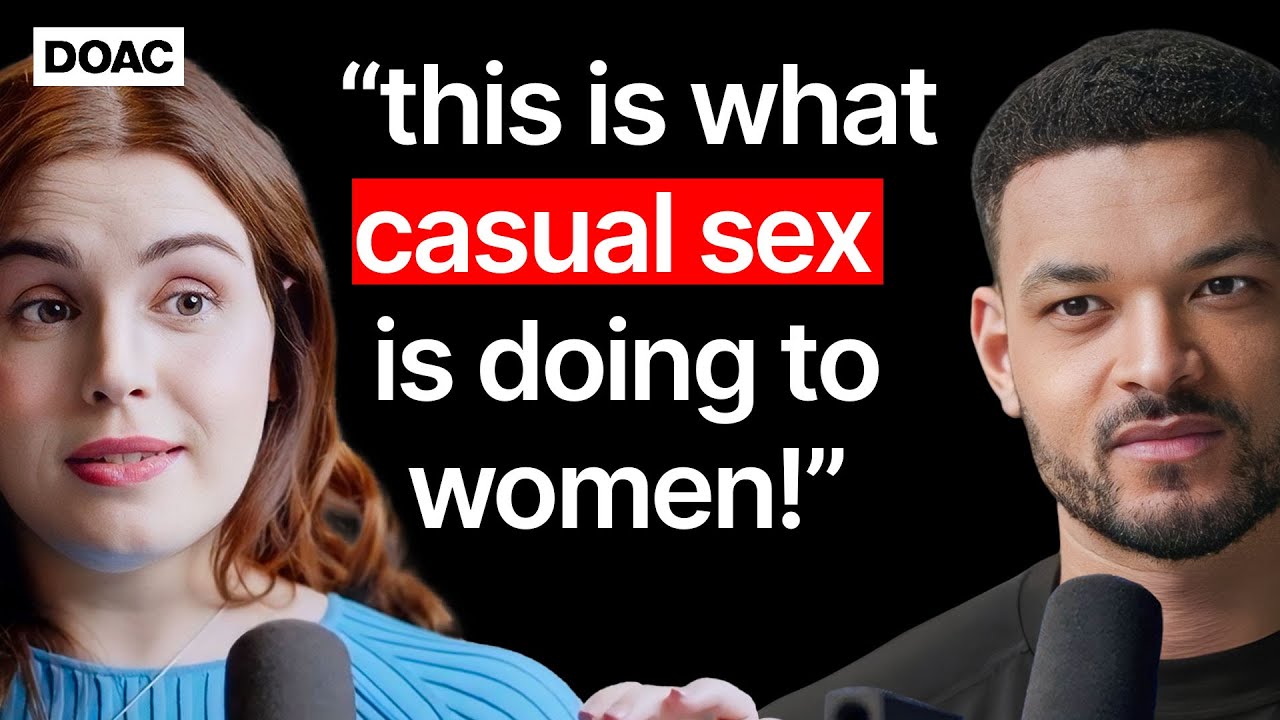
The Diary Of A CEO
Journalist Louise Perry argues that the post-sexual revolution dating landscape benefits high-status men while eroding female well-being, male ambition, and global birth rates.
AI-assisted summary of The Sex Expert: "Casual Sex Is Almost Always Dangerous For Women!" - Louise Perry — original source. Check the original for full context.
Source published:
Detailed notes
## Background Published on YouTube by the channel The Diary Of A CEO on June 20, 2024, this episode features host Steven Bartlett interviewing Louise Perry, a British journalist, podcast host, and author of 'The Case Against The Sexual Revolution: A New Guide to Sex in the 21st Century'. The page description highlights her role as a press officer for the charity 'We Can't Consent To This' and outlines a wide-ranging conversation on sexual culture, modern dating dynamics, pornography, and biological sex differences.
## TL;DR In this discussion, Louise Perry argues that the sexual revolution and the proliferation of hookup culture, dating apps, and online pornography have disproportionately harmed women while destabilizing traditional social structures. She advocates for intentional relationship boundaries, such as delaying sexual intimacy, and highlights biological asymmetries between men and women in sexual dynamics, parenting, and safety. The conversation also explores broader societal impacts, including declining global birth rates, the rise of lookism and hypergamy, the dangers of unwanted violent acts during sex, and the cultural devaluation of motherhood.
## Atmosphere & style The dialogue is serious, intellectual, and deeply candid, marked by a supportive yet analytical rapport between host Steven Bartlett and guest Louise Perry. Perry presents controversial, counter-cultural arguments with a calm, articulate, and empathetic demeanor, drawing upon evolutionary psychology, research, and personal observations. The emotional arc transitions from sensitive reflections on sexual violence and relationship breakdown to frank discussions about pornographic addiction, demographic decline, and the psychological defense mechanisms humans use to navigate modern life.
## Key takeaways - [20:01](https://www.youtube.com/watch?v=-pdCDq_MTj4&t=1201s) Casual sex culture creates a sexual empathy gap where men and women misunderstand each other's romantic desires and motivations, leading to widespread miscommunication and female dissatisfaction. - [24:10](https://www.youtube.com/watch?v=-pdCDq_MTj4&t=1450s) The widespread adoption of the contraceptive pill fundamentally altered dating norms, shifting the baseline expectation toward active negotiation of sexual intimacy early in relationships. - [41:41](https://www.youtube.com/watch?v=-pdCDq_MTj4&t=2501s) Biological differences and strength disparities mean placing women in frontline physical roles, like combat or street policing, creates inherent safety risks. - [51:33](https://www.youtube.com/watch?v=-pdCDq_MTj4&t=3093s) Traditional sexual norms and long-term commitments, such as waiting for engagement before intimacy, historically protected individuals from short-term emotional and physical exploitation. - [56:50](https://www.youtube.com/watch?v=-pdCDq_MTj4&t=3410s) Dating apps amplify surface-level selectivity and hypergamy, leading to severe inequality where top-tier men monopolize options while lower-status men are excluded. - [56:50](https://www.youtube.com/watch?v=-pdCDq_MTj4&t=3410s) Monogamous marriage functions as a structural balance against social instability by curbing polygamous dynamics and encouraging male investment in families. - [01:01:20](https://www.youtube.com/watch?v=-pdCDq_MTj4&t=3680s) Mothers and infants are biologically dependent on sustained support, making formal commitments like marriage essential for child-rearing and economic stability. - [01:08:12](https://www.youtube.com/watch?v=-pdCDq_MTj4&t=4092s) High divorce rates are exacerbated by a modern divorce culture that normalizes ending marriages over temporary rough patches, despite children faring significantly better in stable biological two-parent households. - [01:11:41](https://www.youtube.com/watch?v=-pdCDq_MTj4&t=4301s) According to the Cinderella Effect, step-parenting poses higher statistical risks of neglect or child abuse compared to biological parenting, where genetic investment helps endure parenting stress. - [01:15:26](https://www.youtube.com/watch?v=-pdCDq_MTj4&t=4526s) Modern culture devalues traditional femininity and motherhood by framing corporate success as superior to raising a family. - [01:20:29](https://www.youtube.com/watch?v=-pdCDq_MTj4&t=4829s) Global birth rate collapse is strongly tied to rising affluence, creating serious demographic and economic threats for developed nations. - [01:25:52](https://www.youtube.com/watch?v=-pdCDq_MTj4&t=5152s) Heavy pornography consumption alters brain pathways, desensitizes users, distorts physical expectations, and fuels acts of unwanted rough sex. - [01:28:58](https://www.youtube.com/watch?v=-pdCDq_MTj4&t=5338s) Hyper-abundant, low-effort sexual stimuli diminish young men's innate drive and motivation to build real-world achievements and long-term relationships. - [01:45:02](https://www.youtube.com/watch?v=-pdCDq_MTj4&t=6302s) Unregulated mating hierarchies create systemic social imbalances and 'lookism', leaving a subset of unattached men prone to isolation and despair.
## Detailed walkthrough ### [00:00](https://www.youtube.com/watch?v=-pdCDq_MTj4&t=0s) Introduction: The Hidden Risks of Casual Sex
Journalist, author, and host of the *Maiden Mother Matriarch* podcast Louise Perry argues that modern culture has embraced casual sex without acknowledging its true risks, particularly for women. Perry, who serves as a press officer for the charity *We Can't Consent To This* and wrote *The Case Against The Sexual Revolution: A New Guide to Sex in the 21st Century*, contends that modern sexual culture heavily prioritizes male preferences. While many young women feel pressured to participate, sex often leaves them emotionally bonded in ways men do not experience, creating widespread unhappiness.
Perry emphasizes that the societal shift away from traditional commitment has created stark disparities in dating dynamics. When cultural expectations around waiting for commitment dissolve, high-status, highly attractive men are free to "play the field" without ever committing, leaving lower-status men with few options. Meanwhile, governments are beginning to panic as these broader cultural dynamics intersect with plummeting birth rates.
* Casual sex carries disproportionate emotional and physical risks for women compared to men. * Women generally form stronger emotional bonds through sexual intimacy than men. * Unregulated dating app cultures naturally skew toward unequal outcomes, favoring high-status men and leaving low-status men sidelined. * Host Steven Bartlett announces the "Diary of a CEO Subscriber Raffle" to celebrate reaching 6 million subscribers, offering vouchers, live episode tickets, and personal phone calls.
> "I think casual sex is almost always more risky for women than it's worth."
---
[02:21](https://www.youtube.com/watch?v=-pdCDq_MTj4&t=141s) Navigating the "Baby Season" and the Pill's Trade-Offs
Speaking from her personal experience as a mother who is six months pregnant with her second child, Perry describes being in the "having baby season" of her life. Living through this phase directly informs her writing about the inherent tension between women's participation in public life and their biological role in childbearing. Historically, women constantly had to negotiate the possibility of pregnancy until the introduction of the oral contraceptive pill in the 1960s artificially suspended that reality for the first time in human history.
While the prevailing narrative frames the pill as an unambiguous social good, Perry argues that every major technological breakthrough involves profound trade-offs. The pill provided immense personal freedom—allowing women to space out pregnancies safely, plan their families, and enter the workforce and political sphere on an unprecedented scale. However, on a societal level, it fundamentally altered sexual culture and contributed directly to collapsing birth rates across the developed world.
* The contraceptive pill enabled women to plan family timing, preventing the severe physical strain of continuous pregnancies. * The cultural trade-offs of ubiquitous contraception include falling birth rates and systemic shifts in how relationships are formed. * Society often overlooks the economic and social vulnerabilities tied directly to female biology and childbearing.
> "The pill is just this like enormous game-changer where suddenly it's a choice... but I think there is ambiguity and that there have been trade-offs."
---
[06:09](https://www.youtube.com/watch?v=-pdCDq_MTj4&t=369s) How the Sexual Revolution Reshaped Dating Culture
Examining who actually benefited from the sexual revolution, Perry challenges the assumption that it was a universal victory for women or even for most men. Instead, the primary beneficiaries were a small subset of highly attractive men with high sexual appetites—exemplified by figures like *Playboy* founder Hugh Hefner. The combination of declining Christian social norms and reliable contraception allowed these men to enjoy unprecedented access to partners without the traditional expectations of marriage or commitment.
Over time, mainstream cultural expectations drifted toward these specific male preferences. Although a minority of women thrive in this "Playgirl" lifestyle, most do not. Perry asserts that psychological data clearly shows fundamental, average differences in how men and women approach sexuality, and constructing a culture that caters primarily to unrestrained male sexual preferences creates significant costs and misery for young women.
* The primary winners of the sexual revolution were a small tier of high-status, attractive men rather than the broader population. * Mainstream sexual culture has reorganized around casual access to sex, sidelining traditional norms of long-term commitment. * Average psychological differences in male and female sexuality mean that hyper-casualized dating environments inherently disadvantage women.
---
[07:38](https://www.youtube.com/watch?v=-pdCDq_MTj4&t=458s) Lessons from a Rape Crisis Center and the Biology of Aggression
Reflecting on her intellectual trajectory, Perry describes starting as a conventional, progressive thinker while studying at SOAS (School of Oriental and African Studies) in London. Her worldview shifted dramatically when she went to work at a Rape Crisis center. Mainstream feminist theory taught that men and women are virtually identical and that sexual violence is exclusively about political power rather than sexual desire. However, frontline work with victims revealed patterns that contradicted this ideological framework.
Perry observed that the modal victim of sexual violence is exceptionally young—around 15 years old—and perpetrators skew heavily toward male teenagers and young men in their twenties. This perpetration curve maps directly onto the male testosterone peak, matching the exact curve seen in general violent crime. Furthermore, female victimization peaks during the years of peak biological fertility. These patterns led Perry to conclude that sexual violence is deeply rooted in human biology and primate nature rather than being a purely social construct.
* The average victim of sexual violence is 15 years old, and perpetrators are overwhelmingly young men in their late teens and twenties. * Male perpetration of sexual violence mirrors the biological curve of peak testosterone levels. * Female vulnerability to sexual crime overlaps directly with peak biological fertility years. * Male upper-body strength is, on average, double that of women, allowing men to punch twice as hard.
> "The peak age of perpetration for young men is the same as the testosterone peak... and the peak age of female victimization is also peak fertility."
---
[10:28](https://www.youtube.com/watch?v=-pdCDq_MTj4&t=628s) Protecting Young Women through Honest Conversations
Perry emphasizes that every human civilization faces the eternal challenge of channeling male aggression productively while protecting young women during their most vulnerable years. Modern culture, however, fails to manage this challenge because key institutions refuse to acknowledge biological truths. Progressive dogmas claiming there are no meaningful physical or psychological differences between the sexes inadvertently put young women in danger.
Because 15-year-old girls lack real-world experience, telling them that male and female sexuality are identical leaves them unprepared for physical and psychological realities. Perry notes that average physical asymmetries—such as men having double the upper-body strength of women—mean that casual encounters carry asymmetric physical risks for females. Honesty about these biological facts is essential for safeguarding young women.
* Refusing to acknowledge biological sex differences leaves young women unprepared for real-world dangers. * Managing male energy and protecting vulnerable young women are universal challenges faced by every human society. * Ideological claims that men and women share identical sexual instincts contradict basic biological realities.
---
[12:38](https://www.youtube.com/watch?v=-pdCDq_MTj4&t=758s) Physical Asymmetries between Men and Women
Addressing the physical differences between the sexes, Perry highlights performance gaps across athletic categories. While cardio and endurance gaps are relatively moderate—with elite female athletes operating around 85% of elite male performance—the strength gap is massive. Without protected biological sex categories in sports, women would be completely absent from elite competition; even the fastest woman in the world would rank far behind hundreds of male sprinters.
These physical disparities directly impact sexual dynamics and safety. A woman agreeing to be alone with a man she barely knows exposes herself to inherent physical vulnerability due to the stark asymmetry in physical strength.
* Physical strength represents the largest athletic disparity between men and women. * In endurance sports, the "golden ratio" generally places elite female performance around 85% of elite male levels. * Sex-segregated categories are necessary in elite sports to preserve female participation and achievements.
---
[14:07](https://www.youtube.com/watch?v=-pdCDq_MTj4&t=847s) Biological Reality and the Asymmetry of Casual Sex
In addition to physical strength disparities, the biological reality of reproduction creates a fundamental asymmetry in casual sex. Even with modern contraceptive technology, women bear the ultimate biological risks of pregnancy, childbirth, or the medical and emotional burdens of abortion. A man involved in a casual encounter can easily walk away entirely unaffected by these consequences.
This biological reality extends to psychological differences in sexual desire. Men cross-culturally display a significantly higher baseline interest in casual sex and jump into bed far more readily than women.
* Women bear almost all physical, biological, and emotional costs associated with unplanned pregnancies resulting from casual sex. * Technology like contraception mitigates but cannot entirely eliminate the biological risk asymmetry between men and women. * Psychological data confirms consistent cross-cultural differences in male and female attitudes toward short-term sexual encounters.
> "Casual sex is almost always more risky for women than it's worth it for women... because being alone with a man that you don't know is inherently dangerous... and because women are the ones who get pregnant."
---
[15:37](https://www.youtube.com/watch?v=-pdCDq_MTj4&t=937s) Cross-Cultural Proof of Sex Differences in Sexuality
To prove that male and female sexual behaviors are innately different rather than purely socialized, Perry points to consistent cross-cultural research. Famous social experiments on university campuses demonstrate this contrast clearly: when attractive confederates approach strangers of the opposite sex and propose going back to their apartment immediately, 0% of women agree, whereas a high percentage of men accept.
This pattern holds globally regardless of cultural or religious background. In every surveyed country, men consume significantly more pornography, report higher desires for casual sex, and account for virtually all demand for commercial sex work. Female demand for prostitution is near zero worldwide. Perry argues that when a coin comes up heads in every country across the globe, the simplest and most logical explanation is innate biological design rather than cultural conditioning.
* In campus proposition experiments, exactly 0% of women agreed to go home with an attractive male stranger, while a large majority of men agreed. * Across all global datasets, men consume more pornography and express far higher desire for casual sex than women. * Purchasing commercial sex is an almost exclusively male behavior globally, with negligible female participation.
> "In zero percent of cases do women say yes—zero percent... In no country do women watch more porn than men, in no country do women express more of a desire for casual sex, in no country do women buy sex more than men."
Here is a detailed, faithful walkthrough of this section of the transcript.
---
[17:52](https://www.youtube.com/watch?v=-pdCDq_MTj4&t=1072s) The Biological Realities of Sexual Preferences and Evolutionary Stakes
Addressing how sexual desires vary across the population, Louise Perry explains that while individual variation exists on overlapping bell curves, the extreme tails of these distributions reveal stark differences between the sexes. Behaviors like hypersexuality or severe pornography addiction are overwhelmingly male-dominated because they stem from a rare "tippy tippy tail" of individuals who crave extreme sexual variety. When evaluating culture at large, it is essential to look at the big picture and recognize that casual sex affects men and women differently due to deep-seated evolutionary wiring rather than mere social construction.
For women, biological imperatives make sex the single "most consequential thing a woman can do." Perry breaks down the asymmetric biological risks and investments involved: * **Pregnancy:** A nine-month biological commitment carrying inherent physical risks. * **Childbirth:** Historically carries extreme life-threatening risks in the ancestral environment. * **Childrearing:** Demands roughly 15 years of continuous resource investment before an offspring reaches economic self-sufficiency. * **Reproductive Capacity:** Women can reproduce at an absolute maximum of once per year, whereas men can theoretically reproduce thousands of times a year with minimal physical risk or necessary parental involvement.
Because of these high stakes, women evolved to be far pickier, desiring monogamy and clear signals of commitment over short-term encounters.
---
[20:01](https://www.youtube.com/watch?v=-pdCDq_MTj4&t=1201s) The Sexual Empathy Gap and Teenage Mimetic Psychology
Perry notes that much of the unhappiness expressed by young women in modern dating stems from going along with casual sex cultures despite their underlying preferences. When discussing this with men, they often express confusion or amusement, believing women are "so lucky" because they can get propositioned or find casual sex easily without realizing that most women genuinely find uncommitted encounters with strangers unappealing. This highlights a mutual "empathy gap" between the sexes: * **Men's Misunderstanding:** Men view constant sexual access as ideal and fail to realize women find random casual sex unpleasant or undesirable. * **Women's Misunderstanding:** Women often fail to grasp how many men suffer from zero sexual access, feeling deep resentment and frustration, or how intimidating men find approaching women.
Furthermore, men struggle to understand why women participate in casual sex they do not want. Perry explains that women often comply to be polite, avoid scaring away a prospective partner, avoid appearing "uncool," or gain social approval. This dynamic is rooted in teenage female psychology, where social sensitivity and concern for social standing are extraordinarily high. Throughout history, socially contagious mental health phenomena and mimetic behaviors have originated among teenage girls due to their acute awareness of peer norms: * **Salem Witch Trials:** Mass hysteria dynamics rooted in young female social circles. * **19th-Century Hysteria & Anorexia:** Socially transmitted psychological phenomena. * **Modern Social Media Trends:** Viral psychological behaviors like TikTok-induced tic manifestations.
This strong desire for approval leaves young women vulnerable to degrading or upseting sexual encounters simply because the fear of being seen as uncool or unapproachable has been branded as "incredibly cringe."
---
[24:10](https://www.youtube.com/watch?v=-pdCDq_MTj4&t=1450s) The Pill, Shifting Defaults, and the Complexity of Modern Consent
The culture around early-stage sexual encounters shifted dramatically following the widespread adoption of the contraceptive pill. Historically, the default expectation on dates was that sex would not happen immediately, reserving intercourse for "going steady," engagement, or marriage. The introduction of the pill removed the immediate fear of pregnancy and fundamentally altered dating negotiations. Referencing evolutionary psychologist David Buss, Perry describes dating as an ongoing power play where men typically prefer having sex sooner and women prefer waiting longer. By removing the biological barrier, the pill shifted the cultural default toward "we might have sex," transforming early dates into active negotiations.
This shift created widespread ambiguity in modern dating, leading to complex situations often seen in #MeToo cases. Rather than explicit criminal acts, many incidents involve subtle social tussles where cultural expectations are unclear: > "He didn't read her social cues, she didn't communicate clearly... so often that's what's really going on with these MeToo cases. There's so much ambiguity in terms of what everyone is supposed to do, and you've got this tussle between what men and women prefer."
* **The Ansari Example:** Perry cites the controversial Aziz Ansari date as a prime example of sexual revolution ambiguity, where a woman felt pressured to politely navigate unwanted sexual advances from a high-profile man without causing offense, leading to mutual miscommunication and lingering distress. * **The Impact of Alcohol:** Men possess a deep-seated cognitive bias to overestimate a woman's sexual interest. Alcohol severely exaggerates this bias in men while simultaneously impairing a woman's ability to navigate high-pressure social interactions, setting both parties up to fail.
---
[29:33](https://www.youtube.com/watch?v=-pdCDq_MTj4&t=1773s) Psychological Repercussions, "Icks," and Evolutionary Intuition
When casual sex culture becomes standard, it inflicts emotional harm on both sexes in distinct ways. While the absolute worst outcomes involve physical violence from dangerous partners, a far more common consequence for women is a pervasive sense of self-loathing following casual encounters. Survey data reveals that when asking individuals how they feel after one-night stands, men generally feel satisfied, whereas women frequently report feeling disgusted. Perry notes that in her own research and book quizzes, a large majority of women confirm having had legally consensual sexual experiences that, in retrospect, make them feel physically uncomfortable or repraved.
This disgust response is linked to women having a significantly lower overall disgust threshold than men, an evolutionary defense mechanism designed to discourage sexual encounters with partners who are unsuitable for long-term support or pregnancy:
* **The Psychology of the "Ick":** The popular concept of an "ick"—a sudden, intense turn-off—serves as a subconscious filter for women assessing long-term partner suitability. * **The Wardrobe Boxes Anecdote:** Perry shares a story about a friend rejecting an extraordinarily attractive, rugby-player-type man on a dating app simply because his profile picture showed cardboard boxes stacked on top of his wardrobe, interpreting it as a sign of disorganization, immaturity, or financial instability. * **Velcro Wallets and Intuition:** Minor turn-offs like a man pulling out a velcro wallet on a date trigger similar underlying signals regarding a man's maturity and resourcefulness. * **Listening to Intuition:** Citing Gavin de Becker’s classic book *The Gift of Fear*, Perry argues that people—and women in particular—should respect these instinctual physical reactions and "icks," as the human body often detects subtle danger or incompatibility cues long before the conscious mind acknowledges them.
---
<ElicitationsGroup message="What would you like to do next?"> <Elicitation label="Draft a summary of evolutionary psychology perspectives on dating" query="Draft a summary of evolutionary psychology perspectives on dating" query_intent="CLICKABLE_SUGGESTION" /> <Elicitation label="Compare modern casual sex culture with historical courtship norms" query="Compare modern casual sex culture with historical courtship norms" query_intent="CLICKABLE_SUGGESTION" /> <Elicitation label="Explore key takeaways from Gavin de Becker's The Gift of Fear" query="Explore key takeaways from Gavin de Becker's The Gift of Fear" query_intent="CLICKABLE_SUGGESTION" /> </ElicitationsGroup>
[35:13](https://www.youtube.com/watch?v=-pdCDq_MTj4&t=2113s) The "Gift of Fear" and Women’s Intuition
Louise Perry refers to the work of Gavin de Becker—author of *The Gift of Fear*—to explain why women must pay attention to gut feelings and the visceral "ick." De Becker’s central premise is that fear is an evolutionary gift designed to protect human beings from danger. The subconscious mind frequently picks up on subtle red flags, micro-expressions, or odd behavioral cues long before the conscious, analytical brain can fully rationalize them. Unfortunately, modern social conditioning often trains people—especially women—to ignore these survival instincts out of fear of appearing rude, judgmental, or hysterical.
Perry illustrates this dynamic through a story from De Becker’s book involving a woman who was approached by a male stranger in her apartment building. The man insistently offered to help carry her grocery bags up to her apartment. Though every internal alarm bell was ringing and she felt a strong sense of "bad vibes," her conscious mind overrode her gut, telling her, *"He's just being polite."* She allowed him inside, whereupon he shut the door and violently attacked her. She barely survived the encounter. Perry points out that women’s subconscious minds are particularly hyper-attuned to threats of sexual violence—a unique evolutionary threat that men do not experience from women.
To demonstrate how remarkably accurate these unmapped instincts are, Perry cites striking behavioral studies on spatial perception and safety:
- **Neighborhood Crime Mapping:** When researchers give women a map of their local area and ask them to highlight the specific streets or alleys they would refuse to walk down alone at night, their intuitive "fear maps" overlap almost perfectly with actual police crime statistics. - **Subconscious Accuracy:** These women are not reading local crime reports or studying police data; they are responding entirely to environmental cues and gut instincts, proving how deeply wired human threat-detection systems are. - **Evolutionary Penalties:** Perry emphasizes that, in evolutionary history, the biological and social costs of sexual assault for a woman—such as carrying an unwanted pregnancy, severe physical harm, or social ostracization by her community—were so catastrophic that women evolved exceptionally sensitive alarm systems to prevent it.
---
[38:49](https://www.youtube.com/watch?v=-pdCDq_MTj4&t=2329s) "Women Have a Different Radar": Gender Diversity in the Workplace
Host Steven Bartlett bridges Perry’s discussion on female intuition to his own experience as an entrepreneur and CEO, noting how these biological differences manifest outside of personal relationships. Bartlett observes that the women leading his businesses often operate on a completely different "frequency" or "radar" compared to the men. In hiring contexts, he has repeatedly witnessed scenarios where every male interviewer gives a male candidate a glowing review, while every female interviewer expresses a deep, visceral distrust or discomfort regarding the same individual—often without being able to immediately articulate why. Bartlett notes that in every instance where he ignored the female team's collective "bad vibe," it later turned out they were entirely correct.
Perry agrees, noting that while there is an understandable feminist fear that discussing psychological sex differences will lead to discrimination—historically using claims of female "irrationality" to exclude women—ignoring these differences does a disservice to everyone. She argues that recognizing women’s distinct intuitive capabilities is one of the strongest cases for genuine workplace diversity, as male and female perspectives balance and safeguard one another.
The discussion turns lighthearted as both Bartlett and Perry share personal anecdotes about their own relationships, with both mentioning that their respective spouses call them or act like "witches" because of their uncanny ability to perceive unseen motives and predict outcomes before they happen.
---
[41:41](https://www.youtube.com/watch?v=-pdCDq_MTj4&t=2501s) Biological Differences, Physical Standards, and Frontline Roles
The conversation shifts to more controversial territory as Perry applies the reality of physical sex differences to public safety, specifically policing, firefighting, and the military. Perry argues directly against placing women in frontline, combat, or physically confrontational roles, such as un-armed street policing in the UK. She argues that the physical disparity in upper-body strength, bone density, and explosive force between the average man and even a highly fit woman is simply too vast to bridge safely during a physical brawl.
Bartlett pushes back, questioning whether female officers bring critical de-escalation skills, empathy, and emotional intelligence that prevent physical altercations from escalating into violence in the first place.
- **Role Specialization:** Perry agrees that women play a vital role in the criminal justice system—such as suspect interrogation, victim interviewing, and investigative work—where their superior verbal and empathetic skills give them a distinct advantage over men. - **Lowering Physical Standards:** Perry strongly criticizes institutional pressure in policing, the fire service, and the military to lower physical fitness requirements (such as reducing upper-body strength tests or bleep test thresholds) in order to achieve arbitrary 50/50 gender quotas. - **The "One in a Thousand" Exception:** Perry notes that while there are rare women—such as a female Jiu-Jitsu practitioner and firefighter she knows personally—who can genuinely clear high physical standards, they represent roughly "one woman in a thousand." She argues that engineering equal outcomes by lowering standards puts both officers and the public in danger. - **Hesitation in High-Stress Scenarios:** Perry points out that bodycam analysis often reveals female officers hesitating during violent, physical altercations due to deep-seated instincts regarding physical aggression, whereas young men possess higher levels of drive and physical courage needed to charge directly into danger.
---
[47:23](https://www.youtube.com/watch?v=-pdCDq_MTj4&t=2843s) Heroic Masculinity vs. Female Protective Instincts
Discussing the dual nature of male aggression and testosterone, Perry and Bartlett explore the concept of "heroic masculinity"—the societal necessity of channeling young male energy into protective, self-sacrificing roles rather than destructive ones. They touch upon the recent terror attack at the Bondi Junction shopping center in Sydney, Australia, highlighting the starkly different ways men and women responded during the crisis.
During the incident, a male bystander instinctively grabbed a bollard on an escalator to block the attacker, risking his life to protect total strangers. Bartlett notes an article on "heroic masculinity" in *The New York Times*, pointing out that roughly 98% of the first responders who died entering the towers on 9/11 were men. Conversely, the Bondi attack was ultimately halted when a female police officer confronted and shot the perpetrator, illustrating that courage and duty are not exclusive to one sex.
Perry explains that while men are evolutionarily wired for physical confrontation and outward group defense, a woman's physical protective instinct reaches its absolute peak when defending her children. She references real-world accounts of mothers experiencing adrenaline-fueled "hysterical strength"—such as single-handedly lifting automobiles off trapped children—demonstrating how extreme maternal instincts can trigger an uncontrollable "red mist" of protective rage.
---
[49:01](https://www.youtube.com/watch?v=-pdCDq_MTj4&t=2941s) Dating Apps, Modern Pickiness, and "TikTokified" Icks
Bartlett raises a counter-argument to the concept of the "ick," suggesting that modern culture has weaponized and over-pathologized it. He mentions a female friend who goes on over 100 dates a year without success, attributing her loneliness to a "social media-driven" hyper-critique of potential partners where every minor flaw is treated as a dealbreaker.
Perry agrees that modern dating technology encourages counterproductive hyper-selectivity through "mimetic" social status signaling:
- **Arbitrary Height Filters:** Many women reject any man under 6 feet tall on dating apps, instantly filtering out over 80% of the male population. Perry notes that if these women met a 5'9" man in person, his height would likely be unnoticeable alongside his charm and presence. - **Loss of Pheromones and Chemistry:** Dating apps reduce potential partners to static profiles, stripping away essential components of human attraction such as pheromones, voice tone, body language, and overall "vibe." - **Consumer Mindset:** The endless scroll of dating apps creates an illusion of infinite options, tricking people into discarding great matches over superficial imperfections.
---
[51:33](https://www.youtube.com/watch?v=-pdCDq_MTj4&t=3093s) Why Couples Should Wait Until Engagement for Sex
Revisiting how the contraceptive pill altered sexual negotiations, Bartlett asks how delaying sex impacts men long-term. In her book, *The Case Against The Sexual Revolution*, Perry suggests waiting at least three months before becoming sexually intimate with a new partner. However, she reveals a far more radical conviction to Bartlett, leaning in to state that couples should ideally wait until **engagement** before having sex.
Bartlett reacts with visible surprise, prompting Perry to admit that while such a stance sounds wildly conservative to modern ears, commitment-first relationships historically shielded both men and women from emotional manipulation, short-term exploitation, and heartbreak.
[051:37] The Case for Waiting: Rules, Anthropology, and Human Universals
Louise Perry addresses the trade-offs of setting firm boundaries in dating, acknowledging that holding out on sex until engagement or marriage cuts out a large portion of potential matches in a culture where such restraint is seen as unusual. Unless someone belongs to a strict religious community with shared expectations, demanding long-term commitment before intimacy can seem alien. Perry shares an insider story about her book *The Case Against The Sexual Revolution*, recalling how her mother read the initial draft and warned her that demanding women wait until engagement would dominate every review and alienate readers. Taking her mother's advice to appear more reasonable and achievable, Perry compromised on recommending a three-month waiting period in her book.
Drawing on her background in anthropology, Perry explains how human cultures share deep similarities despite their surface differences. Anthropologists track "human universals"—cultural traits found in every single society unless struck down by an "anthropologist's veto." These universals include religion, gender roles, warfare, and marriage customs. While 80% of human cultures historically permitted polygamous marriage—making strict monogamy somewhat rare—every society has regulated human reproduction and heterosexuality in some form. Perry argues that 1960s sexual radicals mistakenly assumed society could throw away old conventions without consequences. Because human reproduction is a delicate, complex coordination problem, every culture creates rules to constrain both men's and women's behavior. Western culture tossed these rules out, resulting in high rates of family breakdown; for instance, in London, half of all children reach age 15 without their biological father in the home. Anthropology demonstrates that human beings actually require social structures, templates, and constraints to function effectively.
---
[056:50] The Dating App Crisis and "Sexual Socialism"
Examining contemporary dating data, Perry highlights how removing traditional monogamous expectations has unleashed hypergamy and severe inequality. On dating apps, high-status, highly attractive men receive a disproportionate amount of attention from women, while men at the bottom receive virtually zero matches. Left unregulated, society drifts back toward a soft form of polygamy. Top-tier men play the field and maintain informal harems without committing, leaving women frustrated and bitter as their hopes for commitment are repeatedly dashed. Meanwhile, lower-status men are left entirely shut out of the dating pool, feeling resentful of claims that the sexual revolution benefited all men.
Perry contrasts this dynamic with traditional monogamous marriage, which she describes through the phrase "sexual socialism." Monogamy forces high-status men—unless they are kings like Henry VIII—to commit to one woman and remove themselves from the dating market, effectively redistributing romantic opportunities so that society trends toward a "one each" balance. Anthropologically, polygamous systems carry dangerous social downsides: vast populations of unattached, sexually frustrated men create deep social instability, as these men have little to lose.
- **Testosterone and Fatherhood:** When men marry and actively care for their newborn children, their testosterone levels drop, making them less aggressive, less promiscuous, and less likely to commit crimes. - **Polygamy and Violence:** Societies that permit polygamy statistically exhibit higher rates of domestic violence and domestic conflict compared to monogamous ones.
---
[01:01:20](https://www.youtube.com/watch?v=-pdCDq_MTj4&t=3680s) Biological Asymmetries and the Value of Marriage
When asked what advice she would give a future 18-year-old daughter regarding sex and dating, Perry emphasizes the biological and emotional differences between the sexes. Women naturally experience stronger emotional bonding through sex due to higher oxytocin release. She points out the dystopian trend of online articles coaching women on how to "biohack" their brains—such as taking MDMA during casual sex—to avoid feeling emotionally attached or miserable afterward. Waiting to have sex protects a woman's ability to make clear-eyed decisions and spot red flags without being clouded by neurochemistry. Furthermore, because every act of intercourse carries a residual risk of pregnancy, demanding a formal commitment like an engagement ring acts as a tried-and-tested guarantee that a man will not abandon her when vulnerabilities arise.
Perry defends marriage against modern feminist critiques by detailing the unique physical realities of motherhood. During pregnancy and infancy, a mother cannot fully participate in the labor market. Perry shares a personal memory of calculating that she spent 40 hours a week just breastfeeding during her first son's early months. Citing author Mary Harrington, Perry explains that mothers and infants are not separate, autonomous individualists; every cell in a mother's body compels her to care for her child, fulfilling psychoanalyst Donald Winnicott's observation that "there is no such thing as a baby"—only a baby and its caregiver. Because of this total biological dependence, mothers require the support of another committed adult to handle food, rent, and basic survival, making marriage the most reliable legal and social technology ever devised to protect women during their most vulnerable life stages.
- **Casual Sex Attitudes:** Research indicates that 67% of Gen Z believe casual sex is justifiable, compared to just 12% of the pre-war generation. - **Divorce Statistics:** While overall divorce statistics show high failure rates (around 56% of marriages ending in divorce), the figures are heavily skewed by repeat divorcees, with second or subsequent marriages failing at a rate of roughly 86%.
[01:08:12](https://www.youtube.com/watch?v=-pdCDq_MTj4&t=4092s) The Reality of Unhappy Marriages and "Divorce Culture"
The conversation centers on the true health and viability of modern marriage. While standard statistics indicate a divorce rate around 56%, a divorce lawyer noted to Steven Bartlett that if failure were defined as one or both partners being unhappy, the number would be vastly higher. Many couples simply remain in uncomfortable marriages because the prospect of divorce is so painful and logistically difficult. However, staying together in a toxic household merely passes trauma down to the children.
Louise Perry acknowledges these points but argues that today's high divorce rate is largely the product of a "divorce culture" that normalizes ending relationships during temporary rough patches. A prime example is the notoriously stressful first year after a child is born—a period marked by sleep deprivation, financial pressure, and a drop in intimacy. She highlights that many couples who split up during these periods end up regretting it; in fact, roughly one-third of divorced individuals express regret over their decision.
Furthermore, divorce statistics are heavily skewed by repeat divorces and socio-economic factors. Divorce is increasingly becoming stratified by class and education: * Only about 10% of university graduates who marry will end up getting divorced. * Highly educated, elite classes often "talk the 1960s but walk the 1950s"—publicly preaching individual choice and social freedom while privately choosing conventional, conservative lives with long-term marriages and 2.5 children.
> "A really tricky bit for people to get through is the first year after a first child is born... To some extent a divorce culture will encourage people to make permanent decisions which they will regret."
---
[01:11:41](https://www.youtube.com/watch?v=-pdCDq_MTj4&t=4301s) The Cinderella Effect and the Risks of Step-Parenting
While divorce is necessary in cases of abuse, Louise Perry contends that in situations involving mild dissatisfaction or "growing apart," it is generally better for children if the parents stay together. A primary reason is the risk profile associated with introducing step-parents into a household.
In evolutionary psychology, this phenomenon is known as the **Cinderella Effect**. Statistics show that children living with a step-parent are up to 100 times more at risk of child abuse than those living with two biological parents. Evolutionary biology suggests that a biological connection creates a genetic investment that helps parents endure the exhausting aspects of child-rearing (such as tantrums and sleep deprivation). Without that genetic link, step-parents are statistically more likely to disfavor non-biological children—sometimes in subtle ways, such as being less likely to buckle a stepchild's seatbelt, or in more severe cases, showing physical or emotional hostility.
To illustrate how common these issues are, Perry cites child rights campaigner Katie Faust, who suggests typing "my mom's boyfriend" into Google autocomplete. The suggested searches painted a grim picture, frequently populating queries like *"my mom's boyfriend touched me"* or *"my mom's boyfriend makes me uncomfortable."* While many step-parents and adoptive parents do an exceptional job, Perry emphasizes that adoption agencies impose rigorous screening precisely because raising non-biological children carries inherent added challenges and risks.
* Children living with a step-parent face up to a **100x increased risk** of child abuse compared to those in intact biological families. * Step-parents are statistically less likely to perform everyday safety tasks for non-biological children (e.g., fastening seatbelts). * Adoption agencies maintain extremely stringent screening criteria to mitigate these known developmental and safety risks.
> "If you have a genetic investment in them, it carries you through those moments... If you don't have a genetic investment in those children, there will be a playing of favorites game."
---
[01:15:26](https://www.youtube.com/watch?v=-pdCDq_MTj4&t=4526s) Reader Reactions, Dads' Worries, and Elevating Femininity
Addressing why she voices such controversial, counter-cultural opinions in 2024, Perry explains that she writes what she believes to be true. Despite fearing her book *The Case Against The Sexual Revolution* would ruin her life, about 95% of the responses have been overwhelmingly positive. The feedback comes primarily from two main groups: 1. **Anxious parents (especially fathers):** Dads frequently write to her expressing deep concern over their daughters' exposure to sexual violence and their sons' exposure to hardcore pornography. This influx of feedback led Perry to create a young adult edition of her book, tailored for teenagers. 2. **Women expressing regret:** Women who attempted to "have sex like a man" by imitating masculine sexual behavior often write to express the intense cognitive dissonance they experienced, realizing too late that they didn't have to force themselves into behaviors that made them miserable.
Perry shares that at least two women emailed her to say they decided to have a baby after reading her work. She critiques modern cultural narrative structures that frame corporate careers as high-status while devaluing motherhood as lesser or regressive. In her view, telling women that "being just a mom" is inferior to adopting a masculine template is fundamentally sexist. She advocates for elevating traditional feminine choices—affirming that it is completely fine to prioritize family over a career, just as it is fine for a woman to choose a career path if that genuinely suits her.
> "To say that being 'just a mom', there's something wrong with that—that it would be better to have say a corporate job, that it would be better to live like a man... what we're basically saying is that what women do is worse."
---
[01:20:29](https://www.youtube.com/watch?v=-pdCDq_MTj4&t=4829s) Global Birth Rate Collapse and the "Affluence" Paradox
The conversation shifts to the global decline in birth rates, which Perry views as a massive evolutionary bottleneck that will create catastrophic economic and political issues. While public commentators often blame specific cultural targets like capitalism or feminism, data reveals that the single factor most strongly correlated with declining fertility across the globe is rising **affluence**. Once a nation crosses a relatively low economic threshold—around **$10,000 GDP per capita**—its birth rates drop precipitously.
While people in high-cost cities like London often state they "can't afford children," Perry notes this usually means they cannot afford children while maintaining their desired material standard of living. Historically, ancestors raised large families under far harsher conditions.
Another intriguing factor behind fertility trends is **mortality salience**. Psychological studies show that when people are reminded of death or conflict, their subconscious response is a heightened desire to create new life. This psychological mechanism—rather than simply soldiers returning home—explains historical post-war baby booms. When participants in lab settings are primed with thoughts of mortality, they consistently express a desire for larger families.
* **Global Fertility Rate:** Dropped from **4.84** live births per woman in 1950 down to **2.2** in 2021, with projections estimating a drop to **1.5** by 2100. * **Country Projection:** By 2050, over **75% of countries** will not have high enough fertility rates to maintain their population sizes over time. * **Japan:** Population declined from **124.3 million** down to **122.4 million** in a single year (a drop of over 800,000 people). * **South Korea:** Considering extreme financial incentives, such as paying families roughly **$60,000 in cash** per newborn baby to combat demographic collapse. * **Regional Dynamics:** Sub-Saharan Africa remains virtually the only major region in the world maintaining high fertility rates.
> "The single factor which best explains why you're seeing such massive drops in fertility... is affluence. You cross a certain threshold in terms of GDP per capita, and fertility falls a lot."
[01:24:15](https://www.youtube.com/watch?v=-pdCDq_MTj4&t=5055s) Low Fertility, Modernity, and Evolutionary Selection
Louise Perry and the host explore the paradox of modern, affluent societies: comfortable and peaceful conditions seem to directly discourage people from reproducing. Perry points out that historically, evolutionary selection didn't care about a person's desire to be a parent—it only cared about sexual drive, because sex reliably produced children. Now, with widespread access to effective contraception, those two things are uncoupled. In the modern era, evolutionary selection will likely shift toward people who genuinely, consciously want to have children.
This collapse in birth rates is most extreme in hyper-modern, highly urbanized nations. Perry highlights South Korea, which has the lowest fertility rate in the world, sitting at roughly 0.7 children per woman. To maintain population replacement in a society with low child mortality, a country requires a birth rate of at least 2.1. At its current trajectory, South Korea is projected to lose about 95% of its population over the next century. Perry observes that South Korea effectively displays a hyper-accelerated version of the modern Western dating and demographic crisis.
* **Replacement Fertility Threshold:** 2.1 children per woman is required to sustain population levels under low child mortality. * **South Korea's Fertility Rate:** Currently around 0.7 children per woman, pointing toward a potential 95% population decline over the next century.
---
[01:25:52](https://www.youtube.com/watch?v=-pdCDq_MTj4&t=5152s) The Neurological and Psychological Toll of Pornography
The conversation shifts to the role pornography plays in lower sexual activity and relationship breakdown. The host references a 2014 study from *JAMA Psychiatry* that examined 64 adult men who watched hours of pornography each week; researchers found a decrease in gray matter volume in brain regions associated with sexual stimulation. Meanwhile, female pornography consumption is rising sharply—by late 2019, nearly three out of every ten Pornhub users were female. When asked for her verdict, Perry unequivocally describes pornography as a "net negative."
Beyond neurological changes, Perry notes that pornography is "not a Fairtrade product," pointing to severe harms within the adult video industry itself, including high rates of coercion, drug dependency, and suicide among performers. For consumers, heavy use leads to physical and psychological desensitization. She references "death grip syndrome"—a term popularized on Reddit where excessive masturbation desensitizes men, causing real-world erectile dysfunction that often dissipates only after joining movements like "NoFap." Perry expands this to what she terms "cultural death grip syndrome": when hyper-abundant sexual stimuli are instantly accessible via smartphones, sex loses its mystique, eroding the underlying drive to form authentic human relationships.
* **Brain Structure Study:** A 2014 *JAMA Psychiatry* study observed decreased gray matter in brain areas linked to sexual motivation among men who consumed high amounts of pornography. * **Demographic Shift:** By late 2019, female users accounted for nearly 30% of Pornhub's audience. * **Cultural Death Grip Syndrome:** Perry's concept describing how endless digital sexual abundance drains real-world romantic drive and relationship building.
---
[01:28:58](https://www.youtube.com/watch?v=-pdCDq_MTj4&t=5338s) "Post-Nut Clarity" and the Erosion of Male Motivation
The host illustrates the psychological impact of pornography with a candid personal example from his past, recalling how he would occasionally masturbate right before a planned date, only to find his motivation to go out completely evaporate. The host and Perry laughingly recognize this phenomenon as "post-nut clarity." Perry explains that this dynamic has profound societal consequences beyond cancelled dates.
In traditional societies where premarital sex was strictly restricted, a young man could only gain access to romantic partnership by proving himself in the adult world: getting a job, avoiding crime, and securing housing. That constraint acted as a massive engine for male motivation. By removing all barriers to sexual gratification—whether through premarital hookups, free online pornography, or future sex robots—society inadvertently destroys young men's innate drive to build, strive, and achieve.
> "Why would I work harder, why would I prioritize any of these things when I've got Pornhub or, soon enough, sex robots? It kind of kills that natural drive... which is very, very compelling for young men."
---
[01:31:18](https://www.youtube.com/watch?v=-pdCDq_MTj4&t=5478s) Unwanted Rough Sex and Legal Defenses
While some argue pornography acts as a safety valve that reduces sexual violence, Perry remains deeply skeptical, pointing to the alarming normalization of violent sexual acts among youth. The host cites data from the charity Perry works with, *We Can't Consent To This*, which estimates that 2 million UK women have experienced unwanted choking or strangulation during sex, with 3.5 million enduring unwanted slapping, spitting, or gagging. Studies show a tenfold increase in rough sex occurrences between 1996 and 2016, a shift Perry attributes directly to pornography mainstreaming these acts into normal sexual scripts.
This normalization carries fatal real-world consequences. *We Can't Consent To This* campaigned to eliminate the "rough sex gone wrong" legal defense in the UK, which men historically used in court to claim that a woman's death during domestic abuse or murder was merely an accidental result of consensual rough sex. While some women do request rough sex—partly due to social contagion and natural variations in female sexual submissiveness—Perry stresses that normalizing aggressive, risky acts with unfamiliar partners puts women in extreme danger.
* **Choking & Abuse Statistics (UK):** Estimated 2 million women have experienced unwanted choking/strangulation, and 3.5 million have experienced unwanted slapping, spitting, or gagging during sex. * **Historical Rise:** Data shows a 10-fold increase in rough sex practices between 1996 and 2016. * **Legal Campaigning:** *We Can't Consent To This* successfully fought to ban the "50 Shades" / consensual rough sex murder defense in UK courts.
---
[01:34:01](https://www.youtube.com/watch?v=-pdCDq_MTj4&t=5641s) Banning Pornography and the Nordic Model
The host notes that comment sections on his podcast and high Google search volumes for queries like "how do I stop watching porn" demonstrate that many men feel addicted to pornography and view the industry as harmful. When the host asks Perry if she would ban pornography if she were Prime Minister of the UK, she answers yes. She acknowledges the counterargument—that banning a widely consumed product can undermine respect for the law, similar to COVID-19 lockdown breaches or mid-20th-century gambling bans—but asserts that pornography makes no one's life better.
Perry strongly rejects the argument that sex work is purely an empowering career choice. While high earners early in their careers may claim empowerment, Perry notes that many former industry workers—such as 1990s adult film star Jenna Jameson—eventually become vocal anti-pornography advocates after recognizing the severe trauma and exploitation involved. Pointing to research by Stuart Cunningham and colleagues (2018), Perry highlights that female adult video performers are 18 times more likely to be murdered than the general population. To fix these harms, Perry advocates for the "Nordic Model" (used in Sweden, Ireland, and France), which criminalizes the buyers/punters while decriminalizing and supporting the prostituted individuals.
* **Murder Risk Study:** Research by Stuart Cunningham et al. (2018) indicates female pornographic performers are 18 times more likely to be murdered than women in the general public. * **The Nordic Model:** A legal framework that penalizes the purchase of sexual services (demand) while protecting and offering social services to those selling sex. * **Smartphones and Youth:** Perry expresses deep concern for younger generations raised with internet-connected smartphones from birth, exposing developing minds to severe explicit content.
[01:40:05](https://www.youtube.com/watch?v=-pdCDq_MTj4&t=6005s) Neurological Rewiring and Unrealistic Body Standards
Pornography does not invent sexual dynamics out of thin air; rather, it feeds on existing tendencies—such as men's drive to dominate and women's tendency toward submission—and drastically exaggerates them. By pairing these intense stimuli with orgasm, pornography continuously reinforces specific brain responses, effectively turning subtle neural pathways into "motorways" through repeated conditioning. Beyond shifting sexual preferences, pornography and social media collaborate to distort baseline expectations of physical appearance and bedroom performance, driving a massive surge in plastic surgery as people strive to match these digitized ideals.
This pursuit creates a distinct perceptual disconnect between digital media and real life. There is a curious phenomenon where physical traits designed for two-dimensional images fail to translate into three-dimensional reality. Women who have undergone extensive cosmetic procedures often look striking in photographic formats, yet appear striking in an unsettling, "uncanny valley" way when encountered in person.
- Pornography conditions the brain by continuously linking heightened sexual stimuli directly to orgasm. - The surge in cosmetic surgery is heavily fueled by unrealistic visual standards promoted across pornography and social media platforms. - What presents as aesthetically pleasing in 2D media often yields an unnatural "uncanny valley" appearance in real life.
[01:41:41](https://www.youtube.com/watch?v=-pdCDq_MTj4&t=6101s) Evolutionary Attraction and Sexual Polarity
Political correctness often obscures frank discussions about attraction, but evolutionary biology reveals distinct preferences between the sexes. Men are naturally drawn to markers of adult fertility, notably favoring a waist-to-hip ratio around **0.7** (calculated by dividing the waist measurement by the hip measurement). Women, on the other hand, consistently value male upper body strength. However, female preference for masculinity follows a nuanced curve: women generally seek an "eight or nine out of ten" on the masculinity scale rather than a hyper-masculine ten out of ten. Extreme features, such as massive bodybuilder physiques or hyper-square jaws, can become off-putting because women must balance the desire for a strong protector and provider against the risk of an overly aggressive partner who might pose a physical threat.
Personal experience in powerlifting illustrates these physical disparities between the sexes. The performance gap between men and women is far smaller in lower-body movements like squats than in upper-body lifts like the bench press, underscoring that physical dimorphism is most pronounced in the upper body. As modern society becomes increasingly egalitarian—with men and women sharing identical workplaces, friendships, and social roles—people often crave sexual polarity. This desire for distinct sexual contrast may explain the growing interest in dynamics like BDSM, where individuals seek out hyper-masculine and hyper-feminine role play as an outlet from a gender-neutral daily culture.
- **Waist-to-Hip Ratio:** The male evolutionary ideal for female attractiveness centers on a **0.7** waist-to-hip measurement ratio. - **The Masculinity Sweet Spot:** Women tend to prefer men who score an 8 or 9 out of 10 in masculinity to balance protection against out-of-control aggression. - **Physical Dimorphism:** Upper-body strength exhibits a significantly wider sex disparity than lower-body strength. - **Sexual Polarity:** Decreasing social segregation between genders has amplified the psychological craving for stark masculine and feminine polarity in intimate settings.
[01:45:02](https://www.youtube.com/watch?v=-pdCDq_MTj4&t=6302s) "Lookism", Social Inequality, and Uncomfortable Truths
Hierarchical mating dynamics naturally leave a subset of men at the bottom of the attraction spectrum, leading to widespread sexlessness, despair, and severe societal fallout. This dynamic manifests in the rise of the incel community, alongside high rates of male suicidality, aimlessness, and addictions to gambling and substance abuse. Acknowledging these dynamics highlights the unaddressed reality of "lookism"—a subtle yet pervasive form of social inequality where attractive individuals receive better treatment, earn higher incomes, and enjoy smoother career advancement across virtually every domain.
A notable study conducted during the COVID-19 pandemic highlighted the impact of physical appearance on economic outcomes by examining restaurant tipping patterns. Normally, physically attractive waitstaff receive substantially higher tips. However, when facial masks were mandated in restaurants, hiding the lower half of servers' faces, the tipping disparity between attractive and average-looking staff was noticeably equalized. While facing these biological trade-offs and natural inequities causes immense discomfort, acknowledging reality remains essential for making informed decisions rather than relying on self-deceptive coping mechanisms.
- **Lookism as Inequality:** Physical attractiveness consistently correlates with superior social treatment and career success. - **COVID-19 Tipping Study:** Mask mandates in restaurants temporarily reduced the tip gap usually enjoyed by exceptionally attractive waitstaff by obscuring facial features. - **Male Despair:** A lack of romantic prospects directly correlates with elevated rates of gambling addiction, purposelessness, and suicide among young men.
[01:48:44](https://www.youtube.com/watch?v=-pdCDq_MTj4&t=6524s) The Final Question and Wrapping Up
In keeping with the podcast's closing tradition, the host presents a question left by the previous guest without knowing who would receive it: "When was the last time you lied to yourself?" Louise Perry candidly responds, "This morning," explaining that self-deception is an essential human coping mechanism because "too much truth is probably a little bit too much to bear all at once." Small daily rationalizations help individuals manage the difficult realities of existence.
The conversation concludes with mutual appreciation for tackling taboo and uncomfortable topics that drive cultural progress. The host praises Perry's book, *The Case Against The Sexual Revolution: A New Guide to Sex in the 21st Century*, recommending it as essential reading, and congratulates her on her pregnancy with a baby boy.
- **Guest Tradition Answer:** Louise Perry admits to lying to herself that very morning, calling self-deception a necessary tool for navigating daily life. - **Closing Recommendation:** The host strongly endorses Perry's book, *The Case Against The Sexual Revolution*, highlighting its impact on modern relationship debates.
## Notable quotes > [24:10](https://www.youtube.com/watch?v=-pdCDq_MTj4&t=1450s) He didn't read her social cues, she didn't communicate clearly... so often that's what's really going on with these MeToo cases. There's so much ambiguity in terms of what everyone is supposed to do, and you've got this tussle between what men and women prefer. — Louise Perry
> [01:08:12](https://www.youtube.com/watch?v=-pdCDq_MTj4&t=4092s) A really tricky bit for people to get through is the first year after a first child is born... To some extent a divorce culture will encourage people to make permanent decisions which they will regret. — Louise Perry
> [01:11:41](https://www.youtube.com/watch?v=-pdCDq_MTj4&t=4301s) If you have a genetic investment in them, it carries you through those moments... If you don't have a genetic investment in those children, there will be a playing of favorites game. — Louise Perry
> [01:15:26](https://www.youtube.com/watch?v=-pdCDq_MTj4&t=4526s) To say that being 'just a mom', there's something wrong with that—that it would be better to have say a corporate job, that it would be better to live like a man... what we're basically saying is that what women do is worse. — Louise Perry
> [01:20:29](https://www.youtube.com/watch?v=-pdCDq_MTj4&t=4829s) The single factor which best explains why you're seeing such massive drops in fertility... is affluence. You cross a certain threshold in terms of GDP per capita, and fertility falls a lot. — Louise Perry
> [01:28:58](https://www.youtube.com/watch?v=-pdCDq_MTj4&t=5338s) Why would I work harder, why would I prioritize any of these things when I've got Pornhub or, soon enough, sex robots? It kind of kills that natural drive... which is very, very compelling for young men. — Louise Perry
## Mentioned Louise Perry, Steven Bartlett, David Buss, Aziz Ansari, Gavin de Becker, The Gift of Fear, The Case Against The Sexual Revolution, TikTok, Bondi Junction, The New York Times, The Case Against The Sexual Revolution: A New Guide to Sex in the 21st Century, Henry VIII, Mary Harrington, Donald Winnicott, Katie Faust, Google, JAMA Psychiatry, Pornhub, Reddit, NoFap, We Can't Consent To This, Jenna Jameson, Stuart Cunningham
[Source](https://www.youtube.com/watch?v=-pdCDq_MTj4)