Wim Hof Uses Cold Water and Deep Breathing to Suppress Endotoxin-Induced Inflammation
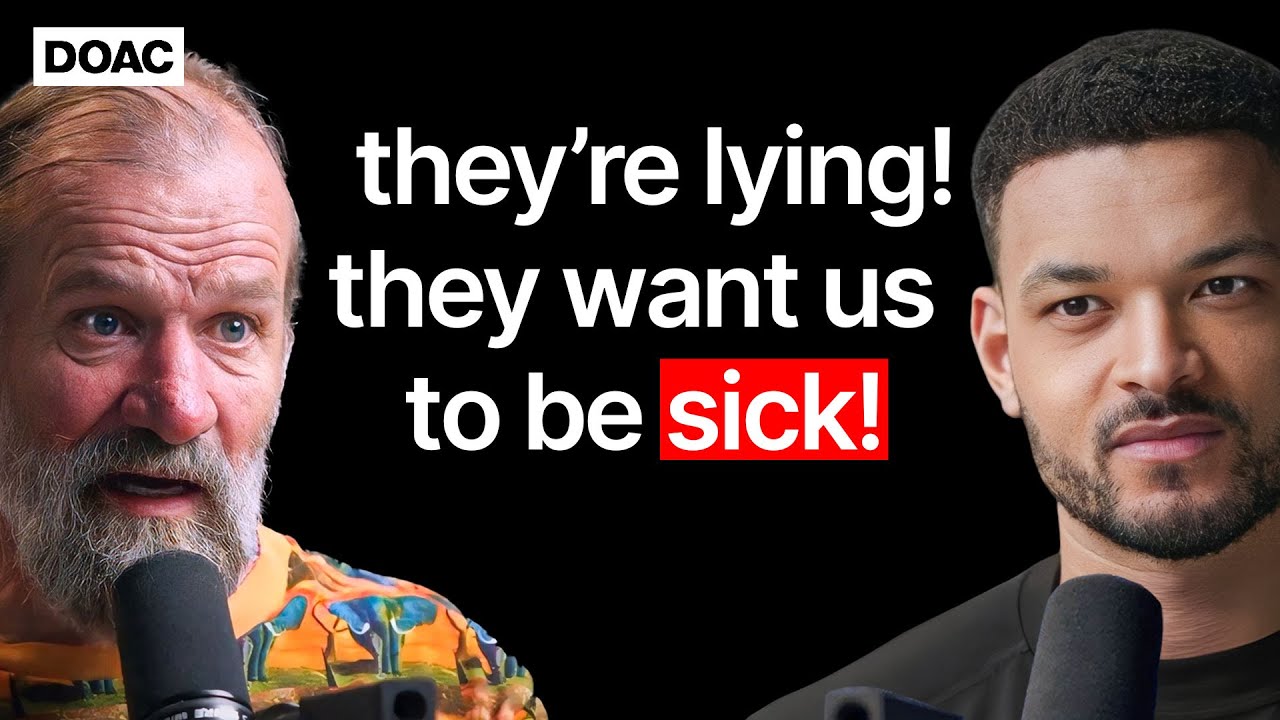
The Diary Of A CEO
Voluntary exposure to extreme cold and targeted breathwork trigger autonomic immune suppression and release deep-seated emotional trauma by activating brainstem survival pathways.
AI-assisted summary of Wim Hof: They’re Lying To You About Disease & Inflammation! — original source. Check the original for full context.
Source published:
Detailed notes
## Background This episode was published by Steven Bartlett on his YouTube channel, The Diary Of A CEO, on June 24, 2024. It features an in-depth interview with Wim Hof, a Dutch extreme sports athlete and multiple Guinness World Record holder, discussing his Wim Hof Method, cold exposure, breathing techniques, and overcoming physical and mental suffering.
## TL;DR Wim Hof shares his personal journey and the scientific principles behind his method of deep breathing, cold exposure, and mindset training. He discusses how these practices unlock the autonomic nervous system and innate immune response to combat disease, trauma, and chronic stress. Through stories of personal tragedy—including the loss of his wife to suicide—he illustrates how tapping into the body's internal biology can heal deeply stored emotional grief. The episode also features a live breathing session and host Steven Bartlett braving an ice bath to demonstrate the mind's ability to overcome fear and physical discomfort.
## Atmosphere & style The conversation carries an intense, passionate, and deeply emotional energy, shifting effortlessly between raw vulnerability and fiery motivation. Wim Hof brings an unfiltered, exuberant, and almost radical enthusiasm, while Steven Bartlett serves as a grounded, curious, and reflective host. Watching it feels like a transformative journey that moves from intimate pain and grief to empowered physical action, culminating in an exhilarating, hands-on ice bath experience.
## Key takeaways - [00:00](https://www.youtube.com/watch?v=_vX-_fq-c50&t=0s) Wim Hof believes modern society is functionally sick, draining human energy and disconnecting individuals from happiness, strength, and health through artificial comfort and hyper-competitiveness. - [09:13](https://www.youtube.com/watch?v=_vX-_fq-c50&t=553s) Voluntary exposure to extreme cold serves as a shock that activates the brainstem—the primal survival center—and quietens an overactive neocortex, forcing the body to manage stress. - [10:45](https://www.youtube.com/watch?v=_vX-_fq-c50&t=645s) A severe birth trauma in a hospital hallway and the tragic suicide of his wife Olaya in 1995 drove Wim to seek deep biological healing through cold water and breathwork. - [32:11](https://www.youtube.com/watch?v=_vX-_fq-c50&t=1931s) Deep controlled breathing offloads carbon dioxide (CO2), elevates blood pH, and increases blood flow to the brain and heart up to five times during post-exhalation retention. - [40:01](https://www.youtube.com/watch?v=_vX-_fq-c50&t=2401s) Breathwork engages the brain's salience network and cannabinoid receptors, enabling the body to access and release stored, unprocessed emotional trauma without relying solely on medication. - [45:40](https://www.youtube.com/watch?v=_vX-_fq-c50&t=2740s) A landmark 2018 Wayne State University study revealed Wim can consciously maintain skin temperature and engage intercostal glucose consumption to control his sympathetic nervous system during cold exposure. - [52:05](https://www.youtube.com/watch?v=_vX-_fq-c50&t=3125s) Scientific trials demonstrate that trained individuals can consciously influence their autonomic nervous system and voluntarily suppress inflammatory immune responses against injected E. coli endotoxins. - [58:48](https://www.youtube.com/watch?v=_vX-_fq-c50&t=3528s) The Wim Hof Method rests on three fundamental pillars: conscious breathing techniques, deliberate cold exposure, and mental commitment. - [01:07:40](https://www.youtube.com/watch?v=_vX-_fq-c50&t=4060s) Conscious breath-hold retention releases epinephrine, activates the parasympathetic nervous system, and cultivates interoception—the internal neurological sense to regulate emotional and physical states. - [01:24:13](https://www.youtube.com/watch?v=_vX-_fq-c50&t=5053s) Initial panic during cold exposure vanishes after an initial ~20-second psychological barrier, proving that many daily human limits and fears are self-constructed illusions. - [01:29:37](https://www.youtube.com/watch?v=_vX-_fq-c50&t=5377s) Wim practices a daily routine of eating a single meal per day (fasting), high-repetition bodyweight physical training, and morning breathwork to maintain peak vitality. - [01:36:24](https://www.youtube.com/watch?v=_vX-_fq-c50&t=5784s) True human purpose is defined simply as living in harmony with the soul by remaining happy, strong, and healthy outside of rigid societal conditioning.
## Detailed walkthrough Here is a detailed, faithful walkthrough of the provided transcript section.
---
[00:00](https://www.youtube.com/watch?v=_vX-_fq-c50&t=0s) Introduction and Wim Hof’s Mission
The episode opens with a dramatic teaser showcasing Wim Hof—famously known as "The Iceman"—preparing host Steven Bartlett to enter an ice bath. Wim has repeatedly defied scientific logic by withstanding extreme cold, including running to the top of Mount Kilimanjaro and climbing high onto Mount Everest in his shorts. He asserts that human life should be defined by happiness, strength, and health, contrasting this ideal with a modern society he views as deeply "sick" and unable to manage stress. Through specialized breathing exercises and mental control, Wim explains that we can overcome emotional suffering and even suppress disease, pointing to scientific studies where he and volunteers suppressed negative immune responses after being injected with *E. coli* endotoxin.
Sinking into the core discussion, Steven asks Wim to state his ultimate mission. Wim explains that his purpose is to bring "love and power" back to humanity through rigorous science, removing speculation. He observes that modern people are drained by consumerism, hyper-competitive systems, and economic inequality, leaving them too depleted to cultivate core family values like patience, empathy, creativity, and unconditional love. Refusing to accept war, depression, pollution, and abuse as normal, Wim seeks to transform the world by looking inward and validating his methods scientifically.
- **Key Feats Mentioned:** Running up Everest in underwear/shorts; withstanding extreme temperatures; controlling the autonomic immune response against *E. coli* injections. - **Core Principles:** Happiness, strength, and health as the true pillars of human life; replacing societal competitiveness with collective elevation.
---
[04:52](https://www.youtube.com/watch?v=_vX-_fq-c50&t=292s) Society's Problems and the Impact of the Wim Hof Method
Addressing the current state of society, Wim describes modern establishment living as a complex, confused system that drains human energy. While humanity excels at technological feats—such as traveling to the Moon or Mars, constructing bridges, and developing artificial intelligence—it fails to engineer basic human happiness, strength, and health. He emphasizes the need for a fundamental shift in human consciousness to alter how we perceive and manage stress.
When Steven asks what someone following the Wim Hof Method can expect in their day-to-day life, Wim guarantees two immediate outcomes: a massive increase in energy and a profound feeling of being truly alive. He frames this as discovering a "purpose" that transcends superficial societal obligations. Rather than serving a system designed to maintain control for a select few, connecting to one's purpose allows individuals to regain control over their own mind and body with "mathematical precision."
---
[09:13](https://www.youtube.com/watch?v=_vX-_fq-c50&t=553s) Seeking Discomfort and Reclaiming the Brainstem
Wim explains that the modern drive for constant comfort actively harms us. Steven agrees, reflecting on his own daily routine—traveling in a heated car, arriving at a warm studio, and taking hot showers—noting that modern society continuously optimizes discomfort out of existence. Wim notes that by avoiding physical challenges, we fail to activate the deepest, most primal parts of our brain.
Going into extreme cold serves as a deliberate shock that forces the body to switch on the brainstem—the brain's ancient survival center—and quiet the overactive, overthinking neocortex. Wim emphasizes that we must actively seek out discomfort before life inflicts unchosen stress upon us, framing voluntary exposure to cold as an act of mental and physical preparation.
> "The cold will not come to us. We tackle the problem before it arises within us with the cold, which is a very negative, aggressive power inflicted upon our bodies."
---
[10:45](https://www.youtube.com/watch?v=_vX-_fq-c50&t=645s) Birth Trauma and the Origins of a Seeker
Tracing the origins of his journey, Wim recounts the traumatic circumstances surrounding his birth. He was born an unexpected identical twin; because medical imaging like ultrasound was unavailable at the time, doctors were unaware his mother was carrying two babies. After delivering his twin brother, hospital staff began wheeling his mother down the hallway toward an operating room, unaware Wim was still inside.
He was delivered in the cold hospital hallway, nearly suffocated and turning purple. Wim believes this primal birth trauma left a deep subconscious scar that turned him into a lifelong "seeker"—someone driven to find relief and answers outside conventional societal norms.
At age 17, while standing by a freezing canal in Amsterdam, he felt an intuitive, overwhelming urge to jump into the freezing water. That first plunge immediately stilled his mind, bypassed his intellectual doubts, and allowed him to access the deep brain tissue where his early trauma was stored.
- **Birth Details:** Born as an unexpected identical twin in a hospital hallway; suffered near-asphyxiation and birth trauma. - **First Cold Exposure:** Age 17, jumping into a freezing canal in Amsterdam, driven purely by intuition.
---
[14:14](https://www.youtube.com/watch?v=_vX-_fq-c50&t=854s) First Experience with Cold Water and Spiritual Realizations
Steven asks Wim if his initial reaction to freezing water was as dramatic or fearful as a typical person's. Wim reveals that his reaction was surprisingly peaceful. He reassures Steven that when they enter the ice bath together later, he will guide him to stay calm, smile, and remain stable in the "eye of the hurricane."
Reflecting on that first plunge at age 17, Wim explains that the cold immediately answered his deepest spiritual questions. It stripped away the complex doctrines and terminology of traditional religions or esoteric philosophies—such as Nirvana, Enlightenment, Prana, or Qi—and replaced them with a direct, uncorrupted sensation of clarity, health, and unconditional happiness.
> "It was a pure opening of my feeling, being uncorrupted by thinking."
---
[15:59](https://www.youtube.com/watch?v=_vX-_fq-c50&t=959s) Living Outside Society as a Squatter
Throughout his late teens and into his mid-twenties, Wim lived as a squatter on the fringes of society in Amsterdam. He describes this period as one of the best times of his life, despite having no money. He survived on discarded food from local markets, lived in unheated buildings where he paid around £70 a month for basic utility access, and surrounded himself with fellow free-thinkers.
Living outside the traditional system allowed Wim to shed societal expectations and the "heavy helmet" of rigid conditioning. He spent his days playing guitar in hallways, practicing yoga naked in outdoor courtyards, and conditioning his body against the winter cold. This radical lifestyle allowed his inner life force to express itself fully without the burden of mortgages, 9-to-5 jobs, or career pressures.
- **Squatting Period:** Ages 17 to mid-20s in Amsterdam. - **Living Conditions:** Minimal financial means, surviving on market scraps, paying ~£70/month for minimal utilities, practicing daily yoga outdoors.
---
[17:40](https://www.youtube.com/watch?v=_vX-_fq-c50&t=1060s) The Reality of the Life Force
To illustrate what he means by the "life force," Wim shares the story of a 76-year-old man suffering from Lyme disease who sought his help. Despite having zero mountain climbing experience and managing a painful autoimmune condition, the man was determined to climb Mount Kilimanjaro with Wim.
Under normal conditions, trekking to the summit of Kilimanjaro (nearly 6,000 meters above sea level) takes between 5 to 9 days, as hikers face extreme cold and less than half the atmospheric oxygen available at sea level. Guided by Wim's techniques and driven by his raw life force, the 76-year-old completed the climb in an astonishing **31 hours**. Wim presents this accomplishment as definitive proof that the human mind and body possess innate capacities far exceeding what conventional science or societal beliefs deem possible.
- **Kilimanjaro Feat:** A 76-year-old man with Lyme disease summitted Mount Kilimanjaro in **31 hours** (compared to the standard 5–9 days). - **Core Takeaway:** The human "life force" can transcend severe physiological limitations when properly tapped.
---
<ElicitationsGroup message="To explore the Wim Hof Method further:"> <Elicitation label="Summarize the core breathing techniques" query="Summarize the specific breathing exercises and protocols Wim Hof uses to control stress."/> <Elicitation label="Analyze the scientific research behind Wim Hof" query="What scientific studies back up Wim Hof's claims about suppressing inflammation and controlling the immune system?"/> </ElicitationsGroup>
Here is a detailed, faithful walkthrough of this section of the transcript, capturing the specific facts, stories, and emotional weight of the conversation.
---
[21:48](https://www.youtube.com/watch?v=_vX-_fq-c50&t=1308s) Falling in Love and the Tragic Loss of Olaya
Wim Hof opens up about the painful period in his youth when he transitioned from living outside society into the harsh realities of modern life. After years of feeling connected in his mind, he found himself forced to adapt to living in a flat with his children while his wife’s mental health rapidly deteriorated. In 1995, she tragically ended her life by jumping from an eight-story building. Wim describes feeling as though society just keeps rolling on like a train—devoid of emotion or feeling—regardless of the personal devastation someone is enduring.
``` ┌──────────────────────────────────────────┐ │ Olaya ("Mariposa") │ │ - Met in an Amsterdam squat house │ │ - Full of light, expressive, open │ └────────────────────┬─────────────────────┘ │ ▼ ┌──────────────────────────────────────────┐ │ Onset of Severe Mental Illness │ │ - Depression ➔ Mania ➔ Schizophrenia │ │ - Cycles between Spain & family life │ └────────────────────┬─────────────────────┘ │ ▼ ┌──────────────────────────────────────────┐ │ Tragic Outcome (1995) │ │ - Jumped from 8th-story building │ │ - Left Wim to raise 4 children alone │ └──────────────────────────────────────────┘ ```
Reflecting on how they met, Wim recalls being 22 years old when he met Olaya in an Amsterdam squat house, describing her as the love of his life and a light, expressive soul. He lovingly called her "Mariposa" (the Spanish word for butterfly) because she was everywhere at once, floating like a light being. They spent 15 years together and had their first two children while living in the squat. Over time, however, she slipped into the shadows of her own mind, progressing through depression, mania, and eventually schizophrenia. Looking back, Wim wonders whether the pressure of society, career, and modern demands broke her delicate nature. As her health declined, she spent months at a time with her family in her native Spain, returning home to be a mother for just a couple of days before collapsing back into deep despair.
When Olaya expressed a desire for a fifth child, Wim gently told her she needed to focus on getting healthy first, to which she responded by calling him a "bastard." Just one month later, while Wim was working as a mountain guide in the Pyrenees to make ends meet, she kissed her children goodbye and jumped from the eighth floor. Wim reflects that it takes immense desperation to do such a thing, turning his early childhood vow—to fight the world's darkness and sickness—into a crushing sense of defeat and hopelessness.
* **Family Legacy:** The children Wim raised through this tragedy now run his international, worldwide company alongside him. * **The Fatal Day:** Olaya kissed her children goodbye before jumping from the eighth story of a building in 1995. * **Childhood Vow:** At age 12, Wim had promised himself he would fix the sickness, darkness, and depression of the world, making her suicide feel like a devastating personal failure.
---
[27:25](https://www.youtube.com/watch?v=_vX-_fq-c50&t=1645s) Surviving Grief through the Power of Cold Water
Left alone with four young children and virtually no money, Wim had no time or luxury to sink into his own depression. He explains that this desperation is precisely where his deep relationship with cold water transformed from a practice into a lifeline. The freezing water was not a negative force; it was stronger than his racing thoughts, forcing his mind into the deepest parts of his brain—the body's internal "pharmacy" and natural healer that modern humans have disconnected from by relying solely on doctors and pills.
``` ┌──────────────────────────────────────┐ │ Crushing Emotional Grief │ │ - 4 young children to raise │ │ - Agonizing, continuous thoughts │ └──────────────────┬───────────────────┘ │ ▼ ┌──────────────────────────────────────┐ │ Plunging into Freezing Water │ │ - Overpowers racing thoughts │ │ - Bypasses conditioned mind │ └──────────────────┬───────────────────┘ │ ▼ ┌──────────────────────────────────────┐ │ Accessing Internal Pharmacy │ │ - Reaches deep brain structures │ │ - Restores peace & survival energy │ └──────────────────────────────────────┘ ```
The grief was so overwhelming that Wim felt he was merely surviving day to day. Going into icy water provided brief moments of respite from the agonizing, continuous stream of painful thoughts. Recalling the moment he received the news, Wim describes being at a telephone booth on a campsite in the mountains where he was guiding a group. Her brother called with the devastating news. Wim was left in complete shock, unable to speak or even cry. The tears only came later when he stood over her body alongside her father, weeping together in shared grief.
Wim describes how the trauma deeply scarred and altered their family, causing internal strife that initially drove them apart. Over time, however, that trauma healed. Today, the family is closer than ever, and they look back on Olaya as an angel watching over their shoulders, attributing their current success and harmony to her enduring presence.
> "The cold is stronger than your mind... It makes the depth of your brain work, and the depth of your brain is the place—the pharmacy, the healer of our being—which we disconnected from so much."
---
[30:36](https://www.youtube.com/watch?v=_vX-_fq-c50&t=1836s) Breaking the News to His Children
When asked how he broke the news of their mother's death to four young children aged between 7 and 12 years old, Wim explains his gentle, direct approach. He deliberately avoided using the word "dead," choosing instead to tell them that her body was gone and she was no longer physically with them, but that they were still together and would find a way forward as a family.
Despite their many questions, Wim focused on cultivating an atmosphere of warmth, playfulness, light, and presence within the home. The cold water gave him the energy needed to build a protective "nest" for his children rather than letting the household sink into a heavy, traumatic gloom.
``` ┌────────────────────────────────┐ │ Telling the Children (7–12) │ │ - Avoided the word "dead" │ │ - "Mommy's body is gone" │ └───────────────┬────────────────┘ │ ▼ ┌────────────────────────────────┐ │ Creating the Home "Nest" │ │ - Infused playfulness & warmth│ │ - Sustained by cold training │ └────────────────────────────────┘ ```
* **Children's Ages:** The four children were between 7 and 12 years old at the time of their mother's passing. * **Framing the Loss:** Wim told them, "Mommy is gone, yet also she is here," reinforcing that their unit remained intact.
---
[32:11](https://www.youtube.com/watch?v=_vX-_fq-c50&t=1931s) The Science of Deep Breathing and Trauma Release
For people trapped in urban routines, stress, or deep trauma who feel completely disconnected from Wim's lifestyle, Wim points to controlled **breathing exercises** as the essential first step. He references a landmark 2014 comparative study showing that his breathing techniques allow individuals to consciously influence the autonomic nervous system and the innate immune system—a feat long considered scientifically impossible.
<Image alt="Diagram showing the human nervous system and brain highlight indicating autonomic control through breathwork" caption="Accessing the Autonomic System" src="image_agent_tag_1"/>
Beyond immunity, Wim explains that these exercises allow people to release deeply stored emotional trauma that the body couldn't process when it occurred. When host Steven Bartlett expresses amazement at the peer-reviewed research, Wim details the physiological mechanics: after a period of deep breathing, holding one's breath after exhalation for 1.5 minutes causes up to **five times more blood** to flow directly into the brain and heart. By doing ~30 deep, rhythmic breaths, a person offloads massive amounts of carbon dioxide ($\text{CO}_2$), driving up blood pH and temporarily silencing the brain's automatic respiratory drive.
| Biological Parameter | Standard Breathing | Wim Hof Breathing Method | |:--- |:--- |:--- | | **Primary Control** | Unconscious automatic reflex | Conscious, deliberate regulation | | **Blood Chemistry ($\text{CO}_2$ / pH)** | Baseline $\text{CO}_2$, neutral pH | Offloads $\text{CO}_2$, elevated (alkaline) pH | | **Blood Flow (Brain/Heart)** | Baseline circulation | Up to **5x increase** during post-exhalation retention | | **Nervous System Reach** | Limited conscious reach | Taps into autonomic & innate immune systems |
Wim argues that modern society conditions people to avoid deep emotions, cold, and danger, causing the deeper biological systems—including immunity—to atrophy into a "flaccid," insensitive state. He passionately decries this insensitivity, citing global tragedies like the war in Gaza, and criticizes a societal machine that demands obedient, numb workers who return home stressed every day. Conscious deep breathing breaks through this social conditioning, allowing buried emotional wounds to surface and heal.
> "If you breathe like 30 times like this, you become a little bit woozy, a little bit dizzy. Why? Because the $\text{CO}_2$ levels go way down—you blow it off... You take over consciously, you start to breathe deeper, you go past these patterns depicted by a conditioned body."
---
[40:01](https://www.youtube.com/watch?v=_vX-_fq-c50&t=2401s) Reclaiming Biological Autonomy and the Detroit Brain Study
Steven asks how simple air intake can unlock past emotional wounds. Wim explains that trauma is fundamentally **unprocessed, stored biochemistry** trapped within deep tissues when the mind is incapable of processing an overwhelming event. Because the analytical mind overthinks without solving the underlying stress, simple cognitive thought cannot reach these deeper physical layers.
Wim points to a groundbreaking brain-imaging study conducted by Dr. Otto Muzik at Wayne State University in Detroit. The study revealed that controlled breathwork activates **cannabinoid receptors** within the brain's **salience network**—the master network that coordinates all other neural networks. By activating these internal cannabinoid connectors, the brain gains access to deep physiological states that allow stored trauma to resolve safely while the body is in a state of peace.
``` ┌──────────────────────────────────────────┐ │ Trauma Stored as Biochemistry │ │ - Unprocessed events trapped in tissue │ │ - Inaccessible by overthinking alone │ └────────────────────┬─────────────────────┘ │ ▼ ┌──────────────────────────────────────────┐ │ Deep Breathing Protocol │ │ - Shifts blood pH & gas saturation │ │ - Engages the Salience Network │ └────────────────────┬─────────────────────┘ │ ▼ ┌──────────────────────────────────────────┐ │ Activation of Cannabinoid Receptors │ │ - Unlocks interoceptive focus │ │ - Resolves stored stress in peace │ └──────────────────────────────────────────┘ ```
Wim pulls no punches in criticizing standard psychiatric approaches, calling it "scandalous" that patients are routinely over-medicated into zombie-like states—something he witnessed firsthand with his late wife. He notes that an increasing number of cognitive psychologists and psychiatrists now turn to breathwork when traditional therapies hit a wall.
He shares an anecdote about training former Manchester United football star **Patrice Evra**, who initially hated cold exposure due to childhood punishments. Under Wim's guidance, Evra transformed his mindset, comfortably relaxing in an ice bath for **16 minutes** until the BBC crew filming the segment insisted he get out for safety reasons. When Evra stepped out, his skin felt surprisingly warm to the touch, proving how profoundly the mind can regulate physical responses to stress.
* **Detroit Landmark Study:** Conducted by Dr. Otto Muzik at Wayne State University, highlighting interoceptive focus and the salience network via endocannabinoid activation. * **Patrice Evra's Ice Bath:** The football legend went from deeply hating the cold to sitting effortlessly in ice water for 16 minutes.
---
<ElicitationsGroup message="Explore related concepts and techniques from the Wim Hof Method:"> <Elicitation label="Break down the physiology of the Wim Hof breathing technique step-by-step" query="Break down the exact physiological mechanics and steps of the Wim Hof breathing technique."/> <Elicitation label="Examine the Wayne State University brain study on cold and breathwork" query="Explain the details and findings of Dr. Otto Muzik's Wayne State University study on Wim Hof's brain activity."/> </ElicitationsGroup>
[45:40](https://www.youtube.com/watch?v=_vX-_fq-c50&t=2740s) Overcoming Cold Water Trauma and the Brain Over Body Study
Steven shares a story about a former Manchester United player who previously believed his race, DNA, or background prevented him from enduring cold water. Working with Wim Hof revealed that his aversion stemmed from childhood trauma, as his father had used cold water as a punishment. After completing Wim's program, he became exceptionally skilled at staying in ice water and expressed regret that he had avoided post-match cold plunge recovery pools throughout his entire elite football career.
Steven then cites the 2018 "Brain Over Body" study conducted at Wayne State University in Michigan. Researchers examined how the body and brain react to extreme temperature changes using functional MRI (fMRI) and PET scans. In typical subjects wearing a specialized perfusion vest—a full-body suit with tubes used by firefighters that pumps cold or warm water—skin temperature fluctuated directly with the water. The brain scans of these control subjects showed automated stress responses, activating areas like the insula and the periaqueductal gray (PAG). However, when Wim underwent the test using his breathing and meditation techniques, he achieved results scientists previously thought were humanly impossible.
- **Sustained Skin Temperature:** While normal subjects experienced rapid drops in skin temperature, Wim maintained a constant skin temperature of $34^\circ\text{C}$ over 25 minutes of cold water exposure. - **Intercostal Glucose Consumption:** PET scans revealed that Wim's intercostal muscles (the muscles between the ribs) were consuming high levels of glucose, generating internal heat that radiated throughout his body. - **Neurological Control:** Instead of triggering standard distress, Wim's technique engaged his sympathetic nervous system, releasing adrenaline and activating the periaqueductal gray hemisphere in the brainstem. This triggered a natural release of endogenous cannabinoids and opioids, inducing a state of well-being, pain suppression, and reduced anxiety.
[52:05](https://www.youtube.com/watch?v=_vX-_fq-c50&t=3125s) Mind Over Stress and the 2010 Endotoxin Study
Wim explains that the cold is merely a training tool to teach the mind how to manage biochemical stress. Whether stress is emotional, physical, or spiritual, it ultimately translates into neurotoxins and physical blockages. Reflecting on his own past, Wim shares that he initially turned to the cold following the tragic death of his wife to release his "emotional agony" and clear a path to heal himself and care for his children. He emphasizes that the goal is regaining mastery over one's emotional state so that natural well-being remains uninterrupted regardless of external circumstances.
To illustrate how these techniques grant voluntary control over the immune system, Steven reviews Wim's landmark 2010 study at Radboud University Medical Center in the Netherlands:
- **The Baseline Test (2010):** At age 51, Wim was injected with a bacterial endotoxin (a dead strain of *E. coli*). While 100 previous control subjects experienced standard flu-like symptoms, Wim experienced no negative immune response other than a mild headache. His blood work revealed an intentional surge in cortisol, adrenaline, and Interleukin 10 (IL-10)—an anti-inflammatory protein. - **The Follow-Up Group Study:** To prove it was not an individual anomaly, scientists studied 30 male volunteers. 18 were trained by Wim for just four days in Poland using meditation, cold exposure, and breathing techniques, while 12 served as a control group. Upon injection with the endotoxin, the trained group suppressed their inflammatory immune response, recovered significantly faster, and replicated Wim's physiological markers.
Wim criticizes the broader medical and scientific establishment for failing to aggressively adopt and research these non-pharmacological methods. He points out that natural techniques capable of matching pharmaceutical results without side effects are often sidelined due to industry funding dynamics.
[58:40](https://www.youtube.com/watch?v=_vX-_fq-c50&t=3520s) Modern Weakness, Stress as Hormesis, and Method Pillars
Wim recalls a conversation with a professor (Prof. Dr. Friedrich M. Schrenk) who argued that modern democracy itself is threatened because people are becoming physically and mentally weakened by overly comfortable, drug-dependent lifestyles. Wim asserts that he can eradicate this societal weakness "in one week" through self-inflicted, controlled acute stress—a practice known as hormesis.
- **Hormetic Stress:** Practices like cold exposure and fasting act as intentional, short-term stressors that force the body's internal systems to adapt and strengthen. - **The Choice of Stress:** Wim warns: *"If you don't go to the cold, the cold will come to you. If you don't go to the stress, the stress will come to you."* - **The Three Pillars:** The Wim Hof Method relies on three foundational pillars: conscious breathing, cold therapy, and commitment/mindset.
[01:02:01](https://www.youtube.com/watch?v=_vX-_fq-c50&t=3721s) Guided Breathing Demonstration in the Studio
Wim leads Steven through an active demonstration of the breathing technique, outlining critical safety boundaries first:
> "Never outside where you can lose control... when you drive and you lose control, that's no good. When you are in a swimming pool... no good."
Wim instructs Steven to sit comfortably on the floor and begin taking deep, rhythmic inhalations through the belly and up into the chest, followed by unforced, relaxed exhalations. As they progress through dozens of deep breaths, Wim explains that blowing off carbon dioxide ($\text{CO}_2$) raises the blood's pH level (making it more alkaline) and purges stress and trauma from the body's biochemistry.
After completing approximately 30 deep, continuous breaths, Wim instructs Steven to take one final deep breath, let it go completely, and then hold his breath on the empty exhale. Wim explains that because $\text{CO}_2$ has been blown off, the brain's natural trigger to breathe is delayed, allowing one to easily hold their breath for minutes while the brainstem releases adrenaline and enters deep tissue recovery.
[01:07:40](https://www.youtube.com/watch?v=_vX-_fq-c50&t=4060s) Gaining Control Over the Autonomic Nervous System
During the breath-retention phase of the exercise, epinephrine is released and the adrenal axis is fully activated. During this state, five times more blood flows into the brain and heart, creating a profound sense of peace and complete control while the body's deepest biological mechanisms are actively engaged. By consciously navigating this state without breathing—a situation where a person would normally feel panic or suffocate—one gains direct access to the parasympathetic and deep autonomic nervous systems. Wim explains that this deep state of control is where stored trauma begins to release. The breath-hold ends with a full inhalation, which is then pressed up toward the head to flush subliminal cerebrospinal fluid into the brain, igniting complete neural activity.
Steven describes returning from the breathwork feeling as though he had just woken up, yet feeling deeply peaceful and remarkably focused. Wim notes that in subsequent rounds, breath-hold times naturally increase from two minutes to two and a half and three minutes following exhalation. This process allows individuals to regain control over their internal biology deeper than ever thought possible, leaving viruses and bacteria with "no chance." Wim questions why the global scientific and medical communities have not fully embraced this power as a therapeutic tool to combat disease, given that the human body is inherently built with an immune system capable of stopping inflammation, viruses, and bacteria when properly accessed beyond conditioned physical limitations.
- **Physiological effects**: 5x increased blood flow to the heart and brain during retention; active adrenal axis release of epinephrine. - **Cerebrospinal fluid flush**: Squeezing the breath to the head encourages fluid movement and near 100% neural activity. - **Retention progression**: Typical rounds extend breath retention from 2 minutes up to 3 minutes after exhalation.
[01:10:53](https://www.youtube.com/watch?v=_vX-_fq-c50&t=4253s) Deep Breathing, Interoception, and the Power of the Mind
Wim explains that he originally discovered this method through pure intuition following the tragic loss of his wife, which turned him into a seeker and led him to cold water. He realized early on that taking slow, deep breaths allowed his body to endure extreme cold far longer, revealing that deep breathing unlocks internal mechanisms that build profound physical and mental resilience. Addressing the "third pillar" of the Wim Hof Method—the power of the mind—Wim highlights a recent study involving 540 people in Australia. The study evaluated the method against traditional mindfulness and meditation, demonstrating that Wim's technique outperforms both in lowering stress experience, significantly raising stress resilience, and elevating cognitive awareness.
Doing multiple rounds allows hidden blockages and suppressed emotions to surface and clear, resulting in a mind that is "brighter, nicer, more flow, more receptive, sharper, clearer." By bypassing daily societal conditioning—which keeps deep biological mechanisms dormant—the method opens up a critical neural capacity known as interoception. Interoception grants individuals the ability to command their body as a vessel, re-regulating emotional states and physical distress on command. Wim emphasizes that this natural capability should be taught to young students in secondary school to foster personal strength and eradicate victimhood, stating, "Victimhood is no longer needed. Responsibility is there where we have the ability to respond."
- **Australian study**: Evaluated 540 subjects, demonstrating superior stress resilience and cognitive awareness compared to traditional meditation and mindfulness. - **Interoception**: The internal neurological sense that allows conscious communication with and regulation of internal bodily processes and emotional states. - **Overcoming victimhood**: Wim asserts that taking control of one's physiology transfers direct control over life's daily stressors in just a single session.
[01:18:48](https://www.youtube.com/watch?v=_vX-_fq-c50&t=4728s) The Ice Bath Challenge
Transitioning from the studio to Steven’s upstairs ice baths, Wim prepares Steven to confront his lifelong fear of cold water. Before stepping in, Wim guides Steven through a dynamic preparation involving a horse stance and powerful vocalizations to command the body to feel strong from the inside. Wim reassures Steven that they are undertaking this as "a brother of another mother" to demonstrate the body's innate power. Upon stepping into the freezing water, Wim instructs Steven to remain focused on his breath and execute long, controlled exhalations.
Within the first 20 seconds, the body undergoes a rapid internal adaptation as the hormonal system shifts to counteract the cold shock. Wim emphasizes that staying silent and composed in the ice allows the deepest parts of the brain to come under conscious command, re-establishing natural human power over anxiety and physical panic. While typical cold exposure requires only two to three minutes to deliver full cardiovascular and mental benefits, Wim shares a personal anecdote from his past birthdays: when he turned 60, he spent 60 minutes in icy water to prove his strength, continuing the tradition with 61 minutes at 61, 62 minutes at 62, and 63 minutes at 63, before deciding at age 64 that the ritual had served its purpose.
- **Initial adaptation period**: Takes roughly 20 seconds for the endocrine system to adjust and neutralize the cold shock response. - **Recommended daily duration**: 2 to 3 minutes is optimal for stress resilience and cardiovascular maintenance. - **Wim's birthday challenge**: Spent 60 to 63 consecutive minutes in ice water on his 60th through 63rd birthdays.
[01:24:13](https://www.youtube.com/watch?v=_vX-_fq-c50&t=5053s) Breaking Through Self-Limiting Beliefs and Seeking Discomfort
After exiting the ice bath after roughly six minutes, Steven reflects on the profound mental shift he experienced. He describes the initial 20 seconds as a psychological "wall" of intense panic and self-preservation signals urging him to retreat. However, after pushing through that initial wall, he realized the panic was an illusion—his body was entirely fine, leading him to realize how many self-limiting beliefs and artificial walls people construct in everyday life. Wim agrees passionately, noting that self-limiting beliefs solidify into societal patterns and conditioning that cause people to dodge discomfort rather than learn life's essential lessons.
Addressing the modern trend of people intentionally seeking discomfort through ultramarathons, cold plunges, and extreme physical challenges, Wim views it as a necessary counter-movement against an overly comfortable, highly reactive society. Modern comfort has severed humanity's connection to its internal drive, prompting people to seek out physical extremes. However, Wim clarifies that extreme feats are ultimately just a vehicle; the true goal is mastering interoception to gain "absolute halt over our emotions," restore cardiovascular health—the leading cause of health issues in modern society—and pass that grounded resilience on to future generations.
- **Cardiovascular health**: Wim notes cardiovascular issues remain a top killer in modern society, which daily cold exposure directly combats by strengthening vascular tone. - **The 20-second psychological barrier**: Steven identified the initial panic response as a self-created "lie" that vanishes once pushed past. - **Societal counter-movement**: The modern rise in ultra-endurance events and intentional discomfort is a direct physiological reaction to excessive lifestyle comfort.
Here is a detailed, faithful walkthrough covering the final part of the interview.
---
[01:29:37](https://www.youtube.com/watch?v=_vX-_fq-c50&t=5377s) Finding Purpose and Daily Routine
Wim Hof connects living with purpose to resolving the internal conflict between standard societal expectations and the soul. He emphasizes that realizing the soul requires harnessing the unlimited power of the mind, a unique journey for every individual. When asked about the staples of his daily routine, Wim reveals that he eats only once a day. At 65 years old, he describes waking up around 4:30 to 5:30 AM next to his wife and six-year-old child, proudly sharing that they are expecting a new baby soon. Though his oldest son is 42, he delights in having a newborn on the way. He clarifies that while he usually wakes up early to adore his family, he does not let time rule him and occasionally sleeps until 9:00 AM.
His morning routine begins with black coffee—just a little milk, no sugar—and physical exercise designed to push his body awareness. Rather than heavy weightlifting, Wim relies on bodyweight movements like push-ups and his famous splits, or uses a simple bar weighing around 10 kg to do circular movements 500 times. He intentionally trains up to the threshold of pain to overcome it, using physical exertion to deeply feel that he is alive.
- **Family Life:** Married to a younger partner for eight and a half years; has a 42-year-old son, a 6-year-old child, and a newborn on the way at age 65. - **Morning Coffee:** Black coffee with a splash of milk, no sugar. - **Exercise Philosophy:** Focuses on high-repetition bodyweight and light-bar movements to hit pain thresholds and sharpen mind-body connection. - **Upcoming Record Attempt:** Mentions an upcoming world record attempt on August 3rd in Germany with 4,000 people.
---
[01:33:01](https://www.youtube.com/watch?v=_vX-_fq-c50&t=5581s) Fasting, Animal Instincts, and Society's Food Myths
Wim explains that he skips both breakfast and lunch because eating during the day leaves him feeling stuffed and heavy. Although he appreciates the romantic idea of a leisurely breakfast with eggs, coffee, and a newspaper by the sea, he prefers the state of fasting. He compares pushing past hunger to stepping into the cold: by delaying eating when appetite hits, he stays sharper. He notes that he has practiced this naturally since childhood based on intuition, ignoring the modern narrative that dictates three or four meals a day.
He argues that no animal in nature eats according to a clock; animals only eat when they genuinely feel the need. In a wild state, hunger increases alertness, sharpens vision, and triggers adrenaline, naturally conditioning the body. Host Steven Bartlett agrees, sharing that he often does not eat his first meal until late afternoon or evening (around 5:00 to 7:00 PM), finding that fasting helps him focus better and hold sharper conversations.
---
[01:36:24](https://www.youtube.com/watch?v=_vX-_fq-c50&t=5784s) Rejecting Modern Paradigms and Defining Purpose
Addressing the broader lies told by modern society, Wim asserts that people are having their life force, energy, and emotions continuously drained by endless artificial rules, stress, and societal paradigms. He believes a true philosophy should make a person "happy, strong, and healthy" from within, allowing them to radiate that energy beyond their ego to their children and community. Society instead forces people to live in a competitive, survival-driven state where they rarely feel their best or express unconditional love.
When asked how someone can find their purpose, Wim dismisses complicated frameworks, stating plainly: "Just be happy, strong, and healthy—the rest is bullshit." He explains that purpose simply means living out of conflict with one's soul. To stay ready for a demanding day—such as giving keynote speeches or meeting music labels and educational leaders—he spends 10 to 15 minutes doing intense morning breathwork in bed to clear his system and take on anything.
---
[01:40:05](https://www.youtube.com/watch?v=_vX-_fq-c50&t=6005s) Work-Life Balance and Final Message to the World
Reading the closing question left by the previous guest in *The Diary Of A CEO* notebook—"What is one thing you can do next week to prove to your friends or family that they matter to you more than your work?"—Wim rejects the traditional concept of 9-to-5 "work." Because his work is his mission and his life, he does not view it as a separate chore. He similarly dismisses standard ideas of "work-life balance," asserting that human power is far stronger than any man-made construct.
In his final message to people trapped in burdensome 9-to-5 jobs and societal conditioning, Wim points to Steven's own ice bath experience earlier in the episode. He urges listeners to realize that they are capable of far more than they think, reminding them that their greatest wealth is their own happiness, strength, and health, which can be reclaimed every single day. Steven closes by thanking Wim for providing a vital counter-narrative to a failing world system, referencing endorsing endorsements on Wim's book from figures like Joe Wicks, Russell Brand, Fearne Cotton, Dr. Gabor Maté, and James Nestor.
## Notable quotes > [09:13](https://www.youtube.com/watch?v=_vX-_fq-c50&t=553s) The cold will not come to us. We tackle the problem before it arises within us with the cold, which is a very negative, aggressive power inflicted upon our bodies. — Wim Hof
> [14:14](https://www.youtube.com/watch?v=_vX-_fq-c50&t=854s) It was a pure opening of my feeling, being uncorrupted by thinking. — Wim Hof
> [27:25](https://www.youtube.com/watch?v=_vX-_fq-c50&t=1645s) The cold is stronger than your mind... It makes the depth of your brain work, and the depth of your brain is the place—the pharmacy, the healer of our being—which we disconnected from so much. — Wim Hof
> [32:11](https://www.youtube.com/watch?v=_vX-_fq-c50&t=1931s) If you breathe like 30 times like this, you become a little bit woozy, a little bit dizzy. Why? Because the CO2 levels go way down—you blow it off... You take over consciously, you start to breathe deeper, you go past these patterns depicted by a conditioned body. — Wim Hof
> [58:40](https://www.youtube.com/watch?v=_vX-_fq-c50&t=3520s) If you don't go to the cold, the cold will come to you. If you don't go to the stress, the stress will come to you. — Wim Hof
> [01:02:01](https://www.youtube.com/watch?v=_vX-_fq-c50&t=3721s) Never outside where you can lose control... when you drive and you lose control, that's no good. When you are in a swimming pool... no good. — Wim Hof
> [01:10:53](https://www.youtube.com/watch?v=_vX-_fq-c50&t=4253s) Victimhood is no longer needed. Responsibility is there where we have the ability to respond. — Wim Hof
> [01:36:24](https://www.youtube.com/watch?v=_vX-_fq-c50&t=5784s) Just be happy, strong, and healthy—the rest is bullshit. — Wim Hof
## Mentioned Wim Hof, Steven Bartlett, The Wim Hof Method, The Diary Of A CEO, YouTube, Mount Kilimanjaro, Mount Everest, Amsterdam, Spain, Pyrenees, Dr. Otto Muzik, Wayne State University, Detroit, Patrice Evra, BBC, Manchester United, Radboud University Medical Center, Netherlands, Prof. Dr. Friedrich M. Schrenk, Urban Ice Tribe, PerfectTed, Shopify, Joe Wicks, Russell Brand, Fearne Cotton, Dr. Gabor Maté, James Nestor
[Source](https://www.youtube.com/watch?v=_vX-_fq-c50)