Richard Reeves Urges New Male Script as Suicide Rates Rise
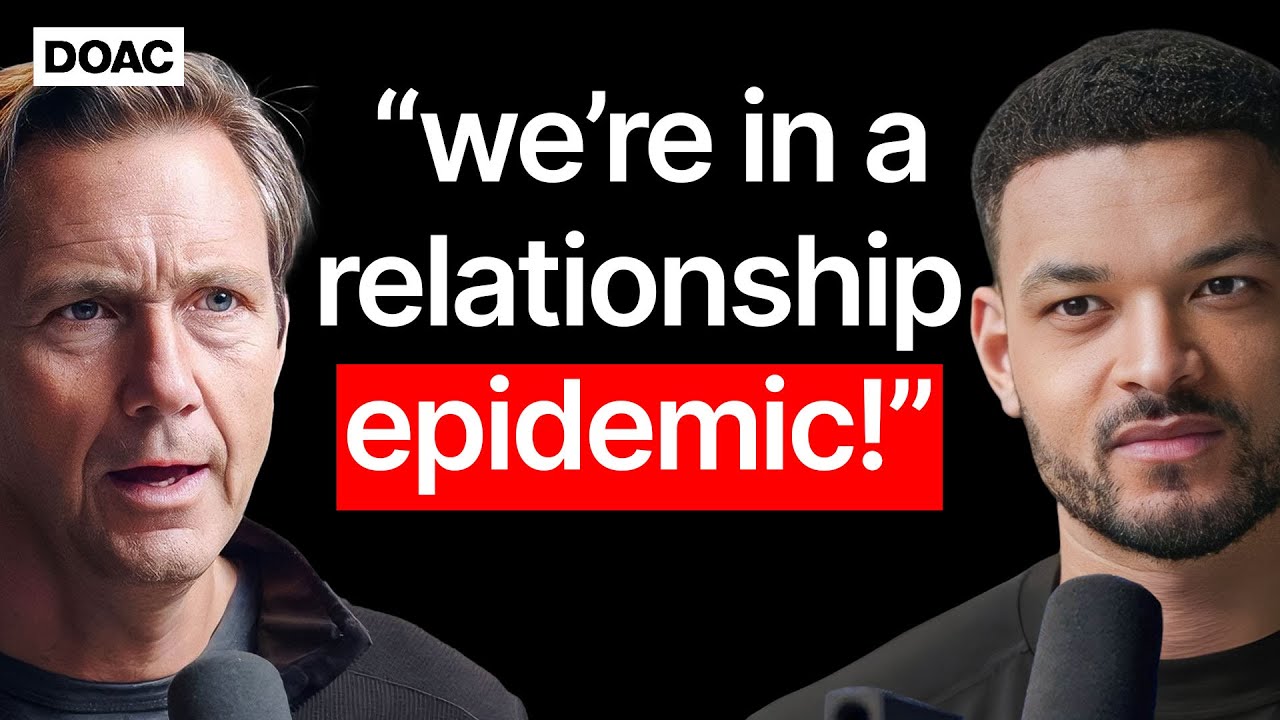
The Diary Of A CEO
The removal of traditional provider roles without a clear functional alternative leaves men feeling unneeded and drives escalating crises in male mental health, social connection, and romantic alignment.
AI-assisted summary of Gender Expert: Men Are Emotionally Dependent On Women, We're Treating Them Like Malfunctioning Women — original source. Check the original for full context.
Source published:
Detailed notes
## Background This episode was published on July 8, 2024, on YouTube by The Diary Of A CEO, featuring guest Richard Reeves, Senior Fellow at the Brookings Institution and President of the American Institute for Boys and Men. The page description highlights Reeves's work researching issues affecting men and boys, stemming from his book *Of Boys and Men*, and outlines key discussion topics including male emotional dependency, economic shifts, and suicide rates.
## TL;DR In this conversation, Richard Reeves and host Steven Bartlett explore the modern male crisis, discussing how structural and economic shifts have stripped men of their traditional provider roles without offering a modern replacement. They examine the alarming rise in male suicide rates, the breakdown of male social connections, and the evolutionary dynamics impacting dating and marriage. Reeves critiques both conservative nostalgia and progressive tendencies to treat men like 'malfunctioning women,' advocating instead for mature masculinity rooted in agency, responsibility, and strong real-world male role models.
## Atmosphere & style The discussion is deeply empathetic, intellectually rigorous, and candid, balancing stark statistical realities with personal vulnerability. Steven Bartlett and Richard Reeves engage in a warm, thoughtful dialogue that creates a safe space to unpack sensitive topics like male suicide, romantic rejection, and relationship struggles. Listeners experience a grounded, urgent, yet reassuring exploration of modern identity that calls men back into society rather than calling them out.
## Key takeaways - [00:00](https://www.youtube.com/watch?v=_J1lFZEBq2Y&t=0s) Structural social shifts have led to a severe decline in well-being among men, with suicide rates four times higher in men than women and rising. - [08:56](https://www.youtube.com/watch?v=_J1lFZEBq2Y&t=536s) The economic rise of women transformed marriage from a financial necessity into a choice, removing men's traditional provider script without offering a clear alternative. - [13:21](https://www.youtube.com/watch?v=_J1lFZEBq2Y&t=801s) Treating men like 'malfunctioning women' under the assumption that male struggles stem from a lack of femininity alienates young men and drives them toward political extremes. - [20:15](https://www.youtube.com/watch?v=_J1lFZEBq2Y&t=1215s) Sex differences in psychology and behavior, such as risk-taking and aggression, exist as overlapping bell-curve distributions rather than binary categories. - [22:23](https://www.youtube.com/watch?v=_J1lFZEBq2Y&t=1343s) Men account for approximately 90% of gambling addictions and dominate high-risk occupations like smoke jumping due to higher average risk tolerance. - [39:58](https://www.youtube.com/watch?v=_J1lFZEBq2Y&t=2398s) Feeling unneeded by family or society creates a destructive psychological trajectory toward self-harm, addiction, and economic detachment. - [55:32](https://www.youtube.com/watch?v=_J1lFZEBq2Y&t=3332s) The erosion of traditional civic institutions has stripped away the automatic social infrastructure that men historically relied on to build connections. - [58:31](https://www.youtube.com/watch?v=_J1lFZEBq2Y&t=3511s) Modern dating app dynamics exhibit extreme selectivity, concentrating romantic matches among the top 10% of men while leaving the bottom 50% with virtually none. - [01:09:59](https://www.youtube.com/watch?v=_J1lFZEBq2Y&t=4199s) Non-marital births have risen to roughly 40% in the United States, alongside a growing divide where college-educated individuals continue to marry while non-college-educated individuals increasingly bypass marriage. - [01:14:14](https://www.youtube.com/watch?v=_J1lFZEBq2Y&t=4454s) Divorce increases male suicide risk from four-fold to eight-fold compared to women, highlighting men's deep emotional dependency on marriage and female partnership. - [01:23:06](https://www.youtube.com/watch?v=_J1lFZEBq2Y&t=4986s) The term 'toxic masculinity' acts as a counterproductive slur; society should instead differentiate between 'immature' and 'mature' masculinity. - [01:27:17](https://www.youtube.com/watch?v=_J1lFZEBq2Y&t=5237s) 15% of young men under 30 report having no close friends; interventions like the Men's Sheds movement utilize 'shoulder-to-shoulder' communication dynamics to help men bond. - [01:34:37](https://www.youtube.com/watch?v=_J1lFZEBq2Y&t=5677s) A decline in male therapists and primary school teachers has led to a scarcity of healthy real-life male role models and supporters for young men. - [01:48:51](https://www.youtube.com/watch?v=_J1lFZEBq2Y&t=6531s) Healthy modern masculinity is anchored by three core traits: agency, lack of entitlement, and protective responsibility for others. - [01:54:47](https://www.youtube.com/watch?v=_J1lFZEBq2Y&t=6887s) Ignoring men's issues creates a dangerous cultural vacuum that fuels radicalization, requiring leaders to proactively bring men back into the social discourse.
## Detailed walkthrough ### [00:00](https://www.youtube.com/watch?v=_J1lFZEBq2Y&t=0s) The Modern Male Crisis and Writing *Of Boys and Men*
Richard Reeves highlights the severe decline in well-being among partnerless and childless men in modern society. Modern structural shifts have created an environment where men are rapidly falling behind across multiple dimensions: education gaps are widening, wages are stagnating, and suicide rates among men are currently four times higher than among women and continuing to rise. Reeves emphasizes that when analyzing the final words of men before taking their own lives, the two most common descriptions they used for themselves were "useless" and "worthless." Feeling fundamentally unneeded represents the most dangerous emotional state a human being can experience.
When asked why he chose to write his book, *Of Boys and Men*, Reeves admits he did so partly because colleagues and friends warned him against it, warning him that the subject was too culturally risky. Though his wife jokingly labels him a "thin-skinned provocateur"—someone who makes provocative points but gets upset by the inevitable backlash—Reeves intended the book to be a non-provocative, data-based, and policy-oriented analysis. He feared that if mainstream researchers and policy experts at institutions like the Brookings Institution "bench" themselves out of fear of reputational harm, it leaves the cultural floor open exclusively to fringe or harmful online voices.
- **Key Statistics**: Suicide rates are 4x higher for men than women; college enrollment dropped 7x more for men than women in the US during the COVID-19 pandemic. - **Background**: Reeves previously served as Director of Strategy for Nick Clegg in the UK coalition government, ran the Demos think tank, wrote for *The Guardian* and *The Observer*, and worked at the Brookings Institution focusing on race and class inequality. - **American Institute for Boys and Men**: Founded by Reeves as the first research and policy shop specifically dedicated to studying the issues of boys and men through a non-partisan, data-driven lens.
[08:56](https://www.youtube.com/watch?v=_J1lFZEBq2Y&t=536s) The Cultural Revolution and the Missing Male Script
Reeves framing of the modern crisis rests on a massive cultural revolution in advanced economies (such as the UK, US, and Scandinavia). Historically, women were kept in a state of economic dependency on men, which simultaneously created a deep emotional dependency of men on women. With the economic rise of women over recent generations, marriage has transformed from an economic necessity into a genuine choice. While this represents "probably the greatest economic Liberation in human history," it has unintentionally erased the traditional blueprint for manhood without offering a constructive replacement.
Where women were handed a new, empowering script across a single generation—moving from being expected to be solely wives and mothers to being self-sufficient individuals—men simply had their old script taken away. Men are no longer guaranteed or required to be the sole breadwinner, head of household, or primary provider. However, society has supplied men with plenty of "don'ts" while providing almost no clear "dos," leaving many young men feeling adrift, uncertain of their identity, and unsure of how to feel needed.
> "The most fatal place to end up in as a human being is to feel unneeded."
[13:21](https://www.youtube.com/watch?v=_J1lFZEBq2Y&t=801s) Moving Beyond the Left-Right Political Trap
Addressing the political discourse around male issues, Reeves notes that society must refrain from turning back the clock. The conservative/right-wing response often appeals to nostalgia, urging men to return to traditional provider roles from two generations ago. Conversely, the progressive/left-wing response frequently turns a blind eye to the genuine systemic struggles of boys and men, offering the unhelpful critique that men simply need to "be more like their sisters."
Reeves cautions against a culture that treats men like "malfunctioning women," operating under the premise that male struggles stem entirely from not being feminine, caring, or emotionally vulnerable enough. While young men broadly support gender equality, they are increasingly alienated by messages implying that their inherent masculinity is an inherent defect.
<ElicitationsGroup message="What would you like to do next?"> <Elicitation label="Explore the evolutionary psychology of male risk-taking" query="Explore the evolutionary psychology of male risk-taking" query_intent="CLICKABLE_SUGGESTION" /> <Elicitation label="List policy proposals to address male educational dropouts" query="List policy proposals to address male educational dropouts" query_intent="CLICKABLE_SUGGESTION" /> <Elicitation label="Examine how male loneliness impacts long-term health" query="Examine how male loneliness impacts long-term health" query_intent="CLICKABLE_SUGGESTION" /> </ElicitationsGroup>
[16:19](https://www.youtube.com/watch?v=_J1lFZEBq2Y&t=979s) The Trap of Defining Masculinity as Femininity
The discussion opens with Richard Reeves warning against defining positive masculinity merely as an adoption of traditionally feminine traits—such as being told to "cry enough" or to spend more time with one's children. While these are valid individual choices, Reeves argues that if society offers young men a binary choice between becoming completely indistinguishable from women or adopting a "reactionary alternative," many will inevitably gravitate toward the latter.
Steven Bartlett highlights how modern algorithmic incentives worsen this divide. Social media platforms and digital algorithms thrive on polarization, elevating extreme views—either that men must become entirely feminine or assert hyper-masculinity—while systematically ignoring the nuanced, moderate middle ground. Despite these platform dynamics, Reeves remains optimistic. Pointing to Bartlett's own show and his personal experience with media, he observes a massive, latent demand for honest, non-polarizing dialogue.
Reeves recounts a deeply moving personal moment following the release of a video he recorded for the *Big Think* platform. While traveling in a taxi, his wife read aloud the comments section—a space traditional journalists are warned to avoid—and both ended up in tears. Young men and teenage boys were expressing immense gratitude for having their genuine struggles acknowledged without being labeled reactionary misogynists. Reeves stresses that supporting young men does not mean rolling back the hard-won independence of women; solving a young man's problems never requires making his sister less powerful.
- The video Reeves created for *Big Think* generated more individual comments than total copies sold of his book, *Of Boys and Men*. - Algorithmic engagement rewards extreme binary views because nuanced positions fail to build outraged, highly active "tribes." - A constructive approach acknowledges male-specific issues without treating female empowerment as a zero-sum threat.
---
[20:15](https://www.youtube.com/watch?v=_J1lFZEBq2Y&t=1215s) Understanding Overlapping Distributions and Average Sex Differences
To move past binary shouting matches, Reeves introduces the statistical concept of "overlapping distributions," attributing the phrasing to the late Swedish public health economist Hans Rosling. When people state that "men are taller than women," no rational person interprets it as a claim that every single man is taller than every single woman. Instead, it describes an average difference across two bell curves that substantially overlap.
``` [Women's Distribution] [Men's Distribution] / \ / \ / \ / \ / \ (Overlapping Area) / \ / \ /\ / \ / \ / \ / \ /____________\_____/____\____/____________\ Low High ```
Reeves explains that psychological and behavioral differences between sexes—such as propensity toward risk-taking, crying frequency, aggression, competitiveness, sex drive, or interest in things versus people—follow this exact same pattern. Recognizing these population-level average differences allows society to design supportive structures without using statistics to prejudge or discriminate against any specific individual.
- Sex differences are not absolute binary categories; they exist on continuous, overlapping bell curves. - While the average man may be less prone to crying than the average woman, individual variation remains vast. - Denying average biological or behavioral tendencies prevents constructive discussion about male-specific social roles and needs.
---
[22:23](https://www.youtube.com/watch?v=_J1lFZEBq2Y&t=1343s) Risk-Taking, Danger, and Male Occupational Choices
Addressing specific areas of divergence, the conversation turns to risk-taking. Bartlett notes that men suffer disproportionately from high-risk behaviors, such as gambling addiction, where men make up roughly 90% of those affected. Reeves adds that teenage boys are approximately twice as likely as teenage girls to die from accidental injuries, car crashes, and drowning due to elevated risk tolerance.
However, Reeves emphasizes that high risk tolerance also produces positive societal outcomes when channeled constructively into dangerous or high-stakes roles. He introduces the example of "smoke jumpers" in the United States—wildland firefighters who parachute directly out of airplanes into remote forest fire zones and remain on the ground for days to contain infernos.
> "These are people who for a living parachute out of perfectly serviceable airplanes into a raging Inferno... it's almost all men. It's hard for me to imagine a world where it wouldn't be mostly men selecting into that occupation because it's very high risk."
- Roughly 90% of individuals struggling with gambling addictions are men. - Teenage boys face twice the mortality rate of teenage girls from accidental risk-taking, including vehicular crashes and drowning. - Critical, high-risk public safety roles like smoke jumping are overwhelmingly staffed by men due to occupational self-selection driven by higher average risk tolerance.
---
[24:31](https://www.youtube.com/watch?v=_J1lFZEBq2Y&t=1471s) Gender Diversity in Corporate Leadership and the Definition of Equality
Reeves highlights a corporate study examining risk profiles in executive leadership: companies co-led by a female CEO and female CFO are slightly less likely to go bankrupt than those led by men, though they are also slightly less profitable on average. Bartlett shares that the CEO and COO of his own corporate group are women, noting that in his personal experience, male executives display a higher risk appetite regarding corporate finances.
``` +--------------------------+-------------------------------+---------------------------------+ | Leadership Composition | Profitability Profile | Risk & Insolvency Risk | +--------------------------+-------------------------------+---------------------------------+ | Male-Led Executive Teams | Higher variance / Potential | Higher risk appetite; | | | peak profitability | higher rate of bankruptcy | +--------------------------+-------------------------------+---------------------------------+ | Female-Led Teams | Moderate, stable profitability| Lower risk appetite; | | (CEO & CFO) | | reduced rate of insolvency | +--------------------------+-------------------------------+---------------------------------+ | Diverse Balanced Teams | Optimized performance | Balanced risk management | +--------------------------+-------------------------------+---------------------------------+ ```
Rather than arguing that one leadership style is superior, both agree that the optimal strategy is combining these distinct perspectives into balanced leadership teams. Reeves points out a broader philosophical paradox: the fundamental rationale for pushing for gender diversity on boards relies on the assumption that men and women bring inherently different traits and perspectives to the table.
Reeves defines a true patriarchy as a culture that treats traditionally male traits as inherently superior, whereas a matriarchy would do the reverse. Genuine equality does not demand forced "androgyny" or erasing sex differences; rather, it values distinct male and female tendencies equally and brings them into constructive collaboration.
- Studies suggest companies with female CEOs and CFOs exhibit lower bankruptcy rates alongside slightly lower average peak profitability. - Combining high risk-taking with cautious risk-mitigation creates resilient corporate governance. - True gender equality respects and balances male and female differences rather than insisting on identical behavioral preferences.
---
[27:06](https://www.youtube.com/watch?v=_J1lFZEBq2Y&t=1626s) Unconscious Protective Instincts in Men
The discussion shifts to implicit, hardwired male behaviors within relationships. Bartlett reflects on his relationship with his girlfriend, questioning whether actions like holding open doors or stepping between her and traffic represent outdated chivalry or deeply ingrained protective instincts. He describes a recent incident where a bus and taxi approached quickly while crossing a street; his automatic reaction was to put his own body closer to the oncoming vehicle.
Reeves points out that these protective reactions operate largely below conscious thought. He notes that during tragic mass shooting incidents in the United States, forensic reconstructions frequently reveal that men instinctively throw their bodies over their partners or nearby women to shield them from gunfire.
To illustrate this instinct lightheartedly, Reeves brings up a viral photograph taken at a baseball game: when a line-drive foul ball flies violently toward a young child in the stands, the fathers nearby instinctively dive in front of the speeding ball, while the mothers instinctively shield their children behind themselves. While stepping on the roadside of a sidewalk may carry little practical utility today, both speakers view these physical gestures as meaningful expressions of a natural protective impulse.
> "I think in my head... my body's bigger so the taxi will see me... But also there's a protective element... I kind of would rather take the hit."
- Unconscious protective behaviors in men manifest in everyday situations (walking roadside on a sidewalk) and extreme life-or-death events. - Physical differences in average size and biological wiring shape automatic protective responses in high-danger scenarios. - Modern expressions of chivalry often stem from deep-seated protective drives rather than benevolent sexism.
<ElicitationsGroup message="Explore related themes from Richard Reeves' research:"> <Elicitation label="Examine the root causes of the male friendship recession" query="What does Richard Reeves identify as the primary causes and consequences of the male friendship recession?"/> <Elicitation label="Analyze male educational underperformance and solutions" query="What statistics and solutions does Richard Reeves present regarding boys falling behind in education?"/> </ElicitationsGroup>
[32:26](https://www.youtube.com/watch?v=_J1lFZEBq2Y&t=1946s) Gendered Gestures, Chivalry, and the Symbolic Realm
Richard Reeves argues that maintaining certain gendered symbolic acts—such as a man holding a door open for a woman—remains valuable, even in a world striving for absolute substantive gender equality. He offers a test case: a male employee holds the door for a woman who happens to be his boss and CEO. He is entirely comfortable with the fact that she walks through the door into the CEO suite, and she is equally comfortable with him opening it for her despite her higher position. Reeves fears that in attempting to eliminate every symbolic difference between the sexes, society risks losing meaningful rituals. He notes that many young women do not want these gestures eradicated; they appreciate a man holding a door or offering assistance, provided men also support their career advancement and accept women as their organizational superiors.
Addressing the counterargument that holding a door symbolizes patriarchal oppression or implies a woman is too weak to manage on her own, Reeves highlights a growing sentiment among modern feminists. He points to discussions on social media where women express frustration over men hesitating to offer everyday assistance, such as reaching luggage down from an airplane overhead bin. Men often refrain out of an ill-founded fear of offending women or being accused of viewing them as weaker. While a woman might occasionally decline assistance, Reeves believes these worries are largely misplaced. He warns that public debate has become unnecessarily fixated on symbolic battles, distracting from critical substantive goals like securing corporate board seats for women and improving female safety.
[34:50](https://www.youtube.com/watch?v=_J1lFZEBq2Y&t=2090s) The Visceral Reality of the Male Suicide Crisis
Shifting to one of the most pressing issues facing men today, Reeves addresses the crisis of male suicide. On a personal level, people rarely discuss the impact of suicide publicly, but they frequently share their experiences privately once the topic is brought into the open. Reeves recalls an instance after appearing on the daytime television show *Morning Joe*, where a graphic displayed the statistic that men die by suicide at four times the rate of women. Afterward, a long-time colleague broke down in tears and disclosed for the first time that she had lost her 16-year-old son to suicide. Despite having worked alongside her for years on these exact issues, Reeves had never known about her personal loss.
This interaction underscored for Reeves that advocacy around male suicide is rarely a purely intellectual exercise; it is deeply visceral. Similar stories are shared constantly across communities. While public figures like Jordan Peterson have been directly confronted by individuals who delayed ending their lives to attend a lecture, the underlying crisis quietly permeates society. Unlike deaths caused by illnesses like cancer—which are often memorialized openly on social media—suicide carries a unique burden of grief, guilt, and social stigma.
[36:30](https://www.youtube.com/watch?v=_J1lFZEBq2Y&t=2190s) Guilt, Shame, and the Silence Surrounding Suicide
Parents who lose a child to suicide face an overwhelming psychological toll, endlessly questioning whether they missed warning signs or were somehow at fault. Raising children already involves constant self-reflection, but losing a child to self-harm turns that scrutiny inward in a uniquely destructive way. Reeves, who raised sons and watched one battle severe mental health challenges through his teenage years, notes that losing a child to suicide turns a mirror back on the parents, saddling them with unbearable self-blame. Consequently, families often conceal the cause of death behind ambiguous phrases like "died unexpectedly" to protect the memory of their loved one or avoid perceived judgment.
The lingering legal and linguistic history surrounding suicide further deepens this silence. Reeves emphasizes the importance of changing language from the historical "committed suicide"—reflecting the era when taking one's life was classified as a criminal act—to the objective and compassionate phrase "died by suicide."
[38:55](https://www.youtube.com/watch?v=_J1lFZEBq2Y&t=2335s) Staggering Statistics on Male Suicide
Data from the American Institute for Boys and Men reveals the stark scale and changing demographics of male suicide, particularly within the United States:
* **Frequency:** In the United States alone, a man dies by suicide approximately every **13 minutes**. * **The Gender Gap:** Had male suicide rates matched those of women since 1999, approximately **545,000 fewer men** would have died in the United States over that period. * **Demographic Trends:** Suicide rates among younger men have experienced the fastest growth, with the sharpest rise occurring since the early 2010s. * **Geographic Disparities:** Rural counties across the U.S. exhibit consistently higher suicide rates compared to urban metropolitan areas.
[39:58](https://www.youtube.com/watch?v=_J1lFZEBq2Y&t=2398s) The Psychology of Feeling Unneeded
Reeves posits that ending one's life represents the ultimate signal that an individual no longer believes the world is better off with them in it. Despair often manifests in statements like "you'll be better off without me," as individuals convince themselves they are merely a burden. This dynamic is famously captured in Arthur Miller's play *Death of a Salesman*, where Willy Loman takes his own life believing his life insurance payout will make him a better provider than his failing career ever could.
Reeves highlights groundbreaking research by Australian scholar Fiona Shand, who analyzed the final words and letters left by men who took or attempted their lives. The two most frequent words these men used to describe themselves were **"useless"** and **"worthless."** Reeves argues that feeling unneeded by family, employers, or community is the most dangerous psychological state a human being can inhabit. When a person feels like surplus requirements or a drag on others, it sets off a destructive trajectory that can lead to suicide or other forms of "checking out," such as severe addiction or labor market detachment.
[43:06](https://www.youtube.com/watch?v=_J1lFZEBq2Y&t=2586s) The Evolutionary Basis of Fatherhood and Purpose
From an evolutionary standpoint, human survival in early tribes depended entirely on mutual reliance within the group—a dynamic where being needed was fundamental to existence. For women, the necessity of their role has historically been anchored in childbearing and early nurture. By contrast, the biological and social necessity of fatherhood evolved through specific ancestral adaptations.
Referencing the work of Oxford anthropologist Dr. Anna Machin, Reeves outlines how human fatherhood was forged: 1. **Bipedalism and Brain Size:** As ancestral humans began walking upright, the female pelvis narrowed. Simultaneously, human brain sizes expanded dramatically. 2. **Shortened Gestation:** To allow infants with larger heads to pass through a narrower birth canal, human gestation shortened to nine months—whereas, compared to other mammals, full development would normally require roughly **two years**. 3. **The Provisioning Imperative:** Human infants were born remarkably vulnerable and required immense calorific intake. To ensure the mother and infant's survival, fathers were required to provide food and protection, encoding the provider role deep into male biology and psychology.
Reeves notes C.S. Lewis's famous observation on humility—that it is not thinking less of yourself, but thinking of yourself less—to illustrate that service to others is vital to mature masculinity. As society evolves economically, clear definitions of how men are needed have dimmed. Anthropologists like Margaret Mead warned decades ago that as women gained rightful economic independence, society would need to intentionally redefine and reaffirm men's vital roles to prevent them from becoming disconnected and alienated.
[49:59](https://www.youtube.com/watch?v=_J1lFZEBq2Y&t=2999s) Retirement, Purpose, and the Need to Be Needed
Reflecting on how humans inherently crave purpose, the discussion touches on the common observation that mortality rates seem to spike rapidly after individuals retire. Steven ponders whether this phenomenon stems purely from a shift toward a sedentary lifestyle or if there is an evolutionary "device" in the human brain. Theoretically, if an individual transitions from being a contributing member of the tribe to a resource-consuming burden, the brain might subconsciously signal that they are surplus to requirements, accelerating physical decline. Richard notes that while historical progress in life expectancy has been dramatic—for instance, in 1963 the most common age of death was 1 year old, whereas today it is around 83—it leaves modern society grappling with how to keep older populations feeling genuinely needed.
Employment serves as a daily, explicit signal of purpose and necessity. To illustrate this, Richard shares a story told by Arthur Brooks (former head of the American Enterprise Institute), who was interviewing a formerly incarcerated man in a rehabilitation program. During the interview, the man received a text message and immediately burst into tears. When asked if he had received bad news, he revealed it was the opposite: a colleague had texted him asking, "Fred, can you get over here as soon as possible? I really need you." The man explained he had never heard anyone say those words to him in his life. That simple expression of reliance brought him to tears because the workplace, at its best, validates an individual's worth daily.
When retirement or joblessness removes that built-in validation, society must invent new avenues to utilize people's skills and wisdom. Older men, in particular, face extremely high suicide rates if they lose their social anchors and begin to believe nobody would notice if they were gone. Rebuilding that sense of community reliance—whether through volunteering, mentoring local youth, or participating in civic organizations—is vital for mitigating late-life isolation.
- In 1963, the modal (most common) age of death was 1; today it is around 83. - Older men living alone represent one of the highest-risk demographics for suicide due to a complete loss of social connection and perceived usefulness. - Examples of post-retirement purpose include Richard’s mother volunteering as a primary school reading assistant and his father serving on technical boards and running charitable causes.
---
[55:32](https://www.youtube.com/watch?v=_J1lFZEBq2Y&t=3332s) The Erosion of Civic Institutions and Social Fabrics
The conversation shifts to how modern society has witnessed a decline in traditional "soft institutions" that historically structured social connection and community duty. Decades ago, formal and informal frameworks—such as churches, local scout groups, hospice volunteering, and neighborhood networks—automatically integrated individuals into helpful roles without requiring them to construct a social life from scratch. Steven notes that growing up, attending church and volunteering at St. Luke’s Hospice on weekends with his mother was simply part of the default fabric of life rather than a conscious personal choice.
As society has secularized and these traditional institutions have weakened, the underlying human need for community remains, but the organizing frameworks have vanished. Historically, stay-at-home mothers often organized local civic initiatives; as women rightfully gained equal access to the workforce, those uncompensated community management roles were left vacant without clear replacements. Furthermore, men have traditionally relied heavily on formal institutional roles (such as church ushers, youth coaches, or committee members) to maintain their social networks, whereas women often excel more at maintaining independent informal social ties.
The loss of these traditional structures has left a vacuum that digital or online spaces fail to fill effectively. While emerging initiatives like the "Men's Sheds" movement attempt to recreate these spaces, finding secular, modern equivalents to traditional civic institutions remains an uphill battle.
- The breakdown of community institutions has disproportionately impacted men, who historically relied on rigid organizational roles (e.g., church, sports clubs, civic groups) to foster friendships. - Modern secularization and institutional decline mean individuals must now actively construct their own social fabrics, leading to widespread isolation.
---
[58:31](https://www.youtube.com/watch?v=_J1lFZEBq2Y&t=3511s) The Modern Dating Environment and Evolution
The struggle to feel needed also extends into romantic relationships, where the landscape for young men has shifted dramatically. While romantic partnerships historically provided young adults with a sense of mutual reliance early in life—such as Richard’s son spending significant time helping his girlfriend navigate test drives, financing, and purchasing her first car—young people today are dating later, marrying later, and remaining single at unprecedented rates. A young man in his mid-to-late twenties can easily find himself living independently without a partner, without children, and working a job where he feels completely replaceable, leading to a profound sense of existential disorientation.
When examining dating apps, Steven points out a stark dynamic: the bottom 50% of men receive almost no attention or matches, while the top 10% of men receive the vast majority. Richard highlights that when evolutionary psychologists look at this hyper-skewed dating distribution, it strongly mirrors ancient human history rather than modern social norms.
Across human history, approximately 95% of known human societies practiced forms of polygamy, making strict monogamy a relatively recent cultural development. Genetically, humans have twice as many female ancestors as male ancestors. This occurs because, across millennia, only about 50% of men successfully reproduced, whereas almost all women did. High-status men historically monopolized mating opportunities—seen in historical patterns where large portions of populations descend from powerful rulers (such as Genghis Khan, or one in five Irish people descending from a historic king). Steven humorously shares that his grandfather in Nigeria had 10 wives and roughly 40 aunts and uncles, illustrating how recent and prevalent non-monogamous structures remain in various parts of the world.
Modern dating algorithms have effectively stripped away enforced monogamous social norms, reopening an ancient evolutionary dynamic where female choice is highly selective while male attraction is broader. For the average young man using these platforms, receiving zero engagement creates a damaging psychological toll, leaving them feeling invisible, unwanted, and uncertain of their role in modern society.
- Modern humans have twice as many female ancestors as male ancestors due to historical reproduction dynamics where roughly 50% of men passed on their genes compared to nearly all women. - Dating apps magnify extreme selectivity, leaving the bottom 50% of men with virtually no matches while concentrating interest on the top 10%. - "The old rules about how to navigate the romantic space, the old rules about how to be a man... a lot of those have just been turned upside down, creating this huge vacuum."
Here is a detailed, faithful walkthrough of the transcript segment:
[01:05:35](https://www.youtube.com/watch?v=_J1lFZEBq2Y&t=3935s) The Changing Dating Environment and Online Platforms
The conversation turns to dating apps and the stark shifts in how people form romantic connections today. Steven Bartlett shares a personal anecdote, recalling that when he was 18—scrawny, shoplifting food just to eat, and putting his best selfie on dating platforms—he could barely get any "decent leads." In contrast, his best friend was a strikingly attractive, blonde magazine-lookalike who would get "the pick of the litter." Bartlett learned early on that his best strategy was meeting people in person, but notes that doing so today is vastly more difficult. He highlights how the data on how couples meet shows a dramatic vertical line upward for online dating, while traditional channels like school, church, and introductions through mutual friends have all collapsed. Consequently, men who lack conventional aesthetic beauty, wealth, or status face severe struggles in the modern dating marketplace.
Bartlett further reflects on the visceral hostility surrounding this topic, sharing how surprised he was by the intense anger in the comment section when he first hosted the founder of a dating app on his podcast. A vocal segment of men view these apps as an "evil thing" ruining their lives and causing immense pain. Richard Reeves agrees, noting that dating and mate selection touch on primal, deep-seated human drivers—sex, procreation, and passing on DNA. When shifts occur in that market, the consequences are profound. Reeves highlights the sharp rise in the percentage of childless men reaching age 40, even as more men report that having a family and children is deeply important to them.
* The statistical trends show a sharp upward surge in online dating, while church, school, and mutual-friend introductions have dropped off precipitously. * A growing portion of men remain childless by age 40, despite increasing numbers of men reporting a desire to start a family.
---
[01:08:04](https://www.youtube.com/watch?v=_J1lFZEBq2Y&t=4084s) Re-Evaluating Masculinity and "Men Going Their Own Way"
Addressing the paradox of modern dating, Reeves dismantles the classic culture trope that marriage and children are a "ball and chain" trap set by women to domesticate free-roaming men. He calls this narrative complete nonsense on every level. Historically, true maturity and masculinity meant being deeply embedded in the community and acting as a provider. Reeves points to anthropologist David Gilmore’s concept that mature men are "surplus generators"—individuals who produce more resources than they require for themselves to support others.
In light of this definition, Reeves sharply critiques movements like MGTOW ("Men Going Their Own Way"), which promote male separatism and a rejection of women. He argues that declaring "I'm my own man" or retreating into isolation is the single least masculine stance possible. If a man is not a "man for others," he is failing to fulfill the essence of masculinity. When modern economic and social dynamics bench men—leaving them feeling unneeded and unable to contribute—they either check out entirely or react with extreme anger, fueling movements like the incels. Reeves warns that while headline-grabbing extreme behavior draws attention, the vast number of men silently checking out poses a far greater societal threat.
> "If you're not a man for others, then in my view... you're not a man." — Richard Reeves
---
[01:09:59](https://www.youtube.com/watch?v=_J1lFZEBq2Y&t=4199s) The Decline of Marriage and the Moral Mandate of Fatherhood
The discussion shifts to the broader decline of marriage and its societal fallout. Reeves clarifies that marriage trends vary significantly by geography and social class. In the United States, a massive class gap exists: college-educated Americans continue to marry at high rates, whereas non-college-educated Americans are increasingly bypassing marriage. Across Western Europe and the UK, there has been a steady rise in children born outside of marriage across all demographics.
Reeves stresses that his primary concern is not the institution of marriage itself, but rather what its decline means for fatherhood. Historically, being a "husband" and being a "father" were packaged together as a single package deal. While a man can certainly be an exceptional, dedicated father without being married to his partner, the unbundling of these roles risks weakening paternal commitment. He firmly rejects both extreme sides of the debate: feminist critics who dismiss fathers as unnecessary or "heteronormative," and conservative commentators who insist marriage is the only valid prerequisite for fatherhood. For Reeves, being an active father is an "inextinguishable moral responsibility."
* **US Marriage Stats:** Approximately 40% of births in the United States now occur outside of marriage, compared to just 10% in 1960. * **Demographic Disparities:** Non-marital births in the US show stark divides, accounting for roughly 70% of births among Black mothers, alongside a prominent gap based on educational attainment. * **UK/European Trends:** Non-marital cohabitation and raising children outside marriage are widespread across class lines in the UK and Scandinavia, without the stark education gap seen in the US.
---
[01:14:14](https://www.youtube.com/watch?v=_J1lFZEBq2Y&t=4454s) Marriage's Asymmetric Benefits and "Enforced Monogamy"
When Bartlett asks whether reversing the decline in marriage would benefit men or women more, Reeves responds unequivocally: it would benefit men. In contemporary society, being married and part of a family unit remains one of the primary mechanisms through which men derive purpose, connection, and a feeling of being needed. While women were historically economically dependent on men, men remain profoundly emotionally dependent on women. The data bears this out in stark physical and mental health outcomes, where married men enjoy massive advantages in life expectancy, earnings, and employment compared to unmarried or divorced men.
This emotional vulnerability is most visible following relationship breakdowns. While men generally face a four-fold risk of suicide compared to women, that risk jumps to an eight-fold difference among divorced men. Reeves notes that US surveys now reveal men are actually more eager to get married than women. This dynamic leads into a conversation about the controversial term "enforced monogamy," previously discussed on the podcast by Jordan Peterson. Reeves explains that the anthropological term was widely misunderstood: it does not mean forcing individuals to marry, but rather describes a legal and social framework prohibiting polygamy (e.g., bigamy laws) to ensure a one-to-one pairing system across society.
* **Suicide Risk Data:** The baseline four-fold higher risk of suicide in men relative to women surges to an eight-fold difference among divorced men. * **Well-being Indicators:** Marriage provides measurable, large-scale boosts to men's employment rates, overall earnings, physical health, mental health, and life expectancy.
---
[01:18:03](https://www.youtube.com/watch?v=_J1lFZEBq2Y&t=4683s) Social Norms, Polygamy, and Modern Cultural Shifts
Reeves touches on recent shifts in cultural norms around relationships, referencing high-profile figures like Andrew Tate. He notes that Tate’s conversion to Islam—and his massive popularity among young Muslim men in the UK and US—aligns with his worldview on traditional gender hierarchies and the allowance of multiple wives. Reeves observes that public discourse often avoids discussing this topic out of fear of being seen as provoking islamophobia.
He points out that relaxing single-partner monogamous social norms does not automatically benefit all men. In polyamorous or polygamous frameworks, high-status or wealthy individuals concentrate romantic options, leaving many lower-status men completely shut out. Illustrating the economic and social complexities of mate selection, Reeves notes that societal assumptions about what women want are often oversimplified, concluding that moving away from established norms of commitment and monogamy carries far-reaching consequences for society and men's well-being.
[01:20:21](https://www.youtube.com/watch?v=_J1lFZEBq2Y&t=4821s) Women's Economic Power and the Decline of Marriage
As societal expectations around traditional marriage shift, society must ensure men continue to feel needed within their families and communities. In past generations, a father's role was strictly defined around being the breadwinner and provider, alongside various everyday contributions like sports coaching or tutoring. Replacing that traditional model requires intentionally creating new pathways so men do not feel completely obsolete in modern life.
Simultaneously, women are now initiating divorces far more frequently than men—at a rate of roughly two to one in the United States. Rather than a sign of social breakdown, this statistic represents what economists refer to as "exit power." Historically, marriage served as an economic trap that oppressed women by forcing dependency on a male provider. The feminist critique of this arrangement gave women financial autonomy, granting them genuine agency over if, when, and whom they marry or have children with. While this shift is a profound success for women's liberation, it has simultaneously created a destabilizing reality for men who struggle to adapt to their altered role.
* Women initiate divorce at approximately a 2:1 ratio compared to men in the US. * Economic independence grants women "exit power," removing historical financial dependencies that tied them to marriage. * The rapid expansion of female choice has reshaped traditional family structures, leaving many men uncertain of their core utility.
---
[01:23:06](https://www.youtube.com/watch?v=_J1lFZEBq2Y&t=4986s) Why the Term "Toxic Masculinity" Is Backfiring
The phrase "toxic masculinity" has become counterproductive and functions as a gender-based slur. While the phrase originated as a narrow academic concept prior to 2016, its modern casual usage lazily pathologizes male behavior. Asking proponents of the term to define *non-toxic* masculinity highlights the concept's fatal flaw: they typically name gender-neutral traits like nurturing, kindness, and emotional openness. When alternative positive traits like physical courage, risk-taking, or healthy competitiveness are offered, critics object that women possess those traits too. Consequently, "non-toxic masculinity" becomes an empty category, implying that masculinity is either inherently toxic or non-existent.
> "How would you like to be non-toxic? Isn't that an exciting idea? That's the worst recruiting slogan ever. And so it's driving young men away."
Viscerally, the phrase operates much like the theological concept of "original sin"—a flawed state born into without choice that requires perpetual repentance. Offering young men the mere prospect of becoming "non-toxic" fails as an inspiring message and actively alienates them. A far healthier alternative is distinguishing between *immature* and *mature* masculinity, framing male development as an inspiring process of growing into maturity.
By contrast, when examining female behavior, toxic traits manifest differently. Relational bullying—such as social exclusion, ostracism, and mean-spirited gossip—is particularly damaging to young girls, especially when amplified by social media. However, labeling entire genders with the word "toxic" remains culturally and intellectually damaging.
---
[01:27:17](https://www.youtube.com/watch?v=_J1lFZEBq2Y&t=5237s) The Male Friendship Recession
Society is currently witnessing a severe "friendship recession" that impacts men at disproportionate rates. Young men routinely struggle to build and maintain social circles outside of work or childhood acquaintances, often harboring intense feelings of loneliness that they are embarrassed to voice publicly.
* In the United States, **15% of men under the age of 30** report having no close friends, a steep increase from **3% in 1990**. * Almost 1 in 7 young men live without a single close friend. * Men experience declining social networks, less time spent with peers, and growing difficulty making new connections in adulthood.
Historically, men outsourced social coordination to female partners who actively managed social calendars and maintained relationships. As women rightfully step back from managing men's social lives, male friendship deficits are exposed. Additionally, traditional institutions that once fostered male community—such as churches, local clubs, and civic organizations—have steadily declined, leaving workplace colleagues as men's primary remaining social outlet.
---
[01:31:47](https://www.youtube.com/watch?v=_J1lFZEBq2Y&t=5507s) Shoulder-to-Shoulder Communication and Male Spaces
Men connect and communicate best through shared activity—a dynamic described as "shoulder-to-shoulder" interaction rather than face-to-face contact. Facing another person directly across a table can trigger an implicit threat response, raising cortisol levels and causing men to shut down emotionally. Conversely, engaging in side-by-side tasks like driving, playing video games, fishing, or watching sports creates a natural environment for men to open up without feeling interrogated.
``` FACE-TO-FACE SHOULDER-TO-SHOULDER (Often triggers threat) (Fosters open dialogue)
[Man] <---> [Peer] [Man] ===> [Activity] Direct confrontation [Peer] ===> [Activity] Shared focus creates comfort ```
Programs like the "Men's Sheds" movement—originally funded by the Australian government—capitalize on this dynamic by giving men physical community spaces to repair items, build projects, and collaborate. Psychotherapists are similarly adopting "walking and talking" therapy, recognizing that moving alongside a male client often yields far better breakthroughs than forcing them to sit in a chair and talk under direct eye contact.
---
[01:34:37](https://www.youtube.com/watch?v=_J1lFZEBq2Y&t=5677s) Personal Experiences in Therapy and the Loss of Male Therapists
Navigating conventional therapy and couples therapy presents distinct challenges for men, particularly when sessions force direct face-to-face emotional transparency. Men frequently perform much better when paired with male therapists or in active settings like walking sessions, where the environment feels less adversarial and restrictive.
This dynamic makes the rapid decline of male professionals in mental health fields deeply concerning:
* The percentage of men entering psychology, counseling, and therapy professions has plummeted across both the US and the UK. * Finding a male therapist has become increasingly difficult for men seeking gender-congruent mental health support. * The loss of male practitioners risks creating therapeutic environments that fail to accommodate male-specific styles of processing emotion and building rapport.
[01:35:01](https://www.youtube.com/watch?v=_J1lFZEBq2Y&t=5701s) Therapy Connections and Navigating Couples Therapy
The discussion touches on how children, particularly boys, often respond much better to male therapists due to an intuitive, relatable connection when working through personal issues. The conversation then transitions into a candid reflection on a statement Richard Reeves previously made on Scott Galloway's podcast: that going to couples therapy with his wife was "the hardest thing you've ever done as a man."
Reeves validates the quote and begins to peel back the emotional layers of that period in his life. He and his wife were actively navigating complex dynamics regarding their relative roles and responsibilities within their marriage. Having balanced various phases of his career—including serving as a stay-at-home dad while his wife achieved tremendous professional success—they reached a critical juncture in therapy that forced a deep re-evaluation of his self-perception and relational dynamic.
[01:37:04](https://www.youtube.com/watch?v=_J1lFZEBq2Y&t=5824s) The Breakthrough: "You're Not Masculine Enough"
During a pivotal therapy session, Reeves was explaining everything he had done at home and how he had supported his wife's high-powered career. His wife looked at him directly and delivered a revelatory critique: "You seem to think the problem is that you're not feminist enough. The problem is that you're not masculine enough." This blunt reality check served as a profound turning point, confronting him with what she actually meant: stepping up, taking responsibility, and bringing a different energy into the relationship.
Reflecting on that moment, Reeves admits he had been internally at war with his own masculinity for a long time. He had assumed that wanting or expressing masculine traits conflicted with his feminist mindset, treating his masculine inclinations as problems to be suppressed rather than natural aspects of himself to be integrated. He felt that asking for more for himself in the relationship was being a "bad feminist" or failing as an ally. His wife's directness gave him permission to embrace and express those underlying masculine qualities, which ultimately allowed their relationship to grow and flourish in ways it never could have otherwise.
- **Key Reflection:** Feminism in relationships should not mean men shrinking themselves to allow women to grow; true equality requires both partners to expand and challenge each other. - **Core Realization:** Assertiveness was previously equated with patriarchal dominance in his mind, but suppressing it resulted in passivity rather than true partnership.
[01:41:14](https://www.youtube.com/watch?v=_J1lFZEBq2Y&t=6074s) Moving from Passivity to Equal Partnership
The conversation expands into how this dynamic manifests among younger generations, where many women report that men have become overly passive. In trying to avoid being overbearing or "toxic," many men hold back from showing basic agency. Reeves notes that women frequently express wanting a true equal—someone who takes initiative and makes decisions, even simple ones like planning a date or picking a restaurant, rather than defaulting to "I don't mind, you decide."
Reeves shares how he personally changed following couples therapy. Being naturally agreeable and conflict-averse, he began standing up for his perspective, voicing disagreements, and accepting the resulting arguments as a healthy, necessary part of an equal relationship. Beyond emotional assertiveness, he also embraced his role as an economic co-provider, recognizing that generating income to help support the family was a positive contribution rather than a retreat into outdated gender stereotypes.
[01:44:21](https://www.youtube.com/watch?v=_J1lFZEBq2Y&t=6261s) Reinterpreting the Breadwinner Preference and Co-Providing
Addressing statistics indicating that roughly 70% of women prefer a partner who earns more than them, Reeves provides a nuanced breakdown of what that data actually signifies. Rather than a simple demand for traditional financial dominance, a partner's earning capacity serves as a strong labor-market proxy for agency, competence, and reliability—traits that signal he will also be a good partner and father.
Additionally, modern women often seek financial stability from their partners to retain genuine choice and flexibility, such as having the option to take time off work when raising children. Reeves emphasizes that society must move away from the binary idea of a single provider and embrace a model where partners act as "co-providers" who share the responsibility of bringing money, time, love, and energy into the household. The goal of economic independence for women was never meant to result in the economic passivity or displacement of men.
- **Survey Insight:** Earning potential acts as an indicator of drive, skill, and organizational capability rather than purely a desire for financial dependence. - **The Modern Dilemma:** Women want the flexibility to step back temporarily for family life without bearing the entire economic burden alone, requiring men to remain active economic contributors.
[01:48:31](https://www.youtube.com/watch?v=_J1lFZEBq2Y&t=6511s) Paternal Advice: Leading by Example and Passion
When asked what advice he would give his three sons about being a man in the modern world, Reeves explains that he prefers modeling behavior over giving lectures, noting that people "believe their eyes before they believe their ears." Rather than handing down a rigid four-point plan, he hopes his sons learn through watching how he treats their mother, handles daily responsibilities, and acts in everyday life—even down to small civic acts like picking up stray Lime scooters off the sidewalk so people do not trip.
When pushed on specific guidance regarding careers, fitness, and chivalry, Reeves encourages embracing healthy physical habits, opening doors, and accepting natural gender differences while pursuing genuine equality. On careers, he cautions against chasing high-paying jobs purely for status or money. True attractiveness and success stem from passion, agency, and drive, as vitality and purpose are far more compelling than a paycheck alone.
- **Core Guidance for Young Men:** Value complete gender equality, recognize natural differences, and live in service of others. - **Career & Attraction:** Prioritize passionate work and personal agency over money alone, as enthusiasm and "mojo" are what truly make a person engaging and attractive.
[01:50:54](https://www.youtube.com/watch?v=_J1lFZEBq2Y&t=6654s) Redefining Masculine Responsibility and Real-World Role Models
Richard Reeves delves into what healthy, modern masculinity looks like when dating and interacting with women, emphasizing three core components: agency, lack of entitlement, and protective responsibility. He outlines a practical framework: taking the initiative to ask someone out involves agency and healthy risk-taking, but if she says no, a man must possess the grace and maturity to accept "no" without resentment. Crucially, regardless of whether there is romantic interest, a man should carry the responsibility to ensure a woman gets home safely if he is in a position to help. Reeves shares a personal anecdote about enforcing a curfew for his sons, with a strict exception: breaking curfew was entirely permissible if they were seeing a girl home safely. He fondly recalls his son returning home half an hour late, soaked through by pouring rain, because he had walked a girl back to her place. Reeves argues that this behavior isn't patriarchy—it is basic chivalry, responsibility, and good manners.
The discussion pivots to how young men learn what it means to be a man. Reeves and host Steven Bartlett express deep concern over parents and men "treading on eggshells" out of fear of saying or doing the wrong thing. Doing nothing, Reeves warns, is the worst possible outcome because it leaves young boys vulnerable to internet algorithms, influencers, and reactionary social media figures on TikTok or Twitter. The true antidote to online radicalization isn't more online content, but real, flesh-and-blood men present in young people's lives—such as fathers, male teachers, coaches, neighbors, and brothers. Steven notes that primary schools severely lack male role models, with men making up only about one in ten primary school teachers.
* **Three-Part Masculine Framework**: Taking the initiative (agency/risk), accepting rejection gracefully (no entitlement), and ensuring safety (protective responsibility). * **The Curfew Exception**: Reeves gave his sons an exemption from their home curfew if the delay was caused by walking a girl home safely. * **Primary Education Gender Gap**: Only about 1 in 10 primary school teachers are men, leaving a scarcity of early male role models in real-world educational settings.
[01:54:47](https://www.youtube.com/watch?v=_J1lFZEBq2Y&t=6887s) Addressing the Vacuum: Why Signal and Empathy Matter
When Steven asks what steps Reeves would take if elected president or prime minister to address issues like suicide, educational decline, and loneliness among men, Reeves emphasizes that simple acknowledgment carries immense weight. Beyond policies like hiring male teachers, funding targeted mental health services, or establishing a dedicated Men's Health Strategy, the most vital action a leader can take is to send a clear, empathetic signal to boys and men: "We see you, we hear you, and we understand you are struggling." Crucially, this message must clarify that addressing men's issues does not mean backtracking on progress made for women and girls. Society can, and must, address both simultaneously.
Reeves stresses that ignoring genuine male problems creates a dangerous cultural vacuum where unaddressed struggles curdle into deep grievances. When mainstream institutions ignore these issues—or worse, dismiss them by blaming the men themselves as "lazy," "toxic," or addicted to pornography—young men naturally drift toward reactionary figures online who validate their pain. Steven points out that the comment section on his podcast episodes dealing with men's health is overwhelmingly filled with mothers, grandmothers, sisters, and daughters concerned for the men in their lives. He references a powerful quote shared on a previous episode: "We've spent a long time calling men out, and now we need to call them back in."
* **The Power of Acknowledgment**: Empathy and validation from leadership prevent real struggles from festering into societal grievances. * **Avoiding False Zero-Sum Choices**: Supporting boys and men does not require stripping away rights or opportunities from women and girls. * **Broad Support Base**: Podcast engagement on men's issues demonstrates that women—mothers, sisters, wives, and grandmothers—are deeply invested in solving these problems.
[01:58:37](https://www.youtube.com/watch?v=_J1lFZEBq2Y&t=7117s) Good-Faith Conversations and the Unintended Consequences of Progress
Steven thanks Reeves for his work, pointing out that engaging with these polarized topics without descending into reactionary rhetoric ("we need to go back to the 1950s") is vital. Steven explains that societal progress naturally brings unintended side effects, just as professional success might bring unexpected loneliness or career trade-offs. The goal of mature public discourse should be to sustain the upsides of progress while actively managing and discussing its unintended consequences. Both speaker and host reflect on the self-censorship that occurs when people worry about the "least generous interpretation" of their words, noting that if everyone remains terrified of bad-faith criticism, constructive conversation dies entirely.
Reeves notes that there is a massive public appetite for honest, nuanced, good-faith discussions that reject algorithmic soundbites and rigid political division. Steven lauds Reeves's book, *Of Boys and Men*, praising its objective, data-driven approach that avoids political pandering and brings "everyone into the room." To close the show, Steven presents the traditional final guest question left by the previous interviewee: *"Someday is now. At your age, at this point in your journey, what is one thing you always swore you would do one day? Have you done it yet, and if not, why not?"* After a thoughtful pause, Reeves smiles and admits he cannot answer, realizing he has never actually made a "someday" promise like that. Steven closes the interview by thanking Reeves for his vital work on behalf of millions of listeners.
* **Navigating Misinterpretation**: Fear of bad-faith framing prevents people from speaking up, but the public is hungry for nuance over soundbites. * **Book Recommendation**: *Of Boys and Men: Why the Modern Male Is Struggling, Why It Matters, and What to Do About It* by Richard Reeves, praised for its data-focused objectivity. * **The Final Question**: The previous podcast guest left the statement *"Someday is now"* alongside a question about unfulfilled lifelong promises, which Reeves realized he didn't have.
## Notable quotes > [08:56](https://www.youtube.com/watch?v=_J1lFZEBq2Y&t=536s) The most fatal place to end up in as a human being is to feel unneeded. — Richard Reeves
> [22:23](https://www.youtube.com/watch?v=_J1lFZEBq2Y&t=1343s) These are people who for a living parachute out of perfectly serviceable airplanes into a raging Inferno... it's almost all men. It's hard for me to imagine a world where it wouldn't be mostly men selecting into that occupation because it's very high risk. — Richard Reeves
> [27:06](https://www.youtube.com/watch?v=_J1lFZEBq2Y&t=1626s) I think in my head... my body's bigger so the taxi will see me... But also there's a protective element... I kind of would rather take the hit. — Steven Bartlett
> [01:08:04](https://www.youtube.com/watch?v=_J1lFZEBq2Y&t=4084s) If you're not a man for others, then in my view... you're not a man. — Richard Reeves
> [01:23:06](https://www.youtube.com/watch?v=_J1lFZEBq2Y&t=4986s) How would you like to be non-toxic? Isn't that an exciting idea? That's the worst recruiting slogan ever. And so it's driving young men away. — Richard Reeves
> [01:37:04](https://www.youtube.com/watch?v=_J1lFZEBq2Y&t=5824s) You seem to think the problem is that you're not feminist enough. The problem is that you're not masculine enough. — Richard Reeves's wife
> [01:54:47](https://www.youtube.com/watch?v=_J1lFZEBq2Y&t=6887s) We've spent a long time calling men out, and now we need to call them back in. — Steven Bartlett
> [01:58:37](https://www.youtube.com/watch?v=_J1lFZEBq2Y&t=7117s) Someday is now. At your age, at this point in your journey, what is one thing you always swore you would do one day? Have you done it yet, and if not, why not? — Steven Bartlett
## Mentioned Richard Reeves, Steven Bartlett, Nick Clegg, Jordan Peterson, Hans Rosling, Anna Machin, Arthur Miller, Arthur Brooks, Margaret Mead, C.S. Lewis, Genghis Khan, David Gilmore, Andrew Tate, Scott Galloway, American Institute for Boys and Men, Brookings Institution, Demos, The Guardian, The Observer, Big Think, Morning Joe, American Enterprise Institute, Men's Sheds, The Diary Of A CEO, Of Boys and Men, Death of a Salesman, MGTOW
[Source](https://www.youtube.com/watch?v=_J1lFZEBq2Y)