Josh Kaufman Rejects MBA Degrees, Cites Basic Core Pillars for Business Success
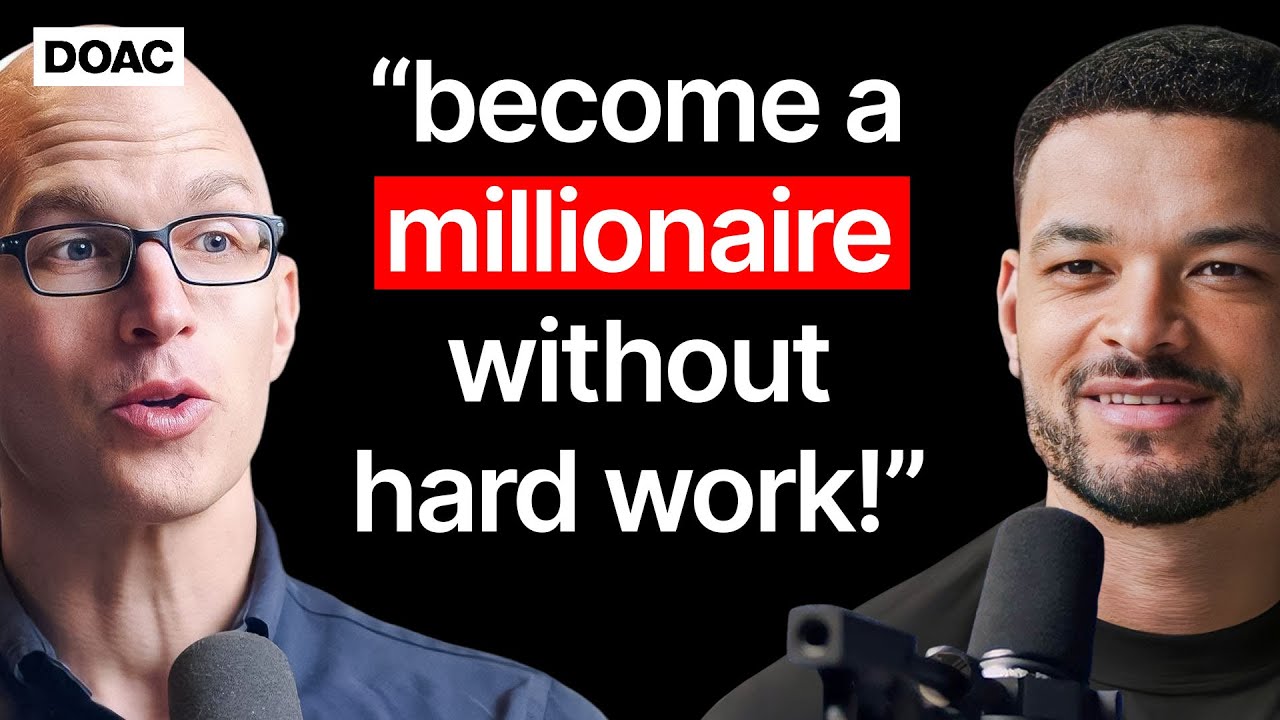
The Diary Of A CEO
Formal business degrees fail to drive executive success compared to mastering five core operational functions through low-cost trial and error.
AI-assisted summary of Entrepreneurship Expert: How To Build A $1m Business Without Hard Work! — original source. Check the original for full context.
Source published:
Detailed notes
## Background This episode was published by The Diary Of A CEO on YouTube on July 15, 2024. According to the page description, business expert and best-selling author Josh Kaufman shares core lessons from his book 'The Personal MBA' to teach viewers everything covered in a traditional business degree while saving them significant time and money.
## TL;DR Josh Kaufman breaks down the five core pillars of every business—Value Creation, Marketing, Sales, Value Delivery, and Finance—and explains why formal MBAs are often unnecessary for practical success. He highlights strategies for testing market demand through rapid experimentation, overcoming customer friction, and positioning products using basic human drives. Kaufman also dismantles the 10,000-hour rule, offering a 20-hour framework for rapid skill acquisition and deconstructing complex systems using Gall's Law.
## Atmosphere & style The conversation is pragmatic, intellectually engaging, and deeply educational, striking a balance between high-level strategic thinking and straightforward, actionable advice. Host Steven Bartlett and Josh Kaufman share an analytical yet accessible chemistry, using real-world case studies and vivid analogies to demystify business jargon. The interview feels empowering and grounded, transforming intimidating corporate principles into intuitive rules of human psychology and simple arithmetic.
## Key takeaways - [00:00](https://www.youtube.com/watch?v=kxLmeUIXXtU&t=0s) Every business consists of five core, non-negotiable components: Value Creation, Marketing, Sales, Value Delivery, and Finance. - [10:30](https://www.youtube.com/watch?v=kxLmeUIXXtU&t=630s) Academic research shows no direct correlation between holding an MBA and long-term executive career success, making self-education a viable alternative to costly degrees. - [14:19](https://www.youtube.com/watch?v=kxLmeUIXXtU&t=859s) Building a business earning $10,000 a month relies on simple arithmetic and human psychology rather than overly complex strategies. - [21:53](https://www.youtube.com/watch?v=kxLmeUIXXtU&t=1313s) Genuine demand validation requires financial commitment, such as swiped credit cards or pre-orders, rather than verbal interest. - [39:11](https://www.youtube.com/watch?v=kxLmeUIXXtU&t=2351s) Founders must distinguish between 'playing business' (surface-level signaling like logos) and 'doing business' (testing core operational functions to drive revenue). - [42:35](https://www.youtube.com/watch?v=kxLmeUIXXtU&t=2555s) Effective marketing appeals directly to core human drives (Acquire, Bond, Learn, Defend, Feel) and leverages emotional positioning rather than technical specifications. - [48:23](https://www.youtube.com/watch?v=kxLmeUIXXtU&t=2903s) Brand devotion can be built by taking bold, unconventional positions or courting focused controversy that forces clear target market affiliation. - [01:00:31](https://www.youtube.com/watch?v=kxLmeUIXXtU&t=3631s) Sales is the sole business pillar where money flows in, and long-term profitability is heavily driven by repeat customers due to lower acquisition costs. - [01:13:06](https://www.youtube.com/watch?v=kxLmeUIXXtU&t=4386s) According to the Iron Law of Market, existing competitors prove a viable paying audience exists, whereas entering a zero-category market incurs massive education costs. - [01:19:09](https://www.youtube.com/watch?v=kxLmeUIXXtU&t=4749s) Small business finance relies on tracking simple core metrics—monthly sales, cost of delivery, fixed overhead, and net profit—on a standard 30-day cycle. - [01:26:40](https://www.youtube.com/watch?v=kxLmeUIXXtU&t=5200s) Business success is directly tied to the speed and frequency of low-risk experiments, using unexpected market feedback as strategic data. - [01:34:55](https://www.youtube.com/watch?v=kxLmeUIXXtU&t=5695s) Gall's Law states that all effective complex systems evolve from simple working systems; complex systems designed from scratch inevitably fail. - [01:39:06](https://www.youtube.com/watch?v=kxLmeUIXXtU&t=5946s) Acquiring functional competence in a new skill takes roughly 20 hours of focused practice, contrasting with the 10,000 hours required for elite mastery. - [01:50:55](https://www.youtube.com/watch?v=kxLmeUIXXtU&t=6655s) Pre-committing to 20 hours of deliberate practice helps learners overcome the initial emotional frustration barrier and feeling of incompetence. - [01:55:24](https://www.youtube.com/watch?v=kxLmeUIXXtU&t=6924s) Removing environmental and physical friction makes deliberate practice far more seamless and consistent.
## Detailed walkthrough Here is a detailed, faithful walkthrough of the transcript section.
---
[00:00](https://www.youtube.com/watch?v=kxLmeUIXXtU&t=0s) Intro and The 5 Fundamental Parts of Every Business
Every business—from the smallest startup to the largest corporation in the world—is built upon five fundamental parts. Whether you are aiming to start a company, interviewing for your first job, or striving for a major promotion, understanding these five core components acts as a "superpower." Josh Kaufman, world-famous business expert and best-selling author of *The Personal MBA*, outlines this framework as the universal foundation of every business plan that has ever existed or ever will exist:
* **Step 1: Value Creation** – Finding important unmet needs and focusing on how to meet them, answering whether a problem is severe enough for people to pay money to solve. * **Step 2: Marketing** – Hooking into core human drives to make a business offer attractive. * **Step 3: Sales** – Converting interest into financial transactions. * **Step 4: Value Delivery** – Fulfilling the promises made to paying customers. * **Step 5: Finance** – Ensuring the business brings in more money than it spends to make the effort worthwhile.
The discussion also previews Kaufman’s perspective on skill acquisition, challenging the widespread narrative that mastering a skill requires 10,000 hours. Kaufman argues that basic mastery actually takes just **20 hours**—or about **40 minutes a day for a month**.
* *Podcast Channel Note:* Host Steven Bartlett shares an update on *The Diary Of A CEO* listener analytics: the percentage of regular listeners who are unsubscribed has dropped from **69%** down to **63%**, with an ultimate target goal of reaching **50%**.
---
[02:00](https://www.youtube.com/watch?v=kxLmeUIXXtU&t=120s) Why Did You Write *The Personal MBA*?
Josh Kaufman was motivated to write *The Personal MBA* out of personal necessity, curiosity, and persistence. Immediately following his undergraduate studies, Kaufman landed a role at a major corporation where he found himself working alongside graduates from top 15 business school programs. Admitting he "had no idea what I was doing," Kaufman sought out a single foundational book—assuming a business school professor from the 1950s must have already written it—that could clearly explain what business is, how it works, and what matters.
After spending months scouring categories and finding that no such master text existed, Kaufman realized he needed to create it himself. What began as a post-undergrad side project transformed into a second full-time job focused on reading, research, and synthesizing the core mechanics of business into a accessible reference for others. *The Personal MBA* has since sold nearly **1,000,000 copies** worldwide.
---
[04:32](https://www.youtube.com/watch?v=kxLmeUIXXtU&t=272s) What Is an MBA?
An MBA (Master of Business Administration) is historically one of the most economically successful academic degrees, driven by an explosion in graduate business programs globally over recent decades. When adults decide to learn business, their immediate impulse is often to search Google or Amazon for graduate programs. Kaufman views this academic-first approach as a mistake, arguing that formal academia is not required to acquire practical business acumen.
The primary goal of *The Personal MBA* is to teach business to someone starting from "absolute Square zero"—with zero prior experience or knowledge—by detailing every component of a business and how they interrelate.
---
[06:09](https://www.youtube.com/watch?v=kxLmeUIXXtU&t=369s) The Practical Outcomes of Business Knowledge
Gaining a foundational understanding of business provides tangible advantages for early-career professionals and candidates seeking management promotions. Kaufman shares an example of a friend trained as an engineer who was interviewing for a managerial role. Terrified of being asked how to improve the business, she spent 15 minutes reviewing Kaufman's core framework. By breaking the complex organization down into fundamental processes, she aced her interview the following day and was offered the position.
Understanding business systematically equips anyone to evaluate an enterprise by asking five core operational questions: 1. How is this business creating value? 2. How does it attract the attention of potential customers? 3. How does it convince people to pull out their wallet, checkbook, or credit card? 4. How does it deliver the promised value to paying customers? 5. Is it bringing in more money than it spends, and is that profit sufficient to justify the time, energy, and effort invested?
Executives, business owners, and hiring managers actively look for employees who can "think like an owner or an operator" rather than just a specialist.
---
[10:30](https://www.youtube.com/watch?v=kxLmeUIXXtU&t=630s) Should You Do an MBA?
Whether a traditional MBA is worth the investment depends entirely on an individual's career goals. Approximately **two-thirds of business school graduates** enter either management consulting or investment banking, while the vast majority of the remainder join massive corporate conglomerates. For these specific career paths, a business school degree operates as buying an expensive interview for entry into elite corporate pipelines.
However, the financial trade-offs are steep: * Top 10 business schools currently charge between **$240,000 and $250,000** for a two-year program. * Unless sponsored by an employer, these programs are primarily financed with personal debt that persists regardless of career satisfaction or economic downturns. * Academic research shows no direct correlation between holding an MBA and long-term career success. Kaufman cites a landmark study by Stanford professors Jeffrey Pfeffer and Christina Fong, which concluded that business degrees do not dictate executive outcome. As Pfeffer famously summarized: *"If you are good enough to get in, you are good enough to do well regardless."*
---
[14:19](https://www.youtube.com/watch?v=kxLmeUIXXtU&t=859s) How Difficult Is Starting and Running a Business?
For corporate employees hesitant to launch their own venture, Kaufman asserts that building a business earning **$10,000 a month** is entirely achievable for most people. The primary barrier is often the false belief that business is inherently complicated.
Kaufman distinguishes between complexity and complication: * Business is **complex** because it involves many moving parts—human psychology, operational systems, and financial interdependencies. * Business is **not complicated** because its underlying principles rely on common sense and simple arithmetic.
In many corporate environments, professionals intentionally signal status or sophistication by overcomplicating concepts. In reality, successful entrepreneurs simply need to understand how human psychology and operational systems interact to reliably solve problems for others.
---
[16:57](https://www.youtube.com/watch?v=kxLmeUIXXtU&t=1017s) First Steps to Setting Up a Business
When conceptualizing a new business—such as a venture selling handmade candles—the starting point must always be **Step 1: Value Creation**. Rather than starting with the product alone, the entrepreneur must examine the underlying human motivation behind the purchase.
When designing a candle business, an entrepreneur must ask why a customer seeks out a candle in the first place. The value created stems from specific desires: * Making a room smell nice. * Aesthetic appeal and visual decor. * Fair pricing (avoiding feeling ripped off). * Product longevity and burn duration.
[18:18](https://www.youtube.com/watch?v=kxLmeUIXXtU&t=1098s) Trade-Offs in Value Creation and the Procter & Gamble Approach
Value creation in business ultimately hinges on managing trade-offs between competing priorities. The ideal product would offer every imaginable benefit and be completely free, but real-world execution requires deliberate choices. Success usually comes from identifying key consumer needs, selecting one or two to prioritize, and pushing those attributes to the extreme. For instance, a candle maker might engineer an exceptionally long-lasting, fragrant candle using high-end chemical processes, forcing them to charge a premium price. Alternatively, they could create inexpensive, mass-market candles and invest heavily in wide distribution network coverage.
Josh Kaufman learned these foundational dynamics during his early career working at Procter & Gamble (P&G). Consumer goods giants conduct rigorous, in-depth research to study how people interact with everyday items like paper towels or cleaning supplies. By observing people in their natural environments, asking precise questions, and testing how buyers make trade-offs—such as choosing between a candle's burn time versus its scent quality—businesses uncover the subtle details that drive real purchasing decisions.
- **Trade-Off Optimization**: Companies cannot maximize every dimension (e.g., cheap, high quality, immediate delivery); they must pick 1–2 focus areas and execute them exceptionally well. - **Observational Research**: Directly observing human behavior provides deep insight into implicit needs that consumers rarely express in standard surveys.
[21:53](https://www.youtube.com/watch?v=kxLmeUIXXtU&t=1313s) Uncovering Psychological Needs: Pre-Orders and Liquid Laundry Detergent
A major risk in new product development is the gap between what people say they want and how they actually spend money. In pitch settings like *Dragons' Den* (or *Shark Tank* in the US), entrepreneurs often report that their friends and family love their idea and promised to buy one. However, nominal support from loved ones holds no financial weight. To validate an offer, founders must seek an authentic buying signal: early pre-orders, credit card commitments on crowdfunding platforms like Kickstarter, or formal letters of intent (LOIs) from corporate clients.
``` ┌────────────────────────┐ │ Customer Feedback │ │ (Surveys / Promises) │ └───────────┬────────────┘ │ "I would buy this!" ▼ ┌────────────────────────┐ │ Conflict with Behavior │ ◄── Focus on action, └───────────┬────────────┘ not stated words │ ▼ ┌────────────────────────┐ │ True Buying Signal │ │ (Pre-Order / Money) │ └────────────────────────┘ ```
Observing actual human actions over stated intentions frequently reveals unmet psychological needs. Kaufman shares a classic P&G consumer study where a researcher observed a woman running laundry with powdered detergent. She filled the tub halfway and manually swished the powder in the water with her hand to ensure it dissolved before adding clothes. While P&G chemists dismissed her concern using test data showing the powder dissolved fully on its own, consumer researchers recognized her underlying psychological need for reassurance. This insight directly led to the development of liquid laundry detergent—now a multi-billion dollar category.
- **Valid Validation Signals**: Pre-orders, credit card authorization, Kickstarter pledges, and signed B2B Letters of Intent (LOIs). - **Behavior vs. Words**: When a user's verbal statements contradict their physical actions, always prioritize their behavior. - **Cold Throw in Candles**: A candle's scent profile when unlit (cold throw) is often the primary factor driving buyer purchasing decisions in stores.
[27:50](https://www.youtube.com/watch?v=kxLmeUIXXtU&t=1670s) Spotting Opportunity in Friction and Real-World Examples
Most business opportunities hide in plain sight as subtle friction points, annoyances, or suboptimal habits that people accept as inevitable. Rather than trying to invent an abstract idea out of nowhere, prospective entrepreneurs should go into the world with heightened awareness—journaling daily frustrations, noticing inefficiencies, and questioning status-quo experiences. Major business innovations, such as Amazon Prime's push for friction-free delivery, stem from removing user friction.
``` ┌─────────────────────────────────────────────────────────┐ │ Identifying Business Ideas │ ├─────────────────────────────────────────────────────────┤ │ 1. Track Personal & Daily Frustrations │ │ 2. Observe Inefficiencies in Others' Routines │ │ 3. Question Status-Quo Assumptions │ │ 4. Design Prototypes to Test Critical Assumptions │ └─────────────────────────────────────────────────────────┘ ```
During the interview, a practical example unfolds in the studio: the host notes that before recording every episode, his producer warns guests not to tap the table because the vibrations travel up the Shure SM7B microphone stands. Despite running the podcast for years, they treated it as an unchangeable reality. The host realizes an entrepreneurial team would design a specialized isolation setup to fix it. The producer reveals he actually tried building a custom suspension rig using rubber bands, but the prototype failed to eliminate the low-frequency rumble. This live demonstration underscores Kaufman's point on testing critical assumptions through low-fidelity prototypes before committing resources.
- **12 Forms of Value**: Described in *The Personal MBA*, value can take forms such as physical products, services, shared resources, or subscriptions. - **Prototyping Framework**: Early-stage venture design involves stating core technical and market assumptions, creating simple prototypes to test them, and rapidly iteration or discarding non-viable paths.
[35:32](https://www.youtube.com/watch?v=kxLmeUIXXtU&t=2132s) Validating Demand and Idea Testing
Josh Kaufman explains that developing products is an iterative, experimental, and failure-ridden process that every business must undergo. A common pitfall for aspiring entrepreneurs is giving up after their very first attempt fails, rather than analyzing supply and demand mechanics. When determining whether an idea is viable, founders must ask themselves how big and urgent the problem is, how many people suffer from it, and whether customers are willing to spend money—potentially thousands of dollars—to solve it.
To figure out if a market is large enough, founders must talk directly to potential customers to identify shared pain points. However, verbal statements of interest are not enough to validate a business idea. True validation occurs when customers demonstrate financial commitment, such as placing a pre-order.
``` Idea Validation Workflow: [Identify Shared Problem] ➔ [Gather Customer Interest] ➔ [Request Pre-Orders / Swipes] ➔ [Run Small Batch Production] ```
- **The Intercom Rule:** Kaufman quotes Des Traynor, co-founder of Intercom: "Show me a credit card that has been swiped to solve this problem, and I will concede that the problem is real." - **Pre-Order Validation Strategy:** Before spending capital to build out a new product, creators should set up a waiting list and see if a few hundred target customers will pre-order it with a credit card swipe. - **Risk Mitigation:** Once pre-orders confirm real demand, run a small initial production batch to collect customer feedback before scaling up to larger manufacturing batches.
---
[39:11](https://www.youtube.com/watch?v=kxLmeUIXXtU&t=2351s) "Doing Business" vs. "Playing Business"
Kaufman criticizes the traditional startup approach where founders raise funding—such as $70,000—and spend two to three years preparing for a massive "launch day" where everything rides on one moment. He draws a sharp distinction between "doing business" and "playing business." Playing business consists of signaling actions—like picking out a logo or ordering glossy business cards—which roleplay entrepreneurship without validating whether the venture can generate revenue.
The core of actual business consists of five interdependent components: Value Creation, Marketing, Sales, Value Delivery, and Finance. Entrepreneurs should skip surface-level startup fluff and immediately test the core elements that determine success or failure. Minimizing the time and capital spent during early validation prevents the worst-case scenario: spending millions in venture capital to build something that no one actually buys.
---
[40:49](https://www.youtube.com/watch?v=kxLmeUIXXtU&t=2449s) The Generative Nature of Value Creation
Value creation is the indispensable first step in building a business; without providing genuine value to others, a company does not exist. Kaufman states that any entity marketing and selling something that delivers no real value is fundamentally a scam. He views a well-functioning business as a generative, beautiful act that systematically makes the world better.
> "A venture that markets and sells something that does not deliver value to other people is a scam... A well-running, working business system is a thing of beauty: you're solving people's problems, you're being rewarded for it... and it makes your life better in the process."
---
[42:35](https://www.youtube.com/watch?v=kxLmeUIXXtU&t=2555s) Marketing and the Five Core Human Drives
Marketing is the process of attracting the attention of prospective customers who might be interested in your value proposition and making them curious to learn more. While people often conflate marketing and sales, Kaufman treats them as distinct functions: marketing attracts attention and generates interest, whereas sales convinces someone to buy and converts them into a paying customer.
Effective marketing relies on understanding human psychology. Kaufman references the book *Drive* by Paul Lawrence and Nitin Nohria (former Dean of Harvard Business School), which outlines four fundamental human drives, to which Kaufman adds a fifth:
| Core Drive | Target Need / Focus | Real-World Product Examples | |:--- |:--- |:--- | | **Drive to Acquire** | Obtaining physical goods, wealth, or status | Footwear, professional tools, career advancement | | **Drive to Bond** | Relationships, group identity, and belonging | In-group brand communities, social networks | | **Drive to Learn** | Satisfying curiosity and understanding the world | Educational platforms, iPads, books | | **Drive to Defend** | Protecting oneself, loved ones, and property | Home security systems, end-to-end data encryption | | **Drive to Feel** | Experiencing emotions and seeking entertainment | Movies, music, immersive brand experiences |
- **Multi-Drive Hooking:** The more core drives an offer taps into, the more compelling the product becomes to potential buyers. - **Social Media's Growth:** Kaufman argues social media blew up over the past decade because it successfully hooks into four—if not all five—of these underlying drives simultaneously. - **Apple Case Study:** Apple targets the drive to *acquire* (status products), *bond* (connecting people), *learn* (education on devices like iPads), *defend* (strong focus on user privacy and security), and *feel* (narratives built around memory preservation, such as spatial video on the Vision Pro). - **The Original iPod Launch:** Apple intentionally skipped technical specs like gigabytes of storage in early iPod ads—featuring iconic dancing silhouettes—to sell pure emotion: "1,000 songs in your pocket."
---
[48:23](https://www.youtube.com/watch?v=kxLmeUIXXtU&t=2903s) Emotional Hooks and Unconventional Branding
While an ideal product is both logically superior and emotionally compelling, emotional resonance often carries a business much further than incremental product features. Traditional commodities like candles have not seen fundamental technical breakthroughs in centuries, yet they sell continuously through scent, aesthetic packaging, unboxing experiences, and the social pride of displaying them during a dinner party.
A modern example of pure emotional positioning is **Liquid Death**, a company that built a billion-dollar business selling canned water by leveraging brand identity and group affiliation over the product itself. Rather than buying traditional bottled water like Evian or Fiji, consumers buy Liquid Death to signal a specific lifestyle or edge.
- **Antithesis Strategy:** In crowded markets—such as energy drinks or bottled water—new entrants succeed by positioning themselves as the stark antithesis of market leaders, creating an "either/or" choice for the consumer. - **The Perfect Ted Example:** Host Steven Bartlett shares his investment in the matcha energy drink brand *Perfect Ted*, noting its positioning relies on forcing a identity distinction so customers feel they cannot simultaneously identify with traditional energy drink incumbents.
[53:19](https://www.youtube.com/watch?v=kxLmeUIXXtU&t=3199s) Counter-Signaling, Social Status, and the Power of Controversy
The discussion opens with the strategic power of taking a bold stance against the established status quo in a market. Brands that make a breakout impact—such as BrewDog or Liquid Death—do so by explicitly defining what they stand against. BrewDog entered the UK market as an "Indie Punk" beer, going so far as to take traditional Carling beers out to a field and blow them up with dynamite to declare that they were not a commoditized product. They presented consumers with a stark binary choice: you are either with them or against them.
``` Mass Adoption Cycle: [High-Status Innovators] ──> [Early Followers] ──> [Mass Retailers] ──> [Counter-Signaling Shift] ```
This dynamic is rooted in the deep psychological mechanisms of social signaling and counter-signaling that govern human status and fashion cycles: * **Group Affiliation:** High-status, fashionable individuals adopt a style or product to signal membership in an exclusive group ("we are the type of people who wear this"). * **Mass Adoption:** Early followers observe the trend and copy it to look cool. Within a few cycles, the item reaches mass-market retailers like Target or Marks & Spencer. * **Counter-Signaling:** Once the mainstream adopts the trend, high-status individuals deliberately abandon it and switch to its antithesis specifically to signal that they are not part of the mass market.
A classic corporate example of counter-signaling is Apple's famous "1984" Super Bowl commercial. Rather than competing on technical specifications, Apple used pure emotion to position itself as the polar opposite of the dominant, faceless, "beige computer box" corporations like Microsoft and IBM.
While taking a controversial stance requires guts because there is no established blueprint for doing the exact opposite of an industry norm, courting focused, responsible controversy generates enormous marketing energy. As Jane Wurwand, founder of Dermalogica, put it during her appearance on the podcast: *"We need to piss off the 80% to get to the 20%."* A true brand must make people feel something rather than trying to appeal to everyone.
- **Hyper-Responders:** Effective marketing aims to capture the small fraction of consumers who care deeply about a category rather than trying to convert apathetic masses who will never spend money with you. - **Polarization as a Strength:** Having people hate or ignore your product is not a failure; it is proof that your offering is distinctive enough to trigger extreme devotion from your target audience.
---
[58:39](https://www.youtube.com/watch?v=kxLmeUIXXtU&t=3519s) First Principles of Marketing: Human Attention in a Noisy World
When asked how to become an exceptional marketer for the next 30 to 40 years regardless of changing tactics or platforms, Josh Kaufman points directly to the fundamental principles of human psychology and attention. Marketers often get distracted by "the fish" (temporary tactics, algorithms, and channels) instead of mastering "the fishing rod" (the core mechanics of human attention).
Most consumers go through their daily lives stressed, overwhelmed, busy, and bombarded by information from every direction. The primary skill of marketing is cutting through that mental noise by highlighting the most important, interesting, and valuable aspect of an offering upfront and quickly.
- **The Overwhelmed Consumer:** Effective marketing respects that attention is the scarcest resource; it immediately communicates value before the prospect tunes out. - **Tactics vs. Fundamentals:** While specific strategies depend on scale and industry, capturing and holding human attention remains the immutable foundation of all marketing.
---
[01:00:31](https://www.youtube.com/watch?v=kxLmeUIXXtU&t=3631s) The Sales Process and the Immense Value of Repeat Customers
Moving to the third pillar of his five-step business framework, Kaufman highlights **Sales**. While Value Creation, Marketing, Value Delivery, and Finance represent areas where money flows *out* of a business to cover expenses and analysis, Sales is uniquely critical because it is the exact point where money flows *into* the company.
| Pillar | Cash Flow Direction | Core Focus | |:--- |:--- |:--- | | **Value Creation** | Outflow (Expense) | Developing products & solving problems | | **Marketing** | Outflow (Expense) | Generating attention & interest | | **Sales** | **Inflow (Revenue)** | Converting interest into transaction | | **Value Delivery** | Outflow (Expense) | Fulfilling promises & delighting buyers | | **Finance** | Outflow/Management | Tracking margins, capital & allocation |
Sales intersects with marketing to make an offer compelling enough for someone to hand over money, but it also intersects heavily with Value Delivery. A transaction should not be viewed merely as acquiring a customer, but as creating a happy, satisfied customer who feels thrilled about their purchase and intends to buy again.
The initial sale is almost always the most difficult and expensive to make because of customer acquisition costs. Repeat customers are the most profitable asset a business can cultivate because: 1. They already know your brand exists and trust your quality. 2. You do not need to spend significant money to capture their attention a second time. 3. They drive organic growth through word-of-mouth recommendations to peers.
To illustrate the financial impact of **Lifetime Value (LTV)**, Kaufman compares two hypothetical candle buyers:
$$\text{Annual Value} = \text{Purchases per Year} \times \text{Profit per Unit}$$
- **Jack:** Burns 7 candles a year. At a $1 profit per candle, Jack generates **$7 in profit per year**. - **Jill:** Burns 1 candle every week (52 candles a year). At a $7 profit per candle, Jill generates **$364 in profit per year**.
Customer service should never be treated as an annoying cost center or a nuisance. Post-sale support and customer reactivation campaigns—such as reaching out to past buyers with a simple "Would you like to reorder this year?"—are among the highest-ROI activities a business can run, provided the original experience was positive.
---
[01:06:09](https://www.youtube.com/watch?v=kxLmeUIXXtU&t=3969s) Features vs. Benefits and Mental Simulation
A central framework for closing sales effectively is understanding the distinction between **Features** and **Benefits**:
* **Features:** The technical specifications, ingredients, or mechanics of a product (e.g., "This candle is made from 100% soy wax"). * **Benefits:** The underlying emotional or functional outcomes that satisfy core human desires (e.g., "A clean-burning, non-toxic atmosphere that makes your home smell incredible").
If a business mentions features at all, they should only be used as **"reasons to believe"** that the promised benefits will actually be delivered. For example, Steve Jobs did not market the original iPod by focusing on its "1-gigabyte hard drive" (the feature); he marketed it as **"1,000 songs in your pocket"** (the benefit).
``` [Feature: 1GB Hard Drive] ──(Reason to Believe)──> [Benefit: 1,000 Songs in Your Pocket] ```
This works because of human **neurology and mental simulation**. Before making a purchase decision, human brains naturally run a internal simulation of what their future life will look like if they own the product. When buying a car, for instance, a buyer test-drives it and mentally projects pulling into their driveway, imagining how neighbors will view them.
- **The Primary Objective in Sales:** Get the prospect into the "driver's seat" (literally or figuratively) as quickly as possible so their brain begins simulating ownership and persuading itself. - **Storytelling in Business:** Narrative structure works powerfully in sales because it engages the brain's predictive engine, allowing the buyer to anticipate and get excited about a positive future outcome.
<ElicitationsGroup message="To take this further:"> <Elicitation label="Explore the 5 core functions of business" query="What are the 5 core functions of every business according to The Personal MBA?"/> <Elicitation label="Learn about customer acquisition cost vs LTV" query="Explain the balance between Customer Acquisition Cost (CAC) and Lifetime Value (LTV) in modern business models."/> </ElicitationsGroup>
[01:10:39](https://www.youtube.com/watch?v=kxLmeUIXXtU&t=4239s) Principles of Hiring and Organizational Design
When considering what employees actually do in a company, the fundamental rule is to hire people who are curious, engaged, excellent communicators, and fully bought into the overarching mission, vision, and long-term objectives of the organization. A leader must clearly state what the company is doing, why it matters, who is being served, and how the team plans to achieve its goals. From there, every single employee should focus on one or more of the five essential parts of business: Value Creation, Marketing, Sales, Value Delivery, and Finance. In an ideal world, every team member understands all five components and grasps how they interrelate—such as how a change on the marketing side directly impacts value delivery or customer service down the line.
Once these pieces are established, the next core questions revolve around organizational scale and management structure: how large must the business grow to maximize long-term customer value, and what level of internal organization allows employees to spend maximum time on actual business output while minimizing overhead? Good management exists to eliminate friction and remove operational barriers for skilled workers so they can concentrate on high-value tasks. Citing Herb Kelleher, the legendary co-founder of Southwest Airlines, the ideal framework remains: "Hire for attitude, train for skill."
- **The 5 Core Business Systems:** Value Creation, Marketing, Sales, Value Delivery, and Finance. - **Role of Management:** Remove administrative barriers and bureaucratic friction to keep skilled employees focused on core value drivers. - **Hiring Philosophy:** "Hire for attitude, train for skill" (Herb Kelleher).
---
[01:13:06](https://www.youtube.com/watch?v=kxLmeUIXXtU&t=4386s) The Role of Competition and "The Iron Law of Market"
When starting a hypothetical business—such as a direct-to-consumer candle brand—entrepreneurs often worry about whether their ultimate success will depend on raw intelligence, team building, company culture, vision, or product design. The truth is that hiring strategy varies wildly depending on the specific model. Running a small DTC candle brand with an online store and lightweight fulfillment center requires a lean staff. Conversely, building a mass-market candle manufacturing facility with retail distribution pipelines demands a vastly larger, specialized workforce. Hiring must be matched precisely to operational needs—and nothing more.
``` ┌─────────────────────────────────────────┐ │ THE IRON LAW OF MARKET │ └────────────────────┬────────────────────┘ │ ┌──────────────────────────┴──────────────────────────┐ ▼ ▼ ┌───────────────────────┐ ┌───────────────────────┐ │ Existing Markets │ │ Zero-Category Space │ ├───────────────────────┤ ├───────────────────────┤ │ • Validated demand │ │ • No built-in demand │ │ • Established buyers │ │ • High education cost │ │ • Room for innovation │ │ • Severe failure risk │ └───────────────────────┘ └───────────────────────┘ ```
When prospective founders ("sofa-preneurs") discover during market research that competitors already exist, they frequently give up, believing there is no money left to be made. This is a fundamental mistake. The existence of competing businesses is actually a healthy sign governed by "The Iron Law of Market"—a concept popularized by Marc Andreessen stating that markets that do not exist do not care how smart you are. Existing competitors prove that a paying audience already exists. Entering a totally unproven, zero-category space requires massive capital and effort spent educating consumers on a problem they may not even care about.
A classic illustration of this trap is the hype surrounding Dean Kamen's invention of the Segway. Teased in media profiles as a mystery innovation that would fundamentally revolutionize city planning, the product launched to extreme anticipation. However, it quickly floundered because consumers simply had no desire to buy a $10,000 alternative to walking or riding a bicycle. Conversely, brands like Liquid Death demonstrate how entering a massive, heavily crowded market (canned water) with a unique brand voice and distinct positioning can yield incredible commercial success.
- **The Iron Law of Market:** Market demand always trumps talent or product brilliance; non-existent markets cannot be forced. - **Segway Example:** The self-balancing scooter flopped commercially because consumer demand for a $10,000 alternative to walking did not exist, despite extreme pre-launch hype. - **Liquid Death Example:** Proves that entering an established category with an unconventional, bold brand identity is often far safer and more lucrative than creating a totally new category.
---
[01:17:45](https://www.youtube.com/watch?v=kxLmeUIXXtU&t=4665s) Learning From Competitors to Find Your Unique Take
Instead of attacking or attempting to block competitors, new business owners should actively buy from them and become their customers. By purchasing every competing product in a niche—such as buying every candle on the market, burning them, smelling them, and displaying them on a shelf—a founder can conduct deep, practical competitive research. Deconstructing packaging, analyzing price points, studying online ad campaigns, and observing fulfillment methods provides a clear map of industry standards.
> "Buy from them, become their customer... deconstruct their packaging, look at their price points, where are they selling, how are they doing their online advertising... all that market research is free."
Except for the cost of buying the actual products, this competitive research is virtually free. When combined with direct customer interviews and personal experimentation, analyzing competitors allows a founder to inject their own taste, branding, and strategic twist into an already proven business model.
- **Competitive Research Steps:** - Purchase and test competitor products directly. - Deconstruct packaging, labeling, and product presentation. - Track pricing strategies, sales channels, and digital ad funnels. - Pair competitor insights with direct customer feedback to establish a unique market positioning.
---
[01:19:09](https://www.youtube.com/watch?v=kxLmeUIXXtU&t=4749s) Demystifying Small Business Finance and Math
Launching a business requires evaluating costs against projected returns across every functional area: product manufacturing, packaging, customer service, and marketing. Finance provides a systematic framework for making trade-offs and managing monetary decisions. For early-stage startups, understanding runway—the number of months a business can survive based on its cash reserves and burn rate—is critical to avoiding sudden insolvency.
``` ┌────────────────────────────────────────────────────────────────────────┐ │ MONTHLY CASH FLOW MODEL │ ├────────────────────────────────────────────────────────────────────────┤ │ Gross Monthly Revenues (Product/Service Sales) │ │ - Cost of Goods Sold (Materials, Manufacturing, Direct Shipping) │ │ - Variable Marketing & Sales Expenses │ │ - Fixed Overhead (Rent, Software Subscriptions, Salaries, Utilities) │ │ ──────────────────────────────────────────────────────────────────── │ │ = Net Profit (Actual Cash Retained) │ └────────────────────────────────────────────────────────────────────────┘ ```
Many aspiring entrepreneurs avoid launching because they fear complex mathematics or harbor negative experiences with math in school. However, core business finance relies almost entirely on basic arithmetic: addition, subtraction, multiplication, and division. Even ultra-successful entrepreneurs have admitted to lacking traditional financial training. For instance, Sir Richard Branson famously revealed that he was in his fifties—and running one of Europe's largest business empires—before a colleague drew a visual diagram of a fishing net in the ocean to clarify the exact difference between gross and net profit.
At its core, calculating financial viability requires tracking a few simple components: product selling price minus manufacturing, marketing, and delivery costs equals unit profit. Adding up fixed monthly operating expenses—software subscriptions, office space, utilities, processing fees, and salaries—gives the total cost of keeping the business alive. Amortization simply involves spreading large, lump-sum capital investments over monthly budget allocations to track ongoing financial health accurately.
- **Richard Branson's Net Profit Story:** Branson ran the Virgin Group for decades before a fellow director explained net profit using an analogy of fish retained inside a fishing net. - **Core Financial Formula:** Selling Price - (Cost of Goods + Marketing Costs + Delivery Costs) = Unit Margin. - **Fixed Monthly Expenses:** Software costs (e.g., G Suite, e-commerce platforms, payment processing), utilities, rent, and base salaries.
---
[01:24:17](https://www.youtube.com/watch?v=kxLmeUIXXtU&t=5057s) Key Metrics for Early-Stage Sustainability
In the early stages of a business, tracking a massive dashboard of complicated metrics is counterproductive. A founder must focus on one central objective: reaching baseline financial sustainability so the business can keep its doors open. The critical operational rhythm revolves around monthly figures because modern overhead expenses (subscriptions, rent, utilities) operate on monthly cycles.
To evaluate long-term viability, founders should monitor four core financial indicators:
1. **Monthly Sales Numbers:** Total revenue generated from product sales or service fees. 2. **Cost of Delivery:** Total variable expenses required to manufacture, fulfill, and ship those sales. 3. **Monthly Fixed Overhead:** Total recurring costs required to keep the business operational (software, utilities, rent, administrative fees). 4. **Net Profit:** The actual funds retained after all variable delivery costs and fixed overhead are deducted.
If an entrepreneur spends 80 hours a week running a candle business and ends the month with only $5 in net profit, the business may technically be profitable, but it is practically unsustainable. Founders must determine their target net profit—the dollar figure that justifies their time and fits their lifestyle requirements—and prioritize reaching that threshold before making larger strategic investments.
- **Primary Financial Target:** Achieving a net profit level that covers personal living requirements and makes the effort long-term sustainable. - **Expense Cycles:** Focus accounting tracking on 30-day monthly windows to align with standard billing and subscription cycles.
---
[01:26:35](https://www.youtube.com/watch?v=kxLmeUIXXtU&t=5195s) The Power of Rapid Experimentation
Increasing the speed and frequency of experimentation directly correlates with an entrepreneur's overall rate of success. Rather than relying on rigid, unyielding master plans, treating a business as a continuous series of small, low-risk experiments allows founders to adapt rapidly as market conditions evolve.
``` ┌─────────────────────────────────────────────────────────┐ │ THE EXPERIMENTATION FEEDBACK LOOP │ └────────────────────────────┬────────────────────────────┘ │ ┌────────────────┴────────────────┐ ▼ ▼ ┌───────────────────────┐ ┌───────────────────────┐ │ Form Hypothesis │ │ Execute Cheap │ │ & Design Test ├────────►│ Experiment │ └───────────────────────┘ └───────────┬───────────┘ │ ┌─────────────────────────────────┘ ▼ ┌───────────────────────┐ ┌───────────────────────┐ │ Analyze Real-World │ │ Iterate & Refine │ │ Market Feedback ├────────►│ Strategy Fast │ └───────────────────────┘ └───────────────────────┘ ```
Embracing an experimental mindset removes the overwhelming psychological pressure of feeling like you must know the exact right answer in advance. It reframes business decisions as hypotheses to be tested, transforming unexpected market feedback from personal failure into valuable strategic data.
- **Core Benefit of Experimentation:** Removes the paralyzing pressure of needing to be right from day one. - **Operational Strategy:** Rapid, low-cost trials generate real-world data far faster than speculative planning.
[01:27:42](https://www.youtube.com/watch?v=kxLmeUIXXtU&t=5262s) The Explore/Exploit Trade-Off in Business and Life
People frequently conflate overconfidence with actual competence, even though human brains are essentially imperfect forecasting engines. Brains naturally collect information from past experience to predict what will happen next. However, when faced with a brand-new decision, the honest answer to whether something will work is always: "I don't know—let's find out." While running scenario analyses can help rule out obvious mistakes, relying solely on past knowledge neglects the critical insights gained through the process of making choices and learning from them in real time.
To navigate this uncertainty, Kaufman introduces a foundational mental model from computer science and decision theory: the **explore/exploit trade-off**. Originating in gambling research, the scenario asks you to imagine walking into a casino with 100 free slot machines, each with an unknown payout rate. To maximize your total winnings, you must first spend time in the **exploration phase**, trying various machines to gather data. As patterns emerge, you transition into the **exploitation phase**, spending most of your time playing the machines with the highest known payoffs. Crucially, optimal decision-making requires that the exploration phase never drops to zero; a small portion of time must always remain dedicated to testing new possibilities.
The duo emphasizes that early-stage entrepreneurship works the exact same way—it requires trying diverse strategies while systematically collecting performance data. Bartlett notes that many corporate teams make the mistake of trying new ideas without properly gathering feedback, cautioning that "failure is nothing without feedback." Kaufman agrees that trying a new initiative and closely observing the outcome is where all the value resides.
* **100 Slot Machines:** The classic gambling thought experiment used to explain how to balance gathering initial data with capitalizing on known high performers. * **Explore Phase:** The early period dedicated strictly to trying a wide variety of options and gathering feedback. * **Exploit Phase:** The subsequent period focused on doubling down on the highest-performing options discovered during exploration.
---
[01:32:43](https://www.youtube.com/watch?v=kxLmeUIXXtU&t=5563s) Testing Scents and Limiting Variables in Product Research
In a concrete application of the explore/exploit model, Kaufman and Bartlett analyze how to launch a new candle brand. At the start, an entrepreneur might produce 10 different scents in small batches to test customer response. Rather than relying on guesswork, the founder should combine quantitative sales data—seeing which scents spark immediate buying interest—with qualitative customer follow-ups asking granular questions, such as how the candle smelled both when cold and when lit.
Bartlett proposes taking this scientific testing even further before selling a single unit. He suggests taking 10 candle scents with blank labels and placing people in a pitch-black, sensory-deprivation environment to eliminate extraneous variables like color or aesthetic bias. Bartlett reveals that one of his portfolio companies, Huel, uses dedicated pitch-black sensory rooms at their headquarters for this exact purpose—inviting consumers into a zero-light environment to collect unbiased taste data. Kaufman validates this approach, emphasizing that running broad, controlled experiments early on drastically reduces downside risk before committing capital to massive production runs.
* **Quantitative vs. Qualitative Data:** Combining hard initial sales volume metrics with direct customer interviews about specific product attributes. * **Huel's Sensory Deprivation Testing:** The nutritional brand uses pitch-black testing rooms at headquarters to eliminate visual bias during product taste tests. * **Variable Reduction:** Stripping away visual branding and packaging during early testing phases to isolate pure product performance (e.g., smell or taste).
---
[01:34:55](https://www.youtube.com/watch?v=kxLmeUIXXtU&t=5695s) Gall's Law and the Danger of Over-Complication
Kaufman highlights a core system principle known as **Gall's Law**, which states that any complex system that works inevitably evolved from a simpler system that worked. Conversely, a complex system designed from scratch will never work and cannot be patched to make it work; you must start over with a simple working system. Applying this to business, Kaufman stresses that entrepreneurs shouldn't try to launch a massive, multi-national distribution empire on day one. Instead, they must build and refine the simplest functional version of the concept first.
Adding complexity early on creates unnecessary costs in terms of capital, time, and attention. Kaufman notes that founders often treat complexity as a vanity metric or status symbol to appear sophisticated, whereas real sophistication lies in keeping a business intentionally simple until added complexity earns its keep. Bartlett echoes this sentiment, pointing out that people wrongly assume adding features increases perceived value. He references the health-wearable company **Whoop** (where he is an investor and ambassador). When asked why Whoop doesn't add a clock display to the wristband, the founder explained that adding a watch face fundamentally shifts the consumer's frame of reference—transforming a dedicated health tracker into a fashion watch with an entirely different set of strict expectations.
> "Every additional bit of complexity needs to serve some sort of purpose to justify its costs—either direct cost or time, attention, opportunity cost."
* **Gall's Law Definition:** Complex, functional systems always evolve from simple, functional systems; complex systems built from scratch always fail. * **The Whoop Case Study:** Keeping a health tracker display-free prevents it from entering the competitive "wristwatch" mental frame in the consumer's mind. * **Complexity vs. Value:** Adding features often degrades product utility and confuses customer expectations rather than adding real value.
---
[01:38:09](https://www.youtube.com/watch?v=kxLmeUIXXtU&t=5889s) Sponsor Interlude: Shopify
Bartlett takes a moment to speak about podcast sponsor **Shopify**, contrasting how extraordinarily difficult it used to be to start a business with how accessible it is today. He highlights his personal experience using Shopify to launch and sell *The Diary Of A CEO Conversation Cards*, noting that the setup took only a few clicks. He praises Shopify's industry-leading checkout conversion rate and offers a promotional deal for listeners.
* **36% Higher Conversion:** Shopify's checkout system converts up to 36% better compared to competing e-commerce platforms. * **Special Offer:** Listeners can try Shopify for $1 per month by visiting `[shopify.com/bartlett](https://shopify.com/bartlett)`.
---
[01:39:06](https://www.youtube.com/watch?v=kxLmeUIXXtU&t=5946s) The First 20 Hours vs. The 10,000-Hour Rule
Transitioning to Kaufman's bestselling book *The First 20 Hours*, Bartlett brings up Kaufman's massively viral TED Talk on the subject. Kaufman reflects on why the talk struck such a global chord: everyone feels a deep desire to learn new skills, yet modern life leaves people with very little spare time. During his research for *The Personal MBA*, Kaufman uncovered psychological studies showing that the rate of learning and skill acquisition is at its absolute highest during the very beginning of the learning process. The returns on time and energy invested are steepest in those early hours.
Addressing the popular cultural belief in K. Anders Ericsson's **10,000-Hour Rule** (popularized by Malcolm Gladwell), Kaufman clarifies a major misconception. Ericsson's studies focused specifically on elite, competitive mastery in hyper-specialized fields—such as achieving top-chair violinist status in a world-class orchestra. Kaufman argues that most human beings do not need grand-master status; they simply want to become reasonably good at a new skill as quickly as possible. His research demonstrates that going from zero knowledge to noticeable competence requires only **20 hours of focused, deliberate practice**—roughly 40 minutes a day for a single month.
> "Your rate of improvement per unit of time and energy invested at the very beginning of learning something new is extremely high."
* **Viral TED Talk:** Kaufman's talk on rapid skill acquisition approached 40 million views globally. * **10,000 Hours vs. 20 Hours:** The 10,000-hour rule governs elite world-class *mastery*; 20 hours of deliberate practice achieves functional *competence*. * **Daily Investment Breakdown:** Achieving 20 hours of deliberate practice translates to roughly 40 minutes per day for one month.
---
[01:43:54](https://www.youtube.com/watch?v=kxLmeUIXXtU&t=6234s) Principles of Rapid Skill Acquisition
To demonstrate how to learn a new skill rapidly—whether it's running a business or DJing a set—Kaufman outlines key principles of rapid skill acquisition. The very first step is defining a specific, concrete **Deconstruct Target Performance Level**. A common mistake beginners make is setting overly broad, intimidating goals (such as "DJing a massive music festival" or "building a fortune 500 company").
Instead, learners must break the skill down into manageable, highly specific milestones. Bartlett shares his own experience learning to DJ, where his initial goal wasn't performing for a crowd, but simply learning how to transition smoothly from one specific song into another without it sounding terrible. Kaufman agrees that defining a hyper-focused, approachable outcome gives the brain a clear definition of success, making rapid practice far more effective.
* **Deconstructing Skills:** Breaking complex abilities down into small, isolated sub-skills that can be practiced independently. * **Target Performance Level:** Setting modest, clear, and realistic bounds on what "good enough" looks like before starting practice.
[01:45:29](https://www.youtube.com/watch?v=kxLmeUIXXtU&t=6329s) Deciding on a Concrete Goal and Deconstructing Skills
Josh Kaufman explains that the very first failure mode when attempting to learn something new is failing to decide on a specific, concrete goal. Most people choose a target that is far too vague or nebulous, which leaves them with nothing actionable to work with. Once a precise objective is set, the next step is recognizing that most complex capabilities are not single skills—they are bundles of smaller subskills that must be used in combination.
To illustrate this, Steven Bartlett uses his own experience learning to DJ. He admits DJing purists might laugh at his breakdown, but he notes that before even touching the decks, he had to learn about musical tempo (beats per minute) and musical keys (like A, B, or C) so songs could be blended harmoniously. He also had to understand the hardware and how dual audio tracks interact. In fact, Steven recalls that his first full hour of DJing lessons didn't involve touching equipment at all; it was entirely focused on music theory, sound structure, and understanding eight-bar loops. Kaufman notes that a great teacher provides huge value by helping you perform this deconstruction into subcomponents.
- **The First Failure Mode:** Choosing a nebulous, poorly defined goal instead of a concrete outcome. - **Skill Bundles:** Capabilities like DJing or public speaking are collections of smaller, intertwined subskills. - **Role of a Teacher:** Accelerates learning by breaking down a complex skill into its fundamental subcomponents.
---
[01:47:58](https://www.youtube.com/watch?v=kxLmeUIXXtU&t=6478s) Strategic Prioritization and Overcoming Research Paralysis
Once a skill is broken down into subcomponents, the next phase is researching which parts are most critical to focus on first and which can wait. For example, in music, understanding tempo and keys is foundational, whereas mastering complex hardware features or plugins can wait. Kaufman highlights that strategic, deliberate prioritization gives adult learners a distinct advantage: by exercising a bit of impulse control—like holding off on pushing buttons for a couple of hours to learn basic concepts—you discover the critical inflection points that yield massive improvements in a short period.
However, research itself carries a major trap. Kaufman admits that he loves research and often gets stuck in it, but warns that you must do *just enough* research to establish mental context, recognize what good versus bad execution looks like, and then immediately transition into focused, deliberate practice. Steven brings up a conversation with author Nir Eyal, who noted that humans are discomfort-avoiding creatures; when people procrastinate, it is usually because of emotional discomfort tied to the task. Steven shares an example of a close friend who delayed launching an online project for two years, hiding behind endless "research" because she felt incompetent in several key areas.
- **Adult Advantage:** Using deliberate strategy and impulse control to target high-reward inflection points first. - **The Research Trap:** Over-researching as a form of procrastination to avoid the discomfort of practice. - **Discomfort Avoidance:** Procrastination is rarely laziness; it is an emotional reaction to feeling incompetent.
---
[01:50:55](https://www.youtube.com/watch?v=kxLmeUIXXtU&t=6655s) Overcoming the Frustration Barrier with a 20-Hour Pre-Commitment
Adult learners face a massive barrier: a deep-seated fear of feeling foolish or looking incompetent. Kaufman references a study on artistic self-perception across the human lifespan. When young children are asked if they are artists, every single one enthusiastically says yes. But around middle school or junior high, self-consciousness sets in as people recognize the vast gap between their current ability and their desired ideal. Adults also suffer from comparison—not just to world-class masters like Tiger Woods, but to peers who seem to pick up a skill effortlessly, triggering an internal feedback loop of self-recrimination.
To push through this, Kaufman identifies the "frustration barrier"—the brutal emotional window spanning hours 1 through 10 of learning any new skill. During these early hours, nothing makes sense, self-consciousness is firing at full blast, and most people quit. The solution is a behavioral psychology technique called **pre-commitment**: committing in advance to complete at least 20 hours of focused practice no matter how uncomfortable, frustrating, or terrible it feels.
> "Making a pre-commitment that no matter what, I'm going to spend 20 hours doing this thing... I care about this thing that I want to learn enough that I'm going to invest at least 20 hours of my life figuring out if this works for me."
- **The Frustration Barrier:** Hours 1–10 of a new skill are emotionally painful and represent the point where most people quit. - **Behavioral Pre-Commitment:** Promising yourself (or others) to complete 20 hours of practice breaks the research loop and forces action. - **Childhood vs. Adult Mindset:** Children create freely without judgment, whereas adults get paralyzed by self-consciousness and comparison.
---
[01:55:24](https://www.youtube.com/watch?v=kxLmeUIXXtU&t=6924s) The Principles of Rapid Skill Acquisition and Removing Friction
Steven walks through several core principles from Kaufman's framework for rapid skill acquisition, starting with the absolute prerequisite: choosing a "lovable project." Kaufman explains that because time and attention are finite, a project must meet a minimum threshold of personal importance to justify sacrificing leisure time or social media. If you are unwilling to pre-commit 20 hours to a skill, that is a clear sign it is simply not important enough to pursue.
Steven and Josh review key principles of skill acquisition: 1. **Choose a lovable project** 2. **Focus energy on one skill at a time** 3. **Define your target performance level** 4. **Deconstruct the skill into subskills** 5. **Obtain critical tools and eliminate barriers to practice**
To illustrate eliminating friction, Kaufman uses the example of learning the guitar. Leaving a guitar tucked away in a case upstairs in a closet creates too many friction points. Instead, placing the guitar on a stand right next to your living room couch makes practice frictionless—you simply reach over, grab it, and begin.
Furthermore, Kaufman emphasizes prioritizing **quantity and speed over perfection** in early practice. A DJ learning to mix 50 pairs of songs imperfectly will learn far more about transitions, tempo, and chord changes than someone obsessed with making a single two-song mix flawless. Exposure to a wide variety of scenarios reveals the underlying patterns that form foundational mastery.
- **Friction Removal:** Keep physical tools visible and accessible (e.g., a guitar on a stand by the couch) to lower the barrier to practice. - **Quantity over Perfection:** Rapid iteration across diverse examples builds intuition much faster than over-polishing one attempt.
---
[01:59:29](https://www.youtube.com/watch?v=kxLmeUIXXtU&t=7169s) Cross-Domain Exploration and Steve Jobs's Calligraphy Class
Kaufman encourages people to maintain an "exploration budget"—spending time learning unusual or seemingly unrelated things far outside their primary field. The broader your exploration, the more surprising and valuable cross-domain connections you discover.
A famous example is Steve Jobs taking a random typography and calligraphy class after dropping out of college. At the time, taking a calligraphy class seemed entirely disconnected from technology, but years later, that experience directly inspired the rich typography, variable-width fonts, and aesthetic design focus of Mac computers. Steven reflects on this, noting that in a broader sense, "there really is no such thing as a waste of time." Even relaxing and watching a movie on Netflix can offer unexpected insights into narrative structure that can later enhance a marketing campaign or creative project. Had Steve Jobs only attended computer programming classes, personal computing might have lacked its groundbreaking visual and design elements.
- **Exploration Budget:** Allocating time to pursue diverse, unexpected interests creates unique cross-disciplinary insights. - **The Steve Jobs Example:** Auditing a calligraphy class directly shaped the typography and design-first philosophy of Apple's operating system. - **No Wasted Time:** Insights gathered from non-work experiences frequently feed back into professional and creative breakthroughs.
---
[02:02:33](https://www.youtube.com/watch?v=kxLmeUIXXtU&t=7353s) Transition to the Final Podcast Question
As the segment concludes, Steven introduces the closing tradition of *The Diary Of A CEO*: every guest answers a question left in a notebook by the previous guest, without knowing who wrote it or who would be answering it. Opening the journal, Josh jokingly remarks, "Oh, they finally got someone with good handwriting... I can read this!"
- **Podcast Tradition:** The previous guest leaves a mystery question in a journal for the next guest to answer blind.
[02:02:48](https://www.youtube.com/watch?v=kxLmeUIXXtU&t=7368s) Regrets of Commission vs. Omission
The conversation moves into the classic closing ritual of the show: answering a question left behind by the previous guest. The guest is asked whether, upon looking back at his life, he regrets more things he has done or things he did not do. The guest responds lightheartedly to the weight of the question, recognizing the potential trap of hindsight bias, a psychological concept he also covers in *The Personal MBA*. He explains that he generally has more "mistakes of commission"—things he actively chose to do that didn't work out as planned—rather than mistakes of omission, because if he can anticipate future regret over not doing something, he tries to address it upfront.
He shares that many of his personal regrets revolve around past decisions that fell short, as well as the ongoing learning process of parenting his two children. He describes raising kids as an exercise in "informed trial and error," where decisions frequently have to be made on the fly without knowing in advance whether they will prove to be the best choice.
* **Mistakes of Commission vs. Omission:** The guest experiences more regret from actions taken that failed rather than untaken opportunities. * **Parenting as Experimentation:** Views child-rearing as an ongoing process of informed trial and error where judgment calls must be made under uncertainty.
---
[02:04:40](https://www.youtube.com/watch?v=kxLmeUIXXtU&t=7480s) Scenario Planning for Better Decisions
When asked about his overarching mental model for making major life and business decisions, the guest highlights scenario planning as his core framework. Rather than relying on gut feelings alone, he works to map out all viable options in as much vivid detail as possible. He systematically identifies the trade-offs involved in each option, especially those hard trade-offs that cannot be negotiated away, and projects the likely downstream consequences of each path based on current information.
By walking through these projected outcomes, he is able to choose the path that yields the best or most appropriate results given the specific constraints of the situation. This structured approach helps minimize blind spots and reduces the likelihood of future regret.
---
[02:05:24](https://www.youtube.com/watch?v=kxLmeUIXXtU&t=7524s) The Power of Understanding Business Fundamentals
The host concludes the interview by expressing deep appreciation for the guest’s work, particularly *The Personal MBA*. The host emphasizes that increasing business literacy is net beneficial to society as a whole and empowering to individuals. Understanding how businesses operate provides people with optionality, allowing them to make deliberate choices about their careers and daily lives. Since modern society relies entirely on business mechanisms—from media production to transportation—demystifying these underlying structures gives people a clearer lens on how incentives and systems work around them.
The host praises the guest for creating an accessible alternative to expensive traditional business degrees, giving anyone the tools to understand business deeply without requiring a multi-thousand-dollar education. The guest accepts the praise warmly as the episode wraps up.
> "Understanding the fundamentals, the levers that are running society, I think is only net positive for everybody... It deconstructs what businesses are and it helps us understand the world around us and the incentive structures of the world around us in a really, really empowering way."
## Notable quotes > [10:30](https://www.youtube.com/watch?v=kxLmeUIXXtU&t=630s) If you are good enough to get in, you are good enough to do well regardless. — Jeffrey Pfeffer
> [35:32](https://www.youtube.com/watch?v=kxLmeUIXXtU&t=2132s) Show me a credit card that has been swiped to solve this problem, and I will concede that the problem is real. — Des Traynor
> [40:49](https://www.youtube.com/watch?v=kxLmeUIXXtU&t=2449s) A venture that markets and sells something that does not deliver value to other people is a scam... A well-running, working business system is a thing of beauty: you're solving people's problems, you're being rewarded for it... and it makes your life better in the process. — Josh Kaufman
> [53:19](https://www.youtube.com/watch?v=kxLmeUIXXtU&t=3199s) We need to piss off the 80% to get to the 20%. — Jane Wurwand
> [01:10:39](https://www.youtube.com/watch?v=kxLmeUIXXtU&t=4239s) Hire for attitude, train for skill. — Herb Kelleher
> [01:17:45](https://www.youtube.com/watch?v=kxLmeUIXXtU&t=4665s) Buy from them, become their customer... deconstruct their packaging, look at their price points, where are they selling, how are they doing their online advertising... all that market research is free. — Josh Kaufman
> [01:34:55](https://www.youtube.com/watch?v=kxLmeUIXXtU&t=5695s) Every additional bit of complexity needs to serve some sort of purpose to justify its costs—either direct cost or time, attention, opportunity cost. — Josh Kaufman
> [01:39:06](https://www.youtube.com/watch?v=kxLmeUIXXtU&t=5946s) Your rate of improvement per unit of time and energy invested at the very beginning of learning something new is extremely high. — Josh Kaufman
> [01:50:55](https://www.youtube.com/watch?v=kxLmeUIXXtU&t=6655s) Making a pre-commitment that no matter what, I'm going to spend 20 hours doing this thing... I care about this thing that I want to learn enough that I'm going to invest at least 20 hours of my life figuring out if this works for me. — Josh Kaufman
> [02:05:24](https://www.youtube.com/watch?v=kxLmeUIXXtU&t=7524s) Understanding the fundamentals, the levers that are running society, I think is only net positive for everybody... It deconstructs what businesses are and it helps us understand the world around us and the incentive structures of the world around us in a really, really empowering way. — Host
## Mentioned Josh Kaufman, Steven Bartlett, The Personal MBA, The First 20 Hours, How to Fight a Hydra, The Diary Of A CEO, Procter & Gamble, Shure SM7B, Des Traynor, Intercom, Paul Lawrence, Nitin Nohria, Drive, Apple, iPod, Vision Pro, Liquid Death, Perfect Ted, BrewDog, Carling, Target, Marks & Spencer, Microsoft, IBM, Jane Wurwand, Dermalogica, Herb Kelleher, Southwest Airlines, Jeffrey Pfeffer, Christina Fong, Stanford University, Harvard Business School, Marc Andreessen, Segway, Dean Kamen, Sir Richard Branson, Virgin Group, Shopify, K. Anders Ericsson, Malcolm Gladwell, Huel, Whoop, Nir Eyal, Tiger Woods, Steve Jobs
[Source](https://www.youtube.com/watch?v=kxLmeUIXXtU)