Netflix Co-Founder Randolph Calls Hard Work Secondary to Speed
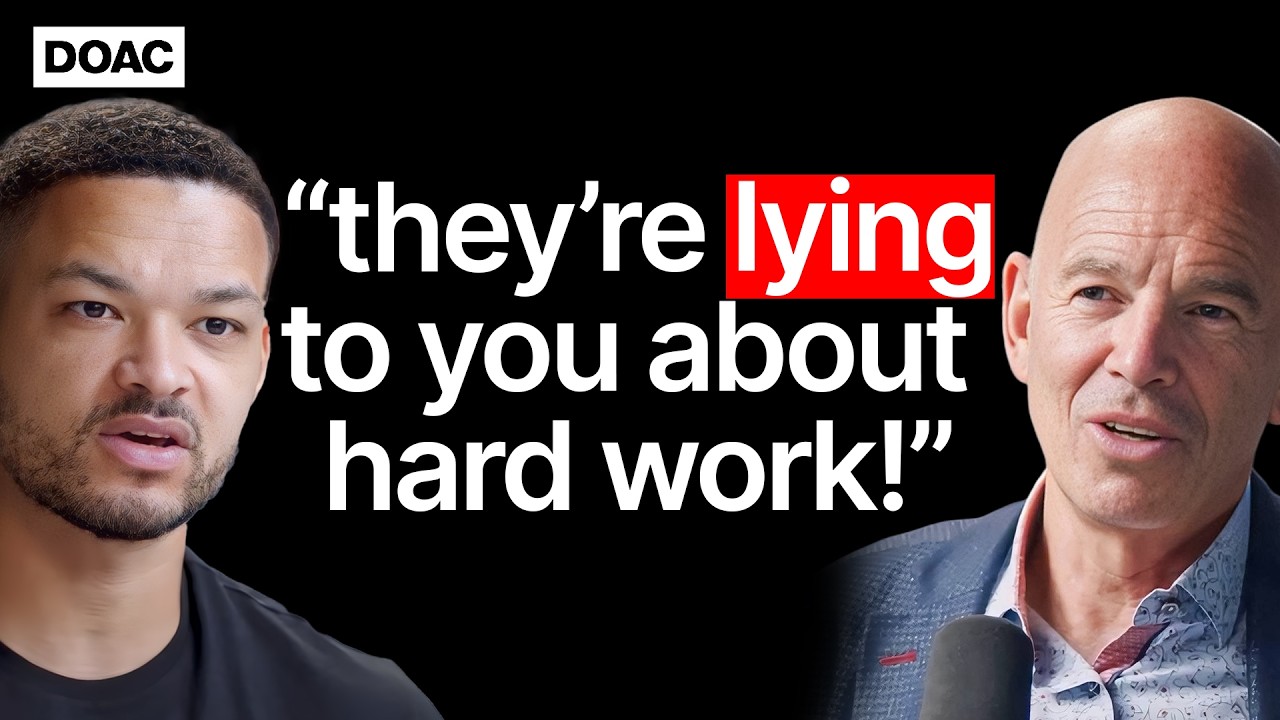
Former Netflix CEO: “Hard Work Does Not Matter!” A $278 Billion Company Wasn’t Built On Hard Work! — The Diary Of A CEO

The Diary Of A CEO

Marc Randolph argues early business plans are inherently flawed, claiming rapid real-world testing and removing friction matter far more than long hours or executive consensus.

AI-assisted summary of Former Netflix CEO: “Hard Work Does Not Matter!” A $278 Billion Company Wasn’t Built On Hard Work! — original source. Check the original for full context.

Source published:

Detailed notes

## Background Published by The Diary Of A CEO with Steven Bartlett on YouTube on August 1, 2024, this episode features Marc Randolph, co-founder and former CEO of Netflix. The video description highlights Randolph's journey, his book 'That Will Never Work', and key lessons on entrepreneurship, corporate culture, and why hard work alone isn't enough to build a $278 billion company.

## TL;DR Marc Randolph details the origins, near-fatal pivots, and eventual triumph of Netflix, tracing its evolution from mailed DVDs to a subscription powerhouse. He offers an unvarnished look at startup life, explaining why early validation and fast experimentation beat long business plans, while dispelling the myth that hard work alone guarantees business success. Randolph also reflects on stepping down as CEO in favor of Reed Hastings, enduring the dot-com crash and Blockbuster's competition, and maintaining strict personal boundaries—such as non-negotiable weekly date nights—throughout his career.

## Atmosphere & style The conversation is deeply candid, reflective, and pragmatic, blending the grit of early Silicon Valley startup stories with mature, hard-won wisdom. Randolph speaks with warm self-awareness and humorous authenticity, stripping away the glamorous myths of entrepreneurship to reveal the messy reality of pivots and ego-free leadership. The dialogue carries an inspiring yet grounded energy, shifting smoothly between sharp business mechanics and poignant personal reflections on legacy, family, and balance.

## Key takeaways - [00:00](https://www.youtube.com/watch?v=HSVbD7RhOHU&t=0s) Every business idea is inherently flawed until tested against reality, so entrepreneurs must focus on quick, low-cost experiments over long business plans. - [04:24](https://www.youtube.com/watch?v=HSVbD7RhOHU&t=264s) Marc Randolph's background in direct response marketing and subscription economics provided the operational foundation for Netflix. - [14:11](https://www.youtube.com/watch?v=HSVbD7RhOHU&t=851s) A simple $0.32 stamp experiment mailing a used music CD validated that DVDs could survive the postal system, sparking the Netflix concept. - [19:44](https://www.youtube.com/watch?v=HSVbD7RhOHU&t=1184s) Validating an idea requires real-world testing with zero-cost hacks before spending time writing code or raising capital. - [24:10](https://www.youtube.com/watch?v=HSVbD7RhOHU&t=1450s) Inexperienced founders focus on proving their initial hypothesis right, whereas seasoned founders prioritize success and rapidly pivot based on data. - [34:11](https://www.youtube.com/watch?v=HSVbD7RhOHU&t=2051s) In September 1999, Amazon expressed interest in buying Netflix for $10 million to $15 million, but Randolph and Hastings chose to build the business long-term. - [40:28](https://www.youtube.com/watch?v=HSVbD7RhOHU&t=2428s) Randolph willingly stepped down as CEO to become COO after Reed Hastings demonstrated he was better equipped to scale the company and raise venture capital. - [56:13](https://www.youtube.com/watch?v=HSVbD7RhOHU&t=3373s) Hard work is merely table stakes in entrepreneurship; excessive hours rarely alter business outcomes, which are dictated by strategy and execution velocity. - [01:05:57](https://www.youtube.com/watch?v=HSVbD7RhOHU&t=3957s) Product-market fit was achieved when Netflix combined flat monthly subscription pricing, zero late fees, no due dates, and a 3-disc queue. - [01:12:35](https://www.youtube.com/watch?v=HSVbD7RhOHU&t=4355s) Real-world customer behavior and rapid test velocity should dictate product decisions rather than boardroom debates. - [01:13:16](https://www.youtube.com/watch?v=HSVbD7RhOHU&t=4396s) Corporate culture must actively reframe failed experiments as essential data collection rather than personal failures. - [01:15:57](https://www.youtube.com/watch?v=HSVbD7RhOHU&t=4557s) The 'Randolph Rules of Success' emphasize integrity, promptness, delivering extra effort, and treating people well as core principles for achievement. - [01:21:57](https://www.youtube.com/watch?v=HSVbD7RhOHU&t=4917s) Blockbuster rejected a $50 million acquisition offer from Netflix during the dot-com crash, failing to adapt to digital distribution until it was too late. - [01:40:00](https://www.youtube.com/watch?v=HSVbD7RhOHU&t=6000s) Company culture is defined by observing leadership behavior rather than writing aspirational policy statements or offering superficial perks. - [03:07:56](https://www.youtube.com/watch?v=HSVbD7RhOHU&t=11276s) Building a strict boundary, like a non-negotiable weekly date night, demonstrates that family commitment and high-level entrepreneurial success are not mutually exclusive.

## Detailed walkthrough ### [00:00](https://www.youtube.com/watch?v=HSVbD7RhOHU&t=0s) Intro: The $50 Million Crisis and the DVD Mailer Blueprint

Marc Randolph opens by contextualizing the extreme peril Netflix faced during its formative years. The company was hemorrhaging money, suffering roughly $50 million in cumulative losses, forcing leadership into a high-stakes scramble to sell the fledgling venture as fast as possible. Randolph, an American tech entrepreneur who served as Netflix's co-founder and original CEO, emphasizes that when the company launched in August 1997, the core business proposition—renting DVDs by mail—sounded utterly absurd to outsiders. Through more than 40 years of building startups, he has arrived at a core operational philosophy: every idea is inherently flawed; founders simply do not realize why an idea is bad until it collides with reality.

The secret to building a scalable tech enterprise lies in how creatively, quickly, and cheaply a team can design experiments to test their hypotheses. For Netflix, simple pivots—such as testing a flat-rate subscription model without late fees—seemed nonsensical on paper, yet customers immediately embraced them. Over the ensuing years, Netflix navigated pivotal crossroads, including early acquisition talks with Amazon two years after launch for roughly $10 million to $15 million. While that offered an attractive financial exit after 12 to 18 months of effort, Randolph chose to roll the dice on Netflix's long-term potential.

That gamble led to near-disaster during the spring 2000 dot-com bust, when rapid customer growth threatened to bankrupt the company. Pitching an acquisition to Blockbuster proved fruitless, as the rental giant viewed Netflix as a minor nuisance rather than a savior, setting up a desperate struggle that ultimately transformed one of Netflix's greatest operational hurdles into its core competitive edge.

[02:03](https://www.youtube.com/watch?v=HSVbD7RhOHU&t=123s) Mentorship and the Entrepreneurial Illusion

Addressing the present chapter of his career, Randolph details his primary motivation: stepping away from direct startup execution to focus entirely on mentoring the next generation of founders. Having launched seven companies, he recognized that he no longer possessed the appetite for the all-consuming, 24/7 grind required to build a company from scratch. Decades in the trenches taught him actionable lessons about navigating risk, leading him to prioritize paying those insights forward to help early-stage entrepreneurs increase their odds of survival.

This desire to demystify business creation drove Randolph to author his bestselling book, *That Will Never Work*. He laments how mainstream media and pop culture glorify entrepreneurship through flashy montages of fast cars, wild parties, and overnight success. In truth, launching a company is an excruciatingly lonely and grueling process. His goal was to offer a candid, unvarnished account of what it takes to nurse a crazy idea past universal skepticism. If a reader finishes the account and remains eager to build, they possess the grit required for the journey; if it dissuades them, it saves them from pursuing a brutal career path for the wrong reasons.

[04:24](https://www.youtube.com/watch?v=HSVbD7RhOHU&t=264s) The Seeds of Netflix: Direct Mail, Subscriptions, and E-Commerce

Reflecting on the formative experiences that paved the way to Netflix, Randolph points to his early career in direct response marketing. He recalls taking over the mail-order division of a sheet music publisher, where his daily routine involved manually fulfilling requests for songbooks, picking and packing orders in the warehouse, and experimenting with catalog formats. He began tweaking variables—testing two-page spreads against multi-page layouts or experimenting with color print—to measure response rates. This hands-on experience taught him how to build a business within an existing organization and ingrained in him the mechanics of direct marketing: rigorous analytical tracking, constant A/B testing, and direct consumer engagement.

When the commercial internet emerged, Randolph instantly recognized it as direct response marketing on steroids. Rather than relying on clumsy offline personalization tricks (such as merging customer names and addresses onto mass print mailings), the web enabled real-time, dynamic personalization for individual site visitors. Later, as the circulation director for a magazine, Randolph mastered the economics of recurring subscription revenue. Combining these distinct domains—direct mail logistics, digital personalization, and subscription models—created the conceptual foundation for Netflix.

- **Early Fulfillment Mechanics:** Randolph personally handled mail intake, photocopying catalog requests, picking stock in warehouses, and shipping customer packages. - **Direct Response Synergy:** Merging direct mail tracking with subscription economics provided the exact strategic playbook required to execute e-commerce video rentals. - **Conceptual Cross-Pollination:** Randolph highlights that creativity stems from collecting disparate experiences ("clouds") and connecting them in novel ways.

[08:50](https://www.youtube.com/watch?v=HSVbD7RhOHU&t=530s) Partnering with Reed Hastings at Pure Atria

In the mid-1990s, Randolph co-founded a software quality assurance company called Integrity QA, which was acquired by Rational Software executive Reed Hastings through his company, Pure Atria. Randolph's initial meetings with Hastings marked the meeting of two complementary minds. Randolph brought an intuitive, empathetic approach rooted in marketing, consumer behavior, and brand messaging, whereas Hastings—a computer scientist and mathematician—approached problems with cold, methodical logic. Despite their divergent styles, both shared a radical commitment to direct, unvarnished honesty, operating on the belief that life is too short to sugarcoat facts or harbor hidden agendas.

This foundation allowed them to debate intensely without ego, challenging each other's assumptions to uncover the operational truth behind business problems. Their initial co-working arrangement at Pure Atria lasted only seven or eight months before Pure Atria itself was acquired, leaving both men facing redundancy. With a six-month transition period ahead—and Hastings planning to pursue graduate studies in education while funding startups—they struck a deal: Randolph would come up with the business idea and run the operations as CEO, while Hastings would serve as the primary angel investor and board chairman.

[11:27](https://www.youtube.com/watch?v=HSVbD7RhOHU&t=687s) The Daily Commute: Pitching Crazy Business Ideas

Living in the coastal town of Santa Cruz, California, Randolph and Hastings established a daily carpool to Pure Atria's headquarters in Silicon Valley. This morning commute became the testing ground for dozens of business concepts. Barely out of his driveway, Randolph would pitch elaborate startup ideas, ranging from custom-formulated shampoo (where customers would mail in hair clippings for scientific analysis) to personalized pet food, custom sporting goods, and tailored vitamins.

Hastings would sit in stoic silence at the wheel, evaluating the risk profile, financial unit economics, and operational scaling hurdles in his head. After minutes of quiet calculation, Hastings would turn to Randolph and deliver his signature verdict: "That will never work." He would systematically tear the concept apart, prompting Randolph to counter with market research and logistical workarounds during the hour-long drive.

Among these daily pitches was an early version of video rental by mail. In 1996, however, home video was dominated by bulky, heavy VHS tapes. Shipping VHS cassettes through the United States Postal Service was economically non-viable due to high postage costs, packaging requirements, and tape fragility. The idea was promptly discarded alongside custom dog food and mail-order shampoo—until a new hardware technology changed the equation.

- **Pitch Candidates Evaluated:** Customized shampoo by mail, personalized pet food, bespoke sporting goods, custom vitamins, and VHS video rentals by mail. - **The VHS Bottleneck:** Heavy cassette weights and fragile magnetic tape made mail-order fulfillment cost-prohibitive in 1996.

[14:11](https://www.youtube.com/watch?v=HSVbD7RhOHU&t=851s) The DVD Epiphany and the Pink Envelope Experiment

The breakthrough occurred during a morning drive when Hastings mentioned reading about a emerging media format: the Digital Versatile Disc (DVD). Thin, lightweight, and the exact physical size of a standard music compact disc, the DVD offered the ideal physical footprint to solve the fulfillment challenges of VHS shipping. Realizing this hardware standard could unlock the video-by-mail concept they had discarded weeks earlier, the duo executed a quintessential entrepreneurial test: mid-commute, they turned the car around and drove back to downtown Santa Cruz to test the hypothesis immediately.

Instead of returning to an office to write a business plan or draft a pitch deck, they sought immediate real-world validation. Unable to find a commercial DVD for sale in town, they bought a used music CD, walked two doors down to purchase a small greeting card envelope, placed the disc inside, affixed a single postal stamp, and mailed it to Hastings' home address. The following morning, Hastings picked up Randolph and held up the pink envelope. The disc had arrived intact in under 24 hours for the price of a standard stamp. That single $0.32 experiment proved the physical infrastructure of the U.S. Postal Service could handle disc delivery, greenlighting the birth of Netflix.

[16:02](https://www.youtube.com/watch?v=HSVbD7RhOHU&t=962s) "Every Idea Is Bad": The Framework for Testing

Reflecting on the transition from ideation to execution, Randolph critiques traditional corporate brainstorming practices. In corporate settings, facilitators often establish ground rules declaring that "there are no bad ideas." Randolph strongly rejects this premise, asserting that, in reality, *every* business idea is bad—founders simply haven't tested them enough to discover their hidden failure points. The greatest trap for an aspiring founder is falling in love with an unproven concept and spending months polishing pitch decks or writing business plans before testing core assumptions against real customer behavior.

<ElicitationsGroup message="Explore more from this interview:"> <Elicitation label="Explore the Blockbuster negotiations" query="Walk me through the part of the transcript where Marc Randolph discusses meeting with Blockbuster and their initial acquisition offer."/> <Elicitation label="Examine the Amazon acquisition offer" query="Walk me through the details of Jeff Bezos and Amazon offering to buy Netflix, as discussed in the transcript."/> <Elicitation label="Analyze Netflix's pivot to subscriptions" query="Detail the transcript section covering how Netflix discovered and validated its flat-rate subscription model."/> </ElicitationsGroup>

[17:51](https://www.youtube.com/watch?v=HSVbD7RhOHU&t=1071s) Stress-Testing Business Ideas and Validation Hacks

Marc Randolph outlines the common trap where an aspiring entrepreneur thinks up an idea, receives superficial praise from a spouse or friend, and immediately spends months drafting a 10-page business plan. They build an overly elaborate empire in their head—dreaming up absurd line expansions before even serving a single customer. Randolph stresses that founders must immediately nip this romantic impulse in the bud. The goal is not to dream about how amazing an idea is, but to figure out how to quickly, cheaply, and easily collide the idea with a real human being to test its viability.

Rather than building a Minimum Viable Product (MVP), Randolph advocates for an "unviable" test or a quick validation hack. He references his early experiment with Reed Hastings, where they turned the car around, bought a used CD, and mailed it to Hastings' home to see if the US Postal Service could carry a disc intact. If that basic premise had failed, they would have abandoned the idea immediately. Coming up with a clever, low-cost experiment to stress-test hypotheses is the core framework of true entrepreneurship, because generating ideas is trivial compared to validating them.

- **The Core Framework:** Entrepreneurship is not about having a good idea; it is about how cleverly, quickly, and cheaply you can test an idea against real human behavior. - **The "Unviable" Test:** A hack that is simpler and dirtier than an MVP, designed purely to test the underlying premise before spending time or capital.

---

[19:44](https://www.youtube.com/watch?v=HSVbD7RhOHU&t=1184s) The College Dorm Dress-Sharing Experiment

Responding to Steven Bartlett's observation that founders often waste a year locked in their rooms building elaborate products, Randolph explains why this is so dangerous: it inflates the project to the point where the founder feels they must raise $5 million and hire a full engineering team to build what is usually the wrong thing. To illustrate how to validate an idea for free, Randolph shares an anecdote about a university student who wanted to start a peer-to-peer fashion-sharing website. The student was already contemplating dropping out of college and raising venture capital to build the platform.

``` [Student's Idea: Peer-to-Peer Clothing Sharing] │ ▼ [Validation Hack: Paper Sign on Dorm Door] ("Would you like to borrow my clothes? Knock.") │ ┌─────────────────┴─────────────────┐ ▼ ▼ [If No One Knocks] [If People Knock] │ │ Idea Failed Test Crucial Metrics: (Cost: $0) - Fit & Style Preferences - Damaged/Stained Items - Dry Cleaning Friction - Operational Costs ```

Randolph advised her to take a sheet of paper, a marker, and tape, write "Would you like to borrow my clothes? Knock," and stick it on her dorm door. Within 24 hours, this zero-cost test would reveal whether anyone actually wanted the clothes. If people knocked, she would encounter the real-world operational problems: fit issues, style mismatches, stained or torn garments, and dry cleaning expenses. Managing this manually on 3x5 cards would not be scalable or repeatable, but it would yield vital, empirical data—such as customer acquisition cost (CAC), lifetime value (LTV), and target demographics—before she ever dropped out of school or wrote a single line of code.

- **Step 1:** Write a physical sign ("Would you like to borrow my clothes? Knock.") and tape it to the dorm room door. - **Step 2:** Observe whether anyone knocks within 24 hours to prove basic demand. - **Step 3:** Hand-manage the lending process using index cards to uncover hidden frictions (damage, dry cleaning costs, fit issues) for free.

---

[24:10](https://www.youtube.com/watch?v=HSVbD7RhOHU&t=1450s) The Sunk Cost Fallacy and the Two Types of Entrepreneurs

Bartlett draws on his experience as an investor on *Dragons' Den* (the UK equivalent of *Shark Tank*), pointing out how early-stage entrepreneurs frequently suffer from deep delusion. After spending years of their lives and mortgaging their homes, they succumb to the sunk cost fallacy—a cognitive bias where they defend a flawed decision at all costs because of the capital and emotion already invested. Randolph agrees, calling this the single biggest reason founders either fail to start (because the idea seems too intimidating) or fail to stop (because they cannot let go of a dying business).

``` ┌────────────────────────────────────────────────────────────────────────┐ │ TWO SPECIES OF ENTREPRENEURS │ ├──────────────────────────────────────┬─────────────────────────────────┤ │ Young / Inexperienced Founder │ Seasoned / Veteran Founder │ ├──────────────────────────────────────┼─────────────────────────────────┤ │ • Wants to be RIGHT │ • Wants to be SUCCESSFUL │ │ • Defends initial hypothesis │ • Agnostic about whose idea wins│ │ • Susceptible to sunk cost fallacy │ • Rapidly pivots based on data │ └──────────────────────────────────────┴─────────────────────────────────┘ ```

The key is to begin with the assumption that your initial idea is wrong, making it easy to abandon it the moment data proves otherwise. Randolph compares entrepreneurship to "leaping from the back of one alligator to the next," staying on each just long enough before it sinks or bites. Bartlett notes that entrepreneurs generally fall into two distinct species based on their maturity: 1. **The Inexperienced Founder:** Obsessed with being *right* and proving their initial hypothesis correct. 2. **The Seasoned Founder:** Obsessed with being *successful*, entirely unattached to their original assumptions.

Randolph notes that what drew him and Reed Hastings together was their shared commitment to finding the truth rather than claiming credit. They would "argue like cats and dogs" behind closed doors, but once a decision was made based on data, everyone aligned behind it without ego.

- **The "Alligator" Metaphor:** Pivoting is like jumping from one sinking alligator's back to another until you find stable ground. - **Culture of Truth:** Randolph and Hastings fostered a corporate culture where debate was aggressive, but egos were discarded once the correct answer emerged.

---

[27:18](https://www.youtube.com/watch?v=HSVbD7RhOHU&t=1638s) The Founding of Netflix and the Original Business Model

Founded by Marc Randolph and Reed Hastings on August 29, 1997, Netflix was born without any grand vision of global streaming or content dominance. Randolph expresses complete astonishment at what the company has become, noting that in 1997, neither he nor Hastings could have predicted streaming wars or global reach. At the time, they were simply focused on an immediate $8 billion US video rental industry dominated by an incumbent—Blockbuster—that relied on business practices customers despised, such as inconvenient store trips and steep late fees.

In the early months, Randolph held a company-wide meeting where he presented what felt like an outrageous "big hairy audacious goal": becoming one of the top 10 largest video chains in the United States. At the time, reaching even the 10th spot seemed as improbable as "riding our bicycles up Mount Everest." If he had told the room that Netflix would eventually eclipse Blockbuster and redefine global media, people would have thought he had gone psychotic.

``` ┌─────────────────────────────────────────────────────────────────┐ │ 1997 DVD-BY-MAIL vs. BRICK-AND-MORTAR │ ├──────────────────────────────┬──────────────────────────────────┤ │ Blockbuster Video │ Early Netflix (1997) │ ├──────────────────────────────┼──────────────────────────────────┤ │ • 9,000 Physical Stores │ • 1 Centralized Website │ │ • 60,000 Employees │ • 12 to 15 Employees │ │ • Restricted Physical Shelves│ • Unlimited Digital Catalog │ │ • Localized Inventory │ • Nationwide Inventory Pool │ └──────────────────────────────┴──────────────────────────────────┘ ```

The initial model was not a business model breakthrough—it still included due dates and late fees—but an operational shift leveraging two key macro trends: the internet and the DVD format.

- **Macro Trend 1: The Internet.** Instead of building 9,000 physical stores staffed by 60,000 employees like Blockbuster, Netflix served the entire country from a single website and one central inventory, run by a lean team of 12 to 15 people. - **Macro Trend 2: The DVD.** VHS tapes were bulky and costly to mail, but the newly emerging DVD format was lightweight and flat enough to fit into a standard envelope. - **Catalog Flexibility:** While a physical video store had to pick one location for a tape (e.g., Action or Drama), the Netflix website could surface a single title across dozens of algorithmic categories simultaneously. - **Addressable Market at Launch:** Fewer than 250,000 DVD players had been sold in the US out of 130 million households—meaning Netflix launched targeting less than 1% of the population.

---

[34:11](https://www.youtube.com/watch?v=HSVbD7RhOHU&t=2051s) The 1999 Acquisition Offer from Amazon

In September 1999, roughly two years after founding Netflix, Randolph and Hastings received a call from the CFO of Amazon inviting them to Seattle for a meeting with Jeff Bezos. At the time, Amazon was still purely an online bookstore, but Bezos was already vocal about his ambition to build the "everything store." Recognizing that music and movies were Amazon's logical next steps, Randolph and Hastings knew the trip was a "make versus buy" evaluation: Amazon wanted to see if acquiring Netflix would accelerate its entry into video retail.

- **Context:** In 1999, Amazon sold only books but was preparing to expand into additional media categories. - **The Meeting Setup:** Amazon's CFO invited the Netflix founders to Seattle to evaluate buying Netflix for its content expertise, operational infrastructure, and talent pool.

<FollowUp label="Want to hear what happened during the meeting with Jeff Bezos?" query="Tell me what happened during the meeting between Marc Randolph, Reed Hastings, and Jeff Bezos in 1999, including the offer details and why they turned it down."/>

[35:41](https://www.youtube.com/watch?v=HSVbD7RhOHU&t=2141s) Pitching Amazon and the $15 Million Offer

Marc Randolph details visiting Amazon’s Seattle headquarters in 1998, painting a vivid picture of a bustling, chaotic workspace that looked nothing like a world-changing e-commerce giant. Employees were crammed under stairwells and inside closets surrounded by empty pizza boxes and roaming dogs, working on makeshift desks fashioned from solid wood doors mounted on four wooden posts. During the pitch meeting with Jeff Bezos, the discussion went exceptionally well. As they were being walked out, Amazon’s CFO set their expectations by hinting that any potential buyout offer would likely land in the low eight figures—which Randolph and Reed Hastings estimated to be around $10 million to $15 million.

``` ┌─────────────────────────────────┐ │ AMAZON HEADQUARTERS │ │ • Door desks on wooden posts │ │ • Crammed closets & stairwells │ │ • Roaming dogs & pizza boxes │ └────────────────┬────────────────┘ │ ▼ ┌─────────────────────────────────┐ │ PRELIMINARY OFFER │ │ Low 8 Figures ($10M–$15M) │ └────────────────┬────────────────┘ │ ┌─────────┴─────────┐ ▼ ▼ ┌─────────────────┐ ┌─────────────────┐ │ SELL THE COMPANY│ │ STAY THE COURSE │ │ Quick exit for │ │ "Commitment │ │ 12-18 months │ │ ceremony" to │ │ of work │ │ keep building │ └─────────────────┘ └────────┬────────┘ │ ▼ [ DECISION: DECLINE ] ```

Having launched Netflix in April 1998, Randolph and Hastings considered whether to take the exit. While it represented an impressive return for 12 to 18 months of effort, they realized they had already solved the hardest operational challenges: building a functional e-commerce platform, sourcing every available DVD title, and establishing a working two-way fulfillment process. Instead of selling, the meeting turned into a silent "commitment ceremony" where both founders looked each other in the eye and chose to bet on Netflix’s future.

- **Financial comfort vs. risk:** Randolph notes that while the payout was substantial, he was in his late 30s, had already been through previous startup IPOs in Silicon Valley, and was financially comfortable enough that taking a big swing was far more enticing than walking away.

---

[38:43](https://www.youtube.com/watch?v=HSVbD7RhOHU&t=2323s) Jeff Bezos in 1999 and Startup War Stories

Looking back at Jeff Bezos in the late 1990s, Randolph contrasts today's polished, muscular executive with the unpolished, hyper-energetic founder of the dot-com era. Bezos was famous for a loud, uninhibited laugh—described by Randolph as an "almost hysterical, hyena-like bark" that resonated across the entire building. The two founders bonded over shared early-stage quirks, including the fact that both companies had rigged physical bells in their offices to ring every time an online order was placed.

They also bonded over early company naming missteps. Netflix originally carried the internal code name *Kibble*. Bezos revealed that Amazon was initially named *Cadabra* (short for *Abracadabra*), until his lawyer pointed out that "Cadabra" sounded far too much like "cadaver" over the phone, prompting the quick pivot to Amazon. Throughout the exchange, Hastings grew visibly impatient, eager to skip the lighthearted startup banter and get down to brass tacks.

---

[40:28](https://www.youtube.com/watch?v=HSVbD7RhOHU&t=2428s) Reed Hastings’ Demotion Proposal

In late 1999, prior to the dot-com crash, Hastings walked into Randolph’s office late one afternoon and uttered the dreaded words: "Marc, we have to talk." Hastings brought a laptop and began presenting a PowerPoint pitch assessing Randolph’s performance as CEO, highlighting his strengths alongside a list of perceived weaknesses. Randolph immediately cut him off, refusing to sit through a slide deck detailing "how much I suck," prompting Hastings to close the laptop and speak directly.

``` ┌───────────────────────────┐ │ HASTINGS' ASSESSMENT │ │ "Execution must be │ │ flawless to scale." │ └─────────────┬─────────────┘ │ ▼ ┌───────────────────────────┐ │ PROPOSED MANAGEMENT │ │ • Hastings → CEO │ │ • Randolph → COO │ └─────────────┬─────────────┘ │ ┌──────────┴──────────┐ ▼ ▼ ┌──────────────────┐ ┌──────────────────┐ │ INITIAL REACTION │ │ RECONSIDERATION │ │ Shock, hurt, │ │ Separate the │ │ feeling of │ │ company's success│ │ unfairness │ │ from personal ego│ └──────────────────┘ └────────┬─────────┘ │ ▼ [ STEP DOWN AS CEO ] ```

Hastings expressed concern that minor errors in judgment and questionable hiring decisions at an early stage would turn into catastrophic failures as Netflix accelerated. Because Hastings held more equity as the primary angel investor, Randolph initially felt defenseless and crushed, sitting alone in his office in the dark after Hastings left. His immediate reaction was deep frustration, feeling it was profoundly unfair after originating the idea, hiring the initial team, and launching the operational framework.

> "I had this dream of being a successful CEO of this big successful company... I began to realize that maybe this wasn't one dream, maybe this was two different dreams—and that the dream of the big successful company might be a different dream than the one of me being CEO."

- **The Porch Realization:** After going home and discussing the situation over a bottle of wine on the porch with his wife, Randolph decided to step down as CEO and become COO, allowing Hastings to step into the CEO role full-time. - **The Golden Era:** Randolph considers swallowing his ego to be "the smartest decision I ever made," as their dual leadership over the subsequent years sparked the true operational renaissance of Netflix. - **Self-Awareness for Founders:** Randolph emphasizes that founders must constantly ask themselves: *"I'm the right person for yesterday, I might even be the right person for today, but am I the right person for tomorrow?"*

---

[47:20](https://www.youtube.com/watch?v=HSVbD7RhOHU&t=2840s) Why Reed Hastings Was Better Suited for Scale

Evaluating the leadership swap with decades of hindsight, Randolph explains why Hastings was better equipped to lead Netflix into its next growth phase. Hastings had already successfully navigated a company through an IPO and scaled an organization from 2 employees to 1,000 across international borders. Furthermore, Netflix required massive amounts of venture capital funding; Hastings possessed a track record of generating huge returns for early venture capitalists, making institutional investors far more likely to back him than an unproven operational founder.

``` ┌──────────────────────────────────────┬──────────────────────────────────────┐ │ MARC RANDOLPH │ REED HASTINGS │ ├──────────────────────────────────────┼──────────────────────────────────────┤ │ • Right-brain creative intuition │ • Left-brain analytical rigor │ │ • Strong empathy and communication │ • Non-emotionally driven logic │ │ • Skilled at framing & direct pitch │ • Sees complex patterns instantly │ │ • Reluctant to deliver painful news │ • Uncompromising on performance │ └──────────────────────────────────────┴──────────────────────────────────────┘ ```

While Hastings’ delivery of the news lacked tact—a product of his hyper-analytical, left-brain orientation—Randolph never held a grudge because he knew the proposal "came from love" for the company rather than malice or jealousy. Hastings recognized that to maximize the company's chances of survival, a leadership change was necessary.

- **The Management Dilemma:** Hastings noted during their discussion that Randolph did not come across as "tough and candid enough" to hold the respect of high-performing, strong-willed employees. - **Empathy in Direct Marketing:** Randolph explains that his background as a direct marketer taught him to deeply visualize how a customer feels when receiving a message. While this empathy made him an exceptional communicator, it made delivering painful news—such as firing people or conducting layoffs—an agonizing personal experience. - **Overcoming Paralysis:** To overcome the friction of delivering bad news, Randolph learned to stop searching for painless solutions, accepting that necessary decisions will hurt and executing them regardless.

---

[53:36](https://www.youtube.com/watch?v=HSVbD7RhOHU&t=3216s) What Makes Reed Hastings Unique and Is Hard Work a Myth?

When asked what makes Reed Hastings such an extraordinary leader, Randolph points to his uncanny ability to synthesize vast, complex clouds of information and immediately isolate the optimal path forward. Hastings approaches problems with ruthless analytical clarity and minimal emotional interference, allowing him to execute hard decisions rapidly where others hesitate.

| Executive Trait | Marc Randolph | Reed Hastings | |:--- |:--- |:--- | | **Primary Mindset** | Right-brain (Empathy, Pitching, Storytelling) | Left-brain (Analytical, Strategic Synthesis) | | **Problem Solving** | Intuitive, empathetic navigation | Rapid multi-variable pattern recognition | | **Capital Raising** | Relies on narrative and operational traction | Backed by a proven track record with VCs | | **Organizational Role** | Product intuition, culture, early execution | Enterprise scale, capital deployment, strategy |

Turning to the concept of effort, Randolph flatly challenges the popular belief that grinding leads directly to breakthroughs, stating that **"hard work leading to success is a myth."** Hard work is merely the table stakes required to enter the arena; it guarantees nothing on its own.

- **The Triathlon Metaphor:** Randolph compares early-stage startup efforts to the mass-water starts of triathlons he ran in his youth. When 500 swimmers dive into the water simultaneously, everyone is thrashing, getting kicked, having their goggles knocked off, and working at maximum physical capacity—yet sheer effort alone does not determine who wins the race.

[56:13](https://www.youtube.com/watch?v=HSVbD7RhOHU&t=3373s) The Metaphor of Running for Planes

Marc Randolph reflects on the intensity required during different stages of an enterprise, drawing an analogy to a mass-start triathlon swim. To avoid getting kicked, paddled over, and trapped in the chaos of the pack, an athlete must sprint for the first 500 or 600 yards to reach open water. Career paths and early-stage companies demand that same initial burst: when you are young, inexperienced, and forced down numerous dead ends, working three times harder than everyone else is essential to gain breathing room. However, Randolph stresses that this frantic pace cannot be sustained across the entire duration of a career or business trajectory; while moments like fundraising or M&A require an intense grind, hard work alone is not a permanent strategy for success.

To emphasize why grinding incessantly is a myth, Randolph shares an autobiographical anecdote from his time living in Paris as an international marketing executive for a major software company. Traveling to four different European cities a week—hopping between Copenhagen, Milan, London, and Madrid—his chronic lack of organization frequently found him sprinting through terminal concourses in his blazer and wool coat to catch departing flights. Over time, he observed a striking statistical reality: 49% of the time, he arrived winded and sweating only to find the plane delayed for an hour, meaning he could have made it on crutches; the other 49% of the time, the plane was already rolling down the runway, meaning his sprint made zero difference. In fewer than 2% of cases did physical running actually alter whether he caught the flight.

That realization led Randolph to vow never to run for a plane again—a philosophy he translates directly into entrepreneurship. Founders routinely burn the candle at both ends, staying up until 2:00 AM polishing slide decks, obsessing over copy, and checking fonts, believing this labor determines their fate. In reality, Randolph argues, deals are almost never lost at 2:00 AM over a bad font; they are lost four weeks earlier due to flawed strategic fundamentals or poor company alignment. True work-life balance and business success come from identifying and focusing on the critical 1% of levers that actually dictate outcomes, rather than exhausting oneself on low-impact details.

- **The Triathlon Swim Analogy**: Sprinting 500–600 yards early on creates necessary space, but pacing must follow once open water is reached. - **The Paris Commute**: Traveling to 4 cities per week (e.g., Copenhagen, Milan, London, Madrid) led to constant airport sprints. - **The 49/49/2 Rule**: 49% of the time the plane was delayed; 49% of the time it had already pulled away; running altered the outcome in under 2% of instances. - **Upstream Decision-Making**: Leaving for the airport earlier (better preparation) matters far more than running through the terminal.

---

[01:01:13](https://www.youtube.com/watch?v=HSVbD7RhOHU&t=3673s) Defining Product-Market Fit and the Power of Rapid Testing

Randolph defines product-market fit as the unmistakable moment when a business discovers something customers truly want, triggering a dramatic, instantaneous shift in momentum. Before reaching this point, building a company feels like an uphill struggle—customer acquisition is painful, and retention is low. When product-market fit strikes, everything shifts into high gear: acquiring users becomes effortless, retention skyrockets, and the market pulls the product out of the company's hands.

In its early days, Netflix lacked business model innovation. The service functioned like a traditional mail-order video rental store: customers ordered a DVD, Netflix mailed it, specified a due date, and charged late fees if it was returned late. The model failed miserably; customers rarely rented, and those who did never returned for a second order. This initiated an 18-month journey of frantic trial and error to figure out how to make DVD rental by mail work.

At first, Randolph’s perfectionist tendencies slowed down this experimental phase. The team would spend three to four weeks carefully crafting a single test—debating every word of copy, shooting custom photography, checking every link, and load-testing the website—only for the idea to fail completely. Recognizing the wasted time, they pushed themselves to run tests faster: first down to two weeks, then one week, and eventually executing multiple tests every single day.

Running tests at high velocity resulted in sloppy execution—pages were launched with lorem ipsum "greeked" text, un-watermarked stock images, broken links, and site crashes. Yet, this high-speed, imperfect testing yielded a profound realization: if an idea was bad, spending a month perfecting it would not save it. Conversely, if an idea had genuine potential, its appeal broke through even the sloppiest execution. Enthusiastic customers would raise their hands, reboot the site, call customer support, and demand the service. The goal was not to obsess over generating a single "great idea," but to build an organizational machine designed to rapidly test and discard hundreds of bad ideas.

- **Product-Market Fit Indicator**: A sudden, dramatic acceleration where customer acquisition becomes easy and retention becomes automatic. - **The Initial Netflix Model**: Standard pay-per-rental with due dates and late fees—a model customers rejected. - **Test Cycle Acceleration**: Reduced testing iteration speed from 3–4 weeks down to daily execution. - **Validation Signal**: High-potential ideas generate strong customer pull regardless of typos, broken links, or site bugs.

---

[01:05:57](https://www.youtube.com/watch?v=HSVbD7RhOHU&t=3957s) Discovering the Subscription Model and Eliminating Late Fees

After testing hundreds of concepts over 18 months, Netflix arrived at two core ideas. Standing in the warehouse surrounded by several hundred thousand idle DVDs, Randolph and Reed Hastings questioned why all that inventory should sit on warehouse shelves doing no one any good. They hypothesized storing the discs directly at customers' homes, allowing them to hold onto movies and swap them by mail whenever they were finished. Instead of charging per rental, they envisioned a flat monthly subscription fee with no due dates and no late fees.

When tested, this hybrid model unlocked "mythical product-market fit." Customers fell in love with it, talked about it relentlessly to their friends, and maintained their subscriptions month after month. The subscription model solved Netflix's biggest strategic vulnerability and turned it into an asset. Skeptics had long claimed Netflix "would never work" for two reasons: the eventual inevitability of digital streaming, and the immediacy of Blockbuster. A customer could drive to Blockbuster in 20 minutes for instant gratification, whereas Netflix took three days to deliver a disc by mail.

By eliminating due dates and late fees through a three-disc subscription queue, Netflix flipped the friction dynamic. With three movies sitting on top of their TV set, a customer's friction to watch a movie dropped to zero—faster than a 20-minute drive to Blockbuster. When finished, they simply dropped a disc in the mail, and a replacement arrived two days later. Furthermore, eliminating late fees directly targeted Blockbuster’s greatest weakness and primary source of customer resentment.

The discussion touches on psychological research by Daniel Kahneman regarding loss aversion, noting that the pain of losing money feels far more intense than the pleasure of gaining an equivalent amount. Because Blockbuster charged $3 to $4 per day in late fees, returning a video ended on a punitive note—a negative dynamic aligned with psychological findings that people remember the peak and end of an experience. Removing late fees eradicated this customer pain point while undermining Blockbuster's business model, which was too dependent on late fee revenue to counter Netflix's move.

- **The Subscription Framework**: A single monthly fee for unlimited rentals, zero due dates, zero late fees, and a 3-disc keep-at-home limit. - **Friction Reversal**: Reduced customer delay from a 20-minute drive to Blockbuster down to zero seconds by keeping movies on top of the TV. - **Blockbuster's Late Fees**: $3 to $4 per day in penalties generated intense customer resentment and created a vulnerable structural flaw. - **Loss Aversion & Peak-End Rule**: Paying a penalty at the end of a transaction ruined the customer experience, making Netflix's friction-free return process compelling.

---

[01:12:35](https://www.youtube.com/watch?v=HSVbD7RhOHU&t=4355s) Debating in the Boardroom vs. Running Tests

When asked whether companies should spend time in boardrooms deliberating to design the "perfect test" or simply run a higher volume of experiments, Randolph responds forcefully. He jokes that if he were not constrained by the microphone, he would jump up and hit the host over the head for even considering boardroom debates as a valid alternative.

Randolph insists that sitting in a conference room debating outcomes is entirely pointlessness because no one can truly predict human behavior in advance. The path to finding truth in product development relies entirely on bias for action and continuous, high-volume testing rather than theoretical consensus among executives.

- **Anti-Boardroom Stance**: Executive debate over prospective ideas is a waste of time compared to live market testing. - **Core Principle**: Action and real-world customer data trump internal opinions and polished presentations every time.

<FollowUp label="Want to continue with Part 5 of the transcript walkthrough?" query="Please provide the detailed walkthrough for Part 5 of the transcript, following the same format and style guidelines."/>

Here is a detailed, faithful walkthrough of this section of the interview:

[01:13:16](https://www.youtube.com/watch?v=HSVbD7RhOHU&t=4396s) Testing, Subscription Dynamics, and Building a Culture of Failure

Marc Randolph points out that customers rarely know what they actually want, meaning the only effective way to figure it out is by throwing a wide variety of ideas at them to see what catches their interest. When Netflix initially stumbled onto the subscription model, Randolph had no idea it would become such a massive breakthrough. Even once it began working "like crazy," the team still lacked a clear understanding of how to optimize it. Decades later, Netflix continues to spend an ungodly amount of time and resources testing every aspect of subscription dynamics—from customer acquisition and retention drivers to subtle behavioral influences. Randolph notes that while subscription economics are deeply complex, the model is undeniably eating the world because it is exceptionally compelling.

Addressing why most companies struggle to innovate, host Steven Bartlett posits that employees and founders avoid running tests because testing inherently involves failure, which leads to blame and disincentivizes risk-taking. Randolph wholeheartedly agrees, revealing that much of his keynote speaking today involves helping large, risk-averse corporations adapt to rapid disruption. He chuckles as he describes the hypocrisy of corporate leaders who bring him in to promote risk tolerance, only to pause his presentation so they can award top sales reps with lavish trips to Hawaii. Randolph argues that true innovation requires convincing employees that failing is not merely acceptable—it is expected and valuable. He frames failed experiments not as personal failures, but as necessary tests that provide critical data.

* **Subscription Complexity:** Netflix still spends vast amounts of time testing subscription triggers, retention factors, and behavioral dynamics over 20 years later. * **Corporate Culture Paradox:** Executives frequently claim they want to celebrate risk, yet continue to incentivize and reward only safe, immediate successes (like traditional sales targets). * **Randolph’s Core Philosophy:** The goal is to design rapid, cheap, and simple tests to gather real-world data constantly, treating unsuccessful outcomes strictly as learning opportunities.

---

[01:15:57](https://www.youtube.com/watch?v=HSVbD7RhOHU&t=4557s) Randolph’s Father and the "Rules of Success"

Just one week before the dot-com bubble burst, Randolph gave a speech in New York City to the DVD Manufacturers Association detailing Netflix's strategies for business expansion. His father attended the event. Randolph describes his dad as the ultimate "anti-entrepreneur"—a deeply risk-averse investment manager whose firm operated strictly on fundamental, long-term value. To his father, the speculative venture capital world made no practical sense, and he previously viewed Marc's tech pursuits as "a bunch of hooie." Seeing his son address an industry conference gave his father a sudden moment of pride and realization regarding Marc's talent. Tragically, his father was in New York at that exact time to seek medical treatment for a newly discovered brain tumor, marking a bittersweet turning point where Marc finally gained his father's understanding just as they began their farewells.

His father passed away in 2000 at the age of 42 (when Marc was 42 years old), right before the dot-com crash. Reflecting on the timing, Randolph notes the tragic irony that his father died right before seeing his conservative financial worldviews validated. His father had been baffled by dot-com companies achieving sky-high valuations despite having no revenues or profits, and the imminent market collapse proved his skepticism entirely correct. Marc had to process the personal grief of losing his father while simultaneously fighting to keep his company alive.

When asked if his father's passing altered his perspective on life, Randolph answers no, because his father had always lived with complete integrity. He was comfortable being an iconoclast who ignored market trends to stay true to his principles. Randolph reminisces about starting his first office job at age 22, when his father called him into his den and handed him a handwritten sheet titled the "Randolph Rules of Success." Rather than financial formulas or cold corporate tactics, the list contained ethical principles for living as a decent, respectable person in business.

> "He tore a page off of a yellow pad, and on the page he had written in pencil the 'Randolph Rules of Success'... These were basically rules that said it's possible to be a decent person and still be successful... It was 'Mark, be a mensch.'"

* **Randolph Rules of Success:** * Do 10% more than you are asked. * Be prompt. * Don't knock or complain; stick to constructive, serious criticism. * Don't express opinions about things unless you have the actual facts.

---

[01:21:57](https://www.youtube.com/watch?v=HSVbD7RhOHU&t=4917s) The Dot-Com Crash and Burning Cash

While subscription economics create incredible long-term enterprise value, they present a dangerous cash-flow bottleneck during rapid growth phases. Because a subscriber yields recurring revenue over months or years, a company can justify spending $100 upfront to acquire a user who pays $10 a month. However, in month one, the business spends $100 while earning back only $10. Combined with Netflix’s "first month free" promotion, explosive growth meant massive amounts of cash were pouring out the door far faster than subscription revenues were flowing in.

During the height of "irrational exuberance" in March 2000, money was effortlessly accessible. Randolph jokes that an entrepreneur could stand on the highway with a green flag, wave down a dump truck full of cash, and wheelbarrow it into their driveway. When the dot-com bubble burst a couple of weeks later, capital markets dried up overnight. Having a ".com" in a business name transformed from a golden ticket into a "Scarlet Letter." Netflix was facing a paradoxical disaster: they were going broke as a direct result of being successful.

Faced with a devastating burn rate, the executive team had to pursue "strategic alternatives"—corporate shorthand for needing to sell the company fast.

* **Netflix's Financial Crisis Metrics:** * **Accumulated Losses:** ~$50 million. * **Annual Revenue:** $5 million. * **Operational Lifespan:** ~2.5 years in business (with almost all $50M lost in the preceding 12 months). * **Burn Rate Dilemma:** Acquisition costs exploded due to hyper-growth and free trials, completely unmatching immediate incoming cash flow.

---

[01:25:00](https://www.youtube.com/watch?v=HSVbD7RhOHU&t=5100s) Pitching Blockbuster in Dallas

Desperate for a lifeline, Netflix attempted to reach out to industry giant Blockbuster for months. At the time, Blockbuster was generating $6 billion in annual revenue with 60,000 employees, while Netflix was doing $5 million with just 150 employees. To Blockbuster, Netflix was merely a gnat floating past an elephant. Eventually, Blockbuster finally called back, offering a meeting in Dallas for the very next day.

At the time the call came in, the Netflix leadership team was on a corporate retreat at the Alisal Ranch, a remote dude ranch in the mountains near Santa Barbara. Dressed for maximum Silicon Valley informality and ranch relaxing, Randolph only had t-shirts, shorts, and thong sandals with him. Realizing they could not catch a commercial flight out of Santa Barbara in time due to time zones, they made the "prudent decision" while $50 million in debt to charter a private jet to Texas.

The next morning, Randolph walked into Blockbuster's high-rise headquarters on the 27th or 28th floor, wearing his shorts and thong sandals, while CEO Reed Hastings wore a button-down Hawaiian shirt. Sitting around a massive executive table made of expensive hardwood, the Netflix team pitched a joint partnership: Blockbuster would run the physical stores while Netflix managed the online operations, creating a blended hybrid model. The Blockbuster executives appeared engaged until they asked for the purchase price. Hastings confidently gave the rehearsed figure: $50 million.

A heavy silence fell over the cavernous conference room. Looking at the Blockbuster executives, Randolph realized they were actively suppressing laughter at the sheer hubris of a struggling, cash-strapped startup claiming to be worth $50 million. The meeting quickly broke down, leading to a silent, solemn cab ride back to the airport and a quiet jet flight home. Randolph sat with his head down, devastated that their proposed savior had turned them down.

* **The Pitch:** Proposed a merged hybrid model (Blockbuster handles physical retail, Netflix manages online delivery). * **The Offer:** $50 million sale price. * **The Outcome:** Outright rejection and hidden laughter from Blockbuster executives.

---

[01:29:26](https://www.youtube.com/watch?v=HSVbD7RhOHU&t=5366s) Overcoming the Innovator's Dilemma

Faced with rejection, Randolph recalled advice his father used to give him during complex problems: "sometimes the only way out is through." With no acquisition offer on the table, Netflix's only choice was to compete directly with Blockbuster to survive. To trim their cash burn, Netflix executed deep layoffs, eliminated auxiliary business lines, and focused exclusively on their core subscription service. Over time, Netflix outpaced its rival, leading to Blockbuster’s eventual bankruptcy.

Explaining why Blockbuster failed to crush Netflix despite having $6 billion in resources, Randolph points to a classic case of the "Innovator's Dilemma." If the CEO of Blockbuster, John Antioco, asked his team how much revenue an online DVD division could bring in during its first year, the answer would be a paltry $2 million compared to their multi-billion-dollar retail empire. Consequently, Blockbuster assigned its "B-team" and "C-team" engineers to the online initiative rather than prioritizing it with top-tier talent.

Furthermore, Blockbuster fundamentally misunderstood the nature of the market: Netflix was not merely a movie rental business, but a Silicon Valley software company built by elite tech engineers. Blockbuster repeatedly assigned secondary talent to tackle the digital problem, giving Netflix the time and space it needed to build superior technology, strengthen its model, and ultimately dominate the market.

> "Sometimes the only way out is through... There was no easy way out of this. The only way we were going to survive was to compete with them."

[01:31:42](https://www.youtube.com/watch?v=HSVbD7RhOHU&t=5502s) The Blended Model: How Blockbuster Almost Destroyed Netflix

Blockbuster eventually recognized the threat posed by Netflix, assembled a dedicated team, fully resourced them, and sent them out of corporate headquarters to build an online competitor. They came exceptionally close to taking Netflix down. Blockbuster developed a "blended model" where customers could rent videos online or in stores, and return or pick them up across either medium. Netflix could not compete with this hybrid model because they lacked physical retail stores.

``` ┌────────────────────────────────┐ │ Blockbuster Blended Model │ └───────────────┬────────────────┘ │ ┌───────────────────────┴───────────────────────┐ ▼ ▼ ┌───────────────────────────┐ ┌───────────────────────────┐ │ Online Channel │ │ Physical Stores │ │ • Rent online │ │ • 9,000 global locations │ │ • Receive via mail │ │ • In-store pickup │ │ • Mail returns │ │ • In-store returns │ └───────────────────────────┘ └───────────────────────────┘ ```

The situation was dire for Netflix until unrelated corporate disruption hit Blockbuster. Corporate raiders bought up large amounts of Blockbuster stock, took seats on the board, and pushed for short-term profitability. As part of these maneuvers, the board denied Blockbuster CEO John Antioco his promised bonus. In response, Antioco quit.

The board replaced Antioco with a leader whose background was strictly in retail and convenience stores. The new CEO questioned the focus on digital efforts, arguing that with 9,000 stores worldwide, the company should focus on selling items like gum and clothing rather than investing in online streaming and rental systems.

Marc Randolph shares a movie analogy to illustrate Blockbuster's fatal mistake, drawing from Steven Spielberg's film school project about a robot. > "The robot operates kind of on a cost-benefit analysis... the robot is chasing somebody and he's getting closer and closer... and he's just about to reach up and grab the person's ankle, and you see the sunk cost of the robot's time get to break even, and he stops and walks away an instant before he grabs the person. That's what Blockbuster did. They were within seconds of grabbing us by the ankle and yanking us off the ladder... and they just turned and walked away."

- Blockbuster possessed 9,000 physical stores globally at its peak. - John Antioco resigned as CEO after activist board members withheld his contractually promised bonus. - Blockbuster eventually went bankrupt in 2010, eight years after Netflix went public.

---

[01:36:40](https://www.youtube.com/watch?v=HSVbD7RhOHU&t=5800s) Life After the IPO and Leaving Netflix

Netflix went public in May 2002. Immediately after the IPO on the trading floor in New York City, Marc Randolph rode in a taxi downtown with his young son to grab a slice of New York pizza. Sitting in the cab, watching everyday people go about their lives, Randolph realized he had achieved total financial independence and never needed to work again. However, he quickly realized that his daily drive hadn't changed—he genuinely loved solving complex business problems and went right back to work the next day.

Randolph emphasizes that an IPO is not the ultimate finish line, but merely another operational milestone. Leaving Netflix allowed him to align his daily life with his personal passions: advising early-stage startups, spending quality time with family, and enjoying the outdoors. He notes that entrepreneurs rarely build businesses solely for money; they do it for the thrill of sitting around a table with smart people solving unsolved problems.

> "We are entrepreneurs not because we have to do it to earn a living. We do it because we love that process of solving problems... If success is nothing else, it's the ability to be able to do the kind of things you want to spend your time doing."

- Netflix completed its Initial Public Offering (IPO) in May 2002. - Marc Randolph departed Netflix shortly after the 2002 IPO. - Randolph notes that most successful Silicon Valley founders return to building or advising companies even after reaching total financial independence.

---

[01:41:46](https://www.youtube.com/watch?v=HSVbD7RhOHU&t=6106s) The Truth About Netflix Culture: Freedom and Responsibility

Addressing Netflix's famous "Freedom and Responsibility" culture deck, Randolph clarifies a fundamental misunderstanding: culture cannot be dreamed up, manufactured, or plastered onto breakroom posters. Culture is purely observational—it is modeled directly on how the founders and senior executives behave every day. If founders say they want open communication, but speak for 90% of a meeting, employees will notice the hypocrisy.

``` ┌──────────────────────────────┐ │ Founders & Executives │ │ (Behavior & Action Base) │ └──────────────┬───────────────┘ │ Modeled by ▼ ┌──────────────────────────────┐ │ First 10 Employees │ └──────────────┬───────────────┘ │ Modeled by ▼ ┌──────────────────────────────┐ │ Next 90 Employees │ └──────────────┬───────────────┘ │ Modeled by ▼ ┌──────────────────────────────┐ │ Next 900+ Employees │ └──────────────────────────────┘ ```

The core ethos of "Freedom and Responsibility" naturally exists in early-stage startups because resources are scarce. Founders cannot micromanage ten people; they simply point to a goal and trust employees to reach it within a set timeframe. Problems arise as companies scale to hundreds or thousands of employees. When an employee makes a mistake—like turning in a late project or overspending—most corporations react by adding restrictive guardrails, like mandatory status reports or corporate expense limits. These policies end up treating high-performing adults like infants.

Netflix took the opposite approach: instead of building procedural guardrails to protect the company from poor judgment, they eliminated rules entirely and focused strictly on hiring people with good judgment. As a result, Netflix eliminated traditional corporate policies around vacation, expenses, and travel, replacing them with a simple expectation: use your best judgment.

> "Culture is not aspirational; culture is observational... Rather than building guardrails to protect ourselves from people with bad judgment, let's build a culture where there are no guardrails and only hire people with good judgment."

- Corporate culture scales exponentially from the initial behavior of the founders down to the first 10, 100, and 1,000 employees. - Netflix replaced complex expense, vacation, and travel policies with a single guideline: "Use your best judgment." - Netflix HR executive Patty McCord played a key role in keeping leadership accountable to their stated cultural values.

[01:49:02](https://www.youtube.com/watch?v=HSVbD7RhOHU&t=6542s) Adult Culture: Removing Corporate Guardrails Over Perks

Marc Randolph shares a pivotal moment from the early days of Netflix alongside Patty McCord (the company's former Chief Talent Officer). While walking back from lunch, the two passed by a group of engineers sitting in a hot tub on campus, complaining bitterly about the company. Rather than being upset, Randolph and McCord found the irony humorous—here were employees lounging in a luxurious hot tub yet still complaining. The incident sparked a deeper philosophical realization about company culture: lavish perks like hot tubs, firefighter poles, nap pods, and kombucha on tap do not actually drive job satisfaction or performance.

What employees truly want is to be treated like adults. People crave agency in their work and lives rather than micro-management or restrictive rules. Randolph highlights that the ultimate talent unlock occurs when a company defines clear responsibilities and grants employees total freedom to achieve them. Host Steven Bartlett resonates deeply with this idea, reflecting on how leaders often ruin flexible workplace policies (like unlimited paid time off) by creating blanket rules to constrain a tiny percentage of irresponsible employees. Bartlett realizes during the conversation that instead of punishing the entire team due to a few bad apples, leaders must simply address or terminate the individuals who lack judgment.

* **Patty McCord's Role:** Co-developed Netflix's culture framework centered on high performance, freedom, and responsibility. * **Perks vs. Autonomy:** Superficial workplace amenities (kombucha, nap pods) are ineffective compared to adult agency and trust. * **The 5% Rule Paradox:** Restrictive company policies are usually created to police 5% of low-performing or irresponsible employees, inadvertently punishing the 95% of high performers. * **Stripping Guardrails:** Removing bureaucracy makes a company far more attractive to top talent who value trust over micro-management.

---

[01:52:53](https://www.youtube.com/watch?v=HSVbD7RhOHU&t=6773s) Prioritizing Life Balance and the Tuesday Date Night Rule

Transitioning to personal sustainability, Bartlett references a viral LinkedIn post written by Randolph regarding his long-standing commitment to weekly date nights with his wife. Randolph explains that in his late 20s, he was an intense workaholic—not because of an overbearing boss, but because he was deeply passionate about his projects. However, a gentle intervention from his then-girlfriend (now wife of many decades) made him realize that his work-dominated lifestyle was unsustainable for a long-term relationship. She made it clear that if he wasn't genuinely present, the relationship wouldn't survive.

To save his relationship, Randolph established an absolute, non-negotiable rule: every single Tuesday at 5:00 PM sharp, he left the office to go on a date night with his wife, regardless of what company he was running—including during the chaotic growth years of Netflix. This rule sent two crucial signals: it enforced personal discipline and served as an explicit model for his employees that professional success does not require sacrificing personal relationships. If crises arose on Tuesday afternoons, employees quickly learned to solve problems themselves or wait until the following morning.

* **Tuesday 5:00 PM Rule:** A sacred, non-negotiable time reserved for date night with his wife, maintained across every company he led. * **Role-Modeling Balance:** Demonstrating that high-level executive work and healthy personal relationships can co-exist without guilt. * **Triad of Fulfillment:** Randolph balances three distinct pillars in his life: business endeavors, family/relationship commitment, and outdoor passions (backcountry skiing, mountaineering, kayaking, and mountain biking). * **True Success Metrics:** While proud of starting 6–7 companies, achieving 3 IPOs, and building multi-billion dollar enterprises, Randolph states he is far prouder of staying married to the same woman, having children who like him, and maintaining his personal passions.

---

[01:58:16](https://www.youtube.com/watch?v=HSVbD7RhOHU&t=7096s) The Counterintuitive Truth About Balance and Hindsight Regrets

When asked what matters most between business success and family relationships, Randolph offers a counterintuitive take: choosing one over the other is a false dilemma because an entrepreneur needs harmony across all areas to feel whole. Had his wife demanded he abandon his entrepreneurial drive to live a quiet life, he would have been deeply unhappy because he is wired to identify problems and build solutions. Balance is not about quitting ambition; it is about ruthless prioritization, delegation, and avoiding unnecessary organizational chaos.

Closing the episode with the podcast's tradition, Bartlett reads a question left by the previous guest: *"What in your life were you most wrong about, and what did you learn from it?"* Randolph reveals that one of his greatest professional regrets was taking nearly two years to apply his extensive background in direct-mail magazine circulation to Netflix's business model. Having spent years in subscription publishing, it took him far too long to realize that a pure subscription model was the exact breakthrough Netflix needed, wasting considerable time and money on pay-per-rental mechanics. Bartlett concludes by praising Randolph's book *That Will Never Work* for translating these hard-won operational and life lessons into a timeless roadmap for founders.

## Notable quotes > [11:27](https://www.youtube.com/watch?v=HSVbD7RhOHU&t=687s) That will never work. — Reed Hastings

> [40:28](https://www.youtube.com/watch?v=HSVbD7RhOHU&t=2428s) I had this dream of being a successful CEO of this big successful company... I began to realize that maybe this wasn't one dream, maybe this was two different dreams—and that the dream of the big successful company might be a different dream than the one of me being CEO. — Marc Randolph

> [40:28](https://www.youtube.com/watch?v=HSVbD7RhOHU&t=2428s) I'm the right person for yesterday, I might even be the right person for today, but am I the right person for tomorrow? — Marc Randolph

> [01:15:57](https://www.youtube.com/watch?v=HSVbD7RhOHU&t=4557s) He tore a page off of a yellow pad, and on the page he had written in pencil the 'Randolph Rules of Success'... These were basically rules that said it's possible to be a decent person and still be successful... It was 'Mark, be a mensch.' — Marc Randolph

> [01:29:26](https://www.youtube.com/watch?v=HSVbD7RhOHU&t=5366s) Sometimes the only way out is through... There was no easy way out of this. The only way we were going to survive was to compete with them. — Marc Randolph

> [01:29:26](https://www.youtube.com/watch?v=HSVbD7RhOHU&t=5366s) The robot operates kind of on a cost-benefit analysis... the robot is chasing somebody and he's getting closer and closer... and he's just about to reach up and grab the person's ankle, and you see the sunk cost of the robot's time get to break even, and he stops and walks away an instant before he grabs the person. That's what Blockbuster did. They were within seconds of grabbing us by the ankle and yanking us off the ladder... and they just turned and walked away. — Marc Randolph

> [01:36:40](https://www.youtube.com/watch?v=HSVbD7RhOHU&t=5800s) We are entrepreneurs not because we have to do it to earn a living. We do it because we love that process of solving problems... If success is nothing else, it's the ability to be able to do the kind of things you want to spend your time doing. — Marc Randolph

> [01:36:40](https://www.youtube.com/watch?v=HSVbD7RhOHU&t=5800s) Culture is not aspirational; culture is observational... Rather than building guardrails to protect ourselves from people with bad judgment, let's build a culture where there are no guardrails and only hire people with good judgment. — Marc Randolph

## Mentioned Marc Randolph, Reed Hastings, Jeff Bezos, Steven Bartlett, John Antioco, Patty McCord, Daniel Kahneman, Netflix, Amazon, Blockbuster, Pure Atria, Integrity QA, Rational Software, United States Postal Service, DVD Manufacturers Association, That Will Never Work, Dragons' Den

[Source](https://www.youtube.com/watch?v=HSVbD7RhOHU)

中文简报

Netflix联合创始人Randolph称努力工作次于速度 Marc Randolph认为早期的商业计划本身就存在缺陷,并称快速的现实检验与消除阻力远比长时间加班或高管共识重要得多。 Marc Randolph详述了Netflix的起源、几次险些致命的转型以及最终的胜利,回顾了它从DVD邮寄业务演变为订阅巨头的历程。他真实展现了创业生活,解释了为何早期验证与快速实验胜过冗长的商业计划,同时打破了单靠努力工作就能确保商业成功的神话。Randolph还回顾了自己卸任CEO让位给Reed Hastings、熬过互联网泡沫破裂与Blockbuster的竞争,以及在整个职业生涯中保持严格的个人生活界限——例如每周不可妥协的约会之夜。 任何商业想法在碰撞现实之前本质上都是有缺陷的,创业者应侧重于低成本快速实验,而非耗费数月撰写商业计划书。 (0:00) 一次仅花费0.32美元邮资的寄CD实验,验证了光盘可以通过邮政系统完好投递,从而奠定了Netflix邮寄DVD的业务构想。 (14:11) 1999年亚马逊曾有意以1000万至1500万美元收购Netflix,但Randolph与Hastings最终决定放弃套现,坚持长期自主发展。 (34:11) 在Reed Hastings提出自己更适合带领公司扩张规模和筹集风险投资后,Randolph主动卸任CEO并转任COO。 (40:28) 努力工作仅是创业的入门门槛,单纯堆砌工时极少能改变商业结局,战略与执行速度才是决定胜负的核心。 (53:36)

Reading summary

Marc Randolph, co-founder and original CEO of Netflix, argues that startup success is driven not by relentless grinding or elaborate business plans, but by rapidly exposing inherently flawed ideas to real customer behavior. Drawing from four decades of entrepreneurship, Randolph asserts that building an enduring enterprise requires setting aside founder ego, pursuing low-cost validation, and establishing strict personal boundaries against burnout. Cheap Experimentation Over Polished Business Plans (16:02) Randolph rejects the corporate premise that "there are no bad ideas," contending that every startup hypothesis is flawed until tested against reality. Rather than spending months refining business plans or minimum viable products (MVPs), founders should design quick, cheap validation hacks. In 1997, Randolph and Reed Hastings tested DVD rentals by mail not with a slide deck, but by mailing a used CD in a greeting card envelope to Hastings' home for $0.32 to verify that postal sorters would not break it. Randolph illustrates this through a student proposing a peer-to-peer clothing sharing app. He advised her against raising venture capital, suggesting she simply tape a sign to her dorm door offering clothes to borrow. Within 24 hours, direct engagement exposed real-world friction—sizing mismatches, stains, and dry-cleaning expenses—without writing software. Inexperienced founders obsess over being proven right, whereas seasoned operators treat initial concepts as expendable hypotheses. Rapid Iteration to Product-Market Fit (61:13) During its first 18 months, Netflix struggled because its initial model copied brick-and-mortar stores: charging per rental, setting due dates, and levying late fees. With few repeat customers, the team accelerated their experimental cadence to daily site tests, accepting broken links, placeholder copy, and stock images to measure demand rapidly. The company unlocked product-market fit by pairing home disc storage with a monthly subscription queue, eliminating late fees entirely. Although subscription economics created severe short-term cash flow strain—spending $100 upfront to acquire subscribers paying $10 monthly—it aligned customer incentives. Storing discs at home removed the friction of driving to Blockbuster, turning a multi-day postal turnaround into an advantage. Challenging the Myth of Relentless Grinding (53:36) Randolph disputes the belief that non-stop grinding causes breakthroughs, calling the idea that hard work guarantees success a myth. While early ventures require intense sprints to break free from the initial pack—analogous to a chaotic triathlon swim start—he warns that perpetual overwork delivers diminishing returns. Traveling across Europe as an executive, he noticed that sprinting through airports changed flight outcomes under 2% of the time: planes were either already delayed or the doors had shut. To prevent burnout, Randolph enforced a strict boundary at Netflix: leaving the office every Tuesday at 5:00 PM sharp for a date night with his wife. He contends that work-life balance is a discipline of ruthless prioritization, demonstrating that executive performance does not require sacrificing personal health or family stability. Managing Founder Ego and Operational Crises (40:28) Randolph emphasizes that founders must decouple personal identity from corporate hierarchy. In late 1999, Reed Hastings presented a critical performance review of Randolph, proposing to take over as CEO while Randolph transitioned to COO. Recognizing Hastings’ superior analytical skills, prior IPO experience, and venture capital credibility, Randolph stepped aside to protect the company's trajectory. This pragmatic leadership proved vital during the dot-com crash, when Netflix accumulated $50 million in losses against $5 million in revenue. After Blockbuster executives laughed at an offer to sell Netflix for $50 million, Netflix was forced to survive independently. Blockbuster fell victim to the innovator's dilemma—under-resourcing digital video because it generated negligible initial revenue—while Netflix focused entirely on its subscription software engine to outlast the incumbent. Cultivating Autonomy Over Corporate Perks (101:46) Randolph rejects the notion that authentic company culture can be manufactured through slogans or perks like nap pods and hot tubs. Observing engineers complain while lounging in a campus hot tub, Randolph and talent executive Patty McCord realized that superficial luxuries do not produce engagement; high-performing adults value autonomy, clear objectives, and trust. Netflix's "Freedom and Responsibility" philosophy avoided implementing restrictive rules to manage a small fraction of underperformers. Randolph argues that corporate red tape penalizes responsible employees to police a 5% irresponsible minority. Instead of adding administrative overhead like rigid vacation tracking or expense approvals, Netflix focused on maintaining high talent density and removing individuals who lacked sound judgment. Randolph's operational philosophy demonstrates that building an enduring enterprise relies on rapid market validation, intellectual humility, and personal discipline rather than unbridled effort. While his framework offers early-stage operators an actionable guide through extreme uncertainty, it leaves open the challenge of how larger organizations can preserve high-velocity experimentation and radical employee autonomy as institutional complexity and market pressures expand.

精炼阅读摘要

Netflix 联合创始人兼首任首席执行官 Marc Randolph 认为,单纯的勤奋和过度劳作并非商业成功的决定性要素,初创企业的生存关键在于能否以极低成本和极快速度让构想碰撞现实并进行迭代。创业者必须摒弃对初始构想的执念与沉没成本心理,在数据面前敢于调整商业模式乃至退让个人权力,并依靠信任成年人判断力来构建高效组织。 低成本快速实验:让构想碰撞现实 (17:51) Randolph 指出,传统商业环境热衷于编写详尽企划书和追求完美的最小可行产品(MVP),但这往往是创业者最大的陷阱。现实中几乎所有商业设想在未经检验前都存在致命缺陷,创始人容易沉醉于未经验证的宏大蓝图,耗费数月甚至数年闭门造车。真正的创业核心并非拥有绝妙构想,而是如何以最低廉、最敏捷的实验让假设撞击真实用户的行为,快速暴露盲点。 Netflix 早期邮寄租碟的破局正是源于极简实验。面对笨重易碎的 VHS 录像带受阻后,Randolph 与 Reed Hastings 注意到轻薄的 DVD 格式。他们并未返回办公室撰写融资方案,而是立刻掉转车头,购买二手音乐 CD 装入粉色贺卡信封,仅花费 0.32 美元邮票寄往 Hastings 家中,次日完好送达的结果直接验证了邮政配送的可行性。针对大学生的二手租衣创业设想,Randolph 同样建议在宿舍门上张贴纸条测试借衣需求,在 24 小时内以零成本收集款式、尺寸、衣物污损与干洗等真实运营痛点。高频且允许粗糙的实验,能以极小代价阻止团队在错误方向上耗费数百万美元与漫长时间。 克服沉没成本:将企业成功置于自我之上 (40:28) 初创企业常因创始人陷入沉没成本谬误而走向消亡。经验不足的创业者往往执着于捍卫最初的假设以证明自己是“对的”,而成熟的创业者则完全以企业最终能否“成功”为导向,随时准备根据数据调整路线。在 Netflix 创立两年后的 1999 年底,天使投资人兼董事长 Hastings 携带演示文稿直面 Randolph,尖锐指出其管理决策和早期用人漏洞随着规模扩张可能带来灾难,要求由自己接任 CEO,让 Randolph 转任 COO。 面对被剥夺最高领导权的冲击,Randolph 在最初的震惊与委屈之后完成了冷静的心态重塑。他将“自己成为大公司成功 CEO 的个人梦想”与“让 Netflix 这家公司走向成功的梦想”清晰区分开来。Randolph 坦承,相较于自己偏重创意营销、同理心与产品直觉的特质,具备计算机背景的 Hastings 拥有将企业扩展至千人并成功 IPO 的成熟战绩,且在风投界信誉卓越,更能胜任大规模资本运作和严密理性扩张。为了最大化企业的生存概率,Randolph 选择搁置自尊退让权力,体现了理性务实的创业心态。 商业模式跃迁:订阅制与克服创新者窘境 (65:57) Netflix 在初期机械照搬传统线下店的单次租赁机制,收取租金并设定到期日和滞纳金,导致用户复购极低。在长达 18 个月的试错后,团队基于数以万计闲置库存的痛点,测试了取消归还期限、消除滞纳金且支持同时持有三张光盘的固定月费订阅模式。这一转变直击行为心理学中的损失厌恶痛点,消除了实体租赁巨头 Blockbuster 最赚钱却最令消费者反感的滞纳金制度,实现了产品与市场的契合。 然而,订阅制的高速增长在 2000 年互联网泡沫破裂时险些使公司破产:由于每获取一位月费 10 美元的用户需预先支出 100 美元获客成本,叠加首月免费策略,导致现金流极度紧张,公司累计亏损约 5000 万美元而年营收仅 500 万美元。走投无路的管理层包机前往达拉斯向拥有 60 亿美元营收的 Blockbuster 寻求以 5000 万美元出售,却遭到对方高管嘲讽拒绝。Randolph 认为 Blockbuster 最终败北是典型的“创新者窘境”:由于线上 DVD 业务初期营收微不足道,实体巨头长期只派二流团队应付,忽视了 Netflix 具有纯正硅谷软件技术基因,最终错失了以线上线下混合模式反击的最佳窗口期。 破除苦干神话:成年人文化与边界管理 (53:36) Randolph 明确否定了“勤奋必然带来突破”的流行神话,指出高强度苦干只是进入竞技场的门槛,绝非制胜武器。他以早年出差欧洲赶飞机的经历为喻:在统计中,49% 的情况是航班延误即便慢走也能赶上,49% 的情况是舱门已关狂奔也无济于事,仅有不足 2% 的场景下拼命奔跑真正改变了结果。将过度劳作常态化往往掩盖了战略与方法论的无能。为对抗无序扩张带来的消耗,Randolph 在历次创业期间严格执行每周二下午 5 点离岗与妻子约会的规矩,以此向组织示范工作与个人生活的健康边界。 这种克制与理性的思维延伸为 Netflix 著名的“自由与责任”企业文化。Randolph 指出,企业文化并非写在标语墙上或以免费零食、按摩浴缸等浅层福利体现,而是取决于管理层的实际行为。绝大多数成熟公司往往为了防范 5% 不负责任员工的过失,制定繁复的审批流程、固定休假与差旅限额,导致 95% 的优秀员工被当成婴儿对待。Netflix 则反其道而行之,选择拆除流程防线,直接剔除缺乏判断力的人员,转而招募具备高度责任心的成熟成年人,给予其完全的自主权并要求其对业务结果全权负责。 Randolph 的实践表明,初创企业应对不确定性的核心在于以数据和实验替代主观臆测,同时在组织治理中去伪存真,以信任替代繁文缛节。然而,彻底取消行政防线的“自由与责任”文化在很大程度上依托于硅谷顶尖技术人才的密度与高淘汰率,这种管理哲学能否无缝移植至传统监管行业或普通人才密度的企业,在商业界依然是一个留有争议的开放课题。

Detailed notes — zh

## Background 本期内容由知名播客频道《The Diary Of A CEO》于 2024 年 8 月 1 日在 YouTube 平台发布。节目由主持人史蒂文·巴特利特(Steven Bartlett)对话 Netflix 联合创始人兼首任 CEO 马克·兰多夫(Marc Randolph),基于其畅销回忆录《That Will Never Work》,深入探讨了一家如今市值数千亿美元的商业帝国是如何从荒诞点子、濒临破产与残酷迭代中真正建立起来的。 ## TL;DR 马克·兰多夫打破了外界对创业的浪漫化叙事与“唯苦劳论”神话,指出决定商业成败的并非熬夜狂奔,而是上游的关键战略决策以及极低成本、高频次的粗糙测试。他回顾了 Netflix 早期险些以千万美元贱卖给亚马逊、在互联网泡沫破灭中背负 5000 万美元债务向百视达求购遭拒,最终靠“包月订阅制且取消滞纳金”实现 PMF 逆风翻盘的生死历程。与此同时,他毫无保留地分享了自己为了公司利益主动放下自尊让位 CEO 给里德·哈斯廷斯的心路历程,并阐述了 Netflix 倡导“只招成年人、拆除规章护栏”的真实管理内核,以及数十年雷打不动恪守每周二家庭约会之夜的人生平衡哲学。 ## Atmosphere & style 整场对谈既有硅谷老兵剥离一切滤镜后的犀利与清醒,又充盈着历经千帆后的温厚与坦诚。主持人的深度追问与兰多夫松弛风趣、充满画面感的隐喻(如“踩着下沉的鳄鱼背跳跃”、“绝不在机场狂奔”)相互碰撞,生动还原了创业现场的窒息与顿悟。在谈及父亲去世、被迫让出 CEO 职位等低谷时,语调真挚而克制,让观众在收获硬核商业认知的绝佳节奏中,真切感受到一种关于事业野心、家庭责任与热爱三者平衡的生命厚度。 ## Bulletin - [16:02](https://www.youtube.com/watch?v=HSVbD7RhOHU&t=962s) Netflix 联合创始人兼首任 CEO Marc Randolph 指出,创业早期“所有想法在被验证前都是烂点子”,成功的关键不在于耗费数月做商业企划或融资,而在于以极低成本的“验证黑客”快速让假设与现实发生碰撞。 - [55:36](https://www.youtube.com/watch?v=HSVbD7RhOHU&t=3336s) 破除唯苦劳论:Randolph 直言“努力工作就能换来成功”是商业神话,决定 99% 成败的是上游战略抉择,而非凌晨通宵修改商业企划书等自我感动的低效末端内耗。 - [01:06:38](https://www.youtube.com/watch?v=HSVbD7RhOHU&t=3998s) Netflix 颠覆百视达的核心在于推出“无还片期限、无滞纳金”的包月订阅制,彻底消除了百视达依赖的高额滞纳金痛点,并将原本三天的邮寄时延通过家中常备碟片降至为零。 - [01:27:58](https://www.youtube.com/watch?v=HSVbD7RhOHU&t=5278s) 2000 年互联网泡沫破裂期,背负近 5000 万美元债务的 Netflix 曾开价 5000 万美元寻求百视达收购遭高管当面嘲笑;百视达后因激进投资人内耗撤除数字战线,错失绞杀 Netflix 的机会并最终破产。 - [01:45:44](https://www.youtube.com/watch?v=HSVbD7RhOHU&t=6344s) 优秀的组织文化源于观察而非口号:Netflix 的“自由与责任”核心在于拆除繁琐规章护栏、只招募具有判断力的成年人,而非为了防范 5% 的不自觉员工而惩罚 95% 具有自驱力的人才。 ## Key takeaways - [16:02](https://www.youtube.com/watch?v=HSVbD7RhOHU&t=962s) 所有商业点子最初都是糟糕的,创业者切忌陷入“爱上自己想法”的浪漫化陷阱,应当用极粗糙且廉价的手段直接测试核心假设。 - [21:21](https://www.youtube.com/watch?v=HSVbD7RhOHU&t=1281s) 早期验证无需构建复杂代码或 MVP,利用纸笔与胶带等“不可行黑客”(Validation Hack)承担物理摩擦,即可验证需求与客群真实意愿。 - [24:10](https://www.youtube.com/watch?v=HSVbD7RhOHU&t=1450s) 成熟创业者与新手的根本分歧:新手执着于“证明自己最初是对的”,而成熟创业者只在乎“快速找到正确的成功路径”并不惜推翻前设。 - [31:41](https://www.youtube.com/watch?v=HSVbD7RhOHU&t=1901s) Netflix 早期依靠单一中央仓储和 12-15 人小团队对抗百视达 9000 家门店,利用线上不受物理货架限制的优势建立全维度库存索引。 - [34:11](https://www.youtube.com/watch?v=HSVbD7RhOHU&t=2051s) 1999 年拒绝亚马逊 1400 万至 1600 万美元的收购要约,让创始团队完成了看清自身雄心并死磕到底的“誓约仪式”。 - [44:07](https://www.youtube.com/watch?v=HSVbD7RhOHU&t=2647s) 创始人必须区分“建立伟大公司的梦想”与“自己当 CEO 的梦想”,Randolph 主动让位给更具跨周期规模化经验的 Reed Hastings 是其最明智的决定。 - [49:40](https://www.youtube.com/watch?v=HSVbD7RhOHU&t=2980s) 同理心是营销利器但在管理中可能成为阻碍,卓越管理者必须克服追求“无痛解”的讨好型人格,敢于做出艰难而残酷的人事决策。 - [57:28](https://www.youtube.com/watch?v=HSVbD7RhOHU&t=3448s) 以“赶飞机”隐喻反思无效努力:拼尽全力往往无法逆转已成定局的脱靶,把精力挪到上游的战略和商业逻辑判断上才能决定大局。 - [01:04:17](https://www.youtube.com/watch?v=HSVbD7RhOHU&t=3857s) 产品市场契合度(PMF)测试不必追求完美,若点子切中痛点,粗糙且充满 bug 的原型同样能引发用户的狂热追捧和自发留存。 - [01:06:38](https://www.youtube.com/watch?v=HSVbD7RhOHU&t=3998s) 颠覆百视达的“无到期日、无滞纳金”订阅制灵感,源于将积压在仓库中的数十万张光盘分布式寄存到用户家中的逆向思考。 - [01:30:17](https://www.youtube.com/watch?v=HSVbD7RhOHU&t=5417s) 百视达的衰落是典型的“创新者的窘境”:年入 60 亿的庞大实体盘子让其难以重视起步期仅 200 万的线上业务,其反扑最终因高层内耗而戛然而止。 - [01:41:44](https://www.youtube.com/watch?v=HSVbD7RhOHU&t=6104s) 真正的企业文化源于员工对管理层日常实际行为与决定的模仿,而非贴在茶水间墙上的公关口号与精美海报。 - [01:50:11](https://www.youtube.com/watch?v=HSVbD7RhOHU&t=6611s) 拆除繁琐规章护栏,把员工当成年人对待;不为防范 5% 的失范人员制定惩罚 95% 优秀员工的规则,遇到问题应坚决解雇滥用者。 - [01:52:53](https://www.youtube.com/watch?v=HSVbD7RhOHU&t=6773s) 坚守“周二下午 5 点约会之夜”等生活铁律不仅能捍卫家庭与个人热爱,还能倒逼组织脱离微观管理、自主解决突发危机。 - [01:59:10](https://www.youtube.com/watch?v=HSVbD7RhOHU&t=7150s) Randolph 认为自己最大的商业遗憾是拥有深厚的订阅发行背景,却在 Netflix 单片租赁泥潭中耗费了将近两年才想到引入订阅模式。 ## Detailed walkthrough ### [00:00](https://www.youtube.com/watch?v=HSVbD7RhOHU&t=0s) 艰难创业:从濒临破产到改写格局的起点 访谈在激烈的回顾中拉开序幕:Netflix 早期曾陷入极为严峻的财务危机,亏损一度达到约 5000 万美元,当时内部甚至冒出“必须尽快把这个烂摊子卖掉”的念头。联合创始人兼首任 CEO 马克·兰多夫(Marc Randolph)回顾道,Netflix 创立于 1997 年 8 月,最初“通过邮寄租赁 DVD”的想法在当时的人们看来简直荒谬绝伦,几乎所有人都断言它根本行不通。然而在历经 40 余年的创业生涯后,马克形成了一个坚定的认知:“每一个商业点子在最初都是糟糕的,只是我们暂时还不知道它究竟糟在哪里。” 对创业者而言,关键在于能否以极其聪明、低廉且快速的方式对想法进行压力测试。后来 Netflix 决定尝试“纯订阅制且取消滞纳金(Late Fees)”,这项在当时同样看似荒诞的决定,在推向市场测试后却引爆了用户的狂热支持,彻底重塑了全球的音像消费习惯。在早期的波折中,他们曾考虑以 1000 万至 1500 万美元将公司出售给亚马逊(Amazon),对于仅仅投入了 12 至 18 个月心血的项目来说,这本是一笔体面的退出,但马克选择继续下注。直到 2000 年春天的短短一两周内,公司又因增长过快而险些被资金链断裂拖垮,他们多次寻求百视达(Blockbuster)收购却遭遇拒绝,最终凭借坚韧与商业模式的逆转,将昔日最大的障碍化为了核心护城河。 ### [02:01](https://www.youtube.com/watch?v=HSVbD7RhOHU&t=121s) 现阶段的人生使命:导师传承与反思创业神话 主持人史蒂文·巴特利特(Steven Bartlett)询问马克,在当前的人生阶段,若将所有内容产出、演讲与投资事务凝练为一个核心使命,那会是什么。马克坦言,如今对他而言一切的核心在于“指导与传承(Mentorship)”。他一生创办了 7 家公司,很早之前便意识到自己已不再具备每周 7 天、每天 24 小时高强度扑在全新初创公司上的精力和欲望;那种一旦开始就无法关闭的全身心聚焦状态,他希望留给生活中的其他追求。40 多年的实战经历让他摸索出了一套创业法则,他的使命就是“回馈后来者”,帮助年轻人获得尝试的机会,或者协助正在局中的创业者提升赢面。 谈及所著畅销书《那行不通》(*That Will Never Work*)的初衷,马克直言写书过程痛苦漫长,而他之所以坚持,是因为大众媒体对创业的描摹存在严重扭曲与浪漫化。影视作品总是将创业刻画为开跑车、办派对的光鲜生活,但现实中的创业极度孤独、充满挣扎。马克希望给读者一个褪去滤镜的真实故事:当面对一个全世界都认为绝不可能成功的荒唐构想时,创业者究竟要经历怎样的磨难才能让其变为现实。如果有人读完后热血沸腾并感叹“这太棒了”,那他就是天生的创业苗子;若有人因此心生退意,认识到创业远比想象中艰辛,马克同样感到欣慰——因为这成功劝阻了那些抱持错误动机入场的人。 ### [04:24](https://www.youtube.com/watch?v=HSVbD7RhOHU&t=264s) 经历的串联:直邮营销、订阅制与互联网的催化 史蒂文提起史蒂夫·乔布斯(Steve Jobs)关于“将生命中的点滴串联起来”(Connecting the dots)的著名观点,询问马克早期有哪些经历在冥冥之中催生了 Netflix。马克总结道,其底层主线始终是“创业”本身,而最核心的技能基石则来自“直接反应营销”(Direct Response Marketing)。早年间,马克主动请缨负责一家乐谱公司的邮购业务。当时的日常工作极其原始:每天拆开信件,如果有人索取优秀歌集清单,就复印一份寄回;若收到订单,便亲自跑到仓库去挑货、打包、发货。 在这个繁琐的过程中,马克找到了乐趣并展开大量商业实验:如果把宣传页从单页改成两页会怎样?如果采用彩色印刷又会如何?不知不觉间,他在大公司内部孵化出了一家真正具备规模的邮购业务。直接反应营销的精髓在于严谨的“测试”与“数据分析”。当互联网时代呼啸而至时,马克敏锐地意识到:互联网就是被注入了超级兴奋剂的直接营销工具。过去那种在传统信件上印上“亲爱的史蒂文,您在月牙环街 17 号的邻居们……”的个性化是笨拙而粗暴的,而互联网却能实现“为每一个用户单独定制专属网页”。 ```mermaid flowchart TD accTitle: 商业经验融合催生 Netflix 模型 accDescr: 展示马克过去的邮购、杂志订阅与互联网经验如何融合成 Netflix 的商业模式 subgraph S1["早期实战积累"] A["乐谱公司邮购业务<br/>(仓储/打包/快速物流经验)"] B["直邮营销精髓<br/>(A/B测试与数据驱动)"] C["杂志发行总监<br/>(订阅制商业模式)"] end subgraph S2["技术范式转移"] D["互联网的兴起<br/>(规模化与极致个性化)"] end subgraph S3["模式闭环"] E["Netflix 诞生<br/>(邮寄租赁 + 订阅制 + 网页算法推荐)"] end A --> E B --> D C --> E D --> E ``` 此后,马克还担任过一本新创杂志的发行总监,深入掌握了“订阅制(Subscription)”的运营逻辑。当后来他试图解决音像租赁痛点时,这些沉淀的认知自然而然地拼在了一起:既然熟知包裹打包、物流承运商以及快速寄送的运作体系,又深谙订阅与直邮逻辑,通过网络进行 DVD 邮寄租赁便成了顺理成章的创新拼图。 ### [08:50](https://www.youtube.com/watch?v=HSVbD7RhOHU&t=530s) 遇见里德·哈斯廷斯:感性与理性的极度坦诚 1996 年至 1997 年间,马克创立了软件自动化测试公司 Integrity QA,该公司随后被里德·哈斯廷斯(Reed Hastings)掌舵的 Pure Atria 收购,这也正是两位 Netflix 联合创始人命运交汇的开端。马克将他与里德的初遇形容为“两个伟大头脑的瞬间契合”。两人迅速从彼此身上发现了思维方式的强烈互补与底层价值观的惊人一致: - **互补的思维维度**:马克自认是极具同理心与敏锐直觉的市场营销人,能够本能地感知用户在面对产品时的心理反应;而数学与计算机科学背景出身的里德,思考问题则表现出极致的逻辑性与条理性。二人在并肩拆解难题时,感性洞察与理性推导产生了极佳的化学反应。 - **一致的底层共识**:两人之间最强大的纽带是对“真实与坦诚”的绝对坚持。这种坦诚并非源自形式上的宣誓,而是出于天性——他们都坚信“人生苦短,没时间去粉饰真相”。在沟通中,他们抛弃一切潜在的个人私心,以最尊重、最具同理心且直言不讳的方式相互挑战与碰撞,只为追寻问题的本质解。 ### [10:31](https://www.youtube.com/watch?v=HSVbD7RhOHU&t=631s) 面临失业与“仅缺一个商业点子”的约定 Marc Randolph 与 Reed Hastings 在 Pure Atria 仅仅共事了七八个月,命运的闪电就再次降临:Pure Atria 突然宣布被收购。由于收购方内部早已配备了 CEO 和全球市场高级副总裁,Marc 和 Reed 双双面临被裁撤的处境。在彻底离职前的最后六个月缓冲期内,两人规划了各自的去向:Reed 打算重返校园攻读教育学高阶学位,而 Marc 则打定主意要创办自己的下一家公司。 但 Reed 并不想完全抽身离开创业圈。于是,两人达成了一项默契合作协议:由 Marc 负责筹备并经营这家新公司,Reed 担任天使投资人兼董事会主席。然而,他们之间唯一的巨大空缺,正是那个最关键的核心——“我们什么都谈妥了,现在只差一个商业点子(Business idea)。” ```mermaid flowchart TD accTitle: Transition from Pure Atria to Co-founding Netflix accDescr: Flowchart illustrating the agreement between Marc Randolph and Reed Hastings during their transition out of Pure Atria. subgraph Acquisition["公司被收购 (Pure Atria 被买下)"] A["高管职位重叠面临失业\n(有 6 个月过渡期)"] end subgraph FuturePlans["两人分工与约定"] B["Marc Randolph: 启动下一次创业,出任操盘手"] C["Reed Hastings: 攻读教育学学位,兼任天使投资人与董事会主席"] end subgraph MissingPiece["核心缺失环节"] D["寻找商业想法: 开启长达数月的通勤头脑风暴"] end A --> B A --> C B --> D C --> D ``` --- ### [11:27](https://www.youtube.com/watch?v=HSVbD7RhOHU&t=687s) 圣克鲁斯的每日通勤与疯狂的假说辩论 随后展开的并非漫无目的的空想,而是一套极具方法论的搜寻机制。当时 Marc 与 Reed 恰好同住在加州的圣克鲁斯(Santa Cruz),并保持着数月以来拼车通勤的习惯。在得知即将离职后,汽车内原本的工作交谈迅速变成了新项目的辩论场。每天早晨 Reed 开车来到 Marc 家门口,车子甚至还没完全开出车道,Marc 就会抛出崭新的狂想:“嘿 Reed,听听这个——个性化定制洗发水(Personalized shampoo)!客户剪下一缕头发寄给我们,我们雇佣发质科学家调配专属配方,采用订阅制按期配送。” 面对这种点子,车厢里通常会陷入长时间的死寂。Reed 只是面无表情地握着方向盘盯着窗外,仿佛完全没有听到。然而 Marc 深知在那副沉稳冷酷的面孔背后,Reed 的大脑正在飞速运转,衡量着所有潜在的成本、收益与风险。通常在五到十分钟的沉默之后,Reed 会转过头冷冷地来一句:“这绝对行不通(That will never work)”,随即逐一列举所有致命硬伤。早有准备的 Marc 则会拿出详尽的研究资料强力反驳。类似的唇枪舌剑往往持续整整一路,甚至下班返程时还在继续。 - **被否决的备选方案**:个性化宠物粮食(Personalized pet food)、定制体育用品、维生素订阅等。 - **邮购录像带租赁雏形**:Marc 曾提出让用户在网站挑选电影,通过邮政寄送 VHS 录像带、观影一周后再寄回的构想。 - **早期硬件硬伤(1996–1997)**:由于当时电影存储载体为 VHS 磁带,体积大、重量重且运输破损成本高昂,该方案最初像宠物粮和洗发水一样被 Reed 迅速枪毙。 --- ### [14:09](https://www.youtube.com/watch?v=HSVbD7RhOHU&t=849s) 掉头返航:用一张二手 CD 与粉色信封测试 DVD 假说 直到某个清晨,辩论流程出现了戏剧性的反转。Marc 刚走上车道准备推销新构思,Reed 却率先打断了他,提到自己读到的一项全新技术——DVD。这是一种极薄、极轻、却足以容纳整部电影的全新光盘介质。两人在车内仅用几分钟重新推演,便猛然意识到:这块薄光盘,恰恰是解开六八周前被否决的“邮寄租赁录像带”方案的终极钥匙。 在这一瞬间,两人展现了教科书般的创业者行动力:他们没有按部就班把车开去办公室制作商业计划书(Business plan),也没有去排版融资 PPT(Pitch deck),而是直接在半路掉头(U-turn),立即杀回圣克鲁斯市区,试图在当天就把这一假说扔进现实世界进行压力测试。 - **寻找替代品**:在圣克鲁斯市区跑遍商铺却买不到尚未普及的 DVD 后,他们果断变通,在二手音像店买了一张同等尺寸与重量的二手音乐 CD。 - **组装简易包裹**:在隔壁两家店买了一个装贺卡的薄信封,将光盘塞入并写上 Reed 家的地址,贴上一张普通的邮票投进了邮筒。 - **验证结果**:次日清晨 Reed 前来接 Marc 时,高高举起了一个粉红色的小信封——里面的 CD 完好无损,仅花费一张邮票的成本,就在 24 小时内送达。那一刻两人确信:依靠美国邮政系统(USPS)低成本流转光盘在物理上切实可行,这个项目正式立项。 --- ### [16:02](https://www.youtube.com/watch?v=HSVbD7RhOHU&t=962s) “所有点子都是烂点子”:打破爱上自己想法的陷阱 针对多数职场人转行创业时陷入的盲目狂热,Marc 给出了反主流的评判标准。他坚决抨击企业文化中常见的“头脑风暴守则”(如“没有糟糕的点子”这类温情口号):“这纯粹是胡扯。这世上不仅存在烂点子,而且可以说‘根本没有好点子’——所有想法在被验证前都是愚蠢的,我们只是尚未发现它到底烂在哪里。” Marc 强调,创业者能犯下的最严重错误就是“爱上自己的想法”。许多人看到宠物呕吐,便幻想定制狗粮,得到伴侣一句随口的称赞“太棒了,我会买”,便闭门造车写出数十页复杂的商业企划,在脑海里无止境地构建涵盖狗粮、猫粮甚至“长颈鹿饲料”的商业帝国。要打破这种脱离现实的妄念,唯一的解决途径是快速让想法与真实消费者发生碰撞。 ```mermaid flowchart LR accTitle: The Quick Idea Collision Loop accDescr: Comparison between the romantic delusion trap and the rapid collision framework for validating ideas. subgraph Trap["致命陷阱: 爱上自己的想法"] direction TB T1["灵光一闪"] --> T2["自我美化与脑补扩展"] T2 --> T3["耗时数月闭门造车 / 巨额融资企图"] end subgraph Framework["正确策略: 粗糙碰撞测试"] direction TB F1["提出假设"] --> F2["极速低成本破解验证 (Unviable Test)"] F2 --> F3{"真实数据碰撞"} F3 -- 失败 --> F4["迅速止损换下一个"] F3 -- 通过 --> F5["确立商业支点推进"] end ``` - **“不可行产品”验证法**:Marc 主张在最早期甚至不需要费力去搭所谓的“最小可行产品(MVP)”,而是采用某种极其廉价粗糙、甚至在商业上不可行(Unviable)的取巧手段(Hack),像“掉头寄一张 CD”一样在数小时内验证最核心的假设支点。 - **闭门一年的代价**:许多创业者在卧室闭门打磨项目整整一年,把构想堆叠得极其庞大繁复,陷入“必须先融 500 万美元雇几十个人才能启动”的自缚陷阱,最终往往以巨大代价交付了一个市场根本不需要的错误产物。 - **大学生的点子案例**:Marc 分享了他指导大学生创业时的实例:一名年轻女大学生提出了衣橱点对点(P2P)共享租衣平台的想法,然而在平台完全没有哪怕一个真实数据验证时,她向 Marc 提出的第一个问题竟然是“我是否该立刻从大学退学”。 ### [21:21](https://www.youtube.com/watch?v=HSVbD7RhOHU&t=1281s) 极低成本的验证黑客:用一张纸撞击现实 Marc Randolph 讲述了他指导过的一位大学女生。对方兴致勃勃地带着一个创业构想来找他:“如何通过点对点(P2P)方式出租女大学生的衣橱”。但她一张嘴问的却是:“我该如何筹集资金?怎样才能招募团队为我写代码开发应用?” Randolph 当场叫停了她天马行空的计划:“慢着,别着急,想法很有趣,但我们先看看能不能用最廉价、最快捷的方法让这个想法去‘撞击现实’(collide this idea with reality)。” ```mermaid flowchart TD accTitle: 极简低成本验证流程 accDescr: 展示从白纸贴门开始,逐步验证需求、产品适配、运营摩擦及核心指标的递进逻辑 subgraph Phase1["阶段一:零成本现实碰撞"] A["白纸、记号笔、胶带贴在寝室门外<br/>'你想借我的衣服吗?请敲门'"] --> B{"24小时内有人敲门吗?"} B -- 无人敲门 --> C["致命事实:伪需求,果断放弃"] B -- 有人敲门 --> D["核心假设成立:存在初始兴趣"] end subgraph Phase2["阶段二:手工运营与摩擦暴露"] D --> E["真实摩擦测试:<br/>尺码合适吗?款式喜欢吗?衣服被弄脏/撕破怎么办?干洗成本谁承担?"] E --> F["纯手工管理:<br/>用 3x5 卡片或记事本手写记录交易"] end subgraph Phase3["阶段三:携带真实数据出击"] F --> G["掌握硬核指标:获客成本(CAC)、用户生命周期价值(LTV)、客群画像"] G --> H["此时再决定:是否值得辍学?是否需要融资写代码?"] end ``` 他问她手头是否有纸、记号笔和胶布。得到肯定的答复后,Randolph 给了她一套极其接地气的测试方案:在白纸上写下“你想借我的衣服穿吗?请敲门”,然后把它用胶带贴在大学宿舍门外。在接下来的 24 小时里,她就能立刻获知最基础的原假设(first principle)是否成立——到底会不会有人来敲门?如果根本没人敲门,她就在不花一分钱的情况下学到了最关键的一课:自以为很有吸引力的点子,在现实中可能毫无市场。 即使有人敲门,测试才刚开始。随之而来的问题包括:衣服的尺码合适吗?款式有人喜欢吗?进来看的人真的会借走吗?万一别人还回来的真丝衬衫被弄脏甚至撕破,自己心情如何?干洗费用到底有多高?Randolph 强调,测试这一切不需要退学、融巨资或写一行代码,只靠一张纸、一支笔和一卷胶带即可。这个过程既不可规模化(scalable),也无法自动重复,甚至全靠 3x5 的索引卡片或记事本手工记录,做到后面会让人抓狂;但这正是成为创业者的核心技能——**“验证黑客”(validation hack)**。当你真正弄清了用户获取成本(CAC)、客户终身价值(LTV)和受众人群等关键数据后,才配去谈融资或退学。 - **核心原则**:创业的本质是用极快、极廉价、极简单的方式测试想法,一旦发现荒谬立刻舍弃,迅速奔向下一个。 - **验证手段**:手工操作替代技术架构(Doing things that don't scale),用肉身承担摩擦以换取真实数据。 --- ### [24:10](https://www.youtube.com/watch?v=HSVbD7RhOHU&t=1450s) 沉没成本与创业家的两类物种 主持人 Steven Bartlett 对此深有共鸣。作为商业投资真人秀节目《龙穴》(*Dragons' Den*,类似美版《创智赢家》*Shark Tank*)的投资人,他每年要看上百个创业项目的路演。他观察到大量处于早期、尚未实现产品市场匹配(PMF)的创业者身上充斥着惊人的“妄想症”(delusion)。他们常常已经全职死磕了一两年,甚至把房产做了抵押贷款,深陷**沉没成本谬误(sunk cost fallacy)**之中。他们不惜一切代价捍卫自己原本错误的决定,完全丧失了接收外部反馈和认清现实的谦逊心态。 ```mermaid flowchart LR accTitle: 两类创业者对比 accDescr: 对比年轻新手创业者与成熟资深创业者的核心关注点及行为模式 subgraph Novice["新手创业者(执着于对错)"] N1["极度浪漫化构想"] --> N2["执念于证明初始假设是正确的"] N2 --> N3["陷入沉没成本,拒绝负面反馈"] end subgraph Seasoned["成熟创业者(执着于成功)"] S1["预设点子大概率是坏的"] --> S2["敏捷跳跃:踩在一条条下沉的鳄鱼背上"] S2 --> S3["不在意初始想法,只在乎以最快速度找到正确答案"] end ``` Randolph 非常认同这一点,指出导致创业失败的最大原因无非两个:要么是把想法在脑海中构思得过于庞大复杂,以至于永远无法真正迈出第一步;要么是投入太深太久,已经无法承受停下来的代价。因此,创业者必须在潜意识里建立一种底线思维:**先假设自己的点子是一个烂点子**,这样当残酷的现实证明它确实不行时,你才能毫不留恋地抽身走人。 Randolph 用了一个生动的比喻来形容真实的创业过程:就像是在一群鳄鱼的背上不断向前跳跃("leaping from the back of one alligator to the next")。那些鳄鱼浮在水面的时间只够你踩一下,若不赶紧跳向下一只,它要么沉入水底,要么转过头来把你吞噬。 Steven 将创业者划分为两个截然不同的“物种”: 1. **年轻/新手创业者**:全神贯注于“证明自己是对的”(being right),执着于证明最初的假设成立。 2. **成熟/资深创业者**:全神贯注于“取得成功”(being successful),根本不在意成功是否来自最初的假设,只在乎节约时间、拿到正确的结果。 Randolph 补充道,这也取决于性格契合度。当年他与 Reed Hastings 能紧密合作,正是因为两人都属于第二种人——**“我们不在乎想法是谁提出来的,我们只在乎找到那个正确的答案”**。在早期的 Netflix,他们和团队经常吵得不可开交("argue like cats and dogs"),但只要最终得出了最优方向,所有人都会毫不犹豫地全员跟进执行,从没有人事后纠结于“谁对谁错”。 --- ### [27:18](https://www.youtube.com/watch?v=HSVbD7RhOHU&t=1638s) 1997 年创立 Netflix:打倒百视达的朴素起点 1997 年 8 月 29 日,Marc Randolph 与 Reed Hastings 共同创立了 Netflix。回顾这段历史,Randolph 直言,眼下市值几千亿美元、坐拥全球流媒体王座的 Netflix,完全超出了当年他们最狂野的想象。如果当年有人在商业企划书里宣称 Netflix 会发展成今天这副模样,所有人都会觉得他疯了("they would have thought you were psychotic")。 在创业之初,他们根本没想过什么未来的“流媒体大战”,驱动他们的仅仅是一个非常明确、具体的痛点: - **市场规模**:全美录像带租赁市场当时每年高达 80 亿美元。 - **痛点来源**:占据垄断地位的行业霸主百视达(Blockbuster)所采用的商业模式令消费者深恶痛绝——强制归还期限、高额滞纳金(late fees),以及受物理门店货架限制带来的糟糕体验。 Randolph 笑着回忆,在公司成立两三个月后的一次全体大会上,他曾意气风发地为团队设立了一个“宏大、艰难而大胆的目标”(Big Hairy Audacious Goal, BHAG):**“有朝一日,我们要成为全美排名前十的录像带连锁租赁公司之一!”** 站在今天的角度看,这个目标小得可笑;但在当时,全美第十大连锁店的营业额都要比刚起步的 Netflix 高出几千万美元,那个目标在当时就如同扬言“要骑自行车爬上珠穆朗玛峰”一样充满了狂妄(hubris)。 ```mermaid flowchart TD accTitle: 百视达与早期 Netflix 模式对比 accDescr: 展示百视达物理实体店与 Netflix 早期中心化在线 DVD 模式在库存与展示上的根本差异 subgraph Blockbuster["百视达(Blockbuster)传统模式"] B1["去物理门市租借 VHS 录像带"] B2["物理货架空间有限,库存分散"] B3["单一分类摆放:悬疑区 / 希区柯克区 / 新片区(三选一)"] B4["次日还盘,伴随昂贵滞纳金"] end subgraph EarlyNetflix["Netflix 早期 DVD 邮寄模式"] N1["通过互联网下单,邮寄 DVD 光盘"] N2["集中式线上单一仓储,容纳全美所有发行的 DVD"] N3["虚拟多维度检索:同一部电影可挂在 30 多个不同分类中"] N4["虽初期保留滞纳金,但彻底颠覆了选片与找片体验"] end ``` 在 1997 年,大众普遍使用的是录像机(VCR)和 VHS 磁带。Netflix 最早期的商业核心,是通过邮寄的方式向用户出租刚刚兴起的 DVD 光盘。Randolph 澄清道,在刚刚启动时,Netflix 在商业模式上其实没有多少根本性的创新——当时同样设有归还截止日期和逾期罚款。其真正的颠覆性创新在于: - **利用互联网建立全国唯一的中心化货架**:彻底打破了物理门店的地域限制,直接搜罗并备齐了市面上发行的**每一张** DVD 光盘,做到极致的“完美库存”。 - **信息维度的升维**:传统实体店像超市货架一样,一部电影只能放在一个物理隔断里(你要么放在悬疑片区,要么放在希区柯克专区,要么放在新片推荐区);而在互联网上,同一部电影可以同时被关联至 30 多个不同的细分分类与检索路径之中,极大地降低了用户发现好电影的门槛。 ### [31:41](https://www.youtube.com/watch?v=HSVbD7RhOHU&t=1901s) 颠覆巨头的宏观时机:互联网与DVD的豪赌 回顾颠覆行业格局的重大商业突破时,往往会发现其背后存在着决定成败的宏观大趋势。对于初创时期的 Netflix 而言,最关键的宏观推手正是互联网的普及与新型介质 DVD 的诞生。传统的实体租赁巨头百视达(Blockbuster)为了覆盖全美市场,不得不建造了 9,000 家线下门店,并雇佣了多达 60,000 名员工。而 Netflix 借助互联网这一媒介,仅凭单一的中央库存仓库和一支仅有 12 至 15 人的紧凑团队,就实现了对全美用户的服务覆盖。 然而,将全部赌注押在 DVD 这一新兴介质上是一场巨大的冒险。在 Netflix 于 1998 年 4 月上线之初,DVD 硬件在全美家庭中的渗透率低得令人窒息。当时全美约有 1.3 亿个家庭,但市面上售出的 DVD 播放机总量还不足 25 万台,这意味着 Netflix 的潜在目标市场(TAM)甚至不足全国家庭总数的 0.2%。如果 DVD 最终没能普及至普通美国家庭,Netflix 的整个商业模式便会彻底胎死腹中。这种极度有限的受众基数,给团队初期的冷启动带来了巨大的营销挑战。 ```mermaid flowchart TD accTitle: 百视达与Netflix商业模式对比 accDescr: 对比传统线下租赁巨头百视达与基于互联网和DVD的Netflix在运营结构上的巨大差异 subgraph Blockbuster["传统实体模式:百视达 (Blockbuster)"] B1["9,000 家线下实体门店"] B2["60,000 名在册员工"] B3["分散在各门店的庞大重复库存"] B1 --> B3 B2 --> B3 end subgraph Netflix["轻量化互联网模式:Netflix (1998)"] N1["单一电商平台网站 (全美覆盖)"] N2["12 至 15 人的核心小团队"] N3["单一集中式 DVD 仓储库存"] N1 --> N3 N2 --> N3 end ``` - **实体与线上的悬殊差距**:百视达依靠 9,000 家门店和 60,000 名员工覆盖全美,而 Netflix 仅用 1 个仓库、1 个网站和 12 到 15 名员工就服务了全美市场。 - **极窄的市场切口**:上线初期全美仅售出不到 250,000 台 DVD 播放机,面对 1.3 亿户的美国家庭总量,渗透率远低于 1%。 --- ### [34:11](https://www.youtube.com/watch?v=HSVbD7RhOHU&t=2051s) 亚马逊西雅图之行:门板桌子与千万元收购要约 到了 1999 年 9 月,在 Netflix 正式上线运营近一年半之际,亚马逊(Amazon)的首席财务官(CFO)向马克·兰多夫(Marc Randolph)与里德·哈斯廷斯(Reed Hastings)抛来了橄榄枝,邀请他们前往西雅图与杰夫·贝索斯(Jeff Bezos)会面。当时的亚马逊还只是一家纯粹的网络书店,但贝索斯从未掩饰其打造“万货商店”(The Everything Store)的野心,而进军音乐和电影音像制品显然是他规划中的下一步。对亚马逊而言,这场会面本质上是一次“自主研发还是对外收购”(Make vs. Buy)的评估:收购 Netflix 是否能直接加速亚马逊打入影视租赁赛道。 当兰多夫和哈斯廷斯走进亚马逊西雅图总部时,眼前的景象让他们大跌眼镜——这处日后将重塑全球电商格局的“指挥中枢”混乱不堪:员工们被杂乱无章地塞在楼梯下和狭窄的壁橱里办公,满地堆放着吃剩的比萨饼盒,几只狗在走廊里四处乱窜;最具标志性的是,全公司上下的办公桌全都是用四根粗木柱支撑起一扇普通门板钉制而成的。会谈结束后,亚马逊 CFO 在送他们出门时明确试探了心理预期,表示如果亚马逊决定出手,报价大约在“八位数的低位”(Low eight figures),也就是 1,400 万至 1,600 万美元之间。 在回程的路上,兰多夫和哈斯廷斯面面相觑。对于仅仅创业 12 到 18 个月的团队而言,拿到一千多万美元的退出回报已经相当可观。然而,此时 Netflix 已经搭建起了运转良好的电商系统,攻克了市面上所有流通 DVD 的采购渠道,并彻底跑通了光盘双向寄送的物流循环。两人很快意识到,自己并不甘心把辛勤培育的果实拱手让给贝索斯。这场会面反倒变成了一场两人之间的“誓约仪式”(Commitment ceremony),他们看着彼此的眼睛确认了留下的决心:“我们确实可以拿着钱走人,但我们更想看看 Netflix 到底能走多远。”对于时年三十多岁、此前已经历过多轮创业并见证过公司 IPO 的兰多夫来说,这笔钱虽然丰厚,但远不足以改变他原本就优渥平稳的生活轨迹。 --- ### [38:43](https://www.youtube.com/watch?v=HSVbD7RhOHU&t=2323s) 1999年的杰夫·贝索斯:鬣狗般的笑声与重名的趣闻 在兰多夫的记忆中,1999 年的杰夫·贝索斯与如今屏幕前身材精瘦健硕、神情深思熟虑且形象无可挑剔的科技巨头截然不同。当年的贝索斯显得格外“不修边幅”(Unpolished),浑身散发着躁动不安的原始精力。最令人印象深刻的是他那标志性的笑声——如今贝索斯的笑声已经被训练得非常克制收敛,但当时他的笑声宛如“鬣狗吠叫一般歇斯底里”,整栋大楼的每一个角落都能听见他的狂笑。 在会面期间,同为早期互联网创业者的兰多夫和贝索斯迅速找到了大量共鸣,热烈地讨论起初创期的种种趣事: - **订单门铃系统**:两家公司在刚上线时,都曾自制过一套物理铃铛装置——只要网站上一产生新订单,办公室里的铃铛就会清脆地“叮”响一声,引得全员欢呼。 - **早期改名内幕**:Netflix 在创立之初曾使用过一个古怪的代号“Kibble”(意为狗粮,取自创业谚语“狗粮再好,也得看狗吃不吃”);而贝索斯则大笑着透露,亚马逊最早的名字其实叫“Cadabra”(源自魔术咒语“Abracadabra”),然而因为发音太像英文里的“尸体”(Cadaver),在法务律师的强烈建议下才最终放弃并改名为 Amazon。 就在兰多夫和贝索斯兴高采烈地畅聊各种创业琐事时,坐在一旁的哈斯廷斯显得有些焦躁和不耐烦,一心只想跳过闲聊切入商业谈判的正题,兰多夫只得打圆场将话题拽回正轨。 --- ### [40:28](https://www.youtube.com/watch?v=HSVbD7RhOHU&t=2428s) 办公室里的至暗时刻:里德的PPT与换帅通牒 在 2000 年春季互联网泡沫破灭(Dot-com crash)之前,Netflix 内部在 1999 年底先经历了一场更为剧烈的心灵震荡。按照最初的创业协议,里德·哈斯廷斯仅作为天使投资人兼董事长提供资金和顾问支持,自己还有全职工作在身;而马克·兰多夫则以联合创始人兼 CEO 的身份负责公司的全面运营与日常决策。 那天傍晚临近下班时,哈斯廷斯敲开了兰多夫办公室的门,表情严肃地说道:“马克,我们必须谈谈。”(Marc, we have to talk.)哈斯廷斯走入办公室,把手中的笔记本电脑转了过来,当面打开了一份精心准备的 PowerPoint 幻灯片。幻灯片上罗列着哈斯廷斯对兰多夫担任 CEO 期间表现的全面评估——虽然也提到了优点,但内容却不成比例地充斥着对缺点的指责。震惊且受伤的兰多夫当场打断了他:“里德,我绝不会坐在自己的办公室里,听你专门放一套 PPT 来向我证明我有多烂。” ``` "Reed, I am not going to sit here and let you pitch me on how much I suck." (里德,我绝不会坐在自己的办公室里,听你专门放一套 PPT 来向我证明我有多烂。) ``` 被怼回去的哈斯廷斯合上了电脑,但并未退缩。他直言不讳地指出,自己在兰多夫身上看到了若干轻微的判断失误,对部分关键岗位的人事招聘也存有异议。哈斯廷斯承认兰多夫此前功不可没,但他敏锐地强调:公司业务正在进入指数级加速期,眼下的每一步都必须“毫无瑕疵地执行”。他给出了一个冷酷而现实的判断:“如果现阶段已经能看见青烟,后面必然会引爆滔天大火。”最终,哈斯廷斯摊出了底牌——他要求全职回归 Netflix 接任 CEO,让兰多夫退居首席运营官(COO),两人共同管理公司。 持有公司更多股权的哈斯廷斯离开后,悄悄带上了办公室的门。夜幕降临,兰多夫整个人瘫坐在办公椅上,甚至没有力气站起来开灯,只能一个人陷在漆黑的阴影里品尝巨大的挫败感与不甘:“这太不公平了。这是我创立的公司,是我的点子,团队是我招募的,是我一手把业务带上轨道的,你怎么敢就这样硬生生夺走属于我的一切?”然而,在漫长的沉思与剧烈的情绪起伏中,兰多夫开始意识到,这场突如其来的换帅风暴背后,正涌动着另一种更为复杂、也更关乎公司生死的底层逻辑。 ### [44:07](https://www.youtube.com/watch?v=HSVbD7RhOHU&t=2647s) 放下自尊:让位 CEO 与两个梦想的抉择 坐在办公室里消化里德·哈斯廷斯(Reed Hastings)的提议时,马克·兰道夫(Marc Randolph)逐渐意识到自己一直以来其实把两个不同的梦想混为了一谈:一个是建立一家庞大、成功的伟大公司的梦想;另一个则是自己担任这家公司 CEO 的梦想。他不得不诚实地拷问自己的内心:让里德全职出任 CEO,是否真能提高 Netflix 取得终极成功的几率?内心深处,他根本无法反驳这个事实。 这绝非一个轻松的决定。那天晚上马克回到家,和妻子坐在门廊前喝完了一整瓶葡萄酒。在夜色与酒精的沉淀下,他在上床睡觉前彻底想通了——里德是对的。如果真的想给公司争取到最大的成功机会,自己就应该退居一旁卸任 CEO,让里德接掌大局,两人共同管理公司。二十多年后回望过去,马克直言,暂时将个人的自尊(ego)彻底放下,是他整个 Netflix 生涯中做出的最明智的决定。正是在两人携手共治的随后几年里,Netflix 迎来了真正的“文艺复兴”,奠定了公司日后成长的核心骨架;而里德在他离开后所带领出的成就,更令人叹为观止。 作为一名 CEO,最关键的职责之一就是确保合适的人坐在合适的座位上,这意味着中途不得不告别许多并肩作战的人。最初加入团队的市场主管可能工作不知疲倦、通宵达旦地完成所有任务,但随着公司规模发生质变,这位早期功臣往往不再适配下一阶段的发展。然而,创业者极少会想到,有朝一日必须把这把审视的解剖刀对准自己: ```mermaid flowchart TD accTitle: 创始人自我审视的三个阶段 accDescr: 展示创始人从适配过去、适配现在到是否适配未来的审视逻辑 subgraph Evaluation["创始人角色适配性反思"] A["我是适合昨天的掌舵人<br/>(早期拓荒期)"] --> B["我也许适合今天的岗位<br/>(初具规模)"] B --> C{"我是否是适合明天的领导者?<br/>(规模化与后期扩张)"} end C -->|否| D["放下个人执念与自尊<br/>引入更适配的后期领袖"] C -->|是| E["继续带领企业前行<br/>(极少数兼备双重能力的创始人)"] ``` 能够同时胜任早期从零到一和后期规模化扩张的创业者凤毛麟角,马克非常坦然地认清了这一点,并选择了对公司最有利的一条路。 --- ### [47:03](https://www.youtube.com/watch?v=HSVbD7RhOHU&t=2823s) 风格之争与信任底色:里德为何更适合下一程 被问及里德当初进办公室找他摊牌时是否能有更好的沟通方式,马克笑着承认那并非里德的强项。两人的互补在于马克是典型的“右脑型”,精于推销、懂得如何合理包装框架、擅长沟通且能敏锐感知对方的情绪起伏;而里德是纯粹的“左脑型”,缺乏这种人际沟通的温和技巧。但马克深信,里德的做法绝非出于排挤合伙人的不可告人动机,而是发自内心地坚信这是对 Netflix 最好的决定。两人之间坚不可摧的信任基础,让马克能直接穿透生硬的沟通形式,捕捉到里德最纯粹的初衷。 从公司发展的硬性需求来看,里德拥有一系列当时马克并不具备的成熟条件: - **跨越生命周期的操盘经验**:里德此前已经成功带领一家公司完成 IPO,经历过企业从区区 2 人激增到 1,000 人、从本地业务裂变至跨国公司的全过程。 - **顶尖人才的号召力**:里德已充分证明自己有能力吸引并管理极其顶尖的高级管理人才。 - **极具分量的融资背书**:早期的 Netflix 极度耗费资金,亟需海量的风险投资。里德此前带领公司上市为风投机构赚得盆满钵满,资方对他有着极高的信任,愿意将重金押注在他身上,而在当时的风险投资圈眼里,马克还是一个缺乏大型成功退出记录的新人。 --- ### [49:40](https://www.youtube.com/watch?v=HSVbD7RhOHU&t=2980s) 市场人的同理心困境:学会做残酷的决定 里德在那场谈话中直言不讳地指出,马克“显得不够强硬与坦率,难以赢得强者的尊重”。马克坦承这是事实,这种性格弱点正源于他的“同理心(Empathy)”。作为长期从事直接反应营销(Direct Marketing)的人,他习惯了在发出宣传信或制作电视广告时,在脑海中预演受众阅读时的困惑、兴奋或抵触。这种能精准预判对方心理反应的天赋,在销售与谈判桌上无往不利,却在面对重大负面决策时变成了一种诅咒——因为太能真切感受到对方会承受的痛苦,传达坏消息对他来说备受煎熬。 面对如何克服“讨好型人格”的提问,马克分享了自己的心路历程:他放弃了寻找“既能解决问题又不会让人受伤”的两全方案。很多人在面对艰难决策时之所以陷入瘫痪,正是因为妄图追求某种不存在的“最优无痛解”。现实中,许多决定注定会让别人痛苦,也会让自己痛苦,管理者唯一能做的就是接受这种痛苦,然后硬着头皮去执行。在后来的互联网泡沫破裂期,公司不得不大规模裁员,马克几乎是在跟每一个被裁员工一起痛哭,但他已经能够坚定地看着对方说出“你离开的时候到了”。 谈到是否原谅了里德当年的冒犯,马克毫不犹豫地表示百分之百早已释怀。他深知那次谈话并非出于嫉妒、愤怒或恶意,而是源于对公司的爱与责任。即便对里德这样理性的人而言,当面把合伙人降职也绝对是他经历过最艰难的挑战之一。马克极为钦佩里德的勇气与自律——里德没有把精力花在琢磨如何省几分钱邮费上,而是直面并提出了那个最能让公司走向成功、但同时也最伤人的根本方案。 --- ### [53:36](https://www.youtube.com/watch?v=HSVbD7RhOHU&t=3216s) 拆解里德的天赋与“努力致富”的神话 在马克眼中,里德拥有一种异于常人的认知超能力。面对由无数复杂变量交织而成的混乱局面,绝大多数人还在云雾中摸索,里德却能瞬间洞悉底层的所有内在关联,直接跳跃并指出那条唯一的正确路径。这种极端分析化、极度不受情绪干扰的理性特质,赋予了里德做出极度冷酷且正确决策的能力。 当被问及“努力工作到底重不重要”这一核心命题时,马克的回答出乎意料地干脆: > “鉴于你问得这么直接,我会说不重要;或者说,它绝不是最重要的东西。事实上,我认为‘努力工作就能换来成功’根本就是一个神话。” 为了阐明这一点,马克回忆起自己早年参加铁人三项赛(Triathlon)的经历。在当年的赛事规则下,游泳阶段通常采用 400 到 500 人在发令枪响后同时扎进水里的“大规模集体入水(Mass Start)”。那是一场充斥着混乱、脚踢、泳镜被撞飞的肉搏场面,单靠埋头苦游和盲目的蛮力,根本无法保证选手在激烈的竞争中突围。 ### [56:11](https://www.youtube.com/watch?v=HSVbD7RhOHU&t=3371s) 铁人三项法则:何时该全力冲刺,何时该战略后撤 在谈及努力工作的价值时,马克·兰道夫(Marc Randolph)用铁人三项公开水域游泳的场景作了极富画面感的比喻。比赛一开始,成百上千名选手同时入水,场面如同大乱斗,混乱中人们互相推挤撕扯,甚至感觉自己被按在水下喘不过气来。此时唯一的生存法则,就是拼尽全力在前四五百码进行极限冲刺,只有迅速脱离混乱的人群、游到最前方,才能获得自由呼吸的“开阔水域”(open water)。 兰道夫认为职场与创业初期亦是如此。当你初出茅庐、缺乏经验、工作效率不高,需要走大量弯路才能摸索出方向时,必须拼命努力,付出比别人多三倍的汗水。然而,谁也无法以冲刺的速度跑完铁人三项全天赛程。一旦为自己争取到了喘息空间与领先身位,就必须懂得适时收手、调整节奏。固然在特定节点——比如公司正处于最后一轮融资交割,或是进行关键并购交易时——创业者绝不能休假,必须扑上去死磕;但把“盲目硬熬”当成日常解法,纯粹是一种认知误区。 - **阶段性冲刺**:职场早期由于缺乏技能积累与判断力,试错成本高,高强度投入是拉开差距、冲出混乱包围圈的必要手段。 - **不可持续性**:高强度的无氧冲刺无法贯穿整个创业周期,关键时刻(如生死攸关的融资、收购谈判)必须拼命,但不可将死磕常态化。 --- ### [57:28](https://www.youtube.com/watch?v=HSVbD7RhOHU&t=3448s) 绝不在机场狂奔:99% 的努力为何只是自我感动的泡沫 为了彻底破除“唯苦劳论”的神话,兰道夫分享了一段深刻改变其人生哲学的亲身经历。在他职业生涯的某一阶段,他常驻巴黎,负责一家大型软件公司的国际营销业务。他每周有四天都在欧洲各大城市之间穿梭,行程极其紧凑:周一飞哥本哈根,周二飞米兰,周三去伦敦,周四又转场马德里。由于自身偶尔组织不周,他经常在机场赶得焦头烂额,穿着笔挺的西装外套和厚重的羊毛大衣,在候机大厅里狼狈狂奔。 经过无数次狂奔之后,他统计出了一个荒诞却真实的规律:大约有 49% 的情况,当他气喘吁吁冲到登机口时,航班其实已经延误了,他就算拄着拐杖慢慢走也能赶上,结果只能浑身湿透地坐在机舱里“浸泡在自己的汗水里”苦等一小时;而在另外 49% 的情况下,当他飞奔到登机口时,飞机早就滑入跑道准备起飞了。真正因为“拼命狂奔”而恰好赶上飞机的几率微乎其微。他当即发誓这辈子再也不在机场奔跑,而且此后再未违背过这个誓言。 兰道夫指出,这正是许多创业者的真实写照——无数人在为毫无意义的事情“疲于奔命”。他们通宵达旦地打磨融资商业计划书(Pitch Deck),死磕排版对齐,反复检查幻灯片上的错别字,以为只要足够拼命就能成功。然而商业残酷的本质在于,你绝不会因为凌晨两点漏查了一个字体而丢掉交易;你之所以丢掉单子,早在四周前就注定了——要么是底层商业模式存在致命漏洞,要么是你的公司根本不是投资人的正确标的。真正决定 99% 成败的,是你在源头处做出的战略抉择,而不是凌晨两点的无谓内耗。 ```mermaid flowchart TD accTitle: 赶飞机隐喻与创业努力的投入产出对比 accDescr: 对比低效的末端奔波与高维的源头决策差异 subgraph AirportMetaphor["赶飞机隐喻"] A["赶往登机口迟到"] --> B{"末端拼命狂奔?"} B -->|49% 概率| C["航班延误:狂奔毫无意义,满身大汗干等"] B -->|49% 概率| D["飞机已滑行:狂奔无法改变脱靶结局"] B -->|极小概率| E["狂奔恰好成为成败分水岭"] end subgraph StartupReality["创业决策映射"] F["商业底层逻辑缺陷"] --> G["凌晨通宵打磨 Deck / 抠字眼"] G --> H["项目失败:根源在四周前而非熬夜细节"] I["上游源头做好准备与定位"] --> J["抓住决定 99% 结果的核心问题"] end ``` - **奔跑的边际收益**:在既定系统下,绝大多数奔跑不仅无法扭转客观延误或既定脱靶,反而徒增损耗。 - **创业者的盲区**:许多创始人将精力消耗在下游细节(如 PPT 字体、纠错字)的过度打磨上,借此逃避上游关键战略层面的不确定性。 - **上游聚焦法则**:学会把精力挪到更早的决策点(例如更早出门、审视商业基本盘),做对极少数关键决策即可决定绝大部分走势。 --- ### [01:01:13](https://www.youtube.com/watch?v=HSVbD7RhOHU&t=3673s) 寻找 PMF:从一个月精雕细琢一次到被现实痛击 对话切入创业界的核心命题——寻找“产品市场契合度”(Product-Market Fit,简称 PMF)。主持人提到 Airbnb 的布莱恩·切斯基(Brian Chesky)或 Spotify 的丹尼尔·埃克(Daniel Ek)等创始人时指出,许多公司似乎都是因为摸索到了某个极度关键的节点机制(例如 Netflix 后来取消滞纳金),才实现了戏剧性的转折。 兰道夫给出了他对 PMF 的定义:PMF 是指你终于拿出了客户真正梦寐以求的产品,其最显著的标志就是公司的增长动能瞬间爆发——获客难度呈断崖式下降,用户不仅蜂拥而至,而且留存极高,团队会迎来“天哪,我们终于找到了”的顿悟时刻。而在这一刻降临前,创业往往是一场长达数月乃至数年的痛苦摸索。在创立最初的一年半里,Netflix 沿用的是传统录像带租赁逻辑:邮寄 DVD,规定归还日期,超期加收滞纳金。结果证明这种传统模式在邮购场景下愚蠢至极,几乎没人愿意下单,即便偶尔有人租了一次,也绝不会再来第二次。 面对无人问津的死局,兰道夫不得不带领团队进行疯狂试错。但他坦言,自己早期是个不折不扣的完美主义者,这几乎成了公司最大的绊脚石。每想出一个测试新想法,他们都要为了宣传文案的每一个遣词造句字斟句酌、耗费巨资聘请专业摄影师拍摄定制图片、逐一排查网站的所有链接并做极端压力测试。准备一次上线测试往往需要耗费三到四周的时间。可悲的是,满怀期待上线后,市场毫无反应。团队面面相觑,才痛苦地意识到自己白白浪费了一个月。 - **PMF 的直观体感**:无需复杂的数学模型,当增长飞轮自发加速、获客变得毫不费力、用户黏性激增时,就意味着找到了契合点;在此之前都是漫长的微调与挣扎。 - **初始模式的破产**:Netflix 最初试图将传统线下店的单次租赁、到期日与滞纳金机制直接搬到线上,被市场证明完全不可行。 - **完美主义的代价**:耗费三四周去雕琢一个本就不会成功的假设,不仅无法挽救坏想法,反而极大拖慢了寻找正确方向的速度。 --- ### [01:04:17](https://www.youtube.com/watch?v=HSVbD7RhOHU&t=3857s) 粗糙测试的力量与仓库里的“订阅制”顿悟 惨痛的教训迫使团队推翻了“精致打磨”的研发惯性,开始不顾一切地压缩测试周期。从两周测一次、一周测一次,加速到后来每天都能上线一个甚至多个 A/B 测试。在如此惊人的迭代速度下,开发过程变得异常粗糙:页面上可能挂着带有版权水印的临时图片、排版区还留着乱码占位符(Greeked text)、链接频繁失效,甚至动不动就把服务器搞崩溃。 然而,这套粗糙的高速迭代机制却带来了震撼的底层认知:**测试做得有多精致,对验证一个想法的好坏毫无影响**。如果一个想法本身是垃圾,就算花一个月把它包装得完美无瑕,它依然是垃圾;相反,如果一个想法真正切中了用户的痛点,哪怕页面错漏百出、功能卡顿崩溃,用户也会立刻两眼放光。他们会不顾一切地疯狂刷新网页、主动给客服打电话抗议、想方设法也要把钱付出去。这种极其强烈的用户反馈信号,是任何实验室推演都无法替代的。 正是在经历了数百次失败测试的沉淀后,Netflix 迎来了商业模式史上的真正分水岭。当时 Netflix 的仓库里已经积压了数十万张 DVD,闲置在那里没有产生任何价值。有一天,马克·兰道夫与里德·哈斯廷斯(Reed Hastings)站在仓库里看着满架的光盘,冒出了一个大胆的念头:“把这么多 DVD 锁在仓库里简直是暴殄天物,为什么不把它们直接‘寄存’在客户家里?”他们设想让用户随意保留光盘,想看多久看多久;看完寄回一张,仓库就自动补发下一张。为了彻底打破原有模式的心理负担,他们决定不再按次收费,而是收取固定的月费——Netflix 颠覆影视工业的“无到期日、无滞纳金、包月订阅制”雏形就此诞生。 - **快速试错文化的建立**:创业的核心不在于一开始就押中绝妙想法,而在于构建一套能迅速消耗掉海量烂想法的机制与文化。 - **真实需求的穿透力**:真正契合需求的产品具有自我证明的穿透力,粗糙的原型无法掩盖优质创意的吸引力,用户的强烈行为(如反复刷新、致电客服)是最诚实的验证指标。 - **去库存与分布式仓储**:包月订阅制与无滞纳金的灵感,直接源于将仓库积压光盘“分布式存储”到用户家中的逆向工程思维。 ### [01:06:38](https://www.youtube.com/watch?v=HSVbD7RhOHU&t=3998s) “无到期日,无滞纳金”:颠覆百视达的致命武器 在 Netflix 早期艰难摸索商业模式的过程中,团队尝试推出了“无到期日、无滞纳金(no due dates and no late fees)”且可不限次租赁的订阅方案。Marc Randolph 坦言,这在当时听起来是个极其荒谬的想法,但测试结果却不可思议地展现出了传说中的“产品市场契合点(Product-Market Fit, PMF)”——用户对此痴迷不已,不仅自己疯狂使用、拒绝退订,还自发向身边的朋友四处安利。回溯来看,这项调整直接将 Netflix 最大的劣势转化为了最强劲的竞争优势。 Marc 提到他的书之所以取名为《那行不通》(*That Will Never Work*),是因为创业之初每一个听到这个点子的人都这样打击他。旁人质疑的理由有两个:一是流媒体,大家认为数字传输近在眼前,几天内流媒体就会普及,谁还需要实体 DVD?(Netflix 虽知流媒体终会到来,但判断那还需要数年时间);二是实体租赁巨头百视达(Blockbuster)的威慑——谁会愿意在网上订电影、苦等邮寄三天、看完一周再寄回去?毕竟用户只要开车二十分钟去一趟百视达门店,就能获得即时满足。但在推行免滞纳金与订阅制后,整个竞争逻辑彻底被重写。 ```mermaid flowchart TD accTitle: 百视达与 Netflix 观影时效对比 subgraph Blockbuster["传统百视达模式"] B1["产生观影欲望"] --> B2["驱车 20 分钟前往门店"] B2 --> B3["挑选并租借录像带/DVD"] B3 --> B4["面临严格归还期限与滞纳金压力"] end subgraph Netflix["Netflix 订阅制新模式"] N1["用户家中电视机上常备 3 张 DVD"] --> N2["产生观影欲望,延迟时间为 0 分钟"] N2 --> N3["看完寄回,两日后自动轮换补充"] N3 --> N4["无还片截止日期,彻底免除滞纳金"] end ``` 在旧有的按件计费(à la carte)模式下,Netflix 的邮寄确实比百视达慢两天半;但在新订阅机制下,用户手头通常保留三张碟片,直接放在电视机顶盒上,想看时延迟时间其实是“零”。看完寄出一张,两天后新的碟片就自动补齐。同时,Netflix 直击了百视达最致命的阿喀琉斯之踵——滞纳金。所有人都在抱怨百视达高昂的罚款,但由于滞纳金早已深植于百视达的核心营收模型中,百视达根本无法割肉舍弃。 - 用户手头常备碟片使得观影延迟从三天直接归零,比开车去门店的二十分钟还要快捷。 - 百视达的商业模式高度依赖滞纳金带来的利润,使其在面对 Netflix 的免滞纳金策略时陷入创新者的窘境。 --- ### [01:09:27](https://www.youtube.com/watch?v=HSVbD7RhOHU&t=4167s) 损失厌恶与峰终定律:百视达糟糕的用户体验收尾 在百视达租片,如果不按时归还,每天会被加收 3 到 4 美元的滞纳金,这在当时是一笔不小的开支。更致命的是心理层面的折磨:用户为租借想看的电影付费心甘情愿,但看完后仅仅因为未能及时还回,就不得不为毫无增量价值的“归还行为”追加罚金,这给消费者带来了一种毫无道理且令人反感的被惩罚感。 主持人引用诺贝尔经济学奖得主丹尼尔·卡尼曼(Daniel Kahneman)的“损失厌恶(loss aversion)”理论指出:人类对损失的厌恶远甚于对收益的渴望。卡尼曼的研究表明,弄丢 10 美元的痛苦,往往需要捡到 20 到 30 美元才能抚平。在百视达的场景中,滞纳金是没有任何回报的净损失,被罚 4 美元在心理上的痛感相当于凭空丢掉了 12 美元。 此外,主持人还提到 Uber 实验室研究中常谈及的“峰终定律(Peak-End Rule)”——人们对一段体验的记忆,主要由它的高潮点(Peak)和结尾处(End)决定。而在百视达租片的终末体验,往往是店员在柜台前冷冰冰地说:“谢谢您还片,您现在还欠我们 8 美元或 12 美元罚款。”这种极度负面的收尾彻底摧毁了整体用户体验。Marc 深表赞同,直言这就是为什么“无到期日、无滞纳金”能够彻底改写行业规则,并成为 Netflix 随后五至七年迅猛发展的基石。 --- ### [01:11:40](https://www.youtube.com/watch?v=HSVbD7RhOHU&t=4300s) 订阅制革新与“不要在会议室空谈测试” 除了取消还片期限和滞纳金,全面转向订阅模式更是决定性的跨越。现如今订阅制随处可见,各类软件与消费品层出不穷,但在当时,订阅模式仅局限于读书俱乐部、磁带与唱片俱乐部以及杂志订阅,几乎没有人能想象将它应用在租电影上。Netflix 的巨大创新之一,就是将这种商业模式跨界嫁接到了原本直觉上并不适用的领域,而这一灵感恰恰源于 Marc 过去一年半深耕订阅经济学的工作积累。 当主持人问及 Marc 当初是否预见到这次测试会彻底逆转公司命运,还是创业者应该抛弃董事会里漫长的推演、单纯通过高密度的测试来碰运气时,Marc 半开玩笑地直呼:“如果我不是必须坐在麦克风前,听到你刚才这番话,我都想站起来朝你的脑门来一下!”他严肃地强调,绝对不能坐在会议室里长篇大论地争辩该做什么,唯一的正途就是永无止境地做测试。 > “上帝才知道到底哪一部分奏效了、为什么奏效……你不知道答案,你的客户甚至也不知道他们真正想要什么。唯一的摸索方法就是把各种各样的东西抛给他们,观察他们对哪个方向感兴趣。” Marc 坦言,发起测试时他们对订阅制的颠覆性一无所知;即便在业务爆炸式增长后,团队也完全不知该如何优化。直到二十多年后的今天,Netflix 依然在订阅机制的动态平衡上耗费难以估量的时间与精力:究竟什么能促使用户下单?什么能留住用户?背后的机制极其复杂,却关乎企业的生死存亡。 --- ### [01:14:15](https://www.youtube.com/watch?v=HSVbD7RhOHU&t=4455s) 容忍失败的文化与墨守成规的大企业病 主持人指出,大部分公司或员工之所以排斥测试,是因为测试往往伴随着失败,而传统企业文化中的失败总会导致责任追究与问责惩罚,从而摧毁了试错动机。打造一个能够正面接纳并庆祝失败的企业文化,是极其巨大的挑战。Marc 对此感同身受,并透露这几乎构成了他全球巡回商业演讲的核心议题。 大量大型企业在面临行业剧变时恐慌不已,纷纷邀请 Marc 前去指导如何让墨守成规、厌恶风险的员工敢于冒险。然而这些大公司的做法往往自相矛盾——高管在台上宣布:“今天的主题是鼓励大家承担风险”,紧接着下一秒就在开场环节给销售冠军们颁发前往夏威夷豪华度假的奖励。这种奖励机制依然只崇尚既得结果,根本没有真正激励冒险。 Marc 强调,必须让团队打心底里确信:犯错不仅是被允许的,更是被预期、被鼓励的好事。他甚至不愿把未达预期的测试称作“失败”: - 它们并非失败,而只是“未能如预期般奏效的测试(tests that didn't necessarily work)”。 - 只要能从中汲取教训、提炼新认知,测试本身就是成功的。 - 践行这一理念的第一性原理,就是掌握如何设计“快速、廉价且简单(quick, cheap and easy)”的测试方案,从而能够进行成百上千次高频尝试。 --- ### [01:15:57](https://www.youtube.com/watch?v=HSVbD7RhOHU&t=4557s) 互联网泡沫前夕与父亲的“反创业者”视角 话题随后转向了 Marc 演讲经历中极具个人温情的一幕。就在 2000 年互联网泡沫(dot-com crash)破裂的一周前,Marc 在纽约市发表了一场重要演讲,而他的父亲当时就坐在台下。 Marc 回忆道,他的父亲本质上是一个彻底的“反创业者(anti-entrepreneur)”,天生极度厌恶风险。父亲作为一名投资顾问,在一间专注于商业基本面、坚持长期价值投资的资产管理机构工作了一辈子。在父亲的世界观里,稳健与基本面高于一切;对于儿子 Marc 所折腾的互联网风投行业、烧钱扩张以及风险投资运作模式,父亲完全摸不着头脑,甚至觉得这一切不可理喻。 ### [01:16:38](https://www.youtube.com/watch?v=HSVbD7RhOHU&t=4598s) 苦乐参半的认可与父亲的离世 Marc Randolph 回忆起当时他在 DVD 制造商协会(DVD Manufacturers Association)发表演讲的经历。他在台上分享 Netflix 在拓展 DVD 业务方面摸索出的高效方法,台下坐着他的父亲。在过去,父亲总觉得 Marc 做的那些互联网名堂不过是一堆“胡扯”(hooie),但那一刻,父亲看到台下所有行业精英都在全神贯注地听儿子分享,脸上写满了自豪。然而,这份欣慰却笼罩在巨大的悲伤中——父亲当时之所以在纽约,是因为刚查出患有脑瘤并正在接受治疗。那一刻既是父亲有生以来第一次真正理解 Marc 究竟擅长什么,却也标志着父子二人漫长告别的开端。 2000 年,42 岁的 Marc 经历了人生的重大转折:就在互联网泡沫破灭(Dot-com Crash)爆发前整整一周,父亲与世长辞。在人生的这个节点痛失至亲,Marc 感叹命运的无情与残酷:“你心里会想,‘还能有比这更糟的吗?’ 接着你就会发现,能糟的事情多着呢。” ```mermaid flowchart TD accTitle: 父亲患病与互联网泡沫时间线 accDescr: 展示2000年父亲确诊脑瘤、去世以及互联网泡沫破灭之间紧凑的时间脉络。 subgraph S1["家庭与个人情感"] A["父亲查出脑瘤并在纽约治疗"] --> B["见证 Marc 演讲并理解其事业"] B --> C["2000年 父亲因病离世"] end subgraph S2["商业与宏观危机"] D["泡沫期荒谬估值被父亲视为胡扯"] C -.->|"仅一周后"| E["互联网泡沫全面崩塌"] D --> E end ``` ### [01:18:12](https://www.youtube.com/watch?v=HSVbD7RhOHU&t=4692s) 未能见证泡沫破灭的遗憾与“做个正直的人” 更具讽刺意味的悲剧在于,父亲还没来得及亲眼看到自己的预言成真就离开了人世。在泡沫最鼎盛的狂热期,那些毫无营收、更谈不上任何利润的 dot-com 公司却能坐拥荒谬的天价估值,仿佛摆脱了商业重力,父亲一生笃信扎实的商业逻辑,始终无法理解这种反常现象,断定这全是一场虚妄。结果仅仅一周之后,整个泡沫轰然坍塌,事实彻底证明了父亲的清醒与正确,可惜他再也看不到了。在短短时间内,Marc 既要承受痛失父亲的心碎,又要立刻转身面对公司可能猝死的灭顶之灾。 当被问及失去父亲是否改变了他对生命意义的看法时,Marc 明确回答“没有”。因为父亲一生都在用行动践行这种价值观——他从不随波逐流,敢于做一个特立独行的人(iconoclast),哪怕全世界都在为所谓的时代风口神魂颠倒,他也坚定地坚持常识。这种言传身教深深烙印在 Marc 心中:一个人完全可以在坚守自我的同时获得内心的充实与丰盈。 - **铅笔写下的“伦道夫成功法则”**:在 Marc 大约 22 岁步入职场、获得第一份正规办公室工作时,父亲将他叫进书房,从黄色便签本上撕下一页用铅笔写好的建议,命名为“伦道夫成功法则”(Randolph Rules of Success)。 - **处世法则而非商业诡计**:上面写的不是“低买高卖”或“现金流就是幸福”等商界套路,而是教导他如何成为一个正派之人(mensch): - 永远比别人要求的“多做 10%”; - 务必守时; - 不要抱怨、不要吹毛求疵,只提出具有建设性的严肃批评; - 没有事实根据的事情,不要妄加评论。 ### [01:21:55](https://www.youtube.com/watch?v=HSVbD7RhOHU&t=4915s) 订阅制的资金黑洞与泡沫崩溃的寒冬 紧接着,毁灭性的互联网泡沫破灭降临。对于当时的 Netflix 而言,这场灾难尤为致命。虽然订阅制具有极佳的长期经济模型——通过先期投入获取一名用户,此后用户会在数月甚至数年内持续付钱,因此公司有底气花费 100 美元来获取一个每月支付 10 美元的用户。但这意味着在第一个月,公司净支出 100 美元,收入却只有 10 美元;再加上当时 Netflix 推行“首月免费”试用策略,导致业务增长越疯狂,现金流的失血速度就越骇人。 在 2000 年 3 月“非理性繁荣”的顶峰时期,这种烧钱模式根本不是问题。Marc 形象地调侃道,那时哪怕只要站在高速公路边挥舞绿旗,就会有装满现金的自卸卡车倒车开进家门口,自己只需要拿手推车把钱推进屋即可。然而两周之内,风向彻底逆转。“dot-com”字样一夜之间从通往财富的金字招牌变成了人人避之不及的“红字”(The Scarlet Letter),融资渠道全线枯竭。Netflix 面临着因“过于成功”而走向破产的荒谬绝境。 | 经营指标(2000年) | Netflix 数据 | 百视达(Blockbuster)数据 | |:--- |:--- |:--- | | **年营收** | 约 500 万美元 | 约 60 亿美元 | | **累计亏损** | 约 5000 万美元(大多在过去12个月发生) | 持续盈利 | | **员工人数** | 约 150 人 | 约 60,000 人 | | **行业体量对比** | 如同大象身边嗡嗡叫的小飞虫(gnat) | 实体录像租赁行业的绝对霸主 | 面对彻底倒挂的商业数据与濒临断流的资金链,Netflix 不得不启动创业界俗称的“寻求战略替代方案”(pursue strategic alternatives)——这在硅谷实则是“必须赶紧把这个烂摊子卖掉”的委婉代名词。 ### [01:25:00](https://www.youtube.com/watch?v=HSVbD7RhOHU&t=5100s) 奔赴达拉斯:短裤、拖鞋与巨头的终极谈判 他们当时唯一现实的买家就是行业巨头百视达(Blockbuster)。在百视达年营收 60 亿、员工 6 万名的体量面前,年入 500 万、仅有 150 名员工的 Netflix 宛如一只在象鼻周围乱飞的小飞虫,百视达甩一下尾巴都懒得理会。Netflix 团队连续苦苦联络了几个月,都如同石沉大海。 转机出现在一次极为戏剧化的时刻。当时 Netflix 管理层正在加州圣巴巴拉(Santa Barbara)山区深处的一个名为 Alisal Ranch 的农场进行团建。硅谷平时的着装本就随意,而在农场团建中大家更是邋遢到了极致:Marc 全身上下只有短裤、T 恤和人字拖。就在此时,百视达突然打来电话,要求第二天一早在德克萨斯州达拉斯(Dallas)的总部见面。 常规民航航班根本无法在短时间内从圣巴巴拉赶到跨时区的达拉斯。Marc 苦笑着回忆,在已经背负了 5000 万美元巨额亏损的绝境下,他们做出了最“审慎”的决定:直接包下一架公务机飞往达拉斯,“反正多这笔钱对 5000 万来说也就是个四舍五入的零头”。第二天,他们赶到了达拉斯那栋拔地而起的钢铁玻璃摩天大楼,走进位于 27 或 28 层的巨型会议室。会议室内摆放着由名贵木材制成的巨型会议桌,气派逼人。Marc 穿着短裤、T 恤和人字拖走入其间,而联合创始人 Reed Hastings 甚至让他有些嫉妒——因为 Reed 至少穿了一件带纽扣的夏威夷衬衫。 面对正装出席的百视达高管,Marc 与 Reed 抛出了精心准备的方案:双方强强联手,百视达负责运营庞大的线下门店网络,Netflix 则专职掌管线上流媒体与邮寄业务,合力打造线上线下融合的双模体系。起初,百视达的高管们身体前倾、频频提出深入的业务问题,谈判氛围显得极其积极顺畅。正当 Netflix 团队以为胜利在望时,对方抛出了那个最关键的问题…… ### [01:27:58](https://www.youtube.com/watch?v=HSVbD7RhOHU&t=5278s) 5000万美元的报价与百视达高管的嘲笑 在飞往达拉斯的私人飞机上,马克·兰多夫(Marc Randolph)与里德·哈斯廷斯(Reed Hastings)反复演练了谈判方案。当时正值互联网泡沫破裂的低谷期,奈飞(Netflix)背负着近5000万美元的债务,陷入绝境。当百视达(Blockbuster)高管抛出关键问题——“开价多少”时,他们报出了5000万美元。话音落下,整个会议室陷入了死一般的沉寂。兰多夫观察着百视达高管脸上的微表情,这才恍然大悟:对方并不是在认真权衡,而是在极力憋笑。在百视达看来,这家在科技股崩盘潮中负债累累、垂死挣扎的小公司,竟敢狂妄自大地索要5000万美元,简直荒谬透顶。 这次谈判随即急转直下并不欢而散。返程的出租车上寂静无声,随后飞回圣巴巴拉的私人飞机座舱里更是死寂一片。兰多夫低头瘫坐在座椅上,内心被沮丧彻底吞噬。他原本无比确信,只要能促成这次会面,百视达就一定会看中线上与线下结合的混合模式并出资拯救奈飞;但现实是对方不仅不买账,反而将成为最凶险的竞争对手。在最艰难的时刻,兰多夫想起了父亲常对他说的一句话:“有时候,唯一的出路就是迎难而上”("Sometimes the only way out is through")。面对绝境,没有任何投机取巧的捷径,唯一的生存法则就是直面竞争。奈飞随即通过裁员剥离了所有次要业务线,将全部精力和资源孤注一掷在核心业务上,全力求生。 - **报价细节**:奈飞开价5000万美元,该金额刚好能填补其当时的5000万美元债务黑洞。 - **父亲的箴言**:面对棘手死局,不要试图绕开,迎头穿过去(the only way out is through)是唯一的生存之道。 - **断臂求生**:谈判破裂后,奈飞果断裁员并彻底砍掉所有边缘副业,全面聚焦核心订阅模式。 --- ### [01:30:17](https://www.youtube.com/watch?v=HSVbD7RhOHU&t=5417s) 创新者的窘境与百视达“混合模式”的反扑 针对主持人关于百视达为何没凭借庞大体量在早期直接碾碎奈飞的疑问,兰多夫指出这是克莱顿·克里斯坦森笔下典型的“创新者的窘境”(Innovator's Dilemma)。当时百视达首席执行官约翰·安蒂奥科(John Antioco)执掌着一家年营收高达60亿美元的全球线下影音连锁帝国。当内部有人提出应当搭建线上业务时,评估得出的第一年预期营收仅有微不足道的200万美元。对于坐拥60亿实体盘子的CEO而言,根本不可能将顶尖技术骨干派往一个看似微不足道的新项目,最终负责线上试水的全是被边缘化的“B队”甚至“C队”。更关键的是,奈飞本质上是一家扎根硅谷、由职业程序员驱动的软件技术公司,而百视达从基因上只是一家传统影视零售公司,二者的软件工程能力存在云泥之别。 然而,百视达在历经数次失败后终于警醒,他们调集了精兵强将,在外地设立专属办公室并配齐充足资金,发起了极具威胁的正面围剿。百视达推出的“混合模式”(即线上与线下融合模式)是奈飞无法复制的杀手锏:用户可以从百视达线上租片,不仅可以通过邮政信箱寄回,还可以直接拿到任意街角门店归还或换取新片。由于奈飞没有任何实体店支撑,这种线下即时兑换与线上邮寄的组合拳几乎将奈飞逼入了绝境。 ```mermaid flowchart TD accTitle: 百视达与奈飞的竞争格局演变 accDescr: 展示百视达因创新者窘境错失先机,随后以混合模式反扑,最终因高层内耗放弃数字业务的演变路径。 subgraph Phase1["阶段一:创新者的窘境"] A["百视达实体帝国<br>(年营收60亿美元)"] -->|忽视200万线上业务| B["委派边缘团队试水<br>(B队/C队屡屡受挫)"] C["奈飞纯软件公司<br>(硅谷技术专家与算法)"] -->|专注DVD订阅| D["技术与模式持续迭代"] end subgraph Phase2["阶段二:致命反扑与内耗自毁"] E["百视达独立A级团队<br>(充足资金与独立办公)"] -->|推出混合模式| F["线下门店即时换片 + 线上邮寄<br>(重创奈飞纯线上模式)"] F -->|激进投资者夺权拒发奖金| G["CEO辞职,新管理层重回实体零售"] G -->|放弃线上,转攻实体杂货| H["奈飞险象环生,百视达最终破产"] end Phase1 --> Phase2 ``` --- ### [01:32:46](https://www.youtube.com/watch?v=HSVbD7RhOHU&t=5566s) 门口的野蛮人、斯皮尔伯格的机器人与百视达的自毁 奈飞之所以能在巨头的猛烈反扑下死里逃生,很大程度上源于百视达内部戏剧性的治理危机。当时,以追求短期利润为目的的“企业掠夺者”(激进投资人)大举收购百视达股票并强行入驻董事会。他们采取的一项激进行动就是公然赖账,拒绝向时任CEO约翰·安蒂奥科支付其合同约定的绩效奖金。安蒂奥科愤而辞职。董事会随后聘请了一位拥有丰富便利店零售经验的新CEO。这位新掌舵者的商业逻辑完全停留在传统实体货架上:他看到的是遍布全球的9000家门店,主张门店应该用来摆放口香糖、服装等快消杂货,并认定在数字线上业务上投入真金白银纯属浪费,随即直接腰斩了线上业务的资源。 兰多夫用大导演史蒂文·斯皮尔伯格(Steven Spielberg)早年拍摄的一部学生电影短片来生动比喻这场戏剧性的逆转:在那部电影的高潮段落中,一个基于成本效益算法运行的机器人正在全力追杀一名逃亡者,眼看机械手臂只差几厘米就要死死拽住主角的脚踝;就在这千钧一发的瞬间,机器人的运算系统提示此项追逐行动的沉没成本已触及盈亏平衡点,机器人立刻停下手、转身冷漠离去。兰多夫感慨道,百视达当年也是在距离彻底扯倒奈飞仅剩数秒的关键节点上,因为毫无关联的高层内讧和决策转向而停步走开,这才让命悬一线的奈飞得以喘息并翻盘安全上岸。百视达最终于2010年申请破产。 - **高层政变**:激进投资人控制董事会后拒发CEO合同奖金,导致推进线上转型的约翰·安蒂奥科愤然离职。 - **战略倒退**:新CEO依托9000家线下门店,推行售卖口香糖和周边杂货的便利店逻辑,主动撤除线上战线的资金支持。 - **斯皮尔伯格机器人隐喻**:百视达在即将抓捕奈飞“脚踝”的瞬间因算法/内耗终止追击,白白将生路拱手让给了奈飞。 --- ### [01:36:39](https://www.youtube.com/watch?v=HSVbD7RhOHU&t=5799s) 2002年IPO日的纽约出租车与披萨 2002年5月,奈飞正式完成首次公开募股(IPO)。上市不仅标志着奈飞跨越了生死存亡的草创期,也让兰多夫实现了绝大多数人终其一生都无法企及的财富自由。兰多夫清晰地记得挂牌交易当天,他带着年幼的儿子离开纽约证券交易所的喧嚣大厅,父子俩坐进了一辆黄色出租车前往纽约下城去吃披萨,因为他觉得一个在加州长大的孩子必须见识一下正宗的纽约披萨风味。 坐在颠簸的出租车后排,兰多夫凝视着车窗外街道上步履匆匆、为生计奔波的行人,内心涌起一阵巨大的冲击。他意识到从那一刻起,自己的命运已经被彻底改写,他获得了下半生完全可以不必再工作的自由。然而在自我审视的片刻之间,兰多夫也洞察了自己真正的内心追求:尽管他可以彻底停下来,但他由衷热爱创业与解决复杂问题的过程;休整一两天固然惬意,但他终究还是要回到工作岗位,继续直面挑战。 - **上市时间**:奈飞于2002年5月正式完成IPO挂牌上市。 - **纽交所后的父子时光**:敲钟结束后,兰多夫带着儿子乘坐纽约出租车去下城吃披萨庆祝。 - **财富自由后的顿悟**:即便获得了永不工作的权利,兰多夫依然确认自己热爱攻关解决商业难题,依然选择回归工作一线。 ### [01:38:38](https://www.youtube.com/watch?v=HSVbD7RhOHU&t=5918s) 离开 Netflix 与创业者的内在驱动力 很多人将公司首次公开募股(IPO)视为创业旅程的终极顶峰和终点线,但在马克·兰多夫(Marc Randolph)看来,上市不过是漫长征途中的又一个普通里程碑,当时的 Netflix 乃至今天的 Netflix 都仍有海量的工作去探索和完成。相比于敲钟带来的虚幻光环,对马克而言真正产生深刻转折的时刻,是他彻底卸任并离开 Netflix 的那一天。那一刻他真正意识到,自己终于可以重新随心所欲地分配全部时间,去做那些自己发自内心热爱的事情:每天与处于初创期的早期团队打交道、陪伴家人,以及去大自然中进行户外探险来充实自我。 当主持人史蒂芬·巴特利特(Steven Bartlett)问及在离开一手创立的平台后是否经历过失落或某种“哀悼期”时,马克的回答出人意料——完全没有悲伤,只有面对未知的兴奋与不确定性。马克在硅谷度过了大部分职业生涯,目睹了无数通过商业成功实现完全财务自由的朋友。如果对这些人做个调查就会发现,绝大多数本可以终身不再工作的人,最终无一例外都会重返战场去创办下一家公司。这揭示了一个关于创业者的根本真相:真正的创业者做这行从来不是为了谋生或赚钱,而是因为极度热爱解决问题的过程,热爱从零搭建一家公司的创造感,热爱与极度聪明的人围坐在一张桌子旁攻克世界级难题的智力激荡。 离开 Netflix 之初,马克并没有立刻宣称自己要退休,也没有急着筹备下一家企业,而是留出时间沉淀思考。他起初以为自己不会再亲自从头创办一家公司,只想专注于指导后辈,但不久后他又按捺不住热情被“卷入”并创立了一家非常成功的新企业。创业最迷人的地方,恰恰在于将一件前人从未做成的事情亲手实现,这种过程本身的乐趣远非金钱或 IPO 的虚荣所能衡量。 - **IPO 的定位**:外界往往将上市视为终点,但对业务本身而言它仅仅是一站,远未解决所有商业挑战。 - **创业者的底层心理**:财富自由后的硅谷创业者重返赛道,证明驱动创业的核心动力是对解决未知难题的痴迷,而非物质匮乏。 - **生活平衡与个人追求**:离开大公司使马克得以将精力聚焦于辅导早期初创企业、陪伴家庭与户外生活,保持身心的完整与充实。 --- ### [01:41:44](https://www.youtube.com/watch?v=HSVbD7RhOHU&t=6104s) 奈飞文化的内核:文化源于观察,而非口号 Netflix 著名的《自由与责任》(Freedom and Responsibility)文化手册颠覆了传统企业管理认知,打破了许多公司将团队粉饰为“一家人”的温情假象。当被问及这种独特的文化究竟因何而生、是否放之四海皆准时,马克直截了当地给出了否定的回答。他指出,企业的文化从来都不是“愿景驱动”(aspirational),而是“观察驱动”(observational)。真正的文化绝不是高管们关在会议室里头脑风暴出一堆美好词汇,然后印制 40 张精美海报贴在茶水间墙上,而是全体员工每天亲眼目睹创始人与核心高管究竟在如何行事、如何做决策。员工会自然而然地模仿领导者的行为,这才是文化的真正来源。 Netflix 极具代表性的“绝对坦诚”(radical honesty),完全植根于马克与联合创始人里德·哈斯廷斯(Reed Hastings)之间真实的相处模式。他们习惯于开诚布公地挑战彼此,并将这种坦率贯彻到对待每一位员工的方式中。为了防止言行不一,他们设立了严苛的相互监督机制。例如,前首席人才官帕蒂·麦考德(Patty McCord)经常会在会议结束后将马克和里德拉到一旁直言不讳地敲打他们:“马克、里德,你们整天向大家宣称希望在会上听到每个人的声音,但你们算算刚才那场会议里,到底有百分之多少的话是从你们自己嘴里说出来的?”正是这种直面现实的监督,确保了高管的实际行动与对外承诺严丝合缝。 马克强调,文化就像一个层层放大的信号发射塔:前 10 名员工的行为模范是最初的 2 位创始人;接下来的 90 名员工则以这 10 人为榜样;随后的 900 人又会效仿前面的 100 人。如果高管在原则问题上开后门——例如宣称公司“绝不容忍混蛋”,却因为某人是王牌销售或无可替代的首席财务官(CFO)而姑息纵容,整个文化就会瞬间崩塌。正如孩子永远不会听父母怎么说、只会模仿父母怎么做一样,团队成员永远只看管理层的实际行动。 ```mermaid flowchart TD accTitle: 奈飞文化的层级传导与行为辐射模型 accDescr: 展示创始人实际言行如何一级级向下传递并塑造千人组织的文化机制 subgraph Founders["核心高层(行为源头)"] F["创始人言行一致<br/>(绝对坦诚 / 彼此问责)"] end subgraph Level1["早期核心团队"] E10["最初 10 名员工<br/>(完全模仿创始人的实际行为)"] end subgraph Level2["规模扩张阶段"] E100["接下来的 90 名员工<br/>(以最初 10 人的工作方式为模板)"] end subgraph Level3["成熟组织阶段"] E1000["后续 900+ 名员工<br/>(持续层级复刻,任何虚伪口号都会被识破)"] end F --> E10 E10 --> E100 E100 --> E1000 ``` --- ### [01:45:17](https://www.youtube.com/watch?v=HSVbD7RhOHU&t=6317s) “自由与责任”的本质:不设护栏,只招成年人 在马克看来,所谓“自由与责任”在初创企业早期并不罕见,因为在只有 10 个人却承担着 100 个人工作量的阶段,创始人根本没有资源和时间去微观管理。早期的管理往往极具粗粝感:创始人指着远处的一座山头对员工说:“看到那座山了吗?两周后我们在山顶碰头,届时你必须把这项任务交付。这两周内我不会主动找你,遇到任何艰难险阻你都必须自己想办法克服。”这种模式赋予了员工通往目标的绝对自由,同时也要求员工承担百分之百如期抵达终点的责任。 然而,当团队从 10 人成长到 100 人甚至 1000 人时,组织内部往往会发生一种看似合情合理却极具破坏性的官僚化演变: - 某次有人迟到了三四天,管理层大惊失色,于是设立新规定:“从现在起,所有人必须每天提交状态进度报告(Status Report)。” - 又有某人报销超支,管理层再次出台禁令:“所有超过 5,000 美元的开支必须经由高管预先审批。” - 其荒谬的结果在于:公司在业务上要求一名销售总监背负每个季度 1,000 万美元的业绩指标,在管理上却像对待婴儿一样防备他,甚至不信任他是否有权自主决定出差入住哪家酒店。 绝大多数传统企业的做法,是通过层层繁琐的制度“护栏”来防范和约束判断力差的员工;而 Netflix 进行的大胆实验则彻底逆向而行——**拆除所有护栏,并且只招募具备优秀判断力的成年人**。 在这一底层逻辑下,Netflix 彻底取缔了传统公司的繁文缛节:没有具体的差旅政策,没有报销审批层级,甚至没有休假天数限制。整套体系的核心只有一句话:“依据你的最佳判断行事”(Use your best judgment)。这种极度精简的制度能运转的前提极其严苛,那就是组织必须拥有绝对的用人敏锐度与淘汰决心——一旦发现某人不具备独立做出明智商业判断的能力,就必须坚决请其离开。 - **婴儿化管理的陷阱**:用琐碎的审批和汇报机制防范错误,本质上是将高薪聘请的专业人才当成缺乏判断力的幼童对待,严重压制创造力。 - **制度的终极精简**:差旅、休假、报销等行政规定在 Netflix 被完全简化为一条原则——“依据公司利益做出最佳判断”。 - **极端自由的对等代价**:不设护栏的高信任机制只适用于心智成熟的“成年人”,企业必须果断剔除判断力不足的人选以维系组织密度。 ### [01:48:52](https://www.youtube.com/watch?v=HSVbD7RhOHU&t=6532s) 福利不是文化:给成年人真正的自由与担当 在早期的一家公司里,办公园区配备了极佳的设施:精致的咖啡厅、奥林匹克标准游泳池,甚至还有一个热水浴缸(hot tub)。某天,Marc Randolph 和 Netflix 当时的首席人才官 Patty McCord 吃完午饭散步回来,正巧看到几名工程师泡在热水浴缸里。两人走上前去打招呼,凑近一听,却发现这几位工程师正泡在奢华的热水里对公司满腹牢骚。这个荒诞的场面让他们忍俊不禁,同时也触发了一场极为关键的深思:如果不是这些优厚的硬件设施让人渴望在此工作,那到底是什么? 答案是:绝不是消防滑杆、午睡舱(nap pods)、无限量供应的康普茶水龙头,或是那些各家公司争相堆砌的滑稽噱头。员工真正想要的,是被当成成年人对待。他们希望在生活和工作中拥有自主权(agency),不想被事无巨细地规定什么能做、什么不能做;他们渴望获得明确的责任,并享有去达成目标的充分自由。这是 Netflix 文化管理中最关键的一次认知释放——这种对自主权的尊重,甚至比薪水高低更加重要。 ```mermaid flowchart TD accTitle: Netflix文化管理逻辑 accDescr: 阐述从被动规则管理向去除护栏、赋予成年人责任与自由的转变过程 subgraph Trap["传统福利与规则陷阱"] A["堆砌表面福利<br>(午睡舱/康普茶/浴缸)"] -.-> B["员工依旧抱怨"] C["少数5%人员滥用自由"] --> D["为防范少数人<br>设立严苛规章护栏"] D --> E["束缚97%自觉优秀的员工"] end subgraph Culture["Netflix成年人文化哲学"] F["清晰的职责授权<br>& 充分自由"] --> G["拆除规章护栏"] G --> H["开除无法自律的少数滥用者"] G --> I["97%优秀成年人获得极高驱动力"] I --> J["只看目标交付<br>不卡考勤与工作时长"] end ``` ### [01:50:11](https://www.youtube.com/watch?v=HSVbD7RhOHU&t=6611s) 拆除规章护栏:别为了 5% 的人制定惩罚 95% 人的规则 主持人 Steven Bartlett 对此深有共鸣。他提到自己在创办公司时也采取了类似的自由政策,比如推行无限年假制度(包括目前麾下的 40 人团队)。但在管理中往往会出现一种怪圈:全公司两百人中,往往只有 Nigel、Tom 和 Dave 等三四个人缺乏责任心和判断力,滥用这项福利;管理者很容易本能地想:“为了约束这几个人,我们必须取消全员的无限假期。”听到这里,Marc Randolph 毫不犹豫地直接指出症结所在:“你应该直接解雇那三个人!” Randolph 解释说,管理者应该反其道而行之:不是因为少数不自觉的人去增设规则,而是逐步废除那些不必要的规章制度。当然,前提是这种文化必须发自内心,不能虚假做作。Steven 坦言,自己之所以创业,很大程度是因为自己讨厌打卡上班、属于“极难被雇佣”的类型,因此他只想打造一个自己愿意在其中工作的组织——只要员工像合伙人 Jack 那样一心扑在使命上,几点到岗、工作多长时间根本不重要。Randolph 总结道,拆除企业中的条条框框虽然意味着无法自律的极少数人无法立足,却能让另外 97% 真正自驱的人产生强烈的认同感;只要能按时保质完成承诺的职责,哪怕每周只花 6 个小时,也完全应当获得全力支持。 - **去规章化的代价与收益**:拆除护栏会让缺乏判断力的极少数人被筛选淘汰,但却能大幅激发绝大多数自律型员工的忠诚度与创造力。 - **评判标准聚焦于成果**:不干涉工作地点与时长,唯一关注的是双方达成共识的责任目标是否顺利兑现。 ### [01:52:53](https://www.youtube.com/watch?v=HSVbD7RhOHU&t=6773s) 每周二下午五点的“约会之夜”:不可逾越的铁律 随后话题转向了 Marc Randolph 在 LinkedIn 上引发病毒式传播的一篇长文:他与妻子数十年来始终恪守的“周二约会之夜”(Tuesday date night)。Randolph 回忆,在二十八九岁时,他像一条疯狗一样没日没夜地拼命工作,周末和深夜全扑在事业上,并非出于老板的逼迫,纯粹是因为极度热爱。然而,当时的女友(即现在的妻子)逐渐向他挑明:这种生活状态无法持续,如果他无法在生活中留出陪伴的位置,这段关系就失去了存在的意义。 这次直白坦诚的沟通如同一记当头棒喝,让 Randolph 意识到:如果想要拥有一段持久健康的亲密关系,就必须在生活与创业之间找到平衡。为此,他从 Netflix 成立前、创立期间一直到离开 Netflix 之后,立下了一条神圣不可侵犯的铁律——每周二下午 5 点整,必须准时离开办公室。无论白天手头有怎样的危机,都必须在 5 点前解决;如果有紧急事项要谈,下属只能陪他走到车库,车门一关他立刻离开去赴约。 令人惊奇的是,当这条边界被坚决捍卫后,周二下午 5 点之后的“突发危机”奇迹般地消失了,团队成员开始学会自己独立解决问题。同时,这也为全公司树立了以身作则的榜样,证明即使在高速运转的创业公司里,也完全可以兼顾家庭。虽然在创业期为了坚守这一约定,他经常在深夜 10 点约会回家后重返办公室,或是陪孩子们吃完晚饭后再继续加班数小时,但他始终把陪伴的时间扎扎实实地扣留了下来。 - **周二铁律的边界执行**:“下午 5 点整雷打不动,如果必须跟我谈,那就抓紧在走向停车场的路上谈完。” - **无心插柳的组织进化**:领导者强制退出后,员工被倒逼出独立解决问题的能力,周二傍晚后的紧急警报自然递减。 ### [01:55:45](https://www.youtube.com/watch?v=HSVbD7RhOHU&t=6945s) 真正成功的定义:三者缺一不可的完整人生 除了高强度的创业事业与家庭责任之外,Randolph 人生中还有第三根极其重要的支柱——他对户外极限运动的狂热。野外滑雪(backcountry skiing)、攀岩、皮划艇以及高山探险,这些活动极度耗时,根本无法塞在“下午五点的电话会议”和“晚间七点的例会”之间,必须进行严密的时间规划。当年面对妻子的最后通牒,他没有选择逃避或二选一,而是像当年对待赶飞机一样清醒地告诫自己:我不需要时时刻刻盯在现场,只要懂得优先级排序、敢于充分授权,事业、家庭与户外激情三者完全可以并存。 回顾波澜壮阔的创业生涯,Randolph 创办过六七家公司,带领三家公司成功 IPO,打造出两家市值百亿美元级的企业。但他平静地表示,相比于这些商业勋章,自己最引以为傲的成就是:在取得这一切的同时,始终与同一个女人保持着恩爱婚姻,让孩子们在成长过程中真正认识并打心底里喜欢他们的父亲,同时自己从未放弃过奔向高山雪原的热爱。 当被问及在个人幸福的宏大格局中,商业成就与家庭关系究竟哪一个更重要时,Randolph 认为这是一个预设陷阱的伪命题。他给出了反直觉的答案:三者缺一不可。如果当年妻子要求他彻底放弃创业去蒙大拿当一名乡村邮递员,即便拥有圆满的家庭,他也绝不会快乐,因为创业是他无法关闭的天性;唯有事业的挑战、家庭的爱与自然的旷远三者兼备,才能塑造一个真正完整的人。 ### [01:58:43](https://www.youtube.com/watch?v=HSVbD7RhOHU&t=7123s) 创业者停不下来的本能与对“平衡”的执着 作为一名天生的创业者,Marc Randolph 坦言自己根本无法关掉大脑里的开关。那种看到问题就忍不住想要动手解决的本能深入骨髓,但他深知,如果人生只被某一件单一的工作完全占据,“那就根本算不上生活”。在正式开录前,主持人 Steven Bartlett 曾询问他眼下最关注的核心是什么,他的回答正是“平衡”(balance)。对 Marc 而言,追求平衡并非抽象的口号,而是他每天、每周都必须主动去审视和付诸行动的课题;家庭、事业、生活中的各个维度同样重要,唯有通过严格的主动管理,才能确保这些不可或缺的部分得以维系。 ### [01:59:10](https://www.youtube.com/watch?v=HSVbD7RhOHU&t=7150s) 上一位嘉宾的提问:这辈子你错得最离谱的是什么? 按照《The Diary Of A CEO》节目的传统收尾环节,上一位未透露姓名的嘉宾给 Marc 留下了一个盲问:“在你的人生中,你错得最离谱的一件事是什么?你从中吸取了什么教训?” Marc 不假思索地谈到了自己职业生涯中最大的遗憾之一。在创办 Netflix 之前,他拥有极其丰富的杂志直邮与订阅业务背景,深谙杂志发行(circulation)与订阅模式的底层商业逻辑。然而令人唏嘘的是,尽管守着如此宝贵的认知资产,他在创立 Netflix 后却兜兜转转耗费了将近两年的时间,才终于恍然大悟:原来这个早该被想到的“订阅制”,正是挽救并引爆 Netflix 的关键钥匙。 每每回想起在单片租赁模式里白白耗费的漫长时间与巨额资金,Marc 都忍不住感到自责与懊悔。他坦言自己恨不得穿梭回过去狠狠踹自己一脚,大喊:“看在上帝的份上,快把这套机制提早试一试!尽早试一试!”后见之明固然美好,但也留下了最刻骨铭心的教训——最唾手可得的答案,往往因为灯下黑而最晚被付诸实践。 ### [01:59:57](https://www.youtube.com/watch?v=HSVbD7RhOHU&t=7197s) 后见之明的智慧与提携后辈的慷慨 Steven Bartlett 总结道,后见之明虽然伴随着遗憾,却也赋予了创业者无比宝贵的洞察与智慧。这些从父亲身上传承的为人原则、在 Netflix 跌宕起伏的创业历程中淬炼出的实战心法,都被完整沉淀在了 Marc 的畅销回忆录《That Will Never Work》(中文译名:《这行不通!:Netflix的诞生与一个想法的奇幻之旅》)之中。Steven 盛赞该书不仅极富趣味、引人入胜,更蕴含着历久弥新的普世商业原则。 访谈在真挚的致谢中落下帷幕。Steven 特别感谢 Marc 通过书籍、社交媒体、播客以及长期的创业指导所做的一切努力——在成功攀登至商业顶峰后,他没有抽走梯子,而是始终俯身回望梯子下方,用自己的经验与智慧慷慨地拉拔后来的年轻创业者,这种回馈精神令人肃然起敬。 - **最大的商业盲点**:拥有多年的杂志直邮与订阅发行经验,却在 Netflix 苦熬近两年才想到将订阅模式引入电影租赁业务。 - **核心智慧**:哪怕是最熟悉自己领域的创业者,也常常会陷入认知盲区;最关键的突破点往往就在眼前,尽早测试与快速迭代才是缩短试错成本的唯一解法。 - **推荐著作**:《That Will Never Work: The Birth of Netflix and the Amazing Life of an Idea》(那行不通:Netflix 的诞生与一个想法的奇幻之旅)。 ## Notable quotes > [00:00](https://www.youtube.com/watch?v=HSVbD7RhOHU&t=0s) 每一个商业点子在最初都是糟糕的,只是我们暂时还不知道它究竟糟在哪里。 — Marc Randolph > [16:02](https://www.youtube.com/watch?v=HSVbD7RhOHU&t=962s) 这世上不仅存在烂点子,而且可以说‘根本没有好点子’——所有想法在被验证前都是愚蠢的,我们只是尚未发现它到底烂在哪里。 — Marc Randolph > [40:28](https://www.youtube.com/watch?v=HSVbD7RhOHU&t=2428s) Reed, I am not going to sit here and let you pitch me on how much I suck. — Marc Randolph > [53:36](https://www.youtube.com/watch?v=HSVbD7RhOHU&t=3216s) 鉴于你问得这么直接,我会说不重要;或者说,它绝不是最重要的东西。事实上,我认为‘努力工作就能换来成功’根本就是一个神话。 — Marc Randolph > [01:04:17](https://www.youtube.com/watch?v=HSVbD7RhOHU&t=3857s) 测试做得有多精致,对验证一个想法的好坏毫无影响。 — Marc Randolph > [01:11:40](https://www.youtube.com/watch?v=HSVbD7RhOHU&t=4300s) 上帝才知道到底哪一部分奏效了、为什么奏效……你不知道答案,你的客户甚至也不知道他们真正想要什么。唯一的摸索方法就是把各种各样的东西抛给他们,观察他们对哪个方向感兴趣。 — Marc Randolph > [01:27:58](https://www.youtube.com/watch?v=HSVbD7RhOHU&t=5278s) Sometimes the only way out is through — Marc Randolph > [01:45:17](https://www.youtube.com/watch?v=HSVbD7RhOHU&t=6317s) 依据你的最佳判断行事 — Marc Randolph > [01:52:53](https://www.youtube.com/watch?v=HSVbD7RhOHU&t=6773s) 每周二下午 5 点整,必须准时离开办公室。 — Marc Randolph > [01:59:10](https://www.youtube.com/watch?v=HSVbD7RhOHU&t=7150s) 看在上帝的份上,快把这套机制提早试一试!尽早试一试! — Marc Randolph ## Mentioned Marc Randolph, Reed Hastings, Steven Bartlett, Jeff Bezos, Patty McCord, John Antioco, Daniel Kahneman, Steve Jobs, Brian Chesky, Daniel Ek, Steven Spielberg, Netflix, Blockbuster, Amazon, Pure Atria, Integrity QA, USPS, That Will Never Work, The Diary Of A CEO, Dragons' Den ## Video description Marc Randolph is the co-founder and former CEO of Netflix, he is also the author of the international bestseller, ‘That Will Never Work' and the host of the podcast of the same name. 00:00 Intro 02:03 What’s your mission? 03:11 Why did you write this book? 04:24 Your journey to Netflix, what got you there? 08:50 Meeting your Netflix co-founder 11:27 Searching for a business idea 16:02 How to know if you’ve got a winning business idea 19:44 The importance of stress testing your idea 24:10 Being too romantic about your idea 27:18 Netflix’s early years 34:11 Exploring the potential of selling to Amazon 38:43 What was Jeff like in 1999? 40:28 Stepping down as CEO 48:20 What was it that he had that he thought was better? 49:40 Having tough conversations 53:36 What makes Reed so successful? 54:54 Hard work: does it matter? 01:01:13 How to find the perfect product-market fit 01:06:10 The moment Netflix turned on subscriptions it changed everything 01:12:35 How many tests should we be conducting? 01:14:15 Getting employees to conduct more tests 01:15:57 Your dad passing away 01:21:57 The dot-com crash 01:25:00 Getting the call from Blockbuster to buy Netflix 01:32:36 Blockbuster nearly took Netflix down, until their CEO left 01:36:40 Leaving Netflix 01:41:46 Netflix culture 01:52:56 Your relationship and commitment to date nights 01:59:12 The last guest’s question Are you ready to think like a CEO? Gain access to the 100 CEOs newsletter here: ⁠https://bit.ly/100-ceos-newsletter Follow Marc: Twitter - https://g2ul0.app.link/NcZZFoH1FLb Instagram - https://g2ul0.app.link/z7yXEFJ1FLb You can purchase Marc’s book, ‘That Will Never Work’, here: https://amzn.to/3A6YOWr You can purchase the The Diary Of A CEO Conversation Cards: Second Edition, here: https://g2ul0.app.link/f31dsUttKKb Sponsors: PerfectTed: https://bit.ly/PerfectTed-DOAC with an exclusive code DIARY40 for 40% off [Source](https://www.youtube.com/watch?v=HSVbD7RhOHU)

Source quotes

[0:00] Marc Randolph: 每一个商业点子在最初都是糟糕的,只是我们暂时还不知道它究竟糟在哪里。 [16:02] Marc Randolph: 这世上不仅存在烂点子,而且可以说‘根本没有好点子’——所有想法在被验证前都是愚蠢的,我们只是尚未发现它到底烂在哪里。 [40:28] Marc Randolph: Reed, I am not going to sit here and let you pitch me on how much I suck. [53:36] Marc Randolph: 鉴于你问得这么直接,我会说不重要;或者说,它绝不是最重要的东西。事实上,我认为‘努力工作就能换来成功’根本就是一个神话。 [64:17] Marc Randolph: 测试做得有多精致,对验证一个想法的好坏毫无影响。 [71:40] Marc Randolph: 上帝才知道到底哪一部分奏效了、为什么奏效……你不知道答案,你的客户甚至也不知道他们真正想要什么。唯一的摸索方法就是把各种各样的东西抛给他们,观察他们对哪个方向感兴趣。 [87:58] Marc Randolph: Sometimes the only way out is through [105:17] Marc Randolph: 依据你的最佳判断行事 [112:53] Marc Randolph: 每周二下午 5 点整,必须准时离开办公室。 [119:10] Marc Randolph: 看在上帝的份上,快把这套机制提早试一试!尽早试一试!

Source quotes

[11:27] Reed Hastings: That will never work. [40:28] Marc Randolph: I had this dream of being a successful CEO of this big successful company... I began to realize that maybe this wasn't one dream, maybe this was two different dreams—and that the dream of the big successful company might be a different dream than the one of me being CEO. [40:28] Marc Randolph: I'm the right person for yesterday, I might even be the right person for today, but am I the right person for tomorrow? [75:57] Marc Randolph: He tore a page off of a yellow pad, and on the page he had written in pencil the 'Randolph Rules of Success'... These were basically rules that said it's possible to be a decent person and still be successful... It was 'Mark, be a mensch.' [89:26] Marc Randolph: Sometimes the only way out is through... There was no easy way out of this. The only way we were going to survive was to compete with them. [89:26] Marc Randolph: The robot operates kind of on a cost-benefit analysis... the robot is chasing somebody and he's getting closer and closer... and he's just about to reach up and grab the person's ankle, and you see the sunk cost of the robot's time get to break even, and he stops and walks away an instant before he grabs the person. That's what Blockbuster did. They were within seconds of grabbing us by the ankle and yanking us off the ladder... and they just turned and walked away. [96:40] Marc Randolph: We are entrepreneurs not because we have to do it to earn a living. We do it because we love that process of solving problems... If success is nothing else, it's the ability to be able to do the kind of things you want to spend your time doing. [96:40] Marc Randolph: Culture is not aspirational; culture is observational... Rather than building guardrails to protect ourselves from people with bad judgment, let's build a culture where there are no guardrails and only hire people with good judgment.

Original transcript

[0:00] we were in deep trouble at Netflix and [0:02] we had losses of about $50 million we [0:05] have got to sell this sucker fast Mark [0:08] Randol is an American Tech entrepreneur [0:10] the co-founder and first CEO of Netflix [0:12] with a career panning numerous startups [0:14] and Ventures marks expertise and [0:15] Innovation leadership and business [0:17] strategy is unparalleled August 1997 [0:20] Netflix was founded yes and the reality [0:23] is the idea was ridiculous it didn't [0:25] work nobody would rent DVDs by mail but [0:28] with over 40 years of being an [0:30] entrepreneur I've learned every idea is [0:32] bad we just don't know why they're bad [0:34] yet the important thing is how clever [0:37] can you be to come up with a quick and [0:39] cheap way to test it for example we [0:41] thought let's just have a subscription [0:42] and no late fees it was a ridiculous [0:44] idea but when we tested it people loved [0:47] it the Netflix DVD service has changed [0:49] the world you explored selling Netflix [0:52] to Amazon 2 years after you'd launched [0:54] for probably 10 to15 million that's not [0:57] a bad return for 12 to 18 months work [1:01] but I thought it was much more [1:02] interesting to take the shot and see [1:04] what Netflix could become but all of a [1:07] sudden in a matter of a week or two in [1:09] Spring of 2000 we were going to go broke [1:12] being successful we tried going to [1:14] Blockbuster for months but they weren't [1:15] going to save us they were going to [1:16] compete with us Netflix wouldn't have [1:18] survived but there's a story which has [1:20] not really been told which took one of [1:23] Netflix's biggest impediments and turned [1:25] it into one of its biggest assets so [1:31] the DI of AO raffle is about to close [1:34] anyone that subscribes to the DI ofo [1:36] before we hit 7 million subscribers [1:38] which is probably going to be in a [1:39] couple of days time you will be included [1:41] in the raffle and on the day we hit 7 [1:43] million subscribers we are giving away a [1:46] lot of money can't buy prizes to all of [1:49] you so hit the Subscribe button get in [1:51] before 7 million and I'll announce the [1:53] prizes and the winners in the comments [1:55] below when we hit 7 million subscribers [1:58] [Music] [2:01] Mark in this season of your life if you [2:05] could consolidate your mission and the [2:08] work that you're doing across the [2:09] content you produce the people you speak [2:11] to your professional Endeavors if if you [2:13] could consolidate that into a singular [2:16] focused Mission what exactly would that [2:18] mission be in this season of your life [2:21] for me at this point in my life it's all [2:23] about [2:24] mentorship um you know I've done seven [2:27] startups I kind of recognized quite a [2:29] while go I do not have uh the appetite [2:32] to do another one uh it's that 7 by [2:37] 24 Focus that I don't want to do anymore [2:41] I have other things that I would love to [2:43] have uh spending time on but you can't [2:46] turn it off uh I've also realized that [2:48] over 40 years of being an entrepreneur [2:51] I've learned a few things about how to [2:53] actually play this game and so my [2:57] mission now is how do I pay that forward [2:59] how do I help other people um either [3:03] have a shot at it like I did or if [3:05] they're already playing the game how do [3:06] I try and increase their odds of success [3:09] you wrote this book called that will [3:11] never work why books are painful and [3:14] hard to write what is it that you want [3:16] someone who gets to the end of this book [3:17] to walk away with I've come to believe [3:22] that almost all of the information that [3:25] people receive from the General Media [3:28] about entrepreneurship is wrong um it [3:33] glorifies entrepreneurship in what I [3:35] think is a damaging way you watch these [3:38] movies that are about entrepreneurship [3:40] and it's all about driving around in the [3:42] fast cars and having the parties and [3:45] that's not it it's a very lonely [3:46] profession so in a simple answer the [3:49] reason I wrote the book is I wanted to [3:50] give people a true story of what it [3:53] really means to come up with a crazy [3:56] idea that everyone thinks is never going [3:58] to work and the struggle to make it real [4:02] and if someone reads that book and gets [4:04] to the end and goes this sounds great [4:09] then that's the exactly the right person [4:10] who should be an entrepreneur if someone [4:13] goes this sounds a lot harder than I [4:15] expected well then I've done a a service [4:17] in that way as well which is I've kept [4:19] someone from getting into this for all [4:20] the wrong [4:21] reasons when you when you look back on [4:24] your your journey to [4:27] Netflix do you you know I remember [4:29] hearing in Steve Jobs speak about the [4:32] decisions he made in [4:34] hindsight that in when he reflects on [4:36] his life resulted in him starting apple [4:40] and the decisions he made within Apple [4:42] so obviously you know things he's famous [4:43] for saying is that he went to a [4:44] typography class he dropped in and he [4:46] started learning about design and [4:48] typography and that shaped him what are [4:50] those early sort of experiences that in [4:52] hindsight fed into the creation of [4:54] Netflix probably the meta thing was the [4:58] fact that most of these Endeavors were [5:02] entrepreneurial so for example initially [5:05] my first foray into direct response [5:07] marketing was when uh [5:10] I asked if I could run the mail order [5:14] division of this sheet music company [5:16] that I was working for and so what it [5:19] meant to run the mail order division was [5:21] every day you got the mail and if you [5:22] found someone's asking for a list of [5:24] great song books you'd make a copy and [5:26] you'd mail it out and then if an order [5:28] came in you'd go to the warehouse and [5:30] pick pack and ship it and that spoke to [5:33] me and I began experimenting and said [5:35] okay now what happens if I do two pages [5:39] or do it in color what happens if I mail [5:41] it out and I built this mail order [5:44] division into a real mail order company [5:46] so it was this combination of direct [5:49] response but more importantly it was [5:52] building something it was creating a [5:55] company inside a company so there are [5:57] certainly those preparations from the [6:01] direct response side hugely formative [6:03] for at least [6:04] Netflix uh because if you think about it [6:07] what direct response marketing is about [6:09] is all about testing it's all about [6:12] analytics um and when the internet came [6:16] along and I saw what the internet was [6:20] what immediately popped into my head was [6:22] oh my gosh this would is the power to do [6:24] direct marketing but on steroids this is [6:27] so much more positive I'm doing this [6:30] personalization but it's very Brute [6:33] Force personalization I mean it's it's [6:36] dear Steven wouldn't your friends at 17 [6:40] Crescent cir it's like this ridiculous [6:41] personalization what the internet let me [6:43] do is personalize every web page for one [6:46] person but one of the direct response [6:49] Endeavors that I did was I was a [6:50] circulation director for a magazine we [6:53] we launched a magazine and that's [6:55] subscription and so you go okay well [6:57] look at this you have someone who's [6:59] doing Direct marketing and there's [7:00] someone who's doing subscription and [7:02] then all of a sudden they're trying to [7:03] figure out how to do video rental better [7:06] it's not that big of a leap to say okay [7:09] it was subscription and it was direct [7:11] response on the internet so yeah these [7:13] things were pretty formative so [7:15] interesting so you on one hand you had [7:16] this business where you were physically [7:17] sending things in the post and then you [7:19] got involved in another business where [7:20] you were doing subscriptions and these [7:23] kind of I guess plant these sort of [7:24] seeds in your brain to IND industries [7:27] that you start to understand and it's [7:29] funny because when people think about [7:30] creativity I heard someone say before [7:32] that creativity is essentially [7:33] collecting lots of different clouds and [7:35] then connecting them in new new ways so [7:37] getting lots of different points of [7:38] inspiration in life and then connecting [7:40] them in new ways which create a new [7:41] thing and that kind of sounds like what [7:43] you're describing there it is and the [7:45] thing is at the time you don't [7:46] necessarily know um you're in the right [7:50] place at the right time because I [7:52] certainly wasn't the only person who [7:53] said wow the internet could be a [7:55] powerful force for selling things uh [7:57] Jeff Bezos was [8:00] one of the first people to recognize the [8:02] power could have to sell things when did [8:04] Amazon which at the time was only books [8:07] but there were a lot of different models [8:10] we could have looked at and so in terms [8:12] of Netflix going into video rental and [8:14] doing video rental by mail that was [8:16] entirely driven by the fact that I had [8:19] worked for so long in a catalog business [8:22] where I had mailed things in boxes and I [8:25] had seen I knew a lot about all the [8:27] shippers and I knew a lot about [8:30] fast shipping I mean I had this huge [8:33] repository of of information and [8:35] experience and I didn't know how it be [8:37] used but all of a sudden you're looking [8:39] at a problem and you're kind of in your [8:41] mind going through how could I possibly [8:43] solve this in different ways and one of [8:45] the things that comes up is something [8:46] you've experienced in the past you [8:48] launched this company Integrity QA [8:51] between sort of 96 and seven and that's [8:53] ultimately acquired by Reed Hastings by [8:56] pure by Reed Hastings company yes and [8:58] that's where you and re Hastings met yes [9:00] correct who's the other co-founder of [9:02] Netflix what was that like that first [9:05] meeting with Reed Hastings meeting Reed [9:08] was like this instant Junction of two [9:12] like [9:13] Minds uh we both recognize something in [9:17] each other one is that we both approach [9:20] problems very differently I was very [9:23] emotional about it I don't mean [9:24] emotional like I'm running crying from [9:26] the room I mean empathy that I'm a [9:28] marketing person [9:30] uh when I put something out there I can [9:32] almost intuitively sense how someone's [9:34] going to respond Reed his background is [9:38] mathematics and computer science much [9:40] more logical much more methodical and we [9:44] kind of realized as we begin solving [9:46] problems together how well those two [9:49] integrated but at the same time as [9:51] having these differences and approaches [9:53] we were very similar and that we both [9:55] shared this commitment to honest y not [10:01] because we both swore an oath just was [10:02] our nature that life was too short to [10:06] shade the truth that if you had [10:07] something to say you say it and you say [10:10] it in a respectful way in an empathetic [10:12] way and you don't have ulterior motives [10:15] um and we both were like that and it [10:18] allowed us to have these really intense [10:21] interesting conversations where we were [10:24] trying to find the truth out of [10:26] something but pushing each other and [10:28] challenging each each other and it ended [10:31] up being a very very powerful way to [10:33] solve problems and we were only at pure [10:37] Atria together for seven or eight months [10:40] and then lightning happened to struck [10:42] again where pure Atria was now being [10:45] acquired uh and this time um both Reed [10:49] and I were going to lose our jobs they [10:52] already had a CEO they already had a [10:54] senior VP of worldwide marketing so we [10:57] were going to be out of a job uh we had [11:00] six months and Reed was going to go back [11:01] to school get a higher degree in [11:04] education I was going to start my next [11:07] company and Reed wanted to keep a finger [11:10] in the pie here and we came to an [11:13] agreement that I would start the company [11:16] uh he would be my angel investor and [11:18] he'd be my board chair and all we needed [11:21] was the business [11:23] idea uh and all you needed was a [11:26] business idea exactly and only that yeah [11:29] just this that small manner of of [11:31] needing something to do and thus began [11:34] this process which went on for months of [11:37] Reed and I kind of searching for a [11:40] business idea and we we had a [11:42] methodology so don't uh don't think this [11:44] is [11:45] random um and Reed and I happened to [11:48] live in the same town we lived in Santa [11:50] Cruz California together and we had [11:53] gotten in the habit many months earlier [11:55] of commuting to work together and so [11:57] once we knew we were selling the company [11:59] once we were were losing our jobs we [12:01] still were commuting to work but now the [12:03] conversation in the car shifted and what [12:06] would happen is Reed would pick me up at [12:07] my house and we'd barely B my driveway [12:11] and I get okay Reed I've got one for you [12:15] personalized [12:17] shampoo you're going to cut off a lock [12:19] of your hair you're going to mail it to [12:21] us and we're going to have a team of [12:23] hair scientists who are going to [12:25] formulate a custom blend and people are [12:27] going to subscribe to it [12:30] and the same thing would happen no [12:32] matter what I pitched is there'd be [12:34] silence re would be staring out the [12:37] window just steering the car and you'd [12:40] think he hadn't even heard me but I knew [12:42] that kind of behind that stoic face all [12:45] the calculations were taking place like [12:48] you know the risk and reward and the [12:50] costs and the benefits and it might take [12:52] five minutes 10 minutes of silence but [12:55] then eventually he would turn to me and [12:57] go that will never work and he would lay [12:59] into me with all the reasons such a bad [13:02] idea but of course I could come prepared [13:04] and I'd come right back in him with all [13:06] the research I had done all the reasons [13:08] I was sure it was a good idea and we [13:10] would do one of these arguments all the [13:12] way to the office and if need be all the [13:14] way home and until we either decided [13:17] there was promise or no promise and [13:19] almost all of the time there was very [13:21] very little promise in these [13:23] ideas but next day I'd have another one [13:27] I could read personalized pet food [13:29] Uh custom Sporting Goods vitamins I mean [13:33] I pitched all those [13:34] ideas I pitched them on video rental by [13:38] mail people are going to come to the [13:40] website they're going to pick out a [13:42] movie we're going to mail them the movie [13:44] and they'll keep it for a week and then [13:45] they'll mail it back and at the time [13:48] though this was [13:50] 1996 97 uh video rental you may remember [13:56] it was on VHS cassettes so there were [13:59] too big and too heavy and too expensive [14:01] and so that idea got trashed the exactly [14:03] the same way that the dog food and the [14:05] personalized shampoo did and kept on [14:09] searching and then the Breakthrough if [14:11] there was one came one morning or Reed [14:14] picked me up and I'm on my way out the [14:15] door out at the driveway I got one for [14:18] you and he stops me and goes I got to [14:21] tell you about something I read about [14:22] there's this technology that came out [14:24] it's called the DVD it's this little [14:27] disc that holds a movie [14:29] and it's thin and it's light and we [14:33] brainstormed that a little bit and [14:35] realized this could be the unlock for [14:37] that old video rental by mail idea we [14:40] had talked about six or eight weeks ago [14:43] and then we did this quintessentially [14:46] entrepreneurial thing which is midc [14:49] commute we turned the car around and [14:52] drove the car back into Santa Cruz to [14:55] try and validate this idea we did not go [14:58] to the office and do a business plan we [15:00] did not work on a pitch deck we tried to [15:03] collide the idea with real people that [15:05] day that day midc commute turned the car [15:08] around went down into Santa Cruz tried [15:11] to buy a DVD couldn't find one settled [15:14] for buying a used music CD same size [15:17] same weight then went two doors down and [15:20] bought a little envelope like you'd put [15:21] a greeting card in and put this CD in [15:24] the envelope addressed it to Reed's [15:26] house bought a stamp and dropped it in [15:29] the mail and went to work and that very [15:32] next morning when Reed picked me up he [15:35] held up a little pink envelope with an [15:37] unbroken CD in it that had got into his [15:40] house in less than 24 hours for the [15:42] price of a stamp and that was probably [15:46] the moment we said this actually might [15:48] work we can use the post office um and [15:53] that shifted everything and that's the [15:54] point we began saying this could be the [15:57] idea that we do together so many [16:00] entrepreneurs and aspiring entrepreneurs [16:02] are at that exact phase where they want [16:05] to leave their corporate job their brain [16:07] everywhere they go now because they W [16:09] they've wired themselves to be looking [16:11] for an idea is finding lots of random [16:13] ideas their dog or like throw up and [16:15] they'll be like oh new dog food or [16:16] whatever and they're going through that [16:18] process and I I think it's so important [16:19] to just pause there and try and [16:21] interrogate what the framework is for [16:23] knowing if you if you've got a winner or [16:25] not like how how did you CU presumably [16:28] you had got yourself passionate about [16:30] the um shampoo idea so like how do you [16:33] know when to drop an idea and how do you [16:35] know when to commit to an idea what was [16:36] the framework you're using the framework [16:39] is that every idea is stupid there is [16:42] everyone you know listen you probably [16:44] haven't had a corporate job yet in your [16:47] no thank God yes thank God is right [16:50] because there's this thing in corporate [16:52] uh I say Corporate America corporate [16:54] world and it's the brainstorming session [16:57] and they put everyone in a conference [16:59] room and they go we're going to [17:01] brainstorm and try to come up with an [17:02] idea for whatever it is and he goes but [17:05] first some ground rules for the [17:07] brainstorming rule number one there is [17:10] no such thing as a bad [17:13] idea and I call there's plenty [17:17] of bad ideas in fact there's no such [17:19] thing as a good idea every idea is bad [17:23] we just don't know why they're bad yet [17:25] and so the framework I approach I assume [17:29] all these ideas are ridiculous I assume [17:31] none of them are going to work but [17:33] here's the difference the reason I start [17:36] from that that uh position is I don't [17:39] want to commit the single worst thing [17:41] you can do as an entrepreneur which is [17:43] fall in love with your [17:45] idea and you talk about the person who [17:47] sees the dog throwing up and they go [17:49] I've got a great idea and then what [17:51] happens nothing they go home and they go [17:54] this is a great idea and they tell their [17:55] partner and their partner goes oh that's [17:57] brilliant I'd buy that [17:59] and so they go okay and they begin [18:01] working on a business plan and they [18:02] write this 10-page business plan and [18:04] they're dreaming about how they go [18:06] They're how amazing it's going to be [18:08] just think about we have this line of we [18:10] can do cats too and then giraffes you [18:13] know they've they've built this [18:14] incredibly ornate business in their head [18:18] all based on this feeling that this must [18:20] be a good idea and you've got to nip [18:24] that in the bud and the way you nip it [18:26] in the bud is you try rather than [18:28] dreaming how amazing this idea is the [18:32] first thing you think about the only [18:33] thing you think about is how can I [18:35] quickly cheaply and easily Collide this [18:38] idea with a real person and find out is [18:42] it in fact a good idea or a bad idea how [18:46] can I do some kind of hack that will [18:49] allow me to quickly find out whether [18:52] customers actually would want this or [18:54] not and almost always you build this [18:57] quick cheap down and dirty I don't mean [18:58] minimal viable product I mean [19:01] unviable something you can quickly do [19:04] like turn the car around and mail a CD [19:09] to yourself just to find out the the [19:12] basic premise of can I actually use the [19:15] US mail to send movies back and forth [19:19] because if that had failed well great on [19:21] to the next one and that's such a [19:25] critical critical step that's the [19:27] framework that everyone has to to have [19:29] it is not about having a good idea [19:32] having ideas is easy and trivial the [19:35] important thing is how clever can you be [19:38] to come up with a quick and cheap and [19:40] easy way to test it why because I know [19:44] you and me understand this but I didn't [19:46] understand this when I started my career [19:48] so I know that there's a lot of people [19:49] listening right now that are probably [19:51] right in the moment you've described [19:52] they've spent a year building up this [19:54] thing in their bedroom for anyone that [19:56] can't see he's got his head in his hands [19:58] um they' spent a year in their bedroom [19:59] building and working on this project why [20:01] is that a terrible idea it's such a [20:04] waste of time because what happens is [20:06] two things happen one is this or idea [20:08] becomes so large and ornate and [20:11] complicated in your head that you go [20:14] okay Mark I need to get started I need [20:16] to raise $5 million because it's going [20:18] to have to hire all these people to to [20:21] build this thing and they're probably [20:24] building the absolutely the wrong thing [20:27] uh you you can't you you can't just go [20:29] ahead and based on what you think is [20:31] going to happen you've got to start from [20:33] a position of real information listen [20:36] perhaps the cleanest way since we have a [20:37] bit of time is to give you an example I [20:39] do a lot of work with University [20:41] students and uh I was meeting with a [20:44] young woman who uh at the University and [20:47] she goes okay Mark I've got this idea um [20:51] what I want to do is peer-to-peer [20:54] clothing sharing in other words I've got [20:57] all this clothing in my closet that I [21:00] never wear or I don't wear very often [21:02] and I know my friends have a lot of [21:04] clothing in their closet and other [21:06] friends have clothes in their closet it' [21:08] be great if we had this website and we [21:10] could all post what we have and we could [21:12] borrow each other's clothes and and I'm [21:15] going okay that's interesting what can I [21:18] help you with she goes I'm trying to [21:20] figure out should I drop out of college [21:21] to do this uh how do I raise the money [21:24] to hire a team to build this for me and [21:26] I went whoa you know slow down here okay [21:30] interesting idea but let's figure out if [21:33] we can come up with a quick and cheap [21:34] and easy way to collide this idea with [21:36] the reality I said do you have a piece [21:39] of paper she goes yes smartass I'm a [21:42] college student I have a piece of paper [21:44] I go great all right do you have a magic [21:46] a marker she goes I have a marker do you [21:47] have a piece of tape she goes got a [21:49] piece of tape I go all right I want you [21:51] to write on the piece of paper would you [21:53] like to borrow my clothes [21:56] knock and I want you to tape that to the [21:59] outside of your dormatory room and we're [22:02] going to find out in the next 24 hours [22:05] whether the very very first principle [22:07] behind your idea is real is anyone going [22:10] to knock because if nobody knocks well [22:13] you've learned something very important [22:15] right there this thing you think is so [22:17] attractive might not be but let's let's [22:20] be optimistic let's assume a bunch of [22:23] people knock great you've learned [22:25] something but you're also going to learn [22:26] the next thing which is are there [22:28] problems with fit are there problems [22:31] with style are the people who knock and [22:33] look at your clothes actually going to [22:34] want any of them all right let's be even [22:36] more optimistic let's say they do find [22:39] out ones they want to borrow well you're [22:41] going to find out the next piece how do [22:42] you feel when your favorite blouse comes [22:44] back stained or torn you're going to [22:46] find out about the cost of doing dry [22:48] cleaning you're going to find out all of [22:51] these things and you're going to find [22:52] about all this for a piece with a piece [22:55] of paper a tape and a marker none of [22:59] this raising money dropping at a school [23:01] and doing any coding you're going to do [23:03] something very simple now is this [23:06] scalable no is this repeatable no but [23:10] that's fine you're going to do it all [23:12] with 3x5 cards or on a pad you're going [23:15] to do it manually and you're going to [23:17] start losing your mind but when you [23:20] finally get to the point where you are [23:23] ready to go and maybe raise money or [23:26] drop out of school you're going to know [23:28] what you're dropping at a school for [23:30] you're going to know what you're raising [23:31] money for you're going to be able to [23:33] tell someone here's my acquisition cost [23:36] here's my lifetime value here's my CAC [23:39] here's my you're going to know all of [23:41] these metrics you're going to know the [23:43] complexity you're going to a tried all [23:45] these different things you're going to [23:46] know what demographic and you found out [23:48] all of that for nothing except for your [23:51] time that's what I mean by figure out [23:54] some way to validation hack and that is [23:59] the key to being an entrepreneur you [24:01] have an idea quickly cheap and easy test [24:03] it find out it's ridiculous abandon it [24:07] go on to the next one it's funny because [24:09] uh obviously I'm a dragon on Dragon Den [24:10] which is basically a show like Shark [24:12] Tank where we see 100 pitches a year [24:13] from entrepreneurs and what I observe in [24:16] some of those pitches especially when [24:17] they're a little bit early on and they [24:18] haven't got product Market fit quite yet [24:21] there hasn't been evidence that the [24:22] market actually cares is a huge amount [24:24] of delusion to the point that you could [24:27] give someone some feedback but because [24:29] they've spent one two years of their [24:31] life and maybe mortgaged their house and [24:32] invested it into this [24:34] business they're they're now in the sunk [24:37] cost fallacy which is that sort of [24:38] cognitive bias where you've invested so [24:40] much in something that you're basically [24:41] Defending Your bad decision at all cost [24:44] and you can't see the light of day and [24:46] um and that you know my first business [24:48] was the death of my first business but [24:50] for many entrepreneurs that I meet it's [24:51] quite clearly the death of them because [24:53] if they don't have that humility if [24:54] they've got romantic they can't take any [24:56] feedback which is a con conflict with [25:00] what they want to believe it's it's [25:02] you're Stephen you're absolutely right [25:04] it is the single biggest reason that [25:08] either they don't start because they've [25:10] built this thing up in their head and [25:11] it's so big and complex that to get [25:13] started is almost impossible or they are [25:16] so far along they can't stop it's it's [25:20] tragic in in a lot of ways that which is [25:23] why you have to start from the belief [25:25] that your idea is a bad one uh because [25:29] that makes it easier to walk away from [25:31] it as soon as you realize you are right [25:34] um but what happens if you can get this [25:37] discipline of taking your idea and [25:38] immediately trying it is almost always [25:41] takes you in a New Direction yes your [25:44] original idea was terrible but oh my [25:46] gosh did you see how this person did [25:48] let's try this oh that doesn't work [25:50] let's try this and that is [25:53] entrepreneurship it is just leaping from [25:55] the back of one uh alligator to the next [25:58] and there those alligators just H long [26:00] enough to before they sink or before [26:02] they bite you and you jump to the next [26:03] one I I I think I found two sort of [26:06] species of entrepreneur and the real [26:09] distinction between them is how long [26:11] they've been doing it and one species of [26:12] entrepreneur that I know they care [26:14] entirely about being right which is [26:17] their initial hypothesis being correct [26:19] and that's typically the young [26:20] entrepreneur and then the the more [26:21] seasoned entrepreneur cares entire [26:23] entirely [26:25] about being successful regardless of [26:28] whether it's via their initial [26:30] hypothesis or not they care entirely [26:32] about like saving time and being [26:33] successful not being right and I think [26:37] it's interesting that tenure as an [26:39] entrepreneur seems to determine which [26:40] Camp you sit in it's also your [26:42] personality jumping back to our [26:44] conversation earlier about What [26:46] attracted Reed and I to each other was [26:48] that both of us were in that camp that [26:50] said we don't care whose idea it was we [26:53] just care about getting to the right [26:54] answer and part of this culture that we [26:58] had with each other and we built with [27:00] other people was you could argue like [27:02] cats and dogs and eventually you'll [27:04] arrive at what you think is the right [27:06] way to go and as soon as that happens [27:08] you all fall in behind and no one says I [27:11] was right I was wrong and you don't even [27:13] remember who was right and who was wrong [27:15] it's a big piece August 29 1997 Netflix [27:19] was founded by yourself in Reed [27:21] Hastings from from that day onwards did [27:26] did you know at the moment that Netflix [27:27] was going to ever become what it went on [27:29] to be what were you thinking it was [27:31] going to [27:33] be I am completely astounded and amazed [27:39] at the direction that Netflix has gone [27:42] never in a million years could I have [27:44] dreamed of the company that exists now [27:47] being the same one that we were thinking [27:50] about in in August of 1997 it's [27:55] astounding to me what's happened U and [27:57] it's the nature of Entrepreneurship you [27:59] can't predict where these things are [28:01] going to go uh that wasn't the point [28:04] though it wasn't like Reed and I were in [28:06] the car going uh okay when do we enter [28:12] the streaming war and when how do we [28:14] deal with ch no this was a very very [28:17] simple straightforward problem a video [28:20] rental in the United States is8 billion [28:22] a year um it's very unpleasant that the [28:26] P the company who has the The Lion Share [28:28] of that market is doing things which [28:31] customers hate there has to be [28:33] Blockbuster there has to be a better way [28:36] that's where it starts from that's the [28:39] problem you're trying to solve and [28:41] trying to solve the problem is this dual [28:44] thing which is how do you do something [28:45] that a customer might want solve the [28:48] problem for the customer but also how do [28:50] you make a business out of that and [28:53] that's all [28:54] consuming uh I remember we had a company [28:58] meeting early on maybe were two or three [29:01] months in and I remember getting up in [29:04] front of the uh company and laying out [29:07] what I thought was going to be this big [29:10] hairy audacious goal for us someday [29:13] we're going to be one of the top 10 [29:16] largest video chains in the United [29:19] States which in retrospect was a [29:22] ridiculously trivial but from where we [29:25] stood then it may as well have been [29:27] saying we're going to ride our bicycles [29:29] up Mount Everest uh what [29:32] hubris uh because even the 10th largest [29:35] chain was many many many millions of [29:38] dollars a year bigger than we were at [29:40] the time but something to aim for and we [29:43] actually passed that one way faster than [29:45] we thought and then you set your goal [29:47] you know eventually we're going to be as [29:49] big as [29:50] Blockbuster in other [29:52] words if you were to set your goals to [29:55] be what Netflix is now I would be [29:58] locked up I would have been this most [30:01] ridiculous flight of fancy hallucination [30:05] you can imagine they would have thought [30:06] you were Psy gone psychotic or something [30:08] if you had ever done a presentation [30:10] saying Netflix would be as big as it is [30:11] now you um for people that don't know [30:14] because the world has moved on so much [30:15] and there's a generation of people that [30:16] are listening to this conversation right [30:18] now that probably don't even know what a [30:20] like a vcr and a cassette player is but [30:23] you launched the business at a time when [30:25] Blockbuster was the big incumbent and [30:27] Blockbuster was was a store where you [30:28] went to a physical location you rented a [30:31] like cassette VCR what do they call it [30:33] like a VCR v VHS VHS tape you took it [30:37] home and then you brought it back the [30:38] next day and your real Innovation was [30:40] that you were going to send these DVDs [30:42] to people in the post on a rental [30:45] basis that was the that was the Crux of [30:47] the business right that was the Crux of [30:49] the business and in fact when we [30:51] originally started there was not a lot [30:52] of business model Innovation there [30:54] either you know there was due dates and [30:55] there was late fees the Innovation was [30:59] it was one centralized store on the [31:02] internet that served the entire country [31:05] so that we could have every single movie [31:09] that was available on DVD we had perfect [31:12] inventory uh and unlike a video rental [31:15] store where you can picture it in like a [31:18] supermarket with rows of shelves each [31:22] movie could be placed in one place you [31:24] could either put it in the mystery aisle [31:26] or in the Alfred Hitchcock aisle [31:28] or in the new Rel you had to pick where [31:31] it was whereas on the internet you could [31:33] have that same movie listed in 30 [31:36] different places based on finding movies [31:38] we thought finding movies would be [31:39] easier too we had a bunch of things we [31:41] thought would allow us to take on this [31:45] incumbent this huge huge huge company [31:48] but yes it was very very focused there [31:50] was no streaming if you wanted a movie [31:53] we mailed it to you we mailed it to you [31:55] on a little plastic disc it's funny cuz [31:57] in hindsight when I think about a lot of [31:59] these big breakthrough ideas that ended [32:01] up changing their industry you you you [32:03] learn in hindsight that there was some [32:05] big macro factors that caused the timing [32:08] to be right and I think about in the [32:10] case of your business Netflix there's a [32:13] bunch of big macro things that you've [32:14] already described things like DVDs the [32:19] internet is there is there any other [32:21] sort of big macro factors that made the [32:23] timing right for Netflix those were the [32:26] two big ones right is that the internet [32:28] was certainly the big one was that all [32:30] of a sudden there was this way to have a [32:33] single store which served the entire [32:36] country before for a bricks and mortar [32:39] as we call it business you want to serve [32:41] the entire country you've got to build [32:43] 9,000 different stores and Blockbuster [32:46] did just that they had 9,000 different [32:49] stores and then you have to staff those [32:51] stores and they had 60,000 [32:54] employees and we served the entire [32:56] country with one inventory and with a [32:59] group of 12 to 15 people so that was [33:03] certainly one big shift uh the DVD was a [33:07] bet which was at the time DVD was just [33:11] getting started and if the DVD had not [33:15] worked if it had not reached a full [33:17] household penetration this whole thing [33:20] never would have worked how many people [33:22] were watching DVDs at the time when you [33:24] launched Netflix there was fewer than [33:27] 200 50,000 DVD players sold that was the [33:31] total addressable Market was [33:33] 250,000 DVD players so is that like 1% [33:36] of America or something yeah there's 130 [33:39] million households in the United States [33:42] so and of those 130 million households [33:58] movie uh but it was Tiny there it was [34:01] really it created all kinds of [34:03] interesting marketing challenges of how [34:04] do you launch a company when there's so [34:07] few eligible customers in September 99 [34:11] you explored selling Netflix to Amazon [34:13] which is which is shy of two years after [34:16] you'd launched [34:18] um what was was that the first time you [34:20] met Jeff Bezos yes and how does that [34:23] come to be you know because he's he at [34:25] the time I guess was was fairly early in [34:27] the Amazon jour as well but yeah he was [34:29] and at the time to show you how early [34:31] Amazon was in its Journey they were only [34:33] a book seller so they sold nothing else [34:36] they were a bookstore but Jeff had made [34:40] no secret of the fact that his [34:42] aspirations went way beyond that that he [34:45] was going to be the everything store [34:47] that the things they had found about how [34:50] powerful it was selling books in the [34:51] internet applied to everything else and [34:54] it was pretty clear his next two [34:56] categories we're going to be music and [35:00] movies and we got a call from uh the CFO [35:05] at Amazon basically saying hey Jeff we'd [35:08] love to uh meet with you how about [35:10] coming on up to up to Seattle and having [35:12] a little sit down and Reed and I didn't [35:15] need to think too long to understand why [35:18] they might want to meet with us uh it [35:20] was pretty clear they were going to be [35:22] entering video and this was going to be [35:24] a make versus buy analysis would buying [35:27] Netflix accelerate their entry into [35:30] video cuz we had done a tremendous [35:32] amount of work about building out the [35:34] content and making those things work so [35:36] there was some value there not to [35:37] mention the people um and so we all flew [35:41] up to Amazon and were ushered into this [35:44] building which was pretty hard to [35:48] imagine that this was the headquarters [35:50] of this world changing e-commerce [35:53] company because it was a mess you know [35:56] people were jammed in under stairs and [35:58] in closets and there was pizza boxes [36:01] every place and dogs running around and [36:04] the desks were all the same they were [36:06] all made from doors that had been laid [36:10] supported by four wooden posts at Each [36:13] corner that everyone sat at these doors [36:16] and uh and in comes Jeff Bezos and we [36:20] begin to have this conversation about [36:23] what is Netflix and what's it all about [36:25] and uh it went went pretty well [36:28] and as the CFO is showing us to the door [36:30] at the end of the meeting um she Saidi [36:33] just want to set your [36:35] expectations that in the event we decide [36:38] to do something our offer is probably [36:41] going to be in the low eight [36:43] figures and and we guessed that was [36:47] probably going to be1 to15 [36:51] million and at the time we had launched [36:54] in April of [36:55] 98 and so [36:58] we were still pretty young and I [37:00] remember Reed and I kind of looking at [37:01] each other and going that's not a bad [37:04] return for 12 to 18 months [37:08] work but at the same time we felt we had [37:11] already solved the big problems we had [37:15] built a functioning e-commerce website [37:18] we had managed to Source every single [37:20] DVD that was available we had figured [37:23] out how to make movies go out to [37:25] customers and bring them back and we [37:28] weren't quite ready to let Jeff Bezos [37:32] take over and so in some ways it was [37:35] less about us going up and deciding [37:39] whether to sell or not it really ended [37:41] up being kind of like a commitment [37:42] ceremony where Reed and I looked at each [37:45] other in the eyes and said we can get [37:46] out if we want and I think both of us [37:49] decided no let's uh let's go for this [37:52] would that money have changed your life [37:53] at that [37:55] point 1999 you know $400 [37:59] million that's a hard to say it this is [38:03] not like I was uh you know living in a [38:06] trailer uh and deeply in debt and you [38:10] know I I'd been working I was in my late [38:13] 30s I'd been working in Silicon Valley [38:16] for a while and I'd had a number of [38:18] startups you know I had G through IPOs [38:21] before um so I I had I was comfortable [38:25] don't get me wrong this would have been [38:26] nice but I'm not sure this would have [38:29] dramatically changed my life in some [38:31] profound way I thought it was much more [38:34] interesting to take the shot and see [38:36] what Netflix could become than to walk [38:40] away what was Jeff like what you [38:43] remember in [38:45] 1999 uh extremely unpolished really if [38:48] you see him now I mean he's really buff [38:51] and he's really thoughtful and someone [38:53] has definitely worked on his laugh it's [38:56] it's now very [38:58] controlled uh back then it was this [39:00] almost hysterical hyena like bark and [39:03] you could hear it from all over the [39:05] building I'm not going to try and [39:06] imitate it um but he was tremendously [39:10] enthusiastic like this bundle of energy [39:15] and I remember that um the two of us [39:17] were just going back and forth on all [39:20] this early startup stuff uh and one [39:23] thing I remember we had in common is [39:24] that um uh at our launch we had rigged [39:28] up a bell to ring every time an order [39:30] came in and I was telling him that he [39:32] was going ah we too we had a bell that [39:33] was ringing and we had we shared those [39:35] things and then we were also talking [39:37] about names and Netflix had started out [39:40] with a strange name which was kibble [39:44] kibble and he was saying oh yeah we [39:47] originally were called [39:49] Kadabra which he meant to sound like [39:53] Abracadabra like magic but their lawyer [39:56] said that Kadabra sounds a little bit [39:57] too much like kadaver and so therefore [40:00] Amazon but in other words it was this [40:02] really interesting us going back and [40:05] forth and I know Reed was very impatient [40:07] he just kind of wanted to get down to [40:08] business so finally I go okay Reed Reed [40:12] let's talk to the what we're really [40:14] talking about here enough enough startup [40:16] is the next big milestone in the Netflix [40:19] Journey the dot [40:21] crash for you [40:24] uh because there's a there's a problem [40:27] prob a more profound moment for me that [40:30] happened um before [40:33] that uh and that was this trans that was [40:38] this leadership transition at [40:40] Netflix uh and that was because the do [40:43] crash was in the spring of [40:45] 2000 and this was probably in late [40:50] 1999 [40:53] um and Netflix was still young uh and as [40:57] I mentioned at the beginning the [41:00] arrangement that Reed and I had was that [41:02] he'd be the angel investor he'd be the [41:05] chair uh I'd be the CEO I'd start and [41:07] run the company um and I did that and [41:10] Reed had a day job somewhere [41:12] else um and one afternoon uh late that [41:17] year Reed poke his Pok his head in my [41:20] office uh late afternoon and said Mark [41:23] we have to [41:24] talk uh and as you probably can imagine [41:27] that never bodess well when someone says [41:30] we have to talk and it was right and he [41:32] came in and he had a PowerPoint [41:35] slideshow and he sat across my desk and [41:37] spun his computer around and began [41:40] walking me through a slideshow about how [41:43] he felt that I was doing as [41:46] CEO strengths but perhaps a little bit [41:50] disproportionately [41:52] weaknesses and I was a little taken back [41:54] by this and I I I kind of stopped him [41:56] and go re [41:57] I am not going to sit here and let you [42:00] pitch me on how much I [42:02] suck um and I think he was taken back by [42:05] that as well and so he closed the [42:08] computer but then proceeded to lay out [42:11] that he was [42:12] concerned that he had seen minor errors [42:16] in my judgment that he questioned some [42:18] of the hires I had made I mean he had [42:21] seen a lot of the other things i' had [42:22] done that were good but his point was [42:24] that we have to execute lawlessly and [42:28] we're at a point now where things are [42:29] beginning to accelerate and if there's [42:32] smoke at this level he was worried there [42:36] was going to be fire later on and uh [42:39] eventually he got to his point which is [42:41] that uh he wanted to come back to the [42:44] company fulltime and be [42:48] CEO and for a moment I thought he was [42:52] firing me uh CU Reed had more Equity [42:55] than I did since he was the uh uh [42:58] original [42:59] investor and but as I understood what he [43:03] was proposing it wasn't that he was [43:05] proposing that he come in as CEO that I [43:08] stay as coo and that we essentially run [43:10] the company [43:12] together and I remember as he finally he [43:15] left the office and he quietly closed [43:18] the door and I was so shocked that even [43:21] though the sun was going down I sat [43:24] there in the dark like without the [43:26] strength to the lights on and just kind [43:30] of crushed and all I could think at the [43:32] time was this is so unfair this is my [43:35] company you know I started this it was [43:38] my idea I hired the people I got us [43:40] going and how dare you you know all of a [43:43] sudden take this from [43:45] me but as I thought more about it I kind [43:49] of realized that there was another [43:51] Dynamic at work [43:53] here and like most [43:57] entrepreneurs when we started Netflix I [44:00] had this dream of being a successful CEO [44:05] of this big successful [44:07] company and I think as I sat there I [44:09] began to realize that maybe this wasn't [44:11] one dream maybe this was two different [44:13] dreams and that the dream of the big [44:17] successful company might be a different [44:20] dream than the one of me being CEO and I [44:23] had to really say to myself does Reed [44:26] coming in full-time as CEO increase our [44:29] chances of that happening and it was [44:31] really hard for me to argue with myself [44:34] otherwise and I'm not saying this was an [44:37] easy decision and I you know I went home [44:39] that night and sat outside in the porch [44:41] with my wife and we finished a bottle of [44:42] wine and I think by the time I went to [44:45] bed that night I kind of concluded that [44:48] he was right that if we really wanted to [44:52] give ourselves the best chances of being [44:54] successful that I should move over [44:57] I should step down as CEO and let Reed [44:59] come in as CEO and we should run the uh [45:02] the company [45:03] together [45:06] and looking back now this was 20 some [45:09] odd years [45:11] ago that decision to kind of put my ego [45:16] aside for a bit was probably the [45:19] smartest decision I ever made the entire [45:21] time I was at [45:22] Netflix because those years after that [45:25] when Reed and I did it together that was [45:27] the Renaissance at Netflix so many of [45:30] the things that shaped what the company [45:32] became over the next bunch of years came [45:35] during those years and certainly looking [45:37] at what Reed has done with the company [45:39] since then since I left the company was [45:43] uh even more [45:44] astounding and it's funny because one of [45:47] the roles of a CEO is you've got to make [45:51] sure the best people are in the right [45:54] seats which means say goodbye to a lot [45:57] of people you'll have someone You Who [45:59] Came at when you started the company and [46:01] they were your head of marketing and [46:03] they worked tirelessly they worked [46:04] weekend they work nights they did [46:07] everything you asked but as you get to a [46:09] different scale you recognize that [46:11] person is not the right person for what [46:13] we have to do next but you never think [46:16] you're going to have to turn that lens [46:18] onto [46:20] yourself um and I think a lot [46:22] of Founders need to ask themselves that [46:26] question question all the time I'm the [46:29] right person for yesterday I might even [46:32] be the right person for today but am I [46:34] the right person for tomorrow and the [46:37] number of Founders that I can think of [46:40] and I'll bet you you will Echo this when [46:42] you think about all the founders you've [46:43] spoken to who are great early stage [46:47] entrepreneurs and great late stage [46:51] entrepreneurs it's a very very small set [46:55] um and in my case uh I was very very [46:59] comfortable recognizing that this was [47:01] the right thing to do for the company [47:03] when you when you think back to that [47:05] moment and that conversation with Reed [47:07] where he comes into your office with [47:09] your hindsight and wisdom now do you [47:11] think there's a better way that he could [47:13] have approached the [47:14] situation of course Reed as I mentioned [47:18] before what made Reed and I work so well [47:21] together as we were left brain and right [47:23] brain and that's not Reed's strong suit [47:28] um that's my strong suit you know I [47:30] pitch I know how to frame things in the [47:33] right way I know how to deliver bad news [47:35] I know how to uh communicate effectively [47:38] and I can intuitively know what's going [47:40] to upset someone or not upset someone [47:41] that's not what Reed's great at but what [47:44] Reed has and what we share is he cares [47:50] Reed was doing [47:52] this not with some ulterior motive this [47:55] was not I want to push Mark out and [47:58] become CEO this was he genuinely [48:02] believed this was the right thing for [48:03] the company and because we had this [48:06] extremely strong relationship based on [48:09] trust I heard him that way and [48:12] fundamentally that's way more important [48:14] than the style in which the message was [48:17] delivered what was it that he thought he [48:20] had that would suit the company in the [48:22] next phase of the company's Journey that [48:24] he felt you didn't have he had already [48:28] taken a company through an IPO he had [48:31] already scaled a company from two [48:34] employees up to a thousand employees [48:37] from a local company to a multinational [48:40] company uh he had he had already shown [48:45] that he could hire extremely talented [48:48] people to work for him he wasn't saying [48:52] that he didn't think I it was impossible [48:55] for me to do this [48:57] and who knows would have happened this [48:59] was all about what increases our odds [49:02] for success and then perhaps if you want [49:05] to drill down to something which in the [49:07] big scheme of things is small but in the [49:10] time was large is we had to raise [49:14] money uh Netflix was a very very [49:17] expensive company to get started we [49:20] required large amounts of venture money [49:23] and Reed had this reputation of someone [49:26] who would already made a ton of money [49:28] for some VCS because of taking his prior [49:31] company public and they would bet on him [49:35] whereas I was a little bit more of an [49:37] unknown one of the things you talk about [49:39] in your book that he said to you in that [49:40] conversation is you don't appear tough [49:42] and candid enough to hold strong [49:44] people's [49:46] respect yeah it's um I'm better at that [49:50] now does that count uh it is the empathy [49:54] um [49:56] I as I said what makes direct marketing [50:01] Marketing in general is an interesting [50:03] discipline because it requires you to [50:05] send something out and you're not going [50:08] to ever see the person's face as they [50:11] react to it you're not going to be there [50:13] as they're reading this and either [50:16] getting confused or [50:17] excited you have to imagine those things [50:20] and as you're writing a direct response [50:22] letter you're picturing how is someone [50:24] going to react when they read these [50:25] things how are they going to react when [50:27] they're watching this direct response [50:29] television [50:30] commercial that's a it's it's a gift in [50:33] some ways and it's also a gift when it [50:35] comes to salesmanship and negotiation is [50:39] before I say something I know how it's [50:43] they're going to react and I can cater [50:45] that but what it does mean is that when [50:48] something's going to really hurt [50:49] somebody it's really hard for me it's [50:53] very painful for me to deliver very bad [50:55] news I've never considered that before [50:58] but it does appear to be completely true [51:01] that people who are great [51:04] marketeers um have therefore have [51:06] empathy and therefore struggle more with [51:08] delivering bad news because they just [51:10] have a better ability of putting [51:11] themselves in the other person's shoes [51:13] you feel it you feel it you know I've [51:16] and as I said I've gotten way better at [51:18] it um I'd say I'm good at it now um I'm [51:22] I can be a complete ass when I how does [51:25] someone train that muscle is there a way [51:26] to go you know if you think about how [51:28] you went from where you were with that [51:30] to where you are now is there anything [51:31] that's helped you stop being I guess a [51:35] bit of a people pleaser or caring a [51:36] little bit about people's feelings when [51:39] there's a big I've stopped searching for [51:41] a way to do it that doesn't [51:45] hurt and as as with most decisions a lot [51:49] of times people get caught in this [51:51] paralysis where they're trying to come [51:53] up with some Solution that's an Optimum [51:55] solution and this is one more example of [51:57] that is that you go this is going to [52:00] hurt it's going to hurt me I have to [52:02] just do it anyway there's no way to [52:05] avoid this and for example you know [52:07] jumping way ahead there was T after this [52:10] doc layoff which we'll talk about in [52:11] just I mean doc com crash which we'll [52:13] talk about maybe in a moment we had to [52:15] lay people off and I cry with every [52:18] single one of them but I bring them in [52:21] and I gotten very very good at telling [52:24] people uh it's time to go [52:27] but doesn't mean that I don't [52:29] hurt hardest [52:32] thing let's hope that if you're a [52:34] manager that's the hardest thing you [52:36] ever have to [52:37] do have you forgiven Reed [52:42] for that that moment that day the way he [52:45] delivered what he said [52:48] 100% uh this is going to sound silly but [52:52] it came from love it didn't come from [52:56] Madness or jealousy or [53:00] anger it as much as it was possible for [53:03] something to hurt Reed in delivering bad [53:05] news that's got to have been one of [53:08] the toughest things he's had to do is [53:12] have that conversation with me and I [53:14] have so much respect for the fact that [53:16] he had the courage and discipline to say [53:20] I've thought of something I could I've [53:23] thought of a way to mail the DVDs more [53:25] inexpensively I've thought of a way to [53:26] the no he goes I've thought of a way to [53:28] make the company more successful but [53:31] it's really going to [53:33] hurt what is it about Reed then that [53:36] makes Reed successful because I asked [53:38] you the question about yourself but now [53:39] to turn that on Reed what is it that [53:41] makes him so unique see you used the [53:43] analogy for creativity earlier in our [53:46] conversation about having all these [53:47] clouds of information these clouds of [53:51] connections and seeing that there are [53:52] these interconnectivities between [53:55] them Reed sees that stuff so well I [54:01] consider myself really good at that he's [54:04] even better than I am he will have a [54:08] very complicated problem with many [54:10] moving pieces and he'll jump immediately [54:14] to we can do this and I won't see that [54:18] until a little bit later and then even [54:20] everyone else sees it it's just an [54:22] amazing ability to see how things might [54:26] shape about and which one is the right [54:27] path to take uh extremely [54:32] analytical um extremely [54:36] non emotionally driven can make very [54:40] very hard decisions because uh [54:44] less driven by that by the emotional [54:47] piece of it he's he's a he's he's [54:51] remarkable what about hard work does it [54:54] matter [55:00] well since you ask it so simply I'd say [55:03] no or it certainly is not the most [55:06] important thing in fact I think hard [55:10] work leading to success is a [55:13] myth that and let me let me give you two [55:18] examples [55:20] okay um the first is to qualify what I [55:25] mean um I work with a lot of as he spoke [55:28] earlier before we actually began the [55:31] session um about how younger people are [55:34] different places in their life than [55:35] older people especially with career and [55:37] how they think about it and um earlier [55:41] in my life I used to do triathlons you [55:43] know the races that combin swimming and [55:46] then biking and then [55:47] running and back when I used to do them [55:50] they don't do it quite the same way [55:51] anymore it would be a mass water start [55:55] you have four or 500 people who with the [55:58] gunun sounds and all 500 of them plow [56:00] into the water [56:01] simultaneously not a phase start and as [56:05] you can imagine it is a show you [56:07] mean you're getting kicked and your [56:09] goggles are being knocked off and you're [56:11] being held underwater and you quickly [56:13] realize that if you want to be able to [56:15] survive in this Mass Dart you're going [56:17] to Sprint for those first four five 600 [56:21] yards to get yourself far enough in the [56:25] front of the pack that you have open [56:27] water and in my opinion work life is [56:30] kind of like that when you're younger [56:33] when you don't really know what you're [56:35] doing when you have to go down a lot of [56:38] false ends because you're not just [56:40] productive you better work your ass off [56:42] you better Sprint you better work three [56:44] times harder than everybody else in the [56:46] company so it's [56:48] essential but [56:50] ideally you get yourself far enough [56:53] ahead that you recognize I can't can't [56:56] go at this pace for the entire te of the [57:00] triathlon I needed to to get myself some [57:03] breathing room but now I can back off so [57:06] yeah at certain points in your career [57:08] you need hard work at certain points in [57:09] the trajectory of your business you need [57:11] hard work your [57:12] fundraising you can't say oh we're [57:14] closing around I'm taking vacation for [57:16] two weeks uh we're doing m&a I'm going [57:20] to be uh I'm only going to work a couple [57:22] hour no you're going to have to grind it [57:25] but that's not the answer all right one [57:28] more little story which is part two to [57:29] this which is why I say that it's a myth [57:31] for hard work um so during one part of [57:36] my career I lived in Europe uh I was [57:40] doing International marketing for a big [57:41] software company we had an office in [57:43] Paris uh I lived in Paris and but I was [57:47] meeting every week with the marketing [57:51] people in our other branches so probably [57:54] four days out of five I was flying fly [57:57] to Copenhagen one day then I'd fly down [57:59] to Milan then I might fly to London then [58:01] I might fly to Madrid in one week so I [58:04] spent a lot of time at the airport and [58:09] um because I'm sometimes not that [58:11] organized uh I'd be late and you would [58:15] find me just sprinting Down The [58:17] Concourse in my uh in my Blazer and my [58:20] wool coat trying to desperately make the [58:23] plane and what I found out [58:26] was that probably 49% of the time I'd [58:31] pull up to the gate and the plane was [58:34] delayed and i' have to wander onto the [58:37] plane no problem at all I could have [58:39] made it on crutches and instead I'd sit [58:41] there marinating in my sweat for another [58:43] hour before the plane took off or the [58:46] other 49% of the time I'd come sprinting [58:49] Down The Concourse and you'd see the [58:51] plane halfway out in the runway about to [58:53] take off and what I realized is didn't [58:55] make a difference whether you ran for a [58:57] plane or not that you're either going to [59:00] make it or you weren't going to make it [59:01] and that running didn't make the [59:03] difference and I vowed then and there [59:06] I'd never run for a plane again and I [59:09] never have and I'm telling you that [59:12] story because it's a metaphor in that so [59:15] many entrepreneurs spend all this time [59:17] running for planes they are up all night [59:21] polishing their deck they're reviewing [59:24] the work of people to make sure the [59:25] spelling is correct they're [59:27] double-checking every detail they are [59:29] working so hard but I know from [59:32] experience that it's like running for [59:34] the [59:35] plane most of the time doesn't make a [59:39] difference you don't lose the deal at 2 [59:41] o'cl that morning because you didn't [59:43] check the fonts you lost that deal four [59:45] weeks ago when you didn't have some [59:47] fundamentals right or you just weren't [59:49] the right company to begin with no [59:50] matter how hard you worked you weren't [59:51] going to change the [59:53] outcome [59:54] and that is the key to having some [59:58] balance in your life as an entrepreneur [60:00] is this recognition that if you're smart [60:03] about the things that you choose to [60:04] focus on you make 99% of the difference [60:09] and that all that extra work does not [60:12] really change the outcome [60:13] any and in that analogy of running for [60:16] the plane is the is the key thing to [60:18] have just better prepared further [60:20] Upstream I you know if we stick to the [60:22] analogy just have made a better decision [60:24] to leave the house at a better time [60:26] yes it does absolutely I mean if you [60:28] want to make the plane you you know you [60:30] leave earlier and again it's not [60:32] sometime listen you're going to scroll [60:33] down The Concourse you not don't need to [60:35] run and if if the plane left on time [60:39] running's not going to make the [60:40] difference if the plane's late running [60:41] didn't make the difference either way [60:43] you made it or didn't make it the amount [60:45] of times that running for it was the [60:47] gating item between whether you made it [60:48] or not is like infantes so what's the [60:50] point of running and that's and I really [60:53] fundamentally believe that is that [60:56] if I can be really smart about my which [61:01] problems I choose to focus on I'll make [61:04] the difference I do not need to get [61:06] everything right because most things [61:08] don't make a difference some things do [61:11] some things do and some of the the small [61:13] things that made a difference to your [61:14] business seem to have been discovered [61:16] through a process of sort of [61:17] experimentation and failure when I look [61:19] back through your story at you trying to [61:20] get sort of Netflix to work and get [61:22] product Market fit you referenced it a [61:24] second ago this idea of no late fees [61:27] seem to be quite pivotal an idea you had [61:29] to remove the late fees I I find this [61:32] interesting because there's going to be [61:33] entrepreneurs that build their idea and [61:35] then bang their head against the wall [61:37] and it doesn't work and then I hear so [61:38] often whether it's from Brian chesky at [61:40] Airbnb or from someone else Daniel at [61:42] Spotify that there seemed to be this one [61:45] change that was quite pivotal to their [61:48] business at some point so my question [61:50] becomes like how do I know how do I find [61:52] the thing so can you explain to me why [61:54] this no late fees thing and and any of [61:56] these other small changes that change [61:57] the game and how what was the system [62:00] that led you to [62:01] them you know we're talking about really [62:04] finding product Market fit product [62:07] Market fit if I have to give a [62:08] definition is when you recognize you [62:10] finally have something that customers [62:13] actually do want and it's recognized [62:16] because all of a sudden the momentum of [62:19] your business dramatically shifts all of [62:22] a sudden things go into high gear all of [62:25] a sudden iring customers is so much [62:27] easier all of a sudden they're sticking [62:29] around it's just this instantaneous oh [62:31] my God we found it and up until that [62:35] point it is this constant struggle of [62:39] trying one thing after another trying to [62:42] increment your way closer and closer and [62:44] closer you know when I mentioned that um [62:46] you know at the beginning there wasn't a [62:48] lot of business model Innovation with [62:49] Netflix we if you ordered a disc we [62:52] mailed it to you we charge you a due [62:53] give you a due date if you missed the [62:55] due date we had late fees and the [62:58] reality is the idea was ridiculous it [63:01] didn't work um nobody would rent from us [63:04] and if you did rent from us once you [63:05] didn't rent from us again um and we kind [63:08] of had this realization that okay we got [63:11] to begin figuring things out and thus [63:14] began this year and a half long process [63:17] of trying to figure out some way to get [63:21] people to rent DVDs by mail from us and [63:25] and we tried almost everything you could [63:29] think of um hundreds of things and um I [63:33] kind of talk about this a bunch [63:36] that I had no shortage of ideas I mean I [63:40] had lots of things I wanted to try and [63:42] if there was any if there was a problem [63:44] that I had it was that I was a bit of a [63:46] perfectionist back then and so all these [63:48] tests that I'd want to run I'd want them [63:50] to be perfect so we would you know [63:53] lovingly argue over every word of copy [63:56] and we would do custom photography and [63:59] we would check every link and we'd [64:02] stress test the site and it might take [64:04] us three weeks or a month to prepare for [64:06] this test and we' test this new idea and [64:09] then it would not work wouldn't do [64:11] anything and we'd kind of look at each [64:13] other and go we just wasted a month so [64:16] okay faster and then we do a test in two [64:18] weeks and it would still fail okay okay [64:20] faster and we do it in a week and faster [64:23] we eventually started getting to the [64:25] point we could do do a test every day or [64:27] multiple tests every day and it turns [64:30] out that um once you go that fast things [64:34] get very very sloppy so we would have [64:37] the wrong image or it would have the [64:39] watermark on it or the pages we had [64:41] greed would still be greeked you know [64:44] not uh we'd have bad links we'd crash [64:47] the site and then but that was such an [64:50] incredibly big insight for us because it [64:54] turns out that it didn't make a [64:57] difference that if it was a bad idea [65:01] even spending a month crafting this [65:03] perfect test wasn't going to make it a [65:05] good idea but if it had even an inkling [65:08] of being a good idea no matter how bad [65:10] the test was it shown through customers [65:13] would immediately perk their head up [65:15] they'd raise their hand they fight to do [65:18] it they'd call us they'd reboot the site [65:20] it was this incredibly loud signal that [65:23] there was something there and it goes [65:26] back to what we said before which is [65:28] that it's not about having a good idea [65:32] it's about building this whole process [65:35] and this culture and this system to try [65:38] lots of bad ideas and we got really [65:42] really good at trying lots of bad ideas [65:45] one after another hundreds of them each [65:47] one informing us to some little some [65:50] little bit about what to try next and [65:53] eventually we got to this point where we [65:55] had these two big Ideas left and one of [65:58] them was uh at that point uh Netflix was [66:03] pretty big we had probably in our [66:06] warehouse several hundred thousand DVDs [66:09] and I remember one day we were Reed and [66:11] I were in the warehouse and looking at [66:12] all these DVDs and going it's such a [66:14] shame that all these DVDs are here in [66:17] the warehouse where they're not doing [66:19] anyone any good I wonder if there's a [66:21] way to store them at our customers [66:22] houses let them keep them and then when [66:25] they're done they mail it back we'll [66:27] just replace [66:28] it and rather than having them have to [66:33] pay each time they replace it let's just [66:35] have a monthly fee a subscription and [66:38] they can rent as often as they want [66:39] there's no due dates and no late fees [66:42] and it was a ridiculous idea but when we [66:45] tested it it was that mythical product [66:49] Market fit it it worked people loved it [66:53] they couldn't get enough of it they told [66:55] their friends they did not cancel their [66:58] subscriptions what part of it worked and [67:00] why did it work God knows yeah but in in [67:05] retrospect what it did was it [67:09] took one of Netflix's [67:11] biggest impediments and turned it into [67:15] one of its biggest [67:16] assets you know we referred to my book [67:19] it's called that will never work and [67:22] there was two reasons it's called that's [67:25] will never work work it it's because [67:26] that's what every single person told me [67:28] when I pitched the idea and they had two [67:30] reasons why they said it um and one of [67:34] course was uh streaming they said oh [67:38] it's a digital medium it's just a matter [67:40] of days before everyone's streaming [67:42] these who needs DVDs and we realized [67:45] that was not the case it was inevitable [67:47] but it could be years but the other [67:50] reason was was Blockbuster why on Earth [67:53] would anybody want to order a movie have [67:56] it mailed to them get it 3 days later uh [67:59] and then keep it a week and mail it back [68:01] when you can drive to a Blockbuster in [68:03] 20 minutes and have the movie immediate [68:07] gratification and what happened when we [68:10] did the no due dates no late fees is it [68:13] shifted because before with an all a [68:16] cart system you would order it yeah you [68:18] get it three days later or you drive to [68:20] Blockbuster in 20 minutes but now when [68:23] it was no due dates no late fees you [68:25] could order your movies they'd sit on [68:27] top of your TV you keep them as long as [68:29] you want when you want to watch a movie [68:32] this lag time is [68:34] zero compared to 20 minutes to go to [68:36] Blockbuster because you could order a [68:38] couple I imagine three you could order [68:40] three okay and so you always had [68:42] something to watch when you're done you [68:44] put it in the mail and instantly you [68:46] know two days later another one replaces [68:49] it so all of a sudden we weren't two and [68:52] a half days slower than Blockbuster we [68:54] were faster faster than [68:57] Blockbuster and I think that was the [69:00] convenience and the thing is that when [69:02] we did the analysis at the beginning [69:03] about Blockbusters Achilles heel it was [69:07] the late fees everyone hated them uh [69:11] that was the single biggest thing that [69:13] people would say about Blockbuster I [69:15] hate the late fees and by being able to [69:18] get rid of that it was a huge [69:20] competitive advantage and it was baked [69:22] into the Blockbuster business model they [69:24] couldn't easily [69:26] get out of it again so for someone that [69:27] might not be aware of Blockbuster the [69:29] late fees are if I didn't bring back [69:30] this tape of this movie I would get [69:33] charged per hour or per day or something [69:35] yeah it's usually three or four dollars [69:37] a day okay which is a lot of money for a [69:39] DVD it's a huge amount of money for for [69:41] that but it was also this feeling of uh [69:44] I was okay paying the initial fee to [69:47] rent the movie because I want but now [69:49] I've watched the movie and I just [69:50] couldn't get it back in time and now oh [69:52] my God now I got to pay more just to [69:54] return it it just felt like this [69:57] unwarranted unpleasant punishment for [70:00] the customer I was thinking about [70:01] something that Daniel conman the famous [70:04] sort of psychologist um talked about in [70:06] his paper when he wrote about loss [70:09] aversion and the tldr of it the too long [70:11] didn't read part of this is that Daniel [70:13] Carman discovered that people have a [70:15] real disdain for feeling like they've [70:17] lost something and in his studies he [70:19] shows that if you drop $10 on the floor [70:21] you don't need to find $10 to make up [70:23] for the pain of losing 10 you'd actually [70:25] need to find 20 or 30 and and so he has [70:28] this wonderful graph where he talks [70:30] about that we just loss to us is so much [70:32] more painful than a gain so in the case [70:34] of Blockbuster a late fee is is is money [70:38] I literally lost for nothing right so [70:41] it's not losing $4 in in the context of [70:43] it's actually losing like $12 it's that [70:45] painful exactly it was it was a really [70:48] really hated aspect of the video rental [70:51] experience back then and also it made me [70:54] think about the peak and which is you [70:55] remember the uh which Uber discovered in [70:57] their Labs where they say that people [70:58] remember the peak in the end of an [71:00] experience and so if my end of an [71:01] experience with Blockbuster is getting [71:04] charged getting punished that's really [71:06] interesting I've never heard that before [71:08] but that fits entirely it was the [71:10] perfect denoma to having an experience [71:13] with Blockbuster is to go in and have [71:15] someone say thanks for returning your [71:16] movie now you owe us $8 or $12 just like [71:19] a horrible end experience custom and [71:21] that's why I think a no no due dates no [71:24] late fees [71:26] was so profoundly game-changing for us [71:29] and it marked the beginning of that that [71:32] was it that's what the company became [71:36] for the next five or six seven years and [71:40] it was more than just no duties late [71:42] fees but the transition to a [71:44] subscription business was huge and this [71:48] is you know now everything's a [71:50] subscription business every piece of [71:52] software you buy is a subscription every [71:55] everything subscription back then that [71:57] was not the case uh there was book clubs [72:00] which were subscription there was record [72:02] and tape clubs of subscription there was [72:04] magazines and that's all and in some [72:08] ways when you look back at what some of [72:10] the huge Netflix Innovations were one of [72:13] them was demonstrating you could apply [72:15] subscription to something which is [72:17] reasonably [72:19] unintuitive and it came from this fact [72:22] again this disconnected little piece of [72:24] my past that I happen to had a year and [72:28] a half of experience really [72:30] understanding subscription economics [72:33] when you were looking forward so I I'm [72:35] so fascinated by this test that you did [72:36] which which changed Netflix's fortunes [72:39] there's a couple of them that you've [72:40] described but when you did you know [72:42] looking forward that it would have that [72:43] much of an impact and I'm saying this [72:45] because that helps me to understand [72:47] whether I should just conduct a a lot [72:49] more tests or I should do what I think [72:52] most companies do where we sit in a [72:53] boardroom and we spend hours and hours [72:55] trying to find the perfect test is the [72:57] game just conduct more tests if I didn't [73:00] have to sit by the microphone I'd get up [73:01] and hit you upside the head for that [73:04] comment God no you should not be sitting [73:08] in the boardroom debating what to do you [73:10] should be running more tests you should [73:12] always be running more tests you don't [73:14] know you don't know I mean you [73:16] don't your customers do but they even [73:18] they don't know what they want and the [73:20] only way to figure it out is to throw [73:21] all kinds of things at them and see what [73:24] direction [73:26] they're interested in but so did I have [73:29] any idea subscription was a big thing [73:31] absolutely not and once it began to work [73:34] and it worked like crazy we still had no [73:36] idea how to optimize it and we Netflix [73:40] still 20 plus years later spends ungodly [73:45] amounts of time on testing all kinds of [73:47] things about subscription Dynamics what [73:51] does it take to get someone to do it [73:52] what does it take to get someone to stay [73:54] what influence is these it's [73:56] unbelievably complex but it's [73:59] unbelievably important but subscriptions [74:01] there's a reason why it's it's eating [74:03] the world it's an incredibly compelling [74:05] business model and uh the fact that we [74:08] stumbled onto it and that it worked so [74:10] well just was a very very positive uh [74:13] thing you know it's interesting on the [74:14] testing point just to close off there I [74:16] embodying the position of most companies [74:18] or employees or Founders listening to [74:20] this the reason why they don't want to [74:22] run tests or don't have a culture of it [74:23] is because it involves failure and [74:25] failure then in most companies results [74:27] in blame and blame makes people feel bad [74:29] so it disincentivizes them but creating [74:31] a culture where failing is a positive [74:35] and it's celebrated is quite a challenge [74:37] I guess oh it certainly is it's it's a [74:40] career for me I mean I uh I do a lot of [74:43] public speaking keynote speaking all [74:44] over the world and a lot of them are big [74:48] companies who are going our whole [74:51] world's being turned upside down our [74:53] whole Workforce is risk of [74:56] Mark get in here and help us figure out [74:57] how to make everyone a bit more risk [74:59] tolerant but you know what do they do uh [75:04] they'll go okay Mark your theme today is [75:07] we're trying to get everyone to be [75:08] bigger Risk Takers to take chances we [75:11] want to celebrate [75:13] risk uh so but before you go on we're [75:16] going to celebrate the sales leaders and [75:18] bring them up and reward them for the [75:20] trips to Hawaii it it's like you said [75:22] you have to let people know that [75:24] failling is not not only okay it's [75:26] expected and it's a good thing and we [75:28] found we we learn from it and I don't [75:31] even cons listen I don't even consider [75:32] it failures they're not failures they're [75:35] tests that didn't necessarily work but [75:39] they worked in the sense that you learn [75:40] something from them and you just keep [75:43] doing those over and over again and [75:44] again if you go back to this my first [75:46] principle is how do you learn how to do [75:49] tests which are quick cheap and easy you [75:52] can do tons of them talking about giving [75:55] speeches there just a week before the do [75:58] com Bubble Burst you gave a speech in um [76:00] New York City and your dad was there [76:03] yeah my dad was the anti- [76:06] entrepreneur uh he was extremely risk [76:12] averse uh he was an investment adviser [76:15] he worked for a uh managing money for [76:19] people in a company whose whole [76:22] principle was fundamentals long [76:24] long-term value he had no clue [76:28] whatsoever about why I was doing what I [76:31] was doing and this whole Venture world [76:33] it was just completely made no sense to [76:36] him um but that speech in New York City [76:38] was actually [76:40] fairly interesting because what I was [76:43] doing was speaking to the DVD [76:44] manufacturers Association I think it was [76:47] about what we' learned about more [76:48] effective ways to expand their [76:52] business and on one hand I think my dad [76:54] was extreme ex proud to see that all the [76:57] stuff that I'd been saying which he [76:59] thought was all a bunch of [77:00] hooie was actually important and [77:03] interesting to people but unfortunately [77:05] it was also um he happened to be in New [77:08] York that time to get treatment for a [77:10] brain tumor which he had just realized [77:13] he had and um so it kind of was this [77:17] beginning of this my dad understanding [77:21] for the first [77:22] time what I was good at [77:25] and at the same time the end [77:30] of not of our relationship but it marked [77:33] the beginning of this saying goodbye to [77:35] him so it was kind of this very very [77:37] Bittersweet uh Bittersweet [77:39] time in 2000 at 42 years old when you [77:43] were 42 years old um he just just one [77:46] week before the dot crash your father [77:49] passes away right I mean the timing is [77:52] is [77:53] um is is extremely unfortunate but also [77:56] just the impact that must have on one's [77:59] perspective to lose their father at that [78:01] that in that season of Life yeah I guess [78:03] it's part of you go well what else can [78:05] go wrong and you find out [78:09] plenty [78:12] but the tragic this is going to sound [78:16] tried I suppose but one of the tragic [78:18] things about my father dying before the [78:21] dot collapse is he missed seeing that he [78:25] was [78:25] right he missed seeing that in fact this [78:28] was a lot of hooie that this apparent [78:33] defying of Gravity by all of those do [78:37] companies commanding these ridiculous [78:39] valuations with no revenues and even [78:43] even less profit um which he thought he [78:47] could not understand how this could [78:49] possibly be real well as we all found [78:52] out a week later it wasn't real [78:55] and I think he would have really loved [78:57] seeing that in fact he was [78:59] right [79:01] um but it was kind of this double hit [79:04] for me you know reeling in fact from the [79:06] death of my dad and then all of a sudden [79:09] having to worry now about the death of [79:11] my [79:14] company did it change your perspective [79:16] losing your father on what matters in [79:18] life [79:26] I'm gonna say no [79:30] because what was great about my father [79:34] was that he was very true to [79:37] himself he was very comfortable being an [79:40] iconic clast about holding different [79:44] opinions uh even as we just mentioned [79:47] with the do [79:49] bubble when everyone else was saying [79:52] this was the next big thing and he's [79:53] going this makes no sense whatsoever and [79:56] he held to it and he lived his whole [79:59] life that [80:00] way and so in some ways when he died [80:04] there was this sense that it is possible [80:08] to [80:10] be true to yourself and um and be [80:14] fulfilled that you do not need to chase [80:17] the trends was reminding me that [80:21] that can [80:23] happen when I started my first job when [80:26] I was like um and I was probably [80:29] 22 my first real job where I actually [80:32] had to go sit in an office uh my dad [80:34] called me into the [80:35] den um and tore a page off of a yellow [80:40] pad and on the page he had written in [80:43] pencil the Randolph rules of [80:47] success and he goes this these are the [80:49] things that I have learned over my [80:52] career as a business person and I think [80:54] I want you to see these as you start [80:56] your career as a business person and I [80:59] wasn't quite sure what to expect as I [81:01] was looking at them and what was [81:04] interesting was that these were not [81:05] business rules this wasn't like you know [81:08] Buy Low and sell high or happiness is [81:11] positive cash flow or anything like that [81:13] these were basically rules that said [81:15] it's possible to be a decent person and [81:17] still be successful I mean it was simple [81:20] things like you know do 10% more than [81:21] you're asked it was um [81:25] be [81:26] prompt it was um don't knock don't [81:29] complain stick to constructive serious [81:32] criticism it was don't express opinions [81:36] about things that you don't have the [81:39] facts [81:40] for I [81:43] mean that's who my dad was that he um [81:47] felt that those were the important [81:49] things to communicate to me which is [81:51] Mark be a mench [81:55] then the dotom bubble happens most of us [81:58] can't remember I think I was how old was [82:00] I must have been seven or seven or so [82:03] seven years old so I can't really [82:04] remember what happened yeah but I know [82:06] it was [82:08] bad well it was especially bad for us I [82:12] we were talking a moment ago about [82:14] subscriptions and how subscription [82:16] economics are amazing and what makes [82:19] them amazing is that you acquire your [82:21] customer and then that customer gives [82:23] you money for months after afterwards [82:25] ideally for years [82:27] afterwards but because a subscription [82:30] customer is willing to give you money [82:31] for years afterwards you can invest more [82:34] in acquiring that customer you can spend [82:38] $100 to bring that customer on board [82:41] with the confidence they're going to [82:43] give you $10 a month month after month [82:46] after month after month but it means in [82:47] month one you spent 100 and you made [82:51] 10 so when you have a subscription [82:54] business which is booming which is going [82:56] crazy when customers are flooding in the [82:58] door well money is flooding out the door [83:02] the cash required to service those bring [83:05] those customers in for their first month [83:08] huge the revenue from them not so much [83:12] not to mention we had a first month free [83:14] policy and that wasn't a problem in uh [83:18] March of [83:19] 2000 that was the era of irrational [83:23] exuberance that was where you had these [83:25] companies where had no Revenue no real [83:27] business model worth hundreds of [83:29] millions of dollars where I could go out [83:32] on the highway with a green flag and [83:34] wave it and a dump truck of money would [83:37] pull off and back up to my driveway and [83:39] I just need to come out with the [83:40] wheelbarrows and bring the money in it [83:42] was ridiculous until the dotom crash and [83:46] all of a sudden in a matter of a week or [83:48] two completely dried up and all of a [83:51] sudden having a.com on your name was no [83:53] longer the road to riches it was The [83:56] Scarlet [83:57] Letter um and we were in deep trouble we [84:01] were basically going to go broke being [84:04] successful and when that happens as [84:08] you've seen with other entrepreneurs you [84:10] do something called pursue strategic [84:14] Alternatives which is code for we have [84:17] got to sell this sucker [84:19] fast and we had an obvious strategic [84:22] alternative which was Blockbuster how [84:24] you losing money at that point oh my God [84:26] yes how much roughly uh at that point we [84:31] had accumulated losses of about $50 [84:33] million and what were your revenues $5 [84:37] million and you you you accumulated [84:39] losses what was your sort of annual [84:41] yearly burn rate how much money were you [84:43] burning every year uh well there we were [84:46] only in business for we'd only been in [84:47] business for 2 and a half years so it [84:51] most of that 50 had been in the previous [84:53] 12 months I mean that's I mean on paper [84:56] that's not a good business well not just [84:58] on yeah it's a terrible business you [85:00] know they they say that one of the goals [85:02] of any startup is to receive a [85:03] repeatable scalable business model that [85:06] is not what we mean by repeatable [85:08] scalable business model um it's [85:11] disastrous and you have lots of [85:14] businesses which go we're going to make [85:15] it up in volume or once we just get the [85:18] get the eyeballs then we'll monetize it [85:20] later so it's it when all of a sudden [85:24] the opportunity for all those things [85:25] goes away it's disastrous we're just [85:28] completely upside down our economics did [85:30] you go to Blockbuster or did they come [85:32] to you no we tried going to Blockbuster [85:34] for months we tried reaching out to them [85:36] but this was this ultimate listen we [85:38] were doing five million a year they were [85:40] doing $6 billion dollar a year okay so [85:43] you we had 150 employees they had [85:47] 60,000 that we were like a gat you know [85:49] to them to an elephant they you know [85:52] their tail flipped around what's this [85:53] thing Buzz [85:55] no interest in US whatsoever it took [85:57] months and finally we got the [86:00] call and as luck would have it we got [86:03] the call we were at a corporate retreat [86:06] uh at a place called The alisol Ranch [86:08] there's a a a city called Santa Barbara [86:10] on the coast of California pretty rural [86:13] alisol Ranch is way back in the [86:15] mountains it's a dude ranch you know [86:17] horses so we're on Retreat and you also [86:21] know that in silic and Valley that we're [86:22] pretty casual and when you're on Retreat [86:25] you have to work at it to be even more [86:27] casual so all I had with me was shorts [86:30] uh t-shirts uh thong sandals you know [86:34] that's that's all I had with me and [86:35] that's when Blockbuster calls goes we'll [86:38] like to see you tomorrow in [86:40] Dallas and I remember turning to Reed [86:43] and going there's no way uh we can't fly [86:45] non-stop out of Santa Barbara uh the [86:47] time zones are different we can't [86:49] possibly get to Dallas by tomorrow and [86:53] so we did the prudent thing you do when [86:55] you're $50 million in the hole and we [86:57] chartered a corporate [86:59] jet uh a rounding error I think they [87:01] call that uh we fly to Dallas um go up [87:06] to in the 27th 28th floor of this [87:09] massive glass and steel skyscraper into [87:11] this huge cavernous conference room [87:14] there's a big hardwood table made of I'm [87:18] sure out of some endangered Amazonian [87:20] hardwood or something it was horrendous [87:22] the whole thing and I'm there in shorts [87:25] and a t-shirt and your thong sandals and [87:28] and the sandals and Reed I was jealous [87:32] he had a Hawaiian shirt he had buttons [87:35] anyway in come the Blockbuster guys and [87:36] we make our pitch we go we'll combine [87:39] forces um you'll run the stores we'll [87:42] run the online business we'll build a [87:44] blended model which our research has [87:47] shown is a [87:48] GameChanger and everything will work out [87:52] and it was going good you know they were [87:53] asking good questions they're leaning in [87:55] they're and we're going okay this is [87:57] this is rolling and then they asked the [87:58] big question you know how much and of [88:01] course we'd rehearsed on the plane we [88:03] figured we're $50 million in the hole so [88:07] $50 [88:09] million and there's this silence in the [88:14] room and I'm looking at uh Blockbuster [88:19] exec trying to piece together what the [88:21] reaction is and it finally Dawns on me [88:23] they're trying to suppress [88:25] laughter they're trying trying to keep a [88:27] straight face at the hubris that this [88:31] little company $50 million in debt at [88:33] the trough of the Meltdown could [88:36] possibly be worth $50 million so as you [88:39] can imagine meeting goes downhill pretty [88:41] quickly after that long quiet ride in [88:45] the cab back to the airport even quieter [88:47] ride on the jet back to Santa [88:50] Barbara and I I so profoundly remember [88:54] sitting there on the plane just my head [88:57] down like not [88:59] talking just thinking ah I I was so [89:04] confident that if we just got the [89:06] meeting that this Blended model was so [89:08] self-evidently great that they'd save [89:12] us but now they weren't going to save us [89:14] they were going to compete with us and [89:17] we were in trouble did they make you an [89:20] offer uh no they just rejected the $50 [89:24] million offer [89:26] and you know my Dad one of the things he [89:30] sometimes to say to me is like you know [89:32] when I was struggling with some [89:33] particularly nasty problem and came to [89:35] him for the solution he' go you know [89:38] sometimes the only way out is through [89:41] that you got to take these problems and [89:43] just go right at them there's no no way [89:45] around and this was such a classic case [89:47] of that there was no easy way out of [89:49] this the only way we were going to [89:51] survive was be to compete with them that [89:53] and we had a put ourself in a position [89:54] we could do that when we laid people off [89:57] we dropped entire lines of uh adjunct [90:00] little businesses completely focused it [90:03] in and and survived and eventually you [90:06] know as eventually um passed Blockbuster [90:09] and eventually um Blockbuster went into [90:14] bankruptcy I don't know how Blockbuster [90:17] couldn't have just looked over and seen [90:18] your business succeeding at some point [90:21] and gone okay we've got 6 billion [90:23] Revenue a year which will just destroy [90:25] them will'll just you know overpower [90:27] them with advertising or something it's [90:29] a big piece of innovators dilemma um in [90:32] their case uh a couple things going on [90:36] um number one imagine you are the CEO of [90:40] Blockbuster okay called John wasn't it [90:42] John antioco so you've got6 billion [90:45] dollar coming in through your standard [90:48] business model which is serving these [90:50] bricks and mortar stores all over the [90:52] world $6 billion [90:54] and someone comes to you and goes we [90:56] need to build an online component and [90:59] John goes well what do you think that [91:00] could do in Revenue the first year and [91:02] you go $2 [91:05] million so would you say okay take our [91:09] very best [91:10] Engineers let's put them on this [91:13] project no you go okay figure here's a [91:17] hand figure it out and you could put the [91:19] the B team is on it and of course it [91:21] doesn't Netflix wasn't a movie company [91:23] company it was a software company I mean [91:26] we had Silicon Valley we had people who [91:29] had spent their whole life building [91:30] software you can't compete with that [91:33] even with their a team it would have [91:34] been challenging but they put the B and [91:36] the C team on it and they did that a [91:38] second time and then a third time and [91:39] finally each time we're stronger and [91:42] stronger and stronger and eventually [91:44] they go we got to fix this and they pick [91:47] a team they resource it adequately they [91:49] say get out of the [91:51] building go across town [91:54] set up here's the money come after these [91:56] guys and it's one of it's a story which [91:59] has not really been told very well but [92:01] they came really really close to taking [92:04] down um Netflix they were in a they that [92:08] Blended model which we knew was a [92:11] killer which a blended model means you [92:14] can rent from Blockbuster and you can [92:17] either return it in the mail or you can [92:19] return it at the store or you can go [92:21] pick it up at the store or you can have [92:22] it mailed to you [92:24] and we couldn't compete with that we [92:25] didn't know the [92:26] stores and it really really came close [92:31] to taking Netflix down until all of a [92:35] sudden they had all kinds of unrelated [92:37] corporate [92:38] shenanigans that made them decide change [92:41] CEOs we're going to dource this online [92:44] business and walked away from it what [92:46] was I saw you talk about this on your [92:48] Instagram recently um when John quit the [92:51] business so John was the CEO of [92:53] Blockbuster [92:54] and him quitting the bussiness for a [92:57] variety of reasons is much of the reason [92:59] that you think Netflix actually ended up [93:01] not getting killed by Blockbuster [93:02] correct can you explain that so and I'm [93:05] not going to get this entirely right but [93:07] there basically were people who are [93:10] corporate Raiders who would buy large [93:13] amounts of a company's stock and take [93:15] seats on the [93:17] board um take multiple seats on the [93:19] board and begin to try and dictate [93:21] things to make a company more short [93:23] short term profitable that happened to [93:26] Blockbuster and one of the acts they did [93:30] was deny John ano's bonus he was the CEO [93:34] of Blockbuster [93:36] yep and he said you can't do that and [93:39] they go well we need to we're g to no [93:41] we're not going to pay you the bonus [93:42] that we you were promised in your [93:43] previous agreement and so he goes well [93:46] in that case I [93:47] quit and then they went to find a [93:50] replacement and they brought in a person [93:52] who had all of their experience at [93:56] retail stores at convenience [93:59] stores and his vision was we have 9,000 [94:04] stores in almost every community in the [94:07] country in the world why aren't we [94:09] selling gum and clothing and and what [94:14] are we wasting money on this digital [94:18] stuff and there's a this is super movie [94:22] geeky so pardon me for the [94:25] segue um Step Spielberg who I'm sure [94:28] you're familiar with his film school [94:33] project was a movie about a [94:37] robot and the robot operates kind of on [94:39] a cost benefit analysis and there's the [94:43] penultimate scene in the movie where the [94:45] robot is chasing somebody and he's [94:47] getting closer and closer and closer and [94:49] he's just about the obot to reach up and [94:51] grab the person's ankle and you see the [94:54] sunk cost of the robot's time get to [94:57] break even and he stops and walks away [95:01] an instant before he grabs the person [95:02] that's what blockbuster did they were [95:05] within seconds of grabbing Us by the [95:07] ankle and yanking us off the ladder when [95:10] something happened unrelated to that and [95:12] they just turned and walked away and we [95:14] just scampered to safety they lost [95:16] Focus yep so that's there's a lot of [95:20] reasons Netflix Blockbuster didn't go [95:22] down because of Netflix only [95:24] but Blockbuster went down because they [95:27] had a business model which was very very [95:30] difficult to change and they didn't have [95:33] the courage and the persistence to be [95:36] willing to do the things that would have [95:38] made it change perfect Ted has quite [95:40] frankly taken the nation by storm a [95:44] small green energy drink that you've [95:45] probably seen popping up to a Tesco or [95:47] to a weight Ros they've grown by almost [95:51] 10,000% in a very short period of time [95:55] because people are sick and tired of the [95:57] typical unhealthy energy drinks and [95:59] they've been looking for an alternative [96:01] perfect Ted is the drink that I drink as [96:03] I'm sat here during the podcast because [96:05] it gives me increased focus it doesn't [96:08] give me crashes which sometimes might [96:09] happen if I'm having a 3 four five six [96:12] hour conversation with someone on the [96:13] podcast and it tastes amazing it's [96:16] exactly what I've been looking for in [96:17] terms of energy that's why I'm an [96:19] investor and that's why they sponsor [96:20] this podcast and for a limited time [96:23] perfect ter have given Diary of a CEO [96:24] listeners only a huge 40% off if you use [96:29] the code diary 40 at checkout don't tell [96:33] anybody about this and you can only get [96:35] this online for a limited time so make [96:36] sure you don't miss out you left the day [96:39] after the IPO in May [96:43] 2002 the IPO happens the company is [96:46] valued at a big number um I guess your [96:48] life has changed indefinitely from that [96:51] point because it's a lot of money for [96:53] someone to have um and you go on you [96:56] know leave the company for the reasons [96:58] you expressed earlier and you go on and [97:00] do other things and I think at that [97:01] point really the streaming War has been [97:04] has been now won by by Netflix and now [97:06] many others as we sit here in 2024 but [97:09] at that point was really when you know [97:10] Blockbuster are effectively dead I think [97:12] they went oh they went bankrupt what [97:13] eight years after the I didn't they was [97:16] those Wars raged for a while okay so you [97:18] you go public in 2002 right they [97:21] continue pursuing you y um but [97:24] ultimately they they ran out of steam [97:25] eight years later and go bankrupt in [97:27] 2010 you leave Netflix you leave Netflix [97:30] you're a wealthy man you've achieved [97:33] success [97:34] that almost everybody on planet Earth [97:36] will never see in terms of [97:38] business at that [97:40] point what [97:42] matters what matters in [97:44] life uh the day of the IPO I remember we [97:49] left the trading floor where we had gone [97:51] public New York City my young my son uh [97:54] who actually with me today uh oh yeah in [97:57] the back was was with me he was a young [97:59] much younger man and uh I remember the [98:03] two of us sitting in the in the taxi [98:04] going downtown in New York we were going [98:06] to get pizza because I figured he's a [98:08] California Kid he'd better experience [98:10] New York Pizza uh and I was sitting [98:13] there going my life has changed you know [98:16] I I do have the option if I want to to [98:21] not have to work again and I be in the [98:23] cab seeing all these people who were [98:25] going about their lives and going am I [98:27] different or not and part of it you then [98:29] you realize I like what I do I I'll take [98:33] the day take a day or two but I'm going [98:35] to be going back to work I still have [98:37] problems to solve we still have to make [98:38] this company successful and I did I went [98:42] back to work and it was not uh it wasn't [98:45] as profound that my life changed like [98:47] the IPO is held up as this be all end [98:50] all but it's just one more [98:54] Milestone along the way you know Netflix [98:56] still had a lot to do and it it still [98:59] has a lot to do [99:02] um the the more profound thing was was [99:05] actually leaving and realizing that I [99:06] could be as I mentioned before could now [99:08] begin spending my days doing the things [99:10] that I really loved doing and I have [99:13] I've been incredibly lucky able to do [99:15] that you know since leaving Netflix I do [99:16] get to spend every day working with [99:19] other early stage companies I did start [99:21] another company after uh Netflix which [99:23] did really really well um I have a great [99:28] life and I still get a chance to spend [99:29] time with my family and I still get a [99:31] chance to get out and do all the [99:32] outdoors things that make me whole was [99:35] there grief associated with leaving and [99:38] and that's sort of the months after you [99:39] leave is there a grieving process [99:41] because [99:41] you're surprisingly no there's [99:45] uncertainty you know I I I've spent most [99:49] of my professional career in Silicon [99:51] Valley and as most people there do I [99:54] know dozens if not hundreds of people [99:57] who have economic outcomes there that [100:00] would allow them to not work another day [100:02] in their life if they wanted to but it [100:05] if you do a simple survey of the friends [100:07] of yours who've been put in that [100:09] position the vast majority of them go [100:12] back to work they start another [100:15] company and you realize that we are [100:19] entrepreneurs not because we have to do [100:22] it to earn a living [100:24] we do it because we love that process of [100:27] solving problems we love that process of [100:29] making and building a company we love [100:32] that process as I described earlier of [100:33] sitting around the table with really [100:36] smart people solving really interesting [100:38] problems and if success is nothing else [100:42] it's the ability to be able to do the [100:44] kind of things you want to spend your [100:46] time doing and doing another company is [100:49] the most thrilling thing in the world [100:51] and if I get a chance to do that why [100:52] wouldn't I want to do that so in that [100:55] period after [100:56] leaving I didn't say I'm retiring I [100:59] didn't say I'm starting another company [101:01] I said I'm going to take some time and [101:02] think about it and in my case I decided [101:05] I didn't think I had enemy to start [101:06] another company um I was going to spend [101:09] my time helping other people do it it [101:11] turns out that I was wrong I got sucked [101:13] into starting another company that's a [101:15] whole another podcast but uh this whole [101:19] thing is not about the IPO it's not [101:22] about success uccess it's not about [101:25] money the thing that makes this the best [101:28] job in the world is how cool it is to [101:30] take something which hasn't been done [101:32] before and figure out how to do it and I [101:35] just feel blessed and I imagine you do [101:37] too and the people you speak to are all [101:39] blessed that we are allowed to spend our [101:42] days doing that one of the things that [101:44] always inspired me and that I've mowed [101:46] over for many years is the culture that [101:48] was created in Netflix because it was so [101:50] pioneering and it's so sort of spad in [101:53] the face of the way that we were told [101:54] things were supposed to be done you know [101:56] cuz when we when I started my first [101:57] business it was all about family and all [102:00] of this stuff and then I remember that [102:02] day that I read Netflix's sort of [102:04] culture handbook which is quite famous [102:06] and viral now called freedom and [102:07] responsibility and it was [102:09] everything that I it was the opposite of [102:11] everything that I thought a business was [102:13] supposed to be you know it was this [102:15] radical Freedom that people were given [102:17] but then there was a really high bar and [102:20] I want I've always been curious like [102:23] a where did that come from B is that for [102:26] every company is that the right way of [102:29] company [102:30] culture um and I guess see what is the [102:33] the unknown part because we all saw the [102:35] deck but we don't get to see the actual [102:37] Implement so I'll take your middle part [102:39] first which is this for everybody and [102:41] the answer is no um culture as I often [102:46] say is not [102:49] aspirational culture is [102:51] observational culture is not something [102:53] that you dream up what you want it to be [102:56] that you aspire to it to be it's not [102:59] brainstorming what our culture should be [103:01] and now let's print up 40 posters and [103:03] put them in the [103:04] breakroom that is not what culture is [103:07] culture is how you as the founders [103:10] behave it's how you as the senior [103:13] Executives behave people are watching [103:16] you and they're modeling off of you that [103:18] is what culture is that's where culture [103:20] comes from so if you aren't a certain [103:24] way you can't have your culture be that [103:26] way and it's perfectly okay to say that [103:30] we're a family if that's really the way [103:33] you behave and want [103:36] to build your company it's entirely [103:39] appropriate that's not the way I wanted [103:41] to behave or build my company so I never [103:44] said that but I'll get to that in just a [103:46] minute but it comes from this so this [103:48] whole radical honesty thing at Netflix [103:51] that just came from the way Reed and I [103:52] always treated each other and the way we [103:54] treated our employees the way we wanted [103:57] held them accountable to treat their [104:00] employees um so it has to come from how [104:03] you genuinely are um you can police that [104:07] you can hold each other accountable you [104:10] can say we want to hear from everybody [104:12] and then have your HR person pull you [104:16] aside after the meeting and go Mark Reed [104:19] you were always saying you really want [104:22] to hear from everyone of those meetings [104:24] what percentage of the words do you [104:25] think came out of your mouths then and [104:28] go be right Patty we'll do better next [104:30] time I you want you want your actions to [104:34] match your words so that's the core [104:37] thing of culture is it can't be [104:38] something alien it means you have to be [104:41] accountable to it because it spreads [104:44] Beyond you that the culture of the first [104:47] 10 people is modeled off first two of [104:50] you the next 90 is off the first 10 the [104:53] next 900 is off that first 100 and so on [104:56] so if you let it slip if you say our [105:00] most one of our principles is no [105:03] unless they're our best [105:05] salesperson or the Irreplaceable CFO [105:08] well then then it's different no you've [105:10] got to be consistent because everyone [105:11] sees that anyone with kids knows kids [105:14] don't model what you say they model what [105:16] you do the other piece this whole [105:17] freedom and responsibility thing is not [105:21] novel it's almost every early stage [105:25] company has this because there's just [105:27] aren't the resources to do otherwise you [105:29] have let's say 10 people but you have [105:32] the work of a hundred there is not time [105:35] to say okay Stephen here's what you have [105:37] to do and here's here's what you have to [105:38] do and check you can't do that you just [105:41] go all right here's what I need you see [105:43] that mountain over there I'll meet you [105:45] there in two weeks and I need you to [105:47] have this finished here's what you need [105:50] two weeks meet you there and then I'm [105:53] not going to talk to you for two weeks [105:55] and you're going to have to struggle and [105:56] figure things out and overcome obstacles [105:58] based on what you have to accomplish [106:00] it'll be different things and this [106:01] person has to [106:03] accomplish but I trust that you're going [106:06] to get to that Mountaintop with the [106:08] stuff done in two weeks that's the [106:11] responsibility part but I'm giving you [106:12] the complete Freedom how to get there so [106:15] that's an easy thing when you have 10 [106:17] people it's a little harder when you [106:19] have a hundred it's really hard when you [106:21] have a thousand and the reason is that [106:23] there's an innocent thing that [106:25] happens so get to a point and you're at [106:29] the mountain and someone shows up like [106:31] three or four days late and you go oh [106:35] this isn't good I can't have this okay [106:38] from now on I need everyone to give me a [106:39] daily status report so I know in advance [106:42] if this problems and every person goes [106:44] oh status [106:46] reports okay and now everyone shows up [106:49] on time but then someone shows up and [106:50] they spent too much money and you go oh [106:54] I can't have this okay everyone I need [106:55] to pre-approve all expenses over [106:58] $5,000 and all these people who you're [107:01] counting on to be responsible you're [107:03] treating them like an infant you're [107:05] going I'm giving you this you have a $10 [107:08] million quarterly sales nut but I don't [107:11] trust you to make a decision about what [107:14] type of Hotel you can stay in or what [107:17] money you can spend to achieve come on [107:20] treat me like an adult that's free and [107:23] responsibility is I I'm going to treat [107:26] you like an adult but most companies do [107:28] is they put these guard rails in place [107:31] to keep people from making errors of [107:33] judgment and the Netflix experiment is [107:36] simply is rather than building guard [107:38] rails to protect ourselves from people [107:41] with bad judgment let's build a [107:45] culture where there are no guard rails [107:47] and only hire people with good [107:50] judgment and that's sit in a nutshell [107:54] and you know I'm sure you you've seen [107:55] the deck but you know you know what the [107:58] travel policy is there there isn't one [108:00] you know the expense policy is there [108:02] isn't one you know what the vacation [108:05] policy is you know there isn't there [108:07] aren't any policies the policies are all [108:09] summed up as use your best [108:11] judgment that's freedom and [108:14] responsibility now that only works if [108:17] someone has the judgment to be treated [108:20] that way so you have to to be diligent [108:23] about saying if you don't have the [108:24] judgment to be able to make decisions [108:28] effectively you shouldn't be here but it [108:31] turns out there's a magic to this I [108:34] worked for a big multinational software [108:36] company back when I was doing direct [108:38] response marketing and um we had a big [108:42] competitor with like Microsoft and we [108:43] had a big corporate campus and it was [108:46] beautiful had tennis courts had squash [108:49] courts it had a big Health Club really [108:52] wonderful Cafe an Olympic swimming pool [108:56] and a hot [108:58] tub and one day myself and Patty McCord [109:02] who was the HR person at Netflix we were [109:04] walking back from lunch and we saw some [109:06] of the engineers in the Hut tub and we [109:09] swung by to say hello and as we got [109:11] close to the hot tub we could tell they [109:13] were all bitching about the [109:15] company and we thought it was pretty [109:17] funny that here they are sitting in this [109:20] magnificent hot tub at the the company [109:23] complaining about it but it triggered [109:26] this conversation which is if it's not [109:29] the amenities that make people want to [109:31] work someplace what is it and the answer [109:35] is it's not the fireman pole and the nap [109:38] pods and the kombucha on tap or any of [109:41] the other ridiculous thing that people [109:43] throw at it's they want to be treated [109:45] like adults they want to have agency in [109:48] their life and in their jobs they don't [109:50] want to be told what they can and can't [109:54] do they want to be given a [109:56] clear responsibility and given the [109:58] freedom to achieve it and that is such a [110:03] huge unlock for Netflix it's more [110:07] important than how much you pay someone [110:09] it's more important than almost anything [110:11] I have been through this so I my first [110:13] business started with the same set of [110:14] polic policies and rules especially as [110:16] it relates like holiday so we've always [110:17] had unlimited holiday even in the [110:19] company that you're in you you're part [110:21] of now the 40 people that work for the [110:22] ders now we have un limited holiday what [110:24] I came to learn interestingly over time [110:26] is that the reason you end up changing [110:28] these rules is because 5% of people it's [110:33] really like just a few people that don't [110:36] exercise the Judgment you're talking [110:37] about so what you end up doing is going [110:39] okay well I have to change a rule for [110:41] everybody because of this small group [110:44] maybe three or four people that can't [110:45] seem to execute really great judgment [110:48] and and it's funny cuz I found myself at [110:50] one point several times over my career [110:51] going right okay we have to get rid of [110:52] the unlimited holiday because Tom and [110:55] Dave and Nigel of 200 people in an [110:58] office can't make fair and responsible [111:01] judgment and it's kind of just dawned on [111:03] me as you speaking what what I actually [111:04] need to do is just address the three [111:06] people you need to fire those people [111:09] you're going to you're going to go the [111:10] opposite way you're going to start [111:11] looking at all the other policies you [111:13] have and go I'm going to take get rid of [111:16] those too I'm going to get rid of and [111:19] little by little but again it's only if [111:22] that's you [111:23] it has to match how you want the company [111:25] to feel it can't be artificial no it is [111:28] it's always been because I've the reason [111:30] why I'm an entrepreneur is because I'm [111:33] impossible to employ because I'm I hate [111:36] jobs so I tried to create a company [111:38] where I would want to work in which [111:40] means that if you show up late good [111:42] because I'm probably going to be late [111:43] too and but the maybe the reason I was [111:45] late is because I was working late on [111:46] something and that actually doesn't [111:48] matter so what time you arrive doesn't [111:49] matter it's you know cuz responsible [111:52] people someone like Jack you haven't got [111:54] to tell Jack when to work Jack is so [111:57] focused on the mission Jack will figure [111:58] out when he needs to get how and when he [112:00] needs to get his job done um and you [112:02] don't end up making the rules for people [112:03] like Jack job at Netflix for you no but [112:06] he's one of those people because he's [112:07] like a Founder here he like founded this [112:08] thing with me so we have that kind of [112:10] mentality but yeah you're right you end [112:11] up making it's so interesting it is it's [112:14] it's it's all about taking down the [112:16] guard rails and and what happens [112:19] is taking the guard rails down great [112:23] means those three people can't work here [112:24] but it makes the other 97 really want to [112:27] work there it makes other people because [112:31] most places don't do that it's like uh [112:34] doesn't make it I don't care when you [112:36] work I don't care what hours you work I [112:37] don't care whether you're home or in the [112:39] office I do care that once we've agreed [112:42] what responsibilities you have that you [112:44] achieve get those things done and if you [112:47] can do it in six hours a week because [112:49] you're so smart and [112:51] talented all power to you the last thing [112:53] I wanted to talk to you about is [112:55] actually something that I read on on [112:57] LinkedIn which went viral which was you [112:58] talking about your relationship with [113:00] your wife and your commitment to date [113:02] night on Tuesdays right the post went [113:04] viral because I think it struck a cord [113:05] with a lot of people who have really [113:07] burnt themselves out because of their [113:08] job what is that principle you have with [113:09] your wife and how long have you kept it [113:11] for so right when I was you know in my [113:14] late 20s I was working like a dog I was [113:16] working all the time nights weekends and [113:19] not cuz I had a slave dropper boss but [113:20] because I CU I loved what I was doing [113:23] I just was totally into it and I was in [113:27] a relationship at the time with the [113:28] woman who's now my wife and it kind of [113:31] slowly dawned on me perhaps with a [113:33] little bit of help from her that this [113:35] wasn't as satisfactory for her as it was [113:39] for me and it kind of made me realize [113:42] that if I really wanted to have a [113:44] sustainable long-term relationship I had [113:47] to [113:48] uh figure something out and [113:54] that I realized that I had to have more [113:56] balance in my life uh and we began this [114:00] policy of saying I'm not I'm going to [114:02] prioritize my relationship with my [114:05] girlfriend and who's now my wife and [114:08] that has taken a lot of forms but the [114:10] one that I referred to was I had this [114:13] policy at Netflix before Netflix after [114:16] Netflix that every [114:18] Tuesday uh I'd leave work at 5:00 sharp [114:21] my wife would get a sitter or before we [114:23] had kids we' just go out and we'd spend [114:25] the evening together had a date night [114:28] and this was [114:30] sacren that I don't care what's going on [114:33] I'm leaving at 5 um if there's a crisis [114:36] we're going to wrap it up by five if you [114:38] have to talk to me well we're going to [114:40] talk in the way to the car but I'm [114:41] leaving at 5: and um it was kind of [114:46] remarkable because after a while uh [114:50] crisis stopped happening after o00 on [114:52] Tuesday and all of a sudden people were [114:55] able to solve their own problems uh [114:57] after 5:00 on Tuesday but there was a [114:59] secondary benefit which is that I did [115:01] talk a lot about the importance of [115:03] balance that I didn't want this to be [115:05] all encompassing that there were other [115:07] aspects to what was important everyone's [115:08] lives and by modeling this I was walking [115:12] the walk I was showing that in fact [115:15] um you could run a company and have a [115:21] relationship and it wasn't easy this is [115:23] a startup so a lot of times you know i' [115:26] have date night we get back late and I'd [115:28] have to go back and into the office at [115:30] 10 o'clock or uh a lot of times I'd come [115:33] home have dinner with my kids go back [115:35] and work for a couple hours but I carved [115:38] out the time to be present and do those [115:41] things and in my life um it's maybe even [115:45] a bit more challenging a startups are [115:47] hard and I have a family but I also have [115:50] this passion for outdoor stuff you know [115:53] I love Backcountry skiing and climbing [115:56] and kaying and mountaineering all this [115:59] stuff that's really hard to do between [116:02] your five o'clock call and your 7 [116:04] o'clock meeting so I had a really [116:08] structure my life in a way that I could [116:10] have meaningful time in all three of [116:13] these areas of my life and it's been [116:15] really really hard was there a risk of [116:18] losing the relationship at some point [116:20] yeah probably when I was in the my right [116:21] that that point when I was 2930 where am [116:24] I I was becoming clear she was going I'm [116:26] not going to put up with this you know [116:29] if you're not going to be here for me [116:31] what's the point how did you take that [116:34] at [116:35] first very sobering I mean it really [116:39] makes you think how important is this to [116:43] me um and I know some people might say [116:45] it's not that important my what my work [116:47] is the most important thing it's the [116:49] only thing that's important to me I [116:51] decided otherwise [116:52] that um that having a relationship was [116:55] important to me and more importantly [116:57] that I thought it was probably possible [116:58] that I could do [117:00] both um again it's part of the running [117:03] not running for planes it's saying I [117:05] don't need to be there all the time I [117:07] can prioritize well I can [117:10] um uh distribute work to other people I [117:13] can make this work and not only that not [117:15] only can I do the work and have the [117:17] relationship with my wife and my family [117:19] I can get out and do outdoor stuff which [117:23] is what I need to make myself [117:25] whole and listen this is a great way for [117:27] me to wrap this in a way but you know [117:30] I've had a amazing entrepreneurial [117:32] career as I you know I've had six seven [117:35] companies depending upon how you count [117:36] it I've had a three IPOs you know two [117:40] multi-billion dollar companies so proud [117:44] of that but um way more proud of the [117:47] fact that I managed to do all that while [117:50] staying married to the same woman while [117:52] having my kids grow up knowing me and as [117:55] best I can tell liking me um and still [117:58] getting out to Backcountry ski mountain [118:00] bike uh and all the things that I need [118:02] to make me whole and that I'm proud of [118:06] in the grand scheme of your [118:08] happiness you've got your business [118:10] Endeavors you've got your fantastic [118:12] relationships with your wife and your [118:13] family what does matter more oh it's a [118:17] trick question I mean it's so I guess [118:20] I'll answer in the counterintuitive way [118:22] way you need all [118:24] three you know I I think had I said had [118:27] my wife said some ultimatum like I need [118:29] to quit and you know you were going to [118:31] move to Montana and you're going to be a [118:32] mailman and and we'll have a great I [118:35] would have been unhappy and I mean I've [118:38] had a great relationship but she knows [118:40] that she knows I can't turn this off I [118:43] can't turn it off there's something [118:45] about seeing problems and wanting to fix [118:48] them and having to pick one and say [118:51] that's all I'm going to do that's no [118:53] life either um that's why I think you [118:57] know again before we started you said [118:58] what do you what's your big focus and I [119:00] said [119:01] balance uh I think about it every day I [119:03] think about it every week they're all [119:06] important and I do what I have to do to [119:08] make that happen Mark we have a closing [119:10] tradition on the podcast where the last [119:11] guest leaves a question for the next [119:12] guest not knowing who they're leaving it [119:13] for and the question that was left for [119:15] you is what in your life were you most [119:17] wrong about and what did you learn from [119:20] it uh [119:23] so one of my big regrets is I mentioned [119:27] before that I had all this Magazine [119:29] subscription [119:30] experience uh I knew circulation I knew [119:34] the subscription business and it took me [119:37] more than almost two years to figure out [119:39] that maybe we could use this stupid [119:41] thing for Netflix and I think of all the [119:43] time and all the money that we wasted [119:47] because I never even occurred to me to [119:50] try that and God I wish I could kick [119:52] myself and go back and say for God's [119:54] sake try this sooner try this sooner [119:57] hindsight's a wonderful thing it is [119:59] isn't it and it fills you with wonderful [120:01] lessons and wisdom and all of that [120:02] wisdom has been encapsulated in this [120:04] wonderful book that will never work in [120:06] various ways as you go through the [120:07] Journey of founding Netflix but also the [120:09] life that's lived in amongst those pages [120:10] it's one of the most interesting [120:12] fascinating Timeless books I've read [120:15] because it's about true principles the [120:16] true principles from your father from [120:17] your journey and from everything you've [120:19] learned along the way so thank you so [120:20] much for writing such an incredible book [120:22] Mark um I'll link it down below it's [120:24] called that will never work the birth of [120:26] Netflix and the amazing life of an idea [120:28] and thank you so much for the work you [120:29] do for entrepreneurs across all your [120:31] social channels across your your work [120:32] and your mentorship because it really is [120:34] um looking back down the ladder and [120:36] helping pull other people up with your [120:37] wisdom and that's an incredibly [120:39] incredibly generous thing for you to do [120:40] so thank you so much Mark thanks Stephen [120:45] [Music] [120:52] oh [121:02] [Music]