Codie Sanchez Targets Small-Business Buyouts Over Venture Startups
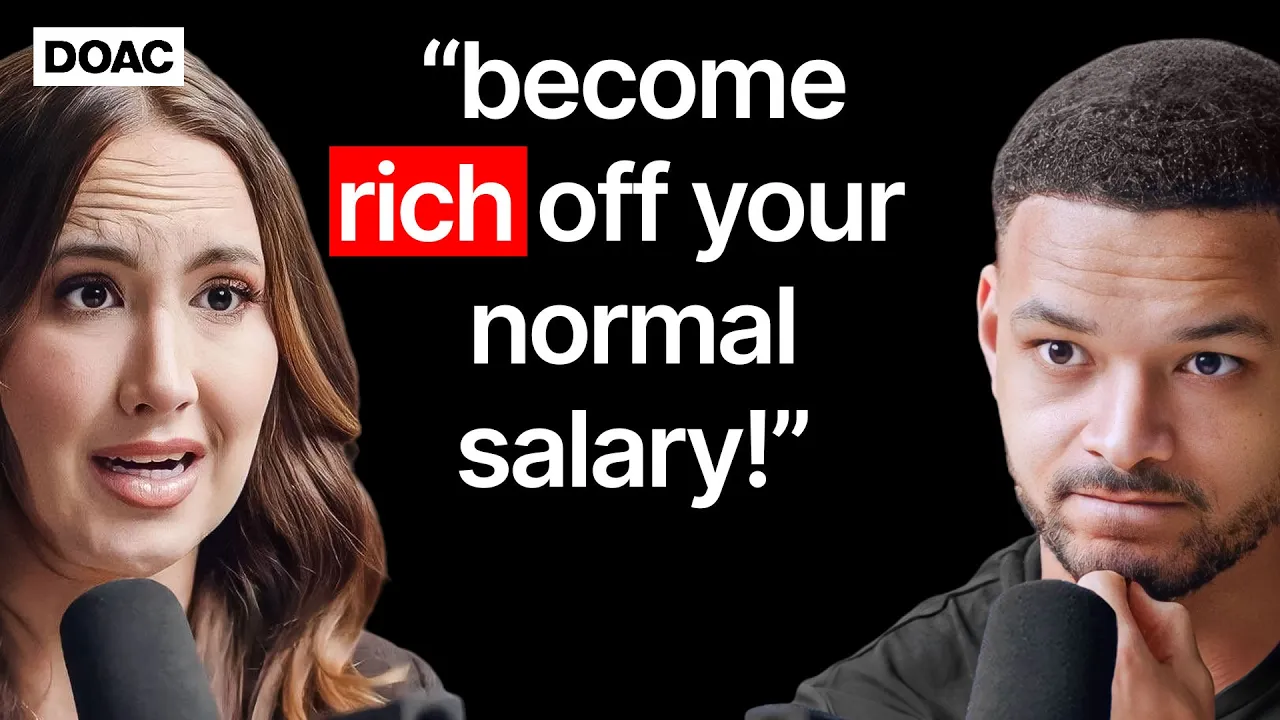
Codie Sanchez: They're Lying To You About How To Get Rich! How To Turn $0 Into $1M! — The Diary Of A CEO

The Diary Of A CEO

Acquiring cash-flowing small businesses through seller financing and sweat equity yields reliable wealth by capturing mainstream assets left behind by retiring owners.

AI-assisted summary of Codie Sanchez: They're Lying To You About How To Get Rich! How To Turn $0 Into $1M! — original source. Check the original for full context.

Source published:

Detailed notes

## Background This episode was published by The Diary Of A CEO on YouTube on August 12, 2024. According to the page description, it features Codie Sanchez—founder and CEO of 'Contrarian Thinking' and author of 'Main Street Millionaire'—sharing financial and business advice on how to build extraordinary wealth by acquiring and managing ordinary, cash-flowing businesses.

## TL;DR Codie Sanchez details her practical, contrarian framework for achieving financial freedom through small business ownership rather than traditional corporate paths. She breaks down strategies for front-loading effort in your twenties, acquiring local service businesses through seller financing and sweat equity, and avoiding predatory deal structures. Additionally, Sanchez emphasizes product excellence over hyper-focused marketing, high decision velocity, and leveraging unique personal skill sets to create asymmetric upside in dealmaking.

## Atmosphere & style The interview has an intense, pragmatic, and candid tone, balancing high-stakes Wall Street discipline with relatable Main Street hustle. Host Steven Bartlett and Codie Sanchez share a dynamic marked by mutual respect, rapid-fire intellectual exchange, and radical honesty about the uncomfortable realities of building wealth. Listening to the discussion feels like a masterclass in pragmatic ambition, cutting through conventional corporate fluff to deliver sharp, unapologetic business insights.

## Key takeaways - [02:28](https://www.youtube.com/watch?v=IYu_PDPqKFc&t=148s) True financial freedom and wealth can only be achieved through asset and business ownership rather than relying solely on a traditional job or salary. - [09:20](https://www.youtube.com/watch?v=IYu_PDPqKFc&t=560s) In your 20s, prioritizing skill acquisition and learning over immediate high earnings builds the foundational stamina and leverage required for long-term financial success. - [13:05](https://www.youtube.com/watch?v=IYu_PDPqKFc&t=785s) Regular interaction with high-net-worth individuals and wealthy business operators radically expands financial literacy, risk tolerance, and long-term earning potential. - [24:05](https://www.youtube.com/watch?v=IYu_PDPqKFc&t=1445s) To gain access to high-value leaders, aspiring entrepreneurs should offer pure sweat equity, deliver 10x value upfront, and communicate with extreme brevity. - [39:10](https://www.youtube.com/watch?v=IYu_PDPqKFc&t=2350s) Equity in a business should be reserved strictly for key high-performing partners, and early-stage startup investing should be avoided until achieving a high net worth. - [50:46](https://www.youtube.com/watch?v=IYu_PDPqKFc&t=3046s) Acquiring existing service businesses using seller financing allows individuals to build wealth with minimal upfront cash by leveraging time and operational expertise. - [55:28](https://www.youtube.com/watch?v=IYu_PDPqKFc&t=3328s) Rapid execution, high decision velocity, and adopting a 24-hour momentum rule are critical for testing ideas and overcoming operational delays. - [01:09:20](https://www.youtube.com/watch?v=IYu_PDPqKFc&t=4160s) The incoming 'Silver Tsunami' of retiring Baby Boomer small business owners creates an unprecedented opportunity to acquire cash-flowing, boring businesses. - [01:22:41](https://www.youtube.com/watch?v=IYu_PDPqKFc&t=4961s) Sustainable growth depends on product quality and retention metrics— mastering the 'Three Rs' (Referrals, Reviews, Retention) is far more vital than simply spending on marketing. - [01:39:07](https://www.youtube.com/watch?v=IYu_PDPqKFc&t=5947s) Cross-pollinating specialized skills into traditional or scarce markets dramatically increases earning potential and creates massive asymmetrical deal leverage. - [01:55:25](https://www.youtube.com/watch?v=IYu_PDPqKFc&t=6925s) Reframing distinctiveness or non-traditional backgrounds as competitive advantages builds a memorable brand identity, while victim mindsets actively hinder success. - [01:59:29](https://www.youtube.com/watch?v=IYu_PDPqKFc&t=7169s) Radical honesty regarding personal standards and operational intensity builds authentic trust with customers and team members while filtering out mismatched expectations.

## Detailed walkthrough ### [00:00](https://www.youtube.com/watch?v=IYu_PDPqKFc&t=0s) Teaser & Introduction

Can you really build wealth from a standard salary? The short answer is yes—if you are willing to put in the work. Codie Sanchez, a former Wall Street investor turned multi-millionaire, insists that achieving financial freedom through business ownership isn't rocket science, but it does require upfront pain for long-term gain. Her core message is simple: the only true freedom comes from ownership, yet society rarely hands it to you on a silver platter.

Following a major milestone announcement from host Steven Bartlett, the conversation dives straight into the realities of modern wealth creation, why traditional pathways are changing, and how anyone can break out of the corporate grind by purchasing simple, steady businesses.

- **Subscriber Milestone:** *The Diary Of A CEO* officially surpassed 7 million YouTube subscribers, supported by a production crew of nearly 50 people. - **Monthly Community Giveaway:** The show runs a ongoing subscriber raffle offering rewards such as direct meetings with Steven, event invitations, and £1,000 gift vouchers. - **Key Takeaway:** Financial freedom is accessible to anyone willing to work hard and put upfront effort into learning and asset ownership.

---

[02:28](https://www.youtube.com/watch?v=IYu_PDPqKFc&t=148s) Who Do You Want to Help Build Wealth?

Codie's central thesis centers on a core principle: "The only way to have freedom is through ownership, and the world doesn't want to give it to you." This philosophy targets everyday people who feel disenfranchised, overworked, and tired of letting corporations or bosses direct their lives. In modern culture, authority figures often paint business ownership as predatory or bad, but Codie argues that this messaging is merely a tactic to keep power concentrated at the top.

``` "The only way to have freedom is through ownership, and the world doesn't want to give it to you." ```

Her message deliberately excludes institutional giants, billionaires, or anyone seeking a effortless "get rich quick" shortcut. Business ownership involves real friction—such as the panic of making payroll when cash is tight on a Friday afternoon. However, as Codie points out, being broke is just as painful as working hard, so individuals must simply "choose their hard."

---

[04:08](https://www.youtube.com/watch?v=IYu_PDPqKFc&t=248s) Why Your Message Really Matters

The explosive growth of Codie’s platform—reaching millions of viewers across social media—stems from a deep, systemic shift in public trust. People are increasingly distrustful of traditional institutions, governments, corporate media, and mainstream gatekeepers.

To illustrate this collapse in legacy media trust, Codie points out stark viewership figures from May 2024: * **CNN Prime Time Viewership:** A week-long, three-hour prime-time segment averaged just 83,000 views. * **Fox News Prime Time Viewership:** The top-performing segment reached only 186,000 views. * **Shift in Media Dynamics:** For the first time, 30-year-olds report higher trust in independent social media content creators than in mainstream news anchors reading off teleprompters.

---

[06:16](https://www.youtube.com/watch?v=IYu_PDPqKFc&t=376s) How to Make More Money and Why It Counts

Money is not inherently good or bad; it is simply a tool that provides leverage and options. Financial freedom grants people the power to say "no" to situations, jobs, or demands they dislike.

While Codie firmly believes that her framework for wealth accumulation applies to almost anyone, she acknowledges one major exception: people who expect handouts without putting in effort. True wealth building requires staying up a little later, getting up a little earlier, and putting in the practical work to build equity.

---

[07:50](https://www.youtube.com/watch?v=IYu_PDPqKFc&t=470s) Who Is Codie Sanchez?

Before becoming a prominent voice for small business acquisitions, Codie spent over 15 years in traditional finance, working in investment banking and asset management. The onset of the COVID-19 pandemic provided a pause from endless corporate roadshows and selling institutional investments, prompting her to evaluate the lives of the managing directors above her—a trajectory she realized she did not want for herself.

She began writing online about alternative investments, specifically "boring" local cash-flowing assets like laundromats and car washes. During the pandemic, as urban workers fled major cities, shunned long commutes, and bought rural property or built chicken coops, public interest in community-based micro-businesses exploded. Codie tapped into this cultural zeitgeist, turning niche investment strategies into a mainstream movement.

---

[09:20](https://www.youtube.com/watch?v=IYu_PDPqKFc&t=560s) Top Advice for 20-Year-Olds

Reflecting on a viral post where she shared 32 pieces of advice for younger adults, Codie emphasizes that the 20s are inherently uncomfortable and chaotic. Between navigating entry-level jobs, dealing with peer pressure, and managing social lives, young professionals often feel overwhelmed.

``` "I'd rather learn than earn when I'm young." ```

Instead of chasing flashy lifestyle metrics—like driving a Bugatti or gambling on speculative cryptocurrencies—twenty-somethings should focus entirely on learning rather than earning.

- **Treating Salary as Capital:** View an entry-level paycheck as money deposited directly into your skill bank. - **The Apprenticeship Mindset:** Accept a lower starting income if it allows you to work directly under someone whose life and skills you want to emulate. - **Expect the Friction:** Recognize that grinding out a $65,000 entry-level job for two to three years is a normal stepping stone toward long-term competence.

---

[11:41](https://www.youtube.com/watch?v=IYu_PDPqKFc&t=701s) Why You Must Work Harder in Your 20s

Energy, physical recovery, and baseline stamina naturally decline over time. Drawing a comparison to weightlifting—where trying to show off at age 37 led to a blown-out hip—Codie highlights that pushing through 12-hour workdays is drastically easier in your 20s than in your late 30s or 40s.

Front-loading the pain early in life creates momentum that pays dividends later. Codie notes that her husband, a former Navy SEAL, applied this exact logic: enduring extreme physical and mental hardship while young earned him lifelong respect, leverage, and discipline that benefit him for the rest of his career.

---

[13:05](https://www.youtube.com/watch?v=IYu_PDPqKFc&t=785s) How People Actually Make Money

Exposing yourself to high-net-worth individuals fundamentally alters your understanding of wealth. Sociological research on "economic interconnectedness" demonstrates that when lower-income communities have even minimal interaction with wealthier individuals, long-term financial outcomes change dramatically:

- **The Interconnectedness Effect:** Children in lower-income neighborhoods who routinely interact with wealthier neighbors end up earning up to **35% more** 30 years down the line compared to peers in isolated environments with identical median incomes. - **Why Exposure Matters:** High performers must look further down the road to manage larger risks, effectively extending their "headlights." Being around them makes ambitious thinking and financial literacy contagious. - **Career Catalyst:** Entering Wall Street gave Codie an early look into how the ultra-wealthy allocate capital, shifting her paradigm from saving pennies to acquiring assets.

<FollowUp label="Want to cover the next part of this transcript?" query="Please provide a detailed, faithful walkthrough of Part 2 of this transcript."/>

[15:20](https://www.youtube.com/watch?v=IYu_PDPqKFc&t=920s) How Political Power Works and the Truth About Money

Reflecting on her early career days working at a think tank, Codie shares a realization about how power and wealth intersect. She stayed in touch with a colleague named Bruce, who later unexpectedly became the U.S. Ambassador to Canada. Puzzled by how someone with seemingly no prior background in Canadian affairs secured such a position, she dug deeper and discovered that ambassadorships in the U.S. are essentially bought. She explains that a direct contribution of around $1 million to a presidential campaign, plus a few million more tossed into a Political Action Committee (PAC), can secure a diplomatic post.

``` $1,000,000 Direct campaign donation + $2,000,000+ Donated through a Political Action Committee (PAC) ---------------------------------------------------------------- = Ambassadorship appointment ```

This revelation shattered her worldview and completely reframed her perspective on wealth. It made her realize that money is literally power, expanding her concept of abundance when she saw how the ultra-wealthy view positions of global authority as something that can simply be purchased.

---

[16:23](https://www.youtube.com/watch?v=IYu_PDPqKFc&t=983s) Shifting Your Money Mindset: Why Rejection Repels Wealth

When addressing the common sentiment that money is "ugly," "evil," or inherently selfish, Codie argues that holding a negative view of money guarantees you will never accumulate it. Calling back to her Austin roots, she acknowledges that while her stance might sound a bit "touchy-feely," it is simple common sense. She compares it to a woman who claims all men are awful yet wonders why she cannot find a partner—holding contempt for something actively repels it.

``` Negative Perception ("Money is evil") ---> Repels Opportunities ---> Financial Scarcity Positive Perception ("Money is power") ---> Attracts Opportunities ---> Abundance ```

Rather than attaching heavy negative emotions to money, people should view it neutrally—as a practical tool in a toolbox.

> "Do I want somebody else to have the chainsaw, or do I want it? Well, I'd rather have it because I think I'm a good person and I think that I could help more people with it."

She adds that a far greater problem in society is that too many people believe money is bad, rather than too many believing it is good. To attract wealth, you must first believe you deserve it and adopt the actions of a wealthy person: work harder, cultivate a strong drive, and surround yourself with high-achieving people.

---

[18:53](https://www.youtube.com/watch?v=IYu_PDPqKFc&t=1133s) Overcoming Money Imposter Syndrome and Physical Fear

The conversation turns to self-belief and the guilt or imposter syndrome many experience when they start making money, particularly when comparing their earnings to parents who worked far harder for much less. Codie illustrates this dynamic by recalling a women’s finance conference she attended with high-level executives. The speaker asked the room to close their eyes, picture the word "money," and physically react to it.

While Codie instinctively threw her arms wide in a triumphant "V" pose, she opened her eyes to see a room full of high-powered women curled into the fetal position or cowering in fear.

> "When you think about money, all I want you to do is just make a big expressive movement with your body... your body ends up really determining how your brain functions."

Codie notes that physical posture directly impacts mental processing. If you cannot fix your belief system overnight, you can start by changing your physical posture from defensive, fearful stances to big, expansive movements that signal abundance to your brain.

---

[21:25](https://www.youtube.com/watch?v=IYu_PDPqKFc&t=1285s) Money and Gender: Breaking Barriers in Wealth Creation

Codie addresses the glaring gender disparities in finance, highlighting that despite being a female leader, her social media audience remains 60% to 65% male. She observes that men frequently discuss deals, investments, and wealth building casually—such as on the golf course—whereas women rarely have a built-in "container" or social norm for discussing business and deal-making. She points out that fields like investment banking remain heavily male-dominated, not necessarily due to a conscious conspiracy, but because finance is a highly competitive, high-barrier industry where men have historically had a longer timeline of access.

* **Audience Demographics:** Codie's media presence is roughly 60%–65% male. * **Industry Disparity:** Investment banking remains approximately 87.6% male, while the broader finance sector sits at over 65% male. * **Key Takeaway:** Financial literacy and money creation are essential for everyone. Whether a woman chooses to be a high-earning professional or stay at home as a mother, understanding where family money comes from, how it is spent, and how to generate it independently is deeply liberating.

---

[24:05](https://www.youtube.com/watch?v=IYu_PDPqKFc&t=1445s) Starting from Scratch: The "Hungry Apprentice" Strategy

When asked how she would rebuild her wealth if stripped of all money and contacts in 2024—starting with nothing in a studio apartment—Codie explains that being young gives you a massive, distinct advantage. Wealthy people naturally see their younger selves in ambitious, hungry individuals.

``` [ Young & Ambitious ] ---> Provide Sweat Equity ---> [ Successful Mentor ] (Lacks contacts/capital) (Unmatched drive/hustle) (Provides resources/access) ```

Instead of launching a generic venture right away, she advises finding a successful, wealthy operator and providing relentless value to them through pure hustle and sweat equity. Intense competence is exceptionally rare, and most people waste their youth on trends like "quiet quitting."

> "One of our rules in hiring is: hire people so hungry you're scared they might bite you."

When an established business leader sees someone working circles around everyone else, they instinctively want to open doors for them.

---

[26:40](https://www.youtube.com/watch?v=IYu_PDPqKFc&t=1600s) How to Get a Rich Person's Attention

Warning against the futile strategy of spamming megastars like Elon Musk or Bill Gates on LinkedIn, Codie lays out a realistic strategy for making meaningful connections with wealthy people:

* **Use Concentric Circles:** Start with the people closest to you physically and socially—the wealthiest person on your block, in your community, or at your school. * **Ignore Clout and Fame:** Avoid targeting influencers or celebrities whose inboxes are flooded with thousands of messages daily. * **Target "Boring" Businesses:** Look for local business owners—like someone running a hidden $2M/year sprinkler or service company—who rarely get cold outreach or recognition. * **Offer Real Expertise:** High-value people do not need someone to clean floors or make tea; they look for individuals who bring unique knowledge, technical skills, or an understanding of the world that fills a specific gap.

To break in, approach a local business owner with genuine curiosity and offer an apprenticeship or internship to learn their operation. Working directly alongside someone with established capital and resources accelerates your career growth far faster than struggling on your own.

Here is a detailed walkthrough of the transcript section:

[30:30](https://www.youtube.com/watch?v=IYu_PDPqKFc&t=1830s) How to Get a Rich Person's Attention and Build Mentorship

Codie Sanchez breaks down a specific, high-leverage pitch strategy for young professionals wanting to capture the attention of high-net-worth or influential individuals. Instead of asking for a favor, she suggests delivering immediate, undeniable value up front. She gives the example of someone analyzing 542 of Steven Bartlett's YouTube videos, showing data-backed thumbail analysis, providing mockups, and pre-booking relevant podcast guests who have already agreed to participate. Crucially, the pitch ends with a zero-friction handoff: *"I just wanted to forward along this packet to you."*

Codie emphasizes her "10x Rule": never ask for something from someone unless you have already given them ten times more value. Recounting her own early career tactics in finance, she notes that she never formally asked executives to be her "mentor." Instead, she sent ultra-concise, specific emails asking a single question—such as why they chose one investment over another—and explicitly added, *"If you had time for a one-sentence reply, that'd be amazing."* Once they replied, she immediately took action, tested the advice, and followed up weeks later solely to show them the tangible result, again ending with *"no need to reply."* She shares a story of a high-level executive at State Street whom she "dripped" on with follow-ups 20 times over two years. When they finally met for dinner in New York, he confessed, *"I don't really know you, but I feel invested in your success,"* demonstrating how rare and powerful consistent follow-through is.

* **The 10x Rule:** Never ask for a favor without first providing 10 times the value to the recipient. * **The Follow-Through Deficit:** Codie notes that when she gives eager applicants or contacts a book to read and asks them to return with questions, only about 5 people total have ever actually followed through.

---

[33:37](https://www.youtube.com/watch?v=IYu_PDPqKFc&t=2017s) Navigating Early Career Growth and Job Hopping

Reflecting on her career path, Codie explains that she rarely stayed at any job for longer than 1.5 to 2 years early on. The sole exception was First Trust, where she stayed for five years because she held ownership and had "skin in the game." She agrees with younger generations that staying at a single job for 20 years is a mistake unless that position continually provides exponential learning and increased earning power. She describes this approach as "monkey-barring" or "leap-frogging" between positions to maximize skill and income growth.

However, Codie warns against diving into entrepreneurship too early without experience. Building a business without foundational knowledge on your own dime can financially ruin someone and set them back a decade. Instead, she advises working for established entrepreneurs for 5 to 7 years to learn on their dime before taking the plunge. Furthermore, when departing a company on good terms, ambitious employees should aim to convert their former employer into their first investor. When Codie decided to leave First Trust, her CEO disagreed with her management style but respected her performance enough to become her very first outside investor.

---

[35:52](https://www.youtube.com/watch?v=IYu_PDPqKFc&t=2152s) Job Interview Strategies and Immediate Red Flags

When interviewing for positions—especially within high-performing organizations—Codie advises candidates to drop the typical "shotgun approach" of applying everywhere on job boards and instead focus on precise "sniper shots." Candidates should enter an interview possessing intimate knowledge about the company, showing humility while highlighting specific business decisions: *"Here’s all the things I think I know... I’m curious about this, can you tell me why you guys made this decision?"* Appealing to an interviewer's ego by asking thoughtful, informed questions about their work creates an immediate connection.

Conversely, Codie outlines explicit red flags that result in an immediate rejection:

* **Speaking Negatively About Previous Bosses:** How a candidate treated their past employer is indicative of how they will treat their next one. * **A Victim Mentality:** Explaining away past failures by making excuses rather than taking personal accountability. * **Prioritizing Work-Life Balance:** Inquiries about time off or weekend boundaries are a total mismatch for her fast-paced, "hardcore" business environment.

> "Our companies are hardcore; there's not a lot of work-life balance... I always make the job seem worse than it is... I don't want anybody coming into my company and going, 'God, I thought it was going to be better than this.' I want them coming in and going, 'Oh okay, this actually is miserable.'"

---

[39:10](https://www.youtube.com/watch?v=IYu_PDPqKFc&t=2350s) Transitioning from Employee to Equity Owner

For employees looking to transition into business ownership without millions in the bank, Codie recommends asking their current employer directly: *"In this business, if I am one of your top performers consistently and make myself materially important, can I get some ownership... and I am willing to earn it or invest in it?"* Modeling her equity structure after private equity firms, Codie allows key team members who are top performers to co-invest alongside her in cash-flowing side ventures (like laundromats or car washes), even if they are not accredited investors.

When Steven poses a scenario where an employee asks for a piece of a laundromat but isn't considered a top performer, Codie explains her direct response. Equity is reserved exclusively for team members who are indispensable and with whom she plans to "travel through time" with over years or decades. She cites Jim Bowen at First Trust, who made buying into the firm's partnership feel like a major life milestone, as well as Warren Buffett, whose core inner circle has remained essentially the same 70 employees for 20 years.

* **Startup Investing Warning:** Codie firmly advises against seed-investing or funding a friend's app idea (like an acquaintance asking for $25k or $50k) until an individual reaches a net worth of at least $1 million, citing the 90% failure rate of startups. * **Cash-Flowing Alternatives:** Instead of risky startups, early investors should target cash-flowing assets or platforms like Percent (which deals in small business bond deals) or cash-flowing brick-and-mortar businesses. * **Getting Rich on a Salary:** Codie notes that while a salary alone won't put someone on the Forbes 100 list, climbing the corporate ladder and collecting bonuses can still yield massive wealth (citing a former Goldman Sachs executive worth $100M+). However, buying cash-flowing businesses acts as an essential backup plan against job loss, AI disruption, or market shifts.

[45:13](https://www.youtube.com/watch?v=IYu_PDPqKFc&t=2713s) Where to Invest Your Money and 3 Smart Business Ideas

When deciding where to invest money to build real wealth, the key strategy is to minimize downside risk while making enough asymmetric bets to capture outsized returns. While some people choose real estate or Airbnb rentals, short-term rentals can be a highly volatile market. You don't need everyone to go out and buy a car wash or a laundromat, but having a secondary income-generating cash flow is essential for long-term financial security and retirement.

If someone has tens of thousands of dollars or pounds to invest, three business models stand out in today's market:

* **Senior Care and Assisted Living Facilities:** Driven by massive aging demographics and favorable government grants or zoning allowances, turning a residential house into an independent living facility with a rotating nurse can generate **3x to 5x the rent** of a standard long-term or mid-term rental without massive upfront capital investments. * **Low-Capital Service and Trade Businesses:** Businesses like window cleaning, pressure washing, or painting require minimal starting capital and can be tested quickly. To reach a **$100,000/year business working 5 days a week**, a business only needs to generate **$384 a day**. Tests like pre-selling window cleaning services prove these models can be launched almost instantly (e.g., investing in companies under umbrella platforms like Resi Brands, such as Pinks Window Cleaning). * **"Gateway Drug" / Semi-Autonomous Businesses:** Operations like laundromats and car washes are great cash-flow assets, though they generally carry higher upfront equipment costs.

---

[48:13](https://www.youtube.com/watch?v=IYu_PDPqKFc&t=2893s) The "Nigel" Scenario: How a Complete Beginner Can Start

For an absolute beginner—hypothetically named "Nigel," a 37-year-old who has never run a business, lacks deep capital, but wants to become a owner-millionaire in 10 years—the first question to answer is whether to quit their job immediately or build on the side. If Nigel cannot afford to walk away from his primary income, he should keep his day job and build a side hustle that can eventually transition into a full-time venture.

To find the right path, Nigel must map out his **Unfair Advantage Venn Diagram**, which consists of three overlapping circles: 1. **Skills:** What is Nigel inherently good at? (e.g., hard work from driving Uber long hours, or direct skills like marketing). 2. **Network:** Who does Nigel know? (e.g., a brother-in-law who is an experienced plumber and could serve as a technical operator). 3. **Excitement / Energy:** What operational dynamic gets Nigel excited? (e.g., a passion for sales and talking to customers, rather than a specific industry).

> "The biggest reason why people struggle with what to do next is they don't actually know themselves."

---

[50:46](https://www.youtube.com/watch?v=IYu_PDPqKFc&t=3046s) 3 Ways to Buy a Business Without Cash (Sweat Equity & Seller Financing)

Even if a young worker only has $700 in extra savings a month, they can still acquire or start a business. Capital is only one of three currencies used to buy or enter a business: **Cash**, **Expertise**, or **Time / Sweat Equity**. Capital-rich investors often lack reliable operators. A hungry worker willing to put in 12-hour days can partner with existing owners or investors who provide the funding while the worker handles operations.

* **Partnering via Sweat Equity:** Young operators can approach senior partners or business owners, propose bringing in new acquisitions or vendor integrations, and ask for equity in exchange for managing the new unit. * **Seller Financing:** Seller financing accounts for **~60% of small business sales**. Instead of requiring the buyer to get a bank mortgage or pay cash upfront, the seller allows the buyer to pay off the purchase price over time using a percentage of the business's future profits.

> **Example of Seller Financing:** A business making $100,000 in annual profit is listed for $300,000. The buyer acquires it with $0 down, agreeing to pay the seller over 5 years directly out of the $100,000 yearly earnings generated by the business.

---

[55:28](https://www.youtube.com/watch?v=IYu_PDPqKFc&t=3328s) Reality Distortion Fields and the Power of Speed

Building wealth requires overcoming the limiting belief that the world is static. While many people believe they must conform to existing structures, successful entrepreneurs act as if they can "bend the world" to their will. Reading biographies of billionaires (such as Walter Isaacson’s books on Steve Jobs and Elon Musk) reveals a common trait: a **Reality Distortion Field**.

* **Steve Jobs' Reality Distortion:** Jobs convinced teams that three-week projects could be completed in 24 hours, collapsing timelines simply by refusing to accept standard delays. * **Elon Musk's First-Principles Approach:** Musk instinctively rejects estimates (e.g., being told something takes 8 months) and breaks the challenge down to its absolute core components, often compressing years of work into days.

---

[58:56](https://www.youtube.com/watch?v=IYu_PDPqKFc&t=3536s) The 24-Hour Rule: Velocity Over Perfection

A major key to outperforming competitors is operational velocity. Businessman Bill Perkins noted that his primary advantage was simply moving faster: by the time competitors held a meeting to discuss an idea, he had already made three mistakes, learned from them, and adjusted course.

To embed this mindset into organizational culture, teams can enforce the **24-Hour Rule**: * Eliminate phrases like *"I'll get back to you next week"*—where dreams and deals go to die. * Reframe project delivery around compressed deadlines (*"Can you get this to me tomorrow?"*). * Recognize that speed and immediate bias towards action beat raw intellect or massive capital advantages.

[01:00:31](https://www.youtube.com/watch?v=IYu_PDPqKFc&t=3631s) Speed over Deliberation: Moving Fast and Iterating

Overthinking is one of the biggest silent killers of progress in career and business. People often confuse *thinking* with actual work, yet sitting around pondering a problem achieves nothing. When critics argue that moving too fast risks heading in the wrong direction, the solution is simple: move fast and iterate. Rather than getting paralyzed by analysis, the goal should be to make decisions rapidly and adjust on the fly. Codie Sanchez imposes a strict "30 seconds to decision" rule on her team to keep momentum high, drawing a comparison to Mel Robbins' famous 5-second rule.

``` "In the middle of the woods, if you're feeling lost, start walking." ```

This mindset aligns with advice from a former SAS soldier faced with a friend undergoing a difficult life crisis: when you are lost in the woods, the worst thing you can do is stand still and starve—you have to start walking to gather information and find your bearings. Delaying action to search for a "perfect" outcome is a trap because most complex business choices carry pain on all sides. An executive decision that could easily stall in boardroom debates for three months can often be resolved in a four-minute memo if someone simply has the courage to act.

---

[01:03:04](https://www.youtube.com/watch?v=IYu_PDPqKFc&t=3784s) Communication Speed and Time-Wasting

The most experienced and successful business leaders are often the most intense, largely because they have zero tolerance for wasted time. A major indicator of whether someone is ready for high-level executive roles is their speed and clarity of communication. High performers state exactly what they mean using as few words as possible, whereas lower-level performers tend to waste time with empty office small talk because they are focused on showing presence rather than executing.

* **Communication Efficiency:** High-performing executives speak quickly, remain direct, and avoid rambling or fluff in interviews and meetings. * **Selective Attention:** Codie notes that she intentionally leaves roughly 40% of inbound communications completely unanswered, while maintaining intense, hawk-like focus ("like Sauron's eye") on the critical 20%. * **The Urgency Filter:** A lack of urgency during hiring interviews is one of the most reliable red flags for predicting low performance.

---

[01:05:47](https://www.youtube.com/watch?v=IYu_PDPqKFc&t=3947s) The Power of True Obsession

There is a profound difference between being merely "interested" in a topic and being truly *obsessed*. Obsessed people consistently win because they do not view their intense focus as hard work—they simply cannot help themselves. This dynamic is illustrated by figures like political strategist Carl Rove ("The Architect"), who could instantly recall hyper-specific election results down to the exact date, vote counts, and geographic demographics from a decade prior, purely because he was consumed by his field.

``` "What video are you watching on YouTube at 3:00 a.m. that's keeping you from sleeping?" ```

Everyone possesses this capacity for obsession; it is the same mechanism that allows sports fans to memorize every historical stat for their favorite team. When aligning a career or business path, it is critical to lean into genuine obsessions rather than forcing fake ones. Even if a personal passion seems unrelated to traditional business—such as loving the chaotic, kinetic energy of a live football match—that underlying feeling can be translated into running high-energy live events, building tight-knit teams, or chasing the addictive high of winning.

---

[01:09:20](https://www.youtube.com/watch?v=IYu_PDPqKFc&t=4160s) "Gateway Drug" Businesses and the Silver Tsunami

A "gateway drug" business is a venture so simple in its core operations that you could easily explain it to your grandmother. Examples include laundromats, car washes, and basic short-term rentals. These low-complexity businesses have few moving parts and manageable staff requirements, allowing first-time entrepreneurs to learn fundamental business mechanics—managing a P&L, marketing, and generating cash flow—without taking on extreme operational risk.

``` "Your first deal is never going to be your last deal." ```

Starting with a basic business builds the confidence and skills needed to step up from a "level 1 operator" to higher-level ventures over time. This concept is particularly relevant due to the massive demographic shift currently taking place:

* **The Baby Boomer Transition:** Over 50% of small businesses in the U.S. are owned by Baby Boomers who are reaching retirement age. * **Lack of Succession Plans:** Approximately 65% of these business owners have no formal transition plan in place. * **Massive Risk of Wealth Evaporation:** There are roughly 11 million small businesses for sale in the U.S., but around 70% will never successfully sell and may simply shut down. * **Preserving Main Street:** Because 90% of a typical small business owner's net worth is tied up in their business, failure to transition these companies means trillions in wealth disappears—or gets bought up by massive private equity firms like BlackRock and Blackstone. * **Opportunities for Buyers:** Younger entrepreneurs can acquire these businesses through creative structures like seller financing or by apprenticing under retiring owners. Tools like a "Deal Clarity Worksheet" can help buyers narrow down location, required income, and personal strengths before committing to a 3-to-5-year operational block.

[01:14:28](https://www.youtube.com/watch?v=IYu_PDPqKFc&t=4468s) The Golden Rule of Deal-Making and the 100-to-1 Filter

Codie Sanchez emphasizes that the single most important rule when buying businesses is to **never do a bad first deal**. A bad initial acquisition can wipe a person out financially and mentally, ensuring they never attempt another acquisition. To prevent this, individuals should focus on decreasing their risk of bankruptcy by spending significantly more time learning *how* to do a deal before actually pulling the trigger on one. Contrarian Thinking teaches a structured 90-day framework where aspiring buyers spend 20 to 40 minutes a day learning M&A fundamentals—essentially a mini "M&A MBA."

``` 100 Deals Analyzed (Zillow-style Browsing) │ ▼ 10 Target Deals (Due Diligence & Offers) │ ▼ 1 Final Deal Selected (2-3 Year Focus) ```

Learning the mechanics of deal-making equips buyers with the language of money—equity and ownership—allowing them to negotiate effectively for the rest of their lives. Without proper training in due diligence, a novice cannot accurately value a business or verify if a seller is hiding crucial liabilities. Once trained, buyers should adopt a **100-to-1 mindset** (similar to searching for real estate on Zillow): review 100 potential target businesses, filter down options to understand personal criteria, and select the single right opportunity to operate and scale for the next two to three years.

* **The 90-Day M&A MBA:** 20 to 40 minutes per day dedicated to learning deal mechanics and due diligence before making an offer. * **The 100-to-1 Rule:** Analyze 100 prospective business deals to land on the single optimal purchase. * **Core Goal:** Mitigate downside risk to eliminate any potential path to bankruptcy on the initial buy.

---

[01:16:08](https://www.youtube.com/watch?v=IYu_PDPqKFc&t=4568s) BizScout and the Ecosystem of Small Business Acquisitions

Addressing where to find businesses, Codie notes that finding quality small businesses online remains fragmented and inefficient. Platforms like **BizBuySell** often contain low-quality listings or misleading offers. To solve this, Codie and her team built **BizScout** (`bizscout.com`), positioned as her "billion-dollar bet." BizScout raised a selective seed round backed by prominent tech founders and investors, aiming to leverage Codie's massive organic audience distribution to bring pre-vetted buyers and sellers into a streamlined marketplace.

To build out the platform, Codie hired the former head of marketplace at **SeatGeek**, who famously expanded SeatGeek's market share from 5% to 40%. BizScout solves core marketplace frictions through tailored features for both sides of the transaction:

* **Investor Syndicate:** Seed investors include **Sean Rad** (founder of Tinder), **Bill Perkins**, **Balaji Srinivasan** (former CTO of Coinbase), **Andrew Wilkinson** (Tiny Capital), and **Karmen Ventures** (former Founders Fund, Uber, and PayPal executives). * **Seller Vetting & Screening:** Protects sellers from unqualified buyers by verifying cleared funds, LinkedIn credentials, credit history, and SBA loan pre-approvals upfront. * **Seller-Financed Filter:** Allows buyers lacking full institutional capital to search specifically for businesses whose owners are open to seller financing. * **AI Curation:** Uses AI models to strip out fake franchise opportunities or ghost listings that plague existing business-for-sale websites.

---

[01:19:30](https://www.youtube.com/watch?v=IYu_PDPqKFc&t=4770s) Finding Off-Market Deals: The Personal P&L Review and Venmo Challenge

While online marketplaces cover on-market inventory, the best acquisition opportunities are often found off-market. Codie outlines **12 distinct off-market sourcing strategies**, highlighting two highly practical tactics for both business owners and complete beginners.

The first strategy is the **Personal P&L Review**. Existing business owners inspect their credit card statements and expense logs to identify non-Amazon vendors with direct owner access. By targeting suppliers or service providers where significant capital is already being spent, business owners can negotiate equity stakes or outright acquisitions of vendor companies.

``` ┌──────────────────────────────┐ │ Personal P&L / Venmo Log │ └──────────────┬───────────────┘ │ ▼ ┌──────────────────────────────┐ │ Identify Direct-Owner Vendor │ └──────────────┬───────────────┘ │ ▼ ┌──────────────────────────────┐ │ Offer Growth / Social Equity │ └──────────────────────────────┘ ```

For beginners without capital, Codie introduces the **Venmo Challenge**. Beginners open their Venmo or PayPal transaction history—which represents real local cash transactions—and pitch service providers (such as landscapers, house cleaners, or local market vendors). Beginners leverage their digital or operational skills to acquire partial equity in exchange for driving growth.

* **The Venmo Pitch Example:** A young person approaches a local house cleaner and says, "You clean my house well. If I help you get 20 more recurring clients using TikTok and local marketing, would you give me a 15% to 20% equity stake in the expanded business?" * **The Math of an Equity Split:** * *Average Charleston Laundromat Revenue:* $200,000 per year. * *Average Profit Margin:* 15% (yielding $30,000 net profit). * *The Value Proposition:* If a partner doubles the profit from $30,000 to $60,000, they negotiate a 15–20% equity share in exchange for taking zero baseline profit from the original $30,000.

---

[01:22:41](https://www.youtube.com/watch?v=IYu_PDPqKFc&t=4961s) Fixing "Shitty Products": The Leaky Bucket and Network Loops

When discussing business failures, Steven Bartlett notes that entrepreneurs on *Dragons' Den* frequently claim their business only needs "marketing help" to explode. Codie strongly refutes this narrative, declaring: *"You never have a marketing or leads problem; you have a shitty product problem."* Pouring ad dollars or influencer attention into a bad product is equivalent to pouring water into a leaky bucket—customers simply drop out without returning.

To diagnose whether a company has a true product problem versus a distribution problem, founders must measure two critical metrics:

* **The 20–30% Benchmark:** If a business does not generate 20% to 30% of its sales directly from customer referrals or organic reviews, the product is defective. * **First-Customer Philosophy:** Founders should act as if their first customer is the *only* customer they will ever get, forcing them to over-deliver so that customer becomes an active sales engine. * **The ScrubDaddy Example:** Made famous on *Shark Tank*, ScrubDaddy succeeded because the product clearly worked—it didn't scratch dishes, held zero odor, and was visually unique. Satisfied users organically told their friends, creating self-sustaining viral loops. * **Chamath Palihapitiya's "7 Friends in 10 Days" Rule:** Early Facebook growth executive Chamath Palihapitiya discovered that if a new Facebook user connected with 7 friends within 10 days, their long-term retention reached near 100%. Product success relies on identifying and optimizing that exact activation metric within your own business model.

> "Act like your first customer is going to be the only customer you will ever get. Treat current customers like they are your marketing and sales." — Codie Sanchez

---

[01:26:08](https://www.youtube.com/watch?v=IYu_PDPqKFc&t=5168s) Sponsor Break: LinkedIn Jobs & NordVPN

During a brief mid-episode interlude, host Steven Bartlett shares operational insights across his portfolio of roughly 50 companies under **Flight Group**, followed by key sponsor announcements.

* **LinkedIn Jobs:** Steven emphasizes that assembling the right team is the single most critical aspect of building a successful business. Over 70% of LinkedIn users do not visit other job sites, making it an essential channel for discovering passive candidates. Listeners can claim a free job post at `[linkedin.com/doac](https://linkedin.com/doac)`. * **NordVPN:** Steven highlights using NordVPN while traveling globally to securely access live Manchester United matches, stream region-locked content, and protect data on public Wi-Fi networks. Viewers can claim a discount and four free extra months on a two-year plan at `[nordvpn.com/doac](https://nordvpn.com/doac)`, backed by a 30-day money-back guarantee.

[01:28:25](https://www.youtube.com/watch?v=IYu_PDPqKFc&t=5305s) The Power of Lifetime Value and the "Three Rs"

Building strong network effects directly drives customer retention, which is the cornerstone of long-term business growth. Many founders fall into the trap of spending endless hours trying to make a single viral video instead of obsessing over product quality. While focusing purely on top-of-funnel marketing might yield fast initial results, it forces you into a lifelong grind of selling. True success requires enduring upfront pain—spending time once to create a world-class product—rather than suffering forever with expensive customer acquisition.

Even experienced entrepreneurs can lose sight of this balance. Codie admits to falling into this exact trap with one of her portfolio companies, where referrals were near zero, yet they kept pouring dollars into paid ads. To build a sustainable enterprise, every business must master the "Three Rs": **Referrals**, **Reviews**, and **Retention**. Without these three forces working together, a company relies on paying customers who may actually be silent detractors—people who pay monthly only because they haven't found a better alternative yet.

* **Lifetime Value (LTV):** A superior product naturally turns customers into advocates who market the business for free. * **Upfront Pain vs. Long-Term Pain:** Skipping steps during product development guarantees expensive marketing struggles later in life. * **The "Three Rs" Framework:** * **Referrals:** Indication that users actively advocate for the product. * **Reviews:** Validation that customers are satisfied. * **Retention:** Proof of sustained product value over time.

[01:30:48](https://www.youtube.com/watch?v=IYu_PDPqKFc&t=5448s) Foundation-Laying and Speed vs. Patience

There is a subtle tension between working with extreme urgency and slowing down to build unshakeable foundations. Steven reflects on the early trajectory of Tesla, noting how Elon Musk spent almost a decade with a flat stock price while laying every foundational brick in near silence. Rather than taking shortcuts, Musk focused on deep, complex infrastructure: re-engineering battery technology, building a global supercharging network, and owning the manufacturing process end-to-end. While speed is vital, true perfection and enterprise value stem from having the patience to build the core foundation correctly.

However, applying this patience requires nuance depending on your stage of business experience. Young entrepreneurs often lack the judgment to know what a strong foundation looks like, making high-tempo iteration and high "shots on goal" essential early on. Once a founder understands what excellence requires, their moral imperative is to execute as fast as possible toward that vision, eventually evolving into an investor like Warren Buffett, who spends time waiting for only one or two massive opportunities a year.

> "Once you understand what good or great looks like, it is your moral imperative to work as fast as possible towards good or great. But in the beginning, since you don't know, just do more faster."

* **Tesla’s Flat Decade:** Tesla spent years with virtually zero stock movement while laying infrastructural foundations (batteries, superchargers, and factories). * **The Experience Curve:** Young founders need velocity and repeated attempts to recognize what works, whereas seasoned leaders like Warren Buffett leverage past experience to execute with patient, high-conviction moves. * **Hiring as Foundation:** Both Steven and Codie emphasize that hiring is the ultimate foundational task; rushing talent acquisition leads to long-term operational failure, justifying an "agonizingly slow" hiring process.

[01:34:17](https://www.youtube.com/watch?v=IYu_PDPqKFc&t=5657s) Bending Reality and Arbitrage Through Leverage

At its core, every business is a people business before it becomes a product or profit business. For talented individuals, the market offers virtually unlimited upside, as the bar for excellence remains strikingly low: simply doing what you say you will do, repeatedly. Steven and Codie discuss how the ability to "bend reality" comes from recognizing how easily systems yield once you apply the right leverage—much like heating an iron rod to bend it effortlessly, or watching a gentle stream of water shape the Grand Canyon through consistent force over time.

During your early career, you are constantly interviewing and being interviewed by future partners without realizing it. Steven shares how, as a 19-year-old in the UK, he sent a lighthearted cold email structured as "five reasons why girls call me back in bars and five reasons why they don't" to a billionaire who had just acquired a company. The email led to a $10,000-a-month opportunity in San Francisco to help scale the platform to 10 million users. A decade later, a contact from that initial trip—who went on to become the CTO of a $50 billion public company—partnered with Steven on a new venture off a single direct message.

* **The Reality Bending Analogy:** Shaping outcomes isn't about brute force; it's about finding the right combination of "heat and time" or applying steady force over long periods (like water carving the Grand Canyon). * **Unconscious Interviewing:** Professional relationships forged in your 20s become the high-leverage partnerships, co-founders, and capital sources of your 30s. * **Key Drivers of Outsized Success:** * **Grit and Consistency:** Sticking with a medium or business through hundreds of iterations (e.g., producing over 400 podcast episodes when the average drops off after 11). * **Scaling Game Size:** Intentionally moving toward larger, higher-stakes problems over time.

[01:39:07](https://www.youtube.com/watch?v=IYu_PDPqKFc&t=5947s) Cross-Pollination and Finding Scarce Markets

True wealth is rarely built by following a generic four-step manual; it comes from cross-pollinating skill sets across unrelated fields. Steven illustrates this by breaking down how he redeployed a single core capability—social media marketing—into increasingly lucrative markets. Early in his career, he used social media to sell fast fashion for Boohoo, where the skill was common and the financial impact per transaction was low. Later, he repositioned that exact same skill set to help biotech firms engage retail investors right before going public during the Reddit and Wall Street Bets era. In a sector where executives viewed social media as "witchcraft," his skill became extraordinarily scarce, enabling him to capture asymmetric value on deals worth billions.

Codie experienced a similar realization while generating high seven-figure returns selling investment products for a major firm. Realizing she could replace endless steak dinners and grueling travel with digital media and email newsletters, she pitched her CEO on shifting their distribution model to the internet. When he declined, advising her that if she wanted to row in a different direction she needed "a new boat," she left to apply her institutional sales expertise to modern digital media—a cross-pollination that ultimately launched her entire media and buying apparatus.

* **Skill Arbitrage:** Moving a common skill set into an industry where it is scarce dramatically increases its perceived value and earning potential. * **Cross-Pollination over Playbooks:** Combining distinct domains (e.g., social media expertise + pre-IPO biotech companies) generates non-linear, asymmetric returns. * **Recognizing Distribution Shifts:** Transitioning traditional offline business models (like institutional asset sales) into modern digital channels unlocks massive scale and efficiency.

Here is a detailed, faithful walkthrough of the transcript section.

[01:42:46](https://www.youtube.com/watch?v=IYu_PDPqKFc&t=6166s) Combining Skills into an Unfair Advantage

Codie reflects on how being pushed out of her previous environment ended up being a massive favor. It forced her to ask how she could combine her diverse background—newsletters, private equity, social media, laundromats, and car washes—into a single engine. That combination yielded a portfolio of 26 businesses generating tens of millions in revenue, with some venture deals pulling in hundreds of millions. Crucially, they do not rely on third-party investors; they use their own capital to buy profitable businesses on "totally unfair deals" made possible by their social media presence.

Stephen asks how someone just starting out can accumulate enough "dots" to connect them looking back. Codie explains her framework for finding your unique cross-pollination of ideas. All you need are three things: a whiteboard, a whiteboard marker, and a smart, open-minded friend to brainstorm with.

- **Portfolio scale:** 26 businesses pulling tens of millions in revenue, with venture-backed entities reaching hundreds of millions. - **Core strategy:** Utilizing social media distribution to land non-traditional, highly favorable acquisition terms without needing outside LP capital.

[01:44:00](https://www.youtube.com/watch?v=IYu_PDPqKFc&t=6240s) The Whiteboard Exercise: Mapping Skills vs. Money

To demonstrate the framework in real-time, Codie records an iPad screen-share exercise using Stephen as the subject. On one side of the whiteboard, she writes **Skills**; on the other, she writes **Money**. She jokes about her handwriting "giving doctor" while listing Stephen’s standout abilities: world-class execution on YouTube and short-form video, a data-driven social media strategy that predicts virality, natural charisma, a great network, and an engaging line of questioning.

``` +------------------------------------+------------------------------------+ | SKILLS | MONEY | +------------------------------------+------------------------------------+ | • YouTube & Short-Form Video | • Industry/Sector Selection | | • Data-Driven Social Strategy | • Size of the Problem | | • Charisma & In-Person Presence | • Value of the Solution | | • Strong Network Access | • High Profit Margins | +------------------------------------+------------------------------------+ ```

She then contrasts how those skills earn wildly different returns depending on where they are applied. If you deploy world-class social media skills into a traditional trade or service business, your upside is capped by lower margins and lower average revenue. But if you take those same skills into high-margin industries—such as biotech, Wall Street, or Silicon Valley—the value of the solution balloons dramatically.

- **Biotech vs. Local Services:** Average profit margins in high-tech/biotech run from 50% to 80% with hundreds of millions in potential revenue, compared to significantly lower margins and smaller revenue caps in local trades. - **Walmart Margin Example:** Walmart operates on roughly 6% margins, illustrating why low-margin, high-volume sectors yield far less per unit of attention than high-margin spaces. - **Three core money variables:** Sector, size of the business, and profitability of the business.

[01:48:30](https://www.youtube.com/watch?v=IYu_PDPqKFc&t=6510s) Maximizing Income: Medical Writing and Upside Deal Structure

To make the point concrete, Stephen posits a scenario: what if someone’s only skill is that they are a writer who understands basic social media? Codie and Stephen debate the absolute worst way to monetize writing—such as writing local newspaper articles for $14 an hour or attempting to self-publish fiction books—versus the best ways.

Stephen shares an example from his time in biotech: while a standard agency copywriter might earn £25,000 (roughly $35,000) per year, a specialized **medical writer** who can explain complex compounds (like psilocybin) can easily command $150,000 or more because talent in that niche is so scarce. It doesn't require a medical degree; it simply requires learning the specialized vocabulary. Codie notes that financial writing (like drafting investor updates) yields similar high-paying results.

Beyond switching industries, Codie emphasizes altering your **job structure**. Instead of accepting a standard $35,000 salary, a savvy creator or writer should propose taking a minimal base salary (e.g., $10,000 to cover basic expenses) in exchange for a percentage of the revenue upside generated above baseline goals. Stephen confirms this was precisely how he made his largest windfall: while working in biotech marketing, he took options prior to an IPO instead of standard pay. When the company listed on the NASDAQ at a $3.2 billion valuation, his six months of work yielded nearly $10 million on equity value.

- **Copywriter vs. Medical Writer Salary:** £25,000 (~$35,000) for standard copywriting vs. $150,000+ for specialized medical or technical writing. - **Deal Structuring Strategy:** Base pay + 10% of revenue driven above existing baseline metrics (e.g., top-line revenue generated through a newly built sales funnel). - **Biotech IPO Case Study:** $10 million equity return from 400,000 stock options after six months of building out marketing for a company that IPO'd at a $3.2 billion valuation.

[01:52:26](https://www.youtube.com/watch?v=IYu_PDPqKFc&t=6746s) Dealmaking as the Ultimate Life Skill

Codie argues that dealmaking is the single most valuable skill in the world, yet most people overlook it because they get fixated on whether or not they have physically bought a business yet. Information around high-level deals used to be strictly gatekept—when Codie started in private equity, she wasn't even allowed in the room where terms were negotiated and had to "sweet talk" her way into learning how structures were built. Today, the mechanics are openly discussed.

They cite real-world examples of master dealmakers who leverage structural edges rather than just core products: - **Donald Trump:** Built his brand and platform primarily through mastery of "the art of the deal." - **Elon Musk & Tesla:** Tesla sustained itself through critical early years not just by selling cars, but by leveraging and selling billions in government solar and regulatory carbon credits negotiated with federal bodies.

For anyone wanting to learn the fundamentals, Codie points to her book, *Main Street Millionaire*, designed to be concise, accessible, and un-intimidating, followed by the resources on her site, *Contrarian Thinking*. Stephen confirms that after reading an early draft, he found it perfectly addresses the exact knowledge gap holding 99% of people back.

- **Book Title:** *Main Street Millionaire* by Codie Sanchez (focusing on accessible deal structuring). - **Platform:** ContrarianThinking.com (offering free newsletters, courses, and business acquisition communities).

[01:55:25](https://www.youtube.com/watch?v=IYu_PDPqKFc&t=6925s) Reframing Prejudice and Disadvantage into Strength

Stephen pivots to the topic of prejudice in business and investing, noting that everyone faces structural or social friction—whether Codie navigating male-dominated corporate spaces or Stephen coming up as a young, poor Black man with a big afro trying to break in. He asks how people should frame the prejudice they face.

Codie shares a story about a woman who recently asked her how to deal with being a woman in a male-dominated field. Codie’s philosophy centers on what you project to the universe: if you tell yourself you are struggling because of your identity, you invite struggle. Instead, you can flip the perspective entirely:

> "I have such incredible opportunity because I look different than everybody here... if I am good, I am so much more memorable than every Tom, Dick, and Larry in a blue suit that looks just like everybody else."

She emphasizes that the very attribute that feels like a weakness or source of exclusion can become your greatest competitive advantage if you adjust your mindset to use it for visibility and leverage.

[01:56:46](https://www.youtube.com/watch?v=IYu_PDPqKFc&t=7006s) Rejecting Victimhood and the Shift Away from Wokeness

Codie Sanchez emphasizes that adopting a victim mentality is completely self-defeating for anyone striving to build wealth or network with successful people. She acknowledges that real-world prejudices exist—people will judge others based on skin color or gender—but stresses that allowing that prejudice to enter your psyche destroys your momentum. Instead, she urges people to choose the opposite mindset and focus on opportunity. When the host notes that people often push back against this message because they prefer being victims of their circumstances, Codie points out that the cultural tide is finally turning.

To illustrate this, Codie shares an example from her social media, where she criticized the term "Latinx." She considers it absurd because it does not exist in Spanish and sounds like something created by "a bunch of white people at Berkeley." Expecting massive backlash when she posted about it, she was surprised to find that most comments actually agreed with her. She argues that the era of relying on identity as a leverage point—expecting special treatment simply for being a woman or Latino—is coming to an end. Today, being overly "woke" or victimized is out of style, whereas being "based" and speaking honest truths is winning people over.

* Codie notes that if you ask people in Latin America how it feels to be a "Latinx" person, they would laugh you out of the room because the word makes zero sense in Spanish. * Her advice for young people aiming to stay ahead of the curve is simple: avoid being annoying, victimized, or woke; instead, embrace radical honesty and protect humor and comedy at all costs.

---

[01:59:29](https://www.youtube.com/watch?v=IYu_PDPqKFc&t=7169s) The Power of Radical Honesty over Virtue Signaling

The conversation shifts to how Codie's blunt approach plays out in business culture, specifically highlighting her hiring standards. The host points out how rare it is for a leader to publicly admit that asking about "work-life balance" in a job interview is an automatic disqualification at her company. While most CEOs engage in virtue signaling to appear soft and accommodating, Codie prefers absolute honesty about her high-performance expectations.

Codie explains that in an age with so little trust on the internet, faking a perfect persona is the fastest way to get canceled. She uses Ellen DeGeneres as a prime example: because Ellen built an entire brand around being the "nicest person in the world," the public turned on her completely when evidence emerged that she could be human, rude, or difficult. Codie avoids this trap by admitting her flaws upfront. She openly tells prospective employees that she is intense and hard to work for, but in exchange, she helps them earn more money and perform at a higher level than they could anywhere else.

* "I think the worst thing that you could do is pretend to be something that you're not... when somebody finds that out about you, then they cancel you because you were a liar." * Codie describes her workplace pitch: "I'm human, I'm flawed, I'm really intense, I'm kind of hard to work for sometimes... but I also help make my people make more money than they could anywhere else."

---

[02:00:56](https://www.youtube.com/watch?v=IYu_PDPqKFc&t=7256s) The Final Question: Writing a Modern Parable

In keeping with the show's closing tradition, the host asks Codie a question left behind by the previous guest: "What is one business idea you've always wanted to try, but never seem to get to? What's held you back?" Codie reflects on how privileged she feels to have pursued almost every interest she has had so far, believing she will leave very few regrets on her tombstone. However, after taking a moment to think, she reveals one creative ambition she has yet to fulfill.

She explains that the most powerful book in human history by total viewership is arguably the Bible, precisely because it conveys profound truth and guidance through storytelling. Codie shares that she has always wanted to write a fiction book—a modern parable—that embeds life-changing truths within an engaging narrative without the reader even realizing it. While she isn't sure if it constitutes a standard business, writing a transcendent story that allows people to escape while learning core truths remains her ultimate unfulfilled project. The host closes by praising her as a beacon of wisdom and optimism, while Codie jokingly warns him to stop making her tear up so she doesn't ruin her reputation for having a "black heart."

* When considering the most influential book of all time, Codie points to the Bible as the ultimate model for teaching lessons through storytelling. * Codie's dream unfulfilled project is to author a fiction parable that entertains readers while secretly delivering practical, transformative truths directly to their brains.

## Notable quotes > [02:28](https://www.youtube.com/watch?v=IYu_PDPqKFc&t=148s) The only way to have freedom is through ownership, and the world doesn't want to give it to you. — Codie Sanchez

> [09:20](https://www.youtube.com/watch?v=IYu_PDPqKFc&t=560s) I'd rather learn than earn when I'm young. — Codie Sanchez

> [16:23](https://www.youtube.com/watch?v=IYu_PDPqKFc&t=983s) Do I want somebody else to have the chainsaw, or do I want it? Well, I'd rather have it because I think I'm a good person and I think that I could help more people with it. — Codie Sanchez

> [18:53](https://www.youtube.com/watch?v=IYu_PDPqKFc&t=1133s) When you think about money, all I want you to do is just make a big expressive movement with your body... your body ends up really determining how your brain functions. — Codie Sanchez

> [24:05](https://www.youtube.com/watch?v=IYu_PDPqKFc&t=1445s) One of our rules in hiring is: hire people so hungry you're scared they might bite you. — Codie Sanchez

> [35:52](https://www.youtube.com/watch?v=IYu_PDPqKFc&t=2152s) Our companies are hardcore; there's not a lot of work-life balance... I always make the job seem worse than it is... I don't want anybody coming into my company and going, 'God, I thought it was going to be better than this.' I want them coming in and going, 'Oh okay, this actually is miserable.' — Codie Sanchez

> [39:10](https://www.youtube.com/watch?v=IYu_PDPqKFc&t=2350s) In this business, if I am one of your top performers consistently and make myself materially important, can I get some ownership... and I am willing to earn it or invest in it? — Codie Sanchez

> [48:13](https://www.youtube.com/watch?v=IYu_PDPqKFc&t=2893s) The biggest reason why people struggle with what to do next is they don't actually know themselves. — Codie Sanchez

> [01:00:31](https://www.youtube.com/watch?v=IYu_PDPqKFc&t=3631s) In the middle of the woods, if you're feeling lost, start walking. — Codie Sanchez

> [01:22:41](https://www.youtube.com/watch?v=IYu_PDPqKFc&t=4961s) Act like your first customer is going to be the only customer you will ever get. Treat current customers like they are your marketing and sales. — Codie Sanchez

> [01:30:48](https://www.youtube.com/watch?v=IYu_PDPqKFc&t=5448s) Once you understand what good or great looks like, it is your moral imperative to work as fast as possible towards good or great. But in the beginning, since you don't know, just do more faster. — Codie Sanchez

> [01:55:25](https://www.youtube.com/watch?v=IYu_PDPqKFc&t=6925s) I have such incredible opportunity because I look different than everybody here... if I am good, I am so much more memorable than every Tom, Dick, and Larry in a blue suit that looks just like everybody else. — Codie Sanchez

> I think the worst thing that you could do is pretend to be something that you're not... when somebody finds that out about you, then they cancel you because you were a liar. — Codie Sanchez

> I'm human, I'm flawed, I'm really intense, I'm kind of hard to work for sometimes... but I also help make my people make more money than they could anywhere else. — Codie Sanchez

## Mentioned Codie Sanchez, Steven Bartlett, Contrarian Thinking, The Diary Of A CEO, Main Street Millionaire: How to Make Extraordinary Wealth Buying Ordinary Businesses, CNN, Fox News, Bruce, First Trust, State Street, Jim Bowen, Warren Buffett, Goldman Sachs, Resi Brands, Pinks Window Cleaning, Percent, Bill Perkins, Steve Jobs, Elon Musk, Walter Isaacson, Mel Robbins, Carl Rove, Baby Boomers, BlackRock, Blackstone, BizBuySell, BizScout, SeatGeek, Sean Rad, Tinder, Balaji Srinivasan, Coinbase, Andrew Wilkinson, Tiny Capital, Karmen Ventures, Founders Fund, Uber, PayPal, SBA, Venmo, TikTok, Dragons' Den, ScrubDaddy, Shark Tank, Chamath Palihapitiya, Facebook, Flight Group, LinkedIn Jobs, NordVPN, Manchester United, Tesla, Boohoo, Reddit, WallStreetBets, Walmart, NASDAQ, Donald Trump, ContrarianThinking.com, Ellen DeGeneres, Bible

[Source](https://www.youtube.com/watch?v=IYu_PDPqKFc)

中文简报

Codie Sanchez 聚焦小企业收购而非风投初创 通过卖家融资和劳力入股收购具备稳定现金流的小企业,接手退休业主留下的主流资产,能带来可靠的财富。 Codie Sanchez 详细阐述了她通过拥有小企业而非传统职场路径实现财务自由的实用反共识框架。她剖析了在二十多岁时提前倾注努力、通过卖家融资和劳力入股收购本地服务型企业,以及规避掠夺性交易架构的具体策略。此外,Sanchez 还强调产品本身的卓越性胜过过度集中的营销,并主张保持高效的决策速度,利用个人独特的技能组合在交易谈判中创造非对称的上升收益空间。 真正的财务自由只能通过企业与资产所有权获得;年轻人在20岁阶段应优先追求技能积累而非眼前的高薪,通过前置努力为长期杠杆奠定基础。 (9:20) 环境与人际圈对财富认知至关重要:研究显示低收入群体若与高净值人士保持互动,30年后的收入可提升达35%,近距离接触能大幅拓展对资本分配与风险承受的视野。 (13:05) 想要获得顶级导师或企业家的关注,应践行“10倍价值法则”——通过极度简明直接的沟通主动提供数倍的前置实质价值,而不是毫无准备地索取帮助或人脉。 (30:30) 普通人在没有大量资金的情况下,可利用占比约60%的“卖方融资”(Seller Financing)或纯运营精力(Sweat Equity)收购现金流充沛的实体小业务;在净资产达100万美元前应避免盲目投资早期初创企业。 (50:46) 商业成功的核心壁垒在于执行速度而非过度思辨,推行“24小时原则”与快速决策敏捷度,能在竞争对手还在犹豫开会时迅速完成多轮试错与迭代。 (58:56)

Reading summary

Former Wall Street investor Codie Sanchez argues that long-term financial autonomy requires equity ownership rather than reliance on salaries. She contends that everyday operators can build substantial wealth by acquiring stable, cash-flowing small businesses using sweat equity, seller financing, and high execution velocity. Small Business Acquisitions and the Silver Tsunami (69:20) Sanchez advocates for acquiring "gateway drug" businesses—simple, low-complexity operations such as laundromats, car washes, and residential assisted living facilities that have clear operational models and steady cash flows. She highlights a demographic transition in the United States, where over 50% of small businesses are owned by retiring Baby Boomers, roughly 65% of whom lack formal succession plans. Because an estimated 70% of the approximately 11 million small businesses for sale will fail to find buyers and potentially shutter, Sanchez views this gap as a historic opportunity for incoming operators to acquire profitable enterprises rather than starting risky tech ventures. Structuring Deals Without Substantial Upfront Capital (50:46) Sanchez stresses that capital is only one of three currencies required to enter business, alongside time and expertise. She points out that roughly 60% of small business sales utilize seller financing, where the purchase price is paid off over time using the acquired company's ongoing profits rather than requiring complete bank debt or upfront cash. Beginners can also leverage sweat equity by partnering with capital-rich investors or negotiating operational buy-ins with current employers. To source off-market acquisitions, Sanchez outlines methods such as reviewing personal credit card statements to identify directly owned vendor businesses, as well as checking payment transaction logs on platforms like Venmo to locate local service providers. Non-accredited operators can pitch growth support or digital integration to these owners in exchange for equity stakes. Execution Velocity, Reality Distortion, and Product Quality (55:28) Drawing on examples from Walter Isaacson's biographies of Steve Jobs and Elon Musk, Sanchez emphasizes cultivating high operational speed and compressing decision timelines. She institutes a "30 seconds to decision" guideline and a 24-hour delivery expectation to avoid analysis paralysis, arguing that rapid iteration and immediate course correction beat prolonged deliberation. In hiring and leadership, she views urgency and clear, direct communication as non-negotiable standards. Simultaneously, Sanchez warns against relying on marketing to salvage defective offerings. Businesses facing customer churn suffer from product deficiencies rather than distribution shortages. She advises founders to ensure that 20% to 30% of sales originate from organic reviews and referrals, asserting that prioritizing the "Three Rs"—referrals, reviews, and retention—lowers long-term acquisition costs. Skill Arbitrage and Turning Disadvantages into Leverage Sanchez and host Steven Bartlett emphasize that asymmetric financial gains come from redeploying standard skills into lucrative, high-margin sectors. Bartlett recounts moving his social media marketing skills from low-margin fast fashion to high-stakes biotech investor relations, while Sanchez combined Wall Street deal-making background with digital content to build a portfolio of 26 businesses. She provides a framework where operators map existing skills against high-value industry problems to identify their competitive edge. Addressing social friction and prejudice, Sanchez rejects a victim mindset, arguing that being an outlier in male-dominated or traditional corporate environments should be treated as a memorable differentiator. She contends that focusing strictly on competence, radical transparency regarding high expectations, and direct value creation builds stronger career leverage than relying on identity-based considerations. Sanchez's framework depends heavily on an individual's willingness to endure demanding upfront workloads and absorb operational stress. While she offers practical deal structures like seller financing, executing them requires identifying retiring business owners and building genuine operational competence, leaving unanswered how lower-risk small business ownership withstands wider economic downturns or severe local market disruptions.

精炼阅读摘要

前华尔街投资者兼企业家Codie Sanchez主张,实现长期财务自由的唯一途径是资产所有权,而通过收购或经营现金流稳定的“枯燥微型企业”,普通职员完全可以摆脱工资劳作并积累财富。 所有权与财富思维重塑 (2:28) Codie Sanchez强调,真正的自由源于资产所有权,而社会传统体系往往倾向于让权力集中在顶层。许多人将金钱视为负面事物,但这种抵触心理会直接阻碍财富积累。她将金钱定义为一种提供选择权和话语权的实用工具,类似工具箱里的工具。社会学关于经济互联性的研究表明,低收入社区的儿童若日常能与高净值人士接触,30年后的收入可比同等条件隔绝环境下的同龄人高出约35%。接触高净值人群能够扩展认知视野,促使个人从单纯储蓄转向寻求资产配置与长期复利。 年轻阶段的价值积累与导师策略 (24:05) 在缺乏初始资金与人脉的前提下,年轻人的核心优势在于充沛的体能和敢于吃苦的行动力。与其盲目涌入未经市场检验的初创项目,Sanchez建议年轻人先为成熟的企业家工作5至7年,通过“以工代学”(Sweat Equity)提供超额价值来建立信任。她提出“10倍法则”,即在向关键人物提出任何请求前,先无偿提供10倍以上的具体价值,例如提供深入的数据分析或直接协助推进业务,且不设回复负担。通过持续展示极高的执行力与可靠度,员工不仅能在离职时维持良好关系,甚至能将前雇主转化为首轮商业投资人。 银发海啸与收购枯燥企业的机遇 (69:20) 当前美国正处于“银发海啸”(Silver Tsunami)的资产过渡期:超过50%的小微企业由已届退休年龄的婴儿潮一代持有,其中约65%缺乏明确的接班方案,全美约1100万家待售小微企业中近70%面临因无人承接而关闭的风险。这类企业涵盖洗衣店、洗车场、基础养老照料等运营模式极其简单的“门槛级”业务。针对资金匮乏的买家,约60%的小微企业交易可采用卖家融资(Seller Financing)结构,即通过企业未来的实际利润分期偿还收购款,买方无需在初期承担巨额银行贷款或全额现金。 执行速度、技能套利与杠杆扩张 (58:56) 商业竞争的核心往往在于推进速度而非追求绝对完美。Sanchez团队推行“30秒决策”与“24小时原则”,主张在行动中快速试错与迭代,避免过度分析带来的停滞。同时,她指出真正的不对称回报来自于将跨界技能应用到高溢价市场,即“技能套利”。例如将成熟的社交媒体分发与流量策略迁移至生物科技、机构投资或实体小企业收购等传统领域,不仅能让原有技能的边际价值呈指数级放大,还能以更具优势的条款自筹资金收购实体,构建多元化的企业资产组合。 产品底色、激进真诚与摆脱受害者心态 (82:41) 针对业务增长困境,Sanchez直言多数企业面临的并非营销或线索不足,而是“糟糕的产品本身”。若一家企业缺乏20%至30%来自老客户推荐或自然口碑的销售转化,盲目追加广告预算无异于向漏水的桶里注水。在个人品牌与企业管理方面,她反对为了讨好外界而进行虚伪的道德标榜,主张采取激进的真诚态度,直截了当地说明对高绩效的严苛要求。对于职场中的偏见与身份劣势,她认为不应自我沉溺于受害者视角,而应将其转化为在人群中脱颖而出的差异化记忆点与谈判筹码。 Codie Sanchez的框架主张通过高强度执行力、卖家融资及收购传统现金流资产实现个人阶层跃升,但该路径依赖买方承担长期且直接的运营摩擦,并对谈判与运营抗压能力有极高要求,并不构成任何无风险的快速致富方案。

Detailed notes — zh

## Background 本期内容由知名播客频道《The Diary Of A CEO》(主持人 Steven Bartlett)于 2024 年 8 月 12 日在 YouTube 平台发布。节目简介指出,本期特邀嘉宾是拥有超 250 万订阅的金融商业资讯机构 Contrarian Thinking 创始人兼 CEO、新书《Main Street Millionaire》作者 Codie Sanchez,深入拆解普通人如何打破致富谎言、借助收购传统实体商业将资产从零积累至百万美元。 ## TL;DR Codie Sanchez 深入剖析了实现财务自由的底层法则:真正的自由源于“资产所有权”,而非单纯依赖固定薪资。她建议年轻人在二十多岁主动“前置痛苦”,以学徒心态深耕并为成功人士创造超预期价值,积累认知与信用。面对婴儿潮一代带来的历史级企业交接浪潮,普通人无需巨额本金,即可凭借“汗水股权”与“卖家融资”盘下洗衣店、洗车场、住宅养老院等具有稳定现金流的“无聊小生意”。整场对话还系统拆解了“24小时法则”、基于 3R 原则打磨核心产品力,以及将常规技能跨界交叉至高利润赛道以实现收入指数级爆发的实战交易框架。 ## Atmosphere & style 对谈节奏紧凑犀利、直击商业本质,毫无传统成功学的虚浮说教,充满华尔街老练实战派的硬核务实风骨。主持人与嘉宾势均力敌、思维火花四溅,Codie 说话语速飞快、直截了当且带有一针见血的幽默与反叛感,既有面对商业残酷现实的冷静剖析,又洋溢着打破常规、重塑现实的极度乐观主义。整场交流在理性拆解交易架构与温暖诚恳的人生指引之间自如切换,给听众带来强烈的情绪震撼与即刻付诸行动的冲动。 ## Bulletin - [01:11:40](https://www.youtube.com/watch?v=IYu_PDPqKFc&t=4300s) 婴儿潮一代正迎来历史上规模最大的代际商业资产交接:全美超过50%的小微企业由其掌控,目前约有1100万家待售,其中约70%因缺乏接班人面临关闭清算风险,为年轻人通过“卖家融资”收购现金流企业提供了历史性窗口。 - [50:46](https://www.youtube.com/watch?v=IYu_PDPqKFc&t=3046s) 买企业并不需要全款付现,中小企业并购中有高达60%的交易采用卖家融资(Seller Financing);缺乏启动资金的年轻人可通过“汗水股权”与日常运营换取标的股份,直接用未来企业产生的利润分期支付收购款。 - [40:45](https://www.youtube.com/watch?v=IYu_PDPqKFc&t=2445s) 普通人致富的首要原则是远离未产生利润的早期初创投资,在个人净资产达到100万美元之前投资初创企业的比例应为零,资金应严格聚焦于自助洗衣房、洗车场等具备扎实现金流的“入门级业务”。 - [01:50:37](https://www.youtube.com/watch?v=IYu_PDPqKFc&t=6637s) 决定收入上限的关键在于将普通技能迁移至高利润、高杠杆赛道,并主动重构报酬架构——通过降低固定底薪、换取超额业绩分成或上市期权,可在同等劳动时间内捕获数倍甚至数千倍的商业回报。 ## Key takeaways - [02:28](https://www.youtube.com/watch?v=IYu_PDPqKFc&t=148s) 获得真正财务自由的唯一途径是拥有资产所有权,而打工薪水仅是对抗生活开销的短期工具,高薪白领同样具有极高的行业与岗位脆弱性。 - [09:19](https://www.youtube.com/watch?v=IYu_PDPqKFc&t=559s) 二十岁阶段的首要目标是知识与技能的大脑沉淀而非追求即刻账面暴富,将职业痛苦“前置”才能在三十岁后收获事业与财富复利。 - [16:23](https://www.youtube.com/watch?v=IYu_PDPqKFc&t=983s) 吸引财富的前提是彻底摒弃对金钱的道德偏见,将其视为一把中性的“电锯”工具,并用舒展开放的生理姿态重塑内心的配得感。 - [27:27](https://www.youtube.com/watch?v=IYu_PDPqKFc&t=1647s) 年轻人链接顶尖导师应遵循同心圆法则,避开聚光灯下的头部网红,主动前往竞争最少、拥有扎实产业但极少被请教的低调实业家身边当学徒。 - [31:01](https://www.youtube.com/watch?v=IYu_PDPqKFc&t=1861s) 向高维人士提供价值需践行“10倍付出法则”,拒绝无意义的扫地杂务承诺,拿出超出预期的专业调研成果,并建立“只汇报落地结果、不索求额外时间”的闭环反馈。 - [36:21](https://www.youtube.com/watch?v=IYu_PDPqKFc&t=2181s) 面试中应采取“狙击手打法”锁定极少数心仪目标并展示对公司的透彻理解,坚决避免说前任坏话、受害者心态以及过早打听工作生活平衡等三大淘汰红线。 - [50:46](https://www.youtube.com/watch?v=IYu_PDPqKFc&t=3046s) 收购商业资产有现金、专业技术与汗水股权三种等价货币;缺乏资本的年轻人可以用不可替代的执行韧性与高维投资人互补入股。 - [58:56](https://www.youtube.com/watch?v=IYu_PDPqKFc&t=3536s) 在内部推行“24小时法则”与“30秒决策机制”,用极致的行动和沟通速度压缩落地周期,以敏捷迭代代替原地过度思考。 - [01:09:20](https://www.youtube.com/watch?v=IYu_PDPqKFc&t=4160s) 初涉商业者应从模式极简、变量极低的“入门级成瘾业务”(如洗衣房、洗车场)开始试水,通过建立损益表感知磨炼赢的肌肉记忆。 - [01:13:27](https://www.youtube.com/watch?v=IYu_PDPqKFc&t=4407s) 收购小企业前应先接受为期90天的并购与尽职调查训练,并在实战中严格遵循“100比1筛选法则”,确保第一笔交易绝不亏损。 - [01:22:41](https://www.youtube.com/watch?v=IYu_PDPqKFc&t=4961s) 多数企业的发展停滞并非缺少营销流量,而是产品力不及格;没有20%至30%的自然转介率与好评率,盲目引流只会在漏水桶里白费力气。 - [01:28:22](https://www.youtube.com/watch?v=IYu_PDPqKFc&t=5302s) 企业增长必须依靠留存、转介绍与口碑评价构成的“3R原则”,打造卓越产品所付出的前期阵痛能换来用户终身价值(LTV)与网络效应的长期复利。 - [01:47:41](https://www.youtube.com/watch?v=IYu_PDPqKFc&t=6461s) 运用“交叉授粉”法则将看似无关的领域跨界拼接(如社媒运营+生物科技IPO),把常规技能输出到高资本、高利润赛道以实现价值爆发。 - [01:50:37](https://www.youtube.com/watch?v=IYu_PDPqKFc&t=6637s) 学习做交易与设计报酬架构是世界上回报最高的技能,敢于压低固定死工资以换取业绩提成或资本期权,能彻底打破打工者的收入天花板。 - [01:55:27](https://www.youtube.com/watch?v=IYu_PDPqKFc&t=6927s) 在商业与职场中遭遇偏见时应坚决摒弃受害者叙事,将自身的少数群体背景或非典型特征转化为不可替代的独特差异化资产。 ## Detailed walkthrough ### [00:00](https://www.youtube.com/watch?v=IYu_PDPqKFc&t=0s) 开篇:普通人如何实现财务自由 访谈在一问一答的快节奏对话中展开。主持人 Steven Bartlett 抛出了核心问题:如果仅仅拿着一份固定薪水,普通人还能变富吗?Codie Sanchez 斩钉截铁地回答:“如果你想赚到几百万美元,100% 可以。”她直言,除非一个人是“只想坐享其成的懒骨头”,否则这套财富逻辑对所有人都是触手可及的,因为“这根本不是什么高深难懂的火箭科学”。 作为拥有华尔街投资背景的多百万美元投资者,Codie 如今通过内容影响着数百万想要实现财务自由的人。在谈到如果让她“白手起家、从零起步建立财富”会怎么做时,她指出第一步是找到最厉害、最有实力的成功人士,倾尽全力去为对方创造价值。她对 20 岁年轻人的建议非常接地气甚至有些逆耳:必须接受 20 多岁的起步阶段注定痛苦艰难的事实。很多年轻人过早投入创业,幻想开着布加迪、玩加密货币轻松暴富,这是一个巨大误区。前期应当专注于极致学习、忍受磨砺,因为“前期的痛苦必然会转化为长期的收益”。此外,主持人还宣布《The Diary Of A CEO》频道订阅用户突破了 700 万,并由衷感谢观众的支持与幕后近 50 人团队的付出。 ```mermaid flowchart LR accTitle: 从零起步的财富积累逻辑 accDescr: 展示 Codie Sanchez 提出的从零起步到获得资产所有权的路径 subgraph 职场起步 A["寻找顶尖成功者"] --> B["倾尽全力为其创造价值"] B --> C["忍受前期阵痛与极致学习"] end subgraph 资本转化 C --> D["用高薪积累启动现金流"] D --> E["投资'成瘾类跳板业务'或普通小生意"] E --> F["获得股权与自由"] end ``` ### [02:28](https://www.youtube.com/watch?v=IYu_PDPqKFc&t=148s) 自由的唯一路径是“拥有所有权” 当被问及若将整套核心思想凝练为一句话会是什么时,Codie 表示:“获得自由的唯一途径是拥有所有权(Ownership),而这个世界并不想把它交给你。”这句话针对的是所有曾经感到被剥夺权利、厌倦了生活被他人操控、渴望亲自掌握人生罗盘的人。她指出,当下体制上层常常灌输一种“所有权是不好的”、“去他的大资本家和拥有者”的论调,但实际上这只是掌权者不想让你拥有自主权,而希望由他们来替你掌舵。 至于这套理念不适合哪些人,Codie 直言不讳:它不适合贝莱德(BlackRock)、黑石(Blackstone)这类早已心知肚明的万亿资管巨头或超级富豪,更不适合那些认为自己理应掌控一切、他人必须卑微请求许可的既得利益者。同时,它也不适合吃不了苦的人。成为老板是极具压力的,任何经营过企业的人都体会过那种到了周五账上现金告急、必须想方设法变卖资产或割舍利益来给员工发工资的绝望滋味。但 Codie 总结道:“身无分文(Broke)很痛苦,努力工作(Working hard)也很痛苦,两者皆苦,你得选择你的痛苦(Choose your hard)。” - **核心箴言**:“获得自由的唯一途径是拥有所有权,而这个世界并不想把它交给你。” - **现实困境**:经营者的周五现金流危机是真实而残酷的,自由背后背负着发薪与经营的全部责任。 ### [04:08](https://www.youtube.com/watch?v=IYu_PDPqKFc&t=248s) 机构信任崩塌与时代情绪的共鸣 谈及自身内容为何能在全网引发数千万受众的强烈共鸣并契合时代精神(Zeitgeist),Codie 认为核心原因在于现代社会对机构、政府、大企业以及传统主流媒体的信任全线崩塌。人们普遍有一种被欺骗的疲惫感,渴望看到未经滤镜修饰的真实内容。 她列举了一组关于主流媒体收视率的惊人数据:2024 年 5 月某周,CNN 在黄金时段(每天 3 小时节目,全周累计)的收视人数跌至历史最低水平,仅有约 8.3 万人;收视率最高的福克斯新闻(Fox News)也仅约 18.6 万人。与此同时,30 岁左右的群体对社交媒体创作者的信任度首次全面超越了传统媒体。大众厌倦了提词器前照本宣科的傀儡,而播客这种不带提词器、基于真实笔记展开的坦诚交流,正是大家渴求的真实感。Codie 强调,金钱只是一种工具,是个人工具箱里用来换取更多选择权、能有底气说“不”并进行抗衡的工具。 - **CNN 黄金时段收视数据**:2024 年 5 月单周黄金档 3 小时节目,收视人数仅 83,000,创历史新低。 - **Fox News 黄金时段收视数据**:同期收视最高,也仅有 186,000。 - **年轻代信任转移**:30 岁人群对自媒体/创作者的信任程度首次高于传统主流电视媒体。 ### [07:50](https://www.youtube.com/watch?v=IYu_PDPqKFc&t=470s) Codie Sanchez 是谁:从华尔街精英到“无聊业务”布道者 Codie 回顾了自己的背景:在华尔街投行与资产管理行业摸爬滚打超过 15 年。直到新冠疫情暴发,全球按下暂停键,她不必再四处奔波进行路演募资和代客理财,这才停下脚步反思。当环顾四周,她发现自己根本不想变成身旁那些董事总经理(Managing Directors)的生活模样,于是开始在网上撰写投资与商业笔记。 起初,她以为没人会对洗衣店、洗车场这种不起眼的“无聊生意(Boring businesses)”感兴趣。然而恰逢疫情期间,大众纷纷逃离大城市昂贵且耗时 75 分钟的通勤生活,搬到开普敦或乡村养鸡,渴望亲近社区小商业。她此前深耕多年的草根商业投资经验,正好撞上了这一时代风口。通过在互联网上毫无保留地分享这类普通人可入局的稳定资产,她迅速积累了数百万受众,掀起了一场关于购买“无聊小生意”的创业新浪潮。 ### [09:19](https://www.youtube.com/watch?v=IYu_PDPqKFc&t=559s) 给二十多岁年轻人的现实建议:专注学习而非赚钱 当被问及如果给二十岁的年轻人、或者自己未来的孩子提供建议时,Codie Sanchez 直言不讳地指出,人必须清醒地认识到“二十多岁的人生阶段确实糟透了(your 20s suck)”。在这个阶段,激素水平混乱,人们往往喝太多酒,身边的朋友也普遍没能活出最好的状态。刚步入职场时,你很可能会干着一份年薪约 6.5 万美元、自己极为厌恶的工作,除了老板交办的杂务外几乎毫无个人时间,而且这种状态可能会持续 5 到 10 年之久。Codie Sanchez 强调,这就像脚底扎了一根钉子,忽视它的疼痛毫无意义。社交媒体上宣称二十岁就能“开布加迪、玩加密货币轻松暴富”的假象完全脱离现实。如果年轻人在一开始就能看清这只是两三年的必经阶段,就能咬牙忍受痛苦,在学习中不断进化。 Codie Sanchez 认为,二十多岁年轻人最大的误区就是过分纠结于“现在能赚多少钱”。年轻时应该把薪水看作是“往大脑里注入现金资产”,首要目标是实现知识和经验的最大化。她宁愿接受维持生存所需的最低报酬,去成为某个未来生活样态令自己向往的人的学徒。年轻时必须恪守“学本领重于赚快钱(rather learn than earn when I'm young)”,把注意力从即刻的账面数字转移到大脑认知的沉淀上,为未来的高阶变现打下基石。 ```mermaid flowchart TD accTitle: 二十岁阶段的认知与成长飞轮 accDescr: 展示二十岁阶段从接受平庸劳作、以技能换报酬,到最终实现复利回报的心态跃迁路径。 subgraph Mindset["破除幻想与痛苦沉淀"] A["打破社交媒体暴富神话<br/>(拒绝布加迪与快钱幻想)"] --> B["正视职场前期的低谷与苦工<br/>(接受6.5万美元年薪与枯燥任务)"] end subgraph SkillBuilding["大脑资产投资"] B --> C["寻找标杆人物成为学徒<br/>(向拥有理想生活的人贴身学习)"] C --> D["优先积累技能与思维<br/>(宁可拿最低报酬换取认知沉淀)"] end subgraph Compounding["长期复利收获"] D --> E["前置痛苦 (Frontload the pain)"] E --> F["三十岁后收获事业与财富复利"] end ``` ### [11:41](https://www.youtube.com/watch?v=IYu_PDPqKFc&t=701s) 为什么必须在年轻时“前置痛苦” 在谈到不同人生阶段的工作节奏与职业道德时,Codie Sanchez 斩钉截铁地表示,二十多岁必须比三四十岁更拼命工作,因为人的身体与精神耐力会随年龄增长出现生理性下滑。她打趣地举例道,自己如今 37 岁,前几天在健身房指导旁边的朋友做硬拉,只是随手多加了一片杠铃片,就直接扭伤了髋关节并引发持续背痛。这让她更加深信,人在二十多岁拥有的体能韧性是不可复制的,想要连续二十年每天工作 12 个小时极其艰难,而在二十岁出头时扛住这种高强度显然容易得多。 因此,明智的策略是将整个人生的代价“前置”(frontload the pain),在年轻体壮时吃尽最苦的头,换取三十岁之后的主动与从容。她以自己的丈夫为例:她的丈夫曾是一名海豹突击队队员(Navy SEAL),在年轻时自愿选择做最艰苦、最磨炼意志的事,忍受常人难以想象的严酷训练;但一旦熬过了那个阶段,在往后的余生里,他便永久拥有了“前海豹突击队成员”这一无与伦比的光环和资本。夫妻俩一致坚信,他们在商业上的成功秘诀之一,正是年轻时主动挑选那些能学到最多东西、能最大化丰富简历的硬仗来打,从而在二十多岁中后期开始尽情收获早期播下的果实。 ### [13:05](https://www.youtube.com/watch?v=IYu_PDPqKFc&t=785s) 财富认知重塑:经济互联性与权力的本质 关于金钱认知的顿悟时刻,Codie Sanchez 引用了关于“经济互联性”(economic interconnectedness)的社会学研究:设想左右两片经济社会地位完全相同的贫困社区,居民收入大致一致;如果左侧社区碰巧有几位富人居住,使得该社区的孩子平日里与富人发生接触互动的几率稍高一点,那么三十年之后,左侧社区成长起来的孩子平均财富会比右侧社区高出整整 35%。这表明思想和眼界具有极强的传染性。她用开车的比喻解释道:车速越快,车头灯就必须照得越远,否则就会坠入悬崖;那些手中握有巨额财富并承担重大风险的人,前瞻视野天然比普通人看得更远,哪怕只是近距离观察他们的言行模式,也能极大地打破自身的认知局限。 为了更具象地说明金钱的真实运转逻辑,Codie Sanchez 分享了自己在高盛集团(Goldman Sachs)芝加哥分行工作时的经历: - 当时负责芝加哥办公室固定收益部门的负责人名叫布鲁斯(Bruce),为人厚道友善。 - 在 Codie 离职后不久,她得知布鲁斯竟然被任命为美国驻加拿大大使。她当时大为震惊,甚至怀疑对方到底去过加拿大没有,因为他完全没有任何外交官背景。 - 深入探寻后,她才第一次看清隐藏的权力游戏规则:在美国,很多大使职位实质上是可以“买”下来的。只要在合规框架内向总统直接捐款约 100 万美元,并向相关的政治行动委员会(PAC)投入数百万美元,就能谋得大使席位。 - 这件事彻底颠覆了她的世界观,让她意识到“金钱本质上就是纯粹的权力(money really just is power)”。这也让她反思,那些敢于将“买下世界权威职位”纳入人生选项的人,内心的丰盛度与野心空间是何等宽广。 ### [16:23](https://www.youtube.com/watch?v=IYu_PDPqKFc&t=983s) 如何吸引财富:摒弃对金钱的道德偏见 面对许多人对财富抱有本能的反感、认为追求金钱是自私甚至邪恶的心态,Codie Sanchez 指出,如果你在骨子里讨厌金钱,你就绝不可能吸引财富。这就好比当下一些女性整天抱怨“所有男人都糟糕透顶、我找不到好男人”,带着这种排斥和偏见,现实中必然会把健康的亲密关系拒之门外。同理,如果你认为金钱是不道德、肮脏的,你的潜意识自然会排斥它。 Codie 强调,人必须剥离附着在金钱上的消极情绪,客观地将金钱视为工具箱里的工具: - 钱就像一把锋利的“电锯”:它本身没有善恶之分,完全取决于握在谁手里。 - “我是希望把电锯交给别人,还是握在自己手里?我更希望自己拥有它,因为我认为自己是个好人,我能用它帮助更多的人。” - 现今社会普遍存在一种畸形现象:太多人被灌输了“钱是万恶之源”的观念,这种对财富的道德负罪感远比贪婪更具破坏性。要吸引财富并做出正确的商业与谈判决策,首先必须打心底认为自己配得上拥有金钱。 ### [18:12](https://www.youtube.com/watch?v=IYu_PDPqKFc&t=1092s) 吸引财富的法则与克服金钱冒充者综合征 Codie Sanchez 指出,吸引事物最好的办法就是先让自己变得优秀。如果你想要一个出色的伴侣,自己先成为出色的伴侣;如果渴望变得富有,就必须以富人的思维和行为模式行事——这绝非盲目挥霍消费,而是思考富人在追求目标时会做些什么:他们会加倍努力工作,并让自己置身于更高认知的人群圈子中。然而,很多人在践行任何具体策略之前,内心深处并不相信自己配得上财富,被各种负面的自我叙事所困扰,这种深层的自信匮乏成了最大的障碍。 主持人 Steven Bartlett 对此深有共鸣,并分享了一个身边朋友的故事:这位朋友最终赚到了大钱,内心却充斥着强烈的负罪感。因为他的父亲一生辛勤劳作,所获报酬却不及他的一小部分,导致他始终觉得自己是个“冒充者”(Imposter),潜意识里认为自己不配拥有这些财富。 ```mermaid flowchart LR accTitle: 身心反馈与财富心态模型 accDescr: 展示身体姿态如何直接影响对金钱的潜意识心理与行动预期。 subgraph 负面模式 A["潜意识恐惧 / 自卑"] --> B["身体姿态收缩<br>(蜷缩、防御、抗拒)"] B --> C["排斥财富机会<br>(认为自己不配得)"] end subgraph 丰盈模式 D["刻意肢体训练"] --> E["身体大幅展开<br>(张开双臂、昂首接纳)"] E --> F["重塑大脑信念<br>(主动追求高薪与资源)"] end ``` 针对这种心理枷锁,Codie 提出了一个从生理影响心理的破解法。她回忆起参加过的一场仅限金融界高管女性参加的高端活动。当导师让大家闭上眼睛、在听到“金钱”(Money)这个词时用身体动作表达真实感受时,Codie 的本能是兴奋地张开双臂迎接财富;但当睁开双眼时,她震惊地发现全场大部分平日位高权重的女性居然都摆出了像胎儿般蜷缩、紧闭、防备的姿势。Codie 强调,身体姿态直接反向塑造大脑机制(正如 Tony Robbins 等导师所言):如果你一时无法从思维上根除自卑,就先强迫自己的身体做出舒展、开阔、接纳的动作(例如大幅度张开手臂示意“尽管给我”),用身体的丰盈感去战胜面对金钱时的恐惧与回避。 --- ### [21:25](https://www.youtube.com/watch?v=IYu_PDPqKFc&t=1285s) 性别与金钱关系:女性在商业领域的缺位与重构 谈到两性对金钱的认知差异时,Steven 观察到男性群体几乎总在公开或私下讨论投资、资产运作和如何赚钱,而女性之间这类对话似乎极少。Codie 证实了这一现象:即便她本人是女性创始人,其全网社媒受众中依然有 60% 至 65% 是男性,吸引女性深入探讨商业与财富异常困难。许多女性甚至潜意识里觉得公开谈钱是件“尴尬”(cringe)的事情。 Codie 指出,这在很大程度上是因为社会缺乏女性谈论金钱的“容器”(Container)。男性习惯在打完高尔夫球后聚在第 19 号洞酒吧复盘当周达成的交易,但女性之间却没有这样天然被正常化(Normalized)的商业交流场景。Codie 强调,无论女性的人生选择是什么——无论是成为商界女强人(Girl boss),还是选择留在家中相夫教子的全职太太(Trad wife)——都必须了解家庭的钱在哪里、钱是如何赚来的、各项开销是多少。她坚信,亲手赚到属于自己的第一块钱,是人生中最令人兴奋、最具解放意义的体验。 - **投资银行业性别构成**:男性占比高达 87.6%。 - **广义金融业性别构成**:男性占比超过 65%。 - **行业壁垒与历史周期**:金融是报酬最高但也最残酷的行业之一,伴随着严苛的牌照和学历门槛。男性当下的主导地位并非出于某种阴谋,而是源于女性获得全面平等的就业权力时间尚短;随着历史推进,更多女性进入该领域是必然趋势。 --- ### [24:05](https://www.youtube.com/watch?v=IYu_PDPqKFc&t=1445s) 从零起步:年轻时如何借用大佬的杠杆 Steven 提出了一个经典假设:如果将 Codie 送回 20 岁,剥夺她现有的全部财富和人脉资源,只保留现有的大脑认知,将她扔进一个单间出租屋(Studio apartment),在 2024 年她该如何重新白手起家? Codie 毫不犹豫地指出,20 岁是最大的优势。富有的人往往极度愿意提携年轻时的自己,前提是年轻人眼里必须有那种令人敬畏的“饥饿感”。她的公司在招人时就秉持一条铁律:“去招那些饥饿到让你害怕他会咬你一口的人(Hire people so hungry you're scared they might bite you)”。当一个有钱的大佬看到一个年轻人比自己起得早、比自己走得晚、不断提出点子、主动承担岗位之外的工作时,大佬内心会产生一种近乎本能的“父爱/母爱”投射心理——“我从你身上看到了当年的自己,我愿意拉你一把”。 ```mermaid flowchart TD accTitle: 年轻人借力大佬的发展路径 accDescr: 展示年轻人如何通过向资源充沛的大佬交付汗水股权完成快速崛起。 subgraph 供需对接 A["高维大佬的痛点<br>(不缺钱、不缺流量、极缺靠谱执行者)"] B["年轻人的核心资本<br>(极致执行力、时间、汗水股权)"] B -->|主动解决烂摊子 / 疯狂输出价值| A end subgraph 价值变现 A --> C["提供核心信任与稀缺机会"] C --> D["用 1-2 年完成认知与人脉跃迁"] end ``` 在 Codie 看来,最笨的做法是在年轻时选择“摸鱼躺平”(Quiet quitting)或纠结于具体是做房地产还是做播客。对于顶尖创业者而言,他们缺的根本不是资金、关注度或点子,他们最稀缺的就是“愿意不惜一切代价冲锋陷阵的狠人”。因此,年轻时最快的破局方式就是找准一个已经取得巨大成就、拥有你想要生活的大佬,拼尽全力为其提供价值,哪怕前期必须忍受大量脏活累活(Sweat equity)。只要展现出罕见的“强悍胜任力”(Intense competence),只需跟对一两个关键人物深耕一到两年,就能实现几何级跃升。 --- ### [26:40](https://www.youtube.com/watch?v=IYu_PDPqKFc&t=1600s) 触达顶级人物:同心圆破局法则 当 Steven 追问具体落地策略,指出很多人听到这个建议后只会盲目在 LinkedIn 上给 Elon Musk 或 Bill Gates 发私信且注定石沉大海时,Codie 详细拆解了接触有权有势之人的具体心法。 要引起大人物的注意,绝对不能好高骛远,而必须遵循“同心圆法则”(Concentric circles),从距离自己最近的一圈切入: 1. **寻找身边的制高点**:不要一上来就去联系世界首富,先看看你所在的街区、社区或者社交半径内,最富有、最有影响力的人是谁。 2. **顺着同心圆向外扩散**:先想办法链接到身边触手可及的成功者,通过在他们身边创造极致价值证明自己,进而通过他们的圈子和背书一步步接触到更高维度的资源网络。从最贴近现实的节点切入,永远比空投冷邮件更具可行性。 ### [27:27](https://www.youtube.com/watch?v=IYu_PDPqKFc&t=1647s) 寻找身边的富人:避开网红,前往“水最浅的地方” 面对年轻人“如何接触到有钱人”的困惑,Codie Sanchez 指出这本质上是一个人际概率游戏,其实每个人之间都隔着所谓的“六度分隔”(Six Degrees of Kevin Bacon)。她建议绝不要好高骛远,只要对方每年能赚几十万美元,就已经远远超出初学者的想象,完全可以作为起点。比如在大学或社群里,去留意身边最富有的同学,想办法结识其父母。从物理距离最近、最触手可及的人开始接触,试错成本也是最低的。 Codie Sanchez 特别警惕将“名气”与“财富”混为一谈的普遍误区。许多年轻人盲目向像她或 Steven Bartlett 这样拥有百万粉丝的公众人物发邮件,但在网红的收件箱里,竞争处于极度激烈的“深水区”。相反,如果街区或学校里有一位经营自动喷淋系统公司(Sprinkler Company)、年入数百万美元的父亲,往往根本没有任何人去找他请教。去敲开这类实业企业家的门,真诚地赞叹对方的业务并提出:“我想成为像您一样的人,我可以来给您当无薪学徒或实习生吗?您让我干什么都行。”对这样一位习惯了低调务实的实业老板而言,这种请求会带来极大的认可感与成就感;而头部网红只会因精力有限和实习生过剩而直接忽略。因此,新手的第一步应当是“去水最浅的地方”。 ```mermaid flowchart TD accTitle: 寻找导师的路径对比 accDescr: 对比直接联系大网红的高竞争与联系身边隐形富豪的高成功率路径 subgraph RedOcean ["盲目冲向深水区(高竞争 / 极低成功率)"] A["年轻求职者 / 新手"] -->|发私信 / 邮件| B["头部网红 / 知名大V"] B -->|成千上万封简历塞满收件箱| C["无暇顾及 / 拥有过量实习生 / 直接忽略"] end subgraph BlueOcean ["前往水最浅的地方(低竞争 / 高转化率)"] A -->|观察身边的人际网络| D["同学或街坊的父母"] D -->|经营实体产业(如喷淋设备公司)| E["年入数百万但极少被人请教的企业家"] E -->|表达崇敬并提出主动做学徒| F["获得极高成就感,愿意倾囊相授"] end ``` --- ### [29:18](https://www.youtube.com/watch?v=IYu_PDPqKFc&t=1758s) 为什么“我愿意帮你扫地”是糟糕的说辞 Steven Bartlett 极有共鸣地分享了一个近期经历:一位年轻人在新办公室外拦住他,手里拿着装在活页夹里的简历,诚恳地表示自己甚至愿意免费进公司扫地、倒茶。Steven 指出,这种推销方式不仅行不通,甚至会带来公关隐患——大公司绝不可能允许未签署正规雇佣协议、不拿薪水的人进门干杂活,否则一旦被媒体曝光就是一场合规公关灾难;更重要的是,单纯表达“愿意扫地做杂物”根本无法证明求职者具备任何独特价值。 面对海量私信,唯有展现出“超预期的专业认知”才能让人眼前一亮。Codie Sanchez 强调,成功人士只对自己不具备的认知感兴趣,他们需要能推自己一把的专业力量,而不是又一个打扫卫生的工人或专职司机。她举例说明何为真正无法抗拒的联系方式:如果一个年轻人发来信息说:“我深度拆解了您的 542 支 YouTube 视频,根据后台与公开数据,分析出了点击率最高与最低的封面特征;针对您最近表现不佳的视频,我重新设计了几套封面方案附在下方;此外,我为您筛选了三位非常适合上播客的重磅嘉宾,并已通过私人渠道与他们取得了初步意向,如果您感兴趣,我把这套完整资料发给您。”面对这种带着深度思考和现成结果的主动出击,任何内容创作者都会停下脚步认真评估。 --- ### [31:01](https://www.youtube.com/watch?v=IYu_PDPqKFc&t=1861s) 10倍付出法则与“滴水穿石”式的导师连接 在给予价值时,Codie 提倡严格践行“10倍法则”(10x Rule):在向对方提出任何索求之前,先为对方提供 10 倍的价值,而且赠予时绝不预设回报。在邮件结尾加上一句“我只是想把这份方案呈递给您,您无需回复”,反而能彻底卸下对方的心理防备。 Codie 回忆自己年轻时搭建人脉的独门秘诀:她从不找家喻户晓的名人,而是寻找金融等领域的高管,私信只请教一个极其具体的微小问题(例如:“我注意到您最近投资了某交易,很好奇您为何选 A 公司而非 B 公司?如果您能抽空回一句话,将不胜感激”)。大约十分之一的人会回复一句简短建议。收到回复后,她立刻回复:“非常感谢,您不必再回复了,这对我有极大启发,我这就去落地执行。” 数周后,她会再次跟进并同步进展:“上次您给我的建议,我已经完成了 X、Y、Z 三项具体应用,成效斐然。再次感谢您,您无需回复,我只是想让您知道您的建议改变了我。”这种“只汇报落地结果、不索取额外时间”的反馈机制在职场中极其罕见。Codie 曾以此方式与道富银行(State Street)的一位高管保持长达两年的单向低频互动,前前后后跟进了约 20 次。当两人最终在纽约线下面对面坐下来吃晚餐时,那位高管坦言:“这感觉太奇妙了,我其实并不真正了解你,但我却打心底里觉得你的成功与我息息相关,我非常愿意为你投资。”Codie 在心中暗想,这正是两年来持续用行动证明“对方随意给出的一句话改变了自己的人生轨迹”所产生的必然心理效应。 - **跟进与执行力的高门槛**:当有人主动找 Codie 表达合作意向时,Codie 常会顺手扔给对方一本书,让他们读完后带着具体问题再来找她;然而在成百上千的人中,真正读完并回访的不会超过 5 个人。 - **不可替代的闭环反馈**:顶尖成功人士最享受的不是被奉承,而是亲眼见证自己的微小指点被他人以惊人执行力落地生根。 --- ### [33:37](https://www.youtube.com/watch?v=IYu_PDPqKFc&t=2017s) 职场跳板策略:花别人的钱磨炼创业基本功 谈及结识核心人脉后的成长路径,Codie 总结了自己的职业跃迁模式:在职业生涯早期,她在绝大多数公司只待一年半到两年。唯一的例外是在 First Trust 工作了五年,因为她在那里拥有业务股权(Skin in the game),能自主把控结果。她主张年轻人不应在一份工作上死守 20 年,除非该岗位能持续带来“赚得更多”和“学到更多”的指数级空间;一旦收入增长停滞或学习曲线见顶,就必须果断跳槽。 她将这种晋升机制比作在单杠上“荡秋千借力”(Monkey-barring)——不断以当前掌握的技能和薪酬为跳板,荡向更高维度的平台。Codie 告诫年轻人切忌过早独立创业,因为创业极其残酷,认知不足可能导致倾家荡产、让人生倒退十年。最聪明的路径是“花别人的钱来学本领”,先去给优秀的创业者打工 5 到 7 年,摸清底层商业逻辑,确认自己具备抗压意愿后,再去自立门户。当她最终离开 First Trust 准备创业时,原公司的 CEO 甚至主动提出要成为她新事业的第一个天使投资人:“员工离职时能让前老板心甘情愿为你写第一张支票,这才是职场人应当追求的终极口碑与背书。” --- ### [35:48](https://www.youtube.com/watch?v=IYu_PDPqKFc&t=2148s) 面试的核心心智:让他人感到你比他自己更懂他 针对职业跃迁中必不可少的面试环节,Steven 询问 Codie 在招揽人才时最看重的特质与危险信号(Red flags)。Codie 指出,求职者在面试中最核心的行为准则是:“当对方觉得你对他们的了解甚至超过了他们对你的了解时,他们才会放心把资源与机会交给你。” 每个人最痴迷的词汇永远是自己的名字与自己所构建的事业。面试官最在意的并非应聘者流水账般的个人履历,而是应聘者是否真正沉下心去剖析过这家公司的痛点、文化脉络与战略愿景。如果求职者展现出的洞察力与同理心能让面试官感到被深度理解,面试的主导权就会发生质的逆转。 ### [036:21] 面试的制胜法则:“狙击手打法”与三大淘汰红线 人类天生更喜欢谈论自己,而不是向他人提问。Codie Sanchez 指出,在求职面试中充分利用这一点是脱颖而出的关键:求职者应该带着对目标公司的深度调研走进考场,直截了当地表达:“这是我目前所了解的贵公司业务。因为身处局外,我未必掌握全貌,但我非常钦佩你们做出的某项成绩,同时我对另一项决策十分好奇,能告诉我你们当时为什么这么做吗?”这种做法必须伴随极大的谦逊——即便你内心百分之百确信,也要用“我认为”来表达。一旦面试官被激发了倾诉欲,其自尊心便会得到极大满足,内心会立刻认定“这个人非常聪明懂行,我们那步棋确实走得漂亮”。然而绝大多数求职者犯的错误是搞“散弹枪扫射”(shotgun rounds),盲目海投数十上百家公司;真正聪明的人会采取“狙击手打法”(sniper shots),锁定三家最心仪的岗位展开极其猛烈的深度攻坚,对目标公司及其负责人研究得透透彻彻,这样中选的概率远高于在招聘网站上随手点击投递。 谈到面试中的一票否决项(red flag),Codie 列举了三个绝对不予录取的雷区: 1. **说前任雇主的坏话**:求职者如何对待上一任老板,未来大概率就会如何对待下一任老板,这是不可触碰的红线。 2. **受害者心态与推卸责任**:不断罗列某件事情未能成功的各种借口,字里行间全都是“这不怪我、都是因为外部原因”。 3. **过早询问工作生活平衡(Work-life balance)**:Codie 坦言自己的企业风格极其硬核(hardcore),如果候选人刚进门就打听休假有多少、周末是否需要回短信,答案显然是“我们需要周末加班”,因此这种人绝不合适。 与多数管理者拼命向候选人吹嘘公司有多棒截然相反,Codie 偏好在面试中把岗位说得奇差无比。她的面试流程极为清晰:先抛出一连串问题深入盘问候选人的过往履历;紧接着和盘托出这个岗位所有极其棘手、痛苦、目前尚未解决的困难与弊端;最后才留出时间让对方提问。这种反向预期的目的在于进行压力测试,确保没有员工会带着“我以为这里会更轻松”的幻觉入职,而是抱着心理准备进来,甚至在真正开展工作后感叹“其实也没想象中那么糟糕”。 --- ### [039:10] 从打工人到资产持有者:如何向老板争取“分蛋糕”的权利 面对普通员工如何在仅有数千美元积蓄的情况下跨越至资产所有者的问题,Codie 认为完全可以在现有的企业内部实现身份转换。核心策略是主动向老板提出关键问题:“如果我在公司里持续保持顶尖绩效,让自己成为不可或缺的业务核心骨干,我是否有机会获得本业务或未来关联项目的股权?我愿意通过赚取业绩或自掏腰包出资来换取这份份额。” 这种内部跟投机制源自私募股权(PE)行业的一大财富密码:PE 高管之所以极其富有,是因为他们有权把资金投入到最优质的底层交易中。在美国法规下,员工即便不具备合格投资者(accredited investor)身份,也能凭借内部员工豁免权享有投资特权,这是一种极具威力的不公平竞争优势。普通人应当先在主业中拼尽全力赚取尽可能高额的工资现金流,再将工资结余投向具备确定性的优质侧翼资产,而不是贸然裸辞去从零创业。 ```mermaid flowchart TD accTitle: 员工晋升所有者路径 accDescr: 展示从基层员工通过绩效、跟投机制逐步转型为核心合伙人的发展流程 subgraph Step1["打工阶段:积累资本与信用"] A["高绩效本职工作"] --> B["获取最大化薪酬现金流"] B --> C["成为不可替代的核心骨干"] end subgraph Step2["跟投与转化:借力企业生态"] C --> D{"向老板提出股权诉求"} D -->|"非核心公司"| E["跟投内部优质现金流项目<br/>(如洗衣店、洗车场)"] D -->|"核心合伙人"| F["出资购买合伙人份额<br/>(共赴长远未来)"] end subgraph Step3["资产持有者"] E --> G["稳健现金流资产收益"] F --> H["企业所有权与长期分红"] end ``` --- ### [040:45] 警惕“朋友的App”:百万元前绝不碰早期初创投资 针对将工资投向侧翼项目的建议,主持人 Steven Bartlett 提出了现实困境:普通人的交易流(deal flow)通常极其贫瘠,投资早期项目往往面临高昂的试错成本。Steven 分享了一个身边年轻走红演员的真实案例:对方赚取了丰厚片酬却不知如何理财,唯一拿到的投资机会就是朋友 Kevin 索要 2.5 万至 5 万美元去开发一个 App 概念。 对此,Codie 斩钉截铁地警告:“在成为拥有百万美元资产的富翁之前,早期初创投资的比例必须是绝对的零(zero)。”初创企业死亡率高达 90%,天使投资是有钱人为了博取全垒打而甘愿承受资本归零风险的奢华游戏。在未跨过百万门槛前,普通投资人必须远离一切不产生利润的纯概念项目,只聚焦于能产生持续现金流(cash flow)的标的。 - **聚焦现金流资产**:可考虑针对中小企业产生现金流的债券或稳健资产借贷平台(如其参投的 Percent),或投资能稳健分红的线下实体。 - **划清核心与衍生资产界限**:Codie 明确表示,自己绝不会稀释媒体品牌 Contrarian Thinking 的股权,因为这是其个人终身持有的名誉资产;但团队中的王牌成员(marquee member)有资格跟投旗下产生扎实净现金流的自助洗衣店或自动洗车场项目。 --- ### [042:41] 结伴穿越时间:股权是需要付出代价的稀缺勋章 当员工询问为何自己不能投资优质洗衣店资产时,Codie 会极为坦诚地给出负面反馈:“能够持有公司权益的人,必须是我认为能够‘结伴穿越时间’(travel through time together)的人,这意味着我们要并肩走过数年乃至数十年。”刚入职一年、负责社交媒体运营、仅仅按部就班达成常规 KPI 的员工,远未达到让企业离开他就会陷入停摆的核心地位,此时依然处于“雇员”层级,而非“合伙人”。 真正的合伙人资格绝非随手派发的免费甜头。Codie 借鉴了 First Trust 创始人 Jim Bowen 的合伙人制度: - **付费入局与税负代价**:员工想要晋升合伙人,不仅必须自掏腰包购买合伙份额,由于合伙企业估值逐年攀升,每年还需要为其账面增值自行垫付税款。 - **将入伙塑造成神圣的庆典**:Jim Bowen 将授予合伙人身份打造成全公司最瞩目的庆祝仪式,让成员体会到沉甸甸的荣耀感与长久承诺。 - **巴菲特式的长情班底**:正如沃伦·巴菲特(Warren Buffett)数十年来核心员工几乎恒定保持在最初的 7 到 20 人左右,每年翻看伯克希尔·哈撒韦的圣诞卡,核心面孔数十年如一日未曾变更。 --- ### [044:36] 光靠死工资能成为富翁吗?白领光环下的脆弱性 在被问及仅凭打工拿工资能否致富时,Codie 肯定了其可能性:光靠工资也许登不上福布斯 100 富豪榜,但积累数百万美元资产完全行得通。例如高盛(Goldman Sachs)的资深银行家 Bruce(Brucey Bruce),职业生涯纯粹是一名领薪员工外加年终奖,一路爬上公司阶梯,身价同样能突破上亿美元,甚至有能力捐助政治活动谋取大使头衔。 然而,这也引出了为何普通人依然需要关注并收购“枯燥商业”(boring businesses)的终极原因:高薪职业具有极高脆弱性。如果像 Bruce 一样的高管被公司开除怎么办?如果当前所处的行业凭空消失怎么办?即使是一名赚取高昂时薪的资深律师,一旦生成式 AI 掀起技术浪潮替代了专业工种,缺乏自主所有权的工薪阶层将瞬间丧失赖以生存的根基。掌控实体资产与企业所有权,正是对抗这种职场脆弱性的终极护城河。 ### [45:11](https://www.youtube.com/watch?v=IYu_PDPqKFc&t=2711s) 规避风险的备选方案与三种高潜力小生意 面对普通人对于副业与备用计划的疑虑,科迪·桑切斯(Codie Sanchez)首先指出了传统“买几套 Airbnb 房产出租”这一思路的脆弱性。当前的短租市场波动极大,而她的核心投资哲学是“厌恶风险”。在她的逻辑中,真正致富的秘密非常朴素:**随着时间的推移尽量不亏钱,同时下注足够多的确定性机会,以便在未来某个节点博取超额回报**。无论选择房产、自助洗衣店还是洗车场,关键是要拥有能在退休后持续产生稳定现金流的备用资产。 当史蒂芬·巴特利特(Steven Bartlett)问及如果手里只有数万英镑或美元的本金,具体该投向何处时,科迪分享了她当下极为看好的三类生意形态: ```mermaid flowchart TD accTitle: 三种适合普通人的高潜力小生意模式 accDescr: 展示科迪·桑切斯推荐的养老看护、轻资产蓝领服务以及半自动化入门业务三种商业形态。 subgraph Opportunities["高潜力低风险商业方向"] A["1. 住宅改造养老看护所<br/>(Senior Care Centers)"] B["2. 轻资产蓝领服务<br/>(Trade Services)"] C["3. 半自动化入门型业务<br/>(Gateway Drug Businesses)"] end A --> A1["政府补贴多 + 人口老龄化缺口<br/>3~5倍于普通出租房的租金回报"] B --> B1["门槛极低 + 现金流快<br/>外包落地(如擦窗、高压冲洗、粉刷)"] C --> C1["轻度运营 + 资产沉淀<br/>自助洗衣店、自助洗车机(资金门槛稍高)"] ``` 1. **住宅改建型养老看护中心(Senior Care Centers / Assisted Living)**:由于欧美面临严重的人口老龄化危机且护理场所极度匮乏,政府提供了大量的专项资助与补贴。投资者并不需要耗费数百万自建大楼,只需租下一处普通独立住宅,办理合规的运营执照并完成分区改造,配上一位轮换巡检护士,就能将其运营为独立生活照护所。这种模式下的租金收入可达普通中长期住宅出租的 **3 到 5 倍**,资金占用率极低。科迪还自嘲道,自己当年送祖父母住进全天候护理院时就该把机构买下来,但当时要是跟家里人说“我想从爷爷奶奶身上做正向现金流”,大概会被当场轰出去。 2. **轻资产蓝领外包服务(Trade Services)**:例如擦窗、高压清洗和墙面粉刷等服务型业务。这类业务几乎不需要巨额前期启动资本。科迪提到自己刚通过 ResiBrands 收购了一家名为 Pinks 的擦窗服务企业。为了验证其可行性,她亲自在 YouTube 视频中做过测算与测试:如果你每周工作 5 天,只需做到每天 **384 美元**的营业额,一年就能做成一家年营收 **10 万美元**的生意。她在开张前通过向客户预售擦窗服务,顺利完成了验证。 3. **“入门毒药”型半自动业务(Gateway Drug Businesses)**:诸如自助洗衣店和自动洗车房。这类业务的优势在于半自动化运行、无需繁琐的管理精力和日常盯防,但缺点是初始资产购置成本相对较高。 --- ### [48:11](https://www.youtube.com/watch?v=IYu_PDPqKFc&t=2891s) 迷茫新手的突破口:非对称优势韦恩图 史蒂芬提出了一个非常具体的具象化痛点:假设一个叫奈杰尔(Nigel)的 37 岁普通上班族,从来没做过生意,不懂投资,手上有一点微薄积蓄,面对网上各种洗车机、擦窗、加盟商等专业术语完全摸不着头脑,但他愿意拼命工作,渴望在 10 年内成为百万富翁,他到底该如何迈出第一步? 科迪指出,绝大多数人在起步时感到焦虑迷茫,根源在于“根本不了解自己”。面对这种情况,首要的问题不是去挑行业,而是理清战略路线: - **第一步:明确职业现状。** 是继续保留白天的主业,还是彻底全职跳出来?如果现有收入尚不足以覆盖生活支出,那就将其定位为业余副业(Side Hustle),保留主业的基本盘,用副业逐步替换全职收入。 - **第二步:绘制“非对称优势韦恩图”(Unfair Advantage Venn Diagram)。** 这一模型包含三个关键圆环的交集: - **核心技能(Skill Set)**:盘点自己究竟擅长什么。即使只是开优步(Uber)或网约车,也代表拥有“能耐受超长工作时间的强悍劳动力底色”;如果是做营销的,就拥有获客能力。 - **人脉网络(Network)**:身边有谁能形成互补。比如奈杰尔的姐夫或兄弟是一名专业水管工,那奈杰尔就可以去寻找一家待转让的水暖工程小店,由他负责运营与获客,亲戚负责专业施工。 - **内在驱动力(Excitement)**:注意这指的不是“热爱某个行业”,而是“热爱某种动作模式”——比如奈杰尔是否天生对销售有狂热激情,渴望跟人打交道把东西卖出去。 科迪强调:“获得财富最快的途径是拥有资产的所有权(Ownership)。”盲目跟风去买加盟店或擦窗工具毫无意义,只有找到自身技能、人脉与热情的重叠点,才能找到属于自己的杠杆支点。 --- ### [50:46](https://www.youtube.com/watch?v=IYu_PDPqKFc&t=3046s) 零本金破局:汗水股权与卖家融资 史蒂芬追问了一个更极端的现实门槛:“如果我今年 18 岁,在呼叫中心做客服,扣除开销每月只剩 700 美元存款,我拿什么去买年赚几十万甚至上百万美元的公司?我难道不是只能等自己变有钱了才能去买吗?” 科迪打破了“买公司必须全款付现”的误区。她指出,**收购一家公司其实有三种等价的货币:现金(Cash)、专业知识(Expertise)或时间精力——也就是所谓的“汗水股权”(Sweat Equity)**。 ```mermaid flowchart LR accTitle: 收购商业资产的三种流通货币 accDescr: 展示现金、专业知识和汗水股权三者之间的置换关系,重点说明年轻人如何用执行力换取所有权。 C["货币 1:资本 (Cash)<br/>由投资人 / 资深企业主提供"] E["货币 2:专业技术 (Expertise)<br/>行业经验、专业壁垒与行业资质"] T["货币 3:汗水股权 (Sweat Equity)<br/>高强度执行力、时间投入与日常运营"] T -- "解决'缺操盘手'痛点" --> C T -- "搭桥整合并代持运营" --> Deal["达成收购交易并获得股份所有权"] C -- "提供资金背书 / 卖家信贷" --> Deal ``` 市场上拥有充裕资金的投资者多如牛毛,科迪自己手握大量现金,但她最匮乏的资源是**可靠的现场运营者(Operators)**。一个每周能在呼叫中心高强度死磕 12 个小时的年轻蓝领,其执行韧性本身就是稀缺资产。只要将这种“不知疲倦的执行力”与具备行业资源的老手结合,完全可以用劳动力入股。 科迪列举了她社群中一位化名亚当(Adam)的 19 岁年轻人的真实案例: - 亚当在一家营销机构打工,毫无资金储备,也从未创过业。 - 他在日常工作中敏锐地察觉到,公司经常外包的一家平面设计供应商负责人已经产生了倦怠感,不想再继续操持这份生意。 - 亚当直接走向自己公司的资深合伙人,提出战略提议:“这家供应商非常优质,但老板不想干了。如果我们把它整体收购并整合进我们公司,由我来负责消化吸收和全盘运营,而且我们不需要付大笔现金,只需用未来产生的部分利润来支付收购款即可(即卖家融资,Seller Financing),您觉得如何?” - 资深合伙人欣然同意。亚当紧接着提出自己的条件:“如果我把这笔零风险交易谈成并全盘接手运营,能否分给我这家并入公司的股份?” - 交易最终成功落地。公司几乎没有动用流动资金,原供应商通过未来利润分成拿到了退出款,而 19 岁的亚当凭借撮合与运营拿到了可观股权,并在不久之后迎来了出售变现的机会。 科迪总结道,同样的逻辑适用于身边的每一个场景。即使是录音棚的普通年轻场工,如果在门外看到影棚挂牌招租转让,也可以向老板提议将其通过卖家融资盘下、转租分流改造成利润中心并负责运营。哪怕管理层第一笔交易拒绝了你,“你看待商业的眼光和老板看待你的眼神,也已经彻底不一样了”。 在对话最后,科迪解释了**卖家融资(Seller Financing / 卖方信贷)**的普遍性:在中小型微型企业并购市场中,有高达 **60%** 的交易是通过卖家融资完成的,这是行业内极其成熟的标准操作,即由卖家通过出让股份,换取未来从企业营收或利润中按比例持续提成还款。 ### [54:19](https://www.youtube.com/watch?v=IYu_PDPqKFc&t=3259s) 卖方融资与“扭曲现实”的信念 Codie Sanchez 继续拆解小企业收购中的“卖方融资”(Seller Financing)机制。她给出了一个直观的数字案例:假设一家小企业当前每年稳定产生 10 万美元的净利润,企业主开价 30 万美元出售。普通人第一反应往往是“这生意不错,但我手里根本没有 30 万美元现金”。而在卖方融资的框架下,买卖双方可以协商成:企业主以 30 万美元的价格分 5 年把公司卖给买家,买家每年直接从该企业每年产生的 10 万美元利润中划出一部分偿还给卖家。 这种交易能否成立,核心并不在于买家初始账户里有多少现金,而在于卖家是否相信你具备经营和增长这家企业的能力,或者“至少不会把它搞砸得一塌糊涂”。Codie 指出,任何商业销售本质上都是一场“信任交易”(Trust trade)。现代社会人们过度依赖信用卡或法定货币带来的即时信任背书,而卖方融资则更像回归以物易物的古老逻辑:“我现在把生意交给你,基于我相信未来你能把收益分给我。”虽然促成这种信任需要克服更多阻力,但它完全可行。 Steven Bartlett 对此感触颇深。他指出,Codie 的所有方法论底层都贯穿着一种极度的乐观主义,以及一种“能够重塑现实世界”(Bend the world)的强大信念。大多数普通人从小接受的驯化是“世界原本就是固定的,你只能在既定框架里找一个位置老老实实扮演螺丝钉”,绝不敢想象自己可以直接敲开一家店的门,向店主提出空手套白狼式的结构化收购方案。而对于像他们这样年少时便敢于四处发邮件向大人物求助、并亲眼见过现实可以被重塑的人来说,就会明白世界并非不可撼动——“只要你亲眼见过一个人做到,你就会意识到原来我们每个人都是能施展魔法的巫师”。 ```mermaid flowchart TD accTitle: 卖方融资交易结构 accDescr: 展示卖方融资如何利用目标公司未来利润分期支付收购款项 subgraph Target["目标企业财务现状"] Profit["年利润:$100,000"] Valuation["企业估值 / 标价:$300,000"] end subgraph DealStructure["卖方融资架构 (5年分期)"] Terms["总价 $300,000 分 5 年支付"] Repay["买方每年从企业 $100,000 利润中划款给原店主"] end subgraph Foundation["核心成交基石"] Trust["信任与执行力:证明自己能稳定经营甚至扩张业务"] end Valuation --> Terms Profit --> Repay Trust --> DealStructure ``` --- ### [56:18](https://www.youtube.com/watch?v=IYu_PDPqKFc&t=3378s) 现实扭曲场与第一性原理 当 Steven 提到罗杰·班尼斯特突破人类 4 分钟跑完 1 英里极限的“班尼斯特效应”(Bannister Effect)时,Codie 自然联想到了史蒂夫·乔布斯著名的“现实扭曲场”(Reality Distortion Field)。乔布斯拥有一种近乎魔力的气场,能够彻底打破下属对可能性的认知边界。他会突然走进工程师的办公室宣布:“我知道你们原本计划用 3 周时间上线这个产品,但我们要在接下来的 24 小时内把它发布出去。”他能把整个团队的情绪和斗志点燃到极致,当所有人真的在 24 小时内把产品赶出来之后,工程师们往往像断片醒来一样不可思议:“刚才到底发生了什么?他是怎么说服我们做到的?”Codie 认为这种能力就像《星球大战》里的原力,只要你内心彻底相信自己能办到,最终促成的结果会超乎所有人想象。 对于普通人如何习得这种打破常规的心智模型,Codie 建议直接去精读白手起家的亿万富翁传记。她直言:“我宁愿精读 10 本顶级富豪的传记,也懒得看 200 本市面上的成功学心灵鸡汤。”因为传记里记录的是真刀真枪撕开现实的真实案例,例如沃尔特·艾萨克森(Walter Isaacson)笔下的乔布斯与埃隆·马斯克传记。 Steven Bartlett 也分享了他与艾萨克森私下交流时的见解:埃隆·马斯克身上同样有一种极其病态且偏执的特质——凡是别人汇报给他的既有前提或时间线,他的本能反应永远是“直接判定为假”。如果团队告诉他某项技术突破需要 8 个月,马斯克会立刻拒绝接受这个结论,而是直接动用“第一性原理”下钻到问题的物理本质与核心构成要素。拆解到底层之后,往往会发现其实 8 天就能完成。普通人很难意识到这种极端的时间压缩对于人生的杠杆效应有多大:普通人花三到四年才能磕磕绊绊启动的一家小业务,在具备急迫行动认知的人手里,可能 90 天内就跑通了——这直接为人生节省了整整三年的生命成本。 --- ### [58:56](https://www.youtube.com/watch?v=IYu_PDPqKFc&t=3536s) 极致的执行速度:24小时法则与30秒决断 Codie 随后回忆起对她人生影响深远的一位导师——身家接近十亿美元的著名投资人比尔·珀金斯(Bill Perkins)。当 Codie 请教他为何在人生各个领域都能取得惊人成功时,珀金斯的回答极其纯粹:"我之所以能成功,唯一的理由就是我比所有人都快。当其他人还在为了一个念头反复盘算、拉扯着开会讨论该不该做时,我已经踩完三个坑、犯了三次错误,并且找到了更快解决问题的新路径。" 珀金斯的办事作风雷厉风行到甚至拒绝预约正式会议,如果 Codie 发信息问他什么时候方便安排会议,他的回复通常是立刻把电话直接拨打过来。 受此启发,Codie 在自己的所有公司内部推行了严苛的 **“24小时法则”**(24-Hour Rule): - **缩短从思考到落地的时间裂缝**:绝大多数平庸职场人最爱说的拖延口头禅是“下周我给你答复”,Codie 称这句话是“梦想与财富死无葬身之地之处”。 - **用速度代替智商碾压**:Codie 要求团队把“下周回复”彻底扭转为“明天能不能给到我”。如果对手花一周完成一件事,而自己的团队一天搞定,那么根本不需要比对手更聪明、更有钱或更优秀,单凭节奏差就能将对手彻底击垮。 - **避免把“思考”当成“工作”**:现代人最大的毛病是过度思考,并将大脑的焦虑与盘算误以为是真正的推进。面对网络上关于“盲目求快会不会走错方向”的质疑,Codie 的回应是:“哪怕方向偏了,快速行动然后小步迭代(Iterate),也远比原地不动强千万倍。” - **30秒决策机制**:在 Codie 的团队内部,面对琐碎纠结的议题,她会直接强力打断:“你们思考得太多了,现在用 30 秒给出你的决定。行还是不行?你定好后告诉我,如果没毛病就立刻往前推。”这与梅尔·罗宾斯(Mel Robbins)的“5秒法则”异曲同工。 Steven 对此深表赞同,并借用一位前英国特种空勤团(SAS)退役士兵的比喻:当一个人在迷雾笼罩的森林深处彻底迷失方向时,最致命的做法就是站在原地过度分析,最终只会坐以待毙或活活饿死;此时唯一的解法就是“立刻迈开步子走起来”,只要动起来,就能收集到地形情报,重新确立参照系。 Steven 坦言自己年轻时也曾陷入因重大商业难题而严重拖延的死循环,直到如今才顿悟:在极其复杂的重大商业抉择中,根本不存在两全其美的“完美结果”,任何选择背后都必然伴随着痛苦。他分享了当天早晨的真实亲身经历:他原本需要向欧洲办公室的一位高管通报一项非常艰难的业务决断,如果是过去,他可能会在董事会纠结拉扯三个月去设计如何“委婉沟通”。但今天早晨他直接写了一份开门见山的长篇备忘录发了过去,结果对方仅用了 4 分半钟就回复表示完全理解并全盘同意,甚至不需要特意通电话沟通。商业世界里越是身经百战的顶尖操盘手,行事风格往往越显犀利与高度紧张,而拉开人与人之间终极差距的关键,往往就藏在这种惊人的行动速度,乃至于瞬间直击本质的沟通速度(Speed of communication)之中。 ### [01:03:24](https://www.youtube.com/watch?v=IYu_PDPqKFc&t=3804s) 高效沟通与时间紧迫感:顶尖人才的共同特征 在求职面试中,最忌讳的就是含糊其辞、绕圈子废话(Bumble through)。科迪·桑切斯(Codie Sanchez)指出,面试者应当提前理清自己到底想表达什么,用最简练的语言、最直接的方式给出回答。在她旗下的各家公司里,高管的表现与沟通风格呈现出极强的正相关:真正优秀的高管往往说话节奏快、思路清晰透彻,并且绝不浪费他人的时间。科迪坦言,目前她旗下公司有两位高管不得不被换掉,核心原因就是他们的沟通效率和反应速度不够快;而一个人沟通的方式,往往折射出他实际工作与解决问题的方式。 高效并不意味着必须事无巨西地回复每一条消息。科迪分享了自己的时间分配哲学:她会故意对大约 40% 的琐碎事务不予回复或任其自然流转,但对于剩下的关键 20%,她会像《指环王》里的索伦之眼(Sauron's Eye)一样全神贯注、死死盯紧。当被问及高绩效员工是否通常话更少时,科迪纠正道,真正的核心是“对浪费时间零容忍”。高绩效者极度反感他人消耗自己的时间,而传统办公室文化之所以令人厌倦,正是因为充斥着大量虚伪的茶水间闲聊(Water cooler chit-chat)——人们漫无目的地打听彼此周末做了什么、孩子怎么样,但实际上根本不在乎。低效员工倾向于在白天磨洋工,因为他们不想交付结果,只想营造一种“我人在现场”的在场证明;而顶尖员工只想推进高价值事物,迅速解决问题后离开办公室去享受真实生活。在面试中忽视候选人缺乏时间紧迫感这一信号,往往是招来平庸员工的致命源头。 - **沟通即工作写照**:言辞冗长、反应拖沓的人,在实际业务执行中通常也缺乏效率。 - **索伦之眼法则**:放手忽略 40% 边角琐事,将绝对专注力聚焦在能带来根本突破的 20% 核心命脉上。 - **时间浪费的本质**:如果一个人毫无心理负担地浪费你的时间,说明他平时也一直在毫无顾忌地浪费自己的生命。 --- ### [01:05:47](https://www.youtube.com/watch?v=IYu_PDPqKFc&t=3947s) “是痴迷而非浅尝辄止”:痴迷者为何总能胜出 史蒂文·巴特利特(Steven Bartlett)提起科迪此前写过的一句话——“要痴迷,而不要仅仅是感兴趣”(Obsessed, not interested),并表示自己深有共鸣,甚至在来录制节目的路上还截图发给了招聘团队。科迪强调,在任何领域,真正痴迷的人总是能够胜出并击败对手。为了说明这一点,她以美国著名政治策略家卡尔·罗夫(Karl Rove,曾任小布什的副幕僚长,被誉为“总统建造师 / 建筑师”)为例:在一次聚会中,有人问他某位候选人当年为何输掉宾夕法尼亚州的参议员竞选,罗夫能不假思索地精确背出“因为我们在 2012 年 12 月 4 日以 1200 票之差落败,原因在于某个特定选民群体未出门投票”,并且能对全美五个不同地区的竞选细节如数家珍。科迪曾好奇地问他是否拥有过目不忘的照相式记忆,罗夫回答:“绝无可能,我只对自己极度痴迷的事情拥有这种记忆力。” 科迪认为,普通人其实也都具备这种潜质。就像狂热的足球迷能够随口背出曼联(Manchester United)历年比赛的每一个比分一样,他们并不是天赋异禀,而是全情投入。在规划未来 10 年的职业生涯时,最重要的就是将自己置身于真正痴迷的赛道中,因为痴迷是无法伪装的。检验真实热情的最佳标准就是:“凌晨 3 点让你毫无睡意、捧着手机在 YouTube 上疯狂刷看的究竟是什么内容?”如果你并非对业务本身天然痴迷,也可以转化这种激情——比如你迷恋球场看台上狂热合唱的带电能量(Kinetic energy),那么你可能会痴迷于举办大型现场活动、峰会,或者打造极具凝聚力的铁血团队;更重要的是,“对胜利的渴望”本身就是一种具有强烈传染性的瘾,只要品尝过几次小赢的滋味,那种渴望赢下更多的心态便会彻底点燃内心的狂热。 ```mermaid flowchart TD accTitle: 从兴趣到痴迷的转化逻辑 accDescr: 展示如何通过挖掘底层情绪体验与胜利快感,将普通兴趣升华为商业上的极度痴迷。 subgraph SelfAudit["自我检视:寻找真正兴奋点"] A["凌晨3点测试:你在自发研究什么?"] --> B["剥离表面爱好,提炼底层驱动力<br/>(如:球场氛围 -> 强动能现场与团队)"] end subgraph WinningLoop["正向成瘾反馈圈"] B --> C["投入匹配底层激情的业务赛道"] C --> D["获取阶段性小胜(Taste of Winning)"] D --> E["激发对赢的强烈成瘾与绝对痴迷"] E --> C end ``` --- ### [01:09:20](https://www.youtube.com/watch?v=IYu_PDPqKFc&t=4160s) “入门级成瘾业务”:从小生意中学会赢的滋味 谈到商业中的“成瘾机制”,科迪深入阐述了所谓的“入门级成瘾业务”(Gateway drug business)。这指的是那些模式极其简单透明、甚至能向老祖母解释清楚的小型实体业务,哪怕毫无创业经验的新手也能直接上手运营,最典型的代表就是自助洗衣房(Laundromat)和洗车店(Car wash)。科迪解释说,商业世界里 99% 的人都具备打理这类生意的基本常识——如果你连洗衣服和洗车都搞不明白,那确实应该踏踏实实去给别人打工。这类简单生意的精髓在于员工极少、变量极低、运营机制固定,能够让初学者在极小的试错场域中品尝到经营获利的滋味,从而真正对商业游戏“上瘾”。 很多新人会质疑:既然人人都能做,这种生意能赚大钱吗?科迪明确指出,第一笔交易从来不会是你的终局之战,就像人生的第一份工作绝不会是职业终点一样。如果一个人拿着朝九晚五的 W2 薪水,同时在业余时间收购一家 Airbnb 房源、洗衣房或洗车店,他将亲身掌握损益表(P&L)的运作、实际获客营销以及现金流回流的核心机制。这些商业底层规律在任何巨型企业中都是通用的。在私募股权(Private Equity)领域,人们常把运营者和赛道分为 1 到 10 级(Level 1 to 10 operators and games)。埃隆·马斯克(Elon Musk)是用顶尖 SaaS 模式、火箭发射和尖端硬件在玩第 10 级的地狱难度游戏,但他最初也是从最简单的基本功摸索起步的。初学者应当从第 1 级的入门生意开始练手,建立对生意的控制感,日后再转手卖出,拾级而上挑战更高维度的商业游戏。 - **入门业务的黄金标准**:业务逻辑极简、极少依赖大量雇员、无复杂供应链波动、现金流清晰可见。 - **全要素商业实战模拟**:通过低风险小生意低成本打通损益表管理、用户营销与运营闭环。 - **分级升级路线**:不要奢望首战即成为 10 级操盘手,先在 1 级游戏中磨炼赢的肌肉记忆,再向复杂商业形态进化。 ### [01:11:40](https://www.youtube.com/watch?v=IYu_PDPqKFc&t=4300s) 婴儿潮一代的代际财富转移危机与历史机遇 二战后出生的婴儿潮一代(Baby Boomers)目前正迎来人类历史上规模最大的代际财富交接窗口。婴儿潮一代掌控着全美超过50%的小型企业,他们绝大多数已经或即将步入退休年龄。然而,其中约65%的人根本没有任何接班或过渡计划,他们潜意识里的策略几乎等于“我能永远活下去”。现实是残酷的,目前美国约有1100万家小型企业挂牌出售,但其中约70%最终永远无法售出——要么因为在传统标准看来不够优质,要么仅仅是因为找不到买家。若无年轻一代接手,这些企业多数只能直接关闭。 大众普遍听说过婴儿潮一代将有数万亿美元的财富传承给下一代,但绝大多数人误以为那是存在银行账户里的真金白银。事实上,小企业主平均有90%的个人净资产都牢牢绑定在自己的企业之中。这意味着,这笔数万亿美元的财富绝大部分是实体商业资产;如果没人接手,这些财富就会彻底蒸发。随之而来的恶果是,像贝莱德(BlackRock)和黑石(Blackstone)这样的华尔街巨头会趁虚而入,把这些本土小生意全部买断,导致资本巨鳄彻底掌控社区经济。对于普通创业者来说,当前的黄金策略就是锁定65岁以上的企业主:他们急于寻找出路,对卖家融资(Seller Financing)持开放态度,即使这些业务目前看起来有些杂乱、甚至更像是一份打工岗位而非成熟公司,这也为你提供了接盘买下或以学徒身份入局并最终接管的巨大机遇。 - 婴儿潮一代掌握超过50%的美国家庭小企业,目前约1100万家小企业待售。 - 65%的企业主没有企业过渡或接班计划;约70%待售的小企业最终无法成功脱手。 - 小企业主平均90%的个人净资产锁定在企业本身,若无买家接手,资产将随关店而蒸发。 - 目标画像:65岁以上、渴望脱手、愿意提供卖家融资的企业主。 --- ### [01:13:27](https://www.youtube.com/watch?v=IYu_PDPqKFc&t=4407s) 避免首次交易翻车:“90天并购MBA”与“100比1”法则 在考虑购买哪类企业时,很多人纠结于自己的特长以及如何将一家洗衣店的营收翻上五倍。科迪·桑切斯(Codie Sanchez)指出,如果你想成为顶级操盘手,确实应该寻找与自身优势契合的生意。为此他们设计了“交易清晰度工作表”(Deal Clarity Worksheet),引导买家梳理业务地理位置、独特技能、期望回报、能投入的本金、绝对不想碰的行业以及感兴趣的领域。不过,对新手而言,最忌讳的是过度纠结于具体行业而迟迟不敢迈出第一步。买生意应该像找工作一样,以三到五年的周期来规划;而在收购小企业时有一条铁律——“绝不能搞砸第一笔交易”,因为一旦首战遭遇破产式打击,你将彻底丧失再做下一笔交易的胆量与资本。 这也是科迪公开分享时最担忧的一点:许多人听完播客头脑一热就喊着“太棒了我现在就去买家洗衣店”。她强烈建议大家先花时间学习交易结构,而非盲目下手。在“逆向思维”(Contrarian Thinking)体系中,她推行一套为期90天的训练计划,每天投入20到40分钟,就像修读一个微型的“90天并购MBA”。这能让新手掌握金钱的核心语言——股权与所有权,学会尽职调查(Due Diligence)、合理估值以及辨别卖家是否在撒谎。学成之后,买家便可以像在 Tinder 上约会或在房产网站 Zillow 上挑房一样,开启“100比1法则”的实战筛选。 ```mermaid flowchart TD accTitle: 90天并购学习与交易筛选流程 accDescr: 展示从90天微型MBA学习尽调与估值,到100比1筛选漏斗并最终锁定理性交易的闭环流程。 subgraph Prepare ["第一阶段:90天微型并购MBA"] A["每日学习20-40分钟"] --> B["掌握股权所有权语言"] B --> C["掌握尽职调查与防伪估值"] end subgraph Filter ["第二阶段:100比1筛选漏斗"] D["浏览考察100家待售标的"] --> E["填报交易清晰度工作表<br/>(地理/技能/预算过滤)"] E --> F["深入谈判极少数优质标的"] end subgraph Acquire ["第三阶段:达成首笔安全交易"] G["锁定1家契合标的<br/>(锁定3-5年经营周期)"] H["控制破产风险<br/>确保首战必胜"] end Prepare --> Filter F --> G G --> H ``` - 核心风控哲学:宁可多花时间学交易,也绝不做赔钱的“第一单”。 - 学习体系:90天内每天20至40分钟,系统掌握估值、谈判、合同设计与尽职调查。 - 100比1法则:如同在 Zillow 上看100套房才能精准摸清市场一样,先调研过滤100个项目,最终锁定唯一那笔风险最低、契合度最高的交易。 --- ### [01:16:01](https://www.youtube.com/watch?v=IYu_PDPqKFc&t=4561s) 寻找标的的痛点与BizScout:科迪的十亿美元赌注 被问及去哪里寻找待售企业时,科迪直言目前小企业交易市场极度分散且原始,根本没有成熟的“企业版 Zillow”。传统的网站如 BizBuySell 充斥着大量虚假加盟店和低质垃圾信息,而 Flippa 和 Empire Flippers 则主要针对纯线上电商。由于买家最常问的痛点就是“我该买什么、在哪里能找到真实房源”,科迪创办了旨在重塑行业格局的交易平台 BizScout(bizscout.com)。主持人史蒂芬·巴特利特(Steven Bartlett)听闻当场产生浓厚兴趣并提出想要参投。科迪透露,BizScout 已经完成了一笔数百万美元的小规模融资,投资人阵容豪华,包括 Tinder 创始人肖恩·拉德(Sean Rad)、知名投资人比尔·帕金斯(Bill Perkins)、前 Coinbase 首席技术官巴拉吉·斯里尼瓦桑(Balaji Srinivasan)、Tiny Capital 创始人安德鲁·威尔金森(Andrew Wilkinson)以及来自 Carmen Ventures 的前 Founders Fund、Uber 与 PayPal 高管。 科迪强调,依托自身庞大的受众群体,BizScout 天然掌握了充沛的买卖双方流量,因此无需盲目烧钱融资数亿美元,而是追求直接盈利。为了打造更出色的产品,她挖来了将 SeatGeek 市场份额从5%一路拉升至40%的前平台负责人,将 BizScout 视为自己的“十亿美元级别大赌注”。该平台致力于解决行业三大核心顽疾: 1. **买家资质严密背调**:替卖家过滤掉无数没有实际购买力、四处闲聊的骚扰者,强制验证买家资金证明、LinkedIn 背景、信用历史以及 SBA(美国小企业管理局)贷款预审资格。 2. **专项卖家融资标的池**:专门聚合支持“卖家融资”(Seller Financing)的真实卖家,降低新手启动门槛。 3. **AI 智能去伪存真**:利用人工智能算法剔除充斥在传统网站上的虚假加盟招商信息,精准匹配供需双方。 除了在 BizScout 或传统中介平台这类“场内市场”(On-Market)淘金外,科迪指出更赚钱的其实是“场外扫楼”(Off-Market)直踩策略。在他们教授的12种场外寻宝策略中,最具杀伤力的方式之一便是从个人账目切入的“个人损益表审查法”(Personal P&L Review)。 ### [01:19:59](https://www.youtube.com/watch?v=IYu_PDPqKFc&t=4799s) 身边隐藏的收购机会:“Venmo 挑战”与年轻一代的杠杆 如果你已经是一名企业主,寻找收购标的最简单的办法就是审查自己每一笔花钱的地方——拿出信用卡对账单,排除掉像亚马逊这样无法直接联系到创始人的大巨头,寻找那些规模足够小、服务品质足够好、能够直接接触到老板的供应商。只要梳理这笔账单,你就会意识到:“我付了他们这么多钱,为什么我不干脆入股甚至买下这家公司呢?” 对于普通人,特别是那些自认为“毫无管理经验、身无分文,绝不可能买下任何公司”的新手,Codie Sanchez 提出了一个极为落地的训练方法——“Venmo 挑战”(或 PayPal 挑战)。由于日常生活中用 Venmo 或 PayPal 转账的通常是小微个体商户,你只需打开转账记录翻看: - 定期帮你打理花园的园艺工 - 家里的保洁阿姨 - 在农贸市场摆摊卖奶酪的小摊主 你可以直接找到这些老板提出合作意向:“你为我打扫屋子,你现在需要更多客户吗?如果我能帮你带来 20 个新客户并实现业绩增长,你是否愿意让我持有你的一部分股权?”对于从未拥有过生意的人来说,这是零成本撬动股权的绝佳练兵场。 Steven Bartlett 随即提出,当下年轻人其实手握巨大的代际杠杆:年轻一代是社交媒体的原住民,在与婴儿潮一代(Baby Boomers)沟通时极具话语权。年轻人完全可以对开自助洗衣店的老大爷说:“老爷爷,你的洗衣店很棒,但现在有个东西叫 TikTok。只要你给我 30%、50% 甚至更多股份,我凭借做爆款视频的本领,就能把你的生意送上月球!” Codie 对此完全赞同,并给出了具体测算估值与谈判的通用心法: 1. **核算基准营收与利润**:在网上搜索对应地区的行业平均数据。例如,南卡罗来纳州查尔斯顿(Charleston)一家普通洗衣店的年均收入约为 20 万美元,行业平均净利润率约为 15%,意味着该店年净利润在 3 万美元左右。 2. **提出无法拒绝的对赌方案**:“你目前每年稳定赚取 3 万美元,这笔钱我分文不取;但如果我通过引流把你的净利润从 3 万翻倍到 6 万美元,请分给我 15% 到 20% 的股权。如果我没能做到,我分文不要,你没有任何损失。”对于原店主而言,这是一个毫无下行风险的“无脑选择”(no-brainer offer)。 --- ### [01:22:41](https://www.youtube.com/watch?v=IYu_PDPqKFc&t=4961s) 破除创业最大的谎言:你缺的不是流量,而是产品太烂 Steven Bartlett 结合自己在英国创投节目《龙穴》(Dragon's Den)的录制经历提问:节目中最常听到创业者把发展停滞的原因归结为“我们只差一点营销支持”,由于 Steven 本人以营销见长,许多人总以为只要他加入,就能像变魔术一样按下一个按钮让业务一飞冲天。到底如何判断产品是否真的过硬? Codie 毫不留情地揭露真相:“你永远没有所谓的营销问题或线索(Leads)问题,你纯粹是产品做得太烂。” 几乎所有初创公司都拒绝承认这点,盲目抱怨缺乏关注度与潜在客户,但现实是:**如果容器是个漏水的破桶,引来再多流量也只会顺着漏洞漏光**。判断产品是否过关,只需看一个硬指标: - **产品是否有 20% 到 30% 的转介率(Referral Rate)或好评率(Review Rate)?** 如果达不到这一比例,说明产品本身不及格,引入营销不过是在为漏洞百出的沉船舀水。正确的做法是:**把你的第一个客户当作这辈子能获得的唯一客户来对待**,全力服务好他们,让他们主动撰写好评并自发推荐新客户,把现有客户本身变成你的销售与营销部门。 ```mermaid flowchart TD accTitle: 漏斗模型与网络飞轮对比 accDescr: 对比劣质产品流量流失与优质产品自发推荐的飞轮机制 subgraph 劣质产品陷阱["劣质产品:漏水桶模型"] A["盲目追求营销流量 (Leads)"] --> B["用户初次体验糟糕"] B --> C["缺乏转介与好评 (转介率 < 20%)"] C --> D["用户流失 / 留存归零"] D -. 恶性循环: 继续向投资人要营销预算.-> A end subgraph 优质产品飞轮["优质产品:网络自传播模型"] E["把首批客户当做唯一客户"] --> F["超预期产品体验"] F --> G["高转介率与高留存 (转介率 20%-30%)"] G --> H["网络闭环 (Network Loops) 自发获客"] end ``` 为了直观说明什么是好产品,Codie 和 Steven 提到了在《鲨鱼黑帮》(Shark Tank)中爆火的洗碗海绵品牌 **Scrub Daddy**: - 它造型奇特可爱,功能极佳,遇冷变硬、遇热变软,彻底解决传统海绵易藏污纳垢、散发异味、刮花餐具的痛点。 - 消费者购买后体验极佳,会主动向身边的朋友炫耀推荐:“你一定要买这个,它不粘脏东西也不刮伤盘子!”这种用户自发分享的机制被称为**网络闭环(Network Loops)**。 Codie 随后引用了前 Facebook 增长主管、亿万富翁 Chamath Palihapitiya 的经典增长法则——**“10 天添加 7 个好友”**: - Facebook 团队经过数据测算,能够以 99% 的预测确定性得出结论:只要一名新用户在注册后的 10 天内添加或互动了 7 个好友,该用户就会永久留存下来。 - Facebook 所做的一切,就是确保在进入任何新城市或学校时,迅速建立起让用户在 10 天内达成 7 个好友密度的网络环境。 - 每个创业者都必须反思:**在你的业务中,那个决定用户终身留存的核心触发动作究竟是什么?** --- ### [01:26:10](https://www.youtube.com/watch?v=IYu_PDPqKFc&t=5170s) 播客赞助与团队组建法则(中插) 在深入探讨留存机制的间隙,Steven Bartlett 分享了旗下 Flight Group 投资与创立 50 余家企业的核心经验: - **招聘的本质**:大多数企业在招聘流程中投入的精力严重不足。然而企业的英文单词“Company”原本含义就是“一群人”,组建核心团队是商业中最关键的第一步。在寻找优秀人才(尤其是那些并未主动求职的潜在被动候选人)时,LinkedIn Jobs 是核心工具;数据显示超过 70% 的 LinkedIn 用户不会浏览其他主流招聘网站。 - **全球连接与安全**:Steven 作为曼彻斯特联队(Manchester United)的死忠球迷,在全球奔波时使用 NordVPN 突破地域限制观看比赛,并在连接公共 Wi-Fi 时保障网络隐私安全。 --- ### [01:28:07](https://www.youtube.com/watch?v=IYu_PDPqKFc&t=5287s) 留存率的核心:伟大的产品自带留存基因 回到核心商业讨论,Steven 对 Codie 的观点进行了总结提炼:优秀产品的灵魂在于**留存(Retention)**。 - 真正卓越的产品天然具备强大的用户粘性。 - 当产品成功留住用户后,这些老客户就会像将鱼竿甩入自己的社交圈一样,自发成为品牌的布道者(Evangelist),源源不断地为企业钓来新客户。Chamath 在 Facebook 践行的核心逻辑,正是牢牢抓住留存这一底层杠杆,构建起坚不可摧的商业护城河。 ### [01:28:22](https://www.youtube.com/watch?v=IYu_PDPqKFc&t=5302s) 网络效应、LTV 与商业的“3R原则” 对话从早期 Facebook 高管团队总结的增长规律切入:在社交网络中,如果一个用户能拉进 7 位好友,他就会长期留存;只要留存时间足够长,强大的网络效应(Network Effects)便随之形成。网络效应越庞大,用户留存率就越高。这正是将精力倾注于“打磨极致产品”而非单纯做流量的根本原因。衡量这一切的核心指标是用户生命周期价值(LTV, Lifetime Value)——如果做出的产品真正卓越,用户不仅会反复使用,还会主动向朋友推荐,进而转变为产品的自发推广者。 现实中绝大多数创业者却恰恰相反:他们痴迷于追逐爆款 TikTok 视频或追求漏斗顶部(Top of Funnel)的瞬时流量,而非打造真正伟大的东西。Codie 指出,专注于打造顶尖产品极为艰难且过程缓慢,因为初期的裂变系数看似微不足道(例如 1 个人只转介 0.3 个人),让人觉得增长过于迟缓。然而现实的铁律是:你要么在最开始投入大量心血打磨出一款不可思议的优秀产品,要么在后半辈子疲于奔命地四处兜售和做营销。 ```mermaid flowchart TD accTitle: 业务增长飞轮:产品力与 3R 驱动 accDescr: 展示产品打磨如何驱动留存、推荐与评价,形成良性网络效应并替代被动的硬性营销。 subgraph CoreProduct ["核心根基"] A["打造卓越产品 (前期阵痛)"] end subgraph ThreeRs ["三R驱动飞轮 (3 Rs)"] B["客户留存 (Retention)"] C["转介绍 (Referrals)"] D["口碑评价 (Reviews)"] end subgraph LongTermGain ["长期复利"] E["网络效应放大 & LTV 提升"] F["无需巨额营销预算即可自增长"] end A --> B B --> C B --> D C --> E D --> E E --> F ``` Codie 强调,人生的赢家法则在于“前期付出阵痛,换取长期收益”(Upfront pain always leads to long-term gain)。绝大多数人因为害怕前期的痛苦,最终在往后的岁月里承受持续的痛苦。她坦言自己旗下一家公司最近也犯了这个错误:转介率几乎为零,团队却依然在大笔砸广告投流。她反思道,这是自欺欺人,必须立即回过头来修复“3R原则”: - **3R 增长铁律**:转介(Referrals)、好评(Reviews)与留存(Retention)。若不具备这三者,企业将沦为巨额且艰难的营销成本的奴隶。 - **隐形批评者陷阱**:每月按时付费的客户并不等于忠实拥趸。许多人只是还没找到更好的替代品而已;除非他们主动给出好评或推荐他人,否则绝不能盲目认为他们真正热爱你的品牌。 --- ### [01:30:48](https://www.youtube.com/watch?v=IYu_PDPqKFc&t=5448s) 速度与耐心的悖论:特斯拉的地基与早期行动力 Steven 提出了一个商业悖论:一方面,创业者需要紧迫感、雷厉风行的执行力以及不断压缩交付期限;另一方面,构建百年基业又要求极其缓慢而审慎地打磨地基。他以埃隆·马斯克(Elon Musk)和特斯拉(Tesla)为例:在长达近十年的时间里,特斯拉的股价几乎完全平稳,马斯克不仅没有从中套现暴富,反而在公众视线之外默默承受巨大的痛苦。但正是在这十年里,马斯克毫无妥协地铺设好了每一块基石——自研颠覆性的电池技术、在全美铺设超过 15,000 个超级充电桩的充电网络、从零搭建工厂,几乎亲自打造整车的每一个零部件。这种耐得住寂寞的长期主义最终带来了爆发式增长。 Codie 对此表示赞同,但指出了年轻创业者不可忽视的前提:二十多岁的年轻人通常没有马斯克的认知与经验,如果给他们十年时间在沉默中闭门造车,他们根本不知道什么是“坚实的地基”,最终只能浪费时间。因此,阶段不同,策略也完全不同: - **新手期的核心策略**:前期必须追求极致的速度与紧迫感,通过高频的“射门尝试”(shots on goal),迅速发现哪些路径是错误的,快速迭代试错。 - **成熟期的大师法则**:正如沃伦·巴菲特(Warren Buffett)所言,真正千载难逢的重大机会每年大概只会出现两次;大师平时看似无所作为,一旦出现就全力以赴。但这种洞察力完全建立在早年数十年海量试错所积累的认知之上。 - **认知的道德责任**:一旦你真正看清了什么是“卓越”(Great),用最快的速度向这个卓越标准狂奔,就成了你的一种道德责任;但在弄懂之前,先用更快的速度做更多的事。 --- ### [01:33:41](https://www.youtube.com/watch?v=IYu_PDPqKFc&t=5621s) 慢速招聘与以人为本的“撬动世界法则” Steven 补充澄清,他所谈及的“放慢速度并打好地基”,很大程度上是指**团队招聘**。如今只要他创立新公司,收件箱就会涌入成千上万份简历,两周内就能招满编制;但他旗下所有业务最令人痛苦的共同点,就是“招聘推进得极其缓慢”。因为创始团队与最初几号员工的素质,直接决定了整栋商业大厦的地基深度。 Codie 总结道:“任何商业在成为产品业务之前、在成为盈利业务之前,本质上首先都是‘人的业务’(A people business before it's a product business before it's a profit business)。”她为那些尚未拥有自己事业的听众提供了极大的鼓舞:市场上对卓越人才的渴求极度饥渴,而在这个时代,“卓越”的标准低得惊人——卓越无非就是“言出必行,而后不断重复”(I say I'm going to do a thing, I do the thing, repeat)。 两人由此探讨了“撬动/重塑现实”(Bend the world)的深层规律: - **热度与时间(铁棒法则)**:徒手去掰一根坚硬的铁棒永远不可能成功;但只要将其加热,它就会瞬间顺从地弯曲。生活与商业的诀窍,就是找到属于那个领域的“温度”与“时间”,而不是依赖蛮力硬撞。 - **大峡谷效应**:美国大峡谷的鬼斧神工并非源于陨石的剧烈撞击,而是极度轻柔的水流在漫长岁月中持续冲刷的结果。在时间的长河中,持久且温和的恒心可以雕刻一切。 --- ### [01:36:09](https://www.youtube.com/watch?v=IYu_PDPqKFc&t=5769s) 人生的隐形面试:一封冷邮件打动亿万富翁 Steven 提出了一个深刻的人生观察:在整个 20 岁和 30 岁的岁月里,你在生活中的一举一动,本质上都在无意识地“面试”以及“被面试”,你的同事、朋友随时可能成为你未来的商业合伙人。 为了印证这一点,Steven 分享了自己 19 岁时的亲身经历: - 当时他人在英国,偶然得知一位硅谷亿万富翁刚刚收购了一家公司。 - 他随即给这位富翁发去了一封幽默而极具创意的 Cold Email(冷邮件),邮件标题和内容围绕着“女孩在酒吧里愿意给我回电话的 5 个理由,以及她们不回电话的 5 个理由”展开,巧妙地将这份独特的个人经历包揽在简历之中。 - 富翁在 24 小时之内便亲自给他打来越洋电话,直言非常欣赏这封邮件,并当场给他出了道业务考题:“你打算如何帮我把刚买的这家公司做到 1000 万用户?” - Steven 毫不犹豫地接下挑战,熬夜制作了一份详尽的 Deck(商业策划幻灯片)发送过去,详细阐述了达成 1000 万用户的实施路径,富翁看后大加赞赏,随后向他敞开了合作的大门。 ### [01:36:53](https://www.youtube.com/watch?v=IYu_PDPqKFc&t=5813s) 人脉复利与二十多岁埋下的种子 Steven Bartlett 回忆起自己年轻时的经历:当时他还在英国父母家里,有人提出每月给他 1 万美元并承担飞往旧金山的机票,邀请他去协助搭建一家公司。在那段时光里,他身边围绕着许多极其聪慧的精英。 整整十年后,当 Steven 冒出创立区块链公司的新点子时,他脑海中浮现的第一个人选就是当年结识的一位技术大牛。尽管两人已经整整十年没有联系,Steven 还是直接通过 Instagram 和 Twitter 的私信找到了他。彼时,对方已是一家市值 500 亿美元上市公司的首席技术官(CTO)。Steven 仅仅发了句:“现在出现了一个叫区块链的新东西,我很感兴趣,你想跟我一起做一家公司吗?”对方爽快地答应了。Steven 感慨道,回看整个 20 岁出头的年纪,自己结识的大批人脉在步入 30 岁后都成了宝贵的杠杆;当年在不经意间,其实每天都在接受这些聪明人的暗中“面试”与考察。 ```mermaid flowchart LR accTitle: 人脉复利转化流程 accDescr: 展现从早期建立信任到十年后快速激活合作的商业闭环 subgraph EarlyStage["早期积累(20多岁)"] A["身处高密度人才环境"] --> B["日常展现能力与职业素养"] B --> C["在潜移默化中通过潜在伙伴的考察"] end subgraph LeverageStage["价值释放(30多岁)"] D["发现全新市场机遇(如区块链)"] --> E["直接私信激活沉睡10年的人脉"] E --> F["快速组建顶尖团队达成商业合作"] end C -. 跨越10年信任复利.-> D ``` --- ### [01:37:44](https://www.youtube.com/watch?v=IYu_PDPqKFc&t=5864s) 成功者的分水岭:韧性、时间与选择更大的赛道 Codie Sanchez 顺着话题提到,她与 Steven 有一位共同好友。那位朋友当年与 Steven 同处一个圈子,同样极度聪明、有进取心,并且共享几乎完全相同的行业人脉资源。然而,比那位朋友还要稍显年轻的 Steven,如今取得的成就和身家却远超对方近百倍。 Codie 分析了两者之间拉开巨大差距的核心原因,总结为四个关键特质: 1. **坚韧(Grit)**:面对枯燥与挫折时持续推进的毅力。 2. **时间(Time)**:愿意在一个方向上长期投入。 3. **一致性(Consistency)**:日复一日的稳定输出。例如一般的播客通常录到第 11 期左右就会停更放弃,而 Steven 的播客已经累计制作了超过 400 期。 4. **选择更大的问题去解决(Bigger Problems)**:随着能力提升,不断升级自己参与的“游戏难度”。那位朋友同样优秀,却不愿为了那么庞大的目标付出长年累月的极端努力;而商业世界中,解决越庞大、越棘手的问题,获得的回报与报酬就呈几何级数增长。 --- ### [01:39:07](https://www.youtube.com/watch?v=IYu_PDPqKFc&t=5947s) 技能错位迁移:把普通技能卖给高杠杆买家 Steven 分享了自己近年来对个人职业发展最重要的认知突破:他本质上只拥有一项非常狭窄的核心技能——社交媒体营销,但他将这项技能在不同时期平移到了截然不同的市场中: * **低杠杆市场(快消与时尚)**:职业起步阶段,他用这套技能为英国快时尚品牌 boohoo.com 卖衣服或推广汽水。该领域懂社交媒体的人一抓一大把,竞争激烈导致收费空间被严重压低;即便帮品牌提升了销量,所产生的绝对增量价值也相当有限。 * **高杠杆与稀缺市场(拟上市生物科技公司)**:26、27 岁时,恰逢 Reddit 上“华尔街赌场(WallStreetBets)”散户逼空华尔街对冲基金、爆拉 GameStop 股票的狂潮。Steven 敏锐地意识到,企业在 IPO 前夕极度渴求普通散户投资者的青睐与认可。而那些处于顶尖前沿的生物科技公司虽然研发实力雄厚,对社交媒体却一窍不通,甚至视其为“巫术”。 Steven 将同一套用来卖汽水和裙子的社交媒体策略,迁移到生物科技公司的上市筹备中。对于这些公司而言,一次成功的上市意味着 10 亿至 20 亿美元的市值跃迁。将稀缺的技能输入到高价值环节中,他创造并捕获的商业价值瞬间暴增了千倍。Steven 直言,大部分人陷入了“我需要升职加薪”的狭隘思维,其实真正有效的方式是把现有的技能搬到一个供求稀缺、且出资方能借此赚取巨额回报的新市场中。 --- ### [01:41:01](https://www.youtube.com/watch?v=IYu_PDPqKFc&t=6061s) 交叉授粉法则:拼接不相关的领域以获取超额回报 Codie 盛赞这种策略是极其聪明的不对称竞争打法。市面上充斥着诸如“做房地产发家致富的一至四步指南”之类的鸡汤,但按部就班的套路绝不可能让人真正富有。真正的财富爆炸点来自于**“交叉授粉(Cross-Pollination)”**——将原本看似风马牛不相及的多个领域强行糅合在一起,比如“社交媒体 + 生物科技 IPO”。 Codie 回忆起自己在投资机构任职的转折点。当时她年收入已达七位数(数百万美元),原本很满意这份工作,甚至做好了终身留任的打算。但她敏锐察觉到了社交媒体和电子通讯简报(Newsletter)的颠覆性趋势:“为什么我必须每天在路上奔波、请客户吃昂贵的牛排大餐来向养老基金和主权财富基金推销投资产品?这一切明明都可以通过互联网完成,我们根本不需要这么高频的线下面对面会议。” 当她将这套想法向当时的 CEO 汇报时,对方却冷淡地回应:“如果你想向左划船,而我想向右划船,那你就该去找一条新船了。”虽然 Codie 当时在三年多时间里为公司在拉美从零开拓出数亿美元规模的业务,被扫地出门时一度极为愤怒、陷入怨怼的受害者心态,但事后证明这次被辞退是她人生最大的转机。 离开体制后,Codie 将多个毫不相干的板块进行拼装: * **商业公式**:电子通讯简报(Newsletter) + 私募股权(PE) + 社交媒体 + 自助洗衣房与洗车店 * **运作成果**:如今她的母公司旗下坐拥 26 家企业,有的实体年营收达数千万美元,部分风投类项目估值达数亿美元。依靠社交媒体带来的庞大自来流量与信任背书,他们能够以极具优势的“不公平条件”收购优质现金流业务,全程几乎无需引入第三方外部投资。 --- ### [01:43:28](https://www.youtube.com/watch?v=IYu_PDPqKFc&t=6208s) 实战白板演练:挖掘属于个人的“不公平优势” 面对“初出茅庐的新人如何积累足够的认知节点并将其连接”的疑问,Codie 给出了一个极具实操性的方法。要找出能够赚取数百万元、且全世界无人能够复制的“非对称优势”,只需要准备三样东西: 1. 一块白板 2. 一支白板笔 3. 一个极其聪明、擅长头脑风暴且思维开阔的朋友 现场录制中,Codie 拿出设备开始实操演示,在屏幕左侧写下“技能(Skills)”,右侧写下“金钱/变现路径(Money)”,并以 Steven 为样本进行技能拆解。 ```mermaid flowchart TD accTitle: 核心技能拆解框架 accDescr: 白板演练中提炼个人核心能力的思维拆解结构 Root["Steven 的核心能力盘点"] Root --> S1["社交媒体底层认知"] Root --> S2["高价值行业人脉圈"] Root --> S3["细分领域顶尖执行力"] S3 --> S31["YouTube 平台运营"] S3 --> S32["全球顶尖的短视频制作把控"] S3 --> S33["数据驱动的内容策略(在发布前通过数据预测爆款)"] ``` Codie 边自嘲自己的字迹潦草得像个医生、拿笔的姿势宛如婴儿潮一代的老人,边深入剖析:Steven 的核心技能不仅是笼统的“社交媒体”,而是深度细分为 YouTube 平台规律、全球顶尖水准的短视频生产直觉,以及通过严密数据预测病毒式传播趋势的硬核分析能力,外加天生具有感染力的领袖魅力。通过这种方式将颗粒度彻底拆细,才能与高利润商业场景产生精准的化学反应。 ### [01:45:31](https://www.youtube.com/watch?v=IYu_PDPqKFc&t=6331s) 技能与高价值行业匹配:如何把能力变现最大化 在探讨个人核心竞争力时,Codie Sanchez 与 Stephen Bartlett 进行了一场风趣的拆解。Codie 调侃道,Stephen 具备极其独特的能力矩阵:极富魅力、操着一口迷人的英国口音、善于在面对面交流中让对方顺从同意、而且擅长深度提问并以数据驱动;Stephen 随即开玩笑说这简直可以原封不动复制粘贴到自己的 Hinge 交友主页上。Codie 将核心观点拉回到商业层面:即使一个人看似只拥有“社交媒体流量”、“触达人脉的能力”(甚至不需要自己是富人,只要能接触到富人即可)以及“数据思维”,关键在于**如何把这些技能应用到能够产生最高金钱回报的领域**。 要赚到尽可能多的钱,核心取决于两个基本维度:**问题的规模(Size of the problem)** 与 **解决方案的价值(Value of the solution)**。如果把顶尖的社交媒体运营能力卖给利润薄弱的传统手艺人或蓝领服务业(Trade or Service Business),收入上限将非常有限;而如果将其提供给平均利润率高达 50% 至 80%、估值动辄数亿美元的生物科技(Biotech)公司,变现潜力就会产生几何级的差距。Codie 指出,“技能 + 财富”的公式实际上是由三个要素决定的:**行业赛道(Sector)、企业规模(Size of the business)以及盈利能力(Profitability)**。与其向净利润仅有 6% 左右的沃尔玛等零售企业兜售注意力,不如直接瞄准硅谷、华尔街等现金流极度充裕、且注意力能直接撬动巨额资本的顶层玩家。Codie 还在节目中向听众发起挑战,鼓励大家在 Instagram 贴出自己的技能与目标行业矩阵图并艾特他们,她承诺会亲自给听众提供反馈。 ```mermaid flowchart LR accTitle: 技能变现最大化分析框架 accDescr: 展示从个人技能到行业匹配再到商业回报的变现路径。 subgraph Skills ["核心技能输入"] A["个人专长<br/>(流量/内容/谈判/人脉)"] end subgraph Filter ["行业筛选杠杆"] B["行业赛道 (Sector)"] C["业务规模 (Business Size)"] D["利润空间 (Profitability)"] end subgraph Outcome ["最终回报"] E["低利润实体:回报微薄"] F["高资本赛道:回报爆发"] end A --> B & C & D B & C & D -->|传统蓝领/低利润零售| E B & C & D -->|生物科技/华尔街/创投| F ``` - **问题规模与解法价值**:决定收费上限的从来不是投入的时间多寡,而是你所解决问题的体量及客户通过该解法能赚取多少收益。 - **高净利行业优势**:例如生物科技等资本密集型行业,平均利润率往往在 50% 到 80% 之间,资金规模庞大,对溢价能力的承受度极高。 --- ### [01:48:30](https://www.youtube.com/watch?v=IYu_PDPqKFc&t=6510s) 写作技能的定价差距:从底薪文案到高薪专业写手 为了更直观地展示这套框架,Stephen 提出了一个具体的职业案例:“如果我只是一个文字创作者,擅长写作并稍微懂一些领英(LinkedIn)和博客运营,该如何利用这个框架?”Codie 提议先反向思考:一个文字创作者怎样做才能赚不到钱?Stephen 笑着回应:“去本地报社当记者。”Codie 也打趣道,写虚构小说或奇幻故事同样极难盈利,而本地报纸的文字工作甚至更惨,时薪可能只有 14 美元左右,这就是收入金字塔的最底层。 随后,两人对比了文字工作者在不同赛道中的巨大收入悬殊。普通社交媒体公司的初级文案(Copywriter)年薪通常只有 2.5 万英镑(约 3.5 万美元);然而,在高度垂直的高利润领域,薪资水平完全不可同日而语: - **医学写手(Medical Writer)**:Stephen 分享了他在迷幻药/生物科技创业公司期间的真实经历,公司开出 15 万美元以上的年薪却极难招到合适的人。市场上能写文字的人很多,但能把裸盖菇素(Psilocybin)化合物等专业医学词汇融入内容的人凤毛麟角。其实这类专业壁垒并不需要医学院学位,专注钻研一个月就能掌握基础表达,但这种细分技能组合(Skill Stack)却带来了四到五倍的薪酬溢价。 - **财经写手(Financial Writer)**:Codie 结合自己的金融背景补充,为对冲基金或创业企业撰写高标准的“投资人汇报进展”(Investor Updates)和融资商业计划书,同样是极为暴利的岗位,因为其直接挂钩资本流动。 --- ### [01:50:37](https://www.youtube.com/watch?v=IYu_PDPqKFc&t=6637s) 交易结构设计的力量:从打工薪水到期权与业绩分红 除了行业赛道与问题规模,决定一个人收入上限的第三个核心支柱是**岗位与报酬的结构设计(Structure of your job / Deal structuring)**。Codie 指出,如果一名优秀的文案去应聘,绝不应该单纯接受一份 3.5 万美元的固定死工资;聪明的做法是重构交易条件:“我可以只要 1 万美元底薪来解决基本温饱,但前提是必须按业绩提成——比如帮公司的获客漏斗或投资人转化漏斗提升业绩,超出既定目标(如月入 10 万美元基准线)的部分,我要抽取 10% 的增量收益。” Stephen 对此深有共鸣,并首次详细透露了他此前如何在 6 个月内实现近 1000 万美元回报的资本运作故事。他在加入一家迷幻药生物科技公司协助搭建市场团队时,报酬形式并非传统工资,而是该公司在 IPO 前授予的约 40 万股股票期权。2021 年 7 月左右,该企业在纳斯达克成功上市,估值达到 32 亿美元。凭借最初协商的期权架构,Stephen 仅仅工作了 6 个月,股权价值在当时结算时就接近 1000 万美元。他感叹,任何一个具备社交媒体专长、并且懂得如何与管理层设计交易架构的年轻人,都可以敲开这类公司的大门,提出用 6 个月的运营换取 IPO 股票,从而彻底改变人生轨迹。 Codie 强调,许多人过度执念于“我还没有买下一家企业”,但事实上,“**学习如何做交易(Dealmaking)是世界上最具价值的技能,学会它你将永远不会后悔**”。在过去,交易条款和架构是被私募股权巨头严密防守的私密信息;而如今,所有信息都已公开。不管是前总统唐纳德·特朗普凭借《交易的艺术》(*The Art of the Deal*)立足,还是埃隆·马斯克在特斯拉早期通过与政府谈判争取太阳能税收抵免(Solar Tax Credits)维系公司 10 年运转,商业顶层的底层逻辑全部建立在交易结构之上。最后,面对 25 岁年轻人该去哪里学习交易设计的提问,Codie 提到了自己即将出版的新书《大街百万富翁》(*Main Street Millionaire*),Stephen 也透露自己早已预订了数十本力荐。 - **期权造富的真实案例**:Stephen 在纳斯达克 32 亿美元 IPO 的生物科技公司中获得约 40 万股期权,仅半年辅助搭建团队的工作便转化为了近 1000 万美元的股权价值。 - **不对称交易思维**:压低固定现金报酬,换取业绩超额部分的百分比分成或企业资本化进程中的股权权益。 - **交易能力的普及**:交易设计不再是私募机构内部的秘密,任何人都可以通过主动学习和谈判,将常规技能打包进高杠杆的商业合同中。 ### [01:54:00](https://www.youtube.com/watch?v=IYu_PDPqKFc&t=6840s) 新书发布与商业入门指南 Codie Sanchez 谈到了她耗时三年撰写的新书《Main Street Millionaire》(主街百万富翁)。她指出,只要花大约 30 美元买下这本书,就能学到开展商业交易所需要掌握的绝大部分核心起步知识。她在写作时特意克制了篇幅,剔除冗余与过度晦涩的理论,只保留读者“真正必须知道”的干货。如果读者对商业并购产生兴趣,并希望进一步深入探索,可以前往她的官方网站 contrarianthinking.com,那里配备了系统的进阶课程、免费电子通讯(Newsletter)以及专注探讨买卖企业实战的交流社群。 Steven Bartlett 对此深表赞同,高度评价了 Codie 的沟通与表达能力。他认为很多在商业领域非常聪明、技术极度精湛的专家在传授知识时,往往无意间排斥了初学者,制造了高不可攀的门槛;而 Codie 却能够顾及受众的朴素认知,以极其平易近人、充满包容感的方式拆解复杂的交易逻辑。Steven 透露自己有幸读过了该书的早期初稿,直言这本书完美填补了 99% 的听众在商业思维认知上的盲区,并在节目中向大家极力推荐预订。Codie 坦言,这本写了三年的心血之作在交付给诸如 Steven 以及 Tiny 联合创始人 Andrew Wilkinson 这类熟稔并购交易的业内好友试读时,她内心曾感到非常忐忑与紧张,因此得到这番正面反馈让她深感欣慰。 --- ### [01:55:27](https://www.youtube.com/watch?v=IYu_PDPqKFc&t=6927s) 重新定义偏见:将劣势转化为独特资产 在进入最后一个传统提问环节前,Steven 将话题引向了“职场与商业中的偏见”。他坦言偏见在商业、投资以及日常生活中无处不在,无论是 Codie 作为一名在商界打拼的女性,还是他早年作为一个留着蓬松爆炸头(Afro)、身无分文却竭力求生存的年轻黑人男子,都切身体会过这种阻力。Steven 询问面对不可避免的偏见时,人们应当建立怎样的心理关系。Codie 分享了前几天一位女性向她请教的案例——对方问她:“作为一名身处男性主导行业的女性,我该如何展现自己?我一直为此感到挣扎与痛苦。” Codie 的回答直击要害:如果你不断向宇宙倾诉“我是个在商界处处碰壁的女性”,宇宙回馈给你的便只有无休止的挣扎。但如果你转变心态,告诉自己:“因为我和在场的所有人长相、背景完全不同,我拥有难以置信的巨大优势;只要我实力过硬,我就会比全场那些千篇一律、穿着千篇一律蓝西装的‘张三李四’(Tom, Dick and Larry)令人印象深刻得多。”她提出,如果把原本被视为致命软肋、导致你感到被排挤被轻视的标签,反转为你最强有力的独特杠杆,那么你所能撬动的机遇与金钱将成倍放大。 ```mermaid flowchart TD accTitle: Mindset on Prejudice and Career Opportunities accDescr: A comparison diagram illustrating the psychological feedback loops of the victim mindset versus the asset inversion mindset when facing prejudice. subgraph VictimPath["受害者认知模式 (Victim Mindset)"] A1["向外界宣泄:<br/>'我是弱势群体,处处被排挤挣扎'"] --> B1["招致同等现实:<br/>持续的挣扎与被边缘化"] B1 --> C1["结果:抱怨不断、丧失吸引力、错失财富机会"] end subgraph LeveragePath["资产反转思维 (Asset Inversion Mindset)"] A2["向外界确立:<br/>'我与众不同,这让我极易被记住'"] --> B2["以专业实力加持:<br/>在千篇一律的人群中脱颖而出"] B2 --> C2["结果:赢得高净值人群青睐、放大独特商业价值"] end ``` Codie 强调,真正富有且成功的人,绝不会愿意整天和一个习惯自我标签为受害者、满嘴牢骚的人共事;他们渴望与那些目光长远、坚信世界处处是机会的同行者并肩。商界确实残酷无情,被排斥、被低估,乃至因肤色或性别遭受不公对待是切实存在的冰冷现实;但关键在于,绝不能让这些负面反馈侵蚀自己的内心信念。选择用正向杠杆对抗偏见,事情的发展往往会完全改观。 --- ### [01:57:36](https://www.youtube.com/watch?v=IYu_PDPqKFc&t=7056s) 拒绝“觉醒文化”与虚伪标签,拥抱坦诚 Steven 点评道,这种认知极具穿透力,因为它既没有天真地否认偏见的客观存在,又指出了人在困境中最为高效务实的前行之道。不过两人也承认,这种观点往往会让某些习惯沉湎于受害者身份的人感到不适。Codie 进一步指出,当下的时代浪潮正在发生微妙的变化。她以所谓政治正确的流行词“Latinx”为例调侃:这个词在西班牙语体系中根本讲不通、不存在,完全就像是加州大学伯克利分校的一帮白人学者关在象牙塔里凭空捏造出来的产物;要是真跑到拉丁美洲去问当地人当“Latinx”感受如何,只会被人当成笑话赶出房间。当她在社交媒体上直抒己见时,原本做好了承受铺天盖地网络暴力的准备,没料到反而收获了大量听众的认同与共鸣。 Codie 直言,在当下的商业与社会环境中,想要跑在时代曲线前面,就绝不要陷入惹人生厌的“觉醒文化”(Woke Culture)与受害者叙事中;相反,敢于基于事实说话、公开讲出那些被刻意回避的常识(Based Mindset),反而会赢得尊重。她谈到: - 长期以来,不少年轻人习惯了用身份政治作为借口,认为“因为我是女性”或“因为我是少数族裔”,外界就理所应当施舍特殊照顾。 - 如今社会与商业市场正逐渐对此失去耐心,人们开始厌倦这种把戏,更关注实质的人性和成果。 - Steven 亦以 Codie 的招聘态度作呼应:此前她在节目中坦承,若应聘者在面试时大谈“工作生活平衡”(Work-life balance),就绝不可能拿到录取通知书。在过去这番话必定会引发轩然大波,但这种坦白远胜过虚伪的道德标榜(Virtue signaling)。 - 盲目迎合完美人设是极度脆弱的,好比知名主持人 Ellen DeGeneres 曾极力营造“世上最友善之人”的无瑕形象,一旦被曝光私下里存在 20% 易怒、苛刻、脱离实际的真实人性缺陷,便会瞬间遭遇彻底的“取消文化”(Cancel culture)反噬。 - 在当今缺乏信任的互联网环境中,最聪明的策略是诚实展现自己的瑕疵与强度:“我是一个有缺点的人,节奏极快、极度严苛,有时甚至很难相处;但我能带团队赚到远超其他地方的收入,如果你渴望极致卓越与高效,我的团队就是你的乐园。” --- ### [02:00:56](https://www.youtube.com/watch?v=IYu_PDPqKFc&t=7256s) 终极之问:尚未践行的商业构想与寓言之梦 随后,Steven 开启了节目的保留收尾传统:由上一位作客节目的嘉宾为本期嘉宾留下一个匿名问题。这次留给 Codie 的问题是:“有没有哪一个商业点子是你一直极度渴望尝试,却似乎始终未能践行的?究竟是什么阻碍了你?” Codie 笑着感叹这个问题简直像量身定制一般精准。她回顾自身经历,坦言自己通常是一个执行力极强、能把所有兴趣一路推进到终点线的人;当走到生命尽头、面对自己的墓碑时,她大概不会留下太多遗憾,因为绝大部分想尝试的事情她都放手尝试过了,对此她深感幸运。然而仔细思索之后,她确实藏着一个埋藏已久却尚未动笔的心愿: - 她思考过人类历史上影响力最为深远持久的书籍,公认是《圣经》,而《圣经》之所以拥有穿越时空的力量,正是因为它以生动的故事承载着深刻的真理与指引。 - Codie 一直以来都渴望撰写一部虚构类作品——一部兼具美感与超然意境的“寓言”(Parable)。 - 她希望打造一个能让读者完全沉浸并逃离现实的精彩虚构故事,而就在读者全神贯注阅读的同时,故事蕴含的深刻商业哲理与人生真相已经在不知不觉中潜移默化地烙印在读者的大脑深处。 ### [02:02:30](https://www.youtube.com/watch?v=IYu_PDPqKFc&t=7350s) 结语与致谢:智慧、乐观与打破“铁石心肠”的温情幽默 在访谈收尾之际,主持人史蒂文·巴特利特(Steven Bartlett)向科迪·桑切斯(Codie Sanchez)表达了由衷的敬意与谢意。史蒂文由衷地赞叹道,在这个极度渴望指引与力量的世界里,科迪不仅是一位“智慧、灵感、希望与乐观主义的真正灯塔(a real Beacon of wisdom and inspiration and hope and optimism)”,无论在镜头前还是镜头后,她都是一个极其难能可贵、充满善意的人。史蒂文特别提到,虽然有成千上万受她启发的人可能永远没有机会当面道谢,但自己经常能在健身房里遇到那些年轻人(“the Chads”),他们会主动走上前来,倾诉科迪的内容对他们产生了多么巨大的影响,并托他传达对科迪的崇拜与感激之情。 面对史蒂文如此真挚而高规格的赞赏,科迪展现出了她一贯的幽默与俏皮,笑着调侃让他“快打住”。她开玩笑说这种煽情的话会让自己“过敏犯鼻酸”,甚至会破坏她苦心树立的形象——“大家原本都以为我有一颗冷酷无情的铁石心肠(I have a black heart),你这样会让他们发现其实我人还挺好的真相!”史蒂文则笑着反驳说她根本没有冷酷的心。两人在轻松欢快的笑声与温暖的互致感谢中,为本场干货满满且充满洞见的对谈画上了圆满的句号。 ## Notable quotes > [02:28](https://www.youtube.com/watch?v=IYu_PDPqKFc&t=148s) 获得自由的唯一途径是拥有所有权(Ownership),而这个世界并不想把它交给你。 — Codie Sanchez > [02:28](https://www.youtube.com/watch?v=IYu_PDPqKFc&t=148s) 身无分文(Broke)很痛苦,努力工作(Working hard)也很痛苦,两者皆苦,你得选择你的痛苦(Choose your hard)。 — Codie Sanchez > [24:05](https://www.youtube.com/watch?v=IYu_PDPqKFc&t=1445s) 去招那些饥饿到让你害怕他会咬你一口的人(Hire people so hungry you're scared they might bite you)。 — Codie Sanchez > [40:45](https://www.youtube.com/watch?v=IYu_PDPqKFc&t=2445s) 在成为拥有百万美元资产的富翁之前,早期初创投资的比例必须是绝对的零(zero)。 — Codie Sanchez > [42:41](https://www.youtube.com/watch?v=IYu_PDPqKFc&t=2561s) 能够持有公司权益的人,必须是我认为能够‘结伴穿越时间’(travel through time together)的人。 — Codie Sanchez > [58:56](https://www.youtube.com/watch?v=IYu_PDPqKFc&t=3536s) 我之所以能成功,唯一的理由就是我比所有人都快。当其他人还在为了一个念头反复盘算、拉扯着开会讨论该不该做时,我已经踩完三个坑、犯了三次错误,并且找到了更快解决问题的新路径。 — Bill Perkins > [01:05:47](https://www.youtube.com/watch?v=IYu_PDPqKFc&t=3947s) 要痴迷,而不要仅仅是感兴趣(Obsessed, not interested)。 — Codie Sanchez > [01:13:27](https://www.youtube.com/watch?v=IYu_PDPqKFc&t=4407s) 绝不能搞砸第一笔交易。 — Codie Sanchez > [01:22:41](https://www.youtube.com/watch?v=IYu_PDPqKFc&t=4961s) 你永远没有所谓的营销问题或线索(Leads)问题,你纯粹是产品做得太烂。 — Codie Sanchez > [01:28:22](https://www.youtube.com/watch?v=IYu_PDPqKFc&t=5302s) 前期付出阵痛,换取长期收益(Upfront pain always leads to long-term gain)。 — Codie Sanchez > [01:33:41](https://www.youtube.com/watch?v=IYu_PDPqKFc&t=5621s) 任何商业在成为产品业务之前、在成为盈利业务之前,本质上首先都是‘人的业务’(A people business before it's a product business before it's a profit business)。 — Codie Sanchez > [01:50:37](https://www.youtube.com/watch?v=IYu_PDPqKFc&t=6637s) 学习如何做交易(Dealmaking)是世界上最具价值的技能,学会它你将永远不会后悔。 — Codie Sanchez ## Mentioned Codie Sanchez, Steven Bartlett, Contrarian Thinking, Main Street Millionaire, BlackRock, Blackstone, CNN, Fox News, Goldman Sachs, Tony Robbins, Elon Musk, Bill Gates, State Street, First Trust, Jim Bowen, Warren Buffett, Berkshire Hathaway, ResiBrands, Pinks, Roger Bannister, Steve Jobs, Walter Isaacson, Bill Perkins, Mel Robbins, Karl Rove, Manchester United, BizScout, BizBuySell, Flippa, Empire Flippers, Sean Rad, Tinder, Balaji Srinivasan, Andrew Wilkinson, Tiny Capital, SeatGeek, Venmo, PayPal, Scrub Daddy, Shark Tank, Chamath Palihapitiya, Facebook, Flight Group, LinkedIn Jobs, NordVPN, Tesla, boohoo.com, Reddit, WallStreetBets, GameStop, Donald Trump, The Art of the Deal, Ellen DeGeneres ## Video description Codie Sanchez is the founder and CEO of ‘Contrarian Thinking’, a company and newsletter that provides financial advice with over 2.5 million subscribers. She is also the author of the book, ‘Main Street Millionaire: How to Make Extraordinary Wealth Buying Ordinary Businesses’. 00:00 Intro 02:28 Who Do You Want to Help Build Wealth? 04:08 Why Your Message Really Matters 06:16 How to Make More Money and Why It Counts 07:50 Who Is Codie Sanchez? 09:20 Top Advice for 20-Year-Olds 11:41 Why You Must Work Harder in Your 20s 13:05 How People Actually Make Money 16:23 How to Attract Wealth 18:53 Dealing With Money Imposter Syndrome 21:25 Money and Gender: Key Differences 22:51 Is Money a Masculine Thing? 24:05 Building Wealth From Scratch 26:40 How to Get a Rich Person’s Attention 33:37 What to Do When You’re Starting Out 35:52 Best Behaviors for Job Interviews 39:10 Ask This to Make Employees More Money 44:41 Salary vs. Owning a Business: Get Rich 45:56 Where Should You Invest Your Money? 50:54 3 Smart Ways to Buy a Business 55:28 What’s the Banister Effect? 57:55 The One Skill for Major Success 01:05:53 Why Obsessed People Win 01:09:26 What’s a Drug Gateway Business? 01:11:36 Buying “Boring” Businesses 01:14:49 How to Avoid Bad Deals 01:16:08 Where to Find Profitable Businesses 01:19:30 Best Hacks to Own a Business Cheaply 01:21:22 Is Your Business Failing? Fix It Now 01:28:14 Why Retention Is Key in Business 01:35:49 Turn Contacts Into Business Partners 01:41:07 Cross-Pollination for Business Growth 01:48:30 Ways to Maximize Your Income 01:54:01 The Book You Need for Deals 01:55:53 The Last Guest Question Are you ready to think like a CEO? Gain access to the 100 CEOs newsletter here: ⁠https://bit.ly/100-ceos-newsletter Follow Codie: Instagram - https://g2ul0.app.link/1dB66BF8ULb Twitter - https://g2ul0.app.link/sSA2yxI8ULb YouTube - https://g2ul0.app.link/v85ploYE3Lb You can pre-order Codie’s book, ‘Main Street Millionaire’, here: https://g2ul0.app.link/DbLLh1N8ULb You can learn more about the 130+ businesses you could purchase using Codie’s investing framework, here: https://g2ul0.app.link/Nz9JXw18ULb You can purchase the The Diary Of A CEO Conversation Cards: Second Edition, here: https://g2ul0.app.link/f31dsUttKKb Follow me: https://g2ul0.app.link/gnGqL4IsKKb Sponsors: NordVPN - https://nordvpn.com/doac discount + 4 extra months for free on your 2-year plan Linkedin Jobs: https://www.linkedin.com/doac [Source](https://www.youtube.com/watch?v=IYu_PDPqKFc)

Source quotes

[2:28] Codie Sanchez: 获得自由的唯一途径是拥有所有权(Ownership),而这个世界并不想把它交给你。 [2:28] Codie Sanchez: 身无分文(Broke)很痛苦,努力工作(Working hard)也很痛苦,两者皆苦,你得选择你的痛苦(Choose your hard)。 [24:05] Codie Sanchez: 去招那些饥饿到让你害怕他会咬你一口的人(Hire people so hungry you're scared they might bite you)。 [40:45] Codie Sanchez: 在成为拥有百万美元资产的富翁之前,早期初创投资的比例必须是绝对的零(zero)。 [42:41] Codie Sanchez: 能够持有公司权益的人,必须是我认为能够‘结伴穿越时间’(travel through time together)的人。 [58:56] Bill Perkins: 我之所以能成功,唯一的理由就是我比所有人都快。当其他人还在为了一个念头反复盘算、拉扯着开会讨论该不该做时,我已经踩完三个坑、犯了三次错误,并且找到了更快解决问题的新路径。 [65:47] Codie Sanchez: 要痴迷,而不要仅仅是感兴趣(Obsessed, not interested)。 [73:27] Codie Sanchez: 绝不能搞砸第一笔交易。 [82:41] Codie Sanchez: 你永远没有所谓的营销问题或线索(Leads)问题,你纯粹是产品做得太烂。 [88:22] Codie Sanchez: 前期付出阵痛,换取长期收益(Upfront pain always leads to long-term gain)。 [93:41] Codie Sanchez: 任何商业在成为产品业务之前、在成为盈利业务之前,本质上首先都是‘人的业务’(A people business before it's a product business before it's a profit business)。 [110:37] Codie Sanchez: 学习如何做交易(Dealmaking)是世界上最具价值的技能,学会它你将永远不会后悔。

Source quotes

[2:28] Codie Sanchez: The only way to have freedom is through ownership, and the world doesn't want to give it to you. [9:20] Codie Sanchez: I'd rather learn than earn when I'm young. [16:23] Codie Sanchez: Do I want somebody else to have the chainsaw, or do I want it? Well, I'd rather have it because I think I'm a good person and I think that I could help more people with it. [18:53] Codie Sanchez: When you think about money, all I want you to do is just make a big expressive movement with your body... your body ends up really determining how your brain functions. [24:05] Codie Sanchez: One of our rules in hiring is: hire people so hungry you're scared they might bite you. [35:52] Codie Sanchez: Our companies are hardcore; there's not a lot of work-life balance... I always make the job seem worse than it is... I don't want anybody coming into my company and going, 'God, I thought it was going to be better than this.' I want them coming in and going, 'Oh okay, this actually is miserable.' [39:10] Codie Sanchez: In this business, if I am one of your top performers consistently and make myself materially important, can I get some ownership... and I am willing to earn it or invest in it? [48:13] Codie Sanchez: The biggest reason why people struggle with what to do next is they don't actually know themselves. [60:31] Codie Sanchez: In the middle of the woods, if you're feeling lost, start walking. [82:41] Codie Sanchez: Act like your first customer is going to be the only customer you will ever get. Treat current customers like they are your marketing and sales. [90:48] Codie Sanchez: Once you understand what good or great looks like, it is your moral imperative to work as fast as possible towards good or great. But in the beginning, since you don't know, just do more faster. [115:25] Codie Sanchez: I have such incredible opportunity because I look different than everybody here... if I am good, I am so much more memorable than every Tom, Dick, and Larry in a blue suit that looks just like everybody else. Codie Sanchez: I think the worst thing that you could do is pretend to be something that you're not... when somebody finds that out about you, then they cancel you because you were a liar. Codie Sanchez: I'm human, I'm flawed, I'm really intense, I'm kind of hard to work for sometimes... but I also help make my people make more money than they could anywhere else.

Original transcript

[0:00] can I get rich if I just have a salary [0:02] yeah if you want to make a couple [0:04] million dollars 100% And can everybody [0:06] do that yes it's only not accessible to [0:08] you if you're a lazy piece of that wants [0:09] to do nothing none of this is rocket [0:12] science what you do so start with Cody [0:14] Sanchez has taken her experience from [0:16] Wall Street to become a [0:17] multi-millionaire investor and business [0:19] owner and now teaches millions of people [0:21] how to make money and be financially [0:23] free Cody if I set you the challenge of [0:25] building your wealth from scratch what' [0:27] you do okay step one you get with the [0:29] biggest baddest guy or gal you can find [0:31] who's already successful and you do [0:33] everything possible to provide value to [0:35] them and by the way it sucks but the [0:37] best advice for 20-year-old is to [0:39] realize that your 20s do suck but [0:40] everybody focuses on how much money you [0:42] make and start doing entrepreneurship [0:43] too early oh you can be a 20-year-old to [0:46] drive a Bugatti and play around with [0:47] crypto huge mistake focus on learning [0:49] and you're going to have no time for [0:51] anything except what your boss asks of [0:52] you but if you want to win and be [0:54] successful in life upfront pain always [0:57] leads to long-term gain how could I [1:00] manipulate or motivate you into giving [1:02] me a shock if you want to get in front [1:03] of a rich powerful person start with [1:06] where' you go from there make as much [1:07] money as humanly possible from your [1:09] salary and invest in other side deals [1:11] such as what I call gateway drug [1:13] businesses the business so simple that [1:15] you can run it even if you've never run [1:17] a business before but how can I buy a [1:19] business I'm going to have to wait till [1:20] I'm rich well there's actually way more [1:22] opportunity than anybody realizes [1:23] because there's three ways to buy a [1:24] business one [1:27] is this is a sentence I never thought [1:30] I'd say in my life um we've just hit 7 [1:32] million subscribers on YouTube and I [1:33] want to say a huge thank you to all of [1:35] you that show up here every Monday and [1:37] Thursday to watch our conversations um [1:40] from the bottom of my heart but also on [1:41] behalf of my team who you don't always [1:43] get to meet there's almost 50 people now [1:46] behind the dire of a CEO that work to [1:47] put this together so from all of us [1:49] thank you so much um we did a raffle [1:51] last month and we gave away prizes for [1:53] people that subscribed to the show up [1:55] until 7 million subscribers and you guys [1:57] love that raffle so much that we're [1:58] going to continue it so every single [2:01] month we're giving away money can't buy [2:02] prizes including meetings with me [2:04] invites to our events and £1,000 gift [2:06] vouchers to anyone that subscribes to [2:09] the DI CE there's now more than 7 [2:10] million of you so if you make the [2:12] decision to subscribe today you can be [2:13] one of those lucky people thank you from [2:15] the bottom of my heart let's get to the [2:18] [Music] [2:20] conversation [2:21] Cody if you could encapsulate your [2:25] message into a sentence what would that [2:28] sentence be but also [2:30] though who exactly would that sentence [2:32] be [2:34] for it would be the only way to have [2:36] freedom is through ownership and the [2:39] world doesn't want to give it to you and [2:43] that message is [2:45] for every human who's felt [2:48] disenfranchised and is a little bit of [2:50] tired of other people directing their [2:52] lives and wishes that they had their [2:55] hand on the helm [2:57] instead and I think in today's day and [2:59] age [3:00] ownership is something that people on [3:02] high say is bad you know [ __ ] the big [3:05] guys the rich people the owners and in [3:09] reality that's just them saying they [3:10] want to be in charge instead of [3:12] you who isn't your message for who will [3:15] it just not resonate with and work for [3:17] Black Rock black stone most billionaires [3:20] who already know this I mean I think [3:22] that is the answer though the the [3:24] message will not resonate with people [3:25] who think that they should own [3:26] everything and other people should ask [3:28] for permission it won't res with people [3:30] who um don't want to work kind of hard [3:34] it sucks to be an owner anybody who's [3:35] ever run a business has felt inside that [3:38] horrible feeling on Friday when you [3:39] don't have enough cash and payrolls [3:41] coming and you've got to figure out what [3:43] to sell or what to give up in order to [3:46] pay your employees that's an awful [3:48] feeling um so it's not for people that [3:50] aren't willing to do the hard thing but [3:52] you know it kind of goes back to what [3:54] what we know to be true it sucks being [3:56] broke just as much as it sucks working [3:58] hard and so choose your heart your [4:01] message has resonated really profoundly [4:03] with millions and millions and millions [4:04] and millions of people you've built an [4:05] audience of millions of people across [4:06] all of your social media channels it it [4:09] appears that you've hit culture and the [4:10] Zeitgeist with a particular message at a [4:12] particular time do you spend much time [4:14] reflecting on why your message is so [4:17] resonant um right now that's interesting [4:21] it's hard right now to not think about [4:23] politics in some way shape or form and [4:26] so I think when I think about politics [4:28] today what I really think about is who's [4:30] in charge right and so I do think about [4:34] why does one politician hit a cord why [4:37] does one not and and I think when I [4:40] think about my [4:41] message what hits me closest to home is [4:45] that for some reason um a message right [4:50] now is is feeling true for many people [4:52] in the world that there's a lack of [4:53] trust like trust in institutions trust [4:55] in governments and big corporations in [4:58] in the media you know I saw yesterday an [5:01] article about CNN this is fascinating [5:04] how many views do you think CNN got in [5:07] prime time for one week three hour [5:10] segments every day prime time for one [5:12] week in [5:13] May what do you think one show one show [5:17] three hours for a week the cumulative of [5:20] three three hour show correct five [5:22] million maybe I don't know [5:25] 83,000 that's crazy lowest level of all [5:28] time Fox the highest was [5:31] 186,000 think about what is happening [5:33] right in front of us the media is no [5:35] longer actually reaching the masses [5:37] because they've lost complete trust with [5:39] them in fact 30-year-olds right now for [5:41] the first time ever 30-year-olds have [5:43] more trust in you social media [5:45] influencers than they do the mainstream [5:47] media it's not the same for all age [5:49] groups but that is what I am seeing [5:51] right in front of us is we're like show [5:52] me what's real because I do not trust [5:54] puppets who parrot things from [5:57] teleprompters they know that you and I [5:58] are having a real conversation there's [6:00] no teleprompter in site when you look at [6:01] your notes look at your notes it's real [6:03] and I think that is what I'm realizing [6:05] with our message we have to be honest [6:07] because nobody trusts anybody right now [6:09] so if someone's just clicked onto this [6:10] conversation for whatever reason maybe [6:12] they don't know who you are maybe they [6:14] they you know they're just clicking [6:15] because they it's the routine that they [6:17] have by the end of this conversation [6:19] what do you hope they come away with [6:20] what do you hope they're going to be [6:21] able to um Implement into their lives [6:23] following this conversation how to make [6:25] more money and why it matters that you [6:27] make more money that's really it because [6:29] I think money is just a tool it's a tool [6:31] in your toolbox for you to be able to [6:32] have more freedom to do more things and [6:34] to say no more often to say actually I [6:36] don't want to do that at all and because [6:38] I don't want to do that I need money to [6:39] push back and so by the end of this [6:41] conversation I think you should have a [6:43] few ideas to be a little bit richer and [6:45] a little bit more free and can everybody [6:46] do that do you genuinely believe that [6:48] every think about everybody you've ever [6:50] you know and everybody you've ever met [6:52] does the advice that you offer yeah um [6:55] fit all of them is it accessible and [6:57] actionable for all of them [6:59] my gut says yes it's only not accessible [7:03] to you if you're a lazy piece of [ __ ] [7:05] that wants to do nothing you know if you [7:07] really want only to be given things you [7:10] want to ask permission all the time and [7:12] you aren't willing to work a little bit [7:14] earlier in the morning and work a little [7:16] bit later in the evening then you should [7:18] turn this off just like I don't know [7:20] what they're probably not watching you [7:21] anyway if that's this type of human [7:22] that's not you guys but for that type of [7:25] human this isn't going to work because [7:26] nothing that I offer is get rich quick [7:28] or go go buy this stock that's not going [7:31] to work um but it is things that I think [7:35] we knew early on somehow we got maybe [7:37] lucky with a few mentors but none of [7:39] this is rocket science which should be [7:41] really freeing for people to listen to [7:43] and who [7:45] you existential [7:47] question um you know I'm a former [7:50] Finance investor for 15 plus years [7:54] Investment Banking Asset Management who [7:57] finally because covid happened took a [7:59] little breather realized that I didn't [8:01] want to be like the managing directors [8:04] that I saw all around me and started [8:06] writing stuff online because I wasn't [8:08] doing Road shows selling Investments and [8:11] investing people's money for for a year [8:13] or whatever that was and because of that [8:16] started writing about the things that I [8:17] do and I kind of thought nobody liked [8:20] the idea of owning laundromats and car [8:22] washes and all of that and it turns out [8:24] a lot of people thought that was [8:25] interesting and I do think we kind of [8:27] hit this zeitgeist [8:30] of you know you saw it during Co people [8:32] left big cities right there they bought [8:34] houses in Cape Town or somewhere out in [8:37] rural areas right they got away from the [8:40] corporate job in office in suits and [8:43] realized God I don't want a 75 minute [8:45] commute I uh maybe want a little bit of [8:48] fresh air um into chicken coops a lot of [8:51] chicken coops these days and um and so [8:54] because of that they got interested in [8:55] these small businesses these Community [8:56] businesses and so I think I got a little [8:58] bit Lucky in the fact that that was [8:59] interesting to me I've done it for years [9:01] I've invested in those things forever I [9:02] started writing about on the internet [9:03] and then we got a lot of views and now [9:06] all of a sudden there are millions of [9:08] people that talk about buying these [9:09] small businesses or what we call boring [9:11] businesses I want to get into that but I [9:14] um I want to start with something that I [9:16] saw the other day on your Instagram you [9:17] wrote a post about your 20s and your [9:19] earlier life you said you think that [9:21] your 20s suck and that no one tells you [9:23] that when you hit 30 you become happier [9:25] and you offered sort of 32 pieces of [9:28] advice for people that are um in that [9:30] phase of Life focusing on in on your 20s [9:34] with the benefit of hindsight now when [9:36] you think about how you played your 20s [9:38] and how you'd suggest that maybe a child [9:40] you have someday or a friend that is 20 [9:42] years old should play their 20s what is [9:44] the best advice for a 20-year-old the [9:47] best advice for a 20-year-old is to [9:48] realize that your 20s do suck that you [9:50] are probably drinking too much you're [9:52] hanging out with people that aren't the [9:53] best versions of themselves neither are [9:55] you you've got crazy hormones going on [9:58] you're going to Bar and hanging out with [10:00] people having a few to or many drinks [10:01] and then going to a job you kind of hate [10:03] because you're brand new into the [10:05] workforce and so of course you're doing [10:06] the worst thing humanly possible and [10:08] that's going to continue for like 5 to [10:09] 10 years like you are going to do a [10:12] $65,000 a year job for two or three [10:15] years that sucks and you're going to [10:16] have no time for anything except what [10:18] your boss asks of you and I wish people [10:20] had told me that because if you see the [10:23] light of the end of the tunnel you're [10:23] like oh okay like I can do this for 2 or [10:25] three years I can learn I can grow and I [10:27] can suck it up for 2 to three years [10:29] and then after that I get a little bit [10:30] better and a little bit better and a [10:32] little bit better um and so the advice [10:34] would be when you have a foot in your [10:35] nail which is what it's like when you [10:37] start your first job being 20 don't you [10:40] know try to ignore the fact that it's [10:42] painful it's there like it's there it's [10:44] real it sucks and I wish somebody had [10:46] told me that because these days [10:47] everybody's like no you can be a [10:49] 20-year-old and drive a Bugatti and you [10:50] know I don't know play around with [10:52] crypto not real not real and then once I [10:55] learned like okay this sucks and I can [10:57] deal with it then the next thing would [10:59] be everybody focuses on how much money [11:01] you make when you're in your 20s huge [11:03] mistake the only thing you should focus [11:05] on is learning how can I think about my [11:09] salary like putting pieces of cash into [11:12] my brain how can I learn as much as [11:14] possible how can I come and work an [11:15] apprentice for somebody that I think I [11:17] might want their life one day and I'll [11:21] take the minimum amount of cash that I [11:22] need in order to fill my brain so that [11:25] my next step can be to make more money [11:28] but in the beginning too many people [11:29] obsess on money and I wish I hadn't [11:31] thought that way i' would rather learn [11:33] than earn when I'm young do you think [11:35] there's a different amount of work and [11:38] work ethic required in different seasons [11:40] of life so in your 20s should you be [11:41] working harder than when you're say 30 [11:43] 40 50 100% you can't have the same Stam [11:46] stamina I mean I you know I was [11:48] weightlifting the other day and I was [11:50] showing my less strong friend next to me [11:53] like this is how you do a deadlift and [11:54] here's I put another plate on there and [11:56] then you know blew out my hip you know [11:58] and I'm like now I'm I'm in like back [11:59] pain and you know I'm 37 I can't I do [12:02] not have the same stamina I had when I [12:04] was 25 physically you decline mentally [12:07] you decline and I think your work ethic [12:08] declines too and so you know you it's [12:11] really hard to keep going for 20 years [12:14] at 12-h hour long days you can do it but [12:18] it's much easier when you're 20 and so [12:20] if you know that then know let's [12:21] frontload the pain so that in my 30s we [12:25] can have a lot of fun you know my [12:26] husband who you you met is former na and [12:29] we always talk about how I think the [12:31] only reason we're kind of successful is [12:33] we just said what are the worst jobs we [12:35] can take when we're young where we can [12:36] learn the most we can hopefully I think [12:39] have something that's a Resume Builder [12:41] and then once we're in our mid 20s to [12:44] late 20s we can start reaping the fruits [12:46] of our labor but you know being an nav [12:48] seal sucks you do it when you're young [12:50] you do all the worst things when you're [12:51] young but then for the rest of your life [12:53] you're a [ __ ] former Navy SEAL you're [12:55] set because he front loaded the pain [12:57] when you look back over your career do [12:59] you um can you identify any sort of [13:02] light bulb moments where you were [13:03] exposed to information that caused a bit [13:06] of a paradigm shift as as it relates to [13:08] how you think about wealth because I I [13:11] had I've had a couple of moments and you [13:13] know to varying degrees but some real [13:15] standout moments where I saw someone [13:17] operate I was exposed to how they made [13:20] their money and how they built their [13:21] wealth and I thought [ __ ] nobody told me [13:24] this and I had the game wrong yeah has [13:27] there been those moments in your life [13:28] for sure [13:29] um I think the well there's there's [13:31] actually uh studies showing something [13:33] called economic interconnectedness which [13:36] basically shows that say you have a poor [13:38] neighborhood to the left and a poor [13:40] neighborhood to the right same uh [13:43] socioeconomic status so they both make [13:44] them around the same amount of money if [13:46] this neighborhood just has a few rich [13:49] people in it even though on average the [13:50] neighborhoods are the same and people in [13:52] the poor neighborhood interact with rich [13:54] people a little bit more on the left [13:56] than they do on the right if you go 30 [13:58] years down the line the kids that just [14:00] had a few more interactions with rich [14:02] people are going to be richer on average [14:04] by 35% than the people in the same [14:07] neighborhood to the right except with [14:09] less economic interconnectedness and so [14:12] what that tells me is as often as [14:14] possible you want to be around people [14:15] who are richer than you sounds obvious [14:18] kind of but I don't think it's that [14:20] obvious you don't have to live next to [14:22] them you don't have to have their money [14:23] you just want to be around them because [14:24] it is contagious in some ways ideas are [14:27] contagious and this ability to see into [14:30] the future I think is contagious you [14:32] know if you think about it like you're [14:33] driving in a car the faster the car is [14:36] going the further the headlights have to [14:38] be able to peer into the future [14:40] otherwise you're going to to blow off a [14:41] cliff and so I think when people are [14:43] moving really fast they have a lot of [14:45] money and they have big risk to the [14:47] things they do their headlights are just [14:49] a little bit farther than the rest of us [14:51] and so I got really lucky because I [14:52] chose Finance Finance is full of people [14:55] who are obsessed with money I think [14:57] there's a lot of you know ethical issu [14:59] isues in that industry but all around me [15:01] were rich people so I remember one [15:03] instance uh really really well and that [15:06] was um I was in I was in Chicago at the [15:09] time I was working at Goldman Sachs and [15:11] um the head of the Chicago office was a [15:13] guy by the named Bruce and um Bruce was [15:16] a good guy he ran the fixed income [15:18] Division and after I left Goldman Sachs [15:20] I kind of stay in touch with a few [15:21] people there including Bruce well one [15:23] day I find out Bruce becomes the [15:25] ambassador to Canada I was like Canada I [15:28] don't even know if Bruce been to Canada [15:29] like he's not a how did that happen and [15:31] so I started talking to a few other [15:32] people and I realized oh you buy [15:34] Ambassador ships in the US and so you [15:36] could Google right now and see what the [15:37] average ambassadorship in the US costs [15:40] the answer it's about a million dollars [15:41] directly donated to a president plus a [15:44] couple million dollars donated in a pack [15:46] so Bruce bought the ambassadorship which [15:49] I thought was fascinating and I was like [15:51] [ __ ] I didn't realize that was for sale [15:53] like that's you just buy those things [15:54] that's so bizarre and that flipped my [15:57] perspective entirely to realize oh man [15:59] money really just is power and can you [16:03] imagine how wide open your ability must [16:07] be for abundance if you're like oh yeah [16:09] I'm going to buy a position of authority [16:12] in the world never even would enter my [16:15] equation when a lot of people think [16:16] about money and they hear conversations [16:18] about wealth I think some people kind of [16:20] cringe because they think of money as [16:21] being quite an ugly thing and and some [16:23] people think it's quite an evil thing [16:25] the the desire to accumulate more of it [16:28] they see as being I don't know selfish [16:29] or some maybe even manipulative or I [16:32] don't know you know so how how do you [16:33] square that for those [16:35] people I I mean first of all I would [16:37] just say you're never going to attract [16:38] it if you don't like it if you think [16:40] it's evil you're certainly not going to [16:41] make much of it and that sounds touchy [16:43] feeling I'm from Austin and I kind of [16:45] like crystals so maybe that is a little [16:47] touchy feely but it's the truth of the [16:49] matter it's just like women these days [16:51] who say all men are bad I can't find a [16:54] man I don't like men anywhere do you [16:55] think you're going to find one that way [16:57] you know if you say things like that are [16:58] you going to be in Partnership of course [16:59] not you're going to repel them because [17:01] you don't even like them it's the same [17:02] thing with money it's very common sense [17:04] when you think about it and so I always [17:06] like to think about money as it's just [17:08] that it's that tool in your toolbox it's [17:10] like so do I want somebody else to have [17:12] the chainsaw or do I want it well i' I'd [17:15] rather have it because I think I'm a [17:16] good person and I think that I could [17:17] help more people with it and so people [17:19] really need to lose the emotional [17:20] attachment to money especially if it's [17:23] negative um I think there's a lot bigger [17:26] issue with too many people thinking is [17:29] bad than too many people thinking money [17:31] is good and that's weird if you think [17:34] about it because the opposite is usually [17:35] what we're told right and in that [17:38] analogy of it being like a woman looking [17:40] for a man but saying that men are bad [17:43] Etc does the woman in that analogy but [17:46] also in the analogy of money also need [17:47] to feel like she's deserving of a good [17:50] man I do you need to feel like you're [17:52] deserving of money in order to attract [17:55] it I mean this may be Strays into things [17:56] like manifestation and whatever else but [17:59] you know do you have to feel like you [18:01] deserve to be rich do you think in order [18:03] to attract more money into your life [18:04] does it change how you make your [18:05] decisions how you show up negotiate [18:07] certainly I mean I think um I think the [18:10] truth of the matter is that if you want [18:12] to attract things the best way to get [18:14] them is to be great yourself so if you [18:16] want a great partner be a great partner [18:18] you know if you want to be rich you need [18:20] to start doing things where you're [18:22] acting rich and I don't mean by spending [18:25] but like what would a rich person do if [18:27] they wanted to achieve X Y and Z well [18:29] they probably work harder they surround [18:31] themselves with different types of [18:32] people and uh but then I realized [18:34] there's so many people that do not [18:37] believe in themselves and do have [18:39] negative stories they have to break [18:41] before they can take one tactic and do [18:43] anything yeah so I think you're right [18:45] first you got to believe it it is it [18:47] does feel like it's really the Crux of [18:48] all of this stuff because um the [18:50] evidence you have or don't have I guess [18:51] forms what we call self-belief and some [18:53] people who you know with all the will in [18:55] the world they just can't believe in [18:58] themselves because they deeper systemic [18:59] sort of self-esteem issues and I guess [19:01] this ties into the conversation around [19:03] like feeling like an imposter um and the [19:05] reason I I referenced this is because I [19:07] I remember many years ago as you were [19:08] talking a friend of mine saying that [19:10] when he finally got some money he just [19:12] had a huge sense of guilt because his [19:14] father had worked really really really [19:16] really hard and been paid a fraction of [19:18] what he had the money he had made so he [19:19] always had the sense of sort of guilt [19:21] with his money like he didn't deserve it [19:23] um like he was an imposter potentially [19:25] and a lot of people struggle with that [19:27] you know yeah they think it's for other [19:29] people yeah I mean I do think like where [19:32] your body goes your belief follows and [19:36] so I was at this event for women and uh [19:39] it was like pretty high up people in [19:41] finance and only females in the crowd [19:44] and it was the first time that I [19:45] realized that a lot of people have a [19:46] negative relationship with women because [19:48] the the facilitator asked everybody to [19:50] close their eyes with money with money [19:52] okay so the facilitator said I want you [19:53] to picture [19:55] money put your eyes closed picture money [19:58] and then have a visual representation [20:00] with your body of how you feel when you [20:03] hear the word money right so in my mind [20:06] I hear the word money I go money like [20:08] yeah give me more of that like it big V [20:11] right and yet when I looked into that [20:13] she said freeze open your eyes and so [20:16] then we open our eyes and we looked [20:17] around could you imagine what most of [20:18] these high-powered women looked like it [20:20] was like fetal position or like like [20:23] money we're like money we're like money [20:27] just very small [20:29] and that's when I realized oh of course [20:31] they're not going to get a ton of it [20:32] because that's their feeling with money [20:35] and so what she recommended that I have [20:37] since done with a lot of the women that [20:39] I've engaged with is say when when you [20:41] think about money all I want you to do [20:43] just make a big expressive movement with [20:45] your body like am i g to get that salary [20:48] yes I am you know do I want more of it [20:51] give it to me and I do think your body [20:54] ends up really determining how your [20:55] brain functions and Tony's talked about [20:57] this and a lot of other people that have [20:59] so maybe if you don't think you deserve [21:00] money I don't know how to fix your brain [21:02] right away but I do do know how to fix [21:03] your body which is just make a big [21:06] movement that tells your body that money [21:08] is good for you don't make a protective [21:10] small movement that makes you in fear [21:13] make a big movement that gives you into [21:15] abundance and so I that stuck with me [21:16] for a long time I find it interesting as [21:18] well thinking about who talks about [21:20] money because men talk about money a lot [21:23] and I don't know I don't know if women [21:24] talk about money in private but I know [21:25] my my male friends are all talking about [21:27] their money they're investing their [21:28] investment Etc and I wondered if there's [21:30] any sort of gender difference you've [21:32] observed because you speak to so many [21:33] people about gender differences as [21:35] relates to money well perfect example is [21:38] our audience across socialist is about [21:39] 60 to 65% men and I'm a woman and yet [21:44] it's actually quite hard to get women [21:47] interested and engaged on these issues [21:50] interesting and so um you know I think a [21:53] lot of women first of all they think [21:54] it's a little a little cringe um you [21:57] know there's not normally Iz ation of it [22:00] so you know there's never a group where [22:03] women are getting together on the 19th [22:04] hole at a golf course and talking about [22:06] the deals that they did that week that's [22:08] very normal for men right where would [22:11] women all get together to talk about [22:12] their business aspects like I don't [22:14] think there exists a a container for [22:17] that and so um I'm big on this belief [22:20] that everybody should learn how to get [22:23] money especially if you're a woman you [22:25] don't have to go be a girl boss and if [22:27] you want to stay home and take care of [22:28] the the kids and be a Trad wife that's [22:30] amazing but understand where your money [22:32] is located understand how it's made in [22:34] your family understand how much things [22:36] cost what you spend um and it is there's [22:39] nothing more fun than making your first [22:40] dollar on your own it's very liberating [22:44] do you think money's seen as a masculine [22:46] thing investing wealth creation do you [22:49] think those are all seen as [22:51] masculine I mean Investment Banking is [22:56] 87.6% uh male oh really yeah um the [22:59] finance industry in general is 65% plus [23:02] male so that would tell me yes feels [23:05] like a real inequality in society that [23:07] the people that are working in finance [23:08] are heavily male but also finance and [23:10] money is power right well I mean time in [23:15] career right I mean they just have had [23:18] longer to have access to that industry [23:21] and so I don't think there's some big [23:23] conspiracy theory happening I think what [23:25] happened is women haven't had the right [23:27] to to work for as long long um Finance [23:30] is the highest paid industry of all [23:32] industries that you could go into it's [23:34] also one of the most competitive it also [23:36] has one of the highest barriers to entry [23:38] a number of Licensing graduate degrees [23:40] Etc it's also one of the most [23:42] competitive to get into those positions [23:45] and so of course it's going to be [23:47] dominated by those who have you know an [23:48] unfair Advantage from more time [23:50] attempting to do this I think if you [23:53] history shows us anything recently [23:55] there's going to be more women in it [23:56] going forward so if I took you back then [23:59] if I took you back to your first dollar [24:01] and I took away everything that you have [24:02] but also I take away all of your [24:03] contacts yeah you can keep your brain [24:05] but you can't keep your contacts and I [24:07] set you the challenge in [24:09] 2024 of building your wealth from [24:12] scratch what's what are the first things [24:13] that come to mind to get you going so [24:15] you're in a studio apartment you are [24:17] broke you have all the information you [24:19] have you have no contacts what do you do [24:22] am I allowed to be 20 again or do I have [24:23] to be you can be 20 okay if I'm if I'm [24:25] young why did you ask that well I think [24:29] um it's easier when you're young If [24:31] we're honest when you're young people [24:33] who have money they see themselves in [24:36] you at an earlier date if you got that [24:38] hunger I mean one of our rules in hiring [24:41] is hire people so hungry you're scared [24:43] they might bite [24:44] you and uh and so when you're young you [24:47] know you you've had this happen you meet [24:49] a young man who's just got that fire [24:52] right he doesn't know anything but you [24:54] can just see in him that he will do [24:56] whatever it takes he's here before you [24:58] he's here after you he's coming up with [25:01] ideas he's doing jobs to the point where [25:02] you're like chill bro like that's not [25:04] even your job right couple of them in [25:05] here right and what do you do with those [25:08] guys you're like I'm GNA help you why [25:10] because actually you see yourself in [25:11] them it's like a weird selfish father [25:13] mother thing we have we're like I see [25:15] you I remember being you I'm going to [25:17] help you and so if you're young what I [25:19] think you do is you get with the biggest [25:21] baddest guy you can find or gal you can [25:23] find and who's already successful who [25:26] you think has the life that you want and [25:28] you do everything possible to provide [25:31] value to them and that's probably a [25:33] bunch of Sweat Equity stuff that's [25:35] probably a bunch of [ __ ] in the [25:36] beginning but it's so rare like intense [25:41] competence is so rare and when you're [25:44] young I think you throw it away with [25:46] these ideas of like quiet quitting and [25:49] not engaging like that is your moment to [25:52] show that fire and then what happens is [25:54] you're only going to need to do that for [25:55] like a year or two with a few players [25:57] and you're going to move quickly because [25:59] if you are with people who have a ton of [26:01] resources what is your biggest [26:03] constraint in your business right now is [26:04] it money do you not have enough money [26:06] could you raise more if you needed it of [26:07] course do you need more attention no you [26:09] get hundreds of millions of views do you [26:11] need more ideas probably not you got a [26:13] lot of them what do you need people you [26:15] need people you need hungry little ankle [26:17] biters that are willing to do whatever [26:19] it takes and so people don't like this [26:21] answer but it's not like I would do real [26:23] estate I would do po podcasting it's go [26:25] find a person who is so rich but willing [26:29] to give you a [26:30] shot for as long as you can okay so [26:33] let's zoom in on that then because [26:35] someone's going to hear that now they're [26:36] gonna go cool got it Cody and they're [26:38] going to go on LinkedIn they're just [26:39] going to start peppering Bill Gates and [26:40] Elon Musk Etc you know what I mean so [26:43] let's make this a little bit they're [26:44] like this didn't work Cody El want [26:47] didn't text me back yeah so so when I'm [26:49] thinking about reaching out to these [26:50] individuals that are powerful and I [26:53] guess we could frame it in the context [26:54] of you you're a very powerful woman [26:55] you've got lots of opportunities and [26:57] probably less time [26:58] um than opportunities so how would I get [27:02] to Cody yeah how could I manipulate you [27:06] or motivate you into giving me a shot [27:09] yeah let's talk about two things one if [27:10] you want to get in front of a rich [27:12] powerful person start with concentric [27:13] circles so start with what's closest to [27:16] you so for instance who's the richest [27:19] guy on your block who's the richest guy [27:22] in your community who's the richest guy [27:23] that you can get to or G you can get to [27:26] start there there's no one there there's [27:27] no way first of all you're like seven [27:29] degrees of Kevin Bacon right so what I [27:32] would say is it's just a number GI game [27:34] there's somebody maybe they're only [27:35] making a couple hundred k a year but [27:37] that's like way more than you could ever [27:39] imagine start there MH so that would be [27:42] my first point and I think about that [27:44] like you know for instance you go to [27:46] school so everybody goes to school in [27:48] some way shape or form who do you know [27:50] who also goes to your school who is the [27:52] richest kid at your school can you get [27:54] to their dad or their mom right so try [27:56] to get to who's closest you that you can [27:58] physically touch and you can actually [28:01] engage with that human I would start [28:03] there because it's lower Stakes so one [28:07] if the richest guy on your block or in [28:09] your college uh that's a friend of your [28:12] you know that's a dad of one of your [28:13] friends owns a big sprinkler company [28:15] that makes a couple million dollars a [28:17] year start working with that and while [28:19] you're there give yourself a deadline [28:20] six months or a year learning at this [28:22] level and then level up who's now the [28:24] richest person times 2x you can get to I [28:27] think the biggest problem is people [28:29] confuse Fame with with being rich they [28:32] go after you and I we're not the richest [28:34] people I mean we do pretty good but like [28:36] we're not the richest and by the way who [28:39] has more [28:41] competition everybody's in your and my [28:43] email inboxes just because we have a lot [28:44] of of followers I would never go to an [28:47] influencer and try to play this game I [28:49] would go to the guy who runs a sprinkler [28:50] company that nobody is talking to at all [28:53] but he makes a ton of money and then you [28:55] you cozy up to this guy and you go this [28:56] is incredible what are you do you did [28:59] this with sprinklers how much does your [29:01] company make wo I want to be like you [29:03] one day can I intern for you or [29:05] Apprentice for you I'll do whatever you [29:06] want do you know what that is going to [29:08] feel like to a guy like that as opposed [29:10] to me or you or we're going to be like I [29:11] don't have time I have too many interns [29:13] so go where the water is the shallowest [29:16] is what I would start with it's so true [29:18] because I I'm sure both of us get just [29:21] hundreds and thousands of um messages a [29:23] year of people lit and literally will [29:25] stop me outside my office and say [29:27] remember this kid the other day about a [29:28] week ago stopped me outside of our new [29:29] office and said um he was stood outside [29:31] there and he had his like CV and a [29:32] little binder and he was like I will [29:34] come in and I will just clean the floor [29:37] and I'm that's not a great pitch because [29:41] I obviously I can't do that I can't have [29:43] someone come into my company unpaid [29:46] which is going to cause a whole PR [29:47] disaster when that leaks out into the [29:48] Press Etc but I wouldn't anyway um and [29:52] you I don't know what it was about that [29:53] but that doesn't necessarily make me [29:55] think that you are tremendously valuable [29:58] if you're coming in and offering to the [30:00] tea and clean the [30:01] floor so I'm so compelled by what it is [30:03] in that initial message that sometimes [30:05] in your case will just get you to pause [30:08] a second and maybe reply to the person [30:10] in a sea of DMS and messages is there [30:12] something in particular that spikes you [30:14] the only thing that spikes is some sort [30:16] of expertise you and I are only [30:19] interested really in one thing we are [30:21] interested in somebody who has a [30:24] understanding of the world that we don't [30:26] that can take us one step further right [30:28] you don't need another floor cleaner you [30:30] don't need another driver but if a young [30:32] kid reached out to you and they said hey [30:34] I've analyzed 542 YouTube videos of [30:36] yours here are the thumbnails that [30:38] actually work the best uh here's a bunch [30:41] that you have lately that I don't [30:42] actually think work here's the data [30:43] driven behind this I actually put [30:46] together a few mockups of it for you and [30:49] um and I reached out to these three [30:50] people that I think would be great to [30:51] have on your podcast here's why and [30:54] they've already agreed to it if this is [30:55] interesting I just wanted to forward [30:56] along this packet to you you might be [30:58] like hm that's interesting okay what [31:01] about that last line you used there I [31:02] just wanted to forward this onto you why [31:04] is oh yeah you never want to expect [31:07] something for a gift given I call it the [31:09] 10x rule so I try to never ask for [31:12] something unless I have given 10s 10x to [31:14] a person and we have that across our [31:16] business too I think you should do that [31:18] with with young people so when I was [31:20] younger I have a lot of people that I [31:21] thought of as [31:23] mentors they would never know that they [31:25] were a mentor of mine and all I would do [31:27] is I would ask them one question so I [31:29] wouldn't go to famous people but I might [31:31] go to a normal you know kind of [31:32] high-powered exec in finance or [31:34] something and say like hey I was [31:36] wondering I saw you did this deal over [31:38] here um I was wondering why you chose to [31:41] invest in that company versus this [31:42] company you know if you had time for a [31:44] one- sentence reply that'd be amazing [31:47] and they might reply me one sentence [31:49] maybe one out of 10 people would and [31:51] then I would say thank you no need to [31:53] respond further this is really helpful [31:55] I'm going to go implement this in some [31:56] way and then I would reach out to them [31:58] in a couple weeks and I'd be like hey [32:00] that piece of information you gave me I [32:02] just did X Y and Z with it really [32:04] helpful thank you no need to reply just [32:06] letting you know that you made an impact [32:08] and that no need to reply and me [32:10] following up is so rare I wish people [32:13] realize that today that if you want [32:15] something follow through is worth its [32:17] weight in gold I mean one of the other [32:19] things that we do is when people reach [32:21] out to us and say stuff like we'd like [32:22] to do XYZ for you I say read this book [32:25] and I'll give them a random book and I [32:27] say Come Back to Me with a few XYZ [32:29] questions or things how many people do [32:30] you think actually come back I I think [32:32] I've had five maybe and so follow [32:36] through is so rare and what would happen [32:38] with these people and I still do it to [32:40] this day I had one guy who was um what [32:43] was his role H he was quite high up at a [32:46] company called State Street and I can't [32:47] remember what his role was but he said [32:49] to me one day I was in New York I had [32:51] played that game with him for probably [32:53] years like hey tiny little thing one [32:55] sentence of advice great thank you [32:57] here's how I implemented it again and [32:58] again and again maybe 20 times over the [33:00] course of two years and finally I was in [33:02] New York and he was in New York and I [33:04] pinged him and said I'd love to take you [33:05] to dinner I want to talk to you about a [33:06] few things and it was so funny because [33:08] as we sat down he goes this is the [33:09] weirdest thing and I thought oh no what [33:11] and he said uh I don't really know you [33:14] but I feel invested in your success I [33:17] was like I know you do because I'm [33:20] dripping on you for two years showing [33:22] you that a tiny little action which felt [33:24] like nothing to you actually made a [33:25] material impact on my life m and most [33:28] people don't get to feel that way so I'm [33:30] a I'm a young person I'm I'm Cody [33:31] Sanchez without anything you've managed [33:33] to get yourself nice and cozy with [33:34] someone rich and Powerful you're now in [33:36] there in a circle you're learning from [33:37] them where did you go from there yeah um [33:40] well the first thing that I would do is [33:42] you if you look back at my resume I [33:44] think I stayed at most jobs for like a [33:46] year and a half two years Max until I [33:48] was at one called First Trust where I [33:49] was there for five years because I had [33:51] ownership uh in the business and uh I [33:54] felt like I had skin in the game I had [33:55] control of my outcome but before that [33:57] and I really only stayed in jobs about a [33:59] year and a half the second that they [34:02] told me I couldn't progress anymore or I [34:04] couldn't have an option to make more [34:05] money I left and so in my opinion the [34:08] Young Generation does have it right that [34:10] you should not stay at a job for 20 [34:12] years unless that job continues to allow [34:14] you to earn more and to learn more so [34:17] the second I wasn't earning more and the [34:19] second I didn't feel like I could learn [34:20] more exponentially I left so that's what [34:23] I think they should do and you basically [34:24] are you're kind of monkey barring [34:27] both how much you earn and what you can [34:29] learn to your next position and I think [34:32] that people too many people start doing [34:34] entrepreneurship too [34:35] early uh in my opinion because you can [34:39] learn on somebody else's dime as opposed [34:41] to going out and doing the brutal awful [34:43] thing that could put you 10 years behind [34:45] because you lose all your money and you [34:47] don't actually have enough knowledge to [34:48] do the job right go and work for a bunch [34:51] of entrepreneurs for five or seven years [34:54] and then once you've been sure that you [34:57] really want to be in the game and be an [34:59] entrepreneur then go do it but that's [35:01] what I would do I would Leap Frog to [35:02] positions of higher power and then [35:04] eventually I might become an [35:05] entrepreneur and in finance they have a [35:07] really cool thing that I think more [35:09] companies should do and that if you [35:11] leave your company you should try and we [35:12] should play it with you so when I left [35:16] First Trust the first person who wanted [35:18] to give me a check was my CEO so I was [35:21] like I'm going to go do something else [35:22] I'm going to build something else and he [35:23] he wanted me out of the firm he was like [35:25] I don't want you running the business [35:26] how you're running it now you need do it [35:28] my way not your way but we left ambly [35:30] and he said I want to be your first [35:31] investment like when you go looking for [35:33] investors I want to be it and I think [35:36] that is what employees should strive for [35:38] try to get your boss to give you your [35:40] first capital and if you're a great [35:42] employee they're going to be happy [35:44] too in order to Leap Frog you're gonna [35:47] have to do a lot of interviews so I just [35:48] wanted to pause there and and ask you [35:49] know when you're interviewing people [35:51] what are the red flags um and if I was [35:55] interviewing to join Cody Sanchez's [35:57] business this [35:58] Empire what's the best things that I [36:00] could say and do and what's the best [36:02] behavior that I could exhibit in that [36:03] moment yeah um people will give you [36:06] things when they think you know them [36:08] more than they know you and so what do I [36:12] mean by that I mean nobody I mean our [36:16] favorite word is our our name right for [36:19] every single one of us and we all like [36:21] to talk about ourselves more than we [36:22] like to ask questions it's just kind of [36:24] true for most humans so if we know that [36:27] to be true what do you want to do in an [36:28] interview you want to go in and say [36:30] Here's all the things I think I know [36:31] about your company I'm not sure because [36:33] I'm I'm not you I'm on the outside but [36:34] this is what I think I know about it [36:36] really impressed by this I think this is [36:38] great over here I'm curious about this [36:40] can you tell me why you guys made this [36:41] decision the interview should be showing [36:44] the [36:45] interviewer that you know almost [36:47] everything that there is to know about [36:48] their company and it should be done with [36:50] a lot of humility like I think that even [36:53] if you're certain that I think is [36:54] important and the second that happens [36:56] are ego gets to us and I go H this this [36:59] guy's pretty smart you're right that was [37:00] a good move that we did over there and [37:02] so that's what I think a lot of people [37:04] don't do too many people do shotgun [37:06] rounds which is really wide going after [37:09] a ton of different jobs as opposed to [37:10] sniper shots go after the three [37:12] positions you want aggressively knowing [37:15] everything about that company and that [37:17] boss you're much more likely to get it [37:19] than just to imply on indeed is there [37:21] anything else that is an immediate [37:23] turnoff you in an interview like an [37:24] immediate red flag if someone says [37:26] something or does something oh yeah [37:28] there's so many immediate not going to [37:30] hire you if you talk badly about your [37:31] last boss because the way you treated [37:33] your last person is probably going to be [37:34] the way you treat me immediately not [37:36] going to hire you second immediate not [37:38] going to hire you is if you talk about [37:41] all the reasons why something didn't [37:42] work and it's not your fault so if [37:44] you're victim mentality at all well this [37:46] didn't work because of this this didn't [37:47] work because of this third in the [37:50] interview is if [37:52] you at all start talking about um [37:58] this one's a little inappropriate but if [37:59] you come into my companies and you say [38:02] uh talk to me about work life balance [38:04] I'm not the place for you our companies [38:06] are hardcore there's not a lot of work [38:08] life balance we work hard so I'm not [38:10] going to hire you if you talk about how [38:12] much time off are you you know texting [38:14] on the weekends the answer is yes the [38:17] second uh point to that is I always make [38:19] the job seem worse than it is and so and [38:22] a lot of people who hire try to sell the [38:24] person this is why it's so great you [38:25] should come here my interview usually go [38:27] goes like this hey I want to ask you a [38:30] bunch of questions about your background [38:32] then I going to tell you all the things [38:34] that are really tough about this job so [38:36] you get the honest truth about it one [38:38] way or the other and then I'll wrap up [38:39] with you with you asking any questions [38:41] you want does that sound good they go [38:42] yep I kind of pepper them with questions [38:44] about them they go here's all the things [38:46] that suck about this job here's all the [38:47] things that are hard here's all the [38:48] reasons why it hasn't worked to date any [38:51] questions on that and the reason why is [38:53] because I don't want anybody coming into [38:55] my company and going God I thought it [38:56] was going to be better than this I want [38:57] them coming in and going oh okay this [39:00] actually is a [39:02] miserable and at some point from you [39:04] know you leap frog from one place to [39:05] another and eventually you have enough I [39:08] guess intelligence to to start thinking [39:11] about becoming an owner at some point [39:13] how do I make that transition from being [39:15] a team member or an employee to becoming [39:17] an owner if I only have a couple of [39:19] thousand dollars let's say I mean can I [39:21] at that point or do I need to become [39:23] rich to become an owner that's a good [39:25] question first I think becoming an [39:27] inside of a business is totally possible [39:30] and so you should ask your boss this [39:32] question which is in this business if I [39:36] am one of your top performers [39:38] consistently and make myself materially [39:41] important to the business can I get some [39:45] ownership in either this business or [39:47] anything else that we do and I am [39:49] willing to earn it or invest in it to do [39:53] that and so for instance at my companies [39:55] if you're one of the top performers you [39:57] can invest alongside me in some of our [39:59] other companies that's a finance model [40:01] that I stole so in private Equity the [40:03] reason why people in private Equity are [40:05] so rich is because all the the managers [40:06] of the company have an opportunity to [40:08] invest in the best deals so they can put [40:10] some money in and there's allowances for [40:12] people who aren't accredited investors [40:14] but are employees to actually invest [40:16] even though they're not accredited in [40:18] the US which is a really unfair [40:20] advantage and so I would ask your your [40:23] employer that question then the second [40:26] thing that I would do is I would would [40:27] try to see if you can earn still so you [40:30] can W to earn you can make as much money [40:32] as humanly possible from your salary and [40:34] then take the money from your salary and [40:37] invest in other side deals and I would [40:39] do that before I ever jumped into my own [40:41] business overall the problem I think [40:45] that came straight to mind when I think [40:47] about that is how when you start [40:49] investing in side deals you're you're [40:51] going to make a lot of mistakes and [40:52] you're going to lose a lot of money [40:53] because seed investing is tough anyway [40:54] but especially if you have poor deal [40:56] flow are you're not getting a lot of [40:57] deals it's just your mate Kevin who has [41:00] this idea for an app Kevin and he asked [41:02] for 25k yeah so you know I say this [41:05] because I had a a fairly famous actor [41:07] come up to me the other day who's very [41:08] young in his career made a lot of money [41:10] and he said Steve I don't know what to [41:11] do with my money Etc I don't know where [41:12] to invest it and he goes my mate has [41:13] this app idea and I oh God you know but [41:17] he that's that's the only deal he has on [41:19] his plate so he's giving his friend 25 [41:21] or 50k for an app idea so um is that [41:25] smart to do or yeah that's a great [41:26] question no I think until you're rich [41:29] and let's define rich as until you're a [41:31] millionaire I would do zero startup [41:33] investing I mean zero because it's a 90% [41:36] failure rate you only invest in startups [41:39] when you want to get pretty rich because [41:41] you can burn some capital in order to [41:42] have a few home runs so instead I might [41:45] go to something like we're an investor [41:46] in this company so full disclosure but [41:48] there's a company called percent where [41:50] they allow you to invest in bond deals [41:52] that cash flow for small businesses you [41:54] could also do Equity deals in businesses [41:56] that cash cash flow um so I would stay [41:59] away from anything that isn't already [42:00] profitable that doesn't already make [42:02] money and I think once you have your [42:04] first million you can play that game but [42:06] until then you only want to do deals [42:08] where you're cash flowing and so that's [42:10] where I would start you could start with [42:11] something like percent you could also [42:12] start by talking to you know your [42:14] employer like I was talking about and [42:16] say hey in this business that we have [42:18] now how could I earn some equity and the [42:21] answer might be you can't like I don't [42:24] give equity and contrarian thinking my [42:25] media company because I want to own my [42:29] name forever I don't ever think I'm [42:30] going to sell this thing but if we have [42:32] cash flowing and laundromats and car [42:33] washes yeah you guys can invest in that [42:36] if you're seen as a marquee member of [42:37] the team so maybe find companies where [42:39] that's allowed too just on that point [42:41] just curious this is kind of a bit of a [42:43] tangent but if I'm a team member of [42:44] yours and because you said if you're a [42:46] marquee member of the team so so what if [42:49] I come to you and I say Cody can I get a [42:50] piece of that laundry mat yeah you turn [42:52] to me and go no you're not a marquee [42:54] member of this team mhm oh yeah for sure [42:56] what what you'd say to me yeah I I would [42:58] yeah I would say at this point people [43:00] who are allowed to have equity in the [43:01] company are people that I think we are [43:02] going to travel through time together [43:04] that means years or DEC you didn't think [43:06] I'm going to travel in time with you I'm [43:07] not sure yet I don't know you well [43:09] enough yet you've been here for a year [43:11] you know you run our social media [43:12] accounts you've hit goals but you [43:14] haven't absolutely blown them out of the [43:16] park yet you know do you think that if [43:18] you left the company right now we would [43:20] be unable to function without you and [43:23] the answer is usually like no probably [43:24] not okay so at this point Point you're [43:27] not a partner in the business yet you're [43:29] still at employee status but if you keep [43:32] taking on more responsibility and you [43:34] keep beating goals overall and you show [43:37] me that the business is better and would [43:40] lose steam without you then absolutely [43:43] you can invest but I learned this from [43:45] Jim Bowen at First Trust he did this [43:47] beautifully you had to pay into the [43:49] partnership to become a partner you and [43:52] that kind of sucked because you also [43:54] have to pay taxes on partnership and um [43:57] so not only do you not get money right [43:59] away but you have to spend money every [44:01] year because your partnership value goes [44:03] up and you have to pay taxes on it but [44:05] Jim made this big this big feeling at [44:09] the company about the chance when he [44:11] offers somebody partnership it was like [44:13] a [44:13] celebration and that is I think what we [44:16] want to do in our companies same thing [44:18] Warren Buffett does you know he allows [44:20] his employees to have equity in his [44:22] companies but only those that he thinks [44:24] he's going to travel through time with [44:25] and Warren Buffett has had the same 7 [44:27] employees I think for like 20 years it's [44:30] you can go look at their Christmas cards [44:31] and nobody changes year after year after [44:33] year can I get rich if I just have a [44:36] salary do you think yeah you can you [44:39] can't get on the Forbes 100 list if you [44:41] just have a salary but if you want to [44:43] make a couple million dollars 100% I [44:46] mean Bruce Brucey Bruce back at Goldman [44:48] Sachs bought an ambassadorship and he [44:50] was only ever a salaried employee got [44:53] bonus too of course climbed the [44:55] corporate ladder and is probably worth [44:57] 100 million plus now so why do I need to [44:58] buy a boring business you don't you [45:00] don't need to the problem is what if [45:02] Bruce gets fired what if your job [45:05] doesn't exist what if you're an attorney [45:07] now and you make great wages or hours [45:09] but AI does take your jobs what's your [45:11] backup plan so my backup plan might just [45:13] be I don't know I own some airbnbs and I [45:15] rent them out or something could do that [45:16] too Airbnb is pretty volatile market [45:19] we've seen that now and I think I like I [45:22] don't like Risk and so I think if you [45:25] want to get rich how do you get rich you [45:27] try to not lose money over time and you [45:30] try to have enough bets where you can [45:33] have an outsized return at some point so [45:35] you could just own airbnbs you could [45:37] just do real estate I don't really care [45:39] how people do it I don't think everybody [45:41] should own a laundromat or a car wash [45:42] but I do think you should have a backup [45:43] plan so one day when you want to retire [45:45] too you got some extra income coming in [45:48] so if I've got tens of thousands of [45:50] dollars or pounds yeah um do you think [45:53] what what do you think what would you do [45:54] with it I was playing this game [45:55] yesterday there's three business I [45:57] really like right now I really like uh [46:00] Senior Care Centers Senior Care Centers [46:03] okay which is interesting because you'd [46:04] go Cody I said tens of thousands not [46:05] hundreds of thousands but senior care [46:07] centers are interesting because there's [46:09] all these government grants and [46:10] allowances for the fact that we do not [46:12] have enough of them in the US and you [46:14] can turn a house with the right [46:15] licensing and Zoning into a senior care [46:18] center and so I won't get too technical [46:20] on it but demographics show we have a [46:22] huge aging population we need more areas [46:24] to take care of them and you can start [46:26] small [46:27] by having an independent living house [46:30] that has a rotating nurse you make 3 to [46:33] 5x the rent on that as you do a regular [46:36] midterm or long-term rental so I like [46:39] the demographics of that one plus it's [46:41] not super Capital intensive because you [46:42] could rent the house out from somebody [46:44] else and then just layer this Assisted [46:46] Living Center on top of it um we had we [46:49] had to put my grandparents in in one of [46:51] these uh at one point because they [46:52] needed 247 care did you buy no but I [46:55] should have should have um I think my my [46:59] f their families are already like crazy [47:01] I could only imagine if I said the thing [47:02] is I'd like to cash flow on this be like [47:05] Cody get out of here I also really like [47:08] um I like businesses today that are [47:11] service-based uh but don't require a ton [47:14] of upfront Capital so for instance [47:16] window cleaning businesses I just bought [47:19] one of these it's called pinks with this [47:20] company called resi Brands but I love it [47:22] because I did it we have a YouTube video [47:24] that's going to come out and I was like [47:25] am I full of [ __ ] let's try this see if [47:27] I could actually do it so you need to [47:28] make [47:29] $384 a day in order to have a business [47:33] that does $100,000 a year if you only [47:35] work five days a week so I was like can [47:37] we make [47:39] $384 pre-selling window cleaning [47:42] services to somebody uh in order to [47:46] start this business and we tried it and [47:47] we did it and so um so I might start [47:50] like a window cleaning business a [47:52] pressure washing business uh a painting [47:54] business uh you could also buy one of [47:56] those [47:57] those are Trade Services businesses and [47:59] then the third type of business that I [48:00] always talk about are what I call [48:02] gateway drug businesses or semi um [48:05] semi-autonomous businesses like [48:07] laundromats or car washes the problem [48:09] with those are they're slightly more [48:10] expensive I just want to take a PO here [48:13] and just sort of get perspective on what [48:15] you're talking about for someone that [48:16] has no understanding of business so my [48:20] name is Nigel and I am 37 I've never ran [48:25] a business before I don't know anything [48:27] about businesses or investing or [48:28] anything like that what are what is it [48:30] you're telling me to [48:31] do and so and Nigel wants to make more [48:34] money Nigel wants to make more money he [48:35] wants to be an owner he wants to be a [48:36] millionaire in in 10 years time and [48:39] Nigel's willing to work hard he's [48:40] willing to work the hardest he just [48:42] doesn't really know what to do because [48:43] there's so many options and so many [48:44] conflicting things he gets he's hearing [48:46] all these words resi Brands he's hearing [48:48] like window cleaning power he's like [48:49] what what's she doing with a power [48:51] washer so if I was Nigel here's the [48:53] question I would be asking myself I [48:55] would be saying one do I want to keep my [48:58] job that I have currently or do I want [49:00] to not keep my job that's really [49:02] important because it's like am I going [49:02] to go work on something 24/7 or not I'm [49:05] not making enough money to completely [49:07] walk away from my job yet okay perfect [49:09] so that me little bit of savings yeah [49:11] you want a little side hustle that you [49:12] think could be your full-time hustle [49:14] right so in that case what I would start [49:16] doing is asking myself we have something [49:18] called your unfair Advantage Vin diagram [49:21] and what your unfair Advantage vent [49:23] diagram is is your skill set so what is [49:25] an Angel Good at and that that's as [49:27] simple as like maybe Nigel's in [49:29] marketing so he's actually pretty good [49:30] at Mar marketing maybe Nigel drives a a [49:35] you know an Uber or a car service so [49:37] he's really good at working super long [49:39] hours he's just got the Workhorse in him [49:41] then uh I add my network who does Nigel [49:45] know that could help him so that might [49:48] be like Nigel's brother is actually a [49:49] plumber he works inside of a plumbing [49:51] business so if Nigel figured out how to [49:53] buy a business he could partner with his [49:55] plumber brother-in-law or whatever and [49:58] they could do it together and then [49:59] finally it's like what gets you excited [50:02] and by what gets you excited I don't [50:04] mean an industry I mean Nigel loves [50:07] sales Nigel loves it he wants to sell [50:10] people stuff okay and the reason I talk [50:12] about this vend diagram like this is [50:14] it's a little bit more complex than [50:16] saying you should go buy a franchise you [50:17] should go buy a window cleaning business [50:19] or start those is because I think the [50:21] biggest reason why people struggle with [50:25] what to do next is they don't actually [50:26] know themselves and so if I was Nigel I [50:29] would say to you find what your vend [50:32] diagram is of the things that you think [50:34] you're good at your network is good at [50:37] that you could actually go either start [50:38] or buy a business on because the fastest [50:41] path to wealth is having some type of [50:43] ownership so I would start there before [50:46] I knew what I know now about business if [50:48] ID heard you say when I was 18 years old [50:50] just go buy a business I'd go Cody [50:51] listen I've got $700 left for my call [50:54] center job a month yeah like how can I [50:56] buy a business that's making millions or [50:58] hundreds of thousands I'm going to have [51:00] to wait till I'm rich Yeah well yeah you [51:03] can't buy it with your 700 extra bucks [51:05] but you could buy it with your sweat and [51:07] your time so there's three ways to buy a [51:09] business you can either use cash you can [51:11] use expertise or you can use time or [51:14] what I call Sweat Equity so think about [51:16] it right now I buy a bunch of businesses [51:17] I have a ton of cash you know what I [51:19] don't have a lot of operators I don't [51:21] have a lot of people who can go actually [51:23] run the business that I want them to run [51:26] but if had a young guy who was super [51:28] hungry and I could give him $100,000 to [51:30] go operate the business that I was going [51:32] to go run I would probably do that and [51:34] people do that every day in our [51:35] community and so for this young gun [51:38] you're not going to go buy the business [51:39] outright yourself with your own Capital [51:41] you're going to say I'm working 12 hours [51:44] in a call center right now I am [51:47] Relentless if you pair me with somebody [51:49] that knows how to run a plumbing company [51:51] and I just have to learn and do a bunch [51:53] of the [ __ ] to start the company and [51:55] grow the company or continue the company [51:58] would you partner with me and they're [51:59] not going to be able to partner with a [52:00] Steven or a Cody probably at FR at first [52:03] but they might be able to partner with [52:05] you know somebody uh somebody's dad that [52:08] they know and so like for instance we [52:10] had a young guy in our group I'll change [52:12] his names to Adam since I don't know if [52:13] if I'm allowed to talk about it or not [52:15] but let's say so Adam was 19 years old [52:18] Adam worked inside of a marketing [52:20] company and he had never run a business [52:22] before didn't have a lot of cash Adam [52:24] went to the senior partner of his [52:26] marketing company that he worked for and [52:28] said like we have this vendor over here [52:30] that we do some stuff with they do all [52:31] of our graphic design work uh they're [52:33] really good the guy's kind of done with [52:35] running this business like I don't think [52:37] he wants to keep doing it I was talking [52:38] to him about the other day what if we [52:41] bought this business and I ran it like [52:43] all integrate it for us all bring it [52:45] into this company and I think we can buy [52:47] it with just a percentage of future [52:49] profits we bring in which is called [52:51] seller financing and the marketing head [52:53] was like if you think you can get that [52:55] deal done yeah yeah sure and the guy was [52:58] like okay Adam says well if I do that [53:00] can I have part of the company for [53:02] bringing it over and he said well yeah [53:05] yeah I mean I you I don't have to put in [53:07] capital to the deal I have to put in a [53:08] very small amount of capital you're [53:09] going to run it and we basically have [53:12] like a risk-free trade because we just [53:14] have to pay them a percentage of future [53:15] revenue or future profit sure and so now [53:19] Adam owns a business that he's about to [53:20] sell because he basically partnered with [53:23] his his owner and so I mean you could [53:25] even think about that with your business [53:27] today if you're if you're a young person [53:29] working with step and you're like Hey [53:32] Stephen we're in this studio right now I [53:35] saw like a sign out front that says that [53:38] they're actually they want to sell this [53:40] studio space I bet we could rent out [53:42] this whole thing and uh we could [53:45] probably cash flow and make this a [53:46] profit Center instead of a loss center [53:48] for us if I could like a negotiate a [53:50] deal that was basically a seller [53:51] financed real estate deal for us would [53:53] we would you want to do something like [53:55] that I could help us run the the you [53:56] know rental of it now you might say no [53:58] to that first deal but you're probably [54:00] going to look different at that employee [54:02] 100% And also I just want to explain [54:04] what seller financing is for someone [54:07] that doesn't know seller financing is [54:09] how 60% of all businesses get sold when [54:11] they're small businesses so it's very [54:13] normal seller financing just means this [54:16] that the seller uses a a percentage of [54:19] future profits to let somebody else buy [54:21] the business and um instead of you [54:24] having a loan or a mortgage for a house [54:27] they're basically saying hey my business [54:29] right now makes $100,000 a year profit I [54:31] want to sell it to you for [54:34] $300,000 um you go sounds good I don't [54:37] have [54:38] $300,000 and they go okay well why don't [54:40] I sell it to you for $300,000 over five [54:44] years and you pay me each year from that [54:46] $100,000 profit that we have could we do [54:48] a deal that way you might be like yeah [54:50] we could do that they've just got to [54:52] believe that you're going to be able to [54:53] grow the business yeah or not royally [54:57] [ __ ] it up yeah 100% which is you know [55:00] selling anything is a trust trade right [55:03] so these days we have to do less trust [55:06] when we sell something because we have [55:08] immediate trust in like a credit card or [55:10] money this is almost going back to [55:12] bartering days where it's like I'm going [55:14] to sell you this with the idea that [55:16] you're going to give me that it's a [55:18] harder trade but it's totally doable [55:20] it's funny because at the heart of all [55:22] of your messages Cody is this sort of [55:25] deep op optimism and belief that one can [55:28] just kind of bend the world and I say [55:30] this because you know whenever we're [55:32] talking about this hypothetical young [55:34] person everything is kind of just yeah [55:36] just go ask this person to do this and [55:38] but and I was just as you saying that I [55:39] was thinking I resonate with that [55:41] because I was that 18 year-old kid that [55:42] was just sending off the emails and [55:44] asking people to help me and whatever [55:45] else but I don't think the vast majority [55:47] of people have a deep internal belief [55:49] that they can kind of just mold the [55:50] world yeah it's so true you know what I [55:52] mean just like bend it in this direction [55:53] they think it is how it is and you you a [55:56] role within it not that you can just [55:58] like yeah just go to a guy and knock on [55:59] his door and offer him this and you're [56:02] actually so right what I mean yeah it's [56:04] true it's a it's a bias that I think you [56:06] and me have because we've been exposed [56:07] to the fact that you can't actually just [56:08] bend the world around yeah you just got [56:10] to watch one person do it and then you [56:11] go oh I'm a wizard too you know we're [56:13] all wizards um is this your banister [56:16] effect idea that I heard you talk about [56:18] oh yeah that's right so well there's two [56:20] things I want to talk about one is [56:22] you've heard of of Steve Jobs um reality [56:25] Distortion field [56:26] leely yeah so Steve Jobs was known for [56:30] having this energy that basically made [56:32] other people around him believe that um [56:36] they could change the world that they [56:39] were Unstoppable and so he would talk [56:42] people would talk afterwards after he [56:44] died about how he'd come into their [56:45] office and he'd be like we're going to [56:47] ship this Pro product in 24 hours I know [56:49] we were going to do it in 3 weeks but [56:50] we're going to do it in 24 hours he [56:52] would get them all riled up and then [56:54] they would ship it in 24 hours and after [56:56] the 24 hours were done they would kind [56:57] of be like you know coming out from a [56:59] blackout like what just happened how did [57:00] he talk me into that that's his reality [57:02] Distortion field which I think is [57:04] fascinating because we all actually have [57:05] that ability his was really strong but [57:08] for nerds Star Wars nerds like I am out [57:10] there it's it's like the force you know [57:12] it's if you actually believe that you [57:15] are capable of something it's weird what [57:17] you can accomplish amen I think so amen [57:22] yeah you know um so I like to you know [57:25] if if you want to get a reality [57:26] Distortion field reading the biographies [57:28] of billionaires is really powerful I'd [57:31] rather read 10 uh billionaires [57:33] biographies than 200 self-help books [57:36] because they've actually done it and so [57:38] uh I think it's who's the guy that wrote [57:39] Steve Jobs book is it abramof Walter [57:42] Ison Walter Isaacson yeah Incredible [57:44] Book to even listen to to see that [57:46] reality Distortion field Elon Musk is [57:49] the same I mean I I spoke to Walter and [57:50] he he told me that Elon has this just in [57:54] obsessive AB [57:56] to just assume that everything he's [57:59] being told is basically not true I.E if [58:02] someone says something takes eight 8 [58:04] months or something he he seems to just [58:06] reject that idea on site and he [58:08] immediately asks about the core [58:10] components of the challenge so he'll [58:12] immediately go right down to the roots [58:13] of the problem Y and from there he'll [58:15] figure out that in fact it can get done [58:17] in eight days and I and I just don't [58:19] think people understand the advantage of [58:21] saving that amount of time on on big on [58:25] any challenge you have in your life on [58:27] figuring out a way to make it happen [58:28] faster because one of the great [58:30] currencies of all of our Lives is just [58:31] the time that we have and some people [58:33] are like some people will take three to [58:35] four years to start a business that with [58:37] your information and that your [58:38] understanding and your bias would [58:40] probably take you 90 days yeah that's a [58:43] three like a three year emth saving on [58:47] life just because you have this sort of [58:49] urgent bias you have this bias towards [58:51] believing that all these deadlines are [58:52] actually just um I don't know a [ __ ] [58:56] yeah I mean one of my favorite mentors [58:58] told me a line that changed my life [59:01] which was um it was Bill Perkins I asked [59:03] him why he's so successful in so many [59:05] aspects of his life damn near a [59:07] billionaire and uh and he said the only [59:11] reason that I am successful is I'm [59:12] faster than everybody else by the time [59:14] they have thought about an idea taken it [59:16] to a meeting and started to move I have [59:19] already made three mistakes and found a [59:20] faster way and so his bias on speed is [59:24] fascinating if you ever hang out with [59:26] guy it's wild you know I'll be like can [59:27] we schedule a meeting he's like I'm [59:28] calling you right now um and so he just [59:31] moves quicker so in our companies we [59:32] implemented something called the 24-hour [59:34] rule which was this idea that if we want [59:37] to win we have to have a bias towards [59:40] action we have to decrease our time [59:42] between thinking about a thing and doing [59:43] the thing and so most people say well [59:45] I'll get back to you on that next week [59:47] right get back to you on that next week [59:49] hate that line that is where dreams and [59:51] money goes to die instead I say can you [59:54] get it to me tomorrow if all we do [59:56] different than our competitors is they [59:58] take a week to do things and we get it [60:00] done in a day I don't have to be richer [60:02] smarter or better I'm just faster and it [60:05] drives my team crazy many times but I'm [60:08] not smarter I'm really not I'm just very [60:11] fast at a few things and I ignore a [ __ ] [60:13] ton of stuff that I don't think is going [60:15] to move us [60:16] forward you're you're the same I've seen [60:18] it with your team you know we've gone [60:20] back and forth with your team and then [60:21] you'll be like let's just do this one [60:23] thing right now instead I'm like oh yeah [60:25] okay I sense MH I think speed is the [60:28] consistency it's Chris and I were just [60:30] talking about this I got annoyed the [60:31] other day because I was [60:34] um you know what happens is people [60:36] overthink things and in this day and age [60:40] it happens more and more they they think [60:43] about the thing and they confuse [60:45] thinking with work and more often than [60:49] not thinking is not working and this is [60:53] where people will yell at me on the [60:54] internet and go well if I just don't [60:55] think about anything and I move really [60:56] fast I could move fast in the wrong [60:58] direction yeah you could but just [60:59] iterate move fast and iterate MH and [61:02] that's what most people don't do and so [61:03] I'll tell my team all the time you're [61:05] thinking about this way too much make a [61:07] decision in 30 seconds what's the [61:09] decision I'll tell you if I like it yes [61:10] or no I like the decision move forward [61:13] and so ask yourself that in life it's [61:14] like Mel Robins 1 2 3 4 5 get out of bed [61:17] yeah mine is 30 seconds to [61:20] decision I was it reminds me of a I [61:22] think it was an sas former SAS soldier [61:24] that I was speaking to and he said his [61:26] friend was going through a lot of [61:27] problems in his life going through a [61:28] divorce etc etc and he asked he called [61:31] him and asked him for advice he said [61:32] you're an sas you know Soldier what [61:34] should I do and he said when you're in [61:36] the middle of the woods and you're [61:37] feeling lost start walking yeah and it's [61:40] a nice metaphor for life which is you [61:42] you could you you'll die of starvation [61:44] just stood there overthinking about your [61:46] problems lost in the middle of the woods [61:48] but if you start walking you'll gain [61:50] some information you'll gain you'll gain [61:52] your bearings and I think especially in [61:53] my earlier career I was certainly a [61:55] victim of like procrastinating myself [61:57] into a hole with with a with a big [61:59] business problem but even this morning I [62:01] had something this morning my team in [62:03] the UK was speaking to me about a quite [62:06] quite a critical business decision that [62:07] I had to make and it's now in my old age [62:12] that I [62:13] realized [62:15] uh I realized I almost said like a flash [62:18] I like an older version of me was would [62:21] would spend three months trying to get [62:22] this decision right but a more mature [62:25] version of me knows that there is no [62:27] perfect outcome there's pain on all [62:29] sides of this [62:31] decision so I have to write this long [62:34] ass like essay memo this morning and [62:36] sent it into a person in my one of my [62:38] offices in in in Europe and it's so [62:42] crazy that they responded this person [62:43] responded within because I was so like I [62:45] was so concerned about what they might [62:47] say and how it might and they responded [62:49] within 4 and a half minutes and they're [62:51] like yeah cool got it I actually agree [62:53] and no need to call me because I I [62:55] completely understand and I thought [62:57] [ __ ] hell that could have taken 3 [62:59] months of us all in a boardroom [63:00] deliberating how to break this news 100% [63:03] it's interesting it's funny because the [63:04] people that are most experienced in [63:06] business seem to be the most intense and [63:08] I think this kind of gives the clue as [63:10] to why yeah you know one thing I've also [63:12] realized if you want to if you want to [63:14] get higher level [63:16] positions one of the other things you [63:19] can do to get their faster I think is [63:20] your speed of communication it's not [63:23] even your speed of action so if you're [63:24] in an interview don't Bumble [ __ ] your [63:26] way through the interview think about [63:27] exactly what you want to say with as few [63:29] words as possible and be as direct as [63:31] possible in it and I've realized there's [63:33] a huge correlation in our Executives we [63:35] hire between those who are good they [63:37] speak fast they are clear and they don't [63:41] waste other people's times you know [63:43] there are a couple Executives I still [63:44] have at some of my companies and there [63:46] are two that I know I have to move on [63:48] because they're not fast enough and [63:50] they're not fast enough in their [63:51] communication I should have seen that [63:52] UPF front and I think the way that you [63:55] communicate is often the way you work [63:58] and it doesn't mean that you have for [63:59] instance I don't respond to all text [64:00] messages you know I don't think that [64:03] every single thing that comes in front [64:04] of me needs to be handled I probably let [64:07] 40% of things go [64:10] unanswered and 20% of things I am on top [64:13] of it like sauron's eye and Lord of the [64:17] Rings I'm just watching if if I was to [64:20] look at your business do you think that [64:21] your highest performers is there sort of [64:24] a correlation between how much how much [64:25] they talk and how much they don't there [64:27] is a correlation between having no [64:30] patience for wasted time interesting [64:33] tell me so for instance one of my guys [64:35] here Tanner he's like oh man I can't [64:38] engage with this human because they're [64:39] always talking to me and I don't really [64:41] have time to do that and that is what I [64:43] have found with high performers they do [64:45] not like when you waste their time and [64:48] so you know if you think about the [64:49] typical office life why do we not like [64:51] typical office life because people come [64:53] in it's like water cooler [ __ ] talk [64:55] nobody really says anything you ask [64:57] about the kids you don't know the kids' [64:58] names what happened this weekend you [65:00] don't really care High performers are [65:02] not interested in that why because you [65:04] want to perform you want to talk about [65:06] interesting things that move you forward [65:08] and then you want to go live your life [65:10] you want out of the office I found [65:12] low-level performers they actually want [65:14] to waste time during the day because [65:16] they're not trying to execute they're [65:18] trying to just show that they are there [65:21] and there's a big difference between the [65:22] two and every time I hire a low [65:25] performer it's because I ignore that [65:27] point you [65:28] know which point the urgency the lack of [65:30] urgency in time yes yes I forget about [65:33] it in the interview you know and it's [65:35] really important to pay attention to [65:36] those types of people in your life who [65:38] are the people that just are okay [65:39] wasting your time because what does that [65:41] mean if they're okay wasting your time [65:44] they're definitely wasting their time [65:46] there was a phrase that I read in your [65:47] work where you use the phrase obsessed [65:49] not interested oh yeah and I really love [65:51] that I actually screenshotted it on the [65:52] way over here today and I sent it to [65:54] some some of my team members that I talk [65:56] about this a lot too about this idea of [65:57] obsession and specifically the team [65:59] members that are on the Forefront of [66:00] really hiring people because there is a [66:02] big correlation between the outcome of [66:05] someone who is obsessed versus someone [66:07] who isn't yeah and the obsessed people [66:10] are just always the best they win you [66:12] know I was with Carl Rove again who's [66:14] like not a popular figure but he was [66:16] chief of the chief of staff Deputy Chief [66:17] of Staff to George W bush and is like [66:20] one of they call him the architect [66:22] because he Architects most of the [66:24] Republican races in this country and so [66:27] whether you like it or not I'm I don't [66:29] really care I don't need to like [66:30] somebody to learn from them doesn't [66:31] matter to me and so I I had him on the [66:34] podcast to hear like what does it mean [66:36] to like architect the centers of power [66:38] that's fascinating and um when I was [66:41] talking to him what stood out to me I'd [66:43] been in meetings with him multiple times [66:45] and at his house a few times for for [66:47] fundraising events and I would watch him [66:50] and somebody would ask a question that [66:51] was like hey why did Bob Sanders and [66:55] Pennsylvania lose this Senatorial race [66:58] and his response would be like well we [67:00] lost it by you know 1,200 votes on the [67:03] third Friday on like December 4th 2012 [67:06] and the reason is because we didn't have [67:08] this segment of the population come out [67:09] and then he would do that for like five [67:11] locations across the country and I [67:13] remember I asked him I was like do you [67:15] have a photographic memory and he's like [67:16] absolutely not I only have one about the [67:18] things I'm obsessed with and I think we [67:20] all actually have that like you've met [67:23] friends where like they know every scho [67:25] score of a football game for Manchester [67:27] United ever do they have a photographic [67:29] memory no they're obsessed and so if you [67:31] can find people who are obsessed with [67:33] the thing that you're doing it just [67:34] means they don't work hard they're just [67:36] like they they think of it as hardly [67:38] working because they're so intense on it [67:41] and they can't help themselves well I [67:43] was thinking of that as well as career [67:44] advice as you're saying it because if [67:45] I'm trying to figure out where to place [67:47] myself to end up in the best place in 10 [67:49] years from now I should be placing [67:51] myself against my my my true obsessions [67:53] and you can't have fake obsessions yeah [67:55] true you can't have a fake Obsession you [67:57] can't be obsessed about something you're [67:58] not because it's like what are you doing [68:00] at what video are you watching on [68:01] YouTube at 3:00 a.m. that's keeping you [68:03] from sleeping is my like sense check of [68:06] what I'm actually obsessed about that's [68:08] a great point and presumably that's [68:10] what's going to take me the furthest in [68:11] my career or is that would you I think [68:14] that's right and how do you teach [68:15] yourself to become obsessed with the [68:18] aspects of your business or whatever [68:20] that you need to like for instance I [68:22] think a lot of people think of obsession [68:24] like passion and hob [68:25] you know I'm obsessed with Manchester [68:27] United and you know that's my that's [68:29] where my obsession goes well are you [68:32] obsessed with it you know or could you [68:34] figure out that you're obsessed [68:36] with you're obsessed with the way that [68:38] you feel when you're in an environment [68:40] that is kinetic like you know you love [68:43] that feeling of the crazy songs you guys [68:45] sing at the match so like where else [68:47] could you be where there's a kinetic [68:50] energy like that all the time well maybe [68:53] actually you like Live Events maybe you [68:54] like live events in conferences you know [68:56] maybe you actually just want to have a [68:58] crazy team almost cult-like environment [69:01] can you become obsessed with that and [69:03] then I do think that you can you can [69:06] catch being obsessed with winning you [69:08] can catch that because if you get a few [69:10] little tastes of winning in something [69:13] it's really easy to go o I want I want a [69:15] little bit more of that and that's [69:17] definitely my addiction speaking of [69:20] addictions gateway drug businesses oh [69:22] yeah you mentioned the term earlier what [69:24] what does that mean gateway drug [69:25] business is a business that is so simple [69:28] that you can explain it to your [69:29] grandmother mhm and also you can [69:32] probably run it even if you've never run [69:33] a business before and those are things [69:36] like [69:37] laundromats car washes I talk about [69:40] those two in particular because if you [69:42] can't understand cleaning clothes and if [69:45] you can't understand cleaning cars [69:46] probably don't do any business there [69:48] there's the 1% that just like you know [69:50] go work for somebody else don't worry [69:51] about it but most people can understand [69:53] how those businesses work and why I like [69:55] simple businesses like that not a lot of [69:57] employees not a lot of moving Parts not [70:00] a lot of change is because then you can [70:02] get a little taste of winning you can [70:04] get addicted to the game of business and [70:06] then your next business can be something [70:07] better than a laundr map better than a [70:09] car wash but you can learn on a smaller [70:11] playing field but you're presumably not [70:13] going to make much money if everybody [70:14] can do it no you're not going to make [70:16] much money but I don't think your first [70:18] deal is never going to be your last deal [70:20] which is I think important for people to [70:21] realize in buying businesses in life [70:23] just like your first job isn't either [70:25] but but man if you are working on a in a [70:27] W2 right now let's say and on the side [70:30] you go buy an Airbnb business or you buy [70:32] a laundromat or a car wash that are not [70:35] very intense on the number of people [70:37] that you have to have run them not that [70:38] expensive for you to do you're going to [70:40] learn how to run a p&l you're going to [70:42] learn how to Market you're going to [70:43] learn how to make money every single [70:45] business has these same characteristics [70:47] and so you learn in this small one and [70:49] then you sell the business because [70:50] that's the beautiful part about a [70:51] business is you can sell it to somebody [70:52] else and then you're like oh I may [70:56] you know I always think about it as in [70:57] private Equity we say level one to 10 [70:59] games level one to 10 operators so 10 [71:02] being the best game you could play 10 [71:04] being the best operator you could have [71:06] the best operator in the world Elon Musk [71:08] with you know probably some SAS [71:11] companies like he has a rocket ship [71:13] company a Marketplace he's playing he's [71:15] a level 10 operator playing a level 10 [71:17] game but in the beginning you know he he [71:20] didn't do that he was like trying to [71:21] figure it out just like the rest of us [71:23] so you'll start with your one business [71:26] and then you'll scale up to better and [71:27] better and better games is there a is [71:30] there any age group that I should be [71:32] thinking about buying these boring [71:33] businesses off oh yeah baby boomers [71:36] right now are retiring across this [71:38] country in levels that we have never [71:40] seen this is a generational wealth [71:43] creation event really across the world [71:46] post uh Baby Boom generation which [71:48] happened after World War II and um and [71:51] so one thing that's fascinating about [71:54] the baby boomer generation is they own [71:56] most of the businesses so more than 50% [71:58] of uh small businesses are owned by baby [72:00] MERS they are reaching retirement or [72:03] already there and they 65% of them do [72:06] not have a um transition plan so their [72:09] plan is I'm going to live forever no [72:11] you're not they need to do something [72:13] with that business most of them will [72:15] just shut down the business there's [72:16] something like 11 million small [72:18] businesses right now for sale in the US [72:20] most of those small businesses something [72:22] like 70% of them will never sell whether [72:24] because they aren't good enough [72:26] businesses quote unquote to [72:27] traditionally sell or because they never [72:30] find a buyer and this phenomenon is [72:33] going to happen all over the US here's [72:35] the problem if we don't buy these [72:36] businesses they say that there are [72:38] trillions of dollars in the baby boomer [72:40] generation that are going to be [72:41] transferred to the Next Generation we've [72:43] all heard those numbers the problem is [72:45] people are thinking bank accounts money [72:47] being handed down all the money's in [72:49] business when you are a small business [72:51] owner 90% of your net worth is wrapped [72:53] up in your business that's the average [72:55] so that means 90% of the trillions is in [72:57] small businesses and if we don't buy [73:00] those businesses and take them over that [73:01] wealth evaporates and what happens then [73:04] Black Rock and Blackstone go in they buy [73:06] all those businesses they get richer [73:08] they own our communities and we don't so [73:11] you should be targeting people who are [73:12] 65 plus looking for the next move [73:15] probably open to seller financing [73:17] probably have a business that's a little [73:18] hairy might even be more like a job than [73:20] a business but you have an opportunity [73:22] to buy that business or be an apprentice [73:24] in into the business and take it over [73:27] and when I'm thinking about which [73:28] business to buy do I have to reflect on [73:30] what I'm good at or where where my sort [73:31] of Leverage is in terms of being able to [73:33] take that laundry mat and make it 5x in [73:35] Revenue over the next couple of years is [73:37] you know are there certain businesses [73:38] that are right for certain people based [73:40] on their experience for sure I think um [73:43] so one yes if you want to play a bigger [73:46] game if you want to be a top performer [73:49] if you want to be one of those level 10 [73:50] operators you should find a business [73:52] that is uniquely suited for you the [73:54] problem is I think a lot of people don't [73:55] know how to do that we have something [73:57] called a deal Clarity worksheet where we [73:59] basically take people through where do [74:01] you want the business to be located what [74:02] are you good at uniquely you know what [74:05] uh how much money does the business need [74:06] to make for you how much money can you [74:08] put into the business um what type of [74:10] businesses do you absolutely not want to [74:12] do you know what seem interesting to you [74:15] but I think the bigger issue for people [74:17] is trying to take the first move as [74:20] opposed to obsess on what industry or [74:22] sector and think about it in 3 to five [74:24] year increments it's just like you would [74:25] a job you get a job you think I'm going [74:27] to do this thing for two to three years [74:28] think the same thing with the business [74:30] and the Only Rule in buying businesses [74:32] in my opinion is that you never want to [74:34] do a bad first deal because then you [74:36] won't do another one so you want to do [74:38] one where you can decrease your risk to [74:40] bankruptcy what you mean by that how do [74:43] I stop myself doing a bad Fest deal yeah [74:44] the lots of one you should spend more [74:46] time learning how to do a deal than [74:47] actually doing the deal this is where I [74:49] always get nervous talking about this [74:50] publicly because people like sweet I'm [74:51] going to go buy laundr matat and talk to [74:53] Cody you know she seems like she tells [74:55] me that everybody should own laundromats [74:57] I'm like no take a minute you know we we [74:59] teach at contrarian thinking we teach [75:02] basically a 90day period where for [75:04] somewhere between 20 and 40 minutes a [75:06] day you're learning about how to buy [75:08] businesses it's like your little 90-day [75:10] m&a MBA right and I want you to learn [75:13] how to do a deal first one because [75:15] you'll be able to negotiate anything you [75:16] want for the rest of your life you'll [75:17] speak the language of money which is [75:18] equity and ownership and two because if [75:21] you just go buy a business you're not [75:23] going to know how do I negotiate it [75:24] correctly what is the valuation of the [75:26] business how do I determine this guy's [75:28] not lying to me those it's called due [75:30] diligence and so um I like people to [75:32] learn that part and then once you've [75:34] learned that part you can go out and you [75:36] start to date just like you would on [75:38] Tinder or anywhere else let me look at [75:40] this business let me look at that [75:41] business I call it the 100 to one so [75:44] typically you want to kind of kind of [75:45] like you're on Zillow you're probably [75:47] going to look at 100 houses on Zillow [75:49] right kind of like I like this I don't [75:51] like this you figure out exactly what is [75:52] important to you and then you filter it [75:54] down [75:55] to your your one the one that looks [75:57] right for you at this moment that you're [75:58] going to stay in for the next two to [76:00] three years and where did you find these [76:01] businesses to buy is there a website [76:04] yeah there's lots um we have we have one [76:07] that's coming out that'll be really cool [76:09] but I don't think it'll be out by the [76:10] time this podcast is there so basically [76:12] the problem right now in buying small [76:13] businesses is there's no good way to [76:15] find them online there's no Zillow [76:17] there's no NLS there's something called [76:18] Biz by sell but it's shitty it's got all [76:20] this trash on it so we basically are [76:22] building something that's the opposite [76:24] of that because the biggest two biggest [76:25] questions I get are what type of [76:27] business I should buy where is it where [76:30] do I find it can you give me the [76:31] business so we're building something to [76:33] that regard um but right now you could [76:35] go to bis byell you could go to bis [76:37] scout.com that's the one that we own [76:40] it'll be a waiting page you won't be [76:41] able to see anything on it yet um you [76:43] could go to um um e-commerce flippers [76:48] you could go to Flippa those are online [76:50] business sites promoting all your [76:51] competition I know well the truth of the [76:54] matter is [76:55] we're so good at this like there's [76:57] nowhere better to learn m&a than us [77:00] which is cool I'm really you know I want [77:02] to invest in this biscot thing oh [77:04] actually you should I I can't believe I [77:06] didn't ask you for that actually are you [77:07] you raising Investments we we rais a [77:10] couple million dollars for bis Scout and [77:12] in it is Shan rad so the founder of [77:14] Tinder uh Bill Perkins um bology oh CTO [77:20] coinbase me Andrew Wilkinson uh from [77:23] Tiny capital and uh three guys called [77:27] kmen Ventures their former Founders fund [77:30] and um Uber PayPal guys and so we did a [77:34] really small round because I think we [77:36] can run it profitably so I don't want [77:39] this to be like a uh you know we need to [77:41] raise $200 million I don't think we need [77:42] to do that I think with my audience [77:44] because we'll already have Distribution [77:46] on lock we basically can funnel all the [77:49] buyers and sellers to this site and then [77:51] create a better Mouse trp um so I hired [77:54] the former had a Marketplace at SeatGeek [77:56] who took it from 5% uh market share to [77:58] 40% he's an animal and um and that's my [78:03] Billion Dollar Bet what's the how do you [78:06] monetize that I guess you do you take a [78:07] cut on the deal lots of different ways [78:09] so we're gonna try to not get too tied [78:11] to one individual way to monetize but [78:14] the idea is there's really like three [78:17] things that suck about finding a [78:19] business to buy one is if you're the [78:21] seller you get all these this like all [78:24] these offes reaching out to you who [78:26] don't really want to buy your business [78:27] and they're super distracting like [78:28] they're not capable they're not able so [78:31] we're going to create all these [78:32] mechanisms to screen who's reaching out [78:34] to you you're going to be able to see do [78:35] they have funds cleared already what's [78:37] their linked in you know do they have [78:39] credit history are the SBA pre-approved [78:41] like all the stuff that should be common [78:42] sense doesn't exist we're going to have [78:44] that screening then we also have uh for [78:48] buyers we'll have businesses that are [78:50] seller financing uh open so we'll have a [78:53] whole screening of businesses where it's [78:54] like hey you don't have financing well [78:57] these people are open to seller [78:58] financing we're also going to have uh [79:01] we're using AI to basically curate the [79:03] selection right now there's all these [79:05] like fake franchises and stuff on these [79:08] sites and it would be like if you went [79:09] to Zillow and they're like you like this [79:10] house buy this house it doesn't exist [79:13] but you could build it you'd be very [79:14] annoyed right and that's what it is in [79:16] in business buying land right now so [79:18] we're going to charge for all series of [79:20] that we'll probably charge Brokers for [79:21] leads too but if I don't have that right [79:24] now yeah yeah then you got to go to bis [79:25] by sell okay and what about just like [79:28] knocking on my local laundry M door and [79:30] and well the best way to find deals we [79:32] have something at bisc out that's called [79:34] an off-market deal Searcher and so [79:36] there's two ways to buy deals or buy [79:38] businesses just like real estate right [79:40] onm Market would be Zillow or bis Scout [79:43] off-market would be door knocking right [79:45] you're going around door knocking people [79:46] don't do that in real estate really [79:48] anymore but in small business land I [79:50] have we teach 12 different strategies [79:52] but one of the best strategies I think [79:55] is called your personal p&l review so if [79:58] you're a business owner this is a [79:59] no-brainer if you're a business owner [80:01] right now you should look at all the [80:02] places that you spend money or you can [80:04] actually get to the owner so not Amazon [80:06] right and you're going to look at all [80:08] your expenses on your credit card [80:10] statement and figure out are any of my [80:12] vendors small enough and good enough [80:15] that I might be able to own part of that [80:17] business or the whole business and so [80:20] you know you would just go down the list [80:21] and go ah we spend all this money with [80:23] these people why don't I own part of [80:24] this business business and then if [80:25] you're an individual you can do the same [80:27] thing a fun one that we teach people [80:29] who've never bought businesses before [80:30] never run anything before I could never [80:32] buy a business I have no money we teach [80:35] them the venmo challenge which is [80:37] basically you open up your venmo or [80:38] PayPal because that means you're doing [80:40] TR cash transactions so it's a small [80:43] business and you look through them all [80:44] and you're like huh my landscaper my [80:47] cleaning lady maybe my you know the the [80:50] farmers market that I just bought some [80:51] cheese from I'm going to go to all of [80:53] these people where I could get to the [80:55] owner and say hey could I buy into part [80:58] of your business maybe and you know you [81:01] cleaned my house do you need more [81:03] customers maybe I could help you get 20 [81:05] more customers and I could own part of [81:07] your business if I help you grow it [81:08] would you be open to that and so we do a [81:10] venmo challenge with people who've never [81:12] owned a business because then you get a [81:13] partial shot at a business is there a [81:15] bit of a generational opportunity in the [81:17] sense that the younger Generations are [81:18] native to social media so they have [81:20] their own leverage when they're [81:21] brokering those conversations they can [81:22] go to their baby boomer and say listen [81:24] you're running a great laundry map but [81:25] there's this thing called Tik Tok and I [81:27] can make you bang on Tik Tok and so if [81:29] you give me I know 30% 50% 100% of your [81:31] business we're going to with my unique [81:33] leverage because I know how to make [81:35] content on Tik Tok I'm going to send [81:36] this thing to the Moon Grandpa yeah [81:38] exactly Grandad yeah that's exactly [81:40] right I mean I think all you have to do [81:42] to understand this is understand how [81:44] much a business makes so in order for [81:46] you to ask for Equity you got to figure [81:48] out what it's worth right and there's a [81:50] very easy way to do that you go online [81:52] and you go what is the average [81:53] laundromat in [81:55] Charleston South Carolina make per year [81:57] oh it's about $200,000 okay what's the [82:00] average profit margin of a [82:03] laundromat 15% okay so I know that this [82:06] business is probably making something [82:09] like $30,000 a year because that's a [82:12] profit off of 200k uh in Charleston so [82:16] what does that mean well if I could [82:18] double the profit of the business from [82:21] 30,000 to 60,000 could I ask for half of [82:24] the business bu maybe or maybe you ask [82:26] for 20% to double it and it's a [82:28] no-brainer offer for them you're already [82:29] making $30,000 a year I'm not going to [82:31] touch that $ 30,000 but if I double it [82:33] can I have 15 20% of the business if I [82:37] don't double it I get nothing don't [82:38] worry about it great trade how do you [82:41] figure out if it's a good product cuz I [82:42] I've just finished rapping Dragon's Den [82:44] which is like Shark Tank over here yeah [82:46] and the single most frequently expressed [82:49] reason why someone's business hasn't [82:51] taken off yet when they're pitching to [82:52] me in Dragon's Den is we just need some [82:56] marketing help it's so you know and I'm [83:00] the the dragon that's most know [83:02] associated with marketing so often [83:04] that's directed towards me they're [83:05] thinking that I can come in and just [83:08] press the button that I have in my [83:09] backpack and things going to pop what do [83:13] you think about that you never have a [83:15] marketing or leads problem you have a [83:16] shitty product problem and nobody wants [83:20] to believe this truth but it's true [83:21] here's how you know here's how you know [83:23] if you have a shitty product or if you [83:24] have a marketing problem do you have 20 [83:27] to 30% referrals or reviews to your [83:31] product if you don't you have a bad [83:33] product and you have a leaky bucket and [83:36] you are trying to say Stephen please [83:38] bail me out from my leaky bucket ship [83:41] with your marketing help but what's [83:44] what's the truth of the matter is and I [83:45] see this with our companies and small [83:47] businesses all the time they're like I [83:48] have a leads problem I have a leads [83:50] problem if I could just get more [83:51] eyeballs my my company would grow no act [83:54] like your first customer is going to be [83:56] the only customer you will ever get get [83:58] them to refer other people to you get [84:00] them to write reviews where they say [84:01] nice things about your business and [84:03] treat the current customers like they [84:05] are your marketing and sales and I think [84:07] that is the biggest issue with startups [84:10] is that they think that they just need [84:12] more attention because they can't [84:14] actually see that what's happening is [84:15] when the attention comes in it's falling [84:17] out of the Leaky bucket and it's falling [84:19] out of the Leaky bucket so fix your [84:21] problem fix your product and you'll fix [84:22] your sales um so that would be the first [84:25] thing I would ask them I would say [84:26] what's your referral rate what's your [84:27] review rate and then they're going to go [84:30] like I don't know and you need to find [84:32] that answer and if they say well [84:34] actually for every person that we that [84:37] buys [84:38] one like what would be a perfect example [84:40] remember that like squeegee face uh [84:43] product Mr Clean is that what that's [84:44] called Scrub Daddy Scrub Daddy there we [84:46] go okay that's like a Dragon's Den but [84:48] Shark Tank product okay so Scrub Daddy [84:51] Scrub Daddy was perfect why it's a [84:53] scaring pad for anybody that doesn't [84:54] know like a little scaring pad to wash [84:56] dishes with yeah like a sponge yeah [84:58] anyway so it was kind of cute looking it [85:01] looked different and it really worked [85:03] and so what would happen with Scrub [85:04] Daddy well Scrub Daddy they would you [85:06] would buy it and then you would use it [85:09] it would work great and so you would [85:10] tell your friends you're like there's [85:11] this new thing it never gets dirty it [85:13] doesn't have any issues with like all [85:14] that gross stuff that gets on a sponge [85:16] you can squeeze it all the way out it [85:17] doesn't scratch in your dishes you [85:18] should totally buy this thing and so you [85:20] instantly know you have a good product [85:21] because other people are sharing it and [85:23] those are are those are network Loops [85:25] it's very much like um you know chth [85:28] poopa right billionaire from one idea [85:32] one idea and every business has this [85:34] idea and nobody looks for it and the [85:37] idea at Facebook was called seven [85:39] friends in 10 days they could tell with [85:42] 99% predictive certainty that if you [85:46] came to Facebook and you interacted with [85:49] or brought seven friends in 10 days you [85:51] would stay at Facebook forever [85:54] so all they had to do was make sure that [85:58] when they came to your city or School [86:00] you had density enough where you had [86:02] seven friends in 10 days and if you got [86:04] those seven friends on your phone you're [86:06] like woo I'm going to stay what is that [86:08] in your [86:10] business I have about 50 different [86:12] companies in my portfolio at flight [86:14] group now some of which I've invested in [86:17] and some of which I've co-founded or [86:18] founded myself one thing I've noticed is [86:20] that most companies don't put enough [86:21] effort into their hiring process in my [86:23] mind the first and most critical thing [86:25] in business is assembling your group of [86:28] people because the definition of the [86:29] word company is group of people and [86:32] throughout all of my companies whenever [86:33] I'm looking to hire someone my first [86:35] Port of Call is LinkedIn jobs who I'm [86:37] happy to say are also a sponsor of this [86:39] podcast they've helped us Source [86:41] professionals who we truly can't find [86:43] anywhere else even those who aren't [86:45] actively searching for a new job but who [86:46] might be open to a perfect role in fact [86:49] over 70% of LinkedIn users don't visit [86:51] other leading job sites so if you're not [86:53] looking on LinkedIn [86:54] you're probably looking in the wrong [86:56] place so today I'm giving the dire of [86:58] the CEO Community a free LinkedIn job [87:00] post head to linkedin.com [87:03] doac now and let me know how you get on [87:05] terms and conditions apply I am a big [87:08] Manchester United fan and I travel all [87:09] over the world one of the big lifes [87:11] savers for me as someone that never [87:12] misses a game ever regardless of where I [87:14] am in the world is nordvpn because [87:16] nordvpn allows me to watch the game in [87:18] territories and in countries where it's [87:20] often not available for a variety of [87:22] different reasons but it's not just [87:23] about football it's websites movies that [87:25] I can access and it helps me navigate [87:27] those geographical blockers and that's [87:28] why nordvpn are both a sponsor of this [87:30] podcast but a lifesaver for me and it [87:33] costs the same as a cup of coffee per [87:34] month and not just that when I'm [87:36] accessing Wi-Fi networks around the [87:37] world it gives me a lot of security [87:40] which is something that I think we don't [87:41] think about enough if you want to check [87:43] out nordvpn for a limited time only head [87:45] to [87:46] nordvpn.com [87:48] doac and you can access our exclusive [87:51] deal which gives the DI of listeners a [87:54] huge discount plus four extra months [87:57] when you sign up to a 2-year Plan and [87:59] there's no risk with nord's 30-day money [88:00] back guarantee so give it a try that's [88:02] nordvpn.com [88:03] doac or check out the episode [88:05] description link below what you're [88:07] speaking to there is this idea of [88:09] retention so a great product is [88:11] retentive and if it retains its customer [88:13] then the customer is going to sit around [88:15] and evangelize and bring other people [88:16] with them like a like they're throwing [88:18] fishing rods into their Network and the [88:20] example you gave of choth who was one of [88:22] the early Executives at Facebook is this [88:24] the same thing if you bring seven people [88:25] with you you're going to stick around [88:26] for the party stick around for the party [88:27] long enough these Network effects build [88:30] now chth here so that you know and when [88:32] these Network effects get bigger [88:34] retention increases and and this is why [88:36] it's so important to focus on the [88:38] product right because we're talking [88:39] about this term LTV lifetime value we're [88:42] talking about if we make a really good [88:45] thing people are going to tell their [88:46] friends they're going to continue to use [88:48] it and then they're going to Market it [88:50] for me but most people will focus on [88:54] just trying to get a Tik Tok video to go [88:56] viral versus making something truly [88:57] great elon's an example isn't he of that [89:00] oh yeah it's much harder to um obsess on [89:04] making a great product because it's [89:06] slower you know you're like well I have [89:08] one person and they're only going to you [89:09] know re refer three of a person you know [89:14] I can't grow fast enough with that and [89:16] so what do we do we top a funnel top a [89:18] funnel top a funnel let's talk about it [89:19] let's talk about it let's talk about it [89:21] but the problem is you can either spend [89:23] a bunch of time creating an incredible [89:24] product once or you can spend the rest [89:28] of your life marketing and doing sales [89:30] so it's again it kind of goes back to [89:32] this idea if you want to win and be [89:33] successful in life upfront pain always [89:37] leads to long-term gain and people do [89:40] not want to hurt upfront so they hurt [89:44] for the rest of their life I think [89:45] that's the same thing with products they [89:47] try and skip a step they skip a step and [89:49] and and by the way I'm guilty of it too [89:51] like we have one company right now where [89:53] our referral rate is based basically [89:54] zero and we slamming these ad dollars in [89:58] and all this marketing budget and I I [90:00] looked at myself the other day and was [90:01] like Cody you're an idiot you're you're [90:03] doing the thing that you tell other [90:04] people not to do which is we have to fix [90:07] referrals and reviews why because they [90:10] fix there's three Rs referrals reviews [90:13] and retention MH if your business [90:16] doesn't have the three Rs you will spend [90:17] your life marketing and marketing is [90:19] actually quite hard and [90:21] expensive and then you also have [90:24] people that you don't even realize you [90:26] think that they're uh they're proponents [90:29] of your brand you know they pay you [90:31] every single month for a service or a [90:33] product but they're actually detractors [90:35] they just haven't found a better a [90:37] better product and so that's what often [90:40] happens to business you're like no no no [90:41] these people love us no they don't have [90:43] they referred anybody to you have they [90:44] left you a positive review that's the [90:47] only way you know it's super interesting [90:48] because there's a bit of a paradox in [90:50] what we're saying here cuz on one hand [90:52] we were talking about intensity and urg [90:54] going fast and these kind of people that [90:55] just kind of you know shortened [90:57] deadlines and stuff like that but then [90:59] on the other hand we're saying that you [91:00] need to go slow and build the thing [91:01] right because the slow way is the only [91:03] way in the long term um I was hugely [91:06] inspired by the story of Tesla and Elon [91:09] Musk for this very reason because if you [91:11] look at their stock price there's about [91:12] I don't know six seven eight maybe 10 [91:14] years where they're completely flat um [91:18] they elon's not you know made a [91:21] significant amount of money from it and [91:22] he's just going through absolute pain [91:24] and then all of a sudden the company [91:25] just explodes and actually the most [91:27] inspiring thing for me having been a [91:29] person who built a business that scaled [91:30] hundreds of millions of dollars in [91:31] Revenue but was really built on [91:33] unsustainable [91:34] foundations I I know what Elon did in [91:37] that 10 years when that stock price was [91:39] completely flat he laid every [91:42] foundational brick of Tesla perfectly Y [91:46] and he was doing it basically in silence [91:48] and it's so tempting in business I think [91:49] to take shortcuts when you're laying [91:52] those sort of initial like building a [91:53] house like you're putting the [91:54] foundations down but he said you know [91:56] we're going to completely make a new [91:57] battery we're going to build the entire [91:59] supercharging network um so that all of [92:02] our cars can go to 15,000 charging [92:04] locations around the country we're going [92:06] to build a brand new Factory in fact [92:07] we're going to build every single piece [92:08] of this car and it's going to take 10 [92:10] years but but the patience I think is is [92:14] really the the thing that leads to the [92:15] perfection in the long term and it's a [92:17] big thesis that I've been playing with a [92:18] lot recently because there's a part of [92:20] my heart that just wants everything to [92:21] happen quick but as I've gotten older I [92:24] start to think that um slowing down in [92:28] big thing in the big things like the the [92:30] laying the bricks is actually the most [92:32] important thing this is I'm throwing [92:34] this at you as just a point to see if [92:36] that it resonates in any way well I [92:38] think you're right the thing that I [92:40] think is the problem is when you're [92:42] young and [92:43] starting we're usually you're not as [92:46] smart as Elon like you would if if you [92:48] gave a 20s something 10 years to build [92:51] what Elon has built in silence yeah they [92:53] wouldn't know what to build they [92:55] wouldn't know what a strong Foundation [92:56] looks like so I always optimize for [92:58] urgency upfront because you have to have [93:00] all these shots on goals to realize oh [93:03] whoops wrong goal wrong goal wrong goal [93:04] wrong goal and then I do think you get [93:06] to a certain level where then you become [93:09] Warren Buffett Elon Musk where you know [93:11] Warren Buffett says once in a lifetime [93:13] opportunities come around about twice a [93:15] year and so you basically do nothing [93:17] else except those two each year the [93:19] problem is he can recognize that because [93:21] he had Decades of shot on goal shot on [93:23] goal shot [93:24] so I think it's this it's this balance [93:26] of yes once you understand what good or [93:29] great looks like it is your moral [93:31] imperative to work as fast as possible [93:34] towards good or great but in the [93:36] beginning since you don't know just do [93:39] more faster it's interesting because the [93:41] thing I was thinking about when I passed [93:45] the floor to you there was I should have [93:46] probably said what I'm actually [93:47] referring to here much of it is actually [93:49] hiring because you know when I'm [93:51] starting a new company now I could [93:53] because we you know we get tens of [93:54] thousands of applications coming into [93:56] the inbox I could resource that company [93:58] with people in two weeks yeah but in [94:01] fact one of the biggest pain points [94:02] across all of my businesses is we hire [94:04] so agonizingly slow yeah same because we [94:07] know that that's when we talk about [94:09] laying the fat foundational bricks of a [94:10] good of a good company it's all about [94:13] those initial hires yeah it's it's so [94:17] true I mean every business is a people [94:19] business before it's a product business [94:21] before it's a profit business and and um [94:24] the beautiful part about that is if you [94:26] don't have a business right now and [94:27] you're listening to all this you should [94:29] feel very empowered like exceptional [94:31] people are in such high demand and the [94:34] the sky is the limit on what you can [94:36] make both as your own owner or working [94:38] for other people until you become your [94:40] own own owner if you're great and great [94:43] is largely just I say I'm going to do a [94:45] thing I do the thing [94:48] repeat and if the bar is that low um man [94:53] I think there's way more opportunity [94:55] than anybody realizes which maybe gets [94:56] back to what you said before which is [94:58] this ability to bend the world that I [95:01] think both you and I see is really [95:03] because we see how easy it is it's like [95:07] like have you ever seen [95:09] um have you seen like how um people will [95:14] take one of those iron rods you know [95:16] really strong iron rod and you heat it [95:20] up and it just like [ __ ] it just bends [95:23] immed [95:24] but if you were going to try to brute [95:25] force it it never would but once you see [95:28] them heated up and then bend easy you go [95:30] oh well I'm never going to try to brute [95:31] force that again because look how easy [95:33] that is if you just heat it up M and I [95:35] think that's part of the hack of life is [95:37] just figuring out heat and time and what [95:41] those two ingredients are that's that's [95:43] really I always think about the bloody [95:44] like um what do you call it that big [95:45] hole in the ground you have it the Grand [95:47] Canyon [95:48] yeah you always think about the big it's [95:50] just such a nice anal cuz I'm like how [95:52] did that get there well actually it was [95:54] just water trickling through there for a [95:55] long period of time you didn't need to [95:57] brute force it it wasn't like a meteor [95:59] or anoid hit the earth it was just [96:01] consistency of a very gentle force over [96:03] a long period of time and that's really [96:05] how all rivers and how Earth is [96:06] literally carved um it's interesting [96:09] because I was also thinking as you were [96:10] speaking about this idea that at all [96:12] times throughout your 20s and your 30s [96:15] you are actually without knowing it [96:17] interviewing and being interviewed by [96:19] your former your future potential [96:21] business partners oh yeah you I mean [96:23] because I was 18 years old and I went to [96:24] San FR no I was 19 19 years old when I [96:28] went to San Francisco yeah and funnily [96:29] enough I just sent a cold email to a [96:31] billionaire I said I just saw you bought [96:32] a company it was a funny email that said [96:34] here are five reasons why girls call me [96:35] back in bars and here's five reasons why [96:37] they don't it was basically my CV better [96:39] in that format I love it and he called [96:41] me within 24 hours when I was in the UK [96:42] I was like hey love this um I'm going to [96:45] set you a challenge how would you get us [96:47] to 10 million users I thought fine made [96:49] a deck sent it to this is how I'd get [96:50] this new company you've bought to 10 [96:52] million users he goes cool I'm gonna [96:53] give you $10,000 a month I was in the UK [96:56] just sat in my parents house I'm gonna [96:58] give you $10,000 a month I'm gonna fly [97:00] you out to San Francisco and you're [97:02] going to help us build this company and [97:04] while I was there I was around some [97:05] really really smart people one of those [97:07] very smart people 10 years later when I [97:11] had a new idea he was the first person I [97:13] hit up through his Instagram DM through [97:15] his Twitter DMS hadn't spoke to him for [97:17] 10 years turns out he had bought a $50 [97:19] billion company that had ipoed and he [97:21] was the CTO and I said hey there's this [97:23] new thing called the blockchain I'm [97:25] really interested in it do you want to [97:26] build a company with me in it and he [97:28] goes yeah cool and I and I just I just [97:30] reflected on the fact [97:32] that throughout my [97:34] 20s there are so many people that I met [97:37] that in my 30s I then leveraged so what [97:39] I was actually doing is I was being [97:40] interviewed by them without knowing it [97:42] you know what I mean because a thousand [97:44] per actually I won't say his name but uh [97:47] we have a mutual friend that knew you [97:49] from back in the day then and what is [97:51] fascinating to me is watching the two of [97:54] you cuz you're slightly younger than him [97:56] I believe and um and he's been [97:59] successful but your success is like way [98:02] more and so when I was looking at the [98:04] two of you and thinking what was the [98:05] difference between the two he's also [98:07] smart also driven um in the same [98:10] ecosystem had the same network what was [98:12] the difference between 20-year-old [98:14] Steven and 20-year-old X and I think [98:16] part of the difference is grit and time [98:20] and consistency you chose a few things [98:23] you stuck with them for quite a while as [98:25] you have with this podast I mean how [98:27] many podcast episodes have you done now [98:29] I have to look at Che [98:31] 400 3 yeah the average podcast is like [98:33] what 11 episodes or something like that [98:35] and then they then they cancel yeah and [98:37] then you also chose bigger games like [98:39] bigger and bigger and bigger as you [98:41] scaled and this other guy that I know [98:43] that I think really highly of too just [98:45] like didn't want to work that hard for [98:47] that long on that big of things and so I [98:51] think if you can just have time [98:54] consistency grit and then try to solve [98:57] bigger problems because they pay better [99:01] you know you're probably worth 100x of [99:03] that guy net worth wise because of those [99:05] four things so interesting you know one [99:07] of the things I've I've thought a lot [99:09] about over the last couple of years is [99:11] that I basically have one skill set like [99:13] I have a very narrow skill set and I [99:15] essentially applied it to different [99:16] markets in my life and I think we all [99:19] kind of need to start thinking through [99:20] this lens let me make this make really [99:21] specific sense so my skill set at the [99:23] start of my career my main skill set was [99:25] in social media at the very start of my [99:28] career now what can you do with that [99:29] skill set you can sell dresses for [99:31] boohoo.com which I did and the impact of [99:35] me doing that for boohoo.com their sales [99:36] increasing is X right not a huge amount [99:39] but also there's a lot of people that [99:40] have that skill set of social media so [99:42] that drives down my potential to charge [99:43] High numbers when I was 26 or 27 years [99:47] old I moved that same skill set to of [99:51] social media same skill set I moved it [99:52] to a different Market [99:53] which was companies before their IPO now [99:57] if a com and this was during that sort [99:59] of Reddit um Wall Street bets moment [100:02] where like Reddit took down a a massive [100:05] hedge fund in America and they pumped [100:06] GameStop I thought to myself I have this [100:08] skill set um companies before their IPO [100:11] now really care about retail investors [100:12] the average person liking their stock so [100:15] if I go and use that same social media [100:17] Skillet that I used to sell fizzy drinks [100:18] and um dresses with companies that are [100:22] in the biotech industry they know [100:24] nothing about social media they think [100:25] it's witchcraft right before they IPO [100:29] what would my returns look like and [100:31] honestly the same skill set just move to [100:34] a different industry where it's scarce [100:36] and the person paying me stands to make [100:38] potentially one to two billion if their [100:41] IPO is successful delivers a thousand [100:43] times the value of selling the dresses [100:44] for boohoo.com and I just think people [100:46] often they're thinking I need a [100:47] promotion I need whatever much of the [100:49] time I'm like just move your skill set [100:50] to a better Market where it's scarce the [100:53] person that's paying you stands to make [100:56] more I don't you know I mean it's like a [100:58] different way to think about career yeah [101:01] and it's it's I think it's so brilliant [101:03] because it's a little bit asymmetric [101:06] it's like hard to put your fingers [101:08] around it what people like what people [101:10] like that will never make you rich is [101:12] this here's steps one through four to [101:14] get into real estate and if you do this [101:15] now you too will be a millionaire L [101:17] you're never going to get rich that way [101:19] the way that you get rich is actually [101:20] putting together multiple ideas that [101:22] don't seem like go together and that [101:25] cross-pollination is what gives you [101:26] outsized returns you're like social [101:29] media biotech IPO what and so when you [101:32] have that weird [101:34] cross-pollination that's where massive [101:36] growth happens and I think you know it [101:38] was the same with me I was like I [101:39] remember with my CEO at the time when I [101:42] I wanted I I was making a lot of money [101:44] let's say I was making seven figures a [101:45] year working for somebody else I was [101:47] actually happy I would have stayed there [101:48] for probably ever at this uh investment [101:51] firm but I saw the future of social [101:54] media and newsletters in particular I [101:56] was like why am I going why am I on the [101:58] road every single day doing steak [102:00] dinners trying to sell pensions and [102:02] Sovereign wealth funds or investment [102:04] vehicles I could be doing this all with [102:06] the internet like we don't need to be [102:08] meeting in person anywhere to the degree [102:10] that we are and so I went and told the [102:12] CEO of my company that and he was [102:13] basically like if you want to row left [102:17] and I want to roll right you need a new [102:19] boat and I was like okay fine so I [102:21] couldn't convince him and so he gave me [102:23] his Blessing and said like go do it [102:24] somewhere else cuz we're not doing it [102:25] here and I was really mad at the time I [102:27] had built up a billion dollar business [102:28] for this guy in Latin America where a [102:30] business didn't exist like three years [102:32] before four years before and um and so I [102:35] was mad I'm like I am your best [102:37] International you know sales force I was [102:39] total victim mindset about it I was like [102:41] it's cuz I'm a woman you know all these [102:43] dudes they don't get it I was I was mad [102:46] so I left and he did me a huge favor by [102:49] pushing me out actually because then I [102:51] went and said you know what [102:53] newsletters plus private Equity plus [102:56] social media plus laundromats and car [102:59] washes I don't know but I think and [103:02] together they now are responsible for us [103:04] having a business that has 26 businesses [103:06] in it businesses that do tens of [103:08] millions of dollars in Revenue some of [103:09] the Venture ones do hundreds of millions [103:11] of dollars in revenue and we don't even [103:12] have to have third party investors it's [103:14] a lot of our own money because we've [103:15] bought profitable businesses using using [103:17] totally unfair deals because of our [103:19] social media presence and so you've [103:22] looked back in Connect dots there right [103:25] so someone that's you know at the start [103:28] yeah how do they get enough dots to [103:30] connect like what's the strategy to even [103:31] be able to look back someday and connect [103:33] these interesting to think about if I [103:34] wanted right now to figure out how could [103:36] I find my cross-pollination of ideas I'd [103:38] need three things I need a whiteboard I [103:41] need a whiteboard pen and I need a smart [103:42] buddy okay and all you got I can get you [103:45] a whiteboard pen yeah exactly well all I [103:47] would do is I would put it up on the [103:48] wall okay and I would try to find my [103:52] smartest [103:53] most brainstorm open-minded friend and I [103:56] would write down everything I think I'm [103:57] good at right to do it here yeah I mean [104:00] so so let's say it's for you right now [104:02] let me screen record so that I can see [104:04] what you've done and put it on the [104:05] screen for everyone at home to watch [104:06] what a fun idea and what was the [104:08] question again what are we talking so [104:09] the question is if right now you want to [104:12] find where is your unfair bet that can [104:15] make you your Millions with your skill [104:18] set that nobody else in the world can [104:21] replicate except you here's what I need [104:23] would need a whiteboard I would need a [104:24] pen which I would do if I was you and I [104:26] would need a smart friend perfect like [104:28] so I've got Stephen here and at the top [104:30] of the right whiteboard I would write on [104:33] this side skills oh my God you're going [104:35] to see my handwriting like a doctor and [104:37] on this side I would write money and I [104:40] would start writing down all the things [104:41] that we're brilliant at so let's pretend [104:43] it's it's Stephen here and we'll pretend [104:44] like you don't have all the things that [104:46] you have but your core skill set you [104:48] could put your hand on the screen by the [104:49] way it makes me nervous am I am I doing [104:51] this like a boomer I am the hand a [104:53] little bit it's giving doctor so oh yeah [104:56] look at that okay so embarrassing okay [104:59] so social media right you're incredible [105:00] at social media what else are you [105:02] probably good at well you know a lot of [105:04] people you've got a network what else [105:07] well it's not just social media though [105:09] it's actually a few particular things [105:11] it's like YouTube and I think you're one [105:13] of the best in the world at short form [105:15] video right you're also one of the best [105:18] in the world at like a [105:20] datadriven social media strategy [105:23] so you can kind of say up front hey we [105:25] think this is going to go viral because [105:27] the data says this thing over here what [105:28] else is Sten good at he's charismatic he [105:31] can probably get people to agree to [105:32] things just by talking to them you know [105:35] what what else uh British accent you [105:38] know so probably you want more in-person [105:40] interaction because uh we've got you [105:43] know uh a very charismatic person what [105:46] else is Stephen really good at well he [105:47] asks a lot of questions this is my hinge [105:50] profile by the way I'm totally just [105:51] going to copy and paste [105:53] yeah goodlook funny yeah exactly so so [105:57] we'll just say these there's a lot more [105:58] deal flow but let's just pretend that [106:00] all you're good at is social media [106:02] you're good at getting to people which [106:03] is a network you don't even have to know [106:05] rich people just can you get to them [106:06] you're charismatic you're data driven [106:08] okay great we've got all these skills [106:09] now how could we apply these skills to [106:11] get the most money humanly possible and [106:14] I would do exactly what you said so how [106:15] do you figure out most money humanly [106:17] possible it's two things it's the how [106:20] would I do this it's the size of the [106:25] problem it is the value of the [106:30] solution interesting okay and so if I'm [106:34] thinking about this for you if I go and [106:36] I give your social media skills yeah to [106:39] a trade or service [106:43] business I'm not going to make that much [106:44] money how do I know I'm not going to [106:46] make that much money because I'm going [106:47] to go look up online what is the average [106:50] revenue of this business and the average [106:52] average profit margin yeah now you [106:55] probably didn't even think this way when [106:57] you were thinking about it but you guys [106:59] look online right now what's the average [107:01] profit margin of a biotech company in [107:03] average revenue let me tell you what it [107:04] is it's going to be like 50 to [107:07] 80% and it's going to be hundreds of [107:10] millions that you could potentially get [107:13] Trade Services business a lot less yeah [107:16] and so that's where I would start skills [107:18] plus money really equals to three things [107:21] which is like [107:24] sector size of the [107:27] business and profitability of the [107:30] business and I would play this game and [107:32] what that might look like is you go okay [107:34] I know that I have some friends in let's [107:38] go to the places that we know have the [107:39] most cash in Silicon Valley in on Wall [107:42] Street if they could make a lot more [107:44] money if they had a lot more attention [107:46] because what I'm selling as attention I [107:48] want to get to the people who can make [107:49] the most money with the most attention [107:51] and that means that I'm not going to go [107:52] to Walmart [107:53] only has 6% margins I'm going to go to [107:55] the highest person that I could get to [107:57] and it'd be fun if anybody's listening [107:58] to this right now try it like tag [108:00] Stephen and I in your stories on [108:02] Instagram of your little charts and [108:04] let's see and I'll give feedback anybody [108:05] that tags me in it if you're like here's [108:07] the here's what I think my skill is [108:08] here's what I think the industry is I'll [108:10] tell you one way or another and it can [108:12] be fun you can see other people's [108:13] examples live so people for people that [108:15] are only listening on audio and then [108:17] that can't see what the um this uh [108:20] chicken scratch chicken scratch you've [108:22] just drawn on the iPad um on one hand [108:25] you have you list your skills and then [108:27] on the second side you're listing the [108:29] ways you believe you could make the most [108:31] money from those skills based on the [108:32] size of the problem you'd be solving [108:33] with them and the value of the solution [108:36] so for example let me let me try and [108:39] play this game with you then so okay so [108:41] I am a writer so I'm going to do my [108:43] skills on the left hand I'm a writer and [108:46] on write I'm going to write money yep [108:48] I'm a writer I'm really good at writing [108:50] stuff um that's it [108:53] and I kind of get I kind of get the [108:55] internet so I kind of understand [108:56] LinkedIn blogs and stuff like that but [108:58] that's it I'm a writer let's go with [108:59] what would be the worst what would be [109:00] the worst thing you could do if you're a [109:02] writer to make no money to make no money [109:04] cuz sometimes it's easier to do the [109:05] negative okay working for a local [109:07] newspaper local I was thinking like [109:09] fantasy books like you could write like [109:11] fiction you know really hard to make [109:14] money in you could write for a local [109:16] newspaper that's an even worse idea so I [109:18] like that so now you've got your your [109:19] bottom tier right which is like 14 bucks [109:22] an hour or [109:24] now if you look about you could Google [109:25] this what is the highest paying jobs for [109:27] writers I bet the thing you'd find on [109:29] top copywriter why I got a better one oh [109:32] what's a the better one do you know why [109:33] I know this because when I was in [109:34] working in biotech we couldn't hire one [109:36] which is a medical writer oh so smart [109:38] hypers specialized honestly we so a [109:40] typical copywriter when I was working in [109:42] my social media company we might pay [109:44] entry level £25,000 which is probably [109:47] about [109:48] $35,000 okay a medical writer someone [109:51] that can write about the cocin compound [109:53] in my psychedelics business would get [109:56] paid [109:58] $150,000 or more we just couldn't find [110:01] some we found loads of people that could [110:03] write yeah but nobody that had within [110:05] their skill stack even though it's quite [110:07] easy to teach the ability to write using [110:09] medical words slightly medical words it [110:10] doesn't mean you need a medical degree [110:12] you could probably learn how to write [110:13] become a medical writer in a month if [110:15] you really committed yourself to it so [110:17] that's true and same with Finance we go [110:19] to the things we know so you know biotex [110:22] you know there's a there I know finance [110:24] and I know that again it's one of the [110:25] highest paying Industries so a financial [110:28] writer what would that look like it [110:29] would look like somebody who knows how [110:31] to write probably an investor update yes [110:34] right yeah yeah yeah so hugely lucrative [110:37] and then the other thing you could do is [110:39] I guess I didn't even think about this [110:40] before it would be like size of the [110:43] problem it would be value of the [110:44] solution and then it would also be [110:47] structure of your job so like if you're [110:50] a copywriter I wouldn't take a job for [110:52] 35k what would I do I would say hey pay [110:56] me what is the salary you want to offer [110:58] 35,000 I'll take 10,000 so I can eat [111:01] because I'm hungry but can I have a [111:03] percentage of The Upside that I drive [111:06] above and beyond goal so if I'm going to [111:09] write copy that converts into Revenue [111:12] like I'm going to write a funnel for [111:13] your biotech company or I'm going to [111:15] write a funnel to get investors for you [111:17] if right now per month you get $100,000 [111:19] through that funnel how about you just [111:21] pay me an extra 10 % of everything I [111:23] drive above your 100K so I think that's [111:26] another way you can make more money is [111:27] getting smarter on Deal structuring MH [111:30] well that's actually when I moved into [111:31] biotch how I got paid and when I talked [111:33] about a th being paid a thousand times [111:35] more than I would have previously it's [111:37] because the way I got paid was in [111:39] options in the IPO brilliant yeah so I [111:42] got given in that particular company I [111:44] got given 400,000 shares effectively in [111:47] the company at a certain price um and so [111:50] when the company ipoed at 3.2 billion [111:52] dollars on the NASDAQ in July 20 I don't [111:55] know 21 or something even though I'd [111:58] only worked in the company for about 6 [112:00] months just helping them build out the [112:01] marketing team I think my like net [112:03] return was on the equity value at the [112:06] time was quite close to 10 million so 6 [112:08] months work 10 million return because I [112:10] you know and the re really really the [112:11] reason I did it was because so [112:12] interested in psychedelics but it just [112:13] opened my eyes to the fact that any kid [112:16] with social media skills and that knew [112:17] how to structure a deal with these [112:19] people could have walked in there and [112:20] said give me some stock in this IPO and [112:22] I'll run on your social media for 6 [112:23] months you're so right could have [112:24] changed your life yeah and it's it's [112:26] something I'm struggling with trying to [112:27] get people to understand right now is [112:29] that even if you never buy a business [112:31] which is what people fixate on I haven't [112:33] bought a business yet I haven't bought a [112:34] business yet it's like God you're never [112:36] going to regret learning how to do [112:38] deals you're never GNA it's I think that [112:41] is the most valuable skill set in the [112:43] world I completely agree and it's so [112:44] unfair that people don't know about it [112:46] it's so unfair but it's also your fault [112:48] if you don't know about it because [112:50] nobody's gatekeeping this information [112:51] anymore it used to be gay kept like when [112:53] I first started off in private Equity I [112:55] wasn't allowed in the rooms where they [112:56] were actually doing the deals and the [112:58] terms and if I wanted to see what the [112:59] final terms were like I had to kind of [113:02] you know sweet talk my way into figuring [113:04] out how they structured it but it's an [113:06] unknown unknown so before I knew I [113:08] didn't know that I didn't know yeah [113:09] that's true yeah that's very true but [113:11] now I think there's enough people out [113:12] there talking about it where you're like [113:14] I mean if you think about whether you [113:15] like Donald Trump or not what is he [113:17] really good at deals the art of the deal [113:19] like it it that's it and that is what I [113:22] mean Elon Musk how does Tesla actually [113:24] make money they make money through [113:27] credits through credits for solar so he [113:30] was able to survive for those 10 years [113:32] of building that company because he has [113:34] some of the best solar tax credits in [113:36] the world that he negotiated with the [113:38] government so where does one go then [113:40] where does a 25-year-old kid listening [113:42] to this go to learn how to make deals [113:45] well I have a book coming out yeah [113:47] called Main Street millionaire yes [113:49] exciting I know and we have we have [113:51] stuff we can tell tell them about that [113:53] later too okay well I'm going to link [113:54] Main Street millionaire below so [113:56] everyone can pre-order it I've [113:57] pre-ordered I think 10 or 20 copies of [113:58] it maybe a couple more um but that's [114:00] like 30 bucks and you learn almost [114:03] everything you need to know about doing [114:04] a deal to start and that book is only [114:07] what you need to know I made it on [114:08] purpose not really long not overly [114:11] intense it is exactly what you need to [114:13] know and then if you like learning deal [114:16] making and you like that book then you [114:18] go to contrarian thinking.com and we [114:20] have courses and free newsletters and a [114:22] community all about buying businesses um [114:25] but that's where you should start I [114:27] think I agree because the way that you [114:29] break down information is so accessible [114:30] and it really appreciates the naivity of [114:33] the person on the other end you have a [114:34] remarkable way of communicating in a way [114:36] that's really um yeah inviting versus [114:39] excluding and a lot of people when [114:41] they're talking about these subjects [114:42] they exclude you and they don't even [114:43] know that they're doing it because [114:44] they're so smart and they're so Advanced [114:46] but um I've been lucky enough to take a [114:48] look at the initial copy of your book [114:50] the sort of first draft of it and it was [114:52] exactly what I think 99% of people that [114:54] are listening to this right now need to [114:56] it's the Gap that they have in their [114:57] thinking um so I'd highly recommend [114:59] everyone go and pre-order I I'm going to [115:00] link it below really really highly [115:02] recommend it and if if I'm wrong about [115:03] that please do send me abuse in my DMs [115:06] yeah exactly well and I spent three [115:08] years writing it and that that was [115:09] always the part I was nervous about is [115:11] like when I get it to all my smart [115:12] friends what are they going to think so [115:13] when I showed it to you and like Andrew [115:15] Wilkinson all these people who had done [115:17] deals I was like [ __ ] you know are they [115:19] going to like it so there's that means a [115:21] lot basically is what I'm heavily [115:23] heavily anticipated a lot of people are [115:24] talking about it so I'm very very [115:25] excited um one of one thing I did want [115:27] to talk to you about before I just go to [115:28] the last question here is Prejudice [115:31] because I don't think people talk about [115:33] it enough obviously you and I and really [115:37] everybody experien Prejudice in business [115:39] and in life in wealth and everything [115:40] investing whatever it might [115:42] be what is your perspective on that when [115:45] I say Prejudice I mean you're a woman in [115:46] business I'm a I was a young black guy [115:48] at one point that had a big afro and was [115:50] very very poor trying to make it in life [115:53] what relationship should we have with [115:54] the Prejudice we face I had a woman ask [115:57] me the other day um how do I show up as [116:01] a woman in a male-dominated industry [116:04] because you've you've done that Cody and [116:07] I and she said I had I've had struggles [116:09] with it and my feeling and response on [116:12] it is this that what do you think the [116:14] universe gives you when you tell the [116:16] universe that I struggle because I am a [116:18] woman in business it's going to give you [116:20] struggle what do you think the un would [116:22] give you if instead you said I have such [116:25] incredible opportunity because I look [116:26] different than everybody here and if I [116:28] am good I am so much more memorable than [116:31] every Tom Dick and Larry in a blue suit [116:33] that looks just like everybody else what [116:35] if the thing that you think is your [116:36] biggest weakness and the thing that [116:38] makes you feel excluded and less than is [116:41] actually your biggest strength and if [116:42] you could flip your mindset on that how [116:44] much more money and opportunity would [116:46] you have and how much more interesting [116:48] would you be for other people who are [116:51] wealthy and successful to be around do [116:53] you want to be around somebody who is [116:55] labelings as a victim and complaining [116:57] all the time or do you want to be around [116:59] somebody who thinks that the world is [117:00] full of [117:01] opportunity and it's a hard lesson to [117:04] learn because the truth of it is [117:06] business is hard you will be [ __ ] on [117:08] people will keep you out people will [117:11] judge you for your skin color and being [117:13] a woman or a man or not for sure but [117:15] don't let that into your psyche instead [117:17] choose the opposite and Watch What [117:19] Happens so interesting it's so um it's [117:22] so difficult to say that because you're [117:24] not denying the reality that prejudice [117:25] is real no you're giving people the most [117:28] optimal productive way to move forward [117:32] in spite of it exactly yeah it's like [117:36] serves you they do not they don't like [117:37] it no no people don't want to say that [117:39] they want to be V some people want to be [117:41] victims of their Prejudice it's true I [117:43] think the tide is turning I mean I for [117:45] the first time ever you know I posted [117:47] the other week and I was like well we [117:49] might get a we might get something [117:50] interesting on here and like for [117:51] instance I believe that the word I call [117:54] it latinx because I think it's funny but [117:56] Latin X is the most ridiculous thing you [117:58] could ever call a Latino why because it [118:01] doesn't exist in our language Spanish [118:03] the word Latins makes no sense to [118:05] anybody so I think it was made up by a [118:07] bunch of white people at Berkeley is my [118:09] joke and that in fact if you went to [118:11] Latin America and you said you know how [118:12] does it feel to be a latinx person they [118:14] would laugh you out of the room they'd [118:15] have no idea what you're talking about [118:17] and and I said that on social media and [118:20] I thought I was going to get so much [118:21] hate that I would would like have to not [118:23] look at it for a while and what happened [118:25] a bunch of people are like you know what [118:27] yeah I agree so I actually think that if [118:30] you want to beat the curve today do not [118:33] be woke do not be annoying and [118:36] victimized and woke instead watch what [118:40] happens when you start being a little [118:41] based today when you start saying the [118:43] quiet part out loud and for the first [118:45] time in like probably since preco um I [118:49] think the world is changing and I don't [118:50] think that means you should be a jerk or [118:52] be divisive and I think we should like [118:54] protect comedy at all costs especially [118:56] in dark times but um I do think that [118:59] that type of person is no longer [119:01] interesting and if I'm right that means [119:03] that a lot of young people have to [119:05] change our perspective because for a [119:07] long time we' have been able to get away [119:09] with things like saying because I am a [119:11] woman because I am a Latino because of [119:15] this you should give me that and I think [119:17] the world right now is starting to say I [119:19] don't [ __ ] care we're all human and [119:21] that's uninteresting to me so we'll see [119:24] if I'm right or you can tell me in the [119:25] YouTube comments if I'm just a a [119:27] privileged [ __ ] no it's interesting [119:29] because you said something earlier and I [119:30] remember thinking most people wouldn't [119:32] have the guts to say that and it was [119:33] when you were referring to your working [119:34] culture at your company where you're [119:35] saying if you if you talk to me about [119:37] work life balance in an interview you're [119:39] not going to get the job yeah even [119:40] saying that a couple of years ago would [119:43] have sparked outrage Cody says that if [119:44] you mentioned work life balance in [119:45] interview but what you're actually being [119:47] is honest honest you're being honest and [119:50] people don't like honest they'd rather [119:51] you lie didn't signal did some virtue [119:53] signaling then just be really honest [119:54] about how you feel yeah that's true and [119:56] maybe you're toxic but at least you're [119:58] honest about it do you know what I mean [120:00] it's it's so true I think the worst [120:02] thing that you could do is pretend to be [120:03] something that you're not especially in [120:04] this age of no trust on the internet all [120:07] that means is that you're going to get [120:08] canceled it's like what we saw happen [120:09] with Ellen right yeah like everybody was [120:11] like Ellen's the nicest person in the [120:13] world and Ellen is probably like the [120:14] rest of us human we're 20% of the time [120:16] she's crazy or rude or mean or having a [120:19] bad day or gets on her high horse cuz [120:21] she's super successful or gets out of [120:23] touch and then but what happens because [120:25] Ellen said that she was nice all the [120:27] time she was perfect she was whatever [120:28] when somebody finds that out about you [120:30] then they cancel you because you were a [120:32] liar and so instead I think the better [120:34] thing to do is be like I'm human I'm [120:36] flawed I'm really intense I'm kind of [120:38] hard to work for sometimes but I also [120:40] help make my people make more money than [120:42] they could anywhere else and if you want [120:43] to be exceptional and in a group where [120:46] we pride ourselves on being the most [120:49] productive people in the world um then [120:51] there to love it at my company and let's [120:54] just be honest about it we have a [120:56] closing tradition where the Las leaves a [120:57] question for the next the question [120:58] that's been left for you is what is one [121:03] business idea you've always wanted to [121:05] try but never seem to get to what's held [121:10] you back it's almost like they knew you [121:12] were coming it is almost like they knew [121:15] um K that's a good question I'm really [121:18] good at taking my interests to the [121:21] finish line [121:23] um I think when I get to my Tombstone [121:26] there's not going to be much that I [121:27] regret at the end of my days because [121:29] I've tried just about everything that I [121:31] wanted to um and I feel very privileged [121:36] to have been able to do that thus [121:39] far oh I do have one [121:43] though you know what I've always want to [121:45] do that maybe at some point I'll get to [121:48] is what's the most powerful book that's [121:50] ever lived the Bible arguably right if [121:53] we just say by total viewers over time [121:57] and I think the reason why is because [122:00] it's a story it's like truth and [122:03] guidance in a story and one thing that [122:05] I've always wanted to do is write a book [122:08] that was a story that told people some [122:09] truths fiction yeah and so I think at [122:13] some point in my life I'd like to do I [122:15] suppose a parable would be the word that [122:17] I'd use I would like to write a book [122:19] that's a that's a fiction story that's [122:21] Beau that transcends that lets people [122:24] escape and like secretly you don't even [122:26] realize it it's getting into your brain [122:28] and it's teaching you things and I don't [122:30] know if that's a business but that is [122:31] one thing that I have not done yet Cody [122:33] thank you so much um you're a real real [122:36] you're a real Beacon of wisdom and [122:38] inspiration and hope and optimism in a [122:40] world that needs it so so much and [122:42] you're also a wonderful human on and off [122:44] camera so thank you so much for your um [122:46] so for just being a wonderful person and [122:48] doing so much for so many people that [122:49] I'll never get to say thank you to you [122:50] but they come up to me all the time in [122:51] the gym [122:52] the Chads and they they tell me how much [122:54] they appreciate you so oh stop it you're [122:56] going to give me allergies then people [122:57] are going to not you know I have a black [122:59] heart and they're going to see the truth [123:00] that I'm kind of nice you don't have a [123:02] black heart thank you so much Cody [123:04] really appreciate it thanks [123:09] [Music] [123:21] oh [123:26] [Music]