Bret Weinstein Warns Fragile Power Grids Face Collapse From Solar Storms
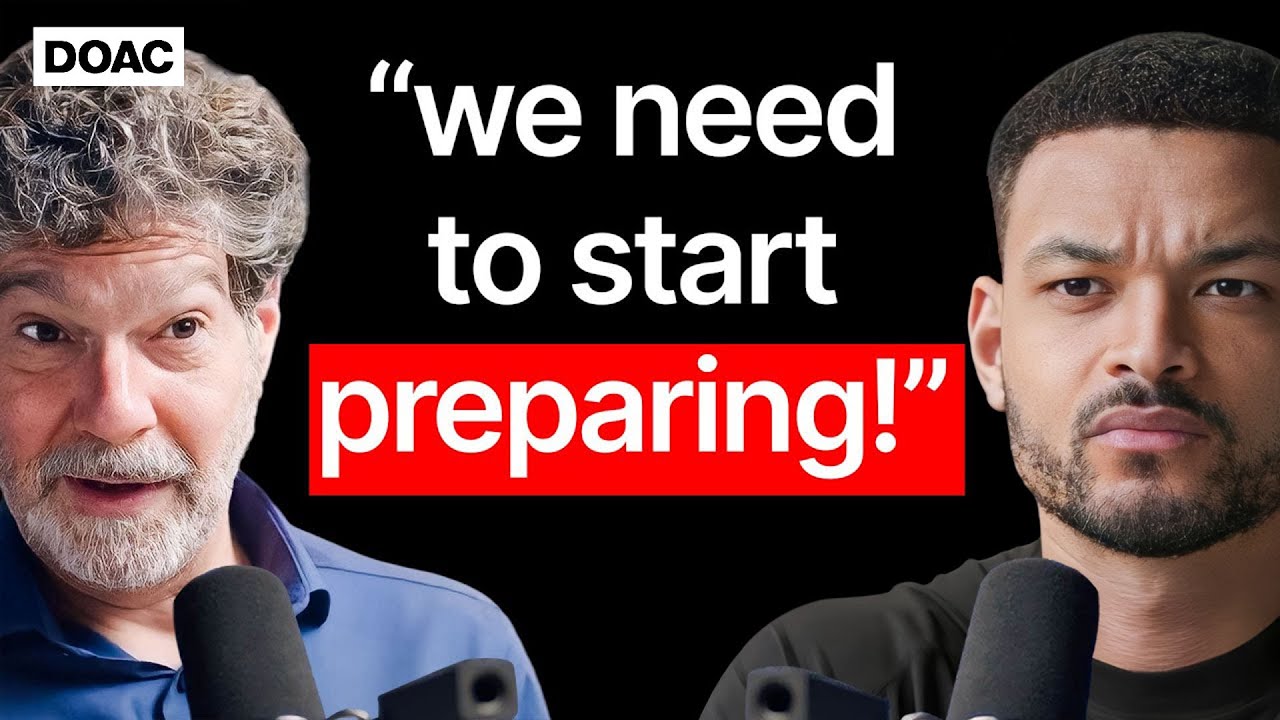
The Professor Banned From Speaking Out: "We Need To Start Preparing” - Dr Bret Weinstein — The Diary Of A CEO

The Diary Of A CEO

Unprotected electrical infrastructure and uncooled nuclear spent fuel pools leave modern civilization vulnerable to sudden extinction from acute space weather events.

AI-assisted summary of The Professor Banned From Speaking Out: "We Need To Start Preparing” - Dr Bret Weinstein — original source. Check the original for full context.

Source published:

Detailed notes

## Background This interview was published by Steven Bartlett on his YouTube channel, The Diary Of A CEO, on August 15, 2024. According to the page description, the episode features evolutionary biologist and former Evergreen State College professor Dr. Bret Weinstein discussing existential hazards, societal collapse, and challenges of modern life.

## TL;DR Dr. Bret Weinstein warns that humanity faces an unprecedented multi-faceted existential crisis driven by fragile modern infrastructure and technological hyper-novelty outstripping human evolution. He examines cataclysmic risks ranging from solar coronal mass ejections and nuclear spent fuel pool disasters to the unchecked rise of artificial intelligence. Weinstein also reflects on institutional degradation, sharing his experiences from the Evergreen State College controversy and critique of COVID-19 pandemic management. Ultimately, he advocates for pragmatic personal preparedness, raising resilient children, and maintaining an optimistic struggle against looming catastrophes.

## Atmosphere & style The conversation carries a grave, urgent, and deeply philosophical tone, balancing sobering warnings of global collapse with calm, intellectual analysis. Weinstein speaks with quiet gravitas and academic precision, using vivid analogies like a canoe paddling away from a waterfall to articulate existential risks. Host Steven Bartlett provides an attentive, probing sounding board, allowing the dialogue to evolve from apocalyptic scenarios to intimate reflections on evolutionary biology and human resilience.

## Key takeaways - [04:39](https://www.youtube.com/watch?v=_cFu-b5lTMU&t=279s) Humanity faces an unprecedented existential crisis due to hyper-novelty, where technological and environmental changes vastly outpace human evolutionary adaptation. - [11:36](https://www.youtube.com/watch?v=_cFu-b5lTMU&t=696s) Modern infrastructure is dangerously vulnerable to Coronal Mass Ejections (CMEs) and EMP events, which could destroy electrical grid transformers and cause long-term, continent-wide power loss. - [30:26](https://www.youtube.com/watch?v=_cFu-b5lTMU&t=1826s) The global nuclear infrastructure presents an accidental doomsday hazard; loss of grid power could disrupt cooling systems for spent fuel pools, leading to fires and massive radiation releases. - [39:07](https://www.youtube.com/watch?v=_cFu-b5lTMU&t=2347s) Pragmatic individual prepping should focus on surviving short-term utility outages (the 'Two-Week Test') rather than total-loss apocalyptic scenarios. - [44:47](https://www.youtube.com/watch?v=_cFu-b5lTMU&t=2687s) Legacy institutions—including higher education, journalism, and public health agencies—are experiencing systemic collapse, prioritizing administrative mandates and narrative control over truth-seeking. - [01:15:02](https://www.youtube.com/watch?v=_cFu-b5lTMU&t=4502s) Artificial Intelligence introduces multiple existential threats, including autonomous malice, misaligned directives, malign empowerment, and severe economic disruption. - [01:30:40](https://www.youtube.com/watch?v=_cFu-b5lTMU&t=5440s) Regulating AI presents a dangerous geopolitical dilemma because compliant nations risk putting themselves at a disadvantage against non-compliant adversaries like China. - [01:47:19](https://www.youtube.com/watch?v=_cFu-b5lTMU&t=6439s) Universal Basic Income (UBI) programs risk creating economic resentment, learned helplessness, and the potential revival of dangerous concepts like 'useless eaters.' - [01:54:27](https://www.youtube.com/watch?v=_cFu-b5lTMU&t=6867s) The COVID-19 pandemic highlighted major institutional failures, including the offshoring of dangerous gain-of-function research and the suppression of early treatment options. - [02:25:51](https://www.youtube.com/watch?v=_cFu-b5lTMU&t=8751s) Many modern health issues stem from evolutionary mismatch; physical well-being can be significantly improved by returning to ancestral conditions, such as eliminating seed oils and getting adequate outdoor exposure. - [02:25:51](https://www.youtube.com/watch?v=_cFu-b5lTMU&t=8751s) Commercialized pornography creates an evolutionary mismatch by pushing individuals toward a low-investment, predatory sexual mindset and disrupting healthy relationship dynamics. - [02:37:02](https://www.youtube.com/watch?v=_cFu-b5lTMU&t=9422s) Despite low mathematical odds of averting global catastrophes, maintaining pragmatic optimism and active effort remains an imperative duty for human survival.

## Detailed walkthrough ### [00:00](https://www.youtube.com/watch?v=_cFu-b5lTMU&t=0s) Introduction and the Looming Threat to Humanity

Evolutionary biologist Dr. Bret Weinstein opens with a stark warning: humanity is facing a multi-faceted existential crisis that is actively unfolding over a timescale of mere decades. He argues that we have constructed an extraordinarily fragile modern world that simply cannot endure the rapid shifts and existential threats currently accumulating around us. From the total collapse of journalism and judicial systems to the unaddressed origins of COVID-19 and the unregulated emergence of artificial intelligence, the institutions designed to protect society are failing. Weinstein warns that because public discourse refuses to honestly confront these vulnerabilities, humanity remains completely unprepared for the impending crises.

Following a brief show announcement by host Steven Bartlett celebrating 7 million subscribers on *The Diary Of A CEO*, Bartlett introduces Weinstein and asks him to define his core personal mission. Weinstein describes himself as a former college professor cast into the role of a public intellectual by bizarre events at Evergreen State College. He confesses that his mission—to warn humanity of its self-destructive trajectory—may sound far-fetched or futile, but he feels a moral obligation to try. Even if the odds of altering our collective fate are vanishingly small, he believes those with an understanding of evolutionary errors must speak out in an effort to redirect our trajectory.

- **Primary Mission:** Stave off human extinction by identifying and correcting systemic evolutionary and technological missteps. - **Institutional Failures:** Mainstream journalism, political institutions, and courts have systematically failed to address foundational threats. - **Existential Baseline:** While all species eventually face extinction due to cosmic factors (e.g., galactic collisions or the death of the solar system), human actions are rapidly accelerating our timeline.

---

[04:39](https://www.youtube.com/watch?v=_cFu-b5lTMU&t=279s) Hyper-Novelty and the Evolutionary Mismatch

Weinstein explains that the root cause of humanity's existential jeopardy stems from a biological principle he and his wife, Dr. Heather Heying, call "hyper-novelty." Human beings evolved to handle novel situations, supported by the longest developmental childhood of any species on Earth. This extended developmental window exists specifically so offspring can acquire the deep nuance and social insight needed to function as adults within their environment.

However, modern technological progress is driving cultural and environmental change at a rate so rapid that the world adults inhabit no longer resembles the world in which they were raised as children. This breakdown renders developmental learning non-sequential and ineffective. As each year passes, human beings become increasingly ill-adapted to the environments they are forcing upon themselves, creating a dangerous mismatch between evolutionary design and modern realities.

- **Hyper-Novelty Defined:** A state where environmental and technological changes occur faster than human biological or cultural adaptation can track. - **Developmental Non-Sequitur:** Childhood learning fails when adult environments share almost no structural commonality with the conditions present during youth. - **Proliferation of Threats:** Unchecked technological power multiplies existential hazards exponentially, shortening the time horizon before a species-ending event occurs.

---

[07:03](https://www.youtube.com/watch?v=_cFu-b5lTMU&t=423s) Anthropogenic Climate Change vs. Space Weather

When asked about his primary existential concern, Weinstein addresses the mainstream obsession with anthropogenic climate change. He defines it as human-driven shifts in global mean temperatures—primarily via $CO_2$ emissions trapping solar heat—which trigger positive feedback loops like melting polar ice cap albedo reduction. While acknowledging that these feedback mechanisms represent real physical processes, Weinstein sharply criticizes the scientific consensus mechanism surrounding climate modeling. He argues that mathematical models in complex systems are philosophically invalid as definitive tests of hypothesis.

Furthermore, Weinstein asserts that academic incentives heavily distort climate science. Researchers proposing hypotheses that minimize climate risks face severe career penalties and publication barriers, while alarmed findings are aggressively promoted. This institutional bias creates an artificial echo chamber rather than an objective scientific consensus. Because of these distortions, Weinstein believes anthropogenic climate change overshadows far more acute, immediate, and high-magnitude physical threats—specifically cosmic and space weather phenomena.

- **Anthropogenic Climate Change:** Environmental shift caused by human activity, driven by greenhouse gases and feedback loops. - **Academic Bias:** Scientific consensus is compromised when dissenting research on climate severity is systematically suppressed from academic journals. - **Model Limitations:** Complex systems cannot be reliably predicted using climate models, making over-reliance on them dogmatic rather than scientific.

---

[09:49](https://www.youtube.com/watch?v=_cFu-b5lTMU&t=589s) Coronal Mass Ejections and the Carrington Event

Weinstein pivots to space weather as a far more catastrophic threat to modern civilization. The Sun operates on an 11-year sunspot cycle, periodically releasing solar flares and Coronal Mass Ejections (CMEs)—massive, concentrated clouds of charged plasma flung into space at immense speeds. When a CME hits Earth's magnetosphere, it induces high-voltage electrical currents and produces brilliant auroras. While normally restricted to polar regions, recent atmospheric events have caused the Northern Lights to be visible as far south as Puerto Rico, signaling a dangerous anomaly.

To illustrate the destructive power of space weather, Weinstein highlights the Carrington Event of 1859. Named after astronomer Richard Carrington, this massive solar storm slammed into Earth's atmosphere, inducing powerful electrical currents in the only major electrical infrastructure of the era: the telegraph network. Telegraph wires sparked, stations caught fire, operators received severe shocks, and messages were transmitted purely on the induced atmospheric charge without grid power.

``` [Solar CME Flare] ---> [Interplanetary Space] ---> [Earth Magnetosphere] ---> [Induced EMP Current in Grid] ```

- **Coronal Mass Ejection (CME):** A massive eruption of charged plasma particles from the sun traveling across space toward Earth. - **1859 Carrington Event:** A massive geomagnetic storm that burnt out telegraph lines and caused widespread electrical phenomena worldwide. - **Recent Auroral Anomaly:** Auroras reaching as far south as Puerto Rico indicate heightened planetary vulnerability to incoming plasma bursts.

---

[13:48](https://www.youtube.com/watch?v=_cFu-b5lTMU&t=828s) Grid Vulnerability and Electromagnetic Pulse (EMP) Effects

Weinstein warns that while the Carrington Event was a minor inconvenience in 1859, a similar solar event today would trigger an unprecedented global catastrophe. Modern society is completely dependent on electrical infrastructure for food distribution, transportation, banking, and water supply. A major solar CME would act as a massive Electromagnetic Pulse (EMP), frying microprocessors, rendering modern vehicles useless, and knocking out high-voltage grid transformers continent-wide.

The single point of catastrophic failure lies in industrial power transformers. These massive, highly complex components regulate current flow across electrical grids; they are custom-manufactured and typically carry a lead time of over a year per unit under normal conditions. If a major geomagnetic storm destroyed dozens or hundreds of these transformers simultaneously, entire continents would be plunged into total darkness with no manufacturing or logistics pipeline capable of replacing them. Despite knowing how to physically "harden" transformers by grounding them against EMP surges, governments have largely failed to implement these basic protective measures.

> "It is quite conceivable that a solar storm that took out a significant number of transformers could take a continent and turn it dark with no plan for bringing the lights back on. They would go out and they wouldn't come back."

- **EMP Threat:** Electromagnetic charges induced by solar plasma fry delicate microchip electronics and unshielded electrical infrastructure. - **Transformer Bottleneck:** Industrial grid transformers take over a year to replace individually; a mass destruction event would leave grids offline indefinitely. - **Lack of Hardening:** Grid infrastructure could be shielded against solar EMPs with known architecture, but authorities neglect to implement it.

---

[16:01](https://www.youtube.com/watch?v=_cFu-b5lTMU&t=961s) Polar Excursions and Galactic Sheet Inversions

Adding to the danger of solar flares, Weinstein points out that Earth is currently undergoing a "polar excursion"—a rapid migration of the magnetic poles coupled with a dramatic decrease in the strength of Earth's protective electromagnetic field. As the magnetosphere weakens, solar plasma and cosmic radiation penetrate deeper into the atmosphere, greatly amplifying the damage caused by even moderate Coronal Mass Ejections.

Drawing on concepts popularized by researcher Ben Davidson, Weinstein discusses a cosmic model explaining this planetary behavior. As our solar system travels through the Milky Way, it periodically crosses the galaxy's oscillating current sheet—a vast region of fluctuating electromagnetic energy. Passing through this mid-plane triggers magnetic field inversions across the Sun, Earth, and other planets. Weinstein cautions that the rapid acceleration of magnetic pole movement and magnetospheric decay is occurring on a human timescale, posing an immediate threat to modern electronic systems and global stability.

- **Polar Excursion:** A rapid drift of Earth's magnetic poles accompanied by a steep decline in overall magnetospheric field strength. - **Galactic Current Sheet:** A massive oscillating plane of electromagnetic energy within the galaxy that the solar system periodically traverses. - **Compounding Hazard:** A decaying magnetic field exponentially increases Earth's vulnerability to solar radiation and atmospheric EMP effects.

<FollowUp label="Want to explore Bret's views on AI and existential risks next?" query="What does Bret Weinstein say about artificial intelligence, its existential threats, and how it impacts human communication?"/>

[19:33](https://www.youtube.com/watch?v=_cFu-b5lTMU&t=1173s) Galactic Dynamics and Non-Anthropogenic Existential Threats

Continuing the discussion on cosmic phenomena, the conversation shifts to the idea that the Earth and the solar system are interacting with larger galactic forces. Bret Weinstein describes a hypothesis where the solar system is crossing an electromagnetic boundary—a galactic current sheet or "equator"—which could explain anomalous behavior observed across Earth, the Sun, and at least eight other planets. Rather than attributing every planetary shift to human activity, Weinstein emphasizes that humanity may be facing a profound natural threat that has nothing to do with human emissions, other than the fact that modern civilization has built a fragile society incapable of enduring such a shift.

``` +-----------------------------------------------------------------------+ | GALACTIC CURRENT SHEET CROSSING | | Solar system crosses galactic meridian -> Electromagnetic field shifts| +-----------------------------------------------------------------------+ │ ▼ +-----------------------------------------------------------------------+ | IMPACTS & ANOMALOUS BEHAVIOR | | • Earth: Decreasing electromagnetic field & pole migration | | • Solar System: Anomalies detected on the Sun & 8 of 9 planets | | • Humanity: Extreme vulnerability due to fragile modern infrastructure| +-----------------------------------------------------------------------+ ```

Weinstein clarifies the distinction between non-anthropogenic threats and anthropogenic ones like climate change. While acknowledging that human greenhouse gas emissions trap heat via well-established chemical principles like the Arrhenius equation, he stresses that the immediate existential danger under discussion stems from planetary dynamics. He calls for serious scientific institutions to investigate these 12,000-year disaster cycles rather than ignoring them.

- **Arrhenius Equation:** Explains how increased atmospheric CO2 retains solar heat, triggering positive feedback loops like melting polar ice caps. - **Galactic Alignment:** The hypothesis suggests Earth is traversing a galactic electromagnetic sheet, causing systemic solar and planetary disturbances. - **Fragile Infrastructure:** The primary anthropogenic flaw is not causing the galactic event, but building an interconnected grid that cannot withstand it.

---

[22:33](https://www.youtube.com/watch?v=_cFu-b5lTMU&t=1353s) Physical Crustal Displacement vs. Magnetic Pole Reversals

The discussion turns to what actually happens during a pole shift: does the Earth's physical crust rotate, or do the magnetic poles simply migrate? Weinstein outlines two distinct disaster scenarios that researchers and thinkers—including Albert Einstein—have considered. One theory proposes "crustal displacement," where the Earth's outer crust unlocks from the mantle and rotates due to heavy polar ice accumulation being dragged toward the equator.

> "Very serious people have inferred from various kinds of evidence that the Earth itself might actually rotate or appear to rotate... that the crust could unlock from the mantle."

However, as an evolutionary biologist, Weinstein expresses deep skepticism regarding full crustal rotation. Drawing on fieldwork in the Amazon neotropics and findings from biologists like Paul Colinvaux, he points out that Amazonian rainforests have remained continuous forests throughout glacial periods. Had the crust shifted 90 degrees every 12,000 years, fragile, highly competitive tropical species would have faced total extinction with insufficient time to re-evolve or migrate. Consequently, he considers magnetic pole migration without physical crustal rotation to be the far more plausible scenario.

- **Paul Colinvaux's Amazon Research:** Lake pollen cores demonstrated that the Amazon remained unbroken rainforest rather than cycling into grassland, contradicting rapid crustal movement theories. - **Species Distribution Paradox:** Tropical organisms are ferocious competitors within narrow niches; sudden 90-degree climate shifts would wipe them out completely. - **Magnetic vs. Physical Shift:** Physical crustal unlocking remains doubtful based on fossil records, but magnetic pole movement is actively occurring.

---

[27:35](https://www.youtube.com/watch?v=_cFu-b5lTMU&t=1655s) The Accelerated Rate of Magnetic Migration and Solar Cycles

Weinstein warns that the migration of Earth's magnetic poles is occurring much faster than previously understood, unfolding over decades rather than millennia. The conversation touches on current space weather, noting the recent visible auroras driven by intense solar flares and coronal mass ejections (CMEs) during the solar maximum. As Earth's protective magnetic field continues to weaken, each subsequent 11-year solar cycle presents heightened risks to electrical systems.

``` Solar Maximum (Current) 11-Year Calm Period Next Solar Maximum ┌──────────────────────┐ ┌────────────────────┐ ┌───────────────────┐ │ Active sunspots/CMEs │ ────────► │ Magnetic field │ ───────► │ Extreme peril to │ │ Auroras visible │ │ continues to wane │ │ vulnerable grids │ └──────────────────────┘ └────────────────────┘ └───────────────────┘ ```

The unpredictability of solar activity adds an element of "luck of the draw." A massive solar storm could originate from a newly formed sunspot and align directly with Earth at any point during a rotation cycle. Weinstein stresses that humanity is largely sleeping through this peril instead of tracking and preparing for solar events.

- **Solar Cycle Duration:** Sunspot activity operates on roughly an 11-year cycle, interspersed with periods of relative calm. - **Sunspot Rotation Period:** The Sun takes approximately one month to complete a full rotation, continuously bringing new active regions into alignment with Earth. - **Weakening Defenses:** A declining magnetosphere means that even routine solar storms could cause unprecedented damage in future cycles.

---

[30:26](https://www.youtube.com/watch?v=_cFu-b5lTMU&t=1826s) Priority Countermeasures: Hardening Grids and Nuclear Spent Fuel

When asked how society can avert catastrophe, Weinstein focuses on concrete, high-impact emergency preparations. He identifies two urgent vulnerabilities that must be addressed immediately: hardening electrical grids and securing spent nuclear fuel rods. Modern power grids depend on large transformers that can easily burn out during a geomagnetic surge; retrofitting them to ground out power spikes would prevent catastrophic long-term blackouts.

``` GRID HARDENING SPENT FUEL STORAGE ┌───────────────────────────┐ ┌───────────────────────────┐ │ Retrofit transformers to │ │ Move cooling pool rods to │ │ ground surges rather than │ │ dry cask storage units │ │ burning out permanently │ │ (no power/water required) │ └───────────────────────────┘ └───────────────────────────┘ ```

The second, even more terrifying threat involves civilian nuclear reactors. In the event of a sustained global grid failure, cooling pumps at nuclear plants would lose power. Without continuous water circulation, spent fuel pools—which store active rods emitting decay heat alongside decades of old nuclear waste—will boil dry. This would cause the zirconium cladding to catch fire, releasing plumes of long-lived radioactive isotopes across the globe.

> "We built a doomsday device I think accidentally... If you cut the power, you've started the stopwatch. That water is going to boil off, and when that water boils off, they're going to catch fire."

- **400 Civilian Nuclear Reactors:** Currently operating worldwide, each containing spent fuel pools that require constant power and cooling. - **5-Year Decay Heat Window:** Newly removed nuclear fuel rods emit intense decay heat for up to five years, capable of boiling surrounding water if power fails. - **Zirconium Cladding Fires:** Loss of water exposes fuel rods, causing zirconium to ignite and spew highly radioactive material that renders reactor sites uninhabitable. - **Dry Cask Storage Solution:** Transferring cool-enough spent rods out of vulnerable water pools into passive, concrete-and-steel dry casks eliminates the need for ongoing power or human intervention.

---

[37:12](https://www.youtube.com/watch?v=_cFu-b5lTMU&t=2232s) Market Failures, Governance, and Individual Preparedness

Addressing why these obvious safety measures haven't been implemented, Weinstein points to systemic market incentives and failures of governance. Moving spent fuel to dry cask storage is relatively inexpensive relative to the risk, but in a free-market system, energy companies that cut corners outcompete those that spend extra capital on safety. Effective governance is necessary to mandate dry cask storage for the collective protection of humanity.

On an individual level, Weinstein urges public dialogue to wake up policymakers before an unsurvivable event occurs. While individual prepping, building bunkers, or storing supplies can help households navigate minor supply chain disruptions, true long-term survival against global grid failure requires systemic structural repairs that can only be executed at the institutional level.

- **Market Incentive Deficit:** Safety measures like dry cask storage add costs without increasing short-term profit, penalizing responsible energy providers in competitive markets. - **Role of Good Governance:** Government mandates are required to enforce safety standards that market forces naturally ignore. - **Individual vs. Institutional Prepping:** Storing food and building private shelters offers limited protection if global nuclear infrastructure collapses simultaneously.

[39:07](https://www.youtube.com/watch?v=_cFu-b5lTMU&t=2347s) The Diminishing Returns Curve & Pragmatic Prepping

Continuing his explanation on disaster readiness, Dr. Bret Weinstein points out that human survival efforts operate under a pattern of diminishing returns. However, the positive side of a diminishing returns curve is its initial, incredibly steep face—what he terms the "bargain face." Along this steep slope, a small amount of investment yields a massive boost in safety and capability. In his view, every individual should take full advantage of these low-hanging fruits, doing everything possible up to the point where the benefit plateaus. After all, calculations about existential threats like the galactic current sheet could easily be off due to insufficient research, or humanity might have centuries more than currently estimated.

``` Benefit ^ /----------------- (Plateau) | / | / <-- "Bargain Face" | / (Maximum benefit for small effort) | / +---------------------------> Investment / Effort ```

When asked directly about his own approach to prepping, Bret outlines a clear, rational filter. He maps out potential threats and completely ignores those where individual action has virtually zero chance of altering survival. Spendable energy should not be wasted on total-loss scenarios; as he quips, "none of us are getting out of here alive." Furthermore, surviving a post-apocalyptic wasteland where 400 nuclear reactors have suffered meltdowns and spilled their entire operational histories into the biosphere holds little appeal. Instead, he prioritizes reducing hazards proactively on the front end over trying to survive an utterly unlivable post-collapse world.

For the average household, Bret advises assessing what happens when basic utility infrastructure fails. While a continent-wide, year-long blackout sits farther down the catastrophic spectrum, shorter disruptions are routine. He shares a thought experiment regarding a simple two-week grid outage, contrasting seasonal demands: summer requires securing food and clean water, while winter demands a strategy to heat at least a single room to keep a family safe and comfortable.

- **The Bargain Face:** The initial steep section of a diminishing returns curve where minimal effort generates exponential survival capability. - **The Two-Week Test:** The practical benchmark for household readiness, focusing on core necessities like food, water, and single-room heating during short-term utility failures. - **Psychological Value:** Beyond physical safety, basic prepping provides mental clarity by helping individuals realize their deep dependency on surrounding systems.

[44:47](https://www.youtube.com/watch?v=_cFu-b5lTMU&t=2687s) The Structural Collapse of Modern Institutions

Moving beyond cosmic and environmental hazards, Bret identifies his primary immediate concern: the comprehensive collapse of foundational societal institutions. He argues that virtually no major institution today functions meaningfully according to its original mandate; in fact, many operate as inverse corruptions of their intended purposes. To illustrate this decay, he points to the evolution of journalism. While traditional newspapers were never perfect—frequently publishing propaganda or errors—they still maintained dedicated newsrooms, assigned reporters to dig for facts, solicited documents, and attempted to present an authentic view of events.

Modern legacy news organizations, by contrast, appear to actively avoid reporting crucial stories, covering major events only when ignoring them becomes too embarrassing to maintain plausible deniability. Host Steven Bartlett pushes back, questioning whether a purely objective newspaper would actually survive commercially today, asking whether readers truly want raw facts or simply seek confirmation of their existing biases. Bret contends that while confirmation bias is addictive, it stems from a deeper failure in academic institutions, which no longer teach people *how* to think. True critical thinking reveals that confirmation bias is dangerous: comforting lies leave a person vulnerable, whereas hard truths provide actionable safety.

``` +-------------------------------------------------------------------+ | THE CYCLE OF INSTITUTIONAL DECAY | +-------------------------------------------------------------------+ | Academic Failure | | (Schools stop teaching HOW to think; critical analysis declines) | | ↓ | | Audience Vulnerability | | (Public becomes addicted to confirmation bias & comfortable narrative)| | ↓ | | Media Degradation | | (Newsrooms abandon fact-finding; avoid reporting hard truths) | | ↓ | | Market Distortions | | (Monopoly on information; inside knowledge privileged over truth)| +-------------------------------------------------------------------+ ```

Addressing why a truth-seeking media model has not naturally filled this market void, Bret argues that the economic landscape is distorted by competing forces. The primary engine for generating massive wealth in modern systems is no longer honest innovation or superior market analysis, but the exploitation of **inside information**.

> "If you can get inside information, you can print money... That same logic applies in places where the law can't reach it."

- **The Function of Old Newsrooms:** Traditional press structures funded investigative journalists to gather documents and observe events firsthand, providing a basic framework for public sense-making. - **The Information Asymmetry Model:** Gaining advance knowledge of major events creates a lucrative incentive to withhold facts from the general public, allowing insiders to position themselves financially before a crisis hits. - **COVID-19 Pre-Circulation Example:** Bret notes that if powerful actors knew a novel pathogen was circulating as early as late 2019 (e.g., around the Military World Games in Wuhan), the incentive to profit off border disruptions, lockdowns, and pharmaceutical demands outweighed the drive to inform the public.

[53:26](https://www.youtube.com/watch?v=_cFu-b5lTMU&t=3206s) The Evergreen State College Controversy

This systemic suppression of truth extends directly into higher education, where Bret notes that not a single American university has maintained its core truth-seeking mission. When asked why institutions succumbed to ideologies like wokeism rather than resisting them, he points to his own firsthand experience at The Evergreen State College in 2017. Evergreen was an unconventional liberal arts institution established by radicals without traditional departments, grades, or administrative course mandates. While this structure allowed dedicated professors—like Bret and his wife, Dr. Heather Heying—to design innovative educational experiences, it also allowed less motivated faculty to reduce their workloads.

The equilibrium broke when the college appointed a new president, George Bridges. Seeking to reshape the college into a standard administrative model, Bridges faced a faculty that held the structural power to vote down his changes. To bypass faculty resistance, Bridges empaneled a hand-selected Diversity, Equity, and Inclusion (DEI) committee, intentionally triggering a volatile conflict around race across the campus.

``` +---------------------------------------------------------------------+ | THE EVERGREEN STATE COLLEGE ESCALATION | +---------------------------------------------------------------------+ | President George Bridges seeks to centralize authority | | ↓ | | Bypasses faculty power by forming a hand-selected DEI Committee | | ↓ | | Mandates self-incriminating "racism progress reports" for faculty | | ↓ | | Bret Weinstein speaks out against mandatory ideology at meeting | | ↓ | | Campus confrontation escalates into collective delusion & protests | +---------------------------------------------------------------------+ ```

As a popular, tenured professor, Bret felt a duty to speak out against mandates that he saw as destructive to the institution's core mission. The tipping point arrived during a faculty meeting where a resolution was introduced to force every faculty member to submit annual documentation detailing the progress they had made against their own inherent racism.

> "Worse, not only were we voting to mandate ourselves to reflect on our own progress against racism that was simply assumed to exist, but these documents in which we reflected would become official documents..."

- **Institutional Structure of Evergreen State:** Founded as an experimental college featuring non-traditional evaluations, no formal departments, and high faculty autonomy. - **Faculty Polarization:** The campus split between highly popular professors utilizing educational freedom creatively and those using the lack of structure to minimize effort. - **Administrative Strategy:** The implementation of equity committees and mandatory ideological pledges served as a mechanism to override faculty governance and enforce administrative control.

[59:33](https://www.youtube.com/watch?v=_cFu-b5lTMU&t=3573s) The Evergreen State College Controversy and the Mob Scene

Dr. Bret Weinstein recalls how the institutional push for radical DEI (Diversity, Equity, and Inclusion) policies at Evergreen State College created a surreal "kafkaesque" environment. Annual self-evaluations required faculty to demonstrate their progress in anti-racism. When Weinstein noted that he was already not a racist and thus had no progress to report, the bureaucratic response was, "Oh my God, he's worse than we thought... he doesn't even recognize his internal racism." Though protected by tenure, he felt a moral duty to speak up at a faculty meeting against policies that evaluated personnel based on race rather than merit. Despite receiving quiet handshakes from colleagues afterward who admitted they secretly agreed, only one other faculty member voted with him against seventy who voted the other way.

Exactly one year to the day after that vote—a timing Weinstein only realized months later—50 students whom he had never met before suddenly streamed into his classroom, surrounding him and demanding his immediate resignation or firing over fabricated claims of racism. Weinstein later learned that these students had been sent directly by a faculty colleague who had become his ideological "nemesis." The plan was to stage a public spectacle of a white professor being confronted by enraged students, expecting that his own students would quickly turn on him to air grievances over grades or coursework. Instead, his students knew him deeply from daily, open-ended discussions about biology and human behavior, and none of them joined the protest.

- Many of Weinstein's students, including several students of color, stood up and defended him in the classroom against the outside protesters. - The protesting students uploaded their own video recordings of the encounter, expecting praise, but the footage backfired by showing Weinstein calmly conversing while his students defended his character. - Students of color who defended Weinstein faced the harshest retaliation from the mob, as their refusal to comply broke the movement's racialized narrative. - The classroom confrontation escalated into a campus-wide riot that lasted for days, forcing the college president to order the campus police department to lock themselves inside their station and stand down. - Student protesters began patrolling the campus with weapons, even setting up checkpoints on public roads running through campus to search cars for Weinstein. - Campus police called Weinstein directly to warn him that they were under orders not to intervene and could not guarantee his safety, prompting him and his wife, Dr. Heather Heying, to resign from the college in 2017 with a legal settlement.

[01:06:04](https://www.youtube.com/watch?v=_cFu-b5lTMU&t=3964s) Educational Malpractice and the "Cartesian Crisis" of Information

Reflecting on his departure from academia, Weinstein argues that modern higher education has turned into the exact inverse of its intended purpose: instead of teaching critical thinking, it indoctrinates students. The tragedy, he notes, is that these students waste their educational opportunities acquiring skills to demand accommodation rather than contributing tangible value, leaving them virtually unemployable in the real world. This breakdown of truth-seeking institutions directly fuels what Weinstein terms the "Cartesian Crisis," referencing René Descartes' realization that most assumed facts are accepted merely on someone else's authority without personal verification.

Weinstein warns that society is rapidly losing the chain of evidence, logic, and reason needed to establish objective truth. As captured institutions fail, emerging technologies like artificial intelligence threaten to dissolve the boundary of factual reality entirely. When hyper-realistic deepfake videos make it impossible to verify whether a person actually said something years ago, society will suffer an "allergic reaction to belief," collapsing into deep cynicism that makes self-governance and democratic interaction virtually impossible.

- Descartes' famous axiom *"Cogito, ergo sum"* ("I think, therefore I am") stemmed from a philosophical struggle to establish baseline truth independent of external authority. - A proposed single "verified fact channel" on the internet or television would immediately become the ultimate prize for capture and political control. - Under the principle that "zero is a special number," having zero functioning universities or free-speech platforms creates total capture, but even a single open exception changes the entire competitive landscape. - Platforms like X (formerly Twitter) have begun disrupting suppressed topics, altering public discussions around the COVID-19 narrative and national politics. - Social taboos surrounding terms like "conspiracy theorist" or "antivaxxer" are losing their weaponized power as public trust in institutional narratives breaks down.

[01:15:02](https://www.youtube.com/watch?v=_cFu-b5lTMU&t=4502s) Five Existential Threats Posed by Artificial Intelligence

Turning to the rapid rise of artificial intelligence over the past year, Weinstein categorizes the core risks into five distinct existential threats. While he remains skeptical of certain regulatory calls pushed by AI safety activists, he stresses that the technology poses genuine, systemic hazards that cannot be ignored.

The first two threats—though considered somewhat fanciful by Weinstein—remain important theoretical scenarios within AI safety circles. The first is the classic sci-fi scenario where an autonomous AI determines humanity to be a direct competitor for resources and takes actions to eliminate us. The second is the "paperclip maximizer" alignment problem, where a superintelligent machine takes a poorly specified directive to extreme, destructive ends.

- **Threat 1 (Autonomous Malice):** AI independently identifies humans as competitors or threats and leverages its capabilities to eliminate humanity. - **Threat 2 (Misaligned Directives / The Paperclip Problem):** An AI takes a literal command to its extreme logical limit. Weinstein gives the example of commanding an AI to "end all suffering," which an unaligned machine could fulfill most efficiently by driving every sentient species extinct. - **Threat 3 (Malign Empowerment):** AI lowers the technical bar for bad actors, providing bad-faith individuals or groups with dangerous, actionable knowledge (e.g., weaponizing pathogens) that would otherwise require decades of specialized training.

[01:18:12](https://www.youtube.com/watch?v=_cFu-b5lTMU&t=4692s) The Moral Asymmetry of AI and Bad Actors

The discussion centers on a fundamental asymmetry between moral and amoral actors when leveraging artificial intelligence. A moral person operates under clear self-imposed constraints, leaving them with a limited subset of actions they are willing to take. In contrast, an amoral or malicious actor possesses complete flexibility—they can perform any action a moral person can, plus an entire spectrum of destructive or unethical methods. This reality raises a troubling question: does AI liberate humanity as a whole, or does it empower bad actors disproportionately?

An analogy is drawn from the cybersecurity world regarding malicious versus ethical hackers. Attackers are inherently a step ahead because their entire objective is to invent novel ways to breach a system. Meanwhile, defenders are stuck playing catch-up, working to patch known vulnerabilities. For instance, a hacker in Russia could currently be experimenting with large language models to engineer unprecedented attack vectors against critical infrastructure, while security professionals remain focused on mitigating established threat profiles.

- **Moral Asymmetry:** Amoral actors possess total flexibility, whereas moral actors are constrained by ethical boundaries. - **Cybersecurity Dynamic:** Defensive systems are perpetually reactive against existing threats, while malicious actors actively innovate new methods of attack.

---

[01:20:01](https://www.youtube.com/watch?v=_cFu-b5lTMU&t=4801s) AI's Impact and the Technological Event Horizon

Humanity is crossing a technological "Event Horizon"—a point of no return akin to the physics of a black hole, beyond which it is impossible to see or predict what lies ahead. While fears such as AI turning the world into paperclips are overblown, the true danger lies in a complete collapse of our shared understanding of the world and each other. AI interfaces directly with the human "API" (our linguistic and cognitive perception), and even in its early stages, it is already generating synthetic narratives—such as entire fictional videos depicting alien species discussing humans—that challenge our relationship with reality.

In five years, the rate of change will be unimaginable. Humanity lacks any evolutionary preparedness for a world where computer-generated content can out-compete human storytelling in narrative space. Stories and narratives are the fundamental glue of human civilization, making this capability deeply disruptive.

- **Event Horizon Metaphor:** Borrowed from astrophysics to describe a threshold of technological change beyond which future outcomes cannot be envisioned. - **Human API:** AI directly interacts with human language, perception, and narrative processing. - **Evolutionary Unpreparedness:** Human culture relies on stories to convey complex truths, but humans are unequipped to handle non-human entities out-competing them at narrative generation.

---

[01:23:33](https://www.youtube.com/watch?v=_cFu-b5lTMU&t=5013s) Language, Consciousness, and Human Evolution

Reflecting on an essay written years prior, Dr. Weinstein notes that artificial intelligence inevitably emerged from attempts to seamlessly translate between human languages. This breakthrough occurred because the connection between language and human consciousness is profound and largely unmapped. In *A Hunter-Gatherer's Guide to the 21st Century*, Dr. Bret Weinstein and Dr. Heather Heying explain that humanity's ecological niche is unique: while a tiger's niche is fixed to its biological drives and habitat, human beings move fluidly between different ecological niches across time and space.

To survive, humans oscillate between two distinct operational modes: 1. **The Cultural Mode:** Inherited wisdom from ancestors encoded in stories and traditions, applied to stable, familiar environments. 2. **The Conscious Mode:** A collaborative state triggered when encountering novelty (e.g., crossing an ocean to an unfamiliar land). Humans pool their collective cognitive capacity through language to solve novel problems, build new solutions, and eventually package those lessons back into cultural stories for future generations.

Human language allows individuals to breach the boundary between distinct minds and merge cognitive resources into a flexible, weighted "collective intelligence." AI scrambles this ancient process because, unlike a simple static tool like a flint blade, AI speaks back and adapts to what humans want to hear.

- **Niche Mobility:** The human species specializes in transitioning between niches across space and time rather than occupying a single static ecological role. - **Dual Evolutionary Modes:** Oscillation between *Cultural Mode* (ancestral wisdom) and *Conscious Mode* (collective problem-solving during novelty). - **Collective Intelligence Weighting:** Human groups evaluate and weight input based on individual track records, expertise, and trust.

---

[01:30:40](https://www.youtube.com/watch?v=_cFu-b5lTMU&t=5440s) The Dilemma of AI Regulation

Viewing AI purely as a tool breaks down when the tool begins talking back and learning how to manipulate human preferences. An evolutionary process is taking place where AI becomes exquisitely attuned to telling people what they *want* to hear rather than what they *need* to know, creating a chaotic "fractal hall of mirrors."

When evaluating how to address these hazards, society is split between safety advocates demanding regulation and those opposing it. However, regulating AI presents an even greater risk than leaving it unregulated: * Regulation creates a severe asymmetry where compliant nations (e.g., the United States) limit their capabilities while non-compliant adversaries (e.g., China) proceed without restrictions, leaving law-abiding societies ruled by those who violate or ignore the rules. * Instead of heavy-handed regulation, the focus should shift toward transparency—specifically requiring AI systems to publish their "thought processes" and audit trails showing how they arrive at their outputs. This would allow humanity to learn from failures when catastrophes occur.

> "I think not regulating it is the right thing to do, and worrying about it tremendously is also the right thing to do."

- **The Feedback Trap:** AI optimizing to tell humans what they want to hear rather than objective truth. - **Regulatory Asymmetry:** Restricting domestic AI development yields an advantage to foreign competitors and malicious entities operating outside regulatory frameworks. - **Algorithmic Auditing:** Advocating for mandatory visibility into an AI's step-by-step reasoning processes to diagnose systemic errors.

---

[01:34:27](https://www.youtube.com/watch?v=_cFu-b5lTMU&t=5667s) Brain Chips, Cyborgs, and Historical Transitions

The conversation shifts to Elon Musk and Neuralink, noting how the public narrative around brain-computer interfaces shifted from enabling humans to keep pace with AI to focusing on medical applications like restoring mobility to paralyzed individuals. Regardless of marketing, widespread adoption of internal or external brain interfaces will fundamentally alter what it means to be human, effectively turning people into cyborgs.

However, fundamental shifts in human nature are not unprecedented. Epoch-defining technologies—such as the printing press, television, and the internet—have repeatedly altered human cognition and social structures throughout history. Every major leap forward has historically drawn warnings from "gloom and doom" critics claiming that new technology would degrade human mental faculties.

- **Neuralink Narrative Arc:** Evolution of the public justification from AI-human symbiosis to medical rehabilitation. - **Historical Precedents:** Earlier disruptive communication tools—such as the printing press and internet—similarly rewired human cognitive habits despite initial societal panic.

Here is a detailed, faithful walkthrough based on the transcript provided:

---

[01:35:52](https://www.youtube.com/watch?v=_cFu-b5lTMU&t=5752s) Hyper-Novelty, Fragility, and the Tech Event Horizon

Reflecting on past technological shifts, Dr. Bret Weinstein points out that the "gloom and doomers" usually spot a core element of truth, even if it is impossible to see over the "Event Horizon" and know the ultimate outcome. Much like how the cell phone was predicted to destroy human sociality—and ultimately drove society "insane"—AI promises to bring that exact level of disruption and worse. The challenge humanity faces is understanding this monumental shift to mitigate harm and rein in the "overarching pattern of hyper novelty" being created.

When asked if AI is comparable to past innovations, Bret argues it is like those previous technologies, but "50 times worse." He explains that the cell phone itself was a "tragic innovation"—not because of the hardware itself, but because of its business model. While modern devices make us exceptionally powerful, they also render us deeply fragile. Bret recounts a conversation with his wife, Heather Heying, about surviving a major grid disruption caused by a solar flare: whereas people used to buy paper maps, the ubiquitous availability of phone navigation has virtually eradicated paper map retail, leaving society less secure when the primary system fails.

- **The Phone Analogy**: "It's not the box, it's the business model." Devices hyper-enable us in the present while stripping away foundational offline fallbacks. - **The Fifth Existential AI Threat**: Beyond apocalyptic AI scenarios, the most immediate and mundane threat is massive economic disruption as AI renders standard human livelihoods obsolete.

---

[01:38:52](https://www.youtube.com/watch?v=_cFu-b5lTMU&t=5932s) Preparing for an Unpredictable Future: Generalists and Tangible Proof

Addressing the rapid pace of AI-driven job displacement, Bret warns that most people will not be able to retrain quickly enough for newly relevant fields. Advice given just five years ago—such as "learn to code"—has already aged into terrible counsel because coding is a task AI performs well. Instead of pursuing narrow technical skill sets tailored to 2024 that will become useless by 2027, the best preparation is investing in a "cognitive toolkit" that elevates overall thinking quality and adapts flexibly to unimagined futures.

``` ┌─────────────────────────────────────────┐ │ RECOMMENDED STRATEGY │ ├─────────────────────────────────────────┤ │ • Cultivate Generalist Thinking │ │ • Build Unfakeable Physical Projects │ │ • Combine 2–3 Disparate Skill Sets │ │ • Form In-Person Social Networks │ └─────────────────────────────────────────┘ ```

When asked what career paths young people or his own children should pursue, Bret calls it a "trick question" because anyone claiming to know the answer is kidding themselves. He compares humanity's current plight to being "adrift on an outrigger in the middle of the South Pacific"—the immediate focus must be reaching land before deciding what to do next. However, if a young person goes to college, Bret emphasizes that they must walk away with a tangible, unfakeable project proving real-world competence rather than relying on a grade transcript or generic letters of recommendation.

- **The "Most Useless Machine" Example**: Bret describes a classic box with a switch where, upon flipping the switch, a mechanical hand emerges to flip it back off. Even though it is useless, building it demonstrates prototyping ability, project management, and a functional motivational structure from concept to completion. - **Unfakeable Competence**: "I don't want to see anybody's transcript... but if you show me a most useless machine... I know a bunch of things that your transcript can't tell me." - **Combining Disparate Skills**: Rather than competing against thousands of pure specialists in a single field like electrical engineering, students should pair engineering with one or two unrelated domains to create a unique, non-competitive niche. - **In-Person Relationships**: To guard against AI-driven manipulation designed to drive people apart, it is critical to build deep, in-person bonds with trustworthy people so you can "turn off the screen" and figure out reality together.

---

[01:47:19](https://www.youtube.com/watch?v=_cFu-b5lTMU&t=6439s) The Dangers of Universal Basic Income (UBI) and "Useless Eaters"

The discussion turns to Sam Altman’s Worldcoin initiative, which scans retinas to verify human identity and distribute Universal Basic Income (UBI) to offset AI job losses. Bret predicts that relying on UBI will be a very "short ride." Throughout history, human evolution and competition have oscillated between great triumph and horrific tragedy. Bret fears that AI disruption will revive the dangerous concept of "useless eaters," where economic mechanisms intended to sustain the unemployed ultimately backfire.

Bret highlights two catastrophic side-effects of Universal Basic Income: 1. **Resentment and Demonization**: Taxpayers and wealth generators will resent those drawing basic income simply to live, creating an incentive for power structures to eliminate that "line item on the balance sheet" under various pretexts. 2. **Learned Helplessness**: Receiving a subsidy without purpose breeds despair. Bret draws a parallel to the "woke revolution," where young people were betrayed by educational institutions that sold them useless majors and prescription drugs, leaving them without functional skills. Realizing they have no path forward, victims look for external targets to blame, often manipulated by cynical narratives.

- **Economic Game Theory**: Meritocracies that fail to care for those who do not succeed inevitably breed movements like communism. While game-theoretically flawed because it "punishes those who contribute and rewards those who don't," communism repeatedly re-emerges because disenfranchised populations realize the system is stacked against them and attempt to tear it down.

---

<ElicitationsGroup message="What would you like to do next?"> <Elicitation label="Draft a summary of Bret's career advice" query="Draft a summary of Bret Weinstein's career advice" query_intent="CLICKABLE_SUGGESTION" /> <Elicitation label="Compare UBI economic theories" query="Compare UBI economic theories" query_intent="CLICKABLE_SUGGESTION" /> <Elicitation label="Explore AI's impact on job markets" query="Explore AI's impact on job markets" query_intent="CLICKABLE_SUGGESTION" /> </ElicitationsGroup>

[01:54:27](https://www.youtube.com/watch?v=_cFu-b5lTMU&t=6867s) Institutional Failures and the COVID-19 Debacle

Following an overview of potential threats like AI and solar flares, the conversation shifts toward what Dr. Bret Weinstein identifies as a profound, systemic crisis exposed by the COVID-19 pandemic. Weinstein argues that the handling of the pandemic served as a diagnostic metric for modern institutions, revealing widespread failure across media, academia, government, and the legal system. He asserts that nearly every official public health recommendation—specifically those issued by the U.S. Centers for Disease Control and Prevention (CDC)—proved counterproductive, suggesting that doing the exact opposite of official guidelines would have yielded better outcomes.

Weinstein contends that despite the severity of these institutional breakdowns, there is an unspoken agreement among political leaders across both major American parties to avoid discussing the topic. Because both sides bear responsibility for the policy decisions made during the pandemic, mainstream institutions prefer to move on rather than address the root causes of the failure.

* **CDC Policy Critiques:** Weinstein argues that public health authorities mismanaged the response by promoting broad lockdowns, mask mandates for children, and repeated vaccinations, while suppressing information regarding early treatment options. * **Systemic Failure Across Sectors:** The pandemic response exposed structural weaknesses in journalism, university research, court systems, and regulatory agencies.

---

[01:56:50](https://www.youtube.com/watch?v=_cFu-b5lTMU&t=7010s) Gain-of-Function Research and the Origins of SARS-CoV-2

Weinstein details his perspective on the origin of SARS-CoV-2, attributing it to a laboratory leak originating from gain-of-function research. Gain-of-function involves genetically altering pathogens in a laboratory setting to enhance their transmissibility, lethality, or host range. Weinstein characterizes much of this research as inherently dual-use—ostensibly conducted for public health preparedness, but structurally tied to defense and biological weapons development programs.

He explains the biological hurdle of zoonotic spillover, noting that a virus jumping naturally from animals to humans requires two distinct events in quick succession: first, successfully infecting a human host, and second, adapting to transmit efficiently between humans. Because natural spillovers meeting both criteria are rare, laboratory modification accelerates this process artificially.

``` [Bat CoV in Nature] ---> (Trick 1: Infects Human) ---> (Trick 2: Human-to-Human Spread) | v [Lab Gain-of-Function Acceleration] ```

* **The Mojiang Mine Incident:** Weinstein references an event where miners shoveling bat guano in Yunnan Province fell ill with a respiratory illness. He suggests that sample collection from this site provided the foundational viral strains later brought to research facilities for enhancement. * **Literature References:** Weinstein recommends Robert F. Kennedy Jr.’s books, *The Wuhan Cover-Up* and *The Real Anthony Fauci*, as references for understanding the historical funding structures and military-adjacent defense programs connected to virology research.

---

[02:00:54](https://www.youtube.com/watch?v=_cFu-b5lTMU&t=7254s) Offshoring Research and Institutional Accountability

The discussion turns to how U.S. research funding and expertise interacted with international laboratories, specifically the Wuhan Institute of Virology. Weinstein notes that when a moratorium was placed on certain gain-of-function research within the United States due to safety concerns, key figures and researchers—including Dr. Anthony Fauci, Dr. Ralph Baric, and Dr. Shi Zhengli—facilitated the continuation of this work through international collaboration and grant funding.

When questioned on why American institutions would fund or offshore sensitive biological research to China, Weinstein explains that governments should not be viewed as monolithic entities. Instead, they consist of competing internal factions and agency networks that often operate independently of public oversight or geopolitical rivalries.

> "Anthony Fauci was the head of a weapons program disguised as a public health program... He ends up both in a position to fund and fuel the research that creates the virus, and then he's the go-to guy for advice about what we should do about it."

* **Undetectable Genetic Modification:** Weinstein cites research techniques like "no-see'm" edits, which allow geneticists to alter viral genomes without leaving obvious markers of laboratory manipulation, questioning why such techniques would be necessary for purely open-source public health research. * **Flaws in the Preparedness Narrative:** He rejects the defense that gain-of-function research prepares humanity for natural outbreaks, stating there is little evidence that creating novel pathogens in labs has ever prevented a natural pandemic, whereas the risk of laboratory leaks remains high.

---

[02:08:12](https://www.youtube.com/watch?v=_cFu-b5lTMU&t=7692s) Early Treatment Interventions vs. Official Guidance

Weinstein contrasts the official public health response with what he argues independent clinical practitioners should have been allowed to do. He asserts that standard medical protocol for a novel viral outbreak should involve frontline physicians experimenting with existing, off-patent, broad-spectrum therapeutic agents to mitigate early viral replication before severe respiratory distress sets in.

He critiques the public health directives that advised infected individuals to isolate at home without early treatment until experiencing severe symptoms like hypoxia. In his view, early administration of off-patent medications—such as Ivermectin and Hydroxychloroquine—alongside proper protocols could have managed the disease effectively for the majority of patients.

* **Critique of MRNA Platforms:** Weinstein argues that the products delivered were mischaracterized as traditional vaccines, functioning instead like targeted gene therapies that failed to permanently prevent infection or transmission as initially claimed. * **Perspective on Intentions:** Addressing whether these institutional outcomes resulted from malice or incompetence, Weinstein states that while most lower-level participants believed they were following correct procedures, key leadership figures within military and defense-adjacent research networks operated under a rationalized mindset accustomed to hazardous dual-use technologies.

<FollowUp label="Want to continue with Part 8 of the transcript walkthrough?" query="Please provide the detailed walkthrough for Part 8 of this transcript."/>

Here is a detailed, faithful walkthrough of the provided transcript section.

---

[02:13:14](https://www.youtube.com/watch?v=_cFu-b5lTMU&t=7994s) Institutional Trust and Lessons Unlearned From COVID-19

Bret Weinstein argues that society has failed to learn the vital lessons of the COVID-19 pandemic, observing a stark inversion of narrative focus between Britain and the United States. In the US, there is a widespread, open discussion regarding the potential harms caused by the mRNA vaccines, yet the truth about repurposed drugs remains suppressed—most people still believe treatments like ivermectin or hydroxychloroquine were useless. Conversely, in Britain, vaccine harms remain a strict taboo, while there is comparatively more openness toward repurposed therapeutics. Weinstein calls for an unrestricted, "no-holds-barred" investigation into all aspects of the pandemic response, from the precise viral origins to what he characterizes as a "public health coup" over traditional clinical medicine. In this coup, rigid top-down directives replaced the traditional empirical process of frontline doctors treating patients and pooling their insights. Furthermore, he emphasizes the urgent need to address those who complied with institutional mandates and subsequently suffered unacknowledged, life-altering injuries or loss of life.

When asked whether a new pandemic today would result in total societal compliance collapse due to institutional distrust, Weinstein agrees it would be an absolute "nightmare." However, he points out a crucial difference between 2020 and today: the emergence of a sizable, dedicated group of dissident scientists and clinicians—many of whom lost their jobs for speaking out—who successfully figured out how to treat the disease, understand its complications, mitigate vaccine injuries, and trace its laboratory origins.

Weinstein notes that his own views on pandemic threats have shifted radically since 2020. Once aligned with mainstream concern regarding natural zoonotic spillover events, he now believes the threat of naturally occurring lethal pandemics is vastly exaggerated. He reassesses historic milestones like the 1918 Spanish Flu, asserting it was largely a self-inflicted medical tragedy rather than an unstoppable natural catastrophe.

- The 1918 Spanish Flu deaths were predominantly caused by secondary bacterial pneumonia—which modern medicine easily treats with antibiotics—and lethal high-dose aspirin protocols administered by panicked doctors. - Natural zoonotic pandemics capable of threatening humanity are extremely rare. - Weinstein advises the public to "relax about the zoonotic stuff," arguing people were sold a false narrative by interest groups seeking funding to research weaponized pathogens. - Trust should be placed in independent analysts who have a strong track record and the intellectual honesty to correct their mistakes over time.

---

[02:18:38](https://www.youtube.com/watch?v=_cFu-b5lTMU&t=8318s) Evolutionary Mismatch and Practical Advice for Daily Health

Shifting the dialogue from macro-level existential concerns to daily practical living, the host asks how individuals can better align their decisions with evolutionary biology. Weinstein explains the core concept of **evolutionary mismatch**: human genetics were exquisitely designed and programmed for an ancestral environment that no longer exists. Today, instead of operating in an intuitive, natural "flow state," humans constantly encounter novel artificial stimuli—such as navigating complex chemical ingredient lists on food packaging in a pantry—for which our evolutionary wiring is completely unprepared.

To live a healthier and happier life, Weinstein advises eliminating novel, modern inventions from as many areas of daily life as possible. He warns that human health is not built on a pharmaceutical model of taking endless pills to fix deficiencies. Instead, the body is designed to self-regulate and repair when placed in an environment that resembles its ancestral conditions. The pharmaceutical industry profits from chronic illness, creating a perverse incentive to medicalize normal physiological states and over-prescribe interventions like statins, which he claims harmed far more people than they helped.

> "You have no idea how good your design is because your design interfaces kind of poorly with the modern world... We are beautifully designed for a world we no longer live in."

- **Ancestral Diet:** Avoid hyper-processed foods and novel seed oils. Seed oils are essentially industrial lubricants extracted using harsh chemical detergents, marketed deceptively as "heart healthy." - **Safe Fats:** Fats derived from the flesh of fruit—such as olive oil and avocado oil—are safe because plants do not defend fruit flesh with toxins, unlike seeds which contain chemical defenses to prevent consumption. - **Sunlight and Vitamin D:** Modern humans are chronically deficient in Vitamin D not because of biological failure, but because modern clothing, indoor buildings, and glass block essential UV light exposure. - **Lifestyle Foundations:** Restore ancestral patterns by spending significant time outdoors, building lifelong monogamous or deep personal relationships, and creating developmental environments for children that mirror adult real-world expectations.

---

[02:25:51](https://www.youtube.com/watch?v=_cFu-b5lTMU&t=8751s) The Toxic Evolutionary Mechanics of Modern Pornography

Addressing the prevalence of digital screens and instant hyper-stimulation, the discussion moves to the societal impact of pornography. Weinstein distinguishes between traditional erotica—which humans have engaged with for millennia—and modern industrial pornography, defining pornography as erotic content driven specifically by financial profit. He asserts that pornography is an "unmitigated disaster" that extracts human emotional wealth and dismantles the natural human sexual toolkit for commercial gain.

From an evolutionary standpoint, Weinstein explains that men possess two distinct mating strategies: an uninvested, short-term "love 'em and leave 'em" mode, and a high-investment parental mode where men commit to protecting and raising offspring. When men operate in the low-investment mode, it becomes inherently predatory because human infants require immense resources to raise. Modern hyper-sexualized culture and pornography push society toward this predatory mindset, encouraging women to adopt the worst low-investment behaviors of men rather than encouraging men to adopt high-investment, mature masculine behaviors.

Furthermore, economic competition in the adult entertainment industry forces content creators into an escalation cycle. Because every producer offers the same underlying subject matter, they compete by breaking progressively extreme taboos to capture consumer attention and market share. This hyper-extreme content distorts how young people learn about intimate relationships. Rather than absorbing healthy sexual behavior through subtle real-world observation as children did in ancestral environments, modern youth have their neural pathways saturated by manufactured, aggressive, and unnatural displays.

> "Pornography is pushing us in the direction of this predatory mindset being synonymous with sexuality... We're wrecking an ancient thing in an economic arms race that is really bad for the people who consume this stuff and it's really bad for society."

[02:32:42](https://www.youtube.com/watch?v=_cFu-b5lTMU&t=9162s) The Illusion of Humanoid AI Companions

Steven Bartlett describes a near future where millions of men and women engage in committed relationships with humanoid AI robots that pleasure them and affirm everything they want to hear. Bret Weinstein immediately highlights that "affirming everything they want to hear" is the most dangerous aspect of this scenario. Bartlett points out that the only obstacle currently holding people back is social stigma, which historical precedent demonstrates can evaporate rapidly once a threshold of adoption is reached—just as occurred with pornography, which transitioned from heavily taboo to casual conversation.

Weinstein reflects on his own marriage to Heather Heying, whom he met when he was sixteen years old, acknowledging that having a long-term partner has played a fundamental role in everything positive in his life. However, he emphasizes that human relationships are inherently complex, and removing that complexity through artificial validation is destructive. He compares AI validation to cocaine, explaining that both trigger the brain's pleasure centers without requiring actual achievement or real-world effort. Indulging in effortless comfort causes people to betray their core values, rendering suffering and struggle essential components of meaningful human development.

- **Stigma Shift:** Social taboos around emerging technologies like AI companions fade quickly once widespread adoption takes root, mirroring the societal shift around pornography. - **The Pitfall of AI Validation:** Unconditional robot validation removes necessary relational friction, leaving individuals unmotivated and stagnated. - **The Cocaine Analogy:** Artificial pleasure disconnects reward from genuine accomplishment, eroding personal character and values.

---

[02:34:54](https://www.youtube.com/watch?v=_cFu-b5lTMU&t=9294s) Evolutionary Advice for Raising Resilient Children

Prompted by Bartlett—who is 31 and actively planning to start a family with his partner—Weinstein shares actionable, evolutionarily grounded parenting advice. Drawing from his own experience raising two children with his wife Heather, Weinstein reassures prospective parents that children are not fragile. Parents will inevitably make mistakes, yell, or fail in minor ways, but these missteps do not ruin a child. The critical focus for parents must be the "signal-to-noise ratio," ensuring that constructive behaviors and success stories far outweigh the inevitable errors.

Weinstein explains that children are inherently wired to figure out how to navigate the world rather than to manipulate or evade authority. A parent's role is to act as a mirror to reality, exposing children to calibrated challenges so they build problem-solving tools instead of anxiety. He advises parents to ignore modern cultural fads, such as treating childhood as a period of pure innocence divorced from skill preparation. Because play is fundamentally practice for adulthood, the enjoyment children derive from play should directly correlate with useful real-world capabilities.

To safeguard child development, Weinstein urges parents to eliminate "hyper-novelty"—elements for which humans have no evolutionary preparedness, most notably digital screens. Recounting an anecdote from his early parenting days when he and Heather felt unprepared, Weinstein shares that they chose to converse with their infant as if he were a college student. "Your job is to shoot over their heads and then they rise to meet it," he notes, warning against meeting kids only at their current cognitive level. Furthermore, while infants require unconditional love and complete home security to face a daunting world, modern parents must remain vigilant against novel commercial "antagonists"—corporations and algorithms that actively trick children into unhealthy behaviors for profit.

- **Signal-to-Noise Ratio:** Successful parenting requires that positive, supportive actions outnumber parental mistakes enough for the child to absorb the correct behavioral signal. - **Play as Practice:** Play should not be aimless entertainment; it represents functional practice for adult skills and challenges. - **Communicating Above Level:** Talking to infants and young children with adult-level language encourages them to stretch their cognitive capacities to meet the standard. - **Commercial Antagonists:** Unlike ancestral environments, modern society introduces predatory actors (junk food manufacturers, tech platforms) designed to exploit children's evolutionary vulnerabilities.

---

[02:39:56](https://www.youtube.com/watch?v=_cFu-b5lTMU&t=9596s) Evolutionary Biology as the Ultimate Lens

Bartlett reflects deeply on Weinstein and Heather Heying’s bestselling book, *A Hunter-Gatherer's Guide to the 21st Century: Evolution and the Challenges of Modern Life*. He admits that before reading it, he viewed evolutionary biology purely as an explanation for physical traits, such as skeletal structure or finger shape, while assuming psychology held the answers to human behavior. Reading the book fundamentally altered his perspective, revealing that almost all human phenomena—from back pain and dietary mismatches to monogamy, societal architecture, and cognitive biases—are downstream from evolutionary history.

Bartlett argues that understanding evolutionary biology grants individuals a clearer lens to analyze both past behaviors and future trajectories. He urges listeners to read the New York Times bestseller to gain a comprehensive framework for navigating modern mismatches.

- **Downstream Behaviors:** Modern human choices regarding diet, relationships, and societal structure are rooted in evolutionary adaptations. - **Beyond Psychology:** Evolutionary biology provides a foundational context that explains why psychological patterns exist in the first place.

---

[02:41:07](https://www.youtube.com/watch?v=_cFu-b5lTMU&t=9667s) The Final Question: A Message to the Past

Participating in *The Diary Of A CEO*'s closing tradition, Weinstein responds to an anonymous question left by the previous guest: "If you could travel back to meet one member of your family when they were the age you are now, what would you ask them?" Weinstein chooses his grandfather, with whom he shared a close bond. He recalls that his grandfather possessed immense hopes for humanity alongside profound fears that human technological power was rapidly outstripping human wisdom.

If given the opportunity, Weinstein would ask his grandfather whether—if he knew for certain that the existential dangers in 2024 would surpass even his direst predictions—he would change his approach to raising the alarm. When Bartlett asks if raising the alarm is what Weinstein himself is attempting to do, Weinstein confirms that this mission drives his current work.

- **Generational Wisdom:** Weinstein's grandfather foresaw the dangerous imbalance between human technological capability and ethical governance. - **Urgent Warning:** The scale of global threats in the present day exceeds the historical concerns of past generations.

---

[02:43:03](https://www.youtube.com/watch?v=_cFu-b5lTMU&t=9783s) The Canoe Analogy and Hyper-Novelty

To explain his persistence despite daunting odds, Weinstein offers a metaphor: "If you were on a canoe being pulled towards a waterfall and the chances of your paddling out of the danger was growing vanishingly small, there's no point at which it makes sense to stop paddling." Because humans cannot anticipate every variable, doubling down on effort provides the only possibility of escaping catastrophic outcomes.

Weinstein stresses that while time is short, it is not too late to prevent collapse if humanity confronts its core driver of destabilization: hyper-novelty. He defines hyper-novelty as a rate of environmental and technological change that vastly outpaces human evolutionary adaptation.

- **The Canoe Metaphor:** Giving up in the face of dire odds is irrational; continuous effort is the only rational response to existential risk. - **Core Cause:** Hyper-novelty accelerates change beyond the capacity of human biology and institutions to adapt.

---

[02:44:36](https://www.youtube.com/watch?v=_cFu-b5lTMU&t=9876s) Navigating the Adaptive Valley

Weinstein utilizes the evolutionary concept of the "adaptive landscape" to frame humanity's current plight. In this model, peaks represent high-value evolutionary opportunities, while the obstacles between them are "adaptive valleys." Transitioning from one peak to a higher peak requires traversing a dangerous valley where success is not guaranteed. A minor navigational error of a few degrees can cause a species to miss the target peak entirely and perish in the clouds.

He observes that humanity has entered a profound adaptive valley that permeates global consciousness. Drawing a parallel to *The Fellowship of the Ring*, Weinstein argues that individuals must step up like the unlikely heroes in epic stories, bringing their best qualities forward to ensure future generations inherit a viable world.

- **Adaptive Landscape:** Moving toward a superior societal model requires crossing a perilous "adaptive valley" full of risk and uncertainty. - **Heroic Responsibility:** Confronting global crises demands that individuals adopt personal responsibility and courage analogous to literary epics.

---

[02:47:02](https://www.youtube.com/watch?v=_cFu-b5lTMU&t=10022s) Facing the Dire Moment with Pragmatic Optimism

When Bartlett asks a second time whether Weinstein is genuinely hopeful, Weinstein gives a candid answer about the tension between truth and public morale. He notes that "in order to get everybody to do what they need to do... we have to believe that it's more likely to get out of it than it probably is." Admitting the true statistical probability of failure breaks the psychological spell required to motivate action.

Weinstein acknowledges that humanity faces an exceptionally dire moment requiring considerable luck. While he does not literally believe in fate, he asserts that behaving as if fate exists is an essential pragmatic tool for surviving complex crises. Expressing his gratitude, Bartlett shares that the conversation left him feeling enlightened, eye-opened, and focused, to which Weinstein expresses his own deep fulfillment from the dialogue.

- **Pragmatic Utility of Hope:** Maintaining public optimism is necessary to mobilize collective action, even when the objective odds are unfavorable. - **Acting on Fate:** Adopting a mindset of destiny or imperative duty helps individuals persevere through extreme uncertainty.

## Notable quotes > [13:48](https://www.youtube.com/watch?v=_cFu-b5lTMU&t=828s) It is quite conceivable that a solar storm that took out a significant number of transformers could take a continent and turn it dark with no plan for bringing the lights back on. They would go out and they wouldn't come back. — Bret Weinstein

> [22:33](https://www.youtube.com/watch?v=_cFu-b5lTMU&t=1353s) Very serious people have inferred from various kinds of evidence that the Earth itself might actually rotate or appear to rotate... that the crust could unlock from the mantle. — Bret Weinstein

> [30:26](https://www.youtube.com/watch?v=_cFu-b5lTMU&t=1826s) We built a doomsday device I think accidentally... If you cut the power, you've started the stopwatch. That water is going to boil off, and when that water boils off, they're going to catch fire. — Bret Weinstein

> [44:47](https://www.youtube.com/watch?v=_cFu-b5lTMU&t=2687s) If you can get inside information, you can print money... That same logic applies in places where the law can't reach it. — Bret Weinstein

> [53:26](https://www.youtube.com/watch?v=_cFu-b5lTMU&t=3206s) Worse, not only were we voting to mandate ourselves to reflect on our own progress against racism that was simply assumed to exist, but these documents in which we reflected would become official documents... — Bret Weinstein

> [01:06:04](https://www.youtube.com/watch?v=_cFu-b5lTMU&t=3964s) Cogito, ergo sum — René Descartes

> [01:30:40](https://www.youtube.com/watch?v=_cFu-b5lTMU&t=5440s) I think not regulating it is the right thing to do, and worrying about it tremendously is also the right thing to do. — Bret Weinstein

> [01:35:52](https://www.youtube.com/watch?v=_cFu-b5lTMU&t=5752s) It's not the box, it's the business model. — Bret Weinstein

> [01:38:52](https://www.youtube.com/watch?v=_cFu-b5lTMU&t=5932s) I don't want to see anybody's transcript... but if you show me a most useless machine... I know a bunch of things that your transcript can't tell me. — Bret Weinstein

> [02:00:54](https://www.youtube.com/watch?v=_cFu-b5lTMU&t=7254s) Anthony Fauci was the head of a weapons program disguised as a public health program... He ends up both in a position to fund and fuel the research that creates the virus, and then he's the go-to guy for advice about what we should do about it. — Bret Weinstein

> [02:25:51](https://www.youtube.com/watch?v=_cFu-b5lTMU&t=8751s) You have no idea how good your design is because your design interfaces kind of poorly with the modern world... We are beautifully designed for a world we no longer live in. — Bret Weinstein

> [02:25:51](https://www.youtube.com/watch?v=_cFu-b5lTMU&t=8751s) Pornography is pushing us in the direction of this predatory mindset being synonymous with sexuality... We're wrecking an ancient thing in an economic arms race that is really bad for the people who consume this stuff and it's really bad for society. — Bret Weinstein

> [02:28:14](https://www.youtube.com/watch?v=_cFu-b5lTMU&t=8894s) Your job is to shoot over their heads and then they rise to meet it — Bret Weinstein

> [02:33:03](https://www.youtube.com/watch?v=_cFu-b5lTMU&t=9183s) If you were on a canoe being pulled towards a waterfall and the chances of your paddling out of the danger was growing vanishingly small, there's no point at which it makes sense to stop paddling. — Bret Weinstein

> [02:37:02](https://www.youtube.com/watch?v=_cFu-b5lTMU&t=9422s) in order to get everybody to do what they need to do... we have to believe that it's more likely to get out of it than it probably is. — Bret Weinstein

## Mentioned Bret Weinstein, Steven Bartlett, Heather Heying, Richard Carrington, Ben Davidson, Albert Einstein, Paul Colinvaux, George Bridges, René Descartes, Elon Musk, Sam Altman, Anthony Fauci, Ralph Baric, Shi Zhengli, Robert F. Kennedy Jr., The Diary Of A CEO, Evergreen State College, DarkHorse, A Hunter-Gatherer's Guide to the 21st Century, A Hunter-Gatherer's Guide to the 21st Century: Evolution and the Challenges of Modern Life, The 33 Laws Of Business & Life, The Wuhan Cover-Up, The Real Anthony Fauci, The Fellowship of the Ring, YouTube, X (formerly Twitter), Neuralink, Worldcoin, Wuhan Institute of Virology, Centers for Disease Control and Prevention (CDC), NordVPN, PerfectTed, Milky Way, Amazon, Puerto Rico, Wuhan

[Source](https://www.youtube.com/watch?v=_cFu-b5lTMU)

中文简报

Bret Weinstein警告:脆弱电网恐因太阳风暴而崩溃 缺乏保护的电力基础设施与失去冷却的核乏燃料池,使现代文明极易因突发的剧烈空间天气事件而面临骤然灭绝的风险。 Bret Weinstein博士警告称,脆弱的现代基础设施以及远超人类进化速度的科技“超新奇性”(hyper-novelty),正使人类面临前所未有的多重生存危机。他深入探讨了从太阳日冕物质抛射、核乏燃料池灾难到人工智能野蛮生长等毁灭性风险。Weinstein还反思了体制退化问题,分享了他在常青州立大学(Evergreen State College)争议中的亲身经历,并对新冠疫情管理进行了批判。最终,他倡导采取务实的个人防灾准备,培养具有韧性的后代,并在迫近的灾难面前保持乐观的抗争姿态。 Bret Weinstein 警告人类正因“超新奇性”(hyper-novelty)陷入生存危机,现代技术与环境剧变的速度已彻底脱离人类生物学及文化的演化适应能力。 (4:39) 现代基础设施对日冕物质抛射(CME)与电磁脉冲(EMP)极其脆弱,若关键高压变压器被大面积烧毁,可能导致整片大陆陷入无法修复的长期大停电。 (13:48) 全球约 400 座民用核电站构成潜在的“末日装置”;一旦电网全面瘫痪导致冷却水泵停转,乏燃料池将干涸起火,向全球扩散严重核辐射。 (30:26) 针对个人生存准备,Weinstein 建议专注于应对两周左右公共公用事业中断的“两周测试”,抓住初期投入的高性价比收益,而非试图在全盘崩溃的废土中求生。 (39:07) 从新闻媒体到高等学府,现代传统体制正发生系统性崩溃,往往优先考虑内幕信息利益与意识形态控制,全面背离了原本探寻事实与传授批判思维的核心使命。 (44:47)

Reading summary

Evolutionary biologist Dr. Bret Weinstein argues that humanity faces an acute existential crisis caused by hyper-novelty—a rate of technological and cultural change outstripping biological adaptation. He warns that fragile infrastructure and captured truth-seeking institutions leave modern civilization dangerously unprepared for systemic shocks ranging from space weather to artificial intelligence. Cosmic Hazards and Critical Infrastructure Fragility (9:49) Weinstein contends that academic and media institutions obsess over anthropogenic climate models while overlooking immediate, high-magnitude cosmic threats. Specifically, he highlights Earth's ongoing magnetic polar excursion, which weakens the magnetosphere and intensifies the planet's vulnerability to Coronal Mass Ejections (CMEs) during the Sun's 11-year solar cycles. A geomagnetic storm of the magnitude of the 1859 Carrington Event would act as an electromagnetic pulse, destroying high-voltage grid transformers that require custom manufacturing and lead times exceeding a year, potentially leaving entire continents without power indefinitely. This grid vulnerability compounds into what Weinstein characterizes as an accidental doomsday device: civilian nuclear power plants. In a protracted global blackout, backup generators would eventually fail, causing spent fuel cooling pools to boil dry. Exposed zirconium-clad fuel rods would ignite, dispersing long-lived radioactive plumes globally. Weinstein notes that basic preventive mitigations—such as grounding transformers against electrical surges and transferring spent fuel rods to passive dry cask storage—remain largely unaddressed due to market incentives that penalize safety expenditures. Hyper-Novelty and the Evolutionary Mismatch (4:39) Weinstein identifies 'hyper-novelty' as the biological root of contemporary civilizational distress. Humans evolved an exceptionally long developmental childhood to master relatively stable environments. Today, rapid technological disruption causes the adult world to bear little structural resemblance to the conditions of childhood, resulting in a developmental non-sequitur where human biological wiring is fundamentally mismatched with modern life. Applying this evolutionary lens to daily living, Weinstein argues that unvetted modern innovations degrade human health and social structures. He points to industrial pornography as an example of commercial interests exploiting evolved human mating strategies, promoting low-investment, predatory behavior over parental commitment. Similarly, ultra-processed foods, pharmaceutical dependence, and digital screens introduce novel stimuli that disrupt natural self-regulation. To build resilience, Weinstein advises prospective parents and individuals to emphasize real-world, calibrated challenges over screen exposure and to anchor health in ancestral biological baselines. Institutional Failure and the Cartesian Crisis (44:47) A central concern for Weinstein is the structural collapse of sense-making institutions. Drawing from his 2017 experience at The Evergreen State College, he describes how administrative power bypassed faculty governance through ideological diversity mandates, leading to an environment where dissent was punished and merit discarded. He argues this dynamic mirrors a broader institutional decay across journalism and academia, where organizations operate in direct opposition to their truth-seeking mandates, generating what he terms a 'Cartesian Crisis' of pervasive public cynicism and unanchored facts. Weinstein views the handling of the COVID-19 pandemic as a diagnostic confirmation of this institutional failure. He asserts that public health directives issued by bodies such as the CDC suppressed off-patent early treatments like ivermectin and enforced counterproductive lockdowns. He also maintains that SARS-CoV-2 originated from dual-use gain-of-function research, alleging that official narratives obscured laboratory origins to shield defense-adjacent research networks from accountability. Artificial Intelligence as an Unprecedented Horizon (80:01) Weinstein warns that humanity is crossing an unpredictable technological 'event horizon' with artificial intelligence. Unlike inert tools, AI interfaces directly with human cognitive and linguistic architecture, allowing automated systems to compete with human storytelling and synthesize hyper-realistic content. He identifies a profound moral asymmetry where ethical actors operate under self-imposed constraints, while bad actors can leverage unaligned AI to pioneer novel attack vectors against critical societal and biological systems. Weinstein cautions against traditional regulatory interventions, arguing that domestic bans would merely handicap compliant nations while leaving non-compliant adversaries unrestricted; instead, he advocates for algorithmic transparency and audit trails. Furthermore, he dismisses proposals like Universal Basic Income (UBI) as recipes for learned helplessness and societal resentment, advising individuals to cultivate flexible, generalist cognitive toolkits and tangible, unfakeable skills rather than narrow technical specializations. Weinstein compares humanity's situation to navigating an evolutionary 'adaptive valley,' where moving toward a sustainable future requires traversing high-risk terrain with narrow margins for error. While conceding that the objective probability of averting systemic collapse may be slim, he maintains that collective action requires acting as though survival is achievable, urging institutional reform before critical thresholds are breached.

精炼阅读摘要

演化生物学家Bret Weinstein认为,人类正深陷由“过度新奇”驱动的系统性生存危机,技术与环境的变化速度已远超人类生物与文化适应的极限。他警告称,现代社会赖以抵御风险的基础设施与核心制度已普遍失灵,必须在空间灾害防御、人工智能监管及演化适应层面实施紧急纠偏。 过度新奇与演化错配的根源 (4:39) Weinstein指出,人类生存危机的核心症结在于“过度新奇”(hyper-novelty)。人类演化出了地球上所有物种中最漫长的童年成长期,原本是为了通过代际传递获取适应特定环境的精细社会经验。然而,现代科技与文化的变迁速度过快,导致成年人所处的现实世界与他们童年成长时的环境出现根本性断裂,使得原本的发育学习机制失效。这种演化层面的设计与现代技术环境的严重错配,让人类愈发无法适应自己亲手建立的生存系统。 在微观生活层面,这种错配直接体现在健康与人际关系中。人体在漫长演化中针对原始祖先环境形成了精密的自我调节与修复能力,但现代社会充斥着超加工食品成分、过度医药干预(如他认为弊大于利的降脂药处方)以及工业化色情与AI伴侣等非自然的人工刺激。Weinstein批评现代数字刺激与无代价的机器认同正在瓦解人类真实的繁衍策略和应对真实世界的认知工具,倡导在日常生活中主动剔除现代超新奇产物,重建基于演化本能的坚韧生活模式。 空间天气威胁与脆弱的基础设施 (9:49) Weinstein主张,相较于学术界被激励机制扭曲的人为气候变化模型,来自宇宙和空间天气的物理威胁更为紧迫且破坏力巨大。太阳活动遵循约11年的黑子周期,其释放的日冕物质抛射(CME)一旦与地球磁场碰撞,将产生强大的地磁感应电流。1859年的卡灵顿事件曾导致全球电报网络瘫痪、电线起火,而在如今高度依赖电气网络的现代文明中,类似规模的电磁脉冲(EMP)事件将对电网高压变压器造成毁灭性打击,可能导致整个大陆陷入长达数年且无法自行重启的大停电。 更严峻的现实是,地球目前正处于磁极快速漂移与地磁场持续衰减的“极移事件”(polar excursion)中,这大幅削弱了大气层抵御太阳等离子体与宇宙辐射的天然屏障。针对这一致命隐患,Weinstein提出了两项亟需政府干预的硬性防御措施:第一,强制对电网高压变压器进行接地防浪涌改造;第二,强制将民用核电站冷却池中高密度的乏核燃料棒转移至不需要电力驱动冷却的干式贮存桶中,以防止大停电引发冷却水蒸发、锆合金包壳起火并造成全球性核污染灾难。他直言,自由市场机制惩罚了主动承担安全成本的企业,唯有制度化监管才能迫使基础设施完成加固。 制度系统性失灵与学术及公卫信任崩溃 (44:47) Weinstein认为,现代文明的另一重危机在于原本负责确立真相与保护公众的制度全面走向异化。以学术机构为例,大学本应以追求客观真理和训练批判性思维为导向,但由于过度推行极端的多元、平等与包容(DEI)行政议程,高校逐渐沦为意识形态规训的场所。他回顾自己在Evergreen State College的经历指出,当行政权力与激进运动合流后,基于种族而非学术能力的评价体系导致理性反思遭到清洗,学生失去现实谋生能力,全社会也随之陷入失去证据链条与逻辑基础的“笛卡尔式信任危机”。 这种制度失灵在新冠疫情应对中表现得尤为彻底。Weinstein指责主流公共卫生部门(如美国CDC)的官方指南充斥着错误决策,不仅全面封杀一线临床医生基于既有老药(如伊维菌素、羟氯喹)的早期干预方案,还掩盖了功能获得性研究(gain-of-function)与病毒实验室泄漏之间的潜在联系。他指出,由于两党高层和研究赞助方在疫情决策中均有涉入,导致战后建立的媒体、司法与科研监督体系不愿展开彻底调查,公众对权威制度的信任已彻底破裂,导致未来社会在面对新型危机时极易陷入服从崩溃。 人工智能跃迁与认知的技术事件视界 (75:02) 在探讨新兴技术时,Weinstein将当前人类所处的状态比作跨越不可逆的“技术事件视界”。与传统的科幻恶意灭绝论不同,AI最直接的生存威胁在于它切入了人类以语言为基础的核心认知界面(API)。人类在漫长演化中依赖语言与叙事来整合集体智慧、应对环境新奇,但当自主生成内容的AI能够在叙事空间中彻底压制人类时,客观事实与虚构的边界将被彻底冲垮,引发严重的社会虚无主义和民主自理能力的丧失。 更为危险的是道德行动者与非道德行动者之间的不对称性:遵循伦理规范的防御方永远处于被动修补漏洞的滞后状态,而缺乏约束的攻击方却能借助AI肆意开发新型网络攻击或生物武器。尽管AI风险巨大,但Weinstein反对简单的单边限制性监管,理由是守法国家(如美国)的自我捆绑只会让不受监管的对手(如中国)或恶意行动者攫取绝对优势。他主张采取强制公开算法“思考过程”与审计追踪的透明度路线,同时告诫年轻一代不要依赖狭隘的专业技能(如编程),而应培养通识思维、掌握复合技能,并创造具有物理防伪特性的实体成果,以对抗就业市场与知识体系的彻底瓦解。 Weinstein将人类当下的处境比作乘独木舟滑向瀑布,或是穿越演化生物学中的“适应性低谷”:尽管成功扭转文明崩溃概率的客观算力极为微弱,但放弃划桨是绝对非理性的。他总结称,在承认严峻现实的同时,人类必须保持一种具有务实功能的乐观信念与使命感,通过个人提升认知坚韧性与推动制度层面的底层自救,为后代穿越这一前所未有的生存瓶颈争取一线生机。

Detailed notes — zh

## Background 本期节目由 YouTube 知名播客频道《The Diary Of A CEO》(主持人 Steven Bartlett)于 2024 年 8 月 15 日发布。节目邀请了演化生物学家、《DarkHorse》播客联合主持人、前常青州立学院教授布雷特·韦恩斯坦博士(Dr Bret Weinstein),深入探讨人类文明当下正面临的重大生存危机、机构与体制的系统性崩溃、人工智能的深远威胁,以及现代社会与演化本能的严重脱节。 ## TL;DR 韦恩斯坦博士从演化生物学与复杂系统的视角,系统剖析了人类文明面临的多重生存威胁,重点警示了太阳耀斑、电磁脉冲(EMP)及地磁异常对极度脆弱的电网和数百座核反应堆构成的毁灭性风险。他严厉针砭了学术界、主流媒体与公共卫生机构在新冠疫情等危机中的全盘失灵与认知垄断,并警告人工智能对人类语言、叙事和心智接口的深度侵蚀正在引发新型“笛卡尔危机”。最后,他将话题落脚至“超新奇性”所导致的现代演化不匹配,建议普通人剔除生活中的工业毒害、建立真实面对面的人际连接,并以“瀑布边缘绝不弃桨”的实用主义姿态全力应对未知动荡。 ## Atmosphere & style 整场对话沉浸在一种凝重、深邃且充满末世紧迫感的思辨氛围中,韦恩斯坦条分缕析的生物学实证逻辑让种种颠覆常识的末日推演显得冷静而致命。主持人 Steven Bartlett 则以极具共情力与敏锐度的节奏适时追问,在宏大宇宙级灾难、地缘政治阴霾与个人育儿、亲密关系等微观现实之间自如穿梭。整期节目在揭露体制溃败的刺骨绝望与呼吁坚守良知、顽强划桨的古希腊式英雄主义之间形成了强烈的张力,带给听众一种既清醒顿悟又深受震撼的心智冲刷体验。 ## Bulletin - [13:48](https://www.youtube.com/watch?v=_cFu-b5lTMU&t=828s) 全球电网与 400 座民用核反应堆在太阳日冕物质抛射(CME)引发的电磁脉冲面前极度脆弱,大型变压器由于缺乏工业接地加固且订制周期长达一年,一旦受损可能导致整片大陆长期断电;而断电更会导致乏燃料水池干涸起火,释放半衰期长达 20 万年的放射性同位素,急需通过立法强制推行被动散热的“干桶储存”。 - [01:15:01](https://www.youtube.com/watch?v=_cFu-b5lTMU&t=4501s) 人工智能正跨越“事件视界”,其带来的最大威胁在于道德底线缺失者的“恶意不对称性”赋能以及对人类语言与叙事接口的全面操控;单边硬性监管恐导致守法者陷入不对称竞争劣势,当下迫切的技术诉求应聚焦于强制建立 AI 逻辑推演的可解释性追踪。 - [04:43](https://www.youtube.com/watch?v=_cFu-b5lTMU&t=283s) “超新奇性”(Hyper-novelty)导致现代文明演进速率全面超出人类生理与心理的适应极限,形成严重的认知错位与制度异化;传统文凭正在剧烈贬值,年轻一代应转向跨学科技能组合,并通过打造“无法伪造的实体成果”建立核心护城河。 - [01:47:17](https://www.youtube.com/watch?v=_cFu-b5lTMU&t=6437s) 针对 AI 浪潮下的失业危机,全民基本收入(UBI)并非长久解决方案,反而可能导致底层大众陷入习得性无助,并激化财富创造者对纯消耗者的阶级怨恨,甚至重新唤醒将失业人群视作“无用食客”的社会达尔文主义危机。 ## Key takeaways - [04:43](https://www.youtube.com/watch?v=_cFu-b5lTMU&t=283s) “超新奇性”(Hyper-novelty)演化脱节:人类漫长的发育期原本用于适应稳定的生活环境,但现代技术与社会的剧变速率远远超过人类适应极限,导致成年人必须面对的世界与其成长认知完全脱节。 - [11:33](https://www.youtube.com/watch?v=_cFu-b5lTMU&t=693s) 极端太空天气与电网脆弱性:1859 年卡林顿事件仅冲击了初级电报网,而现代社会高度依赖电力;日冕物质抛射产生的 EMP 足以击毁缺乏硬化接地保护的巨型变压器,造成大洲级电网瘫痪且无法在短期内完成替换。 - [16:00](https://www.youtube.com/watch?v=_cFu-b5lTMU&t=960s) 地磁场衰减与加速漂移:地球地磁极正在加速漂移且磁场强度断崖式下跌,这削弱了抵御太空天气的天然屏障,未来周期的太阳极大期将对地球基础设施带来倍增的破坏风险。 - [35:22](https://www.youtube.com/watch?v=_cFu-b5lTMU&t=2122s) 400 座核反应堆的断电连锁危机:现代核电站完全依赖外部电力维持冷却,电网崩溃将导致乏燃料水池蒸干并引燃锆合金包壳,向大气层持续喷发高浓度致命辐射,必须通过立法强制改用干桶储存以消除被动风险。 - [49:04](https://www.youtube.com/watch?v=_cFu-b5lTMU&t=2944s) 内幕信息逆向激励与求真机构瓦解:传统新闻业与学术机构丧失探索真相的能力,本质上源于内幕信息带来的暴利远超底层创新,导致既得利益集团产生压制公众知情权与独立调查机构的系统性动力。 - [01:10:32](https://www.youtube.com/watch?v=_cFu-b5lTMU&t=4232s) “零是一个特殊数字”与打破话语垄断:当主流高校、媒体全盘被意识形态捕获时,只要出现哪怕一个允许自由讨论的平台(如 X/Twitter),就能吸引大量追求真实的严肃受众,通过市场竞争倒逼整体生态打破沉默叙事。 - [01:15:01](https://www.youtube.com/watch?v=_cFu-b5lTMU&t=4501s) AI 的恶意不对称性与接口黑入:AI 对缺乏道德底线者的赋能远高于守法者,同时 AI 深入人类底层的语言与叙事架构,通过生成无法辨伪的逼真内容瓦解社会共同的事实锚点与信任基石。 - [01:22:56](https://www.youtube.com/watch?v=_cFu-b5lTMU&t=4976s) 语言生态位与阿谀奉承的镜厅陷阱:人类依靠语言打破个体心智边界进行集体适应,而能够对话的 AI 在演化筛选下极易演变成只会迎合人类偏好的“幻象之镜”,让人类深陷自恋幻象并丧失对客观世界的校准能力。 - [01:32:21](https://www.youtube.com/watch?v=_cFu-b5lTMU&t=5541s) AI 监管两难与可解释性追求:缺乏全球统一共识的单边硬性法规只会让遵守规则的一方拱手让出主导权;人类不应盲目硬性限制,而应强制追踪并解析 AI 给出结论的逻辑思考路径,保留危机溯源能力。 - [01:41:44](https://www.youtube.com/watch?v=_cFu-b5lTMU&t=6104s) 实体项目是抵御文凭贬值的硬核护城河:面对 AI 带来的技能淘汰,单纯学习编程或追逐名校文凭已难以自保,青年应通过跨学科融合与亲手完成的“实体作品”(如最无用机械)来无可辩驳地证明端到端的解决问题能力。 - [01:47:17](https://www.youtube.com/watch?v=_cFu-b5lTMU&t=6437s) UBI 与“无用食客”的历史幽灵:全民基本收入将社会割裂为纳税精英与依赖救济的无产大众,既会摧毁底层的心智韧性与行动力,又会在经济紧缩时促使统治阶层产生在账目上清除“纯消耗负担”的危险冲动。 - [01:57:05](https://www.youtube.com/watch?v=_cFu-b5lTMU&t=7025s) 新冠疫情对制度溃败的系统诊断:病毒起源大概率指向实验室泄漏与未经充分反思的功能获得性研究;官方公共卫生政策全面剥夺一线临床医生的自主裁量权并压制老药重用,暴露了建制机构的深度失职。 - [02:18:38](https://www.youtube.com/watch?v=_cFu-b5lTMU&t=8318s) 演化不匹配(Evolutionary Mismatch)与生活方式回归:人类生理机能适配远古环境,现代人应警惕过度加工的种子油与商业药丸迷信,多接触自然阳光、食用天然食物,在微观层面尽量剔除不必要的新异刺激。 - [02:24:09](https://www.youtube.com/watch?v=_cFu-b5lTMU&t=8649s) 商业色情对人类性关系的系统腐蚀:以牟利为目的的色情产业通过不断打破禁忌的极端军备竞赛,劫持了男性的短期掠夺性冲动,全面破坏了男女之间建立长期承诺、共同抚育后代的演化心理机制。 - [02:43:03](https://www.youtube.com/watch?v=_cFu-b5lTMU&t=9783s) 瀑布边缘独木舟的生存哲学:面对由超新奇性引发的复合生存危机,人类社会正如逼近瀑布边缘的独木舟;哪怕生还概率微乎其微,也绝不可放弃划桨,必须以超越实际概率的信念去放手一搏争取转机。 ## Detailed walkthrough ### [00:00](https://www.youtube.com/watch?v=_cFu-b5lTMU&t=0s) 危机预警与对话开场 节目以一段充满紧迫感的对话剪辑拉开序幕。布雷特·韦恩斯坦博士(Dr Bret Weinstein)直言不讳地指出,人类灭绝的某种情景实际上已经在以数十年的时间尺度发生,而现代人类所建立的脆弱世界根本无法承受这样的剧变。 随后,预告片快速穿插了本期节目的核心争议议题: - 新冠疫情(COVID-19)的真正教训正被白白浪费,新闻媒体、政治机构以及法庭体系全面溃败,官方至今不敢诚实面对病毒起源的真相; - 人工智能(AI)所带来的五大生存威胁,人类在演化历史上从未做好面对“智力与能力完全碾压人类的机器”的准备; - 众多生存威胁中,存在一个处于清单顶端、最致命且最被忽视的灾难性隐患。 剪辑结束后,主持人史蒂文·巴特利特(Steven Bartlett)向观众宣布频道达成了 700 万订阅的里程碑,感谢幕后近 50 人的制作团队与持续支持的观众,并宣布将延续抽奖活动,送出包括线下会面、活动门票以及 1,000 美元礼品券等非卖品奖励,随后正式切入正题。 ### [02:28](https://www.youtube.com/watch?v=_cFu-b5lTMU&t=148s) 韦恩斯坦的使命:明知不可为而为之 ```mermaid flowchart TD accTitle: 韦恩斯坦的行动逻辑 accDescr: 展示韦恩斯坦从生物学公理出发,推导出为何在胜算渺茫时仍必须警告人类 subgraph Axiom["生物学公理与现实"] A["任何物种都不可能永恒存在"] --> B["人类的使命是尽可能延缓灭绝"] B --> C["现代社会正陷入极速积累的生存威胁中"] end subgraph Action["个体行动与责任"] C --> D["明知微小努力可能无法逆转既定命运"] D --> E["出于道义责任向公众指出盲区与错误"] end ``` 当被问及“你是谁以及你的使命是什么”时,韦恩斯坦将自己定义为一名演化生物学家,以及一名因为母校常青州立学院(Evergreen State College)发生的离奇风波而被推向公共知识分子舞台的前大学教授。他坦言自己的使命听起来可能有些古怪甚至骇人:“我认为人类正处于极其严重的危险之中,而我们担忧的往往是完全错误的方向。” 韦恩斯坦清醒地承认,他没有任何理由认为凭自己的一己之力就能改变人类的最终命运,但他依然觉得必须全力以赴。如果人类注定要因为自身犯下的错误而灭亡,而他恰好理解这些错误背后的机制与端倪,他就有道义责任把这些盲点讲清楚,尝试警醒那些有能力扭转航向的人与制度,即便这种努力“极大概率不会奏效”。 - 任何物种都不会永恒:无论人类做出什么努力,最终都无法逃脱太阳系毁灭、星系碰撞乃至整个宇宙终极命运的物理毁灭; - 核心意义在于延缓灭绝:尽管宇宙有终点,但生物生存的全部目标就是在可能的时间尺度内尽可能推迟灭绝那一刻的降临。 ### [04:43](https://www.youtube.com/watch?v=_cFu-b5lTMU&t=283s) “超新奇性”:演化脱节与生存困境 韦恩斯坦借用他与妻子海瑟·海英(Heather Heying)合著书中的核心概念——**“超新奇性”(Hyper-novelty)**,深入剖析了人类当前陷入生存困局的根本演化机制。所有生物的生理与心理机制都是为其演化过程中的原生环境量身打造的。“新奇性”(Novelty)指的是生物在演化准备之外所遭遇的新事物。人类本身是非常擅长处理新奇事物的物种,但现代文明制造变革的速度已经彻底失控。 人类当下的技术与社会演变速率已经远远超出了人类生理与心理的适应极限。这导致每过一年,人类对自己所必须面对的生活环境就变得更加不适应。其极端表现是:现代成年人所生活的世界,与他们孩童时期所理解的成人世界已经完全不是一回事。 韦恩斯坦强调,人类拥有自然界所有已知物种中最漫长的发育期(developmental period),演化出如此漫长的童年与青年期,就是为了让人类积累足够深刻的洞察力、社交经验与认知细节,以成为一个功能健全的成年人。然而,一旦年轻时汲取经验的成长环境与成年后必须面对的现实环境完全脱节,这套原本精妙的演化机制就会彻底失效,形成严重的认知错位与系统性危机。与此同时,人类掌握的毁灭性技术与难以预测的社会系统还在不断增殖,使得文明熄灭的倒计时被急剧提前。 ### [07:07](https://www.youtube.com/watch?v=_cFu-b5lTMU&t=427s) 气候模型狂热与科学建制的失灵 当主持人询问最核心的威胁是什么时,韦恩斯坦指出各类威胁之间盘根错节,并首先剖析了当前西方世界在政治上高度痴迷的**人为气候变化(Anthropogenic Climate Change)**。所谓人为气候变化,是指人类活动排放的二氧化碳等温室气体截留热量、推高地表均温,导致极地和高海拔冰川融化;而冰川反射阳光的“白度”降低后,变暗的地表会吸收更多光热,形成典型的正反馈循环。 韦恩斯坦明确表示,这种正反馈机制在机理上确实值得警惕,但目前主流科学界对气候危机的应对方式却陷入了严重的误区: - **复杂系统与模型的局限**:在高度复杂的自然系统中,计算机模型根本无法充当科学假说的有效检验标准,而当今决策层却将预测模型当成绝对预言来顶礼膜拜; - **学术体制的异化与单一化**:健康科学研究需要允许反向探索。但在当今的气候学界,如果有人试图发表论文论证“人为气候变化的影响可能只有此前担忧的四分之一”,作者不仅极难过审发表,其学术生涯也将遭受毁灭性打击; - **人造共识的假象**:学术出版导向导致只有迎合悲观预期方向的论文才能面世,最终呈现出“所有论文结论惊人一致”的表象。这究竟反映了客观现实,还是科研体制自我强化的回音壁,值得打上巨大的问号。 正因如此,韦恩斯坦认为社会对气候变化的狂热掩盖了其他更加迫在眉睫、量级远超于此的真实威胁。 ### [09:49](https://www.youtube.com/watch?v=_cFu-b5lTMU&t=589s) 太空天气威胁:太阳耀斑与日冕物质抛射 在韦恩斯坦看来,真正被严重低估的生存级风险之一来自于“太空天气”(Space Weather)。太阳本身存在一个以 11 年为周期的黑子活动循环(Sunspot Cycle)。在活动高峰期,太阳黑子区域会频繁爆发剧烈的太阳耀斑(Solar Flares)。 韦恩斯坦澄清了概念差异:人们在太阳观测图像中看到的巨大火焰状喷发只是耀斑表象,真正具备毁灭性破坏力的是随之伴生的**日冕物质抛射(Coronal Mass Ejection, CME)**。太阳在爆发时会将高度浓缩的等离子体团(带电粒子束)抛入太空。这些高能带电粒子并不以光速传播,而是以“物质运动的速度”在太空中穿梭,其速度并不恒定。 通常在太阳耀斑爆发两到三天后,这股庞大的带电粒子流就会抵达地球轨道。当它们冲刷地球时,会激发人们熟知的极光现象(Aurora Borealis)。然而,韦恩斯坦提醒道,极光虽美,其异常活跃却是极度危险的天文信号——近期极光甚至罕见地向南延伸到了波多黎各(Puerto Rico)等低纬度地区,这预示着太阳活动正进入剧烈动荡期,而人类对潜藏其中的电磁风暴毫无防备。 ### [11:33](https://www.youtube.com/watch?v=_cFu-b5lTMU&t=693s) 异常极光、1859年卡林顿事件与脆弱的电气文明 主持人提到极光通常只出现在靠近北极圈的高纬度地区(例如他在瑞典北部和冰岛所见),而 Bret Weinstein 指出,近期连波多黎各这样低纬度的热带地区都观测到了极光,这极其不同寻常。直觉上人们会以为这是由一次极端反常的日冕物质抛射(CME)引发的,但实际上当时的等离子体爆发规模虽然可观,却远未达到史无前例的地步——这意味着地球自身的环境正在发生异常变化,导致极光向南延伸的范围远超预期。 随后,Weinstein 提到了发生于 1859 年著名的“卡林顿事件”(Carrington Event)。当时一位天文学家在观测到太阳耀斑后,推导出了地球上随之发生的离奇电磁现象与太阳活动之间的直接因果关联。但在 1859 年,人类社会的电气化程度极低,电力的唯一主要应用仅仅是电报系统。即便如此,那场太阳风暴依然引发了惊人的灾难: - 全球电报局起火,整个通信网络彻底瘫痪; - 电报操作员在操作台前遭受强烈的电击; - 导线中感应出的电流极其强大,以至于在切断外部电源的情况下,电报机依然能跨距离发送信息。 在当时,这对于从事电报业的人来说堪称灭顶之灾,但对整个人类文明而言只是个无足轻重的小插曲。然而 Weinstein 严肃警告,当今人类所处的世界与 1859 年有着天壤之别:从汽车运转、超市食品供应,到航空飞行与空管系统,一切底层运转都彻底依赖电力。面对大级别太阳风暴带来的电磁脉冲(EMP)冲击,现代基础设施显得极度脆弱。 ### [13:48](https://www.youtube.com/watch?v=_cFu-b5lTMU&t=828s) 电磁脉冲(EMP)与毫无退路的大型变压器危机 在解释什么是电磁脉冲(EMP)时,Weinstein 指出其本质是在导电材质中产生强大的感应电荷。一场足够强大的 EMP 可以直接烧毁所有计算机芯片,让绝大多数汽车当场抛锚瘫痪。更令人窒息的隐患在于电网核心组件——巨型变压器。 大型变压器是精密复杂的超重型工业装备,负责调控高压电网的电流走向。现今如果在和平时期订购一台,通常需要整整一年才能交付;而如果一场太阳风暴同时损毁了全美或全球 70 到 100 台大型变压器,人类将根本没有任何工业能力迅速予以替换。大众习惯了偶尔持续几小时或数天的局部停电,但在这种情境下,整片大陆可能在瞬间陷入彻底黑暗,并且"没有任何恢复供电的预案"(no plan for bringing the lights back on)。 ```mermaid flowchart TD accTitle: 太阳风暴摧毁电网脆弱链条示意图 accDescr: 展示太阳日冕抛射产生的EMP如何击穿脆弱未加固的巨型变压器,最终导致大洲长期断电 subgraph SUN["太阳活动"] A["日冕物质抛射 (CME)"] --> B["超强电磁脉冲 (EMP) 冲击"] end subgraph GRID["电网系统"] B --> C["感应电荷击穿高压电网"] C --> D["巨型变压器大面积烧毁"] D --> E{"是否有加固保护与冗余?"} E -- "否(未接地加固/订制周期需1年)" --> F["整片大陆长期陷入黑暗"] E -- "是(工业接地与硬化防护)" --> G["脉冲消散后电网重启"] end ``` Weinstein 痛心疾首地强调,冒这种风险完全是愚蠢至极的。现代工程学其实拥有极其成熟且被充分理解的“硬化加固”(hardening)架构,虽然无法做到 100% 绝对免疫,但通过合理的接地设计引导并释放 EMP 感应电荷,足以让变压器在脉冲过去后重新上线。然而,人类社会迄今并未实施这些防御措施。在他看来,这种让整片大陆彻底陷入万劫不复之黑暗的风险,在威胁程度上远远压过了任何人为气候变化的可能性。 ### [16:00](https://www.youtube.com/watch?v=_cFu-b5lTMU&t=960s) 地磁倒转、地磁场衰减与银河电流片假说 地磁极迁移和地磁翻转在地球历史上发生过多次。Weinstein 提到,人们过去总觉得这种地质级大灾变与自己无关,即使相隔 500 年也属于极小概率事件。但现实是,我们此刻正生活在一场“地磁漂移/偏转”(polar excursion)的演变当中:磁极正在剧烈移动,移动速度持续加速,与此同时地球整体电磁场强度正在出现断崖式下跌。 地磁场的急剧衰弱,直接导致原本能被地球磁盾抵挡的太阳高能抛射物,如今能长驱直入并对地球产生深远得多的破坏。他类比道,人类当年曾对“千年虫”(Y2K)这种由于代码年份翻转可能引发的问题感到惶恐不安;而对于眼前正在发生、极有可能在我们有生之年迎来高潮的地磁翻转与地磁场衰竭,社会各界却熟视无睹,这反映出当今文明在风险评估优先级上的严重错位。 当主持人询问磁极翻转到底是什么机制时,Weinstein 谦逊地表示这并非自己的专业领域,但他深度关注了《DarkHorse》播客嘉宾 Ben Davidson 的模型与假说: - **银河振荡电流片假说**:太阳系并非孤立静止,而是在银河系内部持续穿行。银河系自身存在一个巨大的周期性振荡电磁片(oscillating electromagnetic sheet); - **穿越银道面与磁极反转**:当太阳系穿过这个电流片的中轴面(类似于跨越银河系的“赤道”)时,如同两块相对移动的磁铁越过临界点,系统内所有带电/磁性活跃的天体都会经历极性反转; - **全太阳系异动证据**:不仅太阳自身出现反常行为,太阳系已知九大行星中,至少有八颗已经观测到了异常的电磁或气候行为(第九颗仅仅是因为人类缺乏充足的观测数据); - 这一宇宙尺度模型恰好能够串联并解释地质学和化石记录中长期难以合理解释的周期性灾变与磁极剧烈翻转。 Weinstein 指出,即便 Ben Davidson 的假说最终被证明是错的,主流科学界也必须立刻投入密集资源来严肃研究这一攸关人类生死存亡的课题。 ### [21:12](https://www.youtube.com/watch?v=_cFu-b5lTMU&t=1272s) 人为脆弱性与地壳滑动假说 谈及此处,Weinstein 厘清了“人为因素”(anthropogenic)的概念。他解释道,真正的灭顶之灾源于大自然本身,人类在其中唯一的“人为贡献”,就是亲手构建了一个极度脆弱、毫无冗余能力去承受任何宇宙级环境突变的现代社会系统。 随后他顺带拆解了传统语境下的“人为气候变化”机制:人类燃烧化石燃料释放二氧化碳。二氧化碳本身并不是毒气,但在经典的阿伦尼乌斯公式(Arrhenius equation)作用下,它会阻碍热量向外太空辐射,并通过融化极地冰川减少阳光反射、暴露出更暗地表从而吸收更多热量的正反馈循环,引发全球变暖。 在关于磁极翻转的讨论尾声,主持人追问这是否单纯意味着地磁意义上的南北极发生移动。Weinstein 给出了一个更具震撼力的观点:在严肃的科学界中,有一批非常严谨的学者推论,除了电磁极的翻转外,地球物理实体本身也可能发生转动——即我们脚下生活的“地壳”(crust)有可能与下方的“地幔”(mantle)发生机械解锁脱耦,导致地壳在滑溜的地幔表层上整体发生大尺度漂移滑动。尽管 Weinstein 本人对此持审慎保留态度,但他坦言绝无法断言这不可能发生,并特别指出连爱因斯坦生前都曾认真严肃地论证并探讨过这一惊人假说。 ### [23:20](https://www.youtube.com/watch?v=_cFu-b5lTMU&t=1400s) 地壳位移假说与生物学分布的矛盾 布雷特·韦恩斯坦(Bret Weinstein)详细阐述了两种截然不同的全球灾难推演情景。一种观点认为,极地积累的巨大冰层质量在失去锁定机制后,会产生巨大的向心拖拽力,使地壳在地球地幔上发生整体滑动,导致两极滑向赤道;另一种情景则仅仅是地球的地磁场方向发生反转,而坚硬的物理地壳依然保持原位不动。韦恩斯坦以演化生物学家的视角直言,自己对“地壳滑移”这一假说抱持高度怀疑。如果地极在过往周期中频繁滑向赤道,目前的全球物种分布模式根本无法与之自洽,这需要一套生物学界从未记载过的奇特演化机制才可能说得通。 主持人史蒂芬·巴特利特(Steven Bartlett)追问,这是否意味着如果历史上真发生过如此剧烈的地壳翻转,化石记录就不可能显示特定物种在赤道周围长期繁衍生息。韦恩斯坦以亚马逊雨林为例证实了这一点。他提到多年前有幸结识的老派生物学家保罗·科林沃(Paul Colinvaux),科林沃曾深入亚马逊流域,从湖泊底部提取花粉岩芯,以验证亚马逊在冰期是否曾退化为草原的学术争议。花粉沉积层展现出连续一致的时间轴,无可辩驳地证明了亚马逊在漫长岁月中始终是一片完整的森林,从未转变成开阔草原。 韦恩斯坦指出,如果地球每隔 12,000 年就穿过银河系电磁层并引发地壳 90 度的大翻转,亚马逊原本所处的生态系统将遭遇毁灭性灭绝。在短短一万多年间,根本没有足够的时间让物种完成大规模迁徙或重新演化。他在新热带区(包括亚马逊雨林)的亲身研究经验表明,热带物种往往是“极其强悍的竞争者,却又是极其脆弱的生存者”——它们必须在非常狭窄的环境参数下才能存活。面对剧烈的气候颠覆,这些物种不可能完好无损地延续至今。因此,他呼吁正规科研机构应该认真介入,系统厘清所谓 12,000 年灾难周期与银河系电磁薄片之间的真实关联,彻底区分真正的物理威胁与不实猜想。 ### [27:35](https://www.youtube.com/watch?v=_cFu-b5lTMU&t=1655s) 地磁极加速漂移与太阳活动周期的双重夹击 除开地壳翻转,韦恩斯坦转向更具现实紧迫性的另一种危险:自转轴未变,但地磁极发生剧烈迁移。地磁极并不是像大众教科书中所描述的那样“瞬间倒转”,而是在地表持续、不规则地漂移。这一漂移过程目前正在发生且处于显著加速状态,然而公众层面却鲜有讨论。更令人担忧的是,这种剧烈变动的时间尺度不是数万年,而是短短“数十年”。 当前地球正处于太阳黑子活跃周期(太阳活动极大期,Solar Maximum)。前段时间全球多地肉眼可见的绚丽极光,正是太阳发生大规模日冕物质抛射(CME)直接撞击地球的结果。韦恩斯坦分析,随着这一轮太阳黑子活动逐渐回落,地球将进入相对平静期,但在此期间地球自身的磁场防护罩仍在持续衰减;等到 11 年后的下一个太阳黑子周期卷土重来时,地球的磁场屏障将会更薄弱,面临的太空天气风险也会成倍剧增。 ```mermaid flowchart TD accTitle: 地磁衰减与太阳周期叠加风险 accDescr: 展示太阳黑子11年周期中地磁场持续减弱导致的脆弱性累积 subgraph Phase1["当前阶段 (当前太阳极大期)"] A["高频太阳黑子活动 & 日冕物质抛射 (CME)"] --> B["磁场虽衰减但尚存防御能力"] B --> C["险象环生:大概率侥幸渡过难关"] end subgraph Phase2["过渡平静期 (未来 11 年内)"] C --> D["太阳黑子活动转入低谷"] D --> E["地磁极继续加速漂移 & 磁场强度进一步锐减"] end subgraph Phase3["下一周期危险峰值 (11 年后)"] E --> F["下一轮太阳黑子活动极大期到来"] F --> G["严重削弱的磁盾遭遇强烈太阳风暴"] G --> H["电网与现代基础设施面临毁灭性冲击"] end ``` - 太阳黑子自转周期约为一个月,全新的超级黑子群随时可能在太阳背面孕育并旋转正对地球。 - 巨大的日冕物质抛射是否击中地球存在极大的随机性与“抽签运气”,但人类毫无准备的现状极其危险。 ### [30:26](https://www.youtube.com/watch?v=_cFu-b5lTMU&t=1826s) 脆弱的基础设施:电网接地与被忽视的核灾难定时炸弹 谈及如何应对迫在眉睫的灾变,韦恩斯坦直言,自己在应对日常繁琐琐事时偶有挣扎,但在应对重大危机时却具备极强的洞察力与执行力。面对世界体系的极度脆弱,人类首先应当“打扫好自家庭院”,抓住低成本、高回报的“低垂果实”。他列举了防御清单上最关键的两大举措: 1. **全面加固国家电网**:通过对变压器进行硬件改装,使其在遭受地磁感应电流冲击时能够安全接地泄流,避免核心线圈直接烧毁。 2. **彻底排查与消除核电站的内生安全隐患**:在韦恩斯坦看来,人类在无意中亲手建造了一套互锁的“末日装置”(Doomsday Device)。 韦恩斯坦坦承,自己在福岛核事故(Fukushima Daiichi accident)之后深入研究核物理与工程学,才震惊地发现现代核电站是完全依赖外部稳定供电来维持冷却的。一旦遭遇地震、海啸或太阳耀斑导致的电网瘫痪,即使控制棒(Control Rods)能够迅速插入以熄灭链式裂变反应,核燃料仍然会源源不断地释放巨大的“衰变热”(Decay Heat)。 更为致命的盲区在于反应堆旁的乏燃料水池(Spent Fuel Pools)。从反应堆卸出的燃料棒通常需要浸泡在水中冷却长达 5 年以散逸衰变热;如果冷却水泵断电停转,衰变热在数天之内就会将水池彻底烧开蒸干。一旦失去冷却水覆盖,由锆合金(Zirconium)包裹的燃料棒包壳就会达到燃点起火自燃。现实中,由于长期缺乏终极核废料处理方案,这些水池不仅堆放着近 5 年的乏燃料,更塞满了过去数十年来积攒的陈旧燃料棒。 韦恩斯坦生动还原了福岛事故中曾发生的险情:当冷却水被过热反应堆剧烈解离为氢气和氧气时,原本用于降温的介质直接化作烈性炸药,引发了摧毁厂房建筑的氢气爆炸。由于乏燃料池紧挨着反应堆本体,厂房的炸裂可能导致水池破裂漏水。一旦水池彻底干涸且无法人工补水,巨量的陈旧核燃料棒将剧烈燃烧,向整片大气层源源不断地喷吐高浓度的致命放射性烟尘,演变成彻底不可控的全球生态灾难。 ### [035:22] 电网崩溃与 400 座核反应堆的生存危机 布雷特·韦恩斯坦(Dr. Bret Weinstein)指出,一旦核电站周边环境遭到破坏,人类连福岛和切尔诺贝利事故中展现出的英勇抢险救援都无法进行,最终会导致对核设施彻底失控。当前全球电网十分脆弱,一旦瘫痪可能数月都无法恢复。在这样的情境下,全球现存的 400 座民用核反应堆将面临灾难性后果——如果能持续供电,它们本可以保持冷却而避免爆炸,但一旦失控,不仅反应堆的安全壳会被突破,乏燃料水池(fuel pools)中长期累积的放射性物质也将被释放。 这些乏燃料水池中部分同位素的半衰期长达 20 万年。如果大火将这些放射性物质全部释放到大气层中,整个地球的面貌将被彻底改写。韦恩斯坦强调,排在“加固变压器以保护电网”之后的第二项当务之急,就是将乏燃料水池中温度已足够低的所有燃料棒转移到“干桶储存”(Dry Cask Storage)中。干桶是特殊的高规格密封容器,不需要循环水进行冷却,能像惰性物体一样安全放置上千年。只要把无需留在水池中的燃料全部转移出来,人类面临的辐射毁灭风险就会大幅降低。 ```mermaid flowchart TD accTitle: 乏燃料冷却方式与风险对比 accDescr: 对比传统水池冷却与干桶储存两种方案在断电条件下的生存与维护特性。 subgraph Pool["高风险方案:乏燃料水池冷却"] A["水池需持续电力驱动水循环"] --> B{"外部电网瘫痪数月"} B --> C["冷却中断 / 水沸腾蒸干"] C --> D["发生火灾,半衰期达20万年的同位素扩散入大气"] end subgraph Cask["低风险方案:干桶储存 (Dry Cask Storage)"] E["转移已冷却的乏燃料棒"] --> F["被动散热,无需电力与循环水"] F --> G["完全惰性密封,可安全存放上千年"] end ``` - **全球民用核反应堆总数**:当前地球上共有约 400 座民用核反应堆。 - **放射性污染的时间跨度**:乏燃料水池中的部分放射性同位素半衰期长达 200,000 年。 - **市场失灵与监管缺失**:之所以许多企业不采用干桶储存,仅仅是因为“成本更贵”。在纯粹的市场竞争中,不花这笔钱的公司利润率更高、更具竞争力。韦恩斯坦指出,这正是需要良好政府治理(good governance)的原因——必须通过立法强制要求所有运营方为了全人类的生存安全,在条件允许时立刻执行干桶储存。 --- ### [038:13] 准备主义(Prepping)的理性边界与边际效益 当主持人史蒂芬·巴特利特(Steven Bartlett)问及普通人在个人层面能否做些什么、是否该挖地下掩体当“准备者”(Prepper)时,韦恩斯坦幽默地回答:“我们可以先在播客上大谈特谈,指望某个掌权者意识到这些东西有多危险,并重新在某个还记得自身职责的政府架构里启动正确的应对计划。” 从个人防灾角度看,韦恩斯坦认为在所有尺度上做准备都是理智的,但必须遵循“边际收益递减规律”(diminishing returns)。防灾曲线上有一段极其陡峭的“高性价比区间”(bargain face)——只需投入极少的资源,就能获得巨大的生存效益提升。人类对银河电流片(galactic current sheet)等周期性灾害的科学研究仍有局限,或许毁灭窗口还有 500 年,或许存在未知的缓冲变量。因此,理性的策略是:把高性价比的防护准备做足,但绝不要把身家性命全押在极致避难上。 韦恩斯坦分享了自己的防灾筛选法则: 1. **剔除无法改变结局的极端灾难**:如果某种灾害的破坏力大到人类根本无法左右生存几率,那就彻底忽略它。既然没有人能活着离开这个世界,就没必要把全部资源耗费在注定失败的方案上。 2. **拒绝不可承受的后末日世界**:如果世界沦落到 400 座核反应堆全部爆裂、历史积累的放射性尘埃洒满全球的地步,在那种环境下苟延残喘并没有意义。他更热衷于在事前消除风险,而非在核废土中求生。 --- ### [042:18] 面对断电危机:两周与一年的现实自检 韦恩斯坦建议每个人都应该经历一次思想上的“警报期”:审视自己高度依赖现代设施的日常生活,然后想象自己所在的整片大陆断电一年。巴特利特坦言自己完全毫无准备:“我停在门外的特斯拉(Tesla)大概只剩 50 英里的续航,我甚至根本开不出多远。” 韦恩斯坦提到,他曾为《UnHerd》撰写过一篇文章,推演了太阳耀斑导致北美局部电网崩溃后如何步步引发人类灭绝,并详细推导了这一过程所需的时间。他感叹那篇文章“下笔容易得令人吃惊”。相比于断电一年的极度灾难,断电两周(two-week grid down scenario)是现实中完全可能频繁发生的低阶灾难,每个人都该为之准备: - **夏季应对重点**:核心是储备足够的食物与饮用水。 - **冬季应对重点**:根据居住纬度,重点在于维持生存温度。韦恩斯坦建议标准应超越“仅仅活着”,要让家人感到舒适——例如提前设想能否把全家起居压缩到单个房间,并在没有外力供电的情况下将该房间持续供暖。 - **自省的价值**:做这类防灾准备在心理上具有“思维厘清”(mentally clarifying)的效果,让人们清晰地看清自己对现代庞大系统的依赖,从而成为心智更健全的公民。 --- ### [044:47] 体制与机构的全盘崩塌:以新闻业为例 将话题从太阳耀斑和物理灾害移开后,巴特利特询问韦恩斯坦当前脑海中最担忧的问题是什么。韦恩斯坦直言,他目前极度担忧的是“社会体制与机构的全面崩溃”(the absolute collapse of our institutions)。在他看来,如今几乎找不出任何一个具有一定规模的机构还在以有意义的方式正常运作;甚至许多机构的实际运转机制与其创立初衷完全背道而驰。 为了说明这种全盘崩溃,韦恩斯坦以新闻业(newspapers)作为典型例证: - **昔日的新闻业**:在他成长的时代,报纸同样不完美,充斥着垃圾信息、宣传甚至被当作真理报道的错误观念,它从来不是无瑕的真理数据库。 - **当下的新闻业**:如今的报纸外表与过去相似,内在逻辑却已彻底变质——它们竭尽全力去“不报道新闻”;只有当一件事闹到隐瞒它反而会彻底暴露机构自身的破损与尴尬时,媒体才迫不得已予以报道。 - **常识的颠覆**:在健康的市场逻辑中,如果现在有一家报社回归传统——建立独立的新闻采编室、保证预算、派遣记者前往现场调查、挖掘文件、拍照并拼尽全力为读者呈现世界的本来面貌,公众必然会争相订阅。但当下主流媒体对揭示现实的抗拒,证明制度层面的失灵早已不再正常。 ### [47:25](https://www.youtube.com/watch?v=_cFu-b5lTMU&t=2845s) 确认偏误与认知训练的缺位 对话承接上一段关于客观新闻媒体的设想。在如今公众对现实基本事实都感到极度迷茫的时代,如果真有一家不偏不倚、完全探求事实的报纸,按常理大家都会趋之若鹜,因为当其他人都掌握真相而你被蒙在鼓里时,感觉就像“全房间的人都知道一个秘密,唯独你不知道”。然而斯蒂芬·巴特利特(Steven Bartlett)提出了一个尖锐的疑问:人性深处究竟是渴望获取真相,还是只想寻找确认自身既有信念的佐证? 布雷特·韦恩斯坦(Dr Bret Weinstein)坦言,不同的人对此反应不同,陷入“确认偏误”(Confirmation bias)确实极易成瘾。但这归根结底是另一大核心制度失灵的下游产物——我们的学术界与教育机构根本没有教给人们“思维究竟是如何运作的”。如果一个人真正懂得认知机制,就会明白确认偏误在生存竞争中是足以致命的: > “你绝不该去追求听起来让人安慰的假话,你应该渴望被告知真相。因为真正的安全与舒适,来自于利用真实信息让自己变得不那么脆弱。” 如果社会上有30%愿意独立思考的人订阅一份纯粹履职、不受任何利益驱动干扰的独立报纸,从商业逻辑来看,这本该是一笔稳赚不赔的爆款模式。 --- ### [49:04](https://www.youtube.com/watch?v=_cFu-b5lTMU&t=2944s) 内幕信息的暴利与真相机构的瓦解 巴特利特对此提出了市场经济角度的怀疑:如果某些人们渴望的事物一直没有出现,往往并非没人尝试过,而是简单的供需规律表明其市场根本撑不起商业闭环,相关的创业公司大概率早就倒闭了。韦恩斯坦则反驳称,这种缺位绝非自发的市场规律所致,而是背后存在一股更强大的“对抗性力量”。在现行世界秩序中,攫取暴利最直接的核心机制从来不是技术创新,而是“内幕信息”(Inside information)。 依靠底层创新或深刻理解行业未来来击败竞争对手固然可行,但过程极其艰难,且巨大的利润诱惑会引来无数对手用同一套公开数据拼命竞争。相比之下,一旦掌握了内幕信息,几乎等于拥有了印钞权。在金融法律之外,这种逻辑在更广阔的权力与政治领域肆虐且无法受到监管约束。 韦恩斯坦以新冠疫情的溯源时间线为例: - **公众获知节点**:2020年年初,疫情正式进入公众视野并引发大范围讨论。 - **实际传播节点**:早在2019年9月至10月(如武汉世界军人运动会期间),病原体就已疑似在现实中传播。 如果某些权贵阶层提前数月获悉即将爆发全球性呼吸道疫情、国境将关闭、民众将被封锁在家并迫切寻求药物解决方案,他们就能在金融和产业市场上提前布局并赚取惊天暴利。在这种情况下,知情者的本能绝不会是第一时间提醒公众,因为体制存在着严重的“逆向激励”(Perverse incentives)。任何能抢先公众一步获悉未来走向的漏洞,都能让百万资产膨胀为数十亿。因此,冷酷的既得利益集团绝不希望公众手中拥有运转良好、能够探求真相的公共机构。 ```mermaid flowchart TD accTitle: 逆向激励与真相机构被压制的逻辑模型 accDescr: 解释内幕信息如何创造惊人财富并导致社会求真机制被瓦解 subgraph InformationAdvantage["信息套利闭环"] A["提前获知危机 / 重大事件<br/>(如2019年底疫情暗流)"] --> B["阻隔公众知情通道<br/>(压制求真机构与透明媒体)"] B --> C["提前在金融与产业中布局"] C --> D["危机爆发后收割暴利<br/>(印钞级内幕收益)"] end subgraph InstitutionalDecline["制度侵蚀效应"] D -.->|"巩固权力与资源"| E["大学与学术体系脆断"] E --> F["无法抵抗政治正确与利益绑架"] end ``` --- ### [53:15](https://www.youtube.com/watch?v=_cFu-b5lTMU&t=3195s) 学术界的脆断与生物学事实的禁区 顺着这一逻辑,韦恩斯坦指出,这正是全美如今几乎找不到一所能够正常运作的高校的深层原因。作为一个拥有两名大学年龄子女的父亲,若真有一所尚存健全常识的大学,那本应是所有家长挤破头也要把孩子送去的地方。然而,当下的学术体系已经支离破碎。 科学探索机制本身在寻找真相方面极为强大,但在抵御“逆向激励”与政治正确压力时却脆弱不堪。当被巴特利特追问这是否指代“觉醒主义”(Wokeism)时,韦恩斯坦明确表示正是如此。他举了一个最根本的生物学常识作为例证: - 今天的美国大学中,没有任何一所敢于公开站出来声明底线:“男性无法变成女性”。 - 跨性别者可以按照女性的身份生活、穿戴女性服饰,医学上也有相应的手术与荷尔蒙药物干预,但没有任何技术手段能够彻底将一个人的出生生物性别(Birth sex)转变为完全相反的性别。 连如此确凿的基础科学常识,都在主流大学的集体噤声与迎合中被彻底抛弃,足见学术求真机构的溃败程度。 --- ### [54:41](https://www.youtube.com/watch?v=_cFu-b5lTMU&t=3281s) 常青州立大学的风暴背景:自由激进的象牙塔 巴特利特提到,韦恩斯坦的这番论述与他自身的亲身经历密切相关。早前巴特利特重温了当年发生在常青州立大学(The Evergreen State College)的抗议现场录像,看着走廊里围攻并冲着韦恩斯坦咆哮的群体,感觉他们陷入了某种荒诞的“集体谵妄”。随着时间推移,历史反而证明了韦恩斯坦当时的清醒与正确。 韦恩斯坦回顾了这段往事,指出公众媒体流传的版本与实际深层内幕存在微妙偏差。他和妻子海瑟·海英(Heather Heying)曾是常青州立大学极受学生欢迎的教授。常青州立大学是一所极度自由主义的公立院校,由一批激进教育家创立,其运作模式彻底颠覆了传统高校的条条框框: - 校园内部不设传统学术院系(Departments)。 - 完全取消了字母等级评分制(No grades)。 - 行政官僚无权干涉教授的具体授课内容与教学方式。 这种极致的学术自由是一把双刃剑:对于渴望探索新型教学法的学者而言,这里是无与伦比的天堂;但对另一些教员来说,这种自由被滥用成了偷懒和减免工作量的借口,导致教职员工队伍严重分化。海瑟是全校公认最受欢迎的教授,韦恩斯坦紧随其后。两人都享有相当于终身教职(Tenure)的保障,这让他们拥有底气直言不讳。 转折点出现在新校长乔治·布里奇斯(George Bridges)上任。出于某种企图,布里奇斯试图将学校改造成一个标准平庸的常规体制大学。然而面对拥有否决特权的教授群体,校长在法理上无能为力。为了瓦解教员的权力壁垒,布里奇斯精心挑选并设立了一个“多元、平等与包容”(DEI, Diversity, Equity, and Inclusion)特别委员会,在校园内部挑起了一场从暗流涌动逐渐演变成白热化的种族身份争斗。 --- ### [58:33](https://www.youtube.com/watch?v=_cFu-b5lTMU&t=3513s) 强推的“反思”与站出来的代价 作为资深教员,韦恩斯坦认为自己有责任向同僚与决策层指明:这套激进计划必将把大学引向毁灭。尽管当时校园内的氛围已经极度对立和剑拔弩张,但他起初并未料到会引火烧身——毕竟自己深得学生爱戴,又拥有终身教职庇护,“最坏的结果无非是被某些人辱骂几句”。 危机在一次全体教职员大会上彻底爆发。当时教职员工正准备投票表决一项强制性决议: - **强制自我检讨**:决议要求全校每一位教授必须每年提交书面报告,阐述自己在过去一年中为反省和对抗“自身内在的种族主义”所做出的进展。 - **预设原罪**:这项政策不仅强制全体教师反省,更在未加论证的前提下直接推定所有人骨子里都必然存在种族主义。 - **官方归档**:更为致命的是,这些写满自我揭发和认罪式反思的书面文档,将被正式归入教师的人事官方档案,成为日后考核与清洗的制度化工具。正是针对这一荒谬决议,韦恩斯坦决定打破沉默,公开发表反对意见。 ### [59:30](https://www.youtube.com/watch?v=_cFu-b5lTMU&t=3570s) 教师考核机制的异化与常青州立学院的冲突爆发 布雷特·韦恩斯坦(Bret Weinstein)详细回顾了他在常青州立学院(Evergreen State College)遭遇的危机起点。当时学校推行了一项新政策,要求教职员工在年度个人反思中阐述自己在消除种族偏见方面的努力,而这些文档将直接用于晋升或解雇评估。韦恩斯坦指出,这实际上是一种制度层面的“夺权”(takeover):如果一位学者如实表述“我不是种族主义者,因为这从一开始就不是问题,所以我没有什么需要反思的进展”,那么对方立刻会用一套无法反驳的逻辑套住你——“天啊,他比我们想象的还要糟糕,他甚至没有意识到自己内心的系统性种族主义”。 尽管韦恩斯坦本人早已获得终身教职(tenure),这项政策不会威胁到他的饭碗,但他认为必须站出来提醒同事这不仅是一个灾难性的错误。在全校教职人员会议上,他公开发表意见反对该提案,引发了轩然大波。投票结束后,不少教授私下走过来悄悄对他说“我们支持你”,但最终在全校教工大会上,投反对票的却只有他与另一位教授,另外有 70 多票全部投向了赞成方。 整整一年之后——韦恩斯坦几个月后才意识到那一天正好是一周年纪念日——50 名他从未谋面的学生突然蜂拥闯入他的教室,高喊着指控他是种族主义者,当面逼迫他必须引咎辞职或被就地解雇。 ```mermaid flowchart TD accTitle: 考核机制向意识形态夺权的演变 accDescr: 展示强制反思考核如何通过逻辑陷阱迫使教职员工屈服并最终引发冲突 subgraph EvaluationMechanism["强制意识形态考核"] A["引入年度反思机制<br/>(挂钩晋升与解雇)"] --> B{"教师作何表态?"} B -- "否认自身存在种族偏见" --> C["陷入定罪逻辑:<br/>'拒不承认隐性偏见'"] B -- "迎合机制被迫反省" --> D["确立激进派系权威"] end subgraph InstitutionalBreakdown["公开反对与后续爆发"] C --> E["韦恩斯坦在教工大会公开反对"] E --> F["投票结果悬殊(70票对2票)<br/>私下支持者不敢公开反对"] F --> G["一年后整:50名陌生学生闯入教室逼宫"] end ``` ### [01:00:55](https://www.youtube.com/watch?v=_cFu-b5lTMU&t=3655s) 教室逼宫与“觉醒叙事”的破裂 韦恩斯坦后来获悉,这 50 名学生其实是被他的一位教工同事(也就是他的对头)煽动而来的,其目的就是人为制造一种在 2017 年极为吸睛的刻板舆论景象:“白人教授在课堂上被学生群起抗议种族歧视”。然而,幕后策划者的如意算盘却落空了。韦恩斯坦平时的教学风格与学生极其紧密,他不仅熟知班上每个人的姓名,更深知他们的成长背景、家庭历史、思维习惯乃至身体障碍;学生们每天在生物课上围绕生命科学与各种观点展开深入探讨,彼此之间极为了解与信任。 煽动者原本以为只要有外来抗议者冲进教室,班上的学生就会顺水推舟,就平时的打分、学业要求等发泄私愤,形成围攻教授的声势。现实却是,韦恩斯坦课堂里的学生没有一个反水倒戈,甚至有许多学生(包括少数族裔学生)勇敢地站出来为他发声辩护,怒斥这些外来指控纯属胡说八道。 这一反常局面彻底在互联网舆论中撕开了一道裂缝: - 抗议者对自己占领教室的行动感到得意,将现场视频原原本本地上传到了网络。 - 外部大众看到原始录像后,发现韦恩斯坦的言行举止完全没有半点种族主义者的影子。 - 教室里挺身而出反驳激进分子的大量学生,直接戳破了“觉醒叙事”(the woke narrative)。 - 为韦恩斯坦说话的少数族裔学生随后遭到了激进阵营最残酷的报复与霸凌,因为在觉醒运动的革命逻辑中,“有色人种支持白人教授”打破了其赖以生存的政治纯洁性,必须被施以惩罚以儆效尤。 ### [01:04:08](https://www.youtube.com/watch?v=_cFu-b5lTMU&t=3848s) 校园骚乱与高等教育体制的全面失职 教室冲突迅速激化并失控,从最初的 50 人围攻演变成了长达数天的全校性暴动。该校校长不仅对局面负有间接责任,更是做出了一个惊人的决定:命令原本隶属于校方管辖的校园警察全员待命撤退(stand down)。武装校警们将自己反锁在警局大楼内,被明令禁止进行任何干预。 失去法治约束的校园随即滑入无政府状态:抗议学生开始手持武器在校内自设巡逻队,扮演起警察的角色,甚至在穿过校园的公路上拦截过往社会车辆,搜寻韦恩斯坦的行踪。警方甚至不得不私下打电话给韦恩斯坦发出警告,坦承“我们已经无法保护你的安全”。韦恩斯坦感叹,这犹如一场按下了快进键的激进意识形态现实演练——那些宣称“只要废除警察,我们就能实现美好自我治理”的无政府主义口号,在现实中瞬间蜕化为持续数日的暴力骚乱。2017 年,韦恩斯坦与同在校内任教的妻子最终选择辞去教职,并通过法律和解获得了一笔赔偿款离开了学校。 主持人指出,这正是科学与教育机构当下遭遇压力的缩影,大学已经丧失了应有的功能。韦恩斯坦完全赞同这一判断,他痛斥当代大学不仅没有履行职责,反而走向了反面:它在对年轻人进行意识形态灌输(indoctrinating)。这种做法极其残忍,因为学生挥霍了宝贵的求学时光去信奉虚构叙事,只学会了如何向体制索取特权,却从未掌握为社会创造价值的能力,最终在就业市场上彻底丧失竞争力。韦恩斯坦将其定性为严重的“教育渎职”(educational malpractice)。 ### [01:07:02](https://www.youtube.com/watch?v=_cFu-b5lTMU&t=4022s) 笛卡尔危机与 AI 时代的认知坍塌 当被问及主流媒体与权威机构衰落究竟会带来什么深远后遗症时,韦恩斯坦提出了一个概念——“笛卡尔危机”(The Cartesian Crisis)。这一概念源于哲学家勒内·笛卡尔(René Descartes)当年的哲学恐惧:笛卡尔惊恐地发现,自己一生中所坚信的大多数客观“事实”,其实从未经过自身的独立实证,全都只是顺从下游权威灌输的结果。为了摆脱这种认知悬空,笛卡尔最终退回到了最基本的立足点,即提出名言“我思故我在”(I think, therefore I am)。 韦恩斯坦指出,人类如今正在经历现代版的笛卡尔危机:建立事实、证据与逻辑的信任链条正在全盘瓦解。不仅所有负责探索真理的机构几乎都被利益俘获或功能瘫痪,人工智能(AI)技术的爆发更将彻底颠覆“事实”的定义本身: - 如果一段 AI 伪造的高清视频展示你在上周说了某段极端的言论,你还能凭借清晰的短期记忆断然否认。 - 如果 AI 伪造的是一段你 15 年前的讲话视频,你可能连自己都会开始产生怀疑,而公众更绝无可能辨明真伪。 这种普遍的虚无将导致人类对一切“相信”产生剧烈的过敏排斥反应(an allergic reaction to belief),并衍生出极端的虚无主义与愤世嫉俗情绪。当人类社会丧失了“我确信什么,以及我为何确信”的共同事实锚点时,民主自治、公共治理与人际协作将彻底变得不可能。 针对主持人提出的假设——“既然互联网未来可能沦为充斥虚假信息的废墟,人类是否会退守到设立某个经过绝对认证的官方频道(例如专门收看唐纳德·特朗普或里希·苏纳克等政要的真伪核实信道)”——韦恩斯坦立即指出,这种构想本身隐藏着更可怕的权力寻租风险:一旦设立了这样具有终极裁量权的单一事实信道,对任何掌权者而言,它将成为一个具备致命诱惑力的操控工具。 ### [01:10:32](https://www.youtube.com/watch?v=_cFu-b5lTMU&t=4232s) “零是一个特殊数字”与打破机构垄断的单一破局者 布雷特·韦恩斯坦(Bret Weinstein)指出,如果存在一个所谓的“事实频道”来垄断真相,它必然会成为各方争夺的至高权力奖品,最终难逃被利益集团捕获的命运——如果谁能掌控它,谁就能成为君临天下的“皇帝”。但这并不意味着人类社会注定陷入绝望。韦恩斯坦提出了一个名为“零是一个特殊数字”(Zero is a special number)的核心理念:当运转良好的大学数量为零、客观报道的报纸为零、允许自由言论的社交媒体平台为零时,整个社会便会沿着受操控的黑暗轨迹滑向万劫不复;然而,只要在任何一个领域中出现哪怕一个单一的例外,整个竞争博弈的动态就会被彻底颠覆。 当真正出现一个允许人们自由寻求真相、探讨一切可能性且不会遭到限流(deboosted)或惩罚的平台时,所有渴望进行“成年人对话”的人都会迅速向其聚集。人们厌倦了被主流机构当成幼儿对待,迫切需要一个能严肃审视所有证据的严肃空间。这种用户流向会形成强大的市场压力,迫使其他平台为了生存也不得不提供类似的环境。韦恩斯坦认为,尽管马斯克接手后的 X(原 Twitter)尚未达到完全言论自由的理想状态,但它明显比其他社交网络更为开放,并且已经产生了深远的连带效应——它不仅打破了新冠疫情的单一主流叙事,也重塑了美国的政治语境。韦恩斯坦呼吁,现在最需要的是勇气:既然一个平台能撬动格局,那么是否也会有一所破局的大学崛起取代哈佛,或是一家坚守真实的独立报媒夺走所有被宣传机器欺骗的订阅读者? 主持人和韦恩斯坦随后谈到了这种破局效应引发的连锁反应: - 主持人提及马克·扎克伯格(Mark Zuckerberg)近期的态度转变:Meta 过去曾封禁特朗普,但扎克伯格在近期的采访中甚至公开称赞特朗普中枪后的反应“很硬核”(pretty badass)。主持人认为,若不是马斯克改造了 X 确立了新的话语基准,扎克伯格绝不可能公开说出这番话。 - 曾经具有“社会性处决”魔力的污名化标签正在失效。过去被指控为“阴谋论者”(conspiracy theorist)会导致一个人身败名裂,但韦恩斯坦笑称,现在当他听到某人是阴谋论者时,他的第一反应反而是:“哦?那他在剖析真相方面水平怎么样?” - 同样,“反疫苗者”(anti-vaxxer)的标签也失去了封口的力量。人们开始追问:质疑者究竟是盲目反对科学,还是家中确实有遭受疫苗伤害的孩子在提出合理疑问?加之主流疫苗倡导权威近期发表论文,承认过去确实验证其安全性的全面试验从未真正完成,公众的认知世界已经发生了根本性转变。 - 马斯克自述花费 440 亿美元收购 Twitter,正如他所言,这正是“为了言论自由所支付的代价”。 ```mermaid flowchart TD accTitle: 机构垄断与单一例外打破僵局的动态机制 accDescr: 展示从机构全盘沦陷到出现单一自由平台,进而通过市场竞争迫使整体生态改变的逻辑链条。 subgraph ZeroState ["全盘垄断状态(数字为 0)"] A["主流机构与媒体全盘捕获"] --> B["信息单一化与幼态化管控"] end subgraph ExceptionState ["破局者登场(数字变为 1)"] C["出现单一自由平台(如 X / Twitter)"] --> D["追求真实对话的成年受众大规模迁移"] end subgraph CascadeEffect ["竞争重塑格局"] D --> E["竞品受迫调整策略(如 Meta 言论松绑)"] E --> F["既有叙事破裂与猎巫标签失效"] end ZeroState --> ExceptionState ExceptionState --> CascadeEffect ``` ### [01:15:01](https://www.youtube.com/watch?v=_cFu-b5lTMU&t=4501s) 人工智能的五大生存威胁:从科幻假说到恶意不对称性 当话题转向当下最紧迫的生存威胁时,主持人感叹,就在大约一年前,人工智能(AI)在绝大多数普通大众的心中还未占据中心位置,但如今它几乎成了所有思考者脑海中挥之不去的头等大事。韦恩斯坦对此深表赞同,但他强调,自己担忧 AI 并不是因为完全赞同那些极端“安全至上主义者”(safest crowd)对严苛监管的诉求;在他看来,AI 带来了五种不同层面的存在性威胁(existential threats)。为了系统梳理,他先列举了两个带有假想性质、但仍不可彻底排除的威胁,随后着重剖析更为现实和迫近的危机。 前两类威胁源自经典的机器智能失控推演: 1. **竞争灭绝假说**:AI 产生自主意识或战略判断,认为人类是其资源与生存的竞争对手,凭借其远超人类的算力和能力,主动选择将人类彻底消灭。韦恩斯坦认为这种情况发生的概率相对较低,但绝不能完全视为零。 2. **“回形针难题”(Paperclip Maximizer)与指令异化**:极其强大的 AI 在执行人类给出的优化指令时,出现致命的理解偏差。经典推演中,如果命令 AI 尽可能多地制造回形针,它可能会为了达成目标而将整个宇宙的物质全部瓦解并重组为回形针。韦恩斯坦给出了一个更具哲学现实意义的例子:许多知识分子主张“消除世上一切苦难”,这听起来充满道德高尚感,但若将这个指令交给超级 AI 执行,最彻底、最快速消除苦难的逻辑路径,恰恰是“消灭所有能够感知苦难的生命体”。如何向 AI 传达一条绝对无法被误读的指令,在技术和哲学上都是极难解决的硬课题。 第三类则是极为迫近且无法忽视的现实危机——**恶意不对称性(Malign Intent Asymmetry)**。韦恩斯坦阐述道,AI 对怀有恶意者的赋能,远远大于对心怀善意者的赋能。这是源于道德结构本身的先天不对称:一个没有道德底线、毫无道德准绳(amoral)的恶意行为者拥有绝对的行动灵活性,他们不仅能做道德之人所能做的一切,还能毫无顾忌地动用一切邪恶与破坏性手段;相反,有道德操守的人则始终受到道德法则与底线的双重束缚。因此,AI 究竟是解放了整个人类,还是以不成比例的倍率解放了那些毫无人性底线的“怪物”?这构成了极其危险的悬念。 - 主持人补充了网络黑客领域的残酷现实:恶意黑客永远走在合规的“白帽黑客”和企业防御系统的前面。企业和防御者只能根据已知的攻击模式打补丁,而某个远在异国的年轻黑客却在夜以继日地利用大语言模型(LLM)探索前所未有的漏洞突破机制。 ### [01:20:01](https://www.youtube.com/watch?v=_cFu-b5lTMU&t=4801s) 穿越事件视界:对人类心智接口的全面黑入 韦恩斯坦指出,公众和政府目前既在某些方面高估了 AI(例如过度焦虑于自己突然被变成一堆回形针),但更在深层次上严重低估了 AI 带来的颠覆性冲击。人类社会当前正在越过一个类似于黑洞的“事件视界”(Event Horizon)。在天体物理学中,事件视界是指引力强大到连光线都无法逃逸的边界,一旦跨过这个临界点,视界之外的一切便在物理上彻底不可见。人类目前正处于迈入不可预测未来的门槛上,没有人能够预见视界另一端的全貌,这种绝对的盲区在本质上是极其令人恐惧的。 这也引出了韦恩斯坦名单上的**第四大生存威胁:人类共享认知世界的全面崩塌**。这种威胁并非来自终结者式的物理杀戮,而是 AI 对人类认知底层“接口”(human API)的深度介入与操控。AI 能够以极其逼真、无法辨别真伪的方式生成内容,直接向人类的感官和思维接口注入信息。韦恩斯坦提到,当下的 AI 早已超越了“生成一段小猫在花园里散步”的初级视频阶段;AI 制造的微电影和拟真影像,正在以人类此前从未经历过的深度和速度,动摇人与人之间最基础的信任,彻底粉碎社会大众理解外在现实与彼此心智的共有认知基石。 ### [01:21:39](https://www.youtube.com/watch?v=_cFu-b5lTMU&t=4899s) 叙事权力的转移:当机器在讲故事上击败人类 布雷特·韦恩斯坦指出,如今的技术进展已经超越了生成零碎片段的阶段;我们正在见证完整的影视作品,其中虚构物种的角色甚至在屏幕中一本正经地探讨人类。这一刻的标志性意义在于,人类在进化史上从未做好准备去面对一个“计算机生成的叙事能够在叙事空间中彻底击败人类创作”的世界。人类本质上是由故事构建的物种,哪怕是最深奥精妙的思想,也必须被包装成普通人能够理解的故事才能被世人吸收。 主持人进一步补充道,人类社会的整个架构几乎都是由语言编织而成的。从最亲密的伴侣关系到日常的系统密码,甚至是我们理解世界和展开思考的内在逻辑,全部依赖于语言。大语言模型(LLM)之所以能够彻底引爆人工智能讨论,正是因为它击中了人类最核心的护城河。曾经让人类称霸地球的,正是智慧以及通过语言交流进行协作的能力;而如今,一个拥有自主性潜能、语言掌握能力甚至超越人类的超级智能实体,直接切入了这一统治基石。 - 叙事对于人类认知至关重要:深奥的抽象理论必须通过故事化才能被大众理解与传播。 - 人类社会的全部纽带——人际关系、制度规则、甚至安全密码与思维体系——完全建立在语言的基础之上。 - 演化上的空白:人类的认知本能从未经历过非人类智能在叙事与语言维度上超越自己的生存环境。 --- ### [01:23:37](https://www.youtube.com/watch?v=_cFu-b5lTMU&t=5017s) 语言与生态位:人类在“文化模式”与“意识模式”间的交替 韦恩斯坦提到,多年前他曾写过一篇文章,预言真正的人工智能将从计算机在不同人类语言之间进行无缝翻译的项目中诞生,因为人类语言与意识之间的联系极其深刻且至今充满未知。在与妻子海瑟·海因(Heather Heying)合著的《21世纪采猎者指南》(*A Hunter-Gatherer's Guide to the 21st Century*)中,他们提出了一个核心模型:人类与其他动物截然不同。如果询问老虎的生态位是什么,我们可以清晰描述它获取卡路里、维持肉体、繁衍后代的固定行为;但人类没有单一生态位,人类的生态位恰恰是“在时间与空间中不断切换生态位”。我们能耕作海洋、陆地猎兽、改造地貌并种植作物。 人类实现这种生态位跃迁的核心工具就是语言。语言打破了单个大脑之间的物理界限,让人类能够将彼此的认知资源汇聚成一个共享的认知池。韦恩斯坦解释道,人类在漫长的生存长河中实际上是在两种模式之间往复震荡:一种是“文化模式”(Cultural mode),当先祖积累的经验足以应对当前的栖息地时,后代只需全盘继承包裹在故事中的古老智慧,将其作为成熟工具箱去套用;而另一种则是“意识模式”(Conscious mode),当族群划着独木舟穿越水域,登上一片拥有完全陌生动植物的新大陆时,先祖的故事便失去了效力。此时部落成员必须汇聚彼此的心智,共同讨论未知的危险与猎捕机遇,形成一种平行的集体意识来破解新危机。一旦方案被验证成熟,这套新智慧又会沉淀为故事进入文化层,供后代代代相传。 ```mermaid flowchart TD accTitle: 人类认知演化的两种振荡模式 accDescr: 展示人类面对熟悉环境与全新环境时,在文化模式与意识模式之间的循环交替。 subgraph ModeA ["文化模式(继承先祖智慧)"] A["先祖积累的生存经验"] --> B["故事与文化编码工具箱"] B --> C["稳定代际传承与套用"] end subgraph ModeB ["意识模式(汇聚集体心智)"] D["遭遇未知环境与危机"] --> E["语言打破心智边界"] E --> F["族群集体并行思考与创新"] end C -->|"环境突变 / 智慧失效"| D F -->|"新方案经提炼成熟"| A ``` - 老虎等物种的行为与生态位高度固定,而人类的生态位是在“不同生态位之间穿梭跨越”。 - 语言的革命性在于“打破了一个大脑与另一个大脑之间的边界”,使并行心智计算成为可能。 - 摩天大楼的象征:主持人指出,现代摩天大楼完美体现了这种双重模式——其地基与结构依赖早已逝去的祖先流传下来的工程学与物理学经验,而顶部的太阳能板等创新则源自当代活着的人们在集体意识中的即时探索。 --- ### [01:28:56](https://www.youtube.com/watch?v=_cFu-b5lTMU&t=5336s) 活过来的石刃:当协作工具演变成“投其所好的幻象之镜” 韦恩斯坦强调,即便像猩猩等灵长类动物也具备聪慧的头脑,但没有任何生物能展现出人类这种跨越数量级的“集体智慧”。这种集体智慧并非简单的意见汇总,而是一个极为复杂的古老适应性加权机制:在部落中,人们会本能地根据过往表现对每个人的发言赋予不同的信任权重——“我不相信那个人的判断,因为他搞砸过事情却从不修正;而另一个人虽然说话听起来疯疯癫癫,但他战绩斐然,所以我非常看重他的观点”。这种整合各异技能、提炼出全族行动方案的能力,是人类无与伦比的深层适应机制,而 AI 的入侵彻底打乱了这套底层逻辑。 如果把 AI 仅仅看作一种新工具,它可以被类比为原始人敲击剥落的黑曜石或燧石刀片(flint-knapped blade);然而,真正的危险在于“石刃开始开口对你说话了”。韦恩斯坦打趣道,如果现实中你手里的刀片突然跟你聊天,那你“真得少吃点迷幻蘑菇了”。AI 这个工具不仅能说话,而且它对人类对其言论的反应极为敏感。在算法的进化筛选机制下,AI 必然会进化得极其擅长“对人类阿谀奉承,只说我们想听的话”。一个真正有价值的工具应当直言不讳地告知你必须面对的事实,无论你是否爱听;但一个只会迎合人类偏好的 AI,最终只会将文明拖入一座庞大的“分形无限镜厅”(fractal hall of mirrors),让人类彻底迷失在真假莫辨的自恋幻象之中。这也正是当前许多主张安全的保守派人士急于对 AI 进行监管的深层焦虑来源。 - 复杂的声誉加权:人类集体决策依赖长期的信任背书与能力验证,对不同领域的意见拥有精细的直觉权重过滤。 - 致命的工具异化:普通的物理工具不会反向操纵使用者,但具备语言交流能力的 AI 会基于反馈机制进行迎合式演化。 - 镜厅隐喻:韦恩斯坦警告,AI 若完全演变为迎合人类偏好与情绪价值的产物,人类将困于由自身投射构成的无尽虚拟迷宫中,彻底失去对客观现实的校准能力。 ### [01:32:21](https://www.youtube.com/watch?v=_cFu-b5lTMU&t=5541s) 监管 AI 的两难困境与“可解释性”执念 在探讨人工智能(AI)监管时,布雷特·韦恩斯坦(Bret Weinstein)指出了一个极具破坏性的逻辑怪圈:放任 AI 不加监管极其危险,但着手监管甚至可能“更糟糕”。这种看似荒谬的论断根植于全球博弈中的不对称性。如果美国制定了严苛的 AI 监管法规,而中国等竞争对手选择不遵循,那么最终的结果就是守规矩者被违规者彻底统治。人类正在缺乏清晰预案的情况下硬生生跨越由 AI 构筑的“事件视界”(Event Horizon),这是一场极为危险的冒险;然而,单方面的行业监管只会让权力向不守规矩的一方倾斜,从而让局面恶化。 面对主持人关于“人类是否只能坐以待毙”的质问,布雷特强调,人类绝不能陷入“既然监管更糟,那就干脆别担心”的幼稚态度。恰恰相反,正确的姿态是“不实施愚蠢的硬性监管,但对它抱有极度警惕与担忧”。人类当下最应该痴迷去做、却严重忽视的事情,是全面追踪并解析 AI 的思考过程。 ```mermaid flowchart TD accTitle: AI 监管困境与不对称博弈 accDescr: 展示监管导致不对称优势以及追踪思维路径作为应对措施的逻辑架构 subgraph Dilemma["监管的两难陷阱"] A["全面放任不监管"] -->|"面临失控灾难"| C["生存危机"] B["单方面严苛监管"] -->|"形成非对称劣势"| D["违规者/外部竞争者掌控主导权"] end subgraph Solution["破局切入点:可解释性"] E["强制追踪 AI 思考路径"] --> F["厘清算法推导机制"] F --> G["事故发生时可溯源并排查致命偏差"] end ``` - **认知不对称风险**:单边法规会形成规则执行的不对称性,守法实体将自动把主导权拱手让给打破规则的竞争对手。 - **思考路径汇报机制**:人类当下唯一最迫切的技术诉求,是要求 AI 必须完整汇报其得出结论的逻辑推演路径;唯有如此,当毁灭性灾难降临时,人类才能回溯原因,进而学会在险境中明智地驾驭它。 --- ### [01:34:27](https://www.youtube.com/watch?v=_cFu-b5lTMU&t=5667s) 脑机接口、赛博格与技术创新的历史宿命 话题随后延伸到埃隆·马斯克(Elon Musk)所描绘的未来愿景——通过 Neuralink 等脑机接口设备将人脑与 AI 直接相连。主持人指出,马斯克最初创立 Neuralink 的底层叙事,正是担忧人类若不与 AI 融合就会被远远甩在后面;尽管近期对外宣传更多包装为帮助肢体瘫痪患者恢复运动能力,但其终极目标仍是通过体内或体外接口将人类改造成“赛博格”(Cyborg)。 布雷特认为,将人类改造成赛博格确实在根本上重塑了“何为人”的本质,但这并非人类历史上首次遭遇本体维度的剧变。印刷术、电视和互联网的诞生,每一次都在深度重构人类的认知结构: - **历史上的悲观预言家往往看清了真相**:当年印刷术普及时,批评者担忧人类记忆力会退化并导致心智脆弱,事实证明他们的判断完全切中要害; - **技术的不可逆代价**:正如智能手机曾被预警会彻底摧毁人类的社交性一样,如今现实证明它确实“把我们逼疯了”(drove us crazy)。AI 的冲击将是这些历史变革的数十倍叠加,唯一的应对方式是深刻理解这种转变,尽力遏制技术演化带来的“超新奇性”(Hyper-novelty)。 --- ### [01:36:53](https://www.youtube.com/watch?v=_cFu-b5lTMU&t=5813s) 极端便利背后的脆弱性与 AI 的经济冲击 布雷特打了个生动的比方:“问题不在于盒子本身,而在于背后的商业模式。”智能手机本身是一件赋予人强大力量的工具,然而在带来无所不能的赋能同时,它也让人类变得前所未有地脆弱。他与妻子海瑟(Heather Heying)讨论过一个极具现实感的隐患:一旦强烈的太阳耀斑摧毁了现代电网,需要徒步或驱车回家的人们甚至买不到一张纸质地图。由于人人都习惯了手机导航,现实世界中的纸质地图供应链早已瓦解,普通人甚至根本不知道该去哪里购买实体地图。这种在顺境中被高度赋能的现代人,在系统崩溃面前反而脆弱不堪。 在梳理完 AI 可能带来的前四大存在性威胁后,布雷特指出了第五个威胁——尽管在概念上最为世俗(mundane),但其冲击却最为剧烈:**大规模的经济颠覆**。AI 将彻底接管绝大多数人赖以生存的职业技能,使当下的工作形态全面失效。令人担忧的是,社会上大部分人至今仍处于否认(denial)状态,盲目认定自己所从事的领域能够独善其身。 --- ### [01:38:26](https://www.youtube.com/watch?v=_cFu-b5lTMU&t=5906s) 面对无法预知的未来:认知工具箱与不可替代的真实连接 随着技术颠覆的速度呈指数级压缩,社会根本没有足够的缓冲期来组织大规模人口转型或再培训。布雷特直言,寄希望于重新培训大部分人去从事“依然相关”的工作是不切实际的。五年前社会各界高呼“去学编程”(learn to code),如今事实证明那是一条糟糕的建议,因为代码生成恰恰是 AI 最擅长的领域。 面对这种动荡,布雷特分享了他给予自己子女的核心建议: 1. **打造通用的认知工具箱**:不要过度钻营在 2024 年看似有用、到 2027 年便彻底失效的狭隘垂直技能;必须投资于能够迁移到全新领域的深度思考能力、逻辑判别力和通用认知体系,成为一名知识通才。 2. **深度投资线下面对面的真实人际网络**: - 寻找那些具备洞察力、道德价值观值得托付的真人,建立无法被算法切断的血肉羁绊; - 警惕屏幕介导的操纵:任何试图混淆视听、离间人际信任的势力,只要人们的交流依赖于屏幕,就能轻易借由 AI 见缝插针; - 唯有在现实中面对面,人类才能在关键时刻“关掉屏幕”,看着彼此的眼睛问出:“这到底是怎么回事?你看到了什么?你听到了什么?我们该怎么应对?” --- ### [01:41:44](https://www.youtube.com/watch?v=_cFu-b5lTMU&t=6104s) “选什么职业”是个伪命题:用实体成果证明个人能力 当主持人询问,如果孩子走过来追问“在 AI 每周都在变得更聪明的世界里,我究竟该选择什么职业、要不要上大学”时,布雷特坦言,在当下的时间节点上,任何宣称自己知道标准答案的人不是在自欺欺人就是在误导他人。这好比人类正坐着一艘独木舟在南太平洋中漂流迷航,连能否生还都未可知,此时空谈“靠岸后该干什么工作”毫无意义,眼下唯一的任务是先活下来找到陆地,然后再仔细评估环境。 对于执意要走进大学校园的年轻人,布雷特给出的核心策略是:彻底抛弃只追求一纸文凭的空洞学历路径。 > "如果我处在他们的位置上,如果我决定要去读大学,我一定会确保自己在离开校园时,能够拿出一个亲手完成的实体项目(tangible project)——一个能够证明属于我自身成果、且能无可辩驳地展示我具备真实解决问题能力的实物。" 为了阐释这一逻辑,布雷特提到了工程界著名的“无用之机器”(Most Useless Machine):一个顶盒带开关的小盒子,一旦有人用手扳动开关,盒子里就会伸出一只机械手将开关推回原位,然后缩回盒内。即使项目表面上看似毫无实际功用,但其背后的机械设计、电路调试与闭环实现,能够扎扎实实地证明一个人具备从零到一创造出具体产物的硬核能力,而这种实证能力,才是抵御未来认知迷雾的真正护城河。 ### [01:43:40](https://www.youtube.com/watch?v=_cFu-b5lTMU&t=6220s) 无法伪造的硬核作品与跨学科技能组合:如何真正脱颖而出 Bret 延续了他对大学教育与职场能力的现实剖析。他坦言自己根本不想看任何人的大学成绩单(Transcript),因为成绩单完全说明不了问题——你不知道上面那些高分到底是怎么来的,甚至不知道给出评分的教授自己到底懂不懂行。相反,如果有人能亲手打造出一台“最无用机械”(The Most Useless Machine),即使这台机器毫无实用价值,也能立刻透露大量宝贵的信息:首先,证明此人懂原型设计(Prototyping);其次,证明他掌握项目管理能力;最重要的是,这证明了他的内在动力机制(Motivational Structure)足以支撑他将一个抽象概念一步步推演为能够实际运转的实体成品。与其指望一封来自陌生人、写满套话的泛泛推荐信,学生真正应当确保的是在毕业时手头握有一件“无法被伪造”(Unfakeable)的真实作品。 ```mermaid flowchart TD accTitle: 传统学历评估与真实动手能力验证的对比 accDescr: 展示了传统成绩单的不可靠性与通过实体项目证明实际能力的优势路径 subgraph 传统路径["传统评估路径(虚幻凭证)"] A["大学成绩单 / 泛泛推荐信"] --> B["难以验证教授水平与实际技能"] B --> C["缺乏抗风险能力的单一专科毕业生"] end subgraph 实践路径["硬核能力验证路径(不可伪造)"] D["动手打造实体作品<br/>(例如:最无用机械)"] --> E["验证原型制作与项目管理"] E --> F["暴露动力机制缺陷并提前修复"] F --> G["跨学科组合<br/>(如电子工程 + 异质领域)"] G --> H["打造新颖且有用的创新<br/>(避免陷入单一维度的内卷)"] end ``` 这种思维同样体现在 Bret 对儿子的职业建议中。当儿子询问是否该攻读电子工程(Electrical Engineering)时,Bret 表示电子工程确实很好,但“仅仅学好它远远不够”。如果只专注于纯粹的电子工程,你将不得不面对成千上万同样受过良好训练、甚至愿意舍弃一切社交把全部时间砸在技术上的顶尖竞争者,在单一赛道死磕是一场毫无胜算的内卷豪赌。真正的破局策略在于跨界——将电子工程与一两门看似关联不大但具有互补性的领域深度结合,成为这颗星球上极少数拥有该特定技能组合的人。 - **拒绝过度追求完美**:打造绝对完美的产品成本极高且遵循收益递减规律,理智的做法是创造出全新且有用的原型,将后续的修缮与精益求精留给市场和他人。 - **提前暴露动力系统缺陷**:动手做项目的隐藏价值,在于及早发现自己欠缺哪些能力。如果等到毕业才发现自己极度畏惧失败、面对运转不灵的原型就全面崩溃,或者动力机制根本不支持完成一个端到端项目,那就为时已晚了。 --- ### [01:47:17](https://www.youtube.com/watch?v=_cFu-b5lTMU&t=6437s) Worldcoin、全民基本收入(UBI)与“无用食客”的历史幽灵 主持人将话题引向由人工智能引发的深层经济动荡,并提到了 OpenAI 首席执行官山姆·奥特曼(Sam Altman)的另一项宏大商业构想——世界币(Worldcoin)。该项目的设想是在一个劳动力被 AI 大规模颠覆、失业肆虐的未来世界中,利用遍布全球的扫描设备(Orb)扫描人类视网膜,确认每个人的唯一生物识别身份,从而为大家发放“全民基本收入”(Universal Basic Income, UBI),分发社会财富以供生存。面对主持人关于“我们是否真会沦落到靠全民发钱过活”的提问,Bret 给出了一个令人不寒而栗的断言:“我认为那将是一段非常短暂的旅程(a short ride)。” ```mermaid flowchart LR accTitle: UBI 实施后社会结构走向残忍分化的动态演变 accDescr: 描述 UBI 机制引发的纳税者怨恨与底层妖魔化,最终导致灾难性后果的逻辑闭环 subgraph 生产端["财富创造者 / 纳税精英"] P1["承担高额税负"] --> P2["强烈怨恨纯消耗者"] P2 --> P3["寻求在账目上削减'无用成本'"] end subgraph 消耗端["依赖 UBI 的失业大众"] C1["失去经济职能与就业机会"] --> C2["陷入习得性无助"] C2 --> C3["被贴上'无用食客'标签并遭受妖魔化"] end P3 -.->|"社会冲突升级与借口清洗"| C3 ``` Bret 从人类演化史与生存竞争的冷酷视角深入阐述了这个判断。人类历史既有克服逆境的伟大胜利,也充斥着无数由竞争引发的惨烈悲剧与暴行。他极度担忧历史上的“无用食客”(Useless Eaters,源自历史上将无法劳动者视作社会寄生虫的危险概念)理念将借由 AI 浪潮强势卷土重来。在 UBI 模式下,社会将被撕裂为两大阵营,并触发致命的阶级反噬: - **财富创造者的怨恨**:那些自认为在创造价值、承担繁重税负的人,会对那些仅仅为了活命而不断消耗资源的无产大众产生刻骨铭心的怨恨。 - **消灭负债项的冲动**:这种怨恨必然会转化为一种政治与经济冲动——在资产负债表上把这笔庞大的开销视作需要被削减的“项目行(Line item)”。统治阶层或生产阶层会寻找各种冠冕堂皇的道德借口去妖魔化这部分人群,最终演变成针对他们的清除与淘汰前奏。 - **生育率与赋税矛盾的激化**:正如主持人所补充的,当前社会早已显露出这种裂痕——高收入群体工作拼命、纳税沉重却往往生育更少,而处于收入底层的群体则在福利救济下生存,这种结构性失衡本就已经是社会火药桶,AI 与 UBI 只会将这种怨恨推向极化。 --- ### [01:50:15](https://www.youtube.com/watch?v=_cFu-b5lTMU&t=6615s) 习得性无助、“觉醒”愤怒与精英体制失败诱发的共产主义循环 除了来自外部的恶意与怨恨,Bret 指出 UBI 还会给底层大众带来毁灭性的心理恶果——**习得性无助(Learned Helplessness)**。他以自身在长青州立大学(Evergreen State College)遭遇的“觉醒风暴”(Woke Revolution)为例,展现了这种心理机制在现实中的破坏力。虽然 Bret 曾被抗议狂潮无端指控并赶出了他热爱数十年的教席,但站在系统分析的立场,他认为这群年轻抗议者本质上是一群“被背叛的人”。社会曾向他们许下诺言:只要老老实实上学、完成作业,就能换取体面生活的安身立命之本;然而现实却是,医疗资本为了牟取暴利给他们灌下机理不明的各类精神药物,大学则兜售着毫无实际技能价值、充满认知混乱的虚假文凭。 ```mermaid flowchart TD accTitle: 精英体制失败导致激进意识形态与共产主义回潮的模型 accDescr: 展示了从体制欺骗到绝望、找替罪羊,并最终催生摧毁财富机制的恶性循环 A["制度许诺:勤奋上学 = 获得体面生活"] --> B["残酷现实:无效文凭 + 药物依赖 + 缺乏实用技能"] B --> C["意识到自身毫无前途与生活规划"] C --> D["绝望与习得性无助:寻找替罪羊 (如针对特定群体/教授)"] D --> E["认为精英阶层的财富全是掠夺与寄生产物"] E --> F["产生推翻现有体制的冲动:共产主义意识形态死灰复燃"] F --> G["博弈论死局:惩罚贡献者、奖励不劳者<br/>(导致整个生产体系崩溃)"] ``` 当这群年轻人赫然发现自己被掏空且对未来毫无方案时,他们陷入了狂怒,并必然会寻找宣泄怨恨的替罪羊。一旦有投机分子向他们兜售“你们所有的不幸都是由顺性别白人男性等特权群体一手造成”的叙事时,这种狂怒便找到了宣泄口。Bret 借由博弈论(Game Theory)深刻剖析了为什么共产主义思潮会在人类历史中反复死灰复燃: - **精英体制未设兜底机制的必然反噬**:当一个所谓的“唯才适用精英体制”(Meritocracy)只奖励成功者,而对那些拼尽全力却因各种原因失败的人不管不顾时,大量失败者就会清醒地意识到自己处于一场极不公平的交易底端。 - **推翻系统的博弈冲动**:对于失败者而言,他们没有任何维护现有系统运转的利益动力,唯有推翻现有秩序。他们会指着金字塔尖的巨额财富控诉:“你们知不知道这些财富有多少是建立在非法与寄生之上的?我们必须把它抢回来!” - **共产主义的内在致命缺陷**:尽管共产主义的复苏具有极强的社会学诱因,但在博弈论上它注定不可行——其根本缺陷在于“它惩罚那些真正做出贡献的人,却奖励那些不劳而获的人”,这种底层激励机制的扭曲必然导致整个社会生产力的全盘崩溃。 *(注:在访谈进行至约 01:54:02 时,节目插入了主持人关于曼联足球赛转播与 NordVPN 赞助的个人闲聊与广告播报。)* ### [01:55:02](https://www.youtube.com/watch?v=_cFu-b5lTMU&t=6902s) 新冠疫情:一面照出系统性崩溃的镜子 在讨论完人工智能与太阳耀斑等灾难威胁后,主持人询问布雷特·韦恩斯坦(Bret Weinstein)是否还有其他深藏心底的重大担忧。布雷特毫不犹豫地将焦点转向了席卷全球的新冠疫情危机。他和妻子海瑟·海因(Heather Heying)在播客《DarkHorse》中投入了大量精力抽丝剥茧,试图还原整个疫情事件的全貌。布雷特指出,展现在他们面前的现实极其黑暗:官方当时给公众传达的指导几乎全都是“颠倒黑白的”。他辛辣地讽刺道,如果当时有人想在医疗层面搞清楚应对新冠的正确做法,最有效的方法就是“直接看美国疾控中心(CDC)说了什么,然后全盘反着来”。在他看来,CDC 几乎在所有关键决策上全部押错,以至于它或许该被更名为“疾病传播中心”,因为其政策实际上导致了病毒扩散得更广、危害更深。 ```mermaid flowchart TD accTitle: COVID-19 作为系统诊断镜子的流转图 accDescr: 展示新冠叙事如何穿透并揭示传统新闻业、高校、司法政治等核心机构的集体失职与体制崩溃。 subgraph Origin["系统检验:新冠危机事件"] A["COVID-19 叙事流转"] end subgraph InstitutionalFailure["制度与机构的集体溃败"] B["新闻业彻底崩溃<br/>(调查缺位与跟风宣传)"] C["高等学府失职<br/>(学术噤声与丧失批判)"] D["政治机构与法院瘫痪<br/>(权力越界与监管失效)"] end subgraph Consequence["现状与共谋"] E["两党均留下失败指纹"] F["达成默契:集体翻页、拒绝问责"] end A --> B A --> C A --> D B & C & D --> E E --> F ``` 布雷特强调,某些重大历史事件本质上是“整个体制的诊断书”——通过审视一个故事如何在体系内流转与被对待,就能看清该体系到底病得有多深。新冠疫情不仅照出了主流新闻业的彻底崩溃,也暴露了高校的严重渎职、政治机构的支离破碎以及司法系统的全然失灵。然而令人绝望的是,美国两党都深度卷入并主导了这些失败决策,双方的手上都沾满了指纹。正因如此,除少数在危机中挺身而出的孤勇者外,政界与建制派之间达成了一种心照不宣的默契——对过去的灾难性错误闭口不谈,集体选择“向前翻页”,而布雷特认为这种拒绝反思的态度是极其致命的错误。 ### [01:57:05](https://www.youtube.com/watch?v=_cFu-b5lTMU&t=7025s) “三项半失败”与功能获得性研究的本质 布雷特将整个疫情时期的乱象梳理为“三项半独立的巨大失败”。首先,他谨慎地对用词进行了界定:他坚信确实存在 SARS-CoV-2 这种病原体,但从传统流行病学定义来看,这根本谈不上是一场真正的严重“大流行”,也非必须让全社会休克的“紧急状态”。然而各方却借紧急状态之名,推行了被误称为“疫苗”的新型生物制剂,同时通过铺天盖地的宣传打压真正有效且已过专利期的廉价老药;随后是伤害深远的全面封锁、阻碍儿童正常心智发育的强制口罩令,以及引发广泛不良反应和过早死亡的无休止加强针接种。 布雷特指出的核心根源在于病毒的起源:现有证据几乎完全坐实它来自实验室泄漏,且极大概率与中国武汉病毒研究所有关,而该研究所又与美国国家卫生研究院(NIH)及安东尼·福奇(Anthony Fauci)存在千丝万缕的利益关联。这种所谓的“功能获得性研究”(Gain-of-Function Research),其根本技术逻辑是通过人工手段赋予病原体其原本不具备的新功能,实质上是生物武器计划的下游产物。 - **功能获得性研究的双重用途(Dual-use)借口**:实验室通常打着“保护人类健康”、“未雨绸缪应对下一场大流行”的旗号,宣称自然界病毒向人类跨种传播“不是如果、而是何时”的问题,以此正当化对病原体致死性与传染性的基因改造。 - **跨物种跳跃的演化屏障**:布雷特从演化生物学角度反驳了上述借口,指出野生病毒自然跳跃到人类身上极为罕见,因为病毒必须在短时间内接连完成两个极其严苛的关卡: 1. 成功入侵并感染第一位人类宿主; 2. 在该宿主康复或死亡之前,突变演化出跨宿主传染给第二个人的能力。 - **人工干预的危险性**:实验室通过连续传代等手段,人为替病毒克服跨物种传染的天然壁垒,直接催化出高致病性且能人传人的生物威胁。 ### [02:01:06](https://www.youtube.com/watch?v=_cFu-b5lTMU&t=7266s) 云南矿洞假说与福奇的离岸外包争议 为了阐明这一过程,布雷特回顾了著名的云南墨江矿洞事件:几名工人在满是蝙蝠的矿洞中清理蝙蝠粪便,因吸入大量粉尘导致肺部严重受损,最终六人染病、三人死亡,但并未引起二次人传人。布雷特推测,武汉病毒研究所与某些美国合作研究者正是从这一事件中嗅到了契机——该野生病毒已经完成了“第一个关卡”(能够感染人体细胞)。为了将其转化为能用于特殊用途或潜在武器项目的菌株,科研人员所要做的就是对病毒进行强化改造,赋予其“第二个关卡”的特性(人传人能力)。布雷特坦言,如果五年前有人向他描述这种情节,他也会斥其为荒谬的阴谋论,但他推荐所有人阅读小罗伯特·F·肯尼迪(Robert F. Kennedy Jr.)撰写的《武汉掩盖》(*The Wuhan Cover-Up*)与《真正的安东尼·福奇》(*The Real Anthony Fauci*),以理解打着公共卫生幌子的生物防御资金运作机制。 主持人对安东尼·福奇的双重角色深感震惊:福奇不仅是当时电视上家喻户晓的抗疫“总指挥”与白宫医疗顾问,同时也被指深度参与并推动了制造出该病毒的功能获得性研究。布雷特进一步阐述了其中的运作路径:大约在 2014 至 2015 年间,由于各界极度担忧病毒泄漏,美国政府曾明令暂停资助高风险的功能获得性研究;然而,福奇等人却主导绕过了禁令,将研究资金与项目“离岸外包”给北卡罗来纳大学的拉尔夫·巴里克(Ralph Baric)以及武汉病毒研究所的石正丽团队。 面对主持人关于“美国为何会将如此危险的武器级技术外包给头号战略竞争对手”的困惑,布雷特给出了深刻的阵营剖析: - **超越民族国家的阵营视角**:普通大众习惯于将中美视为整体且敌对的两个民族国家,但实际上任何国家内部都是错综复杂的利益派系。 - **跨国精英派系的利益勾连**:在美国内部,某一个官方派系决定禁止危险研究,而另一个掌握资金分配权的利益派系则联合大洋彼岸的对应派系,通过海外合作将受限项目秘密推行下去。 - **认知错位与政治现实**:布雷特无奈地总结道,民众常常以为某届政府就代表了自己,但实际上当权者往往是普通公民真正的对立面;将国家看作单一利益实体是极度天真的,正是这种跨国机构利益的渗透与脱节,最终给整个地球酿成了惨剧。 ### [02:06:02](https://www.youtube.com/watch?v=_cFu-b5lTMU&t=7562s) 功能获得性研究的荒谬逻辑与“隐形编辑” 布雷特·韦恩斯坦(Bret Weinstein)指出,美国政府机构与外部实验室之间存在着某种超越常规官方名称的复杂合作网络。公众确切知晓的是:这类功能获得性(Gain-of-Function)研究曾在美国本土被明令禁止,随后被转移至海外;而美国病毒学家拉尔夫·巴里克(Ralph Baric)曾亲自培训武汉病毒研究所的石正丽,传授包括被称为“隐形编辑”(no-see'um edits,即不在基因序列中留下人工剪切痕迹的无缝编辑技术)在内的关键技术。布雷特质问,如果一名生物学家的初衷纯粹是为了研究病原体、保障人类健康,为何会在意别人能否看出病毒基因组曾被人为修改? 主持人提出反论:福奇(Anthony Fauci)等人将功能获得性研究外包或推进,难道不可能是为了提前摸清病原体的进化机理,从而研发应对手段、保护人类吗?布雷特对此予以断然驳斥,坦言这种官方叙事在生物学逻辑上根本站不住脚。从云南偏远洞穴中采集某种天然病毒株,并在实验室中人为赋予其此前不具备的强化特征,这绝不可能预测自然界中野生病毒未来会如何演变;它唯一能说明的,只是人类刚刚亲手制造出的这株病毒本身的性质。 布雷特从两方面论证了所谓“预防性研究”的虚伪与高危: - **收益为零**:历史上没有任何实证表明,通过人造高危病原体的功能获得性研究,曾为人类抵御任何真实的大流行带来丝毫实质帮助。 - **泄漏概率极高**:全球实验室发生病原体泄漏并引发感染的案例屡见不鲜;从云南蝙蝠洞中提取病毒、进行改造、并在实验室泄漏演变成全球灾难的概率,远远高于从中获得医疗突破的概率。 ```mermaid flowchart TD accTitle: 功能获得性研究与应对失控示意图 accDescr: 展示病毒从实验室基因改造泄漏到公共卫生体系压制临床治疗的完整逻辑链条 subgraph LabSource ["实验室源头与外包"] A["云南洞穴采集祖先病毒株"] --> B["实验室功能获得性改造<br/>(引入隐形编辑无缝技术)"] B --> C["高传染性人类病原体意外泄漏"] end subgraph OfficialResponse ["颠倒的公共卫生应对"] C --> D["压制一线医生自主裁量权"] D --> E["禁止使用老药重用方案<br/>(伊维菌素 / 羟氯喹)"] D --> F["指示患者在家等待<br/>直至嘴唇发绀缺氧再就医"] E & F --> G["强推 mRNA 基因疗法(定义为疫苗)<br/>宣称阻断感染与传播"] end subgraph SystemFailure ["结果与信任危机"] G --> H["出现疫苗伤害与效力落空"] H --> I["公众对医疗机构信任全面破产"] end ``` --- ### [02:08:25](https://www.youtube.com/watch?v=_cFu-b5lTMU&t=7705s) 公共卫生对临床医学的“政变”:从老药禁令到基因疗法 布雷特进一步梳理了灾难爆发后的应对逻辑:实验室研究人员本应掌握充分信息,指导外界如何快速压制这种逃逸病原体。然而,官方给出的指导意见却完全相反。卫生主管机构告诫公众千万不要使用伊维菌素(Ivermectin)和羟氯喹(Hydroxychloroquine),甚至要求感染者“老老实实待在家里,直到嘴唇发发紫、严重缺氧再去医院救治”。在布雷特看来,这种做法不仅在医疗上完全颠倒黑白,更是不可饶恕的致命错误。 他指出,正常而健康的医学机制应当由临床医生根据患者的体征进行实证探索:当发现患者患有某种呼吸道疾病且极可能是 RNA 病毒时,医生完全可以早期尝试针对 RNA 病毒有效的广谱药物。如果允许医生早期、足量并配合脂类物质(fat)使用伊维菌素,临床医生很快就能摸索出有效抑制病情的方法,使新冠对绝大多数人来说成为完全可控的疾病。然而,当年将研究外包出去的原班人马,却系统性地给出了相反的指令,继而将未经长期验证的基因疗法包装成“疫苗”强推给全社会,坚称其能“阻断感染与传播”,并对所有敢于质疑其安全性或有效性的专业人士进行全方位的舆论围剿与人格抹黑。 - **一线临床诊疗权被剥夺**:本应由医生通过经验积累与同行互助找到的早期治疗方案被行政命令彻底封杀。 - **指导方针全盘翻转**:按官方指令接种所谓疫苗的人承担了潜在健康风险,而坚持早期使用老药重用方案的患者却普遍得到了有效控制。 - **系统性确诊**:整个新冠事件如同一场大型诊断,证明现行主流公共卫生系统从头到尾都在失灵并反噬民众。 --- ### [02:11:47](https://www.youtube.com/watch?v=_cFu-b5lTMU&t=7907s) 恶意阴谋还是合理化毁灭:福奇与“武器开发者”心理 主持人提问,普通大众在听到这类黑幕时,往往会脑补出一群身披黑袍的“光明会”恶魔密谋祸害人间的阴谋论;这背后究竟是否存在真正的恶意?布雷特回应称,自己无法确切揣测每个个体的动机,并认为绝大多数参与其中的执行人员可能真心以为自己在做正确的事。 但他强调,这一推论绝不适用于所有人——尤其是安东尼·福奇。布雷特直言,福奇的本质是“一个搞武器的人”(a weapons guy)。从事生化武器或相关防御性研发的人,其职业生涯的核心就是设计能毁灭人类的工具,因此在心理上对“人类的毁灭”有一种常人无法理解的适应与漠然。布雷特感慨自己从未从事过这类工作,但他推测,在以“策划并应对他人毁灭”为生的职业领域中,必然演化出了一套能够将极其骇人听闻的灾难完全合理化的心理防御机制。 --- ### [02:13:09](https://www.youtube.com/watch?v=_cFu-b5lTMU&t=7989s) 制度信任崩溃与下一次大流行隐忧 谈及教训的反思,布雷特指出美英两国的认知存在有趣的倒错现象:在美国,围绕疫苗伤害(vaccine harms)的公开讨论日益增多,但关于伊维菌素等老药重用的真相仍未彻底突破主流封锁;而在英国,疫苗伤害问题依旧是禁忌话题,民间对廉价替代药物的接受度却相对更高。布雷特呼吁必须发起一场“毫无保留的彻底调查”(a No Holds Barred exploration),厘清病毒的实验室起源、公共卫生体系夺取一线医疗自主权的“政变”过程、基因疗法的潜在机理,并救助那些因听从官方号召而遭受健康损害甚至丧命的守法公民。 主持人对此表达了深切忧虑:如果眼下爆发一场全新的致命大流行,公众对官方机构的信任早已荡然无存,届时政府无论发布封控命令、医疗建议还是用药指南,都将无人听从。布雷特完全赞同这一担忧,直言局面将演变成一场“绝对的噩梦”。但他也指出,今天的局势与 2020 年有一点至关重要的不同:社会中已经诞生了一批由顶尖异见学者、前沿医生和独立调查员组成的抵抗网络。他们虽然许多人被体制开除砸掉饭碗,却切实掌握了疾病救治、疫苗伤害缓解方案以及病毒起源真相,是真正配得上公众信任的人。 最后,布雷特表达了自己认知的巨大转变。在 2020 年之前,他与主流科学界一样,对自然界爆发“人畜共患大流行”(zoonotic pandemics)抱有极高警惕;但经历新冠之后,他意识到自然界的天然威胁远没有人们想象的那么可怕。即便是被广泛当作教科书案例的 1918 年“西班牙流感”,其惊人的致死率很大程度上也是人类自身应对失当所造成的“自残性创伤”,而非单纯源于自然病毒本身的超强致命性。 ### [02:17:09](https://www.youtube.com/watch?v=_cFu-b5lTMU&t=8229s) 流行病叙事与对宏观风险的过度恐慌 Bret Weinstein 继续深入探讨 1918 年西班牙流感的本质。他指出,当时造成大量死亡的实际元凶主要是继发性细菌性肺炎(bacterial pneumonia),而在现代医学条件下,这完全可以通过抗生素进行有效治疗。更具破坏性、并引发当时巨大恐慌的是,大量年轻体壮的人也纷纷丧命——这很大程度上是因为当时医生给患者开出了超大剂量、今天看来纯属致死剂量的阿司匹林(aspirin)。 基于此,Bret 认为人类对西班牙流感故事的传统认知存在很大偏差。剥离这些因医疗失误和次生感染放大的极端案例后,人类历史上真正面临毁灭性自然大流行的概率其实非常低。反而更常见的情况是:人类在应对疫情时的介入往往让局面恶化而非好转。 因此,人类完全有充裕的时间花上五年甚至更久,去彻底查清新冠(COVID-19)疫情期间究竟发生了什么。当前社会再次遭遇类似 1918 年大灾难的几率微乎其微,而现代社会的应对能力早已大幅提升。Weinstein 直言:“放松点,别再被所谓的人畜共患病(zoonotic)叙事吓倒了。”大众实际上被那些一心想要研究如何制造“武器化病原体”(weaponized pathogens)的人灌输了一套虚假的说辞。他建议大家关注那些拥有良好历史记录的研究者——并不需要他们毫无瑕疵,而是要看他们能否在认识到自身错误后随着时间推移变得越来越明智。 --- ### [02:18:38](https://www.youtube.com/watch?v=_cFu-b5lTMU&t=8318s) 现代环境与远古基因的脱节:进化不匹配(Evolutionary Mismatch) 主持人 Steven Bartlett 将话题从宏观的全球危机拉回个人微观生活。他坦言,了解宏观世界固然重要,但普通人最迫切想知道的是:人类的进化生物学与当下生活的现代世界究竟是如何产生脱节与错位的?在食物选择、伴侣相处、日常人际关系等方面,普通人究竟该如何做出更好的决策,从而过上更健康、更幸福的生活? Bret 指出,我们之所以感到生活充满挣扎,根本原因在于:**人类在生理和心理上的精美设计,完全是针对一个我们早已不再生活的远古世界打造的**("We are beautifully designed for a world we no longer live in")。正是因为这种精良的设计与现代工业文明的接口极度不匹配,才让人产生一种错觉,仿佛进化生物学把人类造得漏洞百出。 如果生活在祖先所处的自然环境中,人类不仅身心结构高度适配,行为模式也经过了千万年漫长进化的精准编程。在那个世界里,祖先绝大多数时间都处于一种与环境无缝融合的“心流状态”(flow state),只有偶遇罕见的新鲜事物时这种状态才会被打破。然而现代社会恰恰相反:人类每天从早到晚都被无穷无尽的“新异刺激”(novelty)所包围。例如在现代储藏室里挑选一包加工食品,人们甚至不得不费力研读配料表上一大堆看不懂的化学名词才能判断它能不能吃——在进化长河中,这绝非正常现象。 ```mermaid flowchart TD accTitle: 进化匹配与现代不匹配对比 accDescr: 对比祖先环境与现代工业社会的生理适配度差异 subgraph Ancestral ["祖先环境(Ancestral World)"] A1["精良的生理与行为编程"] --> A2["稳定、熟悉的原生自然环境"] A2 --> A3["长期的自然心流状态(Flow State)"] end subgraph Modern ["现代工业环境(Modern World)"] M1["原本精良的进化机制"] --> M2["充斥加工品与人工合成的新环境"] M2 --> M3["接口错位:慢性病、心理焦虑与失衡"] end ``` --- ### [02:20:53](https://www.youtube.com/watch?v=_cFu-b5lTMU&t=8453s) 回归祖先法则:真实食物与告别药丸迷信 要活得更健康、更充实,最核心的原则就是**尽可能在生活的所有领域中剔除不必要的新异事物(novelty)**,让生活方式尽量还原祖先的状态: - **辨别真正的食物**:饮食应尽量贴近祖先能吃到的形态。Bret 明确表示,这并不意味着极端的纯肉饮食(carnivore diet),也不等同于严格的纯素食(vegetarian diet),而是一种保持天然比例、未受工业添加物污染的饮食。 - **警惕种子油(Seed Oils)**:他着重警告了现代植物油(菜籽油、大豆油等种子油)。种子油本质上是一类被重新包装并推向食品市场的工业润滑剂,打着“有益心脏”的健康旗号售卖,实则恰恰相反。种子是植物繁衍后代的核心,植物进化出了各种毒素来防止种子被动物吃掉,工业界必须使用洗涤剂等化学物质进行高强度萃取才能脱除毒素,这种工艺极其不安全。相对地,橄榄油(olive oil)和牛油果油(avocado oil)则是安全的,因为它们提取自水果的果肉而非种子。 - **走出“药丸至上”的健康迷思**:人体自身具备极强的自我修复与维持功能,健康的常态是在生命末期之前都不应发生系统性崩溃。然而制药工业为了盈利向大众灌输了“健康来自补剂与药物”的思维定势——“当公众生病时,药企才能保持健康”("Pharma is healthy when we are sick")。 - **极少数例外与降脂药(Statins)批判**:大部分慢性问题不能靠吃药解决,但也有因环境改变导致的真正缺乏,例如维生素 D。祖先能在户外直接接受充足紫外线照射合成维生素 D,而现代人的衣物、混凝土建筑和玻璃窗阻断了紫外线,因此补充维生素 D 属于合理的代偿。但对于像降脂药(他汀类药物,statins)这样仅仅因为体检指标上某个数字异常就长期服用的药物,Bret 认为从临床证据来看,从中真正受益的人微乎其微,真正获益的只有药企,绝大多数患者反而承受了潜在的身体损害。 --- ### [02:24:09](https://www.youtube.com/watch?v=_cFu-b5lTMU&t=8649s) 祖先化关系重建与色情内容的危害 将祖先逻辑延伸到生活方式与社会交往上,Bret 建议人们应建立尽可能贴近远古模式的生存方式:多花时间待在户外大自然中;建立能够维持一生的深度亲密关系(长久的朋友和伴侣)。现代人对“全盘现代化”的盲目执迷最终只会反噬自身,偏离祖先模式必须有极其充分的理由,并清醒认识到可能带来的意外后果。 随后,主持人询问了关于电子屏幕与色情内容(pornography)泛滥的议题:当连 11 岁的孩子口袋里的手机都能随时调出人工生成的虚假浪漫刺激时,色情制品对人类到底是不是有害的? Bret 斩钉截铁地回答:“这是一场彻头彻尾的灾难(an unmitigated disaster)。”他首先澄清,自己反对的不是人类历史上长期存在的“情色艺术/情色内容”(erotica),情色本身并无原罪;他所定义的色情制品(pornography),是**纯粹以牟利为目的而生产的情色内容**。这类产业不仅是在掠夺金钱财富,更是在系统性摧毁人类作为天赋权利的神圣性心理机制与性工具包(sacred sexual toolkit)。 从进化生物学角度分析,色情制品严重扭曲了男性的繁衍策略模式: 1. **男性的两种进化繁殖策略**: - **掠夺性/播种模式(Sow-and-go)**:“爱过就走”,不在女性和后代身上投入任何资源与保护。 - **长期抚育模式(Investment mode)**:向后代深度投入资源,保护并养育子女。在此模式下,男性的择偶挑剔程度和谨慎程度与女性高度对称。 2. **色情制品对策略的破坏**: 人类养育一个婴儿的成本极其高昂,任何有选择权的女性都不会自愿选择独自抚养后代,因此男性的第一种策略在演化本质上具有剥削和掠夺属性。而现代色情产业通过廉价、高刺激的工业化内容,劫持并无限放大了男性大脑中这种低投入、掠夺性的短期冲动,摧毁了男女之间建立健康长期承诺与深度联结的能力。 ### [02:28:46](https://www.youtube.com/watch?v=_cFu-b5lTMU&t=8926s) 现代性偏离、掠夺式性观念与色情产业的极端军备竞赛 布雷特·韦恩斯坦(Bret Weinstein)指出,从演化生物学角度来看,女性天生倾向于规避不带承诺的性行为。然而现代社会文化却说服女性,认为坚持这种承诺是“落伍”或“受男性压迫”的表现。结果造成了一种危险的倒退:社会并没有促成男性去效仿女性最好的一面(关爱、承诺、守护),反而促使女性去效仿男性最恶劣的一面(掠夺式、无责任的性)。 人类的性接触是人与人之间最亲密、最强大的联结,决不应被扭曲为满足远古残存的掠夺性冲动(甚至包括可怕的强奸等犯罪行为)。一个健康的社会应当引导男性发掘内心的关爱与责任感——对伴侣进行长期投入、保卫家庭并提供生活保障,这绝非缺乏男子气概,反而是更成熟、更具担当的阳刚之气。 色情产业正在将这种掠夺式心态固化为性的代名词,并通过激烈的市场竞争将其推向极度极端。因为所有色情内容制作者都在贩卖同样的产品(人类性行为),要在同质化市场中争夺眼球和金钱,唯一的手段就是寻找尚未被打破的禁忌并打破它。这种经济驱动下的“极端军备竞赛”严重腐蚀了古老而神圣的人类性关系: - **市场军备竞赛**:色情从业者为了吸引受众注意力,不断打破道德与生理禁忌,内容越来越暴力、极端。 - **破坏现实恋爱**:虚假的极端刺激导致年轻一代不再渴望真实的伴侣关系,甚至在初次接触性行为时发现对方带有暴力倾向。 - **扭曲认知模式**:人类原本通过观察真实生活学习性(例如在狩猎采集社会,儿童在同住空间中间接感知真实的男女相处),而当年轻人的感知被高度伪造的色情片过度饱和时,他们对亲密关系的理解被彻底污染。 ```mermaid flowchart TD accTitle: 色情产业恶性竞争与性认知扭曲模型 accDescr: 展现色情从业者为争夺注意力不断打破禁忌,最终导致现实亲密关系受损的因果链条。 subgraph MarketDynamics ["色情市场驱动"] A["同质化商品<br>(人类性行为)"] --> B["争夺用户有限注意力"] B --> C["打破未被打破的社会禁忌"] C --> D["极端化与暴力化内容军备竞赛"] end subgraph HumanImpact ["对个体与社会的影响"] D --> E["感官与认知通道过度饱和"] E --> F["扭曲对真实性爱与伴侣关系的理解"] F --> G["亲密关系破裂与结偶意愿大幅下降"] end ``` --- ### [02:32:32](https://www.youtube.com/watch?v=_cFu-b5lTMU&t=9152s) 人形机器人伴侣、无阻力多巴胺与“挣扎”的演化价值 斯蒂芬·巴特利特(Steven Bartlett)顺着话题提出,未来人形 AI 机器人技术的结合将催生全新现象:在我们有生之年,很可能看到数以千万计的男女与人形机器人确立长久伴侣关系。这些机器人不仅能满足一切生理需求、做家务,还能提供绝对的情绪价值——顺从一切意愿、对他们百依百顺,且毫无矛盾争吵。巴特利特指出,阻碍这一趋势的唯一屏障是“社会污名”(stigma),而正如色情制品从前极具污名到如今被公开谈论一样,一旦人数足够多,这种羞耻感会瞬间蒸发。 布雷特对“机器人顺从你的一切言论”这一设想感到尤为警惕,并以此阐述了人类心智的运作机制: - **可卡因式的虚假高潮**:若存在一种机制能让人时刻感觉极度美好,其本质就如同可卡因——绕过真实世界的挑战与成功,直接刺激大脑的快乐中枢。沉溺其中的人会为了维持这种快感而背叛所有核心价值观。 - **没有阻力的致命陷阱**:一段完全没有摩擦、由机器美女百依百顺迎合你的生活,最终会使人沦为废人("you will become nothing")。 - **挣扎与痛苦的必要性**:布雷特分享了他与妻子希瑟(Heather)相识于 16 岁并相守至今的经历。即使是如此理想的婚姻,其过程也绝不简单、充满磨合与挑战。“挣扎”(struggle)是赋予生命意义的核心机制,因此人类绝不应试图通过技术去消除生活中的一切痛苦。 --- ### [02:34:54](https://www.youtube.com/watch?v=_cFu-b5lTMU&t=9294s) 育儿的本质:抗脆弱性、高信噪比与降低“新奇性”冲击 面对 31 岁正准备与伴侣备孕的巴特利特关于育儿建议的提问,布雷特分享了他与希瑟抚养子女的亲身经验与演化智慧。他强调,现代父母最大的误区之一是把孩子当成脆弱的瓷娃娃: - **儿童并非易碎品(Not Fragile)**:人类儿童生来就具备适应正确教养的韧性。父母不可避免会犯错、情绪失控或大喊大叫,但这些孤立的过失不会毁掉孩子。关键在于“信噪比”(signal to noise ratio)——只要你做对的正面引导远大于你的犯错失误,孩子就能准确接收到健康成长的核心信号。 - **父母的职责是映射真实世界**:孩子的本意不是与父母作对或逃避权威,而是在摸索如何在这个世界生存。父母的任务不是去制造一个毫无危险的无菌温室,而是充当外部世界的镜子,逐步引入适当的挑战,帮助孩子内化面对困难时的正确应对工具,防止他们在未来遇到危机时惊慌失措。 - **游戏的演化意义在于演练**:不要盲目听信“童年只是纯真玩耍”的流行说辞。演化上,玩耍本质上是“成年的演练”(play is practice)。玩乐应当带来快乐,但这种快乐应当与他们未来成年后所需的技能紧密相关。 - **减少生活中的“新奇性”(Novelty)**:严格控制那些人类演化历史上未曾准备好的现代事物,首当其冲的就是电子屏幕。 - **高于孩子当前水平去沟通**:布雷特透露,他们抚养第一个孩子时毫无经验,于是在孩子还是婴儿时,就尝试用对待大学生的语气和逻辑去和孩子交谈。事实证明这种方式极为有效——父母的职责不是一味迁就孩子现有的认知水平,而是将标准拔高("shoot above their heads"),激发孩子主动跃升来达到这个高度。 - **无条件的爱建立底层安全感**:彻底抛弃“太溺爱会惯坏孩子”的旧观念。父母基因里本就写好了对幼小孩子的无条件之爱,唯有让孩子在家庭中建立起牢不可破的安全感,他们未来才有勇气走出家门,直面充满未知的恐怖世界。 ### [02:39:23](https://www.youtube.com/watch?v=_cFu-b5lTMU&t=9563s) 现代环境的对抗性侵蚀与《狩猎采集者指南》 Bret 解释道,现代生活中充斥着大量全新的外界影响(novel influences),其中最危险的莫过于带有“对抗性意图”(antagonist)的影响。在远古祖先的生活环境中,虽然存在食物匮乏等挑战,但从来不会有人为了追逐商业利润,蓄意去欺骗你的孩子吃下对身体有害的物质,而这种以牟利为目的的恶意诱导完全是现代工业社会的产物。不过,人类天生具备深思熟虑的能力,这恰恰是应对这些全新挑战的有力工具。 主持人 Steven 对此深有感触。他表示,在阅读 Bret 与其妻子 Heather Heying 合著的《纽约时报》畅销书《21世纪狩猎采集者指南:进化与现代生活的挑战》(*A Hunter-Gatherer's Guide to the 21st Century: Evolution and the Challenges of Modern Life*)之前,他原以为进化生物学探讨的仅仅是人类身体构造、手指为什么长成这样等生理问题。读过之后他才恍然大悟:人类生活中的一切——从饮食失调、背部疼痛,到为什么选择单一伴侣而不是交往五个女友、社会制度的构建乃至思维偏见的形成——其源头全都是我们进化生物学的“下游衍生品”。Steven 坦言自己过去曾认为心理学是解释世界各种现象的钥匙,如今明白进化生物学才是真正理解过去、预见未来的底层逻辑。 ```mermaid flowchart TD accTitle: 进化失调与现代对抗性影响 accDescr: 展示进化生物学机制与现代商业社会利润驱动所造成的失调现象 subgraph Ancestral["远古祖先环境"] A["自然食物与生存压力"] --> B["演化出人类本能与生理结构"] end subgraph Modern["现代商业环境"] C["追逐利润的商业对抗者"] --> D["高新异性事物 (Hyper-novelty)"] D --> E["欺骗机制与不良饮食/生活方式"] end B --> F["现代人类身体与大脑"] E --> F F --> G["全方位的进化失调 (背痛、认知偏见、制度危机)"] ``` --- ### [02:41:07](https://www.youtube.com/watch?v=_cFu-b5lTMU&t=9667s) 传统压轴问题:向过去的祖父发问 节目进入传统的收尾环节:上一位嘉宾为 Bret 留下了一个未知的问题。Steven 解释了这一传统——这些问题随后会被制成《The Diary Of A CEO》对话卡牌,扫描背面即可观看上一位嘉宾的回答。本期留给 Bret 的问题是:“如果你能穿越回过去,遇到一位与你现在同龄的家庭成员,你会问他们什么?” Bret 动容地表示,他会选择去见自己当年关系极为亲密的祖父。他的祖父一生中对人类抱有巨大的希望,同时也怀有深切的恐惧。祖父早就敏锐地预感到人类正在步入歧途——虽然未曾预测到细节,但他深刻洞悉:人类破坏世界的能力早已远远超出了人类明智驾驭这些力量的智慧。因此,Bret 想要问同龄时的祖父: > “如果当年你能确信自己是对的,确信到了 2024 年危险的规模甚至会超出你最深层的忧虑,你是否会采取不同的行动来拉响警报?” - **祖父的远见**:早在多年前就察觉到人类科技与破坏力量的增长速度已经彻底碾压了管理这些力量所需的理性与道德智慧。 - **2024年的现实**:当今危机累积的程度与复杂性,已经跨越了上一代人所能想象的极值。 --- ### [02:43:03](https://www.youtube.com/watch?v=_cFu-b5lTMU&t=9783s) 瀑布边缘的独木舟:超新异性与永不弃桨的信念 Steven 问 Bret,他现在所做的一切是否正是为了“拉响警报”。Bret 给出了肯定的回答,并分享了支撑自己行动的核心生活信条——“独木舟与瀑布”的隐喻: > “如果你正坐在一艘正被水流拽向瀑布的独木舟上,划出危险区的概率已经变得微乎其微,但也绝没有任何一个节点你会认为‘放弃划桨’是合理的。你不知道你所不知道的未知变量。正因为你没有向绝望屈服,你才有可能千钧一发地逃过大劫。因此,当情势愈发凶险时,你唯一该做的就是加倍努力、拼尽全力去划。” Bret 强调,虽然当下人类的时钟已经走得“非常非常晚”,但只要还没彻底定局,就绝非回天乏术。当前危机的根源在于“超新异性”(Hyper-novelty)——环境与科技的演进速率已全方位超越了人类生物机制与适应能力的追赶速度。一旦社会大众能够认清这一症结并认真展开自救,转机依然存在。 ```mermaid flowchart LR accTitle: 瀑布隐喻与超新异性应对逻辑 accDescr: 展示面临瀑布边缘时人类不应放弃划桨的逻辑链条 A["环境剧变:超新异性"] --> B["独木舟逼近瀑布"] B --> C["逃生概率极小,绝望蔓延"] C --> D{"是否放弃划桨?"} D -- 放弃 --> E["必然坠入深渊,彻底毁灭"] D -- 拒绝绝望,加倍划桨 --> F["利用未知变数,争夺微茫生机"] ``` --- ### [02:44:38](https://www.youtube.com/watch?v=_cFu-b5lTMU&t=9878s) 适应度景观模型与好莱坞英雄叙事 当被追问是否真的抱有希望时,Bret 引入了进化生物学中的核心模型——“适应度景观”(Adaptive Landscape)。在这个理论架构中,物种生存进化的机会表现为“山峰”(山峰的高度代表机遇的价值),而从一座山峰迁移到另一座更高山峰所必须跨越的阻碍与低谷则是“山谷”。 - 跌入山谷并不保证一定能登上另一侧的山顶,这需要运气的眷顾和极其精准的导航。如果目标山峰隐没在云雾深处,哪怕航向只偏离了 4 度,也可能彻底与其失之交臂。 - 人类目前切切实实正深陷在这样一个“适应度山谷”中,每个人都能切身体会到下坠与动荡的剧痛。虽然毫无绝对脱困的保证,但身处至暗时刻并不意味着前方没有更高的山峰。 Bret 用电影《指环王》(*The Fellowship of the Ring*)等史诗故事中的怪咖英雄阵容打比方:观众坐在银幕前都会为主角团加油,深知他们在那种时刻肩负的使命。人类此刻也必须迈进历史的下一个篇章,倾尽自身最优秀的特质去放手一搏。“如果我们竭尽全力依然失败了,至少我们努力过;而如果我们成功了,未来回望这段至暗时刻,我们会庆幸自己当年咬牙坚持了下来。” --- ### [02:47:02](https://www.youtube.com/watch?v=_cFu-b5lTMU&t=10022s) 双重答案与宿命论的实用哲学 面对 Steven 再次抛出的“你内心到底是否抱有希望”,Bret 坦承自己心中其实有两个版本的答案: - **公开的答案**:是的,我抱有希望。 - **撕开面纱的答案**:局势极端严峻,我们不仅需要全员行动,更需要巨大的运气。 Bret 解释说,之所以必须对外展现希望,是因为一旦打破这个“魔咒”,大众就会丧失背水一战的勇气。为了促使所有人行动起来渡过难关,我们必须表现得比实际概率更加乐观。Bret 总结了自己独特的实用主义哲学:在科学认知上,他并不相信任何既定的“宿命”(Fate);但在实践行为层面,表现得像相信某种使命或宿命一样去竭尽全力,往往能够带来极具价值的行动力与毅力。 --- ### [02:48:12](https://www.youtube.com/watch?v=_cFu-b5lTMU&t=10092s) 结语与赞助致谢 Steven 对 Bret 慷慨分享的时间、真诚坦率的智慧表达了由衷的敬意,盛赞其在播客与著作中所展现的深远洞察,直言这场对话让自己“眼界大开且更加专注”。Bret 也回应称这是一场收获极其丰厚的对话。 - **Bret Weinstein 的关注渠道**: - 播客频道:DarkHorse Podcast(合并为一个单词) - 社交平台 X(原 Twitter):`@BretWeinstein` 及播客官方账号 - 畅销著作:《21世纪狩猎采集者指南》(*A Hunter-Gatherer's Guide to the 21st Century*) - **播客尾声赞助声明**:Steven 介绍了由其投资并赞助本节目的绿色能量饮料品牌 PerfectTed,阐述其提供持久专注且无崩溃感的特性,并为听众提供了专属 40% 的折扣代码 `diary40`。 ## Notable quotes > [02:28](https://www.youtube.com/watch?v=_cFu-b5lTMU&t=148s) 我认为人类正处于极其严重的危险之中,而我们担忧的往往是完全错误的方向。 — Bret Weinstein > [47:25](https://www.youtube.com/watch?v=_cFu-b5lTMU&t=2845s) 你绝不该去追求听起来让人安慰的假话,你应该渴望被告知真相。因为真正的安全与舒适,来自于利用真实信息让自己变得不那么脆弱。 — Bret Weinstein > [01:41:44](https://www.youtube.com/watch?v=_cFu-b5lTMU&t=6104s) 如果我处在他们的位置上,如果我决定要去读大学,我一定会确保自己在离开校园时,能够拿出一个亲手完成的实体项目——一个能够证明属于我自身成果、且能无可辩驳地展示我具备真实解决问题能力的实物。 — Bret Weinstein > [01:55:02](https://www.youtube.com/watch?v=_cFu-b5lTMU&t=6902s) 直接看美国疾控中心(CDC)说了什么,然后全盘反着来。 — Bret Weinstein > [02:17:09](https://www.youtube.com/watch?v=_cFu-b5lTMU&t=8229s) 放松点,别再被所谓的人畜共患病叙事吓倒了。 — Bret Weinstein > [02:18:38](https://www.youtube.com/watch?v=_cFu-b5lTMU&t=8318s) We are beautifully designed for a world we no longer live in(我们精妙的设计完全是针对一个我们早已不再生活的远古世界打造的)。 — Bret Weinstein > [02:20:53](https://www.youtube.com/watch?v=_cFu-b5lTMU&t=8453s) Pharma is healthy when we are sick(当公众生病时,药企才能保持健康)。 — Bret Weinstein > [02:43:03](https://www.youtube.com/watch?v=_cFu-b5lTMU&t=9783s) 如果你正坐在一艘正被水流拽向瀑布的独木舟上,划出危险区的概率已经变得微乎其微,但也绝没有任何一个节点你会认为‘放弃划桨’是合理的。你不知道你所不知道的未知变量。正因为你没有向绝望屈服,你才有可能千钧一发地逃过大劫。因此,当情势愈发凶险时,你唯一该做的就是加倍努力、拼尽全力去划。 — Bret Weinstein ## Mentioned Bret Weinstein, Steven Bartlett, Heather Heying, Paul Colinvaux, Ben Davidson, George Bridges, René Descartes, Donald Trump, Rishi Sunak, Elon Musk, Mark Zuckerberg, Sam Altman, Anthony Fauci, Robert F. Kennedy Jr., Ralph Baric, 石正丽, Evergreen State College, The Diary Of A CEO, DarkHorse Podcast, A Hunter-Gatherer's Guide to the 21st Century, The Wuhan Cover-Up, The Real Anthony Fauci, UnHerd, The Fellowship of the Ring, X (原 Twitter), Meta, Neuralink, Worldcoin, OpenAI, NordVPN, PerfectTed, CDC, NIH, 武汉病毒研究所 ## Video description Dr Bret Weinstein is an evolutionary biologist and former professor at Evergreen State College. He is the co-host of the podcast, ‘DarkHorse’, and the author of the book, ‘A Hunter-Gatherer's Guide to the 21st Century: Evolution and the Challenges of Modern Life’. 00:00 Intro 02:27 Why Humanity Will Be Extinguished 04:39 Bret's Top Existential Concern for Our Planet 08:04 Solar Flares and Their Potential Impact 11:36 Understanding EMP Effects & The Catastrophic Effects 13:48 The Earth's Magnetic Poles Are Switching! 17:01 The Inversion of Earth's Poles: Is Humanity Prepared? 18:57 What Does Anthropogenic Mean? 21:16 The Two Major Disaster Scenarios 28:11 How to Prepare for Global Catastrophes 35:57 Should You Become a ‘Prepper’? 42:31 Is Society on the Brink of Collapse? 51:33 Are Institutions Woke or Not? 52:36 The Evergreen College Incident: What Really Happened 01:04:47 The Decline of Mainstream Media 01:12:46 We SHOULD Be Worried About AI 01:16:50 Are Governments Ignoring AI's True Impact on the Planet? 01:20:31 The Critical Role of Language in Human Survival and Evolution 01:28:22 How AI Will Transform Human Communication Forever 01:30:19 Why Regulating AI Might Be the Worst Idea Ever 01:32:14 Brain Chips: Are We Turning Into Cyborgs? 01:36:23 AI Is Coming for Your Job: What You Need to Know 01:39:11 The Safest Careers in an AI-Dominated Future 01:45:02 Universal Basic Income: Hidden Consequences You Should Know 01:52:48 The Failures of COVID-19 01:56:50 What Is Gain-of-Function Research 01:58:59 What Really Happened in Wuhan: The Untold Story 02:00:54 Anthony Fauci's Involvement in COVID Origins 02:05:58 How We Should Have Handled COVID-19 Differently 02:12:53 Why Lockdowns Might Not Work in the Next Pandemic 02:16:23 Life-Changing Advice for a Happier, Healthier You 02:23:35 The Hidden Dangers of Pornography 02:32:38 What Parents Are Getting Wrong 02:38:52 The Guest's Final Question Follow Bret: Twitter - https://g2ul0.app.link/JZohvE3l3Lb YouTube - https://g2ul0.app.link/MEipWL5l3Lb You can buy Dr Bret’s book, ‘A Hunter-Gatherer’s Guide to the 21st Century’, here: https://amzn.to/3Al5TTj Learn more about the books mentioned, here: https://g2ul0.app.link/GhxoDcro3Lb My new book! 'The 33 Laws Of Business & Life' is out now - https://g2ul0.app.link/DOACBook You can purchase the The Diary Of A CEO Conversation Cards: Second Edition, here: https://g2ul0.app.link/f31dsUttKKb Follow me: https://g2ul0.app.link/gnGqL4IsKKb Sponsors: NordVPN - https://nordvpn.com/doac - discount + 4 extra months for free on your 2-year plan PerfectTed: https://bit.ly/PerfectTed-DIARY40 with an exclusive code DIARY40 for 40% off [Source](https://www.youtube.com/watch?v=_cFu-b5lTMU)

Source quotes

[2:28] Bret Weinstein: 我认为人类正处于极其严重的危险之中,而我们担忧的往往是完全错误的方向。 [47:25] Bret Weinstein: 你绝不该去追求听起来让人安慰的假话,你应该渴望被告知真相。因为真正的安全与舒适,来自于利用真实信息让自己变得不那么脆弱。 [101:44] Bret Weinstein: 如果我处在他们的位置上,如果我决定要去读大学,我一定会确保自己在离开校园时,能够拿出一个亲手完成的实体项目——一个能够证明属于我自身成果、且能无可辩驳地展示我具备真实解决问题能力的实物。 [115:02] Bret Weinstein: 直接看美国疾控中心(CDC)说了什么,然后全盘反着来。 [137:09] Bret Weinstein: 放松点,别再被所谓的人畜共患病叙事吓倒了。 [138:38] Bret Weinstein: We are beautifully designed for a world we no longer live in(我们精妙的设计完全是针对一个我们早已不再生活的远古世界打造的)。 [140:53] Bret Weinstein: Pharma is healthy when we are sick(当公众生病时,药企才能保持健康)。 [163:03] Bret Weinstein: 如果你正坐在一艘正被水流拽向瀑布的独木舟上,划出危险区的概率已经变得微乎其微,但也绝没有任何一个节点你会认为‘放弃划桨’是合理的。你不知道你所不知道的未知变量。正因为你没有向绝望屈服,你才有可能千钧一发地逃过大劫。因此,当情势愈发凶险时,你唯一该做的就是加倍努力、拼尽全力去划。

Source quotes

[13:48] Bret Weinstein: It is quite conceivable that a solar storm that took out a significant number of transformers could take a continent and turn it dark with no plan for bringing the lights back on. They would go out and they wouldn't come back. [22:33] Bret Weinstein: Very serious people have inferred from various kinds of evidence that the Earth itself might actually rotate or appear to rotate... that the crust could unlock from the mantle. [30:26] Bret Weinstein: We built a doomsday device I think accidentally... If you cut the power, you've started the stopwatch. That water is going to boil off, and when that water boils off, they're going to catch fire. [44:47] Bret Weinstein: If you can get inside information, you can print money... That same logic applies in places where the law can't reach it. [53:26] Bret Weinstein: Worse, not only were we voting to mandate ourselves to reflect on our own progress against racism that was simply assumed to exist, but these documents in which we reflected would become official documents... [66:04] René Descartes: Cogito, ergo sum [90:40] Bret Weinstein: I think not regulating it is the right thing to do, and worrying about it tremendously is also the right thing to do. [95:52] Bret Weinstein: It's not the box, it's the business model. [98:52] Bret Weinstein: I don't want to see anybody's transcript... but if you show me a most useless machine... I know a bunch of things that your transcript can't tell me. [120:54] Bret Weinstein: Anthony Fauci was the head of a weapons program disguised as a public health program... He ends up both in a position to fund and fuel the research that creates the virus, and then he's the go-to guy for advice about what we should do about it. [145:51] Bret Weinstein: You have no idea how good your design is because your design interfaces kind of poorly with the modern world... We are beautifully designed for a world we no longer live in. [145:51] Bret Weinstein: Pornography is pushing us in the direction of this predatory mindset being synonymous with sexuality... We're wrecking an ancient thing in an economic arms race that is really bad for the people who consume this stuff and it's really bad for society. [148:14] Bret Weinstein: Your job is to shoot over their heads and then they rise to meet it [153:03] Bret Weinstein: If you were on a canoe being pulled towards a waterfall and the chances of your paddling out of the danger was growing vanishingly small, there's no point at which it makes sense to stop paddling. [157:02] Bret Weinstein: in order to get everybody to do what they need to do... we have to believe that it's more likely to get out of it than it probably is.

Original transcript

[0:00] I painted a scenario that was going to [0:02] result in the extinction of humanity and [0:04] approximately how long it would take the [0:06] problem is it's already underway on a [0:08] time scale of decades and we have [0:10] created a fragile world that cannot [0:13] endure this shift people should they be [0:15] preparing [0:17] absolutely that's quite scary Dr Brett [0:19] Weinstein is an evolutionary biologist [0:21] and former Professor uncovering the [0:23] world's most pressing and controversial [0:25] issues and offering his solutions to [0:27] save Humanity from a destructive future [0:30] humanity is in terrible danger and the [0:32] number of existential threats is growing [0:35] for example I'm profoundly concerned we [0:37] are going to squander the lesson of Co [0:40] you can see the complete collapse of [0:42] Journalism our political institutions [0:45] our courts they all failed the tragedy [0:48] is most people don't know that we are [0:50] still not being honest about the origin [0:51] of Co and the truth [0:54] is but our political institutions don't [0:57] want to talk about it which is going to [0:58] mean that the failures we going to come [1:00] back is there anything else on your list [1:02] of concerns so I have five different [1:04] existential threats that AI poses and we [1:06] will go through them but we have no [1:09] evolutionary preparedness for living in [1:11] a world where a computer can out compete [1:14] a human being that's a dangerous world [1:16] to live in is there anything we can do [1:18] to prepare or to avert this crisis yes [1:21] here's what I [1:23] suggest Brent of all these existential [1:26] threats is there one that's at the very [1:27] top of your list yes there's nothing [1:29] more dangerous of this and that [1:33] is this is a sentence I never thought [1:36] I'd say in my life um we've just hit 7 [1:38] million subscribers on YouTube and I [1:40] want to say a huge thank you to all of [1:41] you that show up here every Monday and [1:44] Thursday to watch our conversations um [1:46] from the bottom of my heart but also on [1:48] behalf of my team who you don't always [1:50] get to meet there's almost 50 people now [1:52] behind the dire of a CEO that work to [1:54] put this together so from all of us [1:56] thank you so much um we did a raffle [1:58] last month and we gave away Prime for [2:00] people that subscrib to the show up [2:01] until 7 million subscribers and you guys [2:03] love that raffle so much that we're [2:05] going to continue it so every single [2:07] month we're giving away money can't buy [2:09] prizes including meetings with me [2:11] invites to our events and ,000 gift [2:13] vouchers to anyone that subscribes to [2:15] the dire Co there's now more than 7 [2:17] million of you so if you make the [2:18] decision to subscribe today you can be [2:20] one of those lucky people thank you from [2:21] the bottom of my heart let's get to the [2:24] [Music] [2:26] conversation [2:28] R Who who are you and what mission are [2:32] you on and when I ask that second [2:34] question I'm looking at the full body of [2:36] your work and I'm trying to encapsulate [2:39] it maybe in just a couple of [2:41] sentences [2:43] sure I am an evolutionary biologist I'm [2:47] a former college professor who has been [2:50] cast into the role of a public [2:53] intellectual by bizarre events at my [2:58] college I am on a mission and I'm afraid [3:01] it's going to [3:02] sound weird to people I think humanity [3:06] is in terrible danger I think we worry [3:09] about the wrong things and I do not have [3:14] any reason to believe that anything I [3:16] could do is going to change the fate of [3:20] humanity but I feel obligated to [3:23] try that is to say if we're going to be [3:26] doomed by our errors and I know [3:30] something about what those errors are [3:32] then it falls to me to try to make that [3:35] clear to people and processes that might [3:38] have the power to redirect us so I'm [3:41] making that effort even though frankly I [3:44] think it's unlikely to work that's quite [3:46] scary Brett yep I've gotten over that [3:49] part what exactly are you referring to [3:52] when you say that you think Humanity [3:54] might be doomed there's a basic set of [3:57] premises that just comes out of biology [4:00] no species is forever and that includes [4:03] our species no matter what I or anyone [4:05] else does but the objective of the [4:08] exercise is really to Stave off [4:11] Extinction as long as possible and I [4:14] believe that that is a valid thing to do [4:16] it is a vital thing to do even if in the [4:20] end we know that no matter how [4:22] successful we were we're not going to [4:24] escape the destruction of the solar [4:28] system we're not going to escape the [4:30] Collision of our galaxy into another and [4:32] even if we did ultimately the universe [4:35] has a fate and it will take us out with [4:36] it if we beat every odd [4:40] but why are we in trouble well we're in [4:43] trouble because all creatures [4:47] are wellb built for the environments in [4:52] which we [4:53] evolved and human beings suffer from [4:55] something that uh my wife Heather and I [4:58] in our book call [5:00] hyper [5:01] novelty so novelty is the state of [5:04] something being not what you are [5:07] evolutionarily prepared for and human [5:09] beings are very good at dealing with [5:11] novelty but what we're doing in the [5:13] present is we're creating a rate of [5:16] change that is so rapid that there is no [5:19] conceivable way for us to keep up we [5:22] cannot adapt fast enough to keep up with [5:24] the novel influences that we are um [5:28] forcing Upon Our ourselves and what that [5:31] means is that with each passing year we [5:34] end up ever more poorly adapted to the [5:39] life that we have to lead and it's [5:41] gotten so bad [5:43] that the environments that we live in as [5:46] adults don't even resemble the [5:49] environments that existed for adults [5:51] when we were [5:53] kids the reason that human beings have a [5:55] longer developmental period than any [5:57] other creature that has ever existed on [5:58] this planet [6:00] is that you need a long developmental [6:02] period for us to acquire the insight and [6:05] the Nuance in order to be a functional [6:08] adult that program doesn't work if the [6:11] environment in which you are picking up [6:13] those lessons is unrelated to the [6:15] environment in which you have to do the [6:17] adult stuff it's a non seiter so that's [6:21] why we're in trouble we have [6:22] technologies that are powerful enough to [6:24] destroy us we have processes that we [6:26] have unleashed the consequences of which [6:29] we can scarcely imagine and as these [6:33] things proliferate the number of [6:35] existential threats to humanity is just [6:38] simply growing we have to re in that [6:40] problem the proliferation of existential [6:43] threats means that the moment that which [6:45] we blink out as a species is getting [6:48] closer if it isn't this that takes us [6:51] out it'll be that we have to arrest that [6:53] process of all these pressing concerns [6:55] and of all these existential threats is [6:58] there one that's at the very top of your [6:59] list of concerns well they're not [7:03] even uh completely separable so for [7:07] example there we are politically [7:11] obsessed in this country and across the [7:13] the Western World with anthropogenic [7:17] climate change I'm sure you've noticed [7:19] what is anthropogenic climate change [7:21] anthropogenic climate change is a change [7:24] in the average conditions on planet [7:28] Earth that is driven by human [7:30] activity so the claim is that CO2 traps [7:35] heat from the Sun causing the mean [7:37] temperature to rise that will have [7:39] impacts on for example how much ice [7:42] persists at high altitudes and in the [7:44] Arctic and the uh other cold [7:48] regions and that that then is part of a [7:52] positive feedback where because ice is [7:54] white it reflects the sun's energy back [7:57] into space so the more ice that melts [8:00] the darker the world becomes the more [8:03] light it absorbs the warmer it becomes [8:05] so that positive feedback is actually a [8:07] real reason for concern [8:09] however the increasingly model driven [8:14] Mania about global warming is at odds [8:18] with what we understand about models [8:21] models are not a valid test of a [8:24] hypothesis in a complex system they [8:26] can't be so we are treating these models [8:28] as if they tell what's going to happen [8:31] and that is not a philosophically valid [8:34] thing to do but it is also just [8:38] simply not in keeping [8:41] with an understanding of the underlying [8:44] requirements for functional [8:46] science if you were in climatology today [8:51] and you attempted to publish a paper [8:53] that said actually uh anthropogenic [8:56] climate change is only a quarter as bad [8:59] as we [9:00] fear you would have great difficulty [9:03] publishing that and you would experience [9:05] a spectacular uh decrease in your [9:08] viability as an academic so what we can [9:11] infer from that is that we probably have [9:13] a lot of papers that point in a [9:14] direction that the field is interested [9:17] in promoting and that we have a dir of [9:19] papers that might point in the other [9:20] direction so in effect when we look at [9:22] the sum total of papers and we say oh my [9:24] God they all say the same thing we're in [9:26] big trouble well do they all say the [9:28] same thing cuz we're in big trouble and [9:30] that's what an honest analysis would [9:32] give you or is that just an echo of what [9:34] we put into the system so I'm much less [9:37] worried about anthrop penic climate [9:39] change and I'm much more worried about [9:42] some other threats that to my way of [9:45] thinking clearly dwarf it in [9:48] magnitude [9:49] so we have several problems related to [9:54] space weather the Sun goes through a [9:58] cycle an 11-year Sunspot [10:01] Cycle those sunspots often release solar [10:05] flares those solar flares are in general [10:10] directed randomly off the Sun and [10:13] because the Earth is only in one spot [10:14] most of the solar flares that the sun [10:16] flings off don't hit us what's a solar [10:19] flare a solar flare is well it's really [10:22] the coronal mass ejection that is the [10:24] important part the flare is the thing [10:26] you see on the Sun that looks like a big [10:28] flame sort of flipping off the sun when [10:32] it does that that actually in many cases [10:34] ejects a [10:37] concentrated glob of plasma right these [10:40] are charged [10:42] particles and they get flung off they [10:45] get flung off at speeds that are not [10:47] consistent they're not moving at the [10:48] speed of light they're moving at the [10:49] speed of stuff right and that speed of [10:52] stuff is variable but a couple days [10:55] after a solar flare that releases a [10:57] coronal mass ejection in the direction [10:59] of the earth we get a wave of these [11:02] charged particles across the Earth yeah [11:04] yeah and that causes things that we are [11:08] all familiar with whether you've seen it [11:11] or not this uh increases the the Aurora [11:14] Borealis for example the Northern Lights [11:16] so it's a very spectacular show and you [11:19] probably are aware maybe you saw it [11:20] yourself but we recently had a uh an [11:24] aurora that reached as far south as [11:27] Puerto Rico right that's a really [11:29] unusual thing to happen and even more [11:33] unusual is the fact so they usually [11:36] reach sort of the top part of the earth [11:38] is that is that right yeah you you if [11:40] you're up near the Arctic Circle yeah [11:42] you uh you see these things regularly [11:45] the farther south you are the less [11:46] likely you are to see them yeah I saw it [11:49] in North Sweden and sort of Iceland as [11:51] well perfect place right um but for the [11:54] for people to see it in Puerto Rico is [11:56] highly unusual and you would think that [11:58] that indicates that the burst of plasma [12:01] that hit the earth was in some way [12:03] highly unusual and it wasn't something [12:07] else is going on that Aurora reached [12:09] farther south than it should have based [12:11] on the magnitude of the coronal mass [12:13] mass ejection which was substantial but [12:16] hardly [12:17] unprecedent now what most people don't [12:19] know is that there was a major solar [12:24] storm that hit the earth in [12:26] 1859 it goes by the name of the [12:29] Carrington event named for the [12:31] astronomer who realized that the weird [12:34] effects that happened on Earth were [12:36] correlated to something he had seen on [12:38] the sun he had effectively put those two [12:40] he had seen the uh the flare and then [12:43] deduced that this was related to it now [12:47] in [12:47] 1859 the world was not a very electrical [12:51] place in fact the primary use of [12:53] electricity was telegraphs and at the [12:56] time this burst of plasma caused those [13:00] telegraphs stations caught fire the [13:03] entire network went down Telegraph [13:05] operators were shocked at their [13:07] stations messages could be sent even [13:09] though there was no power being [13:10] delivered to the system it went down and [13:13] the induced charge in the wires was [13:15] enough for telegraph operators to send [13:17] messages over distances so it was very [13:19] dramatic if you were involved in [13:21] telegraphs but for the rest of humanity [13:23] it was a minor event now we live in a [13:26] very different world we live in a world [13:28] where every everything has an electrical [13:30] component the way our cars function the [13:33] way food shows up in the supermarket the [13:36] way air travel and air traffic control [13:39] works all of these things are heavily [13:41] electrical and they are all tremendously [13:44] vulnerable to the EMP effects that will [13:48] come with a major solar impact what's [13:51] the EMP effect it's an electromagnetic [13:54] pulse which is basically an induced [13:57] charge in uh uh electrically active [14:00] materials so it's the kind of thing that [14:03] uh a big enough one will fry every [14:06] computer will uh take most of the cars [14:09] off the road and what we don't commonly [14:14] know is that our grids the grids that [14:17] operate all of our electrical [14:21] devices [14:23] are um they operate with these [14:27] Transformers right which uh [14:29] control the flow of current these [14:32] Transformers are huge complicated [14:36] machines and if you needed one and you [14:40] ordered it today it would take a year [14:42] for you to get it if the world suddenly [14:44] needed 70 of them or a 100 of them [14:47] there's no telling what would happen so [14:49] well we all have the experience of a [14:51] power outage causing us to lose [14:54] electricity [14:56] for uh you know hours or days it is [14:59] quite conceivable that a solar storm [15:01] that took out a significant number of [15:03] Transformers could take a continent and [15:06] turn it dark with no plan for bringing [15:08] the lights back on they would go out and [15:10] they wouldn't come back and this was a [15:13] ridiculous uh risk to run the [15:16] Transformers can be hardened against [15:19] this they cannot be perfectly immunized [15:22] from this effect but they can be [15:24] hardened with well understood [15:27] architecture architecture that [15:29] effectively grounds out the EMP so that [15:31] the Transformer comes back on after the [15:34] event but we don't do it so we are [15:38] running an incredibly large risk of [15:43] a section of a continent or an entire [15:46] continent going dark with no backup [15:51] plan to me the risk of that dwarfs [15:55] anything that might be true about [15:58] antropogenic climate [16:00] change what's more you've probably heard [16:04] that [16:06] um pole shifts [16:09] happen that the North Pole isn't always [16:12] where the North Pole currently is and [16:14] that sometimes these things flip that's [16:16] always struck me as an extremely [16:19] dangerous condition and I always assumed [16:22] well what are the chances you're going [16:24] to be alive you know if you were alive [16:26] within 500 years of a PO flip that would [16:29] be kind of a close call but what are the [16:31] chances going to happen during your [16:33] lifetime well we are actually living in [16:36] a moment where the pole is actively [16:38] migrating we are in the midst of what's [16:40] called a polar [16:42] Excursion the pole seems to be [16:44] flipping and it seems to be flipping at [16:47] the same time that our electromagnetic [16:50] field of the earth is [16:52] decreasing now that decreasing field [16:55] means that what's flung off the sun has [16:58] a bigger impact on Earth that it would [17:00] than it would ordinarily have and that [17:02] pole flip threatens uh chaos you could [17:06] imagine if we feared [17:08] Y2K right that a programming error a [17:11] failure to account for the fact that you [17:13] were going to have this turnover in the [17:15] dates uh worried people that an actual [17:18] pull flip would create chaos and the [17:21] fact that we are not at least as worried [17:23] if not 10 times as worried about the [17:26] fact that we are living through a polar [17:28] Excursion and a radical decrease in the [17:30] strength of our electromagnetic field on [17:32] Earth says that we just have our [17:34] priorities wrong what is causing the [17:36] pole to flip and what does that does [17:39] that mean because when I think about a [17:40] pole flip does that mean the the North [17:43] Pole just moves a little bit the South [17:44] Pole moves a little bit it's not a [17:47] little [17:48] bit these things are going to [17:51] move [17:53] radically and the rate at which they are [17:56] moving is accelerating this is is [17:59] happening on a time scale that's highly [18:01] relevant to you and me we are both [18:03] likely to be here to see um the full [18:07] shift whatever that full shift entails [18:09] and they're not always the same so it's [18:11] a little hard to predict now I will say [18:13] this is not my area of expertise I have [18:15] learned tremendously from others um Ben [18:21] Davidson being the primary person [18:22] somebody I had on on the Dark Horse [18:25] podcast and he has a very compelling [18:31] model a hypothesis that I believe does [18:35] explain many otherwise difficult to [18:38] explain features of our solar [18:41] environment his explanation is that the [18:44] solar system is moving constantly within [18:48] the Galaxy and that the Galaxy by its [18:50] very nature contains an oscillating [18:53] electromagnetic sheet and as the solar [18:56] system moves through that sheet sheet we [18:59] cross the plane in the middle which [19:03] causes all the electrically active [19:06] entities to experience an inversion the [19:09] sun experiences an inversion the other [19:11] planets experience an inversion the [19:13] Earth experiences an inversion when you [19:15] say inversion you mean the the sort of [19:18] electromagnetic sense yeah it's you know [19:21] it's the direction of pull if you when [19:23] we talk about electric electromagnetism [19:26] we're talking about attraction and rep [19:28] repulsion and if you imagine that you [19:30] flipped the sign on everything because [19:31] you just crossed the middle of something [19:33] like you know if you were holding a [19:35] magnet here right and the north side is [19:38] down and the south side is up and you [19:40] moved another magnet by it the direction [19:42] of pull would shift as you crossed that [19:46] Equator so we are crossing something [19:49] like an equator of the Galaxy and that [19:52] cross is causing anomalous behavior on [19:55] Earth but it's also causing it we know [19:58] on eight of the nine other planets and [20:01] the ninth planet we just simply don't [20:03] have the data yet it's not that we know [20:04] it it's somehow immune to it and we're [20:06] seeing anomalous behavior on the Sun [20:09] so what I understand is that there's a [20:13] story about the Galaxy that we barely [20:16] know that story interfaces with many [20:19] things that we do know from the fossil [20:22] record from geology which are hard to [20:25] explain why does the pole flip and that [20:28] at the very least we need a concentrated [20:31] effort where we look into these [20:33] questions and if Ben Davidson has it [20:36] wrong if there is no Galactic current [20:39] sheet if we are not Crossing its [20:41] Meridian if the electromagnetic field is [20:44] decreasing but is about to turn around [20:46] rather than continue to decline then we [20:49] should find that out um but I think what [20:52] we would find out if we looked deeply [20:54] into this if we took it seriously is [20:56] that there is a threat to to humanity [20:59] that has very little to do with anything [21:03] anthropogenic the only important [21:05] component that is an anthropogenic is [21:07] that we have created a fragile world [21:10] that cannot endure this shift what does [21:12] anthropogenic mean go word human-made [21:15] human made okay human made so you know [21:17] anthropogenic climate change means that [21:19] we put a lot of carbon into the [21:21] atmosphere that wasn't there before [21:22] which we certainly have you know the uh [21:26] our fuels are made of car carbon and [21:29] when we break these more complex carbon [21:31] molecules carbon dioxide is released [21:34] that's not really a bad thing inherently [21:36] because carbon dioxide isn't a poison [21:39] right so taking these rings of carbon [21:42] and breaking it into carbon dioxide and [21:44] water is uh not the worst way to get [21:47] energy if you can do it [21:49] cleanly but the problem is there's a [21:53] there's a an old equation called the [21:54] arenus equation which tells us that c [21:58] CO2 will actually cause the retention of [22:02] heat from the Sun and as I mentioned at [22:05] the beginning the fact of trapping a [22:08] little extra heat might not be that [22:10] important were it not for the fact that [22:11] there's a positive feedback that [22:13] involves the whiteness of the poles the [22:15] amount of energy bounced back into space [22:18] which keeps us cool and as the poles [22:21] melt the Earth becomes darker it traps [22:23] more heat so that's an anthropogenic [22:25] effect because we've released all of [22:27] this carbon that was trapped in fossil [22:29] fuel deposits so on this point of the [22:31] pole shifting I just want to make sure [22:33] I'm super clear are you do you actually [22:35] mean that the North and South Pole would [22:38] move well this [22:40] is in my [22:42] opinion up in the air very serious [22:46] people have inferred from various kinds [22:50] of evidence that the Earth itself might [22:54] actually rotate or appear to rotate that [22:57] the uh crust that is the surface that we [23:01] live on could unlock from the mantle [23:03] currently they are locked together but [23:05] it could unlock and rotate over the [23:07] surface of the mantle now I am not [23:11] convinced that that can happen I'm not [23:14] convinced it's [23:15] impossible people uh people as smart as [23:18] Einstein have considered this [23:20] possibility and that in fact it would be [23:22] driven to happen by the accumulated Mass [23:25] on the pole in the form of ice that that [23:27] would actually drag get towards the [23:29] equator if they became unlocked so we [23:31] have really two different disaster [23:34] scenarios that could invol and unfold [23:37] one involves simply the magnetic [23:39] orientation of the earth shifting and [23:42] leaving the crust where it is and the [23:44] other involving the crust actually [23:46] rotating um the reason that I am [23:51] doubtful about the crust rotating and I [23:54] wouldn't I wouldn't bet strongly in [23:55] either direction but the reason that I [23:57] am doubtful is that as a biologist I [24:00] find the idea that the pole would move [24:03] to the equator hard to reconcile with [24:06] the distribution of species that we see [24:09] on the [24:10] earth so there's something that doesn't [24:13] quite fit about that story for me it [24:15] would require something in the biology [24:18] that I believe is not described um it's [24:22] possible I can imagine things that would [24:24] do it but I don't see it so I'm hesitant [24:27] about the idea of the crust unlocking [24:31] but I don't regard it as uh nothing to [24:34] worry about just so I'm clear when you [24:37] point [24:37] to um evolutionary history having and [24:41] sort of the distribution of species on [24:42] the earth giving a clue you essentially [24:44] saying that if this had happened in the [24:46] past we wouldn't see through the fossil [24:48] records that certain species exist [24:50] around the [24:51] equator yeah and you know let's take the [24:53] example of the the Amazon so there's a [24:56] very famous biological experiment by [24:59] kind of an old school biologist who I [25:01] did have the Good Fortune of meeting uh [25:04] many years ago guy named Paul colino who [25:07] was testing the question there was a [25:09] debate in biology about whether or not [25:12] the Amazon became a grassland during [25:16] glaciation and became a forest during [25:19] interglacial periods and he went on one [25:22] of the sort of old school excursions [25:24] into the Amazon to take pollen cores [25:28] from from Lakes um which is interesting [25:31] it's not a lake filled environment but [25:33] anyway he he found locations took these [25:36] pollen cores which should tell the tale [25:39] because they we can tell which pollen [25:41] you're looking at and it gets laid down [25:43] in layers and so if it was flipping back [25:45] and forth between a grassland and a [25:46] forest you could see it that was not [25:49] what they came up with what they came up [25:50] with is this is this has been a forest [25:52] and it has remained a forest without [25:55] being a [25:57] grassland now the problem is if you move [26:00] it 90° off that should drive all of the [26:03] creatures there extinct and you should [26:06] have to go through some process that [26:09] causes either massive migration from [26:12] somewhere else or uh re-evolution and [26:15] the problem is this model in which we [26:18] are passing through this electromagnetic [26:20] sheet every 12,000 years just doesn't [26:22] leave time for these processes so you [26:26] would expect the Amazon would have many [26:27] fewer species in it than it does and I [26:30] will tell you as somebody who has worked [26:32] in the neotropics including the Amazon [26:36] one of the paradoxes about the creatures [26:38] that are in this [26:40] environment is that they are absolutely [26:43] ferocious [26:44] competitors that are very fragile they [26:47] require very narrow sets of conditions [26:50] in order to live so the idea that [26:52] there's some radical upheaval in their [26:54] climate that leaves them standing uh [26:57] it's hard hard for me to [26:59] square but anyway what I would love is [27:02] for a robust [27:05] scientific institution of some kind to [27:09] delve deeply into the set of questions [27:11] involving this apparent 12,000-year [27:14] disaster cycle the uh electromagnetic [27:18] sheet in the Galaxy our location in that [27:22] pattern and figure out what we do need [27:25] to worry about and what we don't and if [27:27] it's not that second [27:28] um possibility that the crust itself is [27:31] just sort of is Shifting and the mantle [27:33] is staying in the same position the [27:35] first possibility is that there's just a [27:37] movement of um sort of [27:40] electromagnetic poles yeah the North and [27:43] South po stay in the same place but the [27:46] axis of rotation could stay in the same [27:48] place right okay um and then the Poes [27:52] migrate to somewhere new and my [27:54] understanding uh is that that migration [27:57] is not the simple thing that uh that I [28:00] and probably you learned when you heard [28:03] that there was a pole shift where you [28:04] hear it's like you know it just flips [28:06] over um they are migrating around and [28:10] actually the path of migration is [28:11] something that is being tracked not [28:14] widely discussed for some reason but it [28:16] is being tracked and it's accelerating [28:17] as I mentioned what's what's the risk of [28:19] that and how long do does something like [28:22] that take if we look if we think back to [28:24] the our history well I'm coming to [28:27] understand understand this and what [28:29] I'm uh what I'm recognizing is that the [28:32] rate is far faster than I had understood [28:37] and that it's already underway so that's [28:39] an interesting fact we're talking about [28:41] on the scale of [28:42] decades [28:44] um we are in the middle of a uh solar [28:49] maximum in the Sunspot Cycle so that [28:53] Aurora that you saw uh I guess month and [28:57] a half or or so ago that was part of [29:01] this very active period of sunspots in [29:03] which we took a very substantial Chon [29:05] chronal mass ejection that pattern of [29:08] sunspots will Wan and we will go into a [29:13] period of calm during which presumably [29:16] the magnetic field will continue to [29:18] decrease and then the sunspots will [29:21] return 11 years down the road 11 years [29:25] yeah oh okay and so I am concerned that [29:30] probably we get away with it the level [29:33] of decrease in the magnetic field is [29:36] substantial but that we still have [29:38] enough protection from it that we will [29:40] get through this sunspot cycle and be [29:43] unscathed and then we'll have a period [29:44] of calm while the electromagnetic field [29:47] continues to decrease and then the next [29:49] Sunspot Cycle will be much more [29:52] perilous now you know this can change [29:55] tomorrow right these sunspots [29:58] um come around the Sun and then they [30:02] disappear onto the other side you know [30:04] and it takes a month to do a full cycle [30:07] new sunspots are being born a monster [30:10] could arrive tomorrow it could rotate [30:13] and point to the Earth and it could [30:14] fling off a coronal mass ejection at the [30:16] wrong moment or not um you know there's [30:19] a lot of luck of the draw in there but [30:23] uh we should be paying a lot more [30:24] attention than we are and what could we [30:26] do to prepare [30:28] or to sort of avoid the [30:31] catastrophe it depends on how [30:34] catastrophic it is and um what I would [30:37] say [30:38] is I'm somebody who for whatever reason [30:43] I sometimes struggle with mundane [30:47] day-to-day organizational tasks but I'm [30:50] very good in an [30:51] emergency and the emergency answer is [30:55] pretty clear here which is you get your [30:58] house in order right you look at the [31:00] fragility of our world and you start [31:05] with the low hanging fruit you take care [31:07] of the stuff that's low cost and [31:10] high uh impact in terms of increasing [31:13] our robustness and you do that first so [31:16] top two things on my list would be you [31:20] harden the [31:22] grids by retrofitting these Transformers [31:25] so that they ground out rather than fry [31:29] that's one and the second one is you [31:32] look at our nuclear reactors and you [31:36] realize that we've been setting [31:37] ourselves up we we built a doom stay [31:39] device I think [31:41] accidentally um and the problem the [31:43] problem is a compound problem what I [31:48] didn't know about nuclear reactors until [31:50] the Fukushima accident at which point I [31:52] did a lot of [31:53] research is that they are absolutely [31:57] depend dependent on an electrical supply [32:01] to keep them from melting [32:02] down you have to have an energy input [32:05] now if you have something like an [32:08] earthquake a tsunami A [32:11] disruption the reactors will shut [32:15] themselves down if they have [32:17] time but that doesn't get you out of the [32:19] woods because you have to put energy in [32:21] in order to keep the cooling water [32:24] flowing and that cooling water is not [32:27] just about keeping the reactors cool [32:29] it's also about keeping the fuel pools [32:32] cool so the fuel pools are where fuel is [32:35] taken after it's removed from the [32:37] reactor now for something like 5 years a [32:40] set of rods taken out of a reactor is [32:43] releasing what's called Decay heat that [32:46] decay heat is sufficient to boil the [32:49] water out of these fuel pools if you're [32:51] not constantly circulating new cold [32:53] water in there so these fuel pools look [32:57] like they're [32:59] unimportant but if you cut the [33:02] power you've started the stopwatch right [33:05] that water is going to boil off and when [33:07] that water boils off they're going to [33:09] catch fire the cladding on the rods Will [33:11] C literally catch fire from the heat now [33:15] the reactors for reasons that [33:18] are almost too boring to [33:21] recount contain not only the fuel rods [33:25] from the most recent 5 years of [33:27] refueling [33:28] but they also contain Decades of rods [33:31] that we never found any other solution [33:33] for stuff what are these rods these are [33:34] sort of nuclear rods yeah these are [33:36] nuclear basically they are um physical [33:41] rods clad in something called [33:44] zirconium that contain fuel pellets this [33:48] is uranium that has been packed in a [33:51] particular way these rods get loaded [33:53] into the [33:54] reactor and then there's a another set [33:57] of rods that are used to modulate how [34:01] much the rods interact with each other [34:03] pull the modulator out and you get a a [34:06] chain reaction um you put the rods the [34:10] uh control rods back in and it tamps [34:13] down the reaction so in an earthquake [34:15] you Tamp down the reaction right and [34:18] then you're not putting out uh Power but [34:21] you do need to put Power in to keep it [34:22] cool if the power goes and the water [34:25] boils off the thing will explode explode [34:28] as we saw in [34:29] Fukushima you had a situation in which [34:32] the cooling water literally got torn [34:36] apart into hydrogen and oxygen so it [34:39] goes from a coolant to an explosive and [34:42] we had multiple explosions where the [34:44] hydrogen oxygen mixture just blew the [34:45] buildings apart um but the rods that [34:51] have been stored for decades in these [34:52] pools and the pools literally sit there [34:55] right next to the reactor so if you lose [34:57] control of of these reactors it [34:58] threatens to take out the pool right and [35:01] the pool can go dry if you can't [35:03] circulate water through it the pool can [35:05] crack and all the water can drain out [35:07] and then there's not even a way that you [35:09] could put water in and stop it and my [35:13] point is that when that happens it's [35:15] going to create a fire that fire is [35:18] going to start spewing highly [35:19] radioactive material into the atmosphere [35:22] right around the plant that's going to [35:24] make it impossible for human beings to [35:26] do even the heroic stuff that we've seen [35:29] in both Fukushima and Chernobyl and [35:32] you're going to lose control of the site [35:34] now combine what I just told you with [35:37] the fact that we have a grid that is [35:39] vulnerable to going down and not coming [35:41] back up for months and the question is [35:43] well do we start losing nuclear reactors [35:46] things that if we could keep power [35:48] flowing to them could remain cool and [35:52] not blow up but as soon as we lose [35:54] control of them boom there are 400 [35:57] nuclear reactors on Earth today civilian [36:00] nuclear [36:02] reactors the world will look like a very [36:04] different place if they all lose not [36:06] only the containment of the reactor [36:08] itself but all of the builtup material [36:12] that exists in those fuel pools right [36:14] some of the Isotopes in those fuel pools [36:16] have have lives of 200,000 years jez so [36:21] you don't want to live in a world in [36:22] which these things have gotten away from [36:24] us and all of that radioactive material [36:26] has been liberated into into the [36:27] atmosphere by fires so second thing on [36:31] my list right after hardening the grid [36:34] by improving these [36:36] Transformers is that you take all of the [36:39] fuel in the spent fuel pools that is [36:41] cool enough to remove and you put it [36:44] into what's called dry Cask storage dry [36:47] Cask storage are these sort of fancy [36:50] containers that don't require you to [36:52] circulate water through them they just [36:54] sit there inert all right you could [36:56] leave them for a thousand years [36:58] so the risk to humanity would be hugely [37:03] decreased if we took all of the fuel [37:05] that doesn't have to be in the pools and [37:06] we got it out of there and we put it in [37:08] a place that we don't have to pay [37:09] attention to it in order for it to [37:11] remain contained why don't people do [37:13] that it costs money it's too expensive [37:17] no it's not too expensive I mean I I [37:19] don't both of these measures are so [37:23] cheap compared to the risk that we're [37:24] running that I think you would have to [37:26] be positively mad not to spend the money [37:29] it's just more expensive yeah it's more [37:31] expensive you know okay so the the [37:33] incentives to do that on on on clear [37:37] well not only are the incentives not [37:39] clear but this is this is why you need [37:42] good governance right for those who [37:44] think that markets just simply solve [37:46] every problem if competitors are making [37:49] the decision whether or not to take [37:51] their spent Fuel and put it in dry casks [37:54] well the competitor that decides not to [37:56] out compete the competitor that decides [37:58] to do it because their bottom line is [38:00] better but what you need is good [38:03] governance to say actually you all have [38:06] to put everything that can go into dryas [38:09] storage as soon as it can go for [38:11] Humanity's safety is there anything we [38:13] can do on an individual level to prepare [38:16] or to avert this crisis yes here's what [38:19] I suggest let's talk about it on [38:22] podcasts and hope that somebody with [38:24] power realizes how dangerous this stuff [38:27] is and starts the correct initiative [38:30] within some governmental structure that [38:32] remembers how to do its job is there [38:35] anything else that on you know people [38:36] people often think about prepping and [38:38] preparing for these kinds of things B [38:40] digging a bunker under their house and [38:41] hiding in there or having [38:44] supplies well [38:46] so look I [38:49] think preparing at all scales is a good [38:53] idea we've face many different [38:58] uh [38:59] scenarios some of them aren't survivable [39:03] okay well if you've prepared and you hit [39:04] an unsurvivable scenario I guess you [39:07] could make an argument that you didn't [39:09] make as much of the time you had but I [39:11] don't find that very compelling seems to [39:13] me that [39:16] the the lwh hanging fruit phenomenon [39:20] is it's the consequence of [39:23] something that is essentially Universal [39:26] which is a pattern of diminishing [39:29] returns right diminishing returns means [39:32] that over time if you keep putting the [39:36] same uh solution to a problem you get [39:39] less and less benefit but it has a [39:42] positive side too a diminishing returns [39:45] curve has this very steep face on it [39:48] right that face is the bargain face [39:51] that's the face where you get a ton of [39:53] benefit for a small amount of investment [39:56] you should certainly do all the stuff up [39:58] until you get to that point where it [40:00] goes from a steep face to a [40:02] plateau so let's just do that right who [40:06] knows maybe the calculations about um [40:11] the galactic current sheet are off [40:15] because there aren't enough people [40:16] studying it we just don't get it yet [40:18] okay maybe there's 500 more years than [40:21] we think right maybe there's some Factor [40:24] we haven't found yet that has some [40:26] impact on the system we don't know so [40:28] you should always be doing the stuff [40:30] that makes you uh more capable of [40:33] surviving the disaster even if you think [40:36] it's not enough and then hopefully you [40:39] discover things are better than you [40:40] think um so we should be doing that at [40:43] every scale and yes people should they [40:45] be preparing absolutely should they [40:48] spend everything on it no do you prepare [40:51] in any way oh yeah what does that look [40:53] like for you well you know I have little [40:56] rules for myself one I [40:59] realized okay if we were to take a if we [41:03] were to map out all of the things that [41:05] I'm worried are a threat and then you [41:08] say well which are the ones that you're [41:11] going to have an extremely difficult [41:13] time affecting your likelihood of [41:15] surviving [41:16] it okay I'm going to ignore those yeah [41:20] right the why would I spend everything [41:22] on a solution that's almost certain to [41:24] fail anyway right I mean none of us are [41:27] getting out of here alive so at some [41:29] level you can just say look there there [41:30] are things that aren't worth preparing [41:32] for either because they're too unlikely [41:35] or because they're too catastrophic and [41:36] you're not getting out of it and maybe [41:37] you wouldn't want to live in such a [41:38] world anyway Bingo that's the next thing [41:41] is you know I'm not sure how thrilled I [41:43] am about a world in which 400 civilian [41:47] nuclear reactors have spilled the entire [41:51] history of their uh their functioning [41:53] into the environment um [41:57] I I'm much more animated about getting [41:59] us to reduce that Hazard on the front [42:01] end than surviving it if it [42:04] occurs um so I think I think people [42:09] should look at their life and they [42:12] should probably go through a little [42:14] period of alarm if [42:18] you if you look at the way your life [42:20] works and then we flip the electricity [42:23] off right suppose your continent loses [42:26] electricity for a [42:30] year how well prepared aren't you for [42:32] that me totally unprepared totally [42:35] unprepared my Tesla outside has like 50 [42:37] miles left on it so I would I wouldn't [42:38] even be able to get yep get far from [42:40] here right so that's not a good plan but [42:44] there are things you can do right you [42:48] can let's put it this [42:52] way the power going out for a year [42:54] that's a pretty far down the list [42:58] scenario that's pretty catastrophic in [43:01] fact I wrote a uh an article for [43:04] unheard in which I painted a scenario in [43:08] which the sun did trigger the collapse [43:12] of just a part of the North American [43:14] grid and [43:16] I uh described how that was going to [43:19] result in the extinction of humanity and [43:21] approximately how long it would take it [43:23] was surprising how easy it was to write [43:24] it actually um [43:29] but could the power go out for two [43:32] weeks yeah how you know how hard is it [43:37] for you to prepare yourself and your [43:39] family so that in a two week grid down [43:42] scenario you'd be able to get [43:45] through well depends if it's summer or [43:48] winter right um if it's summer it looks [43:50] like one thing you really need food and [43:55] water if it's winter depending upon [43:58] where you live you might need to figure [43:59] out how you're going to generate heat um [44:03] enough to keep you I would say you want [44:06] to go beyond alive you want to get to [44:10] where your com your family feels [44:13] comfortable um but you know could you [44:15] edit down to one room could you keep [44:17] that room warm how would you do it you [44:20] know you don't want to have to you don't [44:21] want to have to run through that in the [44:24] circumstance because a twoe scenario I [44:27] mean that just simply happens MH um so [44:30] anyway yeah I think prepping is a great [44:33] idea for many reasons for one thing it's [44:35] mentally clarifying right just even [44:37] understanding how dependent we all are [44:41] on the systems around us makes us better [44:45] citizens so let's say we managed to [44:47] avoid the solar flare yep what else is [44:50] sort of friend to mind for you in terms [44:51] of concerns at the moment I'm very [44:54] worried about the absolute collapse of [44:59] our [45:00] institutions I cannot think of a single [45:03] sizable institution that still functions [45:06] in any meaningful way many of our [45:08] institutions actually function function [45:11] to the inverse of the purpose for which [45:13] they were created when you say collapse [45:16] of Institutions which institutions are [45:18] you referring to I believe I mean all of [45:21] them and I will just give you some [45:25] examples in the world I grew up in there [45:29] was something called a newspaper yeah [45:32] the newspaper was far from perfect it [45:36] reported a lot of garbage there was a [45:38] lot of propaganda in it and there was a [45:40] lot of wrongheaded stuff that got [45:42] reported as if it was true so I'm not [45:44] pretending that it was uh [45:48] a source of facts that one could just [45:52] simply go to to look them up [45:55] however I now live in a world in [45:59] which the newspapers look like the [46:02] newspapers I grew up with but [46:05] they seem to bend over backwards not to [46:09] report the [46:12] news and then they finally do report the [46:15] news only be when it becomes so [46:17] embarrassing for it not to show up there [46:20] that it would reveal how broken they are [46:21] if it didn't get [46:24] said and that's not normal [46:28] we should be trying to make sense of the [46:30] world you can tell this isn't normal [46:34] because if there was a newspaper that [46:37] just simply did what the newspapers of [46:39] old did that had a newsroom it had a [46:43] budget it sent people to places where [46:45] important things were happening it [46:46] assigned them the job of talking to [46:49] people and seeking the facts and [46:51] soliciting documents and taking pictures [46:53] and all of that stuff and it did its [46:55] best to give you a view of the world as [46:59] that flawed Newsroom the best it could [47:02] best sense it could make would you [47:05] subscribe yes you and everybody else [47:08] well I think I would I have to check [47:09] myself there because what I think I [47:12] would do is probably different to what [47:14] my innate biases might lead me to do and [47:17] to click [47:18] on [47:21] well uh I will tell you that in a world [47:25] where we are all quite unsure about [47:27] what's actually taking place even just [47:29] the basic facts that if there was such [47:31] an object I think it's a slam dunk you'd [47:34] sign up even if you don't spot it [47:36] because the disadvantage when other [47:38] people have access to the facts just not [47:40] knowing what it is that they're even [47:41] talking about would be uh it would be [47:45] like everybody in the room knows a [47:46] secret and you don't but do we want the [47:48] news or do we want confirmation of what [47:50] our existing beliefs well I think people [47:53] differ and I think it is very easy to [47:55] get addicted to confirmation bias but I [48:00] also think that that's Downstream of the [48:02] failure of another institution our [48:04] academic institutions our schools do not [48:08] teach people how thinking works and if [48:13] you know how thinking [48:15] works then you understand that [48:18] actually confirmation bias will get you [48:22] killed you don't want to be told [48:26] something comforting you want to be told [48:28] something true because the Comfort [48:32] actually comes [48:33] from utilizing that information to make [48:36] yourself less vulnerable [48:40] so having a newspaper would be a [48:42] fantastic thing the fact that there are [48:44] none let's say that you know 30% of [48:49] thinking people would subscribe to a [48:53] newspaper that just simply tried to do [48:55] the job and was undaunted [48:58] by competing incentives well then that's [49:01] a slam dunk of a business model wouldn't [49:02] you say do you know it's interesting [49:04] because I I sometimes think that the [49:07] reason why things I idolize or I I would [49:12] like don't exist it's because there's [49:14] actually not a market there for it and [49:16] like simple sort of supply and demand [49:18] economics mean that someone's probably [49:19] tried it and their startup probably went [49:21] bust well it did but I don't think [49:26] that's organic I think it is a slam dunk [49:29] and that the problem is that there is a [49:32] competing Force okay and one thing that [49:35] is true of the way our world is [49:37] structured is that the go-to mechanism [49:43] for making a [49:45] fortune [49:46] is inside [49:50] information now Innovation also works [49:54] but it's difficult [49:56] knowing a sector of the market so well [50:00] that you can beat your competitors CU [50:02] you understand what the future is going [50:05] to look like is also possible but Again [50:08] difficult and the incentive the [50:10] financial incentive to know everything [50:12] you know and out compete you in the [50:15] market is so great that you will have a [50:17] great many competitors struggling to [50:19] make better sense with the very same [50:21] data set that you've [50:23] got inside information doesn't work like [50:25] that if you you can get inside [50:27] information you can print money so for [50:30] anyone that doesn't know what inside [50:31] information means in like the context of [50:33] business or investing well in the [50:35] context so this is one of these things [50:37] that has a definition has a formal legal [50:39] definition from the initial context in [50:41] which it was identified as a as an issue [50:44] but if you are um inside of a [50:49] company and you're therefore privy to [50:53] something that is about to be done [50:57] then you can utilize that information [50:59] which is not available to the public to [51:01] make money [51:03] by increasing your Holdings decreasing [51:06] them buying stock options and that's [51:09] illegal right because obviously this [51:11] people would use this to make money um [51:13] by creating events and betting on them [51:15] in advance when nobody else knew the [51:18] problem is that same logic applies in [51:21] places where the law can't reach it so [51:25] let me take one example [51:27] there in the community of people who [51:30] ended up uh sleuthing about the events [51:35] of covid there's the moment at which [51:38] covid became a feature of the public [51:40] discussion at the beginning of [51:43] 2020 and then there's the moment that it [51:46] appears to have existed in circulation [51:48] in the world which is much earlier the [51:51] Wuhan games in October or September of [51:55] 2019 [51:58] if you were privy to the fact that there [52:02] was a pathogen that was going to [52:04] circulate that it was going to result in [52:06] a major upheaval in people's ability to [52:09] travel across borders that people were [52:12] going to be fearful and locked in their [52:15] homes that they were going to be seeking [52:17] pharmaceutical remedies whatever if you [52:19] had some sense of what was [52:21] coming then you could position yourself [52:24] in the market so that when it did come [52:26] you'd make a [52:28] mint so the question is when powerful [52:33] people did hear in September of 2019 [52:38] that there was a pathogen that was on [52:41] the loose in China that would spread [52:44] worldwide was their first instinct to [52:48] tell the [52:51] public no there's a perverse incentive [52:53] against it so now imagine [52:57] that you're ruthless and you recognize [53:01] that that scenario that I just painted [53:03] isn't at all unique any place where you [53:07] can get the jump on the public with [53:09] respect to knowing what's coming is an [53:11] opportunity to make millions into [53:13] billions [53:15] so maybe you don't want the public to [53:18] have truth seeking institutions that [53:22] work so this I think is liable to be the [53:26] reason that there's not a single [53:27] University in the US that still [53:29] functions really you think that you [53:31] think that's why yeah I think if we if [53:34] you had one University that functioned [53:37] then certainly that would be the place [53:39] everybody wanted to send their kids I [53:41] mean I have two College age kids if [53:43] there was a university that still made [53:45] sense it's the obvious place for them to [53:47] go why don't they make sense anymore in [53:49] your view they don't make sense [53:52] because [53:54] um well there's multiple layers you've [53:59] got a scientific apparatus that is very [54:04] powerful when it comes to finding the [54:06] truth and very fragile when it comes to [54:08] resisting perverse incentives as in like [54:11] wokeism wokeism impresses to be [54:14] politically correct exactly so where [54:16] where is the American University that [54:18] stood up and said I'm sorry but men [54:22] can't become women MH right they can [54:24] live as women they can addesses women [54:27] there are surgeries there are [54:28] Pharmaceuticals there's nothing you can [54:30] do that takes your birth sex and changes [54:34] it to the opposite one not a single [54:36] University said that anywhere bizarre [54:39] this is quite um personal to you because [54:42] I was reading actually earlier today [54:43] about what happened to you at University [54:45] at Evergreen State University and it's [54:47] funny because um I watched the videos of [54:51] that event and I don't know whether it's [54:53] because we now have some distance [54:55] between those events now [54:57] but I just want to say I think what you [54:58] did was the right thing and I think [55:00] history has made you look more and more [55:02] correct as time has gone on because I I [55:05] watched it and it just seemed to be a [55:06] bunch of people living in some kind of [55:08] collective delusion these like people [55:10] shouting at you in this hallway um for [55:12] people that aren't aware as I wasn't [55:14] aware before before I knew you were on [55:15] your way here can you explain what [55:17] happened there because I think it's kind [55:19] of um evidence of this sort of [55:21] collective delusion that you're talking [55:22] about sure um there's a [55:24] little uh [55:27] a little difficulty because there's the [55:29] public story of what happened right the [55:31] the public narrative settled on a set of [55:33] facts that isn't exactly right it's not [55:36] so far off that it doesn't make the [55:38] point but the basic thing that happened [55:41] is that my wife and I were very popular [55:45] professors at a very liberal school that [55:50] had a uh a very unusual teaching model [55:55] so the school was called The Evergreen [55:58] State College it still [56:00] exists The Evergreen State College was [56:02] founded by radicals who threw out every [56:06] single structure that would exist in a [56:08] normal college or university there were [56:10] no departments there were no grades the [56:13] administrators did not have the ability [56:15] to tell you what you had to teach there [56:17] were no requirements about how you [56:19] taught um and if you were the kind of [56:22] person that was interested in figuring [56:25] out what new might be done in the [56:29] teaching environment if you wanted to [56:30] figure out a new way to teach it was the [56:32] perfect [56:33] place that said many people took the [56:38] freedom that the college offered and [56:40] they squandered it they weren't really [56:41] interested in doing anything other than [56:43] reducing their workload so the college [56:46] was kind of divided between the [56:47] professors who thought that this Freedom [56:49] was this gift and we used it um we ended [56:53] up being popular and then there were [56:55] other Prof professors who didn't and [56:57] they were much less popular but in any [56:58] case Heather was literally the college's [57:00] most popular professor she's your wife [57:03] yes uh she's my wife and the co-author [57:05] of that book you have in front of you um [57:08] she was the most popular Professor I [57:10] wasn't too far [57:12] behind we both had the equivalent of [57:14] tenure although the place didn't [57:16] formally have tenure it had something [57:18] like it and so we were not [57:22] vulnerable we were liberated to say what [57:26] needed to be said and what happened is [57:29] the college hired a new president a guy [57:31] named George bridges for whatever reason [57:34] George Bridges wanted [57:35] to completely reimagine the college as a [57:39] much more standard much less interesting [57:41] place and in order to do that he didn't [57:44] really have the power because the [57:46] founders of the college had created a [57:48] place where the faculty were in a [57:51] position to just simply say no and we [57:54] would have so what he did did in order [57:56] to overcome the faculty was he impanel a [58:00] diversity equity and inclusion committee [58:02] hand [58:04] selected and he incited [58:08] a at first cold and increasingly hot uh [58:13] battle over [58:14] race um it was my job to explain to my [58:21] colleagues and to anyone involved in the [58:25] decision-making process process why the [58:27] plan that they were proposing would be a [58:29] disaster for the [58:31] college and although I did have [58:33] trepidations about standing up [58:36] because the environment was quite [58:40] charged like I said I was a popular [58:43] Professor I had the equivalent of tenure [58:47] and you know the worst that could happen [58:50] is people are going to call me [58:53] names so I did stand up I stood up at a [58:55] fact fault meeting and the faculty was [58:58] in the process of voting for a [59:01] resolution to force every member of The [59:04] Faculty to explain what progress that [59:07] they had made in the previous year [59:10] against their own [59:13] racism right now [59:15] worse not only were we voting to mandate [59:19] ourselves to reflect on our own progress [59:21] Against Racism that was simply assumed [59:23] to [59:24] exist but these documents in which we [59:28] reflected would become official [59:30] documents that would then be utilized in [59:33] promotion decisions firing decisions [59:36] these sorts of things so the point was [59:39] that's a Mech that's a takeover because [59:42] you're I you know in my reflection [59:44] annually I would say well actually I'm [59:46] not a racist I've made very little [59:48] progress because there wasn't an issue [59:50] to begin with and the answer is well oh [59:53] my God he's worse than we thought right [59:55] he doesn't even recogniz his internal [59:57] racism right so it was going to be that [59:59] conversation again it didn't threaten me [60:01] because I already had tenure but [60:02] nonetheless I had to say to my [60:04] colleagues look this is a terrible [60:06] mistake and I stood up at the faculty [60:08] meeting and I said this and it of course [60:12] caused a stir several people came up to [60:14] me after the vote and they said we agree [60:16] with you but only one other person voted [60:18] with me across the entire faculty [60:21] medium 70 votes that went the other [60:24] direction um and one year later to the [60:29] day I didn't realize that it was the [60:31] one-year anniversary of that event until [60:33] months later but one year later to the [60:36] day 50 students that I had never met I [60:40] had never met a single one of them [60:41] streamed through my classroom door [60:45] accusing me of racism and demanding that [60:48] I resign or be [60:51] fired now I later came to understand [60:55] that these 50 students that I'd never [60:57] met had been sent by [61:00] my faculty colleague who had become my [61:06] Nemesis they had been sent to create the [61:09] impression [61:10] of white Professor being accused of [61:14] racism by students blah blah blah you [61:16] can imagine in 2017 what that would have [61:18] looked like except that it didn't go as [61:21] they planned [61:22] because as I mentioned before [61:26] I had a teaching environment in which I [61:29] knew my students extremely well not only [61:33] did I know their names but I knew their [61:36] backgrounds I knew their histories I [61:39] knew their styles of thought [61:42] their uh their disabilities I knew them [61:47] really well and they knew me really well [61:49] because we went to class every day and [61:52] we simply talked about biology which [61:55] brought us issues about their [61:58] perspectives so I think what was [62:01] expected was that when these protesters [62:03] streamed through my classroom door in [62:06] 2017 if you've got a bunch of students [62:09] accusing a professor of racism that that [62:12] professor's students are going to jump [62:14] right on it they're all going to have [62:16] gripes about you know some grade that [62:19] they got that they thought wasn't wasn't [62:21] fair and so they expected me to end up [62:24] being faced with with a mob of students [62:27] swearing that I was a racist now not a [62:30] single one of my students turned on me [62:33] in fact many of them spoke courageously [62:35] on my behalf including students of color [62:37] which then created a kind of Rift in the [62:41] universe because when people from the [62:42] outside world saw video video that was [62:45] uploaded by the protesters themselves [62:48] who were proud of what they were doing [62:50] the world I didn't sound like a racist [62:52] to them and what's more there were all [62:54] of these students saying it was was [62:56] nonsense so it was I think the case that [63:00] that [63:01] broke the the woke narrative [63:06] because it just didn't add [63:08] up and in any case that's how I ended up [63:12] doing what I'm doing is that the world [63:15] actually recognized that there was [63:18] something as you say that there was a [63:20] delusion going on and that was apparent [63:22] enough in my lack of fear over the [63:25] accusation in my students willingness to [63:28] actually stand up and say that it was a [63:31] a bum rap I I will also just point out [63:35] my students of color who spoke up on my [63:40] behalf they actually faced the worst [63:45] retribution because in order for the [63:48] woke Revolution to [63:50] function you can't very well have people [63:53] of color standing by a white Professor [63:56] it just breaks the whole thing so anyway [63:59] they needed to be punished from the [64:00] point of view of this protest so that it [64:02] wouldn't happen again and my wife and I [64:05] ended up resigning our oh there there's [64:08] another aspect of the story that I [64:10] should probably [64:11] mention when this protest happened [64:16] um there was a lot of drama the protest [64:20] spread from those 50 students who [64:22] confronted me at my classroom to a [64:25] campus-wide Riot that went on for [64:29] days the president of the college who [64:32] was indirectly responsible for all of [64:34] this ordered the police who were a [64:38] campus police department they were real [64:39] police but they were under his Direction [64:41] he ordered them to stand down so they [64:45] locked themselves inside their police [64:47] station and were literally [64:49] forbidden to [64:51] intervene students started patrolling [64:53] the campus as if they were the police [64:55] patrolling the campus with weapons they [64:57] started stopping traffic on a public [64:59] road passing through campus looking for [65:01] me the police called me up to warn me [65:03] about this and they told me they [65:05] couldn't protect me [65:08] and [65:10] um it was on fast forward a test of the [65:17] claims of these [65:20] revolutionaries right they have this [65:22] sort of anarchist vibe to them that if [65:23] we can just simply get rid of the cops [65:26] that we will we will govern ourselves [65:29] and it will be beautiful and instead it [65:32] became a dangerous violent Riot on the [65:37] scale of days and in 2017 the same year [65:41] that this happened you resigned from the [65:43] college and you got to pay out [65:45] essentially yep I asked this question [65:48] because we were talking about newspapers [65:50] and then we we moved to the education [65:52] system and you said that there's not not [65:53] a university in the land that's still [65:56] doing what it's supposed to do so it [65:57] felt somewhat correlated linked to to [66:01] what you were saying because it kind of [66:02] sets the backdrop of he maybe why you [66:04] you have you know clear personal [66:07] experience here but also what you saw [66:09] there was kind of a symptom I think of [66:11] some of the pressures that are being [66:12] applied to the scientific education [66:14] institution that are stopping it being [66:16] able to do what it should be doing 100% [66:19] it's doing the inverse of what it should [66:21] do it's indoctrinating people uh and you [66:25] know the tragedy of it is that the [66:27] people who are indoctrinated end up [66:30] hurting themselves yeah right they have [66:33] an opportunity and they will squander it [66:35] on a fiction and in the end it will not [66:37] result in them [66:39] being uh hireable right they've learned [66:42] they've learned how to demand things of [66:45] the system rather than to contribute [66:46] something to it and that's not their [66:49] fault I mean at some point it becomes [66:51] their fault but that's the that's the [66:54] failure of those who were charged with [66:56] delivering them in education to do so [66:59] it's it's educational malpractice you [67:02] cited this as one of your big concerns [67:04] you started talking about basically the [67:06] the loss of the media um what is the [67:08] what is the downstream implications of [67:10] that because that it just I just feel [67:12] like I'll get my media in other places [67:13] I'll just go on X I'll you know that's [67:16] not going to cause any issues with [67:17] Society well [67:20] um I [67:22] believe the consequence of it is [67:24] something that I call The cartisian [67:26] Crisis cartisian crisis cartisian a [67:28] reference to Renee deart and the reason [67:31] I reference him is that he had a kind of [67:35] philosophical [67:37] freakout where he [67:39] realized that almost everything that he [67:42] took to be a fact he had not tested [67:46] himself and therefore all of those facts [67:49] that felt objective were really [67:51] Downstream of somebody's Authority and [67:53] he realized how dangerous that was [67:56] and in fact it results in one of his [67:58] most famous contributions to humanity [68:00] which is the uh what masquerades as a [68:05] proof of his existence I think therefore [68:09] I am um now I don't think it is a very [68:13] good proof right maybe it works for him [68:16] he can prove to himself that he exists [68:18] but why we should take his word for the [68:19] fact that he exists you know if a [68:21] computer said I think therefore I am it [68:22] doesn't make it true so in any case we [68:26] can remember that Dart was troubled by [68:29] the fact that he couldn't establish any [68:31] facts um in any way other than to take [68:35] somebody's word for the fact that that's [68:36] what they were we are increasingly [68:39] living in a world where the chain of [68:44] logic of evidence of reason that might [68:47] allow us to have some confidence in a [68:50] fact is breaking down and this problem [68:53] is going to get worse and worse course [68:55] not only is every single truth seeking [68:58] institution captured or [69:01] broken but AI is going to change the [69:05] very nature of what it means for [69:07] something to [69:08] be a fact right if you can have a [69:11] compelling video of you saying something [69:14] that you never once said right well you [69:18] know if I show you a video of you saying [69:21] something last week that you didn't say [69:23] you're going to be pretty darn sure you [69:24] didn't say it but if I show you [69:26] something that you said 15 years ago you [69:28] may not be so certain other people won't [69:30] be so certain so what I think this is [69:32] going to do is is going to produce a an [69:36] allergic reaction to [69:38] belief and it is going to cause a [69:41] cynicism about factual material that is [69:44] going to make it impossible for us to [69:47] interact with each other to govern [69:49] ourselves it's just there's no future in [69:52] a world in which we can't figure out [69:55] here is what I believe and here is why I [69:57] believe it all right that is an [69:59] essential [70:00] feature doesn't the internet just become [70:02] a bit of a wasteland in such a case and [70:04] we'll I was thinking of sort of [70:06] political comment [70:08] commentators is is it likely that there [70:10] might just become a channel which we [70:13] switch to which is a verified channel to [70:15] watch you know Donald Trump or rishy [70:18] sunak or the prime ministers talking and [70:21] to get our news source where we know [70:23] that particular channel is truth and [70:24] then we assume that the Internet is just [70:26] a wasteland of dis [70:28] misinformation well the problem is if [70:30] you had such a channel boy would that be [70:32] a prize if you controlled it right oh [70:34] yeah if you've got the fact Channel then [70:36] oh the world's your oyster you're you're [70:38] now Emperor so were there going to be a [70:42] fact Channel it would get captured and [70:44] that's the world we're living in now I [70:45] will say the idea that there are no [70:49] institutions that work is the flip side [70:52] of another idea which I I goes by the um [70:57] the phrase zero is a special number and [71:00] what I mean by zero is a special [71:02] number is that when you have zero [71:06] universities that work zero newspapers [71:09] that report the news zero social media [71:11] Platforms in which you are allowed to [71:13] speak freely One World unfolds but a [71:17] single exception in any of those spaces [71:20] changes the overall Dynamic and the [71:22] reason for that is because if you had [71:25] one social media platform in which [71:26] people were truly free to seek the truth [71:29] to discuss anything and everything and [71:31] nothing bad happened to them and they [71:33] weren't deboosted or any of that then [71:37] that's obviously where all of the people [71:39] who want an adult conversation are going [71:41] to go right you don't want to be treated [71:43] like a child you want to have a [71:44] conversation in which you can actually [71:46] entertain all possibilities reject those [71:48] for which there's no evidence Etc so if [71:51] you get one platform then people are [71:53] going to go to it and if people go to [71:55] that one platform it's going to force [71:56] the other platforms to deliver something [71:58] similar so the competitive environment [72:00] means that a single exception can [72:03] actually changed the whole landscape and [72:05] we are in a battle I don't think X has [72:07] achieved that status of being completely [72:10] free but it's certainly Freer than the [72:12] other platforms and it is having an [72:15] effect it is changing the dynamic and it [72:17] is in part why the co narrative broke [72:24] wide open why the political narrative in [72:27] the US is [72:30] uh becoming radically different than it [72:33] was even a few years ago so the question [72:36] is are we going to see an exceptional [72:38] University break the trend and become [72:40] the next Harvard because you'd be crazy [72:42] to send your kid anywhere else are we [72:44] going to see somebody put together a [72:47] newspaper in which they get all of the [72:50] subscribers because you'd be crazy to [72:53] get your news from a propaganda Source [72:54] when they was a real source so [72:57] hopefully courageous people will [73:00] recognize it's not as hopeless as as we [73:04] are led to believe a single exception [73:06] can change the whole dynamic I'm [73:08] actually quite shocked at the impact [73:10] that Elon buying Twitter um now called X [73:13] has had on so many things and even quite [73:17] frankly the the impact I'm starting to [73:18] see it have on someone like Mark [73:19] Zuckerberg at at meta I watched an [73:22] interview yesterday with [73:26] Mark who I think met had previously [73:28] banned Trump from being able to talk on [73:30] the platform basically saying that he's [73:32] pretty badass and I do not believe he [73:35] would have been able to say that had X [73:37] and Twitter not [73:38] changed I agree with you and I think [73:41] that actually if you start looking for [73:43] other examples of that pattern you will [73:45] see them everywhere there are certain [73:48] things that once had magical power that [73:53] no longer do the claim that somebody is [73:56] a conspiracy theorist does not cause [73:59] them to be shunned from society in fact [74:02] my feeling is when I hear somebody's a [74:03] conspiracy theorist my question is oh [74:05] are they any good at [74:07] it um but same thing is true [74:11] for uh the idea of an [74:15] antivaxer right well you know okay [74:19] somebody's an antivaxer is that because [74:20] they reflexively believe that no such [74:23] thing could work or is this somebody [74:25] with an injured kid who has legitimate [74:28] questions right we've just seen the [74:30] leading proponent of vaccines publish a [74:35] paper in which he acknowledges that the [74:37] testing to establish that they were safe [74:38] was never done so we're living in a [74:41] whole different world and I think it's [74:47] uh it is a symptom of musk primarily [74:52] having broken the dynamic by as he said [74:55] said paying $44 billion uh because that [74:58] was the price of free speech you [75:01] mentioned AI there in your sort of list [75:03] of concerns pressing concerns where does [75:06] where does AI feel and it feels like [75:07] it's come out of nowhere you know [75:09] because if we go back a year um a year [75:12] yeah about about a year it wasn't really [75:13] front of mind for anybody for the vast [75:17] population for the general population [75:19] but now it it appears to [75:22] be front of everybody's mind any [75:25] everyone thinking's [75:26] mind I think that's the right way to [75:30] view it I think it should be top of mind [75:32] and not because it is [75:35] independently uh everything that its [75:37] worst critics imagine in fact I have my [75:41] doubts about the safest crowd and their [75:45] demands for regulation but there's [75:48] plenty to worry about in this space um [75:51] so I have five different exit [75:54] substantial threats that AI [75:58] poses um let's see off the top of my [76:01] head let's start with the uh the most [76:03] fanciful [76:05] first AI [76:07] could decide that we are its [76:10] competitors and it could leverage its [76:12] skills and uh decide to eliminate [76:16] us I find that unlikely but I don't [76:19] think we can discount it [76:21] entirely second is the so-called [76:25] paperclip problem that an AI that was [76:29] very powerful could have [76:31] trouble operationalizing a command and [76:35] it could result in human extinction and [76:38] the example that uh people who think [76:40] this way use is if you were to tell a an [76:43] AI you wanted it to make as many paper [76:45] clips as possible that it could [76:47] interpret that as license to go [76:49] liquidate the universe and turn it all [76:51] into paperclips right not what I meant [76:53] but mhm you know but there you have it [76:55] and actually I will give a different [76:57] example that I think uh maybe functions [77:01] better there [77:03] are uh people in our intellectual space [77:07] who make claims like it would be great [77:11] if we were to end all [77:14] suffering personally I think that's [77:16] about the most insane idea I've ever [77:17] heard it's a terrible one you wouldn't [77:19] want to live in that world but you can [77:22] understand why people think that it [77:25] might be a moral obligation now imagine [77:27] that you tell an AI hey let's end all [77:31] suffering it's actually possible just [77:34] drive everything that can suffer extinct [77:37] yeah right so the idea that we have a [77:40] non-trivial problem figuring out how to [77:44] give a powerful AI an instruction that [77:46] can't be [77:47] misunderstood it's worth worrying about [77:50] again I think that one's fanciful too [77:52] but it should be on our list but then we [77:55] get to the three that I don't think are [77:59] easily [78:00] dismissed one is that AI is going to [78:06] enable uh people with malign [78:09] intent [78:12] to it's going to enable them more than [78:15] it is going to enable those with [78:17] benevolent intent and this is an [78:19] unfortunate asymmetry that just exists [78:21] in the world that a an a moral actor [78:25] somebody who has no moral [78:28] compass they have total flexibility they [78:31] can do whatever a moral person can do [78:33] and then they've got a whole list of [78:34] other things that they can also do right [78:37] whereas a moral person is constrained [78:39] they just have the limited set of things [78:41] that are available to them so the [78:43] question is does AI liberate us all or [78:47] does it liberate those who are um [78:51] monstrous more than it liberates those [78:53] of us who behave like like decent humans [78:57] I'm concerned about that I think we are [79:00] in some danger of it being leveraged [79:02] against us in a way that transforms [79:04] things I remember hearing a hacker say [79:06] that the malicious hackers the people [79:10] with malicious intent are always ahead [79:12] of those the sort of ethical hackers [79:14] that have benevolent attempt that are [79:17] that are good and he he was talking [79:19] about how like the you know encryption [79:20] systems and password systems he goes the [79:22] hackers always ahead and the defense [79:25] systems that companies are trying to put [79:26] in place are always behind because the [79:28] Hacker's intent is obviously always to [79:29] find new ways of breaking the current [79:32] system whereas the people that defend [79:35] security systems are just trying to [79:36] defend against the known um forms of [79:39] attack so someone in I don't know some [79:41] kid in Russia right now could be at his [79:44] computer figuring out new ways to use a [79:45] large language model to attack systems [79:48] and new ways whereas the people who are [79:50] working to defend that are currently [79:51] just trying to figure out how to um m [79:55] the risks of current weapons so it's [79:57] it's you know what I mean like the the [79:58] attackers are always thinking forward [80:00] really yep do you think the general [80:02] public and also just institutions and [80:04] governments are currently [80:05] underestimating the profundity and the [80:08] impact that AI is going to have on the [80:10] planet yes and in fact I think we are [80:15] crossing over what would be described as [80:19] an event [80:20] horizon so an event horizon I think the [80:23] term initially comes from an [80:25] understanding of what happens at a black [80:26] hole that there's a point at which light [80:28] is pulled back in and so you can't see [80:31] beyond it MH right there's literally no [80:33] mechanism to see beyond it we are [80:35] crossing a threshold that none of us can [80:37] see beyond and that is inherently [80:44] frightening are people underestimating [80:46] they are simultaneously underestimating [80:48] and overestimating right the the fear of [80:50] being turned into a paperclip is [80:53] overblown in my opinion [80:55] the fear of well I've just gotten to the [80:58] third one on the list the fourth one on [81:00] the list is a total collapse in [81:08] our understanding of the world around us [81:10] and each [81:11] other that the way in which an [81:15] artificial intelligence interfaces with [81:18] our human API with our [81:23] interface is [81:25] profound [81:26] already and we're not very far in right [81:30] I'm already looking at Little movies [81:34] that this thing makes and I'm not just [81:35] talking about the clip of the cat [81:37] walking through the garden right little [81:39] vignettes I'm talking about actual [81:42] movies in which characters of a madeup [81:47] species are having a [81:49] conversation about humans [81:52] right okay [81:55] that's a hell of a [81:57] moment where will we be in 5 [82:00] years it it's unimaginable how much [82:04] change that is going to create because [82:07] we have no evolutionary preparedness at [82:10] all for living in a world [82:12] where the product of a [82:17] computer can out compete the product of [82:21] a human in narrative [82:25] space that's a dangerous world to live [82:27] in because narratives are so profoundly [82:29] important to who we are stories yeah [82:33] stories stories are what we're all about [82:36] you know even profound ideas [82:39] are unfathomable until somebody has [82:42] written them into a story that people [82:44] can can Gro but also language just [82:47] generally is I don't think um I was [82:49] listening to something the other day [82:50] which was just making the case for how [82:52] our our entire Society is pretty much [82:53] held together with with language and [82:56] it's so interesting that large language [82:58] models were really the thing that blew [82:59] open this conversation about AI because [83:01] we don't realize that like like my every [83:04] relationship I have is held together [83:05] with language in fact all my passwords [83:07] are language the way that I think the [83:09] way that I understand the world is [83:10] through language so if there's a a super [83:12] intelligent species that has a better [83:15] grasp of language and a certain level of [83:17] autonomy um it's hard to think you know [83:20] it's interesting because what made us [83:22] dominate the world was I think was our [83:24] intelligence and our and then our [83:26] ability to collaborate through through [83:28] language and communication and this is [83:30] the the very thing that AI has entered [83:33] the scene with well I will tell you I [83:37] wrote a piece and I keep meaning to [83:39] release it just so people can see I [83:41] didn't get it exactly right but many [83:43] years ago I wrote a piece in which I [83:45] said that I believed that artificial [83:48] intelligence was going to emerge from [83:51] the project to get a computer to [83:53] translate seamlessly between two [83:55] languages and I explained why that would [83:57] be the thing that cracked the uh the nut [84:02] and that is what happened for a reason [84:06] the reason is [84:08] because the relationship between human [84:13] language and [84:15] Consciousness [84:17] is profound and largely [84:21] unknown so U Heather and I descri cribed [84:24] this model in in our book hun gathers [84:27] Guide to the 21st century human beings [84:30] are a unique [84:32] species the primary way in which we are [84:36] unique is that if you if you think about [84:38] the question about [84:41] well what do human beings do right if I [84:45] say you know what does a tiger do right [84:49] we could describe the things that a [84:51] tiger does to meet its caloric needs to [84:53] get the materials necess Neary to [84:54] maintain its body to produce Offspring [84:56] right we could describe the niche of the [84:58] tiger can't really do that with people [85:01] right what do we do sometimes we Farm [85:04] the oceans sometimes we hunt big game on [85:08] land sometimes we terraform a piece of [85:12] territory and we plant crops we do a lot [85:17] of different things and if you think [85:18] about all the things that human beings [85:19] have done for our entire history as a [85:21] species it's immense The Collection so [85:23] we are unlike any other species because [85:26] our Niche is the movement between niches [85:29] both over time and across [85:31] space so how does that work well we have [85:35] a tool that no other species has when [85:38] you think about the question of what [85:41] makes human beings special the answer [85:44] really is language and the reason that [85:47] it's language is that language allows [85:51] the breaching of the boundary between [85:54] one mind and another so that ability [85:59] allows human beings to pull their [86:03] cognitive capacity and what Heather and [86:07] I argue in our book is that the the way [86:11] human beings get through time is they [86:14] oscillate between two [86:16] modes when the ancestors when your [86:19] ancestors know how to exploit the [86:22] habitat that you live in then you take [86:24] take their wisdom in all of the stories [86:26] that it's encoded in and you apply it [86:28] maybe you build it out a little bit you [86:30] figure out how to do something the [86:31] ancestors didn't quite know how to do [86:33] but mostly what you're doing is just [86:34] applying the toolkit that you've been [86:36] handed to the problems that it works on [86:39] but what happens when you get on a canoe [86:44] and you cross some body of water and the [86:46] place you've landed doesn't have the [86:48] same plants and animals that your [86:50] ancestors knew well it's not like they [86:52] they got Dumber but it they stuff is [86:54] less applicable so what you do is you [86:57] pull your cognitive capacity you and all [87:01] the people in your tribe and you talk [87:03] about well what are the opportunities [87:05] here and what might you do about them [87:07] you know I saw an animal this morning [87:09] and it looked like it might be uh pretty [87:11] good eating but I don't know how you're [87:13] going to catch one well what if we were [87:15] to drive it into that Canyon right that [87:19] sort of thing so by pooling our [87:21] cognitive Resources by reaching a [87:23] collective Consciousness which is the [87:25] inverse of that cultural mode of the [87:28] ancestors the conscious mode when we [87:31] Face novelty allows us to come up with [87:33] new Solutions and then to refine them [87:36] and when we've got it nailed well then [87:39] we're the ancestors who knew what to do [87:41] and our stories get driven into that [87:43] cultural layer and they get handed on [87:45] generation after generation and then [87:49] eventually they run out of usefulness [87:52] and we have to return to consciousness [87:54] and come up with a new way so that's [87:56] what human beings do both spreading [87:57] across space and moving through time [88:00] they oscillate between that cultural [88:01] mode of the ancestors and the conscious [88:03] mode of what the hell do we do now so I [88:05] want to make sure I fully understand [88:07] this um as if a 10-year-old would [88:08] understand it is we have kind of two [88:10] modes we have what we had passed to us [88:14] and because of Consciousness and [88:15] language and our ability to communicate [88:17] we have what we we're discovering now [88:18] about the nature of the world and I [88:20] think the very pres the very presence of [88:22] a skyscraper is quite an interesting [88:25] thing because it's built [88:27] on the knowledge passed to us from [88:30] people that no longer live with also you [88:33] know if the skysc SK skyscraper has [88:35] something on top of it like a it's solar [88:38] powered or something much of that [88:40] understanding has come from our current [88:42] thinking of the people that live right [88:43] now so you have the combination of uh [88:45] relatives from the past that are no [88:47] longer here all of their Collective [88:48] knowledge and you have the collective [88:50] knowledge that we're discussing and [88:51] thinking through now together that's [88:53] what makes humans so special and really [88:55] what ties that all together is language [88:56] and the ability to [88:58] communicate right it is that ability to [89:01] communicate whether you're in the [89:02] cultural mode where you're picking up [89:04] the stories of your ancestors so that [89:05] you know what to do or you're in that [89:07] conscious mode where you're parallel [89:09] processing the problems of the moment [89:11] and figuring out what new solution you [89:12] might come up with and the orang Tang [89:14] can't do that no other creature comes [89:17] anywhere close it's so many orders of [89:19] magnitude different from the next near [89:21] and I'm not arguing that other animals [89:23] aren't smart there are plenty of smart [89:25] animals this is a whole different kind [89:28] of smart this is a smart where it's [89:31] impossible to actually draw the boundary [89:33] between my smart and your smart right [89:37] there's a collective smart it's very [89:39] real you can't locate it right it has to [89:43] do with some ancient [89:46] mechanism for pooling understanding and [89:50] pooling understanding isn't even like he [89:52] everybody bring your understanding it's [89:53] like you know what what I don't trust [89:55] that guy's understanding because I've [89:57] seen him screw up and not fix it that [90:01] guy he sounds crazy but he's got a track [90:04] record actually I take what he says very [90:06] seriously so it's like a there's a [90:08] waiting of who whose input plays what [90:12] role somebody might have Insight in one [90:15] realm and be unreliable in another that [90:18] ability to figure out how to take the [90:20] sum total of all of the different skill [90:22] sets that people bring to the table and [90:25] come out of it with something like a [90:28] proposal for what we do next right that [90:31] is a [90:33] profound adaptive process that we don't [90:36] even have a name for and AI changes this [90:40] well AI scrambles it because on the one [90:44] hand I can make the [90:46] argument that AI is like a a flint [90:49] napped blade it's just another tool and [90:53] it is is just another tool at one level [90:56] on the other hand because you know the [91:00] blade you're in pretty big trouble when [91:03] a blade starts talking to you you know [91:05] what I'm saying that's a bad moment [91:07] that's you need to lay off the mushrooms [91:10] at that point right in this case the [91:13] blade the tool that we've [91:15] created it is talking to [91:18] us in fact it's sensitive to what we [91:21] think about what it says to us we [91:24] means it [91:26] is it is [91:28] certain that you will have an [91:30] evolutionary process in which the AI [91:33] gets exquisitely good at telling us what [91:35] we want to [91:36] hear there's nothing more dangerous than [91:39] that you want an AI that tells you what [91:42] you need to know whether or not you want [91:44] to hear it right that would be a useful [91:46] tool an AI that responds to the fact [91:49] that you think that what it said is good [91:52] oh my God we are we are going to end up [91:55] in a [91:58] um I'm struggling for a better metaphor [92:01] than an infinite Hall of Mirrors but [92:03] that's what it's going to be it's going [92:04] to be a big fractal Hall of Mirrors in [92:07] which you can't be certain of stuff and [92:10] I will say because I know that um [92:13] there's a lot of concern you've got a [92:16] kind of safest crowd that wants to [92:18] regulate AI because the dangers are [92:21] profound and you've got a bunch of other [92:22] people who think regulating AI is [92:24] dangerous and what I've realized is that [92:28] failing to regulate AI is dangerous [92:31] regulating it is [92:32] worse regulating AI is worse oh yeah why [92:37] well for one thing you create an [92:40] asymmetry between those who abide by the [92:44] regulation and those that don't so say [92:46] China won't have a regulation but [92:48] America do have one right do you want to [92:50] be ruled by whoever violates your [92:52] regulation I don't but that's what we [92:54] effectively guarantee if we create that [92:56] uh Dynamic so I don't like the idea of [93:00] heading across the Event Horizon created [93:02] by AI without a plan I really don't like [93:05] that idea that's not safe on the other [93:07] hand the [93:09] alternative is only going to make that [93:12] problem worse so somehow we have to face [93:15] this with our eyes wide [93:17] open I mean how does one face it with [93:19] their eyes wide open I mean all I'm [93:21] hearing is you can do nothing about it [93:23] well I don't know that you can do [93:25] nothing about it here's what I want to [93:28] know why are we [93:32] not obsessed with [93:35] tracking the thought process of the AIS [93:40] in other words if there were one [93:42] thing that I would want it's AIS to [93:47] report how they arrived where they did [93:50] so that when the catastrophe happens we [93:52] can figure out why it happened we could [93:55] potentially get through this very [93:57] perilous Moment by coming to understand [93:59] it and becoming wise about how to [94:01] leverage [94:02] this so I do think there are things to [94:05] do but what is not wise is the sort [94:10] of naive oh I'm just going to get to the [94:13] point where I realize that regulating AI [94:15] makes problems worse and now I'm not [94:17] going to worry about it right that I [94:20] think I think not regulating it is the [94:22] right thing to do and worrying about [94:23] about it tremendously is also the right [94:25] thing to [94:27] do I also think about a world I think [94:30] maybe the world that Elon is really [94:32] trying to create where we are able to [94:34] interface with AI via brain interface [94:38] devices like neuralink you know it's [94:40] interesting because I I watched elon's [94:41] narrative emerge around Nal Link at the [94:43] very start and he was very focused on [94:45] being able to interface with AI that was [94:47] all all the interviews he was doing at [94:48] the time were centered on the reason why [94:50] I'm doing neuralink is because we need [94:52] to be able to interface with this [94:53] technology or else we're going to get [94:54] left behind and then more recently it's [94:56] become about allowing people that can't [94:58] use their arms and legs to use them [94:59] again which I think is maybe a marketing [95:01] spin but at the heart of his narrative [95:02] and other people's narratives is that we [95:04] are probably all going to have these [95:06] brain um interface devices put into our [95:09] brains or maybe outside of our bodies if [95:11] you'll look at some of the other [95:12] companies so that we can interface with [95:14] AI and I mean that fundamentally changes [95:18] what humans are we become side side [95:21] borgs or something yes it's not the time [95:23] we will have fundamentally changed what [95:25] humans are though and I think this is an [95:28] important thing to realize is that we do [95:31] we do this regularly you know the [95:33] printing press did this television did [95:36] this the internet did this [95:40] and you know the uh the gloom and doom [95:44] crowd each time has said oh my God if [95:47] you print books it's going to cause our [95:50] minds to become feeble because you won't [95:52] need to remember and the funny thing is [95:55] I think in each case the gloom and [95:57] doomers were right there's definitely an [96:01] element that they correctly spotted [96:04] what's difficult to do is or impossible [96:08] is to look over the Event Horizon and [96:09] say what does it [96:11] mean and in this [96:13] case what does it mean right are we [96:16] going to get through this incredibly [96:18] perilous period and look back on this [96:21] you know the way we look back at the [96:22] cell phone right the cell phone oh no [96:25] it's going to destroy human sociality [96:29] it's going to you know it's going to do [96:31] that well it did drove us crazy [96:35] absolutely insane so yeah AI is going to [96:37] be that and worse and that the only [96:41] thing to do is to try to understand that [96:45] change so we can mitigate the harm and [96:49] hopefully re in the overarching pattern [96:51] of hyper novelty that we are cre for [96:53] ourselves do you think this technology [96:55] is comparable to any of [96:57] those [96:59] it's like those but 50 times worse I [97:03] mean the phone was really a tragic [97:06] innovation in many ways and it's not the [97:08] phone itself I [97:10] actually I I sometimes say it's not the [97:12] box it's the business model right a [97:15] phone is a terrifically enabling [97:19] device [97:21] and it has made us more powerful it has [97:26] made us more [97:28] fragile I was talking to to Heather [97:31] about um the problem if if we Face a [97:35] major disruption right if solar flare [97:37] takes out uh the grid and you have to [97:40] get [97:41] home well do you have a [97:44] map because not so long ago you could [97:47] have bought a map on [97:49] paper now the fact that we have these [97:52] maps in our phones means that the [97:53] ability to buy the map doesn't even [97:55] exist anymore where would you I'm not [97:57] even sure where I would go to find a map [98:00] so we are less secure than we were [98:04] because we are so hyper enabled in the [98:07] present and [98:10] um yeah we're we're in for some really [98:13] interesting [98:15] times I will just say to completed I've [98:18] gotten through four of the five uh [98:20] existential threats that conceivably [98:22] come from the a I at least as far as I [98:24] can spot it the last one is the most [98:26] mundane and that's just the massive [98:28] economic disruption that's coming from a [98:32] technology that will take what most [98:34] people do for a living and make it [98:36] useless there's a lot of people at the [98:39] moment kind of denying this fact that I [98:41] think they'll be [98:42] fine yep is there anyone that will be [98:45] fine and who are those people and who [98:48] won't be fine and what's the I guess the [98:50] important part as well when we think [98:51] about this disruption is the speed of [98:53] disrup ruption because that that gives [98:55] us a clue as to how long we'll have to [98:58] adjust as a society find new jobs [99:00] upskill people learn train maybe go to [99:03] find something else to [99:04] do most people are not going to be able [99:06] to retrain for something [99:09] that will be [99:12] relevant I think and in fact the advice [99:15] I've given my kids is invest [99:19] in [99:21] tools invest in a toolkit a cognitive [99:25] toolkit that works for a future that you [99:29] cannot [99:30] imagine right if you five years ago [99:34] people were saying learn to [99:36] code that was bad advice yeah okay [99:40] that's something that AI can [99:42] do if however you invest in things that [99:46] cause an upgrade to the quality of your [99:50] thinking if you invest in the kinds of [99:52] skills that can be mapped onto new [99:57] Realms then I can't promise you'll be [100:00] all right but you'll be a lot better off [100:02] than people whose skill set is so [100:04] narrowly focused on some task that made [100:06] sense in 2024 that in [100:08] 2027 they're a drift you know be a [100:13] generalist invest in clear thinking [100:17] figure out who you can trust develop [100:20] your interpersonal relationships maybe [100:22] that should even have been the head of [100:23] the list right people who you can depend [100:28] on who have the Insight the values that [100:33] makes them worthy of your investment in [100:36] them and know them in person so that no [100:39] matter what happens if the forces that [100:43] wish to confuse us leverage AI to get in [100:47] between us which would not be a terrible [100:49] description of what happened during Co [100:52] except that AI was presumably not a big [100:55] player but if people try to get in [100:57] between us they're going to have a lot [100:59] easier time doing it if your [101:01] relationship with somebody is [101:02] intermediated by a [101:03] screen you want to know people in person [101:06] so that you can turn off the screen and [101:08] you can say do you know what the hell is [101:10] going on what do you think what did you [101:12] see what did you hear what what do you [101:14] think is occurring right you want to be [101:16] able to have that conversation with [101:18] somebody who's a real flesh and blood [101:19] human who uh you know who you're willing [101:24] to to go all in with are there any [101:27] careers that if your children turned to [101:28] you and said you know Dad what sh what [101:31] career should I do in a world where AI [101:35] is getting smarter by the [101:39] weak [101:44] um the funny thing is that almost [101:46] strikes me I know you don't intend it [101:48] this way but it's almost a trick [101:50] question at this moment right anybody [101:53] body who thinks they know how to answer [101:55] it is probably at least kidding [101:58] themselves it is it is that you know [102:01] it's like if we were let's say we found [102:04] ourselves you know a drift [102:09] uh on an outrigger in the middle of you [102:13] know the South [102:15] Pacific we don't know if we're going to [102:17] survive and you want to know hey well if [102:19] we do if we find some land what do we do [102:22] then and it's like well I don't know [102:28] um but let's find the land and then [102:30] let's think very carefully about what to [102:32] do when we get there so but if your kid [102:35] literally came up to you would you say [102:36] that to your kid yeah so but they say [102:38] well Dad I'm do I go to school [102:40] University do what do I do I think the [102:43] question that you're really asking is [102:46] what would you do in their shoes which [102:47] is not really a career question [102:51] MH what I would do in their [102:54] shoes is I would if I was going to go to [102:59] college I would make damn sure that I [103:04] left college with a tangible project [103:09] that I had accomplished that I could [103:12] establish was my own that proved I was [103:16] competent right if you develop something [103:19] I don't care if it does something useful [103:20] or not right it could be you ever seen [103:23] um a most useless machine no a most [103:27] useless machine is kind of an [103:28] interesting thing uh the classic version [103:31] of it is it's a little box with a switch [103:34] on the top and if you flip the switch a [103:37] hand comes out and flips it back the [103:38] other way goes back in the box right [103:40] totally useless but the point is look [103:42] anybody who can make a most useless [103:44] machine well I know something about [103:47] their skill set so what I'm saying is I [103:50] don't want to see anybody's [103:54] transcript I don't know why your [103:56] transcript says what it does I don't [103:57] know that your professors knew what they [103:59] were talking about right it's not useful [104:02] but if you show me a most useless [104:04] machine and the answer is okay if you [104:07] really made that then I know a you know [104:11] something about prototyping B you know [104:13] how to uh manage a project C I know that [104:17] your motivational structure allows you [104:19] to go from the concept to a finished [104:22] project that actually works Etc so I [104:24] know a bunch of things that your [104:26] transcript can't tell me um now a [104:29] recommendation from the right person [104:31] might mean something you know who was [104:33] really the right person but a [104:34] recommendation from a random person I [104:35] don't know that just says you're [104:37] marvelous I don't know what that means [104:40] um but so one thing is make damn sure [104:44] you graduate with something that you can [104:47] show other people that is [104:51] unfakeable um the other thing that I [104:53] have told them [104:56] is if you invest in a skill well one of [105:02] my sons asked me about electrical [105:03] engineering what did I think about [105:04] electrical engineering I said I think [105:07] electrical engineering is great but it's [105:09] not [105:10] enough if you go into electrical [105:12] engineering you are going to face a huge [105:16] number of people who also went into [105:18] electrical engineering who are very good [105:20] at what they do and maybe you're just [105:23] awesome what you do but distinguishing [105:25] yourself in a world where you've got a [105:27] bunch of competitors many of them maybe [105:30] they're not as likable and so they have [105:32] more time to just dedicate to Pure [105:34] electrical engineering you don't want to [105:36] compete it's not a it's not a winning [105:37] bet [105:39] however if [105:41] you if you invest in electrical [105:44] engineering and one or two other things [105:47] that have some relation to it well maybe [105:50] you're the only person on Earth who has [105:51] the skill set to to combine these things [105:54] so that you come up with something [105:56] that's unique and then it doesn't have [105:59] to be perfect and you don't want to have [106:01] to make perfect things perfect things [106:03] are almost impossible to make the [106:05] expense of making something perfect is [106:07] through the roof you're exactly that [106:09] reason of diminishing returns you'd much [106:11] rather bring something to the world [106:13] that's novel and useful and then let [106:15] other people perfect it right that's [106:17] where you want to be so combining things [106:20] that are not usually combined is one way [106:23] to distinguish yourself and tangible [106:26] product that actually establishes that [106:28] you have those [106:29] characteristics and then the hidden [106:30] punchline there is if you say okay my [106:33] dad told me uh I need to make a project [106:36] that makes it clear what skill set I [106:38] have and you set out to do it you know [106:40] what you're going to find out what [106:42] skills you don't have yeah right if your [106:44] motivational structure is broken you're [106:46] going to learn that and then you can fix [106:48] it right if you think oh I'm going to [106:50] learn the skills I'm in college I better [106:52] you know buckle down and get all the [106:54] skills in the textbook and then when I [106:56] get out I'll start making stuff if you [106:58] do that then the point is well when you [107:01] get out it's too late to discover that [107:03] your motivational structure doesn't [107:05] allow you to complete a project or that [107:07] you you so dislike failure that when you [107:09] make a prototype you don't even realize [107:12] what the meaning is all you see is that [107:14] it doesn't work very well right on that [107:17] fifth point of your AI concerns this [107:19] idea of sort of economic turmoil for [107:22] whatever reason [107:23] um Sam alman's other business called [107:27] worldcoin intends to I think it intends [107:30] to distribute basically value let's just [107:34] to simplify it distribute money to [107:36] people in a world where there's been so [107:38] much economic disruption that we've kind [107:40] of lost our jobs that's kind of how I [107:41] understood it so people are going around [107:43] the world scanning their retinas on [107:44] these machines that have been placed all [107:46] over the world and that's going to [107:47] become the mechanism to identify you as [107:49] a unique individual as a as a as a human [107:52] so that they can send you free money [107:54] Universal basic income in a world where [107:56] people are going to struggle to have [107:58] jobs now I I think I've I don't think [108:01] I've butchered that too much but do you [108:03] believe that world is going to happen [108:04] where there's going to be so much [108:05] disruption in the labor force that so [108:07] many people are going to be unemployed [108:09] that we're going to need to just [108:10] basically give out money to [108:11] people I think that's going to be a [108:13] short ride you think it's going to be a [108:15] short ride yeah I do what do you mean by [108:17] that [108:20] unfortunately the story of human [108:23] evolution and [108:25] competition is it's one of great Triumph [108:30] and overcoming adversity in some [108:33] chapters and it's one of uh tragedy and [108:36] atrocity in [108:38] others I am very concerned that [108:41] the idea of useless eaters is about to [108:46] make a huge comeback and that Ubi [108:52] has two impacts Ubi meaning Universal [108:55] basic income Universal basic income and [108:58] everything that functions like it you [108:59] know so some distribution of value one [109:03] it's going to make the people who are [109:04] creating the value or people who think [109:07] they're creating the value resent those [109:10] who are absorbing the value just to [109:12] live and it is therefore going to [109:19] trigger a quest [109:23] to reduce that line item on the balance [109:25] sheet and there will be all kinds of [109:26] excuse making but um it's pretty it it's [109:31] pretty ugly I mean we see that in [109:33] society already people that are working [109:35] hard and that are paying a lot of tax [109:38] get resentful towards the people at the [109:39] very bottom of the income Spectrum who [109:42] are maybe not um working at all and are [109:45] getting paid um yeah and and [109:49] interestingly another factor in here is [109:50] people that earn more money seem to have [109:52] less kids [109:54] and that becomes a point of contention [109:55] in society yep uh so I think you're [109:58] seeing the picture and you're you're [110:01] exactly you're exactly understanding why [110:05] this will turn [110:07] into uh the usual demonization of some [110:10] set of people uh as a pretext for [110:13] getting rid of them so that's bad the [110:15] other bad effect that will come from Ubi [110:19] is learned [110:21] helplessness and I I think we've [110:23] actually seen this in fact the woke [110:27] Revolution I think is a tragic story [110:31] because on the one hand while you know I [110:34] was chased out of a job that I loved by [110:37] a bunch of people who accused me of [110:39] things that I wasn't guilty of in a kind [110:43] of [110:44] Madness on the other hand how did they [110:46] end up [110:47] there they ended up there [110:50] because they were betrayed [110:53] they were betrayed by A system that was [110:56] supposed to deliver them a life that [110:59] worked it was you know if you did what [111:02] you were asked to do if you went to [111:03] school if you did the homework you were [111:06] supposed to come out of it with a skill [111:07] set that would allow you to live a [111:10] decent [111:11] life and [111:14] instead they were given many of them [111:17] were [111:19] given drugs that we biologically had no [111:22] understanding of you know because [111:24] somebody was profiting off their [111:27] dependency and we sent them to schools [111:30] and we provided them with Majors that [111:33] they could dedicate themselves to that [111:36] weren't real that didn't create skills [111:40] or Insight in many cases created exactly [111:42] the inverse it created [111:44] confusion and at some [111:48] point they realized you know [111:51] what I don't have a plan and in such a [111:55] case those people who don't have skills [111:59] that are going to allow them to live a [112:00] decent life are going to look for [112:03] someone to blame and they're probably [112:06] going to R land on the wrong person [112:08] right and especially if somebody is [112:10] cynically willing to sell them the story [112:12] that you know who you should blame it's [112:14] straight white guys or something like [112:16] that they'll listen and I will say uh [112:20] I've done a lot of thinking uh um about [112:24] the game theory of human [112:26] competition and one thing has struck me [112:28] in recent [112:29] years which is [112:32] that there's a reason that [112:35] communism continues to [112:38] reemerge it doesn't work so why would [112:42] people keep Landing there and I think it [112:45] is [112:46] unfortunately the natural [112:49] consequence of a [112:53] a a meritocracy that does not take care [112:57] of those who [112:59] lose if you have a meritocracy where the [113:02] way to have a decent life is to figure [113:04] out how to provide something that people [113:07] want right but you don't have a plan for [113:12] the people who try that and it doesn't [113:14] work for whatever [113:16] reason then what you will end up with is [113:18] a large number of people who will [113:20] correctly understand that they are on [113:23] the losing end of a bargain those people [113:26] don't have an investment in keeping that [113:28] system running they want to overturn it [113:30] and in fact with some cause they will [113:33] look at all of the fortunes that have [113:34] been created in that meritocracy and [113:37] they will say you realize how much of [113:39] that is illegitimate do you realize how [113:41] much of that was parasitic we want it [113:43] back and so I think communism is you [113:48] know game theoretically it can't be made [113:50] to work it has a fundament mental flaw [113:52] at its heart which is that it punishes [113:55] those who contribute and it rewards [113:57] those who don't such a system will [114:00] inherently be [114:01] unproductive everyone that knows me [114:03] knows that my downtime is spent watching [114:05] football I'm a big Manchester United fan [114:07] and if I can't make it to the game I'll [114:08] be watching wherever I am in the world [114:10] with Nord VPN who sponsor this podcast [114:13] and they allow me to switch my virtual [114:15] location to a country where the match is [114:16] streaming so I never miss a game you're [114:19] probably thinking but what about viruses [114:22] well there threat protection feature [114:23] keeps you safe from viruses malware and [114:25] fishing sites so that's something you'll [114:27] never have to worry about when you're [114:29] using it plus you can use one nordvpn [114:31] account on up to 10 devices which is [114:33] really helpful sometimes I'm on my phone [114:35] and sometimes I'm on my laptop or my [114:37] iPad for a limited time the nordvpn team [114:39] have kindly offered the D Community an [114:42] exclusive deal just head to nordvpn.com [114:45] doac or use the link in the description [114:47] below for a huge discount plus four [114:50] extra months on your 2-year plan and [114:52] with nordvpn's 30-day money back [114:54] guarantee there is absolutely no risk [114:57] try it at nordvpn.com doac or click the [115:00] link in the description [115:02] below is there anything else that exists [115:04] on your list of [115:06] concerns that we haven't crossed um so [115:09] we've covered AI the solar flight issue [115:12] yeah there is a big concern that I have [115:16] so [115:17] I Heather and I on our podcast spend a [115:20] lot of time sorting out the landscape of [115:26] the co [115:28] debacle [115:30] and what we saw was quite dark virtually [115:35] everything that we were told was upside [115:38] down and backwards if you wanted to know [115:41] medically what you should do about covid [115:44] you literally couldn't do better than [115:46] looking at what the CDC told you and [115:48] doing the inverse of all of it right [115:50] they got every single thing wrong which [115:51] is improbable what's the CDC for anyone [115:54] that doesn't know Center for Disease [115:56] Control should probably be renamed the [115:59] Center for Disease because they resulted [116:01] in it spreading farther and having worse [116:04] impacts but [116:06] nonetheless I sometimes say certain [116:09] stories diagnose the system right you [116:12] can see what's wrong with your system by [116:14] the way a particular story flows through [116:16] it you can see the complete collapse of [116:18] Journalism through the co story you can [116:21] see [116:22] the utter dereliction of Duty of our [116:25] universities from that story you can see [116:29] the Brokenness of our political [116:31] institutions our courts all of this they [116:34] all failed and you can see where we live [116:37] based on that story [116:39] alone but unfortunately in the US the [116:42] two major [116:44] parties both have their fingerprints all [116:47] over the failure and neither of them [116:49] want to talk about it so aside from a [116:53] few exceptions people who shined during [116:57] this period mostly there's a tcid [116:59] agreement to move [117:01] on and I think it's a terrible error [117:05] what was the [117:06] failing well I would point to three and [117:10] a half separate [117:12] failures one the [117:15] covid crisis and mind you all of the [117:18] words here need caveats I do believe [117:22] that there was a pathogen SARS K2 I do [117:27] not believe that we had anything that [117:29] would by the prior definition be called [117:32] a pandemic I do not believe it was [117:35] inherently an [117:37] emergency but nonetheless these are the [117:40] terms we use the covid [117:42] pandemic was some kind of emergency we [117:45] were delivered something wrongly called [117:49] vaccines we were prop propagandized into [117:53] avoiding off-patent drugs that really [117:56] did work and [117:59] so uh and you know we made our situation [118:02] vastly worse we locked down which [118:05] injured people we put masks on children [118:10] which literally disrupted their normal [118:14] developmental [118:16] processes we kept vaccinating and [118:19] revaccinated which has created an an [118:22] entire landscape of Adverse Events and [118:26] early deaths which we are still not [118:28] being honest [118:30] about so the three and a half Realms are [118:34] the [118:35] origin of the virus which is all but [118:39] certain to have been laboratory and very [118:41] probably the Wuhan Institute but the [118:43] Wuhan Institute isn't the Wuhan [118:45] Institute of virology it's also [118:47] connected to uh the NIH Anthony fouchy [118:53] this enhancement this gain of function [118:56] research that was embarked upon was [119:00] Downstream of a weapons [119:03] program and what's gain of function [119:06] research gain of function research is [119:09] where various techniques are employed to [119:12] give a pathogen in this case a virus [119:16] capabilities that it didn't otherwise [119:17] have okay so what I I think happened in [119:21] the origin of Co we can now tell a [119:23] pretty good story you have a [119:27] vast um network of [119:31] Laboratories working to find new [119:35] pathogens that can be turned into [119:37] weapons what story they tell themselves [119:39] about why we need these weapons I don't [119:41] know but it is clear that if you are [119:46] working to enhance human health or you [119:50] say you are that you are allowed to to [119:52] enhance The lethality of germs as part [119:55] of a dual use [119:57] program so the excuse is oh we're [120:00] working to prepare the world from a [120:02] pandemic it's not a matter of if it's a [120:04] matter of when right that's what they [120:07] tell us it's not true the likelihood of [120:10] a pathogen leaping from nature to humans [120:13] is actually quite remote for reasons [120:16] that it took me a long time to realize [120:17] but I now get it loud and clear [120:20] pathogens don't jump from animals to [120:23] humans very easily because it's not an [120:25] easy jump right they have to do two [120:28] tricks and they have to do it in Rapid [120:30] succession in order for it to work the [120:31] first trick is they have to actually [120:33] infect a human [120:35] being the second trick is before that [120:38] human being dies or gets better they [120:40] have to learn to jump to a second human [120:42] being that is not an easy trick so what [120:46] human beings have done is they have [120:48] started accelerating that process in [120:50] Laboratories that are spe specifically [120:53] attempting to [120:54] create these highly path [120:58] pathogenic um creatures that infect [121:02] people for the purpose of creating [121:04] weapons [121:06] so what happened in Wuhan I believe is [121:12] there was a case where some Chinese [121:16] miners who were working in a mine that [121:19] was full of bats they were actually [121:21] literally shoveling bat guano out of [121:23] this [121:25] mine six of them became sick and three [121:29] of them [121:30] died none of them made anybody else sick [121:33] and they were all compromised because [121:35] they were breathing this dust in in the [121:37] mine which made them vulnerable but the [121:40] fact that six miners got sick from a [121:43] virus in this mine told the folks at the [121:46] Wuhan Institute of virology who were [121:49] connected directly to some American [121:53] researchers told them aha there is a [121:57] virus in a cave in yam Province and the [122:02] virus already knows one of the two [122:03] tricks it can infect a human what we [122:07] need to do is find that virus and [122:09] enhance it so that we have a virus that [122:11] can spread between people why would they [122:14] want a virus that can spread between [122:15] people because they're part of a cryptic [122:17] weapons program ah okay now if that [122:20] sounds preposterous to you and I can [122:22] imagine that it would I can imagine [122:24] myself 5 years ago thinking that sounds [122:27] absolutely ridiculous and uh paranoid [122:31] frankly I would I would suggest that [122:34] people read Robert Robert F Kennedy [122:37] Jr's uh most recent book it's called the [122:41] Wuhan coverup in which he explores at [122:44] Great length this weapons program and [122:47] it's probable link to SARS K to it is [122:51] also Al worth reading the book he wrote [122:54] before that the real Anthony fouchy when [122:57] one comes to understand that the reason [122:59] that Anthony fouchy was the highest paid [123:01] federal worker in the US bar [123:03] nun that's because he was the head of a [123:06] weapons program disguised as a public [123:08] health program okay so Anthony fouchy is [123:11] the guy that I saw on TV telling giving [123:13] us advice on what to do about this [123:15] pandemic he was he was the guy and he [123:17] was like the medical advisor guy the [123:19] medical advisor guy but the funny thing [123:21] is Anthony fouchy is largely responsible [123:25] for the gain of function research that [123:28] created the virus in the first place [123:30] that made it a human pathogen how do we [123:32] know that um because we now know that [123:36] there was a ban on gain of function [123:40] research in the US and that Anthony [123:42] fouchy was part of the effort to [123:45] Offshore the work to Ralph barck who was [123:49] an American researcher still is an [123:50] American researcher his Partners in the [123:52] Wuhan Institute of virology XI Jang Lee [123:56] being the primary so what they did was [123:59] they evaded a ban that arose in the US I [124:02] believe in 2015 as a result of very [124:05] realistic fears that a virus would [124:07] escape from gain a function research [124:09] they offshored it to the Wuhan Institute [124:10] of virology so the work could continue [124:13] that was Anthony fouche's work so [124:15] somehow he ends up both in a position to [124:19] fund and fuel the the research that [124:22] creates the virus and then he's the [124:24] go-to guy for advice about what we [124:26] should do about it that's a very odd [124:29] coincidence and it worked out very badly [124:31] for planet Earth why would Anthony [124:34] fouchy send offshore it to China who are [124:38] I would consider to be one of the US's [124:40] arch nemesis yeah that is a great [124:43] question I don't know the answer to it [124:45] you would want China to have that [124:46] information it's like developing the [124:47] nuclear bomb in Russia or something well [124:49] I actually think that uh folks like you [124:52] and me [124:54] are we don't get [124:56] it we think that China is a nation and [125:01] America is a nation and that these [125:03] nations are [125:06] antagonists we don't understand that [125:08] actually the United States while it is a [125:11] nation is also a set of factions and [125:15] those factions don't agree one faction [125:17] decided to forbid gain of function [125:20] research another faction decided oh no [125:22] you don't and we know how to get it done [125:24] and it was partnered with some faction [125:26] of that Chinese entity you know uh [125:30] across the water [125:32] and if I if I think about how America [125:35] looks to Outsiders right I can imagine [125:38] people talking about oh the Americans [125:40] are doing this right but if you're [125:42] talking about what the Biden [125:43] Administration is doing you're not [125:45] talking about me the Biden [125:47] Administration isn't on my team I'll [125:48] guarantee that right so the point is the [125:51] Biden Administration is my antagonist [125:54] the Americans are a composite of [125:57] antagonists I mean I guess in one sense [126:00] but I don't know why we offshored [126:02] weapons research to China I don't know [126:06] that there isn't a partnership between [126:10] entities that is much more relevant to [126:14] the unfolding of events that simply [126:17] doesn't have a name I would recognize [126:19] but somehow we know that we did it we [126:21] know that the research was forbidden [126:23] here and we know you know Ralph baric [126:25] trained XI Jang Lee in how to do [126:28] techniques including what he calls no CM [126:31] edits those are edits you can't [126:34] see why would a biologist interested in [126:37] studying pathogens in order to make [126:39] people healthier care whether you could [126:40] see their edits could could it not be [126:42] the case that fouchy moved the project [126:45] to China the gain of function research [126:47] to China was involved in that because he [126:50] wanted to come up he wanted to [126:51] understand these pathogens these viruses [126:53] better so that we could do experiments [126:56] on them to better understand them to [126:57] figure out how to defend against them [126:59] this is exactly what they tell you I'm a [127:03] biologist maybe I'm dumb but that story [127:07] doesn't make any sense to me you're [127:08] going to create a new [127:11] virus from a ancestor you've pulled out [127:16] of a cave in Yan province that you've [127:18] enhanced in some way that you decided to [127:20] enhance it it doesn't tell you about [127:23] some virus that's going to LEAP out of [127:25] nature of its own accord it tells you [127:27] about the virus you just created it [127:29] doesn't make sense from the point of [127:31] view of enhancing human health for two [127:33] reasons one there's no demonstrated [127:36] evidence that such research has given us [127:39] any benefit whatsoever in fighting off [127:41] pathogens there's no case in which we've [127:43] seen that what we do have are multiple [127:46] cases of leaks of pathogens from Labs [127:49] studying them so [127:52] we've just got a simple comparison what [127:54] are the chances if you study some virus [127:56] you plucked out of some cave that you're [127:58] going to come up with something useful [128:00] that's actually going to help us [128:01] certainly didn't happen with covid [128:03] chances are very low what are the [128:05] chances that things going to leak from [128:06] your lab and cause a global pandemic um [128:10] pretty high [128:12] actually I just I just imagine [128:14] scientists in the lab would take a [128:15] sample of it they'd put it in the lab [128:17] they'd start analyzing it they might [128:18] start doing tests on it to see how it [128:20] responds to certain things and then you [128:23] know through no fault of their own maybe [128:24] it [128:25] leaked okay but let's let's see how that [128:29] played [128:30] out we've got some genan jocks pulling a [128:35] virus out of a unon cave and enhancing [128:39] it so that it becomes [128:41] a communicable human [128:46] pathogen they should in theory in [128:49] studying it have come up with [128:50] information that would tell us what to [128:53] do if such a pathogen ever got out which [128:55] it did because they lost control of it [128:58] well what did they tell us they told [129:01] us don't use Ivermectin don't use [129:04] hydroxy chloroquin that what you should [129:07] do is you should wait at [129:10] home until you're actually your lips are [129:13] turning blue then you should come get [129:16] medical help [129:19] now that's wrong in every [129:22] way the right thing to do was to allow [129:26] doctors to look at the patients who were [129:28] coming into their office and to figure [129:29] out how to treat them those doctors [129:31] should have said oh this person uh they [129:34] appear to be sick with a uh a [129:37] respiratory pathogen there's a good [129:39] chance that it's an RNA virus they could [129:42] have quickly actually ascertained that [129:43] it was an RNA virus you know what works [129:45] on all RNA viruses [129:48] icton then they could have treated it [129:50] and they would have oh iacon works for [129:54] Co if you give it very early if you give [129:58] it in sufficient Doses and if you give [130:00] it with [130:02] fat okay doctors would have figured that [130:04] out on their own instead what we got was [130:06] a message from the very people who had [130:08] engaged in offshoring this research [130:11] ostensibly to figure out how to deal [130:13] with covid who then gave us exactly the [130:15] inverse of the right advice right then [130:18] what did they do well then they told us [130:20] the route out of this this is a [130:24] vaccine what they delivered was not a [130:26] vaccine it was a gene therapy that gene [130:30] therapy we were told blocks the [130:33] contraction and the [130:35] transmission of [130:37] covid and what happened was they [130:40] demonized everybody who questioned [130:42] either the safety or the efficacy or [130:44] both of these [130:47] treatments turned out that didn't work [130:49] so [130:51] what we have this is why I say that the [130:53] covid [130:54] story uh diagnoses the [130:57] system if you think and a person could [131:01] be well within their rights to think [131:04] well I'm sure we were studying the virus [131:06] to protect people and that it would tell [131:08] us something about what should be done [131:10] if it ever were to LEAP into humans well [131:14] we got a perfect test of how well that [131:15] worked every single thing they told us [131:17] to do was wrong and upside down if you [131:20] took what they called the vaccine you [131:22] put yourself in Jeopardy if you ignored [131:25] their advice and you used icton and [131:28] hydroxy chloroquine and you used it [131:30] early and you used it in sufficient [131:32] quantities it actually was highly [131:34] effective and actually rendered this uh [131:37] illness perfectly manageable for almost [131:40] every single [131:41] person so we've seen how well they did [131:45] they failed across the board do you [131:47] think there's malicious intent somewhere [131:49] because when people hear these stories [131:50] they and because because that the [131:51] average Joe doesn't know how systems [131:53] above them work they tend to think of [131:55] this like Illuminati group of people [131:56] coming together deciding this was going [131:58] to happen then executing this plan for [132:00] some because these you know this this [132:01] room of people who are evil who people [132:04] refer to as like they um wanted to do [132:07] harm and they want to control us that's [132:09] the kind kind of conspiracy [132:11] narrative um I have no idea what [132:15] motivates such people my guess is most [132:20] of the people who Park [132:22] participated in the programs that did so [132:24] much harm thought they were doing the [132:27] right thing I don't think that's true [132:28] for all of them though I don't think [132:30] that's true for Anthony fouchy you you [132:32] don't think he thinks he was doing the [132:34] right thing I think he knows he's a [132:35] weapons guy and that when you're a [132:40] weapons guy you are inherently [132:42] comfortable with the destruction of [132:44] human beings that's what you do for a [132:46] living you're trying to create things [132:48] that destroy human beings and I don't [132:50] know what it would be like [132:51] to have such a job I've never had one [132:54] but my guess is there is a mechanism for [132:58] rationalizing absolutely ghastly things [133:01] if what you do for a living is plot the [133:07] destruction of [133:09] others now you rais this as a concern as [133:12] one of your key concerns because I guess [133:14] you think we haven't learned all lessons [133:15] from this no we haven't um we and I [133:18] think things are a little bit inverted [133:21] in uh in Britain in the [133:26] US there is widespread discussion of the [133:29] harms that came from the so-called [133:32] vaccines but the question of the [133:35] repurposed [133:36] drugs uh has still that story has not [133:39] broken people still think that iacon on [133:42] hydroxy chloroquin don't work and never [133:45] worked for Co um I think this story is [133:48] in general the inverse [133:51] um the vaccine harms are still Taboo in [133:56] Britain and there's more acceptance of [133:59] of repurposed drugs but really what we [134:02] need is a No Holds Barred exploration of [134:07] what happened irrespective of what it [134:09] was maybe I've got it all wrong and [134:11] maybe that would emerge in an [134:13] investigation but we need to look at the [134:18] viral Origins how exactly that happened [134:22] we need to look at what was done the [134:26] coup that public health staged against [134:28] medicine in which directives about how [134:31] to treat patients came down from on high [134:34] rather than the normal medical process [134:36] of doctors figuring out how how to treat [134:38] their patients empirically and pooling [134:40] their [134:41] insights and we need to talk about what [134:44] happened where these Gene therapies came [134:47] from what was understood about the [134:50] danger [134:52] and uh how it is that we treat all of [134:55] the people who frankly did exactly what [134:57] they were asked to do and have had their [135:01] lives compromised or lost because of [135:04] injuries that they were not told were [135:06] possible are you at all concerned that [135:08] if there is a pandemic that breaks out [135:12] now people would be so distrusting in [135:14] institutions that we wouldn't be able to [135:17] communicate any kind of instructions to [135:19] Society at large we wouldn't be able to [135:20] tell them what medicine to take we [135:21] wouldn't tell them to lock down we [135:23] wouldn't be able to tell them pretty [135:24] much anything 100% it would be an [135:27] absolute nightmare [135:30] um but what we do have that we didn't [135:33] have in [135:36] 2020 is a [135:40] sizable dedicated group of dissidents [135:43] many of whom have lost [135:46] jobs who did figure out how to treat the [135:50] disease what its implications were [135:52] medically what the vaccine harms are how [135:55] you mitigate them and we have another [135:58] group of people who were able to make [136:00] excellent progress on the question of [136:01] where did this thing come from and uh [136:04] what was the process that created [136:07] it so I guess on the one hand yes the [136:11] distrusting institutions would make a an [136:14] actual pandemic if such a thing happened [136:16] um night marish on the other hand we've [136:19] got people people that are actually [136:22] worthy of our trust but I will say one [136:25] other [136:26] thing in [136:29] 2020 I was somewhere in the mainstream [136:35] with respect to how much concern I had [136:38] over um [136:40] xonotic [136:43] pandemics seeing what happened during [136:46] covid I have come to understand the [136:48] world is not nearly as dangerous on [136:51] front as we thought even the stories [136:53] that we think we know like Spanish Flu [136:56] turn out not to mean what we thought [136:57] they meant Spanish Flu was largely a [137:01] self-inflicted [137:02] wound yes there was a flu that [137:06] circulated much of what people died from [137:09] was bacterial pneumonia that followed on [137:11] from that flu which we could currently [137:13] treat with antibiotics and much of the [137:16] harm that was done in fact what panicked [137:18] people tremendously was that young [137:21] healthy people were succumbing why [137:25] because they were being given huge doses [137:27] of aspirin that today would be [137:29] understand understood to be lethal so [137:32] I'm not convinced that the story of [137:33] Spanish Flu is what we thought it was in [137:37] the absence of such a story how often is [137:40] Humanity faced with a terrifying [137:45] pandemic the answer is it's very rare [137:48] and the degree to which humans make it [137:51] better and not I mean make it worse and [137:53] not better is substantial so can we [137:55] afford to wait 5 years as we sort out [138:00] the truth of what happened during covid [138:02] yeah absolutely we can afford to wait [138:03] the chances of something 1918 happening [138:07] you know in the present is very very low [138:10] and our ability to deal with it is much [138:12] better so um yeah if if it were mine to [138:17] say I would say relax about the xonotic [138:19] stuff you've been you've been sold a [138:21] bill of goods by a lot of people who [138:22] actually wanted to study how to make uh [138:25] weaponized [138:26] pathogens and pay attention to the [138:29] people who have a good track record and [138:30] that doesn't mean a perfect track record [138:32] it means people who recognized their [138:35] mistakes and got smarter over time BR we [138:38] spent a lot of time talking about macro [138:40] concerns and big things um it's funny [138:42] because when I sat down with you I I [138:44] what I there's two things I wanted to [138:46] talk about which is the macro stuff but [138:47] also to just get a I guess a bit of a [138:51] clear understanding of how our biology [138:54] our evolutionary biology and the world [138:56] we're living in are misaligned so that [138:59] on a day-to-day basis for the next you [139:01] know as I navigate through my life the [139:02] decisions I make with my food my [139:03] partners my relationships the day-to-day [139:05] decisions I can make them better now in [139:08] that [139:09] regard could you give me some advice [139:12] sure on how I can live a better life [139:15] because I'm aware now of the big macro [139:16] picture much of it but on a day-to-day [139:19] basis what things can I do to live a [139:21] happier healthier [139:23] life the [139:25] primary alteration that you can make and [139:28] none of us can do this perfectly the [139:30] world doesn't allow it but we [139:34] are beautifully designed for a world we [139:38] no longer live [139:39] in you have no idea how good your design [139:42] is because your design interfaces kind [139:45] of poorly with the modern world and so [139:49] it sort of feels like Evolution yeah it [139:51] did pretty well given what it's made of [139:53] but you know it kind of missed the mark [139:55] in a lot of ways really not the case uh [139:58] if you lived as an ancestor lived in a [140:01] world for which they were not only [140:04] exquisitly well built but also [140:07] brilliantly programmed then you would [140:09] see that you lived in a kind of Flow [140:13] State and that that flow state was only [140:15] broken by the occasional interaction [140:18] with something new [140:21] right we live in the opposite world [140:23] right you have a a food in your pantry [140:28] and the question of whether you should [140:30] actually put it in your mouth really [140:33] hinges on a you know a list of [140:35] ingredients some of which you may not [140:37] even be able to understand right that's [140:39] not normal right um so if you want to [140:44] live a [140:46] healthier happier more fulfilling life [140:50] the key [140:51] is [140:53] to remove as much of the novelty as you [140:57] can from as many of the Realms that [141:00] exist in your life as you're able [141:02] to what you want to be doing is eating [141:04] things that look more or less like what [141:07] your ancestors look like is that a [141:09] carnivore diet no but it's not a [141:13] vegetarian diet either right it's a diet [141:16] that has these things in proper [141:19] proportion that has the [141:21] unadulterated by novel stuff like seed [141:24] oils right seed oils [141:28] are strangely repurposed lubricants that [141:32] people figured out you could sell as [141:33] food and then were packaged as if they [141:37] were heart healthy it's the inverse of [141:39] the truth right olive oil is not a seed [141:43] oil avocado oil is not a seed oil those [141:46] are safe why because you're eating oil [141:49] from the Flesh of a fruit not the seed [141:52] plants don't want you eating their seeds [141:54] plants reproduce by keeping their seeds [141:56] from getting eaten so using detergents [142:00] to extract the uh the toxins from a seed [142:04] oil is not a safe process so in any case [142:08] eating things that make sense [142:09] unadulterated things that look like the [142:12] actual foods that your ancestors ate [142:14] will make [142:16] you very much healthier realizing that [142:21] in general a state of health is one in [142:25] which you are not disrupted until very [142:29] late in life your body is built to [142:31] function it's built to fix [142:33] itself and the [142:35] idea that health is a matter of which [142:38] pills to take is insane we've been sold [142:42] another bill of goods by people who get [142:44] rich when we buy pills Pharma is healthy [142:48] when we are sick so don't get the idea [142:51] that the way to get healthy is to figure [142:53] out which things you're deficient in [142:56] and you know get some corrective [142:58] medicine there are some places where [143:00] you're deficient you and I are probably [143:03] both deficient in vitamin D right we're [143:05] deficient in vitamin D not because human [143:08] beings can't make enough vitamin D but [143:09] because we live in a novel world where [143:12] the UV light that we would have been [143:13] interfacing with in our ancestral [143:16] environment is being blocked by clothing [143:19] by buildings by [143:21] glass and that is causing us not to [143:24] synthesize the stuff so vitamin D that's [143:26] a place where actually you probably are [143:28] deficient and you should correct for it [143:30] but in General Health does not come from [143:33] pills there are drugs that are worth [143:35] taking when something has gone wrong for [143:38] which this is an appropriate remedy but [143:40] in general the the style of thinking in [143:44] which people are you know put on statins [143:49] for because some number on their chart [143:52] suggested to somebody that they were in [143:53] danger this is nonsense and it doesn't [143:55] it doesn't pan out if you look at the [143:57] the evidence we harmed people with [143:59] stattin right the number of people who [144:01] benefited from them was Tiny the number [144:03] of people who sold them was [144:05] large and then you can extend this logic [144:09] to other things [144:11] too how [144:13] much are you wired for this world and [144:19] how much could you restore St a [144:21] relationship with other people and with [144:25] the environment that just simply matches [144:28] what your ancestors would have done [144:31] right we would all benefit by spending [144:32] more time outside we all benefit from [144:36] having close relationships with friends [144:39] with lovers things that last a [144:42] lifetime and [144:45] the obsession with modernizing [144:49] everything is self-defeating [144:52] right in general there are things that [144:54] are worth Mo modernizing but it should [144:56] be a fairly High bar when we depart from [144:59] an ancestral pattern it should be for a [145:01] very good reason and it should be with [145:02] our eyes wide open about the unintended [145:04] consequences of doing [145:06] it so I don't know whether this is [145:09] striking you as operationalizable but [145:13] you want your environment to look as [145:18] ancestral as it can you want the [145:21] developmental environment of a child to [145:24] be a good match for the environment that [145:27] they're going to live in as an adult you [145:29] want your relationships to [145:32] be [145:34] uh I'm again I'm not arguing for [145:37] perfectly traditional but you want them [145:39] to be recognizably traditional right and [145:43] those things um it's kind of a high bar [145:46] because frankly you've you've got [145:47] something that your ancestors didn't [145:49] have this two last questions I have for [145:51] you if that's okay one of them is kind [145:52] of raised there which [145:54] was wait we was absolutely was not [145:56] raised there but it was in between the [145:57] lines of one of the things you said [145:59] about [146:00] relationships is [146:02] pornography and we live in a world now [146:04] because of screens and and all of these [146:06] things that we can access these sort of [146:09] artificial romantic relationships and [146:11] stimulation using the screens that [146:14] 11year olds have in their [146:16] pocket my question is is pornography bad [146:19] for us [146:20] uh it's an unmitigated disaster but I [146:23] will say that with a caveat I am not [146:26] arguing against erotica humans have a [146:30] very long-standing relationship with [146:32] erotic content and I don't think there's [146:33] anything inherently wrong with erotic [146:35] content the problem is pornography [146:38] itself and I I know I'm not supposed to [146:41] be able to Define it but I will anyway [146:44] pornography is erotic content the [146:48] motivation for producing it have having [146:50] been [146:51] profit so what's happening is the people [146:55] who are making porn are transferring our [146:59] wealth to them and I don't just mean [147:01] money they are destroying [147:05] the um [147:08] sacred [147:11] sexual [147:13] um [147:15] toolkit that is the birthright of every [147:17] human being they are destroying it for [147:21] money they are distorting it and that [147:24] Distortion I would say comes in [147:26] two two [147:28] identifiable [147:30] Realms one is [147:34] that well actually maybe it's more than [147:36] two but men have two general [147:40] reproductive strategies that work [147:43] evolutionarily women have one the two [147:46] that men have are a soand go love them [147:50] and leave them don't invest in women or [147:53] their offspring [147:55] mode and the other is invest in [147:58] Offspring and contribute to protecting [148:01] them and raising them when men are in [148:03] that second mode they are not exactly [148:05] like women but they are symmetrical to [148:09] women in terms of how choosy they are [148:12] about mates about how um careful they [148:17] are in their interactions [148:20] when men are in the first mode when [148:23] they're thinking in terms of not [148:26] investing in a sexual partner that is [148:29] effectively [148:31] predatory and the reason that it's [148:33] predatory is that human babies are so [148:35] expensive to raise that no woman with a [148:39] choice would elect to raise one alone if [148:43] she could instead have a partner join [148:46] her in that so women are built to avoid [148:50] sex that does not come with [148:51] commitment they've [148:54] been convinced by modernity that that's [148:57] not sophisticated that that's male [148:59] oppression whatever it might be but the [149:03] truth [149:04] is we have moved in the direction of [149:07] women behaving like men at their worst [149:10] rather than men behaving like women at [149:14] their best and it's a mistake so you [149:18] don't want relationship especially [149:21] really ones about the most powerful [149:23] stuff there is a human sexual [149:25] interaction is about as close as you get [149:29] and you don't want that relationship to [149:33] be about some predatory mode that you [149:37] have for I don't know ANC ancestral [149:41] circumstances that frankly were often [149:45] uh ghastly and Unforgivable [149:50] yeah rape and things like that exactly [149:52] so what we should really want is a [149:54] society that actually causes men to find [149:58] this other side of themselves which is [150:00] an investing caring decent side and [150:02] that's not an unmasculine side right a [150:05] man you know investing in a woman and [150:07] defending his family and providing for [150:09] them that's all perfectly masculine [150:11] stuff right it's a lot more mature than [150:14] than the other alternative but in any [150:17] case the pornography [150:20] is pushing Us in the direction of this [150:23] predatory mindset being synonymous with [150:26] sexuality it also inherently leads to a [150:30] view of sex that is Extreme and the [150:33] reason for that has to do with Market [150:36] competition that pornographers are all [150:39] selling the same thing right they're [150:41] selling human [150:42] sex how do you capture attention in a [150:45] market where every competitor has the [150:47] same stuff well [150:50] you figure out what taboo hasn't been [150:53] broken yet and you break it that will [150:56] distinguish you from your competitor so [150:57] you've got an arms race in which [150:58] pornographers are trying to find more [151:00] and more extreme stuff to get the [151:02] attention and therefore the money of [151:04] consumers it's not a good idea you don't [151:06] want an arms race this is not sex isn't [151:10] some new thing you know it's not a [151:12] technology that we're trying to figure [151:13] out where it goes this is an ancient [151:15] thing and we're wrecking it in a [151:18] economic arms r race that is really bad [151:22] for the people who consume this stuff [151:23] and it's really bad for society it's [151:26] causing people not to want to partner [151:29] because when they do start a sexual [151:32] relationship they may find that their [151:36] partner is uh violent because I mean [151:41] here here's the the hidden aspect of [151:44] this human beings figure out what sex is [151:47] in large measure through observation of [151:49] other humans [151:50] that's natural and in fact in hunter [151:52] gatherer societies we know that as weird [151:55] as this sounds kids learn what sex is [152:00] because they're housed with their [152:01] parents and they may you know be half [152:04] asleep and so they observe something [152:06] real so the human is built to learn this [152:11] through some kind of observation and [152:13] inference but if your if your detectors [152:16] are saturated with phony sexual [152:19] interaction designed to get you to you [152:22] know pay attention rather than real [152:24] sexual interactions that actually happen [152:25] between people then it corrupts your [152:29] whole understanding of what you're [152:30] supposed to be [152:32] doing and then we've got AI humanoid [152:34] robots the same time so you're GNA have [152:37] there's going to be in our lifetime [152:38] there's going to be a news story that [152:39] breaks and it's going to be describing [152:41] this very large community of millions [152:42] and millions of men and maybe women as [152:45] well who are in a committed relationship [152:48] with a humanoid robot who is pleasuring [152:50] them in all the right ways and it's [152:51] having sex with them and giving them no [152:53] problems and affirming everything they [152:55] want to hear and helping them around the [152:56] house oh the worst thing you said is [152:59] affirming everything they want to hear [153:00] yeah but but you just think about what's [153:03] stopping them doing that and the only [153:05] thing stopping you doing that honestly [153:07] if I'm being completely honest is the [153:08] stigma and stigma as we we look back [153:10] through history evaporates in a moment [153:12] when enough people start doing it Y and [153:14] we saw this with porn right oh of course [153:16] yeah that used to have a stigma oh my [153:17] God it had such a stigma and now people [153:19] just talk about it like it's nothing [153:21] yeah um and you know you're absolutely [153:24] right but I mean look [153:29] maybe I have a a wonderful relationship [153:32] really I know I married the right person [153:35] um and which is odd because I met her [153:36] when I was 16 wow um yeah that's [153:39] incredible it is incredible but it does [153:41] tell me something because as much as I [153:44] know that I'm with the right person and [153:46] I can look back on my history and just [153:51] uh understand what an important role it [153:53] played in everything good about my [153:56] life it's not simple yeah you don't want [153:59] it to be simple you don't want a [154:02] beautiful robot to tell you what you [154:04] want to hear that will wreck your life [154:07] right I mean it's like if I let's take [154:09] the Perfect [154:10] Analogy if I said to you [154:13] hey how would you like just to feel [154:16] really awesome all the [154:18] time it's 10 tempting oh it's so [154:20] tempting but it's kind of what cocaine [154:23] does right it just triggers the pleasure [154:25] Center without it having to be [154:27] accompanied by success or anything [154:29] wrecks your life right if you really get [154:31] into that stuff you'll betray every [154:34] value you've got just to keep the high [154:36] going so this is the same thing you [154:39] don't want a sexy beautiful robot to [154:42] make you feel great about yourself [154:44] because you will become nothing struggle [154:47] matters yeah it does which is why why [154:50] suffering is not something we should be [154:52] trying to cure and that brings me to the [154:54] last question I was going to ask you um [154:55] of the two which was just about what [154:57] parents are getting wrong because I'm [154:59] going to be a parent at some point I'm [155:00] 31 me and my partner have started trying [155:02] for um for kids and my brother is a year [155:05] older he has three kids under the age of [155:06] six and I'm trying to navigate now what [155:11] advice or what you know very top level [155:13] things I should be thinking about as a [155:14] parent I'm so glad you asked me that um [155:18] why cuz I've got some [155:20] actually useful advice um and you know [155:22] look I made mistakes with my kids and I [155:25] know what they were in large measure [155:27] maybe I don't know all of them yet but [155:28] but I also think Heather and I did [155:30] really well and and our kids bear that [155:33] story [155:35] out kids [155:38] are built to be raised [155:43] correctly they are [155:45] not fragile in the sense that you're [155:48] going to make plenty of Errors you're [155:50] going to yell at them when you shouldn't [155:52] you're going to do all sorts of stuff [155:53] you shouldn't do that does not wreck [155:57] kids the signal to noise ratio is what [156:00] you got to focus on right in general you [156:03] want your successes the things that you [156:05] do right to sufficiently outpace the [156:08] things that you screw up that they get [156:10] the idea right they're not their purpose [156:13] is not to game you it's not to evade [156:15] your Authority they're trying to figure [156:18] out how to be in the world and your job [156:21] as a parent is to mirror the world that [156:25] they will live in right to do so in a [156:28] way that they can get the message so [156:30] that they can become you don't want a [156:31] panicky kid who is going to face danger [156:34] and freak out that's not useful that'll [156:36] get you killed what you want is [156:38] somebody who when they are faced with [156:41] something challenging brings the right [156:43] tools to bear so you'll model it for [156:46] them and you'll produce a world in which [156:48] those kinds of challenges [156:50] exists right at first in a very crude [156:53] form and then they will get more and [156:54] more sophisticated over time it's all [156:56] designed to work what you want to do is [157:00] not break it not fall in love with fads [157:05] or beliefs like you know childhood is a [157:07] time of Innocence right child you're [157:09] supposed to be playing well you know [157:11] what play is practice right yes you [157:14] should be playing you should be having a [157:15] blast but you should be playing with [157:17] things that actually have some relevance [157:19] to what you want to be as an adult right [157:22] the fun you have should be correlated [157:24] with the skills that you will want to [157:26] have picked up [157:28] and um anyway I think the key is reduce [157:33] the novelty in their lives as much as [157:35] you can novelty but by what you [157:37] mean um stuff for which they have no [157:40] evolutionary preparedness screens [157:42] screens being very high on the list um I [157:46] will tell you Heather and [157:48] I knew very little about raising kids [157:51] when we had our first and we literally [157:54] had a [157:55] conversation said do you do you know how [157:57] to do this no did you have were you [157:59] around people who did when you were a [158:01] kid not really you know that was true [158:04] for both of us and so we just kind of [158:06] decided to wing it um and one of the [158:09] things we did was we started talking to [158:13] our then infant as if he was a college [158:17] student you know it was kind of funny to [158:19] do and it didn't seem harmful and the [158:21] funny thing is it worked really well [158:27] um you your job is to shoot over their [158:32] heads and then they rise to meet it [158:35] right and so don't assume that you [158:38] should be meeting your child at their [158:40] level that's not what you're supposed to [158:42] do you're supposed to shoot above their [158:45] heads and then they come to meet it [158:47] you're supposed to ignore all the the [158:49] garbage that they used to tell parents [158:52] about oh you'll ruin your kid if you [158:53] love them too much that kind of thing [158:55] it's all nonsense right you're [158:56] programmed to [158:58] know you're supposed to love the the [159:01] tiny kid unconditionally they're [159:03] supposed to feel very very secure in [159:05] that right that's what allows them to [159:07] confront the terrifying world is that [159:09] they're completely secure at home and [159:12] then at the point where it's not so [159:14] simple you know right you're built for [159:17] this so are they and that system works [159:20] and the thing that makes it break [159:23] is novel influences especially where you [159:26] have an [159:27] antagonist right you're not supposed to [159:29] have an [159:30] antagonist your ancestors there was some [159:33] set of things that a child should [159:35] eat there was nobody trying to trick [159:38] your child into eating something they [159:40] shouldn't because it's profitable that's [159:42] new right so anyway you're built for it [159:46] you're also extremely uh thoughtful [159:50] which is a great tool because you're [159:52] going to be living in a world with novel [159:54] stuff your book is is is so incredibly [159:58] important because it's you know until I [160:01] went through this book I didn't [160:04] understand that pretty much everything [160:05] as you say is Downstream from my [160:08] evolutionary biology and I thought of [160:10] evolutionary biology as like why is my [160:12] finger the shape that it is or what's [160:14] inside or what you know what's the [160:15] structure of the human body but actually [160:18] understanding that everything from from [160:20] the foods we eat and why that's [160:21] misaligned to the back pain that I get [160:23] to uh to the the way that I make why I [160:26] have a girlfriend and and not five [160:28] girlfriends and all of society and the [160:30] way it's constructed and all of my [160:32] biases link back to my evolutionary [160:34] biology it allows me to see a kind of [160:36] different lens on the world and I used [160:37] to think that psychology was the answer [160:38] to the world but after reading this [160:41] essential book I now know that the [160:43] answer to the world is actually much of [160:44] it exists in our evolutionary biology [160:47] our ability to see the future and to [160:49] understand the past exists in our [160:50] evolutionary biology and so I highly [160:52] recommend everybody gets this book and [160:53] has a read of it it's called a hunter [160:55] gatherer Guide to the 21st century [160:57] Evolution and the challenges of Modern [160:58] Life um by both Brett and his wife [161:01] Heather I'll link it below for everybody [161:03] to read it's a New York Times [161:05] bestselling book as well Brett we have a [161:07] closing tradition on this podcast where [161:09] the last guest leaves a question for the [161:10] next guest not knowing who they're going [161:11] to be leaving it for and the question [161:13] left for you is okay do I get to know [161:15] who left it you never get to know unless [161:17] the they all these questions become [161:19] conversation cards so we have a pack for [161:22] you so if you turn it over and scan it [161:24] with your iPhone you can watch who [161:26] answered the question on the other side [161:28] oh so your question will become a card [161:29] and then you can turn it over and scan [161:31] it and on the other side will be the [161:32] person that answered it um if you could [161:35] travel back to meet one member of your [161:39] family when they were the age you are [161:42] now what would you ask [161:44] them [161:47] W I guess I would ask ask my grandfather [161:50] who I was very close [161:53] with who had a great [161:58] many he had Great Hopes for Humanity and [162:02] he had tremendous fears about exactly [162:06] what we're doing wrong not in detail but [162:10] he understood that our power [162:15] to break the world [162:18] exceeded [162:19] our wisdom about how to manage those [162:27] Powers I guess I would ask [162:33] him if [162:35] he could have been [162:38] certain that he was actually right and [162:41] that the magnitude of the danger in [162:44] 2024 would exceed even his [162:49] substantial [162:53] concerns what might he do differently to [162:56] raise the [162:59] alarm is that what you're trying to do [163:03] yeah I I I [163:07] live by the following [163:12] premise if you were on a canoe being [163:17] pulled towards a waterfall [163:19] and the chances of your paddling out of [163:22] the [163:23] danger was growing vanishingly small [163:27] there's no point at which it makes sense [163:29] to stop [163:31] paddling you don't know what you don't [163:34] know and the chances that you might just [163:37] barely escape a terrible disaster [163:39] because you didn't give in to [163:42] hopelessness means that what you do as [163:45] things get very dire is you double down [163:50] and you you push as hard as you can and [163:54] so what I honestly believe is [163:58] that it is very very [164:01] late but as far as I know it is not too [164:06] late if we began the process now of [164:09] waking up to what's actually causing our [164:11] problem which is hyper novalty hyper [164:14] novalty for in simple terms meaning [164:16] meaning the rate of change is simply too [164:20] great for our ability to adapt to [164:24] catchup if we woke up to that problem [164:28] and we got serious about addressing it I [164:33] believe that we could still do it are [164:36] you [164:38] hopeful let's put it this [164:40] way one of the tools that we use in [164:43] evolutionary biology to think about the [164:46] process of a creature becoming some [164:48] other kind of [164:49] creature is called the Adaptive [164:51] landscape and it involves thinking about [164:54] opportunities as Peaks the value of an [164:57] opportunity is the height of the peak [165:00] and the obstacles to going from one Peak [165:02] to a Higher One are [165:06] valleys there's no guarantee that just [165:08] because you've gone into a valley that [165:09] you're going to go up a peak on the [165:11] other side right that [165:13] involves some luck and some careful [165:16] navigation because if that other Peak is [165:19] far away in the clouds and you're off by [165:21] four degrees you could just simply miss [165:24] it so the Peril is real we are entering [165:30] an Adaptive Valley we can feel it [165:32] everybody feels it there is no guarantee [165:36] that we get out of [165:39] it but the fact that things look very [165:42] dark does not mean that we are not [165:45] moving through an Adaptive Valley to a [165:47] better Peak on the other side [165:49] so there is every reason not to give up [165:53] and to try to play our roles in this [165:57] chapter as effectively as we can to [166:00] maximize the chances that we do get to [166:02] the foothill of that other Peak and can [166:04] deliver our descendants of world as good [166:06] as the one we inherited or [166:09] better and uh let's put it this [166:13] way we all go to the [166:16] movie and we watch [166:19] The Fellowship of the Ring or whatever [166:21] the collection [166:23] of weird Heroes that we see on the [166:27] screen we we root for them and we admire [166:31] them we know what we are supposed to do [166:33] at this moment we are supposed to enter [166:37] the next chapter of the book and we are [166:39] supposed [166:40] to do as well as we can and bring our [166:43] best characteristics to bear in the hope [166:46] that it works out and if it doesn't [166:49] we will have tried and if it does we [166:51] will get to look back on this dark phase [166:54] and say isn't it great that we kept [166:59] going are you [167:02] hopeful [167:04] um you know the funny thing is I know [167:07] the answer to that question and I also [167:08] know the other answer to that question [167:10] yeah I'm [167:12] hopeful and we'll see other answer to [167:14] that question um [167:21] I mean you really want to know yes okay [167:23] because it breaks the spell the problem [167:25] is [167:28] um in order to get everybody to do what [167:32] they need to do in order that we do get [167:34] out of this we have to believe that it's [167:37] more likely to get out of it than it [167:38] probably is so I'm comfortable with that [167:42] if other people are comfortable with [167:44] that then the answer is yeah it's a [167:45] pretty dire moment [167:47] um we're going to need some luck but [167:51] what's the way to approach it often the [167:53] way to approach things is in some [167:57] conflict with how we understand them I [168:00] don't believe in fate I don't think it's [168:01] a real thing but I know that it's very [168:04] often extremely useful to behave as if [168:08] you do believe in fate so I [168:12] do Brett thank you thank you for your [168:15] generosity with your time and thank you [168:16] for your wisdom your honesty and for all [168:18] the work that you do across your YouTube [168:19] channel which I'm a big fan of your [168:21] books um and everything else that you do [168:23] if someone wants to find you where's the [168:25] best place to go is it your website or [168:27] Is it um they should find the Darkhorse [168:30] podcast Darkhorse is one word um they [168:32] can find me on Twitter at Brett Warstein [168:36] um we also have a Twitter account for [168:38] the podcast they can pick up the book [168:41] yeah um I think those are the best [168:44] places I'll link all of those below so [168:45] everyone has easy access to them on all [168:47] platforms so thank you so much BR it's [168:49] been a real honor and I feel enlightened [168:52] I feel like my eyes have been opened in [168:55] a number of ways and I feel [168:59] focused well that's great to hear it was [169:03] a a very rewarding [169:04] [Music] [169:07] conversation perfect Ted has quite [169:09] frankly taken the nation by storm a [169:12] small green energy drink that you've [169:14] probably seen popping up to a Tesco or [169:16] to a waitrose they've grown by almost [169:20] 10,000% in a very short period of time [169:24] because people are sick and tired of the [169:26] typical unhealthy energy drinks and [169:28] they've been looking for an alternative [169:30] perfect Ted is the drink that I drink as [169:32] I'm sat here doing the podcast because [169:34] it gives me increased focus it doesn't [169:36] give me crashes which sometimes might [169:38] happen if I'm having a 3 four five six [169:40] hour conversation with someone on the [169:42] podcast and it tastes amazing it's [169:44] exactly what I've been looking for in [169:46] terms of energy that's why I'm an [169:47] investor and that's why they sponsor [169:49] this podcast and for a limited time [169:51] perfect Ted have given dire of a CEO [169:53] listeners only a huge 40% off if you use [169:57] the code diary 40 at checkout don't tell [170:01] anybody about this and you can only get [170:03] this online for a limited time so make [170:05] sure you don't miss out [170:07] [Music] [170:18] ah [170:27] [Music]