Kisin Warns Ideological Division Accelerates Decline of Western Power
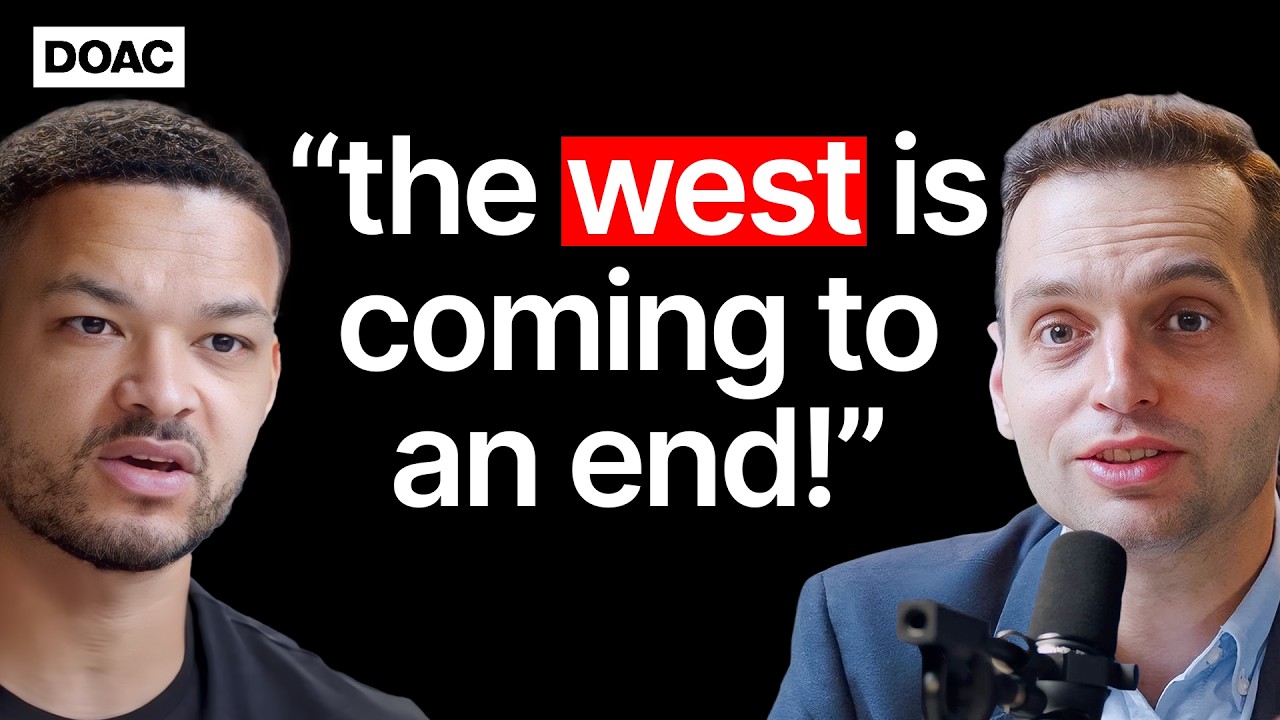
The Anti-Woke Expert: “We Are Witnessing The Fall Of The UK & The USA!” - Konstantin Kisin — The Diary Of A CEO

The Diary Of A CEO

Western nations face long-term collapse from within because an ideology of victimhood and rising national debt destroy foundational cultural values and economic stability.

AI-assisted summary of The Anti-Woke Expert: “We Are Witnessing The Fall Of The UK & The USA!” - Konstantin Kisin — original source. Check the original for full context.

Source published:

Detailed notes

## Background This episode was published on September 23, 2024, by The Diary Of A CEO on YouTube. Hosted by Steven Bartlett, the video features a conversation with Russian-British satirist, author, and TRIGGERnometry co-host Konstantin Kisin. According to the page description, the discussion explores how wokeness has lost its true meaning, the dangers of a victim mindset, the root causes of challenges facing men, and the ongoing war in Ukraine.

## TL;DR Konstantin Kisin argues that Western civilization is undermining itself from within through cultural self-doubt, victimhood narratives, and the ideological influence of modern race-Marxism. He examines how social media algorithms exacerbate political polarization, why men are struggling in a culture that brands masculinity as toxic, and the societal strain caused by unvetted immigration and high national debt. Rejecting rigid left-right political labels, Kisin advocates for personal responsibility, free speech, traditional family values, and pragmatic, trade-off-based policy solutions over ideological dogmatism.

## Atmosphere & style The conversation carries a measured, deeply intellectual, and introspective vibe, balancing grave warnings about societal decline with grounded personal reflection. Bartlett acts as an empathetic and probing host, allowing Kisin space to elaborate on complex philosophical and geopolitical ideas without falling into partisan squabbling. Kisin's demeanor is candid and pragmatic—drawing on his Soviet childhood and comedic background to deliver sharp observations with a subtle, dry wit. Watching the exchange feels like sitting in on a serious, high-stakes dialogue between two reflective thinkers striving for intellectual honesty in a hyper-polarized world.

## Key takeaways - [05:49](https://www.youtube.com/watch?v=GbV6iW26h-Q&t=349s) Internal ideological fracturing and a narrative of historical guilt pose a far greater existential threat to Western civilization than external military conquest. - [12:16](https://www.youtube.com/watch?v=GbV6iW26h-Q&t=736s) Woke ideology replaces individual character with rigid group hierarchies, reducing complex human experiences to simplistic oppressor-versus-oppressed dynamics. - [16:02](https://www.youtube.com/watch?v=GbV6iW26h-Q&t=962s) Promoting systemic victimhood inflicts psychological self-harm by encouraging individuals to misinterpret benign interactions as hostile and surrender personal agency. - [24:46](https://www.youtube.com/watch?v=GbV6iW26h-Q&t=1486s) Social media incentives reward superficial virtue signaling and moral outrage while punishing nuance and practical real-world solutions. - [39:44](https://www.youtube.com/watch?v=GbV6iW26h-Q&t=2384s) Western nations face severe economic malaise due to unsustainable national debt that breaks the intergenerational contract and impoverishes Gen Z. - [41:59](https://www.youtube.com/watch?v=GbV6iW26h-Q&t=2519s) Modern identity politics functions as 'Race Marxism,' adapting traditional economic class conflict into identity categories to undermine Western heritage. - [47:58](https://www.youtube.com/watch?v=GbV6iW26h-Q&t=2878s) Foreign adversaries like Russia and China systematically exploit existing Western cultural divisions through long-term psychological subversion and demoralization tactics. - [01:43:40](https://www.youtube.com/watch?v=GbV6iW26h-Q&t=6220s) Alienating men by labeling masculinity as inherently toxic pushes them toward extreme ideologies unless constructive outlets for ambition and purpose are restored. - [01:51:02](https://www.youtube.com/watch?v=GbV6iW26h-Q&t=6662s) The term 'political correctness' stems from Soviet methods of enforcing party narrative over inconvenient truths, illustrating the danger of speech regulation. - [02:01:22](https://www.youtube.com/watch?v=GbV6iW26h-Q&t=7282s) Preserving Western liberty depends on active gratitude, foundational education, and strong parenting that reinforces core democratic and legal values. - [02:13:40](https://www.youtube.com/watch?v=GbV6iW26h-Q&t=8020s) Effective governance requires adopting Thomas Sowell's maxim that there are no perfect solutions in public policy, only trade-offs. - [02:29:50](https://www.youtube.com/watch?v=GbV6iW26h-Q&t=8990s) Combating global issues like climate change demands pragmatic technological advances such as nuclear power rather than disruptive activism or trade-off denialism.

## Detailed walkthrough ### [00:00](https://www.youtube.com/watch?v=GbV6iW26h-Q&t=0s) Intro: The Core Threat Facing the West

Konstantin Kisin introduces the central theme of the conversation: the West is at serious risk of dismantling its own freedoms through internal division and an ideology of victimhood. Other global powers view this self-inflicted ideological fracturing as a clear vulnerability and actively capitalize on it.

He criticizes ideologies like "wokeness" for reducing complex human beings into simplistic group identities arranged within a rigid "hierarchy of oppression." By teaching people to view themselves perpetually as victims, society causes real-world psychological and social harm, encouraging censorship and preventing open debate over the issues that actually matter.

> "When you teach people to be victims, you actually cause them to suffer in real life."

---

[02:11](https://www.youtube.com/watch?v=GbV6iW26h-Q&t=131s) Who Is Konstantin Kisin?

Born in the late Soviet Union, Konstantin Kisin witnessed firsthand the dramatic collapse of the USSR and the wild, chaotic rise of modern Russia. His family experienced extreme economic volatility—shifting from poverty to sudden wealth and back to poverty all within a single decade. During that brief window of prosperity, his parents sent him to a UK boarding school, altering the course of his life.

Together with fellow comedian Francis Foster, Konstantin co-hosts the popular podcast and YouTube show *TRIGGERnometry*, which is on the verge of hitting one million subscribers. His unique background gives him a distinct lens through which he evaluates Western culture; having seen how fragile political systems and civilizations can be, he aims to remind Western citizens not to take their liberties for granted.

* **Key Background & Milestones:** * Born in the USSR; raised during the turbulent post-Soviet era in Russia. * Sent to a British boarding school during a temporary 5-year period of family wealth. * Co-creator and co-host of *TRIGGERnometry* alongside Francis Foster. * Author of the best-selling book *An Immigrant's Love Letter to the West*.

---

[03:44](https://www.youtube.com/watch?v=GbV6iW26h-Q&t=224s) "Western Privilege" and the Importance of Gratitude

Konstantin argues that while modern culture obsessively debates various forms of identity-based advantage (such as male or white privilege), it entirely overlooks "Western privilege"—the immense, historic fortune of living in a free, capitalist, and secure society. He explains that foundational concepts like guaranteed private property rights simply do not exist in vast portions of the world.

To illustrate this, he points to cases like Russian oligarch Mikhail Khodorkovsky, who lost his fortune and was imprisoned after falling out with Vladimir Putin, and Jack Ma in China, who briefly vanished from public view and lost billions after criticizing banking regulations. In contrast, Western societies afford citizens an unprecedented level of personal agency, individual liberty, and economic opportunity that must be protected with active gratitude rather than torn down.

---

[05:49](https://www.youtube.com/watch?v=GbV6iW26h-Q&t=349s) The Threat Coming to the Western World

Civilizations rarely collapse purely from external conquest; historically, they destroy themselves from within through "cultural suicide." The core threat currently facing the West is a pervasive narrative that its history, culture, and foundations are fundamentally evil—built exclusively on slavery, colonialism, and exploitation.

Konstantin warns that if a society convinces itself that its foundational values are corrupt, its citizens will lose the will to defend it or pass its heritage on to the next generation. This internal crisis of confidence directly influences geopolitical stability, as rival powers exploit Western hesitation.

* **Geopolitical Consequences of Western Distraction:** * **Ukraine:** Russian aggression fueled by perceived Western hesitation and division. * **Afghanistan:** Chaotic U.S. military withdrawal signaling a decay in strategic commitment. * **Taiwan:** Increasingly assertive posture from China as it senses Western preoccupation with internal ideological disputes.

---

[07:33](https://www.youtube.com/watch?v=GbV6iW26h-Q&t=453s) Why Rigid Political Ideologies Are Dangerous

When asked whether he identifies with the political left or right, Konstantin rejects the binary altogether. He contends that political positions ought to be contextual and pragmatic rather than dogmatically ideological. For instance, post-WWII nations like Britain, Australia, and Canada needed high immigration to rebuild, whereas other economic conditions might necessitate tighter controls.

He references a central passage from his book, emphasizing that subscribing to a prepackaged ideological playbook forces people to abandon their own moral clarity and independent reasoning simply to remain in good standing with their "tribe."

> "If there is one thing my Soviet childhood taught me, it's that subscribing to someone else's ideology will always inevitably mean having to suspend your own judgment about right and wrong to appease your tribe."

---

[10:07](https://www.youtube.com/watch?v=GbV6iW26h-Q&t=607s) Political Labelling as a Weapon

Steven and Konstantin discuss how political labels ("far-right," "communist," "woke") are rarely used in good faith today. Instead, media outlets, journalists, and online commentators deploy these terms as weapons to delegitimize opponents and avoid addressing substantive arguments.

Konstantin shares how *TRIGGERnometry* was launched precisely to challenge the dominant woke comedy dogma in the UK. When he and Francis—both of whom voted "Remain" in the 2016 Brexit referendum—tried to understand why millions of their fellow citizens voted "Leave," mainstream critics immediately branded them or refused to appear on their platform. By treating complex societal events as simple expressions of bigotry, public discourse forfeits the ability to understand reality.

---

[12:16](https://www.youtube.com/watch?v=GbV6iW26h-Q&t=736s) What Is Wokeism?

Tracing the origin of the term "woke," Konstantin notes its roots around 2014 within American racial justice movements like Black Lives Matter. It originally signified being "awakened" to systemic inequalities and intersectionality. Over time, as critics began mocking its excesses, the word evolved into a pejorative describing an ideology detached from reality and obsessed with superficial group dynamics.

At its core, "wokeism" operates by establishing a rigid hierarchy of oppression. Rather than treating individuals as unique actors with personal agency, it sorts people into collective categories of "oppressors" or "oppressed." High-performing minority groups—such as East Asian Americans (Chinese, Korean, Japanese)—often end up penalized in university admissions systems because their objective success disrupts the simplistic oppressor-versus-victim narrative.

* **Core Characteristics of Woke Culture:** * **Promotion of Victimhood:** Elevating status based on perceived societal grievances. * **Hierarchy of Oppression:** Moral superiority granted according to group identity. * **Group-Identity Collectivism:** Evaluating individuals by race, gender, or orientation rather than character or merit. * **Misguided Diagnostic Focus:** Asking what causes oppression rather than investigating what produces human prosperity and success.

[16:02](https://www.youtube.com/watch?v=GbV6iW26h-Q&t=962s) The Danger of Woke Ideology and the Trap of Victimhood

Konstantin Kisin explains that focusing exclusively on past historical grievances—such as events from 200 years ago—fails to address how to uplift people in the present moment. He defines "wokeism" as the elevation of victimhood, an unhealthy obsession with racial, sexual, and gender dynamics, and the promotion of an anti-Western, anti-white, and anti-male ideology. While Kisin supports a multiracial society, he stresses that encouraging people to view one another as members of separate, divided tribes undermines the foundational strengths of Western society.

When Steven Bartlett asks how adopting a victimhood mindset manifests as individual self-harm, Kisin draws on psychological concepts, noting that "perception is projection." Referencing Jordan Peterson's insights on cognitive hierarchies, Kisin explains that humans naturally filter their environment based on what they prioritize. If an individual is conditioned to believe that society is inherently hostile toward their background, they will constantly perceive hostility, misinterpret benign interactions, and remain permanently on edge.

Teaching people that they are victims inevitably causes them to suffer in real life by stripping away their agency. Kisin argues that those who face actual hardship or discrimination are precisely the ones who most urgently need a message of resilience, strength, and personal empowerment rather than one of helplessness.

- Multiracial societies thrive when citizens see each other as individuals rather than divided tribal factions. - Perception acts as a filter: expecting prejudice leads individuals to interpret ambiguous actions as hostile. - True empowerment for disadvantaged groups requires instilling resilience rather than validating victimhood.

---

[19:37](https://www.youtube.com/watch?v=GbV6iW26h-Q&t=1177s) The Scar Experiment and Stereotype Threat

To illustrate how expectations shape perceived reality, Kisin and Bartlett discuss the famous psychological "scar experiment." In the study, researchers applied realistic facial disfigurements to participants and told them they were testing how society treats disfigured individuals. Right before the participants walked into job interviews, researchers pretended to touch up the makeup but secretly removed the scars entirely. Upon completing the interviews, participants overwhelmingly reported experiencing heightened levels of discrimination, even citing specific comments interviewers allegedly made about their non-existent scars. Because they expected to be judged for a disfigurement, they projected that belief onto the interaction.

Bartlett brings up the concept of "stereotype threat," noting how simple reminders of negative group stereotypes—such as asking students to state their ethnicity before a math exam—can measurably depress test performance. Kisin responds that this phenomenon demonstrates the destructive power of societal conditioning and "brainwashing." Even well-meaning efforts to highlight disadvantages can inadvertently reinforce harmful stereotypes and diminish individual confidence.

- **The Scar Experiment**: Participants who believed they had facial scars reported feeling discriminated against during job interviews, despite the fake scars having been completely removed without their knowledge. - **Stereotype Threat**: Merely prompting individuals to identify their demographic background before a test can lower performance due to internalized group stereotypes. - Well-intended reminders of identity can unintentionally undermine individual performance by instilling doubt.

---

[22:28](https://www.youtube.com/watch?v=GbV6iW26h-Q&t=1348s) Well-Meaning Patronage vs. True Inspiration

Bartlett shares a personal story from when he was 18 years old and preparing to launch his first business. He discovered a grant program specifically designated for Black entrepreneurs. Sitting at his computer, he drafted a Facebook post—which he ultimately never published—expressing how the very existence of a race-based grant made him feel inherently disadvantaged, as if society assumed he could not succeed without special assistance.

Kisin highlights how well-meaning actions can often be the most dangerous form of overreach, referencing C.S. Lewis's observation that a tyranny exercised for the good of its victims can be more oppressive than the rule of an evil robber baron, because those acting with good intentions do so with a clear conscience. Rather than offering race-specific financial hand-outs, Kisin suggests that creating platforms showcasing successful figures who share similar backgrounds provides far more constructive encouragement.

Addressing the popular phrase "you can't be what you can't see," Kisin criticizes it as a pernicious narrative. He notes that when launching his podcast, TRIGGERnometry, he did not look for someone who shared his exact demographic background; he simply observed successful creators in America and realized he could replicate their efforts. Bartlett adds that seeing figures like the late Jamal Edwards—a young Black entrepreneur who built SBTV from the ground up without wealth or elite credentials—was powerful because it eliminated excuses and destroyed any temptation to embrace victimhood.

> "A tyranny exercised for the good of its victims may be in a large measure the tyranny of the cruel... those who torment us for our own good will torment us without end for they do so with the approval of their own conscience."

- Well-intentioned policies targeting specific racial groups can inadvertently send a message that those groups are inherently incapable of succeeding on their own. - Kisin refutes the idea that people can only emulate those who look like them, calling "you can't be what you can't see" a limiting belief. - Role models who succeed through sheer drive inspire others by removing excuses, rather than by reinforcing identity politics.

---

[24:46](https://www.youtube.com/watch?v=GbV6iW26h-Q&t=1486s) The Impact of Social Media and Superficial Virtue Signaling

Kisin points out that modern society has systematically replaced actions that produce real-world results with policies and gestures that merely sound good. A major catalyst for this shift was the rise of social media around 2014. Because online platforms operate detached from real-world consequences, they incentivize grandstanding and superficial virtue signaling over practical solutions.

As an example, Bartlett and Kisin recall the summer of 2020 during the Black Lives Matter movement, when millions posted black squares on Instagram ("Blackout Tuesday"). Peer pressure was so intense that failing to post a black square resulted in immediate accusations of racism. Bartlett notes how bizarre it was that posting on social media became demanded as the mandatory response to a tragic death.

Kisin expands on the tangible real-world consequences of emotional, performative social media movements. In the aftermath of George Floyd's death, calls to defund or restrain law enforcement led to police pulling back in several major American cities. Consequently, violent crime spiked, resulting in a significant increase in homicides within the very Black communities those activists claimed to protect.

- Social media rewards virtue signaling because online contexts lack the immediate feedback mechanisms of the real world. - Performing empty digital gestures—such as posting black squares—became a public litmus test for moral standing. - Retracting police presence from urban communities in response to public outcry ultimately led to higher crime rates and harm to innocent residents.

---

[30:05](https://www.youtube.com/watch?v=GbV6iW26h-Q&t=1805s) Facing Real Disadvantages and Playing the Hand You're Dealt

Acknowledging that subtle biases do exist in the real world, Bartlett cites resume audit studies showing that job applicants with traditional names like "John" receive higher response rates than those with non-traditional names. Kisin acknowledges these real-world variances, but argues that every individual faces unique advantages and disadvantages that can be sliced countless ways.

To demonstrate this point, Kisin brings up height discrimination. Being 5'9" himself, he notes that a vast majority of Fortune 500 CEOs and winning U.S. presidential candidates are over six feet tall, proving that "heightism" is a statistically measurable disadvantage for shorter men. However, wallowing in resentment over physical stature or background achieves nothing. The only productive choice is to accept the hand life deals, build resilience, and compensate through competence and hard work.

As a first-generation immigrant to the UK, Kisin observes that being an outsider comes with both distinct drawbacks and unique advantages. Society will always treat different people differently, but adopting a victim mindset guarantees failure, whereas focusing on skill, drive, and personal growth allows individuals to thrive in a free Western society.

- Statistical disadvantages exist across many vectors, including name recognition, physical height, and immigrant status. - **Heightism**: A disproportionate percentage of corporate CEOs and elected leaders are above average height, yet complaining about height yields no practical benefit. - The ultimate response to life's inherent inequalities is to play your cards as effectively as possible rather than dwelling on victimhood.

[32:01](https://www.youtube.com/watch?v=GbV6iW26h-Q&t=1921s) Personal Agency and the Pitfall of Victimhood

Konstantin Kisin argues that regardless of how poorly someone has been treated or how difficult their initial circumstances are, adopting a mindset of victimhood will never actually help them thrive. Drawing from his own life, he notes that he has experienced both sides of the spectrum—from being the son of wealthy parents to sleeping in a park in Edinburgh for weeks because he couldn’t afford rent. His fundamental belief is that "no one is coming to save you," and the only person capable of turning your life around is yourself.

Whether an individual’s ultimate peak is simply holding down a steady job to provide for their family or reaching extraordinary heights, complaining about genetics, race, or gender is a counterproductive way to play the hand life gives you. Steven Bartlett points out that many people who embrace victimhood genuinely believe it is their path to thriving, as it grants them a community, instant empathy, and mutual reinforcement. Konstantin counters that while this identity feels comforting in the short term, it does not actually improve your earnings, business success, or mental state—with the sole exception of those working as diversity consultants. He emphasizes that a good psychologist or therapist won't validate a patient's self-pity, but will instead guide them toward acceptance and personal growth.

- Konstantin spent weeks sleeping in a park in Edinburgh due to an inability to pay rent. - He emphasizes that while the cards you are dealt might be unfair, complaining about them never yields positive real-world outcomes.

---

[34:29](https://www.youtube.com/watch?v=GbV6iW26h-Q&t=2069s) Gen Z, Workplace Dynamics, and Smartphone Culture

When evaluating generational differences, Konstantin holds a split perspective on Generation Z. On one hand, he praises young people for their ability to acquire information rapidly; they can watch a 10-minute video on YouTube and absorb knowledge that took older generations 20 years to unpack. On the other hand, based on his experience running a comedy club alongside his *TRIGGERnometry* co-host Francis Foster, he notes that Gen Z workers can display a disproportionately grandiose view of their roles. He recalls unpaid interns jumping into high-level strategy meetings to dictate how things should be run—a degree of audacity that would have been unthinkable for his generation.

Despite these criticisms, Konstantin argues against writing off young people, stressing that society needs them to become the best versions of themselves through mentorship and structure. He feels immense sympathy for the unique environmental hazards forced upon them, particularly the early adoption of smartphones. He predicts that in 20 to 40 years, society will look back at giving young children smartphones with the same horror and moral outrage currently reserved for early tobacco marketing.

- Konstantin co-hosts the podcast *TRIGGERnometry* alongside Francis Foster. - He compares early exposure to smartphones to the historical oversight surrounding tobacco usage.

---

[36:31](https://www.youtube.com/watch?v=GbV6iW26h-Q&t=2191s) Global Instability and the Decline of Western Dominance

Shifted to his outlook on the future, Konstantin distinguishes between personal optimism and global pessimism. While he feels confident in his personal life, he is deeply pessimistic about the direction of the world. He categorizes global geopolitical power into six distinct, major civilizations:

1. **Western Civilization** (descendants of the Western Roman Empire) 2. **Eastern Christian Civilization** (descendants of Byzantium, centered in Russia) 3. **Arab Islamic Civilization** 4. **Persian Islamic Civilization** (centered in Iran) 5. **Chinese Civilization** 6. **Indian Civilization**

Western civilization has held global dominance for centuries, but as it weakens internally, rival powers like Vladimir Putin's Russia and Xi Jinping's China are asserting themselves to create a "multi-polar world." Konstantin clarifies that these leaders do not want to "hold hands and sing Kumbaya"; they want to displace the West and claim the dominant position for themselves. When the dominant power signals weakness, global conflict inevitably rises. He highlights Russia's invasion of Ukraine, potential aggression toward Taiwan, and Hamas's October 7th attack on Israel (backed by Iran) as direct consequences of rivals testing a weakened Western alliance.

---

[39:44](https://www.youtube.com/watch?v=GbV6iW26h-Q&t=2384s) Debt, Mass Immigration, and Cultural Malaise

Konstantin contends that the West's decline is driven by both internal division and economic mismanagement. The primary societal crisis facing Western nations is the skyrocketing national debt, which currently exceeds 100% of GDP in many countries. He views this unsustainable borrowing as a fundamental violation of the intergenerational contract: current older generations are refusing to make sacrifices for their descendants, leaving children to pay off the massive deficits incurred today.

``` ┌───────────────────────────────────────────┐ │ Cultural Demoralization & Division │ └─────────────────────┬─────────────────────┘ │ ▼ ┌───────────────────────────────────────────┐ │ Economic Mismanagement & National Debt │ └─────────────────────┬─────────────────────┘ │ ▼ ┌───────────────────────────────────────────┐ │ Decreased GDP per Capita & Stagnant Wealth│ └───────────────────────────────────────────┘ ```

Furthermore, he argues that politicians push mass immigration under the premise of boosting the economy. In reality, while overall GDP may appear to grow by adding more people, individual standard of living—measured by GDP per capita—is declining. Consequently, Generation Z is on track to be poorer than their parents, reflecting a culture that has lost its cohesion and basic duty to protect the next generation.

- National debt in major Western countries now exceeds 100% of GDP. - Politicians use mass immigration to inflate headline GDP figures, concealing a drop in GDP per capita.

---

[41:59](https://www.youtube.com/watch?v=GbV6iW26h-Q&t=2519s) Marxism, "Race Marxism," and Demoralization

Tracing the root causes of Western self-doubt, Konstantin traces the phenomenon back to academic movements that began in the 1960s, which were initially encouraged and funded by the Soviet Union to demoralize the West. He asserts that modern "wokeness" is simply a adapted form of Marxism—specifically, "race Marxism."

In its original formulation by Karl Marx and Friedrich Engels, Marxism analyzed human history strictly through economic oppressor-versus-oppressed dynamics: the *bourgeoisie* (capitalists who own the means of production) exploiting the *proletariat* (the working class). While Marxism emerged as a reaction to real abuses during the Industrial Revolution—such as 12-year-old child chimney sweeps—its implementation at a societal level requires extreme state violence because humans are naturally self-interested. This dynamic resulted in the deaths of tens of millions of people in both Russia and China.

| Ideological Framework | Core Oppressor | Core Oppressed | Mechanism of Action | Historical/Modern Outcome | |:--- |:--- |:--- |:--- |:--- | | **Traditional Marxism** | Bourgeoisie (Capitalists) | Proletariat (Workers) | Class Struggle & Economic Redistribution | State violence; tens of millions killed in USSR & China | | **Modern "Race Marxism" / Wokeness** | Majority Identity (Men, White, Straight) | Identity Groups (Minorities, Women, LGBTQ+) | Cultural Guilt & Social Identity Polarization | Institutional self-doubt and internal division in the West |

Because Western working-class citizens benefited from capitalism and wanted homes and stable lives rather than a bloody Soviet-style revolution, Western Marxists shifted their focus. They replaced economic categories with identity categories (race, gender, sexual orientation). Combined with the social changes brought on by the invention of the contraceptive pill, these ideas entered higher education, training generations of students to view Western history as nothing more than a legacy of oppression, colonialism, and slavery.

> " Marxism really is a reaction to the rampant abuse that was caused by the Industrial Revolution... but to make people give up everything for the state, you have to use a lot of force, which is why you have to kill 50 million people in Russia and 50 million people in China."

---

[47:22](https://www.youtube.com/watch?v=GbV6iW26h-Q&t=2842s) Foreign Influence and Tenet Media

As the discussion turns to how internal divisions are amplified, Steven brings up a recent news story regarding foreign adversaries funding Western media figures to stoke outrage. Konstantin clarifies the specific details of the case, referring to the U.S. Department of Justice indictment involving Tenet Media. Russian state-controlled network *RT* (Russia Today) secretly funneled $10 million into the American media company to pay prominent commentators to publish content aligned with Russian interests. Konstantin argues that foreign adversaries do not need to invent new divisions; they simply find existing cultural fissures created by Western ideologues and pour fuel on the fire to weaken the West from within.

- Russian state media (*RT*) funneled $10 million into Tennessee-based Tenet Media to fund covert influence operations. - The scheme targeted existing socio-political divisions within American society rather than creating new ones.

[047:58] Soviet Subversion Tactics and Demoralization

Konstantin Kisin explains how foreign influence operations—particularly from Russia—target Western societies not by attempting to install specific political figures, but by intentionally sowing chaos and division. He references Yuri Bezmenov, a Soviet KGB defector who gave a series of famous lectures in the 1980s detailing Soviet subversion strategies. Contrary to popular Cold War pop-culture tropes where spies focused primarily on stealing nuclear blueprints or microfilms, Bezmenov revealed that roughly 85% to 90% of Soviet intelligence resources were devoted to a long-term psychological process called "demoralization."

The objective of demoralization is to amplify destabilizing internal forces and turn a nation's citizens against their own institutions. Kisin notes that during the 1960s and 1970s, the Soviet Union funded various militant groups in America to exploit domestic racial tensions; whenever Western nations criticized Soviet human rights abuses or gulags, Moscow countered with "whataboutism" regarding American race relations. Kisin stresses that foreign powers operate by locating people who already hold disruptive or extreme views and showering them with funding, media access, and influence to magnify their reach.

* **Yuri Bezmenov's Lectures:** Soviet defector who exposed how KGB operations prioritized subversion over traditional espionage. * **Demoralization Mechanics:** The strategic process of undermining a population's moral framework and trust in basic facts. * **Cacophony of Lies:** The ultimate goal of modern Russian disinformation is to confuse the electorate until people feel completely unable to discern what is true.

---

[051:06] The Tenet Media Indictment and Western Self-Correction

Addressing recent headlines, Steven Bartlett and Kisin discuss the U.S. Department of Justice indictment involving Tenet Media, a Tennessee-based media company. Federal prosecutors alleged that Russian state actors secretly funneled millions of dollars to fund right-wing American influencers. Kisin points out that the commentators themselves were often unaware of the ultimate source of the funding. The handlers subtly steered content by sending news tips or suggesting specific topics—such as alleging Ukrainian involvement in a Russian terror attack.

Kisin highlights a critical nuance: media personality Lauren Chen eventually began posting content critical of Donald Trump. This underscores Kisin's primary point that foreign adversaries are not strictly pro-Trump or pro-Kamala; their primary goal is to foster total political confusion and institutional distrust. To withstand these psychological tactics, Kisin argues that Western nations must rebuild a coherent sense of national identity, learn their true history, and resist both left-wing and right-wing historical revisionism. He offers the British Empire's historic role in abolishing the global slave trade—using its navy, money, and diplomatic leverage to suppress slavery worldwide—as an example of positive historical history that is often ignored in modern education.

* **Tenet Media Case:** U.S. Department of Justice indictment revealing Russian covert funding of Western independent media channels. * **Influence Strategy:** Operating through intermediaries to pitch specific headlines and destabilize public discourse. * **Historical Pride:** Kisin argues that Britain was the first major empire in history to expend immense wealth and military effort to enforce the global abolition of slavery.

---

[053:25] Nuance in the Age of Social Media Algorithms

The conversation pivots to why society feels so hopelessly polarized. Bartlett observes that modern ideological warfare takes place online, where platform algorithms function like casino slot machines. Social media design heavily rewards extreme, incendiary statements with immediate peer approval and viral reach, while punishing nuance as the "enemy of growth." Users receive digital "clapping" only when they fall squarely into an extreme camp.

Kisin acknowledges that "the center is the place of greatest tension" because moderate, nuanced commentators take fire from both sides of the political aisle. However, he maintains that the open internet remains a net positive. Decades ago, media creators depended on wealthy legacy gatekeepers to fund their broadcasts; today, independent creators can build sustainable audiences directly. Kisin notes that while provocative figures like Andrew Tate command massive followings by making extreme statements, there remains a substantial market for critical thinking and honest discourse.

``` +-------------------------------------------------------------------+ | THE ATTENTION ECONOMY | +-------------------------------------------------------------------+ | EXTREME LEFT <--- [ High Engagement / Tribal ] ---> EXTREME RIGHT | | | | THE CENTER | | (High Tension / Nuanced / Honest) | +-------------------------------------------------------------------+ ```

* **Algorithmic Incentives:** Platforms monetize tribal outrage over nuanced debate. * **Independent Media Reach:** Kisin notes he is happy with 1,000,000 YouTube subscribers and 60,000 weekly Substack readers who seek balanced, nuanced perspectives.

---

[055:51] The Decline of Religion and the Rise of "God Curiosity"

Bartlett shares his personal spiritual journey, explaining how growing up in a devout Christian household was followed by an existential crisis at age 18 after reading Richard Dawkins. After years of identifying as an atheist and then an agnostic, Bartlett reveals that over the past six months he has felt "God curious"—a subtle pull back toward spiritual questions as a way to find meaning in an increasingly lonely, hyper-individualistic world.

Kisin, who also identifies as an agnostic, agrees that he is not a pure materialist, stating, "There are powerful forces in this world that are spiritual in nature... these are not things I can prove, but they exist." He argues that the collapse of traditional religion has left a cultural vacuum, stripping young people of discipline, structure, moral guardrails, and overarching purpose. While material conditions have changed too drastically to "put the toothpaste back in the tube" and return to past religious eras, Kisin anticipates that rapid technological changes—particularly artificial intelligence—will trigger new spiritual impulses and frameworks to help humans process what they cannot comprehend.

* **Bartlett's Journey:** From Christian upbringing to Dawkins-inspired atheism, settling into agnosticism, and recently becoming "God curious." * **Spiritual Vacuum:** The decline of traditional religious practice leaves individuals without community, discipline, or shared cultural guardrails. * **Impact of Technology:** Advancements in AI and technology are expected to drive a fresh wave of spiritual seeking to explain the unknown.

---

[059:46] Male Disillusionment, Islam, and Hyper-Masculinity

Addressing demographic trends, Bartlett notes a recorded rise in young Western men converting to Islam or following hyper-masculine figures. Kisin argues this phenomenon makes total sense given current Western dynamics. Islam provides young men with explicit structure, clear expectations, personal discipline, and strong community—elements that modern Western culture often fails to offer.

Kisin contends that modern Western media frequently portrays men as weak, passive, or secondary, telling young men to step back while simultaneously treating them as privileged. In reality, young men are struggling with lower educational attainment and higher rates of social isolation. When society demonizes natural male inclinations toward strength, competition, and assertiveness, men seek alternative outlets. This dynamic explains the explosive popularity of combat sports like the UFC, martial arts like Brazilian Jiu-Jitsu, and intensive body-building.

> "In modern Western society, what is a man supposed to be? Look at your adverts, look at your movies... a man's supposed to be this pathetic, weak, second to his strong female counterpart... Islam says no, you're the man. That's always going to be appealing to men who increasingly feel they've got the short end of the stick."

* **Educational Deficits:** Young men in Western countries are falling behind in school performance and higher education completion. * **Cultural Expressions of Masculinity:** Bartlett compares his father's era of long-haired, rock-star role models to today's youth looking up to UFC fighters, gym influencers, and combat sports figures. * **Jordan Peterson vs. Andrew Tate:** Kisin contrasts Jordan Peterson—whom he views as a positive, constructive force for young men—with more sensationalist influencers like Andrew Tate, whom he characterizes as a symptom of a deeper cultural malaise.

[01:03:56](https://www.youtube.com/watch?v=GbV6iW26h-Q&t=3836s) The Solution for Men and the Danger of Gender Division

Addressing the crisis of male suicide, loneliness, and depression, Konstantin Kisin argues that the fundamental path forward for men remains timeless: personal responsibility, skill acquisition, self-improvement, and seeking strong mentorship. He emphasizes that nobody is coming to save young men, which makes the narrative of victimhood particularly toxic for them. From an evolutionary perspective, human societies naturally feel empathy toward women while treating men as biologically disposable. In an ancient tribal conflict, losing most of the men is a recoverable setback for population growth, whereas losing the women is catastrophic. Because of this evolutionary bias, men cannot expect sympathy; they must actively build their own value and purpose despite being handed a challenging social environment.

While political correctness and woke culture have been leveraged against men, Kisin warns against reacting with hostile anti-woman rhetoric. The ultimate goal must be healthy collaboration between the sexes, as men and women have depended on one another throughout human history. Rather than pointing fingers, society should recognize that men and women possess distinct natural inclinations and complementary skill sets. Men’s drive for competition, status, and physical dominance needs constructive outlets—such as labor, construction, and physical protection—rather than suppression.

- **Evolutionary Disposability**: A tribe of 10 men and 10 women sending men to war can repopulate even if only one man returns; reversing the gender roles leads to demographic collapse. - **Kindergarten Example**: Early childhood education environments are predominantly run by women, illustrating natural gender inclinations toward nurturing roles that society should embrace rather than force into artificial statistical parity. - **Complementary Dynamic**: Kisin recalls learning conflict resolution from his mother, who defused a tense situation with a smile and a joke—a tactic completely foreign to his competitive, masculine boarding school environment.

[01:09:32](https://www.youtube.com/watch?v=GbV6iW26h-Q&t=4172s) Calling Men Back In vs. Generalizing Group Guilt

When discussing abusive power figures like Harvey Weinstein and the broader MeToo movement, Kisin addresses the quote from a guest neuroscientist: "We've called men out, but we need to make sure we call them back in." He contends that the cultural mistake was labeling masculinity itself as toxic, rather than targeting specific toxic behaviors. Predatory figures like Weinstein do not represent all men; historically, honorable men would have intervened to restrain and punish such predators.

Kisin challenges the online discourse that holds all men collectively accountable for the bad behavior of individual men. He points out a glaring double standard in public debate: while generalizing negative traits to entire racial or ethnic groups is rightly recognized as bigotry, broad generalizations about men are widely tolerated and encouraged.

> "If you want to generalize about an entire group of people, generally speaking we think that's a bad thing to do... But the moment it's men, suddenly that's totally cool... It doesn't make any sense."

[01:11:02](https://www.youtube.com/watch?v=GbV6iW26h-Q&t=4262s) The Evolution of Free Speech and the Soviet Roots of Political Correctness

Reflecting on the shifting landscape of free speech over the last decade—spanning pre-2016 discourse, the election cycles, and the COVID-19 pandemic—Kisin observes that free speech is frequently weaponized as a partisan tool. Parties in power seek to suppress criticism, while those out of power demand free expression, highlighting the necessity for principled centrists who defend speech regardless of who holds office.

Kisin explains the historical origin of the term "political correctness," noting that it was not created to protect marginalized groups, but was coined in the Soviet Union by Communist party apparatchiks. It served as a rhetorical cudgel to silence dissidents whose claims were factually accurate but politically inconvenient to party ideology. He argues that modern censorship operates on this exact principle, using speech restrictions to protect dominant political narratives.

- **COVID-19 Policy Volatility**: Early in the pandemic, when Donald Trump championed rapid vaccine development, many left-wing critics voiced skepticism; once the administration changed, questioning vaccine policies was heavily censored across social media platforms. - **The Lab Leak Theory**: Speculation regarding the origin of SARS-CoV-2 in a Wuhan lab via gain-of-function research was initially banned as disinformation on major platforms, despite authors like Matt Ridley and scientist Alina Chan later presenting robust evidence supporting it. - **The Zero-Control Principle**: The idea that censorship relies on complete narrative control; as a friend of Kisin noted, "zero is a special number." Once a single major platform refuses to censor, suppression across other networks becomes largely ineffective. - **Platform Pivots**: Following Elon Musk's acquisition of Twitter (now X), tech leaders like Mark Zuckerberg publicly acknowledged past missteps, including suppressing the Hunter Biden laptop story and banning political figures on Facebook.

[01:17:57](https://www.youtube.com/watch?v=GbV6iW26h-Q&t=4677s) Freedom of Speech vs. Freedom of Reach: Navigating Platform Trade-Offs

While acknowledging that unrestricted platforms allow for an influx of offensive content, extreme toxicity, and racial slurs, Kisin argues that total bans are the wrong remedy. Drawing on his Jewish heritage, he states that anti-semitic voices should not be banned outright, but neither should algorithms actively amplify them. He highlights Elon Musk's framework of "freedom of speech, but not freedom of reach" as a potential middle ground for managing platform health without resorting to outright authoritarian censorship.

Steven Bartlett and Kisin agree that social media creates a "windscreen effect"—much like road rage, the psychological barrier of an avatar and online anonymity strips away natural human empathy and social accountability, encouraging people to act like the worst versions of themselves. Citing economist Thomas Sowell, Kisin emphasizes that complex societal problems do not have perfect solutions—only trade-offs. The minor discomfort of encountering offensive speech online is the necessary trade-off for preserving an open, free society.

> "There are no solutions, there are only trade-offs... The trade-off of a free society is some people are going to say things you and I both really don't like."

[01:19:01](https://www.youtube.com/watch?v=GbV6iW26h-Q&t=4741s) The Future of Western Dominance and What It Means to Fall

When looking forward over the next 5, 10, or 20 years, Konstantin Kisin believes the West will retain its dominant position due to its vast accumulated advantages. However, he warns that the current trajectory is dangerous, invoking the famous observation about how collapse happens: "gradually, and then suddenly." He clarifies that the decline of the West will not look like a Hollywood disaster movie where everyone dies overnight. Instead, he compares modern Western nations to historical fallen empires like Rome or Athens.

Walking out of a metro station in central Rome and seeing the Colosseum leaves visitors in awe of an incredible civilization, yet the modern inhabitants navigating those streets are not the same entity as the Roman Empire. Great civilizations end when their people are no longer willing to stand up and fight for their future. If Western society becomes secondary to authoritarian powers like China or Russia, the real-world consequences for everyday citizens will be severe: a sharp decline in living standards, loss of geopolitical self-determination, and the erosion of prosperity and freedom for future generations.

- **Geopolitical Shift:** When power shifts, former powers are dictated to by dominant nations regarding energy centers and policy. - **The Paradox of Wokeness:** Values prioritized by progressive movements—such as human rights, individual dignity, and equal treatment—exist primarily because of Western political traditions and will quickly fall away under Russian or Chinese global hegemony.

---

[01:21:22](https://www.youtube.com/watch?v=GbV6iW26h-Q&t=4882s) How Individuals Can Save Western Civilization

When asked by Steven Bartlett what an ordinary individual can do to preserve Western values, Kisin highlights the critical role of parenting and education. He emphasizes that parents must teach their children how fortunate they are to live in the West by exposing them to life in poorer, less free parts of the world. Prosperity and technological progress do not happen by accident; they are the direct outcome of a specific "magic formula" invented by human society: freedom of expression, freedom of research, capitalism, private property, the rule of law, and a foundational belief in human dignity rooted in Judeo-Christian heritage.

``` Individual Rights & Expression ──┐ Capitalism & Private Property ───┼─► Technological Innovation ──► Western Prosperity & Strength Rule of Law & Human Dignity ───┘ ```

Because Western strength is driven by innovation rather than raw population size, compromising freedom of thought threatens the very foundation of its success. Parents must actively "inoculate" their children against ideological teachings in schools that deconstruct or vilify Western history. Kisin recalls how his own parents handled state indoctrination while growing up in the Soviet Union, giving him explicit instructions on his first day of school to protect him and keep his perspective grounded in reality.

- **Soviet Parenting Rules:** 1. *Silence outside the home:* Never repeat at school what is discussed in private, or the family will get into serious trouble. 2. *Critical thinking:* Understand that school teachings are state propaganda, nod along without starting useless arguments with teachers, but keep the truth in mind.

---

[01:23:34](https://www.youtube.com/watch?v=GbV6iW26h-Q&t=5014s) Free Speech, Social Media, and Over-Criminalization

The conversation transitions to recent headlines involving people being investigated or arrested over online posts. Kisin notes that while most people assume someone arrested over a tweet must have said something horrific, the reality includes alarming miscarriages of justice. For instance, gender-critical feminists raising concerns about women-only spaces have faced police harassment, and ordinary individuals have been prosecuted under broadly defined hate speech legislation.

Kisin cites the notable legal case of Chelsea Russell, a 19-year-old British woman who posted rap lyrics containing a racial slur on Instagram as a tribute to a friend killed in a car crash. She was prosecuted, convicted of a hate crime, given a curfew, and fitted with an electronic ankle tag before her conviction was eventually overturned on appeal years later. Kisin argues that criminalizing speech inevitably leads to absurd overreach. While social backlash—such as losing friends, being asked to leave a venue, or struggling to find employment—is a natural societal check on offensive behavior, using state authority and jails to punish speech sets a dangerous precedent.

- **Legal Distinctions:** Expressing an offensive term or slur should carry social consequences, whereas direct incitement to violence (e.g., "all [group] should be killed") crosses into a legitimate criminal matter. - **Societal Standard:** Societies that police jokes and non-violent speech mirror authoritarian regimes rather than free democracies.

---

[01:26:43](https://www.youtube.com/watch?v=GbV6iW26h-Q&t=5203s) The US Election and the War in Ukraine

Looking ahead to the US presidential election between Donald Trump and Kamala Harris, Kisin emphasizes that every American election carries global weight as the leader of the Western world. When assessing which candidate is better suited to defeat "wokeism," Kisin notes the dynamic is complex. While Kamala Harris aligns with progressive identity politics, electing Donald Trump could inadvertently provoke a deeper reaction, leading progressive ideologues to double down on their narrative that Western society is fundamentally bigoted.

``` ┌──► Kamala Harris Presidency ──► Ideological institutionalization of woke policies US Election └──► Donald Trump Presidency ──► Polarization and intensified cultural backlash ```

For Kisin, cultural debates take a back seat to the urgent geopolitical crisis of the war in Ukraine. Having deep personal ties to the region—his wife and mother are Ukrainian, and his 95-year-old grandmother lives just 100 kilometers from the front lines after surviving the Nazi occupation—he views the conflict as a definitive test of Western resolve.

To resolve the war, Kisin presents two strategic paths: either supply Ukraine with overwhelming military force to push back Russian lines, or negotiate a realistic settlement that guarantees long-term security. A lasting deal would require a physical buffer zone, such as a Korean-style demilitarized zone guarded by international peacekeepers, backed by a credible threat that any further aggression from Vladimir Putin would trigger unlimited Western military aid to Ukraine. Between the two US candidates, Kisin expresses greater confidence in Donald Trump’s willingness to enforce such an outcome.

- **Historical Precedent:** The failure of the 1994 Budapest Memorandum and the lack of a decisive Western response to the 2014 annexation of Crimea proved that abstract security guarantees without physical enforcement do not deter aggression.

---

[01:31:11](https://www.youtube.com/watch?v=GbV6iW26h-Q&t=5471s) Wealth Creation, Taxation, and Economic Realities

Reflecting on how his own views have evolved as his podcast business, *TRIGGERnometry*, has grown and taken on employees, Kisin admits he previously misunderstood the mechanics of wealth creation, taxation, and business incentives. He highlights the alarming trend of high-net-worth individuals leaving the UK due to a punitive business environment and anti-wealth political rhetoric.

Kisin explains that heavily taxing wealthy entrepreneurs does not simply strip them of luxury items; it actively discourages them from investing capital, expanding operations, and creating jobs. In the UK, a deep-seated "class war" mentality often leads the public to confuse self-made business success with inherited privilege. Rather than hoarding money for private jets and yachts, most successful entrepreneurs reinvest their earnings back into their enterprises to fund new projects and hire more staff.

- **Exodus of Wealth:** More millionaires are currently leaving the United Kingdom than almost any other country in the world due to unfavorable tax regimes. - **Libertarian Shift on Drug Policy:** Kisin touches upon another area where his views have changed—shifting away from pure libertarianism regarding hard drugs due to the destructive, hyper-addictive nature of modern narcotics on vulnerable populations.

<ElicitationsGroup message="Explore further details from this interview:"> <Elicitation label="Summarize the previous section on free speech" query="Provide a detailed walkthrough of the previous section of this interview covering free speech, humor, and censorship."/> <Elicitation label="Explore the next section on immigration and trade-offs" query="Provide a detailed walkthrough of the next section of this interview covering immigration, border policy, and trade-off denialism."/> </ElicitationsGroup>

### [01:33:40](https://www.youtube.com/watch?v=GbV6iW26h-Q&t=5620s) Pragmatism Over Ideology: The Abortion Dilemma After discussing drug policy, Konstantin Kisin points to Thomas Sowell’s famous maxim: *"There are no solutions, only trade-offs."* He argues that most persistent political arguments remain unresolved because they are genuinely difficult, with valid points on both sides. However, viewing these issues purely through an ideological lens ruins any chance of progress. In America, political obsession over abortion pits the argument for women's autonomy against the argument for the sanctity of human life, leaving the country stuck in a perpetual political stalemate.

Konstantin contrasts this with Hungary. Under a right-wing government, Hungary chose not to make abortion an ideological battlefield. Instead, they made *family* a political priority—offering substantial tax breaks, financial encouragement, and housing help for people who have children. As a result, Hungary halved its abortion rate without banning the procedure. Konstantin highlights this as a practical, pragmatic trick that sidesteps endless ideological warfare.

Steven Bartlett notes that topics like abortion and border control are weaponized by politicians to drive votes through fear and disgust. He points to politicians claiming that illegal immigrants are rapists from mental institutions coming for people's daughters, or rhetoric about "ripping live babies out at nine months." While Konstantin acknowledges that candidates use extreme rhetoric to win votes, he points out that Donald Trump is actually quite moderate on abortion by Republican standards, even taking flak from his own base for it.

### [01:36:19](https://www.youtube.com/watch?v=GbV6iW26h-Q&t=5779s) The Real Issue with Illegal Immigration Turning to immigration, Konstantin stresses that while both the US and the UK have rich histories of legal migration, open-ended illegal immigration is unjustifiable. There is zero reason for people to walk into a country unchecked without authorities knowing who they are. To illustrate the reality on the ground, Konstantin shares an anecdote from his recent trips to Los Angeles, where almost all Uber and Lyft drivers are Armenian.

Because Armenians speak Russian and recognize Konstantin's Russian name, they open up to him during rides. He noticed a clear divide: Armenians who arrived in the 1980s and 1990s came legally by applying for visas and following the rules. However, those who arrived recently almost exclusively crossed through the US southern border. One driver casually admitted to bringing his cousins over, as well as his 83-year-old father in a wheelchair, boasting that it was "no problem."

When Steven asks what the direct harm is of a guy coming over to drive a ride-share vehicle, Konstantin outlines the fundamental problems: * **Breaking the Law First:** The very first act committed in the host country is jumping the queue and violating its laws. * **Subverting Democratically Chosen Systems:** Nations democratically decide what skills and capacity they want, but illegal immigration bypasses that entirely. * **Fiscal Burden on Taxpayers:** In the UK, the government under the Conservatives was spending £8 million a day just on hotel accommodation for illegal immigrants. * **Security Risks:** Unchecked borders allow criminals, terrorists, and violent actors to enter undetected.

### [01:40:34](https://www.youtube.com/watch?v=GbV6iW26h-Q&t=6034s) Crime, Misdirection, and Personal Empathy Steven questions whether illegal immigrants statistically commit more crime or if high-profile cases are just emotionally charged anomalies used to manipulate the public. Konstantin points out that it is impossible to calculate accurate crime rates for illegal immigrants because no one even knows the exact total number of illegal immigrants in the country. However, he highlights real-world tragedies like Abdul Ezedi, an illegal immigrant in the UK who arrived in a lorry, evaded deportation twice, claimed a fake religious conversion to stay, and ultimately committed a horrific acid attack against a woman and her two children.

``` "Why would we take the risk of having people come here who are deliberately breaking the law? Is that a signal of good intent on their part?" — Konstantin Kisin ```

Steven expresses personal empathy, sharing his own background as a first-generation immigrant born in Botswana to a Nigerian mother before growing up in the UK. He notes that if he were living in a poor or war-torn country, he would "give it a shot" too. He references interviewing former UFC heavyweight champion Francis Ngannou, who walked out of Africa, swam across dangerous waters, climbed border walls, and trekked through the desert before reaching Europe and ultimately achieving greatness.

Konstantin agrees that Ngannou’s story is incredible and that anyone would feel empathy for people trying to improve their lives. However, he insists that presenting the issue as a false binary—either letting people drown in the Mediterranean or letting everyone in illegally—destroys sensible policy.

### [01:43:15](https://www.youtube.com/watch?v=GbV6iW26h-Q&t=6195s) The House Analogy and Ending Political Division Konstantin offers a practical policy solution: establish refugee processing centers directly in local conflict regions so people can apply for asylum safely without risking their lives or paying human traffickers. Because no nation can absorb every impoverished person in the world, intake numbers must be limited, choices must be made, and queue-jumping cannot be tolerated.

To make the point clear, Konstantin uses a domestic analogy: * **The Scenario:** Imagine you need an extension built on your house, so you need a builder, a chef, and a cleaner. * **The Legal Route:** You put out an ad, vet the applicants, set a wage, and schedule them to start on Monday. * **The Illegal Route:** On Sunday night, a group of strangers smashes down your front door and starts doing those jobs inside your home without your permission or background checks. * **The Conclusion:** Just as you maintain a front door on your home to control who enters, a country must maintain borders to control who enters its society.

Steven agrees that illegal immigration is unacceptable, but laments how politicians and agitators weaponize the issue. Instead of solving the logistical challenge, political figures use extreme fearmongering ("they're coming to steal your job or rape your children") to fan the flames. This scapegoating causes terrible division and leads to violent outbursts—such as people trying to burn down hotels housing asylum seekers in the UK—leaving innocent people caught in the crossfire. Both agree that thoughtful, nuanced conversations are the only way forward.

Here is a detailed, faithful walkthrough covering the final section of the conversation.

---

[01:48:18](https://www.youtube.com/watch?v=GbV6iW26h-Q&t=6498s) Reframing the Immigration Debate

Steven Bartlett and Konstantin Kisin reflect on their nuanced agreement regarding immigration, emphasizing that taking a critical look at policy does not equal hostility toward immigrants themselves. Konstantin clarifies that he is inherently pro-immigration when done correctly, saying, "I have to be pro-immigrant, otherwise I'd have to be anti-me." He emphasizes that legal immigration brings ambitious, talented, and culturally compatible people who enrich host nations. However, both agree that illegal immigration should simply not be taking place, and that absorbing massive numbers of people in too short a timeframe creates overwhelming societal friction. Successful integration requires time for newcomers to learn the language, adapt, and build a home before a country takes on more.

- **Selective Legal Policy**: Immigration works best when tailored to what a society actually needs at a given time. - **Societal Strain**: Excessively rapid population shifts cause cultural and infrastructural tension, preventing effective integration.

---

[01:49:50](https://www.youtube.com/watch?v=GbV6iW26h-Q&t=6590s) Trade-Off Denialism & The Realities of Climate Change

When asked what critical topic was left out of the conversation, Konstantin introduces "trade-off denialism"—the prevalent refusal in modern political discourse to acknowledge that every policy choice involves costs and sacrifices. Using climate change policies as an example, he points out that radical decarbonization proposals often inflict severe economic harm on developing nations and low-income populations. He highlights historical data, noting that in 1947, India's average life expectancy was just 32—a figure Steven finds shocking as someone who just turned 32—whereas today it sits at 71. Konstantin attributes this dramatic leap in human flourishing and child survival directly to fossil fuel combustion and industrial growth.

He criticizes target concepts like "Net Zero" as a form of moral posturing where Western nations outsource dirty manufacturing to countries like China, only to ship those products back. He argues this approach actually increases global carbon emissions while making Westerners merely "feel better." Instead of alarmism or destructive protests, Konstantin advocates for a pragmatic, technology-driven approach focused on building carbon-neutral nuclear power plants to drive down the cost of clean energy.

- **Life Expectancy Data**: India's life expectancy rose from 32 in 1947 to 71 today due to fossil-fuel-driven economic expansion. - **Protest Failure**: Konstantin dismisses extreme climate activism, declaring that "people gluing themselves to roads and throwing soup on paintings is not going to stop climate change." - **Elon Musk & Donald Trump**: Steven notes how Elon Musk's mainstream influence and pragmatic stance on gradual carbon reduction have helped open minds on the political right regarding climate issues.

---

[01:54:04](https://www.youtube.com/watch?v=GbV6iW26h-Q&t=6844s) The Unfulfilled Dream & Closing Reflections

Transitioning to the podcast's signature closing ritual, Steven reads a question left in *The Diary Of A CEO* journal by the previous guest without knowing who would answer it: *"What is one unfulfilled dream in your life?"* Konstantin answers candidly that his unfulfilled dream is to have a large family. While he currently has one child and hopes they might be lucky enough to "squeeze another one out," having a big family will remain unfulfilled.

Steven praises Konstantin and his team at *TRIGGERnometry* for providing a "last refuge for sense" in media. He commends Konstantin for pursuing truth in good faith rather than being "ideologically contaminated" or succumbing to financial incentives by stoking outrage. Touched by the praise, Konstantin quips, "I feel seen, as they say," before emphasizing that acting in good faith changes every conversation and remains the core mission of his work.

- **Closing Joke**: As they wrap up, Konstantin lightheartedly warns Steven to "enjoy the hate you're going to get" from critics following the interview.

---

[01:56:29](https://www.youtube.com/watch?v=GbV6iW26h-Q&t=6989s) Podcast Announcements & Sponsorships

The episode concludes with promotional acknowledgments from host Steven Bartlett:

- **ZOE**: Steven highlights his personal investment and endorsement of ZOE, a personalized nutrition program backed by their gold-standard clinical trial ("METHOD study"), offering a discount code (`CEO10`). - **DOAC Conversation Cards**: Steven introduces Version 2 of *The Diary Of A CEO Conversation Cards*, featuring questions written in the journal by past podcast guests paired with QR codes linking to their video responses.

## Notable quotes > [00:00](https://www.youtube.com/watch?v=GbV6iW26h-Q&t=0s) When you teach people to be victims, you actually cause them to suffer in real life. — Konstantin Kisin

> [07:33](https://www.youtube.com/watch?v=GbV6iW26h-Q&t=453s) If there is one thing my Soviet childhood taught me, it's that subscribing to someone else's ideology will always inevitably mean having to suspend your own judgment about right and wrong to appease your tribe. — Konstantin Kisin

> [22:28](https://www.youtube.com/watch?v=GbV6iW26h-Q&t=1348s) A tyranny exercised for the good of its victims may be in a large measure the tyranny of the cruel... those who torment us for our own good will torment us without end for they do so with the approval of their own conscience. — Konstantin Kisin

> [41:59](https://www.youtube.com/watch?v=GbV6iW26h-Q&t=2519s) Marxism really is a reaction to the rampant abuse that was caused by the Industrial Revolution... but to make people give up everything for the state, you have to use a lot of force, which is why you have to kill 50 million people in Russia and 50 million people in China. — Konstantin Kisin

> [01:43:40](https://www.youtube.com/watch?v=GbV6iW26h-Q&t=6220s) In modern Western society, what is a man supposed to be? Look at your adverts, look at your movies... a man's supposed to be this pathetic, weak, second to his strong female counterpart... Islam says no, you're the man. That's always going to be appealing to men who increasingly feel they've got the short end of the stick. — Konstantin Kisin

> [01:49:32](https://www.youtube.com/watch?v=GbV6iW26h-Q&t=6572s) If you want to generalize about an entire group of people, generally speaking we think that's a bad thing to do... But the moment it's men, suddenly that's totally cool... It doesn't make any sense. — Konstantin Kisin

> [01:57:57](https://www.youtube.com/watch?v=GbV6iW26h-Q&t=7077s) There are no solutions, there are only trade-offs... The trade-off of a free society is some people are going to say things you and I both really don't like. — Konstantin Kisin

> [02:13:40](https://www.youtube.com/watch?v=GbV6iW26h-Q&t=8020s) There are no solutions, only trade-offs. — Thomas Sowell

> [02:20:34](https://www.youtube.com/watch?v=GbV6iW26h-Q&t=8434s) Why would we take the risk of having people come here who are deliberately breaking the law? Is that a signal of good intent on their part? — Konstantin Kisin

> [02:28:18](https://www.youtube.com/watch?v=GbV6iW26h-Q&t=8898s) I have to be pro-immigrant, otherwise I'd have to be anti-me. — Konstantin Kisin

> [02:29:50](https://www.youtube.com/watch?v=GbV6iW26h-Q&t=8990s) people gluing themselves to roads and throwing soup on paintings is not going to stop climate change. — Konstantin Kisin

> [01:54:04](https://www.youtube.com/watch?v=GbV6iW26h-Q&t=6844s) What is one unfulfilled dream in your life? — Steven Bartlett

> [01:54:04](https://www.youtube.com/watch?v=GbV6iW26h-Q&t=6844s) I feel seen, as they say — Konstantin Kisin

> [01:54:04](https://www.youtube.com/watch?v=GbV6iW26h-Q&t=6844s) enjoy the hate you're going to get — Konstantin Kisin

## Mentioned Konstantin Kisin, Steven Bartlett, The Diary Of A CEO, Francis Foster, TRIGGERnometry, An Immigrant's Love Letter to the West, Mikhail Khodorkovsky, Vladimir Putin, Jack Ma, C.S. Lewis, Jordan Peterson, Jamal Edwards, SBTV, George Floyd, Karl Marx, Friedrich Engels, Tenet Media, RT, Russia Today, Yuri Bezmenov, Lauren Chen, Donald Trump, Andrew Tate, Harvey Weinstein, Matt Ridley, Alina Chan, Elon Musk, Twitter, X, Mark Zuckerberg, Facebook, Kamala Harris, Thomas Sowell, Abdul Ezedi, Francis Ngannou, ZOE, METHOD study, The Diary Of A CEO Conversation Cards

[Source](https://www.youtube.com/watch?v=GbV6iW26h-Q)

中文简报

Kisin警告:意识形态分裂加速西方实力衰落 西方国家正面临自内而外的长期崩溃,受害者意识形态与不断攀升的国债摧毁了核心文化价值与经济稳定。 Konstantin Kisin 认为,西方文明正因文化层面的自我怀疑、受害者叙事以及现代种族马克思主义的意识形态影响而从内部自我削弱。他剖析了社交媒体算法如何加剧政治极化,男性为何在将男性气质定性为“有毒”的文化中陷入挣扎,以及未经审核的移民和高额国债所带来的社会压力。Kisin 拒绝僵化的左右翼政治标签,主张以个人责任、言论自由、传统家庭价值观以及基于务实权衡的政策解决方案,来取代教条主义的意识形态。 Konstantin Kisin 指出,西方文明面临的最大威胁并非外部军事征服,而是源于将自身历史全盘否定、陷入受害者叙事的内部“文化自杀”与意识形态撕裂。 (5:49) “觉醒主义”(Wokeism)建立起僵化的压迫者与受害者层级,心理实验表明过度强化受害者身份会让人把善意或中立的互动误读为敌意,实质上剥夺了个体能动性并造成心理伤害。 (16:02) 现代身份政治本质上是“种族马克思主义”,它将传统的经济阶级对立置换为种族与性别矛盾,并通过高校与文化机构持续侵蚀西方社会的自我认同与凝聚力。 (41:59) 外国对手正利用长期的心理“去道德化”(Demoralization)策略与秘密资金渗透,借由放大西方本土现存的文化分歧来制造混乱,摧毁公众对基本事实与体制的信任。 (47:58)

Reading summary

Author and commentator Konstantin Kisin argues that Western civilization faces decline primarily from within, driven by ideological polarization, a culture of victimhood, and economic mismanagement that hostile foreign powers actively exploit. The Hazards of Victimhood Ideology (16:02) Kisin characterizes modern 'wokeness' as an offshoot of Marxist oppressor-versus-oppressed frameworks, adapted from economic classes to demographic identities. He contends that elevating group-based grievances diminishes personal agency and produces real psychological harm. To illustrate how expectations distort reality, Kisin and host Steven Bartlett cite the psychological 'scar experiment,' in which participants falsely perceived job-interview discrimination after mistakenly believing they had visible facial scars. Kisin argues that while systemic biases like heightism or name discrimination exist statistically, encouraging individuals to see themselves primarily as victims strips them of resilience and personal responsibility. Foreign Subversion and Domestic Fissures (47:22) Drawing on his Soviet background and lectures by KGB defector Yuri Bezmenov, Kisin maintains that adversaries like Russia destabilize the West primarily through psychological demoralization rather than conventional espionage. Foreign actors look for existing cultural fractures and amplify them. As evidence of this tactic, Kisin points to a U.S. Department of Justice indictment alleging Russian state network RT secretly directed $10 million to Tenet Media to fund American commentators. In his view, foreign influence operations are designed not to support a single candidate, but to undermine public confidence in democratic institutions and history. Economic Stagnation, Debt, and Generational Decline (39:44) Kisin identifies macroeconomic instability and ballooning national debt—now exceeding 100% of GDP across several Western nations—as a core structural failure. He argues that current leaders have violated the intergenerational compact by leaving younger generations with unsustainable financial liabilities. While politicians promote high immigration levels to raise aggregate GDP, Kisin notes that GDP per capita is declining, leaving Generation Z on track to be poorer than their parents. He also criticizes punitive taxes on entrepreneurs in countries like the UK, asserting that anti-wealth rhetoric drives away high-net-worth investors and reduces domestic job creation. Enforcing Borders and Rejecting Ideological Extremes (96:19) Advocating for pragmatism over rigid dogma, Kisin distinguishes sharply between legal and illegal migration. He supports tailored legal immigration for bringing ambitious and skilled talent, but argues that unchecked illegal crossings subvert democratic systems, overburden taxpayers, and strain social integration. As a practical alternative to perilous border crossings, he proposes placing refugee processing centers directly in conflict regions. Kisin compares border enforcement to maintaining the front door of a private home, insisting that a functioning society must retain the legal authority to govern who enters. Free Speech and Policy Trade-Offs Invoking economist Thomas Sowell, Kisin asserts that complex policy problems involve trade-offs rather than absolute solutions. He warns against criminalizing offensive expression, citing the overturned conviction of a British teenager prosecuted for posting rap lyrics as a warning about state overreach. On climate policy, Kisin challenges Net Zero targets as 'trade-off denialism' that harms developing regions; he points out that fossil fuel use expanded life expectancy in India from 32 years in 1947 to 71 today. He advocates pragmatic alternatives, such as expanding nuclear energy, to reduce emissions without sacrificing living standards. Kisin maintains that Western collapse will not occur overnight, but rather resemble the gradual decline of historic empires if societies lose the confidence to defend free expression, private property, and the rule of law. However, his analysis leaves unresolved how Western democracies can effectively reverse cultural and institutional polarization while operating under social media incentives that actively reward outrage.

精炼阅读摘要

作家兼播客主持人 Konstantin Kisin 指出,西方文明面临的核心危机并非外部征服,而是源于内部的“文化自杀”、受害者意识形态与制度性自我怀疑;当西方放弃对法治、言论自由与私有产权等立国之本的信心时,威权对手便会趁虚而入,推动全球秩序重构。 受害者叙事与觉醒主义的危害 (16:02) Kisin 将现代“觉醒主义”(wokeness)定性为一种从传统阶级斗争演变而来的“种族马克思主义”。传统马克思主义在资产阶级与无产阶级之间划分对立,而觉醒文化则依据种族、性别和性取向建立僵化的“压迫阶层体系”。Kisin 认为,这种框架将独特的个体简化为集体的压迫者或受害者,甚至导致客观表现优秀的少数族裔(如亚裔美国人)在大学录取等评价体系中遭受机制性惩罚。他强调,这种文化沉溺于纠缠数百年前的历史恩怨,而非探究繁荣与成功的成因,本质上侵蚀了西方多元社会的凝聚力。 从心理机制来看,Kisin 提出“认知即投射”,若个体被持续灌输社会具有系统性敌意的观念,便会在日常互动中过度捕捉并放大敌意。他与主持人 Steven Bartlett 讨论了著名的“伤疤实验”与“刻板印象威胁”,指出即使是出于善意的保护性举措,也可能通过强化受害者认知剥夺个体的能动性。Kisin 承认现实中存在外貌、身高或姓名偏好等统计学差异,但他主张唯有接受现实条件、专注提升技能并承担个人责任,个体才能在自由社会中实现真正的发展,而自怜心态只会带来实际生活中的心理创伤与行动瘫痪。 算法极化、言论定罪与外部认知战 在公共舆论层面,Kisin 指出社交媒体算法类似于“老虎机”,极度鼓励煽动性的极端言论以换取流量,同时严厉惩罚温和理性的折中观点。这种机制催生了脱离现实后果的虚浮道德姿态(virtue signaling),并加剧了政治极化。针对言论自由的萎缩,Kisin 结合历史背景指出,“政治正确”一词源自苏联共产党体制,最初被党僚用作压制符合事实但违背官方叙事的异见者的修辞工具。他警示现代西方正在滑向对言论的过度定罪,并援引英国青年因在社交媒体引用包含冒犯性词汇的说唱歌词悼念友人而遭仇恨犯罪起诉的案例,强调冒犯性言论应由社会舆论约束,滥用国家司法力量将酿成严重的审查过界。 与此同时,外部敌对势力正在系统性放大西方内部的意识形态裂痕。Kisin 引用苏联克格勃叛逃者 Yuri Bezmenov 的公开论述指出,传统冷战间谍活动中高达85%至90%的资源被用于名为“士气瓦解”(demoralization)的长期心理操纵。结合美国司法部针对 Tenet Media 的起诉案,Kisin 阐明俄罗斯官方媒体秘密注资1000万美元资助美国右翼评论员的意图:外国对手无需凭空捏造矛盾,只需向西方内部既有的文化裂缝“火上浇油”,制造全方位的机构不信任与政治混乱,从而削弱西方阵营的战略定力。 地缘动荡、经济失管与西方衰落风险 (36:31) 在宏观战略格局上,Kisin 将全球主要地缘力量划分为西方、东正教(以俄罗斯为中心)、阿拉伯伊斯兰、波斯伊斯兰、中华及印度六大文明体系。他分析认为,俄罗斯与中国等竞争对手倡导“多极世界”的真实诉求并非和平共处,而是取代西方现有的主导地位。乌克兰危机、台海局势以及中东冲突,均是对手在感知到西方意志动摇后展开的战略试探。Kisin 强调,西方文明的衰落不会如同灾难电影般猝然降临,而是遵循“先逐渐、后突然”的规律演进,类似罗马帝国的解体——若民众失去捍卫文明遗产的意志,生活水平下滑与自主权丧失将成为不可逆转的现实。 在内部治理维度,Kisin 批评西方各国的代际背叛与经济误判。主要西方国家的公共债务规模已普遍超过GDP的100%,实质是将当期的过度开销转嫁给下一代。政客推行的大规模移民政策虽然在账面上维持了整体GDP增长,但反映个体真实生活水平的人均GDP(GDP per capita)却在停滞或萎缩,导致年轻一代面临生活水准低于父辈的困境。此外,严苛的税收体制与反财富的政治话语正在引发富裕企业家与资本的大规模外流,不仅损害了投资与就业机会,更削弱了推动技术创新所需的经济活力。 务实主义与政策权衡:解构教条 (93:40) Kisin 援引经济学家 Thomas Sowell 的洞察强调,“世上没有灵丹妙药,只有利益权衡”(There are no solutions, only trade-offs)。他呼吁摒弃非黑即白的意识形态狂热,通过务实策略化解政治僵局。例如在堕胎争议上,他指出匈牙利政府未将该议题变为意识形态战场,而是通过对育儿家庭提供大规模税收减免与住房支持,成功在不实施全面禁令的前提下使堕胎率减半。在移民政策上,Kisin 明确支持基于需求、有条不紊的合法移民,但坚决反对不受管制的非法入境;他以“家庭装修招募工人与陌生人破门而入”作比,指出国家必须坚守合法边界,并提议在冲突地区设立就地庇护申请中心,以斩断人口走私链条并维护法治秩序。 在气候与能源议题上,Kisin 批判了政界普遍存在的“权衡否认主义”与净零排放中的形式主义。他指出,正是依靠化石能源驱动的工业化进程,印度的人均寿命才从1947年的32岁跃升至当今的71岁;西方国家通过将高排放制造业外包给发展中国家以营造本土减排假象,不仅无助于减少全球总排放,反而损害了本国产业竞争力。他倡导通过大力发展核能等技术降低清洁能源成本。最后,Kisin 强调维系西方文明的根基在于家庭教育:父母应向下一代阐明私有产权、自由探索、资本主义与法治构成的“成功公式”,主动为子女建立免受意识形态灌输的思想免疫力。 Konstantin Kisin 的核心论点在于,西方现代社会的繁荣并非自然演进的历史必然,而是特定制度组合与文化认同的产物。面对地缘格局重构与内部文化纷争,西方唯有走出受害者心态与道德姿态主义,重建务实妥协的政策框架与历史自信,方能扭转下滑趋势;然而,在社交媒体极化激励与选举周期短期利益的束缚下,公共政治能否摆脱阵营对立并重新聚焦深层权衡,仍是西方社会悬而未决的严峻挑战。

Detailed notes — zh

## Background 本期内容由 YouTube 知名访谈频道《The Diary Of A CEO》(主持人 Steven Bartlett)于 2024 年 9 月 23 日发布。节目邀请了英籍俄裔讽刺作家、知名播客《TRIGGERnometry》联合主持人及畅销书《致西方的移民情书》作者康斯坦丁·基辛(Konstantin Kisin)进行深度对谈。根据节目简介,双方重点围绕“觉醒文化”(Wokeness)如何失去本意、受害者心态的致命危害、当代男性面临的系统性困境以及持续延烧的俄乌战争等议题展开了深入探讨。 ## TL;DR 基辛结合自己亲历苏联解体后动荡生活的非凡背景,尖锐指出西方文明正在陷入一种由“觉醒主义”与自我厌恶所驱动的文化自残,并因战略软弱而在多极地缘博弈中面临霸权瓦解的危机。他深入剖析了受害者心态如何像精神自残一样剥夺人们改变命运的动能,主张回归自立自强并承认男女互补的自然分工,同时警惕社交媒体算法对极端言论的奖赏与对言论自由的粗暴侵蚀。围绕俄乌冲突的终局、非法移民对法治的破坏以及气候危机等宏大议题,他大力倡导经济学家托马斯·索维尔的“权衡取舍(Trade-offs)”智慧,呼吁以核能与法治秩序等务实工程解法,取代脱离现实的盲目道德姿态。 ## Atmosphere & style 整场对话在宏大冷峻的地缘历史反思与直击人性的心理剖析之间自如穿梭,基辛犀利不羁、直言不讳的讽刺名嘴本色,与斯蒂芬沉静温和、善于引导共情的主持风格形成了绝佳的张力。伴随着对文明衰落、代际契约破裂等沉重话题的推进,交谈中不时穿插着两人自嘲式的黑色幽默,让严肃的思想交锋始终保持着引人入胜的锐度。从最初对社会极化乱象的深刻忧思,到尾声关于未能建立大家庭的人生遗憾自白,节目的情感弧线最终落在对真诚善意(Good Faith)交流的坚守上,给听众带来了一种在乱局中守护常识与理性的沉稳力量。 ## Bulletin - [05:49](https://www.youtube.com/watch?v=GbV6iW26h-Q&t=349s) 康斯坦丁·基辛(Konstantin Kisin)指出西方正经历“文化自杀”,醒觉文化(Wokeism)推行的压迫等级与自我否定正在削弱西方内部凝聚力,并向俄罗斯、中国等竞争对手释放软弱信号。 - [39:50](https://www.youtube.com/watch?v=GbV6iW26h-Q&t=2390s) 西方多国债务突破 GDP 的 100%,政府通过引入移民推高账面整体 GDP,但人均 GDP 持续下滑,实质上撕毁了代际契约并拉低了 Z 世代的生活水平。 - [47:54](https://www.youtube.com/watch?v=GbV6iW26h-Q&t=2874s) 外国情报渗透的核心策略是“士气瓦解”(Demoralization),通过暗中资助极端博主制造信息混乱与体制信任危机,而非押注单一政客胜选。 - [01:49:50](https://www.youtube.com/watch?v=GbV6iW26h-Q&t=6590s) 托马斯·索维尔的“权衡思维”(Trade-offs)是破解当下极化议题的关键:无论是气候应对、难民边境管控还是税收政策,现实中不存在完美方案,必须警惕否认代价的道德表态。 ## Key takeaways - [12:16](https://www.youtube.com/watch?v=GbV6iW26h-Q&t=736s) 醒觉文化通过将个体划入“压迫层级结构”并过度颂扬受害者心态,剥夺了弱势群体自立自强的能动性,演变为一种心理层面的自我伤害。 - [19:14](https://www.youtube.com/watch?v=GbV6iW26h-Q&t=1154s) “伤疤实验”与刻板印象威胁表明,先入为主的受害者滤镜会让人将中性信号过度解读为歧视,进而通过自我实现预言加剧现实中的处境恶化。 - [23:28](https://www.youtube.com/watch?v=GbV6iW26h-Q&t=1408s) 现代社会系统性地用“听起来动听”的道德表态取代了“行之有效”的务实机制,例如削减警察预算的口号反而导致了弱势社区暴力犯罪的激增。 - [28:41](https://www.youtube.com/watch?v=GbV6iW26h-Q&t=1721s) 打破借口与受害者心态的关键在于设立务实、可达成的优秀榜样,而非狭隘灌输“看不到同肤色同类就无法成功”的身份限制叙事。 - [34:29](https://www.youtube.com/watch?v=GbV6iW26h-Q&t=2069s) 智能手机让年轻一代更早暴露于溺爱与脱离现实的职场认知中,社会必须引导年轻人破除自我中心主义,脚踏实地提升硬技能。 - [41:59](https://www.youtube.com/watch?v=GbV6iW26h-Q&t=2519s) 当前醒觉主义本质上是 20 世纪 60 年代学术界发酵的“种族马克思主义”,它将传统的经济阶级压迫框架置换为性别、性取向与肤色维度的身份对立。 - [52:08](https://www.youtube.com/watch?v=GbV6iW26h-Q&t=3128s) 大英帝国在历史上曾动用巨额财政与海军舰队率先在全世界推行废奴,但当代西方历史教育偏重于批判帝国罪责,导致下一代丧失文明自豪感与捍卫意愿。 - [53:25](https://www.youtube.com/watch?v=GbV6iW26h-Q&t=3205s) 社交媒体推荐算法奖励极端与非黑即白的立场表态,使得审慎权衡(Nuance)被边缘化,但去中心化网络也让独立内容创作者得以跳过传统媒体财阀直接连结受众。 - [59:46](https://www.youtube.com/watch?v=GbV6iW26h-Q&t=3586s) 传统宗教退潮在现代西方留下了意义真空与自律缺失,年轻男性转而通过皈依伊斯兰教或沉浸于综合格斗(UFC)与硬核健身来寻求秩序与男子气概的寄托。 - [01:13:35](https://www.youtube.com/watch?v=GbV6iW26h-Q&t=4415s) 解决两性紧张关系应基于男女天然特质的互补协作,而非将哈维·韦恩斯坦等恶劣个案无差别泛化为对全体男性的道德指控。 - [01:11:02](https://www.youtube.com/watch?v=GbV6iW26h-Q&t=4262s) “政治正确”源于苏联压制符合事实但违背党派路线言论的统治工具;自由社会对言论的治理应当偏向保护自由表达,但算法需践行“享有言论自由而非享有传播自由”。 - [01:21:20](https://www.youtube.com/watch?v=GbV6iW26h-Q&t=4880s) 西方繁荣的根本公式建立在言论自由、私有财产权、法治与源自基督教的人格尊严之上,父母必须在家庭教育中主动为孩子建立文明认知屏障。 - [01:23:33](https://www.youtube.com/watch?v=GbV6iW26h-Q&t=5013s) 普通公民因线上非暴力言论或引用歌词而遭警方逮捕甚至定罪,暴露出西方言论自由基石正面临极其危险的行政侵蚀。 - [01:26:43](https://www.youtube.com/watch?v=GbV6iW26h-Q&t=5203s) 针对俄乌冲突的僵局,唯有向普京提供结合朝韩三八线式非军事区保障与“不谈判即倾力武装乌克兰”的威慑筹码,才有可能打破消耗战死局。 - [01:31:11](https://www.youtube.com/watch?v=GbV6iW26h-Q&t=5471s) 英国百万富翁的大规模流失源于恶劣的税收激励与阶级斗争心态,社会忽视了富人投资再生产对于就业机会与财富创造的核心推动力。 - [01:33:36](https://www.youtube.com/watch?v=GbV6iW26h-Q&t=5616s) 匈牙利通过购房补贴与育儿税收减免将堕胎率减半,证明了通过务实经济激励解决道德争议远比推行强制禁令更为有效。 - [01:42:30](https://www.youtube.com/watch?v=GbV6iW26h-Q&t=6150s) 反对非法移民的核心在于捍卫民主法治的甄别与准入机制,化解人道困局的务实出路是在境外冲突源头设立有序的庇护申请与审核中心。 - [01:51:20](https://www.youtube.com/watch?v=GbV6iW26h-Q&t=6680s) 单维度的“净零排放”政策往往流于将高污染制造外包给发展中国家的账面伪善,应对气候变化的核心出路在于利用核能等硬科技将清洁能源的度电成本彻底打下来。 ## Detailed walkthrough ### [00:00](https://www.youtube.com/watch?v=GbV6iW26h-Q&t=0s) 导语与醒觉文化的威胁 对话在极具冲击力的警示中拉开序幕。康斯坦丁·基辛(Konstantin Kisin)指出,“醒觉文化”(Wokeness)最可怕的隐患之一,在于它正在摧毁西方社会最引以为傲的基石——自由。当外部敌对国家将这种内部思潮视为西方的软弱时,他们便会伺机借此谋求地缘扩张。基辛直言,任何意识形态都是危险的陷阱,一旦全盘接受某种“预先打包好的教条”,人们便会迅速丧失对真相的敬畏。醒觉主义通过把活生生的个体粗暴地划分为不同群体,强行建立所谓的“压迫等级制度”(hierarchy of oppression),并不加节制地鼓励受害者心态,这在现实中实则是对受害者的二次伤害,使社会陷入全面自我削弱。 与此同时,政治标签已彻底沦为打击异见的武器,政治正确让正常的理性探讨举步维艰,任何异议都会被扣上“仇恨言论”的帽子。当西方文明沉溺于琐碎虚无的身份争论而忽略根本性议题时,内部的分裂正在加速,外部势力也顺理成章地发起霸权挑战,导致人权、平等与言论自由等西方核心价值被弃如敝履。斯蒂芬·巴特利特(Steven Bartlett)随后在此插播了频道向千万订阅进军的社群互动挑战:若《CEO日记》在2024年底突破1000万订阅,观众将有机会挑选四位梦想嘉宾进行同台对谈,并有3000名订阅用户可获邀免费亲临现场。 --- ### [02:11](https://www.youtube.com/watch?v=GbV6iW26h-Q&t=131s) 从苏联解体到英国寄宿学校:康斯坦丁·基辛的成长之路 当主持人询问基辛的个人身世以及他为何走上如今的道路时,基辛追溯了自己非同寻常的人生轨迹。他出生于苏联晚期,作为一名小男孩亲眼目睹了庞大红色帝国的轰然解体,随后又亲历了现代俄罗斯诞生之初近乎疯狂的混乱秩序。在那个剧烈动荡的转型期,他的家庭经历了大起大落的戏剧性过山车:在短短十年之内,家庭境遇从极度贫困一跃成为大富大贵,紧接着又在极短的时间内重归贫困。正是趁着家庭经济宽裕的那五年短暂窗口期,父母将他送到了英国的寄宿学校读书,这也彻底改变了他的命运走向。 多年之后,基辛与另一位喜剧演员弗朗西斯·福斯特(Francis Foster)共同创立了知名播客节目《TRIGGERnometry》,在录制当天该播客即将迎来百万订阅里程碑。基辛解释道,他的发声动力源于他拥有绝大多数西方本土生长的民众所缺乏的独特视角: - **拒绝理所当然**:大多数生于斯、长于斯的人将西方的繁荣与自由视作自然而然的既定事实,完全忽视了世界上绝大多数地方并非如此运转。 - **历史周期的残酷性**:他亲眼见过社会制度的瓦解,深刻明白没有哪种社会形态、文化甚至伟大文明能够自然而然地永生不灭。 --- ### [03:12](https://www.youtube.com/watch?v=GbV6iW26h-Q&t=192s) 被遗忘的“西方特权”与《致西方的移民情书》 基辛出版过畅销书《致西方的移民情书》(*An Immigrant's Love Letter to the West*)。针对主持人关于为何在书名中特意使用“爱”(Love)这一强烈词汇的提问,基辛坦言这纯粹源自内心最真实的感激。从外界走入西方的人,往往能更敏锐、更清晰地看到这片土地的宝贵特质:掌控个人命运的自由、直抒胸臆的权利,以及以私有财产权为基石的资本主义制度。 ```mermaid flowchart TD accTitle: Western Privilege vs Authoritarian Property Rights accDescr: Comparison of property security between Western rule of law and authoritarian regimes. subgraph WEST["西方文明基石"] W1["私有财产权与法治保障"] --> W2["个人自由发展空间"] W2 --> W3["代际阶层跃升与稳定预期"] end subgraph AUTH["威权主义现实"] A1["权力凌驾于法律之上"] --> A2["资产随时面临剥夺风险"] A3["例:霍多尔科夫斯基入狱"] -.-> A2 A4["例:马云噤声与资产缩水"] -.-> A2 end ``` 他一针见血地指出,在过去十年里,西方公共舆论极其热衷于批判各种特权,诸如“男性特权”(Male Privilege)或“白人特权”(White Privilege),却唯独对全人类历史上最罕见的特权——“西方特权”(Western Privilege)避而不谈。在世界很多威权国家,真正的私有财产权根本不存在: - **俄罗斯寡头案例**:即便贵为巨富,一旦触怒普京或当权者,就会像原尤科斯石油总裁米哈伊尔·霍多尔科夫斯基(Mikhail Khodorkovsky)那样身陷囹圄、全部身家被剥夺殆尽。 - **中国商业领袖案例**:阿里巴巴创始人马云仅仅发表了关于金融监管体制的批评言论,便随即从公众视野中隐退一年,再度露面时言论风向彻底逆转,企业市值与个人财富遭遇重创。 - **感恩与守护**:基辛强调,西方民众享有整个人类历史上最充裕的自主权,他如今能为自己的儿子提供在其他国家绝不可能获得的广阔前景,而正是因为大众缺乏对这种特权的感恩与认知,西方正在亲手毁掉这一切。 --- ### [05:49](https://www.youtube.com/watch?v=GbV6iW26h-Q&t=349s) 文明自戕:当西方将自我厌恶暴露给地缘政治对手 谈到西方当前面临的深层危机,基辛认为历史反复证明,大多数辉煌文明绝非单纯被外敌摧毁,而是死于“文化自杀”(cultural suicide)。当前西方最致命的威胁,正是以醒觉文化为代表的激进进步主义思潮。这一思潮的核心前提是认定西方在本质上是邪恶的、不道德的,将西方的整个历史扁平化为奴隶制、殖民主义、剥削与帝国主义的罪恶集合。 基辛提出了一个尖锐的逻辑反问:“如果你自己都深信自己的社会从根子上就是坏的,你凭什么还会去捍卫它?你又怎么可能愿意把它的价值观传递给下一代?”这种内部的自我怀疑与道德崩塌在外溢到地缘政治层面时,造成了灾难性后果: - **战略收缩与威慑失效**:从乌克兰战火的燃起到美军仓皇撤出阿富汗,再到中国大陆在台湾海峡展现出的日益强硬的军事与政治姿态,无一不是地缘竞争对手在嗅探到西方的虚弱。 - **内部撕裂的外部代价**:当西方全社会将精力浪费在诸如“如何定义女人”这类琐碎可笑的争论上,而非聚焦于真正关乎国计民生的硬实力建设时,威权势力认定西方已经丧失了战略专注与斗争意志,并毫不犹豫地利用这些内部裂痕发起全面进攻。 --- ### [07:33](https://www.youtube.com/watch?v=GbV6iW26h-Q&t=453s) 拒绝意识形态站队:超越左右的“情境决策”与标签武器化 面对自己究竟属于左派还是右派的政治倾向问题,基辛断然拒绝了这种二元对立的分类法。他表明自己的根本目标是看到整个社会的文化繁荣与长治久安,而左派或右派都不可能掌握绝对真理,政策的优劣完全取决于具体的历史情境: | 政策议题 | 倾向左翼 / 干预时机 | 倾向右翼 / 自由时机 | |:--- |:--- |:--- | | **财政与税收** | 经济需要公共建设与再分配时,支持提高税收与扩大财政支出 | 市场活力受限时,支持降低税率并缩减政府预算规模 | | **移民政策** | 二战后英国、澳大利亚、加拿大等国为战后重建急需大量吸纳劳动力 | 社会承载力过载、同化遇阻时,必须果断收紧移民配额 | 基辛感叹,在当下极化的舆论场中,“政治标签”纯粹成了党同伐异的进攻型武器——右翼动辄将异议者斥为“共产主义者”,左翼则轻率地给对方扣上“极右翼”的帽子。他总结道,自己家族的历史教训让他刻骨铭心:意识形态无论披上何种外衣都是毒药。一旦盲目服从于某个阵营的“思想大礼包”,个体为了维持自己在部落中的归属感,迟早会被迫违心地咽下自己根本不认同的谎言。他掷地有声地宣称:“我根本不在乎部落利益,我只在乎客观事实与真相。” ### [09:43](https://www.youtube.com/watch?v=GbV6iW26h-Q&t=583s) 部族思维与政治标签的武器化 Steven 引用了 Konstantin 著作第一章第 21 页的一句话:“如果说我的苏联童年教会了我什么,那就是订阅他人的意识形态,不可避免地意味着必须放弃自己对对错的判断,以此来讨好自己的部族。” Steven 指出,作为播客主持人,保持真正的好奇心意味着必须训练自己站在对方的立场思考。当对谈嘉宾代表某一方观点时,主持人的职责往往是理解并代入另一方,从而避免陷入部落主义的盲从。 然而,在媒体传播中,“左与右”的标签经常被当作攻击的武器。记者在撰写关于播客的报道时,往往会挑出节目中立场最右翼的嘉宾,借此暗示“他采访了某某,所以他就是那样的人”。Konstantin 对此感同身受,并分享了自己创办播客 *TRIGGERnometry* 的初衷:当时是为了反抗英国喜剧界中盛行的“觉醒进步主义教条”(woke progressive dogma)。 有趣的是,Konstantin 与搭档当年其实都是英国脱欧公投中的留欧派(Remainers),生活在典型的“没见过任何人投脱欧”的大都会精英圈层中。当脱欧结果出炉时,主流舆论普遍将原因简单归咎于“半数英国人都是种族主义者”。Konstantin 认为这种单维度的指责不仅与事实不符,而且掩盖了复杂的社会现实。为了探索真相,他们在节目早期邀请了大量支持脱欧的嘉宾。但这随即引发了恶性循环:另一派的人会指责“他只采访支持脱欧的人,我绝不上他的节目”,随后媒体再以此大做文章,形成标签化的污名攻击。尽管节目团队多次向 Owen Jones、Ash Sarkar 等左翼评论员发出邀请(Ash Sarkar 后续也应邀登门),舆论场上的刻板归类依然难以避免。 ```mermaid flowchart TD accTitle: 播客采访中的标签化怪圈 accDescr: 展示了主持人探索对立视角反被舆论简化为派系标签的恶性循环流程 A["探索多元复杂视角<br/>(邀请非主流/对立立场嘉宾)"] --> B["引发对立阵营抵触<br/>('他采访了那类人,我不上这节目')"] B --> C["媒体与舆论简化标签<br/>('将主持人等同于最具争议的嘉宾')"] C --> D["加剧部落主义分裂<br/>(压制理性对谈与真相探讨)"] D --> A ``` ### [12:16](https://www.youtube.com/watch?v=GbV6iW26h-Q&t=736s) 什么是“觉醒主义”:受害者层级与压迫者叙事 讨论转向“觉醒主义”(Wokeism)的定义。Steven 提到这个词表面上听起来像是个褒义词。Konstantin 解释说,它最初确实是一个自我赞美之词,大约在 2014 年随着“黑人的命也是命”(BLM)等美国民权运动兴起。当时社会活动家使用“觉醒”(Woke / Awakened)来指代自己看清了现实中的“交叉性”(intersectionality),认识到不同种族、性别群体在社会中遭遇不同的系统性劣势,进而发起旨在清算“白人特权”和“男性特权”的行动主义。然而,由于许多激进言行脱离常识,社会大众和喜剧界迅速开始对其进行嘲弄,如今“Woke”已经变成贬义词,用来形容那些脱离现实、执迷于琐碎议题而漠视事实的叙事狂热者。 Konstantin 认为,觉醒文化的核心特征包括以下几个维度: - **受害者身份的颂扬与崇拜**:将处于受害者地位视为道德崇高的来源。 - **构建压迫层级结构(Hierarchy of Oppression)**:认为各群体受害程度不一,受压迫越深的群体在道德上越优越;凡是发展得好的群体则天然具有原罪,直接被划归为“压迫者”。 - **反常的归因逻辑**:不愿承认群体差异是由多重复杂因素造成的,而是将所有不如意单一归罪于“系统性压迫”。 - **对成功少数族裔的逆向排斥**:例如在美国和英国表现优异的东亚群体(华裔、韩裔、日裔),因其在学业与财富上的突出成就,反而在觉醒叙事中被划入“压迫者”范畴,导致他们在高等院校录取时遭遇系统性歧视。 - **抹杀个体独特性**:放弃将人视为独立的个体(如 Steven 或 Konstantin),而是粗暴地打上黑人、白人、俄罗斯人、犹太人等群体标签。 Konstantin 强调,这种意识形态问错了根本问题:在人类历史长河中,贫困才是常态,真正值得探究的不是“为什么有人在挣扎”,而是“究竟是什么创造了繁荣与成功”。如果永远把眼光盯在两百年前的历史伤口上,就无法找到让当代人过得更好的解法。 ### [16:48](https://www.youtube.com/watch?v=GbV6iW26h-Q&t=1008s) 受害者心态如何沦为“精神自残”与认知投射 当 Steven 询问这种心态如何在个人层面演变成真正的“自我伤害”时,Konstantin 借用心理学中“感知即投射”(perception is projection)的原理进行了深度剖析。他援引 Jordan Peterson 的观点说明:人的大脑必须依赖一套“价值层级系统”才能进行观察与注意。在一间堆满书籍、摄像机、灯光和导播人员的房间里,人们之所以能专注于彼此的交谈,是因为将眼前的对话排在了价值序列的最高位。 反之,如果一个人在脑中预设了“全天下都在针对我”的受害者滤镜: - **日常细节被恶意解读**:走在路上看到别人看自己一眼(事实上人们互看有成千上万种无意识的原因),都会被主观判定为充满敌意或歧视。 - **互动行为变形与自我实现预言**:路过警察身旁时,若深信警察暴力一定会降临在自己族裔头上,神经就会高度紧绷;当警察进行常规搭话时,紧绷戒备的态度就会引发防御性或对抗性的反应,最终将局势推向冲突。 Konstantin 总结道,受害者意识形态实际上是在“训练人们成为受害者”,从而在现实世界中给个体带来真实的痛苦。那些本来最需要培养韧性、力量,需要被告知“社会虽有不公,但你身处自由社会,完全有能力战胜困难成为任何你想成为的人”的弱势群体,却被这种毒性叙事剥夺了自我救赎的主动权。 ### [19:14](https://www.youtube.com/watch?v=GbV6iW26h-Q&t=1154s) 伤疤实验与受害者心态的心理预设 真正遭受过歧视、身处困境的受害者群体,反而最需要摆脱“受害者思维”的枷锁。史蒂芬·巴特利特(Steven Bartlett)由此提到了康斯坦丁·基辛(Konstantin Kisin)曾深入探讨过的心理学“伤疤实验”。在这一经典实验中,研究人员招募了一批志愿者(多数为女性,部分为男性),明确告知研究目的是“探究面部带有明显毁容伤疤的人在社会中会受到怎样的对待”。化妆师在他们脸上用特效化妆技术画上了逼真而严重的伤疤,并让他们照镜子确认。然而,就在志愿者准备离开房间前往模拟面试的前一刻,化妆师谎称需要“做最后一点细节补妆”,实际上却悄悄将伤疤彻底擦除。 志愿者在对脸上毫无瑕疵的事实一无所知的情况下走进了面试室。面试结束后,研究人员对他们进行了详尽的心理访谈。实验结果令人震撼:所有受试者普遍报告自己遭遇了极高程度的歧视与冷落,甚至能够煞有介事地复述出面试官针对他们脸部伤疤所发表的微妙、尖刻的评语。事实上,面试官根本没有看到任何伤疤,受试者仅仅是带着“我会被歧视”的强烈心理预期走入考场,最终在主观上筛选并证实了自己预设的结论。这种自我归罪与感知扭曲揭示出:一旦人们认定自己处于劣势或必然遭受恶意,就会主动将周围的所有中性信号解释为歧视与打压。 ```mermaid flowchart TD accTitle: 伤疤实验心理反馈循环 accDescr: 展示心理预设如何塑造对现实的主观感知与虚假歧视反馈 subgraph 实验设定与心理植入 A["受试者被告知:测试社会对容貌受损者的歧视"] --> B["化妆画上严重面部伤疤并照镜确认"] B --> C["假借补妆之名将伤疤彻底擦除(受试者不知情)"] end subgraph 行为与主观认知偏差 C --> D["带着'我脸上有伤疤、必受歧视'的心态面试"] D --> E["过度解读面试官的中性神态与言辞"] E --> F["得出结论:遭遇了极其严重的针对性歧视"] end ``` --- ### [20:44](https://www.youtube.com/watch?v=GbV6iW26h-Q&t=1244s) 刻板印象威胁与“好心”施加的劣势暗示 史蒂芬将这一现象联想到心理学上的“刻板印象威胁”(Stereotype Threat)。研究表明,当在数学测试前让黑人或女性等特定群体填写种族或性别信息,哪怕只是轻微激活与该群体相关的负面刻板印象,测试者的实际成绩就会出现统计学上的显著下滑。史蒂芬追问,这是否证明刻板印象本身具有强大的客观力量?康斯坦丁对此予以反驳:这并非刻板印象自身的威力,而是“被外界持续洗脑与灌输”的后果。如果一个人仅仅在潜意识层面知道某种偏见,他完全可以说“但我数学很棒”;然而一旦社会环境、体制或他人反复强化这一标签,社会认同的负面压力就会将虚构的无能内化为真实的劣势。 史蒂芬随即分享了自己18岁准备创办第一家企业时的亲身经历。当时他无意间发现政府有一项专门面向黑人创业者的优惠贷款和资助补贴计划。他坐在电脑前起草了一条脸书推文(虽然最终没有发布),写下了内心的复杂震动:这项补助表面上出于善意,想要扶持少数族裔,但其潜台词实际上在向年轻人灌输一种心理暗示——“因为你是黑人,所以你在商业上注定处于天然劣势”。史蒂芬反思道,这种看似关怀的资助项目,究竟是增强了人们自主打拼的希望与信念,还是从机制层面给受助者植入了能力自卑? - **隐性损害**:过度强调扶持特定标签群体,反而在无形中向其施加“你原本就不行、需要特殊优待”的精神枷锁。 - **正向激励的差异**:真正的赋能应当是“你可以成为任何你想成为的人,尽全力去探索自己的上限”,而非提前划定族裔能力的边界。 --- ### [23:28](https://www.youtube.com/watch?v=GbV6iW26h-Q&t=1408s) 善意之暴政:用“好听之辞”取代“行之有效” 康斯坦丁指出,现代社会许多政策之所以极具破坏力,恰恰是因为其发起初衷往往“无比善良”。他引用了关于暴政的名言指出:出于完全恶意实施的暴政尚有一丝底线,因为作恶者自知在作恶;而以“全心全意为你好”为名义施加的暴政才是最冷酷无情的,因为统治者与倡导者在道德优越感的驱动下,内心根本感受不到任何良知的牵制,他们会肆无忌惮地推行自以为正义的专断手段。在协助缺乏商业传统的弱势群体时,可行的方式是建立商业卓越榜样体系(例如展示十位功成名就的同行,分享实战策略与经验),提供真正的灵感与技能,而不是向所有人兜售“你看不到同类就无法成功”的有害叙事。 康斯坦丁强烈推荐了美国著名黑人学者托马斯·索维尔(Thomas Sowell)的著作。索维尔的核心洞见之一在于:在过去的三四十年中,西方社会系统性地用“听起来动听的东西”取代了“真正行之有效的机制”。 ```mermaid flowchart LR accTitle: 动听言论与实效机制的脱节演变 accDescr: 展示社交媒体如何放大道德姿态并导致现实中的恶果 subgraph 真实世界反馈机制 A["基于实践的务实举措"] --> B["真实试错与反馈"] B --> C["社会取得实质性进步"] end subgraph 社交媒体时代的虚拟闭环 D["表面动听的口号与优待政策"] --> E["社交媒体算法推崇道德表态"] E --> F["脱离现实后果,导致适得其反的实际灾难"] end ``` 这种风气在2014年前后随着社交媒体的全面普及而彻底泛滥。社交平台完全脱离了实体物理世界的因果反馈,在推特或脸书的封闭气泡中,人们哪怕撞得头破血流也感受不到现实的痛感。平台算法只奖励那些能够展现个人何其崇高、进步、具有道德洁癖的华丽辞藻,却无法带来任何切实的改善。 --- ### [26:12](https://www.youtube.com/watch?v=GbV6iW26h-Q&t=1572s) 虚妄的道德表态与反噬效应:从黑砖到撤资警察 这种追求道德光环的荒谬性在“黑人的命也是命”(BLM)运动期间暴露无遗。当时社交平台上掀起了风靡一时的“周二黑砖”(Black Tile)行动,人人都必须在主页发一张纯黑图片以表忠心;任何没有跟风发图的人都会被扣上种族主义者的帽子,遭到无休止的网络围攻。史蒂芬回忆道,自己当时曾公开发帖抨击这种荒诞现象:当人们目睹一个活生生的人被残忍窒息致死的骇人惨剧时,最不合人性、最不自然的反应居然是立刻掏出手机、在社交媒体上发一张黑图来跟风打卡。这种行动纯粹是为了收割点赞和规避道德审判。 更严重的问题在于,这种基于充沛情绪的盲目道德冲动,往往会迅速演变成极其危险且适得其反的公共政策。在弗洛伊德事件发生后,大批人将满腔愤怒宣泄在全体执法人员身上,掀起了激进的“削减警察预算”(Defund the Police)运动。结果在美国多个大城市,警方被迫全面收缩警力、消极巡逻。最终带来的现实恶果是:由于街道缺乏警力维持治安和震慑罪犯,死于街头暴力犯罪的黑人人数反而急剧飙升。这正是出于保护某人群的动听口号,最终给该人群带来灭顶之灾的典型反噬。 - **空洞的仪式感**:社交媒体将严肃的社会议题矮化为强制性的线上道德表态,压制理性思辨与真实的人性关怀。 - **政策反噬的代价**:警力撤退导致弱势社区沦为治安重灾区,盲目的激进叙事最终由社区普通民众承担生命与财产代价。 --- ### [27:34](https://www.youtube.com/watch?v=GbV6iW26h-Q&t=1654s) 破除“所见即上限”的迷思:基于价值观与实力的真正认同 康斯坦丁坚决否定当今流行的“你看不到同类榜样,就无法成为那样的人”(You can't be what you can't see)这一狭隘叙事。他直言,自己和身为黑人的史蒂芬虽然种族与背景完全不同,但由于双方都独立经营着头部访谈节目,彼此在深层价值观念、职业认知和处事哲学上的共同语言,远比各自与同肤色、同种族背景的平庸之辈之间的共鸣多得多。人绝不应当被肤浅的外在生理特征所定义。 康斯坦丁回顾自己的经历表示,当年决定投身自媒体和播客行业时,他从未刻意寻找过一个长相与自己相似的俄裔英国人榜样,而是看到大洋彼岸的美国播客主在探讨他感兴趣的议题,便毫不犹豫地付诸实践。他坚信,引导少数族裔认识到“能力、勤勉与抱负超越肤色”,远比向他们灌输“唯有看到特定肤色的代表才能成功”能为他们敲开更多的机会之门。现代西方社会之所以弥足珍贵,核心就在于其社会流动性:只要你拥有真正的才华、内在的进取心并愿意付出辛勤的汗水,无论出身如何,大门都向你敞开。 ### [28:41](https://www.youtube.com/watch?v=GbV6iW26h-Q&t=1721s) 榜样的力量与打破受害者借口 Steven Bartlett 与 Konstantin Kisin 围绕心态对人生的塑造展开讨论。Konstantin 强调,只要一个人愿意不断提升自己、保持进取心(go-getter mindset),这个世界就是属于你的舞台,肤色根本不能成为限制。Steven 对此深有同感,并回忆起自己早年创业时的经历:尽管他曾研究过理查德·布兰森(Sir Richard Branson)等成功人士,但真正对他产生决定性影响的是英国著名青年黑人创业家贾马尔·爱德华兹(Jamal Edwards)。 ```mermaid flowchart LR accTitle: 榜样如何打破受害者心态 accDescr: 展示从社会灌输的借口到通过榜样打破受害者心态的过程 subgraph MindsetTrap ["思维陷阱"] A["社会观念灌输<br/>『阶层固化/种族壁垒』"] B["受害者心态与借口<br/>『我不可能成功』"] end subgraph Breakthrough ["突破过程"] C["看到相似背景的榜样<br/>(如普通出身的 Jamal Edwards)"] D["借口被彻底击碎<br/>『我没有任何借口了』"] end A --> B B --> C C --> D ``` Steven 坦言,贾马尔是一个出身平凡、曾在 Topshop 打工、没有牛津大学等名校光环的普通黑人青年,却凭一己之力攀登至商业顶峰。这种“与自己背景相似的人走通了这条路”的事实,彻底击碎了 Steven 内心所有的借口与受害者心态(victimhood)。Konstantin 则指出,这种榜样之所以重要,本质上是因为它消除了此前外界所灌输的那些消极认知——让人意识到社会灌输给你的限制根本不是真的。 - 史蒂文·巴特利特(Steven Bartlett)表示,贾马尔·爱德华兹的故事让他明白:“如果一个像你一样的人走过这条路,而且他既没有家底也没有名校背景,你就再没有任何借口了。” - 两人开玩笑提到 Steven 和 Richard Branson 长相十分不同,但 Branson 确实非常和善。 --- ### [30:05](https://www.youtube.com/watch?v=GbV6iW26h-Q&t=1805s) 简历歧视、身高偏见与打好手中的牌 讨论随后转向现实中的不平等现象。Steven 指出,大量研究表明求职中存在客观的歧视:例如,使用“John”这样典型的白人名字投递简历,其获得面试通知的几率远高于带有明显族裔特征的名字(如“DeShawn”或“Konstantin”)。对此,Konstantin 完全承认这种偏见客观存在,但他认为如果一味归咎于外界偏见,人生的维度可以被无限切分出各种不公。 Konstantin 举自身为例:他的身高只有 5 英尺 9 英寸(约 175 厘米),而财富 500 强企业的 CEO 绝大部分身高都在 6 英尺(约 183 厘米)以上,美国总统候选人中也几乎总是身高更高的人胜选。针对男性的身高歧视(heightism)同样普遍且巨大,但这无法作为自怨自艾的理由。Konstantin 强调,人生只有两条路:要么沉溺于受害者角色中抱怨命运,要么接受现实并努力打好手里分到的每一张牌。 Konstantin 分享了自己跌宕起伏的人生经历:他既曾出生在非常富有的家庭,也曾因交不起房租在爱丁堡的公园长椅上露宿数周。他总结道,人生没有任何救援队伍会赶来拯救你,“骑兵不会来(The cavalry isn't coming),只有你自己能改变命运”。对于有些人来说,保住一份工作养家糊口就是伟大的胜利;对于另一些人而言,天空才是极限。抱怨自己的出身、性别或肤色毫无意义,因为人生只有这一副手牌,也只能玩这一局。 - 现实中普遍存在客观维度的偏见,例如职场简历对不同族裔名字的筛选率差异,以及商业领导层中对身高的天然偏好。 - 面对不利境遇的核心应对逻辑: - 承认现实与代价(Trade-offs):正如第一代移民身份既是阻碍也可能带来独特视角。 - 拒绝扮演受害者:受害者认同或许能换来特定群体的情感慰藉或催生“多元化顾问(Diversity Consultant)”这一类职业,但对绝大多数人的实际财富、事业和心理健康毫无益处。 - 心理学视角的健康心态:优秀的心理治疗师从不附和患者“你受到了压迫”,而是引导患者接受既成事实,并将其转化为个人成长的契机。 --- ### [34:29](https://www.youtube.com/watch?v=GbV6iW26h-Q&t=2069s) Z世代的机遇、傲慢与智能手机的毒害 当被问及 Z世代(Gen Z)与千禧一代(Millennials)的差异时,Konstantin 坦言自己的态度相当复杂。一方面,Z世代展现了惊人的学习能力,他们通过 YouTube 等平台,能在 10 分钟内掌握以往老一辈人需要摸索 20 年才能明白的知识;但另一方面,他们在职场中常表现出脱离实际的宏大自我认知。 Konstantin 回忆,他和《TRIGGERnometry》搭档 Francis Foster 曾经营一家喜剧俱乐部,一些刚来协助、从事无薪实习的年轻员工,竟然会在正式会议上毫无顾忌地对管理层指手画脚。在老一辈人的职场观念里,这种资历下的僭越行为简直是不可思议的。不过,Konstantin 同时也表达了对年轻人的同情:Z世代是从幼儿时期就被智能手机彻底包裹的一代。 > “在二十年之后,我们看待智能手机的态度,大概会像三四十年前看待烟草公司一样。让三四岁、五六岁的小孩从小接触智能手机,这在本质上就是一种残忍。” Konstantin 认为,尽管年轻人面临前所未有的心理挑战与溺爱环境,但社会必须引导、督促并打破他们身上的自我中心主义,帮助他们成为最好的自己。 --- ### [36:31](https://www.youtube.com/watch?v=GbV6iW26h-Q&t=2191s) 西方内部削弱与六大文明的多极世界危机 尽管 Konstantin 在个人生活层面保持极度乐观,但谈及世界整体的未来趋势时,他明确表示“对世界并不乐观”。他警告称,西方文明目前正在从内部自我削弱、自我瓦解,这正动摇数个世纪以来的全球稳定基石。 Konstantin 阐述了当今世界的六大主要文明架构: 1. **西方文明**(Western Civilization):西罗马帝国的后裔,几个世纪以来一直在全球占据主导地位。 2. **东正教/东部基督教文明**(Eastern Christian Civilization):继承自拜占庭帝国(东罗马帝国),当今以俄罗斯为核心。 3. **阿拉伯伊斯兰文明**(Arab Islamic Civilization)。 4. **波斯伊斯兰文明**(Persian Islamic Civilization):以伊朗为核心。 5. **中华文明**(Chinese Civilization)。 6. **印度文明**(Indian Civilization)。 Konstantin 剖析指出,当占据主导地位的西方文明因内部矛盾、思想割裂而发生衰落时,地缘政治的平衡就会被彻底打破。这正是弗拉基米尔·普京(Vladimir Putin)和习近平等人频繁倡导“多极世界(multi-polar world)”的真正含义——这意味着主导权出现真空,各大非西方大国有机会亲自下场参与角逐,挑战西方原有的全球秩序。 ### [38:24](https://www.youtube.com/watch?v=GbV6iW26h-Q&t=2304s) 地缘政治的“占山为王”:西方衰弱与全球冲突爆发 西方当前面临的最大外部危机源于其在地缘政治舞台上展现出的软弱。像普京(Vladimir Putin)和国家领导层这样的地缘政治博弈者,绝对不可能坐下来与西方“手拉手唱《Kumbaya》”。他们的根本目标是取代美国,成为全球的主导力量。当曾经的霸主展现出疲态与退缩信号时,随之而来的必然是全面冲突。 即使有人不认可西方价值观,但也必须承认,正是西方对外释放的软弱信号推高了全球的冲突烈度: - **乌克兰战场**:直观印证了威慑失效导致的领土侵略。 - **台湾海峡局势**:成为全球关注的潜在爆发点。 - **10月7日哈马斯袭击以色列**:哈马斯及其背后的伊朗之所以敢于发起挑衅,正是看准了以色列背后的盟友美国陷入了摇摆与衰弱。 这场将西方赶下神坛的大博弈(Great Game)一旦让西方霸权仓促终结,过渡期内世界迎来的绝非和平,而是更加激烈的暴力、动荡与纷争。 ### [39:50](https://www.youtube.com/watch?v=GbV6iW26h-Q&t=2390s) 代际契约破裂:债务危机与人均 GDP 掩盖的衰退 文明的兴衰极其复杂,而经济层面的衰落往往是内部文化病态的直接体现。西方社会当前面临的核心经济顽疾是庞大的国家债务——多国债务占 GDP 比例已突破 100%,且财政赤字仍在持续扩大。这种不可持续的疯狂借贷,本质上是对“代际契约”(Intergenerational Contract)的公然撕毁:如今的前辈一代不再愿意为子孙后代做出牺牲,而是在提前透支未来,将巨额账单甩给下一代甚至更远的后代承担。 与此同时,政客们鼓吹的“通过大规模移民促进经济增长”实际上是一场半真半假的骗局。政府引入大量移民仅仅是为了维持整体 GDP 账面增长的假象,但真正衡量生活水平的“人均 GDP”(GDP per capita)早已持续下滑。这直接导致 Z 世代(Gen Z)未来的生活水平注定比父辈更加贫困。一个真正具有凝聚力、能够团结一心的社会,首要责任是呵护下一代,而西方如今的经济现状完全背道而驰。 ```mermaid flowchart TD accTitle: 债务与人均经济衰退传导链 accDescr: 展示西方如何通过透支未来与掩饰经济数据导致代际契约破裂的过程 subgraph DebtCrisis["财政赤字与债务"] A["高额财政赤字与借贷"] --> B["国债占 GDP 超 100%"] B --> C["透支子孙后代未来"] end subgraph EconomicFacade["经济增长假象"] D["大规模人口涌入"] --> E["推高整体账面 GDP"] E --> F["掩盖人均 GDP 持续下滑"] end subgraph GenerationalImpact["代际后果"] C --> G["代际契约彻底破裂"] F --> H["Z 世代实质生活水平下降"] G & H --> I["社会失去凝聚力与责任感"] end ``` ### [41:59](https://www.youtube.com/watch?v=GbV6iW26h-Q&t=2519s) 从经典马克思主义到“种族马克思主义”的异变 西方社会深层危机的根源在于内部自我认同的瓦解:数十年来自我指责“体制邪恶”的灌输,让年轻人失去了保卫社会的意愿与动力。这种思想溯源于 20 世纪 60 年代以来的学术界。当时苏联大力资助并鼓励西方激进学者,试图从精神上削弱西方。如今泛滥的“觉醒主义”(Wokeism),实质上是马克思主义演变出的新变种——“种族马克思主义”(Race Marxism)。 马克思与恩格斯最初提出通过“压迫者与被压迫者”的框架来解构社会: - **经典阶级论**:拥有生产资料的资产阶级(工厂、资本与股票所有者)压迫出卖劳动的无产阶级。这种理论在当时确实击中了工业革命初期的真实痛点(如童工扫烟囱、工人在恶劣车间猝死等)。 - **家庭与社会的错位**:共产主义模式在“家庭层面”运转良好——一人外出赚钱,资源全家按需共享;但在“社会层面”必然惨败,因为人性是自利的。要强迫千百万人放弃私利服从国家指令,就必须依赖极端的国家暴力,这也解释了苏俄与历史上相关实验付出数千万人生命代价的残酷现实。 经典理论的破产促成了新形态的诞生:苏联国旗采用地球、锤子与镰刀的图案,其初始设计本是为了推起“世界革命”,让全球同时赤化以防民众对比西方的富足。然而,西方工人阶级只想拥有一套房子并过上体面的生活,根本无意发动苏式血腥革命去屠杀资本家。 意识到阶级叙事无法动摇西方后,西方马克思主义学者在 60 年代借由性解放运动(避孕药的普及重塑了男女关系)将压迫范式转向身份政治。他们抛弃了单一的经济工人视角,转而将压迫标签贴在性别、性取向与肤色上(如宣称“因为你是男性、同性恋或少数族裔,所以你遭受压迫”)。这一套说辞在西方多民族社会中迅速扩散。学术界几代人不断强化这一套逻辑,将西方历史彻底简化为种族主义、偏见、帝国主义、殖民主义与奴隶制的罪恶史——他们借助其中不可否认的“微小事实真相”(Kernel of Truth),构建出了颠覆文明认同的弥天大谎。 ### [47:22](https://www.youtube.com/watch?v=GbV6iW26h-Q&t=2842s) 外部势力的暗中操弄:以 Tenet Media 案为例 西方社会的严重分裂不仅源于内部的意识形态推手,更有外部敌对势力在幕后推波助澜、大肆搅局。以近期震动全美的网络事件为例,主持人提及有知名播客被抓且频道被封的传闻。康斯坦丁·基辛(Konstantin Kisin)随即澄清了事实细节:当事人并未被正式逮捕,但事件的核心在于一家名为 Tenet Media 的美国新媒体公司。 该公司在极短时间内从外部秘密获得了高达 1000 万美元的巨额资金赞助,专门用于资助多位知名右翼网络评论员制作内容。这表明外部势力正在精准利用西方内部的政治分歧与言论土壤,通过资本和舆论渗透不断放大撕裂效应。 ### [47:54](https://www.youtube.com/watch?v=GbV6iW26h-Q&t=2874s) 尤里·别兹缅诺夫与苏联的“士气瓦解”颠覆战略 康斯坦丁·基辛(Konstantin Kisin)与主持人史蒂芬·巴特利特(Steven Bartlett)探讨了俄罗斯对西方舆论的隐秘渗透。针对近期曝光的 Tenet Media 事件——多位美国右翼知名自媒体人被卷入受俄罗斯资助的网络中,基辛指出,这种信息战已持续数十年。他特别提到了 1980 年代叛逃到西方的克格勃特工尤里·别兹缅诺夫(Yuri Bezmenov)。别兹缅诺夫当年途经印度、加拿大最终抵达美国,并在 YouTube 上留下了极具震撼力的公开讲座。冷战时期大众总以为苏联间谍的主要任务是窃取美国核设施的微缩胶卷,但别兹缅诺夫揭示,情报机构绝大部分资源其实都投入在所谓的“士气瓦解”(Demoralization)上:即主动挑动社会内部矛盾,激活并扶植本土那些具有破坏性的势力,使其从内部瓦解社会凝聚力。 西方公众往往误解了俄罗斯虚假信息战的本质,英国人和美国人习惯以商业回报的思维设想“投入一千万美元是为了保送某位特定候选人当选”,但事实并非如此。俄罗斯的根本目的是制造“谎言的交响乐”(cacophony of lies),让公众彻底丧失辨别真伪的能力,陷入“不知道该相信什么”的混乱与麻木。这一策略早有渊源:冷战时期的苏联曾大力暗中资助美国六七十年代的激进非裔平权运动;每当西方批评苏联劳改营(Gulag)和大饥荒时,苏联便反唇相讥“你们美国又是怎么对待黑人的?”进行经典的话术转移(Whataboutism)。基辛澄清,这并非俄罗斯独有的手段,美国同样会资助俄罗斯的自由派组织以服务自身国家利益,文明之间的博弈历来如此,关键在于西方社会必须意识到这一点并抵御外来破坏。 在这类操弄中,敌对势力极少会直接用金钱收买立场坚定的人去念宣传通稿,而是精准挑选那些本就持极端观点的博主,以数以千万计的资金、高端峰会邀请或独家专访普京亲信等诱饵,放大他们的声音。在 Tenet Media 一案中,起诉书显示旗下博主大多沦为不知情的工具人,幕后操盘者偶尔会私下推波助澜,例如引导他们去炒作“乌克兰人可能参与了俄罗斯境内恐怖袭击”的叙事。涉案核心人员劳伦·陈(Lauren Chen)甚至在后期公开煽动反对唐纳德·特朗普(Donald Trump),这更坐实了基辛的观点:幕后黑手从不在乎哪一个政客赢,他们的终极目标是彻底搅浑政局,让选民对体制彻底失望与困惑。 ```mermaid flowchart TD accTitle: 现代舆论战与士气瓦解模型 accDescr: 展示外国势力如何通过资助本土激进声音、制造信息混乱,从而达到瓦解西方社会共识的心理战全流程。 subgraph External["外部操纵手段"] A["寻找本土既有激进声音"] --> B["巨额资金与流量放大"] end subgraph Internal["舆论场发酵"] B --> C["制造海量矛盾叙事与谎言"] C --> D["模糊真伪标准 让公众丧失信任"] end subgraph Outcome["战略最终目的"] D --> E["士气瓦解:社会极化与体制停摆"] end ``` - **关键人物尤里·别兹缅诺夫(Yuri Bezmenov)**:前克格勃宣传与情报人员,叛逃后详细揭露了苏联颠覆西方文明的四阶段理论(士气瓦解、去稳定化、危机、常态化)。 - **Tenet Media 渗透案细节**:通过设立空壳媒体公司向多位不知情的保守派头部播客注资近千万美元,借其声量植入分裂性与亲俄议题。 - **冷战历史对照**:苏联常年以资助美国黑人激进民权团体和指责美国种族问题来掩盖自身古拉格与人道灾难的罪责。 --- ### [52:08](https://www.youtube.com/watch?v=GbV6iW26h-Q&t=3128s) 历史虚无主义与西方文明身份认同的危机 基辛强调,这种信息破坏之所以屡屡奏效,核心在于西方社会自身正在丧失对自己历史与身份的清晰认知。一个文明如果不知道自己是谁、因何繁荣、经历了怎样的艰难历程才走到今天,就会在外部冲击下土崩瓦解。而如今西方舆论场上的极端左翼与极端右翼都在试图改写与篡改历史,使人们对自身文明的合法性产生怀疑,再也无法理直气壮地说出“英国是一个伟大的国家,曾为世界做出过不可思议的贡献”。 基辛以大英帝国的历史为例展开论辩:英国孕育了世界上第一个现代议会制度,并将民主代议制播撒到世界各地。更重要的是,大英帝国是人类历史上第一个主动终结奴隶贸易的帝国。在奴隶制曾是人类文明普遍常态的漫长岁月中,英国同样曾涉足其中并犯下罪行,但随后英国动用了海量的财政财富、军舰水兵的鲜血以及全方位的外交施压,不仅在自身殖民帝国境内彻底取缔奴隶制,甚至派遣皇家海军封锁海域,逼迫其他独立国家也放弃奴役制度。然而,今天的西方学校在历史教学中几乎完全抹去了这壮烈的一面,只向年轻一代灌输罪恶与压迫。基辛反问道:如果下一代打心底里认定自己的国家纯粹建立在邪恶与罪孽之上,他们又怎么可能愿意站出来捍卫这个社会的基石与核心价值? - **英国废奴历史功绩**:英国不仅在 1833 年通过《废除奴隶制法案》,更长期通过皇家海军西非分舰队(West Africa Squadron)耗费巨资强行阻断大西洋跨洋贩奴路线。 - **历史教育的失衡**:当代西方历史教育偏重于反思帝国主义罪责,而忽视了法治、议会政治与人权平等等开创性遗产,导致年轻一代缺乏文明自豪感与认同感。 --- ### [53:25](https://www.youtube.com/watch?v=GbV6iW26h-Q&t=3205s) 算法牢笼、极端化奖赏与坚守理性的孤单中间派 史蒂芬引发了更深层的反思:当今社会的撕裂并非只在街头上演,互联网与社交媒体算法才是主要的激化温床。平台的推荐机制就像赌场里源源不断吐出筹码的老虎机,只要博主发表极端迎合某一特定群体的言论,就能瞬间收获狂热的掌声与流量奖励。在这一套规则下,“细致入微的审慎权衡(Nuance)成了社交媒体涨粉的最大敌人”——谁愿意在信息流里停下来听一段复杂、多角度的辩证剖析?直截了当地宣称“这坏透了”或者“这简直棒极了”,才能最快锁定阵营。身处中间地带的人往往两头不讨好,既无法获得任何一方的死忠支持,还要同时承受来自极左和极右的猛烈炮火。 基辛对此深表认同,坦言“中间地带从来都是冲突最激烈的地方”。但他同时指出了互联网赋予个体的另一面革命性意义:在二十年前,无论是做电视还是办报纸,内容创作者都必须依附于某位坐拥巨资的幕后金主,必须按照金主的意志和口径说话;而今天的去中心化网络让创作者能够直接面对受众。基辛表示:“我根本不在乎那些极端分子的看法。”尽管像安德鲁·泰特(Andrew Tate)这样靠耸动言论博眼球的人能捞取更庞大的受众群体,但全网依然存在大量渴望倾听理智、平衡与深度讨论的受众。基辛对自己的 TRIGGERnometry 播客拥有超过 100 万 YouTube 订阅者、每周有 6 万多名忠实读者阅读他的 Substack 专栏深感欣慰。他重申自己做内容的初衷并不是为了成为世界上最富有或最有排面的播客主,而是为了在这个非黑即白的时代捍卫批判性思维,去寻找真相、唤醒西方人对既有自由文明成果的珍惜与捍卫。 - **算法的极化激励机制**:社交平台以互动率为核心指标,导致非黑即白的立场表态获得最高曝光,而理性、平衡的复杂论述在传播端被边缘化。 - **内容创作的独立性**:脱离了传统财阀控制的现代流媒体平台,使中立、理性追寻真相的深度播客得以依靠分散的受众赞助生存壮大。 --- ### [55:51](https://www.youtube.com/watch?v=GbV6iW26h-Q&t=3351s) 走出世俗化空虚:不可知论与“神性好奇”的复苏 史蒂芬顺着文明价值观的锚点切入到宗教话题。他回顾了自己的成长历程:出生在一个极为虔诚的基督教家庭,童年时期频繁出入教堂,父母至今仍保持着坚定的信仰。然而到了 18、19 岁时,他偶然读到了理查德·道金斯(Richard Dawkins)的无神论著作,随后陷入了长达两年的严重存在主义危机,苦苦追寻生命本质无果后,他逐渐接受了不可知论者的身份。但令人玩味的是,在节目录制前的近六个月里,史蒂芬发现自己内心隐隐开始动摇,甚至萌生出一种“探求神性”(God-curious)的冲动。他认为现代西方社会抛弃传统宗教后,导致了极端的个人主义和无处安放的孤独感,人们因而迫切渴望重新找回崇高的人生目的与能够落地的道德锚桩。 基辛对此会心一笑,调侃史蒂芬如今的状态如同对神性产生了好奇心。基辛坦承自己同样是一名不可知论者,但他绝非坚硬的“唯物主义还原论者”(Materialist)。基辛指出,人类经验明明白白地告诉我们,现实世界绝不仅限于眼睛所能看到、耳朵所能听到的物质表象;人与人之间深层的情感联结、意义感与精神共鸣,远远超出了现有唯物科学工具能够度量的范围。随着西方全盘滑向无神论与虚无主义,社会失去神圣的敬畏感,这正是当下西方深层危机不可忽视的精神根源。 - **理查德·道金斯的影响**:其《自私的基因》《上帝错觉》等新无神论代表作曾深刻冲击了西方年轻一代的传统宗教信仰,引发了大规模的存在主义危机。 - **去宗教化与现代心理危机**:极端世俗化削弱了传统的社区纽带与精神慰藉,导致西方现代人普遍面临原子化孤独、道德虚无与人生意义感的缺失。 ### [57:27](https://www.youtube.com/watch?v=GbV6iW26h-Q&t=3447s) 宗教衰退带来的意义真空与技术时代的新信仰 康斯坦丁·基辛(Konstantin Kisin)指出,世界上存在着许多具有精神特质(spiritual)的无形力量,尽管这些力量无法被科学实证,他也无意去证明,但它们客观存在。然而,不可否认的是,传统宗教在现代社会的衰退给人类带来了深刻的危机:人们失去了意义感、目标感、指引、自律,以及赖以规范生活的一整套“轨道”。人们对未来的期许是,在这种真空之中能够孕育出新的事物。纵观历史,人类文明更迭过无数伟大的宗教,现存的宗教绝不可能是人类历史上的终点;特别是随着人工智能(AI)的发展,它将不可避免地冲击人类对“自我身份、生存目的与崇高使命”的认知。 在个人微观层面,人们可以在生活实践中找到意义。基辛以自己成为父亲的经历为例,坦言为人父母彻底改变了他看待世界的视角,赋予了他无与伦比的目标感;史蒂芬·巴特利特(Steven Bartlett)亦认同工作对个体价值的重塑。但若上升到宏观社会层面,宗教的消亡确实留下了无可挽回的伤痕。当被问及“人类社会是否应当倒退回过去更具宗教信仰的状态”时,基辛直白地反驳称这是一个“愚蠢的问题”,因为历史绝不可能走回头路: > “你无法让挤出来的牙膏再缩回管子里。我们宗教信仰减弱的部分原因,是人类生活的物质环境发生了极为剧烈的变化。” 基辛坚信人类内心的“宗教本能”从未熄灭,它贯穿古今。从本质上看,宗教一直是在向人类解释那些未知的谜团。随着未来一系列重大技术突破的降临,必然会出现大量超出当前认知范围的新事物,届时人类对待这些未知事物的精神姿态可能再次演化,或是部分人重归信仰,但这绝不再是“1960年代版本”的传统宗教了。 ```mermaid flowchart TD accTitle: 现代社会宗教衰退与替代追求之演变 accDescr: 展示从传统宗教消亡到意义真空,再到现代男性寻求结构与男子气概的替代路径。 subgraph Macro["社会宏观维度"] A["传统宗教衰落"] --> B["意义与自律缺失<br/>缺少生活规范轨道"] B --> C["科技与AI冲击<br/>旧有认知体系被打破"] end subgraph Alternative["男性对力量与秩序的追寻"] B --> D["皈依伊斯兰教<br/>寻求戒律、社群与男性身份认可"] B --> E["走向格斗与健身文化<br/>巴西柔术、UFC与身体雕刻"] end subgraph Culture["文化两极化困境"] F["西方主流叙事<br/>矮化男性/去男性化"] --> D F --> E G["极端网红现象<br/>如 Andrew Tate 等"] -.->|症状反应| F end ``` --- ### [59:46](https://www.youtube.com/watch?v=GbV6iW26h-Q&t=3586s) 年轻西方男性皈依伊斯兰教与“去男性化”文化反弹 史蒂芬提到一项社会观察:越来越多的西方年轻男性选择皈依伊斯兰教(包括像安德鲁·泰特 Andrew Tate 这样颇具争议的网络人物)。基辛认为这一现象完全合乎情理。他分析指出,伊斯兰教为现代男性提供了他们极度渴望却在当下西方文化中严重匮乏的核心要素:清晰的纪律(discipline)、严密的结构(structure)、奖惩机制(reward)以及紧密的社群归属感(community)。 对比基督教和主流西方现代价值观,伊斯兰教是极少数依然明确鼓励男性展现力量、维持自信与家庭主导地位的意识形态体系。而在今天的西方主流社会中,流行文化、影视作品和商业广告几乎都在塑造一种病态模式:男性被描绘成软弱无能、窝囊可悲的丑角,永远屈居于强大的女性角色之下,甚至被要求一味“后退让出空间”;反观伊斯兰教,它直接肯定男性的性别特质与担当——“你是男人,承担起男人的角色”。 基辛进一步剖析了年轻男性的社会困境。如今的年轻一代在很多方面都处于极度劣势(“got the short end of the stick”),在教育学业和职业竞争中全面落后,却在社会舆论场中被扣上“特权阶层”的帽子并遭到肆意妖魔化。面对这种荒谬的落差,年轻男性的反抗与回击是必然的。社会往往将安德鲁·泰特等激进网红视为罪魁祸首,但基辛直言泰特只是底层脓包爆发所显现的“病症”,而非病因本身: * **两代精神导师的反差**:基辛这一代人追随的是乔丹·彼得森(Jordan Peterson),基辛曾与他一同在全美巡回演讲,称赞其为极其正面、有建设性的引导力量;而新一代年轻人则更容易被更为激进、高对抗性的网红所捕获。 * **过度压制导致的触底反弹**:主流文化越是试图压抑男性天然的雄性特质,现实中迎来的逆反浪潮就会越猛烈。 * **健身与肌肉狂热的根源**:现代年轻男性疯狂涌入健身房,追求极端强壮的肌肉身材,这并非单纯为了健康,而是因为在力量、攻击性、主导欲被普遍污名化的社会里,练出一身肌肉成了极少数“被允许合法彰显男子气概”的安全途径。 --- ### [01:02:40](https://www.youtube.com/watch?v=GbV6iW26h-Q&t=3760s) 格斗热潮的心理投射与自立自强的男性救赎 对话转向两代人男性偶像的巨大变迁。史蒂芬回忆起自己来自考文垂(Coventry)的父亲,那个时代的男性偶像是瘦削、留着披肩长发、抽着大麻的摇滚乐队主唱(如披头士 The Beatles 或当红摇滚乐手);而如今几乎所有受年轻人追捧的公众人物,都在练习巴西柔术(BJJ)、打拳击或高强度撸铁。基辛指出,终极格斗冠军赛(UFC)之所以在全球范围内呈现爆炸式增长,除了白大拿(Dana White)卓越的商业运作外,核心原因在于大众内心的心理投射——人们渴望看到“纯粹展现雄性力量的男人”,而放眼整个西方社会,除了八角笼,这种男子气概几乎无处容身。 面对现代男性自杀率飙升、孤独感蔓延和深陷抑郁的时代困局,史蒂芬询问是否有系统性的解法。基辛斩钉截铁地回答:对于男性而言,答案永远只有一条——自立自强。 > “男人的出路永远是一样的:做更优秀的自己、干得更出色、更加拼命工作、去学习硬技能、去成长蜕变、去主动寻找导师和指引。没有人会来拯救你(no one is coming to save you)。” 基辛强调,受害者心态(victimhood)对男性的毒害尤甚于女性。从演化生物学的深层逻辑来看,人类社会天生容易同情弱势的女性,但从不会真正怜悯男性。基辛给出了冷酷的生物学例证:一个部落如果有 10 名男性和 10 名女性,派男人上战场哪怕最后只生还 1 人,部落依然可以通过繁衍迅速复原;但若反过来牺牲的是女性,这个部落将彻底灭亡。因此,男性在生物演化史上本质上属于“可消耗的代价”(biologically disposable)。 > “作为男人,无论你拿到了多烂的一副牌,你都必须面对现实并自己想办法打赢它。” --- ### [01:05:15](https://www.youtube.com/watch?v=GbV6iW26h-Q&t=3915s) 警惕性别对立:唤醒男女共生协作的终极目标 针对史蒂芬提出“觉醒文化(wokeism)、政治正确与取消文化是否是压制男性的武器”的观点,基辛虽然赞同男性处境艰难,但他极力警惕对话落入非黑即白的身份政治陷阱。他指出,只要有人客观指出年轻男性的困境,主流舆论就会立刻扣上“极端男权主义者”(MRA)的帽子加以打压,但这仅仅是一个无法回避的客观事实。 基辛着重强调,讨论男性困境的终极目标绝非煽动男女仇恨,而是重建合作: 1. **反思“觉醒主义”的性别撕裂**:觉醒文化最恶劣的破坏在于挑拨男女对立,将男性刻画为压迫者,将女性刻画为受害者;而另一端激进雄性势力的反弹,则是走向反讽与贬低所有女性的极端。 2. **人类繁衍与生存的历史基石**:纵观整个人类文明史,男人与女人的生存核心在于“携手合作”(work together)。无论是微观层面的情侣和夫妻相处,还是宏观社会的组织分工,男女天然具备不同的天赋特质与技能倾向,互补才是正道。 3. **拒绝“翻转压迫”的恶性循环**:历史上女性曾遭受过极不公正的恶劣对待,纠正这种历史错误绝对不应该通过把男性贬入深渊来解决。通过摧毁男性来追求平等不仅行不通,还会让整个社会付出灾难性代价。社会唯一健康的走向,是让男人与女人在各自健全的状态下彼此支持、和谐共生。 ### [01:06:55](https://www.youtube.com/watch?v=GbV6iW26h-Q&t=4015s) 两性差异与互补:协作胜于互相指责 针对当前两性关系的紧张局面,康斯坦丁·基辛(Konstantin Kisin)指出,解决问题的正确路径绝非指向异性进行指责或抱怨。他主张承认男女生理与心理上的天然差异:男性天生更具攻击性、主导欲和追求社会地位的倾向,社会应当引导并将这些特质导入有建设性的领域,比如从事重体力劳动、在建筑工地上从事严酷的基础设施建设;而女性则在其他天然擅长的领域发挥关键作用。他举例说,当为人父母把孩子送到幼儿园托儿所时,就会直观地发现那里几乎完全由女性主导与打理,而且这种分工运作得极为顺畅自然。承认两性存在不同的倾向与技能专长,并非否定特例的存在,而是强调男女之间应当是协作共赢的关系。 史蒂芬·巴特利特(Steven Bartlett)赞同这一观点,并指出在当下语境中,哪怕仅仅提到男女之间存在生理差异,都会引来网络上的激烈围攻。然而在现实的亲密关系中,每个人都能切身体会到男女之间的不同。巴特利特提到伴侣对自己人生的巨大助力,基辛对此深表认同,直言如果没有妻子的支持,自己绝不可能取得今天的成就。基辛回忆起自己大约20岁时,正值荷尔蒙旺盛、崇尚竞争与对抗的年纪;有一次他看到母亲仅仅用一句玩笑和一个微笑就轻松化解了一场剧烈冲突,这让他极为震撼,宛如看到了“魔法”,因为在他曾经就读的寄宿学校那种充满男性荷尔蒙的环境里,唯一的解决方式就是争强好胜和武力压制。两性互相弥补认知与情绪上的盲区——基辛坦言自己在陷入某些难以自拔的情绪泥潭时,妻子往往能干净利落地帮他解开死结——社会被灌输了“男女完全相同”的谎言,而真正的力量恰恰来自于彼此支撑与互补。 ### [01:09:32](https://www.youtube.com/watch?v=GbV6iW26h-Q&t=4172s) 从“唤回男性”到拒绝群体标签化 两人随后探讨了“Me Too”运动后的男性困境。巴特利特引用其播客嘉宾(一位美国神经科学家)的话:“我们对男性发起了问责(call them out),但现在我们必须确保把他们重新唤回(call them back in)。”然而基辛指出了一个核心的认知偏差:社会犯的错误并不是针对有毒的个体问责,而是把矛头对准了“全体男性”。正如某些针对女性的批评者会抓着某些女性的极端恶劣行为上纲上线、从而攻击所有女性一样,把哈维·韦恩斯坦(Harvey Weinstein)这样的恶性个案等同于全体男性是荒谬的。基辛强调,像韦恩斯坦这样的人根本无法代表他,在人类历史的长河中,正是那些正直的男人站出来制止恶徒为非作歹。 巴特利特补充了网络上的普遍反驳论点——“所有男人都有责任”,理由是男性在私人群聊中默许或不纠正朋友的不当言论。基辛反讽道:“你到底看的是什么样的群聊?”他强调,将某个群体的恶行无差别地概括至整个群体的做法在伦理上是根本站不住脚的。如果有人把负面标签强加在巴基斯坦裔或黑人群体身上,立刻会遭到全社会的谴责;可一旦受攻击的对象换成男性,这种毫无逻辑的全面概括却被当作理所当然。 ```mermaid flowchart TD accTitle: 应对不良行为的两种路径 accDescr: 区分针对具体有害行为的问责与对整个群体的标签化攻击 subgraph Error["错误的泛化路径(群体极化)"] E1["个别恶性案例<br/>(如哈维·韦恩斯坦)"] --> E2["泛化至全体男性<br/>(All Men 叙事)"] E2 --> E3["群体对抗与自我孤立"] end subgraph Rational["合理的解决路径(个体问责与协作)"] R1["精准问责有害行为<br/>(Toxic Actions)"] --> R2["好男人站出来约束与纠偏"] R2 --> R3["男女互补共处与重新接纳<br/>(Call Men Back In)"] end ``` ### [01:11:02](https://www.youtube.com/watch?v=GbV6iW26h-Q&t=4262s) 言论自由的演变历程与“政治正确”的苏联根源 话题转向过去十年来言论自由的剧烈震荡。基辛梳理了这一演变轨迹,指出言论自由往往被政治化为党派斗争的武器:哪一方在野,哪一方就高喊言论自由;一旦上台,便试图压制对方的声音。他以美国新冠疫情期间的疫苗争议为例:最初推动疫苗研发的是唐纳德·特朗普(Donald Trump),当时左翼反对者纷纷声称“绝不接种特朗普的疫苗”;然而当政权更迭、民主党入主白宫后,任何对疫苗提出质疑的人立刻被扣上“危害他人生命”的帽子遭到全网封杀。基辛强调,言论自由的本质应当是超越党派的裁判准则,其核心功能是批判当权者,无论掌权的是左派还是右派。 基辛进一步向听众科普了“政治正确”(Political Correctness)这一概念的真正起源。大众往往误以为政治正确是为了倡导善良、避免伤害少数群体或禁止冒犯性玩笑,但该词实际上是由苏联共产主义政权发明的政治工具。当年苏联官员在弹压批评者时会说:“同志,你说的或许符合事实(factually correct),但它在政治上是不正确的(politically incorrect),因此你必须闭嘴。”其本质是为了压制与官方路线不一致的异见,掩盖对当权者不利的事实。从2014至2016年起,欧美激进左翼全面掌控了各大主流社交平台的话语权,平台管理者为了迎合极端边缘群体,频繁以“仇恨言论”为借口封杀合理讨论。 - **苏联语境下的政治正确**:用于界定言论是否符合当下党派路线,哪怕言论完全属实,只要“不合时宜”便予以封口。 - **新冠溯源与功能获得性研究**:在疫情初期提出“病毒可能泄漏自中国实验室”或讨论“功能获得性研究(gain of function)”的用户均遭到封号封帖;后来英国上议院议员马特·里德利(Matt Ridley)与科学家阿丽娜·陈(Alina Chan)合著专著论证此假说,事实证明早期对该科学议题的压制极为危险且阻碍了对未来灾难的防范。 - **埃隆·马斯克收购 Twitter 与破局效应**:“0 是一个特殊的数字”——当所有主流社交媒体平台联合审查时,言论控制密不透风;一旦有一家独立平台打破垄断,信息能够自由流动,全网审查体系便随之瓦解。这也迫使马克·扎克伯格(Mark Zuckerberg)等人近期公开承认,此前封禁特朗普账号以及压制亨特·拜登(Hunter Biden)笔记本电脑事件报道是错误的决定。 ### [01:15:51](https://www.youtube.com/watch?v=GbV6iW26h-Q&t=4551s) 社交媒体言论自由与“传播权”的权衡 康斯坦丁·基辛(Konstantin Kisin)指出,埃隆·马斯克(Elon Musk)收购 Twitter(现为 X)并打破既有的言论审查,确实带来了深远的积极影响,但也伴随着不可否认的负面代价。平台放开后,极端恶劣、仇恨式的言论呈指数级激增。但基辛认为,应对这种现象的有效方法或许并非封号或全盘审查,而是回到马斯克最初提出的原则——“拥有言论自由,但不代表拥有传播自由”("freedom of speech but not freedom of reach")。基辛以自己的犹太背景为例说明,他并不主张封杀在社交媒体上发表反犹言论的人,但这绝不意味着算法应当主动向大众推荐或推广这些仇恨言论。 ```mermaid flowchart TD accTitle: 社交媒体言论生态的双刃剑与权衡模型 accDescr: 展示言论放开后的正面收益、负面效应以及在治理上的权衡方案 subgraph PlatformShift ["马斯克开放平台言论"] A["打破既有审查机制"] --> B["有益讨论与多元观点增加"] A --> C["极端仇恨与侮辱性词汇激增"] end subgraph Dilemma ["核心治理难题"] C --> D["匿名性放大恶意<br/>(挡风玻璃效应)"] D --> E{"应对策略抉择"} end subgraph SolutionTradeoff ["治理思路与权衡"] E -->|"全面封禁"| F["重回过度审查风险"] E -->|"放任自流"| G["仇恨内容算法置顶"] E -->|"中间平衡"| H["言论自由,但非传播自由<br/>(Speech without Reach)"] end ``` 网络匿名的存在让恶意进一步滋生。基辛将其比作汽车驾驶中的“挡风玻璃效应”(windscreen effect):当你在路上被人超车别车时,坐在铁壳子车厢内隔着挡风玻璃骂出的话,绝不是你面对面接触他人时敢说出口的;绝对的网络匿名鼓励了人性中最坏的一面。史蒂芬·巴特利特(Steven Bartlett)对此深有感触,他提到在自己的信息流里,既看到了极具建设性的深度评论,也以前所未有的高频看到了各类极端种族歧视词汇(如 N-word)。两人谈及经济学家托马斯·索维尔(Thomas Sowell)的名言——世上没有完美的解决方案,只有权衡取舍(Trade-offs)。自由社会的残酷代价之一,就是你必须容忍别人说出让你极其厌恶的言论,而技术平台目前的挑战在于如何在不破坏言论自由的前提下,做好分发层面的精细微调。 ### [01:19:08](https://www.youtube.com/watch?v=GbV6iW26h-Q&t=4748s) 西方文明的衰落轨迹与地缘霸权更迭 当史蒂芬询问西方在未来五到二十年内是否仍能保持主导地位时,基辛给出了肯定的答复,理由是西方数百年积累下来的制度与科技存量优势极其庞大。但基辛紧接着警告,整体的走向令人堪忧,正如海明威笔下的破产方式一样——“起初极其缓慢,随后骤然降临”("gradually and then suddenly")。人们常误以为文明的衰落就是“突然有一天所有人都死绝了”,但现实历史远非如此。 基辛以罗马和雅典为例生动说明:当你走出罗马市中心的地铁站,映入眼帘的斗兽场宏伟壮观,会让你赞叹古罗马文明的伟大;然而转头看看四周悠闲生活的现代意大利人,你就会明白现代意大利与当年的罗马帝国根本不可同日而语。伟大文明走向终结的根源,在于其内部成员决定“不再为自己的未来而奋斗”。 若西方在与中国或俄罗斯的竞争中沦为次席,普通人将面临极为切身的后果: - **生活水平暴跌**:西方将失去主导全球经贸与规则制定的特权,转而被他国支配其行为边界与势力范围。 - **后代自由与繁荣缩水**:下一代人无法再享受前几代人习以为常的高福利、安全与思想自由。 - **人道主义价值观瓦解**:具有讽刺意味的是,觉醒文化(Wokeism)群体所极度标榜的人权、少数族裔权益以及性别平等,本质上是西方秩序特有的产物。在俄罗斯或中国,对同性恋群体或少数族裔的态度与西方截然不同;一旦西方失去霸权,这些现代普世价值将随之灰飞烟灭。 ### [01:21:20](https://www.youtube.com/watch?v=GbV6iW26h-Q&t=4880s) 如何拯救西方:向孩子传授文明的“魔法配方” 面对史蒂芬关于“普通个体能做什么来拯救西方”的提问,基辛直截了当地指出:从教育自己的孩子开始。父母应当带孩子出国走走,去世界上贫困的国家看看普通人如何谋生,让他们深刻感知自己出生在西方社会是多么幸运。更重要的是,必须向下一代阐明这套让文明繁荣的“魔法配方”(magic formula): - 言论自由与学术探索自由(Freedom of expression & research); - 自由资本主义与私有财产权保护(Capitalism & private property); - 法治体系(The rule of law); - 源于基督教传统的人人皆具内在尊严的核心信念(Dignity by virtue of being human)。 基辛强调,西方既不是全球人口最多的文明,也没有绝对的资源优势,其富足与主导地位完全建立在科技创新之上。而科技的突飞猛进,唯有在人们拥有自由探索、自由创造并依法享有商业回报的环境中才可能发生。父母有责任给孩子接种思想上的“疫苗”,抵御学校里灌输的自我否定与仇视西方历史的言论。 基辛分享了自己在苏联成长的亲身经历:在踏入小学校门的第一天,父母郑重告诫了他两件事: 1. **绝对不要在学校讨论家里谈论的任何事情**,否则全家人都会陷入万劫不复的危险。 2. **学校教给你的那一套理论全部是谎言**。你不需要在课堂上和老师争辩,但心里必须明白那是假的,如果有疑问就回家问父母。基辛认为,今天的西方父母也必须以同样的方式保护孩子,帮他们建立正确的价值观,将来才能成为对社会有建设性的公民。 ### [01:23:33](https://www.youtube.com/watch?v=GbV6iW26h-Q&t=5013s) 因社交媒体言论被捕:言论管制的荒谬现实 史蒂芬对基辛在苏联的童年经历深有感触,并敏锐地联想到当下英国及西方社会的新闻现状——普通人开始因为在社交媒体上发表言论而遭到警方逮捕。大众普遍有一种盲目的理所当然心理,认为被逮捕的人肯定是说了极度恶劣、丧尽天良的话,但现实并非如此,审查的红线早已蔓延至荒诞的境地。 基辛列举了现实中的真实案例: - **性别批判女权主义者(Gender-critical feminists)**:许多女性仅仅因为担忧跨性别激进主义者侵入女性专属空间、发声捍卫女性权利,便遭到警方的盘问、骚扰甚至法律纠纷。 - **切尔西·罗素(Chelsea Russell)案件**:一名年轻女孩在朋友因车祸不幸身亡后,在自己的 Instagram 贴文中引用了死者生前最喜爱的一首说唱歌曲的歌词以示悼念。因为那首嘻哈歌词中包含了一个涉及种族的敏感词(N-word),她竟然遭到警方的正式起诉并一度被判定有罪。 这种现象证明,西方社会曾经坚不可摧的言论自由基石正在以令人震惊的速度受到侵蚀,普通公民因线上言论而获罪的荒唐景象,已不再只是极权历史的遥远记忆。 ### [01:24:38](https://www.youtube.com/watch?v=GbV6iW26h-Q&t=5078s) 言论自由的界限:网络攻击与法律定罪 康斯坦丁·基辛(Konstantin Kisin)举出了切尔西·罗素(Chelsea Russell)的真实案例:她仅因在 Instagram 个人简介中引用了一句说唱歌词,就被判定犯有仇恨罪。在长达数年的上诉最终获胜之前,她被迫佩戴电子监控脚镣并遵守宵禁限制。基辛指出,一旦法律以这种方式限制公众言论,监管之手就不可避免地会侵入诸如跨性别议题等当前备受争议的领域。许多人表达观点时或许词不达意,但这并不意味着表达真实想法应当受到刑罚制裁。他直言:“做个混蛋(being a dick)难道应该违法吗?如果这都违法,那街上大半的人都得被抓进去。”基辛强调,一个自由社会的基石正是宁可偏向保护言论自由,哪怕那些言论令人极度反感。 斯蒂芬·巴特利特(Steven Bartlett)随即追问:若有人在网上发表种族歧视性侮辱言论,是否应该被捕?基辛对此给出了明确的区分。他表示,如果言论演变为煽动暴力(例如扬言“杀光特定族裔”),那性质完全不同,属于违法煽动;但如果只是发表了歧视侮辱词汇,绝不应该被判刑入狱。基辛分享道,自己一生中也曾多次遭遇种族歧视和辱骂,过程确实令人不悦,但并没有造成实质性的身体伤害。 基辛认为,对不当言论的惩治应当交由社会规则自然解决: - **就业限制**:公开发表歧视言论的人很难找到好工作。 - **社交排斥**:在酒吧里发表种族言论,顾客会避而远之,酒吧老板会将其驱逐出门,朋友也会与之绝交。 - **制度警惕**:一旦将不良社交行为全面刑事化,社会便滑向了一条极其危险的下坡路。环顾全球,那些严禁批评言论或封杀反感玩笑的国家,无一例外都不是文明社会应当效仿的对象。 --- ### [01:26:43](https://www.youtube.com/watch?v=GbV6iW26h-Q&t=5203s) 2024 年美国大选与俄乌战争的破解之策 针对即将到来的唐纳德·特朗普(Donald Trump)与卡玛拉·哈里斯(Kamala Harris)之间的美国总统大选,基辛强调每一场美国大选都举足轻重,因为美国是西方世界的领袖与最强大的国家,而两位候选人在政见、施政方向和世界观上的鸿沟极为巨大。关于哪位候选人更能遏制“觉醒文化病毒(woke virus)”,基辛认为结果难以预料:哈里斯言行明显带有觉醒色彩,若她当选会助长这一趋势;但如果特朗普当选,觉醒派又会将此视为“美国充满种族主义与厌女症”的实证,从而变本加厉反扑。 比起文化议题,基辛坦言自己当前更深切关注的是俄乌战争的走向。他在乌克兰拥有深厚的家族纽带:妻子是乌克兰人,母亲是乌克兰人,童年夏天均在外公的乌克兰农场度过。他 95 岁高龄的祖母至今仍生活在距离前线仅 100 公里的地方无法撤离,老人早年挺过了纳粹德国的占领,如今晚年又逢战火。基辛指出,乌克兰战场是西方决心的终极考验。他从战争第一天起就坚持认为,乌克兰不可能获得彻底胜利,必然需要以领土或利益的妥协来换取长治久安。 ```mermaid flowchart TD accTitle: 乌克兰长期安全保障与停火博弈路径 accDescr: 展现基辛对俄乌战局两种破局方式及对普京施压条件的梳理 subgraph Approaches ["西方应对俄乌战局的两种路径"] A["大幅加码军事援助<br/>助乌军夺回失地"] B["接受现实推动停火谈判<br/>确立长期安全机制"] end subgraph SecurityMechanisms ["乌克兰长期安全屏障选项"] C["加入北约(NATO)<br/>现实难度极高"] D["朝韩三八线式非军事区<br/>部署国际维和部队"] end subgraph TrumpNegotiation ["对普京的博弈筹码"] E["向普京开出双赢和解条件"] F["若俄方拒绝谈判<br/>西方将倾其所有全力武装乌克兰"] end B --> SecurityMechanisms B --> TrumpNegotiation ``` 基辛分析了终结战争的两种方式:一种是大幅升级援助,让乌克兰在前线取得突破;另一种是认清现实,向普京提出明确抉择。鉴于 2014 年俄罗斯吞并克里米亚后西方安全承诺沦为空头支票,未来停火必须设立物理屏障(如类似朝韩非军事区的维和部队防线)。如果普京不接受,西方就必须发出威胁:“全力将所有武器库供给乌克兰”。在这两位候选人中,基辛认为特朗普更有魄力和可能促成这一协议,打破眼下的消耗僵局。 --- ### [01:31:11](https://www.youtube.com/watch?v=GbV6iW26h-Q&t=5471s) 商业认知转变:财富创造、税收激励与阶级意识 斯蒂芬问及基辛在过去改变过什么重要观念时,基辛表示自己认知转变最大的是对“商业与税收”的看法。随着自媒体与播客《TRIGGERnometry》的商业成功并开始雇佣员工,他亲身体会到了税收和激励机制对企业运转的深层影响。基辛指出,当下英国百万富翁的流失数量高居全球首位,核心症结就在于恶劣的商业税收环境。大众普遍流行“向富人多征税”的口号,却忽视了财富实际上是由企业家所创造的;当过度提高税率时,富人依然能够维持富有,但他们会选择收缩业务,停止扩大雇佣,导致普通人失去就业岗位。 针对英美两国热议的资本利得税和企业所得税问题,斯蒂芬指出社会分裂成两派:一派主张企业创造机会和工作,另一派则指责富人拿钱挥霍购买私人飞机与游艇。基辛认为英国的舆论氛围尤为畸形,带有一种根深蒂固的阶级斗争心态(class-warfish attitude)。由于历史上贵族阶层(landed gentry)的财富纯靠世袭继承,导致英国公众一提到富人,首先联想到的是“特权”而非“奋斗与成功”。然而现代社会的富豪绝大多数是通过创造社会价值积累财富的。基辛以自身为例反驳奢侈消费的刻板印象:大多数创业者根本不买私人飞机,而是将利润重新倾注到业务中,只要《TRIGGERnometry》赚了钱,团队就会继续招聘新员工去探索更多有价值的项目。 随后,基辛谈到自己在药物监管政策上的立场转变:他早年曾持有激进的自由意志主义立场(libertarian),主张应当允许人们自由摄入任何药物;但随着经验积累,他意识到虽然部分轻度药物可以放宽,但对于某些极具破坏性的毒品,绝对不能任由其泛滥。 - **高净值人群外流**:英国当前正经历全球最严重的百万富翁流失潮,营商与税收环境恶化是主因。 - **财富观认知偏差**:英国公众习惯将商业精英误解为寄生性的世袭特权阶级,低估了自由市场中创新的价值。 - **理念修正轨迹**:从空谈反税收与极端口头自由,转变为理解商业雇佣在解决就业与驱动社会进步中的实体作用;在药物政策上也从纯粹的自由意志主义转向审慎分类治理。 ### [01:33:36](https://www.youtube.com/watch?v=GbV6iW26h-Q&t=5616s) 托马斯·索维尔的权衡思维与匈牙利的务实范例 康斯坦丁·基辛在谈及成瘾性极强的药物滥用问题时指出,尤其是对那些本身就脆弱不堪的人群,不应将吸毒行为简单地刑事定罪,而应将其视为心理健康问题给予救助。在这一问题上,他逐渐放弃了原先那种完全放任自由(Laissez-faire)的态度。他随即借用了托马斯·索维尔(Thomas Sowell)的经典洞见——“世上没有完美的解决方案,只有权衡取舍”(There are no solutions, only trade-offs)。在他看来,公众社会之所以在绝大多数核心议题上常年争吵不休,恰恰是因为这些问题本身错综复杂,正反双方往往都握有极其充分的理由,但一旦人们从僵化的意识形态立场切入,事情就会彻底变质。 以美国政治中陷入极化撕裂的堕胎争议为例:支持堕胎权的一方强调女性对自己身体的自主权,这有充足的合理依据;而反堕胎的一方主张人类生命的崇高神圣性,这同样立论坚实。如果仅仅停留在意识形态对立的层面相互攻讦,两派即便再争吵数十年也无法打破僵局。 对比之下,康斯坦丁提到了匈牙利的应对路径。匈牙利拥有一个极其保守的右翼政府,但他们没有选择将堕胎问题直接推向政治风口浪尖,而是将政策焦点全面转向“家庭”。政府通过实质性的财政激励措施鼓励生育,为生养子女的家庭提供丰厚的税收减免以及购房贷款援助。结果,在完全没有颁布堕胎禁令的前提下,匈牙利的堕胎总数硬生生减少了一半。康斯坦丁强调,这就是摆脱意识形态教条、转向务实主义(Pragmatism)所能带来的有效治理智慧。 --- ### [01:35:20](https://www.youtube.com/watch?v=GbV6iW26h-Q&t=5720s) 边境与堕胎:政治恐惧动员与合法移民界限 史蒂文·巴特利特接过话题并指出,如今堕胎和边境危机在政客手中早已蜕变为纯粹的政治武器。如果政客想要动员选民投票,最有效且屡试不爽的手段就是诉诸恐惧与厌恶——例如向选民宣称“来自精神病院的强奸犯正在跨越边境抓走你们的女儿”,或者夸大其词地描绘“在胎儿九个月大时将其活生生撕扯出来”。这种耸人听闻的语言极具煽动性,本质上是在精准收割选票。康斯坦丁对此表示赞同,但他补充指出,若按美国共和党的主流标准来看,唐纳德·特朗普在堕胎立场上其实已经相当温和,甚至因此遭到了党内强硬派的猛烈抨击。 谈及移民议题时,康斯坦丁重申,不同历史时期确实需要不同规模的移民配额,美国本身更拥有热情拥抱全球移民的深厚传统。然而,当下英美乃至整个欧洲面临的核心危机并不是移民本身,而是完全失控的“非法移民”。没有任何合法的理由允许成千上万的人在毫无背景审查、身份完全未知的情况下随意跨越国境。 为了说明这种现象的泛滥程度,康斯坦丁分享了一段在洛杉矶搭乘 Lyft 网约车的亲身见闻。在洛杉矶,大量网约车司机都是亚美尼亚人,他们普遍会讲俄语。当司机看到“康斯坦丁”这个典型的俄语名字时,便主动用俄语与他攀谈起来。聊天中对方透露,上世纪八九十年代来美的亚美尼亚人都是按部就班走正规流程申请签证;而近几年涌入的一批人,几乎全部是直接非法穿越美墨边境入境的。司机甚至轻描淡写地向他炫耀,自己不仅把表兄弟们带过来了,甚至连 83 岁坐轮椅的父亲也是通过边境非法偷渡接进来的。这充分证明,如今通过南部边境涌入的早已不仅是躲避贩毒集团迫害的墨西哥人,而是来自全球各地的各色人群。 --- ### [01:37:44](https://www.youtube.com/watch?v=GbV6iW26h-Q&t=5864s) 非法移民的潜在危害与公共代价 面对康斯坦丁的案例,史蒂文直截了当地追问核心关键:“如果非法移民只是越境过来开一辆网约车谋生,这到底会造成什么实质危害?”康斯坦丁严肃反驳称,这种行为的核心危害首先在于对法治的直接践踏。当一个人非法插队进入这个国家时,那些老老实实遵循法律程序、苦苦排队数年申请签证的人就被剥夺了公平的机会。 ```mermaid flowchart TD accTitle: 非法移民与法治体系的冲突逻辑 accDescr: 展示民主立法筛选机制与非法偷渡破防之间的核心矛盾 subgraph Legality ["正规与民主机制"] A["选民选举与民主立法"] --> B["设定技能与资格门槛"] B --> C["合法签证申请者排队"] end subgraph IllegalBreach ["非法入境冲击"] D["绕过边检直接偷渡"] --> E["破坏排队公平秩序"] D --> F["纳税人承担高昂安置成本"] D --> G["身份无法甄别引发安全漏洞"] end C -.->|"名额与机会被挤占"| E ``` 更深层的危机在于民主秩序的失效:一个国家通过民主选举制定了移民法案,旨在挑选符合本国经济发展、具备特定技能与资质的人才;而大规模非法入境意味着国家无法筛选入境人员,完全丧失了对边界的掌控。除了法律体系遭受破坏,财政负担同样极其沉重。康斯坦丁以英国为例指出,在保守党执政期间,英国纳税人每天要为偷渡入境者的酒店住宿支付高达 800 万英镑的公帑。 不仅如此,康斯坦丁进一步指出,当大量未经任何甄别的人口进入社会,其入境的第一项行为就是故意违法,这本身就意味着他们守法纳税的意愿和概率远低于合法居民。更为严重的是,恶性犯罪分子与极端分子会趁机浑水摸鱼。他提及了英国发生的阿卜杜勒·埃扎迪(Abdul Ezedi)恶性泼酸案:该凶犯是一名通过货车偷渡入境的非法移民,曾两次面临遣返,中途突然声称皈依基督教并借此逃避驱逐,最终在英国街头对一名无辜女性及其两名幼童实施了极其残忍的强酸袭击。 - **匈牙利模式**:通过家庭补贴与购房税收优惠将堕胎率减半,而非直接立法禁止。 - **英国财政支出**:在保守党政府治下,每天耗费约 800 万英镑用于安置非法偷渡客的酒店住宿。 - **埃扎迪泼酸惨剧**:非法入境、两度逃避遣返的犯罪个案,成为边界筛选失灵的恶性警示。 --- ### [01:40:34](https://www.youtube.com/watch?v=GbV6iW26h-Q&t=6034s) 统计缺失、极端个案与人性同理心的冲突 针对埃扎迪的恐怖案例,史蒂文提出了敏锐的统计学质疑:非法越境者在统计学意义上的犯罪率,是否真的显著高于本土出生的人群?当人们在选战辩论中反复听到泼酸袭击等骇人听闻的事件时,固然会感到毛骨悚然,但本土出生的人同样在制造同类恶性案件。这究竟是用极端的罕见个案对选民进行情绪洗脑,还是具备真实统计学意义的普遍现象? 康斯坦丁对此坦言,官方目前在统计学上根本无法给出确切的犯罪比例数据,因为“黑数”过于庞大——政府连到底有多少非法移民藏匿在国内都无法掌握,自然不可能算出精准的犯罪率分母。但他强调,核心的防范逻辑在于:国家为什么要无端承担这种巨大的未知安全风险,去接纳那些第一天就在蓄意违法的人? 史蒂文随后从深层的人性与同理心角度剖析了这一现象。他坦陈,如果自己身处贫困动荡的发展中国家,面对糟糕的生存环境,同时在电视里看到西方发达国家被描绘得宛如“迪士尼乐园”般富庶美好,自己也绝对会豁出一切“拼一把”。史蒂文分享了自己的身世背景:他出生于博茨瓦纳,母亲是尼日利亚人,作为第一代移民家庭,他的兄弟姐妹有一半出生于曼彻斯特,他和最小的弟弟则出生在非洲。他能够完全共情那种为了生存而背水一战的渴望。他还提到了自己曾采访过的前 UFC 重量级冠军弗朗西斯·纳干诺(Francis Ngannou)——这位格斗传奇当年正是从喀麦隆徒步走出非洲,历经数年非人的磨难,涉水横渡、攀爬铁丝网高墙,拼死才抵达欧洲。这种为了改变命运而不顾一切的人类原始冲动,让边境与移民问题变得更加难以用单一维度的善恶去衡量。 ### [01:42:30](https://www.youtube.com/watch?v=GbV6iW26h-Q&t=6150s) 移民困境与假两难推理:弗朗西斯·纳干诺与境外难民审核中心 对话以综合格斗(UFC)选手弗朗西斯·纳干诺(Francis Ngannou)震撼人心的真实经历拉开序幕:他徒步穿越撒哈拉沙漠,经由西班牙辗转抵达法国,最终登顶成为 UFC 重量级世界冠军。史蒂文·巴特利特(Steven Bartlett)打趣地称纳干诺为“史上最伟大的格斗选手”,康斯坦丁·基辛(Konstantin Kisin)则笑着反驳说乔恩·琼斯(Jon Jones)才是历史最佳,但一致认定纳干诺是世界重量级冠军,没能促成两人的巅峰对决简直是一桩“罪过”。 康斯坦丁随即指出,大众在移民争论中往往陷入虚假的二元对立:“要么任由纳干诺们溺死在地中海,要么就必须无底线纵容非法入境。”康斯坦丁强调,正如堕胎争议一样,现实问题存在理性的折中方案——应当在冲突高发的源头地区设立难民申请与审核中心,让人们在当地排队提交庇护申请。西方国家不可能接收世界上所有生活贫困的人,既然资源有限,就必须设定人数配额并进行理性筛选(优先选择非犯罪分子、非恐怖分子、真正面临生存迫害且有能力为社会做贡献的人)。因此,非法移民在制度上是完全不可接受的;尽管大家对那些冒着生命危险翻越边境墙的人抱有充分的同情与理解,但绝不能以此替代有秩序的法律规则。 ```mermaid flowchart TD accTitle: 难民庇护与边境管理机制对比 accDescr: 对比传统非法偷渡与境外设立难民审核中心的两种路径 subgraph S1["假两难极端模式"] A["地中海溺亡悲剧"] <--> B["彻底开放边界 / 非法越境"] end subgraph S2["务实折中方案"] C["源头危机地区设立中心"] --> D["有序排队与背景审核"] D --> E["筛选真正受迫害者与贡献者"] E --> F["合法且有配额的安全入境"] end ``` ### [01:44:37](https://www.youtube.com/watch?v=GbV6iW26h-Q&t=6277s) 骚乱、替罪羊与“家门与雇工”的比喻 针对英国多地爆发的袭击难民安置酒店和庇护中心的暴力骚乱,康斯坦丁直截了当地斥责这种焚烧酒店的行为是“愚蠢透顶的(moronic)”,肇事者理应被全部送进监狱。他剖析了骚乱背后的社会心理:许多处于去工业化衰退社区的人们失去了生计,陷入贫困绝望之中,往往会盲目寻找替罪羊并把怒火宣泄在移民身上,叫嚷着“他们抢了我的工作”。 为了解释为何不能因此开放非法移民,康斯坦丁做了一个生动的“家门比喻”: - 伦敦街头有成千上万的流浪汉,但如果有人撬门溜进你的私人住宅偷东西变卖,即便你对他们的悲惨处境心怀同情,也不可能允许他们随意闯入。 - 史蒂文反问:如果我家里正好急需人手来维持运转呢? - 康斯坦丁顺势完善了这个类比:假设你登报招聘清洁工、厨师以及扩建房屋的建筑工,讲好了薪水待遇,并约好工人下周一上岗;结果就在周日晚上,一帮身份不明、资质未知的陌生人直接踹烂你家大门硬闯进来抢着干活,你会欣然接受吗?答案显然是绝不可能。“就像我们给自己的家装上一道前门一样,国家也必须拥有决定谁能进出的前门。” ### [01:47:02](https://www.youtube.com/watch?v=GbV6iW26h-Q&t=6422s) 政客煽风点火与合法移民的边界 史蒂文指出,关于移民的理性探讨往往会被投机政客劫持,他们借此煽风点火以攫取权力。那些政客向底层民众灌输仇恨叙事,宣称非法移民“要强奸你的孩子、抢劫你的财物、抢走你的饭碗,甚至是你失业导致女朋友和你分手的罪魁祸首”。这种煽动导致下游社会爆发恶性分裂与对立,让许多无辜且善良的人卷入无端战火。 康斯坦丁完全赞同这一观察。他澄清自己绝非“反移民”立场(否则作为移民的自己就变成了反自身),相反,他坚定支持适度的合法移民。他认为,当国家能够自主挑选移民,确保新成员在文化上与当地社会融洽,并且具备抱负、才华和进取心时,移民将为国家带来巨大的活力。然而,即使是合法移民,也必须严格控制进入的速度与规模: - 如果在极短时间内涌入过大规模的人口,整个社会的公共资源与承载力将无法消化,必然滋生激烈的社会矛盾。 - 健康的移民政策要求合理把控节奏,确保新移民能够融入当地社区、安居乐业并学会当地语言,随后再根据社会实际需求动态调整接纳名额。 ### [01:49:50](https://www.youtube.com/watch?v=GbV6iW26h-Q&t=6590s) 忽视代价主义与气候变化的残酷真相 当被问及本期访谈中最重要却尚未被探讨的话题时,康斯坦丁给出了一个核心概念——“忽视代价主义(Trade-off Denialism)”。他解释道,很多人拒绝承认现实世界根本不存在万灵药,任何选择都伴随着代价,核心在于社会愿意承担哪一种权衡。 康斯坦丁以自己在牛津辩论社(Oxford Union)的知名演讲为例,指责气候变化议题正是“忽视代价主义”的重灾区。极端环保主义者高呼“地球即将毁灭,我们必须不惜一切代价采取行动”,却完全无视激进措施带来的毁灭性后果——剥夺贫困人口的生存权,尤其是重创第三世界发展中国家的经济。 - 现代人类之所以寿命大幅延长、享有更好的营养和健康,根本原因在于对化石能源的高效利用。 - 1947 年印度独立时,由于极高的人民贫困度与婴儿夭折率,其人均预期寿命仅有 32 岁。刚好年满 32 岁的史蒂文惊呼:“天哪,我刚满 32 岁!”康斯坦丁随即幽默补刀:“按那个平均数,你现在应该已经死了。” - 如今印度的人均预期寿命已提高至 71 岁,其底层逻辑正是大量燃烧化石能源推动了经济繁荣与财富积累。能源是维系现代社会运转的命脉,忽视这一代价的环保激进主义无异于缘木求鱼。 ### [01:51:20](https://www.youtube.com/watch?v=GbV6iW26h-Q&t=6680s) 净零排放的盲点与气候变化的务实解法 Konstantin Kisin 深入探讨了当前激进环保主义所导致的悖论。他指出,所谓的“净零排放”(Net Zero)政策往往流于形式,甚至沦为一种自我感动的伪善:西方国家为了表面上显得“绿色”,将大量重工业和制造业外包给排放标准更低、生产过程更脏的发展中国家,然后再把制造出来的产品运回本国。这种舍本逐末的做法不仅没有减少全球碳排放总量,反而因为跨洋运输和更粗放的生产方式制造了更多的二氧化碳。“这不会让世界变得更好,只会让我们自我感觉良好。”如果将应对气候变化视为唯一的考量变量并对其进行单一维度的优化,往往会造成严重的附带破坏。 ```mermaid flowchart LR accTitle: 净零排放外包悖论 accDescr: 展示西方国家为追求账面净零而外包制造业导致全球总排放增加的过程 subgraph West["西方本土政策"] A["推行单维度净零目标"] --> B["关停本土制造 / 追求账面低碳"] end subgraph Outsource["生产与回流"] B --> C["外包至环保标准更低的国家"] C --> D["高污染制造 + 跨洋长途海运"] end D --> E["全球碳排放总量反而增加"] ``` 当 Steven 问及他对全球变暖的看法与应对方案时,Kisin 坦承地球确实在变暖,人类活动也对此有所影响,但这绝非像主流媒体渲染的那样是一场末日级的大灾难。从人类历史来看,在合理区间内的气温上升反倒对人类社会的生存与繁荣有益;事实上,死于寒冷的人口远多于死于酷暑的人口。得益于现代科技和应急设施的发展,全球每年死于气候相关灾害的人数正在显著下降。Kisin 强调,唯一的现实出路在于技术进步:必须大力发展核电(Nuclear Power),因为核能具备极高的能源密度与低碳属性,建造后即可长期自主稳定运行。真正的核心挑战在于“如何找到方法让清洁能源变得更加廉价”,而不是强推降低人类生活水准的去工业化方案。 - 许多追求“净零”的政策实际上仅仅是将排放“外包”,造成全球碳排放净增加。 - 统计数据显示,因严寒致死的人数远远高于因高温致死的人数,且科技提升使得因气候灾害死亡的人数逐年减少。 - 解决气候问题的根本在于技术与能源经济学:大规模采用核能,并将清洁能源的成本打下来。 --- ### [01:53:06](https://www.youtube.com/watch?v=GbV6iW26h-Q&t=6786s) 告别“宗教狂热”:马斯克的影响力与理性探讨 Steven 联想到唐纳德·特朗普(Donald Trump)与埃隆·马斯克(Elon Musk)在公开对话中探讨气候问题的场景:特朗普对气候变化持怀疑态度,而马斯克则耐心解释气候变化是真实存在的,虽然地球不会在五到十年内毁灭,但中期来看人类确实需要将大气中的碳含量降下来。Steven 认为,马斯克与右翼群体的互动在一定程度上撬动了保守派对环保议题的成见;如果没有马斯克和特斯拉的成功,许多右翼人士对气候议题的排斥可能会更深。 Kisin 对此表示认同,但他进一步指出,解决气候危机与处理其他重大社会议题一样,必须回归“实用主义的工程思维”,而非陷入狂热的“宗教式崇拜”。他讽刺道,那些把自己的身体用强力胶黏在马路上堵塞交通、或者向艺术名画泼番茄汤的抗议者,根本无法阻止气候变化分毫,反而将极其严肃的科学与经济问题异化成了宣泄情绪的狂欢。 --- ### [01:54:04](https://www.youtube.com/watch?v=GbV6iW26h-Q&t=6844s) 最后的提问:未竟的梦想与为人父母的遗憾 按照节目传统,Steven 打开了上一位匿名嘉宾留下的日记本问题:“你人生中一个尚未实现的梦想是什么?”(What is one unfulfilled dream in your life?) Kisin 稍微沉思后坦诚回答:“拥有一个大家庭。”他透露自己目前有一个孩子,如果幸运的话,或许还能和妻子再生一个,但想要拥有一个热热闹闹的大型家庭的梦想,大概率是无法实现了。Steven 对此深表理解与共鸣,这段关于家庭规模的真实流露,也展现出这位通常以犀利、理性辩论见长的评论员温情而感性的一面。 --- ### [01:54:37](https://www.youtube.com/watch?v=GbV6iW26h-Q&t=6877s) 坚守真诚与善意:后真相时代的破局之道 访谈尾声,Steven 对 Kisin 及其主持的播客节目《TRIGGERnometry》给予了极高的评价。Steven 提到自己和团队成员都是该节目的铁杆粉丝,称赞其为当今混乱舆论场中“理智与常识最后的避难所之一”(an important last refuge for sense)。Steven 感慨道,在这个动辄极化、人人追逐流量的环境中,Kisin 面对外部压力与诱惑时,依然展现出对复杂议题的审慎思考,始终怀抱善意与探寻真相的态度,而不是沦为某种意识形态的传声筒。 Kisin 动情地回应表示自己“感受到了深刻的理解”(I feel seen)。他剖析了当下媒体生态的严酷现实:通过迎合公众最下沉的低级本能、贩卖极端观点,想要赚大钱和博取眼球其实轻而易举。但《TRIGGERnometry》始终在竭尽全力抵制这种诱惑。Kisin 总结道,对话的本质完全取决于参与者的出发点:“当你怀着恶意(bad faith)行事时,一切都会变质;而当你怀着善意(good faith)交流时,同样会彻底改变一切。”最后,Kisin 半开玩笑地对 Steven 说:“感谢你邀请我,接下来好好享受你即将收到的各种网络恶评吧!”双方在笑声中结束了这场跨越政治、文化与社会分歧的深度对话。 --- ### [01:56:29](https://www.youtube.com/watch?v=GbV6iW26h-Q&t=6989s) 节目赞助与 CEO 灵感卡片发布 访谈正片结束后,主持人 Steven 进行了两项赞助与周边产品介绍: - **健康科技赞助商 ZOE**:结合用户的个体健康数据与最新临床研究(如 METHOD 研究),通过个性化科学营养方案指导日常饮食,改善睡眠、精力和饱腹感(结账使用优惠码 `CEO10` 可享九折)。 - **《CEO 日记》对话卡片(Conversation Cards 第二版)**:节目组将以往所有受访嘉宾在节目尾声写在日记本中的精选题目录制并实体化为卡片,卡片背面配有专属二维码,扫码即可直达该嘉宾回答该问题的精彩视频切片。该卡片已在官方网站限量发售。 ## Notable quotes > [09:43](https://www.youtube.com/watch?v=GbV6iW26h-Q&t=583s) 如果说我的苏联童年教会了我什么,那就是订阅他人的意识形态,不可避免地意味着必须放弃自己对对错的判断,以此来讨好自己的部族。 — 康斯坦丁·基辛 > [07:33](https://www.youtube.com/watch?v=GbV6iW26h-Q&t=453s) 我根本不在乎部落利益,我只在乎客观事实与真相。 — 康斯坦丁·基辛 > [30:05](https://www.youtube.com/watch?v=GbV6iW26h-Q&t=1805s) 骑兵不会来,只有你自己能改变命运。 — 康斯坦丁·基辛 > [34:29](https://www.youtube.com/watch?v=GbV6iW26h-Q&t=2069s) 在二十年之后,我们看待智能手机的态度,大概会像三四十年前看待烟草公司一样。让三四岁、五六岁的小孩从小接触智能手机,这在本质上就是一种残忍。 — 康斯坦丁·基辛 > [57:27](https://www.youtube.com/watch?v=GbV6iW26h-Q&t=3447s) 你无法让挤出来的牙膏再缩回管子里。我们宗教信仰减弱的部分原因,是人类生活的物质环境发生了极为剧烈的变化。 — 康斯坦丁·基辛 > [01:02:40](https://www.youtube.com/watch?v=GbV6iW26h-Q&t=3760s) 男人的出路永远是一样的:做更优秀的自己、干得更出色、更加拼命工作、去学习硬技能、去成长蜕变、去主动寻找导师和指引。没有人会来拯救你。 — 康斯坦丁·基辛 > [01:11:02](https://www.youtube.com/watch?v=GbV6iW26h-Q&t=4262s) 同志,你说的或许符合事实,但它在政治上是不正确的,因此你必须闭嘴。 — 康斯坦丁·基辛 > [01:24:38](https://www.youtube.com/watch?v=GbV6iW26h-Q&t=5078s) 做个混蛋难道应该违法吗?如果这都违法,那街上大半的人都得被抓进去。 — 康斯坦丁·基辛 > [01:44:37](https://www.youtube.com/watch?v=GbV6iW26h-Q&t=6277s) 就像我们给自己的家装上一道前门一样,国家也必须拥有决定谁能进出的前门。 — 康斯坦丁·基辛 > [01:51:20](https://www.youtube.com/watch?v=GbV6iW26h-Q&t=6680s) 这不会让世界变得更好,只会让我们自我感觉良好。 — 康斯坦丁·基辛 > [01:54:37](https://www.youtube.com/watch?v=GbV6iW26h-Q&t=6877s) 当你怀着恶意行事时,一切都会变质;而当你怀着善意交流时,同样会彻底改变一切。 — 康斯坦丁·基辛 ## Mentioned Konstantin Kisin, Steven Bartlett, TRIGGERnometry, An Immigrant's Love Letter to the West, Francis Foster, Mikhail Khodorkovsky, 马云, Vladimir Putin, Owen Jones, Ash Sarkar, Jordan Peterson, Thomas Sowell, Jamal Edwards, Sir Richard Branson, Yuri Bezmenov, Tenet Media, Lauren Chen, Donald Trump, Andrew Tate, Richard Dawkins, Dana White, UFC, Harvey Weinstein, Matt Ridley, Alina Chan, Elon Musk, X (Twitter), Mark Zuckerberg, Hunter Biden, Chelsea Russell, Kamala Harris, Abdul Ezedi, Francis Ngannou, Jon Jones, Oxford Union, ZOE ## Video description Konstantin Kisin is a Russian-British satirist and co-host of the podcast TRIGGERnometry. He is also the best-selling author of the book, ‘An Immigrant's Love Letter to the West’. In this conversation, Konstantin and Steven discuss topics such as, how wokeness has lost true meaning, the dangers of a victim mindset, the real reason men are struggling, and the ongoing war in Ukraine. 00:00 Intro 02:11 Who Is Konstantin Kisin? 05:49 The Threat Coming To The Western World 07:33 Are You Politically Affiliated To The Left Or Right? 10:07 People Use Politics Labelling As A Weapon 12:16 What Is Wokeism? 16:48 How Victimhood Has Become Self-Harm 20:44 Stereotype Threat 28:49 The Need for Role Models 30:05 The Impact Of Your Name On A Job Application 33:34 Gen Z vs Millennials 34:29 Are You Hopeful For Gen Zs? 36:31 The World Is Heading In The Wrong Direction 37:07 Countries Debt And Who Will Impact The Next Generation 39:44 Who's Brainwashing Us? 41:59 What Is Marxism & Does It Work At A Society Level? 47:22 The Division In The West 53:25 How Do We Stop This Division? 55:51 What's The Impact Of An Agnostic Society? 01:01:36 Why Men Love Combat Sports 01:03:52 The Solution For Men's Issues 01:05:13 Is The Woke Culture Putting Men In This Situation? 01:09:32 We Need To Call Men Back In 01:11:02 The Free Speech Movement 01:17:57 Freedom Of Speech But Not Of Reach, Is It The Best Solution? 01:19:08 Will The West Be Dominant In The Next 10 Years? 01:20:11 What If China Or Russia Become The World Power? 01:23:33 Getting Arrested For Stuff Posted On Social Media 01:26:43 Does The US Election Matter? 01:27:10 The US Candidates And The Woke Culture 01:31:11 Taxing Rich People More 01:35:20 The Immigration Situation In The US 01:37:41 What's The Harm Of Immigration? 01:40:34 Are People Crossing The Borders Statistically Causing More Crime? 01:49:50 Trade-Off Denialism 01:51:53 The Solution For Climate Change ⭐️ Get access to exclusive Diary of a CEO members content here: https://www.youtube.com/channel/UCGq-a57w-aPwyi3pW7XLiHw/join Follow Konstantin: Instagram - https://g2ul0.app.link/9dEAmZfnZMb Twitter - https://g2ul0.app.link/zxPCajjnZMb Website - https://g2ul0.app.link/rFcxrQlnZMb You can purchase Konstantin’s book, ‘An Immigrant's Love Letter to the West’, here: https://amzn.to/3Twr6jX Get your hands on the brand new Diary Of A CEO Conversation Cards here: https://appurl.io/iUUJeYn25v Follow me: https://g2ul0.app.link/gnGqL4IsKKb Sponsors: Linkedin Ads: https://www.linkedin.com/doac24 ZOE - http://joinzoe.com with an exclusive code CEO10 for 10% off [Source](https://www.youtube.com/watch?v=GbV6iW26h-Q)

Source quotes

[9:43] 康斯坦丁·基辛: 如果说我的苏联童年教会了我什么,那就是订阅他人的意识形态,不可避免地意味着必须放弃自己对对错的判断,以此来讨好自己的部族。 [7:33] 康斯坦丁·基辛: 我根本不在乎部落利益,我只在乎客观事实与真相。 [30:05] 康斯坦丁·基辛: 骑兵不会来,只有你自己能改变命运。 [34:29] 康斯坦丁·基辛: 在二十年之后,我们看待智能手机的态度,大概会像三四十年前看待烟草公司一样。让三四岁、五六岁的小孩从小接触智能手机,这在本质上就是一种残忍。 [57:27] 康斯坦丁·基辛: 你无法让挤出来的牙膏再缩回管子里。我们宗教信仰减弱的部分原因,是人类生活的物质环境发生了极为剧烈的变化。 [62:40] 康斯坦丁·基辛: 男人的出路永远是一样的:做更优秀的自己、干得更出色、更加拼命工作、去学习硬技能、去成长蜕变、去主动寻找导师和指引。没有人会来拯救你。 [71:02] 康斯坦丁·基辛: 同志,你说的或许符合事实,但它在政治上是不正确的,因此你必须闭嘴。 [84:38] 康斯坦丁·基辛: 做个混蛋难道应该违法吗?如果这都违法,那街上大半的人都得被抓进去。 [104:37] 康斯坦丁·基辛: 就像我们给自己的家装上一道前门一样,国家也必须拥有决定谁能进出的前门。 [111:20] 康斯坦丁·基辛: 这不会让世界变得更好,只会让我们自我感觉良好。 [114:37] 康斯坦丁·基辛: 当你怀着恶意行事时,一切都会变质;而当你怀着善意交流时,同样会彻底改变一切。

Source quotes

[0:00] Konstantin Kisin: When you teach people to be victims, you actually cause them to suffer in real life. [7:33] Konstantin Kisin: If there is one thing my Soviet childhood taught me, it's that subscribing to someone else's ideology will always inevitably mean having to suspend your own judgment about right and wrong to appease your tribe. [22:28] Konstantin Kisin: A tyranny exercised for the good of its victims may be in a large measure the tyranny of the cruel... those who torment us for our own good will torment us without end for they do so with the approval of their own conscience. [41:59] Konstantin Kisin: Marxism really is a reaction to the rampant abuse that was caused by the Industrial Revolution... but to make people give up everything for the state, you have to use a lot of force, which is why you have to kill 50 million people in Russia and 50 million people in China. [103:40] Konstantin Kisin: In modern Western society, what is a man supposed to be? Look at your adverts, look at your movies... a man's supposed to be this pathetic, weak, second to his strong female counterpart... Islam says no, you're the man. That's always going to be appealing to men who increasingly feel they've got the short end of the stick. [109:32] Konstantin Kisin: If you want to generalize about an entire group of people, generally speaking we think that's a bad thing to do... But the moment it's men, suddenly that's totally cool... It doesn't make any sense. [117:57] Konstantin Kisin: There are no solutions, there are only trade-offs... The trade-off of a free society is some people are going to say things you and I both really don't like. [133:40] Thomas Sowell: There are no solutions, only trade-offs. [140:34] Konstantin Kisin: Why would we take the risk of having people come here who are deliberately breaking the law? Is that a signal of good intent on their part? [148:18] Konstantin Kisin: I have to be pro-immigrant, otherwise I'd have to be anti-me. [149:50] Konstantin Kisin: people gluing themselves to roads and throwing soup on paintings is not going to stop climate change. [114:04] Steven Bartlett: What is one unfulfilled dream in your life? [114:04] Konstantin Kisin: I feel seen, as they say [114:04] Konstantin Kisin: enjoy the hate you're going to get

Original transcript

[0:00] one of the terrible things about [0:01] wokeness is that we're at risk of [0:03] destroying the very thing that we now [0:04] enjoy freedom because other countries [0:07] see that as weakness and they capitalize [0:08] on it how do you prove that threat is [0:10] real because this has already happened [0:12] and we'll get into this in more detail [0:14] Conant kiss is the sharp wited saturnist [0:16] podcast host and social commentator [0:18] unafraid to discuss some of the most [0:20] controversial topics and challenging [0:22] questions that Society is struggling [0:23] with ideology is a very bad thing [0:26] because the moment you buy into a [0:27] prepackaged set of ideas about what [0:29] you're supposed to believe you can very [0:31] quickly find yourself not interested in [0:32] the truth for example the ideology of [0:34] wokeness creates a very simplistic and [0:36] frankly ridiculous way of looking at [0:38] people not as individuals but as groups [0:41] with a hierarchy of Oppression and [0:42] promotion of victimhood which is what [0:44] makes them so dangerous because when you [0:46] teach people to be victims you actually [0:48] cause them to suffer in real life we're [0:51] weakening ourselves and now we censor [0:53] everything political labeling is a [0:54] weapon people use against their [0:56] opponents and political correctness is [0:58] preventing you from expressing a descent [1:00] opinion you can't say that that's hate [1:01] speech but as we spend more time arguing [1:03] about trivial issues instead of real [1:05] stuff that matters the dominant [1:07] civilization becomes more divided [1:09] especially from the inside and other [1:10] countries get to make a play for that [1:12] dominant position and it will mean that [1:13] the values of the west human rights [1:15] equality of treat and freedom of speech [1:17] those values will not be considered [1:18] values at all they don't want to hold [1:20] hands and sink Bay and I'm convinced [1:22] that the geopolitics we have seen in the [1:24] last many years would not be happening [1:26] if we were not signaling weakness in the [1:28] division is there a way to stop the [1:30] division here's what you [1:33] do question if you could sit at a table [1:36] with any four guests from the D CEO who [1:39] would you choose here's a challenge for [1:41] the entire D CEO Community if we hit 10 [1:45] million subscribers by the end of [1:47] 2024 you will get to pick four guests [1:50] for your dream conversation and you can [1:52] make it weird or you can make it [1:53] wonderful and here is the best part [1:56] 3,000 of you that subscribe will be [1:58] invited to join this conversation live [2:01] in person and for free subscribe now and [2:05] let's make this happen [2:10] together [2:12] Constantine who are you and what do you [2:15] do and I have to add to that why did you [2:17] do [2:18] it my history is I was born in the late [2:22] Soviet Union and I grew up in that [2:24] Society watched the collapse as a young [2:26] man young boy actually um and then saw [2:30] the craziness of the emergence of modern [2:32] Russia which was an experience unlike [2:34] any other really it was pretty insane [2:36] what happened um and then there was a [2:39] very very brief window in my family's [2:41] time when we went from being very poor [2:44] when I was born to being very rich to [2:46] being very poor in the space of like 10 [2:48] years and in the 5year period when my [2:51] family did have money they sent me to [2:53] boarding school in the UK and that's how [2:55] I I ended up here and then fast forward [2:58] a bunch of years um I started a podcast [3:01] with another [3:02] comedian called Francis Foster called [3:05] trigonometry we're about to hit a [3:07] million subscribers today which is [3:09] pretty exciting yeah and the reason I do [3:12] what I do is um I have a different [3:15] perspective to most people uh most [3:17] people who were born here grew up here [3:19] who take what we have here as a given [3:21] they take it for granted in my opinion [3:23] many people I've seen that the world is [3:25] not like this everywhere I've seen also [3:28] that societies don't necessarily last [3:31] forever uh cultures don't necessarily [3:33] last forever civilizations don't [3:34] necessarily last forever so the reason I [3:37] do what I do is I'm trying to remind [3:40] people in the west how privileged and [3:43] truly lucky we are to live in the [3:45] society and we've talked you know in the [3:48] last 10 years in particular so much [3:49] about different forms of privilege you [3:51] know male privilege White Privilege the [3:54] one form of privilege that we don't ever [3:56] talk about for some reason is Western [3:57] privilege and actually I believe that's [3:59] the one that we really should be talking [4:01] about and should be talking about from a [4:03] position of gratitude uh because we are [4:06] incredibly lucky to live uh in the west [4:10] uh and because we don't know that I [4:13] believe we're at risk of destroying the [4:15] very things that we now [4:16] enjoy an immigrants love letter to the [4:19] West is the title of your book it's I [4:20] love this title um for a variety of [4:24] reasons the word love is really [4:26] intentional why did you include the word [4:28] love [4:30] because how I feel you know um when [4:31] you've come to a place from outside it's [4:34] easier to see what makes it special uh [4:37] and so I'm incredibly grateful for the [4:39] opportunities that people like me enjoy [4:42] but actually all of us enjoy the freedom [4:44] to make of your life what you will the [4:46] freedom to speak your mind at least [4:47] until recently the freedom to pursue [4:50] things the freedom you know one of the [4:52] bedrocks of our societies is capitalism [4:54] now capitalism is based on the idea of [4:56] private property private property [4:58] doesn't really exist in most of the rest [5:00] of the world if you are a billionaire [5:03] even in Russia um you might be a [5:05] billionaire today but if you cross vad [5:07] Putin or whoever else might be in charge [5:09] you will go to prison and have all your [5:11] assets taken away from you and that's [5:13] what happened to Mel horovsky Jack ma in [5:15] China he made some comments about like [5:18] banking regulations it wasn't even [5:19] particularly controversial stuff and [5:21] then he disappears for a year and comes [5:23] back with you know completely different [5:24] set of opinions all of a sudden and [5:26] loses most of his money so we have the [5:29] luxury in in the west to do what we want [5:33] far more than any human beings have ever [5:35] had in the history of humanity and I [5:37] love that I love that freedom and I love [5:39] the the opportunities that I've had to [5:42] build my own life build my family's life [5:44] to give my son now opportunities that he [5:46] never would have enjoyed in a billion [5:48] years in another country so what is the [5:50] threat because you love the UK it's all [5:52] going great you know um what is the [5:55] threat that you see on the horizon and [5:56] how do you prove that threat is real if [5:59] you look at history and I'm no historian [6:01] but if you read interesting people about [6:03] history most civilizations are not [6:05] destroyed from the outside they're [6:07] destroyed through suicide uh through [6:09] cultural suicide and I think one of the [6:12] big threats I've been raising the alarm [6:14] on for a long time is what people talk [6:16] about as wo culture or Progressive you [6:18] know rampant progressivism whatever you [6:20] want to call it but at the heart of it [6:22] is the idea that we are bad our society [6:26] is bad it's based our history is bad [6:28] it's based on you know slavery and [6:30] colonialism and exploitation and [6:32] imperialism and all of this stuff and [6:34] how do you prove that well there's [6:36] several ways to think about it the first [6:38] one is if you thought your Society was [6:41] bad why would you defend it why would [6:44] you teach its values to your children [6:46] why would you want it to persevere and [6:49] continue to exist if you look [6:51] geopolitically in the last many years as [6:53] I've been predicting now for a long time [6:55] look at what happened in Ukraine look at [6:58] uh what happened in Afghanistan with the [7:00] withdrawal of American forces look at [7:02] what China is now doing in terms of how [7:04] muscular it's becoming about Taiwan as [7:07] the West loses confidence as the West [7:09] becomes more divided as the West becomes [7:10] more distracted as we spend more time [7:13] you know it's a tried thing to say but [7:14] as we spend more time arguing about what [7:16] a woman is instead of real stuff that [7:18] matters other people around the world [7:20] see that as weakness and they capitalize [7:23] on it and I'm convinced that the things [7:25] we have seen in terms of geopolitics in [7:27] the last many years would not be [7:29] happening happen if we were not [7:30] signaling weakness and division you [7:33] politically Affiliated at all do do you [7:36] consider yourself to be on the left or [7:37] the right or neither or well here's how [7:40] I think about it right uh my interest is [7:45] in our society [7:48] thriving our culture thriving our [7:50] culture doing better and uh I don't [7:53] think the right or the left is always [7:56] right it's contextual right there are [7:58] times when you want higher taxes and [8:01] more government spending there are times [8:03] when you want lower taxes and less [8:05] government spending there are times when [8:07] you need more immigration you know after [8:10] World War II Britain Australia Canada [8:13] many countries wanted more immigrants to [8:15] come because they needed to rebuild [8:17] their society uh there are times when [8:19] you need less immigration and so I think [8:22] it's about where you are in the moment [8:24] as opposed to these rigid ideological [8:27] positions like you know I am Pro [8:29] immigration I'm anti-immigration I think [8:31] both of those are pretty misguided [8:33] positions what you want is to be in the [8:36] right place at the right time so I don't [8:39] know if you've noticed this but it seems [8:41] to me like political labeling is now [8:43] mostly a weapon that people use against [8:45] their opponents right like if I don't [8:47] agree with you it's convenient for me to [8:49] label you as a member of the opposite [8:52] tribe so if I'm on the right well you're [8:54] a communist if I'm on the left well [8:56] you're far right and and this is how we [8:58] have conversation now um I have some [9:01] positions that are currently considered [9:03] rightwing I have some positions that are [9:05] currently considered leftwing and you [9:07] know I just one of the things I really [9:09] learned from my history and my family's [9:11] history and I talk about this in the [9:12] book as you know is that ideology is a [9:15] very bad thing always and so the moment [9:18] you buy into a prepackaged set of ideas [9:21] about what you're supposed to believe [9:23] you very quickly find yourself having to [9:25] believe things that you don't actually [9:27] agree with so that you get to stay in [9:29] the tribe mhm I don't care about the [9:32] tribe I care about the truth there's a [9:35] quote you um you referenced which uh I [9:38] actually sent to my friends earlier on [9:39] and I was talking to them um it is I [9:42] have no interest whatsoever in the false [9:43] dichotomy of right versus left if there [9:45] is one thing my Soviet childhood taught [9:47] me it's that subscribing to someone [9:49] else's ideology will always inevit [9:51] inevitably mean having to suspend your [9:53] own judgment about right and wrong to [9:55] appease your tribe which is on chapter [9:57] one of your book on page 21 and it [9:59] really [10:00] um you know as a podcaster when you [10:03] really want you're genuinely curious and [10:05] you want to interview lots of people [10:06] from lots of backgrounds the the great [10:08] thing about doing this job is I have to [10:10] teach myself to always look at the other [10:13] side so if you represent one side my job [10:15] in many respects is to try and [10:16] understand the other side so we can talk [10:17] about the other side as well to like [10:18] represent the other side and um that's [10:21] been really useful for me because it's [10:22] stopped me falling into the Trap of like [10:24] conforming with a tribe and also as you [10:26] say like when you talk about the right [10:28] and left thing being a label and a [10:30] weapon that people will use it's the [10:32] same when a journalist wants to write [10:33] about me what they'll do is they'll find [10:35] the most right-wing person that's ever [10:37] been on my podcast and they'll say he [10:38] interviews people like yes insert name [10:41] insert name yeah as if to say I am those [10:44] two people yes or in our case with [10:47] trigonometry what happens is we are [10:49] people who started our show because we [10:51] were pushing back against the woke [10:53] Progressive Dogma in our comedy industry [10:55] at the time and so a lot of our early [10:58] guests were exploring ing perspectives [11:00] that were not ours we were two remain [11:02] voters and when the remain when the [11:05] brexit vote happened we were really [11:07] confused because we were part of that [11:09] kind of elitist Metropolitan you know I [11:12] don't know anyone who voted brexit kind [11:14] of thing but my perspective was I found [11:18] it odd that people were saying well you [11:19] know the reason people voted for brexit [11:21] is because half the country is racist [11:23] and I was like I mean come on that [11:25] that's just factually incorrect we both [11:27] know that uh that's not to say the big [11:29] people don't exist and that doesn't mean [11:31] that some brex of Voters weren't racist [11:33] but to explain a complex phenomenon like [11:36] that by a simplistic explanation of that [11:39] just wasn't accurate so we had a lot of [11:41] people who were Pro brexit on the show [11:44] to understand where they're coming from [11:45] well one of the things that happens is [11:48] if you talk to a lot of people from one [11:49] side then the people from the other side [11:51] say what you just said well he's talk to [11:53] this this and this I won't go on his [11:55] show right and then they use that [11:58] against you to say well you only talk to [12:01] these people and like I'm like we've [12:03] we've invited your Owen Joneses and your [12:04] Ash sakas and all the others and Ash [12:06] should come on soon and and we've had [12:08] lots of people from different [12:09] perspectives but if I'm writing an [12:11] article about you or if I want to tweet [12:13] something about you it's very easy to [12:15] use what is wokeism as far as you see it [12:18] because the word kind of sounds like a [12:20] compliment it was initially it was a [12:22] self- compliment initially so wokeness [12:24] came along really in around 2014 and [12:27] there if you are interested we can talk [12:29] about why it does around that time [12:31] because it's a very interesting thing [12:32] that I actually think speaks to the [12:34] moment we're in more broadly um but it [12:36] was initially used by uh people [12:39] particularly kind of black lives matter [12:41] and racial activists in America about [12:44] themselves and what they were saying is [12:46] we are awakened to certain realizations [12:50] realizations like what they call [12:52] intersectionality which is the idea that [12:55] you know different racial and sexual and [12:58] other groups and Society are treated [13:00] differently um and we're now awake to [13:03] this that's what wokeness meant and now [13:05] we are aware these systemic forces that [13:07] are disadvantaging certain groups and [13:10] now we're going to pursue activism [13:12] that's designed to address you know [13:13] white privilege male privilege and all [13:15] of this other stuff but very quickly [13:18] what happened is a lot of people looked [13:20] at some of the ways these people were [13:22] behaving and other people around them [13:24] were behaving and started making fun of [13:26] it which is what often happens and so [13:28] now the word work is kind of an insult [13:30] that's being used to say these people [13:32] are somewhat detached from reality and [13:34] they're obsessed about trivial issues um [13:38] that don't actually have much bearing on [13:39] reality they're not interested in facts [13:41] they're interested in narratives and so [13:42] on um but if you're asking me what woke [13:45] culture really is it's a combination of [13:48] things first and foremost it's the [13:51] promotion and celebration of [13:53] victimhood first and foremost then you [13:56] take that victimhood and you say [13:58] different groups are differently [14:00] victimized some groups are victimized so [14:03] black people ethnic minorities women U [14:06] and by the way of course there's a [14:07] kernel truth to all these things right [14:10] uh certain groups [14:11] are disadvantaged in society or perhaps [14:15] a better way of saying is generally [14:17] speaking have worse outcomes than others [14:19] and that you know we can explore why [14:20] that is in in more detail um but what we [14:24] then do is we build a a hierarchy of [14:26] Oppression some groups are more [14:28] oppressed than others which makes them [14:30] better morally Superior to others and [14:32] there are some other groups that are [14:34] suspect because they're doing better so [14:37] this ideology kind of says the way to [14:38] work out who is oppressed and who is the [14:42] oppressor because if you have the [14:43] oppressed you have to have someone who's [14:45] oppressing them we can't say you know [14:47] different groups do different in society [14:49] for all sorts of different reasons if [14:52] someone is not doing as well as someone [14:53] else that's because they've been [14:54] oppressed right uh and then you work out [14:57] this hierarchy you know white people are [14:58] the evil at the top uh you throw in some [15:01] other successful minorities you know for [15:03] example uh in the UK and in [15:05] America uh Asians from the Far East [15:08] Chinese Koreans Japanese they do very [15:11] well right so they are now seen as part [15:13] of the kind of more the oppressor groups [15:16] that's why in American colleges for [15:17] example they're discriminated against in [15:20] admissions because they do better than [15:22] Hispanics and and blacks right so uh [15:26] it's essentially a way of creating a [15:28] very very simplistic and frankly [15:30] ridiculous way of looking at people not [15:33] as individuals you know Steven [15:34] Constantin but as groups black white [15:38] russian Jewish whatever way you want to [15:39] look at it and it's this generalized [15:42] thing and one of the reasons it's so [15:44] destructive is it's asking all the wrong [15:46] questions it's it's asking the question [15:48] of why do why why are people struggling [15:51] right but it doesn't ask it from the [15:52] right perspective the real you know [15:54] poverty is the norm the real question is [15:56] what creates Prosperity what creates [15:58] success uccess what creates uh [16:00] successful outcomes for different groups [16:02] and if you just focus on you know what [16:04] happened to a certain group 200 years [16:06] ago you're really not going to get to [16:08] the answer of how to uplift people in in [16:10] the present moment so it's the elevation [16:12] of victimhood it's Obsession about [16:15] racial and sexual and gender Dynamics um [16:19] and it's the promotion of a kind of [16:21] anti-western anti- white anti-male [16:24] ideology uh that I believe is very very [16:27] dangerous to actually the very great [16:30] societies that we've created which are [16:31] based on the idea that you know I have [16:34] some issues with multiculturalism but a [16:36] multiracial society I think is a very [16:38] healthy thing provided we are not [16:40] encouraged to see each other as members [16:42] of separate and divided tribes but that [16:46] is exactly what this ideology does what [16:49] is the harm of victimhood and how does [16:52] how is that like really showing up in [16:54] people's everyday lives from an [16:55] individual standpoint and so I really [16:58] want to know like the how victimhood is [17:00] becoming self harm so if I choose to [17:02] adopt a victimhood mindset how does that [17:04] hurt me Steven well oh I mean there's a [17:07] hundred different ways but one of the [17:09] the thing things we know from psychology [17:11] is what they call perception is [17:12] projection I don't know if you're [17:13] familiar with this idea okay you've had [17:15] Jordan Peterson on the show right so one [17:17] of the things he talks about is you [17:19] cannot see unless you have a hierarchy [17:22] of value in your mind right there is an [17:25] almost unlimited number of things I [17:27] could be looking at in this room there's [17:29] a bunch of books behind you there's [17:30] cameras in the room your producers over [17:32] there there's a wall there's lights [17:33] there's all kinds of things but I'm [17:35] looking at you why because in this [17:37] moment you're the most important thing [17:39] that's happening to me in this room [17:41] right our [17:42] conversation however if I walk into this [17:45] room and I am triggered by [17:47] books right I wouldn't be able to focus [17:50] on you I would be be a only be able to [17:52] focus on what's behind you right now [17:54] let's say you walk around thinking that [17:57] because of your racial background [17:59] everyone's out to get you well what are [18:01] you going to see out in the world you're [18:04] going to see people look at you funny [18:05] now people look at you funny for all [18:07] sorts of different reasons people look [18:08] at me funny people look at women funny [18:10] people look at men funny for all sorts [18:11] of different reasons you might walk past [18:14] the police officer and you might think [18:15] well I know that my racial background [18:18] makes me a victim of police brutality [18:21] therefore I'm going to be on edge what [18:23] does that mean well if a police officer [18:24] says something to me to you you might [18:26] interpret it differently than you might [18:28] have done as if you were just a normal [18:30] guy right and on and on it goes so you [18:34] bring your perceptual filters into every [18:37] situation and therefore the outcomes [18:39] that you experience are predetermined to [18:42] a very significant part not by the other [18:45] people but by your own expectations and [18:48] so when you teach people to be victims [18:50] you make them victims you actually cause [18:53] them to suffer in real life and the [18:55] people who need to be resilient and [18:57] strong and to be taught that you may be [19:01] mistreated sometimes by different people [19:04] but you have the capacity to overcome [19:06] that you have the capacity to make that [19:08] you can be whoever you want you live in [19:10] a free Society where no one can stop you [19:12] the people who need that message the [19:14] most are the people who are actually [19:16] victims the people who actually suffer [19:18] discrimination the people who actually [19:20] come from difficult backgrounds they [19:23] need that message more than anyone it [19:25] reminded me of that video I saw you do [19:28] or feat in where you talk about the scar [19:30] experiment which [19:33] um made it very real for anyone that [19:35] hasn't seen that video what was that [19:37] experiment basically what they did is [19:39] they took a bunch of people I think it [19:40] was mostly women some men and they said [19:43] to them what we're doing today so they [19:45] set the frame what we're doing today is [19:47] we are doing an experiment to find out [19:49] how people with uh facial disfigurements [19:52] are treated in society and they put [19:55] scarring on their face in front of a mow [19:57] so they could see that they had some [19:58] really serious facial disfigurements and [20:01] as they were leaving the [20:04] room they said you know what we just [20:06] need to touch touch that scar up a [20:08] little bit more and they removed the [20:09] scarring so these people went into what [20:12] was set up as a job interview thinking [20:15] they had scars on their face but the [20:17] scarring had been removed without their [20:19] knowledge and when they walked into [20:21] those interviews when they came out they [20:22] were asked a bunch of questions and what [20:24] people found was they had massively [20:26] increased levels of [20:29] discrimination for their facial [20:31] disfigurements they reported specific [20:33] comments that the interviews had made [20:35] about their face even though they had no [20:38] scaring at all they brought their [20:40] expectation in with them and they came [20:42] out with the result that they were [20:43] looking for so they believed they were [20:45] discriminated against yeah so I I read [20:48] about something called stereotype threat [20:51] um which talks about how if you remind a [20:54] group of people whether that's black [20:55] people or women or whoever it might be [20:58] about a stereotype um or factor that [21:00] relates to a stereotype before they do a [21:02] test then they perform worse than the [21:03] test and and I guess I don't know if [21:05] this is a Counterpoint to this but so if [21:06] I'm a black person and there's a [21:08] stereotype that black people aren't good [21:09] at maths just by asking someone on a [21:12] test to fill in their ethnicity before [21:14] they do the math test drops their scores [21:16] on the math test right which I I believe [21:18] is the Crux of the experiment and this [21:21] this kind of proves [21:23] that I guess it's a few things I guess [21:25] it's someone believing that they are as [21:28] a disadvantage causes a disadvantage in [21:30] performance but it also highlights if [21:33] that's like an innate thing it also [21:35] points to the power of these these [21:37] stereotypes totally but it's not the [21:39] power of the stereotypes it's the power [21:41] of the brainwashing right because what [21:44] what that what when someone says to you [21:46] there's The Stereotype it's not just the [21:48] stereotype alone it's also the fact that [21:50] they've told you that reinforces it for [21:52] you right because you might be aware of [21:54] the stereotype of a peripheral level but [21:56] you're like no I'm good at mass and [21:57] that's it but it's when other people [21:58] come in and tell you stuff that's when [22:01] that social proof is also reinforcing it [22:03] sometimes they tell you it in a [22:04] well-meaning way yeah yeah but that [22:06] doesn't change it right but you're not [22:08] saying we shouldn't tell people at all [22:10] well I I don't know that the stereotype [22:13] that black people aren't good at math is [22:14] true I I think what we should tell [22:16] people is you can be whatever the hell [22:18] you want uh and you might be terrible at [22:21] math that's okay you might be good at [22:23] some other things but the thing you [22:24] should really do is do your best and [22:26] find out the result you get I asked this [22:29] question I flashback when I was 18 years [22:30] old and I was thinking of starting my [22:32] first business and I discovered that [22:34] there's this special like loan or Grant [22:36] you could get if you were black and as I [22:39] sat there I remember being sat there on [22:41] Facebook typing out this post which I [22:42] never posted where I basically was like [22:45] this seeing that this exists has made me [22:49] feel like I'm at a disadvantage the [22:52] existence of this thing but it's [22:54] well-meaning like they wanted to give [22:56] grants to people that were black but [22:58] part of me if you read between the lines [23:01] of what that says it says because you [23:02] are black you have a disadvantage right [23:04] and then when I sort of overlap that [23:06] with what I know about stereotype [23:07] threats I'm like did the existence of [23:09] that grant program make me more hopeful [23:12] and self-elaboration [23:28] they are incredibly well-meaning they're [23:31] incredibly well- meaning which is what [23:32] makes them so dangerous because um I [23:34] always forget this quote but there's a [23:36] there's a wonderful quote about this [23:37] which is that a tyranny exercised for [23:39] your own good is much worse than a [23:42] tyranny that's exercised out of pure [23:43] evil because at least the evil person [23:45] knows they're being evil but when [23:47] someone is trying to help you by being [23:49] tyrannical towards you I mean this is a [23:51] different context but the point is the [23:52] same when someone is doing something to [23:55] you because they think they're try [23:56] they're helping they are not held back [23:59] by their conscience at all mhm and so [24:01] they will do whatever the hell they [24:03] think is the right thing in order to [24:05] help you what might be a good way of [24:08] helping people who who come from [24:10] backgrounds where there is less [24:12] entrepreneurial success and maybe that [24:14] is the case I don't know what the [24:15] statistics are is you know creating a [24:17] school of black business Excellence [24:19] right like here's here's 10 guys like [24:22] you who come in and talk about how you [24:24] were great and here's some tips and [24:25] here's what you do and here's what I did [24:27] inspiration right now look I don't buy [24:30] personally into this idea that like [24:32] there's this Narrative of you can't be [24:34] what you can't see I think that's one of [24:36] the most pernicious and dangerous ideas [24:38] that we've seen in recent years um but [24:40] to the extent that there are people who [24:42] who need someone who looks like them [24:44] maybe that's that's the way that you do [24:46] it um there is a great writer American [24:49] writer called Thomas soul I don't know [24:50] if you're familiar with his work not [24:52] brother if you read his stuff you will [24:54] you will be hooked one of the things he [24:57] talks about uh is the fact that um over [25:01] the last 30 40 years we have replaced [25:04] things that work with things that sound [25:06] good and so much of what we now do in [25:09] our society is things that sound good [25:12] like that program but don't actually [25:14] help anyone they don't actually work [25:16] very well um and when we talked about [25:19] why wokeness really takes off in 2014 [25:22] one of the reasons I believe and there's [25:23] a lot of evidence for this and you can [25:25] look this up and even maybe flash up [25:26] some graphs about this when social media [25:28] comes [25:30] along that's when this stuff really [25:32] takes off because social media is [25:34] completely detached from The Real World [25:36] and social media because of that [25:38] promotes things that sound good that [25:41] make us feel good about how Progressive [25:43] we are virtuous virtuous but don't [25:46] actually achieve anything because in the [25:48] isolated context of Twitter or Facebook [25:50] or whatever you don't have the feedback [25:53] mechanism of Smashing your head on the [25:54] floor if you walk the wrong way or [25:56] whatever whatever it is right um so we [25:59] do a lot of things in our society now uh [26:03] that practically don't get the results [26:06] that we'd like them to get but they make [26:08] us feel incredibly good about how [26:09] Progressive like the black tile the [26:12] black tile during the BLM movement right [26:14] there was the everyone posted a black [26:15] tole on Tuesday right right right and [26:17] then if you didn't post the black tile [26:18] you're attacked for being racist yeah [26:20] yeah I just thought Instagram was broken [26:21] for a [26:23] day no I remember doing a post at the [26:25] time saying that I thought this was [26:26] ridiculous like and really the the the [26:28] part of it that was ridiculous was um [26:30] attacking people that hadn't done it uh [26:33] which exists under this assumption that [26:35] the normal thing to to do the normal [26:37] response to seeing a horrific video [26:39] where someone is suffocated to death is [26:41] to take to social media and post about [26:44] it like in fact that's the most unhuman [26:46] unnatural response to seeing something [26:48] which is quite troubling yeah um but The [26:50] Virtuous thing to do obviously that CL [26:51] the likes would be to fall in line and [26:54] if you look at that Stephen not to get [26:55] you know too far into the weeds of it [26:57] but one of the respons respers to that [26:59] terrible uh killing of George Floyd was [27:02] that a lot of people decided to take a [27:05] lot of understandable frustrations out [27:07] on policing and the police more broadly [27:10] and what happened is that a lot of the [27:12] police pulled back in several cities in [27:14] America and a lot of black people have [27:17] been killed as a result because there's [27:18] less police to actually keep the peace [27:20] and protect people from criminals so [27:22] that was another example of where an [27:25] understandable emotional reaction gets [27:27] converted into very bad action that's [27:29] counterproductive for the very community [27:30] that in that instance we were trying to [27:32] protect you said something a second ago [27:34] you said you don't believe that you need [27:35] to see it to believe it yeah like I [27:39] believe that and it speaks to a broader [27:41] thing which is I I I think that you and [27:43] I having spoken to you beforehand and [27:45] you know we have big podcasts and [27:47] whatever you and I probably have a [27:49] better understanding and more similar [27:50] values around certain things then we [27:52] would do people of our own background [27:55] and that's because people aren't just [27:57] these stupid super icial things right so [28:00] when we talk about you need to see [28:02] someone like you succeed I'm like well I [28:06] didn't I didn't need to look at someone [28:08] who looked like me to be successful I [28:10] saw people in America doing podcasts [28:12] about the similar talking about stuff [28:14] that I wanted to talk about I was like [28:16] oh great maybe I can try that and then I [28:18] did you know and I think teaching people [28:21] that is going to open the doors for way [28:24] more people from Minority backgrounds [28:26] than teaching them that there's this one [28:27] guy [28:28] who looks like them that's been [28:30] successful I just I don't see it that [28:32] way I think the truth of of modern [28:34] Western society and this is why where we [28:36] started the conversation why we're so [28:37] lucky is that if you're talented if [28:39] you're driven if you're willing to work [28:41] on yourself if you're willing to read [28:43] and grow and and and have a goget a [28:45] mindset the world's your Royster it [28:47] doesn't matter what your skin color is [28:49] it's interesting because I I reflect on [28:52] when I started in business and for [28:54] whatever reason I had a lot of Role [28:56] Models All Around the World you know [28:58] whether it was Sir Richard Branson [29:00] studying his story or other people but I [29:03] I you two look incredibly similar I've [29:05] met him he's we're very very different [29:06] but you know he's a very very kind man [29:08] um but Jamal Edwards who was a young [29:11] black man probably the most famous young [29:13] black business person in the UK I was [29:15] obsessed with because there was [29:17] something about him and his story that [29:19] killed my excuses and it kills your [29:23] victimhood MH which is if someone who [29:25] was a young black man who is walk up [29:28] that ladder you're trying to walk up and [29:30] they don't come from money and they had [29:32] a job in I think Top Shop normal dude [29:34] didn't have like a you know incredible [29:36] education Oxford you go I've got no [29:38] excuse right and that's and that that [29:41] part of it I've always rated which is if [29:43] someone like you is walked in those [29:44] footsteps before it helps kill your [29:45] excuses and it gives you no reason sure [29:47] but think about what that meant for you [29:49] though what you're talking about is [29:50] undoing the brand the brainwashing that [29:52] already existed yeah right yeah yeah [29:55] yeah yeah yeah so it's not that like you [29:58] you needed a black person you needed [30:00] someone who you could look at and say oh [30:02] no no all this stuff I've been [30:03] brainwashed into thinking isn't true but [30:06] on the point of brainwashing yeah it is [30:08] objectively true that if I I think if [30:10] you if you look at studies where they [30:11] take someone with a name that is [30:14] associated with a certain race and they [30:16] like sent a thousand emails for a job [30:19] application you're much more likely to [30:20] get the job if you're called John yes [30:22] than like lante sure or [30:26] Constantine like you're called Steven [30:28] yeah yeah my parents nailed it they [30:30] probably nailed it but we we could slice [30:33] this a billion different ways yeah you [30:36] could say look I'm 5'9 barely right if [30:39] you look at the CEOs CEOs of the top [30:41] Fortune 500 companies they're all over [30:43] six foot basically um the tallest [30:46] president presidential candidate in [30:48] America almost always win wins like [30:51] height heightism height discrimination [30:54] is massive especially against men what [30:57] am I going to do well I'm gonna complain [30:58] about that I'm gonna sit there and go oh [31:00] I'm 5'9 it's not going to change [31:02] anything right so the only thing the [31:04] only option I have is do I take this and [31:08] run with it do I make it a strength of [31:10] some kind do I compensate for it [31:12] elsewhere MH or do I wallow in my [31:15] victimhood those are the choices man [31:18] yeah no one's going to make you grow can [31:20] you acknowledge that the brainwashing [31:21] exists that it's in in part objectively [31:25] true sure but it's also not a not reason [31:28] enough to become a victim sure okay but [31:30] that's all I'm saying myself my point is [31:32] that look of course different people are [31:36] treated differently and it's different [31:38] in different ways right like for example [31:39] I'm a first generation immigrant in this [31:41] country some people will see that as a [31:45] Bad Thing other people will see that as [31:47] a good thing right there are tradeoffs [31:49] to everything right being an outsider is [31:52] often bad but sometimes good so the only [31:55] thing that you can do is play the cards [31:56] that life has D you [31:58] right and so going i' I've been dealt [32:01] you could look people are free to do [32:03] whatever they want with their life if [32:05] you want to sit there and say you've [32:06] been dealt a bad hand of cards I'll [32:07] agree with you I mean fine you have but [32:10] it's not going to help you it's not [32:12] going to help you and what I want for [32:13] people is to thrive I want them to [32:15] thrive I want them to create the life [32:17] that they want and I know for a fact you [32:20] know I've been the son of very wealthy [32:22] people I've slept in a park in Edinburgh [32:25] for weeks because I couldn't afford Ren [32:28] the only person that is going to change [32:30] your life is you no one's coming to save [32:32] you no one's coming to rescue you no one [32:34] the Cavalry isn't coming it's just you [32:37] and you have the opportunity to take the [32:40] cards you've been dealt with and convert [32:41] them into the best possible outcome and [32:43] for some people having a job is [32:46] incredible taking the life that they've [32:48] been given and just having a job that [32:50] they can hold down and provide for their [32:52] family that in itself is a massive [32:53] achievement for others the sky is the [32:55] limit but you only get this one set of [32:59] cards and you only get to play it once [33:01] do you want to sit there and complain [33:04] that you were born with the wrong [33:05] genitals or the wrong skin color or [33:07] whatever or do you want to just play the [33:09] hand to the best of your ability that's [33:10] the choice it's interesting because you [33:12] said you want to help them Thrive yeah [33:14] and I think if you asked some of those [33:16] people they'd say they also want to [33:17] thrive and maybe they see the victimhood [33:20] as their path to thriving you know what [33:23] I mean that's just a cop out man that [33:24] like identity like because if I if I [33:27] become a victim then I have this group [33:29] of people and then they're going to be [33:30] nice to me and we're going to reinforce [33:31] each other and we you too me you know [33:34] like sure but it's not going to actually [33:36] help you it makes you feel good makes [33:38] you feel understood and everyone gets [33:41] does it make your life [33:43] better does it do you earn more money [33:45] does is your business more successful [33:47] well if you're like a diversity [33:49] consultant it does right but for [33:51] everyone else does it make your life [33:54] better first of all it makes you feel [33:56] awful right and we've all been there [33:58] we've all felt victims in certain [34:00] different situations because we've all [34:01] been victimized in in one way or another [34:03] you know whether it's a traumatic [34:05] childhood or things happen to you you [34:06] know uh all kinds of things happen to [34:08] people but ultimately you go talk to any [34:12] any good therapist or psychologists [34:14] they're not going to say to you yeah [34:15] yeah oh yeah you're really oppressed [34:17] yeah they're going to say this this is [34:20] your opportunity to grow this is your [34:21] opportunity to overcome yes we accept [34:23] that the things that happened to you [34:24] were wrong and bad and whatever but it's [34:26] acceptance and then you move on that's [34:28] how life Works do you think there's [34:29] differences in Generations as it relates [34:31] to this attitude what are you seeing [34:32] when it comes to like generation Zed as [34:34] they call them and how does that vary [34:36] from [34:37] Millennials some of the stuff that I we [34:39] have genz people working for us at [34:41] trigonometry and I'm like some of the [34:43] things about them are incredible young [34:45] people are always amazing because [34:47] they've had the benefit of learning [34:50] stuff like knowing stuff that we had to [34:52] learn right like I had to learn this [34:55] they just get given it on YouTube or [34:56] whatever they can watch a video [34:58] and like for 10 minutes and no stuff [35:00] that it took me 20 years to unpack right [35:03] um on the one hand on the other hand [35:05] this is a generalization you can't [35:07] generalize about people but my [35:09] experience is in the workplace for [35:12] example they they think about their role [35:16] in in such a disproportionately [35:18] grandiose way comp like we had I [35:21] remember Francis and I my co and try I [35:23] used to help him run a comedy club and [35:26] there were people who would who would [35:28] they literally just came in to help out [35:29] they were effectively doing an unpaid [35:31] internship and they'd like pipe up in [35:34] meetings and be like I think we should [35:35] do it like this like for my generation [35:38] you know the idea that I'd like say [35:40] anything in that meeting would have been [35:42] completely Preposterous you know what I [35:43] mean but look um every generation has [35:46] its own challenges I don't envy jenzi [35:47] because they grew up with phones from [35:49] day one and we are starting to to [35:53] realize I think probably 20 years from [35:54] now we will look at phones like we look [35:56] at tobacco companies 30 or 40 years ago [35:59] like the fact that young people were [36:00] given smartphones from the age of 3 four [36:03] 5 six or whatever that was just kind of [36:05] Cruelty really I think and we're [36:07] starting to find that out so uh it's [36:10] look it's very easy always to to slag [36:12] off young people um I we need them we [36:15] need them to be the best versions of [36:17] themselves so I'm always thinking about [36:19] encouraging and lifting them up and [36:20] mentoring and and all of that certainly [36:22] the people that I know from that [36:23] generation but they do face unique [36:25] challenges and and kind of smacking some [36:28] of that self-centeredness out of them is [36:30] part of it you hopeful for [36:32] them I'm very torn about this more [36:35] generally as well I'm someone who's [36:36] incredibly optimistic [36:40] personally as I look out of the world [36:42] today I'm not optimistic about the world [36:45] I am optimistic personally so it's a [36:48] it's a very weird thing I think that as [36:51] I say I think gen Z they've had some [36:54] really difficult things imposed on them [36:55] by their parents and of structure and [36:58] discipline imposed on them by their [37:00] parents on the other hand they have [37:02] tremendous opportunities too so I guess [37:04] it just remains to be [37:06] seen you're not optimistic about the [37:08] world definitely not definitely why well [37:13] we started talking about I think the [37:15] West undermining itself um whether you [37:18] think the West is good or bad is kind of [37:20] irrelevant for this part of [37:21] it when the the the the civilization [37:25] that is [37:26] dominant which is us there's six great [37:28] civilizations in the world today Western [37:31] Civilization who are the descendants of [37:33] the Western Roman Empire Eastern [37:35] Christian civilization who had descended [37:37] from Byzantium the Eastern Christian [37:40] Romans Empire so that's the center of [37:42] that Civilization is Russia now uh the [37:44] two Islamic civilizations the Arabs and [37:47] the Persians Persians Iran China and [37:49] India the Chinese and the Indians [37:52] right Western Civilization has been [37:54] dominant around the world for many many [37:57] centuries now [38:00] when the dominant civilization becomes [38:04] weakened especially from the inside [38:05] whichever one that is what that opens up [38:08] is what Vladimir Putin and Xi Jinping [38:11] and others are now talking about this is [38:13] what they mean when they talk about the [38:14] multi-polar world what they mean is they [38:18] get to [38:19] play they get to make a play for that [38:22] dominant position they don't no one [38:24] wants to No One Vladimir putins and the [38:26] XI Jin p don't want to sing you know [38:28] hold hands and sing Kumbaya that's not [38:30] what they're into they want to be the [38:33] dominant Force like America has been for [38:34] a very long time and so when when the [38:38] king of the H Hill gets weaker and [38:40] signals weakness to others what happens [38:42] is conflict that's what happens so even [38:46] if you don't think Western values are [38:48] good values which I happen to think they [38:50] are for reasons we can get into the fact [38:53] that we are increasing the level of [38:55] conflict around the world by signaling [38:57] weakness I think is a bad thing right so [39:00] Ukraine is a very good example of that [39:03] whether Taiwan happens as some people [39:05] are predicting or we don't know it's not [39:07] a good thing if you look at what [39:08] happened in Israel the reason Hamas felt [39:11] comfortable to attack Israel on October [39:12] 7th is he did is the Iranians who back [39:15] Hamas feel comfortable in challenging [39:18] Israel because Israel is America's Ally [39:20] in the Middle East right so there is [39:22] this great game being played and and it [39:25] is about throwing the West up its [39:27] pedestal [39:28] so even if you weren't comfortable with [39:31] the West's dominance the fact that it is [39:34] likely coming to an end is a bad thing [39:36] for the world in the interim because it [39:38] means there's more conflict uh and [39:40] there's more violence uh and there's [39:42] more strife and there's more Discord and [39:44] just to be clear the reason why it's [39:45] coming to an end in your view is because [39:47] of the internal Division and the [39:48] internal [39:50] conflict that's part of it look it's a [39:53] look the the the the rise and decline of [39:55] civilizations is a very complicated [39:57] thing part of it is economic right but [40:00] even if you look at our economic [40:01] problems um the biggest problem that [40:03] Western countries face is our level of [40:05] debt right look at debt as a societal [40:09] issue national debt what does that mean [40:12] well one of the things it means is we've [40:14] we've broken the intergenerational [40:16] conflict uh intergenerational contract [40:19] between your generation your children's [40:21] generation and the generation before [40:23] yours and mine right effectively our [40:26] parents are unwilling to sacrifice for [40:29] their grandchildren that's what debt [40:32] means because what we're doing is we're [40:34] borrowing from the future right we are [40:36] operating at more than 100% GDP debt at [40:39] the moment and we're increasing it all [40:41] the time because we're running deficits [40:42] America is borrowing like crazy what [40:45] does that mean you and I are not going [40:46] to be even you and I are not going to be [40:47] paying it off our children will right is [40:51] that the behavior of people who feel [40:52] like they're one that they're United [40:54] that they're looking after the Next [40:55] Generation look at [40:58] GDP per capita I mean one of the reasons [41:00] uh we have uh levels of mass immigration [41:03] that we do today politicians will tell [41:04] you we need Mass immigration to boost [41:06] our economy and they're only half Ling [41:09] um they're they're telling you that [41:11] because it's true in order that they can [41:13] pretend our GDP is growing we need to [41:16] bring in more people but our GDP per [41:17] capita is falling and has been for some [41:20] time so the Gen Z generation are going [41:23] to be poorer than you and [41:25] I is that a reflection of a society that [41:27] is cohesive is reflection of a society [41:30] that feels like it's one that we're [41:32] looking after the Next Generation which [41:33] is our first Duty as people right U so [41:37] even our economic problems which are [41:38] significant in my opinion are partly [41:41] because of the cultural malays that we [41:43] experience and then everything flows [41:45] from that as we talked about at the [41:46] beginning if you brainwash people for [41:48] decades now to think that their society [41:50] is bad and wrong and evil well they're [41:52] not going to be willing to advance its [41:54] interest they're not going to be able to [41:55] go and fight and defend it in war it's [41:57] Etc we're weakening ourselves who's [41:59] doing the [42:00] brainwashing a lot of it has been [42:02] happening in Academia since the 60s so [42:05] Educators uh who were uh being [42:08] encouraged and funded and supported by [42:10] my boys from the Soviet Union at the [42:12] time to demoralize the West they [42:14] encouraged a lot of these marxists and [42:16] one of the things we haven't yet touched [42:17] on is um the ideology of wokeness is [42:20] really a new form of Marxism it's a kind [42:22] of race Marxism I know this sounds like [42:24] very abstract and crazy I don't know if [42:25] it does to you but maybe to many people [42:26] in your audience so perhaps I can lay it [42:28] out a little bit can you explain what [42:30] Marxism is well sure so Marxism was an [42:32] ideology created obviously by KL marks [42:34] and Angel who who funded him and [42:37] assisted him and the idea was very [42:39] simple uh the idea was that the way to [42:42] understand human society is through the [42:44] lens of Oppression we we've talked about [42:47] this before right there are some people [42:49] who are the oppressors and some people [42:51] who are oppressed who are the oppressors [42:53] in Marx's original idea the oppressors [42:55] were the Bourgeois the cap the people [42:57] who owned what he called the means of [42:59] production the factories the the capital [43:02] the stock like you are you are now a [43:04] member of the Bourgeois a capitalist you [43:07] own a business right and what he said [43:09] was that you are oppressing your [43:11] producer and everyone who works for you [43:13] because you take their labor and you [43:15] profit from it without giving them back [43:17] the right amount of value in exchange um [43:20] and by the way just like with a lot of [43:22] these other ideas it was true in the [43:25] sense that Marxism really is a reaction [43:28] to the rampant abuse that was caused by [43:32] the Industrial Revolution in which you [43:34] know you had people sleeping in [43:35] factories and chimney sweeps that were [43:38] 12 years old up chimneys you know dying [43:40] all of that right so as with all of [43:43] these ideas there is a kernel of truth [43:45] but what he said and you know the people [43:47] who really practiced this idea the most [43:49] were the Soviets and the Chinese [43:50] Communist is well how do you solve this [43:52] problem oh very simple you got to take [43:55] from the oppressors and you got to give [43:56] to the oppressor [43:57] from each according to his ability to [43:59] each according to his needs however the [44:01] problem is it turns out that communism [44:04] is effectively a great idea at the [44:06] family level like your family is a [44:08] communist Society so is mine like I go [44:11] out to work I earn money we spend it [44:14] together on the needs of my wife my [44:15] children blah blah blah that's communism [44:17] right we share what one productive [44:19] person produces other people do other [44:21] jobs they may not be paid as well blah [44:22] blah [44:23] blah the level of society doesn't really [44:27] work because people are self-interested [44:29] and to make them not self-interested to [44:32] make them all give up everything for the [44:33] needs of the state and other other [44:35] people you have to use a lot of force [44:37] right which is why you have to kill 50 [44:39] million people in Russia 50 million [44:42] people in China to even make it happen [44:45] now what happened was you got to [44:48] remember this is very important people [44:49] forget this when the Soviet Union was [44:51] created it was not designed to be a [44:54] Countrywide phenomenon the communist [44:57] belied that the only rightly by the way [44:59] that the only way communism would work [45:01] is if you made everyone in the world [45:03] communist because if you made everyone [45:05] communist then no one could look at over [45:07] the border and look at these evil [45:09] capitalists having a great life everyone [45:11] would be equally poor and then they'd be [45:13] happy that was the idea right um and so [45:16] the idea of the the Russian [45:19] Revolution wasn't about making Russia [45:21] Communists communist it was about making [45:24] the world communist it was the world [45:27] Revolution that's why the Soviet Union [45:29] the the the the symbolism of the Soviet [45:30] Union it never had anything to do with [45:33] Russia or the Soviet Union on the flag [45:35] it had the globe and the hammer and [45:37] sickle the point was this ideology was [45:40] meant to spread to the entire world the [45:43] problem was that when people saw what [45:44] was actually happening in the Soviet [45:46] Union they really didn't want that and [45:48] most of all people in Western societies [45:50] including the working class who was [45:52] supposed to be the oppressed and to [45:53] overthrow their oppressive people they [45:55] didn't want that they just wanted to [45:57] have a nice life and to have a house and [45:58] to blah blah blah um and so the Marxist [46:02] in the west they very quickly realized [46:04] that this wasn't going to work Western [46:06] workingclass people were not going to [46:08] overthrow the existing regime and have a [46:10] a Soviet style Revolution where they [46:12] slaughter all the bouris and the [46:14] capitalist so they had to find a [46:16] different way to approach it which is [46:18] why they invented this form of race [46:20] Marxism they said no no no you're not no [46:23] you're not really oppressed cuz you're [46:24] working class and you don't have Capital [46:26] the reason you you're oppressed is [46:28] you're a man you're gay you're black [46:29] you're this you're that and that really [46:33] landed with people particularly [46:34] multiethnic societies like ours where we [46:36] have a lot of people from Minority [46:38] backgrounds um it coincided with the [46:41] sexual Revolution I know you've had my [46:42] friend Lis Perry on the show yeah uh I [46:45] don't know if you talked about this but [46:46] the pill basically changes the [46:47] relationship between men and women women [46:49] are liberated so now a lot of this stuff [46:52] also happens and so what happened in the [46:53] 60s is a lot of Educators in Academia [46:56] started teaching these ideas to students [46:59] and then you have successive generations [47:01] of people who are now essentially [47:03] trained to think that our societies were [47:06] bad uh what they were was about [47:08] oppression racism bigotry imperialism uh [47:12] colonialism slavery Etc uh which all of [47:16] these things have a kernel of Truth and [47:18] that kernel of Truth is used to tell [47:20] gigantic lies and cuz I because often [47:24] when we we talk about this division [47:25] that's happening internally Within West [47:27] we think of it as the other side of [47:29] doing it but a second ago you really [47:31] pointed at forces far a field are [47:34] tinkering and actually there was a story [47:36] this week I think or last week where a [47:38] podcaster has been I think like arrested [47:41] and had her channels deleted because it [47:42] turns out I didn't go deep into the [47:44] story she hasn't been arrested but yes [47:46] perhaps I can just summarize it quickly [47:48] so there was a company in America called [47:50] tenant media who were given $10 million [47:53] in a very short period of time so I'm [47:54] sure it would have been more by a [47:56] Russian today [47:58] Affiliated uh influencers and various [48:01] nefarious actors from Russia effectively [48:05] to uh disseminate certain types of [48:07] information through right-wing [48:09] influences in America and this has been [48:11] happening for decades there's a guy [48:13] called Yuri basmanov if you're not [48:15] familiar with him this guy's going to [48:16] blow your mind you should look him up he [48:18] was a Soviet Defector uh in the 80s who [48:21] came uh from the Soviet Union to India [48:24] to Canada ended up in America he gave [48:26] series of lectures which people can [48:28] watch on YouTube about what the Soviet [48:31] intelligence Services were actually [48:33] focusing on because during the Cold War [48:37] you might not remember this but you know [48:39] people thought about Soviet spies as [48:41] like stealing microfilms of American [48:43] nuclear installations and all of this [48:45] stuff actually what he said was almost [48:47] all of their resources were used on what [48:49] he called [48:50] demoralization and demoralization is the [48:52] process whereby you divide Society and [48:57] you activate nefarious forces within [49:00] that Society against the society so you [49:02] encourage forces that are destabilizing [49:04] this is one thing that people don't [49:06] understand about Russian misinformation [49:08] disinformation influence operations Etc [49:11] they're not designed to get a specific [49:13] person elected this is how British [49:15] people and Americans think they're like [49:17] you know well I invest $10 million to [49:19] get this outcome it's not what they do [49:22] what they want is to create a cacophony [49:25] of Lies so that you don't know what to [49:27] believe anymore is this true is that [49:28] true and so they were they are and were [49:31] and have always been paying people in [49:33] the west or using people in the west to [49:36] seow Discord to divide people against [49:38] each other to say uh the Soviet Union by [49:41] the way was very active in in funding [49:43] militant uh African-American groups uh [49:47] in the 60s and 70s and 80s in America [49:49] and in fact whenever people would say to [49:52] uh the Soviets well look you're like [49:54] starving millions of people and putting [49:55] them in gags by would say well what [49:57] about black people in America they're [49:59] you don't treat them well right so who [50:00] are you to tell us about all of this [50:02] stuff so by the way this isn't like um a [50:07] unique thing like America does this too [50:08] America Funds liberal organizations in [50:11] Russia to get Russian liberals to act in [50:15] their interest this is what all [50:17] civilizations do I'm just saying maybe [50:19] we should protect our civilization from [50:21] this foreign influence so yes uh foreign [50:24] forces are at play but you can't like no [50:28] I I don't know I imagine there's no [50:29] amount of money that people could give [50:31] you to spread Russian propaganda on this [50:33] show there's no amount of money that [50:35] people could give me to spread Russian [50:36] propaganda or Chinese propaganda on my [50:38] show what they do is they find people [50:41] who already agree with them and then [50:43] they amplify their voice using money and [50:46] influence and say look we'll we'll we'll [50:48] give you you know we'll give you $10 [50:49] million and you can come to this great [50:51] conference we'll we'll give you an [50:52] opportunity to interview this guy who's [50:54] close to Vladimir Putin or or this guy [50:56] who who says this or that person or this [50:58] person and they they just take the [51:01] forces within our society that already [51:04] destabilizing and they amplify them so [51:06] this podcaster in the United States it [51:07] was tenant media is that one podcast or [51:09] is that a network of podcasts so what [51:11] happened is they had a network of [51:13] podcasters underneath them who is [51:16] according to the indictment they were [51:17] all being used so they didn't know they [51:18] were being paid by Russia okay U they [51:21] were just all being used and never now [51:23] and again again we don't know the full [51:24] details but it would be like hey have [51:26] you seen this new story like the [51:28] ukrainians might have been involved in [51:29] the terrorist attack in Russia maybe you [51:31] should cover it and one of them did [51:33] stuff like that okay and they weren't [51:35] necessarily picking a side were they no [51:37] they were picking a side oh so they were [51:39] Pro Trump or Pro Cala or well they were [51:41] mostly right-wing influences uh but the [51:44] person in question whose name is Lauren [51:46] Chen she actually started agitating [51:49] people against Donald Trump at one point [51:51] which is my point they are not trying to [51:54] get a particular person elected they are [51:56] trying to make you go who do I vote [51:59] what's going like just to to confuse [52:01] everybody to the point that they don't [52:02] know what to believe and they don't know [52:04] what to think and they don't know what [52:05] to do looks like it's working that's my [52:08] point which is why we need in the west [52:12] to have a very clear idea of who we are [52:14] where we're going how we got here what [52:15] makes our society successful where we've [52:18] come from and to reject the lies about [52:20] our history because this is why uh both [52:22] the crazy left and the crazy right want [52:24] to revise our history [52:27] so that we don't know who we are anymore [52:29] so that we can't say well actually [52:31] Britain is a great country and has done [52:33] incredible things for the world right uh [52:36] you know Britain is the country that has [52:38] the first modern Parliament it's a [52:40] country that spread democracy around it [52:41] it's a country that actually the first [52:43] Empire in history that ended slavery it [52:46] ended [52:47] slavery it didn't invent it it ended it [52:49] slavery was the norm and then the [52:51] British came along practiced slavery [52:53] just like everybody else and a terrible [52:54] thing it was and then they spent a [52:56] tremendous amount of blood money and [52:58] treasure to end slavery not only within [53:00] the British Empire they spent a huge [53:03] amount of diplomatic military and [53:04] financial Capital to for to force other [53:07] countries to end slavery in those [53:09] countries as well right but that's not [53:11] what you're being taught in school right [53:13] now is it no and and that's the problem [53:16] because if you think of your society as [53:18] based on these terrible things well why [53:20] would you want its values to persevere [53:22] and continue in the future it may be [53:25] wonder if there there is any hope or any [53:27] solution to this because immediately as [53:29] I was thinking is there a way to stop [53:31] the division and most of the division [53:33] actually happens on the internet now [53:34] it's not like we're out on the streets [53:36] and the way the algorithms work is they [53:38] reinforce an opinion so you get [53:40] literally like coins at the casino for [53:42] saying something where a big group of [53:44] people clap and Nuance is like the enemy [53:47] of social media growth I think like if [53:49] you if like if you express a solution to [53:51] a problem as complex and nuanced who the [53:54] [ __ ] who the [ __ ] wants to hear a [53:56] complex Nuance like really that that I [53:58] think there's much more reward for me to [53:59] say this is bad yes or this is amazingly [54:02] good and if you're in either of those [54:03] camps you know exactly who's clapping [54:05] yes whereas in the middle as we've kind [54:08] of you probably experienced it a lot as [54:09] a [54:10] podcaster um like you don't get the [54:13] support the full support of either side [54:16] maybe maybe the middle exists I don't [54:17] know well the center is the place of [54:19] greatest tension it always is because [54:21] you're getting fire from both sides uh [54:24] and picking a tribe is always much more [54:26] comfortable and more convenient but this [54:27] is where I think actually the beauty of [54:29] the internet is too [54:31] like 20 years ago you and I both would [54:36] have had some kind of rich [54:38] funer not me or you but someone who [54:40] actually had loads of money who would be [54:42] funding this and telling you what you [54:44] supposed to talk [54:45] about I don't have to give a [ __ ] what [54:48] anyone thinks there is an audience out [54:51] there for the nuanced balanced here's [54:53] the thing I think about this but also [54:55] about this take [54:57] and you know look yes absolutely uh you [55:00] know if you're Andrew Tay you're going [55:01] to get a bigger audience saying what [55:03] you're saying or the equivalent of of [55:05] the left whatever that looks like uh [55:08] then I might but yeah I'm very happy [55:10] with a million subscribers on YouTube [55:11] I'm very happy that 60,000 people read [55:13] my substacks every week and that's [55:15] growing too there is a market out there [55:18] for everybody and then ultimately I [55:20] think it comes down to is who are you [55:23] and who do you want to be I didn't get [55:26] into this to be the richest or the most [55:29] successful podcaster in the world I got [55:31] into this because I wanted to promote [55:34] critical thinking I wanted to promote [55:36] the truth and the pursuit of truth I [55:38] don't claim to know the truth but I'm [55:39] trying to find out what it is um and I [55:42] wanted people in the west to remember [55:44] what they have to be grateful for it to [55:47] defend it uh to stand up for the values [55:49] that made these societ is great you said [55:51] a second ago that we've we need to [55:53] remember who we are um if we are going [55:55] to be successful as society and one of [55:57] the things that did sort of anchor Us in [55:59] values was religion yes and I'm um I I [56:03] was born to a very religious Christian [56:06] family um went to church a lot when we [56:08] were younger um my mother's still [56:11] extremely religious my father is [56:13] religious as well I believe I still [56:15] think he's religious and at about 18 or [56:17] 19 years old I discovered Like Richard [56:19] Dawkins books and had this like [56:21] existential crisis for two [56:22] [Music] [56:23] years and then after the existential [56:25] crisis which lasted two years and me [56:27] like you know really trying to find the [56:29] answers I kind of was just at piece with [56:31] it and I would class myself now as being [56:33] agnostic yeah but in the last six months [56:36] I classed myself as being [56:39] agnostic but you're by curious now my [56:43] Curious yeah it's like you're God [56:45] curious you can always feel me going [56:47] back to the beginning again but much of [56:49] that I think is what you described which [56:50] is because we've become more [56:52] individualistic more lonely all these [56:54] kinds of things we're now searching for [56:56] purpose again yes and for for values [56:58] that are anchored in something yes um I [57:01] wondered what your take was on the [57:02] impact that us becoming a more atheist [57:04] Society has had on all these things look [57:06] I an agnostic myself um I that's not to [57:10] say that I think you know I'm not a [57:12] materialist in the sense that like this [57:14] is it right it's definitely not it and I [57:17] know that experientially I know that [57:18] there are ways that human beings connect [57:21] that are Way Beyond you know the things [57:23] that we can see with our eyes and hear [57:24] with our ears uh there are powerful [57:27] forces in this world that are spiritual [57:29] in nature these are not things I can [57:31] prove and I have no intention of trying [57:33] but they exist [57:36] um but there's no question that the the [57:40] the decline of religion has meant that [57:43] people are lacking meaning and lacking [57:45] purpose and lacking guidance and lacking [57:46] discipline and lacking a set of rails in [57:49] which to live their lives [57:51] um the the hope is that from that comes [57:55] something else um you know there have [57:58] been many great religions throughout [57:59] history there's no reason to say that [58:01] the ones we currently have are the last [58:03] ones we're ever going to have um God [58:06] knows what AI is going to do to our [58:08] sense of who we are and what our purpose [58:10] is and what our mission is um and also [58:13] you [58:14] know there is purpose to be found in [58:17] other things you you know if if you are [58:20] fortunate enough like me to become a [58:22] father at some point that really changes [58:24] your perspective on so many different [58:26] things and and gives you a sense of [58:28] meaning and purpose I'm sure your work [58:29] is very meaningful to you um but yes at [58:33] a societal level uh uh the death of [58:36] religion is has been very impactful in [58:38] that way for sure do you think we'd be [58:40] better if we went back to being more [58:43] religious as a society forgive me but [58:45] that's a stupid question because you [58:46] can't go back really no you can't go [58:49] back to anything the part of the reason [58:52] we are less religious is the the [58:53] material circumstances of our lives have [58:55] changed very dramatically [58:58] um and you can't put the toothpaste back [59:01] in the tube you can go forward and [59:04] that's what I'm alluding to uh I don't [59:06] think the the religious age is over I [59:08] mean human beings clearly have a [59:10] religious Instinct that has lasted [59:12] through Through the Ages and usually [59:15] religion has been there to explain to us [59:18] the things that we do not understand I [59:20] think that with a lot of the [59:22] technological breakthroughs that we're [59:23] about to see there's going to be a whole [59:25] range of things that I don't even know [59:27] what they are that we we're not going to [59:29] understand exactly and the spiritual [59:31] attitude we take to those things may be [59:33] different yet again we'll find out or a [59:36] lot of people will go to religion but I [59:38] don't think they're going to go to like [59:40] the 960s version of it do you know what [59:43] I mean yeah and I I think I think about [59:46] I read some work that said that a lot of [59:48] young Western men in particular were [59:49] choosing Islam obviously we've seen [59:52] people like Andrew Tate as well make the [59:53] decision but that there was this rise in [59:55] Young Western men deciding to come out [59:58] or convert to Islam that makes sense [60:01] that makes a lot of sense why uh because [60:04] a Islam is a religion that offers [60:07] particularly men quite a lot of the [60:10] things that they really [60:12] want right discipline [60:16] structure uh reward mhm uh [60:19] Community [60:21] um the I mean one of the things about [60:23] Islam when you contrast it against [60:26] Christianity and and Western values [60:28] today's Western values more broadly is [60:30] Islam like very few other things is is [60:33] one of the ideologies that still allows [60:35] men to be strong and confident right in [60:38] modern Western Society what is a man [60:40] supposed to be look at your adverts look [60:43] at your movies look at everything man's [60:45] supposed to be this PA [60:47] pathetic weak uh you second to his [60:53] strong female counterpart right uh men [60:56] are supposed to step back and make space [60:58] and all of this Islam says no no no [61:00] you're you're the man that's always [61:02] going to be appealing to men who who [61:04] increasingly feel particularly younger [61:05] men who in many ways they've got the [61:08] short end of the stick while being told [61:11] that they are privileged and blah blah [61:12] blah blah blah like young men are not in [61:14] positions of privilege in in our society [61:16] now they do worse in education they do [61:19] worse in all sorts of other things and [61:20] at the same time they're being demonized [61:22] right it's very natural that their [61:24] response to that is going to be things [61:27] like that and you know people often talk [61:29] about Andrew Tay as a very problematic [61:31] figure which certainly is but to me the [61:36] blame he's to me is the symptom of a of [61:39] of a much bigger underlying wider [61:42] problem like my [61:44] generation's version of that was Jordan [61:46] Peterson who I thought was a very [61:47] constructive force and still is I had [61:49] the privilege of touring with him in [61:50] America this year and was incredible and [61:54] he's a very positive constructive person [61:56] but the more you try to prevent men from [61:59] being men the more you're going to get [62:01] the backlash and I think people joining [62:03] Islam following these hyper masculine [62:06] influences going to like one of the [62:09] reasons if you notice loads of guys are [62:11] like now into going to the gym and being [62:13] like not just going to the gym to like [62:15] be healthy but like they're buff right [62:18] because that's one of the very few [62:19] acceptable ways for men to be men in [62:22] modern society right because the things [62:25] that we conven would associate with [62:26] masculinity you know strength confidence [62:29] aggression dominance Etc they're kind of [62:32] looked down upon for guys nowadays right [62:35] um and so well at least I can go to the [62:37] gym and I can look buff right it's so [62:39] true I was just thinking about the [62:40] people my father might have looked up to [62:42] he's from Coventry and when I from my [62:45] memory of his idols they were like rock [62:47] stars in bands yeah they were like [62:49] skinny like probably smoked some weed [62:51] they all had long hair my dad had long [62:52] hair as well like this down to his [62:54] shoulders when I saw some old photos of [62:55] him and I imagine his version of like [62:57] the Andrew Tate was that I know the lead [63:00] singer of like the Beatles or whatever [63:01] yeah or his favorite rock band but [63:03] you're right all of our people we look [63:05] up to in society they probably do [63:07] Brazilian jiu-jitsu right they go to the [63:09] gym yeah there's some they fight in some [63:12] way yeah boxing UFC whatever and it's [63:15] much you know because I think that's one [63:16] of the reasons that the UFC is crushing [63:18] it as hard as it is I mean Dana why is a [63:20] brilliant business guy and it's a great [63:22] product and it's fascinating but I think [63:24] one of the reasons there such an [63:25] obsession with combat sports nowadays is [63:29] that it's like well at least I can see [63:31] like men being men type of thing do you [63:32] know what I mean cuz nowhere else am I [63:34] going to get that I think that's it's [63:35] undoubtedly to me a kind of like [63:38] misplace misplaced masculinity or maybe [63:40] it's not misplaced it's just like the [63:42] one place you can actually see it you [63:43] know and you're allowed to celebrate [63:46] masculinity in that way the the hyper [63:48] masculinity it's a very interesting [63:50] moment that we're in is is there a [63:52] solution that you can see to the issues [63:54] that men are facing in the sort of [63:56] modern world where suicide rates are [63:58] through the roof loneliness depression [64:01] look the solution for men is always [64:02] going to be the same uh which is to be [64:04] better to do better to work harder to [64:06] learn skills to grow to develop uh to [64:10] look for mentors to look for guidance uh [64:12] and to do things it's always going to be [64:14] the way like no like I said no one's [64:16] coming to save you and this is uh this [64:18] is why victimhood that we talked about [64:20] earlier it's especially bad for men CU [64:23] you know we feel sorry for women we [64:25] don't really feel sorry for men right so [64:28] if a woman is a victim everyone wants to [64:30] like go and help her and support her and [64:31] it's natural and understandable there's [64:33] a very good evolutionary reasons for [64:35] this I think um which is men are [64:38] biologically disposable basically um you [64:41] know if you have a tribe of 10 men 10 [64:43] women you send the men off to war one [64:46] comes back you can replenish the tribe [64:49] and that's a one very lucky dude if if [64:51] you do it the other way around and you [64:52] send the women off to war you're screwed [64:55] right and so um men are kind of [64:58] disposable we didn't evolve to feel [64:59] sorry for them and so for guys again [65:02] like you just got to do stuff and be [65:04] better and yes you've been dealt a bad [65:05] hand you have compared to the previous [65:08] generations where like men were in [65:09] charge and all of that you're going to [65:11] have to find a way and wokeism um and [65:15] sort of I guess political correctness [65:17] and Council culture and all these things [65:19] are much of the weapons that are used to [65:22] put men in those situations you would [65:23] argue yeah uh but you know I I think [65:27] with I always worry when we have these [65:29] conversations that um to say that [65:32] men young men especially younger than me [65:35] I think have a bad deal is often like [65:38] people try and immediately shove you in [65:40] some kind of box like you're some men's [65:41] rights blah blah blah I just think [65:43] that's an observable fact and the reason [65:45] I think it's important is um that men [65:48] and women need to work together mhm men [65:52] and women have had to work together for [65:54] the entire history of human existence [65:56] one of the terrible things about [65:57] wokeness is that it creates these [65:59] divisions between men and women you know [66:01] men are this women are that and you see [66:03] the the the response to that from the [66:06] aggressive masculine side now or women [66:08] are all this and women are all that [66:10] actually the thing that men and women [66:12] really need more than anything is each [66:14] other they need to work together that [66:16] operates at the level of your [66:18] relationship with your girlfriend my [66:19] wife but broader Society too like we [66:21] have different skill sets we are [66:23] naturally inclined to towards different [66:25] things we have to find ways to work [66:27] together better um and so when one side [66:31] suffers there was a time when women were [66:33] treated very badly a lot of them that [66:36] wasn't good uh treating men badly isn't [66:39] going to work out well either what you [66:41] really need is finding ways for men and [66:43] women to be healthy together in [66:45] relationships um and so that's I think [66:47] important to say that that's the [66:49] objective if that's the goal if that's [66:51] the objective that we're holding up then [66:53] the question is how do we get there and [66:55] and question the answer to that is not [66:57] to point fingers at the other sex and [67:00] say they are this and they are that but [67:02] to go well men are naturally aggressive [67:06] and dominant and Status seeking and all [67:08] of this stuff and let's find ways to [67:10] channel that into effective things like [67:12] we need guys to like stand on [67:14] construction sites and Hammer [ __ ] into [67:16] the ground and all of that um and we [67:19] need women to do other things that are [67:20] more natural to them I mean look once [67:22] you have a kid and you start taking them [67:24] to like Nursery you find find out that [67:26] you know there is no gender equality in [67:28] a kindergarten it's like mostly women [67:30] that run that place and that's the way [67:31] it should be and that's that's makes [67:32] sense so um we have different [67:35] inclinations different skill sets it's [67:37] not to say there aren't exceptions of of [67:39] course there are right but generally [67:41] speaking we need to work together that's [67:43] the point yeah I think even um [67:45] mentioning that there might be [67:47] biological differences in male and [67:48] female is where people like the you know [67:50] those that are looking for [67:53] watery they come out in but I think [67:56] anyone in their private relationship can [67:58] very clearly State the differences [68:00] between men and women and as you say [68:01] they're not sweeping and there are [68:03] exceptions but how beneficial I don't [68:06] know anything about you we've just met [68:09] but I [68:10] imagine your girlfriend's Been [68:12] instrumental in your life would that be [68:13] fair to say of course I wouldn't be [68:15] anywhere near where I am without my wife [68:17] like and we both reap the benefits of [68:20] that I'm sure that's the case with you [68:22] that's how it's supposed to work on an [68:24] individual level and at the level of [68:26] society holding each other up filling in [68:28] gaps like the first time I remember you [68:30] know something when I was young when I [68:31] was about 20 like full of testosterone I [68:34] remember watching my mom resolve a [68:37] conflict with a joke and a smile and to [68:40] me it was like magic I was like whoa you [68:43] can do that and then I that was a [68:46] helpful thing for me to learn you know [68:48] but in my masculine boarding school kind [68:51] of environment you'd never do that right [68:53] it was all about who can like win and [68:55] fight and dominate and whatever we're [68:57] useful to each other we can learn from [68:59] each other that's the attitude that we [69:01] should have towards each other and the [69:02] other sex I love the what the term you [69:04] use there when you said hold me up [69:06] because that's exactly what my partner [69:07] does for me right and I think she'd [69:09] probably say the other the same for her [69:11] sure which I think it goes to your point [69:12] about what it should be this s Mutual we [69:14] fill in the blanks in each other's maps [69:17] of the world in emotional states there's [69:20] certain emotional states that I find [69:22] very hard to get out of my wife can come [69:23] in and be like boom boom boom done and [69:25] vice versa right and they're not the [69:27] same we've been told the lie that men [69:29] and women are the same what about [69:31] problematic men like Harvey Weinstein [69:34] and stuff like yeah terrible of course [69:35] the the whole me too movement exposed [69:37] this wave of like I someone on my [69:39] podcast said it was at the [69:40] neuroscientist America he said um we've [69:42] called men out but we need to make sure [69:44] we call them back in if that kind of [69:46] makes sense well I think the mistake we [69:48] made was we called Mana instead of [69:50] calling toxic Mana in the same way that [69:54] people who are itical of women now they [69:58] will point to certain female traits or [70:00] certain female people who behave in ways [70:03] that are very toxic and they will [70:05] broaden and generalize from that onto [70:07] all women right Harvey Weinstein does [70:10] not represent me in fact throughout [70:13] history people like him would have [70:15] actually been dealt with by Good Men and [70:18] prevented from acting in that way right [70:20] I guess the argument is that it is all [70:22] men because you're having those [70:24] conversations in your group chat and [70:26] you're not not checking your uh your [70:29] friend or your I don't know Harvey's [70:31] friends didn't check him what kind of [70:33] group chats are you reading this is what [70:35] the this is what I see online as like [70:37] right but that makes absolutely zero [70:39] sense this is this is the thing is like [70:41] if you want to generalize about an [70:43] entire group of people generally [70:45] speaking we think that's a bad thing to [70:47] do like if you were to do that about [70:50] pakistanis people wouldn't be be into [70:52] that right if if I was to do that about [70:54] black people nobody would be into that [70:56] but the moment it's men suddenly that's [70:58] that's totally cool now now we're going [71:00] to do this doesn't make any sense free [71:03] speech is at the heart of this right [71:04] because we're talking about social media [71:05] platforms the ability to express ideas [71:07] and not be scared um free speech has [71:10] been on a bit of a journey over the even [71:14] the last 10 years I think if you just [71:15] looked at where we were 10 years ago and [71:17] then five years ago and then the [71:18] pandemic and then now it feels like all [71:21] four of those moments were in a [71:22] different place what what's your [71:23] observation of that story AR Free Speech [71:27] well it's all very contextual right and [71:28] depends where you are uh what you do and [71:31] what your opinions are um one thing [71:34] people forget give you one brief example [71:36] right because people a lot of people [71:37] make free speech a political issue they [71:39] say well this side cares about it [71:41] because they want to say their stuff and [71:42] this side doesn't care about it because [71:44] blah blah blah right during the pandemic [71:47] when the vaccine came out in America the [71:50] person who was pushing the vaccine was [71:51] Donald [71:53] Trump and people who were opponent oon [71:55] of his on the left said I'm not taking [71:57] Trump's vaccine blah blah blah blah blah [71:59] blah blah right the moment the [72:01] presidency changed suddenly you couldn't [72:04] criticize the vaccine right and suddenly [72:07] you know you wanted to kill people if [72:08] you had some reservations about some [72:11] things about it right so free speech [72:13] usually and always has been really uh is [72:16] a weapon that people like to use against [72:18] the other side which is why you need [72:20] people in the middle to to kind of be [72:22] the referee and say guys I don't care [72:25] which one of you is in power now we [72:26] always need free speech so that we can [72:28] criticize the people in power not the [72:30] right or the left but the people in [72:32] power whoever that is now from about [72:36] 2014 onwards particularly I think there [72:39] was a lot of restriction of speech uh [72:42] from the left from the progressive left [72:44] um and that was part of wokeness and by [72:47] the way just for for your uh your [72:49] audience I think it might be helpful I [72:51] always say this because people don't [72:53] know this where the term political [72:55] correctness comes from people think [72:57] political correctness is you know let's [72:59] be let's not be mean to people let's not [73:01] offend minorities let's not make [73:03] offensive jokes blah blah blah never had [73:05] anything to do with that political [73:07] correctness was invented in the Soviet [73:09] Union by Communists so that they could [73:12] say to critics of the Communist Regime [73:15] well comrade what you're saying may be [73:17] factually correct but it's Politically [73:19] Incorrect and therefore you should shut [73:21] up in other words it's inconvenient to [73:23] the party line of the the day and that's [73:26] how political correctness is used always [73:29] it's about preventing you from [73:31] expressing a dissenting opinion um so [73:34] from 2016 onwards you saw lots of that [73:37] uh especially on social media because uh [73:41] the kind of progressive left had a lock [73:43] on all of those institutions Facebook [73:46] Twitter uh Instagram we can go down the [73:49] full list they panded I'm not saying the [73:51] people who ran them were themselves [73:53] necessarily work but they p Ed and [73:55] appeased that Fringe who said you can't [73:58] say that that's hate speech you can't [73:59] say that that's and during the pandemic [74:02] we saw real restrictions on it I [74:05] understand why the pandemic killed a [74:07] hell of a lot of people there was a hell [74:09] of a lot of lies being told by people of [74:11] all different sides um I was [74:13] uncomfortable with the level of [74:15] censorship we saw though I thought that [74:17] a lot of very reasonable things were [74:18] prevented from being talked about one of [74:21] them was where the virus came from we [74:23] now know with almost certainly it came [74:26] from a lab in China due to almost [74:28] certainly gain of function research um [74:30] Matt Ridley for example he he in the [74:33] House of Lords in the UK so he's not [74:34] some Fringe random guy wrote a whole [74:36] book with a Chinese scientist Alina Chan [74:38] I think her name is uh we've had him on [74:40] the show to talk about this if you'd [74:42] said that on social media in the early [74:43] days of the pandemic you would have been [74:45] banned now we know that's almost [74:47] certainly what happened and it's really [74:49] important where the virus came from for [74:51] obvious reasons which is if it came from [74:52] a lab where these people were messing [74:54] around with viruses don't we want to [74:56] know that because could happen again [74:59] might right um so free the Restriction [75:02] of free speech is dangerous for all [75:05] sorts of reasons um and then Elon Musk [75:08] bought Twitter and I think since then [75:10] we've seen that you know um a friend of [75:13] mine's um very fond of saying that zero [75:17] is a special number and what he means by [75:20] that is when you control every single [75:22] media Outlet in the world m of that type [75:25] social media you are able to censor [75:28] everything but the moment one of those [75:30] Outlets is not controlled by you [75:33] censorship becomes pointless because [75:36] people can go to the other platform and [75:38] see the things for themselves right [75:40] which is one of the reasons Mark [75:41] Zuckerberg has come out recently and [75:42] said that they were wrong to ban Donald [75:44] Trump from Facebook and Instagram and [75:47] they were wrong to suppress the hunter [75:49] Biden laptop story and all of that kind [75:51] of stuff and that they wouldn't do so [75:52] again because now now that there is a [75:56] platform where that censorship is not [75:57] happening he looks kind of bad in this [76:00] whole thing right um so I think Elon [76:03] buying Twitter and opening up the range [76:05] of conversations has had some very [76:08] positive effect it's also had some [76:10] negative effect undoubtedly uh and that [76:13] is a thing that you know I think a great [76:15] engineer like Elon will hopefully [76:17] fine-tune over time um what is the [76:20] negatives of well look the amount of [76:22] horrific [ __ ] that people say on there [76:24] now is is increased exponentially [76:26] undoubtedly right and the answer to that [76:30] might not be that they need to be banned [76:33] or censored it might be what he said [76:35] originally he talked about freedom of [76:37] speech but not freedom of reach like you [76:39] know maybe you know my view as someone [76:42] from a Jewish background is I don't want [76:45] people being banned from social media [76:46] for being anti-semitic but should they [76:48] be promoted actively on social media for [76:51] being anti-semitic should we flood the [76:54] internet with that Maybe not maybe like [76:56] they can say what they want but maybe it [76:58] shouldn't be to the broadest possible [77:00] audience or what whatever it looks like [77:02] right like I don't think we want a space [77:05] where people are encouraged to be [77:07] hateful and it sometimes does feel like [77:09] that on social media one of the big [77:11] problems is of course anonymity right [77:13] it's like that windscreen effect in the [77:15] car you get in your car someone has cut [77:18] you up in traffic the the things you do [77:21] and say are not the things you would say [77:23] to someone face to face MH and if you [77:25] have complete online anonymity it [77:27] encourages people to be the the worst [77:28] version of themselves um how you resolve [77:32] that we don't know it's a complicated [77:33] problem I mean social media is a giant [77:35] conundrum um personally I am still [77:39] despite all that horrible [ __ ] on the [77:41] side of like the opening up is good we [77:43] don't want people being banned for [77:45] expressing the wrong opinion about you [77:47] know the pandemic the vaccine the [77:49] whatever unless they're really being [77:52] nefarious um there's a balance to be [77:54] found we haven't found it yet when you [77:57] look at all solutions as just having [77:58] tradeoffs yeah I think it makes a lot [78:00] easier to accept that we'll never be [78:01] happy with this and if you arrive at [78:03] that position then um then that's a [78:06] Thomas Soul line by the way oh was [78:07] actually yeah man you would love his [78:09] books I promise you I've written his [78:10] name down so I'm going to have to have [78:11] to dig in um and everything you said I I [78:16] have seen so I've seen a rise in [78:19] commentary that I think has really been [78:21] beneficial and I've also seen the nword [78:24] more times on my timeline than like I [78:26] ever would have seen before or like [78:28] horrific stuff um so the idea of freedom [78:30] of speech but not freedom of reach might [78:33] be the best solution and look it's a [78:35] terrible thing to say but maybe maybe [78:39] maybe you know the trade-off of a free [78:41] Society is some people are going to say [78:43] things you and I both really don't like [78:45] you know uh the question is should they [78:47] be front and center of the biggest [78:50] social media platform in the world maybe [78:52] not but as I say I think these are it's [78:54] a technical issue uh and as you say [78:57] there are trade-offs to to both ways of [78:59] handling it uh I believe that social [79:01] media is a very new thing we will find [79:03] the solution it's going to take some [79:04] time I just hope it doesn't break our [79:06] brains in in the meantime are you if we [79:09] look forward 5 10 20 years do you think [79:12] the West will still be [79:15] dominant I think in that timeline yes [79:18] because the accumulated Advantage we [79:20] have is very [79:21] significant um [79:24] but you know that thing about how did [79:26] something end gradually and then [79:28] suddenly H we're not on a good [79:30] trajectory and you know when we talk [79:32] about you know the decline of the West [79:34] people imagined like you know and then [79:36] one day everybody died this is not what [79:38] I'm talking about but have you been to [79:40] Rome yes yeah have you been to Athens no [79:44] okay well they're the same thing you [79:45] walk out of the the tube station in [79:47] central Rome and you see this Coliseum [79:50] and it's incredible and you think what [79:52] an amazing civilization then you look [79:54] around and there's Italians and they're [79:55] wonderful people and they have a great [79:57] time and whatever but those are not the [79:58] same thing the Roman Empire in Italy are [80:01] not the same thing um great [80:03] civilizations come to an end um and the [80:06] and they come to an end when they decide [80:08] they are no longer willing to fight for [80:10] their future and what does that mean in [80:11] reality if it comes to an end as in if [80:13] the West becomes you know secondary to [80:16] China or Russia what does that mean for [80:18] for me and you decline in living [80:20] standards uh we are going to be dictated [80:23] to by other countries in the way that we [80:25] currently dictate to them uh what they [80:28] should do what they shouldn't do where [80:30] they can have their power centers where [80:31] they can't um it will mean that our our [80:35] children are not as prosperous and not [80:37] as free as as you and I have been um and [80:41] it will mean that the values of the West [80:43] which are ironically the things that [80:45] woke people care about so much human [80:47] rights equality of treatment all of [80:49] those those things will will fall to the [80:51] way side because you know in Russia or [80:53] China the attitude to gay people or [80:56] ethnic minorities is nothing like what [80:59] we have here and so that's what I keep [81:01] trying to say to people like look I [81:03] agree with you when when you say we know [81:05] we need to treat people of different [81:06] backgrounds equally and we need to be [81:08] fair and we need to be kind to people if [81:10] that's what you care about the thing you [81:12] should really really do is do everything [81:14] you possibly can to save the West [81:16] because the moment the West is not [81:18] dominant those values will not be [81:19] considered values at all what could I do [81:22] to save the West okay remove the podcast [81:24] okay Stephen before the podcast what [81:27] could I do as an individual listening to [81:29] this to save the West teach your [81:31] children how lucky they are take them [81:34] abroad show them the rest of the world [81:37] show them what people live like in poor [81:39] countries around the world and remind [81:41] them how fortunate they are and then [81:42] explain to them where it all comes from [81:44] and it comes from the fact that we have [81:47] developed designed invented found the [81:50] magic formula for Human Society at least [81:52] the best one that humans have invented [81:54] so far freedom of expression freedom of [81:56] research freedom of speech capitalism uh [81:59] private property the rule of law um and [82:03] the idea that uh you know we talked [82:05] about religion I think it comes largely [82:07] from Christianity that we we all have [82:09] dignity by virtue of Being Human um uh [82:13] those are the things that have driven [82:14] our society to the tremendous success we [82:16] have to the technological progress [82:18] people don't realize that but you know [82:20] without freedom freedom of research [82:21] freedom of expression you don't have the [82:23] technological progress that we we have [82:25] and then you don't have the dominance [82:26] that we enjoy because our dominance is [82:29] almost entirely based on the [82:30] technological progress we're not the [82:32] most populist civilization in the world [82:34] we don't have the largest number of [82:35] people um we are prosperous because of [82:38] our technological advantages and they [82:39] come from the incredible opportunities [82:42] that people have to research things to [82:45] make things and then to profit from them [82:47] in a way that they don't have in other [82:48] societies uh teach your children that [82:51] their society is great teach them that [82:53] they live in one of the best places in [82:55] the history of the world uh that all the [82:57] [ __ ] they''re being taught at school [82:58] is not true uh inoculate them against [83:01] these ideas my parents had to do this [83:02] with me when I was growing up in the [83:04] Soviet Union they before my first day at [83:06] school they said two things first do not [83:09] ever discuss anything we talk about in [83:11] the home at school because we'll all be [83:13] in trouble and two they're going to [83:15] teach you this this this is this this is [83:17] not true that's fine you don't have to [83:19] you don't have to argue with your [83:20] teacher just know that it's not true [83:22] here's why it's not true if you have any [83:24] questions talk to us you have to [83:26] inoculate your children against this [83:27] stuff and then they will be good [83:28] citizens then they will create things of [83:30] value to the society and they will [83:32] spread that message to others I was [83:34] thinking about you telling the story of [83:35] uh going to school and your parents [83:36] basically saying don't say that because [83:38] we'll be in trouble and and then I had a [83:40] little Flash in my head of some of the [83:41] recent headlines around people talking [83:43] on social media um and being arrested [83:45] for it now I know there's a big spectrum [83:48] of things people have been arrested for [83:49] for saying on social media but there are [83:51] some absurd things as well which make [83:53] everyone I think should give everyone [83:54] cause for concern yeah um but we don't [83:57] think of our society as one where we [83:58] could get in trouble for something we [84:00] tweet well the assumption that most [84:02] people make is well you probably got [84:04] arrested because you said something [84:05] horrific yeah um [84:08] and I understand why they make that [84:10] assumption but it's not always true uh a [84:12] lot of uh gender critical feminists for [84:15] example women who are concerned about [84:17] the invasion of women Spaces by trans [84:19] activists they've had issues with the [84:21] police uh there was a girl called [84:22] Chelsea Russell I don't know if you're [84:24] familiar with this case but she um she [84:27] post her friend was killed in a car [84:29] crash and she posted the lyrics of his [84:31] favorite song on her Instagram and [84:33] contain the nword uh it's a rap song uh [84:36] and she was prosecuted and found guilty [84:38] of a hate crime um and she I think it [84:41] took several years for her to win an [84:42] appeal against this but before that she [84:44] was like tagged she had a curfew lots of [84:48] lots of other things so because you put [84:49] rap lyrics in her Instagram by yeah [84:51] Chelsea Russell look her up um so when [84:54] you restrict what people can say in this [84:56] way you inevitably stray into areas that [85:00] for some reason currently are [85:01] controversial like the trans thing for [85:03] example uh and you punish people for [85:06] expressing you know sometimes not very [85:08] articulately but not everyone is [85:10] articulate sometimes people have honest [85:12] feelings and by the way you know should [85:13] it be illegal to be a dick I I don't [85:16] think so otherwise there' be hell a lot [85:18] of people getting arrested you know um [85:21] and I just think we should always h on [85:23] the side of freedom um we should always [85:25] ear on the side of allowing people to [85:27] express themselves even if what they say [85:28] we really don't like I mean that's what [85:30] our society is built on can I ask you a [85:32] question then do you think someone who [85:34] um says a racial slur online should be [85:38] arrested personally I don't know MH no [85:42] there is a context in which that might [85:44] be the case like if you're saying all [85:46] these nword should be killed that's a [85:48] different thing because you're inciting [85:49] violence but look I've been racially [85:52] abused in my life it's not pleasant but [85:54] like nothing happens do you know what I [85:57] mean yeah I don't think if someone just [85:59] said a racial slur they should be locked [86:01] in jail right um but obviously there [86:04] will be social consequences regardless [86:06] they're not going to be able to get a [86:07] great job for example like if you walked [86:08] into a pub and you you started you know [86:11] going off about some racial group most [86:12] people probably like be like who's that [86:14] dick and you know the landlord might ask [86:16] you to leave yeah that's normal societal [86:18] reaction your friends might stop being [86:20] friends with you that's perfectly [86:22] reasonable but do we need to criminalize [86:24] that behavior gosh slippery slope that [86:26] is I I think so I think so and and I [86:28] think the most important thing is if you [86:30] look around at countries in the world [86:32] where people are prevented from saying [86:34] things that other people don't like [86:36] where people are prevented from making [86:37] jokes that other people don't like those [86:40] are not the sort of societies that we [86:41] would want to live on our [86:43] emulate do you think this election which [86:45] is coming up in the US between Trump and [86:48] Kamala do you think it [86:50] matters every election matters in the [86:52] United States because it's the most [86:53] powerful country in the world and it's [86:55] the leader of the western world and also [86:57] because the gap between those two [86:59] candidates is so vast the Gap in terms [87:02] of their political views and in terms of [87:04] what they would do with the country in [87:06] terms of their perspectives their [87:07] attitudes yes I think is very important [87:09] do you for the woke um the eradication [87:13] of the sort of woke virus that you you [87:16] speak of um do you think one candidate [87:19] is more likely to achieve that than the [87:21] other it's very hard to say because k [87:24] has said a lot of things that are woke [87:26] um and she certainly would allow that [87:30] side to flourish more then again if [87:32] Donald Trump gets elected does that [87:34] provoke even more of a work backlash [87:36] because um you know the woke narrative [87:39] is America's racist and homophobic and [87:41] sexism whatever and when Donald Trump [87:43] gets elected that kind of reinforces [87:45] their ideas about reality and they [87:46] double down so I don't know the reality [87:49] I'm much more concerned about the war in [87:52] Ukraine I think that that needs to be [87:55] resolved um I have a lot of family in [87:57] Ukraine I really care about what happens [88:00] there your wife is Ukrainian my wife's [88:02] Ukrainian my mother's Ukrainian I spent [88:04] my Summers as a kid on my granddad's [88:07] Farm in Ukraine my grandmother 95 years [88:09] old still alive lives 100 kilometers [88:11] from the front line can't leave she [88:13] lived through the Nazi occupation and [88:16] now this um but more importantly for the [88:19] West I think it's a real test of uh the [88:22] West's resolve and that issue needs to [88:25] be resolved by someone I have said from [88:28] day one Ukraine would have to give [88:30] something away for long-term security [88:32] because there's no winning this war [88:34] which candidate is more likely to end [88:36] the [88:37] war well carela I look there's two ways [88:40] to play this right and both of them have [88:42] merits one way is you give the [88:45] ukrainians way more support than we're [88:46] currently doing so they can actually [88:48] make advances that's one way to handle [88:51] it the other way is you accept Where We [88:53] Are and you say to Putin you've got two [88:56] choices my friend one is we do a deal [89:00] that's fair to you and that's fair to [89:01] the ukrainians and the most important [89:03] thing is that the ukrainians get [89:05] long-term security that means because [89:08] you remember in 2014 this has already [89:11] happened Russia already bit a piece off [89:14] Ukraine in [89:15] 2014 and but even at that point Ukraine [89:19] had security guarantees from Western [89:20] countries which were not executed on [89:23] right they were not on we promised them [89:25] safety and we didn't give them safety so [89:27] the most important thing in this outcome [89:29] is that there's a physical barrier [89:31] between Ukraine and Russia so that this [89:33] can't happen again so either that's [89:34] membership of NATO not going to happen [89:37] or more likely some kind of Korean style [89:39] demilitarize Zone with peacekeeping [89:41] troops on the border [89:44] right if you don't want to do that [89:46] Vladimir then we will give you cran [89:50] everything that's the threat that's the [89:52] deal you have to do [89:55] out of the two candidates I think Donald [89:57] Trump is probably more likely to get [89:59] that outcome [90:01] uh it's not to say I like everything [90:03] about Donald [90:04] Trump but on that particular issue I [90:07] think he would be the the candidate I [90:09] would put more faith in to sort it [90:11] out for all the businesses and [90:13] entrepreneurs out there listening you [90:14] know how challenging it can be to reach [90:16] the right people especially when it [90:17] comes to B2B marketing that's why I'm [90:19] excited to share that LinkedIn ads who [90:21] sponsor this podcast have the solution [90:22] for you in B2B you're not just doing [90:24] business with one person you're dealing [90:26] with buyer groups who are teams of [90:28] people making decisions together [90:30] LinkedIn ads allows you to reach a vast [90:33] Professional Network of over a billion [90:34] members including a 100 million decision [90:37] makers and 10 million cwe Executives who [90:40] make up these buying groups you can [90:42] precisely Target them by job title [90:44] industry company and more with LinkedIn [90:46] ads targeting and measurement tools [90:48] built specifically for B2B you'll be [90:50] able to drive results and build [90:51] meaningful relationships it's no wonder [90:53] linked to is the highest returning paid [90:55] social platform to help you get started [90:57] LinkedIn ads have kindly offered a $100 [91:00] credit to launch your first campaign so [91:02] go to linkedin.com doac 24 to claim your [91:05] credit that's linkedin.com doac 24 terms [91:09] and conditions apply what have you [91:11] changed your mind about that mattered [91:15] interesting I think one of the things [91:16] I've changed my mind most about is [91:18] business as trigonometry has become more [91:21] successful and we start to employ people [91:23] um I've understood things that I didn't [91:25] really used to understand about taxes [91:27] and incentives and stuff like that I [91:29] mean I don't know if you know this but [91:31] Britain more millionaires are leaving [91:32] the UK than any other country in the [91:34] world at the moment really yeah yeah and [91:37] that's because we have a very bad [91:38] business environment we keep talking [91:40] about you know we need to raise taxes on [91:41] the rich and whatever what I never [91:43] really understood is a a tremendous [91:45] amount of wealth is created by business [91:47] people and when you tax them what [91:49] happens is they stay rich but they stop [91:53] employing as many people they stop [91:55] giving jobs to other people uh and so I [91:57] never really understood wealth creation [91:59] very well before it's really interesting [92:01] yeah it's a big topic of conversation at [92:03] the moment in both the US and the UK [92:04] that like capital gains tax and cor [92:06] Corporation tax um and you know it's a [92:10] raging conversation in society which is [92:11] we just need to tax like the rich and [92:13] the business people more and then one [92:15] side says no don't do that because we're [92:17] creating wealth and opportunities and [92:19] jobs and the other side says no you're [92:21] buying a private jet and a and a yacht [92:24] yeah I think in the UK it's particularly [92:26] bad because there's a kind of attitude [92:28] to money here that's that's a little bit [92:31] class warfish in a way you know what I [92:33] mean and and for good reasons probably [92:36] because you know this country had a [92:39] landed gentry these were people who were [92:41] Rich because they were Rich because [92:42] their dad was rich basically right um [92:45] and so we when we think of wealthy [92:47] people we don't think of successful [92:48] people we think of privileged people um [92:51] but most people who have money are not [92:55] like that most people have have money [92:56] because they've created things that are [92:58] of value to other people but we get [93:00] those two things confused quite often uh [93:02] and most people I know who are wealthy [93:05] and successful they don't buy private [93:07] jets they pour all their money that they [93:09] have into bigger better you know hiring [93:13] more people you know when we have more [93:15] money the trigonometry we hire another [93:17] person because we want there's more [ __ ] [93:19] for us to do that we want to do that [93:20] we're not yet doing um then the on other [93:23] things you know I used to be incredibly [93:25] libertarian on drug [93:26] policy I used to think that you know [93:29] people should be take what you know [93:30] freed to take whatever drugs they want I [93:32] still think that about certain drugs but [93:34] I also think there are certain drugs [93:36] that are just so incredibly addictive [93:39] particularly to people who are already [93:40] vulnerable that they shouldn't be [93:42] criminalized I think for taking them I [93:43] think they should be given help they [93:45] should be this should be treated as a [93:46] mental health issue um but I I've become [93:49] slightly less Le less Affair about it uh [93:53] I think [93:54] and then with everything else I've just [93:58] that point you made earlier which is [93:59] Thomas Soul thing about there are no [94:02] Solutions only tradeoffs every time I [94:04] look at any issue I just realize that [94:07] most of the things that we argue about [94:09] are unsolved because they're difficult [94:10] to solve and there's very difficult [94:13] things on on both sides of the argument [94:16] and quite often we look at things from [94:19] an ideological perspective and that [94:21] ruins things take an America they [94:23] they're obsessed politically about [94:24] abortion right you know these people [94:26] argue that people women should be [94:28] allowed and the very good reasons to [94:30] argue that these people argue what the [94:31] sanctity of human life which I think is [94:33] a very good valid reason [94:36] too and we can have those arguments and [94:38] we're going to stay exactly where we' [94:39] stayed for however many [94:41] decades there are countries in the world [94:44] Hungary for example where they have a [94:45] very right-wing government who didn't [94:47] want to make abortion a political issue [94:50] what they did instead is they made [94:51] Family a political issue they encouraged [94:53] people people to have families [94:55] financially they give people all kinds [94:56] of tax breaks and help them get on the [94:58] housing ladder if they have kids and [95:00] they've hared the number of abortions in [95:02] half without Banning abortion right so [95:05] that's a practical solution to an issue [95:07] that is not going to get resolved by [95:09] people arguing about it from an [95:10] ideological position and I just think [95:13] there's so many like tricks like that [95:15] that can be found if we're willing to be [95:18] interested in pragmatism instead of [95:20] ideology it's interesting because when [95:22] you use the abortion example I go you [95:25] know I think a for a lot of people in [95:26] politics this abortion subject is like a [95:28] political weapon now yeah and the I [95:31] think often the same about the Border I [95:33] think if I was trying to get you to vote [95:35] for me and I was um I need to represent [95:40] a bunch of things and if those things [95:41] scare the [ __ ] out of you or create [95:44] create some kind of disgust they're [95:45] probably going to work sure so if I say [95:48] there's rapists coming across the border [95:49] who are taking our daughters or you know [95:51] and they're sending that from mental [95:52] institutions M and they're coming for [95:54] your daughter and I'll stop it it's like [95:56] a compelling now you know sure and also [95:58] I heard Trump talk recently about some [96:00] of the the abortion subjects and talking [96:02] about ripping live babies out that at [96:04] nine months and and I just think God [96:06] that language is so tempting well [96:09] they're trying to win votes having said [96:11] that Trump is is actually very moderate [96:13] by Republican standards on the abortion [96:15] issue he's actually getting the tagged [96:16] from his own side for it um look I think [96:19] on immigration we talked before about [96:22] how different levels of immigration are [96:24] appropriate to different times America [96:26] in particular has a very rich history of [96:28] welcoming people from all over the world [96:31] uh the problem that both Britain and [96:34] America and other European countries [96:35] have is illegal immigration there is no [96:37] reason that should be happening there's [96:39] there's literally zero reason that [96:40] people should be walking into this [96:42] country um without being checked without [96:44] knowing who they are um and there it's [96:48] happening on a vast scale and I give you [96:50] an example this is just anecdotal of [96:51] course but it's representative a big [96:53] issue when I was in last time I was in [96:55] LA all the taxi drivers the lift drivers [97:00] in LA are Armenian okay yeah Armenians [97:04] speak Russian Armenians know that [97:06] Constantine is a Russian name so I'd get [97:08] in the lift they' be oh Constantine [97:10] start speaking Russian to me none of [97:12] them know who I am so we get chatting [97:14] whatever basically the ones that came to [97:17] America in the 80s and 90s they all came [97:20] by applying for Reves or following the [97:21] rules the guys have come since then [97:23] they've all come through the southern [97:25] border really yeah it's not Mexicans [97:27] fleeing cartel oppression mostly it's [97:30] people from all over the world um and [97:32] this guy was telling me was like oh yeah [97:34] yeah yeah I brought my cousins over I [97:35] brought my my dad over he's 883s in a [97:37] wheelchair no problem we're just got him [97:40] over what's the harm what's the harm [97:44] yeah of illegal immigration of him [97:45] coming over and taking that job as a [97:47] lift driver there's no harm of him [97:49] coming over and taking that job as a [97:50] lift driver other than there's lots of [97:52] people who are following the law and [97:54] applying and not coming in because that [97:57] person has jumped a queue you can't have [97:59] people coming in [98:00] illegally you it's against the law it's [98:03] like saying what's the harm of someone [98:05] committing a crime well the harm is [98:07] they're breaking the law right first and [98:08] foremost secondly people break the law [98:12] on purpose the reason they break the law [98:14] is that we probably wouldn't LED them in [98:15] otherwise so that means we've thought [98:18] about what kind of immigration system we [98:20] want to have we've voted for people who [98:22] put in the laws that we wanted I mean [98:24] this idealized version of reality but [98:26] you get what I'm going with this um and [98:29] then we say well we want these people to [98:31] come in but we don't want everyone to [98:33] come in we want only these people [98:34] because they have the right skills the [98:36] right qualifications the right whatever [98:38] and what's happening is we're not [98:40] letting them in some of them and we're [98:41] letting people in that we never wanted [98:43] in the country in the first place then a [98:45] lot of them are coming for example this [98:47] country I don't know the latest figures [98:49] but under the conservatives we were [98:51] spending 8 million pound a day [98:54] every day in Britain on housing for [98:57] illegal immigrants who were coming over [98:59] from other countries right why should [99:01] the British taxpayer be spending 8 [99:03] million pound a day to put people up in [99:06] hotels what's the rationale for that I'm [99:09] open to hearing it I still don't know if [99:13] I'm clear on the harm that that if lots [99:16] of people like that cab driver came in [99:18] through the southern border I know it [99:20] breaks the law yes um I want to get [99:23] really clear on the the do you want a [99:27] large population of people whose First [99:29] Act of coming to your countries to break [99:30] the law How likely do you think those [99:33] people are to pay taxes to contribute to [99:36] society more [99:37] broadly less likely than someone who was [99:40] from that country yeah so it would the [99:42] har is and especially less likely so to [99:45] than someone who would have come legally [99:46] by applying for a Visa and getting that [99:48] visa and getting a job so if they all [99:51] abided by the law and paid taxes would [99:53] there be no other harm well we were [99:55] getting to the harm so the harm is not [99:58] all of them are like the lift driver and [100:00] we have no way of sorting them one from [100:02] the other right so when you have large [100:04] levels of illegal immigration one of the [100:06] things that happen is nefarious actors [100:08] abuse that so people come in who are uh [100:13] some of them are criminals some of them [100:14] are terrorists some of them are just [100:16] violent you know Abdula zidi who threw [100:18] acid over that woman and her children [100:20] recently in the UK he was an illegal [100:22] immigrant he came in here on a lry he [100:25] was supposed to have been deported twice [100:26] and then suddenly decided you know what [100:28] I'm a Christian he converted and then we [100:31] we let him stay and then he attacked the [100:33] woman and two children withd are people [100:35] crossing the borders more statistically [100:38] committing crime than people who are [100:40] there legally we don't know interesting [100:43] because we don't know how many of those [100:44] people there are people will say well [100:46] you know actually immigrants commit [100:48] crime or how do you know how do you know [100:50] how many illegal immigrants there are h [100:53] this is what I always think cuz I I [100:54] watched all of the commentary around the [100:56] elections and I watch every debate and I [100:57] know it's on tonight and I watch [100:59] everything and I always hear about like [101:02] the acid attack yeah now that's horrific [101:04] it makes me get get goosebumps when I [101:06] think about it but there's also acid [101:09] attacks going on from people that were [101:10] born here so I'm trying to really [101:13] understand if I'm being brainwashed by [101:15] like an extreme oh my God it's awful in [101:16] that emotional feeling you get when you [101:17] hear that story or statistically there's [101:20] significance here and that's why I as [101:22] the question I'm is this an anomaly [101:24] which is being used to like look over [101:26] here or is it the the norm that illegal [101:29] immigrants are criminals sure but why [101:33] would we take the risk of having people [101:36] come here who are deliberately breaking [101:38] the law does that is that a signal of [101:42] good intent on their part do you know [101:43] what part of it is is I go oh God if I [101:47] was in you know inert country yeah I'd [101:51] give it a go my was bad I'd give it a [101:54] [ __ ] go wouldn't you sure well I'm a [101:56] first generation England yeah yeah I was [101:57] born in Botswana yeah oh were you I yeah [101:59] yeah I was born in Botswana so my half [102:02] of my siblings were born in Manchester [102:03] but me and the youngest were born in [102:05] Botswana my mom's Nigerian so and I [102:06] think if I was in Botswana and I heard [102:08] this like Disneyland of the UK portrayed [102:11] to me on a TV whatever I'd give it a [102:12] shot I interviewed Francis inani yeah oh [102:14] did you amazing guy yeah amazing guy I [102:18] speak to him on WhatsApp sometimes and [102:19] hearing his story that he was in was it [102:21] Cameroon and he Walked Out Of Africa [102:25] swam to like tried swimming got a boat [102:28] tried climbing the walls etc for years [102:30] and years walked through the desert and [102:32] then makes his way to to I think it [102:33] Spain and then gets to France becomes [102:35] the greatest of all time in UFC you go I [102:38] I wouldn't agree with that noones is the [102:41] greatest he's the greatest of all time I [102:42] meant to say the heavyweight champion of [102:43] the world of the world he's incredible [102:45] fighter just the most incredible Story [102:46] the fact that that fight has didn't [102:48] happen is the worst it's just a crime [102:51] yeah anyway your point is [102:53] you would do it yes and you're a a [102:57] valuable member of our society that we [102:58] need sure uh but what the point I'm [103:01] trying to make to you is first and [103:03] foremost people act like that's the [103:06] choice right either we let Francis and [103:07] Ghana drown in the [103:09] Mediterranean or we let him in illegally [103:12] that's not what I'm advocating for this [103:13] is where a lot of this conversation [103:15] breaks down the actual solution to this [103:17] like with the abortion thing that we [103:18] talked about there are practical [103:19] solutions to this that actually make [103:21] sense what you do is you set set up [103:23] Refugee processing centers in the local [103:25] areas where there are conflicts where [103:28] there's all sorts of turmoil going on [103:30] people can apply there and then be [103:32] selected or not selected based on their [103:34] circumstances because you like you said [103:37] there are no Solutions only tradeoffs we [103:39] can't let everyone in the world who is [103:41] poorer than us into our country can we [103:44] no can we agree on that yeah I'm not I'm [103:46] not I know you're I'm just saying I'm [103:48] just taking you through the argument I'm [103:49] not saying you're saying that so that [103:52] means we have to limit number of people [103:53] we allow in is that fair yes okay [103:56] therefore we then have to choose who we [103:57] let in is that fair yeah okay therefore [103:59] illegal immigrations unacceptable does [104:01] that make sense yeah okay because if we [104:04] want to help people from poor parts of [104:06] the world where they're being mistreated [104:07] and oppressed we have to get them to [104:10] form an orderly line in those areas give [104:13] them an opportunity to apply for Asylum [104:16] then pick the ones that we think are the [104:17] most likely to not be terrorists not be [104:19] criminals they have a genuine case that [104:22] they need our help that they're most [104:23] likely to contribute to our society if [104:25] they break out of the queue and Run and [104:28] Jump the wall and get in yeah do you [104:30] have empathy for them of course and can [104:33] you blame them no no it's and I think [104:37] this is the kind of nuance and issue [104:38] which some people sometimes don't [104:39] highlight which is and I mean if you [104:41] think about what's happened on the [104:42] streets of the UK recently it's been [104:45] attacking them like going to the hotels [104:48] where they they've been put trying to [104:50] burn the hotels burning down Asylum [104:51] centers and hotels is moronic and people [104:54] shouldn't do it and they should go to [104:55] prison for doing it and people can't see [104:58] the difference no they can't you know I [104:59] mean it's like you stole my job yes well [105:04] yes and I don't think I I I think sadly [105:07] what happens is when people lived in [105:09] deprived communities where they don't [105:11] have jobs and it's not because someone [105:12] stole them it's just because those [105:13] communities were de-industrialized or [105:15] whatever they get deprived and people [105:17] lash out U and it's terrible and it [105:20] shouldn't happen and they always look [105:21] for escape go and that scape is always [105:23] going to be somebody like that that does [105:25] not mean that we should have an open [105:28] border for illegal immigration right so [105:31] the question is can we let everybody in [105:34] that would want to come here the answer [105:35] is no as we agree that means we have to [105:37] be selective that means we have to [105:39] choose who comes and who doesn't that [105:41] means we are going to have to reject [105:42] some people we can still have empathy [105:45] for them and understanding for them but [105:47] it's like you have a front door in your [105:49] house and there are thousands of [105:51] homeless people in London [105:53] what if one of them broke into your [105:54] house and started stealing stuff to sell [105:59] you would have empathy wouldn't you not [106:02] a lot judging by your face but you would [106:04] have some okay let me try and add some [106:05] more color to this analogy what if I [106:07] needed people in my house to make it [106:09] function and um okay good analogy so [106:13] let's say you need someone to build you [106:14] an extension like I need like a cleaner [106:16] a chef you need a you need a cleaner you [106:18] need a chef and you need someone to [106:20] build an extension so you need a bunch [106:22] of people yeah [106:24] and you put out a job advert right and [106:27] some people reply and you're like cool [106:29] I'll pay you this much you come in you [106:31] sort out my extension you do my cleaning [106:33] you do my cooking blah blah blah [106:35] okay they're turn scheduled to turn up [106:37] on Monday and then on Sunday a bunch of [106:39] people break into your [106:42] house and start doing all that stuff you [106:44] don't know who they are you don't know [106:45] what their qualifications are they break [106:47] down the front door and walk in mhm [106:50] would would you be cool with that no [106:53] right so in the same way that we have a [106:55] front door on our houses because we want [106:56] to decide who comes in and out of our [106:58] houses we have a front door on our [107:01] countries I agree I think illegal [107:02] immigration for all the reasons you've [107:04] said is not is not acceptable and um the [107:06] part that I where I get pulled a little [107:10] bit is where I see the illegal [107:12] immigrants being demonized whereas what [107:15] nothing to do with them yeah which is [107:16] what but it's almost impossible and [107:18] there's so many issues in society like [107:20] this where if you talk about the issue [107:22] and really talk about the issue there [107:25] will be some important conversation [107:27] happening here then you'll have some [107:28] people come to the issue and see it as [107:30] an opportunity to Fan The Embers and the [107:34] people that fan The Embers cause people [107:35] Downstream to misunderstand the issue [107:37] and then start wars below so the point [107:40] the conversation we're having about [107:41] immigration is a I think is a productive [107:43] conversation but then if if someone you [107:46] know uses that as a as a way to get into [107:49] Power by saying that someone is coming [107:51] to rape your children or they're [107:53] stealing from you or all these things [107:55] they've taken your job they're the [107:56] reason you're unemployed you know [107:58] they're the reason she she broke up with [107:59] you because you don't have a job now the [108:01] illegals um that then causes all of this [108:03] horrible Division and fighting below and [108:05] lots of like people get caught in the [108:06] crossfire that were just getting on with [108:08] their lives and good people 100% And [108:10] that's that's why it's so so unfortunate [108:12] we can't well we can we're doing it now [108:16] I think you and I I don't know what you [108:18] actually think but certainly in terms of [108:19] your arguments you're putting to me [108:21] you're coming from a different place and [108:23] I think we've got to the place that we [108:25] understand that I'm not anti-immigrant [108:27] yeah uh and I'm actually Pro immigration [108:30] in the sense that um well I'm I'm not [108:33] pro or anti-immigration sense it depends [108:35] on the time that you're in but generally [108:37] speaking I think when you choose the [108:39] people who come when they're culturally [108:41] a good fit for that society when they're [108:43] driven and talented and ambitious and [108:45] blah blah blah blah blah that is going [108:47] to be hugely beneficial to your country [108:50] um and I am for having legal immigration [108:54] at the level that is beneficial to our [108:55] society which is not zero legal [108:57] immigration I think can be very [108:59] conducive so not anti-immigrant [109:01] otherwise I'd have to be anti- me um but [109:04] at the same time I think illegal [109:05] immigration it just shouldn't be [109:06] happening yeah we agree and that's quite [109:09] rare actually the the the ability to say [109:11] that immigrants aren't bad people [109:13] they're not the the bad ones necessarily [109:15] they're not the ones to to demonize um [109:17] although of course there's exceptions [109:19] and that um legal immigration's good [109:22] legal legal immigration's bad well again [109:24] legal immigration can be good yeah right [109:27] uh if it's very large numbers of people [109:30] in a very short period of time that [109:32] becomes very difficult to digest for the [109:34] whole society and then then tensions [109:36] arise of the kind that you're talking [109:37] about so my view is you want to bring in [109:40] the right number of people you want to [109:42] make sure that they're able to integrate [109:44] make themselves at home learn the [109:45] language adapt and then you can bring [109:47] more people if that's what your Society [109:48] needs at that time what's the most [109:50] important thing we didn't talk about [109:51] that we should have talked about [109:54] hm it's a good question uh tradeoff [109:57] denialism [109:59] interesting tradeoff [110:01] denialism tradeoff denialism is people [110:03] who deny the very thing that we've been [110:05] discussing most of this conversation [110:06] which is you can't solve every problem [110:10] you can choose which tradeoff you get [110:13] and in a lot of our conversations we [110:15] talk about them as if there are no [110:18] trade-offs climate change which I talked [110:20] about in my Ox speech is a very good [110:21] example of this people say the planet's [110:23] about to burn therefore we must do [110:26] everything that we possibly can the [110:28] problem is that when you do the things [110:30] that they're suggesting you do a [110:31] terrible amount of damage to people you [110:33] make people poor especially in the third [110:35] world in the poor parts of the world um [110:38] and in our countries too um you know the [110:42] reason that people are living longer and [110:45] healthier lives is because we burn [110:47] fossil fuels in 1947 the average life [110:50] expectancy in India was 32 [110:53] 32 that's mostly because Jesus I just [110:55] turned 32 yeah so on average you would [110:59] have died by [111:01] now mostly in in infancy actually a lot [111:04] of it was infant mortality today it's [111:07] 71 why because they're burning a hell of [111:10] a lot of f fossil fuels and getting [111:12] richer as a result right energy is what [111:15] makes our societies run it's why we are [111:17] living longer eating better all of that [111:20] when you pursue this idea called Net [111:23] Zero which is when we Outsource our own [111:25] emissions to other countries so we can [111:26] pretend that we're green we actually [111:28] create more CO2 around the world because [111:31] we're we're Outsourcing manufacturing to [111:34] other countries where they make things [111:35] dirtier and then we're shipping them [111:37] back MH right um that doesn't make the [111:41] world better it makes us feel better but [111:43] if your thing is well you know climate [111:46] change is the only thing that M it's the [111:47] only variable that we're optimizing for [111:49] then you do a lot of damage and it's the [111:51] same with almost everything else that do [111:53] so what's the solution with the climate [111:55] change challenge what how would you [111:56] approach it if we and presumably you [111:58] believe in the idea that in global [112:00] warming and climate change I guess yeah [112:02] well the world is warming and there [112:05] human beings do contribute to that as [112:06] far as I understand um it's not nearly [112:09] the catastrophe that we're being told [112:10] that it is not even remotely the [112:12] catastrophe that we're being told that [112:13] it is for a number of reasons one of [112:15] them is when the climate gets warmer [112:16] it's actually much better for human [112:18] beings within a certain range uh we it's [112:21] beneficial to Human Society we know that [112:23] from history um doesn't mean that we [112:26] want run away climate change mhm but [112:29] more people die from the cold than die [112:31] from warm from warm weather and from [112:33] warm weather related events one of the [112:35] things that we actually know is that far [112:38] fewer people are dying from climate [112:40] related disasters every year and that's [112:43] because our technology and coping with [112:45] them is getting better uh my view is [112:47] answer is technological uh we've got to [112:49] use way more nuclear power than we use [112:51] because it's carbon neutral to not [112:53] entirely but it's you need a lot less of [112:55] it uh you build a power station and [112:57] basically then it kind of runs itself [112:59] there's nuclear waste we'll find a [113:00] solution to that but the solution is [113:02] very simple we have to find a way to [113:04] make energy cheaper that's clean it's [113:06] really interesting actually I was just [113:07] thinking as you're speaking about the [113:08] call that Trump had with um Elon where [113:12] Trump's making his point about climate [113:13] change and then elon's kind of saying [113:15] well actually like climate change is a [113:18] real thing and okay it's we're not going [113:20] to the planet isn't going to burn in 5 [113:21] years or 10 years but you know in with [113:23] within sort of a medium time Horizon we [113:25] do need to get carbon levels down and I [113:28] was just thinking as you was speaking I [113:29] was thinking God if if Elon wasn't [113:30] running [113:31] Tesla I think that the right who I think [113:34] have now kind of adopted Elon in some [113:35] respects would think about climate [113:37] change very very differently I think the [113:39] right do think about it very differently [113:41] I think climate is quite unpopular on [113:43] the right but but his presence there [113:46] means that people are openminded open [113:48] minded subject and look the the answer [113:50] to that issue like with every other [113:52] issue is to think about as a pragmatic [113:53] issue not as a religious issue which is [113:55] increasingly what it's become people [113:57] gluing themselves to roads and throwing [113:59] soup on paintings is not going to stop [114:01] climate change is my point we have a [114:04] closing tradition on this podcast where [114:05] the last guest leaves a question for the [114:06] next guest not knowing who they're [114:07] leaving it for and the question that's [114:09] been left for you oh in the D I didn't [114:12] know that [114:13] is what is one unfulfilled dream in your [114:18] life huh it's a good question [114:23] to have a large [114:24] family oh interesting so you've got one [114:27] child yeah and we'll probably squeeze [114:28] another ey if we're lucky but apart from [114:31] that that that will that will remain [114:33] unfulfilled I [114:34] suspect interesting yeah thank you so [114:37] much thank you so much for the work that [114:38] you do your your podcast has an absolute [114:40] cult trigonometry an absolute cult so [114:43] many my team members are really really [114:44] big fans of the show and I've watched so [114:46] many episodes predominantly clips that [114:48] I've seen and then I've got drawn in and [114:50] then TR tried to find the longer form [114:51] episode but it's um it's an [114:54] important uh last refuge for sense and I [114:59] and I really respect people like you [115:01] because I do think that you do a really [115:03] good job of navigating complex issues in [115:07] a way where I still have faith in your [115:12] process I still believe that you when [115:14] you approach these issues you're not [115:16] doing it because you're ideologically [115:18] contaminated in some way you're still [115:20] trying to approach them despite the [115:22] tempt and the external pressure with the [115:24] intention of pursuing truth and truth to [115:26] the to the means of making things better [115:28] and those are the people that I really [115:29] warmed to because it's difficult I [115:32] appreciate that man I feel seen as they [115:34] say oh good no but I that's that's the [115:36] goal you know uh it's one of the things [115:38] that we're very proud of is that as we [115:41] discussed in the main conversation you [115:42] know it's very very easy to make lots of [115:45] money and get lots of attention by [115:47] appealing to people's base instincts and [115:49] worst instincts to by pretending to have [115:52] more extreme views that you have um and [115:55] we've really done our best we are all [115:57] susceptible to it uh but we've really [116:00] done our best to operate from that place [116:03] bad faith changes everything and so does [116:06] good faith when you act in bad faith it [116:08] changes everything like this [116:09] conversation if you were acting in bad [116:11] faith we wouldn't have had the [116:12] conversation we would have had good [116:14] faith changes everything as well and [116:15] that's what we try to do it's what [116:17] you're clearly doing so anyway thank you [116:19] for having me and enjoy the hate you're [116:20] going to get it's okay thank you so [116:25] [Music] [116:29] much every single time you eat you have [116:32] an opportunity to improve your health [116:34] and that's why I love Zoe because Zoe [116:36] helps me to make the smartest food [116:38] choices for me and my body and as you [116:41] guys will know by now Zoe is a sponsor [116:43] of this podcast and I'm an investor in [116:44] the company and if you haven't tried Zoe [116:46] I highly recommend you do because Zoe [116:48] combines My Health Data with Zoe's [116:50] worldclass science and using those two [116:53] things Zoe guides me to Better Health [116:56] every single time I make a food choice [116:57] and eat which means that I have more [116:59] energy better sleep better mood and I'm [117:01] less hungry and the most important thing [117:03] is Zoe actually works it's backed by [117:05] their recent clinical trial something [117:07] called the method study which is the [117:09] gold standard of scientific research I [117:11] started Zoe just over a year ago now and [117:13] I've been able to track my progress week [117:16] after week so I can learn how to be even [117:18] smarter the following week and if you [117:19] haven't joined Zoe yet I'm giving you [117:21] 10% off when you join Zoe now just use [117:24] the code ce10 at checkout isn't this [117:29] cool every single conversation I have [117:30] here on the Diary of a CEO at the very [117:32] end of it you'll know I asked the guest [117:35] to leave a question in the Diary of a [117:37] CEO and what we've done is we've turned [117:40] every single question written in the [117:42] Diary of a CEO into these conversation [117:45] cards that you can play at home so [117:47] you've got every guest we've ever had [117:50] their question and on the back back of [117:52] it if you scan that QR code you get to [117:55] watch the person who answered that [117:58] question we're finally revealing all of [118:01] the questions and the people that [118:04] answered the question the brand new [118:06] version 2 updated conversation cards are [118:09] out right now at Theon conversation [118:12] cards.com they've sold out twice [118:14] instantaneously so if you are interested [118:15] in getting hold of some limited edition [118:17] conversation cards I really really [118:19] recommend acting quickly [118:22] oh [118:24] [Music]