## Background
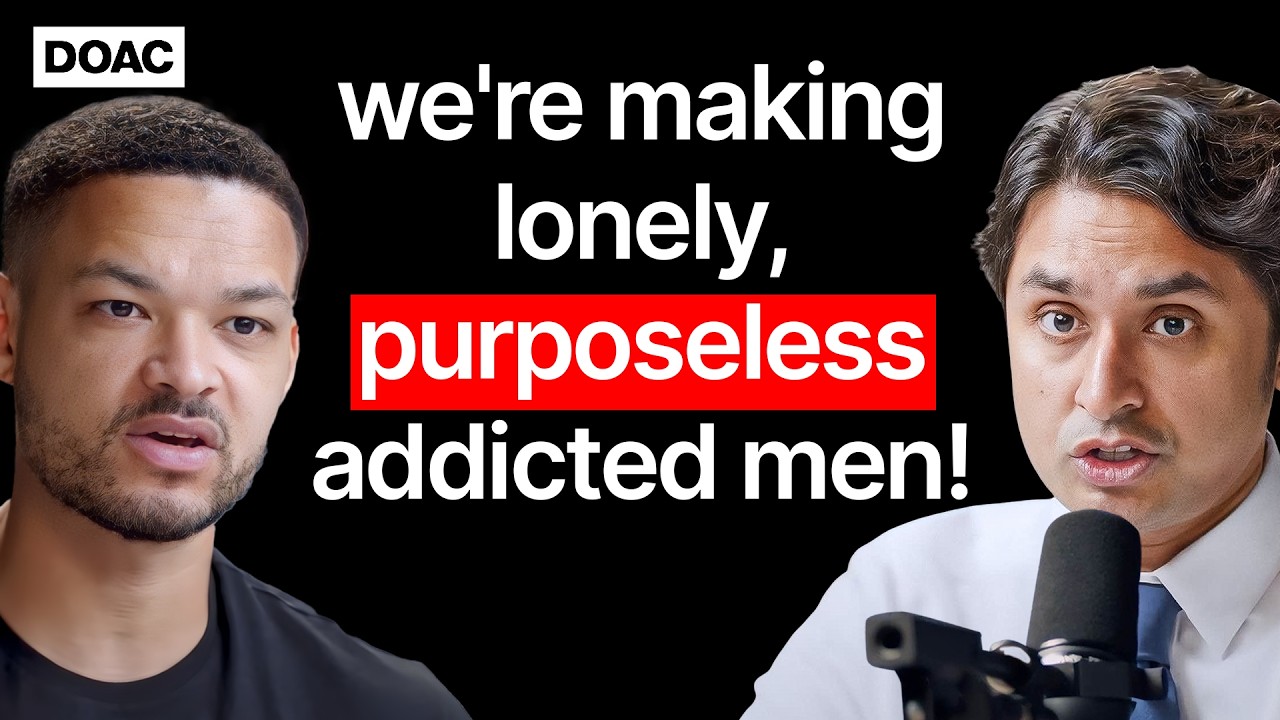
This episode was published on September 30, 2024, by The Diary Of A CEO on YouTube. It features host Steven Bartlett interviewing psychiatrist Dr. Alok Kanojia (HealthyGamerGG), who discusses modern mental health challenges including loneliness, video game addiction, digital distraction, and dating dynamics.
## TL;DR
Dr. Alok Kanojia and Steven Bartlett explore the psychological drivers behind modern loneliness, digital addiction, and emotional suppression. The conversation breaks down the neurobiology of attraction, dopamine depletion, and how unresolved trauma generates 'toxic fuel' that powers high achievement at the expense of inner peace. Bridging modern neuroscience with ancient spiritual wisdom, Dr. K provides practical strategies—such as somatic emotional processing, intentional stillness, and present-moment awareness—to help individuals break automated habits, cultivate authentic relationships, and transition from external validation to genuine self-mastery.
## Atmosphere & style
The dialogue feels like an intimate, high-level therapeutic consultation that balances scientific rigor with deep personal vulnerability. Dr. K delivers sharp, empathetic insights with grounded authority, while Steven actively dissects his own past behaviors, identity shifts, and personal drive. The emotional arc transitions smoothly from analytical diagnoses of societal mental health issues to deeply reflective disclosures about trauma, ultimately resolving into a quiet, meditative call toward self-realization and inner calm.
## Key takeaways
- [00:00](https://www.youtube.com/watch?v=P1ALkQMfkjc&t=0s) High achievement is often driven by 'toxic fuel'—unaddressed trauma or external survival fears—which causes long-term burnout if left unhealed.
- [02:08](https://www.youtube.com/watch?v=P1ALkQMfkjc&t=128s) Conventional psychiatry focuses on removing pathology (-100 to 0), whereas eastern spiritual practices help individuals achieve full human potential (0 to +100).
- [06:08](https://www.youtube.com/watch?v=P1ALkQMfkjc&t=368s) Social media oversimplifies mental health by conflating single isolated symptoms with full psychiatric disorders without conducting proper differential diagnosis.
- [08:46](https://www.youtube.com/watch?v=P1ALkQMfkjc&t=526s) Top performers and long-term achievers are distinguished primarily by emotional intelligence (EQ) and self-regulation rather than standard IQ.
- [25:19](https://www.youtube.com/watch?v=P1ALkQMfkjc&t=1519s) Dopamine provides short-term reward and is subject to tolerance, while serotonin generates long-term contentment and peace.
- [29:32](https://www.youtube.com/watch?v=P1ALkQMfkjc&t=1772s) Excessive consumption of high-dopamine media and devices depletes emotional reserves, leading to social anxiety and difficulty forming genuine romantic connections.
- [53:46](https://www.youtube.com/watch?v=P1ALkQMfkjc&t=3226s) Non-verbal communication makes up the majority of human interaction; reliance on text-based communication causes brain pathways responsible for reading social cues to atrophy.
- [01:02:03](https://www.youtube.com/watch?v=P1ALkQMfkjc&t=3723s) Creating a glossy, performative personal brand shields against insecurity but fuels imposter syndrome and prevents authentic relationships.
- [01:11:09](https://www.youtube.com/watch?v=P1ALkQMfkjc&t=4269s) Unprocessed emotions are stored somatically in the body and re-emerge whenever external distractions and constant productivity stop.
- [01:21:23](https://www.youtube.com/watch?v=P1ALkQMfkjc&t=4883s) High-intensity physical exertion breaks autonomic panic loops by engaging the parasympathetic nervous system immediately following maximum effort.
- [01:27:12](https://www.youtube.com/watch?v=P1ALkQMfkjc&t=5232s) Childhood trauma compromises long-term future planning by keeping the brain stuck in short-term survival mode.
- [01:58:42](https://www.youtube.com/watch?v=P1ALkQMfkjc&t=7122s) True self-mastery and habit breaking rely on cultivating present-moment awareness, which engages the anterior cingulate cortex.
- [02:20:35](https://www.youtube.com/watch?v=P1ALkQMfkjc&t=8435s) Overcoming a quarter-life crisis requires allowing space to 'do nothing' so an authentic internal compass can emerge.
## Detailed walkthrough
### [00:00](https://www.youtube.com/watch?v=P1ALkQMfkjc&t=0s) Toxic Fuel and the Pitfall of Instant Solutions
Dr. Alok Kanojia (Dr. K) opens with a fundamental critique of how people approach personal improvement: whenever an issue arises, the immediate instinct is to leap straight to a solution. If someone is unhappy, they assume they need to earn more money; if they struggle in dating, they believe they must make themselves sexier. Dr. K labels this line of thinking "toxic fuel" and insists it will never produce lasting results. He illustrates this with a vivid metaphor: adding sugar to a glass of water that has already been urinated in does not make it drinkable—no amount of stacking good habits will erase an unaddressed negative underlying cause.
```
┌─────────────────────────────────────────────────────────┐
│ "TOXIC FUEL" TRAP │
│ Problem Appears ──► Jump to External Fix │
│ (e.g., Earn more money, get sexier)│
│ │
│ Metaphor: Adding sugar to a glass with urine │
│ does NOT remove the urine. │
└─────────────────────────────────────────────────────────┘
```
The conversation touches upon pervasive modern mental health crises, including an epidemic of loneliness, rising social anxiety, and growing difficulty in forming romantic attachments. Dr. K points out that society often applies the wrong fixes to these problems. Talking about issues can actually make them worse if done incorrectly, constant device usage wears out dopamine systems needed to fall in love, and relying entirely on text messaging leaves the brain's social-reassurance pathways to rust. Furthermore, when analyzing why people fail to reach their goals, Dr. K draws a sharp line between high achievers and those who remain stuck, pointing directly to unresolved trauma as the major differentiator.
- **Toxic Fuel:** The flawed strategy of attempting to build positive outcomes on top of unaddressed underlying dysfunction.
- **The Dopamine Depletion Effect:** Overusing screens and digital media burns out dopamine pathways, leaving people unable to experience organic romantic attraction.
- **Social Atrophy:** Texting instead of speaking live causes the brain's natural social reassurance networks to degrade over time.
---
[02:08](https://www.youtube.com/watch?v=P1ALkQMfkjc&t=128s) What Dr. K Does: Bridging Science and Spirituality
When Steven Bartlett asks Dr. K to summarize his professional purpose, Dr. K distills it into a single phrase: "I help them understand themselves." He expands on this by explaining that humanity has two major traditions for understanding the mind: thousands of years of ancient spiritual wisdom and the explosive advancements in neuroscience and psychiatry over the last two decades.
Dr. K acts as a translator between these two realms, specifically focusing on spiritual practices that have received empirical scientific validation. He uses the analogy of a car's glove-compartment manual: while human beings are born without an instruction booklet for their own minds, combining neuroscience with ancient wisdom creates a functional guide tailored to an individual’s specific challenges and goals.
> "A doctor is not going to help you become healthy; they're going to remove sickness. And then from zero to positive 100 is when we really draw on things like spiritual traditions."
---
[03:30](https://www.youtube.com/watch?v=P1ALkQMfkjc&t=210s) Dr. K's Background: From Failing Out to Harvard
Dr. K shares his personal story to ground his clinical insights. During his youth, he struggled severely, failing out of college due to a severe video game addiction and a total lack of direction. At age 21, he traveled to India, spending seven years studying to become a monk. This immersive period offered deep insights into human nature, but his natural skepticism prompted him to investigate the neural mechanics behind his own inner transformations.
```
┌─────────────────────────────────────────────────────────────────┐
│ DR. K'S JOURNEY │
│ │
│ Failed out of college / Video game addiction │
│ │ │
│ ▼ │
│ 7 years in India studying to become a monk │
│ │ │
│ ▼ │
│ Neuroscience research ──► Medical School ──► Harvard Faculty │
└─────────────────────────────────────────────────────────────────┘
```
He conducted neuroscience research, attended medical school to study how the mind interacts with the physical body, became a psychiatrist, and served on the faculty at Harvard Medical School, specializing in addiction psychiatry and high performance.
To illustrate the spectrum of mental health care, Dr. K recalls a patient named Mike, who came to him after two and a half years of treatment claiming he was still depressed. When Dr. K evaluated him, Mike admitted his condition wasn't disrupting his professional or personal life—he simply felt unhappy. Dr. K told him, "Mike, you're not depressed, you're unhappy, and there's a difference." He uses this example to contrast standard medicine with spiritual growth:
* **Conventional Psychiatry:** Focuses on pathology, bringing a patient from -100 up to 0 by removing disease.
* **Spiritual Traditions & Meditation:** Focuses on moving from 0 to +100. Historically, practices like Buddhist mindfulness were designed not to treat clinical anxiety, but to pursue spiritual liberation and full human potential.
- **Academic & Clinical Timeline:** 7 years studying monkhood in India, medical degree, Harvard Medical School faculty member, specialist in addiction psychiatry.
- **Pathology vs. Flourishing:** Western medicine addresses the -100 to 0 scale (removing illness); ancient self-realization traditions handle the 0 to +100 scale (achieving fulfillment).
---
[06:08](https://www.youtube.com/watch?v=P1ALkQMfkjc&t=368s) The TikTok-ification of Mental Health
Steven brings up how modern culture frequently misuses terms like "depression" and "anxiety," asking how social media trends—specifically the "TikTok-ification" of mental health—have affected public understanding. Dr. K highlights both the positive shifts and the dangerous oversights caused by this trend.
```
┌─────────────────────────────────────────────────────────────────┐
│ SOCIAL MEDIA MENTAL HEALTH │
├────────────────────────────────┬────────────────────────────────┤
│ PROS │ CONS │
├────────────────────────────────┼────────────────────────────────┤
│ • Reduces personal stigma │ • Lacks differential diagnosis │
│ • Helps recognize conditions │ • Single symptom = Full diagnosis│
│ (e.g., Adult ADHD) │ • Ignores physical causes │
│ │ (e.g., Anemia, Sleep Apnea) │
└────────────────────────────────┴────────────────────────────────┘
```
On the positive side, increased awareness helps people realize that their struggles are not personal character flaws. A decade ago, struggling patients routinely blamed themselves as "losers" lacking willpower, unaware that clinical depression or undiagnosed adult ADHD was driving their behavior.
On the negative side, social media completely ignores the principle of **differential diagnosis**. Creators frequently present a single ubiquitous symptom—like misplacing keys or having a child throw a tantrum—and immediately slap a heavy label on it such as ADHD or bipolar disorder. Medical training focuses heavily on ruling out alternative explanations. Misplacing keys or struggling to get out of bed can stem from depression, trauma, ADHD, or purely physical conditions like anemia and obstructive sleep apnea.
> "Everyone is taking a symptom and jumping to a diagnosis... Everyone thinks it's about treatment, but half of what we learn in med school is about differential diagnosis."
---
[08:46](https://www.youtube.com/watch?v=P1ALkQMfkjc&t=526s) Men's Mental Health: External Solutions vs. Internal Work
Shifting to the topic of men's mental health, Dr. K explains how men are socialized—and perhaps biologically inclined—to solve problems externally. When a man feels stuck, his default response is to seek external fixes: acquire another certification, buy a better car, take supplements, or bench-press heavier weights. However, roughly 90% of what a struggling man actually needs to address is internal.
To demonstrate the power of internal control over raw intellect, Dr. K references income demographics across high earners:
* **Top 10% vs. Top 1% Earners:** Statistically, individuals in the top 10% of earners have a higher IQ than those in the top 1%.
* **The Key Differentiator:** The top 1% achieve their positions due to a significantly higher **Emotional Quotient (EQ)** and superior self-regulation.
Dr. K illustrates this transformation with a case study of a 32-year-old patient. The man had used heavy drugs since age 13, suffered from poly-substance abuse focused on heroin and opiates, held no job, and crashed on his girlfriend's couch. By shifting his focus inward to understand his own mind, he completely turned his life around within four years: he became a certified therapist, secured a stable income, got married, and published a dystopian fiction novel.
- **Top Earners IQ/EQ Distinction:** Top 10% income earners average a higher IQ than the top 1%, but the top 1% excel through higher EQ and self-mastery.
- **Case Study Outcome:** A 32-year-old severe opiate addict went from unemployed to therapist, married, and published author in 4 years purely through internal psychological work.
---
[11:30](https://www.youtube.com/watch?v=P1ALkQMfkjc&t=690s) Women's Mental Health and the Gender Gap in Therapy
When Steven asks if women face identical challenges, Dr. K notes that while individual variance within a gender is higher than the overall variance between genders, modern psychological tools were largely built around female-oriented modes of processing.
```
┌─────────────────────────────────────────────────────────┐
│ THE THERAPY GENDER GAP │
├─────────────────────────────────────────────────────────┤
│ Estrogen Elevation ──► Increases internal emotional │
│ awareness & verbal fluency │
│ │
│ Current Standard: Talk therapy / Verbal processing │
│ Demographics: 70% of therapy patients are women │
│ 70% of therapists are women │
└─────────────────────────────────────────────────────────┘
```
The gold standard of therapy relies heavily on verbalizing internal states. Biological research shows that higher estrogen levels directly enhance a person's awareness of internal emotions and their ability to express them verbally. Hormonal fluctuations (such as those seen in premenstrual dysphoric disorder or PMS) intensify emotional perception. Furthermore, developmental trends show that 8-year-old girls display higher verbal fluency than boys of the same age.
Because traditional mental health infrastructure relies heavily on emotional articulation, women naturally fit into standard talk therapy models much better than men. This dynamic is clearly reflected in industry numbers:
* **70%** of patients seeking psychotherapy are women.
* **70%** of practicing psychotherapists are women.
---
[14:11](https://www.youtube.com/watch?v=P1ALkQMfkjc&t=851s) How to Understand Yourself: Pausing Before Action
Dr. K returns to the primary challenge facing both men and women: failing to truly understand oneself before taking action. He reiterates that before trying to control or fix behavior, a person must accurately diagnose what is happening beneath the surface.
> "Good diagnosis precedes good treatment. Control comes later."
Most people rush to change an immediate symptom—like trying to quit a addiction or fix a bad habit—without examining the internal driver behind it. To break out of unproductive cycles, individuals must slow down and look inward to uncover the underlying motives governing their behavior.
<ElicitationsGroup message="To explore these concepts further:">
<Elicitation label="Explore Dr. K's breakdown of dopamine and modern relationships" query="Summarize Dr. K's views on dopamine, screen time, and romantic relationships from the transcript."/>
<Elicitation label="Examine the connection between trauma and goal achievement" query="How does Dr. K explain the impact of trauma on motivation and productivity?"/>
</ElicitationsGroup>
[015:24] The Trap of Information Over Action
Dr. K explains that true change comes from asking oneself *why* a behavior occurs rather than jumping straight into how to change it. Most people rely on conclusions like "I'm lazy," but laziness is not a physical circuit in the brain—it is a simplistic label for discrete issues with motivation, willpower, or discipline. Utilizing techniques like motivational interviewing demonstrates that convincing people to change is ineffective; instead, personal understanding naturally shifts behavior. People learn through direct experience rather than abstract data. However, millions of people attempt to solve personal issues strictly through consumption—buying self-help books, tuning into podcasts, and watching YouTube videos—without putting anything into practice.
Steven asks why self-development junkies often fail to execute the advice they consume. Dr. K points out that consuming self-help acts as a coping mechanism to ease internal negativity. Because the human brain evolved for efficiency and energy conservation, it frequently opts for the easiest route to feel productive. Watching a video about working out tricking the mind into feeling as though progress is being made without expending the effort actually required to go to the gym.
* "Laziness is a lazy way of looking at laziness."
* Behavioral change happens automatically once a person gains experiential understanding rather than mere information.
* The brain runs mental "scams" to simulate progress while avoiding the discomfort of hard action.
---
[018:54] Why Venting Can Hold You Back
Addressing the idea that talking about problems makes them worse, Dr. K clarifies that simply speaking about an issue does not guarantee improvement. For talk therapy to work, it must lead to an **emotional catharsis**—a deep, experiential breakthrough where dormant emotions are felt and processed anew, akin to touching a hot pan. In contrast, using therapy strictly for "venting" temporarily relieves immediate negative emotional energy, which inadvertently destroys the primary driver for real life changes: negative emotion itself.
The brain's neuroanatomy—such as the proximity of the amygdala to the hippocampus—demonstrates that negative experiences drive the deepest learning and motivation. Dr. K recalls his early days as a second-year psychiatry resident working with a patient named Mike. After months of Mike coming in merely to complain without making progress, Dr. K directly asked if venting was helping. When Mike admitted it was not, they realized that constantly discharging negative feelings without transformation keeps people stuck in their circumstances.
* Negative emotions release physiological energy and trigger adrenaline designed to push people into action.
* Constant venting removes the emotional fuel necessary to execute meaningful life changes.
* Therapy must provide an emotionally healing experience rather than functioning as an ongoing complaint session.
---
[023:32] The Culture of Deficiency Promotion
Steven introduces the concept of **deficiency promotion**, where individuals build audiences and personal brands not around ideas, but by constantly highlighting their own flaws and trauma. While this creates immediate audience resonance, it risks trapping the creator in an identity centered on being broken, as their financial livelihood and public status become dependent on staying unhealed.
Dr. K acknowledges the power of empathic resonance, explaining that broken individuals often feel alienated by standard societal positivity. Finding someone who openly struggles provides immense relief and a sense of belonging. However, this dynamic often degenerates into trauma bonding or toxic comparisons about who is more traumatized. Ultimately, the drive to build or follow a community around deficiencies stems from a core human desire: choosing to be "broken together" over being "broken and alone."
---
[025:19] Dopamine vs. Serotonin: Pleasure vs. Contentment
Addressing the public obsession with dopamine, Dr. K notes that while dopamine is critical, its role is often oversimplified. Beyond reward pathways, dopamine acts as a fundamental brain chemical governing physical functions like smooth motor movement—evidenced by the motor deficits in Parkinson's disease. In terms of mental well-being, dopamine delivers short-term pleasure and behavioral reinforcement, but it cannot produce lasting fulfillment.
Due to the brain's mechanism of tolerance, dopamine-seeking requires constantly increasing doses to yield the same sensation. This cycle explains why video games become less fun after hours of continuous play, or why high-rolling playboys chasing high-adrenaline experiences remain unfulfilled. Dopamine acts almost like a "scam" because it offers a temporary, unsustainable high. In contrast, **serotonin** provides contentment and peace. High serotonin levels lower sexual desire and drive—a phenomenon visible in monks who experience deep baseline contentment, as well as in patients taking serotonergic medications who experience decreased libido as a side effect.
- **Dopamine's limit:** Provides temporary pleasure but builds tolerance, forcing people to chase bigger thrills.
- **Serotonin's effect:** Fosters baseline peace and contentment, often inversely impacting high-dopamine drives like sexual appetite.
- **The Orgasm Example:** An orgasm triggers a sharp dopamine spike (pleasure), followed by a serotonin release (contentment). High baseline serotonin suppresses the initial sexual "thirst."
---
[029:32] The Neurobiology of Falling in Love
The discussion shifts to how neurochemistry impacts romantic relationships and why long-term couples often experience a decline in sexual frequency as they grow comfortable. Dr. K notes that neuroscience cleanly breaks down romantic progression into distinct biological phases: initial attraction, falling in love, and long-term attachment.
Initial attraction begins in the **thalamus**, the brain's sensory gateway that processes external visual and sensory stimuli when meeting someone new. As comfort and stability take over in long-term relationships, the neurochemical shifts from high-dopamine novelty to high-serotonin security, naturally cooling down initial sexual urgency.
[30:05](https://www.youtube.com/watch?v=P1ALkQMfkjc&t=1805s) The Neuroscience of Falling in Love and the Dopamine Trap
Dr. K explains that while initial physical attraction relies heavily on sensory input—looking good, smelling great, or a beautiful laugh—the actual process of falling in love is deeply dopaminergic. The early "honeymoon" phase acts as a literal dopaminergic high, characterized by simple acts of focused attention, like holding hands across a dinner table and gazing into each other's eyes. However, modern technology is actively disrupting this mechanism, contributing to declining birth rates and making it increasingly difficult for people to forge romantic connections.
Because people constantly overstimulate their brain's reward pathways with smartphones, social media, and digital devices, they develop a high dopaminergic tolerance and exhaust their dopamine reserves. When individuals go out on dates while routinely checking their phones, they arrive with depleted dopamine levels, leaving them physically unable to experience that initial spark or feel an emotional connection with someone who might otherwise be a great match on paper.
* **Dopamine Depletion:** Constant device usage and high-dopamine habits like video games or pornography wear out the brain's dopamine capacity, preventing the emotional surge required to fall in love.
* **The Pre-Date Dopamine Recharge:** Dr. K advises single people seeking love to intentionally reduce screen time and go for a 1-hour walk before heading out on a date to recharge their dopamine capacity.
* **Dopamine vs. Serotonin in Relationships:** Early romantic attraction and falling in love are dopaminergic (pleasure and novelty), whereas long-term relationship depth shifts toward serotonergic processes focused on sustained connection and stability.
---
[33:00](https://www.youtube.com/watch?v=P1ALkQMfkjc&t=1980s) Nervous System Physiology, Arousal, and Libido
Addressing whether dopamine is required to initiate sex, Dr. K clarifies that sexual arousal involves complex interactions across multiple neurotransmitters and the autonomic nervous system. Crucially, initiating sex and achieving physical arousal—such as an erection in men or lubricating foreplay responses in women—requires the activation of the parasympathetic nervous system, which governs the "rest and digest" state. This explains natural physiological phenomena like morning wood, where the body is completely relaxed.
Once relaxation and a sense of safety are established through parasympathetic activation, the sexual act naturally transitions into the sympathetic nervous system ("fight or flight"), marked by an increased heart rate, elevated blood pressure, and sweating. Steven relates strongly to this physiological model, noting that he rarely feels aroused on a Friday night after a stressful 9:00 p.m. finish at work, but easily gets aroused on a relaxed Saturday once his nervous system has had time to unwind.
* **Parasympathetic Foundation:** Both men and women require parasympathetic nervous system activation (feeling calm, safe, and unhurried) before the body can physically transition into sexual arousal.
* **Sympathetic Escalation:** The physical act of sex itself operates on sympathetic arousal (heightened heart rate, sweating, and blood pressure).
* **Foreplay as Safety:** Activities like massage, kissing, and playful banter help dial down stress and trigger the parasympathetic state needed for intimacy.
* **Relationship Misconceptions:** Lack of understanding about these biological mechanisms leads to toxic tropes—where women are unfairly branded as "ice queens" and men are reduced to being purely sex-driven—when in reality both sexes share mostly identical nervous system needs.
---
[36:09](https://www.youtube.com/watch?v=P1ALkQMfkjc&t=2169s) Empathic Resonance: The True Driver of Romantic Attraction
Dr. K highlights that romantic dates today have degraded into transactional, high-stress job interviews where people sit across a table negotiating travel frequencies, finances, and long-term timelines. This interview style creates performance anxiety and stress, which suppresses the neurobiological pathways needed for genuine connection. True romantic attraction, Dr. K argues, is built on **empathic resonance**—a shared emotional state where two people experience the exact same feeling at the exact same time.
To illustrate this, Dr. K cites a classic psychology study comparing dates held on a solid stone bridge versus a rickety, wobbly wooden bridge. Couples on the rickety bridge reported significantly higher romantic attraction toward one another. The shared element of mild fear created an identical emotional state in both partners, generating a powerful spark of attraction.
* **The Rickety Bridge Experiment:** Shared emotional intensity—even negative or vulnerable emotions like anxiety or fear—builds stronger attraction than a safe, emotionless setting.
* **Trauma Bonding in Rehab:** Patients in addiction treatment frequently fall in love because group therapy creates an environment of intense, authentic emotional sharing, triggering powerful shared empathic resonance.
* **Date Strategy:** Effective dates avoid flat Q&A sessions and instead focus on shared experiences that trigger simultaneous emotions (e.g., watching a comedy both partners genuinely find hilarious or engaging in a shared activity).
* **The Role of Oxytocin:** While dopamine drives the initial excitement and empathic resonance drives attraction, oxytocin is released through touch, cuddling, hugging, and physical proximity to form lasting emotional bonds and combat loneliness.
---
[41:04](https://www.youtube.com/watch?v=P1ALkQMfkjc&t=2464s) Scheduling Sex, Spontaneity, and Overexposure
When Steven asks whether couples should schedule sex—noting that sex therapists are fiercely divided on the issue—Dr. K breaks down the underlying neurobiology. The debate centers on spontaneity versus predictability. Spontaneous sex feels exciting because it carries novelty and surprise, but its success still depends entirely on whether both partners share the same emotional readiness in that moment.
When a relationship or sex life becomes repetitive, it follows the same psychological pattern as rewatching a favorite film. Using Steven's favorite movie, *The Pursuit of Happyness*, Dr. K illustrates that while the first viewing triggers profound emotional responses, the fourth or fifth viewing produces far less emotional activation. Habitual, repetitive experiences naturally desensitize our emotional response.
* **Emotional Desensitization:** Repeated exposure to the exact same stimulus diminishes emotional activation over time, making routine sex feel predictable or chore-like.
* **The Mechanics of Spontaneity:** Spontaneity works primarily because it introduces emotional novelty and shared excitement; scheduled sex can work just as well if partners actively foster emotional alignment before the scheduled time.
* **Fetishes and High-Arousal Triggers:** Paraphilias like exhibitionism (having sex in public places) function by injecting intense emotional stakes—such as the risk of getting caught—to bypass desensitization and force high emotional activation.
[43:57](https://www.youtube.com/watch?v=P1ALkQMfkjc&t=2637s) Emotional Resonance and the Challenge of Scheduled Sex
Dr. Alok Kanojia explains that sex hinges fundamentally on "emotional resonance." Whether it occurs in a public place or during a quiet evening, the goal is an emotional spark that mutually activates both partners. While spontaneous sex is ideal, scheduled sex does not have to kill the spark; couples simply need to intentionally trigger their parasympathetic nervous systems. Engaging in a shared, emotionally resonant activity—such as giving each other a massage or going out to a movie—re-establishes that crucial connection, making intimacy flow far more naturally.
Steven shares a story about an American friend who went through three exhausting years of fertility treatments to conceive a child. The friend described the ordeal as a grueling process where sex felt like a "job" or a mandatory task to "hit this egg," sometimes requiring intercourse three or four times a day—totalling 40 to 50 times a month. Unsurprisingly, the partner's demand ("these are the five days you better have sex with me") caused the friend immense difficulty in getting and maintaining an erection due to the complete loss of emotional resonance. Dr. K agrees that this scenario represents the absolute extreme end of emotional dissipation, directly contrasting with the thrilling chase of pursuing someone new.
- **Key mechanism:** Scheduled sex requires pre-activation of the parasympathetic nervous system through shared emotional experiences to maintain libido.
- **The fertility trap:** Extreme pressure and high-frequency sex without emotional alignment often lead to psychogenic erectile dysfunction.
---
[46:01](https://www.youtube.com/watch?v=P1ALkQMfkjc&t=2761s) Maintaining Sexual Intimacy Across Long Relationships
Addressing how long-term couples avoid sexual monotony, Dr. K highlights a common misconception in medicine: that sexual desire vanishes with age. Recalling his medical school days, he notes that doctors frequently fail to offer sexual health counseling to elderly patients, leading to surprising outbreaks of sexually transmitted infections like syphilis and gonorrhea inside retirement communities. Sexual drive persists throughout life; the challenge lies in how long-term partners sustain it.
While initial attraction relies heavily on thalamic inputs and novelty, long-term couples thrive by continually bonding over new shared life experiences. While having children can temporarily crush a couple's sex drive—often for up to two years on average—couples can recapture incredible intimacy when moments align naturally. As long as partners nurture their core bond and lean into shared emotional connection amidst life's challenges, their sex life can stay vibrant for decades.
- **Retirement community STIs:** Lack of sexual health counseling in older demographics has led to unexpected outbreaks of syphilis and gonorrhea.
- **Post-childbirth libido:** Having children typically suppresses sex drive for around 2 years, but intimacy recovers through authentic emotional connection.
---
[48:11](https://www.youtube.com/watch?v=P1ALkQMfkjc&t=2891s) Digital Atrophy: How Technology Causes Social Anxiety
When Steven asks how technology undermines both romantic and platonic relationships, Dr. K explains that human biology obeys a "use it or lose it" principle. Unlike inanimate objects that wear down with use, the human brain rusts from inactivity. Just as learning an instrument at age 60 builds neuroplasticity and protects against dementia, social circuits in the brain require constant real-world exercise.
Words account for only 25% to 50% of real human communication; the rest consists of body language, tone, and pitch. Dr. K illustrates this through his own childhood experience with bullying, where he could instantly sense tension upon walking into a room just by observing facial expressions and sudden silence. Today, video game companies combat toxicity in voice chats by analyzing vocal tone and volume rather than just text slurs, because emotional intent lives in vocal dynamics. Dr. K adds that men uniquely use "negative expressions of positive affection"—teasing a friend who gets engaged by calling marriage an "old ball and chain"—where the positive bond is understood purely through warm tone and smiles.
Because digital texting strips away non-verbal cues, the brain regions responsible for interpreting tone and body language begin to atrophy. This atrophy directly drives the modern rise in social anxiety. Without active social-processing circuitry, people sitting at a dinner table can no longer read the reassuring, non-verbal signals of their friends, leaving them feeling insecure, uninvited, or like a burden.
- **Non-verbal communication:** Text accounts for only 25–50% of total communication; tone, volume, and body language convey the rest.
- **Male affection dynamics:** Men frequently express positive attachment through mock-negative banter, which relies heavily on vocal tone to avoid misinterpretation.
- **Root of social anxiety:** Text-based communication causes neural atrophy in regions that decode reassuring non-verbal cues, generating social paranoia.
---
[53:46](https://www.youtube.com/watch?v=P1ALkQMfkjc&t=3226s) The Hidden Isolation Epidemic in Gen Z
Despite the sharp rise in Gen Z loneliness and suicidality, Dr. K remains optimistic about the future. He emphasizes that society is finally recognizing the problem rather than ignoring it, citing the U.S. Surgeon General's formal advisory on the loneliness epidemic as evidence that the medical establishment is stepping up.
The core issue stems from the delayed impact of modern technology: society invents powerful tools without understanding their long-term psychological fallout until decades later. Today's isolation remains largely invisible because young people—especially young men—stay hidden inside their homes. These individuals rarely seek therapy, lack the vocabulary to articulate their emotions, and internalized feelings of being "a loser." Dr. K asserts that humanity is only losing the battle against isolation because it hasn't actively fought back until now.
> "The only reason we're losing the war is because we haven't been fighting back."
---
[55:48](https://www.youtube.com/watch?v=P1ALkQMfkjc&t=3348s) The Rise of Narcissism and the *Ahankara* (Ego)
Steven raises the question of whether social media is making society more narcissistic and lonely. Dr. K agrees emphatically, explaining that narcissism damages relationships, happiness, and professional growth. To clearly define narcissism, Dr. K turns to the ancient Sanskrit concepts of Yoga, introducing the term *ahankara*, which translates to "ego" or the construct of self-identity ("I am...").
The ego is not a tangible reality; it is an abstract, societal delusion. Dr. K points out that being a "doctor" isn't a physical property found in a biopsy, but merely a shared social agreement validated by a piece of paper on a wall. Furthermore, psychological research confirms that narcissism originates from deep-seated insecurity. While genuine confidence is internally generated, an egotistical person relies entirely on external validation to build their self-worth.
By forcing constant comparison, technology and social media have systematically externalized human perception. Historically, human minds spent at least 50% of their time turned inward—processing internal thoughts, feelings, and drives during long stretches of quiet activity. Social media breaks this balance by hijacking human attention and directing it perpetually outward, crippling our ability to build authentic internal self-worth.
- **Sanskrit concept of *Ahankara*:** The ego construct ("I am...") based on abstract social roles rather than absolute physical reality.
- **Confidence vs. Egotism:** Confidence derives self-esteem internally, whereas egotism/narcissism relies on external validation to mask insecurity.
- **Perceptual shift:** Historically, human attention was internally focused at least 50% of the time, whereas technology now forces perpetual external focus.
[58:47](https://www.youtube.com/watch?v=P1ALkQMfkjc&t=3527s) Externalization, Imposter Syndrome, and the Mirage of Success
Dr. K reflects on his medical school days at Tufts and residency at Harvard, admitting he initially tried to optimize every waking second—listening to self-help podcasts while getting ready, playing lecture tapes while walking to the subway, reading on the train, and relentlessly grinding through test questions. However, he realized this constant busyness meant his mind was living entirely outside of himself. Social media amplifies this phenomenon through doomscrolling, forcing people to live externally and rely on external validation for their self-worth.
This constant outward focus creates profound insecurity. Many mistakenly believe that reaching high levels of success builds confidence, but Dr. K points out that extreme success without internal alignment actually fuels **imposter syndrome**. Having trained in hyper-competitive environments, he observed significantly higher rates of imposter syndrome at Harvard than at state universities like the University of Texas, and at Goldman Sachs compared to Bank of America. Real confidence is not handed out by external achievements; it is forged internally by surviving failure.
* **Ego vs. Confidence:** When criticized, an egotistical person becomes defensive, argues, and calls the critic stupid to protect their fragile image. A genuinely confident person can calmly say, *"Okay, help me understand why."*
* **Rising Body Dysmorphia:** Constant external judgment on social media has driven a massive surge in subtle, low-level body dysmorphia. A plastic surgeon colleague at Yale noted a dramatic increase in women in their mid-20s seeking annual cosmetic procedures, including lip fillers and Botox.
* **Gender Convergence:** While body dysmorphia was historically viewed as a predominantly female diagnosis, men are now experiencing a meteoric rise in the condition, rapidly closing the gap.
---
[01:02:03](https://www.youtube.com/watch?v=P1ALkQMfkjc&t=3723s) The Illusion of Connection and the Trap of the "Polished Self"
Dr. K explains how externalization leads directly to widespread societal loneliness. Surprisingly, the highest levels of loneliness often occur among people who are surrounded by others—those with steady jobs, active social circles, and romantic partners. When lonely individuals attempt to fix their isolation by obsessing over external upgrades—getting a better haircut, learning how to dress, hitting the gym, or drilling social cues like forced eye contact—they inadvertently build a performative persona.
> "We create a false version of ourselves for people to love. And that's what really screws us, because they don't fall in love with us... They like this glossy, polished version."
This creates a psychological trap: because others fell in love with the curated mask, the individual lives in constant fear that revealing their true, imperfect self will lead to rejection. Dr. K sees this regularly in his creator coaching program for online influencers, who struggle immensely with dating because partners fall in love with "the host" or "the brand" rather than the actual person behind the screen.
---
[01:04:26](https://www.youtube.com/watch?v=P1ALkQMfkjc&t=3866s) Authenticity in Dating and Leadership
Steven shares his personal experience, noting that before age 25, he felt like a total failure with women. That era was characterized by external posturing—buying Louis Vuitton bags, popping champagne bottles in nightclubs, and studying pick-up artistry tricks to impress women. Despite securing short-term attention, he could never build real, long-term relationships.
After age 25, Steven shifted toward knowing who he was and becoming comfortable with himself. Once he stopped chasing and dropped the external flash, his success changed naturally through subtle, subconscious shifts in his posture and energy. Soon after making that shift, he met his current partner, whom he has been with for six years.
Dr. K connects Steven's experience to neuroscience: sensory, flashy tricks only engage short-term brain mechanisms, whereas genuine human connection relies on emotional resonance. This principle applies equally to leadership:
* **Predictor of Great Leaders:** Research in workplace psychology reveals that **authenticity** and the **ability to navigate negative challenges** are the top two qualities employees value in leaders.
* **The Cost of Inauthenticity:** Steven notes that every C-suite executive or CEO he appointed over the last decade who failed did so because they were trying to perform an idea of what a leader should be, rather than being themselves. Employees pick up on subtle, uncontrollable micro-expressions of inauthenticity instantly.
* **Defining Charisma:** True charisma is not a set of learned tricks; it is the combination of deep self-authenticity and the quiet confidence to face difficult situations.
---
[01:11:09](https://www.youtube.com/watch?v=P1ALkQMfkjc&t=4269s) Unpacking Alexithymia and Suppressed Emotions
To cultivate true authenticity and confidence, Dr. K stresses that individuals must learn to understand their inner landscape. A primary obstacle to this is **alexithymia**—a state of emotional colorblindness where a person cannot identify or articulate their internal feelings.
* **Emotions as Drivers:** Emotions serve as our primary source of motivation. Suppressing or ignoring them through technology and endless distraction does not turn off the brain's emotional circuitry (such as anxiety mechanisms); it merely buries them below conscious awareness.
* **Signs of Suppression:** A clear signal of suppressed emotion is what happens when all external stimulation stops. When people are stripped of doomscrolling, social media, and constant productivity tasks, buried feelings immediately begin to surface.
[01:12:33](https://www.youtube.com/watch?v=P1ALkQMfkjc&t=4353s) Suppressed Emotions and the Sleep-Technology Trap
Dr. K explains that modern technology continuously interferes with our ability to process emotions throughout the day. Normally, humans process feelings over roughly 16 waking hours, leaving only a minor backlog for sleep and dreams to clear out. However, when people spend all day glued to devices or podcasts, they undergo zero emotional processing. Consequently, unaddressed thoughts flood the brain the moment they lie down to sleep. He quips about a hilarious meme: during the day, we sit upright so anxiety stays trapped at the bottom of our feet, but once we lie down, it flows like a liquid straight into our brains. Dr. K recalls his own past video game addiction, where he had to play until absolute physical exhaustion just to avoid the intense stream of suppressed thoughts waiting for him in the dark.
Steven relates to this experience, acknowledging that while he does not view his nighttime thoughts as strictly negative, they are extremely "loud." To quiet his mind, Steven often watches YouTube or crime documentaries until he falls asleep. In contrast, he shares with some envy that his partner—whom he describes as a bit of a yogi—can fall sound asleep within three minutes of her head hitting the pillow. When Dr. K asks for an example of a "loud" thought, Steven describes how he will suddenly figure out a complex business solution or memo late at night and feel an overwhelming urge to get up and write it down immediately.
---
[01:14:46](https://www.youtube.com/watch?v=P1ALkQMfkjc&t=4486s) Harnessing the Subconscious Mind for Resolve and Healing
Dr. K emphasizes that idle time is crucial because it allows the subconscious mind to process data and drive meaningful inner change. Logic is merely the food fed to the subconscious; true human brilliance, motivation, and firm resolve originate deeper down. When people fail to give their subconscious room to work, they end up "ping-ponging" through major life choices—such as breaking up with a partner only to text them out of loneliness the next day. A healthy decision or breakthrough occurs when someone wakes up one morning with complete clarity, realizing "enough is enough."
He points out that this phenomenon is widely seen in addiction psychiatry, where patients suddenly stop drinking cold turkey after 14 years because of behind-the-scenes emotional consolidation. Because nighttime is meant for memory consolidation and learning, overloading the brain with daytime emotional debt prevents it from learning from past mistakes. To unlock true mental potential, individuals must actively process their feelings during waking hours.
* **Subconscious Consolidation:** Memory processing, emotional integration, and behavioral resolve rely heavily on quiet downtime and deep sleep cycles.
* **The "Ping-Pong" Effect:** Continuous distraction prevents the brain from coming to firm conclusions, leading to indecision in relationships and habits.
---
[01:17:04](https://www.youtube.com/watch?v=P1ALkQMfkjc&t=4624s) Physicality, Somatic Emotions, and Tapping
When Steven asks *how* to process emotions during the day, Dr. K explains that men in particular experience emotions physically rather than purely verbally or conceptually. A decade ago, Dr. K was skeptical when introduced to "tapping" (Emotional Freedom Technique or EFT), which claims to release trauma through physical body points, dismissing it as complete "BS." However, recent meta-analyses demonstrate that EFT is surprisingly effective for trauma. Dr. K highlights that emotions directly alter bodily functions—such as anger driving up adrenaline, heart rate, blood pressure, and gut peristalsis—yet most conventional therapists lack physical body training.
Dr. K notes that men naturally use somatic metaphors to articulate heavy emotions, saying things like:
* "She called me and it was like she kicked me in the nuts."
* "It felt like a punch to the gut."
* Referencing body size or emasculation when struggling with low self-esteem.
To actively process these somatic feelings, Dr. K encourages men to tune into physical sensations (chest tightness, tension) and engage the body through deep breathing or heavy weightlifting. He criticizes the medical establishment's past arrogance in dismissing men who said "lifting bro" helped them move past a breakup better than talk therapy. Furthermore, research mapping up to 100 distinct emotions to body schemas shows that adjusting physical states alters mental states. For example, studies show that clenching one's right fist activates the left hemisphere and increases feelings of anger, whereas clenching the left fist can induce a calming or releasing effect.
---
[01:21:23](https://www.youtube.com/watch?v=P1ALkQMfkjc&t=4883s) Breaking the Anxiety Loop via High-Intensity Physicality
To interrupt an impending panic attack or severe anxiety loop, Dr. K uses a physical trick with his patients: having them sprint as fast as they can for 60 seconds or perform max-effort push-ups. Anxiety forms a self-reinforcing physical feedback loop—anxious thoughts raise the heart rate, releasing adrenaline, which travels back to the brain to trigger more panic. Telling a panicked person to simply "calm down" backfires entirely.
By forcing the sympathetic nervous system (fight-or-flight) to fire at maximum intensity as if running from a monster, the body is forced to automatically engage the parasympathetic nervous system (rest-and-digest) once the exertion ends. Dr. K recalls stepping outside his former office on Commonwealth Avenue to sprint down the street alongside activated patients to reset their nervous systems.
---
[01:22:59](https://www.youtube.com/watch?v=P1ALkQMfkjc&t=4979s) The Science of Yoga and Clearing Cognitive Bias
Steven brings up Bessel van der Kolk’s famous book, *The Body Keeps the Score*, asking about the role of yoga as a therapeutic tool for mental health, depression, and trauma. Dr. K, who was a dedicated student of yoga for seven years and recently revived his practice, enthusiastically agrees that yoga is transformative for trauma recovery.
He explains a major limitation in clinical trial design: most yoga studies test 12-week interventions on complete novices, yet still show positive health outcomes. Very few studies evaluate actual long-term *yogis*. True yogic mastery works much like Advanced Cognitive Behavioral Therapy (CBT), training the practitioner to observe the mechanics of the mind and dismantle the ego.
Dr. K explains that human minds constantly generate conclusions, but cognitive bias often distorts whether those conclusions are right or wrong. Yoga serves as a systematic discipline to remove bias and restore clarity. He notes that if someone claims to be completely logical and without emotion, they are factually incorrect: 24 hours a day, 365 days a year, blood is actively flowing through the brain's emotional circuits, meaning humans are never truly detached from emotional influence.
[01:26:02](https://www.youtube.com/watch?v=P1ALkQMfkjc&t=5162s) The Science of Yoga as Therapy
Yoga offers a comprehensive system for mental and physiological training, serving as a powerful framework for addressing cognitive biases and emotional distress. At its core, yoga teaches individuals to recognize the emotional impact of their thoughts and spot how the ego creates mental biases. When an individual feels insecure, the ego often engages in "mental gymnastics" to elevate oneself by putting others down. On a biological level, yogic practices help regulate and balance the nervous system, altering respiratory rates and shifting the body away from stress response states.
Research indicates that engaging in approximately 18 minutes of yogic practice is sufficient to suppress cortisol production in the brain. Beyond its physiological benefits, yoga provides a structured approach to mental discipline, helping individuals control their desires, reshape their perceptions, and process deeply rooted emotional trauma.
[01:27:12](https://www.youtube.com/watch?v=P1ALkQMfkjc&t=5232s) How Trauma Affects Your Ability to Succeed
Trauma fundamentally alters how individuals navigate life, often forcing them to operate perpetually on defense rather than driving forward with proactive goals. A clear distinction exists between people who wake up each day advancing toward deliberate plans and those who struggle daily, relying heavily on sheer willpower and habit-building just to avoid doing nothing. At the center of this divide is childhood trauma, which destroys what psychologists call the "future dimension."
When children grow up in chaotic or overly controlling environments—whether dealing with alcoholic parents whose promises evaporate or strict household dynamics where autonomy is suppressed—their brains learn that planning for the future is pointless and painful. Whether in physically abusive households, highly controlling cultural settings (such as strict South Asian parenting), or parentified dynamics where children must care for sick parents, the brain prioritizes short-term survival over long-term vision. Children learn to make themselves invisible and focus entirely on surviving the present moment.
* **Physiological Impact:** Chronic stress and trauma lock the body into a catabolic state (breaking down muscle and resources under cortisol) to survive the moment, sacrificing long-term anabolic building.
* **External Dependency:** Traumatized individuals often lose internal motivation, becoming reliant on external deadlines or environmental pressure to act because their brain's forward-planning mechanisms have been suppressed.
* **Rewiring Potential:** While these survival states become default settings into adulthood, the neural pathways involved in future planning are not permanently broken and can be rewired.
[01:32:19](https://www.youtube.com/watch?v=P1ALkQMfkjc&t=5539s) How Parenting with Autonomy Creates Better Kids
Parenting styles play a critical role in shaping a child's long-term autonomy and goal-oriented behavior. Authoritative parenting—which balances firm boundaries and structure with support for a child's independent choices—produces the healthiest life outcomes. In contrast, authoritarian or highly controlling parenting stifles autonomy, leaving children ill-equipped to direct their own lives as adults.
> "A lot of these people have invested a lot of this time into this dream, but they're not happy... Now you feel stuck. You've committed to this path."
This lack of early autonomy often results in adult burnout and aimlessness, even among outwardly high-achieving individuals. Children pushed down predetermined paths—such as being told from age nine that they must become doctors or lawyers—frequently face severe crises of autonomy when given independence later in life. In clinical environments working with medical, surgical, and emergency room residents, many high achievers discover they are living on autopilot, feeling deeply trapped and unhappy in careers chosen to satisfy childhood external demands.
[01:33:46](https://www.youtube.com/watch?v=P1ALkQMfkjc&t=5626s) How to Become a Self-Starter
Transitioning from a passive, defensive posture in life to becoming a proactive self-starter requires a systematic approach to emotional and environmental regulation:
* **Establish Safety:** High stress shuts down neuroplasticity. The initial step requires creating a safe space—whether leaving a toxic relationship or escaping an abusive home—since psychological growth cannot occur in active survival mode.
* **Regulate Negative Emotions:** Unprocessed negative emotions frequently drive self-sabotaging behaviors and addictions, such as using alcohol as a coping mechanism to endure daily stress.
* **Develop Emotional Awareness:** Learning to identify, decompress, and process underlying emotional states prevents feelings from dictating destructive automatic responses.
[01:35:06](https://www.youtube.com/watch?v=P1ALkQMfkjc&t=5706s) Where Steven's Drive Comes From
Examining host Steven Bartlett's personal drive reveals a stark example of how early environmental pressures shape adult motivation. Reflecting on his childhood, Steven describes growing up with absent parents, where basic needs like lunch money or meals required immediate self-reliance and experimentation. While he views this lack of dictation as the source of his forward-looking mindset and adult success, the discussion uncovers a deeper underlying mechanism behind his relentless drive.
When probed about his ability to sit still, Steven admits to experiencing immense struggle and restlessness with stillness, recognizing that his forward momentum is driven by a deep-seated panic. His intense work ethic acts as a form of "toxic fuel"—a hyper-productive survival mechanism rooted in the subconscious belief that if he does not build and provide for himself, no one else will. When considering a hypothetical life resting on a beach in Bali, Steven acknowledges he would immediately feel compelled to start building a hut and eventually turn it into a skyscraper, driven by an internal impulse he feels dragged by rather than purely directing.
> "Your productivity is running away from something... You're not running towards something. You're not building something... It's a concept that I call toxic fuel."
[01:39:56](https://www.youtube.com/watch?v=P1ALkQMfkjc&t=5996s) The Core Motivation: Running Away from Pain and Shame
Dr. K posits that Steven’s restless drive is rooted in an early life memory of feeling like a complete nobody—a moment so agonizingly painful that he silently swore, "Never again." He suggests that whenever Steven attempts to slow down, the sudden panic he feels stems directly from that lingering fear of sliding back into that powerless state. Steven confirms this and reflects on a pivotal childhood memory from his youth in Devon in the 1990s. Walking through a park late at night, a kid named Sam taunted him with the N-word. Being the only Black kid in the area, Steven already felt alien due to his skin tone, curly hair, and different family structure. That racial slur cemented a deep feeling of profound disconnection, shame, and insecurity.
This baseline sense of isolation was further compounded by his parents' frequent absence. However, Steven points out that he turned that emptiness into an opportunity: having total freedom allowed him to start hustling, selling things, and buying high-end shoes just so he could fit in with his peers. While Steven recognizes these psychological patterns today, he notes that intellectual awareness alone hasn't stopped the underlying drive.
[01:42:04](https://www.youtube.com/watch?v=P1ALkQMfkjc&t=6124s) Status Games, Impressiveness, and the Hidden "Piss in the Water"
Dr. K breaks down Steven’s evolution, explaining how Steven transformed his early shame and feelings of smallness into an image of genuine, authentic confidence. Unlike people who rely on superficial shortcuts to impress others, Steven curated a refined, understated presentation. Yet, Dr. K highlights the subtle trap: Steven is still fundamentally driven by a need to be impressive. Steven agrees, recalling a conversation on his podcast with an author who wrote a book titled *Status*. Steven had assumed he gave up chasing status when he stopped buying flashy Louis Vuitton items before age 25. However, the author pointed out that even billionaires continue playing status games—they just replace obvious logos with subtle signals or massive yachts.
Dr. K explains that this is precisely how trauma operates. Building a successful, authentic life is great, but "no amount of fixing your life will make that kid go away." He uses a striking analogy: if you have a glass of water and someone pisses in it, adding sugar will never remove the urine—you have to actually remove the piss. In the same way, no amount of positive achievements or physical strength can heal an internal psychological injury.
* **The Glass of Water Metaphor:** Adding positive accomplishments (sugar) to a life damaged by trauma (urine) does not erase the original damage; the trauma must be addressed directly.
* **Trauma Adaptations:** People adapt to early pain in different ways—Dr. K coped with bullying by learning to become "invisible," while Steven coped by becoming exceptionally successful.
* **The Dormant Mind:** Traumatized neuronal circuits sit dormant during routine daily tasks, but activate instantly when triggered by stillness, idleness, or perceived threats to one's standing.
[01:50:18](https://www.youtube.com/watch?v=P1ALkQMfkjc&t=6618s) The Science of Healing Trauma and Rewriting Identity
Dr. K outlines the structured, scientific process required to truly heal trauma rather than just compensating for it. Healing requires three key steps: creating a state of safety to enable neuroplasticity, developing emotional awareness and regulation, and ultimately reshaping one's core identity. He explains that human identity is built upon a chronological narrative marked by intense emotional milestones. Because emotions write our self-concept, anyone who numbs their feelings using drugs, technology, pornography, or binge-watching true crime shows blocks their brain from undergoing true identity transformation.
To illustrate how deeply internal beliefs shape external reality, Dr. K shares a personal story from his medical residency interviews on the West Coast. The program director pulled him aside to ask why someone with such a strong application was interviewing at their program, openly admitting, "Our program sucks." Because the director held a core belief of inferiority, it created a self-fulfilling prophecy of low confidence that impacted the program's standing.
> "No amount of fixing your life will make that kid go away... You genuinely can't fake it and get to where you are, and at the same time, the wounds that we experience leave scars."
* **Three Steps to Trauma Healing:**
1. **Safety:** Establishes the necessary neurological state for neuroplasticity.
2. **Emotional Regulation:** Processing and tolerating deep emotional experiences.
3. **Identity Reconstruction:** Rewriting the narrative timeline of who you are.
* **The Role of Emotion in Identity:** Core life stories (like superhero origin stories) are defined by high-emotion events; numbing emotions prevents the brain from updating its core identity.
* **Beliefs as Destiny:** Unexamined inner beliefs of being a "loser" or "insecure" continue to govern behavior and self-fulfilling prophecies, regardless of external success or status.
[01:54:05](https://www.youtube.com/watch?v=P1ALkQMfkjc&t=6845s) The Science of Self-Identity and Turning Healing into a Goal
Everyone in modern culture is obsessed with productivity, but the single most important factor determining a person's future is their deep sense of who they are. This isn't abstract spiritual fluff; it is grounded in neuroscience. If a person fundamentally believes they are a loser, the empathic circuits in other people's brains pick up on that implicit energy and treat them accordingly. People carry their core self-concept wherever they go, which explains why someone might cycle through three consecutive failed relationships until they change internally. Once that internal identity shifts, their external future changes alongside it.
Dr. K circles back to Steven’s opening question about how to begin understanding oneself: it requires examining internal drives on a microscopic level. He hilariously points out Steven's specific trap, telling him that even if he were instructed to go to Bali, sit on a beach, and do absolute nothing to heal his trauma, Steven would immediately gamify it. He would convince himself he is doing "even more important work than a podcast for 10 million people" by systematically "healing his trauma," thereby turning the relaxation itself into another vehicle to run away from himself. Trauma causes the mind to transform the very medicine into the problem.
* **Brain Mechanism:** The empathic circuits in surrounding people automatically detect and react to your baseline self-identity.
* **The Trap of Self-Improvement:** High achievers often turn passive healing or resting into an active goal, continuing the pattern of running away from being present.
---
[01:55:42](https://www.youtube.com/watch?v=P1ALkQMfkjc&t=6942s) The Zoo of the Mind, Willpower, and Pure Awareness
When Steven asks for the actual solution, Dr. K’s prescription is simple yet challenging: learn to waste time and sit with no goal attached. He advises starting by sitting quietly for 5 to 15 minutes, or even staring at a wall for an hour, to observe the internal landscape. Doing so reveals that the mind is a chaotic "zoo of thoughts, feelings, emotions, drives, panics, worries, and distractions." The goal is not to fight this internal chaos, but to stop feeding it so it naturally runs out of steam.
From a neuroscientific perspective, willpower is intimately linked to the anterior cingulate cortex (ACC), which is the exact brain structure responsible for monitoring conflict. Whenever someone exerts willpower—like debating whether to order grilled or fried chicken—there is an active internal struggle they are consciously monitoring. You cannot exert willpower when acting purely on autopilot (such as losing four hours to doomscrolling). Therefore, both neurobiology and ancient yoga agree on a fundamental truth: **awareness is willpower and self-control**. As present-moment awareness increases, internal problems begin to melt away. While modern society demands actionable seven-step plans, discipline, and habits, Dr. K estimates that 90% of self-mastery simply comes down to cultivating raw awareness.
---
[01:59:42](https://www.youtube.com/watch?v=P1ALkQMfkjc&t=7182s) Toxic Fuel vs. Happiness and the Concept of Mukti
Addressing Steven's intense work ethic, Dr. K asks why it isn't hard for him to work endlessly. Steven admits that working hard feels good and that it's actually harder for him *not* to work. Dr. K points out that people who envy Steven’s success—building dozens of companies and reaching 10 million subscribers—don't need to copy his outward actions; they would need to replicate the internal drive that rules him. High performance is frequently driven by "toxic fuel" that acts like a master driving a slave.
Steven pushes back slightly, reflecting on his journey from dropping out of university at 18, being broke, and shoplifting food, to his current status. He notes that he felt just as happy and excited about life back then as he does now because he had forward momentum. Dr. K clarifies the distinction between relative happiness and true liberation (*mukti*, *moksha*, or enlightenment):
| Stage of Happiness | Description |
|:--- |:--- |
| **Unhappy in all situations** | Baseline state of constant dissatisfaction regardless of events. |
| **Unhappy / Happy in some situations** | Standard fluctuating emotional state tied to immediate circumstances. |
| **Happy in most situations** | Crafting a favorable life structure that consistently produces positive feelings. |
| **Mukti / Moksha (Enlightenment)** | Complete happiness independent of all external circumstances. |
---
[02:03:20](https://www.youtube.com/watch?v=P1ALkQMfkjc&t=7400s) How High Performers Can Act Without Goals
When Steven asks how someone reaches *mukti*, Dr. K stresses that asking "how long" or setting a timetable immediately destroys the process by introducing a goal and a future dimension. *Moksha* requires existing without an objective—pure existence without attachment, thought, or agenda.
Steven voices the burning objection from his audience of high-performing listeners: if someone just sits and lets go of their driven state, won't they lose their motivation, their purpose, and their ability to pay the bills? Dr. K acknowledges that while full enlightenment was historically incompatible with traditional societal roles (as with Gautama Buddha leaving his kingdom), living with high awareness does not stop a person from taking action. In fact, action becomes far easier and cleaner.
```
Pure Existing ──> Environmental Demand ──> Clean Response (No Baggage)
```
Instead of being driven by internal anxieties, a person operating from presence simply responds to what the present moment requires—much like a parent calmly comforting a child who spilled water on a toy, or a doctor stepping up to treat a patient who enters the emergency room.
* **Reacting vs. Responding:** Emotional *reacting* happens when a person drags past trauma (like fear of infidelity from a previous relationship) into the present moment. Clean *responding* happens when past emotional baggage and future anxieties are cleared away, leaving only direct, unpolluted action in the present.
[02:08:57](https://www.youtube.com/watch?v=P1ALkQMfkjc&t=7737s) Moving Toward Neutrality and Cultivating Morning Awareness
Dr. K emphasizes that true liberation comes from learning to simply sit down, explore yourself, and pay attention to your internal drivers without judgment. When you ask yourself why certain tasks feel easy while others feel hard, you cultivate a sense of detachment or "neutrality." In this state of neutrality, external choices cease to cause suffering—whether you choose to study or play a video game, or watch a comedy versus a horror movie, it makes no difference. Life becomes effortless and fun when you are no longer rigidly attached to specific outcomes, as suffering stems from overly caring about external conditions.
Because our brains make adaptations every single day without our intentional edit, we inherit an internal schema cobbled together from past negative and positive experiences. Dr. K highly recommends beginning or ending the day (at sunrise or sunset) with a 20-minute gap dedicated to pure awareness practice or meditation. Steven shares that his partner spends her first 20 minutes sitting in a room alone doing nothing—something he jokingly viewed as "psychopath" behavior. Intrigued, Steven commits to trying a morning routine where he sits without devices, promising to text Dr. K with an honest update.
* **Neutrality:** When you detach from rigid expectations, life becomes enjoyable because actions are no longer loaded with anxiety.
* **Brain Schema:** Our mental blueprint is cobbled together automatically from past crappy and good experiences rather than intentional design.
* **Morning Gap:** Taking 10–20 minutes at sunrise to sit without devices helps build foundational self-awareness.
> "Change cannot happen while you're blind... good diagnosis precedes good treatment."
---
[02:11:48](https://www.youtube.com/watch?v=P1ALkQMfkjc&t=7908s) Breaking Automatic Habits Through Awareness
When Steven commits to his new morning sitting habit, Dr. K jokingly predicts Steven will fail. He explains that the moment Steven treats sitting as a challenge to prove himself, he has already turned it into an external goal rather than a practice of internal presence. Steven candidly admits that as soon as he imagined sitting for 20 minutes a day for two weeks, his brain immediately plotted how he could bring the result back to discuss on the podcast. Dr. K praises Steven’s immediate realization, noting that catching your brain in the act is the essence of self-awareness.
Dr. K breaks down the neuroscience of habit breaking:
* **The Habit Circuit:** Automated, repetitive habits run on the brain's **endocannabinoid system**, which allows the mind to run on autopilot without expending energy.
* **The Awareness Circuit:** Present-moment awareness engages the **anterior cingulate cortex** in the frontal lobes.
* **Demolishing Habits:** Because you cannot execute an automatic habit while simultaneously exerting conscious willpower, bringing active awareness to a habit chips away at it—1% at a time—until it dissolves.
---
[02:14:20](https://www.youtube.com/watch?v=P1ALkQMfkjc&t=8060s) Why Keeping a Diary Restructures Your Thinking
Steven connects this process of self-observation to journaling, asking why keeping a diary is so effective for mental clarity. Dr. K outlines three key neurological mechanisms that make journaling a powerful self-exploration tool:
1. **Slows Down Thought:** Writing forces your brain to process thoughts at a much slower speed than rapid internal chatter, allowing you to meditate on ideas more deeply.
2. **Engages Sensory Inputs:** Writing activates physical and sensory pathways, which have a significantly higher capacity for learning compared to pure internal cognition.
3. **Breaks Habitual Thought Loops:** Mental thinking easily falls into repetitive, habitual loops. Writing on paper forces the brain out of pre-programmed tracks, leading to novel realizations.
Steven reflects that *The Diary Of A CEO* podcast originally started from him reading directly from his personal journal, where he frequently wrestled with the concept of finding one's purpose.
---
[02:15:30](https://www.youtube.com/watch?v=P1ALkQMfkjc&t=8130s) The Pursuit of Inner Peace and Purpose as an Attitude
Addressing the widespread struggle young people face regarding their "purpose," Dr. K reframes the entire quest. Every human drive—whether for food, water, or self-respect—is fundamentally an attempt to reach an internal state of peace. When we seek inner peace through external validation (such as social media followers, money, or intense entertainment), we run into the biological barrier of **tolerance**. Just as a user needs stronger hits to feel a high, someone relying on external praise will constantly require more followers, more intense media, and more stimulation to feel satisfied. True happiness must originate internally.
Furthermore, Dr. K asserts that purpose is not a fixed job title or a single goal to be found; "purpose is an attitude, not a thing." He shares how he used this concept with struggling Harvard medical students:
* When students complained about mandatory psychiatry rotations, he reframed their purpose: learning to handle difficult, personality-disordered, or addicted patients would prepare them for the hardest real-world challenges in any medical specialty.
* When students fixated solely on getting top grades ("honors"), he reminded them of the true purpose of medical school: being capable of stepping up when a flight attendant asks, "Is there a doctor on the plane?" to save a life.
---
[02:20:35](https://www.youtube.com/watch?v=P1ALkQMfkjc&t=8435s) Deconstructing the Quarter-Life Crisis
Dr. K breaks down the mechanism behind the "quarter-life crisis," a phenomenon increasingly affecting young professionals in their twenties. Around age 15, people pick a dream or trajectory (like becoming a doctor or software programmer) based on an idealized concept. When real-world execution hits—marked by scope creep, endless work sprints, and workplace burnout—a predictable multi-stage crisis unfolds:
* **Stage 1: Feeling Trapped.** After investing years of time and money into a specific degree or career, individuals feel trapped in an environment that fails to bring them joy.
* **Stage 2: The Monotonous Loop.** Young professionals fall into a depressing daily cycle: packing lunch, sitting in traffic, working an unappreciative job, listening to self-help podcasts on the drive home, working out, eating chicken breasts, and going to sleep—only to repeat it daily.
* **Stage 3: Mental Checkout.** As passion evaporates, individuals disengage mentally from their work. The critical mistake most people make at this stage is trying to force themselves to "check back in" without addressing the underlying dynamic.
[02:22:45](https://www.youtube.com/watch?v=P1ALkQMfkjc&t=8565s) Navigating a Quarter-Life Crisis and Crafting Your Purpose
Dr. K explains that mentally checking out of an existing job or relationship is actually a crucial developmental step for growth. Without stepping back mentally, there is simply no space in the mind for a new direction. During a quarter-life crisis, people naturally feel trapped before mentally checking out, which leads to a necessary phase of physical or psychological distancing. Dr. K shares how he physically moved to India to gain clarity, while others he has treated have joined the military or driven cross-country to create space away from what they left behind.
Contrary to popular belief, purpose is not something you randomly stumble upon while walking down the street or meditating; purpose is actively crafted. Early in life, people live according to external expectations and societal conditioning—such as striving to become a doctor without truly listening to themselves. A quarter-life crisis forces an internal reckoning. Once an individual steps away, gets in touch with who they are, and develops an internal compass, they can craft an external world that matches their true self.
- Mentally checking out creates room for new growth; otherwise, guilt and old habits keep people stuck.
- Dr. K moved to India to find space, reflecting a common need to physically or psychologically isolate from previous routines.
- Life progression moves from living for external expectations, to feeling trapped, checking out, creating space, exploring internally, and finally crafting an external reality.
---
[02:25:41](https://www.youtube.com/watch?v=P1ALkQMfkjc&t=8741s) The Trap of Doing Nothing: Living from the Inside Out
Steven reflects on how many of his entrepreneur friends sold their companies, took two months off, grew deeply agitated, and eventually bought back or returned to the same business as CEO. Dr. K notes he has seen similar patterns, including situations where founders bought back their companies at a lower valuation after they declined. Steven recounts advice from his mentor, Shaquille Khan ("Shaq"), who spoke to him during the pandemic after Steven sold his business. Shaq told him that the hardest and most important thing for him to do was to "sit and do nothing."
Shaq explained that the original drive that made Steven successful had expired, and jumping straight back into a similar venture would be a mistake. To discover a new motivating drive, one must endure the uncomfortable, painful process of waiting for a year so a genuine internal passion can emerge. Steven and Dr. K agree that true fulfillment comes from living life "from the inside out" rather than reacting to external opportunities that come knocking.
- Entrepreneurial post-exit trap: Founders often rush back into old habits or familiar businesses within months due to restlessness.
- Shaquille Khan's advice to Steven: "The hardest thing in the world for you to do, and the most important thing for you to do, is to do nothing."
- Internal vs. External Living: Purpose must be cultivated from within rather than passively accepting reactive external offers.
---
[02:28:04](https://www.youtube.com/watch?v=P1ALkQMfkjc&t=8884s) Asking the Right Questions vs. Finding External Answers
Steven expresses deep appreciation for Dr. K’s ability to combine disciplines in a logical, non-"fluffy" way that comfortably confronts hard truths. He shares that as a podcaster, his most valuable contribution is total personal honesty, which he considers the information in highest demand but lowest supply in the world. Conversations driven by deep, soulful questions lead to profound audience engagement, often resulting in long, deeply personal messages from listeners.
Dr. K highlights that 10 years of medical practice taught him that health and growth are not about finding universal external answers, but about asking the right personal questions. External advice on the internet rarely fits an individual 100% because it cannot account for unique genetics, epigenetics, personal experiences, traumas, or the subconscious mind. Real progress comes from developing an internal methodology to gather self-knowledge.
- Audiences respond exponentially more to authentic, soul-driven questions than surface-level or purely tactical topics like the gut microbiome.
- "It's not about finding the right answers, it's about asking the right questions."
- Universal internet advice fails to address individual complexities like personal trauma, epigenetics, and subconscious conditioning.
---
[02:31:59](https://www.youtube.com/watch?v=P1ALkQMfkjc&t=9119s) How to Improve as a Podcaster: "Stop Trying"
When Steven asks how he can become a better podcaster, Dr. K rejects the premise of the question entirely, telling him to "stop trying" and accept that he is already enough. He notes that the concept of "better" in this context is purely hypothetical and that Steven should focus on simply being. Steven resonates with this, noting that whenever he stops performing and just exists authentically—referencing his shift away from his materialistic "Louis Vuitton era"—his relationships, life, and podcast thrive.
- Dr. K's answer to self-improvement: "Stop trying... you are enough."
- Steven notes a direct correlation between "just being" and positive outcomes across his career and personal relationship.
---
[02:33:13](https://www.youtube.com/watch?v=P1ALkQMfkjc&t=9193s) The Closing Question: A Bittersweet Life
Following the podcast's closing tradition, Steven asks Dr. K the question left by the previous guest: "What is your rich life?" Dr. K answers simply that his rich life is the only life he has, regardless of labels like rich, poor, good, or bad. He references a study on aging and longevity, pointing out that as people age, their lives objectively deteriorate in terms of losing friends to death, declining physical health, and ending relationships.
Despite this, elderly individuals are not universally depressed. Scientific research shows that the key variable determining contentness versus unhappiness in old age is how well a person embraces a "bittersweet" life. Accepting that life contains both sorrow and joy—or as Dr. K bluntly puts it, "there's piss in there and there's sugar"—is the secret to lasting contentment.
- Objective decline in aging: Friendships, physical health, and social connections naturally decrease over time.
- The single psychological factor for contentment in older age is the capacity to embrace the bittersweet nature of existence.
- Dr. K's summary on life: "There's piss in there and there's sugar. And that's just what it is."
---
[02:35:28](https://www.youtube.com/watch?v=P1ALkQMfkjc&t=9328s) Sponsorship and Closing Announcements
Steven concludes the conversation by expressing deep gratitude to Dr. K, calling him a special human being and encouraging listeners to read his books and follow HealthyGamerGG. The segment wraps up with a sponsor message for Zoe, a scientific food and nutrition platform backed by the "METHOD" clinical trial, offering listeners a 10% discount using the code CEO10. Steven also highlights The Diary Of A CEO Conversation Cards, which feature the closing diary questions from past podcast guests.
[02:36:51](https://www.youtube.com/watch?v=P1ALkQMfkjc&t=9411s) The Brand New Conversation Cards Version 2
Steven Bartlett concludes the episode by announcing the release of the updated Version 2 of *The Diary Of A CEO* conversation cards. He shares an exciting feature of the new deck: users can now scan a QR code on each card to watch a video of the guest who originally answered that specific question on the podcast. This feature finally reveals all the questions and the corresponding guests who responded to them throughout the show's history.
Steven emphasizes the overwhelming demand for these cards, noting that previous releases have sold out twice instantaneously. Because this release consists of a limited edition run, he strongly encourages viewers and listeners who are interested in securing a deck to act quickly before they sell out again.
* The updated Version 2 conversation cards feature embedded QR codes linked to video responses from podcast guests.
* The conversation cards are officially available for purchase at `theconversationcards.com`.
* Previous iterations of the card game sold out twice almost immediately after launch.
## Notable quotes
> [02:08](https://www.youtube.com/watch?v=P1ALkQMfkjc&t=128s) A doctor is not going to help you become healthy; they're going to remove sickness. And then from zero to positive 100 is when we really draw on things like spiritual traditions. — Dr. Alok Kanojia
> [06:08](https://www.youtube.com/watch?v=P1ALkQMfkjc&t=368s) Everyone is taking a symptom and jumping to a diagnosis... Everyone thinks it's about treatment, but half of what we learn in med school is about differential diagnosis. — Dr. Alok Kanojia
> [14:11](https://www.youtube.com/watch?v=P1ALkQMfkjc&t=851s) Good diagnosis precedes good treatment. Control comes later. — Dr. Alok Kanojia
> [15:24](https://www.youtube.com/watch?v=P1ALkQMfkjc&t=924s) Laziness is a lazy way of looking at laziness. — Dr. Alok Kanojia
> [53:46](https://www.youtube.com/watch?v=P1ALkQMfkjc&t=3226s) The only reason we're losing the war is because we haven't been fighting back. — Dr. Alok Kanojia
> [01:02:03](https://www.youtube.com/watch?v=P1ALkQMfkjc&t=3723s) We create a false version of ourselves for people to love. And that's what really screws us, because they don't fall in love with us... They like this glossy, polished version. — Dr. Alok Kanojia
> [01:32:19](https://www.youtube.com/watch?v=P1ALkQMfkjc&t=5539s) A lot of these people have invested a lot of this time into this dream, but they're not happy... Now you feel stuck. You've committed to this path. — Dr. Alok Kanojia
> [01:35:06](https://www.youtube.com/watch?v=P1ALkQMfkjc&t=5706s) Your productivity is running away from something... You're not running towards something. You're not building something... It's a concept that I call toxic fuel. — Dr. Alok Kanojia
> [01:42:04](https://www.youtube.com/watch?v=P1ALkQMfkjc&t=6124s) No amount of fixing your life will make that kid go away... You genuinely can't fake it and get to where you are, and at the same time, the wounds that we experience leave scars. — Dr. Alok Kanojia
> [02:08:57](https://www.youtube.com/watch?v=P1ALkQMfkjc&t=7737s) Change cannot happen while you're blind... good diagnosis precedes good treatment. — Dr. Alok Kanojia
> [02:25:41](https://www.youtube.com/watch?v=P1ALkQMfkjc&t=8741s) The hardest thing in the world for you to do, and the most important thing for you to do, is to do nothing. — Shaquille Khan
> [02:28:04](https://www.youtube.com/watch?v=P1ALkQMfkjc&t=8884s) It's not about finding the right answers, it's about asking the right questions. — Dr. Alok Kanojia
> [02:31:59](https://www.youtube.com/watch?v=P1ALkQMfkjc&t=9119s) Stop trying... you are enough. — Dr. Alok Kanojia
> [02:33:13](https://www.youtube.com/watch?v=P1ALkQMfkjc&t=9193s) There's piss in there and there's sugar. And that's just what it is. — Dr. Alok Kanojia
## Mentioned
Dr. Alok Kanojia, Steven Bartlett, Harvard Medical School, Healthy Gamer, HealthyGamerGG, The Diary Of A CEO, TikTok, Tufts University, Harvard University, University of Texas, Goldman Sachs, Bank of America, Yale University, Louis Vuitton, Bessel van der Kolk, The Body Keeps the Score, Cognitive Behavioral Therapy (CBT), Emotional Freedom Technique (EFT), Anterior Cingulate Cortex, Shaquille Khan, Zoe, The Pursuit of Happyness, Mike
Psychiatrist Dr. Alok Kanojia (Dr. K) argues that widespread modern loneliness, anxiety, and purposelessness stem from relying on external fixes and constant digital stimulation rather than internal emotional processing. He maintains that lasting well-being requires understanding the mind by combining neuroscience with contemplative practices, allowing unprocessed emotions and subconscious insights to surface.
The Illusion of External Fixes and Toxic Motivation (0:00)
Dr. K critiques the common reflex to respond to internal unhappiness with superficial external remedies—such as striving for higher income, buying luxury items, or acquiring more credentials. He labels this approach 'toxic fuel,' using the metaphor that adding sugar to urine-contaminated water does not make it drinkable; stacking self-help habits cannot compensate for unresolved internal pain. Consuming self-help podcasts and books often operates merely as a coping mechanism that tricks the brain into feeling productive without undertaking the demanding internal work required for genuine behavioral change.
Digital Stimulation and the Erosion of Human Connection (30:05)
Overreliance on digital technology systematically impairs romantic and social connections by disrupting core neurobiological mechanisms. Constant screen exposure and digital media deplete dopamine capacity, causing tolerance spikes that prevent individuals from experiencing the natural dopaminergic surges required to fall in love. Dr. K emphasizes that genuine romantic attraction relies on empathic resonance—sharing an identical emotional state at the same time, as demonstrated by the classic rickety bridge experiment—rather than transactional date interviews. Furthermore, communicating primarily via text strips away vocal tone, pitch, and body language (which make up 50% to 75% of human communication), leaving social brain circuits to atrophy and fueling social anxiety.
Somatic Processing, Yoga, and Emotional Resolution
Effective emotional healing demands genuine catharsis rather than repetitive verbal venting, which Dr. K notes can dissipate the negative emotional energy necessary to motivate real change. He points out that men in particular experience emotions somatically—frequently describing feelings through physical metaphors such as a 'punch to the gut'—and can benefit from physical practices like heavy lifting, Emotional Freedom Technique (EFT) tapping, and yoga. Research shows that roughly 18 minutes of yogic practice suppresses brain cortisol, shifting the body out of stress responses and helping practitioners observe the ego (or ahankara) to dismantle cognitive biases.
Trauma, Autopilot Habits, and Purposelessness
Childhood trauma compromises what Dr. K describes as the mind's 'future dimension,' locking individuals into survival-driven, catabolic states where long-term planning feels pointless. Trauma frequently drives hyper-productivity as an escape mechanism to outrun early experiences of shame or powerlessness. Healing requires establishing environmental safety to restore neuroplasticity, allowing the subconscious mind to integrate memories during waking downtime and sleep cycles. Dr. K notes that automated habits depend on the endocannabinoid system, whereas active self-awareness engages the anterior cingulate cortex; deliberately observing thoughts without immediate goals or judgment breaks autopilot loops.
Reframing Purpose and the Quarter-Life Crisis (135:30)
Dr. K describes the modern quarter-life crisis as a predictable cycle where young professionals chase an idealized career, encounter workplace burnout, and mentally check out. Trying to resolve this through external accolades inevitably hits the biological wall of tolerance, requiring ever-larger doses of validation to feel satisfied. Dr. K defines purpose not as a specific job title or end goal, but as an internal attitude—such as Harvard medical students reframing psychiatric rotations as vital preparation for volatile situations. Real fulfillment requires shifting from external chasing to living from the inside out.
Dr. K notes that internet-based advice inherently fails to address individual genetic, epigenetic, and trauma-related complexities. While he advocates dedicating 20 minutes daily to sitting without goals or digital stimulation to cultivate awareness, high achievers frequently face the paradox of turning relaxation itself into another performance-driven task.
精炼阅读摘要
精神病学家 Dr. Alok Kanojia(Dr. K)指出,现代社会大规模蔓延的孤独、成瘾与虚无感,根源在于人们盲目依赖外部成果或感官刺激来代偿内在的情绪失调与创伤,从而落入以逃避痛苦为核心的“有毒动力”陷阱。他主张结合神经科学与古代内省智慧,通过培养深度觉察与身体联结,打破自动化恶性循环,重塑真实的内在自我。
外在代偿与“有毒燃料”的行为陷阱 (0:00)
Dr. K 批判了现代人在自我提升中直接跳向外部解决策略的习惯。他以“向受污染的水中加糖并不能使其饮用”为喻,强调堆叠良好习惯无法消除未经解决的底层负面诱因。男性在遭遇人生停滞时往往倾向于寻找外部补救,如考取更多认证、购置豪车或在健身房举起更大重量,然而深陷困境者实际需要处理的核心问题约90%来自内部认知。Dr. K 引用高收入群体的数据指出,收入前10%的人群在统计上平均智商高于前1%,但前1%能够胜出靠的是显著更高的情商(EQ)与情绪自我调节能力。
与此同时,大量人群陷入了以信息消费代替实际行动的误区。浏览自救书籍、播客或健身视频往往只是大脑缓解焦虑的应对机制,容易诱发“自身已取得进展”的虚假心理认知。在谈话疗法中,Dr. K 区分了单纯的“发泄”与“情绪宣泄(catharsis)”:单纯抱怨虽能暂时释放负能量,却也泄掉了推动实际改变的核心动力;唯有在治疗中重新直面并体验被压抑的痛苦,促成深度的情绪宣泄,才能实现真正的神经与行为重构。
多巴胺耐受与共情缺失的联结危机 (30:05)
探讨现代人际交往与浪漫关系退化时,Dr. K 指出数字屏幕与高刺激行为正在耗竭人脑的多巴胺系统。坠入爱河的过程高度依赖多巴胺的分泌,但智能手机和社交媒体的持续轰炸使人们建立了极高的多巴胺耐受,导致许多单身人士在赴约时处于神经递质耗竭状态,生理上丧失了产生心动火花的能力。与带来即时快感但易受耐受性影响的多巴胺相比,血清素负责提供长期的内心安定与平静,两者功能截然不同。
现代约会往往退化为核对财务、行程与人生规划的高压“求职面试”,而这种绩效焦虑直接阻断了情感联结。Dr. K 强调,真正的浪漫吸引基于“共情共鸣(empathic resonance)”,即双方在同一时间处于完全相同的内心情绪体验。他引用摇晃悬索桥实验指出,共同经历轻微恐惧等情绪张力,反而能激发出远胜于平淡安全场景的强烈吸引力。此外,面对面沟通中文字仅占25%至50%的信息量,过度依赖数字文本剥离了语调与微表情,导致大脑负责解读社交信号的神经回路因缺乏刺激而退化,直接推高了当代人的社交焦虑水平。
小我构建、童年创伤与防御性驱动 (55:48)
Dr. K 引入古印度瑜伽哲学中的“小我(*ahankara*)”概念,指出自恋与现代孤独源自深层的不安全感。社交媒体迫使人们将注意力持续向外投射,构建出光鲜完美的虚假人设;然而他人爱上的只是这层精心包装的面具,反而加剧了个体对暴露真实自我招致遗弃的恐惧。
在探讨深层动机时,Dr. K 分析了童年创伤如何通过剥夺心理学上的“未来维度”来改变个体轨迹。在混乱、受虐或严苛控制的家庭环境中成长起来的孩子,其大脑会认定规划未来徒劳无益,进而转入以皮质醇分解代谢为主的短期求生防御模式。主持 Steven Bartlett 分享自身早年在德文郡因种族辱骂而产生的不安全感与羞耻感,将其不知疲倦的创业成就归结为必须自力更生的生存驱动。Dr. K 将此类现象定性为“有毒燃料(toxic fuel)”——个体的高生产力实质上是在疯狂逃避深植于记忆底层的无力感与痛苦,而非朝着真实自我目标的主动建设。
觉察神经机制与由内而外的重塑 (115:42)
关于真正的康复与自我转变,Dr. K 指出需要建立安全感、发展情绪觉察与重塑核心身份认知。许多男性存在“述情障碍(alexithymia)”,即无法用言语识别或表达情绪,但负面感受会直接通过身体躯体化反应呈现。研究显示,约18分钟的瑜伽练习即可抑制脑内皮质醇分泌,而身体层面的训练或情绪释放疗法(EFT)有助于释放潜伏的身体创伤。
从神经生物学角度看,意志力与前扣带回皮层(ACC)对内部冲突的监控紧密相连,而自动化习惯则依赖内源性大麻素系统低能耗运行。Dr. K 指出,消除顽固习惯的关键在于将专注的觉察带入当下,因为人脑无法在清醒监控的同时执行自动化行为。面对现代年轻群体经历的“四分之一人生危机”与对人生使命的迷茫,Dr. K 阐明使命感并非固定职业或外部头衔,而是一种生活态度。真正的解脱要求个体学会“无目的静坐”,摆脱对外在反馈与目标的依赖,让潜意识完成情绪整合,实现从机械反应转向清爽回应的“由内而外”的生活。
Dr. K 认为,现代个体的困境并非缺乏解决技巧,而是向外抓取的应对机制掩盖了内在的真实需求。尽管他提出的“无目的静坐”与前扣带回觉察训练提供了跳脱行为自动化的神经学路径,但对于身处高竞争压力、生计攸关的年轻群体而言,如何在维持现实生活与放下目标驱动之间寻得平衡,依然是一个需要个体在实践中持续权衡的挑战。
Detailed notes — zh
## Background
本期视频由知名播客频道 The Diary Of A CEO 于 2024 年 9 月 30 日在 YouTube 平台发布。节目邀请了精神科医生兼“Healthy Gamer”联合创始人 Dr. Alok Kanojia(Dr. K),深入探讨现代人在社交媒体、网络游戏和线上交友等技术冲击下,所面临的孤独、成瘾以及使命感缺失等心理健康危机。
## TL;DR
Dr. K 将神经生物学、精神医学与古老灵性智慧相结合,剖析了现代人沉迷于外在成就、依赖“有毒燃料”驱动以及深陷孤独与社交焦虑的底层心理机制。他指出,快感并不等同于内心的满足感,过度透支多巴胺与情绪逃避只会加剧精神内耗与虚无。通过对创伤、亲密关系中的神经递质演变以及“四分之一生命危机”的拆解,他强调真正的治愈绝非盲目追求表层方法论或自控力,而在于建立安全感、直面具身化的情绪并重塑自我认知。最终,唯有放下功利性目的、拥抱苦乐参半的当下,才能实现内在的持久平静与纯粹存在。
## Atmosphere & style
整场对话呈现出一种极其真挚、深邃且直击灵魂的精神分析氛围。Dr. K 凭借敏锐的临床洞察与温和坚定的气场,将原本理性的科学剖析自然延伸为一场针对主持人 Steven 的现场心理剖白,让对话在智性思辨与情感震颤之间不断转换。现场没有居高临下的说教,而是充满坦率的自我剖析、幽默的机锋以及面对创伤与脆弱时的深刻共情,令听众仿佛亲历了一次穿透迷茫的心灵疗愈之旅。
## Bulletin
- [00:00](https://www.youtube.com/watch?v=P1ALkQMfkjc&t=0s) 单纯宣泄痛苦和向外追逐物质成功并不能解决心理危机,Dr. K 指出任何表层补偿都无法抵消底层的创伤与毒害,试图靠外部成就来掩盖脆弱只会让人深陷被恐惧驱动的“有毒燃料”陷阱。
- [31:29](https://www.youtube.com/watch?v=P1ALkQMfkjc&t=1889s) 现代人难以建立亲密关系并非缺乏机会,而是过度使用数码设备与高刺激内容透支了多巴胺储备;约会前进行一小时无设备的漫步有助于重置多巴胺系统,重新唤醒情感连接能力。
- [01:57:04](https://www.youtube.com/watch?v=P1ALkQMfkjc&t=7024s) 神经生物学表明意志力与冲突监测在解剖结构上高度重合,前扣带皮层(ACC)既掌管意志力又负责冲突监测,因此对内在冲突的即时觉察本身就是最强大的自控力。
- [02:20:35](https://www.youtube.com/watch?v=P1ALkQMfkjc&t=8435s) 针对二十几岁人群普遍经历的“四分之一生命危机”,心理学研究证实“心理抽离”(Checking Out)并非懒惰消极,而是腾出心理空间以雕琢新使命的必要过渡阶段。
## Key takeaways
- [03:30](https://www.youtube.com/watch?v=P1ALkQMfkjc&t=210s) 医学解决的是从 -100 到 0 的病理消除,而实现从 0 到 +100 的生命潜能与幸福感则需要向内探索和心智认知。
- [09:05](https://www.youtube.com/watch?v=P1ALkQMfkjc&t=545s) 男性的自我提升有 90% 发生在内在,单纯追求外部证书、更高收入或外表改造往往只是逃避审视内心的借口。
- [14:11](https://www.youtube.com/watch?v=P1ALkQMfkjc&t=851s) “懒惰”在神经生物学中并不存在,粗暴归因会掩盖动力、自律、执行力和意志力等离散大脑功能的具体问题。
- [20:45](https://www.youtube.com/watch?v=P1ALkQMfkjc&t=1245s) 负面情绪是大脑促成改变的最核心驱动力,缺乏情感宣泄(Catharsis)的单纯倒苦水会彻底放空改变所需的内在能量。
- [27:09](https://www.youtube.com/watch?v=P1ALkQMfkjc&t=1629s) 多巴胺只带来即时快感与行为强化并具有耐受性,唯有血清素才能提供深层的内心满足感与平静,两者在大脑中呈负相关。
- [32:52](https://www.youtube.com/watch?v=P1ALkQMfkjc&t=1972s) 两性吸引与亲密唤起遵循严格的生理时序,必须先通过副交感神经系统建立安全与放松,才能顺畅过渡到交感神经主导的性兴奋。
- [35:36](https://www.youtube.com/watch?v=P1ALkQMfkjc&t=2136s) 浪漫吸引力的神经基石是“共情共振”,共同经历恐惧、紧张或欢笑等情绪同步场景,比功利性的面试式盘问有效得多。
- [48:11](https://www.youtube.com/watch?v=P1ALkQMfkjc&t=2891s) 纯文字交流正在导致大脑社交神经网络“生锈”,缺乏对肢体语言和语调的实时读取加剧了现代人的社交焦虑与孤立。
- [59:21](https://www.youtube.com/watch?v=P1ALkQMfkjc&t=3561s) 自恋的内核是极度脆弱的不安全感,真正的自信并非源于顺风顺水的成功,而是淬炼于“在失败中幸存下来”的内在笃定。
- [01:13:57](https://www.youtube.com/watch?v=P1ALkQMfkjc&t=4437s) 白天依赖手机和信息输入逃避情绪会导致“述情障碍”,积压的未代谢心理负荷会在夜间躺平时反弹为剧烈的脑内杂音与失眠。
- [01:17:52](https://www.youtube.com/watch?v=P1ALkQMfkjc&t=4672s) 情绪扎根于肉体躯干,通过极限冲刺、举铁或情绪释放技术(EFT)调节生理状态,往往比单纯的言语交流更能平息惊恐与创伤。
- [01:27:12](https://www.youtube.com/watch?v=P1ALkQMfkjc&t=5232s) 童年期自主权被剥夺或高压创伤会导致“未来维度缺失”,使人退入被动防御模式,只能在外界截止日期的危机逼迫下采取行动。
- [01:40:04](https://www.youtube.com/watch?v=P1ALkQMfkjc&t=6004s) 拼命工作成瘾可能是一种被深层恐慌与耻感驱使的“有毒燃料”,向外叠加再多的商业成功也无法自动修复内心深处受伤的孩童。
- [02:13:13](https://www.youtube.com/watch?v=P1ALkQMfkjc&t=7993s) 习惯回路依赖内源性大麻素系统自动化运转,只要调动前额叶的前扣带皮层主动觉察该习惯,就能从生理层面阻断其自动化进程。
- [02:18:13](https://www.youtube.com/watch?v=P1ALkQMfkjc&t=8293s) 人生使命不是外界现成的一个具体职业或目标,而是一种向内雕琢的心态;依赖外部反馈索求平静注定会陷入欲望耐受的无底洞。
- [02:25:33](https://www.youtube.com/watch?v=P1ALkQMfkjc&t=8733s) 成功的创始人套现离场后往往需要忍受长达一年的“按兵不动”,唯有学会无所事事腾出内在心理空间,真正的新动力才会自然浮现。
- [02:33:47](https://www.youtube.com/watch?v=P1ALkQMfkjc&t=9227s) 老龄群体幸福感的决定性变量在于能否接纳“苦乐参半”(Bittersweet)的生命实相,全盘包容生活的残缺方能收获持久的平静。
## Detailed walkthrough
### [00:00](https://www.youtube.com/watch?v=P1ALkQMfkjc&t=0s) 盲目寻求解决之道与“有毒燃料”陷阱
人们在遇到生活问题时,往往会立刻陷入一个普遍误区:本能地急于跳向表层解决方案。生活不顺心、感到不快乐,就以为是钱赚得不够多;约会恋爱碰壁,就以为只要让自己外形更性感就能解决一切。Dr. Alok Kanojia(Dr. K)将这种思维方式形象地命名为“有毒燃料”(toxic fuel),并断言这种逻辑绝不可能奏效。他用了一个极为刺眼却一针见血的比喻:“如果我给你一杯水,在里面撒了泡尿,然后再往里加糖,那泡尿并不会因此消失。”任何在表面堆叠的好事,都不可能抵消或抹去底层深埋的坏死与毒害;要真正改变行为,必须追溯到更根本的根源。
现代社会正被孤独流行病、日益高涨的社交焦虑以及爱无能的困境所笼罩。人们看似坐拥所有现成答案,实则一直在用错误的方式应对。单纯谈论或宣泄痛苦甚至会让问题恶化,因为人们并未学会如何正确地梳理和表达痛苦;而现代人之所以难以坠入爱河,很大程度上是因为频繁接触数码设备等诱惑,将体内多巴胺消耗殆尽;社交焦虑的激增则源于短信交流取代了面对面互动,导致大脑中负责在社交情境下提供安全感的神经网络逐渐“生锈”。更深层次的分水岭在于人们面对目标时的行为:一类人能够坚定向前,而另一类人拼命模仿成功者却陷入彻底的瘫痪——这二者之间的核心分界线,正是创伤。
```mermaid
flowchart TD
accTitle: 表面解决与深层病因对比
accDescr: 对比错误的行为修复逻辑与系统性的身心干预路径
subgraph WrongPath["错误模式:有毒燃料 (Toxic Fuel)"]
A["遭遇生活困境<br/>(不快乐 / 情感受挫)"] --> B["盲目追求表层补偿<br/>(多赚钱 / 变性感)"]
B --> C["底层毒素未解<br/>(加糖无法消除污水)"]
end
subgraph RightPath["正确路径:系统溯源与成长"]
D["识别底层根源<br/>(创伤 / 神经递质耗竭)"] --> E["医学干预:清除病理<br/>(-100 到 0)"]
E --> F["灵性与自我认知:实现潜能<br/>(0 到 +100)"]
end
```
### [02:08](https://www.youtube.com/watch?v=P1ALkQMfkjc&t=128s) 融汇科学与灵性:绘制人性的“操作手册”
当主持人 Steven Bartlett 询问 Dr. K 如何定义自己的职业角色时,Dr. K 给出了一句精炼的概括:“我帮助人们理解他们自己。”人类历史上关于“人究竟如何运作”主要有两大认知传统:一是绵延数千年的灵性传统(spirituality),二是过去二十年间以神经科学和精神病学为代表经历爆炸式增长的现代科学(science)。Dr. K 的专业实践正是立足于两者的交汇点,尤其是那些已被现代科学证实具有实效的古老灵性智慧。
人在买车时,副驾驶储物箱里都会配有一本详细的操作手册,清晰告知每一个部件的功能与运转机制;可人类降生于世,却从未自带一本自我说明书。Dr. K 扮演的角色正是这本手册的“翻译官”,将科学研究与古老传统融入具体个体的生活境遇、困局与目标之中。
- **两大知识源泉**:千年沉淀的灵性洞察与近二十年飞速发展的神经科学。
- **核心定位**:打破玄学与实验室的藩篱,提炼经过科学验证的心智成长与自我调节机制。
### [03:30](https://www.youtube.com/watch?v=P1ALkQMfkjc&t=210s) 从网瘾弃学生、印度求道僧侣到哈佛精神科医生
Dr. K 坦言自己的认知框架并非纸上谈兵,而是建立在极其波折的个人成长经历之上。他在高中和大学时期曾经历过严重的学业危机与沉沦,不仅沉迷电子游戏,甚至一度被大学开除退学,对人生前景彻底陷入迷茫。21岁那年,他远赴印度追寻生命的意义,并在此后花费整整7年时间潜心修行、学习成为一名僧侣。这段刻苦的灵修经历从根本上重塑了他对人性内在运作规律的理解。
然而,骨子里的理性主义让他对部分灵修教条抱持审慎怀疑。为了弄清楚修行过程中那些颠覆性体验在神经元层面究竟发生了什么,他投入了数年的神经科学实验室研究。他意识到“大脑存在于身体之中”,必须将生物医学与脑科学结合,于是考入医学院成为一名精神科医生,并在哈佛医学院任教数年,长期专注于成瘾精神医学及高绩效心理干预。
在临床实践中,Dr. K 遇到过一位名叫 Mike 的患者。经过两年半的常规治疗,Mike 跑来找他说:“Dr. K,我依然很抑郁。”但经过详细排查,Mike 在工作和个人生活中均表现良好、功能完好。Dr. K 直截了当地指出:“Mike,你并不是抑郁,你只是不快乐(unhappy),这是两码事。”这一案例精准界定了现代医学与灵性修炼的分水岭:
- **从 -100 到 0(医学范畴)**:医生和精神病学的核心是消除病理状态与功能障碍,将人从生病状态拉回到基线水平,但医学本身无法直接“赋予健康或幸福感”。
- **从 0 到 +100(灵性与潜能范畴)**:以佛陀为例,最初创立正念(mindfulness)绝非为了治疗社交焦虑障碍,而是为了探寻启蒙与人类心智的至高境界。Dr. K 的工作正是横跨了从破损病理(-100)到圆满超越(+100)的完整光谱。
### [06:08](https://www.youtube.com/watch?v=P1ALkQMfkjc&t=368s) 心理健康“TikTok 化”的利与弊
近十年来心理学与精神健康在社交网络上的爆发式普及引发了广泛讨论。Dr. K 客观剖析了这一现象的双刃剑效应。积极的一面在于它极大地打破了精神健康的污名化:十年前,许多深陷痛苦的患者走进诊室时只会自责是“失败者”、“毫无自制力”,根本意识不到起不来床其实是抑郁症的临床表现;此外,许多长期挣扎的成年人也终于得以确诊成人 ADHD,从而明白自己并非天生缺陷,而是大脑机制在作祟,只要接受恰当治疗就能好转。
但硬币的反面同样触目惊心——互联网上对“鉴别诊断”(differential diagnosis)概念的极度匮乏,导致心理概念被严重滥用与浅薄化。网络上充斥着片面结论:“一旦忘拿钥匙就是 ADHD”、“早上开心晚上难过就是双相情感障碍”、“小孩子发脾气就是双相”。大众误以为医学就是“找症状对应某种病”,殊不知医学院长年严苛训练的核心恰恰在于鉴别诊断:无法起床可能源于抑郁、心理创伤或 ADHD,但同样可能只是生理层面的贫血或阻塞性睡眠呼吸暂停(OSA)。社交媒体草率定性、跳跃下结论的做法,正在将无数人引入误诊与自我矮化的歧途。
### [09:05](https://www.youtube.com/watch?v=P1ALkQMfkjc&t=545s) 男性心理与外部归因:为什么90%的改变发生于内在
在当今社会挣扎的男性普遍存在一种思维定势:一旦遇到挫折或不如意,他们本能地认为必须去修复“外部世界”的某些东西。比如,如果收入不够高,男性的下意识反应通常是考取额外的专业证书、逼迫自己变得更具生产力,或者去寻找某种能提升精力的保健品补剂。这种倾向部分源于生物学因素,但很大程度上是社会规训的结果,它塑造了男性习惯向外求索、试图从外部解决问题的行为模式。
然而,在对男性的长期心理辅导中,Dr. Alok Kanojia 发现了一个压倒性的事实:**如果一个男人真正渴望自我提升,他需要做的事情有90%都不在外部,而是在其内心。** 遗憾的是,男性极少审视自己的内在。大家脑子里想的往往是:“我得买一辆更好的车”、“我得让自己更有性吸引力”,或是“我得在健身房卧推起两倍于现在的重量”。
这种内外认知偏差在财富与智力的关联数据中得到了生动体现:
- 统计数据显示,全球收入位于前10%的人群,其平均智商(IQ)实际上高于最顶尖前1%的人群。
- 真正赚到最多财富的前1%群体,智商往往低于紧随其后的那个分位区间,而他们之间最根本的差异在于**情商(EQ)**。
- 人们严重低估了“掌控自我”的能力,而这项能力恰恰是攀登人生巅峰的核心要素。
当男性开始转向内在探索,其带来的转变往往极其惊人。Dr. K 分享了一个真实的个案:一位32岁的来访者从13岁起便开始滥用多种药物,主要是海洛因等阿片类毒品。到了32岁时,他没有工作,露宿在女友的住处,处于人生谷底。然而,在接下来的4年时间里,通过深入理解自身思维方式与大脑运作机制,这位前海洛因成瘾者不仅成功戒毒,还自己考取执照成为了一名心理咨询师,获得了稳定的收入,步入婚姻殿堂,甚至出版了个人的第一本反乌托邦科幻小说。这种天翻地覆的蜕变,完全建立在向内探寻与学会自我掌控的基础之上。
---
### [11:30](https://www.youtube.com/watch?v=P1ALkQMfkjc&t=690s) 心理健康的性别鸿沟:雌激素与语言表达的优势
当主持人 Steven 询问女性是否也面临相同困境——比如许多同龄女性虽然不沾染毒品,却同样深陷缺乏伴侣、孤独焦虑、生活失控且远离目标的泥潭时,Dr. K 确认了这一普遍现象,但也从生物学与心理系统设计的角度剖析了两性的深层差异。从统计学上看,任何单一性别内部的个体差异,都远大于两性之间的平均差异;然而,当今绝大多数心理干预工具在设计初衷上,往往天然契合女性的心理特质。
以作为心理治疗黄金标准的“谈话疗法(Psychotherapy / Talk Therapy)”为例,该体系的核心在于**用语言来处理和表达情绪**。现代科学研究揭示了激素在这当中的微妙机制:
- **雌激素的生理作用**:雌激素水平的上升,会显著增强大脑对内在情绪状态的觉察力,并提升用语言清晰阐述这种内在感受的能力。这也是为什么女性在经历雌激素大幅波动时,可能会出现经前期综合征(PMS)或经前期烦躁障碍(PMDD)——她们在生理层面上真实体会到的情绪强度确实更为剧烈。
- **成长训练与语言能力**:在社会化过程中,女性往往被规训为倾听者和情感支持提供者。即使抛开情绪维度,早在8岁左右,女孩在语言流利度(verbal fluency)上的发育测试就普遍优于同龄男孩。
- **心理健康产业的性别失衡**:现行的心理健康体系高度依赖“觉察情绪、言说情绪、用词汇消化情绪”的能力。这导致女性在寻求心理援助时具有天然优势——目前心理咨询的来访者中有70%是女性,而从业的心理治疗师中同样有70%是女性。
---
### [14:11](https://www.youtube.com/watch?v=P1ALkQMfkjc&t=851s) 理解自我胜于自我控制:“懒惰”只是一种懒惰的解释
面对生活失控的困境,人们常常急于追求“自我控制”,但 Dr. K 指出,在谈论控制之前,有一个更为前置且关键的步骤:**“良性的诊断永远先于良性的治疗(Good diagnosis precedes good treatment),控制是后话,核心在于首先理解你自己。”**
绝大多数人在遇到危机时,第一反应往往是急躁地跳向“解决方案”:生活不顺遂就想多赚钱,约会受挫就想换体面的工作或去整容增肌。但真正有效的改变需要停下脚步,退回到驱动行为的本源去提问——例如那位阿片类药物成瘾者,问题不在于“如何立刻停止吸食海洛因”,而在于“我最初为什么会渴望海洛因?驱动这种行为的内在冲动究竟源自哪里?”
```mermaid
flowchart TD
accTitle: 行为改变模式对比
accDescr: 对比传统跳向解决方案并贴上负面标签的无效循环,与通过动机性访谈探究深层驱动力从而自然带来行为改变的有效路径。
subgraph Ineffective["无效模式:贴标签与急于求成"]
A["遭遇挫折/问题"] --> B["急于寻找外部方案"]
B --> C["粗暴自我归因:'我很懒'"]
C --> D["缺乏深层认知,陷入停滞"]
end
subgraph Effective["有效模式:理解机制与亲身体验"]
E["向内审视,慢下来"] --> F["探究深层驱动力:'我为何如此?'"]
F --> G["拆解具体脑功能:意志力/动力/执行力"]
G --> H["经由真实经验顿悟,行为自发改变"]
end
```
Dr. K 强调,大众在自我审视时常犯的一个低级错误就是放弃批判性思考,粗暴地给自己贴上标签,比如声称“我很懒”:
- **“懒惰”在神经生物学中根本不存在**:人脑中既没有所谓的“懒惰回路”,在实验室里也无法定量测量懒惰。“说自己懒,本身就是一种对懒惰的懒惰解释。”
- **行为机能的离散性**:动力(motivation)、自律(discipline)、执行追踪能力(follow-through)以及意志力(willpower),在人脑中都是彼此独立的特定功能区。探究自我,就是要厘清究竟是哪一项神经功能掉了链子。
- **动机性访谈(Motivational Interviewing)与体验的力量**:想要改变一个人的行为,从来不需要在口头上说服他。一旦某人真正从内在理解了因果关系,其行为就会自动调整。就像父母警告孩子“别碰热锅”往往无济于事,而孩子一旦亲手被烫到,灼痛的真实体验会瞬间自发改变其行为。
- **信息消费与真正行动的鸿沟**:现代人习惯通过摄取信息来假装解决问题——买书、刷播客、看 YouTube 自助视频,成千上万的人囤积了海量关于如何改变的“信息”,却几乎从未真正发生改变。
---
### [17:30](https://www.youtube.com/watch?v=P1ALkQMfkjc&t=1050s) 自我提升成瘾:作为负面情绪逃避机制的信息假象
针对 Steven 提出的“自我提升成瘾者(Self-development junkie)”现象——有些人热衷于奔波各类成长训练营、刷遍励志视频、满口术语却从未付诸任何实际行动——Dr. K 揭示了其背后极具欺骗性的心理防御机制。
在很多时候,**沉迷于“自我提升”实际上是一种应对内心负面情绪的逃避型防御机制(coping mechanism)**。
当一个人感知到自身的不足(例如觉得自己一无是处或极其懒散)时,大脑会产生强烈的焦虑与自责。为了消除这种不适感,大脑面临两条路径:
1. **艰难的路径**:走出舒适区,直面痛苦,去采取真正困难的实际行动。
2. **轻松的路径**:去阅读一本关于自律的书,或者看一段教人成功的播客。
大脑在漫长的人类进化过程中被塑造出了追求“高效”的本能,而这种进化上的高效,在现代语境下往往表现为偷懒——摄取自我提升的内容能瞬间给大脑提供一种“我正在努力解决问题”的虚假心理安慰,既平息了负罪感,又巧妙规避了真正行动所必须承受的消耗与痛苦。
### [18:25](https://www.youtube.com/watch?v=P1ALkQMfkjc&t=1105s) 自我提升成瘾与大脑的“效率骗局”
大脑在做决策时,总是本能地追求“以最小的投入换取最大的产出”。这种节能机制在现代社会演化成了一种自我欺骗:当一个人面临“去健身房流汗锻炼”与“躺着看一段健身教学视频”的选择时,大脑会合理化自己的偷懒倾向,暗示自己:“如果我先看个视频,待会儿去健身的时候就会更有效率。”这类思维骗局能够激活大脑中相关的奖赏通路,让人误以为自己已经在行动、在进步,然而现实中什么都没有改变。这种靠假象满足多巴胺的机制,正是让人沦为“自我提升成瘾者(self-development junkie)”或“灵修助眠上瘾者”的根本原因。
---
### [18:54](https://www.youtube.com/watch?v=P1ALkQMfkjc&t=1134s) 谈论问题反而会恶化心理状态?宣泄与情感宣泄的区别
针对心理治疗对男性并不完全适用的现状,主持人 Steven Bartlett 提到自己碰巧看到一位刚出书的女作家的观点——“反复谈论自身的问题反而会使问题变得更糟”。对此,Dr. Kanojia 坦言这个说法有其依据:单纯地谈论问题不仅无益,甚至极具破坏性。大众普遍默认“只要把问题说出来就会变好”,但心理学与神经科学表明,交谈要起效,必须达成一个特定的质变——**情感宣泄(Emotional Catharsis)**。
早在弗洛伊德时期,心理学界就描绘过这种突破时刻:来访者在安全环境下重新接触到潜藏、休眠已久的强烈情绪,如同伸手触碰那只滚烫的铁锅,虽然痛苦,却能以全新的视角去体验问题本身,从而带来真正的精神突破与心理愈合。然而,许多人在心理治疗或日常生活中所做的仅仅是普通的“倒苦水(venting)”。在神经科学机制上,单纯的发泄确实能在当下缓解负面情绪的压力,但这种“减压”实际上暗藏巨大的隐患。
```mermaid
flowchart TD
accTitle: 宣泄与治疗性突破的机制分流
accDescr: 对比单纯情绪宣泄导致行动力丧失与情感宣泄触发真正蜕变的流程差异
subgraph Venting["普通倒苦水 (Venting)"]
V1["面对现实困境"] --> V2["持续抱怨与倾诉"]
V2 --> V3["当下负面能量被排解"]
V3 --> V4["丧失行动与改变的驱动力"]
V4 --> V5["困在原地,毫无成长"]
end
subgraph Catharsis["治疗性情感宣泄 (Catharsis)"]
C1["深挖潜藏创伤与痛点"] --> C2["承受并体验剧烈情绪"]
C2 --> C3["达成认知与情绪突破 (Breakthrough)"]
C3 --> C4["整合经验,重构行为动力"]
end
```
---
### [20:45](https://www.youtube.com/watch?v=P1ALkQMfkjc&t=1245s) 负面情绪是改变的根本动力:为什么倾诉会让人止步不前
Dr. Kanojia 向 Steven 抛出了一个核心问题:“人类为什么会进化出负面情绪?”Steven 试探性地回答这或许是一种“帮助人与人建立联结的信号”。Dr. Kanojia 认可孤独感确实具备这种功能,但他进一步举例反问:愤怒和恐惧又是为了什么?Steven 随之领悟:“为了对迫在眉睫的危险发出警报。”
正如在丛林中遭遇猛虎,恐惧不仅提供关键情报,还会调动生理能量、促使肾上腺素飙升,其最终目的只有一个:驱动机体逃跑求生。Dr. Kanojia 强调,绝大多数人都没有意识到:**负面情绪恰恰是促成个体改变的最核心驱动力**。大脑的神经解剖结构也印证了这一点——负责情绪警报的杏仁核紧挨着掌管学习与记忆的海马体,这意味着人类本就是通过负面刺激获得最深刻的学习经验。例如一段维持了15年原本幸福的婚姻,仅仅一次出轨带来的极度痛苦,就足以在瞬间彻底改变一个人往后的行为模式。
如果一个人通过频繁地找人诉苦,把体内积攒的负面情绪能量全部放空,那么推动他做出改变的内在张力就会随之彻底蒸发。Dr. Kanojia 回忆起自己还是第二年精神科住院医师时的经历:一位名叫 Mike 的来访者连续找他聊了六到八个月,每次来都是反复絮叨自己的苦恼。Dr. Kanojia 忍不住坦承并询问:“哥们,这样做真的管用吗?你的状态似乎毫无起色。”当时他还不精通谈话治疗的精髓,Mike 也困惑地反问:“来这里不就是该把所有问题都倒出来吗?”两人相视苦笑,不得不承认:单纯的发泄根本不是心理治疗。现实中那些成天抱怨、满腹牢骚的人,往往也是最安于现状、一生毫无行动力的人。
---
### [23:31](https://www.youtube.com/watch?v=P1ALkQMfkjc&t=1411s) 社交媒体上的“缺陷营销”与归属感陷阱
针对现代人的倾诉机制,Steven 敏锐地指出,社交媒体的算法和商业逻辑进一步催生了一种病态现象——**缺陷营销(Deficiency Promotion)**。以往建立个人品牌往往依赖“理念营销(Idea Promotion)”,分享深刻的观点或专业认知;而现在许多博主则通过展示“自己有多支离破碎、有多不完美”来聚拢流量。听众因在缺陷中找到共鸣而聚集,博主则因此受邀演讲、出版自传,甚至把“自我残缺”固化为一门赖以谋生的全职事业,最终为了维持人设与收入,彻底将自己困在无法康复的受害者身份里。
Dr. Kanojia 对此深有同感,并从心理学机理剖析了其吸引力:
- **同理共振与孤独慰藉**:在现实生活中,受伤的人往往觉得自己被排斥在健康运转的社会主流之外,看着别人光鲜亮丽,会加剧内心的自我否定;此时若在网上看到同样残破的灵魂,会获得巨大的解脱感,意识到自己并非孤身一人。
- **创伤联结与病态攀比**:在许多围绕创伤建立的互助社群或线上圈子里,容易演变成病态的“创伤比惨大会”(Trauma Bonding)。甚至滋生出扭曲的自我执念——“我比你受的伤更重、我的创伤更深”。
- **归属感的终极诱惑**:尽管这种机制充满隐患,但其底层动力依然是对归属感的渴望。“即便做个破碎的人,我也宁愿和别人抱团破碎,而不愿独自承受支离破碎。”归根结底,所有人拼命追求的,无非是那份“我属于这里”的归属感。
---
### [25:25](https://www.youtube.com/watch?v=P1ALkQMfkjc&t=1525s) 多巴胺的祛魅:快感不等于内心的满足
话题延伸到生理控制机制时,Steven 提到如今许多人受 Andrew Huberman 等学者的科普影响,意识到现代人普遍深陷在“多巴胺过山车”中难以自拔。Dr. Kanojia 却给出了一个出人意料的临床视角:多巴胺固然重要,但当下大众对多巴胺的迷信甚至到了过分放大的地步。
在神经生物学中,多巴胺只是一种普通的神经递质,就像大脑字母表中的一个普通字母,参与着各种各样毫不相关的回路。例如,人体肢体动作的平滑协调就全靠多巴胺调控;帕金森病(Parkinson's disease)的核心病理本质上就是脑内多巴胺能神经元的退行性缺失,导致动作震颤僵硬。将复杂的心理与成瘾问题单一归咎于多巴胺,其实极大地简化了生命系统。
更重要的是多巴胺与血清素(Serotonin)的神经机能分工。Dr. Kanojia 在临床中观察到,这两者在主观体验上几乎呈现出某种负相关关系:
- **多巴胺(Dopamine)**:掌管**即时快感(Pleasure)**与**行为强化(Behavioral Reinforcement)**,它激发人们去追逐、去获取;
- **多巴胺不提供满足感(Contentment)**:Dr. Kanojia 接诊过大量疯狂追逐多巴胺的患者——他们频繁出入派对、滥用药物酒精、沉迷极度刺激的极限活动,多巴胺系统时刻处于峰值,然而这类人在曲终人散后,内心往往极度空虚匮乏,感受不到哪怕一丝一毫的长久安宁与圆满。
### [27:09](https://www.youtube.com/watch?v=P1ALkQMfkjc&t=1629s) 多巴胺的“耐受陷阱”与血清素带来的深层宁静
在临床咨询中,Dr K 接诊过许多生活优渥、四处寻欢作乐的“百万富翁花花公子”。这些来访者试图通过在生活中将快感最大化来寻找幸福,但这种尝试无一例外全都失败了。Dr K 直言,这种策略“永远不可能奏效”,根本原因在于人类大脑具有一套严密的“耐受性”(Tolerance)机制。当一个人越频繁地激活自身的多巴胺系统,大脑对它的耐受性就越高。这正是药物成瘾者需要不断加大剂量才能达到相同效果的生理根源,也是电子游戏刚上手时极具吸引力、但连续玩到第五、六、七、八个小时乐趣便骤减的原因。即便是像 Dr K 这样的老玩家,至今也常常在无意识地追逐童年时代初次接触游戏时那种极致的愉悦与高潮。因此,多巴胺在某种意义上就像一种“诈骗型神经递质”——它向你许诺即时的快感,却以完全不可持续的方式迅速退潮。
与之形成鲜明对比的是血清素(Serotonin)。血清素与内心的满足感(Contentment)和平静(Peace)密切相关。临床上治疗心境障碍(情绪障碍)时,核心策略往往是提高大脑中的血清素水平与传递效率。平静满足与单纯的快感是两种截然不同的体验,它们在大脑中几乎呈现一种反比关系。性高潮便是这一神经化学机制的最佳写照:在高潮发生的刹那,大脑会喷涌出大量多巴胺,带来剧烈的快感;而高潮过后,体内的血清素水平随之飙升,人会瞬间感到极度放松与满足。
有趣的是,当血清素水平处于高位时,个体的性冲动(性欲)反而会被显著抑制。精神科医生对此深有体会——在给患者开具促进血清素传递的药物(如 SSRI 类抗抑郁药)时,最常见的副作用之一就是性高潮障碍(Anorgasmia,无法达到高潮)以及性欲衰退。这种性功能层面的副作用,恰恰是患者自行停用血清素药物的首要原因。从另一个角度看,长期修行的僧侣之所以能够保持极高的内心平静与满足,正是因为他们拥有充沛的内生满足感,而非整日追求感官刺激的多巴胺追逐者。多巴胺滥用是现代人心理问题的核心切片,但它只是更庞大生理图景中的一环。
### [29:32](https://www.youtube.com/watch?v=P1ALkQMfkjc&t=1772s) 爱情的神经递质流转:为何舒适的婚姻往往伴随着性生活减少?
针对 Steven 提出的疑问——“这是否解释了为什么人们在步入婚姻、生活变得安逸舒适后,性生活反而普遍变差了?”Dr K 给予了极度肯定的回答。他感叹现代科学对人际关系建立与坠入爱河的神经生物学机制已有极其透彻的发现,遗憾的是大众从未将其应用于实际生活。从神经科学的角度划分,两性之间的吸引、坠入爱河到确立长期伴侣关系,对应着大脑中清晰可辨的不同阶段:
```mermaid
flowchart TD
accTitle: 亲密关系发展的神经生物学阶段
accDescr: 展示从丘脑感官吸引、多巴胺坠入爱河到血清素满足及长期依恋的神经生物学演变路径。
subgraph Phase1 ["初始吸引阶段"]
A["丘脑 (Thalamus)<br/>感官信息门户"] -->|外貌、气味、笑声| B["感官吸引<br/>Sensory Attraction"]
end
subgraph Phase2 ["热恋坠入阶段"]
B --> C["多巴胺回路激活<br/>Dopaminergic High"]
C -->|凝视、牵手、渴望| D["坠入爱河<br/>Falling in Love"]
end
subgraph Phase3 ["长期舒适阶段"]
D --> E["血清素与结合激素上升<br/>Serotonergic Connection"]
E -->|平静、安全、深度连接| F["满足与安逸<br/>性冲动自然降低"]
end
```
最初的心动发端于丘脑(Thalamus)。丘脑作为大脑的“感官中枢门户”,负责过滤并解读大量感官刺激。当我们初次遇见某人,产生“对方长相迷人、闻起来很香、笑声格外悦耳”的物理吸引力,完全是由丘脑接收的感官输入主导的。紧接着,“坠入爱河”则是一场纯粹的多巴胺风暴。最典型的场景莫过于两人共进晚餐,仅仅是把手伸过去握住对方、深情对视,就能体会到一种剧烈的情感高潮——这种“触电般的感觉”在生理上就是多巴胺高潮。
然而在当下,如果你去餐厅观察现代人的约会,映入眼帘的往往是相对而坐的两个人都在低头刷手机。智能设备的全天候轰炸让现代人早早建立了极高的多巴胺耐受阈值,甚至在日常琐事中就把体内的多巴胺储备挥霍殆尽。当大脑的多巴胺被彻底透支后,人们便不再有剩余的神经化学介质去经历“坠入爱河”的心动。随着关系进入后期,伴侣之间转化为以血清素为主导的深度连接与平稳满足,此时激情消退、性需求降低在生理层面上完全是自然演变的结果。
### [31:29](https://www.youtube.com/watch?v=P1ALkQMfkjc&t=1889s) 现代人的单身困境:如何通过“多巴胺重置”重新获得心动能力?
面对单身且渴望爱情的人群,Dr K 强调必须坚持“先诊断后治疗”的原则。如今许多单身男女最普遍的困扰是“感受不到任何情感连接”——对方在纸面条件上无可挑剔、堪称完美,但自己内心却一潭死水、毫无波澜。对于这种情感麻木,神经科学其实有着非常明确的成因诊断。
如果一个人发现自己无法对他人产生情绪连接,当务之急是通过切断手机等数字媒介的过度刺激来降低多巴胺系统的激活阈值。色情内容的泛滥也是核心元凶之一:数据证实色情制品的消费与伴侣关系中的不满意度呈高度正相关,其本质就是色情内容对多巴胺神经通路的剧烈消耗。
- **减少高刺激活动**:在日常生活中主动减少玩电子游戏和无节制刷手机的时间,避免多巴胺系统持续处于枯竭与高耐受状态。
- **约会前一小时漫步**:在去见约会对象前的一个小时内,完全放下电子设备,独自外出散步一小时。
- **让多巴胺系统重新蓄能**:通过这一个小时的感官低刺激漫步,大脑的多巴胺受体和神经递质储备能够得到充分休整与重置,从而在约会过程中显著提升投入度、心动感受力以及建立情感联结的神经通路活性。
### [32:52](https://www.youtube.com/watch?v=P1ALkQMfkjc&t=1972s) 性唤起的生理开关:从副交感神经放松到交感神经激发的转换
在回答“是否需要多巴胺才能发起并渴望性行为”时,Dr K 指出性发动的生理机制远比单纯的多巴胺刺激更为复杂迷人,男女性生理系统的差异更是许多误解的根源。男性往往误以为前戏可有可无,而女性普遍强调前戏的重要性,这一分歧在自主神经系统(Autonomic Nervous System)中有着严格的生理学依据。
```mermaid
flowchart LR
accTitle: 性反应中的自主神经系统转换
accDescr: 展示从副交感神经系统的放松状态向交感神经系统兴奋状态的转化过程。
subgraph Relaxation ["第一阶段:安全与放松"]
direction TB
P1["副交感神经激活<br/>(Rest & Digest)"]
P2["前戏、按摩、情感安全感<br/>阴茎勃起 / 身体润滑就绪"]
P1 --> P2
end
subgraph Arousal ["第二阶段:唤醒与高潮"]
direction TB
S1["交感神经激活<br/>(Fight or Flight)"]
S2["心率上升、出汗、血压增加<br/>实质性性行为与高潮喷涌"]
S1 --> S2
end
Relaxation -->|逐步过渡| Arousal
```
男性的勃起在生理上并非源于应激兴奋,而是必须依赖**副交感神经系统**(Parasympathetic Nervous System)的激活——即机体处于“休息与消化”(Rest and digest)的全然放松状态。这完美解释了男性清晨为何会出现“晨勃”:清晨醒来时男性并不一定带有性欲,纯粹是因为睡眠中的深度放松触发了副交感神经的生理反应。只有当机体在副交感神经主导下完成充血准备后,接下来的性爱过程才会逐步移交给**交感神经系统**(Sympathetic Nervous System),伴随着心率攀升、出汗、血压增高,进入类似“战或逃”的剧烈生理兴奋态。
女性的身体同样遵循这一神经逻辑,甚至对前期的副交感神经激活有着更高的依赖。女性必须先通过按摩、亲吻、嬉闹调情等前戏手段,在心理和生理上感受到绝对的放松与“安全感”,副交感神经系统才会充分展开运作;只有在此基础之上,身体才能顺畅过渡到交感神经主导的性行为阶段。
这番科学剖析让 Steven 恍然大悟。他分享了自身的亲身体会:在周五晚上九点刚结束一周极其高压、漫长的工作回到家时,身心处于严重的应激与疲劳中,整个人根本无法产生任何性唤起;唯有等到周六彻底放松、身心恢复平静之后,强烈的性欲才会自然回归。Dr K 总结道,正是由于对这套神经机制的无知,现代两性关系中充斥着严重的误读与苛责——许多男性因不理解伴侣需要先进入“安全与放松”的生理前置条件,便草率地将对方贬低为冷漠、不愿付出的“冰山美人”(Ice Queen),埋下了大量本可避免的情感裂痕。
### [35:36](https://www.youtube.com/watch?v=P1ALkQMfkjc&t=2136s) 现代约会的误区与“吊桥效应”背后的神经科学
Dr K 谈到了当今社会关于男女关系的刻板印象与有毒偏见:一方面存在严重的厌女情绪,另一方面男性也常被贴上“满脑子只有性”、“欲望过剩”的标签。实际上,男女在生理和神经机制上的共性远大于差异。然而在现实中,人们在初次约会时往往采取了完全错误的策略。当下的约会几乎变成了“求职面试”或商业谈判,双方各怀戒备地坐在一起盘问对方:“你想不想要孩子?”“你一年旅行几次?”这种高度功利的审查模式不仅让人筋疲力尽,而且完全违背了人类坠入爱河的神经科学机制。
```mermaid
flowchart TD
accTitle: 现代约会误区与共情共振机制
accDescr: 展示了从低效的面试式约会到建立共情共振的正确约会路径
subgraph WrongWay ["错误的约会模式:面试与谈判"]
A["相互质问生活条件与指标"] --> B["引发戒备与压力反应"]
B --> C["情感关闭、吸引力缺失"]
end
subgraph RightWay ["科学的吸引力法则:共情共振"]
D["经历共同刺激(如摇晃的吊桥)"] --> E["产生同步情绪(恐惧/兴奋/欢笑)"]
E --> F["镜像神经元与情绪同步"]
F --> G["建立深刻的情感连接与吸引力"]
end
```
针对 Steven 提出的“期待会引发压力,进而破坏多巴胺与开放心态”的观点,Dr K 解释称,关键不在于事情本身,而在于双方是否处于**同频状态(on the same page)**。浪漫吸引力的真正基石是**共情共振(empathic resonance)**——即两个人是否在同一时刻体会到完全相同的情绪。情绪本身是好是坏并不重要,关键在于体验的一致性:
- **吊桥实验的启示**:在坚固平稳的石桥上约会,男女之间的吸引力平平;但在摇晃破损的木吊桥上,双方都会产生轻微的恐惧与刺激,这种情绪的同步让彼此的吸引力成倍增加。
- **戒毒所中的依恋现象**:在戒毒所或康复中心,机构往往需要明文禁止学员之间发生亲密行为,因为学员在小组分享中展现极致的脆弱与真实,极易因“创伤联结(trauma bonding)”而坠入爱河,其核心依然是深度的共情共振。
- **实用的约会建议**:约会时无需滔滔不绝地推销自己,重要的是创造一个能够引发共同情绪的场景。比如挑选双方都真正喜欢的电影类型,在影院里一同开怀大笑,哪怕不说话也能迅速建立情感纽带。
---
### [39:06](https://www.youtube.com/watch?v=P1ALkQMfkjc&t=2346s) 催产素的联结机制与排程性爱之争
Steven 联想到 Simon Sinek 曾提及的大地震后市民空前团结的案例,好奇催产素(Oxytocin)在其中的作用,并询问这是否意味着约会应该直接去主题公园坐过山车吓对方一跳。Dr K 幽默地反驳道:“只有在你也同样感到害怕的前提下才管用。”如果一方泰然自若而另一方吓得半死,并不能触发共情共振(除非演变成照顾与被照顾的保护机制)。
随后,Dr K 详细剖析了不同神经系统在关系不同阶段的分工:
- **催产素的作用维度**:催产素负责建立深层的情感纽带与依恋感,主要通过身体接触激发,例如拥抱、牵手、抚摸和按摩。它能够显著缓解孤独感。现代男性之所以深陷孤独危机,很大程度上正是因为缺乏这种深层的情感联结。
- **排程性爱的科学探讨**:Steven 提出性治疗领域长期争论的话题——伴侣是否应该将性爱排入日程表?支持者认为规划能确保亲密时间,反对者则认为这扼杀了自发性(spontaneity)。Dr K 指出,答案取决于底层的神经机制:自发性之所以让人兴奋,是因为不可预测性打破了“习惯化(habituation)”。
- **过度暴露与情绪钝化**:Dr K 用 Steven 最爱的电影《当幸福来敲门》(The Pursuit of Happyness)打比方——第一次观看时感人至深、情绪激荡,但看到第四次、第五次时便索然无味。当事物变成高度可预测的例行公事,大脑的情绪系统就不再被激活;排程性爱若沦为枯燥的打卡任务,自然索然无味。
- **性偏好中的情绪机制**:自发性或特殊刺激(例如在公共场合发生亲密行为的露阴癖/暴露倾向)之所以令人兴奋,本质上是因为它强行调动了极度同频的紧张、刺激与冒险情绪,从而瞬间点燃了强大的神经连接。
### [43:57](https://www.youtube.com/watch?v=P1ALkQMfkjc&t=2637s) 情感共鸣与有计划的性生活
性爱的核心驱动力在于“情感共鸣”(emotional resonance)。在公共场所寻求刺激之所以让人兴奋,是因为它同时唤醒了双方的情绪。许多人认为自发性的性爱最理想,但安排好的“计划性性爱”(scheduled sex)同样完全可行,并不会熄灭火花,关键在于如何提前激活情欲。这需要调动副交感神经系统:比如互相按摩,或者在性爱前安排能引发共同情绪波动的活动(如一起看电影或外出体验)。一旦建立起强烈的情绪联结,身体上的亲密互动就会变得水到渠成。
```mermaid
flowchart TD
accTitle: 建立性爱前的情绪共鸣路径
accDescr: 展示从副交感神经系统激活到情绪联结,最终促成顺畅性爱的流程
subgraph 前置激活阶段
A["共享体验<br/>(如一起看电影、外出活动)"] --> B["身体放松与安抚<br/>(激活副交感神经系统,如按摩)"]
end
subgraph 联结与亲密阶段
B --> C["建立情感共鸣<br/>(Emotional Resonance)"]
C --> D["自发且顺畅的性亲密<br/>(即便在计划安排下也充满活力)"]
end
```
### [44:40](https://www.youtube.com/watch?v=P1ALkQMfkjc&t=2680s) 当亲密变成指标:备孕压力下的性欲消退
史蒂文分享了他一位旅居美国的朋友的经历。这对夫妻为了要孩子努力了整整三年,随着时间推移,性生活完全沦为按照排卵周期执行的“生殖任务”。朋友坦言,在排卵窗口期,妻子几乎下达命令般要求他按时交差,有时一天要进行三到四次,一个月高达四五十次。
当做爱变成了“必须命中卵子”的工作考核时,性唤起变得异常艰难,那位朋友经常在过程中失去勃起能力。这种极端的案例揭示了当性爱彻底失去“情感共鸣”、沦为纯粹任务时的负面影响。与之形成鲜明对比的是追求陌生人初期那种由不可预知性驱动的强烈吸引。如何在长期的既定关系中持续维系这种共鸣,是所有伴侣都需要面对的功课。
### [46:01](https://www.youtube.com/watch?v=P1ALkQMfkjc&t=2761s) 衰老、孩子与长期性活力的神经机制
许多人误以为随着年龄增长,性欲必然衰退,但医学现实并非如此。卡诺吉亚医生(Dr K)提到他在医学院时的震撼发现:医生往往忽视对老年人的性健康咨询,而事实上在养老社区中,由于没有意外怀孕的后顾之忧,梅毒(syphilis)和淋病(gonorrhea)等性传播疾病的爆发有时会像流感一样迅速蔓延。
在关系的最初阶段,性唤起主要依靠丘脑的感官输入(thalamic inputs)和视觉新奇感;但长期伴侣维系性活力的秘密,在于共同经历新的人生体验所带来的情绪羁绊:
- **新奇感的边际递减**:如同同一部电影看第十遍时情绪反应会大幅减弱,单纯的感官刺激无法持久维系激情。
- **育儿对性冲动的冲击**:生孩子通常会让夫妻的性欲在平均两年内大幅受挫,但在这个阶段,共同应对困难会淬炼出深层纽带。
- **重燃火花的契机**:当生病的孩子终于退烧入睡、夫妻双双松一口气并在半夜醒来时,那种劫后余生般的放松与默契,往往能让彼此重新体验到不可思议的高质量亲密。
### [48:11](https://www.youtube.com/watch?v=P1ALkQMfkjc&t=2891s) 屏幕时代的人际退化:大脑不用则“锈”
史蒂文提出,现代人普遍面临孤独感危机,智能手机与社交媒体的机制不仅阻碍了新关系的建立,似乎也在破坏现有关系的维系。
卡诺吉亚医生从神经科学的角度将问题拆解为两部分:一是科技带来的阻碍,二是健康的维系机制。人脑与无生命物体有着本质区别:
- **机器磨损,大脑生锈**:无生命物体越使用磨损越严重;但生物组织恰恰相反,大脑神经元是“不用则锈”(rust from inactivity)。正如60岁学习弹钢琴能通过神经可塑性预防阿尔茨海默病(认知障碍症)一样,脑功能必须通过持续使用来强化。
- **非语言信号的决定性权重**:人类沟通中,字面语言仅占全部信息的25%到50%,其余全靠肢体语言、面部表情、语调和音量。Dr K回忆自己童年遭遇霸凌时,只要走进房间,即使没人说话,仅从瞬间安静下来的空气和旁人脸上的神色就能立刻察觉敌意。
- **语调比字面内容更真实**:如今游戏公司在监控语音通信中的网络暴力(toxicity)时,单纯依赖屏蔽敏感词(玩家常用“@”替代“A”来规避)已失去作用,转而通过检测语音的音量和语调来判定恶意。
- **男性的反向情感表达**:男性群体尤为擅长“用负面语言表达正面赞赏”,例如朋友订婚或结婚时,兄弟们会调侃他戴上了“镣铐”(the old ball and chain)或“被管死了”(whipped),虽然字面消极,但脸上带着笑容,传达的是真诚的接纳与祝福。
- **纯文字交流的神经退化**:当所有交流都被压缩为纯文本短信时,大脑中负责解码复杂微表情、语调及情绪气场的神经网络就会因为缺乏调用而逐渐萎缩(pruning)。就像长时间不讲一门外语会导致遗忘一样,人类敏锐感知他人的社交本能正在科技包裹下迅速退化。
### [52:39](https://www.youtube.com/watch?v=P1ALkQMfkjc&t=3159s) 社交焦虑的激增与孤独流行病
现代人社交焦虑的普遍上升,根源在于大脑生理功能的退化。Dr. K 解释道,当我们长期脱离面对面的真实互动,不再关注肢体语言和语调等非言语细节时,大脑中负责在社交场合提供安抚与安全感的相关区域就会开始萎缩。一旦这些脑区处于沉睡状态,当我们置身于聚会或朋友饭局时,就无法接收到来自环境的积极非言语反馈。结果往往是坐在桌角陷入灾难化思维,暗想:“我真不该来这里,大家只是出于礼貌才叫我,根本没人真正在意我”,甚至觉得自己的出现给别人添了麻烦。
尽管当下的心理健康数据不容乐观,社交焦虑和自杀率都在攀升,Dr. K 对伴随互联网长大的 Z 世代却抱有坚定的乐观态度。他指出,我们目前之所以处于劣势,仅仅是因为过去二三十年间人类从未真正着手反击。现代技术以惊人的速度迭代,而其带来的心理创伤往往需要数十年才会完全显现。令人欣慰的是,转折点正在发生——包括美国卫生总署(Surgeon General)发布关于“孤独流行病”(loneliness epidemic)的警示通报,主流医学界和大众社群已经开始正视孤独感与电子游戏成瘾等新型危机。
这种危机的隐蔽性在于“孤立”本身阻碍了求助。大量的年轻男性选择闭门不出,成为隐形群体。他们不仅缺乏表达内心困境的沟通技能,甚至辨识不清自己复杂的情绪体验,只能将一切痛苦简单粗暴地归结为“自己是个窝囊废(loser)”,从而彻底隔绝于专业心理治疗的视线之外。
```mermaid
flowchart TD
accTitle: 社交焦虑与孤立的恶性循环
accDescr: 描绘缺乏面对面沟通导致大脑安抚机制退化,从而加深自我怀疑与孤立的闭环过程。
subgraph Neural ["大脑机制变化"]
A["减少面对面非言语互动\n(语气、肢体语言)"] --> B["大脑社交安抚区域萎缩与钝化"]
end
subgraph Cognitive ["认知偏差与孤立"]
B --> C["无法读取社交环境中的安全信号"]
C --> D["负面内化归因\n(认为别人只是客套/厌烦自己)"]
D --> E["回避社交与深度物理孤立\n(年轻男性困于家中)"]
E -.-> A
end
```
### [55:48](https://www.youtube.com/watch?v=P1ALkQMfkjc&t=3348s) 自恋的激增与自我(Ahankara)的本质
在谈到当下社会是否变得愈发自恋时,Dr. K 给出了绝对肯定的回答,并指出自恋正全面侵蚀人际关系、幸福感和职业能力。为了解构这一现象,他引入了古印度瑜伽哲学中的梵文概念“Ahankara”(意为自我、我执)。Ahankara 代表了个人的自我认同投射——即“我是……”(例如:我是医生、父亲、赢家或失败者)。Dr. K 强调,自我并不是一个实体的客观存在,而是一种概念上的抽象产物与社会共识。
他以自身为例打趣道:如果对自己做身体活检,无论切片多少次都不可能找到“医生”这个物质。之所以他是医生,纯粹是因为墙上挂着一张受过认可的纸和行医执照,这本质上是人类社会的“共同想象”。现代心理学研究表明,自恋的内核从不是强大的自我,而是深层的极度不安全感。
Steven 敏锐地指出:真正的自信源于内心,而自负或自恋的自尊则完全依赖外界供给。Dr. K 深入剖析了注意力分配在人类进化史上的巨变:数千年前的原始狩猎者外出猎杀野鹿后,在走回部落的数小时路程中,至少有 50% 的时间在专注于内部精神世界——审视自己的思绪、情绪与内在冲动。然而,现代科技与社交媒体却将人类的感知体验全盘“外部化”(externalize)。Dr. K 回忆自己在医学院就读时也是个极端的“效率狂”,从清晨播客、地铁听课到刷题,心智时刻被外界输入霸占;而当今社会的无休止刷屏(doom scrolling)更是让人完全活在自身之外,把自我价值的评判权全盘拱手让给外部评价。
### [59:21](https://www.youtube.com/watch?v=P1ALkQMfkjc&t=3561s) 冒名顶替综合征与真正自信的来源
许多人陷入一个致命误区,误以为只要取得卓越成就就能收获内心的安全感。Dr. K 结合自己在塔夫茨大学(Tufts)医学院求学以及在哈佛大学(Harvard)进行住院医师培训的亲身经历指出:巨大的成功往往换来的不是从容笃定,而是严重的“冒名顶替综合征”(imposter syndrome)。在哈佛大学或高盛集团(Goldman Sachs)这类顶尖机构中,深陷冒名顶替焦虑的人数比例,远远高于德克萨斯大学或美国银行等普通环境。身处精英群体中的人时刻感到“周围所有人都比我强,我根本不配在这里”。
真正的自信并不产生于顺风顺水的成功,而是淬炼于“在失败中幸存下来”(surviving failure)。自信是高度内生的力量,一旦个人从心底确立了对自我的认同,外界的评判便不再致命:
- **自负者的应激反应**:面对批评时会立刻竖起防御机制,激烈争吵,试图证明对方是错的并辱骂对方愚蠢;
- **自信者的从容姿态**:听到别人指责“你是个白痴”时,能够平和地回应:“好吧,请帮我理解一下你为什么这么认为,我也许确实有做得蠢的地方。”
这种被社交媒体扭曲的外部化感知与脆弱自我,正在年轻群体中引发严重的身体畸变恐惧症(body dysmorphia)。Dr. K 提到一位在耶鲁大学担任整形外科医生的朋友观察到的现象:大量仅有 25、26、27 岁的年轻女性,甚至包括相当比例的男性,正以近乎年度例行的频率接受肉毒素注射、丰唇等微整形手术,人们对外貌评价的焦虑已经达到了病态的程度。
### [01:01:36](https://www.youtube.com/watch?v=P1ALkQMfkjc&t=3696s) 外在关注、男性躯体变形障碍与孤独的恶性循环
社交媒体与外在形象焦虑正在男性群体中迅速蔓延。过去主要出现在女性群体中的躯体变形障碍(Body Dysmorphia),如今在男性中呈现爆发式增长,男女之间的患病率正在飞速拉平。Dr. K 指出,社交媒体迫使人们将全部注意力集中在外在表象上,导致个体与内在自我失去连接;一旦切断与自我的纽带,人们就彻底丧失了建立真正自信的能力。
这种脱节在社会层面演变成前所未有的孤独流行病——一种“身处人群中却极度孤独”的反常状态。现实中许多人拥有一份体面的工作、稳定的朋友圈,甚至有正在交往的伴侣,内心却依然空虚孤立。这是因为面对孤独时,社会主流给出的建议往往走向歧途:为了融入外界,人们开始疯狂“改造”自己——换时尚发型、学穿搭、泡健身房练肌肉、拼事业升职,试图把自己打磨成一个“值得骄傲”的商品。
然而,带着这层光鲜的外壳走向人群,运用预先排练好的社交技巧、眼神接触甚至刻意的幽默去博取好感时,人们本质上是在塑造一个虚假的“人设”供人喜爱。Dr. K 现场惟妙惟肖地模仿那种为了讨好他人而做作拿腔作调的语气,逗笑了主持人 Steven Bartlett。Dr. K 随即点破其中的悲剧所在:人们喜欢的是那个光鲜亮丽的包装,而不是骨子里那个破碎、怯弱的真实个体。这种掩盖真实自我的机制直接滋生了深层的孤独感。Dr. K 在其网红/创作者咨询项目中屡见不鲜:当红网红最难谈恋爱,因为他们永远无法分辨对方爱上的究竟是“屏幕前的主播/CEO”,还是那个脱下光环后真实的自己。
```mermaid
flowchart TD
accTitle: 虚假人设导致的孤独恶性循环
accDescr: 流程展示了从孤独感到外在包装,再到深层孤独与害怕暴露真实的恶性循环
subgraph Phase1 ["外在重构"]
A["感到孤独与匮乏"] --> B["外在包装与改造<br/>(健身/穿搭/事业/话术)"]
B --> C["展示完美的'虚假人设'"]
end
subgraph Phase2 ["人际交互"]
C --> D["获得外界好感与短时关注"]
D --> E["他人爱上的是光鲜假象<br/>(而非真实的自己)"]
end
subgraph Phase3 ["深层危机"]
E --> F["加剧内核孤独<br/>恐惧暴露脆弱面"]
F --> A
end
```
### [01:04:25](https://www.youtube.com/watch?v=P1ALkQMfkjc&t=3865s) Steven 的亲身教训:从“求偶把妹”到接纳自我的蜕变
听完 Dr. K 的分析,Steven 结合自身经历产生了强烈共鸣。他回顾自己在 25 岁之前,在异性关系中是个彻头彻尾的失败者。那个时期的他完全被外在符号所绑架:拎着路易威登(Louis Vuitton)提包,每周去两次夜店疯狂开香槟,靠买醉和充场面吸引女生来到自己的卡座,拼命试图证明自己、取悦对方。然而,无论他多么努力研读那些“把妹达人(Pick-up Artist, PUA)”技巧书籍,他真正心仪的四个女孩从未有一人愿意与他建立真正的恋爱关系。
转变发生在 25 岁之后。Steven 不再执着于外在包装,也不再刻意迎合与追逐,而是彻底弄清了自己是谁并坦然接纳自我。一旦放下了那套表演,他在感情上反而迎来了质的飞跃。他发现自己身上发生了一千个难以言表、极其细微的“微观变化”——包括站立的体态、散发的气场。摆脱了不安全感之后,真正的自信自然流露出来。
- **短期表象 vs. 长期联结**:Dr. K 用神经科学解释了 Steven 前期的约会状态——昂贵香槟与名牌包引发的只是短暂的“丘脑级(Thalamic)”感官刺激,女生可能出于好奇来到卡座或公寓,但彼此在情绪与心理频率上处于极度不对等的状态(男方处于“求求你喜欢我”的匮乏状态),注定无法转化为深层关系。
- **做回真实的收益**:当 Steven 建立起真实的自信并在情感状态上与对方平视对齐后,他在感情中迅速找到了真正契合的伴侣,并与现任女友稳定相伴了六年之久。
### [01:07:37](https://www.youtube.com/watch?v=P1ALkQMfkjc&t=4057s) 真实性(Authenticity)与魅力的底层神经科学
针对 Steven 提到的“身体内部一千个微小的改变”,Dr. K 从心理学与神经科学角度给出了解释:人类是高度敏感且具备强大共情能力的生物,你内心深处处于何种情绪状态,周围的人就会与之产生共振。把妹话术或精心设计的技巧无论演得多像,都无法掩盖内心的匮乏与焦虑,对方的潜意识必然能捕捉到这种虚假。
这也解释了为什么 Steven 的播客能够获得巨大成功——其核心力量在于“真实(Authenticity)”与发自内心的好奇心。当主持人全神贯注且真实地投入对话时,听众也会自然产生同等的沉浸感。心理学关于领导力的多项实证研究表明,在职场与团队中,人们对优秀领导者排在最顶级的两项评价特质正是:**真实性**,以及**应对负面挑战与逆境的能力**。
所谓的“个人魅力(Charisma)”,绝不是解决身外的问题,而是向内理解并调校好自身的心理机制。当一个人拥有高度的真实性,并具备直面困境的内在自信时,他的一举一动、走进房间时的整个生理状态都会彻底改变。心灵层面的状态直接映射至大脑神经,进而深远地改变个体的免疫系统与整体生理机能(Physiology),而这种强大的内在生命力与从容,才是真正让人驻足侧目、由衷信服的魅力源泉。
### [01:09:54](https://www.youtube.com/watch?v=P1ALkQMfkjc&t=4194s) 领导力的真伪:内在一致性与微表情的泄密
对话从内在自我解决的重要性展开。斯蒂芬·巴特利特(Steven Bartlett)对此深有感触,他结合过去十年作为创业者与企业领袖的经历指出,每当他任命首席执行官(CEO)或高管团队成员时,那些后来举步维艰、最终失败的领导者无一例外都有一个共同点——“他们没有做真实的自己”。斯蒂芬脑海中清晰地浮现出三个具体案例,这三位高管全部失败了,归根结底是因为他们都在努力扮演自己心目中预设的“领导者形象”,而不是展现原本的自我。
这种不协调是根本无法掩饰的。人在内在产生某种情绪状态时,面部会不由自主地浮现出上千种无法刻意控制的细微表情。当这些领导者站在台上面向全体员工做汇报演说时,斯蒂芬坐在台下往往一眼就能看破:“天哪,这个人根本不是他自己,他正在努力扮演一个领导者。既然我能看得一清二楚,我敢打赌这屋子里的其他人也全都能感受到。”反之,那些极其成功的领袖,则会让人本能地确信眼前的这个人表里如一。阿洛克·卡诺吉亚医生(Dr. Alok Kanojia / Dr K)赞同并总结道,这正是现代人面临的核心症结所在——“每个人都在渴望变成自己不是的样子,而不是真正去了解自己究竟是谁,包括自己的优势与阴暗面”。
```mermaid
flowchart TD
accTitle: 内在情绪压抑与夜间反弹机制
accDescr: 展示日间情绪压抑如何阻碍潜意识处理并在夜间爆发为思维杂音的机制
subgraph Daytime["白天清醒时段(约16小时)"]
A["外界刺激与逃避行为<br/>刷手机 / 播客 / 追求产出"] --> B["情绪压抑与述情障碍<br/>对内部感受麻木"]
B --> C["情绪处理完全停滞<br/>潜意识缺乏加工数据"]
end
subgraph Nighttime["夜间睡眠时段(约8小时)"]
D["感官输入归零<br/>躺平关闭外部刺激"]
C -.->|"积压的未处理情绪"| E["情绪剧烈反弹与杂音<br/>失眠 / 焦虑涌入 / 脑内喧嚣"]
D --> E
E --> F["阻碍记忆巩固与深度睡眠<br/>无法从经验与错误中学习"]
end
```
---
### [01:11:27](https://www.youtube.com/watch?v=P1ALkQMfkjc&t=4287s) 述情障碍与被数字技术封锁的情绪
当斯蒂芬问及普通人该如何摆脱这种面具、找回真实自我时,Dr K 指出,首要任务是降低个体的“述情障碍”(Alexithymia)。Dr K 将述情障碍形象地比喻为“对自身内部情绪状态的色盲”——即一个人无法辨认出自己此刻究竟在感受什么。情绪是人类行动力最核心的动力源泉,对情绪麻木绝不等于情绪停止了运作。即使一个人感知不到内在的焦虑,大脑负责焦虑的神经回路也并未关闭,它依然在暗中驱动身体与行为。
现代科技与智能设备在此充当了巨大的情绪抑制器。许多人对外部世界形成了病态的成瘾:必须不停地刷社交媒体、浏览信息、追求生产力,或者塞着耳机听播客,一刻都无法与自己独处。Dr K 解释道,在正常情况下,人类会在白天清醒的约 16 个小时里持续进行情绪消化与处理,剩余的微量情绪则会在夜间通过梦境来代谢。然而现代人的生活模式彻底颠倒了——白天人们对情绪进行“零处理”,整天都在逃避与压抑,导致所有未加工的心理负荷在夜晚集中爆发。
Dr K 提到自己曾经沉迷电子游戏的岁月,他每晚必须玩到身体彻底筋疲力尽才能倒头睡去,因为只要稍微清醒一点躺在床上,所有被压抑的思绪便会排山倒海般涌现。网络上有一个极其形象的梗:“白天我们站立或坐着,所有的焦虑都沉在脚底;晚上我们一躺下,焦虑就像液体一样瞬间流进了大脑。”如果在准备入睡时感到强烈的负面情绪或脑内轰鸣,这正是一个明确的信号:白天压抑了过量的情绪。
---
### [01:13:57](https://www.youtube.com/watch?v=P1ALkQMfkjc&t=4437s) 脑海中的“喧嚣”与潜意识的顿悟力量
斯蒂芬听后坦言这在很大程度上描述了他自己的状态。但他澄清道,自己在夜间躺下时的感受并不一定是负面的,而是极度的“喧嚣(loud)”。每当他躺在床上,脑子就会高速运转,复盘公司的战略困局,突然灵光一闪想通了解决方案,紧接着就迫不及待地想要爬起来写备忘录、发邮件部署工作;为了入睡,他不得不靠看 YouTube 视频或连环杀手纪录片来转移注意力。相比之下,他的伴侣是一位瑜伽修行者,头沾到枕头三分钟内就能平静入睡,这让他既羡慕又无奈。
Dr K 解释,无论是负面情绪还是斯蒂芬口中“喧嚣的灵感”,本质都是大脑在白天没有获得空闲,只能在夜晚感官输入切断的瞬间启动后台处理。人们普遍忽视了潜意识(Unconscious mind)的巨大力量,误以为人类的卓越完全来自逻辑分析:
- **逻辑的真实角色**:逻辑只是用来为潜意识收集和输送数据的工具,真正的大脑整合、洞见形成与动机转变,全部发生在潜意识层面。
- **健康了断与内在决心**:在戒瘾治疗或情感关系中,许多人反复纠缠、摇摆不定(刚分手就因孤独而忍不住发短信拉扯),正是因为潜意识没有完成充分的处理。真正健康的了断往往是在某天清晨醒来,内心忽然涌现出一股坚不可摧的笃定感——“够了,我彻底结束了”。这种凭空而降的决心并非突发奇想,而是大脑后台默默完成了海量情绪消化后的质变成果。
如果白天缺少情绪觉察,所有堆积的情感就会挤占原本用于记忆巩固与睡眠学习的夜间时间,使人失去在错误中反思与成长的能力。
---
### [01:17:06](https://www.youtube.com/watch?v=P1ALkQMfkjc&t=4626s) 情绪的身体化表达与情绪释放技术(EFT)
为了实现白天的即时情绪处理,Dr K 开始探讨具体的操作路径。他特别指出,尤其是男性,其情绪在肉体层面的感受和表达远比传统精神医学所承认的要深得多。情绪往往不是作为一种抽象的概念被感知,而是直接映射在肌肉张力、内脏收缩或神经反应上。
大约十年前,出于对循证补充与替代医学(CAM)的浓厚兴趣,Dr K 第一次接触到了“敲击法”——即情绪释放技术(Emotional Freedom Technique, EFT)。最初有人告诉他,只要在来访者的身体特定穴位或部位进行节奏性敲击,就能释放深层创伤时,作为受过正统精神病学训练的医生,Dr K 的第一反应是极其排斥与怀疑,认为这纯属“无稽之谈(complete BS)”。然而在随后的十年里,大量高质量的临床实验相继出炉,甚至最近发布了相关的系统性荟萃分析(Meta-analysis),从实证科学的角度证实了这种身体敲击干预对缓解创伤和调节情绪状态的有效性。
### [01:17:52](https://www.youtube.com/watch?v=P1ALkQMfkjc&t=4672s) 情绪与躯体:身体对心理创伤的承载
Dr K 指出,研究表明像轻叩疗法(tapping / EFT)这类方法在治疗创伤方面出奇地有效。即便科学界尚未完全厘清其背后的神经机制,临床改善也是确凿存在的。这揭示了一个关键事实:情绪是具身化(embodied)的,它直接扎根于身体之中。然而,现行心理健康系统存在一个巨大短板——绝大多数心理咨询师完全没有接受过关于肉体生理层面的训练。
愤怒会导致肾上腺素激增、心率飙升、血压升高,并抑制或紊乱肠道蠕动。情绪就是纯粹的生理现象。Dr K 对男士提出建议:如果搞不清自己的心理情绪,首先去观察自己的肉体感觉——胸口是否发紧?肩膀是否有压迫感?实际上,男性并非不擅长表达情绪,而是习惯使用“生理维度的语言”。比如男人们常说:“那女孩给我打电话,感觉就像冲着我的裆部狠狠踢了一脚(kicked me in the nuts)”,或者“像肚子上挨了重重一拳”。虽然这在传统心理学术语里难以归类,但所有男人一听就完全心领神会。甚至连自卑感,也会被男人投射为生理符号(如因性器官尺寸而产生的自我去势感)。
```mermaid
flowchart TD
accTitle: 躯体与情绪的相互循环机制
accDescr: 展示心理情绪与身体生理反应之间的双向反馈回路
subgraph Mind ["心理认知回路"]
A["心理情绪触发 (如焦虑/创伤)"] --> B["大脑焦虑念头加剧"]
end
subgraph Body ["生理躯体回路"]
C["躯体反应 (胸口收紧/心率上升)"] --> D["肾上腺素释放与交感神经激活"]
end
A --> C
D --> B
B --> D
```
### [01:19:14](https://www.youtube.com/watch?v=P1ALkQMfkjc&t=4754s) 躯体调节技巧:从举铁到极端交感神经过载
正因为情绪具有躯体性,干预也必须借力身体。深呼吸和重物深蹲、撸铁(lifting)在现实中挽救了无数刚经历分手的男人。医学界过往充斥着一种傲慢,盲目认为“你必须去坐着做谈话疗法(talk therapy),举铁没用”,但事实是很多人的痛苦确实是被举铁治愈的。有前沿研究甚至将近 100 种情绪精确绘制成身体部位感觉图谱:愤怒盘踞在胸腔,悲伤交织在胸口与胃部,而担忧则游走在大脑与肠胃之间。
针对这种生理循环,Dr K 列举了极为精妙的身心互动规律与干预技巧:
- **握拳效应**:研究表明,右手握拳会激活左脑半球,诱发或强化攻击性与愤怒;而左手握拳则能起到舒缓和平复情绪的作用,有时也会引出淡淡的忧伤。这体现了身体与神经回路的双向对等性。
- **60 秒全力冲刺法**:当患者在诊疗室深度触碰创伤并即将爆发惊恐发作(panic attack)时,单纯让他们“冷静一下”只会适得其反。Dr K 会把患者带到外面的街上,让他们如同被猛兽追逐一般,以极限速度狂奔 60 秒,或者做到力竭的俯卧撑。
- **神经代偿机制**:极度强烈的焦虑是一个不断自我喂养的死循环(心慌 $\to$ 肾上腺素释放 $\to$ 大脑更焦虑 $\to$ 心跳更快)。打破该循环的捷径是瞬间将交感神经系统(战斗或逃跑反应)推向极致负荷,迫使副交感神经系统在运动戛然而止时强行介入接管,从而带来生理性的强制镇定。
### [01:22:59](https://www.youtube.com/watch?v=P1ALkQMfkjc&t=4979s) 瑜伽的深层心理机制与认知偏差
Steven 提到了著名创伤学著作《身体从未忘记》(The Body Keeps the Score),并询问瑜伽在缓解抑郁、焦虑和压力方面的治疗价值。曾深度研习瑜伽长达 7 年的 Dr K 对此深表赞同,但他指出了目前关于瑜伽的科学研究存在的局限性:主流实验通常选取两组无基础的新手,一组练 12 周瑜伽,另一组做常规锻炼,对比两者的健康指标。这种实验测量的其实只是“初学者的皮毛”,而当一个人真正成为资深行者(Yogi)后,其对心智机制的重塑远超常规认知。
瑜伽体系对自我(Ego)与心智运转的剖析,在很多层面与认知行为疗法(CBT)不谋而合。人类面临的最大困境是心智会自动推导出各种结论,但个体却无法判断这些结论究竟是对是错。瑜伽的核心功能之一就是清除心智中的认知偏差(cognitive bias)。要洞察自己的心智是否处于清明运转状态,首先要识别自己当下的情绪状态。Dr K 强调,任何人宣称“我现在完全理性、没有任何情绪”,在神经生物学上都是彻底荒谬的谎言——一年 365 天、一天 24 小时,血液都在持续流向大脑的情绪中枢回路,人类没有任何一秒是完全游离于情绪之外的。
### [01:26:02](https://www.youtube.com/watch?v=P1ALkQMfkjc&t=5162s) 瑜伽身心调控机制与自我的认知偏差
在探讨心理健康时,Dr K 指出瑜伽教给我们的首要功课是认清“思维对情绪的冲击”。第二大关键则是辨识“小我(ego)在说什么”。当自我在背后运作时,它会不断制造认知偏差(cognitive biases)。例如,当一个人心生自卑或缺乏安全感时,他的大脑就会通过一系列复杂的“心理杂技”(mental gymnastics)去贬低他人、抬高自己,试图借由这种偏差让自己感觉好受一些。
从生理机制来看,瑜伽能有效平衡并安抚神经系统。研究表明,仅需约 18 分钟的瑜伽练习,便足以抑制大脑分泌皮质醇(cortisol),同时改变呼吸频率。皮质醇水平下降后,全身的多项生理机能都会随之改善。因此,瑜伽不仅在生理层面起效,更是一套极其强大的心智训练系统,教人如何掌控欲望、调控认知感知,并为创伤疗愈打下坚实的神经生理基础。
```mermaid
flowchart TD
accTitle: 瑜伽与认知调节机制
accDescr: 展示瑜伽如何从生理到心理层面调节皮质醇并消除自我带来的认知偏差
subgraph EgoImpact ["负向循环:小我机制"]
A["自我感到不安 / 匮乏"] --> B["心理杂技与认知偏差"]
B --> C["贬低他人、抬高自我"]
end
subgraph YogicRegulation ["正向调节:瑜伽干预"]
D["18 分钟瑜伽练习"] --> E["平抚神经系统与呼吸"]
E --> F["切断皮质醇过度分泌"]
F --> G["恢复对思维与情绪的觉察"]
end
```
### [01:27:12](https://www.youtube.com/watch?v=P1ALkQMfkjc&t=5232s) 创伤如何剥夺“未来维度”并让人陷入全守防姿态
Steven Bartlett 提起 Dr K 之前关于“创伤让人在人生中全靠防守度日”的深刻洞察。很多被贴上“懒惰”、“缺乏自律或野心”标签的人,本质上是受到创伤的牵制。Dr K 解释道,世上大致有两类人:一类人起床后满脑子都是目标与规划,主动去进攻生活;另一类人(包括大多数普通人)醒来后必须拼命调动意志力、逼自己建立习惯,但一旦任由其自由选择,其默认状态就是“什么都不做”。
造成这种分化的根本原因正是创伤。在童年成长发育过程中,创伤环境会导致一种名为“未来维度缺失”(loss of the future dimension)的现象:
- **自主性被摧毁的典型案例**:小孩兴致勃勃地向父母申请举办生日派对,父母先答应了;但次日父母喝得烂醉,情绪失控大发雷霆,蛮横地宣布“派对取消”。在这样的环境下,孩子每次尝试表达自主性,都会遭到控制型或虐待型父母的当头棒喝。
- **高压与过度控制的文化烙印**:在亚裔及南亚家庭中极为普遍——“不许碰毒品、不许谈恋爱、只能学钢琴、拼命念书”。许多天赋异禀的“神童”成年后停滞不前,正是因为他们的自主权从幼年起就被彻底剥夺。
- **生存雷达与隐形人生**:Dr K 分享了自己的一名患者,该患者在父亲下班进门的 60 秒到 5 分钟内,就能凭借蛛丝马迹判断出自己今天会不会挨打。在充斥着家暴、高压控制甚至“亲职化”(parentification,如因父母患重病而被迫过早承担照料全家责任)的环境中,大脑把所有资源都用于“熬过今天”、让自己变得“隐形”,根本无法也不敢去设想明天。
从生理上看,这类似于身体在分解代谢(catabolic state,为当下逃命打破肌肉释放能量)与合成代谢(anabolic state,面向未来构建组织)之间的冲突。当遭遇猛兽时,皮质醇激增牺牲长远发展来保全眼前苟活;而长期生活在混乱、毫无秩序与规则的创伤家庭里,神经系统会固化这种“生存模式”。这导致孩子长大后只能被外界刺激驱动——只有遇到外部截止日期(deadline)带来的生存威胁时才能行动,内部动机(internal motivation)几乎完全失效。
### [01:32:19](https://www.youtube.com/watch?v=P1ALkQMfkjc&t=5539s) 育儿模式对自主性的影响与走出防守状态的第一步
针对 Steven 提出的“父母给予自主权是否决定了孩子是进攻还是防守”的问题,Dr K 明确确认了这一点,并对比了两种截然不同的教养风格:
| 教养类型 | 核心特征 | 对成年后能力的影响 |
|:--- |:--- |:--- |
| **权威型父母** (Authoritative) | 给予支持与关爱,划定清晰界限与护栏,同时赋予孩子充分的自主行动空间 | 培育出自驱力强、懂得主动出击并设立长期目标的成年人,人生综合表现最佳 |
| **专制型父母** (Authoritarian) | 高度控制,事无巨细地决定孩子的生活走向,扼杀孩子的自主表达 | 即使表面上取得了某种学业或职业成就,孩子成年后幸福感普遍极低,往往深陷迷茫与被动 |
Dr K 坦言自己就是专制教养的亲身经历者。在 9 岁时,父亲就对他们兄弟俩定下死规矩:“你们俩一个必须当律师,一个必须当医生。”哥哥读了法学院后,他便毫无选择地只能走医学道路。由于内在自主性严重缺失,他在大学阶段彻底失去方向并经历了挂科退学。后来在医院指导外科与急诊住院医生的身心健康项目时,他也观察到大批把生命投入在“父母梦想”中的医生——他们虽然达成了世俗标准,却活得像一架开启了自动驾驶的机器,痛苦迷茫又动弹不得。
当被问及一个习惯了在人生中“把守球门”、被动防守的人该如何转变为“主动前锋”和自驱者时,Dr K 指出,大脑规划未来的功能并非永久性损坏,神经可塑性允许它被重新连接与激活。而走出这一困境不可逾越的**第一步**是:**确立安全感**。如果一个人时刻处于极度压力与生存威胁中,神经可塑性的运作机制就会被直接关闭。只有让神经系统离开警报状态,重构行动力的大门才会重新开启。
### [01:34:18](https://www.youtube.com/watch?v=P1ALkQMfkjc&t=5658s) 情绪调节与大脑的逃生通道
Dr K 指出,一个人如果身处有毒的人际关系或虐待性的家庭环境中,首要任务就是竭尽全力在生活中开辟出一个安全的角落,因为任何心理层面的成长都必须植根于安全感。紧接着的第二步,则是学会调节情绪。如果我们对自己正在经历的情绪一无所知,那些被压抑的情感就会以极其具有自我毁灭倾向的方式爆发出来。
负面情绪若无法得到及时疏导与宣泄,就会直接演变成上瘾症的催化剂。Dr K 解释道,当大脑缺乏健康的情绪处理机制时,出于纯粹的生理求生本能,它会本能地抓住任何见效的逃避手段,比如酗酒。因此,培养基本的情绪调节能力是防止走向自我毁灭的关键底线。
```mermaid
flowchart TD
accTitle: 情绪失调导致成瘾的心理机制
accDescr: 展示从未处理的情绪到成瘾行为以及情绪调节如何带来健康成长的流程图
subgraph Dysregulation["情绪失调与成瘾恶性循环"]
A["缺乏安全环境 / 负面情绪积压"] --> B["无法识别与调节自身情绪"]
B --> C["大脑求生本能启动 (寻找即刻解脱)"]
C --> D["依赖成瘾行为 (如酒精、强迫性工作)"]
D -.->|"短期麻痹,长期加剧创伤"| A
end
subgraph Recovery["健康调节路径"]
E["建立安全空间"] --> F["情绪识别与疏导"]
F --> G["自主成长与心理韧性"]
end
```
---
### [01:35:01](https://www.youtube.com/watch?v=P1ALkQMfkjc&t=5701s) 毒性燃料:向前冲刺背后的恐慌
Dr K 将话题转向主持人 Steven Bartlett 本人,询问他在生活中究竟是在为生存挣扎,还是一直在满怀憧憬地向前看。Steven 回应称自己始终在向前看,但这并非一种主动选择,而是因为他“别无选择”。在成长过程中,由于父母极度缺席,如果没有午餐费或饭钱,天上绝不会掉馅饼,一切都只能靠自己去摸索和解决。这种完全缺乏外在管束的环境,迫使他从小就得不断做实验来生存,而这种模式一直延续到了他的成年生活。
听到这段经历,Dr K 直言这让他感到心惊,并推测 Steven 一旦尝试静止下来,就会陷入恐慌。Steven 坦承自己确实完全无法忍受无所事事的状态。Dr K 随即剖析道,这正是创伤的典型表现:Steven 巨大的工作狂式生产力并不是为了去构建什么宏伟蓝图,而是在仓皇地“逃离某种东西”。这种动力机制被称为“毒性燃料”(Toxic Fuel)——内心深处被一种刻骨铭心的恐惧所驱使:“如果我不亲手把一切做出来,就没有任何人会帮我。”
- **童年经历的烙印**:父母不在家导致生活极度匮乏,Steven 很早就学会通过自主行动去换取生存资源。
- **无法安静的内心体验**:只要身体停止忙碌,深层的焦虑与惊恐就会立刻浮上心头。
- **被动力拖拽的前行**:看似是目标坚定的驱动力,实则是被背后的恐惧推着狂奔。
---
### [01:36:47](https://www.youtube.com/watch?v=P1ALkQMfkjc&t=5807s) 情感麻木与被迫独立的悲哀
当 Dr K 带着同情与心疼感叹“这太可悲了,兄弟”时,Steven 表现得很茫然,并反问“真的吗?”对他而言,这种拼命自力更生早已成了不可撼动的日常常态。Dr K 进一步发问:如果未来有了孩子,你是希望孩子能够安心地依赖你,还是希望他们生活在一个谁都指望不上、想吃午饭必须自己去挣的冷酷世界?Steven 动容地承认,当然希望孩子能依赖父母。
Dr K 敏锐地捕捉到了空气中蔓延的情绪,指出正是因为感知到了 Steven 内心深处的震颤,自己才会变得如此动容。Steven 虽然嘴上说着自己感觉不到悲伤、早已习惯甚至对此感到麻木,但身体机制已经被激活。Dr K 直言,Steven 前行的冲劲中带有一种“绝望感”;最棘手的地方在于,Steven 已经深深爱上了这种痛苦驱动的模式,因为一旦剥离了这种动力,他甚至不知道自己会沦落到何种地步。
- **反差提问**:将自身的生存策略投射到下一代抚养时,Steven 首次触碰到了自己童年经历的残酷性。
- **麻木作为防御机制**:因长期暴露在匮乏与压力中,感知系统选择钝化以确保功能正常运转。
- **共情共振**:心理治疗中治疗师感受到的情绪往往直接折射出来访者潜意识中压抑的情感。
---
### [01:38:21](https://www.youtube.com/watch?v=P1ALkQMfkjc&t=5901s) 度假幻想与无法摆脱的内心掌控
当被追问“如果失去了这股动力,你会在哪里”时,Steven 一时陷入语塞,甚至一度没意识到这是个问题。他坦白自己也经常幻想逃离现有生活,彻底归零,跑到巴厘岛的海滩上生活。但紧接着他就意识到,如果真到了那里,自己会因为无法静止而变得极其烦躁不安;最后大概率会在海滩上搭起一座棚屋,然后忍不住在棚屋上面不断加盖,直到把它修成一座摩天大楼。他发现自己注定会重蹈覆辙,再次回到目前这种高压的生活状态。
Steven 用“被驱动与被拖拽”(driven and dragged)来形容自己的日常状态,坦承自己绝大多数时候是身不由己地“被拖着往前走”。Dr K 指出,在很多男性身上,利用恐惧、恐慌和痛苦来鞭策自己,往往是他们唯一掌握的自我激励手段。在 Steven 的过往岁月里,必然曾经历过被视作微不足道的小人物、遭受深刻屈辱的至暗时刻,从而在内心发下了“去他的,我绝对不要再经历这种事”("Fuck this. Never again.")的毒誓;一旦停下脚步,那场未愈的危机感就会立刻卷土重来。
---
### [01:40:30](https://www.youtube.com/watch?v=P1ALkQMfkjc&t=6030s) 德文郡的公园:羞耻、孤立与补偿机制
Steven 顺着这段分析,回忆起一段深埋心底的童年创伤。20世纪90年代在英格兰德文郡,深夜的公园里,一个名叫 Sam 的白人男孩当面用带有种族歧视色彩的 N 词羞辱他。作为当地几乎绝无仅有的黑人小孩,顶着卷发与完全不同的肤色,他体会到了一种彻骨的孤立无援与脱节感。这种深层的羞耻感、不安全感与异化感贯穿了他早期的成长岁月。
而父母的长期缺席,反而给这种羞耻感撕开了一片巨大的行动真空:既然感到被排斥,他就可以去创业、去卖东西赚钱;赚了钱就能买到大家都在穿的名牌鞋子,从而融入同龄人的圈子。这种“通过成就与物质来掩盖脆弱”的补偿循环就此形成。最后,Dr K 启发 Steven 审视当下的自己:当年那个深感羞耻、渺小、得不到任何人尊重的孩子,如今在旁人眼中已被精心塑造成了一个截然相反的形象——极度自信、游刃有余且坚不可摧。
- **童年创伤事件**:90年代在德文郡被叫歧视性词汇,直接埋下了强烈的羞耻与边缘化心理。
- **补偿式成长**:通过商业成功和外在符号(如鞋子)来换取群体的接纳与认同。
- **完美的人格面具**:用外在展现出的绝对自信与掌控力,严密掩盖内在曾遭受的蔑视与无助。
### [01:42:46](https://www.youtube.com/watch?v=P1ALkQMfkjc&t=6166s) 真实自信背后的身份焦虑与地位游戏
Dr. K 敏锐地指出,Steven 身上有一种发自内心的真实自信(authentic confidence),这种自信甚至体现在他极为讲究的着装风格上——他不像普通人那样为了给人留下深刻印象而浮夸打扮,而是力求展现出一种“货真价实令人佩服”的气质,不走任何捷径。然而,Dr. K 紧接着指出了更深层的潜意识机制:底层的恐慌感依然没有消失,因为 Steven 内心深处依然“极其在乎自己是否能让人刮目相看”。只要这种渴望被认可的执念依然存在,它与恐慌本质上就是同一回事。
Steven 极为认同这一分析,并联想到曾做客节目的《地位游戏》(*The Status Game*)作者 Will Storr 给他带来的认知冲击。Steven 回忆自己 25 岁之前喜欢穿戴全身都是路易威登(Louis Vuitton)的奢侈大牌,当时他以为自己后来不再穿那些衣服,是因为放下了对社会地位和外在形象的执着。但那位作者却当头棒喝:“不,亿万富翁们只是在玩一种不同的地位游戏。当身份到达一定层次,大 Logo 反而会显得像个蠢蛋、甚至会拉低地位,所以 Logo 变得越来越小。他们转而去比拼游艇的大小,但底层玩的游戏从来没有变过。”Steven 意识到,自己虽然换了方式,却依然深陷在相同的心理游戏中无法自拔。
```mermaid
flowchart TD
accTitle: 地位游戏的演变机制
accDescr: 展示从外在显性地位炫耀到隐性高级地位游戏的心态转变过程
subgraph Explicit["显性地位游戏(年轻阶段)"]
A["早期创伤与自卑感"] --> B["外显炫耀:大Logo奢侈品"]
end
subgraph Implicit["隐性地位游戏(成熟阶段)"]
B --> C["认知转变:意识到显性炫耀的低级感"]
C --> D["低调奢华与真实卓越追求"]
D --> E["更换赛道:比拼更高级资源(游艇/成就)"]
end
E --> F["底层焦虑依然存在:依旧极度渴望证明自己"]
```
---
### [01:44:08](https://www.youtube.com/watch?v=P1ALkQMfkjc&t=6248s) 创伤的代偿:向外构建成功无法消除内在伤口
Dr. K 强调,Steven 在现实中构建的成就和展现的自信是百分之百真实的,绝非弄虚作假,但这正是创伤机制的复杂所在。瑜伽哲学揭示了一个核心真相:“无论你把现实生活修整得多完美,都无法让当年那个受伤的孩子彻底消失。”很多经历过严重创伤的人在成年后建立了令人惊叹的成就与生活,但内心依然携带着那个受创的小孩;一旦遇到某些特定情境(比如被人轻视或无所事事时),那个小孩就会重新冒出来。创伤发生时,个体会本能地产生适应机制:有人通过“变得隐形”来逃避霸凌(Dr. K 透露自己小时候就是如此),而有人则通过“追求极度成功”来抵消羞耻感。
针对这一点,Steven 坦诚地剖析了自己的矛盾心境。他平时无论在镜头前还是夜晚独自身处酒店,内心都感到自洽且稳定,绝非时刻充满自卑;但他最困惑的是自己骨子里那股永不停歇的驱动力——他理智上明明清楚赚更多钱、创办更多企业对衡量生命意义的核心事物不会有任何边际提升,却依然像被某种潜意识力量操控一样停不下来。
为了说明这种心理结构,Dr. K 提出了著名的“糖水与尿液”比喻:
* **独立性认知误区**:疗愈并非单一维度的线性增减(不能认为在正向做到 +100 就能抵消负向的 -100)。若向一杯水里撒了尿,之后无论往里面加多少糖,都无法把尿液去除;消除尿液的唯一办法就是把尿液本身处理掉。同理,再多的成功也无法直接抚平过去的心理创伤。
* **局部代偿的局限**:就像摔断了一条腿,再怎么高强度做卧推、刷牙理发,骨折的地方依然是骨折的。
* **休眠意识与环境触发器(Triggers)**:人类的意识是分块休眠的。就像走进陌生洗手间才去寻找冲水键、被问及二次方程才调动数学记忆一样,创伤记忆平时处于 90% 的休眠状态,只有当特定环境触发器出现时(例如创伤后应激障碍 PTSD 面临爆炸联想)才会被激活。对于 Steven 而言,**“静止”(Stillness)**就是最大的触发器——一旦处于完全无所事事的静止状态,大脑就会回想起当年渺小无助的屈辱感,因此他甚至在放松度假去巴厘岛时都会强迫自己写出一本书,在独处时必须开着罪案剧作为背景声音,以此逃避内心的空洞与沉寂。
---
### [01:50:20](https://www.youtube.com/watch?v=P1ALkQMfkjc&t=6620s) 创伤疗愈的三个核心阶段与身份认同重构
面对 Steven 苦笑承认自己连度假都要写书的“停不下来”,Dr. K 提醒外界常对成功人士抱有不切实际的幻想。许多人叫嚷着“真想成为 Steven”,但每个人都有自己必须独自背负的业力与命题;外人只看到光鲜的生活,却看不到这背后难以忍受的内心驱动与煎熬。要真正摆脱这种代偿机制的牢笼,唯有依靠科学的系统化创伤疗愈,其核心步骤分为三个循序渐进的阶段:
1. **建立安全感(Safety)**:首要前提是让神经系统脱离战斗或逃跑状态,为大脑提供触发**神经可塑性(Neuroplasticity)**的生理基础。
2. **情绪觉察与情绪调节(Emotional Awareness & Regulation)**:学会直面被压抑在身体层面的负面感受并正确疏导,而不是依靠向外做功来逃避。
3. **身份认同重构(Identity Restructuring)**:解构并重建在创伤适应期建立起来的自我定义。
为了直接演示第三阶段的核心机制,Dr. K 在现场向 Steven 抛出了一个直击灵魂的问题:“如果让你用三句话来概括,Steven,你到底是谁?”Steven 沉吟片刻,给出了三项定义:“我是一个创业者(Entrepreneur)”、“我想我现在也是一个播客主持人(Podcaster)”,并在最后补充道:“我曾想说,我还是一个曼联(Manchester United)的铁杆球迷。”这三句话直接暴露了个体习惯将“外部角色与所做之事”与“自我本质”混为一谈的典型心理机制。
### [01:51:16](https://www.youtube.com/watch?v=P1ALkQMfkjc&t=6676s) 身份认同的叙事性与情感的核心作用
Dr. K 翻看 Steven Bartlett 的个人简介时指出,人的自我身份认同(Identity)本质上是一套“按时间线展开的故事叙事”:从大学辍学、创办第一家公司,到后来买路易威登(Louis Vuitton)名牌包的高调阶段,再到脱离炫耀消费的后 LV 阶段。人们在理解自己的人生时,都会自发将其切分为不同的阶段。
```mermaid
flowchart LR
accTitle: 情感塑造身份认同的神经机制
accDescr: 强烈情绪时刻塑造叙事与身份认同,药物与感官麻痹阻碍转变,自我信念最终反哺现实境遇。
subgraph S1["情感经验与身份构建"]
A["高强度情感时刻\n(创伤、低谷、转折)"] --> B["构建核心叙事\n('我是谁')"]
B --> C["自我身份认同\n(成败信念)"]
end
subgraph S2["现实投射与阻碍"]
C --> D["脑神经共情回路\n外界读取并强化此认知"]
E["药物/色情/过度刺激\n感官与情绪迟钝化"] -.阻断改变.-> B
end
```
这种身份叙事背后的关键在于:**塑造生命转折点的核心时刻无一例外都伴随着强烈的情感体验**。Dr. K 强调,如果一个人背负着负面或不健康的身份认同,**若没有情绪体验的参与,就永远无法真正改变这一身份**。
- Dr. K 拿自己举例:9 岁时背负沉重期望、大学因挂科沉迷游戏辍学、远赴印度出家修行成为僧侣、回国重考医学院、成为哈佛精神科医生、到现在在网上帮助千万陌生人,每一个跃迁都是一次深刻的情感洗礼。
- 流行文化中的超级英雄也是如此,例如蝙蝠侠正是因为父母被杀的巨大创伤时刻,才塑造了他的英雄身份。
- 神经科学表明,身份的重构和大脑发展必须依托情感驱动。如果现代人选择用酒精、药物、科技刷屏、色情内容或连环杀手剧集来麻痹情感,就彻底剥夺了自己重塑自我的神经基础。
---
### [01:52:57](https://www.youtube.com/watch?v=P1ALkQMfkjc&t=6777s) 自我信念与“自证预言”:身份决定现实命运
在真正转变成另一个人之前,创伤留给人的负面信念会直接转化为既定宿命。如果你打心底认定“我是一个失败者”,这种心理投射会精准演化成自证预言。
Dr. K 分享了自己当年申请精神科住院医师培训的一段往事:他在美国西海岸某家医院面试后,项目主管竟把他叫进办公室问:“我们实在搞不懂你为什么会来这里?”主管解释称,Dr. K 的履历非常出彩,完全可以去全美任何顶尖机构。主管之所以这么问,恰恰暴露了该机构自身面临危机导致的极度缺乏自信。
```mermaid
flowchart TD
accTitle: 自证预言与人际镜像机制
accDescr: 潜意识自我贬低通过微表情与神经信号向外投射,诱发外界一致对待,最终固化悲剧循环。
A["潜意识信念:'我是个失败者'"] --> B["言行透露不自信与防卫机制"]
B --> C["他人脑部共情回路捕捉信号"]
C --> D["外界以对应方式对待(拒绝、低估)"]
D --> E["重复失败境遇(连续恋爱触礁/求职碰壁)"]
E --> A
```
当一个人去面试或进入一段关系时,如果内心认定自己是个卢瑟,他人的脑神经共情回路(Empathic circuits)会在潜意识中捕捉到这种信号,并按照对待卢瑟的方式来回应他:
- 现代人往往只痴迷于提高表层的效率和生产力,却忽视了**决定未来的最核心变量其实是深层的自我认同**。
- Steven 曾提到自己早期喜欢去夜店开香槟炫耀,本质上也是被“觉得自己是个卢瑟”的自卑所驱使。
- 如果不从内核重塑自我认同,一个人就会陷入循环:第一段感情失败、第二段失败、第三段依然失败,直到内在的身份彻底改变,外部的人生走向才会跟着扭转。
---
### [01:54:43](https://www.youtube.com/watch?v=P1ALkQMfkjc&t=6883s) 行动成瘾的悖论:为何“努力疗愈”反而是逃避?
探讨如何“理解自己”时,Dr. K 剖析了 Steven 这类高成就者的深层防御:无法让自己停下来。Dr. K 直言,如果现在要求 Steven:“若要疗愈创伤,你必须去巴厘岛的海滩上静坐,什么都不做”,Steven 的大脑也会瞬间将这变成一个“新成就目标”。
Steven 会在心里暗想:“Dr. K 让我坐着疗愈创伤,我现在正在做一件比给千万听众录播客还要宏大、更重要的事——疗愈自己。”这种心理机制巧妙地把“休息”转化为另一项需要拿下的“KPI”,本质上依然是在疯狂逃避直面真实的内在自我。创伤的狡黠之处就在于:**心智会把一切治疗手段,重新包装成原有的强迫性问题本身**。
面对 Steven 急切追问的“解药”,Dr. K 给出的具体建议是:
- **学会虚度光阴(Waste your time)**:不要设定任何目的,不求自我提升,不要追求“通过静坐让自己变好”,只是单纯地坐着,允许自己无所事事。
- **直面内心的“动物园”**:哪怕只是面朝白墙坐上 5 分钟、15 分钟甚至一个小时。当你停止外部行动,你会发现内在原来是一座充斥着杂念、恐惧、驱动力、焦虑与分心的“狂暴动物园”。
- **不投喂,让情绪耗尽气力**:心灵的规律在于,如果你不断用新的行动、新的目标去喂养它,喧嚣就会继续膨胀;唯有静坐旁观,任由那些狂躁的冲动自然耗尽能量。
---
### [01:57:04](https://www.youtube.com/watch?v=P1ALkQMfkjc&t=7024s) 神经科学揭秘:觉察即意志力,无需复杂行动指南
从神经科学角度来看,负责掌控意志力的大脑区域与**前扣带皮层(Anterior Cingulate Cortex, ACC)**密切相关,而该区域在大脑中同时承担着“冲突监测(Conflict monitoring)”的功能。
这意味着,在脑神经层面上,**施加意志力与监测内在冲突在本质上是同一回事**:
- 意志力发生时,人必然能清晰觉察到内心的搏斗(例如:“我理智上不该点炸鸡,但我真的很想吃炸鸡”)。
- 当人处于无意识的自动驾驶状态(如陷入无休止的信息流刷屏四小时)时,由于缺乏对冲突的觉察,意志力根本无法介入。
- 因此,真正的自我控制和瑜伽智慧的核心都在于:**觉察本身就是意志力(Awareness is willpower)**。戒瘾治疗的临床经验表明,只要当事人从恍惚中清醒并恢复当下觉察,很多强迫症状就会自然瓦解。
```mermaid
flowchart LR
accTitle: 前扣带皮层ACC机制与自我控制
accDescr: 前扣带皮层同时掌管冲突监测与意志力生成,当觉察被激活时,自控力自然显现。
subgraph ACC["前扣带皮层 (ACC)"]
direction TB
M["冲突监测\n(觉知内在抗衡)"] <--> W["意志力执行\n(自控与选择)"]
end
IN["当下觉察 (Awareness)"] ==> ACC
ACC ==> OUT["强迫冲动与症状消解"]
```
Dr. K 感叹,过去他认为觉察在心理问题中占 50% 的作用,现在他确信 **90% 的问题本质上都是觉察的缺位**。社会大众总在向外寻找各种包含步骤的“行动方案”(如制作清单、执行习惯、购买课程),Steven 也坦承自己原本正期待 Dr. K 抛出一套“七步自救法”。但真正的疗愈不是向外叠加动作,而是向内觉察;在 Dr. K 抛出反问“你工作这么拼命,对你来说拼命工作算是一件难事吗?”并得到 Steven “一点都不难”的回答后,对话直指那个隐藏在强迫性自律背后的根本动力。
### [02:00:04](https://www.youtube.com/watch?v=P1ALkQMfkjc&t=7204s) 驱动成功的内在“毒性燃料”与行为本质
谈到努力工作的感觉,斯蒂芬(Steven Bartlett)坦言拼搏本身让他感觉极佳。K 医生(Dr Alok Kanojia)随即指出,大众对成功的理解普遍存在严重误区。斯蒂芬 18 岁创立第一家注册公司,至今创办或参与了十到二十家企业,斩获数以百万计的财富,播客全平台关注者突破千万。外人常常惊叹“我也想成为斯蒂芬”,但真相在于:对于斯蒂芬来说,竭尽全力地工作毫不费力,反倒是“不去拼命做事”才真正让他痛苦。
K 医生直言,驱动斯蒂芬成功的不是表面上的行动,而是其内在深处像对待奴隶一样驱策着他的机制。如果旁人只想复制斯蒂芬 10% 的成就,单靠模仿他的工作日程毫无意义,关键在于复制那种内在的“毒性燃料”(toxic fuel)。行动只是内在驱动力的投射,真正的力量源于那些深层的饥饿感、不安全感与证明欲。
```mermaid
flowchart TD
accTitle: 成功复制的误区对比
accDescr: 对比模仿外在行为与理解内在心理驱动机制的差异。
subgraph Surface["大众误区:复制表象"]
A["复制外在行为与日程"] --> B["难以持续 / 感到枯竭"]
end
subgraph Deep["真实机制:内在驱动"]
C["深层创伤 / 证明欲"] --> D["内在'毒性燃料'驱策"]
D --> E["停不下来地投入工作"]
E --> F["外在成就与结果"]
end
```
---
### [02:01:29](https://www.youtube.com/watch?v=P1ALkQMfkjc&t=7289s) 持续前行的幸福感与快乐的层级
面对“毒性燃料”的论断,斯蒂芬提出了自己的困惑:他回顾过往,觉得自己从未真正感到过不快乐。即便 18 岁刚从大学退学、身无分文、与父母断绝联系,甚至沦落到在超市偷食物度日,他当时的快乐程度与现在毫无二致。那时的他感到生命处于持续的“前行状态”(forward motion),对生活充满期待,将客观困境皆视为蜕变过程中的垫脚石。
K 医生澄清道,斯蒂芬并没有自欺欺人,但需要厘清快乐的不同发展维度与深度:
- **第一阶段(全盘不适)**:在任何境遇下皆感到不幸。
- **第二阶段(局部改善)**:在某些特定情境下感到不幸,或仅在部分顺境中感到快乐。
- **第三阶段(主动构筑)**:在绝大多数情境中感到快乐。斯蒂芬目前正处于此阶段——通过极强的行动力为自己打造了一个能够带来满足感的外在生活架构,但这种快乐依然部分维系于外部现实与前行势头。
- **终极阶段(解脱 / 莫克夏)**:彻底独立于一切客观外部环境的永恒喜乐。
---
### [02:03:20](https://www.youtube.com/watch?v=P1ALkQMfkjc&t=7400s) 何为“解脱”(Mukti):放下目的的纯粹存在
斯蒂芬追问何为“解脱”(Mukti / Moksha / Nirvana)以及通往那里的途径。K 医生的回答出奇地纯粹:“独自坐着,什么都不做。”当斯蒂芬下意识地追问“坐多久”时,K 医生立即叫停——因为一旦追问“多久”,心中便立刻滋生了目标、未来维度与考核标准。
真正的解脱要求个体剥离掉所有的目的性,没有任何缘由地安住于当下。无论一个人在世俗中创造了多少功业,其生命底色始终只是“存在”(just existing)。解脱即是退去执念、剥除妄念与功利目标之后的“纯粹存在”。讽刺的是,所有人其实时时刻刻都在存在,却极少有人能够接纳没有目的的存在本身。
---
### [02:04:34](https://www.youtube.com/watch?v=P1ALkQMfkjc&t=7474s) 纯粹存在会剥夺高绩效者的动力吗?
斯蒂芬替广大高绩效听众提出了尖锐的现实质疑:如果大家按此建议枯坐无求,如何支付账单?如果丧失了野心与驱动力,那些正在经营的面包店、艺术工坊以及蒸蒸日上的事业岂不是会灰飞烟灭?
K 医生对此给出了辩证的解答:
1. **出离与世俗的张力**:完全的觉悟确实在某种程度上与常规世俗生活不兼容,释迦牟尼(Gautama Buddha)便是在拥有王位、妻子、孩子与无上权力后选择出离。
2. **行动力的质变**:摆脱了“毒性燃料”的驱使,并不意味着行动停止,反而会让行动变得轻盈而无阻碍。正如父亲面对孩子因玩具淋湿而哭泣时,安抚孩子无需宏大的育儿抱负;又如走在街上顺手为提着杂物的人拉开大门一样,那是一种纯粹因应当下情势的流淌。
3. **“响应”(Respond)取代“驱策”(Drive)**:越接近纯粹存在的状态,执行效率反而越高。个体不再是为了奔向某个遥远的幻觉去拼命,而是纯粹做当下最需要做的事。
---
### [02:07:08](https://www.youtube.com/watch?v=P1ALkQMfkjc&t=7628s) 纯粹的“响应”与情绪化的“反应”
斯蒂芬探讨了“响应”(Respond)与“反应”(React)之间的心理差别。K 医生指出,二者的根本分水岭在于是否夹带了过去的心理创伤与情绪包袱:
- **情绪化反应(React)**:往往是将过去的经验投射到当下。例如一个曾经历伴侣背叛的人,在进入新恋情时会将过往的猜疑带入当下,对伴侣的行为产生应激反应;又如在急诊室值班时,因听闻前一天值班同事整夜安睡无事,当自己值班遇上病人上门便心生“我为何如此倒霉”的怨念。
- **纯粹响应(Respond)**:彻底斩断过去经验与未来焦虑的纠缠,如实面对眼前的现实。
人世间绝大部分的痛苦,本质上都来自于内心所背负的历史沉疴与对未来的执求。走向真正自由的唯一道路,就是疗愈内在孩童,清除过去的积怨并放下对未来的攀援,停止寻觅各种复杂的捷径方法论,坦然接纳当下的本真面貌。
### [02:08:54](https://www.youtube.com/watch?v=P1ALkQMfkjc&t=7734s) 觉察与中立:如何通过与自己独处摆脱执念
当谈及如何从“被动反应”转变为“主动回应”时,Dr K 给出的建议出奇地纯粹:只需坐下来,全神贯注地关注自己本身。虽然他在过去两小时里传授了许多具体的技巧,但归根结底最核心的一步,是坐下来探索自我、与自己待在一起。当内心的冲动浮现时,向自己发问:“我为什么会有这种感觉?为什么我觉得必须做这件事?为什么这件事对我来说轻而易举,而另一件事却无比艰难?”越是深入探索这些冲动的根源,你就越能认清自己,从而逐渐走向一种“中立状态”(neutrality)。
Dr K 用生活中的简单选择来诠释这种中立:如果你对吃什么完全不在意,这并不意味着你会受苦,恰恰相反,无论端上来什么你都能坦然享用并感到快乐;真正带来困扰与痛苦的,正是我们的“在乎”与“执念”。一旦走向中立,一切行动都会变得轻而易举。若不再对外物产生执念,无论是去用功读书还是去打电子游戏,对你而言都毫无心理负担;无论是看喜剧片还是恐怖片,也全都无所谓。人生反而由此变得趣味盎然,你可以全然享受当下的每一样事物,无所挂碍。
这一切的起点,是理解我们内在驱动力的来源。Dr K 指出,我们无法凭空选择自己会成为怎样的人,因为大脑每一天都在基于现实经历做出适应性改变,人无法任意编辑自己学到了什么。现代人的一大生存困境在于:我们这台精密的“心智仪器”,是由一次次糟糕的遭遇、零星的正面体验拼凑而成的;每个人脑海中都有一张指导自己如何活在这个世界上的“内在图式”(internal schema),然而这张图纸在一开始根本没有任何前瞻性或主动意图的设计。因此,改变的第一步就是保持觉知,看清这幅心智蓝图究竟长什么样。
```mermaid
flowchart TD
accTitle: 内在觉察走向中立的路径
accDescr: 展示从被动反应到觉察冲动、探究根源、实现中立并最终获得行动自由的心理演变过程
subgraph Awareness ["觉察阶段"]
A["产生冲动 / 驱动力"] --> B["觉知并自省:为什么我会有这种感觉?"]
end
subgraph Neutrality ["转化阶段"]
B --> C["看清心智蓝图与内在图式"]
C --> D["消除偏好执念,进入中立状态"]
end
subgraph Freedom ["解脱阶段"]
D --> E["行动变得轻松自由,无所忧虑"]
end
```
### [02:10:49](https://www.youtube.com/watch?v=P1ALkQMfkjc&t=7849s) 晨间静坐实验与目标思维的陷阱
Steven 询问是否推荐在每天早晨留出一小段空白时间来进行这种觉察练习。他提到自己的伴侣每天早晨都会花大约 20 分钟独自坐在房间里什么都不做,他过去看在眼里甚至会开玩笑觉得她像个“疯子”(psychopath)。Dr K 极为赞同,指出清晨日出或傍晚日落都是极佳的时刻,即便做冥想练习也很好,因为冥想能给大脑一个明确的抓手。受到启发的 Steven 当场表态,打算从明早开始尝试在醒来后彻底远离所有电子设备,安安静静地坐一会儿,并承诺会如实向 Dr K 反馈体验。
然而 Dr K 敏锐地察觉到了潜在的陷阱。他直言不讳地提醒 Steven:“如果感觉糟糕,你必须给我机会提出第二种替代方案……因为我觉得我们对你的要求可能太高了,我觉得你大概率会失败。”当 Steven 追问其原因时,Dr K 剖析了 Steven 这种高成就者的心智机制:如果直接预言他会失败,Steven 就会激发起好胜心、千方百计地想要把这件事“做成”。一旦把静坐变成了追求“成功”的目标,这项练习就已经从本质上失败了。Steven 苦笑着承认,就在刚才动念的一瞬间,他脑海里闪过的念头竟然是:“连续做一两周,然后就能回播客在节目里跟观众分享心得了”——他下意识地又将一件本该向内探索的事,异化成了向外展示的成果。
Dr K 连声称赞 Steven 能够立刻捕捉到这个念头,并强调这正是“觉察”(awareness)的真正威力。改变永远不可能在盲目中发生,“精准的诊断必须先于有效的治疗”。
### [02:13:13](https://www.youtube.com/watch?v=P1ALkQMfkjc&t=7993s) 习惯的神经生物学机制:如何瓦解旧习
Dr K 顺着 Steven 暴露的思维模式指出,这种“将一切转化为外在目标”的倾向已经成了他的一种下意识习惯。他借此分享了一个摧毁任何顽固习惯的极简方法:利用纯粹的觉察。
- **习惯的自动化特性**:人们之所以痴迷于培养习惯,是因为习惯一旦养成就会自动运转,无需耗费意志力与心力,让人得以在某种程度上“偷懒”。
- **神经回路的天然冲突**:
- 大脑中的**习惯回路**(Habit circuitry)主要依赖**内源性大麻素系统**(endocannabinoid system)运作,负责自动化程序。
- 对当下时刻的**主动觉察**(Awareness)则调动的是**额叶**(frontal lobes)以及**前扣带皮层**(anterior cingulate cortex, ACC)。
- **无法并存的生理机制**:人类无法在同一个瞬间既任由习惯自动化运作,又调动前额叶施加意志力与觉知。习惯的核心就是无意识,因此只要你捕捉并觉察到了习惯的启动,就会直接阻断它的自动化进程。
- **渐进式的消解**:每一次你像刚才那样在心里抓现行,习惯的壁垒就会被削去 1%,直至它彻底瓦解。
### [02:14:20](https://www.youtube.com/watch?v=P1ALkQMfkjc&t=8060s) 为什么写日记能重塑大脑与思维
Steven 由觉察联想到写日记的作用,询问写日记是否有助于打破思维定势。Dr K 从神经科学与认知角度给出了肯定答复,并归纳了日记改变大脑的三个核心机制:
1. **放慢思考节奏**:书写文字的速度远远慢于脑海中念头飞转的速度。当你一笔一划写下字句时,你被迫在每一个想法上驻足沉思,从而实现类似冥想的效果。
2. **激活感觉输入通道**:在脑海中纯粹思考时,调动的只是有限的内部思维回路;而动手写字时,视觉、触觉等感觉输入被全面激活。大脑从感知输入中学习和整合信息的能力,远远高于纯粹的内部空想。
3. **打破惯性思维闭环**:在头脑中冥思苦想极易陷入打转的习惯性思维怪圈;而在纸上铺陈展开时,写出的落脚点往往会出乎意料,从而帮助人以极高的效率逃离思维定式,真正深化对自我的探索。
### [02:15:30](https://www.youtube.com/watch?v=P1ALkQMfkjc&t=8130s) 人生使命的假象:我们究竟在寻找什么?
对话随后转向了当代年轻人最普遍的困惑——寻找“人生使命”(Purpose)。Steven 坦言,自己的播客最初就是源于在日记中记录对使命的探索,而无数观众也常向他倾诉找不到人生目标的焦虑与空虚。
Dr K 一针见血地指出,整个追寻的逻辑在源头上就被误导了。纵观世间所有人类,其行为在本质上都趋向于同一个终极渴望——**内心平静**(Internal peace):
- 身体饥饿驱动我们进食,吃饱之后获得的是内心的宁静;
- 口渴驱使我们饮水,解渴之后换取的是内心的安适;
- 渴望自尊,本质上是因为缺乏自尊会带来内心的焦虑与失衡。
荒谬之处在于,人类总是在向身外之物索求,试图通过追逐外部目标来制造某种内在状态。无论是结婚还是拥吻他人,所有行为跨越外在界限后,最终体验到的都不过是自己内心的一份感觉。Dr K 总结道,所有人穷极一生真正在寻找的唯有内心平静,而大众之所以深陷挣扎、郁郁不得,原因极其简单:我们从一开始,就在错误的外在世界里翻箱倒柜。
### [02:17:14](https://www.youtube.com/watch?v=P1ALkQMfkjc&t=8234s) 向外索求平静的生物学陷阱:耐受性与无底洞
人类最大的困境之一,在于我们习惯性地向外去寻找本该属于内在的东西。当我们将内心平静寄托于外部反馈——比如别人夸赞“看啊,你真厉害”时,这种平静的半衰期就完全受制于外界声音存续的时间。一旦外界的夸赞停歇,内心的平静便随之崩塌。
更严峻的生物学现实在于,人类有机体会对刺激产生“耐受机制”(Tolerance)。当你拥有了1000万粉丝,大脑很快就会适应并感到不满足,促使你渴望更多、更庞大的数字;同理,人们需要更刺激的色情内容、更有冲击力的电子游戏、更抓人眼球的剧集。人体与生俱来的适应机制决定了:如果你依赖外部世界来获取快乐,你注定永远不可能成功,因为欲望只会像无底洞一样无限膨胀。真正的幸福与长久安宁必须源自内心,这也是为何大多数人在现代生活中挣扎痛苦的核心原因。
### [02:18:13](https://www.youtube.com/watch?v=P1ALkQMfkjc&t=8293s) 使命感是一种心境,而非一个固定目标
很多年轻人在私信中向 Dr K 倾诉困惑,表示自己在并不喜欢的工作中苦苦挣扎,或者在刚踏上职业道路时茫然不知所措,找不到自己的人生使命(Purpose)。对此,Dr K 给出的核心回答是:“使命感是一种心境与态度,而非一件具体的事物(Purpose is an attitude. It's not a thing)。” 任何行动本身并无高低之分,决定这一行动是否与你的使命相符的,完全取决于你对待它的态度。哪怕只是坐在那里静坐冥想、无所事事,只要你将其视为自我成长与内在探索的一部分,它就具备了崇高的使命感。
```mermaid
flowchart LR
accTitle: 使命感认知的转变路径
accDescr: 对比以外部目标驱动与以内在态度驱动的心态差异
subgraph External["外部目标驱动(脆弱模式)"]
A["追逐外在标签\n(好成绩 / 完美职业)"] --> B["遇到不喜欢的任务\n产生抵触与内耗"]
B --> C["陷入虚无与无意义感"]
end
subgraph Internal["内在态度驱动(成长模式)"]
D["锚定底层使命\n(解决问题 / 救死扶伤)"] --> E["重塑行动意义\n将枯燥挑战视作修炼"]
E --> F["获得自驱力与韧性"]
end
```
Dr K 分享了自己在哈佛医学院带实习生时的真实经历。有些学生跑来向他抱怨:“我对精神病学不感兴趣,不想学这些东西。” Dr K 严肃地扭转了他们的视角:无论你未来从事外科还是其他专科,你的一生中注定会遇到精神疾病、药物成瘾或伴有反社会人格、自恋型人格、边缘型人格障碍的患者。未来你职业生涯中最黑暗糟糕的日子,往往不是因为外科手术难度本身,而是因为病房里遇到了严重人格障碍的患者把环境搞得一团糟、护士疯狂呼叫你,却无人能处理这种混乱。
此外,哈佛的顶尖医学生极度执着于拿优等成绩(Honors),Dr K 直截了当地指出他们完全搞错了重点:“你们来这里不是为了拿高分,而是为了学医救人。”他提醒学生们:想象有一天你在万米高空的客舱里,乘务员广播询问“飞机上有医生吗?”,你绝不可能站起来推脱说“抱歉,这个领域我不感兴趣,我当初那门课只是勉强混及格,我救不了”。当医学生真正意识到自己是为了在未来危急时刻挽救生命而学习时,他们的学习态度和动机发生了根本性的转变。
### [02:20:35](https://www.youtube.com/watch?v=P1ALkQMfkjc&t=8435s) 解构“四分之一生命危机”与重塑自我的五阶段模型
越来越多步入二十几岁的年轻人正在遭遇所谓的“四分之一生命危机”(Quarter-Life Crisis)。Dr K 剖析指出,这一危机的根源在于年轻人在15岁左右依据外部社会的范式设定了一个模糊的梦想(如“成为一名医生”或“成为一名软件工程师”),并竭尽全力朝着这个设定狂奔;然而,当真正踏入职场后,现实与幻想发生了剧烈撕裂——程序员面临着无休止的需求蔓延(Scope Creep)、高压透支的敏捷迭代周期(Sprints)与职业倦怠。
典型的危机日常往往演变成令人绝望的机械循环:每天清晨醒来,打包午餐,堵在早高峰的车流中;坐在得不到赏识、缺乏智力挑战的工位上熬过一天;下班后堵在路上,听着播客试图“提升自己”,去健身房举铁,洗衣服,机械地咽下水煮鸡胸肉,然后倒头大睡;连续重复两三年后,内心不可避免地发出质问:“难道这就是生活?我还能做什么?”
面对这一困局,Dr K 依据危机演进的心理研究,将其拆解为五个关键阶段,并特别强调许多人在此过程中容易踩入的心理误区:
```mermaid
flowchart TD
accTitle: 四分之一生命危机的演进与化解五阶段
accDescr: 展示从困顿受阻到重构外在现实的完整发展路径
S1["第一阶段:困顿受阻 (Trapped)\n巨大沉没成本绑架,陷入无趣循环"] --> S2["第二阶段:心理抽离 (Checking Out)\n失去工作热情,为新可能腾出心理空间"]
S2 --> S3["第三阶段:主动拉开距离 (Moving Away)\n创造物理与心理空间(旅行/跨国/调整轨道)"]
S3 --> S4["第四阶段:内在探索与雕琢 (Crafting Purpose)\n倾听内在真实需求,亲手雕琢自我而非被动寻找"]
S4 --> S5["第五阶段:外在现实重构 (External Crafting)\n以内在罗盘为基准,重新构建事业与亲密关系"]
```
- **第一阶段:陷入困顿受阻(Feeling Trapped)**:当事人意识到当前的现实并非所求,但由于已经投入了数年心血与高昂的教育沉没成本,感到自己被彻底困在当前的身份与行业中动弹不得。
- **第二阶段:心理层面的抽离(Mentally Checking Out)**:对工作丧失热情、开始摸鱼或精神脱节。大多数人在此阶段会犯下一个严重错误——拼命强迫自己“重新投入”,试图重新激发干劲。但研究表明,**心理抽离实际上是个人成长不可或缺的发展阶段**;如果你不在心理上与现有的旧工作或旧模式脱钩,你的内心就永远没有空间容纳新生活。
- **第三阶段:主动拉开物理与心理距离(Intentional Moving Away)**:成功度过危机的人都会主动制造抽离空间。Dr K 当年选择远赴印度修习,他的很多患者有的选择参军,有的选择自驾横穿整个国家。只有拉开物理与心理的距离,才能摆脱旧轨道的内疚与惯性绑架。
- **第四阶段:向内探索与雕琢自我(Self-Exploration and Craftsmanship)**:使命从来不是走在大街上或打坐时碰巧“捡到”的东西,它需要被主动“雕琢”(Crafted)。前半生人们都在满足家庭与社会的外部期望,直到此时才真正转为向内倾听,探索自己到底是谁、内心真正渴望什么。
- **第五阶段:以外在现实呼应内在罗盘(Crafting the External World)**:在认清内在价值观后,重新构建外在生活。无论是选择真正契合的亲密关系,还是投身于以成长和利他为核心的事业,此时的外部世界不再是外界强加的枷锁,而是以内在罗盘为导向亲手打造的现实映射。
### [02:25:33](https://www.youtube.com/watch?v=P1ALkQMfkjc&t=8733s) 卖掉公司后的空虚:为何做减法与学会“无所事事”如此艰难
探讨人生转变时,Dr. K 指出很多人容易陷入一个误区:忽视了自我探索与重建过程中必须遵循的严格时序。Steven Bartlett 顺着这一观点分享了自己身边企业家的真实故事。许多朋友在卖掉公司套现后,休假了短短两个月就陷入极度烦躁不安的状态,其中有两位执掌家喻户晓大企业的朋友,甚至最终选择重返老本行。Dr. K 对此深有体会,他也见过有人在 29 岁就以巨资套现卖掉公司,试图去“寻找自我”一两年,结果还是忍不住回去继续创立新公司;甚至还有买家管理不善导致公司估值暴跌,原创始人趁机折价买回、净赚一笔后继续担任 CEO 的极端案例。
Steven 回忆起自己在疫情期间通过私下交易出售第一家公司股权、彻底实现财务自由时的场景。当时全球陷入停摆,生性好动的 Steven 打电话给自己的导师 Shaq(Shaquille Khan)迷茫地发问:“我现在该做什么?”Shaq 给了他一段令他终生难忘的忠告:“对你来说,世界上最难做、也是最重要的一件事,就是什么都不做(do nothing)。”Shaq 解释道,如果耐不住性子,内心就会冒出强烈的冲动去开一家一模一样的公司,因为那是舒适区;然而最初促成你成功的驱动力已经“过期”了,未来能够日复一日激发你动力与意义感的事物必然截然不同,而你必须先留出空白空间,它才能自然浮现。Steven 由此建议所有套现离场的创业者,必须忍受长达一年“按兵不动、耐心等待”的痛苦过程,由内而外地生长,而不是被外界纷至沓来的外部机会牵着鼻子走。
```mermaid
flowchart TD
accTitle: 创始人套现后的心理陷阱与正确路径
accDescr: 对比套现创始人面临的两个发展路径:因焦虑而重返旧路的外部循环,与忍受空白由内而外重塑自我。
subgraph Trap["外界驱动的恶性循环(由外而内)"]
A["出售公司实现财务自由"] --> B["休整1-2个月产生极度焦虑"]
B --> C["被外部邀约驱动 / 忍不住重操旧业"]
C --> D["重返老公司或做同质创业(原始驱动力已耗尽)"]
end
subgraph Correct["真正的新生路径(由内而外)"]
E["出售公司退出业务"] --> F["学会'什么都不做'(痛苦地按兵不动约一年)"]
F --> G["腾出内在心理空间"]
G --> H["由内而外自然浮现出全新的人生使命与驱动力"]
end
```
### [02:28:04](https://www.youtube.com/watch?v=P1ALkQMfkjc&t=8884s) 真实的力量:为何真诚是世上最稀缺的供给
在盛赞 Dr. K 能将医学、心理学与东方哲学以流畅、严谨的逻辑融合在一起的同时,Steven 坦言作为播客主持人,他能给予观众最大的价值就是“对自己保持彻底的诚实”。这种当众剖析自我脆弱与困惑的做法,正是当今世界上“需求最大却供给最少”的信息。Dr. K 赞同道,如今的网络充斥着大量缺乏灵魂的衍生内容——诸如“五个小技巧”、“十种成功法”,而真正被剥夺的正是本真性(authenticity)。
Steven 进一步分享了自己做播客的独家心法:最好的提问往往不是团队写好的提纲,而是源于内心深处、甚至自己起初都不敢大声问出口的真实困惑。他衡量一场对谈价值的终极指标,就是看听众发来的私信数量与长度:
- **普通主题对话**:例如聊肠道微生态,听众的反馈往往简短客套(“这期播客很棒,我现在开始吃多叶蔬菜了”);
- **发自灵魂的追问**:当问题真正触及主持人内在的真实困惑时,听众会发来长达数页的长篇感悟,将自己的生命体验倾囊相授。
### [02:30:34](https://www.youtube.com/watch?v=P1ALkQMfkjc&t=9034s) 放弃寻找现成答案:行医十年领悟的提问方法论
谈及听众和大众频繁追问的“我们究竟该怎么做”,Dr. K 分享了自己行医十年来最核心的感悟:人生的核心从来不是“找到正确答案”,而是“提出正确的问题”。答案往往存在于外部,试图作为放之四海而皆准的公理应用于所有人,但每个人拥有截然不同的基因、表观遗传、成长创伤以及沉睡的潜意识,没有任何网络攻略能百分之百匹配个体。唯有透过精妙的提问,向内挖掘专属自己的数据,才能制定出独一无二的人生解法。
紧接着,Steven 顺势问 Dr. K:“你认为我怎样才能成为一个更好的播客主持人?”Dr. K 却出人意料地直接拒绝了这个预设:“我认为你应该停止努力(stop trying)。你应该维持现状,并意识到‘你本身就已经足够了(you are enough)’。”Dr. K 直言所谓的“更好”完全是一个虚构的概念,刻意追求它只会脱离当下;人只需安住于当下(just be)。Steven 深有共鸣地感慨,回顾自己从痴迷名牌的“Louis Vuitton 阶段”走向做减法的阶段,无论是事业还是亲密关系,往往在自己放弃过度用力、仅仅保持“存在”的那一刻,反而迎来了最好的局面。
### [02:33:13](https://www.youtube.com/watch?v=P1ALkQMfkjc&t=9193s) 终极拷问:什么是你心中的“丰盛人生”?
播客进入尾声,Steven 抛出了节目的传统保留环节——由上一位嘉宾为 Dr. K 留下的神秘问题:“什么是你的丰盛人生(rich life)?”
面对这个关于生活品质与成就的宏大提问,Dr. K 给出了一个极其返璞归真的回答:“我想就是我现在所拥有的这个人生。”他解释说,无论在人生前面加上什么形容词——不管是“丰盛的人生”、“贫穷的人生”、“好的人生”还是“糟糕的人生”,本质上都无关紧要,因为自己唯一能够拥有的,就只有当下活着的这一段生命。在准备分享最后一个有关衰老与心理科学的研究前,他再次将生命的重心拉回到了对现实全然的接纳之中。
### [02:33:47](https://www.youtube.com/watch?v=P1ALkQMfkjc&t=9227s) 拥抱苦乐参半:在衰老与丧失中获取平静的科学真相
针对当代人普遍遭遇的“孤独瘟疫”,Dr K 提出了一个发人深省的观察:如果仅从科学和逻辑层面客观衡量,随着人的年龄增长,生活其实是“客观地变得越来越糟糕”。在生理上,身体机能逐渐退化瓦解;在社交上,人际关系不断流失,同龄的朋友甚至真的开始相继离世。按常理推断,老年人理应因为生活条件的客观恶化而陷入重度抑郁。
```mermaid
flowchart TD
accTitle: 衰老与心理满足感的关系模型
accDescr: 展示客观衰老过程中的丧失如何通过对苦乐参半的接纳转化为内心的平静与满足
subgraph Aging["客观衰老现实"]
A["生理机能衰退"]
B["人际关系与朋友离世"]
end
subgraph Mindset["心理应对模式"]
C{"对待苦乐参半的态度"}
D["抗拒现实与执着完美"]
E["拥抱苦乐参半 (Bittersweet)"]
end
subgraph Outcome["生活体验结局"]
F["不快乐与陷入抑郁"]
G["内心知足与深刻平静"]
end
Aging --> C
C -->|抵触悲喜交加| D --> F
C -->|全盘接纳酸甜苦辣| E --> G
```
然而实际数据显示,老年群体并不必然更痛苦,区分暮年幸福与不幸的核心变量仅有一个:你是否能坦然接纳一种“苦乐参半”(bittersweet)的人生。越是能够在年岁渐长时深刻理解并拥抱这种悲喜交加的本质,内心就越充实满足。Dr K 用一句直白粗粝的话揭示了生活的真相:“生活里既有尿骚味,也有白糖,现实本就如此”("there's piss in there and there's sugar. And that's just what it is.")。
史蒂芬·巴特利特对 Dr K 的见解与智慧表达了由衷的敬意与感激,直言 Dr K 是一位“非常特殊的人”,自己感到深受恩惠,甚至恨不得每天都能与他对话;正是出于这个原因,大家更应当阅读 Dr K 的著作并关注其 YouTube 频道。史蒂芬感慨道,在自己未来前途未卜、甚至“不知自己到底要去向何方”的人生探索中,期待能与 Dr K 继续展开更多深度的精神对话。
- **客观衰老的现实**:身体机能衰退与朋友离世导致外部生活质量在逻辑上持续下滑。
- **决定幸福的关键变量**:对“苦乐参半”生命体验的接纳程度,直接正向关联着老龄时期的幸福感与内心满足度。
---
### [02:35:28](https://www.youtube.com/watch?v=P1ALkQMfkjc&t=9328s) 营养与身心健康:Zoe 个性化科学饮食管理
在对谈尾声,史蒂芬分享了日常生理状态对心理与精神的根本性影响。他强调每一次进餐都是改善自身健康的契机,并介绍了由他投资并赞助本期播客的个性化健康科技品牌 Zoe。Zoe 将个人的身体生物数据与顶尖科学研究相结合,为用户在每次面对饮食选择时提供个性化的科学指导。
根据大规模金标准临床试验“METHOD 研究”(the METHOD study)的验证,这种基于个人数据的饮食调整带来了可测量的生活质量提升,包括更充沛的精力、更高质量的睡眠、更平稳的情绪以及更低水平的饥饿感。史蒂芬回顾自己在过去一年多里通过跟踪自身每周的进展,持续学会了如何更智慧地做出饮食决策,并为听众提供了输入折扣码 `CEO10` 享受 10% 优惠的专属福利。
---
### [02:36:25](https://www.youtube.com/watch?v=P1ALkQMfkjc&t=9385s) 终极对谈卡牌:将日记传统转化为深度社交
史蒂芬向观众介绍了《CEO日记》(The Diary of a CEO)标志性传统的衍生产品。在每一期节目的最后,他都会邀请做客的嘉宾在日记本中亲笔写下一个留给未来嘉宾的问题。制作团队将这些沉淀下来的问题集结并设计成了可在家庭与社交聚会中使用的实体互动卡牌(Conversation Cards)。
这套全新升级的第二版对话卡牌收录了历届嘉宾留下的核心发问,并且在卡牌背面印有专属二维码;玩家扫描二维码即可直接观看对应嘉宾在节目中回答该问题的原片片段。史蒂芬提到该产品在前两轮发售中均迅速售罄,目前正于其官方网站(theconversationcards.com)进行限量发售。
## Notable quotes
> [00:00](https://www.youtube.com/watch?v=P1ALkQMfkjc&t=0s) 如果我给你一杯水,在里面撒了泡尿,然后再往里加糖,那泡尿并不会因此消失。 — Dr. Alok Kanojia
> [02:08](https://www.youtube.com/watch?v=P1ALkQMfkjc&t=128s) 我帮助人们理解他们自己。 — Dr. Alok Kanojia
> [03:30](https://www.youtube.com/watch?v=P1ALkQMfkjc&t=210s) Mike,你并不是抑郁,你只是不快乐,这是两码事。 — Dr. Alok Kanojia
> [09:05](https://www.youtube.com/watch?v=P1ALkQMfkjc&t=545s) 如果一个男人真正渴望自我提升,他需要做的事情有90%都不在外部,而是在其内心。 — Dr. Alok Kanojia
> [14:11](https://www.youtube.com/watch?v=P1ALkQMfkjc&t=851s) 良性的诊断永远先于良性的治疗,控制是后话,核心在于首先理解你自己。 — Dr. Alok Kanojia
> [14:11](https://www.youtube.com/watch?v=P1ALkQMfkjc&t=851s) 说自己懒,本身就是一种对懒惰的懒惰解释。 — Dr. Alok Kanojia
> [23:31](https://www.youtube.com/watch?v=P1ALkQMfkjc&t=1411s) 即便做个破碎的人,我也宁愿和别人抱团破碎,而不愿独自承受支离破碎。 — Dr. Alok Kanojia
> [01:09:54](https://www.youtube.com/watch?v=P1ALkQMfkjc&t=4194s) 每个人都在渴望变成自己不是的样子,而不是真正去了解自己究竟是谁,包括自己的优势与阴暗面。 — Dr. Alok Kanojia
> [01:57:04](https://www.youtube.com/watch?v=P1ALkQMfkjc&t=7024s) 觉察本身就是意志力。 — Dr. Alok Kanojia
> [02:03:20](https://www.youtube.com/watch?v=P1ALkQMfkjc&t=7400s) 独自坐着,什么都不做。 — Dr. Alok Kanojia
> [02:25:33](https://www.youtube.com/watch?v=P1ALkQMfkjc&t=8733s) 对你来说,世界上最难做、也是最重要的一件事,就是什么都不做。 — Shaquille Khan
> [02:18:13](https://www.youtube.com/watch?v=P1ALkQMfkjc&t=8293s) 使命感是一种心境与态度,而非一件具体的事物。 — Dr. Alok Kanojia
> [02:30:34](https://www.youtube.com/watch?v=P1ALkQMfkjc&t=9034s) 我认为你应该停止努力。你应该维持现状,并意识到‘你本身就已经足够了’。 — Dr. Alok Kanojia
> [02:33:47](https://www.youtube.com/watch?v=P1ALkQMfkjc&t=9227s) 生活里既有尿骚味,也有白糖,现实本就如此。 — Dr. Alok Kanojia
## Mentioned
Dr. Alok Kanojia (HealthyGamerGG), Steven Bartlett, Healthy Gamer, The Diary Of A CEO, 哈佛医学院 (Harvard Medical School), 塔夫茨大学医学院 (Tufts University School of Medicine), 高盛集团 (Goldman Sachs), 美国银行 (Bank of America), 德克萨斯大学 (University of Texas), 耶鲁大学 (Yale University), 路易威登 (Louis Vuitton), 曼联 (Manchester United), Andrew Huberman, Simon Sinek, Will Storr, Shaquille Khan (Shaq), 《身体从未忘记》 (The Body Keeps the Score), 《地位游戏》 (The Status Game), 《当幸福来敲门》 (The Pursuit of Happyness), 《How to Raise a Healthy Gamer》, Zoe, Diary Of A CEO Conversation Cards, TikTok, YouTube
## Video description
Dr Alok Kanojia (HealthyGamerGG) is a psychiatrist and co-founder of the mental health coaching company 'Healthy Gamer', which aims to help with modern stressors, such as social media, video games, and online dating.
0:00 What Does Dr K Do?
03:30 Dr K's Background
06:08 The TikTok-ification Of Mental Health
08:46 Dr K On Men's Mental Health
11:30 Women's Mental Health Issues
14:11 How To Understand Yourself
17:30 Are We Addicted To Self-Development?
18:54 Does Talking About Problems Make Them Worse?
23:32 How Society Promotes Deficiencies
25:19 The Role Of Dopamine In Happiness
27:55 What Serotonin Really Does
29:32 Why Couples Get Comfortable And Have Less Sex
31:29 How To Find Love
34:43 How Stress Affects Your Libido
36:29 The Science Behind Attraction
41:04 Should You Plan Sex?
42:31 How Overexposure Affects Our Emotions
44:40 How To Keep Sex Exciting When It Feels Like A Chore
48:11 The Dangers Of Devices In Relationships
53:46 Are Gen Z More Connected Than Ever?
55:48 Are People Becoming More Narcissistic?
1:02:03 The Epidemic Of Loneliness
1:04:26 The Power Of Self-Realisation
1:09:40 How Your Beliefs Shape Your Reality
1:13:57 Are You Suppressing Your Emotions?
1:17:04 How To Process Emotions Effectively
1:22:59 The Science Of Yoga As Therapy
1:27:12 How Trauma Affects Your Ability To Succeed
1:32:19 How Parenting With Autonomy Creates Better Kids
1:33:46 How To Become A Self-Starter
1:35:06 Where Steven's Drive Comes From
1:42:04 How Others See Steven
1:43:36 How To Fix Trauma Instead Of Covering It Up
1:50:18 How Do You Heal From Trauma?
1:55:42 The Journey Of Healing
2:03:20 What Is Mukti?
2:04:34 How To Listen To Yourself With A Busy Schedule
2:05:28 How To Achieve Lasting Happiness
2:08:12 The Best Morning Routines For Calm
2:10:49 How To Break A Habit
2:12:58 Why Keeping A Diary Improves Your Life
2:14:20 What Are People Really Looking For?
2:15:30 How Young People Can Find Their Purpose
2:18:13 What Is A Quarter-Life Crisis?
2:20:35 The Most Important Questions To Ask Yourself
2:29:35 How Steven Can Improve As A Podcaster
2:31:59 The Final Question For The Guest
You can order Dr Alok’s book, ‘How to Raise a Healthy Gamer’, here: https://amzn.to/3V5jfLV
To learn more from Dr Alok in his Guide to Mental Health: https://www.healthygamer.gg/about/guide
Follow Dr Alok:
Twitter - https://bit.ly/3V59nS4
Instagram - https://bit.ly/49GFrQN
Get your hands on the brand new Diary Of A CEO Conversation Cards here: https://appurl.io/iUUJeYn25v
🌟 Get access to exclusive Diary of a CEO content: https://www.youtube.com/channel/UCGq-a57w-aPwyi3pW7XLiHw/join
Sponsors:
http://joinzoe.com with an exclusive code CEO10 for 10% off
[Source](https://www.youtube.com/watch?v=P1ALkQMfkjc)
Source quotes
[0:00] Dr. Alok Kanojia: 如果我给你一杯水,在里面撒了泡尿,然后再往里加糖,那泡尿并不会因此消失。
[2:08] Dr. Alok Kanojia: 我帮助人们理解他们自己。
[3:30] Dr. Alok Kanojia: Mike,你并不是抑郁,你只是不快乐,这是两码事。
[9:05] Dr. Alok Kanojia: 如果一个男人真正渴望自我提升,他需要做的事情有90%都不在外部,而是在其内心。
[14:11] Dr. Alok Kanojia: 良性的诊断永远先于良性的治疗,控制是后话,核心在于首先理解你自己。
[14:11] Dr. Alok Kanojia: 说自己懒,本身就是一种对懒惰的懒惰解释。
[23:31] Dr. Alok Kanojia: 即便做个破碎的人,我也宁愿和别人抱团破碎,而不愿独自承受支离破碎。
[69:54] Dr. Alok Kanojia: 每个人都在渴望变成自己不是的样子,而不是真正去了解自己究竟是谁,包括自己的优势与阴暗面。
[117:04] Dr. Alok Kanojia: 觉察本身就是意志力。
[123:20] Dr. Alok Kanojia: 独自坐着,什么都不做。
[145:33] Shaquille Khan: 对你来说,世界上最难做、也是最重要的一件事,就是什么都不做。
[138:13] Dr. Alok Kanojia: 使命感是一种心境与态度,而非一件具体的事物。
[150:34] Dr. Alok Kanojia: 我认为你应该停止努力。你应该维持现状,并意识到‘你本身就已经足够了’。
[153:47] Dr. Alok Kanojia: 生活里既有尿骚味,也有白糖,现实本就如此。
Source quotes
[2:08] Dr. Alok Kanojia: A doctor is not going to help you become healthy; they're going to remove sickness. And then from zero to positive 100 is when we really draw on things like spiritual traditions.
[6:08] Dr. Alok Kanojia: Everyone is taking a symptom and jumping to a diagnosis... Everyone thinks it's about treatment, but half of what we learn in med school is about differential diagnosis.
[14:11] Dr. Alok Kanojia: Good diagnosis precedes good treatment. Control comes later.
[15:24] Dr. Alok Kanojia: Laziness is a lazy way of looking at laziness.
[53:46] Dr. Alok Kanojia: The only reason we're losing the war is because we haven't been fighting back.
[62:03] Dr. Alok Kanojia: We create a false version of ourselves for people to love. And that's what really screws us, because they don't fall in love with us... They like this glossy, polished version.
[92:19] Dr. Alok Kanojia: A lot of these people have invested a lot of this time into this dream, but they're not happy... Now you feel stuck. You've committed to this path.
[95:06] Dr. Alok Kanojia: Your productivity is running away from something... You're not running towards something. You're not building something... It's a concept that I call toxic fuel.
[102:04] Dr. Alok Kanojia: No amount of fixing your life will make that kid go away... You genuinely can't fake it and get to where you are, and at the same time, the wounds that we experience leave scars.
[128:57] Dr. Alok Kanojia: Change cannot happen while you're blind... good diagnosis precedes good treatment.
[145:41] Shaquille Khan: The hardest thing in the world for you to do, and the most important thing for you to do, is to do nothing.
[148:04] Dr. Alok Kanojia: It's not about finding the right answers, it's about asking the right questions.
[151:59] Dr. Alok Kanojia: Stop trying... you are enough.
[153:13] Dr. Alok Kanojia: There's piss in there and there's sugar. And that's just what it is.
Original transcript
[0:00] This is the whole problem that everyone
[0:01] makes. Anytime we have a problem, the
[0:03] first thing that we do is we try to jump
[0:05] to a solution. If I'm unhappy in life, I
[0:07] need to make more money. If I'm
[0:08] struggling with dating, I need to be
[0:10] sexier. It's a concept that I call toxic
[0:12] fuel, and that will never work. Because
[0:14] if I give you a glass of water, and then
[0:16] I piss in it, and then I add sugar, it
[0:17] doesn't remove the piss. Because no
[0:19] amount of building something good will
[0:21] remove something bad. In order to change
[0:23] behavior, what you need to do is
[0:26] save trees.
[0:27] Dr. K is a Harvard-trained psychiatrist
[0:29] and former monk specializing in modern
[0:31] mental health, blending neuroscience
[0:32] with real-life wisdom to help millions
[0:34] of people unlock their true potential.
[0:36] There's a loneliness epidemic, social
[0:38] anxiety is increasing, and falling in
[0:40] love seems harder. But we have all the
[0:41] answers. The problem is that everyone is
[0:43] doing the wrong things now. First of
[0:44] all, talking about our problems can
[0:46] absolutely make things worse, because
[0:48] there's a particular way we have to
[0:50] talk, but we're not taught how to do
[0:51] that. The second thing is that we are
[0:52] struggling to fall in love, and that's
[0:54] actually because we're exhausting our
[0:55] dopamine through things like devices.
[0:57] Yeah, people don't realize. And then the
[0:59] rise in social anxiety is because
[1:01] everyone is texting. So the parts of our
[1:03] brain that reassure us in social
[1:05] situations are starting to rust. So
[1:08] there are core things that we have to
[1:09] start doing. So the first is that
[1:12] Dr. K, why don't people achieve their
[1:14] goals?
[1:14] Now, this is really interesting. There
[1:15] are two kinds of people in life. There
[1:17] are people who like, I'm going to
[1:18] advance towards my goals, and then there
[1:20] are the rest of us who are like, you
[1:21] know, I'm trying to be like these people
[1:23] who are productive, but I'm going to do
[1:24] nothing. And trauma is the big
[1:25] difference here.
[1:26] Really?
[1:27] Yeah. And this is what tends to happen.
[1:29] So
[1:31] Question. If you could sit at a table
[1:34] with any four guests from The Diary of a
[1:35] CEO, who would you choose?
[1:38] Here's a challenge for the entire Diary
[1:39] of a CEO community. If we hit 10 million
[1:42] subscribers by the end of 2024,
[1:45] you will get to pick four guests for
[1:47] your dream conversation, and you can
[1:49] make it weird or you can make it
[1:50] wonderful, and here is the best part.
[1:53] 3,000 of you that subscribe will be
[1:56] invited to join this conversation live,
[1:59] in person, and for free.
[2:02] Subscribe now, and let's make this
[2:03] happen together.
[2:08] Dr. K,
[2:09] if you had to summarize
[2:12] what you do for people
[2:15] professionally,
[2:17] how would you summarize it?
[2:19] I help them understand themselves.
[2:21] And now expand for me what that means.
[2:24] Yeah, so so here's the thing, right? So,
[2:27] there are two great traditions that have
[2:29] taught us about how humans work. One
[2:32] tradition is spirituality, which we've
[2:34] had for a couple thousand years. The
[2:35] other tradition is science, which we've
[2:37] seen an explosion of, especially in the
[2:39] fields of like neuroscience and
[2:40] psychiatry, over the last 20 years.
[2:43] And so, these are the two places that
[2:45] human beings learn about themselves. So,
[2:47] when I work with someone, what I try to
[2:49] do is draw on both of those traditions,
[2:51] and I especially focus on the area of
[2:54] spirituality that has scientific
[2:57] verification.
[2:58] And teach people like how they work.
[3:01] So, in the same way that if we think
[3:03] about like, you know, when you buy a
[3:04] car, you have like a manual that is in
[3:06] the glove compartment that tells you
[3:08] what everything is and how it works. The
[3:11] problem is that in life, like we don't
[3:13] have that manual for ourselves. But, we
[3:16] do have these two great traditions that
[3:17] can teach us so much about this stuff.
[3:20] And so, what I try to do is basically
[3:22] translate those two traditions to an
[3:24] individual, the situation they face, the
[3:27] challenges they face, and the goals that
[3:28] they want to achieve.
[3:30] And what experiences and work are you
[3:32] drawing on
[3:33] to arrive at the conclusions and the
[3:35] support that you give people? What have
[3:37] you done in your life? What experiences
[3:39] have you had? How many patients have you
[3:40] seen?
[3:41] The first experience that I draw on is
[3:42] my own. So, I struggled a lot in high
[3:45] school, college, failed out of college,
[3:47] was addicted to video games, had no idea
[3:49] what I wanted to do with my life. Then I
[3:51] went to India at the age of 21 to find
[3:53] myself. And I found myself. I spent
[3:56] about 7 years studying to become a monk.
[3:58] Um so that was very, very formative in
[4:01] helping me see how human beings work.
[4:04] But then I was really like kind of
[4:05] skeptical a lot of a lot of that stuff.
[4:07] So I started doing neuroscience research
[4:09] for a couple years. I had a couple of
[4:11] spiritual experiences and I was super
[4:13] curious like what is happening in the
[4:15] brain?
[4:16] I'm starting to change as a human being,
[4:18] but like that has to be at a
[4:20] neuroscientific level as well.
[4:22] Then I ended up going to medical school.
[4:24] So I was thinking about how can I learn
[4:26] the most about human beings?
[4:29] So I considered doing like a PhD in
[4:30] neuroscience, but I ultimately went the
[4:31] medical route because, you know, the
[4:33] brain exists within the body.
[4:35] Um became a a doctor, um became a
[4:37] psychiatrist cuz the mind was my
[4:39] favorite organ. Um trained at Harvard
[4:41] Medical School where I was faculty for a
[4:43] few years. And then, you know, over the
[4:46] last couple of years I've focused a lot
[4:48] on addiction psychiatry.
[4:50] And also like performance-based stuff.
[4:53] So once we understand, okay,
[4:55] I once had a patient, for example, who
[4:58] came in after about 2 and 1/2 years and
[4:59] was like, "Dr. K, I'm still depressed."
[5:03] And then I assessed them, right? So when
[5:04] when someone has like a mood disorder,
[5:06] they have like depression which causes
[5:08] them problems in their professional
[5:10] life, causes them problems in their
[5:11] personal life. And I asked them, "Are
[5:12] you having problems in your professional
[5:14] life?" And they're like, "No."
[5:15] "Are you having problems in your
[5:16] personal life?" They're like, "No, but I
[5:17] still feel the same." And that's when I
[5:19] told him, I said,
[5:20] "Mike, you're not depressed, you're
[5:23] unhappy and there's a difference."
[5:25] And then he turned to me and he's like,
[5:27] "Well, what do we do about that?" And I
[5:28] was like, "I don't know, but let's see
[5:30] if we can figure it out." So really the
[5:32] work that I do is on that whole
[5:34] continuum of pathology where something
[5:36] within you is broken.
[5:38] But then going from -100 to 0 is what
[5:40] medicine does.
[5:42] Right? A doctor is not going to help you
[5:44] become healthy, they're going to remove
[5:46] sickness.
[5:47] And then from zero to positive 100 is
[5:50] when we really draw on things like
[5:51] spiritual traditions. Because
[5:53] meditation, if you look at like the
[5:54] teachings of the Buddha,
[5:56] the Buddha was not using mindfulness to
[5:58] treat social anxiety disorder. He was
[6:00] using mindfulness to attain
[6:01] enlightenment, to attain the heights of
[6:04] human perfection. And so that whole
[6:06] continuum is where I work.
[6:08] It's so interesting. You mentioned there
[6:10] the case of Mike. He came to you and he
[6:13] had self-diagnosed his situation. And
[6:16] I'm not surprised, frankly, because of
[6:18] the world we live in now, there's a lot
[6:19] of people calling a lot of things
[6:20] depression and anxiety. We kind of use
[6:22] that word quite flippantly when we go
[6:25] through different moods and situations.
[6:27] How do you think the whole mental health
[6:29] and psychology sort of revolution we've
[6:31] seen over the last 10 years and the
[6:33] TikTok application of mental health has
[6:37] led us astray?
[6:40] So, I think, um, there are some things
[6:42] that are good about it and some things
[6:44] that are problematic. So, I think the
[6:45] really good thing about it is that there
[6:48] is a lot more awareness of mental
[6:51] health. So, we now realize, so what I
[6:53] used to see about 10 years ago, right?
[6:55] When I was seeing patients, is like
[6:58] people would come in and they would not
[7:00] realize that this is a problem that can
[7:02] be fixed. So, people would come into my
[7:04] office and they'd say, "I'm a loser.
[7:06] Other people are able to get out of bed,
[7:08] they're able to have discipline, they're
[7:10] they're productive, they're happy, but
[7:13] I'm a loser, I have no willpower, I'm
[7:15] pathetic, I can't get people didn't
[7:17] realize that that was depression."
[7:19] I've worked with so many people who have
[7:20] adult diagnosis of ADHD, which, many
[7:24] years ago, you couldn't even be
[7:25] diagnosed as an adult. ADHD had to be
[7:28] something that was kind of like a
[7:29] pediatric diagnosis.
[7:31] So, now I think the the best thing is
[7:33] that people recognize that, "Okay, maybe
[7:35] this maybe what is wrong with me is not
[7:37] like me. I'm not fundamentally broken in
[7:40] some way, but there is some kind of
[7:42] process going on in my brain, in my mind
[7:45] that is responsible for my problems. And
[7:48] if I fix that, then I can be well.
[7:50] Now, on the flip side, what started to
[7:52] happen is no one on the internet
[7:55] understands the concept of differential
[7:57] diagnosis.
[7:58] So, everyone is like, "Oh, I have a
[8:00] TikTok that if this if you sometimes
[8:02] forget your keys, you have ADHD. If you
[8:06] are happy in the morning and sad If you
[8:08] have a kid who throws temper tantrums,
[8:09] they're bipolar." So, everyone is taking
[8:12] a symptom and jumping jumping to a
[8:14] diagnosis. Whereas, like literally half
[8:17] of what we learn in med school and what
[8:18] we do as doctors is Everyone thinks it's
[8:20] about treatment. It's about differential
[8:22] diagnosis. It's about understanding that
[8:24] if you lose your keys, there are all
[8:26] kinds of reasons for that. If you have
[8:28] difficulty getting out of bed, maybe
[8:30] it's depression, maybe it's trauma,
[8:31] maybe it's ADHD, maybe it's anemia,
[8:34] maybe it's obstructive sleep apnea.
[8:37] And so, the biggest problem is that
[8:38] everyone is jumping to a conclusion on
[8:41] the internet, which then causes problems
[8:43] because that may not be the right
[8:45] conclusion.
[8:46] We spoke last time about men.
[8:47] Yeah.
[8:48] Um and there was a lot of discussion
[8:49] around just this this wild difference
[8:51] between how men are feeling in the world
[8:53] and how they're being understood in the
[8:54] world versus women.
[8:56] We Before we started recording, you said
[8:57] your thoughts have developed even
[8:58] further since we last spoke on that.
[9:00] Yeah, so I think um there are a couple
[9:02] things to understand.
[9:04] So, the first is that if you're a man
[9:05] who's struggling in the world today,
[9:09] we as men assume that if we're
[9:12] struggling, we need to fix something on
[9:13] the outside, right? So, if I am not
[9:15] making enough money, the answer to that
[9:18] is to get some additional certification
[9:20] or become more
[9:22] productive, maybe use some kind of
[9:24] supplement, so that men are
[9:25] fundamentally different because we are
[9:27] conditioned, and this could be somewhat
[9:29] biological, but it's certainly societal,
[9:31] to solve our problems externally.
[9:33] But the one overwhelming thing that I've
[9:35] learned about men is that, you know, if
[9:37] you're a man who wants to get better,
[9:39] 90% of what you need to do is not
[9:42] outside of you. It's actually inside of
[9:44] you. But, this is not where men look,
[9:45] right? We we think like, okay, I need to
[9:47] get this kind of car, or I need to get
[9:48] sexier, I need to be able to bench twice
[9:51] as much. So, we always look to things
[9:53] outside of ourselves. But, in the
[9:54] majority of the work that I've done with
[9:56] men,
[9:57] really the work that they need to do is
[9:59] internal. But, we're not taught how to
[10:00] do that. There's a really great example
[10:02] of this. So, if you look at the top 1%
[10:04] of earners versus the top 10%. So, the
[10:07] top 10% of earners on the planet have a
[10:10] higher IQ than the top 1%.
[10:14] The people who actually make the most
[10:16] money
[10:17] have a lower IQ than the the quartile
[10:20] right underneath them. And the big
[10:22] difference there is that people in the
[10:23] top 1% have a very high EQ. So, we
[10:26] grossly underestimate
[10:29] the capacity to control oneself. And if
[10:31] you really want to achieve the most in
[10:33] life, that's what you really need to
[10:34] focus on. And the more that I work with
[10:36] men, I this is basically what I teach
[10:39] them, and the outcomes that I see are
[10:40] amazing. Right? We're talking like on on
[10:43] the worst end, you know, I worked with a
[10:45] 32-year-old guy who started using drugs
[10:48] when he was 13 years old, poly-substance
[10:51] use, mostly opiates and heroin.
[10:54] Uh so, at the age of 32, no job,
[10:57] um not living on the street, crashing
[10:58] with his girlfriend. And then, within
[11:00] the span of 4 years, this guy became a
[11:02] therapist himself, had a stable income,
[11:05] got married, and published his first
[11:07] dystopian fiction novel.
[11:09] So, we're talking about a 4-year span of
[11:11] like being literally a heroin addict to,
[11:15] you know, being a published author and
[11:16] like having a stable, fulfilling
[11:18] relationship and job. And all of that
[11:20] work is like internal. It's about
[11:23] understanding the way that you work,
[11:24] understanding the way that your brain
[11:25] works, and learning how to control
[11:27] yourself.
[11:30] Is that the same for women, though?
[11:31] Because I've got women friends who are
[11:34] same age that are really, really
[11:35] struggling, have
[11:37] They're not doing heroin or drugs or
[11:38] anything like that, but they're the
[11:40] objective sort of situation of their
[11:41] life is they're so far from all of their
[11:43] goals, no partner, feeling lonely,
[11:46] unhealthy, and seemingly out of control.
[11:49] Yeah, so I've worked with plenty of
[11:51] women for whom that is a problem, as
[11:53] well. But I think if we look at on
[11:55] average, right? So remember that like
[11:57] within any population of men and women,
[11:59] there's going to be more variance
[12:01] between women than there is between men
[12:04] and women.
[12:05] Sure.
[12:05] So I absolutely the case for a lot of
[12:08] women. I think the big difference is
[12:10] that a lot of the tools that we have
[12:13] were sort of designed with women in
[12:15] mind. A great example of this is like
[12:17] psychotherapy or talk therapy. So if you
[12:19] look at the gold standard of how we
[12:21] process our emotions, it's verbally.
[12:23] Now, studies actually show that if you
[12:25] look at like estrogen, estrogen has a
[12:28] very, very interesting effect on
[12:30] awareness of your internal emotional
[12:32] state and the ability to articulate your
[12:35] internal emotional state. So as estrogen
[12:37] rises, you literally feel emotions more.
[12:41] So this is why men women will have uh
[12:43] problems like premenstrual dysphoric
[12:44] disorder, PMS, you know, when there are
[12:47] these hormonal fluctuations, it's not
[12:49] that we should treat them poorly or
[12:50] anything like that, but they actually
[12:52] literally feel emotions in a more
[12:54] intense way because of the fluctuations
[12:56] in their estrogen level.
[12:58] So
[13:00] It's like like that's like scientific
[13:01] fact. It's not like it's not good or
[13:03] bad, right? It
[13:05] It's just something that's a fact. So
[13:06] the higher your estrogen is, the more
[13:08] emotional awareness you'll have. So
[13:10] there are some biological factors, and
[13:12] then there's also like if you look at
[13:13] the way that women are conditioned,
[13:15] they're conditioned to be good
[13:16] listeners, to provide emotional support
[13:18] for the the men around them. And so they
[13:20] they use they're a lot better with that
[13:22] verbal fluency, like that's not even
[13:24] related to emotions. You can look at,
[13:26] you know, boys and girls who are 8 years
[13:27] old, girls will have a higher level of
[13:30] verbal fluency than boys do at the age
[13:31] of 8. So, there are a lot of things in
[13:34] our mental health system that rely on
[13:37] being aware of your emotions, being able
[13:40] to articulate your emotions, using words
[13:43] to process your emotions.
[13:45] And so, absolutely they can learn more
[13:47] about themselves. I think 99% of human
[13:49] beings on the planet, myself included,
[13:51] can benefit from learning more about
[13:53] themselves. But, I think that women have
[13:56] somewhat of a leg up, which is why women
[13:58] are 70% of patients who seek
[14:00] psychotherapy. Right? Even 70% of
[14:02] therapists are women. So, there there's
[14:04] like a a very clear gender gap in the
[14:08] field of mental health.
[14:10] So, going back up the river then, so the
[14:12] crux of the issue is not being able to
[14:14] control oneself essentially.
[14:15] I will control is even a step too far.
[14:19] Crux of the issue is not understanding
[14:20] yourself, right? Good diagnosis precedes
[14:22] good treatment. Control comes later.
[14:24] Okay. So, first you need to understand
[14:26] oneself.
[14:27] Absolutely.
[14:28] And how do I go about understanding
[14:29] oneself? In in the case of the gentleman
[14:31] you mentioned as the case study there,
[14:32] how did he go about understanding
[14:34] himself as a heroin addict who had poly
[14:36] substance abuse to the successful
[14:39] person?
[14:40] So, I think the best place to start, I
[14:43] know it's going to sound kind of simple,
[14:44] but is to look at yourself.
[14:46] So, what a lot of us do is
[14:50] anytime we have a problem, the first
[14:52] thing that we do is we try to jump to a
[14:53] solution. So, if I'm unhappy in life, I
[14:56] need to make more money. If I'm
[14:57] struggling with dating, I need to get a
[15:00] better job or be sexier or whatever. So,
[15:02] we tend to jump to solutions. So, I
[15:04] think the first thing that you've got to
[15:05] do is slow a little bit down and look at
[15:07] yourself. And when you look at yourself,
[15:10] there are a couple of things that I
[15:11] think a lot of people really miss.
[15:13] The first is what drives a lot of their
[15:16] behaviors.
[15:18] So, we focus so much on fixing a
[15:20] behavior, like using heroin for example,
[15:22] right? But, we don't really ask
[15:24] ourselves, why am I using heroin in the
[15:26] first place? Where does the drive for
[15:28] using heroin come from? And that is the
[15:31] key question, right? So, it's not about
[15:34] how you need to change. It's about why
[15:36] am I the way that I am? And this is
[15:39] where people make such a simple, simple
[15:41] mistake.
[15:42] I'd say the majority of people that I
[15:44] talk to,
[15:45] when they look at themselves, they don't
[15:47] actually they're not critically
[15:48] thinking. What they actually do is
[15:50] they'll make some kind of conclusion,
[15:52] I'm lazy. So, like think about what that
[15:54] means. Like laziness, first of all, is
[15:56] like not a thing. There is not like a
[15:58] laziness circuit in the brain. You can't
[16:00] measure laziness. Laziness is a lazy way
[16:03] of looking at laziness. If we look at
[16:05] human behavior, motivation, discipline,
[16:08] things like follow-through, willpower,
[16:10] these are all discrete functions within
[16:12] our brain, and then we just say, "Oh,
[16:13] we're lazy." But, which one of those
[16:15] things is lacking? So, as we understand,
[16:18] okay, why are we lazy? What does that
[16:20] really mean? Where is my motivation
[16:21] coming from? What is the status of my
[16:23] willpower?
[16:24] Um you know, as we explore these kinds
[16:26] of things, that's when we see really
[16:28] what the answer is. And the really cool
[16:30] thing is if you look at a lot of
[16:31] research on things like we use this
[16:33] technique called motivational
[16:34] interviewing, where
[16:36] in order to change behavior, you don't
[16:38] need to convince anyone of anything. You
[16:40] need to help people understand things.
[16:42] And once a human being understands
[16:45] something themselves, they will
[16:47] automatically change behavior. Right? If
[16:49] I touch If I tell you, "Hey Steven,
[16:50] don't touch that that pan, it's hot."
[16:52] and you touch the pan and you burn
[16:54] yourself, you won't listen to me. But,
[16:56] the moment that you touch it and you get
[16:58] burned, suddenly your behavior will
[17:00] change on its own. We learn through
[17:02] experience. But, if you look at the way
[17:04] that most people try to solve their
[17:06] problems, it's not through experience.
[17:08] It's through information. "Oh, I have a
[17:11] problem, let me buy a book. I have a
[17:12] problem, let me listen to a podcast. Let
[17:15] me watch a YouTube video." And this is
[17:17] what we see, right? There are literally
[17:19] millions, if not tens of millions or
[17:20] hundreds of people's millions of people
[17:22] out there who are gaining a lot of
[17:25] information about change, but aren't
[17:27] actually changing. It's wild.
[17:30] Why is that? Is it Is it a quite complex
[17:32] psychological thing? Because there's a
[17:33] certain type of person who is like a
[17:36] self-development junkie, but they never
[17:38] self-develop.
[17:39] Yeah.
[17:40] They go to all the conferences, they
[17:41] watch all the videos, they've got, you
[17:42] know, they can they they know all the
[17:44] words, but they they don't actually put
[17:46] anything into action.
[17:47] Yeah, so there's there's a lot of
[17:48] subtlety, but the craziest thing is that
[17:51] see, anytime we engage in some kind of
[17:53] self-help kind of thing,
[17:55] it actually is a coping mechanism to
[17:59] deal with some negativity within us.
[18:01] So, let's say that I feel like I'm lazy.
[18:04] So, then my mind looks looks at me and
[18:06] says, "Okay, I'm lazy. I need to do
[18:08] something about it." And then it's
[18:10] really tricky, right? Because you have
[18:11] your brain sees two options. One is that
[18:13] I can do something hard, or the other is
[18:16] I can do something easy. And we have to
[18:18] understand this, the brain has evolved
[18:21] to be lazy. The brain has evolved
[18:23] laziness is efficiency. We want to get
[18:25] the most yield out of the smallest
[18:27] investment. So, then what happens is our
[18:30] brain is like, "Okay, I could like go to
[18:31] the gym, or I could watch a video about
[18:34] working out." And if I watch a video
[18:36] about working out, I will be more
[18:38] efficient when I go to the gym. There
[18:40] are all kinds of scams that we run in
[18:42] our mind to actually activate parts of
[18:46] our brain that make us feel like we're
[18:48] making progress without actually making
[18:50] progress.
[18:51] That's how you become a self-development
[18:53] junkie or self-help junkie.
[18:55] On this point of psychotherapy not being
[18:57] perfectly designed for men, I was
[18:59] watching a clip before you arrived, um
[19:01] where a lady who's an author of a a book
[19:04] that's just come out said that talking
[19:05] about our problems makes them worse.
[19:08] And I was wondering if that's true.
[19:09] It can be. So, I think this is a big
[19:12] problem is that talking about our
[19:14] problems can absolutely make things
[19:16] worse. So, let's understand a couple of
[19:17] things.
[19:19] So, the first is that there's this
[19:20] assumption that talking about your
[19:22] problems makes them better. But, there
[19:24] actually very specific things that need
[19:26] to happen in order for talking about
[19:29] your problems to make things better. The
[19:31] most important thing is something called
[19:32] an emotional catharsis.
[19:35] So, this is where you have like a
[19:36] breakthrough in therapy. So, there's
[19:38] like this moment where there's a lot of
[19:39] moment stuff. And Freud even described
[19:42] this. Where you have this moment of
[19:44] very, very intense emotion that is
[19:46] relatively new. All right, I mean it's
[19:48] kind of dormant, but it's not like
[19:50] venting. We'll get to venting in a
[19:51] second. And so, there there's a
[19:52] particular way we have to talk about
[19:54] problems that triggers emotional
[19:56] catharsis. Emotional catharsis creates
[19:59] something called like a breakthrough.
[20:01] So, this is also like an experience. So,
[20:02] this is not just talking about my
[20:05] problems. This is experiencing my
[20:07] problems in a different way. So, it's
[20:09] kind of like touching the hot pan.
[20:11] Usually, it's kind of painful. So, when
[20:12] we're doing like work with a trauma
[20:14] survivor, we don't want to just talk
[20:17] about the trauma. We want to
[20:19] sort of dig into it a little bit more
[20:21] and have an emotionally healing
[20:23] experience.
[20:25] Um the the real problem is that
[20:27] sometimes what will happen is people
[20:28] will just talk about their problems. So,
[20:31] they'll use therapy as essentially like
[20:33] a venting session. And venting, if we
[20:36] look at kind of the neuroscience of
[20:37] venting, venting is useful for reducing
[20:40] our negative emotion in the moment. But,
[20:43] this is the really tricky thing.
[20:45] If we kind of think about it, you know,
[20:46] like I'll I'll ask you maybe you know
[20:48] this, maybe you don't. But, why do we
[20:50] have negative emotions, Stephen?
[20:52] It's a signal.
[20:53] For what?
[20:55] It I would guess that it's a depends on
[20:57] the negative emotion, but I guess it's a
[20:59] signal
[21:00] that is there to help us connect with
[21:02] people.
[21:03] Oh, okay. So, let's I think it can be,
[21:06] sure.
[21:07] Loneliness is a great example of a
[21:08] signal that's designed to connect with
[21:10] you. What about something like anger or
[21:11] fear?
[21:12] Why do we have fear?
[21:14] To warn us against impending danger.
[21:16] Absolutely, right? So, if I'm like
[21:18] running through the jungle
[21:20] and I see a tiger
[21:22] and I have fear, fear gives us
[21:24] information and what else does it do?
[21:26] Gives us physiological energy and
[21:28] releases adrenaline.
[21:30] Absolutely. And for what purpose?
[21:32] To
[21:33] flee.
[21:33] Absolutely. So, this is a big thing that
[21:35] people don't understand. The primary
[21:38] motivator for change is actually
[21:40] negative energy, negative emotion. So,
[21:43] this is the problem with venting. If you
[21:45] vent and get rid of all of your negative
[21:47] emotional energy, the drive to change
[21:50] will disappear.
[21:52] So, if we kind of think about it, what
[21:53] motivates you the most? It's actually
[21:56] negative emotion. And you can literally
[21:58] look at the like the neuroanatomy of
[21:59] things like the amygdala. So, the
[22:01] amygdala is very close to the
[22:03] hippocampus, which is where learning and
[22:05] memory happen. So, we actually learn the
[22:07] most through negative emotions. So, if I
[22:10] if I'm if I've been happily married for
[22:12] 15 years and there's infidelity, right?
[22:16] One case of infidelity, the negative
[22:18] emotion from that one case of infidelity
[22:21] can drastically motivate me. So, one of
[22:24] the biggest problems that I see is that
[22:26] we try to get rid of our negative
[22:27] emotions and in doing so, we actually
[22:30] hamstring our motivational capability.
[22:35] So, that I've seen this a lot where
[22:36] people will come in and they'll go
[22:38] through
[22:39] like what they think therapy is, which
[22:41] is like
[22:42] Actually same the same guy, Mike.
[22:44] Came in and he'd like kind of talk about
[22:45] his problems and I was like, "Bro,
[22:48] I was like, Mike, is this helping?" So,
[22:49] I was still a trainee at the time. So, I
[22:51] he'd been seeing me for about six eight
[22:52] months and I was like, "You come in here
[22:54] and you kind of talk about your problems
[22:56] and but like you're you don't seem to be
[22:57] getting better." I didn't know how to do
[22:58] therapy at the time.
[22:59] And then And like, "Isn't that what I'm
[23:01] supposed to do is come in and talk about
[23:02] my problems? I was like, yeah, I think
[23:04] so.
[23:05] I was a second-year psychiatry resident,
[23:06] but I was like, is this helping? He's
[23:08] like, no.
[23:09] And I was like, okay, we got to do
[23:10] something else then. Coming in and just
[23:12] venting is not actually psychotherapy.
[23:15] That's not like So, talking about your
[23:16] problems, reducing your negative
[23:17] emotional energy can actually keep you
[23:19] stuck. And if you pay attention to
[23:21] people in your life, you'll notice that
[23:23] there are some people who just like
[23:24] [ __ ] all the time, right? They're just
[23:25] like constantly complaining, they're
[23:27] constantly venting, and they don't
[23:29] actually do anything to change their
[23:30] life.
[23:31] It's interesting because with the advent
[23:32] of social media,
[23:34] you now get reinforced by deficiency
[23:37] promotion, I call it. There's kind of
[23:39] these two types of ways that you can
[23:40] build an audience or a personal brand.
[23:42] One of them is idea promotion. These are
[23:44] my my ideas. This is how I think about
[23:46] something. And the other that's emerged,
[23:48] which is really interesting and a little
[23:49] bit toxic, is like deficiency promotion.
[23:52] These are all the ways that I'm broken.
[23:54] These are all the ways that I'm
[23:55] inadequate.
[23:56] And you can build an entire audience
[23:58] around that, which resonate with your
[24:00] inadequacies. And then that inadequacy
[24:01] that you you get held there, because
[24:03] that's the speaking appointments you get
[24:05] booked to do. That's what your book's
[24:06] about. Your book is about all the ways
[24:08] you're broken and flawed, all the stuff
[24:09] you've been through.
[24:11] And then you it becomes your your
[24:12] profession. And I just I watched that
[24:14] play out so many times. I'm like, I
[24:15] talked to my friends about it. I'm like,
[24:16] be careful of deficiency promotion, cuz
[24:18] you might acci- you might accidentally
[24:19] build a revenue stream that and then
[24:21] you're [ __ ]
[24:22] Yeah, absolutely. I I I think we what we
[24:24] see is that there's a lot of empathic
[24:25] resonance, right? So, and I think in
[24:27] some ways that's a good thing.
[24:29] So, I think when when I'm a broken human
[24:31] being,
[24:32] there are a lot of broken other human
[24:34] beings. The problem is when you're a
[24:35] broken human being, you don't feel like
[24:37] you're a part of society. You're like
[24:39] broken and everyone else is out there
[24:41] living their lives and being positive.
[24:43] And so, it can feel so relieving to
[24:46] connect with someone else, to realize,
[24:48] oh my god, I'm not alone.
[24:49] Right? So, I think with some of these
[24:51] deficiency promotion, and we see that a
[24:53] lot in like psychotherapy groups on
[24:54] trauma and stuff like that, where
[24:56] there's a lot of like trauma bonding,
[24:57] and there's also some weird ego there
[24:59] with like, I'm more broken than you and
[25:01] my trauma's worse than you, a lot of
[25:02] toxic comparison. There's a lot of stuff
[25:04] that can kind of go awry. But I I think
[25:06] it there's absolutely a reason why
[25:08] that's a way that you can build your
[25:10] brand, because there are a lot of people
[25:11] out there who feel broken and feel
[25:13] alone.
[25:14] Mhm.
[25:14] And I'd rather be broken and with
[25:16] someone
[25:17] Yeah.
[25:17] than broken and alone.
[25:18] It's all about belonging at the end of
[25:20] the day.
[25:20] Yeah.
[25:21] All of these things are about, you know,
[25:22] feeling like you belong.
[25:24] Absolutely.
[25:25] What role does
[25:26] dopamine play in all of this? Because we
[25:29] we talked at the start about taking back
[25:30] control, but much of the reason, as I
[25:32] learned from Andrew Huberman, that it's
[25:33] hard to gain control, is because many of
[25:35] us are on this sort of dopamine roller
[25:36] coaster in our lives.
[25:38] Yeah, so I I think uh dopamine plays an
[25:40] important role, but the one thing that I
[25:42] really come to appreciate is that how
[25:45] little of a role it plays.
[25:47] So, everyone is like hung up on
[25:49] dopamine. But dopamine, first of all, is
[25:51] a neurotransmitter, right? So, dopamine
[25:53] is also like deals with things like
[25:54] smooth movement. So, my ability to go
[25:56] like this is governed by dopamine.
[25:58] You were waving your arm.
[25:59] Yeah. Just like so so like anytime you
[26:02] have a smooth motion, so if we look at
[26:03] something like Parkinson's disease,
[26:05] Parkinson's disease is a deficiency of
[26:06] dopamine.
[26:07] So, there are there are all kinds of
[26:09] things that dopamine does. I'd say
[26:10] dopamine is like a letter in the
[26:12] alphabet for the brain. We use it in all
[26:14] kinds of circuits to create all kinds of
[26:16] behaviors.
[26:17] So,
[26:19] dopamine is uh absolutely important,
[26:20] we'll talk about it, but I think that
[26:21] there is almost like too much of an
[26:23] emphasis on dopamine, and we
[26:24] oversimplify the problem when we focus
[26:27] too much on dopamine. I'll give you a
[26:28] really simple example of that. So, one
[26:31] is
[26:32] in my clinical experience, it's almost
[26:34] like dopamine and serotonin have an
[26:37] inverse relationship. So, dopamine is
[26:40] what gives us a sense of pleasure.
[26:42] Dopamine also gives us behavioral
[26:44] reinforcement.
[26:47] But dopamine gives us pleasure, but will
[26:49] not give us contentment. So, I have I've
[26:51] had plenty of patients who chase
[26:54] dopamine, right? And we know that, you
[26:56] know,
[26:57] partying a lot, using a lot of drugs,
[26:59] having high adrenaline activities that
[27:01] all activate your dopamine system,
[27:04] don't usually leave people feeling
[27:06] fulfilled and contented at the end of
[27:08] it.
[27:09] I've had plenty of millionaire playboys
[27:11] in my practice who like tried that to
[27:13] find happiness and maximize the pleasure
[27:15] in their life, and it doesn't work. It's
[27:16] never going to work. And the the problem
[27:19] with that is that our brain has this
[27:21] principle of tolerance. So, the more
[27:22] that you activate your dopaminergic
[27:24] system, the more tolerance you'll
[27:26] develop to it. This is why people need
[27:28] higher doses of drugs to achieve the
[27:30] same goal. This is why people when you
[27:32] first play a video game, it's a lot of
[27:34] fun. But hour five, six, seven, eight,
[27:36] it becomes less and less fun. And then
[27:38] you have old gamers like myself who are
[27:40] still chasing the beauty and the high of
[27:43] the games that we used to play when we
[27:44] were kids. So, dopamine is almost like a
[27:47] scam neurotransmitter because it offers
[27:49] you pleasure temporarily, but in an
[27:52] unsustainable way.
[27:54] On the flip side, we have serotonin. So,
[27:56] serotonin is is associated more with
[27:59] like contentment and peace. When we look
[28:01] at things like mood disorders,
[28:04] oftentimes what we're doing is improving
[28:06] the serotonin level, boosting the
[28:07] serotonin transmission in the brain. So,
[28:10] peace and contentment is very different
[28:11] from pleasure.
[28:13] And these two things are almost
[28:14] inversely proportional where and it's
[28:16] really interesting. You can look at
[28:17] something like orgasm, which is a great
[28:18] example of this.
[28:20] So,
[28:22] when you have an orgasm, you get a spurt
[28:24] of dopamine and you feel a ton of
[28:26] pleasure. And then after your orgasm,
[28:28] you actually get a rise in serotonin and
[28:31] you feel incredibly contented. The
[28:33] really interesting thing is that if your
[28:34] serotonin levels are high, you won't
[28:36] feel horny.
[28:38] So, like what will happen is is we know
[28:39] this because if we give someone
[28:40] serotonergic medication, if we boost
[28:43] your serotonin transmission, one of the
[28:44] side effects is anorgasmia and like you
[28:48] can't have an orgasm. And then you also
[28:50] like aren't as sexually you're not as
[28:53] thirsty, okay? So like this is one of
[28:55] the side effects. This is one of the
[28:56] number one reason why my patients stop
[28:58] serotonin serotonergic medication has to
[29:00] do with the sexual side effects.
[29:02] But if we kind of think about the
[29:03] neurotransmitters involved, right? When
[29:05] we boost serotonin, and we also see this
[29:06] in monks who are like super content and
[29:08] peace and they're not very thirsty.
[29:10] Right? So if we kind of think about it,
[29:12] peace and happiness and contentment in
[29:15] life comes from serotonin.
[29:17] Dopamine is like actually kind of the
[29:18] opposite. And monks aren't like thrill
[29:20] chasers, right? They're they're able to
[29:22] develop this internal sense of
[29:23] contentment. So dopamine is absolutely a
[29:26] part of the problem. It's a very
[29:27] important part of the problem. But I
[29:28] think that it's like one piece in a in a
[29:30] larger whole.
[29:32] Does this explain why people's sex lives
[29:34] typically get worse when they're
[29:36] comfortable
[29:37] and they're married?
[29:38] Absolutely. It's amazing how much
[29:40] science can tell us about the formation
[29:43] of relationships and falling in love
[29:44] that we just don't apply.
[29:46] So, being attracted, falling in love,
[29:49] developing a relationship, these can
[29:51] discreetly be described
[29:52] neuroscientifically.
[29:53] So being attracted actually starts in
[29:55] the thalamus. So the thalamus is our
[29:58] sensory organ of the brain. It is kind
[30:00] of the sensory gateway. So it interprets
[30:02] a lot of sensory stimuli. So when I
[30:03] first meet someone, I'm like, oh, they
[30:05] look really good, right? Looks really
[30:06] fantastic and I I feel physically
[30:08] attracted to them. They smell great.
[30:10] Their laugh is beautiful. So the initial
[30:12] stages of attraction are all about
[30:14] sensory input.
[30:16] Then what happens, now this is what's
[30:17] really interesting. Falling in love is
[30:19] actually very dopaminergic. So this is
[30:22] one of the reasons why I think we're
[30:23] seeing declining birth rates. This is
[30:25] why it's like if you talk to people
[30:26] nowadays, like it's hard to fall in
[30:28] love. Everyone's dating, everyone's
[30:30] going out on dates and stuff, but like
[30:31] falling in love seems harder. And that's
[30:33] actually because of dopamine. So what
[30:35] happens is if you look at the phase of
[30:37] falling in love, what that involves is a
[30:39] dopaminergic connection. And a great
[30:41] example of this is like if we're going
[30:43] to dinner, right? And I put my hand out
[30:44] to see me and hold my hand. And then
[30:46] we're All we're doing we're gazing into
[30:47] each other's eyes and we're just holding
[30:49] hands.
[30:50] And then we feel in love. And if you
[30:52] kind of think about people in love, like
[30:54] it's like a dopaminergic high because
[30:56] that's literally what's going on. Now
[30:58] what you see if you see if you go out on
[31:00] if you go to a restaurant and you people
[31:01] watch, which I love to do, what you'll
[31:03] see is two people on a date both on
[31:04] their phones.
[31:05] So what's starting to happen is we are
[31:07] like developing this dopaminergic
[31:09] tolerance through things like devices.
[31:12] We're actually exhausting our dopamine,
[31:14] which is something that a lot of people
[31:15] don't understand. We run out of dopamine
[31:17] because we're using these devices and
[31:19] then we have none left to fall in love.
[31:21] And then there are later things in the
[31:22] relationship that are more serotonergic
[31:24] in nature where it's not as much about
[31:26] pleasure, but it's about connection and
[31:28] all kinds of other stuff.
[31:29] So what does that mean if I'm single
[31:31] and I'm looking to find love?
[31:34] So if you're looking to find love,
[31:35] there's this is where we have start with
[31:37] diagnosis before solutions, right? So
[31:38] the first question is, do you have
[31:40] trouble falling in love?
[31:42] Do you cuz a lot of people who are
[31:43] single are like, oh like I don't feel
[31:46] anything, right? I don't feel a
[31:47] connection. This is something that I've
[31:48] heard so much from our community, so
[31:51] much from patients anymore. I just don't
[31:52] feel a connection. They seem great on
[31:54] paper, but I just don't feel a
[31:55] connection. There's actually
[31:56] neuroscience behind how to form a
[31:58] connection, too.
[31:59] Um but what what the first question that
[32:01] I ask people is, okay, do you feel like
[32:02] you just can't feel an emotional
[32:04] connection to people? Then what you
[32:06] actually need to do is reduce your
[32:08] dopamine activation through things like
[32:11] cell phones. Uh we see this also with
[32:13] pornography where we know that
[32:14] pornography correlates with like
[32:15] unhappiness in relationships. And that's
[32:17] probably also like a dopaminergic effect
[32:19] as opposed to all the other things.
[32:21] There's a lot of stuff going on there.
[32:22] So play fewer video games, be on your
[32:24] phone less, and especially before you go
[32:27] on a date, you want to like give your
[32:29] dopamine a chance to recharge. So go on
[32:32] a walk for about 1 hour before you go on
[32:34] a date, and then your literally your
[32:35] brain's capacity to engage in a date and
[32:39] fall in love and activate those feelings
[32:41] is going to be higher.
[32:43] Also, I'd avoid as much dopaminergic
[32:45] activity as you can before the date,
[32:47] before you see that person. And the more
[32:48] that you do that, the easier it will be
[32:51] for you to actually fall in love.
[32:52] Am I right in thinking from what you
[32:53] said there that dopamine is required for
[32:56] us to initiate sex and want want to have
[32:58] sex? Is that what you were saying?
[33:00] Yes and no. So, dopamine is not actually
[33:03] required to initiate sex. It's so so
[33:05] fascinating. You can like So, I tried to
[33:07] figure this out. Like where where how
[33:08] does love work in the brain? It's like
[33:10] every circuit is involved. Every
[33:11] neurotransmitter is involved. Um so,
[33:13] dopamine is what gives us the pleasure
[33:16] of orgasm. But initiating sex also for
[33:19] men and women is somewhat different. So,
[33:21] like you know, women will say like, "Oh,
[33:22] foreplay is really important." Right?
[33:24] And dudes are like, "We don't need a
[33:25] whole lot of that." And so, the question
[33:27] is why? So, this is what's really
[33:29] interesting. So, to develop an erection,
[33:32] you actually need activation of the
[33:34] parasympathetic nervous system, which is
[33:36] the part of our nervous system that
[33:38] involves rest and digest, which is why
[33:40] we have morning wood, right? So, when
[33:42] dudes wake up in the morning, we have an
[33:44] erection. Why? We're not like horny in
[33:46] the morning. Well, I don't think so
[33:47] anyway. Maybe, who knows? But like it
[33:49] there's a physiology to it, right? Where
[33:51] when we're relaxed, we'll develop an
[33:53] erection because the the
[33:55] development of an erection actually
[33:57] involves relaxation.
[33:58] And then the sexual act involves
[34:01] transition to the sympathetic nervous
[34:02] system. Now, this is the fight and
[34:04] flight kind of response. So, what we
[34:06] want to do is like we want to be relaxed
[34:09] first, and then we start getting sweaty,
[34:11] our heart rate increases, blood pressure
[34:13] increases. And this is the other thing
[34:15] that a lot of dudes don't understand
[34:16] because our ours nervous system is a
[34:18] little bit different. So, when it comes
[34:20] to women, they have the same thing going
[34:21] on where they need activation of the
[34:23] parasympathetic nervous system before
[34:25] they get activation of the sympathetic
[34:26] nervous system. And then as you activate
[34:28] the parasympathetic nervous system with
[34:30] something like a massage or making out
[34:31] or something something like that, some
[34:33] playfulness, relaxation. People really
[34:35] need to feel safe.
[34:37] Then you can sort of graduate to the
[34:39] more explicit sympathetic nervous system
[34:42] sexual act.
[34:43] This has answered so many questions that
[34:45] I had that I've never sort of vocalized
[34:47] because I didn't realize the issue, but
[34:48] I have come to learn that
[34:51] I am most aroused when I'm not stressed
[34:55] in any way. But I don't just mean
[34:56] stressed as in like uh stressed. I mean
[34:58] if it's Friday night and I've just come
[35:00] back from work and I've got home at 9:00
[35:02] p.m. after a really really long day and
[35:03] week, I I'm not aroused typically. So,
[35:07] what tends to happen and like we know
[35:09] this in my relationship, and it's the
[35:11] same for same for my partner, is on like
[35:13] Saturday once I've had time to relax and
[35:15] I've like chilled down and I've all
[35:17] those kind of things, then I'm then I
[35:19] get aroused. Um and there is this I
[35:21] think misunderstanding between men and
[35:22] women because we get aroused in
[35:23] different ways.
[35:24] Absolutely. Once again, like we're we're
[35:26] seeing so many problems in
[35:27] relationships, so many problems in
[35:28] dating. And and you know, what happens
[35:31] is like women will get branded as all
[35:33] kinds of the she's an ice queen or
[35:35] whatever, she won't put out and like
[35:36] there's a lot of like toxic misogyny
[35:38] there. And then men will also get
[35:40] branded as like oh men only want one
[35:41] thing and they're they're, you know, so
[35:43] horny, which can somewhat be true. But I
[35:45] think this is the kind of thing where
[35:46] once you understand, you know, how does
[35:49] the male body work, how does the female
[35:50] body work, what are the ways because the
[35:52] majority of us is actually very similar.
[35:54] So, like the what separates men and
[35:55] women is less than what we share.
[35:58] Um so, if you look at for example like
[35:59] how to create romantic attraction on a
[36:02] first date, like that's there's a lot of
[36:03] good like neuroscience data about things
[36:06] to do and it's not surprising at all
[36:08] because if you look at what's the trend
[36:09] in dates, everyone is doing the wrong
[36:11] things now. Dates are turning into like
[36:13] interviews, right? Where it's like I
[36:15] don't know I don't know what I need to
[36:16] know if I'm going to waste my time or
[36:17] not. So, we're going to sit down at a
[36:19] table. Oh, do you want kids? What do you
[36:20] want this? How much do you like to
[36:21] travel? How many trips per year? It
[36:23] almost becomes a negotiation. And if you
[36:25] look at the science of how human beings
[36:27] fall in love, it's completely different.
[36:30] What is that relationship between cuz as
[36:31] you're describing that dating process, I
[36:33] just my head I thought god that sounds
[36:34] stressful. And then I thought of how
[36:36] expectation generally creates stress. So
[36:38] whether it's in the bedroom, having an
[36:40] expectation that we're going to [ __ ]
[36:41] tonight cuz it's Thursday and it's date
[36:42] night, or having an expectation when you
[36:45] go on a date, the impact that that
[36:46] stress has on your dopamine and your
[36:48] ability to be like open and receptive.
[36:51] Yeah, so it's it's it's so interesting,
[36:52] right? So like I know it sounds kind of
[36:54] weird, but let's use your example of
[36:55] it's Thursday and we're going to [ __ ]
[36:56] tonight. So that can be stressful or
[37:00] like I don't know if you've been in a
[37:01] relationship like this, it can be
[37:02] awesome. Right? So like if I haven't
[37:05] seen you all week and you haven't seen
[37:06] me all week and it's like Thursday and
[37:08] this is the time we've set aside and
[37:09] like we're finally meeting and we both
[37:11] are like we're going to [ __ ] tonight,
[37:13] then it's great. Like you know what I
[37:14] mean or not so much or I don't know.
[37:15] No, no, yeah, yeah.
[37:16] Right? So like this is the key thing
[37:17] that a lot of people don't understand.
[37:19] So attraction is not about whether we're
[37:21] going to have sex tonight or not. It's
[37:22] that we you and I need to be on the same
[37:23] page. This is a really fascinating study
[37:26] that looked at first dates on bridges,
[37:29] okay? So one bridge is a stone bridge.
[37:32] One bridge is a rickety wooden bridge
[37:35] that's wobbly. And what the study found
[37:37] is that when you have a date on a stone
[37:38] bridge,
[37:40] it's like you people feel less attracted
[37:42] to each other than when you're on a
[37:43] rickety bridge. Now, what's the
[37:45] difference? On the rickety bridge, I'm a
[37:47] little bit scared and you're a little
[37:49] bit scared. So what what really the the
[37:51] foundation of romantic attraction is
[37:53] actually empathic resonance. When I feel
[37:55] the same things that you feel, when we
[37:57] both feel it doesn't even have to be
[37:58] good. It can be negative things, it can
[38:01] be good things. We just need to both be
[38:03] feeling the same thing. That's what
[38:05] creates attraction. This is also why
[38:07] people fall in love in rehab. Like
[38:08] literally at the rehabs that I've worked
[38:10] at, like we have to like almost have a
[38:12] rule, right? We can't technically
[38:14] control them, but we're like, "Hey,
[38:16] no [ __ ] in rehab. So this is going to
[38:18] we're going to have in because people
[38:20] will trauma bond, right? We're sharing
[38:21] all of this deep emotional stuff. You
[38:23] can be honest, you can be authentic, and
[38:25] there's someone else in the group who's
[38:27] also honest and authentic, and you feel
[38:28] connected. What is the nature of that
[38:30] connection? It's shared empathic
[38:32] resonance.
[38:34] So, one of the biggest things that I
[38:35] tell people who are, you know,
[38:36] struggling to succeed in dating is like,
[38:39] what are the emotions that you're
[38:41] bringing to the table? What are the
[38:42] emotions they're bringing to the table?
[38:44] And if those emotions are not aligned,
[38:46] how can you do some kind of experience
[38:48] that creates an emotion?
[38:51] So, this is also where like movies
[38:52] aren't necessarily good or bad. The
[38:54] question is, do you guys like the same
[38:55] kind of movies? If y'all like the same
[38:57] kind of movies, and you both laugh a
[38:59] lot, that's a great date. You don't need
[39:00] to talk. You just need empathic
[39:02] resonance. So, whatever you can do to
[39:03] get empathic resonance will create a
[39:05] connection.
[39:06] My brain went in two directions then.
[39:07] The first question might that pops into
[39:09] my head was about the role oxytocins
[39:11] playing in all of that, because I've
[39:12] heard about this chemical called
[39:13] oxytocin, which is
[39:15] there to help us bond, etc. Um and I
[39:17] remember Simon Sinek saying to me that
[39:19] when like cities have earthquakes, it's
[39:21] crazy how much the city comes together,
[39:23] but and that's he pointed oxytocin as
[39:25] much of the reason for that sort of
[39:26] shared struggle. Thinking about your
[39:28] rickety bridge scenario, life sometimes
[39:30] becomes a rickety bridge, and people
[39:32] bond because of that. So, should I be
[39:33] taking my dates to theme parks, for
[39:36] example, to terrify the [ __ ] out of them
[39:37] or watch a
[39:38] Only if you're equally terrified.
[39:39] Okay.
[39:40] So, that's why it's so important, right?
[39:42] For you to figure out like, what is
[39:43] something that is going to give us a
[39:44] shared emotional experience?
[39:46] Uh okay, so you've got Okay, we've got
[39:48] to both have the same emotion.
[39:50] Absolutely.
[39:50] So, if I'm not scared by it, and she's
[39:52] terrified,
[39:52] then that's generally speaking not good.
[39:54] Now, there are other versions of that.
[39:56] So, like, you can demonstrate caring,
[39:58] right? So, if I'm terrified, and you
[39:59] take care of me,
[40:01] then that can feel good in a different
[40:03] way. But generally speaking, like, what
[40:05] gets us like,
[40:06] I'm into this person, is that we feel an
[40:08] emotional connection, right? That's what
[40:10] I'm like, into this person. They're like
[40:12] like, what is the nature of the
[40:13] emotional connection? It's shared
[40:14] emotion.
[40:15] So, oxytocin is another phase of the
[40:17] relationship. So, oxytocin forms
[40:20] emotional bonds. So, when we feel like
[40:22] not this And this is what's so
[40:23] interesting, there's different parts of
[40:24] the brain, different neurotransmitters.
[40:26] So, oxytocin is what we get from
[40:29] cuddling, what we get from different
[40:31] kinds of touch, something like a massage
[40:33] can form oxytocin, hugging, holding
[40:35] hands, all this kind of stuff triggers
[40:37] oxytocin. And oxytocin will form an
[40:39] emotional bond, will alleviate feelings
[40:42] of loneliness. I think one of the
[40:43] reasons that men are so lonely now
[40:46] is because we don't feel bonded to each
[40:48] other. So, oxytocin is more about
[40:51] forming emotional bonds.
[40:53] And the other way my brain went when we
[40:55] talking about that is
[40:57] a question I've asked a lot of sex
[40:58] therapists I've spoken to, which is
[40:59] should we be scheduling sex?
[41:01] This is such a tangent from where we
[41:02] started, but um based on what you said,
[41:04] Thursday night, date night, etc., should
[41:06] we be scheduling sex? When I ask sex
[41:08] experts this, they they go in two
[41:09] different directions. One group says
[41:11] yes, one group is so passionately saying
[41:13] no because it kills that spontaneity,
[41:15] they say.
[41:17] Um and that, you know,
[41:20] Right. So, so I think this is a good
[41:21] example of like this exactly what I'm
[41:23] talking about, where
[41:24] we know so much more about physiology
[41:26] and neuroscience now that the right
[41:28] answer to that question depends on the
[41:29] science. So, you can schedule sex, it's
[41:32] just make sure that you do the things
[41:34] Are you killing some degree of
[41:36] spontaneity? Potentially.
[41:38] Um and but at the same time, like so
[41:41] what is it about the spontaneity? Like
[41:42] let's let's tunnel down. I think this is
[41:44] exactly what we need to do. What is it
[41:46] that makes spontaneous sex fun, Steven?
[41:49] Oh, gosh. Uh
[41:51] [ __ ] Um
[41:52] what makes spontaneous sex fun?
[41:55] It is
[41:57] exciting, novel, it is
[42:00] Hold on. Who's excited
[42:01] by spontaneous sex?
[42:03] Me.
[42:04] So, and is it going to happen if your
[42:06] partner is not equally excited?
[42:07] Well, I think most couples would say
[42:09] that they much of the reason why their
[42:11] sex life is not great is because it's
[42:14] became become boring and predictable and
[42:16] samey. So, this sort of
[42:19] spontaneity element adds a bit of
[42:21] surprise and intrigue and
[42:22] Now, hold on a second. Okay, great. So,
[42:24] this is we're going to we're going to
[42:25] figure out an answer. When things become
[42:28] samey. So, if I watch like what's your
[42:30] favorite movie, Stephen?
[42:31] Mhm, The Pursuit of Happyness.
[42:33] Okay, so if I watch Pursuit of Happyness
[42:35] for the first time, how am I going to
[42:37] feel emotionally?
[42:38] Oh,
[42:38] it was profound the first time I watched
[42:40] it.
[42:40] Second time you watch it?
[42:41] Mhm. You know, interesting.
[42:43] fourth time fifth time. So, the more
[42:45] that we get exposed to something, what
[42:47] changes within us?
[42:49] Our emotional
[42:51] the emotions change, right? So, the
[42:53] first time I do something
[42:55] Yeah.
[42:55] emotions are activated. When it becomes
[42:57] habitual, emotions no longer become
[42:59] activated.
[43:00] Right.
[43:01] is the problem of non-spontaneous or
[43:03] spontaneous sex. Is it it has to do with
[43:05] that emotional empathy, that emotional
[43:07] connection that leads to attraction. So,
[43:10] this is exactly what I'm talking about.
[43:11] When we look at problems in life, should
[43:13] couples do this or should couples not do
[43:14] this? Let's understand the mechanisms at
[43:16] play and then if we can activate those
[43:19] mechanisms in the right way, then it'll
[43:21] work. So, the the issue about
[43:23] spontaneity is is like, you know, if you
[43:25] feel like having spontaneous sex but
[43:27] your partner doesn't, that's not going
[43:28] to work because y'all aren't emotionally
[43:31] I mean, they can accommodate you and
[43:32] that can be fine. But generally
[43:34] speaking, what spontaneity adds is more
[43:36] of that emotional connection. So, when I
[43:38] work with um you know, patients who are
[43:40] exhibitionistic
[43:42] right? So, like why do they like
[43:44] exhibitionism?
[43:45] What's exhibitionism?
[43:46] Having sex in public places.
[43:48] Okay.
[43:48] So, um it's a it's a kind of fetish,
[43:50] right? Can get you into trouble. That's
[43:52] how sometimes how they end up in my
[43:53] office.
[43:54] Um but so so what what if you really
[43:57] look at it like what what it's all about
[43:58] is emotional resonance. So, if I'm
[44:00] having sex in a public place, that's
[44:02] going to activate me emotionally in some
[44:03] way. It's going to activate my partner
[44:05] emotionally in the same way. That's why
[44:07] we do it. So, it all comes down to
[44:09] emotional resonance. So, the second
[44:11] thing is that if you're going to have
[44:12] scheduled sex, so like spontaneous is
[44:14] great, but if you're going to have
[44:16] scheduled sex, that's still fine, too.
[44:18] It doesn't kill the spark. You just need
[44:20] to figure out how to activate it, right?
[44:22] So, this is where activation of the
[44:23] parasympathetic nervous system. Do
[44:25] something like, you know, give a massage
[44:27] or even like the sex should come after
[44:29] some kind of emotional resonance. Let's
[44:31] go out and watch a movie together or
[44:33] let's do something that we both find
[44:35] emotionally Then once you're emotionally
[44:37] connected, the sex will be it'll be a
[44:39] lot easier.
[44:40] I have a friend who has been trying for
[44:43] a baby.
[44:44] Uh-huh.
[44:44] I'm trying for a baby as well, by the
[44:45] way, but this is not about me. This is
[44:47] not me like asking for a friend. He
[44:49] lives in America and he has just had the
[44:51] news that he's having a baby. Very, very
[44:53] happy. And I saw him recently and I was
[44:55] asking him him about the process of, you
[44:58] know, timing the sex around your
[45:00] partner's cycle and they'd gone for I
[45:02] think 3 years trying to have a baby, so
[45:04] it got increasingly more difficult. All
[45:06] of the complicated emotions. He was
[45:08] saying to me, he was like, "Honestly,
[45:09] bro, like sometimes we were having to
[45:11] have sex like three or four times a
[45:12] day." And I was like, "Bro, how do how
[45:14] do you keep an erect like when it
[45:16] becomes a job
[45:17] in that in that context, you're doing it
[45:20] because you need to try and hit this
[45:21] egg,
[45:22] how did you arouse yourself?" And he was
[45:24] like, "No, I couldn't." He was like, I
[45:26] I really struggled. I'd lose my erection
[45:28] all the time. Um
[45:30] Um and he literally said to me, yeah, he
[45:31] was he was having sex
[45:34] 40, 50 times a month to try.
[45:36] And he was basically being ordered to
[45:38] have sex with her. Like, "These are the
[45:39] five days you better have sex with me."
[45:41] Now, you know, that that is maybe the
[45:43] extreme case of
[45:45] total dissipation of emotional resonance
[45:47] as it relates to sex.
[45:48] Yeah.
[45:49] And the other case the other end of that
[45:51] pole would be pursuing someone for the
[45:53] first time, I guess. A stranger for the
[45:55] first time.
[45:57] And I guess the job for people in their
[45:58] relationships is how do you keep that
[45:59] emotional resonance.
[46:01] So, I I think that that's that's exactly
[46:04] the kind of question. And I think the
[46:05] first thing is that's half the answer.
[46:07] Is that a lot of people don't realize.
[46:09] So, like when people get bored sexually
[46:11] in a relationship, right? So, we have
[46:13] two populations of people. Some people
[46:14] will get married.
[46:16] Mhm.
[46:16] And they'll continue to have healthy sex
[46:18] lives like well into their 70s. Like one
[46:21] of the craziest things that I remember
[46:23] encountering in med school was like you
[46:25] know, when I meet a 70-year-old, I don't
[46:27] think about sexual health counseling.
[46:29] And it's one of the biggest mistakes we
[46:30] make as doctors. Like, you know, when
[46:32] you have these retirement communities
[46:33] and stuff, no one's worried about
[46:34] getting pregnant. You can get outbreaks
[46:36] of like syphilis and gonorrhea that'll
[46:38] tear through the community like like
[46:39] COVID. Like it's crazy. Like we just
[46:41] don't but sexual desire doesn't
[46:43] necessarily decrease with age. I know
[46:44] it's crazy. But we you know, so then the
[46:47] question becomes, okay, how do you
[46:48] maintain a healthy sexy sexual
[46:50] relationship over time? So, at the very
[46:52] beginning, there are things like
[46:54] thalamic inputs, right? So, what you see
[46:57] arouses you. There's some amount of
[46:59] novelty, which is also like new
[47:01] emotions, right? So, then then the 10th
[47:04] time we watch the same movie, our
[47:05] emotional connection is less to the
[47:07] movie. But then this is also how couples
[47:10] have sex over successfully over time. Is
[47:12] that they do have emotional connections.
[47:14] So, they as you continue to bond with
[47:16] your partner over the new experiences
[47:20] that your relationship has.
[47:22] So, I think having kids is a great
[47:24] example. Where like having kids will
[47:25] destroy your sex drive for some amount
[47:28] of time.
[47:28] They say what, 2 years or something?
[47:30] Uh on on average. But even within that,
[47:32] it's amazing because you'll find these
[47:34] moments where like you sort of forget,
[47:37] right? Like how good sex with your
[47:38] partner is. And then the stars align and
[47:41] you have sex and it's actually like
[47:42] incredibly fantastic. It's like, oh, we
[47:43] should do that more.
[47:45] Right? Like that's that's like what kind
[47:46] of starts to happen. So, over time what
[47:48] we want to do is really lean into still
[47:51] that shared emotional connection. Oh my
[47:54] god, I had such a like I can't believe
[47:55] that our kid like finally like they're
[47:57] the fever's gone. They're relaxing.
[48:00] We're going to sleep and then at like
[48:01] 2:00 a.m. you're going to wake up and
[48:02] you're, you know, it's going to be
[48:05] great. Right? But like and so as long as
[48:08] you maintain that bond, it's totally
[48:09] fine.
[48:10] Um when we think about the mechanisms in
[48:12] neuroscience that drive our behavior
[48:14] once we're in a relationship, and even
[48:17] if it's a platonic relationship, um
[48:19] how do we
[48:22] keep the relationship thriving? Like how
[48:24] do we What are the mechanisms I need to
[48:25] be aware of in the brain and in
[48:26] neuroscience that are going to enable my
[48:29] relationship to be strong and thriving,
[48:32] whether it's platonic or romantic?
[48:34] You know, cuz we talk about loneliness a
[48:36] lot and there's so many people that are
[48:37] struggling with loneliness and it's and
[48:39] you know, the reasons that we often
[48:40] attribute to that are the way we're
[48:41] living our lives or we're behind screens
[48:43] or social media, but you know, your it
[48:45] was really illuminating to me that you
[48:47] were able to point to a mechanism in um
[48:49] smartphones and social media that is
[48:51] actually inhibiting us forming
[48:53] relationships. And I wondered if the
[48:54] same mechanisms might inhibit us keeping
[48:56] the relationships that we have.
[48:58] Yeah, so I think there are so many
[48:59] things that are going on there. So one
[49:01] is like how is technology negatively
[49:03] impacting our relationships? And the
[49:05] second is how do you maintain a healthy
[49:07] relationship over time? So there's like
[49:08] two different things, if that makes
[49:09] sense. Like what gets in the way? And
[49:11] how do you how do you keep your tire
[49:13] nice and full of air versus how do you
[49:17] uh fix it if a nail punctures it. So
[49:19] let's start with like what technology is
[49:21] doing. So this is what technology is
[49:23] basically doing to our social
[49:25] connections.
[49:26] There is a whole scale social skills
[49:29] atrophy and a deconditioning of certain
[49:32] parts of the brain when we use
[49:33] technology. So the first thing to
[49:35] understand about the brain, this
[49:36] beautiful thing about the human body,
[49:38] inanimate objects, the more you use
[49:41] them, the worse they get.
[49:43] But the moment that you have biology,
[49:46] the human brain doesn't wear out, it
[49:49] rusts. So inactivity of the human brain
[49:52] is actually what causes problems.
[49:54] Okay? That's number one.
[49:56] So, we can look at studies of like
[49:58] dementia prevention. And what we know is
[50:00] that encouraging neuroplasticity through
[50:03] things like learning how to play the
[50:04] piano at the age of 60 will protect us
[50:08] from dementia. So, we need to utilize
[50:10] our brain to make it the strongest.
[50:13] This also where you can look at the
[50:14] physical body, right? So, when I when I
[50:16] think about what causes muscle atrophy
[50:18] and what causes muscle growth, the more
[50:19] I use my muscles, the more they grow.
[50:21] The more you use your brain, the more it
[50:22] grows.
[50:23] So, when we look at connections,
[50:26] if you actually look at human
[50:28] communication, words are maybe I would
[50:30] say 25 to 50% of communication at most.
[50:34] So, you can walk into a room and without
[50:37] even hearing a single thing that's said,
[50:39] you can know there's tension in the air.
[50:41] Something is wrong. You can even like I
[50:43] remember when I was a kid, I used to get
[50:44] bullied a lot, right? And I would walk
[50:46] into a room and I immediately knew that
[50:48] they were making fun of me. Like all the
[50:50] conversation would stop and everyone
[50:52] would look at Like one person would look
[50:54] at me, I'd see alarm in their face, they
[50:56] would all see Everyone else would see
[50:58] the alarm in their face, and they'd look
[50:59] over and they'd see me and know everyone
[51:01] would stop talking. I know I'm being
[51:02] made fun of. So, body language, tone,
[51:05] volume, this is really interesting. So,
[51:09] there even video game companies that are
[51:11] starting to ban people over voice comms.
[51:15] So, how do you know if someone is
[51:17] toxically communicating or not? What we
[51:19] used to do is use like words, right? So,
[51:21] if you say some kind of racial slur in
[51:23] chat, like if you type it out, the game
[51:26] knows to scan for that and then people
[51:28] will start to get around that. They'll
[51:29] use an at sign instead of an A. So, now
[51:31] what they're doing over voice comms is
[51:33] measuring tone.
[51:34] Oh.
[51:35] So, depending on the volume of what
[51:36] you're saying, right? Like that's how
[51:39] they're actually detecting toxicity
[51:41] because that's where toxicity exists.
[51:42] It's not, "Oh, hey Steven, you're a real
[51:44] loser. I really dislike you." It's like,
[51:47] Stephen, bro, you're such a loser, man.
[51:49] All my god. And even if I say that,
[51:51] right? It's not negative at all, even
[51:53] though I'm using negative words. It's
[51:55] another quick aside. So, men are really
[51:57] specific for using the negative
[51:59] expression of a positive affection. So,
[52:01] this is something that's different about
[52:02] men.
[52:03] So, what we'll do is we'll actually say
[52:05] negative things to a friend of ours to
[52:07] express approval. Like when someone gets
[52:09] engaged or gets married, it's like, oh
[52:10] man, like it's the old ball and chain.
[52:12] We're going to lose you. You're whipped.
[52:14] But everyone's smiling. Everyone's
[52:15] congratulating you. But we just express
[52:18] it in a negative way.
[52:20] Yeah.
[52:20] So, so much of our communication is
[52:22] tone, is body language, is volume. Now,
[52:25] what's happening is everyone is texting.
[52:27] So, then the brain does something very
[52:29] that it's designed to do. It's like,
[52:30] hey, we're not using this thing. Let's
[52:32] lose it.
[52:33] So, if you don't speak a language, our
[52:35] brain forgets it. So, as you
[52:38] This is what a lot of people don't
[52:39] realize is that there's a rise in social
[52:41] anxiety. Why is there a rise in social
[52:43] anxiety? It's because the parts of our
[52:45] brain that reassure us in social
[52:48] situations are starting to atrophy. So,
[52:52] when we don't pay attention to body
[52:53] language, when we don't pay attention to
[52:55] tone, those parts of the brain shut off.
[52:57] And then when I go into a social
[52:59] situation, those parts of the brain are
[53:01] inactive. So, they can't reassure me.
[53:03] Now, what happens is I go to a party
[53:05] that I was invited to or I go to dinner
[53:07] with my friends that I was invited to.
[53:09] I'm kind of sitting at the end of the
[53:10] table. No one's really talking to me.
[53:12] And I'm like, oh, like I really
[53:13] shouldn't be here. These people just
[53:15] invited me out of politeness. They don't
[53:16] really care about me. But if your brain
[53:18] is functioning well, you're able to read
[53:21] all of this nonverbal communication
[53:23] that's reassuring.
[53:24] So, when it comes to platonic friends
[53:28] and why this is hard, we are atrophying
[53:30] a lot of the social skills, a lot of
[53:32] these brain regions that allow us to
[53:34] form connections, allow us to feel
[53:36] reassured, allow us to feel safe. Right
[53:39] now, I kind of feel like, oh, my friends
[53:41] are inviting me, but I'm bothering them
[53:43] by going. Like all these kinds of things
[53:45] we're seeing more and more of.
[53:47] Are you hopeful about generation Z that
[53:48] have been connected from birth?
[53:50] Yeah. So so I I I think that even though
[53:53] things are problematic, right? We're
[53:55] talking about how things are negative
[53:57] and social anxiety is increasing and
[53:58] suicidal suicidality is increasing. I'm
[54:01] very optimistic because I think we have
[54:03] all the answers. Like that's what's so
[54:04] cool. Like we have a problem
[54:06] but we haven't been addressing it
[54:08] directly.
[54:10] Even between the last time I was here
[54:11] and now, we've learned so much more
[54:13] people are taking social stuff more
[54:15] seriously. The Surgeon General of the
[54:16] United States released like this this um
[54:19] a bulletin on lone like the loneliness
[54:21] epidemic. Right? So even like the
[54:23] medical establishment is starting to see
[54:25] loneliness as a problem that we need to
[54:27] target.
[54:28] Half of the problems that we see in the
[54:29] world today is because we haven't tried
[54:31] to fix them. They kind of crept up on
[54:33] us. Things like video game addiction,
[54:35] things like loneliness. Now we see okay,
[54:37] this is a big problem. So let's start
[54:39] devoting resources to it. Let's
[54:40] understand what's going on. And we see
[54:42] this a lot like even on our community
[54:44] like where we start targeting a problem
[54:46] and people do better.
[54:47] The only reason we're losing the war is
[54:49] because we haven't been fighting back.
[54:52] Why haven't we been fighting back?
[54:53] Technologies
[54:55] must play a pretty significant role in
[54:56] in this.
[54:57] I think we were slow we we're really
[54:59] good at creating things without
[55:01] understanding what they will do to us.
[55:03] Because the impact doesn't show its face
[55:05] for a couple of decades and
[55:06] Absolutely. And there's there's a
[55:08] there's an even more insidious thing
[55:10] which is right now the since it's
[55:12] isolation, like since we're seeing more
[55:14] isolation,
[55:15] we don't see the impact because
[55:17] literally these people are staying home.
[55:19] So the majority of of, you know, young
[55:21] men for example, like won't ever go to a
[55:23] therapist, which is why we can't help
[55:25] them with their problems. They won't
[55:27] share their problems with other people
[55:29] because first of all, they don't know
[55:30] how to
[55:31] and secondly, they don't even know what
[55:33] they're feeling so that they just like
[55:34] feel like they're a loser. So what we've
[55:36] started to see is that these problems
[55:38] have been going on for about 10, 20
[55:40] years, but they're now reaching a
[55:42] critical point where like we're now
[55:45] noticing what's going on. But, this has
[55:46] been going on for a while.
[55:48] Are people becoming more narcissistic?
[55:50] Yes.
[55:51] They are.
[55:51] Yeah, absolutely.
[55:52] And what impact is that having?
[55:54] I don't even know where to start. Like,
[55:55] so I I think it's affecting our
[55:57] relationships, it's affecting our
[55:59] happiness, it's affecting our
[56:01] professional ability.
[56:03] I was thinking is social media making us
[56:04] more narcissistic and is that then
[56:06] driving us to be more lonely? And if so,
[56:08] how do we first define the word
[56:09] narcissism in this context?
[56:11] Yeah, so I'm going to lean into um kind
[56:14] of a more yogic definition. So, we have
[56:16] this this word in Sanskrit called
[56:18] ahankara. And ahankara means ego. So,
[56:21] ahankara is your sense of self. I am dot
[56:25] dot dot. Okay? So, I am tall, I am
[56:27] short, I am doctor, I am father, I am
[56:29] winner, I'm loser.
[56:31] The first thing to understand about ego
[56:34] is that it is not a real thing. It is an
[56:36] abstraction.
[56:38] So, if you were to look at me and you
[56:39] say if I say I am a doctor,
[56:42] I know this sounds kind of like kind of
[56:43] a weird question, but is that true?
[56:46] Like, what makes me a doctor? I can't
[56:47] biopsy myself and find doctor. You can't
[56:50] find doctor anywhere within me. Doctor
[56:53] is I have a piece of paper on a wall.
[56:55] That's what makes me a doctor. I have a
[56:56] license to practice medicine. That's
[56:58] what makes me a doctor. It's an
[56:59] abstraction. So, it's not like a truth,
[57:01] it's like a societal shared delusion
[57:04] that we all agree that I'm a doctor,
[57:06] that's why I'm a doctor. Okay? And does
[57:08] that make sense?
[57:09] Yeah, of course.
[57:09] Okay.
[57:10] So, this is the ego.
[57:13] Now, what we also know is that from
[57:15] studies on narcissism that narcissism
[57:18] has its roots in insecurity.
[57:20] So, if you think about someone who's
[57:21] like egotistical and confident, like
[57:23] Stephen, I'm sure you know both, what's
[57:25] the difference between the two?
[57:29] Confidence feels more secure and
[57:32] egotisticalness feels more insecure.
[57:34] Absolutely.
[57:36] Where does a confident person's esteem
[57:39] come from?
[57:39] Inside.
[57:40] Where does a egotistical esteem come
[57:42] from?
[57:42] Outside.
[57:43] Beautiful.
[57:44] So, this is what's what social media is
[57:46] doing.
[57:47] Social media and technology is
[57:49] externalizing our perception.
[57:53] So, if I think about it like think about
[57:54] a couple thousand years ago,
[57:56] what was my mind focused on? So, I would
[57:59] go out to hunt.
[58:01] I'm looking for an animal. I shoot a
[58:03] deer.
[58:04] And then I walk 3 hours back.
[58:06] So, for some amount of time my mind is
[58:07] paying attention to the external
[58:09] environment. Maybe I'm talking with the
[58:11] people that I'm hunting with. But what
[58:12] is there to say? Like I can't talk to
[58:14] them for 10 hours a day. There's no
[58:15] substance There's no
[58:17] news, right? We're like this tribal
[58:19] community. So, if you really look at the
[58:21] history of humanity,
[58:23] our perception has been internally
[58:25] focused at least 50% of the time.
[58:28] Literally what we are paying attention
[58:30] to is our own thoughts, our own
[58:32] feelings, the voices, the desires, the
[58:34] drives that come within us.
[58:37] What technology has done is whole-scale
[58:40] externalize our perception.
[58:42] And this is even where like, you know, I
[58:44] used to be like an efficiency junkie.
[58:47] And so, when I was in med school, I was
[58:48] going to be like you, Stephen, and I was
[58:50] going to be super efficient. I was going
[58:51] to be super successful. So, I was like
[58:53] listening to a podcast in the morning
[58:55] about self-help.
[58:56] I was going to listen to lectures on my
[58:58] way to the subway. I was going to read
[59:00] on the way on the subway. I was going to
[59:02] listen to a lecture on my way to the
[59:04] classroom, pay attention in the
[59:05] classroom, then do some questions, like
[59:07] some test questions, whatever. So, my
[59:09] mind was constantly outside of me.
[59:11] Social media makes this even worse
[59:13] because now we're doom scrolling, we're
[59:15] looking at what other people are doing.
[59:17] So, we are starting to exist outside of
[59:19] ourselves.
[59:21] Once we exist outside of ourselves, all
[59:23] of our esteem comes from the outside
[59:25] world cuz that's where we're spending
[59:26] our time.
[59:28] So, what's happening is as we become
[59:30] more externalized, we're becoming
[59:32] insecure, because where does confidence
[59:34] really come from? It doesn't come from
[59:35] inside.
[59:37] This is a big mistake a lot of people
[59:39] don't realize, which is
[59:41] if you do really well
[59:43] and you don't believe in yourself, you
[59:45] don't become secure. A lot of people
[59:47] think that becoming secure is about
[59:49] being successful. That's not the case.
[59:52] If you're really successful, you don't
[59:54] end up with security. You end up with
[59:55] imposter syndrome.
[59:57] So, I went to Tufts for medical school
[59:59] and I did my residency training at
[60:01] Harvard.
[60:02] And what I saw is that the more
[60:03] successful you become, that increases
[60:06] the rate of imposter syndrome. There's
[60:08] way more imposter syndrome at Harvard
[60:10] than there is at the University of
[60:12] Texas.
[60:13] There's way more
[60:14] imposter syndrome at a place like
[60:15] Goldman Sachs than there is at Bank of
[60:17] America.
[60:18] So, lots of success actually creates
[60:21] this idea that I don't really know if I
[60:22] can do this.
[60:24] Everyone else is so much better than me.
[60:26] So, we see actually lots of success
[60:28] leads to imposter syndrome. Confidence
[60:30] doesn't come from success, it comes from
[60:32] surviving failure.
[60:34] It's also far more internal. So, it's
[60:36] not something that anyone else gives
[60:38] you. It's like when you believe in
[60:40] yourself, then you're confident. And
[60:43] then the beautiful thing is that once
[60:44] you believe in yourself, then other
[60:46] people can think whatever they want to
[60:48] about you. The way that you receive
[60:50] criticism, if you if you criticize an
[60:52] egotistical person, they will argue with
[60:53] you and convince you that you're wrong
[60:55] and call you stupid. Whereas, if you're
[60:57] confident, someone says, "Hey, you're an
[60:58] idiot." I can say, "Okay, help me
[61:00] understand why." Like, I could be an
[61:01] idiot. Help me understand.
[61:03] Mhm.
[61:03] Right? So, this is where what's Social
[61:05] media is doing is externalizing our
[61:07] perceptions, building our ego. We're so
[61:10] focused on the judgment of other people.
[61:12] I see the amount of body like subtle
[61:15] low-level body dysmorphia that I see in
[61:18] young women is skyrocketing.
[61:21] And I have a buddy who's a plastic
[61:22] surgeon at Yale and you know, he's just
[61:24] stunned by you know, you you have now
[61:26] young women in their 25 26 27 who are
[61:29] getting plastic surgery like on a yearly
[61:31] basis like small amounts of Botox
[61:33] injections or lip fillers or like
[61:34] whatever.
[61:35] Men, too.
[61:36] Men, too. So, that's also what the other
[61:38] great equality thing we're seeing is
[61:40] body dysmorphia has a meteoric rise
[61:42] within men. This is another situation
[61:44] where it used to be primarily a female
[61:46] diagnosis. That's evening out real
[61:48] quick.
[61:50] So, social media is making us focused on
[61:52] our external appearance. We lose our
[61:55] connection to ourselves. And then once
[61:57] we lose our connection to ourselves, we
[61:59] lose the capacity to gain confidence.
[62:02] And how does this then result in
[62:03] loneliness on a societal level?
[62:05] Oh, it's so many different things. So,
[62:07] the first reason it makes us lonely, so
[62:09] this is I've also seen the highest level
[62:12] of
[62:14] being around people and being lonely.
[62:18] So, I see so many people who have jobs,
[62:20] even have girlfriends, boyfriends, have
[62:23] friends, and they feel so incredibly
[62:25] lonely.
[62:26] So, what happens when we
[62:29] are externally focused, right? So, if I
[62:32] if I'm lonely like I need to put myself
[62:33] out there. So, what I'm going to do is
[62:35] transform myself. And this is where a
[62:37] lot of it's so interesting cuz a lot of
[62:38] the
[62:39] guidance we give people
[62:41] helps in some way, but actually worsens
[62:44] the problem. So, if I'm lonely, I'm
[62:46] going to focus on my social skills, I'm
[62:48] going to get a good haircut, I'm going
[62:49] to learn how to dress, I'm going to
[62:50] start working out, I'm going to become
[62:52] professionally successful. And now I
[62:54] I've become something that I can be
[62:56] proud of.
[62:58] And now that I've become something that
[62:59] I can be proud of, I'm going to go
[63:01] interact with other people. And look at
[63:02] they're going to love me because now I'm
[63:04] sexy and I'm successful and I'm I know
[63:06] how to talk to people and I'm going to,
[63:08] you know, talk to them in this way and
[63:10] I'm going to do eye contact and I'm
[63:11] going to do all of the things to
[63:13] you doing that accent?
[63:14] To connect with you. To make you like
[63:16] me, right? See, now you're Now you're
[63:18] laughing, so now I feel okay because now
[63:20] I know, "Oh, Steven's laughing. He likes
[63:22] me. I'm likable."
[63:24] So, what we actually do is we create a
[63:27] false version of ourselves for people to
[63:29] love.
[63:30] And that's what really screws us because
[63:32] they don't fall in love with us. They
[63:33] don't like us. They don't like the
[63:34] broken, pathetic kid that I used to be.
[63:37] They like this glossy, polished version.
[63:41] And that creates a fundamental
[63:43] loneliness even though you can be
[63:44] dating. It's so interesting cuz I I'll
[63:46] work with influencers. Like we have a
[63:47] creator coaching program.
[63:49] And like it's so hard for influencers to
[63:51] date. Because who is falling Are you
[63:54] falling in love with the influencer?
[63:56] Are you falling in love with Diary of a
[63:58] CEO host? Or are you falling in love
[64:01] with Steven?
[64:03] Right? Is it Dr. K or is it Alok? So,
[64:05] this is What's really paradoxical is
[64:07] that we think that forming all of these
[64:09] connections will help our loneliness
[64:11] where oftentimes it creates the opposite
[64:13] effect.
[64:14] Where now what they love is a version of
[64:16] me, not the real me. And now the problem
[64:19] is they love this polished version. What
[64:21] happens if I show them the ugly version?
[64:23] They won't accept me. I can never show
[64:25] it to them.
[64:25] This is what I noticed in my own life. I
[64:27] noticed that before 25, I was a total
[64:30] failure with women. And before 25, the
[64:32] real defining characteristic of that
[64:34] chapter of my life was
[64:36] all the external stuff. Like the Louis
[64:38] Vuitton bag, the champagne bottles in
[64:39] the nightclub, the really trying really,
[64:41] really hard to convince them.
[64:43] And then
[64:44] after 25,
[64:46] I had much more success with women and
[64:49] that chapter of my life can be
[64:50] characterized by knowing who I was and
[64:53] being cool with it. All the stuff seemed
[64:54] to fall away. Like all the external
[64:56] stuff seemed to fall away. And for some
[64:58] reason I cuz I I talked to my friends
[65:00] who are struggling with dating at the
[65:02] moment about this just to see if it can
[65:04] help them in any way. The chapter of my
[65:06] life where I was reading those those
[65:08] books, the like pick up artistry books,
[65:09] and I was trying really hard was my most
[65:11] unsuccessful, but the phase after where
[65:13] I stopped
[65:15] chasing so much,
[65:18] um it the only way I can describe it is
[65:20] there's like a thousand little micro
[65:21] things in me that changed. Whether it's
[65:24] my posture, the way that I I don't know
[65:26] what it was, but for me it's that season
[65:28] of insecurity and then the season of
[65:29] confidence.
[65:31] And I'm just throwing that out there
[65:32] because um it kind of overlaps with what
[65:35] you were saying about the influencers
[65:38] and when you're trying too hard, you're
[65:39] actually struggling the most today and
[65:42] um and if you see this in your practice.
[65:44] Now, hold on a second. So, let's define
[65:46] success. So, when you were doing Louis
[65:49] Vuitton bags in pre-25, were you going
[65:52] on dates?
[65:53] I was going to the club every like two
[65:55] times a week to with like and ordering
[65:56] as much champagne as I could to get
[65:58] people to come to my table and like to
[65:59] impress the girls that are at my table
[66:01] and stuff.
[66:01] Did it work?
[66:03] Well, all the girls that I wanted never
[66:04] wanted me back. So, the like four
[66:08] girls that I really pursued, I could
[66:09] name them, but I probably shouldn't. Um
[66:12] I could never get them to be in a
[66:13] relationship with me. Like they wouldn't
[66:14] It would I would have like short-term
[66:16] success and then they would never
[66:18] There we go. So, this is really
[66:19] important, right? So, this goes back to
[66:21] what we were saying. Short-term success
[66:22] is thalamic, right? So, that's sensory
[66:25] perception. So, you could never get into
[66:27] a relationship. So, this is like
[66:28] perfect, right? So, let's understand.
[66:30] So, the champagne will get you to come
[66:31] to get them to come to the table. Oh,
[66:33] who's this
[66:34] Yeah, yeah, yeah, yeah. Bring them back
[66:35] to the apartment.
[66:36] Right? And look, you can get somewhere,
[66:38] but think about where you were
[66:39] emotionally and where they were
[66:41] emotionally. You were like, "Oh, please,
[66:43] please, please."
[66:45] Right? And there that's not where they
[66:47] are emotionally. So, it's doomed to
[66:48] failure.
[66:49] Yeah.
[66:50] So, like I was just using that cuz it's
[66:52] like a prime prime example of And then
[66:54] what happens is your confidence. So,
[66:55] you're like meeting them where they're
[66:57] at. You're a little bit confident,
[66:58] hopefully they're a little bit
[66:59] confident, you form a connection. And
[67:01] just doing a little bit of math, it
[67:03] sounds like you've been dating your
[67:04] current girlfriend for a couple years
[67:05] now. It sounds like it didn't take long
[67:08] from you being confident to like find
[67:10] someone that you've been with.
[67:11] Exactly. I've been with her for like six
[67:13] years, yeah.
[67:13] Yeah, like like it's like so easy. Once
[67:17] you do it right, you kind of get locked
[67:19] down real quick, right? And same thing
[67:21] happened with me.
[67:23] So, what a couple of things. So, first
[67:25] is like this just goes back to once
[67:27] again, we can take your test case with
[67:30] the neuroscience of how to fall in love
[67:32] and it maps on.
[67:34] And like that's the beauty of science is
[67:36] that it's true.
[67:37] Now, I even forget what So, you were
[67:39] saying talking about security and
[67:40] insecurity. So, now you you said
[67:42] something beautiful, which is like a
[67:43] thousand different microcosm micro
[67:46] cosmic things in here, right? Like
[67:47] microscopic little tiny little things
[67:49] that you do within you.
[67:50] I say that because when I read the book
[67:52] on how to pick up women, it would give
[67:54] you these little games, these little
[67:56] tricks you could do. And even if I did
[67:58] those, even if I acted,
[68:00] there was still something going on which
[68:01] meant these women didn't want to be with
[68:02] me, like in a relationship. I could I
[68:04] could pull, quote unquote, pull them. I
[68:06] could get them on, you know, short term,
[68:08] but I couldn't get them to to be with
[68:09] me.
[68:10] Yeah, right. So, so and I I think that's
[68:12] because human beings are incredibly
[68:13] empathic. So, what you feel on the
[68:16] inside is what other people resonate
[68:18] with.
[68:19] So, even if we look at this podcast, why
[68:22] is this podcast so successful, Stephen?
[68:24] It's because you are authentic.
[68:26] It's because you're genuinely
[68:27] interested. And the moment that you
[68:29] become genuinely interested, everyone in
[68:31] the audience is going to become
[68:32] genuinely interested. So, this is what's
[68:34] really crazy that a lot of people don't
[68:36] understand. Everyone is trying to
[68:37] manipulate other human beings into doing
[68:40] what you want. I want this person to
[68:42] fall in love with me. If you want to be
[68:43] a leader, if you want other people to be
[68:46] with you, the most important thing is
[68:48] authenticity.
[68:49] There's studies about this, that if you
[68:51] look at like how people in in the
[68:53] workplace rank leadership, authenticity
[68:56] is at the top of the list. So,
[68:58] authenticity and the ability to navigate
[69:00] negative challenges. These are the two
[69:01] most important things to like be a
[69:03] leader if you look at studies of
[69:04] psychology.
[69:05] So, when you're talking about these
[69:07] thousand microscopic things that you do,
[69:09] that's exactly what I do in my work,
[69:11] right? It's helping people It's not
[69:12] solving the problem outside of you. It's
[69:15] solving the problem in here. And once
[69:17] you know how the instrument works,
[69:19] people will flock to you. This is what
[69:22] charisma actually is. Charisma is like
[69:24] authenticity and the confidence to face
[69:27] hard times. If you have these two
[69:29] things, when you walk into a room,
[69:31] people will like stop what they're doing
[69:32] and just like look at you. It It changes
[69:34] the way that you conduct yourself,
[69:37] right? So, we even know that there's
[69:38] this this discipline called something in
[69:40] your mind,
[69:43] it affects your brain. When it affects
[69:45] your brain, it affects your whole immune
[69:47] system. It affects your physiology, and
[69:50] other people pick up on that.
[69:54] So, you have to solve internally first.
[69:56] Like the more internally solved you are,
[69:58] like like
[69:59] Yeah, so [ __ ] true. And I say this as
[70:01] well from a position of um both
[70:03] leadership, but also being a founder of
[70:05] companies who appoints leaders. And if I
[70:07] think back over the last 10 years, every
[70:09] single leader that I've appointed as CEO
[70:11] or something in the C-suite who has then
[70:13] struggled was not being themselves.
[70:16] Absolutely.
[70:16] And I just And it's so I I have three
[70:18] cases in my brain right now of leaders
[70:21] who I appointed over the last 10 years
[70:22] in these companies. And three All three
[70:25] of them failed. And if I can if I could
[70:27] articulate exactly why they failed, it
[70:29] was because they were trying to be what
[70:31] they thought a leader was, and they
[70:33] weren't being themselves. And people can
[70:35] see it. Like the thing I said about the
[70:37] thousand little micro-expressions that
[70:38] you can't control that just show up
[70:40] invisibly when you are
[70:42] when you feel a certain way inside,
[70:44] that's exactly what those three leaders
[70:45] that come to mind didn't understand. Was
[70:48] I watching them do the presentation to
[70:50] the team was got thinking, "God, that
[70:51] person's not being themself, and they're
[70:53] trying to be a leader. And if I know it,
[70:54] I bet everyone else in this bloody room
[70:55] can feel it, too."
[70:57] And then I've seen the opposite as well,
[70:59] um where leaders have been tremendously
[71:00] successful, and you just know that this
[71:02] person that I'm experiencing right now
[71:05] is who they are.
[71:06] So, that's the crux of it, right? So, I
[71:08] think that the challenge right now is
[71:09] everyone is looking to become something
[71:12] that they're not
[71:13] as opposed to really understanding who
[71:15] you are, the good and the bad.
[71:17] Easier said than done, though, isn't it,
[71:19] in the world we live in?
[71:20] Well, that's Well, that's because we
[71:22] don't know how to do it. I mean, until
[71:23] now, we don't know how to do it
[71:24] properly.
[71:25] How do we How do we do it?
[71:27] So, I think there are a couple of core
[71:29] things that we have to start doing. So,
[71:31] the first is that you have to become
[71:33] less alexithymic.
[71:34] So, alexithymia, I don't know if we I
[71:36] don't remember if we've talked about
[71:37] this before, but
[71:39] alexithymia is color blindness to your
[71:41] internal emotional state.
[71:43] So, you have to know what you are
[71:45] feeling basically at all times. Our
[71:48] emotions are our primary source of
[71:50] motivation.
[71:51] So, and our emotions will also, like,
[71:53] just because we are numb to our emotions
[71:55] doesn't mean that our emotions don't
[71:57] act. So, we see this a lot with
[71:59] technology where technology suppresses
[72:02] your internal emotional state.
[72:05] You don't know what you're feeling. But,
[72:06] like, this is crazy. Like, just because
[72:07] you don't you're not aware of your
[72:09] anxiety
[72:11] doesn't mean that like it's not like the
[72:12] your anxiety portion of your brain shuts
[72:14] off. And you'll if you're if you're
[72:16] worried about this, there are a couple
[72:17] of really interesting signs.
[72:19] So, one thing that's a really
[72:20] interesting sign of suppressed emotion
[72:22] is what happens when nothing else is
[72:24] going on.
[72:25] So, a lot of a lot of us are addicted to
[72:28] this external world. I need to be doom
[72:30] scrolling. I need to be doing social
[72:31] media. I need to be productive. I need
[72:33] to be listening to a podcast. We can't
[72:35] sit with ourselves.
[72:37] So, if you when you go to bed at night,
[72:40] can you just fall asleep naturally? Or,
[72:43] what happens a lot is suppressed
[72:45] emotions start to come out when we
[72:47] sleep.
[72:48] And this is the big problem is the more
[72:49] technology we use that we get into this
[72:52] weird situation where another good place
[72:54] that emotions come out is during dreams.
[72:56] So, we do a lot of our emotional
[72:58] processing when we sleep.
[73:00] Now, the big problem that we're seeing
[73:01] nowadays, this is kind of a random
[73:03] aside,
[73:04] is that normally the human being
[73:06] processes emotions throughout the day
[73:08] for about 16 hours, and then whatever is
[73:10] left over at night gets processed while
[73:13] we sleep. We have dreams and things like
[73:14] that.
[73:15] Now, what's happening is we do zero
[73:17] emotional processing through the day,
[73:19] and so our brain can't really make any
[73:21] emotional progress because it has all
[73:24] this work that's been built up. We've
[73:25] been suppressing emotions, suppressing
[73:27] emotions, suppressing emotions. And in
[73:29] my case, when I was like addicted to
[73:30] video games, I had to play until the
[73:33] state of absolute exhaustion because if
[73:35] I went to bed, all of these thoughts
[73:37] will come up. I saw this hilarious meme
[73:40] about, you know, we have during the day
[73:42] we're sitting upright, so all of our
[73:43] anxiety's at the bottom of our feet, and
[73:45] when we lay down like a liquid, it
[73:47] enters our brain. So, if you're someone
[73:49] who has like a lot of, you know,
[73:51] negative emotion when you go to bed at
[73:53] night, that is a signal that you were
[73:54] suppressing too much emotion during the
[73:56] day.
[73:57] Okay, so you're talking about me to some
[73:58] degree here. Now, I wouldn't ever
[74:00] categorize the emotion I experience at
[74:02] night as negative always. Sometimes it
[74:04] is a little bit negative, but it's
[74:06] typically not negative. It's just loud.
[74:09] So, what I end up doing is I end up
[74:10] watching
[74:12] YouTube until I fall asleep or watching
[74:14] some serial killer thing until I fall
[74:16] asleep.
[74:17] And it's And my partner, she's the
[74:18] opposite, you know, she's a bit of a
[74:19] yogi. You know, like she can just ah
[74:23] If she's on the pillow for 3 minutes,
[74:24] she's
[74:26] Brilliant, right?
[74:27] I'm so jealous of it.
[74:28] But yeah, and so what you need to do is
[74:30] So, if if you have loud emotions, so
[74:32] what's an example if it's not negative,
[74:33] but it's loud? I love the way you said
[74:34] that, by the way.
[74:35] It's just it's me re- like thinking
[74:38] about something in the company or one of
[74:39] the businesses and going, "Okay, this is
[74:41] the solution. And now I finally figured
[74:42] out the solution, and now I need to
[74:43] write this memo, and I need to blah blah
[74:45] blah blah blah."
[74:46] Yeah, so I think that this is
[74:48] makes a lot of sense. So whatever is
[74:49] built up throughout the day, whenever
[74:52] your brain gets idle time, it will
[74:54] process. So this is also something that
[74:56] I think a lot of people don't realize.
[74:58] We've stopped harnessing the power of
[75:00] our subconscious mind. So if you look at
[75:03] we're all like logical, right? We're
[75:04] like let's do analysis, let's do this.
[75:06] If you really look at the source of
[75:08] human like brilliance, it's never
[75:11] logical.
[75:12] So logic is something that we use to
[75:14] feed our subconscious mind or our
[75:16] unconscious mind data, and then our
[75:18] unconscious mind plays around with it.
[75:21] And then actually creates a motivational
[75:23] change. So when I I work with people who
[75:26] are addicted to substances or you know,
[75:28] I worked with someone recently who had a
[75:30] a relationship that wasn't going on very
[75:32] well, right? And so what what happens is
[75:33] we're like, I don't know what to do.
[75:35] Should I break up? Should I not break
[75:36] up? You don't know what the answer is.
[75:38] And then what happens is you're like,
[75:39] okay, let me break up with them. And
[75:40] then you haven't really worked through
[75:42] it. So when you break up with them, now
[75:43] I feel alone. Oh, maybe they'll take me
[75:45] back. I'm going to text them anyway. And
[75:47] then we see this ping ponging.
[75:49] So also if you're ping ponging in life,
[75:51] your unconscious mind is not functioning
[75:54] the way that it's supposed to. If you
[75:55] think about a healthy breakup, what
[75:57] happens is you wake up when your day and
[75:58] you're like, enough is enough. I'm done.
[76:01] Think about that for a second. Where
[76:02] does that resolve come from? Why didn't
[76:05] you wake up with it the day before or
[76:06] the week before or the month before? I
[76:08] see this a lot in addiction psychiatry,
[76:10] too. Where one day like after 14 years
[76:12] of alcohol addiction, enough is enough
[76:15] and I'm done. And that's what happens
[76:16] with most people. They'll do it cold
[76:17] turkey like at some random time. But
[76:20] what's going on is there's a lot of
[76:21] unconscious work that your brain is
[76:24] doing that then creates resolve.
[76:27] And what we're starting to do is we're
[76:29] not allowing our brains to do that
[76:30] because we're so occupied in the
[76:32] external world, we don't experience our
[76:35] emotions. And if we don't process our
[76:37] emotions during the daytime, then at
[76:40] night, which is where the majority of
[76:42] learning and memory take place. That's
[76:44] when we have consolidation of memory.
[76:46] But if you're if you've like, you know,
[76:48] have a bunch of piled up emotions, your
[76:50] brain can't learn from your mistakes.
[76:53] So what we really need to do is be more
[76:55] aware of our emotions during the day and
[76:57] like do some amount of emotional
[76:58] processing during the day. That'll
[77:00] unlock or free your brain up to do all
[77:02] of this other stuff at night. How?
[77:06] Great question. So I think for this is
[77:08] where we it gets kind of technical. So
[77:10] the first thing that I would say for men
[77:11] especially is that we experience a lot
[77:13] more emotion in our bodies than
[77:16] is generally psychiatrically like
[77:18] accepted. We're seeing some changes of
[77:20] this. So one really good example of
[77:22] this, about 10 years ago
[77:24] um so I'm I'm kind of interested in
[77:25] evidence-based complementary and
[77:27] alternative medicine. So someone that I
[77:29] met said, "Hey, have you ever heard of
[77:30] tapping?" And I was like, "What is
[77:32] this?" And it's something called the
[77:33] emotional freedom technique. And what
[77:35] they told me is that if someone has
[77:36] trauma you can tap on them, you can
[77:38] become a tapper, and there's this
[77:40] particular way to do it, and then you
[77:41] tap on certain parts of their body and
[77:43] it releases the trauma. So I was like,
[77:45] "What BS is this? This sounds like
[77:46] complete BS."
[77:48] Now over the last decade there have been
[77:49] several studies on it. There was
[77:50] recently a meta-analysis that came out
[77:52] that showed that
[77:53] tapping is actually pretty effective for
[77:54] like treating trauma. And I was like,
[77:56] "What the hell is this? This is wild."
[77:57] Right? So even if we don't understand
[77:58] what the mechanism is
[78:00] you can study whether people's trauma
[78:02] gets better or not. But I think this is
[78:04] just one of the many things that we've
[78:06] learned about emotions existing within
[78:08] the body.
[78:09] This is also a big problem that I see
[78:10] right now in our mental health system is
[78:12] the majority of therapists have no
[78:14] training in the physical body. But if we
[78:16] think about like, you know, anger
[78:17] releases adrenaline, affects blood
[78:19] pressure, affects heart rate, affects
[78:21] gut peristalsis. So a lot of our
[78:24] emotions are physical. So the first
[78:25] thing that you've got to do if you're a
[78:27] dude and you don't understand what
[78:28] you're feeling
[78:29] is like pay attention to your physical
[78:30] body.
[78:31] So do you feel tension?
[78:33] Do you feel a tightness in the chest?
[78:35] And we men will actually use very good
[78:38] emotional language as long as it relates
[78:41] to being physical. So, I'll tell you
[78:43] Steven man
[78:45] this girl called me and it was like she
[78:47] kicked me in the nuts. Now, what does
[78:49] that mean?
[78:50] What does that emotionally like I don't
[78:51] know, you don't know, but we both know
[78:52] what we're talking about. We know what
[78:53] it's like oh my god, dude, I know it
[78:55] sucks, dude. It sucks when they kick you
[78:56] in the nuts. Oh my god, dude, it was
[78:58] like a punch to the gut. Oh my god,
[79:00] dude. Like you know, when when we have
[79:02] issues of lack of self-esteem, it's like
[79:04] small penises, right? I feel like my
[79:06] penis is small. It's like emasculate.
[79:08] Like all of these negative emotions we
[79:10] use physicality. We use the language of
[79:12] physicality.
[79:14] Second thing that you should do is is
[79:15] use your physical body. So, there's
[79:18] there's all kinds of things that you can
[79:19] do. So, I I think deep breathing is a
[79:20] really fantastic thing that you can do.
[79:23] Um exercise is really great. I mean,
[79:25] there are tons of people that I worked
[79:26] with who were like therapy didn't work
[79:28] for me, but after a breakup lift, bro.
[79:30] Like we hear this advice. And we in the
[79:33] medical community is have been so
[79:35] arrogant because we've said, oh no, you
[79:37] should go to talk therapy. Like you're
[79:39] wrong. Lifting didn't work for you. What
[79:41] you should do is go to talk therapy.
[79:42] That's not the case. When when this is
[79:45] working for people, we should pay
[79:46] attention to it. And the more that we
[79:48] learn about science, the more we should
[79:50] tap into our body. So, the first thing
[79:51] that I would say is anytime you're
[79:53] feeling uncomfortable, where is that
[79:55] physical discomfort? There's actually
[79:57] really fascinating study that has mapped
[80:01] uh
[80:02] sent each emotion up to 100 emotions to
[80:05] different part like different schemas in
[80:07] the body. So, anger is like in the
[80:10] chest. Um sadness is like in the chest
[80:13] and in the stomach. Uh you know, worry
[80:16] is in the brain and in the stomach. So,
[80:18] like you can actually map out like each
[80:20] emotion to a physical sensation.
[80:23] The cool thing is that once you detect
[80:25] the emotion, if you adjust that physical
[80:28] sensation, you will mentally get better.
[80:31] There's a really great example of this.
[80:32] If you clench your right fist, you will
[80:35] feel angry.
[80:36] And if you clench your left fist, what
[80:38] do you feel when you clench your left
[80:39] fist? Let's see.
[80:42] Um
[80:45] It's like I don't know. Feel I feel a
[80:47] bit like a release. I don't know.
[80:48] Yeah. So, it's really fascinating. So,
[80:50] there's actually studies on this that
[80:51] show that clenching your right fist
[80:53] activates your left hemisphere and will
[80:55] lead to anger. Clenching your I'm sorry.
[80:57] Clenching your right fist. Clenching
[80:58] your left fist will actually calm you
[81:00] down. Can sometimes lead to like
[81:02] sadness. But they're even like all kinds
[81:04] of cuz everything in the body is
[81:06] reciprocal. Everything is like a
[81:07] circuit. So, you can activate it in one
[81:09] way. Like your mind affects your body
[81:11] and your body affects your mind.
[81:12] Even if your your um your dominant hand
[81:15] is your left hand.
[81:17] We don't know.
[81:17] Okay.
[81:18] So, I think these are usually done on
[81:19] right-handed people. So, there may be
[81:21] some variance. But the key thing still
[81:23] remains that
[81:25] um you know, there's one technique that
[81:26] I'll do in with patients in my office
[81:28] when they're about to have a panic
[81:29] attack. If we're doing like some deep
[81:30] deep trauma stuff and they're getting
[81:31] physiologically activated, I will tell
[81:33] them to run as fast as they can for 60
[81:36] seconds.
[81:37] So, when you run really really fast for
[81:40] 60 seconds, like exercise your heart
[81:42] out. Like someone is chasing you. Like
[81:43] you're being chased by a monster.
[81:45] So, what happens is that when we have a
[81:48] very very high activation of our
[81:50] sympathetic nervous system, our fight or
[81:51] flight response, it automatically kicks
[81:54] in the parasympathetic nervous system
[81:56] when we're done.
[81:58] So, when someone is stuck in an anxiety
[82:00] state and that's like a feeding cycle.
[82:03] So, I feel anxious. Now my heart rate is
[82:05] elevated. Now adrenaline gets released.
[82:08] Adrenaline travels to my brain and makes
[82:11] me feel more anxious. I have more
[82:12] anxious thoughts. So, this becomes a
[82:14] cycle. How do you break the cycle? You
[82:15] actually activate the sympathetic
[82:17] nervous system so hard that the body has
[82:20] to kick in with the parasympathetic
[82:21] nervous
[82:22] Which must be quite hard because when
[82:23] people are struggling, they typically
[82:25] have lower motivation, right?
[82:26] Yeah.
[82:27] So, getting to the gym is harder.
[82:28] But you so so that that's why so you can
[82:30] do the 60-second run. Like literally, I
[82:32] used to have an office that was on
[82:33] Commonwealth Avenue, and I would walk
[82:34] outside with my patients, and we would
[82:36] run as fast as we can or do as many
[82:39] push-ups as you can.
[82:40] Interesting.
[82:41] So, the really crazy thing is that when
[82:43] we try to control our emotions by
[82:44] calming ourselves down, like if you tell
[82:46] someone who's pissed, "Hey, calm down."
[82:48] What happens?
[82:49] Hmm, they don't get calm, yeah.
[82:50] Not at all.
[82:51] them.
[82:51] Right? So, you need to do the opposite.
[82:52] Sometimes you need to lean into whatever
[82:54] emotion you're feeling, activate your
[82:56] physiology, and it'll calm your emotions
[82:58] down.
[82:59] I haven't read the book, but I loved the
[83:01] title of the book, The Body Holds the
[83:03] Score, and I watched a summary of that
[83:05] book, and one of the things it talks
[83:06] about in the book is the role of yoga as
[83:09] one of the things that really helps
[83:10] people with certain mental health
[83:11] predicaments. I was wondering if that's
[83:13] sort of overlaps with what you're saying
[83:14] here. I I don't do yoga, but a lot of
[83:17] people that do almost see it as a form
[83:19] of therapy.
[83:20] Um
[83:22] and it seems that there's been lots of
[83:23] research on yoga as a as a way to help
[83:25] with our
[83:27] stress, our mental health, with
[83:29] depression, anxiety, and all of these
[83:30] kinds of things.
[83:31] Um what's your thoughts on yoga?
[83:34] I think it's great. So, I was you know,
[83:36] I I was a very serious student of yoga
[83:38] for about 7 years. Um
[83:41] I recently reinvigorated my yogic
[83:43] practice.
[83:44] I think uh
[83:46] yoga is absolutely transformative for
[83:49] trauma.
[83:50] Um I think it can achieve health
[83:53] outcomes that we're not really fully
[83:55] aware of.
[83:56] And the simple reason for that is you
[83:58] have to look at the studies on yoga. So,
[84:00] usually when we do a scientific study,
[84:03] we have to we we want to be like very
[84:04] careful from a scientific protocol
[84:06] standpoint. So, we're going to take two
[84:08] groups of people, 100 200 people. So,
[84:10] group number one is 100, group number
[84:11] two is 100. We're going to teach 100
[84:14] people yoga, and then we're going to
[84:15] measure what happens after 12 weeks. The
[84:17] other 100 people are going to do
[84:18] something like exercise.
[84:20] So, the key thing that we have to
[84:21] understand about studies on yoga is
[84:23] we're taking novices and we're teaching
[84:26] them yoga. They're still novices at the
[84:28] end of the study and we see some health
[84:30] benefits. There are very few studies on
[84:32] yogis. Right? There are a lot of studies
[84:34] on yoga, but a yogi is very different
[84:37] from yoga.
[84:39] So, when you get when you become an
[84:41] expert in yoga,
[84:43] so I do this work myself and you know, I
[84:46] teach my patients this kind of stuff.
[84:48] So, you learn a lot about the way that
[84:50] your mind functions. I think there are a
[84:52] lot of correlations with CBT, but
[84:54] uh
[84:55] you know, like yoga will teach us, for
[84:56] example, about our ego. And so, how do
[84:59] you know if your mind is malfunctioning
[85:01] or not? So, you know, like you were
[85:02] saying before when we were talking, you
[85:05] mentioned, "How do I know if I'm wrong
[85:07] or my partner's wrong?" Right? How do
[85:08] you know if your mind is functioning
[85:09] properly? One of the biggest problems in
[85:11] the world today is that your mind comes
[85:13] up with conclusions.
[85:14] How do you know if your conclusion is
[85:15] right or wrong? Sometimes it's right,
[85:16] sometimes it's wrong. And we just assume
[85:18] that there's no way of knowing the
[85:20] difference. That's not true.
[85:22] So, if your mind is operating in a pure
[85:25] way that's free from cognitive bias,
[85:28] which we also know scientifically, then
[85:29] your mind will come up with the right
[85:31] conclusions.
[85:32] So, the question is how do we remove
[85:34] cognitive bias from the mind? That's
[85:36] what the discipline of yoga teaches us.
[85:38] So, two things to consider if you want
[85:40] to know whether your mind is thinking
[85:42] clearly or not. First of all,
[85:45] what emotions are you feeling? And if
[85:47] you say, "I'm logical right now. I don't
[85:49] feel any emotion." That is factually
[85:51] incorrect. There is no point 24 hours a
[85:54] day, 365 days of the year, blood is
[85:57] flowing to your the emotional circuits
[85:59] of your brain. You are never not feeling
[86:01] any emotion.
[86:02] So, the first thing we need to do is
[86:03] understand yoga teaches us this. What is
[86:05] the emotional impact of our thoughts?
[86:07] The second big thing is what is the ego
[86:10] saying? So, if your ego is active, your
[86:13] ego will create cognitive biases. I feel
[86:16] insecure. So, what I'm going to do is
[86:18] I'm going to do some mental gymnastics
[86:19] to put someone else down and elevate
[86:21] myself. Now, what you're doing is mental
[86:23] gymnastics. You're adding a cognitive
[86:25] bias to help yourself feel better.
[86:28] So, yoga from a physiological level will
[86:31] calm down our balance our nervous
[86:32] system.
[86:33] Um you know, it can do things like
[86:35] change our respiratory rate. About 18
[86:37] minutes of yogic practice is what it
[86:39] takes to shut down cortisol production
[86:41] in our brain. So, we know that cortisol
[86:43] will then affect all kinds of things.
[86:45] So, yoga works on the physiological
[86:47] level. It absolutely trains us mentally.
[86:50] Right? So, like yoga I think is like the
[86:53] most robust system of like mental
[86:55] training that exists in the world. So,
[86:58] how do your mind How do you control your
[86:59] desires? How do you control your
[87:00] perceptions?
[87:02] Um all that kind of stuff. There's a lot
[87:04] of good trauma healing that can happen
[87:06] in yoga, which has to do with a slightly
[87:07] different concept. So, I think yoga is
[87:09] incredibly useful and incredibly
[87:11] powerful.
[87:12] Trauma healing. I am I was watching
[87:14] something you talk when you're talking
[87:15] about how people who have experienced
[87:17] trauma
[87:18] almost operate in defense in their
[87:22] lives. And earlier on we were saying
[87:23] that you know, people have these stories
[87:24] they've told themselves, I'm lazy, I'm
[87:27] this, I'm that. But when I heard you
[87:29] talk um so articulately about how trauma
[87:31] makes us play life in defense, it made
[87:33] me understand maybe a lot of people that
[87:35] I know in my life that aren't
[87:38] overtly motivated and seem to struggle
[87:40] with uh things like discipline. What
[87:43] have we got to understand about the
[87:44] nature of trauma and the impact it has
[87:46] on us as it relates to our ability to
[87:47] show up and achieve our goals?
[87:49] A beautiful question. So, this was like
[87:50] one of the things that when I discovered
[87:52] this, it was transformative for me and
[87:54] transformative for my patients.
[87:57] So,
[87:58] see people who There are two kinds of
[88:00] people in life. There are people who
[88:02] like have plans and goals and work
[88:05] towards those goals. They're like, I'm
[88:06] going to get up today and I'm going to
[88:08] like advance towards my goals. I want to
[88:10] accomplish this in life. I'm going to
[88:12] get better at this.
[88:13] And then there are the rest of us who
[88:14] are like, I don't know how these people
[88:16] do it. Like I get up today and I
[88:18] struggle. I use a lot of willpower. I
[88:20] try to create habits. You know, I'm
[88:22] trying to be like these people who are
[88:24] productive. But my default state, if you
[88:26] let me do what I want to do, I'm going
[88:27] to do nothing.
[88:29] Now we we look at this and we're like,
[88:30] how does this work? Are these people
[88:32] fundamentally different? So trauma is
[88:33] the big difference here.
[88:35] So let's understand when we're
[88:36] developing as children, if we grow up in
[88:38] a traumatic environment, what will
[88:41] happen is there's actually something
[88:42] called the loss of the future dimension.
[88:45] So I'll give you like an example of
[88:47] this, right? So let's say I go to my
[88:49] parents and I say, "Hey, I'd like to
[88:51] have a birthday party. Can I invite my
[88:52] friends over?"
[88:53] And then parents say, "Sure."
[88:56] Next day parents are drunk. They get mad
[88:58] at me. They're like, "No birthday
[88:59] party." So what will happen if you look
[89:01] at traumatic upbringing is that children
[89:05] can't plan for the future. Any kind of
[89:07] future that any kind of kind of autonomy
[89:09] that they express,
[89:11] uh an abusive parent will shut it down.
[89:14] Like you know, and this is highly
[89:15] controlling parents, too. We see this so
[89:17] much in like Asian and South Asian
[89:18] cultures where parents are like, "You
[89:20] got to do this and you got to do this.
[89:22] No drugs. No dating. You're going to
[89:24] study. You're going to learn piano." So
[89:26] we're actually doing this is like we see
[89:28] so many gifted kids that stall later in
[89:30] life because in these upbringings we
[89:33] remove the the ability for autonomy.
[89:36] When a child tries to express
[89:37] themselves, we shut it down.
[89:40] The second thing that happens is trauma
[89:41] is about surviving today. So I was
[89:44] working with a patient who,
[89:46] you know, would be able to tell within
[89:47] the first 60 seconds to 5 minutes when
[89:50] their dad got home whether they were
[89:51] going to get beaten today.
[89:54] And so what people when people grow up
[89:55] in traumatic environments, it doesn't
[89:57] have to be physical abuse. It can be
[89:59] highly controlling. It can be even like
[90:01] children who are parentified is kind of
[90:03] traumatic where you have a a a parent
[90:05] who's very chronically ill and is
[90:07] depending on the kid to take care of
[90:09] everything, that's traumatic, too.
[90:11] Because then what happens is your brain
[90:12] looks at your day, and there's no point
[90:14] in planning for tomorrow. All of your
[90:17] brain's resources are about surviving
[90:19] today. How do I not get abused? How do I
[90:22] make sure that my parents don't notice
[90:23] me? Children who grow up in traumatic
[90:26] environments learn to be invisible.
[90:28] And so then something very important
[90:29] happens in the brain, where it stops
[90:32] planning for the future because any plan
[90:34] for the future can change depending on
[90:36] whether your parent is drunk or not.
[90:38] And then if I was going to have a
[90:40] birthday party, I told all my friends,
[90:41] and it got canceled, now that hurts so
[90:44] much.
[90:45] So what what happens when we get
[90:46] traumatized is we go into survival mode.
[90:49] We go into protective mode. And this is
[90:51] even mirrored like physiologically,
[90:53] where we have two states of the body. We
[90:55] have our catabolic state, where we're
[90:57] breaking things down, we're trying to
[90:58] survive the moment, and we have our
[91:01] anabolic state, where when we are
[91:02] building for the future.
[91:04] Mhm.
[91:05] So when I encounter a tiger and I get a
[91:07] burst of cortisol, cortisol breaks down
[91:10] my muscle tissue to provide me with
[91:12] enough energy to survive. We are
[91:14] sacrificing the future to plan to
[91:17] survive the present. And that happens on
[91:19] a physiological level, it happens on a
[91:21] mental level. So when you grow up in a
[91:23] traumatic environment where
[91:25] you are punished for thinking about the
[91:27] future,
[91:28] you can't plan for anything because your
[91:30] home environment is so chaotic, there's
[91:33] no rules, no organization, and you're
[91:35] focused on survival, that becomes baked
[91:38] in. And what happens when these people
[91:40] grow up is that they are bound by
[91:42] external stimuli. If there is some kind
[91:44] of pressure from the external
[91:46] environment, then I can act, but I
[91:48] cannot derive internal sense of
[91:50] motivation at all. Because now that
[91:52] there's an external deadline, I have to
[91:54] survive that deadline. So they go into
[91:56] this survival mode instead of this like
[91:58] being able to look into the future mode.
[92:00] And it's it's really crippling because
[92:02] it's fundamentally like the part of
[92:03] their brain that plans for the future
[92:05] has been disabled.
[92:07] Permanently?
[92:08] No.
[92:09] That can be rewired. It's just been
[92:11] disabled in this way. Right? So like
[92:13] that's your default state. Then what we
[92:15] have to do is like undo that.
[92:19] So does that mean that parents who give
[92:21] their children more autonomy when
[92:23] they're younger typically are better at
[92:25] attacking life and parents who stifle
[92:27] their kids autonomy end up playing in
[92:29] goal?
[92:30] Absolutely. So so we can look at
[92:32] something called authoritative ver-
[92:34] versus authoritarian parenting. Okay? So
[92:37] there are two kinds of parenting that
[92:38] people can do. One is where
[92:40] I'm going to support my kid, but I'm
[92:42] going to give them autonomy. I'm going
[92:43] to give them structure and guardrails,
[92:45] but they can operate to a certain degree
[92:48] independently. That leads to the best
[92:50] outcomes.
[92:51] Versus parents who are highly
[92:52] controlling. Parents who are highly
[92:54] controlling, their kids have worse
[92:56] outcomes in life.
[92:58] So even if they're successful in some
[93:00] way,
[93:01] right? And I was even on this track
[93:03] where like when I was 9 years old like
[93:05] my dad told me me and my brother, he's
[93:07] like, "One of y'all is going to be a
[93:08] lawyer, one of y'all is going to be a
[93:09] doctor." Like there was no question
[93:10] about it.
[93:11] I had to become a doctor. And then my
[93:13] brother was older, he went to law
[93:14] school, so I was like, I have to I have
[93:15] to go to med school.
[93:16] And so what what happened is I struggled
[93:18] a lot with autonomy when I was in
[93:20] college and failed out and all that kind
[93:22] of stuff.
[93:23] And I'll work with so many people like
[93:25] in residency. I was running this program
[93:27] where I did like, you know, wellness for
[93:29] medical residents.
[93:31] Surgical residents, emergency room
[93:32] residents. And what I saw is that a lot
[93:34] of these people have invested a lot of
[93:36] this time into this dream, but they're
[93:37] not happy.
[93:38] So now they're kind of just like living
[93:40] on autopilot and they don't like know
[93:41] what to do about it. They're unhappy,
[93:43] but now you feel stuck. You've committed
[93:46] to this path.
[93:47] So how do we turn ourselves around if we
[93:48] are one of those people who find
[93:50] ourselves playing in goal in life? How
[93:51] do we become an attacker? How do we
[93:53] become autonomous and then a
[93:54] self-starter like you described? Is
[93:55] there a a system, a way, a process?
[93:58] Yeah, so I I I think um you
[94:00] So it's complicated, but I think we know
[94:02] there are a couple of different steps
[94:03] that are involved.
[94:05] So the first is you have to be safe. So
[94:08] if you're in a position of life where
[94:10] you are constantly stressed out, it
[94:13] shuts off your capacity for
[94:14] neuroplasticity. So the first thing that
[94:16] I recommend to people is like, you know,
[94:18] if you're in a toxic relationship, if
[94:20] you're in an abusive home, do whatever
[94:22] you can to create some pocket of safety
[94:24] in your life because the growth has to
[94:26] come from there. So it's like super
[94:27] basic stuff.
[94:28] Second thing that we have to do is learn
[94:30] how to regulate our emotions.
[94:32] So if we don't know, first of all, what
[94:34] we're feeling,
[94:35] then our emotions will act in ways that
[94:38] are very self-sabotaging.
[94:40] So we have to we have to decompress our
[94:42] negative emotion because otherwise the
[94:44] negative emotion will fuel things like
[94:46] addiction. So if I don't if I don't have
[94:49] a healthy way of processing my emotion,
[94:51] my brain, because it's trying to
[94:53] survive, will start drinking alcohol
[94:56] because that's the only thing that
[94:57] works. So we have to develop some degree
[94:59] of emotional regulation.
[95:01] Now, this is the really cool thing. So
[95:02] if you look at So Stephen, let's talk
[95:04] about you for a second. Is that okay?
[95:06] No. I'm joking.
[95:07] So you're Are you a survivalist or you
[95:10] like looking forward?
[95:12] I'm looking forward.
[95:15] How does that work
[95:17] for you?
[95:18] How are you able to look forward? Like
[95:19] what what's your inner experience?
[95:21] I've always looked forward. I've always
[95:22] had to look forward. I've not really had
[95:24] a choice in life, I don't think. I think
[95:25] I was My parents were so absent that it
[95:29] created an environment where I didn't
[95:31] have a choice. It's like if you want to
[95:32] lunch money, it's it's not going to
[95:33] appear out of anywhere. If you want to
[95:35] eat today, it's not going to appear.
[95:36] Parents aren't home, so you have to go
[95:38] figure stuff out. I had the same
[95:40] external pressures of trying to fit in
[95:42] at school or all these pressures that
[95:43] anyone has, but I had an absence of
[95:46] um
[95:48] dictation. So I had to figure it out and
[95:50] run experiments. So as an adult, I'm
[95:53] still doing that now.
[95:54] Okay, that frightens me.
[95:57] So,
[95:58] um so, my guess is that if you try to
[96:00] sit still, you start to panic.
[96:03] Oh, I really struggle with stillness.
[96:05] Okay.
[96:06] Yeah.
[96:07] So, you have a different problem.
[96:09] DID YOU FIND OUT I WAS A PSYCHOPATH OR
[96:10] SOMETHING? What have you figured out?
[96:12] No, I mean, so you can't be still,
[96:13] right? So, so So, this is trauma. Like,
[96:16] I mean, I can't diagnose you with
[96:17] anything, but I want you This is
[96:19] actually a great example.
[96:20] Because your productivity
[96:23] is running away from something. Does
[96:26] that make sense?
[96:26] Yeah, 100%.
[96:27] Right? It's crazy. Like, you're not
[96:29] running towards something. You're not
[96:30] building something. I mean, you
[96:32] practically you're building something.
[96:33] You're building something great. And I
[96:34] see this so much. It's a concept that I
[96:36] call toxic fuel. Right? Where like But,
[96:38] you're like, "Oh my god, unless I build
[96:40] something." Cuz you're panicked. Like,
[96:41] if I if I don't do it for myself, no one
[96:44] will do it for me. That's [ __ ] sad,
[96:46] bro.
[96:47] Is it?
[96:48] Yes.
[96:49] Right? So, like like you we're talking
[96:50] about having kids one day. Like, do you
[96:53] want your kid to be able to count on
[96:55] you? Or do you want them to grow up in
[96:56] an environment where like they can't
[96:58] count on anyone? They have to do If they
[96:59] want lunch money, they have to go out
[97:01] and get it.
[97:02] I would rather them be able to count on
[97:04] me and our parents. You're getting
[97:05] emotional.
[97:06] Yeah.
[97:07] Why?
[97:10] Um are you getting emotional?
[97:13] No, because I'm so I'm so used to it.
[97:16] I'm so accustomed to it. For me for me
[97:18] there's no When you say it's sad, I'm
[97:20] like, "Really?" It's just my life. It
[97:21] was my life. You Do you know what I
[97:23] mean?
[97:23] Now, this is a great I'm getting
[97:24] emotional because you're getting
[97:25] emotional.
[97:27] What do you mean?
[97:28] So, just because you don't feel it,
[97:30] doesn't mean that it isn't activating.
[97:32] Okay.
[97:33] Right? So, I know you don't This is
[97:34] normal for me.
[97:36] It's sad, and you're numb. Right? So,
[97:38] once again, you've been exposed to this
[97:40] so many times. But, like you think like
[97:42] that's why like how do I know Am I some
[97:44] psychic where I know that okay, if you
[97:46] try to sit still, you're to panic. Like
[97:48] no, like I'm getting that from you. Do
[97:49] Does that make sense?
[97:50] Yeah, yeah, yeah, yeah.
[97:52] Some of it's logical, but like like you
[97:54] know, you you say I'm looking forward.
[97:56] Just the way that you said it implies
[97:58] for me like what is going on in your
[97:59] mind. There's a desperation to your
[98:01] forward momentum.
[98:02] Yes.
[98:04] Right? That's not good, bro.
[98:08] Right? And but here's the problem is you
[98:10] love it.
[98:11] You love it.
[98:13] Because if you didn't have it, where
[98:15] would you be?
[98:17] 100%. I'm I completely agree with
[98:19] everything you're saying.
[98:21] You're not answering the question.
[98:22] Oh, you want you want me to answer the
[98:23] question. Where would I be?
[98:24] I want you to think about why it's hard
[98:26] for you to answer the question.
[98:28] I didn't even hear the question.
[98:29] Okay.
[98:29] Um
[98:30] where would I be?
[98:32] That's interesting in and of itself.
[98:33] Yeah, I didn't even know it was a
[98:34] question. So, where would I be if I
[98:36] didn't have it? I don't I I don't know.
[98:38] And I think about this a lot. I think
[98:39] about this all the time. Cuz you
[98:41] sometimes you can like fantasize about
[98:44] living a completely different life. And
[98:46] I put myself there on the on the beach
[98:48] or in Bali or something and I'm and I
[98:50] just go like that
[98:51] I would be so irritated. Like irritated
[98:53] not as in like annoyed, irritated as in
[98:56] as you said like not being able to sit
[98:57] still. I would be so
[99:00] like I'd end up building a hut.
[99:03] Or I'd end up like you know?
[99:06] Yes, I I like when I have that fantasy
[99:08] of like run away from my life and start
[99:10] from zero on a beach somewhere, I go
[99:13] I'll just find myself back here again.
[99:15] Because I'll do something on the hut
[99:16] which will
[99:18] I'll build a skyscraper on the hut or
[99:19] something.
[99:19] This is
[99:20] trauma's not really the right word, but
[99:22] it is kind of the right word. So, this
[99:24] is what I mean. So, you are controlled
[99:27] by these impulses within you.
[99:30] I would say yes.
[99:32] It's crazy, right?
[99:33] I always liken it to being driven and
[99:35] dragged and I go I think I'm dragged a
[99:37] little bit.
[99:37] Yeah.
[99:38] And I love your phrase toxic fuel.
[99:40] Right? Right? So so so your your all of
[99:43] your growth and this is what happens is
[99:44] this is what why men get so stuck in the
[99:46] cycle because that's the only way we
[99:48] know how to motivate ourselves.
[99:50] Right? It is the running away from the
[99:52] panic, using the fear. And and maybe
[99:56] this is a bit much, but I I I think
[99:58] like, you know, I would bet money that
[100:00] there are there was a time in your life
[100:03] where you were a no one and you were
[100:05] like, "Fuck this. Never again."
[100:09] And you're like, "I'm going to I'm going
[100:11] to run away from like I'm never going to
[100:13] do this again."
[100:14] It was so incredibly painful. And then
[100:16] that's what fuels you. And if you stop,
[100:19] I would bet money that the panic that
[100:21] you feel is very is connected to that
[100:24] moment in your life when you're like,
[100:27] "Never again."
[100:30] Who knows?
[100:30] Yes.
[100:31] Okay.
[100:33] No, yeah. I mean, I it's it's funny
[100:34] because I think I was thinking as you
[100:36] said it and I was I was reflecting on
[100:38] this day when I was younger and I walked
[100:40] this park. It was late at night. And
[100:42] this kid called Sam, he
[100:45] he started calling me the N-word.
[100:47] And in that moment, you've got I just I
[100:49] don't know why I thought I always think
[100:50] of this moment, but you've got this real
[100:52] disconnection cuz I'm the only black kid
[100:53] there anyway. This is like Devon in
[100:54] 1990, whatever. Um and I
[100:59] I thought we were so different. Our
[101:00] family was so different anyway. And just
[101:02] that moment of feeling totally
[101:04] disconnected cuz you're you don't look
[101:05] like anyone else. You don't sound like
[101:07] anyone else. You You're You're curly
[101:08] hair. You're different color skin.
[101:10] And that just real sense of
[101:12] disconnection. And
[101:14] I think that kind of sort of permeated a
[101:17] lot of my early upbringing was this
[101:19] shame, this insecurity, this
[101:20] disconnection. And then you compound
[101:22] that with your parents being away. And
[101:24] so, when I used to talk about my parents
[101:25] not being in the house much when I was
[101:26] like when I was younger, I still had
[101:29] this disconnection and the shame. But
[101:30] now I had this big void of freedom to do
[101:32] something about it. Which meant I could
[101:34] start a business. I could sell some
[101:36] stuff. And if I sell some stuff, I can
[101:37] buy some shoes, and the shoes are going
[101:39] to make me fit in.
[101:40] Because everyone else has those shoes.
[101:42] So, it was this kind of spiral. And as
[101:43] you get older, I become I can become be
[101:46] aware of it all I want. It doesn't mean
[101:47] it's going to help necessarily, cuz
[101:49] there's a difference obviously, as you
[101:50] know, from being aware of something and
[101:52] then being able to take control of the
[101:53] thing.
[101:53] No, there isn't.
[101:54] This is how we start the conversation.
[101:56] No, there's not a difference.
[101:57] Oh, is there not? Was there a logical
[101:58] process?
[101:59] Hold on. Hold on. Great. So, I'm not Can
[102:01] I ask Can we go a little bit further?
[102:02] 100% goes through me.
[102:04] So, you're so interesting. Right? So,
[102:06] you felt ashamed.
[102:08] You felt small.
[102:10] Yeah.
[102:10] You felt like you didn't have anyone's
[102:12] respect. Right?
[102:15] And so, you've done something beautiful.
[102:17] When someone looks at you,
[102:19] what do they see now?
[102:25] The opposite.
[102:26] Yes. Tell me.
[102:28] What do they What does someone see now
[102:29] when they look at me? Probably they see
[102:32] um
[102:34] confidence. They probably see someone
[102:36] who's quite secure in themselves.
[102:37] Absolutely. Right? So, you have a very
[102:39] It's subtle, man. We're going to get so
[102:41] subtle it may not make sense.
[102:43] So, there's so many layers of projecting
[102:46] confidence. And you've tapped into an
[102:48] authentic confidence. There's even a
[102:51] subtle thing because you dress very
[102:52] carefully.
[102:53] Right? You don't dress in a way that
[102:55] normal people who are trying to impress
[102:58] people dress. You want to be
[103:00] authentically impressive. Does that make
[103:02] sense?
[103:02] Yeah.
[103:02] You're not going to You're not going to
[103:04] take any short cuts to being impressive.
[103:06] You're going to be truly impressive.
[103:08] Does that make sense?
[103:09] Yeah, I guess so. Yeah.
[103:11] But, here's the subtle thing. It's still
[103:13] It's still there. The panic is still
[103:15] there. You know why? Because you still
[103:17] give a [ __ ] about being impressive.
[103:19] Mhm.
[103:22] Right? It's authentic impressive, sure
[103:23] enough, but it's still important to be
[103:25] impressive.
[103:27] And as long as that thing is there,
[103:30] like the panic and that, that's all the
[103:32] same thing.
[103:33] Mhm. It's 100% true and I I had an
[103:36] author on my podcast who wrote a book
[103:37] called Status, and that's when I had
[103:39] this like brain wobble in my head
[103:40] because you know I said I used to wear
[103:42] Louis Vuitton before I was 25. I thought
[103:44] that's when I gave up giving a [ __ ]
[103:46] about like status and impression. And
[103:47] then he was like, "No, if you think
[103:49] about billionaires, they just end up
[103:50] playing a different status game. The
[103:52] logos get smaller because now Louis
[103:54] Vuitton would make me look like an like
[103:55] an idiot. It would actually be it would
[103:56] actually lower your status." They just
[103:58] they start playing games about boats.
[104:00] Like how big is my boat? But they're
[104:01] still playing the same game. And when he
[104:03] said that I thought, "Shit, [ __ ]
[104:04] hell, of course I'm still playing the
[104:05] same old games in different ways."
[104:07] Yeah yeah well so so I think you there's
[104:08] a lot of authenticity and goodness here.
[104:10] So this is exactly how trauma works
[104:12] where like we build something that is
[104:14] good. Here's the key thing to understand
[104:15] that yoga teaches us.
[104:18] No amount of fixing your life will make
[104:22] that kid go away.
[104:24] Mhm.
[104:25] Right? So like when I work with people
[104:26] who are I see you smiling. So like when
[104:29] I work with people who have been
[104:30] traumatized, they will build amazing
[104:32] lives, but they still carry that kid
[104:36] with them. And the kid will come out at
[104:39] times. There'll be particular times
[104:41] where if I'm a little bit like if I like
[104:43] treat you in the wrong way, like you'll
[104:45] notice that you feel like that kid
[104:46] again. When you're idle, you feel like
[104:48] that kid again. So that psychological
[104:50] those that neuronal wiring is there.
[104:53] So you can build all this wonderful
[104:55] stuff and there's authenticity. It's not
[104:57] like you're faking it. This is a really
[104:58] common misconception that are you
[104:59] faking? No, you're genuinely confident,
[105:01] you're genuinely authentic. You can't
[105:02] fake it and get to where you are. And at
[105:04] the same time the wounds that we
[105:06] experience leave scars.
[105:08] Yeah, 100%.
[105:10] And the real way to heal is to go back
[105:13] to that moment and like deal with that
[105:16] kid, right? You have to dismantle the
[105:18] world view that you have, which is how
[105:20] you heal trauma. Is when we get
[105:22] traumatized, we adapt.
[105:24] In order to come out of this situation,
[105:27] I need to learn this particular thing.
[105:30] So, some kids that I've worked with
[105:31] adapt by becoming invisible. I That's
[105:33] what I did. I got bullied a lot. So,
[105:35] what do I do? I learn how to be
[105:36] invisible.
[105:38] Some people adapt by being successful.
[105:40] So, if I'm successful, it's an antidote
[105:43] to my shame. I don't have to be ashamed
[105:45] anymore if I'm successful. But, that old
[105:47] injury is still there.
[105:49] Yeah. And this is why it's so complex
[105:51] because
[105:53] what you've just said is so unbelievably
[105:54] true, but it's where the misconception
[105:56] happens. Because I don't go home and I'm
[105:58] not like insecure or I'm not
[106:00] unconfident. Like I'm I think like when
[106:02] I'm on my own, I'm very, very okay with
[106:05] who I am, with myself. I'm very, very
[106:07] Like I feel
[106:09] like the guy that you experience on
[106:10] camera is very close to who I am when
[106:13] I'm in the hotel room alone at night.
[106:15] However,
[106:17] it doesn't mean that I still don't have
[106:19] those like childhood bruises and that
[106:21] they can't be pressed by various things.
[106:24] And so, it's this sort of this one is
[106:26] cuz you know, when we say these words
[106:27] like
[106:29] insecurity and shame, you think you'd
[106:31] think that like I walk into the the
[106:33] green room over there and I'm like,
[106:34] "Oh." That's not not it's not my life.
[106:37] But, when I
[106:39] where I know that there's still
[106:40] something there is I go, "How that Why
[106:43] are you still
[106:45] driving like this
[106:46] Exactly.
[106:46] when you are so well aware that it will
[106:48] not lead to any more happiness in any
[106:49] and any context. Like I'm so logically
[106:52] aware that becoming more will not have
[106:55] any impact on the things that matter.
[106:58] Yet, here I am still building businesses
[107:02] and you know, and this is the constant
[107:03] thing I I battle with. So, I go, "Okay,
[107:04] well, there must be a force that you're
[107:06] consciously unaware of that's making you
[107:08] go, 'Go on. And go on.'"
[107:10] Exactly.
[107:11] Yeah.
[107:12] Right? So, let's understand a couple
[107:13] things. Beautiful. Beautiful. Beautiful,
[107:15] Stephen. Beautiful. So, a couple of
[107:16] things to understand. We think about
[107:17] healing as a
[107:20] as one spectrum, right? So, if I'm at
[107:22] -100, I can't also be at +100. Those two
[107:25] things cancel out. That's not how it
[107:27] works. So, if I give you a glass of
[107:29] water, and then I piss in it, and then I
[107:31] add sugar, it doesn't remove the piss.
[107:33] These are both independent things.
[107:36] This is what tends to happen. This is
[107:37] what we don't understand about trauma.
[107:39] You Removing the piss requires removing
[107:41] the piss. No amount of sugar will take
[107:43] it out of the drink.
[107:44] Okay? So, no amount of This is mistake
[107:47] number one. No amount of building
[107:49] something good will remove something
[107:51] bad.
[107:52] Okay? So, healing and it's also like,
[107:55] you know, if I break a leg, no amount of
[107:58] bench press will heal my leg. Like, I
[108:00] can build as much as I want to. I can
[108:01] fix my hair. I can brush my teeth. But,
[108:03] the leg is broken. The leg is broken.
[108:04] Same is true of the mind. Okay?
[108:07] Second thing
[108:09] is
[108:10] what happens is we have like our
[108:12] consciousness is divided. Now, we're
[108:14] going to get kind of technical and off
[108:15] the rails. So, we have all of these like
[108:17] dormant pieces of our consciousness that
[108:19] activate in certain situations.
[108:22] And all you have to do is pay attention
[108:23] to yourself in
[108:25] a 5-minute period and you'll see this.
[108:27] So, when I walk into a bathroom that
[108:29] I've never used before,
[108:31] then I start thinking about, okay,
[108:33] where's the flush? Where's the toilet?
[108:34] How do I use this toilet? You know, so
[108:36] like, I'll activate dormant information
[108:38] all the time. So, if someone asks me,
[108:40] "What's, you know, the quadratic
[108:41] equation?" That information is there and
[108:44] dormant in my mind, and it gets
[108:45] activated. So, one of the biggest
[108:47] mistakes we make about healing is we
[108:49] look at what is active in our mind 90%
[108:52] of the time, and we assume that the
[108:54] injury is no longer there. That's not
[108:55] the case. Does that make sense?
[108:56] 100%.
[108:57] Right? So, the the injury just goes
[108:58] dormant. Then, there are certain things
[109:01] that happen that can trigger that
[109:03] injury. That's what we call triggers,
[109:05] right? So, if I'm traumatized, if you
[109:07] look at like PTSD, and I'm I've been
[109:09] traumatized by, you know, a a bomb going
[109:12] off, literally my brain has certain
[109:14] circuits that scans my perceptual
[109:17] environment and decides what to
[109:19] activate.
[109:21] So, there are ways stillness makes you
[109:24] feel small and [ __ ] you if you're ever
[109:26] going to be small again. Never again,
[109:28] never again, never again. I would bet
[109:30] money that if you sit by yourself and
[109:33] you're not occupied, right? That's why
[109:35] you have to watch crime shows because if
[109:37] you don't watch crime shows, you're
[109:39] going to be still. And if you're still,
[109:40] that's unacceptable.
[109:43] Okay?
[109:43] Mhm.
[109:44] So, dormant things have to be healed
[109:46] where they belong. You don't need to
[109:48] worry, by the way, it's in your karma,
[109:49] it's going to get healed and it's
[109:50] coming.
[109:51] Yeah, I was laughing cuz it's so true.
[109:53] Yeah.
[109:53] Just laughing at the fact that I when I
[109:54] go to Bali, I end up That's like where I
[109:56] end up writing a book and I'm like
[109:59] And and people WOULD KILL FOR THAT,
[110:00] RIGHT? So many people out there are
[110:01] like, "Oh man, I would love to be you."
[110:03] No, you guys don't want to be Steven. I
[110:05] know you think you do, but
[110:06] this is the crazy thing. We each as
[110:08] human beings have our own journey. And
[110:11] are you privileged and should you be
[110:12] grateful and should people aspire to be
[110:14] you? Absolutely, but they don't want to
[110:15] be you. Like, your own problems are
[110:17] enough. They don't need yours, too.
[110:19] Yeah, I hear you, man.
[110:20] So,
[110:21] now the question is how do we heal? So,
[110:23] I think the problem is like no amount of
[110:25] fixing things over there is going to go
[110:26] back to this. And this is where I we can
[110:29] look at the science of of healing
[110:31] trauma.
[110:32] So, here are the steps. First thing is
[110:35] safety so that we can get
[110:36] neuroplasticity. Second thing is
[110:38] emotional awareness and emotional
[110:39] regulation. And this allows us for
[110:42] number three, which is really important,
[110:43] which is identity.
[110:45] So, if we look at our human sense of
[110:47] identity, how do you develop an
[110:49] identity? So, if I were to ask you in
[110:51] three sentences, Steven, who are you?
[110:55] My identity.
[110:56] Yeah, tell me who who's Steven.
[110:58] To myself or just to the world or is
[110:59] that the same
[111:00] Tell me about who's Steven.
[111:01] I I'm an entrepreneur. I am a
[111:06] I guess I'm a podcaster now.
[111:08] Um
[111:09] and I am
[111:12] I was going to say a Manchester United
[111:13] fan.
[111:14] Okay. So, I think those are three
[111:16] features, right? So, I've I read your
[111:18] bio. So, the other thing that you tend
[111:20] to do in your bio is there's a
[111:21] narrative, right? You were a college
[111:23] dropout.
[111:23] Yeah.
[111:24] Um you started a company.
[111:26] Yeah.
[111:27] Right? You talked about this Louis
[111:28] Vuitton bag phase. And then there's the
[111:30] post Louis Vuitton bag phase.
[111:32] Yeah.
[111:32] And even before we had this podcast, you
[111:34] were talking to me about the phases of
[111:36] your life.
[111:36] Yeah.
[111:37] So, identity requi- requires a timeline.
[111:40] Okay.
[111:41] Now, the interesting thing is if we look
[111:42] at the
[111:43] formative moments of your life, they all
[111:45] have emotion.
[111:47] Uh-huh.
[111:47] So, this is what's really important.
[111:50] If you have an identity
[111:52] that is bad in any way, you can never
[111:55] change that identity without emotions.
[111:58] Mhm.
[111:58] So, what what happens so my like when I
[112:00] tell my story, it's like I was a kid, 9
[112:03] years old, I got put on these
[112:04] expectations,
[112:06] dropped out of college, went to become a
[112:07] monk, went to medical school, became a
[112:09] doctor, now I started this whole helping
[112:11] random people on the internet thing. So,
[112:13] each of those were emotional
[112:15] experiences. So, who we are is a
[112:18] narrative of our most emotional
[112:21] experiences. And we see this in all of
[112:23] our like superhero movies, right? Batman
[112:26] had this tragic experience where his
[112:27] parents were shot by the Joker, and then
[112:29] he became something, right? They're all
[112:31] all these moments, these powerful
[112:33] emotional moments. So, if your emotions
[112:35] are dulled by drugs, by technology, by
[112:37] pornography, by watching serial killer
[112:39] shows, you will never change who you
[112:41] are. It is impossible. The neuroscience
[112:44] of your identity and development
[112:45] requires emotional experience.
[112:48] Okay?
[112:49] So, with trauma, that's the next thing
[112:51] that happens. Once we have access to
[112:52] emotions, then we can become someone
[112:55] else.
[112:57] Now, the problem with trauma is that
[112:58] before we become someone else, the
[113:00] beliefs we have about ourselves
[113:03] become our destiny.
[113:05] So, if I think to myself, I'm a loser.
[113:08] So, I I when I was interviewing for
[113:09] residency,
[113:11] I went to an interview somewhere on the
[113:13] West Coast. And the director of the
[113:15] program called me in at the end of the
[113:16] interview, and they're like, "We don't
[113:17] understand why you're here." I was like,
[113:19] "What do you mean you don't understand
[113:20] why I'm here?" And they're like, "Your
[113:21] application is really good.
[113:23] You could end up at any program
[113:26] in the country. Like, why did you pick
[113:28] us?"
[113:29] And like, I was like, "I picked y'all
[113:31] because I liked the way that your
[113:34] hospital works, and I like that the city
[113:36] it's in, and I'm super into
[113:37] complementary health." And they're like,
[113:38] "What What do you mean why am I here?"
[113:40] Right? But, the way that he approached
[113:42] it with a lack of confidence, he's like,
[113:43] "Our program sucks." And they had some
[113:45] problems at the program at the time, so
[113:47] it kind of makes sense. But, this
[113:48] becomes a self-fulfilling prophecy. If I
[113:49] go into a job interview,
[113:51] and I feel a lack of confidence, if I
[113:54] believe I'm a loser, then I'm not going
[113:56] to get the job. You used to go to clubs
[113:58] and buy bottles of champagnes, and
[114:00] thought that you were a loser, didn't
[114:02] end up where you wanted to go. So, this
[114:04] is what a lot of people don't
[114:05] understand. Everyone's focused on
[114:06] productivity.
[114:08] But, the single most important thing
[114:09] that will determine your future is your
[114:12] sense of who you are. And that's not
[114:14] like some oh, a spiritual get connected
[114:16] with you. This is like [ __ ] science,
[114:18] right? If you believe you were a loser,
[114:21] the empathic circuits of other people's
[114:23] brains will detect that in you, and they
[114:26] will treat you like a loser.
[114:28] You carry who you are with you. That's
[114:30] why you get into failed relationship
[114:32] number one, failed relationship number
[114:33] two, failed relationship number three,
[114:35] until you changed. And when you change,
[114:39] your sense of identity changes, then
[114:41] your future will change.
[114:43] The last thing to do
[114:45] is on a more microscopic level, look at
[114:48] these responses within yourself. So, you
[114:51] asked me at the very beginning of the
[114:52] podcast, and now we're coming full
[114:54] circle. How do you start understanding
[114:56] yourself? So, you look at the drives
[114:58] within yourself, right? Why can't I sit
[115:01] still? And this is going to be so hard
[115:03] for you because if I told you
[115:06] This is kind of hilarious. If I told
[115:07] you, "Steven, if you want to heal your
[115:09] trauma, you need to go to Bali, you need
[115:11] to sit on a beach, and you need to do
[115:12] nothing." You will still turn that into
[115:15] growth and progress because what you'll
[115:16] say is, "Oh, this is what Dr. K told me
[115:19] to heal my trauma. So now I'm doing even
[115:21] more important work than a podcast for
[115:23] 10 million people on the internet. Now
[115:25] I'm doing the healing of my trauma,
[115:27] which is the goal." And you're still
[115:28] running away from yourself. There's no
[115:30] way you can run away from it.
[115:32] Your mind will transform the very thing
[115:35] that you do into the problem.
[115:38] And that's what trauma does.
[115:42] I'll give you a chance to respond cuz
[115:43] I've been talking
[115:44] I'm waiting for the solution, Dr. K.
[115:46] Yeah, so I mean I In your case, I I
[115:48] think it's like sit.
[115:50] Just sit. And you have to be careful
[115:53] because if your mind turns the sitting
[115:55] into a goal that I have to achieve, "Oh,
[115:57] I need to sit, and that will be my
[115:58] growth." No, no [ __ ] goal. Just sit.
[116:01] Waste your time. What you need to learn
[116:03] how to do is waste your time.
[116:05] Do nothing. Sit. Be with yourself. And
[116:09] watch out for that mind. The second
[116:10] thing is awareness, okay? So as you sit,
[116:13] you will notice all of these things come
[116:16] up. So this is like uh you wanted to
[116:19] You asked me a question at the
[116:19] beginning, how do you start? So what I
[116:21] would say is sit for 5 minutes, 15
[116:24] minutes. Sometimes we'll tell people to
[116:25] stare at a wall for an hour.
[116:28] And just look at what on Earth goes on
[116:30] inside you. You will discover that it is
[116:33] a zoo of
[116:35] thoughts, feelings, emotions, drives,
[116:40] panics, worries, distractions. Your
[116:43] internal environment is such a mess.
[116:46] So what we need to do is just kind of
[116:48] calm that stuff down by like just
[116:50] letting it kind of run out of steam. So
[116:52] this is a principle of the mind that if
[116:53] we
[116:54] If we feed our mind, it'll continue to
[116:56] grow. But like what we need to do is
[116:57] just let it run out of steam. So, just
[116:59] sit and do nothing for a while. People
[117:01] don't realize
[117:04] the part of our brain that
[117:06] exerts willpower has something to do
[117:08] with this part of our brain called the
[117:09] anterior cingulate cortex.
[117:12] The anterior cingulate cortex is a piece
[117:14] of where willpower comes from, but it is
[117:16] also the part of our brain that monitors
[117:19] conflict.
[117:21] So, willpower and monitoring a conflict
[117:24] are actually, technically, the same
[117:26] thing. The same part of the brain
[117:28] activates.
[117:29] And if you guys, if you pay attention to
[117:31] your own internal experience, what
[117:33] you'll realize is anytime you're using
[117:36] willpower, there's an internal struggle
[117:39] that you are paying attention to. It's
[117:41] like, I don't want to order chicken, I
[117:44] want to order fried chicken.
[117:46] So, there's a monitoring of the conflict
[117:48] that goes on. That's anytime you're
[117:49] exerting willpower, there's this thing
[117:50] that this way and this thing this way,
[117:52] but you are aware of it. You can't exert
[117:54] willpower if you're behaving
[117:56] automatically, right? That's why it's so
[117:57] easy to get lost in doom scrolling,
[117:59] because you're not even aware of what
[118:01] you're doing before and then 4 hours
[118:02] have gone by and you're like, what? What
[118:04] happened? You're not aware. So, this is
[118:06] the crazy thing from a neuroscientific
[118:08] perspective, and this is what the yogis
[118:09] will teach as well, awareness is
[118:12] willpower. Awareness is self-control.
[118:16] And I've worked with tons of addicts.
[118:18] They come up for air, and maybe you've
[118:21] done this, and maybe people at home have
[118:22] done this. You go on this binge and then
[118:24] you come up for air and you're like,
[118:25] what have I been doing for a couple of
[118:27] days? What have I been doing for a
[118:28] couple of hours? Then you gain that
[118:30] awareness again.
[118:32] So, the more that you are aware in the
[118:34] present moment, the more your problems
[118:36] will literally melt away.
[118:39] It's like crazy.
[118:40] I don't quite know how it works, but
[118:41] this is what yoga teaches you. That as
[118:43] you are aware, as you are aware, as you
[118:45] are aware, you stop rejecting things,
[118:47] you start accepting things, you focus on
[118:49] the present. All the stuff that everyone
[118:51] talks about is actually rooted in
[118:53] awareness. And we live in a society
[118:55] where I say, if I say you don't need
[118:57] habits, you don't need willpower, you
[118:58] don't need discipline, all you need is
[119:00] awareness, people
[119:02] will reject me.
[119:03] That doesn't mean it isn't true. And the
[119:05] more that you explore awareness, the
[119:08] more you will realize like I used to
[119:10] think it was like 50/50. I'm now at like
[119:12] 90% of the problem is awareness.
[119:15] I know it's weird.
[119:16] No, but does that cuz we tend to look
[119:18] for
[119:20] solutions that involve action.
[119:23] Mhm?
[119:23] Like, you know, buy that thing, make
[119:25] that list, go to that meeting, watch
[119:28] that thing. It's all about action,
[119:29] action, action as a solution to our
[119:31] problems. So, I was expecting you to
[119:33] tell me that the solution to everything
[119:34] we've discussed here is like the
[119:36] seven-step process of like
[119:38] write this thing down, say this thing,
[119:40] and you know.
[119:41] Okay, so let's let's understand this,
[119:42] okay?
[119:44] You work really hard, Steven.
[119:47] Is it hard to work hard?
[119:51] Mhm, for me?
[119:52] Yeah.
[119:52] No.
[119:53] Okay.
[119:54] So, now we have to understand why is it
[119:56] not hard for you to work hard?
[120:01] It's
[120:02] Why is it not hard for me to work hard?
[120:04] Because it feels good to work hard.
[120:06] Absolutely.
[120:08] So, your problem See, this is the whole
[120:10] problem that everyone makes. So, Steven,
[120:12] you started company when?
[120:15] Uh
[120:15] first one I was very young, but we won't
[120:17] count that cuz I didn't register the
[120:18] company. So, the first one that was
[120:19] registered would have been when I was
[120:22] 18.
[120:22] Okay. And you've started how many
[120:24] companies or been involved in how many
[120:26] companies?
[120:26] 10 20 10 20, yeah.
[120:28] Okay. And made like millions and
[120:29] millions of dollars and stuff. Yeah,
[120:31] right? Started a podcast. You've got how
[120:33] many millions of subscribers now?
[120:35] Mhm, across the platforms, maybe 10
[120:37] million. I don't
[120:38] Okay, cool. Right? So, like this is a
[120:39] lot of work.
[120:41] And everyone's like, "Oh my god, I want
[120:43] to be like Steven." But the whole thing
[120:44] is it's not hard for you.
[120:48] It's hard for you to not do it.
[120:52] So, this is what I'm saying. You don't
[120:54] need to focus on the action. It's the
[120:56] internal thing that drives you like a
[120:59] [ __ ] slave.
[121:01] That is responsible for your success. If
[121:03] someone else wants a fraction of what
[121:06] you have, 10% of what you have, they
[121:08] don't need to duplicate your actions.
[121:10] They need to duplicate what's going on
[121:12] on the inside. This is exactly my point.
[121:15] They need your toxic fuel.
[121:18] Yeah.
[121:19] Toxic fuel is on the path to happiness.
[121:22] Right?
[121:25] Can be.
[121:26] Yeah, I mean
[121:28] Cuz you're doing pretty well.
[121:29] Do you know what though? This is maybe I
[121:31] don't know if how this throws a spanner
[121:33] in the works of this, but I've never
[121:34] felt unhappy.
[121:36] Mhm.
[121:37] And and I've always struggled with When
[121:38] I I said used to say to people and
[121:40] because time is past now, it's sometimes
[121:42] hard to know how you felt in the past,
[121:44] but I say to people that when I was 18
[121:46] years old and I would just dropped out
[121:47] of university and I was starting this
[121:48] first business and my parents weren't
[121:49] speaking to me. I was poor and all these
[121:50] things. I was shoplifting food. I was as
[121:53] happy then as I am now.
[121:54] And like when I say that to people, I
[121:58] know it sounds like like motivational
[122:00] [ __ ] or something, but in that
[122:01] moment, I had forward motioned. I was
[122:03] excited about life. I thought that I was
[122:06] everything that in my objective reality
[122:08] was just a stepping stone to becoming.
[122:10] And I was so I was so excited or I was
[122:13] so happy about life. And I feel the same
[122:14] now.
[122:15] Yeah.
[122:15] So, despite everything we've discussed
[122:18] um
[122:21] I feel happy. When I'm alone, I'm happy.
[122:23] Yeah.
[122:23] And I and you know, that's um
[122:26] Yeah.
[122:26] Yeah, great. So, so I think that makes a
[122:28] lot of sense.
[122:29] Or am I bullshitting? But I don't
[122:30] No, you're not bullshitting.
[122:31] Yeah, I think I'm like
[122:32] DOUBLE-GUESSING MYSELF NOW.
[122:33] NO, YOU'RE NOT BULLSHITTING. SO, let's
[122:35] understand the subtlety here.
[122:36] Yeah.
[122:36] So, the stages of unhappiness to
[122:38] happiness. There's unhappy in all
[122:40] situations, unhappy in some situations,
[122:43] happy in some situations,
[122:44] Yeah. happy in most situations, and then
[122:46] moksha enlightenment mukti is happiness
[122:50] in all situations. Happiness that is
[122:52] completely independent of your
[122:54] circumstances. That's the stage that
[122:56] you're at.
[122:57] Because we can make you unhappy very
[122:58] very easily.
[122:59] Yeah, that's true.
[123:00] Right?
[123:00] Yeah.
[123:01] So so in it kind of makes sense. This is
[123:03] what happens is we start to craft a life
[123:06] that makes us happy. That's the first
[123:09] step.
[123:10] Totally good.
[123:11] But then what happens is that we are
[123:13] still dependent on the external life for
[123:16] our happiness. And that will never work
[123:18] 100%.
[123:20] So what's this mukta you mentioned?
[123:21] Mukti is moksha enlightenment nirvana
[123:24] all same thing.
[123:24] How do we get there?
[123:27] I how do you get there or someone else?
[123:29] Are you there?
[123:31] No.
[123:32] How how do I get there?
[123:34] How does anyone get there?
[123:35] You
[123:37] sit by yourself and don't do anything.
[123:41] For how long?
[123:45] No.
[123:46] Can't ask that question.
[123:48] Oh.
[123:48] So the moment that you ask that
[123:49] question, there's a goal. There's a
[123:51] future dimension. There's an objective.
[123:54] You have to exist without an objective
[123:56] and that'll move you in the right
[123:57] direction.
[124:00] Just be.
[124:02] For no reason. For no purpose. Recognize
[124:05] that all of this stuff this is going to
[124:07] get kind of weird.
[124:08] No matter what you do in the world,
[124:10] you're still existing, right? So you
[124:13] just need you need to remove all of the
[124:15] stuff
[124:16] and just exist.
[124:19] That's what moksha is.
[124:21] Pure existence
[124:23] without attachment, without feeling,
[124:25] without thought, without goal, just
[124:27] being. And the crazy thing is we're all
[124:30] doing this all the time. We're all
[124:31] existing all the time.
[124:34] I hear this loud voice from all the
[124:37] high performing individuals that listen
[124:38] to my show shouting and it's also coming
[124:40] from my brain as well which is
[124:42] Dr. K, if I take this advice and if I
[124:44] just sit how am I going to pay the bills
[124:47] and won't that cost me my motivation and
[124:49] if it cost me my motivation then it will
[124:51] cost me my my purpose this art business
[124:53] I've started this cupcake shop I'm
[124:55] running that's giving me so much
[124:56] excitement in my life when I lose my
[124:58] motivation if I just sit.
[125:00] Yes and no. So the first thing we have
[125:02] to understand is yes. So someone who's
[125:04] enlightened is not compatible with a
[125:07] regular life in some ways. So let's
[125:09] understand that like that's what
[125:10] happened to Buddha. He was a king.
[125:12] He was married, he had a kid, was loved,
[125:14] was powerful, and was like I'm done.
[125:16] Is that Buddha? How do we pronounce it
[125:18] incorrectly? It's Buddha.
[125:19] Buddha. Same thing. Yeah. Gautam Buddha.
[125:22] Right? So it in essence it isn't
[125:24] incompatible with life.
[125:26] The second thing is that once see you
[125:28] have a motivation, right? But once you
[125:31] exist in the world and you are just
[125:34] being without anything, you'll still
[125:36] act. In fact, acting will become even
[125:38] easier.
[125:40] And that's hard to understand because we
[125:41] are so used to toxic fuel that we
[125:45] it's kind of like
[125:47] So if you have kids one day you'll
[125:49] understand this. I can do the best I can
[125:50] do is an analogy.
[125:52] So when a kid comes up to you
[125:56] and is crying because oh like my you
[125:59] know my doll has is gotten wet.
[126:02] Okay? And the kid comes up to you
[126:03] there's no like goal that you have in
[126:06] your life and you're not like trying to
[126:07] be a good dad. Like you're I don't know
[126:09] if that makes sense. Like when a kid
[126:10] when your kid walks up to you and
[126:11] they're upset about something that's
[126:12] irrelevant you just act in response to
[126:15] what is necessary in the moment. You
[126:16] don't get upset, you're not worried
[126:18] about their growth, you're not worried
[126:19] about traumatizing, you just respond.
[126:21] Does that kind of make sense?
[126:22] Yeah.
[126:23] And so the other thing is like if I'm
[126:25] walking down the street and someone is
[126:26] carrying groceries and I hold the door
[126:28] open for them I just respond to the
[126:29] environment.
[126:31] So what actually happens the closer you
[126:33] get to the state is you can absolutely
[126:35] be productive. So, what I found is that
[126:37] the closer I get to the state, the more
[126:40] productive I am.
[126:41] But now what I'm doing is just
[126:43] responding to the environment around me.
[126:45] I'm not driving anywhere. I'm not going
[126:47] anywhere.
[126:48] I'm just
[126:50] responding. And that's beautiful. It's
[126:52] liberating. There's no goal. There's no
[126:55] falling short of. There's no
[126:57] achievement. There's just I'm going to
[126:59] do what needs to be done in the moment.
[127:01] If I'm sitting in the emergency room and
[127:03] I'm on call and a patient walks in the
[127:04] door, I'm going to take care of the
[127:06] patient. If they don't walk in the door,
[127:07] I'm going to do something else.
[127:08] How is that different to reacting? Cuz
[127:10] reacting sounds a little bit more
[127:11] emotional, whereas you're saying
[127:12] respond, it sounds like emotion has been
[127:14] removed from the situation to some
[127:15] degree.
[127:16] Uh so, in a sense it is react I'm
[127:18] responding to the situation, but often
[127:19] times when we react emotionally, we are
[127:22] carrying something with us from the past
[127:25] into the present moment. That will cause
[127:27] you all kinds of problems.
[127:29] Right? So, if I have infidelity, I
[127:31] worked with a patient who had a problem
[127:33] with infidelity in their partner, and
[127:34] then when they're dating the next
[127:36] person, their fears of infidelity from
[127:38] the past become into the present. And
[127:41] then they react to the situation. They
[127:44] don't actually perfectly respond to the
[127:45] situation. They color the situation with
[127:48] their baggage.
[127:50] That's not clean responding.
[127:53] So, like when I am on call and my friend
[127:56] tells me the night before, "Oh yeah, we
[127:58] had zero patients. I slept all night."
[128:00] And then a patient walks in the door,
[128:01] and I think to myself, "Why am I so
[128:03] unlucky?"
[128:04] The majority or even arguably all of our
[128:07] unhappiness in life is because of what
[128:09] we carry with us.
[128:12] So, how do we get to that place where we
[128:13] would just respond?
[128:16] So, I think it's like we have to heal
[128:17] that inner child and all that kind of
[128:18] stuff. We have to remove all of our past
[128:21] from our mind, and then we have to
[128:23] remove all of the future from our mind.
[128:25] We have to strive for nothing and just
[128:26] be what you are. Just be.
[128:29] It's like kind of hard to understand,
[128:31] but you just got to do it. There's not
[128:32] like more methodology is not going to
[128:34] work.
[128:36] That's what's so confusing about it.
[128:38] It's like
[128:39] you're I'm tell you're keep on asking me
[128:41] questions. I've already given you the
[128:42] answer. You just don't like it.
[128:43] No, no, no, because yeah, I just
[128:45] sometimes it's good to hear
[128:47] Yeah.
[128:47] the same thing again. But also also
[128:50] because I know I'm asking these
[128:51] questions in part because I know it's
[128:53] obviously the logical question that
[128:54] anyone who just heard you say this
[128:56] revelation about responding is going to
[128:57] go, "How?"
[128:58] Yeah, so so so what I would say is just
[129:00] sit down.
[129:00] Yeah.
[129:01] And pay attention to yourself. That's
[129:03] it. That's it. I mean, you can do all
[129:05] the stuff we've given you lots of
[129:06] techniques over the course of the last
[129:07] couple of hours, but like at the end of
[129:10] the day just sit down and explore
[129:12] yourself. Be with yourself. Impulses
[129:15] come up and then ask yourself. So then
[129:16] on a practical sense, you're going to
[129:18] have drivers towards things and ask
[129:20] yourself, "Why do I feel this way? Why
[129:22] do I need to do this? Why is this easy
[129:24] for me and why is this hard for me?"
[129:26] And the more that you explore that, the
[129:28] more you will understand, and then the
[129:30] more neutral you will become. And when
[129:32] you're fully neutral, then let me put it
[129:35] to you this way.
[129:37] So if you don't care about what you eat,
[129:40] it's not like there's no suffering and
[129:42] whatever you get, you'll be happy with,
[129:44] right? So it's like our caring that
[129:46] causes the problem. So we need to move
[129:49] towards this neutrality, and then
[129:50] actions become easy. Because if I don't
[129:52] care if I'm not attached to something,
[129:54] then I can study or I can play a video
[129:56] game, makes no difference to me. Oh, do
[129:57] you want to watch a comedy or a horror
[129:59] movie? Makes no difference to me. Then
[130:00] life becomes fun. You can just enjoy
[130:02] everything and there's nothing to worry
[130:03] about.
[130:04] And I think it starts with just being
[130:05] with yourself and understanding where
[130:08] your internal drivers come from. Because
[130:10] we don't get to choose the person that
[130:12] we become. Our brain makes adaptations
[130:16] every single day. You don't get to edit
[130:18] what you learn. Does that make sense?
[130:20] Yeah.
[130:21] Yeah.
[130:21] So our problem in life is that we have
[130:23] all of these learnings. We have this
[130:25] instrument, this this thing that has
[130:27] been cobbled together after some crappy
[130:30] experience and another crappy experience
[130:31] and some positive experience. And you
[130:33] have this internal schema of how to live
[130:35] the world, but it wasn't crafted with
[130:36] any intentionality.
[130:38] So, the first step is to be aware of
[130:40] like what is this roadmap looking like?
[130:43] What is the blueprint?
[130:44] And the more that you understand this
[130:46] stuff, the easier it will become.
[130:49] Would you recommend starting your day
[130:52] with
[130:53] a little gap for this?
[130:55] 100%
[130:55] awareness practice.
[130:56] I think it's brilliant.
[130:57] My partner does that. She spends the
[130:59] first sort of 20 minutes of the morning,
[131:00] she just goes and sits in a room by
[131:01] herself and does nothing. And I just
[131:02] look at her and go, "What a psychopath."
[131:04] Yeah, right? So, beginning of your day
[131:06] or end of your day, sunset, su-
[131:09] sunrise.
[131:11] And you can do a meditator practice.
[131:13] Meditator practices will get you here,
[131:14] too. Sometimes that's actually easier
[131:17] because it gives your mind some kind of
[131:19] goal to move towards.
[131:20] I'm going to try this.
[131:22] Okay.
[131:22] I'm going to try this and I'm going to
[131:23] text you and let you know how I get on.
[131:24] I'm going to try in the mornings when I
[131:26] wake up to just stay away from all
[131:27] devices
[131:28] and just
[131:30] sit.
[131:32] And I'll let you know how I get on. And
[131:33] I'll be honest with you.
[131:33] Yeah, be honest with you.
[131:34] Yeah, I will be.
[131:35] And
[131:35] Even if I can't do it, I'll be honest
[131:36] with you.
[131:36] Yeah, and that's okay. So, the one thing
[131:38] I would ask is that if you let me know
[131:40] how it goes,
[131:42] it may not go well.
[131:45] You got to give me a chance to give you
[131:47] a second thing to do.
[131:48] Okay.
[131:49] Why would you say that?
[131:51] Because I think we're asking too much of
[131:53] you.
[131:53] Okay. You think I'm going to fail.
[131:56] Be honest.
[131:57] Yes, I think you're going to fail. But,
[131:58] I think the problem is that if I tell
[132:00] you you're going to fail, you're going
[132:01] to try to succeed and we make a goal out
[132:03] of it, so we've already failed. Like
[132:05] So, so it's it's So, just give me a
[132:06] second chance. I'm I'll figure We'll
[132:08] trick You have We have to trick you into
[132:10] doing it. We can't let you know that
[132:12] we're doing it.
[132:13] Okay.
[132:16] Reminds me of what you were saying about
[132:17] your your wife giving birth before we
[132:18] started recording about lay on your
[132:19] left, the kid likes it.
[132:21] Yeah,
[132:21] so the mind is so tricky, right? So the
[132:23] mind will craft a goal for you out of
[132:26] this. And if I tell you, "Steven, you
[132:28] will fail." I'm not trying to manipulate
[132:29] I'm worried that if I tell you you're
[132:30] going to fail, you're going to do it.
[132:33] It's It's so interesting what my mind
[132:34] did there as well. And it's just a And
[132:36] this is so icky, but I'm going to be
[132:37] honest cuz it's just what's the point?
[132:38] This is called the diary of a CEO.
[132:40] Um
[132:41] even when I thought about doing that,
[132:43] like I was like, "Okay, so sit in the
[132:45] morning, spend 20 minutes um just being.
[132:48] And then do that try and do that, Steve,
[132:50] for like a week or 2 weeks. And then you
[132:54] can come back on the podcast and tell
[132:55] people about it." I'm like, "That's
[132:56] [ __ ] You just made this about an
[132:57] external thing again."
[132:58] Good. Brilliant. Brilliant. Brilliant.
[133:01] Brilliant. You know why?
[133:02] What's brilliant about that?
[133:04] Awareness.
[133:05] Exactly.
[133:06] Yeah.
[133:06] Change is happening. Change cannot
[133:08] happen while you're blind. You cannot
[133:10] good diagnosis precedes good treatment.
[133:13] So this is the other thing really
[133:14] interesting, right? So one last thing, I
[133:16] know we're running long.
[133:18] So this is a habit for you, right?
[133:20] Yeah.
[133:23] For a habit to be This is a very simple
[133:25] technique to demolish any habit.
[133:29] A habit is automatic.
[133:31] That's what makes it a habit. That's why
[133:32] we love habits. Why is everyone so
[133:34] obsessed with habits? Because if it's a
[133:36] habit, then it happens automatically. If
[133:38] it's a habit, I don't have to work hard.
[133:40] I want to program myself so I can be
[133:43] lazy.
[133:45] So all you need to do to demolish a
[133:46] habit is awareness. Because literally
[133:49] the circuits involved in your brain are
[133:51] completely different. The habit
[133:52] circuitry in your brain is the
[133:54] endocannabinoid system. Awareness of the
[133:56] present moment is your anterior
[133:58] cingulate cortex in your frontal lobes.
[134:00] You cannot have a habit and exert
[134:02] willpower at the same time. That's the
[134:05] whole point of a habit. So as you become
[134:07] aware, every time you catch it, Steven,
[134:11] it will chip away at it. It'll get cut
[134:14] away 1% 1% 1% until it disappears.
[134:18] Catch it as many times as you can.
[134:20] Is this in part why it's useful to keep
[134:22] a diary?
[134:24] Or to write sort of
[134:25] It can It can be. Diaries have all kinds
[134:27] of other mechanisms. So, the just a
[134:30] couple of quick ones. So, one is that
[134:32] diaries slow down the pace of your
[134:33] thinking because when you write, you
[134:36] write slower than you think. So, you
[134:38] like meditate on the thoughts a little
[134:39] bit more. The second thing is that uh
[134:41] when we think in our head, we're using
[134:43] some circuits of the brain, but when we
[134:45] write, we are activating our sensory
[134:48] inputs.
[134:50] And our capacity to learn from our
[134:52] sensory inputs versus thinking is
[134:54] actually way higher.
[134:57] Right?
[134:58] Yeah.
[134:59] So, it's like activating a completely
[135:00] different part of the brain. We're
[135:02] slowing down our thoughts. So, slowing
[135:03] down thought and activating our sense
[135:05] sensory inputs is part of why a diary is
[135:07] useful. The other thing other third
[135:09] thing with a diary being useful is that
[135:11] when we think in our mind,
[135:13] we end up in a different place from when
[135:15] we write.
[135:18] So, it's a lot easier in our mind to end
[135:21] up with habitual patterns of thinking.
[135:23] In a diary, it's way harder to end up
[135:25] with habitual thinking. So, you will
[135:27] explore yourself more effectively using
[135:29] a diary.
[135:30] When I look at the first pages of my
[135:32] diary, I find a guy that's constantly
[135:35] and this is really where The Diary of a
[135:36] CEO came to be. The start of the podcast
[135:38] was me sharing my diary, the things I'd
[135:40] written in my diary every day. Um
[135:43] some of those early episodes that I made
[135:45] were about the subject of purpose, which
[135:46] is something I've heard you speak a lot
[135:47] about. And that's kind of where I wanted
[135:49] to end our conversation today is so many
[135:51] people, and I know this from the
[135:52] comments and DMs I get, are struggling
[135:54] to find their purpose. Now, even as I
[135:56] say that, I go, I've loaded the question
[135:58] because I've said find, which which
[136:00] insinuates there's some kind of search,
[136:02] and purpose is a singular word, so it
[136:04] indicates that there's one.
[136:06] But, you know what I'm saying. What is
[136:08] that that people are looking for, and
[136:10] why are they struggling to find it?
[136:13] This is very simple. You can look at any
[136:15] human being on the planet, and you can
[136:16] see that they all gravitate towards
[136:18] something, which is internal peace.
[136:21] So, our hunger gives us a sense when we
[136:24] eat, then we have internal peace.
[136:27] Thirst gives us a sense of wanting to
[136:28] drink, and then we have internal peace.
[136:30] When we want self-respect, the feeling
[136:32] of a lack of self-respect is a lack of
[136:35] internal peace. So, this is what's kind
[136:37] of weird is that all of these we're
[136:39] chasing all of these things outside of
[136:41] us to create an internal state. Right?
[136:44] So, no matter what you do in life, at
[136:46] some point your actions are going to
[136:48] cross the barrier of the external to the
[136:51] internal, and will make you feel a
[136:52] certain way. Why do we get married? To
[136:55] create a particular feeling. Why do we
[136:57] give someone a kiss? To create a
[136:58] particular feeling.
[137:00] Right? So, everything we experience
[137:01] within us.
[137:02] Now, why is it so hard for people So,
[137:04] we're all looking for inner peace.
[137:06] That's just it. Period. Right?
[137:09] And then the question becomes what makes
[137:10] it hard? Because very simple, because
[137:12] we're looking for it in the wrong place.
[137:14] So, we're all looking for it outside of
[137:16] us.
[137:17] Right? So, we're looking, and then what
[137:19] happens is if we look for inner peace
[137:21] from the outside, so if I get inner
[137:23] peace because people tell me, "Oh, look,
[137:25] you're so great."
[137:27] Now, what happens is that peace lasts
[137:29] only as long as people are saying it.
[137:32] And the real reason we're screwed is
[137:33] because the biological organism develops
[137:35] a system of tolerance. So, right now
[137:38] you've got 10 million followers, and
[137:41] then you're going to need more, and then
[137:42] you're going to need more, and then
[137:44] you're going to need more. We're going
[137:45] to need more
[137:47] intense pornography, we're going to need
[137:50] more intense video games, we're going to
[137:52] need more exciting TV shows. So, the
[137:54] nature of the human organism is to adapt
[137:56] to its surroundings, which is why you
[137:58] will never succeed
[138:00] if you are relying on the outside world
[138:03] make you happy. Because you will just
[138:04] want more and more and more. And what
[138:07] helps you achieve happiness comes from
[138:10] in here. That's why it's so hard for
[138:11] everyone.
[138:13] So these kids asking saying that they
[138:15] can't find their purpose. They're in
[138:16] jobs they they don't like or they're you
[138:18] know, embarking on their professional
[138:19] journeys and they don't know what their
[138:20] purpose is.
[138:22] What is it you say to them when they DM
[138:24] you?
[138:26] Um so I I think
[138:28] one thing I would say to them is purpose
[138:29] is an attitude. It's not a thing.
[138:32] Right? So like it take any action.
[138:36] What makes that action align with your
[138:38] purpose? It's the attitude that you take
[138:40] towards it.
[138:42] So if I give you this meditation
[138:43] practice to sit and do nothing.
[138:46] You're like, yeah.
[138:47] It's part of my purpose and part of my
[138:49] growth. You see what I mean? Like it's
[138:50] all about the way that your mind purpose
[138:53] is not purpose is an attitude. It's not
[138:56] like a goal.
[138:58] So I'll even do this like so when I was
[138:59] in in you know, in residency like
[139:01] sometimes I would have students who were
[139:02] struggling. Right? And like since I'm a
[139:05] nice guy, people would come to me and
[139:06] they're like, hey, I'm struggling like I
[139:08] don't want to learn this stuff and and
[139:10] what we really do is we shift their
[139:11] purpose by shifting their attitude.
[139:13] They're like, I'm not interested in
[139:14] psychiatry. I'm like, fair enough. So
[139:16] here's the thing you got to understand
[139:17] for the rest of your life no matter what
[139:18] kind of medicine you practice.
[139:20] You're going to get people who are
[139:21] mentally ill and or addicted to things.
[139:22] Who are going to be personality
[139:24] disorder. I can guarantee you that the
[139:26] worst days of your life will have
[139:28] nothing to do with surgery. They're
[139:30] going to have to do with having a
[139:31] personality disordered sociopathic,
[139:34] narcissistic, borderline personality
[139:36] disorder patient who is making a mess on
[139:39] the floor. Nurses are going to be paging
[139:41] you. No one is going to want to talk to
[139:42] them.
[139:43] This is vitally important for you to
[139:45] learn.
[139:46] No matter what you're interested in.
[139:48] So it's about the attitude. The other
[139:49] thing that I'll do with med students is
[139:51] they're like so worried about getting
[139:52] honors. They're like, oh I got to get a
[139:53] good grade. I got to This is Harvard,
[139:54] right? So these are like really gunning
[139:56] medical students. And I was like, you
[139:57] guys are missing the point. You're not
[139:59] here to get honors. You're here to
[140:01] practice medicine.
[140:03] So, one day you're going to be on an
[140:04] airplane and you're going to hear
[140:06] the flight attendant pick up the phone.
[140:07] They're going to be like, "Is there a
[140:08] doctor on the plane?"
[140:11] And then you don't get to say, "Oh,
[140:12] sorry. I It's not something I'm
[140:14] interested in. I just got a pass. I
[140:17] can't You don't get to say that." You're
[140:18] here to learn how to save lives.
[140:22] Right? And so, that attitude, when it
[140:24] sinks in with them, changes the way that
[140:26] they learn. I don't care what your grade
[140:28] is.
[140:29] It's not about the grade. It's about
[140:31] like we're trying to teach you medicine
[140:32] because you're going to need it one day.
[140:35] A lot of people have seemingly found
[140:36] their purpose, but then they get a
[140:37] little bit of a quarter-life crisis. And
[140:39] I've never really heard this term
[140:40] quarter-life crisis before until you
[140:42] started speaking about it. What is a
[140:44] quarter-life crisis and what is actually
[140:46] going on there?
[140:47] So, a quarter-life crisis is something
[140:50] that we're seeing like more and more of.
[140:52] So, usually what happens is that See,
[140:55] early on you asked earlier if if we
[140:57] have, you know, dreams, right? So, I
[140:59] have a dream of something, but I don't
[141:01] really know what it is. So, I'm 15 years
[141:03] old, I pick a dream, I start advancing
[141:05] towards it.
[141:06] And our our when we form our life, what
[141:10] we try to do is we we develop a
[141:12] conception and then we live up to that
[141:15] conception. So, I'm going to be a doctor
[141:16] one day. And then the reality of our the
[141:19] reality is very different from our
[141:20] dreams. So, then what happens is we tend
[141:22] to find ourselves in a place that we're
[141:25] like not happy with.
[141:27] So, I see this a lot from like people
[141:28] who are like, "Oh, I want to be like a
[141:29] programmer." But then they're working in
[141:31] this environment where there's like, you
[141:32] know, there's always like scope creep,
[141:35] there's like burn like the sprints are
[141:36] very exhausting, it's burnout, like I'm
[141:38] not happy here.
[141:40] So, the first stage of a quarter-life
[141:41] crisis is feeling trapped. Now you've
[141:44] invested all of this time and energy
[141:47] into like, you know, medicine or being a
[141:49] doctor and you spent years of or like
[141:52] being a programmer, now you're trapped
[141:54] in this situation because you've
[141:55] invested so much time.
[141:57] The second thing that happens in a
[141:58] quarter life crisis, so people are like,
[142:00] this is what it it sounds like. So, I
[142:02] wake up every day,
[142:04] I pack my lunch, I drive in traffic, I'm
[142:07] at my job where I'm under appreciated,
[142:10] I'm not challenged, I drive home, I'm
[142:12] supposed to take care of myself, so I'm
[142:13] going to listen to Steven's podcast on
[142:15] the way home, I'm going to work out, I'm
[142:17] going to do laundry, I'm going to eat a
[142:19] couple of chicken breasts, and then it's
[142:20] time for sleep. And you do this for
[142:22] about 2 years and you're like, is this
[142:24] life? What else can I do? So, it starts
[142:27] with a feeling of being trapped. Second
[142:29] thing that happens is people mentally
[142:30] check out. So, you'll feel like I don't
[142:33] I'm not passionate about my job.
[142:36] Now, this is where people make a big
[142:37] mistake because if you look at the
[142:39] research on quarter life crisis, what
[142:41] they will try to do is check back in.
[142:43] They'll try to cultivate some sense of
[142:45] joy or like, how do I get engaged in
[142:48] life? But, this is what's really
[142:49] interesting, is mentally checking out is
[142:53] an important developmental step to
[142:55] growth.
[142:56] So, if you don't check out of your
[142:59] existing job or your existing
[143:01] relationship, there is no space in your
[143:03] mind for a new one.
[143:05] So, we have to mentally check out. It's
[143:07] actually part of the process.
[143:09] Then this is where things get really
[143:10] interesting. If we look at the
[143:11] successful navigation of a quarter life
[143:13] crisis, we all feel trapped.
[143:15] Then we check out, we think this is a
[143:17] bad thing.
[143:18] Then what gets really interesting is
[143:19] that there's usually some kind of
[143:21] intentional moving away.
[143:23] So, in my case, I literally like went to
[143:25] India. So, we know that that human
[143:28] beings need to create some amount of
[143:29] psychological or physical space. I've
[143:32] had patients who have joined the
[143:33] military, I've had patients who have
[143:35] like driven cross country. You need
[143:37] space, like physical space and mental
[143:39] space away from what you're checked out
[143:41] from.
[143:42] Then we get to something that's really
[143:43] interesting. So, you asked this
[143:44] question, how do you find purpose?
[143:46] Purpose is not something you find. It's
[143:48] not like you're walking down the street
[143:49] and like, "Oh." Or you're meditating and
[143:51] it's like, "Ah, I have purpose."
[143:53] Purpose is crafted. Right? So, once
[143:56] we're mentally we mentally check out,
[143:58] that allows us to distance ourselves.
[144:00] Because if we don't mentally check out
[144:02] and we step away, we're going to feel
[144:03] guilt. We're going to feel like, you
[144:05] know, we have to check out. We have to
[144:06] give up on it. Otherwise, we'll stay
[144:08] stuck. Does that kind of make sense?
[144:11] So, then what we have to do is a period
[144:12] of self-exploration and craftsmanship.
[144:15] So, then what we do is like discover,
[144:17] okay, who am I? What do I really want?
[144:19] We We connect with our internal selves.
[144:22] So, this is really important about a
[144:23] quarter-life crisis. The first phase of
[144:25] our life, we are living up to external
[144:28] expectations. And it's not really about
[144:29] what I want. I think I want to become a
[144:32] doctor, but what do I really know? I'm
[144:33] not really listening to myself. I'm just
[144:35] being programmed by my conditioning. So,
[144:37] we start out being very externally
[144:39] focused, then we feel trapped, then we
[144:41] check out, then we move away.
[144:44] Then we discover who we discover. You
[144:46] don't discover, it's not there. You
[144:47] craft who you are. You get in touch with
[144:49] yourself.
[144:51] And then comes the last phase of the
[144:52] quarter-life crisis, which is that you
[144:54] craft an external world
[144:57] based on your internal environment. So,
[145:00] now your compass is dictating what you
[145:03] do. You find a relationship that
[145:05] resonates with you to begin with. And
[145:07] so, in my case and your case, probably,
[145:10] we probably did this in some way. We
[145:12] failed. We did something new. And then
[145:15] we like figured out, okay, this is what
[145:16] excites me. Right? So, at some point,
[145:19] growth excites you. So, now like this
[145:21] endeavor is about growth. It's about
[145:23] helping people. So, now you're crafting
[145:25] your external life based on what you've
[145:28] discovered about yourself internally.
[145:30] And that's kind of the last phase.
[145:33] The problem that people run into is that
[145:35] they don't realize that this sequence is
[145:38] necessary and And have to do it in this
[145:40] order.
[145:41] Yeah, I was thinking about so many of my
[145:43] friends as you described this process
[145:44] that have come to me for advice
[145:45] recently. Um, these are friends who have
[145:48] quit their
[145:50] business. So, they've sold their
[145:51] company.
[145:52] Yeah.
[145:53] And then they've taken, you know, 2
[145:54] months off. They've got so agitated and
[145:57] in two cases that I can describe of very
[145:59] big companies that everyone listening
[146:00] will know, that friend has gone back to
[146:02] the business.
[146:03] Absolutely. So, I mean, I I've had I can
[146:05] think of two people as well who, you
[146:07] know, one one person, you know, sold a
[146:09] company at 29 for
[146:11] ton of money. And then they were like
[146:13] tried to find themselves for a year or
[146:14] two and then went back to starting
[146:15] companies. Yeah, right?
[146:16] But but my friends actually went back
[146:17] into the same company.
[146:19] I've seen that, too.
[146:20] They like bought the company back or
[146:21] went back in as CEO.
[146:22] Yeah, I've seen a uh someone bought a
[146:24] company, didn't manage it properly,
[146:26] value declined, and then you buy it
[146:29] back, you're net positive, and then you
[146:30] run it, and it goes well.
[146:31] My mentor said to me when I left my
[146:33] first business, which um is what made
[146:35] gave me sort of financial freedom, he
[146:37] said to me when I called him, it was in
[146:39] the middle of the pandemic, and I said,
[146:40] "I've sold the company now, and I'm I'm
[146:41] out, and I'm sold my shares over the
[146:43] market in a private transaction, and
[146:46] it's the pandemic, like the world has
[146:47] stopped, and you know what I'm like, so
[146:49] I'm like, "What do I do now?" And he
[146:50] said to me, it's my friend Shaq,
[146:52] Shaquille Khan, he said, "The hardest
[146:54] thing in the world for you to do, and
[146:56] the most important thing for you to do,
[146:58] is to do nothing."
[147:00] And he was like, "You just need to sit.
[147:03] And you need to do nothing." He goes,
[147:04] "Cuz you're going to get all these
[147:05] urges, Steve, to go back and start a
[147:07] similar business, the same business,
[147:09] um because you can, and you know you
[147:11] can. But he goes, "The reason why you
[147:13] were successful the first time round is
[147:15] now kind of expired. Like you did that.
[147:18] So, the thing that's going to drive you
[147:19] every day and give you that sense of
[147:20] like feel motivation and purpose is
[147:22] going to be something else, and that
[147:23] you're going to need to create a space
[147:24] for it to emerge."
[147:26] And I say that to founders all the time
[147:27] that like exit their businesses or leave
[147:29] their companies is you have to basically
[147:31] do this painful process of like sitting
[147:32] on your hands for like a year
[147:34] and being patient and waiting.
[147:36] Yeah.
[147:37] And that's kind of what you were saying.
[147:38] You were saying about cultivating this
[147:39] e- um this new life but from inside out,
[147:43] not from outside in. Cuz you get so many
[147:45] offers. You get so many opportunities
[147:47] and offers in that space.
[147:49] Um but those again aren't yours. You
[147:51] didn't cultivate them. They just came to
[147:53] you. So
[147:54] Yeah. It's such a beautiful way to put
[147:55] it. Like living your life from the
[147:56] inside out as opposed to the outside in.
[147:58] And and that's that's like that's
[148:01] what people should do.
[148:04] That's what you help people do. And
[148:05] that's what you've helped me do every
[148:06] time we spoken. Every time we speak it's
[148:08] it's on one hand it's so informative and
[148:10] so
[148:11] um
[148:11] wise and so
[148:13] unique because you're combining
[148:15] disciplines and you're doing it in such
[148:17] a wonderfully smooth, fluent, and
[148:20] logical
[148:22] way. My brain is struggles when I
[148:24] anything gets a little bit too fluffy or
[148:25] like airy-fairy. But as you speak you
[148:28] weave these worlds together in such a
[148:29] wonderful way. And at the other end it's
[148:31] really confronting. And I am someone
[148:32] that likes the confrontation because you
[148:35] know, I
[148:36] Gives you an opportunity to grow.
[148:38] No, BECAUSE I JUST I WHAT WHAT WHAT AN
[148:40] ABSOLUTE honor that I get to sit with
[148:42] someone like you who's like super smart
[148:43] and gone to Harvard and do all these
[148:44] things. And I get to work through some
[148:46] of the the things that I that I struggle
[148:47] with. But also I also realize as um a
[148:51] podcaster that it's the most
[148:55] the most value that I think I can give
[148:56] to the audience is like me being honest
[148:59] about myself.
[149:00] Yeah.
[149:00] That is the information that is in
[149:03] greatest demand but in least supply in
[149:04] the world.
[149:06] Is people doing what we just did.
[149:08] I You know what I mean? Does that make
[149:09] sense?
[149:10] I I I It's it's it's it's a a brilliant
[149:12] I mean I just I love the way that you
[149:15] put thoughts together. Right? So I I
[149:17] think that's correct. So I I think if we
[149:19] look at the success of this podcast
[149:22] your authenticity is such a huge part of
[149:23] it.
[149:24] And also what's happening is we're
[149:26] getting so much like derivative content.
[149:28] We're getting like five tips for this
[149:29] and five tips for that and 10 techniques
[149:31] to do this. And and what what's missing
[149:34] is like authenticity.
[149:35] I've thought about this so much, man.
[149:37] It's like, how do you ask Obviously, my
[149:39] job is to ask questions, right? And the
[149:41] longer I've done this podcast, what I've
[149:43] come to realize is the best questions
[149:46] are the ones that no one could give me
[149:47] that are like deep in my heart somewhere
[149:49] that I've would maybe been too scared to
[149:51] like to say out loud. And when I get
[149:53] closer to those questions, the
[149:54] conversations are so much more valuable
[149:57] for the audience. And I can rank the
[149:59] conversations essentially based on how
[150:01] much
[150:03] the questions came from my soul. And
[150:04] then the like metric that I I might
[150:07] measure um it based on is the amount of
[150:09] people that message me and the length of
[150:11] the message they send.
[150:13] Because if I ask questions from my soul,
[150:14] the messages that they send me get
[150:16] exponentially longer. It It becomes like
[150:19] they send me pages
[150:22] when you know, these are my questions.
[150:23] If I make a conversation about the gut
[150:25] microbiome, people might say, "Hey, I
[150:26] love that podcast about the gut
[150:27] microbiome. I'm eating leafy veg now."
[150:30] But when they come from my soul,
[150:31] Yeah.
[150:32] it's like the world gives me that back
[150:33] if you know what I mean.
[150:34] Absolutely. And I I I think that's
[150:36] that's what That's why I really love
[150:38] doing this. It's a privilege for me,
[150:40] too. And I think it like this is a very
[150:42] common issue and I think we've been kind
[150:44] of skirting not skirting around we've
[150:45] touched on this issue several times, but
[150:47] you've asked me, "What do we do?" Right?
[150:49] What is the What is the answer? I think
[150:50] the one thing I've learned for 10 years
[150:52] of being a medical doctor
[150:54] is
[150:56] it's not about finding the right
[150:58] answers, it's about asking the right
[151:00] questions.
[151:01] That is the methodology because an
[151:02] answer is outside of you. It
[151:05] theoretically applies to all people.
[151:07] But if you really want to be your best
[151:09] self,
[151:11] that answer needs to be tailored to you,
[151:13] specifically to you. And that answer
[151:16] what works for you, only you know.
[151:19] Right? I don't know what's going to work
[151:21] for you or anyone else because I don't
[151:23] have information about your internal
[151:25] environment.
[151:26] So, the key is not about
[151:29] finding the right answers, it's about
[151:31] asking the right questions so that you
[151:33] can get the data within that applies to
[151:36] you 100%.
[151:37] Why do we have so much advice on the
[151:39] internet? Because none of it applies
[151:42] 100% to your unique genetics, your
[151:44] unique epigenetics, your experiences,
[151:46] your traumas, your dormant unconscious.
[151:50] So, that's what you need to do
[151:52] is is develop a plan that is only going
[151:55] to work for you. And that's not about an
[151:57] answer, it's about a methodology.
[151:59] How do you think I could be a better
[152:00] podcaster?
[152:02] And I guess we have to define what
[152:03] better means, but how do you think that
[152:04] I could
[152:05] think you can be a better podcaster. I
[152:06] think you should stop trying.
[152:08] Okay.
[152:08] I think you should do exactly what you
[152:10] are doing and recognize that
[152:14] you
[152:15] you are enough.
[152:17] So, just keep doing what you're doing.
[152:19] You shouldn't try to be better. This is
[152:21] all a part of your journey.
[152:23] Mhm.
[152:24] I I don't think you No.
[152:26] I don't accept the question. I don't
[152:27] think you can be better. I think the
[152:29] concept of better is literally
[152:30] hypothetical.
[152:32] Does that make sense?
[152:33] Makes perfect sense.
[152:34] You just are. So, just be.
[152:37] Yeah.
[152:38] It's funny cuz the the more in my life
[152:40] that I've
[152:41] just been
[152:43] um
[152:44] the better everything has got and
[152:45] including my romantic relationship with
[152:47] my partner. It's just it's there's a
[152:48] real correlation between just being and
[152:51] I don't know, it seemingly things just
[152:53] figuring themselves out. It kind of goes
[152:54] back to what I was saying about like the
[152:55] Louis Vuitton era of my life and then
[152:57] the like post Louis Vuitton era.
[152:59] I had better results when I was just
[153:00] being. So,
[153:01] Exactly.
[153:02] And this podcast was based on that. It
[153:03] was based on me just being um
[153:05] which was scary. It was really scary at
[153:06] the start. It was scary just talking
[153:08] about these things publicly um at the
[153:09] start, you know?
[153:13] Dr. K, we have a closing tradition on
[153:14] this podcast where the last guest leaves
[153:15] a question for the next.
[153:17] And the question that's been left for
[153:18] you
[153:20] is
[153:22] what is your rich life?
[153:27] I guess the one that I've got.
[153:29] I mean that you know,
[153:31] it doesn't matter what the adjective is.
[153:33] The only life I have is the one that
[153:35] I've got. So, what is my rich life? What
[153:37] is my poor life? What is my good life?
[153:38] What is my bad life? It's the one that I
[153:40] have.
[153:41] And and I'll kind of leave with like one
[153:43] last thought. So, I saw something really
[153:44] interesting in a study about aging. So,
[153:47] you know, there's all this loneliness
[153:48] epidemic going on. So, it's really
[153:50] interesting cuz if you look at it
[153:53] scientifically, logically,
[153:55] as we get older, our life gets
[153:57] objectively worse.
[153:59] So, we lose friends. So, literally over
[154:02] time, the number of friends you have as
[154:03] you get older, like they literally start
[154:05] dying.
[154:06] Um we lose relationships. Our physical
[154:08] body starts to break down. So, like our
[154:11] life objectively by certain measures
[154:13] gets worse.
[154:14] So, what's really interesting is that
[154:15] you'd expect old people are like more
[154:17] depressed because their life is
[154:18] objectively worse.
[154:20] And sometimes they are, but there's one
[154:22] variable that correlates with being
[154:24] content in life versus being unhappy in
[154:27] life.
[154:28] And that is how okay you are with a
[154:31] bitter sweet life.
[154:33] So, the more engaged with this concept
[154:35] of something being bitter sweet
[154:38] you are as you get older, the more
[154:40] content you will be.
[154:41] So, I think my answer to that question
[154:42] is like embracing the bitter sweetness
[154:44] of life. Like
[154:46] there's piss in there and there's sugar.
[154:49] And that's just what it is.
[154:52] Thank you so much, Dr. K. I really
[154:53] appreciate it. You're a very special
[154:54] human being and um I feel indebted to
[154:56] you because you
[154:58] you know, I wish I could speak to you
[154:59] every day.
[155:00] But this is why people need to go read
[155:01] your books and follow your YouTube
[155:02] channel because uh
[155:04] in that regard we can. Um and I hope to
[155:06] have many more conversations with you
[155:07] about all of these things as I continue
[155:09] on my journey towards I don't know where
[155:11] the [ __ ] I'm going, but
[155:12] but thank you so much. You're a really
[155:13] really special human being.
[155:14] It's It's an honor to be here and
[155:16] absolute pleasure. Thank you so much,
[155:17] Steven.
[155:28] Every single time you eat, you have an
[155:30] opportunity to improve your health. And
[155:32] that's why I love Zoe, because Zoe helps
[155:34] me to make the smartest food choices for
[155:36] me and my body. And as you guys will
[155:39] know by now, Zoe is a sponsor of this
[155:40] podcast and I'm an investor in the
[155:41] company. And if you haven't tried Zoe, I
[155:44] highly recommend you do, because Zoe
[155:45] combines my health data with Zoe's
[155:48] world-class science. And using those two
[155:51] things, Zoe guides me to better health
[155:53] every single time I make a food choice
[155:55] and eat. Which means that I have more
[155:56] energy, better sleep, better mood, and
[155:58] I'm less hungry. And the most important
[156:00] thing is Zoe actually works. It's backed
[156:02] by their recent clinical trial,
[156:04] something called the methods study,
[156:06] which is the gold standard of scientific
[156:08] research. I started Zoe just over a year
[156:10] ago now and I've been able to track my
[156:12] progress week after week, so I can learn
[156:14] how to be even smarter the following
[156:16] week. And if you haven't joined Zoe yet,
[156:18] I'm giving you 10% off when you join Zoe
[156:20] now. Just use the code CEO10
[156:23] at checkout.
[156:25] Isn't this cool? Every single
[156:27] conversation I have here on The Diary of
[156:28] a CEO, at the very end of it, you'll
[156:30] know, I ask the guest to leave a
[156:33] question in The Diary of a CEO. And what
[156:36] we've done is we turned every single
[156:38] question written in The Diary of a CEO
[156:41] into these conversation cards that you
[156:43] can play at home. So, you've got every
[156:46] guest we've ever had, their question,
[156:48] and on the back of it, if you scan that
[156:51] QR code, you get to watch the person who
[156:55] answered that question. We're finally
[156:57] revealing all of the questions and the
[157:01] people that answered the question. The
[157:02] brand new version two updated
[157:05] conversation cards are out right now at
[157:08] the conversationcards.com.
[157:10] They've sold out twice instantaneously,
[157:12] so if you are interested in getting hold
[157:13] of some limited edition conversation
[157:15] cards, I really, really recommend acting
[157:18] quickly.