Ramit Sethi Urges Couples to Shift Focus to $300,000 Questions
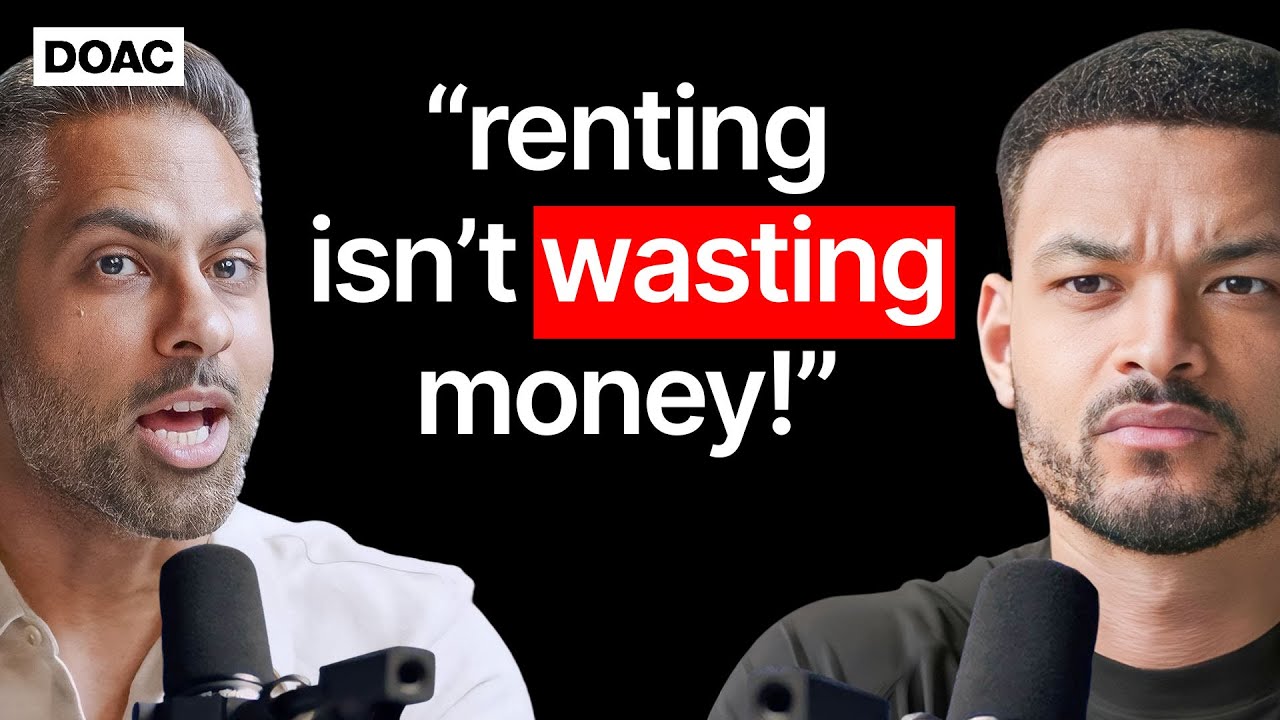
The Diary Of A CEO
Financial author Ramit Sethi argues that long-term wealth depends on automating investments and agreeing on a shared vision rather than fighting over minor daily expenses.
AI-assisted summary of Ramit Sethi: Never Split The Bill, It's A Red Flag & Renting Isn't Wasting Money! — original source. Check the original for full context.
Source published:
Detailed notes
## Background Published on YouTube by The Diary Of A CEO on October 14, 2024, this episode features Ramit Sethi, author of 'I Will Teach You to Be Rich' and host of Netflix's 'How to Get Rich.' The video description highlights Sethi's insights on money dynamics in relationships, challenging conventional homeownership myths, and introducing his approach to building a shared 'Rich Life.'
## TL;DR Financial expert Ramit Sethi explores how money impacts relationships, advocating for deep alignment, transparency, and shared financial goals over trivial debates like who pays for the first date. He challenges mainstream financial advice—debunking the belief that renting is a waste of money and criticizing high-fee financial advisors and gurus like Robert Kiyosaki. Sethi outlines four distinct money archetypes (Avoider, Optimizer, Worrier, Dreamer) and presents practical strategies like the Conscious Spending Plan and single-pot joint finances. Ultimately, he encourages couples to move past $3 questions, spend lavishly on what they love, and design a meaningful Rich Life together.
## Atmosphere & style The conversation is engaging, candid, and remarkably pragmatic, blending analytical financial logic with deep psychological insight. Steven Bartlett and Ramit Sethi share a warm, respectful chemistry that balances lighthearted banter with direct, uncompromising truths about money taboos. Sethi's articulate and relatable delivery transforms daunting financial topics into an empowering, eye-opening dialogue that feels both like a high-level masterclass and an intimate heart-to-heart.
## Key takeaways - [06:08](https://www.youtube.com/watch?v=pz6jhMPA-2w&t=368s) Managing money effectively requires addressing both quantitative numbers and behavioral psychology, moving away from fighting over minor expenses to co-creating a shared vision. - [07:42](https://www.youtube.com/watch?v=pz6jhMPA-2w&t=462s) Men need to evolve their identity beyond simply being the primary financial provider, especially as younger women increasingly out-earn young men in major urban areas. - [14:46](https://www.youtube.com/watch?v=pz6jhMPA-2w&t=886s) Debating who pays on the first date is minor compared to evaluating long-term financial alignment and compatibility over the course of a relationship. - [19:26](https://www.youtube.com/watch?v=pz6jhMPA-2w&t=1166s) People focus too much on trivial $3 questions like coffee or appetizers instead of focusing on $300,000 questions like consistent investing and partner alignment. - [21:19](https://www.youtube.com/watch?v=pz6jhMPA-2w&t=1279s) The four main financial archetypes in relationships are Avoiders, Optimizers, Worriers, and Dreamers. - [36:28](https://www.youtube.com/watch?v=pz6jhMPA-2w&t=2188s) Prenuptial agreements are generally unnecessary unless substantial premarital assets are involved, and negotiations should be handled transparently as a partnership rather than an adversarial battle. - [43:12](https://www.youtube.com/watch?v=pz6jhMPA-2w&t=2592s) Financial advisors charging percentage-based AUM fees (such as 1.25%) erode a massive portion of lifetime investment returns, while cheapness actively drains joy from experiences. - [01:00:41](https://www.youtube.com/watch?v=pz6jhMPA-2w&t=3641s) Renting can often build greater wealth than buying a home when the monthly savings difference between rent and homeownership costs is invested into index funds. - [01:07:41](https://www.youtube.com/watch?v=pz6jhMPA-2w&t=4061s) The Conscious Spending Plan allocates income into clear buckets: fixed costs (50–60%), investments (5–10%), savings goals (5–10%), and guilt-free spending (20–35%). - [52:05](https://www.youtube.com/watch?v=pz6jhMPA-2w&t=3125s) Finances should be merged using a single joint account for shared obligations combined with equal, individual allowances for guilt-free spending. - [01:24:28](https://www.youtube.com/watch?v=pz6jhMPA-2w&t=5068s) Children should learn about money early through hands-on practice, transparent discussions, and automated investing rather than treating finance as a taboo subject. - [01:42:23](https://www.youtube.com/watch?v=pz6jhMPA-2w&t=6143s) Designing a Rich Life involves spending lavishly on the things you truly love while cutting costs relentlessly on things you do not care about.
## Detailed walkthrough ### [00:00](https://www.youtube.com/watch?v=pz6jhMPA-2w&t=0s) Introduction: Why Financial Literacy in Relationships Matters
Ramit Sethi, host of the Netflix series *How to Get Rich* and author of *I Will Teach You to Be Rich*, opens the discussion with a bold challenge to conventional money wisdom—especially the long-held myth that renting a home is simply "throwing money away." He notes that most people do not understand the underlying mathematics of a mortgage, and he sets out to dismantle those standard arguments. Sethi breaks down the core archetypes that define how people handle their finances: **Avoiders**, **Optimizers**, **Dreamers**, and **Worriers**. He emphasizes that while these patterns are deeply ingrained, anyone can learn to shift their financial behavior once they understand the numbers and their underlying psychology.
Host Steven Bartlett takes a moment to address the audience directly, sharing that 53% of regular listeners have not yet subscribed to the channel. He asks for a simple, free favor: hit the subscribe button to support the team, pledging in return to continuously improve the show's quality and bring on top-tier guests based on viewer feedback. Returning to the discussion, Steven asks Ramit to explain why anyone—whether single, engaged, or married for 25 years—should stay tuned. Ramit stresses that money is a central pillar of life, yet most people treat it as something to avoid until a crisis strikes. Instead of viewing money through a lens of fear or conflict, couples can use it as a powerful tool for connection, shared possibility, and joy.
* **Key Statistics Shared by Ramit Sethi:** * **50%** of the people he counsels do not know their total household income. * **90%** of those in debt do not know the exact amount they owe. * **100%** of the people he speaks to who are carrying credit card debt also struggle with saying "no" to their children. * **The 4 Primary Money Archetypes:** * **Avoiders:** Hate discussing finances entirely; avoiding the topic is a major relationship red flag. * **Optimizers:** Love living in spreadsheets and investing; can build great wealth but risk taking optimization to an extreme. * **Dreamers:** Believe big success is just "one deal away," making them vulnerable to get-rich-quick crypto or coin scams. * **Worriers:** Constantly fear running out of money, often inheriting childhood mantras like "money doesn't grow on trees," which can turn into obsessive cheapness over $3 expenses like a daily coffee.
---
[02:53](https://www.youtube.com/watch?v=pz6jhMPA-2w&t=173s) Money, Marriage, and Gender Dynamics
Steven references a recent conversation with divorce lawyer James Sexton, who identified the two primary drivers of divorce as infidelity and financial conflict. This makes the topic of couples and money remarkably urgent, as financial avoidance directly jeopardizes long-term relationship survival. Ramit notes that the psychological roots of financial behavior run deep: avoiding debt figures stems from fear, while credit card debt often reflects a broader inability to set boundaries—whether with oneself or with one's kids.
When examining how men and women navigate money differently within relationships, Ramit highlights the pervasive cultural expectation for men to be "providers." However, as social dynamics shift and women increasingly earn equal or higher incomes, many men feel financially displaced or unsure of their identity if they are not the primary breadwinner. Conversely, women historically faced structural financial dependence—recalling that just two generations ago in the US, many grandmothers could not legally open their own bank accounts without a man. While Ramit respects the historical impulse for women to maintain independent fallback funds, he stresses that keeping *secret* accounts undermines trust; partners should maintain personal funds openly without hidden agendas.
> "Money is one of the central parts of our lives, and most of us think about money as something to be avoided... There is a different way, which is we can use money as a source of connection, possibility, and joy." — **Ramit Sethi**
---
[06:08](https://www.youtube.com/watch?v=pz6jhMPA-2w&t=368s) Spenders vs. Savers and Money Psychology
The most frequent friction point couples bring up to Ramit is the classic identity split: *"He/She is a spender, and I am a saver."* Couples often talk about wanting to get on the "same page," yet when pressed, they rarely have a clear definition of what that actually looks like. Ramit explains that how someone feels about money is surprisingly uncorrelated with how much money is sitting in their bank account. He regularly counsels multi-millionaires who remain paralyzed by money anxiety, proving that simply adding another $50,000, $500,000, or $5,000,000 will not fix a broken money mindset.
To master one's relationship with money, Ramit argues you must address two distinct pillars: 1. **Numbers:** Learning basic personal finance, terminology, and quantitative mechanics. 2. **Psychology:** Rewiring how you talk, behave, and feel about money so you can act intentionally rather than fearfully.
* **The Double Standard of Financial Anxiety:** Having millions of dollars will not resolve underlying anxiety unless you actively change your money psychology. * **Core Goal:** Shift away from arguing over minor expenses and move toward co-creating a shared vision of a "Rich Life."
---
[07:42](https://www.youtube.com/watch?v=pz6jhMPA-2w&t=462s) Case Study: When the Woman Out-Earns the Man
Exploring high-earning women in heterosexual relationships, Ramit shares a story from his podcast involving a 40-year-old female entrepreneur making $200,000 per month and her boyfriend, who was building a small business earning a few thousand dollars a month. Her family had taught her about investing when she was just five years old, whereas he was never exposed to financial education or concepts like a Roth IRA growing up. Despite their massive income disparity, an irrational dynamic emerged: she wanted him to pay for dinner to feel taken care of, but whenever he pulled out his credit card, she would stop him and insist he put that money into his individual retirement account (IRA) instead.
To solve this emotional contradiction, Ramit helped them create a ritual: on date nights, she would occasionally hand him her own credit card beforehand, allowing him to hand it over at dinner so both of their emotional and practical goals were met. While an outside observer might view this "dance" as completely irrational, Ramit points out that almost everyone behaves irrationally with money in some way. The solution is acknowledging these psychological quirks, having open conversations, and building a system that feels fair and satisfying to both partners.
* **Contextual Breakdown:** * **Female Partner's Income:** ~$200,000 / month ($2.4M annualized). * **Male Partner's Income:** A few thousand dollars / month. * **Underlying Tension:** Conflict between traditional romantic expectations (wanting to be treated) and practical financial logic (building his retirement savings).
---
[12:15](https://www.youtube.com/watch?v=pz6jhMPA-2w&t=735s) Challenging the Homeownership Myth and Provider Roles
Ramit revisits a controversial point from his previous podcast appearances: buying a house is not mandatory for living a rich life or achieving financial success. Having rented by choice for over 20 years, Ramit explains that by renting and investing the financial difference (the money saved on property taxes, maintenance, interest, and opportunity costs), he generated far greater wealth than if he had bought a home. When he presents this math publicly, people often react aggressively, clinging to the deep-seated cultural script that renting is "throwing money away."
Similarly, standard social scripts around dating and gender roles lead to confusion when economic reality shifts. When men define their identity purely around being a financial provider, earning less than their partner leaves them completely stumped about their value in the relationship. Ramit challenges men to expand their definition of identity beyond just earning power—to include roles like partner, leader, helper, or nurturer.
* **Renting vs. Buying Dynamic:** Renting is often labeled a waste of money due to cultural indoctrination, but evaluating the real math frequently proves that renting and investing the surplus yields superior returns. * **Evolving Gender Expectations:** Urban data shows young women in their 20s increasingly out-earning young men, forcing couples to explicitly define what partnership looks like beyond outdated 20th-century breadwinner models.
---
[14:46](https://www.youtube.com/watch?v=pz6jhMPA-2w&t=886s) Dating, Relationships, and Who Pays for the First Date
Steven reflects on his own past mindset, admitting that he avoided entering serious romantic relationships until he felt fully capable of stepping into the "provider" role—a belief absorbed from movies, family structure, and peer dynamics. Ramit confirms this is extremely common among young men, particularly in cities like New York, where men frequently delay marriage until achieving specific career milestones because they secretly fear they aren't "enough."
When Steven asks the timeless question of who should pay for the first date, Ramit dismisses the debate as largely trivial. While it is polite for whoever initiated the date to offer to pay, he notes that people waste an immense amount of energy agonizing over the first date while ignoring the subsequent 14,622 days of a potential long-term relationship. Focusing heavily on date-night protocol while neglecting long-term compatibility, financial communication, and shared values is the financial equivalent of planning a massive wedding while ignoring the actual marriage.
> "We spend way too much time focusing on the first date and way too little time thinking about the next 14,622 days." — **Ramit Sethi**
[16:43](https://www.youtube.com/watch?v=pz6jhMPA-2w&t=1003s) Generosity, Dating Dynamics, and Chivalry
The discussion opens with Ramit Sethi emphasizing that the conversation around money in dating needs a total reset. While social media is saturated with endless debates over who pays on a first date, Ramit argues that people are entirely missing the bigger picture. The fundamental question isn't about covering a single dinner bill; it's about evaluating a partner's core values—asking whether they are generous, how they grew up, and whether both partners are rowing in the same direction financially.
Steven Bartlett adds his perspective on first dates, expressing that asking a woman to split the bill at the end of a nice meal feels completely unnatural to him. He notes that if you polled women anonymously, most would privately admit that a man asking to split the bill on a first date is a turnoff or an "ick". Ramit agrees that cultural socialization plays a massive role here. While he personally paid for dates when he was single and enjoys being generous, he stresses that true generosity extends far beyond who picks up the check—it shows up in planning thoughtful trips or even noticing when the household is low on toothpaste.
``` "The point of money in a relationship is not just about the first date... it's about do we see money the same way? Do we connect? Are we going to be rowing in the same direction?" ```
Addressing the topic of chivalry—like opening car doors or pulling out chairs—Ramit notes that while he supports these gestures, they can create friction when rigid expectations aren't updated for modern realities. For instance, a 26-year-old man who earns significantly less than his girlfriend might feel conflicted about trying to be traditional while staring at their vastly different bank accounts. Ramit urges people to stop over-fixating on small, surface-level expenses and look at the broader picture of partnership.
- The real purpose of early money conversations is establishing financial alignment, not scoring points over a restaurant bill. - Generosity isn't tied strictly to high-dollar spending; it manifests in daily thoughtfulness and shared effort. - Traditional chivalric norms can put unnecessary pressure on younger men who earn less than their partners.
---
[19:26](https://www.youtube.com/watch?v=pz6jhMPA-2w&t=1166s) $3 Questions vs. $300,000 Questions
Ramit introduces one of his core philosophies: the distinction between trivial "$3 questions" and life-changing "$300,000 questions". People spend endless emotional energy obsessing over minor daily purchases—debating whether to buy a latte, get an extra appetizer, or split a bill—while entirely neglecting the massive financial decisions that actually determine their long-term security and happiness.
``` "We are so obsessed with $3 questions... We totally neglect the $300,000 questions: Is this person financially aligned with me? Am I investing 5 to 10% of take-home pay every month?" ```
The real questions couples should be focusing on involve long-term alignment, automated investments, and proactive communication. Ramit points out that if you resolve the macro-level decisions—such as consistently investing 5% to 10% of your take-home pay each month and discussing finances positively with your partner—you never have to worry about buying appetizers or coffee again.
When asked about the ultimate financial red flag in a relationship, Ramit doesn't hesitate: it is a partner who simply refuses to talk about money. Couples can have different spending habits or values, but a complete wall of silence prevents any understanding, curiosity, or shared growth. Furthermore, he reframes the idea of "the money talk," pointing out that managing money in a long-term relationship isn't a single conversation, but rather thousands of ongoing discussions over a lifetime—much like parenting.
- **$3 Questions to stop stressing over:** Buying lattes, ordering appetizers, picking up a tapas bill. - **$300,000 Questions to focus on:** Investing 5–10% of net income monthly, establishing financial alignment with a partner, and keeping open lines of communication. - **The #1 Financial Red Flag:** A partner refusing to discuss money at all.
---
[21:19](https://www.youtube.com/watch?v=pz6jhMPA-2w&t=1279s) The Four Money Types: Avoiders and Optimizers
To help people identify their financial tendencies and understand their partners, Ramit outlines four distinct "Money Types." He clarifies that these behaviors are not determined by gender, but rather by personal psychology and upbringing.
The first category is **The Avoider**. Avoiders hate discussing finances and rely on various deflection tactics—such as complaining that talking about money ruins a nice night out, or claiming their partner is simply "better at this stuff" so they should manage it alone. Avoiders generally do not know their own financial status. Ramit compares money avoidance to ignoring personal health or neglecting old friends: because there is no immediate crisis today, people procrastinate until they inevitably hit a financial brick wall years down the line.
``` "Optimizers... love to live in the spreadsheet... Left alone, I would sit there and do that for the rest of my life. The problem is you can take it a little too far." ```
The second category is **The Optimizer**, a archetype Ramit admits he personally belongs to. Optimizers thrive on spreadsheets, compound interest calculators, and running complex scenarios. While an Optimizer will get a household's finances perfectly dialed in, they often struggle with the human side of wealth. Ramit shares that left to his own devices, he would optimize endlessly, but his wife helped him realize that money must serve connection, fun, and experience once safety is secured. To illustrate their rigidity, Ramit describes giving Optimizers a challenge to spend $100 strictly on themselves; almost all of them fail, choosing instead to spend it on their dog, kids, or partner, or arguing that the $100 would be worth thousands if left in the S&P 500 for 45 years.
- **The Avoider:** Deflects conversations, ignores account balances, and pushes financial responsibility onto others until a crisis occurs. - **The Optimizer:** Highly skilled at building spreadsheets and automated systems, but risks becoming boring and hoarding money rather than enjoying it. - **The $100 Challenge:** Optimizers routinely fail to spend money on pure personal enjoyment because they over-calculate future opportunity costs.
---
[24:59](https://www.youtube.com/watch?v=pz6jhMPA-2w&t=1499s) The Four Money Types: Worriers and Dreamers
The third category is **The Worrier**. Worriers carry a deep-seated anxiety about money that is almost always inherited from their parents. Their default state is panic—constantly fearing they won't have enough to cover basic expenses like gas. Crucially, Ramit points out that emotional security with money is almost completely uncorrelated with the actual amount in one's bank account. He shares a story from his podcast where a couple believed they earned $70,000 a year; after adding up their real numbers, it turned out they actually made $120,000. When Ramit asked the wife if finding an extra $50,000 made her feel better, she immediately answered "no" because her underlying emotional relationship with money hadn't changed.
``` "The way you feel about money is highly uncorrelated to the amount in your bank account." ```
The fourth category is **The Dreamer**. Dreamers believe they are always just "one big deal away" from massive success. They frequently fall prey to get-rich-quick schemes, multi-level marketing (MLM), and volatile crypto scams, while turning up their noses at slow, steady index-fund investing. Dreamers often mock standard jobs, failing to realize that steady earners are building far more wealth. In relationships, Dreamers are notoriously difficult to be married to because their unrealistic lifestyle is almost always secretly subsidized by a hard-working partner.
When Steven asks which type lives the happiest life, Ramit notes that while Optimizers are quite happy with their systems, Dreamers are surprisingly happy too—albeit living in an optimistic bubble subsidized by others while ignoring the wreckage behind them. Ultimately, Ramit explains that managing money shifts completely once you enter a relationship: it is no longer about individual habits, but about building a joint "Rich Life Vision". Without a shared vision, couples spend decades fighting over $50 Target receipts instead of using money to build their dream life together.
- **The Worrier:** Driven by inherited anxiety; earning more money rarely cures their fear until they reframe their relationship with money. - **The Dreamer:** Chases high-risk schemes, rejects traditional long-term investing, and relies on partners to subsidize their financial delusions. - **Rich Life Vision:** The missing element for most couples; without a clear joint vision, partners default to petty fights over minor daily purchases.
---
[29:42](https://www.youtube.com/watch?v=pz6jhMPA-2w&t=1782s) Transparency, Secrets, and Financial Vulnerability
Steven brings up a common dilemma in relationships: how few couples actually know the specifics of each other's savings and investment portfolios. He admits that even in his own long-term relationship, his partner has no detailed idea of his total financial worth. Ramit shares a personal story of how he made a similar mistake early in his relationship with his now-wife. Because he was a personal finance author, he ended up seeing all of her financial information to help her with her 401(k), but neglected to share his own. His wife eventually called him out, pointing out that the dynamic felt unfair and imbalanced.
``` "She very assertively said, 'This doesn't feel fair. You know everything about my finances, but I don't know about yours.'... It was actually one of the most memorable conversations we had." ```
Opening up about his numbers transformed their relationship. It wasn't just a disclosure of figures; it allowed Ramit to share the pride he felt in building his business over 20 years, and allowed them to collectively dream about where they wanted to live, travel, and eat. Ramit emphasizes that these conversations should focus on possibility and vision rather than just dry logistics.
Addressing people who are terrified to reveal a low bank balance to a partner out of shame or fear of abandonment, Ramit offers reassurance. Having less money doesn't make someone less worthy as a person or partner. Approaching a partner proactively to discuss finances shows incredible maturity, courage, and leadership. Steven then reflects on his own background, preparing to share how living in a low-income shared house in Rusholme shaped his early perspectives on money and shame.
- **Vulnerability Builds Trust:** Full financial transparency creates a foundation for joint planning and deeper intimacy. - **Shame vs. Action:** Keeping a low savings account secret out of fear damages trust; initiating an honest conversation demonstrates true partner potential. - **Focus on Possibility:** Financial disclosures should be tied to future dreams—where to live, how to travel, and how to enjoy life together.
[33:42](https://www.youtube.com/watch?v=pz6jhMPA-2w&t=2022s) The Embarrassment of Financial Struggle in Relationships
Steven Bartlett recalls a deeply personal period in his past when he first arrived in the UK as a young man. He lived in a room with a single bed, no carpet, no duvet, and no bed sheets, waking up every single morning wondering how he was going to eat that day. He resorted to looking behind takeaway sofas for lost pound coins to feed himself. During this exact time, he was dating a girl named Ruby who had no idea about his living conditions or financial state. Steven reflects that there was zero possibility he would have ever admitted his situation to her due to sheer shame. He asserts that roughly 30% of listeners are currently hiding their true financial situation from their partners out of fear that they will be judged, liked less, or abandoned.
Ramit Sethi agrees completely, emphasizing how pervasive money shame is across every demographic—whether it's a young man struggling to survive or a young woman carrying $18,000 in credit card debt. He urges people to take the initiative and bring up money themselves rather than waiting for their partner to do so, especially if they plan to build a life together. Ramit reframes this vulnerability as an attractive quality, noting that owning up to past financial mistakes with a clear plan to fix them is a massive "turn-on." He highlights that net worth does not dictate a person's worth as a human being and calls for taking money topics out of the dark, shameful corner.
- **Steven's early struggles:** Lived without carpets or bedding in the UK, searching behind restaurant sofas for spare change. - **Vulnerability as an asset:** Confessing past mistakes (e.g., paying down $18,000 of credit card debt to $6,000) shows accountability and a clear vision, which is deeply attractive to a prospective partner. - **Breaking the taboo:** Couples on Ramit's podcast often reveal they have been married for 15 years without ever having a real conversation about money.
[36:28](https://www.youtube.com/watch?v=pz6jhMPA-2w&t=2188s) Who Actually Needs a Prenup?
When Steven asks whether all couples should get a prenuptial agreement, Ramit clarifies that prenups are not necessary for everyone. They are primarily essential for couples where one or both partners bring substantial premarital assets into the marriage—such as a large investment portfolio, a business, a rental property, or a home. Most couples getting married do not have significant assets at the start, making a prenup unnecessary for them.
When navigating how to bring up the conversation without destroying trust, Ramit warns against using bad advice found online, such as "blaming it on your lawyer." He argues that if you cannot be honest about a prenup, you are setting a poor foundation for a shared life.
- **Target audience for prenups:** Individuals or couples with substantial pre-existing assets (businesses, real estate, major portfolios). - **Misleading advice:** Passing the blame onto lawyers undermines honesty and accountability in a relationship.
[37:18](https://www.youtube.com/watch?v=pz6jhMPA-2w&t=2238s) How Ramit Proposed a Prenup to His Wife
Ramit shares the exact conversation he had when proposing a prenup to his wife. Sitting down with a pounding heart, he took full personal ownership of the request. He explained that due to years of hard work in his business, he had been fortunate to save significant wealth. He reassured her that his lifestyle and values—saving money, enjoying nice clothes, and traveling rather than driving flashy sports cars—would not suddenly shift after marriage, but protecting the premarital business he built was deeply important to him. His wife responded with remarkable grace, saying, *"Okay, I wasn't expecting that, but I'm willing to learn more about it."*
However, the legal process itself became extremely difficult. They both hired lawyers, and as they began discussing astronomical numbers and legal contingencies, tension mounted. Ramit began feeling resentful, while his wife felt unheard and equally resentful. The legal framework turned what was a loving relationship into an adversarial legal negotiation, prompting his wife to suggest they see a relationship therapist.
- **Key conversation framing:** Take personal ownership instead of blaming third parties, explain the reasoning clearly, and reassure your partner about your core values and lifestyle consistency. - **The dynamic shift:** Bringing lawyers into premarital negotiations can make the dynamic adversarial if not actively managed.
[39:46](https://www.youtube.com/watch?v=pz6jhMPA-2w&t=2386s) Differing Money Scripts: Growth vs. Safety
During their therapy session, the therapist asked both Ramit and his wife how they viewed money. Ramit, as an "Optimizer," immediately saw numbers, compounding interest, and the Rule of 72 floating in front of his eyes, answering that money means *"growth."* When the therapist turned to his wife, she replied that money means *"safety."*
To Ramit, viewing money as safety felt entirely foreign, like saying the word "charcoal" in response to money. This breakthrough realization—that they held fundamentally different core philosophies about money—became the primary catalyst for his podcast and Netflix show *How to Get Rich*. He realized couples urgently needed to see how real partners navigate these deep underlying differences behind closed doors.
- **Ramit's view of money:** Growth, optimization, mathematical compounding (Rule of 72). - **His wife's view of money:** Safety, security, stability. - **The origin of his media show:** Realizing that couples lack visibility into how others successfully navigate conflicting financial mindsets.
[40:45](https://www.youtube.com/watch?v=pz6jhMPA-2w&t=2445s) Managing Lawyers and Misconceptions About Divorce Statistics
Ramit details the complex technicalities involved in drafting a prenup—such as defining what happens if a couple splits in 6 months versus 25 years, how joint versus individual investment accounts are treated, and how property or future children impact terms. He emphasizes that a crucial lesson from his experience is that clients must active manage their lawyers. While lawyers are doing their job by evaluating every conceivable worst-case scenario, partners must remember their primary objective: coming to a loving, fair agreement with their future spouse for the rest of their lives.
Steven cites a common statistic that couples have a 60% chance of breaking up, but Ramit corrects this widespread misconception. He points out that overall divorce statistics are heavily skewed because they lump together second and third marriages as well as all socioeconomic backgrounds. For individuals with a bachelor's or advanced degree in their first marriage, the divorce rate drops dramatically, and divorce rates overall have actually been declining for decades. Nonetheless, Ramit advocates planning for both scenarios: envisioning what happens when things go right, while having a responsible plan if things go wrong.
- **Managing legal counsel:** Remind yourself that lawyers are paid to anticipate friction; you must stay focused on long-term generosity and partnership. - **Divorce rate reality:** The "50-60% divorce rate" figure is misleading; rates are significantly lower for first marriages and higher education levels, and have been trending down overall.
[43:12](https://www.youtube.com/watch?v=pz6jhMPA-2w&t=2592s) Financial Red Flags: "Money Guys" and Cheaps
Ramit outlines major financial red flags to look out for in a partner. The first is having a "money guy"—typically a financial advisor who sells whole life insurance or charges a 1.25% Assets Under Management (AUM) fee. Ramit breaks down the math: a 1% fee sounds small, but over a lifetime, it eats away approximately 28% of total investment returns, costing tens or hundreds of thousands of dollars. He advises paying fee-only advisors on an hourly or project basis instead.
The second major red flag is when someone is outright **cheap**. Ramit draws a sharp distinction between being frugal and being cheap. Cheap people prioritize cost above everything else, draining the joy out of life and rarely recognizing the negative impact they have on those around them. They often reinterpret their stinginess as a moral virtue (e.g., claiming they don't need fancy things), yet make others feel guilty for wanting to enjoy life.
- **The math of 1% AUM fees:** A seemingly small 1% fee drains roughly 28% of lifetime investment returns. - **Defining "cheap":** Obsessed with cost as the first and last metric, sucking joy out of moments, and framing stinginess as a virtue. - **Rich Life balance:** A healthy financial life requires playing multiple notes—spending extravagantly on what you love while cutting costs mercilessly on what you don't.
[45:52](https://www.youtube.com/watch?v=pz6jhMPA-2w&t=2752s) Calling Out Financial Charlatans
When asked about other major red flags, Ramit points directly to following financial gurus like Robert Kiyosaki, author of *Rich Dad Poor Dad*. Ramit minces no words, stating that Kiyosaki has completely lost credibility in recent years. He highlights an incident where Kiyosaki publicly claimed that the single best investment someone could make was buying cans of tuna.
Ramit jokes about tweeting Kiyosaki back to ask if selling his entire portfolio to buy 3 million cans of tuna was a solid strategy (noting he sadly never got a response). He warns listeners to watch out for financial charlatans who peddle get-rich-quick schemes or constantly preach apocalyptic doom, comparing financial guidance to fitness: true success relies on steady, balanced, long-term habits.
- **Gurus to avoid:** Financial authors or influencers who rely on fearmongering or bizarre get-rich-quick claims (like investing in canned food). - **Balanced approach:** Long-term wealth creation requires consistency, balance, and sustainable habits rather than extreme panics.
[47:04](https://www.youtube.com/watch?v=pz6jhMPA-2w&t=2824s) The Roots of Financial Anxiety and "Worriers"
Steven notes that cheap people often overlap with the "Worrier" money archetype and asks if there is a consistent childhood origin story behind extreme frugality and penny-pinching. Ramit confirms that whenever he interviews couples, he always asks what their parents said about money while they were growing up. People almost always remember phrases like *"We can't afford it,"* *"Money doesn't grow on trees,"* or *"We don't talk about money in this house."*
Ramit observes that pivotal financial trauma—such as a parent unexpectedly losing a job during the child's teenage years or a family having to downsize from a large home into a grandparent's apartment—leaves a lifelong mark. This trauma typically manifests in one of two unpredictable ways: 1. **The Healthy Adaptive Path:** The person resolves never to experience financial helplessness, driving them to build a high savings rate, invest wisely, and build a healthy relationship with money. 2. **The Anxious/Cheap Path:** The person becomes hyper-anxious, cheap, and obsessed with hoarding cash, often completely failing to see how their childhood trauma drives their present financial anxiety until it is directly pointed out to them.
- **Common parental money phrases:** *"We can't afford it,"* *"Money doesn't grow on trees."* - **Impact of financial shocks:** Sudden socioeconomic shifts in youth create deep-seated money scripts that persist into adulthood.
[48:42](https://www.youtube.com/watch?v=pz6jhMPA-2w&t=2922s) Building a Rich Life Vision and the 10-Year Bucket List
To overcome money anxiety and build a healthy partnership, Ramit advocates starting with positive, low-pressure conversations about money. Most couples only bring up finances to argue over specific purchases (e.g., *"Why did you spend that much at the gas station last week?"*). Ramit provides structured scripts in his book to help couples "declare victory and go home"—keeping initial conversations short, positive, fun, and ending with an "I love you" to build positive associations with financial topics over time.
As part of crafting a shared "Rich Life Vision," Ramit recommends a powerful exercise: the **10-Year Bucket List**. Both partners sit down separately with a piece of paper and write down everything that would make the next decade incredibly rich and meaningful to them individually and as a couple. They then compare notes to celebrate, encourage, and align their financial resources with those shared dreams—whether it's moving to Mexico City to learn Spanish or supporting a partner's dream to go skydiving.
- **Conversation strategy:** Keep initial money chats brief, focused on shared goals, and end on a positive note to rewire negative emotional associations. - **10-Year Bucket List exercise:** A collaborative tool where partners list 10-year goals separately and compare notes to build a shared financial roadmap.
[50:34](https://www.youtube.com/watch?v=pz6jhMPA-2w&t=3034s) Crafting a Shared "Rich Life Vision"
Ramit Sethi details a concrete financial exercise for couples designed to translate abstract goals into actionable plans. Rather than vaguely wishing to achieve something someday, couples should pick a specific project or experience that is deeply meaningful to both—such as building an art studio in the garage or going on a round-the-world trip over the next decade. The key to the exercise is setting a timer for five minutes to estimate the cost right on the spot. Sethi emphasizes that hitting an accuracy of roughly 80% is plenty, advice he puts into practice himself: when he and his wife planned their 10-year wedding anniversary, they picked the location and guest list, calculated the expense, and when their individual estimates differed, they intentionally went with the larger figure. Sethi notes that going with the higher estimate "helps you dream a little bigger."
Once the total cost is estimated, the couple simply divides that figure by the number of months remaining until the target date. This turns saving into an engaging, gamified experience where every monthly contribution signals that they are a few percentage points closer to their goal. If the monthly amount proves unachievable, Sethi advises adjusting the scope of the dream down slightly or extending the timeline rather than abandoning the vision altogether.
- **5-minute rule:** Take no more than five minutes to estimate the rough cost of a major goal within an 80% accuracy margin. - **Handling cost discrepancies:** When partners estimate different amounts for a goal, adopt the higher number to encourage bigger thinking and provide a financial cushion. - **Gamification of saving:** Breaking down long-term goals into monthly savings targets turns tracking money into a motivating, game-like experience.
[52:05](https://www.youtube.com/watch?v=pz6jhMPA-2w&t=3125s) Navigating Financial Dynamics and Merging Accounts
Steven Bartlett shares his personal financial setup, explaining that he pays for almost everything in his relationship because his partner is a classic "avoider" who genuinely does not care about luxury or material things. She is indifferent to flying economy versus first class, staying in a basic studio versus a 70th-floor penthouse, or receiving expensive gifts. Because her priorities lie in quality time, simple travel, and personal experiences, Steven voluntarily steps in to pay for upgrades—often to ensure her comfort and safety—without any underlying resentment. Sethi notes that he shares a similar dynamic with his own wife regarding travel and hotels, though he stresses the importance of identifying each person's individual "money dials"—the specific areas of life where someone loves to spend freely.
``` ┌──────────────────────────────┐ │ All Income / Paychecks │ └──────────────┬───────────────┘ │ ▼ ┌──────────────────────────────┐ │ Joint Checking Account │ └──────────────┬───────────────┘ │ ┌──────────────────────┼──────────────────────┐ │ │ │ ▼ ▼ ▼ ┌──────────────────┐ ┌──────────────────┐ ┌──────────────────┐ │ Joint Expenses │ │ Partner A's Account│ │ Partner B's Account│ │ (Rent, Dining, │ │(No-Questions-Asked│ │(No-Questions-Asked│ │ Joint Cards, etc)│ │ Spending & Savings)│ │ Spending & Savings)│ └──────────────────┘ └──────────────────┘ └──────────────────┘ ```
When discussing how couples should physically manage their bank accounts, Sethi strongly advocates for merging finances into a unified structure. While many couples keep their income separate and transfer funds into a joint account for bills, Sethi tried that proportional system for years and found it overly complex. Because business incomes fluctuate, he and his wife had to recalculate their proportional contributions every single quarter and reconcile everything at year-end—a hassle that felt more like running a "multinational conglomerate" than a marriage.
- **The single-pot system:** All incoming earnings from both partners flow directly into a single joint checking account first. - **Automated distribution:** The joint checking account covers shared living expenses (rent, dining out, utilities, joint credit card bills) and then disburses equal, agreed-upon allowances into separate individual checking/savings accounts for each partner. - **No-questions-asked spending:** Individual accounts provide personal autonomy for personal spending—like self-care or hobbies—without requiring spousal approval or oversight. - **Proportional vs. 50/50 splits:** While a 50/50 split of personal guilt-free money is ideal for most, Sethi notes that extreme income disparities (e.g., one partner making $1,000,000 a month) may justify a proportional personal allowance, though simplicity should remain the primary goal. - **Core value:** "Fight for simplicity" in financial systems to eliminate unnecessary math and foster a shared mindset where all assets belong to both partners.
[58:12](https://www.youtube.com/watch?v=pz6jhMPA-2w&t=3492s) Stop Sweating the "$3 Questions"
Sethi criticizes the popular personal finance advice that urges people to obsess over minor daily purchases, such as cutting out daily coffees or debating over buying plastic wrap. He calls these "$3 questions" and argues that agonizing over them consumes immense mental energy for negligible financial gains. Even if someone manages to save a small amount by cutting out coffee, they rarely invest those micro-savings effectively. Sethi argues that focusing on minor expenses keeps people "playing small" instead of making major structural financial moves that yield real wealth over time.
Instead of fighting over grocery bills or kid expenses, Sethi advises couples to focus on two major percentages: their savings rate and their investment rate. He recommends starting with an investment rate between 5% and 10% of net income and committing to a simple annual rule: raising that rate by exactly 1% every December. Compounded over a working career, this single annual decision generates hundreds of thousands of dollars—far outstripping the lifetime value of any forgone lattes.
- **Focus on macro decisions:** Replace daily obsession over micro-purchases with a few high-impact structural decisions. - **Target investment rate:** Aim to allocate 5% to 10% of net income toward investments as a baseline. - **The 1% annual increase rule:** Automatically increase your investment rate by 1% every December to compound wealth significantly over time.
[01:00:41](https://www.youtube.com/watch?v=pz6jhMPA-2w&t=3641s) Rethinking Homeownership vs. Renting
Addressing the widespread belief that buying a house is the only real path to building wealth and that "renting is throwing money away," Sethi sharply dismantles common arguments. He counters the idea that renters are merely paying their landlord's mortgage by pointing out that eating at a restaurant pays the owner's mortgage too, yet no one views dining out as a financial trap. Sethi points out that across the top 50 U.S. metropolitan areas, renting is currently significantly cheaper on a monthly basis than owning an equivalent home.
To illustrate the stark mathematical reality, Sethi compares renting and buying using a concrete example from New York. In that market, renting an apartment might cost $3,000 per month, whereas purchasing and maintaining the equivalent property right next door could run $6,600 per month. That leaves a massive difference of $3,600 per month. Renters who take that $3,600 monthly savings and discipline themselves to invest it in the market can frequently build greater net worth than homeowners, who often overlook "phantom costs" such as property taxes, maintenance, interest, transaction fees, and opportunity costs.
Responding to viewer comments on previous episodes where listeners defended homeownership for its emotional stability, Sethi acknowledges that life is not run entirely on a spreadsheet. There are valid non-financial reasons to buy a house, such as wanting the freedom to renovate, securing a spot in a specific school district, or gaining psychological stability after a difficult background. However, Sethi insists that people must still calculate the true cost of ownership before buying, pointing out that most individuals spend upwards of $1,000,000 over the total lifespan of a home without running a single financial calculation.
- **Renting vs. buying gap:** In the top 50 U.S. metro areas, monthly renting costs are lower than homeownership costs for equivalent properties. - **The NY cost comparison:** A $3,000/month rental can correspond to a $6,600/month cost to own the same unit, creating a $3,600/month gap that can be invested elsewhere. - **Phantom costs of homeownership:** True ownership costs extend far beyond the principal mortgage payment to include maintenance, property taxes, HOA fees, interest, and transaction expenses. - **Evaluating purchases:** Always balance financial calculations (amortization charts, buy-vs-rent math) with non-financial lifestyle goals (stability, space, location) before committing to the largest purchase of a lifetime.
[01:04:27](https://www.youtube.com/watch?v=pz6jhMPA-2w&t=3867s) The Root Causes of the Housing Crisis
Steven and Ramit trace the societal timeline that dictates standard life milestones: go to school, get a degree, land a job, buy a house, get married, have children, retire, and move to Florida. While this model worked well for previous generations who could easily afford a home on a single average income, Sethi points out that housing is now historically expensive.
Sethi firmly rejects the media narrative blaming young people's spending habits—such as buying avocado toast or the latest iPhone—for their inability to buy homes. Instead, he places the blame on structural housing shortages driven by "NIMBYism" (Not In My Backyard). Homeowners who bought properties decades ago have consistently blocked new construction in their neighborhoods, choking supply while demand has grown. While cities like Austin and Santa Monica have seen localized price drops as supply dynamics shift, Sethi argues that widespread zoning reform and aggressive building are essential to make housing affordable again for the middle class and younger generations.
- **The traditional milestone pipeline:** School $\rightarrow$ Degree $\rightarrow$ Job $\rightarrow$ House $\rightarrow$ Marriage $\rightarrow$ Kids $\rightarrow$ Retirement $\rightarrow$ Florida. - **Debunking the avocado toast myth:** High housing costs are driven by systemic supply shortages, not minor consumer discretionary spending. - **NIMBYism:** Decades of restrictive local zoning and opposition to new construction by existing homeowners have restricted housing supply and pushed prices upward.
[01:06:20](https://www.youtube.com/watch?v=pz6jhMPA-2w&t=3980s) The Real Cost of Buying a House and the Mortgage Interest Trap
Ramit Sethi reiterates his stance that primary residences are generally poor investments due to massive upkeep, hidden costs, and the heavy opportunity cost of tying up down payments—such as $50,000 or $100,000—that could otherwise be compounding in index funds. Beyond these operational expenses, Ramit drops a staggering piece of financial math: under current high interest rates, a standard 30-year mortgage requires homeowners to pay more toward interest than principal for the first 21 years of the loan.
Because buyers spend over two decades simply servicing interest before making a real dent in their debt, Ramit flips the common cultural narrative on its head. Instead of the popular line "I don't want to throw money away on rent," he argues that a far more accurate statement is "I don't want to throw money away on interest."
- **30-Year Mortgage Math:** Homeowners pay more toward interest than principal until year 21. - **Phantom & Maintenance Costs:** Owning property carries hidden maintenance costs and locks up capital that could earn market returns.
---
[01:07:41](https://www.youtube.com/watch?v=pz6jhMPA-2w&t=4061s) The Conscious Spending Plan: 4 Essential Money Numbers
When Steven asks how a couple should allocate a $50,000 joint savings balance to generate real returns, Ramit outlines his four-part Conscious Spending Plan. The primary cause of financial anxiety for most couples is overspending on fixed costs, particularly housing and vehicles—especially big trucks and SUVs that people reflexively buy when starting a family.
- **Fixed Costs (50–60% of take-home pay):** Covers non-negotiable monthly expenses like rent or mortgage, utilities, car payments, debt, and basic groceries. Post-tax take-home pay is the baseline. - **Savings (5–10% minimum):** Designated for short- to medium-term goals (1 to 5 years), including emergency funds and future down payments. - **Investments (5–10% minimum):** The primary engine of real wealth creation, which couples frequently neglect or treat as a passive effort rather than an automatic system. - **Guilt-Free Spending (20–35% of take-home pay):** Money meant for dining out, concerts, and travel. Ramit emphasizes that when the other three numbers are handled automatically, couples can spend this cash without guilt or anxiety.
---
[01:10:17](https://www.youtube.com/watch?v=pz6jhMPA-2w&t=4217s) Automated Investing and Buying a House as an Emotional Decision
Ramit stresses that wealth creation must be automated rather than done manually. He advises couples to schedule monthly "money meetings" to review their investment portfolios, celebrate their growth with high-fives and hugs, and maintain long-term momentum.
``` ┌─────────────────────────────────────────────────────────────────┐ │ MONTHLY CONSCIOUS SPENDING PLAN │ ├───────────────────────────────┬─────────────────────────────────┤ │ Fixed Costs │ 50% – 60% of take-home pay │ ├───────────────────────────────┼─────────────────────────────────┤ │ Savings (1–5 year goals) │ 5% – 10% minimum │ ├───────────────────────────────┼─────────────────────────────────┤ │ Investments (Long-term) │ 5% – 10% minimum (Automated) │ ├───────────────────────────────┼─────────────────────────────────┤ │ Guilt-Free Spending │ 20% – 35% of take-home pay │ └───────────────────────────────┴─────────────────────────────────┘ ```
When Steven asks how to handle a situation where one partner wants a house and the other does not, he shares his own experience. Steven’s brother, a former investment banker of 13 years who now manages Steven's money full-time, ran the opportunity cost math and confirmed that buying a home was a terrible financial decision. Nevertheless, Steven bought a house anyway because he and his partner wanted the psychological and emotional safety it provided for their family.
Ramit warmly validates Steven's choice, noting that he and his wife plan to buy a house in the future even though they fully expect it to be "the worst financial decision of our lives." The key is running the numbers first and entering the purchase with open eyes, acknowledging that it is an emotional consumption choice rather than a financial investment.
- **Automation & Monthly Meetings:** Investing should happen automatically, followed by monthly check-ins for couples to align and celebrate progress. - **Separating Math from Emotion:** Buying a home can be a valid life decision as long as it is affordable and recognized as an emotional expense rather than an investment strategy. - **The Higher Earner’s Obligation:** Higher-earning or more financially savvy partners have a duty to include their significant others in financial decisions rather than acting unilaterally.
---
[01:14:32](https://www.youtube.com/watch?v=pz6jhMPA-2w&t=4472s) Cutting Through the Noise with Simple Index Funds
Steven observes that most people default to buying real estate because society presents no obvious alternative. Ramit introduces low-cost, long-term index funds as the premier alternative for building genuine wealth.
Countering the misconception that stock market investing requires analyzing complex price-to-earnings (P/E) ratios, Ramit points to target-date funds—such as a Vanguard, Fidelity, or Schwab 2050 fund—as an all-in-one solution. An investor simply sets up an automatic transfer for any amount (whether $50 or $500,000 a month), and the fund automatically buys stock, diversifies across the market, and shifts toward a conservative asset allocation over time.
- **Core Principles of Investing:** Wealth is generated through consistent contributions, time, and low fees—not market timing or complex stock picking. - **Target-Date Funds:** Automatically adjust risk levels as the investor approaches their targeted retirement year.
---
[01:16:44](https://www.youtube.com/watch?v=pz6jhMPA-2w&t=4604s) The Psychological Reality of Money: Case Studies in Spending and Saving
Discussing his work with over 180 couples on his podcast and Netflix show, Ramit recounts moments of deep emotional shock when couples lay out their true financial state. He shares the story of a woman in her mid-40s to 50s who had received a double lung transplant. Knowing she had a remaining life expectancy of 5 to 10 years, her dream was to quit her job and spend that precious time with her young daughters, aged 11 and 12.
Despite accumulating multi-million-dollar wealth through long-term index fund investing—enough to sustain her family indefinitely—she found it psychologically impossible to quit working. The ingrained habit of relying on a paycheck created a mental barrier that kept her trapped at her desk despite a terminal clock ticking.
Turning to the opposite dynamic, Steven reflects on his youth when he accumulated credit card debt, received two County Court Judgments (CCJs) in the UK, and incorrectly assumed he could simply "earn his way out" of bad habits. Ramit points out that almost every overspending couple makes the exact same assumption, claiming they just need to earn more.
When Ramit reveals their actual numbers, couples are frequently shocked to learn they already earn the extra money they thought would save them—yet their spending expanded to swallow it. Ramit uses the metaphor of a bucket with a hole: adding more income accomplishes nothing if the money leaks straight out.
- **Income Trap:** High net worth individuals often struggle to transition from accumulating money to spending it, even when facing life-and-death circumstances. - **The Income Fallacy:** Increasing income does not fix underlying spending behavior because expenses naturally scale up to absorb new earnings. - **The Subscriptions Debate:** Even when deeply in debt and claiming they want "big changes," overspending couples frequently resist cutting minor lifestyle luxuries like Netflix subscriptions, revealing how deeply emotional spending habits truly are.
[01:22:04](https://www.youtube.com/watch?v=pz6jhMPA-2w&t=4924s) Identity-Tied Spending and the Trap of "Budgets"
Ramit Sethi cautions against tying lifestyle purchases to one's core identity, explaining how difficult it becomes to scale back once a habit becomes part of who you are. While switching to a cheaper brand of paper towels goes unnoticed, downgrading from a luxury vehicle like a Rolls-Royce feels like losing a piece of yourself. He emphasizes that while couples should absolutely enjoy nice things, they must ensure they can afford those expenses indefinitely—rather than stretching for a one-off luxury like private school without a long-term plan.
When host Steven Bartlett asks whether couples should maintain a budget, Ramit candidly expresses his distaste for traditional budgeting. In his view, typical line-item budgeting looks backward—forcing partners to track every tedious expense, like corn or diapers, on a laborious spreadsheet only to look at the total at the end of the month without any actionable insight. A budget doesn't tell a couple when they will reach net-worth milestones or whether they have "enough." Instead, he advocates for a forward-looking Conscious Spending Plan that aligns money with a couple's vision of a "Rich Life."
- **Fixed Cost Target:** Ramit's Conscious Spending Plan recommends allocating 50% to 60% of income toward fixed costs. - **Customizable Priorities:** The framework functions like Tetris—if a couple wants to spend heavily on concert tickets to see Taylor Swift, they can offset it by cutting back on car payments or dining out.
---
[01:24:28](https://www.youtube.com/watch?v=pz6jhMPA-2w&t=5068s) Teaching Children About Money Early
Steven brings up his older brother—an "Optimizer" with three kids under six—and asks how parents can raise financially literate children who avoid becoming "Worriers" or "Avoiders." Ramit notes that the number one issue cited by couples in financial distress is that their own parents never spoke about money. He shares a story from his podcast about a couple living in a low-cost area of Kansas making $130,000 a year. Despite having a strong income, their young daughter brought home free food from school after telling staff her family couldn't afford to eat—all because she constantly heard her parents say "we can't afford it."
Ramit compares financial literacy to learning to ride a bicycle: parents wouldn't hide bikes from their kids out of protection, but rather guide them, let them fall, and help them back up. He suggests actively involving children in household finances from a young age—having a three-year-old press the button to pay the monthly rent, or handing an eight-year-old $100 to manage the grocery trip or family dinner at Chili's. By age 16, a child who has helped plan family vacations and navigate tips, taxes, and car purchases will be well-prepared for the real world.
> "You would never teach a kid how to ride a bike by saying, 'We don't talk about bikes in this family.' You would get them a bike, you would get them on, you would show them how to do it, you would let them fall, and then you would help them get up again."
- **The Gender Gap in Financial Anxiety:** Kids often link financial worry with the parent they see handling bills (frequently mothers), leading daughters to mimic those anxious behaviors. - **Preventing Entitlement:** Based on his transition from public school to a selective college, Ramit argues that attending private school doesn't automatically make kids spoiled; entitlement stems from how parents frame money rather than wealth itself.
---
[01:30:02](https://www.youtube.com/watch?v=pz6jhMPA-2w&t=5402s) How to Respond When Your Child Wants to Be Rich
When asked how he would handle a child declaring "I want to be rich," Ramit explains that the first step is responding with enthusiasm and curiosity rather than squashing their ambition. He recalls a Thanksgiving where his young nephew announced he wanted a Rolex; instead of shutting him down, Ramit engaged him by asking what kind he wanted and how much he would need to save.
Ramit highlights that children pick up on financial stress extremely early, often by age three to five. He routinely sees parents break down in tears on his show when they realize their four-year-old is already hoarding cash out of fear. While adults can tolerate carrying $150,000 in credit card debt, realizing they are passing financial trauma down to their children is what finally drives them to change.
- **Three Core Principles for Wealth Creation:** 1. Find work you love and work hard at it. 2. Automate your investments every single month. 3. Enjoy money—not just making and managing it, but spending it guilt-free. - **Promoting Practical Skills:** Encourage kids to get credit cards at the right age, pay them off in full monthly, and collect rewards. - **Teaching Hustle:** In a mock dialogue where a child only has £7 of pocket money to start investing, Ramit demonstrates how to coach them to brainstorm ways—like washing neighborhood cars or paper routes—to make the remaining $93 to hit a $100 investment milestone.
---
[01:34:25](https://www.youtube.com/watch?v=pz6jhMPA-2w&t=5665s) Compound Growth, Crypto, and Financial Realities
Reflecting on his personal journey, Ramit shares that his father—an immigrant from India—helped him set up a custodial investment account when he was 14 years old. The secret to his long-term financial success wasn't picking high-risk single stocks, but consistently buying index funds every month and holding them indefinitely. He points out that parents can make a massive difference in their child's future by starting them with as little as $50 a month.
When Steven brings up cryptocurrency, Ramit expresses skepticism about using it as a primary strategy, classifying it strictly as speculative asset exposure (1% to 5% of a portfolio at most). He criticizes crypto investors who ignore classical diversification rules and scoff at standard 7% stock market returns during bull runs. He notes that this bravado vanishes during bear markets, attributing the phenomenon to "survivorship bias," where vocal investors disappear or delete their social media accounts the moment the market turns against them.
> "That's called survivorship bias. You only hear about things when they're good. The minute it's bad, account deleted—never heard from them again."
- **Starting Early:** Ramit opened a custodial investment account at age 14 and has maintained a steady monthly index fund investing strategy ever since. - **Gambling in Relationships:** While silent and hidden, gambling losses and predatory investments late in life tear families apart, though Ramit notes that the best moments of his work involve revealing to quiet accumulators that they have officially "made it." - **Root Causes of Relationship Fights:** Citing research from his book, Ramit notes that when couples argue, they rarely fight directly about money; the top sources of friction are kids, chores, and communication. Money usually only surfaces during a major crisis.
[01:37:52](https://www.youtube.com/watch?v=pz6jhMPA-2w&t=5872s) Monthly Money Meetings and Overcoming Financial Stigma
Ramit Sethi emphasizes that topics like kids, chores, and communication are what couples fight about most, yet talking about money remains heavily stigmatized and viewed as unromantic. He considers this mindset crazy and strongly encourages couples to hold a monthly "money meeting." To make it seamless, he provides a structured Google Doc agenda. He advises starting every meeting with a genuine compliment—for example, thanking a partner for handling flight arrangements for a family trip. When couples express disbelief at using a formal agenda with their spouse, Sethi counters that it is far stranger to spend 40 years fighting about money and never establishing a shared vision.
Steven Bartlett reflects on his own upbringing, sharing that money was the root cause of most arguments between his parents. He notes that his mother had no idea how much money his father or the household actually had. Listening to Sethi's advice makes him realize how drastically different his childhood would have been if his parents had simply sat down once a month to discuss their true financial picture.
- Ramit Sethi provides a downloadable Google Doc agenda to structure couples' monthly financial check-ins. - Meetings should always open with positive reinforcement and appreciation rather than immediate tension.
[01:39:51](https://www.youtube.com/watch?v=pz6jhMPA-2w&t=5991s) Why Keep Working When You Have "Enough"?
When Steven asks Sethi why he continues striving, investing, and earning every day when he already has "enough" money, Sethi explains that he simply loves his work. For him, making more money is a direct indicator that he is creating value. However, he maintains strict rules around earnings: between 70% and 90% of any unexpected income or windfall goes directly into investments, while 10% is set aside purely to enjoy.
When asked how a $100 million windfall would change his life, Sethi admits it would change almost nothing day-to-day. It would merely accelerate his charitable goals and perhaps prompt him to hire someone to build a custom home—with the strict instruction, "Call me when it's ready to move in; don't call me before then." He explains that once you exceed your financial targets, you realize most people live life playing defense with money—worrying about groceries, broken windows, or car repairs. Reaching financial freedom shifts your perspective, removing basic worries like the price of a chicken bowl, leaving the bigger question of what money is actually for.
- Sethi's personal rule for unexpected income is to invest 70% to 90% and spend only 10% on fun. - Many retirees reach high net worths without ever defining the true purpose or vision behind their wealth.
[01:42:23](https://www.youtube.com/watch?v=pz6jhMPA-2w&t=6143s) Going Deeper with Spending: Money Dials and Creativity
Sethi observes that many wealthy individuals are surprisingly uncreative with their spending. While the most common "money dials"—the categories people love spending on—are food, travel, and health/wellness, people often struggle to spend meaningfully. He recalls a wealthy client whose money dial was coffee, but who was only buying $20 bags of beans and using an AeroPress. Sethi challenged him to go deeper rather than just buying more items, suggesting he hire a master barista to come to his home and fine-tune his technique. Two years later, that client had transformed his passion into immersive travel, visiting coffee origins in Colombia and Rwanda.
The core strategy is to spend extravagantly on what you love while cutting costs mercilessly on what you do not care about. Sethi regularly asks clients to design their "perfect week." In all his years of coaching, not a single person has included doing laundry in their ideal schedule. Recognizing these preferences allows couples to automate or outsource tedious tasks—or set financial milestones to eliminate them in the future.
- Top money dials identified by Sethi: food, travel, and health and wellness. - Sethi debunked the widely cited $75,000 happiness cap, noting it is an outdated decade-old figure; newer research shows happiness and self-satisfaction continue to rise alongside income, provided it aligns with a shared vision. - Designing a rich life involves practical tweaks, like buying extra iPhone chargers to avoid running between rooms, alongside major lifestyle upgrades.
[01:45:49](https://www.youtube.com/watch?v=pz6jhMPA-2w&t=6349s) The Elephant in the Room and Saving Relationships
Steven highlights that money problems are consistently cited by divorce attorneys as a primary driver of marital breakdown. He admits he previously assumed this meant one partner losing all their money, but now realizes it stems from opaqueness, hidden shame, built-up resentment, and unaddressed emotional baggage. Reflecting on his own relationship with his partner, Izzy, Steven acknowledges they had never explicitly talked about money until reading Sethi's work, mirroring a common taboos around sex, in-laws, and personal insecurities.
Steven commends Sethi's book, *Money for Couples*, noting that open communication directly correlates with resolving relationship strain. He stresses that initiating these transparent financial conversations can serve as the very foundation that saves a marriage.
- Financial secrecy and lack of communication, rather than just lack of funds, are key drivers of divorce. - The book *Money for Couples* is positioned as a guide to breaking emotional taboos around joint finances.
[01:47:29](https://www.youtube.com/watch?v=pz6jhMPA-2w&t=6449s) The Diary Of A CEO Closing Question and Final Thoughts
Following podcast tradition, Steven poses a question left by the previous guest: "What can you do to improve humanity and the life of people?" Sethi replies that his mission is to lead by example—speaking publicly about what truly matters, demonstrating a genuine love for teaching every day, and modeling a deeply loving relationship with the people around him. Steven thanks Sethi for providing actionable insights that genuinely impact listeners' lives.
- Ramit Sethi's core philosophy centers on leading by example through public education and healthy relationship dynamics.
## Notable quotes > [02:53](https://www.youtube.com/watch?v=pz6jhMPA-2w&t=173s) Money is one of the central parts of our lives, and most of us think about money as something to be avoided... There is a different way, which is we can use money as a source of connection, possibility, and joy. — Ramit Sethi
> [14:46](https://www.youtube.com/watch?v=pz6jhMPA-2w&t=886s) We spend way too much time focusing on the first date and way too little time thinking about the next 14,622 days. — Ramit Sethi
> [16:43](https://www.youtube.com/watch?v=pz6jhMPA-2w&t=1003s) The point of money in a relationship is not just about the first date... it's about do we see money the same way? Do we connect? Are we going to be rowing in the same direction?
> [19:26](https://www.youtube.com/watch?v=pz6jhMPA-2w&t=1166s) We are so obsessed with $3 questions... We totally neglect the $300,000 questions: Is this person financially aligned with me? Am I investing 5 to 10% of take-home pay every month?
> [21:19](https://www.youtube.com/watch?v=pz6jhMPA-2w&t=1279s) Optimizers... love to live in the spreadsheet... Left alone, I would sit there and do that for the rest of my life. The problem is you can take it a little too far.
> [24:59](https://www.youtube.com/watch?v=pz6jhMPA-2w&t=1499s) The way you feel about money is highly uncorrelated to the amount in your bank account.
> [29:42](https://www.youtube.com/watch?v=pz6jhMPA-2w&t=1782s) She very assertively said, 'This doesn't feel fair. You know everything about my finances, but I don't know about yours.'... It was actually one of the most memorable conversations we had.
> [47:04](https://www.youtube.com/watch?v=pz6jhMPA-2w&t=2824s) We can't afford it
> [47:04](https://www.youtube.com/watch?v=pz6jhMPA-2w&t=2824s) Money doesn't grow on trees
> [47:04](https://www.youtube.com/watch?v=pz6jhMPA-2w&t=2824s) We don't talk about money in this house.
> [01:24:28](https://www.youtube.com/watch?v=pz6jhMPA-2w&t=5068s) You would never teach a kid how to ride a bike by saying, 'We don't talk about bikes in this family.' You would get them a bike, you would get them on, you would show them how to do it, you would let them fall, and then you would help them get up again. — Ramit Sethi
> [01:34:25](https://www.youtube.com/watch?v=pz6jhMPA-2w&t=5665s) That's called survivorship bias. You only hear about things when they're good. The minute it's bad, account deleted—never heard from them again. — Ramit Sethi
> [01:41:51](https://www.youtube.com/watch?v=pz6jhMPA-2w&t=6111s) Call me when it's ready to move in; don't call me before then. — Ramit Sethi
> [01:47:29](https://www.youtube.com/watch?v=pz6jhMPA-2w&t=6449s) What can you do to improve humanity and the life of people? — Steven Bartlett
## Mentioned AeroPress, Chili's, Fidelity, How to Get Rich, I Will Teach You to Be Rich, iPhone, Izzy, James Sexton, Money For Couples, Netflix, Rich Dad Poor Dad, Robert Kiyosaki, Rolls-Royce, Roth IRA, S&P 500, Schwab, Steven Bartlett, Target, Taylor Swift, The Diary Of A CEO, Vanguard
[Source](https://www.youtube.com/watch?v=pz6jhMPA-2w)