Porn Experts Challenge NoFap and Free Tube Sites on The Diary Of A CEO
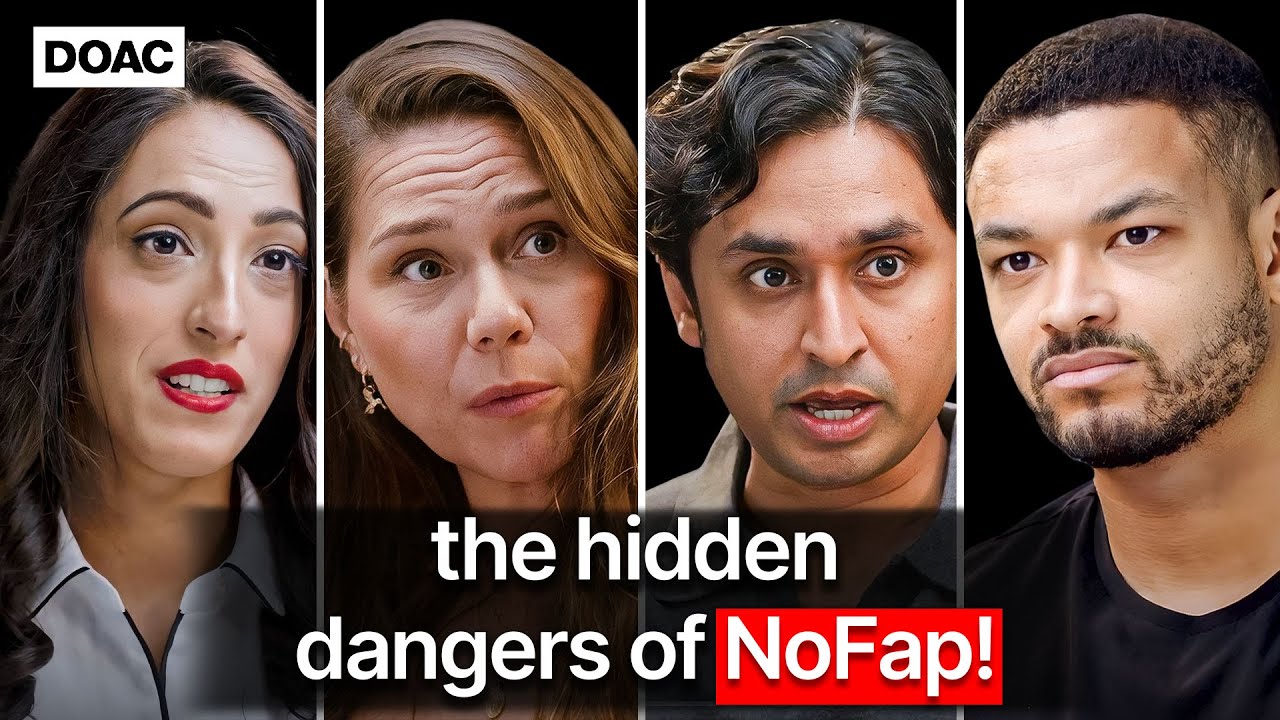
Explicit Content Debate: The Unseen Dangers Of Nofap & The Adult Industry Is Exploiting Our Brains! — The Diary Of A CEO

The Diary Of A CEO

Hyper-accessible online pornography disrupts human dopamine circuitry and pair-bonding, though experts warn that unscientific abstinence movements like NoFap cause physical harm without solving the root causes of addiction.

AI-assisted summary of Explicit Content Debate: The Unseen Dangers Of Nofap & The Adult Industry Is Exploiting Our Brains! — original source. Check the original for full context.

Source published:

Detailed notes

## Background Published on October 21, 2024, by The Diary Of A CEO on YouTube, this video features Steven Bartlett hosting a panel discussion with Dr. Alok Kanojia, Dr. Rena D. Malik, and Erika Lust. The channel description notes that the conversation explores the links between pornography, brain rewiring, relationship stability, sexual satisfaction, and erectile dysfunction.

## TL;DR The panel explores the multifaceted impact of pornography, examining how supernormal stimuli and dopamine hijacking drive problematic use, psychogenic erectile dysfunction, and social skills atrophy. While the speakers debate whether pornography is an outright addiction or a symptom of broader societal isolation, they highlight the risks of extreme content, tech exploitation, and unscientific abstinence movements like NoFap. Erika Lust advocates for ethical adult content and open discussion, while the medical experts emphasize the importance of comprehensive sex education, intrinsic purpose, and realistic expectations around intimacy.

## Atmosphere & style The panel maintains a thoughtful, frank, and intellectually grounded tone that balances clinical expertise with industry insider perspectives. Steven Bartlett acts as a curious and structured moderator, allowing the discussion to move fluidly between serious medical warnings and candid sexual realities. The atmosphere is open, empathetic, and earnest, encouraging nuanced debate over moral panics while tackling deeply personal topics with clarity and mutual respect.

## Key takeaways - [16:37](https://www.youtube.com/watch?v=8LjNUabIJOk&t=997s) Early exposure to pornography triggers a 'kindling effect' that sensitizes dopamine circuitry during development, increasing vulnerability to future addictions and draining motivation for real-world goals. - [21:13](https://www.youtube.com/watch?v=8LjNUabIJOk&t=1273s) The formal medical term is 'problematic porn use' rather than 'porn addiction', as there is no official diagnostic definition for porn addiction, and declining marriage rates stem from broader social factors. - [26:45](https://www.youtube.com/watch?v=8LjNUabIJOk&t=1605s) Tube-site pornography relies on supernormal stimuli and optimization for extreme, high-arousal content to maximize ad revenue and site traffic. - [35:12](https://www.youtube.com/watch?v=8LjNUabIJOk&t=2112s) Moral incongruence and shame regarding porn use create a cycle where individuals turn back to porn to cope with negative emotions, leading to feelings of powerlessness. - [41:25](https://www.youtube.com/watch?v=8LjNUabIJOk&t=2485s) Ethical adult content production focuses on performer desire, storytelling, safe working conditions, explicit consent, and fair compensation. - [51:09](https://www.youtube.com/watch?v=8LjNUabIJOk&t=3069s) Social media algorithms prioritize dwell time, resulting in feeds saturated with violent or extreme explicit content that exposes young audiences early. - [01:04:22](https://www.youtube.com/watch?v=8LjNUabIJOk&t=3862s) Parental sex education using proper anatomical terminology and proactive guidance before early adolescence is essential to counter unrealistic pornographic expectations. - [01:09:25](https://www.youtube.com/watch?v=8LjNUabIJOk&t=4165s) High-risk or extreme sexual content triggers intense dopamine releases, leading to desensitization and altering expectations of normal intimacy. - [01:24:54](https://www.youtube.com/watch?v=8LjNUabIJOk&t=5094s) Strict 'NoFap' white-knuckling and severe sexual abstinence claims are medically unfounded and can cause physical strain or chronic pelvic discomfort. - [01:36:29](https://www.youtube.com/watch?v=8LjNUabIJOk&t=5789s) Pornography and parasocial platforms like OnlyFans can act as relational substitutes, offering immediate physical gratification without the emotional depth of real-world relationships. - [01:46:49](https://www.youtube.com/watch?v=8LjNUabIJOk&t=6409s) The rise of AI companions, immersive VR, and haptic technology poses new challenges to human pair-bonding and real-world dating dynamics. - [33:27](https://www.youtube.com/watch?v=8LjNUabIJOk&t=2007s) Clinical evaluation of problematic porn use depends on subjective distress and functional impairment rather than raw usage frequency.

## Detailed walkthrough ### [00:00](https://www.youtube.com/watch?v=8LjNUabIJOk&t=0s) Intro & Context

Host Steven Bartlett opens the show by announcing that this episode marks a unique milestone for *The Diary Of A CEO*: the podcast's first-ever panel debate featuring three top experts with vastly different perspectives on pornography.

The debate brings together: * **Dr. Rena Malik**: A urologist, pelvic surgeon, and sexual health expert who approaches the topic through a clinical and educational lens. * **Dr. Alok Kanojia (Dr. K)**: A Harvard-trained psychiatrist and co-founder of Healthy Gamer, who frequently treats digital and behavioral addictions. * **Erika Lust**: An erotic film director, producer, and founder of Erika Lust Films, who approaches explicit content as an artistic, empowering medium.

To lay the groundwork for the debate, Steven fires off a series of alarming statistics highlighting the sheer scale of global adult content consumption and shifting sexual demographics:

* **Internet dominance**: Roughly 30% of all internet traffic and 35% of all internet downloads are related to pornography. Porn sites draw more combined web traffic than Netflix, Amazon, and Twitter (X) combined. One in five mobile searches is for explicit content. * **Workplace & habits**: 79% of young men view porn monthly, while 64% of young adults seek it out weekly or more. Furthermore, 58% of men and 38% of women admit to watching porn at work. In Poland, explicit content consumption surged 310% between 2004 and 2016. * **Rising sexlessness**: The percentage of young men aged 18 to 24 reporting no sexual activity in the past year rose from 18.9% in 2000 to over 30% in 2016. Among high school students, those who have never had intercourse grew from 45% in 1991 to 70% in 2021. * **Early exposure**: The average age of first exposure to pornography has dropped to just 11 years old, with 64% of young people reporting they stumbled across explicit content completely by accident.

---

[02:31](https://www.youtube.com/watch?v=8LjNUabIJOk&t=151s) Introductions

The panel begins with each guest outlining their background and professional focus. Dr. Rena Malik introduces herself as a board-certified urologist and pelvic surgeon specializing in female pelvic medicine and reconstructive surgery (urogynecology). Expanding her practice into sexual medicine, she treats complex conditions including erectile dysfunction, ejaculatory and arousal disorders, low libido, and lubrication issues. She frames her public work as a "digital opinion leader" demystifying sexual health for the public.

Dr. Alok Kanojia (Dr. K) shares his unconventional path to psychiatry. After failing out of college due to severe video game addiction, he traveled to India to study as a monk for seven years. He returned to complete medical school and psychiatric residency, eventually realizing that traditional academic psychiatry overlooked modern behavioral issues. His clinical focus centers on digital addictions—specifically video games and pornography—affecting the internet-native generation.

Erika Lust presents her background as an independent adult filmmaker, producer, and entrepreneur. Over her 20-year career in explicit cinema, she has advocated for indie adult cinema that prioritizes genuine desire, diversity, and ethical production.

> "I see myself more as a digital opinion leader in the space of Sexual Health and urologic health... someone who can speak about complex concepts in a way that people can understand." — Dr. Rena Malik

---

[06:04](https://www.youtube.com/watch?v=8LjNUabIJOk&t=364s) Does Porn Benefit Society?

Steven opens the debate with a straightforward question: *Is pornography a net benefit to people and society?*

Erika Lust argues strongly in favor, emphasizing that explicit content provides an important gateway to sexual exploration and self-discovery. She notes that women's sexuality has historically been framed around pleasing partners. For women struggling with low libido or shame, ethical adult cinema offers a safe space to explore personal desires, recognize bodily autonomy, and bridge the "orgasm gap."

Dr. K counters that while human sexuality and masturbation are healthy parts of life, the modern mechanics of how pornography is produced and consumed do significantly more harm than good. He highlights the dangerous trend of prepubescent exposure, noting that early exposure alters brain development and heightens vulnerability to future addictions.

Dr. Rena Malik agrees with Erika that pornography can deliver concrete benefits when used mindfully. She cites data showing that women who consume explicit media report higher sexual satisfaction and frequency because it helps them understand their own bodies. Furthermore, she notes that couples who watch explicit content together often experience improved intimacy and better sexual encounters.

* **Gender perspective**: Dr. K remarks on the interesting dynamic at the table—the two female panelists view adult media with optimism regarding empowerment, whereas his work in addiction psychiatry leaves him deeply concerned about its systematic harms. * **Early brain exposure**: Prepubescent exposure (younger than 11) is linked to higher baseline rates of compulsive behavior and addiction later in life.

---

[10:53](https://www.youtube.com/watch?v=8LjNUabIJOk&t=653s) Are We Desensitized by Porn? & How Porn Affects the Brain

Steven pushes the panel on whether widespread pornography consumption desensitizes individuals to real-world intimacy, contributing to rising youth sexlessness.

Dr. Rena Malik acknowledges that desensitization occurs when individuals rely on high-intensity explicit visuals as their sole mechanism for arousal. Habitual exposure to hyper-stimulating visual cues creates neural pathways that standard, real-world physical intimacy cannot easily replicate.

Dr. K explains how digital stimuli condition the nervous system. When the brain is repeatedly exposed to hyper-realistic visual and auditory cues—which are heavily edited and engineered in mass-produced adult media—it recalibrates its baseline threshold for arousal.

---

[13:38](https://www.youtube.com/watch?v=8LjNUabIJOk&t=818s) What Is Death Grip Syndrome?

Dr. K breaks down "Death Grip Syndrome"—a colloquial term used online to describe a very real physical and neurological conditioning issue.

When young men routinely masturbate without lubrication using an excessively tight grip, they train their spinal reflexes and brain to require high physical pressure (pounds per square inch) alongside hyper-stimulating visual inputs to achieve climax. When these individuals transition to real-life sexual partners, the natural friction and visual/auditory inputs of real intercourse feel insufficient, leading to situational erectile dysfunction, delayed ejaculation, or an inability to climax.

The panel notes that while relationship dissatisfaction correlates with high individual porn use, it remains a "chicken-or-egg" scenario: does heavy consumption cause relationship decay, or do unhappy partners turn to adult content as an escape? Dr. Malik cautions against overestimating how widespread these disorders are in the general population, noting that clinical settings attract a self-selected group of people struggling with these specific issues. Additionally, she points out the role of "moral incongruence"—individuals who hold strong personal or religious beliefs that porn is wrong often report higher distress and feel they have an "addiction," even when their usage patterns are modest.

> "They almost train their bodies physiologically to climax with a certain degree—like a certain pounds per square inch of force... which they get used to not only at the physiologic level but also at the neurological level." — Dr. Alok Kanojia

<FollowUp label="Would you like to proceed to Part 2 of the transcript walkthrough?" query="Please provide the walkthrough for Part 2 of the transcript."/>

[16:37](https://www.youtube.com/watch?v=8LjNUabIJOk&t=997s) How Pornography Affects the Brain and Dopamine Circuitry

Dr. Alok Kanojia (Dr. K) explains that the impact of pornography on an individual's brain is highly nuanced, dependent on how individual sensory and neural pathways sensitize to strong visual stimuli. Looking at early life exposure, Dr. K notes a recurring, almost "anecdotal statistic" in his clinical practice: pornography addicts frequently have older brothers. In this common dynamic, an older brother post-puberty begins watching pornography, and the younger sibling—wanting to copy them—gets exposed at an prematurely early age. This early exposure directly correlates with an increased potential for addiction later in life, driven by neurological development alongside sociological and family risk factors (such as unsupervised environments).

Dr. K introduces the "kindling effect," which describes how artificially activating the brain's dopaminergic circuitry during development sensitizes those pathways and leaves them vulnerable to future dopamine spikes. He compares this mechanism to how marijuana functions as a gateway drug—not by altering a person's moral character, but by fundamentally altering how neural circuits develop when stimulated early. Additionally, because every brain region and neurotransmitter is implicated in the evolutionary imperative of procreation, porn functions heavily as an emotional crutch for mood regulation. People increasingly turn to it in non-sexual contexts; Dr. K highlights a dramatic surge in "second-screen pornography," where individuals stream porn on a side monitor while working, strictly for emotional regulation rather than sexual arousal.

* **Dopamine & Motivation:** Because dopamine is the primary neurotransmitter governing motivation, heavy pornography use drains dopamine reserves, leaving individuals unmotivated in other areas of life. * **The Mechanics of Falling in Love:** Dr. K breaks down falling in love into sensory attraction (processed by the thalamus—visuals, voice, smell) followed by deep emotional bonding driven by dopamine. * **Dopamine Tolerance:** Regular porn use leads to dopamine depletion and high tolerance, making it noticeably harder for young people in their 20s and 30s to feel "chemistry" or a "spark" on real-world dates.

---

[21:13](https://www.youtube.com/watch?v=8LjNUabIJOk&t=1273s) Debate: Is Pornography an Addiction or Problematic Use?

Erika Lust observes that the discussion around pornography addiction and compulsive behavior centers heavily around a "very masculine experience," warning that society frequently treats male experiences as universal while overlooking female perspectives on adult media. Dr. Rena Malik responds by clarifying the official medical consensus: in formal medical vernacular, the behavior is categorized as "problematic porn use" rather than an outright "addiction," as a formal diagnostic definition for addiction in this context remains absent. Dr. Malik emphasizes that vast numbers of people consume pornography healthily without developing dopamine tolerance or interpersonal issues.

Dr. Malik further contextualizes these relationship struggles within broader societal shifts. Decreasing marriage rates and increasing singleness stem from many complex social factors, rather than pornography alone. However, because pornography is something an individual can actively control, addressing it gives people a tangible sense of agency over their lives. She underscores that brain receptors vary wildly in sensitivity from person to person, meaning no two brains react to the exact same pornographic stimulus in identical ways.

> "I think that while these issues do exist, there's also a whole bunch of other things that are ongoing in society right now that may make it more difficult for people to connect and for people to feel intimacy..." — **Dr. Rena Malik**

---

[23:39](https://www.youtube.com/watch?v=8LjNUabIJOk&t=1419s) Powerlessness, Tech Hijacking, and Ethical Pornography

Steven Bartlett shares a compelling data point from his podcast team's research: when evaluating global search volume around pornography, the single most searched query was "how do I quit pornography," followed closely by similar exit-oriented queries. He notes that turning to a search engine to stop a behavior reflects a deep, underlying sense of "desperation" and powerlessness similar to classic addiction dynamics. Erika Lust framing this through the lens of pervasive sex stigma, pointing out the moral conflict people experience when consuming something they believe is inherently bad.

Erika argues that society is quick to isolate pornography, when in reality it is symptomatic of how technology as a whole has hijacked human behavior. Across the board, young people are having less sex, and children spend far less time playing outside compared to previous generations. Furthermore, she challenges the monolithic view of porn. Most people immediately picture free tube sites when thinking of pornography, but alternative, ethically produced media exists.

* **Defining Ethical Porn Production:** Erika outlines safer production models characterized by strong working conditions, the active presence of intimacy coordinators and talent managers, transparent performer consent, fair pre-production agreements, and structured post-scene feedback loops.

---

[26:45](https://www.youtube.com/watch?v=8LjNUabIJOk&t=1605s) Erectile Dysfunction, Psychogenic ED, and "Fast Food" Media

Addressing the documented rise in erectile dysfunction (ED) over recent decades, Dr. Malik details how pornography contributes to "psychogenic erectile dysfunction." When men consume produced adult media, they absorb unrealistic expectations of performance and physical response. Transitioning to real-life sexual encounters—where neither partner acts or looks like an adult film actor—triggers performance anxiety, insecurity, and an inability to achieve an erection. Additionally, reliance on extreme visual stimuli or intense physical habits like "death grip" leaves men unable to get aroused by standard physical intimacy with a partner.

Dr. K builds on this by comparing the modern adult entertainment landscape to the fast-food industry. While healthy sexual media can offer genuine "nutrition" (education and destigmatization), tube sites have gamified and mass-produced sexual content into empty calories that hijack the brain's evolutionary biology.

To illustrate how artificial cues can hijack natural instincts, Dr. K recounts a famous biological study on a declining beetle population:

> "What they discovered is there's one thing that's responsible for these beetles not mating with each other, which is green beer bottles that were being littered... a green glass beer bottle activates... what's called a *supernormal stimulus*." — **Dr. Alok Kanojia**

[32:41](https://www.youtube.com/watch?v=8LjNUabIJOk&t=1961s) How Porn Companies Exploit You

Dr. Alok Kanojia explains that modern "tube sites" act as a fast-food equivalent for human sexuality. By optimizing for high-definition 4K visuals, louder audio, and extreme content, these platforms turn what was once natural and nutritious into hyper-stimulating, addictive consumption. It is a Darwinian race to the bottom where adult sites aggressively optimize algorithms to leech web traffic from competitors by exploiting the exact neural triggers that excite the human brain.

Erika Lust points out that the corporations behind tube sites have no genuine interest in sex, human intimacy, or the well-being of performers. Their business model relies entirely on selling ad inventory, which requires hyper-stimulating, clickbait content designed for fast, impulsive consumption. Steven Bartlett draws a direct comparison between "Big Porn" and the food or pharmaceutical industries, noting that whichever model maximizes availability and dopamine hits will dominate the market. He highlights staggering statistics to illustrate the scale: * **OnlyFans:** Reported earnings up **20%** year-over-year, generating **$6.6 billion**. * **PornHub:** Ranks as the **8th most trafficked website** in the world, receiving **5.5 billion monthly visits**.

Steven contrasts the instant gratification of online porn—accessible in **15 seconds** without putting on shoes or aftershave—against the real-world effort required to date, which involves going to the gym, getting a job, earning money, and learning how to converse with women.

---

[35:12](https://www.youtube.com/watch?v=8LjNUabIJOk&t=2112s) Moral Incongruence, Shame, and Anti-Erotic Media

Playing devil's advocate, Dr. Kanojia cautions against overly disparaging or demonizing all pornography. He notes that moral incongruence—feeling intense guilt over an action while continuing to perform it—creates a destructive shame cycle. When people feel ashamed of watching porn, they often turn back to pornography as a quick coping mechanism to numb those negative emotions, which ironically fuels the addiction further.

Erika Lust emphasizes that much of modern free porn is fundamentally "anti-erotic." When she investigates tube platforms to analyze trends, she finds the content repulsively unexciting to the point of feeling nauseated rather than aroused. She argues that society was far too slow to recognize the rapid shift that occurred when free tube sites emerged around **2007** (roughly **17 years ago**). Instead of catering to human intimacy, these sites rely on ad revenue from "grow your dick pills" or deceptive neighborhood dating pop-ups.

Dr. K explains that while our brain circuits (and hormones like oxytocin, dopamine, serotonin, estrogen, and testosterone) evolved to facilitate real-world procreation, tube sites have effectively hijacked these mechanisms. Additionally, newer models like OnlyFans introduce a social layer that removes the traditional boundary of anonymous consumption.

---

[39:29](https://www.youtube.com/watch?v=8LjNUabIJOk&t=2369s) Is Sex Education Enough?

The discussion shifts to how modern platforms exploit deep-seated human loneliness. Steven mentions the rise of online agencies where men secretly manage the accounts of popular female creators on platforms like OnlyFans, pretending to be the models in direct messages to converse with lonely subscribers. On social media platforms like Twitter (X), managers boast about making **$10,000 a month** by posing as adult actresses in DMs with young men. Dr. Kanojia highlights how combining sexual stimulation with simulated social connection targets vulnerable individuals who feel isolated, regardless of whether they are chatting with a human agency worker or an AI bot.

Erika argues that a fundamental cause of these issues is the lack of proper sex education and real discussions about intimacy. Media acts as a powerful teacher of gender roles and sexual expectations; when men consume free porn featuring women faking orgasms after four minutes of penetration without clitoral stimulation, it distorts their understanding of real female pleasure and leads to severe disconnects in relationships. Dr. Kanojia adds that while sex education is vital, society is also suffering from a widespread "social skills atrophy," where young men simply no longer know how to talk to women in real life.

---

[41:25](https://www.youtube.com/watch?v=8LjNUabIJOk&t=2485s) What Kind of Porn Does Erika Make?

Steven asks Erika to describe her own production approach. Erika explains that she creates "lovely, beautiful, cinematic porn" focused on genuine desire, narrative story arcs, and authentic chemistry between performers. Her process stands in stark contrast to mainstream tube sites: * **Performer Input:** She asks performers who they actually want to work with and teams them up based on real chemistry. * **Support System:** On-set teams include intimacy coordinators, talent managers, and producers who ensure performers are comfortable and respected. * **Aesthetic & Tone:** Focuses on cinematic eroticism over tacky, aggressive, or objectifying imagery.

Erika reveals that viewers often ask her, "Is this really porn?" because it resembles mainstream erotic cinema rather than cheap tube content. Steven notes that by prioritizing ethics, slow narrative arcs, and artistic value over hyper-optimized algorithms, her business operates at a financial disadvantage compared to mainstream platforms. Erika acknowledges that profit was never her primary motivation. She also recalls how tube sites previously pirated her films and altered the titles to include chauvinistic or fetishizing language to drive clicks, forcing her into lengthy legal battles to take them down.

---

[44:47](https://www.youtube.com/watch?v=8LjNUabIJOk&t=2687s) What’s Better for Relationships: No Porn or Porn?

When Steven asks whether no porn, Erika's porn, or mainstream porn is best for relationships, Dr. Rena Malik quips that Erika's adult films are undoubtedly "better than no porn." Dr. Kanojia suggests that for individuals or couples trying to break away from high-dopamine, fast-food-style adult content, watching an artistic, erotic film together with a glass of wine can serve as a healthier bridge. Eroticism relies on anticipation and foreplay, which aligns better with natural biological sexual response cycles.

Steven wonders whether watching porn together as a couple is an exception rather than the rule, humorously imagining "erotic film watch parties." He asks if removing the stigma around porn might inadvertently increase addiction, given its role in emotional regulation. Dr. K clarifies that addiction grows when a behavior becomes a person's sole coping mechanism. Diversifying one's relationship with media—shifting away from using explicit videos purely to get off or numb stress, and moving toward shared cinematic or artistic appreciation—can actually help deconstruct addictive patterns and enhance intimacy without relying on "dick-enhancing pills."

[49:31](https://www.youtube.com/watch?v=8LjNUabIJOk&t=2971s) Anatomy, Erotic Audio, and Social Media Censorship

The panel examines how physical anatomy intersects with sexual satisfaction and porn consumption. Dr. Rena Malik points out a key anatomical reality: the majority of female nerve endings are located at the front end of the vagina, whereas reaching the cervix is actually painful, meaning men do not need a gigantic penis to satisfy a partner. Steven Bartlett candidly jokes about his "degenerate male brain" suggesting that watching an erotic film for an hour and a half could be the easiest foreplay ever devised.

Dr. Malik pivots the discussion toward erotic audio, literature, and romance novels—media forms primarily consumed by women that carry little to no societal stigma compared to visual pornography. Erika Lust attributes this double standard to a deeper societal shame surrounding naked human bodies and explicit physical sexuality. Erika shares her frustration with extreme censorship on major platforms, noting that while women cannot show nipples online, her own educational and artistic social media accounts are constantly restricted or cut off, making organic growth nearly impossible. Even when speaking at TED Talks, her content gets age-gated to 18+ users. Steven notes a similar algorithmic shadowbanning on YouTube: when Andrew Huberman appeared on his show to discuss pornography, including the word "porn" in the title or thumbnail allowed the algorithm to push recommendations, but hid the video from direct search queries until the word was removed.

[51:09](https://www.youtube.com/watch?v=8LjNUabIJOk&t=3069s) Platform Algorithms and Explicit Content on Social Media

When Steven asks whether pornography should be banned on social media, Erika Lust takes a nuanced stand: explicit adult imagery should be restricted, but open discussion, sexual advice, and education around sexuality must be permitted. Dr. Alok Kanojia (Dr. K) reflects on the differences between media formats, noting that erotic literature is much harder to commoditize into "fast food" pornography because it requires higher-order cognitive processing rather than simply overloading sensory organs. He observes that male psychological distress often manifests as behavioral addictions due to epidemiological vulnerabilities.

The conversation turns to the rapid proliferation of explicit content on platforms like X (formerly Twitter). Erika and Steven note how user feeds have become saturated with pornography and extreme violence. Steven explains that recent algorithmic changes prioritize dwell time; to keep users scrolling longer, platforms push high-arousal content such as car crashes, street fights, and explicit adult videos. This algorithmic incentive structure drives monetization at the expense of user wellbeing, forcing intense fast-food style media over healthier, slower alternatives.

- **Platform Search Suppression:** Including the word "porn" in titles or thumbnails on YouTube suppressed direct search indexing for episode clips, even while recommendation algorithms pushed the content based on watch time. - **Dwell-Time Incentives:** Social media algorithms are designed to maximize engagement by surfacing high-arousal, shocking content (violence, extreme news, explicit media) to increase user dwell time and ad revenue.

[55:05](https://www.youtube.com/watch?v=8LjNUabIJOk&t=3305s) Health Warnings, Addiction, and Human Motivation

Steven draws an analogy between pornography consumption and public health measures for fast food, alcohol, and tobacco—such as graphic warning labels on cigarette packs or sugar taxes in the UK. He questions whether pornography should feature similar warning labels detailing potential psychological and relational harms at the point of consumption. Erika responds that while adults have a right to consume legally produced adult content, the industry must continue moving toward ethical production standards.

Dr. K illustrates the limitations of standard warning labels by sharing a story from his first year as a medical student. He repeatedly warned a patient about the deadly risks of smoking—lung cancer, heart disease, and strokes—yet the patient failed to quit month after month. It was only when Dr. K asked the man what truly mattered to him—walking his daughters down the aisle without dragging an oxygen tank or sitting in a wheelchair—that the message stuck. Dr. K emphasizes that behavioral change and addiction recovery require connecting with a person's intrinsic core values rather than simply pointing out negative consequences. Telling people "cookies are bad" is insufficient if they lack access to or desire for "broccoli."

[01:01:25](https://www.youtube.com/watch?v=8LjNUabIJOk&t=3685s) Reclaiming Purpose and Reprogramming the Brain

Dr. K and Dr. Malik highlight that the number one health-related search query among young men online is "how do I quit porn." However, telling someone to go cold turkey without offering a substitute or a broader purpose leaves them vulnerable to relapse, as boredom is a primary trigger for porn use. Dr. K suggests framing erotic films or slower-paced sexual media as a therapeutic tool to help men reprogram their brains away from rapid, three-minute "jiggly slippery" experiences, restoring their capacity for real-world intimacy.

The panel explores the profound link between a sense of life purpose and pornography addiction. Dr. K cites research showing that a feeling of meaninglessness in life is one of the strongest predictors of pornography addiction. When individuals feel their daily lives lack meaning, their brains turn to supernormal stimuli to squeeze out whatever dopamine they can get. This creates a vicious cycle: high-dopamine artificial stimuli sap the brain of the motivation required to pursue real-world goals, such as reading, socializing, or dating, reinforcing isolation and shame. The panel agrees that protecting the developing brains of younger generations through realistic sex education and clear boundary-setting is essential, as older adults generally possess more fully developed frontal lobes and established life structures.

- **Predictors of Pornography Addiction:** A primary psychological variable correlated with severe pornography addiction is a pervasive sense of meaninglessness or lack of purpose in life. - **Supernormal Stimuli Cycle:** Over-saturating neurotransmitters with high-dopamine visual content desensitizes the brain's reward system, leaving individuals with insufficient motivation for everyday rewarding activities like reading, nature, or real-world dating.

[01:04:22](https://www.youtube.com/watch?v=8LjNUabIJOk&t=3862s) How to Talk to Kids About Porn

Addressing sensitive topics like sex and pornography with children requires parents to step up as reliable, non-judgmental guides. Erika Lust emphasizes that parents must educate themselves first and be fully open and present when difficult questions arise rather than backing out due to shame. She argues that conversations about body parts need to start as early as children begin acquiring language, pointing out how widespread basic anatomical ignorance is today—even recalling a high-profile interview where singer Billie Eilish mistakenly referred to wanting to put her face in someone's "vagina" when she actually meant "vulva."

Dr. Rena Malik agrees wholeheartedly with this early approach, adding that teaching children correct anatomical terminology for both sexes lays a foundation of healthy curiosity. She emphasizes that these discussions cannot be a single, dramatic sit-down talk, but must instead be an ongoing, multi-stage dialogue that evolves throughout a child's development. Crucially, parents must avoid shaming sexual exploration—such as infant or toddler masturbation, which is often a self-soothing behavior. Instead of reacting with disgust, parents should gently teach children that self-touch is fine, but it belongs in private.

Drawing from four years of observational data at Healthy Gamer, Dr. Alok Kanojia highlights specific, evidence-based communication frameworks for parents. He notes that parents often make the mistake of trying to cover everything in one huge talk or delaying it until age 14, naive to the reality that average exposure occurs around age 11. He compares proactive conversations to medical advance directives: you do not wait until a patient is actively dying to discuss end-of-life care; you establish expectations beforehand.

- **Start Early:** Introduce accurate anatomical names (distinguishing vagina vs. vulva) as children learn language. - **Normalize Self-Soothing:** Address childhood self-touch by framing it as a private activity rather than a shameful one. - **Use Third-Party Framing:** Ask open-ended questions about surroundings or peers (e.g., *"Do kids at your school watch this? What do you think about that?"*) to lower the child's defensiveness. - **Be a Resource:** Signal availability so children know they can come to parents with difficult sexual questions without fear of judgment.

---

[01:09:25](https://www.youtube.com/watch?v=8LjNUabIJOk&t=4165s) Does Porn Violence Reflect Audience Demand?

The conversation turns to the alarming prevalence of aggressive and violent themes in online adult media and their real-world impact on young adults. Steven Bartlett reads out stark statistics on the ubiquity of extreme acts like choking, slapping, and airway restriction in mainstream porn videos, alongside survey data showing that 57% of young adults aged 18 to 35 report having experienced strangulation during sex. Erika Lust argues that sexual violence is a deep-seated, systemic societal issue that long pre-dates modern media—pointing out that the most dangerous place for a woman remains her own home. She views tube-site pornography primarily as a mirror reflecting society's existing values and power dynamics, though she acknowledges a feedback loop where young viewers copy what they see online.

``` "Sexual violence towards women is a systemic problem we have in our society... Porn reflects the values we have in our society. I see porn a bit as a mirror." — Erika Lust ```

Dr. Kanojia offers a multifaceted physiological and psychological analysis of why acts like breath control and strangulation have surged in popularity. Physiologically, low oxygen ($O_2$) and high carbon dioxide ($CO_2$) levels alter brain chemistry—a dynamic similar to deep meditative states or psychedelic experiences—which can artificially intensify physical sensations. Psychologically, high-risk behaviors activate intense dopamine releases because survival instincts force the brain to become hyper-focused and "dialed in," giving people in flow-deprived or anxious states a temporary rush of feeling alive. Furthermore, Dr. Kanojia links the rise of aggressive "punishment" content on free streaming platforms to systemic male frustration, loneliness, and resentful "incel" subcultures. Algorithms on tube platforms detect that hostile, dominant fantasies drive high engagement from isolated viewers, optimizing content to feed those dark impulses.

- **Prevalence of Rough Sex:** Studies show 57% of 18–35 year-olds have experienced strangulation during intercourse, with 38% of women under 40 reporting unwanted choking, slapping, or gagging during consensual sex. - **Coercion Rates:** 42% of women who experienced unwanted rough sex reported feeling pressured or coerced into accepting it. - **Physiological High:** Hypoxia and elevated carbon dioxide alter consciousness, which can temporarily magnify sensory perception at immense physical risk. - **Algorithmic Amplification:** Free tube platforms use machine-learning algorithms to deliver increasingly extreme, punitive acts to monetize male isolation and resentment.

---

[01:19:08](https://www.youtube.com/watch?v=8LjNUabIJOk&t=4748s) Is Softcore Porn a Gateway to Hardcore Porn?

As sexual content becomes more intense and readily accessible, the panel debates whether lower-intensity media acts as a progressive "gateway" to extreme material. Steven Bartlett compares softcore pornography to a gateway drug like heroin, suggesting that as the brain's reward centers become desensitized over time, consumers require progressively more shocking, taboo, or extreme material to achieve the same baseline level of arousal. This escalating tolerance cycle pushes viewers away from mild, conventional content toward hardcore and aggressive genres.

<FollowUp label="Want to continue reading Part 6 of the transcript walkthrough?" query="Please provide the detailed walkthrough for Part 6 of this transcript, continuing where Part 5 left off."/>

[01:19:24](https://www.youtube.com/watch?v=8LjNUabIJOk&t=4764s) Is Softcore Porn a Gateway to Hardcore Content?

The discussion opens with a debate over whether softer forms of erotic media act as a gateway to more extreme content. Dr. Alok Kanojia (Dr. K) explains that while desensitization and dopamine chasing could theoretically make eroticism a gateway drug to hardcore porn, erotic media engages different neurological and emotional circuits. Unlike pornography, which centers on dopamine release and the final outcome of orgasm, eroticism focuses on everything else surrounding sexual intimacy. In his clinical practice, Dr. K encourages patients with unhealthy sexual habits to step away from an outcome-driven mindset, emphasizing that men can engage in positive sexual experiences without needing an orgasm every single time.

A primary concern arising from heavy consumption of extreme pornography is the distortion of sexual norms and consent. Dr. K notes a troubling surge in young men adopting coercive behaviors simply because porn has normalized violent or aggressive acts, leaving them to falsely believe that women enjoy it. Dr. Rena Malik points out a key bias in existing research literature: while studies frequently ask women if they feel coerced into sexual acts, researchers rarely ask men if they feel pressured to perform specific, aggressive roles.

[01:20:57](https://www.youtube.com/watch?v=8LjNUabIJOk&t=4857s) The One Script for Men and Media Influences

The panel examines how mainstream media and adult content dictate a rigid, narrow sexual script for men—namely, acting as a "penetrative sex machine." Dr. Rena Malik observes that conventional film and television have historically portrayed intimate encounters through a male lens, usually showing quick penetration followed almost immediately by a female orgasm, completely detached from real-life dynamics.

Dr. K describes this dynamic as a two-way street between consumer demand and media production. Mainstream creators supply hyper-processed, calorie-dense porn focused solely on quick masturbatory orgasms, which in turn fuels further demand. He contrasts this with mainstream literature, where an influx of female authors over the last 10 to 15 years has completely transformed the fantasy and young adult genres. To fix the current imbalance in male sexual expectations, Dr. K half-jokingly suggests that society might benefit from men writing romance novels to craft new narratives.

[01:22:52](https://www.youtube.com/watch?v=8LjNUabIJOk&t=4972s) Why Porn Shouldn't Be Free

Erika Lust asserts that adult media consumers hold significant power through their time, clicks, and financial choices. She argues strongly that pornography should never be free, emphasizing that adult performers are working professionals who need to pay rent, buy food, and support their families. Host Steven Bartlett humorously points out the irony of modern society, noting that while essentials like food, water, and healthcare are not free human rights, pornography is freely accessible worldwide.

The panel breaks down the economics of the free adult industry, clarifying that "free" sites simply operate on an ad-supported model where users pay with their attention while third-party platform operators capture the profits instead of the creators. Steven Bartlett shares recent financial statistics from OnlyFans, highlighting how direct-to-creator platforms have disrupted the traditional industry model. Erika Lust reflects on her 20 years in the adult film industry, noting that the shift toward direct fan support gives performers autonomy and fair compensation.

- In 2024, OnlyFans generated approximately **$6.6 billion** in gross revenue, distributing around **$5 billion** directly to content creators. - Erika Lust has worked as an erotic filmmaker and director in the adult industry for **20 years**.

[01:24:54](https://www.youtube.com/watch?v=8LjNUabIJOk&t=5094s) Why NoFap Is a Bad Idea

Steven Bartlett introduces the topic of "NoFap"—the online movement advocating complete abstinence from pornography and masturbation—and asks Dr. Rena Malik for her medical perspective. Dr. Malik clarifies that while personal abstinence can help individuals gain behavioral discipline, many claims made by NoFap advocates are medically unfounded. Common myths about abstinence boosting testosterone or causing major physiological enhancements are not supported by peer-reviewed literature.

Dr. Malik breaks down the physiology of ejaculation and sperm health, highlighting the risks of long-term abstinence: - A very small study showing a minor testosterone spike after 21 days of ejaculation abstinence involved only **10 men**, making it scientifically non-generalizable and unrepeated. - Testosterone levels naturally fluctuate significantly throughout the day and from one day to the next. - Abstaining from ejaculation for up to **5 days** can temporarily improve semen volume and sperm parameters for fertility purposes. - Abstaining beyond **5 days** leads to sperm degradation and DNA damage, decreasing overall sperm quality rather than improving it.

Dr. K explains why NoFap resonates so strongly with young men despite the lack of physiological proof. Abstinence serves as a structured tool for behavioral control, helping men break out of aimless daily loops of boredom, masturbation, and low motivation. By taking away continuous sexual triggers, individuals reduce sensory inputs that constantly provoke lustful thoughts. He traces the roots of celibacy through global spiritual traditions—such as Abrahamic religions, Hinduism, and Buddhism—where practices were designed to quiet the mind.

Dr. K shares an anatomical example from yogic traditions called *Siddhasana* (the Accomplished Pose), where a practitioner presses their heel against the perineum. A physician trained in yoga explained to him that compressing the pelvic floor and gentle blood flow to the testes may naturally reduce testosterone and semen production to make celibacy manageable. However, both Dr. K and Dr. Malik warn against the modern online NoFap culture. When men "white-knuckle" abstinence out of shame or peer pressure, they frequently tense their pelvic floor muscles, leading to chronic pelvic pain, painful ejaculations, and erectile dysfunction.

Here is a detailed, faithful walkthrough of the provided transcript section.

---

[01:34:04](https://www.youtube.com/watch?v=8LjNUabIJOk&t=5644s) The Dangers of "White Knuckling" and Community Shame

Dr. Rena Malik highlights the severe emotional toll that strict abstention communities can place on individuals. She brings up the phenomenon of nocturnal emissions (nighttime ejaculations), explaining that they are completely involuntary physiological responses. When men in NoFap-style communities experience a nocturnal emission, they are frequently shamed by peers for "failing," despite having zero control over their body’s natural processes. While Dr. Malik notes that organized suppression can be fine if an individual derives genuine personal benefit from it, she takes strong issue with communities where social pressure and toxic shame cause active mental harm.

``` THE "WHITE KNUCKLING" ADDICTION CYCLE

[ Baseline Craving ] ---> [ White Knuckling ] ---> [ Severe Withdrawal ] (Psychological desire) (Resisting purely through (Body experiences severe brute willpower) pain / high distress) | v [ Level 10 Escalation ] <--- [ Brain Adaptation ] <--- [ Cracking / Relapse ] (Brain bypasses early (Learns to trigger hard (Dopamine hit relieves stages in the future) withdrawal immediately) the intense pain) ```

Dr. Alok Kanojia (Dr. K) jumps in to emphasize a core principle of addiction biology that makes brute-force resistance—or "white knuckling"—counterproductive. Using opioid addiction as an analogy, Dr. K explains how psychological cravings initially begin with a desire for mental euphoria. If a person tries to purely White Knuckle through it without addressing the underlying drivers, the body eventually slides into severe physical withdrawal and pain. When the person finally cracks and uses the substance to escape that pain, the brain undergoes a dangerous learning process: it learns *exactly* what level of suffering it must inflict on you to force a relapse.

Dr. K compares this biological feedback loop to a child throwing a temper tantrum for an iPad: if parents give in only after the child starts screaming and crying, they actively train the child to skip moderate requests and throw a full meltdown next time. Biologically, every time someone white-knuckles a pornography addiction and ultimately caves, they train their brain to bypass mild urges and jump straight to "level 10" acute withdrawal, making the addiction significantly worse over time.

- **Nocturnal emission:** Involuntary nighttime ejaculation; a natural physiological reflex that cannot be controlled. - **White knuckling:** Attempting to stop an addiction through pure willpower without psychological tools or support. - **Neurobiological reinforcement:** The process where cracking under extreme distress conditions the brain to deploy harsher withdrawal symptoms much faster during future urges.

---

[01:36:29](https://www.youtube.com/watch?v=8LjNUabIJOk&t=5789s) Pornography as a High-Calorie, Low-Nutrition Substitute

Steven Bartlett brings up the concept of pornography acting as a substitute for real-world relationships. He notes a striking pattern in his audience comments: a massive number of people express intense hatred toward both dating apps and pornography, yet feel completely reliant on both. Steven recalls hosting a dating app CEO on *The Diary Of A CEO*, expecting a straightforward business conversation, only to find the comment section flooded with angry viewers wielding metaphorical "pitchforks" over how these platforms and adult media have ruined their lives.

Dr. K explains this paradox using a dietary metaphor: when a person is hungry, they can consume calorically dense junk food to quiet their stomach's immediate hunger pangs. However, that high-calorie food lacks essential micronutrients, vitamins, and fiber, ultimately leaving the body malnourished. Similarly, human beings evolved sexual desire as a fundamental biological drive to encourage mating and relationship-building. Pornography trick-activates specific neural circuits associated with connection, providing immediate gratification (followed by "post-nut clarity") while completely starving the individual of the emotional and holistic benefits of a true partnership.

``` REAL RELATIONSHIPS vs. PORNOGRAPHY & ONLYFANS

Real Relationship: [ Complete Neural & Emotional Activation ] (Mutual intimacy, shared history, physical touch)

Pornography: [ Partial Neural Activation ] (Visual arousal, quick dopamine release, zero connection)

OnlyFans: [ Parasocial Emotional Exploitation ] (Partial neural activation + simulated emotional connection) ```

The issue is further exacerbated by platforms like OnlyFans. Unlike traditional adult film actresses—where viewers rarely form direct individual relationships—OnlyFans introduces direct text interaction, fostering parasocial emotional intimacy. Dr. K points out that he has recently seen a dramatic spike in marriages ruined by OnlyFans compared to traditional pornography. Because it combines physical arousal with a simulated emotional relationship, it preys directly on deep-seated personal insecurities and marital problems.

- **Post-nut clarity:** The temporary reduction in sexual drive and altered perception of the world immediately following ejaculation. - **Parasocial interaction:** One-sided emotional connections formed with media personalities or digital creators.

---

[01:39:40](https://www.youtube.com/watch?v=8LjNUabIJOk&t=5980s) Global Trends and the Non-Heteronormative Counterperspective

Steven poses a hypothetical question to the panel: if online pornography were completely eliminated, would romantic relationships in real life actually improve? Dr. K admits that while no randomized controlled trials (RCTs) exist to prove direct cause-and-effect, global macroeconomic trends point toward a severe issue. Worldwide, pornography consumption is skyrocketing while relational health is falling off a cliff—marked by plunging birth rates, delayed marriages, and an escalating culture war between men and women. Dr. K asserts that if forced to answer, removing modern pornography would make things better, simply because the content itself has transformed into something increasingly toxic and extreme.

Erika Lust strongly challenges the idea that removing pornography would make the world a better place. Speaking from her perspective as an erotic film director, she argues that eradicating adult media would be devastating for marginalized groups and individuals seeking alternative sexual scripts outside of mainstream, heteronormative, male-dominant paradigms. Over the past several years, the internet has allowed people to discover diverse role models, queer representation, and inclusive sex education that expands their understanding of intimacy far beyond basic penetrative sex.

- **Randomized Controlled Trials (RCTs):** The gold-standard scientific research design, which is ethically and practically impossible to conduct on long-term pornography deprivation. - **Heteronormative scripts:** Standard societal assumptions that position heterosexual, male-dominated, penetrative sex as the default standard for sexual activity.

---

[01:42:36](https://www.youtube.com/watch?v=8LjNUabIJOk&t=6156s) Historical Context and Pornography as a Cultural Scapegoat

Steven asks what human beings did before online pornography existed and whether people struggled in the bedroom in previous eras. Erika points out that the modern "frigidness" and taboo surrounding sex is a relatively recent societal construct. In ancient civilizations, sexuality was far more openly expressed and integrated into public life. However, Steven and Dr. K note a key difference: ancient expressions of sexuality were not instantly accessible in 15-second high-definition clips featuring extreme behaviors at the push of a button. Erika emphasizes that society is currently in a transitional "maturing process" regarding digital media, making open, nuanced panel discussions vital for cultural progress.

Dr. Malik argues that pornography often serves as a convenient scapegoat for much broader, multifaceted societal failures. If pornography were magically erased tomorrow, people would simply migrate toward other coping mechanisms or addictive behaviors—whether that be OnlyFans, AI partners, video games, gambling, or substance abuse.

Dr. K agrees in part, noting that individuals have specific "drugs of choice" based on their psychological makeup. However, he cautions that hijacking the biological circuitry of sex and reproduction is uniquely dangerous because those systems are tied directly to human survival and pair-bonding. He compares the unchecked explosion of digital porn to introducing an invasive species—like rabbits in Australia—where the lack of natural checks and balances leads to disastrous societal consequences, such as the alarming stat that over 40% of college women report being coerced into non-fatal strangulation/asphyxiation during sex.

- **Invasive species metaphor:** Comparing unchecked tech algorithms to the historical introduction of rabbits in Australia, which overrun ecosystems due to a lack of natural predators. - **Coerced asphyxiation:** A rising trend in real-world sexual encounters driven by the normalization of violent acts in mainstream hardcore adult media.

---

[01:46:49](https://www.youtube.com/watch?v=8LjNUabIJOk&t=6409s) The Emerging Frontier: AI, Virtual Reality, and "Digisexuality"

Looking toward the near future, Steven highlights how rapid advancements in Virtual Reality (VR), robotics, and Large Language Models (LLMs) threaten to push sexual isolation even further. Unlike static video, modern LLMs can engage in highly personalized, interactive conversations designed to mirror a user's exact emotional desires. He cites a 2020 study on VR pornography showing that immersive environments made participants feel significantly more desired, flirted with, and connected to the actor on screen compared to traditional 2D video. As adult media becomes more hyper-immersive, it becomes a far more convincing—and addictive—substitute for real human relationships.

``` THE EVOLUTION OF EXPLOITATIVE MEDIA

[ 2D Video Porn ] ---> [ OnlyFans / Creator Economy ] ---> [ AI / VR / Robotics ] Visual consumption Simulated interaction via text Hyper-personalized, with no interaction & parasocial bonding interactive immersion ```

Steven lists current platforms catering to "digisexuals"—individuals who form primary romantic or sexual attachments to digital entities. Users can fully customize an AI partner's physical appearance, personality traits, and specific sexual fantasies. Because these AI models retain full memory of past conversations, they continuously optimize their responses to validate the user's specific desires. While an AI entity cannot physically touch, hug, or kiss a user, Steven warns that the rapid development of sex robotics will soon bridge that physical gap. He candidly concludes that while humanity worries about climate change, nuclear war, or pandemic superbugs, the total erosion of human pair-bonding via artificial companions presents a quiet, existential threat to the future of the human race.

- **Digisexuals:** Individuals whose primary sexual and romantic identity revolves around the use of digital technology, virtual reality, and artificial intelligence. - **2020 VR Study:** Research demonstrating that immersive VR environments significantly heighten feelings of emotional closeness and social presence compared to standard flat-screen video.

Here is a detailed, faithful walkthrough of this section of the transcript, capturing the arguments, nuance, data points, and dynamic interactions between Steven Bartlett, Dr. Alok Kanojia (Dr. K), Dr. Rena Malik, and Erika Lust.

---

[01:49:11](https://www.youtube.com/watch?v=8LjNUabIJOk&t=6551s) AI Girlfriends, Haptic Feedback, and the Risk to Humanity

Dr. K makes a striking and bold claim: the evolution of virtual intimacy could genuinely threaten the survival of the human race. The core issue with emerging immersive technology is that it offers a synthetic world that people actively prefer over real life. In real-world relationships, partners are independent human beings with their own thoughts, desires, and unpredictable moods, which can feel frustrating and demanding. By contrast, OnlyFans creators are financially incentivized not to upset their subscribers. AI girlfriends take this concept even further by tailoring themselves completely to user desires.

However, Dr. K warns that tech developers will soon realize that absolute compliance is not actually the most addictive model. Drawing from gambling psychology and the mechanics of variable reinforcement, the most addicting AI companions will be programmed to occasionally pick fights, throw temper tantrums, or withhold rewards. In video games like *Fortnite*, 100 players compete and 99 lose, making the eventual win trigger an astronomical dopamine surge. Denying human beings a reward before giving it to them creates intense psychological dependency. Combined with haptic feedback technology—originally developed in the early 2000s for remote medical applications like breast cancer detection gloves—future AI companions will deliver physical touch alongside variable emotional feedback. When men can access physical touch, artificial friction, and high-stakes emotional cycles without the effort of a real partner, many will abandon real-world dating entirely.

Dr. Rena Malik counters that humanity cannot simply give up. She stresses the necessity of teaching children that real relationships are difficult but deeply worth the effort. Because procreation and real-world relationship rates are already declining, society must actively create micro-level checks and balances to help younger generations recognize the value of human connection.

- **Key concept:** Variable reinforcement schedule (gambling psychology) applied to AI relationships to maximize addictiveness. - **Example of reward denial:** *Fortnite* (100 players, 1 winner, 99% loss rate driving a massive dopamine high on victory). - **Origin of haptic feedback:** Early 2000s medical technology designed for remote breast cancer examinations via specialized sensory gloves.

---

[01:52:48](https://www.youtube.com/watch?v=8LjNUabIJOk&t=6768s) The Path of Least Resistance vs. Incentives and Environment

Steven Bartlett challenges the panel's optimism, arguing that human beings naturally choose the path of least resistance when left to their own devices. Drawing an analogy to public health, Steven recalls being taught in primary school to eat "five a day" of fruit and vegetables. Despite widespread public education about nutrition, people are placed in a food environment surrounded by cheap, hyper-palatable, processed foods and sodas that trigger massive brain spikes. As a result, the United States faces an escalating obesity crisis; knowing what is healthy does not stop people from reaching for low-friction comfort. Steven notes that corporate culture operates the same way: a CEO can demand innovation, but if employee bonuses and job descriptions reward doing routine tasks, employees will strictly follow their incentives. Pornography functions identically—when explicit content is frictionless and instantly available, basic information about its harms will rarely override immediate temptation.

Dr. Rena Malik points out that humans are fully capable of delayed gratification, pointing to medical school, launching businesses, or creative production as clear examples where individuals endure short-term pain for long-term rewards. Furthermore, adopting healthy habits yields tangible physical energy that reinforces positive behavior. Steven responds that despite decades of "education, education, education," US obesity statistics have continuously moved in a negative direction, raising the fundamental debate: Is discipline an individual responsibility, or must society restructure the environment to make healthy choices easier?

Dr. K responds that medical training teaches that complex issues are never an "either/or" choice—they are always multifactorial, requiring solutions at both the individual and societal levels. Striking a slightly humorous note, he adds that if AI relationships do cause a collapse, those few humans who continue having real sex will pass on their genes while those susceptible to virtual intimacy filter themselves out, ensuring humanity survives.

- **Public health parallel:** Widespread knowledge of the "5-a-day" fruit/vegetable guideline failed to curb obesity because the surrounding food environment favors fast, cheap, highly rewarding options. - **Corporate incentives principle:** Employees align with how they are evaluated and compensated, not what leadership verbally requests. - **Delayed gratification examples:** Completing medical school, launching a company, or producing creative projects.

---

[01:57:16](https://www.youtube.com/watch?v=8LjNUabIJOk&t=7036s) Human Impulse Control and the Evolution of Self-Correction

Addressing the deeper biological and philosophical nature of self-control, Dr. K argues that human beings are unique in their ability to intentionally act against their internal biological programming. While animals act strictly on immediate instinct—referencing a viral video where a dog fed a strict vegan diet for two years immediately chose real meat over vegetable chowder when given the option—humans routinely restrain themselves. Humanity dominates the planet precisely because individuals choose broccoli over cookies or restrain their anger during arguments.

Steven forcefully pushes back, arguing that humanity is losing almost every battle against its impulses. He cites rising global obesity, surging social media consumption, increasing porn usage, heavy video gaming, gambling, and alcohol use as clear evidence that people are becoming slaves to their base urges.

Dr. K agrees that humanity is currently losing the immediate war, but insists that human self-control is actually increasing over time. The problem is that technology, social media, and pornography are evolving better, more sophisticated "weapons" faster than human biology can adapt. Despite being outgunned and caught off guard, humanity is actively fighting back. The massive popularity of educational podcasts, top internet searches like "how to quit pornography," and public health movements demonstrate a collective push for recovery. Dr. K playfully points out that Steven’s role as podcast host is a prime example of this counter-movement: by constantly asking pessimistic, worst-case questions ("we're all doomed, right?"), Steven forces the panel to articulate the strongest possible messages of hope and actionable solutions for the audience.

- **Animal vs. human impulse experiment:** A dog kept on a vegan diet for two years immediately selected meat when presented with a choice between meat and a broccoli-corn dish. - **The escalation of addictive technology:** Tech algorithms and adult content are refining their psychological delivery systems faster than human baseline impulse control can naturally adapt. - **Addiction treatment principle:** Effective intervention requires exploring both the pros and cons of a behavior rather than simply lecturing that it is "bad."

---

[02:01:49](https://www.youtube.com/watch?v=8LjNUabIJOk&t=7309s) Defining "Too Much" Porn and Restructuring the Industry

Steven asks Dr. Rena Malik directly whether there is such a thing as "too much" pornography. Dr. Malik explains that in clinical data regarding problematic porn use, the determining factor is not a strict numerical threshold or frequency count, but rather how the user subjectively feels about their consumption. If an individual feels guilty, distressed, or feels they are overusing it, then it is a problem for them, and abstaining or seeking alternatives is beneficial. Conversely, if someone views pornography without personal distress and it does not impair their employment, everyday functioning, or personal relationships, it is not considered clinically problematic.

To conclude the segment, Steven asks Dr. Malik what specific policy or legislation she would enact if she were named Prime Minister or President with total authority to make society's relationship with pornography healthier. Dr. Malik states that she would introduce mandatory, periodic self-analysis assessments for porn users. Rather than banning content, this policy would force individuals to objectively review their usage metrics—such as total hours spent and frequency of use—to encourage conscious awareness and self-reflection regarding their habits.

- **Clinical marker for problematic porn use:** Subjective distress, personal dissatisfaction, and functional impairment in relationships or work, rather than raw consumption frequency. - **Policy proposal:** Mandatory periodic self-reflection tools to track total hours and usage patterns to promote objective awareness.

[02:03:17](https://www.youtube.com/watch?v=8LjNUabIJOk&t=7397s) System-Level Interventions and Social-Emotional Education

Dr. Rena Malik proposes implementing direct digital warnings on adult platforms. She suggests triggering alerts when usage patterns hit specific thresholds, prompting users with questions about potential relationship difficulties and offering resources for support or intervention. Taking a more radical stance, Dr. Alok Kanojia (Dr. K) half-jokingly states his first instinct would be to resign, but advocates for a foundational shift in public policy: mandatory social and emotional skills training for all children. He points out that in an era where facts and state capitals are instantaneously accessible online, school curriculums must pivot toward teaching emotional regulation, interpersonal connection, and media literacy so young people can decode the underlying messages sent by media.

Erika Lust reiterates the importance of media literacy, mandatory sexual education, and keeping pornography behind payment walls. Steven Bartlett interjects to run a sponsor spot for PerfectTed, praising the matcha-based energy drink's ability to prevent energy crashes during podcast recordings and highlighting their new "Juicy Peach" flavor alongside a 40% discount code (`DIARY40`).

* Dr. K highlights that unregulated emotions serve as the root cause for all forms of addiction and media overconsumption. * Erika Lust firmly advocates for mandatory sex education and payment barriers for explicit content. * Steven offers a temporary 40% discount on PerfectTed via `perfectted.com` using code `DIARY40`.

---

[02:05:59](https://www.youtube.com/watch?v=8LjNUabIJOk&t=7559s) Body Image, Anatomy, and Unrealistic Standards

Shifting the conversation to underaddressed topics, Dr. Malik points out how pornography heavily distorts body image, fueling "small penis anxiety" in men and driving interest in procedures like labioplasty for women. Because adult performers fall into extreme statistical deviations for physical traits, viewers construct unrealistic expectations. Erika Lust counters this perspective, arguing that modern pornography offers far more diverse body types and ages than 10 years ago, suggesting that fashion platforms create far worse body dysmorphia. Dr. Malik notes that her most-viewed YouTube video—focused on penis length—has amassed over 30 million views, demonstrating widespread anxiety on the subject.

Erika clarifies that when casting performers, she prioritizes personality, energy, passion, and chemistry over physical dimensions, though she acknowledges that male performers in mainstream porn often possess above-average measurements. Dr. Malik clarifies that the average erect penis length is actually 5.1 to 5.5 inches. Research shows that both men and women consistently overestimate average anatomy size and struggle to visually judge measurements accurately.

* Average erect penis length: **5.1 to 5.5 inches**. * Dr. Malik's video regarding penis enlargement metrics has garnered over **30 million views**. * Studies indicate both men and women systematically overestimate average anatomical dimensions by up to an inch.

---

[02:09:57](https://www.youtube.com/watch?v=8LjNUabIJOk&t=7797s) Duration Expectations and "Normal" Sexual Reality

The panel explores the contrast between real-life sexual encounters and pornographic portrayals of endurance. Dr. Malik notes that the average time to male ejaculation during intercourse is roughly 5 to 6 minutes, whereas women average about 14 minutes to reach orgasm. Dr. K agrees, noting that clinical studies show typical intercourse lasts between 3 and 7 minutes, with approximately 50% of women reporting they do not desire intercourse lasting longer than 15 minutes. Highlighting the absurdity of distorted norms, Dr. K recalls attending a co-ed sauna in Europe where seeing dozens of everyday, aging naked bodies provided a healthy recalibration of reality—something modern society lacks because people only ever see their own bodies or hyper-curated media.

``` Average Duration vs. Expectations ┌───────────────────────────┬──────────────────┐ │ Male Average Ejaculation │ 5 - 6 minutes │ │ Average Intercourse Range │ 3 - 7 minutes │ │ Female Average Orgasm │ 14 minutes │ │ Female Ideal Max Duration │ < 15 minutes │ └───────────────────────────┴──────────────────┘ ```

---

[02:12:05](https://www.youtube.com/watch?v=8LjNUabIJOk&t=7925s) Market Demands: Idyllic Standards vs. Amateur Realism

Steven questions whether consumers would actually purchase content that reflects realistic body types and average durations, or if commercial algorithms inevitably prioritize idealization. Erika confirms that realistic adult content performs remarkably well, sharing that a film she produced featuring a couple in their 70s achieved massive success. She explains that while mainstream platforms categorize performers by specific body traits (such as BBW, MILF, or Cougar), consumers are increasingly searching for "real sex" and authentic connections.

Dr. K adds that the explosive rise of platforms like OnlyFans—which generated $6.6 billion—and the popularity of "girl-next-door" amateur content reflect a growing market demand for everyday bodies, drawing a parallel to how audiences transitioned from glossy television to raw, long-form podcasts. Steven pushes back, noting that top-earning creators across OnlyFans and PornHub still predominantly fit traditional, mannequin-like beauty standards, sparking a friendly debate with the panel about distribution curves versus top-tier performers.

* OnlyFans generated **$6.6 billion** in revenue by leaning into creator-driven, amateur-style content. * Search trends across major adult platforms show high demand for keywords centered on "real sex."

---

[02:17:43](https://www.youtube.com/watch?v=8LjNUabIJOk&t=8263s) Closing Statements on Education and Body Self-Acceptance

To wrap up the discussion, Steven asks each panelist to deliver their final takeaways for viewers, parents, doctors, and listening policymakers. Dr. Malik urges the audience to invest in comprehensive education regarding human anatomy and sexual health. Understanding real anatomy and physical responses forms the essential foundation for building healthy relationships with oneself and sexual partners, allowing individuals to navigate adult media without damaging their self-esteem.

> "Invest in education about your body and about sex. Learn what your anatomy is and what real sex is—that is of paramount importance to having a successful relationship with yourself and your partners." — **Dr. Rena Malik**

[02:18:30](https://www.youtube.com/watch?v=8LjNUabIJOk&t=8310s) Closing Statements: Changing Perspectives on Pornography

The host reflects on the broader insights gained from the discussion, emphasizing that the human body is constantly learning and adapting. While pornography can certainly carry negative effects, the key lies in understanding one's personal relationship with it and addressing the root causes of that consumption. Transitioning to mindful alternatives like erotic film or incorporating it constructively within a partnership demonstrates that adult content "doesn't have to be a bad thing; it's the way that you relate to it." Consumers are encouraged to look beyond the surface—checking "About" pages, researching directors, producers, and performers, and watching behind-the-scenes footage to ensure the content aligns with their personal values. Pornography is not a monolith; the industry includes many creators dedicated to spreading sex positivity, fostering an acceptance of diverse desires, and focusing on the artistic, erotic aspects of human sexuality.

The conversation also touches upon structural changes within the adult industry, specifically regarding platforms like OnlyFans. The host notes that despite past public calls to ban the platform, it has actually provided a much safer space for adult performers to conduct their business independently. This shift has allowed many individuals to transition away from more dangerous sectors, such as traditional escorting, highlighting that safety can be enhanced for a behavior that "is going to happen irrespective of whether there's a ban in place or not."

[02:20:48](https://www.youtube.com/watch?v=8LjNUabIJOk&t=8448s) The Guests' Final Question

Abiding by the podcast's closing tradition where guests answer a question left by a previous speaker, the host opens his question book to an entry that asks each panelist individually: "What can you do to improve humanity and the life of all the people that are listening?"

* **Dr. Rena D. Malik** emphasizes the power of continuous education and empowerment, urging people to understand how their bodies function and how to connect meaningfully with partners. She stresses that a satisfying sexual life is "not just an extracurricular activity" but a fundamental, valuable part of innate human biology. * **Dr. Alok Kanojia** shares a pragmatic philosophy focused on consistent action, stating that "decisions are made by those who show up." For his community, the simple act of showing up every single day and striving to do what is best remains the most critical hurdle to overcome. * **Erika Lust** advocates for deep, meaningful connections and the courage to engage in difficult conversations. She warns against a growing societal fear of being wrong or saying the wrong thing, which often prevents people from establishing authentic bonds.

The host praises Erika's willingness to be wrong, noting that people frequently avoid these nuanced, challenging discussions because they are ideologically attached to a specific position dictated by their professional roles or incentive structures. He concludes that true progress occurs through a constructive conflict of ideas aimed at advancement rather than intellectual superiority. Admitting that his own understanding was previously "in the dark" on certain aspects of the adult industry, the host thanks the panel for turning those lights on, offering a more contextualized, less biased picture, and thoroughly shifting his perspective.

[02:24:10](https://www.youtube.com/watch?v=8LjNUabIJOk&t=8650s) Conversation Cards Announcement

Following the conclusion of the panel discussion, the host introduces the newly updated version of The Diary of an CEO Conversation Cards. The physical deck compiles the exact questions left by the various guests throughout the show's history. Each card features a guest's question on the front, while the back includes a scannable QR code that allows users to watch the specific segment where that question was answered. The host notes that the updated "Version 2" cards are currently available at `theconversationcards.com`, warning viewers that previous editions sold out instantly and urging interested buyers to act quickly.

## Notable quotes > [21:13](https://www.youtube.com/watch?v=8LjNUabIJOk&t=1273s) I think that while these issues do exist, there's also a whole bunch of other things that are ongoing in society right now that may make it more difficult for people to connect and for people to feel intimacy... — Dr. Rena Malik

> [26:45](https://www.youtube.com/watch?v=8LjNUabIJOk&t=1605s) What they discovered is there's one thing that's responsible for these beetles not mating with each other, which is green beer bottles that were being littered... a green glass beer bottle activates... what's called a supernormal stimulus. — Dr. Alok Kanojia

> [01:09:25](https://www.youtube.com/watch?v=8LjNUabIJOk&t=4165s) Sexual violence towards women is a systemic problem we have in our society... Porn reflects the values we have in our society. I see porn a bit as a mirror. — Erika Lust

> [57:43](https://www.youtube.com/watch?v=8LjNUabIJOk&t=3463s) Invest in education about your body and about sex. Learn what your anatomy is and what real sex is—that is of paramount importance to having a successful relationship with yourself and your partners. — Dr. Rena Malik

## Mentioned Dr. Alok Kanojia, Dr. Rena D Malik, Erika Lust, Steven Bartlett, The Diary Of A CEO, Healthy Gamer, OnlyFans, PornHub, YouTube, Twitter (X), TED Talks, Billie Eilish, Andrew Huberman, PerfectTed, Fortnite

[Source](https://www.youtube.com/watch?v=8LjNUabIJOk)

中文简报

专家做客《The Diary Of A CEO》:质疑NoFap与免费色情网站 极易获取的网络色情会扰乱人类的多巴胺回路与配偶纽带,但专家警告称,像NoFap这样缺乏科学依据的禁欲运动不仅无法解决成瘾的根源,反而会造成身体伤害。 对谈嘉宾探讨了色情内容的多重影响,深入剖析了超常刺激与多巴胺劫持如何导致问题性使用、心因性勃起功能障碍以及社交技能退化。尽管发言者就色情内容究竟属于彻底的成瘾还是更广泛社会孤立的表象展开了辩论,但他们强调了极端内容、技术剥削以及像NoFap这类不科学禁欲运动所带来的风险。Erika Lust倡导符合道德伦理的成人内容与公开讨论,医学专家则强调了全面性教育、内在人生目标以及对亲密关系建立现实预期的重要性。 全球色情内容首次接触的平均年龄已降至11岁。Dr. K 指出,青春期前的过早接触会触发“点燃效应”(kindling effect),使发育中的多巴胺回路过度敏化,不仅削弱现实生活中的目标动机,还会增加日后的行为成瘾风险。 (16:37) 医学专家 Dr. Rena Malik 强调,临床上更倾向使用“问题性色情使用”而非正式的“色情成瘾”;过度依赖超常视觉刺激以及“死亡握力综合征”(Death Grip Syndrome)等物理习惯,极易导致心因性勃起功能障碍并降低对现实亲密关系的敏感度。 (13:38) 商业视频平台将成人内容转变为类似“垃圾食品”的超常刺激,利用高唤醒度内容压榨用户停留时间以变现广告;而以 Erika Lust 为代表的伦理成人制作则强调演员的知情同意、真实欲望与慢节奏叙事,试图对抗算法驱动的剥削模式。 (32:41) 缺乏生活目标感是导致沉迷色情内容的最关键心理预测因素之一。由于道德冲突而产生的愧疚与羞耻感,往往促使用户将色情作为应对负面情绪的逃避机制,形成越羞耻越沉迷的恶性循环,仅靠负向惩戒或盲目断戒极易复发。 (61:25)

Reading summary

In a panel hosted by Steven Bartlett, clinical specialists and adult creator Erika Lust debate the societal impact of pornography, balancing its potential for sexual education against the neurological, relational, and commercial risks of algorithm-driven consumption. Neurological Conditioning, Arousal Baselines, and Physiology (10:53) Dr. Alok Kanojia (Dr. K) and Dr. Rena Malik describe how habituation to hyper-stimulating visual media recalibrates the nervous system's baseline for arousal. Dr. K points to early-life exposure and the 'kindling effect,' where artificial stimulation during neurological development sensitizes dopaminergic pathways, increasing vulnerability to compulsive consumption. In clinical practice, this sensory narrowing can manifest as 'Death Grip Syndrome,' where individuals train spinal reflexes and sensory thresholds to require excessive physical pressure and extreme visuals to achieve climax. When shifting to real-world encounters, the natural friction and pace often feel inadequate, causing situational erectile dysfunction or delayed ejaculation. Commercial Optimization and Evolutionary Mismatch (26:45) Modern ad-supported tube platforms and direct-creator platforms exploit evolutionary mating circuits for user retention. Steven Bartlett notes that PornHub receives 5.5 billion monthly visits, while OnlyFans generated $6.6 billion in revenue, functioning as high-convenience, low-effort substitutes for social mating. Dr. K likens this model to the fast-food industry and invokes the biological concept of a 'supernormal stimulus'—analogous to beetles attempting to mate with discarded green beer bottles—wherein engineered, hyper-realistic sensory cues override natural reproductive drives. Both Dr. K and Erika Lust observe that platforms optimize for extreme content, high arousal, and simulated intimacy to maximize watch time, targeting vulnerable users who experience loneliness or social atrophy. Ethical Production, Artistic Eroticism, and Representation (41:25) Erika Lust argues against viewing pornography as a monolith, contending that indie and ethical adult cinema fosters healthy exploration, addresses the female orgasm gap, and supports diverse sexual scripts outside mainstream heteronormative tropes. Her production framework incorporates performer-driven casting, fair contracts, talent managers, and on-set intimacy coordinators, contrasting with free tube sites that profit off uncompensated attention. While acknowledging that commercial models prioritize extreme algorithms, the panel notes that slower-paced, narrative erotic media or shared consumption can serve as foreplay or a therapeutic bridge away from hyper-dopaminergic, outcome-oriented masturbation habits. Clinical Criteria, Abstinence Myths, and 'NoFap' (84:54) Dr. Malik clarifies that in formal medical vernacular, compulsive viewing is classified as 'problematic porn use' rather than a formal addiction, determined primarily by personal distress, relationship decay, or functional impairment rather than a specific numerical usage threshold. She notes that distress often stems from 'moral incongruence'—where personal or religious guilt inflates the perception of addiction. Addressing the 'NoFap' abstinence trend, Dr. Malik points out that claims regarding sustained testosterone increases are medically unfounded; while abstaining up to 5 days can optimize sperm parameters for fertility, longer abstinence leads to sperm degradation and DNA damage. Both Dr. K and Dr. Malik warn against 'white knuckling' and community shame over involuntary nocturnal emissions, noting that rigid suppression often backfires without underlying emotional regulation. Realistic Anatomical Norms and Preventive Interventions (125:59) To counteract pervasive performance anxiety, the clinicians present baseline anatomical data: Dr. Malik states that the average erect penis length is 5.1 to 5.5 inches, while average male ejaculation during intercourse occurs within 5 to 6 minutes, compared to an average of 14 minutes for women to achieve orgasm. Both experts note that mainstream media systematically distorts these timelines and dimensions, sparking body dysmorphia and psychogenic erectile dysfunction. As constructive remedies, Dr. Malik proposes platform-level usage tracking prompts, while Dr. K and Lust emphasize institutional media literacy, foundational emotional regulation skills, and comprehensive anatomical education for children. The panel remains split on structural prohibition versus media literacy: while Dr. Kanojia highlights how synthetic intimacy, AI partners, and algorithmic platforms uniquely endanger genuine human bonding and demographic replacement, Dr. Malik and Lust maintain that adult media serves as a cultural scapegoat for broader loneliness, asserting that open education, anatomical literacy, and ethical production remain superior to broad censorship.

精炼阅读摘要

本期节目围绕成人色情内容的利弊展开多方辩论。泌尿外科医生Rena Malik博士与成人电影导演Erika Lust主张有意识、符合伦理的色情内容有助于破除性羞耻并促进身体认知,而精神科医生Alok Kanojia(Dr. K)则警告现代算法驱动的大众色情构成“超常刺激”,正在对大脑神经回路造成脱敏,诱发生理功能障碍与现实亲密关系退化。 神经脱敏机制:超常刺激与“死亡之握” (13:38) Dr. K与Malik博士剖析了色情内容对人类神经与生理层面的重塑机制。Dr. K指出,大众化色情制品经由高度剪辑与视听工程化处理,构成了一种“超常刺激”(supernormal stimulus),类似于生物实验中诱使甲虫放弃配偶的绿色啤酒瓶,导致大脑多巴胺回路基线阈值被异常抬高,从而降低个体对现实伴侣的敏感度。青少年期过早接触色情还会触发“点火效应”(kindling effect),使发育中的神经回路对后续多巴胺峰值产生病理性易感。 在生理机能层面,Dr. K阐释了“死亡之握综合征”(Death Grip Syndrome):男性在自慰时若习惯于无润滑且施加极高握力,其脊髓反射与神经系统会被训练成依赖超强物理压力和极端视觉输入才能达到高潮;转入现实性生活后,由于自然摩擦力与感官刺激远低于此前阈值,极易引发情境性勃起功能障碍(ED)或射精延迟。不过,Malik博士提醒,临床样本存在自选偏差,不应夸大此类障碍在普通人群中的普遍性;许多自认“色情成瘾”的个体实质上是因个人或宗教信念引发的“道德不一致”(moral incongruence)而产生主观痛苦。 算法操纵与注意力经济:色情快餐化 (32:41) 辩论揭示了大型成人平台(Tube Sites)以流量变现为核心的商业逻辑。Dr. K将此类平台比作性领域的“快餐工业”,其通过4K画质和极端猎奇内容,将人类繁衍本能变现为高刺激、低营养的空热量。主持人Steven Bartlett援引数据指出,色情内容占全网流量约30%、下载量约35%,PornHub月访问量达55亿次;OnlyFans年收入增长20%至66亿美元,其中约50亿美元直接分发给创作者。 Erika Lust指出,免费成人管道网站的核心诉求是出售广告库存,平台对性健康或创作者权益毫无兴趣,算法天然筛选易致冲动消费的高唤醒内容。Bartlett与Dr. K进一步探讨了平台对现代群体孤独感的商业收割:OnlyFans等平台已催生代聊代理机构,中介人员在私信中假扮女模特与孤独男性对话,月入可达上万美元。Lust主张应当终结免费色情模式,推行具备知情同意、配备亲密协调员并展现真实生理反应的付费伦理电影,以对抗算法对感官的粗暴剥削。 科学审视NoFap:生理误区与强撑戒断 (84:54) 针对网络上盛行的“NoFap”(完全禁欲)运动,Malik博士从医学角度澄清了其生理谬误。她指出,宣称长期禁欲能显著提升睾酮的说法缺乏同行评审文献支持,常被引用的研究样本仅包含10名男性,不具统计学效力;且睾酮水平每日自然波动。医学数据显示,为备孕目的禁欲1至5天可暂时改善精液量与精子指标,但禁欲超过5天后,精子质量不仅不会提高,反而会出现DNA损伤和自然降解。此外,梦遗属于不受意识控制的正常自主生理反射,禁欲社区以此对成员施加道德羞辱会造成严重心理损害。 Dr. K从成瘾医学原理出发,警告仅凭意志硬抗的“强撑”(white knuckling)戒断模式极度危险。类比阿片类药物依赖,当个体仅凭蛮力压制生理与心理渴望时,身体与神经系统会承受剧烈痛苦;一旦意志崩溃发生复吸,大脑会迅速习得多巴胺对极度痛苦的缓解效应,导致下一次戒断时直接跃迁至极端剧烈的渴求水平。Dr. Malik补充指出,医学界正式术语采用“有问题的色情使用”(problematic porn use)而非严格意义上的“成瘾”,干预重点应在于建立健康的情绪调节与现实生活目标,而非单方面的压抑与耻感灌输。 现实扭曲与未来挑战:暴力倾向到AI伴侣 (69:25) 成人内容中攻击性行为的泛滥对现实人际关系造成了深远歪曲。Bartlett援引调研指出,在18至35岁的年轻成年人中,57%受访者表示曾在性生活中经历过窒息控制行为。Dr. K指出,低氧与高二氧化碳生理状态会改变脑化学并放大感官刺激,使缺乏性教育的年轻人误将窒息等高风险行为视为常态;Malik博士补充,现有研究往往忽视了男性在被动扮演“性机器”脚本时所承受的心理压迫。此外,色情作品对器官尺寸与持续时间的夸大加剧了群体容貌焦虑:Malik博士澄清,男性平均勃起长度为5.1至5.5英寸,现实中性交平均持续时间仅为3至7分钟,而女性平均需要14分钟达到高潮,色情作品中虚假的长时间剧烈运动扭曲了双方预期。 展望未来,虚拟现实(VR)、触觉反馈及大语言模型(LLM)的结合正在开辟“数码性恋”(digisexuality)前沿。Bartlett援引2020年VR色情研究表明,沉浸式交互使参与者产生远超传统2D视频的“被渴望感”。Dr. K警告,未来的AI虚拟伴侣将不再保持完全顺从,而是可能引入赌博心理学中的“可变比率强化”(variable reinforcement),通过偶尔制造情绪冲突或延迟满足来引发深度心理成瘾。若合成亲密体验在便利性与感官刺激上全面超越充满摩擦的现实关系,可能会对人类繁衍和配偶联结造成结构性冲击。 本场辩论表明,现代社会围绕色情制品的冲突并非单纯的“全面封禁”或“绝对放任”之争,而是工业化超常刺激与人类原始神经机制之间的深刻失衡。多位专家一致认为,色情依赖与青年群体的生活无意义感、孤独及社交技能退化高度共生;解决之道在于推动早期的身体解剖教育、情感与人际交往技能培训,并在平台层面引入使用时长警示与伦理付费门槛,而非单纯诉诸道德指责或极端戒欲。

Detailed notes — zh

## Background 该内容由 YouTube 知名播客频道《CEO 日记》(The Diary Of A CEO)的主持人 Steven Bartlett 于 2024 年 10 月 21 日发布。视频为该频道史上首场圆桌辩论,邀请了哈佛精神科医师 Dr. K(Alok Kanojia)、泌尿科与性健康专家 Dr. Rena Malik 以及独立成人电影导演 Erika Lust 三位顶尖专家。页面简介指出,对谈深入探讨了色情内容与亲密关系破裂的关联、大脑多巴胺神经回路重塑、性满意度以及勃起功能障碍(ED)等极具争议性的话题。 ## TL;DR 本场辩论围绕色情消费对个体与社会的正反面影响展开多重视角交锋:Dr. K 从临床与神经科学角度警示色情内容带来的多巴胺耐受、超常刺激、现实社交萎缩以及青少年接触过早的危害;Dr. Rena Malik 结合泌尿与性医学数据,指出心因性勃起功能障碍与身体意象扭曲的现实风险,但也强调其在伴侣沟通与性探索中的积极作用;Erika Lust 则从伦理成人影视创作的维度出发,主张优质情色作品能赋权女性、打破性高潮差距与性污名。嘉宾们深入剖析了“死亡之握综合征”、网络极端禁欲(NoFap)的生理与心理误区,以及 OnlyFans 与生成式 AI 虚拟关系对真实亲密关系的侵蚀。最终,全员一致呼吁加强科学的性教育与媒体素养,引导大众从被动成瘾消费转向审慎、自知的情感与性认知。 ## Atmosphere & style 整场圆桌充满了高智商碰撞的火药味与坦诚幽默的戏剧张力,主持人 Steven Bartlett 频繁扮演悲观的“反面角色”极限施压,迫使三位立场迥异的专家倾囊相授。现场时而因为探讨“死亡之握”、尴尬的生理时长与性器官数据而引发会心一笑与弹幕式幽默,时而又因揭露极端暴力色情与青少年虚无感而陷入凝重沉思。这场对话摒弃了非黑即白的道德说教,呈现出一种既有前沿科学严谨性、又有深切人文关怀的探索氛围,给听众带来如同剥丝抽茧般重构认知的震撼感与解脱感。 ## Bulletin - [05:29](https://www.youtube.com/watch?v=8LjNUabIJOk&t=329s) 全球色情消费占网络流量近30%且首次接触平均年龄降至11岁,伴随而来的却是年轻一代零性生活比例翻倍暴增的现实性萎缩倒挂现象。 - [12:02](https://www.youtube.com/watch?v=8LjNUabIJOk&t=722s) 商业色情平台通过4K超常刺激与算法劫持大脑奖赏回路,不仅加剧了心因性勃起功能障碍(ED),还衍生出末梢兴奋阈值被异常拔高的“死亡之握综合征”。 - [01:25:33](https://www.youtube.com/watch?v=8LjNUabIJOk&t=5133s) 网络流行的极端戒色(NoFap)运动缺乏提升睾酮的医学实证,禁欲超过5天反致精子质量受损,且纯靠意志硬扛易因神经代偿机制诱发更强烈的戒断反弹与盆底功能障碍。 - [38:23](https://www.youtube.com/watch?v=8LjNUabIJOk&t=2303s) OnlyFans 与生成式 AI 虚拟伴侣正将单向色情升级为高黏性的“拟亲密关系”,利用随机强化与现代社交孤独精准收割用户,加剧现实人际连接的退化风险。 ## Key takeaways - [05:29](https://www.youtube.com/watch?v=8LjNUabIJOk&t=329s) 网络流量垄断与现实性活跃度断崖式下跌形成鲜明反差,年轻男性中无性生活比例由2000年的18.9%飙升至30%以上,接触低龄化使前额叶发育面临结构性风险。 - [12:02](https://www.youtube.com/watch?v=8LjNUabIJOk&t=722s) “死亡之握综合征”揭示了物理高压摩擦与超常视听输入对神经中枢的重塑,导致个体在面对现实中柔和自然的肉体接触时无法被充分唤起或达到高潮。 - [16:58](https://www.youtube.com/watch?v=8LjNUabIJOk&t=1018s) 过早接触色情片易触发神经发育的“点火效应”,而在职场与重压之下,高频色情消费已脱离生理性欲本身,异化为应对焦虑与无聊的情绪调节假肢。 - [19:48](https://www.youtube.com/watch?v=8LjNUabIJOk&t=1188s) 色情引发的多巴胺受体耐受直接削弱现实约会中的化学反应与心动感,破坏以多巴胺为生理基石的“坠入爱河”机制,并使日常生活动机全面减退。 - [26:45](https://www.youtube.com/watch?v=8LjNUabIJOk&t=1605s) 心因性勃起功能障碍激增主要源于对商业片不切实际演出(如体型、时长)的盲从所诱发的表现焦虑与自卑,而非阴茎生理机能的直接器质性损坏。 - [29:36](https://www.youtube.com/watch?v=8LjNUabIJOk&t=1776s) 商业色情聚合网站如同生物学中的“绿色啤酒瓶”,利用高糖多脂式的超常刺激劫持繁衍本能,并通过道德失调与羞耻感将用户深锁在逃避与依赖的闭环中。 - [38:23](https://www.youtube.com/watch?v=8LjNUabIJOk&t=2303s) OnlyFans 与中介机构雇佣男性代聊冒充女性精准投喂话术,将年轻男性深层的现实社交萎缩与孤独感商品化,构建出比传统色情更具毁灭性的情感出轨与心理寄生。 - [44:47](https://www.youtube.com/watch?v=8LjNUabIJOk&t=2687s) 具有叙事弧度与真实情感的前戏情色电影能够作为脱敏桥梁,帮助男性打破快餐式射精执念,弥合男女在生理唤起滞后时间与副交感神经调动上的节奏鸿沟。 - [01:09:25](https://www.youtube.com/watch?v=8LjNUabIJOk&t=4165s) 色情内容中高达三分之一的暴力元素正严重扭曲现实性脚本,年轻群体中性窒息等高危行为的普遍化,折射出男性群体的性挫败感与算法推荐的恶意迎合。 - [01:25:33](https://www.youtube.com/watch?v=8LjNUabIJOk&t=5133s) NoFap 宣称的长期禁欲提高睾酮纯属伪科学,超过5天的禁欲会导致精子DNA损伤突变,强行隐忍生理冲动反而会造成骨盆底肌肉过度紧绷与慢性疼痛。 - [01:34:00](https://www.youtube.com/watch?v=8LjNUabIJOk&t=5640s) 戒瘾医学表明“纯靠意志死扛”(White-knuckling)极其危险,极限崩溃后的破戒会训练大脑动用更剧烈的躯体痛苦勒索多巴胺,导致下一次戒断直接跳入高阶痛苦。 - [01:46:49](https://www.youtube.com/watch?v=8LjNUabIJOk&t=6409s) VR、大语言模型与触觉反馈深度融合,结合行为心理学中的“随机强化”(偶尔拒绝与发脾气以产生博弈快感),将为人类繁衍和现实亲密关系带来前所未有的冲击。 - [02:01:49](https://www.youtube.com/watch?v=8LjNUabIJOk&t=7309s) 判断色情使用是否过量不在于统一的时间标准,而在于主观感受(是否深陷自责与失控感)以及现实生活功能(工作、人际交往与伴侣关系)是否出现病理性质的受损。 - [02:05:59](https://www.youtube.com/watch?v=8LjNUabIJOk&t=7559s) 色情片演员的高标准差外貌加剧了普遍的身体畸形恐惧;医学统计显示成年男性平均勃起长度仅5.1-5.5英寸,伴侣实际性交平均仅3-7分钟,远低于影视神话。 ## Detailed walkthrough ### [00:00](https://www.youtube.com/watch?v=8LjNUabIJOk&t=0s) 破天荒的圆桌辩论:色情内容究竟是赋能还是大脑毒药? 这是《CEO 日记》(The Diary Of A CEO)开播以来首次举办圆桌辩论,三位来自不同领域的顶尖专家齐聚一堂,围绕“色情内容(Porn)”这一极具争议性的话题展开针锋相对的交锋。主持人 Steven 甚至打趣道:“这是我第一次在工作时打开 Pornhub。”现场嘉宾阵容立场鲜明且互不相让:一方是帮助数百万人改善性生活的泌尿科与性健康专家 Rena Malik 医生;另一方是擅长治疗色情与网络成瘾、出身哈佛的知名精神科医师 Dr. K(Alok Kanojia);而与他们同台竞技的,则是经营着大型独立成人制片厂、在业内极具影响力的女性导演兼制片人 Erika Lust。 预告片段迅速勾勒出整场辩论的激烈火花。面对“色情片是否对个人与社会有益”的尖锐提问,Erika 旗帜鲜明地主张色情内容能够赋权女性,帮助长期被剥夺“快感权”的人群探索性欲,打破传统的“性高潮差距”;Dr. K 则根据一线临床经验提出强烈警告,指出色情内容对大脑造成的重塑远超预期,正在形成肉眼可见的破坏性趋势;Rena 医生则摆出客观数据,指出伴侣共同观看色情片有助于提升性生活质量,但同时也直言不讳地指出,色情片中不切实际的身体形态和表现标准正在引发严重的“小阴茎焦虑”与羞耻感。 在正式切入正题前,主持人 Steven 穿插了一段与听众的走心互动。他分享了一组令人惊讶的数据:在经常收听节目的听众中,竟然有高达 53% 的人尚未点击订阅。他诚恳地呼吁大家轻点订阅键支持团队,并郑重承诺,团队将全力以赴听取反馈,邀请听众最想见到的重量级嘉宾,持续交付更高质量的对话。 ### [02:31](https://www.youtube.com/watch?v=8LjNUabIJOk&t=151s) 专家介绍:泌尿外科与性健康领军者 Rena Malik 医生 辩论在各自的背景介绍中拉开序幕。Rena Malik 医生首先介绍了自己的专业资质与临床定位。作为一名训练有素的泌尿外科医生,她不仅精通泌尿生殖系统内外科疾病的诊疗,更将自己定义为性健康与泌尿健康领域的“数字意见领袖”(Digital Opinion Leader),致力于将晦涩复杂的医学与性学概念转化为大众易懂的生活常识。 谈及过往处理的广泛病例,Rena 医生表示,泌尿外科的涵盖范围极其广阔,从肾癌、前列腺癌、膀胱癌等恶性肿瘤,到肾结石以及儿童泌尿问题皆在管辖之内。在此之后,她进一步完成了女性骨盆医学与重建外科(即泌尿妇科)的专科临床研修(Fellowship),最初专注于解决排尿功能障碍、尿失禁、膀胱过动症及盆底器官脱垂等问题。随后,她将临床重心扩展至性医学领域,日常诊治大量面临勃起功能障碍(ED)、性唤起障碍、射精异常、性欲低下以及阴道润滑困难的患者。丰富的临床实战让她对大众在性生活中遭遇的困境与焦虑有着极其敏锐的洞察。 ### [03:59](https://www.youtube.com/watch?v=8LjNUabIJOk&t=239s) 专家介绍:专注数字成瘾的哈佛精神科医师 Dr. K 与独立成人片导演 Erika Lust 精神科医生 Dr. K 随后讲述了自己极具戏剧性的职业历程。他坦言自己通往医学的道路充满曲折:在大学期间,他曾因严重的“电子游戏成瘾”而惨遭退学;为了寻找人生的意义,他远赴印度,在长达约七年的时间里跟随僧侣修行;重获新生后,他重返校园考入医学院,最终成为一名哈佛背景的精神科医师。在受训期间,Dr. K 敏锐地发现,传统学院派精神医学始终将目光紧锁在抑郁症、双相情感障碍、焦虑症以及阿片类药物和酒精滥用等传统议题上,却对数字时代疯狂滋生的新型心理危机视若无睹。目睹无数年轻人深陷游戏成瘾与色情片成瘾的泥潭却求助无门,他创办了 Healthy Gamer,全身心投入到互联网原住民的心理健康与数字成瘾干预中。 紧接着发言的是 Erika Lust。作为成人产业中的异类与先锋,她是一名独立成人电影导演、编剧、制片人及企业家。早在二十年前,Erika 就拍摄了自己的第一部露骨色情短片,自此开启了她在“独立成人电影”(Indie Adult Cinema)领域的拓荒之路。多年来,她不仅亲自执导和制作了大量反传统范式的高品质成人电影,还创立并经营着自己的制片公司,主张用多元、真实且充满女性视角的艺术表达,打破主流成人产业充斥的男性说教与单调套路。 ```mermaid flowchart TD accTitle: 三位嘉宾的专业背景与辩论立场 accDescr: 展示参与辩论的三位专家的专业领域及其对色情内容的核心立场。 subgraph Experts["圆桌辩论嘉宾背景与核心立场"] Erika["Erika Lust<br/>独立成人电影导演 / 制片人<br/>立场:色情片具有积极赋权作用,促进性探索"] DrK["Dr. K (Alok Kanojia)<br/>精神科医师 / Healthy Gamer 创始人<br/>立场:过度消费与低龄接触正严重损害大脑与行为"] DrRena["Dr. Rena Malik<br/>泌尿外科与性医学专家<br/>立场:既带来性满意度提升,也诱发身体与表现焦虑"] end Steven["主持人:Steven Bartlett<br/>抛出争议议题与客观统计数据"] --> Experts ``` ### [05:29](https://www.youtube.com/watch?v=8LjNUabIJOk&t=329s) 惊人的数字全景:色情消费的泛滥与年轻一代的性萎缩 为了给整场辩论确立坚实的事实底色,Steven 抛出了一连串令人不寒而栗的统计数据,现场气氛顿时变得厚重起来。这些数据勾勒出当代社会色情内容无孔不入的渗透率: - **网络流量垄断**:全球互联网约 30% 的总流量与色情内容直接相关;全网所有下载内容中,高达 35% 具有露骨色情性质。色情网站的总体访问量甚至超过了 Netflix、亚马逊(Amazon)和 Twitter(X)三者的总和。 - **搜索与消费习惯**:每 5 次移动端网络搜索中,就有 1 次是在检索色情内容;79% 的年轻男性每月规律观看色情片;64% 的年轻成年人每周甚至更频繁地主动搜寻色情内容。在波兰,色情消费在 2004 年至 2016 年间激增了 310%。 - **职场渗入**:高达 58% 的男性和 38% 的女性承认曾在工作时间观看色情片。 更令在场专家担忧的是色情消费激增与真实世界性行为萎缩之间的诡异倒挂: - **年轻群体的性活跃度断崖式暴跌**:在 18 至 24 岁的年轻男性中,报告在过去一年内“零性生活”的比例从 2000 年的 18.9% 飙升至 2016 年的 30% 以上;在高中生群体中,从未发生过性行为的学生比例更从 1991 年的 45% 剧增至 2021 年的 70%。 - **低龄化危机**:儿童首次接触色情内容的平均年龄已经降至仅仅 11 岁,且其中 64% 的年轻人表示他们最初接触色情完全是出于意外偶遇。 ### [07:12](https://www.youtube.com/watch?v=8LjNUabIJOk&t=432s) 核心交锋:色情内容对人类与社会究竟有益还是有害? 在摆出这一连串惊心动魄的数据后,Steven 抛出了首个没有退路的硬核问题:“色情内容对人类和人类社会究竟是一种益处吗?” Erika 率先作答,她认为色情片“绝对可以成为一种益处”,尤其是对于那些在传统文化中被长期剥夺快感权、欲望权以及性认知权利的人群。她指出,历史上女性的性体验往往被规训为“取悦他人”,而优质的成人内容能够成为女性了解自身欲望、理解性唤起、观察他人真实喜好的安全窗口,帮助女性重新点燃长期受到压抑的性欲(Libido)。 逆时针轮到 Dr. K 发言,他的态度截然相反。Dr. K 感叹 Steven 刚刚念出的数据如同“机枪扫射般令人震撼”,每一条数据都能让他联想到自己接诊过的真实病患。他强调,色情内容当前的制作方式与消费模式正在造成“远大于益处的严重危害”。最让他担忧的是接触过早的问题:“平均 11 岁”意味着有相当数量的孩子早在 7 岁、8 岁甚至 9 岁等青春期前阶段就意外暴露于极端色情内容之下。这种前额叶与性心理未成熟时的刺激,会对幼童的大脑神经回路造成某种不可逆的结构性改变,使他们在成年后不仅极易对色情成瘾,也更容易对其他物质或行为上瘾。尽管 Dr. K 认同性与适度自慰是健康人性的组成部分,且认可 Erika 创作的高质量作品能够开阔眼界,但他坚称,从宏观趋势来看,整个社会正深受其害。 Rena 医生随后表达了更具平衡性的观点。她认同 Erika 关于女性视角的阐述,援引医学数据指出,观看色情内容的女性往往报告出更高的性生活满意度和更频繁的性接触,因为色情片确实成为了她们认识自我身体的媒介。只要个体出于纯粹的性好奇与探索愉悦而观看,且不存在强迫性或成瘾迹象,色情片在客观上确实存在不可否认的积极价值。但在这种积极作用背后,如何在益处与成瘾伤害之间划出清晰界限,成为了横亘在三位专家面前的最大分歧。 ### [10:09](https://www.youtube.com/watch?v=8LjNUabIJOk&t=609s) 伴侣共赏色情与去敏化的双重争论 探讨色情作品的实际影响时,雷娜·马利克医生(Dr Rena D Malik)首先指出了它在亲密关系中的积极面。有强有力的研究表明,共同观看色情内容的伴侣往往拥有更高质量的性体验和更高的性满意度。它不仅为人们提供了探索性幻想和了解不同性文化的窗口,也帮助个体发现自己的偏好,进而将其转化为现实关系中的实践。然而,主持人史蒂芬·巴特利特(Steven Bartlett)随即提出了反思:大量文献表明,沉溺于色情内容会让人对现实生活中的性爱产生去敏化(desensitization)。如今统计数据显示人们的性生活频率持续下降,年轻人失去童贞的年龄不断推迟,色情作品是否正是剥离人类现实性欲望的元凶? 马利克医生对此回应,确实有一部分人将色情内容作为获得快感的唯一渠道。当他们高频消费色情内容,并将其与某种高度特定、甚至机械化的自慰手法绑定时,这种体验便无法被任何现实中的阴道插入式性交或伴侣抚摩所复制。大脑逐渐习惯了色情片所带来的极端视听刺激与特定强度的摩擦模式,导致现实互动相形见绌。虽然马利克医生认为这并非绝大多数人的常态,但这类案例在临床上确实呈现上升趋势。 ### [12:02](https://www.youtube.com/watch?v=8LjNUabIJOk&t=722s) 视角反差与“死亡之握综合征” 阿洛克·卡诺吉亚医生(Dr Alok Kanojia,即 Dr. K)敏锐地捕捉到了现场讨论的有趣氛围并即兴发表了看法:当史蒂芬提出色情片是否是个灾难性问题时,现场的两位女性专家(雷娜医生与情色导演埃里卡·拉斯)倾向于肯定其正面探索价值,而坐在对面的男性(史蒂芬)却率先强调其负面危害。Dr. K 认为,色情并非孤立存在的客体,核心在于“人与色情之间的动态关系”——埃里卡看到的是它帮助人们探索欲望、弥合“高潮差距”(orgasm gap)的工具价值,而他自己的临床日常却被大量深陷泥潭的患者所充斥。 这种临床差异直接引出了一个网络文化中常被讨论、但在传统医学中鲜有清晰定名的现象——“死亡之握综合征”(Death Grip Syndrome)。Dr. K 用这一生动的“Twitch 弹幕俚语”补充了雷娜医生的生理学阐述:许多年轻男性在青春期自慰时完全不使用润滑剂,而是施加极大的握力与摩擦频率。久而久之,生理组织被强行训练成必须在每平方英寸极高的机械压力下才能触发射精。更严重的是,这种脱敏不仅发生在阴茎末梢神经,更植根于神经中枢系统。 ```mermaid flowchart TD accTitle: 死亡之握综合征形成机制与现实性挫败 accDescr: 展示从青少年无润滑高压自慰与视听超常刺激到大脑习惯化,再到现实性接触中无法达到高潮的恶性循环路径。 subgraph 刺激习惯化 ["超常刺激与生理驯化"] A["高强度物理刺激<br>(无润滑、超高握力)"] B["超常视听输入<br>(快餐式色情片工业声画)"] end subgraph 神经与生理重塑 ["神经与生理重塑"] C["末梢感受器阈值大幅提高"] D["大脑多巴胺回路与兴奋阈值习惯化"] end subgraph 现实脱节 ["现实脱节"] E["现实伴侣接触<br>(无法提供工业级握力与视听效果)"] F["性功能障碍 / 满意度暴跌<br>(无法达到性高潮)"] end A --> C B --> D C & D --> E E --> F ``` - **工业化视听脱节**:主流“快餐式”商业色情片所展现的画面构图与夸张配音,与现实生活中的亲密接触毫无相似之处。 - **神经适应性绑架**:大脑中枢习惯了超常视听刺激与特定机械强度的组合后,现实中的人类肉体接触便显得极其微弱乏味。 ### [15:42](https://www.youtube.com/watch?v=8LjNUabIJOk&t=942s) 道德不一致性与临床群体的选择偏差 当讨论延伸至亲密关系中的摩擦时,专家们指出关于“色情与关系破裂”的因果关系往往是“先有鸡还是先有蛋”的悖论:究竟是因为对现实性关系感到不满才转向色情片,还是过度消费色情片直接削弱了现实满足感?如果伴侣之间在色情消费上存在严重失衡——比如一方高频观看而另一方完全不看——关系的满意度往往会急剧下滑。 面对 Dr. K 提及的普遍性问题,雷娜医生从流行病学和泌尿外科的角度提出了补充。她强调临床样本存在显著的“幸存者偏差”:主动寻求精神科或成瘾医生帮助的人,本身就处于严重困扰中,而普通大众鲜少会因为轻微的自慰偏好去挂泌尿外科。更关键的心理学变量在于“道德不一致性”(moral incongruence)。大量研究显示,当一个人内心深处持有“观看色情是邪恶且可耻的”道德观念时,即使其观看频率极低,也更容易在自我评估中声称自己“患有色情成瘾”。个体的文化背景、道德内疚感与神经通路的特异性,让色情片的影响变得因人而异。 ### [16:58](https://www.youtube.com/watch?v=8LjNUabIJOk&t=1018s) 多巴胺回路、点火效应与情绪调节机制 针对史蒂芬关于“多巴胺与大脑长期重塑”的提问,Dr. K 详细拆解了色情制品对神经中枢的深层操纵。他指出,色情片在潜移默化中对大脑的改造远超公众想象。在临床个案中,极具规律性的诱因是童年期的“意外接触”:许多深陷色情成瘾的年轻男性都有一个年长的哥哥,当哥哥步入青春期开始观看色情片时,懵懂的小兄弟为了模仿而在童年早期被过早暴露在此类刺激下。 从神经科学角度看,过早的人工高频多巴胺刺激会引发“点火效应”(kindling effect)——即发育期大脑的多巴胺回路一旦被极端异常的刺激过早激活,神经通路的敏感度与结构就会发生不可逆的改变,使其在日后更容易发展成病理性成瘾(这与大麻作为“入门毒品”在脑发育中的机制高度一致)。更为严峻的是,色情片正演变成一种隐蔽的“情绪调节假肢”(emotional crutch)。从演化生物学来看,人类整个大脑结构与所有神经递质系统都是为繁衍生存而设计的,性唤起状态在大脑中享有压倒一切现实烦恼的最高优先级。如今许多职场人士在工作电脑上开辟“第二屏幕”(second screen pornography),一边机械工作一边挂着色情视频播放,这种行为已经完全脱离了生理性欲与自慰本身,沦为应对工作压力、焦虑和无聊时麻痹神经的情绪镇静剂。 ### [19:48](https://www.youtube.com/watch?v=8LjNUabIJOk&t=1188s) 多巴胺、动力消退与“坠入爱河”的生理机制 Dr. K 深入剖析了多巴胺在人类神经系统中的运作机制。他指出,色情内容会直接扰乱人体的多巴胺分泌系统,而多巴胺正是驱动人类“动力”(motivation)的核心神经递质。当个体过度消耗多巴胺储备时,不仅会对生活中的其他追求逐渐失去动力,更严重、更令人担忧的是它对人际亲密关系的侵蚀。从生理机制来看,“坠入爱河”(falling in love)在很大程度上正是由多巴胺驱动的。 在健康的情感发展过程中,最初的吸引力源自丘脑与感官输入——对方的声音、笑容、甚至是气味;紧接着进入多巴胺主导的“热恋期”,在此阶段,双方哪怕仅仅坐在一起不说话、单纯牵着手,内心也会充斥着强烈的幸福与满足感。然而,频繁观看色情内容会导致机体产生多巴胺耐受性(dopamine tolerance),体内多巴胺储备迅速耗竭。Dr. K 在临床实践中观察到了与理论完全吻合的现象:如今二三十岁的年轻人在约会时普遍面临巨大困境,即便约会数次,也往往感觉“毫无火花”(no chemistry/spark),无法再体验到心动的感觉。 ```mermaid flowchart TD accTitle: 色情内容对多巴胺与亲密关系的影响机制 accDescr: 展示色情过度使用如何导致多巴胺耐受并最终阻碍现实中的恋爱火花。 subgraph Normal ["健康恋爱机制"] A["感官刺激:声音/外貌/气味"] --> B["多巴胺高水平分泌"] B --> C["产生爱恋与化学反应(火花)"] end subgraph Disrupted ["色情干扰机制"] D["频繁高强度色情刺激"] --> E["多巴胺受体钝化与耐受"] E --> F["现实约会中缺乏火花与心动"] E --> G["日常生活动力普遍减退"] end ``` ### [21:13](https://www.youtube.com/watch?v=8LjNUabIJOk&t=1273s) 成瘾争议:男性视角与“问题性色情使用” Erika 对 Dr. K 的观点提出了不同视角的质疑。她直言,Dr. K 所描述的现象更像是一种“高度男性化的体验”(a very masculine experience)。在谈及色情成瘾或强迫性行为时,社会的讨论往往建立在男性的经历之上,并将其误当作普遍适用的人类经验,严重缺乏女性在面对色情使用与成瘾建构时的真实视角与参与。 随后主持人向泌尿科专家 Dr. Rena 提问其是否将该现象视为一种成瘾。Dr. Rena 澄清,在现代医学术语中,学术界更倾向于将其称为“问题性色情使用”(problematic porn use),而非直接定性为成瘾,因为医学上对此尚缺乏绝对明确的定义。她强调,人群中存在巨大的个体差异: - 很多成年人观看色情片并不会产生神经耐受或成瘾问题; - 年轻一代面临更大风险,主要是因为他们接触色情内容的年龄更早、获取渠道更便捷,而这在较年长的病患群体中尚未表现得如此剧烈; - 现代人难以建立亲密关系、单身率上升或不愿结婚,是极其复杂的社会系统性问题,不能将责任单方面归咎于色情制品; - 每个人大脑中神经受体的敏感度截然不同,无法在个体层面进行一刀切式的标准化检测。 ### [23:39](https://www.youtube.com/watch?v=8LjNUabIJOk&t=1419s) 搜索趋势、控制无力感与科技劫持 Steven 分享了一组播客团队调取的全网搜索数据:在涉及色情话题的搜索词中,排名第一且热度最高的是“我该如何戒掉色情”(how do I quit pornography),排名第二的同样是关于如何戒除的内容。Steven 认为,向搜索引擎求助如何停止某种行为,折射出使用者内心深处的极度绝望以及对自身行为的“无力感”(powerlessness),这种心理特征高度符合成瘾模型的表现。 Erika 对此回应称,这种绝望往往与围绕性与色情的巨大“道德污名”(stigma)紧密相连。很多人陷入了“内心渴望观看,同时又在道德上自我谴责”的剧烈心理撕裂中。此外,她指出这不仅是色情的问题,更是整个数字科技绑架人类生活的缩影。年轻一代性生活频率骤降、儿童不再像过去那样在户外奔跑嬉戏,核心诱因在于现代科技对注意力的全面劫持。若将色情片仅视为千篇一律的管网(tube sites)快餐内容,便忽略了数字时代下复杂的科技依赖环境。 ### [25:40](https://www.youtube.com/watch?v=8LjNUabIJOk&t=1540s) “好色情”与“坏色情”的界定之争 当 Steven 问及行业内是否存在“好的色情”与“坏的色情”时,Erika 表示这是一个非常棘手、甚至带有潜在危险的二元对立分类。如果简单将某些类型归为可接受、另一些归为不可接受,反而会加剧针对特定偏好和群体的道德污名。 Erika 主张应当从“生产伦理与制作环境”的角度来评估色情制品: - **良好工作环境**:全方位保障制作过程中所有参与人员的合法权益与福祉,尤其是表演者(performers); - **专业支持机制**:引入亲密行为协调员(intimacy coordinators)与专业人才经纪人,确保拍摄合规且尊重个人界限; - **全流程知情与反馈**:表演者在拍摄前充分知晓所有条件并参与流程设计,在拍摄后有权对工作体验给予真实反馈; - 行业的核心任务应当是探索更加安全、透明的制作规范,彻底淘汰过去那些剥削性的旧式生产流程。 ### [26:45](https://www.youtube.com/watch?v=8LjNUabIJOk&t=1605s) 色情对勃起功能障碍(ED)与性表现焦虑的影响 对话转向色情对生理功能的潜在危害。Steven 提到近年来临床统计中报告患有勃起功能障碍(ED)的人数显著上升,询问色情片是否在伴侣实际性生活中起到了推波助澜的作用。Dr. Rena 确认了这一现实关联,并深入剖析了由色情引发的“心因性勃起功能障碍”(psychogenic erectile dysfunction): 许多年轻人将商业色情片作为唯一的性教育来源,误以为屏幕上的剧本就是真实的性爱。当他们进入现实卧室时,一旦发现自己或伴侣的身体反应与片中演出的截然不同,内心便会立刻滋生巨大的不安全感。对身材外貌的自卑、对“无法勃起”的预先焦虑,会让个体陷入高度应激状态,进而直接导致神经反射性的勃起失败。 Dr. Rena 补充指出,另一重现实诱因在于过度刺激与神经脱敏。频繁依赖超高强度的视觉色情刺激,或长期采用极高物理压力的自慰手法(如“死亡之握综合征”),会导致个体的大脑和阴茎神经阈值被异常拔高。当面对真实伴侣时,平缓自然的互动根本无法提供同等强度的刺激,导致当事人出现“无法唤起”的困惑。因此,并非色情本身直接物理损坏了勃起机制,而是其衍生出的心理焦虑与极端刺激依赖阻碍了生理反应。 ### [28:47](https://www.youtube.com/watch?v=8LjNUabIJOk&t=1727s) 动力受挫还是情绪调节工具? 针对前述关于多巴胺与动力流失的论点,Steven 询问色情与手淫频率是否直接打压了个人的综合生活动力。Dr. Rena 表达了相对谨慎的态度,认为个体差异极为显著,但承认“获取的极度便利性”(availability)是关键诱因。 当高强度的快乐源泉唾手可得时,色情制品极易演变成一种成本最低的“情绪调节”(emotional regulation)避难所。当个体在现实生活中遭遇工作挫折、生活压力或情感关系的不顺心时,往往不会选择迎难而上解决问题,而是本能地借助色情带来的即刻快感来麻痹自我、逃避现实痛点,从而在客观上造成了逃避生活与缺乏前行动力的负面循环。 ### [29:36](https://www.youtube.com/watch?v=8LjNUabIJOk&t=1776s) 戒色热潮背后的真相与“绿啤酒瓶”超常刺激效应 当讨论到很多人利用色情内容来逃避负面情绪、转移注意力时,Dr. Alok Kanojia(Dr. K)提出了一个引人注目的视角。他指出,虽然自己认同在座嘉宾的所有分析,但他得出的结论却略有不同:目前全网与色情相关的头号搜索词竟然是“我该如何戒掉色情片”(how do I quit porn)。尽管医学界因伦理限制无法对儿童进行为期十年的纵向脑部核磁共振(MRI)对比实验,缺乏大量严格的随机对照临床试验(RCT),但这一搜索趋势明确反映出——全球有极大规模的人群正极度渴望摆脱色情内容。Dr. K 强调,问题的关键不在于色情内容个别来看是好是坏,而在于整个趋势正在不可逆转地恶化;那些主流的色情聚合视频网站(Tube sites)已经彻底“劫持”(hijack)了整个系统。 为了解释这种劫持机制,Dr. K 引用了一项生物学界极为著名的经典研究:一群生物学家发现某种甲虫种群正在濒临灭绝,调查后惊讶地发现罪魁祸首竟是人类随手丢弃的“绿色玻璃啤酒瓶”。原来,这些被丢弃在荒野的绿色啤酒瓶表面特质,在雄性甲虫的视觉中激活了代表“极具生育力雌性”的神经信号,甚至远比真正的母甲虫更加耀眼。雄虫们纷纷围拢在啤酒瓶上疯狂试图交配,彻底忽视了真实的伴侣,导致种群无法繁衍。这就是演化生物学中的“超常刺激”(Supernormal Stimulus)。 当前的商业色情网站正是人类的“绿色啤酒瓶”。它们将原本可以具备“营养”(如伴侣间健康的情趣、探索与去污名化)的性表达,工业化改造成了高糖多脂的“垃圾快餐”。通过 4K 超高清画质、更响的声音、更滑腻的视觉冲击以及越来越极端的桥段,平台陷入了一场达尔文式的下沉竞争(race to the bottom):谁能以最极端的视听刺激从竞争对手手中掠夺最多流量,谁就能赚取暴利。 ```mermaid flowchart TD accTitle: 色情工业的超常刺激与成瘾恶性循环 accDescr: 展示色情平台如何通过算法和超常刺激剥夺用户现实社交动力并制造羞耻循环 subgraph PlatformStrategy ["商业平台运作 (下沉竞争)"] A["资本驱动与广告变现"] --> B["算法推荐与点击标题党"] B --> C["制造'超常刺激'<br/>(极端化/4K高清/视听感官轰炸)"] end subgraph BrainHijack ["大脑奖励机制被劫持"] C --> D["短时间内极度多巴胺冲顶<br/>(15秒即可获得极端刺激)"] D --> E["放弃现实社交付出<br/>(健身、求职、学习沟通)"] end subgraph PsychologicalTrap ["心理内疚与依赖闭环"] E --> F["现实生活停滞与孤独感"] F --> G["观看色情片以逃避负面情绪"] G --> H["道德失调与强烈羞耻感<br/>(Moral Incongruence)"] H -->|借由色情再次逃避| G end ``` ### [33:30](https://www.youtube.com/watch?v=8LjNUabIJOk&t=2010s) 商业资本的流量游戏:从垃圾快餐到数十亿商业帝国 Erika Lust 随即犀利地揭露了主流色情网站背后的资本本质:运营这些 Tube 网站的跨国企业对真正的人类性爱、爱欲以及镜头前演员的处境毫不在意。他们纯粹是在卖广告位,贩卖诸如“阴茎增大药”或“同城火辣拉美裔约会”之类的垃圾弹窗。为了兜售广告,算法必须投喂极端的、标题党式的、短平快的碎片化视频。 Steven Bartlett 补充道,这种商业逻辑与现代食品工业、大型制药公司(Big Pharma)或快时尚如出一辙——含糖量最高、最廉价、最容易获取的垃圾食品总是在商业上最成功。他援引了一组令人震惊的商业数据: - **OnlyFans**:最新公布的年收入增长了 20%,总收益高达 66 亿美元。 - **PornHub**:作为全球访问量排名第 8 的顶级网站,其每月访问量达到惊人的 55 亿次。 Steven 形象地对比道,在现实中如果一个男性想要获得性生活,他需要耗费大量精力去穿好衣服、喷上须后水、去健身房保持体型、找工作赚钱,并学习如何得体地与女性交流;然而在色情网站上,只需动动手指花 15 秒钟,大脑就能瞬间浸泡在最极端的感官轰炸与多巴胺激增之中。 ### [35:10](https://www.youtube.com/watch?v=8LjNUabIJOk&t=2110s) 道德失调的陷阱与反色情叙事的双刃剑 面对全盘批判,Dr. Rena Malik 提出了“魔鬼代言人”式的反思。她认为,医学上所说的成瘾或色情使用障碍,往往伴随着强烈的“道德失调”(Moral Incongruence)。如今社交媒体上铺天盖地都是“色情片正在吸干人类生命力”、“色情片毁灭人生”的极端批判叙事。如果将所有色情内容一棍子打死,反而会加剧大众内心的道德冲突与罪恶感。 Erika 对此表示赞同,并坦言主流商业网站上的很多极端内容对她而言完全是“反性爱/反情欲”(anti-erotic)的。她偶尔为了行业调研点开这些网站,看到那些极端画面只会感到反胃想吐,而不是兴奋。然而大众之所以停不下来,是因为整个社会对自 2007 年 Tube 网站兴起以来的数字化剧变反应太慢,商业力量已经迅速完成了对权力和流量的垄断。 Dr. K 剖析了成瘾背后的心理闭环:演化赋予人类的催产素、多巴胺、血清素及性激素回路,原本是为了繁衍与建立深度连接,如今全被算法机制劫持。正如酒精成瘾的机制一样,单纯进行道德谴责只会适得其反: 1. 个体出于本能消费了色情内容; 2. 随后陷入强烈的自我厌恶、罪恶感与羞耻感; 3. 为了应对排山倒海的痛苦情绪,个体的大脑再次求助于最容易获取的抚慰手段——看更多的色情片。 这种由羞耻感驱动的恶性循环,反过来成了依赖症的燃料。 ### [38:23](https://www.youtube.com/watch?v=8LjNUabIJOk&t=2303s) OnlyFans 时代的“拟社会互动”与孤独经济 Dr. K 进一步指出,色情产业正在出现比过去更为危险的演变。过去无论色情内容制作得是否道德,消费者心底都有一个最终的现实防线:心知肚明荧幕上的那个人永远不可能认识自己,这纯粹是一场单向的信息消费。 然而,以 OnlyFans 为代表的新型平台引入了致命的“社交互动元素”: - 用户不仅看视频,还能直接收到创作者发来的私信(DM),对方会亲昵地写道:“感谢你看我的视频自我安慰,这让我太开心了。” - 尽管用户在理性上很清楚屏幕对面打字的极有可能只是一个代聊团队或 AI 聊天机器人,但在极度的孤独与自我厌恶下,他们就像“沙漠中快要渴死的人”,哪怕递过来的是毒水也会一饮而尽。 虚拟的拟亲密关系(Parasocial interaction)利用了深不见底的现代孤独感,将原本纯粹的感官刺激升级为对情感陪伴的虚假寄生,使得当代年轻人在数字泥潭中越陷越深。 ### [39:10](https://www.youtube.com/watch?v=8LjNUabIJOk&t=2350s) 性教育不足、代聊中介与男性社交能力的退化 当探讨大众对成人内容的依赖时,嘉宾们指出核心根源往往并非技术本身,而是社会普遍缺乏健康的性教育与亲密关系探讨。人类天生具备性冲动与亲密需求,但在缺乏正规引导的现实中,许多人陷入迷茫。主持人 Steven Bartlett 随即抛出一个极具现代感的现象:在 OnlyFans 这类平台上,如今涌现出大量专门雇佣男性的中介机构,这些男性代聊员在后台假冒女色情明星与年轻男性聊天,甚至在社交媒体 Twitter 上公开炫耀“我靠假扮女演员陪年轻男人聊天,这个月赚了一万美元”。 Dr. Alok Kanojia(Dr. K)解释道,男性代聊之所以如此奏效,是因为“他们太清楚男人想听什么了”。这种商业模式精准地将现代人深刻的“社交孤独”与色情诱惑缝合在一起。屏幕另一端的消费者以为自己在与倾慕的女性建立真实联系,殊不知对方可能只是一个男性代聊或 AI 聊天机器人。Dr. K 强调,尽管普及性教育至关重要,但单靠生理层面的性教育已远远不足以解决危机,因为当下年轻一代正经历全面的“社交技能萎缩”(social skills atrophy)——许多男性在现实生活中根本不知道该如何开口与女性交谈。 ```mermaid flowchart TD accTitle: 现代色情消费中的社交孤独异化机制 accDescr: 展示现实社交能力退化与商业机构利用孤独感将色情与虚假陪伴绑定的过程 subgraph Problem ["现实困境"] A["缺乏健康性教育与情感沟通"] --> B["社交技能萎缩<br/>不敢与现实女性交谈"] B --> C["深层社交孤独感"] end subgraph Exploitation ["中介剥削机制"] C --> D["寻求 OnlyFans 等虚拟陪伴"] D --> E["代聊中介精准投喂话术<br/>(男性代聊冒充女性)"] end subgraph Outcome ["恶性循环"] E --> F["虚假的情感连接与多巴胺绑定"] F --> B end ``` ### [40:38](https://www.youtube.com/watch?v=8LjNUabIJOk&t=2438s) 免费色情片的生理误导与 Erika Lust 的“伦理电影” 成人影片导演 Erika Lust 从媒介素养的角度指出,色情片本身就是一种大众媒介,它无时无刻不在传递关于性别角色、身体功能和互动方式的信息。主流免费色情片充斥着严重的生理误导:画面中女性往往在经历短短四分钟毫无前戏的粗暴抽插后,便发出夸张尖叫的高潮呻吟。作为女性观看这类场景时,会立刻意识到其荒谬性——“她甚至都没触碰自己的阴蒂,怎么可能高潮?”然而,缺乏经验的年轻男性却会信以为真,误以为现实中的女友也该如此反应,导致两性在现实亲密关系中产生严重的脱节与失望。 面对 Steven 关于“你制作的究竟是怎样的色情片”的提问,Erika 介绍了自己的创作理念。她致力于拍摄“美观、具有电影质感且富有深意”的伦理成人片(ethical porn),重点展现真实的性吸引力、化学反应与多元欲望。在她的片场,演员享有充分的自主权,能够自主挑选合作搭档,并配备亲密协调员(intimacy coordinator)、艺人经纪与制片保障团队。Steven 直言指出,主流视频流媒体网站完全围绕流量数据与商业利润进行算法优化,内容极尽感官刺激与快节奏;而 Erika 坚持叙事铺垫与伦理底线,在商业竞争上等于自我设限。Erika 对此坦然承认,她创立公司的初衷本就不是追求暴利,而是希望向世界传递一种完全不同的健康性文化。 - **主流平台的标签剥削**:Erika 透露,她的正版影片曾被盗录搬运至大型免费成人网站,平台为了迎合算法流量,强行篡改标题,添加充满种族偏见、男性沙文主义及物化女性的侮辱性词汇。 - **观众的认知反差**:许多习惯了粗制滥造内容的观众在看完 Erika 的作品后感到困惑,甚至会问:“这真的是色情片吗?”因为大众潜意识里已将色情片与“劣质、丑陋、物化”划上了等号。 ### [44:47](https://www.youtube.com/watch?v=8LjNUabIJOk&t=2687s) 从“快餐色情”到慢热感官:伴侣共同观影与神经重塑 当被问及“彻底戒除色情片”与“观看伦理成人片”哪种更有利于亲密关系时,Dr. K 明确表示,对于深陷不良色情片困扰的人来说,后者的治疗与重塑效果甚至优于完全戒断。他打了一个生动的比方:主流成人网站上的内容就像是“一口咬下的高热量油炸快餐,充满廉价刺激与噪音”;而与伴侣倒上一杯红酒、共同观看一部有故事弧度的情色电影,则是帮助大脑神经递质脱敏、摆脱快餐式刺激的绝佳桥梁。 Dr. K 强调,“情色”(erotic)的核心在于“期待感与慢热”。在生理机制上,女性的性唤起高度依赖副交感神经系统的激活与充分的前戏铺垫,其生理反应存在天然的滞后时间;而男性则往往倾向于短平快地直奔主题。这种生理差异正是传统快餐式色情片所抹杀的。通过富有美感与情调的影片,男性可以重新学会如何感知情调与浪漫,打破那种像吃高度加工“鸡块”一样的机械式性宣泄。Dr. K 甚至开玩笑提议,人们可以像举办动漫观影会那样,尝试和伴侣开展“情色电影观影之夜”。 ### [46:36](https://www.youtube.com/watch?v=8LjNUabIJOk&t=2796s) 去污名化会加重成瘾吗?重塑与多巴胺客体的关系 Steven 提出了一个关键反思:如果色情片本质上常被人们当作缓解焦虑、抑郁与压力的“情绪调节工具”,那么为它去除社会污名、甚至组织伴侣观影,是否反而会加剧成瘾倾向? Dr. K 从成瘾医学的机理对此进行了深入拆解。他指出,成瘾的核心在于某种物质或行为与特定应对机制形成了“单一绑定的绝对相关”。如果一个人看色情片的唯一目的就是逃避压力与调节情绪,那么这种单一通道必然会加固成瘾回路。他以酒精为例进行类比: - **病态绑定**:在疲惫煎熬的工作日结束后,完全依赖酒精来麻痹神经、熬过夜晚,并且丧失了单纯为了享乐而饮酒的能力。 - **多元体验**:在婚礼或庆典上为了庆祝举杯,此时酒精承载的是社交与喜悦,而非逃避负面情绪的唯一支柱。 同理,对待性与视觉内容的态度也可以通过“关系多元化”来解绑成瘾。观看一具裸体或性爱画面,不应仅仅被窄化为多巴胺暴击、宣泄压抑情绪或快速射精的工具;当它转变为一种包含叙事理解、美学欣赏与伴侣情感交流的完整电影体验时,个体的心理感知便从下意识的成瘾冲动转变为一种觉察与正念。Dr. K 总结道,在异性恋伴侣关系中,这种健康的共同体验不仅能提升性生活质量,还能从心理根源上化解对所谓“壮阳药物”等生理补救手段的盲目依赖。 ### [49:29](https://www.youtube.com/watch?v=8LjNUabIJOk&t=2969s) 生理误区、色情作品的正面潜能与情色文字 讨论从女性生理结构切入。嘉宾指出,女性阴道大部分神经末梢其实集中在前半段,一旦触及子宫颈反而会带来痛感,因此在性爱中完全不需要极其庞大的阴茎。如果男性在色情成瘾问题上面临更为显著的困扰,社会应当直面核心,引导男性认识到性愉悦、建立伴侣关系以及色情作品其实完全可以成为一种积极向善的力量,而非必然等同于罪恶;情色电影(erotic film)的发展正是在推动这一转变。对此,主持人打趣道,从男性大脑本能的角度来看,看一部一个半小时的情色电影,几乎是自己能想到的最棒、最省事的“前戏”。 Dr. Rena Malik 随即将话题引向了情色有声书与情色文学(erotic literature / romance novels)。这类作品在女性群体中极为流行,深受喜爱且常被阅读,但社会却从未对其加以道德污名化。Erika Lust 认为,这种差异的核心根源在于社会对“肉体裸露”的深层羞耻感——文字不涉及裸体,而一旦涉及到真实的身体、裸露与性表达,便会遭遇激烈的打压与封禁。女性在网络上甚至连展示乳头都会被禁,Erika 自己的社交媒体账号也屡遭严格审查和封禁,导致账号极难维持正常运营。 ```mermaid flowchart TD accTitle: 消费形式与成瘾机制对比 accDescr: 对比文字有声类情色内容与全感官视频色情在商业化和心理投射上的不同路径。 subgraph AudioText["文字与有声情色 (女性受众偏高)"] A1["依赖心理投射与想象"] --> A2["商品化难度高 (难以快餐化)"] A2 --> A3["社会污名化程度低"] end subgraph VideoPorn["视觉/多感官色情 (男性受众偏高)"] B1["强烈的感官刺激"] --> B2["极易高度商品化 (快餐化消费)"] B2 --> B3["易诱发成瘾与审查争议"] end ``` ### [51:09](https://www.youtube.com/watch?v=8LjNUabIJOk&t=3069s) 社交媒体是否应全面禁止色情内容? 当主持人询问色情内容是否应该在社交媒体上全面禁止时,作为成人内容创作者的 Erika Lust 出人意料地率先表态支持封禁。她明确主张社交媒体平台应当禁止露骨画面(explicit images),因为这些平台直接面向未成年人开放;但她强调,平台必须保留探讨性健康、提供性建议及交流性话题的言论空间。然而现实中往往适得其反,Erika 提到自己发表的纯演讲类 TED Talks 视频在 Instagram 上竟被限制为仅限 18 岁以上认证用户观看,仅仅因为内容涉及性。 主持人分享了 YouTube 等平台的算法隐性限流机制:两周前邀请神经生物学家 Andrew Huberman 录制节目时,标题和缩略图含有“Porn”一词。虽然算法为了点击率大幅将其推荐至首页,但若在搜索栏直接输入 Andrew Huberman 的全名,视频却会被完全屏蔽降权;直到团队移除标题中的敏感词,搜索才恢复正常。Dr. Kanojia(Dr. K)分析指出,情色小说难以被“快餐式商品化”,而视频调动了更多感官器官,商业价值极高但也极易诱发成瘾。虽然流行病学显示男性似乎更容易成瘾,但本质上是心理创伤在男性身上往往外显为成瘾行为,在女性身上则表现为其他心理症状。 - **社交平台审核标准错位**:露骨博眼球的违规内容通过推荐算法获取暴利,而专业的科普演讲和教育内容(如 TED Talks)却频繁被系统判定违规或限流。 - **算法的搜索降权**:即使视频获得平台推荐流曝光,标题中包含敏感词汇也会导致创作者在主动搜索结果中被彻底隐藏。 ### [54:18](https://www.youtube.com/watch?v=8LjNUabIJOk&t=3258s) X (Twitter) 的流量黑洞与健康警告标签的局限 Erika Lust 补充道,若社交平台仅面向 18 岁以上成年人,讨论语境便不同,但如今的未成年人触手可及。主持人深有共鸣地指出,近期的 X(原 Twitter)充斥着大量色情与暴力内容,稍不留神就会刷到毫无遮掩的脱衣或性暗示画面。这一现象背后的推手是平台算法的改版——为了最大化用户的停留时长(dwell time)以增加广告收益,算法开始优先推荐车祸、枪击、打斗和色情等极具冲击力的极端视觉内容。 ```mermaid flowchart LR accTitle: 平台激励机制与内容异化 accDescr: 展示社交平台为追求停留时长与广告收益,如何利用极端内容形成算法诱导闭环。 subgraph PlatformIncentive["平台商业闭环"] M1["追求用户停留时长 (Dwell Time)"] --> M2["算法加权极端视觉内容\n(色情 / 暴力 / 车祸)"] M2 --> M3["广告曝光激增"] M3 --> M4["商业收益最大化"] end M2 -.->|"被动推送到用户 Feed 流"| User["未成年人及普通用户受害"] ``` 主持人由此提出质疑:如果任由人性自由选择,人们往往会抛弃有营养的“西蓝花”(如道德健康的情色作品),直奔高刺激的“甜甜圈”。社会在食品上标明卡路里、征收糖税,在香烟盒上印制触目惊心的烂肺与癌症警示图,那么是否也应该在色情内容消费的源头强制加入健康危害警告?Erika 认为成年人只要消费的是合法且制作合规的内容,就享有观看自由,但对于成瘾危害应像对待赌博或电子游戏防沉迷一样,加强社会层面的公开科普与引导。 ### [56:50](https://www.youtube.com/watch?v=8LjNUabIJOk&t=3410s) 恐惧无法驱动戒瘾:寻找不可替代的人生意义 Dr. Kanojia 针对“警示标签”的效果分享了自己在医学院时期的难忘教训。当时作为一名意气风发的一年级实习医学生,他接诊了一位长期吸烟的患者,满心以为凭借专业医学说教就能改变对方: > “先生,您知道吸烟非常危险吗?它会导致肺癌、心脏病和中风……” 当时患者每次都点头表示赞同并附和“听起来太可怕了,我绝对不想得肺癌”,并拿着尼古丁贴片处方离开。然而一个月又一个月过去,患者复查时依然照抽不误。多次受挫后,Dr. K 在带教导师的指点下认识到一个行为改变的核心规律:**仅仅告诉一个人“吃饼干对身体有害”,根本不足以促使他们主动选择吃西蓝花;要摆脱成瘾与实现行为改变,必须具备一个发自内心的、足够强大的理由。** 后来 Dr. K 转变了沟通方式,询问该患者:“在你的生命中,真正重要的是什么?”患者动情地谈起自己的女儿,并吐露心声表示,自己这辈子最大的心愿,就是能亲手牵着女儿走上婚礼的红毯,只要见证了那一刻,自己死而无憾。这一关键情感价值的挖掘,最终为破除成瘾阻碍提供了真正的内生动力。 ### [58:36](https://www.youtube.com/watch?v=8LjNUabIJOk&t=3516s) 用所爱之物触动人:从戒烟警示到情色电影的脑神经重塑 Dr. K 回忆起自己刚读医学院第一年时的一段经历。当时他在医院里遇到一位满怀期待想在女儿婚礼上牵着她走红毯的患者。Dr. K 毫不留情地直击对方痛点,直截了当地问:“等你走红毯那天,你真的想身后拖着一个氧气瓶吗?如果你继续抽烟,这就是下场,甚至可能只能坐轮椅。”尽管当时作为一年级医学生显得有些残酷,但这种警告真正切中了患者内心最珍视的事物。Dr. K 指出,改变他人行为的关键在于与对方真正关心的事物产生联结。如今他在 Twitch 上直播劝导年轻人戒掉游戏沉迷,他自嘲这种工作就像“在酒吧里开戒酒互助会(AA 会议)”。尽管见证了人们宁可选择曲奇饼干也不要西兰花的人性弱点,他仍然抱有希望,因为在网络上搜索量极高的问题正是“如何戒掉色情片”,人们有改变的强烈渴望,只是缺乏一条可行的出路。 对于那些因为孤独、恋爱受阻、早泄或无法在性行为中达到高潮而苦恼的人,Dr. K 提倡一种更具建设性的替代方案:放慢节奏。不要将性爱变成只有三分钟、滑溜溜又匆忙的机械冲刺,而是尝试通过观看注重情感与审美的“情色电影”(erotic film)来重新调节大脑神经回路。他打赌如果能从科学层面证实情色电影有助于重塑大脑,那将极具吸引力,因为人类基因深处渴望的是建立真实的联结与高质量的性体验。Dr. Rena Malik 对此深表赞同,她强调要求一个有成瘾倾向的人“突然彻底戒断”(Cold turkey)是不切实际的,剥夺了他们原本用来应对压力的精神拐杖,却不提供任何替代品,往往注定失败。人们看色情片很多时候仅仅是因为无聊和缺乏人生目标,如果能提供高质量的替代体验,或者帮助他们在现实生活中找到人生意义与真实社交,才是解决不婚、高离婚率与低生育率等社会危机的根本之道。 - **行为干预的核心**:警示和建议必须与当事人最在乎的情感价值(如陪伴家人、建立真实亲密关系)精准绑定,泛泛的说教往往无效。 - **慢节奏替代方案**:通过有情节、有情感沉浸感的高品质情色艺术替代快节奏的流水线色情片,有助于降低早泄风险并修复感官敏感度。 - **替代优于戒断**:彻底戒除快感来源容易导致心理崩塌,健康替代品与寻找生活目标(Purpose)是填补空虚的关键。 ```mermaid flowchart TD accTitle: 应对色情成瘾与无聊的行为重塑路径 accDescr: 展示了从缺乏目标到色情依赖,再到通过健康替代与现实目标完成行为重构的转变逻辑。 subgraph Trap["恶性循环困境"] A["缺乏生活目标 / 感到无聊"] --> B["将色情片作为精神拐杖"] B --> C["追求瞬时多巴胺爆发"] C --> D["强行彻底戒断 (Cold Turkey) 导致复发"] end subgraph Solution["重建与修复路径"] E["提供健康替代物\n(如慢节奏情色电影)"] --> F["重塑感官与大脑回路"] G["建立真实生活意义\n(现实社交与个人追求)"] --> H["获得持久多巴胺与亲密联结"] end Trap -.->|"转变干预策略"| Solution ``` ### [01:01:25](https://www.youtube.com/watch?v=8LjNUabIJOk&t=3685s) 虚无感与多巴胺恶性循环:是否该一刀切禁用色情? 讨论转向生活目标与色情沉迷之间的双向因果关系。主持人 Steven Bartlett 提出疑问:既然目标缺失与色情沉迷紧密相连,那么强制禁止色情片是否能倒逼人们穿上鞋子、走出家门去寻找动力?Dr. K 引用研究指出,预测色情成瘾最显著的两个变量之一正是生活中的“无意义感”(虚无感)。当一个人觉得生活不值得过时,大脑和身体就会沦为一个个“多巴胺挤压瓶”。为了从毫无乐趣的日常中挤出一点快感,人们本能地转向能够带来超常刺激的流水线色情片。然而,这种人工高刺激会过度榨干神经递质,导致日常活动(如读书、在公园散步)全部丧失吸引力,形成更严重的动机丧失与现实退缩。 面对主持人“干脆全面封禁色情片”的半开玩笑提议,现场嘉宾展开了现实层面的辩护。Erika Lust 笑着反驳道,若真的一刀切封禁,她的品牌与绝大部分收入将瞬间崩塌。Dr. Rena 进一步阐明,粗暴禁止并非良方。成年人的大脑发育完全,通常具备判断虚构内容的能力,并拥有工作或家庭等现实支柱;真正脆弱且亟待关注的是心智尚未成熟的年轻一代。当代年轻人正面临严重的现实脱节、约会预期错配以及无意义感的吞噬,他们更容易将超刺激的色情产品当作情感与欲望的唯一宣泄口。因此,全社会的重点应当是为年轻一代提供切实的引导与教育,而非盲目的全盘封禁。 - **多巴胺挤压瓶效应**:过度依赖超常色情刺激会透支神经系统的奖赏机制,使现实生活中的普通活动(散步、阅读、正常交往)变得索然无味。 - **成瘾预测指标**:研究表明,缺乏人生目标与意义感是诱发并维持色情沉迷的最关键心理因素之一。 - **保护重点的分野**:成熟成年人具备一定的辨别力与现实生活纽带,干预与保护的重心应精准放在容易受算法诱导、情感认知尚在塑造期的年轻群体。 ### [01:04:17](https://www.youtube.com/watch?v=8LjNUabIJOk&t=3857s) 父母如何与孩子谈论性:卸下羞耻,尽早开启真实对话 当主持人询问究竟该如何对下一代进行引导时,Erika Lust 指出,父母首先必须向孩子传递一种安全感——无论遇到任何困惑或尴尬问题,父母永远站在他们身后,绝不会因为感到羞耻而逃避交流。她强调性教育必须从孩子牙牙学语、学习身体认知时就尽早开始。现实中很多青少年甚至连基本的生理结构都分不清,许多人根本不知道“阴道”(vagina)与“外阴”(vulva)的区别;Erika 特别举例提到连知名歌手 Billie Eilish 都曾在访谈中混淆了这两个词汇,闹出常识笑话。如果父母自身缺乏相关知识,就必须先自我教育,因为孩子绝不可能在现有的学校教育体制中获得足够、坦诚的性知识。 Dr. Rena 从医学与育儿双重视角完全赞同这一观点。她指出性教育不是一次性的严肃“大谈话”,而是一个随着孩子成长不断展开的终身对话。面对孩子的生理好奇甚至婴幼儿期的自我抚触(这在生理上属于一种自我安抚行为),父母切忌施加恐吓与羞耻感,因为早期的羞辱教育会埋下一生的心理阴影。正确的做法是温和引导边界,例如告诉孩子“这是完全正常的,但属于非常私人的行为,需要在私密空间进行”。随后,Dr. K 分享了自己在 Healthy Gamer 的一线数据:从 2020 年前后开始,大量家长因男孩(男女比例约为 70:30)沉迷网络和行为问题前来求助,核心困惑就是“我该如何与孩子沟通”。为此,他们团队开展了长达四年的实证研究,追踪不同沟通技巧的实际效果,并将这些科学方法提炼成了帮助父母与年轻一代建立健康联结的系统指南。 - **去污名化沟通**:面对孩子的提问或自慰等自我抚触行为,父母切勿表现出震惊或羞辱态度,应将其界定为正常的生理探索,同时明确隐私边界。 - **解剖学命名规范**:性教育应从幼儿期对身体器官的客观称呼开始,正确区分外阴与阴道等器官,避免使用带有隐晦或羞耻色彩的代名词。 - **实证沟通研究**:Healthy Gamer 从 2020 年起追踪了大量有网络/游戏依赖青少年的家庭,发现解决沟通断层、传授科学对话技巧比单向限制更为有效。 ### [01:07:01](https://www.youtube.com/watch?v=8LjNUabIJOk&t=4021s) 如何与孩子谈论色情内容:实用的沟通技巧 Dr. Alok Kanojia(Dr. K)分享了他在家庭沟通方面的核心经验。他曾撰写关于如何应对电子游戏成瘾的书籍,并指出其中的沟通技巧完全可以迁移到与孩子谈论色情内容上。首先,家长常犯的最大错误是认为可以通过“单次谈话”(The Talk)解决所有问题,而实际上这必须是一个持续的、多次的沟通交流过程。其次,谈话的时间点必须“比你预想的更早”。在医学领域,医生绝不会等到病患临终时才开启临终关怀关怀讨论,同理,性与色情教育也必须防患于未然。 根据数据显示,约 64% 的孩子在 11 岁左右就会偶然接触到色情内容,但许多家长总抱有侥幸心理,心想“等孩子 14 岁再说”或者认为“我家的好孩子绝对不会看这些”。Dr. K 强调了两种循序渐进且经过实证有效的提问技巧: 1. **开放式提问**:不要直接逼问孩子“你看不看色情片”,而是从概念切入——“你听说过色情内容吗?你对此了解多少?” 2. **环境投射提问**(源自戒毒沟通模式):询问孩子“你身边的同学或朋友有在看的吗?大家对此怎么看?”这种方式可以减轻孩子的防御心理。 家长最核心的职责是向孩子释放开放的信号,成为孩子遇到困惑时的可靠求助资源,为他们踏入复杂现实世界提前做好应对准备。 ```mermaid flowchart TD accTitle: 与孩子沟通色情话题的核心原则 accDescr: 展示了与孩子谈论色情内容时的三大核心沟通步骤与技巧。 A["开启对话准备"] --> B["原则一:多次沟通 & 尽早介入<br/>(11岁前即可铺垫,打破单一谈话误区)"] B --> C["原则二:采用开放与投射式提问<br/>(问身边的现象,而非直接逼问个人行为)"] C --> D["原则三:建立安全资源角色<br/>(成为孩子遇到性困惑时的支持后盾)"] ``` --- ### [01:09:25](https://www.youtube.com/watch?v=8LjNUabIJOk&t=4165s) 色情作品中的暴力元素与现实行为的关联 主持人 Steven 抛出了一组令人震惊的统计数据,质疑色情流媒体平台上的暴力内容是否在加剧男女之间的现实暴力与性侵犯: - 近三分之一(1/3)的色情视频包含身体暴力,且约 90% 最热门的色情场景带有暴力性质。 - 在 18 至 21 岁受访者中,有 79% 表示在童年时期就看过含有性暴力的色情作品。 - 近 50% 的年轻人认为女生会预期性行为中包含身体侵犯(如限制呼吸/窒息)。 - 2024 年针对 18 至 35 岁人群的研究显示,57% 的人曾参与过性窒息,51% 至少被勒过一次脖子。 - 英国广播公司(BBC)数据显示,40 岁以下女性中有 38% 在自愿性行为中遭遇过未经同意的扇耳光、掐脖和堵嘴,其中 42% 的人感到自己是被迫或被迫顺从的。 Dr. Rena Malik 提到了 Debbie Herbenick 教授关于性窒息行为的研究,指出大学年龄段的年轻人将“掐脖子/窒息”视作像亲吻一样普遍的前戏或常规操作,往往缺乏事先沟通和知情同意。这在生理上极其危险,容易导致大脑缺氧乃至脑损伤。 --- ### [01:12:05](https://www.youtube.com/watch?v=8LjNUabIJOk&t=4325s) 色情是社会的镜子还是暴力的推手? 针对色情与暴力的因果关系,Erika Lust 指出,对女性的性暴力绝非由色情片发明,而是一个在色情工业出现前就长期存在的系统性社会顽疾。女性面临的最大危险往往来自家庭内部、伴侣或亲属。因此,色情作品在很大程度上是社会既有价值观的一面“镜子”。但 Erika 也承认,随着网络色情普及,色情不仅是反射镜,更变成了青少年的“教科书”,许多人因为缺乏正规性教育,将网上看到的极端幻想直接复制到现实生活中。 Dr. K 从神经生理学和意识状态的角度探讨了为何性窒息(Asphyxiation)会流行。他将低氧状态与深度灵修冥想进行了类比: - 在某些深层冥想练习中,呼吸频率可降至每 8 分钟一次(正常人为每分钟 13-14 次)。 - 高二氧化碳浓度(High CO2)和低氧浓度(Low O2)会改变大脑机能,诱发类似迷幻药般的狂喜体验(Blissful / Psychedelic experience),从而在生理层面上放大了性快感。 - 但这一机制的致命危险在于:在缺乏科学准备、知情同意和安全控制的情况下,极易造成永久性脑损伤甚至致死,且许多人在两性互动中实则是被迫卷入其中。 ### [01:16:19](https://www.youtube.com/watch?v=8LjNUabIJOk&t=4579s) 脱敏机制、冒险快感与色情暴力的社会根源 讨论深入探讨了大脑在色情刺激下的耐受与脱敏机制。Dr. K(Alok Kanojia 博士)指出,色情消费不仅在性层面上改变人的感知,其刺激阈值会随着时间不断漂移——用户为了获得相同程度的唤起,不得不转向越来越硬核(Hardcore)的内容。他指出,具有成瘾倾向的人往往也更容易沉溺于冒险行为。为了阐释这种神经机制,Dr. K 分享了一位重度多动症(ADHD)患者的真实案例:该患者曾参与犯罪,并在监狱工作,他向 Dr. K 坦白,自己之所以迷恋犯罪,是因为那种极高的危险性让他处于一种绝对专注的生存状态(Survival Mode),每个细节都必须全神贯注。这种极端的专注类似于心流体验(Flow State),风险与危险感会剧烈激活多巴胺分泌,使人感到自己“真正活着”。 将这一机制延伸到色情内容中激增的暴力现象时,Dr. K 认为这是多种社会危机的交织结果。当前年轻男性群体中弥漫着强烈的愤怒与怨恨,表现为非自愿独身者(Incel)文化、校园枪击等社会现象。许多男性在家中陷入极度孤独与性挫败,认为女性在垄断和把关性资源,从而产生了某种捕食性、旨在报复和“给她上一课”的阴暗心理。色情网站背后的机器学习与算法精准捕捉到了这种挫败与报复欲望,将“惩罚式做爱”(Punish Fucking)、摧毁与暴力的幻想商品化,从而换取极高的用户粘性和播放量。 ```mermaid flowchart LR accTitle: 暴力色情内容的形成逻辑 accDescr: 展示男性现实挫败感如何通过平台算法与生理脱敏机制演变为暴力色情内容。 subgraph Reality["现实挫败"] A["现实孤立与性挫折<br/>(Incel 现象)"] --> B["对女性的怨恨<br/>与报复心理"] end subgraph Algorithm["技术与商业催化"] B --> C["色情平台算法识别<br/>(机器学习匹配欲望)"] C --> D["极度硬核与暴力内容<br/>('惩罚式' 色情)"] end subgraph Brain["大脑奖赏机制"] D --> E["风险/禁忌刺激多巴胺<br/>对抗感官脱敏"] end ``` - **性挫败感激增**:现代社会中处男比例、性压抑程度及对生活的不满达到前所未有的高点。 - **算法的掠夺性运作**:网络平台并非凭空创造恶意,而是利用机器学习放大受众最极端、最隐秘的心理补偿需求。 --- ### [01:19:08](https://www.youtube.com/watch?v=8LjNUabIJOk&t=4748s) 软色情是硬核色情的引路毒品吗? 针对 Dr. K 提出的“脱敏导致内容升级”的论点,Steven Bartlett 提出质疑:这是否意味着软色情(Softcore Porn)就像“引路毒品”(Gateway Drug)一样,促使人们像吸食海洛因一样不断寻求更强的感官冲击,最终让习惯“吃西兰花”的人走向“高糖饼干”?Dr. K 对此进行了辩证剖析。他指出,虽然在纯粹榨取多巴胺的路径上软色情确实可能充当踏板,但真正的情色(Erotic)艺术与多巴胺机制截然不同。多巴胺驱动的色情以“性高潮”为单一终点,而情色体验调动的是完全不同的大脑回路,它包含耐心、情感连接与身体感知,关注的是“除性高潮之外的一切过程”。 Dr. K 强调,在性治疗中,帮助患者建立健康性关系的关键正是“脱离对高潮的执念”。特别是男性完全可以在没有高潮的情况下进行性行为,并依然获得非常积极的体验。然而,当硬核和暴力色情被普遍正常化后,严重的现实后果随之而来:越来越多的年轻人将其视作现实标准,误以为“女性私底下就喜欢被粗暴对待”、“这就是我应该扮演的角色”。Dr. Rena D. Malik 与 Dr. K 进一步指出学术界和文化中的双重盲区——人们常常调查女性是否在性中感到被强迫,却极少探究男性是否也承受着被迫表演的重压。现实文化中男性的性脚本(Sexual Script)极其单一匮乏,基本上只有“不知疲倦的活塞式抽插机器”这唯一一种模式。 - **情色与色情的本质区别**:传统色情关注多巴胺与高潮结果,情色体验关注情感铺垫与感官过程。 - **单一片面的男性脚本**:主流影视与传统色情长期由男性视角主导,极度简化性爱过程(几分钟内直接插入、女性迅速高潮),剥夺了男性探索多元亲密方式的空间。 --- ### [01:22:52](https://www.youtube.com/watch?v=8LjNUabIJOk&t=4972s) 色情不应免费与创作者经济的重塑 关于色情内容供需关系的讨论,Erika Lust 从创作者的视角切入。她强调消费者其实拥有巨大的市场塑造力——人们不仅是用时间、点击率在“投票”,更应该用金钱付费。Erika 直言:“色情内容绝不应该免费提供给任何人。”成人影视是一门需要付出心血的专业工作,从业人员同样有房租、孩子学费和日常生活开销,他们的劳动必须得到体面的尊重。 Steven 对此打趣道,在一个连食物、水和医疗保健都未被普遍视为人权的世界上,色情内容却对所有人“免费”。对此,Dr. K 犀利地反驳道:**“天下没有免费的色情,如果你没有付钱,你本身就是产品。”** 免费平台依靠广告变现,用户实际上是在用极度宝贵的“注意力”作为货币进行支付。然而这种注意力经济最大的弊病在于,广告收益大部分流入了平台和中间商(“毒贩子”)的口袋,而不是生产内容的创作者。三人随后探讨了 OnlyFans 的崛起对传统成人产业的颠覆——例如仅一年平台营收就高达 66 亿美元,其中约 50 亿直接分发给创作者。Erika 指出,从业 20 年来,从早期的付费网站、Tube 免费视频站,再到疫情期间蓬勃发展的 OnlyFans,创作者直接面对消费者并掌控自主决策权,无疑是行业向更公平方向迈进的重要转变。 --- ### [01:24:54](https://www.youtube.com/watch?v=8LjNUabIJOk&t=5094s) 审视“戒色”(NoFap)运动的激进主张 随着对话深入,Steven 将话题引向近年来在网络年轻男性群体中爆火的“NoFap”(戒色/戒手淫)概念。Steven 解释,NoFap 主张通过完全杜绝观看色情片以及彻底戒绝自慰来摆脱成瘾与心理困境。他转向泌尿外科专家 Dr. Rena D. Malik,回忆她在以往播客中曾详细阐述自慰对身体的健康益处,并请她从医学与性健康角度对这种极端禁欲运动给出专业评判。Dr. Rena 即将展开剖析,探讨绝对压抑与健康发泄之间的医学界限。 ### [01:25:33](https://www.youtube.com/watch?v=8LjNUabIJOk&t=5133s) 戒色运动的医学迷思:睾酮水平与精子质量真相 针对近年来网络上流行的禁欲(NoFap / 戒色)与“留精”运动,泌尿科医生 Rena Malik 从医学和生理学角度进行了客观澄清。她指出,放弃手淫或色情片完全是一种因人而异的个人选择;对于那些滥用色情、陷入消极生活习惯的人来说,节制有助于在生活中重建控制感。然而,网络社群中充斥着严重的误导性信息,宣称禁欲能大幅提高男性体内的睾酮水平,并引发各种神奇的生理蜕变。事实上,医学文献完全不支持这种说法。目前仅有一项极小规模的研究观察了禁欲 21 天的男性,发现睾酮仅有微不足道的短暂上升,而且该研究样本仅有大约十名男性,不仅缺乏统计普适性,也从未被成功复现。睾酮水平在一天当中和日常波动本身就极大,所谓的戒色提升睾酮毫无科学依据。男性在长期禁欲时,未排出的精液要么通过遗精自然排出,要么被身体重新吸收,并不会改变生理机能。 在生育能力方面,适度节制确实存在一个明确的生理窗口: - **前5天的适度禁欲**:禁欲最多约 5 天内,通常能观察到精液容量的提升以及精子活力的某些改善。 - **过度禁欲的负面效应**:一旦禁欲时间超过这个范围,精子细胞非但不会变得更强壮,反而开始出现 DNA 损伤与突变。虽然精子不一定会彻底死亡,但其质量明显下降,难以促成健康的胚胎发育。 ### [01:27:17](https://www.youtube.com/watch?v=8LjNUabIJOk&t=5237s) 心理重塑与感官剥夺:为什么 NoFap 会让人觉得“改变人生” 哈佛培训精神科医生 Alok Kanojia(Dr. K)提出了另一个互补的视角:既然禁欲缺乏直接的生理医学证据,为什么全球有成千上万的年轻人坚信它“彻底改变了人生”?Dr. K 认为,NoFap 本质上是现代年轻人夺回行为控制权的一种心理抓手。许多人原本深陷虚无与恶性循环——白天无所事事,没有人生目标与多巴胺来源,于是通过看色情片自慰寻求即时满足,事后又陷入自责与动力丧失。戒色给他们提供了一个具体、具有挑战性的行为契约,当一个人下定决心向最难克服的欲望开刀时,带来的心理赋能感往往能溢出到生活的其他领域。 ```mermaid flowchart TD accTitle: 欲望刺激与感知控制回路 accDescr: 展示从外部感官输入到脑内杂念产生,再到行为强化的循环回路及阻断方式。 subgraph Perception["感官与认知层"] A["外部视觉/听觉输入<br/>(色情内容/擦边信息)"] --> B["大脑产生性幻想与杂念"] end subgraph Behavior["行为强化层"] B --> C["习惯性手淫与即时满足"] C --> D["意志消沉与多巴胺枯竭"] D -->|寻找刺激| A end subgraph Intervention["切断回路 (NoFap / 禁欲)"] E["主动屏蔽感官刺激"] -.->|阻断输入| A E -.-> F["减少杂念,重获注意力自由"] end ``` 从认知神经与灵修传统来看,禁欲的核心逻辑在于“切断感官输入以重塑思维”: - **感知决定思维**:大脑中的念头绝大多数来源于外界输入,这与商业广告的运作逻辑完全一致——只要让你看到,就会迫使你思考。频繁观看色情内容会不断向大脑灌输强刺激信号,导致脑海整日被情欲填满。如同分手后拉黑前任的社交媒体以恢复理智一样,彻底屏蔽色情内容是切断成瘾循环的有效手段。 - **跨文化的禁欲传统**:无论是亚伯拉罕诸教还是东方的业报与冥想传统,人类早在数千年前就发现节制性冲动能改变心智状态。然而,这种理念有时也会被极端化甚至被父权制度异化,例如某些印度教派别要求僧侣绝对回避与任何女性相见。 ### [01:31:29](https://www.youtube.com/watch?v=8LjNUabIJOk&t=5489s) 传统修行的身心机制与强行忍耐的生理危害 Dr. K 进一步阐明,古代精神传统中的禁欲从来不是简单地听信网上陌生人的口号,而是伴随着极其严格的身体练习体系。以印度教和佛教传统中的达人坐(Siddhasana / Adept's Pose)为例,修行者打坐时将右脚脚后跟紧紧抵住会阴(阴囊与肛门之间的区域)。从现代解剖学来看,通往睾丸和阴囊的血液循环正经过骨盆底的这一区域。医学背景的瑜伽导师指出,通过物理姿势温和地压迫局部的血流输入,确实可能在生理上抑制睾丸酮和精液的持续过度生成,从而使长期的独身修行在生理上成为可能。 与古代系统化的身心调节相反,Dr. Rena Malik 严厉指出了当下互联网戒色社群最危险的弊病——“咬牙硬抗”(white-knuckling)与同辈压力: - **盲目硬撑的机械阻断**:许多受网络煽动的年轻人出于恐惧或群体归属感,在生理冲动强烈时强行压抑射精。 - **盆底肌过度紧张**:过度忍耐会导致骨盆底肌肉(Pelvic Floor)长时间处于异常紧绷的状态。 - **功能障碍与器质性疼痛**:这种不良的强行克制不仅无法提升精力,反而极易诱发严重的骨盆底功能障碍,最终导致射精疼痛、慢性骨盆疼痛以及其他排尿与勃起异常。 ### [01:34:00](https://www.youtube.com/watch?v=8LjNUabIJOk&t=5640s) 强戒社群的羞耻文化与“咬牙硬扛”的戒断陷阱 雷娜·马利克医生(Dr Rena D Malik)指出,“戒色/拒绝自慰”(NoFap)等社群内部蔓延着极度严苛的羞耻文化与同辈压力。许多男性甚至会因为遗精(夜间排精)或勃起疼痛而陷入巨大的自责,认为自己“打破了戒律、彻底失败了”。马利克医生强调,夜间遗精完全是不可控的生理本能,“如果你的身体需要排精,它就会自行排出,你根本无能为力”。把纯生理机制上升为道德失败,会对参与者的身心造成严重伤害。如果有人能像 Dr K 所说的那样理性利用自我克制来获得掌控感,那无可厚非;但若盲目顺从群体压力而自我折磨,就会演变成一种危险的病态。 Dr K(阿洛克·卡诺吉亚医生,Dr Alok Kanojia)随即切入戒断医学的核心机制,警告“纯靠意志死扛”(White knuckling)反而可能加剧成瘾: ```mermaid flowchart TD accTitle: 意志硬扛加剧成瘾的恶性循环 accDescr: 展示成瘾者在硬扛戒断后破戒,大脑机制如何被强化并直接跳入剧烈戒断反应的机制循环 subgraph Phase1 ["戒断初期与硬扛阶段"] A["初始心理渴求<br/>(寻求心理安慰与快感)"] --> B["用意志力死扛硬撑<br/>(White-knuckling)"] B --> C["躯体戒断反应启动<br/>(出现全身性痛苦与焦虑)"] end subgraph Phase2 ["崩溃与病理性奖赏强化"] C --> D["意志防线崩溃破戒<br/>(吸毒 / 看色情片)"] D --> E["神经系统习得强化:<br/>'只要施加极端痛苦就能迫使屈服'"] end E -->|"下次戒断时跳过初级渴求"| F["直接跃升至十级严重戒断<br/>(断崖式惩罚大脑以获取多巴胺)"] F --> D ``` - **阿片类药物成瘾的对照机制**:在阿片类药物戒断的初期,患者往往只是心理渴求快感;如果单凭意志硬扛,身体就会出现全身剧痛等强烈的躯体戒断反应。一旦患者在极限状态下崩溃复吸,大脑就会“学到”一条致命经验——“只要把痛苦推到极致,他就会妥协”。因此在下一次戒断时,大脑会直接跳过温和的初期渴求,以十倍的烈度迫使人快速破戒。 - **给孩子 iPad 的哭闹效应**:Dr K 将这种神经反馈比作父母管教孩子。孩子索要 iPad 遭拒后开始啜泣、满地打滚,如果父母在孩子闹到最凶的一刻妥协交出平板,孩子就会学到“只有把哭闹升级到极点才能达成目标”。大脑对待多巴胺的机制也是如此,每次硬扛到崩溃后破戒,都是在训练大脑用更严酷的生理惩罚来勒索多巴胺。 --- ### [01:36:29](https://www.youtube.com/watch?v=8LjNUabIJOk&t=5789s) 色情作为亲密关系的“垃圾食品代餐”与 OnlyFans 的隐患 主持人史蒂芬·巴特利特(Steven Bartlett)引出核心议题:许多人将色情内容视作现实人际关系的替代品和逃避机制,它精准搔到了人类对亲密关系演化需求的痒处。史蒂芬观察到,大众在社交媒体评论区对“交友软件”和“成人色情”表现出极其矛盾的痛恨与沉迷——当播客首次邀请交友软件 CEO 做客时,评论区甚至像举着草叉的愤怒暴民,控诉这些平台摧毁了他们的现实生活。 Dr K 解释道,人类的大脑及其神经递质在设计之初就是为了应对复杂的现实性和人际连接。现代科技的危险之处在于它能“部分激活”大脑感知,欺骗神经系统以为需求已经得到满足,但其余关键部位却处于营养不良状态: - **空洞的热量与营养不良**:正如饥饿时吞下高热量垃圾食品,胃部虽然饱胀并骗过饥饿感,身体却极度缺乏微量元素与膳食纤维;色情作品满足了演化赋予人类的“性冲动”(人类必须有性欲才会繁衍),并在射精后触发所谓的“圣人模式/贤者时间”(post-nut clarity),暂时压抑了求偶焦虑,却彻底剥夺了构建真实深度关系所必需的心理滋养。 - **OnlyFans 催生的准社交关系(Parasocial Relationships)**:以往观看传统成人电影时,观众很少与演员产生真实互动;但如今在 OnlyFans 等定制互动平台上,用户通过打赏和文字聊天建立起虚幻的专属情感链接。Dr K 透露,在临床上他目睹因沉迷 OnlyFans 导致婚姻破裂的案例,数量已经远远超过了传统色情片,因为这种介质不仅击中了外貌与卧室生活的不安全感,更直接伪造了具有毁灭性的“情感出轨”。 --- ### [01:39:40](https://www.youtube.com/watch?v=8LjNUabIJOk&t=5980s) 如果色情内容彻底消失,现实人际关系会变好吗? 面对史蒂芬提出的尖锐问题——“如果网络色情从未存在,现实世界中的恋爱与婚姻是否会更健康?”——Dr K 与成人电影导演艾丽卡·拉斯(Erika Lust)爆发了激烈的立场交锋。 Dr K 坦言,虽然科学界目前缺乏完美的随机对照试验(RCT),但全球宏观趋势十分明朗:伴随网络色情消费爆炸式增长的,是全球结婚率暴跌、生育率断崖式下滑以及两性之间弥漫的对立与信任危机。色情作品正顺应人类大脑的耐受性而变得越来越走向极端和病态,因此在他的判断中,“如果明天消灭全世界所有的网络色情,现实状况一定会变好”。 对此,艾丽卡提出了强烈反驳:“这对谁来说会变好,对谁来说又会变糟?” - **少数群体的性表达与去中心化启蒙**:艾丽卡认为,全盘否定网络色情是站在异性恋主流视角的简单定论。对于边缘群体、非异性恋人群或对传统“男性主导模式”感到疏离的人而言,互联网色情的爆发打破了陈腐的剧本。他们第一次找到了多样化的身体榜样、多元的故事叙述、性少数群体的自我认同,以及摆脱异性恋霸权的性教育途径。 - **打破单一的“插入式剧本”**:在传统的异性恋叙事中,性体验往往被狭隘地等同于阴道插入;而更多样化的成人内容开始解构这种刻板教条,让人们意识到性的探索存在无穷多的维度。 --- ### [01:42:36](https://www.youtube.com/watch?v=8LjNUabIJOk&t=6156s) 在色情泛滥之前:历史的性开放与现代的性虚伪 面对史蒂芬关于“在没有色情片的时代,人们在卧室里难道也处处碰壁吗”的疑问,雷娜·马利克医生指出,当代社会对性的冷漠与僵化实际上是一种现代观念的产物。在古代文明中,性活动并不具备今天这种羞耻滤镜,甚至许多古老仪式本就是公开展示或被集体目击的,只是那时它并非“手指滑一下屏幕就能在 15 秒内获得极端刺激”。 艾丽卡总结认为,整个人类社会目前正处在对网络色情的“脱敏与成熟进程”之中。高速网络传播高刺激性影像的历史充其量只有短短二十余年,主流社会此前从未系统、开诚布公地展开过理性探讨。科技的超前发展与公众认知的滞后之间产生了巨大的断层,唯有不再妖魔化性话题、经历更深层的公开对话,社会才能逐步建立起成熟健康的性认知。 ### [01:43:18](https://www.youtube.com/watch?v=8LjNUabIJOk&t=6198s) 色情是更深层社会困境的替罪羊,还是神经系统的独特劫持? 嘉宾们首先探讨了色情在现代社会所扮演的角色。Rena Malik 医生指出,虽然色情成瘾与当代各种社会问题同步激增,但必须思考“先有鸡还是先有蛋”的因果关系:色情往往不是单一的根本诱因,而是多重社会挑战交织下的症状。人们将其作为情绪调节的工具;如果完全取缔色情,大众很可能会迅速转向其他替代品——例如转向在 OnlyFans 上与真人互动、使用未来的 AI 伴侣机器人,甚至退回至游戏成瘾、赌博、酗酒或滥用药物等行为。在她看来,由于网络色情唾手可得且几乎零金钱成本,公众很容易把它当成逃避更深层心理与社会危机的“替罪羊”。 ```mermaid flowchart TD accTitle: 现实困境与成瘾替代路径 accDescr: 展现人们在面对现实压力时,如何将色情或其替代技术作为情绪调节工具 A["现实社会困境与孤独感"] --> B["情绪调节需求"] B --> C["即时获得且免费的色情内容"] B -.-> D["潜在替代品: OnlyFans/AI 伴侣"] B -.-> E["其他成瘾: 游戏/赌博/药物"] C --> F["深度劫持繁衍本能"] ``` Dr. K(Alok Kanojia)随后提出了一个关键的对照视角:从成瘾医学的角度来看,每个人都有自己的“首选成瘾物”(drug of choice),色情不可能被轻易且完全地替代。人类大脑处理色情刺激的生理机制与电子游戏截然不同。他赞同社会上各种成瘾行为都在同步上升,但个人的心理特质决定了他对哪种刺激易感——缺乏性需求但渴望准社交互动(parasocial relationship)的人可能沉迷社交媒体,而包含性冲动的人则更容易沦陷于色情。性与两性关系是生命和繁衍中最底层的生理系统,色情对这套核心回路的劫持极其危险。 Dr. K 进一步将色情产业的失控比作“外来物种入侵”:就像兔子被引入澳大利亚后因为缺乏天敌和制衡机制而泛滥全境一样,人类技术在缺乏约束的情况下野蛮生长。许多并不恰当的商业利益方主导了色情内容的生产与传播,以至于暴力内容席卷社会——例如大学校园中超过 40% 的女性曾遭受非自愿的窒息行为,整个社会在缺乏刹车机制的科技冲撞下彻底失去了平衡。 - **多因素归因**:Dr. Rena 强调色情成瘾不仅是生理冲动,更是现代人在缺乏有效情绪疏导时的低成本退路。 - **入侵物种隐喻**:缺乏监管与伦理制衡的技术扩张,正如同没有天敌的生态灾难,对人类神经系统与社会规范进行单向改造。 --- ### [01:46:49](https://www.youtube.com/watch?v=8LjNUabIJOk&t=6409s) 虚拟现实、大语言模型与“数码性恋”(Digisexuals)的崛起 随着虚拟现实(VR)和大型语言模型(LLM)的结合,人机交互正在跨入一个前所未有的个性化时代。主持人 Steven 提出,过去的科技无法像今天的语言模型那样提供深度定制的对话与情绪价值。当逼真的沉浸式 VR、具备物理实体的机器人技术,以及能根据用户需求精准迎合的大语言模型融为一体时,色情与亲密关系的未来前景令人堪忧。一项 2020 年的 VR 研究表明,参与者在体验 VR 色情时,会真切地感到自己“被渴望”、“被调情”,并与屏幕中的演员建立起更强烈的连接感。科技越沉浸,它对人类真实社交关系的替代性就越致命。 网络上已经出现了大量支持用户自行定制虚拟伴侣的平台,这一现象催生了所谓的“数码性恋”(Digisexuals)群体。在这些平台上,用户可以随意选择虚拟伴侣的性格特征、外貌偏好,甚至是指定其表演的性幻想场景。更具黏性的是,这些 AI 角色能够完整记住双方此前所有的对话记录,以此不断优化沟通方式,精准满足用户的一切心理与生理欲望。正如 Rena 医生所感叹的,除非人类社会建立起制衡机制并重新优先珍视真实的人际联结,否则人机关系的彻底倾斜将引发巨大的社会危机。 --- ### [01:48:53](https://www.youtube.com/watch?v=8LjNUabIJOk&t=6533s) 随机强化、博弈心理与触觉反馈技术 针对“AI 无法提供触碰、拥抱或亲吻”的传统安慰,Dr. K 直言这种技术局限即将被彻底打破。他半开玩笑却又严肃地指出,尽管人类总担心气候变化、核战争或超级细菌会终结文明,但虚拟亲密技术引发的繁衍与人际崩塌,同样有可能成为毁灭人类的“微小概率黑天鹅”。在现实亲密关系中,伴侣是一个拥有独立思想、情绪与欲望的复杂个体,不可能事事顺从;而在 OnlyFans 等平台上,主播为了经济利益极力迎合用户。 更危险的转变即将发生:一旦开发者意识到行为心理学中的“随机强化”(random reinforcement schedule)比单纯的千依百顺更容易令人上瘾,AI 女友就会被注入博弈机制。Dr. K 引用赌博心理学和竞技游戏《堡垒之夜》(Fortnite)的例子:在这款百人大逃杀游戏中,玩家有 99% 的概率会失败,但正是在无数次被剥夺奖赏后偶尔赢得的那一次,会引发大脑多巴胺的剧烈井喷。如果未来的 AI 女友偶尔发脾气、拒绝迎合,大脑就会被彻底欺骗,误以为这是一段真实而珍贵的关系,从而深陷其中无法自拔。 不仅在心理层面,在物理层面上,触觉反馈(haptic feedback)技术也在迅速成熟。Dr. K 回顾了该技术在 2000 年代初期的医学渊源——当时为了帮助偏远地区的诊所进行乳腺癌筛查,研发了触觉反馈手套:医生与远端人员佩戴配对手套,通过传感器在按压乳房时模拟真实的肿块触感。如今,这项触觉感知技术已经被移植到各类两性辅助设备中。当高保真触觉反馈与拟真视觉、随机强化的自适应 AI 深度绑定,虚拟伴侣将彻底打破虚实的界限。 ### [01:51:51](https://www.youtube.com/watch?v=8LjNUabIJOk&t=6711s) 人类的未来危机:AI 虚拟关系与现实阻力 讨论接续了关于 AI 与高科技色情可能对人际关系造成的极端冲击。嘉宾们指出,当虚拟伴侣能够提供完美的即时触觉与情绪反馈,甚至被设计成偶尔会发小脾气以带来"和好性爱"(make-up sex)的刺激感时,可能会出现一种极其悲观的场景:人类甚至不再愿意费力去和真实的人类交往。因为现实中的亲密关系充满摩擦与挑战,如果一个人随时可以通过科技获得生理和情感上的满足,生育率和亲密关系将面临毁灭性打击,甚至在极端假设下走向"人类物种的终结"。 对此,Dr. Rena Malik 认为不能走向如此宿命论的绝望。她强调社会和家庭必须积极主动地采取行动,教育下一代认识到"人际关系虽然艰难,但极其值得"。在这个生育率普遍下滑的时代,微观层面的引导和平衡机制至关重要,必须让年轻一代看到建立深层连接和繁衍后代的真正价值。 ```mermaid flowchart TD accTitle: 虚拟关系与现实关系在阻力与回报上的冲突 accDescr: 对比低阻力的AI科技替代品与高阻力但具备深层价值的现实亲密关系。 subgraph TechRoute["科技与虚拟替代品"] A["高拟真AI与虚拟技术"] --> B["即时情绪与感官反馈"] B --> C["零阻力与高度掌控感"] end subgraph RealRoute["真实人际关系"] D["现实伴侣交互"] --> E["冲突、妥协与情绪摩擦"] E --> F["深层情感连接与繁衍"] end C -.->|"诱导逃避"| E F -->|"长期延迟满足"| G["人类文明与个体成长"] ``` --- ### [01:52:48](https://www.youtube.com/watch?v=8LjNUabIJOk&t=6768s) 阻力最小路径与环境激励悖论 Steven 提出了一个深刻的现实质疑:人类在缺乏外力干预时,天生就会选择"阻力最小的路径"(path of least resistance)。他以公共卫生中的肥胖危机为例进行了类比——小学时学校都在宣传"每天五份果蔬"(Five-a-day),但当学生走出校门,周遭充斥的却全都是高糖、高度加工且能剧烈刺激多巴胺的垃圾食品。即便每个美国人都清楚什么是健康食品、什么是不健康食品,但面对巨大的生活压力和极低获取成本的汽水糖果,大脑的本能驱动依然会击垮理性认知。 Steven 进一步指出,在色情内容泛滥的问题上同样如此: - **单纯的认知教育毫无作用**:仅仅告诉人们色情对大脑有害,无法抵消极低摩擦力和即时可得性带来的诱惑。 - **商业与行为激励决定一切**:如同企业管理中,CEO 无论如何口头强调"我们要创新",只要 KPI 和年终奖金依然绑定在维持现状的日常事务上,员工就绝不可能走出既定激励。在成瘾环境面前,人性的长期行为必然服从于环境诱因。 Dr. Rena Malik 随即反驳称,人类并非完全受制于即时反馈。她指出,医学院的漫长苦读、创立一家公司、成为一名制片人,全都是需要经历极高痛苦、靠着对"潜在长期回报"的坚守才完成的经典"延迟满足"(delayed gratification)。此外,当人们吃健康食物身体状态变好时,也会产生正向的正反馈循环。然而 Steven 依然指出,无论医学教育多么普及,现实中美国的肥胖率数十年来只向着恶化的单一方向狂飙。 --- ### [01:55:31](https://www.youtube.com/watch?v=8LjNUabIJOk&t=6931s) 逆本能而行:人类精神与欲望军备竞赛 面对是靠"个体自律"还是靠"制度与社会环境"来解决成瘾的争论,Dr. Alok Kanojia(Dr. K)直言在医学思维中这从来不是非此即彼的单选题,而是多因素交织(multifactorial)的结果。尽管环境至关重要,但 Dr. K 自己的毕生事业专注于个体赋能。他幽默地调侃道,如果部分人真的完全沉溺于 AI 虚拟恋爱而不再繁衍,那么剩下的坚持现实交往的人类反而会让文明得以延续。 从精神哲学层面,Dr. K 提出了人类与动物的本质分野: - **反抗原生程序的独特性**:动物(例如实验中无论吃素多久、一看到鲜肉依然会扑上去的狗)几乎无法对抗基因编写的冲动;但人类是地球上唯一能够"逆自身生物学程序而行"的物种。 - **人类体验的本质在于对抗冲动**:当人类想吃饼干却选择西兰花、想冲人怒吼却选择克制时,正是自我觉察和自控力在发挥作用。每一天的人类体验,本质上就是与即时本能的一场持续搏斗。 ```mermaid flowchart LR accTitle: 欲望科技与人类自控力的军备竞赛 accDescr: 展示技术武器日益精密化与人类自控力觉醒之间的对抗动态。 subgraph Technology["成瘾技术武器升级"] T1["高精算法与社交媒体"] T2["极端精细化色情工业"] T3["高度加工的高热量食品"] end subgraph Human["人类机体与意识反应"] H1["原始多巴胺驱动"] H2["自控力与反抗意志"] H3["主动寻求改变<br/>(如搜索如何戒断)"] end Technology -->|"降维打击"| H1 H1 -->|"本能妥协与全面沦陷"| Loss["宏观统计数据下滑<br/>(肥胖、社媒沉迷上升)"] H2 -->|"觉醒反击"| H3 H3 -.->|"个体层面的精神进化"| Win["突破生物程序的新人类"] ``` 针对 Steven 提出的人类在社交媒体、肥胖、色情、博彩等所有战线上都在"节节败退"的悲观论调,Dr. K 给出了一个出人意料的见解:**人类的自控力实际上在变得越来越强,我们之所以看似在输掉战争,是因为"对手的武器正在变得越来越先进"**。算法、社交网络和色情制品正在以指数级的复杂度和精细度压榨人类大脑,但即便面对如此强大的外部武器,人类在遭受重创的同时,也表现出了空前的觉醒与抗争——社区中关于"如何戒掉色情"(How to quit pornography)的搜索量暴增,正是人类自我拯救意识在绝境中反弹的最佳证明。 ### [02:00:19](https://www.youtube.com/watch?v=8LjNUabIJOk&t=7219s) 现代人的抗争、对抗思维与上瘾的界限 Alok Kanojia 博士(Dr. K)感慨,当今人类社会正在发生某种深层变化,大家逐渐意识到不能再任由算法和多巴胺机制肆意摆布,必须奋起反抗。这一场播客对话本身就是人类反抗技术异化的具象化体现。他承认人类在这一场心智保卫战中确实处于下风,但这是因为“我们毫无防备、猝不及防(caught with our pants down)”。公众之所以倾听他和 Rena Malik 博士以及 Erika Lust 的见解,正是因为大家都在寻找突围之道。 主持人 Steven Bartlett 在对话中频频抛出悲观的追问(例如“我们是不是彻底完蛋了?”),而 Dr. K 指出这种提问方式非常高明:Steven 扮演反面角色,迫使三位嘉宾倾尽全力提炼出最具有建设性和希望的信息。Steven 回应称自己的原则是充当对立面,“如果你说左,我就会说右”。Dr. K 对此表示高度赞赏,并以教育作比:学校从来不会告诉孩子“西兰花和曲奇饼干之间存在内在冲突”,只会生硬地命令“快吃西兰花”;然而在真实的戒瘾与心理干预中,单向说教是无效的,唯有全面权衡利弊(展现正反两面的张力),才能激发人类自主反思的潜能。 ```mermaid flowchart TD accTitle: 对抗性反思与成瘾判断逻辑 accDescr: 展示主持人反向提问激发的思考路径,以及判断色情内容是否过度的核心指标。 subgraph DialogueDynamic ["对话机制与戒瘾哲学"] PessimisticQ["主持人极限施压/悲观提问"] --> BalanceView["权衡利弊/激发希望"] BalanceView --> DeepAwareness["促进深层心理认知"] end subgraph AddictionCriteria ["色情使用是否过量?"] SelfPerception["主观感受与自我认知"] LifeImpact["实际生活功能表现"] SelfPerception --> HarmJudgment{"是否产生内疚/困扰?"} LifeImpact --> FunctionCheck{"日常工作与现实性生活是否正常?"} HarmJudgment -- 是 --> NeedsIntervention["需警惕、节制或寻找替代"] HarmJudgment -- 否 --> FunctionCheck FunctionCheck -- 正常 --> NonProblematic["非病理性使用"] end ``` 当 Steven 追问“是否存在‘观看色情内容过多’的标准”时,Dr. Rena Malik 明确指出,关键在于**个人的主观感受与现实功能受损程度**: - **主观心理感受**:成瘾和问题性使用的所有数据都表明,如果一个人在使用后感到糟糕、自责,或者觉得自己失控了,那么通常他确实已经使用过度。 - **现实生活功能**:如果当事人在观看后没有负罪感,能按时上班、维系人际关系,并与伴侣保持正常的性生活,那么单纯的观看并不构成心理病理学上的问题。 - **直觉的准确性**:当个体内省时察觉到不对劲,往往就意味着需要主动节制,或者尝试其他更健康的替代活动。 --- ### [02:02:27](https://www.youtube.com/watch?v=8LjNUabIJOk&t=7347s) 治理色情行业与改善心智健康的政策构想 Steven 提出了一个宏大的思想实验:如果由在座的专家担任国家元首或全球决策者,可以通过立法来改善人类与色情内容的关系,让其成为社会的正向力量,他们会推行什么具体政策? 三位嘉宾分别从不同维度给出了务实且深刻的建议: 1. **Dr. Rena Malik:引入定期的色情使用自我审查机制** - 设立强制性的个人色情使用反思与评估机制,要求用户定期脱离感官刺激、客观审视自己的数据。 - 记录具体指标:每周观看多少小时、频率如何。虽然单纯的使用频率并不直接等于成瘾,但它是极其重要的定量标记物。 - 触发预警与干预系统:当使用时长达到警戒线时,系统应主动提示风险,并询问“你是否在现实关系中遇到阻碍?”以此提醒可能需要心理援助的人群。 2. **Dr. K:重构基础教育,普及社交与情绪技能培训** - 他幽默地表示上任后的第一件事是立刻辞职,但若必须推行一项政策,那就是在全体儿童中推行**社交与情绪技能培训(Social and Emotional Skills Training)**。 - 重新反思学校教育的本质:在信息匮乏的年代,学校的核心功能是灌输知识;而在互联网时代,任何人都能一秒查到各国的首都,死记硬背已毫无意义。 - 心理与情绪调控是预防成瘾的根基:成瘾的根源在于情绪调节功能失常。教会年轻一代如何接纳与调控情绪、如何与真实的人建立深度连接,才是杜绝依赖虚拟刺激的治本之策。 3. **媒体素养教育与商业付费门槛** - **媒体素养(Media Literacy)**:年轻人必须学会解码媒体信息,明白屏幕上播放的内容是人为构建的剧本,而非现实生活的映射。 - **付费壁垒(Paywall)**:色情内容不应当随意免费获取,将其置于付费墙之后,能大幅提高获取门槛,减少未成年人的无意暴露和泛滥消费。 - **完善的性教育**:全员一致赞同将更为系统、包容且符合现实的性教育纳入公共政策的核心。 --- ### [02:04:58](https://www.youtube.com/watch?v=8LjNUabIJOk&t=7498s) 商业赞助:PerfectTed 抹茶能量饮料 在对话中场,Steven 插入了对赞助品牌 PerfectTed 的介绍: - Steven 作为该公司的投资人,透露自己与整个制作团队每天都会饮用该产品,办公室内甚至配有专门的 PerfectTed 专属冰箱。 - 传统能量饮料常导致血糖与精力的断崖式崩溃(crash),这对于需要高强度持续对话的播客主持人而言是致命的;PerfectTed 以抹茶(Matcha)作为核心能量来源,不仅平稳释放精力,口感也非常出色。 - 重点推荐了新推出的“多汁蜜桃(Juicy Peach)”口味,并向听众提供专享优惠码 `diary40`,可在官网购买时享受 40% 的折扣,该产品也已在英国 Tesco 和 Waitrose 超市上架。 --- ### [02:05:59](https://www.youtube.com/watch?v=8LjNUabIJOk&t=7559s) 色情片对身体意象的扭曲与“阴茎尺寸焦虑” 重新回到讨论后,Steven 询问有哪些与性健康、亲密关系相关的重要议题是尚未充分探讨的。Dr. Rena Malik 敏锐地指出,色情内容对**大众身体意象(Body Image)的畸形塑造**是一个被严重低估的问题。 ```mermaid flowchart LR accTitle: 色情片与身体意象扭曲传导机制 accDescr: 展示色情演员极端外貌特征如何引发大众焦虑并导致非理性医美行为。 subgraph PornIndustryNorm ["色情工业极端化选角"] PornActors["高标准差的生殖器尺寸与身材"] end subgraph PublicPerception ["大众心理感知"] NormalAnatomy["普通人生理常态被遮蔽"] DistortedBaseline["不切实际的审美与基准认知"] end subgraph RealWorldImpact ["现实负面效应"] SPDA["小阴茎焦虑 (Small Penis Anxiety)"] FemaleInsecurity["女性阴唇整形/外观自卑"] DangerousIntervention["极端甚至有害的增粗增大尝试"] end PornActors --> DistortedBaseline DistortedBaseline --> NormalAnatomy DistortedBaseline --> SPDA DistortedBaseline --> FemaleInsecurity SPDA --> DangerousIntervention ``` - **男女双方的形体焦虑**:男性群体中普遍存在对阴茎长度增大的执念,而女性则越来越多地寻求阴唇整形手术(Labioplasty),渴望达到色情片中经过精修或特选的特定外观。这种脱离现实的对比带来了巨大的羞耻感与不安全感。 - **小阴茎焦虑(Small Penis Anxiety)的危害**:Dr. Malik 强调这是一种极其真实的心理障碍。许多男性深陷持续的反刍思维(rumination)中,甚至尝试危险的非正规手段试图增粗拉长,给身体造成不可逆的实质伤害。 - **演员群体的非代表性**:色情从业者的生理特征往往处于统计学正态分布的高标准差(极少数极端值)区间,大众将这种极端罕见的情况误当成了常态。 - **巨大的公众搜索需求**:Dr. Malik 透露,她在 YouTube 上播放量最高的视频正是关于“如何增加阴茎长度”,单条视频播放量已突破 **3000 万次**,这直接反映了全球男性对该问题普遍且强烈的焦虑心理。 --- ### [02:07:09](https://www.youtube.com/watch?v=8LjNUabIJOk&t=7629s) 时尚工业对比、选角标准与真实生理尺寸数据 针对 Dr. Malik 的观点,Erika Lust 表达了部分保留意见: - **时尚工业的危害更甚**:Erika 认为,外界常常将身材焦虑归咎于色情内容,但现代时尚工业对身体的严苛规训与扭曲甚至比色情业更为严重和恶劣。 - **现代色情内容的多样性演变**:Erika 指出,“色情片导致身体意象扭曲”的批评可能更符合十年前的刻板印象。如今的色情行业中,不同体型、不同年龄、不同外貌特征的创作者和演员已经获得了越来越多的曝光与展现空间。 Steven 随即直接询问 Erika 在自己执导的成人电影中是否会专门筛选大尺寸男演员。Erika 明确予以否认: - 她在选角时看重的是演员的**个性、真实的人格魅力、能量、激情以及彼此之间的化学反应(chemistry)**,尺寸并非决定性因素。 - 但她坦诚承认,如果客观来看,整个成人行业中男演员的生殖器尺寸平均而言确实普遍略大于日常人群的平均水平。 对话最后澄清了关于男性生理尺寸的客观医学数据与公众认知偏差: - **医学真实平均值**:成年男性在勃起状态下的平均长度仅为 **5.1 至 5.5 英寸(约合 13.0 至 14.0 厘米)**。 - **认知偏差的普遍性**:无论是男性还是女性,大众普遍受到流行文化与极端影像的误导,误以为平均尺寸应当比实际数据大得多,这种双向的认知脱节正是现实焦虑的核心根源。 ### [02:09:17](https://www.youtube.com/watch?v=8LjNUabIJOk&t=7757s) 尺寸错觉与性爱时长的现实落差 围绕生殖器尺寸与实际性行为时长的讨论展现了大众认知与生理现实之间的巨大鸿沟。Dr. Rena Malik 指出,无论男性还是女性,在评估阴茎尺寸的研究中,都普遍倾向于高估平均阴茎长度。更关键的是,人们通过肉眼观察尺寸的能力极差;例如看到一根 5.5 英寸(约 14 厘米)的阴茎时,常会误以为是 6 英寸(约 15.2 厘米),而在超过平均尺寸的区间里,人们的目测误差甚至能达到整整一英寸。此外,主动选择从事色情表演的男性往往自带展示欲,且普遍自认为或确实拥有远超常人的尺寸,这进一步加剧了屏幕内外的认知偏差。 当主持人 Steven 转向探讨“性爱应该持续多久以及实际发生多久”这一引发大量亲密关系挫败感的问题时,Dr. Rena Malik 列举了核心生理数据:男性在伴侣性交中达到射精的平均时间约为 5 至 6 分钟,而女性达到性高潮的平均时间大约为 14 分钟。这种生理上的客观差距意味着,如果一段关系的性生活时长处于平均水平,且双方都期望达到高潮,就必须优先照顾女性伴侣的节奏并延长前戏或刺激。当然,高潮并非衡量每一次亲密体验好坏的唯一绝对目标,但在追求双向高潮时,多给予女性刺激是必不可少的生理事实。 ```mermaid flowchart TD accTitle: 性爱生理时长与认知落差对比 accDescr: 对比男性射精平均时长、女性高潮平均时长与大众对色情片时长的心理预期 subgraph 生理实际时长 M["男性射精平均时长: 5-6 分钟"] F["女性高潮平均时长: 约 14 分钟"] P["女性偏好上限: ~50% 不希望超过 15 分钟"] end subgraph 屏幕幻想与错觉 V["色情片呈现: 45 分钟甚至更长"] S["心理后果: 躯体变形障碍与能力羞耻感"] end M --> S F --> S V -. 虚假标准.-> S ``` - **目测尺寸误差**:普通人在判断较大尺寸阴茎时,误差幅度可高达 1 英寸。 - **男性射精平均时长**:伴侣性行为中约为 5 至 6 分钟(实际性交通常在 3 至 7 分钟之间)。 - **女性高潮平均时长**:伴侣性行为中约为 14 分钟。 ### [02:10:40](https://www.youtube.com/watch?v=8LjNUabIJOk&t=7840s) 现实时长偏好、身体焦虑与恶性羞耻循环 在 Dr. Rena Malik 谈到女性高潮并非唯一目标时,由于她下意识看了一眼 Erika Lust,引得 Dr. Alok Kanojia(Dr. K)忍不住发笑,并调侃自己作为在互联网浸泡下成长的一代,脑海里总有一条弹幕般的“副音轨”在同步运行。Dr. K 随后结合临床经验补充道,一般伴侣间的实际性交(Intercourse)时间其实仅为 3 到 7 分钟,公众对此极度缺乏常识。 尤为引人深思的是大众对时长的真实心理偏好。Dr. K 指出,约有 50% 的女性实际上并不希望性交持续超过 15 分钟,甚至当动作持续超过某一耐受点时会感到疲惫或不适。而外界摄入的色情片往往长达 45 分钟,充斥着无休止的高强度动作,与现实中几分钟的体验完全脱节。这种表演与现实的巨大落差催生了严重的“躯体变形障碍”(Body Dysmorphia)和对性表现的虚假期待。当男女双方因此背负上深层的“羞耻感”(Shame)后,往往又会通过逃回色情片中寻求麻醉,或病急乱投医地去点击 Dr. Malik 那类播放量数千万的科普视频、甚至购买广告推销的增大药物,深陷不良信息的泥潭。 ### [02:12:05](https://www.youtube.com/watch?v=8LjNUabIJOk&t=7925s) “正常的裸体”与真实色情片的市场困境 当 Steven 追问这是否意味着行业应当制作反映真实生理时长(男性 3 到 5 分钟、女性 14 分钟)及各色身材的“真实色情片”时,Dr. K 拿出了他的“西兰花与饼干”比喻。Dr. K 分享了自己在欧洲公共混浴桑拿(Coed Sauna)的亲身经历:美国几乎没有这种场所,而欧洲那间桑拿里大多是 60 岁以上的老人,一眼望去是上百具真实松弛、不再年轻的衰老躯体。Dr. K 感慨,现代人在时尚界和色情产业的双重塑造下,其实只见过两种裸体——“自己的身体”以及“经过重度修饰和极端挑选的完美躯体”,公众从未有机会见过什么才是“正常的普通肉体”。 Steven 随即提出尖锐质疑:“如果我拍一部完全纪实的色情片,真的会有人买单吗?”现场对此爆发了激烈的互动与调侃。Erika Lust 斩钉截铁地反驳称现实内容确实有市场,并分享她曾拍摄过一对 70 多岁高龄伴侣的性爱影片,获得了巨大的反响和商业成功,且社交媒体上也有许多长相普通的中老年色情女演员备受欢迎。但 Steven 紧接着拿出平台数据进行反驳:各大色情主流网站的“热门排行”(Popular)榜单上全都是身材近乎雕塑般的模特;商业公司本质是逐利的,如果真实的普通身材真能赚大钱,为什么最热门的永远是那些符合刻板美学的内容? - **视觉盲区**:现代社会剥夺了普通人观察自然老去、未加修饰肉体的机会,导致认知极度两极化。 - **老年题材成功案例**:Erika Lust 执导的 70 岁以上高龄伴侣性爱影片在市场上取得了极佳的反馈。 ### [02:14:49](https://www.youtube.com/watch?v=8LjNUabIJOk&t=8089s) 商业算法、OnlyFans 与“真实肉体”的辩论 面对 Steven 针对“如果真实反映大众身材与阴茎尺寸,你的公司会更成功还是更不成功”的逼问,Erika Lust 直言在她的商业模型中并非如此,因为她的作品本就极度强调身体多样性。但她也反问 Steven:“Netflix 反映真实社会了吗?《Vogue》杂志反映真实社会了吗?”大众虽然天然向往美,但“美”不应被窄化为千篇一律的模型。主流色情网站虽然将人群粗暴地标签化分类(如大码、青少年、成熟女性等),但用户对“真实性爱”(Real Sex)这一关键词的搜索量始终居高不下。 Dr. K 此时对 Steven 的论点提出了不同维度的挑战:业余色情(Amateur Porn)的爆发式增长以及 OnlyFans 年收入达到 66 亿美元的事实,证明人们对贴近“邻家女孩”(Girl Next Door)式的真实肉体有着庞大的市场需求。Steven 当即现场查阅了 OnlyFans 收入前 10 甚至前 20 的创作者以及 PornHub 浏览量前 30 的男女演员,反驳称排在最顶端的头部创作者依然全都是长相身材如“人体模特”般不切实际的极端样本。 Dr. K 敏锐地从统计学逻辑上反击指出,不能仅看金字塔尖的 Top 10,核心指标在于这 66 亿美元的总盘子究竟是绝大部分被头部几人卷走,还是大量长尾的中小长相普通创作者瓜分了可观份额。随着 Erika 笑着吐槽 Steven 及其团队“在做调研时不能只挑符合自己预设立场的答案”,争论在充满火药味却又诙谐的气氛中收拢。 ### [02:17:43](https://www.youtube.com/watch?v=8LjNUabIJOk&t=8263s) 嘉宾最终结语:呼吁对身体与性的教育投资 在访谈步入尾声之际,Steven 邀请三位嘉宾依次发表总结陈词,希望他们对因各种原因点进这期节目的多元受众——包括身陷焦虑的年轻人、困惑的父母、医生同行,甚至收听本节目的政府及议会决策者——分享他们最核心的建议。 作为开场,Dr. Rena Malik 率先提出了她的根本诉求:**“投资于关于身体与性的教育”**(Invest in education about your body and about sex)。她呼吁公众必须投入精力去学习真正的解剖学生理知识,认清真实的性究竟是什么模样,因为唯有建立在科学与认知基础上的教育,才是打破羞耻感、虚假幻想与身心困境的至关重要的起点。 ### [02:18:23](https://www.youtube.com/watch?v=8LjNUabIJOk&t=8303s) 重构与色情作品的关系:从被动消费到主动审视 座谈进入总结陈词阶段,嘉宾们强调建立健康性观念的关键在于自我认知与消费意识。每个人都应学会与自己及伴侣建立成功的亲密关系,去享受性爱,并在出于好奇心而非单纯因为无聊时才去使用色情内容。人的身体时刻都在学习与适应,虽然色情作品确实可能带来负面影响,但解决之道在于认清色情作品对自己的实际作用,并审视这段关系的根源。 色情作品本身未必是一件坏事,它完全有可能成为一种积极向上的力量。如果消费者能够转向更高品质的情色电影(erotic film),或将其作为伴侣间增进亲密关系的辅助工具,便能以更健康的方式加以利用。作为消费者,应当对所观看的内容保持批判性审视:主动查看制作方的“关于我们”(About page),深入了解背后的公司、导演、制作人及表演者,甚至观看幕后花絮,以确认创作者的价值观是否与自己相符。色情行业绝非铁板一块,业内有许多杰出的创作者正致力于传播积极健康的性观念(sex positivity),帮助大众更好地接纳内心的渴望、幻想与真实性生活。 - 色情内容的消费动机应出于健康的好奇心探索,而非打发无聊或情绪逃避。 - 提倡有意识的消费:主动了解制作者背景与幕后制作流程,选择价值观契合且尊重从业者的情色影视。 --- ### [02:20:06](https://www.youtube.com/watch?v=8LjNUabIJOk&t=8406s) 内容创作者的权益与平台安全演进 对话随后延伸至成人产业的安全与商业模式变革。针对曾引发广泛争议的“全面封禁 OnlyFans”呼声,讨论指出 OnlyFans 等创作者平台实际上为成人演员提供了远比以往更安全的创收与商业运作渠道。 在这些数字订阅平台兴起之前,大量性工作者只能依附于伴游等线下高风险行业,面临严重的人身安全威胁。如今,创作者能够自主掌控内容与收入,工作环境的安全性得到了显著提升。无论外界立法或社会规范是否出台禁令,人类对这类内容与行为的需求客观存在且无法被彻底抹除;因此,为其提供受到保护、透明合规的数字空间,远比简单粗暴的禁令更具现实保护意义。 --- ### [02:20:48](https://www.youtube.com/watch?v=8LjNUabIJOk&t=8448s) 终极拷问:如何让世界与人类变得更好? 按照《CEO日记》(The Diary Of A CEO)的闭幕传统,通常由上一位受访嘉宾在笔记本中为下一位留问题。由于本期是圆桌讨论,主持人 Steven Bartlett 特意翻到前一页预留的深层哲学问题,逐一向三位嘉宾提问:“你们能做些什么来改善人类社会,提升所有听众的生活?” 三位嘉宾分别从专业与人生哲学的角度给出了诚挚的回答: - **Dr Rena D Malik(泌尿外科与性健康专家)**:坚持开展大众性健康科普,赋能每个人了解自己身体的运作机制,并学会如何与伴侣沟通互动以获得满意的性生活。性并非可有可无的课外娱乐,而是人类与生俱来的核心生物机能,具有不可替代的重要价值。 - **Dr Alok Kanojia(Dr. K,精神科医生)**:核心在于“持续现身”(showing up)。改善人类社会的决定往往是由那些持续在场、坚持行动的人做出的。在日常生活与工作中,很多人最大的阻碍恰恰在于半途而废、不再现身。因此,最关键的举动就是明天继续坚持出现,竭尽所能做好手头的事情。 - **Erika Lust(情色电影导演)**:鼓励人们在深层次上与他人建立连接,勇敢开启艰难的对话,并“敢于承认自己是错的”(dare to be wrong)。现代社会中许多人极度害怕犯错或说错话,以至于构筑心墙,彻底失去了与他人深度共情与连结的勇气。 ```mermaid flowchart TD accTitle: 改善人类与社会的行动路径 accDescr: 展示三位嘉宾对如何提升人类生活的回答:科学认知、持续行动与深度连接。 subgraph Perspectives ["三位专家的核心行动指南"] direction TB R["Dr Rena D Malik<br/>普及身体与性教育<br/>赋能健康的伴侣关系"] K["Dr Alok Kanojia (Dr. K)<br/>坚持现身 (Showing Up)<br/>持续行动与承担责任"] E["Erika Lust<br/>深度连接与真诚对话<br/>勇于犯错并打破观念隔阂"] end Impact["破除意识形态禁锢<br/>推动个体成长与社会整体进步"] R --> Impact K --> Impact E --> Impact ``` --- ### [02:22:34](https://www.youtube.com/watch?v=8LjNUabIJOk&t=8554s) 主持人总结:打破意识形态的高墙与观念重塑 Steven Bartlett 高度赞同 Erika Lust 关于“勇于犯错”的观点,并指出这正是本场辩论最核心的价值所在。现实中,许多人往往因职业立场或背后的利益结构而固守某种意识形态,不愿展开开放且细致入微的探讨。唯有通过不同视角的碰撞,人们才能拆除禁锢思想的心智高墙;这种思想交锋的目的不是为了证明谁更聪明,而是为了探寻真理与推动社会进步。 Steven 坦言,经过本次圆桌深入讨论,他对色情作品的个人认知发生了根本性的改变。过去认知中处于盲区、被遮蔽的部分被彻底照亮,使他能够站在更加全面、立体的背景下审视整个成人产业。他向三位嘉宾致以由衷的谢意,感谢他们毫无保留地分享专业见解,帮助大众摆脱单一非黑即白的偏见。在节目的尾声,Steven 还向听众介绍了根据往期嘉宾精彩提问制作的全新第二版《CEO日记》对话卡牌(Conversation Cards),卡牌背面附带二维码可扫码观看嘉宾的原作答视频。 ## Notable quotes > [00:00](https://www.youtube.com/watch?v=8LjNUabIJOk&t=0s) 这是我第一次在工作时打开 Pornhub。 — Steven Bartlett > [56:50](https://www.youtube.com/watch?v=8LjNUabIJOk&t=3410s) 先生,您知道吸烟非常危险吗?它会导致肺癌、心脏病和中风…… — Dr. Alok Kanojia > [56:50](https://www.youtube.com/watch?v=8LjNUabIJOk&t=3410s) 在你的生命中,真正重要的是什么? — Dr. Alok Kanojia > [58:36](https://www.youtube.com/watch?v=8LjNUabIJOk&t=3516s) 等你走红毯那天,你真的想身后拖着一个氧气瓶吗?如果你继续抽烟,这就是下场,甚至可能只能坐轮椅。 — Dr. Alok Kanojia > [01:22:52](https://www.youtube.com/watch?v=8LjNUabIJOk&t=4972s) 天下没有免费的色情,如果你没有付钱,你本身就是产品。 — Dr. Alok Kanojia > [01:22:52](https://www.youtube.com/watch?v=8LjNUabIJOk&t=4972s) 色情内容绝不应该免费提供给任何人。 — Erika Lust > [01:34:00](https://www.youtube.com/watch?v=8LjNUabIJOk&t=5640s) 如果你的身体需要排精,它就会自行排出,你根本无能为力。 — Dr. Rena Malik > [01:55:31](https://www.youtube.com/watch?v=8LjNUabIJOk&t=6931s) 人类的自控力实际上在变得越来越强,我们之所以看似在输掉战争,是因为‘对手的武器正在变得越来越先进’。 — Dr. Alok Kanojia > [02:00:19](https://www.youtube.com/watch?v=8LjNUabIJOk&t=7219s) 如果你说左,我就会说右。 — Steven Bartlett > [02:17:43](https://www.youtube.com/watch?v=8LjNUabIJOk&t=8263s) 投资于关于身体与性的教育 — Dr. Rena Malik > [02:20:48](https://www.youtube.com/watch?v=8LjNUabIJOk&t=8448s) 敢于承认自己是错的 — Erika Lust ## Mentioned Steven Bartlett, Dr Alok Kanojia (Dr. K), Dr Rena D Malik, Erika Lust, The Diary Of A CEO, Healthy Gamer, Erika Lust Films, Pornhub, Netflix, Amazon, Twitter / X, OnlyFans, YouTube, Andrew Huberman, TED Talks, Instagram, Debbie Herbenick, BBC, Billie Eilish, 堡垒之夜 (Fortnite), PerfectTed, Tesco, Waitrose, Vogue ## Video description The Diary Of A CEO’s first ever panel discussion is joined by three world-leading experts: Dr Alok Kanojia, Dr Rena D Malik, and Erika Lust. Dr Alok Kanojia is a Harvard-trained psychiatrist and President and Co-Founder of Healthy Gamer. Dr Rena D Malik is a Urologist and Sexual Health Expert. Erika Lust is an erotic film director, screenwriter and producer, and the founder of Erika Lust Films. In this conversation, the panel and Steven discuss topics such as, the link between porn and relationship failure, how porn rewires your brain, the impact of porn on sexual satisfaction, and the link between porn and erectile dysfunction. 00:00 Intro 02:31 Dr Rina's Intro 03:59 Dr K's Intro 04:55 Erika's Intro 06:04 Does Porn Benefit Society? 10:53 Are We Desensitized by Porn? 12:02 How Porn Affects the Brain 13:38 What Is Death Grip Syndrome? 16:58 The Dopamine Effect of Porn 21:53 Is Porn Addictive? 24:10 Why People Feel Powerless Over Porn 25:47 Is There Good Porn and Bad Porn? 26:45 Has Porn Increased Erectile Dysfunction? 28:47 How Porn Impacts Motivation 33:30 How Porn Companies Exploit You 39:29 Is Sex Education Enough? 41:25 What Kind of Porn Does Erika Make? 44:47 What’s Better for Relationships: No Porn or Porn? 46:16 How to Remove Porn Stigma 50:19 The Rise of Erotic Audio 51:09 Should Porn Be Banned on Social Media? 54:18 Why Social Media Is Full of Porn 55:05 Should We Warn People About Porn? 01:01:25 Do We Need a Purpose to Quit Porn? 01:04:17 How to Talk to Kids About Porn 01:09:25 Does Porn Violence Reflect Audience Demand? 01:19:08 Is Softcore Porn a Gateway to Hardcore Porn? 01:20:57 The One Script for Men 01:22:52 Why Porn Shouldn’t Be Free 01:24:54 Why NoFap Is a Bad Idea 01:36:29 Is Porn Replacing Real Relationships? 01:39:40 Would We Have Better Relationships Without Porn? 01:42:36 What Did People Do Before Porn? 01:46:49 The Future of Porn and Tech 01:54:02 Why Negative Reinforcement Fails 01:59:08 Are We Losing Control to Our Impulses? 02:01:49 Is There Such a Thing as Too Much Porn? 02:02:27 How to Improve the Porn Industry 02:04:58 Advertisement Break 02:05:59 How Porn Changes Body Image 02:09:57 How Long Should Sex Last? 02:12:05 Do We Need More Realistic Porn? 02:14:49 Would Erika’s Business Be More Successful if It Reflected Society? 02:17:43 Closing Statements 02:20:48 Guests' Final Question 🌟 Get access to exclusive Diary of a CEO content: https://www.youtube.com/channel/UCGq-a57w-aPwyi3pW7XLiHw/join Learn more from Dr. K in his Guide to Mental Health, here: https://g2ul0.app.link/elqQIdkhUNb Follow Dr Alok: Website - https://g2ul0.app.link/QkWFeh2aNNb Instagram - https://g2ul0.app.link/99yMxjXaNNb Twitter - https://g2ul0.app.link/AURhxMZaNNb Follow Dr Rena: Website - https://g2ul0.app.link/gsYkVXjbNNb Instagram - https://g2ul0.app.link/i7nzpF4aNNb Twitter - https://g2ul0.app.link/FvsFnF7aNNb Follow Erika: Website - https://g2ul0.app.link/nrW9dggbNNb Instagram - https://g2ul0.app.link/DftilqabNNb Twitter - https://g2ul0.app.link/agzFiZcbNNb "Get your hands on the brand new Diary Of A CEO Conversation Cards here: https://appurl.io/iUUJeYn25v Sponsor: PerfectTed - https://www.perfectted.com with code DIARY40 for 40% off [Source](https://www.youtube.com/watch?v=8LjNUabIJOk)

Source quotes

[0:00] Steven Bartlett: 这是我第一次在工作时打开 Pornhub。 [56:50] Dr. Alok Kanojia: 先生,您知道吸烟非常危险吗?它会导致肺癌、心脏病和中风…… [56:50] Dr. Alok Kanojia: 在你的生命中,真正重要的是什么? [58:36] Dr. Alok Kanojia: 等你走红毯那天,你真的想身后拖着一个氧气瓶吗?如果你继续抽烟,这就是下场,甚至可能只能坐轮椅。 [82:52] Dr. Alok Kanojia: 天下没有免费的色情,如果你没有付钱,你本身就是产品。 [82:52] Erika Lust: 色情内容绝不应该免费提供给任何人。 [94:00] Dr. Rena Malik: 如果你的身体需要排精,它就会自行排出,你根本无能为力。 [115:31] Dr. Alok Kanojia: 人类的自控力实际上在变得越来越强,我们之所以看似在输掉战争,是因为‘对手的武器正在变得越来越先进’。 [120:19] Steven Bartlett: 如果你说左,我就会说右。 [137:43] Dr. Rena Malik: 投资于关于身体与性的教育 [140:48] Erika Lust: 敢于承认自己是错的

Source quotes

[21:13] Dr. Rena Malik: I think that while these issues do exist, there's also a whole bunch of other things that are ongoing in society right now that may make it more difficult for people to connect and for people to feel intimacy... [26:45] Dr. Alok Kanojia: What they discovered is there's one thing that's responsible for these beetles not mating with each other, which is green beer bottles that were being littered... a green glass beer bottle activates... what's called a supernormal stimulus. [69:25] Erika Lust: Sexual violence towards women is a systemic problem we have in our society... Porn reflects the values we have in our society. I see porn a bit as a mirror. [57:43] Dr. Rena Malik: Invest in education about your body and about sex. Learn what your anatomy is and what real sex is—that is of paramount importance to having a successful relationship with yourself and your partners.

Original transcript

[0:00] this has never happened before today we [0:02] have three experts in their field with [0:04] three different opinions debating the [0:07] subject of porn this is the first time [0:09] I've gone on pornh Hub at [0:11] work in one corner we have Dr Reena [0:14] Malik the sex scientist helping millions [0:16] of couples enhance their sex lives in [0:18] the other Corner we have Dr Kate the [0:20] psychiatrist specializing in helping [0:22] people with addictions to pornography [0:24] and more who is up against Erica lust [0:26] who runs a large pornographic production [0:28] company no one can sit on the fence here [0:31] is porn a benefit to people and Society [0:34] definitely and especially for people who [0:36] haven't really had that right to [0:38] pleasure to understand their sexuality [0:41] but I think what we're clearly seeing is [0:43] a trend of it being damaging and let me [0:45] just share with you all what I'm afraid [0:47] of it is doing way more to the brain [0:49] than we ever realized so the first thing [0:52] that we know is that bye there's data to [0:55] suggest that couples that use [0:56] pornography together have better sexual [0:59] en counters and women who use [1:02] pornography have better sexual [1:04] satisfaction rates and remember that [1:06] women's sexuality has been so much about [1:09] pleasing others and you see it with the [1:11] orgasm Gap from a devil's advocate would [1:13] say that there is significant number of [1:15] women interested in looking a certain [1:17] way that they're often seeing on [1:19] pornography that's harmful I'm a bit [1:21] suspicious about this because honestly [1:24] that statement is from 10 years ago but [1:26] there's also unrealistic expectations [1:28] about performance that creat shame and [1:30] small penis anxiety is a real thing and [1:33] it's often from watching pornography the [1:35] real problem is we are not giving sex [1:38] education to our young people they are [1:42] lost but it doesn't have to be an [1:44] addiction it's the way that you relate [1:46] to it it is something that people can [1:48] control and parents can learn how to [1:51] have these conversations with their kids [1:53] there are a couple of really nice [1:55] techniques that you can use the first is [1:56] that [1:59] this has always blown my mind a little [2:01] bit 53% of you that listen to the show [2:04] regularly haven't yet subscribed to the [2:06] show so could I ask you for a favor [2:08] before we start if you like the show and [2:09] you like what we do here and you want to [2:10] support us the free simple way that you [2:12] can do just that is by hitting the [2:13] Subscribe button and my commitment to [2:15] you is if you do that then I'll do [2:17] everything in my power me and my team to [2:19] make sure that this show is better for [2:20] you every single week we'll listen to [2:22] your feedback we'll find the guests that [2:24] you want me to speak to and we'll [2:25] continue to do what we do thank you so [2:27] much [2:31] let's start with [2:32] introductions Dr Reena who are you and [2:35] what you do so I'm a urologist which is [2:39] essentially a medical and surgical [2:40] doctor of the genetry urinary tract but [2:43] I see myself more as a digital opinion [2:45] leader in the space of sexual health and [2:47] neurologic health so someone who can [2:49] talk to and speak about complex Concepts [2:53] in addition to Sexual Health in a way [2:56] that people can understand can you give [2:57] me sort of a a view of the VAR iety of [3:00] things that you've worked on in your [3:02] career the types of patients you've [3:03] worked with and the subject matter [3:05] broadly that you've addressed and are [3:06] confronted with in your line of work [3:08] absolutely so as a urologist we're [3:10] trained to treat anything in those areas [3:12] of the genitor urinary tract so that can [3:14] be kidney cancer prostate cancer bladder [3:17] cancer Sexual Health erectile [3:19] dysfunction female sexual dysfunction [3:21] kidney stones children's issues but then [3:25] when uh I did a fellowship in what's [3:27] called female pelvic medicine and [3:29] reconstructive surgery or Euro [3:30] Gynecology so I initially trained in [3:32] dealing with voiding dysfunction um and [3:35] problems with bladder leakage overactive [3:38] bladder prolapse those sorts of things [3:40] and subsequently expanding my practice [3:42] into sexual medicine so I take care of [3:44] patients with issues with erectile [3:47] dysfunction arousal or disorders [3:49] ejaculatory dysfunction um libido issues [3:54] uh lubrication issues a whole bunch of [3:55] different areas of issues that people [3:57] deal with when it comes to sexual health [4:01] Dr K same question to you sure so I'm a [4:04] psychiatrist by training but I had kind [4:06] of a roundabout way to get there so uh I [4:09] failed out of college due to video game [4:11] addiction and then went to India to find [4:13] myself studied uh to become a monk for [4:16] about seven years and then wound up [4:17] going to medical school becoming a [4:19] psychiatrist and now the majority of the [4:21] work that I do is actually like focused [4:23] on the internet so what I noticed when I [4:25] was training was that if you look at [4:26] like academic Psychiatry or Psychiatry [4:29] we focus on things like depression or [4:30] bipolar disorder or anxiety but I saw [4:33] that there was a whole lot of evolving [4:36] mental health problems for the digital [4:39] Generation video game addiction [4:40] pornography addiction and I noticed that [4:43] most of the psychiatrists weren't [4:44] focused on those we kind of had an [4:46] opioid epidemic that's still going on a [4:48] lot of problems with alcohol and [4:50] marijuana but there all these digital [4:51] addictions that are emerging and those [4:53] are the people that I work with now [4:56] Erica yeah who are you and what you [4:58] doing I'm Erica I'm independent adult [5:03] filmmaker I'm an entrepreneur I made my [5:06] first short film explicit short film 20 [5:10] years ago and then I developed a career [5:16] in this space of Indie adult cinema and [5:20] are you a director yes of adult films [5:24] yeah I direct films I produce films I [5:26] also run the company [5:29] to set the stage on where we are with [5:31] pornography I found some statistics [5:32] which I thought were quite pertinent to [5:34] the discussion which is the first [5:36] statistic is that 30% of all internet [5:38] traffic roughly is related to [5:39] pornography 35% of all internet [5:41] downloads are pornographic in nature 79% [5:44] of young men view pornography monthly [5:47] 64% of young adults actively seek out [5:49] pornography weekly or more often one in [5:51] five mobile searches are for [5:53] pornographic content 58% of men and 38% [5:57] of women watch porn at work and [5:59] pornography websites receive more [6:01] traffic than Netflix Amazon and Twitter [6:03] combined interestingly I found another [6:05] statistic which said that pornography in [6:07] Poland has increased 310% between 2004 [6:10] which I guess is when you got into the [6:11] business and [6:13] 2016 some other sort of potentially [6:15] adjacent Trends which I thought were [6:16] interesting were that the percentage of [6:18] men aged 18 to 24 reporting no sexual [6:20] activity in the past year increased from [6:24] 18.9% in 2000 to over 30% in 200 16 and [6:30] similar increases in sexual activity are [6:31] seen in men and women um similar [6:33] decreases in sexual activity have been [6:35] seen in men and women among high school [6:36] students the percentage who have never [6:38] had sexual intercourse increased from [6:40] 45% in 91 to 70% in 21 and finally the [6:45] average age of first exposure to [6:47] pornography is now just 11 years old and [6:49] 64% of young people report to that they [6:52] came across pornography by accident so I [6:55] guess my first um point of discussion [6:57] that I wanted to raise is is [7:00] pornography a benefit to people and [7:04] society and I realize that this question [7:06] is intentionally short and narrow but [7:09] that's the basis of the first [7:11] conversation and I want to start with [7:12] you Erica is porn a benefit to people in [7:14] society it can be it can be definitely [7:17] and especially to the others who haven't [7:20] really had that right to pleasure to [7:24] desire to the sexuality remember that [7:27] women's sexuality especially has been [7:29] been so much about pleasing others I [7:32] think that it can help women to find you [7:36] know their own desire to understand [7:38] their sexuality to see others what they [7:40] like what they are doing and to turn [7:43] their Liberty on Liber on which is [7:47] obviously one of the things that so many [7:49] women are struggling with let's go [7:52] anticlockwise Dr K I'll repeat this [7:54] statement is porn a benefit to people in [7:57] society the way that corn is being [8:00] produced and consumed is starting to [8:02] cause way more harm than good I mean the [8:06] the the statistics that you really just [8:10] machine gunned out right like it's like [8:12] one thing after another thing after [8:13] another thing of things that are you [8:15] know very scary like each statement that [8:18] both of y'all made I could think about a [8:19] specific person that I've worked with [8:21] where it's like yeah I've seen that [8:22] problem I've seen that problem um you [8:24] know early exposure so when you get [8:26] exposed to pornography before puberty so [8:29] everyone thinks that pornography is [8:30] about you know like sexual lust and and [8:33] this kind of stuff and I think in a in a [8:34] good way it can be but what I've seen a [8:36] lot adults for adults is that children [8:39] are getting exposed and I've seen like a [8:41] very scary correlation between early [8:44] exposure to pornography like seven eight [8:46] nine years old right so I think your [8:49] statistic was the average is 11 yeah [8:52] that's average which means that there [8:53] are people that are higher and people [8:54] that are lower and when something I [8:57] don't know what exactly but when we get [8:58] exposed to pornography very early it [9:01] makes some kind of alteration in our [9:03] brain that makes us way more likely to [9:05] addictions not only pornography but [9:07] other things so I think that there you [9:09] know sexuality is a healthy part of [9:11] human existence um a lot of the current [9:14] research suggests that masturbation is [9:16] also like relatively speaking not [9:18] unhealthy it's somewhat healthy and so [9:22] pornography can be a part of that I [9:24] think especially listening to Erica and [9:26] how pornography can be used to elevate [9:28] Horizons increase awareness um there can [9:32] be benefits but I think what we're [9:33] clearly seeing is a trend of it being [9:37] damaging so I would say that I agree [9:39] with Erica completely I think there's [9:41] actually some data to suggest that women [9:43] who use pornography have better sexual [9:46] satisfaction rates have more frequency [9:48] of sexual encounters because they're [9:50] learning about their bodies I mean we [9:52] can't know exactly why that is but we [9:53] know there is a correlation in that [9:55] specific way and so when people are [9:56] using pornography for sexual curiosity [10:00] um for pleasure um they're generally [10:03] showing good for for the most part [10:06] without any signs of addiction or or [10:07] concerns of compulsion and use of [10:09] pornography they're using it in in a [10:11] good way and they're having better sex [10:12] because of it now in terms of using it [10:15] as a couple there's also really strong [10:17] correlations that couples that use [10:19] pornography together have better sexual [10:22] encounters and better sexual [10:24] satisfaction so I think there's a lot of [10:26] ways that pornography is used in a [10:28] positive way and not to undermine that [10:30] there are people who struggle with it [10:32] absolutely but I think yes there are [10:34] some benefits it allows people to [10:36] experience fantasies to see different [10:38] types of sexual cultures as Erica [10:41] mentioned and I think that that that is [10:42] an important side of pornography in [10:45] terms of um using that to learn what you [10:48] like and learn what you want to try in [10:50] your relationship if that's applicable [10:52] much of the literature that I've read [10:53] about and the studies I've read about [10:54] show [10:55] that if you consume pornography you're [10:58] somewhat desensi ties to the real thing [11:01] I.E sex in your relationships and when [11:03] we look at those stats on sexlessness [11:05] people are having less sex than previous [11:07] years people are losing their virginity [11:08] later and later and I wonder if that is [11:11] we've sort of been desensitized to the [11:13] real thing because of pornography Reena [11:15] absolutely so I think that there is [11:17] certainly people who feel they use [11:20] pornography as a way to achieve pleasure [11:23] and that is the sole way that they [11:24] achieve pleasure so they are constantly [11:26] using pornography and it's sometimes [11:29] correlated with a certain style of [11:31] masturbation and those things cannot be [11:34] replicated with penetrative intercourse [11:38] of any kind or you know manual [11:40] intercourse with another person and so [11:43] in those cases then it becomes difficult [11:46] because your brain habituates to that [11:48] style of stimulation and excitement and [11:52] visual sense Sensations that they're [11:53] getting from watching pornography and so [11:56] that does happen to some individuals I [11:58] would say say it's not the large [12:00] majority but certainly we're seeing more [12:02] of it what is the impact though on the [12:04] brain especially a young brain that is [12:06] exposed to pornography yeah I mean [12:09] there's no we there's no studies on kids [12:10] looking at pornography so I couldn't [12:12] tell you exactly but you might be able [12:14] to talk a look more about this yeah I [12:16] mean so like first of all I think this [12:17] is a fascinating discussion and if I can [12:19] kind of track back and freestyle for a [12:22] bit so I thought it was so interesting [12:23] because Stephen asked this question [12:25] right and he's like you know is [12:27] pornography a problem and then I thought [12:29] it was so interesting that the two women [12:30] at the table had the more positive [12:32] answers and the dude is like it's bad [12:36] right so I I think the first thing to [12:38] understand is that and it's so for me [12:39] it's eye openening to hear both of y'all [12:41] talk because I I think so much of it is [12:43] like your experience of it right we're [12:45] talking about pornography as if it's an [12:47] isolated thing but the biggest takeaway [12:50] that I already have is that there is a [12:53] relationship between the human and the [12:55] pornography uh Erica was talking about [12:57] you know how the pornography can be used [12:59] to help the human understand sexuality [13:03] become more familiar with pleasure that [13:05] we have con with your desire yeah and we [13:07] have this orgasm Gap and then and then [13:09] you know she's and Arena was saying you [13:11] know we don't I forgot exactly what you [13:13] said but something about we don't see it [13:15] very much or you said that the the [13:17] problems of um you know sexuality [13:20] relating to pornography are I thought [13:22] you said not that common which is which [13:25] is something that I'm not saying it's [13:26] common or uncommon I think that's just [13:27] such an interesting selection difference [13:30] because I work with people who have [13:32] pornography and like death grip syndrome [13:34] because I've never heard it discussed is [13:36] like very common what's death grip [13:38] syndrome so it's exactly it's a twitch [13:42] chat degenerate way of describing what [13:45] Dr mik did a great medical job of [13:47] describing which is that so what happens [13:49] is our body can acclimatize to a certain [13:52] kind of stimulation so when um often [13:55] times what happens when and I I haven't [13:58] worked with too many women and and [14:00] sexual stuff way more men um so that [14:03] there's a selection bias there too but [14:05] often times what happens is that boys or [14:08] men will start to masturbate without any [14:10] kind of lubrication and so there's a ve [14:13] they almost train their bodies physio [14:15] physiologically to climax with a certain [14:18] degree like a certain you know pounds [14:20] per square inch of force and a certain [14:23] sensation which they get used to not [14:25] only at the physiologic level but also [14:27] at the neurological level which Dr mik [14:30] alluded to that there's a certain kind [14:32] of um visual stimulation that they [14:35] almost get used to the brain [14:37] acclimatizes to in order to achieve [14:40] sexual Climax and then what happens is [14:42] when these people have a sexual [14:44] relationship for the first time the [14:46] sensations and the the from a visual [14:49] perspective you know auditory [14:51] perspective because the sounds that we [14:53] hear in these big you know fast food [14:56] pornography Productions are nowhere near [14:58] the sounds in real life um and and so [15:01] the the inputs of an actual sexual act [15:05] make it very difficult to have a A [15:08] Satisfied sexual life and so I think [15:10] that there's a lot of subtlety to you [15:12] know when Dr mik said when couples watch [15:14] porn together there are also studies [15:17] that show that as you increase your [15:19] pornography consumption that correlates [15:22] with relationship [15:23] dissatisfaction but that could be a [15:25] chicken or the egg problem am I watching [15:27] more porn because I'm unhappy with the [15:30] sexual relationship or does watching [15:33] pornography decrease my satisfaction in [15:36] the relationship and so I I think it's [15:38] there's just like so much here to [15:39] explore yeah yeah and I think your point [15:42] about the couples usually yeah if [15:43] there's a discrepancy in one partner is [15:45] watching more porn than the other then [15:47] there's s decreased satisfaction [15:49] certainly um and I think that your point [15:52] to saying that you're seeing a lot of it [15:53] well that's these people come to you for [15:55] this problem right so you're seeing this [15:57] exclusively um but I think in the [15:59] general population um and maybe they're [16:01] not coming to the urologist as often [16:03] right um but certainly I'm not seeing as [16:06] much of it and it's not reported in [16:07] terms of like people complaining about [16:09] it in studies and again these studies [16:11] are small numbers and they're not [16:12] generalizable to the entire population [16:14] but I would say that it's not as common [16:16] as I think we let on but the other [16:17] important thing to add is that there's a [16:20] because it's so nuanced there's a big [16:22] moral component people have a belief [16:24] about what pornography is good or bad [16:27] and so when they watch pornography if [16:30] they have a moral in congruence meaning [16:31] they think it's bad to watch pornography [16:34] they are more likely to report having a [16:36] problem with pornography so there's a [16:37] lot of nuance here in terms of how [16:41] pornography can be beneficial or harmful [16:43] to a specific individual and how it [16:45] affects that specific individual's [16:47] brains whether it's going to send same [16:49] Pathways um you know as any sort of [16:51] strong visual stimuli the way your body [16:54] sensitizes to those Pathways is very [16:57] individual and what about poog on the [16:59] brain then in terms of its impact on [17:00] dopamine and how that then will Cascade [17:02] into other areas of Our Lives yeah so I [17:05] mean I I'll launch this one um so I I [17:08] think that the biggest takeaway that I [17:11] have is it is doing way more than we [17:13] ever realized so the first thing is if [17:16] you get exposed to pornography early on [17:18] in life and this accidental exposure by [17:20] the way the most common story that I [17:22] hear and this is such a weird like [17:24] anecdotal statistic is um if you're if [17:28] you have older brother and you're a [17:30] younger brother I see so many [17:33] pornography addicts who have older [17:34] brothers and the most common story that [17:36] I hear is you know older brother is post [17:40] puberty and is watching pornography [17:43] which is like a little bit more [17:44] understandable and acceptable and then [17:46] your younger brother wants to do [17:47] whatever you're doing and they get [17:48] exposed to it at an early age so the [17:51] first thing that we know is that early [17:53] exposure correlates with an increase in [17:55] potential for addiction that's probably [17:57] somewhat neurologic olcal and [17:59] potentially somewhat um sociological or [18:02] family oriented because if you think [18:04] about what kind of seven-year-old will [18:06] get exposure to pornography maybe [18:08] parents aren't in the house as much so [18:10] there could be other risk factors but we [18:12] we absolutely know that when you [18:14] activate in an artificial way the [18:16] dopaminergic circuitry of the brain it [18:18] sensitizes the dopaminergic circuitry [18:21] and makes it more vulnerable to dopamine [18:24] later on this is something called the [18:26] kindling effect we see this also for [18:28] example in like marijuana as a gateway [18:30] drug the reason marijuana is a gateway [18:32] drug is is not because it makes you [18:34] immoral it's because once we start [18:36] activating certain circuits in the brain [18:38] during brain development it changes the [18:40] way that they develop the second thing [18:42] that we see is that pornography is used [18:45] as a method of emotional regulation so [18:49] if you look at like I was trying to [18:50] figure out what effect does pornography [18:52] have in the brain and so I was thinking [18:54] about okay which part of the brain does [18:56] sex come from and it turns out that [18:58] every part of the brain every [19:00] neurotransmitter is involved in the [19:01] sexual act because the purpose The [19:03] evolutionary purpose of a human being is [19:05] to procreate so all of our circuitry is [19:07] designed for this thing so we we see [19:11] that there's absolutely an emotional [19:12] regulation component um because when we [19:15] get aroused like our brain doesn't care [19:18] about you know anything else in our life [19:20] when it comes to the act of procreation [19:23] so we see a lot of emotional regulation [19:25] which then becomes an emotional crutch [19:27] so I see a lot of this now with where um [19:29] people at work will watch pornography [19:31] and it's not about masturbation or lust [19:33] it's about emotional regulation I've [19:35] seen a huge spike in second screen [19:38] pornography so we'll be working over [19:40] here and I'll just have porn like [19:42] running over here like this is a a [19:43] really common story and it's an [19:45] emotional regulation effect now the [19:46] third thing that that you uh the [19:48] question you asked about is dopamine so [19:50] here's a really fascinating thing so it [19:51] absolutely messes with your dopamine [19:53] when it messes with your dopamine it [19:55] messes with your motivation because [19:57] dopamine is the prim neurotransmitter [19:59] involved in motivation so as you watch [20:01] more pornography you just stop being as [20:04] motivated about the other things in your [20:05] life and the Really crippling thing the [20:07] really scary thing from a relationship [20:09] standpoint is that if we look at falling [20:12] in love falling in love is [20:15] primarily the function of dopamine so [20:18] when we look at a relationship there's [20:19] initial attraction which it comes from [20:21] like the thalamus in our sensory inputs [20:24] what do I see what do I hear oh she [20:25] smells great her laugh is beautiful [20:27] right that's all sensory and then we get [20:29] into the stage where we're in love when [20:30] I can't get enough of this person I'm [20:32] just sitting with this person we're not [20:33] talking we're not doing anything we're [20:35] just holding hands and oh I'm so in love [20:37] so like literally what creates that [20:39] feeling is dopamine and when we start [20:42] using pornography on a regular basis our [20:45] dopamine stores start to deplete we [20:46] start to develop dopamine tolerance and [20:49] like literally what I'm seeing [20:50] clinically matches with this because [20:52] it's harder for people to fall in love [20:55] when I talk to younger people now who [20:57] are in their 20s and 30s and struggling [20:58] to date you know you go on a couple of [21:00] dates but what's the problem there's no [21:02] chemistry there's no spark that comes [21:04] from dopamine so I think we're seeing [21:06] all kinds of really scary Downstream [21:09] effects from unregulated pornography [21:13] use I can't help but feeling that what [21:16] you're talking about is a very masculine [21:18] experience somehow and that when we're [21:20] talking about poror addiction or [21:24] compulsory Behavior with [21:26] pornography it is very related to men [21:31] and that we in our society tends to see [21:34] men's experiences as universal [21:38] experiences and I think that we lack a [21:42] perspective of really where when women [21:45] get into this construction of of [21:49] addiction of use of pornography is it [21:53] Reena do you see it as an addiction so I [21:56] you know this is what I think I think [21:57] that I the so it's not been termed an [21:59] addiction in terms of in medical [22:00] vernacular they call it problematic porn [22:02] use because it there hasn't been a clear [22:05] definition in terms of addiction right [22:08] um but I would say that I think that [22:10] there are certainly people who have this [22:12] experience but there's certainly many [22:14] many people who use pornography and [22:16] don't develop this tolerance and maybe [22:18] it's more common in younger people [22:19] because they're getting access to it [22:21] sooner and more often and that has yet [22:23] to play out at least I tend to see older [22:26] patients and so um so that has yet to [22:28] play out in in older Generations but I [22:31] would say that I think there's many [22:32] people who use it fine and don't have an [22:34] issue and so I think that while these [22:37] issues do exist there's also a whole [22:39] bunch of other things that are ongoing [22:40] in society right now that may make it [22:42] more difficult for people to connect and [22:44] for people to feel intimacy with people [22:47] because it's very difficult currently [22:49] more and more people are not getting [22:51] married more and more people are [22:52] choosing to stay single for a variety of [22:54] reasons I don't think porn is the only [22:56] Factor there I do think it is something [22:58] that people can control and so they feel [23:00] like okay if you feel like you have a [23:02] problem with it and you can control [23:04] pornography that allows you to feel like [23:06] you have control in one area of your [23:07] life that then that control can [23:10] potentially improve other areas of your [23:11] life so I think that there is [23:13] correlations here but I think it's very [23:15] complex I think the way it affects our [23:16] brains is very complex as well and like [23:18] dopamine is one way to describe it but [23:20] there's you know there's different [23:21] sensitivities and how our brain responds [23:23] to the same stimuli right the way I [23:25] watch pornography the way you watch [23:27] pornography the way anyone of us watches [23:29] pornography our brains will respond in a [23:30] different way um because our receptors [23:33] are either more sensitive or less [23:35] sensitive and there's no way to really [23:36] test that on an individual level one of [23:39] the things I found most interesting when [23:41] I had the first conversation on this [23:42] podcast about pornography is my my team [23:44] went out and looked at um a couple of [23:46] tools which pull search data so what are [23:48] people searching on the subject and the [23:50] number one most search term was how do I [23:53] quit pornography and that's quite an [23:55] interesting thing because there's a [23:57] certain desperation to that question [23:59] you know going to Google to ask Google [24:01] how you quit a behavior that makes me [24:04] think of it in the context of an [24:06] addiction and in fact the second most [24:07] popular search term was also about how [24:09] how you quit this thing and and it [24:11] speaks to a certain powerlessness that a [24:13] certain percentage of people feel they [24:15] have with pornography um throwing that [24:18] out to to everybody here no but I think [24:21] this connects also to the stigma the [24:22] huge stigma around sex and around porn [24:25] and this idea that people have somehow [24:27] that it is bad I mean people want to [24:30] watch it at the same time they they have [24:32] the moral idea that it's bad and that [24:35] they shouldn't do it but I think we're [24:38] also talking here I mean we end up [24:40] talking about porn all the time but [24:42] somehow porn is now very related to [24:45] technology and how technology kind of [24:48] has hijacked Our Lives it's not only [24:53] porn we're struggling with in that sense [24:56] and when you know with young people [24:58] people they are saying they are not [24:59] having as much sex anymore you were [25:01] talking about it before uh kids are not [25:05] playing as much anymore outside as they [25:09] used to so I think we have a correlation [25:13] there that we need to think about the [25:16] role of technology and then how much of [25:20] that space does really this pornography [25:23] take up and also to have in mind that [25:27] when we're talking about po porn most [25:29] people see it as a monolithic kind of [25:32] thing when when if you go out on the [25:34] street and you ask people what is porn [25:36] they think about the tube sites that's [25:38] what that's what they have in mind but [25:40] actually there's many different kinds of [25:43] porn existing do you think there's such [25:46] a thing as good porn and bad porn it's a [25:48] very difficult kind of Distinction to [25:52] say bad porn and good porn because if [25:54] you do that then it's you classify some [25:57] type as as acceptable and other types as [26:00] nonone and you kind of you know grow the [26:03] stigma around it I think that we need to [26:06] think about porn that is made with great [26:10] working conditions taking care of [26:12] everybody who's involved in that process [26:15] especially the performers made with uh [26:18] support by intimacy coordinator Talent [26:21] managers where the performers have been [26:23] able to be involved in the process to [26:26] give feedback on what is going to be how [26:29] how it's working they have they know all [26:31] the conditions beforehand Etc they can [26:34] give feedback afterwards H I think there [26:37] are ways of producing pornography that [26:40] are safer than what we have seen in the [26:43] past we were talking a second ago about [26:45] the impact pornography has on the brain [26:47] um and I know some of your work involves [26:49] dealing with people who have erectile [26:51] dysfunction some of the stats I read on [26:52] erectile dysfunction show that there's [26:54] been quite a significant increase over [26:55] the last couple of decades in people [26:56] reporting to have erectile function do [26:59] you think porn has played a role in [27:01] increasing erectile dysfunction as it [27:03] relates to when I'm with my partner in [27:04] the bedroom and I'm trying to have sex [27:07] so I think this goes back to the people [27:08] who are watching pornography and are [27:11] learning what sex is through pornography [27:14] and then they go to their sexual [27:15] encounter with their partner and they [27:17] don't respond the way that they do on [27:19] pornography or their partner doesn't [27:20] respond the way they do on pornography [27:22] and immediately they feel insecure right [27:25] immediately and that leads to this [27:27] psychogenic ere dysfunction where you [27:29] are no longer able to perform because [27:33] you're so stressed about the anxiety of [27:36] being able to get an erection because [27:37] maybe things didn't go the way they were [27:39] supposed to or maybe you're insecure [27:41] about your body image or a whole host of [27:43] things that come from watching maybe [27:45] some of the big box pornography where [27:46] we're not really showing real sex we're [27:50] showing a produced product that is meant [27:52] to entertain and uh Captivate people for [27:55] a short period of time and so I think [27:57] that is one certainly issue that I do [28:00] see where people start feeling this the [28:02] other thing is where people are um you [28:04] know using pornography over quite often [28:08] and then they again are are unable to [28:10] get that stimulation through a partner [28:13] right they can't get the same they're [28:14] using death grip or they're using um you [28:16] know the same this very erotic stimuli [28:19] very intense visual erotic stimuli that [28:21] they can't produce with a person and so [28:23] then they're like why am I not getting [28:25] aroused and why am I not getting an [28:26] erection and it's because they've now [28:28] relied on this solely so I do see that [28:31] certainly um as an issue in some people [28:34] who are using pornography but I don't [28:36] think it's like pornography use leads to [28:38] ED I think it's these other factors on [28:40] the way to having psychological concerns [28:44] about your own performance that lead to [28:46] issues with directions and before we [28:48] move on on Dr K's point about motivation [28:51] as well do you believe that there's a [28:53] correlation between the amount that we [28:55] watch pornography and mass debate and [28:57] someone's motivation based on what you [28:59] know about dopamine receptors you know [29:01] hard to say I think again it's very [29:02] individual certainly some people will [29:05] take the E like you know there is a [29:08] availability part when it comes to any [29:10] sort of addiction type Behavior so when [29:13] something is more available to you and [29:15] you're using it more often it can become [29:17] more problematic and so certainly I [29:19] think that plays a role in terms of like [29:21] if you're using it a lot and it's very [29:23] available to you and it's an easy way to [29:25] emotionally regulate right if you're [29:27] having stress and life you're unhappy [29:28] with your relationship or you're unhappy [29:30] with other things people are often using [29:32] pornography as a way to avoid those [29:36] negative emotions and really just [29:38] participate in something else like take [29:40] their mind off of that and so that is [29:42] sort of where it becomes this challenge [29:45] for some people yeah I just wanted to [29:47] chime in so this is fantastic because [29:49] because I I I agree with everything that [29:51] y'all are saying and I also kind of come [29:53] to a slightly different conclusion so [29:55] the number one search term that we have [29:57] is how do I I quit porn so when I hear [30:00] that and and I think Dr mik has also [30:02] done a great job of pointing out you [30:03] know there's a difference between [30:05] anecdotal clinical experience and what [30:07] we have randomized clinical trials on [30:10] you know we're not exposing [30:11] seven-year-olds to pornography and then [30:14] seeing how their brain develops by doing [30:16] MRI scans over the course of 10 years so [30:19] some of this research is absolutely not [30:21] there and we also have the number one [30:24] search term is how do I quit porn what [30:26] that tells me is that there is the [30:28] literally the largest population of what [30:31] people are looking at is to stop using [30:34] pornography and I think the reason for [30:36] that is is there good porn or is there [30:37] bad porn is it individual is it Nuance [30:39] completely agree with all those points [30:42] it's not a problem for everyone but I [30:44] think what I'm seeing very clearly is [30:46] that it's getting worse right so it's [30:48] not an issue of good or bad what is the [30:50] trend that we're seeing we're Tren the [30:52] trend that we're seeing is that Erica is [30:54] saying hey pornography can be more than [30:56] the tube sites so that then begs the [30:58] question why does everyone think that [31:00] pornography is the tube sites because [31:03] they hijacked the system exactly so I [31:06] think that word is is beautiful hijack [31:08] so I think what we're seeing what I'm [31:10] seeing is that pornography is getting [31:13] worse for sure it's becoming more of a [31:15] problem if we look at these tube sites [31:17] there there you know it's kind of like [31:20] there's nutrition and then there's [31:22] calories and a lot of what I'm hearing [31:24] y'all talk about you know Dr mik is [31:26] saying if you watch it as part of a [31:27] relationship ship that's nutrition it [31:29] can be something healthy we can learn [31:31] about ourselves we can destigmatize [31:33] various things fair enough but I think [31:35] we're seeing the same trends that we see [31:37] with like fast food where now [31:39] pornography is becoming mass-produced [31:41] and there are actually studies that show [31:43] there's a really fascinating [31:45] bizarre piece of research right which is [31:48] where the you have to go this is where [31:49] I've gone to find this stuff because we [31:50] don't have studies but there was a [31:52] particular group of biologists who were [31:54] noticing that a population of beetles [31:56] was dying out and they were trying to [31:58] figure out like why is this population [32:00] of beetles dying out and what they [32:02] discovered is there's one thing that's [32:04] responsible for these beetles not mating [32:06] with each other which is green beer [32:09] bottles that were being littered and the [32:12] green beer bottle then what they noticed [32:13] is that the Beatles were trying to go up [32:16] to the green beer bottle and mate with [32:18] it and they were like what is going on [32:20] you'd see this this litter that has a [32:21] green beer bottle and a bunch of male [32:23] beetles are clustered around it and like [32:26] they're like what is this and it turns [32:28] out that there's this concept of [32:30] something called a supera normal [32:31] stimulus so when a Beetle's eyes look at [32:34] the environment there's certain signals [32:36] that indicate this is a fertile female [32:38] and a green glass beer bottle activates [32:41] those parts of the brain and what we're [32:43] seeing with these tube sites is things [32:46] are [ __ ] things are louder things are [32:50] slipperier right we have these 4K high [32:53] defa like so we're we're sort of turning [32:55] we're taking what used to be nutritious [32:58] and we are turning it into fast food and [33:01] that and what why all these tube sites [33:03] why are they successful they're in this [33:06] darwinian war that's kind of like a race [33:08] to the bottom how can I create the [33:10] pornography that is going to leech the [33:12] most traffic away from my competitors [33:15] and they're figuring out very rapidly [33:17] that there are all kinds of weird ways [33:18] to activate the brain what our brain [33:20] looks for and what it gets excited about [33:24] and so it feels to me like there's a [33:25] race to the bottom we're making [33:27] pornography for money we're making it [33:29] more addtive but the thing is that these [33:31] companies Behind these tube sites they [33:33] are not interested in human sexuality [33:36] they're not interested in sex they're [33:37] not interested in porn they're not [33:39] interested in the conditions of the [33:41] people who are working in front of the [33:43] camera I mean they're selling [33:45] advertisement and what do they need for [33:47] that they need content that is Extreme [33:50] that has words that are click baity that [33:53] are kind of small clips that are quick [33:56] to watch they look at the algorithms to [33:59] see what works right but this reminds me [34:02] of the food industry yeah of course it's [34:03] the same as big F the same as big farmer [34:06] big fashion Etc big porn is the same how [34:10] does an industry succeed if it doesn't [34:12] engage in that practice though if [34:14] because think about the food industry [34:15] the thing that has the most sugar in [34:17] that's the most available the cheapest [34:18] is the thing that's going to succeed the [34:20] most so in the we think about these tube [34:22] sites some of the stats are crazy I mean [34:23] only fans released their earnings for [34:24] last year up 20% they made 6.6 billion [34:28] um PornHub one of the big tube sites is [34:30] the eighth most trafficed website in the [34:32] world at the moment doing 5.5 billion [34:35] monthly visits these are the brands that [34:37] people recognize and it's it's extreme [34:39] like if we think about nutrition high in [34:41] sugar it's extreme so I get the the most [34:43] extreme sort of dopamine stimulation [34:45] it's so easy to access I can one I don't [34:48] have to put my shoes on and put my After [34:50] Shave on I can just I can get on there [34:53] within 15 seconds for me to get laid I'm [34:57] going to have to put in some work I'm [34:59] going to have to go to the gym I'm going [35:00] to have to take care of I'm going to [35:01] have to go get a job I'm going to have [35:03] to get some money I'm going to Le I'm [35:04] going to have to learn how to speak to a [35:06] woman or 15 seconds and I can see the [35:08] most [35:10] extreme yeah I I think that's the [35:12] problem but I do worry to some I'm going [35:14] to play a little bit of Devil's Advocate [35:16] my devil's advocate would say that [35:17] because there's so much moral in [35:19] congruence that leads to problematic [35:20] porn news porn addiction whatever you [35:22] want to call it right that we're [35:24] creating more of it by disparaging [35:26] pornography right like that everywhere [35:29] people are saying pornography is bad [35:30] pornography is bad you can't go on any [35:32] social media platform without somebody [35:34] citing a study that says pornography is [35:36] leeching people's life force and their [35:38] you know their life is falling apart [35:40] because of pornography and Destroy lives [35:43] right and and so but so then we're also [35:46] adding to that moral in congruence by [35:47] saying that all pornography is bad [35:49] pornography is there because we're [35:50] watching it right and so people like if [35:53] you asked like probably the generation [35:55] older to me like would you be would you [35:57] be watching porn where you're seeing um [36:00] the things that you're seeing now which [36:02] I mean shocking to me right like they [36:04] would be like no I don't want to see [36:05] that right like I that doesn't interest [36:07] me in the slightest but like why is this [36:10] becoming so you know people are watching [36:12] it I mean to me so much of this is [36:14] totally anti-erotic I sometimes go there [36:18] to investigate and to kind of see what's [36:20] what's going on and what's happening and [36:22] I feel like oh no don't J it is I don't [36:24] want to see it oh I rather throw up than [36:27] you know feel excitement and wanting to [36:30] to have sex so it has an opposite effect [36:33] on on lots of their their audiences [36:36] actually but again what is it about the [36:40] it's about earning money and [36:41] concentrating power it's about selling [36:44] advertisement that's what they're doing [36:46] it's grow your dick pills it's dat the [36:48] sexy Latina in your neighborhood [36:51] it's and and as a society we have been [36:55] very slow to see what has happened [36:58] because these sides they were born you [37:01] know 17 years ago 2007 they came out it [37:06] happened very very [37:08] fast so a couple of thoughts the first [37:11] is like yeah that's exactly what's going [37:13] on is like so if we think about it we [37:14] have all of these every part of our [37:16] brain right oxytocin dopamine serotonin [37:20] estrogen testosterone right those are [37:23] hormones not brains but you know every [37:25] Circuit of the brain all of our [37:26] neurotrans MERS they're all to help us [37:29] procreate and now what's happened is [37:31] people have fundamentally [37:34] hijacked all of these circuits and we're [37:37] seeing problems and I'm with you about [37:38] the moral in congruence because we see [37:40] this in other addictions as well where [37:41] we we tried to like demonize like [37:43] alcohol usage right and we know that [37:45] once we separate out the moral in [37:47] congruence because once I feel guilty [37:48] and ashamed this is something I see a [37:50] lot I watch pornography now I feel [37:52] ashamed how am I going to cope with [37:54] those emotions watching more pornography [37:56] and so you create thisy [37:58] of like like this moral Focus cycle of [38:01] Shame and that actually fuels the [38:03] dependence so that's absolutely an issue [38:06] at the same time like these companies [38:08] and they don't care about erotic or [38:11] Falling in Love or Whatever right [38:12] they're interested in making a buck and [38:14] they're exploiting our brain and while [38:17] we should be a little bit careful about [38:19] the moralistic nature of it I mean I've [38:21] seen it gets so much it's getting worse [38:23] like every time every year and this [38:25] could be selection bias right cuz I I'm [38:27] an addiction psychiatrist but I I think [38:29] it's like even with something like only [38:30] fans because now what we're adding is a [38:32] social component the one Refuge we used [38:35] to have when it comes to pornography [38:37] whether it's ethically produced or non- [38:38] ethically produced is that there's no [38:40] way that this person is ever going to [38:41] pay attention to me I'm just consuming [38:43] something but now now I can interact [38:47] with someone someone can send me a DM [38:49] hey thank you for watching my video and [38:52] jerking off that makes me so happy but [38:55] you know it's an AI bot right sometimes [38:57] so so so I know it's an AI bot but I am [39:01] so ashamed of myself that you know take [39:05] whatever water is given to you in the [39:06] desert I am so alone I am I feel so bad [39:10] about myself and there's a chance right [39:12] there's a chance it's not an AI problem [39:13] the real problem is that we are not [39:15] speaking about sex we are not speaking [39:17] about intimacy people don't have the sex [39:20] education and they are lost and they are [39:24] human beings they have this drive and [39:26] this need and we had it in all cultures [39:28] right do you think people had the sex [39:30] education they would still be on only [39:31] fans talking to what's probably cuz [39:34] there are big agencies now I've seen on [39:37] social media there are big agencies of [39:39] men who pretend to be these porn stars [39:41] on sites like only fans and I I see them [39:44] bragging about their income it's this [39:45] big thing on Twitter at the moment I've [39:47] made $10,000 this month pretending to be [39:49] this actress speaking to young men on [39:53] only fans yeah and I think the reason [39:55] that men do that part of the reason is [39:58] because they know what men want to hear [40:00] right there's a part of us that they [40:01] know exactly what to say because it [40:02] won't be an AI bot it'll be this kind of [40:04] person and now what's happening is we're [40:06] activating the social loneliness aspect [40:09] and combining it with pornography so now [40:12] you actually have a relationship with [40:14] maybe an AI bot maybe a dude right but [40:17] there is like some amount of genuine [40:19] human interaction over the Internet so [40:22] this is getting worse and I think sex [40:23] education is an excellent point at the [40:26] same time I don't know if sex education [40:29] is going to be sufficient because I [40:30] think we can teach people about their [40:32] bodies but we're also seeing like a wh [40:34] scale social skills atrophy where dudes [40:36] don't know how to talk to girls anymore [40:38] yeah and also media porn is Media it's [40:41] important to understand that it's [40:43] telling us messages about gender roles [40:46] how we interact about sexuality how our [40:49] body functions Etc so when we have all [40:52] this [40:53] misinformation going on on this online [40:56] huge media of free porn and we see women [41:00] screaming in fake orgasms after four [41:03] minutes of hard penetration and as a [41:06] woman you look at her and you say she [41:08] didn't even use her fingers what [41:10] happened you know and you just know that [41:12] something is wrong here that this is [41:15] fake but then there's lots of men out [41:17] there thinking this is what my [41:19] girlfriend should be doing this is how [41:21] it should work and then they don't [41:23] connect in real life what kind of point [41:25] do you make what kind of porn do I make [41:28] I make I make lovely porn I make [41:30] beautiful porn I make cinematic porn I [41:33] make porn with you know with intentions [41:36] of of of [41:39] showing different uh ideas of desire and [41:43] fantasy where people I try to work with [41:45] people who are connecting who show [41:49] chemistry together I ask my performers [41:52] who they want to work with I try to team [41:55] them up I support them with a system of [41:59] intimacy coordinator Talent managers [42:01] producers in the background that take [42:03] care of them that check who they are [42:05] what they like what kind of sexuality do [42:07] they have but if I was a consumer of [42:09] your pornography what would I notice [42:11] that what would you notice probably the [42:12] great cinematography would be the first [42:14] thing you would notice kind of [42:17] narratives uh that are erotic driven [42:20] somehow where people explore their [42:23] desire and their sexuality you would [42:25] notice [42:28] um you you would feel very I mean many [42:31] people tell me they they Go like Erica [42:33] but I watch your films is it really porn [42:35] because they identify porn as something [42:39] that is kind of tacky [42:41] agly kind of objectifying Etc so [42:44] suddenly when they see people in my [42:47] films having sex coming together and [42:50] everything is kind of you understand why [42:53] they are Desiring each other and you [42:56] kind of I am invite them to join this [42:58] kind of erotic journey of the characters [43:01] then they go but this is more like like [43:03] in the in the cinema in the eroic cinema [43:06] can I is it fair to assume that because [43:08] you from what I've heard though the [43:10] pornography you produce is has a slower [43:13] story arc which is more reflective of [43:16] what sometimes okay so so I'm trying to [43:19] because the things that you it sounds [43:20] like you might have yeah removed from [43:23] the pornography you make yeah versus the [43:26] pornography I'd find on one of of the [43:27] big tube streaming sites the most [43:28] popular videos on the tube streaming [43:30] sites it sounds like you might have put [43:32] yourself at a bit of a competitive [43:33] disadvantage in many respects because [43:36] those streaming sites if their incentive [43:37] is purely money yeah the data is going [43:40] to determine what people see so that's [43:43] so it feels like they've really [43:44] optimized for user consumption where [43:46] you've optimized for something around [43:48] ethics because I care about it for me [43:51] the money is not the most important [43:53] aspect why I you know created this [43:56] company why I'm making this I really [43:59] want to kind of send a different kind of [44:03] message out to the world do your content [44:06] end up on those sites sometimes [44:09] sometimes uh years ago it was taken on [44:13] those sites for example changing the [44:15] wording of it because remember that many [44:17] of these sites also what they do is that [44:20] they fetishize people they use very [44:23] racist language chauvinistic language [44:26] Etc [44:27] and my movies may have much softer kind [44:31] of language and the way they are so uh [44:35] they they obviously pirated them they [44:37] put them up and they changed kind of the [44:40] wording for for the bits it was a very [44:43] hard process to take them down Etc what [44:47] do you think is better for someone's [44:48] relationship specifically so men and [44:50] women do you think no porn is better for [44:53] their relationship do you think your [44:55] porn is better for their relationship or [44:57] do you think and obviously I think it's [44:58] individual I think it's a very [45:00] individual decision what works best [45:03] sorry yeah I can answer I've never seen [45:05] one of your films I can tell you it's [45:07] her porn thank you better than no porn [45:09] I'm going to go ahead and go out on a [45:10] limb and saying that if you're someone [45:13] who's struggling with [45:15] pornography watching an erotic film with [45:17] a glass of wine with your significant [45:19] other is a great way to [45:22] transition from bite-sized Fast Food [45:25] calorie dense [ __ ] slippery loud porn [45:29] two it's like how do we rewire the brain [45:31] right how do we move one step at a time [45:33] from this to this and because like like [45:36] the word erotic seems so powerful to me [45:38] it's about anticipation even when we [45:40] talk about you know differences between [45:42] male and in female sexuality the the lag [45:45] time of parasympathetic activation in [45:47] foreplay is so much more important [45:50] biologically and correct me if I'm wrong [45:51] here um uh for women than it is for men [45:54] I mean we're like kind of ready to go [45:56] and we want to make it short and and so [45:58] I think like it's almost like a part of [46:00] that sexual education is in [46:02] understanding okay how can we teach men [46:04] to be erotic again instead of these like [46:09] very like chicken nugget style highly [46:12] processed like this is what I think it [46:13] is maybe watch some of Erica's film when [46:16] we talk about watching pornography with [46:18] your partner I wonder if that is the [46:20] rule of the exception to the rule you [46:21] know because I yeah I mean so you're [46:24] saying what do we do I think we have an [46:25] erotic film watch party [46:27] right we have anime watch parties we [46:29] have different kinds of watch parties [46:31] like this thought had never occurred to [46:32] me before I'm sure it is a terrible [46:35] idea on that point though if you reduce [46:37] the stigma by having these watch parties [46:39] um does that then because you cited [46:42] earlier that it's a tool for emotional [46:44] regulation so when people are stressed [46:45] or depressed or anxious they seek it out [46:48] if we remove the stigma does that [46:50] increase the addiction so it's a great [46:52] question so I think there's it kind of [46:54] goes both ways and what I mean by that [46:55] is see we run into addictions when this [47:00] substance becomes or or behavior becomes [47:03] one to one correlated with something [47:05] else so right now the problem with [47:07] pornography isn't that it it yeah it's [47:11] so the problem is if I watch pornography [47:13] and that's the only method I use to [47:15] regulate my emotions that will increase [47:17] the addiction now the flip side of it is [47:19] also true if the only reason I watch [47:22] pornography is to regulate my emotions [47:25] that will strengthen that addiction [47:27] capability so I'll give you all just a [47:28] simple example from like alcohol right [47:30] so if I use alcohol after A Hard Day's [47:33] Work to get through the day and calm [47:35] down and then I stop drinking for fun [47:38] whereas alcohol can be used as an [47:40] emotional coping mechanism or it can be [47:42] used to celebrate a wedding right so the [47:47] substance can be used in different ways [47:50] and the more that we use it in different [47:52] ways in healthier ways the more it [47:54] actually chips away at the addiction in [47:56] some cases this is also highly [47:57] individualized so depending on your [47:59] genetic predisposition dispositions and [48:01] stuff like that you know you may not be [48:02] able to drink at weddings but we also [48:04] see the opposite which is like you know [48:06] a huge number of people are qualify for [48:08] an alcohol addiction in college and then [48:10] most of those people are able to develop [48:12] healthy relationships with it and one of [48:15] the biggest changes we're seeing in [48:16] addiction is that there do seem to be [48:18] healthy relationships that we can [48:20] develop I think it's about changing our [48:22] relationship to the thing now seeing [48:25] someone naked engaging in a sexual act [48:28] is not solely about getting off it's not [48:30] solely about emotional regulation it's [48:32] not solely about dopamine it can now [48:34] become a film experience that we can [48:36] enjoy so we're diversifying our [48:39] relationship to the object I don't know [48:43] if that makes sense psychoanalytic [48:45] awareness mindfulness understanding of [48:48] other of how you use that how you and [48:50] then I I think this is also great like [48:52] just the simple idea that like if dudes [48:54] are watching this recognizing watching [48:57] an erotic film with your significant [48:59] other assuming a heteronormative a [49:00] heterosexual relationship you know may [49:03] be a great way for you to enhance your [49:06] sexual experience you don't need dick [49:09] enhancing pills or or you know whatever [49:11] else right like because that's and I'm [49:13] sure Dr mik knows better than I do but [49:15] you the majority of the no I I meant [49:17] more as a [49:19] year I didn't think that but [49:21] okay no no so so like you know my [49:24] understanding from med school right so [49:25] back when I was doing Urology and I I [49:27] work with some things like vaginismus [49:29] and stuff like that yeah um is you know [49:31] the majority of the female nerve endings [49:33] are are you know at the front end of the [49:35] vagina and if you get all the way back [49:37] to the cervix that's like painful so you [49:40] don't actually need a gigantic penis I [49:43] was trying to think about whether I [49:44] should use some other word but you know [49:47] and and so to help like you know if men [49:51] are the ones who are primarily having [49:52] this addictive problem then let's call [49:54] it what it is which is help men realize [49:56] that sex ual pleasure engaging in a [49:58] relationship that pornography can be a [50:01] force for good and doesn't necessarily [50:03] have to be evil but and maybe like [50:05] erotic film moves Us in that direction [50:08] and like I just got to say man like my [50:10] degenerate male brain is kind of telling [50:11] me like you know watching an erotic film [50:13] for an hour and a half could be the best [50:15] and easiest foreplay that I could ever [50:18] do would be a lot easier yeah pretty [50:21] quick um but I would say the other thing [50:23] I've been thinking about while we've [50:24] been talking about this is we don't talk [50:26] about erotic audio literature or erotic [50:29] books which is more commonly used by [50:33] women but we don't stigmatize that like [50:35] women are like oh I love these books and [50:36] I read them all the time and nobody is [50:38] sitting here saying like it's bad I know [50:40] thoughts on that because it's not naked [50:42] bodies I guess here the main problem [50:45] again is back to to our bodies we are [50:48] somehow ashamed of our bodies of our [50:50] nakedness of our [50:52] sexuality I mean women can show nipples [50:55] online we know that uh you can I I mean [50:58] I'm heavily censured I can't show [51:01] anything on my accounts my my social [51:04] media accounts are cut off all the time [51:07] it's impossible to grow do you think [51:09] pornography should be bound on social [51:10] media Dr K should pornography be banned [51:13] on social media yes pornography should [51:16] be banned I can answer that I'm I'm I'm [51:18] making it I definitely think it should [51:20] be banned but I don't that the explicit [51:24] images should be banned but the right to [51:27] discuss about it to talk about it to [51:31] give uh sexual advice or to you know [51:36] discuss different topics around [51:38] sexuality we should be allowed to do [51:41] that we should be allowed well we're [51:43] allowed to do that no I get I get banned [51:45] too really cuz this doesn't get banned [51:46] maybe you are allowed to YouTube is [51:48] different Twitter's fine Instagram's [51:51] fine YouTube's fine Instagram Instagram [51:54] I have Ted Talks that are censured so [51:57] only people who are over 18 and have an [52:00] account online have access to watch [52:03] watch them and it's me [52:05] talking yeah no it there is definitely [52:08] uh limitations the thing that we've [52:10] noticed is your video just doesn't [52:12] appear in search in the same way but [52:15] they still recommend the video so when [52:16] we had for example Andrew huberman on a [52:18] couple of weeks ago and he talked about [52:19] pornography because PA was in the title [52:21] in the thumbnail the video got huge [52:23] recommendations by the algorithm but if [52:25] you typed in Andrew hub [52:27] it would not come up until we CH took [52:28] the word porn out and you type in Andrew [52:30] hubman and it comes up so that's the [52:32] only we've noticed but we've been quite [52:33] surprised actually [52:34] by yeah I I think it's so cool that like [52:37] you know you asked me that question and [52:38] she jumped in with an answer no no I [52:40] think it's good I I think it's like [52:41] because you asked I mean I think that's [52:43] the value of this right because my I I [52:45] don't feel nearly as passionate I mean [52:46] you asked her the question you know is [52:48] it which of these is the best and I [52:50] jumped in with an answer I was like this [52:51] is clear to me and and I I think just a [52:54] couple of things that I just want to [52:56] touch on the first is that um you know [52:58] what Dr bollock was saying about you [53:00] know audio Literature Like erotic [53:02] fiction or romance novels right so I I [53:04] think it's harder to commoditize that [53:06] which goes back to Erica's point of of [53:08] you know like some things are more [53:10] likely to be turned into fast food so I [53:14] think that erotic literature it's like [53:16] harder to do that um I also do think [53:19] that going back to this earlier point of [53:20] like you know men are epidemiologically [53:23] more vulnerable to addiction I think [53:24] it's more complicated than that in [53:27] just psychological hurt or problems [53:30] manifest in men as addiction and look [53:32] different in in women when it emerges um [53:35] so I think it's kind of like you know so [53:37] we're we're sort of seeing a difference [53:40] in addictive quality it's easier to [53:42] commoditize more sensory organs uh so I [53:45] think that's an important point and I I [53:47] think in terms of you know should it be [53:48] banned or not like I don't know um so I [53:52] work kind of like more at the individual [53:54] level and arguably some at scale but [53:56] like like one of the key things is you [53:58] know I have some ideas about what should [53:59] be done but I I'm not too sure about [54:01] that I'm I'm curious you know I I don't [54:03] know like I no but I'm saying it [54:05] basically because it's open for kids [54:07] again this is why I'm saying if if we're [54:10] having social media and it's for people [54:12] 18 about then we're talking about [54:15] another thing but go to Twitter or it's [54:17] not called Twitter anymore uh the X go [54:21] there and it's full of porn it is it is [54:25] it is full of porn you can you [54:27] accidentally stumble across porn I was [54:29] saying this to my partner a couple of [54:31] weeks ago I said look at how Twitter's [54:32] changed and I said watch this scroll [54:34] down my timeline and I know there's ALG [54:35] so if I dwell on something more often [54:36] then it's going to show me more but I [54:38] scroll [54:39] down I scroll down I was like look porn [54:42] and I was like oh look she's taking her [54:43] close of scroll scroll scroll I didn't [54:45] realize it was new to the it didn't [54:46] happen I've actually not seen it but [54:48] I've had many people who tell me that it [54:50] comes up on their feet all the time [54:52] recent change to the algorithm which is [54:54] prioritized again um View time so if you [54:57] want to want people to dwell longer show [54:59] them video Extreme video people being [55:01] shot someone being hit by a car fights [55:02] pornography wow you increase your dwell [55:04] time you increase your advertising and [55:06] this is just how incentives play out so [55:08] much of the discussion we've had today [55:09] and much of my [55:11] like why I refer to it sometimes as [55:13] being idealistic because sometimes it [55:15] can sound like just give them [55:16] broccoli when actually if you leave them [55:18] to their own devices no one's going to [55:19] want broccoli they're going to take the [55:21] cookies if the cookies are available and [55:22] If you equate this to food we did put [55:26] labels on food to say look this has got [55:28] this much calories in it we've put a [55:29] sugar tax on sugar in the UK we you on [55:32] cigarettes we say if you smoke these [55:34] cigarettes this is what's going to [55:35] happen to your lungs and we put explicit [55:36] images of how your lungs will get you [55:38] know cancers and things like this should [55:40] we be doing something similar with [55:41] pornography because part of me goes just [55:44] you know saying we should just give them [55:45] broccoli this kind of like erotic [55:47] different point they're not going to [55:48] they're not going to eat it no but but [55:50] but also again adults I think they have [55:53] the right to watch pornography [55:56] whatever kind of pornography it is as [55:58] long as it's legal and and and well done [56:02] I wish all pornography would be [56:04] ethically produced I know that the [56:06] industry is working towards more [56:09] standards Etc because you know we have [56:12] been as a society talking about it they [56:14] don't have much of a choice because if [56:17] they don't go that way should we should [56:19] we tell them about the harms of [56:20] pornography at the point of consumption [56:22] like we do with [56:23] cigarettes it's a bit difficult Maybe [56:26] maybe I I think we should we should talk [56:29] about what could happen like gambling [56:32] what effects like like gambling like but [56:36] but this also happens you you've been [56:38] talking about gaming a lot you know [56:40] there's a way of of gaming and healthy [56:43] gaming right there's a way of video [56:44] games that is too much and not too much [56:47] I what do you think don't okay yeah so I [56:50] mean I think it's it's a great question [56:51] so I've got like um a couple of [56:53] different things so I'm going to about [56:54] to contradict myself so the first is [56:56] that we know that you know putting [56:57] warning labels on things does move [56:59] things in the right direction but I love [57:01] to just share a story so when I was a [57:03] medical student didn't really understand [57:04] much about medicine or Psychiatry or [57:06] humans um you know I had a patient who [57:09] came in and was smoking and so I I came [57:11] in and I was like you know he came in I [57:12] was like a first year medical student so [57:14] I was like I'm gonna be a doctor one day [57:16] and so this person comes in I'm like sir [57:18] do you know that smoking is dangerous it [57:20] can cause lung cancer it can do this it [57:21] can do this it can do this so the [57:23] person's like yeah you know oh like that [57:24] sounds bad I don't want L cancer I was [57:26] like great we're going to give you like [57:28] a prescription to help you quit and you [57:30] can get a nicotine patch and like I was [57:31] like I'm going to be a doctor one day so [57:33] month later guy comes in and like I ask [57:35] him how's the quitting smoking going and [57:37] he's like well I I'm still smoking and [57:39] then I was like I don't think you [57:40] understand man it increases risk of [57:41] heart disease and stroke and all these [57:43] kinds of things like it's going to like [57:45] do all this kind of stuff and he's like [57:47] yeah oh that's bad I don't want any of [57:49] that stuff and I was like cool so like [57:50] you're going to quit right and he's like [57:52] yeah and so I then he comes in and I I [57:55] comes in the next month he still hasn't [57:56] quit and I started to try to figure out [57:58] what's going on right so one of the key [58:00] things that we learned is that if you [58:01] want someone to eat broccoli instead of [58:05] cookies um telling them that cookies are [58:08] unhealthy for you isn't good enough so [58:10] we need generally speaking when you look [58:11] at recovery from addiction and [58:13] behavioral change you have to have a [58:15] good enough reason to do it yeah so I [58:18] was still blunt and I figured this out [58:20] and talk to my my preceptor and stuff [58:22] and then I asked this person so what's [58:24] important to you and he's like oh you [58:25] know I love my daughter [58:26] and then I asked them a very bad [58:28] question I was like when you and he was [58:30] like I was like what you know tell me [58:31] about your daughters and he was like you [58:32] know I can't wait like I'll know I can [58:34] die a happy person once I've walked them [58:36] down the aisle and I they're married and [58:38] stuff like that and then I asked him a [58:39] question I was like when you walk down [58:40] the aisle do you want to be carrying an [58:42] oxygen tank behind you and he was like [58:45] what I was like if you keep smoking [58:46] that's what's going to happen or maybe [58:47] you'll be in a wheelchair right so I was [58:49] a first year medical student kind of [58:51] brutal but that actually sunk in you [58:53] have to connect with people with what [58:54] they care about yeah that is still a [58:57] warning though isn't it you've put a [58:58] warning on that Absol but it's it's it's [59:00] a little different right so so it's [59:02] individualized but even now when we you [59:04] know I'm I stream on Twitch and I try to [59:06] get people to stop playing video games [59:08] which is like holding an AA meeting in a [59:10] bar and what I've discovered is I'm with [59:12] you we've lost a lot of faith in [59:15] humanity if you give them a broccoli and [59:17] a cookie they're going to take a cookie [59:18] but I I'm still hopeful I think that we [59:21] do see the number one search is how do I [59:23] quit porn there's a lot of energy in [59:26] desire to do it they just don't have a [59:28] path and I think one of these very [59:30] simple things is like emphasizing an [59:32] erotic film and telling people hey if [59:34] you're lonely hey if you're having [59:36] trouble finding a relationship you know [59:38] hey if you're if you have a problem with [59:40] premature ejaculation or you're having [59:42] difficulty engaging in a sexual act and [59:44] can't achieve orgasm what you need to do [59:47] is slow it down don't make sex a three [59:50] minute jiggly slippery experience slow [59:54] it down watch an erotic film reprogram [59:57] your brain like I bet you money that if [59:59] we somehow figured out if we told people [60:01] you can reprogram your brain by watching [60:03] erotic film and we could say that [60:06] scientifically that would be incredibly [60:08] successful because I think people are [60:10] hungry for this right they're hungry for [60:11] what we were biologically designed to do [60:13] which is connect and have fulfilling [60:15] sexual relationships what's your take on [60:18] that Dr yeah I think that that's that [60:20] would be helpful absolutely because I [60:22] think's telling someone to go cold [60:23] turkey from having something that they [60:26] do derive pleasure from right even if [60:28] they're even if they have addictive [60:29] potential addictive personalities [60:31] towards that behavior then giving them [60:34] something else that they can still [60:35] derive pleasure from and have the the [60:38] benefits of orgasm and have the benefits [60:39] of feeling that desire and enjoyment is [60:42] is a really great way when you tell [60:44] someone you take something away that [60:45] they've used as a crutch potentially and [60:47] they have nothing to replace it with and [60:50] I you know we've talked about this far [60:51] giving people a purpose a lot of times [60:53] people don't have purpose and so they're [60:55] they're like they have nothing else to [60:56] do and they're like oh I'll just do this [60:58] thing because I'm bored and that's one [60:59] of the reasons people watch porn is [61:01] because they're bored and so you give [61:03] them a purpose something else to do [61:05] whether it's an erotic film or actually [61:07] purpose in their life um maybe it's [61:09] meeting people outside in the real world [61:11] which would be even better that would [61:12] help our our issues with not getting [61:14] married having high divorce rates and [61:16] not having kids right but like I think [61:17] those would be great Solutions if we [61:19] could come up with ways to get people to [61:21] either find a substitute or find purpose [61:25] interestingly there's clearly a two-way [61:26] relationship with purpose porn [61:28] motivation Etc so it we giving them a [61:31] purpose one might say well then we stop [61:32] porn because then I'll have more [61:34] motivation to put their shoes on yeah so [61:36] I I think you know if you look at [61:38] there's one study that showed the two [61:40] strongest variables with pornography [61:41] addiction or a sense of meaninglessness [61:43] in in life and I forget what the other [61:46] variable is maybe early age of exposure [61:49] um but so I I I think it's it's kind of [61:51] spoton right so when I don't have a life [61:53] that's worth living what happens my body [61:56] and my brain become squeeze bottles of [61:59] dopamine because what is the joy of life [62:01] so I try to just extract as much [62:04] dopamine as I can for my brain so that I [62:06] have some joy in the day some kind of [62:08] pleasure and then I watch more of this [62:11] mass-produced supernormal stimulus [62:13] pornography because that squeezes more [62:15] dopamine out of my neurotransmitters and [62:18] the more that my life becomes that now [62:21] there's a moral component now I feel [62:23] ashamed now if I remember looking at [62:25] some statistics on online dating [62:27] profiles and like saying that you're a [62:29] dude who watches porn is like an instant [62:31] no but if I'm watching pornography it's [62:33] going to sap me of the motivation to [62:35] pursue my purpose absolutely so if I'm [62:36] extracting all my dopamine through [62:38] watching pornography I'm going to have [62:40] none left for Behavioral reinforcement [62:44] from other activities so what reading [62:47] books becomes not as much fun going to a [62:50] park becomes not as much fun so it's [62:52] absolutely this vicious cycle where [62:54] meaninglessness I have no reason to do [62:56] anything all day so I might as well [62:57] watch some porn not erotic film so we [63:00] canel porn then [63:03] no so [63:05] please let us have it yeah I I don't [63:08] know I mean the on you're done the [63:10] majority of my income and why brand [63:12] would collapse if you started Bing so [63:15] short no I mean I think there I think we [63:18] have to I I mean I think there's a lot [63:20] of things we've talked about but I think [63:22] sexual education I think understanding [63:25] that you know explaining to younger kids [63:29] of what they're watching right I think [63:30] adults have a little bit more um their [63:33] brains are fully developed they [63:34] understand what they're watching they [63:35] know it's a produced product they [63:37] presumably have already gone through the [63:39] process of finding a job and doing other [63:41] things that give them purpose maybe they [63:42] have children maybe they have a family [63:44] right but but the I think it's really in [63:46] that Young Generation they're finding [63:48] themselves maybe they're going out and [63:49] they're not finding a partner because we [63:52] know that there's less people coupling [63:53] there's higher you know Mis match of [63:56] expectations we've talked about that too [63:57] in terms of dating and so you know it's [64:01] it's very easy for those people when [64:02] they're still trying to figure out what [64:03] to do with their lives to fall into [64:05] something like that and I think if we [64:06] really focus on that generation I think [64:10] and that's a generation that probably [64:11] shouldn't be watching porn anyways right [64:13] um and and I think that would make huge [64:15] a huge difference and help parents [64:17] because parents are really really [64:19] worried how' you do it I mean you you [64:22] there's many way of kind of of of of [64:24] starting it but but they what they need [64:26] to know really is that you are there for [64:29] them you are open if they have any kind [64:32] of of Doubt situations you are going to [64:35] be there for them this is not a subject [64:38] that you are going to you know bail out [64:41] because you feel too ashamed or you [64:43] can't handle difficult questions I would [64:46] tell parents educate yourself if you're [64:49] having kids you're going to have to talk [64:50] to them about sex if you didn't get [64:53] education what age you need to start [64:55] when really really young you need to [64:56] start when they're learning language I [64:58] mean young kids today many of them they [65:00] don't know the difference between a [65:02] vagina and a vulva even Billy ish in an [65:05] interview came out saying that she [65:07] wanted to put her face in in people's [65:09] vaginas no and you go what what happened [65:13] you're talking about vulva girl you know [65:15] yeah no it has to start from I [65:18] completely agree with everything you're [65:19] saying I have kids I've talked to them [65:20] about sex I think you you have to start [65:23] early with at least knowing the anatomy [65:25] right knowing what their body parts are [65:26] and what the body parts of are of the [65:28] opposite gender um so that they know [65:30] that they're different and and all that [65:32] stuff and then honestly being open [65:34] they're going to ask you questions like [65:35] it's kids are curious and so they'll [65:37] come home and be like what's this what's [65:38] that and not being like oh no no no I'm [65:40] not going to talk about that it's just [65:41] like okay yeah let's have a conversation [65:43] about it and let's talk about it and [65:44] realize that it's not going to be one [65:45] conversation it's going to be like [65:47] throughout their development as they [65:49] become older you're going to maybe [65:51] introduce more topics or they may have a [65:52] question for you and just never shaming [65:55] that and that can come even early right [65:57] kids are masturbting babies are [65:59] masturbating like as young that's a [66:01] soothing Behavior right and so sometimes [66:03] you'll see your child doing it you don't [66:05] want to shame them right because that's [66:07] already setting up that stage of Shame [66:09] so sort of allow being like okay that's [66:12] that's fine that you're doing that but [66:12] maybe do that in private and that's [66:14] something that you do in private um but [66:16] you know I think it's really important [66:17] to have these conversations and it's [66:18] uncomfortable it's going to be [66:19] uncomfortable and know that it's going [66:21] to be uncomfortable but like we have a [66:22] duty cuz they're not going to learn it [66:24] at school in the way or enough in school [66:28] yeah so I I I completely agree with what [66:29] they said so it's really interesting [66:31] because the number one question so when [66:32] we started talk working with Gamers what [66:35] happened very quickly is parents started [66:36] reaching out and they're like hey I have [66:38] a son who's got this problem usually a [66:40] son sometimes a daughter 7030 and um how [66:44] do I talk to them so we actually started [66:46] doing a study in 2020 2020 or 2021 where [66:50] we started developing different kinds of [66:52] techniques and measuring what worked [66:53] best so now we have four years of data [66:56] um a lot of those findings went into the [66:58] book about how to raise a healthy gamer [67:00] which is actually all about [67:01] conversational techniques for parents [67:04] about how to talk to their kids so for [67:06] four years here are the biggest [67:08] takeaways uh so that book is like it's [67:10] conversational techniques about video [67:11] game addiction but we find that this [67:13] works really well for pornography too so [67:15] the first is uh like Dr mik said um [67:19] multiple conversation so the first [67:20] mistake that parents make is that they [67:22] think that they have to get it all in in [67:24] one conversation talk [67:27] no it's it's lots of them second thing [67:30] start earlier than you think you need to [67:32] yeah so one of the biggest principles [67:33] that we learn in in you know medicine is [67:36] that you don't have endof life [67:38] conversations when someone is dying you [67:40] have to have the conversation before [67:42] it's an issue so I I think we were [67:44] talking about you said what 64% of [67:46] people get exposed to pornography at the [67:47] age of 11 right so accidentally accident [67:50] still but so that what that tell parents [67:52] think oh I like I can push this off and [67:54] wait until they're 14 or [67:56] and and of course my Beta is not going [67:57] to watch right oh he's good he's so good [68:01] not my Beta KS right yeah not in our [68:05] house yeah and you I I noticed you said [68:07] you talked to your kids about sex have [68:08] you talked to them about porn yeah okay [68:10] my older one my older one nice good job [68:12] thank you um your beta is going to be so [68:15] good so so I think it's going to be [68:17] multiple conversations start earlier [68:19] than you need to and then there are a [68:20] couple of really nice techniques that [68:22] you can use so the first is asking [68:23] open-ended questions and not about you [68:25] watch porn it can start with hey are are [68:28] you familiar with what pornography is do [68:30] you know what it is what do you [68:32] understand about pornography another [68:34] really good evidence-based technique [68:36] which has been shown to be effective for [68:37] talking about drugs is do you have [68:40] friends who watch porn do you have [68:42] friends do you know people or kids in [68:44] your school watching this yes or no what [68:47] do you think about that so oftentimes [68:49] you don't want to ask the kid directly [68:51] you want to ask about what's happening [68:53] around you and then you can ask them [68:55] what do you think about that do you have [68:57] questions so make yourself a resource [69:01] and signal to them that hey we can have [69:03] this [69:04] conversation and it's preparing them for [69:07] the world really it's giving them the [69:09] tools to be able to manage situations [69:12] that will come up because sex is not [69:15] easy and they're going to be in [69:17] difficult moments and if they have been [69:20] prepared they're going to know better [69:22] how to respond to those moments you know [69:25] if they're watching that pornography [69:26] though the type that's available on [69:28] those tube streaming sites do you [69:30] believe that it will cause or lead to a [69:32] rise in violence between men and women [69:36] because when I look at some of the [69:37] statistics around this nearly one in [69:39] three porn videos contains physical [69:41] violence and almost 90% of the most [69:43] famous porn scenes are violence scenes [69:45] 18 to 21 year olds out of 18 to 21 year [69:48] olds 179% had seen pornography involving [69:52] sexual violence when they were children [69:53] and almost 50% of young people say girls [69:56] expect sex to involve physical [69:58] aggression such as Airway restriction [70:01] and according to a study in [70:03] 2024 um of 18 to 35 year olds they found [70:07] that 57% of young people aged um from 18 [70:10] to 35 had been strangled themselves [70:12] during sex and 51% had been strangled um [70:16] at least once during sex and my last [70:19] stat on this is the BBC revealed that [70:22] 38% of women under the age of 40 have [70:24] experienced un wanted slapping choking [70:26] and gagging during consensual sex and [70:28] 42% of these women said they felt [70:31] pressured or coerced into doing it so we [70:33] can allow people to watch pornography [70:36] but is there not a risk that at a very [70:37] young age at the age of 11 we're going [70:39] to learn that sex is a violent act and [70:41] that's going to make us more violent G [70:43] to start with you yeah this is a really [70:45] important discussion and I think you [70:47] know I actually spoke to De Debbie [70:48] herban who leads a lot of the studies on [70:50] strangulation and so basically what they [70:52] found is that very commonly Young people [70:56] College age students are having [70:57] strangulation or during intercourse or [71:00] during for plane it's become so common [71:02] that it's almost like kissing right like [71:04] this is something that is so common and [71:06] often consent is not being discussed or [71:08] like hey can I do this yeah it's all [71:09] right but it's not like a real [71:11] discussion and as you guys all know and [71:13] especially asphixiation can lead to loss [71:16] of oxygen to the brain and and sort of a [71:18] whole host of things and so I think [71:19] ultimately that is a concern for sure in [71:23] terms of um you know we have in movies [71:25] for a reason right like we don't show [71:27] our kids like the boys for example on [71:30] Netflix right because it's very violent [71:32] and so similarly we would like to have [71:34] ratings on pornography and they [71:36] shouldn't have access to it but [71:38] sometimes they see it now uh yeah that [71:40] is a concern I don't know exactly how to [71:42] rectify that maybe you have some [71:43] thoughts is that because we want it [71:45] though earlier on you said a porn is [71:46] there because we we want it so I'm [71:48] thinking isn't strangulation in porn [71:49] because that's the type of porn that [71:50] people want so there is you know some [71:53] people who derive pleasure from is you [71:55] know from a temporary occlusion of uh of [71:59] of breath right and so there is some [72:02] people who enjoy that erotically but [72:04] that doesn't mean that that's Universal [72:06] and um and again it's fantasy so just [72:09] because you watch something on [72:10] pornography doesn't mean that you should [72:11] be doing it it's a fantasy um it's not [72:14] real life and that's in a hopefully a [72:17] controlled safe situation where they're [72:18] producing that pornography but I think [72:20] it's very important when we're starting [72:22] to talk about sexual violence towards [72:24] women that we understand that that [72:27] doesn't come from porn that existed long [72:32] before porn sexual violence towards [72:35] women is a systemic problem we have in [72:39] our society and we all know that the [72:43] most dangerous place for a woman is her [72:46] own home it's her own husband or her [72:50] boyfriend or her relatives around her [72:53] Etc so the way I see it porn reflects [72:57] the values we have in our society I [73:00] think I see porn a bit as a mirror of [73:02] many of the of of of the values in our [73:05] society amongst them sexual violence [73:08] towards women but then it's also true [73:11] obviously that nowadays as porn has [73:14] become more popular we're getting into a [73:17] bigger problem right where their [73:20] attitudes are also provoked by what they [73:24] are seeing so now it's not that easy [73:26] anymore to say that porn is just a [73:28] reflection because obviously they also [73:31] learn from what they see and then they [73:34] go into their own lives and they try to [73:36] reproduce what they have learned on [73:39] online and that's in that case then if I [73:41] watch violent pornography when I meet my [73:44] partner at 15 16 18 21 I'm going to have [73:48] this expectation that pornography looks [73:50] certain I'm going to think sex has to be [73:52] performed in this way where I choke them [73:53] I hit them I but or whatever they [73:56] whatever because that's the only sexual [73:57] education I've had and I got it from [73:59] Twitter for example so that in that case [74:01] it will lead to sexual violence unwanted [74:03] SE not necessarily it will lead to that [74:06] uh it might lead to a curiosity of [74:10] trying it out because 42% of women said [74:14] that they have been uh felt they were [74:17] pressured or coerced into slapping [74:20] choking or being gagged yeah and I think [74:22] many women also feel coerced just to [74:25] have regular sex many times in their own [74:27] marriages what do you think Dr K so so [74:31] many thoughts and and agree that this is [74:33] a a very important discussion so like I [74:35] was kind of curious about this because [74:37] I've noticed there's this rise in like [74:39] asphixiation so the first question that [74:40] I asked is like why are people doing [74:42] this so what I found is there's once [74:44] again not randomized control trials that [74:45] we're going to take 100 people split [74:47] them into two groups and you're G to you [74:49] know and so the first thing is the [74:51] physiology is actually like fascinating [74:53] so the I know this is gonna sound random [74:55] we don't really know exactly what's [74:56] going on but so it's really interesting [74:58] because if you look at states of [74:59] meditation right so these are states of [75:01] like Bliss so something changes in our [75:04] brain when we're in a meditative State [75:05] now what the hell does that have to do [75:06] with asphixiation so one of the most [75:08] common trends of esoteric and deeply [75:11] spiritual meditation practices are a [75:13] very low respiratory rate right so one [75:16] practice that I did had a respiratory [75:18] rate of one breath every eight minutes [75:21] so that's like you know the regular [75:22] respiratory rate is 13 to 14 times a [75:24] minute so what we know is that when the [75:27] brain runs out of oxygen as long as we [75:29] don't damage it and that's the big [75:30] problem with this asfixiation is that [75:32] there's no consent there's no [75:33] preparation people feel coerced into it [75:35] what we know in meditation is that a [75:37] high CO2 level and a low O2 level cause [75:41] alterations in the brain that will [75:44] probably lead to something like a [75:45] psychedelic experience a blissful [75:47] experience things like that so when when [75:49] we're talking about asphixiation [75:51] something is going on in the brain where [75:52] we're altering the State of [75:53] Consciousness we're cutting off air flow [75:55] to the the brain it can be lethal it can [75:58] be damaging permanently damaging and [76:01] something can change in the brain that [76:03] will enhance the experience of sexuality [76:07] that is exper that that people have so [76:10] somewhere along the way people got into [76:12] this idea I think the other thing the [76:14] other B basic Trend that we're seeing is [76:16] that we're getting sexually [76:19] desensitized so if you look at um this [76:22] is not just sexual but like if you look [76:23] at you know pornography what tends to [76:24] happen happen is what I find arousing [76:27] will drift over time so I need to watch [76:30] more and more hardcore porn to get the [76:32] same level of arousal so there's also [76:35] something that show there there's uh you [76:37] know studies that show that If You're [76:39] vulnerable to an addiction you're also [76:42] vulnerable to risk-taking behavior so [76:44] when you take when you engage in Risk [76:47] what happens is like I don't know if [76:49] this kind of makes sense but you know I [76:50] I had a a a patient once who was working [76:52] in a jail and he was telling me about [76:53] when he commits a crime [76:55] and what he loved he has a really bad [76:57] ADHD and what he loves about committing [76:59] a crime is he is completely dialed in [77:02] because of the risk he has a survival [77:05] reason to pay attention to every single [77:07] detail he is so focused on the task and [77:10] we know that things like flow States [77:12] involve an intense amount of focus and [77:14] so when we're taking a risk it's [77:17] activating our dopamine way more we feel [77:19] when I've talked to patients who engage [77:21] in this kind of behavior they feel the [77:23] most alive because of the danger so [77:25] there's a lot of stuff that is being [77:28] activated if it's done in a healthy way [77:30] now there's all kinds of unhealthy stuff [77:32] going on um I think the statistics kind [77:35] of speak for themselves like my gut [77:37] check is that while everyone it doesn't [77:40] necessarily increase the risk for [77:41] everyone I think we're seeing the [77:42] intersectionality of a couple of things [77:44] so the first thing is that men are angry [77:47] so we have incels we have school [77:49] Shooters um you know men are resentful [77:52] towards women so I think part of the [77:54] reason we're seeing this violence [77:56] against women in the pornography is [77:58] because there's an angry incel who's [78:01] home alone who doesn't believe they're [78:03] ever going to have sex believes that [78:05] women are gatekeeping this and so the [78:08] the the masculine predatory systemic I'm [78:12] GNA teach this woman a lesson she [78:15] doesn't get to say no to me so these [78:17] kinds of feelings are being someone has [78:21] figured out on a tube site that if I [78:24] give men this fantasy they are going to [78:27] watch it more and more and this is what [78:28] we see punish [ __ ] of women we see [78:32] punish [ __ ] of women all the time I'm [78:34] going to destroy you I'm going to you [78:36] know banging and smashing and and but [78:39] you're saying that's a social problem [78:40] not a porn industry problem well so I [78:42] think what the porn industry is is doing [78:44] yeah the porn industry is figuring out [78:46] this is what all technology is doing the [78:47] machine learning is figuring out machine [78:48] learning is figuring it out so as you [78:51] cited some statistic about you know [78:53] sexual activity like more virin than [78:55] ever before more sexual frustration than [78:57] ever before more frustration with life [79:00] than ever before and so let's give you [79:02] this extreme thing that's chck Tech chck [79:04] checking a couple of different boxes but [79:07] interesting within this I heard [79:09] something which is you basically have [79:11] described softcore pornography as a [79:14] gateway drug to hardcore pornography [79:16] because the brain gets desensitized it [79:17] looks for a bigger kick like it was [79:19] heroin or something else you need a [79:20] bigger more extreme experience to get [79:22] the same high so if we start people on a [79:24] porn the broccoli they're eventually [79:27] going to get to the [79:28] cookie that's a great assumption I think [79:32] it's different because I think the [79:35] desensitization hap it's different [79:37] circuits of the brain there's a patience [79:39] to it there's an emotional component to [79:41] it so I don't think I I think you're [79:43] right that if we talk about squeezing [79:45] out dopamine could it be a gateway drug [79:47] absolutely but part of the reason that [79:49] in this moment I think it could be part [79:51] of the solution is is erotic is moving [79:53] away from dop erotic is not about the [79:56] orgasm the dopamine is the orgasm erotic [79:58] is about everything else except for the [80:00] organism so even when I'm working with [80:02] patients who have unhealthy [80:03] relationships with sexuality the point [80:06] is let's move away from orgasm let's [80:08] recognize that the sexual act and [80:10] speaking of the orgasm Gap if you're a [80:12] dude you can have sex and not have an [80:15] orgasm and it can still be a positive [80:18] experience and this kind of goes back to [80:20] the sexual violence what really scares [80:22] me is that as people watch this stuff [80:24] for whatever reason what's going to [80:26] happen is they're going to start to [80:27] think and I've seen this a lot recently [80:29] it's amazing how much this is spiked how [80:31] normalized this has become Oh I thought [80:34] women liked it this is what I'm supposed [80:36] to do right and then you feel coercion [80:38] from the side of women I think it's [80:41] interesting right I I wouldn't be [80:42] surprised if I wouldn't be surprised and [80:44] this is a bias in literature we ask do [80:47] you feel women as a woman do you feel [80:49] coerced into doing this I don't think we [80:50] ever ask men do you feel pressured into [80:52] doing this we don't even ask men what [80:54] they feel coerced in because there not [80:57] that many masculine scripts either of of [81:00] of having sex there's basically one [81:02] that's a great point and it's you know [81:04] the penetrative [81:07] sex machine that's the script we are why [81:10] is that that must be a reflection of the [81:13] demand well I think it's a reflection of [81:15] who's making the content and who's been [81:18] making even traditional media right like [81:20] movies where you see how people have [81:23] intimate acts even they're not showing [81:25] the act right it's always ma penis and [81:28] vagina within minutes the female orgasms [81:31] and that's it right that's the whole [81:32] thing that's not real life and it's been [81:35] made by men I think it's this two-way [81:38] dance really so I think there's there's [81:40] a certain demand that exists because of [81:43] whatever's going on in the world and [81:45] then we meet that Demand with [81:46] conversation which enhances sometimes [81:48] the demand for that content or subject [81:52] and it's this kind of two-way dance [81:54] where there's more content about it so [81:55] the demand increases and people get more [81:57] interested in it and all sees rise you [81:59] know yeah absolutely so I think that [82:01] that's exactly what's going on here [82:02] there's some preset demand but right now [82:04] the problem is that the only people who [82:07] are fulfilling that demand are making [82:09] you know highly processed calorically [82:12] densed you know orgasm masturbation [82:15] focused pornography and we even see this [82:18] in like other dimensions like if you [82:19] look at literature right now you know [82:21] the fantasy genre has so it has an an [82:24] inje [82:25] of female authors so fantasy has changed [82:27] completely in the last 10 or 15 years ya [82:30] has changed completely in the last 10 or [82:31] 15 years I think maybe what we need is [82:33] dudes writing romance novels and [82:35] consumers they always have power [82:37] remember that people who are watching [82:39] porn they are part of this industry they [82:42] are voting with their attention their [82:45] time their clicks online hopefully with [82:48] their money because everybody should pay [82:51] for their porn because porn should not [82:53] be out out there for free for [82:56] anyone it's it's a people are working in [83:00] this they are you know they have lives [83:02] they have kids they have to pay their [83:03] rent the food on the table their schools [83:05] Etc we have to respect the work of those [83:09] people sorry I couldn't help the laugh I [83:11] just realized you said porn shouldn't be [83:13] free we live in a world where food is [83:15] not a human right water is not a human [83:17] right Healthcare is not a human right [83:18] but porn is free for everybody is porn [83:20] free because it it's behind a different [83:22] advertising it's just an advertising [83:24] model which means you are the you are [83:25] the product like so if you're consuming [83:28] advert you're basically paying with your [83:29] attention it's just a different currency [83:30] we're paying with there's no porn that's [83:32] free if you think about it fair enough [83:35] you I mean yeah yeah you're paying with [83:36] your attention either way you're looking [83:37] at an advert beforehand you're scrolling [83:39] past a display advert on the right hand [83:40] side of the page or even on Twitter if [83:42] you're on Twitter you're consuming ads [83:44] when you stumble across porn it's a [83:45] different advertising model but not the [83:47] right people are getting the [83:50] money the people making the content you [83:52] mean exactly [83:54] I mean it's the dealers who are getting [83:56] it when you look at only fans [83:58] interestingly 6.6 billion they made this [84:00] year and about five billion of that went [84:02] to the [84:04] creators and that's you know only fans [84:06] has been a real phenomenon in culture [84:09] last couple years I mean if we look at [84:11] the the porn industry so it changed a [84:14] lot I've been in this industry now for [84:15] 20 years when I started you know there [84:18] was sites online pay sites tubes didn't [84:22] exist Etc and then uh when only fans [84:26] came around and when they become big in [84:29] the pandemic they changed again the [84:32] rules for this industry a bit and I do [84:35] think that it's better that the people [84:38] who are making it are receiving their [84:43] you know customers directly Etc and that [84:46] they can make decisions for themselves I [84:49] think it's a good part of the industry [84:52] that it works that way no fap a term I [84:56] um only came across a couple of weeks [84:58] ago this idea of noof FAP which is I [85:00] believe and you clearly know much more [85:02] about this than I do Dr K but um I [85:04] believe the term is it's it's proposing [85:07] a solution to the pornography challenge [85:11] that some people have where you [85:12] completely abstain from watching [85:13] pornography and or masturbating at all [85:16] um [85:17] Reena if I recall and I don't want to [85:20] mischaracterize your opinion here but I [85:21] think when we spoke the first time on [85:23] the podcast you made the case that [85:25] masturbation does have positive impacts [85:27] so what is your view on this idea of [85:29] noof FAP yeah so I think the the [85:33] movement it's so the idea of retaining [85:36] from or abstaining from masturbation or [85:39] watching pornography is a very [85:41] individual one and it may have benefits [85:43] for some people in terms of uh they may [85:46] because if they're using these things in [85:48] a negative way abstaining from them may [85:49] allow them to have more control over [85:51] other portions of their life but a lot [85:53] of people will misinform people and say [85:56] oh you're going to have a higher [85:57] testosterone you're going to have all [85:59] these physiologic changes which have not [86:01] been born out in the literature there's [86:02] like a very small study looking at men [86:04] who abstained from um ejaculation for 21 [86:08] days that saw a very small minute [86:10] increase in testosterone like 10 guys so [86:13] it's not generalizable it's never been [86:14] repeated um and testosterone varies as [86:16] it is quite significantly over days and [86:19] throughout the day and you know one day [86:21] to the next so ultimately there's no [86:23] evidence to support report the fact that [86:25] abstaining from anything like [86:26] masturbation is actually going to have a [86:28] benefit more likely than not either [86:30] you're going to have a nocturnal [86:31] emission or you're going to body's going [86:33] to absorb that cement so it doesn't [86:35] really change what's going on [86:36] physiologically is there an impact on [86:38] fertility if I masturbate or don't [86:40] murate yes so fertility we do see that [86:42] if you abstain for about five days up to [86:45] five days you're going to see some [86:47] improvement in the seen qu um seen [86:50] volume potentially and also some [86:53] characteristics of of the sperm uh but [86:56] above and beyond that you start seeing [86:58] DNA damage and so that can actually be [87:00] negative if you abstain for too long so [87:02] the sperm are effectively dying in the [87:05] well you're seeing like mutation so [87:06] they're not as they're not as effective [87:08] they're they're not going to die [87:09] necessarily but they're not going to [87:11] create uh a healthy you know fetus or [87:15] embryo okay no F that is fascinating I [87:17] didn't know that's really interesting um [87:21] so a couple of things to understand so [87:23] there are a lot of tradition that [87:24] abstain from sexual activity I think um [87:27] we don't study those Traditions very [87:29] well and I think the key thing to [87:31] understand I personally think that um [87:33] celibacy and abstinence from sexual [87:36] activity can [87:37] be incredibly [87:39] powerful um and so I think part of the [87:42] we have to remember right so if we don't [87:43] have any evidence for something why do [87:46] so many people believe it so some of it [87:48] is there's a lot of bad information out [87:51] there but people what happens on the [87:53] noof fap community [87:55] is that people are having some [87:56] experiences and they're saying this kind [87:58] of thing changed my life and there's so [88:00] many layers to that so the first is that [88:03] I think nofap is kind of a way to [88:05] wrestle with any kind of Behavioral [88:07] control so if we look at like you know [88:09] people who are addicted to pornography [88:11] we talk about all of these negative [88:13] impacts of this cycle of I don't have [88:15] anything to do any day anything today so [88:17] I'm going to jerk off and then I have no [88:18] mean meaning no purpose no dopamine so [88:21] I'm just like stuck in the cycle so they [88:23] want to break the cycle and they just [88:25] pick one thing and I think just [88:27] challenging yourself from a self-control [88:29] perspective I completely agree with Dr [88:31] what mik says there may not be a [88:32] physiological thing going on here but [88:34] just challenging yourself and saying hey [88:36] like this one thing messes up my [88:39] relationships messes up my dopamine [88:41] messes up my purpose and my motivation [88:43] I'm going to take control of this and [88:45] it'll change my life so I think if you [88:47] look at it from an isolated stance of [88:49] masturbation it may not have much of an [88:51] effect we'll talk about the exception to [88:53] that rule in a second in the spiritual [88:55] Traditions but I think that a lot of [88:57] people are just using it as a vehicle to [88:59] come to terms with something challenging [89:01] in their life and they're like they're [89:02] making a commitment right I'm going to [89:04] do this thing and the benefit comes from [89:06] that maybe not any physiological [89:08] thing um you know all the stuff about [89:10] testosterone and stuff completely agree [89:12] I don't think that there's a clear thing [89:13] there but if you look at some of the [89:15] meditative Traditions one of the really [89:17] common things and this is really [89:18] fascinating because this is true of uh [89:20] meditative or religious Traditions all [89:21] over the world so you'll see cibus [89:24] is a part of some of the abrahamic [89:27] religions it's part of some of the [89:28] karmic religions from the East so human [89:30] beings at some point figured out that [89:32] abstaining from sexual activity can have [89:35] different kinds of impacts in the [89:37] organism so a couple of things that it [89:39] does is it reduces our thoughts of lust [89:42] um if we do it the right way and we'll [89:45] get to a couple of specific examples of [89:47] what the nofap community doesn't [89:48] understand so when I deprive myself of a [89:51] particular thing I sometimes reduce that [89:54] behavioral reinforcement so if I look at [89:56] someone who's addicted to alcohol you [89:58] know when they stop drinking alcohol at [90:00] the very beginning their desire will [90:02] increase but then 10 years later they [90:03] don't even think about it so if you are [90:06] someone who is thinking about sex [90:08] constantly and you stop engaging in [90:11] sexual perceptions so remember the [90:14] thoughts in our brain come from what we [90:16] perceive this is why advertising is a [90:18] thing because an Advertiser knows if I [90:20] can show you this thing you will think [90:22] about it now if I'm fapping and watching [90:25] pornography I'm getting this perceptual [90:28] um input which is then creating thoughts [90:30] in my head now I'm thinking about this [90:32] stuff instead of thinking about [90:33] something else so there's that layer of [90:35] thing too when I cut something off from [90:37] my perception when I break up with [90:38] someone why do I block them because if I [90:40] watch their social media if I get text [90:42] from them that's going to enter my [90:44] perception and control my thoughts so [90:46] they can also use it as a benefit of [90:48] like thought control if I stop looking [90:49] at this stuff this has also been [90:51] hijacked by generally speaking [90:54] patriarchal structures for like you know [90:56] there's a particular religious sect of [90:58] Hinduism where the priests are like I'm [91:00] never going to see a woman like no women [91:02] are allowed in the house if I'm going to [91:03] come visit your house right so this gets [91:05] turned into some weird things but so [91:08] noap gives us an opportunity for [91:09] self-control it gives us a chance to [91:11] reduce our sensory input which reduces [91:14] our thoughts and then there's also these [91:16] meditative Traditions which say that you [91:18] know achieving esoteric spiritual [91:21] experiences which is a lot of what the [91:22] noof fat community like talks about like [91:24] they become slightly different human [91:26] beings celibacy is a part of that now [91:29] the key thing about the meditative [91:30] Traditions is that they're not taking [91:31] advice from randos on the internet so [91:33] I'll give you all just one really simple [91:35] example when you do esoteric meditations [91:39] spirituality celibacy kind of stuff it's [91:41] usually accompanied in the Hindu [91:42] tradition or Buddhist tradition with [91:44] certain yogic postures and one example [91:46] of this is something called sidasa sidas [91:49] is adapts pose and literally what you do [91:52] is in this pose you place the heel of [91:56] one your right foot usually up against [91:59] your perenium so you put pressure on the [92:02] area between your anus and your scrotum [92:05] if you're a man it's a slightly [92:06] different location if you're a woman and [92:08] then what that actually does from [92:10] Anatomy I'm sure you know this better [92:11] than I correct me if I'm wrong is that [92:13] you know we know that the blood supply [92:15] to the scrotum passes through that right [92:17] it's on the underside it's like in that [92:18] pelvic floor region so one of the really [92:21] interesting things that I remember [92:22] learning from a yogi who was a medical [92:24] doctor is that when we compress blood [92:26] flow through the testes like if you have [92:28] gently compressed blood flow that [92:30] increases over time you're going to get [92:32] less blood flow to the testes you may [92:34] get some kind of reduction in [92:36] testosterone production in semen [92:37] production or whatever so there may be [92:39] some physiological things that people do [92:41] when they're normally like try to be [92:43] celibate that allow it to be healthy in [92:46] a in a good way so I think kind of the [92:48] the key takeaway don't disagree with [92:50] anything that Dr mik said I think you've [92:52] got to remember that nofap is not a [92:55] Surefire solution to fix all your [92:58] problems and at the same time some [93:01] people have positive experiences also Dr [93:03] mik has been emphasizing this point of [93:06] it's not the same for everybody and we [93:08] know that there are a couple of things [93:09] working with this community quite a bit [93:11] you know there are a couple of things [93:12] that happen about self-control [93:14] challenging yourself setting a goal [93:15] creating purpose in your life changing [93:18] what your sensory inputs are so you [93:19] you're not thirsty all day long and [93:21] thinking about being horny and all this [93:23] kind of stuff like sometimes you got to [93:24] kind of cut it out of your life and so [93:26] it's almost like this this uh cold [93:28] turkey kind of approach which which can [93:30] sometimes work for nicotine can [93:32] sometimes work for things like sex but I [93:34] think like your mileage may vary and we [93:36] don't really know exactly what's going [93:37] on yeah I think I'll add I think the the [93:39] problem I have with it to some degree is [93:42] when people are white knuckling it right [93:43] they're really and they're getting peer [93:45] pressured into it like you got to stop [93:47] right and so then they're they're [93:49] they're really trying hard not to [93:51] ejaculate and so they're tensing up [93:53] their pelvic muscles they're developing [93:55] problems because they're tensing up [93:57] their pelvic floors they're developing [93:58] dysfunctions they're getting pain with [94:00] ejaculation they're getting pain with [94:02] erections or they get so much shame when [94:04] they have a nocturnal emission for [94:06] example nocturnal emission is a [94:07] nighttime ejaculation exactly so they're [94:09] they're they're getting so shamed by the [94:11] community because they've failed which [94:13] is completely out of their physiological [94:15] control like you're going to have a [94:16] nocturnal emission if your body wants to [94:17] have one there's nothing you can do [94:19] about it so you know I think ultimately [94:21] there is a lot of Shame and peer [94:23] pressure that can sometimes create harm [94:25] in these situations now if you're using [94:26] it in the way Dr K describes like that's [94:29] fine if you're if you're deriving [94:31] benefit from it I have no problem but I [94:33] do take issue with the people who are [94:35] harming themselves because they're [94:36] getting a lot of pressure from the from [94:38] the group if I can jump in for a second [94:40] so I want to emphasize this point too so [94:42] this is really weird but people are [94:44] white knuckling it they're they may be [94:45] making their addiction actually worse so [94:47] there's a really interesting principle [94:49] in addiction where if I'm white [94:51] knuckling something like so like I let's [94:53] use the example of like opioid addiction [94:55] right so when when I have when I'm [94:56] working with an opioid addict at the [94:58] very beginning what they have is like a [94:59] psychological craving like I want to I [95:01] want to have an opiate so that I feel [95:03] better mentally I feel better I feel [95:05] Euphoria and then if I White Knuckle it [95:08] what happens is things start to get [95:09] worse then I start to go into withdrawal [95:12] and then my body is like now I'm going [95:13] into opioid withdrawal so instead of [95:15] euphoria now I start to feel pain all [95:17] over my body and as I feel pain all over [95:20] my body then finally what happens is I [95:22] crack [95:24] and then I use opioids and then [95:25] something really interesting happens the [95:27] body learns what it what it has to do to [95:32] you to make you use opioids again so [95:35] when you White Knuckle and actually [95:37] crack at the end what we find is that [95:40] you're the the body jumps straight to [95:42] level 10 right so it's kind of like we [95:44] see this also with like kids and devices [95:46] Mommy Daddy can I have an iPad no and [95:49] then they're like Mommy Daddy please no [95:51] ah and then they start crying then they [95:52] start thrwing a temper tantrum if you [95:55] give them the iPad when they throw a [95:56] temper tantrum that encourages them to [95:59] throw a temper tantrum and we see that [96:01] internally biologically physiologically [96:04] where if you resist an addiction and [96:06] then you cave at the end the body is [96:09] like hey there's no point messing around [96:11] with the early stages let's just go to [96:13] hard withdrawal way faster so I think it [96:16] can be so harmful when people are white [96:18] knuckling it they don't realize that [96:20] every time they fail sometimes what [96:21] they're actually doing is train in their [96:24] brain to punish them way harder so their [96:26] brain can get the dopamine that it [96:28] wants you talk about pornography being a [96:31] substitute for relationships in society [96:35] okay have you spoken about that I don't [96:36] want to misiz your opinion um I've got a [96:38] quote here but your experience is is has [96:41] been that pornography usage is really [96:44] just a powerful coping mechanism um and [96:46] it sort of scratches this evolutionary [96:48] itch for relationships yeah is it [96:51] therefore not a bad thing for people I'm [96:53] reflecting on that idea which we kind of [96:55] addressed at the start but also just [96:56] what I see in the comment section which [96:58] is people really seem to hate dating [97:00] apps and pornography but they also seem [97:03] to use them both and I just as a podcast [97:05] you we we were really surprised the [97:07] first time we had a dating app CE CEO on [97:09] the show because I thought oh great [97:12] episode we learned a lot about business [97:13] and how they built the app and then I [97:14] looked at the comment section and this [97:16] group of people had shown up with like P [97:18] like [97:19] pitchforks and they were expressing [97:21] their like desperation and they're [97:24] feeling that these dating apps and [97:25] pornography has very much ruined their [97:28] lives and so I just I'm throwing that [97:30] out there because it's a reflection of [97:31] the comments that I see yeah no so I I [97:33] didn't say okay to try to shut you I was [97:35] just like let's hear the rest so so yeah [97:38] I I think what was once again remember [97:40] that the brain every part of the brain [97:42] every neurotransmitter is involved in [97:45] sexuality and [97:46] relationships so what's happening is [97:48] when we this is the what we see is [97:51] that when we use technology to activate [97:54] the brain there are parts of the brain [97:56] that don't know the difference the [97:58] problem is that there are other parts of [98:00] the brain that don't get activated so [98:03] this is this is going to get a little [98:04] bit weird but so if I think about like [98:06] you know I'll give you let's just use [98:07] the example of food so when I feel [98:09] hungry I can eat something that's [98:11] calorically dense and that will satisfy [98:14] my Hunger but the calorically dense food [98:16] may not have nutrition it may not have [98:18] micronutrients it may not have fiber so [98:20] when I replace something nutritious with [98:23] something tricks my body into thinking [98:26] oh like now we're fine that can be very [98:28] damaging so one of the things that we [98:30] see with pornography is that if we look [98:32] at like you know being horny why are [98:35] human beings horny it's because if we [98:37] weren't horny we would never mate like [98:39] that's like it's a evolutionary it's not [98:41] a bug it's not a problem it's a drive to [98:44] help us succeed so then we have this [98:47] thing called post-nut Clarity right [98:49] which is like when we have post-nut [98:50] Clarity our our our horniness kind of [98:52] goes down and then then it changes the [98:54] way that we see the world so part of [98:56] what we see a lot with like pornography [98:58] as a substitute for relationships is [98:59] first of all we've evolve to have these [99:02] parts of the brain that get activated [99:04] right relationships are a healthy thing [99:06] for us and now we figured out how to [99:08] partially activate the brain through [99:10] pornography this is getting worse with [99:12] things like only fans because now we [99:14] develop a parasocial relationship [99:16] there's usually not parasocial [99:17] relationships with like you know adult [99:19] film actresses or maybe there are but [99:21] now we have interaction I've seen more [99:24] uh marriages ruined through only fans [99:27] than I have through pornography and I've [99:28] seen a big spike in this recently [99:30] because now it's not just a physical [99:32] thing there's enough insecurity and [99:34] physicality and problems in the bedroom [99:37] now there's an emotional relationship if [99:39] pornography online didn't exist would we [99:44] have better romantic relationships in [99:45] real life you've got an opinion haven't [99:47] you yeah we don't know short short [99:50] answer is we don't know but even shorter [99:52] answer is yeah things worse with [99:53] pornography and here's what I look at [99:55] right so like if we don't have rcts what [99:57] else can we look at rcts randomized [99:59] control trials you know what we can look [100:01] at is global Trends so what are we [100:03] seeing what's the global Trend in [100:05] pornography and what's the global Trend [100:07] in relationships now this isn't [100:09] causality there could be all there's all [100:11] kinds of I think one thing that I really [100:13] appreciated is um you know my my co- [100:15] guests have clearly showed how nuanced [100:19] and multifactorial this issue is but [100:21] generally speaking people are watching [100:22] way more porn and relationships are [100:25] getting worse we have declining birth [100:27] rates people are getting married later [100:30] um you know there's we're seeing a kind [100:32] of global like Zeitgeist problem between [100:36] men and women and por pornography is [100:39] like correlated with those two things so [100:41] in my mind if you H if if I say if you [100:44] have to if I have to put an answer if we [100:46] removed allll pornography from the world [100:49] would things get better I would say yes [100:54] but that's because the way pornography [100:58] is right now and I think is and let me [101:01] finish I think I'm going to tee you up [101:02] so I think it's it's it's because and [101:04] the reason removing it would be better [101:06] is because it has gotten more toxic [101:09] right so as pornography becomes more [101:12] harmful as it morphs and transforms into [101:15] something that is more damaging removing [101:17] it should make things better which is [101:19] inevitable because of how the brain [101:21] works you said we get increasingly dis [101:23] so we want more extreme so if you start [101:25] here you're eventually going to end up [101:26] here regardless I would say for who [101:29] would it be better or worse because for [101:34] me and my taste it would probably be [101:38] worse I think that people who are [101:42] searching ideas desires fantasies [101:46] scripts outside the kind of [101:48] heteronormative male dominant [101:51] pornography that's out there they have [101:54] really you know had a benefit of what [101:57] has happened during the last years on [101:59] the internet today they have access to [102:02] different Role Models they have access [102:05] to different stories they have access to [102:09] representation they you know have access [102:12] to sex education that is not [102:16] heteronormative and and you know kind [102:19] of you know in a heteronormative script [102:22] when it comes to sexual debut [102:25] Etc people always talk about that that [102:29] is through penetrative [102:32] sex that it's not necessarily true is it [102:36] what did we do before porn I mean were [102:38] we struggling in a in a bedroom before [102:39] pornography existed I mean I think [102:41] people were more open about sexuality [102:44] the the way the frigidness around [102:46] sexuality has is a modern concept right [102:50] like in in ancient civilizations you [102:51] were watching people have sex it was in [102:53] in live right like it was but it wasn't [102:56] easily accessible in 15 seconds and [102:59] extreme so we're saying we should come [103:01] off we [103:02] should we have to mature I think I think [103:05] we are in a maturing process that porn [103:08] online this way is still pretty new and [103:12] we haven't talked about it much in you [103:14] know General Society so I think that [103:18] this conversation that you are having [103:20] now that you invited us to have a new [103:23] conversation taking lots of time to talk [103:26] about different aspects that is exactly [103:29] what we need yeah I agree and I would [103:31] just say just back to your point I think [103:33] you know yes we see the rise of all [103:35] these things concurrently but if we got [103:37] rid of porn would there be something [103:38] else that people would be turning to [103:40] right like is it's is chicken or the egg [103:42] right it's probably not the cause it's [103:44] multifactorial and so would people then [103:46] turn to something else so would it be [103:48] only fans instead of porn right would it [103:50] be I mean an only fans can be a variety [103:52] of different things right but it's now a [103:53] live person that's communicating with [103:55] someone else or is it going to be AI [103:57] robots that have sex with you right like [103:59] are we going to turn to something else [104:01] gaming addiction or some other type of [104:03] addiction gambling or recreational drugs [104:06] or alcohol or so it's really you're [104:08] saying it's more just of a symptom of a [104:10] set of challenges in society that people [104:12] are using it for the emotional [104:13] regulation that you described Dr K I [104:15] think there's a little of both right [104:17] it's easily accessible it's it's free I [104:20] mean your time is time but like it is [104:22] not costing you money um so that is that [104:25] is part of the issue but I'm saying I [104:27] don't think it's I think that there is a [104:29] bigger problem and that people are using [104:31] as a scapegoat to avoid this problem [104:34] just to kind of CounterPoint to that I [104:35] don't think you'll disagree with what [104:37] I'm about to say so the other thing that [104:38] we know from addictions is that people [104:40] have drugs of choice right so to say [104:43] that it would be completely replaced I [104:45] would disagree with because I think that [104:46] the way that pornography affects your [104:49] brain uh is unique compared to video [104:52] games [104:53] um and at the same time we also see a [104:56] lot of stuff to support I agree with Dr [104:58] mik is that like we're seeing a rise in [105:00] video game addiction we're seeing a rise [105:01] in social media addiction we're seeing a [105:03] rise in pornography addiction and [105:05] depending on your individual makeup you [105:08] may be vulnerable to pornography versus [105:11] social media right so when you have when [105:13] you need that parasocial relationship [105:16] without the sexual sexual component [105:18] maybe you get addicted to social media [105:21] when you have that sexual component [105:22] Maybe get addicted to to pornography and [105:25] so I I think it is I do think it's like [105:27] a pretty unique thing so if we just look [105:29] at the physiology of sexuality in [105:32] relationships that's a pretty like it's [105:35] a dangerous dangerous thing to [105:38] to hijack because it's so like [105:41] fundamental to like life in mating so [105:45] you know I I think it I think it's [105:47] somewhat specific I I don't think it I [105:49] think if we removed it it would have [105:51] some effect but I I think what I'm [105:53] hearing from my co- guests is that you [105:56] know I think this is true of all [105:57] technology it's not that oh we should [105:58] ban it that's why I'm kind of reluctant [106:00] when you you ask that question and I'm [106:02] happy to say sure on balance I'll say [106:03] yes but I think the key thing to [106:05] understand is that we are developing [106:07] things as the human race without [106:08] realizing what we're building we are [106:11] developing so the problem with [106:12] pornography is almost like an issue of [106:14] like um you know when you introduce an [106:16] invasive species to a new environment [106:19] there are no checks and balances so I [106:21] think like there parts of Australia for [106:22] example example where like they [106:23] introduced rabbits and rabbits have like [106:25] just taken over the whole continent and [106:27] so I think what's happened with [106:28] pornography is we started letting people [106:31] arguably the wrong people start building [106:33] all of this pornography it's ripped [106:35] through our society it's changed the way [106:38] that now 40s something percent of women [106:40] are coerced into asphixiation in college [106:43] like what the [ __ ] right like this is [106:46] insane like how did how did we get here [106:48] but it's only just the beginning you [106:49] mentioned there virtual reality AI these [106:52] new technologies [106:53] um one of the great things about these [106:57] new technologies specifically AI in [107:00] large language models is they can have a [107:02] conversation with you and this is [107:04] something in technology that we couldn't [107:05] really do before in such a remarkably [107:07] personalized way so you kind of combine [107:10] these Technologies you go okay I'll add [107:11] in virtual reality robotics is on the [107:13] rise as well we now have these large [107:15] language models that can communicate [107:16] with you in whatever way they need to to [107:18] make you feel whatever you need to feel [107:20] and I I look at that and go the future's [107:24] not bright as it relates to sex sex [107:26] relationships and pornography people you [107:28] know they did a study in 2020 with [107:30] virtual reality and they found the [107:32] researchers found in that study that [107:34] virtual reality porn um made people feel [107:37] more desired more flirted with and more [107:40] connected to the actress so the more [107:41] immersive we make pornography which is [107:43] the direction of travel in the world [107:44] generally the more it's going to be [107:45] addictive the more it's going to bit [107:47] feel like a better substitute than [107:49] having a real relationship with a real [107:50] person yeah I agree I think it's it's [107:54] unless we develop some checks and [107:56] balances and we [107:58] prioritize relationships with other [108:01] human beings uh as a society we're we're [108:04] going to be in trouble so what do we do [108:05] there do we ban [108:07] it do we ban virtual AI [108:11] porn because there's already websites [108:13] now there was three websites that I [108:15] found that allowed you to make your [108:17] own um partner um and they're calling [108:20] this Digi sexuals where you can pick [108:22] their personality you can pick their [108:24] physical preferences you can pick the [108:26] sexual fantasy that they perform and [108:28] that you want to see them perform um and [108:30] and uh and these are becoming [108:32] increasingly popular and the great thing [108:34] about these according to the websites [108:36] that make these sexual characters that [108:38] you can make yourself is it remembers [108:40] all of your previous conversations so [108:41] quote it can improve communication and [108:44] cater to what your desire is so it can [108:46] really speak to what you want but it [108:49] can't touch you oh it can't hug you it [108:52] can't kiss you [108:53] but the robots can those big sexual [108:55] robots can so like I know this is going [108:57] to sound crazy but like you know I I [108:59] think we we look at the end of the human [109:01] race and we look at things like climate [109:03] change and nuclear war and and maybe [109:05] like some super bug that is resistant to [109:07] all of our antibiotics like there's a [109:10] tiny tiny chance that what's going to [109:11] end the human race is something like [109:13] this and I know that's like kind of a [109:14] bold statement to make but like let me [109:15] just share with yall what I'm afraid of [109:19] so what's going on is you're right it's [109:20] becoming more immersive and the whole [109:22] whole problem with like technology and [109:24] even the virtual world what we see in [109:25] video games is that the immersive world [109:28] is one that we prefer to the real world [109:31] right so if you kind of think about [109:32] let's say only fans versus a real [109:34] relationship only fans like this person [109:36] is financially invested to not piss me [109:39] off whereas I know this is very [109:41] frustrating for a lot of dudes out there [109:43] turns out if you're in a real [109:44] relationship with a woman there's a [109:46] human being who has thoughts and [109:47] feelings and desires of her her own I [109:49] know it's tough right and and so like [109:52] what happens is we and only fans like [109:54] they're they're invested in making you [109:57] happy and now what we're happening is AI [109:59] girlfriends that's just the start of it [110:00] man like right now they they can try to [110:02] fulfill your desires someone's going to [110:04] figure out that a random reinforcement [110:06] schedule is better so if you want to [110:08] create the most addictive virtual [110:10] girlfriend she's actually not going to [110:12] give you what you want some of the time [110:13] she's going to piss you off she's going [110:15] to throw a temper tantrum that is going [110:16] to trick your brain into thinking this [110:19] is a real relationship which comes from [110:21] gambling psychology right gambling [110:22] psychology right and so now what I'm [110:24] going to do is get more addicted to [110:26] technology and this is why video games [110:28] are adictive there's a really [110:29] fascinating study where people were like [110:31] the the reason video games are addictive [110:33] is because of a denial of a reward so if [110:35] you look at fortnite fortnite is a game [110:37] that has a 100 players in Arena there's [110:39] one winner which means you lose 99% of [110:41] the time but oh boy if you're the winner [110:43] that one time the dopamine surge that [110:46] you get is astronomical when we deny [110:49] human beings rewards and then we give it [110:52] to them they're hooked this is gambling [110:54] this is also why we respect people [110:57] sitting at this table because we've all [110:58] worked hard what we did is not easy to [111:01] do that's why everyone values it [111:04] someone's going to figure this out with [111:05] AI girlfriends and then this is the [111:07] thing they can't hug us but they can so [111:10] this is happening so this technology was [111:11] actually developed in the early 2000s [111:13] for medical reasons so when we were [111:15] seeing um clinics in remote parts of the [111:18] world that would have these things [111:19] called haptic feedback gloves so this is [111:22] back uh when if you look at like a [111:24] doctor who was this was specifically a [111:26] technology developed around detecting [111:27] breast cancer so what happens is I put [111:29] on a glove I'm a doctor and someone else [111:31] puts on a glove somewhere else in the [111:33] world and then they do a breast exam so [111:35] they feel the breast okay and then based [111:37] on the lumps that you feel whatever [111:40] their glove feels I'm wearing a glove [111:42] that makes me feel the same things so we [111:45] have some of these sexually assistive [111:47] devices like you know for both men and [111:49] women now when we combine haptic [111:51] feedback and they start throwing temper [111:53] tantrums like I really think it could be [111:54] like there's this tiny chance it's just [111:56] the end of the human race cuz we're not [111:58] like why bother with another [112:00] human when I can get touch and I can get [112:05] activated and you can get irritated [112:07] every so often every so often which [112:08] makes it so much sweeter right makeup [112:10] sex is [112:11] great the end of the human race [112:15] scary I don't I don't want to go with [112:17] there I I think we have to actively work [112:19] at it right like we have to teach our [112:21] children that like relationships are [112:23] hard and worth it and you know like like [112:26] it has it's hard though it's it's really [112:28] hard but I think um yeah I think it's [112:31] it's going to be a challenge and we have [112:33] to have some checks and balances and we [112:34] on our own have to work in our own [112:36] little microcosm to try to continually [112:39] have the younger generation see the [112:41] value of relationships and procreation [112:44] and all those things because that's uh [112:46] you know on the decline don't people in [112:48] life typically just go for the path of [112:50] least resistance when left to their own [112:52] devices you know I was thinking as you [112:54] speaking about when I was in primary [112:55] school they came in and taught me about [112:57] your five a day so like you meant to [112:58] have like five fruit and vegetables a [113:00] day or whatever but then if they they [113:01] tell you that information but then they [113:03] put you in a food environment where um [113:06] every shop is selling me candy and you [113:08] know processed foods because it's it's [113:10] more nutritious my brain spikes more [113:12] there's no it doesn't matter if what you [113:13] told me it doesn't matter if I know [113:15] fight for fruit and vegetable but we [113:16] still have like this obesity crisis and [113:18] I think if you went up to the average [113:19] American and said what food is healthy I [113:21] think a good proportion of them would be [113:23] able to say what's healthy and what's [113:24] not but then if you ask them what they [113:26] consume it's a very different answer [113:28] irrespective of pricing because your [113:30] brain especially in a more stressed [113:32] world than ever before is really driving [113:34] driving you so I'm picking up the the [113:36] soda I'm picking up and I think about [113:38] the same in pornography we can know [113:40] something is not good for us but if it's [113:42] readily available and it's low friction [113:44] to access it the incentives are going to [113:46] win out over the long term and I think [113:48] about this in company culture I say to [113:49] people all the time I say you know as a [113:51] CEO you can stand there and tell your [113:52] group of people how you want the team to [113:53] behave but it's almost uh it's really [113:56] naive to assume over any long long [113:59] period of time that people will act [114:00] outside of their incentives so you can [114:02] say I want you guys to Al to innovate [114:04] but if your job description is literally [114:05] rewarding you to do your current job and [114:08] your bonuses are rewarding you to do [114:10] your current job you're going to do your [114:11] current job regardless of what the co is [114:12] barking you know at you I think about [114:14] the same in porn like we can't just we [114:17] can't just rely on telling people that [114:19] it's bad people do people do do things [114:22] for delayed gratification right we went [114:24] to medical school there is a lot of [114:26] delayed gratification in medical school [114:28] you're a CEO you're a producer like [114:30] these are not easy things to start right [114:32] and you do it because you know there's [114:34] potential reward at the end of it so [114:36] there is you know human psychology and [114:38] I'm sure Dr K can talk more about that [114:40] like where you can foster this [114:42] appreciation for delayed gratification [114:44] and also with good food you know when [114:46] you eat well when you eat green Etc you [114:49] feel much better and that gives your [114:50] energy and then you want to keep going [114:53] the stats just the Obesity stats are [114:54] just horrifying in the in the US in [114:57] particular it's a country where you know [115:00] education education education we tried [115:03] that you know in school I was told that [115:05] vegetables are good and this is good but [115:06] then obesity stats since the time I was [115:09] in school have just gone in One [115:10] Direction Still yeah that maybe it's [115:12] about the practice we have to learn you [115:14] know how to get into the right practice [115:17] of things and this is a question really [115:18] about is it the individual that has to [115:20] find this discipline or this this sort [115:22] of selfcontrol or at Social level do we [115:25] need to put things in place to make the [115:27] environment easier to operate in so [115:31] couple of thoughts the first so the [115:33] first is I think the answer to that [115:34] question which we learn in medical [115:36] school is there's never an either or the [115:38] answer is always both it's always [115:40] multifactorial so I think um I'm with [115:43] you that so like I when I think about [115:45] like you know what what is my life's [115:47] work it's I work on the individual level [115:49] so when you ask me should we ban [115:50] something it's like I I don't know cuz [115:52] my thought is that we got to save a [115:53] couple people the good news about the [115:54] human race dying out is that you know if [115:56] a couple people continue to have sex [115:58] with each other then all the people who [116:00] are vulnerable to AI relationships will [116:03] actually not procreate and Humanity will [116:05] survive right so maybe we're okay but I [116:09] I think that the other thing you have to [116:10] keep in mind so this is maybe a little [116:12] bit more of a spiritual event so I'm [116:14] with you that there's an obesity crisis [116:15] I'm with you that human beings it's kind [116:17] of like we treat human beings like the [116:19] lowest common denominator right we're [116:21] like oh human beings [116:22] if we give them broccoli and cookies [116:24] like they're going to eat cookies but I [116:26] think that there two things the first [116:28] thing is that like Dr Malik said you [116:30] know I think even if we look at this [116:32] podcast like the people who are watching [116:34] this are not interested in eating [116:36] cookies and there is an appetite why [116:39] have podcasts exploded because people [116:41] tried to educate kids in school and what [116:45] we have organically evolutionary [116:48] discovered is there is a different way [116:50] to communicate information that that [116:52] creates behavioral change that's the [116:54] first thing so we're seeing the [116:56] counterbalancing force of obesity like [116:59] the whole world became obese because we [117:01] had people making calorically dense food [117:03] without an awareness of it but I also [117:05] see the highest amount of like whole [117:08] grain advertisement that I've ever seen [117:11] before now we know it's a problem and [117:13] now humanity is fighting back the other [117:16] thing so this is what I think really [117:17] separates human beings from animals and [117:19] maybe this is an argument that a more [117:22] competent biologist will will say I'm [117:24] wrong here this is more of a spiritual [117:26] perspective but I think human beings are [117:28] the only species on the planet that may [117:30] be able to run against our programming [117:33] right and you can argue that this is [117:34] even a deeper level of programming but [117:36] like the whole point to Being Human the [117:38] cool thing about being human is my brain [117:41] can drive me like you said in One [117:43] Direction but I can say hey even though [117:47] my brain is driving me in this direction [117:48] I don't want to go in that direction [117:51] human beings are it's really interesting [117:53] right because we're the ones that like [117:54] so I remember you know watching this Tik [117:57] Tok or something about a vegan dog and [118:00] someone was like oh yeah you know my dog [118:01] is vegan they don't even like food Let's [118:03] do an experiment there's one piece of [118:05] meat and one piece of some weird corn [118:08] broccoli chowder right dog sniffs both [118:11] has never had meat for the last two [118:12] years and eats the meat so if we look at [118:14] animals like animals it's not clear to [118:16] me that animals are able to regulate [118:19] their impulses in the way that human [118:20] beings do why have human beings [118:22] dominated the planet it's because when [118:24] we feel like having a cookie we have [118:25] broccoli when we feel like yelling at [118:28] someone we restrain ourselves and there [118:30] may be some deeper biology evolutionary [118:32] kind of thing going on there but I I'd [118:34] ask each and every one of you to look at [118:36] your experience for a second forget [118:37] about biology when you have an [118:40] Impulse does that impulse control you or [118:43] can you fight back I fight right we all [118:46] fight that's The Human Experience The [118:48] Human Experience is fighting against our [118:50] impulses every [ __ ] day and then we [118:52] try to learn how can I get better at [118:54] this because what my tongue wants I'm [118:57] talking about calories not sex for a [118:59] second you know what my tongue wants is [119:03] not there's a part of me that says this [119:04] is not good for me in the long run this [119:06] is delayed gratification how many of our [119:08] impulses do you actually think we're [119:10] winning the fight against because I [119:12] would argue that we're losing pretty [119:15] much all of the fights against our [119:17] impulses in fact the fact that we're all [119:18] sat here is probably us following our [119:20] impulses the rise in social media usage [119:23] is us being a slave to our impulses the [119:25] rise in obesity globally is US failing [119:28] losing the fight to our impulses the [119:29] rise in pornography is US losing our [119:31] fight to our impulses the rise in gaming [119:33] gambling alcohol whatever is US losing [119:36] our fight with our impulses yes [119:38] alcoholic people so this is going to [119:40] sound wild I think we're getting better [119:42] at it so I know you're saying we're [119:45] losing the war right human beings [119:48] self-control is increasing and the [119:50] reason why we're losing the war right [119:53] now but the enemy is coming up with [119:55] better and better weapons technology is [119:57] getting [119:58] sophisticated pornography is getting [120:00] sophisticated social media is getting [120:02] sophisticated and yet the human race in [120:05] some ways we're collapsing but we're [120:06] also like operating in some ways at the [120:08] best level that we ever have so we're [120:11] getting outgunned but I actually think [120:13] human beings on the whole what I see in [120:14] the community what's the top search how [120:17] do I quit pornography so there's [120:19] something happening like on a Humanity [120:21] level [120:22] where we're like as human beings we're [120:24] like we got to start fighting back this [120:26] podcast is is a consequence of that this [120:28] is human beings fighting back so are we [120:30] losing the war yeah but I think we've [120:32] been like we got caught by surprise we [120:34] got caught with our pants down right [120:36] which may be a weird analy in this [120:38] context but you know so so like I'm with [120:41] you that there's a lot of reasons to be [120:42] scared and also like the reason that [120:45] people pay attention to me and Dr Malik [120:47] and Erica is because we're fighting back [120:50] right that's why we're here Stephen this [120:51] is brilliant man because here you are [120:53] and what are you what are the questions [120:54] you're asking us we're all screwed we're [120:56] doomed isn't all screwed right so you've [120:59] become so sophisticated that everyone [121:01] who's listening to us you're pulling out [121:04] the strongest messages of hope that the [121:06] three of us can muster you're figuring [121:09] out how to give people hope because you [121:12] keep on asking these pessimistic [121:14] pessimistic pessimistic questions so [121:16] this is what it takes man it takes like [121:18] people who are like figuring out how [121:19] this works maybe you're controlling [121:21] their impulses who knows no no I have to [121:22] represent whatever the opposite of [121:24] whatever you say is if you say left I'll [121:26] say right yeah [121:27] right but so that's beautiful so think [121:30] about it when you were at school did [121:32] anyone ever tell you there's a conflict [121:34] between broccoli and cookies no they [121:35] said eat broccoli so we have figured out [121:37] as a human race that we need to [121:39] represent both sides of the conflict to [121:41] get the best out of a human being that's [121:43] a critical principle for addiction [121:45] treatment too you can't tell them it's [121:46] good you have to weigh the good and the [121:49] bad is there any such thing as too much [121:51] point Dr Reena so I think it's really [121:54] about how you feel about it so in all [121:55] the data about problematic porn use it's [121:57] like people who feel bad about it like [121:59] they're like oh I really don't I think I [122:00] use too much then you probably use too [122:02] much right but if you use it and you [122:04] don't feel bad about it and you're still [122:06] able to go to work and you're still able [122:07] to maintain your relationships and have [122:09] sex with your partner or Partners or [122:11] whatever then it's not a problem right [122:13] so I think it's really it's it's comes [122:16] down to how you feel about it and [122:17] usually you're right about it usually if [122:19] you feel like something's wrong and [122:20] you're using too much then probably [122:23] abstaining or trying a different [122:24] alternative may be beneficial so just to [122:27] conclude then if I made you Prime [122:29] Minister President of the United Kingdom [122:31] the world let's say and you had to put [122:35] legislation in place to make our [122:37] relationship with pornography healthier [122:39] or to make it a net more positive force [122:42] for society or impact on society what [122:45] exactly would you [122:46] do Dr Reena this is a tough question so [122:49] I think I would have some mandatory self [122:55] analysis of your porn use that everyone [122:57] has to take every so often so that [123:00] people can actually have to look at it [123:02] with an objective like not watching porn [123:05] but seeing like how many hours do you [123:06] use it and how often are using it and [123:09] again frequency is not always related to [123:11] problem but it is one marker that we can [123:14] measure and then you know maybe again [123:17] have a warning to them that this seems [123:18] like a lot of use are you still and then [123:21] they if they have a certain marker of [123:22] use maybe are you finding that you're [123:23] having difficulties in relationships and [123:25] whatever and and that would hopefully [123:29] alert some red flags to people who may [123:30] need some assistance and and hopefully [123:33] we'd have some sort of intervention for [123:34] them what about you Dr K uh honestly [123:38] what I do is resign like the first thing [123:40] I would do um but if you're asking for [123:42] like a single policy change I can get [123:44] behind one thing so I think the biggest [123:45] thing that we need right now from a [123:46] policy level is social and emotional [123:49] skills training for all children I think [123:52] we need to [123:53] reevaluate what we teach in schools and [123:56] what what people actually need to learn [123:58] today so school when knowledge and [124:01] information was not easily accessible [124:04] school was about learning information [124:06] but I don't need to learn the capital of [124:08] any state or country now because I can [124:10] look it up so I think what we really [124:12] need is social and emotional skills [124:14] training there are also studies that [124:15] show that this is very very helpful for [124:17] people so how do you regulate your [124:19] emotions how do you form connections [124:21] with other people these are the two [124:22] biggest things that we need because our [124:24] emotions when they get out of whack [124:25] they're the birth of all addiction and [124:28] media straightening so young people can [124:31] understand what they actually are [124:33] watching and that media is sending out [124:35] messages to the world and that we are [124:38] decoding those messages I think that is [124:41] absolutely necessary but what I would do [124:43] I I I think porn should be behind a [124:45] payment barrier for me [124:48] that's I believe that that's the way it [124:51] should be and better sexual education [124:53] better sexual education I would add that [124:55] I add that to the Mandate yeah [124:57] absolutely I don't know how to say this [124:59] you in a way that you're going to [125:00] understand but perfect Ted is banging [125:03] I'm an investor in the company I drink [125:04] it every day the whole team drinks [125:06] perfect Ted every day we have a perfect [125:07] Ted fridge in the office here's why I [125:09] like perfect Ted typical energy drinks [125:10] used to give me these crashes and as a [125:12] podcaster the last thing you want to do [125:13] is be crashing in a conversation the [125:15] founders of perfect Ted wanted to create [125:16] an energy drink that wouldn't create [125:18] that horrible crash cycle that many of [125:21] us go through so they used matcha as the [125:22] energy source and somehow they also made [125:24] it really really delicious they've just [125:26] come out with this new flavor called [125:27] juicy Peach and it is banging if you try [125:30] perfect teds juicy Peach and it's not [125:31] banging feel free to get in my DMs and [125:34] cuss me out you can pick it up at tesos [125:36] or waitr or you can get it online and [125:38] here's a secret that you've got to keep [125:39] to yourself I'm going to give you 40% [125:41] off perfect Ted just so you can try [125:44] juicy Peach yourself go to perfect.com [125:46] and at checkout put in the code diary 40 [125:49] I'm going to leave that up for some time [125:50] not forever that's perfect ted.com and [125:52] then use codee diary 40 at checkout when [125:54] you try it make sure you tag me on [125:55] Instagram and and say Steve you were [125:57] right it's banging what's the most [125:59] important thing we should have talked [126:00] about but we didn't talk about as it [126:01] relates to the work that you do and what [126:03] you've seen as it relates to Sexual [126:04] Health relationships love and [126:07] dating um I think what we didn't spend [126:09] enough time on is how pornography [126:13] changes our body Images so I think [126:15] there's a significant number of people [126:19] men interested in increasing panal [126:20] length women interested in maybe [126:22] labioplasty or looking a certain way [126:25] that they're often seeing on pornography [126:27] and I think that creates a lot of [126:30] dissatisfaction a lot of Shame a lot of [126:33] um you know small penis anxiety is a [126:35] real thing and it's it it is very [126:38] detrimental people are so um so focused [126:42] on the size of their penis that they are [126:45] now thinking about it ruminating about [126:47] it um potentially doing harm to [126:49] themselves to try to increase Penal [126:52] and so I think that this is something we [126:53] didn't talk about but that is another [126:55] potential harm of seeing people who have [126:58] chosen to be pornography actors who have [127:00] you know on the high standard deviations [127:02] of size that's not normal right and so [127:05] they're not seeing normal anatomy and I [127:07] think that's that's potentially harmful [127:09] I I agree partly but then also I hear [127:12] many people when they're talking about [127:14] porn they're saying porn creates [127:17] unexpected kind of ideas of of your [127:19] bodies and Etc but I'm I'm a bit [127:22] suspicious about this because honestly [127:25] look at Fashion what is fashion doing I [127:27] think it's worse I really think it's [127:29] worse many time I I I in porn there are [127:32] so many different people today different [127:35] body types different ages [127:37] different you know different everything [127:39] that are being represented so I think [127:42] that that statement might be you know [127:44] from 10 years ago or something where [127:47] does that statement come from just I [127:49] mean we know that there is small pieing [127:51] we know that people are St concern my [127:53] highest viewed video is about increasing [127:55] panut length there's over 30 million [127:57] views so it is um clearly something that [128:00] people are searching now is it from [128:02] pornography 100% no not necessarily but [128:05] that's where they're seeing these very [128:07] large organs is typically on pornography [128:09] yes you can see a whole host of a [128:12] variety of different types of people but [128:13] I think they're seeing it there and [128:15] feeling probably when it comes to men [128:18] there are less Variety in porn than when [128:21] it comes to women Erica do you use large [128:25] penises in your work I don't know how to [128:27] say [128:29] that is part of your sort of do you [128:32] shoose them by the size no I do not I [128:34] look for I look for people's personality [128:37] that's what I'm after I'm I'm looking [128:39] for people who who feel like real people [128:42] I'm I I I mean Beauty and energy and [128:47] passion and chemistry these sort of [128:49] things but does the penis size matter no [128:51] to me it doesn't matter but then if [128:54] we're gonna be 100% honest it's true [128:57] that many of the performers have [128:59] slighter bigger penises than what is [129:03] considered average what's the average [129:05] penis length it's about 5.1 to 5.5 in [129:09] erect and uh is there a a gap in the [129:12] perception there do men think the [129:13] average penis length is bigger yeah [129:15] actually both genders do so when you [129:17] look at um studies where people like [129:19] look at a penis and estimate the size [129:21] both genders tend to um tend to [129:23] overestimate average penal length but [129:26] they also are not really great at [129:27] looking at a penis and telling the size [129:29] so sometimes they'll see like a five and [129:31] a half inch penis and think it's six [129:33] inches um you know up to an inch in [129:35] variability basically when you get on [129:37] the the above average sizes so there is [129:40] you know obviously perception issues but [129:42] ultimately I think the people who tend [129:44] to want to be and correct me if I'm [129:46] wrong um who want to be performers who [129:48] are male will generally have something [129:51] they want to show off and they will [129:52] think they have a larger penis what [129:54] about the length of sex though is there [129:56] disparities between how long we think [129:57] sex should be and how often we should [129:59] think we should be having it which [130:00] causes a lot of sort of dissatisfaction [130:02] in relationships yeah absolutely so [130:03] there's um the average time to [130:06] ejaculation for a man is about five five [130:10] to six minutes the average time to [130:12] orgasm for a woman during partnered [130:14] intercourse is about 14 minutes so [130:16] there's definitely a disparity there [130:19] that um needs to be addressed if you [130:22] want the if you have average duration in [130:24] your relationship then the part the [130:25] female partner needs to be prioritized [130:27] so she can reach Climax and that's not [130:29] the end all goal for everybody you can [130:31] still have a great relationship and have [130:33] a great experience without an orgasm but [130:35] if you want both people to climax you [130:36] need to stimulate the female partner a [130:38] little longer you're going to say [130:40] something that don't care yes I it's [130:43] just when she was saying you know that's [130:44] not the priority she look at [130:47] Eric so so there's just I'm sorry like [130:50] my brain grew up on the internet and [130:52] like there's like a subtrack that's [130:54] running this whole time but so I I think [130:56] you know what I what I teach my patients [130:58] is almost identical so if you look at [131:01] the average sexual intercourse like [131:03] people don't realize it's three to seven [131:04] minutes um is what's really even really [131:07] fascinating is that speaking of [131:09] misperceptions about 50% of [131:12] women start uh don't want sex longer [131:16] than 15 minutes so I didn't know what [131:18] the average time to female and male [131:19] orgasm was but I know what people prefer [131:21] and half of women like they don't want [131:23] you know if you watch like a a two film [131:26] or something like sure sometimes there's [131:27] shorts and stuff but there's also like [131:29] you know porno is like 45 minutes of all [131:32] kinds of stuff like it's like 3 to seven [131:33] minutes and women start complaining [131:35] after 50 seconds so I see a lot of this [131:38] um you know this like uh body dysmorphia [131:41] almost it's like getting to that level [131:43] in both men and women unrealistic [131:45] expectations about body unrealistic [131:47] expectations about performance that [131:49] creates shame once I feel feel shame [131:51] then I want to watch pornography then [131:54] you know I want to watch Dr Malik's [131:55] video that has 30 million views or get [131:57] pills to increase my penis size on the [131:58] advertisers you know so I I think that [132:01] there's just a lot of bad information [132:03] out there so does this mean that we need [132:04] to make pornography that is reflective [132:06] of reality i. make it 3 to five minutes [132:09] long for men and 14 minutes for women [132:11] but also um does it mean that we need to [132:15] introduce pornography that's reflective [132:16] of all body Images because again I go [132:18] back to this like broccoli cookie [132:20] analogy so I don't think it has to be [132:22] pornography so I had an interesting [132:24] experience so like I was in Europe and I [132:26] went to a coed SAA right so like we [132:28] don't have that here in the United [132:30] States and the coet was like mostly like [132:31] older people so you see like you know [132:34] the majority of people there were like [132:35] 60 plus so you see like you know a [132:38] hundred naked bodies of like old men and [132:40] women and it really puts things in [132:42] perspective I think part of the problem [132:44] is with things like fashion and things [132:45] like pornography we don't you know we [132:47] just don't see what a normal naked body [132:49] looks like so what what's the only we [132:51] see two kinds of naked bodies we see our [132:53] own and then we see you know highly [132:57] produced or highly selected we don't see [132:59] normal naked but if I made a porn porn [133:01] film that had reality in it would [133:05] anybody buy it well I think if you made [133:07] a porn film explain [133:10] yeah that would sell out what are you [133:12] talking [133:13] about no but but but the answer the [133:16] answer here is yes I made a film with a [133:19] couple who are 70 plus and it's very [133:23] successful people there's a very popular [133:25] older female I don't know her but I've [133:27] seen her on social media who's a porn [133:29] porn actress and she's you know she's [133:32] normal looking quite many actually uh [133:36] but why don't the industry make videos [133:38] then of people with normal bodies and [133:40] normal sized penises but those videos [133:42] aren't the popular ones according to the [133:43] data not necessary if you go on any [133:46] streaming website and you click the [133:47] popular button what you'll see is [133:49] idyllic bodies now if people were [133:50] searching out the pornography you're [133:51] saying those would be the most popular [133:54] because the the companies would make [133:55] more money from them I mean there's so [133:57] much content I think that that really [133:59] lots of it is is is popular I I I mean [134:03] there's you know one of the things that [134:05] they are doing on this size on the sites [134:08] is that they are categorizing people by [134:10] their primary features kind of so you [134:15] can look for porn with bigger bodies for [134:19] example and it's quite a popular [134:21] category actually actually but you can [134:23] also look for tiny teens you can look [134:26] for mils you can look for for cougars [134:30] you I mean people many people they have [134:33] kind of gotten away from what is kind of [134:37] desire and connecting people and has [134:40] gotten into this way of kind of having [134:43] their favorite kind of people their [134:46] favorite kind would your business be [134:48] more or less successful if the bodies [134:49] were reflective of soci society and the [134:51] penises were reflective of society would [134:53] your business be more or less successful [134:55] in my case I don't I don't think so I [134:57] think we already show a great diversity [135:00] of people is it reflective of [135:03] society 100% not but who is is Netflix [135:08] reflective of society is Vogue magazine [135:11] reflective of society Etc I mean I think [135:14] that we do tend to look for beauty [135:18] somehow but beauty doesn't mean uh [135:21] stereotyped model liked [135:23] people yeah just to chime in so I I I I [135:26] I think I challenge your question just a [135:27] little bit because I think when you say [135:29] like I'm I get what you're saying but I [135:31] think we can also see the amateur porn [135:33] is on the rise yes and if we look at [135:35] when you say only fans made 6.6 billion [135:37] I think a big appeal in only fans is [135:40] that you have much more normal looking [135:42] people and so when when we look at the [135:44] success of a business or not I I think [135:46] there's also like a you know a varied [135:48] market so people are looking for [135:50] different things and I I think we're [135:52] seeing that there like even as porn [135:55] becomes highly overly produced and stuff [135:58] there's kind of this like almost [135:59] paradoxical upswing in amateur content [136:03] in things like only fans where you have [136:05] someone who really is closer to the girl [136:07] next door when we're talking about a [136:08] heteronormative sort of situation and [136:11] and I think we can also see that in in [136:13] we see that Trend all over the place [136:15] right so as we get short form content [136:17] we're also seeing an explosion in [136:19] podcasts so I think there's a variable [136:21] consumer there I was looking as you were [136:23] speaking at the top 10 earners on only [136:26] fans and I have to say none of them [136:28] look like they reflect the average [136:30] person yeah so the top 10 earners won't [136:34] top 20 no no no you can't look at the [136:36] top you have to look at what percentage [136:38] of the six billion comes from the top 10 [136:40] earners and what percentage comes from [136:42] other people I right so so is only fans [136:46] of the kind of thing where it's like you [136:47] know the majority of the revenue is [136:49] earned by the top 10 earners or is it [136:51] this kind of thing where the top 10 [136:52] earners get maybe uh 50% but then 50% is [136:56] like a pretty wide variety that's the [136:58] statistic you need to look at I can tell [137:00] you that what we do see is that people [137:03] search a lot on our sites for real sex [137:07] it's a a concept that people are really [137:10] looking for I also looked at PornHub [137:12] this is the first time I've gone on [137:13] PornHub at work just to see again that [137:16] that the the most viewed uh porn stars [137:19] on PornHub and it's the same reflection [137:21] none of them look like the average [137:23] person you know I'm looking at the [137:25] heterosexual so I'm looking at women and [137:26] men and they all look like [137:29] manakins all 30 of them well I think you [137:33] and your team need to do more [137:36] research you can't you can't accept an [137:38] answer his [137:40] values okay closing statements closing [137:43] thoughts we've talked about a lot today [137:45] so I want to go clockwise starting with [137:46] Dr Reena Malik um what are your closing [137:48] thoughts and statements to the wide [137:50] variety of people that would have [137:51] clicked on this video for the wide [137:52] variety of reasons whether they're [137:54] parents whether they're the young men [137:55] that struggle that you often spend your [137:57] time dealing with Dr K what are your [137:58] clothing closing thoughts for them but [138:00] also we have a lot of people that are in [138:02] government that listen and we only found [138:03] that out because sometimes they reach [138:04] out to us doctors reach out to us people [138:06] in Parliament um in Congress Etc reach [138:08] out to us so what would your statement [138:10] be to all of those people my closing [138:11] thoughts are invest in education about [138:13] your body and about sex so whether that [138:16] means learning what your Anatomy is and [138:18] learning what real sex is and I think [138:21] that is of Paramount importance to [138:23] having a successful relationship with [138:26] yourself and your partners that you can [138:27] enjoy sex and use pornography for [138:30] curiosity and not for [138:32] boredom yeah I I think um remember that [138:35] your body is learning all the time and [138:38] that we think about pornography and its [138:41] negative effect which it can have a [138:42] negative effect so I I'd start with [138:43] really understanding you know what [138:45] pornography is doing for you what's the [138:47] root of your relationship with it and [138:49] also recognize that [138:51] I mean it's I I really do think after [138:52] this conversation that pornography can [138:54] be a force for good and many of the [138:56] reasons that you may be watching it you [138:58] know if you transition to erotic film if [139:00] you use it to in a sexual relationship [139:03] like it doesn't have to be a bad thing [139:05] it's the way that you relate to it and [139:08] you know really think about how you can [139:09] utilize it in a healthier way and if you [139:12] are a consumer think about what you are [139:16] watching see if there's an about page [139:19] can you learn anything about that [139:21] company about these directors producers [139:24] performers can you watch them behind the [139:26] scene footage something that makes you [139:29] feel that you align with the values of [139:33] the people who are creating it because [139:36] not all porn is monolithic there's many [139:40] different kinds out there and there's [139:42] many great people working in this [139:46] industry to spread sex positivity [139:51] and a better acceptance of our desires [139:56] fantasies sexual lives uh who are [140:00] interested in the erotica the erotic [140:03] aspects of sexuality I I also think it's [140:06] worth saying you know we've talked [140:07] widely about the subject of pornography [140:09] um but one of the things that I really [140:11] did come to believe and I saw when there [140:14] was a call to ban only fans was that [140:17] only fans as a website and as a platform [140:19] is allowing [140:21] porn stars and you know adult actresses [140:24] and um actors to have a safer way to [140:28] make their money to do their business [140:30] and previously what you'd seen is there [140:31] was um much of the escorting industry [140:34] which was much more of a dangerous [140:35] industry have now move over towards [140:38] these platforms which do provide greater [140:39] safety for a behavior that is going to [140:42] happen irrespective of whether there's [140:44] um a ban in place or not we have a [140:47] closing tradition on this podcast as you [140:48] all know um you might not know this [140:52] um where the last guest leaves a [140:53] question for the next guest and because [140:54] the last guest was you I'm going to I'm [140:56] going to skip past it and I opened up [140:57] the book to a question that's sort [141:00] landed before that so I'm going to ask [141:01] you all this question individually and [141:03] I'd love to hear your answers what can [141:05] you do to improve humanity and the life [141:10] of all the people that are [141:13] listening I think continue educating [141:16] people on and empowering people to to [141:19] know what they're bodies are doing and [141:21] how they can relate to the opposite sex [141:23] if they're heterosexual um in order to [141:26] have a satisfying sex life it's not just [141:28] an extracurricular activity it's [141:30] something that we do that's a part of [141:31] our innate biology and it's important [141:34] and [141:36] valuable yeah I mean I I think um [141:39] showing up tomorrow is like the most [141:41] important thing like not here but like [141:43] Ju Just you know if we think about [141:45] improving Humanity like human like you [141:47] know decisions are made by those who [141:48] show up so I think the most important [141:50] thing that I can do is just showing up [141:52] and continuing to do what I think is [141:54] best the most important thing that all [141:56] of us can do is just continue showing up [141:58] uh the majority of the people that I [142:00] work with in my community the biggest [142:01] problem they have is sometimes not [142:03] showing [142:04] up uh I would say connect with other [142:07] people on a deep [142:09] level uh dare to have difficult [142:14] conversations there to be wrong because [142:17] I also think that we live now in a [142:19] society where so many people are so [142:21] afraid of being wrong of saying [142:24] something wrong of that sometimes they [142:27] don't even dare to connect on a deeper [142:31] level with other people you your point [142:34] um Erica your answer about being okay to [142:38] be wrong I think is really really [142:39] important to a lot of the conversations [142:41] we've had today because most of the time [142:43] people don't want to have these [142:44] conversations because they're sort of [142:45] ideologically attached to a certain [142:47] position typically the position that's [142:49] associated with whatever their job is or [142:51] you know their incentive structure and I [142:53] think sometimes it's important to have [142:54] these open Nuance discussions like we've [142:55] had today because we can all start to [142:57] learn a little bit about other people's [142:59] worlds and bring down some of those sort [143:00] of ideological walls that keep us [143:02] imprisoned and all progress I think is [143:05] happens when you have this sort of com [143:07] this conflict of ideas but with the [143:10] purpose not of you know proving someone [143:12] is wrong or you're more intelligent or [143:13] whatever but through the purpose and the [143:15] lens of progress and that's why this [143:17] conversation has been so enlightening to [143:19] me because I get to see a bunch of [143:21] different worlds from a bunch of [143:22] different perspectives and I can use [143:23] that to form my own opinion on the [143:25] subject of pornography and I will start [143:27] by saying that my opinion of pornography [143:29] has actually changed in this [143:31] conversation because there was clearly [143:34] parts of my understanding of pornography [143:36] that were in the dark and those lights [143:39] have been turned on so now I have a more [143:40] contextual picture of the industry thank [143:43] you so much for your time today I really [143:45] really appreciate it it's um as I said a [143:47] second ago it's super inspiring and [143:48] super enlightening for me to get all of [143:50] these perspectives and to use all of [143:51] this new information to reform my own [143:53] opinion on the subject matter in a much [143:55] more naive sort of biased way so I [143:59] really appreciate the time that you've [144:00] all given us today and uh uh on behalf [144:03] of all my audience as well thank you so [144:04] much appreciate all of you thank [144:08] [Music] [144:10] Youk isn't this cool every single [144:13] conversation I have here on the D CEO at [144:15] the very end of it you'll know I asked [144:17] the guest to leave a question in the the [144:20] Diary of a CEO and what we've done is [144:23] we've turned every single question [144:25] written in the Diary of a CEO into these [144:27] conversation cards that you can play at [144:30] home so you've got every guest we've [144:32] ever had their question and on the back [144:35] of it if you scan that QR code you get [144:38] to watch the person who answered that [144:41] question we're finally revealing all of [144:44] the questions and the people that [144:47] answered the question the brand new [144:49] version two updated conversation cards [144:52] are out right now at Theon conversation [144:55] cards.com theyve sold out twice [144:57] instantaneously so if you are interested [144:59] in getting hold of some limited edition [145:00] conversation cards I really really [145:02] recommend acting quickly [145:05] [Music] [145:13] [Music]