Toxicologist Burkart Links Everyday Consumer Chemicals to Infertility
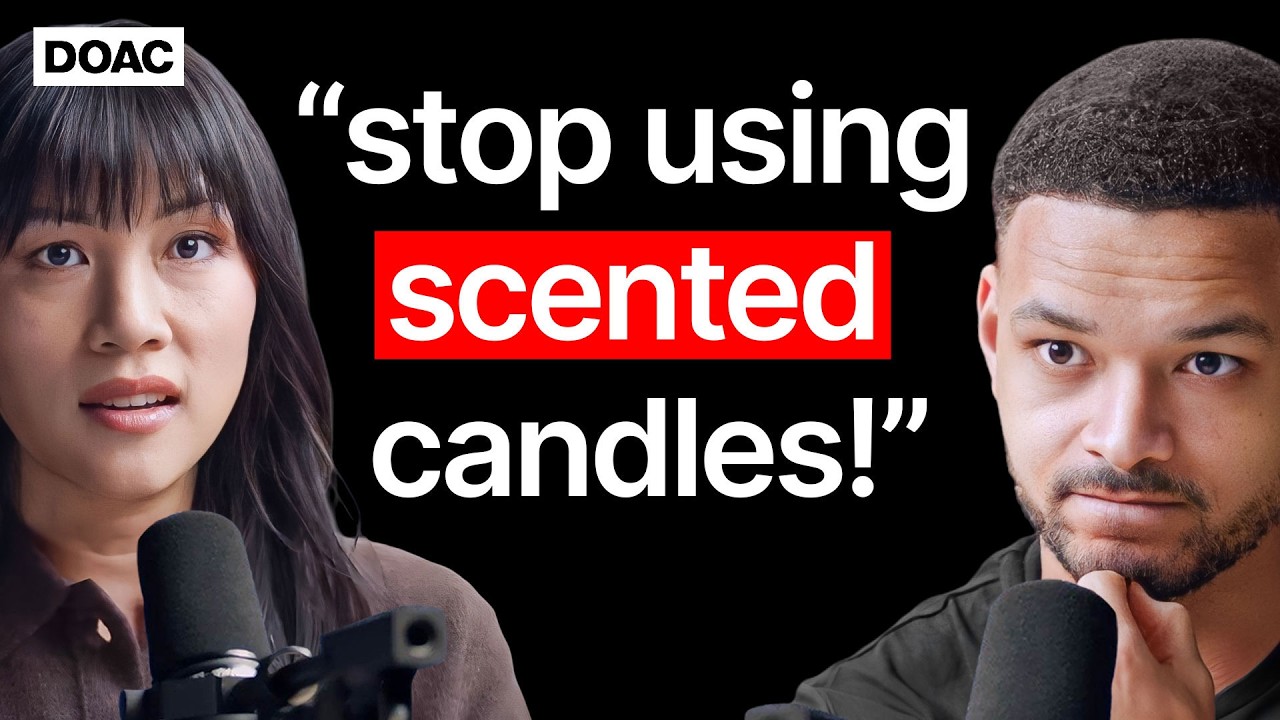
No.1 Toxicologist: These Products Were Making Me Infertile And Are Harming Our Kids! — The Diary Of A CEO

The Diary Of A CEO

Everyday exposure to synthetic microplastics and endocrine-disrupting chemicals like PFAS drives rising rates of infertility, cancer, and chronic disease.

AI-assisted summary of No.1 Toxicologist: These Products Were Making Me Infertile And Are Harming Our Kids! — original source. Check the original for full context.

Source published:

Detailed notes

## Background This episode of 'The Diary Of A CEO' was published on YouTube by host Steven Bartlett on November 18, 2024. Featuring PhD toxicologist Dr. Yvonne Burkart, the page description presents a deep dive into hidden environmental toxins in everyday products, including how they impact fertility, child development, and overall long-term health.

## TL;DR Dr. Yvonne Burkart breaks down the pervasive dangers of everyday endocrine disruptors, microplastics, PFAS, and heavy metals found in common consumer goods like non-stick cookware, plastic containers, synthetic fragrances, and personal care products. She outlines the physiological pathways through which these compounds induce oxidative stress, deplete essential antioxidants like glutathione, and increase risks for systemic diseases and reproductive harm. Beyond explaining these risks, Dr. Burkart offers accessible, practical interventions—such as adopting reverse osmosis water filtration, using safer cookware, and swapping out synthetic products—to drastically reduce overall chemical exposure.

## Atmosphere & style The conversation carries an urgent yet grounded tone, striking a balance between alarming health revelations and practical, empowering advice. Dr. Burkart speaks with scientific precision and measured authority, while host Steven Bartlett acts as a curious, relatable surrogate for the audience, occasionally sharing personal anecdotes to test theories. Rather than lingering in doom-and-gloom narrative territory, the dynamic evolves into a constructive dialogue focused on manageable, incremental daily changes.

## Key takeaways - [52:34](https://www.youtube.com/watch?v=rObAX1r8r0s&t=3154s) Exposure to PFAS ("forever chemicals") is linked to serious reproductive hazards, cancers, and metabolic disruption like weight gain. - [55:54](https://www.youtube.com/watch?v=rObAX1r8r0s&t=3354s) Non-stick cookware should be replaced with safer, non-toxic alternatives like cast iron, stainless steel, glass, or 100% ceramic. - [56:32](https://www.youtube.com/watch?v=rObAX1r8r0s&t=3392s) Heating plastic food containers or using plastic utensils releases billions of microplastics and endocrine-disrupting chemicals directly into food. - [58:08](https://www.youtube.com/watch?v=rObAX1r8r0s&t=3488s) Microplastics accumulate throughout the human body, with recent studies showing brain tissue contains significantly higher concentrations than other organs. - [01:04:07](https://www.youtube.com/watch?v=rObAX1r8r0s&t=3847s) Standard paper takeaway coffee cups release tens of thousands of microplastic particles into hot drinks within minutes due to their plastic lining. - [01:09:46](https://www.youtube.com/watch?v=rObAX1r8r0s&t=4186s) Tap water contains potential contaminants such as endocrine disruptors, pesticides, heavy metals, and fluoride, making advanced filtration like reverse osmosis ideal. - [01:14:55](https://www.youtube.com/watch?v=rObAX1r8r0s&t=4495s) Aluminum salts in antiperspirants act as xenoestrogens and have been linked to an increased risk of breast cancer in young women. - [01:20:50](https://www.youtube.com/watch?v=rObAX1r8r0s&t=4850s) Vaginal tissue rapidly absorbs toxic chemicals—such as benzene, phthalates, and heavy metals found in conventional menstrual products—directly into systemic circulation. - [01:25:36](https://www.youtube.com/watch?v=rObAX1r8r0s&t=5136s) A stark health equity disparity exists in beauty products, with a significantly higher percentage of products marketed to Black women containing endocrine disruptors and carcinogens. - [01:32:45](https://www.youtube.com/watch?v=rObAX1r8r0s&t=5565s) Burning paraffin candles indoors releases harmful volatile organic compounds (VOCs) and ultrafine particles that enter the bloodstream. - [01:37:13](https://www.youtube.com/watch?v=rObAX1r8r0s&t=5833s) Indoor air is often significantly more polluted than outdoor air, but practices like adopting a no-shoes policy and daily window flushing ("Lüften") dramatically reduce toxin buildup. - [01:45:33](https://www.youtube.com/watch?v=rObAX1r8r0s&t=6333s) Glutathione serves as the body's master antioxidant, and its production can be naturally supported through sulfur-rich foods like cruciferous vegetables, eggs, and meats. - [01:55:21](https://www.youtube.com/watch?v=rObAX1r8r0s&t=6921s) Small, practical lifestyle changes—such as removing synthetic fragrances, filtering water, and switching cookware—can effectively lower total chemical body burden without fear-mongering.

## Detailed walkthrough ### [00:00](https://www.youtube.com/watch?v=rObAX1r8r0s&t=0s) Yvonne’s Warning: The Unseen Toxic Threat

The conversation opens with a stark, fast-paced evaluation of everyday household products. Dr. Yvonne Burkart, a PhD toxicologist, directly challenges the marketing claims consumers rely on, warning that "don't believe everything you see on a product that you're buying" is the most critical rule for modern health. Moving through a rapid showcase of everyday items, she classifies them with uncompromising clarity—rejecting common consumer items with a firm "throw that out" or "get rid of them," while validating only select safe alternatives. She emphasizes that under current legal frameworks in both Europe and the United States, manufacturers are not legally required to disclose certain ingredients, leaving the public blind to their true exposure.

The consequences of this regulatory gap are profound. Dr. Burkart highlights the rapidly growing body of scientific evidence linking these hidden chemicals to skyrocketing global rates of cancer, infertility, and obesity. The physical pervasiveness of these toxins is illustrated by a startling statistic: a simple surface scratch on a standard non-stick pan can release up to 9,000 microplastic particles directly into food. These persistent particles do not merely pass through the body; researchers have documented their presence inside human lungs, hearts, brains, and reproductive organs. The current trajectory is so severe that scientists predict humans are on a path to eventually "become more plastic than we are humans." This systematic exposure provokes a visible, deep-seated anger in Dr. Burkart, driven by the unnecessary suffering of millions of people—particularly children experiencing cognitive delays and behavioral issues without understanding the root cause.

- Manufacturers in the US and Europe are legally permitted to omit specific chemical ingredients from their product labels. - A single scratch on non-stick cookware is estimated to shed roughly 9,000 microplastic particles into a meal. - Microplastics have been physically detected by researchers inside vital organs, including the human brain, heart, lungs, and penis. - Global sperm counts have plummeted by 50% over the last 50 years, a trend heavily tied to environmental toxin exposure.

[02:16](https://www.youtube.com/watch?v=rObAX1r8r0s&t=136s) The Global Human Experiment

Host Steven Bartlett asks Dr. Burkart to distill her core warning into a single sentence. Her message is unequivocal: consumers must look past front-of-label marketing and explicitly read ingredient lists to avoid unknowingly covering themselves and their families in hazardous toxins. Her broader mission centers on empowering individuals with rigorous, evidence-based science so they can protect their households from an increasingly contaminated world. She explains that the modern industrial system is inherently flawed because industrial chemicals and consumer goods are not required to undergo safety testing before entering the market, effectively turning the entire global population into "guinea pigs in a massive human experiment that no one signed up for."

The danger of this system manifests as a delayed health crisis. Individuals live their lives completely unaware of their daily toxic burden, only to develop severe chronic diseases decades later. When Bartlett asks which conditions are most intimately tied to environmental toxins, Dr. Burkart points directly to cancer and reproductive failure. The reproductive crisis is structural and widespread, characterized by a sharp decline in the ability to conceive naturally, degraded sperm quality, and a profound multi-decade drop in male fertility. As a specialist who spent years studying the basic science of poisons, she tracks exactly how these foreign compounds breach cellular defenses, alter biochemistry, and induce long-term systemic harm.

[05:07](https://www.youtube.com/watch?v=rObAX1r8r0s&t=307s) A Personal Crisis and Reversing Infertility

The discussion takes an emotional turn as Dr. Burkart reflects on the deeply personal roots of her advocacy, visibly tearing up as she explains that she is not just an academic, but a mother fighting for the future of her children. During her undergraduate and graduate years, she lived a conventional lifestyle—using standard personal care items and suffering from chronic sluggishness and frequent illnesses that she wrongly assumed were normal. It was only when she faced severe fertility struggles at the age of 32 that her academic research collided with her personal life. Experiencing a total absence of her menstrual cycle for nine consecutive months—a state mimicking menopause nearly twenty years too early—she sought medical answers.

The conventional medical system offered no explanation, reporting that her standard lab work looked normal, yet concluding that her only paths to parenthood were through expensive in vitro fertilization (IVF) or adoption. Refusing to accept that her body was inherently "broken," Dr. Burkart leveraged her specialized background in reproductive toxicity and cancer. She realized that the missing link in her medical care was the cumulative impact of low-dose, chronic exposure to everyday environmental chemicals. By systematically identifying, removing, and replacing toxic items in her home and daily routine, she managed to completely restore her reproductive health and successfully conceived her children naturally without medical intervention.

- At age 32, Dr. Burkart suffered from secondary amenorrhea, going nine full months without a menstrual cycle. - Conventional fertility specialists were unable to diagnose a root cause, offering IVF or adoption as her only viable options. - By eliminating low-dose domestic toxins, she successfully restored her biological cycle and achieved natural conception.

[11:00](https://www.youtube.com/watch?v=rObAX1r8r0s&t=660s) The Flaw of Modern Toxicology: Endocrine Disruptors

Dr. Burkart explains that to heal herself, she had to fundamentally unlearn the foundational maxim of classical toxicology: "the dose makes the poison." While traditional science dictates that chemical harm scales linearly with volume, modern environmental health reveals that this rule breaks down completely when dealing with endocrine-disrupting chemicals (EDCs). EDCs frequently exhibit what scientists call "non-monotonic dose responses," meaning they can actually exhibit much higher biological activity and cause more severe disruption at extraordinarily low concentrations than they do at high doses.

This paradox occurs because the human endocrine system operates using minute, highly sensitive hormone concentrations. When tiny amounts of structurally similar environmental chemicals mimic or block these natural pathways, they easily throw the body's delicate signaling networks into chaos. Dr. Burkart warns that these chemicals are present in almost every facet of modern life due to the ubiquity of single-use items, plastic storage containers, and synthetic cosmetics. The chemicals required to manufacture these plastics continuously leach into food and water, while the plastics themselves degrade into microscopic fragments that constantly bombard the human body. Bartlett shares that at 32, he and his partner have entered a life stage focused on starting a family, prompting them to scrutinize their shampoos and deodorants. Dr. Burkart validates this caution, stating that nine out of ten products pulled from major big-box retailers contain chemicals of concern, whereas specialized health food stores generally offer a significantly higher ratio of clean alternatives.

[14:02](https://www.youtube.com/watch?v=rObAX1r8r0s&t=842s) Multi-Generational Toxicity and the Developing Child

Reflecting on her early laboratory career, Dr. Burkart details her research into reproductive toxicity, where she studied the impacts of combustion products—such as automotive exhaust, cigarette smoke, and charred cooking byproducts—on male and female reproductive systems. The most striking discovery from these animal models was the phenomenon of multi-generational toxicity. When a pregnant animal was exposed to these environmental toxins, the adverse health effects were observed not only in her immediate offspring, but were passed down to her grandchildren as well.

This occurs because of shared gestational biology. When a mother carries a female fetus, the child's developing ovaries—which contain the precursor cells for the mother's future grandchildren—are formed inside that toxic uterine environment. The damage can extend even further into "transgenerational toxicity," affecting great-grandchildren who may live pristine lifestyles but remain genetically or epigenetically predisposed to disease. EDCs like phthalates, bisphenols (such as BPA), and PFAS chemicals alter how DNA expresses itself without changing the genetic code itself, passing these vulnerabilities down the lineage. To explain this to a child, Dr. Burkart compares the endocrine system to eight specialized control glands regulating sleep, energy, brain function, weight, and future fertility. Introducing endocrine disruptors to this delicate network is "like adding gasoline to... a dumpster fire," causing development to go completely haywire, especially in rapidly growing children.

- Multi-generational toxicity dictates that a pregnant woman's chemical exposure directly reaches the germ cells of her future grandchildren. - Transgenerational effects can cause great-grandchildren to inherit disease susceptibilities through uterine epigenetic modifications. - Primary classes of everyday endocrine disruptors include phthalates, bisphenols, and per- and polyfluoroalkyl substances (PFAS).

<ElicitationsGroup message="To explore these reproductive and environmental topics further, choose a direction below:"> {/* Reason: The user's prompt is a structured note-taking task covering the first portion of a transcript. Providing targeted paths to delve deeper into the specific science mentioned aligns perfectly with providing expert guidance. */} <Elicitation label="Examine the science of non-monotonic dose responses" query="Can you explain how non-monotonic dose responses work in endocrine disruptors and why low doses can be more dangerous than high doses?"/> <Elicitation label="Review common household sources of phthalates and bisphenols" query="What are the most common household sources of phthalates, bisphenols, and PFAS, and how can consumers systematically identify them on labels?"/> </ElicitationsGroup>

[01:17:34](https://www.youtube.com/watch?v=rObAX1r8r0s&t=4654s) Children’s Vulnerability to Endocrine Disruptors

Dr. Yvonne Burkart emphasizes that children are uniquely susceptible to environmental toxins. Unlike adults, a child's detoxification capacity—primarily driven by the liver and kidneys—does not fully develop until around 10 years of age. This leaves young bodies ill-equipped to break down and eliminate toxic compounds, meaning chemicals accumulate during critical developmental stages before birth and throughout early childhood.

The downstream health consequences of this early exposure are severe. Dr. Burkart points to rising rates of childhood leukemia, neurodevelopmental delays, cognitive deficits, and skyrocketing childhood obesity. When asked about neurodivergence, she notes that studies measuring urine and blood chemical levels show strong correlations between higher toxic loads and worsened severity of conditions like ADHD and autism.

- A child's full detoxification capacity does not mature until **10 years of age**. - Toxic exposures are correlated with increased risks of **childhood leukemia**, **cognitive deficits**, **obesity**, **ADHD**, and **autism**.

---

[20:00](https://www.youtube.com/watch?v=rObAX1r8r0s&t=1200s) Endocrine Disruptors, Early Puberty, and Fertility Trends

The discussion pivots to the alarming trend of girls entering puberty earlier—marked by premature breast development and earlier onset of menstruation. Dr. Burkart explains that starting menstruation early shifts a woman's entire reproductive timeline. Because women are born with a finite number of eggs, early-onset periods lead to earlier menopause, which brings long-term health risks like bone fractures and osteoporosis.

Observational studies link this shift directly to daily chemical exposures. Young girls using multiple personal care and beauty products show elevated levels of phthalates and other endocrine disruptors in their blood and urine. Broadening the scope to global fertility, Dr. Burkart notes a drastic, century-long decline in live births alongside an "astonishing" **50% drop in worldwide male sperm counts**. While human extinction isn't immediate, continuing on this path without interventions risks severe population decline.

> "Sperm counts have declined by 50% worldwide... that is absolutely astonishing. We're not at the point yet where humans will go extinct, but if we continue on this path and don't make changes... then we might be looking at population decline."

---

[23:01](https://www.youtube.com/watch?v=rObAX1r8r0s&t=1381s) Regulatory Failure: FDA vs. The European Union

When asked why government regulators allow these chemicals in consumer goods, Dr. Burkart contrasts the regulatory frameworks of the United States and the European Union. In Europe, the European Chemicals Agency (ECHA) enforces a precautionary approach requiring upfront toxicity testing funded by chemical manufacturers based on production volume. If a company produces several metric tons of a chemical, it must prove safety for humans, animals, and the environment—ensuring compounds are not persistent bioaccumulators.

In contrast, the U.S. regulatory system under the FDA lacks robust mandates for upfront toxicity testing, reflecting a system influenced by corporate interests. Chemical manufacturers resist paying millions for safety studies that might reveal their products are hazardous. This regulatory void results in non-biodegradable chemicals building up in global ecosystems and human bodies alike.

---

[25:19](https://www.youtube.com/watch?v=rObAX1r8r0s&t=1519s) Yvonne’s Healing Journey and Personal Recovery

Dr. Burkart recounts her personal struggle with unexplained secondary amenorrhea (loss of menstrual period) and infertility. Directed toward IVF by conventional medicine, she took matters into her own hands by turning to integrative and functional medicine to uncover the root causes. Functional testing revealed metabolic and nutritional deficiencies. By eliminating inflammatory foods, she saw digestive relief within two weeks, but hit a plateau after six months.

Realizing environmental toxins were still triggering her system, she began purging products from her home, starting with her makeup drawer and personal care items. She gave up her obsession with perfumes, switched her oral care, and had her toxic mercury amalgam dental fillings safely removed. Within three months of removing personal care toxins, her period returned; within nine months of starting her holistic overhaul, she was pregnant. Biochemical blood tests confirmed her mercury levels dropped significantly after the amalgam removal.

- **2 weeks:** Initial symptom relief after removing dietary triggers. - **3 months:** Return of her menstrual cycle following the removal of toxic beauty products and mercury amalgams. - **9 months:** Natural pregnancy achieved after full environmental and lifestyle intervention.

---

[28:59](https://www.youtube.com/watch?v=rObAX1r8r0s&t=1739s) Spreading the Message as a Living Example

Addressing the host’s observation that knowing this information could make someone feel anxious or urgent to warn others, Dr. Burkart acknowledges her deep passion for spreading awareness. However, she has learned that "calling people out" at dinner parties or living in fear creates excess stress, which is itself toxic to the body.

Instead, she advocates for leading by example and focusing on small, incremental swaps over the long term. Demonstrating vitality and sharing practical solutions empowers people far more effectively than fear-mongering or trying to "hide under a rock."

---

[31:32](https://www.youtube.com/watch?v=rObAX1r8r0s&t=1892s) Environmental Toxins and the Rise of Cancer

Cancer was historically considered a disease of aging, but Dr. Burkart highlights a disturbing shift toward diagnoses in people in their 30s, 40s, and 50s. She shares that while she knew no one with breast cancer growing up, she knew five women diagnosed by her 30s—including two colleagues from her toxicological research lab.

While past science blamed cancer almost entirely on genetic bad luck, modern research emphasizes environmental gene-environment interactions. A genetic predisposition (such as carrying the *BRCA* gene) often requires an environmental trigger to express. Dr. Burkart cites a striking intervention study where women with no history of breast cancer removed specific cosmetic ingredients from their daily routines for just **28 days**. Breast tissue biopsies revealed a measurable drop in breast cancer gene expression after only four weeks of avoiding these chemicals.

- **28-Day Intervention Study:** Removing synthetic cosmetics reduced breast cancer gene expression in tissue samples. - Key ingredients removed in the study included **phthalates**, commonly hidden under the unlisted trade-secret term **"fragrance"** or **"parfum"** on cosmetic labels.

[34:58](https://www.youtube.com/watch?v=rObAX1r8r0s&t=2098s) The Hidden Dangers in Fragrances and Aerosol Deodorants

Dr. Yvonne Burkart explains that synthetic fragrances are a primary vehicle for hidden toxic chemicals, notably phthalates, known carcinogens, and potent allergens. Phthalates are heavily favored by manufacturers as "film formers"—agents that make a scent stick to surfaces such as skin or clothing so it lingers for hours. If a person sprays a cosmetic or personal care product and can still smell it hours later, it is a telltale sign that phthalates are present. When asked about deodorants on store shelves, Dr. Burkart notes that if a product lists "fragrance" on its ingredients panel, it is essentially code for endocrine-disrupting phthalates.

``` ┌─────────────────────────────────────────┐ │ Synthetic Fragrance │ └────────────────────┬────────────────────┘ │ ┌─────────────┴─────────────┐ ▼ ▼ ┌─────────────────────────┐ ┌─────────────────────────┐ │ Phthalates │ │ Carcinogens & Allergens │ │ (Film Formers) │ │ (Synthetic Blends) │ └────────────┬────────────┘ └────────────┬────────────┘ │ │ ▼ ▼ ┌─────────────────────────┐ ┌─────────────────────────┐ │ Endocrine Disruption │ │ Skin/Airway Irritation │ │ & Long-Term Toxicity │ │ & Inhalation Exposure │ └─────────────────────────┘ └─────────────────────────┘ ```

Steven Bartlett grabs an aerosol spray deodorant in an aluminum can from the table to examine its label. Dr. Burkart instructs him to look for the terms "fragrance" or "parfum." Even if a label advertises that it is "phthalate-free," it may still harbor carcinogens and allergens that trigger respiratory issues or skin problems. Beyond ingredient hazards, aerosol delivery mechanisms pose severe health risks due to petroleum-derived propellants. In recent years, massive product recalls occurred after propellants were found to be contaminated with benzene, a potent human carcinogen known to cause leukemia.

When Steven realizes the flammability and chemical origin of aerosol propellants, he jokes about essentially "lathering myself in petrol" before symbolically throwing his aerosol spray directly into a trash bin on set, declaring it his last day ever using aerosol deodorant.

- Phthalates act as **film formers** to prolong scent longevity on skin and fabric. - "Fragrance" or "parfum" on standard labels serves as an umbrella term for undisclosed synthetic compounds. - Aerosol propellants are derived from petroleum and pose a contamination risk for **benzene**, a known cause of leukemia. - "It is safe to assume that they contain phthalates if it's got a fragrance in it." — Dr. Yvonne Burkart

---

[40:12](https://www.youtube.com/watch?v=rObAX1r8r0s&t=2412s) Navigating Alternatives: Labels, Marketing, and "Organic" Claims

After discarding the aerosol can, Steven pulls out a refillable roll-on deodorant to check if it is a safer alternative. Dr. Burkart acknowledges that while solid stick or roll-on forms eliminate the aerosol inhalation hazard and refillable packaging helps sustainability, the formula's chemical composition remains the critical factor. Steven reads the ingredient list aloud from his iPad: tapioca starch, baking soda, sunflower seed wax, cocoa seed butter, tocopheryl acetate, stearyl alcohol, and "parfum."

Dr. Burkart points out that "parfum" without explicit qualification leaves consumers blind to the underlying chemical exposures. While searching for terms like "organic" can help filter down non-synthetic options in online searches, it does not automatically guarantee a chemical is absent. Consumers must check for explicit declarations that scents originate entirely from plant-based **essential oils** rather than synthetic fragrance blends. Manufacturers often capitalize on eco-friendly or sustainable marketing trends to target health-conscious consumers without genuinely cleaning up their formulas.

- Essential oils provide plant-derived aromatic compounds without relying on undisclosed synthetic film formers. - Claims such as "sustainable" or "refillable" relate to packaging rather than chemical safety. - Searching for "organic" helps narrow store options, but ingredient lists must still be inspected individually.

---

[43:17](https://www.youtube.com/watch?v=rObAX1r8r0s&t=2597s) Fragrance Ubiquity and Environmental Dust Accumulation

Fragrance additives are present across nearly all personal care and household items. Steven cites industry statistics showing that fragrance is present in 91% of antiperspirants, 95% of shaving products, 83% of moisturizers, 63% of sunscreens, 96% of shampoos, 98% of conditioners, and 97% of hair styling products. Dr. Burkart emphasizes that fragrance drives consumer purchasing because humans react to scent on a primal, emotional level. Manufacturers condition consumers to associate scented products with cleanliness and comfort from early childhood.

Dr. Burkart shares a personal anecdote about attempting to purchase unscented slime for her children, only to find it virtually non-existent in stores, forcing her family to make their own at home. Today, scented markers, pens, crayons, and stickers fill store shelves. Once sprayed or released, volatile fragrance compounds transform into gases and bind directly to indoor household dust. Unless dust is actively removed via regular sweeping, vacuuming, and mopping, these toxins continuously re-circulate, creating what Dr. Burkart calls "the new secondhand smoke."

- **Fragrance Prevalence:** - Shampoos: 96% - Conditioners: 98% - Hair Styling: 97% - Shaving Products: 95% - Antiperspirants: 91% - Moisturizers: 83% - Sunscreens: 63% - Crawling infants and young children experience high exposure by inhaling and ingesting chemical-laden dust particles from floors. - Inability to clear these low-level chronic exposures can manifest over time as cognitive delays, behavioral issues, allergies, weight gain, low energy, and depression. - "Fragrance is almost like the new secondhand smoke, that's how prevalent it is." — Dr. Yvonne Burkart

---

[47:00](https://www.youtube.com/watch?v=rObAX1r8r0s&t=2820s) The Surge in Childhood Allergies and Global Chemical Spread

The discussion turns to the dramatic rise in childhood immune and respiratory disorders over recent decades. Steven cites data indicating that childhood food allergy prevalence in the U.S. increased by 50% since the 1990s, seasonal allergies (allergic rhinitis) affected roughly 81 million Americans in 2021, and over 42 million Americans (13% of the population) have been diagnosed with asthma. While some hypothesize that over-sanitization and a lack of exposure to natural dirt (the "hygiene hypothesis") explain this trend, Dr. Burkart argues that the exponential increase in synthetic fragrance and environmental toxin exposure plays a direct, under-researched role.

When considering whether isolated indigenous populations escape these exposures, Dr. Burkart explains that persistent toxic chemicals now coat the entire globe. **PFAS** (per- and polyfluoroalkyl substances)—a class of roughly 15,000 synthetic compounds known as "forever chemicals"—do not break down in the environment. They bioaccumulate up the food chain and have even been detected in the fat tissue of Arctic polar bears, proving that remote ecosystems and isolated human societies are no longer completely unexposed.

- U.S. childhood food allergies increased by **50%** between the 1990s and the 2020s. - **81 million** Americans were diagnosed with seasonal allergies in 2021. - **42 million** Americans (13% of the population) have been diagnosed with lifetime asthma as of 2018. - PFAS represents a class of over **15,000** synthetic chemicals that resist environmental degradation.

---

[50:55](https://www.youtube.com/watch?v=rObAX1r8r0s&t=3055s) Non-Stick Cookware, PTFE, and Particle Transfer

Dr. Burkart highlights non-stick cookware as one of the most direct everyday sources of PFAS and PTFE (polytetrafluoroethylene), commercially known as Teflon. Although manufacturers previously claimed PTFE remains stable and inert during normal use, evidence confirms that cooking heat causes chemical transfer into food and off-gassing into indoor air. High-heat exposure can release toxic fumes that cause "Teflon flu," a condition characterized by acute flu-like symptoms following inhalation.

``` ┌──────────────────────────────────────────────┐ │ Teflon Surface Condition │ └──────────────────────┬───────────────────────┘ │ ┌──────────────┴──────────────┐ ▼ ▼ ┌───────────────────────────┐ ┌───────────────────────────┐ │ Microscopic Scratch │ │ Visible Surface Crack │ └─────────────┬─────────────┘ └─────────────┬─────────────┘ │ │ ▼ ▼ ┌───────────────────────────┐ ┌───────────────────────────┐ │ ~9,000 PFAS Particles │ │ ~2.3 Billion Particles │ │ Released into Food │ │ Released into Food │ └───────────────────────────┘ └───────────────────────────┘ ```

The greater concern lies in chronic low-dose ingestions caused by microscopic surface degradation. Non-stick coatings scratch easily under normal kitchen use. Research demonstrates that a single microscopic surface scratch on a non-stick pan can release approximately **9,000 micro- and nano-plastic particles** directly into food during cooking. If the non-stick coating develops a visible crack, that figure jumps to **2.3 billion particles** transferred into a single meal.

- **PTFE (Teflon)** belongs to the broader PFAS family of non-stick, oil- and water-resistant synthetic chemicals. - Inhaling vaporized PTFE fumes at high cooking temperatures induces "Teflon flu" (polymer fume fever). - A single microscopic scratch on a non-stick pan releases roughly **9,000** coating particles into food. - A visible crack or deep scratch in non-stick coating can release up to **2.3 billion** micro- and nano-particles during meal preparation.

<ElicitationsGroup message="Explore further details from this conversation:"> <Elicitation label="Summarize cookware material risks and safe kitchen alternatives" query="Summarize the cookware material risks and safe kitchen alternatives discussed by Dr. Yvonne Burkart."/> <Elicitation label="Explain the mechanism of PFAS and endocrine disruption" query="Explain how PFAS and endocrine disruptors affect biological systems according to toxicologist Dr. Yvonne Burkart."/> </ElicitationsGroup>

[052:34] PFAS, Infertility, and Obesogens

Dr. Yvonne Burkart explains the severe health risks associated with PFAS ("forever chemicals"), highlighting links to kidney and testicular cancer, thyroid disorders, and pregnancy complications like miscarriages, pre-term labor, and preeclampsia. She points out that women suffering from conditions like endometriosis and PCOS consistently show higher blood levels of PFAS. The host reads out a 2023 study showing that Singaporean women with higher PFAS levels experienced a 30% to 40% lower chance of pregnancy and live birth within a year. Another study revealed that individuals with elevated PFAS exposure gained weight regardless of their diet, prompting the host to express shock that non-food chemicals could act as "obesogens" and drive weight gain.

When asked about prostate cancer, Dr. Burkart notes that while human evidence is still emerging, a 2021 University of Illinois mouse study demonstrated that combining a high-fat diet with PFAS exposure caused changes in prostate cells that promoted tumor growth. To eliminate these risks, Dr. Burkart advises abandoning non-stick cookware entirely in favor of cast iron, stainless steel, glass, or ceramic. She acknowledges that non-stick is convenient for clean-up, but questions whether saving a few minutes of cooking is worth cutting time off one's lifespan. Addressing the dilemma of disposing of old cookware, she warns that tossing it into a landfill leaves PFAS in the environment forever, emphasizing that the most crucial step is to stop purchasing new non-stick items.

* PFAS exposure is directly tied to elevated rates of kidney cancer, testicular cancer, thyroid dysfunction, endometriosis, and PCOS. * **Pregnancy Risk:** Higher PFAS blood concentrations are linked to preeclampsia, miscarriages, pre-term birth, and a 30–40% reduction in live births within one year. * **Weight Control:** PFAS act as endocrine disruptors and obesogens, causing weight gain and fat storage even on calorie-restricted or varied diets. * **Prostate Health:** 2021 Illinois mouse study found high-fat diets plus PFAS exposure accelerated tumor-promoting changes in prostate cells. * **Safe Cookware Alternatives:** Cast iron, stainless steel, ceramic, and glass.

---

[056:32] Kitchen Utensils: Plastic vs. Wood

Examining kitchen tools, Dr. Burkart inspects a plastic spatula held by the host and advises throwing it away immediately. Heating plastic utensils causes them to melt and shed tiny microplastic and nanoplastic fragments directly into food. The host notices that the edge of his plastic spatula is already frayed with small bits missing, realizing those pieces were likely ingested over time. Silicone and rubber utensils face similar degradation when exposed to high heat.

By contrast, Dr. Burkart approves of wooden utensils, assuring the host that they pose no risk of microplastic or non-stick chemical contamination. She dismisses the common concern that wood cannot be cleaned properly, stating that simple soap and water are entirely sufficient.

* Plastic and silicone spatulas fray under high temperatures, releasing billions of microplastics directly into meals. * Wooden utensils are a completely safe, non-toxic alternative that can be easily sanitized with basic soap and water. * Metal utensils should not be used on delicate surfaces, but are safe on stainless steel and cast iron.

---

[058:08] The Microplastic Epidemic: Brains, Organs, and "The Plasticine Epoch"

Dr. Burkart strongly warns against microwaving food in plastic containers—even those labeled "BPA-free." Just a few seconds of heating a tiny square centimeter of plastic releases billions of microplastic particles and potential phthalates into food. Once inside the body, microplastics do not break down; they accumulate in human lungs, blood, gut, heart, placenta, and even the penis. She notes that microplastics have even been detected in meconium (a newborn's first stool), proving that infants are now born with plastic pollution already inside them.

"We are becoming plastic," Dr. Burkart warns, noting that humanity is entering what some call the "Plasticine Epoch." At the cellular level, microplastics trigger continuous inflammation and oxidative stress (free radical damage), acting like "a million little fires all over your body." The host cites a 2024 study reported in *The Guardian* revealing that microplastics were found across human organs, with brain tissue containing 10 to 20 times more plastic than other organs—measuring roughly 0.5% plastic by weight. Dr. Burkart explains that because plastic is fat-soluble and the brain is primarily fat, microplastics cross into the brain and become trapped because the brain lacks the detoxification mechanisms present in other tissues, which she hypothesizes accelerates cognitive decline and early-onset dementia.

* **Microwaving Plastic:** Heating plastic containers—including BPA-free options—leaches billions of micro- and nanoplastic particles into food within seconds. * **Tissue Accumulation:** Microplastics have been identified in human lungs, blood, heart, gut, placenta, penises, and newborn meconium. * **Brain Concentration:** A 2024 study showed brain tissue contained 10–20 times more microplastics than other organs, averaging 0.5% plastic by weight due to the brain's high fat content. * **Cellular Impact:** Ingested plastics induce chronic oxidative stress, depleting cellular glutathione reserves that would otherwise be used to detoxify other environmental chemicals and neutralize daily metabolic free radicals.

---

[01:04:07](https://www.youtube.com/watch?v=rObAX1r8r0s&t=3847s) Bottled Water, Coffee Cups, and Everyday Containers

Discussing daily beverages, Dr. Burkart agrees that stainless steel cups and reusable steel water bottles are safe and sustainable because they do not leach microplastics or endocrine-disrupting phthalates. While she acknowledges that drinking from plastic water bottles is sometimes unavoidable during travel, she cautions against making it a regular habit. Sunlight (UV rays), heat (like leaving a bottle in a hot car), and physical squeezing accelerate the breakdown of plastic, causing heavy leaching of chemicals and microplastics into the water.

When shown a standard paper-like takeaway coffee cup, Dr. Burkart reacts with visible frustration, calling them "terrible." These paper cups are lined with a hidden plastic film that, upon contact with hot liquid, releases roughly 25,000 microplastic particles into the beverage within just 15 minutes, alongside potential heavy metals. Heat rising through the plastic lid adds further chemical exposure. Reminiscing about living in Germany 10 to 15 years prior—where sitting down to drink from a ceramic mug was the norm before "coffee to go" was imported from the U.S.—she strongly encourages people to bring their own stainless steel or glass travel mugs to coffee shops.

> "Within 15 minutes of contact with the hot liquid, you're getting 25,000 microplastic particles in that cup."

* **Plastic Water Bottles:** UV light, elevated temperatures, and physical compression cause plastic bottles to leach phthalates and microplastics into drinking water. * **Takeaway Coffee Cups:** Lined with plastic that releases ~25,000 microplastic particles and trace heavy metals within 15 minutes of exposure to hot liquid. * **Glass Food Containers:** Glass containers with plastic lids are safe provided the food is not filled to the brim (preventing direct plastic contact) and the plastic lid is removed prior to microwaving. * **Water Filtration:** Dr. Burkart insists that filtering tap water at home is essential, particularly in municipalities where water is fluoridated or heavily treated.

[01:09:46](https://www.youtube.com/watch?v=rObAX1r8r0s&t=4186s) Water Quality and Filtration Options

When it comes to understanding municipal water, most local governments issue annual reports. Alternatively, people can turn to the Environmental Working Group (EWG) water database by entering their zip code to see specific contaminants and whether they exceed health guidelines. Tap water is a notable vector for endocrine disruptors, agricultural runoff, heavy metals like lead from aging pipes, pesticides, and added fluoride.

``` +---------------------+-------------------------------------------------------+ | Contaminant Category| Typical Sources / Examples | +---------------------+-------------------------------------------------------+ | Endocrine Disruptors | Synthetic hormones, pharmaceuticals | | Heavy Metals | Lead (via old piping), arsenic | | Runoff & Chemicals | Pesticides, agricultural runoff, industrial waste | | Additives | Fluoride | +---------------------+-------------------------------------------------------+ ```

To reduce tap water hazards without spending thousands on high-end filtration systems, simple interventions can help. Boiling tap water, for instance, precipitates microplastics because the plastic particles get trapped in the white calcium scale that forms at the bottom of the pot. However, boiling alone does not remove chemical contaminants. Reverse osmosis removes the largest spectrum of toxic compounds, but it generates significant waste water and strips out beneficial minerals that must subsequently be added back in.

* **EWG Database:** Allows users to check local tap water contaminants via zip code. * **Boiling Water:** Traps microplastics within calcified calcium buildup at the bottom of the vessel. * **Reverse Osmosis:** Extremely thorough, but requires re-mineralizing the water and produces high wastewater volumes. * **Carbon Filters:** Effective for general chemical reduction, provided they are explicitly rated to capture fluoride.

---

[01:12:52](https://www.youtube.com/watch?v=rObAX1r8r0s&t=4372s) Low-Cost, Practical Daily Health Hacks

Addressing potential environmental exposure does not require vast financial resources. The host notes that consumers often feel overwhelmed by high costs, but Dr. Burkart emphasizes several free or budget-friendly lifestyle pivots that yield immediate benefits:

* **Filter Drinking Water:** Invest in an accessible carbon or specialty filter to eliminate primary waterborne chemicals. * **Eliminate Fragrance Products:** Stopping the purchase of synthetic air fresheners, scented detergents, and perfume saves money directly. * **Cook Unprocessed Foods at Home:** Preparing whole, single-ingredient foods avoids the chemicals and takeaway containers associated with restaurant dining. * **Use Safer Cookware:** Transition to stainless steel or cast iron when feasible, though working with existing cookware is better than taking on debt.

When navigating food choices, prioritizing single-ingredient, whole foods—such as unprocessed meats, fresh fruits, and vegetables—provides significant protection against dietary endocrine disruptors, even if organic options are not always financially feasible.

---

[01:14:55](https://www.youtube.com/watch?v=rObAX1r8r0s&t=4495s) Antiperspirants and Aluminum Risks

Examining everyday hygiene products reveals a crucial distinction between standard deodorants and antiperspirants. Antiperspirants rely on aluminum salts to physically clog sweat ducts and prevent perspiration. However, aluminum acts as a "xenoestrogen" in the human body. Studies have linked the use of aluminum-containing underarm products by young girls to an elevated risk of breast cancer.

> "The problem with aluminum is that there have been links to increased risk of breast cancer in young girls who use [antiperspirant], because aluminum itself also acts like an estrogen in the body."

To minimize underarm chemical buildup, alternative routines like "armpit detoxes"—using a paste made from apple cider vinegar and bentonite clay—can draw out trapped matter from sweat glands.

---

[01:16:16](https://www.youtube.com/watch?v=rObAX1r8r0s&t=4576s) Cosmetics, Lip Balms, and Skin Interventions

Cosmetic safety depends heavily on exposure time. "Leave-on" products like foundation, concealer, or lipsticks present a much higher exposure risk than rinse-off soaps because prolonged contact allows chemicals to absorb through the skin into the bloodstream. Fragrances are frequently added to foundations and cosmetics to mask the natural chemical smells of their raw ingredients.

The host shares a personal observation regarding lip balms, suspecting that these products create the very dryness they claim to fix:

> "I have this conspiracy theory about lip balm... my girlfriend applies lip balm all the time and her lips get dry often, whereas I don't apply lip balm ever... and my lips don't seem to get dry... I just wonder sometimes if these cosmetic products are fixing a problem that they're creating."

Dr. Burkart agrees, noting that constant cosmetic intervention disrupts the skin's natural balance, creating reliance on additional corrective products. Highly scented lip balms can become addictive both behaviorally and sensory-wise.

---

[01:20:50](https://www.youtube.com/watch?v=rObAX1r8r0s&t=4850s) Toxic Compounds in Menstrual Products

Menstrual products like conventional tampons and pads can introduce harmful compounds directly to sensitive areas. Tests have uncovered benzene, phthalates, synthetic fragrances, and heavy metals in these items. Because traditional tampons are manufactured from non-organic cotton—one of the most heavily pesticide-sprayed crops in agriculture—they frequently contain traces of glyphosate.

The vaginal canal presents ideal conditions for rapid chemical absorption due to its warm, enclosed environment and tissue friction. Bypassing the liver's "Phase 2" portal circulation, chemicals absorbed through vaginal tissues enter systemic circulation directly without prior detoxification.

* **Absorbed Toxins:** Glyphosate, phthalates, heavy metals, and benzene. * **Health Links:** Xenoestrogens absorbed from these products are linked to conditions like Polycystic Ovary Syndrome (PCOS) and endometriosis. * **Cleaner Alternatives:** Organic, unbleached cotton tampons or sustainable reusable alternatives help lower systemic exposure.

---

[01:23:43](https://www.youtube.com/watch?v=rObAX1r8r0s&t=5023s) Synthetic Clothing and Laundry Detergents

Clothing fibers directly influence daily toxin exposures. Synthetic fabrics like polyester, nylon, and acrylic are petroleum-derived products that shed microplastics with movement and laundering, and some have even tested positive for Bisphenol A (BPA).

* **Fabric Labels:** Garments marked as high-percentage polyester or spandex wrap the body in synthetic materials that continually shed microplastics. * **Heat and Friction:** Body heat and sweat increase the rate at which chemicals and microplastics penetrate skin boundaries. * **Laundry Additives:** Conventional fabric softeners and dryer sheets do not actually soften clothes; they coat fibers in a waxy layer of synthetic fragrances and chemicals. * **Natural Alternatives:** Opt for 100% organic cotton clothing when possible, replace commercial softeners with wool dryer balls, and add natural essential oils for scent.

[01:25:36](https://www.youtube.com/watch?v=rObAX1r8r0s&t=5136s) Environmental Injustice and Toxic Beauty Products

The discussion shifts to a deeply troubling aspect of product safety: the disparity in toxic exposure among different demographic groups. Dr. Yvonne Burkart highlights what toxicologists term "environmental injustice" or "environmental racism," where low-income and minority populations suffer disproportionately higher exposures to harmful chemicals. In particular, beauty and personal care products marketed specifically to Black women and young girls contain some of the highest concentrations of hazardous ingredients, including potent endocrine disruptors, harsh detergents, and formaldehyde releasers.

When Steven cites a Harvard Health study revealing that roughly 50% of products marketed to Black women contain endocrine disruptors compared to only about 7% for white women, the conversation touches on why this gap exists. Dr. Burkart explains that while part of the discrepancy relates to specific product categories like hair relaxers and heavy styling treatments, it fundamentally represents a systemic failure and form of environmental injustice. Studies demonstrate that early-life cosmetic use correlates directly with elevated risks of breast cancer, with African American women facing the highest incidence of pre-menopausal breast cancer (under age 40).

When asked about potential solutions, Dr. Burkart expresses skepticism regarding timely government intervention. In the United States, federal cosmetic regulations went nearly a century without meaningful updates, allowing thousands of untested chemical formulations onto consumer shelves. Instead of waiting for slow regulatory reforms, she emphasizes empowering individuals with actionable knowledge. She also notes a growing movement toward Black-owned clean beauty brands, which she expects will continue to improve as awareness spreads among formulators and consumers alike.

- **50% vs. 7% Disparity:** Half of products targeted at Black women contain endocrine disruptors, compared to 7% of products aimed at white women. - **Formaldehyde Releasers:** Often found in hair and cosmetic products targeted at ethnic demographics despite formaldehyde being a known human carcinogen. - **Breast Cancer Risk:** Early cosmetic use strongly correlates with breast cancer, contributing to higher rates of breast cancer in Black women under 40. - **Regulatory Stagnation:** Prior to recent minor reforms, U.S. cosmetic laws had not undergone a major update in nearly 100 years.

---

[01:32:45](https://www.youtube.com/watch?v=rObAX1r8r0s&t=5565s) The Hidden Hazards of Household Candles

Steven brings up an everyday ritual in his studio—lighting candles before filming—and asks Dr. Burkart for her assessment of candle safety. She clarifies that while she does not advocate a blanket ban on all candles, standard store-bought candles present serious indoor air quality risks. Examining a scented candle on set, she applies the "precautionary principle": because the label fails to specify the wax type, it should be assumed to be petroleum-derived paraffin wax until proven otherwise.

Dr. Burkart outlines five main health hazards associated with burning conventional candles:

1. **Ultrafine Particles and Carcinogens:** Burning paraffin wax liberates carcinogens such as benzene, toluene, and formaldehyde alongside ultrafine particles (less than 0.1 microns or 100 nanometers in size). Because these particles are microscopic, inhaling them allows them to pass directly into the brain or deep into the lung alveoli. With only a single cell layer separating the alveoli from capillaries, ultrafine particles cross straight into the bloodstream, triggering systemic inflammation and oxidative stress. 2. **Volatile Organic Compounds (VOCs):** Lighting candles releases volatile organic compounds directly into closed living spaces. 3. **Undisclosed Fragrance Formulations:** The generic term "fragrance" on labels hides complex mixtures of phthalates, endocrine disruptors, and respiratory allergens. 4. **Carcinogenic Dyes:** Synthetic dyes used to color candles produce unstudied toxic combustion products when burned. 5. **Lack of Regulation and Misleading Labels:** The Consumer Product Safety Commission (CPSC) regulates candle containers for fire safety and checks wicks for lead, but does not regulate the chemical composition of the wax. Consequently, products labeled "soy blend" are frequently composed primarily of cheap paraffin wax with only a minimal percentage of soy.

- **Ultrafine Particle Threshold:** Particles smaller than 0.1 microns (100 nanometers) pass through the single-cell alveolar membrane into the bloodstream. - **Emitted Toxins:** Burning paraffin releases benzene, toluene, formaldehyde, and various VOCs. - **Labeling Pitfalls:** "Soy blend" candles are mostly petroleum paraffin; CPSC checks jar safety and lead wicks, not wax ingredients. - **Safer Alternatives:** Pure beeswax or 100% plant-based wax candles with cotton or wood wicks and essential oils (used with adequate ventilation).

---

[01:37:05](https://www.youtube.com/watch?v=rObAX1r8r0s&t=5825s) Incense, Vaping, and Hookah Risks

When Steven suggests switching to incense as an alternative to candles, Dr. Burkart cautions that incense is actually far worse for indoor air quality. Modern incense sticks differ drastically from historical natural resins, as contemporary versions are saturated with synthetic fragrances, phthalates, and binders. Combustion studies reveal that burning incense generates significantly higher levels of ultrafine particles and air pollutants than cigarette smoke.

The health consequences of chronic incense exposure are severe. The ultrafine soot damages cellular DNA, inducing mutations that elevate cancer risks. Epidemiological data show marked increases in respiratory cancers among temple workers exposed to daily incense smoke, as well as a nearly threefold increase in cancer risk among children whose parents regularly burn incense in the home.

The conversation naturally moves to other inhaled chemical mixtures, such as electronic cigarettes (vaping) and hookah (shisha). Dr. Burkart notes that vaping liquids consist of chemical mixtures—specifically flavorings—that were approved strictly for oral ingestion, not for heat-assisted lung inhalation. Steven shares his own realization regarding shisha, recalling that learning a single session can equal the smoke output and toxin load of roughly 100 cigarettes led him to quit the habit entirely.

- **Incense vs. Cigarettes:** Incense smoke produces higher concentrations of ultrafine particulate pollution than cigarette smoke. - **Childhood Cancer Risk:** Burning incense indoors is linked to an almost threefold higher risk of cancer in children living in the household. - **Vaping Inhalation Risks:** Flavors in vape juice were safety-tested for ingestion by the digestive tract, never for inhalation into delicate lung tissue. - **Hookah Toxicity:** A single shisha session can deliver the toxic equivalence of up to 100 cigarettes.

---

[01:40:33](https://www.youtube.com/watch?v=rObAX1r8r0s&t=6033s) Indoor Air Quality and Practical Home Interventions

Addressing broader air quality concerns, Dr. Burkart cites Environmental Protection Agency (EPA) data showing that indoor air quality is frequently two to five times more polluted than outdoor air. This phenomenon stems from tight building envelopes, inadequate ventilation, and indoor activities such as high-heat cooking, burning candles, or using chemical cleaning supplies.

Improving indoor air quality does not require extreme measures, but rather simple, habit-based interventions. Dr. Burkart strongly advocates for a strict "no-shoes" policy indoors. Shoe soles serve as direct vectors for bringing outdoor contaminants into living spaces—including fecal matter, pathogenic bacteria, heavy metals, industrial runoff, and pesticides. While ancestral humans walked outdoors without these synthetic contaminants, modern environments deposit vehicle exhaust and chemical residues onto pavement.

Additional low-cost strategies to maintain clean indoor air include regular dusting, frequent vacuuming with HEPA filtration, and keeping houseplants to help purify the air. However, Dr. Burkart warns that indoor plants must be monitored closely for mold growth in damp potting soil, as air-borne mold spores can offset the plant's air-cleaning benefits. Controlling indoor humidity levels is equally critical to prevent mold proliferation throughout the home.

- **Indoor Air Pollution:** EPA data shows indoor air can be 2 to 5 times more toxic than outdoor air due to poor ventilation and internal pollutant sources. - **Shoe Sole Contaminants:** Outdoor shoes track in fecal material, heavy metals, pesticides, and industrial chemicals. - **Air Quality Upgrades:** High-efficiency vacuuming, wiping down dust, opening windows for cross-ventilation, and inspecting houseplant soil for mold.

[01:42:33](https://www.youtube.com/watch?v=rObAX1r8r0s&t=6153s) Indoor Humidity, Winter Toxins, and Wood Burning

Managing indoor air quality starts with controlling moisture, as high humidity creates an ideal breeding ground for toxic mold. A cheap humidity monitor—costing just a few dollars at almost any store—can help keep indoor levels in a steady, lower range to prevent mold growth. The air quality inside homes deteriorates significantly during colder months because people keep windows tightly closed and often light candles or burn wood in fireplaces and wood-burning stoves.

Dr. Yvonne Burkart warns that burning wood inside the home is one of the single worst habits for indoor air quality unless it is strictly necessary for survival. Combustion produces dense amounts of ultrafine particles, nitrogen dioxide, and polycyclic aromatic hydrocarbons, all of which are known carcinogens. While people assume chimneys vent all smoke outside, these toxic particles frequently spill back into the living space. Instead, safer heating options like central hot water heating or underfloor heating are preferred, paired with regular ventilation. Even during the coldest winter days, practicing the German ritual of *Lüften*—opening the windows fully for a brief period—flushes out stale, toxic air and refreshes the home environment.

- **Key Indoor Pollutants from Wood Burning:** Ultrafine particles, nitrogen dioxide, and polycyclic aromatic hydrocarbons. - **Ventilation Habit:** Practice *Lüften* (opening windows daily) regardless of cold weather to exhaust indoor contaminants, except when living immediately adjacent to high-traffic highways.

---

[01:44:33](https://www.youtube.com/watch?v=rObAX1r8r0s&t=6273s) The Global Impact of Indoor Air Pollution

The health consequences of indoor air contaminants are severe and widespread on a global scale. Research from the World Health Organization reveals that household air pollution contributes directly to millions of premature deaths each year by triggering conditions such as pneumonia, chronic obstructive pulmonary disease (COPD), lung cancer, strokes, and cardiovascular diseases. Combined with ambient outdoor air pollution, the total annual mortality rate rises dramatically.

While city dwellers face unavoidable outdoor pollution where walking around in protective masks is impractical, the primary focus should be on controlling the home microenvironment. While air purifiers with high-efficiency filters can mitigate some indoor risks, the most effective strategy is removing the sources of pollution altogether so homeowners do not have to spend time and resources constantly trying to clean up contaminated air.

- **WHO Mortality Statistics:** 3.2 million global deaths annually from household air pollution alone. - **Combined Impact:** 6.7 million global premature deaths per year attributed to the combined effects of indoor and outdoor air pollution.

---

[01:45:33](https://www.youtube.com/watch?v=rObAX1r8r0s&t=6333s) Boosting Glutathione: The Body's Master Antioxidant

To withstand daily chemical exposures, the human body relies heavily on glutathione, a vital antioxidant compound composed of three key amino acids: glutamate, cysteine, and glycine. Glutathione is primarily synthesized in the liver and kidneys, but its third-highest concentration is found in the testes and ovaries, highlighting its critical role in shielding reproductive organs from toxicity to preserve fertility. While baseline production is partly dictated by genetics, lifestyle choices dictate how rapidly these reserves are depleted or sustained.

Glutathione levels are heavily degraded by exposure to non-stick cookware, heavily fragranced products, ultra-processed diets, physical inactivity, poor sleep, and alcohol consumption. Because the liver uses glutathione to detoxify alcohol, heavy drinking drains the body's antioxidant capacity, leaving insufficient reserves to neutralize other environmental toxins and increasing overall cancer risk. Conversely, regular physical exercise naturally stimulates glutathione synthesis, reinforcing the body's natural defenses against toxic exposures.

- **Glutathione Composition:** Synthesized from glutamate, cysteine, and glycine. - **Top Tissue Concentrations:** Liver, kidneys, and reproductive organs (testes and ovaries). - **Primary Glutathione Depletors:** Alcohol, tobacco smoke, synthetic fragrances, non-stick cookware chemicals, ultra-processed foods, sleep deprivation, and sedentary habits. - **Healthy Blood Reference Level:** Approximately 553 µmol/L (or 90 mg/L) of total glutathione in adult blood.

---

[01:48:05](https://www.youtube.com/watch?v=rObAX1r8r0s&t=6485s) Diet, Whole Foods, and the Benefits of Matcha

Diet plays a fundamental role in rebuilding glutathione reserves, specifically through the consumption of sulfur-rich whole foods. Because cysteine contains sulfur—the active functional group in the glutathione molecule responsible for neutralizing toxins—providing ample dietary sulfur supplies essential building blocks. Beneficial foods include leafy greens, cruciferous vegetables like broccoli, eggs, quality meats, dairy, whey protein, and matcha green tea.

Matcha stands out as a powerful source of antioxidant precursor compounds, provided it is organically grown and rigorously tested for heavy metals, which tea plants readily absorb from soil. However, Dr. Burkart cautions against consuming matcha with dairy milk in lattes, as casein proteins in dairy can bind to beneficial compounds and diminish their absorption. The traditional Japanese preparation of matcha whisked purely with water remains the most effective method. Discussing the shift away from synthetic energy drinks, Steven Bartlett discloses his investment in the UK matcha brand PerfectTed, noting that matcha provides a smooth, sustained energy curve without the harsh spikes and crashes of conventional energy products.

- **Sulfur-Rich Foods for Glutathione:** Broccoli, leafy greens, cruciferous vegetables, meat, eggs, and dairy. - **Matcha Selection Criteria:** Choose certified organic matcha that undergoes third-party heavy metal testing. - **Dairy Interaction:** Casein protein in dairy milk reduces the bioavailability of matcha's beneficial antioxidants; drink it plain with water for maximum potency.

---

[01:51:32](https://www.youtube.com/watch?v=rObAX1r8r0s&t=6692s) Cellular Energy, ATP, and Empowerment Over Fear

Beyond providing raw amino acids, matcha supports cellular energy production by protecting mitochondrial function. Environmental chemicals frequently target mitochondria—the cellular powerhouses that produce ATP—and because ATP is required to synthesize glutathione, mitochondrial damage leads to sluggishness and impaired detoxification. Restoring mitochondrial efficiency ensures cells have the energy required to continually eliminate toxins.

Despite the prevalence of environmental hazards, Dr. Burkart emphasizes that the overarching objective of toxicity education must be "empowerment and not fear." Because chemicals surround daily life, panic is counterproductive. By taking clear, simple steps to reduce significant exposures, individuals can achieve substantial long-term health improvements while maintaining peace of mind.

> "I want there to be empowerment and not fear because chemicals are all around us all the time whether or not you're aware of it... taking some very simple steps that I know will have a big impact on my life in the long term, that's what I want everyone to walk away with."

---

[01:52:48](https://www.youtube.com/watch?v=rObAX1r8r0s&t=6768s) Key Takeaways, Pets, and Emerging Toxin Concerns

Reflecting on the discussion, Steven Bartlett summarizes his immediate personal takeaways for reducing household toxicity: swapping out aluminum antiperspirants and synthetic deodorants, replacing non-stick cookware, eliminating heated plastics such as takeaway coffee lids or microwavable plastic trays, filtering drinking water, using air purifiers while opening windows regularly, leaving shoes at the door, and removing scented plug-in air fresheners. Regarding pets, while they can track outside dust and pollutants into the home, routine cleaning and wiping off their paws after outdoor walks mitigates any risk.

Looking ahead to future toxicology research, Dr. Burkart highlights microplastics as the premier emerging toxin of concern. Urgent scientific investigation is required to fully map the disease states linked to systemic microplastic exposure. Both agree that absolute perfection is impossible in the modern world; the goal is simply incremental, consistent improvement to lower total body burden over time.

- **Top Action Steps:** Ditch aluminum deodorants and non-stick pans, avoid heating food/liquids in plastic, filter tap water, remove indoor synthetic fragrances, and wipe pet paws after walks. - **Next Frontier in Toxicology:** Microplastics and their long-term links to systemic inflammatory and metabolic diseases.

---

[01:55:21](https://www.youtube.com/watch?v=rObAX1r8r0s&t=6921s) One Problem to Solve and Where to Find Dr. Yvonne Burkart

In response to the traditional closing question left by the previous podcast guest—asking which single world problem she would solve—Dr. Burkart unequivocally answers that she would eliminate environmental toxins entirely. Eradicating synthetic toxic chemicals from the planet would create a healthy, thriving society where chronic disease is drastically reduced and people can truly flourish.

To help individuals navigate low-tox living, Dr. Burkart shares detailed research through her official website, her newsletter titled *Low-Tox Talks*, her Instagram account, and her dedicated YouTube channel where she publishes deep dives into toxicology topics. Steven closes the interview by emphasizing how recent this public conversation around endocrine disruptors, microplastics, and fertility is, expressing gratitude for actionable guidance that empowers families to protect their health.

- **Official Website:** DrYvonneBurkart.com - **Newsletter:** *Low-Tox Talks* - **Social Channels:** Instagram (@dryvonneburkart) and YouTube (Yvonne Burkart, PhD)

[01:57:48](https://www.youtube.com/watch?v=rObAX1r8r0s&t=7068s) Wrapping Up and the Power of 1% Improvements

Steven wraps up the interview by praising Dr. Yvonne Burkart for the accessible and informative videos she creates on her YouTube channel, encouraging viewers to dive into her content to learn more about reducing chemical exposures. He expresses deep gratitude for her time and for the vital work she is doing to educate the public on toxicology and hidden environmental hazards.

Following the conversation, Steven shares a behind-the-scenes anecdote about his team at *The Diary Of A CEO*. He reveals how team member Jemima once posted on Slack that she had changed the scent used in their studio, prompting the entire office to break out in virtual applause. While it might sound unusual, Steven uses this story to illustrate the show's philosophy: focusing on tiny, "1% improvements" that compound over time to create lasting change. He explains that real transformation isn't about drastic, overnight overhauls, but rather the small, consistent actions taken every day. To help viewers apply this principle to their own lives, he introduces "The 1% Diary," a specially designed planner intended to keep users focused and consistent.

- Steven commends Dr. Yvonne Burkart's YouTube channel for sending people down important, accessible "rabbit holes" regarding toxicology and environmental health. - Jemima from Steven's team updated the studio scent, receiving collective praise in the company Slack channel as an example of compounding tiny daily refinements. - "The 1% Diary" was developed over two years to help users track small, daily habits and stay focused on marginal gains that change long-term outcomes. - Viewers interested in acquiring one of the limited-edition diaries are directed to join the waitlist at `thediary.com`.

## Notable quotes > [58:08](https://www.youtube.com/watch?v=rObAX1r8r0s&t=3488s) We are becoming plastic — Dr. Yvonne Burkart

> [01:04:07](https://www.youtube.com/watch?v=rObAX1r8r0s&t=3847s) Within 15 minutes of contact with the hot liquid, you're getting 25,000 microplastic particles in that cup. — Dr. Yvonne Burkart

> [01:14:55](https://www.youtube.com/watch?v=rObAX1r8r0s&t=4495s) The problem with aluminum is that there have been links to increased risk of breast cancer in young girls who use [antiperspirant], because aluminum itself also acts like an estrogen in the body. — Dr. Yvonne Burkart

> [01:16:16](https://www.youtube.com/watch?v=rObAX1r8r0s&t=4576s) I have this conspiracy theory about lip balm... my girlfriend applies lip balm all the time and her lips get dry often, whereas I don't apply lip balm ever... and my lips don't seem to get dry... I just wonder sometimes if these cosmetic products are fixing a problem that they're creating. — Steven Bartlett

> [01:51:32](https://www.youtube.com/watch?v=rObAX1r8r0s&t=6692s) I want there to be empowerment and not fear because chemicals are all around us all the time whether or not you're aware of it... taking some very simple steps that I know will have a big impact on my life in the long term, that's what I want everyone to walk away with. — Dr. Yvonne Burkart

> [01:55:21](https://www.youtube.com/watch?v=rObAX1r8r0s&t=6921s) Low-Tox Talks

> [01:57:48](https://www.youtube.com/watch?v=rObAX1r8r0s&t=7068s) 1% improvements — Steven Bartlett

> [01:57:48](https://www.youtube.com/watch?v=rObAX1r8r0s&t=7068s) The 1% Diary — Steven Bartlett

## Mentioned Dr. Yvonne Burkart, University of Illinois, Steven Bartlett, The Guardian, Environmental Working Group (EWG), Harvard Health, Consumer Product Safety Commission (CPSC), Environmental Protection Agency (EPA), World Health Organization (WHO), PerfectTed, Jemima, Low-Tox Talks, The 1% Diary, The Diary Of A CEO, Slack, YouTube, Instagram

[Source](https://www.youtube.com/watch?v=rObAX1r8r0s)

中文简报

毒理学家Burkart:日常消费品化学物质与不孕症存在关联 日常接触合成微塑料及PFAS等内分泌干扰化学物质,正在推高不孕症、癌症和慢性病的发病率。 Yvonne Burkart博士深入剖析了不粘炊具、塑料容器、合成香精和个人护理品等常见消费品中内分泌干扰物、微塑料、PFAS及重金属的普遍危害。她概述了这些化合物诱发氧化应激、消耗谷胱甘肽等必需抗氧化剂并增加系统性疾病与生殖损害风险的生理途径。除了阐明这些风险外,Burkart博士还提出了切实可行的干预建议——例如采用反渗透净水系统、使用更安全的厨具以及换掉合成产品——以大幅降低人体对化学物质的整体接触。 接触PFAS(“永久性化学物质”)与严重的生殖危害、癌症以及体重增加等代谢紊乱存在关联。 (52:34) 不粘锅应替换为铸铁、不锈钢、玻璃或100%纯陶瓷等更安全、无毒的替代品。 (55:54) 加热塑料食品容器或使用塑料餐具,会将数十亿微塑料和内分泌干扰化学物质直接释放到食物中。 (56:32) 微塑料会在人体各处蓄积,近期研究显示脑组织中的微塑料浓度显著高于其他器官。 (58:08) 标准的纸质外卖咖啡杯由于含有塑料内衬,会在数分钟内向热饮中释放数万个微塑料颗粒。 (64:07)

Reading summary

Toxicologist Dr. Yvonne Burkart argues that widespread exposure to unlisted synthetic chemicals, microplastics, and endocrine disruptors in consumer products drives chronic disease and declining reproductive health, necessitating consumer-led household interventions amid lax regulatory testing. Endocrine Disruption and Infertility Risks (11:00) Dr. Burkart warns that classical toxicology's maxim—'the dose makes the poison'—fails with endocrine-disrupting chemicals (EDCs), which often display non-monotonic dose responses and exert severe biological impacts at minute concentrations. These synthetic compounds mimic or disrupt the human endocrine system, contributing to global health shifts including a reported 50% drop in male sperm counts and earlier onset of puberty in girls. Gestational exposure presents multi-generational and transgenerational risks, as damage can affect the developing germ cells of fetuses and alter DNA expression in subsequent generations without modifying the genetic sequence. Regulatory Gaps and Synthetic Fragrances (23:01) Burkart contrasts the regulatory environment of the United States with the European Union, stating that the FDA lacks mandatory upfront safety testing requirements, whereas the EU's precautionary framework obligates manufacturers to demonstrate chemical safety before market entry. Consequently, consumer products frequently hide complex chemical mixtures under trade-secret terminology such as 'fragrance' or 'parfum.' These fragrance formulations often contain phthalates used as film-forming agents, along with carcinogens and allergens. Volatile fragrance compounds also settle onto indoor surfaces and household dust, exposing crawling infants and young children whose detoxification capacities do not fully mature until roughly 10 years of age. Food Preparation, Non-Stick Coatings, and Microplastics (50:55) Everyday kitchen items represent significant pathways for chemical exposure. Non-stick cookware coated with PTFE sheds persistent PFAS compounds; Dr. Burkart notes that a microscopic surface scratch on a non-stick pan can liberate approximately 9,000 micro- and nano-plastic particles into food, while plastic and silicone cooking utensils fray and melt under heat. Heating foods or liquids in plastics, including BPA-free containers and lined takeaway coffee cups—which can release about 25,000 particles within 15 minutes—accelerates particle shedding. Microplastics bioaccumulate in tissues across the human body, including the lungs, placenta, and brain. Burkart notes that brain tissue can contain 10 to 20 times more microplastics than other organs by weight, which she hypothesizes accelerates cellular oxidative stress and neurodegeneration. Indoor Air Hazards and Environmental Inequity (85:36) Indoor environments frequently exhibit pollutant levels two to five times higher than outdoor air due to low ventilation, synthetic furnishings, and combustion sources. The burning of paraffin wax candles releases ultrafine particles, benzene, and toluene, while burning synthetic incense generates higher concentrations of ultrafine pollutants than cigarette smoke, elevating respiratory disease risks. Burkart also points to systemic disparities in exposure, noting that personal care products marketed to Black women contain disproportionately higher rates of endocrine disruptors and formaldehyde releasers compared to products marketed to white women. Practical Swaps and Supporting Detoxification Pathways (72:52) Rather than reacting with panic, Dr. Burkart advocates for incremental, cost-effective lifestyle modifications. Effective steps include removing synthetic air fresheners, adopting a strict no-shoes policy indoors to prevent tracking in outdoor residues, ventilating living areas with outside air, filtering municipal tap water to remove chemical contaminants, and swapping plastic utensils and non-stick cookware for wood, cast iron, or stainless steel. Biochemically, the body relies on glutathione—concentrated heavily in the liver, kidneys, and reproductive organs—to neutralize chemical exposures. Glutathione reserves can be supported through regular physical exercise and diets rich in sulfur-containing whole foods such as cruciferous vegetables, eggs, and heavy-metal-tested matcha whisked without dairy milk. While emerging research increasingly investigates the long-term metabolic and neurological consequences of pervasive microplastics and forever chemicals, unresolved questions remain regarding the speed of regulatory reforms, leaving consumers primarily responsible for tracking ingredients and limiting domestic exposure.

精炼阅读摘要

毒理学博士Yvonne Burkart指出,日常消费品中广泛潜藏的内分泌干扰物、微塑料与PFAS等工业化学品,由于监管缺失与非线性毒性机制,正对人类生育力、免疫及代谢健康构成长期威胁;消费者可通过识别关键暴露源并践行低成本的渐进式替代来降低体内毒性负荷。 内分泌干扰物与跨代毒性机制 (11:00) 经典毒理学信奉“剂量决定毒性”,但Burkart强调内分泌干扰物(EDC)打破了这一定律,常表现出非单调剂量反应,即极低浓度的环境激素模拟物反而可能引发比高剂量更严重的生化紊乱。动物实验与生殖毒理研究显示,EDC的破坏具有多代甚至跨代遗传效应:孕期母体暴露于环境毒素时,不仅直接影响胎儿,胎儿体内正在发育的原始生殖细胞也同时受损,从而将健康易感性通过表观遗传机制传递至孙代乃至曾孙代。 儿童对这类化学物的排毒能力尤为脆弱,其肝肾解毒系统约在10岁时才发育成熟,因此早期暴露与儿童白血病、肥胖症、认知缺陷及神经发育障碍(如ADHD和自闭症)存在显著相关。Burkart同时援引数据警示,过去一个世纪全球男性精子数量骤降50%,女孩性早熟趋势加剧。她批评美国FDA缺乏上市前的强制毒理测试,使公众沦为工业化学品的“实验品”,而欧盟ECHA基于预防原则的监管模式在源头控制上更为严格。 厨具与微塑料:PFAS及容器暴露 (50:55) 家庭厨房是摄入合成毒素的主要场景之一。特氟龙等非粘锅涂层含有PTFE及多氟烷基物质(PFAS),即使宣称在常温下稳定,高温烹饪依然会导致涂层裂解及气体逸散。实验数据显示,非粘锅表面仅一条微观划痕就能在烹饪时向食物释放约9,000个微塑料和纳米塑料颗粒,若涂层出现肉眼可见裂痕,释放量可飙升至23亿个;高浓度PFAS在血液中的累积与流产、子痫前期及子宫内膜异位症相关,新加坡一项研究指出其会使女性一年内受孕率下降30%至40%。此外,PFAS还具有“致肥胖物”特性,会在非食物热量摄入途径下干扰体重调控。 微塑料暴露同样广泛存在于加热的塑料餐盒与一次性外卖杯中。即便标有“不含BPA”,塑料微波加热也会向食物迁移数十亿微塑料;外卖纸杯内衬的塑料膜接触热饮仅15分钟就会析出约25,000个微塑料颗粒。由于塑料具脂溶性且大脑缺乏常规解毒机制,2024年发表的一项研究显示人类脑组织中的微塑料浓度比其他器官高10至20倍(占组织重量约0.5%)。Burkart建议全面弃用高温塑料及受损不粘锅,换用铸铁、不锈钢、玻璃或木质厨具。 个护用品与织物:经皮与黏膜隐形吸收 (34:58) 个人护理品标签上的“香精”(Fragrance或Parfum)往往是邻苯二甲酸酯等内分泌干扰物的合法掩护词,这些成分被用作留香固色剂,属于潜在的致癌物与强致敏原。一项干预研究表明,无乳腺癌史的女性仅停用特定合成化妆品28天,乳腺组织活检即显示乳腺癌基因表达显著降低。相比即洗型产品,长时间附着皮肤的粉底、润唇膏危害更高,止汗剂中的铝盐更会在人体内发挥类雌激素作用。 卫生巾和棉条等女性经期用品带来的风险尤为严重。传统棉花通常遭受草甘膦等农药重度喷洒,经期用品常检出邻苯二甲酸酯与重金属;阴道黏膜由于毛细血管丰富且处于封闭湿热环境,化学物质会被直接吸收进入体循环,完全绕过肝脏的二相解毒代谢。此外,涤纶、锦纶等石油基合成衣物在排汗和摩擦下会加速微塑料及残留BPA向皮肤渗入。Burkart特别指出“环境不公”现象,哈佛健康研究显示针对非裔女性销售的个护产品中约50%含有内分泌干扰物(白人女性产品仅约7%),这与该群体年轻化乳腺癌的高发率呈现出令人担忧的关联。 室内空气隐患:燃烧产物与颗粒物 (92:45) 美国国家环境保护局(EPA)监测表明,现代住宅因密闭和通风不足,室内空气污染程度往往是室外的2至5倍,而世卫组织统计每年有320万人因室内空气污染过早死亡。燃烧石蜡蜡烛会释放苯、甲苯、甲醛等致癌物以及粒径小于0.1微米的超细颗粒物;这些超细颗粒能直接穿透肺泡单层细胞进入血液,甚至上行至脑部诱发全身性炎症。点燃含有人工香精与黏合剂的线香危害更为严峻,其超细炭黑与颗粒物排放量高于香烟烟雾,研究显示家庭长期焚香与儿童癌症风险增加存在统计学相关。 冬季在密闭空间内烧木取暖同样会释放大量的多环芳烃与二氧化氮,极易造成室内重度污染。改善室内微环境无需高昂开销,Burkart建议建立进门脱鞋的卫生规范,杜绝鞋底将室外农药残留、铅和尾气带入室内;日常结合配备HEPA滤网的吸尘器除尘,并在室内控制湿度以防霉菌孢子扩散,同时坚持德国式的短时强力对流通风(Lüften)以迅速稀释挥发性有机化合物。 谷胱甘肽防御与低成本生活实践 (105:33) 人体抵御日常外源毒素的核心依赖于体内主要抗氧化剂谷胱甘肽。谷胱甘肽由谷氨酸、半胱氨酸和甘氨酸合成,在肝、肾以及睾丸与卵巢中浓度最高,直接承担着保护生殖器官DNA免受氧化损伤的重任。然而,频繁饮酒、慢性失眠、超加工饮食以及接触不粘锅和人造香精会迅速耗竭谷胱甘肽储备,从而削弱整体抗癌屏障。 恢复抗毒储备的关键在于提供富含硫元素的原料。Burkart推荐摄入十字花科蔬菜(如西兰花)、鸡蛋、优质肉类及重金属检测合格的有机纯抹茶(应避免牛奶中的酪蛋白阻碍抗氧化成分吸收),并辅以规律运动激发线粒体ATP生成。她主张采取“赋能而非恐慌”的态度,无须追求脱离现代社会的极端纯净,只需从安装饮用水过滤器、停用人造室内空气清新剂、更换破损塑料厨具等“1%的微小改变”起步,便能切实阻断主要累积性毒源。 Burkart主张以循证的渐进替换打破日常消费中的被动中毒,但微塑料在人体中枢神经系统等关键器官内的长期蓄积机制、低剂量多化学物协同作用(鸡尾酒效应)的跨代风险,仍属于当代毒理学尚待进一步临床确证的前沿课题。

Detailed notes — zh

## Background 本期内容由知名播客频道《The Diary Of A CEO》(主持人 Steven Bartlett)于 2024 年 11 月 18 日在 YouTube 平台发布。访谈嘉宾为资深毒理学博士、前香精香料行业高级毒理学家伊冯·伯卡特(Dr. Yvonne Burkart),节目围绕潜藏在现代日常生活用品中的内分泌干扰物、微塑料与环境毒素展开,深度探讨其如何诱发生育危机、损害儿童发育并推高患癌风险。 ## TL;DR 伯卡特博士结合自身 32 岁遭遇严重早发闭经并最终通过系统环境排毒成功自救的亲身经历,系统揭露了现代消费品中广泛存在的慢性低剂量毒性危机。节目深入剖析了内分泌干扰物的非单调剂量效应、多代与跨代基因修饰机制,点名批评了不粘锅(PFAS)、塑料加热器皿与外带纸杯、气雾剂体香喷雾、传统石蜡香薰蜡烛及合成香精等常见日常毒源。她同时澄清了公众对化学品的过度恐慌,提出通过使用铸铁与不锈钢炊具、饮用水深度过滤、开窗通风(Lüften)、进门脱鞋及多摄入富硫天然食物等极具性价比的“微小替代”,科学激活体内谷胱甘肽防御系统,夺回健康主动权。 ## Atmosphere & style 访谈氛围严肃而极富冲击力,在硬核毒理学原理解构与切身痛楚之间形成了极强的张力。当嘉宾伯卡特博士因回忆起数百万受慢性病折磨却不知病因的群体而当场哽咽落泪时,对话从冰冷的科研讨论升华为充满保护欲与使命感的倾诉;主持人 Steven 则表现出极高的共鸣与执行力,多次在桌前直接将手头的气雾喷雾和塑料制品扔进垃圾桶。整场对谈既打破了听众的日常生活惯性,又巧妙克制了末日恐慌,最终以“每天 1% 微小复利改善”的理性与赋能感温暖收尾。 ## Bulletin - [50:47](https://www.youtube.com/watch?v=rObAX1r8r0s&t=3047s) 特氟龙不粘锅涂层存在严重微观脱落隐患:表面肉眼难辨的微小划痕烹饪时可释放约 9,000 个微塑料颗粒,而明显裂纹释放量可飙升至 23 亿个。 - [01:00:28](https://www.youtube.com/watch?v=rObAX1r8r0s&t=3628s) 2024 年解剖研究揭示人脑组织塑料重量占比已达约 0.5%,其微塑料聚集浓度为肝脏和肾脏等其他器官的 10 至 20 倍。 - [01:07:30](https://www.youtube.com/watch?v=rObAX1r8r0s&t=4050s) 外带热咖啡纸杯内壁含有塑料淋膜,在注入热饮后仅需 15 分钟即可向饮品析出约 25,000 个微塑料颗粒及重金属。 - [33:14](https://www.youtube.com/watch?v=rObAX1r8r0s&t=1994s) 临床干预实验显示,健康女性仅需停用含合成香精和邻苯二甲酸酯等特定化学成分的洗护产品 28 天,乳腺组织内的乳腺癌相关基因表达水平便出现显著下降。 - [14:27](https://www.youtube.com/watch?v=rObAX1r8r0s&t=867s) 环境毒素具有多代与跨代破坏力:母体孕期接触内分泌干扰物不仅会影响子代和其体内的生殖细胞,还可通过表观遗传修饰将患病易感性延续至曾孙辈。 ## Key takeaways - [02:16](https://www.youtube.com/watch?v=rObAX1r8r0s&t=136s) 现代产品包装正面的营销宣传往往隐瞒关键风险,欧美现行法规允许厂商以“商业机密”为由不公开香精具体成分,导致消费者长期无意识暴露于内分泌干扰物中。 - [10:32](https://www.youtube.com/watch?v=rObAX1r8r0s&t=632s) 传统毒理学“剂量决定毒性”在内分泌干扰物面前失灵,此类物质呈现非单调剂量反应,在皮克或飞克级极低浓度下即可模拟或阻断体内激素受体并引发严重功能障碍。 - [14:27](https://www.youtube.com/watch?v=rObAX1r8r0s&t=867s) 环境毒素具有多代与跨代遗传毒性,孕期暴露会同时波及母体、胎儿及胎儿体内的生殖细胞,并通过 DNA 甲基化等表观遗传修饰跨代传递至生活在纯净环境下的曾孙辈。 - [16:38](https://www.youtube.com/watch?v=rObAX1r8r0s&t=998s) 儿童解毒代谢器官需至 10 周岁左右才发育完全,过早接触含化学添加剂的日常护理品会导致体内塑化剂蓄积,与性早熟、儿童肥胖及 ADHD 显著相关。 - [20:56](https://www.youtube.com/watch?v=rObAX1r8r0s&t=1256s) 全球男性精子数量在过去半个世纪中锐减达 50%,环境毒素对生殖内分泌的系统性破坏是导致全球生育率急剧下跌的关键生物学因素。 - [22:31](https://www.youtube.com/watch?v=rObAX1r8r0s&t=1351s) 欧美监管机制存在断层:欧盟依托预防原则推行企业自费前置毒理审查,而美国等地区缺乏强制上市前安全检验,导致公众承担实际健康代价。 - [31:19](https://www.youtube.com/watch?v=rObAX1r8r0s&t=1879s) 癌症年轻化与环境暴露及表观遗传调控密切相关,即便携带致病易感基因,后天生活方式与化学暴露仍决定基因是否最终被诱发表达。 - [35:45](https://www.youtube.com/watch?v=rObAX1r8r0s&t=2145s) 气雾剂体香喷雾因使用石油基推进剂频发一类致癌物“苯”污染,且吸入性气溶胶能绕过肝脏屏障直接侵入中枢神经系统与大脑。 - [43:44](https://www.youtube.com/watch?v=rObAX1r8r0s&t=2624s) 人工香精已成为现代“新型二手烟”,其挥发物附着在室内地表灰尘中,会通过低空呼吸与手口动作对爬行阶段的婴幼儿造成持久性神经与代谢损伤。 - [52:34](https://www.youtube.com/watch?v=rObAX1r8r0s&t=3154s) PFAS 不仅与肾癌、睾丸癌及甲状腺障碍相关,还充当“环境致胖物(Obesogens)”,通过扰乱内分泌锁死脂肪分解代谢,阻碍减重进程。 - [58:08](https://www.youtube.com/watch?v=rObAX1r8r0s&t=3488s) 严禁微波加热塑料容器,即便标注“BPA-free”仍会受热释放数十亿计纳米级塑料及塑化剂,人体长期蓄积会导致微观组织慢性炎症与氧化应激。 - [01:00:28](https://www.youtube.com/watch?v=rObAX1r8r0s&t=3628s) 长期中和微塑料与环境化学毒素会透支人体核心抗氧化剂谷胱甘肽的储备,阻碍机体处理正常的呼吸代谢副产物。 - [01:07:30](https://www.youtube.com/watch?v=rObAX1r8r0s&t=4050s) 普通外带咖啡纸杯的内壁防水塑料淋膜在盛装滚烫热饮时会迅速分解,十几分钟内向热饮析出海量微塑料与重金属杂质。 - [01:09:30](https://www.youtube.com/watch?v=rObAX1r8r0s&t=4170s) 自来水含有加氟物、农残及环境激素隐患,煮沸水虽能借助碳酸钙结晶沉淀微塑料,但彻底清除重金属与有机污染物仍依赖反渗透或专业活性炭过滤。 - [01:20:19](https://www.youtube.com/watch?v=rObAX1r8r0s&t=4819s) 卫生棉条及经期用品中的苯、重金属和塑化剂可经由温暖摩擦的阴道黏膜直接吸收进入体循环,完全绕过肝脏二相解毒系统直击生殖器官。 - [01:25:44](https://www.youtube.com/watch?v=rObAX1r8r0s&t=5144s) 针对黑人女性群体的拉直发膏与彩妆产品中高达 50% 检出内分泌干扰物及甲醛释放剂,构成了显著的“环境不正义”与早发性乳腺癌风险。 - [01:32:45](https://www.youtube.com/watch?v=rObAX1r8r0s&t=5565s) 传统石蜡香氛蜡烛燃烧释放直径小于 0.1 微米的超细颗粒物(UFPs),可长驱直入穿透肺泡单层细胞屏障进入血液,其释放的有害挥发物甚至不及现代工业熏香危险。 - [01:43:03](https://www.youtube.com/watch?v=rObAX1r8r0s&t=6183s) 冬季燃木壁炉燃烧产生大量多环芳香烃致癌物,结合门窗紧闭会导致室内污染比室外严重数倍,建议采纳定期开窗对流通风(如德国传统 Lüften)。 - [01:47:49](https://www.youtube.com/watch?v=rObAX1r8r0s&t=6469s) 通过摄入富硫食物(十字花科蔬菜)、乳清蛋白与有机检测合格的纯抹茶,能为线粒体生成 ATP 提供燃料并促进内源性谷胱甘肽的高效合成。 - [01:51:56](https://www.youtube.com/watch?v=rObAX1r8r0s&t=6716s) 减毒生活的核心在于建立认知赋能而非陷入盲目恐慌,通过进门脱鞋、更换无毒厨具、规避人工合成香氛等微小改变,便能产生长期的健康复利。 ## Detailed walkthrough ### [00:00](https://www.youtube.com/watch?v=rObAX1r8r0s&t=0s) 开场警示:潜藏在日常生活中的“毒性陷阱” 访谈在一场直观而震撼的日常用品快速检视中拉开序幕。主持人史蒂文·巴特利特(Steven Bartlett)逐一展示大众每天都在使用的各类常见消费品,毒理学博士伊冯·伯卡特(Dr. Yvonne Burkart)则毫不留情地给出一锤定音的评判:“这个好吗?不好。”“这个呢?绝对不行。”“扔掉它,那里面有太多问题了。”当史蒂文拿出一件自己每天都在使用的产品时,伊冯直言这是“你能用到的最糟糕的产品之一,赶紧丢掉”。 伊冯发出严正警告:千万不要轻信包装上的宣传标语,因为根据欧洲和美国的现行法律,制造商甚至不需要向公众完全披露某些成分。现代人长期处于已知有害的高毒性化学物质包围之中,科学界现已掌握确凿证据,证实这些物质与癌症发病率上升、不孕不育以及肥胖症存在直接关联。例如,不粘锅锅具表面仅仅一道微小的划痕,就能在烹饪时向食物释放多达 9,000 个微塑料颗粒。如今,微塑料已在人类的肺部、心脏、大脑乃至阴茎组织中被检测出来。科学家警告,如果按照目前的暴露速度发展下去,未来人体内的塑料成分甚至可能超过人体组织本身。谈及这些化学品正在导致儿童出现认知迟缓和行为障碍时,伊冯难掩愤怒与心痛,因为这不仅是她多年深耕的科学领域,更是她亲身经历过的健康梦魇。 --- ### [02:16](https://www.youtube.com/watch?v=rObAX1r8r0s&t=136s) 毒理学家的核心警告:别轻信产品包装的正面宣传 当史蒂文请伊冯将她想传达给大众的警告浓缩为一句话时,伊冯给出的回答斩钉截铁:“不要轻信你在所购容器、瓶子或产品包装上看到的一切(Don't believe everything you see on a container, a bottle or a product that you're buying)。”她解释道,如果消费者只看包装正面的营销宣传,而不去仔细查阅背面的具体成分表,就会在不知不觉中将自己暴露在极力想要避免的严重环境毒素中。 伊冯的人生使命是通过科学研究与扎实证据来赋能普通大众,帮助人们避开环境毒素,保护家庭健康,并做出明智的健康决策。谈及宏观层面的毒素暴露现状,她指出,虽然公众的防范意识正在逐步提升,但每天仍有层出不穷的新型毒素涌入市场。这背后是整个监管体系的根本缺陷:至少在美国和全球许多地区,化学品和消费品在获准上市之前,并不强制要求进行全面的安全性测试。 ```mermaid flowchart TD accTitle: 监管漏洞导致慢性健康危机 accDescr: 流程图展示了缺乏上市前安全测试如何导致日常低剂量毒素暴露,并最终引发不可逆的慢性疾病。 subgraph Regulation["监管体系缺失"] A["化学品无需上市前安全测试即可获准销售"] B["公众成为未签署同意书的庞大人体实验品"] end subgraph Exposure["日常生活持续暴露"] C["长期无意识摄入未知化学品与日常毒素"] D["微量累积效应(内分泌干扰与生物富集)"] end subgraph Consequences["长期健康恶化"] E["精子数量过去 50 年暴跌 50%"] F["不孕不育、早发闭经等生殖系统危机"] G["癌症发病率攀升及各类慢性退行性疾病"] end A --> B B --> C C --> D D --> E D --> F D --> G ``` 这种制度性漏洞导致全人类在未签署任何知情同意书的情况下,沦为了某种“巨型人体实验的小白鼠”。人们在完全不知情的状态下生活、消费、接触毒素,直到人到中年或晚年,各种慢性疾病与不可逆的身体损害便接踵而至: - **癌症**:与现代环境毒素日常暴露最明确相关的严重疾病之一。 - **生殖能力暴跌**:不仅女性受孕日益困难,全球男性精子数量在过去 50 年间已经大幅下降了 50%,精子质量也同步恶化。 --- ### [04:38](https://www.youtube.com/watch?v=rObAX1r8r0s&t=278s) 情绪失控与泪洒现场:从纯粹科研走向切肤之痛 伊冯将自己定位为“一名毒理学家,但同时也是一位母亲”。所谓毒理学,研究的是关于毒物的最底层基础科学——化学物质如何与人体的细胞相互作用、如何造成细胞损伤,以及人体细胞如何建立自我防御机制来抵抗这些毒素。被问及当初为何选择投身毒理学时,伊冯坦言自己并非精心规划,而更像是一种命中注定的偶然引导。 话至此处,伊冯情难自禁、声音哽咽,在演播室里罕见地泪洒现场,不得不向工作人员要纸巾拭泪。她动情地表示,一想到全球有数以百万计的人正深陷病痛折磨却根本查不出缘由,她就无法抑制内心的悲伤。在本科阶段接触毒理学之前,伊冯自己也完全过着标准现代生活方式,那时她常年处于各种病痛之中,却曾误以为反复生病是人生的“常态”并置之不理。直到系统学习了毒理学,她才猛然醒悟并逆转了自己的健康状况。作为母亲,她每天都在思考与行动,如何做更多研究、如何让更多人知晓这些被禁锢在科研圈内、公众却一无所知的真相,避免自己的孩子和其他家庭重蹈覆辙。 --- ### [07:59](https://www.youtube.com/watch?v=rObAX1r8r0s&t=479s) 32岁面临绝经危机:低剂量长期慢性暴露的隐形杀手 在步入临床科研深水区之前,伊冯在实验室里关注的主要是高毒性、高致癌性化学品的急性作用机制,以及它们对生育能力和癌症的影响。然而,随着年龄增长,她自身的身体状况却逐步恶化,健康问题接二连三爆发,最终演变成严重的生育障碍。 年仅 32 岁时,伊冯遭遇了长达 9 个月的完全闭经。常规绝经通常发生在 50 岁左右的女性身上,而她在刚过 30 岁、正值生育黄金年龄时身体机能就全面停摆,这无异于晴天霹雳。面对求医时医生冷冰冰的判定——告诉她做试管婴儿(IVF)是她组建家庭的“唯一出路”,伊冯断然拒绝接受这一诊断。作为研究癌症与生育毒理学的专家,她本能地意识到问题绝非偶然: - 现代医学体系往往忽视了日常生活中**终生持续、低剂量的慢性化学品暴露**(Low-dose chronic exposures)。 - 潜藏在个人护理品、家居清洁剂、烹饪用具及外部环境中的环境激素,在日复一日的接触中不断蓄积,彻底搅乱了人体精密微妙的内分泌系统。 - 意识到这一点后,伊冯决定将自己当成研究对象展开自救。她开始系统排查并彻底清除生活中的日常环境毒素,将其全数替换为更安全的天然选择。随着这些低剂量毒素的移除,她的身体惊人地自我修复了,不仅自然恢复了正常的生理周期,更在无需借助任何医疗人工辅助手段的情况下,自然受孕并诞下了自己的健康宝宝。 ### [10:32](https://www.youtube.com/watch?v=rObAX1r8r0s&t=632s) 颠覆毒理学教条:被医疗系统忽视的真相与非单调剂量效应 当主持人史蒂文·巴特利特(Steven Bartlett)追问伊冯娜·布尔卡特博士(Dr. Yvonne Burkart),在她 32 岁闭经时,医疗系统究竟给出了怎样的解释、是否在字里行间暗示她身体“坏掉了”或年轻女性不来月经是某种常态时,伊冯娜坦言,这恰恰是整个体制最讽刺的地方——医生给不出任何答案。血液与体检报告上的每一项指标都被草草标注为“正常”,而临床给出的唯一出路却冰冷而武断:“既然你无法自然受孕,摆在面前的就两条路:做试管婴儿(IVF)或者领养。”面对这一死局,作为一名科班出身的毒理学博士,伊冯娜不得不彻底推翻并重塑自己过去的认知体系。 从步入毒理学殿堂的第一天起,所有研究者被灌输的铁律便是帕拉塞尔苏斯的名言——“剂量决定毒性”(the dose makes the poison):即接触的化学物质越多,机体受到的损害就越严重。然而面对真实的人体内分泌环境,这条百年教条彻底失灵了。现代环境化学中存在一类特殊的物质——内分泌干扰物(Endocrine Disruptors)。这类化学物质在极低浓度下的活性反而远远高于高浓度下的活性,在曲线上呈现出所谓的“非单调剂量反应”(non-monotonic dose responses)。伊冯娜坦陈,自己最初由于学术惯性而极度抵触走出传统教条,这种对已知认知的执念甚至让她在病痛与不孕中多困滞了许多年。 人体自身的激素原本就是以皮克(微微克)甚至飞克级别这种近乎微不可察的超低剂量在血液中精密运转的。因此,哪怕环境中渗入极其微量的外源性化学分子,只要它们能够模拟或阻断内源性激素的结合位点,就会对下游的细胞信号级联反应造成灾难性的扰动。 ### [12:22](https://www.youtube.com/watch?v=rObAX1r8r0s&t=742s) 无处不在的日常毒素:塑料与个人护理用品的泛滥 当史蒂文探讨起现代人日常生活中的锅碗瓢盆、护肤美妆与塑料厨具时,他询问到底有多少消费品至少含有一种有害毒素。伊冯娜给出了一个令人不寒而栗的回答:“几乎所有东西。”这一严酷现实的核心根源,在于现代工业社会对塑料的极度依赖——从一次性塑料制品、外卖餐盒到各类包装材料,塑料无孔不入。塑料在生产过程中所添加的各类增塑剂与稳定剂会不断向外析出(leaching),而基质本身在使用、受热与老化过程中碎裂,持续释放出海量的微塑料(microplastics)和纳米塑料(nanoplastics),让人体每天都处于无休止的低剂量化学“轰炸”之下。 史蒂文提到自己目前 32 岁,正与伴侣步入谈婚论嫁、备孕生子的阶段,两人开始严密审视日常涂抹在身上的洗发水、止汗露等个护产品。伊冯娜指出,在传统大型商超或大卖场的货架上随手拿起一件商品,十件里有九件都赫然含有需要引起高度警惕的风险成分。相比之下,唯有转向专门的小众天然健康食品店,货架上产品的安全概率才会显著提高。 ### [14:27](https://www.youtube.com/watch?v=rObAX1r8r0s&t=867s) 跨代毒性机制:外婆的暴露如何影响曾孙的基因表达 伊冯娜回顾了自己的学术成长路径:她在本科阶段便进入生殖毒理学实验室,专注于探究燃烧副产物(包括汽油废气、香烟烟雾以及高温烹饪油烟中的环境化学物)对雌雄生殖系统的损害。当时动物实验所展现的现象令整个团队深感震撼:当怀孕的母鼠暴露于这些环境毒物中时,受害的绝不仅仅是母鼠肚子里的子代(儿子与女儿),就连孙辈也无一幸免。 这种被称为“多代毒性”(multi-generational toxicity)的生物学机制极为直观却常被大众忽略:当一名孕妇孕育女婴时,女婴体内的卵巢早在子宫内就已开始发育,并且其卵巢中已经形成了其一生所有的原始卵母细胞。这意味着,外婆所处的外界毒素环境,实际上同时直接暴露了三代人——外婆(母体)、子宫中的胎儿(下一代),以及胎儿卵巢内未来将发育成孙辈的卵细胞。 ```mermaid flowchart TD accTitle: 多代与跨代毒性传递机制 accDescr: 展示母亲孕期接触内分泌干扰物如何同时影响胎儿卵巢内卵子,并通过表观遗传修饰传递至曾孙辈的流转图。 subgraph MultiGen["子宫内同时暴露:多代毒性 (Multi-generational)"] F0["F0 代:怀孕母体暴露于环境毒物"] F1["F1 代:子宫中正在发育的胎儿"] F2["F2 代:胎儿体内发育中的卵细胞(孙辈)"] F0 --> F1 F1 --> F2 end subgraph TransGen["生殖细胞表观遗传传递:跨代毒性 (Transgenerational)"] Epi["表观遗传修饰异常 (DNA甲基化 / 染色质重塑)"] F3["F3 代:曾孙辈 (出生后即使生活环境零污染,仍携带易感缺陷)"] F2 --> Epi Epi --> F3 end ``` 更为致命的是“跨代毒性”(transgenerational toxicity)。这种毒性会沿着家系一路延续至第四代(F3 曾孙辈)。由于子宫内的化学冲击引发了胚胎生殖细胞的表观遗传学(epigenetics)突变,DNA 表达层面的甲基化等标记遭到篡改并写入生殖系。哪怕曾孙辈出生在一个全然纯净、无任何化学污染的理想世界里生活,他们依然在受精卵阶段就已继承了由环境诱发的不良基因易感性。 - **核心跨代毒物类别**:邻苯二甲酸酯(Phthalates,塑化剂)、双酚类物质(Bisphenols,如 BPA)、全氟和多氟烷基物质(PFAS,俗称“永久化学品”)。 - **常见生活隐患媒介**:特氟龙等不粘炊具涂层、合成彩妆与护肤品、装载高油脂或热食的塑料外卖盒。 ### [16:38](https://www.youtube.com/watch?v=rObAX1r8r0s&t=998s) 内分泌干扰物与儿童健康危机:解毒短板与早熟风暴 为了让普通人理解复杂的生理机制,伊冯娜用极其通俗的方式将内分泌系统拆解为遍布人体的 8 大内分泌腺体。这些腺体分泌的微量激素统领着人体的一切生命活动:从昼夜节律与睡眠觉醒、肠胃消化吸收、大脑认知与智力表现,到代谢速率、热量消耗与体脂存积,再到终极的生殖繁衍能力。内分泌干扰物就像潜伏进通讯中枢的杂音与假指令,彻底切断或篡改正常的生化信号,让机体运转陷入全面紊乱。伊冯娜打了个生动的比方:将这些化学物质注入快速发育的婴幼儿体内,“无异于直接往正在熊熊燃烧的垃圾箱火堆里浇汽油”。 处于生长发育期的儿童是受害最为惨烈的群体。首先,人类肝脏与肾脏等核心排毒器官的生物转化与解毒代谢能力(detoxification capacity),需要等到整整 10 周岁左右才能完全发育成熟。这意味着,孩子们在尚未出世前就浸泡在化学毒素中,出生后在长达十年的时间窗口内,面对入侵体内的毒素根本不具备成年人的清除排泄能力。 流行病学与临床观察已经捕捉到了这股化学海啸带来的严重后果: - **恶性肿瘤风险上升**:儿童期白血病发病率与特定环境化学暴露存在显著关联。 - **神经发育与认知退化**:暴露水平与认知迟缓、智力受损呈现强相关。 - **儿童肥胖症暴增**:儿童期肥胖率飙升至人类历史上前所未有的峰值,其背后正是环境致胖因子破坏了代谢中枢的表观遗传重塑。 - **神经多样性异常(ADHD 与自闭症谱系)**:多项临床研究通过采集儿童血液及尿液标本检测毒素蓄积量,证实化学物质载荷与注意缺陷多动障碍(ADHD)、自闭症的症状严重程度存在直接统计学正相关。 - **性早熟与生育窗口前移**:接触内分泌干扰物的女童呈现出乳房过早发育、月经初潮大幅提前的趋势。女性一生的排卵数目在出生时便已固定,过早来潮将导致绝经期同步大幅提前,使骨折、骨质疏松及中老年心血管并发症的风险呈几何级数增加。 ### [20:56](https://www.youtube.com/watch?v=rObAX1r8r0s&t=1256s) 儿童早熟与全球生育率暴跌:50%精子数量消失的警钟 个护与美妆产品过早进入儿童生活,正在对下一代的内分泌系统产生直接冲击。研究明确显示,越早、越多使用含有化学添加剂的日常护理产品的儿童,其血液和尿液中检测到的邻苯二甲酸酯(Phthalates)及其他内分泌干扰物浓度显著偏高,并直接导致了令人担忧的性早熟现象。这种荷尔蒙失调不仅局限于儿童期,更深远地投射到了整个人类群体的生育能力上。 在谈及全球生育率的变化趋势时,过去一个世纪以来的活产率(live births)呈现出断崖式下跌。尽管部分学者倾向于将这一现象归因于生育年龄推迟或社会意愿改变,但不可否认的是,在更深层的生物学层面上,人类的生育机能本身正在急剧退化。最触目惊心的硬核数据在于:全球男性的平均精子计数在过去几十年间骤降了 50%。“这绝对是令人震惊的”,人类虽尚未立即面临灭绝危机,但若不从环境毒素源头采取干预手段,整个物种必将面临不可逆的人口衰退。 - **儿童毒素负荷与性早熟**:频繁接触日常护理及美妆产品的儿童,体内邻苯二甲酸酯水平显著更高,且直接诱发青春期提前。 - **全球精子危机**:全球男性精子数量已急剧下降达 50%,构成了全人类层面的生殖健康危机。 - **不可持续的发展路径**:若持续忽视环境毒素的累积效应,人类社会将滑向人口持续萎缩的深渊。 --- ### [22:31](https://www.youtube.com/watch?v=rObAX1r8r0s&t=1351s) 监管体制的断层:欧盟严格前置审查 vs. 美国的资本妥协 面对充斥日常生活的有害化学品,公众普遍认为美国食品药品监督管理局(FDA)等监管机构理应建立完善的防火墙,但现实却存在巨大的体制断层。欧洲在化学品监管上采取了更为审慎严密的前置管理模式:欧盟委员会(European Commission)与欧洲化学品管理局(ECHA)要求企业实行“前置化学测试”(upfront testing)。企业必须自行出资进行系统的实验室毒理学研究,并根据化学品的年产量(生产吨位越多,所需数据包与安全性测试越严苛)提供详尽的安全证明,不仅要证实该物质对人体无害,还必须证明其对动物、生态环境安全,且不具备不可降解的持久性与生物蓄积性(Persistence and Bioaccumulation)。 相比之下,美国的监管体系并未建立起类似严苛的前置预防机制。政府监管机构与工业界之间存在盘根错节的利益关系,既缺乏针对毒性的强制性测试门槛,也缺乏对企业的追责机制。化工企业不愿自掏腰包承担数百万美元的昂贵测试,更害怕测试结果直接推翻它们耗费巨资研发上市的高利润化学分子。当主持人提问这种监管缺位是否带有“蓄意降低成本、延长货架期”的恶意企图时,专家坦言:“我希望并非如此,但现实看起来确实正是这样。”整个体系的底层逻辑并非以保护消费者健康和生态环境为首要宗旨。 ```mermaid flowchart TD accTitle: 欧盟与美国化学品监管机制对比 accDescr: 对比欧盟ECHA前置毒理测试与美国事后被动监管的核心差异 subgraph EU_Model ["欧盟机制(ECHA 预防原则)"] E1["化工企业自主出资研究"] --> E2["依据生产吨位提交完整数据包"] E2 --> E3["证实对人体、动物及生态无害"] E3 --> E4["验证无环境蓄积性与不可降解性"] E4 --> E5["获准进入市场"] end subgraph US_Model ["美国机制(事后被动模式)"] U1["缺乏强制性前置毒理审查"] --> U2["企业规避数百万美元测试成本"] U2 --> U3["化工产品迅速低成本上市"] U3 --> U4["毒性与生态累积由公众承担"] end ``` --- ### [25:19](https://www.youtube.com/watch?v=rObAX1r8r0s&t=1519s) 走出不孕绝境:整合功能医学、排毒与重金属清理的实证历程 在面对自身闭经与不孕困境时,主流医学给出的唯一方案是直接进行昂贵且痛苦的试管婴儿(IVF)。然而,作为毒理学博士,她选择跳出传统对抗疗法的框架,转向整合与功能医学(Integrative and Functional Medicine),从源头探寻身体机能崩塌的根本原因(root cause)。她自费进行了深度的个性化功能医学检测,精准锁定了体内的营养匮乏与生化失衡指标,开启了分阶段的身体排毒与修复旅程。 调理的第一步是彻底剔除饮食中的促炎食物,全面转向高品质的自炊天然饮食。在短短两周内,原本长期的消化系统症状便得到了极快缓解。但在严格践行纯净饮食、自种蔬菜长达六个月后,她的健康恢复遭遇了瓶颈平台期。此时,她将排毒矛头对准了家庭生活环境,尤其是化妆台——她曾经极度痴迷各种香水与香氛护肤品,日均使用多种化学复配产品。当她逐一清理掉这些高毒性香精与化妆品后,身体迎来了飞跃:长期困扰的偏头痛与头痛消失,脑雾散去,专注力、精力和生命活力全面回归。 关键的转折点还在于对口腔健康的排毒:她安全拆除了口腔内的汞合金补牙材料(Mercury Amalgam Fillings)。汞元素对生殖系统和中枢神经系统具有高度毒性,在清除汞合金后,实验室生化复查结果直接证实其体内汞指标断崖式下降。这一系列针对性的去毒举措带来了奇迹般的结果:停滞已久的月经在 3 个月内恢复自然周期,而在开启系统排毒的 9 个月内,她成功自然受孕。 ```mermaid flowchart LR accTitle: 毒理学家的系统排毒与生殖机能康复路径 accDescr: 展示从功能检测、饮食促炎消除、环境毒素清理到口腔汞合金拆除的康复步骤 A["功能医学检测<br/>锁定生化失衡与毒素"] --> B["阶段一:纯净饮食<br/>2周内消化炎症改善"] B --> C["遭遇6个月恢复平台期"] C --> D["阶段二:清空化妆台<br/>停用合成香精与彩妆"] D --> E["阶段三:口腔除汞<br/>拆除汞合金补牙材料"] E --> F["生化指标正常化<br/>3个月复经 / 9个月自然受孕"] ``` --- ### [29:03](https://www.youtube.com/watch?v=rObAX1r8r0s&t=1743s) 从恐慌到赋权:做“活生生的榜样”而非制造焦虑的布道者 当普通人真正洞悉现代环境中的毒素危害时,往往容易陷入两极化的极端情绪:要么在社交聚会上变成四处警告他人的“偏执狂”,要么因无处不在的塑料与化学品产生巨大的末日紧迫感与焦虑。然而,这种强烈的应激与恐慌本身就会对人体内分泌造成二次伤害。在经历过想要“扔掉一切躲进石头下”的极端阶段后,她意识到过度恐慌完全适得其反。 真正的改变力量来自于成为一个“活生生的榜样”(living example)。与其指责他人的生活方式、制造恐慌,不如通过分享自己从不孕重获健康的真实经历,展示身体自我修复的巨大潜能。环境排毒不是一场一蹴而就的短跑冲刺,而是一场持久的马拉松。普通人无需在一夜之间推翻所有生活习惯,而是应当通过掌握科学知识,以微小、渐进且可长期维持的“低毒替代”(simple swaps),在不增加心理负担的前提下,逐步构建起坚实的生活防毒屏障。 - **以身作则优于说教**:通过自身的健康蜕变展现低毒生活的可行性,而非站在道德制高点指责他人使用塑料或香精产品。 - **避免慢性应激反噬**:极端排毒带来的心理压力与恐慌同样具有高毒性,排毒的核心在于情绪与环境的动态平衡。 - **渐进替代的马拉松策略**:健康升级是一场长跑,依托简单、逐步的无毒生活用品替换,实现长期可持续的健康红利。 ### [031:19] 癌症发病率的年轻化趋势与基因宿命论的破灭 乳腺癌在过去数十年的发病率呈明显上升态势,尤其在西方国家,其发病比例远高于非洲等原生部落社区。伊冯·伯卡特博士(Dr. Yvonne Burkart)指出,癌症在传统上一直被视为一种与“衰老”相关的疾病,过去极少在30岁、40岁甚至50岁的人群中普遍发生;然而现代医学正在见证这一发病窗口不断向前迁移,年轻群体确诊癌症已屡见不鲜。伯卡特分享了自己的切身体会:在她三十岁之前,身边从未听说过任何乳腺癌患者或康复者,但一迈入三十岁大关,她就接连得知身边有五人确诊,其中包括她在毒理学实验室共事的两位同事。 针对这一发病潮的根源,伯卡特明确表示,环境因素在其中占据了核心地位。数十年前的传统认知往往将癌症归咎于基因缺陷或单纯的“运气不好”,认为个体生病完全是因为遗传宿命。然而现代毒理学证实,即便人体携带致病易感基因(例如 BRCA 基因),也并不等同于必然罹患癌症。基因是否表达、疾病是否爆发,很大程度上取决于个人的后天生活方式以及外界环境的暴露程度。此外,化学毒素具有代际传递效应(multigenerational effect),祖母或母亲一辈的生活环境与接触史,同样会在表观遗传层面对后代产生长远的患病隐患。 - 传统认知认为癌症主要与年龄增长和遗传倾向相关。 - 流行病学出现显著“窗口前移”,三十多岁确诊乳腺癌的现象愈发普遍。 - BRCA 等致癌基因的表达与否,受环境暴露与生活方式强烈调控。 --- ### [033:14] 改变日用个护成分与乳腺癌基因表达实验 谈及环境化学品对癌症风险的影响,伯卡特提到了近期一项令她深感触动的临床干预研究。她坦言,面对此类研究自己并不觉得“兴奋”,反而充满愤怒与遗憾,因为许多癌症原本完全可以预防,人们却在不知情中遭受折磨。该研究招募了一批既往无乳腺癌病史的女性受试者,在实验开始前采集了她们正常的乳腺组织细胞,并检测了乳腺癌相关基因的表达基线。 研究团队要求受试者在接下来的28天(整4周)内,仅做一项生活调整:停用并移除含有特定化学成分的个人护理和护肤产品,包括日常使用的洗发水、体香剂(除臭剂)以及各类护肤品。28天后再次取样检测显示,受试者乳腺组织内的**乳腺癌基因表达水平显著下降**。这项短期实验直观证明,仅仅剔除日常洗护用品中的有害化学物质,就能对细胞层面的致癌分子标志物产生迅速且良性的改善。 ```mermaid flowchart LR accTitle: 28天无毒护肤干预实验流程 accDescr: 展示受试者停用有害成分28天后乳腺癌基因表达下降的过程 subgraph S1["实验前基线"] A["正常女性受试者"] --> B["采集乳腺组织样本"] B --> C["测定乳腺癌基因表达基线"] end subgraph S2["28天干预期"] D["停用含香精/邻苯二甲酸酯的产品"] end subgraph S3["实验结果"] E["重新取样检测"] --> F["乳腺癌基因表达显著降低"] end C --> D D --> E ``` --- ### [034:23] 香精背后的“商业机密”与邻苯二甲酸酯的隐患 在上述实验中被重点剔除的核心成分之一是**邻苯二甲酸酯(Phthalates)**,而它最常见的藏身之处正是产品成分表中轻描淡写的“香精”(Fragrance / Parfum)。在欧美现行法规下,制造商受“商业机密”(Trade Secret)条款的保护,无需向公众披露香精内部的具体配方。这个笼统的名词背后,实际上可能隐藏着由成百上千种化学物质构成的混合物,其中不乏已知的致癌物、强效过敏原以及内分泌干扰物。 ``` 【个护产品常见成分表】 Ingredients: Water, Cetearyl Alcohol, Glycerin... 👉 Fragrance (Parfum) 👈 ── 法律允许的商业机密伞状术语 ├── 邻苯二甲酸酯(成膜剂/留香剂,内分泌干扰物) ├── 石油衍生化合物 ├── 强效致敏原 └── 潜在致癌杂质 ``` 邻苯二甲酸酯在香氛工业中被广泛用作“成膜剂”(Film Formers)。它的主要功能是让香味牢牢吸附在人体皮肤或衣服纤维表面,延缓挥发,达到持久留香的效果。伯卡特指出,判断一款产品是否含有邻苯二甲酸酯有一个极其简单的经验法则:如果你喷洒了某款产品,数小时后身上依然能闻到浓郁的气味,这几乎就是暴露于邻苯二甲酸酯的明确信号。市面上绝大多数带有香气的常规体香产品,其配方中均包含这一内分泌干扰物。 - 欧美法规允许“Fragrance/Parfum”作为商业机密而不公开具体化合物清单。 - 邻苯二甲酸酯作为成膜剂,负责增强香气的附着力与持久度。 - 长时间不散的香味通常暗示产品中添加了高剂量的邻苯二甲酸酯。 --- ### [035:45] 气雾剂体香喷雾的双重毒性:苯污染与吸入危害 史蒂文·巴特利特拿出了自己日常使用的铝罐体香喷雾(Aerosol Deodorant),向伯卡特请教如何从成分表识别危险。翻转瓶身后,配料表中赫然印着“Fragrance (Parfum)”。伯卡特直言,即便某些产品标注了“无邻苯二甲酸酯”(Phthalate-free),只要依然标有未明香精,就仍可能存在致敏物与致癌杂质。史蒂文半开玩笑地解释自己之所以习惯喷这个,是因为演播室气温高、衣服紧,为了照顾现场团队(“这是为杰克和团队提供的公共服务”),自己才不得不喷。 伯卡特严肃指出,**气雾剂体香喷雾是日常日化中最糟糕的产品形态之一**,原因主要在于其推进剂系统与施用方式: 1. **石油推进剂与苯污染(Benzene Contamination)**:气雾罐必须依赖石油衍生的推进剂施压。在过去几年中,数千款日常气雾产品因检测出高浓度的“苯”而遭到紧急召回。苯是国际公认的一类人体致癌物,与白血病的发病有直接因果关联。 2. **血脑屏障穿透与吸入风险**:当人们手持喷雾向身体喷洒时,细密的气溶胶会直接悬浮在面部周围。经呼吸道吸入的纳米颗粒与化学挥发物无需经过肝脏代谢解毒,便能迅速穿过肺泡进入血液循环,甚至直接侵入大脑。 史蒂文联想到这类喷雾用打火机一点即燃的特性,感叹使用它就像在用石油涂抹全身。听到这里,史蒂文当场决定彻底弃用气雾体香剂,并直接将手里的喷雾罐扔进了垃圾桶("This is my last day ever using aerosol deodorant... goodbye")。 - 气雾剂中的石油基推进剂近年来频发严重的“苯”污染召回事件。 - 苯(Benzene)是明确的人类致癌物,可直接导致白血病。 - 气雾微粒极易经口鼻吸入,致癌物质可绕过肝脏防御迅速进入血液与大脑。 --- ### [040:10] 滚珠体香剂的配方审查与“有机”筛选法则 丢弃喷雾后,史蒂文拿出了另一款可替换内芯的固体滚珠体香剂(Refillable Roll-on Deodorant)请伯卡特评估。从产品形态和环保角度看,固体无气雾、可补充装的设计确实优于塑料罐与压缩气雾罐,但伯卡特强调“最终仍取决于成分表本身”。史蒂文随即在 iPad 上查阅并念出了该产品的成分清单:木薯淀粉(Tapioca starch)、小苏打(Baking soda)、葵花籽蜡(Sunflower seed wax)、可可籽脂(Cocoa seed butter)、硬脂酸醇(Stearyl alcohol)以及香精(Parfum)。 虽然底料包含不少植物性天然成分,但配方末尾依然出现了性质不明的“Parfum”,且官方说明仅含糊地标示为“带来怡人香气的调和香味”,并未声明“无邻苯二甲酸酯”(Phthalate-free)或“无对羟基苯甲酸酯”(Paraben-free)。伯卡特指出,正是这种成分透明度的缺失应当引起消费者的警惕。面对错综复杂、难以辨识的化学长词,伯卡特给出了一个极其高效的选购技巧: *在搜索所需产品时,直接加上**“有机”(Organic)**关键词(如 Organic deodorant)进行检索。这一前缀能够自动过滤掉绝大多数依赖合成石油副产物、人工香精及邻苯二甲酸酯的商品,极大降低普通消费者的甄选门槛。* ### [42:06](https://www.youtube.com/watch?v=rObAX1r8r0s&t=2526s) 选购安全产品的门道与“天然”、“环保”的营销陷阱 选购真正安全的产品往往充满微妙的细节,并非简单排除某种包装形态即可一劳永逸。在货架或搜索结果中初步筛选后,消费者仍需逐项仔细检查成分表,寻找使用植物精油(essential oils)而非笼统标注“香精”(fragrance 或 parfum)的产品。这种成分透明度的缺失恰恰是最值得警惕的地方——当标签只写“fragrance”时,消费者根本无从知晓里面隐藏了何种化学物质,也无法评估自己正暴露于何种毒素之中。对于计划怀孕、已怀孕、正在哺乳或注重健康的群体而言,仔细核对成分是不可忽视的功课。 所谓“滚珠式”(roll-on)或“可持续环保”(sustainable)的设计,绝对不能直接与“安全”划等号。许多生产商深知当今消费者越来越敏锐、对安全产品的呼声日益高涨,因而在营销包装上极尽迎合,精准击中消费者在意的各类环保与天然标签,企图让不够细致的买家放松警惕。 - **成分表警示词**:只要看到“fragrance”或“parfum”,且未明确注明源自植物精油,通常意味着其中可能隐藏邻苯二甲酸酯(phthalates)和对羟基苯甲酸酯(parabens)等内分泌干扰物。 - **排除技巧**:将“香精/parfum”作为最直观的一票否决标准,是普通人剔除潜在有毒日化品最快捷的方法。 --- ### [43:44](https://www.youtube.com/watch?v=rObAX1r8r0s&t=2624s) 香精无处不在:现代社会的“新型二手烟” 日常个护与生活用品对香精的依赖已达到惊人的程度。根据数据统计,市面上绝大多数日用品都添加了人工香精: | 产品类别 | 含香精比例 | |:--- |:--- | | 洗发水(Shampoos) | 96% | | 护发素(Conditioners) | 98% | | 头发造型产品(Hair styling products) | 97% | | 剃须护理产品(Shaving products) | 95% | | 止汗剂(Antiperspirants) | 91% | | 保湿乳液(Moisturizers) | 83% | | 防晒霜(Sunscreens) | 63% | 生产商之所以在所有产品中疯狂添加香味,首先是因为人类是感官动物,香气能在原始本能层面影响神经中枢、提振情绪、让人感到自信。越早让消费者建立对特定气味的依赖与习惯,对厂商就越有利。如今这种趋势甚至蔓延到了儿童玩具和文具领域:从史莱姆(slime)、马克笔、荧光笔、蜡笔到有香味的贴纸,几乎所有儿童用品都被香味包裹。想要买到无香的史莱姆几乎不可能,逼得许多家长只能在家里亲手自制。 在过去10到15年里,香精工业经历了爆炸式增长,已成为室内环境中分布最广泛的毒素来源之一,其危害程度堪称“新型二手烟”(the new secondhand smoke)。香精化学物质挥发成气体进入鼻腔产生嗅觉,同时会悬浮在空气中并与家中的灰尘牢固结合。喷洒香精几小时后即便气味变淡,这些含有邻苯二甲酸酯、致癌物和过敏原的分子依然附着于室内尘埃中,唯有通过彻底的吸尘、拖地和擦拭才能将其清除。 对于在地面爬行、频繁将手和玩具塞进嘴里的婴幼儿来说,这种环境尤为危险。由于呼吸道和面部极其靠近地面,他们不仅直接吸入大量地表沉积的带毒粉尘,还会将附着在物品上的化学毒素吞食下肚。婴儿的排毒器官尚未发育完全,长期接触可能诱发以下后果: - 过敏症爆发与呼吸系统过度反应 - 认知发育迟缓与注意力/行为障碍 - 脂肪蓄积异常与代谢障碍(导致长大后难以减轻体重) - 长期精力匮乏与儿童/青少年抑郁倾向 ```mermaid flowchart TD accTitle: 室内香精暴露路径与儿童健康风险 accDescr: 流程图展示了香精挥发后与灰尘结合并沉积地面,最终经由呼吸和吞咽对排毒能力弱的婴幼儿造成多种系统性健康损伤的过程。 subgraph Source["污染源与扩散"] A["日用品与玩具中的人工香精"] --> B["挥发成气体悬浮于空气"] B --> C["化学分子与室内灰尘结合"] C --> D["沉积于地板与低矮家具表面"] end subgraph Exposure["婴幼儿高危暴露"] D --> E["地面爬行与低空呼吸"] D --> F["手口探索吞入带毒灰尘"] end subgraph Impact["代谢与健康危害"] E & F --> G["幼童排毒系统未发育完全"] G --> H["认知迟缓 / 行为问题"] G --> I["哮喘及顽固过敏反应"] G --> J["脂肪异常蓄积 / 代谢紊乱"] end ``` --- ### [47:02](https://www.youtube.com/watch?v=rObAX1r8r0s&t=2822s) 过敏流行病与现代文明的化学代价 现代社会的过敏率呈断崖式恶化。自1990年代以来,美国儿童的食物过敏发生率上升了50%。2021年,约有8100万美国人被确诊患有过敏性鼻炎(花粉热/季节性过敏);截至2018年,近4200万美国人(占全美总人口的13%)被确诊患有哮喘,急救药物肾上腺素自动注射笔(EpiPen)的市场需求暴增。 针对过敏激增的原因,部分观点归咎于“过于干净的环境”,即儿童缺少在泥土中接触微生物的机会(卫生假说)。但这并不能掩盖室内化学香精滥用与过敏剧增高度吻合的现实。很多人在点燃香氛蜡烛的瞬间便会引发偏头痛、头晕甚至思维混乱,而一旦哮喘形成,气道就会永久性处于高反应状态,反复受日常化学挥发物触发。 在远离现代工业污染的原始部落或传统社会中,癌症和慢性病的发生率曾几乎为零。然而,现代人造化学品的全球扩散已打破了这种天然屏障。以全氟和多氟烷基物质(PFAS)为代表的“永久性化学品”(forever chemicals),因其极端稳定的化学键而在自然界中无法降解。通过全球水循环和大气流动,PFAS已遍布全球每一个角落,甚至在北极食物链顶端的北极熊体内脂肪中被检出,生活在偏远地区的原始族群同样无法完全幸免。 - **PFAS 家族庞大规模**:涵盖约15,000种不同的人造化学物质,包括全氟辛酸(PFOA)、全氟辛烷磺酸(PFOS)以及聚四氟乙烯(PTFE)。 - **永久毒素的生态富集**:不易分解的分子顺着食物链逐级放大,最终在高阶捕食者体内蓄积。 --- ### [50:47](https://www.youtube.com/watch?v=rObAX1r8r0s&t=3047s) 不粘锅中的特氟龙与高温烹饪风险 日常厨房中最常见的 PFAS 接触源是不粘锅涂层特氟龙(Teflon,化学名称为聚四氟乙烯 PTFE)。长期以来,行业宣传声称特氟龙化学性质极度稳定,不会在烹饪中释放到食物中,但科学检测证明事实并非如此。在日常正常的烹饪温度下,涂层材料就会发生迁移并进入食物。 当特氟龙锅具被干烧或加热至过高温度时,涂层会发生热解并气化释放到空气中。吸入这些热解气体可引发急性中毒,医学上称为“特氟龙流感”(Teflon flu),患者会出现发热、寒战、头痛、肌肉酸痛等类似重感冒的急性呼吸道及全身症状。 除了这种单次高剂量的急性暴露外,更需引起高度重视的是每天用受损锅具煎蛋、炒菜所带来的“慢性低剂量暴露”: - **微观划痕的释出量**:特氟龙涂层极易磨损。即使是肉眼难以察觉的微观表面划痕,在烹饪过程中一次即可向食物中释放高达 **9,000 个**涂层微粒。 - **明显裂纹的释出量**:如果锅底出现一条肉眼可见的裂纹或较深刮伤,每次加热脱落并混入食物的涂层颗粒数量将暴增至 **23 亿个**(2.3 billion particles)。 ### [52:34](https://www.youtube.com/watch?v=rObAX1r8r0s&t=3154s) PFAS 的健康危害:从不孕、肥胖到癌症隐患 PFAS(全氟和多氟烷基物质)对人体健康构成了全方位的威胁。Yvonne Burkart 博士指出,PFAS 与多种癌症(特别是肾癌和睾丸癌)以及如今极为普遍却被异常正常化的甲状腺疾病密切相关。在生殖系统方面,PFAS 会显著增加流产、早产以及致命的妊娠并发症——先兆子痫(妊娠高血压)的风险。此外,它还会加剧子宫内膜异位症和多囊卵巢综合征(PCOS)的发生率,研究表明患有这些疾病的女性体内往往检测出更高浓度的 PFAS。虽然当今世界上几乎人人体内都有 PFAS 的残留,但其毒性发挥的程度很大程度上取决于个体的内在环境,即身体是否还有余力对抗其他环境化学物质。 主持人 Steven 现场翻出了几项令人震惊的研究数据:2023 年一项针对新加坡女性的研究发现,血液中 PFAS 水平较高的女性在一年内怀孕并成功生产健康婴儿的概率降低了 30% 到 40%;另一项针对 381 名试图减重的人群的血液样本研究则显示,体内 PFAS 暴露水平较高的人,无论尝试何种节食减肥方案,体重最终全部反弹上升。Yvonne 解释道,这类内分泌干扰物也被定义为“致胖物”(Obesogens),它们会迫使身体储存更多脂肪,并锁死脂肪代谢途径,使人根本无法减重。在癌症机制方面,2021 年伊利诺伊大学的一项小鼠研究也证实,高脂饮食配合 PFAS 暴露会诱发前列腺细胞发生病变,进而促进肿瘤生长。 - **关联疾病范畴**:肾癌、睾丸癌、甲状腺功能障碍、先兆子痫、流产、早产、子宫内膜异位症与 PCOS。 - **致胖机制(Obesogens)**:不仅是食物本身,来自不粘锅涂层和食品包装材料中的化学毒素直接干扰内分泌,使身体囤积脂肪且难以分解。 - **前列腺病变关联**:尽管人体直接临床数据仍在补充,但动物实验已证明高脂饮食与 PFAS 的双重作用会刺激具有激素活性的前列腺组织发生癌变。 --- ### [55:20](https://www.youtube.com/watch?v=rObAX1r8r0s&t=3320s) 不粘锅的代价与安全的厨房炊具选择 面对不粘锅的危害,最直接的解决方案就是彻底告别含有不粘化学涂层的厨具,转而选择铸铁锅、不锈钢锅、玻璃或纯陶瓷炊具。尽管使用不粘锅做饭滑爽不粘、清洗极其方便,但 Yvonne 直击要害地发问:“你在烹饪时或许省下了几分钟,但这是以折损你后半生的寿命为代价的,这真的值得吗?”听到这里,Steven 当场对团队喊话:“Susan,快把这个扔了!”不过 Yvonne 随即指出了一个环保悖论:如果你把不粘锅扔进垃圾桶,它最终会被送到垃圾填埋场,这些“永久性化学物质”将永久渗入自然生态,永远不会分解消失。因此,核心在于从消费源头停止购买。 除了锅具本体,厨房里的烹饪配件同样暗藏危机。Steven 拿起手中的一把黑色塑料锅铲询问其安全性,Yvonne 毫不犹豫地给出了否定回答。由于不粘锅不能使用金属铲以免划伤涂层,人们往往选择塑料或硅胶铲,但在高温煎炒过程中,塑料材质极易熔化并逐渐磨损。如果仔细观察,就会发现塑料锅铲边缘已经毛躁起边甚至脱落了一圈,这些磨损掉的碎屑全都被直接炒进了食物中,转化成了大量的微塑料和纳米塑料。相比之下,木制锅铲在安全性和防微塑料方面表现优异,只需用普通的肥皂和水就能轻松清洗干净,完全无需过分担忧卫生问题。 ```mermaid flowchart TD accTitle: 厨房炊具与微塑料摄入路径对比 accDescr: 对比传统不粘涂层与塑料铲对人体的危害,以及安全替代方案 subgraph HighRisk["高风险组合 (常见现代厨房)"] A["不粘涂层锅具 (含 PFAS)"] -->|高温释放化学毒素| C["食物污染"] B["塑料/硅胶锅铲"] -->|高温受热磨损剥落| C C --> D["人体摄入: 内分泌紊乱 / 致胖 / 致癌"] end subgraph SafeAlternatives["安全无毒替代方案"] E["安全锅具: 不锈钢 / 铸铁 / 玻璃 / 陶瓷"] --> F["健康烹饪"] G["安全配件: 纯木制锅铲 (肥皂水清洁)"] --> F F --> H["零微塑料与零 PFAS 污染"] end ``` --- ### [58:08](https://www.youtube.com/watch?v=rObAX1r8r0s&t=3488s) 塑料容器加热的灾难与全身微塑料沉积 对于现代上班族常用的便当盒,Yvonne 发出了极其严肃的警告:**绝对不要用微波炉加热塑料容器**。即便仅仅微波加热几秒钟,短短一平方厘米的塑料表面就会向食物中释放出数以十亿计的微塑料颗粒。微塑料属于坚硬的固态物质,进入人体后根本无法被代谢降解。即使容器上印有“不含 BPA”(BPA Free)的宣传标签,它依然是塑料,不仅同样会脱落海量的纳米塑料微粒,而且通常还掺杂有作为增塑剂的邻苯二甲酸酯(Phthalates)。 当微塑料进入人体后,它们不会凭空消失,而是在全身各个组织中不断富集沉淀。目前的医学检测已经在人体的肺部、血液、肠道组织、心脏、大脑乃至男性的阴茎组织中发现了微塑料。更令人心碎的是,科学家在刚出生新生儿排出的第一胎便(胎粪,Meconium)中同样检测出了微塑料,这意味着现代婴儿在母亲子宫内就已经遭受了塑料污染,从降生那一刻起体内就携带着人造塑料。这些无法排出的坚硬异物在细胞层面持续引发炎症和氧化应激,就像在全身体内点燃了“上百万个微小火苗”。 - **微波加热风险**:仅需数秒,每平方厘米塑料便可向热食释放数十亿个微塑料与纳米塑料颗粒。 - **“BPA-free”营销真相**:去除双酚 A 并不等于安全,微塑料脱落以及其他增塑剂(如邻苯二甲酸酯)的内分泌毒性依然存在。 - **体内沉积广泛性**:血液、肺脏、心脏、大脑、胎盘、男性阴茎组织全被攻陷,新生儿在出生前已遭遇体内富集。 --- ### [01:00:28](https://www.youtube.com/watch?v=rObAX1r8r0s&t=3628s) 谷胱甘肽耗竭与“塑料大脑”的惊人发现 微塑料带来的氧化应激需要人体动用抗氧化剂进行修复。人体细胞在进行日常呼吸与能量代谢时,本身就会产生自由基,需要依赖细胞自产的核心抗氧化剂——谷胱甘肽(Glutathione)进行中和,否则人就会丧命。然而,谷胱甘肽同时也是肝脏中和与解毒外来环境化学毒物的关键物质。面对现代生活泛滥的微塑料、防腐剂(对羟基苯甲酸酯)和塑化剂,人体面临两难的生存抉择:身体必须优先把仅有的谷胱甘肽用于维持呼吸生存所需的中和反应,环境毒素只能被搁置在一旁;长此以往,现代人的抗氧化储备被彻底榨干。当被问及如何用一句话总结微塑料的危害时,Yvonne 严肃地指出:“**它们在随着时间缓慢地杀死我们,我们正在变成塑料自身。**”人类甚至已经进入了所谓的“塑新世”(Plasticene Epoch)。 全球迄今已生产了超过 3 亿公吨的塑料,这些塑料不会消亡,只会碎裂成越来越微小的碎片。Steven 引用了《卫报》报道的一项 2024 年重磅解剖研究:科学家在检测人体肝脏、肾脏和大脑时发现所有器官均有微塑料浸润,但**大脑中的微塑料浓度比其他任何器官高出整整 10 到 20 倍**。数据显示,成年人脑组织的塑料含量按重量计已达约 0.5%,意味着大脑中有两百分之一完全是塑料。Yvonne 剖析了其生理机理:微塑料具有很高的脂溶性,而人类大脑主要由脂肪构成;微塑料被吸入并通过血液循环屏障后,极易溶解并滞留在大脑的脂肪组织中。加之脑组织缺乏像外周组织那样强大的排毒机制,面对从未进化预见过的塑料侵入毫无招架之力,最终任由其永久停驻在大脑深处。 - **谷胱甘肽储备枯竭**:细胞呼吸产生的天然自由基与环境化学毒物争抢有限的抗氧化剂,导致现代人长期处于解毒功能匮乏的重负之下。 - **塑新世现状**:全球累计生产超 3 亿公吨塑料,其不降解性造成环境中纳米碎片的不可逆积累。 - **大脑成最大塑料聚集地**:2024 年尸检数据显示人脑微塑料含量为其他器官的 10 至 20 倍,脑部重量约 0.5% 已被微塑料占据,这归因于塑料的脂溶特性以及大脑排毒清除系统的缺位。 ### [01:03:24](https://www.youtube.com/watch?v=rObAX1r8r0s&t=3804s) 微塑料对大脑健康的潜在威胁与不锈钢杯的安全性 史蒂文(Steven Bartlett)下定决心表示自己准备把塑料餐盒扔掉,以后绝不再用塑料容器在微波炉中加热食物。他随即追问,长期摄入微塑料究竟会对人类大脑产生什么影响,是否存在明确的关联证据。伊冯·伯卡特博士(Dr Yvonne Burkart)坦言,目前科学界尚未拿出确凿的直接因果证据,但基于已有认知,她的假说是微塑料很可能会增加认知功能衰退(cognitive decline)的风险。大脑作为人体最重要的器官之一,其病变通常在老年时期才会明显暴露;然而,正如近年来癌症发病呈现年轻化趋势一样,如果未来研究发现人们患上痴呆症(dementia)及其他脑部疾病的发病年龄明显提前,她一点也不会感到意外。 史蒂文随手指着录音室里使用的不锈钢杯子询问这种材质是否安全。伯卡特博士明确予以肯定,并指出这种无BPA(双酚A)的不锈钢杯不会向饮品中析出微塑料,而且价格便宜,是极佳的日常替代品。 ### [01:04:35](https://www.youtube.com/watch?v=rObAX1r8r0s&t=3875s) 瓶装水的隐患与塑料降解的加速机制 话题转到日常超市中最常见的塑料瓶装水。史蒂文询问这类瓶装水是否安全,伯卡特博士采取了非常务实的态度:如果身处外界且别无选择,喝瓶装水总比缺水脱水好,她自己长途旅行未带足饮用水时也会饮用,绝不需要为此感到恐慌。然而,如果有条件避免,则应尽量远离塑料瓶装水。大量科学研究已经证实,瓶装水是人体摄入微塑料的主要来源之一。 塑料虽然在自然界中极难彻底降解消失,但在外界环境诱导下极易析出微粒与化学物质。伯卡特博士详细拆解了加速微塑料析出的关键诱因: - **紫外线(UV)与日晒**:暴晒会破坏塑料分子结构,促使微塑料大量释放。 - **物理挤压外力**:仅凭手部挤压瓶身产生的机械剪切力,就会导致微塑料剥落进入水中。 - **高温环境**:夏天将瓶装水遗忘在闷热的车厢内是极为普遍的危险行为。如果喝起来带有明显的塑料异味,证明水质已被大量溶出的塑料化学物质污染。 - **内分泌干扰物富集**:塑料瓶在释放微塑料的同时,还会释放出合成香精中常见的邻苯二甲酸酯(phthalates)等内分泌干扰物。 ```mermaid flowchart TD accTitle: 塑料瓶装水微塑料析出诱因 accDescr: 展示促使塑料瓶向水中释放微塑料与内分泌干扰物的外部诱因机制 subgraph ExternalFactors["外部破坏与促析因素"] UV["紫外线照射 (日光暴露)"] Heat["高温环境 (如暴晒的汽车内部)"] Force["物理外力 (手部挤压/摩擦)"] Time["自然存放时间增长"] end subgraph ReleaseProcess["有害析出物"] MP["微塑料与纳米塑料颗粒"] EDC["内分泌干扰物 (邻苯二甲酸酯等)"] end subgraph Impact["进入水体与人体"] Water["水体污染 (塑料异味)"] Body["人体摄入 (潜在内分泌与认知风险)"] end UV --> MP Heat --> MP Heat --> EDC Force --> MP Time --> MP Time --> EDC MP --> Water EDC --> Water Water --> Body ``` 除了健康危害,伯卡特博士还强调,塑料水瓶占据了全球塑料垃圾的大头,它们在环境中逐渐破碎降解为更微小的微塑料与纳米塑料,正在全面污染生态圈。相比之下,时下流行的金属保温水壶(例如 Stanley 杯或不锈钢水瓶)不仅从源头杜绝了化学析出,也更加环保可持续。针对微波加热,她再次重申应使用玻璃保鲜盒,加热前务必取下塑料盖;即便是冷藏储存,食物也不要装得过满,应与塑料盖保持一定物理空间,避免直接接触。 ### [01:07:30](https://www.youtube.com/watch?v=rObAX1r8r0s&t=4050s) 一次性外带纸杯的惊人真相 当史蒂文拿出一个看似环保、具有纸质质感的外带咖啡纸杯时,伯卡特博士立刻流露出极大的反感并发出强烈警告:“扔掉它们,它们糟糕透顶。”她解释说,这些外带纸杯为了防水防漏,内壁均复合了一层塑料淋膜。权威实验数据表明: - 纸杯倒入热饮仅 **15分钟** 内,就会向饮品中释放多达 **25,000个微塑料颗粒**。 - 许多人喝一杯热咖啡的时间远不止15分钟,浸泡时间越长,塑料微粒与化学物质的析出量就越惊人。 - 杯口的塑料杯盖同样是个灾难,滚烫的液体反复穿过滤嘴流入口中,加剧了微塑料的融析。 - 这层塑料淋膜还会向热饮中溶出重金属成分。 伯卡特博士回忆,大约10到15年前她在德国生活时,“外带咖啡(Coffee to go)”还是个新鲜事物,她的德国丈夫当时解释道:“我们习惯坐下来用马克杯喝咖啡,从不打包带走,外带只是为了迎合游客。”她对如今外带纸杯的无处不在感到愤怒。她建议大家自带不锈钢随行杯去咖啡店,星巴克等大部分门店不仅乐意提供注杯服务,往往还会给予环保折扣优惠。如果随行杯配有塑料盖,饮用时最好取下盖子直接从杯口喝。 ### [01:09:30](https://www.youtube.com/watch?v=rObAX1r8r0s&t=4170s) 自来水危机与净水方案:从沸水到反渗透 史蒂文询问日常饮用水和烹饪用水是否必须过滤,伯卡特博士斩钉截铁地回答:“绝对必须(Absolutely)。”如果居住区实行了自来水加氟政策,过滤就显得更为紧迫。她建议居民主动向当地市政部门索取水质检测报告,或者在美国可以利用环境工作组(EWG, Environmental Working Group)的在线水质数据库,输入当地邮政编码(ZIP code),即可查清所在地水体中检测出的各项污染物及其超标情况。 针对市场上常见的冰箱塑料滤水壶,伯卡特博士指出其局限性:这类低成本、大众化的滤水壶往往无法去除水中的氟化物,对各类化学污染物的过滤能力也相当有限。普通的自来水中隐藏着极为复杂的毒素网络: - 雌激素及内分泌干扰物残留 - 农药残留与农业径流污染 - 重金属(历史上曾多次发生老旧自来水铅管导致的严重铅中毒惨剧) - 人工添加的氟化物 对于预算有限的家庭,伯卡特博士分享了一个成本极低的小窍门:**将水彻底煮沸**。研究显示,煮沸能有效消除水中相当大一部分微塑料污染。水烧开后锅底形成的白色水垢其实是钙质结晶层,微塑料颗粒在加热过程中会被这层钙化物牢牢吸附捕获。但她强调,煮沸法无法清除农药、重金属等其他化学污染物,因此使用滤水器仍然是最佳选择。 在主流过滤技术中,反渗透(RO, Reverse Osmosis)净水系统拦截有害污染物的效果最彻底,但其缺点是产生的废水较多,且会把对人体有益的天然矿物质一并滤除,因此长期饮用需额外补充微量矿物质。相比之下,高品质的活性炭滤水器是性价比极高的替代方案,但购买时必须仔细核实其是否具备有效滤除氟化物的官方认证能力。史蒂文最后表示,将在本期节目的简介备忘录中附上伯卡特博士认可并推荐的产品清单,帮助困惑的听众以最简单实用的方式执行健康改善。 ### [01:12:47](https://www.youtube.com/watch?v=rObAX1r8r0s&t=4367s) 极具性价比的无毒生活三步法与饮食选择 主持人提到,绝大多数人都没有成千上万英镑的预算去全面更换生活用品,大家非常在乎成本,希望知道有哪些简单、免费或极具性价比的切实步骤,能让普通人在炊具和饮食摄入方面最大限度减少毒素暴露。 Dr. Yvonne Burkart 总结了三条最具杠杆效应且成本低廉的核心建议: 1. **过滤自来水**:这是最基本也是最重要的一步; 2. **彻底淘汰含香精(fragrance)的产品**:这一项不仅不花钱,还能因为停止购买非必要的人工增香用品而省下一笔可观的开支; 3. **在家做饭**:相比频繁点外卖,自己下厨不仅能省下大笔餐饮费,更能直接避开外卖包装中海量的高危毒素暴露(如 PFAS 和微塑料)。 针对食品选择,主持人询问是否必须全盘购买昂贵的有机食品。Dr. Yvonne Burkart 澄清,如果经济条件允许,有机食品固然更好,但若预算有限,最关键的原则是尽量摄入**未加工的单一成分完整天然食物(whole foods)**,例如新鲜肉类、蔬菜与水果,尽量选择加工度最低的形态。在烹饪工具方面,理想状态是换用不锈钢锅或铸铁锅;但如果手头只有不粘锅,也切勿过度焦虑,利用现有条件尽可能减少过度加工食品的摄入即可。 --- ### [01:14:21](https://www.youtube.com/watch?v=rObAX1r8r0s&t=4461s) 止汗剂的铝盐隐患与乳腺癌风险 主持人拿出桌面上摆放的一系列日常个护用品,包括保湿霜、眼线笔以及一款滚珠式产品。Dr. Yvonne Burkart 指出那其实是一款**止汗剂(antiperspirant)**,并特别强调止汗剂与普通祛味剂(deodorant)有着本质不同: - **止汗剂的作用机制**:含有铝盐(aluminum salts),通过在物理层面堵塞汗腺导管来强行阻止身体出汗。 - **潜在健康危害**:长期使用铝盐存在重大健康隐患。研究发现,在年轻女孩中使用含铝止汗剂与乳腺癌风险升高之间存在明确关联。铝在人体内会表现出类似雌激素的活性(具有内分泌干扰效应)。 主持人拿起滚珠产品闻了闻,感叹其香气刺鼻。面对许多人担心出汗尴尬的心理,Dr. Yvonne Burkart 建议尽量避开止汗剂。针对网络上流行的“腋下排毒法”(利用苹果醋和膨润土/皂土粘土调制成糊状敷在腋下),她表示这种做法有助于吸附并拔除部分深陷在汗腺导管中的沉积微粒。对主持人而言,在了解这些关于铝盐与乳腺癌风险的数据后,在出汗、体温较高的腋下部位涂抹大量化学合成物质显得极其不明智。 --- ### [01:16:13](https://www.youtube.com/watch?v=rObAX1r8r0s&t=4573s) 留置型彩妆的经皮吸收与美妆行业的“自造需求” 主持人接着拿起桌上的面部彩妆产品(粉底液/遮瑕膏),探讨日常美妆的隐患。Dr. Yvonne Burkart 提出了毒理学中一个关键分类概念:**留置型产品(leave-on products)**与**冲洗型产品(rinse-off products)**。 ```mermaid flowchart TD accTitle: 美妆与护肤品经皮吸收风险机制 accDescr: 对比留置型与冲洗型产品的吸收差异,以及护肤化妆品如何扰乱激素导致恶性循环。 subgraph LeaveOn ["高风险暴露途径"] A["留置型彩妆 / 护肤品<br>(粉底、遮瑕、口红)"] --> B["长时间附着于皮肤黏膜"] B --> C["经皮持续渗透 / 口腔微量吞咽"] C --> D["毒素与内分泌干扰物进入血液"] end subgraph Cycle ["美妆工业的恶性循环"] D --> E["体内激素失衡"] E --> F["引发皮肤泛红、痤疮、早衰皱纹"] F --> G["购买更多遮瑕与修复产品"] G -.->|进一步加重依赖| A end ``` 相比肥皂、沐浴露这类涂抹后立刻冲洗掉的用品,粉底和遮瑕液整天覆盖在面部皮肤上,接触时间极长,使得有害化学成分有充足的时间穿透皮肤屏障进入血液循环。此外,口红也是极高风险的产品,因为它涂在唇部,不可避免会随着进食和吞咽被直接摄入体内。 底妆本身由大量化学物质配制而成,气味往往不好闻,因此制造商会普遍添加大量香精来掩盖原料异味。Dr. Yvonne Burkart 建议,如果需要化妆,务必挑选成分安全、不含合成香精的产品。 随后,主持人分享了一个关于润唇膏的“阴谋论”:他的女友天天频繁涂抹润唇膏,但嘴唇却总是干燥脱皮;而他自己从来不涂润唇膏,嘴唇反而从不起皮。这让他怀疑这些化妆品是否“制造了原本不存在的问题,然后再推销自己作为解决方案”。Dr. Yvonne Burkart 对此深表赞同: - **过度护肤的恶性循环**:许多从来不用护肤品的人或原住民群体只用清水洗脸,皮肤状态却异常健康光洁。现代人越频繁使用护肤品,皮肤就越脆弱敏感,反而产生强烈的依赖心理。 - **商业闭环**:护肤品中的化学物质扰乱内分泌,导致皮肤炎症、爆痘和过早衰老,品牌方再顺势推出更昂贵的抗衰老修护产品,乃至后续侵入性医美疗程。 - **润唇膏成瘾**:许多人在青少年时期因为追求流行香味(各种糖果、水果风味)而开始使用高香精润唇膏,结果形成每隔 10 到 15 分钟就必须补涂一次的生理与心理成瘾。 --- ### [01:20:19](https://www.youtube.com/watch?v=rObAX1r8r0s&t=4819s) 卫生棉条的经期隐患:重金属、农残与阴道黏膜吸收 主持人拿起桌上的一支卫生棉条(tampon),谈及此前节目中曾有一位女性嘉宾因卫生棉条引发严重的中毒性休克综合征(TSS)而导致双腿截肢的惨痛经历,借此询问 Dr. Yvonne Burkart 对卫生巾和卫生棉条等经期用品安全性的专业看法。 Dr. Yvonne Burkart 发出了极其强烈的警告:**经期卫生用品中含有一些最恶劣的有害化学成分,绝不应该直接接触女性的生殖组织与阴道壁**。 - **常见毒素检出**:多项独立检测和学术研究已经在常规棉条中检出了**苯(Benzene,强致癌物)**、**重金属(如铅、砷、镉等)**以及隐藏在芳香剂中的**邻苯二甲酸酯(塑化剂)**。使用卫生棉条的女性体内重金属蓄积水平显著高于不使用者。 - **高危的吸收环境**:阴道黏膜是一个闭合、温暖(接近体温)且伴随摩擦的特殊环境,这种生理构造会呈倍数级加速化学物质的跨黏膜经皮吸收,直接将毒素输送到极其脆弱的生殖系统内部。 - **原材料的农残问题**:传统卫生棉条主要由常规棉花制成,而棉花是全球范围内农药喷洒最严重的农作物之一,残留的**草甘膦(glyphosate)**会直接残留在纤维表面。 - **替代方案**:完全没有必要在经期用品中追求香味或化学漂白。如果必须使用棉条,应严格选择未经漂白、不含香精的**有机纯棉(organic cotton)**产品,以最大程度阻断内分泌干扰物对生育健康的潜在破坏。 ### [01:22:01](https://www.youtube.com/watch?v=rObAX1r8r0s&t=4921s) 经期用品与妇科健康:邻苯二甲酸酯如何绕过肝脏解毒 主持人提到,身边许多女性在将普通经期卫生用品换成有机、环保可持续的产品后,经期不适明显减轻。针对身边患有多囊卵巢综合征(PCOS)和子宫内膜异位症(Endometriosis)的朋友,主持人询问邻苯二甲酸酯(Phthalates)及相关经期产品是否与这些疾病存在关联。 Yvonne 博士对此给出了肯定的答复。不仅是邻苯二甲酸酯,PFAS 等“永久化学物”同样与此类疾病紧密相关。从毒理学机制来看,子宫属于对激素高度敏感的内分泌反应靶器官,极易受到外源性雌激素(Xenoestrogens)的刺激。当女性使用含有邻苯二甲酸酯等成分的卫生棉条时,化学物质是直接接触阴道及宫颈黏膜。经黏膜吸收后,毒素直接进入体循环,完全绕过了肝脏门静脉系统(Portal Circulation)的第二阶段解毒过程(Phase II Detoxification)。这意味着,强效的内分泌干扰物在未经任何肝脏降解和灭活的情况下,被原汁原味地直接输送到了人体最脆弱、最不该接触它们的生殖器官。 ```mermaid flowchart TD accTitle: 卫生棉条毒素吸收路径对比图 accDescr: 对比口服摄入经过肝脏解毒与阴道黏膜吸收绕过肝脏门静脉解毒的体内路径 subgraph Oral ["常规口服摄入途径"] A["口服毒素/化学物"] --> B["消化道吸收"] B --> C["门静脉系统"] C --> D["肝脏 Phase II 解毒代谢"] D --> E["毒性降低后进入循环"] end subgraph Vaginal ["经期用品吸收途径"] F["含邻苯二甲酸酯/PFAS 棉条"] --> G["生殖道黏膜直接吸收"] G --> H["直接进入体循环 (绕过门静脉)"] H --> I["未解毒的高活性激素干扰物"] I --> J["攻击子宫及卵巢靶组织 (加重PCOS/内膜异位)"] end ``` ### [01:23:14](https://www.youtube.com/watch?v=rObAX1r8r0s&t=4994s) 有毒衣物与合成纤维的隐形危害 随着对有机棉花讨论的深入,话题转向了日常穿着的衣物。主持人询问普通人该如何判断自己穿的衣服是否无毒。Yvonne 博士指出,选择有机棉(Organic Cotton)至少可以确保棉花在种植与加工过程中没有残留农药及特定的加工化学剂。然而,现代服装最大的隐患在于合成纤维。 聚酯纤维(Polyester)、尼龙(Nylon)和腈纶(Acrylic)等合成材料本质上都是石化塑料产物。它们不仅在洗涤和穿着摩擦中不断剥离、脱落微塑料,许多合成面料在检测中还被发现含有双酚A(BPA,一种极具破坏力的内分泌干扰物)。主持人顺势翻开了自己当天穿的黑色 T 恤内标,上面赫然写着“95% 聚酯纤维,5% 氨纶(Spandex)”。Yvonne 博士直言:“你基本上穿了一件纯塑料的衣服。”每次活动身体、每次机洗,都会有大量肉眼不可见的微塑料脱落进入空气和下水道。 - **95% 聚酯纤维 + 5% 氨纶**:典型的全合成塑料衣物组合,是微塑料和 BPA 的持续释放源。 - **环境与人体双重渗透**:洗涤释放微塑料污染水系,穿着摩擦则通过皮肤微环境进入机体。 ### [01:24:17](https://www.youtube.com/watch?v=rObAX1r8r0s&t=5057s) 洗涤剂、柔顺剂与烘干机羊毛球替代方案 意识到自己身上的衣物完全由合成材料构成后,主持人自嘲地掏出了一瓶洗涤护理剂,感叹“这下彻底暴露了我这辈子根本不会正确洗衣服”。他意识到这些让衣服闻起来很香的化学清洗剂,很可能也是毒素的温床。 Yvonne 博士确认了这一点,并详细解释了皮肤吸收的生物学机制:衣物全天候、大面积地包裹着全身皮肤。在人体活动过程中,摩擦力、体温升高以及汗液湿气三者叠加,会极大地促进织物上残留化学物质(尤其是人造香精和表面活性剂)渗透皮肤屏障,最终吸收入血。对于市面上常见的烘干机柔顺片(Dryer Sheets),Yvonne 揭露了其商业真相——它们并没有真正让纤维变软,而是在衣物表面附着包裹了一层油性蜡质薄膜,让人产生柔软的触觉错觉。这些蜡质与化学香精全天候与皮肤紧密摩擦接触。她建议的健康替代方案是使用天然羊毛烘干球(Wool Dryer Balls),若喜欢香味,可以在羊毛球上滴几滴纯天然精油随衣物烘干。 - **吸收加速条件**:身体活动产生的摩擦(Friction)、体温(Body Heat)和汗水湿度(Moisture)会成倍加速经皮化学吸收。 - **柔顺片真相**:并非软化衣物,而是用石化油脂/蜡质覆盖织物纤维。 - **天然替代法**:使用纯羊毛烘干球搭配天然植物精油,避免化学涂层残留。 ### [01:25:44](https://www.youtube.com/watch?v=rObAX1r8r0s&t=5144s) 环境不正义:针对黑人女性产品中的高毒性危机 主持人引出了其调研中发现的一项令人震惊的现象:专门面向黑人女性销售的美妆与护发产品,其毒性成分往往高得惊人。Yvonne 博士严肃地指出,这在学术与社会学上被称为“环境不正义”(Environmental Injustice),甚至在某种程度上构成了“环境种族主义”(Environmental Racism)。 在现今社会中,低收入阶层和特定有色人种群体往往承受着最高浓度的环境毒素暴露。专门针对黑人年轻女性和女孩销售的护发素、拉直发膏和彩妆中,充斥着 Yvonne 职业生涯中所见过的最恶劣成分:强效内分泌干扰物、刺鼻的人造香精、腐蚀性去污剂,甚至还有甲醛释放剂(Formaldehyde Releasers)。甲醛早已被国际权威机构确定为已知人类致癌物,Yvonne 激愤地表示:“甲醛在个人护理产品里根本没有任何存在的立足之地,这完全应该被法律明令禁止。” 主持人援引哈佛健康(Harvard Health)的研究数据予以印证:在针对黑人女性推销的产品中,高达 50% 含有内分泌干扰物;而在针对白人女性的产品中,这一比例仅约为 7%。这种极端的化学暴露严重破坏了内分泌系统,直接导致低龄女性患乳腺癌和不孕不育的风险激增。临床数据显示,黑人女性在 40 岁以下患乳腺癌的发生率和致死率在所有群体中高居榜首,且越早开始接触使用这些化妆品,发病风险就越高。 | 对比维度 | 针对黑人女性推广的个护/护发产品 | 针对白人女性推广的产品 | |:--- |:--- |:--- | | **含内分泌干扰物比例** | **高达 50%**(哈佛健康数据) | **约 7%** | | **常见极端有害成分** | 甲醛释放剂、强效外源性雌激素、合成香精 | 相对较多宣称“无添加”或低刺激 | | **代表性健康后果** | 40岁以下乳腺癌高发、子宫肌瘤、高发不孕症 | 相关化学诱发疾病发生率显著更低 | ### [01:29:08](https://www.youtube.com/watch?v=rObAX1r8r0s&t=5348s) 百年未修的监管法案与自主破局之路 面对如此悬殊的健康危机,主持人询问这究竟是政府监管缺位,还是需要通过提高公众意识来解决。Yvonne 博士坦言:“如果我们干等着政府采取行动,那我们可能要等上一辈子。” 她揭露了美国化妆品监管的荒唐历史:美国针对化妆品的联邦核心监管法律在出台后的近 100 年时间里几乎没有做过实质性修订。在长达一个世纪的监管真空期中,成千上万种未经长期安全性测试、未知人体健康效应的石化衍生合成化学品被源源不断地推向货架。直到数十年后各种退行性疾病、生殖障碍和早发性癌症在全社会爆发,人们才回过头追溯病因。 针对黑人美妆行业是否存在资金短缺导致难以转型的提问,Yvonne 博士认为,关键症结在于产品配方师与品牌创始人自身是否具备对这些毒理风险的清晰认知,以及是否掌握无毒替代配方的技术。尽管市场上已经开始出现黑人创立的纯净美妆品牌(Black-owned Clean Beauty),但安全标准的提升仍有很长的路要走。Yvonne 强调,与其寄希望于行动迟缓的官僚体系,不如通过普及毒理学知识与实用方案来武装每一位普通人,让消费者用购买力做出自我保护的正确选择。 *(注:本段结尾处主持人插播了 Shopify 平台支持自主建站创业以及赞助商 Zoe 通过个体代谢检测指导健康饮食的商业推广。)* ### [01:32:45](https://www.youtube.com/watch?v=rObAX1r8r0s&t=5565s) 传统香氛蜡烛的五大健康危害 节目开录前,主持人 Steven Bartlett 习惯性地点燃演播室内的香氛蜡烛,并借此询问毒理学家 Yvonne Burkart 博士点蜡烛究竟是否安全。Burkart 博士直言,这完全取决于蜡烛的材质;市面上绝大多数产品其实都存在更安全的替代品,但普通人在零售店里随处可见的“传统石蜡香氛蜡烛”,恰恰属于最不应该点燃的一类。当 Steven 拿起手中的蜡烛查看时,发现标签上甚至没有标明蜡质成分。Burkart 博士指出,按照毒理学中的“预防原则”(Precautionary Principle),在未能证实其安全无害前,应当推定其存在隐患,因此这种未标注成分的蜡烛大概率使用的是石油衍生石蜡,不应点燃,否则会向室内空气源源不断地释放有毒化学物质。 ```mermaid flowchart TD accTitle: 传统石蜡香氛蜡烛释放毒素及超细颗粒物进入人体的路径 accDescr: 展示蜡烛燃烧产生的有害气体与超细颗粒物如何突破肺部单层细胞屏障并侵入全身。 subgraph CandleCombustion ["石蜡蜡烛燃烧释放物"] A["石蜡与未公开香精/染料"] --> B["挥发性有机化合物 (VOCs)<br>苯、甲苯、甲醛"] A --> C["超细颗粒物 (UFPs)<br>直径小于 0.1 微米 / 100 纳米"] A --> D["内分泌干扰物与潜在致癌染料"] end subgraph InternalImpact ["体内渗透与病理反应"] C --> E["吸入后可直穿血脑屏障进入大脑"] C --> F["深达肺泡 (仅单层细胞隔离屏障)"] F --> G["直接穿透进入血液循环系统"] G --> H["引发全身性慢性炎症与氧化应激"] B --> H end ``` Burkart 博士详细列举了坚决不点传统蜡烛的五大核心原因: 1. **释放致癌物与危险的“超细颗粒物”(Ultrafine Particles, UFPs):** 燃烧石蜡会释放苯(Benzene)、甲苯(Toluene)和甲醛(Formaldehyde)等强致癌物。更危险的是产生直径小于 0.1 微米(100 纳米)的超细颗粒物,肉眼完全不可见。这些微粒一旦吸入,不仅能直接侵入大脑,还能长驱直入到达肺部最深处的肺泡。在气体交换的肺泡结构处,外界空气与毛细血管血液之间仅仅隔着一层脆弱的单层细胞,“这几乎等于毫无阻隔与保护”。超细颗粒物借此长驱直入血液并扩散至全身,诱发慢性炎症与氧化应激,而这正是绝大多数慢性疾病的根源。 2. **释放高浓度挥发性有机化合物(VOCs):** 持续恶化封闭室内的空气质量。 3. **含有成分不透明的香精(Fragrance):** 商业香精属于商业机密配方,内部通常隐藏着邻苯二甲酸酯等内分泌干扰物、致癌物和强烈致敏原。 4. **添加潜在致癌的人工染料:** 市面上色彩鲜艳的蜡烛添加了各类化学染料,科学界至今根本没有充分评估过这些染料在高温燃烧裂解后对人体吸入造成的毒性反应。 5. **行业监管存在巨大盲区:** 负责监管蜡烛的美国消费品安全委员会(CPSC)只关注蜡烛器皿是否防火耐热、烛芯是否含铅,根本不检验蜡本身的化学成分。即便某些产品醒目地标注着“大豆混合蜡”(Soy blend),消费者往往误以为天然健康,但法规允许厂家仅添加极少比例的大豆蜡即可打上此标签,其实质主体依然是廉价的石油石蜡。 --- ### [01:37:05](https://www.youtube.com/watch?v=rObAX1r8r0s&t=5825s) 熏香的致命隐患与更安全的蜡烛替代方案 面对蜡烛的危害,Steven 询问是否可以改用线香或熏香(Incense)来改善室内气味。Burkart 博士当即打破了他的幻想,明确指出:“熏香甚至比蜡烛更糟糕。”尽管人类燃烧熏香已有数千年历史,但当今工业化生产的现代熏香早已变质,不仅浸泡了含有邻苯二甲酸酯等内分泌干扰物的化学香精,其燃烧释放的污染物和超细颗粒物甚至超过了二手烟。 科研数据表明,熏香释放的微粒会直接破坏人体细胞的 DNA,DNA 损伤导致基因突变,进而大幅推高患癌风险。流行病学研究已经发现,在长期接触烟雾的寺庙工作人员中,癌症发病率明显上升;更令人震惊的是,“在经常于室内焚香的家庭中,儿童罹患某些癌症的风险激增了近三倍”。 对于依然希望在室内营造香氛氛围的人群,Burkart 博士强调“任何物质的燃烧都不利于健康”,但可以通过选择极低释放量的安全替代品来最大程度降低风险: - **纯蜂蜡蜡烛(Beeswax):** 燃烧更充分,无石蜡裂解副产物。 - **100% 纯天然精油调香(Essential Oils):** 避免化学合成香精。 - **无铅木质烛芯或纯棉烛芯(Wooden or cotton wicks):** 杜绝重金属污染。 --- ### [01:38:46](https://www.youtube.com/watch?v=rObAX1r8r0s&t=5926s) 电子烟与水烟的吸入毒性真相 随后话题转向近年来在年轻人中流行、被普遍视作传统卷烟替代品的电子烟(Vaping)。Steven 提到身边越来越多的同龄朋友开始吸电子烟,询问其危害是否真的低于卷烟。Burkart 博士斩钉截铁地表示,吸电子烟对健康极为有害。 电子烟烟油本质上是一种未经吸入安全性测试的复杂化学混合物。Burkart 博士根据自己在香精香料行业担任高级毒理学家的从业经历揭示了一个行业内幕: - 电子烟烟油中使用的主要食用级风味剂和香料,当初开发时仅仅通过了“口服摄入”(Oral ingestion)的食品级安全评估。 - 将原本设计给胃肠道消化的化学物质通过加热雾化直接吸入娇嫩的肺泡,完全是另一回事,行业在起步阶段根本未对其进行吸入毒理学验证。 - 经过过去 10 至 15 年的临床观察与毒理学数据积累,医学界已充分证实吸入这些受热裂解的雾化化学物质极具危害性。 Steven 联想到中东地区流行的水烟(Shisha / Hookah),提到自己去中东旅行时偶尔会去水烟吧,但后来看到科普称“抽一次水烟吸入的有害物相当于抽了 100 支香烟”,惊骇之下决定再也不碰水烟。Burkart 博士对此表示认同,指出水烟同样伴随着极高的一氧化碳、重金属和剧毒燃烧副产物暴露。 --- ### [01:40:25](https://www.youtube.com/watch?v=rObAX1r8r0s&t=6025s) 室内空气质量危机与改善居家环境的实用举措 谈到现代城市的污染,Steven 询问室内与室外空气质量的真实差异。Burkart 博士引述了美国国家环境保护局(EPA)的权威数据:由于现代建筑密闭性高、缺乏充足通风,加上各种室内污染源,**室内空气污染程度可能比室外高出整整五倍**。虽然日常烹饪同样会产生颗粒物,但人类不可能因噎废食停止做饭,关键在于学会辨别主次——放弃非必要的石蜡蜡烛与熏香,并在做饭与起居时保持开窗通风。 改善室内空气质量并不需要高昂成本,Burkart 博士提出了多项立竿见影的日常微习惯: - **进门脱鞋(Leave your shoes at the door):** 绝不在室内穿走过室外的鞋子。鞋底是极其危险的污染载体,会附着室外道路上的动物粪便物质(Fecal matter)、致病细菌、病毒、重金属、工业排放化学残留物和农药。虽然人类祖先确实生活在户外,但远古户外没有日夜排放有毒废气的汽车与化工厂。 - **室内换穿专用拖鞋:** 既能保持脚部舒适,又能彻底将室外重工业与微生物污染物切断在玄关之外。 - **定期吸尘、扫地与擦拭除尘(Dust and Hoover regularly):** 许多内分泌干扰物和阻燃剂最终都会沉降吸附在室内灰尘中,定期物理清除能显著减少经呼吸与皮肤接触吸收的毒素载量。 - **谨慎养护室内绿植:** 室内植物确实有助于身心放松并在微量层面上辅助净化空气,但必须警惕花盆土壤滋生**霉菌(Mold)**。室内霉菌孢子悬浮是诱发呼吸道疾病的重要污染源,日常需定期检查植物根部土壤环境。 ### [01:42:31](https://www.youtube.com/watch?v=rObAX1r8r0s&t=6151s) 室内湿度、除湿机与霉菌毒素的防范 主持人询问房屋湿度是否对健康有影响,因为如今许多人都在家中配置了除湿机。Yvonne Burkart 博士给予了肯定的答复,指出湿度过高会极大地促进霉菌(mold)的滋生,而霉菌本身具有极强的毒性。因此,保持室内湿度处于稳定且偏低的区间至关重要。 她建议大家在家里备一个简易的湿度监测仪,这种小工具在各类商店售价仅需几美元,非常便宜。通过监测,尽量将室内湿度控制在较低水平,防止高湿度为霉菌滋生创造温床,从而从源头切断室内毒素的累积。 ### [01:43:03](https://www.youtube.com/watch?v=rObAX1r8r0s&t=6183s) 冬季室内污染:燃木壁炉与德国的“开窗通风”(Lüften) 谈到季节对室内毒素环境的影响时,Yvonne 明确指出,在寒冷的冬季,房屋内的毒性往往更为严重。原因在于寒冬时节人们极少开窗通风,而且更倾向于在室内点燃香氛蜡烛,甚至使用燃木壁炉或柴火炉取暖。针对燃木取暖,Yvonne 发出了极其强烈的警告:燃烧木材会产生大量人们无法想象的超细颗粒物(ultrafine particles)、二氧化氮(NO₂)以及多环芳香烃(PAHs),这些物质全部属于已知致癌物。在室内烧柴是“你在家中能做的最糟糕的事情之一”,只要不是为了生存所必需,务必换用其他取暖方式。 面对主持人关于“烟囱不是会把烟排出去吗”的疑问,Yvonne 解释道,烟雾和有害物质并不总是完全顺着烟囱向上走,它们不可避免地会倒灌或逸散进室内空气中。她建议采用水暖中央供暖或地暖等更清洁的方式保持室温。同时,室内通风必须制度化——即使在数九寒冬,也需要定期开窗,把积聚的陈旧污浊空气排出去,换进室外新鲜空气(除非住宅紧邻车流量巨大的繁忙高速公路)。在德国,甚至有一种专门的传统生活习俗叫做“开窗通风”(Lüften),即在严冬深处也坚持每天短时间彻底开窗对流,这对于改善室内空气质量和人体健康有着巨大的益处。 ```mermaid flowchart TD accTitle: 室内空气污染来源与改善途径 accDescr: 展示冬季室内超细颗粒物与致癌物的产生原因,以及推荐的改善手段。 subgraph 室内污染风险源 A["寒冷冬季门窗紧闭"] --> D["室内污浊空气蓄积"] B["点燃香氛蜡烛"] --> E["超细颗粒物与挥发物"] C["壁炉/炉子燃烧木材"] --> F["致癌物:多环芳香烃 PAHs<br/>二氧化氮 NO₂ 与超细颗粒"] E --> D F --> D end subgraph 应对与改善措施 D --> G["健康隐患:肺炎/哮喘/心血管疾病"] H["德国传统 Lüften(定期开窗换气)"] --> I["排出陈旧有害空气"] J["空气净化器与源头控制"] --> I K["改用水暖/地暖替代燃木"] --> I end ``` ### [01:44:31](https://www.youtube.com/watch?v=rObAX1r8r0s&t=6271s) 全球室内空气污染致死数据与源头控制原则 主持人援引世界卫生组织(WHO)的权威调查数据指出,全球每年因家庭室内空气污染导致的死亡人数高达 320 万人。室内污染可直接诱发致命性疾病,包括肺炎、慢性阻塞性肺病(COPD)、肺癌、中风以及心血管疾病。若将室外大气污染与室内空气污染合并计算,全球每年有 670 万人死于空气污染导致的过早死亡。 面对现代人生活在工业城市、室外环境污染严重的现实,主持人感叹普通人总不可能整天戴着防毒面具出门。Yvonne 表示,室内配备空气净化器确实有积极作用,但最根本的防御哲学永远是“从源头消除污染源”(remove the sources of pollution)。只要不在家中制造污染——不燃烧木材、不燃点劣质蜡烛、减少有害化学挥发物,就不需要耗费巨大的人力和物力去净化空气。 - **320 万人/年**:WHO 统计因家庭室内空气污染导致的全球年死亡人数。 - **6.7 亿(670 万)人/年**:WHO 统计由室外和室内空气污染共同造成的全球过早死亡总人数。 - **关联重疾**:肺炎、肺部慢性疾病、肺癌、脑中风及心血管疾病。 ### [01:45:33](https://www.youtube.com/watch?v=rObAX1r8r0s&t=6333s) 人体终极解毒剂:谷胱甘肽(Glutathione)的生理机制 当讨论转向人体自身的解毒机能时,主持人提到了体内最重要的抗氧化剂——谷胱甘肽(Glutathione),询问是否有方法主动提升其水平。Yvonne 兴奋地表示方法很多,其中最立竿见影、人人可行的就是运动。身体活动能直接刺激谷胱甘肽的生成。 从生理学结构来看,谷胱甘肽本质上是由三种氨基酸缩合而成的三肽分子:谷氨酸(Glutamate)、半胱氨酸(Cysteine)和甘氨酸(Glycine)。它主要由肝脏和肾脏合成;而人体内谷胱甘肽浓度位列第三的高密度区域,正是男性的睾丸(testes)与女性的卵巢(ovaries)。这揭示了它在保护生殖器官免受环境毒素侵袭、确保生育健康方面承担着无可替代的核心防御职责。虽然体内基础含量受基因影响,但后天的生活方式与毒素暴露程度决定了谷胱甘肽的实际储备。 ### [01:46:37](https://www.youtube.com/watch?v=rObAX1r8r0s&t=6397s) 谷胱甘肽的消耗陷阱:酒精、毒素与超负荷运转 主持人追问生活中有哪些行为会摧毁并消耗谷胱甘肽储备。Yvonne 列举了一系列“毒素杀手”:不粘锅涂层挥发物、浓烈的人造香氛用品、超加工食品(ultra-processed foods)、久坐不动、睡眠障碍以及首当其冲的酒精。 Yvonne 强调,酒精具有强烈的肝毒性与致癌性,肝脏分解代谢酒精完全依赖谷胱甘肽来进行解毒。主持人随之总结了一个生动的代谢冲突场景:如果一个人平日大量饮酒,同时生活环境中又充斥着各种化工毒素,体内的谷胱甘肽就会被全部抽调去紧急处理酒精代谢,导致其他器官和组织彻底失去抗氧化防护,毒素在体内自由肆虐。Yvonne 对此表示完全认同,这也是长期接触低剂量环境毒素的人群在饮酒后身体更易崩溃的原因。 - **成年人血清参考值**:主持人提及健康成年人血液中总谷胱甘肽水平通常约为 553 微摩尔(即 90 mg/L 左右)。 - **主要消耗源**:饮酒、不粘锅有害涂层(PFAS 等)、人造香精、超加工食品、缺乏运动、熬夜睡眠不足。 ### [01:47:49](https://www.youtube.com/watch?v=rObAX1r8r0s&t=6469s) 饮食补给策略:富硫食物、乳清蛋白与抹茶的协同效应 为了增强身体对抗环境毒物的天然屏障,Yvonne 详细指导了如何通过饮食获取谷胱甘肽的“建筑原料”。她特别强调了**富硫食物(sulfur-rich foods)**的重要性:因为谷胱甘肽分子中的半胱氨酸含有硫,而硫基团(巯基)恰恰是整个分子中进行解毒中和、抵御毒素的“活性作业端”。摄入充足的硫元素,机体便能源源不断地合成谷胱甘肽。 推荐摄入的具体食物包括: 1. **十字花科蔬菜与绿叶菜**:如西兰花(broccoli)、羽衣甘蓝等; 2. **优质动物蛋白**:肉类、禽蛋与乳制品; 3. **乳清蛋白粉(Whey Protein)**:多项研究证实其能高效提供合成谷胱甘肽所需的氨基酸前体; 4. **抹茶绿茶(Matcha Green Tea)**:富含抗氧化成分与生成前体。 Yvonne 同时提醒,仅靠“补充”并不够,必须配合“减负”:戒烟(吸烟会急剧消耗谷胱甘肽)、减轻心理压力、保证深度睡眠,双管齐下才能维持高水平抗氧化防御。 ### [01:49:14](https://www.youtube.com/watch?v=rObAX1r8r0s&t=6554s) 抹茶的选择门槛与细胞能量(ATP)激活机制 在谈及抹茶时,主持人坦陈自己是一家抹茶绿茶公司(PerfectTed)的投资人,并透露该品牌在英国销量井喷(年销售额翻了 5 倍),许多年轻人正从传统易引起心悸的罐装能量饮料转向抹茶,因为它能带来平稳且持久的能量释放,不会产生断崖式崩溃(crash)。 作为毒理学家的 Yvonne 对优质抹茶给予了极高评价,但她也从毒理学角度提出了两点极其严肃的选购与饮用准则: 1. **必须选择有机且经过重金属检测的产品**:茶树本身具有极强的土壤重金属蓄积能力,而饮用抹茶是将整片茶叶磨粉全部喝下肚,因此必须确保没有铅、镉等重金属污染; 2. **避免添加牛奶制作拿铁**:科学研究表明,牛奶中的酪蛋白(casein protein)会与抹茶中的抗氧化活性物质结合,显著降低人体对其有益多酚化合物的吸收利用率。最健康的方式是遵循日本传统饮法——纯抹茶粉冲温水,不加糖与乳制品。 Yvonne 进一步从细胞生物学角度揭示了抹茶对解毒的深层帮助:谷胱甘肽的合成是一个需要消耗三磷酸腺苷(ATP)的主动生物过程。现实中,大量环境化学毒素会直接攻击细胞的“能量工厂”——线粒体(mitochondria),阻碍 ATP 的产生,从而间接扼杀谷胱甘肽的合成。抹茶本身具有强抗氧化和抗癌特性,能保护线粒体并促进细胞能量代谢,从而为谷胱甘肽的合成源源不断地输送 ATP 燃料。 ### [01:51:56](https://www.youtube.com/watch?v=rObAX1r8r0s&t=6716s) 告别化学恐惧:以赋能而非恐慌掌控生活 当线粒体这一细胞能量工厂无法正常生成 ATP 时,人体的解毒能力就会瘫痪,让人感觉迟钝乏力,长此以往更会蚕食生活品质。针对这一现实,主持人询问 Dr. Yvonne Burkart,在探讨了如此多的危害后,最希望向听众传达的、也是此前尚未展开的核心观点是什么。Dr. Yvonne Burkart 明确指出,她最想强调的是**切勿对化学物质产生盲目恐惧**。 她强调,化学物质在现代环境中无处不在,无论我们是否意识到,它们时刻包围着生活,但“并非所有东西都会致命”。健康管理的核心不在于生活在焦虑之中,而在于获得掌控感与赋能(empowerment)。只要了解并采取一些极其简单的日常举措,就能在长远维度上对生命健康产生深远而积极的影响。带着自信生活,而非被恐慌支配,才是应对环境毒素的健康心态。 ### [01:52:48](https://www.youtube.com/watch?v=rObAX1r8r0s&t=6768s) 告别毒素的微小行动与宠物护理细节 主持人随即盘点了自己能立即落地的核心转变清单:扔掉正在使用的止汗剂与含毒除臭剂、淘汰家中的特氟龙等不粘锅、彻底拒绝接触任何被加热过的塑料(例如外带热咖啡纸杯的塑料盖与涂层、微波炉加热塑料盒)、重视日常饮用水过滤、以及改善室内空气质量。虽然改善空气看似棘手,但最基本的行动其实非常简单:经常开窗通风、定期清洁房屋、进门前脱鞋并置于门外,以及果断丢弃香薰插件、空气清新剂等各种人造合成香味产品。 针对宠物是否会加剧室内污染的顾虑,Dr. Yvonne Burkart 表示,宠物虽然可能会从户外带入更多空气与地面污染物,但养宠物本身具有巨大的心理与生理益处。只要保持定期的家庭日常清洁,并且在宠物散步归来进门时随手擦拭干净它们的爪子,就完全不必因噎废食。 ```mermaid flowchart TD accTitle: 降低日常毒素暴露的实用行动清单 accDescr: 展示个人洗护、饮食烹饪、室内环境与宠物护理四方面的低成本减毒步骤 subgraph Care["个人洗护"] A1["停用铝盐止汗剂与化学除臭剂"] A2["淘汰人造香氛产品与空气清新剂"] end subgraph Kitchen["饮食与厨房"] B1["弃用特氟龙等涂层不粘锅"] B2["拒绝加热塑料容器与外带热饮塑料盖"] B3["安装饮用水深度过滤系统"] end subgraph Home["家居环境与宠物"] C1["进门脱鞋并置于玄关"] C2["常开门窗通风并勤做清洁"] C3["遛狗归来擦拭宠物爪子"] end Care --> D["持续微小复利:显著降低体内毒素负荷"] Kitchen --> D Home --> D ``` - 核心减毒行动:停用铝盐止汗剂、剔除含人造香氛的各类除味及清新产品。 - 饮食防线:淘汰不粘锅炊具,坚决避免用塑料器皿盛装或加热高温食物及热饮。 - 宠物与玄关管理:进门脱鞋防止室外毒素扩散,遛狗回家后擦拭宠物爪垫。 ### [01:53:57](https://www.youtube.com/watch?v=rObAX1r8r0s&t=6837s) 前沿关注:微塑料研究与长期的复利效应 在被问及当前正在探索或关注的科研前沿假说时,Dr. Yvonne Burkart 坦言,自己正密切追踪有关**微塑料(microplastics)及其相关疾病**的最新医学研究。她将微塑料定性为当前最受瞩目的“年度新兴毒素”,呼吁学界开展更为紧迫的深度研究,并在公众层面建立起强烈的防范意识。 主持人深有感触地总结道,没有人能在现实生活中实现 100% 的“绝对无毒纯净”,追求完美也不应成为目标;值得所有人去努力的,是在日常环境中做出微小、切实可行的改善。环境毒素对人体的负荷具有长期的**剂量累积效应**与**复利效应**,正如 Dr. Yvonne Burkart 通过改变生活方式最终战胜不孕、成功拥有自己的家庭一样,哪怕今天只迈出一小步,在未来的数年乃至数十年里,都会给生育健康和孩子的一生带来巨大的概率优势与正面回报。 ### [01:55:20](https://www.youtube.com/watch?v=rObAX1r8r0s&t=6920s) 播客传统终极提问:重构无毒乌托邦 在播客标志性的收尾环节中,上一位未透露姓名的嘉宾为 Dr. Yvonne Burkart 留下的盲盒问题是:“如果你能解决世界上的任何一个问题,但仅限一个,你会选择什么?” Dr. Yvonne Burkart 毫不犹豫地回答道,答案显而易见就是**毒素问题**。她表示,如果自己拥有这项终极力量,她希望彻底清除地球环境中的一切有毒化学物质,不是将它们发射流放到外太空,而是让它们从地表被完全消解、彻底不复存在。在她心中,一旦摆脱了这些环境隐形杀手的纠缠,世界将宛如乌托邦一般:人们不再无端罹患重疾或慢性折磨,每个人都能真正享有健康、快乐、充满活力且容光焕发的生命状态。 ### [01:56:11](https://www.youtube.com/watch?v=rObAX1r8r0s&t=6971s) 知识传播渠道与对健康未来的期许 Dr. Yvonne Burkart 详细介绍了获取她科研科普内容的官方途径,欢迎希望深入了解环境毒素机制与减毒方案的公众持续关注: - 官方网站:`DrBurkart.com` - 电子邮件通讯:定期推送的减毒专题简报《Low Tox Talks》 - 社交平台:Instagram 账号 `@dryvonneburkart` - 视频平台:官方 YouTube 频道(提供极具极客深度的单主题长视频解析) 主持人对她的工作致以由衷感谢,并感叹微塑料、内分泌干扰物及环境致肥物(obesogens)与生育力和代谢健康的关联,直到最近几年才真正进入大众视野。在过去的成长环境中,普通家庭对此一无所知。他强调,传播这些知识并非为了制造恐慌,而是赋予人们知情权,让大众能够以极低的成本做出正确的微小转变,显著提高现代家庭孕育健康后代的概率。 ### [01:58:02](https://www.youtube.com/watch?v=rObAX1r8r0s&t=7082s) 结语:1% 微小复利的改变力量 节目最后,主持人分享了团队在工作环境中的真实细节:在得知香氛对健康的潜在隐患后,团队成员更替了录影棚内的香氛气味,甚至引来整个工作室在内部工作群中喝彩庆祝。 他借此引申出《The Diary Of A CEO》一直秉持的核心哲学——“1% 的微小复利改善”。改变人生与健康从不依赖激进剧烈的动荡转型或短期速成,而是仰赖日复一日、看似微不足道却持之以恒的正确习惯。为此,团队打磨两年推出了限量发行的《The 1% Diary》,旨在通过系统的图文启发与交互设计,陪伴读者持续聚焦并执行那决定人生长远走向的 1% 积极改变。 ## Notable quotes > [00:00](https://www.youtube.com/watch?v=rObAX1r8r0s&t=0s) 这个好吗?不好。这个呢?绝对不行。扔掉它,那里面有太多问题了。 — 伊冯·伯卡特博士 > [02:16](https://www.youtube.com/watch?v=rObAX1r8r0s&t=136s) 不要轻信你在所购容器、瓶子或产品包装上看到的一切。 — 伊冯·伯卡特博士 > [10:32](https://www.youtube.com/watch?v=rObAX1r8r0s&t=632s) 既然你无法自然受孕,摆在面前的就两条路:做试管婴儿(IVF)或者领养。 — 医生 > [16:38](https://www.youtube.com/watch?v=rObAX1r8r0s&t=998s) 无异于直接往正在熊熊燃烧的垃圾箱火堆里浇汽油。 — 伊冯·伯卡特博士 > [35:45](https://www.youtube.com/watch?v=rObAX1r8r0s&t=2145s) This is my last day ever using aerosol deodorant... goodbye — 史蒂文·巴特利特 > [55:20](https://www.youtube.com/watch?v=rObAX1r8r0s&t=3320s) 你在烹饪时或许省下了几分钟,但这是以折损你后半生的寿命为代价的,这真的值得吗? — 伊冯·伯卡特博士 > [01:00:28](https://www.youtube.com/watch?v=rObAX1r8r0s&t=3628s) 它们在随着时间缓慢地杀死我们,我们正在变成塑料自身。 — 伊冯·伯卡特博士 > [01:07:30](https://www.youtube.com/watch?v=rObAX1r8r0s&t=4050s) 扔掉它们,它们糟糕透顶。 — 伊冯·伯卡特博士 > [01:23:14](https://www.youtube.com/watch?v=rObAX1r8r0s&t=4994s) 你基本上穿了一件纯塑料的衣服。 — 伊冯·伯卡特博士 > [01:25:44](https://www.youtube.com/watch?v=rObAX1r8r0s&t=5144s) 甲醛在个人护理产品里根本没有任何存在的立足之地,这完全应该被法律明令禁止。 — 伊冯·伯卡特博士 > [01:29:08](https://www.youtube.com/watch?v=rObAX1r8r0s&t=5348s) 如果我们干等着政府采取行动,那我们可能要等上一辈子。 — 伊冯·伯卡特博士 > [01:37:05](https://www.youtube.com/watch?v=rObAX1r8r0s&t=5825s) 熏香甚至比蜡烛更糟糕。 — 伊冯·伯卡特博士 ## Mentioned 史蒂文·巴特利特 (Steven Bartlett), 伊冯·伯卡特博士 (Dr. Yvonne Burkart), 帕拉塞尔苏斯 (Paracelsus), 特氟龙 (Teflon), 美国食品药品监督管理局 (FDA), 欧盟委员会 (European Commission), 欧洲化学品管理局 (ECHA), 美国国家环境保护局 (EPA), 美国消费品安全委员会 (CPSC), 世界卫生组织 (WHO), 环境工作组 (EWG), 哈佛健康 (Harvard Health), Stanley 杯, 星巴克 (Starbucks), PerfectTed, Shopify, ZOE, The 1% Diary ## Video description Dr Yvonne Burkart is a PhD Toxicologist and former Senior Toxicologist in the flavour and fragrance industry. She is also the creator of the YouTube channel, ‘Yvonne Burkart, PhD’. 00:00 Intro 02:16 Yvonne’s Warning 07:59 How Motherhood Intensified Yvonne’s Mission 10:17 The Medical System Lied About Yvonne’s Reproductive Health 12:22 How Many Everyday Products Are Toxic? 14:27 Yvonne’s Background 15:52 The Impact of Multi-Generational Toxicity 17:06 What Are Endocrine Disruptors? 19:07 Diseases in Children Linked to Endocrine Disruptors 19:48 Microplastics and Their Link to ADHD 20:28 The Effect of Endocrine Disruptors on Puberty 21:45 The Shift in Fertility Trends 23:01 Shouldn’t the FDA Regulate These Toxins? 25:19 Is There Malicious Intent Behind Government Inaction on Toxins? 28:59 How Yvonne Tracks Her Health Improvements 31:32 The Rise of Cancer in the Modern Age 34:51 Products to Avoid for Better Health 44:17 Why Are Fragrances in Everything? 47:31 Shocking Allergy Statistics 49:32 Disease Rates in Other Societies Compared 50:55 The Alarming Rise in PFAS Levels 52:20 The Dangers of Non-Stick Pans 56:54 Safe Kitchen Utensils to Use 58:37 The Risks of Using Plastic Containers 01:03:07 How Microplastics Are Destroying Our Brains 01:04:55 Is Bottled Water Bad for You? 01:08:01 The Hidden Dangers of Takeaway Coffee Cups 01:09:54 Should You Filter Your Water? 01:12:52 Cost-Effective Health Tips Everyone Can Do 01:14:55 Health Risks of Antiperspirants and Aluminum 01:20:50 Yvonne’s Thoughts on Menstrual Products 01:23:43 The Truth About Toxic Clothing 01:24:46 The Hidden Dangers in Cleaning Products 01:26:12 Why Products Targeted to Black Women Contain More Toxins 01:33:15 Are Candles Safe to Use? 01:37:32 Is Incense Safer Than Candles? 01:39:18 The Hidden Dangers of Vaping 01:40:33 What You Need to Know About Air Quality 01:43:50 The Dangers of Burning Wood Indoors 01:45:03 Shocking Stats on Indoor Pollution 01:46:05 How to Boost Your Body’s Antioxidants 01:48:23 Why Whole Foods Are Crucial for Health 01:52:42 Final Thoughts: Anything We Missed? 01:54:01 Are Household Toxins Affecting Your Pets? 01:55:51 Guest’s Last Question Answered 01:58:06 Yvonne’s Must-Know Advice for Parents Follow Yvonne: Instagram - https://g2ul0.app.link/ulLGFXiIxOb Twitter - https://g2ul0.app.link/D5zXHtlIxOb YouTube - https://g2ul0.app.link/gvkc2dnIxOb Disclaimer: The candle shown in this episode doesn't contain paraffin wax. The refillable stick deodorant product mentioned doesn’t contain parabens or phthalates 🤐 👀 Psstt! Are you ready to finally reach your goals? Join the waitlist for The 1% Diary - https://bit.ly/1-Diary-Waitlist-Megaphone-Ad-Reads You can purchase the The Diary Of A CEO Conversation Cards: Second Edition, here: https://g2ul0.app.link/f31dsUttKKb 🌟 Get access to exclusive Diary of a CEO content: https://www.youtube.com/channel/UCGq-a57w-aPwyi3pW7XLiHw/join Follow me: https://g2ul0.app.link/gnGqL4IsKKb Sponsors: Shopify - http://shopify.com/bartlett ZOE - http://joinzoe.com with code STEVEN10 for 10% off [Source](https://www.youtube.com/watch?v=rObAX1r8r0s)

Source quotes

[0:00] 伊冯·伯卡特博士: 这个好吗?不好。这个呢?绝对不行。扔掉它,那里面有太多问题了。 [2:16] 伊冯·伯卡特博士: 不要轻信你在所购容器、瓶子或产品包装上看到的一切。 [10:32] 医生: 既然你无法自然受孕,摆在面前的就两条路:做试管婴儿(IVF)或者领养。 [16:38] 伊冯·伯卡特博士: 无异于直接往正在熊熊燃烧的垃圾箱火堆里浇汽油。 [35:45] 史蒂文·巴特利特: This is my last day ever using aerosol deodorant... goodbye [55:20] 伊冯·伯卡特博士: 你在烹饪时或许省下了几分钟,但这是以折损你后半生的寿命为代价的,这真的值得吗? [60:28] 伊冯·伯卡特博士: 它们在随着时间缓慢地杀死我们,我们正在变成塑料自身。 [67:30] 伊冯·伯卡特博士: 扔掉它们,它们糟糕透顶。 [83:14] 伊冯·伯卡特博士: 你基本上穿了一件纯塑料的衣服。 [85:44] 伊冯·伯卡特博士: 甲醛在个人护理产品里根本没有任何存在的立足之地,这完全应该被法律明令禁止。 [89:08] 伊冯·伯卡特博士: 如果我们干等着政府采取行动,那我们可能要等上一辈子。 [97:05] 伊冯·伯卡特博士: 熏香甚至比蜡烛更糟糕。

Source quotes

[58:08] Dr. Yvonne Burkart: We are becoming plastic [64:07] Dr. Yvonne Burkart: Within 15 minutes of contact with the hot liquid, you're getting 25,000 microplastic particles in that cup. [74:55] Dr. Yvonne Burkart: The problem with aluminum is that there have been links to increased risk of breast cancer in young girls who use [antiperspirant], because aluminum itself also acts like an estrogen in the body. [76:16] Steven Bartlett: I have this conspiracy theory about lip balm... my girlfriend applies lip balm all the time and her lips get dry often, whereas I don't apply lip balm ever... and my lips don't seem to get dry... I just wonder sometimes if these cosmetic products are fixing a problem that they're creating. [111:32] Dr. Yvonne Burkart: I want there to be empowerment and not fear because chemicals are all around us all the time whether or not you're aware of it... taking some very simple steps that I know will have a big impact on my life in the long term, that's what I want everyone to walk away with. [115:21] Low-Tox Talks [117:48] Steven Bartlett: 1% improvements [117:48] Steven Bartlett: The 1% Diary

Original transcript

[0:00] don't believe everything you see on a [0:01] product that you're buying because we're [0:02] being exposed to really toxic chemicals [0:05] that we know cause harm okay so I've got [0:07] everyday products that we're all using [0:09] is this good no what about this [0:11] absolutely not is this a good one yes [0:13] this throw that out good bad there are [0:15] so many issues with that this perfect [0:17] what about this this is one of the worst [0:20] products that you can use I've been [0:22] using it every day get rid of them [0:24] goodbye Dr Ivon burkart is a [0:26] toxicologist whose groundbreaking [0:28] research has unveiled the shock truth [0:30] about the hidden risks of toxins found [0:32] in everyday products and what we can do [0:34] about it we don't know what we're [0:36] exposing ourselves to because by law in [0:38] Europe and in the US manufacturers do [0:40] not have to disclose certain ingredients [0:42] but we finally have proof that there are [0:44] links to increased rates of cancer [0:45] infertility obesity we know that a [0:48] surface scratch on a non-stick piece of [0:49] cookware can release 9,000 particles [0:52] into your food and those microplastics [0:54] have been found in lungs heart brain [0:56] penis there's microplastics in my penis [0:59] yes and scientists have found that [1:01] eventually we will become more plastic [1:02] than we are humans if we continue at [1:04] this rate you seem really pissed off [1:05] about this I'm really angry that people [1:07] have to suffer I mean these chemicals [1:09] are causing children they have cognitive [1:11] delays they start having behavioral [1:12] issues and I think it brings up a lot of [1:15] emotions for me because I've been [1:16] personally impacted but I [1:18] think of how many millions of people [1:20] around the world are struggling and [1:23] don't know why so what are the most [1:25] important things that we can do to have [1:27] the biggest impact number one [1:32] this has always blown my mind a little [1:34] bit 53% of you that listen to the show [1:36] regularly haven't yet subscribed to the [1:38] show so could I ask you for a favor [1:40] before we start if you like the show and [1:42] you like what we do here and you want to [1:43] support us the free simple way that you [1:45] can do just that is by hitting the [1:46] Subscribe button and my commitment to [1:48] you is if you do that then I'll do [1:50] everything in my power me and my team to [1:51] make sure that this show is better for [1:53] you every single week we'll listen to [1:55] your feedback we'll find the guests that [1:57] you want me to speak to and we'll [1:58] continue to do what we do thank you so [2:03] much Dr yon [2:05] burkart I've consumed a lot of your [2:07] content I've seen your videos I've read [2:10] a ton of your work just to start if you [2:14] had to sort of encapsulate the warning [2:17] that you're communicating to people into [2:18] a sentence what would that warning [2:21] be don't believe everything you see on a [2:24] container a bottle or a product that [2:26] you're buying why what's the consequence [2:30] is that if you're believing in the [2:31] marketing and what you see on the front [2:32] of the label instead of actually reading [2:34] the ingredients you could be exposing [2:36] yourself to toxins that you probably [2:39] don't want to be and what's what mission [2:41] are you on yon well I'm on a mission to [2:45] empower people [2:48] to avoid environmental toxins so they [2:51] can protect their families and really [2:54] using science and evidence to make [2:56] informed decisions that affect their [2:58] health and what is the the macro picture [3:00] here when you think about the world [3:02] we're living in and how exposed we are [3:03] to toxins do you think people are at all [3:06] aware of the toxins that we're consuming [3:09] every day I think now people are [3:11] becoming more aware but there are new [3:13] toxins that are emerging every day and [3:15] it's simply a consequence of how the [3:18] system is set up and it's mainly because [3:22] chemicals and products are not required [3:24] to be tested for safety before they're [3:26] released onto the market at least in the [3:28] US and many other regions of the [3:32] world and so what happens is people are [3:36] buying these products and we're being [3:38] exposed to chemicals that we have no [3:40] idea how they are actually impacting our [3:42] health if they're harmful or not and [3:45] we're basically guinea pigs in a massive [3:47] human experiment that no one signed up [3:48] for that we didn't consent to and what's [3:51] the risk well the risk is that we go [3:54] about our daily lives not knowing what [3:56] we're consuming or being exposed to and [3:58] then later on in life [4:00] unfortunately fall ill and suffer from [4:03] some chronic [4:04] disease are there particular illnesses [4:06] that are most closely associated with [4:09] toxins in our environment and toxins [4:11] that we're consuming every day yes so [4:13] cancer is probably one of the most clear [4:16] associations as well as [4:18] infertility and more widely known are [4:22] issues like not being able to conceive [4:26] having a decrease in sperm count sperm [4:28] quality and the fact that sperm count [4:31] has declined by 50% in the last 50 years [4:34] is pretty [4:36] alarming and who are [4:38] you I'm a toxicologist but I'm also a [4:41] mom what's a toxicologist so I study the [4:44] basic science of poisons how do [4:47] chemicals interact with the cells in our [4:48] bodies and how do they cause harm but [4:51] not only that how do our cells defend [4:53] themselves against these toxins why did [4:56] you choose to do [4:58] toxicology you know you could have done [5:00] anything with your life you could have [5:02] pursued anything I found it by [5:05] accident was it really an accident [5:07] though I don't know I think I was led [5:09] there I think I've always been [5:10] interested I think I think I was [5:12] meant to share [5:17] this and I think it brings up [5:20] um a lot of emotions for me because I've [5:23] been personally impacted but I [5:26] think of how many millions of people [5:28] around the world are are struggling and [5:30] don't know why and so if I can bring [5:33] awareness to [5:34] that then I feel like my mission is [5:36] complete but I studied toxicology [5:39] because just in my body I knew that [5:43] something was a Miss we need to study [5:46] this environment around us we need to be [5:49] more aware and more conscious of what [5:50] we're doing and when I was in undergrad [5:53] and I discovered toxicology I was living [5:56] the absolute conventional lifestyle and [5:59] sick all the time and wondering why and [6:01] just thinking that it was normal and I [6:02] Shrugged it off and it wasn't normal and [6:04] I reversed [6:06] it it's so personal for you isn't it it [6:09] is [6:10] absolutely [6:12] why not only because I've been [6:14] personally impacted [6:17] but I want my children [6:19] to to have the best version of [6:23] me so I can look after them and so that [6:26] I don't have to worry about them having [6:28] some of the problem that I [6:34] had and you scared about that I'm [6:37] concerned and I take action on it every [6:39] single day I think about it all the time [6:43] but not in not in a a scared way just [6:46] what else can I [6:48] do what else can I research what else [6:50] can I learn how else can I implement [6:52] this and how else can I share this so [6:53] that other people can implement it [6:56] because there's so much going on in the [6:57] scientific Community about these talks [6:59] chemicals that the general public [7:01] doesn't [7:03] know and we all have a right to [7:06] know we got any tissues [7:10] Joe thank [7:13] you didn't expect to [7:16] cry yeah I mean I mean I can understand [7:18] but it's it's Illuminating because it [7:20] really shows why you're doing what [7:21] you're doing and how much it means to [7:22] you which I think is really important um [7:27] and it makes it makes a lot lot of [7:28] things make sense frankly but also you [7:30] know I haven't had kids yet so I don't [7:31] have that lens that I guess comes with [7:34] being a parent and that concern of I [7:36] think about myself and I'm fairly young [7:38] so but but I can imagine in a world [7:40] where I had kids I'd become Ultra [7:42] cautious and ultra um thoughtful yeah [7:45] especially coming from where I came from [7:47] where I had those problems and just to [7:49] think if I can prevent that in my [7:52] children and and help people prevent [7:54] that in their children then that's the [7:56] best outcome for [7:57] everyone I actually did never pay [8:00] attention to toxins before I studied [8:03] toxicology I was in the lab I was [8:05] looking at really toxic chemicals [8:06] chemicals that we know cause harm and [8:08] cause cancer but as I went on with my [8:11] life I started to face more and more [8:13] increasing health issues increasing in [8:15] severity until I was faced with [8:17] fertility challenges and I was unable [8:20] and unwilling to accept at the time [8:23] that IVF or inital fertilization would [8:26] be my only option if I wanted to have a [8:27] family and I was unwilling to accept [8:29] that because I said wait a second I know [8:32] that there's an environmental component [8:33] to this there's chemicals in our [8:35] environment that are impacting my [8:36] fertility that's what I studied in the [8:38] lab I studied fertility and can cancer [8:42] so it was quite shocking to me that I [8:44] actually started to struggle with some [8:46] of these conditions but no one could [8:49] give me answers and what was missing [8:51] from my view at the time was these lowd [8:54] dose chronic exposures over a lifetime [8:57] to toxins and chemicals [8:59] in our products in our homes in our [9:02] outside world that nobody really has [9:06] connected to some of these disease [9:08] States and so it wasn't until I embarked [9:11] on a journey of self-discovery and [9:13] research that I started to uncover the [9:16] linkages between these lowdose [9:18] environmental chemicals and products [9:19] that we're using all the time and how [9:21] they impacted my health and when I [9:23] started to remove them and replace them [9:25] with safer options my health returned my [9:28] health recovered and I was actually able [9:30] to conceive my own children without [9:33] assistance how old were you when you [9:35] were first told that IVF was the only [9:37] route I was 32 okay and you'd had tests [9:41] done and stuff and at that time to see [9:44] if you were your foot sort of fertility [9:46] levels and things like that right I was [9:48] actually not having a cycle at that [9:50] point for nine months you didn't have a [9:52] period at all I didn't have a period so [9:53] that is quite striking because as a [9:55] person in their 30s people don't go [9:58] through menopause and have you know a [10:00] lack of a period until sometimes 50 [10:02] years old that's almost 20 years earlier [10:06] than that that was really shocking to me [10:08] something was clearly wrong my body was [10:10] screaming for help and I had no other [10:13] option but to take matters into my own [10:16] hands as a toxicologist someone who's [10:19] trained and done the [10:20] research when you were told that you [10:24] know IVF is the only route what did they [10:27] say was the the problem [10:29] because if someone's telling you that [10:30] IVF is only rot presumably they're [10:32] saying that you're maybe implying [10:34] between the lines that you're broken in [10:35] some way or that it's normal not to have [10:38] a period at 32 like what were they what [10:42] was the what does the system tell you is [10:43] the problem with [10:45] you that's the issue is that they didn't [10:48] they had no answers they couldn't tell [10:49] me what the issues were they said oh you [10:51] look normal in tests but if you're [10:54] unable to get pregnant on your own well [10:56] the other option is ibf or adopt [11:00] and as a toxicologist was there anything [11:02] that you needed to relearn or reand [11:04] based on your training that you've [11:06] discovered wasn't true I had to relearn [11:09] almost everything because as a scientist [11:12] I was trained as a toxicologist day one [11:15] to follow the path that and the belief [11:18] that the dose makes a poison that the [11:20] more you're exposed to a chemical the [11:22] more severe the outcome and that's not [11:25] always true because as we know now there [11:27] are chemicals in the environment [11:29] known as endocrine disruptors at very [11:32] low levels have higher activity than [11:34] they do at hide levels so it's [11:36] completely backwards so I had to relearn [11:39] everything that I had learned as a [11:41] student in order to recover and in fact [11:44] I was so resistant and so hesitant to go [11:47] outside of what I [11:49] knew that actually helped uh kept me [11:52] stuck for much longer than I needed to [11:54] be did you say with endocrine disruptors [11:56] that sometimes lower doses are worse [11:58] than high doses exactly how can that be [12:00] possible they're called non-monotonic [12:02] dose responses that's a technical term [12:03] for it but it's basically because the [12:06] hormones in our bodies are present and [12:07] active at such extraordinarily tiny [12:10] amounts that any amount of excess or [12:14] chemicals coming from the environment [12:16] could trigger those same Pathways could [12:18] be devastating on a cellular [12:21] level and when you think about the [12:23] products that we use daytoday whether [12:25] they're beauty products or you know [12:27] might be a frying pan or a SP plastic [12:29] spatula or anything how many of these [12:31] sort of day-to-day consumer products [12:33] have toxic chemicals in them or at least [12:36] one toxic chemical almost [12:40] everything and it might shock you to [12:41] think that is almost everything but [12:43] unfortunately it is it's because our [12:46] world now is overcome with plastics [12:49] single-use Plastics plastic containers [12:53] food [12:54] containers almost everything that we [12:56] know of has some plastic element to it [12:59] and that's really at the root of a lot [13:02] of the problems that we have because the [13:03] chemicals that are used to create the [13:05] Plastics are leeching the Plastics [13:07] themselves are breaking up leading to [13:10] microplastic and nanoplastic release [13:12] that we are just being constantly [13:14] bombarded with on a daily basis and what [13:17] about beauty products because I had this [13:19] conversation with my partner recently so [13:20] we're in the process now I'm 32 years [13:22] old so it's that kind of season of life [13:24] where you start thinking about having a [13:25] family and kids and such and so we've [13:28] both become become pretty conscious of [13:32] the products that we're applying every [13:33] day from shampoos to deodrant for the [13:35] most part if you grab a product off of a [13:37] store shelf nine times out of 10 there [13:40] are chemicals of concern in them and [13:42] we're talking about major retailers big [13:45] box stores if you go to smaller let's [13:47] say health food stores and chains like [13:49] that then the percentage is much lower [13:52] so the you have a better chance of [13:54] getting a safer product at a health food [13:56] store and just to before we get into it [13:58] can you give me an overview of your [14:00] personal education and the career [14:02] Journey you've traveled that have [14:04] resulted in the wisdom that you have now [14:06] yes so I am a PhD toxicologist I started [14:10] studying reproductive toxicity in the [14:12] laboratory as an undergrad and we were [14:14] looking at the effect of environmental [14:16] chemicals that are pretty much [14:18] everywhere in the environment they're [14:21] the products of combustion so the [14:22] combustion of gasoline in cars um in [14:25] cigarettes in cooking so some of these [14:28] chemicals we looked at the impact on of [14:30] them on the reproductive system in males [14:32] and females and what we saw was pretty [14:35] striking such that when the animals are [14:39] challenged with these chemicals and [14:41] they're pregnant then The [14:44] Offspring not only the daughters and the [14:47] sons but also the grandchildren are [14:50] impacted by the grandmother being [14:54] exposed how does that work so when a [14:59] woman is pregnant with a female daughter [15:02] her developing ovaries which will then [15:04] someday become contain the eggs that [15:06] will then become the grandchildren are [15:08] also in the same environment as the [15:11] mother so what the what the mother is [15:15] being exposed to the baby is also being [15:18] exposed to and also her grandchildren [15:20] are being exposed so if a mother is [15:24] exposed to toxins her baby's babies are [15:27] being exposed to those toxins that's [15:29] exactly right so there's sort of a [15:30] generational [15:32] toxification [15:34] of people yeah that's called [15:36] multi-generational toxicity and it even [15:39] goes a step further transgenerational [15:42] that's when great grandchildren can be [15:44] impacted because what's happening in [15:45] utero is epigenetic changes so changes [15:48] to our DNA that are then being passed [15:51] down through our progyny so great [15:54] grandchildren even if they live a [15:56] perfectly clean lifestyle and haven't [15:58] been osed to toxins could have already [16:01] been genetically predisposed to [16:03] developing some of these conditions are [16:05] there particular toxins that you think [16:07] are especially susceptible to this sort [16:10] of [16:11] transgenerational passing down through [16:14] mutations in our DNA yeah it's the [16:16] endocrine disruptors things like [16:18] phalates bisphenol past chemicals a lot [16:21] of the endocrine disruptors that some [16:25] people are familiar with other people [16:26] are not but that are found in our [16:28] everyday products like non-stick [16:29] cookware the makeup and cosmetics that [16:31] we're using the plastic containers that [16:33] we're buying food [16:35] in what is an endocrine disruptor [16:38] explain that to me like I'm N9 years old [16:41] okay so in the human body we have eight [16:43] endocrine glands so they're little [16:45] centers in our bodies and they secrete [16:47] hormones and these hormones regulate [16:49] pretty much everything that you can [16:51] think of so from sleep wake digestion to [16:55] how well your brain works cognition to [16:58] metabolism so how quickly you can burn [17:00] calories uh how much fat you deposit how [17:04] much fat you can lose and also your [17:06] fertility if you're able to have [17:07] children someday so endocrine disruptors [17:10] are coming in and they're basically [17:12] disrupting like just as the name [17:14] indicates they're throwing the balance [17:16] off they're messing up with the [17:18] signaling they're causing everything to [17:19] go Haywire in our bodies so we really [17:22] need to be careful especially for [17:23] children whose bodies are rapidly [17:26] developing and then you're throwing in [17:27] these endocrine disrup chemicals it's [17:30] like adding gasoline to you know like a [17:32] dumpster fire basically and as it [17:34] relates to children are they especially [17:37] susceptible to endocrine disruptors [17:39] because they're in a developmental stage [17:41] absolutely so with children it's [17:43] extremely unfortunate that they are the [17:47] most susceptible and most vulnerable to [17:49] a lot of toxins because like you said [17:51] they're growing they're not able to [17:54] detoxify in fact a child's [17:56] detoxification capacity doesn't ful F [17:59] develop until the age of 10 years so [18:01] detoxification capacity what's that yes [18:04] so the ability of your body to detoxify [18:06] chemicals we all have it everyone has it [18:09] the liver and the kidney are the detox [18:10] organs the main ones but we have this [18:13] capability of being able to break these [18:16] chemicals down and remove them so that [18:18] they don't cause harm in our bodies but [18:20] with children that ability isn't fully [18:23] developed until the age of 10 years old [18:25] so if you think about all these little [18:27] children they're being exposed even [18:30] before they're born after they're born [18:32] and then they can't even get rid of [18:33] these chemicals from their body until [18:35] they're 10 years [18:36] old and what are some of the illnesses [18:39] or diseases that we see in children that [18:41] are have been heavily exposed to these [18:43] endocrine disruptors in our everyday [18:45] environment the worst is cancer so we [18:47] see an increased risk of childhood [18:49] leukemia with certain exposures there's [18:52] also neurodevelopmental delays so [18:54] cognitive deficits in children that are [18:56] exposed to these chemicals we also see [18:59] increased rates of [19:00] obesity obesity in children is [19:03] skyrocketing now unprecedented levels [19:06] that we have not seen before and it's [19:08] likely due to these chemicals and this [19:10] genetic predisposition and programming [19:13] that kids are just being dealt the worst [19:16] hand possible what about things like [19:19] neurod Divergence is there links between [19:21] things like ADHD and these endocrine [19:23] disruptors and you know ADHD autism etc [19:27] etc yeah there is a link actually so [19:30] some of these chemicals have been known [19:32] to worsen these [19:35] behavioral conditions like ADHD and [19:38] autism like you [19:39] mentioned and have they have they done [19:41] studies on this yes so there's [19:43] associations where they'll measure the [19:45] amount of these chemicals in children [19:47] through their urine or through their [19:48] blood and they'll confirm the severity [19:50] of these conditions and be able to [19:52] correlate it with the amount of the [19:54] chemicals in their [19:55] bodies and what about um the impact this [19:58] has on things like puberty because I was [20:00] reading some stats before that I think [20:02] it's is it women are having girls are [20:05] getting going through puberty earlier [20:06] and earlier or is it later and later I [20:08] can't remember it's one of the two it's [20:09] earlier earlier and earlier so children [20:11] who are being exposed to these chemicals [20:14] are experiencing earlier puberty earlier [20:17] breast development earlier um menstrual [20:20] cycles and what that does is actually [20:22] shift the entire window because if you [20:24] think about it we're born with a c a set [20:26] number of eggs in our ovaries once those [20:29] eggs are gone that's when you start [20:31] having menopause so what's happening [20:32] when you start your period earlier you [20:35] actually go through menopause earlier [20:37] and that can come with this whole host [20:39] of risk factors bone fractures and so on [20:42] and so forth and this is because of [20:45] those endocrine disruptors likely yes [20:47] how how would they [20:49] know they've done studies on this as [20:52] well so you can see that they've done um [20:54] observational studies where they'll ask [20:56] uh families uh when did your child start [21:00] using Beauty and personal care products [21:01] which are loaded with these [21:03] chemicals the children who used more [21:06] products have more phades more endocrine [21:09] disruptors in their blood and in their [21:11] urine and then they have earlier puberty [21:14] unfortunately and as it relates to [21:16] fertility generally in [21:19] adults are you aware of the shifts we've [21:22] seen in infertility like what are the [21:24] numbers how do you quantify the [21:26] changes well over the last 100 years or [21:28] so there's been a drastic decline in the [21:31] number of live births so that's one of [21:33] the numbers that I have looked at [21:34] recently right so it isn't necessarily [21:36] that more people um are experiencing [21:39] infertility it could be a measure of [21:41] people are having children later could [21:43] be um people are just having less [21:45] children but it is an overall measure of [21:48] uh population level so it looks like [21:50] there's just less children being born [21:52] and that could be for a whole number of [21:53] reasons right are people not able to [21:56] have kids are they choosing not to have [21:58] kids I would almost argue that it's the [22:02] fact that people are not able to have [22:03] kids when you correlate that with the [22:05] fact that sperm counts have declined by [22:07] 50% worldwide that is absolutely [22:10] astonishing we're not at the point yet [22:13] where humans will go [22:15] extinct but if we continue on this path [22:18] and don't make changes which there are [22:21] many ways that we can make [22:23] changes then we might be looking [22:26] at population decline [22:31] isn't it the job of the FDA or some kind [22:33] of government body to regulate the [22:37] chemicals that are in our everyday items [22:40] you would think right in Europe the [22:43] European commission has a much better [22:45] system of regulating chemicals so they [22:48] require upfront Chemical Testing [22:50] depending on the amount that is produced [22:53] so chemical manufacturers need to [22:55] provide data so they have to fund these [22:58] studies [22:58] these laboratory studies they have to [23:00] fund them and provide this package of [23:03] information to the European chemicals [23:05] agency or eeka and once they do that [23:08] then based on the amount that they're [23:10] producing you have to give more [23:11] information you have to have more [23:13] testing such that if you're producing [23:16] several metric tons of a chemical you've [23:19] got to do a whole bunch of studies to [23:21] really prove that it is safe not only [23:23] for people but also animals and the [23:25] environment that it's not going to be [23:28] something that is persistent that builds [23:30] up that can't be broken down that starts [23:32] to accumulate because that's what we're [23:34] seeing now with some of these chemicals [23:36] and that's really the problem is that [23:37] they don't break down they don't go away [23:39] they don't disappear so then what [23:40] happens it basically disrupts the entire [23:43] ecosystem of the planet and we're we're [23:46] not disconnected from that right we're [23:48] connected to the ecosystem we rely on [23:50] that so if if we're looking at it from [23:52] the standpoint that testing of chemicals [23:55] upfront that is absolutely something [23:57] that we should should be doing but no [23:59] one is really mandating that except in [24:01] Europe why don't they mandate it in [24:03] other parts of the world like the United [24:05] States our system wasn't set up like [24:08] that over here I think we've got a [24:10] different [24:11] relationship um with between the [24:13] government and with industry I think [24:15] there is a lack of regulations a lack of [24:19] requirements for toxicity testing [24:22] combined with the lack of corporate [24:24] responsibility so a lot of these [24:26] manufacturers don't want to have to foot [24:28] the bill and pay millions of dollars to [24:30] have testing only to show that this [24:32] chemical that they are so excited in [24:34] love with can't be used because it's [24:37] toxic do you think it is malicious and [24:40] intentional in terms of do you think [24:42] there's a concerted effort to make sure [24:44] that the government doesn't increase [24:45] regulation on these industries so that [24:47] they can continue to produce lowcost [24:50] items that [24:51] are have long shelf lives and um are [24:56] cheaper I would hope not but it's [24:58] looking like that and it's just this [25:01] whole system is not set up to protect [25:05] consumers and then the environment at [25:07] least in the US so you you don't have [25:09] your period yourself you're told that [25:12] you your best option is to go do [25:14] IVF you then go on a bit of a journey [25:17] yourself to unlearn lots of things you [25:18] learn in toxicology [25:20] training what was the ending to that [25:22] story in terms of what did you do then [25:24] did you go find a different doctor did [25:26] what did you change and what is the [25:29] ending of that story well I fell down a [25:31] rabbit hole of research and I had to [25:34] pick myself up and say hey you know what [25:36] I'm going to take matters into my own [25:37] hands I'm going outside of the route [25:41] that I thought I was supposed to go down [25:43] the mainstream route so I kind of went I [25:46] went sideways a little bit and I went [25:47] with integrative and functional medicine [25:50] and so I went looking for the root cause [25:52] the root cause which is not necessarily [25:54] what I was being guided toward with the [25:57] conventional route so with integrative [26:00] and functional medicine there was [26:01] personalized testing and of course this [26:03] was all upfront cost for me but this was [26:06] something that was absolutely vital so I [26:09] found a way to pay for these tests and [26:12] they told me exactly what I'm deficient [26:14] in what I need to do and they guided me [26:17] so I first started with removing [26:20] inflammatory foods and really dialing in [26:22] on my diet and I saw relief from my [26:25] symptoms in within two weeks very rapid [26:28] once I started removing these triggers [26:30] that were causing digestive problems [26:32] then I started to see Improvement very [26:34] fast but it was then going on six months [26:38] and I kind of felt like I hit a plateau [26:40] said there's something else that's still [26:42] triggering me there's something else [26:43] that's still bothering me and I don't [26:45] feel 100% even though I've done all the [26:47] work I've cleaned up my diet I cook all [26:49] my meals at home I have sourced the best [26:51] Quality Meats and vegetables I even [26:54] started growing my own food and there [26:56] was still something there something was [26:58] not not right and so then I started [27:00] targeting things in my home my makeup [27:03] cabinet in particular was a huge source [27:07] of trigger for me in terms of chemicals [27:10] and toxicity once I started to clean out [27:12] my makeup drawer I really saw a shift [27:15] because of what I was doing on a [27:16] day-to-day basis I was using several [27:19] cosmetic products I was absolutely [27:21] obsessed with perfumes and fragrances [27:24] once I removed those one by one slowly [27:27] disentangling myself from their just [27:30] being obsessed with them I started to [27:32] see real change and I noticed more [27:35] energy return I was feeling more fit I [27:38] had more mental Clarity more Focus I [27:41] didn't have as many headaches and [27:43] migraines anymore and I just started to [27:45] feel like a more vital person like more [27:48] vitality and did your period return it [27:51] did it did return and it returned and I [27:53] was pregnant within nine months of that [27:56] first the first time when I started this [27:59] whole journey within nine months I was [28:01] pregnant I had my period back within I'd [28:04] probably say three months and then six [28:06] months after that once I got rid of all [28:07] the beauty and personal care products I [28:10] also looked into my Oral Care my oral [28:12] health I had Mercury amalgam feelings [28:14] and Mercury is extremely toxic to [28:17] reproduction but also to the brain once [28:19] I got rid of the Mercury out of my teeth [28:22] that was when things just really took a [28:25] nice a huge leap in my in my health jour [28:28] journey and how were you able to measure [28:31] the improvements I know you can say you [28:33] know I felt better but could you measure [28:35] the improvements biochemically in a lab [28:37] somehow Yes actually that was part of [28:40] this entire Journey so there was regular [28:41] routine testing going on whenever we [28:43] made changes I was working with these [28:46] practitioners and I made changes and we [28:47] would do tests and say look your numbers [28:49] came back it looks great you removed the [28:51] Mercury amalgam fillings from your teeth [28:53] your mercury levels have dropped really [28:56] yeah it was pretty shocking and I felt [28:59] almost instantly better when they took [29:00] those out of my mouth it was that [29:03] striking of an effect knowing what you [29:07] know surely it's built up a bit of um I [29:10] don't know a bit of a if I knew all that [29:13] you knew I think about toxins in our [29:16] environment I would be a a really [29:18] annoying person at like every dinner [29:20] party and B there'd be a certain sense [29:23] of I guess emergency and urgency to me [29:27] because I'd be looking around all my [29:28] friends and I'd be if I understood the [29:30] consequences of them drinking from that [29:32] plastic container or putting that [29:34] product on their face I feel like I'd [29:36] trying to be Shout Shout at the world to [29:38] tell them to stop do you do you feel a [29:41] sense of that you you directly witnessed [29:42] the impact that making these changes and [29:45] detoxifying your environment had on you [29:46] do you feel a sense of like you [29:49] know absolutely I mean I can't even tell [29:52] you how much passion it has ignited in [29:55] me to be able to share this information [29:58] and spread it as far and wide as [30:00] possible because it's literally [30:01] affecting every single person on this [30:02] planet and I do find it sometimes [30:05] challenging not to call someone out and [30:08] say hey be careful with that but you [30:11] know I think it comes from being a [30:12] living example and I found that that is [30:15] much more effective at being a living [30:17] example instead of telling people don't [30:19] do this don't do that showing them [30:22] what's possible look at what happened to [30:24] me look at my journey look at the [30:26] benefit that I feel and then once to [30:28] start removing these things and making [30:30] these simple swaps it's about simple [30:32] small incremental shifts that anyone can [30:35] do over the long term because it's [30:38] really about uh it's a marathon not a [30:40] race it's not about you've got to throw [30:42] everything away and you've got to hide [30:44] under a rock because I tried that and it [30:46] didn't work and it caused more stress [30:48] and stress is harmful MH so being a [30:51] living example empowering people with [30:55] information educating about the problem [30:58] but coming with the [31:00] solution you mentioned cancer is one of [31:03] the downstream consequences of living in [31:05] a toxic [31:06] environment and we talked about how [31:09] sperm quality has reduced over the last [31:11] couple of decades when we look at the [31:13] stats around cancer are there any stats [31:15] in particular that you think are most [31:17] clearly associated with us living in [31:19] such such a to toxic environment one of [31:21] them that always brings to mind is [31:22] breast cancer because I I think I read [31:24] or heard that breast cancer is on the [31:26] rise or has been rising for the last [31:28] couple of decades and when you look at [31:30] the Western World versus something like [31:32] you know a tribe in in Africa they don't [31:35] see the same levels of breast cancer [31:37] yeah that is definitely a concern [31:39] because cancer historically was a [31:41] disease of age aging it wasn't so common [31:44] that you see cancer in your 30s 40s and [31:48] even 50s now we're seeing a shift the [31:50] window is moving earlier and earlier [31:53] cancer incidence like you said breast [31:55] cancer incidence is definitely on the r [31:58] I myself never knew anyone that suffered [32:01] from breast cancer or survived it until [32:04] I hit my 30s then I knew five people [32:07] that had it including two people that I [32:09] worked with in the toxicology lab and [32:12] what are your suspicions about the root [32:14] causes of this Rising [32:15] cancer I definitely think there is an [32:18] huge environmental component to it [32:20] because a lot of what was believed [32:22] decades ago was that disease and cancer [32:25] incidents had to do with your genes you [32:28] were just genetically [32:30] predisposed you were unlucky but in [32:34] actuality what we're seeing now is that [32:36] the environment plays such a massive [32:39] role in whether or not you actually have [32:41] cancer so just because you have the pre [32:44] disposition to developing breast cancer [32:46] such as the braco gene doesn't mean [32:48] you'll get it it really depends on your [32:51] lifestyle and how you lived but also how [32:55] your ancestors lived right we talked [32:57] about about the multigenerational effect [32:59] of these chemicals depending on how your [33:02] ancestors lived how your grandmother and [33:04] how your mother lived could predispose [33:07] you to this and have there been any [33:09] studies that show the impact of these [33:11] sort of everyday chemicals on cancer [33:14] risk yes and that's something that is I [33:18] don't want to say that it's exciting but [33:20] I'm glad that we finally have proof I [33:22] don't want to see these studies I I hate [33:25] seeing this actually I'm really angry [33:27] that people have to suffer with cancer [33:30] because it's so [33:32] preventable there was a study recently [33:35] that looked at removing certain [33:37] ingredients from Beauty and personal [33:39] care products so women without any [33:41] history of breast [33:42] cancer were asked to remove these [33:45] ingredients from their products for 28 [33:47] days so that's very short four weeks [33:51] right they took cells from the breast [33:55] tissue they were all normal they [33:57] measured the amount of breast cancer [33:58] gene [34:00] expression after 28 days they took [34:02] another sample so after 28 days of [34:04] removing these ingredients they took [34:06] another sample and they saw that the [34:08] breast cancer gene expression [34:12] dropped and the only thing that they [34:15] were asked to change about their [34:16] lifestyle was to remove these [34:18] ingredients from their beauty and [34:19] personal care products and which [34:21] products were they told to remove and [34:23] what ingredients were those it was skin [34:25] care deodorant shampoo things that most [34:28] people are using and the ingredients [34:30] were [34:31] phades which can often be found in [34:34] fragrance so the seemingly innocuous [34:37] little term on the ingredients list [34:40] fragrance or [34:42] parfume can contain a huge number of [34:45] chemicals it's hidden behind this [34:48] umbrella term because by law in Europe [34:51] and in the US manufacturers do not have [34:53] to disclose this it is considered trade [34:55] secret and within that chemical mixture [34:58] are known [35:01] carcinogens endocrine disruptors like [35:04] phalates and the most potent allergens [35:06] known to [35:08] man and with phalates the reason that [35:10] they're in fragrances and that [35:12] manufacturers love them so much is there [35:14] what are known as film formers so it [35:17] helps the fragrance to stick to surfaces [35:19] like your skin your clothing and it [35:21] helps to make it last longer and linger [35:24] so if you've ever sprayed something on [35:27] yourself and are still able to smell it [35:29] hours later that's a Telltale sign that [35:32] you've been exposed to thetes that you [35:34] have thetes in that fragrance in that [35:35] product and how many deant on the Shelf [35:39] have phalates in them if it's got a [35:41] fragrance in [35:42] it almost all of them okay it's code [35:45] it's code for endocrine disrupting [35:47] valades essentially you can assume that [35:49] and in fact it's safe to assume that [35:51] they contain allads so I mean this is [35:54] one of the deodrants that I often use um [35:57] it's just a I mean for anyone that's [36:00] just listening it's just like one of the [36:01] doents You' find on a shelf in any store [36:03] that comes in a little is this an [36:05] aluminium can yeah it is an aluminium [36:07] can does this have thetes in it how do I [36:11] know so you turn turn The Container [36:14] around and check the ingredients list do [36:15] you see a word fragrance or SL parfume [36:19] yeah fragrance brackets [36:21] parfume that's what you're looking for [36:24] okay so I shouldn't be spraying this all [36:25] over my body right okay so sometimes [36:28] you'll see on there it'll say th free [36:32] okay right that's helpful but that still [36:34] doesn't take away the fact that there [36:35] are known carcinogens and allergens in [36:37] there so if you've got any kind of [36:39] respiratory problems any kind of skin [36:41] problems and you just don't want to [36:43] expose yourself to unnecessary [36:45] carcinogens then it would be beneficial [36:47] to avoid fragrance what about a little [36:49] spray just [36:51] a I mean it depends is that really going [36:54] to benefit you is are you going to get [36:56] any effect from that little spr want to [36:57] smell so this is why I spray this [37:00] because you know this top is quite tight [37:01] so if if it's tight and it's hot in here [37:03] I'll end up smelling so I just spray it [37:05] and then I'm really do it's public [37:07] service for other people really I'm fine [37:08] to smell myself I can't even smell it [37:10] but it's for you know Jack and the team [37:13] well the question would be can you find [37:15] a safer alternative and the answer is [37:18] yes how do I find a safer alternative [37:20] what am I looking for so you don't want [37:22] fragrances and you definitely yes so [37:24] avoid the word fragrance unless it says [37:26] that the fragrance comes from essential [37:28] oils okay but but if it comes from [37:30] essential oils will it still make me [37:32] smell nice yes okay yes because that's [37:36] where aromatic compounds come from they [37:39] come from plants but just to give you [37:41] more context on this aerosol spray this [37:43] is one of the worst products that you [37:45] can use I've been using it every day [37:48] yeah so I'll tell you why aerosols use [37:51] propellants propellants are derived from [37:53] petroleum and there was a recall on [37:56] thousands of products within the last [37:58] couple years that the propellants were a [38:01] source of benzene contamination and [38:03] Benzene is a known human carcinogen that [38:06] you do not want to be inhaling because [38:09] what you inhale goes to your brain it [38:11] goes quickly all over your body through [38:12] the bloodstream you don't want to be [38:14] delivering a known human carcinogen into [38:17] your bloodstream you're just it's not [38:20] helping you at [38:22] all because Benzene is known to cause [38:25] leukemia in [38:26] people so it's a no-brainer if you want [38:29] to avoid that to avoid aerosols but not [38:33] only that if you think about how you're [38:34] actually applying the product you're [38:36] spraying it like this right in a stream [38:37] and it heads toward your face then [38:40] that's also an inhalation risk because [38:42] there's particles in there there's [38:44] solids in there you don't want to be [38:46] inhaling unnecessary things so the best [38:48] option for deodorant is to look for [38:50] something that has essential oils and is [38:52] a roll on or a stick solid is there [38:56] anything on the label that I can trust [38:58] when it comes to doents is is there like [39:00] a certain term that I'm looking for you [39:01] said phate 3 phate 3 is there anything [39:04] else that yes so dalite free and paraben [39:06] free are definitely helpful okay because [39:10] then we know at least two of the known [39:13] endocrine disruptors that we have [39:15] evidence on are not found in that [39:17] product but that doesn't exonerate [39:19] everything else we still need to be [39:22] diligent about the ingredients because [39:24] they are sources of contamination of [39:27] byproducts of carcinogens and hidden [39:30] toxins essentially it is pretty crazy [39:33] that I could get a lighter and go and it [39:36] would be flammable and then I spray that [39:38] on my body like like it's like I'm [39:40] lathering myself in petrol or something [39:42] it is pretty crazy that's essentially [39:44] what that is petrol yeah because it's [39:47] coming from petroleum all the [39:49] propellants and some of the other base [39:51] ingredients I'm sure I haven't looked at [39:52] it but I'm almost certain because that [39:55] is the source of the majority of [39:56] ingredients go into these products this [39:58] is my last day ever using aerosol [40:02] deodrant let's pull up a [40:04] bin [40:08] okay [40:10] goodbye okay that's gone okay is this a [40:12] better alternative what I've got here is [40:15] I've got this roll on deodrant which I [40:17] think is one of the refillable ones um [40:20] is this a better [40:21] alternative at least from this level of [40:24] what I know of the fact that it's a [40:26] solid yes but I have to see the [40:27] ingredients list we have to look at the [40:29] ingredients list to really know what's [40:31] actually in the deodorant okay so at [40:34] least from a sustainability standpoint [40:36] that's definitely great to see that it's [40:38] not in a plastic container that is [40:40] refillable but we really need to check [40:42] the ingredients okay so I've got the [40:44] ingredients list here I've just pulled [40:45] it up on my [40:46] iPad it says tapioca [40:49] starch baking soda sunflower seed [40:54] wax Coco seed butter [40:59] Toral exate no idea what that is sterile [41:04] alcohol perfume so do you recognize the [41:07] ingredients are they easily recognizable [41:09] or do they sound highly synthetic very [41:12] chemical like it says par [41:15] perfume is there any indication on [41:17] what's in the perfume all antiag are [41:20] scented with a blend of fragrances to [41:21] give you the scense you love hm is there [41:25] any indication that it's salad free and [41:27] parin [41:30] free no that's what should give us pause [41:34] is when we don't know what's in that [41:36] fragrance term that's really the [41:40] issue okay I mean there's just so many [41:42] bloody [41:43] words phate free [41:47] deodorant I've got a better way that I [41:49] can help you search okay if you just [41:51] type in the word organic and then [41:53] whatever product you're looking for [41:54] organic deodorant that is going to [41:56] whittle down the choices significantly [41:59] for you well and you're saying that if [42:01] it's organic it that means that it won't [42:03] contain the phalates and the parabens [42:06] not necessarily this is where it gets a [42:07] little bit nuanced but at least it [42:09] whittel down the results that you'll get [42:11] in sege and then you can check the [42:13] ingredients one by one and look for the [42:15] one that has essential oils instead of [42:18] the word fragrance because it's really [42:20] the lack of transparency that should [42:22] make us pause we have no idea what's in [42:25] there we don't know what we're exposing [42:27] ourselves too and if you're someone who [42:29] is concerned about the chemicals in the [42:33] products you're using the toxins you're [42:34] being exposed to if you are someone who [42:36] is thinking about getting pregnant are [42:39] pregnant [42:41] breastfeeding or just health conscious [42:43] and you don't want these toxins in your [42:45] products then this is the work that [42:48] needs to be done interesting so just [42:51] because it's a roll on doesn't [42:53] necessarily mean it's safe right okay [42:56] like you just demonstr [42:57] and just because it's sustainable also [42:59] doesn't mean it's safe so there's a [43:01] there's a lot of marketing that goes on [43:03] with products and and manufacturers know [43:06] that consumers are becoming Savvy [43:07] they're becoming aware and they're [43:09] demanding safer products so they will [43:11] hit all of the buttons and hope that [43:13] somebody isn't diligent and doesn't see [43:15] through that is fragrance so important [43:17] because fragrance is an indicator that [43:19] it contains these Fates and parabens is [43:21] that why I should be thinking fragrance [43:23] is one indicator for whether the [43:27] cosmetic product is toxic or not yeah [43:29] definitely that would be probably the [43:31] easiest and most obvious way that you [43:33] can weed products out is just look for [43:35] the word fragrance or parfum and if [43:37] there's no indication that it comes from [43:39] plants that it's from essential oils [43:41] then that's not something that you want [43:44] to use I read a stat that said 91% of [43:47] antier Sprints 95% of shaving products [43:50] 83% of moisturizers and 63% of [43:53] sunscreens contain fragrance and 96% of [43:57] shampoos 98% of conditioners 97% of hair [44:00] styling products um contain fragrance as [44:03] well why are they putting fragrance and [44:05] everything would would the products not [44:07] sell if there weren't fragrance in there [44:09] yeah I think it's there's many reasons [44:10] that they put fragrances in so first of [44:12] all we are sensory beings and people [44:15] respond to fragrances fragrances changes [44:17] your mood it uplifts your mood it helps [44:19] you feel more confident fragrances [44:21] affect us on a very Primal level and the [44:24] earlier and earlier that you can get [44:26] hooked on frag es the better for these [44:28] manufacturers right so that's why [44:30] they're putting fragrances in even [44:32] children's products and scented [44:33] everything if you notice I've got kids [44:35] we go out and look for slime I said [44:37] let's look for unscented slime it's [44:40] nearly impossible to find it you'd have [44:42] to make your own slime at home so that's [44:44] what we've started doing and the kids [44:45] love it because they get to you know be [44:48] like little chemists or whatever but you [44:50] cannot find [44:52] even even they have markers pens crayons [44:56] they've got sent ented stickers I mean [44:58] scented everything scent is everywhere [45:00] now the fragrance industry has [45:02] absolutely [45:04] exploded in the last 10 or 15 years and [45:07] fragrances are the most pervasive Source [45:11] One of the most pervasive sources of [45:12] toxins in our homes in our daily lives [45:15] it's almost like the new secondhand [45:17] smoke that's how prevalent it is because [45:20] the chemicals once you spray them right [45:22] the reason you smell them is because [45:24] they have volatilized means that they [45:25] have become gases and they reach your [45:27] nose you smell them what that also means [45:30] is that they are in the air Studies have [45:32] shown that these fragrance chemicals [45:34] phalates carcinogens allergens they bind [45:37] to the dust in your home so it's not [45:40] like I smell this fragrance I sprayed it [45:42] three hours ago and I'm totally fine [45:44] well it's still in the air it's always [45:46] going to be in the air unless you [45:48] physically remove the [45:50] dust so if you're not regularly dusting [45:54] mopping sweeping and vacuuming you're [45:56] becoming re exposed and this is [45:58] absolutely the worst for a child a baby [46:02] who is crawling on the floor their faces [46:04] and noses and Airways are close to the [46:05] ground so they're inhaling the dust that [46:07] have settled on the floor I don't know [46:09] many people that are sweeping and [46:11] dusting every single day but if you if [46:14] you have a child then really I really [46:17] want you to listen to this because the [46:19] child is putting stuff in their mouth so [46:20] they're ingesting these dust particles [46:23] they're ingesting the chemicals that are [46:24] attached to the dust particles they're [46:26] inhaling them and they can't detox them [46:29] they can't detoxify them from their [46:30] bodies and so then what happens they [46:32] grow up they start having allergies they [46:35] start having cognitive delays they start [46:37] having behavioral issues they start [46:40] storing more fat they can't lose weight [46:42] they have low energy depression and a [46:45] host of conditions that we think are are [46:49] common but doesn't mean they're normal [46:52] and they're avoidable that's that's the [46:54] part that is so [46:57] important is that these conditions are [47:00] avoidable I was just reading about [47:02] allergies as you speaking and it's I've [47:04] got some stats here food allergies um [47:06] the prevalence of food allergies in [47:08] children have increased by 50% since the [47:11] 1990s in the United [47:13] States in terms of seasonal allergies in [47:16] 2021 approximately 81 million Americans [47:18] were diagnosed with allergic ritis also [47:22] known as hay fever or seasonal allergies [47:24] by 2018 nearly [47:27] 42 million Americans or 133% of the [47:31] population had been diagnosed with [47:32] asthma in their [47:34] lifetime and I mean why is this [47:37] happening I mean there's like BBC [47:39] articles here that show there's been [47:41] huge increases in allergic reactions as [47:43] well um the EpiPen businesses on the [47:46] rise why are allergies getting worse in [47:48] your opinion yeah I think it's this [47:51] pervasiveness of the overuse of [47:55] fragrances scented products products and [47:58] the lack of awareness about the harm [48:01] that they cause there's there's studies [48:03] showing that there people who as soon as [48:05] you light a candle then people start [48:08] having migraines they can't think [48:10] straight anymore they become dizzy but [48:13] not only that like you said increased [48:15] asthma incidents once you get asthma it [48:17] doesn't go away you have reactive [48:19] Airways so then you're triggered again [48:21] whenever you encounter these chemicals [48:24] what about people who say the Oles have [48:27] exploded over the last couple of years [48:29] because we're not letting our kids [48:31] consume more dirt I hear this a lot [48:34] people say it's because we're becoming [48:35] too sanitized and our kids need to go [48:37] play in the mud that could be it as well [48:40] but I would almost I would like to see [48:43] the data in the rise in fragrances and [48:46] fragrance use overlaid on top of the [48:49] incidents of allergies in children and [48:52] all of these health conditions I want to [48:54] see that data I haven't seen it yet and [48:56] I'm hoping that somebody does these [48:57] these studies because I think they would [49:00] be correlated have you done any research [49:03] on you know I always I love thinking [49:04] about other populations and [49:06] civilizations and that aren't exposed to [49:08] the environmental factors we're exposed [49:10] to and seeing how they're getting on in [49:11] terms of their health outcomes when [49:13] they're not exposed to microplastics and [49:16] fragrances you know like some of the [49:17] tribes in Africa that are still pretty [49:19] close to being um un contaminate like [49:24] contaminated by human interference in [49:25] the western world have you ever looked [49:27] at any of those civilizations or [49:30] societies yeah the rate and incidence of [49:33] cancer is almost non-existent at least [49:35] it was almost non-existent but now some [49:36] of these chemicals have spread so far [49:38] and wide and one example being past [49:42] they're known as forever chemicals [49:43] because they don't degrade they can [49:44] travel so far they basically covered the [49:46] globe they are found in polar bear fat [49:49] so that just tells you how far up the [49:51] food chain these chemicals have traveled [49:53] because they don't break down so as soon [49:55] as an animal eats it and then gets eaten [49:57] by another animal so on and so forth [49:59] then it reaches the apex predators right [50:01] and it's in stored in their fat and in [50:04] polar bears it's been seen that you can [50:06] find some of these chemicals so we know [50:08] how far and wide that these chemicals [50:10] have gone that even these tribes that [50:13] are in remote locations aren't [50:17] necessarily exempt from being exposed [50:20] they're also getting exposed it's just [50:21] in the air it's in the water it's in the [50:24] soil and what chemicals are this PE fat [50:27] pasas P what what does that pfas so per [50:32] and polyfloral alkalol substances it's a [50:35] huge chemical class of about 15,000 [50:38] different chemicals and that includes [50:40] things like [50:41] PFA pfos and PTFE which are more [50:45] commonly known as Teflon non-stick [50:47] chemicals like this non-stick pan that I [50:50] have here exactly so there that P is p P [50:57] yes PTFE is the chemical name for teflon [51:01] so Teflon is used to create the [51:03] non-stick coating and it is believed [51:06] that because it is so chemically stable [51:08] that it wouldn't come off the pan into [51:09] your food but that's not true there's [51:12] evidence showing that there is transfer [51:15] from the cookware in normal cooking [51:17] conditions into food not only that when [51:21] you heat that pan high enough it will [51:23] vaporize and get into the air and if you [51:25] inhale it you run the risk of [51:28] experiencing what's known as Teflon [51:30] flu and it basically has flu like [51:32] symptoms when you inhale that stuff and [51:34] so that would be considered an acute [51:37] exposure so a onetime higher dose [51:40] exposure but what we really need [51:42] information on are the chronic low doses [51:45] that we're getting just by cooking our [51:47] daily eggs on [51:49] there have that been any studies done on [51:51] the the impact of people cooking on [51:54] these versus people that don't cook with [51:56] these nonstick with the Teflon pans well [51:59] I can tell you that they've measured the [52:00] amount of chemicals that are coming off [52:02] of the pans and so if you've ever had a [52:05] non-stick piece of [52:06] cookware it scratches very easily yeah [52:09] and some of these scratches are [52:11] microscopic and invisible to the to the [52:13] naked eye Studies have found that a [52:16] surface scratch can release [52:19] 9,000 particles from that nonstick [52:22] coating into your food and if it's a [52:25] crack [52:26] it that number jumps up to [52:28] 2.3 [52:30] billion particles that are transferred [52:32] into your food and what's that going to [52:34] do to my health what are these P fats [52:37] doing to my health well P fats are [52:38] linked with several types of cancers so [52:42] kidney and testicular cancer thyroid [52:45] disorders which thyroid problems are so [52:49] common these days but they're not [52:51] normal then we have increased risk of [52:54] miscarriage pre-term labor pre-term [52:57] birth preeclampsia which is high blood [52:59] pressure during pregnancy that's could [53:02] be deadly you also have increased [53:05] obesity that's linked with past [53:07] chemicals and past also contribute to an [53:10] increase in [53:11] endometriosis and PCOS oh [53:15] really so PE people who have [53:17] endometriosis and PCOS they have found [53:20] to have higher levels of pasas in their [53:22] bodies and pasas are found in everybody [53:25] no one's exempt everyone has pasas in [53:27] our bodies but whether or not they're [53:29] able to exert toxicity depends on your [53:33] inner environment depends on how many [53:35] other chemicals your body is working to [53:37] fight off I just pulled up some studies [53:40] here one of the studies from 2023 which [53:42] you might be aware of showed that higher [53:44] levels of pasas in the blood of women in [53:46] Singapore were associated with a 30 to [53:47] 40% lower chance of pregnancy and life [53:50] birth within one [53:53] year um and another study sampled 3 81 [53:56] blood samples from people trying to lose [53:58] weight and no matter the diet that these [54:00] participants tried they gained weight if [54:03] they had elevated past exposure what the [54:07] hell they gained weight even if they [54:10] tried different diets yeah so these [54:12] chemicals are known endocrine disruptors [54:15] are also known as obesogens so they're [54:17] increasing the prevalence of obesity so [54:20] you store more fat and you can't lose [54:25] it obesogens I thought food was the only [54:29] obesogen well the chemicals that you're [54:32] being exposed to through your cookwar [54:34] through food [54:36] packaging they're also sources of these [54:39] endocrine disruptors and what about [54:41] um cancer is pasas linked to cancer have [54:44] they done any studies on that with with [54:46] animals or yeah in humans it's kidney [54:49] and testicular [54:51] cancer okay what about prostate I know [54:54] that's a big concern for a lot of men [54:56] and particular I haven't seen direct [54:58] evidence on that but I wouldn't be [54:59] surprised if that was also linked [55:01] because that's also a hormonal [55:03] tissue a study from 2021 in mice at the [55:07] University of [55:08] Illinois found that a high fat diet [55:12] combined with pasas exposure could cause [55:14] changes in prostate cells that promote [55:17] tumor [55:18] growth is there is there an alternative [55:20] to P is there something that I could use [55:22] instead of this nonstick pan yeah just [55:25] get rid of the nonstick chemicals all [55:26] together and that would be something as [55:28] simple as cast iron stainless steel [55:31] glass cookware ceramic cookware just a [55:34] bit more annoying isn't it yeah I mean [55:37] non-stick cookware is amazing I mean you [55:40] you can make food slide off clean up is [55:42] a breeze but at what cost you're you [55:44] might be saving time when you're cooking [55:47] but how much of that time is being taken [55:49] off the back end of your lifespan is the [55:52] question Susan throw this away I would [55:56] but see that's the other thing is if you [55:58] are then hearing this and you're like I [56:01] got to get rid of my cookware well guess [56:02] what you throw that out and it ends up [56:04] in a landfill and the P fast chemicals [56:07] are now in the environment where they [56:08] won't go away so I'm throwing so it [56:11] really depends right if you are in the [56:14] position to where you can get rid of it [56:16] then it might benefit you but the key is [56:19] to really stop buying it but you already [56:22] have it so it's really up to you in [56:24] terms of cookwar that's that's better [56:26] for me avoid the non-stick go for [56:29] stainless steel cast iron what about the [56:32] utensils then so things like I've got a [56:35] plastic spatula here in my hand is this [56:38] good no because that's melting it's [56:41] breaking off into little tiny bits and [56:44] fragments of microplastics and [56:46] nanoplastics in your food so bad spatula [56:51] yes okay the the silicone the silicone [56:55] rubber the plastic if you just think [56:58] about the fact that it's being heated up [57:00] if you've ever looked at one the [57:02] Integrity you'll see it's starting to [57:04] fray if you see any bits coming off then [57:06] you know it's definitely breaking up and [57:08] getting into your food yeah there's [57:10] loads of little pieces missing from the [57:11] end of the plastic and I guess they [57:14] that's gone into the food most likely [57:16] right slowly dissolving over time right [57:18] because with nonstick cookware you can't [57:20] use metal utensils right you'll scratch [57:22] the surface but guess what even with [57:24] that you can scratch the surface so the [57:26] wooden one here in my left hand that's [57:29] better yes at least from a safety and [57:32] microplastic and nonstick chemical [57:34] perspective [57:36] yes are you concerned at all no not at [57:39] all okay so wood is fine wood is totally [57:41] fine okay what people normally will say [57:43] is I can't properly clean the wood but I [57:45] haven't had that issue you just clean it [57:47] with soap and water and it is fine okay [57:52] so we'll keep the wooden [57:54] spatula um um what else in terms of [57:57] cooking products so I've got this pan [57:59] here you're saying this is a good one [58:00] stainless steel yes great keep that [58:04] one keep that one um okay what [58:08] about what about this nice plastic [58:11] container super convenient put my lunch [58:13] in it go to work maybe pop it in the [58:15] microwave heat it up get my takeaway in [58:17] it plastic container good absolutely not [58:21] do not microwave plastic containers even [58:23] after just a few seconds you'll get [58:25] release of billions of microplastic [58:27] particles into your food just from a [58:29] tiny Square centimeter you'll get [58:32] billions of microplastic particles and [58:34] with microplastics they're hard it's a [58:37] solid Mass it does not break down in the [58:40] body what if it says BPA free that's [58:44] great but it's still plastic it's still [58:46] microplastic it's still nanoplastic [58:48] releasing and it probably has salades in [58:51] it depending on the type of [58:52] plastic [58:54] right okay so you don't want to be [58:56] microwaving these and and if I get [58:58] microplastics um into my food what's the [59:00] what's the net impact what's the harm of [59:02] that well microplastics don't break down [59:05] they don't go away again they're [59:06] accumulating in human tissues so they've [59:09] actually been found in a whole number [59:11] I'm pretty sure they're all over the [59:12] body at this point we just have to see [59:15] the the evidence to know right and so [59:16] they're in human L um lungs blood in the [59:20] gut tissue they're in heart they're in [59:22] brain they are in the placenta they're [59:25] also in penis and they have been [59:28] detected in there's microplastics in my [59:30] penis yes there could be Studies have [59:33] shown that and even in newborn babies so [59:36] when babies are born they have their [59:38] first bowel movement which is known as [59:41] meconium and in the moonium [59:43] microplastics have been found so that [59:45] means babies are being exposed to [59:48] microplastics In Utero they're being [59:50] born with Plastics in their body and [59:52] what's the risk of that well the risk is [59:54] that they don't go away number one and [59:56] on a cellular level they're causing [59:58] inflammation and oxidative stress and [60:00] oxidative stress is free radical damage [60:02] and what that means is if you ingest [60:05] these microplastic particles which [60:08] everyone is and they're in your tissues [60:11] and your body cannot get rid of them [60:13] then they're basically like the [60:15] equivalent of a million little fires all [60:18] over your body and unless you have [60:21] enough detox capability like [60:24] antioxidants to get rid of them they're [60:27] there to stay what do you mean by detox [60:30] capabilities as in my my liver and yeah [60:33] exactly every cell in your body has some [60:36] antioxidants in it if you if they if you [60:38] didn't you would be dead because in [60:40] order to live on this planet and breathe [60:43] oxygen we need [60:45] antioxidants to neutralize the free [60:47] radicals that happen through cellular [60:50] respiration right so whenever we breathe [60:52] oxygen there are free radicals that are [60:54] created and our cells have naturally in [60:57] them antioxidants like glutathione and [61:00] they help to neutralize these free [61:02] radicals but glutathion is also vital [61:05] for detoxifying environmental chemicals [61:08] so if you think about it how does the [61:10] body decide what's more important do I [61:12] neutralize these free radicals because I [61:14] need to breathe and live or do I have to [61:16] deal with these chemicals over here I [61:18] don't know so you're literally being [61:20] torn your body is torn at this point [61:23] what to deal with first and usually it's [61:26] the oxygen I need to breathe so let me [61:28] neutralize the free radicals from [61:30] breathing oxygen then I'll deal with [61:33] these chemicals later if I have enough [61:35] left in the tank and most people don't [61:38] modern lifestyles are resulting in [61:41] depletion of glutathione our glutathione [61:44] is being robbed by these microplastics [61:47] by these parabens phalates and other [61:50] chemicals that you find in consumer [61:52] products you have to sum up in a [61:54] sentence what microplastic are doing to [61:56] us what would that sentence be slowly [61:58] killing us over [62:00] time we're becoming plastic we're [62:03] actually known as the plasticine [62:06] Epic humankind is more plastic [62:09] eventually we will become more plastic [62:11] than we are humans if we cons continue [62:13] at this rate there have [62:16] been over 300 million metric tons of [62:20] plastics [62:21] produced I mean that's a really big [62:23] number but I can't really W my head [62:25] around it and they don't go away they [62:27] don't go away that's the problem they [62:29] just continually break up into smaller [62:32] and smaller and smaller and smaller [62:35] fragments a 2024 study on microplastics [62:38] in human livers kidneys and brains found [62:39] that all of them contained microplastics [62:41] but the brain contained 10 to 20 times [62:44] more than any other [62:47] organ the brains measured around 0.5% [62:51] plastic by weight that's a guardian [62:53] article so does that mean 0.5 5% of my [62:56] brain is plastic yes and that's because [62:59] plastic is fat soluble and the brain is [63:02] mostly fat so microplastics travel there [63:06] through the bloodstream we inhale them [63:08] they go to the brain and they can't [63:09] leave because the brain can the brain [63:11] doesn't not have the ability to detoxify [63:14] itself the way that other tissues [63:16] do I guess it wasn't expecting the [63:19] plastic right so it's like who's this I [63:21] can't get rid of you so just stay but [63:24] then what is it doing to you over time [63:25] time what is it doing to our brains over [63:27] time I'm going to throw this away by the [63:28] way I'm not going to micro my food in [63:30] plastic anymore um what is it doing to [63:32] our brains over time do you think is [63:33] there any [63:34] associations I haven't seen any clear [63:37] evidence but my hypothesis is that it's [63:41] increasing the likelihood of cognitive [63:43] decline and the brain is one of the most [63:46] important obviously the most important [63:47] organs in our bodies and brain problems [63:50] don't usually show up until you're in [63:51] your Elder years but i' would be [63:56] interested to know if the rate of [63:57] dementia if people are getting dementia [63:59] and other brain Related Disorders [64:02] earlier just like cancer I would not be [64:05] surprised if I saw that we drink out of [64:07] these um stainless steel cups here on [64:10] the dire of a CO are these okay to be [64:12] drinking out of yes okay does it say [64:17] because they're not they're not leeching [64:18] microplastics into your drink BPA free [64:21] stainless steel okay they weren't [64:23] expensive that's good news but um some [64:25] times when I go to shops and you know [64:28] supermarkets and stuff I grab these [64:29] plastic bottles full of water there's [64:31] been a lot of conversation around [64:32] plastic bottles and water um are these [64:35] safe to drink from in your opinion well [64:39] if you have no other option then that's [64:41] what you've got and so I don't want [64:42] people to think I can never drink [64:44] bottled water ever again or I'm going to [64:46] die because that's not the case I myself [64:49] traveled here I had to drink from [64:51] bottled water because I didn't bring [64:52] enough of my own water with me is that [64:54] something that I'm going to panic about [64:57] no it's not is it something that I want [65:00] to do no but I need water so that's my [65:03] only option but if you are able to avoid [65:06] that then absolutely avoid bottle water [65:08] have there been any studies done on [65:09] bottle water yeah there have been so [65:12] many studies showing that bottled water [65:14] is a major source of microplastics [65:16] Because if you think about it plastic [65:19] is not meant to be permanent but it kind [65:22] of is but at the same time there are [65:25] certain conditions that promote leeching [65:28] and one of them is if you put that [65:29] plastic water bottle in the sun [65:32] UV causes plastic to break down so [65:35] that's releasing microplastics just [65:37] squeezing it physical force is causing [65:41] microplastic sharing and [65:43] release but not just that just over time [65:46] the plastic is just leeching on its own [65:48] temperature is another Factor so if you [65:50] leave that in a hot [65:52] car microplastics if you've ever had a [65:55] bottle of water sitting in a hot car and [65:57] you drink it and it tasted like plastic [65:58] that's because it is it's plastic it's [66:01] becoming more plastic [66:03] okay but the microplastics are releasing [66:06] endocrine disruptors right the same [66:08] phades that we talked about in [66:09] fragrances are also in plastic water [66:11] bottles what about these water bottles [66:14] that a lot of people have now they're [66:15] kind of like Stanley cut star water [66:17] bottles that are made of this this metal [66:19] are these better yeah definit it's the [66:21] same as these stainless steel cups yeah [66:24] okay so everyone should have one of [66:25] these for their water but not only that [66:28] it's also more sustainable right because [66:30] plastic bottles make up the majority of [66:34] plastic waste in the environment and all [66:37] of those are breaking up again into [66:39] smaller and smaller microplastics and [66:41] nanoplastics that are basically [66:44] polluting everything [66:45] now okay so instead of that plastic [66:48] container I had this glass container for [66:50] the microwave and for my food is better [66:52] perfect okay but what about the lid the [66:53] lid has got these little plastic handles [66:55] on it [66:56] yeah so what I would do is take the lid [66:58] off if you need to heat up your food [66:59] okay and what I also do is keep a space [67:02] between my food and the lid so it's not [67:04] in direct contact with the plastic how'd [67:06] you keep it space like just don't fill [67:09] it all the way to the brim oh okay just [67:10] keep it just keep a little space Okay [67:13] cool so that's that's good it's it's the [67:15] contact with the plastic I mean if you [67:17] need the container and you need a lid to [67:19] store your [67:20] food okay this I mean I have those too [67:23] so we'll keep the lid just a thing is [67:25] just try to keep your food from touching [67:26] it if you can okay um what [67:30] about this coffee coffee cup I went to [67:33] you know you go to a Starbucks I'm [67:35] shouldn't say you go to a coffee shop [67:36] they give you these takeaway coffee cups [67:38] which are made of like this sort of [67:40] papery feel good bad [67:43] indifferent get rid of them they're [67:45] terrible so they're basically lined with [67:49] plastic and Studies have shown that [67:51] within 15 minutes of contact with the [67:53] hot liquid you're getting 25 5,000 [67:56] microplastic particles in that cup and [67:59] most people some people don't drink [68:00] their coffee in 15 minutes they'll let [68:02] it sit longer and so the longer it sits [68:05] the more leeching there is and not only [68:06] that the lid is plastic so as the hot [68:09] liquid is passing through the lid there [68:11] could also be leeching of [68:13] microplastics that plastic lining also [68:16] leeches heavy metals so it's there are [68:19] so many issues with that cup you seem [68:22] really pissed off with the cup I'm [68:23] actually really they're so pervasive and [68:26] I remember being in Germany about 10 15 [68:29] years ago maybe something like that and [68:31] coffee to go was new and at the time I [68:34] come from the US they have been around [68:36] forever I was like why is this new I [68:38] don't understand coffee to go why is [68:40] that a thing and my husband said it's [68:43] because we sit down and drink our coffee [68:46] out of a mug we don't take it to go so [68:48] this is like appealing to tourists but [68:52] what's wrong with coffee to go is it the [68:53] container they it's the container so if [68:55] you bring your own container Starbucks [68:57] will fill it up or if you bring your own [68:59] container some shops will fill it up for [69:01] you and they you they might even knock [69:03] off 10 cents because you brought your [69:05] own container so I'd have to bring [69:06] something like I guess like this which [69:08] is a steel right with a little glass lid [69:13] right okay so okay and it's a plastic [69:16] lid so if you can take the lid off to [69:19] drink but if you can't [69:21] again don't stress out over it okay You' [69:25] been through some of these things so far [69:27] just on the consumables okay fine okay [69:30] so um and last question on consumption [69:33] stuff is about food and water should I [69:36] be filtering my water absolutely [69:39] absolutely if you live in an area where [69:41] water has been floridated how do I know [69:44] you've got to check the water report [69:46] most municipalities have water reports [69:48] and if not you can go to the ewg the [69:51] environmental working group they have a [69:53] water report database that you can check [69:55] so just type in your ZIP code of where [69:58] you live and it'll tell you what [69:59] contaminants are found and which ones [70:01] exceed safe limits and it's very helpful [70:04] to know what if I get these kind of like [70:06] you know these little plastic um water [70:09] filter systems you can get where you put [70:11] it in the fridge you pour the water in [70:12] and then you put like a little filter [70:14] thing in you replace it and then you [70:16] pour it in are those good it depends on [70:18] what type of filter you have okay some [70:20] of the more mainstream lower cost lower [70:23] end options do not remove floor chlide [70:25] number one and they don't filter nearly [70:27] enough [70:28] chemicals tap water is a source of [70:32] hormones [70:33] so endocrine disruptors pesticides heavy [70:37] metals flu fluoride if it's added to the [70:40] water uh agricultural runoff there's a [70:44] bunch of different contaminants in tap [70:46] water depending on where you live some [70:48] are worse than others and there have [70:50] even been tragic instances of lead high [70:55] levels of lead because of the lead [70:57] piping that water is transported through [70:59] so we've got to be careful with the [71:02] water that we're using to drink and cook [71:04] with and so what what's a a sort of [71:07] lowcost solution to this for people that [71:09] are concerned about the water that [71:11] they're consuming and their families are [71:12] consuming yeah actually there have been [71:14] studies showing that you can boil your [71:17] water so if you boil your water that can [71:19] actually remove a significant portion of [71:21] the microplastic pollutions in there [71:23] because of if you've ever noticed at [71:25] after you've boiled water there's sort [71:27] of a white crust at the bottom of the [71:28] pot that's actually calcium [71:30] calcification and the microplastics get [71:33] trapped in that calcified layer but that [71:35] still doesn't take care of all the other [71:38] chemicals that are found in tap water so [71:40] the best option is to filter [71:42] it some filters are more accessible and [71:45] affordable than others reverse osmosis [71:48] removes the most contaminants but it [71:50] also requires the most it generates the [71:53] most waste water so it isn't the most [71:54] effici efficient and it also can remove [71:57] beneficial minerals which you then have [71:58] to add back in because it's not good to [72:00] drink demineralized water over time so [72:03] there are different options that you can [72:05] you can use but the best option you have [72:08] to filter it at some point at some level [72:10] depending on where you are so check your [72:12] water and look for a filter so carbon [72:14] filters are effective for the most part [72:17] but you want to check to make sure that [72:19] the filter can remove fluoride as well [72:22] okay well in the um show notes of [72:23] today's episode what I'll ask you to do [72:25] is to just help us put together a bit of [72:27] a list of things that you approve of um [72:31] relating to the subjects that we've [72:32] discussed today just you know some of [72:33] the deant stuff that we mentioned um and [72:36] also water filter systems and stuff [72:39] because I can imagine it can be quite [72:40] confusing for people I I imagine most [72:41] people listening they just want they [72:43] want to know what the most important [72:45] simple things that they can can do to [72:47] have the biggest potential impact and [72:48] also they're going to be quite costc [72:50] conscious as we all are about not [72:53] overspending on things and they don't [72:54] have thousands thousands of pounds but [72:56] they want to make significant steps [72:57] forward um I guess to that point then if [73:01] you were to say to someone what are like [73:03] the simple free things we can all do or [73:06] cheap things cost effective things we [73:08] can do as it relates to the our cookware [73:10] things we're [73:11] consuming um to make sure that we're [73:13] staying as healthy as we possibly can be [73:16] first thing is to filter your water yeah [73:18] second thing is to get rid of fragrance [73:21] products so you're actually saving money [73:23] by not buying that stuff right so if you [73:25] can remove that then you're better off [73:28] thirdly is to cook at home cooking at [73:30] home is also significantly more cost [73:33] effective than getting takeout all the [73:34] time and you're also saving on a massive [73:37] amount of toxic exposure that way what [73:39] about um the types of foods we [73:42] buy have I got to just be buying organic [73:45] food if you're able to then it's helpful [73:49] but if you can't eating an unprocessed [73:52] diet as much as you possibly can hold [73:55] Foods single ingredient Foods if you [73:58] choose to eat meat fruits and vegetables [74:01] things of that nature try to get the [74:04] least processed option you possibly can [74:06] and cook at home and if you can cook on [74:08] stainless steel or cast iron but if [74:11] nonstick is all you have that's all [74:13] you've got right so just do what you can [74:15] with what you've got but try to [74:17] eliminate the processed food as much as [74:19] you can what about beauty then so I've [74:21] got some beauty products here [74:23] moisturizers got some eyelin is um this [74:26] is a roll on deant you're probably [74:27] familiar with these yeah that looks like [74:30] an anti-perspirant oh an antiperspirant [74:32] oh yeah yeah you're right so that's [74:33] different than deodorant so [74:34] antiperspirants contain aluminum salts [74:36] and those physically block sweat ducts [74:38] and so what that does over time is it [74:40] prevents you from sweating right that's [74:41] why it's anti-perspirant but the problem [74:43] with aluminum is that there have been [74:46] links to increased risk of breast cancer [74:48] in young girls who use [74:51] deodorant because aluminum itself also [74:55] acts like an estrogen in the body oh God [74:57] it smells strong wow okay so these roll [75:00] on Deens that are for anyone that [75:03] doesn't isn't watching it's the one with [75:05] the ball on it the little ball thing [75:08] that you roll under your armpit the key [75:10] is to avoid the anti- pur Sprint if you [75:12] can and I know a lot of people have you [75:15] know self conern concerned with with [75:18] sweating and everything like that but uh [75:20] some people online have done armpit [75:23] detoxes so with Apple vinegar and [75:25] bentonite clay you make a little paste [75:27] out of it smear it under your arms and [75:29] that can help to pull out some of these [75:32] embedded particles in your sweat Ducks [75:35] what is the most compelling study that [75:37] you heard about as it relates to because [75:39] I am always I'm doing this podcast and [75:41] reading about this subject matter I am [75:43] increasingly concerned about you know [75:45] putting things under my armpit for a [75:47] number of reasons it's really hot under [75:48] there but then it just feels I don't [75:51] know it does then I read this stats [75:53] around breast cancer and I thought gosh [75:55] I'm it's probably not a good idea to be [75:57] like lathering chemicals under my under [75:59] my armpit um what is the most compelling [76:02] stud you read on this subject that made [76:04] you think twice about antiperspirants [76:07] yeah it was the increased risk of breast [76:09] cancer in young girls that are using [76:11] these underarm antiperspirants what [76:13] about these other beauty products then [76:16] throw that one away um everyday be [76:19] beauty products I think I don't even [76:20] know what these products are I mean that [76:22] looks like a foundation makeup that you [76:24] would put all over your face so you go [76:26] like this yeah okay or a concealer or [76:29] something like that to help even out [76:30] your skin tone cover up spots right good [76:33] so that goes all over your face right so [76:35] products that sit on your skin those are [76:37] known as leave on products those [76:39] comprise a higher risk than something [76:40] you would rinse off like a soap or a [76:42] body wash because it's sitting on your [76:44] skin so the contact time is longer the [76:47] longer something sits on your skin the [76:49] longer time it has to penetrate the skin [76:52] and get absorbed into your bloodstream [76:55] lipstick is also a high-risk product if [76:57] you're using the wrong kind because it's [76:59] going on your lips and you're having [77:01] some [77:02] ingestion so don't use Foundation no not [77:06] necessarily find a safer foundation so [77:09] avoid avoid the fragrance [77:12] foundations smells good this one yeah so [77:15] it's got fragrances in there I'm sure [77:17] okay because foundations are usually [77:19] made of chemicals right chemicals don't [77:23] always smell good so a lot of [77:25] manufacturers put fragrance in there to [77:26] maskk the odor even like lip balm I had [77:28] this conversation with my girlfriend the [77:30] other day and she was lathering on her [77:31] lip balm and I was like I don't know if [77:32] that's good for you and she was like it [77:33] just smells so good I was like I just I [77:36] don't know just do you know I have this [77:38] conspiracy theory about lip balm that [77:39] I've never shared with anybody which is [77:41] my girlfriend applies lip balm all the [77:42] time and her lips get dry often whereas [77:46] I don't apply lip balm ever any special [77:49] occasions no I'm joking I never apply it [77:51] and my lips don't seem to get dry unless [77:52] I go on a plane or something but I just [77:54] wonder sometimes if these cosmetic [77:56] products are fixing a problem that [77:59] they're [78:00] creating yeah I would think so because [78:03] if you never touched your face what [78:05] would your skin be like right some [78:07] people only use water on their face and [78:09] I have found personally the more I mess [78:11] with my face the more products I use the [78:13] more I end up feeling like I need them [78:15] because my skin is reacting differently [78:18] so it's I think it's creating an issue [78:20] that wasn't there and then comes in and [78:22] like oh this is the solution to that [78:23] it's brilliant if you think about it [78:25] from a money-making perspective but also [78:27] if I'm disrupting your hormones with all [78:28] of these chemicals then I'm more likely [78:30] to be causing you to have skin flare ups [78:32] and skin issues and and probably even [78:34] aging and wrinkles which you're then [78:36] going to need to use some of these [78:37] cosmetic products to s for right and [78:40] then they're going to try and sell you [78:41] some other more invasive procedures down [78:45] the line I've seen some people who don't [78:47] use skin products at all and have never [78:49] used them because of the society they [78:51] live in and they have unbelievable [78:53] remarkable skin um and they don't have [78:55] the flareups and all these kinds of [78:57] things that we have over here so it's [78:59] I've always been pretty dubious I think [79:01] I'm a bit of like an evolutionist I [79:02] don't know if that even is a thing but [79:04] just someone who has much more faith in [79:06] my my body's natural systems for dealing [79:09] with things than the modern world would [79:11] lead us to believe like I don't I know [79:14] that we live in an unnatural world right [79:16] so there are some things that we need I [79:17] live in you know we're indoors all day [79:19] so I probably should be taking some [79:21] vitamin D for example but outside of [79:23] that I just don't buy that we need all [79:25] of these products like you know shampoos [79:27] and conditioners and what do you think [79:29] of shampoos I've got shampoo brand here [79:32] um which I just got off the shelf in the [79:33] local shop a shampoo's okay yeah again [79:37] it's it depends on what the ingredients [79:39] are right most shampoos are heavily [79:41] fragran and heavily [79:42] scented but if you look you'll find some [79:45] that aren't smells [79:48] delicious yeah okay and it's very highly [79:51] likely that you can become addicted to [79:53] lip balm and addicted to scent I was [79:57] you're addicted to lip balm yeah like [79:58] you said The more you apply the more you [80:00] need it and then you just keep applying [80:02] it so it's every 10 or 15 minutes it [80:04] felt like at some point and I was using [80:06] a very heavily scented fragrance lip [80:08] balm when I was a teenager it just was [80:11] trendy at school what scent do you have [80:13] what flavor do you have and everyone was [80:16] doing it so it just became a thing what [80:19] about this this is a um this is a tampon [80:23] what about tampons I had a conversation [80:25] on this podcast with a a lady who had a [80:28] toxic reaction to a tampon and lost both [80:31] of her [80:31] legs um because of that what's your [80:35] thoughts on menstrual products generally [80:38] tampons period [80:40] pads menstrual products contain some of [80:43] the worst chemicals that should never be [80:46] in direct contact with your reproductive [80:49] tissues with your vaginal Canal they [80:52] should just should not be there things [80:54] like [80:55] Benzene there's heavy metals in tampons [80:58] actually there was a study showing that [81:00] women who use tampons had higher levels [81:01] of heavy metals in their body we don't [81:04] need those down there and fragrances [81:07] again with the phades they're also found [81:10] in tampons a lot of menstrual products [81:14] contain scent maybe that one doesn't but [81:15] there's a lot that do what's the [81:18] alternative it's entirely [81:20] unnecessary the alternative would be to [81:22] use you can you can find organic cotton [81:24] tampons tampons are made of cotton right [81:27] cotton is one of the most heavily [81:29] sprayed crops in the world with [81:32] glyphosate we don't need glyphosate down [81:34] there the problem is that the vaginal [81:36] Canal is uded right so it's it's blocked [81:40] off it's warm its body temperature and [81:43] there's also friction so all of these [81:46] factors increase and drive chemical [81:49] absorption into the body and you don't [81:51] want to be delivering some of these [81:52] chemicals directly to your reproductive [81:55] organs you think it's going to have a [81:57] big impact on [81:58] fertility I think it could in fact there [82:01] are a lot of anecdotal reports anyway of [82:04] people saying that when they switched [82:06] out their period products and went with [82:07] more organic and more sustainable [82:10] options that their periods became [82:13] easier some people close to me have PCOS [82:16] I've also got some friends that have [82:18] endometriosis is there a link between [82:21] Fates and sort of you know menstrual [82:24] products [82:25] and PCOS and endometriosis in your [82:28] opinion yes there is and there is a link [82:30] with past chemicals [82:32] too so these [82:34] xenoestrogens are exacerbating these [82:37] conditions because if you think about it [82:39] the uterus is an endocrine it's an [82:41] endocrine responsive tissue it's an [82:44] hormonally active it responds to [82:47] estrogen you're delivering let's say [82:49] phalates through tampons directly down [82:52] there it's going into the circulation [82:54] and it bypasses what's known as the [82:57] portal circulation Phase 2 [82:58] detoxification by the liver so it [83:01] bypasses detoxification so you're [83:03] basically delivering hormonally active [83:06] chemicals directly where you don't want [83:08] them to go they cannot be [83:12] detoxified what about my [83:14] clothes you mentioned cotton a second [83:16] ago it made me think about the clothes [83:17] that I'm wearing um how do I know if the [83:20] clothes that I'm wearing are toxin free [83:23] are there certain clothes that are an [83:24] aunt that's a really good question [83:27] organic cotton is one way of knowing if [83:30] your clothes contain pesticides and [83:33] certain chemicals that are used in the [83:35] farming of cotton but not only that if [83:38] your clothes are made out of synthetic [83:40] Fiers like polyester nylon and acrylic [83:43] those release microplastics and they've [83:45] also been found to contain BPA which is [83:48] an endocrine [83:50] disruptor yeah you got you got to check [83:52] the tag around the side some sometimes [83:55] 95% [83:58] polyester that's a source of [83:59] microplastics every time you wash it [84:02] every time you move there are [84:04] microplastics breaking off 5% [84:07] spandex that's also [84:11] synthetic so you're basically wearing an [84:13] entirely synthetic [84:15] shirt what about the chemicals that I [84:17] wash it in I've got some um this is [84:19] where I expose that I've never cleaned a [84:22] t-shirt properly in my life sugar [84:24] I've got [84:27] some fabric [84:30] cleaner thing [84:32] here I guess this is probably a source [84:35] of toxins I'm getting the hang of this [84:37] now toxins in pretty much right you [84:39] you've called it out you called it out [84:40] exactly right so if I fragrances if I [84:42] wash my clothes in this and then I put [84:45] the clothes on I'm exposing myself to [84:47] toxins let me see right because it's [84:50] it's covering your entire body right [84:51] wherever you have the clothing touching [84:53] your skin there's some friction there's [84:55] movement there's body heat there's [84:58] moisture that's increasing chemical [85:00] penetration and absorption into your [85:05] bloodstream so the solution there is if [85:07] you like scented laundry care products [85:10] is again to use essential [85:13] oils so instead of the drier sheets that [85:15] you get at the store those actually just [85:17] coat your clothing with some type of [85:19] oily waxy substance that's what makes [85:20] them feel soft they're not actually [85:22] softening your clothes they coat your [85:24] clothing and so all of that is touching [85:27] your skin it's rubbing how much of that [85:29] is getting absorbed right so if you can [85:32] instead look for wool dryer balls made [85:36] out of wool uh people put essential oils [85:39] in there and let it run through their [85:41] clothing I am something quite startling [85:44] that I read when I was going through all [85:46] of your work is that beauty and hair [85:47] products marketed to black women often [85:49] contain the most toxic ingredients [85:54] yes that is known as environmental [85:56] Injustice so that's one of the I would [86:00] say the most [86:02] tragic circumstances that we're facing [86:05] as a society is [86:06] that the people who are exposed to the [86:10] most amount of [86:11] toxins are lowincome people and people [86:15] in ethnic [86:17] groups and so some of these products [86:19] that are marketed specifically to black [86:22] girls contain some of the worst [86:25] ingredients I have ever seen and I think [86:28] it should be [86:31] outlawed like you said the fragrances [86:33] the endocrine disruptors these harsh [86:35] detergents some for Malahide releasers [86:38] for Malahide is a human carcinogen what [86:41] place does it have in a beauty and [86:43] personal care [86:44] product it doesn't it needs to be [86:47] removed there needs to be better [86:49] regulations and better protection for [86:52] vulnerable populations [86:55] I was um doing some research and I [86:57] looked at Harvard health and it said 50% [86:58] of products advertised to black women [87:00] contain endocrine disruptors which are [87:03] those disruptors that are going to [87:04] impact their hormones increase their [87:06] chance of things like cancer infertility [87:09] etc etc compared to roughly 7% that are [87:13] advertised to white women and these [87:16] endocrine disruptors can impact [87:17] fertility and increase their chance of [87:19] getting cancer why why is that why is [87:21] that the case [87:24] I think it has to do a lot with the [87:27] types of products that certain [87:30] demographics would gravitate towards so [87:33] depending on your hair type what kind of [87:36] products you might [87:37] need there really is no explanation to [87:40] why these toxic chemicals are in in [87:43] those products in particular in such [87:45] high numbers that's really the problem [87:47] is why is it more prevalent for those [87:51] populations than others and I think this [87:53] is an [87:56] ongoing societal issue of environmental [88:00] Injustice and to a certain extent [88:03] environmental [88:06] racism it really is um it really is yeah [88:10] you said you said it's a form of racism [88:12] and it's a form of sort of environmental [88:16] Injustice do people are people aware of [88:18] this I don't think so I think the vast [88:21] majority of people are entirely unaware [88:24] of this and studies show it because [88:26] there are studies showing that the [88:28] earlier you start using cosmetic [88:31] products the higher your chance of [88:35] coming down with breast cancer and the [88:37] people who had the highest [88:39] prevalence were [88:41] africanamerican [88:44] females so it I think it's a combination [88:47] of the fact that there is some level of [88:50] racism environmental Injustice but also [88:54] a cultural and [88:56] societal preference for certain products [88:59] so black women are at the highest risk [89:01] of getting breast cancer under the age [89:02] of 40 [89:06] yes what can be done about that do you [89:08] think is is this uh something that the [89:10] government have to do something about or [89:12] is that is it both something that we [89:14] have to sort of increase our own public [89:15] consciousness of and make better [89:17] choices [89:19] um is there an easy solution to fix this [89:23] I I think if we wait for the government [89:25] to take action we'll be waiting for a [89:27] long time the Cosmetic regulations in [89:30] the United [89:31] States were not updated until recently [89:36] and before that the last update was when [89:38] they were actually created nearly a [89:39] hundred years prior a hundred years had [89:42] gone by no change to the Cosmetic [89:44] regulations none yet more and more [89:47] products are being churned out without [89:49] being tested without knowing what the [89:51] health effects are and then later on we [89:54] see increases in all of these diseases [89:56] that we've been talking about so I think [90:00] instead of waiting for the [90:02] government my goal and my purpose and my [90:04] passion is to empower people with [90:06] knowledge and solutions so they can take [90:09] steps to protect themselves is there a [90:11] funding issue with blackowned businesses [90:14] and sort of these black um beauty [90:17] products that is causal in all of this [90:19] in your opinion I think it really comes [90:21] down to whether or not the creators of [90:23] the product s are aware of these risks [90:26] and whether or not they are able to [90:29] formulate in such a way that they don't [90:31] use these types of ingredients and I [90:34] think that there has been a push for [90:36] clean [90:38] Beauty blackowned clean Beauty I've seen [90:41] it could it get cleaner yes I think so [90:44] so I think it's only a matter of time [90:47] before somebody creates it and so I'm [90:50] looking forward to that at my company [90:52] flight Studio which is part of my bigger [90:54] company flight group we're constantly [90:55] looking for ways to build deeper [90:57] connections with our audiences whether [90:59] that's a new show a product or a project [91:01] it's why I launched the conversation [91:03] cards I've relied on Shopify before [91:05] who's a sponsor of today's podcast and [91:07] I'll be using them again for the next [91:09] big launch which we'll hear about soon [91:10] and I use them because of how easy it is [91:12] to set up an online store that reaches [91:14] all of you no matter where you are in [91:16] the world with Shopify the usual pain [91:18] points of launching products online [91:19] Disappear Completely no matter the size [91:22] of your business Shopify has everything [91:24] you need to make your business go to the [91:26] next level and better connect with your [91:28] customers all over the world to say [91:29] thank you to all of you for listening to [91:31] my show we're giving you a trial which [91:33] is just $1 a month you can sign up by [91:36] going to shopify.com [91:39] Bartlet that's shopify.com Bartlet or [91:43] find the link in the description [91:45] below every single time you eat you have [91:47] an opportunity to improve your health [91:49] that's why I love Zoe because it helps [91:51] me to make the smartest food choices for [91:53] my body as you guys probably know zoee [91:56] is a sponsor of my podcast I'm also an [91:57] investor in the company which is [91:59] important to say I invested in the [92:00] company because Zoe combines My Health [92:02] Data with their worldclass science using [92:05] these two things Zoe guides me to Better [92:07] Health every single time I make a food [92:09] choice in eat which means I have more [92:11] energy better sleep better mood and I'm [92:13] less hungry and the best part about Zoe [92:15] is that it's backed by their recent [92:17] clinical trial something called the [92:19] method study which is the gold standard [92:21] of scientific research I started Zoe [92:23] just over year ago now and I've been [92:25] able to track my progress week after [92:26] week so I can learn how to be even [92:28] smarter the week after and if you [92:30] haven't joined Zoe yet I'm going to give [92:32] you 10% off when you join Zoe today just [92:35] use the code stepen 10 at checkout so [92:38] many of you have asked me for a bloody [92:39] code for Zoe and here is your [92:40] opportunity steveen tet checkout there [92:42] may not be another one before we start [92:45] these podcasts what we always do is we [92:47] light some candles and this is one of [92:48] the candles that we [92:50] light um what's you mentioned I think [92:53] you mentioned candles earlier on at the [92:54] start of the conversation but what's [92:56] your opinion on candles are they safe [92:58] smells depend on what type of candle you [93:00] have there's basically a safer [93:02] alternative for pretty much any product [93:04] that you can think of so I'm not one [93:07] that says across the board candles are [93:10] toxic it's very specific conventional [93:13] candles paraffin wax scented candles [93:17] which is what you'll see in stores the [93:19] majority of candles out there are the [93:21] ones that we shouldn't be burning [93:24] so this is a scented [93:25] candle it doesn't say what type of wax [93:28] it [93:29] is so we can be pretty certain that this [93:33] is a [93:34] paraffin wax candle at least using the [93:39] precautionary principle we should assume [93:42] that something is guilty before it's [93:43] proven innocent so unless we know for [93:46] sure that this is not a paraffin wax [93:47] candle I wouldn't light [93:51] it so because if I light it then I'm [93:56] pushing toxic chemicals into the air [93:58] exactly so conventional [94:00] Candles there are five main reasons why [94:03] I would not burn a conventional candle [94:05] number one is that when you light those [94:07] candles they liberate carcinogens like [94:11] Benzene toine and formaldahyde but not [94:14] only that ultrafine particles ultrafine [94:18] particles are some of the most hazardous [94:21] substances that you can create in your [94:23] home [94:24] so ultra fine particles are tiny [94:27] particles less than 100 microns in [94:29] diameter excuse me less than 0.1 microns [94:32] in diameter 100 nanometers invisible to [94:36] the human [94:37] eye tiny and these particles have the [94:40] ability to as soon as you inhale them [94:43] they'll go into your brain they have the [94:45] ability to do that they also have the [94:46] ability to go as far down into the lung [94:50] as one can go all the way down to the [94:53] Alvi and down in those microscopic [94:56] structures of the lung that's where gas [94:58] exchange happens there's only one cell [95:00] layer separating the outside from the [95:02] inside your bloodstream one cell that's [95:04] not pretty much nothing that's pretty [95:06] much no separation no protection so if [95:09] AN ultrafine particle can get that down [95:11] far down into your lungs it's guaranteed [95:13] into your bloodstream it's getting all [95:15] over your body it's causing inflammation [95:18] and oxidative stress which are the basis [95:21] of many chronic diseases so ultra fine [95:24] particles we need to avoid them as much [95:26] as possible and so one way is to not [95:28] light a conventional candle number two [95:32] is that they're also releasing volatile [95:34] organic compounds right as I mentioned [95:36] number [95:37] three they contain undisclosed [95:41] fragrance and within fragrance there can [95:44] be endocrine disruptors carcinogens and [95:46] allergens so when you like these candles [95:48] you're getting all of these toxins into [95:50] your Air number four some of the dyes [95:53] that are used used to color candles are [95:55] carcinogenic and nobody has any idea is [95:57] if you burn them what are the health [96:00] effects of burning these carcinogenic [96:02] dieses and number five candles are [96:04] largely unregulated which means that if [96:07] you were to look at that candle and it [96:09] says soy [96:11] blend there can be [96:14] paraffin wax in there even though it [96:16] says soy blend a lot of people think soy [96:19] blend oh it comes from soy it must be [96:21] healthier for me so they'll go for that [96:23] but if it says soy blend one should [96:25] assume that it's a majority of petroleum [96:27] derived paraffin wax with a little bit [96:30] of soy wax in [96:31] there because the consumer product [96:34] safety commission which regulates [96:37] candles doesn't look at the ingredients [96:39] in the candle they're concerned with the [96:41] vessel the container of the candle [96:43] whether or not it's fireproof and [96:45] whether or not the lead contains Wick or [96:47] the wick contains [96:49] lead they're not looking at what's in [96:51] the wax but Studies have shown that when [96:54] you light these candles you are [96:57] liberating a significant number of [97:00] hazardous [97:02] chemicals so [97:05] uh we shall use incense instead incense [97:09] is even [97:10] worse and I'm sorry to burst your bubble [97:13] but incense is used by has been used for [97:16] thousands of years but incense as we [97:18] know it now is not the same as incense [97:20] that was used a thousand years ago they [97:23] now contain conin again phades the [97:25] endocrine disruptors but also the ultra [97:27] fine particles and Studies have shown [97:29] that incense creates more ultrafine [97:32] particles in pollutants than cigarette [97:34] smoke there's an increased risk of [97:36] cancer because these ultrafine particles [97:39] are damaging DNA damaged DNA leads to [97:42] mutations mutations can lead to cancer [97:45] there's an increased incidence of cancer [97:48] in Temple workers so people who are [97:50] around incense for hours upon hours at a [97:53] time there's an increased risk of cancer [97:55] not only that there's an increased risk [97:57] of cancer almost [97:59] threefold in children whose parents [98:01] burned incense in the [98:04] home okay W okay so no incense my house [98:07] is going to stink well you can use [98:10] there's different candles that you can [98:11] use so based on my research I looked I [98:14] was really hellbent on finding what is [98:17] the type of candle that has the lowest [98:19] emissions the least emissions because [98:21] let's let's make it I want to make it [98:23] really clear anytime you burn something [98:25] that's not necessarily [98:26] healthy but does it mean that you can't [98:28] do whatever no if you find a candle that [98:31] is low emission like beeswax essential [98:34] oils wooden or cotton wicks then that's [98:39] a much better alternative than your [98:41] conventional paraffin wax scented candle [98:44] brightly [98:45] colored one of the things that I guess [98:48] is kind of adjacent to this inhaling [98:50] chemicals is vaping it's really [98:52] interesting cuz over the last couple of [98:54] years um vaping has become more and more [98:56] popular around the world I think [98:57] cigarettes have declined and especially [98:59] amongst young people more and more [99:00] people in my friendship group anyway are [99:02] vaping now more than ever what are your [99:04] thoughts on vaping is that is that [99:07] harmful [99:08] yes [99:10] vaping vaping fluid liquid is a chemical [99:14] mixture that you are inhaling and these [99:17] chemicals have not been tested for [99:19] inhalation [99:20] safety namely the flavors and the [99:24] fragrances that are used [99:26] specifically the flavors have not been [99:29] tested for inhalation because they're [99:30] intended for oral ingestion to be eaten [99:33] so they're not tested for inhalation [99:35] safety I used to work in a flavor and [99:38] fragrance company and that was one of [99:40] the biggest issues was that people were [99:42] putting these chemicals that were not [99:45] tested into these Vapes and the health [99:48] effects are unknown but now that's been [99:50] 10 15 years we know that vaping is not [99:55] healthy shisha you like a hookah I guess [99:59] you call it a hookah in America I mean [100:01] that's even worse isn't it there is also [100:05] a lot of risk associated with with hook [100:07] I did it earlier and it was like it said [100:09] it was the equivalent of 100 cigarettes [100:11] having a shisha which is um annoying [100:14] because from time to time when I'm in [100:16] the Middle East I'll go to one of these [100:17] Shisha bars whatever with some of my [100:18] friends but when I read that it's [100:20] equivalent to like 100 cigarettes I [100:21] thought I'm never doing that again it's [100:23] just really not worth it um and speaking [100:26] of being in the Middle East and these [100:28] sort of big builtup cities one of the [100:29] things I've thought a lot about more [100:31] recently is air quality air quality both [100:34] indoors and Outdoors what do I need to [100:36] know about air quality indoors and [100:37] Outdoors air quality indoors can be up [100:41] to five times worse than air quality [100:43] outside which shocks a lot of people [100:46] that stat comes from the Environmental [100:48] Protection Agency the EPA the reason [100:51] being is that people people are not [100:54] adequately ventilating their homes and [100:57] we're doing things like cooking cooking [100:59] generates particulate matter too but do [101:01] we need to stop cooking no but we need [101:04] to prioritize what's important and [101:06] what's not important burning candles how [101:08] important is that to you make sure [101:11] you're choosing a better candle make [101:13] sure you're opening the windows indoor [101:15] air is absolutely imperative if you want [101:19] to improve your health you have to clean [101:20] up your indoor air keep my shoes at the [101:22] door [101:23] I heard you say that [101:25] before this shocks a lot of people but [101:27] there are simple ways to improve your [101:31] indoor air quality and one of them is [101:33] taking off your shoes not wearing your [101:35] outside shoes in your home that doesn't [101:37] mean you have to go barefoot you can [101:39] wear slippers you can wear other shoes [101:41] that are specifically meant to stay [101:42] indoors and that's because shoe souls [101:45] are vectors for feal material poop [101:49] pathogenic bacteria and viruses heavy [101:51] metals industrial chemicals [101:53] pesticides things that are outside [101:56] should stay outside but didn't we used [101:58] to live outside as a species right but [102:00] when we lived outside there weren't all [102:02] these cars and factories that were [102:05] spewing all of this exhaust all over the [102:08] place dust our house on a regular basis [102:10] you said as well Hoover sweep more [102:13] regularly and you said keep plants in [102:15] the house plants yeah yeah indoor plants [102:18] make sure that if you have indoor plants [102:20] they can be really beneficial for [102:22] well-being they can help to purify the [102:24] air to some extent but they can also [102:26] Harbor mold in the soil so just make [102:28] sure check your house plants for mold [102:31] what do does humidity of my house matter [102:33] because a lot of people are getting [102:34] these dehumidifiers in their house now [102:36] yeah humidity can increase the growth of [102:39] mold and mold is extremely toxic so you [102:42] want low humidity yes you want to keep [102:44] your humidity in you know a steady range [102:47] so have one of those little humidity [102:49] monitors they're just a couple dollars [102:51] you can find them at almost any store [102:53] and try to keep your humidity um you [102:56] know on the lower end we don't want it [102:58] necessarily too high because then that [103:01] will promote mold growth so what about [103:03] seasons is are there particular seasons [103:05] where our houses become more and more [103:07] toxic definitely during the colder [103:09] months people don't open their Windows [103:11] enough some of us are lighting more [103:14] candles some people like to light wood [103:17] and burn wood fireplaces and stoves [103:20] what's wrong with that those create the [103:22] most ultrafine particles that you can [103:24] imagine in your home these uh ultrafine [103:27] particles nitrogen dioxide polycylic [103:29] aromatic hydrocarbons these are all [103:31] carcinogens they are created when you [103:33] burn things and burning wood in your [103:36] home is one of the worst things that you [103:38] can do if you can avoid it if you don't [103:40] need it to survive consider something [103:42] else but I've got a chimney right it [103:44] doesn't always stay in there it doesn't [103:46] only go up it can come [103:48] out so how do I so a better way to keep [103:51] my home is just by doing like the you [103:53] know the central heating the hot water [103:55] central heating yeah underfloor heating [103:57] right but make sure you open the windows [104:00] on a regular basis too because you want [104:02] to exhaust the old stale air and you [104:05] want to replace it with fresh air so [104:07] aside from people who live near a busy [104:11] highway most people should be able to [104:14] open their Windows even in cold months [104:17] in Germany there's a a practice called [104:20] Luft lufton where you open the windows [104:23] even in the dead of winter and it lets [104:26] in fresh air it refreshes the stale air [104:28] and it makes such a huge difference on [104:31] our health I was reading about indoor [104:33] air pollution and there's some some [104:35] research done by the World Health [104:36] Organization that says household air [104:38] pollution was responsible for 3.2 [104:41] million Global deaths per year this is [104:44] because household pollution can cause [104:45] deadly health problems such as pneumonia [104:48] pulmonary disease lung cancer strokes [104:49] and cardiovascular disease the combined [104:52] effects of outdoor air pollution and [104:54] household air pollution are associated [104:56] with 6.7 million Global premature deaths [104:59] annually according to the World Health [105:02] Organization I mean it's difficult isn't [105:04] it living in cities with so much um [105:07] outdoor pollution as well and there's [105:09] not really a solution to that I mean we [105:10] could go around wearing like masks or [105:11] something all day but it's just not [105:12] going to it's not going to be a good way [105:15] to live right I mean if you're able to [105:18] get an air purifier that can help with [105:20] your indoor environment but the key is [105:23] to remove the sources of pollution as [105:25] much as you can just try not to create [105:28] it and then you don't have to spend as [105:30] much time trying to clean it up you [105:33] mentioned earlier the body has a [105:35] antioxidant called [105:37] glutathione is it possible to increase [105:40] my levels of this compound if it's good [105:42] for me is there something I can do [105:45] there's so much you can do okay there's [105:46] so much you can do number one you can [105:48] exercise exercise increases glutathione [105:52] it's very simple just exercise move your [105:53] body and where is glutathione produced [105:56] it's mainly produced in the liver and [105:57] kidneys and the third highest amount of [106:00] glutathione in the body is in the testes [106:02] and the ovaries because it plays a vital [106:05] role in protecting our reproductive [106:08] organs from toxicity and ensuring [106:11] fertility it's a chemical it is [106:13] technically a chemical it's made out of [106:15] three amino acids glutamate cysteine and [106:17] Glycine and we all have it everyone has [106:20] glutathione some people have more some [106:21] people have less it really just depends [106:23] on your genetics some people just [106:25] genetically make more of it than others [106:27] and if I make more of it then my body's [106:29] going to be less toxic is that a simple [106:31] way of thinking about it yes very [106:33] simplistically right but that that's not [106:35] counting your lifestyle okay and what [106:37] about my lifestyle could make it worse [106:39] and lower what can what can impact my [106:42] gluton levels What can make it low the [106:44] nonstick cookware the heavily fragranced [106:46] products eating ultr processed foods not [106:49] exercising so being stagnant not moving [106:52] enough that all of that reduces your [106:55] glutathione not sleeping well what about [106:58] alcohol alcohol absolutely depletes [107:00] glutathione we know that alcohol targets [107:02] the liver glutathione detoxifies alcohol [107:06] if you don't have enough glutathione you [107:07] can't detoxify alcohol alcohol can cause [107:10] cancer so if I'm drinking heavily and [107:14] I'm also consuming a lot of these other [107:16] toxic chemicals because of just my [107:17] everyday life then my glutathion is [107:20] going to be depleted because it's so [107:22] focused on that alcohol detoxifying the [107:24] alcohol that it won't there won't be [107:25] enough left to detoxify the rest of my [107:27] body is that a simple way to think about [107:28] it right and all the other chemicals [107:30] that you're being expose you okay so you [107:32] want to keep your gluton levels high [107:33] right I read that the healthy gluton [107:36] levels in an adult is [107:39] 553 which is 90 milles per liter of [107:41] total GL glutathion in their blood [107:47] um so I want to I want to increase my [107:49] glutathion levels to make sure that I [107:51] have a better natural defense to all of [107:53] these toxic chemicals in my life I'm [107:55] going to start exercising I'm going to [107:57] avoid un ultr processed foods I'm going [108:00] to eat Whole Foods yes Whole Foods but [108:05] specifically sulfur rich foods because [108:07] glutathione contains cysteine which [108:11] contains sulfur and sulfur is the part [108:13] of the glutathion molecule that's doing [108:15] the work that's protecting us so the [108:18] more sulfur you can give your body the [108:20] more building blocks it has to make GL [108:23] thione so we we eat things like leafy [108:27] greens broccoli cruciferous [108:29] vegetables meat eggs dairy can also help [108:34] to increase it there's even some studies [108:36] showing that if you consume wheight [108:37] protein it can help to increase [108:39] glutathione by supplying the amino acids [108:41] needed to to produce it and matcha green [108:45] tea is also a really good source of [108:48] glutathione building blocks but I think [108:51] what we need to do is also remove the [108:55] chemicals that are depleting our [108:56] glutathione and that's through choosing [108:59] better products not stressing as much [109:02] and then adding on how can we build and [109:04] add more glutathione with the lifestyle [109:06] changes making sure you get adequate [109:08] sleep if you don't sleep well enough [109:10] that's going to impact the amount of [109:11] glutathion you have as well [109:14] interesting cigarettes cigarettes [109:17] absolutely get rid of cigarettes [109:18] cigarettes deplete glutathion you [109:21] mentioned matcha there I am I'm one of [109:23] the um owners I'm an investor in a a [109:26] matcha company a matcha green tea [109:29] company what's your opinion of I mean [109:31] I'm exposing my bias here obviously but [109:33] what's your opinion of matcha I think Ma [109:35] matcha is amazing if you get the right [109:37] type of matcha you want to look for [109:39] organically grown matcha look for ones [109:41] that are tested for heavy metals because [109:43] heavy metals can accumulate in tea [109:45] plants that's just naturally occurring [109:48] so you want to look for matcha that's [109:50] been tested and because you're consuming [109:52] the entire Leaf it's important to look [109:54] for the cleanest matcha you can get but [109:56] there are so many benefits to matcha [109:58] like the fact that it helps you increase [109:59] glutathione is I'm sold I'm sold on it [110:01] do you drink matcha I do but we also [110:04] want to avoid not adding Dairy to a [110:06] matcha I know that a lot of people like [110:08] to drink matcha lattes but there's [110:10] actually studies showing that the casine [110:12] protein can decrease the absorption of [110:15] some of the beneficial compounds in [110:16] matcha so if you can drink it the [110:18] traditional way in Japan is just water [110:21] no sugar nothing just Macha and water [110:24] the company I'm referring to are um [110:27] obviously I've got to disclose my [110:29] there's probably probably got to say [110:30] hashtag ad hashtag sponsored whatever um [110:33] I'm an investor in a company it's called [110:34] perfect Ted and it's absolutely exploded [110:36] in the UK I spoke to them this morning [110:38] actually and they told me that their [110:40] sales have increased 5x since last year [110:44] because I think people are looking to [110:45] shift away from some of the canned [110:48] Energy Products and there's a lot of [110:50] sort of energy benefits with mat [110:53] and now if you go to like a Joe in the [110:54] juice or any of these like blank Street [110:56] coffee or or Tesco or whatever you can [110:58] find um their products in there and it [111:00] seems to be like there's a bit of a [111:01] revolution going on with energy and [111:03] matcha which is very very exciting [111:05] because I've for many years I was [111:06] drinking some I don't want to name any [111:08] names but I was drinking some of these [111:09] Energy Products that you'll find and um [111:13] it I just felt bad and there's something [111:14] about the like energy curve of matcha [111:16] which I I think is better I I feel like [111:18] I'm less susceptible to crashes with [111:21] matcha I don't know if there support [111:22] that but it's good to hear that it's [111:23] also um it increases my glutathione [111:28] levels which will help me have less of a [111:30] toxic body yes absolutely because it is [111:32] in and of itself a strong antioxidant [111:35] with anti-cancer properties and it can [111:38] help to increase the production of [111:41] energy in ourselves and so one of the [111:42] things that is required to create [111:45] glutathione is ATP and a lot of these [111:48] environmental chemicals are targeting [111:50] the mitochondria which are the [111:51] powerhouses of the cell that make ATP so [111:54] if you're knocking down the energy [111:56] center of the cell and it's not able to [111:58] make ATP you're not able to detoxify you [112:01] you will feel sluggish and over time [112:04] diminish the quality of your life what [112:06] is the most important thing we we [112:07] haven't spoke about today that you're [112:09] most passionate about is there anything [112:11] that we missed [112:12] that you think is particularly important [112:14] to the many people that are listening [112:17] right now I think the one thing that I [112:19] want to emphasize more than anything is [112:21] to not feel fear chemicals I want there [112:23] to be empowerment and not fear because [112:27] chemicals are all around us all the time [112:29] whether or not you're aware of it but [112:31] not everything is going to kill us so [112:33] being in a state of confidence and [112:37] knowing that hey I've done taken some [112:40] very simple steps that I know will have [112:42] a big impact on my life in the long term [112:44] that's what I want everyone to walk away [112:48] with I'm just thinking about the simple [112:50] changes that I can make immediately I [112:52] think the the big things that I have as [112:54] takeaways are get rid of the [112:55] antiperspirants that I've been using get [112:57] rid of the doents that I've been using [112:59] transition away from the non-stick pans [113:02] stop consuming [113:04] anything [113:06] plastic if it's especially if it's been [113:08] heated so like plastic cups from coffee [113:11] shops and plastic trays that you [113:12] microwave things in um my water you said [113:16] that was really critical yeah um air [113:19] quality air quality it's quite difficult [113:21] to do something about air quality but I [113:22] guess the simple thing is to open the [113:23] windows and doors more often clean the [113:26] house keep the shoes at the [113:28] door get rid of the scented and [113:30] fragrance products the scented plugins [113:32] the air fresheners I just thinking about [113:34] my dog I was like you know I do love my [113:36] dog but I don't want to be to what what [113:39] what's your thoughts on pets well pets [113:42] can actually increase the amount of [113:44] pollutants in your air but again if [113:45] you're cleaning your home on a regular [113:47] basis it's not a problem there's so many [113:49] benefits to having pets and cleaning the [113:50] pets as well yeah yeah so maybe consider [113:53] wiping off their paws when they come [113:55] back in from a walk is there anything [113:57] else that you're you're working on at [113:58] the moment or any research that you're [114:00] particularly curious about any [114:01] hypotheses you have that are bubbling [114:04] away in your mind [114:06] about toxins in our environment that [114:09] you're yet to maybe share with the [114:12] world I'm waiting to find out more about [114:16] microplastics and the diseases that are [114:18] associated with microplastics I think [114:20] that is the next [114:22] emerging toxin of the year and I think [114:25] more awareness needs to be brought [114:26] around microplastics and just more [114:28] research is urgently needed it's I think [114:31] yeah you make a really good point that [114:32] none of us are ever going to reach [114:33] Perfection and that shouldn't [114:34] necessarily be the goal but the a worthy [114:36] goal and a goal that we can all aim for [114:38] is just to be better in some way as it [114:40] relates to um our environment to improve [114:42] our environment in even small ways and [114:44] even the small improvements as you've [114:46] said when you talked about the dose um [114:50] and you talked about uh how these things [114:53] compound in our bodies over time even [114:55] small improvements made today can have [114:57] big impacts over the long term and so [115:00] small improvements small things that we [115:01] can change and not getting bogged down [115:03] because our life and our environment is [115:05] so full of toxins and it's always going [115:06] to be really there's not a scenario [115:08] we're going to live in where it's not [115:09] the case but small things we can do can [115:12] have big imp impacts and as you said you [115:14] youve made changes to your life and it [115:16] it's been the cause or fact of you [115:17] having a family which is which is which [115:19] is a beautiful thing um we have a [115:21] closing traditional on this podcast [115:22] where the last guest leaves a question [115:23] for the next guest not knowing who [115:25] they're leaving it for the question [115:26] that's been left for you is if you could [115:29] solve any problem in the world but only [115:31] one problem what would it be the problem [115:34] of toxins that's too easy isn't it [115:37] predictable that's too easy of course it [115:39] would be toxins hands down immediately [115:41] if I could just remove all of these [115:44] toxic chemicals from our environment and [115:46] just eliminate them not send them into [115:48] outer space but just remove them from [115:50] the face of the Earth and just have them [115:52] cease to exist that would be the most [115:54] amazing achievement I could ever imagine [115:57] and What would life be like in such a [116:00] world I imagine it to be like a Utopia [116:03] people aren't sick people aren't ill [116:05] people are well and happy and thriving [116:09] and just radiating radiant that's how I [116:11] see it Dr yon burkart where can people [116:14] find you if they want to learn more [116:15] about your work what's the best place [116:17] for them to to go to get um yeah more [116:20] information I have a website Dr bart.com [116:23] I also have a newsletter that I send out [116:27] called Low talkx talks and you can also [116:29] find me on Instagram at Dr Ivon burkart [116:32] and I also have a YouTube channel where [116:34] I love to do deep Dives and get really [116:37] really geeky and nerd out on one Topic [116:40] at a time okay I'll link all of that [116:42] below so everyone can find you um thank [116:44] you so much for the work that you do so [116:46] incredibly important and it's so [116:47] incredibly Illuminating because it's God [116:50] it's so mad that we um that it's only [116:53] recently in the last couple of years [116:54] that these conversations have emerged [116:56] the things about microplastics and um [116:58] endocrine disruptors and the link this [117:01] has to fertility our health obesogen all [117:04] of these kinds of things it's so crazy [117:05] that this conversation's only emerged in [117:07] the last couple of years because growing [117:08] up there was no mention of this in my [117:10] household there was absolutely no [117:12] mention and I just wonder how life could [117:14] have been different for myself but also [117:15] for so many millions of people all [117:17] around the world if we were aware of [117:18] this information it's not to say again [117:20] that we can we can live perect lives and [117:22] that's never the goal it's never my goal [117:24] my goal is just to have more access to [117:26] information so I can um make small steps [117:29] and often low cost steps in the right [117:31] direction and if that increases my [117:32] probability of having kids which is the [117:33] season of life that I'm in now and it [117:35] increases the probability that my kids [117:36] are healthy um when they grow up then [117:39] that is an amazing thing and that is the [117:42] work you're doing you're doing an [117:42] amazing thing so thank you so much Dr [117:44] ion Bart um I highly recommend everyone [117:46] goes and checks out your YouTube channel [117:48] it will send you down a really important [117:50] Rabbit Hole um because you make really [117:52] really accessible great videos on that [117:54] channel um so thank you so much for your [117:56] time today and thank you for the work [117:57] that you're doing thank [118:02] you I'm going to let you into a little [118:04] bit of a secret you're probably going to [118:06] think me and my team are a little bit [118:07] weird but I can still remember to this [118:08] day when jamaa from my team posted on [118:10] slack that she changed the scent in this [118:13] studio and right after she posted it the [118:15] entire office clapped in our slack [118:17] Channel and this might sound crazy but [118:18] at the Diary of a SEO this is the type [118:20] of 1% Improvement we make on our show [118:22] and that is why the show is the Way It [118:24] Is by understanding the power of [118:26] compounding 1% you can absolutely change [118:29] your outcomes in your life it isn't [118:31] about drastic Transformations or quick [118:33] wins it's about the small consistent [118:36] actions that have a lasting change in [118:39] your outcomes so two years ago we [118:41] started the process of creating this [118:42] beautiful diary and it's truly beautiful [118:44] inside there's lots of pictures lots of [118:46] inspiration and motivation as well some [118:48] Interac Dev elements and the purpose of [118:51] this diary is to help [118:52] identify stay focused on develop [118:55] consistency with the 1% that will [118:57] ultimately change your life we have a [118:59] limited number of these 1% Diaries and [119:01] if you want to do this with me then join [119:02] our waiting list I can't guarantee all [119:04] of you that join the waiting list will [119:05] be able to get one but if you join now [119:07] you have a higher chance the waiting [119:09] list can be found atth diary.com I'll [119:12] link it below but that isthe diary.com [119:17] [Music] [119:22] a [119:26] [Music]