Ex-CIA Officer Warns China Soft Power, Cyber Attacks Target US Homeland
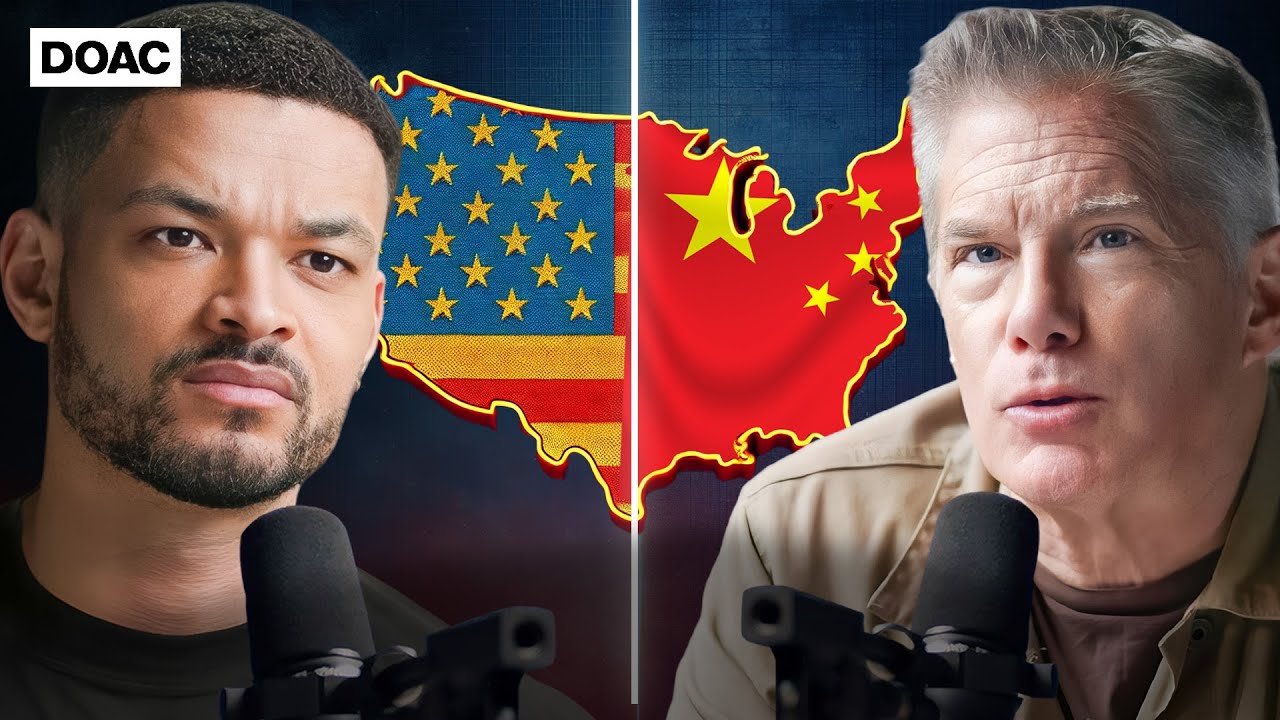
Ex-CIA Spy: China Is Preparing & We're Not Paying Attention! Here's What Happens If They Takeover! — The Diary Of A CEO

The Diary Of A CEO

Former CIA covert operator Mike Baker argues China is actively pursuing a war footing against the West through algorithm manipulation, semiconductor dominance, and critical infrastructure probing.

AI-assisted summary of Ex-CIA Spy: China Is Preparing & We're Not Paying Attention! Here's What Happens If They Takeover! — original source. Check the original for full context.

Source published:

Detailed notes

## Background Published on YouTube by The Diary Of A CEO on November 28, 2024, this episode features host Steven Bartlett interviewing former CIA covert operations officer and security expert Mike Baker. The discussion explores secret intelligence technologies, CIA persuasion and recruitment tactics, and major global geopolitical threats including China, Russia, and nuclear escalation.

## TL;DR Former CIA officer Mike Baker offers an insider's analysis of global geopolitics, national security, and covert operations. He details how intelligence officers recruit sources, why China's long-term strategy and TikTok present severe threats to the West, and the strategic realities underlying conflicts in Ukraine and the Middle East. Baker also evaluates the risks of nuclear miscalculation, foreign influence operations, and domestic vulnerabilities while emphasizing personal preparedness and character-based parenting.

## Atmosphere & style The conversation carries a grave, analytical, yet surprisingly accessible tone as Baker breaks down complex geopolitical dynamics with grounded realism. The host's curious, probing questions create a fluent dynamic that balances heavy, sober discussions of war and nuclear risks with dry humor and sharp anecdotes. Watching the exchange feels like an intimate, clear-eyed masterclass in global security that shifts smoothly from broad strategic analysis to deeply personal reflection.

## Key takeaways - [52:38](https://www.youtube.com/watch?v=7-ZCglrexbo&t=3158s) The deployment of North Korean troops to fight for Russia in Ukraine demonstrates a deepening alliance where Kim Jong-un receives cash, combat experience, and weapons technology in exchange for military support. - [57:56](https://www.youtube.com/watch?v=7-ZCglrexbo&t=3476s) Xi Jinping has compressed China's timeline for taking Taiwan to fit within his own tenure, utilizing either kinetic force or a soft institutional takeover similar to Hong Kong. - [01:00:50](https://www.youtube.com/watch?v=7-ZCglrexbo&t=3650s) Taiwan's role as the primary global hub for advanced semiconductor manufacturing makes it strategically vital, though active US troop deployment on the ground remains unlikely. - [01:09:59](https://www.youtube.com/watch?v=7-ZCglrexbo&t=4199s) Modern covert operations focus on bypassing state censorship to push accurate information directly to populations in closed societies rather than engineering political coups. - [01:12:34](https://www.youtube.com/watch?v=7-ZCglrexbo&t=4354s) Hamas exploited operational security by abandoning electronic communications for handwritten notes and couriers, leading to a massive Israeli intelligence failure on October 7. - [01:15:08](https://www.youtube.com/watch?v=7-ZCglrexbo&t=4508s) Sustaining military support for Ukraine is crucial to forcing Vladimir Putin into a negotiated settlement rather than enabling a prolonged high-intensity war. - [01:19:37](https://www.youtube.com/watch?v=7-ZCglrexbo&t=4777s) Iran functions as the primary state sponsor of regional terrorism, seeking to deter Western intervention while attempting to reach nuclear breakout capabilities. - [01:29:32](https://www.youtube.com/watch?v=7-ZCglrexbo&t=5372s) The combination of expanding global nuclear arsenals, potential non-state group acquisition, and systemic or human errors significantly raises the 100-year risk of a nuclear incident. - [01:31:52](https://www.youtube.com/watch?v=7-ZCglrexbo&t=5512s) Future global conflict will increasingly involve gray-zone cyber and space operations aimed at disrupting critical Western infrastructure like power grids, financial networks, and satellites. - [01:41:01](https://www.youtube.com/watch?v=7-ZCglrexbo&t=6061s) Foreign adversaries leverage social media algorithms, bots, and covert information operations primarily to erode public trust in Western democratic institutions. - [01:48:27](https://www.youtube.com/watch?v=7-ZCglrexbo&t=6507s) TikTok's global algorithm functions as a potent tool for high-speed influence campaigns, contrasting sharply with the managed content pushed via its domestic Chinese counterpart, Douyin. - [02:00:10](https://www.youtube.com/watch?v=7-ZCglrexbo&t=7210s) Parenting and mentorship should emphasize exceptional character, loyalty, duty, and hard work rather than settling for average effort or financial metrics.

## Detailed walkthrough ### [00:00](https://www.youtube.com/watch?v=7-ZCglrexbo&t=0s) Geopolitical Threats and the CIA Mindset

Former CIA covert operations officer Mike Baker lays out a stark assessment of the current global security landscape, warning that China is already waging a silent war against the West. Scanning the world map, Baker highlights a cascade of converging threats: Vladimir Putin brandishing nuclear weapons, Iran engaging in active assassination plots against high-profile American figures, and China advancing a aggressive long-term strategy. The central challenge for Western leadership is identifying who the primary adversary truly is amid these overlapping crises.

``` ┌─────────────────────────────────────────┐ │ GLOBAL THREAT LANDSCAPE │ └────────────────────┬────────────────────┘ │ ┌─────────────────────────────┼─────────────────────────────┐ ▼ ▼ ▼ ┌─────────────────┐ ┌─────────────────┐ ┌─────────────────┐ │ RUSSIA │ │ IRAN │ │ CHINA │ │ Nuclear threats │ │ Assassination │ │ Silent war & │ │ & aggression │ │ plots │ │ long-term plan │ └─────────────────┘ └─────────────────┘ └─────────────────┘ ```

The underlying discipline that allowed Baker to operate in this high-stakes environment now drives his work in private business intelligence. The core imperative of intelligence collection is securing actionable clarity—without which strategic decision-making fails. The psychological principles required to recruit a foreign source to betray their country mirror the core mechanics of high-level persuasion and negotiation in business: targeting, leverage, manipulation, and reading human vulnerabilities.

[02:04](https://www.youtube.com/watch?v=7-ZCglrexbo&t=124s) Joining the CIA and the Agency's Mission

Baker joined the CIA in the early 1980s at twenty-two years old, entering the Directorate of Operations (now the Directorate of Analysis and Directorate of Operations structure). When asked to distill his mission during those early years, he summarizes it simply: executing the directives handed down to further national security objectives. A common misconception about the CIA is that it sets its own agenda or policy. In reality, tasking flows directly down from the White House and the current presidential administration, informed by the intelligence community's findings.

The intelligence apparatus operates as an interconnected web. When the administration requires specific answers—such as forecasting Vladimir Putin's strategic intent or calculating the breakout time for Iran's nuclear enrichment—the tasking is distributed across multiple agencies. The CIA works alongside entities like the National Security Agency (NSA) and military intelligence to collect complementary pieces of the larger puzzle.

- **Age at Entry:** 22 years old (early 1980s). - **Primary Operational Function:** Directorate of Operations. - **Key Intelligence Questions:** Russian leadership intentions, Iranian nuclear capability and breakout timelines.

[04:07](https://www.youtube.com/watch?v=7-ZCglrexbo&t=247s) Life in the Field: Assets, Terminology, and Recruitment

Unlike officers who complete headquarters tours at Langley, Baker spent his entire CIA career operating overseas. Operational life varied wildly depending on the assignment: living under cover in a foreign city for two to three years at a time, or conducting rapid "drop-in" operations to meet key sources.

Baker clarifies a frequent linguistic error made by the public and the media:

> "There's a misconception sometimes in vocabulary... They'll say 'CIA agent.' Well, in reality, it's a CIA officer. The agent is the person that's been recruited—or the asset, the human source."

``` ┌────────────────────────────────────────────────────────────────────────┐ │ CIA ROLES & TERMINOLOGY │ ├───────────────────────────────────┬────────────────────────────────────┤ │ CIA Officer │ Asset / Agent │ │ • Full-time agency employee │ • Recruited foreign source │ │ • Operates overseas under cover │ • Holds access to critical info │ │ • Conducts the recruitment cycle │ • Provides intelligence on tasking │ └───────────────────────────────────┴────────────────────────────────────┘ ```

The cycle of human intelligence (HUMINT) follows a rigorous progression: spotting, targeting, developing, recruiting, and handling. An asset might be a deputy foreign minister, a high-ranking military officer, or a local taxi driver who knows every movement in a sensitive neighborhood. Once an asset is recruited, a stressful timer begins ticking. Operating as a spy causes intense internal psychological erosion; unless the person is a psychopath, committing treason against their own government generates severe friction. Handlers must manage this strain while constantly anticipating how long the relationship can safely produce intelligence before compromised security or psychological collapse shuts it down.

[08:17](https://www.youtube.com/watch?v=7-ZCglrexbo&t=497s) Traitors, Motivations, and the Psychology of Persuasion

Convincing a foreign official to commit treason requires a deep understanding of human psychology. Baker points to infamous American traitors like Edward Lee Howard, Jim Nicholson, and Robert Hanssen—an FBI agent who became one of the most destructive moles in U.S. history. Hanssen exploited his deep knowledge of counterintelligence to troll his own services, offering his intelligence remotely to the Soviets without ever revealing his identity, leading to the capture and execution of numerous U.S. assets in Russia.

When evaluating why people betray their country or employer, ideology is rarely the primary driver. Handler training focuses on identifying specific personal vulnerabilities:

* **Financial Strain:** Need for cash due to debt, lifestyle demands, or extramarital affairs. * **Personal Grievance:** Feeling disrespected, overlooked, or underappreciated by their organization or government. * **Desperation:** External pressures, such as needing specialized medical care for a sick child that is unavailable in their home country. * **Ego & Status:** Seeking validation or a sense of superiority over their peers.

[13:01](https://www.youtube.com/watch?v=7-ZCglrexbo&t=781s) Cold-Contact Intelligence Gathering and Finding Leverage

Recruiting or eliciting information from a target rarely starts with a dramatic pitch. It begins with basic conversation and active listening. Most people have an innate desire to talk about themselves; by asking simple questions and offering uninteresting details about oneself, the other person naturally takes the stage.

Baker illustrates this dynamic with a corporate intelligence example: if a client suspects an investment in China isn't generating reported revenues, an investigator doesn't storm the front gates. Instead, they talk to the security guards or local noodle-shop vendors outside the factory perimeter. A guard sitting in a booth all day will happily chat about how many delivery trucks actually leave the site each day or mention that the factory only operates three days a week.

``` ┌─────────────────────────────────────────────────────────────────────────┐ │ THE RECRUITMENT & ELICITATION CYCLE │ ├───────────────┬─────────────────────────────────────────────────────────┤ │ 1. Spotting │ Identifying who has access to the target information │ │ 2. Targeting │ Mapping the individual's habits, interests, & weak points│ │ 3. Developing │ Building rapport via conversational mirroring │ │ 4. Recruiting │ Converting leverage or motivation into an agreement │ │ 5. Handling │ Maintaining security and managing psychological stress │ └───────────────┴─────────────────────────────────────────────────────────┘ ```

Building rapport occasionally requires improvised adaptations. Baker recalls targeting an overseas source who was passionately obsessed with chess. Despite hating the game and being terrible at it, Baker had to take an emergency crash course in chess tactics overnight just to hold his own over drinks and build the necessary bridge to develop leverage.

[16:55](https://www.youtube.com/watch?v=7-ZCglrexbo&t=1015s) CIA Persuasion and the Art of the Recruitment Process

Steven points out that hostile nations act aggressively and without guardrails against US, UK, Australian, Canadian, or European interests. Picking up the hypothetical cab-driver scenario, he asks at what point an officer seeks out leverage—such as finding out the source has a sick child—to convert a contact into a spy. Baker clarifies that it is rarely a single moment or a one-time encounter. Instead, the process involves building a thorough psychological profile to understand the target's core values, motivations, financial or personal problems, and underlying grievances.

To cultivate a target, an operative continually seeks natural-sounding reasons for subsequent meetings. Sharing an anecdote, Baker mentions how an Uber driver gave him a business card that morning offering direct private rides, illustrating how easy it is to establish a natural channel for future contact. While securing repeat meetings with a cab driver is straightforward, targeting a high-value asset—such as the head of the Iranian nuclear program—requires far more complex strategy.

* **Target Profiling Factors:** Discovering core motivations, personal problems, and underlying grievances. * **Goal of Initial Encounters:** Securing a legitimate, natural reason for a second meeting without raising suspicion.

---

[19:37](https://www.youtube.com/watch?v=7-ZCglrexbo&t=1177s) CIA Tradecraft and Psychology Training

When asked what skills the CIA teaches a recruit in their early twenties, Baker highlights the extensive domain of tradecraft. This encompasses conducting clandestine communications, operating under cover, utilizing physical disguises, and executing surveillance or counter-surveillance operations. Recruits also receive detailed paramilitary training. Beyond physical operations, training focuses heavily on the psychology of recruitment, diving deep into individual profiling and the emotional weight of bringing a source into the fold.

Baker observes that some recruits struggle with the recruitment process because they find the necessary manipulation morally problematic or emotionally distressing. He admits he never spent time "angst-ridden" over whether he was being manipulative, viewing his work simply as executing an assigned mission. The formal CIA training pipeline typically lasts a couple of years before an officer is deemed fully ready to deploy overseas.

---

[21:36](https://www.youtube.com/watch?v=7-ZCglrexbo&t=1296s) Leaving the CIA and Transitioning to Corporate Intelligence

Baker eventually decided to leave the CIA after a long career because of personal life changes. He was going through a lengthy divorce from his ex-wife—whom he describes as a great person, though they were no longer compatible—and needed to stay closer to home to raise his young daughter. He did not leave for financial reasons or wait until retirement age, choosing instead to walk away from his government pension despite not knowing exactly what he would do next.

Following his departure, Baker co-founded a global security firm with a close friend, Nick Day, a veteran of the Special Boat Service (SBS) and MI5. While Steven jokingly calls their work corporate espionage, Baker frames it as "strategic intelligence and investigations." Their firm helps corporations make safe international investments, investigate internal fraud or intellectual property theft, conduct due diligence on joint ventures, or figure out why competitors are securing foreign business licenses in sectors like African mining. Because private sector operations lack government immunity, operatives must carefully abide by jurisdiction-specific legal boundaries.

* **Key Difference in Private Sector:** Guardrails are much tighter; actions must adhere strictly to local law (e.g., rules surrounding one-party consent audio recording or court-admissible evidence). * **Firm Co-Founder:** Nick Day (former British SBS and MI5).

---

[24:10](https://www.youtube.com/watch?v=7-ZCglrexbo&t=1450s) Undercover Work and Hollywood Disguises

Reflecting on his time going undercover, Baker shares that he loved the acting element of physical disguises. He emphasizes that if an operative lacks confidence while wearing a disguise, it immediately "shows out" to those around them. However, when worn naturally, ordinary people on the street never suspect a passerby is in disguise.

Baker confirms he occasionally wore full-head masks, revealing that the CIA's internal disguise unit relies on Hollywood makeup artists to create remarkably realistic, legendary transformations.

---

[25:07](https://www.youtube.com/watch?v=7-ZCglrexbo&t=1507s) Transferable CIA Rules for Business: Mission and Risk

Reflecting on why his corporate firm survived and succeeded, Baker realized he had subconsciously applied implicit operational rules learned at the CIA. He eventually wrote a book about these concepts to explain how agency principles translate directly into business success.

The first essential transferable rule is **defining and communicating the mission**. Just as the CIA spends vast amounts of time onboarding recruits to understand the agency's purpose within government, a business owner must clearly define their mission and communicate it to smart hires to build long-term client trust.

The second critical rule is **understanding risk appetite and conducting risk vs. gain analysis**. Unlike in action movies where intelligence agencies blow up buildings or seize targets without forethought, real operations require calculating potential blowback and considering worst-case scenarios. Business leaders must similarly establish clear operational parameters so employees know what is legally and ethically permissible.

The third core principle is **knowing your operating environment**. Baker expresses constant surprise at companies that launch ventures without understanding local government stability, market restrictions, or competitor activities.

* **Rule 1 — Define the Mission:** Clarify the ultimate purpose of the organization and communicate it effectively to all team members. * **Rule 2 — Understand Risk Appetite:** Weigh potential gains against collateral damage or legal blowback before taking action. * **Rule 3 — Know the Operating Environment:** Thoroughly analyze market dynamics, competitor tactics, and local government volatility.

---

[31:27](https://www.youtube.com/watch?v=7-ZCglrexbo&t=1887s) Crucial Decision-Making: "Getting Off the A"

The most important operational rule Baker transferred from the CIA to business is the imperative to **make decisions with imperfect information**, a concept he calls "getting off the A." In military and tactical terms, the "A" represents the ambush site—the worst place to stay when under attack. In high-risk environments like Mexico or convoy movements in Iraq, delaying a decision while waiting for complete data often leads to disaster.

Baker points out that many business executives and individuals become paralyzed by overthinking, waiting for full certainty while opportunities pass them by or crises escalate. The CIA conditions officers through repetitive training to act decisively on whatever imperfect intelligence is currently available.

Applying this lesson to personal life, Baker explains that he advises his children not to overcomplicate choices. Rather than getting lost in endless pros-and-cons lists or imagining complex scenarios, individuals should recognize that decision trees usually come down to two or three clear paths. Remaining stuck in a job or an unhappy ten-year relationship due to the inertia of indecision is often far worse than making a choice and moving forward.

> "Make a damn decision, right? With the information that you've got... understand the nature of that information, but then just make a damn decision."

[33:53](https://www.youtube.com/watch?v=7-ZCglrexbo&t=2033s) Decision-Making Under Pressure and Overthinking

Mike transitions from business operations to personal philosophy, emphasizing that quality of life should dictate big career moves. He often advises his team members that if they genuinely believe they would be happier elsewhere—whether starting a new business or changing fields—they need to take the leap rather than just sitting around overthinking. Though he admits his perspective might lacks the nuance of a trained psychiatrist, he firmly believes that virtually every complex, major decision can be distilled down to a very limited set of actionable choices. Staring endlessly at a problem only breeds paralysis.

Reflecting on his operational days at the CIA, Mike notes how people often got bogged down imagining every possible worst-case scenario. He quips that when the proverbial whistle blows and an ambush starts—though "usually you shouldn't start an ambush with a whistle"—things will simply go one way or another. The key is to avoid getting stuck in what *could* happen. Instead, you make your choice, live with the mistakes, live with the consequences, and move forward. Life is tough enough as it is without manually adding complexity.

[35:14](https://www.youtube.com/watch?v=7-ZCglrexbo&t=2114s) The Political Landscape: The 2024 US Election Results

The conversation pivots to current events as Steven notes the election of Donald Trump as president-elect. Mike acknowledges the massive global consequences, referencing the old adage not to talk about "politics, religion, or taxes." He points out that very few analysts predicted the sheer magnitude of Trump's victory. Trump swept all the key swing states, flipped numerous districts in traditionally blue states, and dramatically outperformed expectations across diverse demographics.

Mike highlights how media narratives focused heavily on female voters deciding the outcome, yet fewer women voted for Kamala Harris than for Hillary Clinton or Joe Biden. Meanwhile, Trump made notable gains among suburban women and other key demographics. However, Mike expresses skepticism over whether the Democratic Party will engage in any meaningful self-reflection. Instead of examining why they lost, they spent months labeling a vast portion of the electorate as "moronic," "sexist," "racist," "garbage," "fascists," and "Nazis." He questions how a party can suffer such a decisive defeat and still remain seemingly incapable of internal introspection.

[37:56](https://www.youtube.com/watch?v=7-ZCglrexbo&t=2276s) Geopolitics of the Russia-Ukraine War

Shifting to foreign policy, Steven asks whether Trump can fulfill his campaign pledge to end the war between Russia and Ukraine "on day one." Mike sets the rhetoric aside to evaluate the stark reality on the ground. Ukraine is facing a brutal winter with a massive percentage of its energy grid destroyed by Russian strikes. Furthermore, public resolve inside Ukraine is showing signs of strain; a regular survey conducted by an institute in Kyiv showed that while 73% of citizens supported fighting indefinitely at the start of the year, that number dropped to 63% just months later—a significant 10% decline when the fate of a nation is on the line.

Ukraine is also losing soldiers at an alarming rate while facing a massive manpower disadvantage, with Russia holding roughly a 3:1 advantage in available combatants. The front line stretches over 600 miles (about 620 miles), concentrated heavily in the Donbas region. Overall, if the shooting stopped today, Russia controls roughly 20% of Ukrainian territory.

- **Kyiv Under Siege:** During September and October alone, there was only a single night where Kyiv was not actively under attack by Russian drones. - **The Kursk Incursion:** Ukraine launched a surprise counter-offensive into Russia's Kursk region—marking the first time foreign troops had been on Russian soil since World War II—holding around 500 square miles of territory. - **North Korean Troop Deployment:** Kim Jong Un has deployed over 10,000 to 12,000 North Korean troops to the front lines to fight alongside approximately 40,000 Russian troops attempting to retake Kursk.

[40:34](https://www.youtube.com/watch?v=7-ZCglrexbo&t=2434s) Why Putin Invaded and Why NATO Cares

Mike provides a high-level geopolitical breakdown of Vladimir Putin's motivations. Putin has repeatedly described the collapse of the Soviet Union as the "greatest disaster of the 20th century" and has spent his time in power trying to recreate the strength of former Russian dominance. Crucially, Putin seeks a physical buffer zone between Russia and NATO. Ukrainian President Volodymyr Zelenskyy entered the war asserting that the only acceptable outcome was total victory—reclaiming all annexed territories, including Crimea, Donetsk, Luhansk, and Zaporizhzhia—but Mike candidly states that total victory is simply not realistic.

The reason NATO and the European Union have provided such overwhelming support is that neighboring countries like Poland recognize the existential threat. History dictates that if Putin successfully swallows Ukraine, he will not simply stop there. Drawing a parallel to historical aggression, Steven points out how Western isolationism prior to World War II allowed Adolf Hitler to annex small territories like Czechoslovakia piece-by-piece until a full-scale global war was inevitable.

> "I take him at his word when he says he wants to recreate the former Soviet Union in a fashion... having worked against Russia for a long period of time, it's a mistake not to take Putin at his word."

[49:31](https://www.youtube.com/watch?v=7-ZCglrexbo&t=2971s) Potential Negotiated Settlements and Trump's Dilemma

Looking ahead to Trump's upcoming presidency, Mike explains Putin's immediate strategic calculation. Knowing a negotiated settlement is inevitable, Putin is currently throwing tens of thousands of troops into Kursk to clear out Ukrainian forces before sitting down at the bargaining table. Putin does not want Ukraine holding Russian territory as a bargaining chip to demand the return of Crimea or eastern Ukraine.

For the war to end pragmatically, any deal will likely require Ukraine to concede a portion of its territory—perhaps converting lost areas into a demilitarized zone patrolled by UN peacekeepers. While this outcome will be deeply unsatisfying to those who posted Ukrainian flags on social media, US support remains vital to ensure Zelenskyy can negotiate from a position of relative strength rather than total capitulation.

- **Russian Annexations:** Includes the Crimean peninsula (home to Russia's naval presence in the Black Sea, which Ukraine has largely neutralized) alongside eastern territories. - **Supply Line Vulnerabilities:** Ukraine's broad stretch into Russian territory has severely strained its supply lines and combat resources. - **European Stance:** Even if the US cut off aid entirely, European NATO allies would likely continue fighting alongside Ukraine due to their immediate geographical proximity to the threat.

Here is a detailed, faithful walkthrough of the transcript section, capturing its specific facts, arguments, and conversational texture.

---

[52:38](https://www.youtube.com/watch?v=7-ZCglrexbo&t=3158s) The North Korean Front in Ukraine and American Fatigue

Mike Baker and Steven discuss how the war in Ukraine might reach its conclusion, starting with the surprising integration of North Korean troops into the Russian war effort. Baker highlights that Vladimir Putin desperately wants to avoid launching another domestic conscription—a move that is vastly unpopular with the Russian public. To avoid rounding up another 50,000 Russian soldiers to feed his "meat grinder operation," where troops are thrown onto the front lines as cannon fodder, Putin turned to Kim Jong-un. For Kim, sending 10,000 soldiers is a lucrative deal: he gets cash, valuable combat experience for a military that currently has none, and a critical transfer of weapons technology from Moscow. For Putin, the North Koreans are simply extra bodies to throw into the fire ahead of the next Russian offensive.

When Steven brings up the growing sentiment in the United States—particularly on the political right, on major podcasts, and across social media platforms like X—that America should stop sending money to Ukraine, Baker warns against looking at the conflict in isolation. Steven draws a parallel to studying Nazi Germany in World War II, noting how failing to resist an invasion only emboldens aggressors. Baker agrees, reiterating that "the world is shrinking" and nothing happens in a bubble. World leaders like Chinese President Xi Jinping are closely watching the strength of the US and NATO response to determine what they can get away with regarding Taiwan.

* North Korea provided roughly 10,000 troops to Russia in exchange for combat experience, cash, and Russian weapons technology. * Putin relies on foreign manpower to delay domestic conscriptions, as Russian casualty rates remain extremely high compared to Ukraine's. * China's President Xi Jinping recently ordered the largest military exercise around Taiwan in history, effectively blockading its ports and patrolling its airspace to test and demonstrate capabilities.

---

[56:01](https://www.youtube.com/watch?v=7-ZCglrexbo&t=3361s) Predicting the End of the Ukraine War

When pressed to make a prediction on how the war in Ukraine will ultimately end, Baker projects that a negotiated settlement will likely be reached within 2025. He attributes this not only to the severe strain on Ukrainian forces but also to the heavy toll the war and its associated sanctions have taken on the Russian economy. However, he cautions that any resolution will feel deeply "unsatisfactory" to many observers.

Baker expects the final armistice lines to look similar to the borders before the 2022 invasion, though Russia will likely retain some newly seized territory. He envisions the creation of a heavily monitored buffer zone under the auspices of UN peacekeeping forces or a enforced no-fly zone. In the immediate term, Baker predicts a bloody conflict in the Kursk region before the full onset of winter, where Russia will throw up to 50,000 troops to reclaim its territory, eager to utilize the North Korean forces quickly before command-and-control issues worsen.

* **Timeline for Resolution:** Negotiated settlement predicted during 2025 due to mounting economic pressure on Russia and troop exhaustion on both sides. * **Expected Outcome:** A demilitarized buffer zone likely overseen by UN peacekeepers, with frontline borders landing fairly close to pre-invasion positions. * **Immediate Threat:** A massive Russian counter-offensive involving up to 50,000 troops targeting the Kursk region before deep winter sets in.

---

[57:56](https://www.youtube.com/watch?v=7-ZCglrexbo&t=3476s) China's 2049 Plan and the Looming Taiwan Crisis

Turning attention to Asia, Steven asks about China's rumored "2049 Plan." Baker explains that the timeline originally centered around the centenary of the founding of the People's Republic of China, targeting the "reunification" or absorption of Taiwan. Whether that takeover takes the form of a direct kinetic military operation or a gradual "soft takeover"—much like how Beijing systematically dismantled democracy in Hong Kong over time and during the pandemic—remains the central question. However, Baker stresses that Xi Jinping's personal timeline has accelerated: Xi wants the Taiwan issue settled during his own tenure as leader to cement his historical legacy.

Baker notes that Xi Jinping has consolidated power within China to a degree unseen since Mao Zedong or Deng Xiaoping. He warns Western observers not to confuse Xi with politicians like Donald Trump, who often speak off-the-cuff; when authoritarian leaders like Xi Jinping or Vladimir Putin make explicit public declarations about territorial claims, they mean every word. Taiwan represents a deeply emotional and historical mandate for Beijing, dating back to Chiang Kai-shek and the nationalist retreat to the island.

- The original 2049 target date for Taiwan's integration has been compressed to align with Xi Jinping's personal lifespan and political tenure. - Xi Jinping has achieved a level of absolute authority inside the Chinese Communist Party not seen since Deng Xiaoping or Mao Zedong. - Hong Kong serves as the primary template for a "soft takeover," where democratic institutions were methodically squashed over a multi-year period.

---

[01:00:50](https://www.youtube.com/watch?v=7-ZCglrexbo&t=3650s) Strategic Interest, Semiconductors, and the South China Sea

When Steven questions why a tiny island like Taiwan matters so much to the United States, Baker splits the answer into values and cold practicalities. On one hand, the US shares an emotional and democratic bond with Taiwan as a free ally. On the practical side, Taiwan is the world's most critical hub for advanced semiconductor chip manufacturing. Baker candidly admits that if all semiconductor manufacturing were successfully reshored to places like California, American strategic interest might soften, but for now, it remains vital.

Despite official presidential rhetoric promising to defend Taiwan—including occasional off-script slips and subsequent clarifications by President Joe Biden—Baker bets that no US administration, regardless of party, will actually send American "boots on the ground" to engage Chinese military forces directly over Taiwan. Instead, the US would likely supply defensive military hardware and intelligence, much like in Ukraine. Meanwhile, China continues its aggressive posturing in the South China Sea, building artificial islands, erecting military ports, and clashing with Filipino and Vietnamese vessels over international shipping lanes that the US military has guarded since World War II.

> "China is basically on a war footing with the West already, right? We just don't see it, or we don't feel it, or we don't want to acknowledge it... We act as if, 'Well, they're just an economic competitor, but it would be nice if we could all get along.'"

* Semiconductor chip production in Taiwan remains the primary economic and strategic reason the US guards the island so closely. * Baker believes US presidents will maintain rhetorical deterrence, but will not commit active military troops to fight China directly over Taiwan. * China is constructing artificial islands and military ports across the South China Sea to challenge freedom-of-navigation patrols conducted by the US Navy since World War II.

---

[01:05:31](https://www.youtube.com/watch?v=7-ZCglrexbo&t=3931s) The Primary Threat: China vs. Iran's Proxy Network

When asked who the true chief enemy of the West is, Baker names China as the top-line, long-term threat due to its immense economic resources, military capabilities, and explicit goal of dismantling Western dominance in favor of realignments like BRICS. However, in the immediate short term, Baker points to Iran as the most dangerous destabilizing force.

Baker reveals the extent of Tehran's hostility, noting that the Iranian regime has actively orchestrated assassination plots on US soil targeting President-elect Donald Trump, former Secretary of State Mike Pompeo, former National Security Advisor Brian Hook, former Defense Secretary Mark Esper, and former Chairman of the Joint Chiefs of Staff General Mark Milley. These plots are direct retaliation for the 2020 strike that killed Qasem Soleimani, commander of the IRGC's Quds Force and close confidant to Supreme Leader Ali Khamenei.

Beyond targeted assassinations, Iran maintains a network of regional proxies—including Hamas, Hezbollah, Islamic Jihad, and the Houthis—to execute its core objective of erasing Israel without taking direct military accountability. Baker argues that negotiating ceasefires with groups like Hezbollah or Hamas is merely "putting lipstick on a pig," because it ignores the root cause: the fundamental belief system of the Islamic Revolutionary Guard Corps (IRGC). Real change, he suggests, can only come internally from the Iranian people rising up against a regime that routinely murders women for protesting oppressive morality laws.

* **Iranian Hit List:** Active Iranian assassination plots have targeted Donald Trump, Mike Pompeo, Mark Milley, Mark Esper, and Brian Hook in revenge for the 2020 killing of Qasem Soleimani. * **Proxy Army:** Iran uses the Houthis, Hezbollah, Hamas, and Palestinian Islamic Jihad to wage asymmetric war while attempting to avoid direct state-on-state retaliation. * **Internal Unrest:** Baker emphasizes that the brutal domestic suppression of anti-regime and women's rights protests in Iran rarely gets the same focus on Western college campuses as actions taken by Western-aligned nations.

Here is a detailed, faithful walkthrough of this section of the interview.

---

[01:09:59](https://www.youtube.com/watch?v=7-ZCglrexbo&t=4199s) Supporting Internal Resistance and Western Inaction

Addressing how the US handles oppressive regimes, Mike Baker acknowledges that critics often assume someone with his covert background would instinctively advocate for engineering coups or uprisings. In decades past, the goal might have been directly stirring up an internal revolt. Today, however, the strategy focuses more on pushing accurate information into closed societies to empower the local population, and then determining how to support any organic protests that emerge.

However, Baker admits that this approach has largely failed in practice. Movements like Iran's Green Movement and other domestic protests were brutally crushed by their regimes. In response, the US, the UN, and international bodies typically do little more than issue written condemnations, leaving citizens under the thumb of oppressive rulers. To illustrate how information has historically been broadcast into closed states, Baker cites Voice of America (VOA), which played a crucial role during the Cold War in getting news into the Soviet Union. While South Korea still uses low-tech methods like dropping leaflets via balloons into North Korea to expose Kim Jong Un’s regime, modern technology offers new channels.

Baker laments the plight of everyday people under the brutal grip of Iran's Islamic Revolutionary Guard Corps (IRGC) and the mullahs, comparing their control to Hamas's iron-fisted rule in Gaza against dissidents, women, and LGBTQ+ activists. He points out a glaring double standard in Western public discourse: while college campuses erupt in massive protests against Israel, there is virtually zero public demonstration against Hamas's internal atrocities. Because Israel is surrounded by a ring of Iranian-backed proxies openly committed to its destruction, its citizens naturally operate under a vastly different threat perception than Westerners.

[01:12:34](https://www.youtube.com/watch?v=7-ZCglrexbo&t=4354s) The October 7 Attack and Israel's Intelligence Failure

Steven asks how it was possible for thousands of attackers to breach Israeli territory on October 7, 2023, given Israel’s extreme security posture and sophisticated defense systems like the Iron Dome. Baker explains that the attack was a meticulously planned, long-term operation orchestrated by Hamas with direct Iranian and IRGC backing, including specialized combat training.

The strategy succeeded primarily because Hamas effectively lulled the Israeli government and military into a false sense of security. Hamas projected the impression that it was abandoning violence to focus on economic development in Gaza. Israel took the bait, turning its focus inward toward bitter domestic political battles under the assumption that the immediate existential threat had subsided.

This resulted in a massive intelligence failure, compounded by Hamas using strict operational security (OPSEC). Realizing their electronic communications were monitored, Hamas reverted to low-tech, courier-based communication—handwriting notes and passing them through family networks. Baker draws a direct parallel to Al-Qaeda, which similarly abandoned electronic communications after discovering Western interception capabilities. While reliance on manual couriers slows operations down significantly, it makes signals intelligence collection virtually impossible.

[01:15:08](https://www.youtube.com/watch?v=7-ZCglrexbo&t=4508s) US Support for Israel vs. Ukraine and Realist Diplomacy

When discussing whether American public support for Israel is waning in the same way it has for Ukraine, Baker notes that Israel holds a far more secure place in the US political landscape. This enduring support is driven by deep historical alliances spanning generations and a large, politically active Jewish-American community—factors that Ukraine simply does not possess.

Reiterating his stance on the war in Ukraine, Baker pushes back against being labeled a "warmonger." He argues that achieving genuine peace requires maintaining enough military support for Ukraine so that Vladimir Putin is forced to negotiate. If Putin senses that the US is stepping back, he will refuse to negotiate and will continue throwing Russian soldiers into the conflict without regard for human life. Baker believes that sustaining support will eventually bring Russia to the table, as Putin cannot sustain a high-intensity war against his own domestic population for another two or three years.

[01:17:07](https://www.youtube.com/watch?v=7-ZCglrexbo&t=4627s) Ending the Middle East Conflict and the Role of Iran

Baker offers a cynical assessment of how the Middle East conflict will play out, predicting it will end with a "Band-Aid on a sucking chest wound" rather than a permanent resolution. He envisions a negotiated ceasefire in Gaza, potentially bringing in the Palestinian Authority to oversee governance. A ceasefire in Gaza would provide a pretext for the Houthis to stop targeting international shipping in the Red Sea and allow Lebanon's government to stabilize, especially given that Israel has systematically decapitated Hezbollah's senior leadership.

Baker stresses that Iran and its ruling elite have no desire for a direct, full-scale military conflict with Israel and the US. With American carrier strike groups and nuclear-capable B-52 bombers deployed to the region as a show of force, the Iranian regime understands it cannot win a direct war. Much like Putin or Xi Jinping, the primary goal of the mullahs and the IRGC—who have enriched themselves by controlling the Iranian economy—is regime survival and maintaining domestic power. Therefore, while temporary ceasefires will pause active fighting, they merely "kick the can down the road" without solving the core problem: Iran’s leadership remains dedicated to Israel's destruction.

[01:19:37](https://www.youtube.com/watch?v=7-ZCglrexbo&t=4777s) Israel's Retaliatory Strikes and the Iranian Nuclear Threat

Analyzing Israel’s retaliatory strikes inside Iran, Baker highlights their strategic focus on dismantling Iranian missile production facilities and air defense systems. Destroying missile plants severely impairs Iran's ability to strike Israel directly or rearm proxies like Hamas, Hezbollah, and the Houthis. Meanwhile, neutralizing air defenses leaves Iran exposed, setting the stage for potential future strikes against its underground nuclear facilities if Iran approaches a nuclear breakout.

When asked how intelligence agencies know Iran does not already possess a completed nuclear weapon, Baker asserts that the regime would have boasted about it immediately to establish deterrence. Furthermore, Western intelligence relies heavily on regional liaison partners, including Israeli, Jordanian, and Saudi intelligence services. While Arab neighbors like Saudi Arabia and Jordan will not declare it publicly, they deeply desire regional stability and would welcome the downfall or containment of the Iranian regime.

Addressing why the US is so uniquely focused on preventing Iran from acquiring nuclear weapons, Baker emphasizes that Iran is the world's leading state sponsor of terrorism. He points to Qasem Soleimani, the late head of the IRGC Quds Force killed in 2020, who had the blood of thousands of US soldiers on his hands by funding, training, and equipping Iraqi insurgent militias with deadly improvised explosive devices (IEDs). Allowing a regime with a demonstrated history of attacking US personnel and plotting assassinations against American officials to acquire nuclear weapons would fundamentally alter global security dynamics.

[01:23:31](https://www.youtube.com/watch?v=7-ZCglrexbo&t=5011s) Nuclear Weapons, the "Dead Hand," and Global Proliferation

Steven brings up an interview with author Annie Jacobson, expressing shock that the US President holds sole, unconstrained authority to launch nuclear weapons without needing approval from Congress or the Cabinet. Baker confirms this protocol, noting it has applied to every administration from Reagan and Bush to Obama, Trump, and Biden.

To illustrate an even more terrifying concept, Baker discusses the Cold War-era Soviet "Dead Hand" system (Perimetr). Fearing a decapitating first strike on the Kremlin, the Soviets built an automated, non-human decision-making system designed to measure seismic activity, radiation, and communication failures to launch a retaliatory nuclear strike automatically. Although Moscow claims the system was disarmed years ago, Baker remains skeptical, drawing a parallel to modern risks surrounding AI and autonomous warfare, where human control must always be preserved.

Baker warns that the world has entered an extraordinarily dangerous period where the limited, tactical use of nuclear weapons is being normalized. Russian officials like Dmitry Medvedev and Dmitry Peskov frequently engage in nuclear saber-rattling while conducting tactical nuclear drills near the Ukrainian border. When reviewing the global "Nuclear Club," Steven and Baker list the known and suspected nuclear-armed states:

- **United States** - **Russia** - **France** - **China** - **United Kingdom** - **Pakistan** - **India** - **North Korea** - **Israel** *(widely assumed to possess nuclear capabilities, though maintaining a policy of deliberate ambiguity)*

<ElicitationsGroup message="Where would you like to go next with this transcript summary?"> <Elicitation label="Summarize the next section of the transcript" query="Please provide the next part of the transcript walkthrough covering the remaining timestamp sections."/> <Elicitation label="Deep dive into the CIA recruitment & persuasion strategies discussed earlier" query="Can you summarize the specific sections where Mike Baker discusses CIA recruitment tactics, persuasion techniques, and covert operations?"/> </ElicitationsGroup>

[01:26:12](https://www.youtube.com/watch?v=7-ZCglrexbo&t=5172s) The Reality of the Nuclear Club and Middle East Proliferation

Discussing global nuclear capabilities, Steven Bartlett and Mike Baker note that while North Korea possesses nuclear weapons, their delivery systems remain a point of ongoing debate and intelligence gaps. Turning to Iran, Baker points out that intelligence regarding their nuclear breakout window fluctuates wildy—ranging anywhere from a few weeks to several months—which signals that Western intelligence on the program may not be as precise as desired. To demonstrate the sheer scale of modern nuclear deterrence, Bartlett references a staggering metric: the warhead on a single U.S. nuclear submarine carries seven times the destructive power of all the bombs dropped in World War II combined (including both atomic bombs), and the U.S. maintains ten such submarines.

Despite these terrifying capabilities, Baker argues that the world was actually closer to full-scale nuclear war at the height of the Cold War, when the public genuinely expected a direct military clash with the Soviet Union. However, he cautions that nuclear weapons are far more prevalent today across an expanded "nuclear club." The constant public threats and normalization of nuclear rhetoric risk guiding international diplomacy down a dangerous path. If Iran successfully acquires a nuclear weapon, it would trigger a immediate domino effect, forcing regional rivals like Saudi Arabia to seek their own nuclear arsenals and compelling Israel to openly re-evaluate its posture, creating a volatile tipping point across the Middle East.

* Iran's estimated nuclear breakout window ranges from a couple of weeks to several months, indicating significant intelligence uncertainties. * A single U.S. nuclear-armed submarine carries seven times the total explosive yield dropped by all sides during World War II combined. * A nuclear-armed Iran would almost certainly drive Saudi Arabia to pursue its own nuclear deterrent, escalating regional proliferation.

---

[01:29:32](https://www.youtube.com/watch?v=7-ZCglrexbo&t=5372s) Mathematical Inevitability: Errors, AI, and "Broken Arrows"

Bartlett reflects on the long-term existential threats facing humanity, emphasizing that given a 100-year horizon, the combination of growing nuclear arsenals, aging egotistical leaders, and autonomous AI systems creates a mathematical near-certainty of a major nuclear incident. All it takes is one miscalculation, a rogue actor, or a "Broken Arrow"—a lost or stolen nuclear weapon—to ignite a global disaster. They recall the 2018 emergency alert in Hawaii, where a false missile alarm sent residents into a 30-minute panic. Families were forced to make heart-wrenching decisions under the assumption that an incoming strike was imminent, all because an operator pressed the wrong button on a drop-down menu.

Baker echoes these concerns, pointing out that accidental escalations or non-state actors acquiring weapons are very real threats. He highlights Russia's relocation of tactical nuclear weapons to Belarus and the perennial risk of political collapse in Pakistan, which could allow hostile factions to seize control of established nuclear warheads.

> "Just so everyone knows, hiding in a cupboard is not going to be [effective]... That was just because one person in an office somewhere clicked the wrong button."

---

[01:31:52](https://www.youtube.com/watch?v=7-ZCglrexbo&t=5512s) Bringing Pain to the Homeland: The Next Global Conflict

When asked about his single greatest concern regarding future geopolitical conflicts, Baker emphasizes that the next major war will not remain isolated to distant battlefields. Opponents like China and Russia continuously map, probe, and test Western critical infrastructure—including power grids, water treatment facilities, fuel distribution, supply chains, and banking systems. In a full-scale confrontation, foreign adversaries will execute a strategic playbook designed to paralyze domestic life instantly, bringing severe disruption directly to the American and European homelands before conventional military forces even make physical contact.

Furthermore, Baker predicts that space and directed energy weapons will play a defining role in disabling vital satellite networks. Knocking out infrastructure like Starlink or GPS systems would instantly disrupt global navigation, military command structures, and daily civilian life. While modern warfare heavily features high-tech cyber and space capabilities, Baker notes the sobering irony that traditional combat remains painfully relevant: current aerial imagery of trench lines in Ukraine mirrors the battlefields of World War I, proving that despite advancing technology, human conflict frequently repeats its worst historical errors.

* Adversaries actively probe Western power grids, financial systems, and water treatment plants to build an infrastructure shutdown playbook. * Space-based directed energy weapons aim to destroy satellite constellations, disabling civilian GPS, communications, and military navigation. * The front lines in Ukraine demonstrate a return to World War I-style trench warfare, underscoring how human ego and emotion drive repeated historic mistakes.

---

[01:36:27](https://www.youtube.com/watch?v=7-ZCglrexbo&t=5787s) Personal Preparedness and Western Complacency

Addressing personal readiness, Baker stresses that the single best step individuals can take is staying thoroughly informed by consuming diverse news sources rather than relying on single-viewpoint echo chambers. Reflecting on the onset of COVID-19 in late 2019, he recalls how early reports of quarantines in Wuhan served as an early warning sign for those paying close attention. While he clarifies that he isn't a radical "prepper," he strongly advocates for families to maintain basic contingency plans for localized blackouts or natural disasters, such as establishing clear communication channels to locate children when primary networks fail.

Bartlett and Baker discuss how decades of peace have bred deep complacency throughout Western societies. Growing up without experiencing domestic warfare, younger generations take basic safety, clean water, and constant connectivity for granted—worrying more about Wi-Fi strength than survival. Baker draws a parallel to his parents, born in 1919 and 1920, who survived economic depressions and world wars in hopes of building a safer world for their children. However, this societal comfort can reach a point of diminishing returns, making Western nations uniquely fragile when confronted with unexpected external shocks or internal division.

* Early warning indicators of global disruptions, such as the initial late-2019 Wuhan quarantines, are often visible weeks before official crisis declarations. * Basic family emergency preparedness should focus on realistic scenarios like power outages, system blackouts, and emergency communication routes. * Decades of peace and comfort in the West have created a baseline of societal complacency, leaving populations mentally unequipped for major home-front disruptions.

[01:41:01](https://www.youtube.com/watch?v=7-ZCglrexbo&t=6061s) Foreign Influence Operations and the Misinformation Machine

Mike Baker explains that foreign adversaries like Russia and China deliberately exploit divisive domestic topics—such as race and "woke" cultural issues—because those wedge issues are proven to fracture Western societies. They build automated bots and push misinformation or disinformation campaigns on platforms like X (formerly Twitter). A user sees a post that validates their existing views, assumes it is true, and forwards it to friends and family, causing the narrative to snowball. Baker emphasizes that these influence campaigns have a massive, tangible impact on the West simply because citizens fail to remain curious or take the necessary time to evaluate whether a piece of content is credible before sharing it.

When addressing skeptics who dismiss foreign influence campaigns as far-fetched conspiracy theories, Baker insists that a basic level of objective research proves otherwise. Looking across non-partisan think tanks and research institutes reveals a clear, concerted effort by foreign powers to influence Western public sentiment. Their primary goal is not necessarily to force a specific political candidate to win, but rather to undermine faith in democratic institutions and create internal chaos—which they view as a strategic victory.

- Foreign intelligence services utilize bots and targeted social media campaigns to stoke outrage around cultural and political flashpoints. - The objective of these foreign campaigns is broader than picking election winners; it aims to erode trust in democracy and destabilize society. - Critical evaluation across diverse research institutions consistently confirms the active existence of these coordinated influence operations.

---

[01:42:22](https://www.youtube.com/watch?v=7-ZCglrexbo&t=6142s) Did Putin Want Trump to Win? Geopolitics and the War in Ukraine

Addressing whether Vladimir Putin specifically wanted Donald Trump to win the U.S. presidential election, Baker suggests the narrative is far more complex than popular tropes like "Trump is Putin's puppet." He notes that the Steele dossier narrative was itself part of a massive misinformation wave that the public accepted "hook, line, and sinker." While a common media narrative claims Putin favored Trump because Trump promised to withdraw from Ukraine, Baker doubts that scenario will play out so simply. He references reporting that Trump placed a call to Putin warning him against escalating the war, effectively setting down an initial marker.

Baker highlights that Putin also has incentives to end the war, as Russia's economy is strained and its military is suffering heavy losses on the front lines. The conversation turns to the political calculus surrounding a resolution: if Trump fails to end the war, political opponents will call him out for unfulfilled campaign promises; if he does secure a peace deal, critics will accuse him of giving away Ukrainian territory. Baker points out that historically, Putin annexed Crimea under the Obama administration and launched his full-scale invasion during the Biden administration because he felt he could predict the Western response. Although President Biden deserves credit for rallying NATO, Baker notes Biden simultaneously restricted Ukraine from using long-range munitions against targets inside Russia, preventing Ukraine from gaining the strategic upper hand necessary to force Russia to negotiate.

``` HISTORICAL TIMELINE OF RUSSIAN AGGRESSION & U.S. AID

Obama Admin Trump Admin Biden Admin ┌───────────┐ ┌───────────┐ ┌───────────┐ │ Annexation│ │Authorized │ │ Full-Scale│ │ of Crimea │ │Lethal Aid │ │ Invasion │ └─────┬─────┘ └─────┬─────┘ └─────┬─────┘ │ │ │ ▼ ▼ ▼ No Lethal Aid First Javelins Rallied NATO Authorized Sent to Ukraine & Massive Aid ```

- **Lethal Aid History:** The Trump administration initially authorized lethal military aid (such as Javelin anti-tank missiles) to Ukraine, whereas the Obama-Biden administration restricted assistance to non-lethal support despite Crimea's annexation. - **Strategic Restrictions:** Biden's policy withheld authorization for Ukraine to strike deep within Russian territory using long-range Western munitions, limiting Ukraine's offensive leverage. - **Electoral Dynamics:** For average Americans, a narrative focused on ending foreign wars, saving billions in taxpayer dollars, and stopping bloodshed is far more compelling than debate over minor territorial concessions.

---

[01:48:27](https://www.youtube.com/watch?v=7-ZCglrexbo&t=6507s) The Weaponization of TikTok and Social Media Algorithms

Steven and Mike dive deep into how TikTok operates and why it presents a unique threat compared to traditional social media platforms. Drawing from his ten years of experience in social media, Steven explains that TikTok's algorithm is exceptionally powerful and addictive. Unlike platforms like Instagram where reach is tightly bound to follower counts, TikTok ignores follower numbers to aggressively serve users hyper-engaging, highly emotional, and fear-centric content. This dynamic rapidly pushes users into echo chambers, driving intense engagement by maximizing outrage and fascination.

Baker agrees that technology has revolutionized covert action, propaganda, and state-sponsored information warfare. Historically, intelligence agencies had to recruit local journalists or secure radio broadcasts to influence populations in foreign nations. Today, digital algorithms allow state actors to execute high-speed propaganda campaigns that reach millions instantaneously. Baker highlights the glaring paradox that China bans its own citizens from accessing the global version of TikTok, indicating the Chinese government is fully aware of its potential impact on youth and social stability.

> "In the old days if you wanted to influence hearts and minds... it was kind of old school stuff... Technology has given the ability to do covert action campaigns—propaganda, disinformation, whatever you want to call it—a real jump start." — **Mike Baker**

- **Algorithmic Variance:** TikTok's delivery model creates extreme variance in video performance (ranging from 1,000 to 10,000,000 views regardless of follower count), prioritizing hyper-engaging content over existing network connections. - **Domestic Restriction:** The Chinese government prohibits domestic access to TikTok, replacing it with a heavily controlled domestic version (Douyin) that curates educational and patriotic content. - **Data Harvesting & Espionage:** Beyond driving political division, China's track record in economic espionage demonstrates a relentless drive to collect massive volumes of personal and corporate data globally. - **Individual Defense:** Baker stresses that the ultimate front-line defense against digital disinformation isn't government censorship, but individual users exercising skepticism, pausing to check source credibility, and recognizing their own confirmation bias before sharing content.

[01:55:34](https://www.youtube.com/watch?v=7-ZCglrexbo&t=6934s) Political Polarisation and the 2024 Election Outcomes

Steven and Mike discuss how political discourse has pushed people away from the center, making "compromise" feel like a dirty word. Steven brings up a recent conversation with Scott Galloway, who calculated a 33% statistical probability that Donald Trump could die in office during his term based on his age and BMI. Steven ponders how chaotic and destabilizing that scenario would be, noting that if Trump were to drop dead, a huge portion of the American public would refuse to believe it was of natural causes.

Mike reflects on the outcome of the 2024 presidential election, emphasizing that regardless of political affiliation, the sheer size and decisiveness of Trump's victory was a positive result because it spared the country from four years of election denial and legal challenges. Addressing widespread fears that a Republican sweep of the White House, Senate, and House of Representatives marks the end of democracy, Mike points out that several past administrations began with unified government control without drastic structural changes. The massive bureaucracy of the US government naturally slows down sweeping agendas. He critiques the hyperbole on both sides, noting how political narratives swing wildly from predictions of "the end of the world" to calls for calm, leaving the public disoriented.

* **Statistical Claim:** Scott Galloway estimated a 33% chance of Trump dying in office during his term based on age and BMI metrics. * **Government Dynamics:** Mike notes that at least 5 or 6 recent presidential administrations started with control over both houses of Congress, yet the size of the federal machine prevents extreme disruption. * **Immigration Expectations:** Mike predicts there will not be a mass deportation of 10 million people, but rather a stricter border policy targeting illegal immigrants who have criminal convictions.

---

[02:00:06](https://www.youtube.com/watch?v=7-ZCglrexbo&t=7206s) Raising Exceptional Children and the Value of Hard Work

When asked what core advice he gives his children on how to be successful and climb any ladder in life, Mike rejects the notion of raising "average" children. His philosophy as a parent is to instill an exceptional work ethic, emphasizing that simply outworking the competition by a small margin yields disproportionate success. While people often talk about giving "110%" or "150%," the reality is just pushing slightly past one's perceived limits.

``` Control Hard Work & Effort │ ▼ Disproportionate Advantage ──► Outperforming the Competition ```

Steven brings up insights from previous guest Andre Duqum regarding motivation and manipulation, pivoting to how interpersonal skills drive business and intelligence. Mike stresses that genuine empathy, interest, and enjoyment of people cannot be faked, as people inherently spot disingenuous behavior. Sharing an example about his middle son, who attends IMG Academy in Florida for basketball, Mike highlights that while someone cannot control their innate genetics or height, they have complete control over their effort and work ethic.

* **Parenting Core Philosophy:** Mike's goal is to raise exceptional rather than average children, encouraging them to be honest, loyal, kind, and willing to work harder than others. * **IMG Academy:** Mike's middle son attends IMG Academy, a sports training board school in Florida, focusing on basketball. * **Interpersonal Advice:** Authentic empathy and interest in others cannot be faked; clients and contacts naturally sense when someone is being disingenuous.

---

[02:05:31](https://www.youtube.com/watch?v=7-ZCglrexbo&t=7531s) The Guest's Last Question: Family, Loyalty, and Legacy

Steven asks the traditional closing question left by the previous guest: *"What do you think is the most important thing that has happened in your life to create your success?"* Mike reflects deeply on the profound impact of his family. He divides his life into two halves: the first defined by the foundation laid by his parents, and the second defined by meeting his wife, Emily, whom he credits as the smartest and funniest person he knows.

Becoming noticeably emotional, Mike speaks about his late father—an incredible role model who served as an example of an unwavering work ethic, loyalty, and quiet dedication during his 50-year marriage. Mike recalls feeling immense peace when his father passed away because they had always expressed their love and appreciation to one another openly. He mentions tucked a private note inside his father's uniform pocket before he was buried. For Mike, despite his career in covert CIA operations and global business, legacy isn't about business accomplishments or career titles—it's strictly about family and the impact left on loved ones.

* **Key Relationships:** Mike attributes his early foundation to his father and mother (who were married for 50 years) and the second half of his life to his wife, Emily, of nearly 20 years. * **Father's Burial:** Mike wrote a personal note and tucked it into his father's uniform pocket prior to his burial. * **Perspective on Legacy:** Mike emphasizes that no one cares about business accomplishments on a tombstone; the only thing that truly matters at the end of life is family and close friends.

[02:12:10](https://www.youtube.com/watch?v=7-ZCglrexbo&t=7930s) The Definition of Raising High-Character Children

Steven reflects on the core lessons he learned from his father, recalling how during heated arguments, his father never walked out because the priority was always family, love, and taking care of those around him. Steven internalizes this principle in his own relationships today, realizing that even in moments of disagreement, there is a fundamental responsibility to know "when to bend your spear" and protect the relationship above ego.

Mike echoes this strongly, validating that passing along core values—loyalty, appreciation, duty, hard work, and honesty—is the true duty of a parent. He clarifies his earlier remark about not raising average kids, emphasizing that it has nothing to do with financial success or raising multi-millionaires, but rather instilling deep character and teaching them how to navigate the world with integrity.

* **Core values to pass down**: Loyalty, appreciation, duty, hard work, and honesty. * **Definition of non-average kids**: Focuses entirely on strength of character and ethical worldview, not monetary wealth or status.

---

[02:12:23](https://www.youtube.com/watch?v=7-ZCglrexbo&t=7943s) Concluding Expressions of Gratitude and Wrapping Up

Steven expresses his deep gratitude to Mike for making complex geopolitical matters accessible to the general public. He admits to his own previous naivety regarding these global issues due to his busy schedule, noting that Mike's ability to communicate these concepts clearly through his podcast, book, and media appearances empowers everyday people to make more informed choices, including how they vote.

Mike returns the appreciation, sharing that he thoroughly enjoyed the conversation, remarking on how quickly the time passed, and jokingly apologizing for marking up Steven's desk map during their geopolitical discussions.

* "You have to know when to bend your spear right..." * "I'm not here to raise average kids... I'm talking about their character and how they deal with the world." * "The way that you deliver the information... is incredibly important because it's so accessible."

---

[02:14:13](https://www.youtube.com/watch?v=7-ZCglrexbo&t=8053s) Post-Show Outro and the "1%" Philosophy

Following the interview, Steven shares an insider story about his team improving the studio's atmosphere—highlighting a moment when a team member named Gemma updated the studio scent, prompting the whole office to celebrate on Slack. He uses this anecdote to explain the core philosophy behind *The Diary Of A CEO*: the power of compounding small, 1% improvements to achieve massive long-term life transformations rather than chasing quick fixes.

Steven concludes by introducing a limited-edition diary crafted over two years to help users track and stay consistent with their own small daily actions, encouraging viewers to check out the link to purchase.

## Notable quotes > [01:00:50](https://www.youtube.com/watch?v=7-ZCglrexbo&t=3650s) China is basically on a war footing with the West already, right? We just don't see it, or we don't feel it, or we don't want to acknowledge it... We act as if, 'Well, they're just an economic competitor, but it would be nice if we could all get along.' — Mike Baker

> [01:29:32](https://www.youtube.com/watch?v=7-ZCglrexbo&t=5372s) Just so everyone knows, hiding in a cupboard is not going to be [effective]... That was just because one person in an office somewhere clicked the wrong button. — Mike Baker

> [01:48:27](https://www.youtube.com/watch?v=7-ZCglrexbo&t=6507s) In the old days if you wanted to influence hearts and minds... it was kind of old school stuff... Technology has given the ability to do covert action campaigns—propaganda, disinformation, whatever you want to call it—a real jump start. — Mike Baker

> [02:05:31](https://www.youtube.com/watch?v=7-ZCglrexbo&t=7531s) What do you think is the most important thing that has happened in your life to create your success? — Steven Bartlett

> [02:12:10](https://www.youtube.com/watch?v=7-ZCglrexbo&t=7930s) You have to know when to bend your spear right... — Steven Bartlett

> [02:12:10](https://www.youtube.com/watch?v=7-ZCglrexbo&t=7930s) I'm not here to raise average kids... I'm talking about their character and how they deal with the world. — Mike Baker

> [02:12:23](https://www.youtube.com/watch?v=7-ZCglrexbo&t=7943s) The way that you deliver the information... is incredibly important because it's so accessible. — Steven Bartlett

## Mentioned Mike Baker, Steven Bartlett, Vladimir Putin, Kim Jong-un, Xi Jinping, Donald Trump, Joe Biden, Chiang Kai-shek, Mao Zedong, Deng Xiaoping, Mike Pompeo, Brian Hook, Mark Esper, Mark Milley, Qasem Soleimani, Ali Khamenei, Dmitry Medvedev, Dmitry Peskov, Annie Jacobson, Scott Galloway, Andre Duqum, Emily Baker, Gemma, CIA, NATO, UN, Taiwan, China, Russia, Ukraine, North Korea, Hong Kong, Kursk, South China Sea, Iran, Israel, Hamas, Hezbollah, Islamic Jihad, Houthis, Palestinian Authority, IRGC, IRGC Quds Force, Voice of America, Starlink, IMG Academy, TikTok, Douyin, X, The Diary Of A CEO, Slack, 1% Diary, Portman Square Group, The President's Daily Brief, SimpliSafe

[Source](https://www.youtube.com/watch?v=7-ZCglrexbo)

中文简报

前CIA官员警告:中国软实力与网络攻击正瞄准美国本土 前CIA秘密行动人员Mike Baker认为,中国正通过算法操纵、半导体主导地位以及对关键基础设施的试探,积极对西方采取战争态势。 前CIA官员Mike Baker从内部人士的视角深入剖析了全球地缘政治、国家安全及秘密行动。他详细阐述了情报人员如何招募线人、为何中国的长期战略与TikTok对西方构成严重威胁,以及乌克兰和中东冲突背后的战略现实。此外,Baker还评估了核误判的风险、外国影响力行动和国内脆弱性,同时强调了个人危机防范意识与基于品格的教养方式。 朝鲜派遣部队赴乌克兰为俄罗斯作战,表明双方同盟关系正日益深化;金正恩以此提供军事支持,换取资金、实战经验和武器技术。 (52:38) 习近平已将收复台湾的时间表压缩至其个人任期之内,手段可能包括动用武力或采取类似香港的软性制度接管。 (57:56) 台湾作为全球先进半导体制造核心枢纽的地位使其具有至关重要的战略意义,不过美国在当地主动部署地面部队的可能性依然较低。 (60:50) 现代秘密行动的重点在于绕过国家审查制度,将准确信息直接传递给封闭社会的民众,而非策划政治政变。 (69:59) 哈马斯利用严密的行动保密手段,放弃电子通信而改用手写便条和信使传递信息,直接导致以色列在10月7日出现重大情报失误。 (72:34)

Reading summary

Former CIA covert operations officer Mike Baker contends that while Iran poses an immediate destabilizing threat in the Middle East and Russia wages an attritional war in Ukraine, China represents the primary, long-term strategic adversary challenging the Western global order. China's Accelerated Ambitions and Taiwan (57:56) Baker identifies China as the West's most formidable long-term competitor due to its immense economic reach, military expansion, and intent to reorganize international power through alignments like BRICS. While Beijing's traditional framework for absorbing Taiwan pointed to the 2049 centenary of the People's Republic of China, Baker asserts that Chinese leader Xi Jinping has consolidated absolute authority and compressed this timeline to fall within his own tenure and biological lifespan. Whether pursuing direct kinetic military force or a gradual internal co-optation similar to Hong Kong, Xi's explicit public commitments should be taken at face value rather than dismissed as rhetorical posturing. Taiwan's geopolitical significance rests on shared democratic principles and its dominance of global advanced semiconductor manufacturing. Baker predicts that if a crisis erupts, no future United States administration will deploy American combat forces directly onto Taiwanese soil; instead, the US would likely furnish defensive hardware, logistical backing, and intelligence. Concurrently, Beijing continues to assert territorial claims across the South China Sea, constructing military outposts on artificial islands and challenging regional transit routes historically secured by the US military. The Conflict in Ukraine and Potential Armistice (37:56) Analyzing the conflict between Russia and Ukraine, Baker projects that battlefield exhaustion and economic burdens will likely drive both sides toward a negotiated settlement in 2025. Russia holds an estimated 3-to-1 personnel advantage, occupies approximately 20% of Ukrainian territory, and has inflicted catastrophic damage on Ukraine's energy grid, contributing to a documented decline in Ukrainian public resolve to sustain an indefinite defense. In response to mounting manpower strains, Moscow integrated an estimated 10,000 North Korean soldiers to bolster frontline operations without triggering politically volatile domestic conscriptions. Baker anticipates any diplomatic resolution will result in a demilitarized buffer zone monitored by United Nations peacekeepers, leaving borders roughly proximate to pre-2022 invasion lines while permitting Moscow to retain portions of seized land. Baker stresses that sustained Western military aid remains essential not to secure an unrealistic total victory, but to prevent Kyiv's outright collapse and force Vladimir Putin to bargain from a position of relative parity. Iranian Proxy Wars and Middle Eastern Escalation (65:31) In the immediate term, Baker views Iran as the most volatile disruptive actor on the international stage. Tehran leverages a regional proxy apparatus—incorporating Hamas, Hezbollah, Islamic Jihad, and the Houthis—to challenge Israel while deflecting direct culpability. Baker also highlights documented Iranian assassination operations on American soil targeting figures including Donald Trump, Mike Pompeo, and former senior military commanders in retaliation for the 2020 killing of IRGC Quds Force leader Qasem Soleimani. Despite orchestrating regional conflict, the Iranian regime avoids direct war with the United States or Israel, prioritizing its own preservation. Recent Israeli strikes dismantling Iranian missile production and air defenses have exposed vulnerability, setting conditions for potential future operations against Tehran's underground enrichment infrastructure. Baker emphasizes that stopping Iran from achieving nuclear breakout is a paramount security priority; an Iranian nuclear weapon would instantly spark regional proliferation, compelling nations such as Saudi Arabia to seek equivalent capabilities. Domestic Disruption and Algorithm-Driven Propaganda (91:52) Baker warns that future great-power confrontations will not stay isolated to overseas theaters, as adversaries routinely map and probe Western critical infrastructure—including energy grids, municipal water systems, financial centers, and satellite links. Concurrently, contemporary statecraft relies heavily on low-cost digital destabilization. Adversaries employ bot networks and exploit societal fault lines such as racial or cultural grievances to amplify domestic polarization and erode faith in democratic processes. Baker and host Steven Bartlett highlight algorithmic platforms like TikTok as exceptionally potent channels for information warfare. By serving hyper-engaging, emotional, and polarizing media untethered to personal followings, these systems create insular echo chambers. Baker notes the telling inconsistency that China restricts its own domestic population from accessing the international version of TikTok, underscoring Beijing's awareness of the platform's social impact. Baker underscores that Western societies have grown complacent through prolonged domestic peace, often overlooking the coordinated cyber, informational, and economic pressures deployed by authoritarian rivals. The enduring policy challenge remains whether Western institutions can maintain democratic freedoms while effectively countering algorithmic subversion and securing vulnerable domestic infrastructure against calculated disruption.

精炼阅读摘要

前美国中央情报局(CIA)秘密行动官员迈克·贝克(Mike Baker)指出,西方正面临重叠的安全危机,其中中国凭借经济体量与长期扩张意图构成西方的首要长期挑战,而伊朗则是短期内最具破坏力的地缘搅局者。贝克结合一线谍报与商业调查经验认为,面对俄乌前线僵局、核扩散隐患以及针对本土基础设施的复合超限战,西方决策层与公众必须摆脱和平时期的自满心理,学会在不完全情报下果断采取行动。 中国长期战略考量与台湾地缘博弈 (57:56) 贝克将中国列为西方最核心的长期战略对手,其目标在于削弱西方主导地位并依托金砖国家(BRICS)等框架重塑国际秩序。针对中国原定于建国百年的“2049计划”,贝克认为其时间表已经被明显压缩:最高领导层力求在自身任期与生命周期内解决台湾问题,以确立历史功绩。北京对台湾的吸收手段可能是渐进式的“软接管”,类似近年来对香港政治生态的系统性重构,也可能是直接的军事行动。 在美国对台利益方面,贝克指出,除了民主盟友情感纽带外,核心现实利益在于台湾掌握着全球最关键的先进半导体制造产能。尽管美国总统曾公开作出协防承诺,但贝克预测,不论何党执政,美国极不可能派遣地面部队直接与解放军交火,更大概率是维持防御性武器与情报支持。与此同时,中国在南海填海造岛、修建军港并频密拦截菲律宾及越南船只,贝克直言中国在战略实质上已同西方处于准战时对峙状态。 俄乌消耗战态势与2025年停火前景 (37:56) 审视俄乌局势,贝克分析普京的根本动因在于为俄罗斯建立隔绝北约的实体安全缓冲区,重塑苏联式的地缘势力范围。目前约620英里的战线上,俄罗斯在兵力规模上占据约3比1的优势,并实际控制了乌克兰约20%的领土。乌克兰不仅面临能源电网遭重创与兵源匮乏,基辅当地民调也显示支持无限期战斗的民众比例已从年初的73%降至63%。为避免在国内开展引发民怨的大规模动员,俄罗斯引入了约1万名朝鲜士兵协助作战,换取向平壤转移外汇与先进武器技术。 贝克预测,在兵员极度耗损与经济制裁的双重压力下,交战双方很可能在2025年内达成协商停火。然而停火方案必然让外界感到妥协:乌克兰或不得不让出部分被占领土,最终实控线可能接近2022年开战前状态,并交由联合国维和部队设立非军事缓冲区。贝克强调,美欧持续军援的意义并非好战,而是确保乌克兰获得必要的谈判底牌,阻止俄罗斯在感知到西方退缩后单方面发动彻底吞并。 伊朗代理人网络与中东核扩散阴影 (65:31) 在即时安全层面,贝克认为伊朗是当前最危险的破局者。德黑兰长期扶植哈马斯、真主党及胡塞武装等代理人网络,旨在消灭以色列的同时逃避直接国家责任。为报复2020年苏莱曼尼遇袭,伊朗伊斯兰革命卫队(IRGC)甚至在美国本土密谋针对唐纳德·特朗普、迈克·蓬佩奥及布赖恩·胡克等前政要的暗杀行动。关于加沙战局,哈马斯依托手写纸条与家族信使规避电子监听,导致以色列发生严重情报误判;贝克断言,在未触及IRGC教条本质的前提下,各类停火协定如同在“致命创口上贴创可贴”。 针对核危机,贝克指出情报机构对伊朗制造核武突破时间的研判在数周至数月之间大幅波动,显示出西方掌握的精确度依然有限。以色列近期对伊朗导弹工厂及防空雷达的打击,严重削弱了其反击能力,也为未来打击其地下核设施埋下伏笔。贝克警告,若伊朗跨过核门槛,将迅速引发中东核多米诺效应,迫使沙特阿拉伯等地区大国寻求对等核武装,打破脆弱的地缘平衡。 混合超限战、认知撕裂与本土脆弱性 (91:52) 贝克强调,现代大国冲突已不再局限于遥远的前线,对手正系统性地探测与测绘西方电网、水处理系统、能源管网及金融结算等关键基础设施。一旦全面对抗爆发,敌方将率先通过网络手段与定向能武器瘫痪民生运转并摧毁卫星链路,将战火成本直接引向美欧本土。 在信息作战层面,外国情报机构正大量利用自动化机器人针对西方种族、“觉醒文化”等文化争议推波助澜,其核心诉求是破坏公众对民主治理机制的基本信任。贝克与主持人史蒂文·巴特利特(Steven Bartlett)探讨指出,TikTok等平台依靠算法极致放大恐惧与愤怒情绪,迅速形成认知茧房,而中国本土禁止使用国际版TikTok的事实正说明其深谙此类算法的技术杀伤力。贝克担忧,西方社会在数十年承平时期积累了深度懈怠,对系统性断电、断网等突发外部冲击缺乏基础心理韧性与应对准备。 人力情报逻辑与突破决策瘫痪法则 (31:27) 回顾其二十余年的一线间谍生涯,贝克厘清了中情局内部“情报官员”(全职雇员)与“资产/特工”(被策反的外国线人)的本质区别。在人力情报招募过程中,意识形态驱动往往居于次要,招募者主要寻找目标的财务困境、不受重用的怨恨、家庭重大危机或病态虚荣心等心理缝隙,并通过持续倾听与建立低戒备接触管道完成转化。 贝克将谍报纪律提炼为指导商业管理与日常生活的行动法则,其核心在于“迅速摆脱伏击点”(Getting off the A)。在遭遇突发战术伏击时,停留在原地等待完整情报是致命错误。贝克观察到,许多企业高管和普通人因过度预设所有最坏结果而陷入深度决策瘫痪。实际上绝大多数复杂抉择最终都能收敛至两到三个具体路径,领导者必须学会在掌握不完备信息的前提下迅速行动并承担结果,以动态纠错打破僵局。 迈克·贝克从现实主义情报视角阐明,地缘竞争中不存在绝对安全与完备信息。西方当前最大的盲区在于长期承平导致的战略自满,以及面对中俄伊多维威胁时首选目标的辨识迟钝。然而,贝克对西方直接推动封闭国家内部抗争的效果表达了悲观态度,其关于2025年俄乌通过领土让步达成非军事缓冲区的停火预测,也高度受制于俄乌前线损耗极限与美欧政权更迭的外交博弈。

Detailed notes — zh

## Background 该视频由 YouTube 频道《The Diary Of A CEO》(主持人 Steven Bartlett)于 2024 年 11 月 28 日发布。访谈嘉宾为前中央情报局(CIA)秘密行动处官员、全球安全与情报公司 Portman Square Group 联合创始人兼 CEO 迈克·贝克尔(Mike Baker),内容聚焦 CIA 的隐秘技术、说服与策反线人的底层心理学、跨国商业调查技能迁移,以及中国、俄乌冲突、中东局势与认知战等全球重大地缘安全威胁。 ## TL;DR 迈克·贝克尔深入拆解了在 CIA 服役期间招募线人、心理操控与在不完美信息下果断决策的核心法则,并展示了如何将这套情报思维无缝平移到跨国商业尽调与危机应对中。针对全球地缘暗流,贝克尔剖析了俄乌消耗战的停火走向、中国围绕台海与南海的战略布局与非对称认知战,以及伊朗代理人火网与核门槛危机对西方本土造成的真实挑战。对话后半段转向个人哲学与家庭,他探讨了面对虚假信息与算法极化时普通人的自省机制,强调拒绝平庸、比别人多走一步的育儿理念,并深情回顾了父亲言传身教与家庭忠诚对他一生的塑造。 ## Atmosphere & style 整场对话在冷静肃穆的现实主义谍报推演与温和真挚的人性剖析之间自如切换。贝克尔语调沉稳、务实且带着一线特工特有的冷峻幽默,在主持人的步步追问下,他将宏大的国家安全危机与冷酷的人性弱点剥离得淋漓尽致,毫无好莱坞式的虚浮夸张。随着后半程从地缘火药桶逐步收拢到生死观、父亲的墓碑与家庭纽带,现场气氛由硬核警醒转为深沉动人,给听众带来极具冲击力的清醒感与温暖共鸣。 ## Bulletin - [01:03:10](https://www.youtube.com/watch?v=7-ZCglrexbo&t=3790s) 前CIA秘密行动处官员迈克·贝克尔指出,中国实质上已在思维层面与西方处于“战备状态”,南海及台海的对抗与算法渗透正将西方推向严峻的地缘与认知战危机。 - [56:04](https://www.youtube.com/watch?v=7-ZCglrexbo&t=3364s) 针对俄乌冲突,贝克尔研判乌克兰收复全部失地在军事上已不现实,战事极可能在2025年以建立联合国维和非军事区(DMZ)及相互妥协的方式达成停火。 - [01:05:31](https://www.youtube.com/watch?v=7-ZCglrexbo&t=3931s) 中东局势的根本阻碍在于伊朗神权政权及其代理人网络,德黑兰甚至设立了针对特朗普等美方高官的全球暗杀名单,若伊朗跨过核门槛将引发区域核扩散多米诺骨牌效应。 - [30:37](https://www.youtube.com/watch?v=7-ZCglrexbo&t=1837s) 情报作业的核心技能如“不完美信息下果断决策”(Just make a damn decision)与“迅速脱离伏击点”(getting off the X),对商业战略、风险规避和危机管理具有高度可迁移性。 ## Key takeaways - [02:04](https://www.youtube.com/watch?v=7-ZCglrexbo&t=124s) CIA并不自行制定地缘战略任务,其刺探与行动优先级完全由白宫及政府最高层直接下达与驱动。 - [04:07](https://www.youtube.com/watch?v=7-ZCglrexbo&t=247s) 一线情报官(Officer)与被招募的高价值资产/线人(Agent)有严格区分,人力情报工作围绕明确需求、锁定信息、找到权限人及秘密获取四个核心问题展开。 - [11:55](https://www.youtube.com/watch?v=7-ZCglrexbo&t=715s) 间谍招募极少出于崇高的意识形态,核心驱动力往往是金钱诱惑、现实绝境(如重病家属)或职场未获认可的怨恨,且线人咬钩后会承受长期的心理道德侵蚀。 - [27:12](https://www.youtube.com/watch?v=7-ZCglrexbo&t=1632s) 从情报界跨界商业的关键法则包括明确传达使命、厘清合规与风险偏好、吃透运营环境,并坚决避免“分析瘫痪”,在信息不完备时果断拍板行动。 - [37:56](https://www.youtube.com/watch?v=7-ZCglrexbo&t=2276s) 普京发动对乌战争源于重建昔日苏联帝国的执念与建立阻隔北约缓冲区的战略诉求,乌克兰目前面临基础设施遭毁、民意疲劳与3比1严重兵力劣势的严峻现实。 - [52:34](https://www.youtube.com/watch?v=7-ZCglrexbo&t=3154s) 朝鲜向前线输送上万兵力充当俄军“绞肉机战术”的炮灰,以换取普京避免国内强征兵的政治空间,并换取资金和关键尖端军事技术转让。 - [01:00:50](https://www.youtube.com/watch?v=7-ZCglrexbo&t=3650s) 美国力保台湾既出于捍卫民主盟友的道义责任,更由于台湾垄断了全球尖端半导体制造命脉;若爆发冲突美军极大概率不会直接派兵(No boots on the ground)。 - [01:05:31](https://www.youtube.com/watch?v=7-ZCglrexbo&t=3931s) 从长期全局看中国是西方的头号战略对手,而在短期与紧迫性维度上,支撑代理人火环并策划暗杀美国前现任政要的伊朗是最危险的火药桶。 - [01:13:16](https://www.youtube.com/watch?v=7-ZCglrexbo&t=4396s) 2023年哈马斯“10月7日”突袭的得手,源于伊朗革命卫队的深度协同、长期的经济建设伪装麻痹策略,以及全面弃用电子设备回归原始信使的降维反侦察手法。 - [01:17:07](https://www.youtube.com/watch?v=7-ZCglrexbo&t=4627s) 加沙停火是降温中东冲突的枢纽,但只要伊朗宗教政权灭亡以色列的意识形态不变,任何停火协议都只是治标不治本的“给吮吸性胸部创伤贴创可贴”。 - [01:27:09](https://www.youtube.com/watch?v=7-ZCglrexbo&t=5229s) 当前核危机不仅在于扩散和多国涉核,更在于政客口头威胁的“脱敏常态化”;一旦伊朗正式造出核武器,沙特与周边国家必将跟进,引爆中东全面核军备竞赛。 - [01:32:01](https://www.youtube.com/watch?v=7-ZCglrexbo&t=5521s) 未来的全球性冲突将直接把战火烧至欧美本土,对手正通过网络入侵与太空定向能武器测绘关键基础设施,意图在首日瘫痪电网、水源、金融与通信系统。 - [01:40:58](https://www.youtube.com/watch?v=7-ZCglrexbo&t=6058s) 中俄伊等敌对势力深谙利用社交媒体水军与算法漏洞,精准放大西方社会的种族、觉醒文化与党派分歧,通过认知作战破坏民主制度根基。 - [01:48:27](https://www.youtube.com/watch?v=7-ZCglrexbo&t=6507s) TikTok算法具备前所未有的控制力与极端流量方差,不仅对年轻人极具成瘾性,更将受众推入情绪极化的信息茧房,成为现代隐蔽认知战的高效加速器。 - [02:00:06](https://www.youtube.com/watch?v=7-ZCglrexbo&t=7206s) 在个人成长与商业竞争中,无法伪装的同理心与真诚倾听是核心竞争力,想要脱离平庸并不需要超现实奇迹,胜出的法则在于“掌控可控的事,比身边人多付出一小步努力”。 ## Detailed walkthrough ### [00:00](https://www.youtube.com/watch?v=7-ZCglrexbo&t=0s) 地缘暗流与间谍技能的跨界迁移 当今世界正笼罩在多重地缘危机的阴影之下。西方社会往往未能察觉到,一场来自东方的全面无声较量早已悄然打响——“中国实际上已经与西方处于交战状态,只是我们视而不见”。从世界地图上审视,地缘裂痕随处可见:欧洲方向,普京频繁以核武器发出恫吓;在中东及美国本土,某些敌对政权甚至直接策划针对美国当选总统的暗杀行动;而在亚太前线,新的重大风暴正不可阻挡地酝酿。究竟谁才是西方真正的致命威胁?诸多地缘专家对局势演变提出了深刻而悲观的预测。 前中央情报局(CIA)秘密行动处官员迈克·贝克尔(Mike Baker)曾在海外情报一线潜行数十年,亲历无数致命博弈。离开情报界后,他将这套顶级间谍技术无缝迁移至商业世界,创办跨国调查与安全顾问机构,为全球顶尖企业提供地缘政治情报与危机应对方案。贝克尔指出,CIA 的核心使命归根结底只有一条:获取关键情报。因为缺乏真实精准的情报,任何组织都无法做出明智的战略决策。 从心理学与人际博弈的角度来看,间谍招募与商业销售之间存在着惊人的一致性:“如果你能成功向一个人推销‘背叛祖国、背叛家庭、为美国国家安全利益刺探情报’的疯狂想法,那么在商业谈判中兜售任何产品都将轻而易举。”无论在间谍暗战还是商界角逐中,底层逻辑都高度相通:目标锁定(Targeting)、心理操纵(Manipulation)、洞悉思维弱点、寻找杠杆、最终促成交易(Closing the deal)。贝克尔在间谍生涯中领悟到的最核心法则被称为“脱离交火中心”(getting off the X)——在危急局势下迅速摆脱被动困局,正是这套思维模式让他在商海中成功维系了长达二十年的企业客户信任。 ```mermaid flowchart LR accTitle: 从秘密情报到商业战略的技能迁移路径 accDescr: 展示了从CIA核心情报能力到商业谈判与企业护航的映射关系。 subgraph CIA["CIA 秘密行动底层机制"] A["情报需求与目标锁定"] --> B["心理弱点与杠杆利用"] B --> C["说服背叛与线人招募"] end subgraph Biz["商业世界实战映射"] D["商业尽调与战略决策"] --> E["客户心理操纵与谈判"] E --> F["促成大单与长期维系"] end CIA -.-> Biz ``` --- ### [01:30](https://www.youtube.com/watch?v=7-ZCglrexbo&t=90s) 播客常客的订阅呼吁 主持人史蒂文·巴特利特(Steven Bartlett)在正式展开对话前插播了一段坦率的交流。他透露了一个令团队十分困扰的数据:经常收听《首席执行官日记》(The Diary Of A CEO)的听众中,竟有高达 53% 的人尚未点击订阅。他恳请观众如果认可节目的内容和制作水准,可以顺手点击免费订阅以示支持。作为回报,他和团队承诺将全力以赴持续提升每周的节目质量,虚心倾听每一条听众反馈,竭尽所能邀请听众最想听到的行业顶尖嘉宾。 --- ### [02:04](https://www.youtube.com/watch?v=7-ZCglrexbo&t=124s) 22岁入局CIA:白宫与情报机构的权力共生机制 迈克·贝克尔回顾自己的人生起点时,谦逊地将自己描述为一个“在生命中极度幸运的人”。在 1980 年代初,年仅 22 岁的贝克尔意想不到地跨入了中央情报局的大门,直接进入负责一线谍报与秘密刺探的行动处(Operations Directorate)。当被问及当时如何用几句话概括自己的职责时,贝克尔给出了一个直白甚至略显诡异的答案:“服从一切指令,推动完成既定的任务目标。” 这一表态揭示了外界对情报机构最大的误解之一:CIA 自身并不拥有制定战略优先级的权力。真正的任务下达(Tasking)与优先级排序完全由白宫及当届政府高层制定,比如调查普京的战略意图与下一步底线,或是测算伊朗政权研发核武器所需的“突破时间”(breakout time)。与此同时,国家安全局(NSA)与军事情报部门也会围绕同一战略目标协同运转。白宫确立方向,情报共同体提供源源不断的情报支持,二者形成了高度依存的共生网络。 --- ### [04:07](https://www.youtube.com/watch?v=7-ZCglrexbo&t=247s) 一线特工的海外日常与“特工”与“线人”的认知误区 在 CIA 的整个职业生涯中,迈克·贝克尔从未在兰利总部担任过文职差事,而是一直在外派与频繁跨国飞行中度过。他的一线日常形态通常分为两种极端模式: - **深度扎根模式**:举家或独自在某一目标国隐秘定居两到三年,拥有固定的住所、工作身份和日常社交掩护; - **精准投送模式**:属于短期任务,特工以完全隐蔽的形式突然“空投”至特定地点,只为了完成一项高度具体的专项行动(如单次接头或线人联络),随后迅速撤离。 谈及外界的大众文化常识,贝克尔纠正了一个流传极广的术语混淆:“好莱坞电影里常说的‘CIA 特工’(CIA Agent)在专业术语中是错误的。真正的中情局雇员被称为‘情报官员’(CIA Officer),而所谓的‘Agent’实际上是指被情报官员招募发展的‘线人’或‘高价值资产’(Asset)。” 贝克尔指出,搜集人力情报(HUMINT)的底层逻辑与商业调查公司毫无二致,必须时刻紧扣四个核心问题: 1. 客户(在 CIA 内部即美国政府)究竟迫切需要什么情报? 2. 这些高密信息究竟沉睡在何处? 3. 现实中谁拥有查阅或接触该信息的物理/职务权限? 4. 如何通过精准合规或秘密手段,将这些情报稳妥获取到手? --- ### [06:01](https://www.youtube.com/watch?v=7-ZCglrexbo&t=361s) 间谍招募周期:人性侵蚀与倒计时的滴答声 发展高价值线人是一门极其精密且复杂的专业技术。线人的身份跨度极大:可能是一位位高权重的副外交部长、一名掌握实权的军方高官,也可能仅仅是一名穿梭在大街小巷的出租车司机——因为后者对某个敏感特定街区内发生的一举一动了如指掌。 完整的情报招募周期(Recruitment Cycle)包含着环环相扣的严密流程: ```mermaid flowchart LR accTitle: CIA人力情报招募周期 accDescr: 展现了从发现目标到最终长期维系或交接线人的全流程。 S["发现目标 (Spotting)"] --> T["目标锁定 (Targeting)"] T --> D["关系培养 (Development)"] D --> R["正式招募 (Recruitment)"] R --> H["操控运行 (Handling/Running)"] H --> M["长期维系 (Maintenance)"] ``` 贝克尔着重指出,一旦情报官员成功让线人“咬钩”(set the hook),促使其接受指令并开始回传秘密情报,一个致命的“心理倒计时”便无声地启动了。对于那些靠自身打拼在敌对政府身居高位的重要资产而言,间谍活动会对一个人的道德品行、心理防线乃至生存本质产生极其剧烈的“腐蚀作用”。除非该线人本身具备病态人格(Psychotic),丝毫不在乎任何道德与危险;否则,正常人都会在极度恐惧与内疚中承受巨大的精神摧残。因此,在情报官员的脑海深处,永远都在警惕地计算着时间:“在他们心理防线崩溃或败露之前,我们究竟还能安全合作多久?” --- ### [08:17](https://www.youtube.com/watch?v=7-ZCglrexbo&t=497s) 终极说服术:如何说服一个人背叛国家与家庭 面对史蒂文·巴特利特的追问——究竟如何能够促使一个俄罗斯人背叛自己的国家?背后的利益驱动究竟是什么?贝克尔解释道,情报官员的实际工作根据所处环境而动态变化。在黎巴嫩等极端高危冲突环境中物色并招募高层人员极其困难,即便组织内部因损耗出现职位空缺,也鲜有人甘愿冒死接任。 在具体实操中,负责物色、培养、破冰招募的情报官员,与后续长期操纵(Handling)该线人的官员有时并非同一人。一旦建立起牢不可破的深厚私人信任,原官员很可能因任务调动转往其他地区,将线人转交给继任者,而这一“交接过渡期”正是整个间谍链条中最为脆弱脆弱的环节。 贝克尔特别强调,叛徒所背叛的绝不仅仅是抽象的国家政权,更是他们真实的家庭与亲人。正如美国本土历史上臭名昭著的爱德华·李·霍华德(Edward Lee Howard)、吉姆·尼克尔森(Jim Nicholson)以及罗伯特·汉森(Robert Hanssen)等向苏联/俄罗斯出卖核心机密的叛徒一样,背叛行为的心理动机极其复杂,远非单一的金钱报酬所能简单概括。如何精准锁定目标人性中的裂痕并将其转化为招募的终极杠杆,正是这项冷酷艺术的最高机密。 ### [10:05](https://www.youtube.com/watch?v=7-ZCglrexbo&t=605s) 史上最具破坏性的双面间谍:罗伯特·汉森与背叛的心理学 在讨论情报机构内部的“鼹鼠”(内鬼)时,迈克·贝克(Mike Baker)特别提到了联邦调查局(FBI)资深探员罗伯特·汉森(Robert Hanssen)。汉森被公认为美国历史上最具破坏性的叛国者之一。颇具讽刺意味的是,汉森在 FBI 长期负责针对前苏联及俄罗斯的反间谍工作。他对俄方情报机关的运作体系、追踪逻辑了如指掌,以至于他根本不是被招募的,而是主动向苏联/俄罗斯“推销”自己的间谍服务。更惊人的是,汉森完全掌控着这种远程单向联系,在长达数十年的时间里,俄罗斯人甚至都不知道为他们提供顶级情报的线人究竟是谁。这种精密的自我掩护使他肆无忌惮地出卖了大量潜伏在俄罗斯境内的美国情报资产,导致其中许多线人最终迎来了极其悲惨的结局。 深入剖析汉森这类人会发现,背叛不仅仅是背叛国家,更是对所属部门、同事乃至家庭的彻底背叛。史蒂芬(Steven)好奇汉森究竟图什么,是否全为了金钱?贝克证实金钱确实是核心因素,但汉森本人的心理也非常古怪——他挥霍巨款包养情妇,沉溺于病态的精神幻想。贝克强调,如果你不能理解背叛者背后复杂的心理机制,就永远不可能在情报工作中“完成交易”(close the deal)。 ```mermaid flowchart TD accTitle: 间谍策反核心驱动力与心理画像 accDescr: 展示促使目标背叛的核心动因分布及特征 subgraph Motivations["促成叛变的核心驱动力"] M1["金钱收益 (核心诱因)"] M2["现实困境 (如重病子女无法就医)"] M3["职场不满 (未被重视/缺乏认可)"] M4["意识形态 (现实中极少成为主因)"] end subgraph PsychologicalProfile["情报官构建的心理画像"] P1["挖掘核心弱点与执念"] P2["建立情感共鸣与心理杠杆"] end M1 --> P1 M2 --> P1 M3 --> P1 P1 --> P2 ``` ### [11:55](https://www.youtube.com/watch?v=7-ZCglrexbo&t=715s) 策反的真正动机:绝非出于崇高的“意识形态” 在谈到是什么驱使一个人成为间谍时,贝克直言,很多人在入行之初往往抱有幻想,以为意识形态会是核心推手,但现实完全不是这样。钱通常是排在第一位的最直接动机;然而更多时候,诱因现实甚至微不足道: - 比如家里有个重病的孩子,但在其所在的国家根本无法获得救治,这种绝望会让人铤而走险; - 更有甚者,仅仅是因为在工作中觉得“没得到雇主足够的拥抱”(缺乏情感关怀与赞赏),或者感到被自己的政府、上司轻视和侮辱。 情报官的核心工作,就是敏锐地嗅出潜在目标身上的这些心理裂缝与现实软肋,并在必要时冷酷、精准地加以利用。 ### [13:01](https://www.youtube.com/watch?v=7-ZCglrexbo&t=781s) 破冰艺术:出租车司机、安全守卫与“自恋”的人性 史蒂芬提出了一个生动的假设场景:“如果我是个出租车司机,每天为一位高级官员开车,官员在后座不断向我倾诉内部机密。你盯上了我,想要策反我,你会怎么做?” 贝克拆解了这一过程:首先,在术语上,初遇的目标被称为“潜在情报源”(Potential Source / Target / Developmental)。操作起来其实毫无玄机,就是极其自然地找到对方感兴趣的话题,然后开启对话。比如贝克会坐进史蒂芬的出租车闲聊。人类天生极度渴望倾诉,尤其喜欢谈论自己。情报人员只需要不停提问,而几乎不需要透露自己的任何真实信息。贝克分享了一个经典套路:当对方顺口反问“你是做什么的”时,只要随口抛出一个听起来平淡无奇、极其乏味的答案,对方立刻就会失去深究的兴趣;这时顺势把话题抛回给对方:“那你呢?你是做什么的?”话匣子瞬间就会彻底打开。 这种信息套取(Information Gathering)方式在商业调查中同样屡试不爽: - 比如贝克创办的商业情报公司曾受客户委托,调查其在海外(如中国)某项看似财务表现异常的工厂投资; - 调查人员并不需要硬闯厂区,只需晃悠到工厂门外那一排排面馆、小吃摊附近; - 整天无所事事坐在门卫室里的保安、附近的保洁阿姨,或者周边的出租车司机,往往极其渴望找人聊天; - 一根烟、几句闲聊,保安就会竹筒倒豆子般透露出“工厂其实每周只在周一、周三、周五开工”或“每天实际进出的货车只有几辆”等看似无关紧要、实则致命的关键数据。 ### [15:38](https://www.youtube.com/watch?v=7-ZCglrexbo&t=938s) 镜像模仿与寻找杠杆:令人厌烦的国际象棋 为了拉近与目标的心理距离,情报官通常会采用“镜像技巧”(Mirroring),假装对目标的爱好产生极强共鸣。贝克回忆起一段啼笑皆非的真实经历:在海外执行任务时,他在酒吧偶遇并盯上了一个目标,攀谈中得知对方的毕生狂热是国际象棋。贝克心里暗骂:“该死,我讨厌国际象棋透了!”但在目标面前,他必须立刻装出“巧了,我也超级痴迷国际象棋”的样子。紧接着就面临一个难题——你得证明自己懂行,而贝克下得很烂。为了不穿帮,他不得不硬着头皮突击恶补了一套国际象棋速成课程,以确保自己在对弈时不至于显得太业余。 贝克直言不讳地承认,这种投其所好、建立联系,最终将其转化为施加压力的“杠杆点”(Points of Leverage)的手段,剥开伪装来看是极度功利而“雇佣兵式的”(mercenary)。因为情报官最终是在引导对方做出违背其自身利益的行为。面对道德质疑,贝克的逻辑非常直接:敌对国家对美国、英国、加拿大、澳大利亚或欧洲盟友的情报渗透无休无止,而且手段更加残忍激进、完全没有任何道德底线和制度约束(no guard rails)。 ### [17:17](https://www.youtube.com/watch?v=7-ZCglrexbo&t=1037s) 构建心理图谱与“下一次接触的理由” 回到出租车司机的假设情景,史蒂芬追问,从倾听抱怨到真正施展杠杆,这一跃迁是如何发生的? 贝克解释,策反绝非一次出租车行程就能搞定。这是一个循序渐进构建“个人心理图谱”(Personality Profile)的过程,必须摸清对方的价值观、底层驱动力、现实困境与心头怨气。而其中最关键的技术细节,是每一次接触都要为“下一次偶遇”埋下合理的借口: - 比如贝克当天早上搭乘了一辆 Uber,下车时司机主动递给他名片,说自己手头还有几辆车在跑私活,随时欢迎直接叫车。贝克轻而易举就拿到了二次联系的合法由头; - 在海外出勤时,贝克也经常对司机说:“我明天必须确保按时从 A 点赶到 B 点,路上很难拦车,我能直接给你打电话预约吗?” 这种看似不起眼的小由头,在面对普通人时极易奏效。但贝克也坦承,如果面对的是伊朗核计划负责人这类高价值目标(High-Value Target),建立初始接触和后续见面的难度则呈指数级上升。 ### [19:37](https://www.youtube.com/watch?v=7-ZCglrexbo&t=1177s) 22岁入局:中情局对年轻特工的核心技能训练 当史蒂芬问及中情局当年在贝克 22 岁将他招募入局后,究竟着重训练了哪些本领时,贝克指出了整个情报行动的基石——“间谍技术/情报作业技巧”(Tradecraft)。这套严苛而神秘的训练体系涵盖了极为广泛的专业领域: - **海外行事法则**:如何在异国敌对或非敌对环境中隐藏真实动机与行为; - **秘密联络(Clandestine Communications)**:如何与资产在不被察觉的情况下传递机密信息与指令; - **身份掩护与潜伏(Undercover Operations)**:如何无缝代入虚假身份开展活动; - **伪装技术(Use of Disguise)**:改变外貌特征与身体习惯; - **监控与反监控(Surveillance & Counter-surveillance)**:识别暗中盯梢、设计反跟踪路线,以及在城市环境中摆脱监控网络。 这些经过系统打磨的技术,构成了中情局秘密行动人员得以在暗影中生存与运作的基本防线。 ### [20:15](https://www.youtube.com/watch?v=7-ZCglrexbo&t=1215s) 招募情报源的心理博弈与操控伦理 在谈及准特工的专业技能培养时,中情局(CIA)的课程不仅包括准军事行动训练,更将大量精力倾注于人际交往与心理学博弈。招募线人的核心是对目标个体进行极其精准的心理画像(Profiling),剖析其思维模式、心理弱点以及招募过程可能对个人心智造成的冲击。迈克·贝克(Mike Baker)坦言,这项技能对许多学员来说极其艰难,因为整个过程本质上就是精密的人性操控,不少人在道德与心理层面上备受折磨,甚至产生强烈的抗拒。 与那些陷入道德内耗的同僚不同,迈克展现出一种极其务实的心态。他自嘲并不是一个喜欢钻牛角尖的“深度思考者”,从不会坐在家里为自己是否在“操纵他人”而焦虑万分;在他看来,上级交予任务,他就专注执行并快速翻篇。整套严苛的训练往往需要耗时数年,唯有当机构确认学员在心理素质、操作技巧和抗压能力上均无懈可击后,才会准许他们正式奔赴一线执行海外任务。 --- ### [21:36](https://www.youtube.com/watch?v=7-ZCglrexbo&t=1296s) 告别情报生涯:家庭变故与人生的转折点 在中情局度过了漫长且高度紧张的职业生涯后,迈克最终做出了离开的决定。这一选择并非出于职业倦怠,而是源自家庭内部的现实困境:当时他的女儿尚小,而他与前妻的婚姻正走向终点。迈克特别提到,前妻是一个非常优秀的人,但由于长期聚少离多以及自己工作性质带来的巨大压力,两人最终变得无法兼容。为了能陪伴年幼的孩子成长,他必须彻底告别长年漂泊海外的生活,寻找一份能够“离家更近”的工作。 离开庞大的国家机器是一场巨大的冒险。迈克当时还非常年轻,远未达到退休年龄,这意味着他毅然放弃了积累多年的优厚联邦养老金与各项福利。没有任何经济上的保障或退路,面对同僚们“你离开后到底要干什么”的关切询问,迈克甚至连一个清晰的答案都拿不出来。 --- ### [22:09](https://www.youtube.com/watch?v=7-ZCglrexbo&t=1329s) 转型私营领域:“战略情报与调查”的边界与实操 离开体制后,迈克顺理成章地踏入了私营安全与情报领域。当主持人史蒂文·巴特利特(Steven Bartlett)直白地将其定性为“商业间谍”(Corporate Espionage)时,迈克笑着纠正行业内的专业称谓通常是“战略情报与调查”(Strategic Intelligence and Investigations),但他也毫不讳言两者之间确实存在微妙的重叠。一些极具进攻性的跨国巨头对于竞争对手的一举一动有着强烈的窥探欲,而迈克团队的核心业务则涵盖跨国投资的全面风险评估、内部欺诈及知识产权(IP)盗窃侦办、合资企业的尽职调查等。 ```mermaid flowchart TD accTitle: 战略情报与调查业务流程 accDescr: 展示私营情报机构在合法合规边界内开展战略情报与调查的核心业务架构 subgraph ClientNeeds["客户核心诉求"] A1["新兴市场投资与地缘风险评估"] A2["知识产权盗窃与内部欺诈调查"] A3["合资伙伴背景调查与并购风险"] A4["牌照争夺与竞争对手策略破译"] end subgraph LegalBoundary["合规边界控制"] B1["司法管辖区法律差异评估"] B2["合法取证标准维护(法庭呈堂证据)"] end subgraph Execution["情报交付与赋能"] C1["高价值决策情报输出"] C2["协助企业构建竞争优势"] end ClientNeeds --> LegalBoundary LegalBoundary --> Execution ``` 迈克举例道,常有客户在非洲矿业牌照争夺中屡屡受挫,眼睁睁看着竞争对手轻而易举攻城略地,便会雇佣他们查明背后的真实人脉运作与利益输送。脱离政府公权力庇护后,私营情报人员的行动空间被极大压缩,必须严格在不同司法管辖区的法律红线内行事——例如英国、法国与美国对于单方通话录音(One-party consent recording)的合法性规定大相径庭,且获取的证据必须具备法庭呈堂资格,否则稍有不慎便会面临灭顶之灾。 - **常见业务场景**: - **未知市场拓荒**:客户拟进入从未涉足的海外国家,需全盘掌握其政治动荡、监管壁垒与安全威胁。 - **危机应对与取证**:遭遇重大商业欺诈或核心知识产权泄露,核查损失规模并锁定源头。 - **排他性资源竞争**:探查竞争对手在特定行业(如矿产、能源)中获得政府特许权的具体手段与利益网络。 --- ### [24:10](https://www.youtube.com/watch?v=7-ZCglrexbo&t=1450s) 易容与卧底:中情局传奇的伪装艺术 在私营与过往的情报生涯中,物理易容(Physical Disguises)与卧底身份是迈克极为津津乐道的一部分。他形容自己极其享受这种“化身他人”的表演过程,一旦进入角色便会彻底沉浸其中。中情局内部拥有传奇般的伪装部门(Disguise Unit),其技术团队由顶尖的好莱坞特技化妆师组成,能够制作出从局部面部修饰到逼真的全头套硅胶面具,其精湛程度令人叹为观止。 迈克指出,伪装的精髓往往不在于道具本身,而在于佩戴者的内心信念。如果一个特工缺乏自信、神色闪烁,哪怕只是贴了胡子也会露出破绽;相反,只要行为举止自然从容,即便戴着全脸硅胶面具漫步在熙熙攘攘的街头,周围的路人也绝不可能无缘无故怀疑“那个人戴了假脸”。人性的盲区在于人们只关注符合常理的互动,除非自己做出愚蠢、突兀的破绽举动,否则伪装永远是最安全的外衣。 --- ### [25:07](https://www.youtube.com/watch?v=7-ZCglrexbo&t=1507s) 提炼“公司法则”:将中情局DNA植入企业经营 在商海摸爬滚打多年后,迈克逐渐意识到,自己的商业项目之所以能在竞争惨烈的市场中维持生机,根本原因在于他无意识中运用了中情局潜移默化灌输给他的思维模型。他将这些准则总结为“公司法则”(Company Rules)。这里的“公司”(The Company)既是中情局内部的代称,也一语双关指向商业企业。中情局从不会在入职第一天发给新学员一本成文的行为守则,这些法则全部深深嵌入在严苛的日常训练与任务复盘之中。 迈克深知自己除了安全防务与情报收集之外别无所长,后来他携手曾在英国皇家海军特别舟艇队(SBS)和军情五处(MI5)服役的挚友尼克·戴(Nick Day)共同创业。他坦言,如果没有这套来自顶级情报机构的纪律约束与战略框架,单凭他们两人根本无法在商业世界中立足。他撰写这些法则的初衷,并非自诩打造了商业帝国,而是向外界展示如何运用情报智慧让一家企业持续健康呼吸,并为团队创造优渥体面的生活。 --- ### [27:12](https://www.youtube.com/watch?v=7-ZCglrexbo&t=1632s) 商业中可迁移的情报法则:使命、风险偏好与“脱离伏击点” 当被问及中情局有哪些核心技能可以直接平移到商业管理时,迈克提炼出三项至关重要的基石法则: 1. **明确并传达使命(Define and Communicate the Mission)** 在中情局,新人入职会花费大量时间坐在教室内,听取关于机构如何运作、为何如此运作、它在整个联邦政府中的定位以及核心使命究竟为何的透彻讲解。在迈克看来,无论是间谍机关还是商业公司,如果最高层无法将使命清晰传达给每一位员工,整个组织就会失去航向。迈克的商业哲学极其纯粹——竭尽全力提供无可挑剔的最高质量情报产品,超出客户预期;只要招揽聪明的人才并讲透使命,商业战役就已赢下了一大半,这也是客户愿意跟随他们长达二十年的根本原因。 2. **精准框定风险偏好(Know Your Risk Appetite)** 大众受好莱坞大片误导,往往以为中情局就是四处炸毁大楼或随性抓捕高价值目标的法外狂徒。迈克澄清,现实中的情报机构将海量时间花在“风险收益比”(Risk versus Gain)的推演与潜在连锁反应(Blowback)的评估上。在商业世界中同样如此,企业必须清晰界定什么能做、什么严禁触碰,各级团队唯有对合规边界与法律红线达成绝对共识,才不至于引火烧身。 3. **吃透运营环境(Know Your Operating Environment)** 迈克对许多企业表现出的盲目深感震惊——大量公司贸然进入一个市场,却对自己所处的运营环境一无所知,既不了解市场隐性限制与竞争对手动向,也读不懂当地政府的运作逻辑和政治稳定性。将明确的使命、清晰的风险偏好与深透的环境认知结合后,一切最终都指向生死攸关的决策力。迈克将其比喻为军事行动中的核心信条:**“迅速脱离伏击点”**(Getting off the Ambush site / Getting off the X)。在实战与商战中,伏击圈是毁灭性的致命死地,当危机征兆初现,领导者绝不能优柔寡断,必须第一时间做出决断撤离险境。 ### [30:37](https://www.youtube.com/watch?v=7-ZCglrexbo&t=1837s) 决策的困境:不完美信息下的决断力 Mike Baker 结合一线情报与作战环境展开分析:无论是在墨西哥突然遭遇贩毒集团(Cartel)的埋伏,还是在伊拉克等海外战区随车队(Convoy)行进,人员都必须精准识别危险即将来临的征兆。如果在千钧一发之际犹豫不决,致命的后果就会降临。这一规律在商业世界中同样适用:管理者永远无法获得做出决策所需的全部数据。很多人陷入了“分析瘫痪”(Paralysis by Analysis),试图等到所有信息齐备、穷尽一切推理才采取行动;这种心态固然有其合理之处,但残酷的现实是,机会早已擦肩而过,或者危机已经爆发。 CIA 在训练特工时植入的核心原则极其干脆:“用你现有的信息,直接做出一个该死的决定(Just make a damn decision)”。无论手头的情报多么残缺或不完美,认清信息的性质与局限,然后毫不犹豫地拍板下注。 ```mermaid flowchart TD accTitle: CIA决策循环与商业决策对比 accDescr: 对比情报战场的决断机制与商业管理中的分析瘫痪现象 subgraph CIA_Mindset ["CIA 危机决断逻辑"] A["识别危险征兆 / 市场信号"] --> B["评估当前不完美情报"] B --> C["快速收窄选项至2-3个"] C --> D["果断采取行动并承担后果"] end subgraph Paralysis_Trap ["分析瘫痪陷阱"] E["等待获取全部数据"] --> F["无限列举正负收益"] F --> G["过度推演虚构情境"] G --> H["错失战略窗口 / 遭遇危机"] end ``` 针对 Steven 提出的疑问——普通人面对换工作、搬迁城市、结束亲密关系或公司战略转型时该如何克服决策恐惧?Baker 解释道,情报局通过高强度的重复训练让学员明白“等待过久的代价就是死亡或失败”。他在教育子女时也反复灌输同一条法则:人生虽然不是非黑即白的二元对立,但决策树上真正的分叉其实极少。人们总是习惯于把原本简单的事情复杂化、过度推演。许多人推崇列写“优缺点清单”(Pros and Cons list),但这种方法往往让人迷失在虚构的情景中,适得其反。 - **去伪存真的决策原则**:任何重大决策在本质上都可以被提炼压缩为两到三个核心选项。 - **走出惰性(Inertia)**:如果一段关系持续痛苦了十年,寄希望于未来改善的概率微乎其微,“那就赶紧滚蛋(Get the hell out)”;工作如果缺乏幸福感,就果断换环境或去创业,行动虽不能盲目,但绝不可因恐惧而停滞。 - **拒绝对既定事实自怨自艾**:Baker 调侃道,现实中“伏击战开始时通常不会有口哨声预警”;在 CIA 的职业生涯中,他从不把时间浪费在“抱头沉思(Stare at my belly button)”去设想如果当初做了另一选择会怎样。做完决定后,无论后果好坏、犯下何种错误,坦然接受并继续向前,生活本身已足够艰难,无需人为增加心理内耗。 --- ### [35:14](https://www.youtube.com/watch?v=7-ZCglrexbo&t=2114s) 特朗普胜选对美国政治格局的重塑 对话转向了当时极为关键的地缘与政治事件——唐纳德·特朗普(Donald Trump)刚刚赢得大选成为候任总统。Baker 戏谑地引用了社交禁忌“不要谈论政治、宗教和税收”,随后直言这场胜利的规模与影响力被绝大多数所谓专家严重低估。特朗普不仅横扫了全部摇摆州,更在多个未获胜的深蓝州拿下惊人数量的选区,全面拉升了共和党的得票表现。 在人口画像层面,传统竞选假说彻底破产:民主党寄希望于女性选民来挽救局势,但最终投给卡玛拉·哈里斯(Kamala Harris)的女性比例甚至低于此前的希拉里·克林顿(Hillary Clinton)和乔·拜登(Joe Biden),而特朗普在郊区女性选民中的支持率反而显著攀升。Baker 尖锐地批评了民主党当下的策略失焦:建制派长达数月乃至数年将半数公众贴上“白痴、蠢货、种族主义者、法西斯主义者、垃圾和纳粹”的标签,遭到选民严厉惩罚后,党内高层至今仍未展现出哪怕最起码的自省能力,未能正视自身脱离大众的根本问题。这一选举结果在短中期内彻底重构了对美国选民生态的认知,也意味着美国的对外政策与国家安全战略将迎来剧烈调整。 --- ### [37:56](https://www.youtube.com/watch?v=7-ZCglrexbo&t=2276s) 俄乌冲突前线的严峻现实与战场天平 针对特朗普宣称“上任第一天就会致电普京结束战争”的言论,Baker 指出,政治口号必须回到冰冷的战场现实来检验。抛开特朗普的表态不谈,乌克兰当前面临的客观局势极为不利: 1. **基础设施摧毁与严冬降临**:乌克兰的大规模能源与电力基础设施在俄军持续打击下遭受毁灭性破坏,整个国家正步入一个生存维艰的严酷冬季。 2. **国民抵抗意志的消耗**:基辅某权威民调机构长期追踪全乌克兰公民对“是否愿意不惜代价、不限期抗战到底”的态度。在年初,持坚定抵抗态度的比例高达 73%,而最新的民调数据已滑落至 63%。在国家生死存亡的紧要关头,10 个百分点的跌幅是一个极为危险的预警信号。 3. **兵力悬殊与战线失守**:乌克兰正在以前所未有的速度损耗士兵,面临极度严重的兵源枯竭。在绵延约 600 至 620 英里(约 1000 公里)的漫长接触线上,俄罗斯军队在东部顿涅茨克(Donetsk)方向持续稳步推进。双方可用战斗员的兵力比至少达到 3 比 1,俄方占据绝对的兵员体量优势。 4. **占领区现状**:若按照当前的交火线立刻停火,俄罗斯已经实际控制了乌克兰约 20% 的国土。 --- ### [40:34](https://www.youtube.com/watch?v=7-ZCglrexbo&t=2434s) 普京发起战争的战略逻辑与历史执念 谈及俄罗斯发起这场全面战争的根本动因,Baker 从宏观战略高度(30,000-foot view)进行了解析。弗拉基米尔·普京(Vladimir Putin)曾反复公开发表过一个著名论断:“苏联解体是20世纪最大的地缘政治灾难。”普京对此深信不疑,并在执掌政权的漫长岁月里毫不掩饰其野心:他并不是失去理智的狂人,但他对重塑昔日苏联的荣光与强权存在着病态般的执念。 在普京的安全构想中,俄罗斯的生存前提是其与北约(NATO)之间必须保留足够宽广的战略缓冲带(Buffer Zone)。他无法容忍北约军事边境直接推进至家门口,而将乌克兰彻底拉回莫斯科的控制半径之内、建立阻隔西方的防御屏障,正是其对外扩张的核心战略诉求。 ### [41:51](https://www.youtube.com/watch?v=7-ZCglrexbo&t=2511s) 战场现状与乌克兰“完全胜利”的严峻现实 迈克·贝克(Mike Baker)指着地图剖析了乌克兰战场的严酷现实。目前整条前线绵延约 600 英里(约 965 公里),局势极度胶着。俄罗斯不仅早已兼并了克里米亚半岛(那里是其黑海舰队的驻地,尽管乌克兰军队如今已基本将该舰队摧毁殆尽),更在乌克兰东部实际控制了大约 20% 的乌克兰领土。如果此时叫停交火,战线就会定格在此。然而战争爆发之初,泽连斯基与乌克兰政府对外宣称的唯一结局是“完全胜利”——即收复包括克里米亚、顿涅茨克、卢甘斯克以及扎波罗热在内的全部领土。贝克直言,说出真相或许令人失望,但在军事现实面前,“彻底收复全部失地是不可能的”。 战争初期的一年到一年半里,西方社会群情激昂,民众在自家门廊上悬挂乌克兰国旗,在社交平台 X(原 Twitter)上打上乌克兰国旗图标声援。乌克兰军民的表现确实英勇非凡,并承受了常人难以想象的苦难——仅在当年的 9 月和 10 月两个月里,乌克兰首都基辅只有整整一个晚上没有遭到俄罗斯无人机的袭击。这还仅仅是基辅,乌克兰其他各大城市同样持续遭受轰炸,大批能源基础设施被炸毁。 战场上的唯一亮点,是乌军出其不意对俄罗斯本土的库尔斯克(Kursk)发动的突袭越境攻势。这是自第二次世界大战以来,首次有外国军队踏上俄罗斯本土领土。这次行动让普京及俄军高层极为震惊与狼狈,一度表现出束手无策、缺乏应对资源的窘迫。但这场战争的本质是一场残酷的“消耗战”(game of attrition),而如今冲突即将迈入整整第三个年头。 - 乌克兰前线全长约 600 英里,俄罗斯目前实际控制乌克兰约 20% 的领土。 - 乌克兰黑海舰队目标几乎已被乌军重创殆尽。 - 乌克兰当年 9 月至 10 月期间,首都基辅仅有 1 个夜晚免受俄军无人机袭击。 - 库尔斯克攻势是二战后首次有外国正规军攻入俄罗斯本土领土。 --- ### [45:11](https://www.youtube.com/watch?v=7-ZCglrexbo&t=2711s) 为什么北约必须力挺乌克兰:地缘野心与历史教训 乌克兰之所以能支撑至今,完全仰赖美国以及欧盟/北约盟友的全力支持。欧洲在分担军援与资金方面做出了巨大贡献;如果没有外部援助,乌克兰绝不可能坚持这么久。这让普京大感意外,他在战前严重误判了北约团结支持乌克兰的决心。 谈到北约为何如此坚定地援助乌克兰,贝克强调必须从地理与地缘历史的角度去理解: - **波兰等前线国家的现实恐惧**:看看乌克兰与波兰接壤的地理位置,俄军导弹曾多次失控误入波兰领空。欧洲前线国家的惨痛历史记忆告诉他们,如果普京吞下乌克兰,他绝不会就此收手止步。 - **普京的重建帝国言论**:普京曾明确表示希望以某种形式重现昔日前苏联的版图。北约前线国家不仅担忧乌克兰沦陷,更担忧北方紧邻的白俄罗斯(俄罗斯的坚固盟友)以及波罗的海国家(如拉脱维亚)。普京早前已经对拉脱维亚等国发出过言语威胁。 贝克将波兰等国的危机感类比为以色列的处境:外界常常不解以色列为何行事如此强硬激进,那是因为以色列被伊朗政权扶植的一整圈恐怖主义代理人武装所包围,其既定目标就是彻底消灭以色列。“身处美国本土的人如果轻佻地说‘普京威胁论太荒谬了’,那是站着说话不腰疼(well fuck off, you don't live here),因为你不是坐在波兰直面俄罗斯吞并乌克兰的威胁。” 主持人史蒂文(Steven Bartlett)补充道,自己在半年前深入研读二战历史后才真正看懂如今的地缘大局:当年希特勒也是先蚕食捷克斯洛伐克的一小块土地,一步步试探吞并,最终企图吞下整个英国和苏联。而当年美国国内同样充斥着孤立主义(Isolationism),认为经历了一战的惨痛牺牲后,隔着大洋就可以独善其身。贝克赞同这一观点,指出长期与俄罗斯情报对抗的经验证明,忽视普京的亲口宣示将是致命错误。美国往往习惯“投射自身价值观”(mirror our values),误以为全世界所有人都会按照西方对自由与民主的逻辑去思考与行动,但真实的世界根本不是这样运作的。 --- ### [48:28](https://www.youtube.com/watch?v=7-ZCglrexbo&t=2908s) 朝鲜参战、库尔斯克僵局与特朗普胜选后的谈判筹码 回到战局细节,乌军在库尔斯克控制了约 500 平方英里的俄方领土,但这导致乌军自身兵力与后勤补给线被严重拉长。“自古以来的战争法则从未改变:一旦你无法维持补给线,你就彻底失去了战场主动权。” 与此同时,俄罗斯正在库尔斯克方向集结大规模反攻力量: - 俄军已集结约 40,000 名俄方部队。 - 获得了来自朝鲜(Kim Jong-un)的强力军事支援,朝鲜派出多达 10,000 至 12,000 名军人奔赴前线,并已实际投入前线作战。 ```mermaid flowchart TD accTitle: 乌俄双方在谈判前夕的军事与地缘博弈 accDescr: 展示乌克兰突袭库尔斯克、俄朝集结兵力夺回失地,以及特朗普当选后双方争取谈判筹码的动态关联。 subgraph KurskFront["库尔斯克前线态势"] UA["乌克兰突击部队<br/>占领约500平方英里本土"] --> UA_Risk["补给线拉长<br/>兵力面临过度分散风险"] RU["俄罗斯集结4万部队"] --> CounterAttack["发起本土反攻行动"] NK["朝鲜派遣1万至1.2万兵力"] --> CounterAttack end subgraph PoliticalShift["地缘政治变量"] Trump["特朗普赢得美国大选<br/>誓言推动停火和谈"] end CounterAttack --> Leverage["普京核心算计:<br/>在和谈前夺回全部俄罗斯失地<br/>避免领土交换筹码"] Trump --> Leverage Leverage --> Negotiation["停火谈判桌预想:<br/>- 承认既成占领事实<br/>- 设立联合国维和非军事区(DMZ)"] ``` 贝克分析了普京在特朗普赢得美国大选后的最新心理算计:特朗普即将就职并力主推动停火协议,普京当下的当务之急,就是在被迫坐到谈判桌前,不惜一切代价将失守的俄罗斯本土夺回来。普京绝不能容忍在谈判桌上,泽连斯基和北约以占领的俄罗斯领土作为要挟,要求俄方归还乌东甚至克里米亚作为交换(尽管贝克认为普京无论如何绝不会交还克里米亚)。 因此,战局必将走向极度令人沮丧的“妥协式和平”:乌克兰无法收复全部领土,而西方必须在特朗普上任后保持足够水准的军援,让乌克兰至少能以相对强势的姿态坐在谈判桌前。若最坏的情况发生——美国新一届政府彻底切断援助,即便欧洲北约盟国因为唇亡齿寒而继续死守,整个局面也将极其被动。贝克总结道,从务实角度来看,若要真正终结杀戮,最终的协议很可能是俄罗斯保留相当一部分占领区,双方沿线设立由联合国维和部队巡逻的非军事区(DMZ)作为缓冲地带。 - 乌军突入俄罗斯本土占领面积约 500 平方英里。 - 俄方集结约 4 万本土部队,外加约 1 万至 1.2 万名朝鲜作战士兵。 - 核心政治逻辑:各方均在特朗普正式就职并开启和谈之前,抢夺具有决定性的战场地理筹码。 ### [52:34](https://www.youtube.com/watch?v=7-ZCglrexbo&t=3154s) 俄乌战局的残酷现实与朝军入俄的利益交易 在探讨未来可能达成的俄乌停火协议时,迈克·贝克(Mike Baker)直言,普京开出的条件中必然会强硬包含“乌克兰绝不得加入北约”,而这恰恰把北约逼入了极其尴尬的死角,因为西方此前已经在口头上给出了乌克兰终将入约的承诺。当被问及战局走向时,贝克揭示了战场背后一个令人震惊的发展:数以万计的朝鲜部队被派驻到了俄罗斯前线。这一非同寻常的动向,本质上是因为普京极度渴望避免在俄罗斯国内展开新一轮强制征兵。在俄罗斯本土,强行抓丁去凑几万人送往前线是极度不得人心的政治险棋。 普京在乌克兰战场上推行的是彻头彻尾的“绞肉机战术”(meat grinder operation),即将士兵如同炮灰般源源不断地填向前线。面对惊人的俄军伤亡率,普京需要寻找替代性的人体资源,而朝鲜领导人金正恩则在此找到了各取所需的机会。金正恩通过这笔交易大发横财,同时朝鲜军队几十年来毫无实战经验,幸存归国的士兵将带回现代战争的作战技能,此外朝鲜还能换取俄罗斯极其尖端的武器技术转让。在这场赤裸裸的血肉交易中,普京获得的是可以挡在俄军主力前面当炮灰的活靶子,而那首批一万名踏上异国战场的朝鲜士兵,用贝克的话来说,其命运“已经彻底完蛋了”(are f***ed)。 ```mermaid flowchart TD accTitle: 俄罗斯与朝鲜之间的战时利益交换 accDescr: 展示普京与金正恩在俄乌战场上各取所需的交易链条 subgraph DPRK["朝鲜(金正恩)获取的利益"] D1["巨额战时外汇与经济利益"] D2["极度缺乏的现代实战经验"] D3["俄罗斯先进武器与军事技术转让"] end subgraph Battlefield["俄乌前线战场"] F1["填补前线伤亡缺口"] F2["充当首波冲锋的消耗品(炮灰)"] end subgraph Russia["俄罗斯(普京)获得的利益"] R1["避免在俄国内推行极不受欢迎的强制征兵"] R2["为后续俄军进攻波次争取筹备时间"] end DPRK -->|"输送上万名朝鲜士兵"| Battlefield Battlefield -->|"绞肉机战术吸收伤亡"| Russia Russia -->|"支付资金与转让尖端军事技术"| DPRK ``` - **绞肉机消耗战**:俄军以极高的伤亡代价强行推进,普京极力避免在国内因大规模抓人参军引发社会震荡。 - **朝俄交易的核心砝码**:朝鲜换取了现金、现代协同作战经验以及极为敏感的俄方先进武器核心技术支持。 --- ### [54:19](https://www.youtube.com/watch?v=7-ZCglrexbo&t=3259s) 援助乌克兰之争:北京正在紧盯西方的决心 斯蒂芬·巴特利特提到,当前美国国内有一股声浪不断高涨,尤其是在右翼政界、各大主流播客以及 X(原 Twitter)上,充斥着“美国为什么还要送钱”、“乌克兰不是我们的问题”等孤立主义论调。巴特利特指出,研读二战与纳粹德国历史就会明白,面对侵略者如果不去全力抵抗,只会纵容其野心吞噬更多邻国,现实绝非孤立派想象得那么简单。 迈克·贝克深表赞同,并强调当今世界正在急剧“缩水”,国际局势早已没有所谓的真空孤岛。北京的最高层此刻正全神贯注地注视着俄乌战场上的每一幕。对中国大陆而言,台湾海峡不过是咫尺之遥的距离,解放军刚在台海周边完成了史上最大规模的围台军演,封锁了关键海港并完全掌控了周边空域,目的就是向全世界明目张胆地展示他们具备锁岛的能力。北京正在冷静评估美国和北约面对侵略时的反应韧性与承受底线,以此来精确计算采取行动的代价与时机,因为实现两岸统一直接绑定了国家领导人不可动摇的历史功业。 - **国际联动的多米诺骨牌**:乌克兰战争绝非区域孤立事件,任何展现出的西方软弱都会直接折射到台海局势上。 - **高强度的台海演习**:中国大陆通过极限海空封锁演训,向外界亮明了封锁台海海空要道、掐断港口运转的军事意图。 --- ### [56:04](https://www.youtube.com/watch?v=7-ZCglrexbo&t=3364s) 2025年停火预测与库尔斯克反攻 如果必须就俄乌战争的结局下注,迈克·贝克推断战事很可能会在 2025 年内通过外交谈判达成某种协议。尽管乌克兰承受了难以估量的摧残,但普京同样面临着巨大的困局——俄罗斯自身经济已经遭遇重创并出现严重裂痕。最终协议很可能会让各方都感到极度“不尽如人意”,前线对峙的停火线大致会回退到战争爆发前的版图状态,同时俄方可能保有部分新蚕食的占领区。 未来大概率会设立由联合国维和部队监控的非军事缓冲区,并配合设立禁飞区等安全框架。而在谈判开始前,战术层面的惨烈交锋仍将加剧:在进入严酷的深冬之前,俄方必定会以雷霆手段展开反扑,试图收复被乌军控制的俄罗斯本土库尔斯克(Kursk)地区。由于集结了多达五万兵力准备强攻乌军那条相对单薄的防线,且朝军士兵在前线停留越久越容易引发指挥协调(C2)上的混乱,俄军指挥官会急于尽早将他们投入实战消耗。贝克预计,库尔斯克地区很可能会在一个月左右的时间内重新落入俄军手中。 - **停火时间窗口**:预计在 2025 年达成某种政治谈判,双方在身心俱疲与经济承压下妥协。 - **结局特征**:边界类似战前格局叠加局部俄控区,建立联合国维和缓冲区,属于多方都心怀怨怼但不得不接受的停战。 - **库尔斯克战役节点**:俄方预计投入五万人规模的兵力速战速决,以避免陷入冬季泥沼及指挥失控。 --- ### [57:56](https://www.youtube.com/watch?v=7-ZCglrexbo&t=3476s) 中国的“2049计划”与习近平的历史遗产 两人将话题转向了台海背后的长期战略规划——即所谓的“2049计划”。贝克解释说,该计划本质上是围绕中华人民共和国建国一百周年的时间节点,设定的解决台湾问题、实现完全统一的时间线。然而究竟是通过全维度的军事进攻(完全的动能打击),还是采取类似对待香港的“温和蚕食”(soft takeover),目前尚无定论。香港曾经拥有民主机制,但在经历漫长渗透并在疫情期间彻底终结反对声音后,民主残余已被彻底荡平;台湾面临的具体形态仍是最大的未知数。 | 战略考量维度 | 香港模式(软性接管) | 潜在台海模式(高烈度接管) | |:--- |:--- |:--- | | **主要推进手段** | 法律渗透、制度改写、疫情期管控与平息异见 | 动能军事打击、立体两栖登陆、海空全天候封锁 | | **核心推动力量** | 内部安全法案与体制内收权 | 压倒性常规兵力优势与区域拒止能力 | | **时间敏感度** | 历经数十年逐步推进与落实 | 紧迫性增强,牢固绑定于当前最高领导层任期之内 | 值得注意的是,原本指向 2049 年的时间表已经大幅缩水。外界普遍认为,解决台湾问题必须在习近平执政的任期之内完成。习近平在国内高度巩固权力的程度,是自毛泽东和邓小平之后前所未有的;他绝不会在未完成这一宏大历史使命前主动交权退场。贝克告诫西方政界,面对特朗普这种习惯信口开河的领导人,民主党人往往字面化去解读他的夸大言辞;但面对普京和习近平这样的领导人,必须“字字当真”,他们公开发表的国家意志和宣言绝非虚张声势。 - **香港的前车之鉴**:以香港民主自治的终结为例,展示了非传统战争手段下政治制度被完全重构的过程。 - **政坛领袖的言论差异**:绝不能把中俄领导人的公开宏愿误判为政客打嘴炮,他们谈及领土归属时是绝对动真格的。 - **两岸的历史情感包袱**:从蒋介石退守台湾到两岸分治,这在战略之外更是一段无法以单纯地缘体量衡量的沉重历史宿怨。 --- ### [01:00:50](https://www.youtube.com/watch?v=7-ZCglrexbo&t=3650s) 台湾对美国意味着什么:芯片、价值观与出兵底线 站在地图前审视,台湾不过是大陆海岸线旁极其微小的一个岛屿,斯蒂芬·巴特利特不禁发问:美国为何对这个弹丸之地寄予如此巨大的关切?贝克剖析道,美方的动机主要由两方面交织而成:其一是价值观和情感层面的道义责任——台湾拥有成熟的民主机制,是美国的长期盟友,美国无法坦然坐视一个极权体制将其生吞活剥;其二则是高度冷酷而现实的产业根基——台湾是全球无可替代的尖端半导体与芯片制造核心命脉。 ```mermaid flowchart LR accTitle: 美国介入台湾问题的考量支柱 accDescr: 分析美国对台政策背后的价值观与实际利益考量 subgraph Ideology["价值道义支柱"] I1["捍卫民主制度盟友"] I2["对抗威权政权扩张"] end subgraph Industry["现实利益支柱"] IN1["全球半导体核心产能"] IN2["先进制程芯片供应链安全"] end subgraph Reality["美军出兵底线检验"] R1{"若芯片产能全部回流美国本土?"} R2["保留道义谴责与军援,但极大概率不出动地面部队(No Boots on the Ground)"] end Ideology --> Reality Industry --> R1 R1 -->|"丧失核心利益绑定"| R2 ``` 贝克抛出了一个极其尖锐的假设:如果台湾岛上所有的半导体制造产业全部回流迁至加利福尼亚州,美国还会这么在乎台湾吗?他的答案是:在情感与价值观层面美国依然会表达关切,但从长期地缘战略来看,美国很可能会选择睁一只眼闭一只眼。当被问及若台海爆发战争美军是否会派地面部队参战时,贝克斩钉截铁地下注表示“不会”(No boots on the ground)。尽管历任美国总统(除拜登偶有口误后又纠偏外)在公开场合都坚称会保卫台湾,但现实中极难向美国民众交代,为何要将自己的子弟兵送往与大陆仅有一箭之遥的海域,去正面对抗庞大的解放军。美军至多会像对待乌克兰那样提供海量装备与资源支援,直接下场参战的政治门槛高不可攀。 - **半导体利益挂钩**:台湾在全球芯片供应链上的霸主地位,是绑定美国防务承诺最硬核的筹码。 - **拒止直接参战**:无论白宫由谁掌权,美军直接派兵阻击解放军的可能性极低,美方的援助上限大概率局限在物资装备输送与战术情报共享的“乌克兰模式”。 ### [01:03:10](https://www.youtube.com/watch?v=7-ZCglrexbo&t=3790s) 台湾海峡的隐形渗透与南海危机 谈到台湾海峡的局势时,迈克·贝克(Mike Baker)指出了一个微妙而核心的矛盾:中国大陆在看待台湾民众时,并不认为他们是“台湾人”,而是视其为“中国人”。正因如此,大陆是否真的会派出军队去向自己眼中的同胞开枪?这充满变数。贝克推测,北京更有可能采取一种“软性接管”(softer takeover)的方式:通过密集的舆论宣传、虚假信息战,从内部削弱台湾领导层的威信,以无声的渗透达到统一目的。 贝克对比了欧洲与亚洲的危机:乌克兰战争已是一场现实中爆发的残酷泥潭,而在亚洲,一场更大的危机正在悄然逼近。紧挨着台湾下方的南海(South China Sea),正成为最具爆发性的火药桶。从地理上看,这里被菲律宾和越南等国环绕,中国一直将其视为自己的“后院”与固有领土。然而自二战以来,美军一直在南海巡逻并维护航行与国际自由贸易的安全。 ```mermaid flowchart TD accTitle: 南海与台海地缘冲突升级路径 accDescr: 展示中国对台海软渗透策略与南海军事化扩张如何将中美推向冲突边缘 subgraph CrossStrait["台海策略:软性接管"] A["大规模信息战与舆论影响"] --> B["削弱台湾政治领导力"] B --> C["避免直接同胞开火,寻求内部同化"] end subgraph SouthChinaSea["南海前线:硬性对抗"] D["填海造岛建立军事港口"] --> E["与菲越舰船冲突频发"] E --> F["挑战美军二战以来的自由航行秩序"] end CrossStrait --> G["战备思维:已在与西方全面开战"] SouthChinaSea --> G ``` 如今,中国海军与菲律宾、越南船只之间的海上摩擦日益频繁。中国在南海大规模填海造陆建造人工岛礁和港口设施,不断向前推进控制线。贝克提到,多位他极为敬重的安全专家持有一个共同观点:**中国在思维层面上,实质上已经与西方进入了“战备状态”(war footing)**。西方社会或许未察觉、感受不到,或者根本不愿承认这一点。西方仍天真地将中国当作普通的“经济竞争对手”,寄望于“大家和睦相处”,但在中方的战略棋局中,他们已将自己摆在了与美国全面对抗的战争轨道上。西方正在严重误判局势。 ### [01:05:31](https://www.youtube.com/watch?v=7-ZCglrexbo&t=3931s) 西方的头号战略对手与伊朗的暗杀黑名单 当主持人史蒂芬·巴特利特(Steven Bartlett)提问“谁才是西方真正的敌人,如果坐上美国总统的位子最该提防谁”时,贝克的回答毫不犹豫:从长期和全局来看,**中国是绝对的头号威胁(Topline concern)**。这源于其庞大的国家体量、雄厚的经济与工业资源,以及在亚太区域日益增长的进攻性姿态。更关键的是,中国致力于彻底重塑全球秩序。他们不愿再由西方主导世界,而是联合金砖国家(BRICS)等力量重组国际规则,试图将美欧从“食物链顶端”拉下马。贝克澄清,这并不意味着中美在短时间内一定会爆发直接的军事交火,但中国的战略意图决定了它必须是最高等级的安全防范目标。 然而,如果从“迫在眉睫的短期危机”来衡量,中东的伊朗则是最凶险的火药桶。贝克直言,伊朗政权甚至制定了一份针对美国现任与前任高官的“暗杀黑名单”,企图报复 2020 年美军在巴格达击杀圣城旅(Quds Force)指挥官卡西姆·苏莱曼尼(Qasem Soleimani)的行动。苏莱曼尼是伊朗最高领袖哈梅内伊(Khamenei)的亲密心腹,伊朗誓言复仇。 - **伊朗暗杀名单涵盖的人物**:唐纳德·特朗普(当时已成为候任总统)、前国务卿迈克·蓬佩奥(Mike Pompeo)、前参谋长联席会议主席马克·米利(Mark Milley)、前国防部长马克·埃斯珀(Mark Esper)以及前伊朗问题特别代表布赖恩·胡克(Brian Hook)等人。 - **国家恐怖主义行径**:贝克强调,单单把“一个主权国家公然对别国政府官员设立全球暗杀名单”这件事大声说出来,就足以让任何正常人感到荒谬与震惊。 ### [01:07:41](https://www.youtube.com/watch?v=7-ZCglrexbo&t=4061s) 代理人火环与“给猪涂口红”式的停火表象 除了跨国暗杀,伊朗多年来精心编织了一张庞大的“代理人火环”,涵盖也门胡塞武装(Houthis)、巴勒斯坦伊斯兰圣战组织(PIJ)、黎巴嫩真主党(Hezbollah)和哈马斯(Hamas)。伊朗官方无数次公开宣称其终极目标是将以色列“从地球表面抹去”。为了达到目的,伊朗政权让代理人去干所有脏活、冲锋陷阵,自身则躲在幕后规避直接的战火与问责(尽管近期伊以之间也发生了几次直接报复打击)。 在贝克看来,西方外交界整天热衷于斡旋加沙停火、黎巴嫩停火,根本是治标不治本,宛如“给猪涂口红”(putting lipstick on a pig)。只要伊朗伊斯兰革命卫队(IRGC)和德黑兰神职政权灭亡以色列的核心教条不改变,中东的动荡就永远无法终结。即使真主党的领导层已经被以色列定点打击消灭得所剩无几,只要幕后黑手还在输出武器与资金,停火协议就只是一纸空文。 当被问及该局面的出路何在时,贝克叹息道,唯一的希望或许只能寄托于伊朗内部人民的觉醒与起义: - 伊朗民众尤其是女性走上街头抗议苛刻的宗教道德法律时,往往会遭遇政权残酷的秘密处决与绑架失踪。 - 贝克对西方校园内的抗议现象表达了强烈的讽刺:美国大学校园里挤满了抗议以色列的学生,却从未见过这些“人权卫士”走上街头去抗议伊朗神权政权对女性的残虐压迫,或者抗议哈马斯在加沙以铁腕统治残杀同性恋及异见人士。 ### [01:09:48](https://www.youtube.com/watch?v=7-ZCglrexbo&t=4188s) 秘密行动的变迁与 10 月 7 日以色列情报溃败 针对史蒂芬提出“美国情报机构是否在幕后策划伊朗骚乱、发动信息战试图颠覆其领导层”的尖锐提问,贝克坦然回应:“很多了解我背景的人可能会说,‘这家伙肯定又要打官腔掩盖了’。”他坦承,在几十年前的冷战时代,美国中情局确实会直接深入谋划并煽动政变;但时至今日,西方的情报与外交手段更多转向为受压迫的民众提供真实资讯,以及在自发性抗议发生后评估如何给予外界声援。然而这种做法效果堪忧,从当年的“伊朗绿色革命”到近年多起抗议,都在革命卫队的铁腕镇压下化为泡影,而美欧和联合国除了发表抗议声明、写几封语气严厉的外交公文外,根本无济于事。 在封锁严密的信息孤岛中传递外部声音极其困难。早年间有“美国之音”(Voice of America, VOA)向苏联铁幕内广播,如今朝韩之间甚至依然沿用最原始的手段——韩国民间用气球向朝鲜空投传单。 ```mermaid flowchart LR accTitle: 伊朗代理人体系与加沙突袭网络 accDescr: 展示伊朗革命卫队如何通过资金和训练支持哈马斯完成针对以色列的渗透突袭 IRGC["伊朗革命卫队 (IRGC)"] -->|"资金、装备与实战训练"| Hamas["哈马斯 (Hamas)"] IRGC -->|"战略协同"| Proxies["真主党 / 胡塞武装 / 杰哈德"] Hamas -->|"数年严密策划"| Plan["突破边境雷达与防线"] Plan -->|"长驱直入"| Attack["10月7日跨境屠杀: 约1200人死亡,250人被绑架"] ``` 对话随后切入 2023 年 10 月 7 日哈马斯对以色列发动的惨烈跨境突袭。史蒂芬对此深感不解:以色列一直以高度戒备、近乎偏执的安全意识和“铁穹”(Iron Dome)等尖端防御系统闻名,为何会让数千名武装分子轻而易举冲破边境、导致约 1200 人丧生并掳走 250 名人质? 贝克给出的内部定性是:**这是一场哈马斯在伊朗革命卫队(IRGC)直接指导、训练与协同下,历经数年长期精心编排的特种作战**。伊朗对袭击细节全程心知肚明并深度参与。以色列并不是输在武器落后,而是败在了长期的战略麻痹与复杂的非对称渗透战术之下。 ### [01:13:16](https://www.youtube.com/watch?v=7-ZCglrexbo&t=4396s) 哈马斯的麻痹战略与情报通信降维 迈克·贝克深入剖析了哈马斯在发动突袭前所采用的战略欺骗。他指出,哈马斯最致命的策略就是“彻底将以色列政府和军方麻痹入睡”("lulled the Israeli government to sleep")。哈马斯刻意营造出一种对暴力冲突失去兴趣、只想专注于提振加沙经济、改善民众日常生活的假象。贝克直言不讳地斥之为“纯粹的鬼话”("that was horseshit on Hamas's part")——虽然巴勒斯坦平民确实渴望过上更好的生活,但这绝不是哈马斯真正的诉求。以色列被这套说辞蒙蔽,以为家门口不再面临往日那般生死存亡的迫切威胁,因而“将注意力从核心威胁上移开”,转而陷入激烈的国内政治内耗之中。 ```mermaid flowchart TD accTitle: 哈马斯战略欺骗与以色列情报盲区逻辑链 accDescr: 展示哈马斯如何通过伪装和平意图与通信降维,利用以色列内耗实现战术突袭。 subgraph S1["欺骗与麻痹"] A["伪装经济建设诉求<br/>释放不再热衷暴力假象"] --> B["以色列放松前线警惕<br/>转入国内政治内讧"] end subgraph S2["反侦察与降维"] C["完全弃用电子通信<br/>阻断技术信号监听"] --> D["启用传统信使网络<br/>堂兄弟口传手写字条"] end B --> E["酿成重大情报失误"] D --> E E --> F["突袭行动达成战术隐蔽"] ``` 这次事件无疑是一次灾难性的情报失误,而其核心原因在于哈马斯高层在行动筹备阶段对通信手段进行了极端的“降维”(dumbed down their communications)。哈马斯深知现代电子通信极易被以色列情报机构拦截与破译,因此全面停用了可能遭到技术渗透的电子设备。贝克回顾道,这一做法与当年的基地组织如出一辙:当基地组织意识到美国技术侦察的无孔不入后,便彻底回归“石器时代”的联络方式,仅靠亲属信使在极小圈子内人肉传递手写纸条(“这是我堂兄,你把纸条亲手交给他堂兄,绝不要跟任何人交谈”)。虽然这种原始通信方式效率极低、组织运作耗时漫长,但却极其难以被现代间谍技术截获,最终哈马斯凭借这种反侦察手段达成了突袭的隐蔽性。 --- ### [01:15:08](https://www.youtube.com/watch?v=7-ZCglrexbo&t=4508s) 美国对以与对乌支持的民意差异 针对主持人提问“国际社会与美国公众对以色列的支持是否正因加沙平民伤亡而出现动摇”,贝克给出了明确的研判:相比于以色列,他更担忧的是美国对乌克兰支持力度的流失。以色列在美国民众的心理认知中始终占据着极其特殊的地位,不仅拥有数十年跨越数代人的盟友关系基石,更依托于美国本土庞大且深具影响力的美籍犹太人社群;而乌克兰在历史渊源和民意基础上均无法与之相提并论。 面对可能被外界扣上“好战分子”(warmonger)帽子的风险,贝克进一步澄清了他支持援乌的地缘逻辑: - **谈判桌的筹码逻辑**:如果真正的目标是结束战争与实现和平,就必须让乌克兰拥有足以逼迫普京坐到谈判桌前的战场实力。 - **普京的心理预期**:一旦普京察觉到美国正在抽身撤退,他绝对不会接受谈判,只会无休止地把毫无价值感的俄军士兵持续送上绞肉机前线。 - **战争的可持续性**:只要西方提供足够支撑迫使战局陷入僵持,俄罗斯社会民意在未来两到三年内根本无法长期承受这场战争的高昂代价。 --- ### [01:17:07](https://www.youtube.com/watch?v=7-ZCglrexbo&t=4627s) 中东冲突的终局与“吮吸性胸部创伤”式停火 对于以色列与巴勒斯坦冲突将如何收场,贝克持非常冷峻且悲观的现实主义态度。他借用急救术语形容未来的停火协议不过是在“给正在呼呼喷血的吮吸性胸部创伤贴创可贴”("putting a Band-Aid on a sucking chest wound"),仅仅是治标不治本、拖延问题的权宜之计(kicking the can down the road)。他预测加沙战事最终会达成某种停火协议,并尝试引入巴勒斯坦权力机构(PA)重新参与加沙的战后治理。 ```mermaid flowchart LR accTitle: 加沙停火引发的中东联动连锁效应 accDescr: 说明加沙停火作为核心枢纽,如何依次撬动胡塞武装收敛与黎巴嫩真主党降温。 A["加沙达成停火协议<br/>(关键枢纽)"] --> B["胡塞武装借坡下驴<br/>停止袭扰红海国际航运"] A --> C["黎巴嫩真主党战线熄火<br/>高层被消灭后寻求喘息"] B --> D["中东热战冲突暂时冻结"] C --> D ``` 加沙停火被贝克视为整个中东棋局的关键枢纽(lynchpin)。只要加沙实现停火,连锁反应将随之铺开:也门胡塞武装便能借坡下驴,停止在红海向国际商船及美盟军舰发射导弹;而在黎巴嫩战场,随着以色列几乎将真主党核心领导层“定点清除殆尽”,较为孱弱但具备治理架构的黎巴嫩政府也将迎来介入控制局面的转机。 贝克强调,这场热战不会演变成伊朗与美以之间的直接全面交火,其底层逻辑在于伊朗领导层的生存本能: - **政权自保高于一切**:掌控伊朗经济命脉并中饱私囊的伊斯兰革命卫队(IRGC)和宗教神职高层(Mullahs),在核心诉求上与普京或最高领导层高度一致——保住统治权力是第一位的。 - **常规军力悬殊**:伊朗统治集团深知,同以色列升级战火必将引来美军直接参战,而面对美军前沿部署的航母战斗群和具备核打击能力的 B-52 战略轰炸机所展现的绝对威慑力,伊朗在常规全面冲突中毫无胜算。 --- ### [01:19:35](https://www.youtube.com/watch?v=7-ZCglrexbo&t=4775s) 以色列对伊打击布局与核门槛博弈 尽管伊朗目前避免直接冲突,但局势最大的变量在于核武器。一旦伊朗突破核门槛并掌握实战化核武,现有的战略博弈天平将被彻底颠覆。贝克特别剖析了以色列此前对伊朗本土实施的报复性空袭,盛赞其精准的战略意图——以军集中打击了伊朗的导弹制造设施与防空导弹系统: - **摧毁导弹产能**:直接瘫痪了伊朗向以色列本土发动大规模弹道导弹饱和打击的能力,同时也切断了其向地区代理人武装输送导弹的补给线。 - **剥离防空外壳为核打击“铺设餐桌”**:将伊朗关键区域的防空阵地彻底撕碎("setting the table"),使伊朗主要目标暴露在无防护状态。一旦情报确认伊朗的核突破窗口(breakout window)收缩到美以无法容忍的临界点,联军随时可以长驱直入,对深埋地下的核设施发动钻地毁灭打击。 当被问及“如何确信伊朗目前尚未造出核弹”时,贝克给出了间谍视角的直率判断:“他们根本管不住自己的嘴”("kept their yap shut")。按照伊朗的威慑逻辑,一旦真正拥核,他们必定会公开炫耀以改变谈判地位。此外,美国依赖于极其严密的情报网络,持续从以色列情报机构、约旦情报局以及沙特情报部门等多方盟友手中汇总交叉情报。沙特与约旦等阿拉伯温和派国家极度渴望地区稳定以发展经济,在私底下对颠覆或削弱德黑兰政权乐见其成。只要伊朗政权一天不放弃“彻底消灭以色列”的意识形态,任何停火协议都无法换来中东的长久安宁。 --- ### [01:21:56](https://www.youtube.com/watch?v=7-ZCglrexbo&t=4916s) 为何美国对阻止伊朗拥核如此执着 面对主持人“全球有那么多国家,为何美国偏偏对阻止伊朗拥核表现得如此痴迷”的疑问,贝克给出了最关键的定性:伊朗是全球最大的“由国家支持的恐怖主义赞助国”(largest state sponsor of terrorism)。伊朗历来展现出毫无底线输出暴力的意愿与行动力,绝对不能以常规理性国家的逻辑去揣度其核冒险倾向。 贝克特别列举了 2020 年被美军定点清除的伊斯兰革命卫队“圣城旅”(Quds Force)指挥官卡西姆·苏莱曼尼(Qasem Soleimani)。苏莱曼尼的双手“沾满了数千名美军士兵的鲜血”,他曾长期在中东实地统筹行动,专门研发并大规模部署极具杀伤力的简易爆炸装置(IEDs),同时一手出资、训练并武装伊拉克什叶派民兵组织对美军实施袭击。正是由于苏莱曼尼被击毙,伊朗最高领袖与政权核心才怀揣极其强烈的报复执念,至今仍在积极策划刺杀包括当选总统特朗普在内的美国高级现任与前任官员。贝克以此强调,让一个常年操盘跨国暗杀与恐怖袭击、视人命如草芥的神权政权染指核武按钮,是美国国家安全绝对不可逾越的红线。 ### [01:22:48](https://www.youtube.com/watch?v=7-ZCglrexbo&t=4968s) 地缘政治现实与核武器发射权 谈到某些敌对政权对美国的极端仇视时,迈克·贝克(Mike Baker)坦言,人们总幻想着生活在一个和平友爱的国际大家庭里,但当他审视当下的世界地图时,看到的绝非所谓的“国家共同体”,而是接连不断的危机与死结——这或许让他听起来像个“愤世嫉俗的老家伙”。史蒂芬·巴特利特(Steven Bartlett)顺势指出,贝克此前曾公开表示,当前世界正处于近现代记忆中最敏感脆弱的时刻,其核心正是**核武器风险**:国际社会似乎正在将“有限使用战术核武器”常态化,俄罗斯更是在乌克兰边境举行战术核武器演习,形势令人极其不安。 史蒂芬提到自己最近采访安妮·雅各布森(Annie Jacobsen,著有《核战争情景》)时才惊愕地得知,美国总统拥有独断发起核打击的全部绝对权力——无需与国会或参议院商讨,甚至不需要召开内阁会议,无论是特朗普、拜登,还是过去的奥巴马、小布什或里根,只要总统下达发射指令,核打击就会被执行。 贝克对此表示认同,并进一步提到了冷战时期苏联开发的更为骇人的机制——“死手系统”(Dead Hand system / 俄罗斯称 Perimeter 系统)。该系统的初衷是冷战时克里姆林宫高层陷入了过度思虑:一旦遭遇美国第一轮先发制人的核打击,克里姆林宫和国家最高指挥层被彻底消灭怎么办?为此,他们建立了一套全自动的报复机制: - 依靠传感器评估第一次核打击带来的破坏程度; - 在完全剥离人类参与的情况下,由自动化系统自主决定并发起报复性核发射; - 尽管苏方后来声称该系统已在多年前解除战备,但贝克对完全消除人类决策持极度警惕态度,并警告称在当下人工智能(AI)和无人机战争迅猛发展的浪潮中,绝不能将人类从武器发射与打击决策链条中彻底剔除。 --- ### [01:25:38](https://www.youtube.com/watch?v=7-ZCglrexbo&t=5138s) 核俱乐部版图与核武毁灭力的悬殊对比 话题随即转向频繁进行核讹诈的普京亲信们,如梅德韦杰夫(Dmitry Medvedev)与佩斯科夫(Dmitry Peskov)不时挥舞“核大棒”,以及朝核与伊核问题的现状。两人盘点了全球现有的“核俱乐部”(Nuclear Club)成员国: | 分类 | 国家 / 地区 | 现状与情报评估 | |:--- |:--- |:--- | | **公认有核国家** | 美国、俄罗斯、法国、中国、英国 | 拥有成熟、海陆空三位一体的核武库与投送体系 | | **实际拥有核武器** | 印度、巴基斯坦 | 具备实战部署的核威慑能力,地缘局势长期紧张 | | **未公开承认但普遍推测** | 以色列 | 官方始终维持战略模糊政策(不承认也不否认) | | **核能力受限** | 朝鲜 | 虽掌握核弹头,但其远程弹道导弹及弹头重返大气层的投送能力仍存疑,缺乏全面可信的打击系统 | | **门槛国家** | 伊朗 | 具体情报存在巨大分歧;所谓“核突围时间”(breakout window)从两周到数月说法不一,反映出外界对其核设施的具体情报尚不完全精准 | 为了给核毁灭力提供一个直观的参照,史蒂芬援引了一项惊人数据:仅一艘美国俄亥俄级弹道导弹核潜艇所携带的弹头当量,就相当于第二次世界大战期间全球投掷的所有炸弹(包括广岛和长崎两颗原子弹)总破坏力的 7 倍;而美国海军现役拥有 10 艘此类核潜艇。 --- ### [01:27:09](https://www.youtube.com/watch?v=7-ZCglrexbo&t=5229s) 我们是否比冷战时期更接近核战争? 面对“当今是否比过去一个世纪里任何时候都更接近核战争”的提问,贝克给出了否定的回答。他认为,世界在冷战最巅峰的对峙时期远比现在更接近爆发核战,那时美苏双方公众与高层都在真切担忧随时可能卷入热战交火。 现阶段与冷战最大的不同在于: - **核俱乐部成员变多**,武器扩散范围更广; - **幕后沟通机制更成熟**:即使当下各国表面上针锋相对,两军之间以及情报机构之间依然存在大量不为人知的非公开沟通渠道。 然而,最大的隐患在于**核话语的常态化**——当政客们不断公开威胁使用核武器时,这种极端毁灭手段正在被脱敏和去妖魔化。一旦伊朗最终跨过门槛公开宣布拥有核弹,将立刻引发灾难性的区域多米诺骨牌效应:沙特阿拉伯必然紧随其后寻求制造或获取核武器,以色列也将被迫打破数十年来的战略模糊状态。整个中东地区将迎来核军备竞赛的临界点。正如贝克所感叹:“世界上每个人都渴望和平,但你必须去应对现实存在的残酷世界,而不是生活在美好的幻想之中。” ```mermaid flowchart TD accTitle: Middle East Nuclear Proliferation Domino Effect accDescr: Flowchart illustrating how Iran obtaining nuclear weapons could trigger a regional proliferation chain reaction involving Saudi Arabia and Israel. subgraph Trigger["突围临界点"] A["伊朗跨过门槛<br/>公开宣布拥有核武"] end subgraph Proliferation["连锁军备反应"] B["沙特阿拉伯寻求对等威慑<br/>宣布获取/研发核武器"] C["中东周边国家效仿<br/>引发全区域核军备竞赛"] D["以色列战略模糊破产<br/>被迫确认核战备状态"] end subgraph Outcome["最终危险态势"] E["整个中东地区陷入极端互不信任<br/>误判风险急剧飙升"] end A --> B B --> C A --> D C --> E D --> E ``` --- ### [01:29:32](https://www.youtube.com/watch?v=7-ZCglrexbo&t=5372s) 百年内的黑天鹅概率:失控的技术与致命的人性 史蒂芬深入探讨了未来最核心的末日危机。相较于太阳耀斑、小行星撞击或全球变暖,在他看来最具毁灭性且近在咫尺的,是技术、武器与衰老人性的危险交织:核弹头数量庞大,手握发射权的是行将就木却不愿放权的偏执独裁者,再加上能够自主思考的 AI 决策技术,“从概率学上讲,未来100年内几乎必然会发生某种形式的核事故或核事件”。 致命的后果往往不需要深思熟虑的宣战,仅仅源于一次误判或一次意外: - **夏威夷虚假警报事件**:史蒂芬回忆起夏威夷弹道导弹防御系统曾因一名工作人员误点系统按钮,向全岛推送弹道导弹来袭的致命警报。在长达约 30 分钟的恐慌中,居民们绝望地在几个孩子之间做出撤离抉择、躲进衣柜甚至在沙滩上面对大海祈祷。贝克幽默又严肃地插话指出:“大家得明白,躲在壁橱里对核爆是毫无用处的。” - **断箭事件(Broken Arrow)与核武流失**:例如战术核弹头遗失或被极端非国家行为体(恐怖组织)夺取。 - **地缘动荡中的核失控**:俄罗斯将部分核武库转移至白俄罗斯;或者像巴基斯坦这样发生政权更迭与体系崩溃,导致核武库落入敌对极端分子之手。 面对错综复杂的地缘版图、野蛮生长的尖端技术以及扑面而来的未来不确定性,史蒂芬发问贝克心中最深重的忧虑究竟是什么,贝克感叹这确实触碰到了当下所有危机交织的最核心。 ### [01:32:01](https://www.youtube.com/watch?v=7-ZCglrexbo&t=5521s) 下一场全球冲突:战火将直接烧到本土 当被问及未来最深层的担忧时,迈克·贝克(Mike Baker)并未停留于中东等局部的热点流血冲突,而是将目光投向了更宏观的下一场“真正的全球冲突”。他打了个比方:就像未来必然还会出现另一场大流行病一样,全球性冲突的爆发在概率上也只是时间问题。然而,下一场大战最根本的变化在于——**痛苦将被极其迅速地直接带到本土(Homeland)**。 以美国为例,迈克重点提到了中国等处于竞争顶端的对手。他指出,哪怕双方未必会在第一天爆发全面交火的枪战,对手每天都在对美国各地的关键基础设施、生命线系统进行网络嗅探、试探、渗透和地图测绘(mapping out)。对手正在制定详尽的“作战行动手册”(Playbook):一旦冲突爆发,目标就是全面瘫痪美国本土的运转机制。 ```mermaid flowchart TD accTitle: 全球冲突中的非对称本土打击 accDescr: 展现对手如何通过网络与太空武器攻击关键基础设施,导致社会体系迅速陷入瘫痪。 subgraph Cyber["关键基础设施攻击 (网络/瘫痪战)"] A["电网全面断电"] B["水处理厂停摆"] C["燃油与物流断供"] D["药品与食品供应链中断"] E["银行与取款系统瘫痪"] end subgraph Space["太空与定向能打击"] F["定向能武器 (DEW)"] G["卫星网络受损 (Starlink / GPS)"] end Cyber --> H["本土社会体系瞬间崩溃"] Space --> H H --> I["民众陷入恐慌与极度痛苦"] ``` 在这样的打击下,电网瞬间切断,净水厂停止运转,燃油无法调配运输,药品与超市食品供应链中断,自动取款机无法吐钞,金融支付彻底锁死。更进一步,战场还会延伸至太空空间。对手在定向能武器(Directed Energy Weapons, DEW)上投入巨大,专门用于瘫痪轨道上的卫星资产——一旦 Starlink、GPS 以及主干通信卫星被打掉,不仅军事导航受阻,民众甚至无法出行,互联网全面瘫痪,"人们甚至刷不了 TikTok,真的会彻底发疯"。 - **本土脆弱性**:过去欧美本土在战争中往往作为安全的大后方,但现代信息与基础设施对抗会让本土在战争首日就感受到断电、断水、断网的极端痛苦。 - **太空与定向能**:摧毁低轨卫星与定位系统将直接从物理和数据底层切断现代社会的神经脉络。 - **双向渗透测绘**:迈克澄清说,这并非美国单方面受害,包括英国、澳大利亚和美国在内的西方盟友同样在对敌方的关键基础设施进行同等规模的测绘与渗透。 --- ### [01:35:34](https://www.youtube.com/watch?v=7-ZCglrexbo&t=5734s) 历史的残酷回响:乌克兰堑壕战与人类的重蹈覆辙 在谈及高科技战争的同时,迈克指出了一个极具讽刺意味的现实:如果几年前有人断言,欧洲会再次爆发一场“一战式”的浩大阵地堑壕战,伴随着泥泞的战壕、极其缓慢的推进线和无休止的重炮轰炸,绝大多数军事专家都会付之一笑,认为这绝不可能在现代重演。但如今在乌克兰前线,这正是每天都在上演的血腥现实。 迈克提到,如果你走进伦敦的帝国战争博物馆(Imperial War Museum),参观那里极佳的一战展览,再对照乌克兰前线的高空侦察航拍照片,会发现两者的战壕网络和弹坑地貌惊人一致。"历史有着以一种诡异方式自我重复的怪圈",人类总以为自己从过去的灾难中吸取了教训,但驱动决策的依然是同一批有着原始情绪、傲慢自尊、贪婪与意识形态执念的人类自身,人性从未发生任何改变。 --- ### [01:36:27](https://www.youtube.com/watch?v=7-ZCglrexbo&t=5787s) 普通人该如何准备?在舒适与自满中保持危机感 面对这种不可预测的未来风险,斯蒂芬(Steven)追问迈克在个人层面上是如何准备的。迈克先是开玩笑称自己“屯了大量的枪支和弹药”,随后正色解释,对于绝大多数普通人而言,最有效的应对并非变成极端生存主义者(Prepper),而是**保持信息通畅与思维警觉**: 1. **多元化信息摄入**:不要只盯着自己认同的单一新闻源或算法回音室,尽量从多方渠道获取资讯,对异常信号保持敏锐。 2. **早期预警意识(以 COVID-19 为例)**:早在 2019 年 10 月至年末,如果敏锐观察就会发现中国部分城市出现的异动与隔离苗头,武汉实验室等词汇也在专业圈内反复被提及;保持警觉的人能在官方通报和全球恐慌前做好防范。 3. **家庭应急预案**:无需极度夸张,但必须针对大停电、自然灾害制定基础方案——如果通讯网络断绝、学校停课,如何与家人联络?集合点在哪里?备用物资如何分配? 斯蒂芬感叹道,像他这样 32 岁左右在和平繁荣中成长起来的一代人,早已习惯了“战争永远发生在遥远异国”的假设,总觉得战争在叙利亚、乌克兰,绝不可能波及伦敦、纽约或洛杉矶,甚至无法想象敌方战机飞过头顶的场景。迈克深表赞同,坦言社会陷入了某种由舒适带来的“自满与虚弱”。迈克的父母出生于 1919 和 1920 年,经历了大萧条与世界大战的残酷磨砺,一代代父母拼搏努力,都是为了让下一代过得更容易,但代际舒适度最终会面临“边际效应递减”——现代人不再担心干净的水和食物从何而来,全部注意力反而被“Wi-Fi 信号是不是太弱”这种琐碎烦恼所占据。 --- ### [01:40:07](https://www.youtube.com/watch?v=7-ZCglrexbo&t=6007s) 内部内讧与外部认知作战:寻找裂痕的博弈 这种由于极度舒适带来的精神过剩,直接催生了社会内部的撕裂。斯蒂芬对比了此前迈克谈到以色列在 10 月 7 日袭击前的状况——因为安全自满而陷入严重内斗;欧美如今同样陷入了愈演愈烈的身份政治与觉醒文化的纷争,"大家仿佛闲得没事干,只能互相开火攻击"。 迈克深刻指出,这种撕裂绝非单纯的内部演变,背后有着敌对国家**认知作战与虚假信息行动(Disinformation Campaigns)**的强力催化。俄罗斯、中国以及在这一领域表现得极其熟练的伊朗,深谙如何利用社交媒体放大目标社会固有的对立情绪。这与 CIA 招募间谍特工的核心逻辑完全一致:**精准识别目标身上的脆弱点与心理缝隙,然后将其作为筹码(Leverage)施加影响**。对手正在系统性地利用西方的言论自由与算法推荐,将原本微小的观念分歧撕裂成不可调和的社会冲突。 ### [01:40:58](https://www.youtube.com/watch?v=7-ZCglrexbo&t=6058s) 虚假信息战与西方社会的撕裂 迈克·贝克(Mike Baker)深入剖析了敌对国家如何精准利用西方社会的内部裂痕展开心理与信息战。他指出,外国势力只要审视美国,就会发现:“如果我们持续去戳种族矛盾这根痛痕,不断挑拨觉醒文化(Woke issues)的争端,就能引发极大的分裂。”事实证明这种策略极为奏效。其具体运作流程非常迅速:境外操作者在 X(前推特)等社交媒体平台上部署自动化网络水军(Bot),散布虚假或误导性信息(Misinformation / Disinformation);某个普通用户刷到后信以为真,顺手转发给亲朋好友,虚假信息便如滚雪球般迅速扩散并产生裂变效应。 ```mermaid flowchart LR accTitle: 境外虚假信息传播机制 accDescr: 展示从制造社会矛盾到大众盲目转发的虚假信息扩散链路 subgraph Operation["源头操控"] A["锁定社会痛点<br/>(种族 / Woke 议题)"] --> B["部署社交机器人 (Bots)<br/>在 X 平台制造假信息"] end subgraph Diffusion["社会裂变"] B --> C["网民缺乏核实<br/>信以为真"] C --> D["转发亲友网络<br/>引发社会撕裂"] end ``` 贝克直言,这类认知战行动对西方世界造成了极其深远的打击。造成这种局面的根本原因在于西方受众自身存在严重漏洞——人们出于各种原因,或是缺乏足够的好奇心,或是没有时间和精力,根本不会停下来批判性地核实一条信息:“这到底是不是真的、有没有可信度?” 面对那些将境外干预斥为“阴谋论”、认为中俄根本不可能插手虚假信息、不可能企图分裂西方的怀疑者,贝克给出了极其明确的回应:这些人只需要稍微做一点基于事实的调查研究即可。不需要只看单一立场的报道,只要横向审视不同阵营、各大专业研究机构与智库的报告就会明白,毫无疑问存在着一场蓄意而协调一致的干预行动。这种干预甚至不是为了让某一位特定的候选人获胜,而是为了彻底侵蚀和破坏民主制度的根基、制造社会混乱——只要西方陷入混乱,在对手的视角里,他们就已经赢了。 ### [01:42:22](https://www.youtube.com/watch?v=7-ZCglrexbo&t=6142s) 俄罗斯真的希望特朗普赢吗?乌克兰危机的战略博弈 当斯蒂芬(Steven Bartlett)问及俄罗斯是否真的一心希望唐纳德·特朗普(Donald Trump)胜选时,贝克给出了冷静且审慎的判断。他认为普京与俄罗斯当局很可能在算计上犯了错误。社会上一直有一种流传甚广的陈词滥调,断言特朗普是“普京的傀儡”;但贝克提醒大家必须牢记,当年的“通俄门”卷宗(Steele Dossier)本质上就是一场极大规模的虚假信息行动,大量民众却对此深信不疑、盲目跟风。主流叙事通常认定普京绝对渴望特朗普上台,因为特朗普会彻底切断对乌克兰的援助并从战争中脱身,但贝克认为现实绝非如此简单。 西方媒体此前已有报道称特朗普胜选后已与普京通了电话(尽管克里姆林宫出面否认),报道指出特朗普在通话中划下了红线,警告普京“绝不要升级这场战争”。贝克指出,真正的政策走向要看后续人事任命,尤其是美国国防部(五角大楼)的领导人选。从地缘政治现实来看: - **历史记录的反差**:普京在奥巴马执政时期吞并了克里米亚,在拜登任内全面入侵乌克兰,因为他自以为算准了民主党政府的反应底线;反而是在特朗普第一任期内,美国才首次正式批准向乌克兰提供致命性武器援助(Lethal Aid),而在奥巴马与拜登早期,吞并克里米亚哪怕曾被宣称为红线,也未招致致命性武器的反制。 - **拜登政府的局限**:尽管拜登确实凝聚了北约盟友的强硬立场,但他始终限制乌克兰使用远程打击弹药攻击用于轰炸乌克兰的俄罗斯本土军事基地。贝克强调,除非让普京切实感受到痛楚、让乌克兰获得更强的进攻筹码,否则根本无法将俄罗斯真正逼上谈判桌。 - **2028 年大选的选举政治**:斯蒂芬与贝克深入探讨了战争结局与美国内政的微妙联系。斯蒂芬提出,若普京意识到特朗普在选战中承诺“立即结束战争”,就掌握了特朗普急于兑现承诺的政治软肋;如果战争四年内没有结束,民主党将在 2028 年抓住痛脚指责特朗普违背诺言。但贝克也指出,如果特朗普强行促成和平却导致乌克兰割让领土,反对者又会扣上“出卖乌克兰、迎合普京”的帽子。不过贝克认为,对当下的美国公众而言,“我们停止了无休止的战争、保住了纳税人的钱、不再白送数百亿美元、战场上不再死人”这一叙事要远远比纠结于某一小块乌克兰领土归属更有政治说服力。 ### [01:46:50](https://www.youtube.com/watch?v=7-ZCglrexbo&t=6410s) 中场故事:工作室失窃与 SimpliSafe 安防 在进入下半段严肃讨论之前,斯蒂芬分享了一段发生在《CEO日记》(The Diary of a CEO)工作室的真实惊险经历。几年前,团队曾向观众解释因音频文件丢失而推迟了前辣妹组合(Spice Girls)成员梅尔·C(Mel C)的一期专访,但当时并未公开背后的隐情:那是一个深夜,盗贼潜入了演播室大楼,盗走了所有专业摄像机以及存储着珍贵音频文件的核心硬盘。这次严重的失窃事件给团队带来了巨大震动,也促使斯蒂芬四处寻找真正可靠的安防解决方案,最终与 SimpliSafe 建立了合作。 斯蒂芬指出,工作室当时其实安装了安保系统,但那种老式安保只有在入侵者已经强行破门入室后才会触发警报,完全失去了先机。而 SimpliSafe 提供的核心优势在于其户外的主动防护技术(Active Guard Outdoor Protection): - 依托先进的 AI 视觉技术,能在可疑人员或陌生面孔在大楼外部徘徊时,第一时间向用户和后台 24 小时人工监控中心发出警报。 - 监控专员可远程直接触发警报或开启强光射灯,在不法分子真正进入建筑前就将其震慑退散。 - 如果当年安装了该系统,早在凌晨 3 点入侵者企图撬门时工作室就能收到预警并立即采取行动,避免重大资产和数据损失。 - 节目赞助福利:SimpliSafe 为美国听众提供订购指定专业监控方案享 60% 折扣及首月免费试用(专属链接:simplisafe.com/diary)。 ### [01:48:27](https://www.youtube.com/watch?v=7-ZCglrexbo&t=6507s) TikTok 算法的成瘾机制与分发霸权 话题重新聚焦于数字领域的信息控制,斯蒂芬将讨论引向了具有中国背景的短视频巨头 TikTok。斯蒂芬结合自身在社交媒体领域深耕十年的从业经验,深刻拆解了 TikTok 算法底层与其他老牌平台的本质不同——其核心在于算法拥有前所未有的控制力与令人难以置信的成瘾性(Addictive)。 斯蒂芬通过数据维度的“流量方差(Variance)”解释了算法权力的具象体现: - 在 Instagram 等传统社交平台上,一个拥有 100 万粉丝的账号发布一条动态,其阅读量波动的方差相对很小,基本围绕着既有的粉丝圈层进行平稳分发。 - 但在 TikTok 上,同样的百万粉丝账号发布内容,其单条视频既有可能只有区区 1,000 次播放,也有可能瞬间爆发到 1,000 万次观看。 斯蒂芬直言,这种极端的流量方差正是算法绝对权力的体现。TikTok 的推荐算法扮演了至高无上的裁判角色——它能够随心所欲地下达指令:“把这条视频推给所有人看”,或是“把那条视频彻底打入冷宫、谁也别想看到”。正是这种能够制造不可预测的多巴胺奖赏与巨大流量悬殊的机制,使 TikTok 成为对全球年轻人具有极强粘性与成瘾性的信息工具。 ### [01:49:28](https://www.youtube.com/watch?v=7-ZCglrexbo&t=6568s) TikTok 的算法陷阱与现代认知战的演变 现代社交媒体平台的推荐机制彻底改变了受众接收信息的方式。TikTok 等短视频平台对创作者的粉丝基数关注甚少,其核心分发逻辑完全取决于内容是否“极具吸引力”。这种机制导致平台极具成瘾性,并且以惊人的速度将用户推入信息茧房。一旦用户对某一话题表现出丝毫兴趣,算法便会源源不断地推送该领域内最情绪化、最能挑起恐惧与争议的极端视频,彻底剔除所有平淡乏味的内容。 ```mermaid flowchart TD accTitle: 现代社交媒体算法认知战机制 accDescr: 对比传统情报心战与现代算法推荐在传播上的运作链路 subgraph 传统心战模式 ["传统隐蔽心战 (低速/高阻力)"] A["选定目标国"] --> B["实地招募记者/电台"] B --> C["纸媒与广播排期投放"] C --> D["缓慢渗透公众心理"] end subgraph 现代算法心战 ["现代社交平台 (即时/指数级放大)"] E["制造/放大撕裂性内容"] --> F["算法优先分发恐惧与情绪"] F --> G["用户精准落入回音壁"] G --> H["社会群体极化与对抗"] end ``` 针对 Steven 提出的“外国敌对势力是否正在利用 TikTok 分裂西方”这一疑问,Mike Baker 给予了绝对肯定的回答。他回顾了过去的秘密行动与宣传战模式:如果当年情报机构想在肯尼亚、尼日利亚或尼日尔等国影响民意、争夺“民心”,就必须采用老派手法——去实地招募一批当地记者、打点广播电台,费尽周折地发布特定报道。而如今的技术赋予了隐蔽行动、虚假信息与宣传战一次“前所未有的加速跳跃”。底层目标依然是争夺眼球和操纵人心,但达成的速度与规模已不可同日而语。 - **隐蔽企业运作的现实难度**:虽然理论上情报机关可以派遣卧底企业家携家眷赴海外开办合法企业作为掩护平台,但在中俄等严密监控的国家,实地开办此类实体的操作风险极高,因此直接利用现有的网络技术与应用程序收割海量注意力成为更现实的途径。 - **中国国内的使用限制**:Mike 指出,中国公民在境内无法直接访问国际版 TikTok;若该平台对青少年的成长真的有益,它理应在国内全面开放。这一双重标准从侧面印证了算法工具的潜藏风险。 --- ### [01:52:19](https://www.youtube.com/watch?v=7-ZCglrexbo&t=6739s) 数据窃取与算法撕裂:认知前线的防御困境 关于外界对 TikTok 后门窃取数据的质疑,Steven 认为即使不考虑复杂的技术后门阴谋论,单纯打造一个具备极强极化效应的推荐算法并在美国推广,就足以撕裂其社会肌理。Mike Baker 对此表示赞同,但也强调数据收集依然是不可忽视的危险。中方在以往的经济间谍活动中表现出对海量数据的狂热嗜好,其收集目标不仅限于雷神公司(Raytheon)等国防军工企业,而是几乎不设限地抓取一切可用情报。 面对这种铺天盖地的舆论操纵,Mike 表达了最深层的担忧:公众普遍丧失了质疑精神与求证的好奇心。在无法也不应由政府充当信息审查仲裁者的情况下,防御外部认知作战的唯一前线就是手握智能手机的普通公民。人们在把极具争议的内容转发给家人朋友之前,往往缺乏停下来反思“该信息源自何处、是否属实”的自觉。 - **证实偏差(Confirmation Bias)的放大**:人类本能地倾向于寻找并相信符合自己预设观点的信息,导致社交媒体上的虚假叙事极易裂变。 - **两极化的阵地战**:Steven 与 Mike 指出,在刚刚过去的美国大选中,两党阵营互相充斥着针对特朗普和卡玛拉·哈里斯的虚假指控,双方各自坚信自己掌握绝对真理,而将中间温和派彻底边缘化。如今的政治环境宛如乌克兰前线的堑壕战,对立双方龟缩在各自的掩体里互扔手榴弹,妥协与理性合作反而成了为人不齿的贬义词。 --- ### [01:55:58](https://www.youtube.com/watch?v=7-ZCglrexbo&t=6958s) 政治极端化、体制韧性与夸张叙事的反噬 谈到政治生态的不确定性,Steven 提及斯科特·加洛韦(Scott Galloway)此前在其播客中做出的推算——基于特朗普的实际年龄与身体质量指数(BMI),其在未来四年任期内自然去世的概率约为 33%;考虑到当前的社会撕裂程度,一旦发生此类突发事件,社会恐将陷入巨大的阴谋论与不稳定中。Mike 则认为,本次大选最积极的成果在于“胜负差距足够显著”,明确的选票结果避免了国家在胜负未决的泥潭中内耗折磨四年。 对于外界对共和党全面掌控白宫、参议院和众议院所表现出的极度恐慌,Mike 表现得更为冷静务实。他回顾历史指出,过去至少有五六届政府在开局时同时掌握两院,但庞大冗杂的官僚体制本身具有强大的惯性与牵制力,最终能真正落地的激进政策其实非常有限。 - **政治修辞的荒谬两极化**:在选举期间,建制派与媒体不断渲染“如果特朗普当选,将是民主制度与人类生活的末日”,极力号召支持者走上街头宣泄悲愤;然而大选刚结束一天半,拜登总统便公开表态“我们一切都会安好”。 - **公众信任的透支**:这种将危机推向极致又瞬间软化的政治高调叙事,严重消耗了普通民众的情感与认知,最终让公众在无所适从的同时,对政治机器彻底丧失信任。 ### [01:58:25](https://www.youtube.com/watch?v=7-ZCglrexbo&t=7105s) 政治极端言论与国家韧性:现实往往没有沧海桑田的骤变 谈及大选后的局势以及公众的普遍焦虑,迈克·贝克(Mike Baker)持相对乐观且务实的态度。他认为,无论哪个党派执政,美国乃至整个世界都有着极强的韧性,绝不会像外界预言的那样轻易崩溃。针对外界热议的激进政策,迈克直言现实中很难出现“驱逐一千万人”这类极端情况;新政府或许会收紧边境政策,并优先驱逐有犯罪前科的非法移民,而这在常理上也是合乎逻辑且各方普遍接受的。迈克指出,公众舆论往往在左翼与右翼之间无限放大对立,但现实中“通常不会发生大家预期的沧海桑田般的巨变”。 在国际地缘政治方面,迈克预期下届政府会继续坚守立场,因为只有展现实力和决心,才是迫使俄乌双方重回谈判桌以达成协议的最佳途径。然而,谈及中东问题时,迈克的态度要悲观得多。他认为西方乃至国际社会根本没人愿意真正去直面和根除伊朗政权的问题;因此,当前的停火协议在长远来看毫无意义,这个泥潭将一直延续下去,甚至下一代人仍将深陷其中。 --- ### [02:00:06](https://www.youtube.com/watch?v=7-ZCglrexbo&t=7206s) 育儿哲学:绝不培养平庸的孩子,胜出的秘诀只是“多付出一点点” 话题随后转向了个人成长与育儿观念。当主持人史蒂芬(Steven Bartlett)问及迈克会依据在中央情报局(CIA)的经历给自己的孩子们什么成功建议时,迈克毫不掩饰自己的高标准:“作为父母,我的职责绝不是培养平庸的孩子,这世界上的平庸之辈已经够多了;我的职责是培养出卓越的孩子。” 迈克解释说,所谓卓越并不是虚无缥缈地要求孩子“付出 110% 甚至 150% 的努力”,因为那些不切实际的鸡汤毫无意义。真正的差距在于:**你只需要比身边的其他人稍微更努力一点点**。你只要多往前迈出一步,付出的努力就能带来远超预期的不成比例的巨大回报。虽然孩子们常常觉得自己刀枪不入、有大把的几千年时间可以挥霍,但在诚实、忠诚与善良等基本品格之外,迈克反复强调的就是“投入汗水”。虽然基因可能决定了你无法成为下一个勒布朗·詹姆斯(LeBron James),但只要愿意付出超出常规的努力,普通人所能达到的上限远超自己的想象。 - **育儿核心理念**:拒绝平庸,专注于可以掌控的微小努力增量。 - **基本品格底线**:诚实(Honest)、忠诚(Loyal)、善良(Kind)。 - **努力的边际效应**:无需奇迹,只要比身边人多做一点,成果便会成倍放大。 --- ### [02:01:48](https://www.youtube.com/watch?v=7-ZCglrexbo&t=7308s) 人性连接与无法伪装的同理心:掌控唯一能控制的事 史蒂芬提到之前与安德烈·布斯唐(Andre Bustan)探讨过“动机与操纵是同一枚硬币的两面”,并指出无论是地缘冲突、企业经营还是做播客,归根结底全都是关于“人”;而迈克展现出最被低估的特质正是“倾听他人”的能力。对此,迈克回应道,在人际交往中,有些品质是根本无法伪装的——除了精神病患者之外,**你无法假装同理心,无法假装对他人真正的兴趣,也无法假装享受与人相处**。即使是普通人,对虚情假意也有着极其敏锐的本能雷达。 迈克将这种理念延伸到商业管理与子女培养上。在商业世界中,每个人的天赋与偏好各异(“因地制宜,各展所长” / horses for courses):有些人天生不适合外出做商务拓展(BD)和销售,但他们能在交付和服务上做到极致,同样能让客户源源不断地回头。迈克举了他二儿子的例子:他的二儿子目前在佛罗里达州顶尖的体育名校 IMG Academy 专攻篮球,他无法控制自己能长多高,也无法彻底改变天赋上限,但他能唯一且绝对掌控的,就是自己训练有多拼命。 迈克感慨,人在极限时总觉得自己连一步都走不动了,但咬咬牙发现其实还能再走一步。现代人往往因为生活缺乏逼迫和挑战,逐渐遗忘了自己身体与意志中潜藏的真正潜能。生活其实远没有人们包装得那么复杂,许多人整天寻找偷懒的技巧和捷径,但最简单、也是拉开决定性差距的制胜法宝,永远是“离开沙发,比别人再多拼一点”(unass the sofa, work a little bit harder)。 ```mermaid flowchart TD accTitle: 成功核心法则与不可控因素对比 accDescr: 展示在个人成长与竞争中,不可控因素与绝对可控的努力之间的对比关系 subgraph Uncontrollable["无法完全掌控的天赋 / 外部环境"] U1["身体基因 / 身高条件"] U2["地缘政治与宏观政局"] U3["他人的天生偏好与性格"] end subgraph Controllable["个人可完全掌控的制胜核心"] C1["真诚倾听与真实的同理心"] C2["诚实、忠诚与可靠的口碑"] C3["比竞争对手多付出一点努力"] end subgraph Outcome["非凡的竞争优势"] R1["建立牢固的长期人际纽带"] R2["业务回流与客户信任"] R3["突破自我设限,脱离平庸"] end Controllable --> Outcome ``` --- ### [02:05:31](https://www.youtube.com/watch?v=7-ZCglrexbo&t=7531s) 压轴问题:塑造我一生成就的两大支柱——父亲与妻子 按照播客的传统,上一位未透露姓名的嘉宾给迈克留下了一个深度问题:“你认为在你的生命中,促成你今天成功最重要的一件事/一个因素是什么?” 迈克听到问题后感叹上一位嘉宾的深度,随后深情地给出了答案:他的人生被清晰地划分成两个阶段,各由一位关键人物塑造。 前半生的基石来自他的父母,尤其是他的父亲。迈克回忆道,父亲是一个极具榜样力量的人,一生勤劳、恪尽职守,从不怨天尤人。更重要的是,父母拥有长达 50 年坚如磐石的婚姻。迈克见证了父亲对母亲至死不渝的忠诚,母亲亦然。正是这种毫不动摇的家庭忠诚与敬业精神,为迈克打下了最深厚的品格底色,使他明白了“让人觉得可以托付和信赖”在人生道路上是多么宝贵的财富。 而人生的后半段,迈克毫不犹豫地归功于他的妻子艾米丽(Emily)。迈克称赞妻子是他所认识的最聪明、最幽默的人。他风趣地引用俚语说,能娶到艾米丽完全是自己“超水平发挥”(out-kicked my coverage)。当史蒂芬追问父亲生前是否知道迈克多么感激他树立的男子汉榜样时,迈克欣慰地确认,父子之间对此心领神会,自己对父亲所传递的言传身教始终怀揣着最深沉的敬意。 ### [02:08:25](https://www.youtube.com/watch?v=7-ZCglrexbo&t=7705s) 对父亲的缅怀与真正重要的人生价值 回忆起父亲去世时的情景,迈克·贝克(Mike Baker)深感欣慰的一点是,自己在父亲生前毫无保留地表达了对他的敬爱与感激。他们父子之间一直保持着非常坦诚、深厚的情感交流,彼此懂得对方的珍视。迈克感慨道,最遗憾的莫过于亲人离去时才后悔“我当时要是说了那句话就好了”。 当被问及这份情绪从何而来时,迈克动情地表示这就是最纯粹的人性。无论是在他成年后从海外派驻抽空回国短暂相聚,还是平日里外出做些普通的小事,父子之间的纽带始终坚不可摧;与他几位年长的哥哥之间亦是如此。平日里迈克很少情绪外露,但唯独家庭能触碰他心底最柔软的部分。他直言,当人生走到尽头,墓碑上绝不会有人刻下“他工作拼了命”、“他是一名扎实优秀的CIA官员”或者“他打造了一家成功的企业”——这些外在功绩在生命终局都无足轻重,唯有家人与朋友才是真实永恒的依托。 - 假如能给父亲的墓碑题字,迈克脱口而出的词只有最真挚的两个字:“谢谢”("Thanks")。 - 在葬礼上,父亲身着军装下葬,迈克写了一张私人便条悄悄塞入父亲军装的口袋中,成为唯有他们父子心领神会的秘密。 ```mermaid flowchart TD accTitle: 迈克·贝克的人生价值排序 accDescr: 对比外部世俗成就与核心人生价值的差异 subgraph External["世俗外在成就(终局并不重要)"] E1["拼命工作 / 加班熬夜"] E2["出色的情报官员经历"] E3["建立成功的商业公司"] end subgraph Core["核心人生价值(真正刻入墓碑)"] C1["坦诚表达爱与感激"] C2["牢不可破的家庭纽带"] C3["言传身教传承品格"] end External -.->|死后皆成虚无| Core ``` --- ### [02:11:31](https://www.youtube.com/watch?v=7-ZCglrexbo&t=7891s) 父辈榜样与为人父母的责任 主持人史蒂芬·巴特利特(Steven Bartlett)对迈克的分享深表共鸣,认为这极具说服力地展现了一个人的核心价值观与动力源泉,并看到迈克正将这种父爱转化为给下一代的传承。史蒂芬分享起自己的家庭记忆:即便父母之间常常争吵不休,但在争吵最激烈时只要母亲有所需求,父亲也一定会立刻照办,为了孩子更从未离家。这种“有些原则高于争吵本身”的态度,让史蒂芬在日后的亲密关系中始终明白——保护与照顾身边之人的责任永远高于个人的胜负欲。 迈克高度认同这一观点,将其比喻为“必须懂得在何时收起锋芒(bend your spear)”。他阐述道,为人父母最重要的使命,就是将忠诚、感恩、责任感、勤勉与诚实等品格传递给孩子。这就是为什么他此前提到“绝不甘于培养平庸的孩子”——这绝不是要求孩子成为腰缠万贯的亿万富翁,而是关乎他们的内在品格以及未来立足世界的行事底色。 --- ### [02:13:23](https://www.youtube.com/watch?v=7-ZCglrexbo&t=8003s) 结语致谢与地图上的笔迹 访谈临近尾声,史蒂芬诚挚地感谢迈克所做的一切工作。史蒂芬坦言自己平时专注商业,对复杂的地缘政治颇感生疏与困惑,但迈克通过书籍、播客《The President's Daily Brief》以及各大节目的通俗解读,让普通大众能清晰了解国际局势,从而在投票与生活抉择中做出更具远见的判断,这是一项极其崇高的公共事业。 迈克同样向史蒂芬表达了由衷的感谢,笑称自己在这场对话中感到无比过瘾,时间过得飞快,并幽默地为在演播室的地图上写写画画留下了标记而致歉。 --- ### [02:14:13](https://www.youtube.com/watch?v=7-ZCglrexbo&t=8053s) 尾声:1%微小改变的复利力量 在节目的最后,史蒂芬分享了一个团队日常的花絮:团队成员吉玛(Jima)在内部 Slack 上宣布更换了录音棚的香氛,整个团队随即在群里热烈喝彩庆祝。这看似微不足道,却代表了节目组信奉的理念——“1% 的渐进式改进(compounding 1%)”。 史蒂芬强调,改变人生轨迹往往不依赖剧烈的大动干戈或短期暴击,而在于坚持微小且稳定的日常习惯。团队耗时两年精心打造了《1% 日记》(The 1% Diary),通过图文结合、灵感互动与习惯追踪,帮助使用者锚定并坚持那些足以带来长远蜕变的微小改善。限量版日记可在官方网站购买。 ## Notable quotes > [00:00](https://www.youtube.com/watch?v=7-ZCglrexbo&t=0s) 中国实际上已经与西方处于交战状态,只是我们视而不见。 — Mike Baker > [00:00](https://www.youtube.com/watch?v=7-ZCglrexbo&t=0s) 如果你能成功向一个人推销‘背叛祖国、背叛家庭、为美国国家安全利益刺探情报’的疯狂想法,那么在商业谈判中兜售任何产品都将轻而易举。 — Mike Baker > [04:07](https://www.youtube.com/watch?v=7-ZCglrexbo&t=247s) 好莱坞电影里常说的‘CIA 特工’在专业术语中是错误的。真正的中情局雇员被称为‘情报官员’,而所谓的‘Agent’实际上是指被情报官员招募发展的‘线人’或‘高价值资产’。 — Mike Baker > [30:37](https://www.youtube.com/watch?v=7-ZCglrexbo&t=1837s) 用你现有的信息,直接做出一个该死的决定。 — Mike Baker > [45:11](https://www.youtube.com/watch?v=7-ZCglrexbo&t=2711s) 身处美国本土的人如果轻佻地说‘普京威胁论太荒谬了’,那是站着说话不腰疼,因为你不是坐在波兰直面俄罗斯吞并乌克兰的威胁。 — Mike Baker > [48:28](https://www.youtube.com/watch?v=7-ZCglrexbo&t=2908s) 自古以来的战争法则从未改变:一旦你无法维持补给线,你就彻底失去了战场主动权。 — Mike Baker > [01:03:10](https://www.youtube.com/watch?v=7-ZCglrexbo&t=3790s) 中国在思维层面上,实质上已经与西方进入了‘战备状态’。 — Mike Baker > [01:17:07](https://www.youtube.com/watch?v=7-ZCglrexbo&t=4627s) 给正在呼呼喷血的吮吸性胸部创伤贴创可贴。 — Mike Baker > [01:27:09](https://www.youtube.com/watch?v=7-ZCglrexbo&t=5229s) 世界上每个人都渴望和平,但你必须去应对现实存在的残酷世界,而不是生活在美好的幻想之中。 — Mike Baker > [01:35:34](https://www.youtube.com/watch?v=7-ZCglrexbo&t=5734s) 历史有着以一种诡异方式自我重复的怪圈。 — Mike Baker > [02:00:06](https://www.youtube.com/watch?v=7-ZCglrexbo&t=7206s) 作为父母,我的职责绝不是培养平庸的孩子,这世界上的平庸之辈已经够多了;我的职责是培养出卓越的孩子。 — Mike Baker > [02:01:48](https://www.youtube.com/watch?v=7-ZCglrexbo&t=7308s) 离开沙发,比别人再多拼一点。 — Mike Baker ## Mentioned Mike Baker, Steven Bartlett, The Diary Of A CEO, CIA, NSA, FBI, Portman Square Group, The President's Daily Brief, Vladimir Putin, Donald Trump, Kamala Harris, Joe Biden, Hillary Clinton, Volodymyr Zelenskyy, Kim Jong-un, Xi Jinping, Qasem Soleimani, Ali Khamenei, Robert Hanssen, Edward Lee Howard, Jim Nicholson, Nick Day, Annie Jacobsen, Dmitry Medvedev, Dmitry Peskov, Scott Galloway, LeBron James, Hamas, Hezbollah, Houthis, Palestinian Islamic Jihad, IRGC, NATO, BRICS, TikTok, SimpliSafe, Starlink, The 1% Diary ## Video description Mike Baker is a former CIA covert operations officer and security expert, and host of The President's Daily Brief podcast. He is also the co-founder and CEO of the global intelligence and security firm, Portman Square Group. In this conversation, Mike and Steven discuss topics such as, the technology that the CIA keeps secret, the different CIA hacks to master the art of persuasion, the biggest threats facing the world, and how China uses TikTok to influence the West. 00:00 Intro 02:04 Who Is Mike Baker? 02:34 What Is The CIA? 04:07 Did Mike Spend A Lot Of Time Overseas For The CIA? 04:21 What Was Mike's Day-To-Day Like At The CIA? 08:17 How Does Mike Convince Someone To Become A Spy? 13:01 How Mike Recruits A Source 19:37 What Do They Train You To Be Good At In The CIA? 21:36 Why Did Mike Leave The CIA? 22:09 Mike's Transition To Becoming A Spy For Companies 24:10 Did Mike Ever Go Undercover? 25:07 Is Mike's Job Dangerous? 27:00 What Are The Transferable Skills From The CIA To Business? 31:27 Why Is Decision-Making Crucial For Businesses? 35:14 Will The Election Have Global Consequences? 37:56 Will Trump End The Wars? 40:34 Why Did Russia Start The War? 45:11 Why Is It In NATO's Interest To Support Ukraine? 52:55 How Does The Ukraine War End? 57:56 What Is China's 2049 Plan? 01:00:50 Why Does The US Care About Taiwan? 01:05:31 Who Is The Real Enemy Of The West? 01:12:34 What Happened At The Start Of The Israel Conflict? 01:15:08 Is US Support Waning For Israel? 01:17:07 How Does The Israel War End? 01:21:56 Why Is The US Concerned About Iran Getting Nuclear Weapons? 01:23:31 Should We Be Concerned About Nuclear Weapons? 01:25:52 Who Has Nuclear Weapons? 01:26:47 The Power Of A Nuclear Warhead 01:29:32 Will There Be A Nuclear Incident In The Next 100 Years? 01:31:52 What Are Mike's Biggest Concerns? 01:36:27 How Is Mike Prepping For The Future? 01:40:07 Is This Misinformation Meant To Control Us? 01:42:22 Did Russia Want Trump To Win? 01:46:49 Ad break 01:48:27 Is TikTok Being Used To Divide Us? 01:55:58 What Happens If Trump Dies In Office? 02:00:06 What Advice Would Mike Give To His Kids? 02:05:31 The Guest's Last Question Follow Mike: YouTube - https://bit.ly/3Vazy9k Twitter - https://bit.ly/3ZpRzTt Podcast - https://apple.co/3B9vdfG 🚀 The 1% Diary is live - and it won’t be around for long, so act fast! https://bit.ly/1-Diary-Megaphone-ad-reads 🌟Get access to exclusive Diary of a CEO members content here: https://www.youtube.com/channel/UCGq-a57w-aPwyi3pW7XLiHw/join Follow me: https://g2ul0.app.link/gnGqL4IsKKb Sponsor: Save 60% on your SimpliSafe security system when you sign up for a select Professional Monitoring plan. Visit http://simplisafe.com/DIARY to customize yours! Try SimpliSafe risk-free. If you don’t love it, return it for a full refund within 60 days. There’s No Safe Like SimpliSafe® [Source](https://www.youtube.com/watch?v=7-ZCglrexbo)

Source quotes

[0:00] Mike Baker: 中国实际上已经与西方处于交战状态,只是我们视而不见。 [0:00] Mike Baker: 如果你能成功向一个人推销‘背叛祖国、背叛家庭、为美国国家安全利益刺探情报’的疯狂想法,那么在商业谈判中兜售任何产品都将轻而易举。 [4:07] Mike Baker: 好莱坞电影里常说的‘CIA 特工’在专业术语中是错误的。真正的中情局雇员被称为‘情报官员’,而所谓的‘Agent’实际上是指被情报官员招募发展的‘线人’或‘高价值资产’。 [30:37] Mike Baker: 用你现有的信息,直接做出一个该死的决定。 [45:11] Mike Baker: 身处美国本土的人如果轻佻地说‘普京威胁论太荒谬了’,那是站着说话不腰疼,因为你不是坐在波兰直面俄罗斯吞并乌克兰的威胁。 [48:28] Mike Baker: 自古以来的战争法则从未改变:一旦你无法维持补给线,你就彻底失去了战场主动权。 [63:10] Mike Baker: 中国在思维层面上,实质上已经与西方进入了‘战备状态’。 [77:07] Mike Baker: 给正在呼呼喷血的吮吸性胸部创伤贴创可贴。 [87:09] Mike Baker: 世界上每个人都渴望和平,但你必须去应对现实存在的残酷世界,而不是生活在美好的幻想之中。 [95:34] Mike Baker: 历史有着以一种诡异方式自我重复的怪圈。 [120:06] Mike Baker: 作为父母,我的职责绝不是培养平庸的孩子,这世界上的平庸之辈已经够多了;我的职责是培养出卓越的孩子。 [121:48] Mike Baker: 离开沙发,比别人再多拼一点。

Source quotes

[60:50] Mike Baker: China is basically on a war footing with the West already, right? We just don't see it, or we don't feel it, or we don't want to acknowledge it... We act as if, 'Well, they're just an economic competitor, but it would be nice if we could all get along.' [89:32] Mike Baker: Just so everyone knows, hiding in a cupboard is not going to be [effective]... That was just because one person in an office somewhere clicked the wrong button. [108:27] Mike Baker: In the old days if you wanted to influence hearts and minds... it was kind of old school stuff... Technology has given the ability to do covert action campaigns—propaganda, disinformation, whatever you want to call it—a real jump start. [125:31] Steven Bartlett: What do you think is the most important thing that has happened in your life to create your success? [132:10] Steven Bartlett: You have to know when to bend your spear right... [132:10] Mike Baker: I'm not here to raise average kids... I'm talking about their character and how they deal with the world. [132:23] Steven Bartlett: The way that you deliver the information... is incredibly important because it's so accessible.

Original transcript

[0:00] China is at war with the West already we [0:03] just don't see it and when I look at a [0:04] map like this I see a lot of problems [0:07] here is one issue over there Putin is [0:09] threatening nuclear weapons and then [0:11] this regime has been engaged in [0:13] assassination plots on the president [0:15] elect and then over here this is looming [0:17] right as a major issue who's the real [0:18] enemy of the West in your opinion I've [0:20] talked to a number of experts and their [0:22] take is is that how do you think this [0:26] ends [0:28] um EX CIA officer Mike Baker spent [0:31] decades in the field mastering the Spy [0:33] skills you need to achieve success in [0:35] business and everyday life and offers [0:37] unique insights into the looming [0:38] geopolitical threats that's facing the [0:40] West when you left the CIA you start [0:42] being a spy for companies why because in [0:45] its core the cia's responsibility is to [0:47] get intelligence because without that [0:49] you cannot make smart strategic [0:51] decisions and if you can sell the idea [0:53] to somebody that they should commit [0:54] treason on their country and betray [0:56] their family to gather intelligence and [0:58] Protect US National Security interests [1:00] then that's an incredible skill to use [1:03] in selling in business and there's a lot [1:04] of ways you can do this people are [1:06] capable of it more so than they realize [1:08] but there's a lot of similarities [1:09] between what I used to do in the Spy [1:11] world and what you do in business [1:13] there's targeting manipulation [1:15] psychology of how people think [1:17] identifying weaknesses and leverage how [1:18] they close the deal the most important [1:20] thing I took away was what I referred to [1:22] as getting off the X and that's how you [1:24] get companies to stay with you for 20 [1:26] years let's go through all of them first [1:28] of all you start with [1:30] this has always blown my mind a little [1:32] bit 53% of you that listen to the show [1:34] regularly haven't yet subscribed to the [1:36] show so could I ask you for a favor [1:38] before we start if you like the show and [1:40] you like what we do here and you want to [1:41] support us the free simple way that you [1:43] can do just that is by hitting the [1:44] Subscribe button and my commitment to [1:46] you is if you do that then I'll do [1:48] everything in my power me and my team to [1:49] make sure that this show is better for [1:51] you every single week we'll listen to [1:53] your feedback we'll find the guest that [1:54] you want me to speak to and we'll [1:56] continue to do what we do thank you so [1:58] much [2:01] [Music] [2:04] Mike who are [2:06] you and give [2:08] me a couple of sentences on the Journey [2:11] of your career and what it's exposed you [2:14] to I'm a a dude who's been very [2:16] fortunate in life um I started with the [2:20] CIA uh at an early age not necessarily [2:23] expecting to start with the CIA and the [2:25] operations directorate and you you [2:27] joined the CIA at 22 years old [2:30] yeah basically um early ' 80s beginning [2:33] of the 80s what was your how did you [2:34] sort of encapsulate your mission into a [2:35] couple of sentences during that [2:38] time this is going to sound really weird [2:40] to do whatever I was instructed to do [2:44] um to further um the mission objectives [2:48] so and what I mean by that is that's not [2:50] just me or another officer or somebody [2:53] else in there that's their job so the [2:57] CIA doesn't set priorities it doesn't [2:59] set Set uh tasking right that's done by [3:02] the White House um and those in the [3:06] White House in the government at the [3:07] time the administration at the time for [3:10] setting the priorities tasking and [3:13] that's in part obviously Guided by [3:16] intelligence provided by the [3:17] intelligence community so it's it's a [3:19] symbiotic relationship but the tasking [3:21] comes into the agency and the agency [3:23] says Fine get on with it and that could [3:26] be collection of Intelligence on a [3:27] particular subject and so you could be [3:29] talking about we need to know what uh [3:32] Putin's plans and intentions are we need [3:34] to know what's the uh breakout time for [3:38] the Iranian regime to actually uh reach [3:43] uh weapons capability for the nuclear [3:44] program whatever the tasking is right it [3:46] comes into the agency the agency then [3:49] fine let's get busy with it and there's [3:52] other elements of the Intel Community [3:53] all working very hard to accomplish that [3:55] same thing so it could be the NSA is [3:57] also working on that it could be [3:59] military Ence is also working on that [4:01] there's there's a lot of moving Parts [4:04] but uh my part was was at the agency so [4:07] did you have to spend a lot of time [4:08] overseas and if so if you were overseas [4:10] what were you doing overseas yeah uh I [4:12] spent uh my entire time um I never had a [4:17] what you would call a headquarters tour [4:19] so I spent all my time overseas [4:20] traveling what was your day-to-day like [4:23] because it's just it's just a world so [4:24] far away from anything that I know so [4:26] I'm like you spend all that time in the [4:28] CIA overseas when you wake up in the [4:30] morning are you are you undercover [4:33] because if you're in a foreign country [4:34] presumably they don't know that you're [4:35] part of the CIA well no we have [4:37] different types of of operations and [4:39] different types of things I mean so you [4:41] can you could end up living in a in a [4:43] foreign country for two or three years [4:46] right you got a home there and you're [4:47] you know you're working there and and um [4:50] other times it could be a short one-off [4:53] operation where you're just dropping in [4:55] to do something in particular maybe to [4:57] meet an asset or whatever it might be [5:00] what's an asset an asset is a is a [5:01] source uh is a recruited source so um [5:06] that's a good point there's there's [5:08] misconception sometimes in vocabulary [5:10] right so they'll say CIA agent well in [5:13] reality it's a CIA officer the agent is [5:16] the person that's been recruited or the [5:18] asset um the the human source and so [5:22] that's and that's a that's a in [5:25] incredible skill right to be able to go [5:28] out you have to you have to identify [5:30] first of all you start with what's [5:31] what's the information you're looking [5:32] for and that's the fascinating thing [5:34] this it turns out that what I used to do [5:37] and what we do in in my business which [5:38] is you know intelligence and [5:41] investigations um Security Services is [5:45] pretty much the same thing what [5:47] information does the client in the cia's [5:49] case that's the US government what [5:50] information does the client need uh [5:53] where does it reside who has access to [5:55] it and how can you you get a hold of it [5:59] appropriately right so how can you get [6:00] that [6:01] information you identify the target then [6:04] you figure out you know what you need to [6:05] do to uh develop potentially a [6:09] relationship you develop that [6:10] relationship then you if you're [6:12] fortunate enough you recruit that asset [6:14] that person could be a deputy foreign [6:16] minister could be a senior military [6:18] officer could be could be a cab driver [6:21] you know who uh can tell you everything [6:24] that's happening in a particular [6:25] neighborhood of Interest whatever it [6:26] might be um but that process of that [6:29] that recruitment cycle um of the [6:33] spotting you know targeting development [6:36] recruitment running then you've got to [6:38] maintain that [6:39] relationship and the interesting thing [6:41] is um often times particularly when [6:44] you're talking about a [6:46] really a really important asset someone [6:48] who's in a position of [6:50] access um maybe because they've risen up [6:53] through their own government [6:55] right that that window from the minute [6:58] you get them on board you set the hook [7:01] you get them recruited and they start [7:03] reporting taking tasking that window [7:06] starts to [7:07] close and there's a clock that that's [7:10] ticking because usually that's a it can [7:13] be a corrosive thing on on a person's in [7:16] you know character right on on on their [7:18] on their their being right so you [7:22] recruit a you recruit a Russian right um [7:26] you're you're always in the back of your [7:28] mind thinking okay you you know how long [7:30] do we have here right before because it [7:33] it's unless they're a psychotic right [7:36] then then they don't care they don't [7:38] give a [ __ ] they they'll be happy to to [7:40] to do this but it's not a normal thing [7:43] right so to be able to convince somebody [7:46] to sell the idea to somebody that they [7:49] should uh they should um essentially [7:54] commit treason on their country right um [7:59] is is a remarkable thing I've always [8:01] felt anyway so then when I went into [8:05] business you know the idea of of [8:08] business development of selling seemed [8:10] like sure that's that's an easy lift [8:13] right because yeah that's anyway I'm [8:15] disappearing down a rabbit hole no [8:17] you're not I mean this is exactly the [8:18] rabbit hole that I wanted to go down [8:20] because I mean this is the D so I do [8:22] want to understand how you think about [8:24] selling because that seems like the [8:26] hardest thing to sell to get you know [8:28] potentially a Russian to commit treason [8:30] against their country I'm thinking God [8:31] what what are you offering them in in [8:33] terms of an [8:34] incentive um so would would your job in [8:37] that be to convince them or would it be [8:39] to go and meet them to collect the [8:41] information or would it be something [8:42] else could be all of those be all of [8:44] those and then part of it depends on [8:46] where what location I mean sometimes you [8:48] have you have difficult places obviously [8:50] it's more difficult to work in in um a [8:54] challenging environment like um pick a [8:57] place I mean right now current conf [8:59] think about working in Lebanon right if [9:02] you're developing or working with a [9:04] source I don't there's not a lot of [9:06] potential recruits forah right now they [9:08] don't even though there's Headroom they [9:10] don't I don't don't think there's a lot [9:11] of willing people wanting to take some [9:13] of those jobs but but the point being is [9:15] is uh that um you could end up doing all [9:18] of those things you might have spotted [9:20] somebody you might develop them you [9:21] might recruit them right and you're [9:23] going to handle them for a while uh [9:25] maybe then you're going to head off [9:26] someplace else and someone else is going [9:28] to come in and take over that [9:29] relationship that's also a crucial point [9:31] right because you know if you've [9:33] developed a a a personal relationship [9:35] with somebody uh to the point where [9:38] they're going yeah I guess I can't do [9:40] that I can't provide you with [9:41] Intelligence on this or that right [9:43] because think about they're not just [9:45] betraying they're not betraying their [9:47] country I've always thought about this [9:50] uh particularly when we're talking about [9:51] Traders here uh in the states right we [9:55] you you know edley Howard Jim Nicholson [9:59] right um who are these people Hansen [10:01] these are all traders to the US so um [10:05] moles whatever you want to call them [10:06] within the uh agency Hansen was a at the [10:09] FBI one of the most destructive Traders [10:12] we ever had but what did he do um he [10:15] interestingly enough um was a longtime [10:18] FBI agent who [10:21] um he was responsible for uh Counter [10:25] Intelligence to some degree uh for a big [10:27] degree uh related to the former Soviet [10:31] Union and Russia um and so he had a [10:35] tremendous amount of knowledge about how [10:37] the Russian service worked right and [10:39] then eventually he ended up uh allowing [10:43] he wasn't even recruited he offered his [10:44] services but he offered him in such a [10:47] way because he understood how they [10:49] worked that he was able to do it without [10:52] the Russians [10:53] knowing who he was right so it was a [10:57] very remote relationship and he trolled [10:59] it which is fascinating which allowed [11:02] him to then do this for a very long [11:03] period of time and and betray a number [11:06] of of uh of of our Russian assets and [11:10] those people didn't have a happy ending [11:13] and so uh but the the idea is that you [11:18] look at those people or you look at [11:20] anybody who does that right they're not [11:21] just portraying their country they're [11:23] betraying their their service they're [11:24] betraying their family all all these [11:27] things because it's a it's a fascinating [11:29] psychology and if you don't think about [11:30] that if you don't understand that then I [11:32] think it's hard to to close the deal [11:35] with anybody um what is that deal so in [11:38] the case of the gentleman you mentioned [11:40] who was a traitor to the US is he [11:42] getting paid is it money that they're [11:44] doing it was he was getting paid he had [11:46] some issues he was he was kind of a [11:48] quirky individual he was spending a lot [11:50] of money on a mistress or someone who [11:52] you imagined to be his mistress and um [11:55] motivation can be a difficult thing [11:57] right sometimes and sometimes it's a [11:59] very straightforward thing it's usually [12:01] not ideology interesting yeah I know [12:04] that that I had the same thought when [12:06] when I first started and and they kind [12:08] of went through this process of saying [12:09] what are motivations well money is a big [12:12] one so you've got you know and then [12:15] ideology not so much uh sometimes it [12:17] could be something as simple as they've [12:19] got a sick kid they can't get treatment [12:21] for the kid in whatever country they [12:23] happen to reside in sometimes [12:26] it's it's it's more based than that just [12:29] they they don't feel like they got [12:31] enough hugs from their employer or they [12:33] feel disrespected by their their their [12:36] their their government or whatever you [12:38] you have to be able to identify those [12:39] weaknesses and then you have to be [12:40] willing to to play on them frankly and [12:43] so on the point of identification if you [12:46] met me and I was an asset is that that's [12:50] the word right um you would be I mean [12:52] you know if we had just met yeah you [12:54] would you would be a potential a [12:56] potential Source Target uh velopmental [13:00] okay so I've got I'm a cab driver and I [13:03] drive a high ranking official and every [13:05] day in the car he's telling me [13:06] everything that's going on he's just [13:08] offloading so you want to recruit me [13:10] right yeah so how' you go about [13:12] recruiting me well theoretically it's [13:14] it's just going to be I'm going to find [13:16] something that you're interested in how [13:18] and then I'm going to be a conversation [13:19] it's as simple as that so you might get [13:21] in my cab one day yeah and then I'll [13:22] I'll just get in your cab and we'll [13:24] start talking [13:26] and people love this you I mean you're [13:30] probably on planes as much as I am um [13:33] people love to talk right and they love [13:37] to talk about themselves right so if you [13:39] get if if you just ask questions right [13:42] if that's all you do you don't have to [13:43] say anything about yourself right I [13:45] don't know how many thousands of [13:47] conversations I've had where you know [13:49] someone says so what are you doing I [13:50] said just you know I'll give them some [13:52] [ __ ] I mean not now but and as soon [13:56] as you give them something that doesn't [13:58] sound interesting [13:59] then fine now you got a A Runway then [14:02] you just turn it on onto them and say so [14:03] what do you do people want to talk about [14:06] themselves it's it's it's striking [14:08] sometimes and I mean we find this all [14:11] the time and it's just information [14:12] gathering right like if we if we have a [14:14] client and they say uh we've got a a [14:18] business [14:19] in pickup Place let's just just for [14:23] grins let's say China we've got an [14:25] investment that we've made in China but [14:28] it doesn't it's not sense right we're [14:30] not seeing what we thought we were going [14:31] to see from the revenues or from the the [14:33] the production whatever what's going on [14:35] well if we have someone Rock up at that [14:39] factory or that manufacturing facility [14:42] or whatever and outside there outside [14:45] the factory is just rows of of noodle [14:48] shops or whatever you know food trucks [14:49] or whatever you want to call but there's [14:52] a maybe there's a security guard or you [14:54] know some people just sitting around [14:55] they love to talk right because they've [14:58] got nothing else going on in their day [15:00] right and so the information you can get [15:03] from people whether it's a security [15:05] guard sitting in a booth all day long [15:07] who's suddenly going to tell you well no [15:08] the plant is only up and operating [15:10] Mondays Wednesdays and Fridays or you [15:13] know this is this is the number of [15:15] trucks that are coming out you know [15:16] little benign stuff that that no one's [15:18] going to think anything of the amount of [15:20] information you can gather from people [15:22] um maybe it's someone who's working as a [15:24] cleaner in a building maybe it's a cab [15:25] driver it doesn't matter um you know [15:28] it's it's a secretary in a business [15:30] right you're you're looking for people [15:32] with access who um they're just going to [15:35] be inclined to talk right it it sounds [15:38] odd sometimes but you get that [15:39] conversation going you find things that [15:41] the person's interested in then you [15:43] start mirroring that perhaps maybe that [15:45] oh you know I'm interested in that too [15:46] maybe I'm not maybe I find it boring as [15:48] hell there was one where it was like [15:50] chess I was like God damn I hate chess [15:52] but but the guy was really into chess [15:55] right and uh it was overseas and and uh [15:59] we were drinking and bumped into him at [16:01] the bar and and uh you know we started [16:04] talking and turns out that his his [16:07] passion was chess suddenly my passion is [16:11] chess problem is you got to demonstrate [16:14] that right and I sucked at it so so it [16:17] was a quick a quick uh crash course in [16:19] how to at least make myself look [16:22] somewhat reasonable um but then and then [16:24] you're just looking for other points of [16:26] of of of access and and what that turns [16:30] into is points of [16:32] Leverage so that sounds you know if once [16:35] you take it further enough down the the [16:37] the the walk it can sound very mercenary [16:39] right and it is you're talking about [16:42] again asking people to do something [16:44] that's not necessarily in their best [16:47] interests but you're doing it for a very [16:51] stated purpose now again a lot of people [16:53] will listen to this and go that's just [16:54] [ __ ] you're just doing it for the [16:55] man right you're doing it for the the [16:57] government and okay well you know what [17:01] nations that are hostile to us interests [17:04] or UK's interests or Australia's [17:06] interest or Canada's interest or [17:07] Europe's interest they're doing this all [17:10] the time and they're doing it a lot more [17:11] aggressively and with no guard rails [17:14] about how they behave right [17:17] so yeah yeah so I'm that cab driver I've [17:20] started off loading to because you've [17:21] got me talking you've told me your you [17:23] know you've said your career is not [17:24] interesting I start talking at what [17:27] point do you [17:29] seek out that leverage so at some point [17:30] you're looking for him to maybe say his [17:31] son's sick or something right well I [17:33] mean yeah something along those lines or [17:36] you're just looking for you're looking [17:37] for [17:39] um you're building a profile of the [17:41] person's personality right so you're [17:43] trying to understand what's important to [17:44] them you're trying to understand what [17:46] drives them you're trying to understand [17:48] where their problems are you know uh [17:50] you're trying to understand if they have [17:51] any grievances you're looking for you're [17:53] really just building a a a a map of what [17:56] this P person is like you're not going [17:57] to get that in one taxi ride oh no no no [17:59] not at all not at all so what do you [18:01] want to do you want to you want to have [18:02] a you want to have a reason to uh uh [18:07] meet up again right you're always [18:08] looking in simple terms you know you get [18:10] that first encounter what do you want [18:12] well you want a second encounter so you [18:14] got to find some reason for that now [18:16] sometimes it's easier than other times [18:18] right like so you know you can't uh uh [18:21] you know you can't always get that but [18:23] that's what you're looking for another [18:24] reason to meet back up with that [18:26] individual seemingly just for no reason [18:29] it just happens right or or [18:32] uh I mean it's like this morning I got [18:36] in a car right um was an [18:39] Uber and at the end of the the uh the [18:42] drive the guy gives me his card says uh [18:46] hey you know if if you ever need a ride [18:48] whatever um you know I've got a couple [18:50] of cars and so I you know this is kind [18:51] of what I do plus I do the draw Uber I [18:53] like that as [18:54] well um and so now yeah fine I can give [18:59] him a call back right and and I've done [19:01] that overseas in cases where I've said [19:03] look I you know I need to know that I [19:04] can get from point A to point B tomorrow [19:07] can I just call you rather than hope [19:08] that I catch a cab there's a lot of ways [19:11] you can do this it's not it's not rocket [19:13] science you know but it can be [19:17] um it can be uh difficult when you're [19:20] talking about a high value Target yeah [19:23] yeah yeah cab driver is probably a [19:24] little bit more straightforward because [19:25] there's a clear reason why you'd [19:27] frequent the the Pres but maybe the head [19:29] of the Iranian nuclear program might be [19:31] a little bit more complicated [19:32] to although that would be good too um [19:36] yeah so your training they they they [19:39] find you at 22 years old I hear what do [19:42] they train you to be good at there's [19:45] everything from um tradecraft which is a [19:49] key part of it and tradecraft [19:50] encompasses a lot of things right it's [19:52] it's how do you conduct yourself [19:54] overseas how do you do clandestine [19:56] Communications um how' you go cover how [19:59] do you go undercover um use of Disguise [20:03] uh there's surveillance counter [20:06] surveillance uh there's there's a lot to [20:10] when I just say tradecraft what that [20:11] involves um and then there's other [20:15] training there's paramilitary training [20:17] and and other things that you do what [20:19] about people skills what are the people [20:20] skills they try and teach you there's a [20:23] lot of talking about um um the [20:27] psychology of the recruitment process uh [20:30] which means you're diving into you know [20:33] profiling individuals the psychology of [20:35] of how people think um what that process [20:40] does to an individual I mean and and [20:44] there's um it's interesting I mean [20:47] there's there's there's some folks who [20:49] who I think struggled with that more [20:52] than others and I think the idea of of [20:55] of of getting people to that point of [20:58] recruiting people I think some folks I [21:00] think found [21:01] it uh difficult [21:04] maybe problematic right because of of [21:08] the manipulation involved [21:11] um you know I I I didn't I again not [21:15] necessarily being a deep thinker I [21:16] didn't sit a lot of the time you know at [21:19] home angst ridden over you know whether [21:21] I was being manipulative or not I was [21:23] just I have a task I'm going to do the [21:25] task and and and then move on but um the [21:29] training can take quite a while can a [21:31] couple of years uh before they feel like [21:34] you're ready to to go out so you [21:37] eventually leave the [21:39] CIA um after a very very long career [21:42] there why did you [21:44] leave my daughter was young and um uh I [21:50] was in the process of uh of getting a [21:53] divorce uh which took a while my ex-wife [21:56] great person but not compatible by the [21:58] end I think I my career was a little [22:01] difficult um and so I needed to do [22:04] something that kept [22:06] me closer to home you started doing [22:09] corporate Espionage [22:11] thereafter we call it we call it [22:14] strategic intelligence and [22:15] investigations okay so for someone that [22:18] doesn't know what strategic intelligence [22:19] and investigations corporate Espionage [22:21] is it's effectively being a spy for [22:24] companies it could be there could be an [22:27] element of that yes I'm not gonna I'm [22:29] not going to deny that look it's it [22:31] there are corporations out there that [22:32] are very aggressive in understanding [22:34] what other companies are doing right in [22:36] particular um but what we got started in [22:41] um was [22:44] primarily a company will come to you and [22:46] say we're making an investment [22:49] in a country we've never operated in [22:52] before pick a country um tell us [22:54] everything we need to know what what are [22:56] the problems what are the risks what are [22:57] the threats what are you know how do you [22:58] assess that uh it could be we've had a [23:01] fraud we've had a and and and now we've [23:03] had theft of intellectual property we [23:04] need to know how bad it is um it could [23:08] be we're doing a joint venture and we [23:10] just need to know about who we're [23:11] investing in right you never know it [23:14] could be that they're saying look we're [23:16] we're not having any success in maybe [23:20] they're in the mining sector we're not [23:21] having any success in Africa where we're [23:23] trying to pick up these licenses and yet [23:25] these other companies are picking them [23:26] up left and right what are we doing [23:28] wrong what are they doing right who are [23:31] they dealing with so now we're getting [23:33] closer to what you referred to as [23:35] corporate [23:36] Espionage [23:38] um but you have to because you're not [23:42] working for a government you know the [23:45] the guard rails have now shrunk right in [23:47] terms of what you can do and so you have [23:49] to know what is uh legally appropriate [23:53] in each jurisdiction and that changes [23:55] right what you can do over here is [23:57] different than what you could do in the [23:58] UK or in France or in the US or whatever [24:00] so as long as you know what the [24:02] parameters are um then you you you do [24:05] that right to gather information that's [24:07] going to benefit the client did you have [24:10] to go undercover terms of physical [24:12] disguises yeah yeah on on occasion which [24:14] was great yeah I mean if you like if you [24:16] I I love the acting part of it right [24:18] because you you'd be you'd be I would [24:20] get completely absorbed in it right and [24:24] then uh and I I loved it so I I didn't [24:26] have a problem sometimes people don't [24:28] enjoy it or they don't it's it's not if [24:31] you if you're not confident if you don't [24:33] have if you're put on a disguise whether [24:36] it's a full overhead mask or whether [24:37] it's just you know disguised kid or [24:39] whatever uh if you're not comfortable [24:41] doing that it'll show out right but if [24:44] you're walking down the street in [24:45] Disguise nobody on that street is [24:49] thinking oh that guy's in Disguise it's [24:50] not how people think right so unless you [24:52] do something stupid it's not going to [24:54] show out did you ever wear a Masque yeah [24:57] yeah that's apris look we had Hollywood [24:59] makeup artists uh there that I mean [25:02] their their disguise unit is legendary [25:05] amazing what they can do yeah why did [25:07] you write company rules I felt like for [25:11] me over a short period of time after I'd [25:13] been involved in private sector for for [25:15] quite a [25:16] while it suddenly occurred to me that I [25:19] was the reason why we were able to keep [25:21] a business breathing was because of some [25:24] of these things that I absorbed from the [25:26] company right the these rules the and [25:28] it's not like there a book they don't [25:29] hand you a book and say Here's your [25:31] company rules on day one right it's [25:34] they're implied they're they're kind of [25:37] embedded in the training process of the [25:39] CIA of the CIA right and so what I [25:42] hadn't realized was I because I thought [25:44] when I got out look people asked me when [25:45] I said I was going to leave I I didn't [25:47] retire I was too young to retire I was [25:49] leaving right I left behind my pension [25:52] and everything I didn't have there was [25:53] no Financial reason to do what I did and [25:58] um so they were their question was [26:01] always the same which what the hell you [26:02] going to [26:03] do I I didn't have an answer which [26:06] probably should have been a red flag but [26:09] um I knew I was going to have to go into [26:11] kind of this world of gathering [26:14] information of Security [26:16] Services because I I don't think I'd fit [26:19] anywhere else and so it took me a long [26:21] time to realize that the reason why I [26:24] was able to build a business and I [26:27] couldn't have built a business with a [26:29] very very close friend of mine uh Nick [26:31] day who came out of of uh um SPS and and [26:35] uh [26:36] MI5 [26:38] um but we couldn't have done that if I [26:41] hadn't absorbed some of that training [26:43] and those rules as I put them from the [26:45] agency and so that's why I wanted to try [26:47] to say look this is why I was able to do [26:51] this um and keep a business breathing [26:54] look we haven't built a mega Corporation [26:56] but we built a nice life for a lot of [26:58] people right and what are the most sort [26:59] of transferable rules that you were able [27:02] to transfer from your time as a CI [27:04] working in the CIA to the world of [27:07] business that you were like oh my God [27:08] this is exactly the same game here the [27:10] same technique I mean first and foremost [27:13] it was um we'll start out with the first [27:16] one that I put down which which is [27:17] Define the mission right so the agency [27:20] does that very well with a very outset [27:22] you spend a lot of time sitting in [27:24] classrooms listening to people explain [27:26] how the agency works why it works the [27:28] way it does where it fits within the [27:30] government what its purpose what it's [27:33] what its mission is and if you don't [27:35] know that right then whether it's the [27:37] CIA or whether it's your business then [27:40] you got a problem you probably shouldn't [27:42] really get started and then you have to [27:44] communicate that mission and that's what [27:46] they did very very well and so I took [27:49] that away and I was always very simpl [27:52] minded in terms of a business I always [27:54] knew what I wanted to do which was [27:56] provide again the best quality product [27:59] possible that's how you get companies to [28:01] stay with you for 20 years right they [28:03] know you're going to bust your ass and [28:05] you're going to overproduce and you're [28:06] going to do everything within again [28:08] within the balance of what you can do to [28:10] give them the best information so that [28:12] they can then win in whatever they're [28:14] working or operating and then we we you [28:17] know I think if you if you hire smart [28:19] people um and you explain the mission [28:22] you communicate that properly to [28:24] them then you know your battles [28:28] half one right you really you know you [28:31] you you've cracked that that uh that nut [28:33] but then other parts of it are uh you've [28:37] got to know your uh your risk appetite [28:40] and the agency spends a lot of time I [28:42] guess that was my point from earlier is [28:44] it a lot of people think the agency just [28:46] goes out and does [ __ ] right let's just [28:47] go blow that building up or let's go [28:49] pick up that high value Target or let's [28:51] go whatever it is we're going to do and [28:52] they don't give any thought to it [28:54] because that's how the movies operate [28:55] right and they just yeah go do this [ __ ] [28:57] um [28:58] there's a lot of time spent on risk [29:01] versus gain um and what's the potential [29:05] blowback what are those scenarios look [29:06] like so you have to know your risk [29:08] appetite and you have to communicate [29:10] that because everybody has to be on the [29:11] same page as to what's allowable and [29:13] what's not allowable and that's true in [29:15] in in in private sector as well we have [29:17] to know you can't do this you can't have [29:19] a a one party conversation and record it [29:21] in particular jurisdiction or you know [29:24] no you can't can't do the following [29:26] because the information you're Gathering [29:27] is end up in court it's got to be you [29:29] know evidentially proper so things have [29:32] to be done in a in a in an appropriate [29:34] way so if you don't know all those [29:35] things then you're going to get yourself [29:37] you know crosswise somehow um know your [29:41] operating environment is a key thing uh [29:45] this is a a constant surprise sometimes [29:47] with with some companies that we start [29:50] working with where you realize that they [29:52] don't necessarily understand the [29:54] operating environment they where they're [29:56] working what the market rest [29:58] restrictions are what their competitors [29:59] are doing right what the uh the [30:01] government is like in that particular [30:03] country what the instability issues are [30:04] what whatever it may be you put all that [30:07] together you know your operating [30:08] environment you know your your risk uh [30:11] you defined your mission and then at [30:13] some point you got [30:14] to um make decisions right and I think [30:18] that's again long-winded answer to your [30:20] question which is probably the most [30:22] important thing I took away was uh what [30:26] I referred to as getting off the a and [30:28] the a is the Ambush site so in in the [30:31] old days you don't want to end up on the [30:32] Ambush site that's a bad place to be um [30:35] and there are indicators right whether [30:37] you're talking about being in in Mexico [30:39] and rolling up on a cartel Ambush or [30:41] you're talking about being overseas uh [30:43] in a place like U Iraq and you're in a [30:47] convoy movement and you have to [30:49] understand what the indicators are that [30:50] something bad is is going to happen if [30:53] you don't make a [30:54] decision you're never going to get all [30:56] the information you want in business [30:58] right but there are a lot of people who [31:01] get paralyzed by that they want all the [31:02] data you know they want to be able to [31:04] think through and that's you know that's [31:05] a good thing if that's your mindset but [31:07] something bad's going to happen or [31:09] you're going to miss an opportunity it's [31:10] going to pass you by and so one of the [31:13] things that the agency taught was just [31:15] make a damn decision right with the [31:17] information that you've got you're [31:18] always going to want more but with the [31:20] information that you've got whether it's [31:21] imperfect or not understand the nature [31:23] of that information but then just make a [31:25] damn decision right how do they get you [31:27] to do that because there's a lot of [31:28] people listening now that are maybe [31:30] paralyzed in their own personal lives [31:32] with a decision to leave a job to leave [31:33] a city to leave a partner yeah you know [31:36] or a big strategic decision that's [31:39] actually really good it's a good point [31:41] yeah [31:42] uh I [31:44] I the agency teaches you through sort of [31:48] repetition and and uh and understanding [31:51] that would sorry you waited too long [31:53] this is this is not good you [31:56] you uh but in a in a better sense I [31:59] think what I've learned also is look I [32:02] tell my kids this all the time um I tell [32:05] my boys and my daughter this is [32:09] it there's never that many options on [32:12] the decision tree right not that life's [32:14] completely binary but we tend to [32:18] overthink everything and we tend to over [32:20] complicate things when we're faced with [32:21] a decision whether it's do I leave my my [32:24] job uh do I move whatever it might be do [32:27] I you know take a big strategic decision [32:29] for my company you tend to you tend to [32:32] over complicate right life I I've always [32:35] found and maybe maybe I'm simple-minded [32:38] but one of the things that I I took away [32:40] from the agency is that life sometimes [32:43] is just as simple as it seems right [32:45] again why I'm not a big conspiracy theor [32:48] theorist but um so if you narrow it down [32:53] and say look I'm not faced with an [32:54] endless array of options here you know I [32:56] may have on any big decision I may have [32:58] two or three options right I'm going to [33:01] take this job okay what does that mean [33:03] well it means I'm taking a chance take [33:05] okay people talk about writing your [33:07] positives and your negatives down I [33:09] don't know whether that's really a [33:10] helpful thing or not right because then [33:12] you get lost in this list and then you [33:13] start imagining positives and negatives [33:15] and then it's a so I always try to say [33:18] look you gotta you don't act just for [33:20] the sake of acting right that's [33:22] sometimes has its own negative [33:23] consequences but you you take the [33:25] information you've got and then [33:28] you just you you make a decision right [33:32] because if you again if it's the inertia [33:34] of not acting if you're if you're in an [33:37] unhappy relationship and you say you [33:38] know what do I do do I stay in this [33:40] unhappy relationship because maybe it's [33:41] going to get better okay what are the [33:43] odds of that happening right it's been [33:44] going on for 10 years maybe you're not [33:46] happy get the hell out right do [33:48] something different if you're thinking [33:49] about changing your job if you're not [33:51] happy in your job which is a it's a [33:53] quality of life issue right I and I tell [33:56] that to to my folks all the time if you [33:58] think you would be happier somewhere [33:59] else you got to go give it a try if you [34:01] think you'd be happier going out and [34:02] starting a business you should do that [34:04] right but you got to you got to jump in [34:07] and I know I'm I'm this is probably not [34:10] as detailed as a you know psychiatrist [34:14] would give but I really do honestly [34:16] believe that any any major decision you [34:20] can distill it down to a very very [34:23] limited number of options and that makes [34:24] it easier but if you just sit there [34:26] staring at it and people do I would see [34:27] the this in operations all the time [34:29] people would just start imagining all [34:31] the different scenarios and I thought [34:33] you know what honest to God when the the [34:36] when the whistle goes right and the [34:38] Ambush starts and usually you shouldn't [34:40] start an ambush with a whistle um you [34:43] know it's going to go you know one way [34:45] another way you don't [34:46] don't don't don't get bogged down in [34:49] what could happen What might happen that [34:51] was another thing I think I I did well [34:53] at the agency was I didn't ever sit [34:54] around and stare at my belly button and [34:56] think well I wonder what would have [34:58] happened if I had done this no you live [35:01] with your mistakes you live with your [35:03] consequences you live with the good [35:05] things life is tough enough as it is [35:08] right and we just we just seem like we [35:11] want to make it tougher and I don't ever [35:13] understand that it's an interesting time [35:16] in the United States at the [35:17] moment is it something happen yeah I [35:20] mean it's an interesting time in the [35:21] world to be honest when you think about [35:22] everything that's going on very very [35:24] unique times but Trump has just been [35:26] elected he's now president [35:27] president-elect of the United [35:30] States is that [35:32] consequential and if so how would you [35:34] believe it to be [35:38] consequential yeah uh what do they say [35:40] don't talk about politics religion or [35:42] taxes um so yes I think it is [35:46] consequential um I think it was [35:48] something that uh very few people [35:51] predicted the the size of the of the [35:55] victory uh look he um he took all the [35:58] swing States right um he turned uh a [36:03] surprising number of of districts uh in [36:06] favor of the Republicans in states that [36:08] he didn't win um he outperformed in most [36:14] categories right uh the demographics [36:17] were rather shocking right and people [36:20] wanted to talk about how well it's going [36:21] to be the it's going to come down to the [36:23] Women Voters well it didn't right fewer [36:25] Women Voters voted for kamla Harris they [36:27] did previously for Hillary Clinton and [36:30] Joe Biden right so and he gained in uh [36:35] in Suburban voters Women Voters so it's [36:38] consequential in reshaping at least in [36:41] in the short to midterm people's [36:44] understanding of the uh the electorate I [36:47] think now it's probably not [36:50] consequential in the fact that I don't [36:52] know that the Democrats they don't seem [36:54] to be doing it yet I don't think they're [36:56] going to be particularly uh [36:58] uh self-aware or introspective right [37:01] they spent months longer than that [37:05] referring to a large portion of the [37:08] population as uh as moronic as [37:10] unintelligent as sexist as racist as um [37:14] as as garbage as fascists as Nazis right [37:18] they you how you do that and then [37:21] not understand how you've just gotten [37:23] kicked in the ass during the election [37:25] I'm not quite sure but they seem [37:27] incapable right now of any sort of [37:30] reflection on what they need to do as a [37:32] party right to maybe turn things around [37:35] so I don't know consequentially whether [37:37] it's going to change the Democrat Party [37:40] for the next election um but yeah it'll [37:44] be and and then you have to ask yourself [37:45] okay the policies that you know that [37:47] that are important um from National [37:50] Security perspective from foreign policy [37:52] you know what are we looking at [37:53] differently here with Trump coming in do [37:56] do you think he's going to end some Wars [37:57] like the war in the Ukraine and Russia [38:00] do you think he's going to end that [38:02] because I mean he's he's pretty much [38:04] said in the election cycle that he was [38:05] gonna call Putin an end it on day one or [38:09] something like that [38:10] so I yeah that's right I forgot about [38:13] that it's gonna end it on day one gonna [38:15] stop this war [38:20] um yeah [38:22] with set Trump over here to the side for [38:25] a second M and you have to look at the [38:27] what's happening on the ground right [38:28] with Ukraine and Russia because that [38:31] will determine whether Trump's going to [38:33] be successful in any move that he makes [38:37] so the problem that Ukraine is facing [38:40] right now is a they're going into winter [38:42] and [38:43] a massive percentage of their uh energy [38:47] infrastructure has been destroyed by by [38:50] Russia so it's going to be a very hard [38:52] winter um you look at the resolve of the [38:56] Ukrainian people [38:58] and [38:59] uh an Institute in ke does these very [39:03] interesting um surveys of Ukrainian [39:05] citizens in in in throughout Ukraine not [39:08] just in Kei on a regular basis and they [39:11] ask questions like you know um are you [39:15] willing to fight indefinitely are you [39:18] willing to stay in the game are you [39:20] willing to give it your all you know for [39:22] however long it takes and to that [39:25] question to that phrasing [39:27] at the beginning of the year 73% said [39:30] yes right of the [39:32] citizenry uh last month it was uh [39:35] 63% right it's and so that's a 10% drop [39:39] is significant when we're talking about [39:41] the fate of your nation um [39:45] they they're [39:47] losing um they're losing soldiers at an [39:51] alarming rate and they have a [39:54] significant uh disadvantage to the [39:56] Russians terms of Manpower Russian [39:59] Manpower has depending on who you talk [40:01] to maybe a three to1 advantage in terms [40:03] of available [40:05] combatants [40:08] um the Russian military is gaining [40:10] ground in the eastern part of Ukraine in [40:12] theet in particular it's a the the the [40:15] front the front line is about 600 miles [40:18] long 620 miles [40:21] long um [40:23] in overall right now if you said stop [40:27] the war stop the fighting right now [40:30] Russia controls 20% of Ukraine good time [40:35] to my little map here so you can show me [40:38] what you're talking [40:44] about why why did Russia start this [40:49] war well I mean if you if you wanted a [40:52] sort of a theoretical 30,000 foot answer [40:56] um [40:58] Putin has [41:00] repeatedly uh referred to the collapse [41:03] of the Soviet Union as the greatest [41:05] disaster of the 20th century and he [41:07] meant it right and so he's been trying [41:09] and he hasn't been shy about it ever [41:12] since he's he's been in charge which [41:13] seems now like about 100 years um to [41:18] recreate the glory the strength of the [41:21] former Soviet Union in some capacity not [41:23] not you know entirely he's not he's not [41:25] crazy but [41:27] he is completely jonesing for some form [41:31] of of a of a stronger Russia um and in [41:36] his mind that means he's got to have a [41:38] buffer zone between him and NATO right [41:42] and so this is this is part of that he [41:44] also considers if you if you think about [41:46] it right [41:48] here he's basically [41:51] saying this is mine right if you think [41:54] that which is the east of this is this [41:56] is the Eastern part of Ukraine right [41:58] here is it's Ukraine um Front Line This [42:01] is not I mean you know I'm simplifying [42:03] this but front line stretches about 600 [42:05] miles uh he's also annexed of course [42:08] Crimea but that's that's another issue [42:10] here and that's that's the only port for [42:12] their Black Sea Fleet which Ukrainian [42:14] military is frankly destroyed almost um [42:17] at this stage of the game but they own [42:21] at this stage they've got about [42:23] 20% of of uh Ukraine if you were to say [42:27] you know stop the shooting now [42:30] and then the the the problem is that at [42:34] the outset of this this [42:37] war zalinski and the Ukrainian [42:41] government uh said you know the only [42:45] answer here is total Victory we have to [42:47] get all our territory back [42:49] Crimea detet Lans zapia uh we have to [42:54] get it all back and that is not again [42:59] it's not satisfying to say this but it's [43:02] not possible right so the problem that [43:06] is being faced right now [43:09] is when this war got started in the [43:12] first year year and a half everybody was [43:15] you know they were putting their Flags [43:17] Ukrainian flags on their porch they were [43:19] putting a little flag on their their X [43:21] site their Twitter site um they go okay [43:26] and there's no doubt the Ukrainian [43:27] military has been incredibly courageous [43:29] and the population of Ukraine has put up [43:31] with a great deal look the months of [43:34] September and October of this [43:36] year those two months there's only been [43:39] one night when keev hasn't been under [43:42] attack by Russian drones [43:46] right which is if you think about it [43:48] it's insane right and that's just Kei [43:51] they all their other their major cities [43:53] have also been under attack by the [43:55] Russians they've destroyed much of their [43:57] energy infrastructure um now a bright [44:01] spot was for for the Ukrainian military [44:04] was that they did a surprise offensive [44:07] into KK which is Russian territory and [44:10] in doing that that was the first time [44:13] there were foreign troops on Russian [44:15] Turf right since World War II um and [44:20] that really shocked the hell out of [44:21] Putin and and the Russian military and [44:24] they acted as if they really didn't know [44:26] how to resp respond didn't have the [44:28] resources to respond but this is a game [44:30] of attrition right we're going into our [44:33] you know full third year early this [44:35] coming year um [44:39] and what's kept them in the fight is US [44:43] support and EU or NATO support the eu's [44:45] done very good job I mean look they've [44:47] they've picked up uh a great part of the [44:50] of the the uh the [44:52] effort without that support this thing [44:56] would never have lasted lasted this long [44:57] never and so I think Putin in part has [45:00] been very surprised he miscalculated a [45:02] lot of things but he miscalculated the [45:04] sort of support that Ukraine would [45:05] receive from nato in particular um [45:09] and now and why is NATO giving so much [45:13] support why is this in their interests [45:15] well think about where Ukraine is yeah [45:17] think about where Poland is look Russian [45:19] missiles have flown errantly into into [45:21] Poland um their history tells them or [45:27] informs them that if Putin takes this [45:31] Ukraine yeah it takes Ukraine then it's [45:35] not as if he's going to say okay I'm [45:37] done I'm finished right they believe now [45:40] whether they're right or not this is but [45:41] this answers the question about why such [45:44] strong NATO support they believe that [45:45] that's not his inclination right it's [45:47] not in his his character to say that's [45:49] all I want I'm good what do you think I [45:52] take him at his word when he says he [45:54] wants to recreate the former Soviet [45:57] Union in a fashion do I think this is [46:00] enough of a buffer from NATO for him I [46:02] don't think so do I think he might uh [46:04] consider moving a little bit further [46:06] north look he already has this is [46:07] Belarus bellus is a solid Ally of uh of [46:11] Putin um but is there a chance that you [46:14] know he says to himself well well you [46:15] know maybe over here he's already made [46:17] verbal threats up here so L Latvia yeah [46:22] and so I I think I understand what their [46:25] mindset is it's like Israel right we [46:28] sometimes we like oh my God why is [46:29] Israel acting the way they do well [46:31] because they're surrounded by a ring of [46:33] terrorist proxy that all are there to [46:36] serve the purpose of the Iranian regime [46:37] which is to destroy Israel so that's [46:40] their mindset right we don't live there [46:42] we don't understand it so to say okay [46:44] well that's ridiculous for someone in [46:46] the US to go it's ridiculous that that's [46:48] Putin okay you know well [ __ ] off you [46:50] don't live here right you're not in [46:52] Poland watching this if he takes over [46:54] Ukraine and so and world wasn't so long [46:58] ago exactly it wasn't until I studied [47:01] World War II which actually wasn't very [47:02] long ago it was about 6 months ago that [47:05] I understood the sort of geopolitical [47:08] backdrop as to why you need to defend [47:09] Ukraine because when you see you can [47:11] probably explain it better than me but [47:13] what Hitler did and he just took a [47:15] little bit was it like Czechoslovakia [47:17] just a little bit take this piece and a [47:19] little bit more and then he took a [47:20] little bit more and then a little bit [47:22] more and by by the end of it he was [47:23] trying to take the UK he was trying to [47:24] take Russia he was trying to take the [47:25] lot over here in the states right you [47:28] had this isolationist feeling so World [47:30] War II is happening um and they don't [47:33] want any of it right they've went [47:34] through World War I they sent a lot of [47:36] their boys over and they're like no [47:38] screw it you know look we got this big [47:39] ocean here you know we don't have to [47:41] worry about it and yeah that that was [47:44] that's a problem and but you see that [47:46] now there's some of this this [47:47] isolationist attitude which is why do we [47:49] even care and that's a okay fine that's [47:51] a great question to ask people should [47:53] ask questions like that but um yeah I'm [47:57] telling you having having worked against [47:59] Russia for for a long period of time U [48:02] it's a mistake not to take Putin at his [48:06] word right and and we tend to always [48:08] mirror our values it's like when we were [48:10] talking about the cab driver how do you [48:11] get him into a conversation you start to [48:12] mirror the values right and we do that [48:16] as a nation sometimes in the us where we [48:18] imagine that people are going to react [48:20] the same way or think the same way about [48:22] Freedom or democracy what and and it's [48:25] not how the world works so I just going [48:28] back here to to the incursion into um [48:31] into Russia that the Ukrainian military [48:33] did so they they've hold they're holding [48:35] territory up there maybe it depends on [48:37] who you talk to maybe um 500 square [48:40] miles it's it varies but they've [48:43] stretched their resources relatively [48:45] thin and that's a problem because it all [48:48] goes back to War as long as we've known [48:51] war which is supply lines right if you [48:53] if you can't maintain your supply lines [48:55] you you've you know lost the plot and so [49:00] what we're seeing right now is Putin has [49:02] amassed about 40,000 Russian troops and [49:06] about 10,000 North Korean troops and [49:08] that's another that's another story so [49:10] North North Korea because Kim Jong-un of [49:12] North Korea is best buddies now with [49:14] Putin he has sent upwards of 12,000 [49:17] troops to Russia and they are now on the [49:21] front lines essentially they're already [49:23] in combat but they're an important part [49:25] of of of Putin's effort and I I think [49:29] what he's trying to [49:31] do Trump has won takes us back to our [49:34] original point of okay what's Trump [49:35] going to do and what's this going to [49:37] look like after the uh [49:39] inauguration Trump's one I think there's [49:42] a calculation here Putin could be saying [49:45] I've got to do everything now I've got [49:47] to throw everything I can to gain that [49:49] Russian territory back before sitting [49:52] down at a negotiating table and coming [49:55] up with a deal I don't want to sit at [49:57] the negotiating table if zinski and NATO [50:00] are saying we have part of your Russian [50:01] territory you want it back well we're [50:04] going to need we're going to need this [50:05] back we're going to need eastern Ukraine [50:07] back or we're going to need Crimea back [50:09] I don't think he's ever given back [50:10] Crimea right but it's likely I think if [50:13] you have to make these decisions and [50:15] without real insight into his mindset um [50:18] it's it's true it's all speculation but [50:21] I I wouldn't be surprised if what he's [50:23] calculated right now is I got to throw [50:25] all these troops to re gain this Russian [50:27] territory the ukrainians surprised Us by [50:29] taking ahead of sitting down and doing a [50:32] negotiated settlement which again is [50:34] going to be very unsatisfying to all [50:36] those people who put Ukrainian flags on [50:38] their porch and oh they're going to get [50:39] all their territory back no they're not [50:41] they don't have the ability to do that [50:44] and and I hope that what we don't see is [50:48] if Trump well when Trump comes into [50:51] office um I think he and the people that [50:54] he will have around him working on this [50:57] issue will be sufficiently convinced [51:01] that they have to maintain a level of [51:03] support that allows Ukraine to sit down [51:05] at the negotiating table from at least a [51:08] position of relative strength right um [51:11] otherwise they're just sitting and [51:13] they're asking you know for whatever [51:15] they can get in this deal and that's not [51:17] that's never going to sell zelinsky's [51:19] got to sell this to the the Ukrainian [51:21] population this is an incredible moment [51:24] in time right this is this is an [51:25] invading this is this is an invading [51:28] force from Russia into another country [51:30] an independent country [51:33] um and there's there there's so much [51:35] complexity it's hard to explain and you [51:37] know without saying okay we're going to [51:38] take the next five or six days to talk [51:40] about it but it's an incredible moment [51:43] in time and so yes it matters a great [51:46] deal about you know is this [51:48] consequential it's consequential if [51:51] worst case scenario um the next [51:54] Administration says that's it we're [51:55] cutting off all assist and all Aid well [51:58] the rest of NATO will definitely stay in [52:00] the game right because they view it [52:02] differently because they're right here [52:04] but us support is critical and it's [52:08] critical to [52:09] get a settlement and if what you want is [52:12] to end War to stop the the the [52:15] killing [52:16] um and if you're pragmatic you have to [52:20] you have to assume this is going to be a [52:22] settlement that means that Russia's [52:23] going to keep maybe not all of this [52:25] maybe they'll keep this much and this [52:27] will be maybe a demilitarized zone right [52:30] uh patrolled by un peacekeepers or [52:31] whatever to act as a buffer but then you [52:34] have other issues is Putin going to say [52:37] no part of this deal has got to be that [52:38] Ukraine never joins [52:41] NATO that's I'm sure that's going to be [52:43] a part of his deal um and then how NATO [52:46] deals with that I have no idea because [52:49] you know they've already made sort of a [52:51] guarantee okay you're going to be in at [52:52] some point anyway that's uh how do you [52:56] think it end if you had to be if you had [52:58] to bet I think uh look part of the [53:00] reason why um part of the reason why the [53:04] the North Korean troops have ended up in [53:07] in in Russia which is again is an [53:10] astounding thing um is because Putin [53:14] desperately doesn't want to do another [53:15] conscription he knows that's vastly [53:18] unpopular with his with his folks which [53:20] is when you ask your you basically [53:22] people round up more people right I'm [53:25] I'm going to need I'm going to need [53:25] another 50,000 soldiers because he runs [53:29] what's essentially called a meat grinder [53:30] operation he just throws people in the [53:33] front right as Canon F I mean the the [53:36] Russian casualty rate has been [53:39] ridiculous right compared to um the the [53:43] ukrainians but they've been willing to [53:45] sacrifice um all those people so I think [53:49] the the the idea being look Kim Jong-un [53:52] he's making money off of this deal [53:53] sending troops up there he's getting the [53:55] troops that survive anyway will get [53:57] combat experience and he doesn't have a [53:59] military with any combat experience [54:00] right now and he's also getting weapons [54:02] technology transfer from Russia so he's [54:04] getting part of a deal here what's Putin [54:07] getting I think Putin's just getting [54:08] bodies he can throw out there ahead of [54:11] the next wave which will be Russian [54:12] troops right so I think I think those [54:15] 10,000 North Koreans uh soldiers are [54:17] [ __ ] there's been a a rising sentiment [54:20] in the United States that we should stop [54:21] sending money to Ukraine and why are we [54:24] bothering and this isn't our problem etc [54:26] etc MH what do you say to those people [54:29] because that sentiment is rising and [54:30] it's rising from my opinion it's rising [54:33] on the right side of politics I hear it [54:35] more and more on some of the big [54:36] podcasts I hear it more and more on um X [54:39] and Twitter and again it's only because [54:42] I I researched what happened in Nazi [54:44] Germany in World War II that I suddenly [54:47] go this is much more complicated than [54:49] you think and you can embolden someone [54:52] if you don't resist their them invading [54:54] a local country yeah and why put one [54:57] right well look I mean this and and the [54:59] thing [55:01] is the world the world is shrinking [55:04] right the world is and has been and [55:06] continues to shrink nothing happens in a [55:08] bubble so what's happening right here is [55:10] being watched by uh you know xiin ping [55:14] in China right in terms of Taiwan I mean [55:16] he's sitting there saying okay here's [55:18] Taiwan there's a straight of Taiwan it's [55:20] no distance whatsoever he's just [55:23] conducted xiin ping and the Chinese [55:24] regime has just conducted the large lest [55:26] military exercise around Taiwan ever [55:28] basically blocking it off blocking the [55:30] ports and uh you know patrolling the [55:32] airs Airway uh Airway so the idea being [55:35] he just wanted to show that he could do [55:37] that right and so he's watching what's [55:40] happening over here in terms of the US [55:42] response and NATO response and and say [55:45] okay at what point does it make sense [55:47] for me to do this because at the end of [55:49] the day xiin ping is tied to his desired [55:52] Legacy which is the reunification and [55:54] and in his mind this belongs right here [55:56] and so so let's we'll move on to China [55:58] then um question was how do you think it [56:01] ends if you're a betting man how do you [56:03] think the Ukrainian war ends I think in [56:05] this coming year I think in part I know [56:08] I've talked a lot about what the [56:09] ukrainians are suffering from but [56:10] there's there are reasons why Putin is [56:13] going to need to uh figure this out as [56:15] well I think part of it is his economy [56:17] is is is suffering um [56:20] and so I think it finishes with a [56:23] negotiated settlement at some point [56:25] during 20 25 and I think that means uh [56:30] the lines are going to look again I keep [56:33] using the word unsatisfactory but that's [56:35] the way it's going to feel to a lot of [56:37] people uh the lines are going to look a [56:38] lot like they did before The Invasion uh [56:41] maybe a some additional territory being [56:44] held by the Russians and then I do think [56:45] that there will be some agreement to [56:48] have a buffer zone uh that will be [56:51] essentially under the opes of un [56:54] peacekeeping troops somehow [56:57] um you know no fly zone whatever you [56:59] want to call it as well I think that's [57:01] how it's going to end up I think K that [57:02] region in in in uh in Russia goes back [57:05] to the Russians I think that problem's [57:07] going to be I think in the short order [57:09] um I think they're going to want to move [57:11] quickly right before we get into the [57:13] teeth of winter um I think that's going [57:16] to be a mess so that's going to be a [57:18] major when they start that offensive and [57:20] we're talking again potentially 50,000 [57:23] troops thrown at uh a relatively Thin [57:27] Line um I think that territory goes back [57:30] to Russia in the next [57:32] month I would I would suspect yeah I [57:35] mean basically you don't you don't put [57:37] troops there you know with all those [57:38] resources without intending to to use [57:41] them um and I think the longer those [57:44] North Korean troops sit there the more [57:46] trouble they will have in terms of [57:47] command and control so they're going to [57:48] want to get them into the uh into into [57:51] the cannon uh as quickly as [57:53] possible so you mentioned China China [57:56] feel like Taiwan is there Taiwan is this [57:58] little island off the coast of [58:01] China I hear about this um this plan [58:04] that they say China has which is the [58:07] 2049 plan what is China's 2049 [58:12] plan well part of that was based around [58:14] a timeline um for uh how we want to [58:18] refer to it the reunification the [58:19] absorption of Taiwan the taking over of [58:21] Taiwan nobody really knows what that [58:24] will look like because there's a a [58:26] concern um you know is it going to be a [58:29] completely kinetic is it going to be a [58:31] military operation uh is it going to be [58:33] more of a soft takeover uh sort of like [58:37] U you know there's it's a good example [58:39] right here Hong Kong um you remember [58:42] there used to be democracy in Hong Kong [58:44] and now there's not um and that happened [58:47] over a period of time but they basically [58:50] just squashed all remnants of democracy [58:52] particularly during the pandemic so [58:55] what's it going to look like when they [58:56] do take over Taiwan that's that's the [58:58] big question but the timeline has shrunk [59:01] so they now there's some feeling that [59:04] the movement on Taiwan will be during [59:06] the course of XI jinping's tenure right [59:10] so what are you looking at well that [59:11] depends on his grip on power which seems [59:14] very solid um it seems like it depends [59:17] on his health which you know again I be [59:20] speculating but so I don't see him [59:23] riding off into the sunset willingly [59:25] without finishing that project that in [59:28] his mind is so important um he's [59:31] Consolidated power in in China like [59:33] nobody [59:34] since Den jaia ping or or Mali dong you [59:38] know so I think um I think he's serious [59:41] again take take certain leaders at their [59:44] word some you know some Bluster a lot [59:46] some some make very big pronouncements [59:48] Donald Trump would be one of them who [59:50] tends to just speak off the cuff and [59:51] throw things out I think the danger [59:53] sometimes is is the the Dem democrats [59:56] for example take him at his word right [59:58] for everything he says right they take [59:59] everything he says literally um but [60:02] there are other leaders um Putin shiing [60:04] ping I think you need to pay real close [60:07] attention to exactly what they're saying [60:09] so I think when he talks about the you [60:11] know absorbing Taiwan and and making it [60:13] part of the motherland again I he's not [60:15] kidding around why does he want Taiwan [60:17] it looks like such an insignificant part [60:19] of that part of the map it's so small in [60:21] comparison to to China it's a good point [60:24] when you look at the map you go really [60:26] need to bother um you know what it's [60:29] part of it is is is the history right [60:31] and you know ever since the the you know [60:34] the Chen Kai Sheek and you know the [60:36] separatist and escaping to Taiwan and [60:40] raising it as a separate [60:42] nation it's [60:44] just it's it's hard to explain but it's [60:47] a very emotive subject right why does [60:50] the US care so much about [60:52] Taiwan um that's a better question too [60:56] um okay part of that [60:59] is part of that is uh I don't want to [61:02] say emotional but it's the idea of look [61:04] there Democratic [61:06] institutions um it's an ally you know [61:09] how could we possibly Stand By and Watch [61:11] a Communist Regime you know step on it [61:13] and and and destroy it part of it is um [61:18] practical it's like you know it's it's [61:20] an important chip manufacturing center [61:23] so you know there's a couple elements to [61:25] it um honestly look if if if all the [61:29] chip manufacturing on Taiwan was [61:32] reshored over to California somewhere um [61:36] would we care quite as much well we [61:39] would still care on that sort of [61:41] emotional values-based [61:43] uh [61:45] side we could probably we could probably [61:48] Overlook it in a long run now are we [61:50] going to send boots on the ground over [61:52] to defend Taiwan if there if there's a [61:54] military action uh um you know going [61:57] back to your betting person I would bet [61:58] no no matter who's in office but they [62:00] will say they're going to defend Taiwan [62:03] everyone all of the like the US [62:05] presidents are always asked would you [62:06] defend Taiwan if Russia invaded and [62:08] you'll probably know some of the quotes [62:09] better than I do but they've all said [62:10] that they would yeah yeah the only slip [62:13] up at one point was uh uh Biden where he [62:16] I don't think he really meant to say [62:17] what he said which was you know sort of [62:19] ambiguous towards the the defense of [62:21] Taiwan but then he corrected it um so [62:26] do I honestly think that we would send [62:29] uh troops over no no I don't um do I [62:33] think that we would do what we're doing [62:34] with Ukraine sure yeah would we provide [62:37] resources but this is a much different [62:40] uh situation right [62:43] um and so I [62:45] think while I get uh the concept uh I [62:50] just don't know that there's be follow [62:52] through [62:53] because that is a very tough cell to [62:58] explain why we're sending troops over to [63:01] face down the Chinese military which is [63:04] about a Stones throw away from Taiwan [63:08] and look this is going to be an [63:10] interesting situation right because the [63:13] folks over here the folks in [63:15] China they don't view the folks in [63:17] Taiwan as Taiwanese they view them as [63:19] Chinese right so are you going to have [63:21] you know Chinese military shooting [63:23] Chinese I don't know maybe it's going to [63:26] be a softer takeover maybe there's going [63:28] to there's more influence there's a [63:29] massive disinformation campaigns that go [63:31] on on Taiwan courtesy of the Chinese [63:33] regime there's all sorts of efforts [63:35] there to to [63:37] undermine uh Taiwanese leadership [63:40] but it this is again the point being is [63:43] this is a crisis look this is already [63:45] this is a mess and has been and it's [63:48] underway and it's in Ukraine situation [63:51] but over here this is looming right as a [63:53] major issue and and if you think about [63:55] the there other activities this is is [63:57] what's referred to as a South China Sea [63:59] right which is below Taiwan it is yes [64:01] and it's it's um this is the Philippines [64:04] here uh Vietnam over here China has [64:08] always viewed this as their territory [64:11] right this this is their backyard well [64:13] ever since World War II the US is [64:16] essentially patrolled and and maintained [64:20] Security in the South China Sea right in [64:22] the interest of international free trade [64:24] and you know freedom of movement [64:26] um there are increasing numbers of [64:28] encounters between the the Chinese Navy [64:31] and the Philippines uh Vietnamese over [64:35] um this this sea because again they view [64:39] this as theirs they're constantly in [64:41] here pushing they're building uh uh [64:43] artificial Islands there for ports um [64:47] there's there's a major flash point here [64:49] right for for potential [64:52] conflict and China I've talked to number [64:56] of experts that I really value and their [65:00] take is and I think it's not incorrect [65:03] is that China is basically on a war [65:05] footing with the West already right we [65:08] just don't see it or we don't feel it or [65:10] we don't want to acknowledge it and I [65:12] don't mean like they're going to launch [65:13] missiles but in their minds they're at [65:15] war with the US already and they're [65:17] they're acting in a sense as if that's [65:20] the case and we act as if well they're [65:21] just an economic competitor but it would [65:24] be nice if we could all get along [65:26] um so I think we may be misreading the [65:29] the tea leaves who's the the real enemy [65:32] of the West in your opinion who who [65:34] would you if you were the president of [65:35] the United States who would you be most [65:37] concerned [65:40] about well this is this is our biggest [65:43] this is our biggest concern right China [65:45] China is the is I think is the Topline [65:48] concern because of their their abilities [65:51] their resources um and you know again [65:54] the sort of the increasing [65:55] aggressiveness in this region um their [65:58] desire to uh reshape the the global [66:02] structure right they don't want the West [66:04] to be in charge they you know they view [66:06] this as you know how do we realign this [66:07] so that we get what you know the bricks [66:09] and and uh uh a different realignment of [66:14] of world order so that the US and its [66:16] allies are not at the top of the food [66:19] chain so in a sense that doesn't mean [66:21] that I think that we're going to be in a [66:23] in a in a shooting match with China [66:24] anytime soon I don't actually believe [66:26] that's going to be the case but that's [66:28] where we have to focus a lot of our [66:31] concerns when you talk about identifying [66:33] and resolving and you know prioritizing [66:35] threats um in the short [66:38] term um right here is [66:42] Iran [66:45] and look the Iranian regime has been [66:48] engaged in uh assassination plots to try [66:52] to kill uh now the president elect uh as [66:57] well as several other uh us officials [67:00] whom they uh believe were responsible [67:02] for the targeting back in 2020 of KM [67:06] solomani who ran the kuds force and was [67:08] a very close Ally of the supreme leader [67:11] Kaman in Iran you think Iran have tried [67:14] to kill Trump oh they have definitely [67:16] yeah there's no doubt that that they've [67:17] been engaged in they have a hit list and [67:20] they've actually been engaged in trying [67:21] to get uh plots underway um to uh you [67:26] know to uh Target not just him but Mike [67:28] Pompeo uh Mark Millie former head of the [67:31] or chairman of the Joint Chiefs of Staff [67:33] Mark eser former Secretary of Defense [67:35] Brian hook uh and others so but I guess [67:38] you know from a setting that aside [67:41] setting aside the bizarreness of this [67:43] state with a hit list of US officials [67:46] right and that's just saying that out [67:48] loud should make people think well that [67:50] is bizarre but what they've done in [67:53] terms of uh establishing and building [67:56] over the years this this network of of [68:00] proxies thetis Islamic jihadah Kamas um [68:05] Iran has stated numerous times they've [68:06] been very clear about it their desire [68:08] their objective is to wipe Israel from [68:10] the face of the the Earth so they've set [68:13] up their proxies with the same objective [68:16] and the idea being okay we'll let the [68:17] proxies do the dirty work we're not [68:19] going to take accountability we're not [68:20] going to be in the direct line of fire [68:22] now that's happened a couple of times [68:24] right there's been this direct you know [68:26] back and forth between Iran and Israel [68:29] um so this is a this is a very serious [68:31] problem that will not be [68:33] resolved as long as the Iranian regime [68:36] and the Revolutionary guard Corps the [68:39] irgc maintain their belief system that [68:42] Israel needs to be wiped off the face of [68:44] the Earth as long as they believe that [68:47] they will continue to be the primary [68:49] cause of instability um in uh the Middle [68:52] East so we talk talk about getting [68:56] ceasefires in Gaza talk about ceasefire [68:58] with Hezbollah in Lebanon not that [69:00] there's much left of the hesah [69:01] leadership but that's just putting [69:04] lipstick on a pig right because you're [69:06] not solving the problem and you know I [69:09] don't know that you change the belief [69:10] structure of the Iranian regime and the [69:13] irgc so in that case what do you hope [69:16] for what you hope for internally that [69:18] there will be at some point the [69:21] population would just say we've had [69:22] enough right I mean there have been how [69:25] many cases do we need where you know [69:27] women go out on the streets to protest [69:29] right the new morality laws and they [69:31] disappear right they're just they're it [69:34] it's brutal yeah you don't hear any of [69:36] that you don't hear people you know you [69:37] don't hear activists in the States going [69:38] on college campuses and protesting the [69:41] treatment of of women in in Iran no it's [69:44] always you know God my god look what [69:46] Israel is doing those protests in Iran [69:48] do the United States fuel those protests [69:52] do they cause disinformation in that [69:54] country to try and stabiliz it to try [69:56] and get a coup so that they can throw [69:57] out the leadership is that how the world [69:59] Works um you know what it I'm going to [70:02] what I'm going to say I think a lot of [70:03] people who would look at my background [70:05] and go well of course that son of a [70:07] [ __ ] is going to say that this is what [70:08] I would say is that what happens [70:13] um [70:14] is okay let me put it this way year in [70:18] years pasted yeah that's what would have [70:20] happened we would have tried to say okay [70:22] how do we get that that Uprising how do [70:24] we get that [70:26] but now it's more how do we get [70:27] information into those people and then [70:29] if there is a protest that develops how [70:33] do we support it what do you do to [70:35] support [70:36] that uh that I would argue has you know [70:39] not worked um the green movement and and [70:44] few other un you know unsuccessful [70:45] attempts by people to kind of get out on [70:47] the streets and protest have been [70:48] brutally put down and and the US and the [70:51] UN and others for the most part you know [70:53] they're going to protest and write a [70:55] nasty memo but none of it helps right [70:59] how do you get information to the people [71:01] in a country like that you know they [71:03] have they have access to some degree [71:06] most of it's locked down I guess but but [71:08] they have access to some degree so you [71:09] try to you try to push information out [71:11] look Voice of America is is probably the [71:13] best example over the years vaa was for [71:16] years its whole purpose was how do we [71:19] get information about what happens in [71:21] the world um into Russia into the Soviet [71:24] Union [71:25] and nowadays you know you could argue [71:28] you've got more possibilities because of [71:31] Technology U that's outside my scope and [71:33] we start talking about how do you you [71:35] know aside from dropping leaflets um [71:38] which which bizarrely enough in South [71:41] Korea and North Korea they still do [71:43] South Korea drops leaflets using [71:45] balloons over North Korean territory to [71:47] convince people that Kim Jong on is bad [71:49] and that life could be better um but [71:52] yeah I the the worst part is with Iran [71:55] is you just look these people are under [71:57] the thumb of the mulles in the [71:59] irgc and they are brutal right it's like [72:02] it's like Hamas Hamas has ruled Gaza [72:04] with an Iron Fist and they've been [72:05] brutal against anyone that they disagree [72:08] with [72:09] lgbtq activists women name them and and [72:13] yet you know you never see protests [72:14] outside the country about Hamas you know [72:16] how they beat um you know uh a gay [72:21] activist it doesn't happen right the C [72:23] campus protests are all about Israel [72:25] Israel is surrounded by a ring of of [72:28] proxies built by Iran that wants to [72:30] destroy them so yes they're going to [72:32] think differently than we do what [72:34] happened in [72:35] Israel on that day where I mean people [72:38] rushed into the their country and [72:40] thousands of people died yeah as of that [72:43] yeah their estimate was 12200 and then [72:45] uh 250 were dragged off into uh into [72:48] Gaza I just don't know how that that's [72:50] possible when that that state is so [72:53] unbelievably paranoid about invasions [72:55] and attacks and they have the the Iron [72:58] Dome how does that happen how do and [73:01] yeah it that was a um it was a [73:05] long-term uh project that was very well [73:09] orchestrated by Hamas uh with Iran the [73:12] rgc was fully aware of what was going on [73:14] the rgc provided some of the training to [73:16] some of the Kamas Fighters that [73:17] eventually ended up in inside Southern [73:20] Israel um so probably the best way to [73:24] put it would [73:25] be they lulled the Israeli government to [73:29] sleep and the the military to sleep they [73:32] made them believe that they really [73:34] weren't interested in violence anymore [73:36] and what that did and and that what they [73:39] really wanted was okay we just want to [73:40] like try to build up our economy right [73:44] and and try to make a better life well [73:46] that was horseshit on hamas's part [73:48] that's what the Palestinians would like [73:50] but that was horeshit on hamas's part um [73:53] what they were doing was [73:55] lulling them to sleep in that then they [73:58] kind of took their eye off the ball the [74:00] Israeli government in particular started [74:02] looking more inward you know you had a [74:04] lot of internal political battles going [74:07] on um and they were doing that because [74:09] they viewed that they didn't have the [74:10] same existential threat on their [74:12] doorstep that they had been dealing with [74:14] right they they sort of took the bait [74:16] and it was an intelligence failure [74:18] there's no doubt about it in part [74:20] because the uh the people running that [74:22] operation dumbed down their [74:24] Communications right they deliberately [74:26] stopped using Communications that they [74:28] felt could be compromised or had been [74:32] compromised and we we've seen that over [74:34] the years um Al-Qaeda is a good example [74:36] once Al-Qaeda understood uh the extent [74:39] to which we could intercept their [74:40] Communications you know they went back [74:42] to the old days right handing [74:44] handwritten notes right this is my [74:46] cousin I want you to take it to that [74:47] person over there who's his cousin only [74:50] give him that note right don't talk to [74:51] anybody very hard to intercept right [74:54] very and so you you no it's very hard to [74:56] conduct your operations it takes a lot [74:57] more time um but that's the extent to [75:01] which they went to try to get this thing [75:03] done and uh yeah unfortunately they were [75:05] very [75:07] successful how are you thinking about [75:09] the world's perception specifically the [75:11] United States perception of what's going [75:12] on in Israel and Palestine you know we [75:14] talked about how support seems to be [75:16] waning for providing support to Ukraine [75:19] is support waning do you believe for [75:21] Israel and the plight of Israel because [75:23] there's been a lot of information around [75:25] the amount of innocent people that have [75:26] been killed in Palestine yeah I would be [75:29] more concerned about um Ukrainian [75:33] support and I would be losing um the [75:36] level of Israeli support why because I [75:39] think um it's a little bit of a [75:41] different Dynamic right there's Israel [75:43] has always kind of had this this [75:45] interesting place within us psyche I [75:48] guess and um and it's also look there's [75:51] a massive Jewish American Community [75:54] right I mean there's no doubt about that [75:55] so there's there's a level of support [75:57] there that that Ukraine doesn't have um [76:02] and and also just the length of support [76:05] look we've been we've been close allies [76:07] of Israel for Generations right ever [76:09] since it it started uh you can't say the [76:11] same thing about Ukraine so I guess I'm [76:14] hopeful that moving into the next [76:17] Administration and I know people say oh [76:19] my God you know you sounds like you're a [76:20] warmonger well no again I go back to [76:23] with Ukraine if you want peace peace if [76:25] that's what you want if you don't want [76:26] the conflict then my argument is they've [76:29] got to be able to sit down at a [76:31] negotiating table if Putin feels like [76:33] he's winning right if he feels like the [76:36] US is backing off he's not going to [76:38] negotiate he's just going to move [76:39] forward he doesn't he doesn't give a [76:41] [ __ ] about his soldiers he just keeps [76:42] throwing them into the front lines right [76:45] so if you want peace here then you need [76:48] to continue support sufficiently to get [76:50] them to the table and I do think we're [76:53] we're we're close because again I don't [76:54] you know Russia yes they're making [76:56] Headway here but a longterm you know [77:00] meaning another two or three years I [77:02] don't think I don't think Putin can [77:03] sustain that with the Russian population [77:05] so how does Israel palestine's war [77:09] end unfortunately I I again being a [77:12] cynic um I think it ends the way a lot [77:15] of these have ended which means we're [77:16] just putting a Band-Aid on a sucking [77:19] chest wound and they'll come up with a [77:22] ceasefire um I think Kamas they'll [77:25] figure out a way to bring in the [77:27] Palestinian Authority to govern Hamas or [77:31] sorry Gaza um I think uh I think sort of [77:36] the Lynch pin there is if they can get a [77:37] ceasefire with uh with Gaza with [77:41] Hamas that will make it infinitely [77:43] easier for the hooes to say okay we'll [77:46] back off we're not going to keep [77:48] screwing up the Red Sea firing missiles [77:49] at International Trade and us and Allied [77:52] naval ships and I think think that it [77:55] also allows for Hezbollah look I think [77:58] the Israelis look at Hezbollah [77:59] leadership now I think we've pretty much [78:00] taken everybody out [78:03] um and there's more of a structure in in [78:06] Lebanon I think it's it's always been [78:08] problematic but I think the Lebanese [78:10] government could um you know could deal [78:14] with the problem if there is a an [78:17] official ceasefire with hezb so I think [78:19] it all comes down to um [78:24] and I guess what I mean by the bandaid [78:26] on a second chest wound is that's all [78:28] well and good we'll stop the conflicts [78:30] right I think those will stop relatively [78:32] soon um I don't think Iran is interested [78:35] in getting into a bigger shooting match [78:37] with Israel because I I think they [78:39] understand there's no way they do that [78:41] without the US entering the US has [78:43] already got you know carriers forward [78:45] deployed out here a big show of force [78:47] right we moved B52 fortresses out there [78:50] nuclear capable not that that we would [78:52] drop nukes but it's a show of force [78:55] that I think Iran understands and the [78:58] mullers the mullers the irgc in [79:01] particular which has its fingers in [79:02] every part of the Iranian economy and [79:04] has made itself wealthy much like the [79:05] Hamas leadership made themselves Wealthy [79:07] by stealing billions that leadership in [79:10] Iran it's very similar to Putin in a [79:13] sense and very similar over here to xiin [79:15] Ping the one thing they want more than [79:17] anything else is to retain control so [79:20] the Iranian regime is going to look at [79:22] this and go can we really afford to get [79:23] into a shooting match with the US and [79:25] Israel and the answer is no they can't [79:27] win that so I think they're not inclined [79:29] to to do this so we're going to get [79:31] these ceasefires and then we're just [79:33] kicking the can down the road but if [79:35] they get nuclear weapons then they can [79:37] hold their weight absolutely absolutely [79:39] yeah and that will that will completely [79:41] change the the calculus in terms of how [79:43] do we deal with them and the negoti so [79:46] and again this going to make me sound [79:47] like a warmonger but that last um that [79:50] last um retaliatory strike by Israel [79:53] into Iran [79:55] they focused on Missile production [79:56] facilities and air defense systems [80:00] now that's smart in that destroying a [80:04] significant portion of their missile [80:06] production capabilities impacts their [80:07] ability to both attack directly Israel [80:10] but also then to provide those missiles [80:12] to their proxies the air defense You [80:14] could argue is setting the table right [80:18] if they decide that that breakout window [80:20] for the Iranian regime to get a nuke is [80:24] tightening uh to a point where it's not [80:26] really acceptable and if you've if [80:29] you've basically destroyed their defense [80:32] systems and they somewhat naked in that [80:33] regard then you're talking about you [80:36] know dropping and trying to disrupt [80:38] their their weapons capability the most [80:40] of that is significantly underground how [80:43] do we know they don't have a nuclear [80:44] weapon I don't think they could have [80:46] kept their Yap shut they would have told [80:48] us because for what you're saying which [80:50] is okay now what right um I don't think [80:54] that I don't think they could have kept [80:56] that secret plus also we rely on our [80:58] liaison Partners so the Israeli [81:00] intelligence Jordanian intelligence [81:02] Saudi intelligence we rely on a sort of [81:04] a input from a lot of the players look [81:06] the the Saudis the jordanians and others [81:08] would they be upset if the Iranian [81:10] regime would to change no they would [81:12] they would like what do they want they [81:13] want they want stability right because [81:16] that leads to economic Prosperity that's [81:17] better for their populations keeps their [81:19] folks happy um and so you know you know [81:24] are they going to come right out and say [81:25] it no but there's a lot of reasons so I [81:28] think the the the problem with these [81:29] ceasefires not again it's it's good you [81:32] want to end conflict um you don't want [81:34] people suffering it it would be [81:36] fantastic if the Palestinians had a much [81:38] better opportunity for a great life but [81:41] you don't get there as long as the [81:43] Iranian regime and and the irgc are [81:45] saying we want to destroy Israel so [81:47] we're going to keep pushing at it um [81:49] that's not really a recipe for long-term [81:51] stability so that's why I say they're [81:53] kind of key to this whole problem why is [81:56] the US so focused on Iran of all these [81:59] countries not getting a nuclear weapon [82:01] the US seem obsessed with making sure [82:03] Iran of all people don't get a nuclear [82:05] weapon well because they're the largest [82:07] state sponsor of terrorism is one issue [82:10] and um and they've shown it right I mean [82:13] they they've been perfectly willing to [82:15] look I mean the the fellow who was [82:16] killed in 2020 uh who was the head of [82:19] the goods force cassm [82:20] solomani uh and it was his targeting [82:24] that then created the supreme leader [82:26] desire and the Iranian regime's desire [82:28] to Target us officials including the [82:31] president-elect um he had the blood of [82:35] thousands of US soldiers on his hands [82:37] because he was running operations um to [82:40] develop IEDs uh and get them out in the [82:43] field uh train up uh Iraqi militias to [82:48] uh so I again they hate the US they hate [82:51] the US yeah so I look it's it [82:55] again going back to that same thing it'd [82:56] be lovely if we all lived in a community [82:58] of Nations but when I look at a map like [83:00] this I don't see a community of Nations [83:02] I see problems which again maybe makes [83:05] me just a cynical old bastard problems [83:09] you recently said we're in a more [83:10] sensitive time right now than in recent [83:12] modern times than we can recall and you [83:16] were referring here to nuclear [83:19] weapons people are normalizing the [83:21] limited use of nukes and that is [83:23] worrisome we've got Russia doing [83:26] tactical Nuclear drills on the border [83:29] alongside [83:30] Ukraine how can how concerned should we [83:33] be about nuclear weapons and why should [83:35] we be so concerned I actually didn't [83:37] realize until recently when I spoke to [83:38] Annie Jacobson that the president has [83:41] the sole responsibility and the sole [83:43] power to launch a nuclear weapon but [83:45] they don't have to speak to anyone to [83:47] launch a nuclear weapon they don't have [83:48] to have a meeting don't have to speak to [83:49] the house or the Senate they Trump could [83:51] turn around and say launch that nuke [83:54] yeah so could Biden so could you know [83:57] Barack Obama so could George Bush or [83:58] Ronald Reagan or you know let's go back [84:01] in in in time um look the Russians [84:04] created um what was referred to as the [84:06] Dead Hand system right which took people [84:08] completely out of the decision-making [84:10] process I mean if you want to talk about [84:12] something that's that's even more [84:13] frightening is let's remove humans from [84:15] the decision to launch uh the nukes [84:17] what's the dead it was what it was [84:19] referred to as it was the idea was [84:21] during the Cold War um the idea was [84:24] Kremlin started sitting around thinking [84:26] a little bit too much and they said well [84:27] what happens if if there's a first [84:29] strike and we're taken out meaning the [84:31] Kremlin meaning they leadership well H [84:34] okay well we need some system in place [84:36] an automated system that will respond [84:40] right um and so they created this system [84:43] that would luckily obviously never used [84:47] but it was referred to as the Dead Hand [84:48] system it was a it was a non-human um uh [84:52] decision-making process that would [84:54] assess the Damage Done in the first uh [84:57] strike and would then make a decision on [85:00] its own as to what to [85:02] do so that's a that's a problem but yes [85:06] and and that's still there uh no it's [85:08] not there supposedly they they've you [85:12] know advised us that it's been disarmed [85:14] some time ago um but you know again who [85:17] knows I mean and and again that's [85:19] another problem with AI and and you know [85:21] its ability uh to supplant humans you [85:25] talk about drones and taking humans out [85:27] of drone strikes you can't you can't do [85:29] that either you need to have you need to [85:32] have that element I think in in any [85:34] weapon system but yeah Russia talking [85:38] about and and um you know medev and [85:40] Dimitri pesov and and some of the other [85:42] minions for Putin rattling the nuclear [85:44] saber on on occasion uh doing their [85:47] tactical drills um you know obviously [85:51] North Korea who has nuclear weapons here [85:54] well I mean the members of the nuclear [85:55] Club um so I've got United States Russia [85:58] France China the UK Pakistan Pakistan [86:01] India uh yep India Israel we don't know [86:05] I mean that's a very I mean it's a great [86:08] point we assume but we don't know North [86:11] Korea because they've never yeah North [86:12] Korea yeah North Korea have got nuclear [86:13] weapons well [86:15] uh they don't have a delivery system so [86:18] they don't have a missile that can fire [86:20] right right and are they completely [86:22] there is is up for grabs so that program [86:28] isn't quite as well understood uh the [86:30] Iranian program is is a heavy lift in [86:33] terms of specific intelligence the [86:35] breakout window is often discussed but [86:37] it's anywhere from oh it's a couple of [86:39] weeks to it's months you know so that [86:40] tells you because of the Gap and that [86:42] and the parameters there that tells you [86:44] that maybe the intelligence isn't as [86:45] good as it should be just to give a [86:47] context on how powerful these weapons [86:49] are there was a stat I read that said [86:50] the Warhead on one US nuclear armed [86:53] submarine Marine has seven times the [86:56] destructive power of all the bombs [86:59] dropped during World War II including [87:02] two atomic bombs combined and the US has [87:04] 10 of those submarines MH yeah where are [87:09] we closer now to nuclear war than we've [87:10] ever been in the last [87:14] century no um I think we were closer in [87:18] the in the height of the Cold War I [87:20] think um there it really was I mean it [87:23] was [87:24] are you know top of Mind people [87:27] literally thought we were going to get [87:28] into a a a shooting match with the [87:31] Soviet Union and I think we were close [87:35] on on occasion so I wouldn't argue that [87:38] we're it's more prevalent right and and [87:40] by that I mean there's more of them um [87:43] than there were at that point there's [87:44] more members of the nuclear Club um but [87:48] I that was at a point in time when I [87:50] think we were much closer because also [87:52] in part we there wasn't the [87:55] understanding the level of communication [87:57] that exists there look there's still a [87:58] lot of you know there's there's even [88:01] when it seems like two nations are at [88:03] odds you know I think sometimes people [88:05] don't understand how much communication [88:06] still exists off the radar between [88:08] militaries between Intel [88:10] organizations um people understand that [88:12] the the risk but I my point is when you [88:15] talk about it a lot when you when you [88:18] threaten it you're you're normalizing it [88:21] and I think that that could lead us down [88:23] a very bad path um and then if if the [88:27] Iranian regime were to get nuclear [88:29] weapons [88:31] um are they are they on the logic train [88:35] you know or do they view this as [88:37] something that they they use as leverage [88:39] to exert uh to get uh concessions from [88:42] Israel whatever those might be I I don't [88:44] know I think there there would be an [88:45] unknown player in that realm and I think [88:48] that causes some of this concern also as [88:49] to why it's felt they shouldn't have it [88:51] and also if they announce they announce [88:53] that they have a nuclear weapon then you [88:56] can count on the Saudis saying to [88:58] themselves me too right I'm I'm going to [89:00] get them so I'm not going to look the [89:02] it's not as if the Saudis and the [89:04] Iranians are are you know close friends [89:06] there becomes a Tipping Point here [89:07] doesn't there where you know Iran gets [89:09] their nuclear weapons Saudi want a [89:10] nuclear weapon and then you know most of [89:12] the countries in this region and other [89:13] parts of the world think well we need [89:14] one now we need one and the Israelis [89:16] maybe that's the moment when they come [89:18] out and say and confirm whether they do [89:19] or don't and they're not going to [89:20] confirm that they don't um yeah so I [89:23] think it there there's some real [89:25] problems there look it's it's bad that [89:26] anybody has them obviously everybody [89:28] wants peace but you have to deal with [89:30] the world you got not the one you hope [89:32] for it's interesting when I think about [89:34] the biggest risk to the world and I [89:37] think about all the potential things [89:38] that could happen we could have a solar [89:39] flare there could be I don't know [89:41] whatever could happen there's a meteor [89:42] of death too a meteor for that yeah [89:45] global warming could do it the thing [89:46] that seems to be so obvious to me is if [89:49] you get more and more nuclear weapons [89:50] and you've got more and more of these [89:53] sometimes crazy egotistical leaders who [89:56] are aging and they're trying to hang on [89:58] to their power and then you throw in AI [90:01] which is a kind of sentient being that [90:02] can think for itself for me I go I don't [90:05] know in the next hundred years there's [90:06] got to be an incident there's got to be [90:10] an incident because like [90:11] probabilistically this many weapons this [90:13] many crazy leaders this much disruption [90:15] to technology you know people not [90:17] wanting to let go of their power [90:19] something's going to go wrong it might [90:20] be a mistake or something but all it [90:22] takes is one missile to fly or one [90:25] person to think that a missile's flying [90:27] right or you get one Broken Arrow uh you [90:29] get one um one missing nuke right gets [90:33] in the wrong hands how about the story I [90:35] think was it in Hawaii when Hawaii's [90:37] missile detection system went off one [90:39] day and they thought that they were [90:40] about to be hit by a yeah exactly think [90:42] about what those people went through and [90:43] it wasn't like a minute or two I I think [90:45] it I forget what the the length of time [90:47] was before they got the all clear 30 [90:48] minutes I think roughly yeah I mean [90:50] where everyone in Hawaii thought that a [90:52] missile was about to them and I heard [90:55] the stories of people trying to decide [90:56] which kid to go to and hiding in [90:58] cupboards and going out on the beach and [91:00] praying and and uh just so everyone [91:04] knows hiding in a Cupboard is not going [91:05] to [91:06] be and that was just because one person [91:09] in a office somewhere clicked the wrong [91:12] button yeah and that sent that nation [91:14] into Panic so you can imagine in Iran [91:16] someone accidentally clicking the wrong [91:17] button or or deliberately clicking the [91:19] wrong button or or whatever I just think [91:21] it's you get um look there's always this [91:23] concern concern right I mean Russia has [91:25] moved you know some of its Arsenal to [91:27] bellarus well you know okay what happens [91:31] if you know one of those goes missing or [91:32] what happens if if a non-state actor uh [91:36] organization gets a hold of one of [91:38] Pakistan so there's a complete Fallout [91:40] in the Pakistan government and suddenly [91:41] you've got a very hostile government [91:44] that you know has control so yeah it's [91:46] it's it's an issue uh you have to ask [91:49] yourself sometimes why would you want to [91:50] be a world leader what is your biggest [91:53] concern as it relates to the map but [91:55] also technology and the future that [91:56] we're heading towards what's your [91:57] biggest concern I don't know that that's [92:00] a that's a really interesting question [92:01] and I know I should have like a a pat [92:03] answer right off the top of my head um I [92:07] tend [92:08] to I tend to look at at [92:12] uh the next big global conflict so I'm [92:15] not so much I again don't get me wrong [92:17] these are bad right these potential [92:19] flareups these problems this conflict [92:21] here in the Middle East these are all [92:22] bad people are suffering [92:24] but I think about the next actual global [92:27] conflict and when that occurs right just [92:32] like another pandemic's going to happen [92:33] right it's it's not like we're not going [92:35] to get another pandemic um when the next [92:38] big global conflict occurs I think what [92:41] we're going to find is that the pain has [92:43] brought to the Homeland a lot quicker [92:46] right so what I mean by that is uh say [92:50] you're in the US well we know that [92:54] Nations that don't necessarily have us [92:56] interests at heart China let's let's [92:58] let's focus on China because they are [93:00] you know close to the top of the Heap [93:01] and they're motivated to get to the top [93:04] um not again not saying it's going to be [93:05] a shooting match but the point being is [93:08] every day uh the critical infrastructure [93:10] critical systems in the US are being [93:12] tested and poked and prodded and looked [93:15] at and mapped out and there's a reason [93:17] why that happens right so they're [93:19] developing A playbook that says in the [93:21] event that it should happen and we have [93:24] a global conflict we are going to shut [93:26] down everything we can shut down in the [93:28] US suddenly all power goes off your [93:32] water treatment facilities aren't [93:33] working you can't move fuel around you [93:36] can't get fuel Pharmaceuticals aren't [93:38] being delivered no food is being [93:39] delivered can't get cash out whether you [93:42] want cash or not at that point um the [93:44] idea being is we're going to bring the [93:45] pain to the Homeland right immediately [93:47] that's what you want to do and will [93:49] there be a a Connecticut element will [93:51] you actually have a shooting match with [93:52] you know troops on around yeah I'm not [93:55] sure that ever goes away but the next [93:57] global conflict is going to be fought in [93:59] a way that that we have a hard time [94:01] understanding and then it'll be up in [94:02] space as well they've you know the [94:04] Chinese have spent a great deal of [94:05] effort on uh directed energy weapons and [94:09] one of the points of that is essentially [94:11] to knock out Satellite Systems right you [94:13] think about you take away take away [94:15] satellite structures you know whether [94:16] it's starlink or or any of the satellite [94:18] systems up there you shut down GPS right [94:21] people can't move you shut down the [94:22] internet my God people are losing Lo [94:23] their minds right um can't do Tick Tock [94:27] and uh so it's you know not to make [94:30] light of it because we're talking about [94:32] a different type of warfare and so [94:36] that's kind of the thing that I worry [94:38] about if you if you said what are people [94:39] really worry about well yeah top [94:41] concerns always you know China and [94:43] Russia and Iran but it's the [94:45] infrastructure and it's a way that it's [94:46] going to be brought to the Homeland [94:48] that's going to create I think a level [94:50] of pain that most people aren't going to [94:53] be willing to put up with for very long [94:55] when you say they're going to bring pain [94:57] to the Homeland were you saying the US [94:59] were going to shut down their [95:01] infrastructure no I'm I'm saying that [95:03] whoever again I'm just as a u it could [95:05] be any you know it could be the EU in a [95:07] conflict it could be the US and nato in [95:09] a conflict with another but the point [95:11] being is that you know they don't they [95:13] don't map out infrastructure for for no [95:15] reason at all who's mapping the [95:16] infrastructure uh well Russia China okay [95:18] there might be our infrastructure our [95:19] infrastructure we're doing the same [95:21] thing people always say they say well [95:22] you're doing the same well you better [95:24] hope that whether it's the UK or whether [95:26] it's Australia whether it's us that you [95:28] hope that we're engaged in the same [95:30] activities because that's where this is [95:31] is is going to end up going um having [95:34] said that you know if someone had said [95:36] we're going to be engaged in a massive [95:37] land War World War I Style with with [95:40] trenches and very little ground gain and [95:43] and lots of bombardment over people [95:45] would said nah that's never going to [95:46] happen again but that's happening in [95:48] Ukraine right now it's happening in [95:49] Ukraine you can go you know the Imperial [95:50] War Museum in London which is a [95:52] wonderful Museum they've got a World War [95:54] I exhibit and you go through the World [95:56] War I [95:57] exhibit and you you you look at it and [96:00] you realize the same thing is taking [96:02] place you look at the aerial photographs [96:03] of the front line and you see the trench [96:05] lines here in in in Ukraine it's it's [96:09] stunning and we're just making the same [96:11] mistakes over again it's funny how [96:13] history has a strange way of repeating [96:15] itself yeah because we don't we like to [96:16] think that we learn but we're dealing [96:18] with the same old humans with the same [96:20] old emotions and Egos and ideologies and [96:22] stuff over and over again so it's [96:25] because humans haven't changed you're [96:26] right you're absolutely yeah that's [96:27] right how are how are you preparing on a [96:29] personal level if if you're seeing that [96:31] some of these a lot of guns and ammo [96:33] really no I'm kidding well no I'm not [96:35] kidding but that's not how I'm preparing [96:37] I just like to you know load up because [96:39] you're saying you don't believe [96:40] Americans and you know westerners really [96:43] understand how the next big global [96:45] conflict will [96:47] look yeah so is there a way they can [96:49] prepare for such a conflict well well on [96:52] one level uh [96:54] you know people need to read as much as [96:56] they can and and pay attention right I [96:58] mean get as many different sources of [97:00] information don't just read one outlet [97:02] that you happen to agree with um but you [97:05] know try to be as informed as possible [97:08] um which uh you know I think sometimes [97:12] it's difficult to do because we're all [97:13] busy right we're all putting food on the [97:15] table and trying to take care of [97:17] families and whatever but um so I think [97:20] there's there's an element of of folks [97:21] just trying to be informed [97:24] and then you know that would be look I [97:27] mean the pandemic that occurred the [97:28] covid-19 [97:31] thing if if people were really really [97:34] watching what was going on you know [97:36] October 2019 right there was you there's [97:40] this weird situation going on in China a [97:42] couple of cities were were quarantined [97:45] and that started to Bubble Up and and [97:47] people were paying attention to it I I [97:48] was getting notifications about you know [97:50] what the hell's going on in China um [97:53] well before there was any Declaration of [97:56] a problem right and so and and and the [97:59] Wuhan lab was mentioned [98:01] repeatedly um so I think just being [98:04] informed is one of the best things that [98:06] people can do and then you know I'm not [98:09] a prepper um but it's always good just [98:12] to you know be prepared for a natural [98:16] crisis right power goes out because [98:18] there's a blackout fine you know there's [98:20] a you know whatever the reason may be um [98:23] just just be a little aware of and have [98:25] a plan of some sort that says if there [98:27] is a natural disaster not saying a [98:30] shooting match then what do I do what's [98:32] my C plan I got kids at school how do I [98:34] reach them we're so unprepared because [98:36] in our lifetimes we've never had a war [98:39] so we I grew up I'm about 32 years old [98:41] now I assume Wars happen in other places [98:44] they don't happen in the UK or in LA or [98:47] New York they happen over there so I'm [98:50] comfortable and I'm complacent to some [98:52] degree MH like I could never imagine [98:55] even a adversarial plane flying over my [98:57] city yeah there's a there's a level of [99:00] uh We've we've all [99:02] gotten we've all gotten I don't want to [99:04] say soft necessarily but look every [99:06] generation wants it to be easier right [99:09] my parents uh were older when they had [99:11] me they they were born in 1919 and 1920 [99:15] right and they went through the um you [99:19] know the tough times Economic Times They [99:21] went through you know a couple of wars [99:24] um they wanted it better for their kids [99:27] right now you know their parents my [99:30] grandparents wanted it better for them [99:32] right and so on and so you that's human [99:34] nature you want to be doing the best for [99:36] your kids you want it to be better for [99:38] that generation I think eventually you [99:40] reach uh diminishing returns right and I [99:44] do worry that that's kind of where we're [99:45] at I you know I look at my own kids and [99:47] look nobody's out there you know in in [99:50] in here or over here or whatever there's [99:52] there's certainly places in the world [99:53] where that's not true but you know the [99:56] these areas here that we're talking [99:58] about we're not out worrying about [100:00] whether we can collect enough food and [100:01] clean water necessarily you know we're [100:03] worried about um you is my Wi-Fi signal [100:06] strong enough but it's interesting when [100:08] you were talking about Israel earlier [100:09] you said how Israel had got a bit [100:12] comfortable so they started infighting [100:14] right and what you're seeing over in the [100:16] United States and other parts of Europe [100:18] is infighting it's like we've got [100:19] nothing better to do so we're arguing [100:21] over identity politics and are getting [100:23] more woke and it's more divided because [100:25] I don't know it's like we have nothing [100:26] better to do right and also that's being [100:28] fueled look they you never want to [100:30] underestimate the impact of the [100:32] disinformation campaigns run by I mean [100:34] again I keep going I sound like I'm just [100:36] constantly throwing out the same bogey [100:37] man but look it's that's the way the [100:39] world is China Russia in particular Iran [100:41] has proven itself to be very Adept at [100:43] this at disinformation campaigns that [100:45] prey on whether it's in in the EU or [100:48] whether it's in the US or elsewhere that [100:50] prey on what they view as [100:51] vulnerabilities so it goes back to what [100:53] we were talking about before about [100:54] recruiting an asset right or identifying [100:57] weaknesses and leverage well they look [100:58] at the US and they go you know what if [101:00] we if we kind of just keep poking at [101:01] that racist issue we keep you know [101:03] poking it at woke issues right I mean [101:06] that's very divisive and it's and it [101:07] does right it works so the next thing [101:10] you know they're they're putting [101:11] together a a a bot they're throwing out [101:13] some misinformation or disinformation on [101:16] on X someone looks at that and goes yeah [101:18] that's that's right then they just [101:19] forward it on to their friends and their [101:21] family and it just keeps building so the [101:24] the the those campaigns have a a real [101:27] significant impact on on on the west [101:30] because we're not inclined for whatever [101:33] reason we're not curious enough or we [101:35] don't have enough time or whatever to [101:37] look at a piece of information and go is [101:38] this even credible what you say to [101:40] people that think that's just completely [101:42] impossible it's a conspiracy theory [101:43] there's no way China and Russia are [101:46] involved in misinformation there's no [101:47] way they're trying to tear us apart yeah [101:49] uh you know what all they need to do is [101:51] is a little uh fact-based research spend [101:54] a little time they don't have to look at [101:55] one side or another look across the [101:57] board at at at a variety of of uh uh [102:00] think tanks and research institutes that [102:02] that focus on this sort of thing and no [102:05] there's look there's there is no doubt [102:08] there is a a a concerted effort to [102:11] influence whether it's an election and [102:13] and they're not trying necessarily to [102:14] get anybody to win they're just trying [102:16] to undermine the the the the concept of [102:18] democracy they want to create some chaos [102:20] that that's from their perspective [102:21] that's a win so do you know Russia [102:23] wanted Trump to win that's a good [102:25] question I don't know if they did I [102:27] think they've made a mistake or they've [102:28] calculated wrong here because I know [102:30] there's sort of a Trope out there that [102:32] says well he's Putin's puppet well we [102:34] also have to remember that was a very [102:36] large disinformation campaign or [102:38] misinformation campaign you know I don't [102:40] want to make it sound more nefarious but [102:42] people swallowed that Hook Line and [102:44] Sinker and then ran with it right over [102:46] this idea that uh oh my God look at the [102:48] dossier so I think um I you know there's [102:54] there's sort of this narrative that says [102:55] okay well yeah Putin definitely wanted [102:57] Trump to win because Trump's going to [102:58] completely get out of Ukraine I don't [102:59] think that's going to happen um and you [103:02] know there's already been reporting that [103:03] he had a call with uh with Putin already [103:05] now the Kremlin saying oh that call [103:07] never happened but according to Western [103:08] reporting he had a call and he said you [103:11] are not to to uh intensify this War uh [103:15] and then basically setting down a marker [103:17] now again we won't know until we know [103:20] until you know he gets out there and he [103:21] starts you know putting more people in [103:23] place I'm very curious to see who he [103:25] puts in in at the Pentagon at sorry at [103:28] the defense department but um because if [103:31] I was Putin I know Trump has ran his [103:34] whole campaign saying he's gonna end [103:36] this war and if I'm Putin I go that [103:38] means that I don't have to throw more [103:40] men at the front line I can get my [103:41] economy back Putin also wants to end [103:44] this war but Trump if Trump doesn't end [103:46] that war in the next four years the [103:49] Democrats are going to get in because [103:51] they're going to say you said you were [103:52] going to end the war with out there [103:53] fighting you said you're going to end [103:54] this but think about it if he does end [103:56] the war then they're going to say well [103:58] yeah that's because you know you and [104:00] Putin like each other and and yeah and [104:02] you gave away you know some Ukrainian [104:03] territory well the reality is look Putin [104:07] he he annexed crimeia during Obama's [104:11] administration he invaded during Biden's [104:14] Administration he knew what he had he [104:16] knew what the response was going to be [104:18] now now look people say well you know [104:20] Biden you know to his credit you know he [104:22] kind of rallied and he pushed for more [104:23] support and yes that's absolutely true [104:26] but Putin engaged in this during his [104:29] time right because I think he knew or he [104:32] felt he knew maybe that's more important [104:34] he felt he knew what he was going to get [104:36] now he wasn't anticipating that NATO [104:38] response was going to be his Hardline [104:40] and that's a good thing I'm glad that [104:41] Biden has done that Biden has also [104:45] withheld authorization to use long range [104:48] Munitions to Target Russian military [104:51] sites that are being used to Target [104:53] Target Ukraine right now you could argue [104:55] that until Putin feels some pain or [104:57] Ukraine is in a better offensive [104:59] position of some sort that you can't get [105:01] people to the negotiating table and [105:03] again if you want to end the conflict [105:04] you're probably going to want to do that [105:06] uh unless you just want Putin to overrun [105:08] Ukraine if you want to if you want that [105:09] to happen then stop support and that's [105:11] what's going to happen but I think you [105:14] know the the the narrative I think is a [105:16] little bit off I'm not because yeah [105:19] you're right if if the war continues [105:21] right I'm not sure the Democrats have as [105:24] much you know to to play off of but I [105:26] think if if the war is ended then I [105:28] think what they'll say is H you gave it [105:30] away acting as if somehow Ukraine could [105:33] have won and gained all their territory [105:35] back which is unrealistic I think it's [105:37] more more compelling to say we stopped [105:39] all the wars and I think for Americans [105:41] right now I think they want to look we [105:42] saved your money we stopped sending [105:44] billions there we stopped the war people [105:45] aren't dying anymore I think that's much [105:47] more compelling narrative then I don't [105:49] think Americans care as as much this is [105:51] a guess about giving away a little piece [105:54] yeah okay I yeah I was I you're right I [105:56] that was my mistake I think you're [105:57] you're right in the sense that um if the [106:00] war is still ongoing yeah the Dems have [106:02] the Democrats you lied you said you shut [106:04] it down in day one yeah no I see what [106:05] you're saying from an electoral [106:07] perspective down the road uh four years [106:09] from now wow 2028 so if I'm Putin I'm [106:11] going I know Trump he's got he's [106:14] incentivized to stop this thing and you [106:16] know I can so that that puts me in a [106:19] stronger position because if Trump [106:20] doesn't stop it then maybe Eric Trump's [106:22] not going to get in next year or whoever [106:23] or JD Vance is yeah I mean I think Putin [106:26] also I think is smart enough to to [106:28] realize to remember that um it was the [106:32] Trump Administration that authorized [106:33] lethal Aid to Ukraine to begin with uh [106:36] the back during Obama Biden years they [106:39] did not authorize lethal Aid into [106:41] Ukraine and despite um despite uh [106:46] apparently crime annexation was going to [106:48] be a red line and it wasn't there's no [106:50] safe like a Simply Safe the sponsor of [106:52] today episode and who this next story is [106:54] brought to you by there's something I [106:56] never told you guys that happened a [106:57] couple of years ago right here in the [106:58] Dio Studio you might remember that when [107:01] I said we'd lost the audio files for [107:03] Mel's episode who was a former Spice [107:06] Girl I didn't say how or why we'd lost [107:09] the audio files well the reason we lost [107:10] the audio file was because someone broke [107:12] into our studio at night time and stole [107:14] all of our cameras and a few of our key [107:16] hard drives which contained those audio [107:19] files it was a shocking day and it led [107:21] us on a quest to figure out how to [107:22] secure our building and that's when I [107:24] discovered Simply Safe who are now a [107:25] sponsor of this podcast interestingly we [107:27] did have security at the time but the [107:28] type that we had only triggered an alarm [107:30] once Intruders were inside the building [107:33] what I like about Simply Safe is their [107:34] active guard outdoor protection which [107:36] notifies you and their live monitoring [107:38] agents when suspicious activity is [107:40] detected outside of your building [107:42] especially if it's an unfamiliar face [107:44] and most security providers don't have [107:45] the type of AI technology it also means [107:47] that guards can trigger alarm systems or [107:49] turn on spotlights which deter Intruders [107:51] from entering your property in the first [107:53] place if we'd had Simply Safe installed [107:55] at the time it likely means that we [107:57] would have known earlier that Intruders [107:59] were trying to get into our building at [108:00] 3: in the morning and we could have [108:02] acted to secure the building straight [108:03] away so this is your reminder to make [108:06] sure your home and workplace is secure [108:08] Simply Safe as offering my listeners in [108:10] the United States an exclusive discount [108:12] of 60% off your new Simply Safe security [108:14] system when you sign up for a select [108:16] professional monitoring plan you'll also [108:18] get your first month free just visit [108:20] simply.com diary to customize your plan [108:23] right now and remember there's no safe [108:25] like a Simply Safe we mentioned [108:28] disinformation Tik Tok mhm I mean Tik [108:31] Tok has ties to China has Origins to [108:33] China right do you think Tik Tok [108:37] is the the interesting thing about Tik [108:39] Tok so I worked in social media for 10 [108:40] years is Tik Tok as a platform the [108:43] algorithm is so [108:46] unbelievably a addictive um what how [108:49] would I describe it I guess the word is [108:51] the algorithm is so powerful and you [108:54] notice this anyone that uses Tik Tok [108:55] you'll notice this because if you post [108:56] something on your page and you have a [108:57] million followers the post could either [108:59] get a th000 views or 10 million views [109:03] and when when I think about algorithms [109:05] the variance in views you're getting [109:07] basically are an expression of how [109:08] powerful the algorithm is so on [109:11] Instagram say you have a million [109:12] followers and you post something the [109:14] variance between how many views you're [109:15] going to get is quite low but on Tik Tok [109:18] it's wide so what the algorithm is doing [109:19] is it's saying take that and show [109:21] everyone take this show no one and what [109:25] this means is that the so this is why [109:26] it's so addictive to young people [109:28] because everything they're seeing is [109:30] really really interesting stuff and they [109:32] care a lot less about how many followers [109:34] you have and it's more about is this [109:36] really really interesting so as a as a [109:39] platform it's super addictive it can put [109:41] you in an echo chamber faster than [109:43] anything because if I'm looking at [109:44] videos about I don't know X it's going [109:46] to keep showing me the most interesting [109:48] emotional fear Centric videos about that [109:50] thing no boring yeah you're going to see [109:51] no boring so do you think there's a [109:53] chance that Tik Tok is is being used by [109:56] one of our foreign adversaries to divide [109:58] us oh sure yeah I think I think social [110:00] media is look in the old days if you [110:02] wanted to influence hearts and Minds if [110:04] you wanted to change uh uh say you were [110:06] interested in in uh turning the [110:08] population in where Kenya you know [110:10] Nigeria ner um then it was kind of old [110:16] school stuff right you would how am I [110:18] going to get um information out there [110:21] I'm going to I'm going to recruit a [110:22] bunch of journalists right local [110:24] journalists and I'm going to get them to [110:25] publish stories right maybe there's a [110:27] radio station I'll recruit somebody who [110:29] can put stories on the radio technology [110:31] has given uh the ability to do covert [110:35] action campaigns um propaganda [110:38] disinformation whatever you want to call [110:39] it um you know a real jump start right [110:43] so the concept is the same I'm trying to [110:45] influence opinion I'm trying to you know [110:48] get viewers whatever it is um trying to [110:51] change hearts and Minds [110:53] but uh you can do it much faster right [110:56] and and that's the type of thing the us [110:58] would have done to their adversaries [110:59] right the US would literally send a [111:04] entrepreneur undercover into these [111:06] countries to start a perfectly [111:08] legitimate business with his family [111:10] they'd find a way to potentially fund it [111:12] in some way to make sure it was [111:14] successful and he might be starting a [111:16] social media app in Russia undercover [111:19] like that's the type of thing the CIA [111:20] and other you know maybe m [111:23] other would do it's um you're looking [111:26] for ways to I mean you wouldn't [111:28] necessarily want to say okay I'm going [111:29] to go into China I'm going to go into [111:30] Russia and start a a business right [111:33] because now that's that's problematic [111:34] from an operational perspective right [111:36] but you're going to use the technology [111:38] for sure to get to as many eyeballs as [111:42] possible and so yes I mean you know Tik [111:45] tok's a a great example of that there's [111:47] a reason why you Chinese citizens can't [111:50] access Tik Tok inside China right I mean [111:53] if you think about that is this is Tik [111:54] Tok you know uh is is it uh is it [111:57] beneficial to our kids well if it was [112:01] Tik Tok could probably be available [112:03] inside China uh but it's not um it's a [112:06] it's it's a tough one I we deal with [112:09] that on a personal level all the time [112:10] trying to you know figure out how much [112:11] screen time you know and what the what [112:13] the kids can access now they're getting [112:15] older so it's you know you're kind of [112:17] fighting a losing battle on that one [112:19] some people think that there's like a [112:21] back Channel where t um China are [112:23] harvesting data from the back end of Tik [112:24] Tok in some way and I you know much like [112:28] you I'm less likely to believe those [112:30] kinds of conspiracy theories but one [112:32] theory that makes logical sense to me is [112:34] if I was China and I wanted to sew [112:36] division in the United States what I [112:38] would do is make an make an app a social [112:40] media app that has a really really [112:43] powerful device of algorithm which [112:45] really really is strong and I would just [112:48] make it succeed in the country I don't [112:49] need the data because what as you said [112:51] what I'm going to do is I'm going to [112:53] Pop I would say yes that's that's the [112:56] that's a a good point and you see that [112:58] based on what you're saying I don't have [112:59] anywhere near the level of understanding [113:01] of of the app world but but you see that [113:04] when you you know um just say okay oh [113:08] I'm interested in that look at that [113:09] there's a protest over here right next [113:11] thing you know you're getting you know [113:12] 40 protest uh videos or whatever um but [113:16] I would say also they still want data [113:19] right they they thrive on collecting [113:23] Mass amounts of information and so um [113:27] you know I again I I'm don't know that [113:30] that Tech world uh well enough to to get [113:33] into a conversation about that but it is [113:36] it is clear based on their uh economic [113:39] Espionage and efforts over the past that [113:42] they love nothing better than to collect [113:45] as much information as possible and it [113:46] doesn't even have to be on a Target that [113:48] you think know no wonder they're they're [113:50] targeting Ron or they're targeting a [113:52] company that makes sense they'll go [113:53] after anybody really um and it is yeah [113:57] so I but I I think for the most part [114:00] when you talk about um social media what [114:04] I worry about the most is this tendency [114:06] for people not to question not to be [114:09] cynical or not to be at least curious [114:11] and say where's this come from and if [114:14] they if if everyone would just do that [114:16] because there is no other defense at the [114:18] end of the day you don't want the [114:19] government telling you what you can see [114:21] and what you can't see I don't think [114:22] anyway but there's no there's no other [114:25] defense in the front line which is the [114:27] individual with their smartphone looking [114:29] at something and saying and then [114:31] stopping for at least a moment to say [114:33] where's this information coming from is [114:34] it credible let me check uh elsewhere [114:37] before I send this on to my family right [114:40] and create you know more conflict just [114:43] just take the time to be quizzical it's [114:45] difficult because we all have like [114:46] confirmation bias right so we're we're [114:48] looking for what we want to believe true [114:51] and so it's just thinking about that you [114:53] just see it you saw it in this election [114:54] cycle if that is what I wanted to [114:56] believe and what I think is um right [114:58] then I think that's true and I will [115:00] share that and you see it in the [115:02] election cycle as someone who is this [115:03] sort of outside Observer I'm watching [115:06] disinformation on both sides I'm [115:07] watching them lie about Trump and I'm [115:09] watching them lie about Kamala on both [115:11] sides and I'm watching it happen and [115:12] going oh no that's a lie that's a lie [115:13] that's a lie that's a lie that's a lie [115:14] but both sides are enraged and they [115:16] think they're the the sort of Bastion of [115:18] truth it's so interesting but the the [115:20] hard edges are are equally problematic [115:23] right and the problem we have is you [115:24] know much much like the conflict in [115:27] Ukraine on the front lines in the [115:29] trenches there people are sitting in [115:31] their trenches throwing hand grenades at [115:32] each other and there's nobody living in [115:34] the middle anymore right and you know [115:37] it's almost become a a nasty word to say [115:39] compromise but I don't know how you get [115:41] meaningful things done you know without [115:44] the ability to listen to to both sides [115:47] and say okay well that that idea [115:49] actually kind of makes sense or that [115:50] idea doesn't make sense but but at least [115:51] to work together but nobody is in the [115:53] center for the most part or if they are [115:55] they don't make any noise right random [115:58] idea random thought I just had um Scott [116:00] Gallow was on my podcast and he said [116:01] there's a 33% chance that Trump dies in [116:04] office based on his age in [116:06] BMI like statistically he's he's the age [116:09] he's at and the the BMI he has there's a [116:11] 33% chance he dies while he's in the [116:13] next four years I just [116:15] wonder what that might do to this whole [116:18] thing because if if Trump drops dead one [116:20] day in the United States people aren't [116:22] going to believe that was [116:25] innocent the destabilizer I just you [116:27] know the one of the one of the best [116:29] results that came out of this election [116:30] was the size of the result right that [116:33] was important regardless of who won and [116:36] you know I had I don't know how many [116:37] conversations with a variety of people [116:38] on the you know on both sides of the [116:40] spectrum of the politics and and they [116:42] all kind of felt the same way which was [116:44] okay well whoever wins I just hope it's [116:45] convincing so that we don't then [116:48] struggle with this over the next four [116:50] years um but you're right we what [116:54] happens in the next four [116:56] years I've got my own theory of how it [116:58] plays out but yeah um I think um Again [117:02] part of it depends on on how good the [117:04] Democrat party is at at introspection [117:07] not very good not very good I don't [117:09] think so uh but I don't think it's it's [117:12] still the government right it's still [117:14] the US government and we have to [117:16] remember people are you know they're [117:17] very upset about the idea that oh my God [117:19] you know maybe the Republicans have all [117:20] three they have the white they have the [117:22] Congress they have the Senate um but [117:24] that's been the case [117:26] for many going back I don't know how [117:28] many administrations but several at [117:30] least five or six where the president [117:32] started out with control of both houses [117:34] and so you know the lesson from that [117:36] usually is that uh not a lot really gets [117:39] done it's still a very large machine and [117:42] so I know people are you know look they [117:45] they spent people spent a long time [117:48] saying if Trump wins it's the end of [117:50] Life as we know it it's the end of [117:51] democracy oh my my God this is going to [117:53] be and then you know a day and a half [117:55] later President Biden you know comes out [117:57] and goes you know we're going to be just [117:59] fine then people are like well what the [118:01] [ __ ] was all that talk about the end of [118:03] the world then right it's politics it's [118:05] a narrative but it's gotten so um [118:09] hyperbolic there's just like this you [118:11] have to take it to the far extreme no [118:13] matter what you're saying right and so [118:15] then now people have a hard time [118:16] absorbing that well but you told me to [118:17] to go out in the street and Rend my [118:19] clothing and cry and Nash my teeth and [118:21] and now you're telling it's going to be [118:22] okay what you know so I think we're [118:25] going to be just fine and we would have [118:27] been just fine if we had the other it's [118:29] a very resilient Nation it's a despite [118:33] these things that we've been talking [118:34] about it's a pretty resilient world [118:36] right so um I think you know there's not [118:39] going to be we're not going to see 10 [118:41] million people deported for instance [118:43] right I don't I don't think that's going [118:44] to happen will we have a tougher border [118:46] policy will there be some deportations [118:49] yes will they start with uh folks who [118:51] are in the country illegally who have [118:53] committed crimes well yes is that a [118:55] problem uh I I don't know is anyone [118:58] upset if someone who's got a criminal [119:00] convictions and is here illegally is [119:02] deported you know I guess maybe there's [119:05] maybe there's some issue there but um [119:08] you know is so I [119:10] think we tend to get so over the top on [119:14] whether we're talking about left or [119:15] right that the reality is [119:20] usually there's not the sea change that [119:23] people anticipate so I think we're going [119:25] to be okay that's why I I'm still I'm [119:28] optimistic that this next Administration [119:31] will hold the line realizing that [119:33] holding the line is the best way to get [119:36] folks to the table to come up with a [119:38] settlement in Ukraine and Russia in [119:40] Ukraine and Russia sorry exactly and you [119:43] know again I'm more cynical about this [119:45] region just because I think nobody [119:47] really wants to deal with the Iranian [119:49] regime and so fine yes we get ceasefires [119:52] doesn't mean anything in the long term [119:53] no we'll be dealing with this conflict [119:56] you know our kids will be dealing with [119:58] this conflict um so I'm a little bit [120:00] more reluctant to to say happy things [120:03] about that um anyway kids just to close [120:08] off if you were had to give your [120:09] children advice on how to be successful [120:12] based on everything you learned at your [120:13] time in the CIA on how to climb whatever [120:16] ladder that they aspire to climb in [120:17] their life what would you say to them uh [120:19] well I'll tell you what I do say to them [120:21] which is [120:23] my job as a parent is not to raise uh [120:27] average kids there's enough [120:30] mediocrity uh out there right my job is [120:32] to raise exceptional children and that [120:36] means they have to not give it 150% I [120:41] don't know what that is and people talk [120:42] about that you got to give 110% but you [120:44] have to work a little bit harder than [120:47] everyone else right and your gain your [120:51] result is is that much more it's it's [120:53] it's it's really shocking you just have [120:56] to work a little bit harder and you can [120:58] always do a little bit more than you [120:59] think you can do right um it's hard to [121:02] explain that to kids because they think [121:04] they're bulletproof they think they've [121:05] got uh you know 2,000 years ahead of [121:08] them they they don't understand how time [121:11] passes but if it's if it's one thing I [121:13] tell them I mean aside from the basics [121:15] you know just be honest be loyal uh be [121:18] kind um it's this idea you just you have [121:21] have to put in the effort and if you do [121:24] you can I don't want to say you can do [121:26] anything you you probably don't have the [121:27] genetic build of LeBron James right so [121:29] you're probably not probably not doing [121:31] what he's doing [121:33] but that's that's it it's and and I [121:36] always felt it's just it's it's a it's a [121:38] simple thing but if I've learned one [121:41] thing in in whether it was in the agency [121:43] or out all you got to do is work a [121:45] little bit harder what about people [121:48] advice you give them to you know cuz I [121:51] spoke to Andre bustan in the podcast and [121:53] he talks about motivation and [121:54] manipulation being two sides of the same [121:56] coin when you think about what stands in [121:58] the way of your life when you think [121:59] about the sort of geopolitical issues [122:00] where we were describing it's all just [122:03] people your business at the moment is [122:05] people my business is people even doing [122:08] this podcast it's trying to understand [122:10] people um one of the things I got from [122:12] you which I think is just really [122:14] unappreciated is just the remarkable [122:17] power of just list listening and let [122:18] letting someone else talk so you can [122:20] understand them is there anything else [122:22] you think about if you're trying to [122:23] create a good sales person um as it [122:26] relates to [122:27] people you can't I suppose a psychotic [122:32] or could but you you can't fake um [122:35] empathy you can't fake um real interest [122:39] right you can't fake um uh enjoyment of [122:43] people right and and I I do think folks [122:48] even if they're not trained they're [122:49] they're they're pretty good at spotting [122:51] that bad right there pretty good [122:53] spotting if people are being uh [122:55] disingenuous [122:57] so um it's it's really it's really that [123:01] I mean you have [123:03] to with with I mean I don't want to [123:06] dwell too much on business but in that [123:08] world when I'm talking to my folks um I [123:12] just know some of them aren't going to [123:14] enjoy the process of sales if we're [123:16] talking about sales they're not going to [123:17] enjoy going out and doing business [123:18] development but they do an amazing job [123:21] on the other as ects of the work right [123:22] and all that work keeps clients coming [123:25] back right so it's horses for courses I [123:28] you know I I think you know people are [123:30] made up differently and and you can't [123:32] ask everyone to do the same thing um the [123:36] only things you can control I keep going [123:37] back to the same thing with because I [123:39] keep thinking about my kids now that we [123:40] talked about them is they can't like the [123:43] middle boy you know he plays basketball [123:45] it's all he wants to do he plays [123:46] basketball he goes to an academy down in [123:48] Florida IMG which is an amazing place [123:51] and it's a sports academy for the most [123:54] part um [123:56] and he can't control how tall he is [123:59] right how how I mean he can work on how [124:01] fast he is I suppose but you know those [124:03] sort of things but he can control how [124:05] hard he works and he can always work [124:07] harder than the next guy you you think [124:10] about it I've been in situations before [124:11] where I thought I cannot take one more [124:13] step and then you think well yeah I can [124:15] take one more step right it's not it's I [124:17] know again this is not an epiphany but [124:20] people forget that right people [124:22] sometimes lose sight in part because [124:25] they're not pushed or they're not [124:26] challenged or the circumstances mean [124:28] that they don't have to be pushed or [124:29] Challenge and so people get away from [124:32] understanding exactly what they're [124:33] capable of accomplishing if they really [124:35] think about it so that's all I I all I [124:38] ask for my folks is is you know be [124:40] honest work hard um keep the clients [124:43] happy and you know Bob's your uncle but [124:46] um you know people right now are going [124:48] Mike that's it that's your advice Bob's [124:49] your uncle [124:51] you said you like you like you think [124:53] life is much more simple than most [124:55] people portray and I think hard work is [124:56] definitely one of those things that um [124:59] is both controllable and it creates such [125:01] a disproportionate winning advantage [125:04] that's exactly right that's a much more [125:05] elegant way than if you're not I'm to [125:07] I'm going to steal [125:08] that but it does yeah but it's it does [125:12] and and it's not sexy because who wants [125:14] [ __ ] hard work people want tricks and [125:16] TI there's got to be some so what do you [125:18] do how do you how do you tell if [125:19] somebody's like no just you know what [125:21] just yeah unass the sofa work a little [125:23] bit harder and you're right it's not a [125:24] popular thing to say um but I think [125:27] people are capable of it and more so [125:29] than they realize we have a closing [125:31] tradition on this podcast where the last [125:32] guest leaves a question for the next not [125:33] knowing who they're leaving it for and [125:35] the question that's been left for you is [125:37] what do you think is the most important [125:39] thing that has happened in your life to [125:41] create your [125:46] success wow you obviously have some [125:49] smart guests on here I'm I'm already [125:51] jumped to the next point where I'm like [125:53] ah what's your favorite [125:57] color um you know what the thing I would [126:00] have to [126:02] say um this is going to [126:05] sound what's it going to sound like I [126:07] don't [126:08] know I think I [126:12] um [126:14] had I think I had the probably the best [126:18] parents that you could ask for I had my [126:21] dad was an amazing individual amazing [126:24] individual [126:27] and they I think more than anything [126:31] right if I I have to go all the way back [126:32] look meeting my my wife Emily I mean [126:35] she's the smartest person I know uh the [126:37] funniest person I know so but you know I [126:39] met her you know going on 20 years ago [126:42] now so what happened before the 20 years [126:44] and what happened leading through if I [126:46] you know if I said that then you know [126:47] the first half of my life I think it was [126:49] my parents right and no doubt about it [126:50] my dad uh was just uh such a uh role [126:55] model and and just laid a foundation um [127:00] but I would say then the next half would [127:04] definitely be uh my wife I think it's [127:06] that's what does it as the people what [127:08] was the model that your dad left [127:10] you part of it was the work ethic my dad [127:13] worked hard um and he he never [127:18] complained right he he didn't and he and [127:22] he loved my mother just they were [127:24] married for 50 years and that was part [127:26] of it too is I was fortunate I was [127:29] blessed and and I realize it's it's you [127:31] know a lot of people come from very [127:32] different circumstances but I came from [127:34] one of those families where I was there [127:36] was never in question my father was [127:39] fiercely loyal uh to my mother and she [127:41] was fiercely loyal to him and [127:45] um and and and loyalty um I think plays [127:50] an important role in in what you're [127:52] doing I think people people see that as [127:55] something that they can count on right [127:57] and that sets you up for Success too I [128:00] think so I would say that was that was [128:04] uh that was probably again the first [128:06] half of my life I would say that's what [128:08] that's what paved the way and then uh [128:11] meeting Emily I completely out kicked my [128:14] coverage as they say yeah did your dad [128:17] know how much you appreciated the model [128:19] of what it is to be a man that you he [128:21] said you yeah yeah I feel good about [128:25] um I remember thinking about that when [128:27] he [128:29] died I remember thinking that [128:35] uh I remember thinking that I was very [128:38] happy that that I had told him sorry [128:40] that I had told him what I thought of [128:42] him right we were very we we were very [128:45] good with each other in terms of talking [128:47] about what we felt um and how uh we [128:51] appre appreciated each other and that's [128:53] that's a really good thing cuz I don't [128:55] think you want someone to go and you [128:57] think well I should have said that I [128:59] should have said should have said [129:00] something different um I was lucky you [129:03] know he uh you know we we had a we had a [129:06] really good [129:09] dialogue [129:10] yeah where does that emotion come from [129:13] you just you know there it's it's I [129:16] think [129:17] it's that's that's Humanity it's just [129:20] how you feel right and and your your [129:25] experiences um you know all my [129:28] experiences with you know my dad were [129:31] just solid you know just going out just [129:34] doing things just getting together just [129:36] meeting up as as you know when when uh [129:40] you know I was older and I'd come I'd [129:42] come back to the States for you know a [129:44] few days and we get together and and uh [129:48] you know just like there was there was a [129:50] a b there that was just really solid and [129:54] I feel the same way with I've you know [129:55] I've got brothers and they're all older [129:57] than I am um and you know that's that's [130:01] that's a tight relationship right so [130:04] yeah I think it's it's good I don't I [130:06] don't get uh I don't get emotional about [130:09] much but but family I do um because at [130:12] the end of the day nobody nobody's going [130:14] to write on my Tombstone that I worked [130:16] my ass off right or that I was a I was a [130:20] real solid [130:22] you know officer or that you know I sure [130:24] built a really nice business it's not [130:26] going to matter it's you know all I care [130:28] about is his family and friends if you [130:31] could write something on his [130:33] Tombstone what would you [130:38] write thanks I don't know what else you [130:41] would say you know just thank you [130:45] um you [130:47] know I did write a little little note he [130:51] was in his uniform when we buried him [130:53] and uh I wrote a little note and tucked [130:55] it in his in his uniform pocket um but [130:59] that's between me and [131:02] him so but I appreciate you bringing [131:05] this up it's nice I mean it is nice to [131:07] talk I would you know I love talking [131:08] about the family um but uh yeah that's [131:13] that's it it's it's not a you know it's [131:14] probably not the probably not the the [131:17] most dynamic answer you get from that [131:19] question I suppose people have more more [131:22] um [131:24] more interesting answers but I don't [131:27] know you know one that would be more [131:29] meaningful [131:31] so anyway I think it's a perfectly I [131:34] think it's a wonderful answer because it [131:36] says so much about your values and where [131:39] you've come from and what's driving you [131:40] and the man that you are and your [131:42] priorities because it's so clear how [131:43] much he meant to you and and it's [131:46] evident to me how you must be paying [131:48] that forward as a man to your children [131:50] as well [131:51] um in any way that you possibly can and [131:53] I think if we understand especially for [131:55] men I think if we understand the role [131:56] model that our fathers set us we we [131:58] understand what we think is important [132:00] and what we think is right yeah because [132:02] my same with my father my father and my [132:04] mother didn't get on but one of the [132:06] things I'll always remember was even In [132:08] the Heat of their like [132:10] conflicts if she needed something mid [132:12] argument he would do it he never left [132:16] because of the kids and so there there [132:19] was clearly a principle in my father [132:20] where [132:22] there was something more important than [132:23] the argument and that is the family the [132:26] love and the taking care of of your [132:28] woman yeah so even now when I'm in a [132:30] relationship if I'm in an argument with [132:32] my girlfriend or we're disagreeing about [132:34] something I will always know that [132:35] there's something more important which [132:36] is my responsibility to take care of [132:38] these people right you and that came [132:40] from my dad that's exactly right that's [132:42] that's exactly right yeah you have to [132:44] know when to bend your spear right and [132:47] you just I think um yeah I I I think [132:50] that's [132:51] if you can if you can pass that sense of [132:56] of uh whatever it is of loyalty of of [132:58] appreciation of Duty of um of hard work [133:03] of honesty if you can pass that along to [133:05] your kids you know you've done your [133:08] job that's why I say it's it's and [133:10] that's what I mean by I'm not here to [133:12] raise average kids I don't mean like [133:14] I've got to raise you know [133:15] multi-millionaire so I've got to you [133:17] know that's not what I'm talking about [133:18] I'm talking about their their character [133:20] and how they deal with the [133:23] world Mike thank you thank you for doing [133:25] what you do it's um as I said before we [133:27] started recording I'm someone that's [133:28] quite naive to these issues and uh part [133:32] of that is because I'm very busy doing [133:33] my own thing so I I try not to talk [133:35] about these things that I don't [133:36] understand but the way that you deliver [133:38] the the information through your book [133:39] through your podcast and even here today [133:41] and on all the shows that I've seen you [133:42] on is incredibly important because it's [133:44] so accessible thank you um and that [133:47] means that people like me can gain a [133:48] better understanding of what's happening [133:49] in the world and then make you know [133:51] better decisions for my life but what [133:53] you know who I'm voting for and why I'm [133:54] voting for them um which are [133:55] consequential to all of us and that's a [133:57] very noble noble cause thaning so thank [134:00] you I know thank you I've enjoyed the [134:02] hell out of this conversation I really [134:04] really have and and uh it's gone by very [134:06] quickly and I apologize for marking up [134:08] your map it's all good thank you [134:11] [Music] [134:13] Mike I'm going to let you into a little [134:15] bit of a secret you're probably going to [134:17] think me and my team are a little bit [134:18] weird but I can still remember to this [134:20] day when Jima from my team posted on [134:21] slack that she Chang the scent in this [134:24] studio and right after she posted it the [134:26] entire office clapped in our slack [134:28] Channel and this might sound crazy but [134:30] at the DI ofo this is the type of 1% [134:32] Improvement we make on our show and that [134:34] is why the show is the Way It Is by [134:36] understanding the power of compounding [134:38] 1% you can absolutely change your [134:41] outcomes in your life it isn't about [134:43] drastic Transformations or quick wins [134:45] it's about the small consistent actions [134:48] that have a lasting change in your [134:50] outcomes so so 2 years ago we started [134:52] the process of creating this beautiful [134:54] diary and it's truly beautiful inside [134:56] there's lots of pictures lots of [134:57] inspiration and motivation as well some [135:00] interact developments and the purpose of [135:02] this diary is to help you identify stay [135:05] focused on develop consistency with the [135:07] 1% that will ultimately change your life [135:10] we're only going to do a limited run of [135:11] these Diaries so if you want one for [135:13] yourself or for a friend or for a [135:14] colleague or for your team then head to [135:16] the diary.com right now I'll link it [135:18] below [135:21] oh [135:22] [Music] [135:39] [Music]