Van der Kolk rechaza la psicoterapia tradicional para curar el trauma
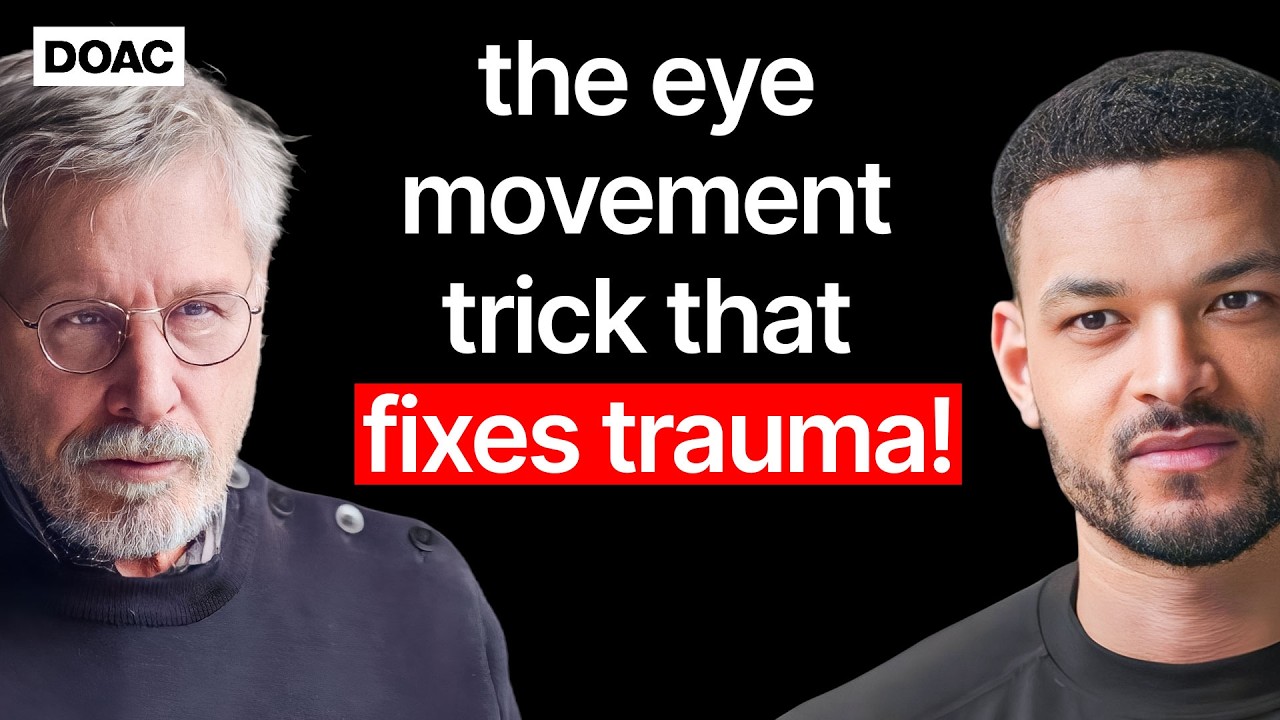
The Body Trauma Expert: This Eye Movement Trick Can Fix Your Trauma! The Body Keeps The Score! — The Diary Of A CEO

The Diary Of A CEO

El trauma altera la percepción neurobiológica y requiere intervenciones somáticas o psicodélicas como el EMDR y la MDMA en lugar de la terapia conversacional o los fármacos.

AI-assisted summary of The Body Trauma Expert: This Eye Movement Trick Can Fix Your Trauma! The Body Keeps The Score! — original source. Check the original for full context.

Source published:

Detailed notes

## Background El contenido fue publicado en la plataforma YouTube por el canal 'The Diary Of A CEO' el 23 de diciembre de 2024. Corresponde a una entrevista con Bessel van der Kolk, profesor de psiquiatría en la Escuela de Medicina de la Universidad de Boston y autor del libro 'El cuerpo lleva la cuenta', donde se aborda cómo el trauma se manifiesta en el cuerpo y las distintas vías para procesarlo y sanarlo.

## TL;DR En esta conversación, el Dr. Bessel van der Kolk explica la naturaleza del trauma como una alteración neurobiológica y perceptiva que desconecta a las personas de sus propios cuerpos y de su sentido del tiempo. A lo largo del diálogo, cuestiona la eficacia exclusiva de las terapias conversacionales tradicionales y los medicamentos para tratar el trauma profundo, proponiendo en su lugar enfoques somáticos y de 'abajo hacia arriba' como el EMDR, el yoga, el biofeedback, la psicodrama y las terapias asistidas con psicodélicos (como MDMA y psilocibina). Asimismo, analiza el impacto del abuso infantil, la influencia del aislamiento social moderno y cómo el sentido de comunidad, el movimiento corporal y la sincronicidad rítmica son fundamentales para recuperar la agencia y la seguridad personal.

## Atmosphere & style El episodio mantiene una atmósfera íntima, reflexiva y de profunda empatía clínica, marcada por el estilo pausado y la vasta experiencia del Dr. van der Kolk en contraste con las preguntas inquisitivas y personales del anfitrión, Steven Bartlett. La interacción transita entre la rigurosidad científica de la neurobiología y momentos de vulnerabilidad absoluta, donde se comparten relatos clínicos desgarradores e introspecciones personales sobre el dolor humano. Se percibe una mezcla de sobriedad ante la gravedad del sufrimiento traumático y un tono esperanzador respecto a las capacidades del cuerpo para sanar a través de la conexión humana y la conciencia somática.

## Key takeaways - [41:00](https://www.youtube.com/watch?v=Qx5J5nwDBTo&t=2460s) El trauma no es solo un recuerdo o una narrativa mental, sino una distorsión perceptiva profunda que altera la forma en que la persona interpreta el mundo y su entorno. - [44:50](https://www.youtube.com/watch?v=Qx5J5nwDBTo&t=2690s) El trauma infantil tiene un impacto neurobiológico crítico: activa constantemente el centro de alarma del cerebro (sustancia gris periaqueductal) y desactiva la ínsula, provocando adormecimiento y desconexión corporal. - [48:57](https://www.youtube.com/watch?v=Qx5J5nwDBTo&t=2937s) Durante la reviviscencia de un trauma, la corteza prefrontal dorsolateral (el «guardián del tiempo») se apaga, lo que impide diferenciar el pasado del presente y hace que el evento se sienta en tiempo real. - [54:59](https://www.youtube.com/watch?v=Qx5J5nwDBTo&t=3299s) El tratamiento con EMDR (Desensibilización y Reprocesamiento por Movimientos Oculares) permite reorganizar las estructuras perceptivas del cerebro y procesar traumas de forma rápida sin necesidad de relatar verbalmente el evento. - [01:03:57](https://www.youtube.com/watch?v=Qx5J5nwDBTo&t=3837s) Las terapias somáticas como el yoga, el trabajo corporal (Rolfing) y el trabajo de respiración ayudan a restaurar la conexión con la ínsula y a recuperar la agencia corporal. - [01:17:57](https://www.youtube.com/watch?v=Qx5J5nwDBTo&t=4677s) Las actividades físicas colectivas como el deporte en equipo, la música y el teatro reestablecen el ritmo, la sincronicidad y el sentido de comunidad, contrarrestando el aislamiento de la sociedad hiperindividualista. - [01:26:50](https://www.youtube.com/watch?v=Qx5J5nwDBTo&t=5210s) Los abordajes para el tratamiento del trauma se dividen en tres categorías: de arriba hacia abajo (terapia de conversación), medicamentos farmacéuticos y de abajo hacia arriba (terapías somáticas y del cuerpo). - [01:33:07](https://www.youtube.com/watch?v=Qx5J5nwDBTo&t=5587s) El tratamiento asistido con MDMA y psilocibina ha mostrado resultados revolucionarios en estudios clínicos para el PTSD resistente al tratamiento y la depresión. - [01:42:57](https://www.youtube.com/watch?v=Qx5J5nwDBTo&t=6177s) La psicodrama permite proyectar dinámicas familiares internas en un espacio físico para experimentar reparaciones simbólicas y acceder a verdades emocionales profundas. - [01:48:58](https://www.youtube.com/watch?v=Qx5J5nwDBTo&t=6538s) El TDAH es multifactorial (genético, tóxico o traumático) y el sistema diagnóstico psiquiátrico actual presenta limitaciones al centrarse en síntomas superficiales en lugar de redes cerebrales y desarrollo. - [01:55:06](https://www.youtube.com/watch?v=Qx5J5nwDBTo&t=6906s) Para evitar criar niños traumatizados, es fundamental que la crianza ocurra dentro de una comunidad o «aldea» más amplia y no en el aislamiento de la familia nuclear.

## Detailed walkthrough ### [00:00](https://www.youtube.com/watch?v=Qx5J5nwDBTo&t=0s) Introduction and Bessel van der Kolk's Core Mission

Steven Bartlett introduces Dr. Bessel van der Kolk, describing him as perhaps the most influential psychiatrist of the 21st century—a title bestowed on him by the *Financial Times*. For over four decades, van der Kolk's clinical research has fundamentally reshaped how society understands psychological trauma and its physiological imprint on the human mind and body. When asked about the driving mission behind his life's work, van der Kolk explains that he has always been deeply interested in how human beings survive extreme situations, how they overcome histories of interpersonal cruelty, and how to build a better world. While his broader mission is inherently social, his methods are strictly grounded in brain science and psychological research.

The conversation addresses the recent surge in public interest surrounding trauma. Bartlett highlights how online searches and cultural discussions about the word "trauma" have skyrocketed. Van der Kolk reflects on this shift, recalling that early in his career on the research floor at Harvard University, colleagues questioned why he studied trauma at all, predicting no one would mention it after he passed away. Today, the pendulum has swung to the opposite extreme: trauma has transformed from a neglected topic into an all-encompassing explanation for human suffering. However, van der Kolk clarifies that his current focus centers less on trauma itself and more on how trauma causes a fundamental breakdown in human connection and synchronicity—and how individuals can re-establish a healthy relationship with themselves and others.

- Van der Kolk's foundational work bridges neuroscience, psychological functioning, and social dynamics. - Public discourse has shifted from total ignorance of trauma to using it as a catch-all cultural diagnosis.

---

[04:22](https://www.youtube.com/watch?v=Qx5J5nwDBTo&t=262s) Flaws in Traditional Trauma Treatments and the Nature of Trauma

Van der Kolk criticizes traditional psychiatric and psychological approaches to treating trauma, depression, and PTSD, arguing that mainstream clinical paradigms fail to address the core issue. He takes aim at standardized protocols like Cognitive Behavioral Therapy (CBT) and cognitive restructuring, which attempt to fix patients' "crazy thoughts" within strict eight-session formulas. He asserts there is no solid evidence that talking someone into being a "reasonable person" resolves trauma, as humans are fundamentally not rational creatures, and trauma itself is inherently unreasonable. He also rejects flooding techniques that attempt to desensitize patients by blasting them with traumatic memories.

``` "You cannot talk somebody into being a reasonable person. People are not reasonable people, and trauma is as unreasonable as it can be." ```

Instead, trauma rewires the brain's perceptual systems, forcing an individual to view present-day reality almost entirely through the lens of past experiences. Drawing from his team's pioneering neuroimaging studies—the first to image the brain while subjects relived traumatic events—van der Kolk describes how the cognitive, language-producing regions of the brain shut down during traumatic reactivation. Traumatized individuals experience what Shakespeare termed "speechless terror," becoming completely overwhelmed by emotion while losing access to clear thought and speech. While finding language to describe inner experiences is a vital step toward self-organization, cognitive talk therapy alone is insufficient to heal the underlying rewiring.

- Neuroimaging demonstrates that active trauma responses deactivate the brain's logical and linguistic centers. - Conventional cognitive therapies mistakenly target rational thought rather than the body's altered perceptual system.

---

[06:47](https://www.youtube.com/watch?v=Qx5J5nwDBTo&t=407s) Defining Trauma: Relational Trauma vs. "Big T" and "Small T" Events

Addressing the modern tendency to overuse the word "trauma," van der Kolk clarifies what truly constitutes a traumatic experience: an overwhelming event that leaves a person feeling completely helpless, with no internal capacity to process or cope. He expresses skepticism regarding the popular academic distinction between "Big T" (catastrophic) and "small t" (relational) trauma, emphasizing that accurate context matters far more than arbitrary labels.

``` "The issue is the perception... The issue is not the event itself. You and I may have the same events happening, and for me, it reminds me about my brother torturing me... and for you, it goes like, 'Yeah, but I have so many talents, why not try something else?'" ```

To illustrate this point, van der Kolk contrasts natural disasters with interpersonal neglect. People frequently recover well from natural disasters—such as severe floods near his cabin in Northern Vermont—because communities band together, foster cohesion, and construct a shared sense of meaning. Conversely, "small t" or relational trauma often cuts deeper because it stems from being systematically invalidated, ignored, or blamed by caregivers. Most patients in his practice do not seek help because of single catastrophic events, but because no one saw, heard, or protected them during childhood. Whether an event like losing a job becomes traumatizing depends entirely on a person's unique internal perception and historical context rather than the external event alone.

- Community cohesion and mutual support protect against lasting trauma during natural disasters. - Chronic relational invalidation and emotional neglect in childhood often result in deeper adult dysfunction than isolated external crises.

---

[10:05](https://www.youtube.com/watch?v=Qx5J5nwDBTo&t=605s) Clinical Foundations: From State Hospitals to Veterans and Childhood Imprints

Van der Kolk traces the clinical origins of his understanding of human suffering, starting with his psychiatric training at Harvard and his subsequent work at the last state mental hospital in Boston—an institution that served as a final sanctuary for severely disturbed individuals. Following its closure, he moved to the Veterans Administration (VA) hospital, where he treated young veterans who had served as elite athletes and helicopter pilots. Seeing these highly competent peers completely fall apart after military service reminded him of relatives who had survived Nazi concentration camps and Japanese prisoner-of-war camps, opening his eyes to how life experiences can shatter even the most resilient individuals.

``` "I grew up like a kid growing up in Ukraine today... I grew up with an incredible pre-conscious imprint of what kids in Ukraine and Gaza are going through right now." ```

This realization was rooted in his own early life. Born in 1943 in the Nazi-occupied Netherlands as the middle child of five, van der Kolk grew up amidst wartime starvation, severe illness, and fear. His father was detained by German forces, and his mother raised young children in hiding next to a launch site for Nazi rockets bound for London, half of which misfired into their backyard. Though he has no conscious memories of those earliest months, surviving a time when half his generation died of hunger left a profound "pre-conscious imprint" on his body and mind, fueling his lifelong curiosity regarding human suffering and resilience.

- Early clinical work with combat veterans and camp survivors revealed how severe stress shatters psychological functioning. - Van der Kolk's birth during World War II in the occupied Netherlands provided a personal blueprint for understanding developmental and environmental stress.

---

[12:39](https://www.youtube.com/watch?v=Qx5J5nwDBTo&t=759s) Family History, Maternal Trauma, and the Intergenerational Echo

Discussing his family dynamics, van der Kolk paints a picture of his childhood home and the emotional distance of his parents. While he describes his father as conscientious and loving, he characterizes his mother as a "frozen person"—an emotional state stemming from her own early life trauma when her father developed parkinsonism following the 1919 flu pandemic. Growing up with an emotionally unavailable mother deeply influenced van der Kolk's perception of the world, forcing him later in life to actively learn about affection, intimacy, and vulnerability. Seeking distance from his family environment, he left the Netherlands for the United States at age 18.

``` "And I turned towards my mom and I said, 'You know, I wonder if something happened to you that I picked up... were you ever sexually abused?' And my mom fainted, fell off her chair." ```

Years later, as a junior professor at Harvard with two children of his own, van der Kolk invited his parents to visit. On the final day of their stay, he asked his mother if her emotional rigidity and extreme fear of sexuality stemmed from past sexual abuse or incest. Upon hearing the question, his mother fainted off her chair, and his father scolded him for disturbing her. While van der Kolk stresses that he cannot definitively conclude his mother was an incest victim, her physical collapse underscored how unaddressed trauma and suppressed history reverberate across generations through physical reactions and silence.

- Living with an emotionally frozen parent creates deep perceptual distortions regarding intimacy and connection. - Intergenerational trauma often manifests as bodily reactions and systemic silence rather than clear verbal accounts.

---

[15:15](https://www.youtube.com/watch?v=Qx5J5nwDBTo&t=915s) Child Abuse as a Public Health Crisis and the Roots of Adult Dysfunction

Van der Kolk emphasizes that child abuse and neglect represent the single most preventable cause of mental illness, the primary driver of drug and alcohol abuse, and a significant contributor to leading physical causes of death, including heart disease, cancer, diabetes, stroke, and suicide. Citing data from Dr. Vincent Felitti’s landmark Centers for Disease Control and Prevention (CDC) Adverse Childhood Experiences (ACE) study involving 25,000 participants, van der Kolk notes that eradicating child abuse would cut depression by more than half and reduce alcoholism, suicide, illicit drug use, and domestic violence by two-thirds to three-quarters.

``` "Eradicating child abuse in America would reduce the overall rate of depression by more than half, alcoholism by two-thirds, and suicide, drug use, and domestic violence by three-quarters." ```

When asked whether roughly 90% of his patients can trace their adult dysfunctions back to early childhood experiences, van der Kolk agrees, though he clarifies that his specialized practice naturally filters for these cases rather than condition-based diagnoses like autism or OCD. The core issue driving adult dysfunction is rarely a single event; instead, it is the chronic experience of being unseen, unacknowledged, and unprotected by caregivers. Whether through physical violence, sexual molestation, or insidious verbal abuse—such as a mother repeatedly telling a child they will never have friends because they are inherently defective—the failure to honor a child's existence shapes their psychological and physical development.

- The CDC ACE study demonstrates a direct correlation between childhood trauma and adult physical and mental illnesses. - Chronic emotional invalidation and verbal degradation in childhood produce long-lasting psychological dysfunction in adulthood.

[18:48](https://www.youtube.com/watch?v=Qx5J5nwDBTo&t=1128s) Cultural Perspectives on Discipline and Breaking the Generational Cycle

Steven Bartlett and Dr. Bessel van der Kolk examine how parents often view physical punishment as a necessary tool to discipline their children and raise well-adjusted, moral adults. Van der Kolk highlights that this is deeply rooted in cultural and generational norms. While northern European countries like Sweden and the Netherlands have legally outlawed corporal punishment, it remains widely practiced and accepted in the United States—where religious teachings like biblical directives are frequently invoked to defend physical discipline.

``` ┌─────────────────────────────────────────┐ │ Parental Impulse to Discipline │ └────────────────────┬────────────────────┘ │ ┌──────────────────────────┴──────────────────────────┐ ▼ ▼ ┌───────────────────────┐ ┌───────────────────────┐ │ Cultural / Biblical │ │ Predictability & │ │ Justification │ │ Boundaries │ │ (e.g., US traditions) │ │ (Protects from chaos) │ └───────────┬───────────┘ └───────────┬───────────┘ │ │ └──────────────────────────┬──────────────────────────┘ ▼ ┌─────────────────────────────────────────┐ │ Cycle of Generational Transmission │ └────────────────────┬────────────────────┘ │ ▼ ┌─────────────────────────────────────────┐ │ CHOICE: The Pivot Point │ │ ("Liberation Equals Separation") │ └─────────────────────────────────────────┘ ```

Reflecting on his own upbringing as the son of an African mother and an English father, Bartlett shares how he experienced severe physical punishment. He notes that while he used to rationalize the severity because he turned out successful, avoided drugs, and achieved stability, he still recognizes areas of emotional dysfunction in his life. Van der Kolk emphasizes that predictability is a critical buffer: knowing *why* a punishment occurred reduces the psychological terror of pure chaos.

Bartlett then recounts a pivotal moment with his own three-year-old daughter. When his mother demanded that he punish the child for using a specific bathroom in the house, Bartlett felt an overwhelming, automatic impulse to strike his daughter. Catching himself mid-step, he realized he was about to repeat the exact abuse inflicted on him. Choosing to set a boundary with his mother instead, he halted the generational cycle.

- **Predictability vs. Chaos:** While physical punishment is inherently harmful, predictable rules allow a child to anticipate consequences, whereas chaotic environments are far more damaging to emotional development. - **Liberation through Separation:** Breaking a family pattern requires choosing to separate from the inherited culture of the "tribe," a necessary but emotionally taxing act of personal autonomy.

---

[25:29](https://www.youtube.com/watch?v=Qx5J5nwDBTo&t=1529s) Parenting, Neurodivergence, and the Pitfalls of Childhood Psychiatric Medication

Van der Kolk shares personal anecdotes from raising his own two children, illustrating how parenting constantly challenges one's assumptions. His eldest daughter transformed from a gentle, feminine child into a gender-ambiguous adult who later divorced her husband to be with a woman. His son was neuroatypical, highly reactive, and spent long periods isolated in bed playing video games. Over time, however, his son grew into a deeply thoughtful and loving father.

``` ┌───────────────────────────────────┐ │ Neuroatypical Child Behaviors │ └─────────────────┬─────────────────┘ │ ┌─────────────────────────┴─────────────────────────┐ ▼ ▼ ┌───────────────────────┐ ┌───────────────────────┐ │ Standard System │ │ Alternative Approach │ │ - Quick labels │ │ - Physical movement │ │ - Heavy medication │ │ - Social synchrony │ │ - Risk to brain growth│ │ - Safe exploration │ └───────────────────────┘ └───────────────────────┘ ```

When professionals urged Van der Kolk to place his son on heavy psychiatric drugs, his expertise as a psychopharmacologist gave him the confidence to decline. He recognized that standard psychiatric labels are often crude crutches that fail to capture a child's true underlying state. He highlights a severe socio-economic disparity in pediatric mental health: low-income families are significantly more likely to have their children medicated rather than offered holistic, exploratory support.

- **400% Higher Risk:** Children from low-income families are four times (400%) more likely to be prescribed antipsychotic medications compared to privately insured children. - **Developmental Risks of Medication:** Suppressing a developing brain's symptoms with heavy medication can interfere with natural brain growth and prevent the organ from developing adaptive self-regulation mechanisms.

---

[30:21](https://www.youtube.com/watch?v=Qx5J5nwDBTo&t=1821s) Somatic Movement and Secure Attachment

Discussing alternative methods for emotional regulation, Van der Kolk contrasts the Western obsession with talking and medication ("taking a swig or yaking") with Eastern practices focused on body movement. Recalling a trip to Beijing in 1992 following the Cultural Revolution and Tiananmen Square, he observed people performing Qigong and Tai Chi in public parks. In an environment where political and emotional trauma could not be spoken about, people regulated their nervous systems and calmed their bodies through synchronized physical movement.

``` ┌─────────────────────────────────────────────────────────────────┐ │ Somatic Regulation │ ├────────────────────────────────┬────────────────────────────────┤ │ Western Approaches │ Eastern / Body-First │ ├────────────────────────────────┼────────────────────────────────┤ │ • "Taking a swig" (alcohol) │ • Qigong and Tai Chi │ │ • Talk therapy ("yaking") │ • Synchronous group movement │ │ • Cognitive reframing (CBT) │ • Direct nervous system calm │ └────────────────────────────────┴────────────────────────────────┘ ```

Van der Kolk transitions to the foundational role of secure attachment in early childhood. A child's identity and self-worth are directly constructed through how they are mirrored by their primary caregivers. When a child is consistently viewed as sweet and worthy, that becomes their internal reality; when viewed as mean or unwanted, that destructive imprint dictates their self-image.

- **Imprint of Early Experience:** Early childhood relational imprints shape core identity, but they remain changeable through targeted somatic and experiential therapies. - **Systemic Failures in Mental Health:** Mainstream psychiatry often prioritizes cheap, quick behavioral control and productivity over deep, integrative healing methods.

---

[34:18](https://www.youtube.com/watch?v=Qx5J5nwDBTo&t=2058s) "The Body Keeps the Score": The Somatic Approach to Trauma

Explaining the core thesis of his work, *The Body Keeps The Score*, Van der Kolk states that trauma is ultimately a visceral experience lived in the physical body—manifested as heartbreak, gut-wrenching tightness, loss of posture, or physical collapse. While traditional cognitive therapies like Cognitive Behavioral Therapy (CBT) attempt a top-down approach by changing thoughts to alter body states, Van der Kolk argues that top-down rationalization rarely resolves deep physical trauma.

``` ┌───────────────────────────┐ │ TRAUMA IN THE SYSTEM │ └─────────────┬─────────────┘ │ ┌──────────────────────────┴──────────────────────────┐ ▼ ▼ ┌───────────────────────────┐ ┌───────────────────────────┐ │ Top-Down (Cognitive) │ │ Bottom-Up (Somatic) │ │ • Talking and reasoning │ │ • Direct body experience │ │ • Logic over emotion │ │ • Safe movement & touch │ │ • "Changing the mind" │ │ • Restoring agency │ └───────────────────────────┘ └───────────────────────────┘ ```

The somatic approach works bottom-up, guiding individuals to feel what their body is experiencing and allowing it to safely complete physical movements it was previously too terrified to execute. When Bartlett points out that women seem more open to practices like Pilates, yoga, and dance, Van der Kolk notes that men also participate in powerful somatic integration, often through military basic training. In the military, recruits build deep interpersonal connection and resilience not by talking, but through intense, shared physical effort—marching, climbing, and moving in cadence.

> "Trauma is a visceral experience... heartbreak and gut-wrench, you stiffen up, you surrender, you lose your power, you tighten up—that's really where trauma is lived."

- **Visceral Reality:** Trauma resides in the physiological response of the autonomic nervous system rather than in logical thought. - **Physical Cohesion:** Shared physical movement—whether in a yoga studio or military basic training—serves as a primary driver for building trust, somatic integration, and community connection.

[38:03](https://www.youtube.com/watch?v=Qx5J5nwDBTo&t=2283s) Institutional Approaches to Trauma: From Community Programs to Prisons

Bessel van der Kolk addresses how structural circumstances and fortune dictate who receives therapy. While motivated individuals with sufficient resources make it into his private practice, many others facing severe trauma end up on the streets or trapped in addiction due to a lack of support. He shares his observations of innovative institutional programs, such as **Homeboy Industries** in Los Angeles—a initiative serving formerly incarcerated, largely Latino men. By focusing on fundamental human needs, safety, and community care, the program creates a sanctuary where real healing takes place.

A similar transformation is occurring within the penal system, specifically at **San Quentin State Prison** in California. San Quentin has integrated trauma-informed care into its curriculum, utilizing *The Body Keeps the Score* as a core textbook. Instead of relying solely on traditional institutional discipline, the prison incorporates group work, trauma education, and physical movement—including organized dance classes. Moving together in a shared physical space restores a sense of connection, joy, and mutual trust that standard institutional settings lack, proving that somatic healing can flourish even within high-security environments.

---

* **Homeboy Industries (Los Angeles):** Provides a safe, supportive community structure for formerly incarcerated men dealing with early childhood adversity and systemic neglect. * **San Quentin State Prison:** Embraces trauma-informed care using movement, dance, and group connection as core components of rehabilitation.

[39:48](https://www.youtube.com/watch?v=Qx5J5nwDBTo&t=2388s) Entrepreneurship, Trauma, and Selection Bias

Host Steven Bartlett brings up a common notion floating around the investment world: that traumatized founders make better entrepreneurs because they learn to pair every problem with a solution. He recalls a conversation with *Shark Tank* investor Barbara Corcoran, who claimed her top-performing investments were in individuals with traumatic pasts because of their resourcefulness and drive.

Van der Kolk pushes back on this idea, attributing Corcoran's observation to a clear **selection bias**. While extreme adversity forces a child to adapt and build complex coping mechanisms, those adaptations do not universally translate into high achievement. In his own clinical experience, severe trauma frequently leaves individuals paralyzed, highly dependent, or unable to take initiative when confronted with overwhelming challenges. Childhood trauma fundamentally alters how a person's brain maps reality, but the outcome depends entirely on available resources and individual circumstances.

[41:00](https://www.youtube.com/watch?v=Qx5J5nwDBTo&t=2460s) Trauma as a Perceptual Distortion: The Rorschach Inkblot Study

Clarifying a common misconception, van der Kolk emphasizes that trauma is not merely a "story" or narrative stored in the mind—it is a fundamental **alteration of perception**. How a person interprets a threatening event depends heavily on their developmental stage. A grown adult who experiences violence can contextualize the attack and recognize the perpetrator's wrongdoing; a three-year-old child subjected to abuse lacks that cognitive framework and instinctively concludes that they are inherently bad and deserve the punishment. This internal logic forms an unconscious map of the world that dictates how they evaluate safety and relationships well into adulthood.

``` [ Traumatic Experience ] │ ┌────────────────┴────────────────┐ ▼ ▼ Adult Interpretation Child Interpretation (Recognizes external threat) (Internalizes self-blame/shame) │ │ ▼ ▼ Targeted Defense Action Altered Perceptual Map ```

To illustrate how trauma alters perception, van der Kolk recalls a landmark accidental finding from his early research using **Rorschach inkblot tests**. When shown neutral, formless inkblots, individuals projected their internal worlds onto the images in strikingly stark ways:

> "A lot of the Vietnam veterans I saw saw bloody corpses or mutilated bodies in those cards... Rape victims saw torn vaginas and torn bodies. Other people didn't see this. So once that becomes lodged into your perceptual system, you continue to interpret the world in that particular way."

* **Perceptual Mapping:** Trauma configures the brain's internal map, causing neutral sensory inputs to be interpreted through the lens of past danger. * **Rorschach vs. Neuroimaging:** While modern brain imaging is widely respected in medical circles, van der Kolk considers inkblot testing equally revealing because it directly measures how a patient's mind interprets unstructured reality.

[44:50](https://www.youtube.com/watch?v=Qx5J5nwDBTo&t=2690s) The Prevalence of Trauma and Its Biological Signature

When discussing the prevalence of trauma, van der Kolk points out that exposure to adversity is extraordinarily common across the general population. Rather than viewing trauma as a binary condition—where someone is either fully traumatized or completely unimpacted—it exists along a broad spectrum. When speaking to groups of medical and mental health professionals, he estimates that at least half the audience viscerally understands what trauma feels like from personal experience.

* **1 in 4** individuals experience physical abuse during childhood. * **1 in 5** individuals experience sexual abuse. * **1 in 8** children witness domestic violence between their parents.

When examining the neurobiology of trauma, van der Kolk explains that there isn't a single universal scan that diagnoses it; instead, neuroimaging reveals distinct functional patterns. Trauma deeply affects primitive structures in the brain stem, specifically the **periaqueductal gray** (which van der Kolk lightheartedly calls the "cockroach center" of the brain). Situated below the amygdala, this structure acts as an ancient danger detector. In traumatized individuals, it stays locked in a state of continuous, low-level firing, signaling danger on a subconscious level even when no immediate threat exists.

To protect against this relentless physiological alarm, the brain often downregulates the **insula**—the region responsible for body awareness and internal physical sensations. While shutting down the insula dampens visceral feelings of terror, it also leaves the person feeling detached, numb, and disconnected from their own physical body.

---

* **Periaqueductal Gray ("Cockroach Center"):** Located below the amygdala in the brainstem, this area remains hyperactive in traumatized states, generating continuous signals of threat. * **Insular Cortex (Insula):** Integrates internal body sensations; frequently becomes underactive as an adaptive response to suppress overwhelming physical distress.

[48:57](https://www.youtube.com/watch?v=Qx5J5nwDBTo&t=2937s) Neuroimaging the Traumatized Brain: What Happens During Reliving

Van der Kolk walks through a specific fMRI brain scan of a patient reliving a traumatic car accident. To capture this state on a scan, researchers did not show generic images of crashes; instead, they read a script crafted entirely from the patient's specific sensory memories—what he saw, heard, smelled, and felt in that moment.

``` ┌───────────────────────────────┐ │ Traumatic Trigger Experienced │ └───────────────┬───────────────┘ │ ┌────────────────────────┴────────────────────────┐ ▼ ▼ ┌──────────────────────────────┐ ┌──────────────────────────────┐ │ Right Posterior Brain │ │ Left Brain & Prefrontal │ │ (Temporal-Parietal) │ │ Regions │ │ ➔ HYPERACTIVE │ │ ➔ HYPERINACTIVE │ │ - Raw emotion & terror │ │ - Broca's area (speech) │ │ - Physical sensation │ │ - Dorsolateral Prefrontal │ │ │ │ Cortex (Timekeeper) │ └──────────────────────────────┘ └──────────────────────────────┘ ```

The scan reveals a profound asymmetrical shift in neural activity:

1. **Right Temporal-Parietal Junction Activation:** The emotional, sensory right hemisphere lights up intensely, overwhelming the patient with immediate terror and bodily distress. 2. **Left-Brain Inactivation:** Speech centers and rational processing regions shut down, making it almost impossible to communicate logically about the experience. 3. **Dorsolateral Prefrontal Cortex Offline:** As the brain's internal "timekeeper" deactivates, the mind loses all temporal perspective.

Because the timekeeper shuts down, the brain cannot categorize the experience as a memory from the past. The individual is not simply remembering what happened; they are actively **reliving** it in the present moment.

> "When you get traumatized, the timekeeper disappears and this is all there is. You lose your sense of perspective... You don't know the difference between the past and the present because the timekeeper of your brain goes offline, and whatever you're feeling is real as opposed to feeling like a memory."

[54:59](https://www.youtube.com/watch?v=Qx5J5nwDBTo&t=3299s) Breaking the Flashback Loop: Rapid Recovery Through EMDR

Van der Kolk highlights how rapid and complete recovery can be when using effective trauma therapies like **Eye Movement Desensitization and Reprocessing (EMDR)**. He references a clinical case involving a woman who had been rendered frozen and non-functional after a severe car crash. Within just three sessions of EMDR—which uses guided side-to-side eye movements while accessing traumatic memories—her brain processed the event. She moved from a state of ongoing visceral terror to casually discussing the crash as a past event that no longer disrupted her life or her ability to drive and visit her family.

Recalling the early days of his career, van der Kolk notes that he helped write some of the earliest literature defining Post-Traumatic Stress Disorder (PTSD) back in 1984. However, despite his status as a world expert, standard talk therapies of that era offered few tools to reliably stop patients from endlessly reliving their experiences. Discovering EMDR proved to be a major turning point in his clinical approach, opening the door to modalities that treat trauma directly through the nervous system rather than relying on conversation alone.

Here is a detailed, faithful walkthrough covering Part 4 of the transcript.

---

[56:16](https://www.youtube.com/watch?v=Qx5J5nwDBTo&t=3376s) The Crazy Mechanism and Efficacy of EMDR Therapy

Bessel van der Kolk acknowledges that when people first hear about Eye Movement Desensitization and Reprocessing (EMDR)—moving your fingers back and forth in front of someone’s eyes while they relive traumatic memories—almost everyone thinks it sounds completely crazy. He held that exact skepticism himself until colleagues demonstrated the technique, leaving him astonished as patients, after just a few sessions, were able to process horrific events and conclude, *"Yeah, that really sucked, but it's over. It belongs to the past."*

It took Van der Kolk and his team 15 years to secure sufficient research funding to study what actually happens in the brain during eye movements. Their findings revealed that moving the eyes laterally while recalling trauma activates neural pathways connecting the temporoparietal junction (the seat of one's sense of self) and the insula (which registers visceral bodily sensations). This neural crosstalk enables the brain to construct a clear distinction between past events and present safety: *"Oh, this is what happened to me, but that happened to me in the past."*

In his research, EMDR yielded a 78% complete cure rate for adult-onset, single-incident traumas (such as an assault or rape by a stranger). However, Van der Kolk stresses that single-incident adult trauma represents a minority of clinical cases. Most patients suffer from early childhood trauma, which is vastly more stubborn and resistant to treatment because early childhood experiences construct the very core of who a person is. While attending a prestigious college at age 18 adds to an individual's identity without fundamentally altering their personality, childhood family environments imprint themselves deep into the developing psyche.

The host reads recent meta-analyses highlighting EMDR's broad empirical support: - **PTSD:** A 2014 meta-analysis of 26 randomized controlled trials (RCTs) found significant reductions in PTSD symptoms with a large effect size. - **Depression:** A 2024 systematic review and meta-analysis encompassing 25 studies and over 1,000 participants demonstrated significant relief from depressive symptoms. - **Anxiety & Remission:** The 2014 analysis showed major reductions in anxiety symptoms among PTSD patients, while a 2024 individual participant data meta-analysis concluded EMDR is as effective as other leading psychological treatments in achieving comparable symptom reduction and remission rates.

---

[58:46](https://www.youtube.com/watch?v=Qx5J5nwDBTo&t=3526s) Live Demonstration of EMDR in the Studio

To demonstrate the process, Van der Kolk asks the host to participate in an in-person EMDR session. After moving his chair closer, Van der Kolk instructs the host to bring to mind a recent, unpleasant experience. He prompts the host to vividly recall the sensory details: what he saw, the sounds or voices he heard, how his body felt at the time, and the thoughts going through his mind. The host rate his current emotional distress at a 6 or 7 out of 10.

Van der Kolk instructs the host to hold those feelings while tracking his moving finger with his eyes across his field of vision, concluding with a deep breath. Immediately following the eye movements, the host expresses feeling calm, remarking, *"It's hard to recall why I was bothered."* Van der Kolk explains that this sudden shift is the most remarkable aspect of EMDR: although the exact linear mechanism of where the emotional imprint goes remains unknown, the bilateral stimulation rapidly creates new associative networks in the brain. He recalls undergoing EMDR himself for a traumatic memory where, despite starting out deeply upset, random childhood scenes—like sitting at his family's dining table or playing in a primary school playground—spontaneously surfaced, rapidly defusing the trauma's emotional charge.

Crucially, Van der Kolk highlights that he never asked the host to verbally recount the unpleasant event. He explains his deep suspicion of language in trauma therapy: because speech is an interactive, social process, patients naturally censor or filter themselves to avoid embarrassment or judgment. By intentionally circumventing the verbal narrative, EMDR directly reorganizes the fundamental perceptual structures of the brain. Van der Kolk notes that the foundational NIH-funded study cited earlier in their chat was conducted by his own team, but laments that it was also the last time the NIH funded an EMDR study.

---

[01:03:57](https://www.youtube.com/watch?v=Qx5J5nwDBTo&t=3837s) Breathwork, Yoga, and the Somatic Reconnection to the Body

When asked about breathwork—a practice the host's partner runs global retreats for—Van der Kolk endorses it as completely legitimate, noting that eastern cultures like India have utilized breath manipulation for millennia, whereas Western societies remain largely ignorant due to cultural insularities and academic conformity. Innovators in therapy are often branded "cookie" or "crazy" by peers who prioritize institutional approval.

Van der Kolk draws a parallel to his own pioneering research as the first researcher to test yoga for PTSD. When he first proposed it, academic colleagues mocked him for suggesting that "putting your butt in the air and twisting your spine" could heal severe trauma, claiming he had "gone off the deep end." Yet, his clinical trial proved that yoga is exceptionally effective for PTSD. He clarifies that yoga does not "treat trauma" directly; rather, it treats a person's relationship to their own body.

Trauma fundamentally disrupts the connection between the insula and the mind. Because traumatic memories are endlessly re-experienced through visceral distress—referencing Charles Darwin's observation that "heartbreak and gut-wrenching" are literal physical sensations—traumatized individuals cope by numbing and disconnecting from their bodily sensations. This creates a state where patients swing between two contradictory extremes: - **Disconnection:** Feeling completely numbed out, unable to feel pleasure, or lacking a sense of vitality and presence. - **Hypersensitivity:** Overwhelming physical agitation, hypervigilance, and emotional flooding.

Yoga helps safely reconnect these fragmented internal signals in a supportive setting. However, physical postures can also be intensely triggering. For instance, Van der Kolk notes that almost all survivors of sexual abuse experience extreme distress attempting the **Happy Baby pose** (lying on the back, holding the feet, and spreading the legs wide). While relaxing for most people, this position forces a posture associated with violation, causing immediate emotional activation or freezing defensiveness.

- **Rolfing Experience:** Van der Kolk shares a deeply personal story about being a sickly child who almost died of asthma at age 13. He credits Rolfing (a deep, intense soft-tissue manipulation that separates muscle from fascia) as one of the most transformative experiences of his life, allowing him to literally escape the frozen physical posture of his childhood. - **Martial Arts:** He highlights that many top trauma clinicians secretly practice martial arts. Although understudied, combat arts give traumatized individuals a direct, non-intellectual physical experience that their body is capable of defending itself and taking action.

---

[01:12:31](https://www.youtube.com/watch?v=Qx5J5nwDBTo&t=4351s) Mirror Neurons, Somatic Energy, and Our Evolutionary Interconnectedness

Addressing the common human experience of feeling instantly "off" or uncomfortable around a stranger without conscious explanation, Van der Kolk attributes this to two overlapping phenomena:

1. **Mirror Neurons & Energy Sensing:** Humans possess an innate mirror neuron system that picks up on the subtle physiological states of others. For example, if a guest is secretly depressed while conducting an interview, the host will unconsciously absorb that depressive energy. Psychotherapy is complicated by distinguishing whether an uncomfortable visceral sensation stems from picking up another person's covert emotion (e.g., suppressed rage) or whether that person is triggering an unhealed childhood memory (e.g., an early bully). 2. **Evolutionary Primatology:** As primates, humans are fundamentally communal creatures meant to live in social troops. Individual human survival has never depended on isolated personal strengths, but on the ability to band together to construct shelters, tools, and social structures.

Van der Kolk stresses that modern hyper-individualism and screen-dominated virtual realities pose the single greatest threat to human psychological well-being, as they dismantle the physical social bonding hardwired into our evolutionary biology.

[01:15:19](https://www.youtube.com/watch?v=Qx5J5nwDBTo&t=4519s) Community and Social Connection as Trauma Survival

Discussing the limitations of digital engagement, Dr. Bessel van der Kolk explains that virtual reality and screen interactions offer a "cheap reward" and a quick dopamine rush without teaching people how to actually get along or experience the visceral pleasure of genuine friendship. When asked about the role of community and social connection in trauma, he asserts that it is "everything" and critical. He recalls his early work with Vietnam War combat veterans—noting that as a conscientious objector during the war, he could not personally instruct them on combat, but watched them form a profound "band of brothers" by sharing their experiences in groups.

Dr. van der Kolk emphasizes that human beings survive trauma through deep bonding with others under threat. While it is often assumed women are naturally better at forming connections, he learned about an exceptionally deep, protective form of love from male combat veterans looking out for one another in high-danger environments. Facing shared danger triggers a natural human instinct to cling to and rely on each other, creating a profound commitment of "I have your back" that cannot be replicated on a screen.

* **Veterans' Bonding:** The sense of absolute mutual protection and commitment created among soldiers in life-threatening combat represents one of the deepest forms of human connection. * **The Problem with Screens:** Digital interactions simulate pleasure without requiring physical effort or teaching the real-world skills of social synchronization.

---

[01:17:57](https://www.youtube.com/watch?v=Qx5J5nwDBTo&t=4677s) Reconnecting in an Individualistic Society

Addressing how modern individualistic culture isolates people, Dr. van der Kolk humorously quips that his definition of many Englishmen is that "your mother hated you and sent you off to boarding school when you were six years old." However, his friends who attended English public schools like Eton survived and built lifelong closeness through sports—moving together, throwing balls, and competing on the field. Host Steven Bartlett resonates with this, recalling how playing youth football created a unified team identity where any player's struggle on the pitch became everyone's problem.

Steven cites alarming statistics indicating that the average American now reports having zero close confidants in a time of crisis, down from three two decades ago. In a society designed to breed loneliness, Dr. van der Kolk notes that his foundation actively seeks funding for projects that bring people into physical sync through collective activities like making music, participating in theater, and building shared projects. He critiques modern mental health care for relying almost exclusively on talk therapy and medication while ignoring collaborative, physical creation.

* **Isolation Trends:** Research highlights a dramatic rise in extreme loneliness, with the typical American having no one to turn to during personal crises. * **Physical Synchronization:** Group sports, music-making, and theater are highlighted as ancient, effective mechanisms for creating deep human bonds and emotional healing.

---

[01:20:16](https://www.youtube.com/watch?v=Qx5J5nwDBTo&t=4816s) Political Division and Despair over the Future

When asked if he is optimistic about the future, Dr. van der Kolk admits to feeling "very desperate," particularly following recent political developments and elections. He attributes this despair to political movements grounded in "othering," projection, and scapegoating—where public figures stir up fear by claiming immigrants or different social groups are inherently dangerous or evil. He views this dynamic as an unexamined projection of internal discomfort onto people of different skin colors or religions, lacking any honest admission that "the problem is inside of me and not you."

When pressed on whether he can say anything positive about Donald Trump, Dr. van der Kolk pulls no punches, labeling him an "obvious psychopath who doesn't give a shit about anybody else." He scoffs at Trump's boasts—such as claiming to have been received in China better than anyone in history—and points to his repeated bankruptcies and constant personal insults. While acknowledging tongue-in-cheek that "Ivanka seems to have loved him at some point," he remains firm in his critical evaluation.

---

[01:21:58](https://www.youtube.com/watch?v=Qx5J5nwDBTo&t=4918s) Starting the Healing Process: Mapping over Diagnosis

When a traumatized individual seeks support, Dr. van der Kolk explains that his first step is simply asking: "Tell me about yourself. Who are you? What do you value? What is working, and what gets in the way?" He strongly rejects opening a clinical relationship with a rigid diagnostic checklist or the DSM (Diagnostic and Statistical Manual of Mental Disorders), despite having played a minor role in its development. Rather than focusing on "how sick are you," he collaborates with the patient to build an active map of their strengths, struggles, and relational dynamics.

Instead of immediately prescribing treatments or giving directive advice, he guides patients to explore what resonates with them, occasionally suggesting practices like martial arts or yoga. When evaluating past traumatic experiences, he pays close attention to the patient's immediate physiological reactions—observing whether discussing a topic causes them to become visibly agitated or to shut down entirely.

* **First Steps in Therapy:** Establishing a collaborative map of a patient's life, values, and self-regulation capacities takes priority over formal psychiatric labels. * **Observing the Body:** Clinical focus is placed on real-time bodily shifts (hyperarousal or emotional numbing) when sensitive topics arise.

---

[01:24:26](https://www.youtube.com/watch?v=Qx5J5nwDBTo&t=5066s) Regulating the Traumatized Brain and Neurofeedback

For individuals who are chronically agitated and unable to focus, Dr. van der Kolk prioritizes body-calming practices like yoga or qigong alongside neurofeedback. He explains that neurofeedback involves placing electrodes on the scalp to measure underlying electrical brain waves, displaying that live activity on a computer screen so patients can engage in interactive games powered by their own brain waves to improve focus and self-regulation.

``` Frequency (Hz) | Brainwave Type | Associated Mental State ---------------------------------------------------------------------- High Frequency | Gamma / Beta | Active thinking, high focus / stress Moderate | Alpha | Calm alertness, relaxed focus Low Frequency | Theta / Delta | Deep relaxation, sleep, dreaming ```

Trauma severely disrupts bodily regulation managed by the back of the brain. Under normal conditions, closing one's eyes prompts the back of the brain to generate slow, restful waves that signal peace; however, in traumatized individuals, closing their eyes often triggers rapid, chaotic brain activity and immediate internal agitation. Neurofeedback directly retrains the brain's baseline organization to restore calm.

* **Brainwave Training:** Patients use visual neurofeedback games to retrain their brains out of hyper-aroused states without relying on verbal processing. * **Disrupted Homeostasis:** Trauma disrupts fundamental bodily functions—such as breathing and internal awareness—controlled by the posterior brain regions.

---

[01:26:50](https://www.youtube.com/watch?v=Qx5J5nwDBTo&t=5210s) The Three Approaches to Trauma: Top-Down, Medications, and Bottom-Up

Dr. van der Kolk outlines the three primary avenues for addressing trauma: top-down approaches (talk therapy and intellectual insight), pharmaceutical medications, and bottom-up somatic therapies. Although he trained as a psychopharmacologist and conducted early landmark studies on Prozac and Zoloft for PTSD, he views medications primarily as temporary tools to quiet internal alarm signals. Furthermore, as an admittedly "cerebral person," he remains cautious of over-relying on top-down talk therapy, arguing that logical understanding alone rarely alters deep somatic suffering.

Instead, he champions bottom-up somatic approaches that offer the body visceral experiences that directly contradict feelings of helplessness or rage. This includes touch therapies and expert bodywork. He emphasizes that for those who have been abused or assaulted, human touch becomes deeply fraught; relearning to feel safe and comforted by physical contact is an essential component of human healing.

> "Touch is an elemental human comfort thing... giving people experiences of connection and pleasure is a very big missing piece in the therapy, mental health, and medical field in general."

---

[01:30:54](https://www.youtube.com/watch?v=Qx5J5nwDBTo&t=5454s) Exercise, Weightlifting, and Coping Mechanisms

Addressing whether going to the gym aids trauma recovery, Dr. van der Kolk notes that while exercise is beneficial, standard gym routines can become overly solitary—quipping that "sitting on your little treadmill watching Fox News is not my ideal of trauma treatment." However, he shares that a close colleague and former friend, Mariah, strongly advocates weightlifting as a transformative trauma intervention. He acknowledges that while current funding structures rarely support formal studies on weightlifting for PTSD, its empowering physical nature holds real merit.

Steven reflects on interviewing notable fitness figures and weightlifters—such as Mike Thurston, Krissy Cela, Layne Norton, and Liver King—who frequently share backgrounds of childhood bullying or early trauma. Dr. van der Kolk cautions against dismissively diagnosing their physical size as merely a defensive shield; instead, he stresses validating their efforts, noting that building physical strength is a legitimate, empowering response to having once felt completely helpless.

* **Weightlifting for Empowerment:** Building physical strength offers individuals who experienced early helplessness a tangible sense of control and bodily agency. * **Systemic Research Limits:** Non-patented, movement-based treatments like weightlifting struggle to secure clinical trial funding compared to pharmaceutical interventions.

[01:32:33](https://www.youtube.com/watch?v=Qx5J5nwDBTo&t=5553s) Bulking Up and the Limits of Physical Agency

Continuing the discussion on physical activity, Bessel van der Kolk shares a striking observation from his career as an expert witness. Having testified on behalf of numerous individuals who were abused by Catholic priests, he noted that almost every single one of them had taken up weightlifting and bodybuilding. They actively built up massive physical size in an attempt to restore a sense of agency and power that had been stripped away during their childhood abuse.

However, Van der Kolk points out that physical bulking alone was never enough to resolve their deep-seated trauma. While building strength provided a surface-level feeling of protection, true healing required them to directly connect with and process the core feeling of absolute helplessness they experienced as children.

- Many victims of childhood sexual abuse turn to extreme bodybuilding as a defense mechanism to regain agency. - Physical strength alone does not resolve trauma; it must be paired with processing the underlying feelings of helplessness.

[01:33:07](https://www.youtube.com/watch?v=Qx5J5nwDBTo&t=5587s) Psychedelic Therapy and the Power of MDMA

The conversation shifts to psychedelic-assisted therapy, a domain where Van der Kolk has been at the forefront of clinical research. Reflecting on his youth in the 1960s, he recalls his positive early experiences with LSD before becoming a medical student. That initial exposure gave him a profound realization that he was merely a tiny part of a vast universe, and that human mental constructs are minuscule compared to a broader reality. Although psychedelics were subsequently criminalized and suppressed for decades, pioneers like Rick Doblin and Michael Mithoefer reignited the field. When they approached Van der Kolk decades ago, he strongly supported the concept: traumatized individuals live in a deeply constricted world where trauma dominates their perceptions, and psychedelics could theoretically expand that narrow worldview.

Although Van der Kolk initially doubted that regulators would ever approve clinical trials, MAPS raised the necessary funding and asked him to lead the Boston site for a major study evaluating psychotherapy paired with MDMA. The trial yielded stunning results. Contrary to his expectation that the therapy itself would do most of the heavy lifting, the data revealed that psychotherapy alone had a modest impact, whereas the addition of MDMA produced vast, transformative improvements.

Van der Kolk highlights what he considers the most crucial outcome from the secondary data: MDMA fundamentally transforms a person's relationship with themselves. Traumatized individuals typically suffer from intense self-hatred and self-blame. Under MDMA, patients revisit their past trauma with deep self-compassion, recognizing that they were just innocent, helpless children who could not defend themselves. Strikingly, this compassion often extends to their abusers; patients come to realize that their perpetrators were deeply broken individuals who missed out on the joy of loving a beautiful child. Van der Kolk describes MDMA as a true "compassion-opening" compound.

- **Phase 3 Trial Findings:** 67% of participants who received MDMA-assisted therapy no longer met the clinical criteria for PTSD, compared to roughly 32% in the placebo group. - The core transformation from MDMA therapy is not merely symptom reduction on a PTSD checklist, but a fundamental shift toward self-love, self-compassion, and emotional openness. - Other psychedelic compounds like psilocybin have demonstrated remarkable efficacy in treatment-resistant depression, with studies showing up to 71% of participants experiencing a greater than 50% symptom reduction after two sessions, and nearly 60% maintaining reductions one year post-treatment. - While classical psychedelics remain federally illegal in many places, ketamine is currently accessible and exhibits strikingly similar therapeutic effects despite its distinct chemical structure.

[01:39:35](https://www.youtube.com/watch?v=Qx5J5nwDBTo&t=5975s) Bessel's Personal MDMA Experience and the Importance of Set and Setting

When asked if he has ever taken psychedelics himself, Van der Kolk explains that as the Principal Investigator (PI) of the MDMA study, he was required to experience the compound. Expecting a pleasant, lighthearted journey—mistakenly associating MDMA purely with recreational "ecstasy"—he was caught off guard. Having previously minimized the idea of "vicarious trauma" throughout his career, the MDMA journey brought the accumulated pain and horror of all the traumatized patients he had treated over decades flooding back into his awareness.

He lay in agony for eight continuous hours, weeping and coming face-to-face with the immense weight of the traumatic stories he had absorbed throughout his life. He emerged from the session "a much sadder but somewhat wiser man," no longer able to compartmentalize the world's suffering. Reassurance came from his study guide, Michael Mithoefer—a former emergency room physician—who shared that during his own psychedelic journey, every patient who had ever died in his hands came back to visit him.

This profound experience reinforced Van der Kolk's firm belief in the absolute necessity of proper "set and setting." Psychedelics require a completely safe, structured, and deeply supportive therapeutic environment. He voices strong concern over profit-driven attempts in modern medicine to commercialize psychedelics as single pills given to patients to take alone at home, noting that the vast majority of trial participants explicitly stated they could not have processed their experiences without continuous human support.

- Van der Kolk's own MDMA journey forced him to confront years of vicarious trauma from hearing horrific patient stories, shifting him toward greater personal humility and empathy. - "I lay there for 8 hours in agony... I became a much sadder but somewhat wiser man." - The therapeutic context (set and setting) is paramount; administering psychedelics without hands-on clinical support can be overwhelming and counterproductive.

[01:42:57](https://www.youtube.com/watch?v=Qx5J5nwDBTo&t=6177s) Healing and the Role of Psychodrama

Addressing whether he has fully healed from his own personal trauma, Van der Kolk notes that "healing" is a nuanced and complex word. While he considers himself to be doing very well—much like many of the patients he has treated—he emphasizes that his life's work has been dedicated to validating hopeful, science-backed treatments such as EMDR, yoga, and neurofeedback.

Of all the modalities he has personally engaged with, one of the most powerful is **psychodrama** (or Structure / Pesso Boyden System Psychomotor). In psychodrama, participants act out internal family dynamics in three-dimensional physical space. When a person selects individuals in a room to represent their family members and physically places them in specific positions, intense, concrete emotions immediately surface that never emerge during abstract talk therapy.

To illustrate, Van der Kolk asks host Steven Bartlett where he would physically place his father in the room. Bartlett places him at the head of the table, instantly triggering complex feelings regarding authority, control, and his adult realization that he is now in charge. Van der Kolk explains that in a full psychodrama session, a participant might express long-suppressed anger (such as hitting a pillow held by group members to represent a abusive parent) and then, crucially, select someone to play the role of the "ideal parent" they always needed. Experiencing physical touch and comfort from an ideal parent figure creates a visceral, emotional memory of what was missing in childhood, forming a powerful new "virtual reality" in the brain.

- Psychodrama allows individuals to physically project internal dynamics into 3D space, bypassing rational defenses to access deep-rooted emotional truths. - Standard individual therapy cannot offer a true "reparative emotional experience" because an elderly therapist cannot act as a three-year-old's loving mother; psychodrama constructs a symbolic, physical framework where those emotional deficits can be addressed. - Van der Kolk conducts psychodrama workshops roughly four times a year, calling it his favorite clinical activity due to its profound therapeutic breakthroughs.

[01:48:36](https://www.youtube.com/watch?v=Qx5J5nwDBTo&t=6516s) The Explosion of ADHD Diagnoses and the Trauma Connection

The discussion turns to the dramatic global rise in ADHD diagnoses and medication prescriptions. Host Steven Bartlett cites staggering statistics: between 2000 and 2018 in the UK, adult ADHD diagnoses increased 20-fold, with a corresponding 20-fold jump in prescriptions for young men. In Australia, ADHD medication prescriptions surged nearly 300% over the past decade, with a 450% spike among adults.

Van der Kolk offers a critical psychiatric perspective on this trend, challenging the notion that ADHD is a discrete, binary disease. He explains that mental capacities like attention, focus, and physical stillness sit on a fluid continuum rather than being an "either/or" condition. Unlike concrete medical diagnoses such as gallbladder cancer or a brain astrocytoma, diagnostic labels like ADHD are constructed categories describing complex neural networks and behaviors.

Crucially, Van der Kolk points out that almost every traumatized child he has ever treated meets the clinical criteria for ADHD, because trauma fundamentally disrupts the brain's ability to regulate focus, pay attention, and sit still. While attention difficulties can stem from various sources—including prenatal toxin exposure or genetics—the modern diagnostic system often flattens these complex, trauma-rooted behaviors into a simplistic psychiatric label.

- **UK Data (2000–2018):** Adult ADHD diagnoses rose 20-fold, accompanied by a 20-fold increase in stimulant prescriptions for men aged 18–29. - **Australia Data:** ADHD medication usage increased by nearly 300% over ten years, with over a 450% rise among adults. - ADHD is a dimensional issue on a continuum, not a fixed binary condition or a distinct illness like cancer. - Traumatized children almost universally meet ADHD diagnostic criteria due to trauma-induced disruptions in executive function and focus.

<FollowUp label="Want me to walk through the final part of the transcript?" query="Yes, please provide the detailed walkthrough for part 7 of the transcript."/>

[01:50:48](https://www.youtube.com/watch?v=Qx5J5nwDBTo&t=6648s) Rethinking ADHD and the Flaws of Psychiatric Diagnosis

Steven Bartlett brings up Gabor Maté’s view that ADHD stems primarily from early childhood stress and trauma rather than being purely genetic or neurological. Dr. Bessel van der Kolk pushes back on this singular explanation, clarifying that ADHD is multifactorial—it can be genetic, toxic, or trauma-induced. He describes ADHD as a surface behavior representing an inability to focus. To illustrate how these configurations can change over time, van der Kolk shares that his own son met the diagnostic criteria for ADHD as a child, yet eventually outgrew it without having experienced significant trauma.

Bartlett relates to this, noting that he was diagnosed with ADHD himself, but feels his symptoms are drastically different from others with the same diagnosis; for instance, he can hyperfocus for long periods on topics that interest him. Van der Kolk strongly agrees with Bartlett’s frustration over rigid diagnostic labels. He candidly critiques the entire psychiatric diagnostic system as a "total artifact" created 40 years ago by people sitting in a room making up lists, lacking true scientific validity. While he notes PTSD is one of the more scientifically reliable exceptions, he emphasizes that current psychiatric labels are primitive ways of categorizing the human mind.

* Van der Kolk asserts that financial interests, particularly insurance companies and large institutions, prevent psychiatry from updating its diagnostic model. * He recalls a training session where the head of an insurance company openly admitted he wasn't interested in getting patients better, but in having as many paying subscribers as possible. * Van der Kolk urges a shift toward modern neuroscience, focusing on brain networks, filtering mechanisms, and how a child's brain processes information at different developmental stages.

---

[01:55:06](https://www.youtube.com/watch?v=Qx5J5nwDBTo&t=6906s) How to Avoid Raising Traumatized Children

Looking ahead to fatherhood, Bartlett asks van der Kolk for advice on how to avoid raising traumatized children. Van der Kolk’s primary advice is to never attempt raising a child in isolation. He warns that a nuclear, isolated environment exposes a child to the full brunt of their parents' personal pathologies. Instead, children thrive when raised within a broader community or "village," where they can observe multiple adults, recognize that their parents are safe yet flawed, and gain varied perspectives on emotional regulation.

> "I think raising a kid by yourself... you'll give the full brunt of your own pathology leave on your kid. So it's very important for a kid to be raised by a number of people."

Furthermore, van der Kolk explains that trauma fundamentally stems from feeling helpless while no one comes to your rescue. A child develops core security when they know that someone will step in during moments of fear or distress. He contrasts this with the common dynamic where one parent acts abusively while the other turns a blind eye—a profound betrayal that leaves deep emotional scars.

---

[01:57:22](https://www.youtube.com/watch?v=Qx5J5nwDBTo&t=7042s) Rebuilding Safety Through Rhythm, Community, and Connection

When asked about remaining avenues for trauma healing, van der Kolk highlights the critical importance of experiences that counteract early helplessness. Participating in team sports, theater groups, or musical ensembles restores internal safety by re-establishing rhythmicity and synchronicity. Bartlett reflects on his own experience, noting how playing football during stressful periods in his adult life radically improved his mood—something he initially credited solely to exercise, but now recognizes as deep interpersonal connection.

* Shared activities like passing a sports ball, playing music, or acting create felt experiences of safety, alignment, and mutual support. * Modern technology, while a blessing, has isolated individuals; van der Kolk notes how personal audio devices replaced shared communal singing with passive listening. * Society's declining physical communal spaces—such as closing community centers and pubs—exacerbate widespread loneliness, particularly among adult men.

---

[01:57:26](https://www.youtube.com/watch?v=Qx5J5nwDBTo&t=7046s) The Closing Question: Navigating the Search for Real Help

Answering the traditional closing question left by the previous guest—asking what question the audience is screaming at the screen—van der Kolk answers, "Where do I get the help I need?" He acknowledges that finding effective trauma treatment is an arduous, often accidental journey. Most people who heal become "explorers," stumbling upon the right yoga teacher, psychodramatist, or practitioner through trial and error because mainstream medicine frequently fails them.

Van der Kolk shares a candid personal reflection: despite all his professional qualifications, he has personally spent years in therapies that ultimate wasted his time and money before he realized they weren't working. He cautions listeners against self-blame when a treatment fails, urging people to recognize when a practitioner or modality simply isn't providing the right fit. Bartlett concludes the interview by thanking van der Kolk for his transformative life's work, mentioning how deeply his book impacted Bartlett's own partner.

* Finding proper care requires active exploration, as mainstream treatment pathways often fall short for complex trauma. * Patients often blame themselves for lack of progress rather than recognizing an ineffective therapeutic match. * The interview ends with Bartlett promoting the second edition of *The Diary Of A CEO Conversation Cards*.

## Notable quotes > [41:00](https://www.youtube.com/watch?v=Qx5J5nwDBTo&t=2460s) A lot of the Vietnam veterans I saw saw bloody corpses or mutilated bodies in those cards... Rape victims saw torn vaginas and torn bodies. Other people didn't see this. So once that becomes lodged into your perceptual system, you continue to interpret the world in that particular way. — Bessel van der Kolk

> [48:57](https://www.youtube.com/watch?v=Qx5J5nwDBTo&t=2937s) When you get traumatized, the timekeeper disappears and this is all there is. You lose your sense of perspective... You don't know the difference between the past and the present because the timekeeper of your brain goes offline, and whatever you're feeling is real as opposed to feeling like a memory. — Bessel van der Kolk

> [56:16](https://www.youtube.com/watch?v=Qx5J5nwDBTo&t=3376s) Yeah, that really sucked, but it's over. It belongs to the past. — Bessel van der Kolk

> [58:46](https://www.youtube.com/watch?v=Qx5J5nwDBTo&t=3526s) It's hard to recall why I was bothered. — Steven Bartlett

> [01:26:50](https://www.youtube.com/watch?v=Qx5J5nwDBTo&t=5210s) Touch is an elemental human comfort thing... giving people experiences of connection and pleasure is a very big missing piece in the therapy, mental health, and medical field in general. — Bessel van der Kolk

> [01:30:54](https://www.youtube.com/watch?v=Qx5J5nwDBTo&t=5454s) sitting on your little treadmill watching Fox News is not my ideal of trauma treatment — Bessel van der Kolk

> [01:39:35](https://www.youtube.com/watch?v=Qx5J5nwDBTo&t=5975s) I lay there for 8 hours in agony... I became a much sadder but somewhat wiser man. — Bessel van der Kolk

> [01:55:06](https://www.youtube.com/watch?v=Qx5J5nwDBTo&t=6906s) I think raising a kid by yourself... you'll give the full brunt of your own pathology leave on your kid. So it's very important for a kid to be raised by a number of people. — Bessel van der Kolk

## Mentioned Bessel van der Kolk, Steven Bartlett, Barbara Corcoran, Homeboy Industries, San Quentin State Prison, The Body Keeps the Score, Rorschach inkblot test, EMDR, NIH, Prozac, Zoloft, MDMA, Psilocybin, Ketamine, MAPS, Rick Doblin, Michael Mithoefer, Donald Trump, Ivanka Trump, Mariah, Mike Thurston, Krissy Cela, Layne Norton, Liver King, Charles Darwin, Pesso Boyden System Psychomotor, Gabor Maté, The Diary Of A CEO Conversation Cards

[Source](https://www.youtube.com/watch?v=Qx5J5nwDBTo)

中文简报

范德考克否定通过传统心理疗法治愈创伤 创伤会改变神经生物学感知,需要EMDR和MDMA等躯体或迷幻剂干预,而非谈话疗法或药物。 在本次对话中,Bessel van der Kolk博士阐明了创伤的本质是一种神经生物学和感知层面的改变,它会使人脱离自身的身体及时间感。在对话中,他对单纯依靠传统谈话疗法和药物治疗深层创伤的有效性提出质疑,主张采用EMDR、瑜伽、生物反馈、心理剧以及迷幻剂辅助疗法(如MDMA和赛洛西宾)等躯体和“自下而上”的方法。此外,他还分析了童年虐待的影响、现代社会隔离的危害,以及群体归属感、身体运动和节律同步性对恢复自主感与个人安全感的关键作用。 创伤不仅是一段记忆或心理层面的叙事,更是一种深度的感知扭曲,会改变个体解读世界及周围环境的方式。 (41:00) 童年创伤具有严重的神经生物学影响:它会持续激活大脑的警报中枢(导水管周围灰质)并抑制脑岛,导致麻木感以及与身体的脱离。 (44:50) 在创伤重现期间,背外侧前额叶皮层(“时间守护者”)会停止工作,从而无法区分过去与现在,使人感觉该事件正在实时发生。 (48:57) EMDR(眼动脱敏与再加工)疗法可以重组大脑的感知结构,无需口头陈述创伤事件即可实现快速处理。 (54:59) 瑜伽、身体疗法(罗尔夫结构整合/Rolfing)和呼吸练习等躯体疗法有助于重建与脑岛的连接,并找回对身体的自主感。 (63:57)

Reading summary

Psychiatrist Dr. Bessel van der Kolk argues that psychological trauma is not a cognitive disorder of unreasonable thoughts, but a profound physiological and perceptual imprint stored in the body and nervous system. Consequently, resolving trauma requires bottom-up somatic therapies, bilateral neural processing, and restored communal synchrony rather than relying solely on conventional talk therapy and pharmaceuticals. Trauma as Neurobiological and Perceptual Distortion (48:57) Van der Kolk criticizes mainstream psychiatric reliance on top-down cognitive restructuring, such as standard eight-session Cognitive Behavioral Therapy (CBT), arguing that clinicians cannot talk patients out of deep-seated reactions when trauma itself is fundamentally non-rational. Neuroimaging studies conducted by his team reveal that when traumatic triggers occur, the brain undergoes an asymmetrical shift: the rational left hemisphere, including Broca's area (speech production) and the dorsolateral prefrontal cortex (the brain's temporal tracker), shuts down. Traumatized individuals experience 'speechless terror' and lose temporal context, feeling as though the past event is recurring in the present. Rather than existing merely as a remembered narrative, trauma rewires the brain's baseline perception. Primitive danger-detection circuits in the brain stem, such as the periaqueductal gray, remain continuously active, while the insula—responsible for registering internal bodily sensations—often downregulates to mute visceral terror. Van der Kolk notes that Rorschach inkblot tests historically illustrated this shift, as traumatized veterans and abuse victims consistently projected images of gore and violence onto neutral shapes, demonstrating that trauma lodges into the brain's unconscious perceptual map. Childhood Adversity and Flaws in Psychiatric Categorization (15:15) Citing Vincent Felitti’s landmark CDC Adverse Childhood Experiences (ACE) study of 25,000 participants, van der Kolk emphasizes that child abuse and neglect constitute the primary preventable driver of adult mental illness and chronic physical disease. He notes the data shows that eliminating child abuse would reduce adult depression by more than half and cut alcoholism, suicide, illicit drug use, and domestic violence by two-thirds to three-quarters. In clinical practice, adult dysfunction rarely stems from isolated catastrophic events, but rather from chronic developmental neglect where caregivers systematically failed to see, protect, or validate the child. Van der Kolk critiques the American psychiatric diagnostic system as an artificial construct built on descriptive checklists rather than biological mechanisms. He points out that children exhibiting trauma-induced hyperarousal or difficulty concentrating are routinely diagnosed with ADHD or other behavioral conditions. In the United Kingdom, adult ADHD diagnoses increased 20-fold between 2000 and 2018, while Australian medication usage rose by nearly 300% over a decade. He warns that low-income children are 400% more likely to be prescribed psychiatric medications than offered holistic support, cautioning against reducing multifaceted developmental trauma to crude diagnostic labels. Bottom-Up Therapies: Somatics, EMDR, and MDMA (34:18) Because trauma manifests as literal physical distress—such as gut tension, postural collapse, and visceral numbness—van der Kolk advocates for bottom-up interventions that alter bodily states directly. Eye Movement Desensitization and Reprocessing (EMDR) utilizes bilateral lateral eye movements while patients hold traumatic memories in mind, stimulating crosstalk between the temporoparietal junction (self-awareness) and the insula. In his clinical research, EMDR achieved a 78% cure rate for adult-onset, single-incident trauma by allowing the brain to categorize past horrors as completed events without requiring verbal disclosure. Other somatic modalities, including yoga, neurofeedback, and psychodrama, retrain disrupted brainwaves and allow patients to safely experience physical sensations. In psychodrama, physically enacting family dynamics and receiving comforting touch from an 'ideal parent' creates somatic counter-memories to past abuse. In psychedelic clinical trials led by MAPS, pairing psychotherapy with MDMA produced transformative improvements far exceeding therapy alone, fundamentally dissolving severe self-hatred. However, van der Kolk stresses that psychedelics demand rigorous therapeutic setting and supervision, warning against commercial attempts to dispense them as unguided take-home pills. Social Synchrony, Communal Healing, and Prevention (75:19) Rooted in evolutionary primatology, human survival depends on collective bonding, supported by mirror neuron networks that constantly track the emotional and physical states of others. Van der Kolk argues that extreme hyper-individualism and digital screens offer cheap dopamine while degrading the capacity for real-world social synchronization. He highlights that the average American now reports having zero close confidants during personal crises, down from three two decades ago. To counter this isolation, healing requires engaging in rhythmic, collaborative activities—such as team sports, theater, musical ensembles, or the shared physical rigor seen in military cohorts and prison movement programs like those at San Quentin. For child-rearing, van der Kolk advises against raising children in isolated nuclear households, which leaves them vulnerable to the full force of their parents' unbuffered pathologies. Instead, children develop resilience within a broader community where multiple adults model varied emotional regulation and ensure no child is left helpless under threat. Van der Kolk concludes that recovering from trauma remains an arduous, exploratory path because mainstream healthcare systems continue to prioritize patentable pharmaceuticals and cognitive talk therapies over somatic treatments. He urges patients not to blame themselves when conventional protocols fail, advocating instead for persistent exploration of body-based, expressive, and communal therapies that restore a visceral sense of agency.

精炼阅读摘要

精神病学家 Bessel van der Kolk 指出,心理创伤并非单纯的非理性认知,而是深深刻印在躯体与知觉系统中的神经生理改变;由于传统谈话疗法在创伤激活时难以调动关闭的语言与时间感知脑区,真正有效的疗愈更依赖眼动脱敏再加工(EMDR)、躯体动作及群体神经同步等“由下而上”的干预手段。 创伤的神经生物学机制与谈话疗法局限 (4:22) Van der Kolk 批评了认知行为疗法(CBT)等标准化心理干预模型,认为试图通过说理将患者转变为“理性之人”缺乏坚实的科学依据,因为人类并非完全理性的生物,创伤本身也极度不合常理。功能性磁共振成像(fMRI)研究显示,当患者重新体验创伤记忆时,大脑中负责语言表达的布罗卡区(Broca's area)以及负责感知时间流逝的背外侧前额叶皮层会显著失活,导致个体陷入被莎士比亚描述为“无言的恐惧”的状态。此时,患者大脑无法将创伤归类为已过去的记忆,而是陷入当下持续发生的情感与躯体风暴中。 此外,神经影像显示创伤会使脑干底层的导水管周围灰质持续处于低度激活的危险警报状态。为了抵御无休止的生理惊恐,大脑往往会主动下调负责感知身体内部状态的岛叶(insula),导致患者出现情感麻木或躯体解离。Van der Kolk 早期利用罗夏墨迹测验的研究也证实,创伤从根本上改变了神经系统的知觉地图:越战老兵在形状模糊的墨迹中看到残肢与尸体,性侵受害者则看到破损的身体。创伤将特定的痛苦经验固化为评估外部现实的过滤镜,使受害者即使身处安全环境仍不断感知到威胁。 童年逆境的公共卫生代价与精神诊断反思 (15:15) Van der Kolk 强调,儿童虐待与忽视是精神疾病、物质滥用以及心脏病、糖尿病、癌症和中风等重大器质性疾病最主要且可预防的根源。他引用美国疾病控制与预防中心(CDC)涵盖 25,000 名参与者的不良童年经历(ACE)研究指出,若能消除儿童虐待,全社会的抑郁症发生率将降低一半以上,酗酒、自杀、非法药物使用与家庭暴力将减少三分之二至四分之三。临床经验表明,绝大多数患者的成年期功能失调并非由单一灾难性事件导致,而是源于成长过程中长期被照料者忽视、否定、孤立或缺乏保护的关系型创伤。 针对全球范围内注意力缺陷多动障碍(ADHD)诊断与药物处方的剧增(例如英国在 2000 年至 2018 年间成年 ADHD 诊断增加 20 倍,低收入家庭儿童服药概率高出 400%),Van der Kolk 提出了严厉批评。他指出,除创伤外,基因或产前毒素接触也可能导致注意力问题,但他所接诊的受创儿童几乎全部符合 ADHD 诊断标准,因为创伤从根本上破坏了大脑调节专注与静坐的回路。他直言现行的精神医学分类手册(DSM)在很大程度上是缺乏客观科学效度的“人造产物”,受到保险公司与体制利益的固化,将复杂的创伤后神经适应粗暴简化成了孤立的病理标签。 躯体承载记忆:由下而上的生理重塑与 EMDR (34:18) Van der Kolk 阐述了其核心著作《身体从未忘记》(The Body Keeps the Score)的论点:创伤是一种在躯体中深刻感受的生理体验,表现为心碎、肠胃痉挛、姿态萎缩或身体崩溃。传统的“由上而下”(top-down)认知干预试图通过改变思维来调整生理状态,但往往难以动摇顽固的深层躯体记忆;相反,“由下而上”(bottom-up)的躯体进路引导患者安全感知内部躯体感受,完成当初因惊恐未能执行的防御与动作。瑜伽、呼吸练习与安全躯体触碰能够重新激活麻木的岛叶,打破患者在麻木退缩与过度激惹两种极端生理状态之间的摇摆。 在针对创伤后应激障碍(PTSD)的具体疗法中,眼动脱敏再加工(EMDR)展现了显著的神经重塑效果。Van der Kolk 的脑科学研究表明,在回忆创伤时进行水平双侧眼动,能够激活连接颞顶联合区(自我感知中心)与岛叶的神经通路,促使大脑建立时空区隔并认识到“灾难已经属于过去”。在针对成年期遭遇单一创伤(如突发车祸或暴力袭击)的研究中,EMDR 的治愈率达到了 78%。该疗法的独特价值还在于完全不需要患者通过语言详述受创细节,避免了社交对话中本能的自我审查或羞耻感带来的阻碍。此外,针对难以专注的患者,神经反馈(Neurofeedback)利用实时脑电波交互训练,能有效平息大脑后部的混乱波段,恢复基础自主神经调节。 具身协同、人际连接与迷幻药辅助探索 (38:03) 人类在进化生物学上是高度依赖社会群体的灵长类生物,人类镜像神经元系统会本能感知并吸收他人的生理与情绪状态。Van der Kolk 指出,现代社会的极度个体主义和屏幕虚拟现实严重削弱了人际躯体联结;缺乏现实中的动作协调,单纯的多巴胺刺激无法建立真正的安全感。他分享了加州圣昆汀州立监狱(San Quentin State Prison)将舞蹈、动作训练与创伤教育引入服刑人员改造的案例,证实即便在高度戒备的禁闭环境中,集体身体律动也能重建互信与生命活力;团队运动、合唱与戏剧表演等古老的具身同步活动,同样是抵御创伤引发的孤立无援的基石。 在突破性临床试验方面,Van der Kolk 负责了波士顿站关于 MDMA 辅助心理治疗 PTSD 的重要研究。临床数据表明,单纯心理治疗的效果相对有限,而结合 MDMA 则带来了显著且持久的康复改善。该化合物核心的作用机制在于彻底转变了患者对待自我的态度,消解了受创者根深蒂固的自我憎恨与内疚感。不过,Van der Kolk 依据自身作为研究者体验该药物经历八小时痛苦情感洗礼的教训,严厉警告切勿将迷幻药商业化为“居家独用药丸”,强调此类治疗必须在受到严格保护、专业引导的设置与环境(set and setting)中方能安全生效。 Van der Kolk 总结道,治愈复杂创伤没有万能的现成捷径,由于主流医疗体系往往过度依赖药物掩盖警报或陷入无效的认知谈话,多数受创者最终必须成为自我救赎的“探索者”。他告诫受访者与患者,若某种疗法无效切勿自我苛责,寻找能够让肉体感知安全、激活生理自主权并融入真实人际群体的综合干预途径,才是修复创伤印记的核心所在。

Detailed notes — zh

## Background 本期视频由 YouTube 频道 The Diary Of A CEO(主持人 Steven Bartlett)于 2024 年 12 月 23 日发布。节目邀请了波士顿大学医学院精神病学教授、创伤研究基金会主席、《身体从未忘记》(The Body Keeps The Score)作者贝塞尔·范德考克(Bessel van der Kolk),深入探讨创伤的神经生物学机制、传统精神医学的局限,以及眼动脱敏与再加工(EMDR)、躯体疗法、神经反馈和致幻剂等前沿创伤疗愈手段。 ## TL;DR 范德考克指出,创伤不是头脑中的抽象故事或非理性念头,而是一种深刻烙印在内脏与神经系统中的“重新经历”,单纯依靠认知谈话疗法(CBT)无法穿透这种无语的生理恐怖。他深度拆解了创伤如何使大脑的语言中枢和时间感知系统(DLPFC)瘫痪,并力推 EMDR、瑜伽、身体律动、心理剧以及致幻剂辅助疗法等自下而上的躯体路径来重启身心连接。对谈还尖锐批判了受商业利益驱动的现代精神科诊断体系对 ADHD 与儿童行为的过度标签化和药物滥用,强调安全依恋、集体身体共振(如团队运动与艺术共创)和社区支持才是逆转创伤与孤独的根本解药。 ## Atmosphere & style 整场对话深邃、坦诚且极具穿透力,既有顶级临床科学家对脑神经机制的硬核剖析,又充满了两位对话者直面至暗过往的柔软与克制。现场气氛在学术批判的犀利与私人情感的涌动间巧妙交织——当范德考克哽咽回忆自己险些对三岁女儿重演代际暴力的觉醒时刻,以及在演播室现场为史蒂芬演示 EMDR 眼动抚平情绪时,观众能真切感受到一种跨越创伤的生理性平静与慈悲。观看体验如同经历了一场剥离理智伪装、回归躯体本能的深度疗愈之旅,兼具智力上的启蒙与灵魂深处的共鸣震颤。 ## Bulletin - [56:16](https://www.youtube.com/watch?v=Qx5J5nwDBTo&t=3376s) 范德考克团队研究指出,眼动脱敏与再加工疗法(EMDR)通过双侧眼动重新激活颞顶交界区与岛叶通路,能够将创伤记忆归档至过去,在成年期单次创伤患者中实现了高达 78% 的彻底治愈率。 - [04:22](https://www.youtube.com/watch?v=Qx5J5nwDBTo&t=262s) 创伤本质上是身体的内脏体验与知觉扭曲而非理性故事;当创伤被激活时,负责逻辑言语的左脑与背外侧前额叶皮层(DLPFC)会陷入休眠,导致单纯依赖言语说理的认知行为疗法(CBT)无法触及深层神经印记。 - [13:35](https://www.youtube.com/watch?v=Qx5J5nwDBTo&t=815s) 美国疾病控制与预防中心(CDC)的大型不良童年经历(ACE)研究表明,若能消除儿童虐待,全美抑郁发生率将减少一半以上,酗酒率将降低三分之二;临床上约 90% 的顽固心理失调均可追溯至童年期的关系型创伤与存在感漠视。 - [01:28:23](https://www.youtube.com/watch?v=Qx5J5nwDBTo&t=5303s) MDMA 辅助心理治疗三期临床试验显示受试者 PTSD 缓解率高达 67%,结合瑜伽、武术、心理剧与神经反馈等自下而上的躯体疗法,为打破传统精神医学以商业利润和药物压制为主导的诊疗局限提供了关键破局路径。 ## Key takeaways - [00:00](https://www.youtube.com/watch?v=Qx5J5nwDBTo&t=0s) 创伤不是一段普通的记忆,而是一种在身体与神经系统中反复重演的活生生体验,其本质是人际连接的破裂与身体同步性的丧失。 - [04:22](https://www.youtube.com/watch?v=Qx5J5nwDBTo&t=262s) 单纯的理性分析无法疗愈创伤:脑扫描显示创伤被激活时,大脑负责语言和逻辑的区域停摆,使当事人陷入无语的恐怖,自上而下的认知说教难以穿透躯体防御。 - [06:47](https://www.youtube.com/watch?v=Qx5J5nwDBTo&t=407s) 相比地震、战争等突发大事件,长期隐秘摧毁心灵的是家庭中的“关系型创伤”,其核心在于个体的存在感、痛苦与尊严遭到看护者的系统性漠视。 - [19:00](https://www.youtube.com/watch?v=Qx5J5nwDBTo&t=1140s) 抚养环境的不可预测性是击碎儿童安全感的致命因素;具备明确因果边界的严厉管教相比阴晴不定的情绪化虐待,对心理的摧毁性相对更低。 - [22:12](https://www.youtube.com/watch?v=Qx5J5nwDBTo&t=1332s) 阻断代际创伤需要承受“自由等同于分离”的沉重代价,主动拒绝在潜意识中复刻父母的暴力模式,意味着个体必须背离原生的部落归属。 - [26:46](https://www.youtube.com/watch?v=Qx5J5nwDBTo&t=1606s) 在儿童脑神经发育关键期滥用精神类药物压制行为失调,不仅掩盖了深层心理需求,还会剥夺大脑依靠神经可塑性自主适应和重组神经通路的代偿机会。 - [31:46](https://www.youtube.com/watch?v=Qx5J5nwDBTo&t=1906s) 安全依恋决定了个体的神经认同底色——“你最终会成为别人眼中的你”,早期未被看护者关爱与尊重的印记构成了临床上最顽固的心灵残障。 - [34:25](https://www.youtube.com/watch?v=Qx5J5nwDBTo&t=2065s) 创伤真实地寄生在肌肉紧绷、心绞痛与肠胃翻滚等内脏体验中,治疗必须借助感知身体与肢体动作的自下而上(Bottom-up)躯体途径。 - [45:25](https://www.youtube.com/watch?v=Qx5J5nwDBTo&t=2725s) 创伤会导致脑干极深处的导水管周围灰质(PAG)与杏仁核持续报警,同时迫使大脑关闭负责身体内感受的脑岛,使患者在情感麻木与过度敏感的两极之间反复震荡。 - [49:46](https://www.youtube.com/watch?v=Qx5J5nwDBTo&t=2986s) 创伤发作时大脑的“时间守护者”(背外侧前额叶皮层)完全离线,导致过去与当下的界限被强行抹平,使创伤被感知为正在此刻真切发生的暴力。 - [56:16](https://www.youtube.com/watch?v=Qx5J5nwDBTo&t=3376s) EMDR 疗法通过引导双侧眼动绕过语言审查机制,重组大脑对核心记忆的底层感知,促使患者在神经层面真正确立“创伤已经结束并成为过去”。 - [01:03:57](https://www.youtube.com/watch?v=Qx5J5nwDBTo&t=3837s) 瑜伽、武术及罗尔夫疗法等具身实践,能够唤醒休眠的躯体知觉,打破患者将身体长期锁定在僵冻状态的防御习惯,重获肉体掌控感与自卫直觉。 - [01:14:05](https://www.youtube.com/watch?v=Qx5J5nwDBTo&t=4445s) 现代社会屏幕带来的廉价多巴胺切断了人类基于身体协作的真实生理愉悦,人际身体共振的丧失直接加剧了现代社会的孤独流行病。 - [01:23:33](https://www.youtube.com/watch?v=Qx5J5nwDBTo&t=5013s) 神经反馈训练(Neurofeedback)通过脑电实时互动训练大脑自我调节节律,纠正创伤后脑后部区域在静止时过度激惹的脑功能紊乱。 - [01:35:13](https://www.youtube.com/watch?v=Qx5J5nwDBTo&t=5713s) MDMA 与裸盖菇素等迷幻药辅助疗法能够突破狭隘的创伤知觉滤镜,通过唤醒深层自我慈悲与对痛苦的宽容,改写了耐药性抑郁与顽固 PTSD 的治疗格局。 - [01:42:51](https://www.youtube.com/watch?v=Qx5J5nwDBTo&t=6171s) 心理剧(Psychodrama)利用三维物理空间的身体排演与拥抱互动,在神经层面重塑当事人在童年期缺失的被爱与被呵护的躯体印记。 - [01:48:36](https://www.youtube.com/watch?v=Qx5J5nwDBTo&t=6516s) ADHD 在很大程度上是一个受商业和保险利益驱动的虚构实体与连续谱系,表层的注意力涣散往往是深层创伤破坏大脑专注与平静机制的体现。 - [01:54:23](https://www.youtube.com/watch?v=Qx5J5nwDBTo&t=6863s) 封闭孤立的核心家庭极易将父母未解的心理创伤全盘倾泻给孩子;唯有依靠“整个村庄”的社区多元网络,才能为儿童提供健康的心理参照与保护屏障。 - [01:55:26](https://www.youtube.com/watch?v=Qx5J5nwDBTo&t=6926s) 创伤的绝对核心在于“陷入彻底无助且没有任何人前来施救”,在团队运动、戏剧或合奏等节奏同步活动中重新体验并肩协作,是重构安全感的底层基石。 ## Detailed walkthrough ### [00:00](https://www.youtube.com/watch?v=Qx5J5nwDBTo&t=0s) 引言与惊人突破:身体与创伤的关系 节目以一段震撼的对话开场,直击创伤治疗的核心。贝塞尔·范德考克(Bessel van der Kolk)医生阐明了眼动脱敏与再加工疗法(EMDR)对创伤后应激障碍(PTSD)和抑郁症的巨大疗效。他解释道,创伤并不是一段普通的回忆,而是一种“正在重演的活生生体验”,患者在当下所感受到的恐惧和痛苦完全是真实的。但在研究中他们发现,当引导创伤者在回忆痛苦经历的同时进行眼球左右移动,大脑就会发生转变,能够意识到“这是发生在过去的事情,而不是现在”。范德考克指出,在他们研究的成年期创伤患者中,有整整 78% 的人通过这种疗法得到了彻底治愈。 主持人史蒂芬·巴特利特(Steven Bartlett)赞誉范德考克被誉为“21世纪最具影响力的精神病学专家”,在长达40余年的临床与科研生涯中彻底改变了人类对创伤及其在大脑与身体上印记的理解。两人探讨了童年经历如何塑造一个人的人格,范德考克直言在自己的临床实践中,多达 90% 的患者心理问题都能追溯到童年创伤,虽然极其顽固但并非不可逆转。范德考克毫不留情地针砭时弊,指出当前心理健康领域的最大问题是“关注点根本不在于帮助受苦的人,而在于资助那些赚钱的金融机构”。尽管他是首位将瑜伽引入 PTSD 治疗、开创神经反馈与心理剧治疗并取得惊人成效的先驱,但传统学界往往固步自封。谈及致幻剂辅助心理治疗时,范德考克不仅肯定了其疗效,还坦言自己亲自体验过致幻剂,并顿悟到“自己一生对创伤的探索,本质上根源于自身未解的童年痛苦”。 - EMDR 研究数据:针对成年期创伤患者,治愈率高达 78%。 - 临床患者特征:范德考克接触的门诊患者中约有 90% 背负着严重的童年创伤。 --- ### [02:02](https://www.youtube.com/watch?v=Qx5J5nwDBTo&t=122s) 毕生使命与“创伤”概念的演变 主持人引用《金融时报》对范德考克的极高评价,询问他倾注毕生心血所追寻的使命究竟是什么。范德考克表示,他的核心动力始终是探讨“人类如何在极端环境中幸存下来,如何战胜人类互相施加的残酷暴行,以及我们如何以此创造一个更好的世界”。尽管这个使命带着宏大的社会学关怀,但他选择扎根于硬核的脑科学和神经心理学研究之中。 谈及“创伤”(Trauma)这个如今无处不在的词汇,范德考克指出大众对它的理解走过了极其戏剧化的极端历程。早年在哈佛大学的神经科学研究中心工作时,同事们甚至嘲笑并质疑他:“贝塞尔,你为什么要去研究创伤这种边缘东西?等你一蹬腿归西,这世上绝不会再有任何人提起创伤了。”然而在今天,这个词在网络搜索与大众文化中呈现爆发式增长,社会舆论直接走向了另一个极端——“每个人都把一切不顺心的事情称作创伤”。范德考克澄清道,他现在的兴趣不仅仅局限于创伤本身,因为创伤的本质是“人与人之间连接的破裂与身体同步性的丧失”。他目前的工作重点,是帮助人们重新与自己的身体、内在感受以及周围的人群建立起稳固的安全连接。 ```mermaid flowchart LR accTitle: 创伤理念的时代转变 accDescr: 展示创伤从哈佛早期的完全被忽视,演变到当下泛化为万能解释,再到范德考克回归人际连接本质的过程。 A["早期偏见 (哈佛研究室)<br/>'创伤是边缘伪命题'"] --> B["当代泛化 (社交媒体)<br/>'万事皆可称创伤'"] B --> C["本质洞察 (神经生物学)<br/>人际连接断裂与感知重构"] ``` --- ### [04:22](https://www.youtube.com/watch?v=Qx5J5nwDBTo&t=262s) 传统疗法的局限:理性化无法治愈“无语的创伤” 针对当前主流临床上应对抑郁症、焦虑症和 PTSD 的传统方案,范德考克表达了强烈的反对意见。许多心理咨询教学机构宣扬可以通过固定的“八次会谈”彻底治愈患者,推崇所谓的认知行为疗法(CBT)或“认知重组”,试图通过逻辑推理来纠正患者的“错误认知”或“疯念头”;另一种极端则是暴露疗法,让患者反复暴露在创伤记忆中直至脱敏。范德考克直斥这两种方法“完全没有抓住问题的核心”。 范德考克解释说:“你不可能通过摆事实、讲道理把一个创伤患者说成正常人,因为人本来就不是纯粹理性的生物,而创伤本身就是极致的不合理。”创伤的核心在于大脑感知系统被彻底重构(rewired),导致当事人只能完全通过过去的痛苦滤镜来感知当下的现实。范德考克团队进行了人类首个针对患者重温创伤时的神经影像学(fMRI/PET)研究。脑扫描结果惊人地显示:当创伤被激活时,大脑负责逻辑思考和语言表达的区域几乎完全停摆,整个认知系统陷入沉寂,患者化身为一团剧烈翻滚的情绪烈火。正如莎士比亚所言,创伤带来的是“无语的恐怖”(speechless terror),它超出了语言的承载极限。虽然为内心体验找到准确的语言描述是建立自我认知的重要第一步,但单纯依赖认知谈话疗法绝对不足以抚平创伤。 --- ### [06:47](https://www.youtube.com/watch?v=Qx5J5nwDBTo&t=407s) 重新定义创伤:大“T”创伤与关系型小“t”创伤 鉴于当下人们常把“我被触发了”、“我受心理创伤了”当作网络口头禅甚至文化笑梗,主持人向范德考克请教了创伤的严谨定义。范德考克明确指出,创伤在神经层面上是一种“压倒性的、完全令人无能为力的恐怖体验”(overwhelming experience),伴随着深入骨髓的无助感——在那一刻,你身体里没有任何机制能够应对这种冲击。 关于心理学界流行区分的“大T创伤”(Big 'T' Trauma,如地震、车祸、战争)与“小t创伤”(small 't' trauma,如被排斥、情感忽视),范德考克提出了独特而深刻的见解: 1. **天灾等大T事件反而较少导致长期创伤**:范德考克以自己在佛蒙特州北部木屋遭遇特大洪灾为例,灾难发生后邻里自发抱团互助,这种共同面对困境的凝聚力赋予了人们强烈的意义感,很多人在天灾后恢复得极好。 2. **小t创伤更本质的是“关系型创伤”(Relational Trauma)**:真正摧毁一个人的是环境对其存在和痛苦的系统性漠视。例如父母对哭泣的孩子怒斥“闭嘴别哭了,再哭我给你揍出个理由来”,或者在家庭中把父母酗酒的责任推卸给孩子——“你爸爸本来挺好的,就是因为你太难管、你出生后惹得他崩溃酗酒”。 3. **临床门诊的残酷真相**:范德考克直言,来找他求诊的绝大多数人并不是因为经历了耸人听闻的灾难,而是源自长年累月的存在感抹杀——“从小到大,没有人真正看见我,没有人倾听我,我好像是个可有可无的透明人,我们总得去迎合父母,却没有任何属于自己的呼吸空间”。 --- ### [09:26](https://www.youtube.com/watch?v=Qx5J5nwDBTo&t=566s) 主观感知决定一切:从越战退伍军人到行医之路 主持人追问,诸如突然被公司解雇、丢了朋友、让父母蒙羞这类看似普通的职场挫折,是否也会演变成创伤?范德考克给出了坚定的回答:“绝对会,最终起决定作用的是你的感知,而不是事件本身。”同样是被解雇,有人会觉得“反正我早就不想伺候那帮蠢货了,我还有大把才能干别的”,而对另一个人而言,这可能瞬间激活了童年被哥哥虐待、或是母亲病重时自己被抛弃的绝望感。客观事件并不产生伤害,伤害取决于它如何触动你过往经验的痛点。 回顾自己的行医历程,范德考克讲述了他是如何一步步踏入这个领域的。在哈佛医学院附属医院完成严格的精神病学专科培训后,他在波士顿最后一所州立精神病院任职,那里就像收容严重精神错乱者的最后庇护所。当那所公立庇护所关闭后,他转入退伍军人事务部(VA)医院工作。在那里,他接触到了一群越战退伍军人。这些士兵原本身体强健、年轻优秀、身手敏捷,甚至许多人是身手不凡的直升机飞行员,但战后却整个人彻底崩解破碎、陷入疯狂。这惨烈的一幕瞬间击中了范德考克,让他立刻联想到了自己童年生活中的家族长辈——那些曾在二战纳粹集中营与日军战俘营中九死一生的幸存亲人。 ### [11:01](https://www.youtube.com/watch?v=Qx5J5nwDBTo&t=661s) 战争阴影下的早年印记与“冷冻”的母亲 在目睹许多幸存者的遭遇后,范德考克深刻意识到生命经历竟能将一个人彻底击碎,这种震撼激发了他毕生的探究欲。范德考克出生于 1943 年纳粹占领时期的荷兰,在五个孩子中排行中间。当时他的父亲曾遭德国人扣押,险些被送进集中营;母亲则带着年幼的孩子们东躲西藏。他们藏身之处紧邻纳粹向伦敦发射火箭的发射阵地,大量发射失败的火箭直接落入后院。虽然当时年幼的他没有留下清晰的意识记忆,但饥荒与苦难夺走了同龄半数孩子的生命,他也落下了多病的体质。范德考克坦言,这段经历在他体内留下了前意识层面的印记,就像如今身处乌克兰或加沙战火中的儿童一样,身体早已深刻记录了生存的动荡与危机。 家庭内部的情感环境同样严酷。范德考克的母亲在 1918 至 1919 年的大流感流行期间遭受了重创,其父亲(范德考克的外祖父)因此患上了帕金森综合征,成了类似神经学家奥利弗·萨克斯(Oliver Sacks)笔下沉睡般的人物。由于家庭巨变,母亲成了一个情感“被冻结”(frozen)的人。范德考克解释道,如果母亲无法在情感上给予爱与照料,这种缺失就会内化为孩子看待世界的基本方式。这意味着孩子在成年后必须花费大量精力,去艰难地重新学习什么是爱抚、亲密感、依恋以及暴露脆弱的能力。 ```mermaid flowchart TD accTitle: 早期创伤印记形成示意图 accDescr: 展示外部战争环境与内部家庭情感冷冻对个体身心发展产生的长远影响机制。 subgraph External["外部生存环境(1943年二战荷兰)"] A["父亲被拘留与家庭东躲西藏"] B["火箭坠落后院与大饥荒威胁"] end subgraph Internal["家庭情感环境"] C["外祖父患病与家庭瓦解"] D["情感解离且被冻结的母亲"] end subgraph Outcome["长远身心印记"] E["身体体弱多病与前意识危机感"] F["亲密关系与情感表达的学习障碍"] end A --> E B --> E C --> D D --> F ``` --- ### [13:35](https://www.youtube.com/watch?v=Qx5J5nwDBTo&t=815s) 难以启齿的家族创伤与童年遭遇的探寻 为了拉开与家庭的距离,范德考克在 18 岁时便毅然动身前往美国。十余年后,已成为哈佛大学初级教授并育有两个孩子的他写信邀请父母赴美,父母甚至惊讶地表示“从没想过父母还能探望孩子”。在父母到访的最后一天,交谈虽然体面克制,范德考克还是忍不住向母亲提出了深藏心底的疑问:“你们大概不清楚我的具体工作,但我很多研究都与乱伦(incest)相关。我一直在想,这种关注究竟源于何处?您是否曾经遭遇过性侵犯?”话音刚落,母亲当场昏厥并从椅子上摔倒在地,父亲惊慌指责他“看看你对你母亲做了什么”,并将其抬进客房。母亲一生中对性抱有极度的紧张与恐惧,范德考克坦言,尽管自己不能轻率下定论,但那一问无疑触碰到了母亲内心深处封存的剧烈伤痛。 谈及童年经历对成人的影响,范德考克强调关注自身成长历程并非小题大做。一个人去探索自己“这块蛋糕究竟由哪些原料烘焙而成”,是认识自我乃至理解他人的必经之路。 - **儿童虐待与公共健康的关联**:美国疾病控制与预防中心(CDC)文森特·费利蒂(Vincent Felitti)等人开展的 2.5 万人大型不良童年经历(ACE)研究显示,儿童虐待与忽视是诱发精神疾病的最主要可预防诱因,也是药物及酒精成瘾的最常见根源,并显著推高了糖尿病、心脏病、癌症、中风和自杀的死亡率。 - **消除童年创伤的潜在改变**:若能消除美国的童年虐待,整体抑郁发生率将减少一半以上,酗酒率降低三分之二,自杀、吸毒与家庭暴力发生率则将下降四分之三。 --- ### [17:15](https://www.youtube.com/watch?v=Qx5J5nwDBTo&t=1035s) 90% 病例的根源:被漠视与被摧毁的尊严 在范德考克的临床实践中,约有 90% 的患者其成年后的功能失调可以直接追溯到童年经历。他强调这一极高比例与自己的专业门槛有关,因为自闭症或强迫症(OCD)患者通常不会来找他。如果将这些患者童年创伤的核心加以提炼,那就是“作为儿童的自身价值从未被看见、被认可和被尊重”。他们不仅未被当作独立完整的个体去对待,遭受了可怕的摧残,而且在陷入危险时没有任何人站出来保护他们。 这种摧残不仅是骨折、殴打或性侵等肉体伤害,语言暴力同样具有毁灭性。范德考克提到一名患者的母亲常年对孩子灌输恶毒的贬低:“你永远不会交到朋友,只要别人真正了解你,所有人都会唾弃你。”这种来自抚养者的排斥与伤害,常常是无意识且自动化的,即“受过伤害的人在无意识中继续伤害他人”。在超市、停车场等日常场所,父母对孩子出言不逊、肆意虐待的场景屡见不鲜。 --- ### [19:00](https://www.youtube.com/watch?v=Qx5J5nwDBTo&t=1140s) 文化差异、体罚争议与“可预测性”的重要性 不同文化对于管教和体罚儿童的态度存在明显断层。北欧国家在过去几十年中发生了根本性转变,例如在瑞典或荷兰,体罚儿童属于违法行为,甚至可能面临牢狱之灾。而在美国,许多家长仍然坚信肉体惩戒的合理性,部分群体甚至引用圣经戒律来捍卫管教权,认为严厉责罚是教会孩子明辨是非的唯一途径。 主持人史蒂芬·巴特利特(Steven Bartlett)分享了自己的成长经历。他出生于非洲,母亲是非洲人,父亲是英国人,童年遭受了极为严厉甚至可称恐怖的体罚。史蒂芬提到,自己成年后常常进行事后合理化(rationalizing in hindsight),觉得若没有当年的严苛管教,自己可能无法走出偏远小镇成就事业,甚至可能像身边的朋友一样沾染毒瘾。然而范德考克指出,人的认知会随着岁月流逝与层层剥离而发生转变,童年体罚的阴影往往会以其他层面的失调呈现出来。 ```mermaid flowchart LR accTitle: 严苛管教下的心理机制对比 accDescr: 比较不可预测的混乱环境与可预测的严厉管教对儿童心理防御机制的不同影响。 subgraph Chaotic["不可预测的混乱环境(极度创伤)"] direction TB C1["无规则体罚/情绪化宣泄"] --> C2["持续处于恐慌警戒"] C2 --> C3["深度心理崩溃与认知混乱"] end subgraph Predictable["具备规则的可预测管教"] direction TB P1["触碰明确红线(如踢球摔碎摆件)"] --> P2["可预判惩罚结果"] P2 --> P3["建立基本因果预期/减轻混乱感"] end ``` 两人在此探讨中达成了一个关键共识:**环境的“可预测性”(predictability)至关重要**。 - **混乱(Chaos)是摧毁儿童心灵的致命毒药**:如果惩罚完全取决于父母阴晴不定的情绪,孩子将丧失对世界的安全感与控制感。 - **规则明确的缓冲作用**:史蒂芬谈到,即便当年受罚极为严重,但因为惩罚是高度可预期的(例如在客厅踢足球打碎摆件必然挨打),他至少能够预判行为的后果;范德考克亦认同自己的父母虽然冷酷,但也具备高度的可预测性,这让孩子能够建立起行为边界,而不至于陷入彻底的认知混乱。随后,范德考克回忆起父母来访时,针对他当时三岁女儿所发生的另一段令人深思的往事。 ### [22:12](https://www.youtube.com/watch?v=Qx5J5nwDBTo&t=1332s) 斩断代际创伤的瞬间:从本能惩罚到自我觉醒 范德考克(Bessel van der Kolk)回忆起一段让他情绪剧烈波动的家庭往事。当时他三岁大的女儿不小心走进了他父母的卧室去用卫生间,他的母亲立刻愤怒地冲出来对他大喊大叫:“她怎么敢用我们的卫生间!你应该狠狠惩罚她!”在那一瞬间,范德考克的身体涌起了一股强烈的原始冲动——他下意识地觉得“我必须去惩罚我三岁的女儿”。然而,就在他迈步走向女儿的电光石火间,内心突然被巨大的惊恐震慑住了。他在演播室里几近哽咽地回忆:“我的天啊,我差点就哭出来了……我意识到自己差一点就要重演父母曾对我施加的暴行。”在那个关口,他做出了一个至关重要的决断,转身对母亲划定界限:“不行,妈妈,她完全可以用这个卫生间。” 这一刻不仅保护了女儿,更是范德考克人生中极具颠覆性的蜕变体验。在临床与日常生活中,人们总是在无意识中机械地重复自己曾经遭受的伤害,而他原本几乎就要对女儿动手。主持人斯蒂芬·巴特利特(Steven Bartlett)注意到范德考克在讲述这段往事时眼中依然泛着泪光,询问他为何时隔多年依然如此激动。范德考克深吸一口气解释道,那是一次将他从潜意识自动运行中彻底“解救”出来的契机。一个人只有在主动选择打破循环、拒绝顺从代际暴力时,才真正开始拥有自我,并承担起作为父母的独立责任。 这种解脱伴随着极其痛苦的代价,即“自由等同于分离”(Liberation equals separation)。对母亲说出“我不会变得和你们一样”,意味着与自己的家庭和原生文化决裂。范德考克指出,人类基因里刻着对归属感和部落连结的渴望,一旦你选择以不同的方式行事,你就会被原有的部落放逐,沦为一个孤独的行者。斩断代际创伤从来不是一件轻松的事,它是一场背离既定归属、艰难而漫长的朝圣之旅。 --- ### [24:31](https://www.youtube.com/watch?v=Qx5J5nwDBTo&t=1471s) 育儿是生命最大的课堂:面对失控与接纳子女的真实模样 巴特利特深有共鸣地分享了自己的恐惧:他生长在一个只要孩子出现不良行为就会施加体罚的家庭,他常常担心自己未来为人父时,遇到压力会本能地模仿这种暴力模式。范德考克坦率地告诉他,这种本能冲动很可能会冒出来,“因为孩子确实会把父母逼疯,这是孩子的特性”。但冲动并不等于行动,育儿本身就是人生最深刻的修行。没有任何人生来就懂得如何做父母,孩子反而是成年人最重要的导师,教导父母如何在失控的边缘学会自控与应对。 谈及从自己的孩子身上学到了什么,范德考克感慨万千: * **长女的转变**:大女儿幼时性格乖巧甜美、温润如玉,极具传统女孩的特质。然而成年后,她的性别认同逐渐中性化,并与丈夫离婚、选择与一位女性伴侣共同生活。陪同女儿经历这段完全出乎意料的人生蜕变,彻底打破了他对子女的预设框架。 * **儿子的成长**:儿子从小就是一个神经多样性(neurodivergent)的孩子,情绪极度不稳定,身体常常爆发强烈的失控反应,聪颖过人却又极具防御攻击性,整日闭门不出沉溺于电脑游戏。然而经过多年的摸索与成长,如今的儿子已经蜕变成一位令人赞叹、无比温柔且体贴入微的父亲。 * **为人父母的谦逊**:两个孩子最终都成长为与他最初预想完全不同的人,尽管他坦言自己至今也未能完全“参透”他们,但彼此之间却建立了极度深厚而健康的亲子联结。 --- ### [26:46](https://www.youtube.com/watch?v=Qx5J5nwDBTo&t=1606s) 精神科标签与滥用药物的陷阱:被剥夺的大脑适应力 巴特利特指出,现代社会面对儿童的失调行为时,最常见的做法就是贴上医学标签(如双相情感障碍、多动症),或者直接开药,认定孩子“坏掉了”。范德考克对此直言不讳:“正是因为我是个精神病学家,才救了我的儿子。”他太清楚主流精神医学那些标签不过是粗陋的权宜之计,根本无法描摹一个人真实的痛苦。当年许多医生极力主张给他情绪失控的儿子开药,但作为精通精神药理学的学者,范德考克深知精神类药物的局限与危害。他没有像普通家长那样对医疗权威言听计从,而是断然拒绝:“我是研究大脑的医生。我虽然搞不清我儿子身上到底发生了什么,但他绝不是双相情感障碍,碳酸锂(Lithium)对他根本不会有用。” ```mermaid flowchart TD accTitle: 应对儿童行为失调的两种路径对比 accDescr: 对比传统精神医学的药物压制模式与基于安全依恋的身心探索模式对大脑发育的不同影响 subgraph Conventional ["主流精神医学模式 (剥夺适应力)"] A["儿童行为失调 / 神经失调"] --> B["贴上诊断标签 (如双相/ADHD)"] B --> C["使用精神药物压制神经化学递质"] C --> D["阻断大脑自主神经可塑性与代偿发育"] end subgraph SomaticAttachment ["范德考克探索模式 (赋能成长)"] E["识别儿童痛苦信号"] --> F["提供安全照料与家庭特权资源"] F --> G["多感官探索: 韵律运动/身体调节/支持"] G --> H["大脑神经系统自主重组并习得新适应方式"] end ``` 范德考克与前妻花费了大量精力与金钱,为儿子探索非药物的干预方式,帮助儿子的大脑最终找到了自我调谐与适应的途径。他在反思中特别提到了“阶级特权”的残酷现实:如果他们生活在贫民窟的廉租房区,他的儿子大概率会被当成不可理喻的问题少年,被高剂量的精神药物彻底摧毁。 - **阶层与药物滥用差距**:巴特利特援引数据指出,来自低收入家庭的儿童接受抗精神病药物处方的概率,是拥有私人医疗保险家庭儿童的整整 **4 倍(高出 400%)**。 - **儿童大脑发育的不可逆风险**:在脑神经关键发育期使用改变化学递质的强效精神药物极度危险,它强行压制了神经系统的探索机制,导致大脑丧失了通过自我调整来代偿和学习新适应行为的机会。 --- ### [29:38](https://www.youtube.com/watch?v=Qx5J5nwDBTo&t=1778s) 西方的“喝酒与清谈” vs 身体的韵律:1992年北京公园的气功启示 面对创伤与失控,范德考克强调我们应当优先关注社会环境、肢体活动、身体接触、动作共振(synchrony)和音乐,而非一味求助于化学分子。他讽刺了西方文化在应对精神痛苦时的狭隘与单调:西方人基本只认可两种应对机制——要么是“喝上一大口酒”(借助酒精等化学物质麻痹神经,且这种方式被社会高度宽容),要么就是“不停地聊天、剖析、清谈”(言语治疗,试图仅凭理性分析来解决问题)。 为了说明身体动作对创伤自愈的神奇力量,范德考克分享了他 1992 年初次到访北京的震撼经历。当时中国刚经历完文化大革命的创伤,社会经济依然相对匮乏,天安门事件的影响犹在,人们在公共场合对过去的苦难和政治创伤绝口不提。然而,范德考克在清晨走进北京的公园,眼前所见让他目瞪口呆:每一个公园都挤满了晨练的人群,大家整齐划一地打着太极拳、练着气功(Qigong)。 好奇的范德考克也走入人群跟着练习。在沉静舒缓的身体流动中,他顿悟了这群人的生存之道:当语言被封锁、过去的巨大创伤无法述说时,人们依然可以通过这种深度的身体律动来安抚处于高度警觉状态的自主神经系统。如果在波士顿的街头做出这套动作,旁人可能会认为你精神失常;但在东方古老的实践中,这种通过身体运动调控生理机能、建立群体同频共振的方法,早已拯救了无数历经浩劫的心灵。这促使他开始深入探索世界不同文化中利用身体调控生理机能的传统智慧。 --- ### [31:46](https://www.youtube.com/watch?v=Qx5J5nwDBTo&t=1906s) 早期依恋的印记与创伤治愈的可能 回到童年创伤的核心机制,巴特利特询问为何儿童与主要照料者建立安全依恋(secure attachment)如此至关重要。范德考克的回答深刻而精炼:**“你最终会成为别人眼中的你。”**("You become how people see you.")幼童没有客观的自我认知能力,不可能理性地评估自己只是全球数亿普通儿童中的一个;如果父母或祖父母看着他,眼里充满爱意,不断夸赞他可爱、珍贵、甜美,这份积极的投射就会成为他坚不可摧的现实自我。反之,如果一个孩子从小被冷漠对待,被骂成丑陋、恶劣、招人讨厌,这种残酷的评价就会直接烙印成他的身份认同。这种早期经验在大脑神经中留下的烙印,是临床心理治疗中最难以撼动的心灵残障。 面对巴特利特关于童年创伤能否真正痊愈的追问,范德考克给出了无比坚定的肯定答案:**绝对可以,每个人都有痊愈的希望**。在他数十年的临床生涯中,他坚信只要给予患者足够的机会、时间与合适的干预资源,几乎每一个受创的心灵都能找到复原的出路。 然而,现代社会的残酷现实阻碍了这一进程: - **效率主义与廉价导向**:主流精神科和心理学体系彻底被“生产力”与“行为控制”所绑架。医疗体制衡量的核心指标并非患者是否真正康复,而是治疗手段是否“足够快速”以及“足够廉价”。 - **商业利润的扼杀**:范德考克在《身体从未忘记》(The Body Keeps The Score)中系统阐述的有效疗法,大多是非传统的躯体化方法。然而这些真正触及神经底层的治愈手段,在唯利是图的现代医疗体系中被边缘化,资本追求利润最大化的本性正在扼杀最优质的临床疗愈实践。 ### [34:25](https://www.youtube.com/watch?v=Qx5J5nwDBTo&t=2065s) 躯体留存记忆:创伤是一种内脏体验 主持人提到,像瑜伽、戏剧表演等活动能够帮助人们摆脱创伤,而《身体从未忘记》(*The Body Keeps the Score*)这一书名如今不仅代表了一种彻底颠覆传统的创伤治疗视角,甚至演变成了一个流行网络迷因(Meme)。主持人坦言自己和伴侣在日常交流中也常常使用这句话,用来描述身体如何顽固地留存那些痛苦的创伤记忆。针对从未读过该书的读者,Bessel van der Kolk 教授解释了其核心前提:创伤本质上是一种“内脏体验”(visceral experience)。所谓的“内脏性”,指的是创伤真实地发生在肉体深处——心碎、肠绞痛、身体变得僵硬麻木、主动投降并失去力量、肌肉紧绷,这些生理感受才是创伤真正存活的场所。 面对主持人关于“改变心智以自上而下影响身体”与“调整身体以自下而上改变心智”的路径探讨,Bessel van der Kolk 幽默地拿自己的婚姻打趣。他笑称自己常在家里对妻子运用认知行为疗法(CBT),指出她的“非理性行为”,劝她换个角度客观看待事实,结果往往碰一鼻子灰。他感叹道,现代心理学界推崇的许多沟通方式,其实是大多数夫妻早就用烂且屡屡碰壁的手段。真正的“躯体疗法”(Somatic approach)绝非单纯讲道理,而是引导个案切身感受身体内部正在经历的知觉,鼓起勇气让身体去执行那些曾因恐惧而退缩的动作,重新探索身体在现实世界中的律动与感知。 ```mermaid flowchart TD accTitle: 创伤治疗的两种路径对比 accDescr: 对比认知行为疗法的自上而下路径与躯体疗法的自下而上路径 subgraph TopDown ["传统认知疗法 (自上而下)"] A["理性说教 / CBT"] --> B["试图改变头脑认知"] B -.->|往往难以穿透躯体防御| C["身体维持紧绷僵滞"] end subgraph BottomUp ["躯体疗法 (自下而上)"] D["躯体感知与运动探索"] --> E["释放内脏及肌肉记忆"] E --> F["重塑大脑知觉与心智"] end ``` --- ### [36:39](https://www.youtube.com/watch?v=Qx5J5nwDBTo&t=2199s) 共享身体体验的治愈力:从军营到监狱 当被问及为何女性似乎更热衷于普拉提、瑜伽或舞蹈等身体疗愈方式时,Bessel van der Kolk 指出这并非女性独有,男性自古以来同样沉浸在深度的身体实践中——最好的范例便是军队的新兵基础训练。许多入伍的年轻人在心理和生活状态上一团糟,但经过为期 12 周的严苛体能训练后,他们一起齐步走、一起高唱军歌、攀爬障碍设施,共同经历极端的身体磨炼。最终,这群人建立起了掌控感和深刻的情感连结,形成了生死与共的“兄弟连”(Band of Brothers)。这种强大的蜕变完全不是靠“动嘴皮子闲扯”(yaking)达成的,而是源于极其深层的“共享物理体验”(shared physical experiences)。 这种通过身体运动打破隔离的机制正在颠覆惩教体系。Bessel van der Kolk 提及他去年探访的洛杉矶“街童实业”(Homeboy Industries)——一个主要针对缺乏父爱、有犯罪前科的拉美裔刑释人员的组织。他们不进行道德评判,而是通过提供安全的避风港来践行关怀。加利福尼亚州著名的圣昆汀州立监狱(San Quentin Rehabilitation Center)如今也将创伤理论作为核心,甚至把《身体从未忘记》当作指导教材。监狱里开设了舞蹈课,狱友们在群体律动中重拾连结感与身心愉悦。他半开玩笑地感慨,这种在监狱里大获成功的群体共舞疗愈法,在刻板正统的哈佛附属医院里是绝对见不到的。 --- ### [37:47](https://www.youtube.com/watch?v=Qx5J5nwDBTo&t=2267s) 创伤与创造力:“幸存者偏差”与创业神话 针对书中提到的“患者过去的创伤越多,往往越显得具有创造力并取得世俗成功”这一现象,主持人联想到《创智赢家》(Shark Tank)投资人 Barbara Corcoran 的言论。Corcoran 曾表示,那些经历过创伤的创业者往往回报率更高,因为他们遇到麻烦时打来电话都是带着解决方案的(“事情发生了,我们打算这样解决”),而没受过创伤的人只会哭诉困境。对此,Bessel van der Kolk 敏锐地指出这其中存在严重的“幸存者偏差”(selection bias)。 能够在童年逆境中走出来、并最终坐进高端心理诊室或成为成功创业者的,只是极少数幸运儿。绝大多数找不到出路、被创伤彻底瘫痪的人,根本没有能力寻求专业心理治疗;他们很可能沦落街头、深陷毒瘾,或者在危机面前彻底僵死无措,过度依赖外界指令。创伤确实逼迫一部分人去开辟前所未有的生存模式,使其大脑和神经回路发生适应性变异以应对极端环境,但将苦难浪漫化为成功的催化剂是片面的,这种适应更多时候是以巨大的人格和健康代价为前提的偶然幸存。 --- ### [41:00](https://www.youtube.com/watch?v=Qx5J5nwDBTo&t=2460s) 创伤是知觉而非叙事:罗夏墨迹测验下的破碎世界 Bessel van der Kolk 强调,创伤在本质上不是头脑里的一个“故事”,而是一种根深蒂固的“知觉模式”(perception)。遭遇同样的暴力,成熟成年人可能会把施暴者当成疯子并寻求报警和反击;但如果受虐者只有 3 岁,尚未成型的大脑完全无法理解眼前的噩梦,幼童会本能地将其内化为:“一定是我做错了事,我是一个糟糕透顶的人,所以我挨打是理所应当的。”这种知觉地图一旦深嵌于大脑,便会成为终生审视外界的扭曲滤镜,让人在潜意识中随时预设恶意或危险。 他分享了一项里程碑式的实验发现:早期团队曾意外使用罗夏墨迹测验(Rorschach test)评估创伤患者: - 越战老兵在完全没有固定形态的墨迹中,频频看到血淋淋的尸体或被残忍肢解的躯干; - 性侵受害者在相同的墨迹图案里,投射出的是被撕裂的身体和器官; - 没有任何创伤历史的对照组受试者则完全看不到这些恐怖意象。 墨迹测验清晰地证明,创伤彻底改写了个体的感官解析系统,导致所有人其实生活在完全不同的主观现实里。他进一步提到,尽管当代科学界推崇冷冰冰的脑部成像技术,但他认为经典的墨迹测验在捕捉心智感知结构上同样不可替代。正如 Michael Pollan 在《如何改变你的心智》(*How to Change Your Mind*)中所探讨的,现代精神医学在研究迷幻药疗法时往往只测脑电与神经递质,却遗忘了人类主观认知视角的根本性改变。 --- ### [44:50](https://www.youtube.com/watch?v=Qx5J5nwDBTo&t=2690s) 创伤不是非黑即白:惊人的流行病学现实 对于主持人提出的“全社会究竟有多少比例的人背负着创伤”这一问题,Bessel van der Kolk 直言这绝非非黑即白的二元对立(并非简单地分为“受过创伤”与“没受过创伤”两个阵营),而是一道连续的光谱。现实中创伤的普遍性触目惊心: - 全人口中约有四分之一(25%)曾遭受过严重的身体虐待(physical abuse); - 约有五分之一(20%)的人经历过性侵犯或性虐待(sexual abuse); - 约有八分之一(12.5%)的儿童曾亲眼目睹父母之间的严重家庭暴力。 这些统计数据表明,童年逆境与创伤痕迹并非个别边缘群体的罕见不幸,而是普遍埋藏在人类社会深处的隐秘创口。它构成了海量普通人身体防御机制与认知模式的底层代码。 ### [45:25](https://www.youtube.com/watch?v=Qx5J5nwDBTo&t=2725s) 创伤如何重塑大脑神经回路 Bessel van der Kolk 指出,在给专业心理健康从业者授课时,他往往假定台下至少有一半人切身体会过何为创伤。当被问及“创伤能否直接从脑部扫描中被看出来”时,他澄清道,并不能单纯凭一张扫描图就下定论。神经影像学更多是通过对特定人群的数据进行平均对比,观察到某些特定区域的激活差异(例如导水管周围灰质激活增强、脑岛激活减弱等连接模式)。他借用哈勃望远镜和韦伯望远镜打了个比方:人类的大脑浩瀚如宇宙,目前的神经影像技术其实非常粗糙有限,大众往往高估了脑成像图所能揭示的内容,但过去20年里的确让我们看清了一些关键模式。 在最原始的神经层面上,创伤对大脑的侵蚀始于脑干极深处一个被称为“蟑螂中心”(Cockroach Center)的原始区域——导水管周围灰质(Periaqueductal Gray, PAG)。这个区域位于杏仁核下方,主要负责发出处于致命威胁中的信号。对于遭受创伤的人来说,这个脑区处于永无止境的放电状态,在极度原始的感官层面不断发出警报:“我有危险,我有危险,我有危险”,而患者甚至说不清楚危险究竟来自哪里。与此相对,负责身体本体感觉和躯体意识的脑岛(Insula)却常常被大脑主动关闭;因为创伤在躯体上的体验就是撕心裂肺的心碎和内脏绞痛,为了不时刻承受这种剧痛,大脑学会了切断感知。这导致创伤患者虽然免于常态化的恐惧煎熬,却也彻底失去了身体的鲜活感,乃至走向药物滥用以求“让自己感觉还活着”。 ```mermaid flowchart TD accTitle: 创伤在大脑深层的神经反应机制 accDescr: 展示自下而上的创伤神经通路,从脑干PAG持续报警到脑岛关闭及前额叶离线的过程。 subgraph Primitive ["底层原始警报(脑干 & 边缘系统)"] PAG["导水管周围灰质 (PAG)<br/>『蟑螂中心』持续放电:极度原始的濒危恐惧"] Amygdala["杏仁核 (Amygdala)<br/>『烟雾探测器』高度敏感:微小刺激引发暴怒或崩溃"] end subgraph SensoryShutdown ["躯体感知切断"] Insula["脑岛 (Insula) 关闭<br/>切断躯体痛苦,导致麻木无生命感"] end subgraph Cortex ["皮层失灵与时间扭曲"] RightHem["右半脑 (颞顶交界区)<br/>情绪感官全面爆发"] LeftHem["左半脑语言理性关闭<br/>无法用逻辑言语表达"] DLPFC["背外侧前额叶 (DLPFC) 离线<br/>丧失时间维度,过去与当下混淆"] end PAG --> Amygdala PAG --> Insula Amygdala --> RightHem Amygdala -.阻断.-> LeftHem Amygdala -.抑制.-> DLPFC ``` ### [48:08](https://www.youtube.com/watch?v=Qx5J5nwDBTo&t=2888s) 潜意识的恐惧与高度过敏的“烟雾探测器” 创伤患者体内这种挥之不去的潜意识恐惧(subliminal dread)常常被误认为是焦虑症。van der Kolk 强调,焦虑已经属于高级认知层面的机能,而创伤引发的警报要原始得多,就像他女儿收养的那只受虐犬一样:即便两年过去了,小狗走进家中时身体依然在无法控制地发抖,时刻处于不舒服的紧绷状态。 当这种底层恐惧上升到更高级别时,患者就会出现被“触发”(triggered)的现象。这由大脑的“烟雾探测器”——杏仁核(Amygdala)介导。在创伤人群中,杏仁核变得过度敏感,任何鸡毛蒜皮的小事都会被放大为灭顶之灾: - 对方一句微不足道的随口之言,会被解读为世界上最恶毒的人格侮辱; - 当他人只是碰巧情绪不佳(off day)时,创伤患者无法将其归结为他人的个人状态,而是会立刻感同身受地卷入其中,并认定是对方在有意折磨自己; - 这种超敏反应剥夺了个体合理归因的能力,极易破坏人际关系。 ### [49:44](https://www.youtube.com/watch?v=Qx5J5nwDBTo&t=2984s) 重历创伤的脑扫描:时间守护者的崩塌 主持人拿出一张创伤患者在功能性磁共振成像(fMRI)下的脑扫描图,van der Kolk 结合具体案例拆解了惊人的神经机制。该患者曾遭遇严重车祸,研究人员通过让他回忆车祸现场具体的感官细节(如看见的残骸、听到的撞击声、闻到的气味)有针对性地触发其创伤记忆,结果扫描图呈现出极具戏剧性的神经断层: 1. **右脑全面被点燃,左脑近乎休眠**:右侧颞顶交界区(Temporo-parietal junction)发生强烈放电,整个人陷入纯粹的情绪狂澜;负责逻辑、语言组织的左脑却完全“下线”,让人失去理智,沦为无法清晰言说的失控状态。 2. **“时间守护者”(Timekeeper)彻底离线**:大脑中负责时间感知与大局视角的**背外侧前额叶皮层(Dorsolateral Prefrontal Cortex, DLPFC)**完全熄灭。健康人在面对糟糕处境时,能够凭借时间感安慰自己“再忍半小时一切就会过去”;但创伤发作时,时间维度荡然无存,过去与当下的界限被强行抹平。 van der Kolk 强调,“创伤不是回忆,而是重新经历(reliving)”。创伤患者并非理性地意识到“这让我想起四岁时被父亲殴打的场景”,而是神经系统和身体在这一秒感受到了真切的暴力——“你此刻正在痛揍我”。 ### [54:35](https://www.youtube.com/watch?v=Qx5J5nwDBTo&t=3275s) EMDR带来逆转:创伤并非不可治愈 面对车祸患者被困在过去的状态,主持人追问这种神经性触发是否能被彻底治愈。van der Kolk 明确给出了肯定回答,并指出眼动脱敏与再加工(EMDR)带来了极为显著的临床效果——经过治疗后,这名遭遇车祸的男士已经完全康复,不再生活在创伤的牢笼中。 在临床实践中,van der Kolk 见证过的最震撼转变,就是患者整个人“真正重新活了过来”,真正感受到“事情彻底结束了”: - 他提及前一天刚给学生播放的录像案例:一位女士同样经历过恐怖车祸,原本陷入惊恐、僵死状态,无法开车; - 仅经过 **3 次 EMDR 治疗**,治疗师在眼前晃动手指引导其眼球运动,她便能在述说惨痛车祸时神态自若地表示“那确实太糟糕了,但它已经过去了”,如今她已能平静地驾车去看望孙女; - 这种极速的蜕变不仅在 EMDR 中发生,在迷幻剂辅助心理治疗中也屡见不鲜。 谈到此处,van der Kolk 回忆起自己的学术生涯:早在1984年左右,他就参与撰写了心理学界第一本正式收录 PTSD(创伤后应激障碍)词条的专业著作。彼时他作为享誉全球的创伤权威,面对患者不断重历创伤的痛苦,却根本不知道该如何根治。正是在这种无力感中,EMDR 的出现成为了他职业生涯中的一剂“入门毒药”(gateway drug),彻底颠覆了他对创伤修复的认知。 ### [56:16](https://www.youtube.com/watch?v=Qx5J5nwDBTo&t=3376s) EMDR 的神经机制与成年创伤的治愈率 当范德考克第一次听说眼动脱敏与再加工疗法(EMDR)时,他的本能反应是完全无法置信:“只要在别人眼前晃动手指,让人一边重温创伤一边左右移动眼球?这太荒唐了,任何听到的人都会觉得疯了。”然而,当同行为他现场演示其实际效果时,他被彻底震撼了。接受治疗的患者在短短几节 EMDR 疗程后,心态发生了戏剧性的转变——他们不再被创伤撕裂,而是由衷地感叹:“是的,那段经历确实糟糕透顶,但它已经彻底结束了,它只属于过去,而不是正在此时此刻发生。” 为了弄清在眼前左右摆动手指为何能平息创伤,范德考克花了整整 15 年的时间争取资金进行深入的神经科学研究。脑成像研究最终揭示,当个体在唤起创伤记忆的同时左右移动眼球时,大脑会激活连接**颞顶交界区**(temporoparietal junction,掌管“自我意识”)与**岛叶**(insula,掌管“躯体感知”)的特定神经通路。这一神经连接的重新激活,使得大脑终于能够理顺逻辑并划清界限:“这是发生在我身上的事,但它发生在过去。” ```mermaid flowchart LR accTitle: EMDR疗法的神经机制 accDescr: 展示EMDR如何通过左右眼动重新连接颞顶交界区与岛叶,从而将创伤记忆归档至过去。 subgraph Memory["创伤唤起"] A["提取创伤记忆与躯体感受"] end subgraph Stimulation["双侧刺激"] B["左右交替眼动追踪"] end subgraph Neural["神经通路激活"] C["颞顶交界区<br/>(自我认知与时空定位)"] <--> D["岛叶<br/>(内感受与躯体表征)"] end subgraph Outcome["认知重组"] E["解耦情绪电击<br/>确认'创伤已成过去'"] end A --> B B --> Neural Neural --> E ``` 在治疗有效性方面,范德考克的临床研究得出了惊人的数据:对于成年后遭遇突发单次创伤的患者(例如遭到陌生人的暴力袭击或性侵犯),EMDR 的完全治愈率高达 78%。然而,范德考克直言,这类成年突发创伤并不是诊所中最常见的情况,大多数前来求助的患者都背负着复杂的童年早期创伤。早期创伤之所以更加顽固、对常规干预更具抵抗力,是因为早期的成长体验直接塑造了个体的自我底色——成年后进入某所名牌大学虽然会赋予你某种身份认同,但并不会颠覆你的存在核心;而在家庭环境中形成的童年印记却深入骨髓,“你真正内化成了那种存在”。 - **成年创伤治愈率**:在范德考克团队的研究中,78% 遭受成年期创伤(如被陌生人袭击或强奸)的患者通过 EMDR 得到了彻底治愈。 - **PTSD 荟萃分析**:2014 年一项涵盖 26 项随机对照试验的荟萃分析证实,EMDR 能显著降低 PTSD 症状,具有巨大的效应量(large effect size)。 - **抑郁与焦虑缓解**:2024 年一项涵盖 25 项研究、涉及 1000 多名参与者的系统评价和荟萃分析表明,EMDR 能显著缓解抑郁症状,同时大幅减轻 PTSD 患者的焦虑水平。 - **等效心理疗法**:2024 年最新的系统评价显示,EMDR 在减轻症状和达到缓解率方面,与现存最前沿的心理治疗方法效力相当。 --- ### [59:47](https://www.youtube.com/watch?v=Qx5J5nwDBTo&t=3587s) 演播室现场实测:绕过语言的眼动演示 为了直观验证 EMDR 的效果,主持人史蒂文·巴特利特提出在演播室进行现场体验。范德考克爽快地拉过椅子坐到史蒂文面前,指导他回忆一段不久前发生的、相当不愉快的痛苦经历。范德考克一步步引导他具象化这个记忆:“能否在脑海中浮现当时的画面?能否记起当时周围的声音、对方的声音?你当时的身体有什么感觉?你脑海中正在闪过什么念头?”史蒂文确认这些感官细节历历在目,并将此刻重新回忆时的痛苦强烈度评分为 6 到 7 分(满分 10 分)。 随后,范德考克要求史蒂文保持在这个感受中,眼睛紧紧跟随他左右摇摆的手指移动。左右扫视片刻后,范德考克停下手势,让他深吸一口气,并询问他此刻的感受。令人惊讶的是,史蒂文的神态完全放松下来:“我感到很平静……是的,只是觉得很平静。”当范德考克让他再次尝试调出刚才那个极度困扰的场景时,史蒂文困惑地苦笑:“很难回想起我刚才为什么那么心烦了,这是最准确的形容。” 范德考克笑着指出,这正是该疗法最奇妙却也最令传统医学困惑的地方——大脑的情绪重构并不是线性的,“我们根本不知道那种情绪印记到底跑到哪里去了,但它确实就这样消解了”。他进一步阐述,EMDR 在大脑中强行建立了全新的联想通路。更关键的是,在整个治疗演示中,史蒂文自始至终没有向范德考克透露那个事件的一字一句: > “我对纯粹的‘语言’持有怀疑态度,因为语言本质上是一种人际互动。如果我让你把事情说给我听,你必然会过滤掉某些东西,因为有些细节太令人尴尬,或者你根本不想让我知道。通过这种方式,我们直接绕过了‘用言语构建意义’的机制,重组了大脑感知核心记忆的底层方式。” --- ### [01:03:57](https://www.youtube.com/watch?v=Qx5J5nwDBTo&t=3837s) 呼吸法、瑜伽与躯体感受的重启 当史蒂文提及他的伴侣创办了呼吸疗法工作室并举办全球静修营、询问呼吸对创伤修复的价值时,范德考克给予了高度赞同:“这完全合情合理。”呼吸与身体调节自古以来就在印度等文化中被运用自如,然而西方主流医学和学院派却往往因盲目求从与僵化机制将其弃之不顾。医学界同行为了获得导师与评审的认可,往往表现得极为从众;一旦有人尝试离经叛道的创新,立刻会被贴上“古怪”、“疯癫”的标签。 范德考克回忆起自己当年作为精神病学界第一个将瑜伽引入 PTSD 临床治疗的人,学术界同事们当时的嘲讽几乎铺天盖地:“把屁股翘到天上、扭曲脊椎就能治好创伤?范德考克彻底疯了、走火入魔了。”然而,他主导的严谨临床试验证实,瑜伽对 PTSD 具有显著的疗效。范德考克澄清了一个关键的逻辑偏差: > “你并不是用瑜伽去‘治疗创伤’;你是用瑜伽去修复你‘与自己身体的关系’。这两者截然不同,而创伤恰恰残酷地扭曲了你与身体的连接。” 正如达尔文所言,极度的悲伤与恐惧对应着“心碎”与“肠穿肚烂”般真实的内脏躯体痛苦。当一个人持续遭受这些生理痛楚的折磨时,大脑本能的防御机制就是强行切断内感受连接,导致患者对身体知觉全面麻木。大脑的**岛叶**(insula)负责将我们身体内部的真实生理感觉与我们对自我的认知叙事绑定在一起,而创伤直接破坏了这种映射,迫使创伤幸存者坠入无休止的病理两极: * **解离与麻木(Numbed out / Disconnection)**:感受不到活着的存在感,无法体会快乐,身体失去感知,行尸走肉; * **极度过敏(Hypersensitivity / Agitation)**:情绪处于持续的应激和被触发状态,过度警觉; * **撕裂的并存态**:患者往往陷入两极震荡——既记起太多又记起太少,感觉过于剧烈又全然麻木,内心极度躁动焦灼,灵魂却一片死寂。 范德考克指出,一个温暖安全的环境、配合拥有温和语调的瑜伽导师,能够引导创伤者重新试探性地感受身体各处的感觉,并在神经层面确立“去感受自己的身体是安全的”,从而唤醒并重塑因创伤而长期处于休眠状态的岛叶通路。 ### [01:08:13](https://www.youtube.com/watch?v=Qx5J5nwDBTo&t=4093s) 身体的防御机制:为何瑜伽体式会触发深层创伤 当瑜伽老师引导学员深呼吸、伸展双臂并进入“战士三式”(Warrior 3)时,身体的感觉便开始苏醒。然而,对于许多遭受过创伤的人群来说,瑜伽练习不仅可能带来烦躁不安,甚至会极其可怕。贝塞尔·范德考克(Bessel van der Kolk)指出,在创伤幸存者身上经常能观察到这种情况:哪怕只是做一个简单的“下犬式”(Down Dog),都可能骤然触发内心的创伤反应,让人陷入巨大的痛苦。 这种身体触发最为典型的例子,是几乎所有性侵犯(sexual abuse)幸存者都极难承受的姿势——“快乐婴儿式”(Happy Baby Pose)。在做这个体式时,人需要仰卧在地上,双脚朝天,双手抓住脚趾,双腿向两侧大幅度张开,使骨盆完全暴露在空气中。对于普通人来说,这是一个令人极度放松、舒适的伸展动作;但对遭受过性侵害的幸存者而言,这个姿势会瞬间唤醒受侵害时的全部身体记忆与恐惧。因此,练习此类动作必须极其谨慎。正因为某些肢体动作具有如此强烈的触发性,许多创伤幸存者会常年将自己的身体锁定在某种紧绷、僵冻(frozen)的姿态中,以此来防御并封锁那些可怕的感觉。 ```mermaid flowchart TD accTitle: 瑜伽体式与创伤触发机制 accDescr: 展示特定瑜伽体式如何唤醒性创伤记忆并促使身体采取冻结防御 subgraph Trigger["身体姿态诱因"] A["开放性体式<br/>(如:快乐婴儿式、下犬式)"] B["骨盆暴露与躯体失控感"] end subgraph TraumaResponse["创伤再体验"] C["触发性侵害相关的体感记忆"] D["焦虑、惊恐与极度不安"] end subgraph Defense["慢性躯体代偿"] E["身体长期处于僵冻(Frozen)状态"] F["蜷缩体态与自我封闭以逃避感受"] end A --> B B --> C C --> D D --> E E --> F ``` --- ### [01:09:54](https://www.youtube.com/watch?v=Qx5J5nwDBTo&t=4194s) 罗尔夫疗法与破除习惯:从冻结的躯体中重获新生 主持人史蒂芬·巴特利特(Steven Bartlett)顺着这个话题提到了一位朋友:这位朋友在日常生活中总是保持着一种蜷缩萎缩(crumpled up)的身体姿态,自尊和自信心极度匮乏;后来朋友开始练习瑜伽,心理健康状态竟得到了不可思议的改善。对此,范德考克深有感触地分享了自己的亲身经历:他童年时体弱多病,直到 13 岁那年患上了一场差点要了他命的严重哮喘。在他一生尝试过的所有方法中,对他影响最深远的就是“罗尔夫疗法”(Rolfing)——这是一种极其强烈、几乎像是要把肌肉从筋膜中撕扯剥离出来的深层身体整合按摩。 范德考克感慨道,经过罗尔夫疗法的调整,他感觉自己“住进了一具全新的身体”,不再被冻结在那个当年险些丧命的瘦弱孩童的旧躯体里。他解释说,从某种意义上讲,创伤最终演变成了一种固化的生理与行为“习惯”(Trauma becomes a habit)。例如一个人只要在房间里看到强壮的男性就会本能地感到恐惧。心理治疗的核心价值之一,正是帮助人们觉察自己的习惯性身体反应,并对其产生好奇: * **察觉躯体反应**:引导来访者注意当特定情境出现时,自己的身体究竟发生了什么(是呼吸骤停、肌肉紧绷还是喉咙发紧); * **溯源历史根源**:追溯这种身体感觉最早出现的时间(是 3 岁、6 岁还是 8 岁); * **构建解释性叙事**:逐步理清创伤叙事(例如当年遭受校园霸凌的经历),明白为何眼前某个相似的人会唤醒尘封的恐惧。 --- ### [01:11:26](https://www.youtube.com/watch?v=Qx5J5nwDBTo&t=4286s) 武术与具身体验:用身体重新学习自卫 当来访者终于通过叙事理清了霸凌的阴影后,范德考克常常会提出一个看似出人意料的建议:“你有没有尝试过去练武术(martial arts)?”去切身体验用自己的身体与他人搏击、抗衡究竟是怎样一种感觉。 范德考克坦言,武术这项疗法他虽然从未进行过正式的临床科研,但他惊讶地发现,身边许多专攻创伤领域的顶尖同行,在繁重的工作之余都会不约而同地表示:“我现在得去上我的武术课了。”在主流医学眼中,武术从未被视为一种正统的创伤治疗手段,但这些同行和受过创伤的人之所以热衷于此,是因为他们体内潜藏着被欺凌、被掠夺控制的受害者记忆。通过武术训练,人们获得了一种深层的内脏直觉体验(visceral experience)——“我的身体能够保护自己,我可以用身体捍卫自己”。这种强大的安全感绝非纯粹的智力理解或逻辑分析所能企及,而是一种真真切切刻入神经系统的身体直觉体验。 --- ### [01:12:16](https://www.youtube.com/watch?v=Qx5J5nwDBTo&t=4336s) 镜像神经元与直觉:我们如何感知彼此的“能量” 针对人们在现实中常有的体验——“我一见到某个人,身体立刻本能地觉得不舒服、不对劲,虽然理性上说不出原因”,范德考克从神经科学与心理动力学角度做出了剖析。他指出,这种直觉主要源于两层交织的机制: 1. **镜像神经元系统(Mirror Neuron System)**: 虽然镜像神经元在过去几年受到的学术关注有所减少,但它依然是人类感知他人能量的核心生理基础。人与人之间会自发接收彼此的生物信号。例如,如果一个人内心深陷抑郁,即使他强打精神去完成工作对话,旁人依然会在潜意识层面捕捉到这份抑郁;同样,面对一个努力维持温文尔雅举止但内心充满愤怒的人,其他人也会本能地感受到那股压抑的戾气。 2. **共情感知与投射触发的双重困境**: 这也构成了心理治疗中最微妙而复杂的难题——“我此刻感受到的不适,究竟是我敏锐接收到了对方散发的能量,还是对方的某种特质触发了我过往未解的创伤?”人类互动的不确定性与复杂性恰恰根植于此。 --- ### [01:14:05](https://www.youtube.com/watch?v=Qx5J5nwDBTo&t=4445s) 灵长类的集体本能与屏幕时代的廉价多巴胺危机 巴特利特追问,这种在几秒内迅速读取他人并形成防御模式的能力,是否源自进化层面的生存需要?范德考克对此完全赞同。他强调,人类本质上是灵长类动物,生来就不是孤立存在的个体,而是必须生活在群落(troops)之中。人类之所以能够繁衍生存至今并建立起现代文明,绝不是仰仗某个个体的天赋,而是因为我们懂得团结协作、建造高楼大厦与飞机。 然而,现代社会正深陷个体孤立与屏幕虚拟化的巨大危机之中: - **屏幕虚拟现实的虚假满足**:电子屏幕给人类提供了虚拟的快乐,但那不是通过真实行动与努力创造的成果; - **廉价多巴胺的陷阱**:人们在手机前轻易获得多巴胺的即时奖赏,误以为自己获得了真实体验,却彻底丧失了在现实中与他人协作、互相妥协磨合的身体能力,体验不到人际之间“我们是伙伴”的真正生理愉悦; - **社群与联结的决定性地位**:社群(community)与社会联结在创伤修复中扮演着“压倒一切、生死攸关(everything, critical)”的角色。 --- ### [01:16:03](https://www.youtube.com/watch?v=Qx5J5nwDBTo&t=4563s) 生死危难中的极致联结:战友情谊与团队运动的力量 创伤研究领域最初的蓬勃发展,正是始于对越战老兵等战斗老兵(combat veterans)的心理观察。范德考克回忆,他在越战期间是一名良心拒服兵役者(conscientious objector),原本并不了解海军陆战队的军旅生活。但当这些退伍军人聚在互助小组里,彼此倾诉并真正理解对方时,他们结成了生死相依的“兄弟连”(band of brothers)。正是这种坚不可摧的人际纽带,支撑着他们从地狱般的心理创伤中挺了过来。 在谈到“女性是否比男性更擅长建立人际联结”时,范德考克纠正了这种成见。他表示自己正是从这些老兵身上学到了什么是真正纯粹的爱: - **危难激发的极致之爱**:在生死存亡的极端危险关头,士兵们愿意豁出性命互相掩护,把后背毫无保留地托付给对方; - **承诺的深度**:那种“我挺你到底”的生死承诺,是人类最深刻、最震撼的情感体验,这是任何冰冷的电子屏幕都绝不可能提供的; - **团队运动的疗愈与凝聚**:针对英国精英公学制度将年仅六岁的孩子送去寄宿学校、剥夺母爱照顾的传统,范德考克指出,伊顿公学等学校的学生之所以能熬过来,依靠的正是体育运动(Sports)。在球场上共同奔跑、并肩传球、贴身对抗与流汗,自古以来就是男性建立深厚信任与战友情谊的最强大途径。巴特利特深表共鸣,也随之回忆起自己年少时在足球场上与队友建立起的情感纽带。 ### [01:18:42](https://www.youtube.com/watch?v=Qx5J5nwDBTo&t=4722s) 孤独流行病与集体共创的力量 谈及团队运动(如踢足球)中建立的深厚联结,主持人感叹在球场上大家是一个有机整体,某个区域出现问题就是全队的问题。即便相隔二三十年,昔日的队友之间依然能轻易建立起信任与联系。主持人随即提出一个尖锐的问题:在充斥着屏幕与白色四壁的孤独现代世界中,我们究竟该如何找回这种人际联结?相关调查显示,如今普通美国人在遭遇危机时可以求助的亲近之人平均竟然为“零”,而二十年前这个数字大约还是三个。面对这种仿佛被系统性设计为“注定孤独”的社会,个体在现实层面该如何自救? 范德考克(Bessel van der Kolk)指出,这也是他目前基金会正全力攻坚的难题——如何帮助人们重新建立同步与联结。他强调,人类最本真、最荣耀的一面,正是彼此协作、共同进行身体力行的创造,例如大家聚在一起合奏音乐、排演戏剧、携手完成某个项目。然而,当下的心理健康体系几乎把这些内容完全排除在外,仅仅停留在“聊聊天、开点药”的表面,从未真正触及深层的人际同步与联结。 ```mermaid flowchart TD accTitle: 现代孤独症候与疗愈路径对比 accDescr: 展现了现代社会的孤立模式与基于身体同步共创的集体疗愈路径之间的反差 subgraph BrokenModel["现代心理健康困境"] A["电子屏幕与孤立生存环境"] --> B["危机时求助人数降至 0 人"] B --> C["传统诊疗局限:单纯言语谈话 + 药物压制"] end subgraph HealingModel["具身共创疗愈路径"] D["集体身体同步"] --> E["音乐合奏 / 戏剧排演 / 协同创作"] E --> F["重塑深层人际信任与神经同步"] end ``` ### [01:20:16](https://www.youtube.com/watch?v=Qx5J5nwDBTo&t=4816s) 政治分裂、投射与心理健康的危机 当被问及对未来是否感到乐观时,范德考克直言不讳地表示,经历过最近的美国大选后,他感到“极度绝望”。他认为那场大选的基调完全建立在“他者化”(othering)和心理投射之上——将移民描绘成罪犯与杀手,把自身内心的不安与痛苦投射到不同信仰、不同肤色的人群身上。这本质上是一种对自身内在问题的不诚实,人们不肯正视“问题出在自己体内而非对方身上”。 在谈到唐纳德·特朗普(Donald Trump)时,范德考克直截了当地评价其为典型的反社会人格者,“根本不在乎其他任何人的死活”。面对主持人询问“能否说出特朗普的一两点优点”,范德考克犀利地指出,一个去中国访问后声称“自己在全中国历史上受到的待遇最好”的人完全是个傻子;他曾多次破产,时刻都在侮辱别人。范德考克讽刺地笑道,硬要找优点的话,大概是他还有家人,而且伊万卡(Ivanka)曾经看起来还挺爱他,但归根结底他是一个糟糕透顶的人。 ### [01:21:55](https://www.youtube.com/watch?v=Qx5J5nwDBTo&t=4915s) 创伤问诊的第一步:描摹个体的内在生命地图 话题重新转回创伤的临床逆转。主持人询问,假如有创伤患者前来求助,接诊的第一步会是什么?范德考克强调,第一步绝对不是对照精神疾病诊断手册去列一张“你到底出了多大问题”的清单。尽管他早期曾以极小的角色参与过 DSM 的编写,但他认为 DSM 绝非一个好的开局工具,因为它关心的只是“你病得有多重”。 在范德考克看来,第一步必须是倾听与探索:“告诉我关于你的一切:你是谁?你的核心价值观是什么?你生活中什么是运转良好的?你希望什么能够走上正轨?又是什么在阻碍着你?”在治疗初期,语言的构建至关重要,医患双方需要共同绘制一幅关于患者本身及其关系的生命地图。治疗师不会急于发号施令或开处方,而是不断核实对方的感受,引导其自我觉察;只有在后续阶段,才会根据情况启发性地提议:“你是否考虑过去练练武术,或者去体验一下瑜伽?” ### [01:23:33](https://www.youtube.com/watch?v=Qx5J5nwDBTo&t=5013s) 脑波紊乱与神经反馈训练(Neurofeedback) 当发现患者早期存在创伤经历时,范德考克会密切观察患者的身体反应:情绪是否容易被激惹?注意力能否维持聚焦?如果在谈及特定话题时,患者表现出极度烦躁或情感解离闭锁,治疗就会针对该体验展开;若患者处于长期慢性亢奋且无法专注的状态,首要任务就是通过身体层面的干预(如瑜伽、气功)帮助身体与大脑先平静下来,同时辅助以神经反馈训练(Neurofeedback)。 范德考克通俗地解释了神经反馈的机制:通过将电极贴在头皮上采集脑电波,并将大脑活动实时投影到电脑屏幕上,患者可以通过脑波“打电脑游戏”,从而主动训练大脑重组脑波节律,提升专注力与自控力。随后两人探讨了不同频率的脑电波(高频紧密的 Gamma、Beta,到中频的 Alpha、Theta,再到深睡时宽平分散的 Delta): - **大脑后部的生理调节职责**:大脑后部主要负责机体的“内务管理”(如呼吸调节、进食、排泄等自主神经调控),正常情况下闭上双眼时,该区域应产生舒缓的慢波,向全身释放“我很安全平静”的生理信号。 - **创伤对脑组织的打乱**:创伤会彻底破坏大脑对身体的稳态调节。创伤患者闭上眼睛时,脑后区域往往不仅不会放松,反而会剧烈激惹,爆发高频快波,瞬间带来极度的烦躁与惊恐。 - **治疗的核心靶点**:范德考克特别强调,“这不是在直接治疗创伤本身,而是在治疗脑功能的失调与紊乱(brain disorganization)”。神经反馈的核心就是训练大脑学会自我调节,使后脑在闭眼时重获安宁。 ### [01:26:47](https://www.youtube.com/watch?v=Qx5J5nwDBTo&t=5207s) 迷幻药疗愈与身体触碰的本能重塑 对于前来就诊的典型个案,范德考克透露,近来他会向一部分人推荐迷幻药治疗(Psychedelic Therapy)。他自己的团队进行的研究取得了远超预期的惊人临床成效。然而,迷幻药并不是万灵药,如果患者的身体还没有做好准备,他会要求对方先通过神经反馈和身体练习(Body practices)学会“活在自己的肉体里”,然后再去尝试打开意识边界。 对于身体练习,除了瑜伽和武术,按摩也是至关重要的一环。范德考克解释说,曾遭受过殴打、虐待或猥亵的人,其神经系统对“人类触碰”的认知往往被彻底扭曲;在正常人身上本应带来舒缓与抚慰的肢体接触,在他们体内却会引发剧烈的警报和痛苦。但触碰是人类最基础、最本能的抚慰来源,正如抚育孩子或与爱人相拥一样。因此,让患者重新学会居住在一具“能够接纳安全触碰的身体”中,是创伤修复的核心基石。 ### [01:28:23](https://www.youtube.com/watch?v=Qx5J5nwDBTo&t=5303s) 逆转创伤的三大路径 在审视逆转创伤机制的宏观框架时,范德考克总结并评估了三种主要路径: 1. **自上而下路径(Top-down approach)**:即传统的言语交谈治疗(Talk therapy),旨在通过理性认知、逻辑分析与领悟来解决问题。范德考克坦言自己本身是一个极度理性且擅长脑力思考的人,因此他对这种单纯靠“讲道理、解释原因”的疗法格外抱有警惕与怀疑,认为它在创伤治疗中的作用往往被过度高估。 2. **药物治疗路径(Medications)**:利用精神类药物强行切断身体的警报反应。作为早期从事精神药理学研究的学者,范德考克曾主导了百忧解(Prozac)和左洛复(Zoloft)治疗 PTSD 的先驱性研究。他认为药物虽然无法根治创伤,但确实能起到一定的缓解和对症辅助作用。 3. **自下而上路径(Bottom-up approach)**:彻底从身体感受与自主神经系统出发,让肉体重新找回安全感与调节机能。 ### [01:29:12](https://www.youtube.com/watch?v=Qx5J5nwDBTo&t=5352s) 躯体疗法与超越心智的全新维度 身体疗法(Somatic Therapies)的核心目标,是让来访者获得与过往创伤中的无助、愤怒或痛苦全然相反的躯体体验。巴塞尔·范德考克(Bessel van der Kolk)强调,这一维度在当前的常规精神医学与心理健康领域仍然是一块巨大的拼图缺失——传统治疗往往执着于大脑层面的言语分析,却忽略了直接从身体层面带给人们联结与愉悦体验的极端重要性。在当年撰写《身体从未忘记》(*The Body Keeps the Score*)时,他尚未深入探索迷幻药疗法;而如今,他认为迷幻药为创伤疗愈增添了一个颠覆性的崭新维度,它能够提供一种让人“大开眼界”(blow your mind)的全新视角,带领创伤个体体验一种跳脱日常限制的替代现实。 ```mermaid flowchart TD accTitle: 创伤治疗路径的对比与整合 accDescr: 对比传统言语疗法、躯体疗法与迷幻辅助疗法在创伤修复中的作用机制。 subgraph Mind["传统心智路径"] A["言语认知治疗"] -->|"局限于理性分析与符号"| B["常陷入创伤叙事反刍"] end subgraph Body["躯体体验路径"] C["躯体疗法 (Somatic)"] -->|"身体重获联结与愉悦"| D["打破无助与惊恐的生理回路"] end subgraph Consciousness["意识拓展路径"] E["迷幻药辅助疗法"] -->|"打破狭隘感知与自我防御"| F["激发深层自我慈悲与宽容"] end B -.-> D D <--> F ``` ### [01:30:54](https://www.youtube.com/watch?v=Qx5J5nwDBTo&t=5454s) 举铁与健身:肌肉铠甲能否治愈创伤? 针对去健身房锻炼是否能治愈创伤的疑问,范德考克给出了耐人寻味的剖析。他指出,现代健身房往往是一种极其孤独的孤岛体验——“独自坐在小小的跑步机上,一边跑步一边看着福克斯新闻(Fox News),这绝不是我心目中理想的创伤治疗。”但面对主持人关于力量训练(举铁)的疑问,范德考克也承认自己的一位前好友兼同事也是一名重量级举铁爱好者,并深信深蹲和推举对创伤修复有奇效。遗憾的是,在当下的科研资助体制下,没有人会斥资去系统研究举铁与创伤康复的临床关系。 主持人斯蒂芬·巴特利特(Steven Bartlett)观察到,许多在健美界崭露头角的巨力选手(如曾做客节目的多位嘉宾),童年都经历过极为严重的霸凌与家庭不幸,长大后往往练就一身极为夸张的强壮体魄。人们往往轻描淡写地嘲弄他们:“你练成这样只是因为缺乏安全感、想保护自己。”范德考克对此坚决反对,他指出绝不应该用轻蔑的态度去评判这些生存策略,而应当由衷肯定他们的坚韧——“太为你高兴了,正因为你当年感到如此无助,你才选择亲手建立起自己的保护壳。” 随后,范德考克分享了一段极为深刻的法庭鉴定经历: - 他曾代表多位遭天主教神父性侵的受害者出庭作证。 - 几乎每一个受害男性成年后都不约而同地走上了举重和健美之路。 - 他们疯狂增肌,本质上是为了重获对身体的控制感、能动性(agency)与力量感,试图以此洗刷当年的弱小与受辱记忆。 - 然而,单靠塑造庞大的肉体铠甲往往不足以彻底愈合内心的伤口;当事人必须在安全的环境中,直面并联结当年那个彻底无助的脆弱内核,才能真正从梦魇中破茧而出。 ### [01:33:07](https://www.youtube.com/watch?v=Qx5J5nwDBTo&t=5587s) 迷幻药疗法的黎明:从 60 年代的反思到临床破局 作为经历过 20 世纪 60 年代文化浪潮的一代人,范德考克对 LSD 等迷幻药物并不陌生。他回忆道,早期的 LSD 体验其实非常积极,让他深刻领悟到自己不过是宏大宇宙中微不足道的一部分,人类大脑在日常中所构建的种种执念与认知模式,相较于广袤的终极现实而言只是微小的拼图。这种体验让他在成为严肃医学研究者的道路上始终保持了开放思维,他身边许多顶尖科学家也有着类似的青年觉醒体验。然而,随着社会环境的突变,这些物质被迅速污名化与刑事定罪,相关探索陷入了数十年沉寂。 直到 MAPS 创始人里克·多布林(Rick Doblin)与精神病学家迈克尔·米特霍费尔(Michael Mithoefer)打破僵局,重新推动迷幻药医学化。早在半个世纪前,他们就曾就迷幻药咨询过范德考克。范德考克当时从理论上极力赞同这一方向,因为创伤的核心症状正是感知的 극度狭窄与固步自封——“创伤完全主宰了你的知觉,阻碍你去探索任何更广阔的现实”。但他当时出于对严苛监管法规的现实考虑,劝他们不要盲目投入。令人惊叹的是,多布林等人最终筹集到充足资金打破坚冰,并邀请范德考克负责主导波士顿站的大型多中心临床试验。该试验将范德考克亲自培训的高水平心理治疗师所提供的标准心理治疗,与“心理治疗 + MDMA 辅助”进行了对照,最终呈现出颠覆认知的数据结果。 ### [01:35:13](https://www.youtube.com/watch?v=Qx5J5nwDBTo&t=5713s) MDMA 的本质:开启深层自我慈悲的心灵药物 原本范德考克坚信专业心理治疗本身会发挥巨大疗效,但对照试验的残酷事实表明,单纯的言语心理治疗效果微乎其微,而 MDMA 的介入却彻底改写了局面。更让他感慨的是,虽然媒体和学界普遍将目光聚焦在硬性的 PTSD 诊断指标上,但他本人所著的一篇侧重“次级数据”的论文却鲜有人引用——该论文深入探讨了药物如何重构一个人对自我的根本认知。 在 MDMA 的辅助下,患者身上呈现出极其震撼的心灵转变: - **自我觉察与自我慈悲的觉醒**:患者沉浸于原本充满剧痛的创伤情境时,第一反应不再是无休止的自我厌恶与自我归咎,而是充满温情地感叹:“天哪,看看那个可怜的孩子经历了什么,他当年那么弱小、那么幼嫩,根本没有还手之力。” - **对施害者的悲悯视角**:在重构创伤记忆后,受害者常常产生一种前所未有的心境:“我曾是一个多么纯真美好的孩子,而我却拥有一个酗酒暴力的父亲。可悲的是我的父亲,他终其一生都未能懂得如何去爱、去享受他拥有的如此美好的孩子。” - **重构爱与接纳的能力**:MDMA 的神奇之处在于它是一种真正开启同理心与慈悲之门的催化剂。创伤治疗的真正终点绝非仅仅是逐条消除量表上的病理标签,而是让一个人重新打开心扉,发自内心地拥抱自己、接纳自己。 ### [01:37:00](https://www.youtube.com/watch?v=Qx5J5nwDBTo&t=5820s) 疗效数据与耐药性抑郁治疗的革命 主持人巴特利特援引了关键的临床数据:在一项具有划时代意义的三期临床试验中,接受 MDMA 辅助心理治疗的受试者中,高达 67% 的人不再符合 PTSD 的诊断标准,而安慰剂对照组的这一比例仅为 30% 左右。范德考克表示,自己正是这篇核心论文的共同作者之一。但他再次强调,不能把人简化为指标:“核心问题在于你是否重新爱上了自己,你的心扉是否敞开,你是否敢于接纳新的体验,而不仅仅是 PTSD 量表上的那几项症状有没有减退。” 随后,讨论延伸到了耐药性抑郁症(Treatment-Resistant Depression)领域的突破性研究,涉及裸盖菇素(Psilocybin,即神奇蘑菇的核心成分): - **2021 年单次用药研究**:单次剂量的裸盖菇素能显著减轻难治性抑郁,且疗效在许多受试者身上持续长达 6 周;在第 3 周时,有 30% 的患者达到临床完全缓解(remission)。 - **约翰霍普金斯大学(Johns Hopkins)研究**:在接受两次裸盖菇素疗程后,71% 的受试者抑郁症状减轻超过 50%,而在治疗 4 周后,达到完全缓解的比例高达 54%。 - **长期随访数据**:长达一年的追踪发现,近 60% 的受试者在整整一年后仍然维持着抑郁症状的显著改善。 尽管目前裸盖菇素与 MDMA 在英国与美国大部分地区仍未获得全面处方合法化,但氯胺酮(Ketamine)作为合法的解离性麻醉剂,已经被广泛应用于辅助精神治疗中。范德考克指出,虽然氯胺酮在化学结构和作用机制上与裸盖菇素和 MDMA 截然不同,但它在临床实践中展现出的解离和松动创伤印记的效果,却与后者惊人地相似。谈到亲身体验时,范德考克直率地坦白,作为波士顿 MDMA 试验的首席研究员(PI),伦理与专业要求他必须亲自体验 MDMA,而这一过程彻底打破了他过去将 MDMA 仅视为“狂喜与派对毒品(Ecstasy)”的刻板印象。 ### [01:39:51](https://www.youtube.com/watch?v=Qx5J5nwDBTo&t=5991s) 亲身体验 MDMA:替代性创伤的宣泄与支持环境的重要性 为了更好地指导临床研究,Bessel van der Kolk 按照规定亲自服用了 MDMA。在这之前,他从未尝试过此类药物,甚至心里满怀期待能迎来一次“神奇的体验”。多年来,作为一名顶尖精神科医生,他一直对“替代性创伤”(vicarious trauma)的说法不屑一顾,自以为见惯了世间苦难、心智早已免疫。然而药物起效后,意想不到的痛苦猛烈袭来:他多年来倾听过的所有创伤患者的痛苦与惨痛故事,如潮水般席卷而至。他在极度的心理折磨中躺了整整八个小时,痛苦地不断呻吟“天哪,天哪”。那一刻他彻底明白,那些可怕的故事其实一直在他心底沉淀,产生了深远的影响。 这次痛苦的体验让他发生蜕变,自嘲变成了一个“更忧伤但也更明智的人”。他构筑在内心防波堤上的阻隔彻底崩溃,痛苦倾泻而出。危急时刻,他的向导迈克尔·米托弗(Michael Mithoefer)给予了他关键的慰藉。当范德考克因体验如此痛苦而自感挫败时,米托弗安慰道,自己以前做急诊室医生,在一次致幻体验中,“所有死在我手里的患者都回来探望我了”。这种人与人之间深刻的情感共鸣和全然接纳让他意识到,**安全感和支持性环境(Set and Setting)**在致幻剂治疗中占据着绝对核心的地位。 范德考克对当今商业化浪潮深感忧虑:很多逐利资本试图将致幻治疗简化为“发一片药、让人回家自己扛”的快餐模式。而在他们的研究中,绝大多数受试者在结束后都由衷感叹:“如果没有你们在身旁支持陪伴,我根本不可能挺过来。” - 范德考克首次尝试 MDMA 并非获得狂喜,而是被迫正视多年来压抑的“替代性创伤”。 - 引导师迈克尔·米托弗(Michael Mithoefer,前急诊医生)的在场与共情,化解了范德考克内心的挫败感与恐惧。 - 约翰斯·霍普金斯大学(Johns Hopkins)等前沿研究一贯强调“心向与环境”(Set and Setting)对致幻剂安全起效的不可替代性。 - 致幻经历让他变得更加谦逊、更具慈悲心,并让他意识到自己探索创伤的终极动力其实源于自身隐秘的心结,而这一顿悟大部分是在他 70 岁之后才真正领悟的。 --- ### [01:42:51](https://www.youtube.com/watch?v=Qx5J5nwDBTo&t=6171s) 治愈的复杂性与心理剧的具身体验 当主持人问及他是否已经彻底治愈了自己的创伤时,范德考克坦言,“治愈”(healing)是一个极其复杂的词汇。他表示自己如今生活得很不错,正如他帮助过的很多患者一样。他的著作《身体从未忘记》(The Body Keeps the Score)之所以能给予无数人希望,是因为其中不仅有真实的康复案例,更有扎实的科学实证支撑——证明了眼动脱敏再加工(EMDR)、瑜伽以及神经反馈(Neurofeedback)等手段的疗效。 在谈到对自己个人创伤疗愈最有效的疗法时,范德考克指出了一个甚至未曾做过严谨科学对照、却深具魔力的方法:**心理剧(Psychodrama / 戏剧疗法)**。他强调,仅仅坐在椅子上用语言讲述过去,与在三维实体空间中把家庭动力具象化表演出来,完全是两码事。为了说明这一点,他现场向主持人发问:“如果要你在现在的房间里挑一个人扮演你父亲,你会把他放在哪里?” ```mermaid flowchart TD accTitle: 心理剧(Psychodrama)疗愈机制流转图 accDescr: 展现从三维空间摆位诱发身体反应,到宣泄压抑情绪,再到重构理想抚育具身体验的全过程。 subgraph Phase1["第一阶段:具象化具身唤醒"] A["三维空间中指定角色与位置"] --> B["躯体本能反应被激活<br>(权威压制 vs 成年自主权争夺)"] end subgraph Phase2["第二阶段:创伤宣泄"] B --> C["物理释放压抑动作<br>(如击打抱枕、直接宣泄愤怒)"] end subgraph Phase3["第三阶段:重塑矫正性现实"] C --> D["挑选并安排理想父母角色"] D --> E["真实躯体拥抱与接纳<br>(烙印缺失的情感抚育印记)"] end ``` 面对提问,主持人不假思索地指着会议桌的顶端席位。他回忆道,父亲在现实家庭中永远坐在长桌顶端主导一切进食与家务;而当想象父亲坐在眼前时,主持人体内立刻升起复杂的躯体抗拒——童年感受到的绝对权威与如今作为成熟个体的反抗心理(“现在我才是掌控者”)猛烈交锋。范德考克指出,这种冲突在抽象谈话中是浮现不出来的,唯有置于三维空间里才会变得触手可及。 - **三维化投射**:在物理空间中放置象征父母的人物,当事人对原生家庭的压抑情绪会在身体层面瞬间复苏。 - **肢体化宣泄**:在安全设置下,治疗师甚至会鼓励患者拿着抱枕用力挥打,完成童年时期未敢表达的抗争与愤怒。 - **创造虚拟新现实**:范德考克会要求当事人挑选一位理想中的“完美父亲/母亲”,并指导对方用患者童年最渴望的方式紧紧拥抱他们。这种跨越岁月的躯体拥抱能够诱发深刻的情感释放,重新在神经系统中烙印“被爱与被呵护”的印记。 - **传统谈话治疗的局限**:范德考克引用其恩师的观点指出,一个 80 岁的心理咨询师无论多么慈祥友善,也无法单靠语言让一位 30 多岁的来访者体会到“3 岁时被母亲温柔爱护”的真实体感;唯有通过戏剧化的身体共鸣,才能填补这一神经印记的空白。他每年仍坚持带四次这样的团体心理剧。 --- ### [01:48:36](https://www.youtube.com/watch?v=Qx5J5nwDBTo&t=6516s) 颠覆 ADHD 叙事:连续谱体系与创伤的重叠 主持人列举了一组触目惊心的全球数据,展示近年来注意缺陷多动障碍(ADHD)诊断的爆炸式增长: - 2022 年全美 3 至 17 岁儿童中有约 11% 确诊 ADHD,显著高于 2016 年的约 9%; - 英国在 2000 年至 2018 年间,成人 ADHD 诊断量暴增 20 倍,18 至 29 岁年轻男性的处方药开具量同样剧增 20 倍; - 澳大利亚过去十年间 ADHD 药物使用激增近 300%,成人增长超 450%,女性群体尤为显著。 面对这种全球性蔓延的“流行病”,范德考克的看法与大众及传统精神病学界大相径庭。他明确指出,ADHD 并不是一种非黑即白的二元实体病症(Binary Entity)。人不能像区分“得了胆囊癌”或“长了星形细胞瘤”那样,单纯断定某人“有 ADHD”或“没有 ADHD”。 专注力、注意力转换灵活性以及身体静止的能力,是一个连续的**维度谱系(Dimensional Continuum)**。在这个谱系上,每个人的天赋与耐受阈值各不相同;有人完全无法久坐,有人在特定刺激下能够高度集中。范德考克一针见血地指出,所谓 ADHD 在很大程度上是一个“虚构的诊断实体”(fictitious entity)。导致注意力涣散的原因极其错综复杂:它可能是母亲怀孕期间接触了环境毒素,可能是某些基因倾向,但更常见的根源是创伤——范德考克几乎在他接诊过的所有创伤儿童身上,都看到了完全符合 ADHD 诊断标准的表现,因为深层创伤彻底摧毁了大脑协调专注与平静的能力。盲目将其视为独立的生理病变而滥发药物,掩盖了背后复杂的心智网络失调与创伤真相。 ### [01:50:43](https://www.youtube.com/watch?v=Qx5J5nwDBTo&t=6643s) 精神医学诊断体系的弊端与 ADHD 的多面性 史蒂文提到他之前采访嘉波·马特(Gabor Maté)时的讨论。马特认为注意力缺陷多动障碍(ADHD)本质上是大脑对童年早期压力和创伤的一种应对反应,而非纯粹的基因或神经生物学缺陷。对此,贝塞尔·范德考克提出了更为审慎和多元的看法。他指出,注意力无法集中、缺乏专注力只是一种表层的行为表象,其背后的诱因可能是多维度的——既有可能是基因遗传,也有可能是环境毒素,或者是心理创伤。范德考克坦率地拿自己的儿子举例,儿子童年时完全符合 ADHD 的诊断标准,但客观来说,除了偶尔让父母感到失望之外,他并不是一个经历过创伤的孩子,其注意力问题纯粹是器质性的,而且随着年龄增长,他也逐渐摆脱了这种状态。范德考克强调,这些心理与神经特征并非一成不变的固定烙印,而是可以随着时间演变的动态神经结构。 史蒂文随后分享了自己的亲身经历。他被正式确诊为 ADHD,但他发现自己与其他同样被贴上 ADHD 标签的人存在巨大的症状差异,彼此之间甚至没有任何相似之处。比如,史蒂文在遇到自己真正感兴趣的事情时,能够保持长时间极度专注;而他认识的很多其他类型的 ADHD 患者,则在任何事情上都极难集中精神。这种巨大的个体差异让他对这类诊断标签的临床价值产生了怀疑:当一个单一标签涵盖了如此繁杂的亚型时,它真的有助于当事人理解真实的自己吗?范德考克对此深表赞同,并毫不留情地直言:“任何认真对待这门科学的人都知道,我们现行的诊断体系完全糟糕透顶。” 范德考克进一步揭露了现代精神医学诊断手册(如 DSM)的荒谬起源。目前的整套系统,本质上只是四十年前一帮人坐在一间会议室里凭空拼凑出的诊断清单,严重缺乏真正的科学效度。在所有诊断条目中,创伤后应激障碍(PTSD)已经是相对具备科学信度的一个,但整体而言,现有的分类方式仍然是对人类心智极度原始、粗暴的归类手段。现代脑科学已经取得了飞跃性的进展,学界本应彻底摒弃这种过时的模式,但现实中的医疗体制却依然固步自封。 ### [01:53:03](https://www.youtube.com/watch?v=Qx5J5nwDBTo&t=6783s) 商业利益对医疗的侵蚀与面向未来的脑网络科学 谈及为何整个精神医学体系明知诊断手册落后却拒绝自我革新,范德考克揭示了一个残酷的体制现实:整个系统的运转重心根本不是为了帮助患者康复,而是为了维护金融机构和商业组织的利润。他提到自己在教授神经反馈(neurofeedback)课程时的一个真实插曲:一家大型医疗保险公司的高管亲自参加了他的培训班,课间休息时,该高管私下把范德考克拉到一旁,直白地承认:“贝塞尔,你当然明白,作为一家保险公司的掌舵人,我的目标绝不是让人们彻底康复,我的目标是让尽可能多的人持续购买我的保险产品。” 范德考克痛心疾首地呼吁,医疗应当回归医者的初心,去探寻“我如何才能让你康复?你的身体和大脑究竟出了什么问题?”如今脑科学对信息处理方式的理解已经极其深入,医学界必须将认知更新至当下的科学水准,停止用刻板的病名给人贴标签,转而从神经网络系统、脑区之间的功能连接,以及不同年龄段心智发育规律的角度去理解人类。 ```mermaid flowchart TD accTitle: 传统精神诊断与现代神经科学视角的对比 accDescr: 对比了过时的表面症状标签化与基于脑网络功能的现代神经科学评估机制 subgraph Legacy["传统精神医学诊断体系(商业利益驱动)"] A["表层行为症状(如注意力不集中)"] --> B["生硬贴标签(例如单一的 ADHD 诊断)"] B --> C["流水线化开药 / 维持持续保费订阅"] end subgraph Modern["现代脑科学视角(神经系统与网络)"] D["考察脑区神经网络连接"] --> E["评估核心认知与自我调节机能"] E --> F["大脑过滤无关干扰信息的能力"] E --> G["大脑进入静止与平静状态的能力"] E --> H["任务承担与执行闭环能力"] end ``` - 三岁幼儿的心智认知机制与五岁儿童存在本质差异,评估心理状态必须结合年龄发育阶段。 - 真正衡量大脑健康的核心功能指标包括:大脑过滤无关干扰信息的能力、让自身神经系统归于平静和放松的能力,以及持续执行并完成具体任务的协调能力。 ### [01:54:23](https://www.youtube.com/watch?v=Qx5J5nwDBTo&t=6863s) 破解核心家庭的局限:需要整个村庄来抚养孩子 史蒂文提出一个非常现实且迫切的问题:他计划在不久的将来组建家庭并生育后代,作为准父亲,究竟该如何避免把孩子抚养成一个带有心理创伤的人? 范德考克的建议干脆而深刻:“一定要倾听身边的周围人,千万不要单打独斗去带孩子。”他解释说,如果一对父母仅仅依靠封闭的核心家庭去养育孩子,父母自身尚未消解的所有病态心理、情绪缺陷和性格棱角,都会毫无缓冲地全盘倾泻在孩子脆弱的神经系统上。因此,孩子的成长环境必须有更多成年人的参与。当孩子置身于一个多元的社交环境时,他们会自然建立起现实参照系——孩子会发现:“虽然我爸爸脾气有点急躁、容易起应激反应,但是街对面的邻居叔叔却情绪非常稳定、沉着冷静。” 这种多视角的观察经验极其宝贵,它能让孩子懂得父母既是安全的依靠,同时也是存在缺陷的普通人。范德考克引用了非洲的名言“抚养一个孩子需要整个村庄(It takes a village)”,指出当家庭结构越是走向孤立封闭的核心家庭,父母就越难把自己的病态心理隔绝在孩子的生活之外。健康的社区支持网络,是抵御童年创伤最关键的天然屏障。 ### [01:55:26](https://www.youtube.com/watch?v=Qx5J5nwDBTo&t=6926s) 创伤的本质是无人施救:背叛与同步性疗愈 探讨童年创伤乃至所有形式创伤的深层动力学时,范德考克指出,创伤的绝对核心并不在于遭遇了多么恐怖的事情,而在于**“陷入彻底的无助,且没有任何人前来施救(being helpless and nobody coming to your rescue)”**。在健康成长过程中,孩子必须建立一种坚定的身心印记:即便身处绝境或感到极度恐惧,也一定会有人赶来伸出援手。然而,许多创伤患者童年所缺失的恰恰是这一点。 范德考克在临床实践中反复目睹家庭暴力的悲剧:往往是一个施暴或酗酒的父亲,而身旁的另一位看护者(通常是母亲,但在范德考克自己的童年经历中更多是父亲)却选择视而不见、默不作声,从未站出来坚定地保护孩子,任由孩子遭受侵害。这种来自至亲看护者的背叛与不作为,其造成的内在心理创伤往往比施暴本身还要深重。 要逆转这种童年形成的无助印记,必须依靠成年后的真实生命体验来进行反向重塑: - **重新体验被支持的感觉**:在现实生活中切身经历有人在自己困难时挺身相助、并肩作战。 - **群体归属与协同行动**:加入运动队、戏剧表演团体或音乐乐团。 - **节奏与同步性(Rhythmicity and Synchronicity)**:在团队中感知“轮到你上场”的紧密配合,身体与他人产生节奏上的一致性,这是重建人类内在安全感与深度归属感的核心神经基石。 ### [01:57:21](https://www.youtube.com/watch?v=Qx5J5nwDBTo&t=7041s) 艰难的自愈之路:寻找真正有效的救助 根据播客的收尾传统,前一位受访嘉宾在不知道下一位嘉宾是谁的情况下留下了一个问题:“在听完这段深度对话后,你认为此刻观众正对着屏幕大声疾呼、最想得到解答的问题是什么?” 范德考克给出的回答一针见血:“我到底该去哪里才能获得我真正需要的帮助?” 他坦言,这是所有创伤患者面临的最大难题。寻求康复的过程极其漫长且充满不确定性,绝大多数真正找到康复路径的人,本质上都是勇敢而偶然的“探索者”。主流精神医学并没有走在正确的轨道上,因此人们往往是在绝望的机缘巧合中,碰巧遇到了一位 Krav Maga(马伽术)教练、一位懂身体感知的瑜伽老师,或是一位优秀的心理剧(psychodrama)治疗师,才终于找到了疗愈的突破口。 ```mermaid flowchart TD accTitle: 寻求创伤治疗中的心智陷阱与正确归因 accDescr: 展示了患者在面对无效治疗时容易陷入的自责循环,以及走向探索者思维的转变 A["尝试某种主流疗法或专家治疗"] --> B{"该疗法是否产生实质效果?"} B -- "无效" --> C["常见认知陷阱:自我归咎"] C --> D["认为是自己太愚蠢、病入膏肓、不可救药"] B -- "重新归因" --> E["理性的探索者心态"] E --> F["认识到:是该方法或治疗师不适合我"] F --> G["果断停止浪费金钱与时间,寻找身体/体验性疗法"] ``` 范德考克指出,这一探索过程最残酷的地方在于,当某种治疗方法不起作用时,患者往往会感到极其愚蠢、无知,并陷入强烈的自我攻击,误以为是自己“病入膏肓、不可救药”,而无法清醒地认识到仅仅是眼前的这位治疗师或这种疗法不奏效。范德考克坦言,即便自己拥有顶级的医学学术背景和资历,在过去的求医与自我治疗经历中,也曾耗费了大量的时间和金钱在无效的治疗上,经过漫长的拉扯才下定决心承认“我是在浪费时间和金钱”;对于普通大众而言,打破对权威的迷信、做出这种清醒的判断就更为艰难。 ### [01:59:05](https://www.youtube.com/watch?v=Qx5J5nwDBTo&t=7145s) 重建群体共振:对抗现代孤独与技术异化 史蒂文深有感触地回应了范德考克关于社群与团队运动的观点。他回忆自己在成年后遇到人生最低谷、最灰暗的时刻,只要去跟一群人踢足球或参加团队运动,身心状态就会发生剧烈的好转。过去他常常把这种好转轻描淡写地归结为“运动释放了多巴胺”,但现在他意识到背后存在深层次的神经连接机制:传出一颗球并被队友稳稳接住时的眼神交会、在乐队中合奏出一段和谐音符的瞬间、在剧团里共同完成一幕表演的协同感,都在向身体传递着“我与他人相连,我身处安全之中”的强烈信号。 对话最后转向了现代社会的结构性危机: - **成年人社交载体的瓦解**:尤其是成年男性,除了坐在看台上当观众(比如去球场看曼联比赛),日常生活中极度匮乏能够亲自深度参与、产生肢体与情感共鸣的集体活动。 - **公共空间的萎缩**:在英国乃至全球范围内,高街上的社区酒馆(Pub)大批倒闭,社区中心日益荒废,传统教会等提供集体唱歌和凝聚功能的场所也在急剧减少。 - **技术带来的连接异化**:范德考克回忆童年时大家在学校里总是群体放声歌唱,后来 iPod 和智能设备诞生了,人们戴上耳机沉浸在私密的世界里,个体停止了共同歌唱,彻底沦为了孤独的音频接收端。现代科技既是不可思议的恩赐,在某种程度上也是切断人类身体真实共振的沉重诅咒。 ### [02:00:52](https://www.youtube.com/watch?v=Qx5J5nwDBTo&t=7252s) 创伤疗愈的深远影响与主持人的真挚致谢 主持人史蒂芬·巴特利特(Steven Bartlett)向贝塞尔·范德考克(Bessel van der Kolk)表达了极其真挚的敬意与感激。他感慨道,范德考克拥有无数狂热的追随者、支持者和读者,正是因为他的开创性研究让人们彻底重新审视并理解了自己的切身经历,更为那些深陷创伤之中的人们带来了兼具乐观与希望的疗愈途径。为了说明这种影响力的真实与深刻,史蒂芬分享了一个亲身经历:他的伴侣整整三年都在催促他邀请范德考克登上节目;当史蒂芬终于告诉她范德考克答应前来录制时,那几乎成了他在这三年里让她感到最开心的瞬间。 史蒂芬表示,身边人的这种强烈反应,正是范德考克对大众产生巨大现实影响的最鲜活例证。他代表所有因范德考克的研究而获益的人表达感谢,并由衷恳请他继续坚持这项事业,因为这正在不断启发大众、打开世人的眼界。范德考克对此温和而诚恳地回应道:“我也非常喜欢你的节目,十分感谢你”,现场在温馨互敬的气氛中为这场长达两个多小时的深度对谈画上了圆满句号。 - 范德考克的创伤理论打破了传统的认知定势,使公众得以从躯体与神经系统的维度重新理解心理创伤。 - 史蒂芬以伴侣长达三年的极力推荐为例,印证了范德考克的理论在大众层面引发的深切共鸣与巨大治愈力量。 --- ### [02:01:36](https://www.youtube.com/watch?v=Qx5J5nwDBTo&t=7296s) 节目传统延续:《DOAC》对话卡牌第二版发布 对谈结束后,史蒂芬向观众介绍了《CEO日记》(The Diary Of A CEO)长期以来的保留传统:每期节目尾声,受访嘉宾都会在专属笔记本中亲笔写下一个留给下一位嘉宾的未知问题。制作团队将历期嘉宾留下的所有深刻提问进行了系统整理,设计制作成了适合大众在家庭、朋友聚会中使用的“对话卡牌”(Conversation Cards)。 卡牌正面印有往期嘉宾亲笔写下的深度提问,背面则附有专属的二维码(QR Code),使用者只需扫描即可直接观看对应嘉宾回答该问题的精彩视频片段。史蒂芬宣布,全新升级的《对话卡牌:第二版》(Version 2 Updated Conversation Cards)现已在官方网站上线,该卡牌此前曾两度瞬间售罄,因此他建议感兴趣的观众尽快入手这一限量版卡牌。 - **卡牌互动机制**:正面呈现嘉宾提出的深度哲学与人生问题,背面二维码直达受访者回答该问题的视频现场。 - **发售与库存情况**:该系列卡牌在上线后曾出现过两次秒罄的记录,第二版更新增了最新一季嘉宾的未公开提问与回答。 ## Notable quotes > [04:22](https://www.youtube.com/watch?v=Qx5J5nwDBTo&t=262s) 你不可能通过摆事实、讲道理把一个创伤患者说成正常人,因为人本来就不是纯粹理性的生物,而创伤本身就是极致的不合理。 — 贝塞尔·范德考克 > [09:26](https://www.youtube.com/watch?v=Qx5J5nwDBTo&t=566s) 绝对会,最终起决定作用的是你的感知,而不是事件本身。 — 贝塞尔·范德考克 > [22:12](https://www.youtube.com/watch?v=Qx5J5nwDBTo&t=1332s) 不行,妈妈,她完全可以用这个卫生间。 — 贝塞尔·范德考克 > [31:46](https://www.youtube.com/watch?v=Qx5J5nwDBTo&t=1906s) 你最终会成为别人眼中的你。 — 贝塞尔·范德考克 > [49:44](https://www.youtube.com/watch?v=Qx5J5nwDBTo&t=2984s) 创伤不是回忆,而是重新经历。 — 贝塞尔·范德考克 > [59:47](https://www.youtube.com/watch?v=Qx5J5nwDBTo&t=3587s) 我对纯粹的‘语言’持有怀疑态度,因为语言本质上是一种人际互动。如果我让你把事情说给我听,你必然会过滤掉某些东西,因为有些细节太令人尴尬,或者你根本不想让我知道。 — 贝塞尔·范德考克 > [01:03:57](https://www.youtube.com/watch?v=Qx5J5nwDBTo&t=3837s) 你并不是用瑜伽去‘治疗创伤’;你是用瑜伽去修复你‘与自己身体的关系’。这两者截然不同,而创伤恰恰残酷地扭曲了你与身体的连接。 — 贝塞尔·范德考克 > [01:09:54](https://www.youtube.com/watch?v=Qx5J5nwDBTo&t=4194s) 创伤最终演变成了一种固化的生理与行为‘习惯’。 — 贝塞尔·范德考克 > [01:50:43](https://www.youtube.com/watch?v=Qx5J5nwDBTo&t=6643s) 任何认真对待这门科学的人都知道,我们现行的诊断体系完全糟糕透顶。 — 贝塞尔·范德考克 > [01:55:26](https://www.youtube.com/watch?v=Qx5J5nwDBTo&t=6926s) 创伤的绝对核心并不在于遭遇了多么恐怖的事情,而在于陷入彻底的无助,且没有任何人前来施救。 — 贝塞尔·范德考克 > [01:57:21](https://www.youtube.com/watch?v=Qx5J5nwDBTo&t=7041s) 我到底该去哪里才能获得我真正需要的帮助? — 贝塞尔·范德考克 ## Mentioned 贝塞尔·范德考克 (Bessel van der Kolk), 史蒂芬·巴特利特 (Steven Bartlett), 《身体从未忘记》 (The Body Keeps the Score), 《CEO日记》 (The Diary Of A CEO), 眼动脱敏与再加工 (EMDR), 认知行为疗法 (CBT), 神经反馈 (Neurofeedback), 心理剧 (Psychodrama), 罗尔夫疗法 (Rolfing), 罗夏墨迹测验 (Rorschach test), 不良童年经历研究 (ACE Study), 文森特·费利蒂 (Vincent Felitti), 迈克尔·波伦 (Michael Pollan), 《如何改变你的心智》 (How to Change Your Mind), 迷幻药多学科研究协会 (MAPS), 里克·多布林 (Rick Doblin), 迈克尔·米特霍费尔 (Michael Mithoefer), 嘉波·马特 (Gabor Maté), 哈佛医学院 (Harvard Medical School), 波士顿大学医学院 (Boston University School of Medicine), 约翰斯·霍普金斯大学 (Johns Hopkins University), 街童实业 (Homeboy Industries), 圣昆汀州立监狱 (San Quentin Rehabilitation Center), MDMA, 裸盖菇素 (Psilocybin), 氯胺酮 (Ketamine), 百忧解 (Prozac), 左洛复 (Zoloft), 唐纳德·特朗普 (Donald Trump) ## Video description Bessel van der Kolk is Professor of Psychiatry at Boston University School of Medicine and President of the Trauma Research Foundation. He is the author of the global bestselling book ‘The Body Keeps The Score’. 00:00 Intro 02:17 Bessel's Mission 02:54 What Is Trauma? 04:22 What Trauma Treatments Do You Disagree With? 05:48 Does Rationalising Your Trauma Help? 06:47 What Is Considered Trauma? 09:26 Can Small Events Lead to Trauma? 10:05 Bessel's Experience as a Psychiatrist 12:29 Bessel's Parents 15:17 Consequences of Child Abuse 15:53 Is It Important to Understand Childhood Experiences? 16:28 Was Your Mother an Incest Victim? 17:17 How Many Patients Trace Issues to Childhood Experiences? 17:46 Examples of Child Abuse 19:03 How Culture Influences Parenting 21:37 Disciplining Children 23:49 Liberation Equals Separation 25:29 What Did You Learn for Your Children? 26:46 Medical Treatment for Behavioural Dysfunctions in Children 30:21 Impact of Movement on Healing 31:46 Importance of Secure Attachment to a Caregiver 32:43 Can You Heal from Childhood Trauma? 34:18 The Body Keeps the Score 36:12 Somatic Approach to Healing 36:39 Are Women More in Touch with Somatic Healing? 37:47 Impact of Trauma on Creativity 41:00 Trauma as a Perception 44:50 How Many People Have Trauma? 45:35 How Does Trauma Affect Brain Activity? 49:46 Study: Reliving a Traumatic Event 54:59 Most Radical Improvement in Clinical Practice 55:40 EMDR 57:39 How Effective Is EMDR Therapy? 58:46 Demonstration of EMDR 1:03:57 Breath work 1:05:40 Impact of Yoga on Trauma 1:06:08 Study: Effects of a Weekly Yoga Class 1:07:54 Disconnection and Hypersensitivity 1:10:12 Impact of Physical Activity on Trauma 1:13:01 Picking Up People's Energy 1:15:47 Challenges of Individualistic Cultures 1:16:33 Role of Community and Social Connections in Trauma 1:17:22 Are Women Better at Forming Connections? 1:18:04 Building Relationships in the Army 1:18:59 Building Connections Through Sports 1:20:04 How to Get By in an Individualistic Society 1:20:59 Are You Optimistic About the Future? 1:21:58 Are You Able to Point Out Anything Good About Trump? 1:22:19 Human Inclination Toward Fighting 1:22:39 Three Ways to Reverse the Damage of Trauma 1:25:38 Types of Brainwaves 1:27:33 Psychedelic Therapy 1:28:12 Body Practices 1:28:53 Is Touch Healing? 1:29:06 Talk Therapy 1:29:31 Bessel's View on Taking Medications 1:29:53 The Bottom-Up Approach 1:31:38 Does Going to the Gym Help? 1:33:50 Bessel's View on Psychedelic Therapy 1:37:46 Effects of MDMA 1:39:10 Impact of Psychedelics on Treatment-Resistant Depression 1:40:18 Bessel's Experience with Psychedelics 1:42:57 How Did Psychedelic Experiences Change You? 1:43:33 Have You Healed from Your Trauma? 1:44:21 Psychodrama 1:49:18 The Rise in ADHD Diagnoses 1:51:31 Cause of ADHD 1:52:28 Is ADHD Over diagnosed? 1:55:06 How Can We Raise Untraumatised Kids? 1:56:09 Helping People in Traumatic Events 1:58:06 Question from the Previous Guest Follow Bessel: Website - https://g2ul0.app.link/fJd55uRwqPb You can purchase Bessel’s book, ‘The Body Keeps The Score’, here: https://amzn.to/3DyhgIY Studies mentioned: besselvanderkolk.tiiny.co Get your hands on the Diary Of A CEO Conversation Cards here: https://appurl.io/iUUJeYn25v You can purchase the The Diary Of A CEO Conversation Cards: Second Edition, here: https://g2ul0.app.link/f31dsUttKKb Follow me: https://g2ul0.app.link/gnGqL4IsKKb Sponsors: PerfectTed - https://www.perfectted.com with code DIARY40 for 40% off [Source](https://www.youtube.com/watch?v=Qx5J5nwDBTo)

Source quotes

[4:22] 贝塞尔·范德考克: 你不可能通过摆事实、讲道理把一个创伤患者说成正常人,因为人本来就不是纯粹理性的生物,而创伤本身就是极致的不合理。 [9:26] 贝塞尔·范德考克: 绝对会,最终起决定作用的是你的感知,而不是事件本身。 [22:12] 贝塞尔·范德考克: 不行,妈妈,她完全可以用这个卫生间。 [31:46] 贝塞尔·范德考克: 你最终会成为别人眼中的你。 [49:44] 贝塞尔·范德考克: 创伤不是回忆,而是重新经历。 [59:47] 贝塞尔·范德考克: 我对纯粹的‘语言’持有怀疑态度,因为语言本质上是一种人际互动。如果我让你把事情说给我听,你必然会过滤掉某些东西,因为有些细节太令人尴尬,或者你根本不想让我知道。 [63:57] 贝塞尔·范德考克: 你并不是用瑜伽去‘治疗创伤’;你是用瑜伽去修复你‘与自己身体的关系’。这两者截然不同,而创伤恰恰残酷地扭曲了你与身体的连接。 [69:54] 贝塞尔·范德考克: 创伤最终演变成了一种固化的生理与行为‘习惯’。 [110:43] 贝塞尔·范德考克: 任何认真对待这门科学的人都知道,我们现行的诊断体系完全糟糕透顶。 [115:26] 贝塞尔·范德考克: 创伤的绝对核心并不在于遭遇了多么恐怖的事情,而在于陷入彻底的无助,且没有任何人前来施救。 [117:21] 贝塞尔·范德考克: 我到底该去哪里才能获得我真正需要的帮助?

Source quotes

[41:00] Bessel van der Kolk: A lot of the Vietnam veterans I saw saw bloody corpses or mutilated bodies in those cards... Rape victims saw torn vaginas and torn bodies. Other people didn't see this. So once that becomes lodged into your perceptual system, you continue to interpret the world in that particular way. [48:57] Bessel van der Kolk: When you get traumatized, the timekeeper disappears and this is all there is. You lose your sense of perspective... You don't know the difference between the past and the present because the timekeeper of your brain goes offline, and whatever you're feeling is real as opposed to feeling like a memory. [56:16] Bessel van der Kolk: Yeah, that really sucked, but it's over. It belongs to the past. [58:46] Steven Bartlett: It's hard to recall why I was bothered. [86:50] Bessel van der Kolk: Touch is an elemental human comfort thing... giving people experiences of connection and pleasure is a very big missing piece in the therapy, mental health, and medical field in general. [90:54] Bessel van der Kolk: sitting on your little treadmill watching Fox News is not my ideal of trauma treatment [99:35] Bessel van der Kolk: I lay there for 8 hours in agony... I became a much sadder but somewhat wiser man. [115:06] Bessel van der Kolk: I think raising a kid by yourself... you'll give the full brunt of your own pathology leave on your kid. So it's very important for a kid to be raised by a number of people.

Original transcript

[0:00] I've proven how helpful EMDR can be for [0:02] pgsc and depression why and how well [0:05] trauma is a be living and whatever [0:06] you're feeling is real as opposed to [0:08] feeling like a memory but in our [0:10] research you discovered that if you move [0:11] your eyes back and forth as you recall a [0:13] traumatic experience your brain is able [0:15] to say this is what happened to me in [0:17] the past and 78% of the people we [0:19] studied who had adult in time were [0:22] completely cured can you do it on me [0:25] good what do you you see vessel Vander [0:28] kulk has been described as maybe the [0:29] most most influential psychiatrist of [0:31] the 21st century and for over 40 years [0:33] his clinical research has revolutionized [0:35] how we understand trauma and its impact [0:37] on our brain and body your Early [0:39] Childhood experiences create who you are [0:41] and how many of the people that you [0:42] treated in your practice have childhood [0:44] trauma about 90% And it's very difficult [0:47] to change are they changeable yes that [0:49] is the great news but the problem is the [0:51] focus is not on helping people the [0:53] focuses on funding successful Financial [0:55] organizations and even though was the [0:57] first person who started yoga for pdsd [1:00] which was very effective and then [1:01] there's psych development and neuro [1:03] feedback Weir our results were stunning [1:05] people are so conformists we already [1:07] know the ansers let not explore anything [1:09] new but let's do the science and see how [1:11] itse works if for home and what about [1:12] psychedelic therapy It's very effective [1:14] have you ever done a psychedelic truck [1:16] yeah of course what did you learn that [1:18] my quest for Al understanding trauma had [1:20] to do with my own childhood trauma all [1:22] the pain your suffering earlier on I [1:25] asked if people could heal from their [1:26] trauma have you healed from yours [1:31] this has always blown my mind a little [1:32] bit 53% of you that listen to the show [1:35] regularly haven't yet subscribed to the [1:37] show so could I ask you for a favor [1:39] before we start if you like the show and [1:40] you like what we do here and you want to [1:41] support us the free simple way that you [1:43] can do just that is by hitting the [1:45] Subscribe button and my commitment to [1:46] you is if you do that then I'll do [1:48] everything in my power me and my team to [1:50] make sure that this show is better for [1:51] you every single week we'll listen to [1:53] your feedback we'll find the guest that [1:55] you want me to speak to and we'll [1:57] continue to do what we do thank you so [1:58] much [2:02] Dr Bessel [2:04] vanderock you've been described as maybe [2:08] the most influential psychiatrist of the [2:11] 21st century by the financial [2:14] times what is the mission you've spent [2:17] your life [2:18] pursuing I have been interested in how [2:22] people survive extreme [2:25] situations how people [2:28] can uh overcome the history of people [2:33] doing terrible things to each other and [2:36] how we can create a better world in that [2:38] regard actually so so the the mission [2:41] has been rather social but the [2:43] investigation has be very much based on [2:45] what we learning about brain science [2:47] what we learning about psychological [2:49] functioning etc etc and this word trauma [2:53] seems to be Central to your work and [2:55] when I looked before this conversation [2:57] at the rise in the use of this word [3:00] online and people searching this word [3:02] it's pretty staggering what I found [3:04] there's this graph that shows a huge [3:06] jump and people using the word trauma [3:09] what is your view on the subject matter [3:11] of trauma specifically how we've [3:13] misunderstood what it [3:14] is well there has been Evolution which [3:17] is quite striking and when I when I [3:21] first started to study trauma I was on [3:24] the research floor at [3:25] Harvard um and my colleagues said why [3:29] are you studying trauma Bessel when you [3:32] croak nobody ever talk about trauma [3:34] again like it is a completely alien [3:36] subject um and now everybody talks [3:40] everything is a trauma and so from being [3:43] non-existent has become a total [3:44] explanatory mode as so we have gone as [3:47] we always do from one extreme to the [3:49] other and my primary interest these days [3:52] is not so much into trauma trauma [3:55] started it but somewhere along the line [3:59] I got to realize that trauma is to a [4:02] large degree a breakdown of connection [4:05] between human beings and synchronicity [4:07] between other human beings and these [4:10] days I'm much more focused on how we can [4:13] help people establish a relationship to [4:17] themselves and to the people around them [4:20] when people are suffering from some kind [4:22] of psychological disorder whether it's [4:24] depression anxiety um [4:27] PTSD what is it that you disagree with [4:29] with with the traditional view of how to [4:31] treat them people are being taught [4:34] methods that they say can cure people in [4:36] eight sessions which they count and so [4:40] there still is there's what people learn [4:42] in school these days although no good CL [4:46] I know actually practices that is to [4:48] help people thinking out to straighten [4:51] out people's thinking and to make them [4:53] not think these crazy thoughts like and [4:57] um that really is no evidence that can [5:00] do that is that cognitive behavioral [5:01] therapy yeah yeah yeah cognitive [5:03] restructuring s of thing or you get [5:05] people better by blasting them with [5:08] trauma and then before long they get [5:10] desensitized with trauma and they see [5:12] both of these methods are just they [5:14] don't get it that completely doesn't get [5:17] the issue at hand actually why I cannot [5:20] talk into being a reasonable person [5:23] people are not reasonable people and [5:25] Trauma is as unreasonable as she can be [5:28] that's really at the core [5:30] if you understand trauma is that your [5:33] brain and perceptual system gets rewired [5:37] so you see [5:39] things almost entirely through the life [5:42] the past experience rather than current [5:45] experience okay so if I've if I'm [5:48] traumatized talking about my trauma [5:51] doesn't necessarily fix my trauma trauma [5:54] is a speechless experience so we did the [5:56] first neuroimaging study about people [5:58] reliving their trauma and we saw that [6:00] the entire cognitive part of the brain [6:02] disappears that when you're in your [6:05] trauma you're just one ball of emotion [6:07] and there's no thinking so you're you're [6:10] confused you're befuddled it is uh as [6:14] Shakespeare says you you suffer from [6:16] speechless Terror you become dumbfounded [6:19] so the whole traumatic experience is [6:21] just beyond belief and so you stay in a [6:24] state of confusion and agitation and [6:27] then finding language for yourself in [6:29] this point is terribly important to help [6:32] you to begin to organize your [6:34] relationship to yourself it's not enough [6:38] but it's but language and the finding [6:41] your in experience is terribly important [6:44] the word tumor as you say has been [6:45] thrown around a lot um and it's become a [6:48] bit of a cultural joke to some people [6:51] when you say you know something happens [6:52] to you you go oh I feel triggered um I'm [6:55] traumatized Etc what actually does count [6:58] as trauma trauma really is an [7:01] overwhelming experience of oh my [7:05] god when something happens and you're [7:09] completely [7:10] helpless and there's nothing in you that [7:13] knows how to deal with it people talk a [7:16] lot about small tea trauma and Big T [7:18] trauma fan of that okay so explain why [7:21] not uh well [7:23] this you need to be more accurate the [7:26] but but the small t t is is very real [7:29] trauma when your environment about you [7:32] doesn't acknowledge Your Existence most [7:34] people for example after natural [7:36] disasters do very well because people [7:39] get together after natural disas I've [7:41] seen it we have a cabin in Northern [7:43] fromal we have had terrible floods the [7:45] neighbors get together they help each [7:47] other and you get a sense of cohesion [7:49] actually and a sense of meaning we're [7:51] doing this together the small T traumas [7:54] have to do with um not acknowledging [7:58] that what's going on with you [8:00] saying to kids stop crying I'll give you [8:03] something to cry about no you don't [8:06] matter no actually your dad is a drunk [8:09] because you are such a difficult kid [8:11] that your father was doing okay until [8:13] you came into this family and you must [8:15] were too much for him and you caus him [8:17] to be the person that to is so it's I [8:21] think that's people may small te trauma [8:24] it's relational trauma which is a very [8:27] big deal for most of the people I get to [8:30] see in my [8:31] practice most people come in not because [8:35] of big te traumas it is because nobody [8:38] saw me nobody heard me um I was [8:43] relevant um we always had to take care [8:46] of my mom or my dad uh but there was no [8:49] room for us so if you get fired from [8:52] your job and it's a traumatic event yeah [8:55] um for you because you you get I don't [8:58] know you get you lose your friends you [9:00] lose the job your parents are [9:03] embarrassed about you can that become [9:05] trauma something like that yes you could [9:07] depending on how you define and for some [9:10] people it does and for some people it [9:11] doesn't you know um depends again on the [9:15] context uh for some people you get fired [9:18] you go like well I didn't like those [9:20] [ __ ] anyway or um I I asked this [9:24] because I'm I'm wondering if there's a [9:25] lot of people listening now that I'm [9:27] trying to understand if they small [9:29] experience which other people think is [9:31] Trivial actually could have resulted in [9:34] some kind of deeper trauma response [9:36] absolutely at the end the issue is the [9:39] perception your perception your [9:41] perception the issue is not the event [9:43] itself you and I may have the same [9:45] events happening and for me it reminds [9:48] me about my brother torturing me or it [9:51] reminds me about my mom being sick and [9:53] not paying attention to you or whatever [9:55] and for me it becomes a very big deal [9:57] and for you it goes like yeah you know [9:59] but I have so many talents why not try [10:01] something else and can you give me an [10:03] overview of the work you've done in your [10:05] life that have fed into all of the [10:07] knowledge and information that you have [10:08] just for anyone that might not know who [10:10] you are yeah what is that sort of body [10:11] of work I had a very good psychiatric [10:16] training um in one of the Harvard [10:19] hospitals and then I was I been the last [10:23] state mental hospital in Boston which is [10:25] also interesting um I it was this [10:29] Sanctuary for very disturbed people and [10:32] so that instiution gets closed I go work [10:35] at the Veterans Administration hospital [10:38] um I met these guys who were people who [10:42] I looked up to they were good athletes [10:44] competent people helicopter Pilots all [10:47] my age and these guys had broken apart [10:51] and they had fallen apart they go oh and [10:54] they reminded me of some of my relatives [10:56] who I grew up with who also had been [10:58] concentration surv and Japanese Camp [11:01] survivors and then I learned much else [11:04] after that but that really opened up my [11:06] eyes to that that people can be broken [11:09] by life experiences and that really [11:12] intrigued me tremendously this is [11:14] Central to your story is this early [11:17] experience you said earlier that you you [11:18] were born in 1943 1943 very important [11:22] when you're born has a huge inflict on [11:25] who you become so my earliest imprint is [11:29] of my father at some point was detained [11:32] by the Germans he was not in cration [11:34] Camp but he was supposed to go off there [11:37] my mom is by herself raising small kids [11:41] in hiding right next to the place where [11:44] the Nazis are launching their Rockets to [11:46] go to London so half of the Rockets fell [11:49] into our backyard and you I have no [11:52] conscious imprint of that but uh I grew [11:54] up like a kid going up in Ukraine today [11:57] um and uh a lot of kids my age died I [12:02] was a very sickly child there was a low [12:04] of hunger and misery half my generation [12:06] died of starvation and so I grew up with [12:10] Incredible [12:11] preconscious imprint of what gets in [12:15] Ukraine and Gaza are going through right [12:17] now um and that must have left a trace [12:19] in my curiosity and my being including a [12:23] trace of having a body that was very [12:25] sickly you were born in 1943 in see [12:29] occupied Netherlands Netherlands okay [12:33] and you the middle children of five [12:35] that's right y you were very sick as a [12:36] child yeah what were your parents like [12:40] in terms of love affection all those [12:42] kinds of things my mother was more or [12:44] less broken by the pandemic of 1919 in [12:47] which her father developed parkinsonism [12:50] and became one of those all of sax type [12:53] people so my mother was a very frozen [12:56] person um which had a very impact on me [12:59] my father was very conscientious [13:03] loving you described your mother as [13:05] being a frozen person yeah and it had an [13:08] impact on you yeah having a frozen [13:10] mother has an impact on you what was [13:13] that impact the impact is that if you [13:15] have a mother who is not available to [13:18] love you and care for you that that [13:20] becomes part of your perception of the [13:23] world and that means that uh there's a [13:26] lot of work to be done about learning [13:28] about affection and intimacy and uh [13:31] closeness and vulnerability and all [13:33] those sort things yeah yeah your mother [13:35] would faint whenever Bessel would ask [13:37] her what her life was like when she was [13:39] a little girl no no I asked her only [13:42] once um I was already a junior professor [13:47] at Harvard had two kids and my parents [13:50] came to visit me and here's an example [13:52] of but parents I had I left at age 18 [13:56] for the us because I wanted so distance [13:59] between me and my [14:02] parents 10 15 years later quite a few I [14:07] wrote to my parents said it's customary [14:09] for parents to come and visit their [14:10] children sometimes we should be [14:12] interested in coming to visit me that [14:14] never crossed our [14:16] mind and so they came and we actually [14:19] had a very blessing time very civilized [14:22] and so in the last day my parents were [14:24] visiting us I said to my parents you [14:27] know you probably don't really know what [14:30] I do for a living but a lot of my work [14:33] has to do with [14:35] incest [14:36] and I wonder where does that come from [14:40] and I turned towards my mom and I said [14:43] you know I wonder if something happened [14:45] to you that I picked up that you were [14:48] were you ever sexually abused and my mom [14:51] fainted fell off her chair and my father [14:54] said look what you did to your mother [14:56] and my dead wife and her my father [14:59] carried my mother into a rebell so I [15:00] don't know if my mother was sexually [15:02] abused she just fainted when I asked the [15:07] question yeah but that's how it goes H [15:10] you barely get a straight answer to any [15:12] of these things you said that child [15:15] abuse and neglect is the single most [15:17] preventable cause of mental illness the [15:18] single most common cause of drug and [15:20] alcohol abuse and a significant [15:21] contributor to leading causes of death [15:23] such as diabetes heart disease cancer [15:24] stroke and suicide that's true and in [15:28] your book you say that ating child abuse [15:29] in America would reduce the overall rate [15:31] of depression by more than half [15:33] alcoholism by 2/3 and suicide drug use [15:36] and domestic violence by three quarters [15:38] yeah that doesn't come from me there a [15:40] data from this very big CDC study uh [15:44] done by Vincent fer and so these a DAT [15:47] on 25 25,000 people yeah yeah people [15:50] have got increasingly interested in [15:52] their Early Childhood experiences as a [15:54] lens to understand who they are as [15:55] adults yeah is that overblown or is it [15:58] important to understand it's not [16:00] overblown to be curious about how you [16:03] became who you became and what the [16:06] internal ingredients of your cake are I [16:09] think that's very good for people to be [16:11] aware of how they be how they have come [16:15] become the creatures who they are I [16:17] think being curious about yourself is [16:19] very [16:20] necessary uh also to be curious in order [16:23] to be curious of other people when you [16:25] said about your mother and the incest [16:27] thing yeah [16:29] you'd realized as an adult much of your [16:31] work focused on incest and then you [16:33] turned to your mother and asked her if [16:34] there was an experience she had had and [16:36] She [16:36] fainted do you believe that there's a [16:39] part of you that knew no but I don't [16:41] know if my mother was incested I know [16:44] that my mother was very uptight about [16:46] sex and I wonder what happened to her [16:49] and her fainting INB means that I [16:53] triggered something but I don't know [16:55] what I triggered I would not jump to [16:57] conclusions that my mother was in victim [17:00] something happened to her but I don't [17:03] know what it is okay but the indicator [17:05] was that she was always uptight about [17:06] sex it wasn't that unbelievably UPS [17:08] about sex terrified about [17:11] sex [17:13] Y how many of the people that you [17:15] treated in your practice have you could [17:18] you trace their adult dysfunction back [17:21] to An Early Childhood [17:24] experience pretty much 90% let's say [17:27] yeah 90% but you know that's that's me [17:31] how I mean people with Autism or people [17:35] with [17:36] OCD don't come to see me MH that's so I [17:39] I have a very narrow filter in the way [17:42] of who comes to see me and what's the [17:44] Crux of what happened to them as a child [17:46] if you had to simplify it the Crux is uh [17:50] not being acknowledged and honored and [17:54] for who they were as kids that's the big [17:57] thing is you [17:59] uh they were unseen and people did [18:02] Terrible Things to them and nobody [18:05] seemed to bother to protect them when [18:09] you say Terrible Things Terrible Things [18:11] is being beaten up being sexually [18:13] molested having their bones broken what [18:16] if it was just [18:17] words also [18:19] words one of my patients mother said for [18:23] all the time oh you will never have [18:25] friends if people really get to know you [18:27] they will all reject you because it's Dr [18:29] ter PR that's pretty that's pretty good [18:31] who said [18:33] that well mother of Wonder people3 but [18:37] it would not be an unusual thing to say [18:40] people do terrible things to kids [18:42] intentionally and [18:43] unintentionally um automatically [18:46] automatically yeah is that hurt people [18:48] hurting people yeah no you see it in [18:51] supermarkets and parking L and stuff [18:54] like that yeah what' you see you see [18:56] people abusing their kids seeing [18:58] terrible things their [19:00] kids I guess it's difficult for parents [19:02] because they sometimes think well I've [19:04] got to raise a child that's not [19:06] dysfunctional so I've going to have to [19:07] punish them and I've G to have to [19:08] discipline them as a way to make sure [19:11] that they grow up to be healthy and [19:13] well-rounded yeah that's an interesting [19:15] cultural issue that um that is sort of [19:19] how my parents and grandparents [19:22] generation saw their kids and then [19:24] people who grew up in northern Europe [19:26] completely changed their attitude now [19:29] you go to jail if you hit your kids in [19:31] in Sweden for example I think me in [19:34] Holland also not in the US so people [19:36] have really changed their mind but in [19:38] the US when they talk about the the [19:42] downside of of physical punishment of [19:45] their kids often times particularly [19:47] black people will say I want to raise my [19:49] children knowing about right and wrong [19:52] and the Bible says I need to punish my [19:54] children and that's what I'm doing and [19:56] you should not subvert the teachings of [19:58] my children [19:59] church and they don't argue with that [20:02] because um at least not straight on I [20:05] grew up in a household where I was [20:07] punished physically in pretty [20:10] significant ways ways that I probably [20:12] could share because it's just quite you [20:14] know significant quite [20:16] horrendous and they are horrendous [20:18] stories actually yeah I was born in [20:20] Africa so I've got a African mother and [20:22] an English father [20:24] um it's funny because I look back on it [20:27] and I go and this is just me [20:29] rationalizing and hindsight I go I'm [20:31] happy that I had a home where there was [20:33] discipline because if I didn't have that [20:36] home then I wouldn't maybe have left the [20:40] city we're one of the few families that [20:42] actually left the city the small fairly [20:44] small town relatively small town to some [20:45] of the towns I live in now and went and [20:47] did a lot of things with my life and I [20:48] was I didn't get caught up in drugs like [20:50] some of my friends I I wasn't [20:51] dysfunctional and my mother couldn't [20:53] read or write as well so I feel somewhat [20:56] thankful but I'm doing I'm like [20:58] rationalizing in hindsight because it [21:00] somewhat ended up okay in certain [21:02] measures of my life in other areas of my [21:05] life there's dysfunction you know and [21:07] your perception may change really my [21:10] perception about my life and who I [21:11] became has has quite changed quite a bit [21:14] over time as as layers come open but [21:18] what you talk about that things were [21:20] predictable is very important my parents [21:23] also were [21:24] predictable which is enormously helpful [21:27] for at least you to anticipate to know [21:30] what you are supposed to do etc etc [21:32] chaos is a terrible thing I think that [21:35] point is really interesting because [21:36] although there was I was physically [21:39] punished a lot yeah um it was [21:42] predictable yeah so I knew that if I I [21:44] understood why I was being punished so I [21:46] kicked I was playing football in the [21:47] house and broke ornaments yeah or [21:49] something like that it was never [21:50] unpredictable right but something comes [21:53] to my mind as you're talking is that [21:55] same visit that my parents finally came [21:58] I had a three-year-old daughter at the [22:01] time we staying at the house and put my [22:04] parents on the first floor right next to [22:06] the main bathroom and then my [22:08] three-year-old daughter went to that [22:10] bathroom that was next to my parents [22:12] bedroom and my mother came out and [22:14] yelled at me said how dare she use our [22:17] bathroom you should punish [22:20] her and I almost did I had an immediate [22:23] impulse arm I should punish my my [22:26] three-year-old doing and I started to [22:29] walk to her and go oh my God I'm about I [22:33] feel like crying oh my God I feel I'm [22:36] about to reenact what my parents did to [22:38] me and I made a physician no Mom she is [22:42] allowed to use his bathroom and I said [22:43] the limit on my mom which is one a [22:46] transformative experience for me to [22:47] actually realize that I'm about to [22:50] repeat what was done to me which people [22:53] do routinely and I was about to beat my [22:55] daughter and I said [22:59] that's the end of the [23:01] story yeah it still causes you a lot of [23:04] emotion it's actually I'm surprised how [23:06] much emotion comes up talking about it [23:08] yeah yeah why do you think it it's so so [23:12] much emotion comes up when you talk [23:13] about that good question [23:18] um it's interesting [23:22] question [23:24] um because it allowed me to have a life [23:28] you know much of life is automatic but [23:32] you can make a choice to do things [23:34] differently you start owning yourself [23:37] and that's the moment I started to [23:39] own I'm responsible for my kids I'm [23:42] going to do follow what I think is right [23:45] it's really a moment of Liberation but [23:49] also a moment of [23:50] Separation like I will not be like [23:53] you it's tremendously hard to do that [23:57] because it's going against your right [23:59] and I think that's a big thing for all [24:01] of us to because we want to Bel long we [24:04] want to be member of a tribe and if you [24:07] do things [24:08] differently you lose your [24:11] tribe and you become a lonely Trav so [24:16] this is incredibly complex because uh [24:19] people want to be part of a tribe we [24:21] cannot do without a tribe and so the act [24:24] of actually leaving your tribe is a is a [24:27] very very [24:28] major pilgrimage make [24:31] yeah there's parts of me that manifest [24:34] sometimes and I understand that this is [24:37] the behavior that I would leared yeah [24:40] and I I think there's part of me that's [24:43] worried actually because I learn I grew [24:44] up in a home where phys you know [24:46] physical discipline was the response to [24:49] most kind of forms of unwanted behavior [24:52] that I'm worried that if I become a dad [24:54] that'll be my natural probably will be [24:58] yeah I don't want it to be you don't [24:59] have to follow it yeah your kid will [25:02] drive you crazy because kids do yeah and [25:05] at that point I think having kids is one [25:08] of the great learning experience in life [25:11] you [25:11] know we [25:14] all none of us knows but what we're [25:16] doing and then the kids teach us how [25:19] to to be very important teachers for how [25:23] do you deal with this because it's very [25:25] challenging yeah what did you learn from [25:27] y children oh I learned a lot from my [25:29] kids uh for one thing so my my first [25:33] born was a is a was uh just easy and [25:38] loving and luminous and pretty and [25:43] girly [25:44] uh and she now is gender ambiguous and [25:50] just divorced her husband to be with the [25:52] woman so that was completely transformed [25:55] in her case and to see go through that [25:58] Journey with her like wow wow wow wow [26:02] and my son was a neuro atypical child [26:06] very out of control much of the time um [26:10] many physical [26:12] reactions very bright [26:15] but [26:17] reactive staying in [26:19] bed only playing computer games and he [26:22] has grown up to be one of the most [26:24] loving [26:26] thoughtful adult parents [26:28] you can hope to meet so both my kids [26:31] have become become very different people [26:34] who I thought they were but they have a [26:36] very good relationship with both of them [26:38] even though I really don't quite [26:41] understand either of [26:42] them when we see dysfunctional behavior [26:46] in children I think one of the natural [26:47] reactions is to give them some kind of [26:49] medication or to attach some label to [26:51] them and say that they're broken in this [26:53] way how do you feel about that well that [26:56] is what saved my son because I am a [27:00] psychiatrist and I [27:02] know about how these labels are little [27:05] crutches that never quite capture what [27:07] somebody is suffering from and people [27:11] started want to do my put my son on [27:13] medications because but I was a [27:15] psychopharmacologist I really studi [27:17] drugs and what I can and cannot do and [27:19] it was very clear that they were not [27:21] helping him and I didn't have to submit [27:23] to Authority as most parents would do [27:27] and say oh my doctor says this and this [27:29] and this I say I'm a doctor I know about [27:33] brains and I know about kids and I don't [27:35] know what the hell is going with my kids [27:37] but he doesn't have bipolar disorder and [27:40] he is not respond going to respond to [27:41] lithium and so my both my kids were [27:45] major Inspirations for really exploring [27:49] what was good for them and I'm [27:51] particularly grateful for my son who was [27:53] such a really very scary kid in many [27:56] ways that my wife whom I'm now divorced [28:00] from um she was really great also in [28:04] terms of exploring what might be helpful [28:07] and so what I really got to also be [28:09] aware of is the issue of privilege that [28:12] I made enough money um that we could [28:16] spend a lot of time trying to find [28:18] things that would help my son if we had [28:21] lived in the housing [28:22] project I some would have been a [28:25] terrible Misfit but because we had were [28:28] able to give him so much support and [28:30] Care by [28:32] exploration uh that he actually found a [28:35] way of rearranging his his his mental [28:38] state him I mean just on that point [28:40] there's a startat I read that children [28:41] from low-income families are four times [28:43] more likely as the privately insured to [28:45] receive antis psychotic medicines that's [28:49] right that's that's that's [28:52] true 400% more likely to receive antis [28:56] psychotic medications if you that's very [28:58] big issue it's not really my of [29:00] expertise uh but you know giving drugs [29:04] to kids is potentially very dangerous [29:07] because you interfere with natural [29:09] processes of grain growth brain growth [29:12] yeah so if you give people medication [29:14] that changes certain chemicals in their [29:17] brain at the development of phase it may [29:19] actually change the way that that brain [29:22] gets formed and may not allow as [29:25] happened to my son who was able to [29:27] compens for many things and his brain [29:29] was able to learn how to react [29:32] differently if you suppress all that [29:35] your brain may not learn these new [29:38] adaptations you think we should be [29:40] looking at Social conditions before we [29:42] look at Social conditions physical [29:44] conditions movement [29:46] touch uh synchrony [29:49] music um has so so in our [29:55] world we got stuck in Western people are [29:59] allowed to do things they can do one [30:01] thing is they can what they call take a [30:03] swig if you feel bad you take them [30:06] alcohol and that makes you feel better [30:09] so that's part of our respected [30:11] tradition is taking a chemical to change [30:13] the way you feel and anybody who says [30:15] you should take that chemical nobody [30:17] ever say you're [30:18] crazy and the other thing that Western [30:21] people are very good is ying so it let [30:23] talk talk talk talk talk talk talk talk [30:25] and understand things and then I like to [30:28] tell people's story that the first time [30:29] we happen to Beijing in [30:33] 1992 and China was still very poor and [30:36] deprived and miserable and coming back [30:40] from the cultural revolution and nobody [30:43] could talk about anything no nothing [30:45] happened on the mar no nothing happened [30:47] no gentleman Square didn't happen it [30:49] didn't happen and China was filled with [30:52] every Park then as now is filled with [30:55] people doing chiong and taii and I go [30:58] down into the park and do CH chiong with [31:01] the Chinese what's that Chong is it the [31:04] the Chinese Chinese movement of and I do [31:08] that with and I go like oh my God that's [31:11] how they survive by making this CH taii [31:15] movements which if you do in Boston you [31:18] people say you're crazy but in China you [31:20] cannot talk you can calm that body down [31:22] by the way you move and I became very [31:25] interested in how cultures about the [31:27] world World actually have very different [31:30] ways of helping people to regulate their [31:32] physiology and their synchronicity I [31:35] want to talk about all of that [31:36] specifically this idea of movement and [31:38] the role it plays in healing um just to [31:40] close off on the part about childhood [31:41] trauma yeah what why is it so important [31:45] for a child to grow up with a secure [31:47] attachment to a caregiver you become how [31:51] people see you you become how people see [31:54] you yeah so if you're a kid and most [31:57] people [31:59] most kids the parents find being cute or [32:01] you at least a grandparent say oh you're [32:03] so cute you're so lovely you're so sweet [32:05] and no kid is able to say I'm just [32:08] average look at building kids in the [32:10] world and I'm not any cure anybody else [32:13] no when a kids gets old you're really [32:15] cute that is your reality and if a kids [32:18] gets told you're really ugly and nasty [32:20] and mean that is becomes identity that's [32:23] you really become how people treat you [32:25] early on in your life and that's a very [32:28] big Legacy that I as [32:30] a as a therapist deal with is these [32:34] imprints of early experience which are [32:37] very difficult to [32:39] change imprints of early experience are [32:42] they [32:43] changeable yes that is the great news [32:47] and also the amazing news that even [32:48] though we know how to do some of that [32:51] we're not going there so you can heal [32:53] from your childhood trauma absolutely [32:56] everyone uh um that's my assumption when [33:00] I see people in your experience You' [33:02] you've dealt with patients your whole [33:04] life um your whole professional life how [33:06] many of those patients do you think were [33:08] healable I really think that if given a [33:12] chance and giving the [33:14] resources you can pretty much do [33:16] something for [33:18] everybody one of the other but but but [33:21] the problem is again we go back to where [33:23] we started before the microphone was on [33:26] is that our Focus these days is on [33:30] productivity and behavioral change and [33:33] not in how do we find out how to help [33:36] you all the things that I describe in my [33:39] book almost most of the things that I [33:41] describe in my book as being helpful and [33:44] that was 10 years ago I know some other [33:46] things since that time uh are [33:49] unconventional methods that don't don't [33:51] do not get practiced in mainstream [33:53] psychology Psychiatry because they need [33:56] to be productive [33:58] and they need to be cheap and whether [34:00] you get better or not doesn't matter are [34:02] you [34:03] cheap is the main [34:08] motivation I think the profit motive is [34:12] killing good practice your your book was [34:16] very interesting because um when I read [34:19] the cover and then I watched a video you [34:21] had made talking about the sort of six [34:23] uh sort of treatments and stuff that [34:25] exist within the body things like yoga [34:29] um you talk about theater and acting and [34:30] how that helps you to to get out of your [34:33] trauma the body keeps the [34:36] score this was a a pretty radical [34:39] approach to thinking through trauma and [34:41] it became a meme which is an interesting [34:43] thing to see well I I I use it in my [34:45] like everyday language with my partner [34:48] yeah and I've heard other people say the [34:50] body keeps the score the body keeps the [34:51] score when we're talking about how our [34:54] body is holding on to those y traumatic [34:56] memories traumatic things that have [34:58] happened to us for someone who has never [35:01] read your book and doesn't even [35:03] understand the like base premise here [35:05] what is the like base premise of your of [35:09] the title there it's really that trauma [35:13] is a visceral experience what does [35:15] visceral mean in your body heartbreak [35:18] and G bench you stiffen up [35:23] you surrender you lose your power you [35:27] tighten up that's really where trauma is [35:30] lived I kind of see it as two approaches [35:32] you can either go let's try and change [35:34] the mind which will then change the body [35:35] Downstream or you can say let's change [35:38] the body which will then change the mind [35:40] right is that you could but I do a lot [35:43] of CBT with my wife let's say yeah I [35:46] point out her irrational behavior and [35:49] that she should really see things from a [35:51] different angle and I should really see [35:54] things correctly and I really have much [35:57] obessed with [35:59] that and I'm a bit surprised that [36:02] psychology does things that most spouses [36:05] have failed in using very well this [36:09] sematic approach I've only recently [36:10] heard this term from my partner and she [36:12] says It's amazing And she's told me she [36:14] told me to speak to you on this podcast [36:15] because she says you know you'll really [36:17] help to change her opinion on this what [36:18] is the sematic approach to Healing [36:20] sematic approach is to really experience [36:22] what your body [36:24] feels and also uh allowing your body to [36:28] do things that it has been afraid to do [36:31] and to [36:32] explore how your body moves to the world [36:35] in some ways why women just to seem to [36:38] be so much better than at this stuff [36:40] than men because they're doing like plat [36:42] sure plates yoga these are all things [36:44] dancing these are things typically women [36:46] do more than men yeah yeah yeah yeah and [36:48] it seems women are just more in touch [36:50] with it yeah I think it's a intriguing [36:53] question because it's not exclusively [36:55] women of course men have always done in [36:58] armies and basic training and the [37:01] military and what's intriguing to me is [37:05] that uh you know when people join the [37:08] military they often times they're not [37:09] very well put together people and they [37:11] go through basic training and they [37:14] really March together they sing with [37:16] people and they climb barricades and [37:18] they go through uh composite physical [37:21] experience with other people at the end [37:23] of 12 weeks they feel competent and they [37:26] feel connected and they have found a [37:29] Band of Brothers how do they do it not [37:31] by yaking but by having very deep shared [37:34] physical experiences one of the [37:37] interesting things that you write about [37:38] which I found particularly interesting [37:40] because I saw little flashes of myself [37:42] in the words is you said I found that [37:46] the more traumas your patients have in [37:49] their background the more creative and [37:50] successful they often become [37:53] often often and we don't know how often [37:56] that is but get to meet quite a few of [37:58] them yeah yeah it's the people who have [38:00] had to struggle who often see new [38:03] possibilities and have no choice but to [38:05] discover new options that's true that's [38:08] true yeah but you know but those are the [38:12] people who manag to get into my practice [38:17] and the people who don't find those [38:18] Solutions don't have the wherewithal and [38:21] the capacity to make it into therapy [38:23] with me they might be outside with a [38:26] drug addiction getting drugs lying on [38:28] the streets etc etc and to large degree [38:30] I see that as as an issue of accident [38:34] you know this past year I visited a [38:36] program in Los Angeles called um Homeboy [38:41] Industries is a it's a program for [38:44] formerly [38:45] incarcerated largely Latin men who had [38:48] no fathers who have been [38:50] criminals and it's a spectacular program [38:54] where they honor they say what do you [38:56] need how we can to care you how can we [38:58] make sa safe place for you and I saw a [39:01] real treatment there St Quinton Hospital [39:05] uh s wenton prison famous prison in [39:07] California is now trauma based I use my [39:10] book as a PO texor and they transforming [39:14] people's lives by acknowledging the [39:16] reality of what they dealt with helping [39:19] people to be part of the healing system [39:21] working in groups working with [39:24] movement um like it's in Quinton they [39:27] have dancing classes I go like yeah [39:31] moving together with other people gives [39:33] you a sense of connection sense of [39:35] pleasure uh they they're really [39:37] beginning to understand you can do it at [39:40] the Harvard Hospital you wouldn't do the [39:41] whole with people you would dance with [39:46] people I think there's a bit of a joke [39:48] in the investment Community um that [39:51] says you'll get better returns if you [39:53] invest in someone an entrepreneur or [39:55] founder that is a little bit traumatized [39:58] and I actually think I if I I don't want [40:00] to misquote her but I had Barbara [40:01] Cochran who's a shark on Shark Tank in [40:03] the USA here on the show and one of the [40:05] things she said to me was with all of [40:07] her Investments the ones that tend to do [40:10] the best are those that have a little [40:12] bit of a trauma in their past and she [40:15] says because when they call me with a [40:16] problem they call me with the solution [40:18] attached versus people who have never [40:20] had trauma they call me and just tell me [40:22] the problem so they'll call me and say [40:24] listen Barbara this has happened and [40:26] this is what we're going to do about it [40:28] and that was her you know she said it in [40:30] a slightly humorous way but I wondered [40:32] if you thought there's any truth in this [40:33] idea that yeah I think that's again a [40:35] selection bias of people she works with [40:38] I know certainly plenty of people have [40:40] had plenty of people working for me uh [40:43] who who really get paralyzed in the face [40:46] of of challenges and who don't have a [40:48] solution and become very dependent on [40:51] giving getting the action so I think she [40:54] has an bit of an unusual sample actually [40:57] because I wondered if if you've had an [40:59] an anomalous early upbringing does that [41:02] make you an anomalous adult is does it [41:05] increase the probability that you become [41:06] a anomalous slightly different [41:08] absolutely and that can go everywhere [41:10] you you develop a mind and brain to fit [41:13] with that particular situation and if [41:16] that particular situation doesn't help [41:17] you need to find new Solutions and so [41:20] trauma and abuse really forces you to [41:23] find try to find other Solutions but [41:25] many of them are not successful [41:29] you is trauma a story in your brain no [41:31] trauma is a perception in your brain a [41:34] percep what's the difference so the [41:35] issue is something happens and your [41:39] brain and mind takes it in and then [41:41] makes an adaptation to that particular [41:43] event that depends on how old you are in [41:46] the circumstances it's very different [41:48] for different people give me an example [41:50] of a perception if you would beat me up [41:54] right now I'd go this guy is crazy and I [41:59] can call people and ruin your reputation [42:01] Etc if you're three if I'm 3 years old [42:04] and you start hitting me as a kid I [42:07] don't know what the hell to do about it [42:09] and I will likely think as probably I [42:12] did something wrong that I caused the [42:13] guy to beat me up and I'm a terrible [42:15] person and no wonder that he beat me up [42:18] because I'm a horrible creature and [42:20] that's what almost everybody who I know [42:22] who was beaten as a child uh that's the [42:25] internal understanding of it not when [42:27] you're eight years old or 15 years old [42:30] but when you're very young that becomes [42:31] your [42:32] experience because you're still forming [42:34] your perception of the world yeah yeah [42:36] and your brain creates a map of the [42:39] world very in very deep ways and so you [42:43] experiences form an internal V of the [42:46] world that that makes you expect certain [42:49] things at certain times so if I walk [42:51] into a room and I see a person who looks [42:53] like my old Uncle who he has to play [42:55] with I start Sil ling up to you because [42:58] you on the Deep level might be of that [43:01] very nice uncle that I once had I don't [43:03] know that but my brain is set to [43:07] interpret the world in a particular way [43:09] so one of the things most uh profound uh [43:14] research experience I had was purely [43:17] accidental we started to do warshock [43:19] tests on people what's that in BL test [43:22] so you saw some formless ink picture and [43:24] we showed it to people and we saw that [43:27] people had completely different [43:29] interpretations of what they projected [43:31] on that ink BL test and that really [43:34] brought home to me that we all are Liv [43:36] living in different [43:38] worlds and that our like a lot of the [43:42] Vietnam veterans I saw saw bloody [43:45] corpses or mutilated bodies in those [43:49] cards people had never been in combat [43:51] didn't see that uh Vape victims saw torn [43:54] vaginas and torn bodies other people [43:57] didn't see this so once that becomes [44:00] lodged into your perceptual system you [44:03] continue to interpret the world in that [44:06] particular way having to do with what [44:07] you have gone through in the past and an [44:09] ink block test for anyone that doesn't [44:10] know is basically just a piece of paper [44:12] with [44:13] random yeah but it's been analyzed on [44:16] about 100,000 people over the years so [44:19] there are certain patterns you can [44:20] detect in it yeah yeah I've never done [44:23] an ink blot test I feel like I should do [44:24] one I learned as much from my ink blot [44:26] test as I learned from our brain Imaging [44:29] uh but the brain Imaging is respectable [44:31] and the mind has sort of disappeared but [44:35] for example in our psychedelic research [44:37] I still very much hope to do in Blau [44:40] test because as Michael pollen says how [44:43] to change your minds but we not [44:45] measuring how people change their minds [44:48] how many people do you think I mean this [44:50] is maybe a ridiculous question but how [44:52] many people what percentage of people do [44:54] you think have trauma in some form how [44:57] you define it uh you know the figures [45:00] are a quarter of people get physically [45:02] abused one out of five people get [45:04] sexually abused one of eight kids [45:07] Witnesses V has being their [45:09] parents [45:11] uh etc etc so you know if I sit in a [45:16] room you know it's it's not a binary [45:19] issue it's not I you traum you didn't [45:21] get traumatized [45:23] but when I talk to a room of [45:25] professionals which I do a lot [45:27] I assume that at least half of the group [45:30] viscerally knows what trauma means and [45:33] what is trauma doing to my brain you [45:35] said you've done a lot of neuroimaging [45:36] yeah scans um if you if if I was [45:39] traumatized and you scanned my brain is [45:41] there something you could see not [45:43] necessarily I can see how uh your brain [45:46] may be different from other people's [45:48] brains I may take a particular [45:50] population you can average it out and [45:52] you can say oh there's a little more [45:54] activation of the Bara to gray a little [45:57] bit less of the white insulin so you see [46:01] see certain patterns of connectivity in [46:04] the brain but to some degree you know I [46:08] I think we we learn a lot about the [46:11] brain but we don't know much about the [46:13] brain and I think people tend to [46:15] overstate how much the brain pictures [46:17] can teach us uh you know it's I love the [46:20] Hubble's telescope or the web telescope [46:23] you know it's our brain is like a [46:25] universe and our technology is very very [46:27] inadequate to really know about all the [46:29] unbelievably con complex Connection in [46:32] brainers but we have learned a few [46:33] things in the last 20 years so how how [46:35] does trauma affect the brain it affects [46:37] the brain that you tend [46:40] to there's there's one part of your [46:42] brain that I call the Cockroach Center [46:44] of your brain the per accur gray that [46:48] lights up itself underneath the [46:50] everybody knows the word migler these [46:52] days there a part of your brain that [46:55] tells you that you're in danger when you [46:57] traumatized you're likely that that [47:00] little part of your brain way back in [47:02] the your brain stem is firing all the [47:05] time all the time you go like I'm in [47:08] danger I'm in danger I'm in danger and [47:11] so that's where it starts in a very [47:13] Elementary sensory level you don't know [47:17] what the danger is but you just feel [47:20] that you should be scared and then [47:22] there's certain um Parts other parts of [47:26] your brain [47:27] for example your insula which makes the [47:30] connection with your physical Sensations [47:32] and your body awareness that for many [47:35] people get shut down because trauma [47:39] basically experience of trauma is a [47:41] visile experience of heartbreak and God [47:43] venge and if you have a lot of that you [47:46] can learn to shut that part of your [47:48] brain down so you don't feel your body [47:50] so much anymore I you don't feel your [47:52] body so much you don't feel very alive [47:55] either but you don't feel so scared all [47:57] the time but it's likely that you will [47:59] want to take some drugs to make yourself [48:02] feel alive sometimes um stuff like that [48:06] yeah so the part of my brain you said [48:08] just under the amig around the amydala [48:10] below them below the amydala people that [48:12] are traumatized they have some kind of [48:14] dysfunction in that typically well the [48:16] dysfunction is that it keeps firing [48:18] keeps firing and how does that make feel [48:20] and then the mea so so there's a [48:22] constant sense of of subliminal dread is [48:25] that anxiety [48:28] anxiety is already to hire mental [48:31] functioning okay it's more Elementary [48:33] yeah it's like your dog shaking [48:37] like yeah my daughter has adopted a dog [48:40] was time and two years later the dog [48:43] still walks to my house you've adopted a [48:45] dog in it shakes in your house still [48:47] yeah yeah but still never quite [48:49] comfortable um and that's how many time [48:52] you meet are never quite comfortable so [48:55] when someone says they're triggered now [48:57] trigger is an higher level thing okay so [49:00] then the next level is indeed the [49:01] trigger that is in part mediated by the [49:04] amula is your M if your smoke detector [49:07] that tends to become hyp sensitive so [49:11] that minor things get blown up and a [49:15] minor thing that you may say to me I [49:17] take is the most insulting thing in the [49:19] world and so you're constantly triggered [49:22] by things and that makes makes you feel [49:26] like you you are doing terrible things [49:27] to me and it's not like I'm hyp [49:32] sensitive uh and when you have an off [49:35] day uh that is your issue and not my [49:37] issue no when you have an off day I feel [49:39] your off day and we start getting into [49:42] trouble together I've got a picture here [49:44] of what the brain looks like when the [49:46] brain smoke detector yeah yeah um goes [49:48] off is that what it looks like on the [49:50] brain when that is one particular guy [49:52] and nobody is exactly the same as [49:54] everybody else can you explain this to [49:55] me but basically but what you see here [49:59] is this is a guy who is [50:01] reliving uh terrible car accident he was [50:04] involved it and what you see here is [50:06] that the right posterior part of the [50:09] brain there's temporal paral Junction on [50:12] the right side of the brain uh fires and [50:15] that's the feeling part of your brain so [50:17] you go oh my God oh my God I'm terrified [50:21] but there's no cognition basically the [50:23] left side of the brain shuts down so [50:25] when you're in your trauma you don't [50:27] become you're not a reasonable person [50:30] you actually uh become a little bit of a [50:32] blubbering idiot all of us when we [50:34] really are angry upset and not very [50:37] articulate but we have a lot of [50:39] feelings and then the the piece that by [50:42] I show this is that as he is this guy is [50:46] Rel living his trauma these two parts of [50:48] your brain go [50:50] offline this is the dorsal Lal prefontal [50:52] cortex that's the part of the brain [50:54] that's the timekeeper of your brain and [50:57] so if something unpleasant happens [50:59] between us let's say uh I go oh it's not [51:03] a half hour and I'll be okay so let me [51:06] just put up with this but when you get [51:08] traumatized the timee keeper disappears [51:10] and this is all there is you lose your [51:12] sense of perspective and that is what [51:14] happen when your in your trauma you [51:17] don't know the difference between the [51:18] past and the present because the time [51:20] keeper of your brain goes offline and [51:23] whatever is you're feeling is real as [51:26] opposed to be feeling like a [51:29] memory so you get it yeah so people that [51:32] can't see it in this brain scan what I'm [51:34] basically seeing is the right side is [51:36] extremely activated the left side looks [51:38] like it's off off yeah and then there's [51:40] these two blanks um empty spaces that [51:44] aren't activated called the doors dorsal [51:46] lateral prefontal cortex soal pre part [51:48] of the system in the brain give you a [51:51] sense of time okay and as long as you [51:54] have a sense it's like little babies [51:55] only a sense of of time out whatever [51:58] happens happens totally then you see a [52:00] child slowly grow and they get a sense [52:03] of perspective it's happening right now [52:05] but tomorrow it will be different okay [52:08] so that's when I mean presumably that's [52:09] when you get anxiety right when you [52:10] start thinking about the future it is [52:13] about get having the [52:15] perspective of this is happening right [52:17] now right now I'm really scared but the [52:20] moment I go home the moment I call my [52:22] friend I'll feel better so that that you [52:26] you need to have the capacity [52:28] perspective and that perspective goes [52:30] offline when you're in your trauma and [52:32] you become a trauma Des person so this [52:34] particular person this brain scan that I [52:36] have here this guy was in a car accident [52:39] and the the triggered brain that I'm [52:41] looking at here is he was basically put [52:43] in a uh an m fmri i scanner and he was [52:49] intentionally triggered to see what [52:51] would happen in his brain exactly so he [52:52] was shown maybe a car accident or [52:54] something no no we specifically his car [52:56] oh you show him a picture of his what [52:57] did you see what did you hear what did [53:00] you smell what were you thinking very [53:02] specific sensory details okay so not [53:05] somebody else's sensory your sensory [53:07] details and the right side of his brain [53:08] was [53:09] illuminated yeah the light side of brain [53:11] became very active yeah but what got [53:15] inactivated was the eke keeper of his [53:18] brain so he could not lie there and say [53:22] oh I'm remembering what happened to me [53:24] yesterday he's Rel living what happened [53:28] yesterday instantly you feel like it's [53:31] happening right now and that's the [53:32] nature of trauma trauma is not a memory [53:36] it's a [53:37] reliving are you consciously reliving it [53:40] or is your subconscious reliving you [53:41] feel like it's happening right now with [53:43] all forms of trauma but not it's [53:46] happening right now but my feeling is [53:47] happening right now in my body you don't [53:50] know that the feelings actually belong [53:52] to the time that your dad used to beat [53:55] you it is now I feel the same way [53:58] because I disagree with you so I've been [54:02] triggered in the past and I felt that [54:03] sort of instant fight or flight response [54:06] because Something's Happened or whatever [54:08] it can and it's instantaneous so [54:10] although I don't feel like I'm back [54:12] there my body does feel like it's not [54:14] there and so people are confused about [54:16] it say oh you weiv the past no actually [54:20] you notw that you live the past because [54:22] the past is the present MH so you don't [54:25] think oh reminds me about the time that [54:27] my dad used to be beat me when I was [54:29] four years old no it feels like you are [54:31] beating me right [54:33] now and is there a way for this [54:35] particular gentleman here who's been [54:36] through that car crash to ever stop this [54:39] triggering yeah he've done quite well he [54:43] he did he did uh EMDR actually yeah I [54:46] movement decentralization and what was [54:48] his results he a all right guy he's he's [54:52] he's functioning he's fine he's no no [54:54] longer trauma Pres what's the most [54:57] radical Improvement you've seen in your [55:00] clinical practice oh really people [55:03] really coming to life people just saying [55:05] it's over give me the the the most the [55:08] best example the good example is the [55:11] videotape I showed people yesterday of a [55:13] woman again terrible car accident [55:16] freezing uh upset freaked out and then [55:20] three sessions later we got talk about [55:22] it she says yeah this shitty thing [55:24] happened to me uh I was in this car [55:26] accident and I jolted for it and my head [55:29] was F and boy that was terrible back [55:32] then but I no I have a granddaughter and [55:35] I drive my car to my granddaughter I'm [55:37] fine three sessions it took three [55:38] sessions yeah every we saw it in [55:40] psychedelic therapy all the time what [55:43] did you do in those three [55:44] sessions wiggle your fingers in front of [55:46] people's eyes I mean for for me for me [55:49] EMDR was really the gateway drug like um [55:53] soorry you know I've written three books [55:55] about PT they actually wrote the very [55:57] first book in which the word pgsd exists [56:00] in 84 or something uh but they didn't [56:04] know how to treat it so I'm a [56:05] world-renowned expert but I have no idea [56:08] how to treat it because people keep [56:09] relieving that trauma and they don't [56:11] know how to stop that and then somebody [56:14] starts telling me about EMDR and I don't [56:16] believe a word of it and they say just [56:19] you move your fingers in front of [56:20] people's eyes I mean you move your eye [56:22] from side to side as you relive the [56:25] trauma [56:27] and I go that's crazy everybody who [56:30] hears that's crazy and then people start [56:33] doing it and they show me how it works I [56:35] go like wow and people indeed [56:40] had a certain subsample of people we [56:43] studied indeed after a few session of [56:46] EMDR go like yeah that really sucked but [56:50] it's over it belongs to the Past not [56:52] happening right now you're telling me [56:54] that wiggling your fingers in front of [56:55] people's eyes can help heal that trauma [56:57] well and then of course we had to do a [56:59] little research which took us 15 years [57:01] to get enough funding to get do it to [57:03] see what happens when you move your eyes [57:06] back and forth and then we discover that [57:08] if you move your eyes back and forth as [57:10] you recall a traumatic experiences you [57:13] activate certain Pathways between the [57:16] temporo petal Junction which is your [57:18] sense of self and your insul your s your [57:21] body so your brain is able to say oh [57:26] this is what happened to me but that [57:28] happened to me in the past so these are [57:30] Pathways that makes it possible for your [57:33] brain to uh make that distinction and in [57:37] the research that's been done on this [57:38] yeah what does the what did the outcome [57:40] what was the conclusion in terms of it [57:42] efficacy oh in terms of uh in our [57:46] research um 78% of the people who had [57:52] adult trauma so so being assaulted or [57:55] raped [57:57] uh by a stranger 78% of them were [57:59] completely [58:01] cured but that's not the majority of [58:04] people we see because most people we see [58:07] have Early Childhood trauma which is [58:09] much more complicated to treat Early [58:11] Childhood trauma is much more sort of [58:13] stubborn and resistant to this treatment [58:15] yeah because your Early Childhood [58:17] experiences create who you [58:21] are Al so if you go [58:24] to fancy College when you're 18 you do [58:27] become identified with that college but [58:30] it doesn't radically change into a new [58:32] person I bet it becomes part of your [58:34] identity but if you grow up in a certain [58:36] family early on in your life you [58:39] actually become that you that the [58:41] imprint is very deep early on yeah so [58:44] it's called eye movement [58:46] desens and reprocessing treatment yeah [58:50] um I was just looking up some stats [58:52] about it it says it's been extensively [58:53] studied with evidence supporting its [58:55] efficacy across ious conditions with [58:57] PTSD a 2020 2014 Metro analysis of 26 [59:01] randomized control trials found that [59:03] EMDR significantly reduced PD symptoms [59:06] with a large effect size depression a [59:08] 2024 systemic review and Metro analysis [59:11] in encompassing 25 studies and more than [59:14] a thousand participants reported that it [59:16] alleviated depressive depressive [59:17] symptoms the same 2014 Met analysis [59:20] noted that EMDR led to significant [59:23] reductions in anxiety symptoms among [59:25] PTSD patients with a large effect uh and [59:28] finally a 2024 systemic review and [59:31] individual participation data meta [59:32] analysis concluded that EMDR is an [59:35] effective is as effective as other [59:37] psychological treatments for PTSD [59:39] achieving comparable symptom reduction [59:42] and remission [59:44] rates so can you show me how it works [59:47] can you do it on me I [59:50] could uh I'm G be can I move my chair of [59:54] course you can you're going to come [59:56] closer so can you bring to mind an [59:59] really to rather unpleasant experience [60:02] you have had not too long ago yeah and [60:06] when can you bring to mind what you saw [60:09] at that [60:11] point yeah can you remember what the [60:15] voice sounded like at that [60:18] point or whatever it was and sounds come [60:21] to [60:22] mind yeah uh do you remember what your [60:26] body felt like back [60:29] then yeah okay can you remember what you [60:33] were thinking or bring to mind what you [60:35] were [60:42] thinking yeah okay so how Vivid is your [60:46] feeling right now of recollecting it [60:50] make a six seven out of 10 okay so so [60:53] stay there now follow my finger with [60:56] with your eyes so look at my look at me [60:58] right [61:16] now take a deep [61:23] breath so what comes to your mind right [61:25] now as we doing [61:28] I feel calm [61:31] uhhuh yeah I just don't I feel calm okay [61:34] so when you go back to what you were [61:37] just [61:39] feeling what's it like now um [61:46] it's it's hard to Recall why I was [61:48] bothered it's the best way to describe [61:51] it that is the weird stuff you know why [61:54] is that is that just cuz why is that now [61:56] see that is that is what's so great [61:58] about his work we don't know the [62:02] linearity we don't know where the hell [62:05] the emotional imprint is gone now but it [62:10] is and you know of course if you bring [62:14] up something much worse than what you [62:16] had going to it takes it much longer and [62:18] a lot of other stuff comes up but what [62:21] somehow EMDR seems to do it creates new [62:24] associative processes in the [62:26] brain so let's say um first some people [62:31] did EMDR on [62:32] me something really very very nasty that [62:35] happened to me and I started off being [62:37] very upset and then during the EMDR I [62:40] know if that happened to you I had [62:42] images of sitting at my dining room [62:44] table as a kid and I had images of [62:47] playing in a playground in Primary [62:49] School something don't come in mind but [62:53] and then we stopped it and inde so yeah [62:57] that really sucked time to go on an [63:00] important part of this you did not tell [63:02] me what you were going through no um [63:05] because I'm suspicious of language [63:07] because language is always an [63:09] interactive process and if I would ask [63:12] you to tell me what happen you will [63:15] filter yourself because certain things [63:17] may be embarrassing or you don't want me [63:20] to know about it and so we we circumvent [63:23] this whole verbal process of your making [63:26] meaning out of it and we reorganize some [63:29] core ways in which your brain is [63:32] perceiving this so so you saw a little [63:35] bit of this very in minor way for me [63:37] when I first saw this I was blown away [63:39] by it and thought I need to study this [63:42] so when they quoted studies the main [63:45] study was done by me uh NIH funded that [63:49] but I was also the last time that [63:51] somebody got funded for ni for EMDR [63:55] breath work yeah what role did breath [63:59] Works become a really big topic my [64:00] partner runs a business called B breath [64:02] work hash ad um and she takes women away [64:05] she does these breath work Retreats all [64:06] around the world has a studio Etc um [64:09] what do you think of breath work as a [64:11] way to makes perfect [64:12] sense for one thing it's been used since [64:15] I'm time Memorial in certain cultures [64:19] have people people always Discover it no [64:21] in India people know [64:24] it not in Europe nobody knows about [64:26] breth work that's why these are [64:28] culturally dependent things I think uh [64:32] um the Clos us may know it I don't know [64:35] go out there see if people do [64:38] it and and so people are so conformist [64:42] to be approved of by their teachers and [64:44] their [64:45] peers that then when people do something [64:49] Innovative they tend to very quickly be [64:52] or they're cookie they're crazy that's [64:54] like um I really got into body work and [64:58] I've not not done breath work myself but [65:00] I hear about it from people and [65:02] I so it's perfectly legitimate to me um [65:06] but when I we do something new like I [65:08] was the first person who started yoga [65:10] for PDS and people go like putting your [65:13] butt in the air and twisting your spine [65:16] pessel for trauma like and said well [65:19] let's find out and so we did the study [65:21] and it turned out that yoga was very [65:23] effective for treatment of PTSD but but [65:25] the overwhelming reaction of my academic [65:28] colleagues was oh there he goes again [65:30] he's gone off the deep [65:33] end and now yoga is sort of pretty well [65:36] accepted as a so you yeah you can use [65:39] yoga to treat trauma you can no you [65:42] don't treat trauma you you you you yoga [65:45] to treat your relationship to your [65:48] body it's not the same thing but trauma [65:51] really distorts your relationship to [65:53] your body and uh what our research also [65:56] shows is that when you start doing yoga [65:59] certain brain areas that tend to get S [66:02] dampened by trauma come to life it's an [66:05] Adaptive thing because trauma is so [66:08] relived in physical physical experiences [66:11] Darwin said heartbreaking gut venge is [66:14] the visual Sensations and so if you're [66:17] heart constantly heartbroken gut vened [66:20] you try [66:21] to pull that down and so you lose [66:24] contact with your body [66:26] in as a defensive maneuver of feeling [66:29] overwhelmed by these physical Sensations [66:30] so I want to make sure understand this [66:32] so the insular part of the brain is the [66:34] part that links how we're what we do [66:37] with how we feel how we viscerally feel [66:40] yeah what's happening in our bodies okay [66:42] it link so it links how we're feeling in [66:44] our bodies to to what we know about [66:48] ourselves yeah the stories we have in [66:50] our head about ourselves so that's what [66:52] the insula does and Trauma interrupts [66:54] that which is what kind of dysfunction [66:56] on a day-to-day basis you are out of s [66:58] you you feel numbed out or disconnected [67:01] you don't feel alive you don't feel [67:03] connected you uh you can't feel pleasure [67:07] or you feel hyper sensitive and you feel [67:09] hypers sensitive because you talk about [67:10] the two sort of responses being [67:12] disconnection or [67:14] hypersensitivity there's always these [67:15] two contradictory things that coexist [67:18] remembering too much and remembering too [67:20] little feeling too much and feeling too [67:22] little uh there is no happy medum [67:26] you go from one extreme to another [67:29] you're agitated and num out at the same [67:32] time and and and I bet you know what [67:35] it's like because we all have been there [67:37] that we feel agitated and at the same [67:39] time we feel completely nothing at all [67:42] and there's almost no mind there and I [67:45] think is a very not uncommon Human [67:47] Experience and the in sealer playing a [67:49] ro the insul insul plays a big role in [67:51] that and many other P structures so if I [67:54] start doing yoga yeah what is that then [67:56] doing to that hypers sensitivity [67:58] disconnection yoga makes it possible for [68:01] you to [68:02] reconnect your senses in a way uh to to [68:06] feel what you feel and to make it safe [68:09] what you feel so as where you go to yoga [68:11] studio with a teacher with a nice voice [68:13] who really helps you to not take a deep [68:16] breath stretch out your arms feel that [68:19] Warrior 3 pose and then you start [68:22] feeling it and for many people do yoga [68:26] can be actually quite agitating scary [68:28] actually in a way for traumatized people [68:30] we see it all the time is that uh [68:33] something gets triggered and you start [68:35] getting upset just doing a simple down [68:38] dog let's say or certainly the the yoga [68:43] pose that all SE abused victims have [68:46] great trouble with is the happy baby [68:48] pose happy baby POS when you put your [68:51] feet in the air you lie on your back you [68:54] hold your toes and you spread [68:56] your your legs wide so your pelvis is up [69:00] against the air for most of us that's a [69:03] very pleasant part makes you relaxed if [69:05] you're a sexual abuse Survivor that's [69:07] going to trigger a lot of stuff really [69:10] yeah and you have to be very careful [69:12] doing [69:13] that because it's it's [69:16] triggering and so so because these [69:18] positions may be triggering you may hold [69:21] your body in a frozen position in order [69:24] not to trigger those feeling of sexual [69:27] abuse I was just thinking as you were [69:29] speaking about a friend of mine who um [69:32] tends to go through life with a sort of [69:34] crumpled up body they and they're low [69:37] self-esteem they're quite low confidence [69:39] I've never I don't know if they're [69:39] traumatized in any way can't pass [69:41] judgment on that but they started doing [69:44] yoga and it really has helped their [69:46] mental health in a profound way and I'm [69:47] just wondering what you think the link [69:48] is between someone who I'm just telling [69:50] you on the surface is like crumpled up [69:51] through their life but then go [69:54] absolutely I told you I was a sickly [69:57] child I was really sickly until I had [70:00] asked when I was 13 [70:02] and and I think the most helpful thing I [70:05] ever did was roling roling is a very [70:07] intense form of massage ready so tear [70:09] your muscles from your fascia and I live [70:14] came to live in a new body I no longer [70:17] live Frozen in that body of this little [70:20] child who who almost died had a profound [70:23] effect of me as as much as anything I've [70:25] ever done why and how because you get [70:29] stuck in habits in a way trauma becomes [70:32] a habit my habit is that when I see a [70:36] strong guy in a room I get scared [70:38] hypothetical situation and so you have [70:41] habitual responses and part of what you [70:44] do therapy for is to get to realize your [70:47] habitual responses and become curious [70:50] about it like like you know whenever a [70:52] person like that comes to the room I [70:54] freeze and I sound like an idiot and and [70:57] your therapist says so what happens to [70:59] your body and how long have you felt [71:03] this way you feel this way when you were [71:06] six or three or eight and then at some [71:10] point people get a narrative that may [71:13] begin to explain it and that narrative [71:15] may say oh I was bullied by somebody and [71:18] that feeling comes back when I meet [71:20] somebody who reminds me of my bully and [71:23] then you go like um [71:26] have you ever tried martial [71:29] arts and see what it like be like for [71:31] you to actually learn to use your body [71:34] to fight [71:35] somebody and that's for example [71:38] treatment that I have never studied but [71:41] I was amazed how many of my close [71:44] colleagues who are very much into trauma [71:47] tell me at some point oh and now I have [71:48] to go to my martial arts [71:50] class and that is nobody sees that as a [71:53] legitimate way of dealing with what [71:55] they're dealing with but I think people [71:57] are doing their martial arts because [71:59] they have memories of being [72:02] victimized and it help gives me a vis [72:04] experience of my body can defend itself [72:08] my body I can use my body to take care [72:11] of myself and that's not an intellectual [72:13] process that's a visual [72:16] experience people often describe meeting [72:18] somebody and their body just being off y [72:21] so they say I met this person and my [72:23] body was just I just felt something in [72:25] my body y that they can't consciously [72:28] articulate but they just feel it in [72:29] their body this person's a bit off Y [72:31] what do you think they're describing [72:32] there I think they're describing two [72:35] things we pick up each other's energy [72:39] there's such a thing as the mirror [72:40] neuron system which hasn't received much [72:44] attention the past few years but I think [72:45] it's a very important [72:47] invention uh that you're I pick up your [72:51] energy and if let's say you're depressed [72:55] but you have a job to do so to talk with [72:58] me today it's very likely that I on some [73:01] level will pick up your depression and [73:03] it will affect our conversation I'm not [73:05] saying that it do that's a hypothetical [73:07] thing you know but we pick up each [73:09] other's energy and so we may be somebody [73:12] who is very angry but who's trying to [73:15] behave themselves and be very well but [73:17] you may pick up that anger and that's [73:20] really the very complicated stuff in [73:23] Psychotherapy am I picking up your your [73:25] energy or am I picking up my [73:27] energy and so if I feel uncomfortable in [73:31] your presence is that because you're [73:33] triggering something in me about my past [73:37] or am I picking something up about you [73:39] and that is the complexity of of our [73:42] interactions so yeah and from an [73:44] evolutionary standpoint um as you were [73:46] speaking I was thinking where where has [73:48] this come from you know this ability to [73:53] subconsciously just get a re for someone [73:55] and then form a pattern of okay this [73:57] type of person help me in the past and [73:59] 20 years later I meet someone in the [74:01] street and I immediately feel the same [74:03] yeah is that just a survival thing what [74:05] you I think that makes perfect sense to [74:06] me like because we are primates uh [74:11] something that came up in your interview [74:12] with Trevor the degree to to the Deep [74:15] degree to which we're interconnected [74:17] creatures that we really don't exist as [74:20] individuals so we are meant to live [74:23] troops we're meant to be with other [74:24] people and so what is safe with other [74:28] people uh becomes a critical issue of [74:31] our survival the reason that that humans [74:34] have survived is not because of your [74:36] individual gifts or mine it's because we [74:38] can band together and build buildings [74:40] and airplanes and all stuff it's all [74:42] communal communal things so our it's [74:46] it's not Central in our science anymore [74:48] today but it's it's at the core if you [74:50] understand human beings we are a [74:52] collective bunch of creatures who [74:55] collectively create something and so [74:57] knowing how to do that and how to adjust [74:59] to each other is at the core of who we [75:01] are [75:02] yeah are we losing that a little bit you [75:04] know people are getting loner and loner [75:06] and more individualistic huge huge issue [75:08] screens as virtual realities is our [75:12] biggest challenge I [75:14] think yeah why uh because screens give [75:19] you a virtual reality of pleasure etc [75:23] etc but it's not real and is not a [75:26] product of your efforts of doing [75:28] something you get a cheap [75:31] reward but ordinarily takes a lot of [75:33] activity and so you get your little [75:36] dopamine rush and it [75:38] feels like you had experience but you [75:41] don't learn how to get along with other [75:43] people you don't learn that visual [75:45] reaction of pleasure of we are [75:48] friends what role does community and [75:51] social connection play in trauma [75:54] everything [75:56] critical and there's another thing that [75:58] is troublesome about the development of [76:00] our field namely in our generation [76:03] traumas who started with experiences [76:06] like mine working with combat [76:09] veterans I'm not a combat veteran I was [76:11] a conscien objector during the Vietnam [76:14] war um I don't think about the US Marine [76:17] Corps and so I couldn't I couldn't have [76:20] told people what it's like but they went [76:21] groups they talked to each other and [76:24] they learned about buts like to be a [76:25] combat veteran from each other and the [76:28] moment they made this connection with [76:29] each other they were become a band of [76:33] brothers and that's how people survive [76:35] trauma by bonding with other people it [76:38] seems that women are better at forming [76:40] those connections than men yeah I think [76:41] so I think so although no that's not [76:44] entirely true uh I learned a lot about [76:49] love for my combat veterans to some [76:53] degree I think most human beings don't [76:55] know what love is until you have know [76:58] what like to be in combat together with [77:00] other people creates an enormously deep [77:03] deep bond between people uh so I know [77:07] something about male love more from [77:09] working with combat R anything else when [77:11] you're have great danger guys are there [77:13] for each other they really protect each [77:16] other they really look after each [77:19] other what is it about that environment [77:22] that forms what you describing there as [77:24] real love and how do we it's danger the [77:28] natural instinct when you are in danger [77:31] you know you and I become much better [77:33] friends than we are if something bad [77:35] happened to us right now we start [77:39] clinging to each other is that because [77:40] we would probably need each other you [77:42] need each other yeah you need each other [77:43] and you count on each other and you have [77:45] each other's back and you're saying to [77:47] me I have your back um us making [77:50] commitment to each other is a very [77:52] profound Human Experience you don't get [77:55] from a screen well as also in an [77:57] individualistic Society you're almost [77:59] trained to not need anyone else but [78:00] yourself well but you know um I have [78:04] friends who went to [78:05] eatan uh so the definition for me of [78:08] many Englishmen is your mother hatte you [78:11] and send you off to buring school when [78:12] you're six years old and never looks [78:14] after you anymore and what helped my [78:16] friends who went to the the public [78:18] schools in England was [78:21] Sports enormously powerful uh people [78:24] felt really close to each other moving [78:26] together throwing balls together uh [78:28] fighting in the in the fields um that's [78:31] additionally has been the way that that [78:33] guys get close [78:35] together yeah that may bring a bell with [78:37] you somewhere of course yeah I was [78:38] thinking back to playing football [78:40] growing up and just you you yeah you're [78:42] one you're one unit effectively and if [78:44] there's a problem in this part of the [78:46] pitch then it's my problem too if you're [78:48] in trouble I I'm there to help you yeah [78:50] and I bet you you still make easy [78:52] contact with your friends when you [78:53] played football with 20 years ago no 30 [78:56] years ago it's it's really interesting [78:58] because as you were talking I was [78:59] wondering how we can bring that back [79:00] into our lives in the modern world yeah [79:03] in a modern world where we live on [79:04] screens and exactly white walles alone [79:07] yeah you know the studies say that the [79:09] average I think it said something like [79:11] the average American has an average of [79:13] zero people that they feel they could [79:14] turn to in a time of Crisis which is [79:16] down from like three I think two decades [79:18] ago right I'll have a look I'll have [79:19] look at the stats I'll I'll pull up the [79:21] stats but the general idea of like us [79:23] being lonelier than than ever before and [79:25] how do we in a society that's like [79:27] designed to be lonely how do I on an [79:30] individual level fix that I think that's [79:33] the big challenge actually uh we have a [79:36] foundation now and the main thing that [79:38] be is in finding funding for projects [79:42] like that of how do you help people to [79:45] connect to each other be in sync with [79:48] each other we're very much into uh [79:51] people making music together do making [79:53] theater together creating projects [79:55] together that is who we are that is our [79:58] Glory as human beings this this [80:00] collaborative active physical creation [80:04] of things and that sort of not has not [80:07] been part of mental health we talk and [80:10] we give pills but but we don't really [80:12] connect people on a very deep [80:14] level is that is are you optimistic [80:16] about [80:18] this not after the last election no [80:22] really I'm very desperate after the [80:24] election yeah yeah yeah you're very [80:27] desperate after the last election why [80:29] because the last election was based on [80:34] othering you are different projection [80:37] you're [80:37] evil these immigrants come and killers [80:41] and they project their own uncom [80:43] discomfort themselves on people from [80:46] different religions and different skin [80:48] colors etc etc it's all projection of [80:51] people's own discomfort for themselves [80:54] and there's no honesty about the problem [80:56] is inside of me and not you yeah yeah so [80:59] I say you're not a fan of [81:04] trump Let's uh let's leave it at that [81:07] yeah no I think no obvious psychopath [81:11] who doesn't give a [ __ ] about anybody [81:13] else are you able to point to anything [81:15] good about him and I've when I've had [81:17] people on this show that are pro Trump I [81:19] ask them the same questions I say can [81:21] you point about anything bad about him [81:25] because he's got family anybody who goes [81:27] to China and says I've been received [81:30] better than anybody else in Chinese [81:31] history is a [81:35] fool the guy's gone bankrupt any number [81:38] of times he says terrible things to [81:40] other people he insults other people all [81:43] the time I'm sure there's something good [81:45] about him Ivanka seems to have loved him [81:48] at some point [81:51] um he's a terrible person [81:55] going back to this point of trauma um [81:57] you said that there's three broad ways [81:58] to reverse the damage of trauma yeah so [82:01] if I came to you and I was a traumatized [82:02] person whatever that trauma might be [82:04] what would what would step one be if I [82:07] came to you for support with my trauma [82:09] Step One is tell me about yourself who [82:11] are you okay uh what do you value what [82:15] is [82:16] working what you want to work and what [82:19] gets in the way so it at start of really [82:23] language is terrible important I don't [82:26] make a list of how screwed up you [82:29] are I help to create a DSM at some for [82:33] in a very minor role uh but the DSM is [82:36] not a good way of starting off namely [82:39] how sick are you I first I want to know [82:42] who you are what is working what isn't [82:44] working what has helped you what hasn't [82:46] helped you what it gets in the way and [82:48] so we create a map together of who you [82:53] are uh [82:55] and to some degree who you are in [82:56] relationship with [82:57] me um and I would check a lot with [83:00] people about is this helping you um so I [83:04] don't I don't [83:07] prescribe at some point I may say well [83:10] have you thought about doing some [83:12] martial [83:13] arts uh would you be interested in going [83:17] to yoga studio but by large I give very [83:20] little advice but I help people to to [83:24] discover what is going on and where that [83:27] leads them in a [83:29] way and then once you've done that so [83:33] you find out that I had some early [83:34] traumatic experience how do you know [83:36] what treatment would you give me that is [83:38] a not of tricky thing and that is [83:40] something in my book I tried to do that [83:42] and I failed and in my new book I'm not [83:44] doing very much better I would see how [83:47] agitated you get how much can you stay [83:50] in focus and if I would see that [83:53] whenever a particular subject comes up I [83:56] see you're getting agitated or shut down [83:58] I would focus on that particular [84:01] experience and if I would see that you [84:04] are so chronically agitated unable to [84:08] focus I would say let's just do [84:11] something you should do some things that [84:13] help to calm your body your brain down [84:16] and I'd say when you're sort of overall [84:18] overwhelmed let's start with yoga or [84:22] chiong or whatever makes sense to you in [84:24] terms of how to move your body and i' [84:26] probably do neuro feedback what's neuro [84:28] feedback neuro feedback is you hook your [84:33] skull up to electrodes that can Harvest [84:35] underlying brain waves so you can [84:38] project your brain activity on a [84:40] computer screen and then you can play [84:44] computer games with your own brain waves [84:46] to uh to to organize your brain waves in [84:51] a way that you can be more focused and [84:53] pay more attention so I've got some uh a [84:55] graph I put on the screen for anybody [84:57] yeah watching and it shows five [84:59] different types of brain waves yeah [85:01] gamma brain waves which are very close [85:03] brain waves beta Less close Alpha Less [85:05] close Theta Less close and then Delta [85:08] which is when you're sort of sleeping [85:09] dreaming the waves are very very far [85:11] apart almost flat so looking at these [85:15] different types of brain waves if we [85:16] just categorize them from one being when [85:18] the brain waves are really tight and [85:20] close to five which is Delta when [85:22] they're really far apart [85:24] is one gamma is that like anxiety or [85:28] something no no anxiety is very focused [85:30] thinking okay fine but it depends on [85:32] where it is so the back of your brain is [85:35] supposed to have these slow waves [85:37] because your back of the brain is uh [85:39] dealing with the housekeeping of your [85:41] body the back of your brain tells you uh [85:45] you have to breathe a little bit more [85:46] you have to go to the bathroom you have [85:47] to eat uh uh you have [85:50] to about bodily regulation very large [85:53] part of your brain is about your body [85:54] regulation which get messed up in a [85:56] major way by trauma so um for example [86:00] When You Close Your [86:01] Eyes the V your brain is supposed to [86:04] develop nice slow waves to tell you I'm [86:07] feeling peaceful when you're traumatized [86:09] when ask you to close your eyes it is [86:12] very likely that the back of your brain [86:14] get will get agitated and create much [86:17] faster waves than you should and so you [86:20] get a sense of agitation the moment you [86:22] close your eyes um which is course Very [86:26] detrimental to your health so my job [86:28] then becomes how to train your brain so [86:30] that when you close your eyes your back [86:32] of your brain becomes very calm for [86:35] example as again it's not this is not [86:38] about trauma it's about brain [86:42] organization mean but so trauma leads [86:45] the brain organization but you don't [86:47] treat the trauma you treat the BR this [86:49] organization so for the average person [86:50] that comes to you what do you typically [86:52] end up [86:54] telling them to do the average person [86:57] some people these days I say I think it [86:59] would be very good for you to have a [87:00] psyched experience a psychedelic [87:03] experience and you found them yourself [87:05] telling people that more than more and [87:07] more recently well because I have done [87:09] the research now and uh our results were [87:12] really quite stunning much better than I [87:15] ever expected actually uh but I may tell [87:18] you no you're not ready for pschs I [87:20] think you should really do some neuro [87:22] feedback and some body practices to to [87:24] uh live more in your body before we [87:26] start blowing your mind open when you [87:28] say body practices we'll get on to [87:29] psychedelics but body practices these [87:31] are the things you talking about like [87:32] the yoga the martial arts um massages [87:36] massages any [87:38] massage well I happen to know some very [87:41] good body people okay who so if you if [87:45] you have been beaten up or molested uh [87:48] human touch tends to become very [87:50] complicated and so you may not feel [87:53] comfort by human touch and other humans [87:57] may not have a calming effect in your [87:59] body which is really what we supposed to [88:02] have in each other so learning to live [88:05] in a body that can be touched is quite [88:08] important is touch healing oh absolutely [88:12] you don't have kids yet no well you have [88:15] a girlfriend like you know yeah that's [88:18] true touches touches an elemental human [88:21] comfort thing you described these three [88:23] Broadways r versing trauma the top down [88:25] approach which is I guess talk therapy [88:28] yeah yeah talk is understanding Insight [88:30] Etc and you a fan of that no basically [88:34] uh I'm such a cerebral person so I'm [88:37] very suspicious of that piece that's you [88:40] know explaining things understanding [88:41] things is not my greatest handicap so um [88:45] so I tend to downplay that the [88:47] importance of that number two is taking [88:49] medications yeah which is to shut down [88:52] the body's alarms signals essentially [88:54] um are you a fan of that well that's how [88:57] I started life off as a saop [88:59] pharmacologist I did the first studies [89:01] ever on proac and Zoro for PTSD and so [89:06] they're not bad uh they can be helpful [89:08] to people and the third approach the [89:10] bottomup approach is allowing the body [89:12] to have experiences that contradict the [89:14] helplessness or rage or trauma yeah and [89:16] this is really what you focus on which [89:17] are called sematic therapies which [89:19] Target the body rather than the mind [89:21] yeah well it's a very important [89:25] piece and I I very much think that's a [89:27] very big missing piece in the therapy [89:31] mental health and medical field in [89:32] general to give people experiences of [89:35] connection and pleasure that is terribly [89:38] important but when I uh you know I wrote [89:41] this book before I got into psychedelic [89:43] therapies I would add another dimension [89:45] of um experiences that really blow your [89:49] mind that really allow you to have an [89:52] alternate reality experience [89:55] also in terms of energy there are so [89:57] many reasons why I'm a big matcha fan if [90:00] you don't already know by now and so [90:01] much so that I actually invested in the [90:02] UK's leading matcha company called [90:04] perfect Ted and one of my favorite [90:06] perfect Ted products is these delicious [90:08] matcha pouches that come in every flavor [90:10] from salted caramel to Peach flavor to [90:13] mint flavor to Berry flavor one of my [90:16] favorites is this vanilla flavor which [90:18] I'm going to make in just two seconds [90:20] you just take this mixer here get a [90:23] little bit of the powder pop it on top [90:25] of the shaker like that put the lid [90:30] on shake shake [90:34] shake delicious if you haven't tried [90:37] this yet you can find perfect Ted at [90:38] Tesco and Holland Barrett stores or [90:40] online where you can get 40% off with my [90:42] code diary 40 head to perfect ted.com [90:46] and put in code diary 40 to try this [90:48] delicious multi-flavored matcha now [90:50] highly recommend and if you do it please [90:52] tag me send me a message online [90:54] can the gym [90:56] help yeah but it tends to become a very [91:01] solitary experience also you sitting [91:03] your little treadmill watching Fox News [91:05] is not my ideal of trauma [91:09] treatment because I go to the gym I lift [91:11] weights and so I'm wondering if that's [91:13] if that's going to help me but that's [91:15] interesting like one of my close [91:17] colleagues former friend uh is a [91:20] weightlifter and she really is very [91:23] committed that waiting lifting weights [91:26] can be extremely helpful for trauma and [91:28] when she says that I'm sure that's true [91:30] for her and I wonder for how many other [91:32] people that's true the trouble is that [91:35] in their current system you're not going [91:37] to get the money to study weightlifting [91:39] for trauma even though you say it's [91:42] helpful for you my friend Mariah say [91:44] it's helpful I go like interesting let's [91:48] see for how many people it's helpful [91:50] yeah one of the ways I think about it is [91:52] actually a lot of the people that I've [91:53] interviewed that are [91:54] weightlifters yeah are bullied kids I [91:58] think about Mike who I had on the show [92:00] Chrissy Chell who I had on the show both [92:01] of them speak to even Lan Norton [92:03] actually I think he he speaks to some [92:04] early trauma as well um there kids that [92:07] were bullied in some form or had a [92:09] traumatic OT bringing um and they are [92:12] just massive now and I wonder you know [92:14] some people on the surface go or even li [92:16] King actually you're that way because [92:19] you're learning to defend yourself and [92:20] to build your self-esteem but there yeah [92:22] but that yes is not the right gesture [92:25] like oh you're just doing that because [92:27] yeah as if you're being dismissive [92:29] instead of saying good for you you're [92:31] doing that because you felt so helpless [92:33] and you want to build up your bu [92:35] interesting the my Association is that I [92:38] testified on behalf of many people were [92:40] abused by Catholic priests and almost to [92:44] a person they had become weightlifters [92:46] and [92:46] bodybuilders really clearly for the [92:49] reason that you also mentioned they were [92:51] just trying to bulk up to feel a sense [92:54] of agency and power and it didn't work [92:57] well enough for them so that alone [93:01] wasn't [93:02] enough I think you also needed to make a [93:05] connection with their helplessness [93:07] psychedelic therapy [93:09] yeah what's your view on psychedelic [93:11] therapy there's my own personal [93:13] background of course I'm a child of the [93:15] 60s so uh I knew about [93:19] LSD and I think LSD for me at that time [93:24] I became a good medical student and [93:28] U came into culture stopped taking drugs [93:32] but my memory of taking LSD was very [93:36] positive and that at that time I got to [93:38] see that I'm a very small part of a very [93:42] large universe and that whatever [93:44] constructs I make in my mind are just [93:47] very small construct of a much larger [93:49] reality and over time I've had uh quite [93:54] a few of my friends have become very [93:56] very good scientists and they say the [93:59] same thing about her early LD [94:00] experiences of really truly having [94:02] opened up their minds to many [94:04] possibilities but then the culture [94:06] changed and they became illegal [94:10] criminalized and people stopped doing [94:12] that and then Rick doblin and Michael [94:15] mid Hofer started to open up the world [94:17] to psychedelics and they asked me about [94:21] it 50 years ago or something and I said [94:24] I think it's a great idea because when [94:26] you are traumatized you live in a very [94:28] constricted World basically the trauma [94:31] dominates your perceptions and regularly [94:34] sort of interferes with your exploring [94:37] larger realities and I think in theory [94:41] uh having a psychedelic experience and [94:43] open mind open experience would be very [94:46] helpful but I discouraged them from [94:48] doing it because they thought it was too [94:50] you'll never get by the regulatory [94:52] practices and then raised enough money [94:54] and asked me if I wanted to run the [94:57] Boston side of a very large study which [95:00] was eager to do very compared very good [95:03] Psychotherapy by people who I largely [95:06] had trained uh with Psychotherapy plus [95:09] MDMA and the results were stunning you [95:13] describe stunning that people I thought [95:15] that therapy would be very helpful in [95:18] many regards and it turned out that [95:20] therapy didn't make that much of a [95:22] difference a little bit [95:24] uh but the the MDMA [95:27] vastly uh changed the situation [95:31] and I wrote up that paper but I'm [95:34] actually sounded by how little that [95:37] paper gets quoted I I mainly focus on [95:40] the so-called secondary data of the [95:42] study which was how trauma change you [95:45] experience of [95:46] yourself and what we saw is that people [95:49] became much more aware of themselves [95:52] people had comp compassion for [95:54] themselves so people often times went [95:57] into that traumatic experience and had [96:00] the sense of time of oh my God this [96:03] happened to me that was so awful [96:05] happened to me personally also actually [96:07] on psychedelics of things coming up that [96:11] you were unaware of were so vivid deep [96:15] down inside and I feeling oh this poor [96:18] kid look what they went through he was [96:20] so little he was so small he couldn't [96:23] defend himself and so you get this very [96:26] deep sense of [96:27] self-compassion instead of the usual [96:30] response of self-hatred and self-blame [96:33] and then the next thing that we saw [96:35] happen all the time is and I was such a [96:38] beautiful kid and I had this alcoholic [96:41] violent father not talking about myself [96:44] but good uh and my poor dad he never got [96:48] to really enjoy this beautiful kid that [96:50] he had and they have compassion for the [96:53] perpetrator [96:54] like this St a compassion opening drug [96:57] which is what we have been looking for [96:59] in so many areas in life yeah you call [97:02] psychedelics a true Revolution yeah it [97:05] is yeah and you say it's a particular [97:07] Revolution because we don't know how it [97:08] works and I was looking at some stats [97:10] well we don't know how anything works [97:11] you know we just have a bunch of [97:13] hypothesis I was looking at some stats [97:15] that say um [97:17] MDMA therapy uh assisted which is an [97:20] important Point that's what we did yeah [97:22] assisted with a um [97:24] a therapist there or someone who's a [97:26] practitioner there a phase three [97:27] clinical trial reported that 67% of [97:30] participants who received MDMA assisted [97:33] therapy no longer met the PTSD criteria [97:37] compared to 30 odd perc yeah in the [97:40] placebo group which is a pretty drastic [97:44] change see that is the main paper that [97:46] on which I'm Al also an author gets [97:50] quoted but but I think is more important [97:53] not the PTSD did so well but people's [97:56] relationship to themselves [97:58] changed and my other paper describes [98:02] that actually but it doesn't get quoted [98:04] as much people can be focused on the [98:07] PTSD the real issue is do you love [98:10] yourself is your heart open are you open [98:13] to new experiences you know not do you [98:16] have this little list of symptoms in the [98:18] PTSD skill but are you a human being who [98:22] uh who embrace himself as a human being [98:26] so really interesting studies um around [98:28] treatment resistant depression as well [98:30] um one with cybin which is what people [98:32] know as magic mushrooms a treatment [98:34] resistant depression study in 2021 [98:36] showed that a single dose of [98:39] cybin led to a significant reduction in [98:42] depression with effects lasting up to [98:44] six weeks for many participants 30% of [98:46] participants were in remission after [98:48] three weeks and a study by joh Johns [98:50] Hopkin univ University showed that 71% [98:52] of participants experienced a more than [98:55] 50% reduction in symptoms after two [98:57] cybin sessions with 54% achieving [99:01] remission four weeks after the treatment [99:04] and the last study that I'll share is a [99:05] follow-up study found that nearly 60% of [99:07] participants maintained reductions in [99:09] depression symptoms one year after [99:12] treatment but these compounds aren't [99:13] even legal in America and the UK yet [99:17] that's right but ketamine is ketamine is [99:20] and we do a fair amount of ketamine is [99:22] just a therapy these days and I'm [99:24] intrigued that ketamine seems to have [99:27] similar effects to psilocybin and MDMA [99:30] even though they're completely different [99:32] chemical substances have you ever done a [99:35] a psychedelic drug yeah of course I as [99:37] part of my being Pi of this MDMA study I [99:40] had to do MDMA but for example um I [99:44] thought MDMA was ecstasy and gave put [99:48] you in place of pleasure uh as part of [99:51] my job I had to take MDMA myself and I [99:54] was ready for my magical experience I'd [99:57] never done it before and instead IID [99:59] always poo poo the issue of vicarious [100:02] trauma no it didn't really hurt me all [100:04] that much to see all the trauma the [100:05] world and while I was having my MDMA [100:08] experiences all the trauma TZ people's [100:11] pain that I had experienced over time [100:13] came back I lied there for eight hours [100:15] in agony going oh my God oh my God and I [100:19] got in touch with that hearing all these [100:22] trauma stories did have had a profound [100:24] effect on me and so I was really changed [100:27] by that experience I became a much [100:29] sadder but somewhat wiser man you became [100:32] a sad man absolutely I really felt all [100:35] the pain much more deeply yeah I was [100:39] able to sort of ball it off onto that [100:41] point and the ball came down and it was [100:44] quite [100:46] painful but what helped me is that my [100:49] guide Michael mofer when I told him how [100:52] I felt like a f [100:54] having have such pain Full Experience he [100:56] says yeah I know I used to be an [100:58] emergency room physician and one of my [101:00] psyched experiences all the patients who [101:03] died in my hands came to visit [101:08] me so that was helpful for me because it [101:12] made me make me feel like I had a [101:14] connection with another human being and [101:16] that through that context is terribly [101:18] important and that's really about much [101:20] of [101:21] the issue is are right now and I I think [101:25] we may very well lose that and that is [101:27] that uh clearly you need to do [101:30] psychedelics in very [101:32] safe uh conditions with a lot of support [101:37] and that the set and setting of [101:39] psychedelics which John's Hopkins study [101:41] also took very good care of all the [101:43] studies you mentioned did that is that [101:46] the context is terribly important and [101:48] while you're in these experiences the [101:50] environment needs to be completely [101:51] supportive and safe and be there for you [101:55] um and what our world profit driven [101:58] world is looking for is to give people [102:00] sakad give them one pill and go off by [102:02] yourself and then deal with it the [102:04] majority of the people in our study said [102:07] to us the study was over I couldn't have [102:10] done this if you guys hadn't been here [102:12] with with me did that experience with [102:14] psychedelics the MDMA experience you had [102:16] changed you yeah I think it did it made [102:18] me a much more U humble person and much [102:22] more compass to to people in general [102:24] yeah yeah just one dose well I've had [102:27] some other experiences also I've had a [102:29] number of other really painful [102:30] experiences on psychedelics uh and it [102:34] made me much more so you know people say [102:37] oh you how how your life gone I became [102:40] much more aware to what degree my quest [102:43] for understanding trauma had to do with [102:46] me than and I learned most of that after [102:48] age 70 actually really [102:51] yeah earlier on I asked if people could [102:53] heal from that trauma yeah have you [102:55] healed from [102:56] yours no healing is a complex word I [102:59] would say yes I'm I'm doing well as do [103:03] many people I've have worked with I I [103:05] know that's what I think the real power [103:08] of my book is that it's a very hopeful [103:11] book every chapter tells stories about [103:15] people go better and as much Sciences [103:17] have been able to do I've proven how [103:20] helpful EMDR can be I've proven how well [103:22] Young can be proven how well neur [103:25] feedback can do that's really has been [103:26] my mission is to not only be an advocate [103:30] but really say let's do the science and [103:32] see how El works and for [103:35] whom yeah what is the of all the things [103:39] that you've tried in your life to help [103:41] you with your own personal trauma what [103:43] are the things that have personally [103:44] helped you the [103:46] most there's another thing that's really [103:48] helped me and that got me into theater [103:51] is the issue of saak drama like a drama [103:54] um yeah it's a chapter in the book and [103:56] I've never done the science behind it [103:58] but I still love doing it and that is um [104:02] when you act out things in [104:03] threedimensional space it becomes a [104:05] completely different phenomenon if I [104:07] tell you let's put your family in this [104:10] room yeah um and I say where where you [104:15] choose somebody to play the role of your [104:17] dad where would you put your [104:19] dad you know where you would put your [104:22] dad I'd put my dad in this room right [104:25] now I'd put him there right there yeah [104:27] not there but there yeah yeah so that's [104:30] what the hell is happening here you know [104:32] precisely where you want him and if [104:34] somebody would play that role for you [104:36] the feelings of which your dad would [104:38] come up maybe even in your imagination [104:40] to some degree right now if you imagine [104:43] your dad there that's the first thing it [104:44] comes to your [104:46] mind well I put my dad at the head of [104:50] the table that we're at because he was [104:52] always at the head of the table in my [104:54] household he was always the one when [104:55] we're at a table he was in charge of us [104:58] eating what sort of reaction would you [105:00] have as you see him here [105:04] um It's Complicated because exactly yeah [105:08] it's complicated because one of the [105:09] reactions is [105:10] like one of the reactions I had is when [105:13] he sits there he's in charge yeah but [105:17] now as an adult I have this other [105:18] feeling which is like no I'm in charge [105:20] now cuz I'm the head of the table I'm [105:22] the head of my [105:24] so it's just this Authority thing of [105:25] like right yeah that would come up mhm [105:29] it doesn't come up abstractly but [105:31] concretely when he sing there it comes [105:33] up and you may actually that I'm the [105:35] boss now or I hate that you're being the [105:39] boss or something some feeling comes up [105:42] and what is striking is that for [105:44] everybody when they put the that virtual [105:46] person the room the feelings toward that [105:48] person become very Vivid and the overlap [105:51] is quite different from what the story [105:53] do people tell actually that that brings [105:55] up the threedimensional [105:56] and often times people have had harsh [106:00] and neglectful fathers and then but I [106:03] say at some point after you s do things [106:05] with him I may even say you want to hit [106:08] your [106:10] dad possibly I might [106:13] actually do that actually have you hit [106:17] your that put a pillow in front of you [106:19] have people hold but they feel it oh my [106:22] God if I could have done that would be [106:23] so great or how guilty I feel so you do [106:26] something virtually which you could [106:28] never do in your words and then I would [106:31] say would you like to pick somebody in [106:33] this room to play the role of the dad [106:36] that you always wanted the dad you [106:38] always wanted it and then you choose [106:41] somebody and I encourage you to see how [106:44] you would like that person to hold [106:47] you and when you have that you got you [106:51] usually have a very deep emotional [106:53] release and say oh my God if my dad [106:57] would have helped me like that when I [106:59] was three years older 5 years older 8 [107:00] years old and I needed this my life [107:03] would have been completely different and [107:05] so you make a virtual new [107:08] reality with that is physical and [107:11] visceral with other people and that [107:14] memory of what it feels like can be very [107:18] profound and you're doing this in with a [107:20] group of people I do I do this about [107:22] four times year with a group of people [107:24] it's my favorite Clinic activity because [107:26] I'm always just so astounded by what [107:29] comes out of [107:31] it yeah uh it's almost role playing your [107:35] past and role playing but you really [107:37] because you work in three dimensional [107:39] space it feels much more real yeah and [107:42] so but but therapists usually they have [107:46] this hope that um if I'm respectful and [107:49] caring towards you I'll give you a [107:52] reparative and emotional experience uh [107:54] that will give you the feeling of what [107:56] it would have liked been like if you had [107:59] gotten that in the past and what my old [108:01] teacher about it said about it's a [108:04] mismatch I as an 80y old guy cannot give [108:08] you as a 30 something year old guy the [108:10] feeling of what it been like if your mom [108:13] would have loved you at age [108:15] three we cannot do that but in these [108:18] theatrical Enterprises in [108:19] three-dimensional space physical you do [108:23] get an imprint of oh that is what it [108:26] felt like that's what I was missing so [108:28] you it's a very powerful way of creating [108:31] a virtual [108:33] reality so the subject matter of [108:36] ADHD has become very popular in culture [108:40] in 2022 approximately 11% of children [108:43] Age 3 to 17 had been diagnosed with ADHD [108:46] up from 9% roughly in 2016 and in the UK [108:51] between 2000 and 200 18 ADHD diagnosis [108:54] in adults Rose 20 fold what with a [108:57] 20-fold increase in medication [108:58] prescriptions among men aged 18 to 29 [109:02] and that's from the nhr and in Australia [109:05] over the past decade ADHD medication has [109:07] surged nearly 300% with more than a 450% [109:11] increase among adults and a significant [109:13] rise among women what is going on here [109:16] see I I really see see that somewhat [109:18] differently from the way you guys talked [109:21] about it before and that is all these [109:24] things are on on a Continuum you don't I [109:27] you don't have PTSD or you have or you [109:30] have don't have ADHD or you don't have [109:32] ADHD these are no binary issues so this [109:36] capacity to focus to pay attention to be [109:39] flexible in your attention is is a [109:42] dimensional issue dimensional issue so [109:44] people some people have it better more [109:46] than others some people cannot sit still [109:48] at all and other people can sit still [109:50] under certain conditions other people [109:52] can so um it's not like you have ADHD or [109:56] not you may have some issues staying [109:59] focused or staying still or paying [110:02] attention and that may be very many [110:05] underlying issues it may be that um your [110:09] mom took some toxins while you were she [110:10] was pregnant with you it's possible that [110:13] it is in your genes um just about every [110:16] traumatized kids I've ever seen meth [110:18] criteria for ADHD because trauma really [110:21] messes up your capacity focus and [110:23] concentrate so this is not an entity it [110:25] is a fictitious entity it's not like [110:29] cancer of the [110:30] gallbladder is not [110:33] having astrocytoma in your brain and [110:37] these mental phenomena are networks of [110:40] complicated ways of organizing your mind [110:43] and our diagnostic system just sucks [110:46] when I spoke to Gabel mate he do you [110:48] know Gabel mate yeah sure yeah he he was [110:51] describing what ADHD was to me and he [110:53] said um he reviews it as a response to [110:56] Early Childhood stress and Trauma rather [110:58] than purely genetic or neurological well [111:01] but I wouldn't say that I'd say it could [111:03] be genetic it could be toxic it could be [111:06] trauma this is the surface [111:09] behavior of not being able to focus and [111:11] concentrate like my son certainly had [111:14] criter met criter with [111:16] ADHD I other than that he disappointed [111:20] me was not a particularly traumatized [111:21] kid um no he really had real [111:25] issues organically based but that he [111:28] outgrew also at some point so these [111:30] things are not stable these are [111:33] configuration that you can grow with [111:35] over time and they're not multi they're [111:41] multifactorial they're surface phenomena [111:43] because I was I was diagnosed with ADHD [111:45] but the [111:47] way other people that have ADHD have [111:50] just like drastically different yeah [111:52] symptoms to me like drastically [111:54] different like we're not the same people [111:55] at all we're close to the same bpark [111:57] like for example I'm really good at [111:59] focusing on something for quite a long [112:00] time if I'm interested whereas I often [112:02] hear people with certain types of ADHD [112:04] be very unfocused absolutely on things [112:07] yeah and so I I I have struggled with [112:09] understanding what it means to be [112:10] diagnosed with ADHD when there can be so [112:13] many types yeah that's right so almost [112:16] makes me feel that the label the [112:18] singular label which we share although [112:21] there's all these subtypes is [112:22] necessarily helping me to understand [112:24] myself in any way yeah I would really [112:27] you know everybody who who is serious [112:30] about it stuff knows that our diagnostic [112:32] system totally sucks really yeah but [112:36] just is a total artifact of us sitting [112:39] in a room 40 years ago making up little [112:42] list of diagnosis there's no scientific [112:44] validity to this actually PTSD is one of [112:47] the more scientifically reliable [112:49] diagnosis of all the diagnosis they're [112:51] just very primitive ways of categorizing [112:54] human mind and we know so much more and [112:57] we should move beyond that and everybody [112:59] who knows something about science knows [113:01] that we should move Beyond it but we are [113:03] not why I think we're not doing it [113:06] because our focus is not on helping [113:08] people our focus is on bonding [113:10] successful financially or financial [113:14] organizations you know I I I teach neuro [113:17] feedback and there's a chapter on neuro [113:19] feedback there and this serious research [113:21] on neuro feedback and we do neuro [113:23] feedback trainings and so the head of an [113:25] insurance company took a training with [113:27] me neuro feedback and he pulled me aside [113:30] he said best of course you know that as [113:32] a head of insurance company I'm not [113:33] interested in getting people better I'm [113:36] interested in having as many subscribers [113:38] to my b as I can you know if we really [113:41] went back to re being real doctors we [113:43] say how do I get you better what is [113:45] wrong with you and and we know so much [113:48] about Neuroscience these days about how [113:50] the brain organize information that it's [113:53] time to actually update ourself to [113:56] 2024 and start thinking about networks [113:58] in the brain and what part of the brain [114:00] is connected with but and mental [114:02] functioning at different ages and what [114:05] kids understand at age three which is [114:06] different than age five and think in [114:09] terms of how well is your brain able to [114:11] filter out irrelevant [114:13] information how well is your brain able [114:16] to be still and quiet and how well are [114:19] you able to take on the task and [114:21] complete it how do I not raise a [114:23] traumatized kid Vel because I'm gonna [114:25] have kids probably quite soon [114:27] hopefully and I don't want to raise [114:29] traumatized kids um be sure to listen to [114:34] people in your environment don't raise [114:35] them by yourself I think raising a kid [114:37] by [114:38] yourself um you'll give the full brunt [114:41] of your own pathology leave on your kid [114:43] so it's very important for a kid to be [114:45] raised by a number of people so the kid [114:47] gets to say oh my dad is a little bit [114:49] reactive but my neighbor across the [114:51] street is much calmer and so the kid [114:54] gets to see multiple perspectives as all [114:57] of us idealize African villages as [114:59] people having many different parents who [115:02] look after you it takes a village it [115:03] takes a village I think kids need to be [115:05] really part of a large environment where [115:07] they can see their parents as safe [115:09] people but also flawed people and the [115:13] more nuclear you get the the harder it [115:15] gets to keep your pathology out of your [115:18] kids uh life actually so Community is [115:22] everything also in terms of raising a [115:24] child is there anything that you think [115:26] is healing towards trauma childhood [115:28] trauma all forms of trauma that we [115:29] haven't talked [115:31] about well the the critical issue is [115:34] that trauma is about being helpless and [115:39] not nobody coming to your [115:42] rescue and so it's very important to [115:44] have the experience that if you really [115:47] cannot do something or you're scared [115:49] that somebody comes to your help at this [115:51] point and you get an imprint that even [115:54] when I feel really bad somebody will [115:57] come and be there for me and that is [116:00] what many people [116:01] miss when you have a drunken parent so [116:05] we see this all the time in our practice [116:08] people have a violent parent usually the [116:10] father but not always um and then Mom or [116:16] Dad in my case more my dad than my mom [116:19] uh turns a blind [116:21] eye and doesn't say I'll take care of [116:24] you even though other parent is hurting [116:27] you and the [116:29] Betrayal of a parent to let the other [116:32] parent do terrible things to them and [116:35] not really say no you cannot do this to [116:37] my kid is a huge thing for many [116:40] people it's interesting [116:43] yeah this by being having Benders who do [116:47] not come to your help very big deal yeah [116:51] and the way to to recover from that is [116:53] to counteract it with adult information [116:56] yeah [116:57] it's um have life experience where [117:00] people come to your help and I think uh [117:02] being part of a sports team being part [117:05] of a theater group being part of a [117:07] musical group where people really feel [117:09] now it's your turn coming and you you [117:11] know you I think the the issue of [117:14] rhythmicity and synchronicity is really [117:17] at the core of our internal sense of [117:20] safety and belonging yeah vessel we have [117:22] a closing tradition on this podcast [117:24] where the last guest leaves a question [117:25] for the next guest not knowing who [117:26] they're leaving it for and the question [117:28] that's been left for you [117:31] is what do you believe is the question [117:34] that the audience have just had this [117:35] conversation are screaming down the [117:36] camera the question is where do I get [117:40] the help I [117:42] need I think that's really the big thing [117:44] because it is so hard it is such a [117:48] expiration Mo almost everybody who I [117:51] know who have found a way of getting [117:54] better has been an [117:56] Explorer and uh and quite an accidental [118:00] Explorer like and then I found this um [118:04] kavadi teacher and then I found this [118:06] yoga teacher and then I found this [118:08] psycho dramatist and then it's but it's [118:11] very largely [118:12] accidental that I think the [118:15] mainstream is not on the right [118:18] road so you have to discover what work [118:21] free you and that's a very tough one [118:24] because you'll feel stupid and ignorant [118:27] and if something is not helping you it [118:29] is very hard for you to S to for [118:32] yourself this not helping me because [118:36] this person is not helping me but than [118:38] blaming yourself there must be something [118:40] wrong with me that is not helpful for [118:42] you and making that distinction is a [118:45] very tough one I know it from my [118:47] experience I've been in treatments for [118:50] long periods of time despite all my [118:52] qualifications where it took me a long [118:54] time to go like I'm wasting my time and [118:57] my money and if you don't have my [118:59] education and background it's even [119:01] harder to say I'm wasting my time my [119:03] money yeah it was interesting as you [119:05] were speaking I was reflecting on the [119:06] things that I was thinking a lot about [119:08] this idea of community and you're [119:10] talking about how being in sports teams [119:12] helps and I was thinking about in my [119:15] adult life in some of my most difficult [119:16] times when things were difficult and I [119:19] went and played football or some kind of [119:22] sports with a group of people I just [119:24] felt radically better and I think [119:25] actually I put it down to oh well [119:27] because you know I did some exercise but [119:30] actually think there's something deeper [119:31] oh no it's that connection passing that [119:34] ball somebody catching it you know it [119:36] made a difference playing music my [119:39] little piece of music that I made made a [119:41] better place being in a theater group um [119:44] being a cook you know there's many [119:47] dimensions long which you can do that [119:49] many of us especially I think adult men [119:52] don't have these kind of things I mean [119:53] we go to watch Manchester United play or [119:55] something like that we go to football [119:57] ground but maybe we need to fill our [119:58] lives with more of these things yeah we [120:00] do I think and we should say it to [120:02] ourselves because I need to do more of [120:03] that also yeah we well we kind of just [120:05] assume that Society is designed in such [120:07] a way where it'll give us what we need [120:09] yeah yeah but in fact if you think about [120:11] the loneliness stats and the way things [120:13] even like the pub is less pubs on the [120:15] High Street shutting down across the UK [120:17] and less community centers the church is [120:20] a good example is I grew up singing all [120:22] the time and people around me May me [120:25] sing in schools and now then we got [120:27] iPods aren't we lucky we get iPods and [120:31] then before too long you stop singing [120:32] and you start listening to your iPod MH [120:35] and so technology has has been [120:38] unbelievable blessing and what a curse [120:40] it has been for us yeah yeah Dr Bessel [120:45] Vander Co thank you so much for the work [120:47] that you do um as I said to you before [120:49] we started recording you have so many [120:51] extreme [120:52] passionate followers Advocates fans [120:55] because your work has made them [120:57] completely rethink and understand their [121:00] lived experience and also giving them a [121:02] much more optimistic hopeful cure uh or [121:05] treatment for their lived experience one [121:07] of which is my partner who when she [121:09] she's been telling me for three years to [121:10] get you on this show and was so [121:12] extremely excited I think it's the [121:13] happiest I've made her in the last three [121:14] years when I said that you'd agreed to [121:16] come on [121:18] genuinely um but that for me is such a a [121:20] personal and sort ofal [121:22] um sign of evidence of the impact you [121:25] have on people it is tremendous so thank [121:27] you on behalf of all of those people for [121:28] the work that you do and please do keep [121:29] on doing it because it's opening all of [121:30] our eyes and you too thank you I love [121:32] your show I appreciate you thank [121:36] you isn't this cool every single [121:39] conversation I have here on the DI of [121:41] CEO at the very end of it you'll know I [121:43] ask the guest to leave a question in the [121:46] Diary of a CEO and what we've done is [121:49] we've turned every single question [121:51] written in the diary a CEO into these [121:53] conversation cards that you can play at [121:56] home so you've got every guest we've [121:58] ever had their question and on the back [122:01] of it if you scan that QR code you get [122:05] to watch the person who answered that [122:08] question we're finally revealing all of [122:10] the questions and the people that [122:13] answered the question the brand new [122:16] version two updated conversation cards [122:18] are out right now at the conversation [122:21] cards.com [122:22] they've sold out twice instantaneously [122:24] so if you are interested in getting hold [122:25] of some limited edition conversation [122:27] cards I really really recommend acting [122:30] quickly [122:31] [Music] [122:52] h